The Physiological Basis of the Viable But Non-Culturable (VBNC) State: Mechanisms, Detection, and Clinical Implications
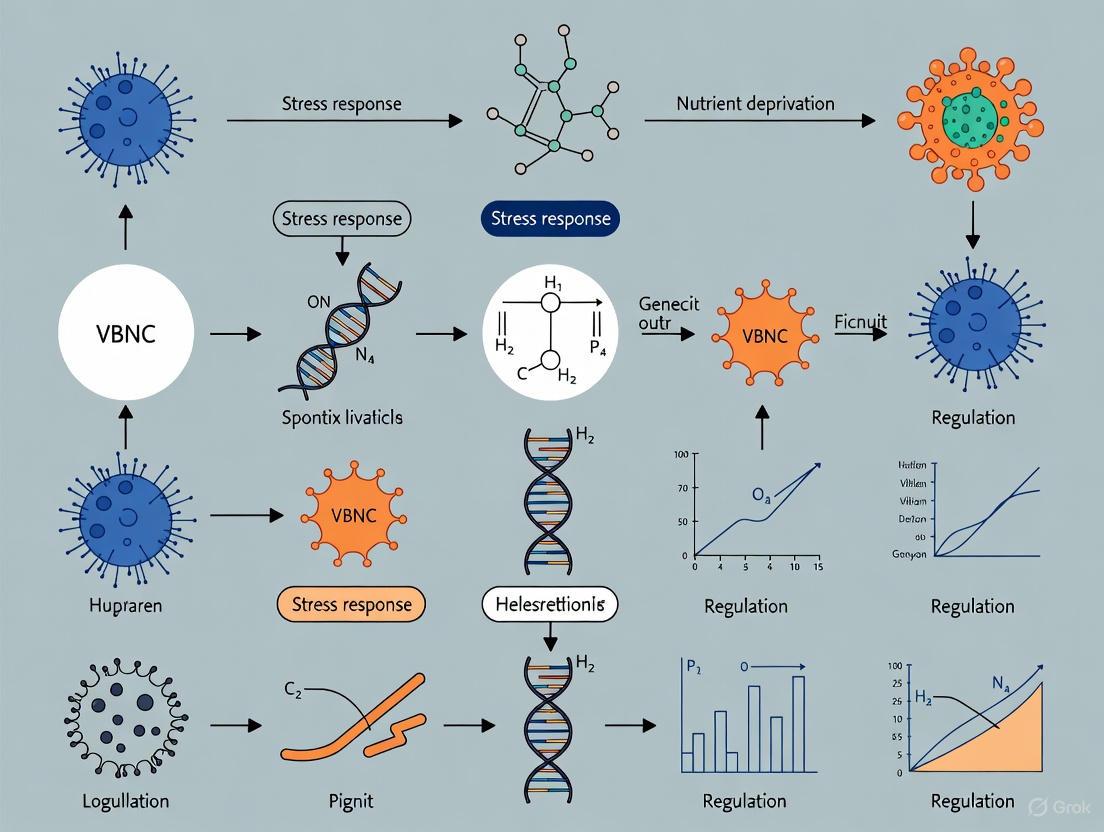
This article comprehensively reviews the physiological basis for the induction of the viable but non-culturable (VBNC) state, a dormant survival strategy employed by bacteria under stress.
The Physiological Basis of the Viable But Non-Culturable (VBNC) State: Mechanisms, Detection, and Clinical Implications
Abstract
This article comprehensively reviews the physiological basis for the induction of the viable but non-culturable (VBNC) state, a dormant survival strategy employed by bacteria under stress. Tailored for researchers and drug development professionals, it explores the molecular triggers and cellular mechanisms driving this state, critiques current and emerging detection methodologies, addresses key challenges in differentiation from similar states, and validates advanced techniques for accurate identification. Understanding the VBNC state is critical for overcoming its role in chronic infections, antimicrobial treatment failures, and diagnostic limitations, thereby informing the development of novel therapeutic and diagnostic strategies.
Unveiling the VBNC State: Core Concepts and Physiological Triggers
The viable but non-culturable (VBNC) state represents a fundamental survival strategy adopted by numerous bacterial species to endure stressful environmental conditions. This physiological state is defined by two critical characteristics: the loss of culturability on conventional laboratory media typically used for growth, coupled with the maintenance of viability and metabolic activity [1] [2]. In this dormant condition, bacteria cannot proliferate on standard culture media, rendering them undetectable by routine plate counting methods, yet they remain alive with an intact membrane, undamaged genetic material, and continued metabolic function [1]. This phenomenon poses significant challenges across multiple fields, including public health, food safety, and clinical microbiology, as VBNC cells retain their pathogenic potential and can resuscitate when conditions become favorable [1] [2] [3].
The VBNC state differs conceptually from other dormant states such as bacterial persistence. While both represent survival strategies, current research suggests that VBNC cells and persisters may form part of a dormancy continuum, where active cells under stress transition into persisters, which may further develop into VBNC state cells [2]. This distinction is crucial for researchers investigating bacterial survival mechanisms and developing interventions against persistent infections. The study of the VBNC state has gained increasing attention in recent years due to its implications for antimicrobial resistance, diagnostic accuracy, and therapeutic efficacy, necessitating a standardized framework for its investigation and characterization [2].
Core Definition and Diagnostic Criteria for the VBNC State
Essential Diagnostic Criteria
The accurate identification of bacteria in the VBNC state requires the demonstration of three essential criteria, combining both negative and positive indicators of the state:
- Loss of Culturability: The inability to form colonies on conventional culture media appropriate for the bacterial species under investigation, despite the retention of viability. This is demonstrated by no growth on standard agar plates after extended incubation periods [4].
- Membrane Integrity: Maintenance of an intact cell membrane, typically verified through viability staining techniques. The combination of nucleic acid stains SYTO-9 and propidium iodide (PI) is commonly employed, where SYTO-9 penetrates all bacteria with intact membranes (green fluorescence), while PI penetrates only bacteria with damaged membranes (red fluorescence) [1] [3].
- Metabolic Activity: Evidence of ongoing, albeit reduced, metabolic processes. This can be demonstrated through various methods, including:
- Direct Viable Count (DVC): Microscopic counting after treatment with nutrients and DNA gyrase inhibitors [1].
- CTC Reduction: The reduction of 5-cyano-2,3-di-(p-tolyl) tetrazolium chloride to formazan, indicating electron transport activity [1].
- ATP Production: Detection of adenosine triphosphate via luciferase assays [1].
- rRNA Retention: Preservation of ribosomal RNA, detectable through molecular methods [5].
Differentiating VBNC from Dead Cells and Persisters
A critical aspect of VBNC research involves distinguishing truly VBNC cells from dead cells or other dormant states. Table 1 summarizes the key characteristics that differentiate these states.
Table 1: Differentiation between VBNC, Dead, and Persister Cells
| Characteristic | VBNC Cells | Dead Cells | Persister Cells |
|---|---|---|---|
| Culturability | Non-culturable | Non-culturable | Culturable (after resuscitation) |
| Membrane Integrity | Intact | Compromised | Intact |
| Metabolic Activity | Reduced but detectable | Absent | Greatly reduced |
| Gene Expression | Altered profile | None | Dormancy-specific |
| Resuscitation | Possible under favorable conditions | Not possible | Possible upon antibiotic removal |
| Detection Methods | DVC, PMA-PCR, FCM | PI staining | Culture after antibiotic removal |
Detection Methodologies: From Conventional to Advanced Approaches
Established Detection Methods
The gold standard techniques for VBNC detection have evolved significantly since the initial description of the phenomenon. Table 2 provides a comprehensive overview of the primary methods currently employed in VBNC research, along with their principles, applications, and limitations.
Table 2: Comprehensive Comparison of VBNC Detection Methodologies
| Method Category | Specific Method | Principle | Key Applications | Limitations |
|---|---|---|---|---|
| Microscopy-Based | Direct Viable Count (DVC) | Cell elongation in response to nutrients with nalidixic acid | Environmental samples, diverse bacterial species | Labor-intensive, requires expertise [1] |
| Live/Dead Staining (SYTO-9/PI) | Membrane integrity assessment | Pure cultures, biofilm studies | Cannot detect metabolic activity alone [1] | |
| CTC-DAPI Staining | Metabolic activity detection via tetrazolium reduction | Environmental microbiology | Variable reduction rates between species [1] | |
| Molecular Biology | PMA/EMA-qPCR | Selective DNA amplification from membrane-intact cells | Food safety, clinical diagnostics | Optimization required for different species [4] [6] |
| PMA-ddPCR | Absolute quantification without standard curves | Pathogen quantification in complex samples | Higher cost, specialized equipment [4] [7] | |
| RT-qPCR | Detection of gene expression as viability marker | Virulence potential assessment | RNA instability, requires careful handling [1] | |
| Advanced Techniques | ATR-FTIR Spectroscopy | Biomolecular fingerprinting through IR absorption | Mechanism studies, biomarker identification | Specialized equipment, data interpretation complexity [1] |
| Hyperspectral Microscopy | Spatial and spectral profiling with AI classification | Rapid detection, automated classification | High cost, developing methodology [8] | |
| Flow Cytometry | Multi-parameter cell analysis at single-cell level | Probiotic research, heterogeneous populations | Instrument standardization challenges [5] |
Emerging and Advanced Detection Technologies
Recent technological advances have introduced several powerful methods for VBNC detection that offer improved accuracy, sensitivity, and throughput:
PMA-ddPCR (Propidium Monoazide-droplet digital PCR): This method enables absolute quantification of VBNC cells without requiring external standard curves. The technique involves treating samples with PMA, which penetrates only membrane-compromised (dead) cells and intercalates with DNA, preventing its amplification. The sample is then partitioned into thousands of nanoliter-sized droplets, with PCR amplification occurring in each droplet independently. This approach provides high precision for quantifying viable cells, even at low concentrations in complex matrices like fecal samples [4] [7]. Optimal PMA concentrations typically range between 5-200 μM, with incubation times of 5-30 minutes in the dark before light activation [4].
ATR-FTIR (Attenuated Total Reflectance-Fourier Transform Infrared) Spectroscopy: This technique detects biomolecular changes in VBNC cells by measuring infrared absorption patterns that create a biochemical "fingerprint." Studies on E. coli W3110 in the VBNC state have revealed significant spectral differences, particularly showing increased RNA levels (notably at the 995 cmâ»Â¹ band) while protein and nucleic acid amounts decreased. The 995 cmâ»Â¹ RNA band has been identified as a consistent marker across multiple stress conditions, suggesting its potential as a robust biomarker for VBNC detection [1].
AI-Enabled Hyperspectral Microscopy Imaging: This innovative approach combines spatial and spectral data with deep learning algorithms for VBNC classification. In studies with E. coli K-12, this method achieved 97.1% accuracy in distinguishing VBNC cells from normal cells by using pseudo-RGB images generated from three characteristic spectral wavelengths, significantly outperforming traditional RGB image analysis (83.3% accuracy) [8].
Standardized Induction Protocols for VBNC State Research
Experimentally Validated Induction Conditions
The induction of the VBNC state varies significantly across bacterial species and depends on the specific stressor applied. Table 3 provides a comprehensive summary of optimized induction conditions for various bacterial species based on current research.
Table 3: Standardized VBNC Induction Conditions for Model Organisms
| Bacterial Species | Induction Stressor | Optimal Conditions | Time to VBNC | Verification Method |
|---|---|---|---|---|
| E. coli | Low-level chlorination | 0.5 mg/L chlorine, 6h exposure [3] | 6 hours | Live/Dead staining, plate count [3] |
| Temperature stress | 4°C in artificial seawater [1] | Days to weeks | Fluorescence microscopy, plate count [1] | |
| Antibiotic stress | Erythromycin exposure [1] | Species-dependent | ATR-FTIR, plate count [1] | |
| Heavy metal stress | Copper exposure [1] | Species-dependent | ATR-FTIR, plate count [1] | |
| K. pneumoniae | Low temperature | 4°C in artificial seawater [4] | ~50 days | PMA-ddPCR, plate count [4] |
| V. parahaemolyticus | High salt | High salt concentration [9] | Variable | Fatty acid analysis, membrane potential [9] |
| Surfactant + salt | 0.5-1.0% Lutensol A03 + 0.2M ammonium carbonate [6] | 1 hour | vqPCR, plate count [6] | |
| L. monocytogenes | Oxidative stress | Hâ‚‚Oâ‚‚ (12,000 ppm) [10] | 10 minutes | Live/Dead staining, plate count [10] |
| Chlorine stress | Sodium hypochlorite (37.5 ppm), 20°C, 10min [10] | 10 minutes | Live/Dead staining, plate count [10] | |
| Acid stress | Potassium sorbate (pH 2.0) [10] | 30 minutes | Live/Dead staining, plate count [10] | |
| Probiotics (LAB) | Cold storage | 0-4°C in beer [5] | 6 months | Catalase supplementation, plate count [5] |
| Oxidative stress | Beer storage without catalase [5] | Months | Flow cytometry, catalase rescue [5] |
Protocol for VBNC Induction Using Low-Level Chlorination inE. coli
Based on established research methodologies, the following standardized protocol can be employed for inducing the VBNC state in E. coli using low-level chlorination:
- Culture Preparation: Grow E. coli to mid-logarithmic phase (OD₆₀₀ ≈ 0.5-0.6) in appropriate liquid medium such as LB broth at 37°C with shaking.
- Cell Harvesting and Washing: Centrifuge culture at 5,000 × g for 10 minutes, discard supernatant, and resuspend pellet in sterile physiological saline or phosphate-buffered saline (PBS). Repeat washing step twice to remove residual organic matter.
- Chlorine Solution Preparation: Prepare a stock sodium hypochlorite (NaOCl) solution and standardize concentration iodometrically. Dilute to working concentration in sterile, chlorine-demand-free water.
- Chlorine Exposure: Expose bacterial suspension (approximately 10⸠CFU/mL) to 0.5 mg/L chlorine at room temperature (20-25°C) for 6 hours. Maintain constant mixing during exposure.
- Chlorine Neutralization: After exposure, neutralize residual chlorine immediately with sodium thiosulfate (final concentration 0.1-0.5 mM).
- VBNC Confirmation: Verify induction success using:
- Plate Counts: Spread samples on non-selective agar before and after neutralization. No colonies should appear after 48h incubation.
- Live/Dead Staining: Use SYTO-9 and propidium iodide according to manufacturer instructions. VBNC cells should display green fluorescence (intact membranes).
- Metabolic Activity Assay: Perform CTC staining or ATP detection to confirm metabolic activity.
- Resuscitation Testing: Attempt resuscitation by inoculating neutralized samples into rich nutrient broth (e.g., LB) and monitoring for culturability recovery over 24-48 hours [3].
Molecular Characterization of the VBNC State
Genetic and Biomolecular Alterations
The transition to the VBNC state involves significant changes in gene expression and biomolecular composition, which serve as important markers for researchers:
- Transcriptional Reprogramming: Transcriptomic analyses of VBNC E. coli induced by low-level chlorination revealed upregulation of 16 genes, including those encoding fimbrial-like adhesin protein, putative periplasmic pilin chaperone, transcriptional regulators, antibiotic resistance genes, and stress-induced genes. Notably, three genes encoding toxic proteins (ygeG, ibsD, shoB) were significantly upregulated, indicating that VBNC cells may retain pathogenic potential [3].
- Biomolecular Profile Changes: ATR-FTIR spectroscopy studies have demonstrated consistent alterations in VBNC cells across different bacterial species, with a characteristic increase in RNA content (particularly noticeable at the 995 cmâ»Â¹ band) accompanied by decreases in protein and nucleic acid amounts [1].
- Cell Wall and Membrane Modifications: VBNC cells exhibit structural changes including increased peptidoglycan synthesis and cross-linking, alterations in outer membrane protein profiles (such as increased OmpW in E. coli), and changes in fatty acid composition, particularly increases in unsaturated fatty acids and shifts toward fatty acids with fewer carbon atoms [2] [3].
- Virulence Factor Retention: Numerous studies have confirmed that VBNC cells maintain expression of virulence genes, enabling them to retain pathogenic potential despite their non-culturable status. For example, Vibrio cholerae in the VBNC state upregulates genes associated with regulatory functions, cellular processes, energy metabolism, transport, and virulence [2].
Visualization of VBNC State Transition and Detection
The following diagram illustrates the complete workflow for VBNC state induction, detection, and characterization, integrating the key methodologies discussed in this framework:
The Researcher's Toolkit: Essential Reagents and Methodologies
Key Research Reagent Solutions
The following table compiles essential reagents and materials required for VBNC state research, based on methodologies cited in current literature:
Table 4: Essential Research Reagent Solutions for VBNC Studies
| Reagent/Material | Primary Function | Application Examples | Technical Notes |
|---|---|---|---|
| Propidium Monoazide (PMA) | Selective DNA intercalation in membrane-compromised cells | PMA-qPCR, PMA-ddPCR for viable cell detection | Optimize concentration (5-200 μM) and incubation time [4] |
| SYTO-9/Propidium Iodide | Dual staining for membrane integrity assessment | Live/Dead staining, fluorescence microscopy | Green (live) vs red (dead) fluorescence differentiation [1] |
| CTC (5-cyano-2,3-di-(p-tolyl) tetrazolium chloride) | Metabolic activity indicator via electron transport system | CTC-DAPI staining for metabolic activity | Forms fluorescent formazan upon reduction [1] |
| Catalase | Oxidative stress relief by breaking down Hâ‚‚Oâ‚‚ | Resuscitation of VBNC LAB from beer | Use at 1000 IU/mL in recovery media [5] |
| Sodium Thiosulfate | Chlorine neutralization in disinfection studies | Chlorine stress induction protocols | Critical for stopping chlorine action at precise time points [3] |
| Nalidixic Acid | DNA gyrase inhibitor for cell elongation prevention | Direct Viable Count (DVC) method | Allows nutrient response without cell division [1] |
| Chlorine Compounds | VBNC induction through oxidative stress | Sodium hypochlorite, calcium hypochlorite | Standardize concentration; use chlorine-demand-free water [10] |
| Artificial Seawater (ASW) | Simulation of natural aquatic environments | VBNC induction in marine bacteria | 40 g/L sea salt, 0.22-μm filter sterilization [4] |
| 2-Hydroxy-1,4-benzoquinone | 2-Hydroxy-1,4-benzoquinone, CAS:2474-72-8, MF:C6H4O3, MW:124.09 g/mol | Chemical Reagent | Bench Chemicals |
| 2,4,5-Trichlorophenetole | 2,4,5-Trichlorophenetole, CAS:6851-44-1, MF:C8H7Cl3O, MW:225.5 g/mol | Chemical Reagent | Bench Chemicals |
This standardized framework establishes essential protocols and methodologies for VBNC state research, providing researchers with validated tools for induction, detection, and characterization of this complex physiological state. The integration of classical microbiological approaches with advanced molecular techniques and innovative technologies like AI-enabled hyperspectral imaging represents the future of VBNC research, offering more accurate, reliable, and standardized approaches to studying this challenging bacterial survival strategy.
As research in this field continues to evolve, several areas require further development: standardized reference materials for method validation, interlaboratory proficiency testing, and the establishment of method-specific acceptance criteria. By adopting this framework, researchers can contribute to a more unified understanding of the VBNC state, ultimately leading to improved detection and control strategies for dormant bacterial pathogens across clinical, industrial, and environmental settings.
The viable but non-culturable (VBNC) state represents a sophisticated survival strategy adopted by numerous bacterial species when confronted with adverse environmental conditions. In this state, bacteria lose the ability to form colonies on routine culture media while maintaining metabolic activity and viability, presenting significant challenges for public health, food safety, and clinical diagnostics. This comprehensive review synthesizes current understanding of the key physiological inducers that trigger the VBNC state, examining mechanisms from molecular to systems levels. We characterize the diverse environmental stressors—including nutrient starvation, temperature shifts, chemical disinfectants, and osmotic challenges—that initiate this programmed dormancy response. The molecular underpinnings of VBNC induction are explored through recent transcriptomic and mechanistic studies, revealing conserved pathways across bacterial species. Additionally, we detail advanced methodological frameworks for detecting and quantifying VBNC cells, highlighting both limitations and innovations in current technologies. This analysis aims to provide researchers with a foundational resource for investigating VBNC physiology and developing novel approaches to address the challenges posed by this elusive bacterial state.
The viable but non-culturable (VBNC) state was first identified in 1982 in Escherichia coli and Vibrio cholerae [11] and has since been recognized as a widespread survival strategy among diverse bacterial species. When entering the VBNC state, bacteria undergo a programmed physiological transformation that renders them incapable of proliferation on standard laboratory media while maintaining metabolic activity, membrane integrity, and potential pathogenicity [11] [12]. This state allows bacteria to withstand potentially lethal environmental insults, including those imposed by antimicrobial treatments, making the VBNC state a significant concern in clinical medicine, food safety, and public health.
To date, more than 100 bacterial species have been demonstrated to enter the VBNC state, including significant human pathogens such as Escherichia coli, Campylobacter jejuni, Helicobacter pylori, Legionella pneumophila, Listeria monocytogenes, Salmonella typhimurium, Vibrio cholerae, Yersinia pestis, and Mycobacterium tuberculosis [11]. The ability to assume a VBNC state appears to be phylogenetically widespread, occurring in Gram-negative and Gram-positive bacteria alike, though with important differences in induction mechanisms and responsiveness to specific environmental signals [13].
Within the broader context of VBNC research, understanding the physiological inducers that trigger this state is paramount. These inducers represent specific environmental cues or stress conditions that activate the genetic and metabolic reprogramming necessary for transition into the VBNC state. Elucidating these triggers and their mechanisms of action provides critical insights into bacterial survival strategies while informing more effective approaches for microbial control and detection across diverse settings.
Major Inducer Categories and Their Mechanisms
Bacteria enter the VBNC state through exposure to diverse environmental stressors that can be broadly categorized into physical, chemical, and biological inducers. The following sections provide a comprehensive analysis of these inducer categories, their physiological effects, and their prevalence across bacterial species.
Physical Stressors
Physical stressors encompass changes in environmental conditions that directly impact cellular structures and metabolic processes.
Temperature stress represents one of the most thoroughly characterized inducers of the VBNC state. Both low and high temperature extremes can trigger the transition, though low temperatures are particularly effective. E. coli O157:H7 enters the VBNC state when exposed to both refrigeration temperatures (+4°C) and freezing conditions (-20°C) [11]. Similarly, V. vulnificus rapidly transitions to the VBNC state in artificial seawater at low temperatures [11]. The mechanisms underlying cold-induced VBNC formation involve reduced enzymatic activity, membrane fluidity changes, and altered gene expression patterns that collectively promote metabolic downregulation.
UV radiation represents another significant physical inducer of the VBNC state. Exposure to UV light causes DNA damage and oxidative stress, triggering cellular responses that can lead to VBNC transition rather than cell death [11]. Bacteria employ various DNA repair mechanisms initially, but prolonged or intense UV exposure often shifts the response toward dormancy as a survival strategy. Sunlight exposure has been demonstrated to induce the VBNC state in environmental bacteria, with specific wavelengths within the UV spectrum being particularly effective [11].
Additional physical inducers include aerosolization [11], drying [11], and pressure changes [11], though these have been less extensively characterized than temperature and radiation effects.
Chemical Stressors
Chemical stressors comprise a diverse array of compounds and solutions that disrupt cellular homeostasis, ultimately triggering the VBNC state.
Oxidizing disinfectants, particularly chlorine, represent well-documented inducers of the VBNC state in water systems and food processing environments. Low-dose chlorination (0.5 mg/L) effectively induces VBNC state in E. coli while enhancing bacterial tolerance to multiple antibiotics [12]. Chlorine exposure causes oxidative damage to cellular components and increases membrane permeability, as demonstrated by flow cytometry analysis showing that 98.44% of VBNC E. coli cells exhibited enhanced membrane permeability after chlorine treatment [12]. Transcriptomic analyses reveal that chlorine-induced VBNC cells upregulate genes related to fimbrial-like adhesin proteins, periplasmic pilin chaperones, transcriptional regulators, antibiotic resistance genes, and stress-induced genes [12].
Heavy metals such as copper, mercury, and cadmium can induce the VBNC state at sublethal concentrations [11]. These metals generate oxidative stress and disrupt essential enzymatic functions, prompting bacteria to enter protective dormancy. The induction typically occurs over extended exposure periods, with concentration-dependent effects on the rate and extent of VBNC transition.
Household cleaners and surfactants have recently been identified as potent inducers of the VBNC state, particularly when combined with inorganic salts. A comprehensive screening of 630 surfactant/salt combinations demonstrated that non-ionic surfactants can induce VBNC state in L. monocytogenes, E. coli, S. enterica serovar Typhimurium, S. aureus, and toxin-producing enteropathogenic E. coli [13]. The effectiveness correlated with surfactant hydrophobicity, as measured by the hydrophilic-lipophilic balance (HLB), with Gram-positive bacteria showing greater susceptibility to VBNC induction than Gram-negative species [13].
Food preservatives and organic pollutants also serve as chemical inducers of the VBNC state [11]. These compounds typically disrupt membrane integrity or interfere with specific metabolic pathways, initiating the transition to dormancy.
Biological Stressors
Biological stressors encompass nutrient-based challenges and competition-related signals that promote VBNC transition.
Nutrient starvation represents perhaps the most fundamental biological inducer of the VBNC state. Multiple bacterial species, including E. coli [11], Shigella dysenteriae [11], V. parahaemolyticus [11], Aeromonas hydrophila [11], and Klebsiella pneumoniae [11], enter the VBNC state under starvation conditions. Carbon source limitation appears particularly effective in triggering this transition, though combined nutrient deficiencies often produce more rapid induction. Starvation triggers comprehensive metabolic restructuring, with downregulation of biosynthetic pathways and energy conservation becoming prioritized.
Osmotic stress, induced by both high and low salinity environments, can initiate VBNC transition [11]. Osmotic imbalances cause water flux across cell membranes, potentially leading to plasmolysis or cell rupture unless compensatory mechanisms are activated. For some bacteria, entry into the VBNC state represents an adaptive response to extreme osmotic conditions, particularly when changes occur rapidly.
pH extremes both acidic and alkaline conditions can induce the VBNC state [11]. S. aureus cells treated with citric acid under low-temperature conditions entered the VBNC state within 18 days [11]. pH stress affects cellular enzyme activity and membrane stability, triggering protective responses that can include transition to the VBNC state.
Table 1: Major Inducers of the VBNC State and Their Characteristics
| Inducer Category | Specific Examples | Representative Affected Species | Typical Exposure Conditions | Primary Cellular Targets |
|---|---|---|---|---|
| Physical Stressors | Low temperature (+4°C to -20°C) | E. coli, V. vulnificus | Days to weeks | Membrane fluidity, enzyme activity |
| UV radiation | Multiple species | Minutes to hours | DNA integrity, oxidative stress | |
| Thermosonication | Multiple species | Minutes | Membrane integrity, protein denaturation | |
| Chemical Stressors | Chlorine (0.5 mg/L) | E. coli, L. monocytogenes | Minutes to hours | Membrane permeability, oxidative damage |
| Heavy metals (Cu, Hg, Cd) | Multiple species | Hours to days | Enzyme function, oxidative stress | |
| Surfactant+salt combinations | L. monocytogenes, S. aureus | 5 minutes to 1 hour | Membrane integrity, efflux pumps | |
| Organic pollutants | Multiple species | Hours to days | Metabolic pathways, membrane integrity | |
| Biological Stressors | Nutrient starvation | E. coli, K. pneumoniae | Days to weeks | Metabolic regulation, energy conservation |
| Osmotic stress | Multiple species | Hours to days | Membrane stability, water balance | |
| pH extremes | S. aureus, E. coli | Hours to days | Enzyme activity, membrane stability |
Experimental Models and Methodological Approaches
Studying the VBNC state requires specialized methodological approaches that overcome the fundamental limitation of non-culturability on standard media. This section details established protocols for inducing, detecting, and analyzing the VBNC state in laboratory settings.
Induction Protocols
Chlorine-Induced VBNC State in E. coli
To induce VBNC state using chlorine treatment [12]:
- Grow E. coli cultures to mid-exponential phase (OD600 ≈ 0.5) in appropriate medium.
- Harvest cells by centrifugation (2,500 × g, 5 min) and resuspend in sterile water or minimal medium.
- Add sodium hypochlorite to achieve final concentration of 0.5 mg/L free chlorine.
- Incubate for 6 hours at room temperature with gentle agitation.
- Confirm VBNC state by assessing culturability on standard media (absence of growth) while verifying membrane integrity and metabolic activity (see detection methods below).
- Quench residual chlorine with 0.3 M sodium thiosulfate pentahydrate before further analysis.
Surfactant/Salt-Induced VBNC State in Multiple Pathogens
For rapid VBNC induction using surfactant/salt combinations [13]:
- Prepare bacterial cultures to approximately 10^9 CFU/mL in appropriate growth medium.
- Centrifuge cultures and resuspend in solutions containing combinations of non-ionic surfactants (e.g., Lutensol XP30) and inorganic salts (e.g., MgClâ‚‚).
- Exposure times can vary from 5 minutes to 1 hour at room temperature.
- Remove combinational stress by washing and resuspending in fresh growth medium.
- Assess VBNC state through multiple viability assays (see below).
Starvation-Induced VBNC State
For nutrient starvation induction [11]:
- Grow bacteria to stationary phase in nutrient-rich medium.
- Harvest cells by centrifugation and wash with sterile saline or buffer.
- Resuspend in minimal medium without carbon sources or in natural oligotrophic environments like artificial seawater or tap water.
- Incubate for extended periods (days to weeks) at appropriate temperatures.
- Monitor transition to VBNC state regularly using viability assays.
Detection and Validation Methods
Direct Viable Count (DVC)
The DVC method represents one of the earliest approaches for detecting VBNC cells [11]:
- Incubate samples with nutrients (e.g., yeast extract) and DNA synthesis inhibitors (e.g., nalidixic acid, aztreonam, or ciprofloxacin).
- Stain with acridine orange and examine by fluorescence microscopy.
- Viable cells enlarge due to metabolic activity without dividing, appearing as elongated fluorescent cells, while dead cells remain small.
- This method distinguishes living cells but cannot differentiate between culturable and VBNC states alone.
Membrane Integrity Assays
The LIVE/DEAD BacLight bacterial viability kit is widely used [11] [13]:
- Combine SYTO 9 and propidium iodide (PI) stains according to manufacturer's instructions.
- Incubate bacterial suspensions with stain mixture for 15-30 minutes in the dark.
- Examine by fluorescence microscopy or analyze by flow cytometry.
- Cells with intact membranes fluoresce green (SYTO 9), while those with compromised membranes fluoresce red (PI).
- VBNC cells typically show green fluorescence, indicating membrane integrity.
Metabolic Activity Assays
5-Cyano-2,3-Ditolyl Tetrazolium Chloride (CTC) reduction assay [11]:
- Add CTC to samples to final concentration of 2-5 mM.
- Incubate for 1-4 hours in the dark.
- Examine by epifluorescence microscopy with green excitation.
- Metabolically active cells reduce CTC to red-fluorescent formazan deposits.
ATP measurement [13]:
- Extract ATP from bacterial samples using appropriate reagents.
- Measure ATP content using luciferin-luciferase bioluminescence assays.
- Compare ATP levels with positive and negative controls.
Viability Quantitative PCR (v-qPCR)
v-qPCR combined with photoactive dyes enables molecular detection of VBNC cells [14]:
- Treat samples with EMA (10 μM) and PMAxx (75 μM).
- Incubate at 40°C for 40 minutes followed by 15-minute light exposure using a photoactivation device.
- Extract DNA according to standard protocols.
- Perform qPCR with species-specific primers and probes.
- The dyes penetrate only cells with compromised membranes, binding to DNA and inhibiting PCR amplification, thus selectively detecting intact cells.
Flow Cytometry
Multiparameter flow cytometry provides high-throughput analysis [14]:
- Stain bacterial suspensions with appropriate fluorescent dyes (e.g., SYTO 9/PI combination).
- Analyze using flow cytometer with appropriate laser and filter settings.
- Establish gates based on positive and negative controls.
- VBNC cells typically show intact membrane characteristics with reduced metabolic markers compared to culturable cells.
Table 2: Key Research Reagents for VBNC State Studies
| Reagent Category | Specific Examples | Function in VBNC Research | Application Notes |
|---|---|---|---|
| Viability Stains | SYTO 9/PI (LIVE/DEAD BacLight) | Membrane integrity assessment | Must be combined with culturability assays to distinguish VBNC |
| CTC, INT | Metabolic activity measurement | Can detect electron transport system activity in VBNC cells | |
| EMA, PMA, PMAxx | Selective DNA amplification inhibition in dead cells | Critical for v-qPCR; requires optimization for different bacterial species and matrices | |
| Induction Agents | Sodium hypochlorite | Chemical inducer of VBNC state | 0.5 mg/L concentration effective for E. coli [12] |
| Non-ionic surfactants (Lutensol series) | VBNC induction when combined with salts | Effectiveness correlates with HLB value [13] | |
| Inorganic salts (MgClâ‚‚, carbonates) | Enhancement of surfactant activity | Specific salt effects vary between Gram-positive and Gram-negative bacteria | |
| Molecular Assay Components | Luciferin-luciferase | ATP measurement | Sensitivity allows detection of low metabolic activity in VBNC cells |
| Species-specific primers/probes | Detection and quantification in v-qPCR | Enables specific identification of VBNC pathogens in complex samples | |
| Culture Media | Nutrient-deficient media | Starvation-induced VBNC state | Artificial seawater, tap water, or minimal media without carbon sources |
Molecular Mechanisms and Systems-Level Adaptations
The transition to the VBNC state involves complex molecular reprogramming that varies according to the inducing stimulus and bacterial species. Recent transcriptomic and mechanistic studies have revealed both conserved and specialized pathways activated during VBNC induction.
Transcriptional Reprogramming
Global gene expression analyses provide insights into the systematic changes underlying VBNC formation. RNA-seq analysis of VBNC E. coli induced by low-level chlorination revealed significant upregulation of 16 genes, including those encoding toxic proteins (ygeG, ibsD, shoB), indicating that VBNC cells may maintain pathogenic potential [12]. These cells also showed altered expression of genes related to fimbrial-like adhesin proteins, periplasmic pilin chaperones, transcriptional regulators, antibiotic resistance genes, and stress response elements [12].
In Bacillus subtilis, transcriptome analysis of VBNC cells induced by osmotic stress and kanamycin treatment revealed 334 upregulated and 514 downregulated genes compared to untreated cells [15]. Notably, VBNC cells strongly upregulated genes involved in proline uptake and catabolism, suggesting a putative role of proline as a nutrient source in VBNC cells [15]. Additionally, VBNC B. subtilis showed significant upregulation of the ICEBs1 conjugative element genes, typically induced by DNA damage and SOS response, indicating antibiotic-induced oxidative stress [15].
The queuosine biosynthesis pathway, particularly the queC-queD-queE-queF operon, was also upregulated in VBNC B. subtilis [15]. Queuosine modification of tRNAs helps minimize translation errors, potentially conferring kanamycin-tolerant phenotypes by reducing protein misfolding.
Metabolic Restructuring
VBNC cells undergo substantial metabolic reprogramming to conserve energy and maintain essential functions during dormancy. Central carbohydrate metabolic pathways are typically altered to optimize energy production under nutrient-limited conditions [12]. ATP levels are maintained, though at reduced levels compared to growing cells, supporting continued metabolic activity despite non-culturability [15].
The upregulation of proline catabolic genes in VBNC B. subtilis suggests alternative nutrient utilization strategies in the dormant state [15]. This metabolic flexibility may contribute to the remarkable persistence of VBNC cells under adverse conditions.
Stress Response Activation
Canonical stress response pathways feature prominently in VBNC induction and maintenance. Oxidative stress responses are particularly significant, as many VBNC inducers (including chlorine, antibiotics, and heavy metals) generate reactive oxygen species [11] [15]. Genes encoding detoxification enzymes and redox homeostasis proteins are commonly upregulated in VBNC cells.
The SOS response to DNA damage is another conserved element in VBNC induction, evidenced by upregulation of ICEBs1 elements in B. subtilis [15] and DNA repair systems in other species. This response may represent both a reaction to inducing stresses and a programmed aspect of the VBNC transition.
Diagram 1: Integrated Pathway of VBNC State Induction. This diagram illustrates the sequential progression from environmental stressors through cellular effects and molecular responses to the establishment of the VBNC state.
Research Implications and Future Directions
The ubiquitous nature of VBNC inducers across environmental, industrial, and clinical settings necessitates continued research into this persistent physiological state. Several critical areas demand focused investigation to address fundamental questions and practical challenges.
Detection and Diagnostic Challenges
Current growth-based detection methods routinely fail to identify VBNC pathogens, creating significant gaps in microbial risk assessment [13] [14]. This limitation is particularly problematic in clinical settings, where VBNC pathogens may contribute to persistent or recurrent infections that evade standard diagnostic approaches. Similarly, in food safety systems, the inability to detect VBNC cells compromises the effectiveness of microbial monitoring programs [11] [14].
Advanced detection technologies that combine molecular methods with viability indicators offer promising alternatives. The optimized v-qPCR protocol combining EMA and PMAxx provides reliable detection of VBNC Listeria monocytogenes in process wash water from fresh-cut produce facilities [14]. Similar approaches require validation across diverse bacterial species and sample matrices to establish standardized detection frameworks.
Flow cytometry, while powerful for laboratory studies, shows limitations in complex environmental samples due to interference from particulate matter and other matrix effects [14]. Method refinement for specific applications remains an ongoing research priority.
Therapeutic and Public Health Considerations
The enhanced antibiotic tolerance of VBNC cells presents serious clinical challenges [12] [15]. VBNC E. coli induced by low-level chlorination exhibits significantly increased tolerance to multiple antibiotics, including ampicillin and ofloxacin at concentrations far exceeding typical minimum inhibitory concentrations [12]. This tolerance likely contributes to treatment failures and persistent infections.
The maintained virulence potential of VBNC cells further complicates risk assessment. Transcriptomic analyses confirm that VBNC pathogens continue to express toxin genes and virulence factors [12] [13]. Some VBNC pathogens, including enteropathogenic E. coli and L. pneumophilia, maintain pathogenicity even without resuscitation, potentially through toxin production or other virulence mechanisms [13].
These findings necessitate reconsideration of sterilization and disinfection protocols across healthcare, food production, and water treatment facilities. Standard approaches that fail to account for VBNC induction may inadvertently select for dormant, persistent bacterial populations with enhanced resistance characteristics.
Future Research Priorities
Several critical knowledge gaps require attention in VBNC research:
- Resuscitation Mechanisms: The signals and processes that trigger VBNC cells to return to cultivability remain poorly understood across most bacterial species. Elucidating these mechanisms is essential for predicting and controlling resuscitation events.
- Evolutionary Ecology: The role of the VBNC state in bacterial evolution and ecology warrants further investigation, particularly regarding its contribution to antibiotic resistance development and persistence in environmental reservoirs.
- Therapeutic Interventions: Strategies specifically targeting VBNC cells, either through prevention of VBNC induction, direct killing of VBNC cells, or blockade of resuscitation, represent promising therapeutic avenues.
- Standardization: Development of standardized methodologies for VBNC induction, detection, and quantification across research laboratories would significantly enhance data comparability and research progress.
The transition to the VBNC state represents a complex physiological adaptation to environmental stress, with induction occurring through diverse physical, chemical, and biological triggers. From nutrient starvation to antimicrobial stress, these inducers activate conserved molecular pathways that reprogram bacterial physiology toward a dormant yet viable state. The significant challenges posed by VBNC cells in clinical, industrial, and environmental contexts underscore the importance of continued research into their induction mechanisms, detection methods, and control strategies. As methodological advances enable more sophisticated investigation of this elusive bacterial state, new opportunities emerge for addressing the persistent public health challenges associated with VBNC pathogens.
The viable but non-culturable (VBNC) state is a unique survival strategy adopted by many bacteria in response to adverse environmental conditions [16]. In this state, bacteria maintain viability and metabolic activity but lose the ability to form colonies on conventional culture media routinely used for their detection [17] [16]. This phenomenon has profound implications across multiple fields, including clinical microbiology, food safety, and public health, as VBNC pathogens can evade standard diagnostic methods while retaining pathogenic potential [18] [16].
Understanding the cellular and molecular transformations associated with the VBNC state is crucial for developing detection methods and control strategies. This review synthesizes current knowledge on the morphological and biochemical hallmarks of this physiological state, providing researchers with a comprehensive technical reference for investigating this bacterial survival mechanism.
Morphological Transformations in the VBNC State
Cellular Structure and Physical Characteristics
When bacteria transition to the VBNC state, they undergo significant morphological changes that enhance their survival under stressful conditions. A consistent observation across multiple species is a marked reduction in cell size. VBNC cells become significantly smaller and typically adopt a coccoid shape, as documented in diverse organisms including Vibrio cholerae, Helicobacter pylori, and various Shewanella species [16] [2]. This size reduction represents an adaptive strategy to minimize energy requirements and surface area exposed to environmental stressors.
The structural changes extend to cellular components, with notable alterations in membrane composition and rigidity. Studies on Vibrio vulnificus have demonstrated increased levels and structural modifications in unsaturated fatty acids during VBNC transition, including a significant shift toward fatty acids with fewer than 16 carbon atoms and elevated levels of octadecanoic and hexadecanoic acids [2]. Similarly, Enterococcus faecalis in the VBNC state exhibits higher levels of peptidoglycan crosslinking compared to cultivable cells, potentially contributing to enhanced structural integrity and resistance [2].
Table 1: Documented Morphological Changes in Selected Bacterial Species in the VBNC State
| Bacterial Species | Inducing Condition | Morphological Changes | References |
|---|---|---|---|
| Vibrio cholerae | Incubation at 4°C for 60 days | Transformation to coccoid cells | [16] |
| Helicobacter pylori | 7 days of incubation | Transformation to coccoid form | [16] |
| Shewanella xiamenensis JL2 | Cu²⺠stress (0.25 mM) | Cell size reduction | [17] |
| Vibrio vulnificus | Low temperature | Increased unsaturated fatty acids; Shift to shorter chain fatty acids | [2] |
| Enterococcus faecalis | Stress conditions | Increased peptidoglycan crosslinking | [2] |
| Escherichia coli | Stress conditions | Increased OmpW levels | [2] |
Ultrastructural Adaptations
At the subcellular level, VBNC cells exhibit substantial reorganization of their internal architecture. Transmission electron microscopy studies have revealed cytoplasmic condensation and reduction of intracellular spaces, consistent with a transition to a metabolically downregulated state. These ultrastructural modifications contribute to the remarkable resilience of VBNC cells, allowing them to persist under conditions that would eliminate their culturable counterparts.
The cell envelope undergoes significant modification, with changes in both membrane fluidity and protein composition. In Escherichia coli, alterations in outer membrane protein (Omp) patterns have been observed, with OmpW showing a marked increase during the VBNC state [2]. These modifications likely contribute to enhanced barrier function and stress resistance while potentially affecting nutrient transport and environmental sensing capabilities.
Biochemical and Metabolic Reprogramming
Oxidative Stress Management
A defining feature of the VBNC state is the sophisticated biochemical reprogramming that enables survival under adverse conditions. A central mechanism driving VBNC formation is the synergistic effect of oxidative stress and stringent response [17]. When facing environmental challenges, bacteria activate comprehensive antioxidant defense systems involving enzymes such as AhpCF, SodA, and KatGB to counter reactive oxygen species (ROS) [17].
The stringent response triggers extensive transcriptional reprogramming, prioritizing survival over growth by repressing ribosomal biogenesis while enhancing transcription of stress-responsive genes [17]. This reallocation of cellular resources is fundamental to the VBNC transition. Research on Shewanella xiamenensis JL2 under Cu²⺠stress has revealed a previously uncharacterized antioxidant role of the ohr gene in VBNC cells, highlighting the complexity of oxidative stress management in this state [17].
Figure 1: Oxidative Stress and Stringent Response in VBNC Induction. This diagram illustrates the coordinated signaling pathways that drive bacterial entry into the VBNC state in response to environmental stress.
Metabolic Pathway Alterations
VBNC cells undergo profound metabolic restructuring to conserve energy and maintain essential functions. Carbon metabolism exhibits particularly significant adaptations. While activation of the glyoxylate cycle (GC) has been reported as a conserved carbon utilization strategy in some VBNC cells [17], recent research on Shewanella xiamenensis JL2 reveals an alternative strategy under Cu²⺠stress. Instead of employing the GC pathway, these cells activate the methylcitrate cycle (MCC), demonstrating species-specific and stressor-dependent variations in metabolic adaptation [17].
Energy metabolism is markedly downregulated, with studies showing reduced intracellular ATP concentrations and decreased activity of key respiratory enzymes like succinate dehydrogenase (SDH) in VBNC cells of Yersinia enterocolitica induced by lactic acid stress [19]. This metabolic depression aligns with the overall survival strategy of minimizing energy consumption while maintaining basal metabolic activity sufficient for cellular integrity.
Table 2: Key Metabolic Changes in the VBNC State
| Metabolic Parameter | Change in VBNC State | Functional Significance | Example Organism |
|---|---|---|---|
| Carbon Metabolism | Shift to alternative pathways (GC or MCC) | Bypass COâ‚‚-producing steps, conserve energy | Shewanella xiamenensis [17] |
| ATP Concentration | Marked decrease | Reduced energy metabolism | Yersinia enterocolitica [19] |
| Succinate Dehydrogenase Activity | Decreased | Reduced respiratory activity | Yersinia enterocolitica [19] |
| Respiratory Chain Components | Differential regulation of terminal oxidases | Optimization under stress | Shewanella xiamenensis [17] |
| Gluconeogenesis-related Proteins | Up-regulation | Maintenance of essential metabolites | Vibrio parahaemolyticus [16] |
Gene Expression and Protein Profile Modifications
The transition to the VBNC state involves extensive reprogramming of gene expression and protein synthesis. Proteomic analyses reveal downregulation of ribosomal proteins and translation factors, consistent with the growth arrest characteristic of this state [17]. In Shewanella xiamenensis JL2, genes encoding ribosomal proteins L1, L2, L4, L5, S1, S2, S7, S12, and S13 were significantly downregulated under Cu²⺠stress [17].
Conversely, stress response proteins show increased expression. Vibrio parahaemolyticus in the VBNC state upregulates proteins associated with transcription, translation, ATP synthase, gluconeogenesis-related metabolism, and antioxidants including homologs of peroxiredoxins and the AhpC/Tsa family [16]. Vibrio vulnificus similarly highly expresses glutathione S-transferase, enhancing its antioxidant capacity [16].
The protein profile of Helicobacter pylori in the VBNC state shows increased alkaline phosphatase but reduced urease, leucine arylamidase, and naphthol-AS-beta-1-phosphohydrolase [16]. These enzymatic changes reflect the metabolic reorientation necessary for persistence under nutrient limitation and other stressful conditions.
Experimental Methodologies for VBNC Research
Induction of the VBNC State
Establishing reliable protocols for inducing the VBNC state is fundamental to its study. Multiple induction methods have been successfully employed across different bacterial species, with the specific approach depending on the research objectives and bacterial strain under investigation.
Chemical induction represents one of the most common approaches. For example, in Shewanella xiamenensis JL2, the VBNC state can be induced using wastewater-relevant concentrations of Cu²⺠(0.0625-0.25 mM) [17]. The experimental protocol involves culturing the strain in LB broth or on LB agar plates, followed by exposure to the metal stressor while monitoring the loss of culturability over time [17]. Similarly, Yersinia enterocolitica can be induced into the VBNC state using lactic acid at concentrations of 1-4 mg/mL, with complete loss of culturability occurring within 10-60 minutes depending on concentration [19].
Antibiotic pressure combined with nutrient starvation provides another effective induction method. For staphylococcal strains, incubation in low-nutrient M9 medium with gentamycin at 4-16× MIC successfully induced the VBNC state within 8-19 days [18]. The protocol involves initial biofilm formation on filter paper membranes during 48h incubation on BHI agar plates supplemented with 1% glucose, followed by transfer to the induction medium [18].
Physical methods have also been established, particularly for foodborne pathogens. For Vibrio parahaemolyticus and Vibrio cholerae, treatment with a solution containing 0.5-1.0% Lutensol A03 and 0.2 M ammonium carbonate induced the VBNC state within approximately one hour [6]. This rapid induction protocol facilitates the generation of VBNC cells for method validation and downstream applications.
Detection and Confirmation Methods
Accurately detecting and confirming the VBNC state requires a combination of approaches that assess culturability, membrane integrity, and metabolic activity.
Culturability assessment forms the baseline measurement, typically performed by monitoring the disappearance of colony-forming units (CFUs) on standard culture media. This represents the defining characteristic of VBNC cells—their inability to grow on routine media despite maintaining viability [18] [19].
Membrane integrity assays provide crucial evidence of viability. The LIVE/DEAD BacLight Bacterial Viability Kit is widely employed, utilizing a mixture of SYTO 9 and propidium iodide (PI) stains. SYTO 9 penetrates all bacteria, staining them green, while PI only penetrates bacteria with damaged membranes, staining them red and reducing green fluorescence [18]. This allows differentiation between viable cells (green fluorescence) and dead cells (red fluorescence), with VBNC cells typically showing green fluorescence despite non-culturability [18]. Fluorescence microscopy or spectrophotometric measurement of emitted fluorescence enables quantification.
Metabolic activity measurements offer additional confirmation of viability. The 5-cyano-2,3-xylyltetrazolium chloride (CTC) assay measures respiratory activity, where CTC is reduced to insoluble, fluorescent formazan crystals in respiring cells [17]. Adenosine triphosphate (ATP) quantification using commercial assay kits provides another sensitive indicator of metabolic activity, with detectable ATP levels persisting in VBNC cells despite significant reduction compared to culturable cells [19].
Molecular detection methods have been developed to overcome limitations of culture-based approaches. Viability quantitative PCR (v-qPCR) combines DNA intercalating dyes like propidium monoazide (PMA) or ethidium monoazide (EMA) with PCR amplification [6] [14]. These dyes penetrate membrane-compromised cells and bind covalently to DNA upon photoactivation, preventing its amplification. This approach selectively amplifies DNA from viable cells (including VBNC) while excluding DNA from dead cells [6]. For complex matrices like process wash water, a combination of 10 μM EMA and 75 μM PMAxx incubated at 40°C for 40 minutes followed by a 15-minute light exposure has been shown to effectively inhibit qPCR amplification from dead cells while allowing detection of VBNC cells [14].
Figure 2: VBNC State Confirmation Workflow. This diagram outlines the logical process for confirming the VBNC state, requiring both loss of culturability and evidence of viability.
The Scientist's Toolkit: Essential Research Reagents
Table 3: Key Research Reagents for VBNC State Studies
| Reagent/Method | Specific Example | Function in VBNC Research | References |
|---|---|---|---|
| Viability Stains | LIVE/DEAD BacLight Bacterial Viability Kit | Differentiates cells with intact (green) vs. damaged (red) membranes | [18] |
| Metabolic Activity Probes | 5-cyano-2,3-xylyltetrazolium chloride (CTC) | Measures respiratory activity via reduction to fluorescent formazan | [17] |
| ATP Assay Kits | Commercial ATP quantification kits | Measures metabolic activity via ATP concentration | [17] [19] |
| DNA Intercalating Dyes | PMA, PMAxx, EMA | Selectively inhibits PCR amplification from dead cells in v-qPCR | [6] [14] |
| Enzyme Assay Kits | Succinate dehydrogenase (SDH) assay kits | Measures activity of key metabolic enzymes | [17] [19] |
| ROS Detection Kits | Commercial ROS assay kits | Quantifies reactive oxygen species levels | [17] |
| Antioxidant Assay Kits | SOD, POD, CAT assay kits | Measures antioxidant enzyme activities | [17] |
| 3-fluoro-2-methyl-1H-indole | 3-Fluoro-2-methyl-1H-indole|High-Quality Research Chemical | 3-Fluoro-2-methyl-1H-indole for research use only (RUO). Explore its applications in medicinal chemistry and drug discovery. Not for human or veterinary use. | Bench Chemicals |
| 3-Indolizinecarboxamide | 3-Indolizinecarboxamide|CAS 22320-27-0|Supplier | High-purity 3-Indolizinecarboxamide (CAS 22320-27-0) for pharmaceutical and chemical research. This product is for research use only (RUO). Not for human or veterinary use. | Bench Chemicals |
Research Implications and Future Directions
The morphological and biochemical transformations characterizing the VBNC state have significant implications for multiple research domains. In clinical microbiology, the inability to culture VBNC pathogens using conventional methods complicates diagnosis and treatment, potentially leading to false-negative results and unresolved infections [18] [16]. In food safety, VBNC pathogens pose an undetected hazard, as they may resuscitate during food storage or after consumption, regaining virulence and causing disease [19].
Future research priorities include developing more reliable detection methods that can be standardized across different bacterial species and matrices. Additionally, elucidating the precise molecular triggers for resuscitation remains a critical challenge, with potential applications in controlling persistent infections and improving food safety. The discovery of resuscitation-promoting factors (Rpf) in both Gram-positive and Gram-negative organisms represents a promising avenue for understanding the molecular mechanisms governing the exit from the VBNC state [16].
Understanding the cellular and molecular hallmarks of the VBNC state provides researchers with essential knowledge for investigating this survival mechanism across different bacterial species and environments. The experimental methodologies outlined here offer a foundation for standardized approaches to inducing, detecting, and characterizing this physiologically distinct state, facilitating more comprehensive studies of its significance in both natural and clinical settings.
In response to environmental stress, numerous bacterial species can enter reversible states of metabolic dormancy, a survival strategy that poses significant challenges in clinical medicine and industrial microbiology. Within this context, three distinct dormant forms—Viable but Non-Culturable (VBNC) cells, persister cells, and spores—represent a spectrum of survival strategies with unique physiological and molecular characteristics [20] [21]. The study of these states is crucial for understanding bacterial pathogenesis, antibiotic treatment failure, and microbial ecology.
The VBNC state represents a survival mechanism wherein bacteria lose their ability to grow on conventional culture media yet maintain metabolic activity and can resuscitate under favorable conditions [20] [1]. This state is characterized by the loss of culturability, maintenance of viability, and resuscitation capacity, allowing cells to withstand a wide range of moderate to long-term stress conditions commonly found in environmental, food industry, and occasional clinical settings [20]. The molecular mechanisms underlying the VBNC state remain perplexing yet represent a critical adaptation to suboptimal conditions.
Persister cells, in contrast, are growth-arrested subpopulations that exhibit transient, non-heritable antibiotic tolerance without genetic modification [22] [23]. These phenotypic variants can survive lethal environments and revert to wild-type physiology after stress removal, playing a key role in antibiotic therapy failure and chronic, recurrent infections [22]. Unlike resistant bacteria that rely on mutations, persisters represent a bet-hedging strategy that maintains population heterogeneity in fluctuating environments.
Bacterial spores, particularly in Bacillus and Clostridium species, represent the most highly differentiated dormant state, characterized by metabolic dormancy and extreme resistance to environmental stresses [24] [25]. Spore formation involves a complex developmental process resulting in a specialized cellular structure that can remain dormant for years yet rapidly return to vegetative growth through germination when nutrients become available [24].
This review examines the physiological basis for VBNC state induction research by systematically differentiating these three dormancy states through their defining characteristics, molecular mechanisms, detection methodologies, and resuscitation behaviors.
Defining Characteristics and Comparative Analysis
The differentiation between VBNC cells, persister cells, and spores requires understanding of their distinct physiological states, formation triggers, and functional capabilities. The table below provides a systematic comparison of these dormancy states:
Table 1: Comparative Analysis of Bacterial Dormancy States
| Characteristic | VBNC Cells | Persister Cells | Spores |
|---|---|---|---|
| Culturability | Non-culturable on standard media [20] | Culturable after stress removal [22] | Culturable after germination [24] |
| Metabolic Activity | Low but detectable [20] [1] | Reduced/arrested [22] | Undetectable/minimal [24] |
| Formation Triggers | Moderate, long-term stress (starvation, temperature, salinity) [20] [1] | Stochastic switch or acute stress (antibiotics) [22] [21] | Nutrient depletion [24] [25] |
| Resuscitation | Requires specific conditions/time [20] [21] | Rapid after stress removal [22] | Nutrient-induced germination [24] |
| Genetic Basis | Stress-induced program [1] | Non-genetic, phenotypic [22] | Developmental program [24] |
| Structural Changes | Morphological changes (rod to coccoid) [1] | Minimal structural changes [22] | Highly specialized structures [24] |
| Antibiotic Tolerance | High tolerance [21] | High tolerance [22] | Extreme resistance [24] |
| Clinical Significance | Recurrent infections, undetectable by culture [20] [21] | Chronic infections, treatment failure [22] [26] | Disease initiation (anthrax, C. difficile) [24] |
The Dormancy Continuum Hypothesis
Emerging evidence suggests that these dormancy states may not be entirely discrete but exist along a physiological continuum [21]. The "dormancy continuum hypothesis" proposes that VBNC cells and persisters share similar molecular mechanisms but occupy different positions along a spectrum of metabolic activity and resuscitability [21]. Toxin-antitoxin systems (TAS), classically implicated in persister formation, have also been shown to induce the VBNC state, suggesting overlapping regulatory mechanisms [21]. In this model, persisters may represent a transitional state that can progress to the VBNC condition under prolonged stress exposure.
Molecular Mechanisms and Signaling Pathways
VBNC State Induction and Maintenance
The transition to the VBNC state involves complex molecular reprogramming in response to environmental stressors. In Escherichia coli, induction into the VBNC state under various stress conditions (temperature, metal, antibiotic) results in significant biomolecular alterations, including increased RNA levels and decreased protein and nucleic acid concentrations compared to culturable cells [1]. The 995 cmâ»Â¹ RNA band identified via ATR-FTIR spectroscopy has been proposed as a consistent biomarker across different stress conditions, suggesting fundamental reorganization of transcriptional machinery during VBNC entry [1].
Cells in the VBNC state exhibit increased peptidoglycan synthesis and cross-linking, contributing to their enhanced resistance to physical and chemical factors compared to their culturable counterparts [1]. This structural reinforcement, combined with reduced metabolic activity, allows VBNC cells to withstand environmental insults that would kill vegetative cells. The molecular regulation of VBNC state induction involves stress response pathways that coordinate the systematic shutdown of growth processes while maintaining essential functions for survival.
Persister Cell Formation Mechanisms
Persister cells can form through either stochastic triggering during normal growth or induction by environmental stresses such as antibiotic exposure, nutrient limitation, or oxidative stress [22] [21]. In Bacillus subtilis, different stress conditions generate varying numbers of persister cells and spores, indicating that persister formation is influenced by the specific nature of the stress encountered [22].
At the molecular level, persister formation frequently involves toxin-antitoxin systems where free toxin molecules inhibit essential cellular processes such as translation, leading to growth arrest [21]. This dormancy provides tolerance to antibiotics that target active cellular processes. Research demonstrates that persister cells coexist with VBNC cells in stressed populations, with human serum inducing the formation of both cell types through TAS regulation [21].
Sporulation and Germination Pathways
Bacterial sporulation represents the most complex and highly regulated dormancy pathway, involving cascades of genetic regulation and structural transformation [24] [25]. In Bacillus subtilis, sporulation timing is controlled by variable activation of the master regulator Spo0A through the sporulation phosphorelay, creating heterogeneity in spore formation within populations [25].
Spore revival involves a two-stage process: germination, triggered by nutrient germinants binding to specific germinant receptors (GRs), and outgrowth, where the spore reactivates biosynthetic processes and resumes vegetative growth [24]. Research has revealed that sporulation and spore revival are linked by a phenotypic memory whereby molecules carried over from the vegetative cell influence the spore's future revival capacity [25]. Alanine dehydrogenase has been identified as a key molecular determinant of this memory, coupling a spore's revival capacity to the gene expression history of its progenitors [25].
Table 2: Key Molecular Components in Bacterial Dormancy States
| Dormancy State | Molecular Components | Function |
|---|---|---|
| VBNC State | Increased RNA (995 cmâ»Â¹ band) [1] | Potential biomarker for VBNC detection |
| Modified peptidoglycan [1] | Enhanced structural resistance | |
| Stress response proteins [20] | Facilitation of survival under stress | |
| Persister Cells | Toxin-antitoxin systems [21] | Growth inhibition via translation disruption |
| Metabolic regulators [22] | Control of cellular dormancy depth | |
| Spores | Germinant receptors (GRs) [24] | Nutrient sensing and germination trigger |
| SpoVA channel [24] | DPA release during germination | |
| Cortex-lytic enzymes (CLEs) [24] | Cortex degradation during germination | |
| Alanine dehydrogenase [25] | Supports outgrowth via alanine metabolism |
Signaling Pathway Integration
The following diagram illustrates the key molecular pathways and regulatory relationships governing entry into and exit from each dormancy state:
Diagram 1: Molecular pathways regulating bacterial dormancy states and resuscitation processes
Detection Methodologies and Experimental Protocols
Differentiation via Flow Cytometry and Fluorescent Staining
Advanced detection methods are essential for differentiating between dormancy states due to their non-culturable characteristics. Flow cytometry combined with fluorescent staining provides a powerful approach for identifying and isolating these subpopulations [22] [27].
A validated protocol for differentiating and isolating persister cells from VBNC cells involves double staining with 5-(and-6)-carboxyfluorescein diacetate (5(6)-CFDA) and propidium iodide (PI) [22]. 5(6)-CFDA is a membrane-permeable fluorogenic substrate that is hydrolyzed by intracellular esterases to produce green fluorescence, indicating metabolic activity. PI is a membrane-impermeant dye that stains nucleic acids of membrane-compromised cells red. This combination allows identification of three populations: 5(6)-CFDA+/PI- (metabolically active intact cells, including persisters), 5(6)-CFDA-/PI+ (dead cells), and 5(6)-CFDA-/PI- (dormant cells with low metabolic activity, including VBNC cells) [22].
For Bacillus subtilis persister isolation, the following protocol has been established:
- Grow B. subtilis strain PS832 to mid-exponential phase
- Treat with 100× MIC of antimicrobial compounds (e.g., 12.5 μg/mL vancomycin, 6.25 μg/mL enrofloxacin) for 3 hours
- Wash cells to remove antibiotics
- Stain with 5(6)-CFDA and PI mixture
- Analyze and sort using Fluorescence-Activated Cell Sorting (FACS)
- Collect 5(6)-CFDA+/PI- population as likely persisters [22]
The metabolic activity of sorted cells can be further confirmed through regrowth experiments in fresh media, where persisters resume growth while VBNC cells remain non-culturable [22].
A sophisticated approach for monitoring persister resuscitation employs fluorescent protein dilution combined with ampicillin-mediated cell lysing [27]. This methodology enables real-time tracking of persister wake-up at single-cell resolution:
- Engineer E. coli strains with chromosomally integrated IPTG-inducible mCherry expression cassette
- Induce mCherry expression during overnight growth
- Treat mid-exponential-phase cells with ampicillin for 3 hours to lyse growing cells
- Wash to remove antibiotic and IPTG
- Transfer to fresh media and monitor mCherry dilution via flow cytometry
- Identify resuscitating cells by decreasing fluorescence intensity (indicating protein dilution through cell division) [27]
This technique revealed that ampicillin persisters resuscitate within 1 hour after transfer to fresh media, with doubling times identical to normal cells (approximately 23 minutes) [27]. Cells maintaining high fluorescence without division represent VBNC populations, allowing simultaneous quantification of persisters, VBNC cells, and dead cells in antibiotic-treated cultures.
Research Reagent Solutions for Dormancy Studies
Table 3: Essential Research Reagents for Bacterial Dormancy Studies
| Reagent/Category | Specific Examples | Function/Application |
|---|---|---|
| Viability Stains | BacLight Live/Dead Kit (SYTO9/PI) [21] | Membrane integrity assessment |
| 5(6)-CFDA [22] | Metabolic activity indicator | |
| CTC [20] | Respiratory activity detection | |
| Molecular Probes | PMA dyes [1] | Selective DNA labeling (viable cells) |
| DAPI [1] | Total cell counting | |
| Expression Systems | IPTG-inducible mCherry [27] | Cell division tracking via protein dilution |
| Induction Agents | L-alanine [24] [25] | Spore germination trigger |
| Arsenate [27] | Metabolic inhibitor for persistence studies | |
| Antimicrobial Peptides | SAAP-148 [22] [23] | Persister eradication via membrane disruption |
| TC-19 [22] [23] | Membrane permeability and fluidity alteration |
Experimental Workflow for Comprehensive Dormancy Assessment
The following diagram outlines an integrated experimental approach for identifying and characterizing different bacterial dormancy states:
Diagram 2: Integrated experimental workflow for identification and characterization of bacterial dormancy states
Research Implications and Future Directions
The differentiation between VBNC cells, persister cells, and spores has profound implications for clinical microbiology, pharmaceutical development, and food safety. Understanding the distinct physiological bases of these dormancy states enables more targeted approaches to combat persistent infections and microbial contamination.
In clinical settings, the inability to detect VBNC cells through conventional culture methods leads to underestimation of pathogenic presence and contributes to recurrent infections [20] [21]. Research demonstrates that VBNC cells maintain virulence potential and can resuscitate in vivo, causing disease recurrence after antibiotic treatment [21]. Similarly, persister cells play a well-established role in chronic infections such as tuberculosis, cystic fibrosis-associated infections, and biofilm-related device infections [22] [26]. The development of therapeutic agents that target dormancy mechanisms rather than just actively growing cells represents a promising frontier in antimicrobial drug development.
The food industry faces significant challenges from all three dormancy states, particularly since conventional processing methods may fail to eliminate dormant forms [26]. Bacterial spores present in ingredients can germinate after processing, while VBNC and persister cells of pathogens like Salmonella, Escherichia coli, and Listeria monocytogenes can evade detection and subsequently resuscitate, causing foodborne illness [26]. Antimicrobial peptides (AMPs) have shown promise against persister cells and vegetative cells but demonstrate limited efficacy against spores, highlighting the need for multiple intervention strategies [22] [23] [26].
Future research directions should focus on elucidating the precise molecular triggers and regulatory networks governing transitions between dormancy states, developing rapid detection methods that can differentiate these states in clinical and industrial samples, and designing combination therapies that target multiple dormancy mechanisms simultaneously. The emerging understanding of the "dormancy continuum" suggests that therapeutic approaches may need to address the dynamic nature of bacterial physiology across this spectrum rather than targeting discrete states in isolation [21].
As research methodologies advance, particularly in single-cell analysis and omics technologies, our understanding of these sophisticated bacterial survival strategies will continue to deepen, potentially revealing new vulnerabilities that can be exploited to overcome the significant challenges posed by bacterial dormancy in medicine and industry.
Toxin-antitoxin (TA) systems are genetic modules ubiquitously found in prokaryotic genomes, composed of a stable toxin that inhibits cell growth and a labile antitoxin that neutralizes the toxin [28]. Recent research has illuminated their significant role in bacterial stress response mechanisms, including the formation of viable but non-culturable (VBNC) cells—a dormant state in which bacteria fail to grow on standard laboratory media but retain metabolic activity and the potential to resuscitate [29] [30]. The VBNC state presents substantial challenges for clinical diagnostics, food safety, and public health, as pathogens in this state evade conventional detection methods while maintaining virulence [29]. This whitepaper examines the physiological mechanisms through which TA systems regulate entry into the VBNC state, providing a technical guide for researchers and drug development professionals investigating bacterial persistence and novel therapeutic strategies.
TA System Classification and Molecular Mechanisms
TA systems are classified into eight types (I-VIII) based on the nature and neutralizing mechanism of the antitoxin [28]. The following table summarizes the key characteristics of each type:
Table 1: Classification of Toxin-Antitoxin Systems
| Type | Toxin Nature | Antitoxin Nature | Mechanism of Antitoxin Action |
|---|---|---|---|
| I | Protein | Anti-sense RNA | Inhibits toxin mRNA translation [28] |
| II | Protein | Protein | Binds and directly inhibits toxin protein [28] [31] |
| III | Protein | RNA | Binds and inhibits protein toxin [28] |
| IV | Protein | Protein | Prevents toxin from binding its cellular target [28] |
| V | Protein | Protein (RNase) | Degrades toxin mRNA specifically [28] |
| VI | Protein | Protein | Stimulates degradation of toxin protein [28] |
| VII | Protein | Protein (Enzyme) | Oxidizes a cysteine residue to inactivate toxin [28] |
| VIII | RNA (sRNA) | RNA | Inactivates toxin RNA via anti-sense binding [28] |
Among these, Type II systems are the most abundant and well-characterized. In these systems, the toxin is a protein that targets essential cellular processes, including translation (through modifications of mRNA, tRNA, or rRNA), replication (via adenylylation of DNA gyrase), and ATP production (by damaging cell membranes) [28]. The antitoxin, also a protein, binds the toxin to form a transcriptionally autoregulated complex [31]. Under stress conditions, proteolytic degradation of the labile antitoxin leads to toxin activation and subsequent growth arrest [28] [32].
The VBNC State: A Distinct Stress Response
The VBNC state is a unique survival strategy adopted by a wide range of bacteria in response to adverse environmental conditions. It is defined by three primary characteristics: loss of culturability on media normally supportive of growth, maintenance of metabolic activity, and the capacity to resuscitate under appropriate conditions [30]. It is crucial to differentiate the VBNC state from other non-growing states:
Table 2: Differentiating Bacterial Dormancy States
| Feature | VBNC State | Persister Cells | Dormant Cells |
|---|---|---|---|
| Culturability | Lost (CFU=0) | Retained (but nongrowing) | Lost or significantly reduced |
| Metabolic Activity | Measurably active | Reduced | Below detection limit |
| Induction | Moderate, long-term stresses (e.g., starvation, low temp) [30] | Specific stresses, often antibiotics [30] | Severe or prolonged stress |
| Resuscitation | Requires specific stimuli different from original conditions [30] | Spontaneous upon stress removal [30] | Often requires specific signals |
| Key Identification | Demonstration of switch from culturable to non-culturable and back [30] | Survival of bactericidal antibiotic treatment [30] | Low metabolic profile |
The induction of the VBNC state can be triggered by a multitude of environmental stresses commonly encountered in nature, food processing, and clinical settings. These include nutrient starvation, temperature extremes, high salinity, osmotic pressure, acid treatment, and oxidative stress [29] [30]. For example, Vibrio vulnificus enters the VBNC state after prolonged incubation at 5°C, while Escherichia coli O157:H7 can become VBNC in response to low pH or chlorination [29] [32].
Mechanistic Link Between TA Systems and VBNC Induction
Evidence increasingly supports the role of TA systems as critical regulatory nodes in the signal transduction network leading to VBNC state induction. The core mechanism involves stress-induced activation of toxins, which subsequently orchestrate a global slowdown of cellular metabolism.
Integrated Stress Signaling and TA System Activation
The following diagram illustrates the general pathway from environmental stress to VBNC induction, highlighting the central role of TA systems and their interaction with other key signaling molecules like (p)ppGpp.
Diagram 1: Integrated Stress Signaling Leading to VBNC Induction
The TA System Regulatory Module
This diagram zooms in on the molecular interactions within a typical Type II TA system, showing how the toxin-antitoxin ratio dictates the regulatory outcome.
Diagram 2: Molecular Regulation of a Type II TA System
A key feature of this regulation is conditional cooperativity, where the toxin:antitoxin ratio modulates the DNA-binding affinity of the complex, allowing bacteria to fine-tune the expression of the TA operon in response to stress [31]. A prime example is the GndRX system in Legionella pneumophila, which, upon genotoxic stress, triggers cell death rather than promoting survival. In contrast, ΔgndRX mutants adopt a VBNC state, demonstrating how a single TA system can dictate cell fate under stress [33]. Furthermore, the MqsR/MqsA system in E. coli represses the master stress regulator RpoS, and its deletion significantly increases hydrogen peroxide and acid resistance, directly linking this TA system to stress response regulation and potentially VBNC induction [28].
Experimental Protocols for Investigating TA Systems in VBNC
To establish a causal link between TA system activity and VBNC formation, a combination of genetic, molecular, and physiological assays is required.
Protocol 1: Assessing the Role of a TA System in VBNC Induction
This protocol outlines the key steps for validating a TA system's function in the VBNC process.
- Step 1: Toxin Overexpression and Growth Analysis.
- Methodology: Clone the toxin gene (e.g., vapC35) into an inducible expression vector (e.g., pTetR). Transform the construct into a suitable model organism like Mycobacterium smegmatis [31].
- Measurements: Induce toxin expression with anhydrotetracycline (Atc). Monitor growth inhibition (OD600) and record colony-forming units (CFU) over 24-48 hours. A bacteriostatic growth inhibition confirms toxin functionality [31].
- Step 2: Deletion Mutant Phenotyping under Stress.
- Methodology: Generate a clean deletion mutant of the entire TA module (e.g., ΔgndRX) in the wild-type background [33].
- Measurements: Expose the wild-type and mutant strains to VBNC-inducing conditions (e.g., oxidative stress, nutrient starvation, low temperature). Track culturability (CFU/mL) and viability (using metabolic stains like CTC/DAPI) over time. A mutant that fails to enter the VBNC state or shows altered survival kinetics implicates the TA system in the process [33] [30].
- Step 3: Resuscitation Assay.
- Methodology: After confirming VBNC state induction (CFU=0, metabolic activity positive), transfer cells to resuscitation conditions (e.g., fresh medium, addition of catalase, temperature upshift) [32].
- Measurements: Monitor the recovery of culturability (CFU) over time. Compare the resuscitation kinetics and efficiency between the wild-type and TA system mutant strains [30].
Protocol 2: Molecular Characterization of TA System Activity
This protocol details methods to analyze the biochemical and gene expression changes of TA systems during stress.
- Step 1: Gene Expression Profiling.
- Methodology: Subject bacterial cultures to VBNC-inducing stress. Collect samples at regular intervals (e.g., 0h, 4h, 8h, 24h, VBNC state). Extract total RNA.
- Measurements: Perform RT-qPCR to quantify the transcript levels of the toxin and antitoxin genes. Normalize data to a housekeeping gene. An increase in the toxin:antitoxin transcript ratio suggests system activation [28].
- Step 2: Protein-Protein and Protein-DNA Interaction Studies.
- Methodology:
- Co-expression & Pull-down: Co-express the toxin and antitoxin genes in E. coli with different affinity tags (e.g., His-SUMO-VapC35 and GST-VapB35). Use affinity chromatography (Ni-NTA resin) to pull down the complex and confirm interaction via SDS-PAGE or Western Blot [31].
- Electrophoretic Mobility Shift Assay (EMSA): Purify the TA complex or antitoxin alone. Incubate with a fluorescently labeled DNA fragment containing the TA operon's promoter region. Analyze the DNA shift on a native polyacrylamide gel to demonstrate binding. Test different toxin:antitoxin ratios to probe conditional cooperativity [31].
- Methodology:
- Step 3: Ribonuclease Activity Assay.
- Methodology: Purify the toxin protein (e.g., VapC35). In a reaction buffer, incubate the toxin with a substrate RNA (e.g., MS2 RNA) in the presence of Mg²âº. Include a control with EDTA to chelate divalent cations required for activity [31].
- Measurements: Analyze the reaction products by agarose gel electrophoresis. The appearance of degraded RNA fragments indicates ribonuclease activity, confirming the toxin's molecular function [31].
The Scientist's Toolkit: Key Research Reagents
The following table compiles essential reagents and materials for conducting experiments on TA systems and the VBNC state.
Table 3: Essential Research Reagents and Materials
| Reagent/Material | Function/Application | Example & Notes |
|---|---|---|
| Inducible Expression Vectors | Controlled overexpression of toxin/antitoxin genes for functional studies. | pTetR system in M. smegmatis; anhydrotetracycline (Atc) as inducer [31]. |
| Gene Deletion Tools | Construction of TA system knockout mutants for phenotyping. | Specialized phage transduction or scar-free genome editing systems [33]. |
| Viability Stains | Differentiating viable, dead, and VBNC cells. | CTC (metabolic activity), propidium iodide (membrane integrity), LIVE/DEAD BacLight kit [30] [32]. |
| Affinity Chromatography Resins | Purification of toxin/antitoxin proteins and complexes. | Ni-NTA resin for His-tagged protein purification [31]. |
| qPCR Reagents | Quantifying transcript levels of TA genes during stress. | SYBR Green or TaqMan probes for RT-qPCR analysis [28]. |
| Electrophoresis Kits | Analyzing protein-DNA interactions and RNA cleavage activity. | Native PAGE for EMSA; Agarose gel for RNA cleavage assays [31]. |
| Antioxidant Reagents | Used in resuscitation studies to counteract oxidative stress. | Catalase supplementation in recovery media [32]. |
| Bromoacetic-PEG2-NHS ester | Bromoacetic-PEG2-NHS ester, MF:C11H14BrNO7, MW:352.13 g/mol | Chemical Reagent |
| CpCDPK1/TgCDPK1-IN-3 | CpCDPK1/TgCDPK1-IN-3, MF:C17H18N6, MW:306.4 g/mol | Chemical Reagent |
TA systems represent a sophisticated layer of regulatory control in bacterial stress response networks, functioning as critical switches that can promote survival via dormancy (VBNC state) or, in some cases, trigger cell death [33]. Understanding the precise molecular mechanisms and cross-interactions within TA networks is paramount, especially given the role of the VBNC state in antibiotic tolerance and the recurrence of chronic infections [31] [32]. Future research must leverage robust genetic models and direct molecular evidence to further elucidate these pathways, avoiding the conflation of VBNC with other dormant states. This knowledge is a vital foundation for developing novel therapeutic agents that target TA systems to prevent VBNC formation or force the resuscitation of persistent pathogens, thereby rendering them susceptible to conventional antibiotics.
Beyond Culturability: Advanced Strategies for Detecting and Studying VBNC Cells
The viable but non-culturable (VBNC) state represents a fundamental survival strategy adopted by numerous bacterial species when confronted with environmental stressors. Cells in the VBNC state are defined by their inability to form colonies on routine culture media—the cornerstone of conventional microbiology—while maintaining metabolic activity, cellular integrity, and the potential for virulence [2]. This dormancy phenomenon poses significant challenges across clinical diagnostics, food safety, and public health, as VBNC pathogens evade detection by standard methods yet retain pathogenic potential, contributing to persistent infections and silent transmission [34] [2].
Understanding the physiological basis for VBNC state induction is crucial for developing effective countermeasures. Entry into the VBNC state is typically triggered by sublethal environmental insults, including nutrient starvation, temperature extremes, osmotic shock, and exposure to disinfectants or antibiotics [35] [2]. Under these conditions, bacteria undergo profound physiological remodeling: they reduce metabolic activity, alter gene expression profiles, modify cell membrane composition, and augment stress response pathways—all while preserving viability [2]. This transition creates a dormant subpopulation that can resuscitate when conditions improve, acting as a reservoir for recurrent infections and antimicrobial treatment failures [35].
The gold standard approach for comprehensive VBNC detection combines viability staining, which assesses cellular integrity and metabolic function, with culturability assessments, which confirm reproductive capacity. This integrated methodology provides researchers with a powerful toolkit to accurately identify, quantify, and characterize VBNC populations, bridging critical gaps left by conventional culture-based techniques alone [36] [35].
Methodological Framework: Core Principles and Definitions
Distinguishing Viability and Culturability
Accurate VBNC detection hinges on precisely differentiating between these key cellular states:
- Viable Cells: Maintain membrane integrity, possess metabolic activity, and contain intact genetic material. They may be either culturable or non-culturable.
- Culturable Cells: Capable of undergoing cellular division and forming visible colonies on appropriate culture media under standard laboratory conditions.
- VBNC Cells: Viable (metabolically active with intact membranes) but incapable of forming colonies on media normally supporting their growth.
- Dead Cells: Have compromised membrane integrity, lack significant metabolic activity, and cannot replicate under any conditions.
The Integrated Workflow
The recommended gold standard approach follows a sequential integrated workflow:
- Sample Collection and Preparation
- Viability Staining using membrane integrity dyes (e.g., PMA, EMA)
- Molecular Detection (qPCR) to quantify viable cells
- Culturability Assessment via plating and colony counting
- Data Analysis calculating VBNC populations by subtracting culturable counts from viable counts
Table 1: Key Definitions in VBNC Research
| Term | Definition | Key Characteristics |
|---|---|---|
| VBNC State | A survival state where bacteria are viable but cannot form colonies on routine media [2]. | Reduced metabolic activity, intact cell membrane, potential for resuscitation, maintained pathogenicity in some pathogens. |
| Viability | The state of having functional metabolic activity and cellular integrity. | Assessed via membrane integrity stains, metabolic activity assays, and molecular methods. |
| Culturability | The ability to undergo cellular division and form visible colonies on standard media. | Measured by heterotrophic plate count (HPC) and colony forming unit (CFU) assays. |
| Resuscitation | The process where VBNC cells revert to a culturable state upon removal of stress [2]. | Triggered by favorable environmental changes; demonstrates VBNC cells are not dead. |
Research Reagent Solutions: Essential Tools for VBNC Detection
Table 2: Essential Research Reagents for VBNC Detection
| Reagent/Material | Function/Application | Example Specifications |
|---|---|---|
| PMA (Propidium Monoazide) | Membrane-impermeant dye that penetrates only dead cells with compromised membranes; inhibits DNA amplification in qPCR [36] [35]. | Used at 75 μM concentration; requires photoactivation with halogen light [36]. |
| EMA (Ethidium Monoazide) | Membrane-permeant dye that enters cells via efflux pumps; used in combination with PMA to enhance dead cell discrimination [36]. | Used at 10 μM concentration in combination with PMA [36]. |
| SYTO 9 Stains | Cell-permeant green fluorescent nucleic acid stain that enters all cells; used in flow cytometry viability assays [36]. | Component of Live/Dead BacLight bacterial viability kits. |
| Propidium Iodide (PI) | Membrane-impermeant red fluorescent dye that enters only dead cells; used in flow cytometry viability assays [36]. | Used in combination with SYTO 9 for flow cytometry. |
| qPCR Reagents | Amplify and detect target DNA sequences from viable cells; used with viability dyes for selective amplification [35]. | Targets longer gene segments (e.g., >500 bp) for improved detection of membrane-intact cells [35]. |
| Culture Media | Support growth and colony formation of culturable cells; basis for HPC measurements. | Examples: LB medium, nutrient agar, Oxford agar for specific pathogens. |
Experimental Protocols: Detailed Methodologies
Viability Staining with PMA/EMA and v-qPCR
This optimized protocol combines viability dyes with quantitative PCR to selectively detect cells with intact membranes [36] [35].
Sample Preparation:
- Obtain bacterial suspension (e.g., Listeria monocytogenes, Pseudomonas aeruginosa) and adjust concentration to approximately 10âµ-10â· cells/mL.
- For control preparations: Generate dead cells via heat treatment (85°C for 20 minutes) or chemical inactivation (sodium hypochlorite with 10 mg/L free chlorine for 1 minute) [36].
Viability Staining:
- Add PMA and EMA to sample to achieve final concentrations of 75 μM PMA and 10 μM EMA [36].
- Incubate mixture in the dark for 5-10 minutes at room temperature [35].
- Perform photoactivation using a 650 W halogen lamp for 5-15 minutes on ice to ensure complete dye activation and DNA cross-linking [36] [35].
- Extract DNA using standard protocols appropriate for the bacterial species.
v-qPCR Analysis:
- Perform qPCR using species-specific primers targeting longer gene segments (>500 bp) for improved discrimination of viable cells [35].
- Include standard curves with known cell concentrations for quantitative analysis.
- Calculate viable cell concentration based on standard curve and accounting for dilution factors.
Culturability Assessment via Heterotrophic Plate Count (HPC)
Standard Plating Protocol:
- Prepare serial dilutions of bacterial suspension in appropriate buffer (e.g., phosphate-buffered saline).
- Plate appropriate dilutions in duplicate on non-selective culture media (e.g., nutrient agar).
- Incubate plates at optimal temperature for the target species (e.g., 37°C for L. monocytogenes) for 24-48 hours [36].
- Count colony-forming units (CFUs) and calculate culturable cell concentration.
VBNC Population Calculation: VBNC Concentration = Viable Cell Concentration (from v-qPCR) - Culturable Cell Concentration (from HPC)
Method Validation in Complex Matrices
For challenging samples like process wash water from food processing, additional validation steps are recommended [36]:
- Spiked samples with known ratios of viable and dead cells to establish method efficiency in the specific matrix.
- Optimize dye concentrations and incubation conditions to account for matrix effects.
- Include controls for each sample batch to ensure consistent performance.
Comparative Method Analysis: Quantitative Performance Data
Table 3: Performance Comparison of VBNC Detection Methods
| Detection Method | Target Parameter | Reported Sensitivity | Reported Specificity | Key Advantages | Key Limitations |
|---|---|---|---|---|---|
| v-qPCR (PMA/EMA) | Membrane integrity + DNA detection | High (detects low numbers) | High with optimized dyes [36] | Specific detection of viable cells; quantitative; rapid | Requires optimization for different matrices; may overestimate if dyes don't penetrate all dead cells [36] |
| Flow Cytometry | Membrane integrity + staining | Variable | Variable in complex matrices [36] | Rapid; single-cell analysis | Overestimation of viable cells in complex samples; equipment cost [36] |
| Culture Methods (HPC) | Reproductive capacity | Limited to culturable cells | High for detectable species | Gold standard for culturability; accessible | Misses VBNC cells entirely [35] |
| ATP Assays | Metabolic activity | Moderate | Moderate | Measures metabolic activity; rapid | May not correlate directly with viability in dormant cells [35] |
Signaling Pathways and Experimental Workflows
VBNC Induction and Detection Workflow
PMA Mechanism of Action in v-qPCR
Applications and Significance in Research and Industry
Disinfection Efficacy Assessment
The combined viability staining and culturability approach has revealed critical limitations in traditional disinfection monitoring. Studies demonstrate that common disinfectants—including chlorine, ultraviolet (UV) radiation, and peracetic acid (PAA)—often induce VBNC states in pathogens rather than achieving complete elimination [35]. For example, research on Pseudomonas aeruginosa showed that UV radiation and chlorine disinfection reduced culturability by >99.9%, but the majority of cells entered the VBNC state rather than being eradicated [35]. This has profound implications for water safety, as these VBNC cells can resuscitate under favorable conditions, with UV-induced VBNC cells resuscitating faster than those induced by chlorine [35].
Food Safety and Public Health
In the food industry, VBNC pathogens in process wash water pose significant cross-contamination risks. Listeria monocytogenes exposed to chlorine can enter the VBNC state, evading detection by conventional plating methods while maintaining potential pathogenicity [36]. Similarly, Salmonella Enteritidis in the VBNC state has been shown to exacerbate colitis severity in mouse models, demonstrating maintained virulence despite non-culturability [34]. This underscores the critical need for detection methods that go beyond traditional culture techniques to accurately assess microbial risks.
Clinical Implications and Chronic Infections
In clinical settings, the VBNC state contributes to persistent and recurrent infections that resist conventional antibiotic treatments. Oral pathogens including Porphyromonas gingivalis, Enterococcus faecalis, and Helicobacter pylori can enter the VBNC state, potentially explaining chronic oral infections and treatment failures [2]. The ability of these pathogens to maintain low metabolic activity while in biofilms enhances their tolerance to antimicrobial agents, creating reservoirs for recurrent infections that standard diagnostics cannot detect [2].
The gold standard methodology combining viability staining with culturability assessments provides researchers and industry professionals with a comprehensive toolkit to accurately detect and quantify VBNC populations, enabling more realistic risk assessments and ultimately contributing to improved public health protection across multiple domains.
The viable but non-culturable (VBNC) state is a dormant survival strategy adopted by numerous bacterial species under stressful conditions. In this state, cells do not proliferate on standard culture media recommended by conventional detection methods, yet they remain metabolically active, maintain membrane integrity, and retain virulence potential [37] [38]. This poses a significant risk to public health and food safety, as standard culture-dependent methods recommended for pathogen detection fail to identify these cells, leading to potential false negatives [37]. The VBNC state can be induced by various environmental stresses commonly encountered in food processing, clinical settings, and natural environments, including nutrient starvation, temperature fluctuations, osmotic pressure changes, and exposure to disinfectants or antibiotics [37] [38] [14]. Importantly, upon encountering favorable conditions, VBNC cells can resuscitate and regain full metabolic and pathogenic capabilities, potentially causing disease outbreaks that are difficult to trace [38].
The limitations of traditional culture methods have driven the need for advanced detection technologies that can differentiate between viable and non-viable cells without relying on culturability. Viability quantitative PCR (v-qPCR) with dyes like PMAxx has emerged as a powerful solution, enabling culture-free viability analysis and providing a rapid, sensitive method for detecting VBNC cells across diverse applications, from food safety and environmental monitoring to clinical diagnostics [39] [14].
The Technology: Fundamentals of Viability PCR (v-PCR) with PMAxx
Core Principle and Mechanism
Viability PCR (v-PCR) is a molecular technique that combines the use of cell membrane-impermeant, photoreactive dyes with quantitative PCR (qPCR) to selectively amplify DNA from viable cells. The fundamental principle relies on the differential integrity of cell membranes between viable and dead/compromised cells [39] [40].
PMAxx, an improved version of propidium monoazide (PMA), is a viability dye that serves as the cornerstone of this technology. Its mechanism of action involves a multi-step process:
- Intercalation and Covalent Binding: PMAxx passively penetrates the compromised membranes of dead cells and intercalates into double-stranded DNA. Upon exposure to intense visible light, the azide group on PMAxx is converted to a highly reactive nitrene radical, forming stable, covalent bonds with the DNA backbone [39] [40].
- Inhibition of Amplification: The covalent modification of DNA by PMAxx creates a steric hindrance that severely inhibits PCR amplification. This results in delayed amplification cycles (higher Ct values) or complete suppression of the PCR signal from dead cells [39] [40].
- Selective Detection: In contrast, viable cells with intact membranes effectively exclude the PMAxx dye. Their DNA remains unmodified and is fully amplifiable by qPCR, allowing for selective detection and quantification of the viable population [39].
The higher molecular charge of PMAxx enhances its selectivity for dead cells with compromised membranes compared to its predecessor, PMA, and other dyes like ethidium monoazide (EMA), leading to superior live/dead discrimination [39] [14].
Standardized v-PCR Workflow
The typical v-PCR workflow involves a series of controlled steps to ensure accurate differentiation between viable and non-viable cells.
Figure 1: The standard workflow for viability PCR (v-PCR) with PMAxx dye, outlining the key steps from sample preparation to data analysis.
This workflow is highly adaptable. For large, dilute volumes, samples can be filtered onto a membrane for dye treatment and photolysis. Opaque or complex samples (e.g., soil, feces) may require higher dye concentrations and extended light exposure [39]. The basic protocol can also be modified for specific sample types, such as using a combination of EMA and PMAxx for complex matrices like process wash water from the food industry [14].
Optimized Experimental Protocols for v-qPCR
Core Protocol for Bacterial Cells
This protocol is suitable for a wide range of bacterial pathogens in pure culture or relatively simple suspensions.
- Step 1: Dye Addition. Add PMAxx to the sample to a final concentration of 50-100 μM [40] [4] [14]. For gram-negative bacteria, the use of PMA Enhancer is recommended to improve dye penetration and live/dead discrimination [39].
- Step 2: Incubation. Incubate the sample in the dark for 15-20 minutes at room temperature with occasional mixing to allow for dye penetration into compromised cells [40] [41].
- Step 3: Photoactivation. Expose the sample to intense visible light using a dedicated photolysis device (e.g., PMA-Lite LED Photolysis Device) for 15 minutes to activate the dye. Keep samples on ice during this step to prevent overheating [39] [4].
- Step 4: DNA Extraction. Proceed with standard genomic DNA extraction protocols compatible with your sample type [40].
- Step 5: Quantitative PCR. Perform qPCR using strain-specific primers and probes. The use of three single-copy genes is recommended for robust quantification [4].
Advanced Protocol for Complex Matrices
For complex samples like process wash water from food production or fecal samples, an optimized protocol using a dye combination has been developed and validated [14].
- Step 1: Dual Dye Addition. Add both EMA (10 μM final concentration) and PMAxx (75 μM final concentration) to the sample [14].
- Step 2: Incubation. Incubate the mixture in the dark at 40°C for 40 minutes [14]. The elevated temperature enhances dye penetration.
- Step 3: Photoactivation. Expose the sample to light for 15 minutes to activate both dyes [14].
- Step 4 & 5: DNA Extraction and qPCR. Follow standard DNA extraction and qPCR procedures as in the core protocol.
Protocol for Viral Pathogens
The v-qPCR principle can also be applied to enveloped viruses, such as African swine fever virus (ASFV), to differentiate infectious virions from inactivated ones based on capsid integrity [40] [41].
- Step 1: Dye Addition. Mix the viral suspension with PMAxx to a final concentration of 50 μM [40].
- Step 2: Incubation. Incubate in the dark for 15 minutes at 37°C [40].
- Step 3: Photoactivation. Perform photolysis for 15 minutes using a PMA-Lite device [40].
- Step 4: Nucleic Acid Extraction. Extract viral DNA using a commercial kit [40].
- Step 5: Virus-specific qPCR. Perform qPCR with primers and probes targeting a viral gene [40].
Key Research Reagent Solutions
The successful implementation of v-qPCR relies on a suite of specialized reagents and equipment. The table below details essential components for setting up and performing v-qPCR assays.
Table 1: Essential reagents and equipment for viability PCR with PMAxx.
| Item | Function/Description | Examples/Catalog Notes |
|---|---|---|
| PMAxx Dye | Next-generation viability dye; superior live/dead discrimination compared to PMA [39]. | Biotium, Cat. No. 40069 [39] |
| PMA Dye | The original v-PCR dye; validated in hundreds of publications [39]. | Biotium, Cat. No. 40019 [39] |
| PMA Enhancer | Improves live/dead discrimination in gram-negative bacteria when used with PMA or PMAxx [39]. | Biotium, Cat. No. 31038 [39] |
| Photoactivation Device | Provides uniform, intense visible light for optimal dye activation; available for tubes or microplates [39]. | PMA-Lite 2.0 (tubes), Glo-Plate 2.0 (plates) [39] |
| Viability PCR Starter Kits | Contain PMAxx or PMA dye, qPCR master mix, and enhancer for easy start-up [39]. | Biotium, e.g., Cat. No. 31076-X (with PMAxx & Enhancer) [39] |
| Strain-Specific v-PCR Kits | Include viability dye, qPCR master mix, and validated primers for specific pathogens [39]. | Kits for L. monocytogenes, S. enterica, E. coli O157:H7, etc. [39] |
Performance Data and Validation
v-qPCR with PMAxx has been rigorously validated across multiple fields, demonstrating its sensitivity, specificity, and utility in differentiating viable cells.
Sensitivity and Detection Limits
The assay demonstrates high sensitivity, capable of detecting low levels of viable pathogens.
Table 2: Detection limits of PMAxx-based viability assays for various pathogens.
| Pathogen / Application | Matrix | Assay Type | Detection Limit | Source |
|---|---|---|---|---|
| African Swine Fever Virus (ASFV) | Vaccine suspension | PMAxx-qPCR | ~10 copies/μL | [40] |
| High-Alcohol Producing K. pneumoniae | Fecal samples | PMAxx-ddPCR | Activity reduced by 0.64-1.13 logâ‚â‚€ DNA copies/mL | [4] |
| Listeria monocytogenes | Process Wash Water | EMA/PMAxx-qPCR | Effective detection at ~10âµ cfu/mL initial inoculum | [14] |
Differentiation Efficacy and Comparison with Culture
The primary strength of v-qPCR is its ability to effectively suppress the PCR signal from non-viable cells, thereby providing an accurate measure of viability.
- Viral Inactivation Monitoring: In studies with ASFV, PMAxx pretreatment (50 μM) significantly reduced the qPCR signal from virions inactivated by heat (85°C for 5-10 minutes) or chemicals (potassium peroxymonosulfate, sodium hydroxide) [40] [41]. The results from PMAxx-qPCR showed strong agreement with pig challenge experiments, confirming its reliability in predicting infectivity [40].
- Bacterial Viability in Complex Water: For Listeria monocytogenes in chlorinated process wash water, the combination of 10 μM EMA and 75 μM PMAxx inhibited most of the qPCR amplification from dead cells, allowing for the differentiation and quantification of VBNC cells in an industrial setting [14].
- Absolute Quantification of VBNC Cells: When combined with droplet digital PCR (ddPCR), PMAxx treatment enables absolute quantification of VBNC K. pneumoniae in mouse fecal samples without the need for a standard curve. This PMAxx-ddPCR approach quantified a reduction in viable cells and correlated with the failure to form colonies on culture plates [4].
Applications in VBNC State Research
The integration of v-qPCR with PMAxx is revolutionizing VBNC research by providing a tool to detect, quantify, and study these elusive cells.
- Induction and Resuscitation Studies: Researchers can precisely monitor the transition of culturable cells into the VBNC state under stress (e.g., low temperature, chlorine, antibiotics) and track their resuscitation upon stress removal by measuring the viable cell load over time [38] [4] [14].
- Pathogenicity and Virulence Retention: The technique allows for the investigation of gene expression and virulence factor retention in VBNC cells, as their DNA remains accessible for analysis after PMAxx treatment that excludes dead cell DNA [37] [38].
- Environmental Monitoring and Food Safety: v-qPCR is critical for identifying VBNC pathogens in food production environments (e.g., on surfaces, in process water) and in final products, where they evade standard culture-based detection methods but remain a potential health risk [39] [37] [14].
- Therapeutic Development: By enabling the accurate quantification of viable cells during and after antibiotic treatment, v-qPCR aids in screening anti-persister compounds and evaluating treatment efficacy against persistent and biofilm-associated infections [4] [42].
Viability qPCR using PMAxx dyes represents a molecular detection powerhouse that effectively bridges the critical gap left by traditional culture methods. Its ability to selectively detect viable cells, including those in the VBNC state, provides researchers and industry professionals with an unprecedented tool for accurate risk assessment. The technology's versatility across bacteria, viruses, and diverse sample matrices—coupled with robust, published protocols—makes it an indispensable asset in the ongoing research into the physiological basis of the VBNC state. As our understanding of microbial dormancy deepens, v-qPCR with PMAxx will undoubtedly remain at the forefront of efforts to ensure public health, food safety, and effective therapeutic development.
The viable but non-culturable (VBNC) state is a dormant survival strategy adopted by many bacteria when faced with environmental stress. Cells in this state are characterized by a failure to grow on conventional culture media routinely used for laboratory detection, while maintaining viability, metabolic activity, and the potential to resuscitate under favorable conditions [2] [43]. This state poses a significant challenge in clinical diagnostics, food safety, and public health, as VBNC pathogens can evade detection by standard methods yet remain infectious and contribute to recurrent outbreaks [44] [45].
Understanding the physiological basis of VBNC induction and resuscitation requires analytical tools that move beyond population-level averages to capture the heterogeneous metabolic responses of individual cells. Single-Cell Raman Spectroscopy (SCRS) has emerged as a powerful, label-free technique that provides a molecular "fingerprint" of the intrinsic biochemical composition within a single cell. By probing vibrations of molecular bonds, SCRS yields rich information about nucleic acids, proteins, carbohydrates, and lipids, enabling researchers to decipher the metabolic state of non-cultivable cells directly, bypassing the limitations of culture-based methods [46] [44].
Principles of Single-Cell Raman Spectroscopy (SCRS)
Technical Fundamentals
Raman spectroscopy is based on the inelastic scattering of monochromatic light, typically from a laser. When photons interact with molecular bonds in a sample, a tiny fraction of scattered light shifts in energy corresponding to the vibrational modes of those molecules. This results in a Raman spectrum that serves as a unique biochemical fingerprint for the analyzed cell [46]. The SCRS technique involves isolating single cells, often via optical tweezers or microfluidics, and acquiring their Raman spectra with high spatial resolution.
A key advantage of SCRS is that it is non-destructive and label-free, allowing for the analysis of cells in their native state without the need for staining or fixation. This preserves cell viability and enables subsequent analyses. Furthermore, the sub-second spectral acquisition speed facilitates the rapid profiling of hundreds to thousands of individual cells, providing statistically robust insights into population heterogeneity [46] [44].
Key Spectral Biomarkers for Cellular Physiology
A single-cell Raman spectrum contains numerous peaks representing specific molecular vibrations. Changes in the intensity, shift, or width of these peaks can reveal alterations in a cell's physiological state.
Table 1: Key Raman Spectral Bands and Their Biomolecular Assignments
| Raman Shift (cmâ»Â¹) | Biomolecular Assignment | Interpretation in Physiological State |
|---|---|---|
| ~785, 1095 cmâ»Â¹ | DNA/RNA backbone | Indicator of nucleic acid content; changes can signal stress response or dormancy [46] |
| ~1005 cmâ»Â¹ | Phenylalanine (protein) | Marker for total protein content [46] |
| ~1445-1460 cmâ»Â¹ | CHâ‚‚ deformations (lipids, proteins) | Reflects overall cellular biomass and lipid content [46] |
| ~1660 cmâ»Â¹ | Amide I (protein secondary structure) | Can indicate protein folding state or degradation [46] |
| ~2940 cmâ»Â¹ | CH stretches (proteins, lipids, carbohydrates) | Represents total organic content in a cell [44] |
| 2040-2300 cmâ»Â¹ | C-D (Carbon-Deuterium) stretches | Crucial marker for metabolic activity when using Dâ‚‚O probing [47] [44] |
Probing Metabolic Activity: Dâ‚‚O-Labeling and SCRS
The Principle of Dâ‚‚O Probing
While the intrinsic Raman fingerprint reveals cellular composition, assessing the dynamic metabolic activity of VBNC cells requires an additional functional probe. This is achieved by using heavy water (Dâ‚‚O) as a tracer. When Dâ‚‚O is introduced into the cellular environment, it is incorporated into newly synthesized biomolecules as carbon-deuterium (C-D) bonds during microbial metabolic activity. As C-D bonds generate a strong and distinct Raman signal in the "silent region" (2040-2300 cmâ»Â¹) where few native cellular components have signals, the intensity in this region directly correlates with the rate of new biomolecule synthesis and, consequently, the general metabolic activity of the cell [47] [44].
The quantitative metric derived from this is the C-D ratio (C-D/(C-D + C-H)), which normalizes the deuterium incorporation signal to the total cellular organic content. A higher C-D ratio indicates higher metabolic activity, whereas VBNC cells typically show a significantly reduced C-D ratio [44].
Experimental Protocol for Dâ‚‚O-Labeling and SCRS
The following workflow details a standard protocol for assessing the metabolic activity of bacteria using Dâ‚‚O-probed SCRS, as adapted from multiple studies [46] [44] [48].
Step 1: Cell Culture and VBNC Induction
- Grow the bacterial strain of interest (e.g., Staphylococcus aureus or Lacticaseibacillus paracasei) to the desired growth phase in standard broth.
- Induce the VBNC state by applying a specific environmental stressor relevant to the research question. Common methods include:
- UV Irradiation: Expose cell suspension to UV-C light at doses ranging from 5 to 200 mJ/cm² [47].
- Chlorine Stress: Incubate cells with sub-lethal concentrations of sodium hypochlorite [48].
- Low-Temperature Incubation: Store cells in a nutrient-limited medium at 4°C for extended periods (e.g., 220 days) [46].
- Confirm entry into the VBNC state when the colony-forming unit (CFU) count drops to zero on standard agar plates, while viability is maintained as confirmed by a viability stain (e.g., SYTO 9).
Step 2: Dâ‚‚O Incubation
- For experimental groups, resuspend both control (culturable) and VBNC-induced cell pellets in a growth or maintenance medium prepared with a defined concentration of Dâ‚‚O (typically 20-50% v/v). A control group in 0% Dâ‚‚O (normal Hâ‚‚O) is essential.
- Incubate the cells for a predetermined period to allow for deuterium incorporation. This can range from a few hours for active cells to several days for dormant VBNC cells [44] [48].
Step 3: Sample Preparation for SCRS
- After incubation, wash the cells gently with a deuterium-free buffer (e.g., saline or 0.85% NaCl) to remove residual Dâ‚‚O from the extracellular environment.
- Concentrate the cells to a suitable density and deposit onto a substrate suitable for Raman microscopy, such as an aluminum-coated slide, calcium fluoride slide, or a quartz microscope slide.
Step 4: Raman Spectra Acquisition
- Use a confocal Raman microspectrometer equipped with a laser (commonly 532 nm or 785 nm wavelength) and a high-numerical-aperture objective (e.g., 100x) to target individual cells.
- For each cell, acquire a full-range Raman spectrum (e.g., 500-3200 cmâ»Â¹) with appropriate laser power and integration time to obtain a high signal-to-noise ratio without causing cellular damage.
- Collect spectra from a statistically significant number of single cells (e.g., n > 30) per experimental condition to account for cell-to-cell heterogeneity.
Step 5: Data Processing and Analysis
- Pre-process the raw spectra: subtract the background, correct for the substrate baseline, and perform vector normalization.
- Calculate the C-D ratio for each spectrum by integrating the area under the C-D band (2040–2300 cmâ»Â¹) and the C-H band (2800–3100 cmâ»Â¹), then applying the formula: C-D Ratio = Area (C-D) / [Area (C-D) + Area (C-H)].
- Statistically compare the distribution of C-D ratios between culturable and VBNC populations. Employ machine learning models like Linear Discriminant Analysis (LDA) or Support Vector Machines (SVM) to classify cells based on their metabolic activity state with high accuracy [44].
The following diagram illustrates the core workflow and metabolic probing principle of Dâ‚‚O-SCRS.
Metabolic Characteristics of VBNC Cells Revealed by SCRS
The application of SCRS, particularly when combined with Dâ‚‚O labeling, has unveiled critical insights into the metabolic adaptations that underpin the VBNC state.
Global Metabolic Down-Regulation and Heterogeneity
Studies consistently show that VBNC cells maintain a low but detectable level of metabolic activity. When Pseudomonas aeruginosa was induced into the VBNC state by chlorine stress, its metabolic activity, as measured by Dâ‚‚O-SCRS, was significantly lower than that of culturable cells [48]. Similarly, UV-irradiated E. coli and S. aureus exhibited a clear dose-dependent reduction in the C-D ratio [47].
A key finding from single-cell analyses is the pronounced metabolic heterogeneity within a population of VBNC cells. While the population average shows down-regulation, the single-cell Raman spectra reveal a distribution of activity, with some cells entering a near-metabolically "silent" state while others retain modest activity [47]. This heterogeneity is invisible to bulk measurement techniques and may be crucial for the population's survival and resuscitation potential.
Specific Metabolic Pathway Alterations
Beyond general metabolic activity, the intrinsic Raman fingerprint can identify specific changes in macromolecular composition.
Table 2: Metabolic Alterations in VBNC Cells Identified via SCRS and Metabolomics
| Metabolic Feature | Change in VBNC State | Functional Implication | Supporting Evidence |
|---|---|---|---|
| Nucleic Acid Metabolism | Down-regulated [48] | Conservation of energy and resources | Pseudomonas aeruginosa [48] |
| Amino Acid & Protein Synthesis | Down-regulated [48] | Reduced cellular turnover and growth | Pseudomonas aeruginosa [48]; Bacillus subtilis [49] |
| Central Carbon Metabolism | Down-regulated, with up-regulation of Glyoxylate cycle [48] | Shift to utilizing simpler carbon sources efficiently | Pseudomonas aeruginosa [48] |
| Lipid & Fatty Acid Metabolism | Up-regulated in some strains [48] | Potential membrane remodeling for stability and protection | Pseudomonas aeruginosa [48]; Lacticaseibacillus paracasei [46] |
| Carbohydrate Composition | Altered [46] | Bacterial adaptive mechanism against stress | Lacticaseibacillus paracasei [46] |
The following diagram synthesizes these metabolic adaptations into a coherent pathway view of a typical VBNC cell.
The Scientist's Toolkit: Essential Reagents and Materials
Table 3: Key Research Reagent Solutions for SCRS Analysis of VBNC States
| Reagent/Material | Function in Experiment | Example Usage & Notes |
|---|---|---|
| Heavy Water (D₂O) | Metabolic probe; incorporates as C-D bonds in newly synthesized biomolecules to quantify metabolic activity. | Typically used at 20-50% concentration in culture medium. Concentrations ≤50% show no significant growth inhibition for S. aureus [44]. |
| Deuterium-Free Buffers (e.g., 0.85% NaCl, Phosphate Buffered Saline) | To wash cells post-Dâ‚‚O incubation, removing external Dâ‚‚O to prevent signal interference. | Critical step before Raman measurement to ensure C-D signal is intracellular [44]. |
| Viability Stains (e.g., LIVE/DEAD BacLight kit: SYTO 9 & PI) | To confirm membrane integrity and viability of VBNC populations when CFU=0. | SYTO 9 (green) stains live cells; Propidium Iodide (PI, red) stains dead cells. VBNC cells stain green [46] [45]. |
| Raman-Grade Substrates (e.g., CaFâ‚‚ slides, Al-coated slides) | To mount cells for spectroscopy; minimal background Raman signal. | Preferred over standard glass slides, which have a strong fluorescent background. |
| Culture Media for Induction (e.g., MRS Broth, LB Broth) | To support cells and serve as a vehicle for VBNC-inducing stressors. | MRS broth used for lactic acid bacteria at 4°C [46]; LB broth for various gram-negative bacteria [48]. |
| Chemical Inducers (e.g., CuSOâ‚„, NaClO) | To apply controlled environmental stress for VBNC state induction. | Cupric sulfate used for Ralstonia solanacearum [45]; Chlorine for P. aeruginosa [48]. |
| Belinostat acid-d5 | Belinostat acid-d5, MF:C15H13NO4S, MW:308.4 g/mol | Chemical Reagent |
| 9-Phenanthreneacetonitrile | 9-Phenanthreneacetonitrile, CAS:50781-52-7, MF:C16H11N, MW:217.26 g/mol | Chemical Reagent |
Single-Cell Raman Spectroscopy represents a paradigm shift in studying the VBNC state. By moving beyond culturability to directly probe the metabolic activity and biochemical composition of individual cells, it exposes the hidden physiological landscape of dormant populations. The integration of Dâ‚‚O as a metabolic probe provides a quantitative, functional readout of activity, while the intrinsic Raman fingerprint reveals specific adaptive strategies at the molecular level.
The insights gained from SCRS—highlighting global metabolic down-regulation, pathway-specific adaptations, and significant cell-to-cell heterogeneity—are fundamental to constructing a complete physiological model of VBNC induction and maintenance. As this technology continues to be coupled with advanced data analysis techniques like machine learning, it holds the promise of not only deepening our fundamental understanding of bacterial dormancy but also driving the development of novel detection methods and therapeutic interventions to mitigate the risks posed by these elusive pathogens.
The accurate assessment of microbial viability is a cornerstone of pharmaceutical development, clinical microbiology, and public health. For decades, the gold standard for viability testing has been culture-based methods, which rely on the ability of microorganisms to proliferate on growth media and form visible colonies [50] [51]. However, a significant limitation of these methods is their inability to detect bacteria in the viable but non-culturable (VBNC) state—a physiological condition where cells are metabolically active and alive but fail to grow on standard laboratory media [50] [52]. This state can be induced by various environmental stressors, including exposure to chemical disinfectants, antibiotics, and other sublethal treatments common in industrial and clinical settings [50] [52]. Cells in the VBNC state evade detection by conventional plating techniques, leading to substantial underestimation of viable cell counts and potential miscalculation of decontamination efficacy, thereby posing a significant risk in infection control and sterile product development [50] [51].
Flow cytometry (FCM) has emerged as a powerful, high-throughput alternative that overcomes the limitations of culture-based methods. By enabling rapid, multi-parametric analysis of thousands of cells per second at a single-cell level, FCM provides a direct means to assess cell viability without relying on cellular replication [50] [52] [51]. This technical guide explores the application of flow cytometry for high-throughput viability assessment within the broader research context of the VBNC state's physiological basis, detailing core principles, experimental protocols, and data interpretation frameworks relevant to researchers and drug development professionals.
Core Principles: Flow Cytometry vs. Culture-Based Methods
Flow cytometry operates on fundamentally different principles compared to traditional culture-based methods, such as colony-forming unit (CFU) counting. The key distinctions are summarized in the table below.
Table 1: Comparison of Culture-Based Methods and Flow Cytometry for Viability Assessment
| Feature | Culture-Based Methods (e.g., CFU Counting) | Flow Cytometry |
|---|---|---|
| Basis of Detection | Cellular proliferation and colony formation [52] [51] | Optical properties (light scatter, fluorescence) of individual cells [52] [53] |
| Detection of VBNC | No. Fails to detect VBNC cells, leading to false negatives [50] [51] | Yes. Can detect VBNC cells via membrane integrity or metabolic activity stains [50] [52] |
| Time to Result | 24-72 hours for most bacteria [50] [51] | Approximately 4 hours to same-day results [50] |
| Throughput | Low, manual and time-intensive [51] | High, automated analysis of >10,000 events per second [54] [51] |
| Information Depth | Binary (growth/no growth) | Multi-parametric, reveals population heterogeneity (live, dead, injured, VBNC) [50] [52] |
| Data Output | Single number (CFU/mL) | Multi-dimensional data for each cell (size, complexity, fluorescence intensity) [54] [53] |
The Viable But Non-Culturable (VBNC) State and Its Implications
The VBNC state is a survival mechanism initiated in response to stress. Bacteria in this state are metabolically active but have entered a dormant state where they do not divide on conventional culture media [52]. Numerous human pathogens, including Escherichia coli, Pseudomonas aeruginosa, and Listeria monocytogenes, can enter the VBNC state upon exposure to disinfectants like chlorine, peroxides, and quaternary ammonium compounds [50]. The physiological basis for VBNC induction often involves sublethal damage to cellular components. The concern is that these cells retain virulence potential and may resuscitate under favorable conditions, posing a hidden risk of infection or product contamination [52]. Flow cytometry is uniquely positioned to study this phenomenon, as it can probe cell viability based on criteria independent of replicative potential.
Methodologies and Experimental Protocols
This section provides detailed protocols for employing flow cytometry in viability assessment, with a focus on detecting the VBNC state.
Label-Free Flow Cytometry for Rapid Disinfectant Efficacy Testing
Label-free flow cytometry leverages changes in a cell's intrinsic light-scattering properties upon treatment with a stressing agent, eliminating the need for fluorescent stains and simplifying sample preparation [50].
- Forward Scatter (FSC): Measures light scattered at small angles relative to the laser beam. It is proportional to the cell's size or volume. A decrease in FSC can indicate cell shrinkage, a common response to injury or death [50] [52].
- Side Scatter (SSC): Measures light scattered at approximately 90 degrees. It is proportional to the internal complexity of the cell (e.g., granularity, nuclear material) [52].
Protocol Summary [50]:
- Sample Preparation: Treat a bacterial suspension (e.g., Staphylococcus aureus ATCC 6538, Pseudomonas aeruginosa ATCC 15442) with the chemical disinfectant at the manufacturer's recommended concentration and contact time. Include an untreated control.
- Flow Cytometry Analysis: Dilute the treated and control samples in a suitable buffer and run them through the flow cytometer. Data for FSC and SSC are collected for each event (cell).
- Data Interpretation: Create a scatter plot of FSC vs. SSC. The efficacy of the disinfectant is determined by assessing changes in the scatter light profiles and the reduction in event counts in the region corresponding to intact cells compared to the untreated control. This method has demonstrated 91.4% correlation with standard culture tests, providing results in about 4 hours instead of the 48 hours required by the standard EN 13727+A2 method [50].
Fluorescence-Based Viability Staining for VBNC Detection
Fluorescent dyes that report on critical physiological functions are required to investigate the VBNC state. The most common approach assesses cell membrane integrity.
Protocol Summary using SYTO9 and Propidium Iodide (PI) [52]:
- Staining Solution: Prepare a mixture of the green-fluorescent nucleic acid stain SYTO9 and the red-fluorescent stain Propidium Iodide (PI). SYTO9 is membrane-permeant and labels all cells. PI is only impermeant to cells with intact cytoplasmic membranes; it enters only upon membrane damage.
- Staining Procedure: Incubate the disinfectant-treated and control bacterial samples with the staining solution in the dark for an appropriate duration (e.g., 15-30 minutes).
- Flow Cytometry & Gating:
- Run the stained samples on a flow cytometer equipped with lasers and filters suitable for FITC (or equivalent, for SYTO9) and PE-Texas Red (or equivalent, for PI) detection.
- The subsequent analysis involves a key gating strategy to distinguish subpopulations.
The following diagram illustrates the core workflow and decision logic for this staining method.
Figure 1: Logic flow for interpreting SYTO9/PI viability staining. A key advantage is detecting SYTO9+/PI- VBNC cells that are viable but not culturable.
This method allows for the identification of a critical subpopulation: cells that are SYTO9 positive but PI negative. These cells have intact membranes (and are thus viable by this definition) but may be in a VBNC state if they cannot form colonies on agar plates [52]. Studies on probiotics and disinfectant efficacy have consistently reported higher viable counts with this FCM method compared to plate counts, highlighting the presence of this previously undetected cell population [51].
Essential Reagents and Research Tools
Successful flow cytometry experimentation relies on a suite of critical reagents and tools. The table below details the key components of the "Scientist's Toolkit" for viability and VBNC research.
Table 2: Research Reagent Solutions for Flow Cytometric Viability Assessment
| Reagent / Tool | Function / Purpose | Example & Technical Notes |
|---|---|---|
| Viability Stains | Discriminate live/dead cells based on physiological criteria. | SYTO9/PI (e.g., BacLight Kit): Simultaneously stains all cells (SYTO9, green) and marks membrane-compromised cells (PI, red) [52].SYTOX Green: A high-affinity nucleic acid stain that only enters cells with compromised plasma membranes, serving as an indicator of cell death [51]. |
| Label-Free Parameters | Assess cell physiology without dyes. | Forward (FSC) & Side Scatter (SSC): Intrinsic light scattering provides data on cell size and internal complexity, which can change upon disinfection or injury [50]. |
| Instrument Controls | Ensure data quality and accurate fluorescence measurement. | Isotype Controls: Antibodies that match the isotype of the primary antibody but lack specific binding, used to set thresholds for non-specific staining [54].Compensation Beads: Used to correct for spectral overlap between fluorescent dyes in multicolor experiments [55]. |
| Data Analysis Software | Visualize, gate, and quantify complex multiparameter data. | Platforms like FlowJo, Cytobank, and Cytofkit (in R) enable gating strategies, statistical analysis, and advanced visualization (t-SNE, PhenoGraph) of high-dimensional data [55]. |
Data Analysis and Interpretation
The wealth of data generated by flow cytometry requires a structured analytical approach.
- Gating Strategy: The process of sequentially selecting cell populations of interest. A standard strategy begins by plotting FSC vs. SSC to gate on the primary bacterial population while excluding debris and large aggregates [54] [53]. Subsequent gates are applied based on fluorescence parameters.
- Visualization with Scatter Plots: A plot of FL Green (SYTO9) vs. FL Red (PI) is fundamental. It is typically divided into quadrants to identify single-positive and double-positive populations, as illustrated in Figure 1 [54] [53].
- Quantification: The percentage of cells in each gated population (e.g., live, dead, VBNC) is calculated relative to the total number of gated events. This allows for precise quantification of subpopulations that differ in their response to a disinfectant or other stressors [53].
Applications in Research and Industry
The application of flow cytometry for viability testing is expanding across multiple fields.
- Disinfectant Efficacy Testing: Regulatory standards are beginning to incorporate FCM due to its speed and ability to detect VBNC pathogens induced by chlorine, alcohols, and peroxides [50].
- Probiotic Product Quality Control: For multi-species probiotics, plate counting is cumbersome and inaccurate. FCM provides rapid, precise enumeration of viable cells, often revealing higher counts than culture methods, ensuring product potency [51].
- Antimicrobial Drug Development: FCM offers a powerful tool for screening novel compounds, providing insights into their mechanism of action (e.g., membrane disruption) and identifying subpopulations of tolerant or VBNC cells that could contribute to treatment failure [52].
Flow cytometry represents a paradigm shift in microbial viability assessment. Its capacity for high-throughput, single-cell analysis provides a depth of insight that is unattainable with traditional culture-based methods. By directly probing cellular physiology, flow cytometry is an indispensable tool for unraveling the complexities of the VBNC state, a critical challenge in microbiology. Its adoption in industrial and research settings enhances the accuracy of efficacy testing, improves quality control, and accelerates the development of more robust antimicrobial agents and probiotic products. As the technology and associated analysis algorithms continue to advance, flow cytometry is poised to become the new gold standard for viability assessment.
The viable but non-culturable (VBNC) state is a survival strategy adopted by many bacteria in response to adverse environmental conditions [16]. In this state, cells are metabolically active but do not divide on standard laboratory media, the very media traditionally used to detect and enumerate pathogens in clinical, food, and water safety testing [56] [57]. This poses a significant and direct challenge to monitoring pathogen load, as conventional culture-based methods, the historical gold standard, will consistently underestimate true viable cell counts and fail to detect these dormant cells [58] [30]. Consequently, pathogens in the VBNC state can evade routine diagnostics, leading to a false assurance of safety and potentially resulting in unresolved outbreaks, silent transmission, and product recalls [30] [16].
The public health and industrial significance of this phenomenon is profound. VBNC cells are not merely dormant; they often exhibit enhanced resistance to antimicrobials and physical stresses, making standard sterilization and disinfection protocols less effective [58] [57]. Furthermore, numerous important human pathogens, including Salmonella Enteritidis, Escherichia coli O157:H7, Klebsiella pneumoniae, and Vibrio cholerae, have been demonstrated to enter the VBNC state [34] [59] [57]. Critically, many of these pathogens retain their virulence potential and can resuscitate when conditions become favorable, potentially causing active infection [34] [16]. Therefore, developing and implementing reliable methods for detecting and quantifying VBNC cells is paramount for accurate risk assessment in clinical diagnostics, pharmaceutical development, and food and water safety.
Methodologies for Detection and Quantification of VBNC Cells
Accurate monitoring of VBNC pathogen load requires a shift from traditional plating to sophisticated techniques that probe viability through markers other than growth. These methods can be broadly categorized into viability staining, molecular, and advanced imaging techniques.
Viability Staining and Metabolic Activity Assays
These methods distinguish live cells from dead based on cell membrane integrity and/or metabolic function. They are often used as an initial, rapid assessment.
- Live/Dead Staining with Fluorescence Microscopy/Flow Cytometry: This approach uses fluorescent dyes, such as those from the LIVE/DEAD kit series, which typically contain a green-fluorescent stain (e.g., SYTO 9) that labels all cells and a red-fluorescent stain (e.g., propidium iodide) that only penetrates cells with compromised membranes. Viable cells with intact membranes fluoresce green, while dead cells fluoresce red [59] [58]. VBNC cells, possessing an intact membrane, will typically stain as live [57].
- Adenosine Triphosphate (ATP) Assay: The presence of intracellular ATP, a universal energy currency, is a strong indicator of metabolic activity and viability. VBNC cells maintain low but detectable levels of ATP, which can be measured using bioluminescence assays [57].
Molecular Methods for Direct Quantification
Molecular techniques, particularly when combined with viability markers, offer the most specific and quantitative tools for detecting VBNC pathogens.
- PMA/Dye-treated qPCR and ddPCR: This is a cornerstone method for VBNC detection. Propidium Monoazide (PMA) is a dye that selectively penetrates cells with damaged membranes. Upon light exposure, it covalently cross-links to DNA, rendering it unamplifiable in PCR. In a PMA-treated sample, DNA from dead cells is not amplified, while DNA from viable cells (including VBNC) with intact membranes is amplified [59]. This PMA-PCR combination allows for the specific quantification of viable cells.
- qPCR vs. ddPCR: Recent advancements favor Droplet Digital PCR (ddPCR). While qPCR requires a standard curve for quantification, ddPCR provides absolute quantification without external calibration by partitioning a sample into thousands of nanodroplets and counting positive PCR reactions [59]. This makes it exceptionally precise for quantifying low-abundance targets, such as VBNC cells in complex samples like feces [59]. Optimal PMA treatment conditions (e.g., concentration of 5-200 μM and incubation time of 5-30 minutes) must be established for different bacterial species [59].
- Gene Expression Analysis: Detecting messenger RNA (mRNA) of housekeeping or virulence genes provides evidence of transcriptional activity, a key indicator of viability. Reverse Transcription-PCR (RT-PCR) can be used to identify the expression of genes in VBNC cells, confirming they are not merely intact but functionally active [57] [16].
Advanced Imaging and AI-Based Detection
Emerging technologies are providing powerful new ways to identify VBNC cells based on their physiological state.
- AI-Enabled Hyperspectral Microscopy (HMI): This cutting-edge technique captures the full spectral signature of individual cells at hundreds of wavelengths, creating a unique "fingerprint." VBNC cells undergo biochemical changes that alter their spectral profile. A study on E. coli demonstrated that a deep learning model (EfficientNetV2) trained on these hyperspectral data could classify normal and VBNC cells with 97.1% accuracy, far outperforming models using standard RGB images [8]. This allows for rapid, automated, and label-free detection.
Table 1: Comparison of Key Methods for Detecting VBNC Pathogens
| Method | Principle | Key Advantage | Key Limitation |
|---|---|---|---|
| Live/Dead Staining + Microscopy/Flow Cytometry | Membrane integrity | Rapid, visual confirmation | Cannot confirm metabolic activity or virulence |
| PMA-qPCR | Membrane integrity + DNA detection | High sensitivity, species-specific | Requires optimization, relies on standard curve |
| PMA-ddPCR | Membrane integrity + DNA detection | Absolute quantification, high precision for complex samples | Higher cost, requires specialized equipment |
| mRNA Detection (RT-PCR) | Gene expression | Confirms active transcription | mRNA is unstable, technically demanding |
| ATP Assay | Metabolic activity | Very rapid result | Can be influenced by non-biological ATP |
| Hyperspectral Microscopy + AI | Spectral phenotype analysis | Label-free, high-throughput, high accuracy | Early-stage technology, requires model training |
Detailed Experimental Protocols
For researchers aiming to implement these techniques, detailed protocols are essential. Below are standardized methodologies for two of the most critical and contemporary approaches.
Protocol 1: Absolute Quantification of VBNC Cells using PMA-ddPCR
This protocol is adapted from studies on quantifying high-alcohol-producing Klebsiella pneumoniae (HiAlc Kpn) and is applicable to other pathogens [59].
1. Induction of VBNC State:
- Grow the target pathogen (e.g., HiAlc Kpn) in appropriate broth to mid-log phase (OD600 ~1.0).
- Wash and resuspend the cells in a sterile, nutrient-deficient stressor such as Artificial Seawater (ASW) at a final concentration of ~1×10^8 CFU/mL.
- Incubate the suspension at a low temperature (e.g., 4°C). Monitor culturability every 3-5 days by plating on non-selective agar.
- The VBNC state is confirmed when the plate count drops to zero (CFU = 0) while viability stains confirm the presence of intact cells.
2. Sample Treatment and DNA Extraction:
- Take 1 mL of the VBNC suspension.
- Add PMA to a final optimized concentration (e.g., 50 μM). Incubate in the dark for 15-30 minutes.
- Place the tube on ice and expose to a high-intensity halogen light source (e.g., 650W at 20 cm distance) for 15 minutes to photo-activate the PMA.
- Centrifuge the sample and extract genomic DNA using a commercial kit.
3. Droplet Digital PCR (ddPCR) Setup and Analysis:
- Design primers and probes targeting three single-copy genes (e.g., rpoB, housekeeping; adhE, metabolic; and a pathogen-specific gene) for robust results [59].
- Prepare the ddPCR reaction mix containing the extracted DNA, primers, probes, and ddPCR Supermix.
- Generate droplets using a droplet generator.
- Perform PCR amplification with a standard thermal cycling protocol.
- Read the plate on a droplet reader. The software will automatically count the positive and negative droplets and use Poisson statistics to calculate the absolute concentration of the target gene (copies/μL) in the original sample, representing the number of viable VBNC cells.
The following workflow visualizes the key steps of this protocol:
Protocol 2: Induction and Detection of VBNC State using Chemical Stressors
This protocol uses sublethal chemical stressors to induce the VBNC state, relevant to food processing and clinical antimicrobial exposure [8].
1. VBNC Induction with Antimicrobials:
- Grow E. coli or target pathogen to mid-log phase.
- Expose cells to a low concentration of a chemical stressor, such as 0.01% hydrogen peroxide (oxidizing agent) or 0.001% peracetic acid (acidic stressor), for a sustained period (e.g., 3 days).
- Confirm entry into the VBNC state as in Protocol 1 (CFU=0, viability positive).
2. Hyperspectral Imaging and AI Classification:
- Prepare smears of both normal culturable cells and the induced VBNC cells on microscope slides.
- Capture hyperspectral image cubes using a hyperspectral microscope, collecting data across a defined wavelength range (e.g., 400-1000 nm).
- Extract pseudo-RGB images by selecting three characteristic spectral wavelengths that best differentiate the two cell states.
- Train a convolutional neural network (CNN), such as EfficientNetV2, using a dataset of labeled pseudo-RGB images of normal and VBNC cells.
- Use the trained model to automatically classify cells in new, unlabeled samples as "Normal" or "VBNC" based on their spectral profiles.
The Scientist's Toolkit: Essential Reagents and Materials
Success in VBNC research relies on a specific set of reagents and tools. The following table details the essential components of the research toolkit.
Table 2: Research Reagent Solutions for VBNC Pathogen Monitoring
| Reagent / Material | Function / Application | Example Use Case |
|---|---|---|
| Propidium Monoazide (PMA) | Viability dye; binds DNA of membrane-compromised (dead) cells, preventing its amplification. | Used in PMA-PCR and PMA-ddPCR to selectively quantify viable (membrane-intact) VBNC cells [59]. |
| Artificial Seawater (ASW) | A nutrient-deficient, defined medium used to induce the VBNC state via starvation and cold stress. | Standardized induction of VBNC state in pathogens like Vibrio spp. and K. pneumoniae [59]. |
| Droplet Digital PCR (ddPCR) System | Platform for absolute quantification of DNA targets without a standard curve by partitioning samples into nanodroplets. | Precise enumeration of VBNC cell gene copies in complex samples like stool or food homogenates [59]. |
| LIVE/DEAD BacLight Kit | Fluorescent staining kit containing SYTO 9 and propidium iodide for differentiating live/dead cells by microscopy/flow cytometry. | Initial confirmation of cell membrane integrity upon suspected VBNC induction [58] [57]. |
| Hyperspectral Imaging Microscope | Captures a full spectrum for each pixel in an image, allowing detailed biochemical analysis of single cells. | Label-free detection and classification of VBNC cells based on their altered spectral signatures [8]. |
| Specific Primers/Probes | Oligonucleotides designed to target single-copy genes unique to the pathogen of interest. | Essential for specific detection and quantification in PCR-based methods (e.g., targeting rpoB, adhE in K. pneumoniae) [59]. |
| Sub-lethal Chemical Stressors | Chemicals (e.g., Hâ‚‚Oâ‚‚, peracetic acid) at low concentrations that induce stress without immediate killing. | Mimicking industrial disinfection or clinical antibiotic pressure to induce the VBNC state [8]. |
| 7-Deoxy-D-altro-2-heptulose | 7-Deoxy-D-altro-2-heptulose, CAS:29864-54-8, MF:C7H14O6, MW:194.18 g/mol | Chemical Reagent |
| Urea, (3,5-dimethylbenzyl)- | Urea, (3,5-dimethylbenzyl)-, CAS:25017-36-1, MF:C10H14N2O, MW:178.23 g/mol | Chemical Reagent |
The transition of bacterial pathogens into the VBNC state represents a formidable challenge to public health and industrial safety, rendering conventional monitoring methods inadequate. It is therefore critical that clinical microbiology, pharmaceutical development, and food safety laboratories adopt advanced, culture-independent strategies for pathogen load monitoring. The integration of viability markers like PMA with highly precise molecular techniques such as ddPCR provides a powerful solution for the absolute quantification of these elusive cells [59]. Furthermore, emerging technologies like AI-driven hyperspectral imaging offer a glimpse into a future of rapid, automated, and highly accurate detection [8]. A proactive shift to these next-generation tools is essential for accurate risk assessment, the development of effective interventions against resilient pathogens, and ultimately, the protection of public health.
Navigating Complexities: Overcoming Challenges in VBNC Research
The viable but non-culturable (VBNC) state represents a fundamental survival strategy adopted by numerous bacterial species when confronted with adverse environmental conditions. First identified in 1982, this state is defined as a condition in which bacteria are metabolically active and retain viability but cannot proliferate on conventional culture media routinely used for microbiological detection [60] [58]. This phenomenon has fundamentally challenged traditional microbiological paradigms that equated the inability to form colonies on agar plates with cell death. For researchers and drug development professionals, the VBNC state presents a significant diagnostic blind spot, as these bacteria evade detection by standard culture-based methods while often retaining pathogenic potential [60] [61].
The transition to the VBNC state occurs in response to various stressors commonly encountered in clinical, industrial, and environmental settings. These include nutrient starvation, extreme temperatures, shifts in osmotic pressure, and exposure to antimicrobial agents, disinfectants, or preservatives [60] [58] [43]. Importantly, many of these stressors are routinely applied in healthcare and food processing environments, creating conditions that may inadvertently promote the VBNC state in bacterial populations. The public health implications are substantial, as VBNC pathogens have been linked to foodborne outbreaks and pose particular challenges for water quality monitoring and clinical diagnostics [60] [61]. For instance, investigations into outbreaks associated with salted salmon roe and dried processed squid suggested the involvement of VBNC Escherichia coli O157 and Salmonella Oranienburg, respectively [60]. This whitepaper examines the physiological basis of VBNC induction and details advanced methodologies essential for overcoming this critical diagnostic hurdle.
Physiological Basis of VBNC State Induction
Characteristics and Triggers of the VBNC State
Bacteria entering the VBNC state undergo significant morphological and physiological transformations. These changes typically include reduction in cell size, conversion from rod-shaped to coccoid forms, decreased metabolic and respiration rates, and reduced nutrient transport [62]. Despite these alterations, VBNC cells maintain membrane integrity, continue gene expression, and sustain certain levels of metabolic activity, distinguishing them from dead cells [60] [43] [62]. Intracellular adenosine triphosphate (ATP) levels often remain relatively high, and the cells exhibit the potential to resuscitate when environmental conditions become favorable [35] [62].
The VBNC state can be induced by numerous physical and chemical factors relevant to clinical and industrial settings. Table 1 summarizes primary induction conditions for various bacterial species, highlighting the diversity of triggers that researchers must consider.
Table 1: Documented Induction Conditions for VBNC State in Various Bacteria
| Bacterial Species | Induction Conditions | Key Observations | References |
|---|---|---|---|
| Escherichia coli O157:H7 | Starvation, low temperature, UV exposure, high pressure carbon dioxide | Induced on lettuce/spinach surfaces; problematic for food safety | [60] |
| Listeria monocytogenes | Potassium sorbate (pH 4.0), pulsed electric field, chlorine treatment | Retained virulence after resuscitation | [60] [14] |
| Campylobacter jejuni | Oxygen-rich conditions, low temperature | Resuscitation possible via mouse model or embryonated eggs | [60] |
| Pseudomonas aeruginosa | UV radiation, sodium hypochlorite, peracetic acid | Maintained cellular integrity after UV and PAA treatment | [35] |
| Rhodococcus biphenylivorans | Oligotrophic conditions, low temperature | Morphological changes from rods to cocci; reduced enzyme activity | [62] |
| Vibrio vulnificus | Low temperature without nutrients | Downregulated oxidative stress resistance pathways | [58] |
Molecular Mechanisms Underlying VBNC Formation
The transition to the VBNC state involves complex molecular reprogramming. Type II toxin-antitoxin (TAS) systems have been identified as crucial genetic regulators controlling dormancy entry in many bacteria [58]. Under normal conditions, toxin and antitoxin proteins form a non-toxic complex. However, environmental stress triggers degradation of the unstable antitoxin, releasing the toxin which subsequently inhibits translation, replication, and cell growth, thereby inducing the VBNC state [58].
Global stress regulators also play pivotal roles. The alternative sigma factor RpoS, which governs the general stress response in many gram-negative bacteria, becomes enhanced during VBNC induction [62]. This enhancement is often mediated through the accumulation of the signaling nucleotide guanosine 3',5'-bispyrophosphate (ppGpp), synthesized by proteins encoded by relA and spoT genes [62]. Transcriptomic analyses of Rhodococcus biphenylivorans in the VBNC state revealed up-regulated genes related to ATP accumulation, peptidoglycan biosynthesis, and RNA polymerase, while down-regulated genes included those encoding membrane proteins and NADH dehydrogenase subunits [62]. These molecular adaptations enhance bacterial tolerance to inhospitable conditions and represent potential targets for detection and intervention strategies.
Figure 1: Molecular Pathway to VBNC State. This diagram illustrates the key molecular events triggered by environmental stress that lead to the formation of the VBNC state, including toxin-antitoxin system activation and the RpoS-mediated stress response pathway.
Advanced Detection Methodologies for VBNC Cells
Limitations of Conventional Culture and the Need for Advanced Techniques
Conventional plate counting techniques are fundamentally incapable of detecting VBNC cells, creating a dangerous false-negative problem in clinical diagnostics, food safety monitoring, and environmental testing [60] [61]. This limitation stems from the very definition of the VBNC state - cells that maintain viability but cannot form colonies on standard media [58]. The reliance on culture-based methods has consequently led to underestimation of microbial risks in various settings, including compromised assessment of disinfectant efficacy in water treatment and medical facilities [61] [35].
The diagnostic challenge is further compounded by the fact that bacteria in the VBNC state frequently exhibit enhanced tolerance to antimicrobials and antibiotics, enabling them to persist despite intervention measures [58]. This tolerance differs from genetic resistance, as it arises from phenotypic plasticity and reduced metabolic activity, making these cells particularly difficult to eradicate in clinical and industrial environments [58]. Consequently, researchers must employ sophisticated viability-based detection methods that do not depend on cultivability.
Viability PCR (v-PCR) Methods
Viability PCR represents a significant advancement for detecting VBNC cells by combining DNA intercalating dyes with molecular amplification. This approach utilizes dyes such as propidium monoazide (PMA) and ethidium monoazide (EMA) that penetrate only cells with compromised membranes - characteristic of dead cells [4] [14]. Once inside, these dyes bind covalently to DNA upon photoactivation, preventing its amplification in subsequent PCR reactions [14]. Thus, only DNA from viable cells with intact membranes undergoes amplification and detection.
The PMA-qPCR methodology has been successfully optimized for various applications. For detection of Listeria monocytogenes in process wash water from the fresh-cut produce industry, researchers established an optimized protocol using 10 μM EMA and 75 μM PMAxx (an improved PMA derivative) incubated at 40°C for 40 minutes followed by a 15-minute light exposure [14]. This combination effectively inhibited qPCR amplification from dead cells while allowing detection of VBNC cells. Recent innovations have further enhanced this technique through the use of longer gene segments for amplification, which are more susceptible to damage in non-viable cells, thereby reducing false-positive signals [35].
Table 2: Comparison of Advanced Detection Methods for VBNC Cells
| Method | Principle | Advantages | Limitations | Applications |
|---|---|---|---|---|
| Viability PCR (v-PCR) | PMA/EMA dye penetration inhibits DNA amplification from dead cells | High sensitivity, species-specific, quantitative | Complex water matrixes may cause interference | Food safety water testing, clinical diagnostics [14] [35] |
| Flow Cytometry with Vital Stains | Membrane integrity detection with fluorescent dyes (SYTO9/PI) | Rapid, single-cell analysis, high throughput | Overestimation of viable cells in complex matrices | Bacterial viability assessment in pure cultures [14] |
| Droplet Digital PCR (ddPCR) | Microdroplet partitioning and absolute quantification without standard curves | High precision, resistant to PCR inhibitors, absolute quantification | Requires specialized equipment, optimized dye concentration | Absolute quantification of viable cells in fecal samples [4] |
| AI-Enabled Hyperspectral Imaging | Spectral signature analysis with deep learning classification | Label-free, rapid (97.1% accuracy), single-cell analysis | Requires AI model training, specialized instrumentation | Detection of VBNC E. coli under antimicrobial stress [8] |
| ATP Assay | Measurement of intracellular ATP levels as viability indicator | Rapid, correlates with metabolic activity | Does not distinguish between bacterial species | General metabolic activity assessment [35] [62] |
Digital PCR and Emerging Detection Platforms
Droplet digital PCR (ddPCR) has emerged as a powerful tool for absolute quantification of VBNC cells without requiring standard curves [4]. This method partitions samples into thousands of nanoliter-sized droplets, each functioning as an individual PCR reactor. Recent research on high alcohol-producing Klebsiella pneumoniae (HiAlc Kpn) demonstrated successful quantification of VBNC cells using PMA-ddPCR targeting three single-copy genes (KP, rpoB, and adhE) [4]. The optimal PMA concentration was determined to be 50-100 μM with a 20-minute incubation in the dark, effectively suppressing DNA amplification from dead cells while accurately quantifying VBNC populations.
Cutting-edge technologies are further expanding the detection arsenal. AI-enabled hyperspectral microscope imaging (HMI) has achieved 97.1% accuracy in classifying VBNC E. coli K-12 cells induced by low-level oxidative and acidic stressors [8]. This approach extracts spatial and spectral data from bacterial cells, transformed into pseudo-RGB images analyzed by convolutional neural networks. This label-free method represents a significant advancement toward rapid, automated VBNC detection without requiring extensive sample processing [8].
Detailed Experimental Protocols for VBNC Research
Protocol 1: Viability PCR with PMA for Detection of VBNC Cells
The following protocol has been optimized for detecting VBNC Listeria monocytogenes in process wash water but can be adapted for other bacterial species and matrices [14]:
Sample Preparation and PMA/EMA Treatment:
- Prepare a fresh working solution of PMAxx (Biotium, Hayward, CA, USA) and EMA.
- Add 10 μM EMA and 75 μM PMAxx directly to 1 mL of sample and mix thoroughly.
- Incubate in the dark at 40°C for 40 minutes with occasional mixing.
Photoactivation:
- Transfer samples to a transparent microcentrifuge tube or multi-well plate.
- Place on ice and expose to a 650W halogen light source for 15 minutes at a distance of 20 cm.
- During exposure, periodically mix samples to ensure uniform light penetration.
DNA Extraction:
- Centrifuge samples at 2,500 × g for 5 minutes and discard supernatant.
- Extract genomic DNA using commercial kits such as the Wizard Genomic DNA Purification Kit (Promega) or DNeasy PowerSoil Pro Kit (Qiagen).
- Follow manufacturer's instructions with an additional bead-beating step for enhanced cell lysis.
Quantitative PCR:
- Prepare reaction mixtures containing 1 μL template DNA, Premix Ex Taq (TaKaRa), and 0.25 μM target-specific forward and reverse primers.
- Use the following cycling conditions: initial denaturation at 95°C for 30 seconds, followed by 40 cycles of 95°C for 5 seconds, and 60°C for 30 seconds.
- Include appropriate controls (viable and dead cells) in each run to validate PMA/EMA treatment efficacy.
Figure 2: Viability PCR Workflow. This diagram outlines the key steps in the viability PCR protocol for detecting VBNC cells, from sample preparation through DNA extraction and quantitative analysis.
Protocol 2: Induction of VBNC State in Laboratory Conditions
This protocol describes the induction of VBNC state in Rhodococcus biphenylivorans under oligotrophic and low-temperature conditions [62]:
Bacterial Culture Preparation:
- Grow R. biphenylivorans in Luria-Bertani (LB) broth at 30°C with shaking (200 rpm) to exponential phase (OD600 ≈ 1.0).
- Centrifuge culture at 6,869 × g for 10 minutes and wash cell pellet twice with phosphate-buffered saline (PBS, pH 7.0).
VBNC Induction:
- Resuspend cells in sterile oligotrophic medium such as Artificial Seawater (ASW) or minimal salts medium without carbon sources.
- Adjust cell concentration to approximately 1×10^8 CFU/mL in ASW.
- Incubate at 4°C without shaking for up to 145 days.
- Monitor culturability weekly by plating 100 μL aliquots on LB agar plates incubated at 30°C for 3 days.
Confirmation of VBNC State:
- The VBNC state is confirmed when culturable cells decline to undetectable levels (<0.1 CFU/mL) while total cell counts (determined by acridine orange direct counting or flow cytometry) remain high (approximately 10^4 cells/mL).
- Verify viability using vital stains such as SYTO 9/propidium iodide in combination with fluorescence microscopy or flow cytometry.
Resuscitation Assay:
- Transfer VBNC cells to rich medium (LB broth) and incubate at optimal growth temperature with shaking.
- Monitor culturability recovery over time using most probable number (MPN) methods or plate counts.
- Typically, resuscitation shows a lag period of approximately 60 hours followed by rapid increase to peak values around 84 hours [62].
The Scientist's Toolkit: Essential Research Reagents and Materials
Table 3: Essential Research Reagents for VBNC State Investigation
| Reagent/Category | Specific Examples | Function/Application | Considerations |
|---|---|---|---|
| Viability Dyes | Propidium Monoazide (PMA/PMAxx), Ethidium Monoazide (EMA) | Differentiate viable/dead cells by penetrating compromised membranes | PMAxx shows improved performance over PMA; EMA may exhibit higher cytotoxicity [14] |
| DNA Extraction Kits | Wizard Genomic DNA Purification Kit (Promega), DNeasy PowerSoil Pro Kit (Qiagen) | Isolation of high-quality DNA from complex samples | Include mechanical lysis steps for efficient DNA recovery from VBNC cells [4] [35] |
| qPCR/ddPCR Reagents | Premix Ex Taq (TaKaRa), target-specific primers/probes | Amplification and detection of target genes | Target 3 single-copy genes for enhanced accuracy in ddPCR [4] |
| Cell Viability Assays | SYTO 9/PI staining (LIVE/DEAD BacLight), ATP assay kits | Assessment of membrane integrity and metabolic activity | Combine multiple methods for confirmation [14] [62] |
| Culture Media | Luria-Bertani (LB) broth/agar, Artificial Seawater (ASW) | Cell cultivation, VBNC induction, and resuscitation | Use oligotrophic media like ASW for VBNC induction [4] [62] |
| Disinfection Agents | Sodium hypochlorite, peracetic acid, hydrogen peroxide | Induction of VBNC state under laboratory conditions | Use appropriate neutralizers (sodium thiosulfate) to stop reactions [14] [35] |
The VBNC state represents a significant challenge to public health, food safety, and clinical diagnostics that conventional culture methods cannot address. Understanding the physiological triggers and molecular mechanisms underlying this dormant state is crucial for developing effective detection and intervention strategies. Advanced methodologies, particularly viability PCR combined with DNA intercalating dyes and innovative approaches such as ddPCR and AI-enabled hyperspectral imaging, provide powerful tools for uncovering this "hidden" microbial population. As research continues to elucidate the complex biology of VBNC cells, the scientific community must transition from culture-dependent to culture-independent diagnostic frameworks to accurately assess microbial risks and develop targeted countermeasures against these elusive pathogens.
Accurately differentiating viable from dead cells is a cornerstone of microbiological research, toxicology, and drug development. Dye-based assays are among the most frequently employed tools for this purpose, operating on principles such as membrane integrity, enzymatic activity, and electrochemical potential. However, their performance can be significantly compromised in complex matrices—environments with high protein content, particulate matter, or autofluorescence—leading to false positives or negatives. This challenge is further amplified when considering the viable but non-culturable (VBNC) state, a unique physiological condition adopted by many bacteria in response to environmental stress [56] [57]. Cells in the VBNC state are alive and metabolically active but have lost the ability to form colonies on routine culture media, which are the historical gold standard for viability [57]. This state represents a fundamental pitfall for assays that rely solely on culturability and poses a significant risk to public health and industrial bioprocess control, as standard detection methods often underestimate total viable counts [56]. This whitepaper provides an in-depth technical guide for optimizing dye-based viability assays to improve their accuracy and reliability, with special consideration for the complexities introduced by the VBNC state and other challenging sample environments.
Core Principles and Classification of Dye-Based Viability Assays
Cell viability assays can be systematically categorized based on the fundamental cellular properties they measure. This biologically relevant classification ensures the selection of the most appropriate assay for specific experimental objectives, which is crucial when investigating complex states like VBNC [63].
Membrane Integrity Assays
These assays distinguish live cells from dead or necrotic cells by assessing the permeability of the plasma membrane, a definitive marker of cell death [64]. Viable cells with intact membranes exclude certain dyes, whereas cells with compromised membranes absorb them.
- Dye Exclusion Assays: This category includes trypan blue, one of the oldest and most common methods. A critical limitation is that prolonged incubation can lead to the staining of viable cells due to the dissociation of dye aggregates, potentially causing an underestimation of viability [64].
- Nucleic Acid-Binding Dyes: Propidium iodide (PI), 7-AAD, and SYTOX dyes are membrane-impermeant and only enter cells with damaged membranes, binding to nucleic acids and producing a strong fluorescent signal. While highly sensitive, these dyes can yield false positives due to changes in osmolarity, metabolism, or spontaneous membrane invagination in otherwise viable cells [63] [64].
- Cytoplasmic Enzyme Leakage: The Lactate Dehydrogenase (LDH) release assay detects the presence of cytoplasmic enzymes in the extracellular environment, serving as a quantitative marker of membrane disruption. However, high background levels in untreated samples and leakage from stressed but viable cells can confound results [63] [64].
Metabolic Activity Assays
These assays evaluate mitochondrial function, intracellular enzymatic activity, and ATP production, providing an indirect indicator of viability. They can detect early metabolic changes preceding the loss of membrane integrity [63]. This is particularly relevant for the VBNC state, where cells maintain a low level of metabolic activity [57].
- Tetrazolium Salt Reduction: Assays like MTT, MTS, and WST measure the reduction of tetrazolium salts to colored formazan products by cellular dehydrogenases. A key disadvantage is susceptibility to interference from compounds that affect the cellular redox state [63].
- ATP Assays: Quantifying cellular ATP levels using luminometry is highly sensitive, as ATP concentration rapidly declines upon cell death. This method is effective for VBNC cells, which maintain detectable ATP levels [57].
- Esterase Activity: Lipid-soluble, non-fluorescent dyes (e.g., calcein-AM) cross the cell membrane and are cleaved by intracellular esterases to produce a fluorescent, charged product that is retained in cells with intact membranes. A significant caveat is that the cleaved dye can leak from viable cells, and the esterase enzymes are synthesized when the cell is still viable, potentially leading to false positives for recently dead cells [64].
Apoptosis Assays
These assays measure specific markers of programmed cell death, enabling differentiation from necrosis. Key markers include phosphatidylserine (PS) externalization (detected by Annexin V binding), caspase activation, mitochondrial membrane depolarization, and DNA fragmentation [63].
Table 1: Core Classes of Dye-Based Viability Assays
| Assay Category | Measured Parameter | Example Dyes/Assays | Key Advantages | Key Limitations & Interferences |
|---|---|---|---|---|
| Membrane Integrity | Plasma membrane permeability | Trypan Blue, Propidium Iodide (PI), LDH release [63] [64] | Simple, direct measure of cell death; definitive for necrosis. | False positives from membrane stress, debris, prolonged dye incubation; LDH background noise [64]. |
| Metabolic Activity | Redox potential, ATP levels, enzyme activity | MTT/WST, ATP assays, Calcein-AM [63] [64] | High sensitivity; detects early stress; useful for VBNC states [57]. | Susceptible to redox interference; metabolic shifts not always equated with death. |
| Apoptosis | Programmed cell death markers | Annexin V, Caspase probes, TMRE [63] | Distinguishes apoptosis from necrosis; mechanistic insight. | Requires multiparametric approach; early stages may be reversible. |
The VBNC State: A Critical Physiological Consideration
The Viable but Non-Culturable state is a survival strategy employed by a wide range of bacteria in response to adverse environmental conditions such as nutrient starvation, extreme temperatures, and exposure to disinfectants like chlorine [56] [57]. Understanding this state is critical for interpreting dye-based assay results accurately.
Characteristics of VBNC Cells
VBNC cells are fundamentally different from both culturable and dead cells:
- They are Alive: VBNC cells maintain metabolic activity, respiration, ATP pools, gene transcription, and membrane integrity [57]. They undergo significant morphological and physiological changes, including a reduction in cell size (dwarfing) and changes to a coccoid shape, increased peptidoglycan cross-linking in the cell wall, and a general reduction in metabolic rate [57].
- They are Not Culturable: They fail to proliferate on standard laboratory media, making plate counts an invalid measure of their presence [57].
- They Exhibit Enhanced Resistance: VBNC cells demonstrate higher resistance to physical (e.g., sonication, heat) and chemical stresses (e.g., antibiotics, low pH, ethanol) compared to their culturable counterparts [57].
Implications for Viability Assay Selection
The physiology of VBNC cells means that no single dye-based assay can provide a complete picture. Relying solely on membrane integrity dyes (e.g., PI) will fail to detect VBNC cells, as their membranes remain intact. Conversely, metabolic assays (e.g., ATP, CTC reduction) or detection of sustained gene expression are more appropriate for identifying these cells [57]. This underscores the necessity of an orthogonal, multi-parameter approach to viability assessment.
Diagram 1: VBNC State and Assay Detection
Optimizing Assays for Complex Matrices and Experimental Protocols
Complex matrices such as serum, soil extracts, food samples, and wastewater can interfere with dye-based assays through autofluorescence, optical interference, non-specific dye binding, and chemical quenching. The following protocols and optimizations are critical for reliable data.
Protocol: Membrane Integrity Staining with Propidium Iodide (PI) for Flow Cytometry
This protocol is used to identify dead cells within a population based on compromised plasma membranes [63] [64].
- Reagents: Propidium Iodide (PI) stock solution (e.g., 1 mg/mL in water or PBS), Flow Cytometry Staining Buffer (PBS with 1-2% FBS), cell sample.
- Procedure:
- Cell Preparation: Harvest cells and wash once with staining buffer. For adherent cells, use a gentle dissociation method to avoid mechanical damage.
- Staining: Resuspend cell pellet at a concentration of 0.5-1 x 10^6 cells/mL in staining buffer. Add PI to a final concentration of 0.5-2 µg/mL.
- Incubation: Incubate for 5-15 minutes at room temperature in the dark. Note: Do not wash cells after staining, as this can lead to loss of dead cells and inaccurate quantification.
- Analysis: Analyze immediately on a flow cytometer using a 488 nm laser for excitation and detecting fluorescence with a 617 nm (or equivalent) bandpass filter.
- Optimization for Complex Matrices:
- Wash Steps: Include additional wash steps post-harvest to remove matrix components that may bind PI.
- Controls: It is essential to include a matrix-only control (no cells) to measure background autofluorescence and a viability control (e.g., heat-killed cells) to set the positive staining population.
- Concentration Titration: The optimal PI concentration should be determined empirically for each cell type and matrix to minimize background and maximize the dead cell signal.
Protocol: Metabolic Activity Assessment using Resazurin Reduction (Alamar Blue)
This assay measures the metabolic reduction of resazurin (a blue, non-fluorescent compound) to resorufin (pink, highly fluorescent) by living cells [63].
- Reagents: Resazurin sodium salt solution, Cell culture medium (without phenol red if possible), cell sample.
- Procedure:
- Cell Seeding: Seed cells in a 96-well plate in the desired growth medium and allow to adhere/treat.
- Dye Addition: Add resazurin stock solution directly to each well to achieve a final concentration of 10% (v/v) of the total medium volume.
- Incubation: Incubate the plate for 1-4 hours at 37°C, protected from light. The incubation time must be determined empirically to ensure the signal is within the linear range of the assay.
- Measurement: Read fluorescence using a microplate reader with excitation at 530-570 nm and emission at 580-610 nm.
- Optimization for Complex Matrices:
- Background Subtraction: Include control wells containing only matrix and resazurin to subtract background signal.
- Serum Interference: FBS can contain reducing agents. Using a consistent serum batch and concentration across the experiment is critical.
- Quenching: Colored or opaque matrices can quench the fluorescent signal. Consider using a longer incubation time or switching to a luminometric assay (e.g., ATP) if interference is severe.
Table 2: Troubleshooting Dye Assays in Complex Matrices
| Challenge | Effect on Assay | Potential Solutions |
|---|---|---|
| Autofluorescence | Elevated background, reduced signal-to-noise ratio | Use dyes with longer-wavelength emission (e.g., Far Red); spectral unmixing; include matrix-only controls [63]. |
| Non-Specific Binding | False positive signals | Titrate dye concentration; add wash steps post-staining; use blocking agents like BSA [64]. |
| Enzyme/Redox Interference | Alters metabolic dye conversion (MTT, Resazurin) | Switch assay principle (e.g., to ATP/luciferase); use internal controls; pre-test matrix interference [63] [64]. |
| Chemical Quenching | Signal attenuation in colored samples | Concentrate cells before analysis; use a more sensitive detection method (luminescence) [64]. |
Advanced Techniques and Multiparametric Analysis
For the most accurate viability assessment, particularly when investigating complex physiological states like VBNC or apoptosis, a single-parameter assay is insufficient. Advanced techniques involve multiplexing and high-throughput analysis.
Flow Cytometry for Multiparametric Analysis
Flow cytometry allows for the simultaneous measurement of multiple viability parameters at the single-cell level [63] [65]. This is the gold standard for differentiating complex populations.
- Example Panel: A common multiparametric panel for apoptosis and viability might include:
- Annexin V: conjugated to FITC to detect phosphatidylserine exposure (early apoptosis).
- Propidium Iodide (PI): to detect loss of membrane integrity (late apoptosis/necrosis).
- A Viable Tracking Dye: such as CellTrace Violet, to monitor proliferation of the viable population via dye dilution [65].
- Data Interpretation: This allows distinction between:
- Viable cells: Annexin V-/PI-
- Early Apoptotic cells: Annexin V+/PI-
- Late Apoptotic/Dead cells: Annexin V+/PI+
Dye Dilution Proliferation Assays
Cell tracking dyes like CFSE and CellTrace Violet covalently bind to intracellular proteins. With each cell division, the dye is partitioned equally between daughter cells, resulting in a stepwise halving of fluorescence intensity that can be tracked by flow cytometry [65]. This method provides insight into cell health and growth potential, going beyond a simple live/dead snapshot.
Diagram 2: Dye Dilution Tracks Proliferation
The Scientist's Toolkit: Essential Research Reagents
Table 3: Key Reagents for Dye-Based Viability Assays
| Reagent / Dye | Core Function | Key Considerations |
|---|---|---|
| Propidium Iodide (PI) | Membrane integrity stain for dead cells [63] [64]. | Inexpensive; DNA-binding, requires fixation for long-term storage; exclude from live cell cultures. |
| 7-AAD | Membrane integrity stain for dead cells [63]. | More stable DNA binding than PI; better for fixed cells; compatible with FITC/Annexin V multiplexing. |
| Calcein-AM | Esterase activity & membrane integrity for live cells [64]. | Measures "live" function; can leak from cells; susceptible to esterase inhibitors. |
| Annexin V (FITC) | Binds phosphatidylserine for apoptosis detection [63]. | Requires calcium buffer; used with PI to stage apoptosis. |
| CellTrace Violet | Covalent protein label for cell proliferation tracking [65]. | Excellent for division history; requires a well-titrated concentration to avoid toxicity. |
| Resazurin | Metabolic indicator (reduction to fluorescent resorufin) [63]. | Homogeneous, "add-mix-measure" format; endpoint or kinetic reads; susceptible to redox interference. |
| ATP Detection Reagents | Luciferase-based measurement of ATP levels [63]. | Highly sensitive; correlates with metabolically active cells; rapid signal decay. |
| MTT/Tetrazolium Salts | Metabolic reduction to formazan crystals [63]. | Endpoint assay; requires solubilization step; formazan crystals can precipitate. |
The viable but non-culturable (VBNC) state represents a fundamental survival strategy adopted by diverse bacterial species when confronted with unfavorable environmental conditions. In this physiological state, cells maintain metabolic activity and viability but cannot form colonies on routine laboratory media, the very foundation of conventional microbiological detection [66]. This phenomenon presents a formidable challenge in clinical diagnostics, food safety, and public health, as VBNC pathogens evade detection while retaining pathogenic potential [2] [13]. Understanding the mechanisms governing resuscitation—the process by which VBNC cells regain culturability—is therefore critical for accurately assessing microbial risks and developing effective countermeasures.
Within the broader thesis on the physiological basis of VBNC state induction, resuscitation represents the pivotal reversal of this dormant condition. It is not merely a reactivation of growth but a complex, regulated process likely governed by specific genetic and environmental triggers [5]. This review synthesizes current knowledge on the mechanisms and triggers that enable bacteria to return to a culturable state, providing a technical guide for researchers and drug development professionals navigating the complexities of this microbial survival strategy.
A critical conceptual framework in VBNC research involves distinguishing true resuscitation from mere regrowth. Resuscitation is defined as the reversal of the VBNC state, where individual cells recover culturalbility without initially undergoing cell division [5]. In contrast, regrowth occurs when a small number of remaining culturable cells in a population proliferate after the stressful condition is removed.
Robust experimental evidence for resuscitation must demonstrate a clear discrepancy between total viable counts (measured by culture-independent methods) and colony-forming units (CFUs) during the recovery process. Specifically, total viable counts should remain stable while CFUs increase, confirming that the recovering population originates from previously non-culturable cells rather than from the expansion of a few persistent culturable cells [5]. Furthermore, recovery under specific rescue conditions that do not support the growth of normal cells provides additional evidence for true resuscitation.
Bacteria in the VBNC state can resuscitate when appropriate environmental cues are present. These triggers often counteract the specific stresses that induced the VBNC state, and their effectiveness varies considerably across bacterial species.
Physical and Chemical Triggers
Temperature upshift is one of the most common resuscitation triggers. For instance, Vibrio vulnificus can resuscitate from the VBNC state when the temperature increases after cold-induced dormancy [2]. Similarly, nutrient supplementation represents another fundamental resuscitation strategy; simply transferring VBNC cells to nutrient-rich media can reverse the starvation-induced VBNC state in many species [5].
Oxidative stress relief has been identified as a key mechanism for resuscitating certain lactic acid bacteria. For example, Lactobacillus brevis enters a VBNC state after prolonged cold storage and exposure to hop acids in beer, but supplementation of recovery media with catalase (1000 IU/mL) enables colony formation by breaking down harmful reactive oxygen species [5]. The same resuscitation effect was observed in Lactobacillus plantarum, where catalase supplementation restored culturalbility after VBNC induction through prolonged cold storage or serial passages in beer [5].
pH neutralization can reverse VBNC states induced by acidic conditions. In Bifidobacterium species used as probiotics, low pH stress during yogurt storage triggers entry into the VBNC state. Returning these cells to neutral pH environments, particularly when combined with anaerobic nutrient-rich media, enables resuscitation and resumed growth [5].
Table 1: Documented Resuscitation Triggers and Their Mechanisms
| Resuscitation Trigger | Target Bacteria | Proposed Mechanism | Experimental Evidence |
|---|---|---|---|
| Temperature upshift (from 4°C to room temperature) | Vibrio vulnificus | Reversal of cold-induced metabolic arrest | Culturability restored upon temperature increase [2] |
| Catalase supplementation (1000 IU/mL) | Lactobacillus brevis, L. plantarum | Neutralization of reactive oxygen species | Colony formation on catalase-supplemented media but not standard media [5] |
| Nutrient upshift (transfer to rich media) | Multiple species including Lacticaseibacillus paracasei | Relief of nutrient starvation stress | Recovery of culturalbility after extended lag phase [5] |
| pH neutralization | Bifidobacterium spp. | Counteraction of acid stress | Resuscitation in neutral pH anaerobic conditions [5] |
| Removal of inducing stress | Multiple species | General reversal of specific stress responses | Culturability restored after removing antibiotic pressure or other stressors [59] |
Molecular Signaling and Quorum Sensing
Beyond physical and chemical triggers, molecular signaling pathways play a crucial role in resuscitation. Quorum sensing mechanisms, where bacterial communication through autoinducer molecules coordinates population-level behaviors, have been implicated in the resuscitation process for some species [13]. Additionally, resuscitation-promoting factors (Rpf)—bacterial cytokines identified initially in Micrococcus luteus—have been shown to stimulate the resuscitation of VBNC cells in various Gram-positive bacteria, though their presence and role in Gram-negative species remain less clear [5].
The molecular transition from VBNC to culturable state involves significant transcriptional reprogramming. RNA sequencing of resuscitating Lacticaseibacillus paracasei Zhang revealed distinct transcriptional shifts, with initial upregulation of genes involved in stress response and cellular repair, followed by subsequent activation of replication-associated genes [5]. This "repair then divide" sequence suggests a coordinated genetic program governing the resuscitation process.
Advanced Detection and Quantification Methodologies
Accurately detecting and quantifying VBNC cells and their resuscitation presents significant methodological challenges. Conventional plate counts fundamentally cannot detect VBNC cells, necessitating culture-independent approaches.
Molecular Detection Strategies
PMA (propidium monoazide)-based PCR methods have emerged as powerful tools for differentiating viable and dead cells. PMA penetrates only cells with compromised membranes and covalently binds to DNA, preventing its amplification in PCR. This allows for selective detection of cells with intact membranes—a characteristic of VBNC cells [59]. Optimization of PMA concentration (typically 5-200 μM) and incubation time (5-30 minutes) is critical for effective application [59].
Droplet digital PCR (ddPCR) provides absolute quantification of target genes without requiring standard curves, offering superior precision for quantifying VBNC cells. When combined with PMA treatment (PMA-ddPCR), this method enables direct enumeration of viable cells, even in complex matrices like fecal samples [59]. For absolute quantification of Klebsiella pneumoniae VBNC cells, targeting three single-copy genes (KP, rpoB, and adhE) provides robust, reliable data [59].
Table 2: Key Research Reagents for VBNC Resuscitation Studies
| Reagent/Category | Specific Examples | Function/Application | Considerations |
|---|---|---|---|
| Viability Stains | PMA (propidium monoazide), EMA (ethidium monoazide) | Selective DNA amplification from viable cells with intact membranes | PMA preferred over EMA due to lower cytotoxicity to viable cells [59] |
| Resuscitation Promoters | Catalase, Sodium pyruvate, Resuscitation-promoting factors (Rpf) | Neutralize oxidative stress and stimulate resuscitation | Concentration-critical; e.g., 1000 IU/mL catalase for Lactobacillus [5] |
| Metabolic Activity Probes | ATP assays, LIVE/DEAD BacLight viability kit, Tetrazolium salts | Assess membrane integrity and metabolic activity | ATP levels remain high in VBNC cells; membrane integrity maintained [66] [13] |
| Molecular Targets | Single-copy genes (rpoB, adhE), rRNA-targeted probes | Quantification and detection of viable cells | Multi-gene approach (≥3 single-copy genes) recommended for ddPCR [59] |
| Culture Media Supplements | Yeast extract, Antioxidants, Serum | Enhance recovery of damaged cells | Matrix-dependent efficacy; requires optimization for each species [5] |
Phenotypic and Metabolic Assessment
Flow cytometry combined with viability staining provides a powerful culture-independent method for quantifying total viable cells. The LIVE/DEAD BacLight viability assay, which differentiates cells based on membrane integrity, is particularly valuable for confirming the VBNC state, where cells show intact membranes despite culturalbility [13]. This approach can be further enhanced with rRNA-targeted fluorescence in situ hybridization (Flow-FISH) to provide taxonomic resolution while assessing viability [5].
Single-cell Raman spectroscopy offers label-free analysis of the metabolic state of individual cells, revealing molecular composition shifts that occur during VBNC state entry and resuscitation. In L. paracasei, Raman spectral patterns normalized upon recovery from the VBNC state, providing direct evidence of metabolic reactivation preceding cellular division [5].
Protocol for Inducing and Detecting VBNC State
VBNC Induction: Suspend bacterial cells in a minimal maintenance medium such as Artificial Seawater (ASW) or phosphate-buffered saline (PBS). Apply inducing stress—commonly low temperature (4°C), nutrient deprivation, or sub-inhibitory concentrations of antibiotics, disinfectants, or salts [59] [13]. For Klebsiella pneumoniae, storage in ASW at 4°C induces the VBNC state within approximately 50 days [59].
Monitor Culturability: At regular intervals, plate aliquots onto rich media (e.g., LB agar, BHI agar). The VBNC state is confirmed when no colonies form after 48 hours of incubation at optimal growth temperature, while viability indicators remain positive [59].
Confirm Viability: Apply viability assays such as:
- ATP measurement using luciferase-based assays
- Membrane integrity assessment using LIVE/DEAD staining
- Metabolic activity tests using API test strips or tetrazolium reduction assays [13]
Molecular Confirmation: Apply PMA treatment followed by qPCR or ddPCR targeting single-copy genes to quantify viable cells with intact membranes [59].
Stress Removal: Remove the inducing stress by centrifugation and washing, then resuspend VBNC cells in nutrient-rich recovery media appropriate for the target bacterium [13].
Apply Resuscitation Triggers: Implement specific resuscitation conditions based on the bacterial species and induction method:
- For oxidative stress-induced VBNC: Supplement media with catalase (1000 IU/mL) or other antioxidants [5]
- For nutrient starvation-induced VBNC: Use nutrient-rich media potentially supplemented with yeast extract or serum [5]
- For temperature-induced VBNC: Increase temperature to the optimal growth temperature [2]
Monitor Resuscitation: Simultaneously track:
- Culturability: Plate counts on appropriate media
- Total viable counts: PMA-qPCR, PMA-ddPCR, or flow cytometry
- Metabolic activity: ATP levels, substrate utilization patterns [5]
Validate True Resuscitation: Confirm that increased CFU counts occur without a corresponding increase in total viable counts, indicating true resuscitation rather than population growth [5].
Research Gaps and Future Directions
Despite significant advances, fundamental questions about resuscitation enigmas remain unanswered. The precise genetic and molecular switches that initiate and regulate the resuscitation process are poorly characterized for most bacterial species [2]. The relationship between VBNC cells and bacterial persister cells—another dormant phenotype—requires further clarification, with some evidence suggesting they may represent different points on a dormancy continuum [2] [66].
From a methodological perspective, standardization of resuscitation protocols across different bacterial species is needed to improve reproducibility and comparability between studies [5]. Furthermore, the development of novel antimicrobial strategies that specifically target VBNC cells or prevent resuscitation represents a promising frontier for combating persistent infections and antibiotic treatment failures [2].
Table 3: Methodological Approaches for VBNC Resuscitation Research
| Method Category | Specific Techniques | Key Applications | Advantages | Limitations |
|---|---|---|---|---|
| Culturability Assessment | Plate counts, Most Probable Number (MPN) | Detection of culturable fraction | Simple, widely established | Misses VBNC cells by definition |
| Viability Staining | LIVE/DEAD BacLight, Flow cytometry with viability dyes | Membrane integrity assessment | Culture-independent, rapid | Does not confirm metabolic potential |
| Molecular Viability | PMA-qPCR, PMA-ddPCR, RNA-based detection | Quantification of cells with intact membranes | Specific, sensitive, quantitative | Requires optimization of PMA conditions [59] |
| Metabolic Activity | ATP assays, API test strips, Tetrazolium reduction | Functional assessment of metabolism | Confirms metabolic capacity | May not correlate with culturalbility |
| Single-Cell Analysis | Flow-FISH, Raman spectroscopy, Microfluidics | Heterogeneity analysis at single-cell level | High-resolution data | Technically challenging, expensive |
The process of resuscitation from the VBNC state represents a complex biological phenomenon with significant implications for public health, food safety, and clinical medicine. While substantial progress has been made in identifying resuscitation triggers and developing detection methodologies, numerous enigmas remain regarding the underlying mechanisms. Addressing these knowledge gaps requires integrated approaches combining advanced molecular techniques with careful physiological studies. The continued refinement of resuscitation protocols and detection methods will not only enhance our fundamental understanding of bacterial dormancy but also support the development of novel strategies to combat persistent infections and improve microbial risk assessment.
The Viable but Non-Culturable (VBNC) state is a dormant-like survival strategy employed by many bacteria under stressful conditions. Cells in this state are characterized by a failure to grow on conventional laboratory media normally supporting their growth, while maintaining viability, metabolic activity, and gene expression potential [30]. The VBNC state differs fundamentally from persister cells; while persisters remain culturable, VBNC cells lose culturability entirely and require specific resuscitation signals to revert to a metabolically active and culturable state [30]. For researchers and drug development professionals, a critical concern is whether pathogens in the VBNC state retain their virulence potential, complicating disease diagnosis, treatment, and eradication. This guide provides a technical framework for assessing virulence retention in VBNC cells, contextualized within physiological research on VBNC state induction.
Core Physiological Characteristics of VBNC Cells
Bacteria entering the VBNC state undergo significant physiological and morphological transformations. Understanding these characteristics is essential for differentiating VBNC cells from other dormant forms and for designing appropriate pathogenicity assays.
Metabolic and Structural Changes: VBNC cells maintain reduced but detectable metabolic activity and membrane integrity [2] [30]. They undergo substantial changes in protein composition and cell structure; for instance, E. faecalis shows increased peptidoglycan cross-linking, while E. coli exhibits altered levels of outer membrane proteins (Omp), with a marked increase in Omp W [2]. V. vulnificus demonstrates shifts in fatty acid profiles toward shorter chains and increased levels of specific fatty acids like octadecanoic and hexadecanoic acids [2].
Morphological and Heterogeneity: A key feature is the development of a heterogenous population. Research on V. parahaemolyticus revealed distinct VBNC subpopulations (P1 and P2) with different resuscitation potentials and proteomic profiles, indicating that fitness for survival is not uniform even within a single VBNC culture [67].
Genetic and Proteomic Activity: VBNC cells remain transcriptionally and translationally active, though their gene expression profile differs markedly from culturable cells [2]. Proteomic studies have identified that proteins involved in metabolism, stress response, and virulence are often differentially regulated during the VBNC state [67].
Table 1: Key Differentiating Features of Bacterial Dormancy States
| Feature | VBNC State | Persister Cells | Dead Cells |
|---|---|---|---|
| Culturability | Lost (CFU=0) | Retained | Lost |
| Metabolic Activity | Reduced, but measurable | Reduced | Absent |
| Membrane Integrity | Maintained | Maintained | Compromised |
| Resuscitation | Requires specific signals | Growth resumes when stress is removed | Not possible |
| Induction | Moderate, long-term stresses (starvation, temperature) | Specific stresses (e.g., antibiotics) | Lethal insults |
Establishing a VBNC Model System: Induction and Confirmation
Induction of the VBNC State
The first step is to reliably induce the VBNC state in the pathogen of interest. A wide range of stressors can trigger this transition, and conditions must be optimized for each bacterial species.
Common Inducing Factors: These include nutrient starvation, temperature extremes (especially low temperature), limited oxygen availability, high salinity, osmotic pressure, pH fluctuations, and exposure to heavy metals (e.g., copper sulfate), UV irradiation, or antimicrobial agents [30] [45]. For example, V. parahaemolyticus enters the VBNC state under low temperature and salinity, while Ralstonia solanacearum can be induced by copper sulfate in saline or by placement in autoclaved soil [67] [45].
Standard Induction Protocol (Liquid Microcosm):
- Culture Preparation: Grow bacteria to mid-log phase (OD₆₀₀ ≈ 0.6-0.8) in appropriate broth.
- Cell Washing: Harvest cells via centrifugation (e.g., 6 min at 8,000 rpm) and wash three times in a sterile, non-nutritive solution such as 0.9% NaCl to remove residual nutrients.
- Microcosm Setup: Resuspend the washed cell pellet in the non-nutritive solution or a simulated environmental sample (e.g., sterilized soil suspension) to a high density (e.g., 10⸠to 10⹠cells/ml) in an Erlenmeyer flask.
- Stress Application: Apply the chosen stressor (e.g., incubate at a low temperature like 4°C, or add a defined concentration of an inducing chemical like CuSO₄).
- Monitoring: Monitor culturability over time by plating on standard media. Successful induction is confirmed when the colony-forming units (CFU) drop to zero [45] [67].
Confirmation of the VBNC State
Confirming the VBNC state requires demonstrating both the loss of culturability and the retention of viability. A combination of methods is necessary for robust confirmation.
Viability Staining and Flow Cytometry: Use fluorescent dyes to differentiate cell states. A common approach is a double-staining technique with SYTO 9 (green fluorescent, stains all cells with intact DNA) and propidium iodide (PI, red fluorescent, penetrates only cells with damaged membranes). Viable cells with intact membranes fluoresce green, while dead cells fluoresce red. VBNC cells will typically show a positive signal for a viability marker (SYTO 9) and negative for PI [30]. Flow cytometry allows for the quantification and sorting of these subpopulations [67].
Molecular Viability Assays: Techniques like Propidium Monoazide (PMA) treatment coupled with qPCR (PMA-qPCR) can selectively detect viable cells. PMA crosses only compromised membranes and intercalates with DNA, which is then degraded upon light exposure. In subsequent qPCR, DNA from dead cells is not amplified, allowing for the specific quantification of DNA from viable (including VBNC) cells [30].
Direct Viable Count (DVC): This method involves incubating samples with nutrients and antibiotics that inhibit DNA replication in dividing cells but allow non-dividing viable cells to elongate. The elongated cells are then counted microscopically, providing an estimate of viable cell numbers independent of culturability [45].
Adenosine Triphosphate (ATP) Assay: The presence of intracellular ATP is a strong indicator of metabolic activity and viability. Luciferase-based assays can detect trace levels of ATP in VBNC cells [30].
Resuscitation: The most definitive confirmation is the restoration of culturability following the application of a specific stimulus. This could involve temperature upshift, addition of specific nutrients or host signals (e.g., lactate), or co-culture with amoebae or host cells [67] [30]. It is critical to demonstrate that resuscitation leads to a measurable increase in CFU from a previously zero-CFU state.
Evaluating Virulence Retention: Methodologies and Assays
Evaluating the pathogenic potential of VBNC cells requires a multi-faceted approach, assessing both the retention of virulence factors and the capacity to cause disease upon resuscitation.
Molecular Detection of Virulence Genes and Expression
- Protocol: RNA Extraction and RT-qPCR from VBNC Cells
- Cell Lysis: Concentrate VBNC cells by centrifugation. Use a mechanical lysis method (e.g., bead beating) to break open the tough cell walls often associated with the VBNC state.
- RNA Extraction: Purify total RNA using a commercial kit with an optional DNase I digestion step to remove genomic DNA contamination.
- Reverse Transcription: Convert RNA to cDNA using a reverse transcriptase enzyme and random hexamer or gene-specific primers.
- qPCR Amplification: Perform qPCR using primers specific to key virulence genes of the pathogen (e.g., toxins, adhesion factors, invasins). Use housekeeping genes (e.g., rpoB, gyrB) for normalization.
- Analysis: Calculate the relative gene expression (e.g., via the 2^–ΔΔCt method) comparing VBNC cells to log-phase and stationary-phase culturable cells. The persistence of virulence gene transcripts in VBNC cells indicates retained pathogenic potential [30].
Proteomic and Metabolic Analysis
- Protocol: Proteomic Profiling via Mass Spectrometry
- Protein Extraction: Lyse VBNC cells and solubilize proteins in a strong denaturant (e.g., urea/thiourea buffer).
- Digestion: Reduce, alkylate, and digest proteins with trypsin.
- LC-MS/MS Analysis: Separate peptides by liquid chromatography and analyze by tandem mass spectrometry.
- Data Analysis: Identify and quantify proteins by searching fragmentation spectra against a protein database. As demonstrated in V. parahaemolyticus, look for the presence and upregulation of virulence-associated proteins and metabolic enzymes like lactate dehydrogenase (LldD), which may play a role in survival and resuscitation [67].
In Vitro and In Vivo Pathogenicity Assays
The most conclusive evidence comes from functional assays that demonstrate the ability to cause damage or disease.
Cell Culture Models: Use relevant mammalian cell lines to assess cytotoxicity or invasiveness.
- Procedure: Co-culture purified VBNC cells with host cells (e.g., epithelial cells, macrophages). After a set period, measure cell death (via LDH release assays), observe cytopathic effects microscopically, or lysethe host cells to check for internalized bacteria. The continued production of toxins or other virulent substances by VBNC cells can be detected in the culture supernatant [30].
Resuscitation and Infection Models: Demonstrate that resuscitated VBNC cells are fully virulent.
- Procedure: Resuscitate a pure VBNC population (CFU=0) using an optimized method (e.g., temperature upshift, addition of lactate [67]). Use the resuscitated culture to infect an appropriate animal model (e.g., mice, Galleria mellonella larvae [67]) or plant model [45]. Compare the disease progression and mortality rates to infections caused by normally cultured bacteria.
Direct Pathogenicity of VBNC Cells: Some studies suggest VBNC cells may cause damage even without resuscitation.
- Procedure: Introduce a purified, non-resuscitable VBNC population directly into a host model system and monitor for signs of pathology or immune activation, which could result from residual virulence factors or cellular components [30].
Table 2: Key Reagents for VBNC Pathogenicity Research
| Reagent / Solution | Function / Application | Technical Notes |
|---|---|---|
| SYTO 9 / Propidium Iodide (PI) | Viability staining for microscopy/flow cytometry. Distinguishes intact (live/VBNC) from membrane-compromised (dead) cells. | Commercial kits (e.g., LIVE/DEAD BacLight) are available. |
| Propidium Monoazide (PMA) | DNA-binding dye for PMA-qPCR; selectively eliminates PCR signal from dead cells. | Critical for quantifying VBNC cells in mixed populations. Light-sensitive. |
| Lactate / Pyruvate | Metabolites for studying resuscitation; lactate dehydrogenase (LldD) function. | Adding lactate can extend the resuscitation window [67]. |
| ATP Assay Kit | Luciferase-based detection of metabolic activity in VBNC cells. | Highly sensitive; requires a luminometer. |
| Copper Sulfate (CuSOâ‚„) | A standard chemical inducer of the VBNC state for many species. | Concentration must be optimized to avoid outright killing [45]. |
| RPMI 1640 / DMEM Media | For co-culture experiments of VBNC cells with mammalian host cell lines. | Allows assessment of cytotoxicity and host-pathogen interactions. |
Advanced Research Workflow: From Induction to Virulence Assessment
The following diagram integrates the core methodologies into a comprehensive workflow for a VBNC pathogenicity study, from initial culture to final virulence assessment.
Accurately assessing the pathogenicity of VBNC cells is a complex but essential endeavor in microbiology and infectious disease research. The physiological basis of VBNC state induction involves a profound reprogramming of the cell, which does not necessarily equate to a loss of virulence. The framework presented here—emphasizing rigorous state confirmation, multi-level molecular analysis, and functional pathogenicity testing—provides a robust pathway for researchers to evaluate this hidden threat. As evidenced by studies on pathogens from Vibrio to Ralstonia, VBNC cells can retain virulence factors and resume infection upon resuscitation, underscoring their role in persistent and recurrent diseases [67] [45]. Mastering these assessment protocols is a critical step toward developing novel therapeutic strategies that specifically target this resilient, dormant subpopulation.
The viable but non-culturable (VBNC) state represents a dormant condition in bacteria, induced by various environmental stresses, wherein cells remain metabolically active and potentially pathogenic but lose the ability to form colonies on standard laboratory media routinely used for detection [58]. This phenomenon was first described for Vibrio cholerae in 1982 and has since been recognized as an almost universal bacterial stress response mechanism with profound implications for public health, food safety, and clinical medicine [58]. When bacteria enter the VBNC state, they undergo significant morphological and physiological transformations, including reduced cell size, altered metabolism, and dramatically increased tolerance to antimicrobials and antibiotics, making them a considerable risk factor in disease transmission and persistence [58] [4].
The fundamental challenge posed by the VBNC state stems from our continued reliance on culture-based detection methods, which creates a critical diagnostic blind spot. Conventional approaches fail to detect these dormant cells, leading to false negatives in clinical, food safety, and environmental monitoring contexts [58] [6]. This detection gap is compounded by a significant standardization deficit in VBNC research methodologies. Currently, the field lacks reproducible, universally accepted protocols for inducing, detecting, and quantifying VBNC cells, creating inconsistencies across studies and impeding scientific progress [4] [5]. This article addresses this standardization gap within the broader physiological context of VBNC induction research, providing technical guidance for establishing reproducible, universal protocols that can advance our understanding of this complex bacterial survival mechanism.
Current Methodological Challenges in VBNC Research
VBNC research faces several interconnected methodological challenges that contribute to the standardization deficit. The very definition of the VBNC state—as cells that are metabolically active yet non-culturable on standard media—immediately creates detection and quantification difficulties [58]. The field currently employs diverse, non-standardized approaches for each experimental phase, from induction through detection to resuscitation.
A primary challenge lies in the induction of the VBNC state. Researchers utilize various stressor applications with limited consistency, including nutrient starvation, temperature shifts, oxidative stress, high pressure, and antibiotic exposure [58] [5]. While these methods successfully induce dormancy, the lack of standardized parameters (intensity, duration, and combination of stressors) creates significant variability in outcomes. For example, Lactobacillus brevis enters the VBNC state after prolonged cold storage combined with hop acid exposure in beer, whereas Vibrio species require different induction conditions [6] [5]. This variability complicates cross-study comparisons and hinders the development of universal detection methodologies.
The detection and quantification of VBNC cells presents another major hurdle. Culture-independent methods have emerged as essential tools but lack standardization. Techniques including viability PCR (vPCR), droplet digital PCR (ddPCR), flow cytometry, and RNA-targeted Flow-FISH each have specific advantages but employ different viability markers and operational parameters [4] [5]. For instance, propidium monoazide (PMA) concentration optimization for vPCR varies significantly across studies, with concentrations ranging from 5 μM to 200 μM reported in recent research [4]. Without standardized protocols, results from different laboratories remain difficult to compare directly.
Finally, the resuscitation of VBNC cells to a culturable state lacks standardized approaches. Different bacterial species require specific resuscitation conditions, such as nutrient upshifts, temperature adjustments, oxidative stress scavenging (e.g., catalase supplementation), or signaling molecules [5]. Critically, distinguishing true resuscitation from the regrowth of a small number of surviving cells requires careful experimental design that is not consistently applied across studies [5]. This methodological inconsistency complicates the assessment of VBNC cells' potential to regain culturability and pathogenicity.
Physiological Basis of VBNC Induction: Implications for Standardization
Understanding the physiological mechanisms underlying VBNC induction is essential for developing standardized, reproducible protocols. The transition to the VBNC state represents a fundamental reprogramming of bacterial physiology in response to perceived threats, mediated by sophisticated genetic regulatory networks.
At the molecular level, type II toxin-antitoxin (TAS) systems play a crucial role in regulating entry into dormancy [58]. These genetic systems typically consist of two genes encoding a stable toxin and an unstable antitoxin. Under favorable conditions, the toxin and antitoxin form a non-toxic complex. However, under stress conditions induced by adverse environmental factors, antitoxins undergo degradation by cellular proteases, releasing the toxin which then causes a sharp decrease in translation, replication, and cell growth [58]. This cascade effectively induces persistence and the VBNC state, dramatically increasing bacterial tolerance to antimicrobials [58]. Additional global regulators, including rpoS (involved in general stress response) and oxyR (controlling oxidative stress response), further modulate this physiological transition [58].
The physiological changes during VBNC induction are extensive and systematic. Cells typically exhibit reduced metabolic activity, altered cell morphology (including reduction in size), and increased envelope rigidity through modifications in cell wall and membrane composition [5]. These adaptations enhance survival under adverse conditions but simultaneously create detection challenges. For example, the downregulation of enzyme pathways connected to oxidative stress resistance explains why some VBNC cells cannot grow on standard media containing naturally occurring H2O2 concentrations [58]. Supplementing media with catalase or pyruvate can overcome this limitation in some species, enabling resuscitation [58] [5].
From a standardization perspective, this physiological understanding highlights that universal protocols must account for species-specific and stressor-specific responses. Induction methods should be calibrated to trigger these conserved physiological pathways reliably, while detection methods must target stable biomarkers (such as single-copy genes with stable expression) that persist through the physiological remodeling [4]. Similarly, resuscitation protocols should reverse the specific physiological constraints imposed during VBNC entry, whether through oxidative stress relief, nutrient supplementation, or other resuscitation-promoting factors.
Quantitative Data Comparison: Current VBNC Methodologies
The table below summarizes key quantitative data from recent VBNC research studies, highlighting the diversity of approaches and the need for standardized protocols across different bacterial species and methodological applications.
Table 1: Quantitative Comparison of VBNC Detection and Induction Methodologies
| Bacterial Species | Methodology | Key Parameters | Detection Limits/Results | Reference |
|---|---|---|---|---|
| Klebsiella pneumoniae (HiAlc Kpn) | PMA-ddPCR quantification | PMA: 5-200 μM; Incubation: 5-30 min; Target genes: KP, rpoB, adhE | Activity reduction: 1.13-0.64 log10 DNA copies/mL; Direct quantification without standard curve | [4] |
| Vibrio parahaemolyticus | Viable qPCR (vqPCR) | Gene target: groEL (510 bp); DNA intercalating dye | Sensitivity: 20 fg DNA = 3.5 cells | [6] |
| Vibrio cholerae | Viable qPCR (vqPCR) | Gene target: ompW (588 bp); DNA intercalating dye | Sensitivity: 30 fg DNA = 6.9 cells | [6] |
| Vibrio species | VBNC induction | Stressor: 0.5-1.0% Lutensol A03 + 0.2 M ammonium carbonate | Induction: ≈6.5 Log10 cells/mL achieved within 1 hour from initial 7.3 Log10 cells/mL | [6] |
| Lactobacillus brevis | Resuscitation protocol | Catalase supplementation: 1000 IU/mL | Successful resuscitation from VBNC state induced by cold storage | [5] |
This quantitative comparison reveals several standardization challenges. First, PMA concentration optimization shows considerable variation (5-200 μM), indicating a lack of consensus on optimal treatment conditions [4]. Second, different gene targets with varying fragment lengths are employed for different species, complicating the establishment of universal detection panels [6]. Third, induction methods achieve different efficiency levels, with some rapid protocols working within hours while others require days or weeks [6] [5]. These discrepancies underscore the need for standardized reference materials and protocols to enable meaningful cross-study comparisons and methodology validation.
Standardized Experimental Protocols for VBNC Research
To address the standardization gap, we propose detailed protocols for key methodologies in VBNC research. These protocols integrate best practices from recent studies and emphasize critical control points to enhance reproducibility.
Protocol 1: PMA-ddPCR for Absolute Quantification of VBNC Cells
This protocol enables absolute quantification of VBNC cells without requiring standard curves, providing highly accurate counts of viable cells [4].
- Sample Preparation: Resuspend bacterial cells in appropriate buffer (e.g., ASW for Klebsiella pneumoniae) to a concentration of approximately 1×10⁸ cells/mL. Confirm entry into VBNC state by absence of growth on standard agar plates after 48 hours of incubation [4].
- PMA Treatment Optimization:
- Prepare PMA stock solution and dilute to final concentrations ranging from 5 μM to 200 μM in ultrapure water.
- Add PMA to samples and incubate in the dark for 5-30 minutes at laboratory temperature.
- Perform photoactivation using a 650W double-ended halogen light source at 20cm distance from sample tubes for 15 minutes. Place samples on ice during lighting to prevent overheating [4].
- DNA Extraction: Isolate genomic DNA from 200-μL cell suspensions using commercial kits (e.g., Wizard Genomic DNA Purification Kit). Add 200-μL DNA preservation solution and store at 4°C if not used immediately [4].
- Droplet Digital PCR Setup:
- Prepare reaction mixtures containing 1 μL template DNA, ddPCR supermix, and primers for three single-copy genes (e.g., KP, rpoB, and adhE for K. pneumoniae).
- Generate droplets using droplet generator according to manufacturer's instructions.
- Perform PCR amplification with optimized thermal cycling conditions.
- Analyze droplets using droplet reader and quantify results via Poisson binomial distribution analysis [4].
- Quality Control: Include controls without PMA treatment to assess total DNA (viable + non-viable), heat-killed cells as negative controls, and no-template controls to exclude contamination.
Protocol 2: Viable qPCR (vqPCR) for Detection of VBNC Foodborne Pathogens
This protocol detects VBNC cells of foodborne pathogens, particularly Vibrio species, in complex matrices like seafood [6].
- Sample Processing: Homogenize food samples (e.g., 25g seafood) in enrichment broth. For Vibrio species, use alkaline peptone water as enrichment medium.
- VBNC Induction Control: Prepare VBNC cell controls by treating viable cultures (≈7.3 Log10 cells/mL) with induction solution containing 0.5-1.0% Lutensol A03 and 0.2 M ammonium carbonate for 1 hour at room temperature to achieve ≈6.5 Log10 VBNC cells/mL [6].
- DNA Intercalating Dye Treatment: Add proprietary DNA intercalating dye (Reagent D) to inhibit amplification from dead cells with compromised membranes. Incubate in the dark for 10 minutes, followed by photoactivation as in Protocol 1.
- DNA Extraction: Extract DNA using commercial kits suitable for complex food matrices.
- Viable qPCR Amplification:
- Target long gene fragments to ensure amplification only from cells with intact membranes: groEL (510 bp) for V. parahaemolyticus and ompW (588 bp) for V. cholerae [6].
- Use previously published primer sequences and optimize reaction conditions.
- Perform amplification with 40 cycles and include standard curves for quantification if absolute counts are required.
- Validation: Compare vqPCR results with culture-based methods (e.g., ISO 21872-1:2023-06) to confirm detection of VBNC cells missed by conventional approaches.
This protocol reactivates VBNC cells, particularly in lactic acid bacteria, by alleviating oxidative stress through catalase supplementation [5].
- Confirmation of VBNC State: Verify entry into VBNC state by absence of growth on standard media (e.g., MRS agar for lactobacilli) after 48 hours of incubation, while maintaining membrane integrity confirmed by viability staining.
- Catalase-Containing Media Preparation: Supplement recovery media (e.g., MRS agar for lactobacilli) with filter-sterilized catalase at a concentration of 1000 IU/mL [5].
- Resuscitation Conditions:
- Spread VBNC cell suspensions on catalase-supplemented media.
- Incubate under optimal growth conditions (e.g., anaerobic atmosphere at 37°C for lactobacilli).
- Monitor colony formation for up to 7 days, as resuscitation may require extended lag phases.
- Differentiation from Regrowth: Include controls without catalase supplementation to demonstrate that recovery depends specifically on oxidative stress relief. Monitor total viable counts (using flow cytometry) and culturable counts in parallel; true resuscitation shows stable total counts while culturable counts increase [5].
- Functional Confirmation: Test resuscitated cells for restored metabolic capabilities (e.g., ethanol production in HiAlc Kpn or spoilage potential in beer spoilage lactobacilli) [4] [5].
Visualization of VBNC Workflow and Physiological Pathways
VBNC Research Workflow: From Induction to Detection
The following diagram illustrates the integrated experimental workflow for VBNC research, highlighting critical control points and methodological options at each stage.
Diagram 1: Comprehensive VBNC Research Workflow. This diagram outlines the standardized experimental pathway from bacterial culture through VBNC induction, state confirmation, detection using various methodologies, and final resuscitation assessment.
The following diagram illustrates the key molecular and physiological mechanisms underlying VBNC induction and the reversal process during resuscitation.
Diagram 2: Physiological Pathways in VBNC Induction and Resuscitation. This diagram illustrates the molecular mechanisms driving VBNC entry, including toxin-antitoxin system activation and global regulator responses, followed by the physiological changes that characterize the VBNC state and the triggers that enable resuscitation.
Essential Research Reagent Solutions for VBNC Studies
The table below catalogues essential reagents and materials for VBNC research, with specifications and functions tailored to standardized protocol implementation.
Table 2: Essential Research Reagent Solutions for VBNC Studies
| Reagent/Material | Specifications | Function in VBNC Research | Application Examples |
|---|---|---|---|
| Propidium Monoazide (PMA) | Concentration: 5-200 μM in ultrapure water; Photoactivation: 15 min with 650W halogen light at 20cm distance [4] | Selective penetration of compromised membranes; inhibits DNA amplification from dead cells | Viability PCR/ddPCR; distinction between viable and non-viable cells [4] |
| Catalase | Concentration: 1000 IU/mL in recovery media; Filter-sterilized [5] | Scavenges hydrogen peroxide and reactive oxygen species (ROS); alleviates oxidative stress | Resuscitation of VBNC lactic acid bacteria; recovery media supplementation [5] |
| DNA Intercalating Dyes (e.g., Reagent D) | Proprietary formulations; 10 min incubation in dark followed by photoactivation [6] | Binds to DNA from membrane-compromised cells; blocks PCR amplification | Viable qPCR (vqPCR) for foodborne pathogens; selective detection of viable cells [6] |
| Single-Copy Gene Primers | Targets: species-specific single-copy genes (e.g., KP, rpoB, adhE for K. pneumoniae); optimized concentrations [4] | Enables accurate quantification of viable cells; reference for ddPCR quantification | Absolute quantification via ddPCR; multi-gene approach for robust counting [4] |
| VBNC Induction Solutions | Composition: 0.5-1.0% Lutensol A03 + 0.2 M ammonium carbonate; incubation: 1 hour at room temperature [6] | Rapidly induces VBNC state (within 1 hour); generates standardized VBNC controls | Production of reference VBNC cells for method validation [6] |
| Enrichment Media | Formulation: Artificial Seawater (ASW) for marine vibrios; MRS for lactobacilli; specific composition critical [4] [5] | Maintains VBNC cells without promoting growth; specific composition affects induction | VBNC state maintenance during experiments; resuscitation studies [4] [5] |
These essential reagents represent the core toolkit for standardized VBNC research. Their consistent application across laboratories, with attention to the specified concentrations and conditions, will significantly enhance methodological reproducibility and enable direct comparison of research findings across different studies and bacterial species.
The physiological complexity of the VBNC state demands sophisticated, standardized methodological approaches that can reliably detect and quantify these dormant cells across diverse bacterial species and environmental contexts. The protocols, visualizations, and reagent specifications presented herein provide a foundation for developing universally accepted standards in VBNC research. By implementing these detailed methodologies—from optimized PMA-ddPCR protocols to catalase-based resuscitation approaches—researchers can enhance reproducibility, enable meaningful cross-study comparisons, and accelerate our understanding of this significant bacterial survival mechanism.
Critical to this standardization effort is the recognition that methodological approaches must align with the underlying physiology of VBNC induction and resuscitation. The molecular mechanisms, including toxin-antitoxin systems and global regulator networks, provide biomarkers and targets for detection methodologies, while the physiological constraints imposed during dormancy inform rational resuscitation strategies. Furthermore, the implementation of standardized reference materials and positive controls, such as consistently induced VBNC cells, will validate methodological performance across laboratories.
As research continues to elucidate the molecular basis of VBNC physiology, standardization protocols must evolve accordingly. A collaborative, interdisciplinary effort among microbiologists, molecular biologists, bioinformaticians, and standardization organizations will be essential to establish these much-needed universal protocols. Through such coordinated efforts, the scientific community can transform the current methodological challenges into robust, standardized approaches that enhance public health protection against these elusive bacterial pathogens.
Validating Phenomena and Techniques: Evidence and Case Studies
The viable but non-culturable (VBNC) state is a dormant condition in which bacteria fail to grow on standard laboratory media yet remain alive, metabolically active, and capable of resuscitating under favorable conditions [66] [43]. This state presents a significant challenge for clinical microbiology, as conventional culture-based diagnostics cannot detect these pathogens, leading to underestimation of microbial burden and potential diagnostic failures. In-pathogen validation—the direct demonstration and characterization of the VBNC state in clinical isolates—is therefore essential for understanding its role in persistent and recurrent infections, antimicrobial treatment failures, and disease transmission [2] [3].
This technical guide synthesizes current evidence and methodologies for validating the VBNC state in clinically relevant pathogens, framed within the broader physiological context of VBNC induction research. The content is structured to provide researchers, scientists, and drug development professionals with practical frameworks for detecting, quantifying, and characterizing VBNC pathogens isolated from clinical settings.
Documented Evidence of VBNC State in Clinical Pathogens
Numerous bacterial pathogens of clinical significance have been documented to enter the VBNC state. The table below summarizes key evidence for major pathogen groups, along with common inducing conditions relevant to clinical environments and diagnostic procedures.
Table 1: Clinical Pathogens with Documented VBNC State and Common Induction Conditions
| Pathogen | Clinical Significance | Documented Induction Conditions | Key Characteristics in VBNC State | References |
|---|---|---|---|---|
| Helicobacter pylori | Peptic ulcers, gastric cancer | Nutrient starvation, low temperature | Coccoid morphology, maintained virulence potential, antibiotic tolerance | [43] [2] |
| Enterococcus faecalis | Endodontic infections, nosocomial infections | Nutrient limitation, chlorination | Increased peptidoglycan cross-linking, reduced biofilm formation ability | [66] [43] [2] |
| Porphyromonas gingivalis | Periodontitis, systemic inflammation | Nutrient deprivation in oral biofilms | Associated with chronic systemic infections, evasion of host defenses | [2] |
| Escherichia coli (including EHEC) | Urinary tract infections, gastroenteritis, sepsis | Low-level chlorination (0.5 mg/L), antibiotic pressure | High antibiotic tolerance, altered membrane permeability, up-regulation of stress and toxin genes | [66] [3] [14] |
| Pseudomonas aeruginosa | Opportunistic respiratory infections, sepsis | Drinking water disinfection (UV, NaClO, PAA), antibiotic pressure | Maintained cellular integrity post-UV/PAA, rapid resuscitation potential, high intracellular ATP | [35] |
| Listeria monocytogenes | Foodborne illness, meningitis | Chlorine wash in food processing, low temperature | Loss of culturability while maintaining membrane integrity, metabolic activity; can be detected with viability dyes | [66] [14] |
| Salmonella spp. | Typhoid fever, gastroenteritis | UV exposure, pasteurization, desiccation in food matrices (e.g., flour) | Retention of pathogenicity, detectable via viability PCR with DNA-intercalating dyes | [68] [43] |
| Vibrio vulnificus | Wound infections, septicemia | Low temperature, nutrient starvation in aquatic environments | Time-dependent reduction in virulence, significantly enhanced resistance to multiple stresses (heat, pH, antibiotics) | [66] |
The induction of the VBNC state in these pathogens is often triggered by stresses encountered in both clinical environments and during diagnostic procedures. These include antibiotic pressure, nutrient starvation, and exposure to disinfectants or physical stressors [66] [43] [3]. The physiological changes associated with the VBNC state, such as dwarfed and rounded cells, a general reduction in metabolic rate, and strengthened cell walls, contribute to their extraordinary tolerance to further environmental challenges and conventional antimicrobial treatments [66].
Core Methodologies for VBNC State Detection and Validation
Validating the VBNC state requires a multi-faceted approach that moves beyond traditional culture to simultaneously assess viability, metabolic activity, and membrane integrity.
Defining VBNC Status: A Multi-Parameter Approach
A bacterium is confirmed to be in the VBNC state when it simultaneously demonstrates:
- Non-culturability: The inability to form colonies on standard solid media normally supporting its growth [66] [43].
- Viability: Maintenance of an intact cell membrane, which can be probed with dyes that exclude dead cells [68] [14].
- Metabolic Activity: Evidence of ongoing, albeit reduced, metabolic processes, such as respiration, ATP production, or enzymatic activity [66] [35].
Table 2: Core Assays for Validating the VBNC State
| Parameter Assessed | Methodology | Technical Principle | Key Interpretation | |
|---|---|---|---|---|
| Culturability | Heterotrophic Plate Count (HPC) | Serial dilution and plating on non-selective rich media. | The absence of colony formation indicates non-culturability. The gold standard but fails to detect VBNC cells. | |
| Membrane Integrity | Flow Cytometry with fluorescent dyes (e.g., SYTO 9/PI) | Dual staining with membrane-permeant (SYTO 9) and membrane-impermeant (Propidium Iodide, PI) dyes. | Cells with intact membranes (SYTO 9+/PI-) are considered viable. | [3] [14] |
| Viability PCR (v-PCR) | Use of DNA-intercalating dyes like PMA or EMA that penetrate only dead cells with compromised membranes, inhibiting PCR amplification. | Successful PCR amplification after dye treatment indicates an intact membrane (viable cell). | [68] [35] [14] | |
| Metabolic Activity | Adenosine Triphosphate (ATP) Assay | Measurement of intracellular ATP levels using luciferin-luciferase reactions. | High ATP levels indicate active metabolism, a sign of viability. | [66] [35] |
| Direct Viable Count (DVC) | Incubation with nutrients and antibiotics that inhibit division; viable cells elongate. | Elongated cells under these conditions are metabolically active. | ||
| Resuscitation | Temperature Shift & Nutrient Addition | Transfer of non-culturable cells into rich, non-stressful culture conditions (e.g., LB broth at 37°C). | A return to culturability confirms the VBNC state and not cell death. | [35] [3] |
The following workflow diagram outlines the logical sequence for applying these methods to conclusively validate the VBNC state in a clinical isolate.
Advanced Quantitative Detection Protocols
Viability Digital PCR (v-dPCR) with DNA-Intercalating Dyes
This method is highly sensitive for quantifying low concentrations of VBNC cells in complex matrices [68].
Detailed Protocol:
- Sample Treatment: Mix 500 µL of bacterial suspension with PMA (or DyeTox13) to a final concentration of 50 µM. Incubate in the dark for 10 minutes [68].
- Photoactivation: Expose the sample to a strong LED light source for 15 minutes on ice to crosslink the dye with DNA from dead cells [68] [14].
- DNA Extraction: Pellet cells by centrifugation (e.g., 5,000 × g for 10 min) and proceed with standard genomic DNA extraction [68].
- Digital PCR Setup: Prepare the PCR reaction mix and partition it into thousands of nanodroplets or wells. The target gene (e.g., ssrA gene for Salmonella) is amplified in each partition [68].
- Quantification: Use a droplet reader to count the positive and negative partitions. The absolute concentration of viable target genes is calculated using Poisson statistics, providing a direct count of VBNC cells that evade plate culture [68].
Transcriptomic Analysis of VBNC Cells
RNA-Seq provides a systems-level understanding of the physiological rewiring during the VBNC state.
Detailed Protocol:
- VBNC Cell Induction and Sorting: Induce the VBNC state in a clinical isolate (e.g., via low-dose chlorination for E. coli). Use fluorescence-activated cell sorting (FACS) with viability stains to isolate a pure population of membrane-intact, non-culturable cells [3].
- RNA Extraction and Sequencing: Extract high-quality total RNA from sorted VBNC cells and culturable control cells. Prepare cDNA libraries and perform high-throughput sequencing (RNA-Seq) [3].
- Bioinformatic Analysis: Map sequencing reads to a reference genome. Identify Differentially Expressed Genes (DEGs). Functional enrichment analysis (e.g., GO, KEGG) reveals key processes like upregulation of stress response genes (rpoS), toxin genes, and genes for antibiotic resistance, while metabolic and ribosomal protein genes are often downregulated [3].
The Researcher's Toolkit: Essential Reagents for VBNC Validation
The following table catalogues critical reagents and their applications in VBNC research, as evidenced by the cited protocols.
Table 3: Essential Research Reagent Solutions for VBNC Investigation
| Reagent / Material | Function in VBNC Research | Example Application & Notes |
|---|---|---|
| Propidium Monoazide (PMA) / PMAxx | Viability dye; penetrates cells with compromised membranes, binding to DNA and inhibiting its PCR amplification. | Used in PMA-qPCR/dPCR to distinguish viable (PMA-impermeable) from dead (PMA-permeable) cells. PMAxx is an improved version with better performance [68] [14]. |
| DyeTox13 | DNA-intercalating dye that assesses enzymatic activity and metabolic state; indicates loss of metabolic activity before membrane rupture. | Used in combination with qPCR/dPCR to probe the physiological state beyond mere membrane integrity [68]. |
| SYTO 9 & Propidium Iodide (PI) | Fluorescent nucleic acid stains for dual-color viability staining; SYTO 9 enters all cells, PI enters only dead cells, quenching SYTO 9 fluorescence. | The basis of the LIVE/DEAD BacLight assay, commonly used in flow cytometry and fluorescence microscopy to assess cell membrane integrity [3]. |
| Adenosine Triphosphate (ATP) Assay Kits | Quantifies intracellular ATP levels as a direct measure of metabolic activity and cellular energy. | Luciferase-based assays provide a highly sensitive readout of metabolic activity in VBNC cells, even when they are non-culturable [66] [35]. |
| Chlorine (Sodium Hypochlorite, NaClO) | Chemical inducer of the VBNC state; oxidative stressor used to mimic disinfection conditions. | Low concentrations (e.g., 0.5-1 mg/L) are highly effective at inducing the VBNC state in pathogens like E. coli and L. monocytogenes in water and food models [3] [14]. |
| Specific Primers/Probes for Target Pathogens | For the specific and sensitive detection of the pathogen of interest via qPCR/dPCR. | Target essential "housekeeping" genes (e.g., ssrA for Salmonella, 16S rRNA, rpoB) to ensure detection of the specific pathogen in a complex sample [68] [35]. |
Molecular Basis and Physiological Pathways to VBNC State
The transition to the VBNC state is a complex, regulated stress response. The following diagram synthesizes key inducers, their perceived stress signals, and the resulting physiological adaptations that define the VBNC state.
Key molecular and phenotypic events in this pathway include:
- Genetic Reprogramming: Transcriptomic studies on VBNC E. coli reveal significant up-regulation of genes involved in stress responses (e.g., rpoS), antibiotic resistance, and surprisingly, even some toxin genes (e.g., ygeG, ibsD), indicating retained potential for pathogenicity [3]. Concurrently, genes for protein synthesis and primary metabolism are often down-regulated [66] [3].
- Morphological and Structural Adaptations: Cells typically undergo a reduction in size (dwarfing) and a change to a coccoid shape to minimize energy requirements. The cell wall is often fortified through increased peptidoglycan cross-linking, directly contributing to enhanced resistance to physical and chemical challenges [66] [2].
- Metabolic Downshift: A general reduction in metabolic rate is a hallmark, though cells maintain sufficient energy (ATP) and translational capacity to survive, allowing for future resuscitation [66] [35] [2].
The ability of numerous clinical pathogens to enter the VBNC state represents a critical frontier in clinical microbiology and infectious disease management. Successful in-pathogen validation of this state relies on a multifaceted methodology that integrates culture-independent tools for assessing viability, metabolic activity, and membrane integrity. Advanced molecular techniques like viability dPCR and RNA-Seq are uncovering the profound physiological remodeling that defines the VBNC condition, revealing a phenotype with enhanced tolerance to antimicrobials and the potential for virulence retention. Moving forward, integrating these validated detection and characterization protocols into clinical diagnostics and antimicrobial development pipelines is paramount for addressing the significant challenge posed by these dormant, resilient pathogens.
The viable but non-culturable (VBNC) state represents a unique survival strategy adopted by numerous bacterial species when confronted with suboptimal environmental conditions. In this state, cells undergo significant physiological alterations, leading to a loss of culturability on standard laboratory media while maintaining viability and metabolic activity [57]. This phenomenon presents a substantial challenge in clinical diagnostics, food safety, and pharmaceutical development, as conventional culture-based methods fail to detect these potentially pathogenic organisms, leading to false-negative results and underestimation of microbial risk [56] [13]. Within the broader thesis on the physiological basis for VBNC state induction, understanding the precise mechanisms governing this transition requires sophisticated detection methodologies capable of differentiating VBNC cells from both culturable and dead populations.
The physiological transition to the VBNC state involves complex cellular reprogramming, including reduction in cell size, changes in cell wall and membrane composition, peptidoglycan cross-linking, and overall reduction in metabolic rate [57]. These adaptations enhance bacterial resistance to physical and chemical stresses, including antibiotics, extreme temperatures, and disinfectants, while simultaneously allowing the bacteria to evade detection by traditional monitoring systems [57] [13]. The emergence of VBNC pathogens in clinical settings, particularly involving biofilm-associated infections on medical devices such as prosthetic joints, underscores the critical need for detection methods that do not rely solely on culturability [69].
This technical guide provides an in-depth comparison of two principal technologies for VBNC detection: viability quantitative polymerase chain reaction (v-qPCR) and flow cytometry. We evaluate their relative sensitivities, specificities, and practical applications within the context of ongoing research into the molecular triggers and physiological manifestations of the VBNC state, providing researchers with the methodological foundation necessary to advance this crucial field of study.
Technical Principles of VBNC Detection Methods
Viability Quantitative PCR (v-qPCR)
v-qPCR combines the specificity of PCR amplification with viability discrimination through sample pretreatment with nucleic acid intercalating dyes like propidium monoazide (PMAxx) or ethidium monoazide. These dyes selectively penetrate membrane-compromised cells (dead cells) and form covalent cross-links with DNA upon light exposure, thereby inhibiting PCR amplification [70]. Consequently, only DNA from cells with intact membranes (viable and VBNC cells) is amplified and detected.
The methodology involves several critical steps: (1) sample treatment with viability dye, (2) photoactivation to cross-link the dye with DNA in dead cells, (3) DNA extraction, and (4) quantitative PCR using strain-specific primers and probes to target and quantify intact cells [70]. This approach is particularly valuable for its ability to provide strain-specific enumeration of viable cells, including those in the VBNC state, which cannot be cultured conventionally [70]. A key advantage of v-qPCR is its ability to detect VBNC cells that maintain metabolic activity and potential pathogenicity but escape culture-based surveillance.
Flow Cytometry
Flow cytometry offers a cultivation-independent approach for multi-parameter analysis of individual cells in a heterogeneous population. For VBNC detection, flow cytometry typically employs fluorescent viability markers, such as the LIVE/DEAD BacLight viability kit, which contains two nucleic acid-binding dyes: SYTO 9 (penetrating all cells) and propidium iodide (PI) (penetrating only membrane-damaged cells) [69] [13]. Cells with intact membranes (viable and VBNC) fluoresce green, while membrane-compromised cells (dead) fluoresce red.
When combined with specific fluorescent antibodies or peptide nucleic acid (PNA) probes, flow cytometry can further differentiate specific bacterial subsets within complex samples [71]. The technology provides rapid, high-throughput analysis of cellular physiology without the need for extended incubation periods. However, a significant limitation for VBNC research is that standard flow cytometry without additional markers cannot differentiate between culturable viable cells and VBNC cells, as both exhibit membrane integrity. Advanced applications may incorporate metabolic indicators or oxidative stress markers to provide deeper physiological insights into the VBNC state.
Comparative Sensitivity Analysis: v-qPCR vs. Flow Cytometry
Direct Sensitivity Comparisons
Multiple studies have systematically compared the detection limits of qPCR and flow cytometry, though direct comparisons specifically using v-qPCR for VBNC detection are more limited. The fundamental difference in what each method measures—membrane integrity versus nucleic acid amplification—leads to differing theoretical and practical sensitivity limits.
Table 1: Direct Comparison of Detection Limits for qPCR and Flow Cytometry
| Study Context | qPCR/v-qPCR Sensitivity | Flow Cytometry Sensitivity | Key Findings |
|---|---|---|---|
| BCMA-CAR-T Cell Detection [72] | 0.01-0.02% (of total cells) | ~0.4% (of total cells) | qPCR demonstrated approximately 20-40x lower detection limit compared to flow cytometry. |
| Legionella Monitoring [73] | Detected VBNC cells in 70-92% of culture-negative samples | Not directly compared | v-qPCR consistently detected viable Legionella in samples where culture methods failed. |
| Telomere Length Measurement [71] | Intra-assay CV: 9.5-16%Inter-assay CV: 16-19.5% | Intra-assay CV: 10.8%Inter-assay CV: 9.6% | Flow cytometry showed better reproducibility and lower variance compared to qPCR. |
The superior theoretical sensitivity of v-qPCR stems from its ability to detect a single copy of a target DNA sequence, making it exceptionally powerful for identifying low-abundance pathogens in complex samples. In practice, this translates to the consistent observation that v-qPCR detects VBNC cells in a significant majority of samples that test negative by culture methods [73]. For instance, in evaporative cooling systems, v-qPCR detected Legionella spp. in concentrations above 10³ GU/100 mL in 70-92% of samples that were either culture-negative or not evaluable on agar plates [73].
Flow cytometry, while generally less sensitive for rare cell detection, offers superior capabilities for multiparametric analysis of cell physiology. The method excels at analyzing heterogeneity within bacterial populations, potentially identifying subpopulations in different physiological states, including those transitioning to or from the VBNC state [74]. However, its detection limit typically ranges between 0.4% for specific cell populations in mixed samples [72], making it less suitable for detecting very low levels of VBNC contamination.
Methodological Reproducibility and Variance
Reproducibility is a critical factor in evaluating methodological robustness for VBNC research. A comprehensive comparison of flow-FISH (a flow cytometry-based method) and qPCR for telomere length measurement, while in a different field, provides insightful data on methodological variance. Flow-FISH demonstrated superior inter-assay precision with a coefficient of variation (CV) of 9.6±7.6% compared to 16±19.5% for qPCR [71]. This suggests that flow cytometry methods may offer more consistent results across experimental runs, an important consideration for longitudinal studies of VBNC induction and resuscitation.
For v-qPCR specifically, validation studies for Lacticaseibacillus paracasei 8700:2 enumeration demonstrated excellent intra-assay precision with relative standard deviation below 5%, indicating high repeatability within the same run [70]. The greater inter-assay variance observed in qPCR methods may be attributed to factors such as inhibition, DNA extraction efficiency, and amplification efficiency variations, which can be mitigated through careful normalization and the use of internal controls.
Experimental Protocols for VBNC Detection
v-qPCR Protocol for VBNC Detection and Enumeration
The following protocol, adapted from studies on Legionella monitoring and probiotic enumeration, provides a robust framework for implementing v-qPCR in VBNC research [73] [70]:
Sample Preparation and Viability Treatment:
- Concentrate bacterial cells by filtration or centrifugation.
- Resuspend pellet in physiological buffer (e.g., PBS).
- Add PMAxx dye to a final concentration of 50-100 µM from a stock solution (1-2 mM).
- Incubate the sample in the dark for 5-10 minutes with occasional mixing.
- Place the sample on ice and expose to high-intensity light source (e.g., LED lamp) for 15-30 minutes to photo-activate the dye.
DNA Extraction:
- Centrifuge the PMAxx-treated sample to pellet cells.
- Extract genomic DNA using commercial kits (e.g., GenElute Bacterial Genomic DNA Kit) according to manufacturer's instructions.
- Quantify DNA concentration using spectrophotometry (NanoDrop).
Quantitative PCR Setup:
- Prepare reaction mix containing: 1X Power SYBR green PCR master mix, 300-900 nM forward and reverse primers (designed against target-specific sequence), and nuclease-free water.
- Add 1-100 ng template DNA per reaction.
- Run qPCR with the following cycling parameters: 95°C for 10 min (initial denaturation), followed by 40 cycles of 95°C for 15 sec and 60°C for 1 min.
Data Analysis:
- Generate standard curve using serial dilutions of known concentrations of target DNA.
- Calculate target concentration in unknown samples based on threshold cycle (Ct) values and standard curve.
- Express results as genomic units (GU) per volume or per total DNA.
Flow Cytometry Protocol for VBNC Detection
This protocol, adapted from studies on staphylococcal VBNC states and plasmid persistence, enables detection of VBNC cells based on membrane integrity [74] [69]:
Sample Preparation and Staining:
- Wash bacterial cells twice with sterile phosphate-buffered saline (PBS) by centrifugation (8,000 rpm for 2 min).
- Resuspend cells in PBS to approximately 10ⶠcells/mL.
- Add LIVE/DEAD BacLight staining solution (typically 1:1 mixture of SYTO 9 and PI components) according to manufacturer's instructions.
- Incubate in the dark at room temperature for 15-30 minutes.
Flow Cytometer Setup:
- Use a flow cytometer equipped with 488-nm laser excitation.
- Set photomultiplier tube voltages for forward scatter (FSC), side scatter (SSC), and fluorescence detectors (FITC for SYTO 9 and PE/Texas Red for PI) using positive and negative controls.
- Create a gate around the bacterial population based on FSC and SSC characteristics to exclude background debris.
- Set fluorescence compensation using single-stained controls to correct for spectral overlap.
Sample Acquisition and Analysis:
- Run samples at a flow rate of 1,000-2,000 events per second.
- Collect a minimum of 10,000 events within the bacterial gate.
- Analyze data using flow cytometry analysis software (e.g., FlowJo).
- Create a density plot of green fluorescence (SYTO 9) versus red fluorescence (PI).
- Define populations: SYTO 9-positive/PI-negative (viable/VBNC), SYTO 9-positive/PI-positive (injured/membrane compromised), and SYTO 9-low/PI-positive (dead).
Validation with Culturalility Assessment (Essential for VBNC Confirmation):
- Plate stained samples on appropriate culture media.
- Incubate under optimal conditions for the target organism.
- Compare flow cytometry viability counts with colony forming units (CFU).
- Confirm VBNC state when viability counts (SYTO 9-positive/PI-negative) significantly exceed CFU.
Visualizing Methodological Workflows and Relationships
The following diagram illustrates the key decision points and comparative strengths of v-qPCR versus flow cytometry for VBNC detection:
Research Reagent Solutions for VBNC Studies
Table 2: Essential Research Reagents for VBNC Detection Methodologies
| Reagent Category | Specific Examples | Function in VBNC Research | Application Method |
|---|---|---|---|
| Viability Dyes for v-qPCR | PMAxx, Propidium Monoazide (PMA), Ethidium Monoazide (EMA) | Selective DNA modification in membrane-compromised cells; enables differential detection of viable/VBNC vs. dead cells. | Sample pretreatment before DNA extraction; typically 50-100 µM concentration with photoactivation. |
| Viability Stains for Flow Cytometry | LIVE/DEAD BacLight Bacterial Viability Kit, SYTO 9, Propidium Iodide (PI) | Differential staining based on membrane integrity; green fluorescence (intact membranes) vs. red fluorescence (damaged membranes). | Simultaneous staining of samples before flow cytometry analysis; 15-30 minute incubation. |
| DNA Extraction Kits | GenElute Bacterial Genomic DNA Kit, DNeasy PowerBiofilm Kit | Efficient lysis and purification of genomic DNA from bacterial cells, including challenging samples like biofilms. | Follow manufacturer's protocols with potential optimization for specific bacterial species. |
| qPCR Master Mixes | Power SYBR Green PCR Master Mix, TaqMan Environmental Master Mix | Sensitive detection and quantification of target DNA sequences with minimal inhibition for environmental samples. | Prepare reactions according to manufacturer's instructions with appropriate controls. |
| Flow Cytometry Controls | Flow-Check Fluorospheres, LIVE/DEAD stained reference cells | Instrument performance validation and compensation setup for accurate fluorescence measurements. | Run controls before sample acquisition to ensure proper instrument calibration. |
The comprehensive comparison of v-qPCR and flow cytometry for VBNC detection reveals a complementary relationship between these technologies rather than a clear superiority of one over the other. v-qPCR offers exceptional sensitivity and strain-specific detection capabilities, enabling researchers to identify and quantify specific VBNC pathogens even at very low abundance in complex samples [73] [70]. Its ability to detect VBNC cells that evade culture-based methods makes it invaluable for diagnostic applications where false negatives pose significant risks. Conversely, flow cytometry provides unparalleled insights into population heterogeneity and cellular physiology, allowing researchers to monitor the VBNC transition process in real-time and investigate the diversity of cellular responses to inducing conditions [74] [13].
Within the broader context of research on the physiological basis of VBNC state induction, the methodological selection should be guided by specific research questions. For studies focusing on the molecular triggers of VBNC entry and the genetic regulation of this process, v-qPCR offers the specificity and sensitivity needed to correlate gene expression with physiological state transitions. For investigations into the heterogeneity of VBNC populations and the dynamics of resuscitation, flow cytometry provides the single-cell resolution necessary to identify subpopulations that may respond differently to resuscitation signals.
The optimal approach for comprehensive VBNC research may involve methodological integration, using flow cytometry for initial physiological characterization and population heterogeneity assessment, followed by v-qPCR for sensitive, specific quantification of target organisms. This combined strategy leverages the strengths of both technologies while mitigating their individual limitations, providing a more complete understanding of the complex physiological adaptations that characterize the VBNC state. As research progresses, further methodological refinements will continue to enhance our ability to detect, characterize, and ultimately control this elusive bacterial survival strategy.
The viable but non-culturable (VBNC) state is a dormant survival strategy employed by bacteria under environmental stress. In this state, cells maintain metabolic activity and viability but cannot be cultured on standard laboratory media, allowing pathogens to evade conventional, culture-based detection methods [2]. The presence of VBNC pathogens in food processing wash water presents a significant public health challenge, as these cells retain the potential to resuscitate under favorable conditions, regain pathogenicity, and cause foodborne illness outbreaks [75] [2]. This case study investigates the induction of the VBNC state in food processing wash water, using Shewanella xiamenensis JL2 and related pathogens as models, to explore the physiological mechanisms underlying this state and its implications for industrial food safety validation.
VBNC State Induction by Copper Ions in Wash Water
Heavy metals, such as copper (Cu²âº), can enter food processing wash water through various pathways, including contaminated raw materials or from equipment and piping. This study examines the effect of environmentally relevant concentrations of Cu²⺠on the induction of the VBNC state in a model bacterium.
Experimental Model and System
- Bacterial Strain: Shewanella xiamenensis JL2, a strain isolated from anaerobic granular sludge, was used as the model organism [17].
- Growth Conditions: JL2 was cultured in LB broth or on LB agar plates. For VBNC induction experiments, cultures were exposed to Cu²⺠at concentrations of 0.0625 mM, 0.125 mM, and 0.25 mM [17].
- VBNC Induction: Cultures were incubated under Cu²⺠stress for up to 120 hours to monitor the transition into the VBNC state [17].
Key Quantitative Findings
Table 1: Impact of Cu²⺠Stress on S. xiamenensis JL2 Growth and Function
| Cu²⺠Concentration (mM) | OD600 (After 120h) | Fold Increase in OD600 (vs. Original) | Chemical Oxygen Demand (COD) Removal Efficiency |
|---|---|---|---|
| 0 (Control) | - | 4-fold | - |
| 0.0625 | - | 1.46-fold | - |
| 0.125 | - | 1.26-fold | - |
| 0.25 | Increased | 1.20-fold | Reduced |
After 20 days of exposure to 0.25 mM Cu²âº, the culturable count of JL2 decreased to 0 CFU/mL, indicating a complete transition to a non-culturable state. Concurrently, the percentage of viable (VBNC) cells increased to over 90%, as confirmed by LIVE/DEAD staining using the BacLight Bacterial Viability Kit [17].
Physiological and Molecular Mechanisms of VBNC Induction
The transition to the VBNC state is driven by a complex transcriptional reprogramming in response to stress.
Oxidative Stress Response
Exposure to Cu²⺠induces intracellular oxidative stress. The following changes were observed in JL2 under 0.25 mM Cu²⺠stress [17]:
- Reactive Oxygen Species (ROS): Increased by 40.9%
- Superoxide Dismutase (SOD) Activity: Increased by 29.4%
- Peroxidase (POD) Activity: Increased by 23.3%
A key finding was the significant upregulation of the ohr gene, which codes for an organic hydroperoxide resistance protein. This suggests a previously uncharacterized role for Ohr in combating Cu²âº-induced oxidative stress, in addition to its known function in neutralizing organic peroxides [17].
Metabolic Reprogramming and Energy Maintenance
Instead of activating the typical glyoxylate cycle, VBNC cells of JL2 activated the methylcitrate cycle (MCC) for propionate metabolism and potentially for the degradation of fatty acids. This metabolic shift provides a minimal, sustained energy yield compatible with the reduced metabolic needs of the dormant state [17].
Table 2: Key Metabolic and Physiological Changes in VBNC S. xiamenensis JL2
| Parameter | Change in VBNC State (vs. Culturable) | Functional Significance |
|---|---|---|
| Primary Carbon Metabolism Pathway | Activation of Methylcitrate Cycle (MCC) | Provides minimal, sustained energy from fatty acids/propionate |
| Cellular ATP Level | Decreased by 45.6% | Indicates lower metabolic activity and energy conservation |
| Succinate Dehydrogenase (SDH) Activity | Decreased by 42.1% | Reflects downregulation of normal aerobic respiration in the Tricarboxylic Acid (TCA) cycle |
| Ribosome Protein Genes | Downregulated | Conservation of energy by reducing protein synthesis capacity |
Pathogenicity and Toxicological Impact of VBNC Cells
The public health risk of VBNC cells is critically tied to their potential to resuscitate and regain pathogenicity.
Virulence Assessment in a Liquid Infection Model
A study using Pseudomonas aeruginosa and Caenorhabditis elegans demonstrated the pathogenic potential of VBNC cells [75]:
- Oxidative Stress in Host: VBNC bacteria invaded C. elegans and caused an increase in the accumulation of reactive oxygen species (ROS) by 185.0% and lipofuscin by 69.5%, suggesting that oxidative stress is a significant cause of nematode mortality [75].
- Virulence Gene Expression: VBNC bacteria that invaded C. elegans showed an upregulation of virulence-associated genes [75].
- Resuscitation Potential: Inside C. elegans, VBNC bacteria exhibited a resuscitation rate of up to 92.6%, leading to an increase in virulence factors [75].
Experimental Protocols for VBNC Detection and Validation
Protocol 1: Induction and Confirmation of VBNC State
Objective: To induce the VBNC state in bacteria using Cu²⺠stress and confirm its establishment [17].
- Culture Preparation: Grow the target bacterial strain (e.g., S. xiamenensis JL2) to mid-logarithmic phase in an appropriate liquid medium (e.g., LB broth).
- Metal Stress Exposure:
- Centrifuge culture and resuspend bacterial cells in a defined medium containing a sub-lethal concentration of Cu²⺠(e.g., 0.25 mM CuSO₄).
- Incubate under optimal growth temperature with shaking. Monitor culture density (OD600) and culturable counts (CFU/mL) periodically.
- Culture-Based Viability Assessment:
- Serially dilute the stress-exposed culture and plate on non-selective rich agar (e.g., LB agar).
- Incubate plates under optimal conditions and enumerate CFUs. The VBNC state is indicated by a significant drop in CFU/mL (potentially to 0 CFU/mL) while cells remain viable.
- Direct Viability Assessment (LIVE/DEAD Staining):
- Use the LIVE/DEAD BacLight Bacterial Viability Kit.
- Stain the bacterial suspension according to the manufacturer's instructions.
- Analyze using epifluorescence microscopy or a fluorescence microplate reader. VBNC cells will stain positive for the membrane integrity dye (e.g., SYTO 9, green fluorescence) but are non-culturable.
Protocol 2: Assessing Metabolic Activity of VBNC Cells
Objective: To measure the metabolic activity and respiratory potential of VBNC cells [17].
- Sample Preparation: Concentrate VBNC cells and control cells (culturable) by centrifugation.
- Respiratory Activity Assay (CTC Staining):
- Incubate cell suspensions with 5-cyano-2,3-xylyltetrazolium chloride (CTC), which is reduced to an insoluble, fluorescent formazan in the presence of active electron transport chains.
- Incubate in the dark, then fix with formaldehyde.
- Quantify formazan-positive cells using fluorescence microscopy or flow cytometry.
- ATP Quantification:
- Lyse concentrated cell samples.
- Use a commercial ATP quantification kit (e.g., based on the luciferin-luciferase reaction) to measure intracellular ATP levels, a direct indicator of metabolic energy.
- Enzyme Activity Assays:
- Prepare cell-free extracts from concentrated VBNC and control cells via sonication.
- Use commercial assay kits to measure the activity of key enzymes like Succinate Dehydrogenase (SDH), Superoxide Dismutase (SOD), and Peroxidase (POD), following the manufacturer's protocols.
Visualizing the VBNC State Induction Pathway
The following diagram illustrates the key molecular and metabolic events in a bacterial cell during Cu²âº-induced VBNC state formation, integrating the primary findings from this case study.
Visualizing the VBNC Detection Workflow
This workflow outlines the key experimental steps for inducing, detecting, and analyzing the VBNC state in a food processing wash water context.
Essential Research Reagent Solutions
Table 3: Key Reagents and Kits for VBNC State Research
| Reagent / Kit | Primary Function in VBNC Research |
|---|---|
| LIVE/DEAD BacLight Viability Kit | Differentiates viable from dead cells based on membrane integrity; essential for initial VBNC confirmation. |
| 5-Cyano-2,3-xylyltetrazolium Chloride (CTC) | Assesses respiratory activity in VBNC cells by detecting electron transport chain function. |
| Adenosine Triphosphate (ATP) Assay Kit | Quantifies intracellular ATP levels to determine the metabolic energy status of VBNC cells. |
| Superoxide Dismutase (SOD) Assay Kit | Measures SOD enzyme activity, a key indicator of the oxidative stress response in VBNC cells. |
| Peroxidase (POD) Assay Kit | Measures POD enzyme activity, another crucial component of the antioxidant defense system. |
| BCA Protein Quantification Kit | Determines total protein concentration in cell lysates, normalizing data from other enzymatic assays. |
| RNA/DNA Extraction Kits | Isolates nucleic acids for transcriptomic and molecular analysis of gene expression in VBNC cells. |
The viable but non-culturable (VBNC) state represents a critical survival strategy adopted by numerous bacterial species in response to adverse environmental conditions. In this physiological state, bacteria maintain viability and metabolic activity but lose the ability to form colonies on standard laboratory media, presenting significant challenges for detection, public health risk assessment, and clinical treatment [2]. Understanding the induction cues that trigger this dormant state across different microbial species is fundamental to advancing both theoretical knowledge and practical applications in medical microbiology, drug development, and infectious disease management. This cross-species analysis examines the commonalities and differences in VBNC induction cues, focusing on the physiological mechanisms that underpin this adaptive response. By synthesizing current research findings across diverse bacterial species and induction conditions, this review aims to establish a comprehensive framework for understanding the complex regulatory networks governing VBNC formation and their implications for therapeutic development.
VBNC State: Definition and Significance
The VBNC state is defined as a dormant condition in which bacteria fail to grow on conventional media routinely used for their cultivation but maintain metabolic activity and the potential for resuscitation under favorable conditions [14] [2]. First described in Escherichia coli and Vibrio cholerae in 1982, the VBNC state has now been identified in at least 96 bacterial species across diverse phylogenetic groups [76]. This state represents a sophisticated survival mechanism that allows bacteria to withstand environmental stresses that would otherwise be lethal, including antibiotic pressure, nutrient deprivation, and extreme temperatures [2].
From a clinical perspective, the VBNC state poses substantial challenges for disease diagnosis and treatment. Pathogenic bacteria in the VBNC state escape detection by standard culture-based methods, leading to false-negative results in diagnostic tests while retaining the potential to resuscitate and cause recurrent infections [17] [75]. This has significant implications for public health, particularly in clinical microbiology, food safety, and water quality monitoring [17]. Furthermore, VBNC cells exhibit enhanced tolerance to antibiotics and other antimicrobial agents, complicating treatment strategies and potentially contributing to persistent infections [2]. The physiological basis for this tolerance lies in the dramatically reduced metabolic activity of VBNC cells, which renders many conventional antibiotics that target active cellular processes ineffective [2].
Common Induction Cues Across Bacterial Species
Research across diverse bacterial species has revealed several common environmental stressors that can induce the VBNC state. These shared induction cues typically represent conditions that threaten bacterial survival and growth, triggering a coordinated physiological response that favors dormancy over replication.
Table 1: Common VBNC Induction Cues Across Bacterial Species
| Induction Cue | Example Species | Observed Response | Key Findings |
|---|---|---|---|
| Copper Stress | Acidovorax citrulli | Lost culturability in 3h-15 days depending on concentration (5-50 μM CuSO₄) [76] | Resuscitation possible after copper removal; virulence restored upon resuscitation [76] |
| Shewanella xiamenensis JL2 | Entered VBNC state at wastewater-relevant Cu²⺠levels (0.0625-0.25 mM) [17] | Activated methylcitrate cycle instead of glyoxylate cycle for carbon metabolism [17] | |
| Oxidative Stress | Escherichia coli O157:H7 | Induced by macrophage interaction during infection [77] | Stringent response enabled immune evasion through VBNC state formation [77] |
| Chlorine Exposure | Listeria monocytogenes, Salmonella enterica | Induced VBNC state in process wash water of fresh-cut produce [14] | Conventional plate counts failed to detect VBNC cells, leading to underestimation of risk [14] |
| Nutrient Starvation | Multiple species including Vibrio spp. | Common induction cue in aquatic environments [2] | Leads to metabolic reprogramming and reduced metabolic activity [2] |
| Temperature Extremes | Various foodborne pathogens | Induced by pasteurization and other thermal treatments [68] | May survive thermal processing in VBNC state, posing food safety risks [68] |
The stringent response and oxidative stress have been identified as synergistic drivers of VBNC state formation across multiple bacterial species [17]. Under stress conditions, bacteria activate sophisticated antioxidant defense systems involving enzymes such as AhpCF, SodA, and KatGB to counter reactive oxygen species (ROS) [17]. Concurrently, the stringent response triggers extensive transcriptional reprogramming, prioritizing survival over growth by repressing ribosomal biogenesis and enhancing transcription of stress-responsive genes [17] [77]. This coordinated response represents a conserved mechanism for VBNC induction despite differences in specific environmental cues.
Table 2: Bacterial Species and Their Documented VBNC Induction Cues
| Bacterial Species | Documented Induction Cues | Key Physiological Adaptations | Research Context |
|---|---|---|---|
| Shewanella xiamenensis JL2 | Copper ions (Cu²âº) at wastewater-relevant levels [17] | Oxidative stress response; metabolic shift to methylcitrate cycle [17] | Environmental/Wastewater |
| Escherichia coli O157:H7 | Macrophage interaction; stringent response [77] | Immune evasion; ROS tolerance [77] | Clinical/Infection |
| Salmonella spp. | UV exposure; pasteurization [68] | Membrane integrity maintenance; metabolic activity retention [68] | Food Safety |
| Pseudomonas aeruginosa | Not specified in study | Maintained pathogenicity; oxidative stress in host [75] | Clinical/Infection Model |
| Acidovorax citrulli | Copper sulfate (5-50 μM) [76] | Resuscitation in nutrient-rich media or plant tissues [76] | Agricultural/Plant Pathogen |
| Listeria monocytogenes | Chlorine treatment in wash water [14] | Membrane integrity; metabolic activity [14] | Food Safety/Processing |
| Oral Pathogens (Porphyromonas gingivalis, Enterococcus faecalis) | Antibiotic pressure; nutrient limitation [2] | Enhanced antibiotic tolerance; biofilm formation [2] | Clinical/Oral Infections |
Species-Specific Variations in VBNC Induction
While common induction cues exist, significant species-specific variations occur in both the triggers for VBNC entry and the physiological adaptations that follow. These differences reflect the diverse ecological niches and evolutionary adaptations of various bacterial species.
Plant pathogens such as Acidovorax citrulli enter the VBNC state when exposed to copper-based bactericides commonly used in agriculture [76]. The induction time varies with copper concentration, taking as little as 3 hours at 50 μM copper sulfate versus 15 days at 5 μM concentrations [76]. These VBNC cells cannot directly infect watermelon seedlings but regain full virulence after resuscitation, posing a significant challenge for disease management in agricultural settings [76].
In wastewater environments, Shewanella xiamenensis JL2 exhibits a unique metabolic adaptation when entering the VBNC state under copper stress. Unlike many other bacteria that activate the glyoxylate cycle as a conserved carbon utilization strategy, S. xiamenensis activates the methylcitrate cycle (MCC) for propionate metabolism [17]. This represents a previously uncharacterized feature of the VBNC state response and highlights the diversity of metabolic strategies employed by different bacterial species under similar stress conditions.
Foodborne pathogens like Salmonella and Listeria monocytogenes present another variation in VBNC induction. These pathogens enter the VBNC state in response to food processing interventions such as chlorine washing, UV treatment, and pasteurization [68] [14]. The presence of these VBNC cells in food products escapes detection by conventional plating methods, creating a hidden risk for foodborne illness outbreaks [68] [14].
Molecular Mechanisms and Detection Methodologies
Molecular Pathways in VBNC Induction
The transition to the VBNC state involves complex molecular mechanisms characterized by extensive transcriptional reprogramming. Bacteria undergoing this transition typically upregulate stress response genes while downregulating genes associated with growth and division [17]. A key regulatory mechanism involves the stringent response, which triggers comprehensive changes in gene expression patterns to prioritize survival over replication [17] [77].
Oxidative stress represents another central mechanism in VBNC induction across species. Exposure to copper, chlorine, or other stressors generates reactive oxygen species (ROS) that damage cellular components [17] [75]. In response, bacteria activate antioxidant defense systems, including enzymes such as AhpCF, SodA, and KatGB [17]. Recent research on Shewanella xiamenensis has identified a putative antioxidant role for the ohr gene in the VBNC state, suggesting differential regulation of terminal oxidases as a mechanism to mitigate oxidative damage [17].
Metabolic reprogramming is another hallmark of VBNC induction, though specific pathways vary by species and stressor. While activation of the glyoxylate cycle has been reported as a conserved carbon utilization strategy in many VBNC cells, S. xiamenensis activates the methylcitrate cycle instead under copper stress [17]. This finding challenges the assumption of universal metabolic adaptations in the VBNC state and highlights the need for species-specific investigations of metabolic pathways during dormancy.
Advanced Detection Methods
Accurate detection of VBNC cells remains technically challenging due to their inability to grow on conventional media. This has driven the development of advanced detection methodologies that differentiate VBNC cells from both dead cells and actively growing bacteria.
Table 3: Key Methodologies for VBNC Cell Detection and Analysis
| Method Category | Specific Techniques | Key Reagents/Dyes | Principle of Detection | Applications & Limitations |
|---|---|---|---|---|
| Nucleic Acid-Based Methods | Viability quantitative PCR (v-qPCR) [14] | Propidium monoazide (PMA), PMAxx, Ethidium monoazide (EMA) [68] [14] | Dyes penetrate compromised membranes of dead cells and inhibit PCR amplification [14] | Effective in complex matrices like process wash water; may overestimate VBNC if dead cells have intact membranes [14] |
| Droplet digital PCR (ddPCR) with viability dyes [68] | DyeTox13, DyeTox13+EMA [68] | Combination provides insight into physiological status; higher precision than qPCR [68] | Better for low bacterial concentrations; resistant to PCR inhibitors; used for Salmonella in flour [68] | |
| Cell Staining & Viability Assays | LIVE/DEAD BacLight Bacterial Viability Kit [76] | SYTO9, Propidium Iodide (PI) [76] | SYTO9 penetrates all cells (green); PI only penetrates damaged membranes (red) [76] | Standard method; distinguishes intact vs. compromised membranes |
| Metabolic activity detection | 5-cyano-2,3-ditolyl tetrazolium chloride (CTC) [76] | CTC reduced to fluorescent formazan by metabolically active cells [76] | Confirms metabolic activity in non-culturable cells | |
| Direct Counting & Cytometry | Flow cytometry with viability dyes [14] | Various fluorescent dyes including SYTO9/PI combinations [14] | Automated counting and differentiation of cell populations based on membrane integrity [14] | May overestimate dead cells in complex matrices due to interference [14] |
| Direct viable count (DVC) [76] | Acridine orange with nalidixic acid [76] | Detects cell division capability in viable cells [76] | Traditional method for assessing viability |
The combination of viability dyes with molecular methods has emerged as a powerful approach for VBNC detection. Viability quantitative PCR (v-qPCR) using DNA-intercalating dyes such as propidium monoazide (PMA) and ethidium monoazide (EMA) can differentiate between viable and dead cells by selectively inhibiting PCR amplification from membrane-compromised cells [14]. Recent advancements include the use of improved dyes like PMAxx and DyeTox13, which offer enhanced performance in complex matrices such as process wash water from food processing facilities [68] [14]. For instance, one optimized protocol uses 10 μM EMA and 75 μM PMAxx incubated at 40°C for 40 minutes followed by a 15-minute light exposure to effectively inhibit PCR amplification from dead cells while allowing detection of VBNC cells [14].
Droplet digital PCR (ddPCR) combined with viability dyes represents another technological advancement in VBNC detection. This method offers absolute quantification of target genes without the need for standard curves and demonstrates higher precision and sensitivity at low bacterial concentrations compared to conventional qPCR [68]. The technique has been successfully applied to detect VBNC Salmonella in flour, demonstrating its utility in challenging food matrices where conventional plating methods fail [68].
Research Reagent Solutions Toolkit
Table 4: Essential Research Reagents for VBNC Studies
| Reagent Category | Specific Products | Application in VBNC Research | Key Features & Considerations |
|---|---|---|---|
| Viability Dyes | LIVE/DEAD BacLight Bacterial Viability Kit (SYTO9/PI) [76] | Membrane integrity assessment; differentiation between viable and dead cells [76] | Standard reference method; compatible with microscopy and flow cytometry |
| Propidium Monoazide (PMA/PMAxx) [14] | Viability PCR; selective detection of cells with intact membranes [14] | Photoactivatable dye; crosses compromised membranes of dead cells and binds DNA after light exposure | |
| Ethidium Monoazide (EMA) [14] | Viability PCR; often used in combination with PMA [14] | Similar mechanism to PMA; may better penetrate certain Gram-positive bacteria | |
| DyeTox13 Green C-2 Azide [68] | Assessment of physiological status in ddPCR applications [68] | Newer dye alternative; used with EMA for enhanced differentiation | |
| Metabolic Activity Probes | 5-Cyano-2,3-ditolyl tetrazolium chloride (CTC) [76] | Detection of respiratory activity in viable cells [76] | Reduced to fluorescent formazan by electron transport chain |
| 5-Carboxyfluorescein diacetate (CMFDA) [68] | Detection of esterase activity in viable cells [68] | Fluorescent dye for enzymatic activity assessment | |
| Nucleic Acid Extraction & Amplification | DNA extraction kits (various) [68] | Preparation of template for viability PCR [68] | Quality critical for PCR-based detection methods |
| qPCR/ddPCR reagents and systems [68] [14] | Quantification of viable pathogens using viability dyes [68] [14] | ddPCR offers advantages for absolute quantification without standard curves | |
| Induction Chemicals | Copper sulfate (CuSOâ‚„) [17] [76] | Standard inducer of VBNC state for experimental studies [17] [76] | Concentration-dependent induction time; relevant to environmental and agricultural settings |
| Sodium hypochlorite [14] | Induction of VBNC state through chlorine stress [14] | Relevant to water treatment and food processing environments |
This cross-species analysis reveals that while common induction cues such as copper stress, oxidative damage, and nutrient limitation trigger the VBNC state across diverse bacterial species, significant variations exist in both the specific mechanisms of induction and the physiological adaptations that follow. The stringent response and oxidative stress management represent conserved regulatory networks that coordinate the transition to dormancy, but metabolic adaptations can vary significantly between species, as evidenced by the activation of the methylcitrate cycle in copper-stressed Shewanella xiamenensis versus the glyoxylate cycle in other species [17].
From a therapeutic perspective, these findings highlight both challenges and opportunities. The shared mechanisms of VBNC induction suggest that broad-spectrum approaches targeting the stringent response or oxidative stress management might disrupt entry into the VBNC state across multiple pathogens [17] [77]. However, species-specific variations indicate that effective therapeutic strategies may need to be tailored to particular pathogens or infection contexts. This is particularly relevant for drug development professionals seeking to address persistent infections associated with VBNC bacteria.
The continued development of advanced detection methodologies, particularly viability PCR and digital PCR approaches, remains essential for accurately assessing the prevalence and behavior of VBNC cells in both clinical and environmental settings [68] [14]. Furthermore, the demonstrated ability of VBNC cells to retain virulence potential and resuscitate under favorable conditions [75] [76] underscores the importance of accounting for this dormant state in infection control strategies, antimicrobial drug development, and public health risk assessments. Future research should focus on elucidating the detailed molecular mechanisms governing both entry into and resuscitation from the VBNC state, with particular emphasis on identifying species-specific vulnerabilities that could be exploited for therapeutic purposes.
The viable but non-culturable (VBNC) state represents a sophisticated survival strategy adopted by numerous bacterial pathogens in response to environmental stressors. This physiological state is characterized by a loss of culturability on routine media while maintaining viability and metabolic activity, allowing pathogens to evade conventional detection methods during clinical diagnostics. Growing evidence substantiates the significant correlation between VBNC state induction and the persistence of chronic and recurrent infections. This technical review comprehensively examines the molecular mechanisms underlying VBNC formation, advanced detection methodologies essential for accurate identification, and the profound clinical implications of this dormant state. Particular emphasis is placed on the role of VBNC pathogens in recalcitrant infections, including oral infections, cystic fibrosis-related pulmonary infections, and gastrointestinal disorders, providing researchers and clinicians with a foundational framework for understanding and addressing this challenging aspect of microbial pathogenesis.
The viable but non-culturable (VBNC) state constitutes a unique survival strategy employed by diverse bacterial species to endure adverse environmental conditions. First documented in Escherichia coli and Vibrio cholerae in 1982, this physiological state has since been identified in over 100 bacterial species, including significant human pathogens [66] [78]. VBNC cells are defined by their inability to form colonies on conventional culture media—the standard diagnostic tool in clinical microbiology—while maintaining viability, metabolic activity, and the potential for virulence [56]. This fundamental characteristic enables pathogenic bacteria to evade detection during routine clinical testing, establishing reservoirs for chronic and recurrent infections.
The transition to the VBNC state represents a complex molecular response to environmental stressors commonly encountered during infection and treatment. These stressors include nutrient starvation, extreme temperatures, osmotic challenges, and exposure to antibiotics or disinfectants [56] [66]. Upon entering the VBNC state, bacterial cells undergo significant physiological transformations, including reduced metabolic rate, altered gene expression profiles, and enhanced resistance to physical and chemical stresses [66]. Importantly, this state is reversible; when environmental conditions become favorable, VBNC cells can resuscitate to a fully culturable, metabolically active state, potentially triggering disease recrudescence [79] [66]. This resuscitation capability, coupled with the ability to retain virulence potential, positions the VBNC state as a critical factor in the pathogenesis and persistence of numerous chronic infectious diseases.
Mechanisms of VBNC Induction and Its Role in Chronic Infections
Environmental and Host-Related Stressors
Bacterial pathogens encounter a multitude of stressors within the host environment that can trigger the transition to the VBNC state. These inductive conditions mirror those experienced during antibiotic treatment, immune system attacks, and within specific host niches like the cystic fibrosis airway or chronic wound environments.
Table 1: Stressors Inducing the VBNC State in Clinical Settings
| Stress Category | Specific Inducers | Example Pathogens |
|---|---|---|
| Chemical Stress | Antibiotics (e.g., ciprofloxacin), disinfectants (e.g., chlorine), preservatives | Klebsiella pneumoniae, Enterococcus faecalis [7] [66] |
| Nutrient Stress | Starvation for carbon, nitrogen, or phosphate | Vibrio vulnificus, Escherichia coli [56] [66] |
| Physical Stress | Extreme temperatures, high osmotic pressure, pH shifts | Listeria monocytogenes, Campylobacter jejuni [66] [80] |
| Host-Derived Stress | Reactive oxygen species, immune mediators, low iron availability | Mycobacterium tuberculosis, Porphyromonas gingivalis [79] [66] |
Molecular Mechanisms and Pathogenicity
The transition to the VBNC state is governed by sophisticated molecular reprogramming. Key regulatory genes, including rpoS (encoding the stationary phase sigma factor) and oxyR (a transcriptional regulator for oxidative stress response), are implicated in this process in pathogens like E. coli and Salmonella typhimurium [79]. This reprogramming results in substantial physiological changes that enhance persistence within the host. VBNC cells exhibit a significantly reduced metabolic rate, a downregulation of most cellular processes, and a marked increase in resistance to antibiotics and other stressors, making them notoriously difficult to eradicate with conventional antimicrobial therapies [79] [66].
Critically from a clinical perspective, many pathogens retain their virulence potential in the VBNC state. For instance, VBNC Mycobacterium tuberculosis is linked to latent tuberculosis, which can reactivate years after initial infection [79]. Similarly, oral pathogens like Porphyromonas gingivalis can enter the VBNC state, potentially contributing to the chronic nature of periodontal diseases and serving as a reservoir for recurrent infection [79]. The ability to resuscitate when host conditions favor—such as during immunosuppression—allows these pathogens to re-establish active, destructive infections, thereby driving cycles of chronicity and recurrence that define many challenging clinical conditions.
Diagram 1: VBNC State Induction and Role in Chronic Infection. This pathway illustrates how environmental stressors trigger genetic and physiological changes leading to the VBNC state, which facilitates chronic and recurrent infections through resuscitation cycles.
Advanced Methodologies for VBNC Detection and Quantification
Accurately detecting and quantifying VBNC cells is paramount for diagnosing persistent infections and evaluating treatment efficacy. Conventional culture methods are, by definition, inadequate, necessitating reliance on advanced techniques that probe viability through metabolic activity, membrane integrity, and the presence of nucleic acids.
Core Viability Staining and Microscopic Enumeration
The cornerstone of VBNC detection involves differential staining techniques coupled with direct microscopic counting or flow cytometric analysis. The LIVE/DEAD BacLight assay is a widely employed method that utilizes a two-dye system: SYTO 9, which penetrates all bacterial cells and stains nucleic acids green, and propidium iodide (PI), which only enters cells with compromised membranes and quenches SYTO 9 fluorescence, staining damaged cells red [79] [78]. Consequently, viable cells with intact membranes fluoresce green, while dead cells with damaged membranes fluoresce red. VBNC cells are identified as part of the viable (green) population that cannot form colonies on culture media. This discrepancy between high viable cell counts and low or zero culturable counts is the primary indicator of the VBNC state [81] [66]. Other staining methods include:
- CTC-DAPI Staining: CTC (5-cyano-2,3-ditolyl tetrazolium chloride) is reduced to an insoluble red fluorescent formazan by actively respiring cells, indicating metabolic activity. DAPI stains all DNA, allowing for total cell count [78].
- Direct Viable Count (DVC): This method involves incubating samples with nutrients and DNA gyrase inhibitors (e.g., nalidixic acid). Viable cells elongate but cannot divide, becoming easily distinguishable and countable under a microscope [78].
Molecular Detection and Quantification Protocols
Molecular techniques offer high sensitivity and specificity for detecting VBNC cells, especially in complex clinical samples like sputum or stool.
Table 2: Molecular Methods for VBNC Pathogen Detection
| Method | Principle | Key Reagents | Target Pathogens |
|---|---|---|---|
| PMA/ddPCR | Propidium monoazide (PMA) penetrates only dead cells, binding DNA and blocking its amplification. Subsequent droplet digital PCR (ddPCR) provides absolute quantification of viable cell genes. | PMA, primers/probes for single-copy genes (rpoB, adhE), ddPCR system [7] [59] | Klebsiella pneumoniae, others |
| PMA/qPCR | Similar principle as above, but uses quantitative real-time PCR. Requires a standard curve for quantification. | PMA, qPCR reagents, standard curve [7] [59] | Various pathogens |
| RT-qPCR | Detects messenger RNA (mRNA), which is rapidly degraded in dead cells, serving as a viability marker. | RNA extraction kits, reverse transcriptase, qPCR reagents [78] | Various pathogens |
| ATR-FTIR Spectroscopy | Detects biochemical changes (e.g., RNA, protein profiles) in VBNC cells compared to culturable cells. | FTIR spectrometer, chemometric analysis software [78] | Escherichia coli |
Detailed Protocol: PMA-ddPCR for Absolute Quantification of VBNC Klebsiella pneumoniae [7] [59]
- Sample Preparation: Resuspend bacterial cells from clinical samples (e.g., fecal homogenate) in an appropriate buffer.
- PMA Treatment:
- Add PMA to the sample to a final optimized concentration (e.g., 20-100 µM).
- Incubate in the dark for 20 minutes to allow PMA penetration into membrane-compromised (dead) cells.
- Expose the tube to a high-intensity halogen light source for 15 minutes. This cross-links PMA to the DNA of dead cells, rendering it unamplifiable.
- Nucleic Acid Extraction: Extract total genomic DNA from the PMA-treated sample.
- Droplet Digital PCR (ddPCR) Setup:
- Prepare the PCR reaction mix containing the DNA template, primers, and probes targeting stable, single-copy housekeeping genes (e.g., rpoB, adhE). Using an average of three genes is recommended for robust quantification.
- Generate thousands of nanoliter-sized droplets from the reaction mix, effectively partitioning the DNA sample.
- PCR Amplification: Run the droplet emulsion through a standard PCR thermal cycling protocol.
- Quantitative Analysis: Load the post-PCR droplets into a droplet reader. The system counts the number of fluorescence-positive droplets (containing the target gene from viable cells) and negative droplets (no target or target from PMA-suppressed dead cells). The absolute concentration of viable target DNA molecules in the original sample is calculated using Poisson statistics, without the need for an external standard curve.
This method directly quantifies viable K. pneumoniae cells in the VBNC state, even in complex matrices, and has been used to monitor resuscitation dynamics after antibiotic pressure is removed [59].
Diagram 2: PMA-ddPCR Workflow for VBNC Cell Detection. This workflow outlines the process of using propidium monoazide (PMA) treatment combined with droplet digital PCR to specifically detect and absolutely quantify viable VBNC cells in a clinical sample.
The Scientist's Toolkit: Essential Research Reagents
Table 3: Key Research Reagent Solutions for VBNC Investigation
| Reagent / Tool | Function in VBNC Research | Specific Examples / Targets |
|---|---|---|
| Viability Stains | Differentiate live/dead cells based on membrane integrity and metabolic activity. | LIVE/DEAD BacLight (SYTO 9/PI), CTC [79] [78] |
| Nucleic Acid Binding Dyes (PMA/EMA) | Suppress DNA amplification from dead cells with compromised membranes in molecular assays. | Propidium Monoazide (PMA) for PMA-qPCR/ddPCR [7] [59] [78] |
| Gene-Specific Primers/Probes | Detect and quantify viable pathogens via PCR by targeting essential single-copy genes. | Primers for rpoB, adhE, rpoS [7] [59] |
| Chemical Inducers | Induce VBNC state in vitro for experimental study. | Ciprofloxacin, Copper sulfate, SOâ‚‚ [56] [7] |
| ATR-FTIR Spectroscopy | Identify biomolecular fingerprints (e.g., RNA band at 995 cmâ»Â¹) characteristic of VBNC state. | FTIR spectrometer [78] |
The VBNC state represents a critical, though often undetected, determinant in the cycle of chronic and recurrent bacterial infections. Its capacity to facilitate pathogen evasion of standard diagnostic culture and confer enhanced tolerance to antimicrobial therapies poses a substantial challenge to clinical microbiology and patient management. A thorough understanding of the molecular triggers underlying VBNC induction and resuscitation, coupled with the deployment of advanced, culture-independent detection methodologies, is paramount. Integrating these tools and concepts into clinical research frameworks is essential for elucidating the true contribution of VBNC cells to persistent disease states. Ultimately, targeting the VBNC state itself or its resuscitation mechanisms may unveil novel therapeutic avenues for eradicating stubborn infections and improving long-term patient outcomes.
Conclusion
The VBNC state represents a critical, though often overlooked, survival strategy with profound implications for biomedical research and clinical practice. The physiological basis for its induction lies in a complex reprogramming of cellular metabolism and structure in response to environmental stress. While significant progress has been made in detecting these cells through methods like v-qPCR and Raman spectroscopy, challenges remain in standardization, resuscitation control, and fully eradicating these dormant pathogens. For drug development, the VBNC state demands a paradigm shift away from therapies that target only actively growing cells. Future research must focus on elucidating the precise genetic switches controlling entry and exit from this state, developing interventions that either prevent its induction or force resuscitation under controlled conditions to re-sensitize pathogens to antimicrobials, and integrating advanced detection methodologies into clinical diagnostics to address the hidden reservoir of chronic and recurrent infections.
References
- 1. Understanding the transition to viable but non-culturable state ... [https://pmc.ncbi.nlm.nih.gov/articles/PMC11098925/]
- 2. Viable but non-cultivable state in oral microbiota [https://www.frontiersin.org/journals/cellular-and-infection-microbiology/articles/10.3389/fcimb.2025.1533768/full]
- 3. Characterization and potential mechanisms of highly ... [https://www.nature.com/articles/s41598-020-58106-3]
- 4. Absolute quantification of VBNC state formation and ... [https://pmc.ncbi.nlm.nih.gov/articles/PMC12535994/]
- 5. Probiotic Viability Reconsidered: Integrating VBNC ... [https://www.mdpi.com/2076-2607/13/11/2479]
- 6. Rapid Detection and Fast Induction of Viable but ... [https://www.sciencedirect.com/science/article/pii/S0362028X25001759]
- 7. Absolute quantification of VBNC state formation and ... [https://pubmed.ncbi.nlm.nih.gov/41122686/]
- 8. Detection of Viable but Nonculturable E. coli Induced by ... [https://www.sciencedirect.com/science/article/pii/S0362028X2400214X]
- 9. Induction of a viable but nonculturable state in Vibrio ... [https://www.sciencedirect.com/science/article/pii/S0023643825000131]
- 10. Exploring the impact of stress factors in inducing the viable ... [https://www.sciencedirect.com/science/article/abs/pii/S2212429225007783]
- 11. Overview of VBNC, a survival strategy for microorganisms [https://pmc.ncbi.nlm.nih.gov/articles/PMC9526772/]
- 12. Characterization and potential mechanisms of highly ... [https://pmc.ncbi.nlm.nih.gov/articles/PMC7005040/]
- 13. Induction of the viable but non-culturable state in bacterial ... [https://www.nature.com/articles/s41598-018-33595-5]
- 14. Detection and Quantification Methods for Viable but Non ... [https://www.frontiersin.org/journals/microbiology/articles/10.3389/fmicb.2020.00673/full]
- 15. Transcriptome analysis and prediction of the metabolic state of... [https://www.nature.com/articles/s41598-022-21102-w?error=cookies_not_supported&code=56332d45-fab9-48c5-b790-2699b5e35085]
- 16. Current Perspectives on Viable but Non-Culturable (VBNC) ... [https://pmc.ncbi.nlm.nih.gov/articles/PMC4116801/]
- 17. induced VBNC state formation in Shewanella xiamenensis ... [https://www.sciencedirect.com/science/article/abs/pii/S0960852425012611]
- 18. Induction of Viable but Non-Culturable State in Clinically ... [https://pmc.ncbi.nlm.nih.gov/articles/PMC9952024/]
- 19. The biochemical characteristics of viable but nonculturable ... [https://www.sciencedirect.com/science/article/abs/pii/S0963996923005690]
- 20. Viable but Nonculturable - an overview [https://www.sciencedirect.com/topics/immunology-and-microbiology/viable-but-nonculturable]
- 21. Viable but Nonculturable and Persister Cells Coexist ... [https://pmc.ncbi.nlm.nih.gov/articles/PMC4598401/]
- 22. Isolation of Persister Cells of Bacillus subtilis and ... - PMC - NIH [https://pmc.ncbi.nlm.nih.gov/articles/PMC8470456/]
- 23. Isolation of Persister Cells of Bacillus subtilis and ... [https://pubmed.ncbi.nlm.nih.gov/34576222/]
- 24. Germination of Spores of Bacillus Species: What We Know ... [https://pmc.ncbi.nlm.nih.gov/articles/PMC3993344/]
- 25. Phenotypic memory in Bacillus subtilis links dormancy ... [https://www.nature.com/articles/s41467-017-02477-1]
- 26. Bacterial Persister-Cells and Spores in the Food Chain [https://www.mdpi.com/1422-0067/21/23/8967]
- 27. Flow-cytometry analysis reveals persister resuscitation ... [https://pmc.ncbi.nlm.nih.gov/articles/PMC7346475/]
- 28. A Primary Physiological Role of Toxin/Antitoxin Systems Is ... [https://pmc.ncbi.nlm.nih.gov/articles/PMC7438911/]
- 29. Current Perspectives on Viable but Non-Culturable ... [https://pmc.ncbi.nlm.nih.gov/articles/PMC10048424/]
- 30. Viable but nonculturable (VBNC) state, an underestimated ... [https://www.sciencedirect.com/science/article/abs/pii/S0966842X23001476]
- 31. Understanding the physiological role and cross-interaction ... [https://www.nature.com/articles/s42003-025-07663-2]
- 32. Signals of Growth Regulation in Bacteria - PMC [https://pmc.ncbi.nlm.nih.gov/articles/PMC2789310/]
- 33. A bacterial toxin-antitoxin system involved in an unusual ... [https://pubmed.ncbi.nlm.nih.gov/40825874/]
- 34. Exploring the effect of viable but non-culturable (VBNC) ... [https://www.sciencedirect.com/science/article/pii/S277256692500240X]
- 35. Quantitative Detection of VBNC State Pseudomonas ... [https://www.mdpi.com/2073-4441/16/2/236]
- 36. Detection and Quantification Methods for Viable but Non- ... [https://pmc.ncbi.nlm.nih.gov/articles/PMC7214806/]
- 37. Latest Developments of Research on the Viable Non ... [https://www.mdpi.com/2076-3417/15/3/1454]
- 38. Significance of Viable But Non-culturable (VBNC) State in ... [https://link.springer.com/article/10.1007/s00284-024-03947-8]
- 39. Viability PCR [https://biotium.com/technology/pma-for-viability-pcr/]
- 40. Application of propidium monoazide quantitative PCR to ... [https://pmc.ncbi.nlm.nih.gov/articles/PMC10805820/]
- 41. Rapid differentiation of viable and inactivated African swine ... [https://pmc.ncbi.nlm.nih.gov/articles/PMC12570408/]
- 42. Bacterial persisters: molecular mechanisms and ... [https://www.nature.com/articles/s41392-024-01866-5]
- 43. The Viable but Non-Culturable (VBNC) State, a Poorly ... [https://www.mdpi.com/2076-2607/12/1/39]
- 44. Detecting and classifying metabolic activity of ... [https://pmc.ncbi.nlm.nih.gov/articles/PMC12125699/]
- 45. The Viable But Nonculturable State of Ralstonia ... [https://pmc.ncbi.nlm.nih.gov/articles/PMC93103/]
- 46. Comparative Analysis Using Raman Spectroscopy of the ... [https://pmc.ncbi.nlm.nih.gov/articles/PMC10223973/]
- 47. Population and single cell metabolic activity of UV-induced ... [https://www.sciencedirect.com/science/article/pii/S0160412019307998]
- 48. Metabolic characteristics and markers in viable but ... [https://www.sciencedirect.com/science/article/abs/pii/S0013935122014384]
- 49. Transcriptome analysis and prediction of the metabolic ... [https://www.nature.com/articles/s41598-022-21102-w]
- 50. Label-Free Flow Cytometry: A Powerful Tool to Rapidly and ... [https://pmc.ncbi.nlm.nih.gov/articles/PMC12114458/]
- 51. High-Throughput Viability Testing of Microbial ... [https://www.mdpi.com/2673-8007/3/3/74]
- 52. Flow cytometry study of Escherichia coli treated with ... [https://www.frontiersin.org/journals/microbiology/articles/10.3389/fmicb.2025.1592471/full]
- 53. Data analysis in flow cytometry [https://www.abcam.com/en-us/technical-resources/guides/flow-cytometry-guide/data-analysis-in-flow-cytometry]
- 54. How to Interpret Flow Cytometry Data [https://www.fortislife.com/resources/antibody-resources/how-to-interpret-flow-cytometry-data]
- 55. A Beginner's Guide To Analyzing and Visualizing Mass ... [https://pmc.ncbi.nlm.nih.gov/articles/PMC5765874/]
- 56. The Viable but Non-Culturable (VBNC) State, a Poorly ... [https://pmc.ncbi.nlm.nih.gov/articles/PMC10818521/]
- 57. The importance of the viable but non-culturable state in ... [https://www.frontiersin.org/journals/microbiology/articles/10.3389/fmicb.2014.00258/full]
- 58. How to Evaluate Non-Growing Cells—Current Strategies ... [https://pmc.ncbi.nlm.nih.gov/articles/PMC7912045/]
- 59. Absolute quantification of VBNC state formation and ... [https://www.frontiersin.org/journals/cellular-and-infection-microbiology/articles/10.3389/fcimb.2025.1627943/full]
- 60. Current Perspectives on Viable but Non-culturable State in ... [https://pmc.ncbi.nlm.nih.gov/articles/PMC5378802/]
- 61. Viable But Non-Culturable (VBNC) Bacteria: Threats and ... [https://krakensense.com/blog/viable-but-non-culturable-vbnc-bacteria-threats-and-solutions]
- 62. Identification, characterization and molecular analysis of ... [https://www.nature.com/articles/srep18590]
- 63. From dye exclusion to high-throughput screening: A review ... [https://www.sciencedirect.com/science/article/pii/S0734975025002502]
- 64. An Overview of the Current State of Cell Viability ... [https://pmc.ncbi.nlm.nih.gov/articles/PMC11719996/]
- 65. Monitoring Cell Proliferation by Dye Dilution - PubMed Central [https://pmc.ncbi.nlm.nih.gov/articles/PMC5831513/]
- 66. The importance of the viable but non-culturable state in ... [https://pmc.ncbi.nlm.nih.gov/articles/PMC4040921/]
- 67. Bacterial dormancy: A subpopulation of viable but non ... [https://pmc.ncbi.nlm.nih.gov/articles/PMC7837498/]
- 68. Quantitative detection and survival analysis of VBNC ... [https://pmc.ncbi.nlm.nih.gov/articles/PMC11302299/]
- 69. Induction of Viable but Non-Culturable State in Clinically ... [https://pubmed.ncbi.nlm.nih.gov/36830222/]
- 70. Real-time polymerase chain reaction methods for strain ... [https://www.frontiersin.org/journals/microbiology/articles/10.3389/fmicb.2022.1076631/full]
- 71. Direct Comparison of Flow-FISH and qPCR as Diagnostic ... [https://journals.plos.org/plosone/article?id=10.1371/journal.pone.0113747]
- 72. Comparison of FACS and PCR for Detection of BCMA-CAR-T ... [https://pmc.ncbi.nlm.nih.gov/articles/PMC8777942/]
- 73. Verification and application of qPCR and viability-qPCR for ... [https://www.sciencedirect.com/science/article/pii/S0048969724061679]
- 74. Flow Cytometry and Real-Time Quantitative PCR as Tools ... [https://pmc.ncbi.nlm.nih.gov/articles/PMC4136099/]
- 75. Pathogen exposure and chronic toxicity mechanisms of ... [https://pubmed.ncbi.nlm.nih.gov/40435778/]
- 76. Induction and Resuscitation of the Viable but Non ... [https://www.frontiersin.org/journals/microbiology/articles/10.3389/fmicb.2019.01081/full]
- 77. Induction of a Viable But Non-Culturable State by Stringent ... [https://www.sciencedirect.com/science/article/pii/S0023643825013064]
- 78. Understanding the transition to viable - but in... non culturable state [https://link.springer.com/article/10.1007/s11274-024-04019-6]
- 79. VBNC, previously unrecognized in the life cycle of ... [https://pmc.ncbi.nlm.nih.gov/articles/PMC8759725/]
- 80. Frontiers | Current Perspectives on Viable - but in... Non culturable State [https://www.frontiersin.org/journals/microbiology/articles/10.3389/fmicb.2017.00580/full]
- 81. A simple, quantitative assay for the detection of viable ... but [https://pubmed.ncbi.nlm.nih.gov/34430913/]