Research Articles
Absolute Abundance in Microbiome Research: A Comprehensive Guide for Biomedical Scientists
This article provides a comprehensive overview of absolute abundance quantification in microbiome research, a critical advancement beyond traditional relative abundance analysis.
Beyond Proportions: Navigating the Pitfalls of Relative Abundance Analysis in Low-Biomass Microbiome Studies
Relative abundance analysis, while standard in microbiome research, presents significant and often overlooked limitations in low-biomass environments such as human tissues, blood, and treated drinking water.
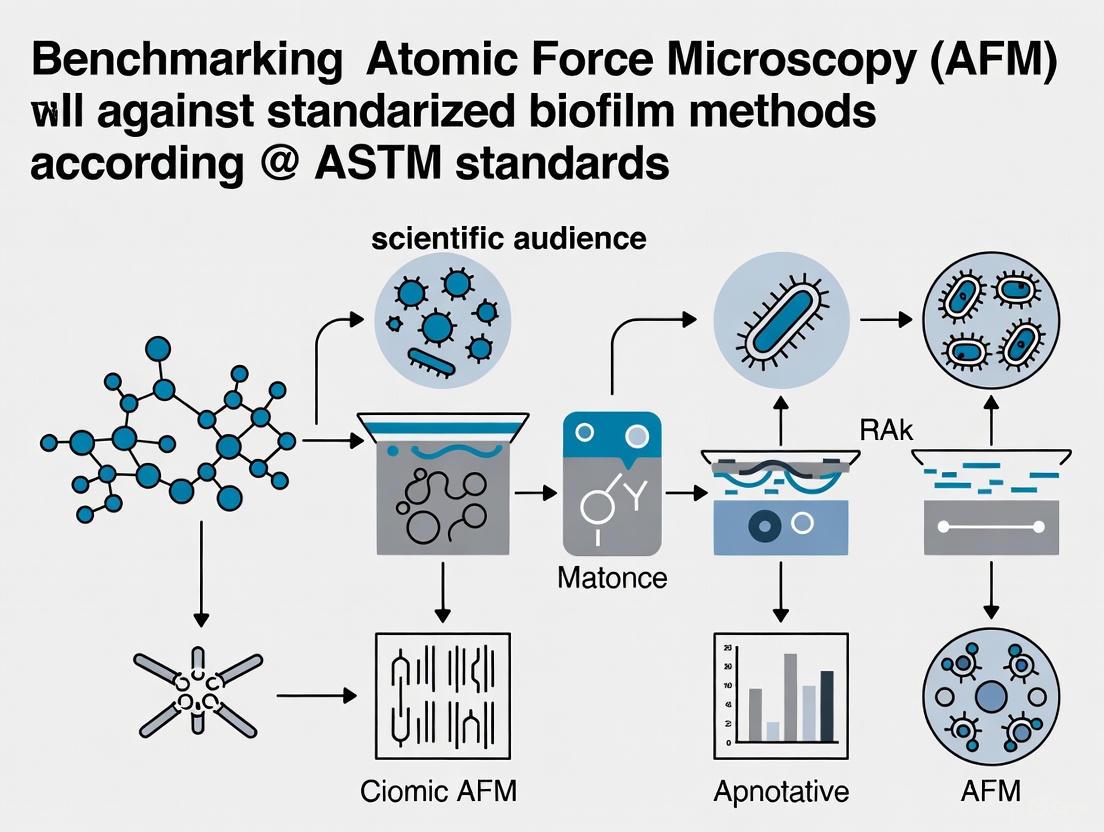
Benchmarking Atomic Force Microscopy Against Standardized Biofilm Methods: A Roadmap for ASTM Integration and Advanced Antimicrobial Research
This article provides a comprehensive analysis of Atomic Force Microscopy (AFM) as a tool for biofilm research, directly benchmarking its capabilities against traditional, standardized methods.
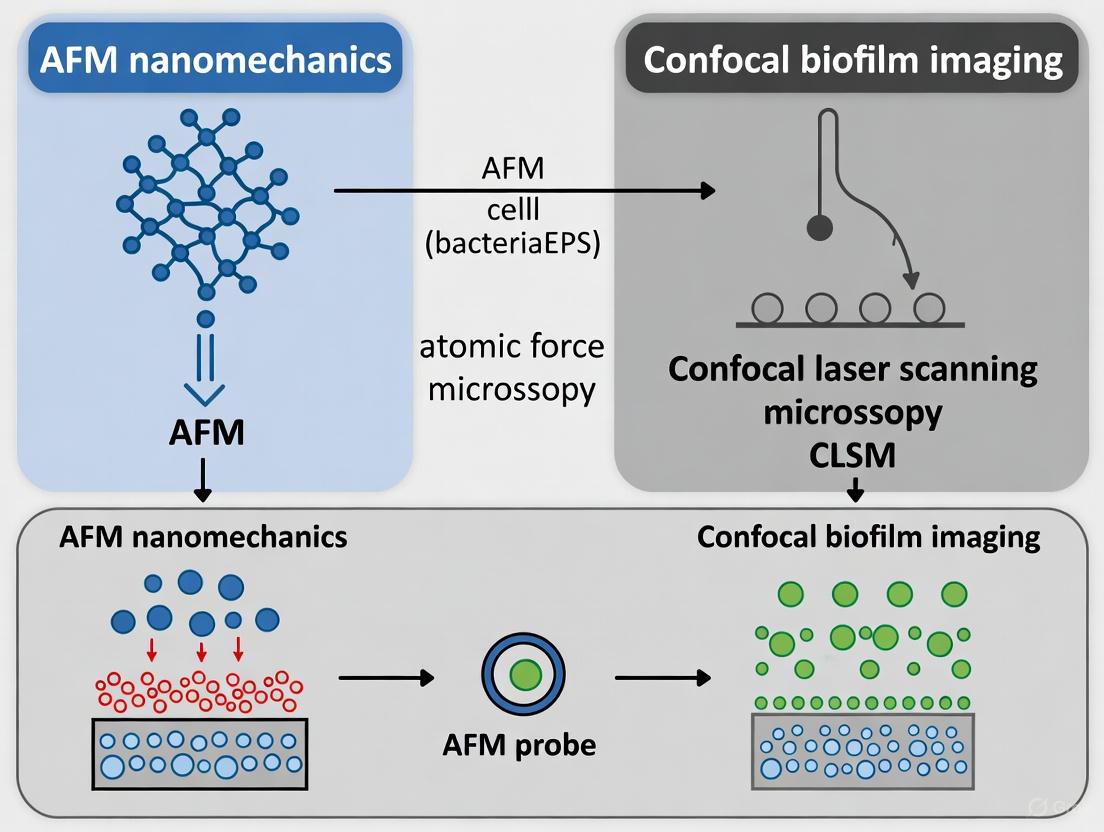
Correlative AFM-Confocal Microscopy: A Multimodal Framework for Biofilm Nanomechanics and 3D Architecture
This article provides a comprehensive guide for researchers and drug development professionals on integrating Atomic Force Microscopy (AFM) and Confocal Laser Scanning Microscopy (CLSM) for advanced biofilm analysis.
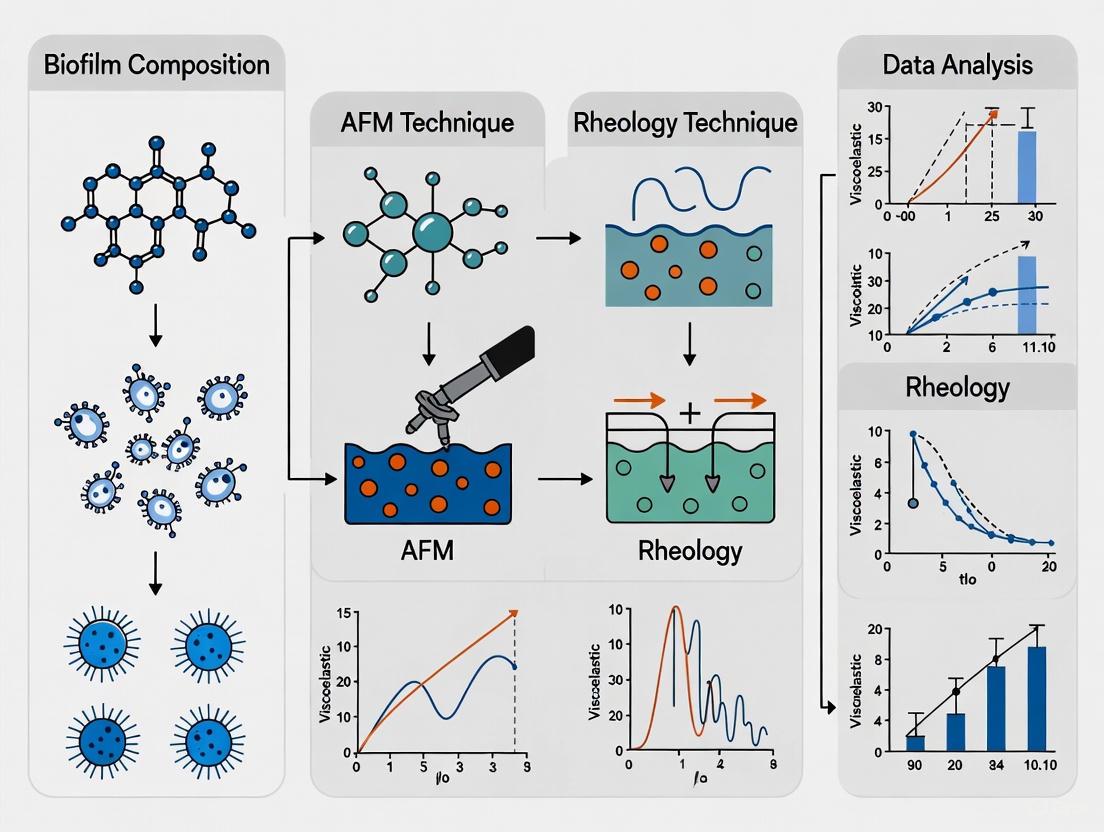
AFM vs. Rheology: A Comprehensive Guide to Characterizing Biofilm Viscoelasticity for Biomedical Research
Understanding the viscoelastic properties of biofilms is critical for developing strategies to combat biofilm-associated infections and leverage beneficial biofilms in industry.
High-Resolution AFM for Extracellular Matrix Visualization: A Complete Guide from Fundamentals to Advanced Applications
This article provides a comprehensive guide for researchers and drug development professionals seeking to optimize Atomic Force Microscopy (AFM) for high-resolution visualization and mechanical characterization of the extracellular matrix (ECM).
Preventing Tip Contamination in AFM Biofilm Characterization: A Guide for Reliable Nanoscale Analysis
Atomic Force Microscopy (AFM) is a powerful tool for elucidating the nanoscale structure and mechanics of microbial biofilms, which are crucial in medical device contamination and chronic infections.
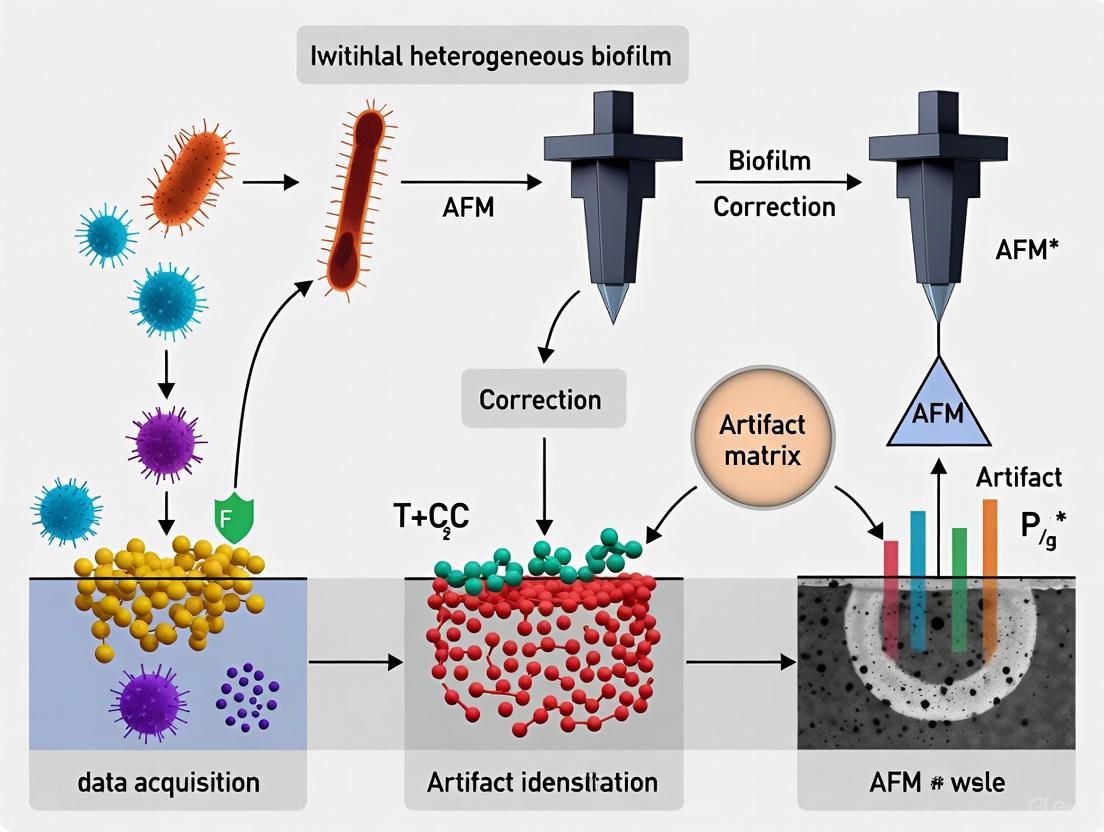
Correcting AFM Artifacts in Heterogeneous Biofilm Samples: A Guide for Reliable Nanoscale Analysis
Atomic Force Microscopy (AFM) provides unparalleled nanoscale resolution for studying biofilm structure, mechanics, and function.
Optimizing Atomic Force Microscopy for Soft Biofilm Analysis: A Complete Guide to Parameter Selection for Researchers
This comprehensive guide addresses the critical challenge of optimizing Atomic Force Microscopy (AFM) parameters for characterizing soft, heterogeneous biofilm samples.
Synergistic Force: How Rheology and AFM Are Redefining Biofilm Characterization in Biomedical Research
This article provides a comprehensive overview of the combined application of rheology and Atomic Force Microscopy (AFM) for the advanced characterization of microbial biofilms.