16S vs. Shotgun Sequencing: A Strategic Cost and Application Guide for Researchers
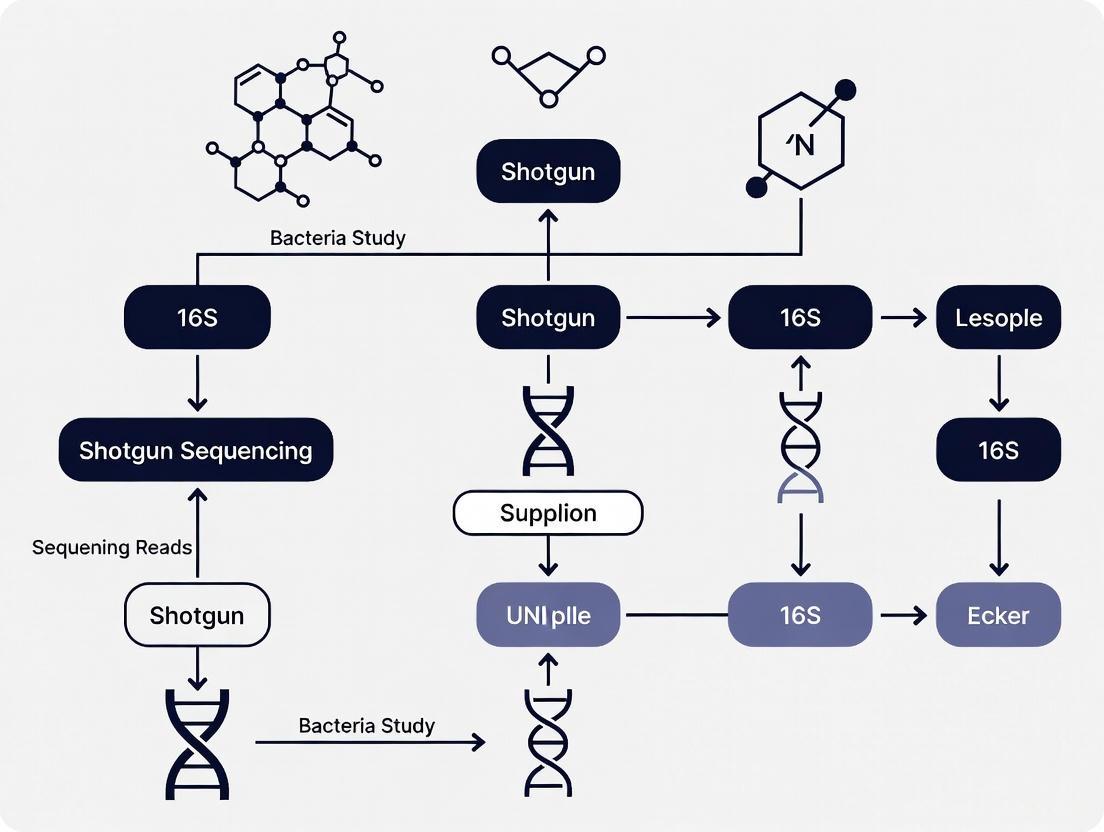
This article provides a comprehensive cost-benefit analysis of 16S rRNA and shotgun metagenomic sequencing for researchers and drug development professionals.
16S vs. Shotgun Sequencing: A Strategic Cost and Application Guide for Researchers
Abstract
This article provides a comprehensive cost-benefit analysis of 16S rRNA and shotgun metagenomic sequencing for researchers and drug development professionals. It explores the foundational principles of each method, presents current pricing and methodological workflows, and offers troubleshooting advice for budget and project optimization. Drawing from recent comparative studies and market data, it delivers actionable insights to help scientists select the most cost-effective and scientifically rigorous sequencing strategy for their specific research goals, from initial exploratory studies to in-depth functional analysis.
Understanding the Core Technologies: 16S rRNA and Shotgun Sequencing Explained
16S ribosomal RNA (rRNA) sequencing is a well-established culture-free method that uses polymerase chain reaction (PCR) to amplify specific regions of the 16S rRNA gene—a universal phylogenetic marker present in all bacteria and archaea—to identify and compare microbial composition across complex samples [1] [2]. This targeted amplicon sequencing approach provides a cost-effective technique for phylogenetic and taxonomic comparison of microbial communities, making it a cornerstone of microbiome research [1] [3]. While its ability to achieve species- and strain-level resolution is enhanced by full-length gene sequencing, it is fundamentally limited to profiling bacteria and archaea, unlike untargeted shotgun metagenomic methods [3] [4]. This guide objectively defines 16S rRNA sequencing, details its experimental protocols, and compares its performance and cost against shotgun metagenomic sequencing within the broader context of microbiome study design.
The 16S rRNA Gene as a Phylogenetic Marker
The 16S rRNA gene is a approximately 1,500 bp genetic sequence that is an integral component of the prokaryotic 30S ribosomal subunit [2]. Its utility as a standard for microbial identification and phylogenetic studies stems from its genetic properties [2]:
- Ubiquity and Essential Function: It is found in all bacteria and archaea, and its function in protein synthesis is critical for cellular survival, leading to its high conservation across species [1] [2].
- Mosaic Structure: The gene comprises nine hypervariable regions (V1-V9) that are flanked by conserved regions. The variable regions accumulate mutations at a higher rate, providing genus- or species-specific signature sequences that enable taxonomic discrimination, while the conserved regions enable the design of universal PCR primers [1] [2].
Principle of Targeted Amplicon Sequencing
16S rRNA sequencing is a targeted amplicon approach that leverages PCR to amplify specific variable regions of the 16S rRNA gene. By using primers that bind to the conserved flanking sequences, researchers can amplify this single genetic marker from a vast array of prokaryotes in a complex sample without the need for cultivation [1] [3]. The resulting amplicons are sequenced, and the sequences are compared to reference databases to infer the phylogeny and taxonomy of the sample's microbial constituents [1].
Experimental Protocol and Workflow
The standard workflow for 16S rRNA sequencing involves sample preparation, library generation, sequencing, and bioinformatic analysis. Key variations in the protocol, particularly the choice of variable regions and sequencing platform, significantly impact the resolution and accuracy of the results [1] [4].
Key Workflow Steps
- DNA Extraction: Microbial genomic DNA is extracted from the sample (e.g., fecal material, saliva, soil) [3].
- PCR Amplification: Universal primers are used to amplify one or more of the hypervariable regions (e.g., V3-V4, V1-V9) of the 16S rRNA gene. This step simultaneously attaches platform-specific adapters and sample-specific barcodes (indexes) to the amplicons, enabling the multiplexing of dozens to hundreds of samples in a single sequencing run [3] [5].
- Library Clean-up: The amplified DNA is cleaned to remove impurities and primers, and often undergoes size selection [1] [3].
- Library Quantification and Pooling: The final libraries are quantified, normalized, and pooled in equal proportions to create a sequencing library [3].
- High-Throughput Sequencing: The pooled library is sequenced on a platform such as Illumina MiSeq or PacBio Sequel II [5].
- Bioinformatic Analysis: Raw sequencing reads are processed through pipelines (e.g., QIIME, MOTHUR, DADA2) for quality filtering, error correction, and clustering into Operational Taxonomic Units (OTUs) or Amplicon Sequence Variants (ASVs). The resulting sequences are then aligned to reference databases (e.g., GreenGenes, SILVA) for taxonomic classification [3].
The following diagram illustrates the core workflow for 16S rRNA sequencing:
Primer Selection and Sequencing Platforms
- Short-Read Sequencing (e.g., Illumina): Due to read length limitations (typically up to 300 bp), these platforms sequence one or two adjacent variable regions (e.g., V3-V4 or V4 alone). This approach is cost-effective for high-throughput studies but provides limited taxonomic resolution, often only to the genus level [4] [5]. The choice of variable region is critical, as their discriminatory power varies significantly across bacterial taxa [4].
- Long-Read Sequencing (e.g., PacBio SMRT): Third-generation platforms can sequence the entire full-length 16S rRNA gene (~1,500 bp), encompassing all nine variable regions. This approach provides superior taxonomic resolution, enabling more accurate classification down to the species and sometimes strain level [4] [5]. The higher per-read cost is balanced by the need for fewer reads to achieve the same taxonomic depth.
Performance Comparison: 16S rRNA vs. Shotgun Metagenomic Sequencing
The choice between 16S rRNA sequencing and shotgun metagenomic sequencing involves trade-offs between cost, taxonomic resolution, functional insight, and analytical complexity. The table below provides a detailed, data-driven comparison of the two methods.
Table 1: Comprehensive comparison of 16S rRNA and Shotgun Metagenomic Sequencing
| Factor | 16S/ITS Sequencing | Shotgun Metagenomic Sequencing |
|---|---|---|
| Principle | Targeted amplicon sequencing of the 16S rRNA gene [1] | Untargeted, random fragmentation and sequencing of all genomic DNA in a sample [3] |
| Cost per Sample | ~$50 - $80 USD [3] [6] | Starting at ~$150 - $200 USD (depends on depth) [3] [6] |
| Taxonomic Resolution | Genus-level (species-level with full-length gene) [3] [5] | Species-level and sometimes strain-level [3] |
| Taxonomic Coverage | Bacteria and Archaea only (Fungi require separate ITS sequencing) [1] [3] | All domains of life: Bacteria, Archaea, Fungi, Viruses [3] |
| Functional Profiling | No direct functional data; requires prediction tools (e.g., PICRUSt) [3] [6] | Yes; direct identification of microbial genes and metabolic pathways [3] [6] |
| Bioinformatics Complexity | Beginner to intermediate; established, well-curated databases and pipelines [3] | Intermediate to advanced; larger data volumes, more complex pipelines and databases [3] |
| Sensitivity to Host DNA | Low (PCR targets microbial gene) [3] [6] | High; host DNA can dominate sequencing output, requiring depletion methods [3] [6] |
| Minimum DNA Input | Very low (as low as 10 copies of the 16S gene) [6] | Higher (typically ≥1 ng); can be limiting after host DNA depletion [6] |
| Risk of False Positives | Lower with error-correction algorithms (e.g., DADA2) [6] | Higher; closely related genomes can be misassigned without perfect reference [6] |
Supporting Experimental Data
A 2024 study in BMC Genomics directly compared Illumina (V3-V4) and PacBio (full-length V1-V9) 16S sequencing on human saliva, plaque, and fecal samples. The study found that while both platforms detected the same major genera, PacBio assigned a significantly higher proportion of reads to the species level (74.14%) compared to Illumina (55.23%), demonstrating the enhanced resolution of full-length sequencing [5].
Furthermore, a 2019 study in Nature Communications used in silico experiments to show that short-read sequencing of sub-regions like V4 failed to confidently classify a high percentage of sequences to the correct species (56% failure rate for V4). In contrast, using the full-length V1-V9 region allowed nearly all sequences to be accurately classified, validating that sequencing the entire gene captures sufficient variation for superior species-level discrimination [4].
The Scientist's Toolkit: Essential Research Reagents and Materials
Successful execution of a 16S rRNA sequencing study relies on several key reagents and computational resources.
Table 2: Key research reagent solutions for 16S rRNA sequencing
| Item | Function/Description |
|---|---|
| Universal 16S Primers | PCR primers binding to conserved regions to amplify hypervariable regions (e.g., 27F/1492R for full-length, 341F/805R for V3-V4) [5]. |
| High-Fidelity DNA Polymerase | Enzyme for accurate PCR amplification of the target 16S region with minimal errors. |
| Size Selection Beads | Magnetic beads (e.g., SPRI beads) for cleaning up PCR reactions and selecting amplicons of the desired size [1]. |
| Indexed Adapters | Short DNA sequences containing barcodes unique to each sample, allowing for sample multiplexing [3]. |
| Reference Databases | Curated collections of 16S sequences (e.g., GreenGenes, SILVA, RDP) for taxonomic classification of sequenced reads [1] [7]. |
| Bioinformatics Pipelines | Software suites (e.g., QIIME 2, MOTHUR, DADA2) for processing raw sequence data into taxonomic abundance tables [3]. |
16S rRNA sequencing remains a powerful, accessible, and cost-effective tool for profiling the bacterial and archaeal components of complex microbiomes. Its utility is maximized in large-scale studies where the primary goal is comparative taxonomic analysis across hundreds of samples. The advent of full-length 16S sequencing has bridged a critical gap, offering species-level resolution that was once the exclusive domain of shotgun metagenomics. However, for hypotheses requiring comprehensive functional potential analysis, discovery of novel genes, or profiling of non-bacterial microbes, shotgun metagenomics is the requisite approach. The decision between these methods is not a question of which is superior, but rather which is the most appropriate tool to answer the specific biological question at hand, with consideration for budgetary and bioinformatic constraints.
Shotgun metagenomic sequencing represents a fundamental shift in how researchers study microbial communities. Unlike targeted approaches that focus on specific genetic markers, this technique provides a comprehensive view of all genomic DNA present in a sample. By randomly fragmenting and sequencing all genetic material, shotgun metagenomics enables unparalleled insights into the taxonomic composition and functional potential of complex microbial ecosystems. As sequencing technologies advance and costs decline, this powerful approach is becoming increasingly accessible across diverse research fields, from human health to environmental monitoring. This guide examines shotgun metagenomic sequencing in comparison to 16S rRNA sequencing, providing researchers with the experimental data and methodological context needed to select the appropriate tool for their scientific objectives.
What is Shotgun Metagenomic Sequencing?
Shotgun metagenomic sequencing is a molecular biology technique that involves randomly fragmenting all genomic DNA from an environmental sample and sequencing the resulting pieces. The "shotgun" approach sequences DNA fragments from all organisms present—bacteria, archaea, viruses, fungi, and other microbial eukaryotes—without targeting specific genes. These sequences are then computationally reconstructed to identify microbial species and their genes, providing a comprehensive view of community composition and functional potential [3] [8].
The key differentiator from targeted methods like 16S sequencing is its untargeted nature. While 16S sequencing only amplifies and sequences specific hypervariable regions of the bacterial 16S rRNA gene, shotgun sequencing captures all genomic material, enabling species-level identification and functional gene analysis across all domains of life [3].
Shotgun vs. 16S Sequencing: Technical Comparison
The table below summarizes the core technical differences between these two approaches:
Table 1: Technical comparison of 16S rRNA gene sequencing and shotgun metagenomic sequencing
| Factor | 16S rRNA Sequencing | Shotgun Metagenomic Sequencing |
|---|---|---|
| Cost per Sample | ~$50-$80 USD [3] [8] | Starting at ~$150-$200 USD [3] [8] |
| Taxonomic Resolution | Genus-level (sometimes species) [3] | Species-level (sometimes strains) [3] [8] |
| Taxonomic Coverage | Bacteria and Archaea only [3] | All domains of life (Bacteria, Archaea, Viruses, Fungi, Eukaryotes) [3] [8] |
| Functional Profiling | No (only predicted via tools like PICRUSt) [3] | Yes (direct assessment of functional genes) [3] [8] |
| Bioinformatics Requirements | Beginner to intermediate [3] | Intermediate to advanced [3] |
| Host DNA Interference | Low (PCR targets 16S gene specifically) [8] | High (sequences all DNA, including host) [3] [8] |
| Minimum DNA Input | As low as 10 copies of 16S gene [8] | Typically 1 ng [8] |
| Recommended Sample Types | All sample types [8] | Best for samples with low host DNA (e.g., human feces) [8] |
Shotgun Metagenomics Workflow
The following diagram illustrates the comprehensive workflow for shotgun metagenomic sequencing, from sample collection to data interpretation:
Experimental Evidence and Performance Data
Sample Collection Method Comparisons
A 2025 study by Kuntz et al. directly compared shotgun metagenomic sequencing performance between stool cards and 95% ethanol fixation methods. Researchers from 32 participants self-collected stool samples from the same bowel movement using both methods. The study found that metagenomes from cards and 95% ethanol were highly correlated within individuals, with no difference in α diversity and only approximately 1% of variation in β diversity explained by collection method [9].
At the species level, relative abundances were highly correlated between card and ethanol sample pairs (Spearman rho = 0.96). Only 10 of 239 species showed differential abundance, including overrepresentation of Escherichia coli and underrepresentation of three Streptococcus species in cards compared with ethanol. Among 99 colorectal cancer-associated species, only four showed differential abundances between collection methods, consistent with what would be expected by chance. This demonstrates that stool cards can be a cost-effective alternative for metagenomic sequencing in epidemiologic studies [9].
Diagnostic Performance in Clinical Settings
A 2025 study evaluating shotgun metagenomics for bloodstream infection (BSI) diagnosis revealed both promise and challenges. The research compared SMg with routine blood culture using stored samples collected at the time of blood culture. Of 51 initial samples (36 BC-positive and 15 BC-negative), 15 were excluded due to low DNA library yield (n=8) or low sequencing output (n=7) [10].
In only two cases did SMg results clearly match BC findings (Cutibacterium acnes and Staphylococcus aureus). The study identified that most SMg reads represented suspected contamination, originating from either the patient or laboratory. The output from five different taxonomic classification tools showed overall similarity but displayed notable differences related to their strategies for identifying bacterial findings. Researchers concluded that low sensitivity compared to blood culture was mainly due to low microbial DNA yield in blood samples [10].
Advanced Biodiversity Applications
Groundbreaking research published in Nature Ecology & Evolution in 2025 demonstrated shotgun sequencing of airborne environmental DNA (eDNA) for comprehensive biome assessment. The study coupled long-read sequencing with cloud-based biodiversity pipelines, enabling a 2-day turnaround from airborne sample collection to completed analysis. From outdoor air eDNA alone, researchers performed comprehensive genetic analysis including population genetics of bobcat (Lynx rufus) and golden silk orb weaver spider (Trichonephila clavipes), and haplotyping humans (Homo sapiens) from natural complex community settings [11].
This approach enabled deeper analysis of specific species and genomic regions of interest, including viral variant calling, human variant analysis, and antimicrobial resistance gene surveillance from airborne DNA. The results highlight the speed, versatility, and specificity of pan-biodiversity monitoring via non-invasive eDNA sampling using current benchtop/portable and cloud-based approaches [11].
Cost Analysis: 16S vs. Shotgun Metagenomic Sequencing
Understanding the financial implications of sequencing method selection is crucial for research planning. The table below summarizes current pricing structures:
Table 2: Comparative cost analysis of 16S and shotgun metagenomic sequencing services
| Service Type | Price Range | Notes | Source |
|---|---|---|---|
| 16S rRNA Amplicon Sequencing | $55-$80 per sample | Includes library preparation and sequencing | [12] [8] |
| Shotgun Metagenomic Sequencing | $90-$200+ per sample | Price depends on sequencing depth (5M-30M reads) | [12] [3] |
| Shallow Shotgun Sequencing | ~$120 per sample | Cost-effective alternative for compositional analysis | [8] |
| Bioinformatics Analysis | $20-$1000+ per project | Varies by complexity and sample number | [12] [13] |
| DNA Extraction | $15-$45 per sample | Additional cost for both methods | [12] [13] |
The market for metagenomic sequencing is experiencing significant growth, projected to expand from $3.66 billion in 2025 to $16.81 billion by 2034, at a CAGR of 18.53% [14]. This growth is driven by technological advancements, rising demand for personalized medicine, and increasing funding for genomic research, which continues to make shotgun sequencing more accessible.
Bioinformatics Considerations
Shotgun metagenomic sequencing generates complex datasets that require sophisticated bioinformatic tools for meaningful interpretation. The volume of data produced is substantial—one human genome's sequencing results in approximately 743 terabytes of data as of 2017, compared to 16.2 megabytes at the beginning of the Human Genome Project in 2001 [14].
Recent advances in bioinformatics tools have significantly improved analysis capabilities. Meteor2, introduced in 2025, leverages compact, environment-specific microbial gene catalogues to deliver comprehensive taxonomic, functional, and strain-level profiling (TFSP). Supporting 10 ecosystems with 63,494,365 microbial genes clustered into 11,653 metagenomic species pangenomes, Meteor2 has demonstrated strong performance in TFSP, particularly in detecting low-abundance species [15].
In benchmark tests, Meteor2 improved species detection sensitivity by at least 45% for both human and mouse gut microbiota simulations compared to MetaPhlAn4 or sylph when applied to shallow-sequenced datasets. For functional profiling, it improved abundance estimation accuracy by at least 35% compared to HUMAnN3. The tool also operates efficiently, requiring only 2.3 minutes for taxonomic analysis and 10 minutes for strain-level analysis against the human microbial gene catalogue when processing 10 million paired reads while operating within a modest 5 GB RAM footprint [15].
The Scientist's Toolkit: Essential Research Reagents and Materials
Table 3: Key research reagents and materials for shotgun metagenomic sequencing
| Item | Function | Examples/Notes |
|---|---|---|
| Nucleic Acid Extraction Kits | Isolation of high-quality DNA from complex samples | Host depletion methods crucial for samples with high host DNA |
| Library Preparation Kits | Fragment DNA and attach adapters for sequencing | Illumina, Oxford Nanopore, or PacBio compatible kits |
| Quantification Assays | Precisely measure DNA concentration and quality | Qubit dsDNA HS Assay, TapeStation profiles |
| Sequenceing Platforms | High-throughput DNA sequencing | Illumina NovaSeq, PacBio Sequel, Oxford Nanopore |
| Bioinformatics Tools | Data analysis and interpretation | Meteor2, MetaPhlAn4, HUMAnN3, StrainPhlAn |
| Reference Databases | Taxonomic and functional annotation | GTDB, KEGG, CAZy, ResFinder for ARGs |
Shotgun metagenomic sequencing provides researchers with an unparalleled comprehensive view of all genomic DNA in complex samples, enabling detailed taxonomic classification at species and strain levels alongside functional potential assessment. While 16S rRNA sequencing remains a cost-effective choice for focused bacterial community profiling, shotgun approaches deliver substantially richer datasets for exploring cross-domain microbial communities, functional capabilities, and strain-level variation.
The decision between these methodologies ultimately depends on research objectives, budget constraints, and bioinformatic capabilities. For studies requiring maximal information content and cross-domain coverage, shotgun metagenomic sequencing represents the gold standard, despite its higher per-sample costs and more complex analytical requirements. As sequencing costs continue to decline and bioinformatic tools become more sophisticated and user-friendly, shotgun approaches are increasingly becoming the preferred method for comprehensive microbiome characterization across diverse research applications.
For researchers designing a microbiome study, one of the most fundamental decisions is choosing between 16S rRNA gene sequencing and shotgun metagenomic sequencing. Each method offers distinct advantages and limitations in cost, resolution, and analytical output, making the choice highly dependent on specific research goals and resources [3]. This guide provides an objective comparison of these technologies, breaking down their workflows from DNA extraction to sequencing and presenting experimental data to inform decision-making for scientists and drug development professionals.
Workflow Comparison: 16S rRNA vs. Shotgun Metagenomic Sequencing
The journey to characterize microbial communities begins with selecting a sequencing strategy. The two predominant methods, 16S rRNA sequencing and shotgun metagenomic sequencing, follow fundamentally different paths from sample preparation to data analysis [3].
16S rRNA Gene Sequencing is a targeted (amplicon) approach that amplifies and sequences a specific region of the bacterial and archaeal 16S rRNA gene. This gene contains both highly conserved regions, which allow for primer binding, and variable regions (V1-V9), which provide taxonomic signatures for identifying different microorganisms [3] [16].
Shotgun Metagenomic Sequencing takes a comprehensive approach by sequencing all the genomic DNA present in a sample. This involves randomly fragmenting the total DNA into small pieces, sequencing these fragments, and then using bioinformatics to reconstruct the genomic sequences and identify which microorganisms and genes are present [3].
The table below summarizes the core differences between these two foundational methods.
Table 1: Key Characteristics of 16S rRNA and Shotgun Metagenomic Sequencing
| Factor | 16S rRNA Sequencing | Shotgun Metagenomic Sequencing |
|---|---|---|
| Cost per Sample | ~$50 - $110 [3] [17] | Starting at ~$150 (varies with depth) [3] |
| Taxonomic Resolution | Genus-level (sometimes species) [3] | Species-level and sometimes strain-level [3] |
| Taxonomic Coverage | Bacteria and Archaea only [3] | All domains of life, including bacteria, fungi, viruses, and archaea [3] [18] |
| Functional Profiling | No (but prediction is possible) [3] | Yes (direct profiling of functional genes) [3] |
| Bioinformatics Complexity | Beginner to Intermediate [3] | Intermediate to Advanced [3] |
| Sensitivity to Host DNA | Low [3] | High (can be mitigated with sequencing depth) [3] |
Detailed Experimental Protocols
16S rRNA Gene Sequencing Workflow
The 16S rRNA sequencing protocol is a well-established, PCR-based method for profiling bacterial and archaeal communities [3] [17].
DNA Extraction: Genomic DNA is extracted from the sample (e.g., environmental, human stool, or clinical specimen) using specialized kits designed for the specific sample type to ensure high-yield and quality DNA [17] [16]. Common kits include the Promega Maxwell RSC, QIAmp PowerFecal DNA Kit, or NucleoSpin Soil Kit [17] [18] [16].
PCR Amplification: The extracted DNA is used as a template in a polymerase chain reaction (PCR) to amplify one or more selected hypervariable regions of the 16S rRNA gene (e.g., V4-V5). The primers used in this step include unique molecular barcodes for each sample, enabling multiple samples to be pooled and sequenced together in a single run (multiplexing) [3] [17]. For full-length 16S sequencing, the entire ~1.5 kb gene is amplified [16].
Clean-up and Size Selection: The amplified DNA (amplicons) is cleaned to remove PCR reagents, enzymes, and primer dimers. This step often involves paramagnetic bead-based purification to select for the correct fragment size and ensure sample purity [3] [19].
Library Pooling: The barcoded and cleaned amplicon samples are quantified and pooled together in equal proportions to create a single sequencing library [3].
Sequencing: The pooled library is loaded onto a sequencing platform, such as the Illumina MiSeq, typically using a 250bp paired-end configuration for reading the amplicon fragments [17].
Shotgun Metagenomic Sequencing Workflow
Shotgun metagenomics involves a more complex preparation process to enable untargeted sequencing of all genomic material [3].
DNA Extraction: This critical step requires a robust extraction method that efficiently lyzes a broad range of microorganisms and minimizes biases. The choice of kit (e.g., NucleoSpin Soil Kit for stool) significantly impacts the representation of community members in downstream results [3] [18].
Fragmentation and Library Preparation: The extracted DNA is not amplified but is instead physically sheared into small, random fragments. This is often done through a process like tagmentation, which simultaneously cleaves the DNA and tags it with adapter sequences [3]. This step primes the DNA for the subsequent ligation of sequencing adapters and barcodes.
PCR Amplification (Optional): A limited-cycle PCR may be performed to amplify the tagmented DNA and to attach unique molecular barcodes to each sample, enabling multiplexing [3].
Size Selection and Clean-up: The library undergoes a bead-based clean-up and size selection to remove short fragments, adapter dimers, and other impurities, ensuring a high-quality sequencing input [3] [19].
Library Quantification and Pooling: The final libraries are accurately quantified, and samples are pooled in equimolar ratios [3].
Sequencing: The pooled library is sequenced on a platform such as the Illumina NovaSeq or PacBio Sequel system. The required sequencing depth (number of reads per sample) is significantly higher than for 16S sequencing to ensure adequate coverage of the diverse genomes present [3] [20].
Workflow Visualization
The following diagram illustrates the key procedural steps and differences between the two sequencing workflows.
Supporting Experimental Data and Comparisons
Independent, head-to-head studies provide critical empirical data on the performance differences between these two methods.
Taxonomic Resolution and Detection Power
A 2024 study comparing 16S and shotgun sequencing on 156 human stool samples found that 16S detects only part of the gut microbiota community revealed by shotgun sequencing [18]. The 16S data was sparser and exhibited lower alpha diversity. While abundance estimates for shared taxa were positively correlated, the two technologies highly differed at lower taxonomic ranks (e.g., species), partially due to disagreements in reference databases [18].
A 2021 study in Scientific Reports provided a direct quantification of detection capability. When a sufficient number of reads was available (>500,000 per sample), shotgun sequencing identified a statistically significant higher number of bacterial genera than 16S sequencing [21]. Furthermore, the genera detected exclusively by shotgun sequencing were biologically meaningful and able to discriminate between experimental conditions (e.g., different gastrointestinal tract compartments) as effectively as the more abundant genera detected by both methods [21].
Cost Considerations and Strategic Approaches
Cost remains a primary differentiator. As indicated in Table 1, 16S rRNA sequencing is generally more affordable, with prices from core facilities starting at around $100 per sample [17]. In contrast, shotgun metagenomic sequencing starts at approximately $150 per sample but can be significantly higher depending on the required sequencing depth [3].
To bridge this cost-data gap, a hybrid strategy is often employed: researchers conduct 16S rRNA gene sequencing on all samples to profile taxonomic composition and then perform deeper shotgun metagenomic sequencing on a strategic subset of samples to gain functional insights [3]. Furthermore, the emergence of shallow shotgun sequencing offers a compelling compromise. This method uses a modified protocol to provide over 97% of the compositional and functional data obtained from deep shotgun sequencing at a cost similar to 16S rRNA gene sequencing, making it suitable for high-sample-size studies [3].
Essential Research Reagent Solutions
The following table lists key reagents and kits essential for implementing either sequencing workflow.
Table 2: Key Reagents and Kits for Microbiome Sequencing Workflows
| Item | Function | Example Products / Methods |
|---|---|---|
| DNA Extraction Kits | Lysing microbial cells and purifying total genomic DNA from complex samples. | NucleoSpin Soil Kit [18], QIAmp PowerFecal DNA Kit [16], Dneasy PowerLyzer Powersoil kit [18], Promega Maxwell RSC [17] |
| PCR Enzymes & Master Mixes | Amplifying the target 16S gene region or enriching sequencing libraries. | 16S Barcoding Kit (e.g., from Oxford Nanopore) [16], KAPA HiFi HotStart ReadyMix |
| Library Prep Kits | Fragmenting DNA, adding adapters, and indexing samples for multiplexing. | Illumina Nextera DNA Flex, 16S Illumina Amplicon Protocol [17] |
| Size Selection & Clean-up Beads | Purifying DNA fragments from reactions and selecting for desired fragment sizes. | AMPure XP beads, homemade SPRI (Solid Phase Reversible Immobilization) paramagnetic beads [19] [22] |
| Quantification Kits | Accurately measuring DNA concentration before sequencing to ensure proper loading. | Qubit dsDNA HS Assay, Quant-iT PicoGreen |
| Positive Control Standards | Benchmarking sequencing performance and bioinformatic pipelines. | ZymoBIOMICS Microbial Community Standards [20] |
The choice between 16S rRNA and shotgun metagenomic sequencing is not a matter of which is universally better, but which is more appropriate for the specific research context.
- 16S rRNA sequencing is a cost-effective, well-established tool ideal for large-scale studies focused on answering questions about the composition and diversity of bacterial and archaeal communities at the genus level. Its lower cost and simpler bioinformatics make it accessible for hypothesis generation and projects with a large number of samples [3] [18].
- Shotgun metagenomic sequencing is a more comprehensive but resource-intensive technique. It is the preferred method when the research requires species- or strain-level taxonomic resolution, profiling of non-bacterial community members (like fungi and viruses), or direct insight into the functional genetic potential of the microbiome [3] [21].
When designing a study, researchers must weigh the trade-offs between cost, resolution, and analytical depth. For many, a pragmatic approach involving an initial 16S rRNA survey followed by targeted shotgun sequencing, or the use of shallow shotgun sequencing, provides an optimal path to robust and insightful microbiome data.
Primary Applications and Strengths of Each Foundational Method
In microbiome research, the choice between 16S rRNA gene sequencing and shotgun metagenomic sequencing is fundamental, shaping the scope, depth, and cost of a study. 16S sequencing provides a cost-effective, targeted profile of bacterial and archaeal communities, ideal for broad compositional surveys. In contrast, shotgun sequencing delivers a comprehensive, untargeted view of all genetic material in a sample, enabling species- and strain-level identification as well as functional potential analysis. The decision hinges on the research question, budget, and analytical resources, with a growing trend toward shotgun methods as costs decrease and databases expand [3] [18].
The advent of high-throughput sequencing has revolutionized microbiology, moving beyond culture-dependent methods that could not identify the vast majority of microorganisms in complex communities [23] [18]. Two foundational approaches have emerged: 16S rRNA gene sequencing (16S), an amplicon-based method, and shotgun metagenomic sequencing (shotgun), a whole-genome approach. While 16S has been the workhorse for years due to its lower cost, shotgun sequencing is becoming increasingly accessible and popular, offering a more detailed view of the microbiome [3]. This guide objectively compares the performance, applications, and experimental protocols of these two core methods to inform researchers in their study design.
What is 16S rRNA Gene Sequencing?
16S rRNA gene sequencing is a targeted approach that leverages the 16S ribosomal RNA gene, a genetic marker present in all bacteria and archaea. The method involves amplifying and sequencing specific hypervariable regions (e.g., V3-V4) of this gene. The sequenced regions are then compared against reference databases to identify the microbial taxa present in a sample and their relative abundances [3] [24].
What is Shotgun Metagenomic Sequencing?
Shotgun metagenomic sequencing is an untargeted approach that involves randomly fragmenting all the DNA in a sample—from bacteria, viruses, fungi, and other microorganisms—into numerous small pieces. These fragments are sequenced, and powerful computational tools assemble the sequences and map them to databases to reconstruct the genomic content. This allows for not only taxonomic profiling but also analysis of functional genes and pathways [3] [25] [26].
Direct Comparison of Key Characteristics
The table below summarizes the core differences between the two methods.
| Characteristic | 16S rRNA Sequencing | Shotgun Metagenomic Sequencing |
|---|---|---|
| Primary Application | Taxonomic profiling of bacteria and archaea; diversity studies [3] [27] | Comprehensive taxonomic (all domains) and functional gene profiling; strain-level tracking [3] [25] |
| Taxonomic Resolution | Genus-level, sometimes species-level [3] | Species-level, often strain-level, and single nucleotide variants [3] [25] |
| Taxonomic Coverage | Bacteria and Archaea only [3] | All domains: Bacteria, Archaea, Viruses, and Fungi [3] |
| Functional Profiling | No direct measurement; only prediction via tools like PICRUSt [3] | Yes, direct measurement of microbial genes and functional pathways [3] [25] |
| Approximate Cost per Sample | ~$50 USD [3] | Starting at ~$150 USD (varies with depth) [3] |
| Bioinformatics Complexity | Beginner to Intermediate [3] | Intermediate to Advanced [3] |
| Sensitivity to Host DNA | Low (targets a specific microbial gene) [3] | High (sequences all DNA, requiring mitigation) [3] |
| Key Strength | Cost-effective for large-scale bacterial composition studies | Unbiased, comprehensive overview of microbial community structure and function |
Experimental Protocols and Data Analysis
16S rRNA Sequencing Workflow
The 16S workflow involves targeted amplification of a specific genetic region, followed by sequencing and analysis.
Detailed Protocol:
- DNA Extraction: Microbial DNA is extracted from the sample (e.g., stool, soil, water) using commercial kits or conventional protocols. The quality and quantity of DNA are assessed [23].
- PCR Amplification: Specific primers are used to amplify one or more hypervariable regions (V1-V9) of the 16S rRNA gene. This step also attaches molecular barcodes to pool multiple samples [3] [23].
- Library Preparation: The amplified DNA is cleaned to remove impurities and size-selected. Samples are pooled in equal proportions for sequencing [3].
- Sequencing: The pooled library is sequenced on a platform like Illumina MiSeq or HiSeq, generating millions of short reads [23].
- Bioinformatic Analysis: Raw reads are processed through pipelines (e.g., QIIME, MOTHUR, DADA2) to remove errors, denoise, and cluster sequences into Amplicon Sequence Variants (ASVs) or Operational Taxonomic Units (OTUs). Taxonomy is assigned by aligning sequences to curated databases like SILVA or Greengenes [3] [18].
Shotgun Metagenomic Sequencing Workflow
The shotgun workflow sequences all DNA fragments from a sample, which are then computationally reconstructed.
Detailed Protocol:
- DNA Extraction: Total genomic DNA is extracted, ensuring representation of all microbial groups. Methods may be optimized to also recover viral or fungal DNA if needed [25].
- DNA Fragmentation: The extracted DNA is randomly sheared into small fragments (e.g., 300-600 bp) using physical (e.g., sonication) or enzymatic methods (e.g., tagmentation) [3] [25].
- Library Preparation: Fragments undergo end-repair, are ligated to sequencing adapters, and are amplified via PCR with sample-specific barcodes. The final library is quantified and normalized [3] [25].
- Sequencing: The library is sequenced on a high-throughput platform like Illumina NovaSeq or HiSeq, generating a vast number of short, random reads [25].
- Bioinformatic Analysis: This is more complex than for 16S. After quality control, reads can be:
Key Research Reagent Solutions
The following table outlines essential reagents and kits used in these sequencing workflows.
| Product Category | Example Products | Primary Function in Workflow |
|---|---|---|
| DNA Extraction Kits | NucleoSpin Soil Kit, Dneasy PowerLyzer Powersoil Kit, PowerSoil DNA Isolation Kit [25] [18] | Isolation of high-quality microbial DNA from complex sample types like stool, soil, and tissue. |
| 16S Amplification & Library Prep Kits | NEXTflex 16S V1–V3 Amplicon-Seq Kit [25] | Provides optimized primers and reagents for PCR amplification of specific 16S rRNA hypervariable regions and preparation for sequencing. |
| Shotgun Library Prep Kits | NEBNext Ultra DNA Library Prep Kit for Illumina [25] | Facilitates the end-repair, adapter ligation, and amplification of randomly sheared DNA fragments for shotgun sequencing. |
| Sequencing Platforms | Illumina MiSeq, HiSeq, NovaSeq; Ion Torrent Genexus System [3] [23] | High-throughput instruments that generate the raw nucleotide sequence data from prepared libraries. |
| Automated Nucleic Acid Extraction Systems | QIAcube (Qiagen), Maxwell RSC (Promega), KingFisher (Thermo Fisher) [23] | Automation of the DNA extraction process to increase throughput, reproducibility, and efficiency in high-volume labs. |
Performance and Experimental Data
A 2024 study by Buján-Villar et al. provides a direct, empirical comparison using 156 human stool samples from colorectal cancer (CRC) patients, high-risk lesion (HRL) patients, and healthy controls, with each sample sequenced using both 16S and shotgun methods [18].
Key Findings from the Comparative Study:
- Taxonomic Coverage and Sparsity: Shotgun sequencing detected a broader range of the gut microbiota community. 16S data was sparser and exhibited lower alpha diversity, meaning it captured fewer unique species and gave greater weight to the most dominant bacteria [18].
- Taxonomic Resolution Discrepancies: Agreement between the methods was higher at broader taxonomic ranks (e.g., family). At the species level, significant differences were observed, partially attributed to disagreements between the different reference databases used for each method (e.g., SILVA for 16S vs. UHGG for shotgun) [18].
- Abundance Correlation: For microbial taxa that were detected by both methods, their relative abundances were positively correlated, indicating consistency in quantifying dominant community members [18].
- Predictive Model Performance: Machine learning models trained to predict CRC from microbiome data showed that only some of the shotgun models had predictive power in an independent test set. The study concluded that it could not demonstrate a clear superiority of one technology over the other for this specific predictive task, though shotgun provided more detail [18].
This study underscores that while shotgun sequencing generally provides a more comprehensive and detailed snapshot, 16S sequencing can still reveal common microbial patterns and signatures, especially for dominant organisms, at a lower cost [18].
The choice between 16S and shotgun sequencing is not a matter of one being universally superior, but rather of selecting the right tool for the research question and constraints.
Use 16S rRNA Sequencing when: Your primary goal is to perform a large-scale survey of bacterial and archaeal community composition across many samples with a limited budget. It is ideal for establishing links between overall microbiome structure and a condition of interest, such as in ecological monitoring or initial clinical cohort studies [3] [27]. It is also better suited for samples with high levels of host DNA (e.g., tissue biopsies) where untargeted sequencing would be inefficient [3].
Use Shotgun Metagenomic Sequencing when: Your research requires species- or strain-level resolution, comprehensive coverage of all microbial domains (including viruses and fungi), or insight into the functional genetic potential of the community. It is the preferred method for in-depth analysis of well-characterized sample types like stool, for discovering novel genes, and for investigating mechanistic links between microbiome function and host phenotype [3] [25] [18].
As sequencing costs continue to fall and bioinformatic tools become more user-friendly, shotgun metagenomics is poised to become the standard for an increasing number of applications, particularly in human microbiome research where functional insight is critical [3] [14].
Cost Analysis and Strategic Application in Research and Drug Development
This guide provides a direct cost and performance comparison between 16S rRNA gene sequencing and shotgun metagenomic sequencing, two foundational methods in microbiome research. The choice between these methods involves a fundamental trade-off between cost, taxonomic resolution, and functional analysis capability.
16S sequencing is a cost-effective solution for projects requiring comprehensive bacterial profiling at the genus level. In contrast, shotgun sequencing, while more expensive, provides superior species- or strain-level resolution and enables functional gene analysis. A newer approach, shallow shotgun sequencing, has emerged as a viable intermediate, offering near-complete taxonomic and functional data at a cost comparable to 16S sequencing, but is currently best suited for high-microbial-biomass samples like stool [3].
The following analysis synthesizes current pricing data and experimental findings to inform researchers, scientists, and drug development professionals in selecting the most appropriate and fiscally responsible sequencing strategy.
Direct Price Per Sample Comparison
The table below summarizes listed prices for sequencing services from various core facilities and service providers. These figures typically include library preparation and sequencing but may exclude DNA extraction and advanced bioinformatic analyses.
Table 1: Direct Cost Comparison of Sequencing Services
| Sequencing Method | Price per Sample | Key Service Inclusions | Source & Context |
|---|---|---|---|
| 16S rRNA Sequencing | ~ $55 - $92 | Library prep, sequencing, basic bioinformatics (taxonomy tables, diversity metrics) [12] [28]. | Forsyth Microbiome Core [12], Duchossois Family Institute [28] |
| Shotgun Metagenomic (Shallow) | ~ $90 - $179 | Library prep, 5 million reads, basic taxa/functional analysis [12] [28]. | Forsyth Microbiome Core [12], Duchossois Family Institute [28] |
| Shotgun Metagenomic (Deep) | ~ $190 - $357 | Library prep, 20-30 million reads, more comprehensive analysis [12] [28]. | Forsyth Microbiome Core [12], Duchossois Family Institute [28] |
| Shotgun Bioinformatics | As low as $30 | Analysis-only service for pre-existing data (minimum sample number required) [29]. | Novogene Promotion [29] |
Technical and Methodological Comparison
Understanding the fundamental procedural differences between these methods is critical for interpreting cost and performance data.
Experimental Protocols
16S rRNA Gene Sequencing Workflow:
- DNA Extraction: DNA is isolated from the sample (e.g., using a kit like the QIAamp PowerFecal Pro DNA Kit) [28].
- PCR Amplification: Specific hypervariable regions (e.g., V4-V5) of the 16S rRNA gene are amplified using primer pairs (e.g., 515f/806r) [28] [30]. This step introduces primer-related bias [18].
- Library Preparation & Sequencing: Amplified products are barcoded, pooled (multiplexed), and sequenced on platforms like the Illumina MiSeq, generating thousands of reads per sample [3] [28].
- Bioinformatics: Data is processed through pipelines (e.g., DADA2, QIIME 2) to generate Amplicon Sequence Variants (ASVs), which are then classified against reference databases (e.g., SILVA, Greengenes) [3] [28] [18].
Shotgun Metagenomic Sequencing Workflow:
- DNA Extraction: High-quality DNA is isolated, with consideration for high molecular weight (HMW) DNA for optimal results [31].
- Library Preparation: DNA is randomly fragmented (e.g., via tagmentation or mechanical shearing), and adapters are ligated without target-specific PCR. This step is less biased but sensitive to host DNA contamination [3] [32].
- Sequencing: Libraries are sequenced on higher-throughput platforms like the Illumina NextSeq 2000, generating millions of reads per sample [28].
- Bioinformatics: Complex pipelines process the data. This can involve:
The Scientist's Toolkit: Key Research Reagent Solutions
Table 2: Essential Materials and Kits for Microbiome Sequencing
| Item | Function | Example Product/Citation |
|---|---|---|
| DNA Extraction Kit | Isolates microbial DNA from complex samples; method can bias results. | QIAamp PowerFecal Pro DNA Kit [28], NucleoSpin Soil Kit [18] |
| 16S PCR Primers | Targets specific hypervariable regions for amplification; choice introduces bias. | 515f/806r for V4 region [30], primers for V3-V4 [18] |
| 16S rRNA Reference DB | Database for classifying 16S sequences into taxa. | SILVA [18], Greengenes |
| Shotgun Library Prep Kit | Prepares fragmented DNA for sequencing without targeted amplification. | QIAseq FX Library Kit [28], Quantabio SparQ DNA kit [30] |
| Metagenomic Ref. DB | Database of whole genomes or marker genes for classifying shotgun reads. | NCBI RefSeq [18], MetaPhlAn, GTDB |
Analysis of Supporting Experimental Data
Recent, direct comparative studies underscore the practical implications of the cost-resolution trade-off.
Detection Power and Taxonomic Resolution
A 2024 study on human gut microbiota compared 156 stool samples using both 16S (V3-V4) and shotgun sequencing. It concluded that "16S detects only part of the gut microbiota community revealed by shotgun" [18]. Shotgun sequencing demonstrated superior power to identify less abundant taxa, leading to a more complete community profile. While 16S data was sparser and exhibited lower alpha diversity, the abundance of taxa detected by both methods was positively correlated [18].
Another study on the chicken gut microbiome found that shotgun sequencing identified a statistically significant higher number of taxa, particularly among less abundant genera, when a sufficient sequencing depth (>500,000 reads per sample) was achieved [21]. This confirms that the additional cost of shotgun sequencing directly purchases greater breadth and depth of detection.
Performance in Differential Abundance Analysis
The same 2024 study conducted a rigorous comparison of the methods' ability to distinguish between health states (healthy, advanced colorectal lesions, and colorectal cancer). When comparing genera abundances between sample groups, shotgun sequencing identified 256 statistically significant differences, while 16S sequencing identified only 108 [18]. This substantial difference in performance highlights that the enhanced resolution of shotgun sequencing can directly translate to greater statistical power for identifying biologically relevant biomarkers.
The Emergence of Shallow Shotgun Sequencing
To bridge the cost-resolution gap, "shallow" shotgun metagenomic sequencing has been developed. This method sequences at a lower depth (e.g., 5 million reads) but is performed on many more samples in a single run, reducing the cost per sample to a level similar to 16S sequencing (~$120) [3] [32]. Studies indicate this approach can recover >97% of the compositional and functional data obtained from deep shotgun sequencing for high-microbial-load samples like feces, making it a powerful and cost-effective option for large-scale cohort studies [3].
The direct cost comparison clearly shows 16S rRNA sequencing as the lower-cost option, while shotgun metagenomic sequencing commands a premium for its superior data output. The decision, therefore, must be driven by the specific research questions and resources.
Recommendations for Method Selection:
Choose 16S rRNA Sequencing if:
- Your primary goal is bacterial (and archaeal) profiling at the genus level.
- The study budget is a primary constraint.
- You are working with samples prone to high host DNA contamination (e.g., tissue biopsies), where 16S's PCR amplification is more robust [3] [32].
- Bioinformatics expertise is limited, as data analysis is more straightforward [3].
Choose Shotgun Metagenomic Sequencing if:
- Your research requires species- or strain-level resolution [3] [32].
- You need to profile non-bacterial kingdoms (e.g., viruses, fungi) from the same sample [3] [18].
- Functional potential analysis (e.g., metabolic pathways, antibiotic resistance genes) is a key objective [3] [32].
- Your samples are of high microbial biomass (e.g., stool), and you can leverage shallow shotgun for cost-efficiency [3].
Consider a Hybrid Approach:
- Some researchers conduct 16S sequencing on all samples for broad taxonomic overview and cost-effective hypothesis generation, followed by shotgun sequencing on a strategic subset of samples for in-depth functional and strain-level analysis [3].
In conclusion, while 16S sequencing remains a valuable and economical tool for bacterial community profiling, the declining cost and enhanced power of shotgun metagenomics—particularly the shallow approach—are making it an increasingly accessible and compelling choice for comprehensive microbiome studies.
The Impact of Sequencing Depth on Cost and Data Output
In the field of genomics, sequencing depth and coverage are two fundamental parameters that directly determine the quality, reliability, and cost of sequencing data [33]. Sequencing depth, also called read depth, refers to the average number of times a specific nucleotide in the genome is read during the sequencing process [33] [34]. For example, a depth of 30x means each base has been sequenced 30 times on average. Coverage, however, describes the percentage of the target genome or region that has been sequenced at least once [33] [34]. The interplay between these two metrics creates a core trade-off in experimental design: deeper sequencing yields more accurate data but at a higher cost, while broader coverage ensures more comprehensive genomic representation [33] [35].
This guide objectively compares how sequencing depth impacts cost and data output within the context of two predominant methods in microbiome and metagenomic research: 16S rRNA gene sequencing and shotgun metagenomic sequencing. Understanding this balance is crucial for researchers, scientists, and drug development professionals to design efficient, cost-effective, and scientifically valid studies [3] [35].
Sequencing Fundamentals: Depth and Coverage
Defining Key Metrics
- Sequencing Depth: The number of times a particular nucleotide is read [33]. It is a numerical metric (e.g., 50x, 100x, 1000x) that directly increases confidence in base calling and is critical for detecting low-frequency variants [33] [35] [34]. Depth is calculated as the total number of bases sequenced divided by the size of the genome or target region [34].
- Sequencing Coverage: The proportion of the target genome or region that has been successfully sequenced, typically expressed as a percentage (e.g., 95% coverage) [33] [34]. It ensures the completeness of the data and that large portions of the genome are not missing from the analysis [33].
The Technical and Cost Relationship
The relationship between depth, coverage, and cost is intrinsic. Generating more sequencing reads to achieve a higher depth requires greater consumption of reagents, increased sequencing instrument time, and more extensive data storage and computational power for analysis, all of which elevate costs [33] [35]. Furthermore, in techniques like hybridization capture-based targeted sequencing, a significant proportion of reads are often "wasted" to redundantly sequence regions that already meet a minimum depth threshold, simply to ensure sufficient depth for other, more difficult-to-sequence regions [36]. This inefficiency highlights the need for strategic experimental design.
Methodological Comparison: 16S rRNA vs. Shotgun Sequencing
The choice between 16S rRNA sequencing and shotgun metagenomic sequencing is a primary decision that dictates the potential data output and the associated costs, which are heavily influenced by the required sequencing depth.
16S rRNA Gene Sequencing
16S rRNA sequencing is an amplicon-based approach that involves PCR amplification of one or more hypervariable regions of the 16S rRNA gene, which is present in all bacteria and archaea [3] [37].
Shotgun Metagenomic Sequencing
Shotgun metagenomic sequencing is a comprehensive, untargeted method that fragments all genomic DNA in a sample into small pieces for sequencing [3] [37].
Comparative Data Analysis: Cost, Depth, and Output
The fundamental differences in methodology lead to distinct data profiles and cost structures.
Table 1: Head-to-Head Comparison of 16S rRNA and Shotgun Metagenomic Sequencing
| Factor | 16S rRNA Sequencing | Shotgun Metagenomic Sequencing |
|---|---|---|
| Approximate Cost per Sample | ~$50 USD [3] | Starting at ~$150 USD (price depends on depth) [3] |
| Typical Sequencing Depth | Lower depth often sufficient for taxonomy | Requires deeper sequencing for robust assembly and variant calling [3] |
| Taxonomic Resolution | Genus-level (sometimes species) [3] [37] | Species-level and strain-level [3] [37] |
| Taxonomic Coverage | Bacteria and Archaea only [3] [37] | All microbial kingdoms: Bacteria, Archaea, Fungi, Viruses [3] [37] |
| Functional Profiling | No direct functional data; only predictions (e.g., PICRUSt) [3] [37] | Yes, direct profiling of microbial genes and metabolic pathways [3] [37] |
| Bioinformatics Complexity | Beginner to Intermediate [3] | Intermediate to Advanced [3] |
| Sensitivity to Host DNA | Low (due to targeted PCR) [3] | High (can be mitigated by sequencing depth) [3] |
Table 2: Impact of Sequencing Depth on Project Design and Cost
| Aspect | Impact of Low Sequencing Depth | Impact of High Sequencing Depth |
|---|---|---|
| Cost per Sample | Lower direct sequencing cost [35] | Significantly higher direct sequencing cost [33] [35] |
| Variant Detection Sensitivity | Limited ability to detect low-frequency variants (e.g., in cancer or MRD) [35] | High sensitivity for rare variants and low-abundance species [33] [35] |
| Data Accuracy | Lower confidence in base calls, higher error rate [33] [34] | High confidence; multiple reads correct for errors [33] [34] |
| Sample Batching Efficiency | More samples can be batched per run, reducing per-sample cost [35] | Fewer samples per run, increasing per-sample cost but maximizing data per sample [35] |
| Recommended Applications | Community-level taxonomic profiling, population studies [3] | Rare variant detection, cancer genomics, functional metagenomics, strain-level analysis [3] [34] |
The overall market dynamics reflect this cost-output trade-off. The global metagenomic sequencing market, valued at USD 2.2-3.7 billion in 2024-2025, is projected to grow at a CAGR of 17.5%-18.53%, reaching USD 9.4-16.8 billion by 2033-2034 [14] [38]. This growth is partly driven by falling sequencing costs, making data-intensive methods like shotgun sequencing more accessible [3] [38].
Experimental Protocols and Advanced Strategies
Detailed Methodologies
Protocol for 16S rRNA Gene Sequencing [3]:
- DNA Extraction: Isolate total DNA from the sample (e.g., stool, soil).
- PCR Amplification: Use primers targeting specific hypervariable regions (e.g., V1-V9) of the 16S rRNA gene. Include barcodes for multiplexing.
- Clean-up: Purify and size-select the amplified DNA to remove impurities and primers.
- Library Pooling: Combine barcoded samples in equimolar proportions.
- Library Quantification: Precisely measure the pooled library concentration.
- Sequencing: Sequence on an NGS platform (e.g., Illumina MiSeq).
- Bioinformatics: Process reads through pipelines like QIIME 2 or MOTHUR for quality filtering, clustering into Operational Taxonomic Units (OTUs), and taxonomic assignment.
Protocol for Shotgun Metagenomic Sequencing [3] [36]:
- DNA Extraction: Isolate high-quality, high-molecular-weight DNA.
- Fragmentation & Tagmentation: Randomly shear DNA and tag with adapter sequences (e.g., using transposase).
- Clean-up: Purify fragmented DNA.
- PCR Amplification: Amplify tagmented DNA and attach unique barcodes for each sample.
- Size Selection & Clean-up: Isolate DNA fragments of the desired size range.
- Library Pooling & Quantification: Combine and quantify libraries as in 16S.
- Sequencing: Perform deep sequencing on a high-throughput platform (e.g., Illumina NovaSeq).
- Bioinformatics: Use complex pipelines (e.g., MetaPhlAn, HUMAnN, MEGAHIT) for quality control, assembly, taxonomic binning, and functional annotation.
Innovative Cost-Depth Optimization: SPRE-Seq
To address the inherent "breadth vs. depth" trade-off, innovative methods like Specific-Regions-Enriched sequencing (SPRE-Seq) have been developed [36]. This targeted NGS approach uses streptavidin to partially pre-block oligonucleotide probes for genomic regions with a low minimum desired depth. This reduces their efficiency during hybridization capture, thereby redirecting sequencing reads to regions of higher interest [36].
Experimental Data: A study using a custom HRD (Homologous Recombination Deficiency) assay demonstrated that SPRE-Seq achieved the required effective sequencing depth for critical HRR (Homologous Recombination Repair) gene regions with only 6 GB of data, a volume that was insufficient with a regular capture approach. This effectively halved the required sequencing data volume while maintaining 100% concordance with expected results for both genes and genomic scar status, showcasing a direct path to significant cost savings without compromising data quality [36].
The Scientist's Toolkit: Essential Research Reagents
Table 3: Key Reagent Solutions for Metagenomic Sequencing
| Item | Function | Application in 16S | Application in Shotgun |
|---|---|---|---|
| DNA Extraction Kits | Isolate genomic DNA from complex samples; critical for yield and quality. | Yes (e.g., MoBio PowerSoil Kit) | Yes, even more critical for long fragments. |
| PCR Master Mix | Amplify target genes with high fidelity. | Essential for 16S amplicon generation. | Used in library amplification post-tagmentation. |
| Hybridization Capture Kits | Enrich for specific genomic regions using biotinylated probes. | Not typically used. | Used in targeted panels (e.g., SPRE-Seq) [36]. |
| Library Prep Kits | Fragment DNA, add adapters, and index samples for multiplexing. | Yes (amplicon-specific). | Yes (more complex, fragmentation-based kits). |
| Unique Molecular Identifiers (UMIs) | Short random nucleotide tags to identify and correct for PCR duplicates and errors. | Less common. | Highly valuable for accurate variant calling, esp. at low frequency [35]. |
| Sequencing Flow Cells | The surface where sequencing chemistry occurs; determines total data output. | Yes (e.g., Illumina MiSeq flow cell). | Yes (often higher-output flow cells, e.g., NovaSeq S4). |
| Bioinformatics Software/Pipelines | Analyze raw sequence data for taxonomy, function, and assembly. | QIIME 2, MOTHUR [3]. | MetaPhlAn, HUMAnN, MEGAHIT [3]. |
The impact of sequencing depth on cost and data output is a fundamental consideration in genomics. 16S rRNA sequencing offers a cost-effective entry point for foundational taxonomic surveys of bacterial and archaeal communities. In contrast, shotgun metagenomic sequencing, while more expensive, provides a vastly more comprehensive and detailed dataset, including strain-level identification and functional potential, at a higher cost that is directly proportional to the sequencing depth required.
The decision is not merely a technical one but a strategic resource allocation problem. Researchers must align their choice with the study's primary objective: if the goal is a broad, census-like overview of a microbial community, 16S sequencing is efficient and sufficient. However, if the research demands mechanistic insights, discovery of rare variants, or precise species-strain discrimination, the investment in deeper shotgun metagenomic sequencing is not only justified but necessary. The ongoing development of optimized methods like SPRE-Seq and shallow shotgun sequencing further empowers scientists to navigate this trade-off, ensuring that financial resources are converted into biologically meaningful data with maximum efficiency.
The choice of sequencing technology is a critical first step in designing microbiome studies, with 16S rRNA gene sequencing and shotgun metagenomic sequencing representing the two predominant approaches. While 16S sequencing has been the workhorse of microbiome research for decades, shotgun metagenomics is increasingly becoming more accessible and powerful. These methods differ fundamentally in their data output, analytical capabilities, and cost structures, making them uniquely suited for different research applications. This guide provides an objective comparison of these technologies, focusing on their performance in gut microbiome analysis, infectious disease diagnostics, and drug discovery contexts, supported by experimental data and structured to inform researchers, scientists, and drug development professionals.
16S rRNA Gene Sequencing
16S rRNA gene sequencing is a form of amplicon sequencing that targets the 16S ribosomal RNA gene, a genetic marker present in all bacteria and archaea. This method focuses on specific hypervariable regions (V1-V9) that provide taxonomic signatures for microbial identification. The process involves extracting DNA from samples, amplifying target regions via PCR with specific primers, and then sequencing the amplified products. The resulting sequences are clustered into Operational Taxonomic Units (OTUs) or Amplicon Sequence Variants (ASVs) and compared against reference databases for taxonomic classification. A key limitation is that this method primarily identifies only bacteria and archaea, excluding other microbial domains such as fungi and viruses from analysis [3].
Shotgun Metagenomic Sequencing
Shotgun metagenomic sequencing takes a comprehensive approach by sequencing all DNA fragments in a sample without targeting specific genes. The process involves fragmenting all genomic DNA into small pieces, sequencing these random fragments, and then using bioinformatics tools to reconstruct the genetic material and identify microbial components. This method provides a holistic view of the microbiome, enabling identification of bacteria, archaea, fungi, viruses, and other microorganisms simultaneously. Additionally, shotgun sequencing allows for functional profiling by characterizing microbial genes and metabolic pathways present in the sample, offering insights into what functions the microbiome can perform [3] [37].
Figure 1: Comparative Workflows of 16S rRNA and Shotgun Metagenomic Sequencing
Head-to-Head Technical Comparison
Performance Metrics and Experimental Data
Direct comparisons between 16S rRNA and shotgun sequencing reveal significant differences in their ability to characterize microbial communities. A 2021 study published in Scientific Reports compared both methods using chicken gut samples and found that shotgun sequencing identified a substantially higher number of taxa when sufficient sequencing depth was achieved (>500,000 reads). Specifically, in differential abundance analysis comparing gastrointestinal tract compartments, shotgun sequencing identified 256 statistically significant genus-level differences, while 16S sequencing detected only 108 significant differences. Notably, shotgun sequencing uncovered 152 changes that 16S missed, while 16S found only 4 changes not identified by shotgun methods [21].
A 2024 study in BMC Genomics comparing both techniques on human stool samples from colorectal cancer patients and healthy controls found that 16S detects only part of the gut microbiota community revealed by shotgun sequencing. The study reported that 16S abundance data was sparser and exhibited lower alpha diversity, with significant discrepancies at lower taxonomic ranks. While both methods could identify microbial signatures associated with colorectal cancer, shotgun sequencing provided greater resolution for detecting less abundant taxa [18].
Table 1: Technical Comparison of 16S rRNA vs. Shotgun Metagenomic Sequencing
| Factor | 16S rRNA Sequencing | Shotgun Metagenomic Sequencing |
|---|---|---|
| Cost per Sample | ~$50 USD | Starting at ~$150 (varies with sequencing depth) [3] |
| Taxonomic Resolution | Genus level (sometimes species) [3] | Species level (sometimes strains and SNVs) [3] |
| Taxonomic Coverage | Bacteria and Archaea only [3] | All taxa: bacteria, archaea, fungi, viruses [3] [37] |
| Functional Profiling | No (only predicted via tools like PICRUSt) [3] | Yes (direct detection of functional genes) [3] |
| Bioinformatics Requirements | Beginner to intermediate [3] | Intermediate to advanced [3] |
| Sensitivity to Host DNA | Low [3] | High (varies with sample type) [3] |
| Methodological Bias | Medium to High (primer-dependent) [3] | Lower (untargeted approach) [3] |
| Positivity Rate in Clinical Samples | 59% (in culture-negative infections) [39] | 72% (in culture-negative infections) [39] |
| Polymicrobial Detection | Limited (5/101 samples in clinical study) [39] | Superior (13/101 samples in clinical study) [39] |
Cost Considerations and Emerging Alternatives
The cost differential between these methods remains significant, with shotgun metagenomic sequencing typically costing two to three times more than 16S rRNA sequencing [3]. However, a new approach called shallow shotgun sequencing has emerged as a cost-effective compromise, providing >97% of the compositional and functional data obtained through deep shotgun sequencing at a cost similar to 16S rRNA gene sequencing. This method is particularly suitable for studies requiring high sample throughput and statistical power, especially when using sample types with high microbial-to-host DNA ratios such as fecal specimens [3].
A 2025 study in Bioscience Trends directly compared shallow shotgun metagenomic sequencing (SSMS) with full-length 16S rDNA sequencing, revealing notable differences in detecting specific taxa. For instance, Bacteroides vulgatus was more frequently detected by SSMS, while species within Parabacteroides and Bacteroides were primarily detected by 16S rDNA. The study identified 18 species with significantly different detection between methods, highlighting how methodological choice influences microbial diversity and abundance findings [40].
Application-Specific Recommendations
Gut Microbiome Analysis
For gut microbiome studies, the choice between sequencing methods depends on the research questions and resources. Shotgun sequencing is superior for comprehensive taxonomic profiling and functional characterization. It enables reconstruction of Metagenome-Assembled Genomes (MAGs) and provides precise taxonomic and functional profiling of microbial communities, as demonstrated in a 2025 study investigating gut microbiomes in mother-child pairs from a population with high chronic malnutrition [41].
The strain-level resolution of shotgun sequencing can reveal clinically important distinctions, such as different subspecies of Fusobacterium nucleatum playing distinct roles in health and disease [42]. For research focused specifically on bacterial composition or when budget constraints are significant, 16S rRNA sequencing remains a valid option, particularly when combined with advanced bioinformatic pipelines that enhance species-level classification [18].
Table 2: Application-Based Method Selection Guide
| Research Application | Recommended Method | Rationale |
|---|---|---|
| Broad Bacterial Profiling | 16S rRNA Sequencing | Cost-effective for genus-level bacterial identification [3] |
| Species/Strain-Level Analysis | Shotgun Metagenomics | Identifies single nucleotide variants for strain discrimination [3] [42] |
| Functional Potential Assessment | Shotgun Metagenomics | Direct detection of microbial genes and metabolic pathways [3] [41] |
| Multi-Kingdom Microbiome Studies | Shotgun Metagenomics | Detects bacteria, viruses, fungi, and archaea simultaneously [3] [37] |
| Clinical Diagnostics | Shotgun Metagenomics (or NGS 16S) | Higher positivity rate and better polymicrobial detection [39] |
| Large Cohort Studies | 16S rRNA or Shallow Shotgun | Balance between cost and depth of information [3] |
| Therapeutic Development | Shotgun Metagenomics | Provides functional insights for mechanism-based discovery [14] [41] |
Infectious Disease Diagnostics
In clinical diagnostics, shotgun metagenomics demonstrates clear advantages for pathogen detection. A 2025 study published in APM found that Next-Generation Sequencing (NGS) of the 16S rRNA gene using Oxford Nanopore Technologies (ONT) had a higher positivity rate (72%) compared to Sanger sequencing (59%) for culture-negative clinical samples. The ONT method also detected more samples with polymicrobial presence (13 vs. 5) compared to Sanger sequencing [39].
Shotgun metagenomics further enhances diagnostic precision by identifying rare pathogens that might be missed by conventional methods. In one case from the same study, ONT sequencing identified Borrelia bissettiiae in a joint fluid sample that Sanger sequencing failed to detect [39]. In peri-implant disease diagnosis, shotgun metagenomics identified 447 different bacterial species in the peri-implant environment—34% of which were previously uncharacterized—and machine learning models using this data achieved excellent diagnostic accuracy (AUC 0.96 for distinguishing peri-implantitis from healthy sites) [42].
Drug Discovery and Development
The pharmaceutical industry particularly benefits from shotgun metagenomics in drug discovery applications. The functional profiling capabilities of shotgun sequencing help identify microbial genes and pathways involved in disease processes, offering potential targets for therapeutic intervention. The global metagenomic sequencing market, valued at USD 3.66 billion in 2025 and projected to reach USD 16.81 billion by 2034, reflects the growing importance of this technology in drug development [14].
Shotgun metagenomics facilitates the identification of specific microorganisms involved in disease progression, potentially revealing novel targets for microbiome-based therapies. For instance, a 2025 research project is using HiFi shotgun metagenomic sequencing to study gut microbiomes in patients with colorectal adenomas to understand how microorganisms contribute to the adenoma-carcinoma sequence, with the goal of identifying targets for prevention and early therapy in colorectal carcinogenesis [41].
Experimental Protocols and Reagent Solutions
Key Research Reagent Solutions
Successful microbiome studies require careful selection of laboratory reagents and kits. The following table outlines essential materials and their functions for implementing both sequencing methodologies:
Table 3: Essential Research Reagent Solutions for Microbiome Sequencing
| Reagent/Kits | Function | Application Notes |
|---|---|---|
| NucleoSpin Soil Kit (Macherey-Nagel) | Fecal DNA extraction for shotgun analysis [18] | Optimized for challenging samples with inhibitors |
| DNeasy PowerLyzer PowerSoil Kit (Qiagen) | Fecal DNA extraction for 16S analysis [18] | Effective cell lysis and inhibitor removal |
| Micro-Dx Kit with SelectNA plus (Molzym) | 16S rRNA gene PCR amplification [39] | Targets V3-V4 regions with 18S capability |
| SQK-SLK109 Kit (Oxford Nanopore) | Library preparation for ONT sequencing [39] | Includes barcoding for multiplexing samples |
| SILVA Database (v138.1) | Taxonomic classification for 16S data [18] [43] | Curated 16S rRNA database with quality alignment |
| MetaPhlAn 4 | Taxonomic profiling for shotgun data [42] | Species and strain-level identification |
| HUMAnN 4 | Functional profiling of shotgun data [41] | Metabolic pathway reconstruction and analysis |
Benchmarking Bioinformatic Tools
The analytical pipeline is as important as the wet-lab procedures in microbiome studies. For 16S rRNA sequencing data, a comprehensive benchmarking analysis published in 2025 compared clustering and denoising methods using a complex mock community of 227 bacterial strains. The study found that ASV algorithms—led by DADA2—produced consistent output but suffered from over-splitting, while OTU algorithms—led by UPARSE—achieved clusters with lower errors but with more over-merging [43].
For shotgun metagenomic data, pipelines such as MetaPhlAn and HUMAnN are widely used for taxonomic and functional profiling, respectively [3]. Recent advances incorporate machine learning algorithms to identify microbial patterns predictive of clinical conditions. For instance, random-forest classifiers applied to shotgun metagenomic data have demonstrated excellent diagnostic accuracy for peri-implant diseases, with area-under-the-curve values between 0.78 and 0.96 [42].
Figure 2: Decision Framework for Selecting Appropriate Sequencing Methodology
The choice between 16S rRNA and shotgun metagenomic sequencing involves careful consideration of research goals, budget constraints, and analytical capabilities. 16S rRNA sequencing remains a valuable tool for targeted bacterial profiling, especially in large-scale studies where cost-effectiveness is paramount and genus-level identification suffices. In contrast, shotgun metagenomic sequencing provides unparalleled comprehensiveity, enabling species- and strain-level discrimination, functional characterization, and multi-kingdom microbial detection that is increasingly crucial for advanced clinical diagnostics and therapeutic development.
As sequencing costs continue to decline and analytical methods improve, shotgun metagenomics is becoming more accessible across research and clinical settings. However, rather than a complete replacement, 16S sequencing continues to occupy an important niche in the researcher's toolkit. The most appropriate methodology depends ultimately on the specific research questions, with both approaches contributing valuable insights to our understanding of complex microbial communities in human health and disease.
When planning a microbiome study, one of the most critical decisions researchers face is the choice between 16S rRNA gene sequencing and shotgun metagenomic sequencing. While the direct sequencing cost per sample is often the initial consideration, this "sticker price" represents only a fraction of the total investment. A true cost comparison must encompass the entire workflow—from sample preparation and sequencing depth to the substantial bioinformatics requirements for data analysis. This guide provides an objective, data-driven comparison of these two dominant methods, focusing on a holistic Total Cost of Ownership (TCO) to inform researchers, scientists, and drug development professionals in selecting the most scientifically and economically justified path for their specific research context.
16S rRNA Gene Sequencing
A form of amplicon sequencing, 16S rRNA gene sequencing targets and reads a region of the 16S rRNA gene found in all Bacteria and Archaea [3]. The process involves extracting DNA from a sample, using PCR to amplify one or more selected hypervariable regions (V1-V9) of the 16S rRNA gene, and then cleaning and sequencing the amplified DNA [3]. The output provides sequences that are analyzed using bioinformatic pipelines (e.g., QIIME, MOTHUR) to identify and profile the bacteria and archaea present in the samples [3]. Its primary advantage is lower cost and simpler analysis, but it is generally limited to genus-level taxonomic identification for bacteria and archaea only [3] [37].
Shotgun Metagenomic Sequencing
Shotgun metagenomic sequencing involves randomly fragmenting all DNA in a sample into small pieces, sequencing these fragments, and then using bioinformatics to stitch the sequences back together to identify the species and genes present [3]. This method can identify all microbial taxa—bacteria, fungi, viruses, and others—often to the species or even strain level [3] [37]. A key advantage is its ability to provide comprehensive data on the functional potential of the microbial community (the metagenome) by profiling microbial genes [3]. The trade-offs include higher sequencing costs and more complex bioinformatics requirements [3].
Direct and Indirect Cost Comparison
A holistic view of costs must look beyond the price of sequencing to include sample preparation, instrumentation, and most importantly, bioinformatics. The following table summarizes the key cost and performance differentiators.
| Factor | 16S rRNA Sequencing | Shotgun Metagenomic Sequencing |
|---|---|---|
| Approximate Direct Cost per Sample | ~$50 - $75 USD [3] [12] | Starting at ~$150; deep sequencing can cost $200 or more [3] [12] |
| Taxonomic Resolution | Bacterial genus (sometimes species) [3] [37] | Bacterial species (sometimes strains) [3] [37] |
| Taxonomic Coverage | Bacteria and Archaea only [3] | All taxa, including bacteria, viruses, fungi, and other microbes [3] [37] |
| Functional Profiling | No (only predicted via tools like PICRUSt) [3] | Yes (profiles microbial genes and pathways) [3] |
| Bioinformatics Requirements | Beginner to intermediate expertise; less computationally intensive [3] | Intermediate to advanced expertise; requires powerful computers and more complex pipelines [3] |
| Host DNA Contamination Sensitivity | Low (targets a specific gene) [3] | High (sequences all DNA; critical for low-microbial-biomass samples like blood) [3] [44] |
| Sample Type Suitability | More suitable for samples with high host DNA (e.g., skin swabs) [3] | Best for samples with high microbial-to-host DNA ratio (e.g., stool); requires careful handling for low-biomass samples [3] |
| Typical Bioinformatics Cost | ~$20 per sample [12] | Included in service fees; advanced analysis can add ~$50 per sample [12] |
The Hidden Bulk of the Iceberg: Bioinformatics and Infrastructure
The cost of the sequencing reaction itself is merely the tip of the financial iceberg. The infrastructure and expertise required for data analysis constitute a significant portion of the TCO.
- Data Complexity and Compute Resources: Shotgun metagenomics generates vastly larger and more complex datasets than 16S sequencing. Analyzing this data requires more powerful computers, longer processing times, and greater data storage capacity, all of which contribute to higher indirect costs [3] [45].
- Expertise and Labor: The bioinformatic pipelines for shotgun data (e.g., MetaPhlAn, HUMAnN, Megahit) require intermediate to advanced expertise [3]. The labor cost for a bioinformatician or the time investment for a wet-lab scientist to acquire these skills is a major, though often hidden, cost factor. In contrast, 16S rRNA data can often be analyzed by non-experts using more accessible pipelines with extensive tutorials [3].
- Advanced Analysis Fees: While basic bioinformatic analysis for 16S data is relatively standardized and inexpensive (e.g., $20/sample) [12], advanced functional analysis for shotgun data, such as metabolic pathway profiling, can carry significant additional costs (e.g., $50/sample for advanced CosmosID-Hub analysis) [12].
Experimental Protocols and Methodologies
Standardized 16S rRNA Sequencing Workflow
The experimental protocol for 16S rRNA sequencing is a well-established, targeted approach [3]:
- DNA Extraction: Microbial DNA is isolated from the sample (e.g., stool, soil, swab).
- PCR Amplification: Specific primers are used to amplify one or more hypervariable regions of the 16S rRNA gene. This step simultaneously attaches molecular barcodes to allow multiplexing of samples.
- Clean-up and Size Selection: The amplified DNA is purified to remove impurities and primers.
- Library Pooling: Multiple barcoded samples are pooled together in equal proportions.
- Library Quantification: The concentration of the pooled library is accurately measured.
- Sequencing: The pool is sequenced on a platform like the Illumina MiSeq.
A critical bioinformatic step for 16S data is the precise trimming of low-quality bases from the 3' ends of reads to improve downstream accuracy. Tools like PixelCut have been developed to automate this trimming process by analyzing FastQC reports, making this pre-processing step more accessible to users without a computational background [46].
Comprehensive Shotgun Metagenomic Workflow
The shotgun metagenomic protocol is more comprehensive and sequences all DNA fragments without targeting [3]:
- DNA Extraction: Total genomic DNA is isolated from the sample. The extraction method is critical, as it must efficiently lyse all cell types (bacterial, fungal, etc.) while minimizing host DNA contamination.
- Tagmentation: This process simultaneously fragments the DNA and tags it with adapter sequences, priming it for the ligation of barcodes.
- Clean-up: The tagmented DNA is purified to remove reagent impurities.
- PCR Amplification: The fragmented DNA is amplified, and sample-specific barcodes are added.
- Size Selection and Clean-up: The library is size-selected to remove too-short or too-long fragments and purified again.
- Library Pooling: Barcoded libraries are pooled.
- Library Quantification: The pooled library is quantified.
- Sequencing: The pool is sequenced, with depth typically ranging from 5 million reads per sample for shallow profiling to 30 million or more for deep, strain-level analysis [12].
The subsequent bioinformatic workflow is complex, involving quality filtering, host DNA subtraction (especially critical for tissue and blood samples [44]), and then either assembly-based analysis (creating metagenome-assembled genomes) or direct alignment to reference databases of microbial marker genes and functional pathways [3].
Visualizing the Experimental and Analytical Workflows
The following diagrams illustrate the core steps and decision points in the 16S and shotgun metagenomic sequencing workflows, highlighting the points that contribute to the total cost of ownership.
16S rRNA Sequencing Workflow
Shotgun Metagenomic Sequencing Workflow
The Scientist's Toolkit: Essential Research Reagent Solutions
The following table details key reagents, materials, and software solutions essential for conducting microbiome sequencing studies.
| Item | Function in Research | Application Context |
|---|---|---|
| DNA Extraction Kits | Isolates total genomic DNA from complex samples. Choice of kit affects yield, fragment size, and representation of different microbial taxa. | Critical for both 16S and Shotgun; performance is paramount for low-biomass samples in shotgun protocols [44]. |
| 16S rRNA PCR Primers | Designed to amplify specific hypervariable regions (e.g., V4). Primer choice influences which taxa are detected and can introduce bias. | Essential for 16S rRNA sequencing only [3]. |
| Tagmentation Enzyme Mix | An engineered transposase that simultaneously fragments DNA and adds adapter sequences, streamlining library prep. | Used in modern shotgun metagenomic library preparation [3]. |
| Indexing (Barcoding) Oligos | Short, unique DNA sequences added to each sample's DNA during PCR or ligation, allowing multiple samples to be pooled and sequenced together. | Essential for multiplexing in both 16S and Shotgun workflows [3]. |
| Bioinformatic Pipelines (QIIME2, MOTHUR) | Integrated software suites that process 16S rRNA sequence data through quality control, clustering into OTUs/ASVs, and taxonomic assignment. | Standard for 16S rRNA data analysis [3]. |
| Bioinformatic Pipelines (MetaPhlAn, HUMAnN) | Specialized tools for shotgun data. MetaPhlAn performs taxonomic profiling using marker genes; HUMAnN profiles metabolic pathways. | Standard for shotgun metagenomic data analysis [3]. |
| Quality Control Software (FastQC) | Generates a quality report for raw sequencing data, visualizing per-base quality scores, adapter contamination, and other metrics. | Used for both 16S and Shotgun data to inform pre-processing steps like trimming [46]. |
The choice between 16S rRNA and shotgun metagenomic sequencing is not a simple matter of selecting the less expensive option. It is a strategic decision that balances upfront costs against the depth of biological insight required. 16S rRNA sequencing offers a cost-effective solution for large-scale studies focused exclusively on bacterial and archaeal community structure at the genus level, with lower overall bioinformatics burdens. In contrast, shotgun metagenomic sequencing, while more expensive upfront, provides a superior return on investment for studies requiring species- or strain-level resolution, functional gene profiling, or detection of non-bacterial microorganisms. The Total Cost of Ownership, especially the often-overlooked bioinformatics investment, must be factored into this decision from the outset to ensure the chosen methodology aligns with the overarching research goals and delivers meaningful, actionable data.
Maximizing Budget and Data Quality: Troubleshooting Common Challenges
Strategies for Managing High Host DNA Contamination in Shotgun Sequencing
Shotgun metagenomic sequencing provides unparalleled resolution for microbiome analysis, enabling taxonomic profiling at the species level and revealing functional genetic potential. However, its application is significantly challenged in samples with high host DNA content, where host genetic material can constitute over 99% of the sequenced DNA, drastically reducing microbial sequencing efficiency and increasing costs [47] [48]. Effective management of host DNA contamination is therefore crucial for obtaining meaningful microbial data, particularly in clinical samples like tissue biopsies, blood, and milk where host cells vastly outnumber microbial communities [49] [47]. This guide compares experimental and computational strategies for mitigating host DNA interference, providing a framework for researchers to optimize their metagenomic sequencing approaches within the broader context of cost-effective microbiome study design.
Understanding the Impact of Host DNA
The Scope of the Problem
In samples with high host content, such as human tissue biopsies or milk, host DNA can represent up to 99% of the total DNA, resulting in inefficient and uneconomical sequencing [49] [47]. The disparity is staggering: a single human cell contains approximately 3 Gb of genomic data, while a viral particle may contain only 30 kb—a difference of five orders of magnitude [47]. This imbalance causes data dilution, where over 99% of sequences originate from the host, obscuring signals from pathogenic microorganisms and consuming the majority of sequencing resources [47].
Consequences for Microbial Detection
Increasing proportions of host DNA directly decrease sensitivity for detecting low-abundance species. Research demonstrates that with 99% host DNA, many species become undetectable without proper depletion methods, especially when combined with reduced sequencing depths [48]. The limited microbial reads generated prevent detection of rare species and compromise functional profiling [49]. Furthermore, in low microbial biomass samples, contamination poses a significant problem as contaminant reads can exceed counts of many target genera [50].
Comparative Analysis of Host DNA Management Strategies
Physical Separation Methods
Physical approaches exploit size and density differences between host cells and microbes.
Table 1: Physical Separation Methods
| Method | Mechanism | Advantages | Limitations | Applicable Scenarios |
|---|---|---|---|---|
| Centrifugal Separation | Density gradient centrifugation separates host eukaryotic cells from bacteria | Low cost, rapid operation | Cannot remove intracellular host DNA | Virus enrichment, body fluid samples |
| Filtration | Filters with pore sizes (0.22-5 μm) trap host cells while releasing microbial DNA | Simple protocol, effective for size-based separation | May miss intracellular microbes | Enriching viruses or small bacteria |
Physical methods work best for liquid samples where intact cells can be separated based on physical properties. However, they cannot remove intracellular host DNA or free DNA released from lysed host cells in tissue samples [47].
Enzymatic and Chemical Host DNA Depletion
These methods selectively target host DNA while preserving microbial genetic material.
Table 2: Enzymatic and Chemical Depletion Methods
| Method | Mechanism | Effectiveness | Considerations |
|---|---|---|---|
| Selective Enzyme Digestion | DNase I degrades free DNA with microbial cell wall protection strategies | High for extracellular host DNA | May damage microbial cells if not optimized |
| Methylation-Sensitive Cleavage | Exploits high methylation of host DNA (CpG islands) with restriction enzymes | Moderate, depends on methylation patterns | Variable efficiency across sample types |
| Chemical Treatment (e.g., Saponin) | Disrupts host cell membranes to release microbial DNA | Effective for certain sample types | May require optimization for different samples |
Commercial kits like MolYsis complete5 have demonstrated significant improvements, yielding an average of 38.31% microbial reads compared to 8.54% with standard methods in milk samples [49]. Importantly, these methods introduced no detectable biases in microbial community composition [49].
Bioinformatics Filtering
Computational approaches represent the final defense against host DNA contamination.
Table 3: Bioinformatics Tools for Host DNA Removal
| Tool | Method | Advantages | Limitations |
|---|---|---|---|
| Bowtie2 | Aligns reads against host reference genome | Highly efficient, widely used | Dependent on complete host reference genome |
| BWA (Burrows-Wheeler Aligner) | Alignment tool for high-throughput sequencing data | High accuracy | Cannot remove sequences homologous to host genome |
| KneadData | Integrates FastQC, Trimmomatic, and Bowtie2 | Comprehensive quality control and host removal | Requires familiarity with command-line tools |
| BMTagger | Developed by NCBI specifically for microbiome data | Specialized for human contamination | Limited to specified host genomes |
These tools can effectively remove host sequences post-sequencing but rely on the availability of complete host reference genomes and cannot eliminate sequences homologous to the host genome, such as human endogenous retroviruses [47].
Experimental Evidence and Performance Data
Kit-Based Depletion in Milk Microbiome Research
A comprehensive evaluation of host DNA depletion methods for milk microbiome samples compared three commercially available kits: DNeasy PowerSoil Pro (no specific host depletion), NEBNext Microbiome Enrichment kit, and MolYsis complete5 [49]. The MolYsis approach significantly improved microbial sequencing depth, achieving 38.31% microbial reads on average compared to 12.45% with the NEB kit and 8.54% with the standard PowerSoil kit [49]. This enhanced microbial sequencing depth facilitated further characterization through metagenome-assembled genomes (MAGs), demonstrating the practical value of effective host DNA removal [49].
Impact on Taxonomic Profiling Sensitivity
Research using synthetic samples with controlled host DNA concentrations revealed that with 99% host DNA, many low-abundance species become undetectable without proper depletion strategies [48]. However, employing sensitive read binning tools like Kraken2 with Bracken for abundance estimation enabled detection of all expected organisms even with 99% host DNA, contrasting with marker-gene-based approaches like MetaPhlAn2 where nine of twenty species became undetectable under the same conditions [50].
Enhancement of Microbial Diversity Detection
Host DNA removal significantly increases detectable microbial diversity in tissue samples. In human and mouse colon biopsies, bacterial richness (measured by Chao1 index) substantially increased after host DNA depletion [47]. Similarly, the rate of bacterial gene detection increased by 33.89% in human colon biopsies and by 95.75% in mouse colon tissues after host DNA removal [47]. Critically, the removal process did not alter the overall structure of the microbial community, as evidenced by consistent dominance patterns at the phylum level [47].
Experimental Protocols for Host DNA Management
Protocol 1: MolYsis Complete5 Workflow for Milk Samples
Based on the successful application in milk microbiome research [49]:
- Sample Preparation: Centrifuge milk samples to separate cellular components.
- Host Cell Lysis: Apply MolYsis buffer specifically designed to lyse mammalian cells while protecting microbial cells.
- DNase Treatment: Degrade released host DNA with DNase enzyme.
- Microbial DNA Extraction: Lyse microbial cells and extract DNA using standard methods.
- Quality Control: Verify DNA concentration and assess host DNA contamination levels.
This protocol significantly improved the percentage of microbial reads from approximately 8.54% with standard methods to 38.31% without introducing taxonomic biases [49].
Protocol 2: Bioinformatic Host Read Removal with KneadData
For computational removal of host sequences post-sequencing [48]:
- Quality Check: Run FastQC on raw sequencing data to assess quality metrics.
- Quality Filtering: Use Trimmomatic to trim low-quality bases with a sliding window approach (cut when average Phred score < 20 within a 4-base window).
- Host Sequence Removal: Align reads to host reference genome (e.g., GRCh38 for human) using Bowtie2 in end-to-end sensitive mode.
- Extract Non-Host Reads: Retain only reads that do not align to the host genome for downstream analysis.
- Verify Efficiency: Re-run FastQC on processed reads to confirm host read removal.
This pipeline effectively removes host sequences while preserving microbial reads for taxonomic profiling.
Host DNA Management in the 16S vs. Shotgun Sequencing Context
The challenge of host DNA contamination must be considered when choosing between 16S rRNA gene sequencing and shotgun metagenomic sequencing. 16S sequencing uses PCR to amplify specific microbial regions, minimizing host DNA amplification [3]. In contrast, shotgun sequencing indiscriminately sequences all DNA, making it more vulnerable to host DNA interference [3] [51].
For samples with anticipated high host DNA content (e.g., tissue biopsies, skin swabs), 16S sequencing may be more cost-effective initially, as it avoids the need for expensive host depletion protocols or ultra-deep sequencing [3]. However, shotgun sequencing provides superior taxonomic resolution and functional insights that may justify the additional cost and effort for many research questions [18] [21].
Shallow shotgun sequencing has emerged as a compromise, providing much of the taxonomic and functional data of deep shotgun sequencing at a cost similar to 16S sequencing [3]. However, this approach is currently most reliable for samples with high microbial-to-host DNA ratios, such as fecal samples [3].
Research Reagent Solutions
Table 4: Essential Research Reagents for Host DNA Management
| Reagent/Kit | Function | Application Notes |
|---|---|---|
| MolYsis complete5 kit | Selectively lyses host cells and degrades DNA | Effective for milk samples; no taxonomic bias observed [49] |
| NEBNext Microbiome Enrichment kit | Enriches microbial DNA through enzymatic digestion | Moderate improvement (12.45% microbial reads) in milk samples [49] |
| NucleoSpin Soil Kit | DNA extraction optimized for difficult samples | Suitable for fecal samples in shotgun sequencing [18] |
| Saponin-based reagents | Chemical disruption of host cell membranes | Alternative to enzymatic approaches for certain sample types [47] |
| DNase I enzyme | Degrades free DNA in solution | Critical component of many host depletion protocols [47] |
Effective management of host DNA contamination is essential for successful shotgun metagenomic sequencing of samples with high host content. Physical separation methods offer cost-effective preliminary depletion, while kit-based enzymatic approaches provide more comprehensive host DNA removal, as demonstrated by the 4.5-fold improvement in microbial reads with MolYsis in milk samples [49]. Bioinformatics tools serve as a crucial final filtering step, with Kraken2 showing particular resilience even with 99% host DNA [50].
When designing microbiome studies, researchers must balance the comprehensive data potential of shotgun sequencing against the cost-effectiveness and host DNA resilience of 16S sequencing. For samples with extremely high host content, a combined approach utilizing experimental host DNA depletion followed by shotgun sequencing may provide the optimal balance of cost efficiency and data richness, enabling high-resolution insights into previously challenging microbiomes.
Overcoming Low Microbial Biomass and DNA Input Challenges
The study of microbial communities through sequencing has revolutionized fields from human health to environmental science. However, a significant technical challenge persists when analyzing samples with low microbial biomass: the limited amount of microbial DNA relative to host or environmental DNA. This challenge is particularly acute in clinical settings involving tissue biopsies, skin swabs, and certain environmental samples where microbial load is inherently low. The choice between 16S rRNA gene sequencing (16S) and shotgun metagenomic sequencing (shotgun) becomes critical under these constraints, as each method presents unique advantages and limitations for detecting and quantifying microbial signals amidst high background interference.
The core of the challenge lies in the fundamental nature of sequencing data. All standard sequencing approaches, whether 16S or shotgun, produce compositional data where relative abundances sum to 100%. In low-biomass samples, this property creates a critical vulnerability: a small change in the abundance of one dominant member can create the false appearance of change across all other members, potentially leading to misinterpreted biological conclusions [52]. Furthermore, the efficiency of DNA extraction and subsequent library preparation can dramatically influence which microbial signals are detected, with biases particularly pronounced when starting material is scarce. This article provides a comprehensive comparison of 16S and shotgun sequencing within the context of low microbial biomass, offering researchers a framework for selecting and optimizing methodologies to overcome these pervasive challenges.
Technical Comparison of 16S and Shotgun Sequencing
The two primary sequencing approaches for microbial community analysis operate on fundamentally different principles. 16S rRNA gene sequencing is a targeted amplicon method that amplifies and sequences specific hypervariable regions of the bacterial and archaeal 16S rRNA gene. In contrast, shotgun metagenomic sequencing takes an untargeted approach by fragmenting and sequencing all DNA present in a sample, enabling reconstruction of complete microbial genomes and functional profiles [3].
Each method demonstrates distinct performance characteristics in low-biomass scenarios. 16S sequencing generally shows lower sensitivity to host DNA contamination because its PCR amplification step specifically targets microbial sequences. However, this same PCR amplification can introduce its own biases through primer mismatches and differential amplification efficiency across taxa. The method is also susceptible to a specific artifact in low-biomass human samples: host DNA "off-target" amplifications where 16S primers mis-prime to human genomic regions, particularly on chromosomes 5, 11, and 17, generating sequences that can be misinterpreted as bacterial [53].
Shotgun sequencing, while providing a more comprehensive view of all microorganisms (including bacteria, viruses, fungi, and archaea), faces the challenge of high sensitivity to host DNA contamination. When host DNA dominates a sample, which is common in tissue biopsies, the sequencing depth required to obtain sufficient microbial reads becomes prohibitively expensive. Recent advances in "shallow shotgun sequencing" have begun to bridge this cost-performance gap for some sample types, particularly fecal samples with high microbial-to-host DNA ratios [3].
Table 1: Fundamental Technical Differences Between 16S and Shotgun Sequencing
| Characteristic | 16S rRNA Sequencing | Shotgun Metagenomic Sequencing |
|---|---|---|
| Target | Specific hypervariable regions of 16S rRNA gene | All genomic DNA in sample |
| Taxonomic Coverage | Bacteria and Archaea only | All domains of life (Bacteria, Archaea, Viruses, Fungi) |
| Typical Taxonomic Resolution | Genus-level (sometimes species) | Species-level (sometimes strain-level) |
| Functional Profiling | Predicted only (e.g., PICRUSt) | Direct measurement of functional genes |
| Host DNA Interference | Lower (but prone to off-target amplification) | High (varies with sample type) |
| Best Suited Sample Types | Low-microbial biomass samples (skin, tissue) | High-microbial biomass samples (stool) |
| Bioinformatics Complexity | Beginner to Intermediate | Intermediate to Advanced |
Quantitative Performance Comparison in Challenging Samples
Direct comparisons between 16S and shotgun sequencing reveal critical differences in their performance characteristics, particularly regarding detection sensitivity and quantitative accuracy. A 2021 study comparing both methods for chicken gut microbiota found that shotgun sequencing identified a statistically significant higher number of taxa than 16S sequencing when sufficient read depth (>500,000 reads) was achieved. This enhanced detection power primarily benefited less abundant genera, which were nonetheless biologically meaningful in discriminating between experimental conditions [21].
A more recent 2024 study on human colorectal cancer microbiota confirmed these findings, noting that 16S sequencing detects only part of the gut microbiota community revealed by shotgun sequencing. The 16S abundance data was sparser and exhibited lower alpha diversity, with particularly pronounced differences at lower taxonomic ranks. When considering only shared taxa, abundance correlations between the two methods were strongly positive, suggesting reasonable agreement for common taxa [18].
For absolute quantification in low-biomass environments—a critical requirement for many clinical applications—recent methodological advances have incorporated internal standards. A 2025 study demonstrated that full-length 16S rRNA gene sequencing with nanopore technology, when combined with spike-in controls, provides robust quantification across varying DNA inputs and sample types. This approach achieved high concordance between sequencing estimates and traditional culture methods across diverse human microbiomes (stool, saliva, nose, skin) [54].
Table 2: Performance Comparison in Low-Biomass Conditions
| Performance Metric | 16S rRNA Sequencing | Shotgun Metagenomic Sequencing |
|---|---|---|
| Detection Sensitivity | Detects dominant community members | Identifies rare taxa with sufficient sequencing depth |
| Quantitative Accuracy | Good for abundant taxa with spike-ins | Good but requires high sequencing depth |
| Alpha Diversity Estimation | Underestimates compared to shotgun | Captures more complete diversity |
| Impact of PCR Amplification | High (primer bias, off-target amplification) | None (no targeted amplification) |
| Cost per Sample (Relative) | ~$50 USD | Starting at ~$150 USD |
| Species-Level Resolution | Limited with partial gene regions | High with full-length sequencing or shotgun |
| Absolute Abundance Measurement | Possible with spike-in controls | Possible with spike-in controls |
Experimental Protocols for Low-Biomass Applications
Full-Length 16S rRNA Gene Sequencing with Internal Controls
Protocol Overview: This method, optimized for microbial quantification in low-biomass environments, uses full-length 16S rRNA gene sequencing with nanopore technology and spike-in controls [54].
Key Steps:
- DNA Extraction: Use kits specifically designed for low-biomass samples (e.g., QIAamp PowerFecal Pro DNA Kit) with bead-beating step for complete cell lysis.
- Spike-in Addition: Add internal control (e.g., ZymoBIOMICS Spike-in Control I) comprising known quantities of bacterial strains (e.g., Allobacillus halotolerans and Imtechella halotolerans) at a fixed 16S copy number ratio (7:3) before amplification.
- 16S Amplification: Perform full-length 16S rRNA gene amplification (25-35 PCR cycles) using barcoded primers.
- Library Preparation & Sequencing: Prepare sequencing library using ligation sequencing kit and sequence on MinION Mk1C device (ONT) with flow cell R9.4.
- Bioinformatic Analysis: Basecall with Guppy, quality filter (q-score ≥9), length filter (1,000-1,800 bp), and analyze with Emu for taxonomic classification.
Critical Considerations: The percentage of spike-in relative to total DNA input must be optimized based on expected microbial load. Higher PCR cycle numbers (35 vs 25) may improve detection but can introduce amplification biases.
Shotgun Metagenomics with Host DNA Depletion
Protocol Overview: This approach maximizes microbial sequence recovery in host-dominated samples through selective host DNA depletion prior to sequencing [3] [18].
Key Steps:
- DNA Extraction: Use high-yield extraction methods that preserve high molecular weight DNA.
- Host DNA Depletion: Implement one of several strategies:
- Commercial Probes: Use probe-based kits (e.g., NEBNext Microbiome DNA Enrichment Kit) to selectively remove human DNA.
- Enzymatic Digestion: Apply dsDNase to selectively digest mammalian DNA while preserving microbial DNA.
- Library Preparation: Use tagmentation-based approaches (e.g., Nextera XT) for efficient library construction from limited input.
- Sequencing: Sequence on Illumina platform (2x150 bp) with sufficient depth (10-50 million reads depending on host DNA remaining).
- Bioinformatic Processing: Remove residual host reads by alignment to host genome (Bowtie2), then analyze with MetaPhIAn for taxonomy and HUMAnN for function.
Critical Considerations: Host depletion efficiency varies by sample type and should be quantified by qPCR. Some depletion methods may inadvertently remove microbes that share sequences with the host.
Decision Framework for Low-Biomass Sequencing
The Scientist's Toolkit: Essential Reagents and Materials
Successful microbial analysis in low-biomass environments requires careful selection of reagents and materials throughout the workflow. The following table outlines key solutions for overcoming technical challenges in these demanding applications.
Table 3: Research Reagent Solutions for Low-Biomass Studies
| Reagent/Material | Function | Example Products | Low-Biomass Considerations |
|---|---|---|---|
| Specialized DNA Extraction Kits | Maximize microbial DNA yield from limited material | QIAamp PowerFecal Pro DNA Kit, NucleoSpin Soil Kit | Include bead-beating for Gram-positive bacteria; minimize co-extraction of inhibitors |
| Spike-in Controls | Enable absolute quantification and control for extraction efficiency | ZymoBIOMICS Spike-in Control I | Use non-native species; add before DNA extraction; maintain consistent ratios |
| Host DNA Depletion Kits | Enrich microbial DNA in host-dominated samples | NEBNext Microbiome DNA Enrichment Kit | Optimization required for different sample types; may affect some microbial taxa |
| Low-Input Library Prep Kits | Enable library construction from minimal DNA input | Nextera XT DNA Library Preparation Kit | Critical for precious samples; may require amplification that introduces bias |
| Universal 16S Primers | Amplify target regions across diverse bacteria | 341F/805R (V3-V4), 27F/1492R (full-length) | V1-V2 regions reduce host off-targets but may underrepresent archaea |
| Positive Control Standards | Monitor technical variability and sensitivity | ZymoBIOMICS Microbial Community Standards | Use mock communities with known composition; process alongside experimental samples |
The challenge of low microbial biomass and DNA input requires a strategic approach to sequencing methodology selection. Based on current evidence and technological capabilities, the following recommendations emerge:
For samples with extremely low microbial biomass (e.g., tissue biopsies, skin swabs) where host DNA predominates, 16S rRNA sequencing with spike-in controls currently represents the most practical choice. The targeted amplification provides better detection sensitivity despite its limitations in taxonomic resolution and functional profiling. The incorporation of internal controls enables absolute quantification, addressing a critical limitation of standard relative abundance approaches [54] [52].
For samples with moderate microbial biomass where comprehensive profiling is needed, shotgun metagenomic sequencing with host DNA depletion offers superior taxonomic and functional insights. While more costly and computationally demanding, this approach provides species-level resolution and direct functional annotation that cannot be inferred from 16S data alone [3] [18].
Emerging methodologies like full-length 16S sequencing with nanopore technology and shallow shotgun sequencing are bridging the gap between these approaches, offering improved resolution at lower costs. As sequencing costs continue to decline and bioinformatic methods mature, shotgun approaches will likely become increasingly accessible for low-biomass applications. However, rigorous validation with internal controls and mock communities remains essential regardless of the chosen methodology, particularly when drawing clinical or diagnostic conclusions from microbial sequencing data in sample-limited contexts.
Navigating Bioinformatics Requirements and Computational Resource Needs
When embarking on a microbiome study, researchers must navigate a critical decision point: whether to utilize 16S rRNA gene sequencing or shotgun metagenomic sequencing. This choice profoundly impacts subsequent bioinformatics requirements, computational resource needs, and overall project costs [3]. While 16S sequencing has been the workhorse of microbiome research for decades, shotgun metagenomics is becoming increasingly accessible and provides significantly more detailed data [3]. The bioinformatics challenges associated with each method vary considerably, from basic taxonomic classification for 16S data to complex assembly and functional annotation for shotgun data [3] [55]. This guide provides an objective comparison of the bioinformatics requirements and computational resources needed for both approaches, framed within the context of cost-effectiveness for research and drug development applications.
Technical Comparison: 16S rRNA vs. Shotgun Metagenomic Sequencing
Fundamental Methodological Differences
16S rRNA gene sequencing is a targeted amplicon approach that amplifies and sequences specific hypervariable regions (V1-V9) of the bacterial 16S rRNA gene, which is present in all Bacteria and Archaea [3] [56]. The method relies on PCR amplification of these regions followed by sequencing, resulting in data that is primarily useful for taxonomic classification of bacterial and archaeal communities [3].
In contrast, shotgun metagenomic sequencing fragments all genomic DNA within a sample into small pieces that are sequenced randomly [3] [55]. This approach sequences all genetic material without targeting specific genes, enabling identification of bacteria, archaea, fungi, viruses, and other microorganisms simultaneously [55]. Additionally, shotgun sequencing provides information about the functional potential of microbial communities by revealing which genes are present [3] [55].
Table 1: Core Technical Differences Between 16S and Shotgun Sequencing
| Parameter | 16S rRNA Sequencing | Shotgun Metagenomic Sequencing |
|---|---|---|
| Target | Specific hypervariable regions of 16S rRNA gene | All genomic DNA in sample |
| Taxonomic Coverage | Bacteria and Archaea only | All domains (Bacteria, Archaea, Fungi, Viruses, etc.) |
| Taxonomic Resolution | Genus-level (sometimes species) | Species to strain-level |
| Functional Profiling | Limited to prediction (e.g., PICRUSt) | Direct assessment of functional genes |
| PCR Amplification Bias | Present (depends on primers) | Largely avoided |
| Host DNA Interference | Minimal | Significant concern, may require depletion |
Bioinformatics Pipelines and Workflows
The bioinformatics workflows for 16S and shotgun sequencing data differ substantially in complexity and computational demands. 16S rRNA data analysis typically involves quality filtering, error correction, denoising or clustering into Operational Taxonomic Units (OTUs) or Amplicon Sequence Variants (ASVs), and taxonomic classification against reference databases [3] [43]. Popular pipelines include QIIME, MOTHUR, and USEARCH-UPARSE, which have extensive tutorials and user interfaces to support researchers without extensive bioinformatics expertise [3].
Shotgun metagenomic data analysis requires more complex computational approaches, with two primary strategies: (1) reference-based profiling using marker genes or whole genomes, or (2) de novo assembly of sequencing reads into contigs and genomes [3] [55] [15]. Common tools include MetaPhlAn, HUMAnN, and Kraken for profiling, and Megahit or metaSPAdes for assembly [3] [55]. More recent tools like Meteor2 leverage environment-specific microbial gene catalogs to provide comprehensive taxonomic, functional, and strain-level profiling [15].
Experimental Data and Performance Benchmarking
Taxonomic Resolution and Accuracy
Comparative studies demonstrate that shotgun metagenomic sequencing provides superior taxonomic resolution compared to 16S sequencing. While 16S sequencing typically identifies bacteria at the genus level (sometimes species), shotgun sequencing can achieve species to strain-level resolution by profiling single nucleotide variants [3]. A 2025 study comparing sequencing platforms for soil microbiomes found that full-length 16S rRNA gene sequencing (using PacBio and Oxford Nanopore Technologies) provided finer taxonomic resolution than short-read methods targeting specific variable regions [57].
The choice of bioinformatics algorithms significantly impacts the accuracy of microbial community analyses. A comprehensive benchmarking study published in 2025 evaluated eight different algorithms for 16S rRNA amplicon sequence analysis using a complex mock community of 227 bacterial strains [43]. The study found that ASV algorithms like DADA2 produced consistent output but suffered from over-splitting, while OTU algorithms like UPARSE achieved clusters with lower errors but with more over-merging [43]. Both UPARSE and DADA2 showed the closest resemblance to the intended microbial community composition, particularly for alpha and beta diversity measures [43].
Functional Profiling Capabilities
A key advantage of shotgun metagenomics is its ability to directly profile functional genes and metabolic pathways within microbial communities. Evidence from large human microbiome studies suggests that functional metagenomic data may provide more power for identifying differences between 'healthy' and 'diseased' microbiomes than taxonomic data alone [3]. While tools like PICRUSt can predict microbiome function from 16S rRNA gene data, these are indirect inferences rather than direct measurements [3] [56].
Recent advancements in bioinformatics tools have enhanced functional profiling capabilities for shotgun data. The Meteor2 tool, introduced in 2025, leverages compact, environment-specific microbial gene catalogs to deliver comprehensive taxonomic, functional, and strain-level profiling from metagenomic samples [15]. In benchmark tests, Meteor2 demonstrated strong performance, particularly in detecting low-abundance species and improving functional abundance estimation accuracy by at least 35% compared to HUMAnN3 [15].
Table 2: Bioinformatics Performance Comparison Based on Experimental Data
| Analysis Type | 16S rRNA Sequencing Performance | Shotgun Metagenomic Performance | Key Evidence |
|---|---|---|---|
| Taxonomic Accuracy | ASV algorithms (DADA2) show consistent output; OTU algorithms (UPARSE) have lower errors but more over-merging [43] | Species to strain-level resolution; better detection of low-abundance taxa [3] [15] | Mock community benchmarking with 227 bacterial strains [43] |
| Functional Profiling | Limited to prediction (PICRUSt); indirect inference | Direct assessment; 35% improvement in abundance estimation accuracy with Meteor2 vs. HUMAnN3 [15] | Benchmark tests using human and mouse gut microbiota [15] |
| Strain-Level Tracking | Not achievable | Tracks more strain pairs (9.8-19.4% more than StrainPhlAn) [15] | Analysis of faecal microbiota transplantation datasets [15] |
| Cross-Domain Coverage | Limited to bacteria and archaea | Comprehensive coverage of all microbial domains | Methodological capability [3] [55] |
| Database Dependence | Well-established 16S databases | Growing but incomplete whole-genome databases | Database coverage analysis [56] |
Computational Resource Requirements
Data Volume and Storage Considerations
Shotgun metagenomic sequencing generates substantially larger data volumes than 16S sequencing, with implications for data storage and transfer. While 16S sequencing targets a single gene, shotgun sequencing randomly sequences all genomic DNA in a sample, requiring deeper sequencing to achieve sufficient coverage of microbial genomes [3] [55]. A typical shotgun metagenomics project can generate terabytes of data, creating significant challenges for data management and storage infrastructure [14].
The growth of metagenomic sequencing data underscores these challenges. The global metagenomic sequencing market, valued at USD 2.53 billion in 2025, is expanding rapidly as sequencing becomes more accessible [58]. This growth drives increasing demand for computational infrastructure and efficient data management solutions across academic, clinical, and industrial settings [14] [58].
Processing Power and Memory Demands
Bioinformatics pipelines for shotgun data require more computational resources than 16S analysis. While 16S data analysis can often be performed on standard desktop computers or small servers, shotgun data analysis frequently requires high-performance computing clusters, particularly for assembly-based approaches [3] [55].
Recent tool development has focused on improving computational efficiency. For example, Meteor2 offers a "fast mode" for taxonomic and strain profiling that uses a lightweight version of gene catalogs, requiring only 2.3 minutes for taxonomic analysis and 10 minutes for strain-level analysis when processing 10 million paired reads while operating within a modest 5 GB RAM footprint [15]. This represents a significant improvement in computational efficiency compared to earlier tools.
Table 3: Computational Resource Requirements Comparison
| Resource Parameter | 16S rRNA Sequencing | Shotgun Metagenomic Sequencing |
|---|---|---|
| Bioinformatics Expertise | Beginner to intermediate | Intermediate to advanced |
| Computational Hardware | Standard desktop or server often sufficient | High-performance computing frequently required |
| Data Storage Needs | Moderate (GB range) | Substantial (TB range) |
| Processing Time | Minutes to hours | Hours to days |
| Memory Requirements | Moderate (typically <16GB) | High (often >64GB for assembly) |
| Typical Pipelines | QIIME, MOTHUR, USEARCH-UPARSE [3] | MetaPhlAn, HUMAnN, Megahit, Meteor2 [3] [15] |
Cost Considerations and Strategic Implementation
Direct and Indirect Cost Factors
The choice between 16S and shotgun sequencing involves balancing direct sequencing costs against indirect bioinformatics expenses. While 16S rRNA sequencing costs approximately $50 USD per sample, shotgun metagenomic sequencing starts at around $150 per sample but can vary significantly based on required sequencing depth [3]. However, the total cost of ownership must include bioinformatics infrastructure, personnel time, and computational resources [3] [55].
Shotgun sequencing requires more investment in bioinformatics expertise and computational infrastructure, which can be significant hidden costs for research projects [3] [55]. The need for intermediate to advanced bioinformatics expertise for shotgun data analysis translates to higher personnel costs or collaboration requirements compared to 16S sequencing, which can often be handled by researchers with beginner to intermediate bioinformatics skills [3].
Strategic Approaches for Resource-Constrained Environments
For researchers working within budget constraints, several strategies can maximize the value of sequencing investments:
Hybrid Approach: Conduct 16S rRNA gene sequencing on all samples supplemented with shotgun metagenomic sequencing on a representative subset [3]. This provides broad coverage with detailed analysis of selected samples.
Shallow Shotgun Sequencing: This emerging approach sequences samples at lower depth, providing >97% of the compositional and functional data obtained using deep shotgun metagenomic sequencing at a cost similar to 16S rRNA gene sequencing [3] [56]. This method is particularly suitable for studies requiring high statistical power through numerous replicates.
Cloud Computing Solutions: Leveraging cloud-based bioinformatics platforms can reduce upfront infrastructure costs, particularly for projects with intermittent sequencing needs [14] [58].
Collaborative Partnerships: Partnering with core bioinformatics facilities or specialized service providers can access necessary expertise without long-term personnel commitments [58].
Essential Research Reagent Solutions
Successful microbial sequencing studies require careful selection of laboratory reagents and kits at each experimental stage. The following table outlines key solutions and their functions:
Table 4: Essential Research Reagent Solutions for Microbial Sequencing Studies
| Reagent Category | Specific Examples | Function | Considerations |
|---|---|---|---|
| DNA Extraction Kits | Quick-DNA Fecal/Soil Microbe Microprep Kit (Zymo Research) [57] | Lyses microbial cells and purifies DNA for sequencing | Different kits vary in efficiency for various sample types; impacts microbial community representation |
| Library Preparation Kits | SMRTbell Prep Kit 3.0 (PacBio) [57], Native Barcoding Kit (Oxford Nanopore) [57] | Prepares DNA fragments for sequencing with platform-specific adapters | Critical for maximizing sequencing efficiency and minimizing biases |
| Host DNA Depletion Kits | HostZERO Microbial DNA Kit [56] | Reduces host DNA in samples with high eukaryotic content | Essential for shotgun sequencing of samples with high host DNA (e.g., skin swabs) |
| Mock Communities | ZymoBIOMICS Microbial Community Standards [57] [56] | Controls for evaluating sequencing and bioinformatics performance | Validate entire workflow from DNA extraction to bioinformatics analysis |
| Positive Controls | ZymoBIOMICS Gut Microbiome Standard [57] | Monitors technical variation and batch effects | Important for quality control across multiple sequencing runs |
| PCR Reagents | KAPA HyperPure Beads [57] | Purifies and size-selects amplified DNA | Critical for 16S sequencing to minimize amplification artifacts |
The choice between 16S rRNA and shotgun metagenomic sequencing involves trade-offs between cost, resolution, and computational requirements. While 16S sequencing remains a cost-effective approach for comprehensive taxonomic profiling of bacterial and archaeal communities, shotgun metagenomics provides superior taxonomic resolution, cross-domain coverage, and direct functional insights at higher computational and financial cost [3] [55] [56].
Future developments in long-read sequencing technologies from Oxford Nanopore and PacBio are enhancing both approaches by providing full-length 16S rRNA gene sequencing and more complete metagenomic assemblies [59] [57] [60]. Simultaneously, advances in bioinformatics tools like Meteor2 are improving computational efficiency and analytical capabilities [15]. The growing integration of artificial intelligence and machine learning in metagenomic analysis promises to further enhance pathogen detection, sequence classification, and predictive modeling of microbial community dynamics [58].
For researchers navigating these options, the decision should be guided by specific research questions, available resources, and intended applications. As sequencing costs continue to decline and computational tools become more accessible and efficient, shotgun metagenomic sequencing is likely to see expanded adoption across basic research, clinical diagnostics, and drug development applications [14] [58].
In the field of microbiome research, the choice between 16S rRNA gene sequencing and shotgun metagenomic sequencing has long been a fundamental consideration, heavily influenced by both budgetary constraints and scientific objectives. 16S sequencing, a targeted amplicon approach, has been the workhorse for bacterial and archaeal profiling due to its lower cost and simpler analysis. In contrast, shotgun sequencing reads all genomic DNA in a sample, providing a comprehensive view of all microorganisms—including bacteria, fungi, viruses, and archaea—and enabling functional gene analysis [3] [61]. The core challenge for researchers is to balance the depth of information against the available resources.
This guide objectively compares these sequencing methods within the context of cost-effectiveness. It explores the emerging hybrid and cost-saving strategies, such as shallow shotgun sequencing, that are making high-quality metagenomic analysis more accessible. We provide direct performance comparisons, detailed experimental protocols from recent studies, and decision-making frameworks to help researchers select and implement the most efficient sequencing strategies for their projects.
Method Comparison: 16S rRNA vs. Shotgun Sequencing
Technical and Cost Profiles
The following table provides a direct, data-driven comparison of the two primary sequencing methods, highlighting key differentiators for research planning.
| Factor | 16S rRNA Sequencing | Shotgun Metagenomic Sequencing |
|---|---|---|
| Approximate Cost per Sample | ~$67 [28] | ~$150-$360+ (Varies with depth; Deep Shotgun ~$357-535) [28] [3] |
| Taxonomic Resolution | Genus level (sometimes species); dependent on targeted region(s) [3] | Species level (sometimes strains and single nucleotide variants) [3] |
| Taxonomic Coverage | Bacteria and Archaea only [3] [61] | All domains: Bacteria, Archaea, Fungi, Viruses [3] [61] |
| Functional Profiling | No (only predicted via tools like PICRUSt) [3] | Yes (direct profiling of microbial genes and functional potential) [3] |
| Bioinformatics Requirements | Beginner to Intermediate [3] | Intermediate to Advanced [3] |
| Sensitivity to Host DNA | Low (PCR targets 16S gene) [3] | High (sequences all DNA; requires high microbial biomass) [3] |
| Primary Bias | Medium to High (from primer selection and PCR amplification) [3] | Lower ("untargeted," though experimental/analytical biases exist) [3] |
The Shallow Shotgun Sequencing Approach
A significant development in balancing cost and data quality is shallow shotgun sequencing (SMS). This approach performs shotgun sequencing at a lower depth, making it cost-competitive with 16S sequencing while retaining most of the advantages of deep shotgun metagenomics [3]. Service providers list shallow shotgun costs starting at around $179 per sample, nearly identical to the price of bacterial whole-genome sequencing and significantly cheaper than deep shotgun sequencing [28].
Evidence supports its effectiveness. A 2025 study on vaginal microbiomes found that Nanopore-based shallow SMS showed "perfect agreement" with Illumina 16S in detecting dominant taxa and a "very high concordance (92%) with respect to community state type (CST) classification" [62]. Furthermore, in a clinical proof-of-concept study for cystic fibrosis, shallow shotgun sequencing improved pathogen detection compared to culture methods and could distinguish between closely related species (e.g., Staphylococcus aureus from S. epidermidis), a level of resolution not possible with 16S amplicon sequencing [63].
Experimental Data and Performance Comparison
Comparative Studies in Human Health
Independent, peer-reviewed studies directly comparing these methodologies provide critical insights for evaluating their real-world performance.
A 2024 study in BMC Genomics compared 16S and shotgun sequencing on 156 human stool samples from individuals with colorectal cancer (CRC), advanced colorectal lesions, and healthy controls [18]. The key findings are summarized below:
| Comparison Aspect | 16S rRNA Sequencing | Shotgun Metagenomic Sequencing |
|---|---|---|
| Community Profile | Detected only part of the gut microbiota community revealed by shotgun [18] | Revealed a broader and more comprehensive community profile [18] |
| Data Sparsity & Diversity | Sparser abundance data; exhibited lower alpha diversity [18] | richer data with higher alpha diversity [18] |
| Taxonomic Agreement | High disagreement at lower taxonomic ranks, partially due to reference database differences [18] | Considered the more reliable method for species-level identification [18] |
| Abundance Correlation | Positive correlation for shared taxa [18] | Positive correlation for shared taxa [18] |
| Machine Learning Models | Models showed some predictive power for CRC [18] | Models showed some predictive power for CRC; no clear superiority over 16S for this specific task [18] |
| Recommended Use | Suitable for tissue samples and studies with targeted aims [18] | Preferred for stool microbiome samples and in-depth analyses [18] |
This study concluded that while shotgun sequencing generally provides a more detailed snapshot, both techniques can identify common microbial signatures associated with disease, such as an increased abundance of Parvimonas micra in CRC [18].
Detailed Experimental Protocols
Protocol 1: Shallow Shotgun Sequencing for Vaginal Microbiome Characterization
A 2025 study successfully applied Nanopore-based shallow shotgun sequencing to characterize vaginal microbiomes [62]. The detailed workflow is outlined below.
Title: Shallow Shotgun Metagenomic Workflow
Key Research Reagent Solutions:
- DNA/RNA Shield Collection Tubes (ZymoBIOMICS): For sample preservation at the point of collection [62].
- ZymoBIOMICS DNA/RNA Miniprep Kit: For simultaneous extraction of DNA and RNA, ensuring comprehensive nucleic acid recovery [62].
- SQK-LSK109 Ligation Sequencing Kit (Oxford Nanopore): The core chemistry library preparation kit for generating sequencing-ready libraries [62].
- EXP-NBD196 Expansion Kit: Used for barcoding multiple samples, enabling flexible multiplexing on a single flow cell [62].
- R9.4.1 Flow Cells (Oxford Nanopore): The specific type of nanopore flow cell used for sequencing [62].
Methodology:
- Sample Collection & DNA Extraction: Vaginal swabs were collected and stored in DNA/RNA Shield solution. DNA was extracted using the ZymoBIOMICS DNA/RNA Miniprep Kit with a modified, extended bead-beating step (40 minutes) to ensure thorough cell lysis [62].
- Library Preparation & Sequencing: Libraries were prepared using the Oxford Nanopore SQK-LSK109 kit. The protocol included the use of Short Fragment Buffer (SFB) during adapter ligation to ensure equal representation of short and long DNA fragments. Up to 16 barcoded libraries were pooled and sequenced on a GridION instrument using R9.4.1 flow cells [62].
- Data Analysis: Basecalling and demultiplexing were performed in real-time using MinKNOW software with Guppy. Subsequent taxonomic profiling was performed using bioinformatics tools like Kraken2 [62].
Protocol 2: A Multi-Method Approach for Cystic Fibrosis Pathogen Detection
A proof-of-concept study demonstrated the application of shallow shotgun sequencing as a superior alternative to culture and 16S methods for detecting pathogens in cystic fibrosis (CF) [63].
Key Research Reagent Solutions:
- Standard Microbiological Culture Media: The gold-standard but limited method for pathogen isolation.
- 16S rRNA V4 Region Primers: For amplicon sequencing as a comparative method.
- Shotgun Sequencing Library Prep Kits: (Specific kit not named in the study) for the preparation of metagenomic libraries from respiratory samples.
Methodology:
- Sample Collection: Sputum, oropharyngeal, and salivary samples were collected from 13 persons with CF (pwCF) [63].
- Multi-Method Comparison: Each sample was processed in parallel using: a) standard clinical culture methods, b) 16S rRNA amplicon sequencing of the V4 region, and c) shallow metagenomic shotgun sequencing [63].
- Analysis: The detection results of pathogenic species from each method were directly compared. The study specifically assessed the ability to detect CF-associated pathogens like Mycobacterium spp. and to make clinically critical distinctions between species like S. aureus/S. epidermidis and H. influenzae/H. parainfluenzae [63].
A Framework for Method Selection
Choosing the right sequencing method requires a strategic balance of your research questions, sample type, and budget. The following decision pathway can help guide this choice.
Title: Sequencing Method Decision Pathway
This diagram illustrates the key questions to ask when selecting a sequencing strategy. Shallow shotgun sequencing often emerges as a balanced solution when species-level bacterial resolution is needed from samples with low host DNA contamination (like stool) and where functional potential is of interest, but the full cost of deep sequencing is prohibitive [18] [3].
The landscape of microbiome sequencing is evolving beyond a simple binary choice between 16S and deep shotgun methods. The data clearly shows that shallow shotgun sequencing is a robust and cost-saving strategy, often providing the taxonomic resolution and compositional accuracy of deep metagenomics at a cost approaching that of 16S sequencing [62] [28] [3]. For large-scale studies where statistical power is key, and for clinical diagnostics requiring species-level certainty, shallow SMS represents a powerful third way.
Looking forward, cost-reduction pressures and technological innovations continue to drive the market. The emergence of ultra-high-throughput platforms from companies like Complete Genomics and Ultima Genomics is pushing the cost of a human genome below $100, a trend that will inevitably filter down to metagenomics [64]. Furthermore, long-read sequencing technologies from PacBio and Oxford Nanopore are improving in accuracy and cost, adding another dimension to hybrid strategies [65]. The future of cost-effective microbiome research lies in the continued refinement of these multi-method approaches, allowing scientists to tailor their sequencing strategy with unprecedented precision to answer fundamental biological questions.
Head-to-Head Validation: Data Resolution, Accuracy, and Real-World Performance
A critical decision in microbiome research is choosing between 16S rRNA gene sequencing and shotgun metagenomic sequencing. This choice directly determines the depth of taxonomic detail achievable, from broad genus-level classification to precise strain-level identification. This guide provides an objective, data-driven comparison of the taxonomic resolution offered by these two mainstream methods.
Taxonomic resolution refers to the level of classification detail that a sequencing method can reliably provide, ranging from phylum down to the individual strain. The choice between 16S rRNA gene sequencing (16S) and whole-genome shotgun metagenomic sequencing (shotgun) is fundamental, as it dictates the granularity of the microbial community profile obtained [3] [66]. Higher resolution is crucial for applications requiring precise identification of pathogens, understanding subtle microbiome shifts in disease states, or tracking specific microbial strains in industrial or environmental settings [21] [67].
The core difference lies in their approach: 16S is a targeted amplicon sequencing method that amplifies a single, specific gene region, while shotgun sequencing randomly fragments and sequences all the DNA present in a sample [3] [68]. This fundamental distinction is the primary driver of the differences in taxonomic depth, breadth, and functional insight that are detailed in this guide.
Head-to-Head Comparison of Technical Specifications
The following table summarizes the key characteristics of each method pertaining to taxonomic identification and related analytical capabilities.
| Feature | 16S rRNA Gene Sequencing | Shotgun Metagenomic Sequencing |
|---|---|---|
| Taxonomic Resolution | Genus-level (sometimes species) [3] [66] | Species-level and sometimes strain-level [3] [66] |
| Taxonomic Coverage | Bacteria and Archaea only [3] | All domains of life: Bacteria, Archaea, Fungi, Viruses, Protists [3] [66] |
| Functional Profiling | No direct profiling; requires prediction via tools like PICRUSt [3] | Yes, direct profiling of microbial genes and metabolic pathways [3] [68] |
| Cost per Sample (USD) | ~$50 [3] | Starting at ~$150 (varies with depth) [3] |
| Bioinformatics Complexity | Beginner to Intermediate [3] | Intermediate to Advanced [3] |
| Sensitivity to Host DNA | Low (due to PCR amplification of target gene) [3] [66] | High (sequences all DNA; requires mitigation) [3] [66] |
| Recommended Sample Type | All types, especially low-microbial-biomass/high-host-DNA samples (e.g., skin swabs) [66] | All types, but best for high-microbial-biomass samples (e.g., stool) [3] [66] |
Key Experimental Findings and Validation Data
Empirical studies directly comparing the outputs of 16S and shotgun sequencing provide critical evidence for their differing resolutions.
Detection Power and Abundance Correlation
A 2021 study on the chicken gut microbiota directly compared the two techniques and found that 16S sequencing detects only part of the gut microbiota community revealed by shotgun sequencing [21]. When a sufficient number of reads was available (>500,000 per sample), shotgun sequencing identified a statistically significant higher number of less abundant taxa that were missed by 16S. Furthermore, while the abundance of genera identified by both methods was positively correlated (average Pearson’s correlation of 0.69), the 16S data was consistently sparser and exhibited lower alpha diversity [21]. A more recent 2024 study on human gut microbiota in colorectal cancer reached a similar conclusion, noting that 16S will tend to show only part of the picture, giving greater weight to dominant bacteria in a sample [67].
Differential Analysis Performance
The same 2021 study highlighted the superior power of shotgun data for distinguishing experimental conditions. When comparing microbial genera between different gastrointestinal tract compartments (caeca vs. crop), shotgun sequencing identified 256 statistically significant differences in abundance, whereas 16S sequencing identified only 108 [21]. Notably, shotgun found 152 significant changes that 16S failed to detect, while 16S found only 4 unique changes missed by shotgun. This demonstrates that the less abundant taxa detected exclusively by shotgun are biologically meaningful and can discriminate between conditions as effectively as the more abundant taxa [21].
Limits of 16S for Species and Strain-Level Identification
The limitation of 16S sequencing, particularly when using short-read platforms to sequence a single variable region (e.g., V4), is a key factor constraining its resolution. A 2019 Nature Communications study demonstrated that targeting 16S variable regions with short-read sequencing cannot achieve the taxonomic resolution afforded by sequencing the entire (~1500 bp) gene [4]. The study found that the V4 region performed worst, with 56% of in-silico amplicons failing to be confidently classified at the species level, whereas using the full-length sequence allowed for nearly all sequences to be accurately matched [4]. Furthermore, the presence of multiple, polymorphic copies of the 16S gene within a single bacterial genome means that high-resolution, full-length sequencing must account for intragenomic variation to avoid misinterpreting strain-level differences as separate species [4].
Diagram 1: A comparative workflow of 16S rRNA gene sequencing (red) and shotgun metagenomic sequencing (blue), highlighting the key methodological differences that lead to variations in taxonomic resolution.
Methodologies for Key Comparative Experiments
To ensure reproducibility and provide context for the data presented, this section outlines the standard experimental protocols for a comparative study.
Sample Preparation and DNA Extraction
- Sample Collection: The same set of biological samples (e.g., 156 human stool samples [67] or chicken gastrointestinal tract samples [21]) is used for both methods to enable a direct comparison.
- DNA Extraction: DNA is extracted from all samples. For a fair comparison, some studies use the same DNA extract for both sequencing methods, while others may use extraction kits optimized for each specific protocol [21] [67]. The NucleoSpin Soil Kit and Dneasy PowerLyzer Powersoil kit are examples of commonly used extraction kits [67].
Library Preparation and Sequencing
- 16S rRNA Library Prep: PCR is performed on the DNA sample using primers targeting specific hypervariable regions of the 16S rRNA gene (e.g., V3-V4). The primers include molecular barcodes to multiplex multiple samples. The amplified DNA is then cleaned up to remove impurities [3] [67].
- Shotgun Metagenomic Library Prep: DNA undergoes tagmentation, a process that simultaneously fragments the DNA and adds adapter sequences. This is followed by a clean-up step. PCR is then performed to amplify the tagmented DNA and add sample-specific barcodes. A final size selection and clean-up are conducted before library quantification [3].
- Sequencing: The pooled libraries from both methods are sequenced on their respective appropriate platforms. 16S is often sequenced on short-read platforms like the Illumina MiSeq, while shotgun sequencing can be performed on both short-read (Illumina) and long-read platforms (PacBio, Oxford Nanopore) to achieve the desired depth and read length [3] [4].
Bioinformatic Analysis
- 16S Data Processing: Raw sequences are processed using pipelines like QIIME, MOTHUR, or DADA2. Steps include quality filtering, merging of paired-end reads, removal of chimeras, and clustering of sequences into Amplicon Sequence Variants (ASVs) or Operational Taxonomic Units (OTUs). Taxonomy is assigned by comparing ASVs/OTUs to reference databases like SILVA or Greengenes [3] [67].
- Shotgun Data Processing: Raw reads are quality-filtered. The analysis can proceed via two main paths: 1) Assembly-based: Reads are assembled into contigs, which are then binned into Metagenome-Assembled Genomes (MAGs) for taxonomic and functional annotation. 2) Read-based: Reads are directly aligned to curated databases of microbial marker genes (using tools like MetaPhlAn) or whole genomes to estimate taxonomic abundance and functional potential (using tools like HUMAnN) [3] [68].
Essential Research Reagent Solutions
The following table details key reagents and kits used in the experimental protocols for microbiome sequencing.
| Research Reagent / Kit | Function in Workflow |
|---|---|
| NucleoSpin Soil Kit (Macherey-Nagel) | DNA extraction from complex biological samples like stool and soil [67]. |
| Dneasy PowerLyzer Powersoil Kit (Qiagen) | DNA extraction with mechanical lysis for efficient cell disruption [67]. |
| 16S rRNA PCR Primers (e.g., V3-V4) | Amplification of the targeted hypervariable region from the genomic DNA [67] [68]. |
| Tagmentation Enzyme & Adapters (e.g., Illumina Nextera) | Simultaneously fragments DNA and adds sequencing adapters for shotgun library prep [3]. |
| SILVA Database | Curated database of ribosomal RNA sequences used for taxonomic assignment in 16S analysis [67]. |
| MetaPhlAn & HUMAnN Pipelines | Bioinformatics tools for profiling microbial taxonomy and gene families from shotgun metagenomic data [3]. |
| QIIME 2 / DADA2 | Integrated bioinformatics pipelines for processing and analyzing 16S rRNA amplicon sequencing data [3] [67]. |
Diagram 2: A decision tree to guide researchers in selecting the appropriate sequencing method based on their specific project requirements and sample type.
The choice between 16S and shotgun metagenomic sequencing is a direct trade-off between cost and resolution. 16S rRNA gene sequencing provides a cost-effective solution for genus-level bacterial and archaeal profiling and remains a powerful tool for large-scale ecological studies where broad trends are the primary interest [3] [21]. In contrast, shotgun metagenomic sequencing is the unequivocal method for achieving species- and strain-level resolution, enabling multi-kingdom taxonomic profiling, and directly accessing the functional potential of the microbiome [3] [66] [67].
For researchers operating within a budget but requiring more detail than 16S can offer, shallow shotgun sequencing has emerged as a viable intermediate option, providing much of the taxonomic and functional data of deep shotgun sequencing at a cost closer to that of 16S, particularly for high-microbial-biomass samples like stool [3] [66]. The decision should be guided by the specific research question, the required level of taxonomic detail, the need for functional insights, and the characteristics of the samples under investigation.
In microbiome research, the choice of sequencing method fundamentally shapes our understanding of microbial communities. Researchers aiming to characterize microbial diversity primarily utilize two powerful sequencing technologies: 16S rRNA gene amplicon sequencing (16S) and whole-metagenome shotgun sequencing (shotgun). These methods differ significantly in their approach, with 16S sequencing targeting a single, conserved gene for phylogenetic analysis, while shotgun sequencing randomly fragments and sequences all genomic DNA present in a sample [3]. Both methods generate data that allow for the calculation of alpha diversity (within-sample diversity) and beta diversity (between-sample diversity) metrics, yet the resolution and depth of information they provide vary considerably. Understanding these differences is essential for designing robust studies and accurately interpreting microbial ecology, especially when evaluating the cost-benefit ratio within a research budget. This guide provides an objective, data-driven comparison of how these techniques perform in revealing the true extent of microbial diversity.
Head-to-Head Comparison: 16S vs. Shotgun Sequencing for Diversity Analysis
The table below summarizes the core performance differences between 16S and shotgun sequencing that directly impact diversity assessments.
Table 1: Key Methodological Differences Impacting Diversity Metrics
| Feature | 16S rRNA Sequencing | Shotgun Metagenomic Sequencing |
|---|---|---|
| Sequencing Target | Amplifies specific hypervariable regions (e.g., V3-V4) of the 16S rRNA gene [3] | Sequences all genomic DNA in a sample randomly [3] |
| Taxonomic Resolution | Genus-level (sometimes species); dependent on primers and region targeted [3] | Species-level and often strain-level [3] [25] |
| Taxonomic Coverage | Bacteria and Archaea only [3] | All domains of life, including Bacteria, Archaea, Fungi, and Viruses [3] |
| Functional Profiling | No direct functional data; relies on prediction tools (e.g., PICRUSt) [3] | Yes; provides direct data on functional genes and metabolic pathways [3] |
| Typical Cost per Sample | ~$50 USD [3] | Starting at ~$150 USD (varies with depth) [3] |
| Bioinformatics Complexity | Beginner to Intermediate [3] | Intermediate to Advanced [3] |
The methodological distinctions in Table 1 directly influence the resulting diversity metrics. Experimental data from a 2021 study comparing the two methods on the same chicken gut samples revealed that shotgun sequencing detected a statistically significant higher number of bacterial taxa compared to 16S sequencing. Specifically, when comparing genera abundance between different gastrointestinal compartments, shotgun sequencing identified 256 statistically significant differences, while 16S sequencing identified only 108 [21]. This demonstrates the greater power of shotgun sequencing to uncover less abundant taxa that are often missed by 16S.
Quantitative Data: A Direct Look at Diversity Metric Performance
The following table consolidates key experimental findings from direct comparison studies, highlighting the practical implications for measuring alpha and beta diversity.
Table 2: Experimental Data Comparison from Peer-Reviewed Studies
| Performance Metric | 16S rRNA Sequencing Findings | Shotgun Metagenomic Sequencing Findings | Study Context |
|---|---|---|---|
| Alpha Diversity (Richness) | Lower alpha diversity; sparser abundance data [18]. | Higher alpha diversity; detects more rare and low-abundance species [21] [18]. | Human gut microbiota (Colorectal Cancer) [18]. |
| Beta Diversity | Moderate correlation with shotgun-based PCoAs; reveals major community shifts [18]. | Higher resolution; better discrimination between experimental conditions (e.g., GI tract compartments) [21]. | Chicken GI tract and Human gut microbiota [21] [18]. |
| Taxon Detection | Detects only part of the community, giving greater weight to dominant bacteria [18]. | Recovers a more comprehensive community profile, including rare taxa [21] [18]. | Mock communities & human gut samples [21] [18] [69]. |
| Data Sparsity | Higher sparsity in abundance data [18]. | Lower sparsity; more complete taxonomic profiles [18]. | Human gut microbiota (Colorectal Cancer) [18]. |
| Correlation of Abundances | Positive correlation for shared taxa, though disagreements occur at lower taxonomic ranks [21] [18]. | Considered the more accurate benchmark for abundance quantification [21] [25]. | Chicken GI tract and Human gut microbiota [21] [18]. |
Detailed Experimental Protocols from Cited Studies
To ensure reproducibility and provide context for the data presented, here are the detailed methodologies from two key comparative studies.
Protocol 1: Comparison in Colorectal Cancer Research (BMC Genomics, 2024)
This study compared 156 human stool samples from healthy controls, patients with advanced colorectal lesions, and colorectal cancer cases using both techniques [18].
- DNA Extraction: Two different kits were used for the two methods to optimize yields: the NucleoSpin Soil Kit for shotgun sequencing and the Dneasy PowerLyzer Powersoil kit for 16S sequencing [18].
- 16S rRNA Sequencing: The hypervariable V3-V4 region was amplified and sequenced. The bioinformatic pipeline used DADA2 for quality filtering, chimera removal, and amplicon sequence variant (ASV) inference. Taxonomy was assigned using the SILVA database (v138.1), with an additional classification step using Kraken2/Bracken2 against the NCBI RefSeq database to improve species-level assignment [18].
- Shotgun Metagenomic Sequencing: Libraries were prepared from the extracted DNA and sequenced on an Illumina platform. Human sequence reads were filtered out using Bowtie2 aligned to the GRCh38 human genome. The remaining reads were analyzed for taxonomic profiling [18].
Protocol 2: Evaluation Using Mock Microbial Communities (Frontiers in Microbiology, 2021)
This study constructed two complex artificial gut microbiomes with over 60 known bacterial species to rigorously evaluate accuracy [69].
- Mock Community Construction: Bacterial species were isolated from human fecal samples, and their identities were confirmed via MALDI-TOF MS and genome sequencing. Communities were created with either even or varied abundance distributions [69].
- 16S rRNA Sequencing: The V3-V4 region was amplified with primers 338F and 806R. Processing involved Trimmomatic for quality control, FLASH for merging reads, and UPARSE for clustering OTUs at a 97% similarity threshold. Taxonomy was assigned using the RDP classifier against the SILVA database [69].
- Shotgun Sequencing: Libraries were prepared with the KAPA HyperPlus kit and sequenced on an Illumina NovaSeq 6000. Data was quality-controlled using MOCAT2, with human reads removed. Both deep and shallow (as low as 1 Gb) sequencing depths were tested [69].
Workflow and Logical Relationship Diagrams
The following diagram illustrates the core workflows and decision-making process for choosing between 16S and shotgun sequencing for diversity analysis.
Diagram: Experimental Workflow and Selection Logic
The Scientist's Toolkit: Essential Research Reagents and Materials
The table below lists key reagents and materials required for executing the protocols described in the featured studies.
Table 3: Essential Research Reagents and Kits
| Item Name | Function / Application | Example Use Case |
|---|---|---|
| PowerSoil DNA Isolation Kit (MO BIO) | Extracts microbial genomic DNA from complex samples like stool and soil. | Used for initial DNA extraction from human fecal samples [25]. |
| DNeasy PowerLyzer PowerSoil Kit (Qiagen) | Another optimized kit for mechanical lysis and DNA extraction from tough microbial samples. | Employed for 16S rRNA sequencing DNA extraction in human stool samples [18]. |
| NucleoSpin Soil Kit (Macherey-Nagel) | Designed for purification of genomic DNA from soil and other complex biological samples. | Used for DNA extraction prior to shotgun metagenomic sequencing [18]. |
| KAPA HyperPlus Library Prep Kit | Fragments DNA and prepares next-generation sequencing libraries for shotgun metagenomics. | Utilized for shotgun metagenomic library construction [69]. |
| NEBNext Ultra DNA Library Prep Kit | A comprehensive reagent kit for preparing Illumina-compatible sequencing libraries. | Used for constructing multiplexed shotgun metagenomic libraries [25]. |
| Illumina MiSeq Reagent Kits | Provide the chemistry for sequencing on the Illumina MiSeq benchtop sequencer. | Used for both 16S amplicon and shotgun metagenomic sequencing runs [25] [69]. |
The choice between 16S and shotgun sequencing for analyzing alpha and beta diversity is a trade-off between resolution and resources. 16S rRNA sequencing offers a cost-effective, straightforward method for revealing broad-stroke patterns in bacterial community structure, making it suitable for large-scale studies where the primary goal is to compare major taxonomic shifts between sample groups [3] [70]. In contrast, shotgun metagenomic sequencing provides a higher-resolution picture, capturing greater taxonomic richness, including rare species, and enabling strain-level discrimination and functional insights [21] [25] [18]. While more expensive and computationally demanding, shotgun sequencing, including the emerging paradigm of shallow shotgun sequencing, reduces bias and can provide a more accurate and comprehensive understanding of microbial diversity [3] [69]. The decision should be guided by the specific research questions, the required level of taxonomic detail, and the available budget and bioinformatics expertise.
The choice between 16S rRNA gene sequencing and shotgun metagenomics is a fundamental decision in microbiome research, profoundly impacting the functional insights that can be gained. This guide objectively compares the performance of inferred functional profiling from 16S rRNA data against direct gene content analysis via shotgun metagenomics, contextualized within the critical framework of cost-effectiveness. For researchers and drug development professionals, understanding the capabilities, limitations, and appropriate applications of each method is essential for designing robust studies and interpreting data accurately. We synthesize current evidence and experimental data to provide a clear comparison of these two lenses for examining microbial communities [18].
Inferred Functional Profiling refers to the computational prediction of microbial community function from 16S rRNA gene sequencing data. This approach relies on tools that use phylogenetic relationships [71] or genomic databases [71] to estimate the abundance of functional genes based on observed taxonomic abundances.
Direct Gene Content Analysis, achieved through whole metagenome shotgun sequencing, sequences all genomic DNA in a sample. This provides direct measurement of functional genes and pathways without inference, allowing for comprehensive profiling of the entire microbiome, including bacteria, viruses, fungi, and archaea [37] [18].
The core distinction lies in the fundamental data being analyzed: targeted amplification of a single, conserved marker gene versus untargeted sequencing of all genetic material, which dictates the depth and reliability of functional information obtained [37] [21].
Performance Comparison: Experimental Data
Taxonomic and Functional Resolution
Experimental comparisons using matched samples reveal significant differences in the resolution and depth of data generated by each method.
Table 1: Comparative Resolution of 16S rRNA vs. Shotgun Sequencing
| Feature | 16S rRNA Sequencing | Shotgun Metagenomics |
|---|---|---|
| Taxonomic Scope | Bacteria and Archaea only [37] | All domains of life (Bacteria, Archaea, Viruses, Fungi) [37] |
| Taxonomic Resolution | Usually genus-level, sometimes species [37] [18] | Species and strain-level discrimination [37] [18] |
| Functional Data Type | Computationally inferred [71] | Directly measured from gene content [21] |
| Detection of Less Abundant Taxa | Limited power; tends to show only dominant bacteria [18] [21] | More power to identify less abundant taxa with sufficient reads [21] |
Accuracy of Functional Prediction
Benchmarking studies have systematically evaluated the performance of functional inference tools like PICRUSt2, Tax4Fun2, PanFP, and MetGEM against shotgun metagenomics as a reference. Key findings from these experiments include:
- Limited Sensitivity for Subtle Changes: Inference tools generally lack the necessary sensitivity to delineate health-related functional changes in the microbiome, such as those associated with type two diabetes, colorectal cancer, and obesity [71].
- Technical Biases: Discordance between inferred and expected functional profiles can be explained by technical biases, including the choice of 16S rRNA variable region and the confounding effect of varying 16S rRNA gene copy numbers across different bacterial taxa [71] [72].
- Correlation is Misleading: While inferred and metagenome-derived gene abundances can show high Spearman correlation, this persists even when sample labels are permuted, indicating that correlation is not a suitable measure of prediction accuracy [71].
Table 2: Performance of Functional Inference Tools vs. Shotgun Metagenomics
| Metric | PICRUSt2 | Tax4Fun2 | PanFP | MetGEM |
|---|---|---|---|---|
| Underlying Algorithm | Hidden state prediction algorithm [71] | Similarity cutoff to reference sequences [71] | Pangenome reconstruction [71] | Genome-scale metabolic models [71] |
| Sensitivity to Health-Related Changes | Low [71] | Low [71] | Low [71] | Low [71] |
| Key Limitation | Limited by reference genomes and annotation quality [71] | Limited by reference genomes and annotation quality [71] | Limited by reference genomes and annotation quality [71] | Dependent on quality of metabolic models [71] |
Detailed Experimental Protocols
To ensure reproducibility and critical evaluation, we provide detailed methodologies from key benchmarking experiments.
Protocol 1: Benchmarking Functional Inference Tools
This protocol is derived from a 2024 systematic benchmark of popular inference tools [71].
- Data Sources: The study used both simulated data from the CAMISIM simulator and real-world matched 16S rRNA and metagenomic datasets from human cohorts (KORA for type two diabetes, FoCus and PopGen for obesity, and a colorectal cancer cohort).
- Bioinformatic Processing:
- 16S rRNA Data: Sequences were processed through a standard OTU-picking or ASV-calling pipeline.
- Functional Inference: The resulting taxon abundance table was used as input for PICRUSt2, Tax4Fun2, PanFP, and MetGEM with default parameters.
- Shotgun Metagenomic Data: Raw reads were quality-filtered and host DNA (e.g., human) was removed. Functional profiles were generated using tools like HUMAnN3, which maps reads to pathway databases (e.g., KEGG, MetaCyc).
- Comparison and Validation: For the simulated data, inferred functional profiles were compared against the known, expected results. For real data, the 16S-inferred functional profiles were compared to the shotgun-derived profiles. Differential abundance analysis of functional categories was performed to test if health-related changes were concordant between the two methods.
Protocol 2: Direct Comparison in a Colorectal Cancer Cohort
A 2024 study directly compared 16S and shotgun sequencing on 156 human stool samples from controls, advanced colorectal lesion patients, and CRC cases [18].
- Sample Collection and DNA Extraction: Stool samples were collected and stored at -80°C. DNA for shotgun analysis was extracted with the NucleoSpin Soil Kit, while DNA for 16S was extracted with the Dneasy PowerLyzer Powersoil kit.
- Sequencing:
- 16S rRNA Sequencing: The hypervariable V3-V4 region was amplified and sequenced. Data were processed with DADA2 to generate Amplicon Sequence Variants (ASVs), which were classified using the SILVA database.
- Shotgun Metagenomic Sequencing: Libraries were prepared and sequenced on an Illumina platform. Human reads were filtered out with Bowtie2, and the remaining reads were taxonomically profiled using reference databases.
- Data Analysis: The comparison included analyzing alpha and beta diversity, the sparsity of abundance data, the correlation of taxon abundances, and the performance of machine learning models trained to predict disease state from the microbial data generated by each technique.
Visual Workflows and Logical Relationships
The following diagrams illustrate the core workflows for inferred and direct functional profiling, highlighting key decision points and methodological differences.
Workflow for Functional Profiling from 16S rRNA Data
Workflow for Direct Functional Profiling via Shotgun Sequencing
The Scientist's Toolkit: Essential Research Reagents and Materials
Table 3: Key Reagents and Resources for Functional Profiling
| Item | Function / Description | Example Products / Databases |
|---|---|---|
| DNA Extraction Kits | Isolate microbial DNA from complex samples. Kit choice may differ for 16S vs. shotgun [18]. | NucleoSpin Soil Kit, Dneasy PowerLyzer Powersoil Kit [18] |
| 16S rRNA Primers | Amplify specific hypervariable regions of the 16S gene. Choice of region introduces bias [72]. | V1-V3, V3-V4, V4-V5, V6-V8 primers [72] |
| Functional Reference Databases | Reference for annotating gene function. Crucial for both inference and shotgun analysis. | KEGG, MetaCyc (for function); SILVA, Greengenes (for 16S taxonomy) [71] |
| Bioinformatic Software | Process raw sequencing data into taxonomic and functional profiles. | PICRUSt2, Tax4Fun2 (inference); HUMAnN3, Kraken2, MetaPhlAn (shotgun) [71] [73] |
| Mock Microbial Communities | Control samples with known composition to validate methods and estimate error [72]. | ZymoBIOMICS Microbial Community Standards, ZIEL-II Mock Community [72] |
The comparison between inferred and direct functional profiling reveals a consistent trade-off between cost and resolution. 16S rRNA gene sequencing with functional inference is a cost-effective approach for initial, broad-stroke hypotheses about microbial function, but it should be used with caution as it lacks the sensitivity to reliably detect subtle, health-related functional changes [71]. In contrast, shotgun metagenomic sequencing provides a direct, comprehensive, and more reliable view of the functional potential of a microbiome, capable of detecting less abundant taxa and offering strain-level and functional gene-level resolution [18] [21].
For research where functional insights are a primary endpoint—such as in therapeutic development or mechanistic studies—shotgun metagenomics is the superior, albeit more resource-intensive, choice. For large-scale epidemiological studies where budget is a primary constraint and the goal is a general taxonomic overview, 16S sequencing remains a viable option, provided its limitations for functional prediction are clearly acknowledged. The decision matrix ultimately hinges on the research question, required resolution, and available resources.
Colorectal cancer (CRC), the world's third most common cancer, has shown strong links to disturbed gut microbiota, making microbiome analysis a critical component of oncology research [74]. The choice between 16S ribosomal RNA (rRNA) gene sequencing and shotgun metagenomic sequencing represents a fundamental methodological decision that directly impacts the microbial signatures researchers discover. This case study examines the comparative performance of these two sequencing approaches within the broader context of cost-effectiveness for identifying CRC-associated microbiome biomarkers.
While significant efforts have been made to establish a microbial signature indicative of CRC using shotgun metagenomic sequencing, the challenge lies in validating this signature with 16S rRNA gene sequencing [74]. The reconciliation of differing outputs from these methodologies often leads to divergent statistical models and conclusions, creating a pressing need for direct comparative studies under standardized conditions.
Fundamental Methodological Differences
The core distinction between these sequencing approaches lies in their scope and targeting. 16S rRNA gene sequencing is a form of amplicon sequencing that targets and reads specific regions (V1-V9) of the 16S rRNA gene found exclusively in Bacteria and Archaea [3] [68]. This method relies on PCR amplification of these conserved regions, followed by sequencing and comparison to reference databases.
In contrast, shotgun metagenomic sequencing takes an untargeted approach by randomly fragmenting all DNA in a sample into small pieces, sequencing these fragments, and then reconstructing the genetic content through bioinformatics assembly [3] [68]. This comprehensive method captures all genomic DNA, enabling identification of bacteria, archaea, fungi, viruses, and other microorganisms simultaneously while also providing access to microbial functional genes.
Comparative Workflow Diagrams
The experimental workflows for these sequencing methods share some common steps but differ significantly in their core approaches:
Head-to-Head Comparison: Technical Specifications and Performance
The choice between these sequencing technologies involves balancing multiple factors including cost, resolution, and analytical capabilities:
Table 1: Technical Comparison of 16S rRNA and Shotgun Metagenomic Sequencing
| Factor | 16S rRNA Sequencing | Shotgun Metagenomic Sequencing |
|---|---|---|
| Cost per Sample | ~$50 USD [3] | Starting at ~$150 (depends on sequencing depth) [3] |
| Taxonomic Resolution | Genus level (sometimes species) [3] [56] | Species level (sometimes strains and single nucleotide variants) [3] [56] |
| Taxonomic Coverage | Bacteria and Archaea only [3] | All domains: Bacteria, Archaea, Fungi, Viruses [3] |
| Functional Profiling | No (but predicted profiling with PICRUSt) [3] [56] | Yes (direct measurement of functional genes) [3] [56] |
| Bioinformatics Requirements | Beginner to intermediate [3] | Intermediate to advanced [3] |
| Sensitivity to Host DNA | Low [3] | High (varies with sample type) [3] |
| Minimum DNA Input | As low as 10 copies of 16S gene [56] | 1 ng minimum [56] |
| False Positive Risk | Low risk [56] | High risk (depends on reference database completeness) [56] |
CRC Case Study: Microbial Signature Translation Between Platforms
Experimental Design and Mapping Algorithm
A critical study directly addressed the challenge of translating microbial signatures between sequencing platforms in CRC research [74]. Researchers developed a specialized algorithm to map taxa identified by shotgun sequencing to their 16S counterparts, enabling evaluation of whether a CRC-specific microbial signature discovered through one method could predict disease using data generated by the other method.
The experimental workflow involved analyzing samples from 156 subjects (51 controls, 54 high-risk colonic lesions/adenomas, and 51 CRC) using both sequencing technologies. After preprocessing and filtering, the shotgun count matrix retained 469 of 4027 original taxa, while 16S retained 212 of 574 taxa, immediately highlighting the differential detection capacity [74].
Table 2: Microbial Signature Mapping Results Between Sequencing Platforms
| Mapping Level | Number of Taxa Mapped | Percentage of Signature | Median Candidate Range |
|---|---|---|---|
| Species Level | 7 | 21.9% | 1 (exact match) |
| Genus Level | 15 | 46.9% | 1-68 candidates |
| Family Level | 8 | 25% | 14-68 candidates |
| Order Level | 2 | 6.2% | 2-173 candidates |
Performance Comparison in CRC Prediction
The core validation test examined how effectively a shotgun-derived prediction model performed when applied to 16S data. The researchers started with a robust microbial signature of 32 bacterial species identified through shotgun meta-analysis of eight published datasets [74]. This signature included well-established CRC-associated species such as Parvimonas micra and Bacteroides fragilis.
When this validated shotgun-based model was applied to 16S data using their mapping algorithm, the performance demonstrated a reduction but retained statistical significance [74]. This finding has crucial implications for CRC biomarker development, suggesting that while exact technological matching may not be feasible, comparative analysis remains possible through careful bioinformatic bridging.
Experimental Protocols for Comparative Microbiome Studies
Standardized DNA Extraction and Library Preparation
For valid comparisons between sequencing methods, consistent sample processing from DNA extraction onward is essential. The QIAamp Powerfecal DNA kit (Qiagen) has been successfully used in comparative studies and provides reliable results for both sequencing approaches [75]. Mechanical lysis using instruments like Vortex-Genie 2 with horizontal tube holder adaptors ensures comprehensive cell disruption [75].
For 16S rRNA sequencing, the hypervariable V4 region is typically amplified using modified 515F-806R primer pairs (515FB: 5'-GTG YCA GCM GCC GCG GTA A-3'; 806RB: 5'-GGA CTA CNV GGG TWT CTA AT-3') [75]. Library quality assessment should be performed using Agilent High Sensitivity DNA Bioanalyzer chips, with sequencing on Illumina MiSeq systems using 2×150bp paired-end protocols [75].
For shotgun metagenomic sequencing, libraries can be constructed using the Nextera XT DNA Library Preparation Kit (Illumina) with Illumina Nextera XT Index kits [75]. Sequencing is typically performed on Illumina NextSeq500 systems with 2×150bp paired-end reads, generating significantly more data per sample than 16S approaches [75].
Bioinformatics Processing Pipelines
The bioinformatic requirements and complexity differ substantially between the two methods:
The Scientist's Toolkit: Essential Research Reagents and Solutions
Successful implementation of comparative microbiome studies requires specific laboratory reagents and computational tools:
Table 3: Essential Research Reagents and Solutions for Comparative Sequencing Studies
| Category | Product/Solution | Application & Function |
|---|---|---|
| DNA Extraction | QIAamp Powerfecal DNA Kit (Qiagen) [75] | Efficient microbial DNA extraction from complex samples with mechanical lysis compatibility |
| 16S Amplification | 515FB/806RB Primers [75] | Target amplification of V4 hypervariable region with minimal bias |
| Shotgun Library Prep | Nextera XT DNA Library Preparation Kit (Illumina) [75] | Efficient fragmentation and adapter ligation for metagenomic sequencing |
| Host DNA Depletion | HostZERO Microbial DNA Kit [56] | Reduction of host DNA contamination in samples with high eukaryotic content |
| Quality Control | Agilent High Sensitivity DNA Bioanalyzer Chips [75] | Assessment of library quality and fragment size distribution |
| Positive Controls | ZymoBIOMICS Microbial Community Standard [56] | Verification of sequencing accuracy and bioinformatic pipeline performance |
| Bioinformatics Tools | QIIME2, MOTHUR (16S) [3] | Processing of amplicon sequencing data from raw reads to taxonomy tables |
| Bioinformatics Tools | MetaPhlAn, HUMAnN (Shotgun) [3] | Taxonomic and functional profiling from metagenomic sequencing data |
This case study demonstrates that both 16S rRNA and shotgun metagenomic sequencing can effectively identify microbial signatures associated with colorectal cancer, but with important trade-offs. Shotgun sequencing provides superior taxonomic resolution, cross-domain coverage, and direct functional insights but at a higher cost and with greater computational demands [3] [74]. 16S rRNA sequencing offers a cost-effective alternative for large-scale studies focused specifically on bacterial composition, with sufficient power for disease prediction despite its limitations [75].
The emerging approach of shallow shotgun sequencing shows promise for bridging this technological divide, providing much of the data quality of traditional shotgun metagenomics at a cost closer to 16S sequencing [3] [56]. This development, combined with improved reference databases and bioinformatic tools, continues to enhance the accessibility of comprehensive microbiome analysis for CRC research.
For researchers designing studies on microbial signatures in colorectal cancer, the decision between these technologies should be guided by specific research questions, budget constraints, and analytical capabilities. When maximal discovery potential is required, shotgun metagenomics remains the preferred approach, while 16S rRNA sequencing provides a validated cost-effective alternative for targeted bacterial profiling.
Conclusion
The choice between 16S and shotgun sequencing is not a simple matter of cost but a strategic decision balancing budget, research objectives, and analytical depth. 16S rRNA sequencing remains a powerful, cost-effective tool for large-scale, taxonomy-focused studies, particularly when targeting bacteria and archaea. In contrast, shotgun metagenomic sequencing, while more expensive, provides unparalleled resolution, cross-domain coverage, and direct access to functional genetic potential, making it indispensable for advanced biomarker discovery and mechanistic studies. Future directions point towards the growing accessibility of 'shallow shotgun' methods, the integration of AI for data analysis, and an expanding role for metagenomics in clinical diagnostics and personalized medicine. Researchers are advised to align their choice with their specific hypotheses, ensuring their selected method delivers the necessary power to drive meaningful scientific and clinical insights.
References
- 1. 16S and ITS rRNA Sequencing | Identify bacteria & fungi ... [https://www.illumina.com/areas-of-interest/microbiology/microbial-sequencing-methods/16s-rrna-sequencing.html]
- 2. Performance and Application of 16S rRNA Gene Cycle ... [https://pmc.ncbi.nlm.nih.gov/articles/PMC7484979/]
- 3. 16S rRNA Gene Sequencing vs. Shotgun Metagenomic ... [https://blog.microbiomeinsights.com/16s-rrna-sequencing-vs-shotgun-metagenomic-sequencing]
- 4. Evaluation of 16S rRNA gene sequencing for species and ... [https://www.nature.com/articles/s41467-019-13036-1]
- 5. Full-length 16S rRNA gene sequencing by PacBio improves ... [https://bmcgenomics.biomedcentral.com/articles/10.1186/s12864-024-10213-5]
- 6. 16S Sequencing vs Shotgun Metagenomic Sequencing [https://www.zymoresearch.com/blogs/blog/16s-sequencing-vs-shotgun-metagenomic-sequencing?srsltid=AfmBOooNKbjIkUDjZBQbh5qY6kMt5xDseCg9IaIrs_TWgh60bojAlY6W]
- 7. A curated bacterial and archaeal 16S rRNA Gene Oral ... [https://www.nature.com/articles/s41597-025-05050-4]
- 8. 16S Sequencing vs Shotgun Metagenomic Sequencing [https://www.zymoresearch.com/blogs/blog/16s-sequencing-vs-shotgun-metagenomic-sequencing?srsltid=AfmBOop7M1j1_PlUm8JGL0dTMNKgZuJY7jBCJHv4HqSrh4eWZE7v8BDL]
- 9. Comparing the Metagenomic Performance of Stools Collected ... [https://pubmed.ncbi.nlm.nih.gov/40434915/]
- 10. Performance of shotgun metagenomics on whole blood ... [https://www.sciencedirect.com/science/article/pii/S0167701225001472]
- 11. Shotgun sequencing of airborne eDNA achieves rapid ... [https://www.nature.com/articles/s41559-025-02711-w]
- 12. Pricing - Forsyth Microbiome Core [https://microbiome.forsyth.org/pricing.php]
- 13. Services/Pricing (updated Nov.2025 [https://imr.bio/pricing.html]
- 14. Metagenomic Sequencing Market Size 2025 to 2034 [https://www.precedenceresearch.com/metagenomic-sequencing-market]
- 15. Accurate profiling of microbial communities for shotgun ... [https://microbiomejournal.biomedcentral.com/articles/10.1186/s40168-025-02249-w]
- 16. Workflow overview: 16S sequencing [https://nanoporetech.com/resource-centre/workflow-16s-sequencing]
- 17. 16S rRNA Sequencing - Weill Cornell Microbiome Core [https://www.microbiome.weill.cornell.edu/16s-sequencing]
- 18. Comparison between 16S rRNA and shotgun sequencing in ... [https://bmcgenomics.biomedcentral.com/articles/10.1186/s12864-024-10621-7]
- 19. Cost-effective, high-throughput DNA sequencing libraries ... [https://pmc.ncbi.nlm.nih.gov/articles/PMC3337438/]
- 20. Shotgun metagenomics with HiFi reads: now more affordable [https://www.pacb.com/blog/shotgun-metagenomics-with-hifi-reads-now-more-affordable/]
- 21. Comparison between 16S rRNA and shotgun sequencing ... [https://www.nature.com/articles/s41598-021-82726-y]
- 22. A low-cost genomics workflow enables isolate screening and ... [https://genomebiology.biomedcentral.com/articles/10.1186/s13059-022-02777-w]
- 23. Advantages and Limitations of 16S rRNA Next-Generation ... [https://pmc.ncbi.nlm.nih.gov/articles/PMC7602188/]
- 24. How 16S rRNA Can Be Used For Identification of Bacteria [https://www.cosmosid.com/blog/how-16s-rrna-can-be-used-for-identification-of-bacteria/]
- 25. Analysis of the microbiome: Advantages of whole genome ... [https://pmc.ncbi.nlm.nih.gov/articles/PMC4830092/]
- 26. Shotgun Sequencing: Principle, Types, Process, Uses ... [https://microbenotes.com/shotgun-sequencing/]
- 27. Applications of 16S rRNA Sequencing [https://www.cd-genomics.com/applications-of-16s-rrna-sequencing.html]
- 28. FY26 Services and Rates - Duchossois Family Institute [https://dfi.uchicago.edu/mmfservicesrates]
- 29. Starting at just USD30 per sample for Shotgun Metagnomic ... [https://web.novogene.com/AMEA-2024Q2-Metageomics]
- 30. Pricing - rtsf@msu.edu [https://rtsf.natsci.msu.edu/genomics/pricing.aspx]
- 31. Comparative evaluation of sequencing technologies and ... [https://pmc.ncbi.nlm.nih.gov/articles/PMC12130029/]
- 32. 16S Sequencing vs Shotgun Metagenomic Sequencing [https://www.zymoresearch.com/blogs/blog/16s-sequencing-vs-shotgun-metagenomic-sequencing?srsltid=AfmBOorMBOVa5bwY3MqoJyCZKNnY6cfMkVTqwU5qmibRed9xllrL5YKE]
- 33. vs. Coverage: Key Metrics in NGS Explained Sequencing Depth [https://3billion.io/blog/sequencing-depth-vs-coverage]
- 34. Decoding Sequencing and Coverage - CD Genomics Depth [https://www.cd-genomics.com/resource-sequencing-depth-and-coverage.html]
- 35. vs. Sequencing batching depth sequencing [https://www.ogt.com/us/resources/ngs-resources-and-support/ngs-resources/sequencing-depth-vs-sequencing-batching/]
- 36. A Differential Depth Sequencing Method, SPRE‐Seq, for ... [https://pmc.ncbi.nlm.nih.gov/articles/PMC12552348/]
- 37. Shotgun Metagenomic Sequencing vs 16s rRNA Testing [https://www.viverelife.co.uk/blog/16s-rrna-sequencing-vs-shotgun-metagenomic-sequencing]
- 38. Metagenomic Sequencing Market Size & Outlook, 2025-2033 [https://straitsresearch.com/report/metagenomic-sequencing-market]
- 39. Next Generation Sequencing Improves Diagnostic 16S ... [https://pmc.ncbi.nlm.nih.gov/articles/PMC12418051/]
- 40. Comparative analysis of human gut bacterial microbiota ... [https://pubmed.ncbi.nlm.nih.gov/40189243/]
- 41. 2025 Microbiome SMRT Grant Awardees [https://www.pacb.com/blog/2025-microbiome-smrt-grant-awardees/]
- 42. How shotgun metagenomics can improve early diagnosis ... [https://www.efp.org/publications-hub/how-shotgun-metagenomics-can-improve-early-diagnosis-of-peri-implant-diseases/]
- 43. The unresolved struggle of 16S rRNA amplicon sequencing [https://environmentalmicrobiome.biomedcentral.com/articles/10.1186/s40793-025-00705-6]
- 44. Bioinformatic approaches to blood and tissue microbiome ... [https://pmc.ncbi.nlm.nih.gov/articles/PMC12018304/]
- 45. Cost of NGS | Comparisons and budget guidance [https://www.illumina.com/science/technology/next-generation-sequencing/beginners/ngs-cost.html]
- 46. PixelCut: A Unified Solution for Zero-Configuration 16S ... [https://www.mdpi.com/1467-3045/47/12/968]
- 47. Metagenomic Sequencing : Strategies for Host ... - CD Genomics DNA [https://www.cd-genomics.com/microbioseq/resource-metagenomic-sequencing-host-dna-removal.html]
- 48. Impact of Host DNA and Sequencing Depth on the ... [https://www.frontiersin.org/journals/microbiology/articles/10.3389/fmicb.2019.01277/full]
- 49. Evaluation of methods for the reduction of contaminating reads... host [https://www.nature.com/articles/s41598-020-78773-6?error=cookies_not_supported&code=ff76d8e4-e91b-41cd-9437-53440361fe13]
- 50. Sensitivity of shotgun metagenomics to host DNA [https://pmc.ncbi.nlm.nih.gov/articles/PMC7523627/]
- 51. 16S Sequencing vs Shotgun Metagenomic Sequencing [https://www.zymoresearch.com/blogs/blog/16s-sequencing-vs-shotgun-metagenomic-sequencing?srsltid=AfmBOoqVlR_x0XITERqslXz6afHi1KrjIySSng9a3HD_DTcaNK2rWJkD]
- 52. Accurate prediction of absolute prokaryotic abundance ... [https://pmc.ncbi.nlm.nih.gov/articles/PMC12146642/]
- 53. Human DNA hijacking microbiota surveys: causes and ... [https://pmc.ncbi.nlm.nih.gov/articles/PMC12455517/]
- 54. Quantitative profiling of bacterial communities via full length ... [https://bmcmicrobiol.biomedcentral.com/articles/10.1186/s12866-025-04399-1]
- 55. Shotgun Metagenomic Sequencing Guide [https://blog.microbiomeinsights.com/shotgun-metagenomic-sequencing-guide]
- 56. 16S vs. Shotgun: Which to Choose? [https://nordicbiosite.com/news/16s-vs-shotgun-which-to-choose]
- 57. Comparative evaluation of sequencing platforms [https://pmc.ncbi.nlm.nih.gov/articles/PMC12365774/]
- 58. Metagenomic Sequencing Market Grows at 13.04% CAGR ... [https://www.towardshealthcare.com/insights/metagenomic-sequencing-market-sizing]
- 59. Computational Tools and Resources for Long-read ... [https://pmc.ncbi.nlm.nih.gov/articles/PMC12631790/]
- 60. Nanopore full length 16S rRNA gene sequencing ... [https://www.nature.com/articles/s41598-025-10999-8]
- 61. Unravel Your Metagenomic Sample - Shotgun Sequencing ... [https://cegat.com/unravel-your-metagenomic-sample-shotgun-sequencing-vs-16s-sequencing/]
- 62. Shallow shotgun metagenomic sequencing of vaginal ... [https://bmcmicrobiol.biomedcentral.com/articles/10.1186/s12866-025-04236-5]
- 63. Shallow metagenomic shotgun sequencing improves ... [https://www.sciencedirect.com/science/article/pii/S1569199325015334]
- 64. Next-Generation Sequencing Costs: The Sub $100 Genome [https://www.completegenomics.com/next-generation-sequencing-costs/]
- 65. A Primer on NGS Technologies and Their Specs (2025) [https://blog.latch.bio/p/a-primer-on-ngs-technologies-and]
- 66. 16S vs Metagenomics: What's the Difference? [https://www.cosmosid.com/blog/16s-vs-metagenomics-whats-the-difference/]
- 67. Comparison between 16S rRNA and shotgun sequencing ... [https://pmc.ncbi.nlm.nih.gov/articles/PMC11285316/]
- 68. 16S rRNA Sequencing VS Shotgun ... [https://www.cd-genomics.com/microbioseq/resource-16s-rrna-sequencing-vs-shotgun-sequencing-for-microbial-research]
- 69. Characterization of Shallow Whole-Metagenome Shotgun ... [https://pmc.ncbi.nlm.nih.gov/articles/PMC8361837/]
- 70. 16S Versus Metagenomic Sequencing [https://kb.ezbiocloud.net/home/science-blogs/profile/16s-versus-metagenomic-sequencing]
- 71. On the limits of 16S rRNA gene-based metagenome ... [https://pmc.ncbi.nlm.nih.gov/articles/PMC10926695/]
- 72. Refining microbiome diversity analysis by concatenating and ... [https://pmc.ncbi.nlm.nih.gov/articles/PMC11993755/]
- 73. Assessing the performance of different approaches for ... [https://bmcgenomics.biomedcentral.com/articles/10.1186/s12864-019-6289-6]
- 74. Performance of a Shotgun Prediction Model for Colorectal ... [https://pmc.ncbi.nlm.nih.gov/articles/PMC10816515/]
- 75. 16S rRNA and metagenomic shotgun sequencing data ... [https://www.nature.com/articles/s41598-022-07995-7]