Absolute Bacterial Quantification by 16S qPCR: A Complete Guide from Fundamentals to Clinical Application
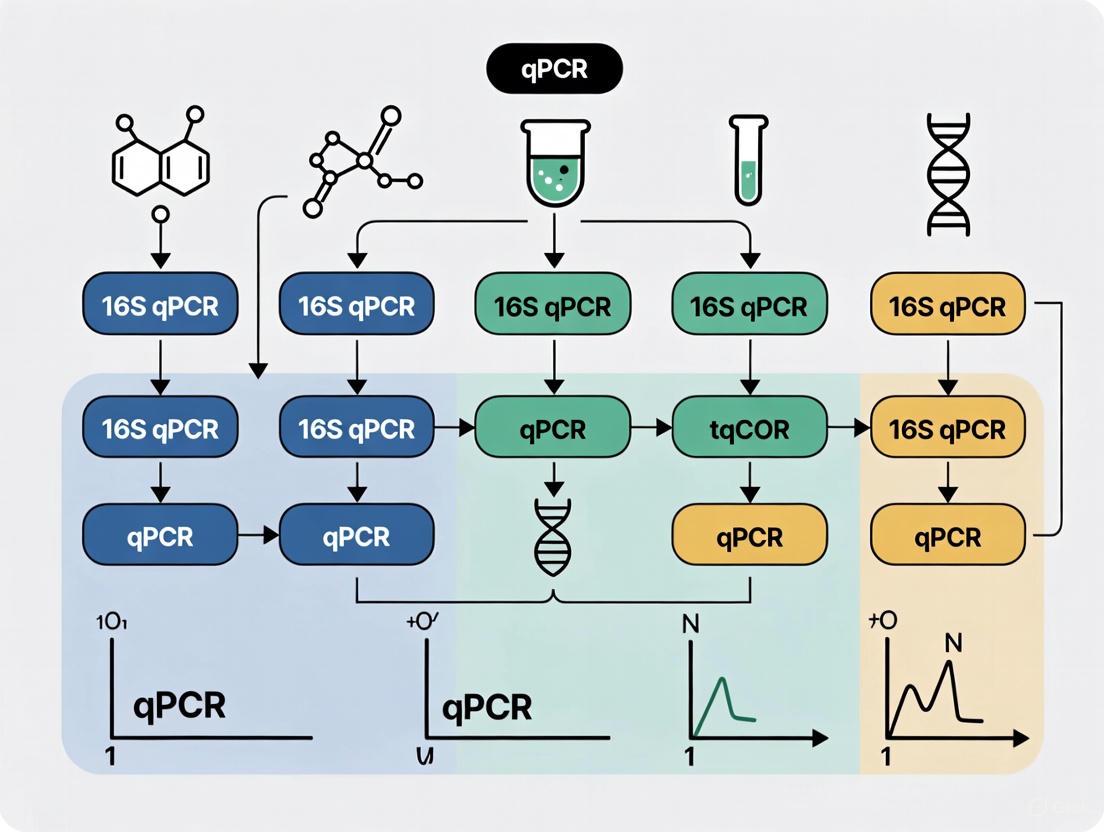
This article provides a comprehensive resource for researchers and drug development professionals on implementing absolute bacterial quantification using 16S qPCR.
Absolute Bacterial Quantification by 16S qPCR: A Complete Guide from Fundamentals to Clinical Application
Abstract
This article provides a comprehensive resource for researchers and drug development professionals on implementing absolute bacterial quantification using 16S qPCR. It covers the critical limitations of relative abundance data from standard 16S rRNA sequencing and establishes the foundational principles of absolute quantification. The content details robust methodological workflows, including spike-in standards and high-throughput approaches, alongside optimization strategies for DNA extraction, primer selection, and contamination control. Finally, it explores validation frameworks and complementary applications with next-generation sequencing, supported by case studies from clinical diagnostics and pharmaceutical bioanalysis.
Why Absolute Quantification Matters: Moving Beyond Relative Abundance in Microbiome Science
The Critical Limitation of Relative Abundance Data in 16S rRNA Sequencing
In microbiome research, 16S rRNA gene sequencing has become a foundational method for profiling microbial communities. However, a fundamental limitation inherent to this technique is its delivery of data as relative abundances. This means the output describes the proportion of each taxon within a sample, rather than its actual quantity in the environment [1]. This compositional nature can lead to significant misinterpretations, as an observed increase in the relative abundance of one taxon could signify its actual growth or could be a false signal caused by the decrease of other community members [2]. This limitation is critical for researchers and drug development professionals to understand, as it impacts the biological validity of conclusions regarding microbial dynamics in health, disease, and therapeutic interventions.
The transition to absolute quantification is not merely a technical detail; it is essential for accurate biological interpretation. For instance, a 10% relative abundance of a pathogen has vastly different implications in a low-biomass environment versus a high-biomass environment. Absolute quantification provides the necessary context, transforming microbiome data from a proportional sketch into a quantitative map of the microbial landscape [1].
Methodological Solutions for Absolute Quantification
To overcome the limitations of relative abundance data, several methodologies have been developed to obtain absolute quantitation of microbial loads. These methods integrate quantitative techniques with standard 16S rRNA sequencing workflows.
Spike-In Synthetic Standards
This approach involves adding a known quantity of an artificial DNA sequence—the spike-in standard—to the sample before DNA extraction. By quantifying the recovery of this standard after sequencing, researchers can calculate the absolute abundance of all other taxa in the sample.
- Principle: The core principle is recovery correction. A synthetic DNA standard, which is dissimilar to any known biological sequence, is added in a minute but known amount (e.g., 100 ppm to 1% of the total 16S rRNA genes) [2].
- Workflow: The standard is spiked into the lysis buffer during the initial DNA extraction step. Following sequencing, the proportion of reads derived from the internal standard is quantified. This proportion, combined with the known starting quantity of the standard, allows for the calculation of the total number of 16S rRNA gene copies in the original sample. The absolute abundance of each individual taxon is then derived by multiplying its relative abundance from sequencing data by this calculated total microbial load [2].
- Advantage: This method accounts for biases and losses occurring throughout the entire workflow, from DNA extraction to library preparation and sequencing.
Quantitative PCR (qPCR) and Flow Cytometry
These are established methods used to determine the total bacterial load independently from the sequencing process.
- qPCR: This technique targets a conserved region of the 16S rRNA gene to estimate the total number of bacterial gene copies in a DNA sample. The absolute abundance for each taxon is calculated using the formula: Absolute Abundance = Relative Abundance × Total 16S rRNA Gene Copies (as measured by qPCR) [1].
- Flow Cytometry: This method directly counts microbial cells in a sample without relying on DNA amplification. It provides a direct measure of total microbial load, which can then be used to convert relative abundances from sequencing into absolute cell counts [2].
The following diagram illustrates the core logical relationship and workflow for converting relative data to absolute abundance.
Experimental Protocols for Absolute Quantification
Protocol: Absolute Quantification Using a Synthetic DNA Spike-In
This protocol is adapted from a published spike-and-recovery method [2].
1. Design and Production of the Synthetic Standard:
- Design: A synthetic DNA sequence (~733 bp) is designed, ideally based on a modified region of the E. coli 16S rRNA gene. The modification involves replacing a 45-bp segment with a unique, identifiable sequence that is not found in nature. This allows for unambiguous identification during sequencing and qPCR analysis [2].
- Production: The designed sequence is synthesized and cloned into a plasmid vector (e.g., pMK from Thermo Fisher). The target insert is then amplified using primers that contain Illumina adapter sequences for downstream sequencing.
2. Sample Processing and DNA Extraction:
- The synthetic standard is added to the lysis buffer at a known concentration before the sample is processed for DNA extraction. The amount added should be a small fraction (e.g., 1%) of the estimated environmental 16S rRNA genes to minimize the consumption of sequencing reads [2].
- Proceed with DNA extraction using a standard kit, such as the QiAMP Mini DNA extraction kit (Qiagen) [3].
3. Library Preparation and Sequencing:
- Amplify the target 16S rRNA gene regions (e.g., V3-V4) using primers compatible with your sequencing platform.
- Prepare libraries and sequence on an appropriate NGS platform (e.g., Illumina MiSeq).
4. Quantitative Analysis:
- qPCR for Total Load and Standard: Perform two qPCR reactions. One reaction uses primers specific to the synthetic standard to determine its recovery rate. The other uses the same primers as the sequencing assay (e.g., targeting the V3-V4 regions) to quantify the total load of 16S rRNA genes [2].
- Bioinformatic Processing: Process sequencing data through a standard pipeline (e.g., DADA2 for error correction and amplicon sequence variant (ASV) calling). Determine the relative abundance of each ASV and the synthetic standard from the sequencing reads.
- Calculation: Use the qPCR data for the synthetic standard to calculate the DNA recovery yield. Then, calculate the absolute abundance of each ASV using the formula:
Absolute Abundance (cells/gram) = (Relative Abundance of ASV × Known copies of spike-in added) / (Recovery of spike-in from sequencing or qPCR).
Protocol: Absolute Quantification via Droplet Digital PCR (ddPCR)
This protocol outlines the use of ddPCR for precise quantification of a mock community, as used in a comparative sequencer study [4].
1. Preparation of Genomic DNA from Bacterial Strains:
- Culture bacterial strains (e.g., Lactobacillus acidophilus, Bifidobacterium animalis) under appropriate conditions.
- Harvest cells by centrifugation and extract genomic DNA using a commercial kit (e.g., GenElute Bacterial Genomic DNA kit, Sigma-Aldrich) [4].
2. Absolute Quantification of Genomic DNA by ddPCR:
- Prepare a ddPCR reaction mix using EvaGreen supermix, specific primers (e.g., 337F/518R for the V3 region), and the template genomic DNA.
- Generate droplets using a droplet generator (e.g., QX200 from Bio-Rad).
- Perform PCR amplification with the following cycling conditions: initial denaturation at 95°C for 5 min; 40 cycles of denaturation at 95°C for 30 s, and annealing/extension at 60°C for 1 min; followed by signal stabilization at 4°C for 5 min and 90°C for 5 min [4].
- Read the droplets on a droplet reader to obtain the absolute concentration (copies/μL) of the 16S rRNA gene for each bacterial strain.
3. Construction of Mock Communities:
- Pool the quantified genomic DNAs from individual strains in specific ratios to create mock communities with known absolute abundances.
4. Sequencing and Data Analysis:
- Sequence the mock communities using standard 16S rRNA amplicon sequencing.
- Compare the observed relative abundances from sequencing to the known absolute abundances from ddPCR to quantify the bias introduced by the sequencing process [4].
Quantitative Data on Technical Biases
The biases in 16S rRNA sequencing are not merely theoretical. Controlled studies using mock communities with known compositions have systematically quantified these issues, which can be summarized in the table below.
Table 1: Summary of Technical Biases in 16S rRNA Sequencing from Mock Community Studies
| Bias Factor | Experimental Finding | Impact on Relative Abundance |
|---|---|---|
| Primer Pair Selection [4] | The V1-V2 and V3 regions showed profiles most similar to the original mock community, while the V1-V3 region profiles were relatively biased. | Under- or over-representation of specific taxa depending on the primer's binding affinity. |
| Sequencing Platform [4] | Short-read platforms (MiSeq, IonTorrent, MGIseq-2000) showed lower bias than long-read platforms (Sequel II, MinION). | Platform-specific errors and chemistry can skew community representation. |
| Specific Taxa Bias [4] | In a mock community, L. acidophilus was greatly underrepresented, while Lactococcus lactis was generally overrepresented. | Species-level abundance data can be unreliable due to variation in 16S rRNA gene copy number and primer affinity. |
| DNA Recovery Yield [2] | The DNA recovery yield during extraction can vary significantly (e.g., 40% to 84%). | If unaccounted for, leads to an underestimation of the true absolute microbial load. |
The following workflow diagram integrates the use of a mock community to calibrate and understand these biases in a standard sequencing workflow.
The Scientist's Toolkit: Essential Research Reagents
Successful implementation of absolute quantification methods requires specific reagents and tools. The following table details key solutions for this field.
Table 2: Research Reagent Solutions for Absolute Quantification in 16S rRNA Studies
| Item | Function/Description | Example Use Case |
|---|---|---|
| Synthetic DNA Spike-In [2] | An artificial DNA sequence added to the sample before DNA extraction to measure and correct for technical losses and biases. | Enables absolute quantification in any environmental sample; quantified via qPCR or sequencing. |
| Droplet Digital PCR (ddPCR) [4] | A digital PCR method that provides absolute quantification of DNA target copies without a standard curve, offering high precision. | Precise quantification of genomic DNA for constructing mock communities with known abundances. |
| Quantitative PCR (qPCR) [1] | A PCR method that quantifies DNA targets by measuring amplification kinetics, used to determine total 16S rRNA gene copies. | Determining total bacterial load to convert relative abundances from sequencing to absolute abundances. |
| 16S rRNA Primers (e.g., V1-V2, V3-V4) [3] [5] | Primer pairs targeting specific hypervariable regions of the 16S rRNA gene for amplicon sequencing. Different regions have different taxonomic resolutions and biases. | Targeting the V4 region (e.g., 515F/806R) for the Earth Microbiome Project protocol or the V3-V4 region for the Illumina protocol. |
| DNA Extraction Kit with Lysozyme [3] | A kit for efficient lysis of diverse microbial cells, including difficult-to-lyse Gram-positive bacteria. | Essential for unbiased DNA extraction from complex communities; a preliminary enzymatic lysis step is often critical. |
| Mock Microbial Communities [4] | A defined mix of genomic DNA from known bacterial strains, used as a positive control to quantify sequencing bias and accuracy. | Calibrating sequencing workflows and benchmarking bioinformatic pipelines. |
In microbiome research, the distinction between absolute and relative abundance represents a fundamental dichotomy in data interpretation that can dramatically alter biological conclusions. Relative abundance refers to the proportion of a specific microorganism within the entire microbial community, expressed as a percentage where all taxa sum to 100% [1]. This approach normalizes data to the total microbial count in a sample, making it unaffected by total sample size but fundamentally interconnecting all measurements within a closed system.
In contrast, absolute abundance provides the actual number of a specific microorganism present in a sample, typically quantified as "number of microbial cells per gram/milliliter of sample" [1]. This measurement directly informs researchers about the true quantity of microorganisms, independent of other community members' fluctuations.
The biological impact of this distinction is profound: relative abundance data may indicate stability in a taxon's proportion while masking significant changes in its actual population size, potentially leading to erroneous conclusions about microbial dynamics in disease, intervention responses, or ecological shifts [1] [6].
Fundamental Distinctions and Their Biological Implications
Conceptual Framework and Calculation
The mathematical relationship between absolute and relative abundance follows straightforward principles, though their biological interpretations differ significantly:
Relative Abundance Calculation: For a specific microorganism, relative abundance is calculated as its absolute count divided by the total microbial count in the sample [1]. If a sample contains 100,000 bacteria of species A and the total bacterial count is 1,000,000, the relative abundance of species A is 10%.
Absolute to Relative Conversion: To convert absolute abundance to relative abundance, the absolute abundance of each species is divided by the total absolute abundance of all species in the sample [1].
Relative to Absolute Conversion: Converting relative abundance to absolute abundance requires knowledge of the total microbial abundance, with the absolute abundance calculated by multiplying the relative abundance by the total microbial abundance [1].
Table 1: Comparative Analysis of Absolute vs. Relative Abundance
| Parameter | Absolute Abundance | Relative Abundance |
|---|---|---|
| Definition | Actual number of a specific microorganism in a sample | Proportion of a specific microorganism within the entire community |
| Units | Cells/gram, cells/milliliter, gene copies/gram | Percentage, proportion (sums to 100%) |
| Data Nature | Independent measurement | Compositional, interdependent |
| Key Advantage | Reflects true microbial load | Unaffected by total sample size variability |
| Primary Limitation | Requires additional quantification steps | Changes in one taxon affect all others artificially |
| Biological Interpretation | Direct understanding of microbial population dynamics | Understanding of community structure and proportional relationships |
Impact on Biological Interpretation
The choice between absolute and relative quantification frameworks can fundamentally alter biological interpretations:
Scenario 1: An increase in a taxon's relative abundance could indicate: (i) the taxon's absolute abundance truly increased, (ii) other taxa decreased while the taxon remained stable, or (iii) a combination where the taxon increased while others decreased more dramatically [7]. Without absolute quantification, distinguishing these scenarios is impossible.
Scenario 2: In soil microbiology, Yang et al. demonstrated that 33.87% of bacterial genera showed opposite change directions when comparing relative versus absolute abundance analyses [6]. Some genera appeared to decrease in relative abundance while actually increasing in absolute terms, simply because other taxa increased more dramatically.
Scenario 3: In clinical contexts, the absolute concentration of a pathogen serves as a specific marker of disease severity and can guide therapeutic strategies [8], whereas relative abundance might remain stable despite clinically relevant changes in total microbial load.
Methodological Approaches for Absolute Quantification
16S rRNA Gene qPCR and dPCR
Quantitative PCR (qPCR) and digital PCR (dPCR) provide powerful approaches for absolute quantification of microbial abundance:
16S rRNA qPCR Principle: This method uses broad-range primers targeting conserved regions of the 16S rRNA gene to quantify total bacterial abundance [9]. The threshold cycle (Ct) values are converted to absolute estimates of target bacterial genomes using standard curves, typically expressed as copy numbers per gram of sample [9].
dPCR Advancement: Digital PCR partitions a PCR reaction into thousands of nanoliter-scale reactions, allowing absolute quantification without standard curves by counting positive amplifications [8]. This method demonstrates high sensitivity and accuracy, particularly for low-abundance targets [10] [8].
Primer Selection Considerations: Different primer pairs show varying detection efficiencies. Bak11W/Bak2 primers (generating 796 bp amplicons) demonstrated superior overall sensitivity for bacterial detection compared to primers producing shorter amplicons [11].
Table 2: Comparison of Quantitative Methods in Microbiome Research
| Method | Detection Principle | Sensitivity | Throughput | Key Applications |
|---|---|---|---|---|
| 16S rRNA qPCR | Amplification of 16S gene with standard curve | 10-100 CFU/reaction [11] | Moderate | Total bacterial load, specific taxa quantification [6] [9] |
| Droplet Digital PCR | Endpoint amplification in partitioned reactions | 1-10 CFU/reaction [8] | High | Absolute quantification without standards, low abundance targets [10] [8] |
| Flow Cytometry | Cell counting via light scattering/fluorescence | Variable based on instrument | High | Total cell counts, differentiation of live/dead cells [6] |
| Spike-in Standards | Synthetic DNA added pre-extraction | Varies with standard abundance | High | Cross-sample normalization, accounting for technical variations [2] [12] |
| High-Throughput qPCR | Multiple parallel qPCR reactions | Similar to conventional qPCR | Very High | Targeted quantification of moderate complexity systems [13] |
Internal Standards and Spike-in Controls
The use of internal standards addresses extraction efficiency and PCR inhibition challenges:
Synthetic Spike-in DNA: Designed with primer binding sites matching experimental targets but containing unique "stuffer" sequences, these standards are added to samples before DNA extraction [2] [12]. By measuring standard recovery, researchers can calculate absolute abundances of endogenous taxa.
Whole Cell Spikes: Known quantities of bacterial cells not typically found in the sample environment (e.g., soil halophiles added to gut samples) can serve as biological internal standards [12].
Optimized Spiking Concentrations: For sequencing-based approaches, Tkacz et al. recommended adding internal standard DNA at 20%-80% of the environmental 16S rRNA genes to avoid PCR biases associated with rare phylotypes [2].
Experimental Protocols
DNA Extraction for Absolute Quantification
Accurate absolute quantification requires efficient and unbiased DNA extraction:
Protocol: DNA Extraction from Fecal Samples for Absolute Quantification
Reagents and Equipment:
- Lysis buffer (500 mM NaCl, 50 mM Tris-HCL pH 8, 50 mM EDTA, 4% SDS)
- Proteinase K (20 mg/ml)
- Phenol-chloroform-isoamyl alcohol (25:24:1) or commercial kit (QIAamp Fast DNA Stool Mini Kit)
- Zirconia/silica beads (0.1 mm and 3 mm)
- FastPrep-24 bead beater or equivalent
- NanoDrop spectrophotometer and Qubit fluorometer
Procedure:
- Sample Preparation: Weigh 0.125-0.5 g of fecal sample and add to lysing matrix tubes containing beads [9] [10].
- Cell Lysis: Add 750 μl lysis buffer and perform mechanical disruption via bead beating at 5.5 m/s for 1-2 minutes [9].
- Enzymatic Digestion: Add 30 μl proteinase K (20 mg/ml) and incubate at 60°C for 30 minutes [11].
- DNA Purification:
- For phenol-chloroform extraction: Add 500 μl phenol-chloroform-isoamyl alcohol, mix thoroughly, and separate phases by centrifugation [10].
- For kit-based purification: Follow manufacturer's instructions with appropriate incubation steps.
- DNA Quality Assessment: Measure DNA purity using spectrophotometry (A260/A280 ratio ~1.8) [10].
- DNA Quantity Assessment: Quantify DNA using fluorometric methods (Qubit) for accurate concentration measurement [9].
- DNA Integrity Check: Evaluate DNA integrity number (DIN) using TapeStation or similar platform [8].
Critical Considerations:
- DNA integrity significantly impacts quantification accuracy. Highly degraded DNA (DIN < 3) requires correction factors for accurate absolute quantification [8].
- Extraction efficiency should be validated using spike-in controls added before extraction [2].
- The extraction method should be optimized for sample type (feces, soil, mucosa) as efficiency varies [7].
Absolute Quantification via 16S rRNA qPCR with dPCR Validation
Protocol: Absolute Quantification of Total Bacterial Load
Reagents and Equipment:
- HOT FIREPol EvaGreen qPCR Mix Plus or similar
- Broad-range 16S rRNA primers (e.g., 341F/785R or Bak11W/Bak2)
- gBlock Gene Fragments or purified amplicons for standard curves
- qPCR instrument (BioRad iCycler iQ or equivalent)
- Droplet digital PCR system (QX200 or equivalent) for validation
Primer Selection:
- Bak11W/Bak2: 796 bp amplicon, showed best overall sensitivity for bacterial detection [11]
- 341F/785R: Targets V3-V4 regions, compatible with Illumina MiSeq sequencing [9]
- 515F/806R: Targets V4 region, commonly used in soil and environmental studies [12]
qPCR Procedure:
- Standard Curve Preparation: Create 10-fold serial dilutions of standard DNA (102 to 107 copies/μl) [9].
- Reaction Setup:
- 10 μl 2× EvaGreen Supermix
- 0.5-1.0 μl each primer (10 μM)
- 2-5 μl DNA template
- Nuclease-free water to 20 μl
- Thermal Cycling:
- Initial denaturation: 95°C for 15 minutes
- 40 cycles of: 95°C for 15 seconds, primer-specific annealing temperature for 20 seconds, 72°C for 30 seconds
- Melting curve analysis: 65°C to 95°C with 0.5°C increments
- Data Analysis: Convert Ct values to copy numbers using standard curve [9].
dPCR Validation:
- Reaction Partitioning: Divide reactions into 10,000-20,000 nanoliter-sized droplets [8].
- Endpoint Amplification: PCR amplification to completion without real-time monitoring.
- Positive/Negative Counting: Count fluorescent positive versus negative droplets.
- Absolute Quantification: Calculate copy number using Poisson statistics [8].
Calculation of Absolute Abundance:
- Copy number/gram = (qPCR copy number × elution volume × dilution factor) / sample weight [9]
- Account for 16S rRNA gene copy number variation between taxa when converting to cell equivalents [9]
The Scientist's Toolkit: Research Reagent Solutions
Table 3: Essential Research Reagents for Absolute Microbial Quantification
| Reagent/Kit | Function | Application Notes |
|---|---|---|
| QIAamp Fast DNA Stool Mini Kit | DNA extraction from complex samples | Optimized for fecal samples; consistent yield critical for quantification [10] |
| Fast DNA Spin Kit for Soil | DNA extraction from soil/environmental samples | Effective for diverse environmental samples; includes bead beating step [8] |
| Broad-range 16S rRNA primers | Amplification of bacterial communities | Primer choice affects efficiency; Bak11W/Bak2 showed superior sensitivity [11] |
| gBlock Gene Fragments | Standard curve generation for qPCR | Synthetic DNA fragments with known concentration; stable reference [13] |
| HOT FIREPol EvaGreen Supermix | qPCR detection | Sensitive intercalating dye chemistry; suitable for microbiome quantification [9] |
| ZymoBIOMICS Microbial Community Standard | Method validation | Mock community with defined composition; validates extraction and quantification [8] |
| Synthetic Spike-in DNA | Internal control for extraction efficiency | Added pre-extraction; corrects for technical variation [2] [12] |
Data Interpretation and Integration with Sequencing
Converting Relative to Absolute Abundance in Sequencing Studies
Integrating absolute quantification with high-throughput sequencing enables powerful multidimensional analysis:
Conversion Method: Absolute abundance of individual taxa = Relative abundance (from sequencing) × Total bacterial abundance (from qPCR/dPCR) [1] [9].
Workflow Integration: Total bacterial quantification via qPCR should be performed on the same DNA extract used for sequencing to enable accurate conversion [9].
Copy Number Correction: For increased accuracy, absolute abundances can be further corrected for taxon-specific 16S rRNA gene copy number variations using databases such as rrnDB [9].
Biological Applications and Impact
Absolute quantification reveals biological insights obscured by relative abundance approaches:
Inflammatory Bowel Disease: Flow cytometry-based absolute quantification revealed that the ratio of Bacteroides to Prevotella, considered an important marker of gut health, was an artifact of relative quantification [12].
Ketogenic Diet Studies: Quantitative measurements of absolute abundances in murine ketogenic diet studies revealed decreases in total microbial loads that were not apparent from relative abundance data alone [7].
Soil Microbial Ecology: When evaluating microbial population dynamics in different soil types, 20 out of 25 total phyla showed significant changes using absolute quantification, while only 12 phyla were detected using relative quantification [6].
The integration of absolute quantification approaches provides a critical dimension to microbiome analysis, transforming our understanding of microbial dynamics in health, disease, and environmental systems.
Absolute quantification of bacterial load via 16S ribosomal RNA (rRNA) gene quantitative PCR (qPCR) represents a critical methodological advancement in microbial research and clinical diagnostics. Unlike next-generation sequencing (NGS) which provides relative taxonomic abundances, 16S qPCR delivers absolute quantities of bacterial genes, enabling researchers to draw crucial connections between total bacterial burden and clinical outcomes [14]. This Application Note details the core implementations of this technology in three key areas: linking bacterial load to disease severity, improving clinical infection diagnostics, and monitoring antimicrobial treatment efficacy. We provide structured quantitative data, standardized protocols, and visual workflows to facilitate the adoption of these methods in research and drug development settings.
Application I: Linking Bacterial Load to Disease Severity
The correlation between absolute bacterial load and disease severity represents a significant advancement in understanding pathogenesis, moving beyond relative microbiome composition to quantitative assessment of bacterial burden.
Key Research Findings
Recent investigations in atopic dermatitis (AD) have demonstrated the power of combining NGS with qPCR quantification. Studies reveal that severe AD patients exhibit significantly higher total bacterial loads and Staphylococcus aureus cell numbers compared to both healthy controls and patients with mild to moderate disease [14] [15]. This S. aureus-driven bacterial overgrowth correlates strongly with disease severity scores (SCORAD), suggesting that absolute quantification provides crucial pathogenic insights that relative abundance data alone cannot reveal [14].
Table 1: Bacterial Load Correlations with Atopic Dermatitis Severity
| Subject Group | Skin Status | Total Bacterial Load (16S gene copies) | S. aureus Cell Number (nuc gene copies) | Disease Severity (SCORAD) |
|---|---|---|---|---|
| Healthy Controls | N/A | Baseline | Baseline | N/A |
| Mild AD Patients | Non-lesional | Moderate Increase | Moderate Increase | 0-25 |
| Moderate AD Patients | Lesional | Significant Increase | Significant Increase | >25-50 |
| Severe AD Patients | Lesional | Highest Load | Highest Load | >50 |
The biological significance of these quantitative differences is substantial, as many bacterial virulence factors—including toxin and biofilm production—are regulated through quorum-sensing mechanisms directly tied to bacterial cell density [14]. This cell-number-driven release of pathogenic factors establishes a direct mechanistic link between the quantitative bacterial load data obtained via 16S qPCR and disease pathophysiology.
Experimental Protocol: Skin Microbiome Quantification
Sample Collection
- Use Sigma-swab sterile swabs for sample collection
- Sample both lesional and non-lesional skin sites in patients
- Store swabs immediately in 500 μL of Stool DNA Stabilizer solution [14]
DNA Extraction
- Utilize QIAamp UCP Pathogen kit for DNA extraction
- Include mechanical lysis step for Gram-positive bacteria
- Elute DNA in molecular-grade water or TE buffer [14]
qPCR Quantification
- Perform multiplex qPCR using PerfeCTa Multiplex qPCR ToughMix
- Target total bacterial load with 16S rRNA gene primers:
- Forward: TGGAGCATGTGGTTTAATTCGA
- Reverse: TGCGGGACTTAACCCAACA
- Probe: Cy5-CACGAGCTGACGACARCCATGCA-BHQ2 [14]
- Target S. aureus with nuc gene primers:
- Forward: GTTGCTTAGTGTTAACTTTAGTTGTA
- Reverse: AATGTCGCAGGTTCTTTATGTAATTT
- Probe: FAM-AAGTCTAAGTAGCTCAGCAAATGCA-BHQ1 [14]
- Use thermal cycling profile: 95°C for 2 min, then 45 cycles of 95°C for 15s and 60°C for 60s
- Run samples in triplicate with appropriate negative controls and standard curves [14]
Data Analysis
- Calculate total bacterial load from 16S standard curve
- Calculate S. aureus cell numbers from nuc standard curve
- Account for 16S rRNA gene copy number variation between species (average 6 copies for S. aureus) [14]
Application II: Enhancing Clinical Infection Diagnostics
16S qPCR has emerged as a powerful complementary tool to conventional culture methods, particularly in challenging diagnostic scenarios where culture may fail to detect pathogens.
Diagnostic Performance and Clinical Impact
A comprehensive 7-year retrospective study analyzing 1,489 clinical specimens demonstrated that 16S testing significantly impacts patient management, effecting changes in 45.9% of cases where results diverged from conventional cultures [16] [17]. This change included antibiotic de-escalation in 41% of cases, escalation in 31.3%, and diagnosis modification in 26.5%, highlighting its crucial role in antimicrobial stewardship [16].
Table 2: 16S qPCR Diagnostic Performance Across Sample Types
| Sample Type | Positivity Rate | Common Organisms Detected | Clinical Impact (Change in Management) |
|---|---|---|---|
| Pus/Abscess | 66.3% | Staphylococcus spp., Streptococcus spp. | High |
| Skin/Soft Tissue | 26.1% | Staphylococcus spp., Enterobacterales | Moderate-High |
| Musculoskeletal | 16.3% | Fastidious organisms, Staphylococcus spp. | High |
| Central Nervous System | 15.2% | Streptococcus spp., Fastidious organisms | High |
| Sterile Body Fluids | Variable | Staphylococcus spp., Streptococcus spp. | Moderate-High |
The technology demonstrates particular value in identifying fastidious organisms that require special culture media and in cases where patients have received prior antimicrobial therapy, which can suppress bacterial growth in culture while leaving detectable DNA signatures [16] [17]. Pus samples show remarkably high positivity rates (66.3%), with five times higher odds of being positive compared to non-pus samples [16].
Experimental Protocol: Clinical Specimen Testing
Sample Processing
- Process sterile site specimens (CSF, tissue, fluid collections) under aseptic conditions
- Incubate specimens with lysozyme (20 minutes, 37°C) for Gram-positive cell wall lysis
- Digest with Proteinase K (30 minutes, 70°C) [16] [17]
DNA Extraction and Purification
- Use NucleoSpin Blood kit or equivalent silica membrane-based system
- Include bacterial DNA extraction enhancement steps
- Elute in DNAse-free water [16] [17]
16S rRNA Gene Amplification
- Employ broad-range primers (27F/519R):
- 27F: AGAGTTTGATCMTGGCTCAG
- 519R: GWATTACCGCGGCKGCTG
- Use HOT FIREPol Blend Master Mix with 7.5 mM MgCl₂
- Apply thermal cycling profile: 95°C for 12 min, 30 cycles of (95°C for 30s, 54°C for 30s, 72°C for 60s), final extension at 72°C for 5 min [16] [17]
- Include positive (E. coli DNA) and negative controls in each run
Downstream Analysis
- Analyze amplified products by gel electrophoresis (1% agarose)
- Perform Sanger sequencing of positive amplifications for species identification
- Utilize bioinformatics databases (RDP, SILVA) for sequence alignment and taxonomic assignment [16]
Application III: Monitoring Antimicrobial Treatment Efficacy
Quantitative tracking of bacterial load dynamics during therapy offers a powerful approach for assessing treatment response and guiding clinical decisions.
Bacterial Load Dynamics in Treatment Monitoring
A pioneering study in neonatal sepsis demonstrated the utility of 16S qPCR for monitoring therapeutic efficacy, revealing that decreasing bacterial load values correlated strongly with survival [18]. In 11 of 13 survivors, bacterial load values decreased by the seventh day of treatment, while three of four non-survivors showed increasing bacterial loads despite appropriate antibiotic therapy [18].
Table 3: Bacterial Load Dynamics During Neonatal Sepsis Treatment
| Patient Outcome | Bacterial Load Trend (Day 0 to Day 7) | Representative Pathogens | Clinical Significance |
|---|---|---|---|
| Survival (11/13 cases) | Decreasing load | Coagulase-negative Staphylococci, S. agalactiae | Favorable prognosis |
| Mortality (3/4 cases) | Increasing or persistent load | Coagulase-negative Staphylococci, Various | Poor prognosis |
| Variable Response | Fluctuating load | CONS, S. aureus | Requires treatment modification |
The extreme sensitivity and high negative predictive value of qPCR make it particularly suitable for ruling out ongoing infection, potentially assisting in decisions to discontinue antibiotics and combat antimicrobial resistance [18]. This approach addresses a critical limitation of conventional culture, which cannot differentiate between contamination, colonization, and active infection based on bacterial quantity.
Experimental Protocol: Treatment Monitoring
Sample Collection Time Points
- Baseline (day 0): Before or at initiation of antimicrobial therapy
- Early assessment (48 hours): Initial response evaluation
- Late assessment (7 days): Therapeutic efficacy determination [18]
Blood Processing and DNA Extraction
- Collect 1 mL blood in appropriate collection tubes
- Extract DNA using QIAamp DNA mini kit with bacterial DNA enhancement
- Include steps to remove PCR inhibitors common in blood samples [18]
qPCR Setup and Quantification
- Use SYBR Green-based detection with 16S-targeted primers:
- Forward: CAGCTCGTGTCGTGAGATGT
- Reverse: CGTAAGGGCCATGATGACT
- Generate standard curves from 10-fold serial dilutions (10⁷ to 10⁰ CFU/mL)
- Employ thermal profile: 95°C for 5 min, then 40 cycles of (95°C for 30s, touchdown annealing from 66°C to 62°C for 30s) [18]
- Perform all reactions in duplicate with appropriate controls
Data Interpretation
- Calculate bacterial load (CFU/mL equivalents) from standard curve
- Track fold-change in bacterial load across time points
- Correlate with clinical parameters (CRP, clinical symptoms) [18]
Technical Considerations and Standardization
Quantitative Standards and Controls
The accuracy of absolute quantification depends critically on appropriate standard preparation. Research demonstrates that circular plasmid DNA standards do not lead to significant overestimation of 16S rRNA gene copies in prokaryotic systems, unlike in eukaryotic applications [19]. The ratio of estimated to predicted 16S rRNA gene copies ranges from 0.5 to 2.2-fold in bacterial systems and 0.5 to 1.0-fold in archaeal systems when using circular plasmid standards [19].
Limitations and Complementary Approaches
While 16S qPCR provides superior quantification compared to relative methods, it cannot differentiate between viable and non-viable bacteria [18]. Additionally, the technique does not provide bacterial identification beyond the specificity of the primers used, necessitating complementary approaches like sequencing for complete taxonomic characterization [14] [16]. The variable copy number of 16S rRNA genes between different bacterial species must also be considered when interpreting quantitative data [14].
The Scientist's Toolkit
Table 4: Essential Research Reagents for 16S qPCR Applications
| Reagent/Equipment | Function | Specification |
|---|---|---|
| Sterile Swabs | Sample collection | Sigma-swab or equivalent |
| DNA Stabilization Solution | Sample preservation | Stool DNA Stabilizer or similar |
| DNA Extraction Kit | Nucleic acid purification | QIAamp UCP Pathogen kit, NucleoSpin Blood kit |
| 16S Universal Primers/Probes | Total bacterial detection | 16S rRNA gene targets (conserved regions) |
| Species-Specific Primers/Probes | Pathogen-specific detection | e.g., nuc gene for S. aureus |
| qPCR Master Mix | Amplification reaction | PerfeCTa Multiplex qPCR ToughMix, QuantiFast SYBR Green |
| Quantitative Standards | Standard curve generation | Circular plasmid DNA, genomic DNA controls |
| Thermal Cycler | DNA amplification | CFX384 Real Time System, ABI StepOne |
| Bioinformatics Tools | Data analysis | DADA2, AnnotIEM, RDP database |
Visual Experimental Workflows
Figure 1: 16S qPCR Core Application Workflow. This diagram illustrates the shared experimental pathway from sample collection to data analysis, branching into the three core applications discussed in this note.
Figure 2: Bacterial Load Pathogenesis Pathway. This diagram outlines the mechanistic relationship between quantitative bacterial load, virulence expression, and clinical disease severity, highlighting the importance of absolute quantification.
The Core Principle of 16S qPCR
Quantitative PCR (qPCR) targeting the 16S ribosomal RNA (rRNA) gene is a fundamental molecular technique for determining the total bacterial load in a sample. This method quantifies the number of copies of this specific gene region, providing a sensitive and culture-independent measurement of bacterial abundance [20].
The assay functions by using primers and probes designed to bind to highly conserved regions of the 16S rRNA gene, which is present in almost all bacteria. During the qPCR reaction, the fluorescence signal increases proportionally to the amount of amplified DNA. The point at which the fluorescence crosses a predetermined threshold is known as the quantification cycle (Cq). By comparing the Cq values of unknown samples to a standard curve generated from samples with a known copy number, the absolute quantity of 16S rRNA genes in the original sample can be accurately determined [21] [14].
A critical consideration for accurate quantification is that the number of 16S rRNA gene copies varies between different bacterial species [14] [22]. Therefore, while 16S qPCR excellently measures the total number of gene copies, this value is a proxy for total bacterial load and does not directly equate to the exact number of bacterial cells without adjustments for this variation.
The Critical Role of 16S qPCR in Microbial Ecology
The primary role of 16S qPCR is to move beyond relative compositional data obtained from techniques like 16S amplicon sequencing and provide absolute quantification.
- Complementing Sequencing Data: Next-generation sequencing (NGS) of the 16S rRNA gene is powerful for determining the relative proportions of microbes in a community. However, it cannot reveal whether the total number of bacteria has increased or decreased [2] [14]. For instance, the relative abundance of a specific bacterium might remain stable while its absolute quantity changes significantly if the overall bacterial load shifts [14]. 16S qPCR provides this missing context on absolute abundance, which is crucial for understanding true microbial dynamics [22].
- Revealing Biologically Significant Patterns: Absolute quantification is essential for clinical and ecological insights. In atopic dermatitis, research combining 16S sequencing and qPCR revealed that severe patients had a higher total bacterial load and higher Staphylococcus aureus cell numbers on their skin, which is biologically relevant due to cell density-regulated expression of virulence factors [14] [22]. Similarly, in food microbiology, qPCR has been used to monitor spoilage bacteria loads in fish fillets during storage [23].
Table 1: Key Advantages of 16S qPCR in Research Applications
| Application | Role of 16S qPCR | Research Implication |
|---|---|---|
| Microbiome Studies | Quantifies total bacterial load to normalize relative sequencing data [2] [14]. | Enables accurate cross-sample comparisons and differential abundance analysis. |
| Pathogen Detection | Quantifies specific pathogens (e.g., S. aureus via nuc gene) against total bacterial load [14] [22]. | Provides context for pathogen dominance and potential clinical impact. |
| Clinical Diagnostics | Offers a rapid, sensitive, and culture-independent estimate of bacterial burden [21] [24]. | Aids in infection diagnosis and treatment decisions, especially for low-biomass samples. |
| Food & Environmental Monitoring | Tracks changes in total and specific bacterial groups over time or after interventions [23] [13]. | Assesses product spoilage, sanitation efficacy, and process outcomes. |
Detailed Experimental Protocol for Total Bacterial Load Quantification
The following section provides a validated protocol for quantifying total bacterial load using 16S qPCR.
Sample Preparation and DNA Extraction
- Sample Collection: Samples should be collected in a manner appropriate for the source (e.g., skin swabs stored in DNA stabilizer solution, fecal samples, food homogenates) and stored at –80°C until processing to preserve DNA integrity [14] [22].
- DNA Extraction: Use commercial kits designed to efficiently lyse bacterial cells and recover pure genomic DNA. The QIAamp UCP Pathogen Kit and QIAamp PowerFecal Pro DNA Kit have been successfully used in microbiome studies [14] [24]. The extraction step is critical, as DNA recovery yield can vary significantly (from 40% to 84%), impacting final quantitation [2]. Incorporating an internal DNA standard at the lysis step can help correct for this variability [2].
qPCR Reaction Setup and Cycling Conditions
This protocol is adapted from a study on the skin microbiome that successfully quantified total bacterial load and S. aureus simultaneously [14] [22].
Primers and Probe for Total Bacteria:
Reaction Mix:
qPCR Cycling Conditions on a CFX384 Real-Time System:
Standard Curve: For absolute quantification, a standard curve must be run in parallel. This is created using a serial dilution of a gBlock gene fragment or genomic DNA from a known bacterium (e.g., E. coli) with a known 16S copy number [13]. The concentration of the standards should cover the expected dynamic range of the samples (e.g., from 10^7 to 10^3 copies/µL) [13].
The following diagram illustrates the complete experimental workflow:
Essential Reagents and Research Solutions
Table 2: Key Research Reagent Solutions for 16S qPCR
| Reagent / Solution | Function / Role | Example Products / Notes |
|---|---|---|
| Universal 16S Primers/Probe | Binds to conserved 16S regions for amplification and detection of total bacteria. | TaqMan assay: TGGAGCATGTGGTTTAATTCGA (F), TGCGGGACTTAACCCAACA (R), Cy5-probe [14]. |
| qPCR Master Mix | Provides optimized buffer, enzymes, and dNTPs for efficient, specific amplification. | PerfeCTa Multiplex qPCR ToughMix; TaqPath ProAmp Master Mix [25] [14]. |
| DNA Extraction Kit | Isolates high-quality, inhibitor-free genomic DNA from complex samples. | QIAamp UCP Pathogen Kit; QIAamp PowerFecal Pro DNA Kit [14] [24]. |
| Quantification Standards | Enables absolute quantification by generating a standard curve with known copy numbers. | gBlock Gene Fragments; genomic DNA from defined strains (e.g., ATCC) [24] [13]. |
| Internal Spike-in Control | Added before DNA extraction to monitor and correct for variations in DNA recovery yield. | Synthetic DNA standards (e.g., ZymoBIOMICS Spike-in Control) [2] [24]. |
Data Interpretation and Normalization
Accurate interpretation of 16S qPCR data is crucial. The primary output is the Cq value, which is inversely correlated with the starting quantity of the target gene. These Cq values are converted to absolute gene copy numbers using the standard curve [13].
To compare bacterial loads across samples, copy numbers are often normalized to the mass or volume of the original sample (e.g., copies per gram of feces or per swab) [21] [14]. As discussed, because the 16S rRNA gene copy number per bacterial cell varies across taxa, the result is an estimate of total bacterial load. For quantifying specific pathogens, targeting a single-copy, species-specific gene (e.g., the nuc gene for S. aureus) is more accurate for calculating cell numbers [14] [22].
Integrating 16S qPCR data with 16S amplicon sequencing results is a powerful approach. The absolute copy number from qPCR can be used to transform relative abundances from sequencing into estimated absolute abundances for each taxon, providing a more comprehensive view of the microbial community [2] [14].
Implementing Robust 16S qPCR Workflows: From Sample to Quantified Data
Standard qPCR Protocol for Total Bacterial Load Using 16S rRNA Gene Targets
Absolute quantification of total bacterial load via qPCR targeting the 16S rRNA gene is a critical methodology in microbial diagnostics and research. This technique provides a direct measure of bacterial abundance, crucial for understanding microbial translocation in diseases like HIV and hepatitis, assessing dysbiosis in conditions such as bacterial vaginosis and atopic dermatitis, and determining the feasibility of downstream microbiome sequencing, particularly in low-biomass samples [26] [27] [22]. Unlike relative abundance data from next-generation sequencing, absolute quantification reveals dynamics in total bacterial cell numbers, which can drive cell density-regulated processes like quorum sensing [22]. However, the assay is technically demanding, with significant pitfalls including contamination risk, genomic DNA loss during extraction, and amplification inefficiencies that can compromise accuracy and reproducibility [26] [27]. This application note details a standardized protocol, incorporating key controls and normalization strategies, to ensure precise and reliable quantification of bacterial load in complex biological samples.
Principle of 16S rRNA Gene Quantification by qPCR
The quantitative PCR (qPCR) method enables the detection and quantification of a specific DNA target sequence in real time through fluorescence monitoring. For total bacterial load, the target is a conserved region of the bacterial 16S ribosomal RNA (rRNA) gene [28]. The fundamental principle is that the point at which the fluorescence signal increases above a detectable threshold—the quantification cycle (Cq)—is proportional to the initial number of target DNA molecules in the sample [28]. The PCR process is exponential, and the relationship between Cq and the initial template copy number is described by the equation:
Nn = N0 × (1 + E)n
where Nn is the number of amplicons after n cycles, N0 is the initial template copy number, and E is the PCR efficiency [28]. A calibration curve constructed from serially diluted standards with known concentrations allows for the absolute quantification of target DNA in unknown samples [28]. This method provides a wide dynamic range of quantification (7-8 Log10) and is highly sensitive, capable of detecting as little as 20 femtograms of bacterial DNA [28] [29].
Materials and Equipment
Research Reagent Solutions
The following table catalogues essential reagents and their functions for the successful execution of the 16S qPCR assay.
Table 1: Essential Reagents for Total Bacterial 16S qPCR
| Item | Function/Description | Specific Examples & Considerations |
|---|---|---|
| DNA Extraction Kit | Isolates microbial genomic DNA from complex samples; critical for yield and purity. | QIAamp UCP Pathogen Mini Kit (for plasma) [26] [22] or Qiagen MagAttract PowerSoil DNA KF Kit (environmental samples) [20]. |
| qPCR Master Mix | Provides optimized buffer, enzymes, dNTPs for efficient, specific amplification. | PerfeCTa qPCR ToughMix [26] or QuantiTect SYBR Green Master Mix [30]. Choice depends on detection chemistry. |
| Primers & Probes | Defines the amplified 16S region. Universal primers ensure broad bacterial detection. | Uni340F (ACTCCTACGGGAGGCAGCAGT) / Uni514R (ATTACCGCGGCTGGC) [30] or 8F / 515R with 338P probe [26]. |
| Quantification Standards | Enables construction of a calibration curve for absolute quantification. | Genomic DNA from E. coli (ATCC) [26] [30] or a cloned 16S rRNA gene fragment [31]. |
| Exogenous Control | Accounts for gDNA loss during extraction and centrifugation, improving accuracy. | A fixed concentration of E. coli cells or an unrelated bacterial culture added to the sample pre-extraction [27]. |
| Nuclease-Free Water | Serves as a negative control and solvent for reagents; must be endotoxin-free. | A key indicator of contamination; should yield no amplification [26]. |
Necessary Equipment
- Real-time quantitative PCR system (e.g., Applied Biosystems 7500, Bio-Rad CFX384) [30] [22]
- Low-binding microcentrifuge tubes and filtered pipette tips [26]
- Centrifuge
- Vortex mixer
- Anaerobic workstation (for handling anaerobic bacteria) [27]
Experimental Workflow and Protocol
The following diagram illustrates the complete experimental workflow for total bacterial load quantification, from sample collection to data analysis.
Sample Preparation and DNA Extraction
Plasma Sample Preparation
For blood samples, collect using EDTA-containing tubes (e.g., BD, catalog #366643) to prevent coagulation.
- Perform an initial centrifugation of fresh blood at 450g for 10 minutes.
- Transfer the supernatant to a new tube and centrifuge at 800g for 15 minutes.
- Aliquot the resulting plasma into low-binding microcentrifuge tubes (e.g., VWR, catalog #80077-236) and store at -80°C. Avoid repeated freeze-thaw cycles to prevent bacterial DNA degradation [26].
DNA Extraction
Extract DNA from 200-400 µL of plasma or other sample matrix using a dedicated pathogen DNA extraction kit, such as the QIAamp UCP Pathogen Mini Kit (catalog #50214) [26] [31] [22].
- Add 40 µL of proteinase K to a low-binding tube, followed by the sample.
- Incubate at 56°C for 10 minutes.
- Add buffers (APL2) and ethanol according to the kit protocol.
- Transfer the lysate to a QIAamp Mini spin column and perform sequential washes with APW1 and APW2 buffers.
- Elute the DNA with 20-100 µL of AVE buffer (equilibrated to room temperature) in two steps for higher yield [26].
- Proceed immediately to qPCR setup. Do not freeze the eluted DNA, as this leads to fragmentation and loss of signal [26].
Critical Step: The inclusion of an exogenous bacterial control (e.g., 100 µL of 1x10⁸ CFU/mL E. coli) added to the sample pellet before centrifugation and DNA extraction is recommended to normalize for variable gDNA losses during processing, significantly improving quantification accuracy, especially at lower bacterial concentrations [27].
qPCR Assay Setup and Execution
Reaction Composition
Prepare reactions in duplicate to quadruplicate to ensure technical reliability [26]. Two common 20-50 µL reaction setups are described below.
Table 2: qPCR Reaction Compositions for Different Detection Chemistries
| Component | TaqMan Probe-Based Assay [26] [22] | SYBR Green-Based Assay [30] |
|---|---|---|
| Master Mix | 10 µL of 2x PerfeCTa qPCR ToughMix | 25 µL of QuantiTect SYBR Green Master Mix |
| Forward Primer | 0.3 µM (e.g., 8F or Uni340F) | Not specified (e.g., Uni340F) |
| Reverse Primer | 0.3 µM (e.g., 515R or Uni514R) | Not specified (e.g., Uni514R) |
| Probe | 0.175 µM (e.g., 338P-FAM-BHQ1) | Not applicable |
| Template DNA | 5 µL | 4 µL |
| Nuclease-Free Water | To 20 µL | To 50 µL |
Thermal Cycling Conditions
Standardize cycling conditions across all samples and plates to minimize variation [26] [30].
- Initial Denaturation: 95°C for 5-15 minutes.
- Amplification (40-45 cycles):
- Denaturation: 95°C for 15 seconds.
- Annealing/Extension: 60°C for 30-60 seconds (acquire fluorescence at this step).
- (For SYBR Green only) Melting Curve Analysis: 60°C to 95°C to verify amplicon purity [30].
Standard Curve Construction and Data Analysis
- Standard Preparation: Use genomic DNA from E. coli (ATCC) to generate a standard curve. Create a 10-fold serial dilution series of the DNA, encompassing the expected target concentration range in the samples (e.g., from 101 to 108 copy numbers) [26] [30].
- Data Calculation: The qPCR instrument software will generate a standard curve by plotting the Cq values against the logarithm of the known standard concentrations. The slope of the curve is used to determine PCR efficiency, which should ideally be 90-110% (corresponding to a slope of -3.6 to -3.1) [28].
- Normalization: For the most accurate absolute quantification, normalize the calculated bacterial load in the sample using the data from the exogenous E. coli control to account for procedural DNA losses [27].
- Interpretation: Express results as 16S rRNA gene copies per sample or per volume (e.g., per mL of plasma). Note that gene copy number does not equal bacterial cell number, as the 16S rRNA gene is present in multiple copies in many bacterial species [29] [22].
Troubleshooting and Quality Control
Adherence to stringent quality control measures is paramount for obtaining reliable data.
Table 3: Common Pitfalls and Quality Control Strategies
| Challenge | Impact | Preventive/Mitigation Strategy |
|---|---|---|
| Contamination | False positive results; high background in negative controls. | Use filtered tips and low-binding tubes. Decontaminate workspaces with 10% bleach. Include multiple negative controls (water) during extraction and qPCR [26] [29]. |
| Low DNA Yield/ Degradation | Underestimation of bacterial load; failed amplification. | Avoid repeated freeze-thaw of samples and eluted DNA. Use a DNA extraction kit validated for the sample type. Elute DNA in a stabilizing buffer [26] [20]. |
| Inhibition | Reduced PCR efficiency; inaccurate quantification. | Purify DNA using kits that remove inhibitors (e.g., magnetic bead-based). Assess inhibition by spiking a known amount of target into the sample [20] [28]. |
| gDNA Loss During Extraction | Underestimation, especially in low-biomass samples. | Add an exogenous bacterial control (e.g., E. coli cells) prior to DNA extraction to normalize for losses [27]. |
| Between-Plate Variation | Inconsistent results when comparing data from multiple runs. | Run a standard curve and identical controls on every plate. Use a standardized protocol and master mix across all plates [26] [28]. |
Application Notes
- Low-Biomass Samples: For samples with suspected low bacterial load (e.g., skin, airway, plasma), a modified pre-amplification step using primers without sequencing adapters can increase sensitivity without altering community composition [31].
- Combining with Sequencing: Integrating 16S qPCR with NGS is powerful. qPCR provides the absolute abundance, while NGS reveals taxonomic profile. This combination can show, for instance, that increased disease severity in atopic dermatitis is linked to both a higher relative abundance of S. aureus and a higher total bacterial load [22].
- MIQE Guidelines: Follow the MIQE (Minimum Information for Publication of Quantitative Real-Time PCR Experiments) guidelines to ensure the reproducibility and robustness of reported qPCR data [27].
The quantification of microbial abundance using 16S rRNA gene sequencing has traditionally provided only relative abundance data, which can be misleading when interpreting microbial community dynamics [32] [2]. Spike-in synthetic DNA standards represent a groundbreaking methodological advancement that enables researchers to account for technical variability and obtain absolute quantification in microbiome studies. These standards are known quantities of artificial DNA sequences that are added to biological samples at the beginning of the experimental workflow, serving as internal references to monitor technical biases introduced during DNA extraction, library preparation, and sequencing [33]. The core principle underpinning this approach is that by tracking the recovery rate of these known spike-in sequences, researchers can precisely calculate the efficiency of the entire DNA processing pipeline and thereby convert relative sequencing abundances into absolute microbial counts [32] [2].
The critical need for this technology emerges from well-documented limitations of standard 16S rRNA gene sequencing, where fluctuations in the absolute abundance of one species can cause apparent changes in the relative abundance of others, creating misleading interpretations of community dynamics [32] [2]. Furthermore, technical biases at multiple stages - including DNA extraction efficiency, primer choice, PCR amplification, and sequencing platform - significantly impact data reliability and reproducibility [32]. Spike-in standards directly address these challenges by providing an internal calibration standard that experiences the same technical variability as the endogenous DNA, thereby enabling precise normalization and quantification on a per-sample basis [32] [33].
Design Principles and Properties of Synthetic Spike-ins
Effective spike-in standards must be meticulously designed to fulfill specific criteria that ensure their utility and reliability in experimental settings. The fundamental design principle involves creating artificial nucleotide sequences that are distinguishable from naturally occurring biological sequences while still behaving similarly throughout the experimental workflow [32] [33]. This is achieved through a strategic combination of conserved regions identical to natural 16S rRNA genes and artificial variable regions with negligible identity to known nucleotide sequences in public databases [32]. This hybrid design ensures that spike-in sequences are amplified efficiently with standard 16S rRNA targeting primers while remaining unambiguously identifiable in sequencing data.
Key Design Criteria and Sequence Properties
The design process for synthetic spike-ins involves multiple critical considerations to optimize their performance. Hardwick et al. (2016) implemented a comprehensive design strategy starting from randomly generated 12-mers that were progressively concatenated into longer sequences while evaluating specific parameters [32]. The resulting artificial sequences satisfied several essential criteria: uniform G+C content, no homopolymers exceeding 3 bp, no repeats longer than 16 bp, and no self-complementary regions exceeding 10 bp [32]. These design parameters minimize potential biases during amplification and sequencing while ensuring the sequences remain unique and identifiable.
Further refinement includes rigorous bioinformatic validation to confirm minimal sequence identity with existing databases. For instance, the optimized spike-in set developed by Hardwick et al. (2016) contained no between-sequence BLAST hits longer than 18 bp and shared negligible identity with sequences in NCBI's nt, est, and est_human databases [32]. Reassessment against updated databases years later confirmed these sequences maintained their unique characteristics, demonstrating the robustness of this design approach [32]. The table below summarizes the properties of a representative set of synthetic spike-in standards:
Table 1: Characteristics of Synthetic 16S rRNA Spike-in Standards
| Spike-in Identifier | GenBank Accession | Reference Organism | Length (bp) | G+C Content (%) |
|---|---|---|---|---|
| Ec5001 | LC140931 | Escherichia coli ATCC 11775 | 1525 | 51.3 |
| Ec5002 | LC140932 | Escherichia coli ATCC 11775 | 1525 | 52.1 |
| Ec5501 | LC140936 | Escherichia coli ATCC 11775 | 1525 | 55.3 |
| Bv5501 | LC140939 | Bacteroides vulgatus JCM 5826 | 1520 | 55.5 |
| Ca5501 | LC140940 | Clostridium acetobutylicum ATCC 824 | 1495 | 55.8 |
| Ga5501 | LC140941 | Gemmatimonas aurantiaca T-27 | 1508 | 57.9 |
| Tb5501 | LC140942 | Tepidobacter bryantii DSM 1788 | 1554 | 56.2 |
Another design approach was implemented by Tourlousse et al. (2020), who created a 733 bp synthetic standard based on the E. coli 16S rRNA sequence but with 45 base pairs in the variable region modified with identifiable patterns of 17, 16, and 12 bp [2]. These modifications were strategically placed to avoid secondary structures and enable easy quantification by either sequencing or qPCR, while the conserved flanking regions ensured compatibility with standard 16S rRNA amplification protocols [2]. This dual-compatibility design expands the application potential of spike-in standards across different quantification platforms.
Research Reagent Solutions
The implementation of spike-in synthetic DNA standards requires specific reagents and materials carefully selected for their functions within the workflow. The following table catalogues the essential research reagent solutions needed for employing this advanced methodology:
Table 2: Essential Research Reagents for Implementing Spike-in Standards
| Reagent/Material | Function | Specification Notes |
|---|---|---|
| Synthetic Spike-in DNA Constructs | Internal calibration standard | Artificial 16S rRNA genes with unique variable regions; provided as linearized plasmid DNA [32] |
| DNA Extraction Kit | Co-extraction of sample and spike-in DNA | Must be compatible with sample type; silica-column or phenol-chloroform based [34] |
| Quantification Standards | Absolute quantification of spike-ins | Used in qPCR/ddPCR; known concentrations of spike-in sequences [2] [35] |
| 16S rRNA-Targeted PCR Primers | Amplification of target regions | Must flank spike-in unique regions for identification; e.g., 343F/784R for V3-V4 [2] |
| Digital PCR Master Mix | Absolute quantification without standards | Enables direct counting of spike-in molecules; required for ddPCR applications [35] |
| Restriction Enzymes | Linearization of plasmid DNA | Single-cut enzymes (e.g., BpmI, BsaI-HF) for preparing spike-ins from vectors [32] |
The preparation and quality control of spike-in standards require meticulous attention to detail. Plasmid cloning vectors containing spike-in sequence inserts must be transformed into competent E. coli strains, followed by plasmid extraction and linearization using appropriate restriction enzymes [32]. Concentration measurements should utilize high-sensitivity fluorescence-based quantification methods rather than spectrophotometry to ensure accuracy in copy number calculations [32]. Proper aliquoting and storage at -80°C in TE buffer maintains spike-in integrity for long-term use, while size and integrity verification via microfluidics-based electrophoresis (e.g., Bioanalyzer) confirms fragment quality before use in experiments [32].
Experimental Protocol for Absolute Quantification
The following diagram illustrates the comprehensive workflow for implementing spike-in synthetic DNA standards in absolute quantification studies:
Detailed Stepwise Protocol
Step 1: Spike-in Standard Preparation and Validation
Begin with preparing the synthetic spike-in standards. For the set described by Hardwick et al. (2016), linearize plasmid DNA containing the artificial 16S rRNA gene inserts using appropriate restriction enzymes (e.g., BpmI for spike-ins Ec5001, Ec5002, Ec5005, Ec5502, and Ga5501; BsaI-HF for Ec5003, Ec5004, Ec6001, Bv5501, Ca5501, and Tb5501) following manufacturer instructions [32]. Purify the linearized DNA using solid-phase reversible immobilization magnetic beads (e.g., Agencourt AMPure XP system) and verify size and integrity by electrophoresis (e.g., Bioanalyzer 2100 with DNA 12000 Kit) [32]. Precisely determine DNA concentration using a high-sensitivity fluorescence-based quantification method (e.g., Quant-iT dsDNA Assay Kit on Qubit Fluorometer) rather than spectrophotometry to ensure accurate copy number calculation [32]. Prepare spike-in mixtures based on copy numbers and store in single-use aliquots at -80°C until needed.
Step 2: Sample Processing and Spike-in Addition
Add spike-in standards to experimental samples immediately at the beginning of DNA extraction. The optimal amount depends on the sample type and microbial load. For low-biomass samples, add spike-ins to achieve approximately 1% of total expected 16S rRNA gene copies; for high-biomass samples, this can be reduced to as low as 100 ppm (0.01%) when using qPCR for quantification [2]. For sequencing-based quantification without qPCR, higher proportions (20-80%) may be necessary, but this sacrifices significant sequencing depth for endogenous communities [2]. Record the exact copy number of spike-ins added to each sample for subsequent calculations. Process samples alongside negative controls (extraction blanks with spike-ins but no sample) to monitor background contamination.
Step 3: DNA Extraction and Quality Assessment
Co-extract DNA from both the sample and added spike-ins using a standardized extraction protocol appropriate for the sample matrix (e.g., soil, stool, water) [34]. Consistent extraction efficiency across samples is critical for comparative analyses. If comparing gram-positive and gram-negative bacteria, consider using a dual-spike approach with representatives from both groups, as recovery rates can differ significantly between these bacterial types [36]. After extraction, quantify total DNA yield and assess quality. At this stage, split the sample for parallel sequencing and qPCR/ddPCR analyses if using the dual-quantification approach [2].
Step 4: Quantitative PCR (qPCR) or Digital PCR (ddPCR) for Spike-in Quantification
Quantify the recovery of spike-in sequences using either qPCR or ddPCR with primers and probes specific to the unique regions of the spike-in standards [2] [35]. For the Tourlousse et al. (2020) method, this involves two qPCR reactions: one targeting the spike-in specific sequence and another using the same primers as the sequencing assay (e.g., 343F/784R for V3-V4 regions) to quantify total 16S rRNA gene abundance [2]. Include standard curves with known copy numbers of spike-in sequences for qPCR quantification. For ddPCR, which provides absolute quantification without standard curves, prepare reactions according to manufacturer protocols and partition samples into nanodroplets [35]. Record the copies/μl of both spike-in sequences and total 16S rRNA genes for recovery calculations.
Step 5: 16S rRNA Gene Amplification and Sequencing
Amplify the target regions of the 16S rRNA gene using primers that flank the variable regions containing the unique spike-in identifiers. Use the same primer set for both sample and spike-in amplification to ensure equivalent amplification efficiency [32] [2]. For the Hardwick et al. (2016) spike-ins, standard 16S rRNA gene primers (e.g., 27F/1492R for full-length) are effective as the conserved regions are identical to natural sequences [32]. For the Tourlousse et al. (2020) standard targeting the V3-V4 region, use primers 343F/784R [2]. Prepare libraries following standard Illumina protocols with appropriate barcoding for multiplexing. Sequence libraries using an Illumina platform with sufficient depth to cover both endogenous microbiota and spike-in sequences.
Step 6: Bioinformatic Processing and Data Analysis
Process raw sequencing data through a standard 16S rRNA gene analysis pipeline (QIIME 2, MOTHUR, or DADA2) with additional steps to identify and quantify spike-in sequences. Create a custom reference database containing the spike-in sequences for alignment and taxonomic assignment [32]. Identify spike-in reads by their unique variable regions and separate them from endogenous sequences. Calculate the relative abundance of each taxon (including spike-ins) as a proportion of total reads. Then, using the qPCR/ddPCR data, calculate the absolute abundance of each taxon using this formula:
Absolute Abundance (copies/g) = (Relative Abundance of Taxon × Total 16S rRNA Gene Copies per g) / DNA Recovery Yield
Where DNA Recovery Yield = (Measured Spike-in Copies per g) / (Added Spike-in Copies per g)
Performance Characteristics and Technical Validation
The performance of spike-in synthetic DNA standards has been rigorously evaluated across multiple studies and sample types. Understanding the technical specifications and limitations of these standards is essential for proper implementation and data interpretation.
Quantitative Performance Metrics
Table 3: Performance Characteristics of Spike-in Standards
| Parameter | Performance Characteristic | Experimental Validation |
|---|---|---|
| Dynamic Range | Linear over 6 orders of magnitude | Demonstrated for ERCC RNA controls in sequencing applications [37] |
| Recovery Efficiency | 40-84% in fecal samples | Variation highlights need for sample-specific correction [2] |
| Detection Limit | Minute amounts (100 ppm, 0.01%) | Enabled by sensitive qPCR detection [2] |
| Quantification Accuracy | High (Pearson's r > 0.96) | Between input abundance and read density output [37] |
| Cross-Species Compatibility | Uninfluenced by endogenous RNA complexity | Validated in human and Drosophila samples [37] |
Hardwick et al. (2016) systematically characterized their spike-in standards using defined mock communities and environmental microbiota, demonstrating their utility for evaluating data quality on a per-sample basis [32]. The study further showed that staggered spike-in mixtures added before DNA extraction enabled concurrent estimation of absolute microbial abundances suitable for comparative analysis across samples [32]. Technical validation revealed that template-specific Illumina sequencing artifacts could lead to biases in the perceived abundance of certain taxa, highlighting the importance of spike-in controls for identifying such technical artifacts [32].
Tourlousse et al. (2020) specifically addressed DNA recovery yield, which varied between 40% and 84% in their fecal samples, emphasizing that without appropriate normalization, quantitative estimates could be significantly erroneous [2]. Their method achieved accurate quantification while sacrificing only a minimal proportion (100 ppm to 1%) of sequencing effort to the internal standard, a substantial improvement over approaches requiring 20-80% of reads for standard quantification [2]. This efficient design makes the technique particularly valuable for low-biomass samples where sequencing depth is precious.
Troubleshooting and Technical Considerations
Optimizing Spike-in Concentration: Determining the appropriate spike-in concentration represents a critical experimental consideration. For sequencing-based quantification without qPCR, the spike-in should comprise 20-80% of total 16S rRNA genes to avoid PCR biases associated with rare phylotypes [2]. However, when using qPCR for spike-in quantification, much lower proportions (100 ppm to 1%) are sufficient, preserving sequencing effort for endogenous communities [2]. Conduct preliminary experiments with sample dilutions to determine the optimal spike-in concentration for specific sample types.
Addressing Extraction Efficiency Variation: DNA recovery efficiency varies significantly between sample matrices and extraction methods. Recent research demonstrates that intracellular DNA (iDNA) recovery differs substantially between gram-positive and gram-negative bacteria due to differential cell lysis efficiency [36]. For comprehensive quantification across diverse bacterial communities, consider implementing a dual-spike approach with representatives from both gram-positive and gram-negative bacteria [36]. Additionally, extracellular DNA (exDNA) can constitute up to 90% of total DNA in some environmental samples, potentially skewing results if not accounted for in the experimental design [36].
Managing PCR and Sequencing Biases: Template-specific biases during amplification and sequencing can affect both endogenous and spike-in sequences. Hardwick et al. (2016) observed that certain Illumina sequencing artifacts led to biased abundance measurements for specific taxa [32]. Using multiple spike-ins with different sequence characteristics (e.g., varying GC content) helps identify such technical biases. Additionally, the initial nucleotides of sequencing reads often show elevated error rates due to random hexamer priming during reverse transcription, a factor that should be considered when designing unique spike-in identifiers [37].
Data Normalization Strategies: Several normalization approaches can be applied to spike-in data. Simple methods involve calculating sample-specific scaling factors based on the ratio between observed and expected spike-in read counts [33]. More sophisticated approaches use regression analysis or factor analysis across multiple spike-ins added at various concentrations to model the relationship between input amount and sequencing output [33]. The choice of normalization method significantly influences post-normalization conclusions, so selection should be guided by experimental design and sample characteristics [33].
High-Throughput qPCR (HT-qPCR) for Targeted Quantification of Multiple Taxa
Within the framework of absolute bacterial quantification research, High-Throughput quantitative PCR (HT-qPCR) establishes a crucial methodology for the targeted, simultaneous quantification of numerous specific bacterial taxa or genes across many samples [38]. This technique bridges a critical gap between the broad, discovery-oriented profiling of 16S rRNA gene sequencing and the need for precise, absolute quantification of pre-defined targets [39] [10]. While next-generation sequencing (NGS) provides comprehensive community overviews, its data is semi-quantitative and suffers from high detection limits [10]. HT-qPCR addresses this by providing sensitive and absolute quantification of target genes, making it indispensable for applications requiring accurate measurement of bacterial abundance, such as tracking probiotics, monitoring pathogens, or quantifying antibiotic resistance genes (ARGs) in complex environments [40] [10].
The core advantage of HT-qPCR lies in its ability to profile dozens to hundreds of pre-selected targets—such as specific species, strains, or functional genes like ARGs—across hundreds of samples in a single, automated run [38] [39]. This targeted approach offers a broader dynamic range and a significantly lower limit of detection (LOD), often as low as 10³ to 10⁴ bacterial cells per gram of sample matrix like feces, compared to NGS methods [10]. Consequently, HT-qPCR has become a cornerstone in diverse fields, including environmental resistome profiling [38] [40], food microbiology [39], and clinical gut microbiome research [10].
Key Applications and Comparative Performance
HT-qPCR is particularly valuable in studies where quantifying specific, pre-identified targets is more critical than discovering novel taxa. Its performance is often evaluated alongside other powerful molecular methods like shotgun metagenomic sequencing (SMS) and 16S rRNA gene sequencing.
Table 1: Comparison of HT-qPCR and Metagenomic Sequencing for Targeted Quantification
| Feature | HT-qPCR | Shotgun Metagenomic Sequencing (SMS) | 16S rRNA Gene Amplicon Sequencing |
|---|---|---|---|
| Quantification Type | Absolute | Semi-quantitative / Compositional | Semi-quantitative / Compositional |
| Throughput of Targets | High (dozens to hundreds of pre-defined targets) | Very High (all genes in a sample) | High (all bacterial taxa present) |
| Sensitivity | High (LOD ~10³ - 10⁴ cells/g) [10] | Lower (Limited by sequencing depth) [10] | Lower (Limited by sequencing depth) |
| Dynamic Range | Wider dynamic range [10] | Limited dynamic range [10] | Limited dynamic range |
| Target Flexibility | Targeted; requires prior knowledge | Untargeted / Discovery-oriented | Targeted for taxonomy, untargeted for diversity |
| Key Output | Copy number of target genes/species | Relative abundance of all genes & taxa | Relative abundance of bacterial taxa |
| Best Suited For | Quantifying specific taxa, strains, or functional genes (e.g., ARGs) [38] [10] | Comprehensive community analysis, strain-level resolution, discovering novel genes [40] | Profiling microbial community composition and diversity |
Evidence from comparative studies underscores the utility of HT-qPCR. In environmental science, a study on coastal sediments identified 122 ARGs and mobile genetic elements using HT-qPCR, while SMS detected a larger number (402 ARGs) but provided only relative abundances [40]. Another investigation found that although both HT-qPCR and metagenomics effectively captured variations in ARG profiles across aquaculture environments, HT-qPCR was more sensitive for detecting low-abundance ARGs [38]. In clinical microbiome research, qPCR has been shown to provide highly accurate absolute quantification of bacterial strains like Limosilactobacillus reuteri in human fecal samples, with a superior detection limit and broader dynamic range compared to NGS approaches [10].
Experimental Protocol for HT-qPCR
A robust HT-qPCR protocol involves several critical stages, from sample preparation to data analysis, each requiring careful optimization to ensure accurate and reproducible results.
Sample Collection, DNA Extraction, and Quality Control
The initial steps are foundational to the success of the entire assay.
- Sample Collection: The method varies by sample type. For fecal samples, aliquots should be stored at -80°C immediately after collection [10]. For sediments, grab samples can be stored in sterile tubes at -20°C until DNA extraction [40].
- DNA Extraction: The choice of extraction method significantly impacts DNA yield and quality. For fecal samples, kit-based methods (e.g., QIAamp Fast DNA Stool Mini Kit) are recommended as they provide a good balance of efficiency, purity, and compatibility with downstream PCR applications [10]. Phenol-chloroform-based methods, while potentially yielding more DNA, can introduce inhibitors. For environmental samples like sediments, kits designed for soil, such as the Qiagen PowerSoil Kit, are effective in removing PCR inhibitors [40].
- Quality Control: DNA concentration should be quantified using a fluorometer (e.g., Qubit) [40] [10]. Purity can be assessed spectrophotometrically (A260/A280 ratio), and DNA integrity should be checked on an agarose gel [40].
Primer Design and Validation
For strain-level quantification, designing specific primers is paramount.
- Target Identification: Identify unique genomic regions in the target strain by performing a comparative genomic analysis against closely related strains [10].
- Primer Design: Design primers with standard parameters (amplicon length ~70-200 bp, GC content ~40-60%) [41] [10]. Specificity must be verified in silico using tools like BLAST against genomic databases.
- Experimental Validation: Validate primer specificity and efficiency using control DNA. A standard curve should be generated from a serial dilution of known template concentration. The amplification efficiency (E), calculated from the slope of the standard curve (E = 10^(-1/slope) - 1), should ideally be between 90% and 110% (slope of -3.6 to -3.1) [41] [42]. The linear dynamic range should span several orders of magnitude (R² ≥ 0.98) [41].
The HT-qPCR Workflow
The core HT-qPCR process can be visualized in the following workflow.
Reaction Setup and Cycling
- Reaction Miniaturization: HT-qPCR is performed on specialized platforms (e.g., TakaraBio SmartChip or Fluidigm Dynamic Array) that use nanodispensers to assemble reactions in volumes as low as 100 nL per well [38] [40]. A typical reaction mix contains 1x SYBR Green master mix, 300 nM of each primer, 2 ng/µL of sample DNA, and nuclease-free water [40].
- Cycling Conditions: Standard cycling conditions are used: initial denaturation (95°C for 10 min), followed by 40 cycles of denaturation (95°C for 15 sec) and annealing/extension (60°C for 60 sec). A melt curve analysis is included at the end to verify amplicon specificity [39] [43].
- Controls: Each run must include no-template controls (NTCs) to check for contamination and primer-dimer formation, as well as positive controls and inter-plate calibrators to ensure run-to-run consistency [44] [41].
Data Analysis and Quality Control
Rigorous data analysis and quality control are essential to derive biologically meaningful results from HT-qPCR data.
Data Preprocessing and the "Dots in Boxes" QC Method
- Cq Determination: The quantification cycle (Cq) for each reaction is determined after correcting the baseline fluorescence and setting a consistent threshold within the logarithmic phase of amplification for all samples [44] [41].
- Quality Assessment with "Dots in Boxes": A high-throughput quality control method, termed "dots in boxes," can be employed to visually assess the performance of every amplicon across all samples [41]. This method plots two key parameters for each target:
- PCR Efficiency (Y-axis): Should be between 90-110%.
- ΔCq (X-axis): The difference in Cq values between the no-template control (NTC) and the lowest template concentration. A ΔCq ≥ 3 indicates good sensitivity and specificity, as it shows a clear signal over background [41]. Each target is represented by a dot on this 2D plot, with its size and opacity representing an overall quality score (1-5) based on additional metrics like replicate concordance, curve shape, and fluorescence consistency [41]. Targets falling within the "box" (90% ≤ Efficiency ≤ 110% and ΔCq ≥ 3) with a high-quality score are considered reliable.
Absolute Quantification and Statistical Analysis
For absolute quantification, the Cq values are converted to absolute copy numbers using a standard curve [10]. For relative quantification (e.g., fold-change between conditions), the Pfaffl method is recommended as it accounts for potential differences in amplification efficiencies between the target and reference genes [42].
The formula for the efficiency-corrected fold change is:
FC = (Etarget)^(ΔCqtarget) / (Ereference)^(ΔCqreference)
where E is the amplification efficiency (e.g., 1.9 for 90% efficiency), and ΔCq is the difference in Cq values between treatment and control conditions [42].
Statistical analysis, including t-tests or analysis of variance (ANOVA), should be performed on efficiency-weighted ΔCq values, which follow a normal distribution, before transforming them back to fold-change or relative expression values for reporting [42]. The rtpcr package in R is a useful tool for implementing this statistical analysis and generating publication-quality graphs [42].
The Scientist's Toolkit: Essential Research Reagents and Materials
Table 2: Key Reagent Solutions for HT-qPCR Workflows
| Category | Specific Examples | Function & Importance |
|---|---|---|
| DNA Extraction Kits | Qiagen PowerSoil Kit [40], QIAamp Fast DNA Stool Mini Kit [10], MagMAX mirVana Total RNA Isolation Kit (for RNA) [43] | Standardized purification of high-quality, inhibitor-free nucleic acids from complex samples. Critical for robust amplification. |
| qPCR Master Mixes | SYBR Green-based mixes (e.g., SsoAdvanced Universal SYBR Green Master-Mix [43]), Luna qPCR kits [41] | Provides enzymes, buffers, and fluorescent dye for sensitive and specific amplification. Optimized mixes enhance efficiency and dynamic range. |
| HT-qPCR Platforms | SmartChip Real-Time PCR System (TakaraBio) [40], Dynamic Array IFCs (Fluidigm) [39] | Automated nano-dispensers and chips that enable parallel testing of hundreds of targets and samples, defining the "high-throughput" nature. |
| Reverse Transcription Kits | SuperScript IV First-Strand Synthesis System [43] | Essential for RT-qPCR workflows to convert RNA into cDNA for quantifying gene expression (e.g., cytokine transcripts in immune cells). |
| Standard Curves | gBlock Gene Fragments (Integrated DNA Technologies) [39], Linearized plasmids, genomic DNA from known cell counts [10] | Crucial for determining PCR efficiency and enabling absolute quantification. The standard must closely mimic the target amplicon. |
HT-qPCR stands as a powerful and versatile method for the targeted, absolute quantification of multiple bacterial taxa and genes. Its high sensitivity, broad dynamic range, and capacity for automation make it an indispensable tool for researchers in microbiology, environmental science, and drug development who require precise quantification beyond what semi-quantitative sequencing methods can offer. By adhering to optimized protocols for DNA extraction, primer validation, and stringent data analysis—including robust quality control frameworks like the "dots in boxes" method—scientists can reliably leverage HT-qPCR to generate accurate and reproducible quantitative data, thereby advancing our understanding of complex microbial systems within the paradigm of absolute bacterial quantification.
In the realm of absolute bacterial quantification using 16S qPCR and amplicon sequencing, the selection of which hypervariable region of the 16S rRNA gene to target is a foundational decision that profoundly impacts the accuracy, specificity, and reliability of research outcomes. The 16S rRNA gene contains nine variable regions (V1-V9), and the choice of primer pairs targeting specific combinations of these regions can introduce significant biases in the observed microbial community composition [45]. These biases stem from differences in primer universality, amplification efficiency, and the varying taxonomic resolution power inherent to each region. For research aimed at precise quantification and characterization, particularly in complex environments like the human gut or clinical samples, understanding these nuances is not merely beneficial—it is essential. This application note provides a structured comparison of three commonly targeted regions—V1-V3, V3-V4, and V4—to guide researchers and drug development professionals in making an informed primer selection tailored to their specific experimental needs within a thesis focused on absolute bacterial quantification.
Comparative Performance of Hypervariable Regions
The performance of a hypervariable region is measured by its coverage (the proportion of target bacterial sequences it can successfully amplify), its specificity (its ability to avoid off-target amplification, such as from host DNA), and its taxonomic resolution (the level of classification, from phylum to species, it can support). Different regions excel in different aspects, and the optimal choice is often a trade-off dependent on the sample type and research question.
Table 1: Comparative Overview of 16S rRNA Hypervariable Regions
| Hypervariable Region | Recommended Primer Pairs | Primary Strengths | Key Limitations & Biases | Ideal Application Context |
|---|---|---|---|---|
| V1-V3 | 27F-338R [46], 68F-338R (modified) [47] | High taxonomic richness & species-level resolution [47] [48]; Effectively minimizes off-target human DNA amplification [47]. | May require modified primers (V1-V2M) to capture phyla like Fusobacteriota [47]. | Clinical biopsies (e.g., GI tract, respiratory) where host DNA contamination is a major concern [47] [48]. |
| V3-V4 | 341F-785R [45] [49] | High bacterial diversity and phylogenetic richness; Well-balanced performance across sample types [49] [46]. | Standard primer 515F-806R can exhibit high off-target human DNA amplification [47]. | Environmental and soil samples [49]; General microbiome profiling where host DNA is less prevalent. |
| V4 | 515F-806R [45] | Highly conserved; Standardized and widely used (e.g., Earth Microbiome Project) [47]. | Lower taxonomic richness compared to V1-V2/V1-V3 [47]; Susceptible to off-target human DNA amplification [47]. | High-throughput studies where consistency and comparability with existing databases are prioritized. |
Table 2: Quantitative Performance Metrics from Empirical Studies
| Performance Metric | V1-V2 / V1-V3 | V3-V4 | V4 |
|---|---|---|---|
| Coverage of Bacteria (In Silico) | 96.1% (for 341F/785R targeting V3-V4) [49] | 96.1% (341F/785R) [49] | Information missing |
| Alpha Diversity (Shannon Index) | Significantly higher than V4 [47] | Similar to V1-V2 and V5-V7 [48] | Significantly lower than V1-V2 [47] |
| Off-Target Human DNA Amplification | Practically zero (with V1-V2M primers) [47] | Information missing | High (~70% of ASVs in biopsies) [47] |
| Resolving Power (AUC in ROC analysis) | 0.736 (Highest for respiratory samples) [48] | Not significant [48] | Information missing |
Experimental Protocols for Primer Evaluation
Protocol: In Silico Evaluation of Primer Specificity and Coverage
Purpose: To computationally assess the theoretical performance of candidate primer pairs before wet-lab experimentation, saving time and resources. Applications: Primer selection for thesis research, grant proposals, and experimental design. Reagents & Equipment:
- Computer with internet access
- In silico analysis tools (e.g., TestPrime 1.0 [50], SILVA rRNA database [49])
Procedure:
- Define Target Taxonomy: Identify the bacterial groups relevant to your study (e.g., all Bacteria, or a specific phylum).
- Select Primer Candidates: Choose primer sequences from literature (e.g., 27F-534R for V1-V3, 341F-785R for V3-V4, 515F-806R for V4).
- Database Query: Use a tool like TestPrime 1.0 against the latest SILVA database to determine the number of matched and mismatched 16S sequences for your primers [50].
- Analyze Results: Calculate the coverage percentage for each primer pair. A good primer pair should have a high number of matches, indicating broad coverage. Manually inspect sequences with mismatches, particularly at the 3' end, as these will likely not be amplified [49].
Protocol: Wet-Lab Validation Using Mock Microbial Communities
Purpose: To empirically verify primer performance, including amplification efficiency and bias, using a sample of known composition. Applications: Benchmarking new primer sets, validating protocols for absolute quantification, quality control. Reagents & Equipment:
- ZymoBIOMICS Microbial Community Standard (or similar mock community) [51] [50]
- Selected primer pairs
- PCR reagents (Hot Start Taq DNA Polymerase, dNTPs, buffer)
- Agarose gel electrophoresis equipment
- Library preparation kit and sequencer (e.g., Illumina MiSeq)
Procedure:
- DNA Extraction: Extract DNA from the mock community standard using a standardized kit. Consistent lysis is critical for reproducible results [51].
- PCR Amplification: Amplify the DNA using each candidate primer pair in separate reactions. It is crucial to optimize the number of PCR cycles (e.g., 25-30) to minimize PCR bias [50].
- Library Preparation and Sequencing: Prepare sequencing libraries following the manufacturer's protocol for your platform (e.g., Illumina MiSeq) [46].
- Bioinformatic and Statistical Analysis:
- Process raw sequences using a standardized pipeline (e.g., QIIME2, DADA2) to generate Amplicon Sequence Variants (ASVs) [51].
- Taxonomically classify ASVs against a reference database (e.g., SILVA).
- Compare the observed microbial composition to the known composition of the mock community.
- Calculate metrics like the Pearson correlation coefficient between observed and expected abundances to quantify accuracy at genus and species levels [50].
The Scientist's Toolkit: Research Reagent Solutions
Table 3: Essential Reagents and Kits for 16S rRNA Gene-Based Studies
| Item | Function / Application | Examples & Notes |
|---|---|---|
| Mock Community Standards | Validating primer accuracy and bioinformatic pipelines; quantifying bias. | ZymoBIOMICS Microbial Community Standard [50]; HMP mock mixture [52]. Composed of genomic DNA from known bacterial species at defined ratios. |
| DNA Extraction Kits | Isolating microbial DNA from complex samples; critical for lysis efficiency and bias. | MagMAX Microbiome Kit [51]; DNeasy Blood & Tissue Kit [46]. Performance varies for Gram-positive bacteria; kit choice can affect observed composition [51]. |
| High-Fidelity DNA Polymerase | PCR amplification of target hypervariable regions; reduces amplification errors. | LongAmp Hot Start Taq [50]; Herculase II Fusion DNA Polymerase [46]. Essential for maintaining sequence fidelity during amplification. |
| 16S rRNA Reference Databases | Taxonomic classification of sequenced amplicons. | SILVA [49], GreenGenes [45], RDP [45]. Database choice impacts nomenclature and classification precision [45]. |
| Bioinformatic Pipelines | Processing raw sequencing data into ASVs/OTUs and taxonomic assignments. | QIIME2 [51], DADA2 [45], Emu (for ONT full-length 16S) [51]. Pipeline and settings (e.g., truncation length) influence results [45]. |
Workflow for Optimal Primer Selection and Application
The following diagram illustrates a logical pathway for selecting and validating 16S rRNA gene primers, integrating the protocols and comparisons outlined in this document.
Advanced Strategies and Future Directions
For research demanding the highest possible taxonomic resolution, several advanced strategies are emerging. Full-length 16S rRNA gene sequencing using long-read technologies like Oxford Nanopore (ONT) or PacBio provides superior species-level discrimination by capturing nearly the entire gene [51] [50]. While currently associated with higher error rates and costs, improvements in chemistry and analysis pipelines like Emu are making this approach increasingly viable [51].
An innovative computational method, the Short MUltiple Regions Framework (SMURF), offers a powerful alternative. SMURF involves independently amplifying and sequencing several short hypervariable regions (e.g., V1-V2, V3-V4, V4-V5) and then computationally combining the data to generate a single, high-resolution community profile. This approach effectively creates a synthetic long-read, significantly improving resolution without modifying standard lab protocols and making it suitable for fragmented DNA samples [52]. For absolute quantification studies, combining the high-resolution taxonomic profile from 16S amplicon sequencing (optimized with the above guidance) with total bacterial load data from universal 16S qPCR provides a pathway to achieving truly quantitative insights into microbial ecosystems.
Atopic dermatitis (AD) is a chronic, inflammatory skin disease affecting up to 20% of children and 5% of adults worldwide [22] [14]. A hallmark of AD is skin microbiome dysbiosis, characterized by a marked shift in microbial composition toward a high abundance of Staphylococcus aureus [22] [15]. Traditional microbiome analysis via 16S rRNA gene amplicon sequencing (NGS) provides valuable data on the relative abundance of microbial taxa but fails to reveal the actual bacterial load on the skin [22] [6]. This absolute bacterial quantity is critically important because the expression of many S. aureus virulence factors is regulated by quorum sensing, a cell-density-dependent mechanism [22] [14]. Consequently, understanding the true microbial landscape in AD requires a methodological approach that integrates both relative community composition and absolute quantification of key pathogens.
This case study details a robust methodology that combines next-generation sequencing (NGS) with targeted quantitative PCR (qPCR) to quantify S. aureus load and total bacterial biomass on the skin of AD patients. The following sections provide a comprehensive protocol, present key experimental findings, and discuss the critical technical considerations for implementing this dual-method approach in both research and clinical development settings.
Experimental Design and Workflow
The integrated protocol for bacterial community profiling and absolute quantification involves cross-sectional and longitudinal sampling, followed by parallel molecular analyses.
Sample Collection and Patient Stratification
- Study Populations: The protocol employs both cross-sectional (e.g., n=135 AD patients and n=20 healthy controls) and longitudinal (e.g., n=6 AD patients and n=6 healthy controls over eight weeks) study designs [22] [14].
- Sampling Method: Skin swabs are collected using Sigma-swabs and stored in 500 µL of Stool DNA Stabilizer solution to preserve DNA integrity [22] [14].
- Skin Sites: Samples are collected from both lesional (preferably the antecubital fossa) and non-lesional skin sites in AD patients, and from corresponding anatomical sites in healthy controls [22] [14].
- Disease Severity: Patients are stratified by AD severity using the SCORAD index: mild (SCORAD 0-25), moderate (SCORAD >25-50), and severe (SCORAD >50) [22] [14].
Integrated Analytical Workflow
The core methodology involves processing each sample through two parallel molecular pathways to obtain both compositional and quantitative data, which are subsequently integrated for analysis.
Key Research Reagent Solutions
The successful implementation of this integrated methodology relies on several critical reagents and tools, summarized in the table below.
Table 1: Essential Research Reagents and Materials
| Reagent/Material | Specification | Primary Function |
|---|---|---|
| Skin Swab | Sigma-swab (MWE) | Non-invasive sample collection from skin surface |
| DNA Stabilizer | Stool DNA Stabilizer solution (Stratec) | Preserves microbial DNA integrity post-collection |
| DNA Extraction Kit | QIAamp UCP Pathogen Kit (Qiagen) | Efficient microbial DNA isolation from swabs |
| 16S Sequencing Primers | 27F-YM (5'-AGAGTTTGATYMTGGCTCAG-3') and 534R (5'-ATTACCGCGGCTGCTGG-3') [22] [14] | Amplification of V1-V3 hypervariable region for NGS |
| qPCR Master Mix | PerfeCTa Multiplex qPCR ToughMix (Quantabio) | Enables simultaneous, sensitive quantification of multiple targets |
| Total Bacterial Load Assay | 16S rRNA TaqMan assay (Primers: TGGAGCATGTGGTTTAATTCGA, TGCGGGACTTAACCCAACA; Probe: Cy5-CACGAGCTGACGACARCCATGCA-BHQ2) [22] [14] | Quantifies total bacterial 16S gene copies |
| S. aureus-specific Assay | nuc gene TaqMan assay (Primers: GTTGCTTAGTGTTAACTTTAGTTGTA, AATGTCGCAGGTTCTTTATGTAATTT; Probe: FAM-AAGTCTAAGTAGCTCAGCAAATGCA-BHQ1) [22] [14] [15] | Specifically quantifies S. aureus cell number |
Detailed Experimental Protocols
16S rRNA Gene Amplicon Sequencing (NGS)
Procedure:
- DNA Amplification: Amplify the V1-V3 region of the 16S rRNA gene from extracted DNA using the specified primers in a first PCR reaction [22] [14].
- Indexing PCR: Add Illumina barcodes and adapters in a second, limited-cycle PCR reaction to enable multiplexing [22] [14].
- Library Purification: Clean amplicons using AMPure XP beads to remove primers and primer dimers [22] [14].
- Sequencing: Pool libraries and sequence on an Illumina MiSeq platform using a 2x300 bp paired-end reagent kit (v3 600 cycles) [22] [14].
- Bioinformatic Analysis: Process raw sequences using pipelines like DADA2 for denoising and quality filtering, then annotate taxa using reference databases (e.g., RDP) [22] [14].
Absolute Quantification by Multiplex qPCR
Procedure:
- Assay Setup: Prepare a 10 µL multiplex qPCR reaction containing the PerfeCTa Multiplex qPCR ToughMix, and both the 16S and nuc primer and probe sets at 100 nM each [22] [14].
- Thermal Cycling: Run the reaction on a real-time PCR system (e.g., CFX384, Bio-Rad) with the following protocol:
- Standard Curve Generation: Include a standard curve of known copy number for both the 16S and nuc genes in each run to enable absolute quantification.
- Data Calculation:
- Total Bacterial Load: Calculate from the 16S standard curve. Note that this represents 16S gene copies, not direct cell counts, due to varying 16S copy numbers per genome across species [22] [6].
- S. aureus Cell Number: Calculate directly from the nuc standard curve. Since the nuc gene is typically single-copy, this value approximates the number of S. aureus cells [22] [14].
- qPCR-relative-abundance: Derive this value using the formula: (nuc gene copies * 6) / total 16S copies. The multiplication by 6 corrects for the average number of 16S rRNA gene copies in a S. aureus genome, allowing for a relative abundance value that can be directly compared to NGS data [14].
Representative Results and Data Interpretation
The application of this combined protocol to AD patient skin swabs yields critical quantitative insights that are lost when using either method alone.
Table 2: Representative Quantitative Findings from Combined NGS-qPCR Analysis
| Sample Group | Total Bacterial Load (16S qPCR) | S. aureus Cell Number (nuc qPCR) | S. aureus Relative Abundance (NGS) | Key Correlation |
|---|---|---|---|---|
| Healthy Control Skin | Lower | Lower | Lower | N/A |
| AD Non-Lesional Skin | Significantly Higher [22] [15] | Significantly Higher [22] [15] | Significantly Higher [22] [15] | Moderate |
| AD Lesional Skin | Highest [22] [15] | Highest [22] [15] | Highest [22] [15] | Strong positive correlation between S. aureus cell number and total bacterial load [22] |
| Severe AD (vs. Mild/Moderate) | Highest [22] [15] | Highest [22] [15] | Highest [22] [15] | Strongest association with clinical severity scores |
Key Findings and Biological Significance
- Bacterial Overgrowth in AD: The study confirms that AD skin, including non-lesional sites, exhibits significantly higher total bacterial loads compared to healthy skin, challenging the notion that dysbiosis is merely a shift in relative proportions [22] [15].
- S. aureus Driven Pathogenesis: The strong correlation between S. aureus cell numbers and total bacterial load in lesional skin indicates that S. aureus is a primary driver of the overall bacterial overgrowth in active AD lesions [22].
- Clinical Severity Correlation: The finding that severe AD patients present with the highest S. aureus cell numbers and total bacterial loads underscores the clinical relevance of absolute quantification, positioning these metrics as potential biomarkers for disease severity and treatment efficacy [22] [15] [53].
Technical Considerations and Optimization
Critical Assay Parameters
- qPCR Normalization: A key consideration is the variation in 16S rRNA gene copy numbers across different bacterial species. The use of a single-copy, species-specific gene like nuc for S. aureus provides a more direct measure of cell number [22] [6]. When calculating the proportion of S. aureus from qPCR data, applying a correction factor for the average 16S copy number in S. aureus (e.g., ~6) is essential for cross-method comparisons [14].
- Inhibition Controls: For qPCR, especially with complex samples like skin swabs, incorporating an internal positive control is recommended to rule out PCR inhibition that could lead to underestimation of bacterial loads.
- Method Concordance: While NGS and qPCR show high inter-correlation for S. aureus detection, they are not perfectly overlapping. One study noted that culture and metagenomic sequencing could each miss over half of the samples detected by the other method [53]. This highlights that these methods are complementary, and a combined approach provides the most comprehensive assessment.
Advancing Quantification in Diagnostics
The field is moving toward even more rapid and precise quantification methods. Recent developments include novel real-time PCR systems designed to identify and quantify unknown bacteria directly from clinical samples within four hours, leveraging eukaryote-made DNA polymerases to eliminate false positives from bacterial DNA contaminants in reagents [54]. Furthermore, quantitative 16S metagenomic sequencing assays are being clinically validated, demonstrating a limit of detection of 10-100 CFU/mL and the ability to accurately identify and quantify bacteria in culture-negative and polymicrobial infections [55].
Optimizing Accuracy and Overcoming Pitfalls in Quantitative 16S Analysis
Within the framework of thesis research focused on absolute bacterial quantification via 16S qPCR, the initial step of DNA extraction is a critical determinant of data accuracy. The extraction process influences not only the quantity and quality of DNA but also the faithful representation of the microbial community structure, which is paramount for reliable absolute quantification [56] [35]. This application note provides a detailed evaluation of several commercial DNA extraction kits and assesses the impact of an upstream stool preprocessing device (SPD) on DNA yield and microbial diversity profiles. We summarize comparative data into structured tables and provide detailed, actionable protocols to guide researchers in optimizing their microbiome DNA extraction workflows for robust 16S rRNA gene-based analyses.
Kit Performance Comparison and the SPD Workflow
The selection of a DNA extraction method significantly impacts downstream 16S rRNA gene sequencing results, influencing DNA yield, purity, and the observed microbial diversity [57] [58]. The following workflow and data compare the performance of various kits, with and without a stool preprocessing device.
Comparative Performance of DNA Extraction Kits. The performance of DNA extraction kits varies considerably in terms of DNA yield, quality, and their efficiency in lysing different bacterial types [57] [58]. The table below summarizes key findings from comparative studies.
| Kit Name (Abbreviation) | Lysis Method | Average DNA Yield | DNA Purity (A260/280) | Impact on Diversity |
|---|---|---|---|---|
| QIAamp PowerFecal Pro (QPFPD) [57] [59] | Mechanical + Chemical | High (up to 20x more than alternatives) [59] | ~1.8 (High) [59] | Higher alpha diversity, more OTUs [59] |
| Macherey-Nagel NucleoSpin Soil (MNS) [57] | Mechanical + Chemical | Variable | Not specified | Similar profiles for stool samples [57] |
| Macherey-Nagel NucleoSpin Tissue (MNT) [57] | Enzymatic (Proteinase K) + Chemical + Heat | Variable | Not specified | Similar profiles for stool samples [57] |
| DNeasy PowerLyzer PowerSoil (DQ) [58] | Mechanical + Chemical | High | ~1.8 (High with SPD) [58] | High alpha diversity [58] |
| ZymoBIOMICS DNA Mini (Z) [58] | Mechanical + Chemical | Low to Moderate (improves with SPD) [58] | <1.8 (improves with SPD) [58] | Good diversity recovery [58] |
Impact of a Stool Preprocessing Device (SPD). A stool preprocessing device (SPD, bioMérieux) designed to standardize initial sample handling was evaluated upstream of four DNA extraction protocols [58]. The findings are summarized below.
| Evaluation Criteria | Impact of SPD | Key Findings |
|---|---|---|
| DNA Yield | Generally Positive | Significantly increased yield for S-QQ and S-Z protocols; no negative effect on DQ yield [58]. |
| DNA Purity | Positive or Neutral | Improved or equivalent A260/280 ratios when combined with all protocols except MN [58]. |
| Microbial Diversity | Positive | Increased observed alpha diversity, linked to better recovery of Gram-positive bacteria [58]. |
| Practical Application | High | Increased the percentage of samples with sufficient DNA (>5 ng/µl) for library prep [58]. |
Detailed Experimental Protocols
Protocol A: DNA Extraction with QIAamp PowerFecal Pro DNA Kit
The QIAamp PowerFecal Pro DNA Kit (QIAGEN) is designed for efficient lysis of bacteria and fungi from stool and gut samples, yielding inhibitor-free DNA suitable for sensitive downstream applications like 16S qPCR [59].
Materials:
- QIAamp PowerFecal Pro DNA Kit (Cat. no. 51804)
- Ethanol (96–100%)
- Microcentrifuge
- Vortexer
- Bead-beater or TissueLyser
- Qubit Fluorometer and dsDNA HS Assay Kit
Procedure:
- Sample Preparation: Transfer 200 mg of stool sample into a PowerBead Pro Tube. Note: For use with an SPD, follow the device's instructions to homogenize and aliquot the stool sample first [58].
- Lysis: Add 600 µL of lysis buffer (C1) to the tube. Secure the tube and vortex thoroughly.
- Mechanical Homogenization: Homogenize the mixture using a bead-beater or TissueLyser at high speed for 5 minutes [57]. This mechanical lysis is crucial for breaking down tough cell walls, particularly of Gram-positive bacteria.
- Lysate Clarification: Centrifuge the tube at ≥13,000–15,000 x g for 1 minute.
- DNA Binding: Transfer 200–400 µL of the supernatant to a new MB Spin Column without disturbing the pellet. Centrifuge at ≥13,000–15,000 x g for 1 minute. Discard the flow-through.
- Inhibitor Removal: Add 500 µL of inhibitor removal buffer (C2). Centrifuge at ≥13,000–15,000 x g for 1 minute. Discard the flow-through.
- Wash: Add 600 µL of wash buffer (C3). Centrifuge at ≥13,000–15,000 x g for 1 minute. Discard the flow-through. Repeat the wash step with 600 µL of ethanol. Centrifuge again and discard the flow-through.
- Elution: Place the MB Spin Column in a clean 2 mL collection tube. Add 100 µL of elution buffer (C6) to the center of the column membrane. Incubate at room temperature for 1–5 minutes. Centrifuge at ≥13,000–15,000 x g for 1 minute to elute the DNA.
- DNA Quantification: Quantify the DNA using a fluorescence-based method like the Qubit dsDNA HS Assay. Avoid spectrophotometry as it may be influenced by residual contaminants or RNA [57].
Protocol B: DNA Extraction with SPD and DNeasy PowerLyzer PowerSoil Kit
The combination of the SPD with the DNeasy PowerLyzer PowerSoil Kit (S-DQ protocol) demonstrated superior overall performance in a comparative study, offering high DNA yield, purity, and diversity [58].
Materials:
- Stool Preprocessing Device (SPD, bioMérieux)
- DNeasy PowerLyzer PowerSoil Kit (QIAGEN)
- Ethanol (96–100%)
- Microcentrifuge
- Vortexer
- Bead-beater
Procedure:
- Stool Preprocessing: Follow the manufacturer's instructions for the SPD to homogenize the stool sample and obtain a standardized aliquot [58].
- Sample Loading: Transfer the SPD-processed sample aliquot to a PowerBead Tube provided in the kit.
- Cell Lysis: Add the appropriate lysis solution to the tube. Vortex to mix.
- Mechanical Lysis: Homogenize the sample using a bead-beater for 5–10 minutes to ensure complete disruption of all bacterial cell types.
- Centrifugation: Centrifuge the tube at high speed (e.g., 10,000 x g) for 1–2 minutes to pellet debris.
- DNA Binding and Wash: Transfer the supernatant to a clean tube and follow the manufacturer's protocol for subsequent binding, washing, and elution steps.
- Elution: Elute the DNA in a final volume of 100 µL of elution buffer.
- Quality Control: Assess DNA concentration (e.g., Qubit) and purity (NanoDrop A260/280 ratio). The S-DQ protocol typically yields DNA with an A260/280 ratio close to 1.8 [58].
Connecting Extraction to Absolute 16S qPCR Quantification
For thesis research centered on absolute bacterial quantification, the efficiency of DNA extraction directly influences the final calculation of 16S rRNA gene copies per gram of stool. Inefficient or biased lysis leads to an underestimation of the true prokaryotic load [56] [35]. The relationship between extraction efficiency and final quantification is outlined below.
Key Considerations for Absolute Quantification:
- Lysis Completeness: Protocols incorporating vigorous mechanical bead-beating (e.g., QPFPD, MNS, DQ) are essential for lysing hard-to-break Gram-positive bacteria like Firmicutes. Without this, their abundance is systematically underestimated, skewing both relative and absolute abundance data [57] [58].
- Inhibitor Removal: Co-purified inhibitors from stool can severely suppress qPCR amplification, leading to a direct underestimation of gene copy numbers. Kits with robust inhibitor removal technology (IRT), such as the QIAamp PowerFecal Pro DNA Kit, are critical for achieving accurate amplification efficiency in 16S qPCR [59].
- Standardization: The use of an SPD enhances the reproducibility of DNA extraction by standardizing the initial sample homogenization and aliquotting, thereby reducing technical variability that would otherwise propagate into the final quantitative measurements [58].
The Scientist's Toolkit: Essential Research Reagents & Materials
| Item Name | Function / Application | Key Characteristics |
|---|---|---|
| QIAamp PowerFecal Pro DNA Kit [57] [59] | Isolation of microbial DNA from stool. | Efficient mechanical/chemical lysis; patented inhibitor removal; high yield and purity. |
| DNeasy PowerLyzer PowerSoil Kit [58] | DNA isolation from soil and stool. | Bead-beating lysis; effective for difficult-to-lyse bacteria; compatible with SPD. |
| Stool Preprocessing Device (SPD) [58] | Standardized homogenization of stool samples. | Improves DNA yield and diversity profiles; enhances reproducibility. |
| Macherey-Nagel NucleoSpin Soil Kit [57] | DNA purification from soil and stool. | Silica-membrane column; mechanical lysis; effective for diverse bacteria. |
| Qubit Fluorometer & dsDNA HS Assay [57] | Accurate quantification of double-stranded DNA. | Fluorometric method; specific for DNA; more accurate than spectrophotometry for low-concentration samples. |
| PCR Reagents for 16S qPCR/ddPCR [56] [35] | Absolute quantification of 16S rRNA gene copies. | Enables conversion of relative sequencing data to absolute abundances; requires high-quality, inhibitor-free DNA. |
Accurate absolute bacterial quantification using 16S rRNA gene qPCR is fundamental to advancing microbial ecology, clinical diagnostics, and drug development research. However, this approach is significantly compromised by several inherent methodological biases that distort true microbial abundance and composition. Primer mismatches during amplification introduce substantial taxonomic discrimination, while variations in 16S rRNA gene copy numbers (16S rDNA GCN) among bacterial species complicate the relationship between gene copies and actual cell counts [60]. Furthermore, differences in PCR amplification efficiency across templates can skew abundance estimates, particularly for rare taxa [61]. These technical artifacts collectively challenge data integrity in microbiome studies, potentially leading to erroneous biological interpretations and conclusions in therapeutic development pipelines.
This Application Note details standardized protocols to identify, quantify, and mitigate these critical biases, with a specific focus on achieving absolute quantification essential for clinical and pharmaceutical applications. By implementing these procedures, researchers can significantly improve the accuracy and reproducibility of their microbial quantification data, thereby enhancing the reliability of downstream analyses in drug discovery and diagnostic development.
Understanding and Addressing Primer-Related Biases
Impact of Primer Mismatches and Selection
Primer binding efficiency is a primary determinant of amplification success, yet so-called "universal" primers often exhibit significant mismatches with target sequences, leading to preferential amplification of certain taxa over others [60]. This bias is exacerbated in complex microbial communities like the human gut, where intergenomic variation even within conserved regions of the 16S rRNA gene is substantial [60]. One study demonstrated that a single primer mismatch in the 63F primer could cause serious amplification bias, preferentially amplifying templates with perfectly matching sequences [61].
Table 1: In Silico Performance Evaluation of Selected 16S rRNA Primer Sets
| Primer Set ID | Target Region | Coverage (%) | Specificity | Key Advantages |
|---|---|---|---|---|
| V3_P3 [60] | V3 | ≥70% across dominant gut phyla | High for core gut genera | Balanced coverage and specificity |
| V3_P7 [60] | V3 | ≥70% across dominant gut phyla | High for core gut genera | Robust genus-level representation |
| V4_P10 [60] | V4 | ≥70% across dominant gut phyla | High for core gut genera | Excellent for diverse communities |
| Optimized via mopo16S [62] | User-defined | Maximized computationally | Minimized matching-bias | Customizable for specific amplicon length |
Protocol: Computational Primer Evaluation and Selection
Objective: Systematically identify optimal primer pairs for specific research applications while minimizing amplification bias.
Materials:
- mopo16S software tool [62]
- Reference databases (SILVA, GreenGenes, RDP)
- TestPrime 1.0 tool [60]
- High-performance computing resources
Procedure:
- Define Target Amplicon Length: Determine the desired amplicon length based on sequencing technology and research requirements (e.g., ~700-800 bp for certain applications) [62].
- Run Multi-Objective Optimization: Execute mopo16S with the following simultaneous criteria [62]:
- Maximize efficiency and specificity (primer melting temperature 52-60°C, GC-content 40-60%, avoidance of secondary structures)
- Maximize coverage (percentage of target sequences successfully amplified)
- Minimize primer matching-bias (differences in primer binding efficiency across sequences)
- Validate In Silico Coverage: Use TestPrime 1.0 against the SILVA SSU Ref NR database to verify coverage across your target taxa (aim for ≥70% across dominant phyla) [60].
- Wet-Lab Validation: Test candidate primers using defined mock communities (e.g., ZymoBIOMICS standards) and compare observed vs. expected compositions [24] [63].
Protocol: Wet-Lab PCR Optimization for Minimizing Bias
Objective: Empirically determine optimal PCR conditions to reduce preferential amplification.
Materials:
- Template DNA (mock community or sample extracts)
- High-fidelity DNA polymerase (e.g., Q5 Hot Start High-Fidelity Mastermix)
- Thermocycler
- Electrophoresis system or bioanalyzer
Procedure:
- Annealing Temperature Gradient:
- Cycle Number Optimization:
- Mastermix Preparation:
- Utilize premixed mastermixes to reduce liquid handling errors and improve reproducibility across large-scale studies [63].
- PCR Replication:
- For standard microbiome profiles, a single PCR reaction per sample is sufficient, eliminating the need for technical replicates or pooling to reduce processing time and potential contamination [63].
Addressing 16S rRNA Gene Copy Number Variation
Impact of 16S rDNA GCN on Quantification
The number of 16S rRNA gene copies per bacterial genome varies significantly across taxa, ranging from 1 to over 15 copies [39]. This variation introduces a critical bias where species with higher copy numbers are overrepresented in sequencing and qPCR data relative to their actual cellular abundance. This discrepancy fundamentally limits the quantitative accuracy of both amplicon sequencing and 16S qPCR approaches, as the measured 16S rDNA copy number does not directly correlate with the number of bacterial cells [39].
Protocol: Incorporating 16S rDNA GCN in Data Normalization
Objective: Correct absolute quantification data for interspecific variation in 16S rRNA gene copy number.
Materials:
- rrnDB database (ribosomal RNA operon copy number database)
- Bioinformatic software (R, Python)
- Absolute abundance data from qPCR or spike-in controls
Procedure:
- Generate Absolute Abundance Data: Obtain absolute abundances of target taxa through either:
- Acquire Copy Number Information:
- Query the rrnDB database using the taxonomic identity of your target organisms (genus or species level).
- Use the mean documented copy number for each taxon.
- Apply Normalization:
- Calculate normalized cell counts using the formula:
Normalized Absolute Abundance = (Measured 16S rDNA copies) / (Mean 16S rDNA GCN for the taxon) - For community-level analyses, apply this correction factor to each taxon before subsequent statistical analyses.
- Calculate normalized cell counts using the formula:
Achieving Absolute Quantification and Controlling for Amplification Efficiency
From Relative to Absolute Microbial Profiling
Standard 16S amplicon sequencing generates relative abundance data, where an increase in one taxon inevitably causes the apparent decrease of others, obscuring true biological changes [24] [64]. Moving to absolute quantification is therefore essential for understanding real microbial dynamics, particularly in clinical and diagnostic contexts where bacterial load is a critical parameter [24].
Table 2: Comparison of Absolute Quantification Methods in Microbiome Research
| Method | Principle | Key Application | Limitations |
|---|---|---|---|
| Spike-in Controls [24] | Add known quantities of exogenous DNA to sample pre-DNA extraction | Quantifies absolute abundance of endogenous taxa; corrects for technical variation | Requires careful optimization of spike-in proportion; potential cross-talk |
| High-Throughput qPCR (HT-qPCR) [39] | Microfluidic platform running multiple parallel taxon-specific qPCRs | Targeted absolute quantification of pre-defined taxa in moderate complexity systems | Requires specific primer design; limited to known targets |
| Quantitative Microbiome Profiling (QMP) [64] | Normalizes sequencing data to total microbial load from flow cytometry or ddPCR | Provides absolute cell counts for all taxa detected by sequencing | Requires additional instrumentation (flow cytometer, ddPCR) |
| PMA-ddPCR Workflow [64] | Combines viability treatment (PMA) with absolute ddPCR quantification | Quantifies absolute abundance of intact/viable cells | Optimized for low-biomass samples (e.g., seawater); requires PMA optimization |
Protocol: Absolute Quantification Using Spike-in Controls
Objective: Convert relative 16S sequencing data to absolute abundances using internal spike-in controls.
Materials:
- ZymoBIOMICS Spike-in Control I (High Microbial Load) or similar
- PowerFecal Pro DNA Kit or appropriate extraction kit
- Nanopore or Illumina sequencing platform
- Bioinformatic analysis tools (e.g., Emu for taxonomic assignment) [24]
Procedure:
- Spike-in Addition:
- DNA Extraction and Sequencing:
- Proceed with standard DNA extraction and full-length 16S rRNA gene amplification (e.g., using nanopore technology for ~1,600 bp amplicons) [24].
- Perform sequencing following established protocols for your platform.
- Bioinformatic Processing and Quantification:
- Process raw sequencing data with a taxonomy assignment tool capable of long-read analysis (e.g., Emu) [24].
- Calculate absolute abundance for each taxon using the formula:
Absolute Abundance (copies/sample) = (Relative abundance of taxon / Relative abundance of spike-in) × Known spike-in copies added
Protocol: Viable Bacterial Quantification with PMA Treatment
Objective: Quantify absolute abundances of intact/viable bacterial cells, excluding extracellular DNA and membrane-compromised cells.
Materials:
- Propidium monoazide (PMAxx dye)
- LED transilluminator (464 nm)
- Droplet digital PCR (ddPCR) system or flow cytometer
- DNA extraction kit compatible with PMA-treated samples
Procedure:
- PMA Treatment Optimization (for seawater, adaptable to other samples):
- Test PMA concentrations from 2.5–15 µM to determine the optimal concentration that inhibits PCR amplification from membrane-compromised cells without affecting intact cells [64].
- Incubate samples with PMA in the dark for 10 minutes, followed by 30-minute exposure to 464 nm light using a horizontal roller for even exposure [64].
- Microbial Load Quantification:
- DNA Extraction and Sequencing:
- Extract DNA from PMA-treated samples.
- Perform 16S rRNA gene amplicon sequencing.
- Data Integration (QMP):
- Normalize sequencing relative abundances to the absolute microbial load (cells or 16S copies per volume) obtained in step 2 to calculate absolute abundances of viable taxa [64].
The Scientist's Toolkit: Essential Research Reagents
Table 3: Key Research Reagents for Managing 16S qPCR Biases
| Reagent / Tool | Function | Application Context |
|---|---|---|
| ZymoBIOMICS Microbial Community Standards (D6300, D6305, D6331) [24] [63] | Defined mock communities for protocol validation and bias assessment | Benchmarking performance across different sample types |
| ZymoBIOMICS Spike-in Control I (D6320) [24] | Exogenous internal control for absolute quantification | Converting relative sequencing data to absolute abundances |
| Q5 Hot Start High-Fidelity 2× Mastermix [63] | Premixed PCR reagents for high-fidelity amplification | Reducing amplification bias and improving reproducibility |
| PMAxx Dye [64] | Viability dye for selective detection of intact cells | Differentiating viable vs. non-viable bacteria in community analyses |
| Mock Community Standards [63] | Pre-characterized DNA mixtures with known abundances | Identifying and quantifying technical biases in sample processing |
Workflow Diagrams for Bias Management
Comprehensive Strategy for Managing PCR Biases
Absolute Quantification Workflow Selection
Effective management of PCR biases is not merely a technical exercise but a fundamental requirement for generating reliable, quantitative data in 16S rRNA gene-based studies. The integrated strategies presented—spanning computational primer design, wet-lab optimization, and sophisticated normalization techniques—provide a comprehensive framework for overcoming the principal challenges of primer mismatches, 16S copy number variation, and amplification efficiency biases. The move from relative to absolute quantification, facilitated by spike-in controls and viability treatments, represents a paradigm shift essential for clinical diagnostics and therapeutic development, where accurate bacterial load assessment directly impacts decision-making. By adopting these standardized protocols and maintaining rigorous validation practices using mock communities, researchers can significantly enhance the accuracy, reproducibility, and biological relevance of their microbiome data, ultimately advancing both basic science and applied drug development efforts.
The pursuit of absolute quantification in 16S qPCR research represents a significant advancement over relative abundance measurements, providing critical data on true microbial loads in biological and environmental samples [6]. However, this approach faces a formidable challenge when applied to low-biomass environments—samples where microbial DNA is minimal and contamination from external sources can critically impact results. In low-biomass samples, the contaminant "noise" can easily overwhelm the target "signal," leading to spurious results and incorrect conclusions [65] [66]. Such environments include certain human tissues (respiratory tract, fetal tissues, blood), treated drinking water, hyper-arid soils, and the deep subsurface [65]. This application note details comprehensive protocols and best practices for controlling contamination throughout the experimental workflow, ensuring the integrity of absolute bacterial quantification data in 16S qPCR research.
Contamination in microbiome studies can originate from multiple sources throughout the experimental workflow. Major contamination sources include human operators (skin, hair, aerosol droplets from breathing), sampling equipment (vessels, tools), laboratory reagents (DNA extraction kits, PCR reagents, water), and the wider laboratory environment [65] [66]. Even molecular biology grade water and PCR reagents can contain detectable bacterial DNA that becomes problematic when working with low-biomass samples [66].
Evidence of Contamination Impact
The profound impact of contamination on low-biomass samples has been demonstrated through controlled studies. In one experiment, a pure culture of Salmonella bongori was serially diluted and processed using different DNA extraction kits. In samples with approximately 10³ bacterial cells, contamination became the dominant feature of the sequencing results, with contaminating sequences overwhelming the target signal [66]. Quantitative PCR of bacterial 16S rRNA genes in dilution series revealed that copy numbers plateaued at higher dilutions rather than decreasing linearly, indicating the presence of background DNA at approximately 500 copies per μL of elution volume from the DNA extraction kit [66]. Different DNA extraction kits yield different contaminant profiles, confirming that the kits themselves are a significant source of contamination [66].
Table 1: Common Contaminant Genera Identified in Laboratory Reagents
| Contaminant Category | Example Genera | Typical Source |
|---|---|---|
| Water/Soil-Associated Bacteria | Acinetobacter, Alcaligenes, Bacillus, Bradyrhizobium, Burkholderia, Mesorhizobium, Methylobacterium, Pseudomonas, Ralstonia, Sphingomonas | DNA extraction kits, molecular grade water [66] |
| Human Skin-Associated Bacteria | Corynebacterium, Propionibacterium, Streptococcus, Facklamia | Laboratory personnel, handling of samples [66] |
| Other Environmental Bacteria | Acidobacteria Gp2, Chryseobacterium, Herbaspirillum, Massilia, Novosphingobium | Laboratory environment, reagents [66] |
Comprehensive Best Practices for Contamination Control
Pre-Sampling and Sample Collection Protocols
Effective contamination control begins before sample collection with careful planning and preparation:
- Equipment Decontamination: Use single-use DNA-free collection vessels when possible. For reusable equipment, implement a two-step decontamination process: (1) 80% ethanol to kill contaminating organisms, followed by (2) a nucleic acid degrading solution (e.g., sodium hypochlorite/bleach, commercially available DNA removal solutions) to remove residual DNA [65].
- Personal Protective Equipment (PPE): Researchers should cover exposed body parts with appropriate PPE, including gloves, goggles, coveralls or cleansuits, and shoe covers. For extreme low-biomass situations (e.g., ancient DNA studies), more extensive PPE including face masks, visors, and multiple glove layers is recommended [65].
- Sample Collection Optimization: For fish gill samples (a model low-biomass system), filter swabbing has been shown to yield significantly higher 16S rRNA gene recovery and lower host DNA contamination compared to whole tissue sampling [67]. Similar principles apply to other low-biomass sample types.
DNA Extraction and Laboratory Processing
Critical control points during DNA extraction and processing include:
- Kit and Reagent Validation: Different DNA extraction kits contain varying contaminant profiles [66]. Test multiple kits and batches to identify those with the lowest contaminant background for your specific application.
- Negative Controls: Include multiple negative controls at the DNA extraction stage (e.g., "blank" extractions with no sample added) processed concurrently with experimental samples [65] [66]. These controls are essential for identifying contaminant sequences.
- Inhibition Management: Low-biomass samples often contain inhibitors that affect downstream applications. For fish gill samples, a sampling approach that minimizes inhibitor content while maximizing bacterial diversity has been developed, significantly improving data fidelity [67].
Quantitative PCR and Sequencing
During the qPCR and sequencing phases, implement these controls:
- PCR Reagent Controls: Include "no-template" PCR controls containing all reaction components except template DNA to identify contamination in PCR reagents [66].
- Cycle Optimization: For 16S rRNA gene amplification, higher PCR cycle numbers (e.g., 40 cycles) can amplify minor contaminant sequences. When possible, use the minimum number of PCR cycles that yields sufficient product for sequencing [66].
- Spike-In Controls: Consider adding synthetic internal standards before DNA extraction to account for DNA recovery yield and normalize for variations in extraction efficiency [2].
Detailed Experimental Protocols
Protocol: Contamination-Aware DNA Extraction from Low-Biomass Samples
This protocol is adapted from optimized methods for low-biomass samples [67] [10]:
Materials & Reagents:
- DNA extraction kit (prescreened for low contamination)
- DNA-free water (verified by qPCR)
- Proteinase K
- Lysis buffer
- Collection swabs (DNA-free)
- Microcentrifuge tubes (DNA-free)
Procedure:
- Sample Collection: Using DNA-free swabs, collect sample with minimal host material. For surface sampling, use consistent pressure and technique.
- Sample Preservation: Immediately place swabs in DNA-free preservation buffer and store at -80°C until processing.
- DNA Extraction:
- Process samples in a dedicated clean area, separate from post-amplification areas.
- Include at least three negative control extractions (no sample) per extraction batch.
- Add an internal DNA standard (e.g., 103-105 copies of synthetic sequence) to monitor extraction efficiency [2].
- Follow manufacturer's protocol with this modification: include an additional wash step with inhibitor removal solution.
- DNA Quantification: Quantify both total DNA and bacterial 16S rRNA gene copies using qPCR [67].
- Quality Assessment: Compare negative control 16S rRNA Cq values to sample Cq values. Samples should have at least lower Cq values (higher template) than controls to be considered for further analysis.
Protocol: Absolute Quantification of Bacterial Load via 16S qPCR with Contamination Controls
This protocol enables absolute quantification while monitoring for contamination [10] [68]:
Materials & Reagents:
- Strain-specific PCR primers [10]
- qPCR master mix
- DNA standards for calibration curve
- DNA-free water and tubes
- 96-well qPCR plates
Procedure:
- Primer Design: Design strain-specific primers from genome sequences using bioinformatics tools to ensure specificity [10].
- Standard Curve Preparation:
- qPCR Setup:
- Perform reactions in triplicate with final volume of 20 μL: 10 μL SYBR Green master mix, 0.6 μL each primer (10 μmol/L), 2 μL template DNA [68].
- Include no-template controls (NTC) and extraction controls on each plate.
- Amplification Program: Initial denaturation: 10 min at 95°C; 40 cycles of: 30 s at 95°C, 1 min at 60°C; followed by dissociation curve analysis [68].
- Validation Criteria: Accept runs with PCR efficiency of 95-110% and correlation coefficient R² > 0.99 [68].
- Data Interpretation: Calculate copy numbers in samples by relating Cq values to standard curve. Subtract any signal detected in negative controls from sample values.
The Scientist's Toolkit: Essential Research Reagent Solutions
Table 2: Key Research Reagent Solutions for Low-Biomass Studies
| Item | Function | Considerations for Low-Biomass Studies |
|---|---|---|
| DNA-Free Swabs | Sample collection from surfaces | Minimize host DNA contamination; verified DNA-free [67] |
| DNA Extraction Kits | Isolation of microbial DNA | Prescreen for contaminant profiles; different kits yield different contaminants [66] |
| Synthetic DNA Standards | Spike-in control for quantification | Added before DNA extraction to account for recovery yield [2] |
| DNA Degradation Solutions | Surface and equipment decontamination | Sodium hypochlorite, UV-C, hydrogen peroxide to remove contaminating DNA [65] |
| qPCR Reagents | Absolute quantification of target genes | Test for background contamination; use separate aliquots to prevent cross-contamination [10] |
| Personal Protective Equipment | Barrier against human contamination | Gloves, masks, cleansuits to reduce operator-derived contamination [65] |
Workflow Visualization
Figure 1: Comprehensive workflow for contamination control in low-biomass 16S qPCR studies. Critical control points are highlighted throughout the process, from pre-sampling planning to final data interpretation. Red arrows indicate key transitions between major workflow phases where contamination control measures are essential.
Implementing robust contamination control practices is not optional but essential for reliable absolute bacterial quantification in low-biomass samples using 16S qPCR. The strategies outlined here—comprehensive negative controls, appropriate decontamination protocols, careful reagent selection, and data interpretation that accounts for background contamination—provide a foundation for generating trustworthy results. As the field moves toward more sensitive applications and explores increasingly low-biomass environments, these practices will become ever more critical for advancing our understanding of microbial communities in these challenging systems.
Tackling Challenges in Data Normalization and Interpretation
Metabarcoding of the 16S rRNA gene is a cornerstone technique for profiling microbial communities. However, standard sequencing workflows produce data that is inherently compositional, meaning results are expressed as relative abundances. This creates a significant challenge for data interpretation: an increase in the relative abundance of one taxon inevitably leads to the decrease of others, obscuring true biological changes in absolute microbial density [2] [69]. This limitation is critical in contexts where microbial load is biologically relevant, such as diagnosing infections, monitoring response to treatment, or assessing the impact of environmental stressors [2] [24].
Absolute quantification methods transform 16S rRNA data from proportional insights into concrete measurements, such as gene copies per gram of sample or cell counts per volume. This provides a more accurate picture of microbial dynamics, enabling researchers to distinguish between an actual expansion of a pathogen and a mere shift in community composition. This application note details three advanced strategies—spike-in standards, cell counting, and molecular quantification—to overcome normalization challenges and improve the interpretability of 16S qPCR and sequencing data.
Core Methodologies for Absolute Abundance Measurement
Synthetic Spike-In Standards
The spike-in method involves adding a known quantity of an artificial DNA sequence to the sample prior to DNA extraction. This internal standard controls for variations in DNA extraction efficiency, recovery yield, and PCR amplification bias, allowing for the calculation of absolute abundance for all detected taxa [2].
- Protocol: Synthetic DNA Spike-In for Absolute Quantification [2]
- Internal Standard Design: A synthetic DNA standard is designed to be compatible with the 16S rRNA primer set used for sequencing but to contain unique variable regions that distinguish it from any naturally occurring biological sequences. For example, one protocol uses a modified 733 bp sequence from E. coli [2].
- Standard Addition: The synthetic standard is added to the lysis buffer before the DNA extraction step begins. The amount added should be a minuscule proportion (e.g., 100 ppm to 1%) of the total expected 16S rRNA genes to avoid consuming a significant portion of the sequencing effort [2].
- qPCR Quantification: Two parallel qPCR reactions are run:
- Total 16S rRNA genes: Using universal 16S rRNA primers.
- Spike-in standard: Using primers specific to the unique sequence of the synthetic standard.
- Data Normalization: The absolute concentration of 16S rRNA genes in the original sample is calculated based on the known quantity of the added standard and its recovery rate measured by qPCR. The formula is:
Absolute Abundance (gene copies/gram) = (Total 16S qPCR count / Spike-in qPCR count) × Known Spike-in copies added × (1 / sample weight)[2]
Table 1: Comparison of Absolute Quantification Methodologies
| Method | Principle | Key Output | Advantages | Limitations |
|---|---|---|---|---|
| Synthetic Spike-In [2] | Addition of known artificial DNA to correct for technical biases. | 16S rRNA gene copies per mass/volume. | Accounts for DNA extraction and PCR efficiency; high accuracy. | Requires careful calibration of spike-in amount; specialized standard design. |
| Cell Counting with Flow Cytometry [69] | Direct enumeration of total and intact microbial cells. | Cell counts per volume. | Direct physical count; compatible with viability dyes (PMA). | Requires fresh samples; does not distinguish taxa without sequencing. |
| Molecular Quantification (ddPCR) [69] | Absolute quantification of 16S rRNA gene copies without a standard curve. | 16S rRNA gene copies per volume. | High sensitivity and precision; absolute count without reference curve. | Gene copy number does not always equate directly to cell count. |
| Commercial Whole Cell Spike-In [24] | Addition of known cells from species absent in the sample. | Cell counts per mass/volume. | Controls for DNA extraction from whole cells; uses well-defined standards. | Standard species must be absent from the native community. |
Viable Cell Quantification with PMA Treatment
For applications requiring the exclusion of free DNA and membrane-compromised (dead) cells, propidium monoazide (PMA) treatment can be integrated with absolute quantification.
- Protocol: PMA Treatment for Intact Cell Workflow [69]
- Sample Preparation: Samples are divided for PMA-treated and untreated assays.
- PMA Exposure: A PMA working solution is added to the sample (e.g., 2.5–15 µM final concentration). The sample is incubated in the dark for 10 minutes to allow the dye to penetrate damaged membranes.
- Photo-Activation: Samples are exposed to a 464 nm LED light for 30 minutes while being horizontally rotated. This light crosslinks the PMA to DNA from compromised cells and free DNA, rendering it unamplifiable.
- DNA Extraction and Sequencing: DNA is extracted from both PMA-treated and untreated samples, followed by 16S rRNA gene amplicon sequencing.
- Absolute Anchoring: The sequencing data from the PMA-treated sample is normalized to the intact cell count obtained from a parallel Live/Dead flow cytometry analysis or to the 16S rRNA gene copy number from a PMA-ddPCR assay. This yields the absolute abundance of viable community members [69].
Commercial Spike-In Controls for Complex Communities
Commercial kits provide pre-formulated, complex whole-cell or DNA standards that mimic community structures, ideal for method validation.
- Protocol: Full-Length 16S Sequencing with Commercial Spike-In [24]
- Control Selection: A commercial spike-in control (e.g., ZymoBIOMICS Spike-in Control I) comprising known bacterial strains at fixed ratios is selected.
- DNA Mixing: The spike-in control is added to the sample DNA at a fixed proportion (e.g., 10% of total DNA) prior to PCR amplification.
- Library Prep and Sequencing: Full-length 16S rRNA gene libraries are prepared and sequenced on a long-read platform (e.g., Oxford Nanopore Technologies MinION).
- Bioinformatic Analysis and Quantification: Sequences are classified using a tool like Emu. The known absolute abundance of the spike-in organisms is used to calculate a scaling factor, which converts the relative proportions of all other taxa in the community into absolute abundances [24].
Diagram 1: Synthetic DNA spike-in workflow for absolute quantification via qPCR.
Essential Reagents and Research Tools
Table 2: Research Reagent Solutions for Absolute 16S rRNA Quantification
| Item/Category | Specific Examples | Function in Protocol |
|---|---|---|
| Synthetic DNA Standard | Custom-designed 733 bp plasmid [2] | Acts as an internal control for normalization across extraction and amplification. |
| Commercial Mock & Spike-in Communities | ZymoBIOMICS Microbial Community Standard; ZymoBIOMICS Spike-in Control I [24] | Provides a ground-truth community of known composition for method validation and quantification. |
| Viability Dye | Propidium Monoazide (PMAxx) [69] | Selectively inhibits PCR amplification from membrane-compromised cells and extracellular DNA. |
| Absolute Quantification Master Mix | SsoAdvanced SYBR Green Supermix (for qPCR) [70]; ddPCR Supermix [69] | Enables sensitive detection and absolute quantification of 16S rRNA gene targets. |
| Universal 16S Primers | 515F/806R (EMP) [70]; 343F/784R (V3-V4) [2]; 27F/519R [17] | Amplify hypervariable regions of the 16S rRNA gene for sequencing and analysis. |
| Bioinformatic Tools | EPI2ME Fastq 16S [71]; Emu [24]; DADA2, Deblur, UPARSE [72] | Process sequencing data, perform denoising/clustering, and assign taxonomy. |
Data Interpretation and Analytical Considerations
Transitioning from relative to absolute abundance data fundamentally changes the interpretation of microbial ecology results.
- Impact on Diversity Metrics: A study on seawater microbiomes demonstrated that while Relative Microbiome Profiling (RMP) failed to detect significant shifts in community composition across samples with decreasing viable cell proportions, Quantitative Microbiome Profiling (QMP) successfully captured these changes. QMP revealed consistent abundance declines at the ASV level that were masked in relative data [69].
- Algorithm Selection for Sequencing Data: The choice of bioinformatic algorithms for generating operational taxonomic units (OTUs) or amplicon sequence variants (ASVs) can influence results. A 2025 benchmarking study found that ASV algorithms like DADA2 offer high consistency but can suffer from over-splitting (splitting a true biological sequence into multiple ASVs), while OTU algorithms like UPARSE produce clusters with lower error rates but are more prone to over-merging (lumping distinct sequences together) [72]. This should be considered when interpreting taxon abundances.
Diagram 2: Algorithm selection trade-offs between ASV and OTU approaches.
Accurate data normalization and interpretation are no longer secondary concerns but primary requirements for robust 16S rRNA gene-based research. The methodologies outlined here—employing synthetic spike-ins, viable cell counting, and commercial standards—provide a practical toolkit for moving beyond relative abundances to achieve absolute quantification. By integrating these approaches into their workflows, researchers and drug development professionals can generate more reliable, quantitative data on microbial load, leading to improved diagnostic accuracy, better evaluation of therapeutic interventions, and more meaningful insights into microbial ecology.
Software and Bioinformatics Tools for qPCR Data Analysis
In the field of microbial ecology and diagnostics, absolute quantification of bacterial load via 16S rRNA gene qPCR is a crucial methodology. Unlike relative quantification, which only describes the proportion of specific operational taxonomic units (OTUs) within a community, absolute quantification measures the exact number of target genes per unit of sample, providing biologically significant data [2]. This distinction is particularly important in clinical and environmental microbiology, where variations in total microbial density can dramatically influence the interpretation of results. For instance, the relative abundance of a specific bacterium might remain constant between samples while its absolute concentration varies significantly if the overall bacterial density differs [2]. This Application Note details the bioinformatics tools and methodological protocols for robust absolute bacterial quantification using 16S rDNA qPCR, framed within a comprehensive thesis on microbial load analysis.
Available Software Tools for qPCR Data Analysis
The advancement of qPCR methodologies has been paralleled by the development of specialized software tools that streamline data processing, from initial Cq determination to complex statistical analysis. The table below summarizes key available tools for qPCR data analysis.
Table 1: Software Tools for qPCR Data Analysis
| Tool Name | Platform/Type | Key Functionality | Quantification Methods Supported | Data Visualization |
|---|---|---|---|---|
| Click-qPCR | Web-based Shiny application | ΔCq and ΔΔCq calculations, statistical testing (Welch’s t-test, one-way ANOVA) | Relative Quantification (ΔΔCq) | Interactive bar plots (mean ± SD with individual data points) [73] |
| qPCRtools | R package | Primer efficiency calculation, multiple expression analysis methods, statistical tests | Relative Standard Curve, 2−ΔΔCt, SATQPCR (RqPCR) | Box plots, bar plots (ggplot2-based) [74] |
| qbase+ | Commercial Software | GeNorm algorithm for reference gene validation, relative quantification | Multiple reference gene normalization | Various chart types [75] |
Tool Selection and Application
Click-qPCR offers an ultra-simple, interactive interface ideal for researchers without programming expertise. It allows dynamic selection of genes and groups and provides immediate visualization and downloadable, publication-quality images [73]. qPCRtools, as an R package, provides greater flexibility and is ideal for users comfortable with the R environment. Its ability to calculate amplification efficiency and apply multiple analysis methods, including the efficiency-corrected SATQPCR method, makes it particularly powerful for comprehensive data analysis [74]. The choice of tool often depends on the experimental design, the need for efficiency correction, and the user's computational proficiency.
Absolute Quantification Protocol for 16S rDNA Using Standard Curves
Absolute quantification is essential for determining the exact copy number of the 16S rRNA gene in a sample, which can be correlated with bacterial cell counts. The following protocol, adapted from established methodologies, provides a step-by-step guide [68].
Research Reagent Solutions
Table 2: Essential Reagents for Absolute Quantification via Standard Curve
| Reagent/Material | Function/Description | Example/Specification |
|---|---|---|
| Plasmid Vector | Cloning vector for 16S rDNA amplicon to generate standard curve. | pCR2.1 vector (from TOPO TA kit) or similar [68]. |
| 16S rDNA Universal Primers | Amplification of the target 16S rDNA region from bacterial strains. | Primers such as 16SEUBAC; validation of specificity is required [68]. |
| qPCR Master Mix | Contains enzymes, dNTPs, buffer, and fluorescent dye for qPCR. | SYBR Green-based mixes (e.g., Takyon Rox SYBR MasterMix dTTP Blue) [68]. |
| Standard Curve Template | Serial dilutions of a known-concentration plasmid for absolute quantification. | Plasmid with cloned 16S rDNA target, serially diluted (e.g., 1010 to 103 copies/µL) [68]. |
Detailed Experimental Workflow
Generation of Standard Curves:
- Cloning: Amplify the 16S rDNA region from your target bacterial strains or a representative sequence using universal primers (e.g., 16SEUBAC). Clone the resulting PCR product into a suitable plasmid vector (e.g., pCR2.1 from the TOPO TA kit) [68].
- Verification: Verify the correct insertion of the 16S rDNA fragment by plasmid sequencing.
- Calculation of Plasmid Copy Number: Calculate the plasmid copy number concentration using the formula:
- Number of copies/µL = [6.022×10²³ (copies/mol) × DNA concentration (g/µL)] / (plasmid length in base pairs × 660 g/mol/bp) [68].
- Serial Dilutions: Prepare a seven-step, 10-fold serial dilution of the quantified plasmid, typically ranging from 1010 down to 103 copies/µL.
qPCR Amplification:
- Reaction Setup: Perform qPCR reactions in triplicate for both the standard curve dilutions and the unknown samples. A typical 20 µL reaction may contain: 10 µL of SYBR Green Master Mix, 0.6 µL of each primer (10 µM), 2 µL of template DNA (plasmid or sample gDNA), and nuclease-free water to volume [68].
- Thermocycling Conditions: Use a program such as: initial denaturation at 95°C for 10 minutes, followed by 40 cycles of 95°C for 30 seconds and 60°C for 1 minute, concluding with a dissociation curve analysis to verify amplification specificity.
Data Analysis:
- Standard Curve Analysis: The qPCR instrument software will plot the Cq values of the standard dilutions against the logarithm of their known concentrations. A linear regression curve is fitted to these points.
- Validation Criteria: The standard curve should have a PCR efficiency between 95% and 110% and a correlation coefficient (R2) of >0.99 to be considered valid [68].
- Determining Unknowns: The absolute quantity of 16S rDNA in unknown samples is determined by interpolating their Cq values onto the standard curve. The result is expressed as 16S rDNA copy number per unit of sample (e.g., per gram of soil or per microliter of DNA extract).
Diagram 1: Workflow for absolute quantification of 16S rDNA using a standard curve.
Advanced Method: Spike-in Internal Standard for Absolute Quantification in Metabarcoding
For complex environmental samples, a powerful alternative involves using a synthetic DNA internal standard (spike-in) to account for variations in DNA extraction efficiency and PCR bias, thereby converting relative metabarcoding data into absolute counts [2].
Research Reagent Solutions
Table 3: Essential Reagents for Spike-in Absolute Quantification
| Reagent/Material | Function/Description |
|---|---|
| Synthetic DNA Internal Standard | An artificial DNA sequence absent from natural samples, added in minute amounts (100 ppm to 1% of 16S sequences) before DNA extraction [2]. |
| Lysis Buffer | The solution to which the internal standard is added, ensuring it undergoes the entire DNA extraction process. |
| qPCR Assay for Standard | A specific qPCR assay designed to uniquely detect and quantify the recovered internal standard. |
Detailed Experimental Workflow
- Spike-in Addition: A known concentration of a synthetic DNA standard is added to the lysis buffer before DNA extraction from the environmental sample (e.g., feces, soil, water) [2].
- DNA Extraction and qPCR: Total DNA is extracted. Two parallel qPCR reactions are run: one to quantify the total load of 16S rRNA genes using the same primers as for subsequent sequencing, and another to quantify the recovered internal standard using a specific assay [2].
- Data Normalization and Calculation: The absolute concentration of 16S rRNA genes per gram of sample is calculated using the recovery rate of the internal standard, which accounts for DNA loss during extraction. This value is used to normalize the relative abundances obtained from sequencing to absolute abundances [2].
Diagram 2: Absolute quantification workflow using a synthetic DNA spike-in standard.
Critical Steps in qPCR Data Processing
Baseline and Threshold Setting for Accurate Cq Values
Accurate Cq determination is foundational. The baseline should be set in the early cycles where amplification signal is absent but background fluorescence is stable (e.g., cycles 5-15). The threshold must be set sufficiently above the baseline, within the exponential phase of all amplification curves where they are parallel. Incorrect baseline or threshold settings can lead to significant errors in Cq values and subsequent quantification [76].
Amplification Efficiency and Its Importance
Amplification efficiency (E) is calculated from the slope of the standard curve: E = 10(-1/slope). For a 10-fold dilution series, an ideal slope of -3.32 corresponds to an efficiency of 2 (or 100%). Efficiencies between 90-110% are generally acceptable [75]. This value is critical for choosing the correct quantification model. The widely used 2–ΔΔCt method assumes efficiencies of 100% for both target and reference genes. If efficiencies are similar but not perfect, the Pfaffl (efficiency-adjusted) model is more accurate: RQ = (Etarget)ΔCt target / (Ereference)ΔCt reference [75].
Validating Your Assay: Comparing qPCR with Complementary Technologies
Within the broader scope of absolute bacterial quantification research, establishing a strong correlation between molecular methods like 16S quantitative PCR (qPCR) and the traditional gold standard of culture-based colony forming unit (CFU) enumeration is paramount. While culture-based methods can be slow and biased towards easily cultivable species, they provide a direct measure of viable bacterial cells [77]. Molecular quantification, particularly 16S qPCR, offers speed, sensitivity, and the ability to detect uncultivable organisms, but it measures gene target copies rather than viable cells [6] [22]. This application note details a standardized protocol for benchmarking 16S qPCR-derived bacterial loads against culture-based CFU counts, providing a critical framework for validating molecular quantification methods in diverse research and drug development applications, from clinical diagnostics to complex microbiome studies [6] [77].
Key Concepts and the Importance of Absolute Quantification
The limitations of relative abundance data from high-throughput sequencing are well-documented. A change in the relative abundance of a taxon can be misinterpreted as an enrichment or depletion when, in fact, the absolute number of cells may have remained constant while the rest of the community shifted [6] [7]. Figure 1 illustrates how relying solely on relative data can lead to incorrect biological interpretations.
Figure 1. Interpreting Microbial Community Changes: Relative vs. Absolute Abundance
Absolute quantification resolves this ambiguity by measuring the exact number of bacterial cells or gene copies per unit of sample. This is crucial for:
- Clinical Diagnostics: Determining if a bacterial load in a blood sample meets the sepsis threshold [77].
- Drug Development: Accurately assessing the pharmacodynamic effect of an antimicrobial on pathogen burden.
- Microbiome Research: Understanding true microbial dynamics, as a taxon's absolute abundance may decrease even as its relative proportion increases [6].
Experimental Protocol for Benchmarking 16S qPCR against CFUs
This protocol provides a step-by-step guide for correlating 16S qPCR results with culture-based CFU counts using a spiked sample model.
Sample Preparation and Bacterial Spiking
- Matrix Selection: Choose a relevant sterile matrix (e.g., phosphate-buffered saline (PBS), lysogeny broth (LB), or a simulated clinical sample like sterile whole blood).
- Bacterial Strain Preparation:
- Select a well-characterized bacterial strain (e.g., Escherichia coli K-12).
- Culture the strain overnight in an appropriate liquid medium (e.g., LB broth) at 37°C with shaking.
- Spiking Procedure:
- Measure the optical density of the bacterial suspension at 600 nm (OD₆₀₀) to estimate culture density.
- Prepare a serial dilution series in the sterile matrix to achieve a final concentration range from 10¹ to 10⁸ CFU/mL. This wide range is essential for establishing a linear correlation across expected biological loads [77].
- Plate diluted samples (e.g., 100 µL) onto solid agar plates in technical triplicates for retrospective CFU validation immediately after spiking.
- Incubate plates overnight at 37°C for CFU enumeration.
DNA Extraction and 16S qPCR Quantification
- DNA Extraction:
- Extract total genomic DNA from 200 µL of each spiked sample aliquot using a commercial kit (e.g., QIAamp DNA Mini Kit) according to the manufacturer's instructions [77] [22].
- Include a negative control (sterile matrix only) during the extraction process to monitor for contamination.
- Elute DNA in a standard volume (e.g., 100 µL) of nuclease-free water or elution buffer.
- 16S qPCR Assay:
- Primers and Probe: Use a TaqMan assay targeting a conserved region of the 16S rRNA gene. An example target is the V7-V9 region [77].
- Forward Primer:
TGGAGCATGTGGTTTAATTCGA - Reverse Primer:
TGCGGGACTTAACCCAACA - Probe:
Cy5-CACGAGCTGACGACARCCATGCA-BHQ2[22]
- Forward Primer:
- Reaction Setup: Prepare a 20 µL reaction mixture containing 1x TaqMan Fast Advance Master Mix, 0.5 µM of each primer, 0.25 µM of the probe, and 4 µL of template DNA.
- qPCR Protocol: Run the reactions on a real-time PCR instrument with the following cycling conditions [22]:
- Initial denaturation/activation: 95°C for 2-10 minutes.
- 40-45 cycles of:
- Denaturation: 95°C for 15 seconds.
- Annealing/Extension: 60°C for 30-60 seconds.
- Standard Curve: Include a standard curve in each run using a serial dilution of genomic DNA from a known bacterium (e.g., E. coli) with a pre-determined 16S rRNA gene copy number. This allows for the conversion of Cycle quantification (Cq) values to absolute gene copy numbers.
- Primers and Probe: Use a TaqMan assay targeting a conserved region of the 16S rRNA gene. An example target is the V7-V9 region [77].
Table 1: Key Research Reagent Solutions
| Reagent / Kit | Function in Protocol | Key Considerations |
|---|---|---|
| QIAamp DNA Mini Kit [77] | Extraction of total genomic DNA from spiked samples. | Ensures efficient lysis of both Gram-positive and Gram-negative bacteria. |
| TaqMan Fast Advance Master Mix [22] | Ready-to-use mix for probe-based qPCR. | Provides robustness and consistency for quantitative assays. |
| Lysozyme Enzyme [77] | Supplemental lysis for difficult-to-lyse Gram-positive bacteria (e.g., S. aureus). | Critical for achieving accurate DNA yields from all cell types. |
| 16S rRNA Primers & Probe [22] | Targets a conserved bacterial gene for universal quantification. | The choice of variable region (e.g., V3-V4, V7-V9) can influence universality and specificity. |
| Genomic DNA Standard [22] | Creation of a standard curve for absolute quantification in qPCR. | The 16S rRNA copy number per genome of the standard must be known for accurate conversion. |
Data Analysis and Correlation
Data Collection and Calculation
- CFU/mL Calculation: After overnight incubation, count the colonies on plates with 30-300 colonies. Calculate the CFU/mL for each spiked sample using the following formula: CFU/mL = (Number of colonies) / (Dilution factor × Volume plated in mL)
- 16S rRNA Gene Copies/mL Calculation: Using the standard curve from the qPCR run, determine the 16S rRNA gene copy number in each qPCR reaction. Calculate the gene copies per mL of the original sample, accounting for all dilution factors during DNA extraction and qPCR setup.
Statistical Correlation
- Plotting the Data: Create a scatter plot with the log₁₀(CFU/mL) on the x-axis and the log₁₀(16S rRNA gene copies/mL) on the y-axis.
- Linear Regression: Perform a linear regression analysis on the log-transformed data. The resulting correlation coefficient (R²) indicates the strength of the relationship, with a value close to 1.0 indicating a strong linear correlation.
- Slope and Intercept: The slope of the regression line provides insight into the average number of 16S rRNA gene copies per bacterial cell for the specific strain under the experimental conditions.
Table 2: Exemplary Correlation Data from a Spiked Blood Experiment
| Spiked Sample | Mean CFU/mL (log₁₀) | Mean 16S Gene Copies/mL (log₁₀) | Notes |
|---|---|---|---|
| Blood Spike 1 | 1.00 | 1.15 | Low end of detection |
| Blood Spike 2 | 2.00 | 2.22 | - |
| Blood Spike 3 | 3.00 | 3.18 | - |
| Blood Spike 4 | 4.00 | 4.05 | Common in subclinical BSIs [77] |
| Blood Spike 5 | 5.00 | 5.11 | - |
| Blood Spike 6 | 6.00 | 6.08 | Common in clinical BSIs [77] |
| Blood Spike 7 | 7.00 | 7.02 | - |
| Negative Control | Undetected | Undetected | No contamination detected |
| Linear Regression | R² = 0.998 | Slope = 1.02 | Strong correlation observed |
Discussion and Application
The experimental workflow, from sample preparation to data analysis, is summarized in Figure 2, which integrates the components of the reagent toolkit.
Figure 2. Experimental Workflow for Benchmarking 16S qPCR against CFU Counts
A strong correlation, as shown in Table 2, validates the 16S qPCR assay as a reliable proxy for viable bacterial abundance in the specific sample matrix tested. However, several critical factors must be considered:
- 16S rRNA Gene Copy Number: The variable number of 16S rRNA operons in different bacterial genomes (e.g., 7 in E. coli, 5-6 in S. aureus) means that the gene copy-to-cell ratio is not always 1:1 [22]. This protocol establishes a correlation for a specific strain. For complex communities, the average copy number for the dominant population must be considered.
- Viability and Activity: qPCR detects DNA from both live and dead cells, whereas CFU counts only viable, culturable cells. This can lead to discrepancies, particularly in samples after antibiotic treatment or in harsh environments.
- Extraction Efficiency and Inhibition: The DNA extraction efficiency must be high and consistent across the intended sample types. The presence of PCR inhibitors in complex samples (e.g., blood, soil) must be assessed and mitigated [7] [77].
This benchmarking protocol provides a foundational method for researchers and drug developers to validate their molecular tools, ensuring that data on bacterial load is accurate, reliable, and biologically meaningful.
In the field of microbial ecology and diagnostics, the limitations of using a single methodological approach have become increasingly apparent. While next-generation sequencing (NGS) provides unparalleled depth in characterizing microbial community composition, it traditionally yields data in relative abundances, where the increase of one taxon necessarily corresponds to the decrease of others, regardless of their actual population changes [64]. This fundamental compositionality problem can lead to misinterpretations of microbial dynamics. Conversely, 16S qPCR offers absolute quantification of specific bacterial targets or total bacterial load but lacks the broad discovery power of sequencing technologies [78] [79].
This application note explores the powerful synergy achieved by integrating 16S qPCR and NGS methodologies, framed within the context of absolute bacterial quantification research. We demonstrate how this integrated approach provides complementary data that enhances the accuracy and biological relevance of microbial community analyses across diverse applications from clinical diagnostics to environmental monitoring.
Technical Comparison: 16S qPCR versus NGS
Fundamental Differences and Strengths
The key distinction between these technologies lies in their fundamental outputs: qPCR provides targeted, absolute quantification of predefined sequences, while NGS offers hypothesis-free characterization of both known and novel microorganisms [78]. Targeted NGS, such as 16S rRNA gene amplicon sequencing, simultaneously sequences several hundreds to thousands of genes across multiple samples, providing higher discovery power and mutation resolution [78] [79]. However, it cannot detect viruses or parasites and lacks strain-level specificity [79].
qPCR demonstrates superior sensitivity for detecting low-abundance targets and offers faster processing speeds, making it ideal for focused quantification tasks [79]. Its limitations include the ability to only interrogate a predefined set of mutations with no discovery power beyond the primer set [79].
Quantitative Comparison of Technical Capabilities
Table 1: Technical comparison of 16S qPCR and NGS methodologies
| Parameter | 16S qPCR | Targeted 16S NGS | Shotgun Metagenomics |
|---|---|---|---|
| Quantification Type | Absolute | Relative (requires normalization) | Relative (requires normalization) |
| Discovery Power | None beyond primer set | High for bacteria/fungi | Highest (strain-level) |
| Sensitivity | High (detects low-abundance targets) | High sequencing depth enables high sensitivity | Lower overall sensitivity |
| Throughput | Low to medium (limited by target number) | High (multiple genes across multiple samples) | Highest (entire genomic content) |
| Processing Speed | Fastest (hours) | Moderate (days) | Longest (days to weeks) |
| Cost per Sample | Low | Moderate | Highest |
| Viral Detection | Possible with specific primers | No | Yes |
| Data Output | Quantitative (copy numbers) | Taxonomic profile (relative abundances) | Functional & taxonomic profile |
Integrated Workflow for Complementary Data Generation
Theoretical Framework for Method Integration
The synergy between 16S qPCR and NGS stems from their complementary strengths in quantification and characterization. While NGS reveals who is present in relative terms, qPCR determines how much of specific targets exist in absolute terms [64]. This combination is particularly powerful in microbial ecotoxicology, where establishing sensitivity thresholds requires absolute abundance measurements of viable taxa [64].
The integration follows a logical pathway where each technology informs and enhances the other: qPCR provides absolute quantification anchors that transform relative NGS data into biologically meaningful abundance values, while NGS discovery capabilities identify novel targets for subsequent qPCR validation and monitoring.
Practical Workflow Implementation
Table 2: Experimental workflow combining 16S qPCR and NGS
| Step | Procedure | Technology | Output |
|---|---|---|---|
| Sample Collection | Aseptic collection from relevant environment | N/A | Representative microbial community |
| Nucleic Acid Extraction | Comprehensive lysis and purification | Commercial kits | High-quality DNA |
| Total Bacterial Quantification | Amplification of conserved 16S region | qPCR/ddPCR | Total bacterial load (cells/mL or copies/μL) |
| Community Profiling | 16S rRNA gene amplification and sequencing | NGS | Relative taxonomic composition |
| Data Integration | Normalization of NGS data with qPCR counts | Bioinformatics | Absolute taxon abundances |
| Target Validation | Specific primer/probe design for key taxa | qPCR | Absolute quantification of biomarkers |
Detailed Experimental Protocols
Protocol 1: Absolute Quantification of Total Bacterial Load Using 16S qPCR/ddPCR
Principle: This protocol uses broad-range 16S rRNA gene primers to quantify total bacterial abundance in samples, providing the anchor point for subsequent NGS data normalization [64].
Materials:
- DNA template extracted from samples
- Broad-range 16S rRNA gene primers (e.g., 341F/806R targeting V3-V4 region)
- qPCR master mix (including DNA polymerase, dNTPs, buffer)
- Digital droplet PCR system (optional but recommended)
- Standard curve materials (genomic DNA of known concentration)
Procedure:
- Primer Validation: Validate primer specificity and efficiency using standard curves with reference bacterial DNA.
- Reaction Setup: Prepare 20μL reactions containing 1X master mix, forward and reverse primers (0.5μM each), and 2μL template DNA.
- qPCR Conditions:
- Initial denaturation: 95°C for 3 minutes
- 40 cycles of:
- Denaturation: 95°C for 30 seconds
- Annealing: 55°C for 30 seconds
- Extension: 72°C for 30 seconds
- Final extension: 72°C for 5 minutes
- Data Analysis: Calculate absolute concentrations from standard curve (qPCR) or directly via Poisson statistics (ddPCR).
- Quality Control: Include negative controls (no-template) and positive controls (known concentration) in each run.
Expected Results: Total bacterial load expressed as 16S rRNA gene copies per volume or mass of original sample.
Protocol 2: 16S rRNA Gene Amplicon Sequencing for Community Profiling
Principle: This protocol amplifies and sequences hypervariable regions of the 16S rRNA gene to characterize microbial community composition [80].
Materials:
- Extracted DNA (from Protocol 1)
- Region-specific 16S primers with Illumina adapters
- High-fidelity DNA polymerase
- AMPure XP beads or similar purification beads
- Illumina sequencing platform (MiSeq, iSeq, or NovaSeq)
Procedure:
- Library Preparation:
- Amplify V3-V4 region using primers 341F (5'-CCTACGGGNGGCWGCAG-3') and 806R (5'-GGACTACHVGGGTWTCTAAT-3')
- Perform PCR with the following conditions:
- Initial denaturation: 95°C for 3 minutes
- 25-30 cycles of: 95°C for 30s, 55°C for 30s, 72°C for 30s
- Final extension: 72°C for 5 minutes
- Library Purification: Clean amplified products using bead-based purification.
- Indexing and Pooling: Add dual indices and Illumina sequencing adapters using limited cycle PCR, then pool libraries equimolarly.
- Sequencing: Load pooled libraries onto Illumina sequencer using appropriate cartridge (e.g., MiSeq v3 600 cycle).
- Bioinformatic Analysis:
- Process raw reads using DADA2 or QIIME2 for denoising, chimera removal, and amplicon sequence variant (ASV) calling
- Assign taxonomy using SILVA or Greengenes reference database
- Generate relative abundance tables
Expected Results: Table of relative abundances of bacterial taxa at appropriate taxonomic levels.
Protocol 3: Quantitative Microbiome Profiling (QMP) Data Integration
Principle: This computational approach transforms relative abundance data from NGS into absolute abundances using qPCR/ddPCR measurements as normalization factors [64].
Procedure:
- Data Preparation:
- Obtain absolute bacterial count from qPCR/ddPCR (gene copies/sample)
- Obtain relative abundance table from NGS analysis
- Normalization Calculation:
- Calculate total sequencing depth (total reads per sample)
- Compute scaling factor: (qPCR absolute count) / (total sequencing depth)
- Transformation:
- Multiply each taxon's relative abundance by the absolute count from qPCR
- Alternatively, use the formula: Absolute abundancetaxon = (Relative abundancetaxon × Total bacterial load from qPCR)
- Validation:
- Compare absolute abundances across samples
- Assess direction and magnitude of taxon abundance changes
Expected Results: Absolute abundance microbial profiles that accurately reflect true population changes rather than compositional artifacts.
The Scientist's Toolkit: Essential Research Reagents and Solutions
Table 3: Key research reagents and solutions for integrated qPCR-NGS workflows
| Category | Specific Product/Kit | Function | Application Notes |
|---|---|---|---|
| Nucleic Acid Extraction | DNeasy PowerSoil Pro Kit | Inhibitor-free DNA extraction | Critical for difficult matrices (soil, feces) |
| 16S Amplification Primers | 341F/806R primer set | V3-V4 hypervariable region amplification | Balance between length and taxonomic resolution |
| qPCR Master Mix | Inhibitor-tolerant master mixes | Reliable amplification from complex samples | Essential for clinical/environmental samples |
| Digital PCR Reagents | ddPCR Supermix | Absolute quantification without standard curves | Higher precision for low-abundance targets |
| Library Prep Kits | Illumina DNA Prep | Efficient library preparation for sequencing | Optimized for low-input samples |
| Indexing Primers | Illumina CD Indexes | Sample multiplexing | Enable pooling of multiple samples |
| Purification Beads | AMPure XP Beads | Size selection and purification | Critical for removing primer dimers |
| Quality Control | Bioanalyzer/Fragment Analyzer | Nucleic acid quality assessment | Essential pre-sequencing quality check |
Application Case Studies
Case Study 1: Microbial Ecotoxicology and Stress Response Modeling
A recent study demonstrated the power of integrating PMA treatment (to differentiate intact cells), ddPCR, and 16S rRNA gene amplicon sequencing to assess the absolute abundance of viable taxa in seawater microbiomes under stress conditions [64]. The workflow involved:
- Viability Assessment: PMA treatment at 2.5-15 μM effectively inhibited PCR amplification of DNA from membrane-compromised cells, reducing 16S rRNA gene copies by 24-44% relative to untreated samples.
- Absolute Quantification: ddPCR and flow cytometry provided strongly correlated microbial load estimates for total and intact cell counts.
- Community Profiling: 16S rRNA gene amplicon sequencing characterized taxonomic composition.
- Data Integration: QMP normalized sequencing data to intact cell loads, enabling accurate assessment of microbial community dynamics.
Key Finding: While relative microbiome profiling (RMP) failed to detect abundance changes at ASV-level, QMP revealed consistent abundance declines across samples with decreasing proportions of intact cells, demonstrating how absolute quantification captures ecological dynamics missed by relative approaches [64].
Case Study 2: Clinical Diagnostics in Polymicrobial Infections
In clinical microbiology, the combination of qPCR and targeted NGS has proven superior to traditional culture methods and Sanger sequencing for identifying pathogens in culture-negative samples [71] [79]. A study of 101 clinical samples demonstrated:
- Enhanced Detection: The positivity rate for clinically relevant microorganisms was 72% for NGS versus 59% for Sanger sequencing.
- Polymicrobial Resolution: NGS detected more samples with polymicrobial presence compared to Sanger sequencing (13 vs. 5).
- Rare Pathogen Identification: In one joint fluid sample, ONT sequencing identified Borrelia bissettiiae that was missed by Sanger sequencing.
- Quantification Complement: Adding qPCR provided absolute abundance data for determining dominant pathogens in mixed infections.
Key Finding: The qPCR/NGS combination delivered timely, highly accurate, actionable diagnostic information for infections by identifying all potentially pathogenic microbial taxa with their clinically relevant distribution [79].
The integration of 16S qPCR and NGS technologies represents a paradigm shift in microbial community analysis, transforming how researchers approach absolute bacterial quantification. By combining the absolute quantification power of qPCR with the comprehensive profiling capabilities of NGS through Quantitative Microbiome Profiling, researchers can overcome the fundamental limitations of compositionality inherent in relative abundance data [64].
This synergistic approach enables more accurate assessment of microbial dynamics in response to environmental stressors [64], improved diagnostic accuracy in clinical settings [71] [79], and enhanced risk assessment for antibiotic resistance genes [38]. As both technologies continue to evolve, with advancements in AI-driven analysis [81] and third-generation sequencing, their integration will undoubtedly yield even deeper insights into microbial ecosystems across diverse research and applied settings.
For researchers implementing these protocols, the critical consideration remains aligning methodological choices with specific research questions—leveraging qPCR for targeted quantification and NGS for discovery, while recognizing that their combined implementation provides the most comprehensive understanding of microbial communities in both relative and absolute terms.
Comparative Analysis of DNA Extraction Methods on Quantification Results
Accurate bacterial quantification via 16S rRNA gene qPCR is a cornerstone of modern microbiome research, with direct implications for understanding microbial ecology, host-pathogen interactions, and therapeutic development. The critical foundation for any downstream molecular analysis is the efficient and unbiased extraction of microbial DNA from complex sample matrices. However, DNA extraction methodologies vary considerably in their efficiency, particularly when facing diverse bacterial cell wall structures, inhibitory substances, and varying sample types. These methodological differences introduce significant quantification biases that can compromise the validity of cross-study comparisons and clinical interpretations. This application note synthesizes recent evidence to compare DNA extraction methods, quantify their impact on 16S qPCR results, and provide optimized protocols for obtaining reliable quantitative data in bacterial load assessment for research and diagnostic applications.
The Impact of Extraction Methodology on Quantitative Results
Mechanism of Bias in Quantification
DNA extraction methodologies influence quantitative results through several mechanisms. The differential lysis efficiency between Gram-positive and Gram-negative bacteria represents a primary source of bias, as Gram-positive bacteria with thicker peptidoglycan layers require more rigorous disruption methods [58]. The co-extraction of PCR inhibitors, such as humic acids in soil or polyphenols in food samples, can further suppress amplification, leading to underestimation of bacterial load [82] [83]. Additionally, DNA fragmentation during extraction can reduce amplification efficiency, particularly for longer amplicon targets [58].
The sample matrix profoundly influences optimal extraction choice. Complex matrices like soil, stool, and processed foods contain varying levels of these interferents, necessitating customized approaches for accurate quantification [82] [83]. Even with identical bacterial loads, different DNA extraction methods can yield substantially different quantitative results due to these combined factors.
Comparative Performance of Extraction Methods
Recent systematic comparisons reveal clear performance differences among common DNA extraction approaches. Mechanical lysis methods, particularly bead-beating, consistently demonstrate superior recovery of Gram-positive bacteria compared to chemical or enzymatic lysis alone [58] [84]. The integration of specialized stool preprocessing devices has shown promise in standardizing the initial sample handling steps, improving both DNA yield and community representation [58].
Table 1: Comparison of DNA Extraction Method Performance Across Studies
| Extraction Method | DNA Yield | Gram-positive Efficiency | Inhibitor Removal | Best Application |
|---|---|---|---|---|
| Mechanical Lysis (Bead-beating) | High | Excellent | Moderate | Complex samples (stool, soil) |
| Chemical Lysis | Variable | Moderate | Variable | Pure cultures, simple matrices |
| Enzymatic Lysis | Low to Moderate | Poor to Moderate | Low | Sensitive applications |
| Combined Methods | High | Good to Excellent | High | Inhibitor-rich samples |
The selection of an extraction method must balance multiple performance criteria against practical considerations. While mechanical lysis generally provides the most comprehensive community representation, it may increase co-extraction of inhibitors in certain sample types [82]. Methods with extensive purification steps demonstrate superior performance in inhibitor-rich samples but may incur greater DNA losses [82].
Standardized Protocols for Quantitative Applications
Optimized Protocol for Fecal Samples
For human gut microbiome studies aiming for absolute quantification, the following protocol, adapted from recent comparative studies, has demonstrated excellent performance:
Reagents and Equipment:
- Stool preprocessing device (e.g., SPD, bioMérieux) [58]
- DNeasy PowerLyzer PowerSoil Kit (QIAGEN) [58]
- Lysozyme (10 mg/mL) [17]
- Proteinase K [17]
- Bead-beater with zirconia/silica beads
- Microcentrifuge
- Water bath or thermal mixer
Procedure:
- Sample Preprocessing: Homogenize approximately 200 mg of fecal sample using the stool preprocessing device according to manufacturer's instructions [58].
- Initial Lysis: Transfer 20-50 mg of homogenized sample to a PowerBead Tube containing solution CD1. Add lysozyme (final concentration 1 mg/mL) and incubate at 37°C for 20 minutes [17].
- Mechanical Lysis: Secure tubes in a bead-beater and process at maximum speed for 2-5 minutes [58] [84].
- Chemical Lysis: Add Proteinase K and incubate at 70°C for 30 minutes [17].
- DNA Purification: Continue with the standard DNeasy PowerLyzer PowerSoil protocol for binding, washing, and elution [58].
- DNA Assessment: Quantify DNA yield using fluorometric methods and assess purity via A260/280 ratio (target: 1.8-2.0) [58].
Validation: Include a mock community of known composition with each extraction batch to monitor technical variability and extraction efficiency [58] [85].
Internal Standard Workflow for Absolute Quantification
For absolute quantification rather than relative abundance measurements, incorporating internal standards is essential:
Approach 1: Pre-extraction Spike-in
- Add known quantities of exogenous bacterial cells (e.g., ZymoBIOMICS Spike-in Control) to the sample immediately before DNA extraction [24] [2].
- Process samples alongside experimental samples through entire extraction and qPCR workflow.
- Calculate extraction efficiency based on recovery of spike-in organisms.
- Apply correction factors to experimental samples based on spike-in recovery [2].
Approach 2: Synthetic DNA Standard
- Add synthetic DNA sequences absent from natural samples to the lysis buffer [2].
- Use qPCR with specific primers to quantify recovery of the synthetic standard.
- Normalize sample quantification based on standard recovery [2].
Table 2: Research Reagent Solutions for DNA Extraction and Quantification
| Reagent/Kit | Manufacturer | Primary Function | Considerations for Quantification |
|---|---|---|---|
| DNeasy PowerLyzer PowerSoil Kit | QIAGEN | DNA extraction from tough samples | High efficiency for Gram-positive bacteria |
| ZymoBIOMICS Spike-in Control | Zymo Research | Internal standard for quantification | Enables absolute quantification |
| NucleoSpin Blood Kit | Macherey-Nagel | DNA extraction from body fluids | Includes enzymatic lysis steps |
| QIAamp PowerFecal Pro DNA Kit | QIAGEN | Fecal DNA extraction | Optimized for inhibitor removal |
Workflow Visualization
Figure 1: DNA Extraction and Quantification Workflow. The workflow highlights critical steps where methodological choices significantly impact quantitative results. Incorporation of internal standards (green) enables correction for extraction efficiency biases.
Analytical Framework for Method Validation
Quality Assessment Metrics
Comprehensive validation of DNA extraction methods for quantitative applications requires multiple assessment criteria:
DNA Yield and Quality:
- Quantification: Fluorometric DNA concentration (ng/μL)
- Purity: A260/280 ratio (ideal range: 1.8-2.0) [58]
- Integrity: Fragment size analysis (e.g., bioanalyzer)
Representativity:
- Diversity Metrics: Alpha-diversity indices (e.g., Shannon, Chao1) [58]
- Taxonomic Bias: Ratio of Gram-positive to Gram-negative bacteria compared to expected values [58] [84]
- Mock Community Recovery: Comparison of observed versus expected composition in control communities [58] [85]
Quantitative Accuracy:
- Repeatability: Coefficient of variation (%) across technical replicates [85]
- Reproducibility: Inter-assay variation across different operators, batches, or time points [85]
- Limit of Detection: Lowest bacterial load reliably quantified [85]
Impact of Biomass on Quantitative Variability
Input biomass significantly affects the precision and accuracy of quantitative measurements. As biomass decreases, technical variation increases substantially, with reliable quantification becoming challenging below approximately 100 copies of the 16S rRNA gene per microliter [85]. This relationship follows a predictable pattern where the coefficient of variation (CV) increases exponentially as relative abundance decreases, particularly for taxa representing less than 1% of the community [85]. Understanding this relationship is essential for appropriate experimental design and interpretation of quantitative data, especially in low-biomass environments.
The selection and optimization of DNA extraction methods represent a critical methodological consideration in 16S qPCR-based bacterial quantification studies. Method-dependent biases significantly impact absolute quantification results, particularly through differential lysis efficiency across bacterial taxa and variable recovery of DNA from complex matrices. Integration of mechanical lysis, comprehensive purification steps, and internal standards provides the most reliable approach for accurate absolute quantification. As microbiome research increasingly transitions from relative abundance to absolute quantification, standardized methodologies with appropriate controls will be essential for generating comparable, reproducible data across studies and laboratories. The protocols and analytical frameworks presented here provide a foundation for robust bacterial quantification in both research and clinical applications.
Evaluating Primer Set Performance Across Different Sample Types (Gut, Skin, Marine)
The pursuit of absolute bacterial quantification using 16S qPCR represents a significant advancement over relative abundance measurements, providing biologically meaningful data on microbial loads that are essential for understanding host-microbe interactions, disease associations, and ecosystem functioning [2]. The selection of appropriate 16S rRNA gene primer sets is arguably the most critical methodological factor influencing accuracy in microbial community profiling [86] [87]. Different sample types—gut, skin, and marine environments—harbor distinct microbial communities with varying taxonomic compositions, making primer performance variable across ecosystems. This application note provides a structured framework for evaluating primer set performance within the context of absolute quantification, enabling researchers to make informed decisions based on their specific sample type and research objectives.
Primer Performance Across Sample Types: Quantitative Comparison
Marine Environment Primer Performance
Table 1: Performance of primer sets for marine microbiota characterization
| Target Region | Primer Set Name | Read Count | OTUs Detected | Order-Level Coverage | Key Taxa Well-Detected | Key Taxa Poorly-Detected |
|---|---|---|---|---|---|---|
| V1-V2 | 27F/338R | 124,155 | 410 | 68% | Pelagibacterales, Rhodobacterales | - |
| V2-V3 | V2f/V3r | 79,614 | 238 | 47% | - | - |
| V3-V4 | 341F/785R | 90,311 | 295 | 57% | - | - |
| V4 | 515F/806RB | 83,592 | 252 | 49% | - | - |
| V4-V5 | 515F-Y/926R | 75,336 | 226 | 44% | - | - |
| V6-V8 | B969F/BA1406R | 81,459 | 241 | 48% | - | - |
Note: Data derived from coastal seawater samples; the 27F/338R primer set showed superior performance with a complementary combination of 27F/338R and 515F/806RB covering 89% of all orders [46].
Gut Microbiome Primer Performance
Table 2: Performance of primer sets for gut microbiota characterization
| Target Region | Primer Set | Firmicutes Detection | Bacteroides Detection | Proteobacteria Detection | Recommended Database | Intergenomic Variation Impact |
|---|---|---|---|---|---|---|
| V3-V4 | 341F/785R | Higher | Lower | Lower | SILVA, GG2 | Moderate |
| V4 | 515F/806r | Lower | Higher | Intermediate | SILVA | High |
| Full-length/V1-V9 | 27F/1492r | Intermediate | Intermediate | Higher | NCBI, SILVA | Low |
| V1-V3 | 27F/338R | - | - | - | SILVA | Low |
| V6-V8 | B969F/BA1406R | - | - | - | SILVA | Low |
Note: Significant differences in phylum-level detection were observed across primer sets, with 515F/806r showing significantly higher abundance of Bacteroides and lower Firmicutes compared to 27F/1492r and 27F/1495r primers [86]. The V1-V3 and V6-V8 regions demonstrated superior performance with concatenation methods [88].*
Experimental Protocols for Primer Evaluation
Protocol 1: In Silico Primer Validation
Purpose: To computationally assess primer coverage and specificity against reference databases before laboratory testing.
Materials:
- Primer sequences to be evaluated
- SILVA SSU Ref NR database (release 138.1 or newer)
- TestPrime 1.0 tool or similar in silico PCR simulator
Procedure:
- Database Acquisition: Download the SILVA SSU Ref NR 16S rRNA gene database or access through web interface.
- Parameter Setting: Configure in silico PCR settings to require perfect alignment within primer degeneracy, allowing no mismatches outside designed degenerate positions.
- Coverage Calculation: For each primer pair, calculate coverage as the percentage of eligible sequences successfully amplified across target phyla (e.g., Actinobacteriota, Bacteroidota, Firmicutes, Proteobacteria for gut samples).
- Threshold Application: Select primer pairs achieving ≥70% coverage across all four dominant phyla for further validation.
- Genus-Level Assessment: Evaluate top candidates for ≥90% coverage for at least four out of 20 representative genera in the target ecosystem [87].
Expected Outcomes: Identification of primer sets with theoretically broad coverage, highlighting potential taxonomic biases before wet lab experimentation.
Protocol 2: Spike-In Based Absolute Quantification
Purpose: To generate absolute microbial counts accounting for DNA recovery yield, enabling cross-sample comparisons.
Materials:
- Synthetic DNA internal standard (e.g., 733 bp modified E. coli sequence)
- Lysis buffer compatible with DNA extraction method
- Environmental sample (gut, skin, or marine)
- qPCR system with SYBR Green or probe-based chemistry
- Primers matching those used for Illumina sequencing (e.g., V3-V4: 343F/784R)
Procedure:
- Standard Addition: Add synthetic standard to lysis buffer before DNA extraction at 100 ppm to 1% of expected 16S rRNA genes.
- DNA Extraction: Perform standardized DNA extraction with inhibitor removal.
- Dual qPCR Setup:
- Reaction 1: Quantify internal standard using specific primers
- Reaction 2: Quantify total 16S rRNA genes using the same primers as planned for sequencing
- Calculation:
- Calculate DNA recovery yield: (Measured standard/Added standard) × 100
- Calculate absolute 16S rRNA gene concentration: (Total 16S measured × Added standard)/(Measured standard × Sample weight)
- Apply correction for DNA recovery yield (typically 40-84%) [2]
Expected Outcomes: Absolute quantification of 16S rRNA genes per gram of sample, enabling biologically meaningful comparisons across samples with varying microbial densities.
Protocol 3: Experimental Validation Using Mock Communities
Purpose: To empirically verify primer performance using defined microbial communities of known composition.
Materials:
- ZymoBIOMICS Gut Microbiome Standard (D6331) or similar mock community
- DNA extraction kit with bead-beating capability
- Selected primer sets for comparison
- Sequencing platform (Illumina, Oxford Nanopore)
- Bioinformatics pipeline for taxonomic classification
Procedure:
- Mock Community Preparation: Reconstitute and extract DNA from mock community according to manufacturer specifications.
- Multi-Primer Amplification: Amplify mock community DNA with each primer set being evaluated, using identical PCR conditions except for primer-specific annealing temperatures.
- Sequencing Library Preparation: Prepare libraries maintaining consistent input DNA concentrations across all reactions.
- Bioinformatic Analysis:
- Process raw sequences using standardized pipeline (DADA2, QIIME2)
- Assign taxonomy using consistent database (SILVA, GTDB, or NCBI)
- Performance Metrics:
Expected Outcomes: Empirical data on primer-specific biases, detection limits, and accuracy for informed primer selection.
Workflow Visualization
Primer Evaluation Workflow: This systematic approach ensures comprehensive primer assessment across multiple validation stages.
Research Reagent Solutions
Table 3: Essential research reagents for primer evaluation studies
| Reagent Category | Specific Product Examples | Application Note |
|---|---|---|
| Synthetic Standards | GeneArt (Thermo Fisher) custom synthetic 16S sequences [2] | Add before DNA extraction to quantify recovery yield; use at 100 ppm to 1% of environmental 16S |
| Mock Communities | ZymoBIOMICS Microbial Community Standards (D6300/D6331) [89] [87] | Validate primer accuracy against known composition; includes Gram-positive and negative species |
| DNA Extraction Kits | QIAamp Fast DNA Stool Mini Kit (gut), DNeasy PowerSoil (environmental) [86] [90] | Standardize across samples; include inhibitor removal steps for complex matrices |
| Polymerase Systems | Herculase II Fusion DNA Polymerase [46], LongAmp Taq 2X Master Mix [89] | Optimize for amplicon length; ensure high fidelity for sequencing applications |
| qPCR Master Mixes | ddPCR Supermix for Probes (Bio-Rad) [90] | Digital PCR provides absolute quantification without standard curves |
| Indexing Kits | Nextera XT Index Kit [46] [86] | Enable multiplexing of samples for high-throughput sequencing |
Discussion and Recommendations
The evaluation of primer set performance must be contextualized within specific sample types and research goals. For gut microbiome studies, the V1-V3 and V6-V8 regions with direct joining methods provide superior taxonomic resolution, particularly when combined with SILVA database classification [88]. For marine environments, the V1-V2 region (27F/338R) demonstrates exceptional coverage of dominant orders like Pelagibacterales and Rhodobacterales, with complementary pairing of 27F/338R and 515F/806RB capturing nearly 90% of order-level diversity [46]. While limited skin-specific data exists in the provided literature, the principles of systematic validation apply across sample types.
The integration of spike-in synthetic standards represents a crucial advancement for absolute quantification, addressing the critical issue of variable DNA recovery yields (40-84%) that profoundly impact quantitative accuracy [2]. Furthermore, database selection significantly influences taxonomic classification, with SILVA and GTDB generally outperforming Greengenes2 for gut microbiota analysis, while NCBI provides comprehensive coverage but requires careful curation [89] [87].
Researchers should adopt a multi-primer strategy for comprehensive ecosystem characterization, as even optimized single primer sets fail to capture full microbial diversity. This approach is particularly valuable for discovering novel taxa and minimizing amplification biases inherent to 16S rRNA gene sequencing [87]. By implementing the standardized protocols outlined herein, researchers can generate quantitatively accurate, comparable data across studies, advancing our understanding of microbial ecosystems in human health and environmental contexts.
In clinical microbiology, the accurate estimation of microbial load is crucial for diagnosing infections and guiding treatment decisions [91]. Traditional culture-based methods, while informative, are limited by their inability to grow all organisms and their long incubation times [91]. High-throughput sequencing of 16S rRNA gene amplicons (16S-seq) has emerged as a powerful alternative for profiling complex microbial communities, but standard approaches typically yield only relative abundance data, expressing taxon abundances as proportions of total reads [32] [92]. This limitation can lead to misleading interpretations in clinical settings where absolute microbial abundances are critical for diagnosis and therapeutic monitoring [92].
The integration of absolute bacterial quantification into microbiome analysis represents a paradigm shift in clinical diagnostics. By combining the comprehensive identification capabilities of 16S sequencing with precise quantification methods, clinicians can obtain a more complete picture of microbial dynamics in infection and disease [14]. This approach is particularly valuable for conditions like atopic dermatitis, where Staphylococcus aureus cell numbers correlate with disease severity and influence virulence factor expression through quorum sensing mechanisms [14]. The validation of these methodologies for diagnostic use requires rigorous standardization and implementation of controlled experimental protocols to ensure reliability across clinical laboratories.
Key Methodological Approaches for Absolute Quantification
Spike-in Controls for Sequencing-Based Quantification
The incorporation of internal spike-in controls represents a significant advancement in achieving absolute quantification from 16S sequencing data. Spike-ins are synthetic standards or known microbial cells added to samples in predetermined quantities, enabling the conversion of relative sequencing reads to absolute counts [91] [32]. Full-length 16S rRNA gene sequencing using nanopore technology, when combined with spike-in controls, has demonstrated robust quantification across varying DNA inputs and sample origins [91].
Synthetic spike-in standards have been specifically developed for 16S-seq experiments, featuring artificial variable regions with negligible identity to known nucleotide sequences. This design permits unambiguous identification of spike-in sequences in 16S-seq read data from any microbiome sample [32]. These synthetic genes are constructed with conserved regions identical to natural 16S rRNA genes while containing artificially designed variable regions, making them universally applicable across diverse sample types [32].
Commercial spike-in controls are also available, such as the ZymoBIOMICS Spike-in Control I (High Microbial Load), which comprises specific bacterial strains (Allobacillus halotolerans and Imtechella halotolerans) at a fixed proportion of 16S copy numbers [91]. These are particularly valuable for standardizing quantification across different experimental conditions and sample types.
Quantitative PCR (qPCR) Integration
An alternative approach combines next-generation sequencing with targeted qPCR for absolute quantification. This method utilizes the comprehensive taxonomic profiling of NGS while employing qPCR for sensitive and specific enumeration of total bacterial load and specific pathogens [14]. In this workflow, the total bacterial load is assessed by quantifying 16S gene copies, while specific pathogens like Staphylococcus aureus are targeted through unique genes such as the nuc gene [14].
The qPCR-based absolute quantification approach offers several advantages for clinical applications, including rapid turnaround time, high sensitivity, and the ability to detect specific pathogens against the background of complex microbial communities. This method has demonstrated strong correlation with sequencing-based relative abundances while providing the critical absolute abundance data needed for clinical decision-making [14].
Table 1: Comparison of Absolute Quantification Methods for Bacterial Load Assessment
| Method | Principle | Key Features | Clinical Applications | Limitations |
|---|---|---|---|---|
| Spike-in Controls with Sequencing | Addition of known quantities of synthetic or foreign microbial DNA to samples before DNA extraction and sequencing | • Converts relative abundance to absolute counts• Applicable to any sample type• Compatible with various sequencing platforms | • Comprehensive microbiome analysis• Low-biomass samples• Research settings requiring community profiling | • Requires careful standardization• Potential amplification bias• Higher computational complexity |
| qPCR with NGS | Parallel quantification of total bacteria (16S gene) and specific pathogens (unique genes) alongside sequencing | • Highly sensitive and specific• Rapid turnaround time• Quantitative for specific pathogens | • Pathogen-specific monitoring• Treatment efficacy assessment• Clinical diagnostics with defined targets | • Limited to targeted organisms• 16S copy number variation between species• Requires validation for each pathogen |
| Digital Droplet PCR (ddPCR) | Partitioning of sample into thousands of droplets for absolute quantification without standard curves | • Absolute quantification without standard curves• High precision• Reduced sensitivity to PCR inhibitors | • Low-abundance targets• Minimal sample availability• Validation of other methods | • Limited multiplexing capability• Specialized equipment required• Higher cost per sample |
Experimental Protocols and Workflows
Full-Length 16S Sequencing with Spike-in Protocol
Sample Processing and DNA Extraction
- Sample Collection: Collect clinical specimens (stool, saliva, skin swabs, etc.) using appropriate collection devices. For skin swabs, use standardized swabs (e.g., Sigma-swab) and store in 500 μL of DNA stabilization solution [14].
- Internal Standard Addition: Add spike-in control comprising 10% of the total DNA expected from the sample. For the ZymoBIOMICS Spike-in Control, use a fixed proportion of 16S copy number at 7:3 ratio for the two constituent bacterial strains [91].
- DNA Extraction: Extract DNA using commercial kits (e.g., QIAamp PowerFecal Pro DNA Kit or QIAamp UCP Pathogen Kit) according to manufacturer's instructions with modifications to include the spike-in controls [91] [14].
- DNA Quantification: Measure DNA concentration using fluorometric methods (e.g., Qubit dsDNA BR Assay Kit) to ensure accurate input for downstream applications [91].
16S rRNA Gene Amplification and Sequencing
- Library Preparation: Amplify the full-length 16S rRNA gene using primers targeting the V1-V9 regions. For nanopore sequencing, use an adapted protocol from Oxford Nanopore Technology (PCR barcoding amplicons, SQK-LSK109) [91].
- PCR Optimization: Utilize 25-35 PCR cycles with varying template amounts (0.1 ng, 1.0 ng, and 5 ng) to optimize amplification efficiency while maintaining representation [91].
- Barcoding and Pooling: Barcode amplified products, pool equimolar amounts, and purify using SPRIselect magnetic beads [91].
- Sequencing: Load 50 fmol of purified DNA library onto MinION flow cells (R9.4) and sequence using MinION Mk1C device with Guppy basecalling (high accuracy mode) [91].
Bioinformatic Analysis
- Quality Control: Filter sequences to include only those with q-score ≥ 9. Remove reads shorter than 1,000 bp and longer than 1,800 bp [91].
- Taxonomic Classification: Analyze output FASTQ files with Emu for taxonomic classification at genus and species levels [91].
- Absolute Abundance Calculation: Calculate absolute abundances using the known input amount of spike-in controls to convert relative proportions to absolute counts [32].
Combined 16S Sequencing and qPCR Quantification Protocol
Sample Preparation and DNA Extraction
- Sample Collection: Collect clinical specimens as described in section 3.1, ensuring appropriate stabilization for both sequencing and qPCR applications [14].
- DNA Extraction: Extract DNA using pathogen-specific kits (e.g., QIAamp UCP Pathogen Kit) with mechanical lysis enhancement for robust recovery of diverse bacterial species [14].
- DNA Quality Assessment: Evaluate DNA quality and quantity using spectrophotometric and fluorometric methods to ensure compatibility with both NGS and qPCR applications [14].
Dual-Analysis Workflow
- 16S Amplicon Sequencing:
- Amplify the V1-V3 region using primers 27F-YM and 534R with barcodes added in a second PCR step [14].
- Purify amplicons with AMPure XP beads and sequence on Illumina MiSeq platform using 2 × 300 bp paired-end reads [14].
- Process sequences with DADA2 for denoising and annotate with appropriate databases (e.g., RDP database) [14].
- Quantitative PCR:
- Perform multiplex qPCR assays targeting total bacterial load (16S rRNA gene) and specific pathogens (e.g., nuc gene for S. aureus) [14].
- Use TaqMan chemistry with primers and probes specifically validated for the targets of interest.
- Conduct reactions in 10 µL final volume using multiplex qPCR ToughMix with the following cycling conditions: 2 min at 95°C, followed by 45 cycles of 15 s at 95°C and 60 s at 60°C [14].
- Determine quantity cycles (Cqs) as the average of independent triplicates [14].
Data Integration and Analysis
- Absolute Abundance Calculation: Calculate total bacterial load from 16S qPCR data, accounting for 16S copy number variation between species [14].
- Pathogen Quantification: Determine pathogen cell numbers based on single-copy gene targets (e.g., nuc for S. aureus) [14].
- Data Correlation: Correlate qPCR-based absolute abundances with NGS relative abundances to validate both methods and provide comprehensive quantification [14].
Workflow Visualization
Diagram 1: Integrated workflow for absolute bacterial quantification combining spike-in controls and qPCR methods.
Research Reagent Solutions
Table 2: Essential Research Reagents for Absolute Bacterial Quantification
| Reagent/Kit | Manufacturer | Function | Application Notes |
|---|---|---|---|
| ZymoBIOMICS Spike-in Control I | Zymo Research | Internal standard for absolute quantification | Contains Allobacillus halotolerans and Imtechella halotolerans at fixed 16S copy number ratio (7:3) [91] |
| QIAamp PowerFecal Pro DNA Kit | QIAGEN | DNA extraction from diverse sample types | Optimized for difficult-to-lyse microorganisms; compatible with various sample matrices [91] |
| QIAamp UCP Pathogen Kit | QIAGEN | Pathogen DNA extraction | Includes technologies to remove inhibitors that may affect downstream qPCR [14] |
| PerfeCTa Multiplex qPCR ToughMix | Quantabio | qPCR amplification | Optimized for multiplex assays; resistant to inhibitors commonly found in clinical samples [14] |
| AMPure XP Beads | Beckman Coulter | PCR purification | Size selection and purification of amplicons for sequencing library preparation [14] |
| Synthetic 16S Spike-ins | Custom synthesis | Universal spike-in standards | Artificial variable regions with no identity to known sequences; applicable to any microbiome sample [32] |
Clinical Validation and Applications
Diagnostic Validation Studies
The clinical validation of absolute quantification methods has been demonstrated across multiple sample types and conditions. In atopic dermatitis research, the combination of 16S sequencing and qPCR quantification revealed that severe AD patients exhibit significantly higher total bacterial loads and S. aureus cell numbers compared to mild or moderate cases [14]. This quantitative approach provided insights that relative abundance alone could not detect, including the correlation between increased bacterial colonization and disease severity.
Validation studies using mock microbial community standards have demonstrated the accuracy and precision of spike-in based quantification approaches. When tested on commercially available mock communities (ZymoBIOMICS standards), full-length 16S rRNA gene sequencing with spike-in controls provided robust quantification across varying DNA inputs and PCR cycle conditions [91]. The method showed high concordance between sequencing estimates and culture methods in human samples from stool, saliva, nasal, and skin microbiomes [91].
Clinical Implementation Considerations
For successful implementation in clinical diagnostics, several factors must be addressed:
Standardization across laboratories is essential for comparable results. This includes standardized protocols for sample collection, DNA extraction, spike-in addition, and data analysis [91] [32].
Quality Control measures must be implemented, including the use of positive controls, negative controls, and internal standards in every batch of samples [91]. Process control strains can help monitor extraction efficiency and potential inhibition.
Data Interpretation guidelines must be established for clinical decision-making, including threshold values for pathogen loads that correlate with disease states and treatment responses [14].
Regulatory Compliance requires validation according to clinical laboratory standards, establishing performance characteristics including accuracy, precision, sensitivity, specificity, and reproducibility [91].
The integration of absolute bacterial quantification methods into clinical microbiome analysis represents a significant advancement in diagnostic capabilities. By combining the comprehensive profiling power of 16S sequencing with precise quantification through spike-in controls or qPCR, clinicians and researchers can obtain a more complete understanding of microbial dynamics in health and disease. The validation of these approaches across diverse sample types and conditions demonstrates their readiness for broader implementation in clinical settings, potentially transforming how microbial infections are diagnosed, monitored, and treated.
Conclusion
Absolute bacterial quantification via 16S qPCR is an indispensable tool that moves microbiome research beyond compositional data to reveal true microbial dynamics. By integrating spike-in standards for normalization, optimizing DNA extraction and primer selection, and validating against complementary methods, researchers can achieve robust and reproducible quantification. This approach is crucial for understanding pathogen load in infections, interpreting microbial ecology, and advancing the bioanalysis of oligonucleotide drugs. Future directions will focus on standardizing protocols for clinical diagnostics, further developing high-throughput multiplexed assays, and deepening the integration of absolute quantification with metagenomic and metatranscriptomic analyses to fully unravel the functional impact of microbial abundance in health and disease.
References
- 1. Absolute Abundance vs Relative Abundance in the ... [https://www.cd-genomics.com/resource-absolute-abundance-relative-abundance.html]
- 2. Absolute quantitation of microbes using 16S rRNA gene ... [https://pmc.ncbi.nlm.nih.gov/articles/PMC7066463/]
- 3. Limitations of 16S rRNA Gene Sequencing to Characterize ... [https://pmc.ncbi.nlm.nih.gov/articles/PMC8359668/]
- 4. Comparison of 16S rRNA Gene Based Microbial Profiling ... [https://www.frontiersin.org/journals/microbiology/articles/10.3389/fmicb.2021.715500/full]
- 5. 16S sequencing protocol [https://docs.hpc.oregonstate.edu/cqls/tips/16s-sequencing/]
- 6. Current Applications of Absolute Bacterial Quantification in ... [https://pmc.ncbi.nlm.nih.gov/articles/PMC8467167/]
- 7. A quantitative sequencing framework for absolute ... [https://www.nature.com/articles/s41467-020-16224-6]
- 8. Accurate quantification of bacterial abundance in ... [https://pmc.ncbi.nlm.nih.gov/articles/PMC7660251/]
- 9. Quantitative PCR provides a simple and accessible method for quantitative microbiota profiling - PMC [https://www.ncbi.nlm.nih.gov/pmc/articles/PMC6961887/]
- 10. Highly accurate and sensitive absolute quantification of ... [https://microbiomejournal.biomedcentral.com/articles/10.1186/s40168-024-01881-2]
- 11. Real-Time Quantitative Broad-Range PCR Assay for ... [https://pmc.ncbi.nlm.nih.gov/articles/PMC1594602/]
- 12. Absolute quantitation of microbiota abundance in environmental samples | Microbiome | Full Text [https://microbiomejournal.biomedcentral.com/articles/10.1186/s40168-018-0491-7]
- 13. High-throughput qPCR and 16S rRNA gene amplicon sequencing as complementary methods for the investigation of the cheese microbiota | BMC Microbiology | Full Text [https://bmcmicrobiol.biomedcentral.com/articles/10.1186/s12866-022-02451-y]
- 14. Combining 16S Sequencing and qPCR Quantification ... [https://pmc.ncbi.nlm.nih.gov/articles/PMC10377005/]
- 15. Combining 16S Sequencing and qPCR Quantification ... [https://pubmed.ncbi.nlm.nih.gov/37509067/]
- 16. The clinical impact of 16S ribosomal RNA PCR and ... [https://pmc.ncbi.nlm.nih.gov/articles/PMC12367777/]
- 17. The clinical impact of 16S ribosomal RNA PCR and ... [https://www.frontiersin.org/journals/cellular-and-infection-microbiology/articles/10.3389/fcimb.2025.1619640/full]
- 18. Usefulness of a 16S rDNA real-time PCR to monitor ... [https://pmc.ncbi.nlm.nih.gov/articles/PMC4841028/]
- 19. Similar Gene Estimates from Circular and Linear... | PLOS One [https://journals.plos.org/plosone/article?id=10.1371/journal.pone.0051931]
- 20. Total Bacterial Quantification via qPCR [https://microbiomeinsights.com/qpcr/]
- 21. Assay for estimating total bacterial load: relative qPCR ... [https://www.sciencedirect.com/science/article/abs/pii/S0732889315001261]
- 22. Combining 16S Sequencing and qPCR Quantification ... [https://www.mdpi.com/2218-273X/13/7/1030]
- 23. Quantitative PCR assays as a monitoring tool for bacterial ... [https://www.sciencedirect.com/science/article/pii/S2212429224013580]
- 24. Quantitative profiling of bacterial communities via full length ... [https://bmcmicrobiol.biomedcentral.com/articles/10.1186/s12866-025-04399-1]
- 25. Advancing quantitative PCR with color cycle multiplex ... [https://pmc.ncbi.nlm.nih.gov/articles/PMC11417387/]
- 26. A protocol for quantizing total bacterial 16S rDNA in ... [https://pmc.ncbi.nlm.nih.gov/articles/PMC6207554/]
- 27. Optimized bacterial absolute quantification method by ... [https://pmc.ncbi.nlm.nih.gov/articles/PMC11149788/]
- 28. A Basic Guide to Real Time PCR in Microbial Diagnostics [https://www.frontiersin.org/journals/microbiology/articles/10.3389/fmicb.2017.00108/full]
- 29. Femto Bacterial DNA Quantification Kit [https://www.zymoresearch.com/products/femto-bacterial-dna-quantification-kit?srsltid=AfmBOorhffpoy929W-0ZpCo6lb-rc4wq0wrb_q9TDCzcqQXysiYhUyN5]
- 30. 16S rRNA gene quantitative PCR [https://bio-protocol.org/exchange/minidetail?id=9399470&type=30]
- 31. Modified PCR protocol to increase sensitivity for ... [https://pmc.ncbi.nlm.nih.gov/articles/PMC8045227/]
- 32. Synthetic spike-in standards for high-throughput 16S rRNA ... [https://pmc.ncbi.nlm.nih.gov/articles/PMC5389483/]
- 33. Spike-in controls [https://en.wikipedia.org/wiki/Spike-in_controls]
- 34. Assessing recovery rates of distinct exogenous controls for ... [https://www.sciencedirect.com/science/article/pii/S0167701222002020]
- 35. Absolute quantification of prokaryotes in the microbiome by ... [https://pubmed.ncbi.nlm.nih.gov/40389632/]
- 36. Tracking Different States of Spiked Environmental DNA ... [https://pmc.ncbi.nlm.nih.gov/articles/PMC11950903/]
- 37. Synthetic spike-in standards for RNA-seq experiments - PMC [https://pmc.ncbi.nlm.nih.gov/articles/PMC3166838/]
- 38. Quantitative comparison of HT-qPCR/16S rRNA ... [https://www.sciencedirect.com/science/article/abs/pii/S0304389425028237]
- 39. High-throughput qPCR and 16S rRNA gene amplicon ... [https://pmc.ncbi.nlm.nih.gov/articles/PMC8819918/]
- 40. A Comparative Assessment of High-Throughput ... [https://www.mdpi.com/2076-3417/13/20/11229]
- 41. High-Throughput Data Analysis for qPCR [https://www.neb.com/en-us/tools-and-resources/feature-articles/development-of-a-high-throughput-data-analysis-method-for-quantitative-real-time-pcr?srsltid=AfmBOopFfS3KjX1oQYKp0xf_jivc4fHVs0YzizHIZpEST_rtusbAQbTK]
- 42. rtpcr: a package for statistical analysis and graphical ... [https://pmc.ncbi.nlm.nih.gov/articles/PMC12530193/]
- 43. A high-throughput screening RT-qPCR assay for ... [https://pmc.ncbi.nlm.nih.gov/articles/PMC9469018/]
- 44. PCR/qPCR Data Analysis [https://www.sigmaaldrich.com/US/en/technical-documents/technical-article/genomics/qpcr/data-analysis?srsltid=AfmBOooyCGgHGMvfmaAS_ZY2YH4bS25tRDxee63ImvGFAZhI-UUtj6Nt]
- 45. Primer, Pipelines, Parameters: Issues in 16S rRNA Gene ... [https://pmc.ncbi.nlm.nih.gov/articles/PMC8544895/]
- 46. Comparative analyses of eight primer sets commonly used ... [https://www.frontiersin.org/journals/marine-science/articles/10.3389/fmars.2023.1199116/full]
- 47. 16S rRNA gene primer choice impacts off-target ... [https://www.nature.com/articles/s41598-023-39575-8]
- 48. Determining the most accurate 16S rRNA hypervariable ... [https://www.nature.com/articles/s41598-023-30764-z]
- 49. Comparative Evaluation of Four Bacteria-Specific Primer Pairs ... [https://pmc.ncbi.nlm.nih.gov/articles/PMC5368227/]
- 50. Optimized bacterial community characterization through full ... [https://pmc.ncbi.nlm.nih.gov/articles/PMC10870487/]
- 51. Evaluation of V3–V4 and FL-16S rRNA amplicon ... [https://pmc.ncbi.nlm.nih.gov/articles/PMC12379586/]
- 52. Combining 16S rRNA gene variable regions enables high ... [https://microbiomejournal.biomedcentral.com/articles/10.1186/s40168-017-0396-x]
- 53. Skin Staphylococcus aureus detection and relationship to ... [https://www.nature.com/articles/s41598-025-99463-1]
- 54. Novel rapid method for identifying and quantifying ... [https://www.nature.com/articles/s41598-023-50864-0]
- 55. Validation and Retrospective Clinical Evaluation of a ... [https://www.sciencedirect.com/science/article/pii/S1525157818304999]
- 56. of prokaryotes in the... | Nature Protocols Absolute quantification [https://www.nature.com/articles/s41596-025-01165-5?error=cookies_not_supported&code=b99561c0-aedf-419b-835a-32160fc656cb]
- 57. Comparison of four DNA extraction kits efficiency for 16SrDNA microbiota profiling of diverse human samples - PMC [https://pmc.ncbi.nlm.nih.gov/articles/PMC10051199/]
- 58. Comparison of DNA extraction methods for 16S rRNA gene ... [https://www.nature.com/articles/s41598-023-33959-6]
- 59. QIAamp PowerFecal Pro DNA Kit | Stool DNA Isolation | QIAGEN [https://www.qiagen.com/us/products/discovery-and-translational-research/dna-rna-purification/dna-purification/genomic-dna/qiaamp-powerfecal-pro-dna-kit]
- 60. Frontiers | Unveiling the impact of 16 rRNA gene intergenomic... S [https://www.frontiersin.org/journals/microbiology/articles/10.3389/fmicb.2025.1573920/full]
- 61. Effect of primer , annealing temperature and mismatch cycle... PCR [https://pubmed.ncbi.nlm.nih.gov/17343679/]
- 62. Optimizing PCR primers targeting the bacterial 16S ribosomal ... [https://bmcbioinformatics.biomedcentral.com/articles/10.1186/s12859-018-2360-6]
- 63. Optimization of high-throughput 16S rRNA gene amplicon ... [https://pmc.ncbi.nlm.nih.gov/articles/PMC10634443/]
- 64. Development of a quantitative PMA-16S rRNA gene ... [https://pmc.ncbi.nlm.nih.gov/articles/PMC12220233/]
- 65. Guidelines for preventing and reporting contamination in ... [https://www.nature.com/articles/s41564-025-02035-2]
- 66. Reagent and laboratory contamination can critically impact ... [https://bmcbiol.biomedcentral.com/articles/10.1186/s12915-014-0087-z]
- 67. Optimization of Low-Biomass Sample Collection and ... [https://pmc.ncbi.nlm.nih.gov/articles/PMC9769501/]
- 68. Absolute Quantification of 16S rDNA by qPCR and ... [https://bio-protocol.org/exchange/minidetail?id=7167653&type=30]
- 69. Development of a quantitative PMA-16S rRNA gene ... [https://environmentalmicrobiome.biomedcentral.com/articles/10.1186/s40793-025-00741-2]
- 70. Bacterial quantification [https://bio-protocol.org/exchange/minidetail?id=2744831&type=30]
- 71. Next Generation Sequencing Improves Diagnostic 16S ... [https://pmc.ncbi.nlm.nih.gov/articles/PMC12418051/]
- 72. The unresolved struggle of 16S rRNA amplicon sequencing [https://environmentalmicrobiome.biomedcentral.com/articles/10.1186/s40793-025-00705-6]
- 73. an ultra-simple tool for interactive qPCR data analysis | Sciety [https://sciety.org/articles/activity/10.1101/2025.05.29.656779]
- 74. Frontiers | qPCRtools: An R package for qPCR processing and... data [https://www.frontiersin.org/journals/genetics/articles/10.3389/fgene.2022.1002704/full]
- 75. Relative Quantification of Gene Expression Using qPCR [https://bitesizebio.com/29322/methods-relative-quantification-qpcr-data/]
- 76. / PCR Analysis qPCR Data [https://www.sigmaaldrich.com/US/en/technical-documents/technical-article/genomics/qpcr/data-analysis]
- 77. Comparison of rapid bacterial separation techniques from ... [https://link.springer.com/article/10.1007/s44411-025-00257-8]
- 78. vs NGS qPCR [https://www.illumina.com/science/technology/next-generation-sequencing/beginners/advantages/ngs-vs-qpcr.html]
- 79. MICROBIOLOGY | Diagnostic Technology | MicroGen Diagnostics [https://microgendx.com/ngs-diagnostic-compared/]
- 80. Next-generation sequencing applications in food science [https://www.frontiersin.org/journals/bioengineering-and-biotechnology/articles/10.3389/fbioe.2025.1638957/full]
- 81. Integrating Artificial Intelligence in Next-Generation Sequencing [https://pmc.ncbi.nlm.nih.gov/articles/PMC12191491/]
- 82. Discrepancies in qPCR-based gene quantification and their ... [https://pubs.rsc.org/en/content/articlehtml/2025/ra/d5ra02689j]
- 83. Comparative evaluation of various DNA extraction methods ... [https://pmc.ncbi.nlm.nih.gov/articles/PMC11748555/]
- 84. Comparative Evaluation of DNA Extraction Methods from ... [https://link.springer.com/10.1134/S0026893325700517]
- 85. Quantification of variation and the impact of biomass in ... [https://microbiomejournal.biomedcentral.com/articles/10.1186/s40168-018-0543-z]
- 86. Evaluation of 16S rRNA primer sets for characterisation ... [https://www.nature.com/articles/s41598-021-86378-w]
- 87. Unveiling the impact of 16S rRNA gene intergenomic ... [https://pmc.ncbi.nlm.nih.gov/articles/PMC12081361/]
- 88. Refining microbiome diversity analysis by concatenating ... [https://www.nature.com/articles/s41522-025-00686-x]
- 89. Benchmarking 16S rRNA Gene-Based Approaches to ... [https://pmc.ncbi.nlm.nih.gov/articles/PMC12367389/]
- 90. Optimization of TaqMan-based quantitative PCR diagnosis ... [https://pmc.ncbi.nlm.nih.gov/articles/PMC12165414/]
- 91. Quantitative profiling of bacterial communities via full ... [https://pmc.ncbi.nlm.nih.gov/articles/PMC12581304/]
- 92. Current Applications of Absolute Bacterial Quantification in ... [https://www.mdpi.com/2076-2607/9/9/1797]