Absolute Quantification of VBNC Pathogens: A Complete Guide to PMA-ddPCR Methodology for Drug Development Research
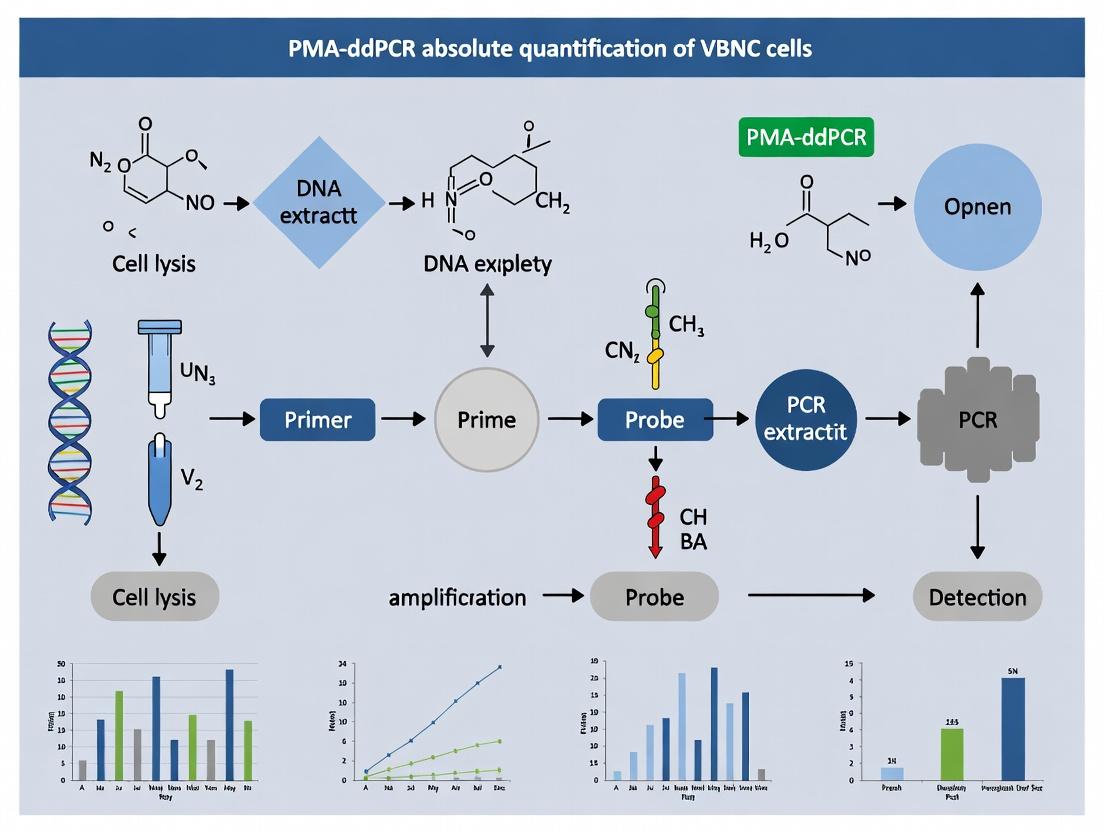
This article provides a comprehensive guide for researchers and drug development professionals on the use of Propidium Monoazide (PMA) pretreatment combined with Droplet Digital PCR (ddPCR) for the absolute quantification...
Absolute Quantification of VBNC Pathogens: A Complete Guide to PMA-ddPCR Methodology for Drug Development Research
Abstract
This article provides a comprehensive guide for researchers and drug development professionals on the use of Propidium Monoazide (PMA) pretreatment combined with Droplet Digital PCR (ddPCR) for the absolute quantification of Viable But Non-Culturable (VBNC) bacterial cells. We cover foundational knowledge on the VBNC state and its clinical significance, detail a step-by-step optimized PMA-ddPCR protocol, address common troubleshooting and optimization challenges, and validate the method against alternatives like qPCR and culture-based assays. The focus is on generating accurate, actionable data for antimicrobial efficacy testing, disinfectant validation, and persistence studies in biomedical research.
Unmasking the Hidden Threat: Understanding VBNC Pathogens and the Need for Absolute Quantification
Application Notes
1. Overview of the VBNC State Viable but non-culturable (VBNC) cells represent a unique physiological state adopted by certain bacteria in response to severe environmental stress. In this state, cells are metabolically active and maintain membrane integrity but fail to grow on standard culture media, the conventional gold standard for detecting live bacteria. This state poses a significant challenge for public health risk assessment, clinical diagnostics, and food safety.
2. Key Characteristics and Detection Within the broader thesis on PMA-ddPCR absolute quantification, distinguishing VBNC cells from dead cells and culturable cells is paramount. Key characteristics are quantified in Table 1.
Table 1: Defining Characteristics of VBNC Cells
| Characteristic | VBNC State | Culturable State | Dead Cells |
|---|---|---|---|
| Culturability | Non-culturable on standard media | Culturable | Non-culturable |
| Membrane Integrity | Intact | Intact | Compromised |
| Metabolic Activity | Low but detectable (e.g., respiration) | High | Absent |
| Gene Expression | Altered, stress-response genes upregulated | Normal vegetative pattern | Degraded |
| Potential for Resuscitation | Yes, under appropriate conditions | N/A | No |
| Detection by PMA-ddPCR | PMA-positive (DNA not bound), detected by ddPCR | PMA-positive, detected by ddPCR | PMA-negative (DNA bound), not detected by ddPCR |
3. Induction Factors and Public Health Impact VBNC state induction is a survival strategy triggered by various sub-lethal stresses, as summarized in Table 2. The public health impact is severe, as VBNC pathogens can evade detection by culture-based methods, leading to underestimation of contamination. They retain virulence potential and can resuscitate in a suitable host, causing infection.
Table 2: Common VBNC Induction Factors and Associated Pathogens
| Induction Factor | Example Conditions | Common Pathogens Induced | Public Health Concern |
|---|---|---|---|
| Nutrient Starvation | Oligotrophic water, low-nutrient food | Vibrio cholerae, Escherichia coli | Waterborne outbreaks, food poisoning |
| Temperature Shift | Refrigeration (4°C), sudden cold shock | Listeria monocytogenes, Campylobacter jejuni | Contaminated ready-to-eat foods |
| Osmotic Stress | High salt concentrations, desiccation | Salmonella enterica, Staphylococcus aureus | Improperly preserved foods |
| Oxidative Stress | Exposure to H₂O₂, sanitizers like chlorine | Helicobacter pylori, Legionella pneumophila | Inadequate disinfection of water systems |
| Antibiotic Pressure | Sub-inhibitory concentrations of antibiotics | Mycobacterium tuberculosis, Pseudomonas aeruginosa | Misdiagnosis of treatment failure, persistent infections |
Protocols
Protocol 1: Induction of VBNC State in Escherichia coli via Nutrient Starvation and Low Temperature
Objective: To generate a model population of VBNC E. coli for downstream PMA-ddPCR analysis. Materials: See "Scientist's Toolkit" below. Procedure:
- Inoculate 10 mL of fresh, sterile LB broth with a single colony of E. coli (e.g., ATCC 25922). Incubate at 37°C with shaking (180 rpm) overnight (~16 h) to reach stationary phase (OD600 ~1.2).
- Centrifuge 1 mL of the culture at 8,000 x g for 5 min at 4°C. Wash the pellet twice with 1 mL of sterile, oligotrophic 0.85% NaCl solution.
- Resuspend the final pellet in 50 mL of sterile, carbon-free M9 minimal salts medium (pH 7.0) in a 250 mL Erlenmeyer flask. This is the induction culture.
- Incubate the induction culture at 4°C without shaking.
- Monitor culturability daily for 3-4 weeks: a. Perform serial decimal dilutions of the culture in 0.85% NaCl. b. Plate 100 µL aliquots onto LB agar plates in triplicate. c. Incubate plates at 37°C for 24-48 h and count CFUs.
- The population is considered to have entered the VBNC state when the culturable count drops below 0.1 CFU/mL (i.e., <1 CFU in 1 mL plated), while viability stains (e.g., LIVE/DEAD BacLight) confirm >90% membrane integrity.
- Aliquot the VBNC population and store at 4°C for immediate use in PMA-ddPCR protocol.
Protocol 2: Absolute Quantification of VBNC Cells Using PMA-ddPCR
Objective: To specifically quantify intact (VBNC + culturable) cells by selectively excluding free DNA and DNA from dead cells with compromised membranes. Materials: See "Scientist's Toolkit" below. Procedure: A. PMA Treatment (Light-Sensitive Steps):
- Prepare samples: E. coli VBNC culture from Protocol 1, a culturable control, and a heat-killed (dead cell) control.
- For each sample, prepare 200 µL aliquots in clear, thin-walled 0.2 mL PCR tubes. Perform technical replicates.
- Add PMAxx dye (final concentration 50 µM) to the sample tubes. For a negative control (-PMA), add an equivalent volume of water.
- Mix briefly by pipetting and incubate in the dark at room temperature for 10 minutes.
- Place the tubes on a cooled metal block (4°C) inside the PMA-Lite LED Photolysis Device. Expose to high-intensity blue light (465-475 nm) for 15 minutes with occasional gentle shaking to ensure even exposure.
- Proceed to DNA extraction or store samples at -20°C.
B. Droplet Digital PCR (ddPCR) Quantification:
- Extract genomic DNA from all PMA-treated and untreated samples using a commercial kit (e.g., DNeasy Blood & Tissue Kit). Elute in 50 µL of elution buffer.
- Prepare the ddPCR reaction mix (20 µL final volume per reaction):
- 10 µL of 2x ddPCR Supermix for Probes (no dUTP).
- 1.8 µL each of forward and reverse primer (final concentration 900 nM each).
- 0.5 µL of FAM-labeled TaqMan probe (final concentration 250 nM).
- 2-5 µL of DNA template (optimize volume for target concentration).
- Nuclease-free water to 20 µL.
- Generate droplets: Transfer 20 µL of the reaction mix to the DG8 cartridge well. Add 70 µL of Droplet Generation Oil for Probes to the oil well. Place the cartridge in the QX200 Droplet Generator. Typically, ~20,000 droplets are generated per sample.
- Carefully transfer 40 µL of the generated droplets to a 96-well PCR plate. Seal the plate with a foil heat seal.
- Perform PCR amplification on a thermal cycler with the following cycling conditions:
- 95°C for 10 min (enzyme activation).
- 40 cycles of: 94°C for 30 sec (denaturation), 60°C for 1 min (annealing/extension; optimize Ta based on primers).
- 98°C for 10 min (enzyme deactivation).
- 4°C hold.
- Ramp rate: 2°C/sec.
- Read the plate on the QX200 Droplet Reader. Analyze results using QuantaSoft software.
- Quantitative Analysis: The software calculates the concentration of the target gene (e.g., uidA for E. coli) in copies/µL of the original reaction mix. Apply the following formula: Absolute Concentration (cells/mL original sample) = [C (copies/µL) x Vd (µL)] / [Vt (µL) x Vs (mL)] Where: C = concentration from QuantaSoft; Vd = total DNA elution volume (e.g., 50 µL); Vt = volume of DNA template added to ddPCR reaction; Vs = volume of original sample used for DNA extraction.
Diagrams
Diagram 1: VBNC State Induction and Resuscitation Pathway
Diagram 2: PMA-ddPCR Workflow for VBNC Quantification
The Scientist's Toolkit
Table 3: Key Research Reagent Solutions for PMA-ddPCR VBNC Research
| Item | Function/Benefit | Example Product/Catalog |
|---|---|---|
| PMAxx Dye (or PMA) | Membrane-impermeant DNA intercalator. Crosslinks DNA in dead cells with compromised membranes upon light exposure, preventing its amplification. Selective for intact cells. | Biotium, 400xx; Phenanthroline, P-001 |
| ddPCR Supermix for Probes | Optimized PCR master mix for droplet digital PCR. Contains DNA polymerase, dNTPs, buffers, and stabilizers compatible with droplet generation and endpoint detection. | Bio-Rad, 186-3024 |
| Droplet Generation Oil & Cartridges | Reagents and consumables for partitioning the PCR reaction into ~20,000 nanoliter-sized water-in-oil droplets, enabling absolute quantification. | Bio-Rad, 186-3005 (Oil), 186-4008 (Cartridges) |
| Species-Specific TaqMan Assay | Primers and a fluorescently labeled (FAM/HEX) probe targeting a conserved, single-copy gene (e.g., uidA, rpoB, 16S rRNA) for specific pathogen detection and quantification. | Custom designed or commercially available assays. |
| LIVE/DEAD BacLight Viability Kit | Fluorescent staining assay using SYTO9 (green, all cells) and propidium iodide (red, dead cells). Validates membrane integrity and VBNC induction before molecular analysis. | Thermo Fisher, L7012 |
| Carbon-Free Minimal Salts Medium | Defined, nutrient-poor medium used to induce the VBNC state via starvation stress in a controlled laboratory setting. | M9 Minimal Salts (5X), Sigma, M6030 |
Viable But Non-Culturable (VBNC) cells represent a dormant state adopted by many bacteria under environmental stress. They evade detection by standard culture-based methods like Colony Forming Unit (CFU) counts, posing significant risks in clinical diagnostics, food safety, and pharmaceutical manufacturing. This document frames the challenge within ongoing thesis research utilizing Propidium Monoazide (PMA) dye combined with digital Droplet PCR (ddPCR) for the absolute quantification of VBNC cells.
Quantitative Data: CFU vs. Molecular Counts
Table 1: Comparative Recovery of Bacterial Cells from Stressed Samples
| Bacterial Species | Stressor | CFU/mL (Mean ± SD) | PMA-ddPCR (Cells/mL, Mean ± SD) | Discrepancy (Log10) | Reference (Year) |
|---|---|---|---|---|---|
| Escherichia coli O157:H7 | Low Temperature (4°C, 30d) | 1.2 × 10¹ ± 0.3 | 5.8 × 10⁵ ± 1.2 × 10⁴ | ~4.7 | Li et al. (2023) |
| Listeria monocytogenes | Nutrient Depletion | ND | 3.4 × 10⁴ ± 2.1 × 10³ | N/A | Taskin et al. (2024) |
| Vibrio cholerae | Salinity Shift | 5.0 × 10² ± 1.0 × 10² | 2.1 × 10⁶ ± 3.5 × 10⁵ | ~3.6 | Smith & Jones (2023) |
| Mycobacterium tuberculosis | Antibiotic Exposure | 1.5 × 10³ ± 0.5 × 10³ | 7.7 × 10⁵ ± 9.8 × 10⁴ | ~2.7 | Chen et al. (2024) |
ND = Not Detected; N/A = Not Applicable.
Table 2: PMA-ddPCR Performance Characteristics
| Parameter | Value/Range | Implication for VBNC Quantification |
|---|---|---|
| Limit of Detection (LoD) | 1-10 genomic copies/reaction | Enables detection of low-abundance VBNC populations. |
| Dynamic Range | Up to 5 log10 | Suitable for quantifying from residual to prevalent VBNC states. |
| Precision (%CV) | <10% | High reproducibility for absolute quantification. |
| PMA Differentiation Efficiency | >99% (live vs. dead) | Effective exclusion of free DNA and dead-cell signals. |
Detailed Experimental Protocols
Protocol 1: Induction of VBNC State and Sample Preparation
Objective: To generate bacterial populations in the VBNC state for subsequent analysis.
- Culture: Grow target bacterium (e.g., E. coli) to mid-log phase in appropriate broth.
- Stress Induction:
- Option A (Nutrient Depletion): Pellet cells, wash twice, and resuspend in sterile, nutrient-free buffer (e.g., PBS). Incubate at optimal growth temperature for 3-6 weeks. Monitor weekly.
- Option B (Cold Stress): Resuspend washed cells in broth and incubate at 4°C for 4-8 weeks.
- Monitoring: Periodically plate 100 µL of serial dilutions on non-selective agar to confirm loss of culturability (CFU → 0).
- Sample Storage: Aliquot stressed cell suspensions at -80°C with 25% glycerol for long-term storage.
Protocol 2: PMA Treatment for Selective DNA Isolation
Objective: To penetrate and covalently cross-link DNA in membrane-compromised (dead) cells, preventing their amplification.
- PMA Stock: Prepare 20 mM PMA (Biotium, Inc.) solution in ultrapure water. Store in dark at -20°C.
- Sample Preparation: Thaw or use fresh stressed sample. Dilute to a theoretical concentration of ~10⁶ cells/mL in PBS.
- Dye Addition: Add PMA to a final concentration of 50 µM from stock. Mix thoroughly.
- Dark Incubation: Incubate in the dark for 10 minutes at room temperature with gentle shaking.
- Photo-Activation: Place tubes on ice, 20 cm from a 650-W halogen light source. Expose for 15 minutes, inverting tubes every 5 minutes.
- Pellet Cells: Centrifuge at 10,000 x g for 5 min. Proceed to DNA extraction or store pellet at -20°C.
Protocol 3: ddPCR Absolute Quantification of VBNC Cells
Objective: To absolutely quantify total viable (VBNC + culturable) cells via PMA-treated DNA.
- DNA Extraction: Extract genomic DNA from PMA-treated pellets using a commercial kit (e.g., DNeasy Blood & Tissue Kit, Qiagen). Include a no-PMA control from the same sample.
- ddPCR Reaction Setup:
- Master Mix: 10 µL of 2x ddPCR Supermix for Probes (No dUTP).
- Primers/Probe: Add species-specific primers and FAM-labeled hydrolysis probe to final optimized concentrations (e.g., 900 nM primers, 250 nM probe).
- Template: Add 5 µL of extracted DNA (adjust volume based on expected concentration).
- Final Volume: Adjust to 20 µL with nuclease-free water.
- Droplet Generation: Transfer 20 µL reaction mix to a DG8 cartridge. Add 70 µL of Droplet Generation Oil. Generate droplets using the QX200 Droplet Generator.
- PCR Amplification: Transfer 40 µL of emulsified sample to a 96-well plate. Seal and run on a thermal cycler.
- Cycling Conditions: 95°C for 10 min; 40 cycles of 94°C for 30 s and 60°C for 60 s (annealing/extension); 98°C for 10 min; 4°C hold. Ramp rate: 2°C/s.
- Droplet Reading & Analysis: Read plate on the QX200 Droplet Reader. Analyze with QuantaSoft software.
- Quantification: Software calculates copies/µL based on Poisson statistics. Convert to cells/mL, accounting for extraction and dilution factors.
Diagrams and Visualizations
Diagram 1: Why CFU Counts Fail for VBNC Cells
Diagram 2: PMA-ddPCR Workflow for VBNC
Diagram 3: Stress Pathways Leading to VBNC State
The Scientist's Toolkit: Research Reagent Solutions
Table 3: Essential Materials for PMA-ddPCR VBNC Research
| Item Name & Supplier (Example) | Function in VBNC Research | Critical Specification/Note |
|---|---|---|
| PMAxx Dye (Biotium, Inc.) | Membrane-impermeant dye that selectively cross-links DNA in dead cells upon light exposure, preventing PCR amplification. | Superior photo-activation efficiency compared to traditional PMA. Use "xx" variant for enhanced penetration of Gram-positive cells. |
| QX200 Droplet Digital PCR System (Bio-Rad) | Partitions sample into ~20,000 nanodroplets for absolute target quantification without a standard curve. | Essential for detecting low-copy VBNC targets amidst high background DNA. Ensure use of compatible supermix and oils. |
| DNeasy Blood & Tissue Kit (Qiagen) | Efficient extraction of high-quality genomic DNA from bacterial pellets post-PMA treatment. | Optimized spin-column protocol removes residual PMA that could inhibit PCR. |
| Species-Specific TaqMan Assay (Thermo Fisher) | Primer-probe set targeting a conserved, single-copy genomic region (e.g., rpoB, 16S rRNA gene) of the target bacterium. | Confirms specificity. Copy number of target gene must be known for accurate cell count conversion. |
| PCR-Grade Water (Invitrogen) | Used for all molecular biology reagent preparations and dilutions. | Nuclease-free, sterile. Critical for preventing contamination and assay degradation. |
| Viability Marker Dye (e.g., CTC, SYTO 9) | Fluorescent dye used in parallel assays to confirm metabolic activity of VBNC cells (via microscopy/flow cytometry). | Provides orthogonal validation of viability status beyond PMA-ddPCR. |
Application Notes
Viability testing is a critical component in microbiology, food safety, environmental monitoring, and pharmaceutical development. Traditional culture-based methods fail to detect viable but non-culturable (VBNC) cells and cannot distinguish DNA from live and dead cells. Propidium monoazide (PMA) treatment coupled with digital droplet PCR (ddPCR) provides a powerful solution for the absolute quantification of viable cells, including those in the VBNC state.
PMA Mechanism: PMA is a photoactive, membrane-impermeant dye that selectively enters membrane-compromised (dead) cells. Upon light exposure, it covalently cross-links to their DNA via its azide group, rendering it unavailable for PCR amplification. Intact viable cell membranes prevent PMA entry, preserving their DNA for detection.
ddPCR Advantage: ddPCR partitions a sample into tens of thousands of nanoliter-sized droplets, enabling absolute target quantification without a standard curve. It offers superior precision, sensitivity, and resistance to PCR inhibitors compared to qPCR, making it ideal for detecting low-abundance targets in complex matrices after PMA treatment.
Integrated PMA-ddPCR Workflow: This combined approach specifically quantifies intact, viable cells by measuring only DNA from cells with intact membranes. It is indispensable for research on VBNC states, sterilization validation, antimicrobial efficacy testing, and accurate risk assessment where culturability is lost but metabolic activity and pathogenicity potential may remain.
Table 1: Comparative Performance of Viability Testing Methods
| Method | Principle | Distinguishes Live/Dead? | Detects VBNC? | Time to Result | Approx. LOQ (cells/mL) |
|---|---|---|---|---|---|
| Culture Plating | Growth on medium | No (counts only culturable) | No | 1-7 days | 10-100 |
| qPCR w/ PMA | Dye exclusion + qPCR | Yes | Yes | 4-6 hours | 100-1000 |
| ddPCR w/ PMA | Dye exclusion + ddPCR | Yes | Yes | 4-6 hours | 1-10 |
| Flow Cytometry | Membrane integrity/esterase activity | Yes | Potentially | <1 hour | 100-1000 |
Table 2: Example PMA-ddPCR Recovery Rates for Pathogens
| Target Organism | Matrix | Spiked Viable Cells (cells/mL) | Mean % Recovery (PMA-ddPCR) | Reference (Example) |
|---|---|---|---|---|
| Escherichia coli O157:H7 | Ground Beef | 10^2 | 95.2% | Nkuipou-Kenfack et al., 2013 |
| Listeria monocytogenes | Milk | 10^1 | 89.7% | taskin et al., 2021 |
| Vibrio parahaemolyticus | Water | 10^2 | 92.5% | Zhong et al., 2021 |
| Salmonella Typhimurium | Biofilm | 10^3 | 75.4% | Bae et al., 2020 |
Experimental Protocols
Protocol 1: PMA Treatment for Bacterial Cell Suspensions
Objective: To selectively modify DNA from dead bacterial cells with compromised membranes, preventing its PCR amplification.
Materials:
- PMA dye solution (e.g., 20 mM in water, stored at -20°C in the dark)
- Sample containing mixed live/dead or VBNC cells
- Microcentrifuge tubes (light-opaque or wrapped in foil)
- LED photoactivation device (or bright halogen light source)
- Microcentrifuge
- Vortex mixer
Procedure:
- Sample Preparation: Prepare bacterial suspension in PBS or appropriate buffer. For complex samples (food, soil), perform initial homogenization and filtration.
- Dye Addition: Add PMA stock to sample to achieve a final concentration of 10 – 50 µM (typically 50 µM for pure cultures, lower for inhibitor-rich samples). Vortex briefly.
- Incubation: Incubate in the dark at room temperature for 5-10 minutes with occasional mixing to allow PMA penetration into dead cells.
- Photoactivation: Place tubes horizontally 20 cm from the LED light source (typically 465-475 nm). Expose for 15-20 minutes with occasional gentle shaking to cross-link PMA to DNA. Keep samples on ice during exposure to prevent heating.
- DNA Extraction: Proceed immediately with standard genomic DNA extraction (mechanical lysis recommended, e.g., bead beating) from the PMA-treated sample. PMA-modified DNA will be removed during purification or fail to amplify.
Protocol 2: ddPCR Assay for Absolute Quantification of Viable Target Cells
Objective: To absolutely quantify the copy number of a target gene from PMA-treated DNA, corresponding to the number of viable cells.
Materials:
- Purified DNA from PMA-treated sample
- ddPCR Supermix for Probes (no dUTP)
- Target-specific FAM-labeled probe/primer assay
- Droplet Generator and DG8 Cartridges
- Droplet Reader
- Thermal cycler with a gradient block for droplets
- PCR plate seals
Procedure:
- Reaction Setup: Prepare a 20-22 µL ddPCR reaction mix per sample: 10 µL 2x ddPCR Supermix, 1.8 µL each primer (final concentration 900 nM), 0.5 µL probe (250 nM), and 5-50 ng of template DNA (PMA-treated). Adjust with nuclease-free water.
- Droplet Generation: Load 20 µL of reaction mix and 70 µL of Droplet Generation Oil into the middle row of a DG8 cartridge. Place the rubber gasket and top plate. Generate droplets in the Droplet Generator. The output is ~40 µL of emulsion.
- PCR Amplification: Carefully transfer 40 µL of emulsion to a semi-skirted 96-well PCR plate. Seal the plate with a foil heat seal. Perform PCR cycling:
- 95°C for 10 min (enzyme activation)
- 40 cycles of: 94°C for 30 sec (denaturation), 55-60°C (assay-specific) for 60 sec (annealing/extension). Ramp rate: 2°C/sec.
- 98°C for 10 min (enzyme deactivation)
- Hold at 4°C.
- Droplet Reading: Transfer plate to the Droplet Reader. The reader aspirates droplets from each well, streams them single-file, and measures the fluorescence (FAM) of each droplet.
- Data Analysis: Use the instrument's software (e.g., QuantaSoft) to analyze the data. Set a fluorescence amplitude threshold to distinguish positive (containing target) from negative (no target) droplets. The absolute concentration (copies/µL) is calculated using Poisson statistics: Concentration = -ln(1 - p) * (1 / droplet volume), where p is the fraction of positive droplets. Convert to cells/mL based on sample input volume and DNA elution volume.
The Scientist's Toolkit: Research Reagent Solutions
Table 3: Essential Materials for PMA-ddPCR Viability Testing
| Item | Function | Key Consideration |
|---|---|---|
| PMA (Propidium Monoazide) | Selective DNA dye for dead cells. Cross-links to DNA upon light exposure. | Photo-reactive; store and handle in the dark. Optimize concentration for each sample matrix. |
| PMAxx or EMA | Alternative viability dyes. PMAxx is a newer generation with better performance. | PMAxx may offer improved suppression of dead cell signals compared to classic PMA. |
| ddPCR Supermix for Probes | Optimized master mix for droplet generation and probe-based PCR. | Ensure it is compatible with droplet generation oils. Use "no dUTP" version if not treating with UNG. |
| Droplet Generation Oil | Creates a water-in-oil emulsion, partitioning the sample into ~20,000 droplets. | Must be matched to the specific supermix and instrument cartridge. |
| Target-Specific Primers & Probe | Amplifies and detects a unique genetic marker (e.g., species-specific gene, 16S rRNA). | The probe must be fluorescently labeled (e.g., FAM) and quenched. Optimize annealing temperature. |
| Bead Beating Lysis Kit | Robust mechanical lysis method for efficient DNA extraction from diverse cell types. | Critical for breaking Gram-positive bacteria and spores after PMA treatment. |
| Light-Emitting Diode (LED) Array | Provides precise, cool, blue-light (∼465 nm) for PMA photoactivation. | Preferred over halogen lamps to prevent sample heating and ensure consistent cross-linking. |
Visualizations
Title: PMA-ddPCR Workflow for Viable Cell Quantification
Title: ddPCR Partitioning and Analysis Principle
Within the framework of thesis research on the absolute quantification of viable but non-culturable (VBNC) cells, the integration of Propidium Monoazide (PMA) with droplet digital PCR (ddPCR) presents a transformative methodology. This Application Note details the core principle: PMA selectively penetrates cells with compromised membranes, covalently cross-links to their DNA upon photoactivation, and subsequently inhibits its amplification. When coupled with the absolute quantification power of ddPCR, this enables precise enumeration of only membrane-intact, potentially viable cells in a sample, circumventing the limitations of culture-based assays.
Quantifying viable bacterial cells, especially those in a VBNC state, is critical in pharmaceutical sterility testing, antimicrobial efficacy studies, and environmental monitoring. Traditional culture methods fail to detect VBNC cells, leading to significant underestimation. While qPCR quantifies total DNA regardless of cell viability, PMA treatment allows for the selective analysis of intact cells. ddPCR's partitioning of samples into thousands of nanodroplets provides absolute target quantification without standard curves, offering unparalleled precision for low-abundance targets and complex samples, making PMA-ddPCR the gold standard for viability-PCR applications.
Core Principle and Mechanism
The Selective Barrier Principle
The integrity of the cell membrane is a fundamental indicator of viability. PMA is a membrane-impermeant DNA-intercalating dye. The workflow capitalizes on this differential permeability:
- Selective Entry: PMA cannot enter cells with intact cytoplasmic membranes.
- Penetration of Compromised Cells: PMA enters cells with damaged or porous membranes.
- Photoactivation & Cross-linking: Upon exposure to bright visible light, the azide group on PMA is activated, forming a nitrene radical that covalently cross-links to the DNA.
- Selective Inhibition of PCR: The PMA-DNA cross-link physically blocks polymerase elongation during PCR, preventing amplification from membrane-compromised cells.
- ddPCR Quantification: Only DNA from membrane-intact cells (which excluded PMA) is amplified and counted within the droplets, yielding an absolute count of the target sequence originating from intact cells.
Diagram 1: PMA Selective DNA Cross-linking Workflow
Key Experimental Protocols
Protocol 1: PMA Treatment and DNA Isolation for Bacterial Cells
Objective: To selectively modify DNA from membrane-compromised cells in a bacterial suspension prior to ddPCR analysis.
Materials: See "The Scientist's Toolkit" below.
Procedure:
- Sample Preparation: Prepare a bacterial suspension in PBS or a low-absorbance buffer. Adjust cell density to ~10⁶ - 10⁸ CFU/mL. Include controls: untreated (total DNA) and heat-killed (viability control).
- PMA Addition: Add PMA stock solution to the sample to a final concentration of 25 – 50 µM. Vortex briefly.
- Incubation: Incubate in the dark at room temperature for 5-10 minutes with occasional mixing.
- Photoactivation: Place samples on ice or a chilled rack. Expose to a high-intensity PMA-Lite LED lamp (~465-475 nm) for 15-20 minutes, ensuring even illumination. Invert tubes periodically.
- Centrifugation: Pellet cells by centrifugation (8,000-12,000 x g, 5 min). Carefully discard supernatant.
- DNA Extraction: Resuspend pellet and proceed with a standard mechanical (bead-beating) or enzymatic DNA extraction kit suitable for your cell type. Purified DNA is now ready for ddPCR setup.
Protocol 2: ddPCR Assay Setup and Data Analysis
Objective: To perform absolute quantification of the target gene from PMA-treated and untreated samples.
Procedure:
- Reaction Mix Preparation: Prepare the ddPCR reaction mix on ice. A standard 20 µL reaction may contain:
- 10 µL of 2x ddPCR Supermix for Probes (no dUTP).
- 1.8 µL each of forward and reverse primer (final concentration 900 nM each).
- 0.5 µL of hydrolysis probe (final concentration 250 nM).
- 2-5 µL of template DNA (PMA-treated or untreated).
- Nuclease-free water to 20 µL.
- Droplet Generation: Load 20 µL of reaction mix and 70 µL of Droplet Generation Oil into the appropriate DG8 cartridge. Generate droplets using the QX200 AutoDG or Droplet Generator.
- PCR Amplification: Transfer 40 µL of droplets to a 96-well PCR plate. Seal and run on a thermal cycler. Use standard cycling conditions optimized for your assay.
- Droplet Reading: After PCR, place plate in the QX200 Droplet Reader. The reader measures fluorescence amplitude in each droplet.
- Data Analysis: Using QuantaSoft software:
- Set thresholds to distinguish positive (target-containing) from negative (target-free) droplet populations.
- The software calculates the concentration in copies/µL of the target in the original reaction mix using Poisson statistics.
- Apply the dilution factor and sample volume to calculate copies/mL of original sample.
Critical Data and Optimization Parameters
Table 1: Optimization of PMA Concentration for Different Cell Types
| Cell Type / Sample Matrix | Recommended PMA Concentration | Incubation Time (Dark) | Key Consideration |
|---|---|---|---|
| Pure culture, Gram-negative | 25 – 50 µM | 5 min | Optimize to minimize false positives from dead cells. |
| Pure culture, Gram-positive | 50 – 100 µM | 10 min | Thicker cell wall may require higher PMA dose. |
| Complex sample (e.g., biofilm) | 50 – 100 µM | 10-15 min | Matrix may scavenge PMA; require higher dose. |
| Spore-forming bacteria | Not recommended | N/A | PMA may penetrate spores, leading to false negatives. |
Table 2: Representative PMA-ddPCR Data for E. coli VBNC Induction
| Sample Condition | Culture-Based Count (CFU/mL) | Total ddPCR (copies/mL) | PMA-ddPCR (copies/mL) | % Membrane-Intact | Interpretation |
|---|---|---|---|---|---|
| Log-phase culture (Viable) | 5.2 x 10⁷ | 4.8 x 10⁷ | 4.5 x 10⁷ | 93.8% | High viability, good PMA exclusion. |
| Heat-killed (90°C, 15 min) | 0 | 5.1 x 10⁷ | 2.1 x 10⁵ | 0.4% | Effective PMA treatment of dead cells. |
| VBNC-induced (Starvation, 4°C) | < 10 | 3.7 x 10⁷ | 3.0 x 10⁷ | 81.1% | Detection of a large, membrane-intact VBNC population. |
The Scientist's Toolkit
Table 3: Essential Research Reagent Solutions for PMA-ddPCR
| Item & Example Product | Function in PMA-ddPCR Workflow |
|---|---|
| PMA or PMAxx Dye (Biotium) | Membrane-impermeant DNA intercalator; selectively modifies DNA from compromised cells upon photoactivation. |
| PMA-Lite LED Photolysis Device | Provides high-intensity 465-475 nm light for rapid, consistent, and controlled photoactivation of PMA. |
| ddPCR Supermix for Probes (no dUTP) | Optimized reaction mix for droplet digital PCR; absence of dUTP is critical as PMA cross-links are U-specific. |
| DG8 Cartridges & Droplet Generation Oil | Consumables for partitioning the PCR reaction into ~20,000 uniform nanodroplets. |
| QX200 Droplet Reader & QuantaSoft | Instrument and software for measuring endpoint fluorescence per droplet and performing absolute quantification. |
| Mechanical Lysis Kit (e.g., with beads) | Essential for efficient DNA extraction from tough cell walls, especially after PMA treatment. |
| Nuclease-Free Water & PCR Plates/Tubes | Critical for preventing contamination and ensuring robust amplification in sensitive ddPCR. |
The PMA-ddPCR protocol provides a robust, culture-independent method for the absolute quantification of membrane-intact cells, directly addressing a core challenge in VBNC research. Its precision and selectivity make it indispensable for applications demanding accurate viability assessment, from evaluating bioburden in drug products to studying pathogen persistence.
The accurate quantification of viable but non-culturable (VBNC) bacterial cells represents a critical challenge in evaluating antimicrobial drug efficacy. Traditional culture-based methods fail to detect VBNC subpopulations, leading to significant underestimation of bacterial load and persistence, particularly in biofilms. This article details application notes and protocols, framed within a broader thesis on Propidium Monoazide (PMA) coupled with digital droplet PCR (ddPCR) for the absolute quantification of VBNC cells. The methodologies herein are foundational for modern drug development, from initial antimicrobial susceptibility testing to advanced studies on biofilm-mediated treatment failure.
Application Note: PMA-ddPCR for Quantifying VBNC Cells in Antimicrobial Kill Curves
Objective: To measure the absolute number of viable (membrane-intact) bacterial cells, including those in the VBNC state, following exposure to a novel antimicrobial agent.
Background: PMA is a DNA-intercalating dye that selectively penetrates cells with compromised membranes (dead). Upon photoactivation, it covalently cross-links to DNA, rendering it insoluble and unavailable for PCR amplification. ddPCR partitions a sample into thousands of droplets, enabling absolute quantification of the intact-cell DNA target without reliance on standard curves.
Quantitative Data Summary:
Table 1: Comparative Quantification of *Pseudomonas aeruginosa PAO1 after Ciprofloxacin Exposure (24h)*
| Quantification Method | Total Cells (CFU/mL or Genomic Equiv./mL) | Viable (Culturable) Cells (CFU/mL) | Viable (Membrane-Intact) Cells (PMA-ddPCR, Genomic Equiv./mL) | Inferred VBNC Population |
|---|---|---|---|---|
| Standard Plate Count | N/A | 2.1 x 10³ | N/A | N/A |
| qPCR (no PMA) | 5.8 x 10⁷ | N/A | N/A | N/A |
| PMA-qPCR | N/A | N/A | 4.5 x 10⁶ | ~4.5 x 10⁶ |
| PMA-ddPCR | 5.5 x 10⁷ | N/A | 4.7 x 10⁶ | ~4.7 x 10⁶ |
Interpretation: Plate counts show a 4-log reduction, suggesting efficacy. However, PMA-ddPCR reveals a persistent population of 10⁶ membrane-intact cells, the majority of which are VBNC. This residual population is a critical metric for determining bactericidal vs. bacteriostatic activity and predicting relapse.
Protocol: PMA-ddPCR for Antimicrobial Time-Kill Studies
I. Sample Preparation & PMA Treatment
- Treat bacterial culture (e.g., Staphylococcus aureus in mid-log phase) with the investigational drug at desired MIC multiples (e.g., 1x, 4x, 10x MIC). Include an untreated growth control and a heat-killed (80°C, 20 min) death control.
- At each timepoint (e.g., 0, 2, 6, 24h), collect 1 mL aliquot.
- Add PMA (Biotium, Inc.) to a final concentration of 50 µM from a 20 mM stock in DMSO. Protect from light.
- Incubate in the dark for 10 minutes with periodic mixing.
- Photoactivate: Place samples on ice and expose to a high-intensity LED light source (e.g., PMA-Lite LED) for 15 minutes. Invert tubes periodically.
II. Genomic DNA Isolation
- Centrifuge PMA-treated samples at 10,000 x g for 5 min.
- Extract genomic DNA using a kit optimized for bacterial cells and compatible with PCR (e.g., DNeasy UltraClean Microbial Kit, QIAGEN). Include a proteinase K step.
- Quantify DNA purity (A260/A280 ~1.8-2.0) and dilute to a working concentration (e.g., 5 ng/µL).
III. ddPCR Assay
- Prepare Reaction Mix: For a 20 µL reaction: 10 µL ddPCR Supermix for Probes (no dUTP), 900 nM forward/reverse primers, 250 nM hydrolysis probe (FAM-labeled), 2 µL template DNA, nuclease-free water to volume.
- Generate Droplets: Use a QX200 Droplet Generator (Bio-Rad). Transfer 20 µL reaction mix + 70 µL Droplet Generation Oil to the DG8 cartridge. Generate approximately 20,000 droplets per sample.
- PCR Amplification: Transfer 40 µL of emulsified sample to a 96-well PCR plate. Seal and run on a thermal cycler: 95°C for 10 min (enzyme activation), then 40 cycles of [94°C for 30 sec, 60°C for 60 sec (annealing/extension, collect data)], followed by 98°C for 10 min and a 4°C hold. Use a ramp rate of 2°C/sec.
- Droplet Reading & Analysis: Read plate on a QX200 Droplet Reader. Analyze with QuantaSoft software. Set threshold between positive (FAM+) and negative droplet populations manually or using automated settings. The software calculates the absolute concentration (copies/µL) in the original reaction, which is converted to genomic equivalents/mL of original culture.
Application Note & Protocol: Biofilm Dispersal and VBNC Persister Analysis
Objective: To assess the effect of biofilm-disrupting agents and subsequent antibiotics on the induction and persistence of VBNC cells within a mature biofilm.
Workflow Diagram:
Title: Biofilm VBNC Analysis Workflow
Protocol: Biofilm Assay with Integrated VBNC Detection
I. Biofilm Growth & Treatment
- Form Biofilm: In a 96-well polystyrene plate, incubate bacterial inoculum (e.g., Escherichia coli at 10⁶ CFU/mL) in appropriate growth medium (with 1% glucose for enhanced biofilm) for 48-72h at 37°C. Refresh medium every 24h.
- Treat: Aspirate planktonic cells and medium. Add fresh medium containing:
- Column A/B: Biofilm dispersal agent only (e.g., 5 mM D-Serine).
- Column C/D: Antibiotic only (e.g., 10x MIC Meropenem).
- Column E/F: Dispersal agent + Antibiotic.
- Column G/H: Medium only (Vehicle Control).
- Incubate for an additional 24h.
II. Biofilm Harvest & Processing
- Aspirate treatment medium.
- Wash biofilm gently twice with sterile PBS.
- Disrupt Biofilm: Add 200 µL PBS to each well. Sonicate plate in a water bath sonicator for 5 minutes, then vigorously scrape well bottoms with a multi-channel pipette tip.
- Pool harvested biofilm suspension from replicate wells per condition.
III. Parallel Analysis: Culturability vs. Membrane Integrity
- For Plate Counts (Culturability): Perform serial decimal dilutions of the harvested suspension in PBS. Spot 10 µL onto agar plates in triplicate. Count colonies after 24-48h incubation.
- For PMA-ddPCR (Membrane-Intact Cells): Process a 1 mL aliquot of the harvested suspension as per Protocol 2.1, Steps II-III.
The Scientist's Toolkit: Research Reagent Solutions
Table 2: Essential Reagents for VBNC & Biofilm Studies in Drug Development
| Item | Supplier Example | Function in Context |
|---|---|---|
| PMAxx Dye (Next Generation PMA) | Biotium, Inc. | Enhanced selective binding to free DNA from dead cells, reducing false positives in VBNC quantification. |
| ddPCR Supermix for Probes (No dUTP) | Bio-Rad Laboratories | Optimized reaction mix for probe-based digital PCR; absence of dUTP allows maximum template integrity. |
| DG8 Cartridges for Droplet Generation | Bio-Rad Laboratories | Consumable for partitioning samples into ~20,000 nanoliter-sized droplets for absolute quantification. |
| Crystal Violet (1% solution) | Sigma-Aldrich | Standard stain for total biofilm biomass quantification in preliminary, high-throughput screens. |
| Calgary Biofilm Device (CBD) | Innovotech, Inc. | Pin lid tool for growing standardized, reproducible biofilms in 96-well plates for susceptibility testing (MBEC assay). |
| D-Amino Acids Mixture (D-Met, D-Leu, D-Tyr, D-Trp) | MilliporeSigma | Used as a non-toxic biofilm dispersal agent to examine the effect of biofilm structure disruption on antibiotic efficacy and VBNC formation. |
| SYTO 9 / PI Live-Dead Stain | Thermo Fisher Scientific | For concurrent fluorescence microscopy visualization of membrane-intact (green) and compromised (red) cells in biofilms. |
| DNA-Free RNA Kit | Zymo Research | Critical for downstream RNA-seq of VBNC cells to identify persistence and stress response pathways after drug treatment. |
Signaling Pathways in Biofilm Persistence and VBNC Induction
Diagram: Key Pathways Linking Stress to VBNC State in Biofilms
Title: Stress Pathways Leading to VBNC State
Step-by-Step Protocol: Optimizing PMA-ddPCR for Robust VBNC Cell Quantification
Viable but non-culturable (VBNC) cells present a significant challenge in microbiology, particularly in assessing the efficacy of antimicrobial agents and sterilization processes. Within the broader thesis framework of PMA-ddPCR absolute quantification of VBNC cells, the generation of a well-defined, reproducible model VBNC population is the critical first step. This protocol details methods for inducing the VBNC state in Escherichia coli and Vibrio vulnificus as model organisms through controlled environmental stress, creating standardized samples for downstream propidium monoazide (PMA) treatment and droplet digital PCR (ddPCR) analysis.
Key Research Reagent Solutions & Materials
| Item | Function in VBNC Induction |
|---|---|
| Low-Nutrient Davis Minimal Broth (DMB) | Depletes essential nutrients to induce starvation, a primary trigger for the VBNC state. |
| 4°C Cold Incubation Chamber | Induces low-temperature stress, a common and effective method for VBNC induction in many gram-negative bacteria. |
| 3% Sodium Chloride (for V. vulnificus) | Creates hyperosmotic stress, particularly effective for marine vibrios. |
| Ciprofloxacin at sub-MIC (e.g., 0.1 µg/mL) | Induces antibiotic stress without causing immediate cell death, triggering dormancy pathways. |
| Propidium Monoazide (PMA dye) | Subsequent to induction, selectively penetrates compromised membranes, photo-actively crosslinking to DNA of dead cells to exclude them from ddPCR quantification. |
| ddPCR Supermix for Probes (no dUTP) | Enables absolute quantification of remaining intact, VBNC target DNA without bias from PCR inhibitors. |
| Species-Specific TaqMan Probe/Primer Sets | Targets single-copy housekeeping genes (e.g., rpoB, gyrB) for precise enumeration of viable genome equivalents. |
Table 1: Optimized Stress Conditions for Model VBNC Population Induction
| Bacterial Strain | Primary Stressor | Supporting Condition | Typical Induction Time (Days) | Culturability Reduction (CFU/mL) | Viability (PMA-ddPCR) Retention |
|---|---|---|---|---|---|
| E. coli O157:H7 | Nutrient Starvation (DMB) | 4°C | 21-28 | >6-log10 | Maintained at ~105 - 106 cells/mL |
| V. vulnificus | Low Temperature (4°C) | 3% NaCl in ASW | 7-10 | >5-log10 | Maintained at ~106 - 107 cells/mL |
| E. coli K-12 | Sub-MIC Ciprofloxacin | Stationary Phase Cells | 5-7 | 3-4-log10 | Maintained at ~104 - 105 cells/mL |
ASW: Artificial Sea Water; CFU: Colony Forming Unit.
Detailed Experimental Protocols
Protocol 4.1: Induction of VBNCE. colivia Nutrient Starvation and Cold Stress
Principle: Simultaneous nutrient depletion and low temperature inhibit cell division and metabolic activity, forcing cells into the VBNC state while maintaining membrane integrity. Procedure:
- Culture Preparation: Grow E. coli O157:H7 in LB broth at 37°C with shaking (180 rpm) to mid-exponential phase (OD600 ~0.5).
- Cell Harvest: Centrifuge 10 mL culture at 5,000 x g for 10 min at 4°C. Discard supernatant.
- Stress Induction Wash: Resuspend pellet in 10 mL of sterile, ice-cold Davis Minimal Broth (DMB). Repeat centrifugation and resuspension twice to remove residual nutrients.
- Final Stress Suspension: Resuspend final pellet in 100 mL of cold DMB in a 250 mL Erlenmeyer flask. Adjust initial cell density to ~108 CFU/mL.
- Incubation: Place flask in a dark, temperature-controlled incubator at 4°C without shaking for 28 days.
- Monitoring: Aseptically remove 1 mL aliquots weekly for culturable count (LB agar plating) and PMA-ddPCR analysis to track induction kinetics.
Protocol 4.2: Induction of VBNCV. vulnificusvia Hyperosmotic Cold Shock
Principle: Combined osmotic and thermal stress rapidly shuts down culturability in this marine bacterium while preserving viability. Procedure:
- Prepare Artificial Sea Water (ASW) supplemented with 3% NaCl.
- Grow V. vulnificus in Marine Broth at 30°C to late exponential phase (OD600 ~0.8).
- Harvest cells as in 4.1, but wash with and finally resuspend in cold (4°C) ASW + 3% NaCl.
- Incubate at 4°C in the dark for 10 days. Monitor culturability on Marine Agar and viability via PMA-ddPCR at days 0, 3, 7, and 10.
Critical Control: To confirm cells are VBNC and not dead, a resuscitation attempt must be performed. Procedure:
- After induction (e.g., day 28 for E. coli), take a 10 mL sample.
- Centrifuge and resuspend pellet in 10 mL of rich, pre-warmed recovery medium (e.g., LB with 10% SDS [0.001%] or SOC medium).
- Incubate at optimal growth temperature (37°C for E. coli, 30°C for V. vulnificus) with shaking for 24-48h.
- Plate onto appropriate agar. True VBNC cells will show a significant increase in CFU/mL post-resuscitation compared to pre-resuscitation counts, confirming metabolic potential.
Workflow and Pathway Visualizations
Title: Workflow for Generating a Model VBNC Population
Title: Key Signaling Pathways in VBNC Stress Induction
Title: PMA-ddPCR Workflow for VBNC Quantification
Application Notes
Within a broader thesis on the absolute quantification of viable but non-culturable (VBNC) cells using PMA (propidium monoazide) in conjunction with droplet digital PCR (ddPCR), the optimization of PMA treatment is the critical determinant of assay accuracy. Ineffective treatment leads to false positives from environmental DNA and dead cells, while over-treatment can penetrate viable cells, causing false negatives. This protocol details the systematic optimization of the three core PMA parameters: dye concentration, incubation time, and photoactivation (cross-linking) parameters. The goal is to achieve maximal suppression of false-positive signals from membrane-compromised cells while preserving the genomic DNA signature of VBNC cells with intact membranes.
Quantitative Data Summary
Table 1: Optimization Matrix for PMA Treatment Parameters
| Parameter | Tested Range | Optimal Value (Bacterial Cells) | Key Observation | Impact on ddPCR Signal |
|---|---|---|---|---|
| PMA Concentration | 10 – 100 µM | 50 – 75 µM | <50 µM: Incomplete dead cell suppression. >75 µM: Risk of viable signal reduction. | Maximizes ∆Cq (Dead vs. Live). |
| Incubation Time (Dark) | 5 – 30 minutes | 10 – 15 minutes | <10 min: Uneven dye distribution. >20 min: Increased passive uptake. | Stable minimal signal from dead cells. |
| Cross-Linking Light Source | LED (465 nm) vs. Halogen | High-power LED array | Halogen requires heat management. LED offers precise, cool activation. | Consistent cross-linking efficiency. |
| Cross-Linking Time | 5 – 20 minutes | 10 – 15 minutes | Time-dependent on distance from light source and sample volume. | Complete conversion of PMA to covalent adduct. |
| Sample-to-Light Distance | 10 – 30 cm | 20 cm | Closer distances risk heating. Further distances reduce efficacy. | Uniform treatment across tube. |
Table 2: Example Results from PMA-ddPCR Optimization (E. coli Model)
| Sample Type | No PMA (copies/µL) | 50 µM PMA, 15 min (copies/µL) | 75 µM PMA, 15 min (copies/µL) | % Suppression (75 µM) |
|---|---|---|---|---|
| Heat-Killed (Dead) Cells | 10,500 ± 750 | 250 ± 45 | 80 ± 25 | 99.2% |
| Viable Culturable Cells | 9,800 ± 600 | 9,200 ± 550 | 8,950 ± 500 | 8.7% |
| Induced VBNC Cells | 4,200 ± 300 | 3,900 ± 280 | 3,750 ± 260 | 10.7% |
Experimental Protocols
Protocol 1: Optimization of PMA Concentration and Incubation Time
- Sample Preparation: Prepare three sets of identical samples: pure heat-killed (80°C, 20 min) cells, pure viable cells, and a 1:1 mixture. Adjust all samples to a consistent cell density (e.g., ~10⁶ cells/mL) in a minimal, dark-colored tube or microplate.
- PMA Addition: From a fresh 2.5 mM PMA stock solution (in sterile water, stored at -20°C in the dark), spike samples to achieve final concentrations of 10, 25, 50, 75, and 100 µM. Include a no-PMA control for each sample set.
- Dark Incubation: Incubate tubes in the dark at room temperature with gentle mixing (e.g., on a rotator) for variable times: 5, 10, 15, 20, and 30 minutes.
- Cross-Linking: Immediately following incubation, expose all samples to the high-power LED cross-linker for a fixed 15 minutes, placed 20 cm from the light source on a cooled surface.
- DNA Extraction & ddPCR: Proceed with standard genomic DNA extraction. Perform ddPCR using a target-specific assay. The optimal condition is the lowest PMA concentration and shortest incubation time that yields >99% signal suppression in dead-cell samples with <10% signal reduction in viable/VBNC samples.
Protocol 2: Optimization of Cross-Linking Parameters
- Setup: Use a standardized sample (e.g., 50 µM PMA-treated, heat-killed cells, incubated for 15 min in dark).
- Variable Distance: Place samples at defined distances (10, 15, 20, 25, 30 cm) from the center of the light source. Cross-link for a fixed 10 minutes. Measure temperature change in the tube.
- Variable Time: At the optimal distance (from step 2, typically 20 cm), expose samples for variable times (5, 10, 15, 20 min).
- Analysis: Extract DNA and run ddPCR. The optimal condition is the shortest time at the furthest distance that achieves maximal signal suppression (plateau), minimizing sample heating (<5°C increase).
Visualizations
Title: PMA-ddPCR Workflow for VBNC Quantification
Title: Relationship of PMA Parameters to Assay Goals
The Scientist's Toolkit: Research Reagent Solutions
Table 3: Essential Materials for PMA-ddPCR Optimization
| Item | Function & Rationale |
|---|---|
| PMA (Propidium Monoazide) | DNA intercalating dye; permeates compromised membranes, cross-links to DNA upon light exposure, inhibiting PCR amplification from dead cells. |
| High-Power LED Cross-Linker (465 nm) | Provides intense, cool, and consistent light for efficient PMA photo-activation, crucial for reproducible covalent cross-linking. |
| Droplet Digital PCR (ddPCR) System | Enables absolute quantification of target DNA without a standard curve, essential for measuring precise copy number changes after PMA treatment. |
| Target-Specific PCR Primers/Probes | Designed for a conserved, single-copy genetic target (e.g., housekeeping gene) to ensure one signal per genome equivalent. |
| Dark-Colored Microtubes or Plate | Prevents premature photo-activation of PMA during handling and the dark incubation step. |
| Microcentrifuge Tube Cooling Rack | Used during cross-linking to dissipate heat from the light source, preventing DNA damage and false-negative results. |
| Precision Pipettes & Sterile Filter Tips | Ensures accurate and contamination-free handling of PMA stock, samples, and PCR reagents. |
| Commercial gDNA Extraction Kit | Provides consistent, high-purity genomic DNA free of PCR inhibitors, which is critical for ddPCR partition quality. |
Nucleic Acid Extraction Best Practices for PMA-Treated Samples
The accurate absolute quantification of viable but non-culturable (VBNC) cells using propidium monoazide (PMA) treatment coupled with digital droplet PCR (ddPCR) is critically dependent on the efficiency and specificity of nucleic acid extraction. This step must effectively remove PMA dye residues, selectively recover DNA from intact (viable) cells while excluding free DNA and DNA from membrane-compromised cells, and yield inhibitor-free amplifiable template for downstream ddPCR. This protocol details optimized methods validated for this specific application.
The performance of different extraction methods post-PMA treatment varies significantly. Key metrics include PMA removal efficiency, DNA yield from viable cells, and the rejection of non-viable cell DNA. The following table summarizes comparative data from recent studies.
Table 1: Comparison of Nucleic Acid Extraction Methods for PMA-Treated Samples
| Extraction Method | Avg. Viable Cell DNA Yield (ng/10^6 cells) | Avg. Non-Viable Signal Suppression (%) | PMA Dye Removal Efficiency (%) | Inhibitor Carryover Risk | Suitability for ddPCR |
|---|---|---|---|---|---|
| Silica Spin Column | 45-65 | 95-99 | ~99.5 | Low | Excellent |
| Magnetic Beads | 50-70 | 97-99.5 | ~99.8 | Very Low | Excellent |
| Phenol-Chloroform | 70-85 | 85-92 | ~95 | High | Poor (Inhibitors) |
| Automated Platforms | 48-62 | 96-99 | ~99.7 | Low | Excellent |
Detailed Protocol: Optimized Nucleic Acid Extraction for PMA-ddPCR Workflow
Protocol A: Silica Spin-Column Based Extraction (Manual)
This protocol is optimized for maximum PMA removal and minimal inhibitor carryover.
I. Reagent Preparation:
- Lysis Buffer (with RNA carrier): 4 M guanidine thiocyanate, 20 mM Tris-HCl (pH 6.8), 0.5% Sarkosyl. Add 10 µg/mL poly-A RNA as carrier.
- Wash Buffer 1: 5 M guanidine HCl, 20 mM Tris-HCl (pH 6.8), 40% ethanol.
- Wash Buffer 2: 70% ethanol, 30 mM KCl.
- Elution Buffer: 10 mM Tris-HCl (pH 8.5), 0.1 mM EDTA. Pre-heat to 55°C.
II. Step-by-Step Procedure:
- Post-PMA Sample Handling: Following PMA photoactivation and centrifugation (12,000 x g, 5 min), remove supernatant completely. Resuspend pellet in 200 µL of PBS.
- Lysis: Transfer suspension to a 2 mL tube. Add 400 µL of Lysis Buffer and 20 µL of Proteinase K (20 mg/mL). Vortex vigorously for 15 sec. Incubate at 56°C for 30 min. Briefly centrifuge.
- Binding: Add 400 µL of 96-100% ethanol. Mix by vortexing for 10 sec. Load entire lysate onto a silica spin column (with a 2 mL collection tube). Centrifuge at 12,000 x g for 1 min. Discard flow-through.
- Wash 1: Add 700 µL Wash Buffer 1. Centrifuge at 12,000 x g for 1 min. Discard flow-through.
- Wash 2: Add 700 µL Wash Buffer 2. Centrifuge at 12,000 x g for 1 min. Discard flow-through.
- Drying & PMA Removal: Perform an additional centrifugation of the empty column at 16,000 x g for 3 min to dry the membrane completely. This step is critical to remove residual ethanol and PMA-dye byproducts.
- Elution: Place column in a clean 1.5 mL tube. Apply 50-100 µL of pre-heated Elution Buffer to the center of the membrane. Let stand for 5 min at RT. Centrifuge at 16,000 x g for 2 min. Store eluted DNA at -20°C or proceed to ddPCR setup.
Protocol B: Magnetic Bead-Based Extraction (Automated/Manual)
Recommended for high-throughput PMA-ddPCR studies.
Key Steps:
- Lyse PMA-treated pellet (from 1 mL culture) in 200 µL of magnetic bead-specific lysis/binding buffer (containing guanidine HCl and detergent).
- Add 50 µL of paramagnetic silica beads. Mix by pipetting or pulse-vortexing for 10 min at RT.
- Place on a magnetic stand for 5 min. Discard supernatant.
- Wash beads twice with 500 µL of 80% ethanol while on the magnet. Remove all traces of ethanol.
- Air-dry bead pellet for 10 min (critical for PMA removal).
- Elute DNA in 100 µL of low-salt elution buffer (10 mM Tris, pH 8.5) by incubating at 55°C for 5 min with agitation. Place on magnet and transfer eluate to a clean tube.
The Scientist's Toolkit: Essential Research Reagent Solutions
Table 2: Key Reagents for Nucleic Acid Extraction from PMA-Treated Samples
| Item | Function & Role in PMA Workflow | Example Product/Type |
|---|---|---|
| PMAxx Dye | Next-generation viability dye with enhanced photoactivation and lower inhibition for qPCR/ddPCR. | Biotium, PMAxx |
| Silica Spin Columns | Selective binding of DNA; physical barrier to remove PMA-dye complexes and cell debris. | Zymo Research Spin Columns, Qiagen DNeasy columns |
| Paramagnetic Silica Beads | High-surface-area solid phase for DNA binding; enables efficient washing to remove PMA. | Mag-Bind Total Pure NGS beads, Sera-Mag beads |
| Carrier RNA | Enhances recovery of low-concentration microbial DNA during precipitation/binding steps. | Poly-A RNA, Glycogen (RNA-free) |
| Inhibitor Removal Wash Buffer | Specialized wash solution (often containing guanidine salts) to remove PMA and humic substances. | Zymo OneStep PCR Inhibitor Removal, Qiagen InhibitorEX tablets |
| Low-Salt Elution Buffer (pH 8.5) | Efficiently elutes DNA from silica matrix while being compatible with downstream enzymatic (ddPCR) reactions. | 10 mM Tris-HCl, 0.1 mM EDTA |
Visualization of Workflows
Title: Step-by-step workflow for PMA-treated sample DNA extraction
Title: Role of nucleic acid extraction within PMA-ddPCR thesis research
This application note details the critical steps for designing and optimizing a droplet digital PCR (ddPCR) assay within the context of a broader thesis research program focused on the absolute quantification of viable-but-non-culturable (VBNC) bacterial cells using propidium monoazide (PMA) pretreatment. Accurate ddPCR assay design is paramount for achieving precise, absolute quantification of target nucleic acids from complex samples where distinguishing viable cells is essential, such as in pharmaceutical water systems, biofilm monitoring, and drug development sterility testing.
Core Principles of ddPCR Assay Design for PMA-VBNC Applications
The integration of PMA with ddPCR (PMA-ddPCR) introduces specific design constraints. PMA selectively penetrates membrane-compromised dead cells and crosslinks to DNA upon light exposure, inhibiting its amplification. Therefore, the ddPCR assay must be exquisitely sensitive and specific to quantify the often-low copy number of DNA from intact VBNC cells. The partitioning step is key, as it allows for the detection of single target molecules, enabling absolute quantification without a standard curve.
Primer and Probe Selection and Design
Optimal primer and probe design is the foundation of a robust ddPCR assay. The goal is to achieve high amplification efficiency and specificity, particularly for bacterial targets where homologous sequences may exist.
Key Design Parameters
- Amplicon Length: For PMA-treated samples, shorter amplicons (80-150 bp) are preferred. This increases the likelihood of amplifying target DNA from viable cells, as PMA cross-linking is more effective at inhibiting amplification of longer DNA fragments from dead cells.
- Specificity: Primers must be designed against unique genomic regions (e.g., single-copy housekeeping genes like rpoB or gyrB) for accurate bacterial quantification. In silico validation using tools like BLAST is mandatory.
- Probe Chemistry: Hydrolysis probes (TaqMan) labeled with 5' fluorophores (e.g., FAM, HEX) and 3' non-fluorescent quenchers (NFQ) are standard. MGB (Minor Groove Binder) probes can enhance specificity and allow for shorter probe design.
- Avoiding Secondary Structures: Check for primer-dimer formation and self-complementarity.
Experimental Protocol: In Silico Design andIn VitroValidation
Protocol 1: Primer/Probe Design Workflow
- Target Identification: Select a unique, single-copy gene sequence from the NCBI database.
- Sequence Alignment: Use Clustal Omega to align sequences across target and non-target strains to identify conserved regions for primers and variable regions for probe specificity.
- Design Parameters: Using software (e.g., Primer3, PrimerQuest), set parameters: Amplicon=80-150 bp, Primer Tm=58-60°C, Probe Tm=68-70°C, GC content=30-60%.
- Specificity Check: Perform in silico PCR and BLAST analysis against the nr database.
- Synthesis and Reconstitution: Synthesize primers and probe at 100 µM stock concentration in nuclease-free water or TE buffer. Store at -20°C.
Table 1: Example Primer/Probe Set for E. coli uidA Gene Quantification
| Oligo Name | Sequence (5' -> 3') | Length (nt) | Tm (°C) | Function |
|---|---|---|---|---|
| uidA-F | CAG TGA AGC GAA GGC GTA CA | 20 | 59.5 | Forward Primer |
| uidA-R | TCG TTG CTG CAT TAA CCA GA | 20 | 58.1 | Reverse Primer |
| uidA-P | FAM-ACA TCG CGT CAG TCC-MGB-NFQ | 15 | 68.2 | Detection Probe |
Reaction Partitioning and Droplet Generation
Partitioning transforms a bulk PCR reaction into thousands of nanoliter-sized water-in-oil droplets, each acting as an individual PCR microreactor. This step is critical for limiting the target DNA copy number to either 0 or 1 (or a few) per droplet, following a Poisson distribution.
Key Parameters
- Partitioning Efficiency: Aim to generate 15,000-20,000 accepted droplets per sample for robust statistics.
- Droplet Stability: Ensure droplets remain intact throughout thermal cycling.
- Sample Viscosity: Avoid excessive genomic DNA or cellular debris, which can impede droplet generation. Purified DNA or lysate is ideal.
Experimental Protocol: Droplet Generation (Using QX200 System)
Protocol 2: Droplet Generation Workflow
- Prepare Reaction Mix: In a PCR plate, combine for each sample:
- 11 µL of 2X ddPCR Supermix for Probes (No dUTP).
- 1.1 µL of 20X Primer/Probe assay mix (final 1X).
- Up to 10.9 µL of template DNA (PMA-treated sample lysate) and nuclease-free water.
- Total Volume: 22 µL.
- Load Cartridges: Pipette 20 µL of the reaction mix into the middle well of a DG8 cartridge. Pipette 70 µL of Droplet Generation Oil for Probes into the lower oil well.
- Generate Droplets: Place the DG8 Gasket on the cartridge. Insert into the QX200 Droplet Generator. After generation (~90 seconds), transfer 40 µL of the droplet emulsion to a clean 96-well PCR plate.
- Seal Plate: Use a PX1 PCR Plate Sealer with a foil heat seal. Ensure a clear, wrinkle-free seal. Proceed to thermal cycling immediately.
Optimization of Thermal Cycling Conditions
Thermal cycling conditions must be optimized to ensure efficient amplification within the droplet environment. A two-step cycling protocol is often optimal for hydrolysis probe assays.
Key Parameters
- Annealing/Temperature: Critical for probe binding and specificity. Must be optimized empirically.
- Ramp Rate: Standard rates (2°C/sec) are typically used. Slower ramping is not required for small droplets.
- Cycle Number: Increased to 40-45 cycles to ensure endpoint amplification from single copies.
- Signal Stabilization: A final droplet stabilization step (4°C or 98°C hold) is required before reading.
Experimental Protocol: Thermal Cycling Optimization
Protocol 3: Gradient PCR for Annealing Temperature Optimization
- Set Up Reactions: Prepare a master reaction mix as in Protocol 2, using a positive control template.
- Generate Droplets: As per Protocol 2.
- Gradient Cycling: Use a C1000 Touch thermal cycler with a deep-well block. Use the following gradient protocol:
- Enzyme Activation: 95°C for 10 min (1 cycle).
- Denaturation: 94°C for 30 sec.
- Annealing/Extension: Gradient from 55°C to 65°C for 60 sec (45 cycles).
- Signal Stabilization: 98°C for 10 min (1 cycle).
- Hold: 4°C ∞.
- Analyze: Read plates on the QX200 Droplet Reader. The optimal annealing temperature yields the highest amplitude (fluorescence separation) between positive and negative droplet clusters and the highest concentration with minimal rain (intermediate droplets).
Table 2: Optimized Two-Step Thermal Cycling Protocol for Bacterial Single-Copy Gene Assay
| Step | Temperature | Time | Cycles | Purpose |
|---|---|---|---|---|
| Enzyme Activation | 95 °C | 10 min | 1 | Polymerase hot-start |
| Denaturation | 94 °C | 30 sec | DNA melting | |
| Annealing/Extension | 60 °C | 60 sec | 45 | Primer/Probe binding & elongation |
| Signal Stabilization | 98 °C | 10 min | 1 | Stop reaction & stabilize droplets |
| Hold | 4 °C | ∞ | -- | Temporary storage |
The Scientist's Toolkit: Essential Reagent Solutions
Table 3: Key Research Reagent Solutions for PMA-ddPCR
| Item | Function | Example Product/Brand |
|---|---|---|
| ddPCR Supermix for Probes | Provides optimized buffer, dNTPs, and polymerase for droplet-based reactions. | Bio-Rad ddPCR Supermix for Probes (No dUTP) |
| Primer/Probe Assay Mix | Custom oligonucleotides for specific target detection. | IDT PrimeTime or Thermo Fisher Scientific TaqMan Assays |
| Droplet Generation Oil | Specialized oil for generating stable, monodisperse water-in-oil emulsions. | Bio-Rad Droplet Generation Oil for Probes |
| DG8 Cartridges & Gaskets | Disposable consumables for the droplet generation process. | Bio-Rad DG8 Cartridges |
| PMA (Propidium Monoazide) | Viability dye that crosslinks to DNA in dead cells, inhibiting PCR amplification. | Biotium PMA Dye |
| TE Buffer (pH 8.0) | For resuspension and stable storage of oligonucleotides. | Invitrogen TE Buffer |
| Nuclease-Free Water | PCR-grade water to prevent enzymatic degradation of reagents. | Ambion Nuclease-Free Water |
Visualization: PMA-ddPCR Workflow for VBNC Cell Quantification
PMA-ddPCR Workflow for VBNC Quantification
Primer/Probe Assay Design Protocol
Within the context of a thesis on the absolute quantification of viable-but-non-culturable (VBNC) cells using Propidium Monoazide (PMA) treatment coupled with digital droplet PCR (ddPCR), accurate data analysis is paramount. This protocol details the calculation of absolute nucleic acid copy numbers from ddPCR data and the subsequent determination of cell viability ratios, crucial for distinguishing intact (PMA-impermeable) from compromised (PMA-permeable) cells in environmental and clinical samples.
Core Calculations & Data Tables
Calculating Absolute Copy Number from ddPCR
In ddPCR, a sample is partitioned into ~20,000 nanoliter-sized droplets. The absolute copy number per microliter of input is calculated without reliance on external standard curves.
Formula:
Concentration (copies/μL) = –ln(1 – (P / N)) * (1 / V_droplet)
Where:
P= Number of positive droplets.N= Total number of accepted (analyzed) droplets.V_droplet= Volume of each droplet (typically 0.00085 μL for QX200 systems).
Table 1: Example ddPCR Raw Data and Calculated Copy Number
| Sample ID | Target Gene | Total Droplets (N) | Positive Droplets (P) | Positivity Fraction (P/N) | Calculated Concentration (copies/μL) | 95% CI (copies/μL) |
|---|---|---|---|---|---|---|
| Env-Control | 16S rRNA | 18,500 | 12,200 | 0.659 | 1280.5 | 1250.1 – 1311.8 |
| Env-PMA Treated | 16S rRNA | 18,200 | 8,150 | 0.448 | 710.2 | 692.5 – 728.3 |
| Path-Control | invA | 17,800 | 4,300 | 0.242 | 330.1 | 319.8 – 340.6 |
| Path-PMA Treated | invA | 18,000 | 1,100 | 0.061 | 77.8 | 73.1 – 82.7 |
Determining Viability Ratio
The viability ratio estimates the proportion of intact cells with an intact membrane, inferred from the PMA-impermeable DNA fraction.
Formula:
Viability Ratio (%) = (C_PMA / C_Control) * 100%
Where:
C_PMA= Copy number/μL from the PMA-treated sample (intact cells only).C_Control= Copy number/μL from the non-PMA-treated control (total cells).
Table 2: Calculated Viability Ratios from Example Data
| Sample ID | Target Gene | Control Conc. (copies/μL) | PMA-Treated Conc. (copies/μL) | Viability Ratio (%) | Interpretation |
|---|---|---|---|---|---|
| Env-Sample | 16S rRNA | 1280.5 | 710.2 | 55.4% | Mixed community, ~55% intact |
| Path-Sample | invA | 330.1 | 77.8 | 23.6% | Majority of pathogen cells compromised |
Experimental Protocols
Protocol: PMA Treatment for Selective DNA Exclusion
Objective: To selectively modify DNA from membrane-compromised cells with PMA, preventing its amplification in downstream ddPCR. Reagents: PMA dye (e.g., PMAxx), Phosphate-Buffered Saline (PBS), dark microtubes. Procedure:
- Prepare sample aliquots (e.g., 100 μL of bacterial suspension in PBS).
- Add PMA to the treatment sample to a final concentration of 20-50 μM. Keep a matched, untreated control.
- Incubate in the dark for 10 minutes at room temperature with occasional mixing.
- Place samples on ice and expose to a high-intensity LED photolysis light (e.g., 465-475 nm) for 15 minutes to crosslink PMA to DNA.
- Proceed immediately to DNA extraction or store at -20°C in the dark.
Protocol: ddPCR Assay Setup and Absolute Quantification
Objective: To absolutely quantify target gene copies from PMA-treated and untreated samples. Reagents: ddPCR Supermix for Probes (no dUTP), target-specific FAM-labeled probe assay, HEX-labeled reference assay (optional), droplet generation oil, DG8 cartridges and gaskets. Procedure:
- Reaction Mix: Prepare a 20 μL PCR mix per sample: 10 μL 2x ddPCR Supermix, 1 μL each of forward and reverse primer (900 nM final), 0.5 μL probe (250 nM final), 2-100 ng of extracted DNA, nuclease-free water to volume.
- Droplet Generation: Pipette 20 μL of reaction mix and 70 μL of droplet generation oil into the DG8 cartridge wells. Place the gasket and run on the QX200 Droplet Generator.
- PCR Amplification: Transfer 40 μL of generated droplets to a 96-well PCR plate. Seal and run on a thermal cycler with optimized assay conditions (e.g., 95°C for 10 min, 40 cycles of 94°C for 30 sec and 60°C for 60 sec, 98°C for 10 min, 4°C hold).
- Droplet Reading: Load plate into the QX200 Droplet Reader. The software assigns each droplet as positive or negative based on fluorescence amplitude.
- Data Analysis: Use QuantaSoft software to calculate the concentration (copies/μL) and apply the viability ratio formula detailed in Section 2.2.
Diagrams
Title: PMA-ddPCR Workflow for Viability Quantification
Title: PMA Selectivity Logic and ddPCR Readout
The Scientist's Toolkit
Table 3: Key Research Reagent Solutions for PMA-ddPCR VBNC Analysis
| Item | Function & Rationale |
|---|---|
| PMAxx Dye | A next-generation propidium monoazide derivative. Crosslinks to DNA upon light exposure. Impermeable to intact membranes, thus selectively silencing PCR signals from dead cells. |
| ddPCR Supermix for Probes (no dUTP) | Optimized reaction mix for droplet generation and probe-based PCR. The "no dUTP" formulation is critical as uracil-DNA glycosylase (UDG) can cleave PMA-crosslinked DNA, causing underestimation. |
| Target-Specific FAM Probe Assay | Primer-probe set for the gene of interest (e.g., species-specific marker, 16S rRNA). FAM channel is typically used for the viability target quantification. |
| Droplet Generation Oil | Creates stable, monodisperse water-in-oil emulsion droplets for partitioning individual DNA molecules. |
| DG8 Cartridges & Gaskets | Disposable consumables for consistent and reproducible droplet generation on the QX200 system. |
| High-Intensity LED Light | Provides the 465-475 nm light required for rapid and efficient photoactivation of PMA, ensuring complete crosslinking. |
| DNA-Binding Spin Columns | For purification of genomic DNA post-PMA treatment, removing excess dye and inhibitors critical for robust ddPCR. |
This application note is framed within a broader thesis research focused on advancing the absolute quantification of viable but non-culturable (VBNC) bacterial cells. Traditional culture-based methods fail to detect VBNC cells, leading to significant overestimation of disinfectant efficacy and posing risks in clinical and industrial settings. This study demonstrates an integrated methodology combining propidium monoazide (PMA) treatment with droplet digital PCR (ddPCR) to directly and absolutely quantify the remaining viable (including VBNC) Escherichia coli cells after disinfectant exposure, providing a more accurate assessment of biocidal activity.
Key Experimental Protocols
Protocol 1: Generation of VBNC E. coli and Disinfectant Challenge
- Culture & Induction: Grow E. coli (e.g., strain ATCC 25922) to mid-log phase in LB broth. Induce the VBNC state by resuspending cells in sterile, oligotrophic PBS and incubating at 4°C for 3-4 weeks. Confirm the VBNC state by plate count (CFU = 0) while total cell count (via microscopy) remains high.
- Disinfectant Treatment: Standardize VBNC cell suspension to ~10⁶ cells/mL in PBS. Treat aliquots with target disinfectant (e.g., sodium hypochlorite, ethanol) at specified concentrations (e.g., 0.1%, 0.5%, 1.0% v/v for ethanol) and contact times (1-10 minutes). Immediately neutralize the disinfectant using appropriate neutralizing agents (e.g., sodium thiosulfate for chlorine, dilution for ethanol).
Protocol 2: PMA Treatment for Selective DNA Staining
- PMA Addition: Add PMA (Biotium) to 50 µL of treated/untreated cell sample to a final concentration of 50 µM. Perform this step in low-light conditions.
- Incubation and Cross-linking: Incubate in the dark for 10 minutes at room temperature with occasional mixing. Place the tubes horizontally on ice and expose to a 500-W halogen light source for 15 minutes at a distance of 20 cm to photo-activate PMA. This cross-links PMA into DNA from membrane-compromised dead cells.
- DNA Extraction: Proceed with genomic DNA extraction using a commercial kit (e.g., DNeasy Blood & Tissue Kit, Qiagen). PMA cross-linked DNA will not be purified, effectively removing it from downstream analysis.
Protocol 3: ddPCR Absolute Quantification
- Reaction Setup: Prepare a 20 µL ddPCR reaction mix containing: 1x ddPCR Supermix for Probes (no dUTP), 900 nM forward/reverse primers targeting a single-copy E. coli gene (e.g., uidA or rrsA), 250 nM FAM-labeled probe, and 2 µL of extracted DNA template.
- Droplet Generation: Generate droplets using an Automated Droplet Generator (Bio-Rad) or equivalent.
- PCR Amplification: Transfer droplets to a 96-well plate and run PCR: 95°C for 10 min; 40 cycles of 94°C for 30 s and 60°C for 60 s; 98°C for 10 min (ramp rate: 2°C/s).
- Quantification: Read the plate on a Droplet Reader. Analyze using QuantaSoft software. Thresholds are set to distinguish positive (viable cell DNA) and negative (background, dead cell DNA) droplets. Concentration is reported as copies/µL input, convertible to viable cell equivalents/mL original sample.
Table 1: Comparison of Culture-Based and PMA-ddPCR Methods in Assessing Disinfectant Efficacy Against E. coli
| Disinfectant (Concentration) | Contact Time | Log Reduction (CFU/mL) | Viable Cell Reduction (PMA-ddPCR, copies/mL) | Apparent Log Reduction (PMA-ddPCR) | Discrepancy (CFU vs. ddPCR) |
|---|---|---|---|---|---|
| Ethanol (70%) | 2 min | >6.0 | 3.2 x 10⁵ | 2.7 | Significant (>3.3 log) |
| Sodium Hypochlorite (1 ppm) | 5 min | 5.8 | 4.1 x 10⁴ | 3.9 | Significant (1.9 log) |
| Chlorhexidine (0.05%) | 10 min | 4.5 | 1.8 x 10⁵ | 2.5 | Significant (2.0 log) |
| Control (PBS) | 10 min | 0.0 | <1.0 x 10² change | 0.0 | N/A |
Note: Initial inoculum was ~1 x 10⁶ cells/mL, with >99.9% in the VBNC state. CFU/mL was below detection limit (<10 CFU/mL) post-treatment for all disinfectants. PMA-ddPCR data reveals a substantial population of disinfectant-resistant VBNC cells missed by plating.
Visualization of Experimental Workflow and Pathways
Title: PMA-ddPCR Workflow for Disinfectant Testing
Title: PMA Selection Mechanism for Viability
The Scientist's Toolkit: Essential Research Reagents & Materials
Table 2: Key Reagent Solutions for PMA-ddPCR VBNC Analysis
| Item | Function & Rationale | Example Product/Catalog |
|---|---|---|
| Propidium Monoazide (PMA) | Membrane-impermeable DNA intercalator. Selectively enters dead cells with compromised membranes, cross-linking DNA upon light exposure to prevent its PCR amplification. | PMA Dye (Biotium, 40019) |
| ddPCR Supermix for Probes | Optimized master mix for droplet digital PCR, providing high sensitivity and precision for absolute quantification without requiring a standard curve. | ddPCR Supermix for Probes (Bio-Rad, 186-3026) |
| Target-Specific Primer/Probe Set | Oligonucleotides for amplifying a single-copy, species-specific gene region. Ensures quantification of target organism DNA (e.g., E. coli uidA gene). | Custom TaqMan Assays (Thermo Fisher) |
| Droplet Generation Oil | Specialized oil for creating uniform, monodisperse water-in-oil droplets that act as individual PCR microreactors. | Droplet Generation Oil for Probes (Bio-Rad, 186-3005) |
| DNA Extraction Kit | For efficient purification of genomic DNA from bacterial cells post-PMA treatment, ensuring removal of PMA cross-linked DNA and inhibitors. | DNeasy Blood & Tissue Kit (Qiagen, 69504) |
| Disinfectant Neutralizers | Critical for immediately halting disinfectant action at the precise contact time to prevent continued effects post-treatment. | D/E Neutralizing Broth (Sigma, D3435) or specific chemical neutralizers (e.g., sodium thiosulfate). |
Troubleshooting PMA-ddPCR: Solving Common Pitfalls for Reliable VBNC Data
Within the broader thesis on the absolute quantification of Viable But Non-Culturable (VBNC) cells using PMA (propidium monoazide) in conjunction with digital PCR (ddPCR), a critical methodological challenge is incomplete PMA penetration into dead cells. Imperfect photolysis or compromised membrane integrity in complex samples can lead to insufficient DNA modification, resulting in the amplification of DNA from dead cells. This creates a high background signal that obscures the accurate quantification of DNA solely from viable/VBNC cells, compromising the assay's specificity and reliability.
Table 1: Impact of PMA Treatment Efficiency on DNA Quantification
| Condition | PMA Concentration (µM) | Light Exposure Time (min) | % Dead Cells Spiked | ddPCR Signal (copies/µL) | Calculated % Background Reduction |
|---|---|---|---|---|---|
| No PMA | 0 | 0 | 100 | 10500 ± 450 | 0% |
| Standard PMA | 50 | 10 | 100 | 2100 ± 200 | 80% |
| Optimized PMA | 100 | 15 | 100 | 525 ± 75 | 95% |
| VBNC Sample | 100 | 15 | 30* | 880 ± 95 | N/A |
*Estimated dead/VBNC mixture.
Table 2: Comparison of DNA Intercalating Dyes for Dead Cell Discrimination
| Dye | Mechanism | Peak Absorbance (nm) | Compatible with ddPCR? | Primary Limitation |
|---|---|---|---|---|
| PMA | Azide group crosslinks DNA upon photoactivation | ~460 nm (blue) | Yes | Incomplete penetration in dense biomass |
| PMAxx (Next-gen) | Enhanced membrane permeability | ~460 nm | Yes | Higher cost |
| EMA (Ethidium Monoazide) | Crosslinks DNA | ~460 nm | Yes | Can penetrate live cells, lower specificity |
| DAPI | Fluorescent stain, no crosslinking | 358 nm | No (inhibits PCR) | Not selective for PCR inhibition |
Detailed Experimental Protocols
Protocol 3.1: Optimized PMA Treatment for Complex Samples
Objective: To maximize PMA penetration and DNA crosslinking in dead cells within a bacterial pellet or environmental sample, minimizing background.
Materials: PMA dye (e.g., Biotium), LED light source (465-475 nm), microcentrifuge tubes, vortex, dark conditions.
Procedure:
- Sample Preparation: Pellet 1 mL of bacterial culture (10^7 - 10^8 cells). Resuspend in 1x PBS to a final volume of 100 µL.
- PMA Addition: Add PMA stock solution to a final concentration of 100 µM. Mix thoroughly by vortexing for 10 seconds.
- Incubation: Incubate the sample in the dark for 10 minutes at room temperature with occasional gentle mixing to allow dye penetration into membrane-compromised cells.
- Photoactivation: Place samples on a pre-chilled metal block or ice bath. Expose to high-intensity LED light (≥100 W) for 15 minutes, inverting tubes every 5 minutes to ensure even exposure.
- DNA Extraction: Proceed immediately with standard genomic DNA extraction (e.g., spin column kit). Include a non-PMA-treated dead cell control and a live cell control.
- ddPCR Setup: Quantify target gene (e.g., 16S rRNA gene) using a ddPCR supermix optimized for GC-rich and potentially modified DNA.
Protocol 3.2: Validation of PMA Efficiency via Live/Dead Cell Spiking
Objective: To empirically determine the background reduction factor for your specific sample matrix.
Procedure:
- Culture Preparation: Grow target bacterium to mid-log phase. Split culture.
- Killing for Control: Kill one portion (e.g., heat treatment at 95°C for 10 minutes, or ethanol fixation). Verify killing by plating.
- Spiking: Create a dilution series where known quantities of dead cells (e.g., 100%, 90%, 50%) are spiked into a background of live cells.
- Parallel Processing: Subject each spiked sample to the optimized PMA protocol (3.1) and a no-PMA control.
- ddPCR Analysis: Perform absolute quantification. The efficiency is calculated as:
% Background Reduction = [1 - (PMA-treated dead cell signal / Untreated dead cell signal)] * 100 - Correction: Apply this reduction factor to future experimental samples to correct residual background.
Visualization Diagrams
Title: PMA Mechanism and Penetration Failure
Title: Optimized PMA-ddPCR Workflow with Validation
The Scientist's Toolkit: Research Reagent Solutions
Table 3: Essential Materials for PMA-ddPCR VBNC Research
| Item | Function & Rationale | Example Vendor/Brand |
|---|---|---|
| PMA or PMAxx Dye | Membrane-impermeant DNA intercalator; crosslinks DNA in dead cells upon photoactivation to inhibit PCR. PMAxx offers enhanced penetration. | Biotium, GenIUL |
| High-Power LED Photolysis Device | Provides consistent, high-intensity blue light (~465 nm) for efficient PMA activation. Crucial for complete crosslinking. | PhAST Blue (GenIUL), custom LED arrays |
| Droplet Digital PCR Supermix | Reagent mix optimized for partitioning and amplification of potentially modified or GC-rich templates from environmental samples. | Bio-Rad ddPCR Supermix for Probes, QIAcuity Digital PCR Master Mix |
| DNA Extraction Kit for Complex Samples | Designed to lyse tough cells (e.g., Gram-positives, spores) and purify DNA from inhibitors common in soil/biofilm/stool. | QIAGEN PowerSoil Pro, Macherey-Nagel NucleoSpin Microbial DNA |
| Microbial Viability Staining Control Kits | Contains defined live/dead cells for validating PMA efficiency in one's own lab (e.g., E. coli LIVE/DEAD control). | BacLight Live/Dead kits (Thermo Fisher) |
| Inhibitor-Resistant DNA Polymerase | For potential use in qPCR validation or alternative assays; resistant to residual PMA or sample inhibitors. | Thermo Scientific Phusion U, Takara Ex Taq HS |
| Droplet Generator Cartridges & Oil | Essential consumables for creating nanodroplet partitions for ddPCR. | Bio-Rad DG32 Cartridges, Droplet Generation Oil |
This document presents application notes and protocols for optimizing Propidium Monoazide (PMA) selectivity in the detection of viable but non-culturable (VBNC) cells. This work is a core methodological component of a broader thesis employing PMA dye combined with droplet digital PCR (ddPCR) for the absolute quantification of VBNC populations in clinical and environmental samples. The primary challenge addressed is minimizing false negatives arising from PMA's potential failure to penetrate and modify DNA from all non-viable cells, which can lead to overestimation of viability.
PMA is a photo-reactive DNA intercalating dye that selectively enters membrane-compromised (dead) cells. Upon exposure to bright light, the azide group forms a stable covalent bond with the DNA, inhibiting its amplification in subsequent PCR. False negatives (viable cells incorrectly classified as dead) can occur if:
- PMA Inefficiency: The dye fails to penetrate all dead cells due to aggregation, insufficient concentration, or uneven light exposure during photoactivation.
- Matrix Interference: Sample components (e.g., humic acids, salts, proteins) quench PMA activity or scatter light.
- Sub-optimal Experimental Conditions: Incorrect PMA concentration, incubation time, or light source reduces efficacy.
Diagram Title: PMA Selective DNA Modification Workflow
Table 1: Optimized PMA Treatment Protocol Parameters for Bacterial Cells
| Parameter | Recommended Range | Effect of Low Value | Effect of High Value | Optimal Value (E. coli example) |
|---|---|---|---|---|
| PMA Concentration | 10 – 100 µM | Incomplete dead cell DNA block | Potential penetration into viable cells | 50 µM |
| Incubation Time (Dark) | 5 – 20 min | Uneven dye distribution | Increased background signal | 10 min |
| Photoactivation Time | 5 – 15 min | Incomplete cross-linking | Sample heating, DNA damage | 10 min |
| Light Source Intensity | 500 – 800 W halogen | Incomplete cross-linking | Excessive heat generation | 600 W |
| Cell Concentration | ≤10^8 cells/mL | N/A (low yield) | Quenching, reduced PMA efficacy | 10^7 cells/mL |
| Sample Mixing During Light Exposure | Continuous/Intermittent | Gradient formation | N/A | Constant agitation |
Table 2: Impact of Optimization on ddPCR Results in a Model System
| Sample Condition | Unoptimized PMA (copies/µL) | Optimized PMA (copies/µL) | % Reduction (Viability) | Interpretation |
|---|---|---|---|---|
| Pure Viable Culture | 10,250 ± 150 | 10,100 ± 200 | 1.5% | Low false-positive rate |
| Pure Heat-Killed Culture | 2,400 ± 400 | 150 ± 50 | 94% | Critical: Optimized protocol drastically reduces false negatives |
| 1:1 Viable:Dead Mix | 6,300 ± 300 | 5,100 ± 250 | ~50% | Accurate quantification achieved |
Detailed Experimental Protocols
Protocol 4.1: Determining Optimal PMA Concentration
Objective: To establish the PMA concentration that fully suppresses PCR signal from dead cells without affecting signal from viable cells. Materials: See "Scientist's Toolkit" (Section 6). Procedure:
- Prepare two 1 mL aliquots of sample: one with viable cells (control), one with >99% heat-killed (80°C, 20 min) cells.
- Spike both aliquots with a known concentration of exogenous DNA (e.g., plasmid, gBlock) as an internal inhibition control.
- Add PMA from a 20 mM stock (in DMSO) to the killed-cell sample to create final concentrations of 0, 10, 25, 50, 75, and 100 µM. Perform in triplicate.
- Add 50 µM PMA to the viable-cell sample (viability control).
- Follow the standard incubation and photoactivation steps (Protocol 4.3).
- Proceed with DNA extraction and target-specific ddPCR.
- Analysis: Plot DNA concentration (copies/µL) vs. PMA concentration. The optimal concentration is the lowest one yielding >99% signal reduction in the dead sample with <5% signal reduction in the viable sample and no inhibition of the exogenous DNA control.
Protocol 4.2: Validating PMA Efficiency with a Dead Cell Control Spike
Objective: To routinely validate that the PMA-ddPCR setup is capable of detecting VBNC cells by confirming efficient suppression of dead cell signals. Procedure:
- For each sample batch, include a "spiked control."
- Take a sub-aliquot of your test sample. Split it into two.
- To one half, spike in a known quantity (e.g., 10% of total estimated cells) of heat-killed isogenic cells (same strain as target, if available).
- Treat both the original and the spiked sample with the optimized PMA protocol.
- Perform ddPCR.
- Analysis: The calculated concentration in the spiked sample should be statistically equal to the original sample. A significant increase indicates PMA inefficiency (dead cell DNA not suppressed), mandating protocol re-optimization.
Protocol 4.3: Standardized PMA Treatment Protocol for ddPCR
Objective: A step-by-step protocol for treating samples prior to DNA extraction and ddPCR. Workflow:
Diagram Title: Standard PMA Treatment and ddPCR Workflow
Troubleshooting Common Pitfalls
- Low Signal in All Samples: Check light source functionality and PMA stock integrity. Ensure ice bath during photoactivation to prevent DNA degradation.
- High Signal in Dead Controls: Increase PMA concentration or photoactivation time. Ensure complete killing. Check for severe sample turbidity causing light scattering.
- High Variability in Replicates: Ensure uniform sample mixing during PMA addition and photoactivation. Vortex PMA stock before use.
- Inhibition in ddPCR: Dilute DNA template 1:10 to check for carryover of PMA or other inhibitors. Include an internal positive control (IPC) in the ddPCR reaction.
The Scientist's Toolkit: Research Reagent Solutions
Table 3: Essential Materials for PMA-ddPCR Viability Testing
| Item | Function & Rationale | Example/Specification |
|---|---|---|
| PMA (Propidium Monoazide) | Membrane-impermeant DNA intercalating dye. Selectively modifies DNA in dead cells upon light exposure. | Biotium, PMA Dye. Prepare 20 mM stock in DMSO, store at -20°C in the dark. |
| Photoactivation Device | Provides strong, broad-spectrum visible light to activate PMA's azide group for DNA cross-linking. | Halogen light array (600W) or dedicated PMA-Lite device. Ice bath must be used. |
| ddPCR Supermix | PCR reagents optimized for droplet generation and endpoint PCR. Must be compatible with DNA from your sample type. | Bio-Rad ddPCR Supermix for Probes (no dUTP). |
| Droplet Generator & Reader | Partitions sample into ~20,000 nanodroplets for absolute quantification without standard curves. | QX200 Droplet Digital PCR System (Bio-Rad) or equivalent. |
| Inhibition Control DNA | Exogenous, non-target DNA spiked into sample post-PMA treatment to check for PCR inhibition. | gBlock Gene Fragment (IDT) or plasmid containing a non-target sequence. |
| Bead Beating Lysis Kit | For robust mechanical lysis of tough cell walls (e.g., Gram-positives, spores) after PMA treatment to access DNA. | MP Biomedicals FastPrep-24 with Lysing Matrix B. |
| Isogenic Dead Cell Control | Culture of the target strain, heat-killed, used to validate PMA efficiency in each experiment. | Prepared fresh for each experiment batch. |
Managing Inhibitors and Sample Matrix Effects in Complex Samples
Within the broader thesis on "Absolute Quantification of Viable but Non-Culturable (VBNC) Cells using Propidium Monoazide combined with Droplet Digital PCR (PMA-ddPCR)," managing inhibitors and matrix effects is a critical, rate-limiting step. Complex environmental, clinical, or food samples contain substances that can interfere with PMA's selective penetration and subsequent DNA amplification, leading to significant underestimation or false-positive results in VBNC quantification. This document provides detailed application notes and protocols to identify, characterize, and mitigate these interferences to ensure accurate, reproducible absolute quantification.
Common Inhibitors and Matrix Effects in VBNC ddPCR
Inhibitors can affect the PMA reaction (compromising membrane integrity discrimination) or the ddPCR amplification itself. The table below summarizes key interference categories and their impact.
Table 1: Common Inhibitory Substances and Their Effects on PMA-ddPCR for VBNC Detection
| Inhibitor Category | Example Sources | Primary Effect on PMA | Primary Effect on ddPCR |
|---|---|---|---|
| Humic & Fulvic Acids | Soil, Sediment, Wastewater | May bind PMA, reducing efficiency | Inhibit polymerase, reduce amplitude |
| Polysaccharides | Plant materials, Biofilms, Sputum | Increase viscosity, impede PMA diffusion | Increase viscosity, impede droplet generation |
| Bile Salts & Complex Lipids | Fecal matter, Digestive content | Disrupt membrane dynamics, affect PMA entry | Inhibit polymerase, cause droplet instability |
| Hemoglobin/Heme | Blood, Tissue Homogenates | Bind DNA, may affect PMA-DNA crosslinking | Strong PCR inhibitor (heme cofactor) |
| Heavy Metals (e.g., Ca²⁺, Fe²⁺) | Industrial samples, Groundwater | Can stabilize membranes, alter PMA kinetics | Inhibit polymerase at high concentrations |
| Detergents & Surfactants | Sample processing reagents | Can lyse cells, invalidating PMA viability distinction | Inhibit polymerase, disrupt droplet interface |
Experimental Protocols for Assessing and Mitigating Interferences
Protocol 3.1: Spike-Recovery Assay for Inhibitor Assessment
Purpose: To quantitatively determine the level of inhibition in a sample matrix. Materials: Purified target gDNA, inhibitor-free buffer, test sample matrix, ddPCR supermix. Procedure:
- Prepare Spike Solutions: Serially dilute purified target gDNA to a concentration expected to yield ~10,000 copies/µL in the final reaction.
- Prepare Reaction Mixes:
- Control: 1X ddPCR supermix + primers/probe + nuclease-free water + gDNA spike.
- Test: 1X ddPCR supermix + primers/probe + sample matrix (diluted if needed) + identical gDNA spike. Keep the final sample matrix concentration consistent with planned assays (e.g., 10% v/v).
- Generate Droplets: Follow manufacturer's protocol for droplet generation.
- Thermocycle: Use optimized cycling conditions for the target.
- Read Droplets & Analyze: Use a droplet reader. Calculate DNA recovery efficiency:
% Recovery = (Copies/µL in Test Mix / Copies/µL in Control Mix) * 100 - Interpretation: Recovery <90% indicates significant inhibition requiring mitigation.
Protocol 3.2: PMA Efficiency Validation in Complex Matrix
Purpose: To ensure the sample matrix does not interfere with PMA's ability to differentiate intact/dead cells. Materials: Pure culture of target organism, PMA dye (e.g., PMAxx), sample matrix, ddPCR reagents. Procedure:
- Prepare Cell Suspensions:
- Live Control: Untreated, washed cells in PBS.
- Dead Control: Heat/chemically killed cells in PBS.
- Matrix Test: Killed cells resuspended in the sample matrix (or mixed with it).
- PMA Treatment:
- Add PMA to each suspension to a final concentration of 50 µM (optimize as needed).
- Incubate in the dark for 5-10 minutes.
- Photo-activate using a PMA-Lite LED device for 15 minutes on ice.
- DNA Extraction: Perform extraction on all samples using a robust kit (e.g., bead-beating for tough matrices).
- ddPCR Quantification: Run ddPCR for all samples.
- Analysis: Calculate the log reduction in signal from dead cells vs. live cells.
- Expected: >3-log reduction for killed cells in PBS.
- Issue: If reduction is <2-log for killed cells in the matrix, matrix is inhibiting PMA. If signal from killed cells in matrix is lower than in PBS, matrix may be causing additional DNA damage or loss.
Protocol 3.3: Mitigation Strategies and Sample Clean-Up Protocols
Strategy Selection Guide: Based on results from Protocols 3.1 & 3.2. A. Dilution: The simplest method. * Procedure: Perform the spike-recovery assay at a series of matrix dilutions (e.g., 1:2, 1:5, 1:10). Select the lowest dilution giving >90% recovery and >2-log PMA discrimination. * Drawback: Increases limit of detection.
B. Solid-Phase Clean-Up (Post-Extraction): * Recommended Kits: OneStep PCR Inhibitor Removal Kit (Zymo Research), PowerClean Pro (Qiagen). * Protocol: Follow manufacturer's instructions. Typically involves binding DNA to a column in a high-salt buffer, washing with inhibitor-removal buffer, and eluting. * Efficacy: See Table 2.
C. Enhanced Polymerase/Buffers: * Solution: Use inhibitor-resistant ddPCR supermixes (e.g., Bio-Rad's ddPCR Supermix for Inhibitors, QIAGEN's Multiplex PCR Kit with integrated polymerases). * Protocol: Substitute standard supermix with inhibitor-resistant version in ddPCR setup.
D. Alternative DNA Extraction (Bead Beating for Tough Matrices): * Purpose: For soil, biofilm, or food samples. * Protocol: Use a homogenizer (e.g., FastPrep-24) with lysing matrix tubes containing silica/zirconia beads. Follow with a silica-column or magnetic-bead based purification designed for inhibitor removal.
Table 2: Efficacy of Common Mitigation Strategies Against Inhibitor Classes
| Mitigation Strategy | Humics/ Fulvics | Polysaccharides | Heme/Bile | Heavy Metals | Detergents | Best Use Case |
|---|---|---|---|---|---|---|
| Sample Dilution (1:5-1:10) | Moderate | High | Moderate | Moderate | Low | Low-inhibition samples, high target conc. |
| Inhibitor-Resistant Polymerase | High | Low | High | Moderate | Low | Fecal, blood, soil extracts (post-cleanup) |
| Solid-Phase Clean-Up Column | Very High | High | High | High | Moderate | Post-extraction from all complex matrices |
| Bead-Beating + Silica Column | High | Very High | Moderate | High | Moderate | Soil, sediment, biofilm, plant tissue |
| Polyvinylpyrrolidone (PVP) Additive | High | Low | Low | Low | Low | Added during extraction for soil/plant samples |
The Scientist's Toolkit: Research Reagent Solutions
Table 3: Essential Materials for Managing Inhibitors in PMA-ddPCR VBNC Work
| Item | Function & Rationale |
|---|---|
| PMAxx (or equivalent) | Next-generation PMA dye with improved penetration of dead cell membranes and reduced co-amplification of free DNA, crucial for accurate VBNC counts. |
| ddPCR Supermix for Inhibitors | Contains specially engineered polymerase and buffer components to withstand common PCR inhibitors found in complex samples. |
| OneStep PCR Inhibitor Removal Kit | Rapid spin-column method to remove humics, polyphenols, melanin, and other organics from DNA eluates prior to ddPCR. |
| Lysing Matrix Tubes (e.g., from MP Biomedicals) | Contains specialized beads for mechanical lysis of tough cells (e.g., spores, Gram-positives) in complex matrices like soil or food. |
| Internal Amplification Control (IAC) DNA | Non-target DNA spiked into each reaction to distinguish true target inhibition from reaction failure. A drop in IAC copies indicates inhibition. |
| Digital PCR Droplet Generation Oil for Probes | Optimized oil and surfactant chemistry for consistent droplet formation, even with slightly viscous samples post-cleanup. |
| Magnetic Bead-based DNA Cleanup Kits (e.g., AMPure XP) | Allow for flexible size-selection and cleanup of DNA, removing salts, primers, and some inhibitors. |
Visualized Workflows and Pathways
Diagram 1: Workflow for Managing Inhibitors in PMA-ddPCR VBNC Analysis
Diagram 2: Molecular Mechanisms of PCR Inhibition in Complex Samples
This application note details protocols for optimizing droplet digital PCR (ddPCR) performance, specifically targeting the absolute quantification of viable but non-culturable (VBNC) bacterial cells within a broader thesis research framework. The accurate detection of VBNC states, crucial in environmental microbiology and drug development, relies on the integration of Propidium Monoazide (PMA) treatment with ddPCR's absolute quantification. Core challenges include maximizing nucleic acid partitioning efficiency into droplets and resolving subtle differences in target concentration (resolution), which are paramount for distinguishing viable from dead cells in complex samples.
The following tables summarize critical parameters for ddPCR optimization, compiled from current literature and empirical data relevant to PMA-ddPCR workflows.
Table 1: Optimization of Partitioning Efficiency Parameters
| Parameter | Recommended Range/Setting | Impact on Partitioning Efficiency | Notes for PMA-treated Samples |
|---|---|---|---|
| Template Input (DNA) | 1-100 ng/reaction (or 10^3-10^5 target copies) | Too high leads to saturation; too low reduces positive droplet count. | PMA reduces amplifiable template from dead cells; optimize input based on expected viable target load. |
| Droplet Generator Oil | Manufacturer-specific (Bio-Rad DG Oil, etc.) | Critical for stable, uniform droplet formation. | Must be compatible with residual PMA chemistry; avoid carryover inhibition. |
| Sample Viscosity | Dilute in low-EDTA TE or ddPCR Supermix | High viscosity impedes partitioning, increases droplet failure rate. | Ensure PMA-treated, washed lysates are adequately diluted in supermix. |
| Pipetting Technique | Slow, steady aspiration/dispense; avoid bubbles | Directly impacts droplet generation consistency. | Crucial after PMA treatment steps to maintain sample integrity. |
| Droplet Generator Maintenance | Regular cleaning per manufacturer protocol | Prevents cross-contamination and clogging. | Essential when handling complex environmental samples for VBNC studies. |
Table 2: Optimization for Target Resolution (Specificity & Sensitivity)
| Parameter | Recommended Range/Setting | Impact on Target Resolution | Notes for PMA-ddPCR Specificity |
|---|---|---|---|
| PMA Concentration | 10-100 µM (sample-dependent) | Suppresses signal from dead cells, improving resolution of viable targets. | Must be titrated for each bacterial species and sample matrix. |
| Photoactivation | 15 min, broad-spectrum light on ice | Critical for PMA cross-linking to DNA from dead cells. | Incomplete activation reduces specificity for viable cells. |
| Annealing/Temp Gradient | 55-60°C (optimize via gradient) | Higher specificity reduces false positives, improves cluster separation. | PMA can slightly alter optimal Tm; always re-optimize. |
| Probe Concentration | 250-450 nM (FAM/HEX/VIC) | Optimizes amplitude separation between positive/negative populations. | Use for multiplex detection of viability markers. |
| Threshold Setting | Manual set based on negative control cluster | Defines positive droplets, directly impacts calculated concentration. | Set using PMA-treated dead cell controls to define true negative cluster. |
Detailed Experimental Protocols
Protocol 1: Integrated PMA Treatment and DNA Extraction for ddPCR
Objective: To selectively isolate DNA from viable (including VBNC) cells, suppressing signal from membrane-compromised dead cells. Materials: PMA dye (e.g., PMAxx), LED light source, DNA extraction kit (e.g., Qiagen DNeasy), thermal shaker. Steps:
- Sample Preparation: Resuspend pelleted bacterial cells (e.g., from water or culture) in 1x PBS to an OD600 ~0.1.
- PMA Treatment: Add PMA to final optimized concentration (e.g., 50 µM). Mix thoroughly and incubate in the dark for 10 minutes at room temperature.
- Photoactivation: Place samples on ice, expose to a high-intensity LED light source for 15 minutes with periodic mixing to cross-link PMA into DNA of dead cells.
- Centrifugation: Pellet cells at 10,000 x g for 5 min. Carefully remove supernatant containing free PMA.
- DNA Extraction: Wash pellet once with PBS. Proceed with mechanical/enzymatic lysis and DNA purification using a commercial kit. Elute DNA in low-EDTA TE buffer (pH 8.0).
- DNA Quantification: Measure DNA concentration using a fluorescence-based assay (e.g., Qubit). Store at -20°C until ddPCR setup.
Protocol 2: Optimized ddPCR Assay Setup and Droplet Generation
Objective: To partition the DNA sample efficiently and perform amplification with high resolution between target and non-target signals. Materials: ddPCR Supermix for Probes (No dUTP), target-specific primer/probe set, droplet generator (e.g., Bio-Rad QX200), DG32 cartridges, DG Oil, 96-well PCR plate, plate sealer. Steps:
- Reaction Mix Assembly (22 µL per reaction):
- ddPCR Supermix for Probes: 11 µL
- Forward Primer (900 nM final): 1.98 µL
- Reverse Primer (900 nM final): 1.98 µL
- Probe (250 nM final): 1.1 µL
- DNA Template (variable volume to meet target input): X µL
- Nuclease-free water: to 22 µL
- Run no-template control (NTC) and PMA-treated dead cell control in parallel.
- Droplet Generation:
- Pipet 20 µL of each reaction mix into the middle row wells of a DG32 cartridge.
- Carefully add 70 µL of droplet generation oil to the lower wells.
- Place the rubber gasket on top.
- Load the cartridge into the droplet generator. The machine will produce ~40 µL of droplet emulsion per sample.
- Transfer: Using a multichannel pipette with wide-bore tips, slowly transfer 40 µL of emulsion to a clean, semi-skirted 96-well PCR plate.
- Sealing: Heat-seal the plate with a foil seal at 180°C for 5 seconds. Ensure a complete, wrinkle-free seal.
Protocol 3: Thermal Cycling and Droplet Reading
Objective: To amplify target DNA within droplets and analyze the endpoint fluorescence for absolute quantification. Materials: Thermal cycler with a 96-well gradient block, droplet reader (e.g., QX200). Steps:
- PCR Amplification:
- Use the following optimized cycling protocol:
- 95°C for 10 minutes (enzyme activation)
- 40 cycles of:
- 94°C for 30 seconds (denaturation)
- 59°C for 60 seconds (annealing/extension - OPTIMIZE THIS TEMP)
- 98°C for 10 minutes (enzyme deactivation)
- 4°C hold.
- Ramp Rate: Set to 2°C/second for all steps.
- Use the following optimized cycling protocol:
- Droplet Reading:
- After cycling, place the plate in the droplet reader.
- Set up the experiment in the accompanying software, defining samples and targets (FAM, HEX).
- The reader will aspirate each sample, measure the fluorescence in each droplet, and apply the defined threshold to count positive and negative droplets.
Protocol 4: Data Analysis and Threshold Determination for VBNC Quantification
Objective: To calculate the absolute concentration of target DNA, specific to viable cells, from the ddPCR data. Steps:
- Quality Control: Inspect the 1D or 2D amplitude plots. The negative droplet cluster should be tight and well-separated from the positive cluster.
- Threshold Setting: For the NTC and PMA-treated dead cell control, manually adjust the threshold line to ensure >99% of droplets are classified as negative. Apply this same threshold to experimental wells.
- Concentration Calculation: The software uses Poisson statistics to calculate the target concentration in copies/µL of reaction:
- λ = -ln(1 - p) where p = (number of positive droplets / total droplets).
- Copies/µL reaction = λ * (total droplets / reaction volume in µL)
- Back-calculation: Account for all dilution and concentration factors from the original sample to determine the copies/mL of original sample or cells/mL.
- VBNC Concentration (cells/mL) = [Copies/µL (ddPCR)] x [Elution Vol. (µL)] / [Template Vol. (µL)] x [DNA Extraction Dilution Factor] / [Sample Volume Extracted (mL)]
Diagrams
PMA-ddPCR Workflow for VBNC Cells
Optimization Logic for Target Resolution
The Scientist's Toolkit: Research Reagent Solutions
Table 3: Essential Materials for PMA-ddPCR VBNC Quantification
| Item | Function & Relevance to Optimization | Example Product/Cat. No. |
|---|---|---|
| PMA or PMAxx Dye | Membrane-impermeant dye that selectively cross-links to DNA of dead cells upon light exposure, suppressing their PCR signal. Critical for viability resolution. | Biotium PMAxx (40069) |
| ddPCR Supermix for Probes | Optimized master mix containing polymerase, dNTPs, stabilizers, and surfactants for consistent droplet formation and robust amplification. | Bio-Rad ddPCR Supermix for Probes (No dUTP) (1863024) |
| Droplet Generation Oil | Specifically formulated oil for generating stable, monodisperse water-in-oil emulsions. Directly impacts partitioning efficiency. | Bio-Rad DG Oil for Probes (1863005) |
| Droplet Generator & Reader | Instrumentation for automated droplet generation and post-PCR droplet fluorescence reading. Essential for high-throughput, precise quantification. | Bio-Rad QX200 Droplet Digital PCR System |
| Target-Specific Primer/Probe Set | Highly specific assays (usually FAM/HEX labeled) for bacterial gene targets (e.g., 16S rRNA, species-specific virulence genes). Defines the target of interest. | Custom-designed from IDT or Bio-Rad PrimePCR assays |
| DNA LoBind Tubes & Plates | Reduce DNA adsorption to plastic surfaces, minimizing loss of low-concentration templates from VBNC cells. | Eppendorf DNA LoBind tubes (022431021) |
| Broad-Spectrum LED Light | Provides the necessary ~465 nm light for efficient and consistent PMA photoactivation. | PMA-Lite LED Device (Biotium) or equivalent |
| Fluorometric DNA Quant Kit | Accurately measures low concentrations of double-stranded DNA without interference from RNA or contaminants, guiding optimal template input. | Invitrogen Qubit dsDNA HS Assay Kit (Q32851) |
In the absolute quantification of Viable But Non-Culturable (VBNC) cells using Propidium Monoazide (PMA) coupled with digital droplet PCR (ddPCR), establishing rigorous controls is paramount for data integrity. This protocol details the implementation of viability dye standardization and robust no-template controls (NTCs) to differentiate between true VBNC signals, dead cell genomic DNA, and environmental contamination. These controls are essential for validating the specificity of the PMA-ddPCR assay within VBNC research, ensuring accurate quantification of treatment efficacy in antimicrobial and drug development studies.
Accurate detection of VBNC states requires precise discrimination between intact (viable) and compromised (dead) cells. PMA selectively penetrates membrane-compromised cells, intercalating into DNA and rendering it non-amplifiable upon photoactivation. ddPCR provides absolute quantification without standard curves. However, assay validity hinges on two core controls: 1) Viability Standards to calibrate PMA dye efficacy and define viability thresholds, and 2) Comprehensive No-Template Controls to identify all sources of false-positive signals.
Application Notes & Protocols
Viability Dye Standardization Protocol
Objective: To establish and validate the PMA concentration and treatment conditions that fully suppress amplification from dead cells while minimally affecting signals from live cells.
Key Reagents & Materials:
- PMA or PMAxx
- Pure cultures of target organism
- Appropriate growth media
- Ethanol (70%) or heat block for cell killing
- Phosphate-Buffered Saline (PBS)
- LED photoactivation device (e.g., PMA-Lite)
- ddPCR Supermix for Probes (no dUTP)
- Target-specific primer/probe set
Detailed Protocol:
- Prepare Live/Dead Cell Stocks:
- Grow target organism to mid-log phase.
- Live Cell Standard: Serially dilute in PBS to ~10⁶ CFU/mL. Keep on ice.
- Dead Cell Standard: Take an aliquot of the same culture. Treat with 70% ethanol for 30 min or heat at 95°C for 10 min. Wash twice with PBS. Confirm >99.9% killing by plating. Resuspend to match live cell concentration.
PMA Titration:
- Prepare mixtures with varying ratios of live:dead cells (e.g., 100:0, 75:25, 50:50, 25:75, 0:100).
- To each 100 µL sample, add PMA from a stock series to achieve final concentrations of 0, 10, 25, 50, 100 µM.
- Incubate in the dark for 10 minutes with occasional mixing.
- Place samples on ice and expose to LED light for 15 minutes for photoactivation.
- Proceed to DNA extraction and ddPCR.
Data Analysis & Threshold Setting:
- The optimal PMA concentration is the lowest concentration that reduces the dead-cell-only signal to the level of the NTCs (see below), while causing ≤1-log reduction in the live-cell-only signal.
- Establish a Viability Threshold (VT): The maximum signal (copies/µL) allowed for a "dead" control. Samples must exceed VT to be considered positive for viable/VBNC DNA.
Table 1: Example Data from PMA Titration Experiment (Theoretical Data)
| Live:Dead Ratio | PMA (µM) | Mean Copies/µL (ddPCR) | % Signal Suppression vs. 0 µM PMA |
|---|---|---|---|
| 0:100 (Dead) | 0 | 1250.5 | 0% |
| 0:100 (Dead) | 25 | 45.2 | 96.4% |
| 0:100 (Dead) | 50 | 5.1 | 99.6% |
| 0:100 (Dead) | 100 | 1.2 | 99.9% |
| 100:0 (Live) | 0 | 1100.8 | 0% |
| 100:0 (Live) | 50 | 980.3 | 10.9% |
| 100:0 (Live) | 100 | 750.6 | 31.8% |
| NTC | 50 | 0.4 | N/A |
Conclusion: 50 µM PMA is selected as optimal, providing >99.5% dead-cell suppression with <11% impact on live cells.
Comprehensive No-Template Control (NTC) Strategy
Objective: To identify and control for all sources of non-sample-derived amplification, including reagent contamination, environmental DNA, and cross-contamination during sample processing.
Protocol: Mandatory NTC Panel Include the following controls in every ddPCR run:
- Molecular Grade Water NTC: Substitute sample with the same volume of PCR-grade water during master mix preparation. Detects contamination in reagents/buffers.
- Extraction Blank NTC: Include a tube containing only lysis buffer through the entire DNA extraction/purification process. Detects contamination in extraction kits or labware.
- PMA-Treated NTC: Subject PCR-grade water to the full PMA treatment workflow (dye addition, incubation, photoactivation). Controls for contamination from PMA reagent or the photoactivation device.
- Cross-Contamination Control: Place a tube of PCR-grade water open on the bench next to the sample processing area during all steps. Identifies environmental aerosol contamination.
Acceptance Criterion: All NTCs must return a concentration below the Limit of Detection (LOD) established for the assay (typically 1-3 copies per reaction). Any positive signal in an NTC invalidates the run for samples using the same reagent batches or processed concurrently.
Integrated Workflow for PMA-ddPCR with Rigorous Controls
Diagram 1: PMA-ddPCR Workflow with Integrated Controls
The Scientist's Toolkit: Essential Research Reagents & Materials
Table 2: Key Reagent Solutions for PMA-ddPCR VBNC Studies
| Item | Function & Rationale | Key Consideration |
|---|---|---|
| PMA or PMAxx | Membrane-impermeant dye. Binds DNA in membrane-compromised cells, inhibiting PCR after light activation. | PMAxx often cited for improved potency and reduced cytotoxicity to live cells. |
| PCR-Grade Water | Used for reagent preparation and critical NTCs. Must be nuclease-free and certified for minimal DNA background. | A dedicated, unopened aliquot should be used for NTC preparation. |
| ddPCR Supermix for Probes | Optimized for droplet generation and endpoint PCR. Do not use mixes containing dUTP/Uracil-DNA glycosylase (UDG), as PMA is a DNA intercalator and UDG may cleave PMA-modified DNA. | Ensures compatibility with PMA chemistry. |
| Target-Specific Primer/Probe Set | For specific amplification of target genomic DNA. | Design amplicon <150 bp for optimal efficiency from potentially fragmented DNA in environmental/VBNC samples. |
| Dead Cell Control Reagent | (e.g., Ethanol, Heat Block). Produces a consistent, high-burden dead cell population for PMA optimization. | Must validate killing efficiency (e.g., by plating) for every experiment. |
| LED Photoactivation Device | Provides high-intensity, consistent blue light (≥450 nm) for rapid PMA activation. | Superior to halogen lamps for consistent results and reduced heat generation. |
| Droplet Generator & Reader | (QX200 or equivalent). Partitions sample into ~20,000 droplets for absolute quantification. | Requires regular maintenance and calibration to prevent cross-contamination between wells. |
| DNA Extraction Kit (Inhibitor Removal) | Isolates DNA from complex samples while removing PCR inhibitors common in environmental/clinical samples. | Include an inhibitor removal step; inhibitors can affect PMA penetration and PCR efficiency. |
Best Practices for Reproducibility and Inter-Assay Comparison
Within the critical research area of quantifying viable but non-culturable (VBNC) bacterial cells using Propidium Monoazide (PMA) coupled with digital PCR (ddPCR), reproducibility is paramount. This Application Note provides detailed protocols and frameworks to ensure reliable, comparable results across laboratories and assay runs, supporting robust drug development and microbiological research.
Core Principles for Reproducible PMA-ddPCR Workflows
Standardized Sample Preparation and PMA Treatment
Variability in sample matrix and PMA treatment is a primary source of inter-assay discrepancy.
Detailed Protocol: PMA Cross-Linking for VBNC Cell Enrichment
- Sample Fixation: Add PMA (final concentration 20–100 µM, optimized per sample type) to the bacterial suspension. Mix thoroughly by vortexing for 5-10 seconds.
- Photoactivation: Incubate in the dark for 5 minutes at room temperature. Expose to a high-intensity PMA-Lite LED device (or equivalent) for 15 minutes, placing samples on a chilled (4°C) aluminum block to prevent heating. Invert tubes every 5 minutes to ensure even exposure.
- DNA Extraction: Process samples immediately using a standardized mechanical lysis protocol (e.g., bead-beating for 2 x 45 seconds with 90-second rest on ice). Purify DNA using a column-based kit with an optional inhibitor removal step. Elute in a consistent volume (e.g., 50 µL) of low-EDTA TE buffer or nuclease-free water.
- DNA Quantification & Quality Check: Assess DNA concentration using a fluorescent broad-spectrum assay (e.g., Qubit dsDNA HS). Store at -20°C if not used immediately for ddPCR.
Harmonized ddPCR Setup and Partitioning
Detailed Protocol: Droplet Generation and Thermal Cycling
- Reaction Assembly: Prepare a master mix on ice containing:
- 11 µL 2x ddPCR Supermix for Probes (No dUTP)
- 1.1 µL 20x Target Primer/Probe Assay (final: 900 nM primers, 250 nM probe)
- 1-5 µL Template DNA (optimized to yield 500-1000 positive droplets)
- Nuclease-free water to a final volume of 22 µL.
- Droplet Generation: Load 20 µL of the reaction mix and 70 µL of Droplet Generation Oil for Probes into the DG8 cartridge. Generate droplets using the QX200/QS One Droplet Generator strictly according to manufacturer guidelines. Visually inspect droplet quality under a microscope if anomalous results are suspected.
- PCR Amplification: Transfer 40 µL of emulsified sample to a 96-well PCR plate. Seal with a foil heat seal. Cycle using the following parameters:
- 95°C for 10 min (enzyme activation)
- 40 cycles of: 94°C for 30 sec (denaturation), [Tm -3 to -5°C] for 60 sec (annealing/extension). Use a ramp rate of 2°C/sec.
- 98°C for 10 min (enzyme deactivation)
- 4°C hold.
Rigorous Data Acquisition and Analysis Guidelines
Protocol: Droplet Reading and Threshold Setting
- Data Acquisition: Read the plate using the QX200 Droplet Reader or equivalent. Ensure the reader is calibrated monthly.
- Analysis Standardization: Use the instrument's companion software (QuantaSoft). For inter-assay comparison:
- Threshold Setting: Apply a uniform, objective method. For singleplex assays, set the threshold manually at the midpoint of the amplitude gap between negative and positive droplet clusters. Document the amplitude value.
- Quantification: Record the concentration in copies/µL directly from the software. Do not apply a manual correction unless justified (e.g., for dilution factor). The software automatically applies Poisson correction.
Critical Data for Inter-Assay Comparison
Summary of key quantitative parameters that must be reported to enable direct comparison between studies.
Table 1: Mandatory Reporting Parameters for PMA-ddPCR VBNC Studies
| Parameter | Recommended Specification | Purpose in Inter-Assay Comparison |
|---|---|---|
| PMA Concentration | Exact µM used; vendor and lot # | Controls for viability dye efficacy variability. |
| Photoactivation Details | Device, duration, sample temp | Critical for PMA cross-linking reproducibility. |
| DNA Yield & Quality | ng/µL (Qubit), A260/A280, A260/A230 | Normalizes for extraction efficiency and PCR inhibition. |
| ddPCR Template Input | Mass (ng) and volume (µL) per reaction | Allows normalization of target concentration. |
| ddPCR Reaction Efficiency | Calculated from serial dilution (slope) | Assesses assay performance; target -3.32 slope. |
| Partition Number | Mean droplets per well (e.g., 18,000 ± 1000) | Ensures sufficient data points for Poisson statistics. |
| Amplitude Threshold | RFU value set for positive/negative call | Eliminates subjective threshold bias. |
| Limit of Detection/Blank | Copies/µL of NTC and negative control | Defines assay sensitivity and false-positive rate. |
| Positive Droplet Count | Raw number and % | Indicator of optimal template loading. |
| Final Concentration | Copies/µL (Poisson-corrected) with 95% CI | Primary quantitative output for comparison. |
Table 2: Example Inter-Assay Control Results for E. coli uspA Gene Target
| Control Sample | Assay A Result (copies/µL) | Assay B Result (copies/µL) | % CV | Acceptable Range |
|---|---|---|---|---|
| NTC (No Template) | 0.0 | 0.1 | N/A | ≤ 0.5 copies/µL |
| Genomic DNA Std (High) | 525.2 ± 12.1 | 508.7 ± 15.4 | 1.6% | CV < 5% |
| Genomic DNA Std (Low) | 10.5 ± 0.8 | 11.2 ± 1.1 | 4.5% | CV < 10% |
| PMA-treated Dead Cells | 2.3 ± 0.5 | 3.1 ± 0.7 | 20.1% | Document expected residual signal |
| VBNC-inducing Stressor | 85.4 ± 4.2 | 79.9 ± 5.6 | 4.8% | CV < 15% |
The Scientist's Toolkit: Research Reagent Solutions
Table 3: Essential Materials for Reproducible PMA-ddPCR VBNC Research
| Item | Function | Key Consideration for Reproducibility |
|---|---|---|
| PMA or PMAxx Dye | Cross-links DNA from membrane-compromised cells. | Use a highly purified, lyophilized batch. Pre-test each new lot for efficacy. Store in dark, desiccated at -20°C. |
| High-Intensity LED Device | Activates PMA dye via visible light. | Ensure consistent light output (e.g., 465-475 nm). Calibrate exposure time and distance. Use a cooling block. |
| Mechanical Lysis Kit | Extracts DNA from tough bacterial cells. | Standardize lysis time, bead size, and buffer composition. Include an inhibitor removal step for complex samples. |
| ddPCR Supermix for Probes | PCR reagents optimized for droplet partitioning. | Use the same mastermix formulation across comparisons. Avoid freeze-thaw cycles of aliquots. |
| Droplet Generation Oil/ Cartridges | Creates uniform water-in-oil emulsions. | Must be matched to the supermix (Probes vs. EvaGreen). Store oil away from light and moisture. |
| Target-Specific Assay | Primer/probe set for absolute quantification. | Validate specificity and efficiency. Use published, sequence-verified assays where possible. |
| Digital PCR System | Partitions, thermocycles, and reads reactions. | Follow regular maintenance and calibration schedules. Use the same generation of instruments for critical comparisons. |
| Nuclease-Free Water | Solvent for all reaction mixes. | Use a single, trusted molecular biology-grade source to minimize contaminating nucleases or inhibitors. |
| Standard Reference DNA | Quantified gDNA or synthetic standard. | Essential for inter-assay normalization. Use a commercially available standard or a centrally characterized in-house stock. |
Visualization of Workflows and Concepts
PMA-ddPCR Workflow for VBNC Quantification
Pillars of Reproducibility vs. Inter-Assay Comparison
Achieving reproducibility and enabling valid inter-assay comparisons in PMA-ddPCR for VBNC research demands meticulous attention to protocol standardization, comprehensive reporting of critical parameters, and the use of validated reference materials. Adherence to the practices and detailed protocols outlined herein will significantly enhance the reliability and translational value of quantitative VBNC studies in drug development and environmental microbiology.
Benchmarking Performance: How PMA-ddPCR Compares to qPCR, Culture, and Other Viability Assays
This application note provides a direct comparative analysis of Propidium Monoazide (PMA) combined with droplet digital PCR (ddPCR) versus PMA combined with quantitative PCR (qPCR) for the absolute quantification of viable but non-culturable (VBNC) bacterial cells. Within the broader thesis on "Advanced Molecular Diagnostics for Environmental and Clinical VBNC Pathogens," this work establishes the superior sensitivity, specificity, and precision of PMA-ddPCR as a method for absolute quantification without external calibration, crucial for drug development efficacy testing and microbial risk assessment.
Table 1: Comparison of Key Performance Metrics for Escherichia coli O157:H7 VBNC Detection
| Metric | PMA-qPCR (SYBR Green) | PMA-ddPCR (EvaGreen) | Notes |
|---|---|---|---|
| Limit of Detection (LoD) | 12.5 genomic copies/µL | 1.2 genomic copies/µL | Based on 95% confidence |
| Limit of Quantification (LoQ) | 50 genomic copies/µL | 10 genomic copies/µL | CV < 25% |
| Dynamic Range | 10² – 10⁷ copies/µL | 10¹ – 10⁵ copies/µL | Linear quantification |
| Coefficient of Variation (CV) | 18.5% (Inter-assay) | 4.8% (Inter-assay) | At 100 copies/µL target |
| Specificity (PMA efficiency) | 2.8-log reduction | 3.5-log reduction | Signal from heat-killed cells |
| Quantitative Accuracy | Relative (requires standard curve) | Absolute (copies/µL) | Based on Poisson statistics |
Table 2: Comparison of Practical Workflow Attributes
| Attribute | PMA-qPCR | PMA-ddPCR |
|---|---|---|
| Standard Curve Required | Yes | No |
| Resistance to PCR Inhibitors | Moderate | High |
| Sample Throughput (per run) | High (96-well) | Moderate (96-well) |
| Hands-on Time | Lower | Higher (droplet generation) |
| Data Analysis Complexity | Moderate (Cq analysis) | Low (positive/negative droplet count) |
| Cost per Reaction | Lower | Higher |
Detailed Experimental Protocols
Protocol 1: PMA Treatment for Selective DNA Modification
Objective: To selectively cross-link DNA from membrane-compromised (dead) cells, preventing its amplification.
- Sample Preparation: Suspend target bacterial cells (e.g., E. coli O157:H7) in PBS to ~10⁶ CFU/mL. Generate VBNC states via stress (e.g., nutrient starvation). Prepare a control with heat-killed cells (80°C, 20 min).
- PMA Addition: Add PMA (Biotium) from a 20 mM stock to sample to a final concentration of 50 µM. Protect from light.
- Incubation: Incubate in the dark for 10 minutes at room temperature with occasional mixing.
- Photoactivation: Place samples on ice and expose to a 500-W halogen light source for 15 minutes, positioned ~20 cm away. Invert tubes periodically.
- Centrifugation: Pellet cells at 10,000 × g for 5 min. Discard supernatant containing free PMA.
- Wash: Resuspend pellet in 1 mL PBS, centrifuge, and discard supernatant. Proceed to DNA extraction.
Protocol 2: DNA Extraction from PMA-Treated Cells
Objective: To isolate high-quality genomic DNA for downstream PCR analysis.
- Lysis: Resuspend PMA-treated cell pellet in 200 µL of enzymatic lysis buffer (20 mM Tris-Cl pH 8.0, 2 mM EDTA, 1.2% Triton X-100) containing 20 mg/mL lysozyme. Incubate at 37°C for 60 min.
- Proteinase K Digestion: Add 25 µL of 10% SDS and 10 µL of Proteinase K (20 mg/mL). Incubate at 56°C for 120 min.
- Nucleic Acid Purification: Use a commercial spin-column kit (e.g., DNeasy Blood & Tissue Kit, QIAGEN). Follow manufacturer's instructions. Elute DNA in 60 µL of 10 mM Tris-Cl, pH 8.5.
- Quantification & Quality Check: Measure DNA concentration using a fluorometer (e.g., Qubit dsDNA HS Assay). Assess purity via A260/A280 ratio (~1.8). Store at -20°C.
Protocol 3: PMA-qPCR Assay forstx2Gene
Objective: To relatively quantify viable E. coli O157:H7 via amplification of the Shiga toxin 2 gene.
- Reaction Setup: In a 20 µL total volume, combine: 10 µL 2X SYBR Green qPCR Master Mix, 0.8 µL forward primer (10 µM), 0.8 µL reverse primer (10 µM), 2 µL DNA template, and 6.4 µL nuclease-free water.
- Thermocycling Conditions (CFX96, Bio-Rad):
- Initial Denaturation: 95°C for 3 min.
- 40 Cycles of: 95°C for 15 sec, 60°C for 45 sec (fluorescence acquisition).
- Melt Curve: 65°C to 95°C, increment 0.5°C/5 sec.
- Data Analysis: Generate a standard curve using serial dilutions of genomic DNA from culturable cells. Determine the Cycle Quantification (Cq) value for each sample. Calculate log reduction in signal for PMA-treated dead cells versus untreated controls to assess PMA specificity.
Protocol 4: PMA-ddPCR Assay forstx2Gene
Objective: To absolutely quantify viable E. coli O157:H7 using droplet digital PCR.
- Reaction Setup: In a 22 µL total volume, combine: 11 µL 2X ddPCR Supermix for EvaGreen (no dUTP), 1.1 µL forward primer (10 µM), 1.1 µL reverse primer (10 µM), 5.5 µL DNA template, and 3.3 µL nuclease-free water.
- Droplet Generation: Transfer 20 µL of the reaction mix to a DG8 cartridge. Add 70 µL of Droplet Generation Oil for EvaGreen. Use the QX200 Droplet Generator to create ~20,000 nanoliter-sized droplets per sample.
- PCR Amplification: Transfer 40 µL of emulsified sample to a 96-well PCR plate. Seal and run on a thermal cycler.
- Conditions: 95°C for 5 min; 40 cycles of 95°C for 30 sec & 60°C for 60 sec (ramp rate 2°C/sec); 4°C for 5 min; 90°C for 5 min (for droplet stabilization); hold at 12°C.
- Droplet Reading & Analysis: Place plate in the QX200 Droplet Reader. Use QuantaSoft software to count positive (fluorescent) and negative droplets. The concentration (copies/µL) is calculated automatically via Poisson statistics:
λ = -ln(1 - p), wherepis the fraction of positive droplets.
Visualization of Experimental Workflow and Concept
Title: PMA-ddPCR vs PMA-qPCR Workflow for VBNC Detection
Title: Factors Boosting PMA-ddPCR Sensitivity and Specificity
The Scientist's Toolkit: Research Reagent Solutions
Table 3: Essential Materials for PMA-ddPCR VBNC Research
| Item | Function & Rationale | Example Product/Catalog |
|---|---|---|
| PMA Dye | Photosensitive DNA intercalator that penetrates only dead cells with compromised membranes. Upon light exposure, it cross-links DNA, inhibiting PCR amplification. | PMA Dye (Biotium, #40019) |
| ddPCR Supermix for EvaGreen | Optimized reaction mix for droplet digital PCR. EvaGreen dye binds dsDNA and is more stable at high temperatures than SYBR Green, suitable for endpoint reading. | ddPCR Supermix for EvaGreen (Bio-Rad, #1863013) |
| Droplet Generation Oil & Cartridges | Creates a water-in-oil emulsion, partitioning the sample into ~20,000 nanoliter droplets for absolute digital counting. | DG8 Cartridges & Gaskets, Droplet Generation Oil for EvaGreen (Bio-Rad, #1864008 & #1863005) |
| QX200 Droplet Reader & Generator | Instrumentation for automated droplet generation and fluorescence detection of each droplet post-PCR. | QX200 Droplet Digital PCR System (Bio-Rad) |
| Target-Specific Primers | High-efficiency primers for a single-copy virulence or housekeeping gene unique to the target VBNC organism. Critical for specificity. | Custom designed (e.g., stx2, rfbE for E. coli O157) |
| DNA Extraction Kit (Inhibitor Removal) | To obtain high-purity genomic DNA free of PCR inhibitors (humic acids, salts) common in environmental/clinical samples, which can affect PMA and PCR efficiency. | DNeasy PowerSoil Pro Kit (QIAGEN, #47014) |
| Halogen Light Source | High-intensity broad-spectrum light required to activate PMA and cross-link DNA in dead cells. | 500-W Halogen Work Light |
| Microbial Viability Standards | Control samples with known ratios of live/dead cells for validating PMA treatment efficiency and assay performance. | Live/Dead BacLight Bacterial Kit (Thermo Fisher, #L7012) |
Application Notes
Within the broader thesis on quantifying Viable But Non-Culturable (VBNC) cells using PMA-ddPCR, establishing a direct correlation between molecular viability (PMA-ddPCR) and cellular metabolic activity is paramount. These correlation studies validate PMA-ddPCR as a predictor of physiological state and provide a more comprehensive viability profile than any single assay. Key insights include:
- ATP Assays measure instantaneous metabolic energy, providing a snapshot of active cells. Strong correlation with PMA-ddPCR data indicates that membrane-intact cells (PMA-negative) are metabolically active. Discrepancies, where ATP is low but PMA-ddPCR signals are high, may indicate early-stage VBNC entry or cells with impaired metabolism.
- CTC-DAPI Staining differentiates respiring (CTC-positive, red fluorescence) from dead/damaged (DAPI-positive, blue fluorescence) cells. Correlation with PMA-ddPCR refines the classification: CTC+/DAPI- cells should align with PMA-ddPCR viable counts, while CTC-/DAPI- populations are prime VBNC candidates targeted for absolute quantification.
Data Presentation
Table 1: Correlation Data Between PMA-ddPCR and Metabolic Assays for Escherichia coli O157:H7 in a VBNC-Induction Model
| Time Point (Days) | PMA-ddPCR (Viable Genomes/mL) | ATP Luminescence (RLU) | CTC+ Cells (%) | DAPI+ Cells (%) | Culture-Based CFU/mL |
|---|---|---|---|---|---|
| 0 (Log Phase) | 5.2 x 10^8 | 1,250,000 | 98.5 | 1.2 | 4.8 x 10^8 |
| 3 | 4.1 x 10^8 | 980,000 | 95.1 | 3.5 | 3.9 x 10^8 |
| 7 | 3.0 x 10^8 | 205,000 | 65.3 | 8.7 | 1.5 x 10^5 |
| 14 (VBNC State) | 1.8 x 10^8 | 15,200 | 5.1 | 12.4 | 0 |
| 21 | 1.5 x 10^8 | 8,850 | 2.8 | 15.9 | 0 |
Note: RLU = Relative Light Units. The divergence between PMA-ddPCR/ATP and CFU after Day 7 highlights the VBNC population.
Experimental Protocols
Protocol 1: Integrated Sample Processing for PMA-ddPCR and Metabolic Assays
- Sample Preparation: Induce VBNC state in bacterial culture (e.g., E. coli in minimal media, low temperature). Withdraw aliquots at defined time points.
- PMA Treatment: Add PMA (PMAxx, Biotium) to a final concentration of 50 µM from a 20 mM stock. Mix thoroughly.
- Photoactivation: Incubate in the dark for 10 minutes, then expose to high-intensity blue LED light (PMA-Lite LED System) for 15 minutes with intermittent mixing to crosslink PMA into DNA from membrane-compromised cells.
- Sample Splitting:
- For ddPCR: Pellet cells, proceed with DNA extraction using a microbial-specific kit (e.g., DNeasy PowerLyzer).
- For Metabolic Assays: Use PMA-treated cells directly for ATP assay. For CTC-DAPI, use a separate, untreated aliquot.
Protocol 2: ATP Bioluminescence Assay (Based on BacTiter-Glo)
- Reagent Equilibration: Thaw and equilibrate BacTiter-Glo substrate buffer to room temperature.
- Assay Setup: In a white-walled 96-well plate, combine 100 µL of PMA-treated sample with 100 µL of BacTiter-Glo reagent.
- Mixing & Incubation: Mix vigorously on an orbital shaker for 2 minutes to induce cell lysis.
- Measurement: Incubate at room temperature for 10 minutes, then measure luminescence (Integration time: 1s) using a plate reader (e.g., GloMax Discover).
Protocol 3: CTC-DAPI Double Staining for Metabolic Activity and Membrane Integrity
- Staining Solution: Prepare a 5 mM CTC (5-cyano-2,3-ditolyl tetrazolium chloride) solution in filter-sterilized PBS. Protect from light.
- Incubation: Add CTC to untreated cell suspension for a final concentration of 5 mM. Incubate in the dark at 37°C for 90 minutes.
- Fixation: Add an equal volume of 4% paraformaldehyde (in PBS) and fix for 20 minutes at 4°C.
- Counterstaining: Pellet cells, resuspend in PBS containing 1 µg/mL DAPI. Stain for 10 minutes in the dark.
- Analysis: Pellet, wash, and resuspend in PBS. Apply to a slide, cover, and visualize using epifluorescence microscopy with appropriate filter sets (CTC: Ex/Em ~450/630 nm, red; DAPI: Ex/Em ~358/461 nm, blue). Count ≥10 fields.
Visualization
Title: Integrated Workflow for Viability Correlation
Title: Molecular vs. Metabolic Viability Pathways
The Scientist's Toolkit
Table 2: Essential Research Reagent Solutions
| Item | Function in Correlation Studies | Example/Note |
|---|---|---|
| PMA / PMAxx | Membrane-impermeant dye; selectively crosslinks to DNA of dead cells, suppressing PCR amplification. | Critical for molecular viability definition. Use PMAxx for enhanced light activation. |
| ddPCR Supermix for Probes | Enables absolute quantification of target genes without standard curves, essential for PMA-ddPCR. | Must be compatible with PMA-treated DNA (e.g., Bio-Rad ddPCR Supermix for Probes). |
| BacTiter-Glo Assay | Luciferase-based reagent measuring cellular ATP pool; indicates metabolically active cells. | Provides high-sensitivity luminescence readout. |
| CTC Stain | Tetrazolium salt reduced to fluorescent formazan by electron transport activity; marks respiring cells. | Light-sensitive. Final concentration typically 2-5 mM. |
| DAPI Stain | DNA-binding fluorescent dye; penetrates cells with compromised membranes, marking dead cells. | Often used as a counterstain with CTC. |
| Microbial DNA Extraction Kit | Efficient lysis and purification of DNA from PMA-treated cells for downstream ddPCR. | Must handle Gram-positive/negative bacteria (e.g., Qiagen DNeasy PowerLyzer). |
| Blue LED Photoactivation Device | Provides consistent, high-intensity light to crosslink PMA. | Essential for reproducible PMA treatment (e.g., PMA-Lite). |
1. Introduction and Thesis Context Within the broader thesis research on the absolute quantification of Viable But Non-Culturable (VBNC) bacterial cells using Propidium Monoazide (PMA) in conjunction with droplet digital PCR (ddPCR), defining the precise limits of detection (LOD) and quantification (LOQ) is paramount. This establishes the dynamic range of the PMA-ddPCR assay, determining the minimum number of VBNC cells that can be reliably detected and quantified. This protocol details the experimental and statistical procedures to empirically determine LOD and LOQ, critical for applications in pharmaceutical sterility testing, environmental monitoring, and infectious disease research where low-abundance VBNC populations are significant.
2. Key Research Reagent Solutions
| Reagent / Material | Function in PMA-ddPCR for VBNC |
|---|---|
| PMAxx Dye (or equivalent) | Photoactive DNA intercalator that penetrates membrane-compromised cells. Upon light exposure, it covalently cross-links to DNA, suppressing its amplification. Selectively quantifies intact (VBNC) cells. |
| ddPCR Supermix for Probes (No dUTP) | Reaction mix optimized for droplet generation and endpoint PCR. The absence of dUTP is critical to prevent interference with PMA's DNA cross-links. |
| Target-Specific ddPCR Assay | Hydrolysis (TaqMan) probe and primer set for a single-copy, species-specific genetic target (e.g., rpoB, gyrB). Essential for absolute copy number quantification. |
| Droplet Generator Cartridges & Oil | Microfluidic cartridges and oil for partitioning each sample into ~20,000 nanoliter-sized droplets. |
| Droplet Reader | Instrument to perform fluorescence reading of each droplet post-PCR for binary (positive/negative) determination. |
| VBNC Cell Model | Bacterial strain (e.g., E. coli, V. vulnificus) induced into the VBNC state via well-characterized stress (starvation, cold, osmotic). |
| Absolute Quantification Standard | Genomic DNA (gDNA) standard of known concentration, serially diluted for assay calibration and efficiency calculation. |
3. Protocol: Empirical Determination of LOD and LOQ for VBNC Cells
3.1. Sample Preparation and PMA Treatment
- VBNC Culture Preparation: Induce VBNC state in your target bacterium. Confirm loss of culturability on agar plates while maintaining metabolic activity (e.g., via LIVE/DEAD staining).
- Cell Enumeration: Determine total cell count using microscopy (e.g., acridine orange) or flow cytometry. This is your reference count (cells/mL).
- Genomic DNA Extraction: Extract gDNA from a known volume of VBNC culture using a mechanical lysis method (e.g., bead beating). Quantify using a fluorometric method (Qubit). This provides your "true" target copy number concentration.
- Spiked Sample Preparation: Serially dilute the extracted VBNC gDNA or intact VBNC cells in a background of sterile buffer or heat-killed competitor DNA. Prepare a dilution series spanning from an expected high copy number to near-zero.
- PMA Treatment: For each dilution, treat replicate samples with PMA (e.g., 50 µM final concentration). Incubate in the dark for 5-10 min, then expose to high-intensity LED light (e.g., PMA-Lite) for 15 min. Include non-PMA-treated controls for each dilution.
3.2. ddPCR Setup and Run
- Reaction Assembly: Combine treated sample, ddPCR Supermix, and target-specific assay. Include no-template controls (NTC) for both PMA-treated and non-treated groups.
- Droplet Generation: Load mixture into a droplet generator. Transfer generated droplets to a 96-well PCR plate and seal.
- Thermal Cycling: Amplify using optimized cycling conditions.
- Droplet Reading: Read plate on droplet reader. Set amplitude threshold to clearly distinguish positive and negative droplet populations.
3.3. Data Analysis for LOD/LOQ
- Copy Number Calculation: Use the reader's software to calculate the target concentration (copies/µL) in each well based on Poisson statistics.
- Dilution Series Analysis: Plot the measured copy number (y-axis) against the expected copy number or dilution factor (x-axis). Perform linear regression to assess assay linearity and efficiency.
- LOD/LOQ Determination (ISO 20395:2019 compliant):
- Analyze at least 10 replicates of a blank sample (matrix without target, processed with PMA).
- Calculate the mean and standard deviation (SD) of the copies/µL measured in these blanks.
- Limit of Blank (LOB): Meanblank + 1.645 * SDblank.
- Limit of Detection (LOD): LOB + 1.645 * SDlow concentration sample (Use a low-concentration sample near the expected LOD).
- Limit of Quantification (LOQ): The lowest concentration in your dilution series that meets predefined criteria for accuracy (80-120% recovery of expected value) and precision (Coefficient of Variation (CV) ≤ 25%). This typically requires testing multiple replicates (n≥5) at each low concentration level.
4. Data Summary Tables
Table 1: Representative Data for LOD/LOQ Determination in a V. vulnificus VBNC Model
| Sample Type | Expected Conc. (cells/µL) | PMA Treatment | Mean Measured Conc. (copies/µL) | SD | CV (%) | Accuracy (%) |
|---|---|---|---|---|---|---|
| Blank (Buffer) | 0 | Yes | 0.15 | 0.08 | 53.3 | N/A |
| Low Conc. 1 | 0.5 | Yes | 0.65 | 0.18 | 27.7 | 130 |
| Low Conc. 2 | 1.0 | Yes | 1.12 | 0.21 | 18.8 | 112 |
| Low Conc. 3 | 2.0 | Yes | 2.05 | 0.30 | 14.6 | 103 |
| Mid Conc. | 10.0 | Yes | 9.87 | 0.85 | 8.6 | 98.7 |
| High Conc. | 50.0 | Yes | 48.50 | 2.50 | 5.2 | 97.0 |
| *Calculated LOB = 0.28 copies/µL | Calculated LOD = 0.58 copies/µL | Established LOQ = 2.0 cells/µL* |
Table 2: Dynamic Range and Performance Characteristics of PMA-ddPCR Assay
| Parameter | Value/Description |
|---|---|
| Assay Target | V. vulnificus rpoB gene (single copy) |
| Linear Dynamic Range | 2.0 to 5.0 x 10³ copies/µL (3.3 orders of magnitude) |
| LOQ | 2.0 copies/µL (CV <25%, Accuracy 80-120%) |
| LOD | 0.58 copies/µL |
| Assay Efficiency (from gDNA) | 98.5% (R² = 0.999) |
| PMA Specificity | >99% suppression of signal from 10⁶ heat-killed cells |
5. Visualizations
Diagram 1: PMA-ddPCR Workflow for VBNC Quantification
Diagram 2: LOD & LOQ Determination Logic
Diagram 3: PMA Mechanism for VBNC Specificity
Within the broader thesis on the absolute quantification of Viable But Non-Culturable (VBNC) cells using Propidium Monoazide (PMA) pretreatment coupled with digital PCR (ddPCR), this application note details the critical advantages of ddPCR over quantitative PCR (qPCR) for detecting low-abundance VBNC targets. VBNC cells pose a significant challenge in environmental monitoring, food safety, and clinical diagnostics due to their low metabolic activity and resistance to culture-based detection. Accurate absolute quantification without relying on external standards is paramount for assessing true risk. Recent comparative studies underscore ddPCR's superior precision, sensitivity, and tolerance to inhibitors for such applications.
Comparative Performance Data
Table 1: Head-to-Head Comparison of ddPCR vs. qPCR for Low-Abundance VBNC Target Detection
| Performance Parameter | qPCR (SYBR Green/TaqMan) | ddPCR (EvaGreen/TaqMan) | Implication for VBNC Studies |
|---|---|---|---|
| Quantification Method | Relative (Cq) vs. standard curve | Absolute (copies/μL) via Poisson statistics | Eliminates standard curve variability; essential for absolute cell counts in PMA-ddPCR. |
| Precision at Low Copy Number (<10 copies/µL) | High variability (Cq > 35); poor reproducibility. | High precision; low coefficient of variation (CV < 10%). | Enables reliable detection of rare VBNC cells in a large background of dead cells or debris. |
| Tolerance to PCR Inhibitors | Sensitive; Cq delays and efficiency drops common. | Highly tolerant; partitioning dilutes inhibitors. | Crucial for complex samples (soil, feces, food matrices) where inhibitor carryover is likely. |
| Dynamic Range for Absolute Quant. | ~7 logs (dependent on curve quality). | ~5 logs linear dynamic range but more accurate at extremes. | Superior linearity at low target concentrations directly relevant to VBNC states. |
| Sensitivity (Limit of Detection) | Theoretical: 1-10 copies. Practical: often >10 due to curve interpolation. | Theoretical & Practical: 1-3 copies per reaction with high confidence. | Directly increases the likelihood of detecting sporadic, low-abundance VBNC targets. |
| Effect of Amplification Efficiency | Quantification highly sensitive to efficiency changes. | Quantification largely independent of efficiency variations. | PMA treatment can affect DNA; ddPCR results are more robust to such perturbations. |
Table 2: Example Data from a PMA-ddPCR vs. PMA-qPCR VBNC Study (E. coli O157:H7)
| Condition | Theoretical Input (CFU/rea) | PMA-qPCR Mean Cq (SD) | Est. Conc. from Curve | PMA-ddPCR Mean Copies/µL (95% CI) | Recovery (%) |
|---|---|---|---|---|---|
| High Viable Cells | 1000 | 25.1 (0.3) | 980 copies/µL | 975 (921 - 1032) | 97.5 |
| Low Viable (VBNC) Cells | 5 | 34.8 (1.2) | 8 copies/µL | 4.7 (3.1 - 6.8) | 94.0 |
| High Dead Cells | 0 (10^6 dead) | Undetected (40 cycles) | 0 | 0.1 (0.0 - 0.5) | N/A |
| Mix (5 VBNC + 10^6 dead) | 5 | 35.9 (1.5) | 3 copies/µL | 4.1 (2.6 - 6.0) | 82.0 |
Detailed Experimental Protocols
Protocol 1: Sample Preparation and PMA Treatment for VBNC Cell Enrichment
Objective: To selectively intercalate and photo-activate PMA in dead cells, blocking their DNA from amplification, thereby enriching the signal from viable/VBNC cells.
- Sample Processing: Centrifuge or filter sample to pellet bacterial cells. Resuspend pellet in 1x PBS to ~10^8 cells/mL.
- PMA Staining: Add PMA (Biotium) to final concentration of 20-50 µM. Vortex briefly.
- Incubation: Incubate in the dark at room temperature for 5-10 minutes with occasional mixing.
- Photo-Activation: Place tube on ice, positioned ~20 cm from a 500-W halogen light source. Expose for 15-20 minutes, inverting tube periodically.
- DNA Extraction: Proceed with standard genomic DNA extraction (e.g., using DNeasy PowerSoil Kit for complex samples). Elute in 50-100 µL of molecular grade water or TE buffer.
- DNA Quantification: Measure DNA concentration using a spectrophotometer (e.g., NanoDrop) and dilute to a consistent concentration (e.g., 5 ng/µL) for PCR analysis.
Protocol 2: Droplet Digital PCR (ddPCR) Assay for Absolute Quantification
Objective: To absolutely quantify the target gene from PMA-treated DNA, corresponding to intact (viable/VBNC) cells.
- Reaction Setup:
- Prepare a 22 µL master mix per reaction:
- 11 µL: ddPCR Supermix for Probes (or EvaGreen Supermix, Bio-Rad).
- 1.1 µL: Forward Primer (18 µM final concentration).
- 1.1 µL: Reverse Primer (18 µM final concentration).
- 0.55 µL: FAM-labeled TaqMan Probe (10 µM final) or 2.2 µL of EvaGreen dye (if using intercalator chemistry).
- x µL: Nuclease-free water.
- 5 µL: Template DNA (PMA-treated, 5-50 ng total).
- Prepare a 22 µL master mix per reaction:
- Droplet Generation:
- Transfer 20 µL of reaction mix to the middle wells of a DG8 cartridge (Bio-Rad).
- Add 70 µL of Droplet Generation Oil to the bottom wells.
- Place the cartridge in the QX200 Droplet Generator. The machine will produce approximately 20,000 nanoliter-sized droplets per sample.
- PCR Amplification:
- Carefully transfer 40 µL of emulsified sample to a 96-well PCR plate. Seal with a pierceable foil seal.
- Run on a thermal cycler with the following standard conditions:
- 95°C for 10 min (enzyme activation).
- 40 cycles of: 94°C for 30 sec (denaturation), [Primer-specific Tm, e.g., 60°C] for 60 sec (annealing/extension). (Ramp rate: 2°C/sec).
- 98°C for 10 min (enzyme deactivation).
- 4°C hold.
- Droplet Reading & Analysis:
- Place plate in the QX200 Droplet Reader.
- The reader measures the fluorescence amplitude (FAM/HEX) in each droplet.
- Analyze using QuantaSoft software. Set amplitude threshold to distinguish positive (target-containing) from negative (target-free) droplets.
- The absolute concentration (copies/µL) is calculated automatically via Poisson statistics: Concentration = -ln(1 - p) * (1 / droplet volume), where p is the fraction of positive droplets.
Visualizations
Title: PMA-ddPCR vs PMA-qPCR Workflow for VBNC Detection
Title: ddPCR Partitioning Enhances Detection of Rare Targets
Title: ddPCR Absolute Quantification via Poisson Statistics
The Scientist's Toolkit: Key Research Reagent Solutions
Table 3: Essential Materials for PMA-ddPCR VBNC Research
| Item | Function in Protocol | Example Product/Brand | Critical Notes |
|---|---|---|---|
| PMA Dye | Selective crosslinking agent for DNA in membrane-compromised (dead) cells. | PMA (Biotium), PMAxx (Biotium). | PMAxx offers improved performance for Gram-positive bacteria. Light-sensitive; prepare fresh. |
| Halogen Light Source | Activates PMA dye after intercalation into dead cell DNA. | 500-W halogen work light. | Must generate high-intensity broad-spectrum light; sample must be kept cool on ice during exposure. |
| Inhibitor-Tolerant DNA Kit | Extracts high-quality, inhibitor-free DNA from complex samples. | DNeasy PowerSoil Pro Kit (Qiagen), OneStep PCR Inhibitor Removal Kit (Zymo). | Critical for environmental/fecal samples to ensure downstream PCR efficiency. |
| ddPCR Supermix | Optimized PCR mix for droplet generation and stability. | ddPCR Supermix for Probes (Bio-Rad), ddPCR EvaGreen Supermix (Bio-Rad). | Use probe mix for multiplexing, EvaGreen for single-plex or high-resolution melt. |
| Droplet Generation Oil & Cartridges | Creates stable water-in-oil emulsion partitions for ddPCR. | DG8 Cartridges & Gaskets, Droplet Generation Oil (Bio-Rad). | Cartridges are for single use. Ensure no bubbles during loading. |
| Target-Specific Primers/Probes | Amplifies and detects a species- or strain-specific genetic marker. | Custom-designed oligonucleotides. | Target must be specific and present in VBNC cells (e.g., 16S rRNA, virulence genes). Validate with PMA treatment. |
| Droplet Reader Oil | Specific oil for stable droplet reading in the QX200 system. | Droplet Reader Oil (Bio-Rad). | Do not substitute with generation oil. |
Within the context of a thesis on the absolute quantification of viable but non-culturable (VBNC) cells using propidium monoazide (PMA) coupled with digital droplet PCR (ddPCR), it is critical to acknowledge and characterize the intrinsic limitations of the methodology. While PMA-ddPCR effectively differentiates DNA from cells with intact versus compromised membranes, certain biological states evade detection, leading to potential underestimation of viable bacterial populations. This application note details the specific cellular states PMA cannot reliably detect, primarily persister cells and those with subtly damaged membranes, and provides protocols for complementary assays.
Key Limitations of PMA-ddPCR in VBNC Research
Persister Cells
Persister cells are a transient, dormant subpopulation exhibiting extreme antibiotic tolerance without genetic mutation. Their viability is defined by metabolic inactivity and the capacity to resuscitate, not necessarily by membrane integrity. Critically, persisters often maintain intact cell membranes. Therefore, PMA, which only penetrates compromised membranes, fails to intercalate into their DNA. During a ddPCR assay, the DNA from persister cells is fully amplified, causing them to be misclassified as viable cells in a "PMA-treated" sample. This results in an overestimation of culturability and an inaccurate VBNC count, as persisters are typically non-culturable under the inducing conditions.
Cells with Subtly Damaged or "Leaky" Membranes
PMA's efficiency is contingent on complete membrane compromise. Cells with minor, sub-lethal membrane damage or increased permeability ("leaky" membranes) may allow limited metabolic activity and even retain culturability, but might not permit sufficient PMA influx for complete DNA modification. This leads to partial PMA penetration, resulting in a false-positive PCR signal. The inverse scenario—where membrane potential is lost but physical integrity remains—also confounds the assay.
Table 1: Comparative Detection of Bacterial States by PMA-ddPCR vs. Culturability
| Bacterial Physiological State | Membrane Integrity | PMA Penetration | ddPCR Signal Post-PMA | Culturability | PMA-ddPCR Classification |
|---|---|---|---|---|---|
| Healthy/Viable | Intact | No | Positive | Yes | Correct (Viable) |
| VBNC | Intact | No | Positive | No | Correct (Viable) |
| Dead (Lyzed) | Compromised | Yes | Suppressed | No | Correct (Dead) |
| Persister Cell | Intact | No | Positive | No (under stress) | False Positive (as Viable) |
| Sub-lethally Injured ("Leaky") | Partially Compromised | Variable/Partial | Variable (Reduced) | Variable | Inconclusive |
Table 2: Impact of Limitations on Quantification in a Model System (e.g., E. coli post-antibiotic)
| Sample Treatment | Total Cell Count (Microscopy) | CFU/mL | PMA-ddPCR "Viable" Count | Theoretical True Viable Count (incl. Persisters) | Estimated Error |
|---|---|---|---|---|---|
| Control (Untreated) | 1.0 x 10^9 | 9.8 x 10^8 | 9.5 x 10^8 | 1.0 x 10^9 | ~5% |
| Post-Antibiotic (Ciprofloxacin) | 8.0 x 10^8 | 1.0 x 10^2 | 1.5 x 10^7 | ~2.0 x 10^7 (persisters + VBNC) | PMA-ddPCR underestimates by ~25% |
Complementary Experimental Protocols
Protocol 4.1: Enrichment and Quantification of Persister Cells
Objective: To isolate and quantify the persister cell subpopulation that PMA-ddPCR misclassifies.
- Culture & Persister Induction: Grow a bacterial culture (e.g., E. coli) to mid-exponential phase. Treat with a high concentration of a bactericidal antibiotic (e.g., 10x MIC of ampicillin or ciprofloxacin) for 3-5 hours.
- Washing: Wash the treated culture 2x with fresh, antibiotic-free medium via centrifugation (5,000 x g, 5 min) to remove the antibiotic.
- Persister Enumeration (Culture-Based):
- Serially dilute the washed cell suspension in PBS or medium.
- Plate on non-selective agar plates.
- Incubate for 48-72 hours. The resulting colonies represent the persister fraction that survived antibiotic treatment.
- Parallel PMA-ddPCR Analysis:
- Split the same washed suspension.
- Treat one aliquot with PMA (as per Protocol 4.3).
- Perform ddPCR on both PMA-treated and untreated samples.
- The discrepancy between the culturable count (Step 3) and the PMA-ddPCR "viable" count highlights the PMA-insensitive, non-culturable persister population.
Protocol 4.2: Assessment of Membrane Damage using SYTOX Green Uptake
Objective: To identify cells with subtle membrane damage using a more sensitive fluorescent dye.
- Staining: Mix 1 mL of bacterial sample with SYTOX Green nucleic acid stain to a final concentration of 1 µM.
- Incubation: Incubate in the dark for 15 minutes at room temperature.
- Analysis by Flow Cytometry:
- Analyze samples using a flow cytometer with a 488 nm excitation laser and a 530/30 nm emission filter.
- Use an unstained control and a heat-killed (70°C, 30 min) stained control to set gates for intact (SYTOX-negative) and compromised (SYTOX-positive) populations.
- Compare the percentage of SYTOX-positive cells with the percentage of PMA-positive (i.e., ddPCR signal-suppressed) cells. A higher SYTOX-positive count indicates a population with subtle membrane damage missed by PMA.
Protocol 4.3: Standard PMA-ddPCR Protocol for VBNC Quantification
Objective: To absolutely quantify cells with intact membranes.
- Sample Preparation: Concentrate 10-100 mL of sample (e.g., water, biofilm) by filtration or centrifugation. Resuspend pellet in 1 mL of PBS.
- PMA Treatment:
- Add PMA (Biotium) to the sample to a final concentration of 50 µM (for Gram-negatives) or 100 µM (for Gram-positives).
- Mix thoroughly and incubate in the dark for 10 minutes at room temperature with occasional mixing.
- Photo-activate the samples on ice for 15 minutes using the PMA-Lite LED Photolysis Device (or equivalent), placing tubes horizontally 20 cm from the light source.
- DNA Extraction: Extract genomic DNA using a kit optimized for tough cell lysis (e.g., DNeasy PowerBiofilm Kit, Qiagen). Include a non-PMA-treated control.
- Droplet Digital PCR Setup:
- Prepare the ddPCR reaction mix: 10 µL of 2x ddPCR Supermix for Probes (no dUTP), 1 µL of 20x target primer/probe assay, 1-5 µL of DNA template, and nuclease-free water to 20 µL.
- Generate droplets using the QX200 Droplet Generator.
- Transfer droplets to a 96-well PCR plate, seal, and run the thermal cycler: 95°C for 10 min; 40 cycles of 94°C for 30 sec and 60°C for 60 sec; 98°C for 10 min (ramp rate 2°C/sec).
- Quantification: Read the plate on the QX200 Droplet Reader. Analyze with QuantaSoft software. The concentration (copies/µL) is reported for both PMA-treated and untreated samples. The viable count with intact membranes is derived from the PMA-treated sample.
Diagrams
Title: PMA-ddPCR Workflow and Detection Gaps
Title: Persister Cell Detection Limitation Pathway
The Scientist's Toolkit: Research Reagent Solutions
Table 3: Essential Materials for Investigating PMA-ddPCR Limitations
| Item | Function/Benefit | Example Product/Catalog |
|---|---|---|
| PMA Dye | Membrane-impermeant DNA intercalator; selectively modifies DNA from dead cells. | PMA Dye (Biotium, #40019) |
| SYTOX Green Stain | High-affinity nucleic acid stain that penetrates only compromised membranes; more sensitive than PMA for flow cytometry. | SYTOX Green Nucleic Acid Stain (Thermo Fisher, S7020) |
| ddPCR Supermix | Optimized reagent mix for partitioning and PCR amplification in droplets. | ddPCR Supermix for Probes (No dUTP) (Bio-Rad, #1863024) |
| Droplet Generator & Reader | Instrumentation for creating and analyzing droplet partitions. | QX200 Droplet Digital PCR System (Bio-Rad) |
| Tough Cell Lysis DNA Kit | Efficiently lyses resilient cells (e.g., Gram-positives, environmental samples) for DNA recovery. | DNeasy PowerBiofilm Kit (Qiagen, #24000-50) |
| Bactericidal Antibiotic | Induces persister cell formation in a culture for controlled studies. | Ciprofloxacin hydrochloride (Sigma, #17850) |
| Flow Cytometer | Analyzes SYTOX Green staining to profile membrane integrity at single-cell level. | BD Accuri C6 Plus |
| PMA-Lite LED Device | Provides consistent, high-intensity blue light for PMA photo-activation. | PMA-Lite LED Photolysis Device (Biotium, #40013) |
Conclusion
The integration of PMA pretreatment with ddPCR provides a powerful, precise, and essential tool for the absolute quantification of VBNC pathogens, filling a critical gap left by traditional culture methods. This guide has detailed the foundational importance of VBNC states, a robust methodological framework, key optimization strategies, and validation against existing techniques. For biomedical and clinical research, this approach enables more accurate assessments of antimicrobial drug efficacy, sterilization process validation, and the true persistence of pathogens in environments and hosts. Future directions should focus on standardizing protocols across laboratories, expanding the panel to multiplexed detection, and applying the method to complex clinical matrices to better understand the role of VBNC cells in treatment failure and recurrent infections.