Advanced Scanning Electron Microscopy Protocols for High-Resolution Biofilm Visualization
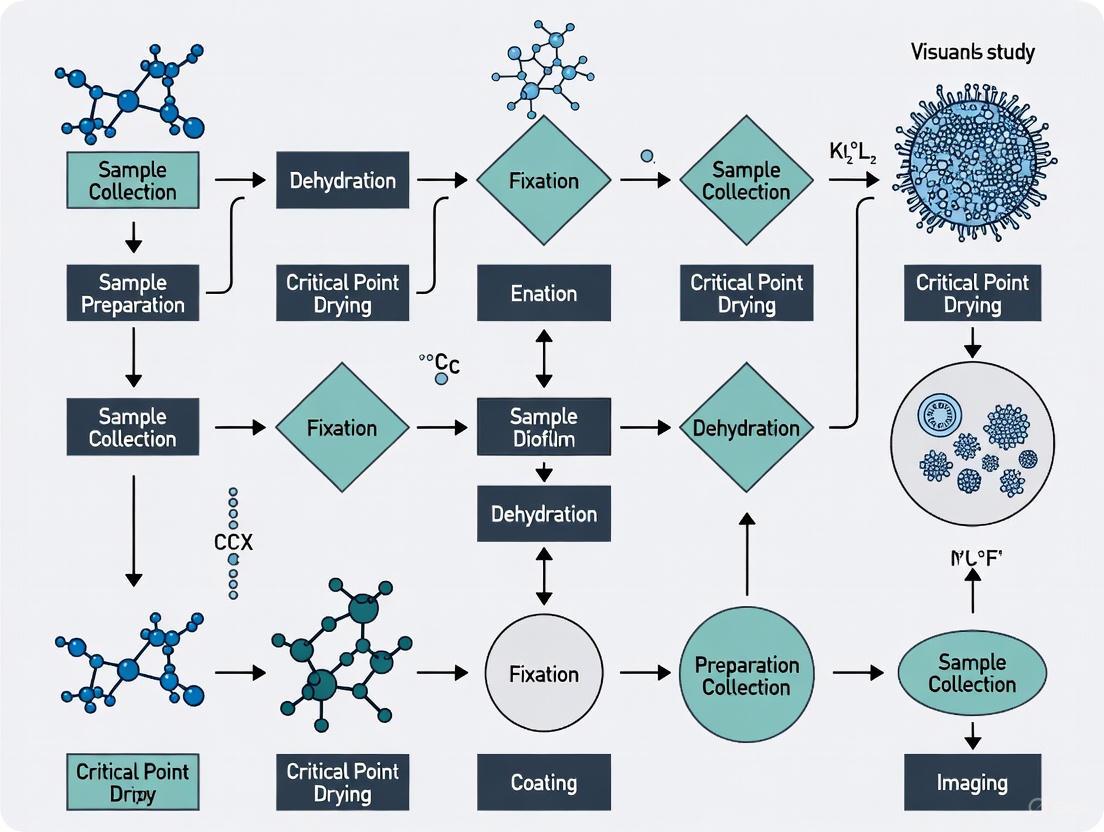
This article provides a comprehensive guide to scanning electron microscopy (SEM) protocols for visualizing microbial biofilms, tailored for researchers and drug development professionals.
Advanced Scanning Electron Microscopy Protocols for High-Resolution Biofilm Visualization
Abstract
This article provides a comprehensive guide to scanning electron microscopy (SEM) protocols for visualizing microbial biofilms, tailored for researchers and drug development professionals. It covers foundational principles of biofilm architecture, detailed methodological procedures for conventional, variable pressure, and field-emission SEM, and optimized protocols for superior structural preservation. The content includes troubleshooting for common artifacts, quantitative image analysis techniques, and a comparative analysis with other major biofilm imaging modalities like AFM and CLSM. By integrating the latest advancements in rapid preparation and machine learning-assisted analysis, this resource aims to equip scientists with the knowledge to generate high-fidelity, quantifiable biofilm data critical for antimicrobial development and biomedical research.
Understanding Biofilm Architecture and SEM Imaging Principles
The Structural Complexity of Microbial Biofilms and Matrix Components
Microbial biofilms represent the predominant mode of growth for bacteria and fungi in nature, forming complex, three-dimensional communities that are embedded in a protective extracellular matrix [1] [2]. These structures are ubiquitous across both natural and clinical environments, growing on biological and non-biological surfaces alike, including medical devices and human tissues [2]. The structural complexity of biofilms arises from their composition of live and dead microbial cells along with an extracellular polymeric substance (EPS) that provides protection, stability, and nutrients for the resident species [1]. This architectural complexity presents significant challenges in healthcare settings, where biofilms are responsible for 60-80% of microbial infections and demonstrate remarkable resistance to conventional antibiotic treatments and host immune responses [1] [3].
The biofilm lifecycle follows a defined developmental progression, beginning with the attachment of planktonic cells to surfaces, followed by proliferation, maturation with EPS excretion, and eventual dispersal of cells to colonize new sites [2]. A more recent conceptual model suggests three main stages: (1) aggregation and/or attachment, (2) growth and accumulation, and (3) disaggregation and/or detachment, with the capacity to transition between these phases based on environmental conditions [2]. The maturation of biofilms and their distinction from simple cellular aggregates is defined by the excretion of extracellular polymeric substances (EPS), creating a complex matrixome composed of carbohydrates, proteins, extracellular DNA (eDNA), and lipids [2] [3]. This structural framework provides unparalleled protection for resident microorganisms, contributing to persistent infections that are difficult to eradicate in clinical settings.
Biofilm Modeling Techniques
Appropriate experimental models are essential for studying biofilm formation and development under controlled laboratory conditions. These models range from simple static systems to advanced dynamic setups that more closely mimic in vivo conditions.
Table 1: Comparison of Biofilm Growth Models
| Model Type | Examples | Advantages | Disadvantages |
|---|---|---|---|
| Static | Microtiter plate assays [2] | Cheap, easy, quick; allows different substrates for imaging [2] | Not true mature biofilms; limited nutrient availability [2] |
| Dynamic | Flow cells, Bioreactors, Microfluidics [2] | Constant nutrient flow; real-time imaging; ability to expose biofilms to different conditions [2] | Contamination risk; significant variation between replicates; can be expensive [2] |
| In Vivo | Animal models [2] | Realistic and translational [2] | Moral and ethical issues with animal testing [2] |
| Ex Vivo | Explanted tissue [2] | Preservation of tissue structures; ability to detect host-responses [2] | Donor availability; tissue deterioration; difficult to image deep structures [2] |
Static models, particularly microtiter plate assays, represent the most fundamental approach to biofilm cultivation [2]. In this method, biofilms form on the bottom of multi-well plates and can be stained with crystal violet to assay biomass [2]. While these systems are valuable for initial screening due to their simplicity and cost-effectiveness, they typically do not produce true mature biofilms as they lack the shear forces and constant nutrient flow present in many natural environments [2].
Dynamic models provide more physiologically relevant conditions for biofilm development. Flow cell systems maintain constant nutrient flow and are autoclavable, while bioreactors offer additional capabilities for biofilm analysis and exposure to various nutrients or antimicrobials [2]. Microfluidic devices represent the most advanced approach, mimicking in vivo conditions with real-time imaging capabilities and minimal reagent volumes, though they carry a higher risk of contamination and require significant financial investment [2].
Biofilm Analysis Workflow
Scanning Electron Microscopy for Biofilm Visualization
Scanning electron microscopy (SEM) represents an unparalleled tool for visualizing the intricate architecture of microbial biofilms at high magnification and resolution [3]. When investigating the ultrastructural details of biofilm matrix components and their embedded cellular communities, SEM provides image quality that remains unrivaled among available imaging techniques [3]. The capability to examine biofilms across a wide magnification range (20-30,000×) coupled with high resolution (50-100 nm) and significant depth of field makes SEM particularly valuable for comparative analyses, such as evaluating the efficacy of anti-biofilm treatments [3].
SEM Modalities and Applications
Multiple SEM modalities have been developed, each with distinct advantages for biofilm imaging. Conventional SEM and Field Emission SEM (FESEM) provide the highest resolution images, making them ideal for detailed morphological characterization [3]. Variable Pressure SEM (VP-SEM) allows examination of partially hydrated samples, while Environmental SEM (ESEM) and Ambiental SEM (ASEM) enable imaging under conditions that more closely resemble native biofilm environments [3]. The most advanced Cryo-SEM techniques preserve biofilm structures in a near-native state through rapid freezing, and Focused Ion Beam SEM (FIB SEM) provides detailed cross-sectional analysis of internal biofilm architecture [3].
Table 2: Electron Microscopy Techniques for Biofilm Imaging
| Technique | Resolution | Sample Conditions | Primary Applications |
|---|---|---|---|
| Conventional SEM [3] | 50-100 nm [3] | Dehydrated, coated [3] | High-resolution biofilm morphology [3] |
| VP-SEM [3] | Lower than conventional SEM [3] | Partially hydrated [3] | Reduced preparation artifacts [3] |
| ESEM/ASEM [3] | Lower than conventional SEM [3] | Hydrated, near-native [3] | Biofilms in physiological conditions [3] |
| Cryo-SEM [3] | High (comparable to conventional) [3] | Frozen-hydrated [3] | Preserved native structure [3] |
| FIB SEM [3] | Nanometer scale [3] | Dehydrated [3] | Cross-sectional analysis [3] |
SEM Protocol for Biofilm Visualization
Sample Preparation for Conventional SEM [3] [4]:
- Fixation: Fix biofilm samples with 4% formaldehyde in 0.1 M phosphate-buffered saline (PBS) for 15-30 minutes, followed by cross-linking with 2.5% glutaraldehyde in 0.1 M PBS for 2 hours at 4°C [4].
- Staining (Optional): Enhance matrix visualization using specialized staining protocols with osmium tetroxide (OsO4), ruthenium red (RR), or tannic acid (TA) [3].
- Dehydration: Process samples through a graded ethanol series (50%, 70%, 80%, 90%, and 100%), allowing 10 minutes at each concentration [4].
- Drying: Perform critical point drying to minimize structural collapse [4].
- Coating: Sputter-coat with gold or other conductive materials using a turbomolecular pumped coater [4].
- Imaging: Visualize using field-emission scanning electron microscope at appropriate accelerating voltages [4].
Customized SEM Protocols for Enhanced Matrix Visualization [3]:
For improved extracellular matrix preservation and visualization, customized protocols incorporating osmium tetroxide (OsO4), ruthenium red (RR), tannic acid (TA), and ionic liquid (IL) treatments provide superior results compared to standard methods [3]. These approaches minimize the sample loss and structural collapse typically associated with conventional preparation while maintaining exceptional image quality for detailed morphological assessment of drug treatments on clinical biofilms [3].
Complementary Imaging and Analysis Techniques
While SEM provides exceptional ultrastructural detail, a complete understanding of biofilm architecture often requires complementary approaches that offer different advantages for visualization and quantification.
Light Microscopy Methods
Basic light microscopy remains valuable for initial biofilm identification and assessment, particularly with advanced staining techniques that enable differentiation of biofilm components [4]. The novel dual-staining method using Maneval's stain combined with Congo red provides a cost-effective approach for distinguishing bacterial cells (appearing magenta-red) from the surrounding polysaccharide matrix (displaying blue coloration) under light microscopy [4]. This method offers significant advantages for laboratories without access to advanced imaging systems, serving as a accessible screening tool before proceeding to more sophisticated electron microscopy analyses [4].
Dual-Staining Protocol for Light Microscopy [4]:
- Biofilm Growth: Cultivate biofilms on sterile glass slides submerged in appropriate growth media for 24-72 hours at optimal growth temperature.
- Rinsing: Gently rinse by dipping in distilled water for 5 seconds to remove non-adherent cells.
- Fixation: Fix with 4% formaldehyde (in distilled water) for 15-30 minutes at room temperature.
- Staining: Apply 1% Congo red stain and air-dry completely, followed by treatment with Maneval's stain for 10 minutes.
- Visualization: Examine under oil immersion (100x) light microscopy with numerical aperture of 1.30.
Advanced Imaging Technologies
Confocal Laser Scanning Microscopy (CLSM) enables quantitative evaluation of three-dimensional biofilm parameters including biovolume, thickness, and roughness, while allowing real-time visualization of developing structures [3]. When combined with pathogen-specific fluorescent probes, CLSM can identify individual species within multispecies communities and spatially localize live versus dead bacterial populations after antimicrobial treatments [3]. Atomic Force Microscopy (AFM) provides complementary information by quantifying adhesion forces between cells and surfaces, measuring viscoelastic properties that influence antimicrobial penetration, and reconstructing surface topography at nanometer scale resolution under physiological conditions [3].
Biofilm Structural Components
Quantitative Image Analysis
The development of specialized software tools has revolutionized quantitative analysis of biofilm images. BiofilmQ represents a comprehensive image cytometry platform that enables automated, high-throughput quantification of numerous biofilm properties in three-dimensional space and time [5]. This software tool can analyze a wide variety of microbial communities regardless of size, growth geometry, morphology, or species composition, extracting both structural parameters and fluorescence information from complex biofilm images [5]. For images without single-cell resolution, BiofilmQ dissects the biofilm biovolume into a cubical grid, calculating 49 different structural, textural, and fluorescence properties for each cube while maintaining spatial context [5]. The software also computes hundreds of global parameters characterizing overall biofilm size and morphology, including volume, mean thickness, surface area, roughness coefficient, and various combination metrics [5].
Research Reagent Solutions
Table 3: Essential Research Reagents for Biofilm Analysis
| Reagent/Category | Function | Application Examples |
|---|---|---|
| Maneval's Stain [4] | Differentiates bacterial cells from EPS matrix [4] | Capsule staining; biofilm differentiation in light microscopy [4] |
| Congo Red Stain [4] | Binds to polysaccharide components [4] | Matrix visualization in dual-staining methods [4] |
| Crystal Violet [2] | Binds to cells and matrix components [2] | Microtiter plate assays for biomass quantification [2] |
| Specialized SEM Stains [3] | Enhances matrix contrast and preservation [3] | Osmium tetroxide, ruthenium red, tannic acid for SEM [3] |
| Fixatives [4] | Preserves biofilm structure [4] | Formaldehyde, glutaraldehyde for SEM and light microscopy [4] |
| Fluorescent Probes [3] | Labels specific components or viability states [3] | CLSM analysis of live/dead cells, specific species [3] |
The structural complexity of microbial biofilms, characterized by their intricate three-dimensional architecture and diverse extracellular matrix components, demands sophisticated imaging approaches for comprehensive analysis. Scanning electron microscopy, particularly when employing customized preparation protocols, provides unparalleled resolution for visualizing the ultrastructural details of biofilm organization and matrix composition. When integrated with complementary techniques including light microscopy, CLSM, AFM, and advanced quantitative image analysis platforms like BiofilmQ, researchers can obtain comprehensive insights into biofilm structure-function relationships that inform therapeutic strategies against persistent biofilm-mediated infections. The continued refinement of these imaging methodologies, coupled with the development of more accessible staining techniques, promises to enhance our understanding of biofilm complexity and accelerate the development of effective anti-biofilm interventions.
Fundamental Principles of Scanning Electron Microscopy for Biological Samples
Scanning Electron Microscopy (SEM) is an indispensable tool in biological research, providing high-resolution visualization of surface topography and architecture at the nanoscale. For biofilm research, SEM enables detailed examination of the complex three-dimensional structures formed by microbial communities and their extracellular polymeric substance (EPS) matrix. The fundamental principle of SEM involves scanning a focused beam of high-energy electrons across a specimen surface, generating various signals that reveal information about topography, morphology, and composition. The interaction of the electron beam with atoms in the sample produces secondary electrons (SE), which are most valuable for topographic contrast, and backscattered electrons (BSE), which are sensitive to atomic number differences and useful for compositional contrast. For biological applications, specialized preparation techniques are required to render non-conductive samples compatible with the high-vacuum environment of the microscope, while preserving delicate structural features against electron beam damage and dehydration.
Recent advances in Field Emission SEM (FESEM) provide superior resolution at low accelerating voltages, making it particularly suitable for beam-sensitive biological specimens. The development of standardized protocols for sample preparation has been crucial for obtaining reliable, high-quality images of biofilms on various surfaces, from medical devices to natural environments [6]. This application note details the fundamental principles, preparation methods, and quantitative applications of SEM for biological samples within the context of biofilm visualization research.
Essential Sample Preparation Workflows
Proper sample preparation is critical for achieving accurate SEM visualization of biological structures. Inadequate preparation can introduce artifacts, distort morphology, or obscure important features. The following workflows represent optimized methodologies for biofilm research.
Standard Preparation Protocol for Biofilm Visualization
A rapid and efficient sample preparation method has been developed specifically for visualizing surface-associated microbial biofilms using FESEM. This protocol optimizes the critical parameters of fixation and dehydration to preserve cellular integrity while reducing processing time [6].
Key Steps:
- Primary Fixation: Immerse samples in 2.5–5% glutaraldehyde in 0.1M phosphate buffer (pH 7.4) for 2 hours at 4°C. For optimal preservation of delicate biofilm structures, a higher glutaraldehyde concentration (up to 50%) can be used with a shorter fixation period (30 minutes) [6] [7].
- Washing: Rinse samples three times in phosphate-buffered saline (PBS) for 10 minutes each to remove excess fixative.
- Dehydration: Process samples through a graded ethanol series (30%, 50%, 70%, 80%, 90%, 100%) for 10 minutes each concentration. For accelerated processing, incubation periods can be reduced to 2 minutes per grade without significant compromise to structural integrity [6].
- Drying: Critical point drying or hexamethyldisilazane (HMDS) treatment is employed to eliminate surface tension effects during the liquid-to-gas transition. For HMDS processing, treat samples with ethanol:HMDS mixtures at ratios of 3:1, 1:1, and 1:3, followed by pure HMDS, allowing samples to dry overnight under a fume hood [8].
- Mounting and Coating: Mount samples on aluminum stubs using conductive adhesive tape or carbon paste. Apply a thin conductive coating (5–20 nm) of gold, gold/palladium, or carbon using sputter coating to prevent charging under the electron beam.
Table 1: Optimized Fixation Parameters for Various Biological Samples
| Sample Type | Glutaraldehyde Concentration | Fixation Time | Temperature | Additional Considerations |
|---|---|---|---|---|
| Bacterial Biofilms (E. coli) | 5-50% | 30 min | Room Temperature | Higher concentrations (50%) provide sharpest micrographs [6] |
| Chronic Wound Tissue | 2.5% | 2 hours | 4°C | Combined with osmium tetroxide for enhanced membrane contrast [8] |
| Tubular Structure Biofilms (P. aeruginosa) | 2.5% | 2 hours | 4°C | Preceded by shockwave treatment for disruption studies [7] |
| Neuronal Tissue | 2.5% | 2-4 hours | 4°C | Followed by specialized en bloc staining for FESEM [9] |
Advanced Staining Techniques for Enhanced Contrast
While conventional SEM relies primarily on topographic contrast, biological samples often benefit from heavy metal staining to enhance electron density and provide membrane specificity. En bloc staining methods, applied before dehydration and embedding, offer superior results compared to post-sectioning staining alone.
The OTO (osmium tetroxide-thiocarbohydrazide-osmium) method utilizes thiocarbohydrazide as a bridging agent to enhance osmium staining of lipid components, particularly cell membranes. This technique not only improves contrast but also increases specimen conductivity, reducing charging effects in the SEM [9]. For comprehensive membrane contrasting, a combination of en bloc stains including uranyl acetate, lead aspartate, and osmium imidazole can be employed to highlight different cellular components.
Double Contrasting Protocol:
- Post-fixation: Treat samples with 1% osmium tetroxide in 0.1M phosphate buffer for 1-2 hours at 4°C. Reduction with potassium ferrocyanide enhances membrane staining.
- En Bloc Uranyl Acetate: Stain with 0.5-2% aqueous uranyl acetate for 1-2 hours or overnight at 4°C. This enhances contrast for membranes, nucleic acids, and proteins.
- Lead Citrate: For sections, stain with Reynolds lead citrate for 1-5 minutes in a CO₂-free environment to prevent precipitation. This step highlights ribosomes, glycogen, and membranes [10].
Automated staining systems, such as the Leica EM AC20, utilize pre-packaged stains in a controlled environment to minimize precipitation artifacts and reduce user exposure to hazardous reagents [10].
Instrumentation and Operational Parameters
Modern SEM systems offer sophisticated capabilities tailored to biological applications. The Hitachi SU3800/SU3900 series, for example, provides large specimen chambers accommodating samples up to 300mm in diameter, automated functions for operators of all skill levels, and integrated solutions for various applications [11].
Table 2: SEM Instrument Specifications and Optimal Settings for Biological Imaging
| Parameter | SU3800/SU3900 Specifications | Recommended Settings for Biofilms | Impact on Image Quality |
|---|---|---|---|
| Resolution | 3.0 nm (30 kV), 15.0 nm (1 kV) | 1-5 kV for surface detail | Lower kV reduces penetration, improves surface detail |
| Accelerating Voltage | 0.3 kV to 30 kV | 1-10 kV | Higher kV increases penetration but may cause damage |
| Working Distance | 5-65 mm (SU3800), 5-85 mm (SU3900) | 5-10 mm | Shorter WD increases resolution, decreases depth of field |
| Detectors | SE, BSE, UVD (optional) | SE for topography, BSE for composition | UVD detects light from SE-gas collisions for enhanced contrast [11] |
| Vacuum Mode | High vacuum, Low vacuum (6-650 Pa) | Low vacuum for uncoated samples | Reduces charging without conductive coating |
Operational techniques significantly influence results. The "Stage Free Mode" in modern instruments allows flexible sample manipulation, while detector-oriented rotation facilitates optimal orientation between samples and detectors. Automated functions including auto focus, auto brightness/contrast control (ABCC), and auto stigma significantly improve throughput and consistency [11].
Quantitative Analysis and Machine Learning Applications
SEM imaging has evolved from purely qualitative assessment to sophisticated quantitative analysis through computational approaches. The SEMTWIST (Scanning Electron Microscopy-based Trainable Weka Intelligent Segmentation Technology) platform represents a cutting-edge application of machine learning for standardized quantification of biofilm infection (BFI) abundance in complex wound tissues [8].
This open-source software tool enables structural detection and rigorous quantification of wound biofilm aggregates within human wound tissue matrix. The methodology involves:
- Image Preprocessing: SEM images are saved in .tiff format at standardized magnification (e.g., 5,000×) to ensure consistent field of view.
- Classifier Training: Using the Trainable Weka Segmentation plugin in Fiji/ImageJ, researchers manually annotate representative regions to train classifiers distinguishing biofilm aggregates from host tissue elements.
- Batch Processing: The trained classifier is applied to entire image sets for consistent, objective quantification.
- Validation: Results are compared against expert assessments and complementary methods like peptide nucleic acid fluorescence in situ hybridization (PNA-FISH) [8].
The Cellular Integrity Index (CII) is a recently developed metric that quantitatively evaluates the morphological integrity of biofilm-associated cells after preparation, with optimized protocols achieving CII values of 95-97% with minimal deformation [6].
Research Reagent Solutions
Table 3: Essential Reagents for SEM Sample Preparation of Biological Specimens
| Reagent | Function | Application Notes | Safety Considerations |
|---|---|---|---|
| Glutaraldehyde | Primary fixative that cross-links proteins | Concentrations of 2.5-50%; higher concentrations (50%) with shorter time (30 min) effective for biofilms [6] | Toxic; use with ventilation and PPE |
| Osmium Tetroxide | Secondary fixative that stabilizes lipids and imparts conductivity | 1-2% in buffer; OTO method enhances membrane contrast [9] | Highly toxic; use in fume hood with appropriate PPE |
| Uranyl Acetate | En bloc stain for nucleic acids, proteins, and membranes | 0.5-2% aqueous or alcoholic; acidic pH (4.2-4.5) optimal for binding [10] | Radioactive and toxic; avoid inhalation and skin contact |
| Lead Citrate | Stain for ribosomes, glycogen, and membranes | Alkaline solution (pH ~12); must be used in CO₂-free environment to prevent precipitation [10] | Extremely toxic; use strict CO₂-free conditions |
| Hexamethyldisilazane (HMDS) | Chemical drying agent alternative to critical point drying | Ethanol:HMDS graded series followed by pure HMDS; air dry overnight [8] | Flammable; use in well-ventilated area |
| Thiocarbohydrazide (TCH) | Bridging agent in OTO method for enhanced osmium staining | Links osmium molecules for improved conductivity and contrast [9] | Handle with standard laboratory precautions |
Experimental Workflows
The following diagram illustrates the complete experimental workflow for SEM analysis of biofilms, from sample collection through imaging and quantitative analysis:
Workflow for SEM Biofilm Analysis
For studies involving intervention assessment, such as evaluating biofilm disruption techniques, the following specialized workflow applies:
Intervention Assessment Workflow
Mastering the fundamental principles of SEM for biological samples requires careful attention to each step of specimen preparation, appropriate instrument parameter selection, and implementation of rigorous quantitative analysis methods. The protocols outlined in this application note provide researchers with standardized methodologies for reliable biofilm visualization across diverse substrates and experimental conditions. As SEM technology continues to evolve with enhanced automation, improved detector sensitivity, and integrated analytical capabilities, its application in biofilm research will further expand, particularly through correlation with complementary techniques and implementation of machine learning approaches for high-throughput quantitative analysis.
Why SEM is Unrivalled for High-Resolution Biofilm Ultrastructural Imaging
In the study of bacterial biofilms, which are responsible for up to 80% of persistent human infections, scanning electron microscopy (SEM) stands as an unparalleled technique for high-resolution ultrastructural imaging [12] [3]. Biofilms are sophisticated microbial consortia encased in a self-produced extracellular polymeric matrix composed of polysaccharides, proteins, lipids, and extracellular DNA, providing structural integrity and environmental protection that complicates treatment [12]. The visualization of this complex architecture at the nanometer scale is crucial for understanding biofilm resilience and developing effective anti-biofilm strategies. SEM provides researchers with the unique capability to examine biofilm morphology, cellular arrangement, and matrix components with exceptional resolution and depth of field, offering insights unattainable through other imaging modalities [3] [13]. This application note details the superior capabilities of SEM in biofilm research and provides standardized protocols for sample preparation, imaging, and quantitative analysis to ensure reproducible, high-quality ultrastructural data.
The Unrivalled Advantages of SEM in Biofilm Research
Superior Resolution and Magnification
SEM provides distinct advantages over other microscopy techniques for biofilm characterization, offering unparalleled image quality, magnification, and resolution that faithfully preserves actual sample structure [3] [13]. Unlike light microscopy, which has limited resolution and magnification power, SEM achieves resolutions from 50 to 100 nm with magnification capabilities ranging from 20x to 30,000x, enabling detailed observation of individual bacterial cells and their interactions within the extracellular matrix [3] [13]. This high-resolution capability is particularly valuable for evaluating the anti-biofilm effects of pharmacological treatments, where subtle changes in ultrastructure can indicate therapeutic efficacy [3].
Table 1: Comparison of Microscopy Techniques for Biofilm Imaging
| Technique | Resolution | Magnification | Key Advantages | Major Limitations |
|---|---|---|---|---|
| SEM | 50-100 nm [3] | 20-30,000× [3] | High resolution, exceptional depth of field, detailed surface morphology | Requires sample dehydration and coating, potential artifacts |
| Light Microscopy | ~200 nm [3] | Limited | Simple protocols, cost-effective, large investigation area | Cannot resolve finest details of biofilm architecture |
| Confocal Laser Scanning Microscopy (CLSM) | Single-cell level [3] | Variable | 3D visualization, live/dead differentiation, real-time monitoring | Fluorophore limitations, signal interference, no ultrastructural details |
| Atomic Force Microscopy (AFM) | Nanometer scale [3] | Max 150×150 µm scan area [3] | Works under physiological conditions, quantifies adhesion forces | Small scan area, potential surface damage during imaging |
Capability for Quantitative Analysis
The combination of SEM with advanced image analysis software has transformed morphological evaluation from a qualitative technique to a robust quantitative method [3] [14]. Machine learning algorithms can segment biofilm components from complex backgrounds, even on tortuous biomaterial surfaces, enabling precise quantification of biofilm coverage and removal efficiency [14]. This quantitative approach has demonstrated high sensitivity and specificity in segmentation—for polished surfaces, mean sensitivity of 0.74 ± 0.13 and specificity of 0.88 ± 0.09, while for more complex sandblasted, acid-etched (SLA) surfaces, values of 0.80 ± 0.18 and 0.62 ± 0.20 respectively [14]. The implementation of 3D image analysis software further allows researchers to extract quantitative morphological parameters from SEM images, enabling direct comparison of samples subjected to different anti-biofilm treatments [3].
Essential SEM Protocols for Biofilm Imaging
Sample Preparation Workflow
Proper sample preparation is critical for faithful preservation of biofilm ultrastructure. The following protocol, adapted from the University of Rochester Electron Microscope Laboratory, ensures optimal structural preservation [15]:
Critical Steps for Optimal Preservation:
- Chemical Fixation: Use 0.1M Millonig's buffered 2.5% glutaraldehyde/4.0% paraformaldehyde overnight at 4°C followed by buffer rinsing and post-fixation with 1.0% osmium tetroxide for 45 minutes [15]. Customized protocols incorporating ruthenium red, tannic acid, or ionic liquids further enhance matrix preservation [3] [13].
- Dehydration and Drying: Employ graded ethanol series (50% to 100%) at 30-minute intervals followed by critical point drying or hexamethyldisilazane (HMDS) treatment to minimize structural collapse [15]. For HMDS, transition through ethanol:HMDS mixtures (1:1, 1:2, 1:3) ending with four changes of 100% HMDS (one hour each), allowing the final change to evaporate overnight in a fume hood [15].
- Conductive Coating: Sputter coat with gold for 90 seconds to provide adequate conductivity without obscuring fine ultrastructural details [15].
Quantitative Image Analysis Protocol
The integration of machine learning with SEM image analysis enables robust quantification of biofilm parameters [14]:
Implementation Guidelines:
- Software Tools: Utilize open-source Fiji/ImageJ with the Trainable Weka Segmentation plugin, which employs a wide range of feature detection techniques including texture filters and edge detectors [14].
- Validation: Assess algorithm performance using receiver operating characteristic (ROC) analysis, with typical sensitivity values of 0.74-0.80 and specificity values of 0.62-0.88 depending on surface complexity [14].
- Reproducibility: Ensure consistent region of interest (ROI) placement during training, with demonstrated reproducibility yielding sensitivity of 0.93 ± 0.01 and specificity of 0.89 ± 0.04 [14].
Research Reagent Solutions for SEM Biofilm Studies
Table 2: Essential Reagents for SEM Biofilm Preparation
| Reagent | Function | Application Notes | Protocol Reference |
|---|---|---|---|
| Glutaraldehyde/Paraformaldehyde | Primary fixative for structural preservation | 2.5%/4.0% in 0.1M Millonig's buffer, overnight at 4°C | [15] |
| Osmium Tetroxide | Post-fixation for lipid preservation and conductivity enhancement | 1.0% aqueous solution, 45 minutes treatment | [15] |
| Ruthenium Red | Extracellular polysaccharide staining | Added to primary fixative for enhanced matrix visualization | [3] [13] |
| Tannic Acid | Macromolecule fixation and contrast enhancement | Used in customized protocols for improved ultrastructural preservation | [3] [13] |
| Hexamethyldisilazane (HMDS) | Alternative to critical point drying | Gradual ethanol replacement followed by evaporation | [15] |
| Ionic Liquid (IL) | Conductive coating alternative | Enables imaging without metal coating in variable pressure SEM | [3] [13] |
Advanced Applications and Emerging Methodologies
Correlative Imaging Approaches
Recent advances in correlative microscopy combine SEM with other imaging modalities to provide comprehensive biofilm characterization. Integrated FM-SEM approaches enable researchers to correlate physiological states indicated by fluorescent viability stains with detailed morphological features revealed by SEM [16]. Super-resolution structural illumination microscopy (SIM) further enhances this capability by mapping sub-cellular distributions of SYTO 9-propidium iodide dyes within single cells, revealing greater complexity than previously assumed with four different cell-states identified [16]. This multi-modal approach addresses limitations of individual techniques and provides more comprehensive biofilm characterization.
Deep Learning and Synthetic Data Generation
The development of deep generative modeling techniques, including VAEs, GANs, and diffusion models, addresses the challenge of obtaining large annotated biofilm image datasets [17]. These approaches enable the creation of synthetic SEM biofilm images that can significantly improve training of computer vision models for automated analysis [17]. The pipeline involves pre-annotation of real SEM images, single-cell generation using deep learning models, merging with cell-free support, and style transfer using CycleGAN to match real image distributions [17]. This methodology allows researchers to generate terabyte-scale datasets on personal computers, facilitating robust segmentation and detection model training even with limited original data.
Technical Considerations and Limitations
While SEM provides exceptional imaging capabilities, researchers must acknowledge its limitations. Sample preparation involving dehydration and coating can potentially cause extracellular matrix collapse and overall biofilm shrinkage [3] [13]. Critical point drying procedures may extract sample material due to ethanol flow, though HMDS treatment offers an alternative approach [15]. Comparative studies have shown that SEM-based thickness measurements can be 60-82% smaller than those obtained by endoscopic techniques due to dehydration and alteration of biofilm material during processing [18]. Researchers should select preparation protocols based on their specific research questions and complement SEM observations with other techniques when assessing hydrated biofilm properties.
SEM remains an indispensable tool for high-resolution ultrastructural imaging of bacterial biofilms, providing unparalleled insights into their complex architecture and response to therapeutic interventions. The integration of standardized preparation protocols, advanced machine learning quantification, and emerging correlative approaches positions SEM as a cornerstone technique in biofilm research. By implementing the detailed methodologies and considerations outlined in this application note, researchers can leverage the full potential of SEM to advance understanding of biofilm biology and develop more effective strategies for combating biofilm-associated infections.
The visualization of biofilms using scanning electron microscopy (SEM) provides powerful insights into their complex architecture, yet a significant bottleneck exists in sample preparation. Conventional protocols often compromise the very native structures researchers seek to observe. The dense, three-dimensional nature of biofilms, encapsulated within a protective extracellular polymeric substance (EPS), presents unique challenges for fixation, dehydration, and imaging that differ fundamentally from processing planktonic cells [19] [1]. The primary hurdles include maintaining cellular integrity against the substantial osmotic stresses during dehydration, preserving the delicate EPS matrix that defines biofilm architecture, and preventing the collapse of intricate three-dimensional structures. Overcoming these challenges is paramount for generating high-resolution, artifact-free micrographs that accurately represent the in vivo biofilm state, which is crucial for meaningful interpretation in both environmental and clinical research contexts [19] [12]. This Application Note details these key challenges and presents an optimized protocol designed to address them, enabling more reliable and reproducible biofilm visualization for research and drug development.
Key Challenges in Preserving Native Biofilm Structure
The path to achieving representative SEM images of biofilms is fraught with technical challenges that can distort native morphology. Three interrelated problems consistently plague conventional preparation methods.
- Structural Collapse from Dehydration: The extensive dehydration required for SEM creates massive surface tension forces that collapse delicate biofilm structures. Conventional chemical dehydration using a graded ethanol or acetone series is particularly damaging, often resulting in shriveled, flattened biofilms that bear little resemblance to their native form [19] [12]. This collapse obscures critical features such as water channels, interstitial voids, and the true spatial organization of cells.
- Inadequate Fixation Leading to Poor Cellular Integrity: Glutaraldehyde, the standard fixative for biological EM, must penetrate the dense EPS matrix to stabilize cellular components. At conventionally low concentrations (e.g., 2.5%), penetration is insufficient, leading to autolysis and morphological degradation of cells within the biofilm. The result is a loss of fine cellular detail and an inability to resolve individual bacterial cells, which are often obscured by poorly fixed exopolysaccharides [19].
- Artifacts from Sample Processing and Coating: Additional artifacts are introduced at multiple stages. Incomplete removal of water leads to charging and poor imaging under the electron beam. Furthermore, the application of conductive metal coatings, while necessary for non-conductive biological samples, can sometimes mask ultra-fine structures if not applied with precision and uniformity [14].
Table 1: Major Challenges in Biofilm Sample Preparation for SEM
| Challenge | Impact on Sample | Resulting Artifact in SEM |
|---|---|---|
| Structural Collapse | Shrinking and flattening of the 3D biofilm architecture due to dehydration-induced surface tension. | Loss of water channels, voids, and spatial organization; flattened, two-dimensional appearance [19]. |
| Poor Cellular Integrity | Degradation of individual cell morphology due to inadequate fixative penetration and osmotic shock. | Loss of sharp cellular details; cells appear lysed or deformed; EPS masks cellular features [19]. |
| Processing Artifacts | Introduction of non-native elements or physical damage from handling, drying, or coating. | Cracking, charging under the electron beam, or masking of fine details by a thick conductive layer [14]. |
Optimized Protocol for Enhanced Structural Preservation
To overcome the limitations of conventional methods, an optimized protocol was developed through systematic testing of fixative concentration and dehydration times. The core innovation lies in using a high-concentration glutaraldehyde fixative combined with a rapid dehydration series to maximize structural preservation [19].
Reagent Setup
- Fixative Solution: Prepare a primary fixative of 50% glutaraldehyde in an appropriate buffer (e.g., 0.1 M sodium cacodylate or phosphate buffer). Caution: Glutaraldehyde is toxic; use appropriate personal protective equipment and work in a fume hood.
- Dehydration Series: Prepare a graded ethanol series in ultrapure water at the following concentrations: 10%, 20%, 30%, 40%, 50%, 60%, 70%, 80%, 90%, and 100% (anhydrous). Prepare three changes of 100% ethanol for optimal dehydration.
- Buffer Rinse: Prepare a 0.1 M solution of your chosen buffer (e.g., sodium cacodylate) at a pH of 7.2–7.4.
Step-by-Step Procedure
Primary Fixation: Immediately after a gentle rinse with buffer to remove non-adherent planktonic cells, immerse the biofilm-covered substrate in the 50% glutaraldehyde fixative solution. Incubate for 30 minutes at room temperature.
- Rationale: The high glutaraldehyde concentration ensures rapid and deep penetration through the EPS, providing superior cross-linking and stabilization of both cellular and extracellular components [19].
Buffer Rinse: Carefully remove the fixative and gently rinse the sample three times with the buffer solution (e.g., 0.1 M sodium cacodylate), allowing 2–5 minutes per rinse to remove excess fixative.
Rapid Dehydration: Dehydrate the sample by sequentially immersing it in the graded ethanol series. The incubation time for each concentration (10% to 90%) is 2 minutes. This is a significant reduction from the conventional 10–20 minutes per step.
- Rationale: The drastically shortened dehydration times minimize the exposure of the biofilm to the high surface tension of the intermediate alcohol grades, thereby reducing the primary cause of structural collapse [19].
Final Dehydration: Perform three sequential incubations in 100% anhydrous ethanol, allowing 5 minutes per change, to ensure complete removal of all residual water.
Critical Point Drying (CPD): Transfer the sample directly from the final 100% ethanol change to a Critical Point Dryer. Critical point drying is strongly recommended over air-drying, as it eliminates the liquid-gas interface and associated collapsing forces by converting the liquid within the biofilm directly into a gas.
- Note: If CPD is unavailable, hexamethyldisilazane (HMDS) can be used as an alternative, though it is less effective at preserving the most delicate structures.
Mounting and Sputter-Coating: Mount the dried sample on an SEM stub using conductive adhesive tape or paint. Apply a thin, uniform coating of a conductive material (e.g., gold, gold/palladium, or platinum) using a sputter coater to prevent charging under the electron beam.
Table 2: Comparison of Conventional vs. Optimized Protocol Parameters
| Processing Step | Conventional Protocol | Optimized Protocol | Advantage of Optimization |
|---|---|---|---|
| Primary Fixation | 2.5% glutaraldehyde for ≥4 hours [19] | 50% glutaraldehyde for 30 min [19] | Faster, deeper penetration; superior preservation of cellular integrity. |
| Dehydration Incubation | 10–20 minutes per grade [19] | 2 minutes per grade [19] | Drastically reduces structural collapse from surface tension. |
| Overall Preparation Time | Several hours to days [19] | Approx. 90 minutes (excl. CPD) [19] | Rapid, high-throughput potential. |
| Quantitative Outcome (CII) | ~2.3% for E. coli [19] | 95–97% for E. coli [19] | Quantifiably superior preservation of cell morphology. |
The following workflow diagram summarizes the key steps and rationale of this optimized protocol.
The Scientist's Toolkit: Essential Research Reagents & Materials
Successful execution of the optimized biofilm preparation protocol requires specific, high-quality reagents and materials. The following table details the essential components of the toolkit.
Table 3: Essential Research Reagent Solutions for Biofilm SEM Preparation
| Reagent/Material | Function/Application | Key Considerations |
|---|---|---|
| Glutaraldehyde (50%) | Primary fixative that cross-links proteins and stabilizes the biofilm structure. | High concentration (50%) is critical for rapid penetration of the dense EPS matrix [19]. |
| Ethanol (Anhydrous) | Dehydrating agent to remove water from the sample prior to SEM. | A precise graded series (10%-100%) and rapid incubation times are essential to minimize collapse [19]. |
| Sodium Cacodylate Buffer (0.1M) | A buffering system to maintain physiological pH during fixation and rinsing. | Provides a stable osmotic environment during initial processing steps. |
| Critical Point Dryer (CPD) | Instrument for replacing ethanol with liquid CO₂, then converting it to gas, avoiding surface tension. | Strongly recommended over air-drying for superior preservation of 3D architecture [14]. |
| Sputter Coater | Instrument for applying a thin, uniform conductive metal layer (e.g., Au, Pt) to the dried sample. | Prevents charging under the electron beam; a thin, consistent coating is vital for high-resolution imaging [14]. |
| Conductive Adhesive | Used to mount the dried sample onto an SEM stub. | Ensures electrical conductivity between the sample and the stub, reducing charging artifacts. |
Advanced Analysis: Quantifying Preservation Efficacy
The success of this optimized protocol is not merely qualitative but can be quantitatively validated. The introduction of a Cellular Integrity Index (CII) provides a robust metric for evaluating the morphological preservation of biofilm-associated cells [19]. The CII systematically scores micrographs based on the proportion of cells displaying intact, non-deformed morphology versus those that are lysed or collapsed. Application of this metric demonstrated that the optimized protocol achieved CII values of 95–97% for E. coli biofilms, a dramatic improvement over the ~2.3% CII yielded by conventional preparation methods [19]. This quantitative approach moves biofilm imaging beyond subjective assessment and provides a standardized measure for comparing preparation efficacy across different studies and laboratories. Furthermore, for complex surfaces, advanced image analysis techniques, such as machine learning-based segmentation of SEM images, can be employed to objectively quantify biofilm coverage and removal efficiency, providing another layer of quantitative data for rigorous research and drug development [14].
Step-by-Step SEM Protocols for Optimal Biofilm Visualization
Within the broader scope of developing robust scanning electron microscopy protocols for biofilm visualization, this document details a comprehensive procedure for conventional high-vacuum SEM. Biofilms, which are complex communities of microbes encased in an extracellular polymeric substance (EPS) matrix, are implicated in up to 80% of persistent human infections [20] [13]. Their three-dimensional architecture presents a unique challenge for microscopic visualization, as their non-conductive, water-rich nature is inherently incompatible with high-vacuum conditions. Accurate structural preservation is paramount, particularly in studies evaluating the effects of antimicrobial agents, where the goal is to faithfully assess ultrastructural changes in both the bacterial cells and the encompassing EPS [13]. This protocol outlines a step-by-step method, from chemical fixation to sputter-coating, designed to preserve the intricate topology of biofilms and facilitate high-resolution imaging.
Experimental Protocols
Fixation Protocols for Structural Preservation
Fixation is the most critical step for preserving the native architecture of biofilms and any associated host cells, such as neutrophils. Inadequate fixation leads to the collapse of the delicate EPS matrix and obscures critical interaction details [20]. The following protocols are recommended:
Standard Aldehyde Fixation This is a common baseline method for preserving cellular structure.
- Primary Fixative: 2.5% Glutaraldehyde / 4.0% Paraformaldehyde in 0.1M Millonig's buffer [15].
- Procedure: Immerse samples in the primary fixative and incubate overnight at 4°C [15]. This dual-aldehyde approach effectively cross-links proteins and halts cellular processes.
Enhanced Fixation with Cationic Dyes For superior preservation of the often-lost polysaccharide components of the EPS matrix, an enhanced protocol is recommended. The cationic dye alcian blue interacts electrostatically with anionic components like extracellular DNA (eDNA), stabilizing the matrix structure [20].
- Primary Fixative: 2% Glutaraldehyde, 2% Paraformaldehyde, and 0.15% Alcian Blue in the initial fixative solution [20].
- Post-fixation: Treat samples with 1% Osmium Tetroxide followed by 1% Tannic Acid [20]. Osmium tetroxide acts as a secondary fixative and an electron contrast stain, particularly for lipids in cell membranes, while tannic acid further enhances contrast and stabilization.
Table 1: Comparison of SEM Fixation Protocols for Biofilms
| Protocol Name | Primary Fixative | Post-fixative | Key Advantages | Best For |
|---|---|---|---|---|
| Standard Aldehyde [15] | 2.5% Glutaraldehyde/4.0% Paraformaldehyde | 1% Osmium Tetroxide | Good cellular preservation, widely used standard. | General biofilm cellular morphology. |
| Enhanced (Alcian Blue) [20] | 2% Glutaraldehyde, 2% Paraformaldehyde, 0.15% Alcian Blue | 1% Osmium Tetroxide, 1% Tannic Acid | Superior EPS and matrix preservation; retains neutrophil structural signatures. | Studies focusing on EPS structure and immune cell-biofilm interactions. |
Dehydration, Drying, and Mounting
Following thorough rinsing in buffer to remove residual fixatives, samples must be dehydrated to remove all water.
- Dehydration: Pass samples through a graded ethanol series, typically at concentrations of 50%, 70%, 80%, 90%, 95%, and 100%, with immersion times of approximately 30 minutes per step [15].
- Drying: To avoid surface tension artifacts from air-drying, use Critical Point Drying (CPD) [15] [13]. Alternatively, for a simpler method, samples can be transitioned into Hexamethyldisilazane (HMDS) and allowed to evaporate overnight in a fume hood [15].
- Mounting: Once completely dry, mount the samples onto aluminum stubs using a conductive adhesive, such as carbon sticky tape [15].
Sputter Coating for High-Resolution Imaging
Most biofilms are non-conductive, leading to "charging" effects under the electron beam—manifested as bright white regions and image distortions [21]. Sputter coating applies a thin, conductive layer to the sample surface to mitigate this.
- Principle: The process involves bombarding a target material (e.g., gold, platinum) with heavy particles in a vacuum, causing the ejection of target atoms that then coat the sample [21].
- Materials: Common coating materials include:
- Gold (Au): High conductivity and relatively small grain size; a historical standard [21].
- Platinum (Pt) / Iridium (Ir): Finer grain sizes than gold, enabling ultra-high-resolution imaging [21].
- Carbon (C): Preferred when Energy Dispersive X-ray (EDX) analysis is required, as its X-ray peak does not conflict with other elements [21].
- Procedure: Coat the mounted samples with a thin layer (approximately 10 nm) of conductive material using a sputter coater. A typical protocol for a gold coating is 90 seconds of sputtering [15].
Table 2: Sputter Coating Materials for Biofilm SEM
| Coating Material | Typical Grain Size | Key Advantages | Considerations |
|---|---|---|---|
| Gold (Au) [21] | Small | High conductivity, well-established protocol. | Larger grain size can obscure finest details; not suitable for EDX. |
| Platinum (Pt) [21] | Very Fine | Excellent for high-resolution imaging. | Higher cost. |
| Iridium (Ir) [21] | Ultra-Fine | Superior for maximum resolution requirements. | Highest cost. |
| Carbon (C) [21] | Amorphous | Does not interfere with elemental analysis (EDX). | Lower conductivity than metals. |
The Scientist's Toolkit: Research Reagent Solutions
A summary of the essential materials and their functions used in this protocol is provided below.
Table 3: Essential Materials and Reagents for Biofilm SEM Preparation
| Item | Function / Purpose |
|---|---|
| Glutaraldehyde [20] [15] | Primary fixative that cross-links proteins, preserving cellular structure. |
| Paraformaldehyde [20] [15] | Primary fixative that penetrates tissues quickly and complements glutaraldehyde. |
| Alcian Blue [20] | Cationic dye used in enhanced fixation to bind and preserve anionic EPS components (e.g., eDNA). |
| Osmium Tetroxide [20] [15] | Post-fixative and contrast agent; stabilizes and stains lipids in cell membranes. |
| Tannic Acid [20] | Used in post-fixation to enhance contrast and further stabilize the sample. |
| Ethanol Series [15] | A graded series of ethanol and water solutions (50%-100%) used to dehydrate the sample. |
| Hexamethyldisilazane (HMDS) [15] | A chemical drying agent used as an alternative to critical point drying. |
| Gold/Palladium or Platinum [21] | Conductive metal target used in sputter coating to prevent charging. |
| Carbon Tape [15] | Conductive adhesive for securely mounting the dried sample to an aluminum SEM stub. |
Workflow and Data Analysis
The entire sample preparation process for conventional high-vacuum SEM of biofilms can be visualized in the following workflow, which integrates the key protocols described above.
Figure 1. Biofilm SEM preparation workflow.
For quantitative assessment, such as measuring the efficiency of an anti-biofilm treatment, advanced image analysis can be employed. Machine learning algorithms, available in open-source platforms like Fiji/ImageJ, can be trained to segment and quantify biofilm coverage from SEM images, even on complex, textured surfaces [14]. This transforms SEM from a purely qualitative tool into a powerful quantitative method.
This comprehensive protocol for conventional high-vacuum SEM provides a reliable pathway for the topographical visualization of biofilms. The detailed methodologies for fixation, dehydration, drying, and sputter-coating outlined here are designed to preserve the native, three-dimensional structure of the biofilm matrix. By carefully selecting the fixation protocol—opting for the enhanced alcian blue method when EPS preservation is critical—and applying an appropriate conductive coating, researchers can generate high-resolution, high-magnification images that are essential for understanding biofilm architecture and its interaction with therapeutic agents or the host immune system.
Rapid, Chemical-Free Native SEM for Ultra-Fast Biofilm Imaging
Within the broader scope of developing advanced scanning electron microscopy (SEM) protocols for biofilm visualization research, the demand for rapid, minimal-processing techniques is increasingly critical. Traditional SEM methods, while providing high-resolution images, involve extensive sample preparation—including chemical fixation, dehydration, and conductive coating—that can introduce artifacts, alter native biofilm architecture, and significantly delay analysis [3] [13]. This application note details an optimized protocol for Field Emission-Scanning Electron Microscopy (FE-SEM) that substantially reduces processing time and chemical use, thereby enabling ultra-fast imaging of biofilms in a state that more closely reflects their native structure [22].
Methodological Comparison: Traditional vs. Rapid SEM
The table below summarizes the key procedural and temporal differences between a standard SEM protocol and the developed rapid method.
Table 1: Quantitative Comparison of Standard and Rapid SEM Protocols for Biofilm Preparation
| Protocol Step | Standard SEM Protocol [15] [23] | Rapid, Chemical-Reduced FE-SEM Protocol [22] |
|---|---|---|
| Primary Fixation | 2.5% Glutaraldehyde/4.0% Paraformaldehyde, overnight at 4°C [15] | 50% Glutaraldehyde for 30 minutes at Room Temperature |
| Secondary Fixation | 1% Osmium Tetroxide for 45 minutes [15] [23] | Often omitted |
| Dehydration Series | Ethanol series (50%-100%), 30-60 minutes per step [15] [23] | Ethanol series (10%-90%), 2 minutes per step |
| Drying Method | Critical Point Drying or Hexamethyldisilazane (HMDS) [15] [23] | Air Drying (after rapid dehydration) |
| Conductive Coating | Sputter coating with gold/platinum (e.g., 90s gold coating) [15] [23] | May be reduced or omitted due to FE-SEM capabilities |
| Total Estimated Preparation Time | ~24-48 hours (including overnight fixation) | *~1 hour* |
Experimental Protocol: Rapid FE-SEM for Biofilms
Principle
This protocol leverages high concentrations of a primary fixative for short durations and drastically shortened dehydration times to preserve the native ultrastructure of surface-associated microbial biofilms for high-resolution imaging with a Field Emission-SEM, which can generate clear signals from samples with minimal or no conductive coating [22].
Materials and Reagents
Table 2: Research Reagent Solutions for Rapid FE-SEM
| Reagent/Equipment | Function in Protocol | Specifications/Alternatives |
|---|---|---|
| Glutaraldehyde (50%) | Primary fixative; rapidly cross-links proteins to preserve cellular structure. | High concentration for short fixation time. |
| Phosphate Buffered Saline (PBS) | Washing and buffer medium; removes culture residue and maintains osmotic balance. | 0.1 M, pH 7.4. |
| Ethanol Series | Dehydrates the sample by displacing water to prepare for drying. | Grades from 10% to 90% and 100%. |
| FE-SEM Microscope | High-resolution imaging; provides clear signals from non- or minimally-coated samples. | Field Emission Gun source. |
| Aluminum SEM Stubs | Sample mounting for SEM analysis. | With conductive carbon tape. |
Step-by-Step Procedure
- Sample Preparation: Grow biofilms on suitable substrates (e.g., glass, polypropylene, catheter pieces, or natural surfaces like plant roots) under desired conditions [22].
- Rinsing: Gently rinse the biofilm-coated substrate in PBS for 1-2 seconds to remove non-adherent cells and culture medium. Avoid damaging the biofilm structure.
- Primary Fixation: Immerse the sample in a high-concentration (50%) glutaraldehyde solution. Incubate for 30 minutes at room temperature.
- Buffer Wash: Rinse the fixed sample three times in 0.1M cacodylate buffer or PBS, with 10 minutes between each wash, to remove excess fixative.
- Rapid Dehydration: Transfer the sample through a graded ethanol series (10%, 20%, 30%, 40%, 50%, 60%, 70%, 80%, 90%) for 2 minutes in each concentration. Finally, place the sample in 100% ethanol for two changes of 10 minutes each.
- Drying: Allow the sample to air-dry in a fume hood after the final ethanol step.
- Mounting: Mount the completely dried sample onto an aluminum stub using conductive carbon tape.
- Imaging: Insert the stub into the FE-SEM chamber. Acquire digital images at accelerating voltages typically between 2-5 keV to optimize surface detail and minimize charging, even without a conductive coating.
Workflow Visualization
The following diagram illustrates the stark contrast between the conventional and rapid SEM preparation workflows, highlighting the significant reduction in steps and time.
Validation and Quantitative Assessment
The efficacy of the rapid protocol was quantitatively validated using a Cellular Integrity Index (CII), a metric developed to evaluate the morphological preservation of biofilm-associated cells [22]. The CII measures structural features such as cell shape and surface details, with higher values indicating superior preservation and minimal deformation.
Table 3: Quantitative Validation of Rapid FE-SEM Protocol using Cellular Integrity Index
| Biofilm Sample / Surface Type | Cellular Integrity Index (CII) [%] | Key Observations |
|---|---|---|
| E. coli on Glass | >97% | Sharp cellular morphology with minimal deformation. |
| E. coli on Polypropylene Plastic | 96% | Well-preserved cells and biofilm matrix on a complex surface. |
| E. coli on Medical Catheter | 95% | Clear visualization of cells adhering to the catheter surface. |
| Mixed-Species Biofilm on Rock | >95% | Effective resolution of different microorganisms (e.g., bacteria, algae, fungus). |
This rapid protocol has been successfully applied to visualize naturally formed biofilms on diverse surfaces, including poultry ceca, plant roots, and rocks, producing high-resolution micrographs with impeccable clarity [22]. The high CII values confirm that the protocol preserves the native architecture of biofilms effectively, making it a valuable asset for environmental, industrial, and medical biofilm research.
Optimized Field Emission-SEM (FE-SEM) with Glutaraldehyde Fixation for Superior Resolution
Field Emission Scanning Electron Microscopy (FE-SEM) provides high-resolution imaging essential for detailed morphological analysis in biomedical research. The quality of FE-Sicroscopy imaging critically depends on sample preparation, particularly fixation, which preserves native cellular structures against the vacuum environment and electron beam. Glutaraldehyde, a primary dialdehyde fixative, crosslinks proteins to stabilize biological specimens, making it indispensable for visualizing complex architectures such as microbial biofilms. This application note details an optimized glutaraldehyde-based protocol for FE-SEM, enabling rapid, high-resolution visualization of biofilms with exceptional preservation of cellular integrity.
Background and Significance
Biofilms are structured microbial communities that pose significant challenges in medical, industrial, and environmental contexts due to their enhanced resistance to antimicrobial agents. Visualizing their intricate architecture requires high-resolution imaging techniques that preserve delicate extracellular polymeric substances (EPS) and cellular morphology [19] [24]. FE-SEM offers superior resolution for these analyses but demands meticulous sample preparation to prevent artifacts from inadequate fixation or dehydration [25].
Traditional SEM preparation protocols often involve prolonged fixation and dehydration steps, spanning several hours to days, which can deform cell structures and obscure biofilm architecture [19]. This protocol overcomes these limitations through optimized glutaraldehyde concentration and a streamlined workflow, enabling researchers to obtain clear, high-resolution images with minimal processing time.
Key Advantages of the Optimized Protocol
- Rapid Processing: Complete sample preparation within approximately 90 minutes, compared to days for conventional methods [19].
- Enhanced Cellular Integrity: Achieves up to 97% preservation of cellular morphology as quantified by the Cellular Integrity Index (CII) [19].
- Superior Resolution: Enables clear visualization of individual bacterial cells and their spatial organization within the biofilm matrix [19].
- Broad Applicability: Successfully tested on diverse surfaces including medical devices, industrial materials, and natural substrates [19].
Table 1: Comparison of Glutaraldehyde Fixation Protocols for FE-SEM
| Parameter | Conventional Protocol [19] | Optimized Protocol [19] |
|---|---|---|
| Glutaraldehyde Concentration | 2.5% | 50% |
| Fixation Duration | 240 minutes (minimum) | 30 minutes |
| Dehydration Duration | 20 minutes per alcohol grade | 2 minutes per alcohol grade |
| Total Processing Time | Several hours to days | ~90 minutes |
| Cellular Integrity Index (CII) | ~2.3% | 95-97% |
| Resolution Capability | Moderate, with cell deformation | High, with preserved cellular details |
Table 2: Effect of Glutaraldehyde Concentration on Biofilm Imaging Quality
| Concentration | Fixation Time | Image Quality | Recommended Use Cases |
|---|---|---|---|
| 5-25% | 30 minutes | Moderate resolution, some deformation | Preliminary screening |
| 50% | 30 minutes | Sharpest micrographs, optimal CII | Research publication, detailed analysis |
| 2.5% | 240 minutes | Noticeable loss of cellular morphology | Historical comparisons only |
Experimental Protocols
Optimized FE-SEM Sample Preparation for Biofilms
Principle: This protocol utilizes high-concentration glutaraldehyde for rapid fixation while preserving cellular ultrastructure, followed by accelerated dehydration to minimize preparation time without compromising image quality [19].
Materials:
- Primary fixative: 50% glutaraldehyde in buffer
- Buffer: 0.1M phosphate buffer (pH 7.4)
- Dehydration series: Ethanol (10%, 20%, 30%, 40%, 50%, 60%, 70%, 80%, 90%)
- FE-SEM specimen stubs
- Conducting adhesive (e.g., carbon tape)
- Sputter coater (if required)
Procedure:
- Sample Collection: Harvest biofilm-grown substrates using sterile forceps.
- Primary Fixation: Immerse samples in 50% glutaraldehyde in 0.1M phosphate buffer (pH 7.4) for 30 minutes at room temperature.
- Buffer Wash: Rinse samples gently with 0.1M phosphate buffer (pH 7.4) to remove excess fixative.
- Dehydration: Process through ethanol series (10% to 90%), incubating for 2 minutes at each concentration.
- Critical Point Drying: Dry samples using critical point dryer or hexamethyldisilazane (HMDS).
- Mounting: Mount dried samples on FE-SEM stubs using conducting adhesive.
- Coating (if required): Sputter-coat with gold/palladium for enhanced conductivity.
- FE-SEM Imaging: Visualize samples under FE-SEM at appropriate accelerating voltage.
Technical Notes:
- For delicate biofilms, reduce initial glutaraldehyde concentration to 25% and extend fixation to 60 minutes.
- Filter fixative solutions through 0.20μm membrane to prevent salt crystal artifacts [26].
- For non-conductive substrates, gold sputter-coating is essential to prevent charging artifacts [26].
Protocol Validation and Quality Control
Cellular Integrity Index (CII) Assessment: A novel metric for quantifying preservation of cellular morphology was employed to validate this protocol [19]. Calculate CII by analyzing multiple FE-SEM images for:
- Cell membrane continuity
- Absence of shrinkage or deformation
- Preservation of surface structures
- Structural integrity of individual cells
Comparative Analysis:
- Compare optimized protocol results with conventional preparation methods
- Validate imaging quality across different microbial species and surface types
- Assess reproducibility through multiple independent preparations
Experimental Workflow and Signaling Pathways
Figure 1: FE-SEM Sample Preparation Workflow. This diagram illustrates the optimized protocol for preparing biofilm samples for FE-SEM imaging, highlighting key steps and critical parameters.
Figure 2: Mechanism of Glutaraldehyde Fixation for Superior Resolution. This diagram illustrates how glutaraldehyde fixation preserves cellular structures through protein crosslinking, enabling high-quality FE-SEM imaging.
The Scientist's Toolkit: Research Reagent Solutions
Table 3: Essential Materials for FE-SEM Biofilm Preparation
| Reagent/Equipment | Function | Specifications | Alternative Options |
|---|---|---|---|
| Glutaraldehyde | Primary fixative that crosslinks proteins | 50% solution in buffer, EM grade | Formaldehyde (less crosslinking) [26] |
| Phosphate Buffer | Maintains physiological pH during fixation | 0.1M, pH 7.4 | Cacodylate buffer (more toxic) [27] |
| Ethanol Series | Dehydrates samples prior to drying | 10%-90% concentrations | Acetone series [27] |
| Critical Point Dryer | Removes liquid without surface tension damage | CO₂-based | HMDS (toxic alternative) [28] |
| Conductive Adhesive | Mounts samples to SEM stubs | Carbon tape | Silver paste, conductive epoxy |
| Sputter Coater | Applies conductive metal coating | Gold/palladium target | Platinum, carbon coater |
| Silicon Wafer Substrates | Alternative growth surface for cells | <500μm thickness | Glass coverslips, plastic surfaces [28] |
Discussion
Technical Insights
The optimized protocol's effectiveness stems from several key factors. The high glutaraldehyde concentration (50%) enables rapid penetration and superior cross-linking of proteins, preserving cellular structures against the stresses of dehydration and vacuum exposure [19]. This is particularly crucial for maintaining the delicate architecture of extracellular polymeric substances in biofilms, which are often compromised in conventional protocols.
The significantly reduced processing time (30-minute fixation vs. 4 hours in conventional protocols) minimizes the opportunity for structural degradation while maintaining exceptional cellular integrity as quantified by the Cellular Integrity Index (CII) of 95-97% [19]. This represents a substantial improvement over conventional methods that achieve only ~2.3% CII [19].
Application Scope and Limitations
This protocol has been successfully validated for diverse applications including:
- Medical device biofilms (catheters, implants)
- Industrial surface biofilms
- Environmental biofilms (water systems, natural substrates)
- Multi-species biofilm interactions [29]
Potential limitations include possible over-fixation with very delicate cellular structures and the need for appropriate safety precautions when handling high-concentration glutaraldehyde. For heat-sensitive samples, alternative fixation strategies may be required.
This application note presents a validated, optimized protocol for FE-SEM sample preparation using high-concentration glutaraldehyde fixation for superior resolution of biofilm architecture. The method significantly reduces processing time while dramatically improving preservation of cellular integrity, enabling researchers to obtain high-quality images for detailed morphological analysis. This protocol represents a valuable tool for advancing research in microbiology, biomedical engineering, and antimicrobial development where precise visualization of biofilm structure is essential.
Variable Pressure/Environmental SEM (VP-SEM/ESEM) for Hydrated Biofilm Analysis
Variable Pressure Scanning Electron Microscopy (VP-SEM) and Environmental SEM (ESEM) represent significant advancements in the imaging of hydrated biological samples, enabling researchers to visualize biofilm ultrastructure under conditions that closely mimic their native, hydrated state [13] [30]. Traditional high-vacuum SEM requires complete sample dehydration and conductive coating, processes that can introduce artifacts such as EPS collapse and overall biofilm shrinkage, thereby distorting the authentic biofilm architecture [13]. In contrast, VP-SEM operates at low vacuum conditions, permitting the observation of partially hydrated samples without conductive coating. ESEM further extends this capability by incorporating a controlled environment with specific gas and temperature, allowing for the imaging of fully hydrated samples in their natural state [30]. These techniques are indispensable in biofilm research, particularly for evaluating the effects of antimicrobial treatments, where preserving the native 3-D architecture and extracellular polymeric substance (EPS) matrix is crucial for accurate morphological assessment [13] [31].
Comparative Analysis of SEM Techniques for Biofilm Imaging
Table 1: Comparison of SEM Techniques for Biofilm Analysis
| Technique | Operating Environment | Sample Hydration State | Key Advantages | Primary Limitations | Ideal Application in Biofilm Research |
|---|---|---|---|---|---|
| Conventional SEM [13] [31] | High Vacuum | Fully Dehydrated | Unparalleled image quality, high resolution (50-100 nm), high magnification (up to 30,000x) [13]. | Requires dehydration and metal coating; potential for shrinkage and artifacts [13]. | High-resolution ultrastructural characterization when using customized protocols (e.g., OsO₄, RR, TA) [31]. |
| VP-SEM [13] [31] | Low Vacuum | Partially Hydrated/Natural State | Minimal sample preparation; fast protocol; reduces charging on non-conductive samples [31]. | Lower maximum magnification (~8,000x) compared to conventional SEM [31]. | Rapid assessment of drug effects on biofilm; studies where sample loss must be minimized [31]. |
| ESEM [32] [30] [33] | Controlled Gas Environment (e.g., water vapor) | Fully Hydrated/Natural State | Imaging of fully hydrated, uncoated samples; allows dynamic in-situ studies of hydration cycles [30]. | Lower resolution due to electron scattering in the gas chamber; complex instrumentation [33]. | Observing biofilm processes in real-time under near-native conditions; imaging highly susceptible structures [30]. |
| Cryo-SEM [13] [33] | High Vacuum (Cryogenic) | Frozen-Hydrated (Vitrified) | Preserves native hydrated structure; avoids chemical fixatives [33]. | Requires specialized cryo-preparation; risk of ice crystal artifacts; resolution limited for fine hydrogel networks [33]. | Imaging internal hydrogel structure combined with freeze-fracture; preserving transient biofilm states. |
Detailed Protocols for Hydrated Biofilm Analysis
VP-SEM Protocol for Drug Efficacy Studies
This protocol is optimized for the rapid evaluation of anti-biofilm drug treatments, prioritizing minimal sample loss and a streamlined workflow [31].
Workflow Diagram: VP-SEM for Drug Efficacy Studies
Methodology:
- Sample Preparation: Grow biofilms on a substrate relevant to the study (e.g., catheter material, plastic, glass) [19].
- Treatment Application: Apply the antimicrobial compound or drug treatment to the mature biofilm under controlled conditions.
- Post-treatment Rinse: Gently rinse the sample with a phosphate-buffered saline (PBS) or appropriate physiological buffer to remove non-adherent planktonic cells and treatment residues. Avoid forceful rinsing that could disrupt the biofilm architecture.
- Stabilization (Optional): For enhanced structural integrity, an initial stabilization with a low concentration of glutaraldehyde (e.g., 2.5%) can be used. However, a key advantage of VP-SEM is that extensive chemical fixation is not always mandatory [31].
- Mounting: Securely mount the sample on a standard SEM stub. The use of conductive adhesive tapes is recommended to facilitate charge dissipation.
- VP-SEM Imaging: Transfer the sample to the VP-SEM chamber. Imaging can be performed without a conductive coating. Use low-voltage beam energies (e.g., 5-15 kV) and low vacuum pressures (typically 50-500 Pa) to minimize charging and preserve the hydrated state of the sample [31]. Magnifications up to 8,000x are typically sufficient to observe changes in biofilm integrity and cell morphology post-treatment.
ESEM Protocol Using the Extended Low Temperature Method (ELTM)
The ELTM is a sophisticated in-situ preparation method for ESEM that stabilizes highly hydrated and delicate samples, such as plant-associated biofilms or hydrogel-encapsulated bacteria, without chemical intervention, enabling repetitive observation in both ESEM and high-vacuum SEM [34].
Workflow Diagram: ESEM Extended Low Temperature Method (ELTM)
Methodology:
- Sample Loading: Place the fresh, hydrated biofilm sample directly onto the Peltier cooling stage of the ESEM.
- Phase 1: Low-Temperature Stabilization: Initiate simultaneous cooling of the stage and pumping of the chamber. Critical parameters are the cooling and pumping rates, which must be tuned to the sample's water content. For susceptible samples with high water content, a slower cooling rate with a later start of pumping (around 0°C) is recommended. The goal is to reach conditions of approximately -20°C and 200 Pa water vapor pressure. This step gently sublimes water from the sample surface while keeping the internal water content largely intact, effectively freeze-stabilizing the structure at conditions close to 100% relative humidity [34].
- ESEM Imaging: The stabilized sample can now be imaged in the ESEM with high resolution and increased resistance to electron beam damage. This allows for the detailed observation of native surface features, such as delicate waxes or extracellular matrix, which would be destroyed in a fully hydrated state [34].
- Phase 2: Extended Drying for Sample Transfer: To transfer the sample to atmospheric pressure without collapse, a second drying phase is initiated.
- Slowly decrease the chamber pressure to the minimum achievable in ESEM mode (approx. 10 Pa).
- Subsequently, gradually increase the sample temperature from -20°C to room temperature (20°C). This step at low pressure ensures thorough removal of residual water from the sample and prevents condensation upon venting.
- Venting and Transfer: The chamber can now be safely vented. The sample is stable and can be stored or transferred for further analysis in a high-vacuum SEM or for energy-dispersive X-ray microanalysis, all while preserving the morphology captured during the ESEM observation [34].
Optimized Chemical Protocol for High-Resolution Conventional SEM
For studies requiring the highest level of ultrastructural detail, a customized chemical protocol for conventional SEM is unrivaled. The OsO₄-RR-TA-IL protocol is designed to preserve the biofilm matrix and cellular morphology with exceptional fidelity [13] [31].
Workflow Diagram: High-Resolution Chemical Protocol
Methodology:
- Primary Fixation: Fix the biofilm sample with a buffered glutaraldehyde solution. Concentrations can be optimized for speed and integrity; a rapid 30-minute fixation with 5% glutaraldehyde has been shown to provide excellent cellular integrity [19].
- Secondary Fixation and Matrix Preservation: Post-fix the sample with osmium tetroxide (OsO₄), which stabilizes lipids and acts as a conductive stain. The addition of ruthenium red (RR) to both the primary and secondary fixatives is critical, as it specifically binds to and stabilizes the acidic polysaccharides in the EPS matrix, preventing its collapse and washout [13] [31].
- En Bloc Staining: Treat the sample with tannic acid (TA). This step enhances the binding of osmium, improving contrast and overall sample conductivity [13] [31].
- Dehydration: Dehydrate the sample through a graded series of ethanol. To minimize the time and potential extraction of material associated with critical point drying, a rapid dehydration protocol (e.g., 2-minute incubations in each alcohol grade) can be employed, followed by treatment with hexamethyldisilazane (HMDS) [13] [19].
- Conductive Coating (Alternative): Instead of traditional sputter-coating with gold or platinum, the sample can be treated with an ionic liquid (IL). This provides a conductive layer without the granularity associated with metal coatings, further enhancing image quality [13] [31].
- SEM Imaging: The sample is now ready for high-resolution imaging in a conventional high-vacuum SEM, allowing for magnification up to 30,000x and high-resolution analysis of the biofilm's ultrastructure [13].
The Scientist's Toolkit: Essential Reagents and Materials
Table 2: Key Research Reagent Solutions for Biofilm SEM
| Reagent/Material | Function in Protocol | Key Consideration for Use |
|---|---|---|
| Osmium Tetroxide (OsO₄) [13] [31] | Secondary fixative that stabilizes lipids and acts as an electron-dense stain. | Highly toxic; requires use in a fume hood and proper disposal. Essential for high-contrast imaging of membranes. |
| Ruthenium Red (RR) [13] [31] | Cationic dye that binds to acidic polysaccharides in the EPS, preserving the biofilm matrix. | Typically added to both glutaraldehyde and OsO₄ fixative solutions to prevent matrix loss and collapse. |
| Tannic Acid (TA) [13] [31] | En bloc stain that mordants osmium, enhancing membrane contrast and overall sample conductivity. | Improves signal-to-noise ratio in the final SEM image, revealing finer ultrastructural details. |
| Ionic Liquid (IL) [13] [31] | Conductive coating replacement; applied as a final treatment to dissipate charge without granular metal layers. | Enables high-resolution imaging in high-vacuum SEM without the need for sputter-coating. |
| Glutaraldehyde [19] | Primary fixative that cross-links proteins, stabilizing the overall cellular structure. | Concentration and time can be optimized; a rapid 30-min fixation with 5% can preserve integrity effectively [19]. |
| Hexamethyldisilazane (HMDS) [13] | Chemical drying agent used as an alternative to critical point drying. | Evaporates easily, leaving a dry sample with minimal surface tension-induced shrinkage artifacts. |
| Peltier Cooling Stage [34] | ESEM accessory for precise temperature control, enabling the ELTM protocol. | Crucial for in-situ stabilization and controlled drying of hydrated samples without chemical pre-treatment. |
The strategic application of VP-SEM and ESEM techniques provides powerful capabilities for biofilm visualization research. The choice between a rapid VP-SEM protocol for drug efficacy screening, a non-destructive ESEM/ELTM approach for observing native-state biofilms, or a detailed chemical protocol for conventional SEM ultrastructure analysis must be guided by the specific research question. By leveraging these specialized protocols and understanding the function of key reagents, researchers can obtain high-fidelity, quantitative morphological data critical for advancing our understanding of biofilm architecture and resistance.
Within the field of scanning electron microscopy (SEM) for biofilm visualization, a fundamental challenge persists: the native extracellular polymeric substance (EPS) matrix is largely composed of water and low-atomic-number elements, rendering it electron-lucent and poorly resolved under conventional SEM conditions [35]. Furthermore, standard preparation involving dehydration often collapses this delicate EPS structure, leading to distorted morphological data [35]. To overcome these limitations, specialized staining protocols utilizing heavy metals have been developed. These protocols enhance the electron density of biological samples, thereby improving contrast and resolving power. This application note details the use of three key staining agents—osmium tetroxide, ruthenium red, and tannic acid—framed within the context of advanced SEM protocols for biofilm research. Their coordinated application is paramount for researchers and drug development professionals aiming to accurately characterize biofilm architecture and assess the efficacy of anti-biofilm treatments [3].
Staining Agent Mechanisms and Applications
The effectiveness of heavy metal stains lies in their specific chemical interactions with biofilm components. The table below summarizes the primary functions and applications of osmium tetroxide, ruthenium red, and tannic acid.
Table 1: Key Staining Agents for Biofilm Visualization in SEM
| Staining Agent | Primary Function & Mechanism | Key Applications in Biofilm Research |
|---|---|---|
| Osmium Tetroxide (OsO₄) | Secondary fixative that stabilizes and cross-links lipid membranes [3]. Provides strong electron density [36]. | Stabilization of cellular membranes within the biofilm; general enhancement of overall sample contrast [3]. |
| Ruthenium Red (RR) | Cationic dye that binds to polyanionic constituents of the EPS, such as acidic polysaccharides [35]. | Specific staining and preservation of the EPS matrix, preventing its collapse and allowing visualization of its topography [35] [3]. |
| Tannic Acid (TA) | A mordant that binds to proteins and other biomolecules, facilitating the subsequent incorporation of heavy metals like osmium [3]. | Enhancement of the staining intensity and resolution of cellular and extracellular structures [3]. |
The synergistic use of these agents creates a comprehensive staining regimen. Ruthenium red directly targets the often-invisible EPS, while tannic acid acts as a bridge, improving the binding of osmium tetroxide to a wider range of biological structures. Osmium tetroxide then serves the dual role of a fixative and a primary electron-dense stain [3]. For drug development, this protocol is unrivalled for revealing the ultrastructural details of the biofilm matrix and embedded bacterial cells, which is crucial for making a morphological assessment of the effects of various pharmacological treatments [3].
Experimental Protocols
Combined Staining Protocol for EPS Preservation
The following optimized protocol, adapted from established methods, is designed for the enhanced visualization of biofilm topography and matrix using conventional or environmental SEM (ESEM) [35].
Workflow Overview:
Diagram 1: Combined staining protocol workflow.
Materials and Reagents:
- Glutaraldehyde (e.g., 2-4% in buffer)
- Ruthenium Red (RR) stock solution
- Osmium Tetroxide (OsO₄) aqueous solution (e.g., 1-2%)
- Tannic Acid (TA) solution
- Appropriate buffer (e.g., Cacodylate buffer)
- Ethanol series (e.g., 50%, 70%, 80%, 90%, 100%)
Step-by-Step Procedure:
- Primary Fixation: Fix biofilm samples in a glutaraldehyde solution (e.g., 2-4%) in a suitable buffer for a minimum of 2 hours at 4°C. This step preserves the overall biofilm structure [35].
- Ruthenium Red Staining: Rinse fixed samples with buffer. Incubate the samples in a ruthenium red solution for a defined period to ensure penetration and binding to the EPS [35].
- Secondary Fixation with RR: Treat samples with a solution containing both osmium tetroxide and ruthenium red. This co-staining step further stabilizes and stains EPS and cellular components [35].
- Tannic Acid Treatment: Rinse samples and treat with a tannic acid solution. This acts as a mordant, enhancing the contrast of membranes and other structures for subsequent osmium binding [3].
- Post-staining with Osmium Tetroxide: Rinse samples thoroughly to remove unbound tannic acid and then expose them to a second osmium tetroxide solution. This step deposits additional electron-dense metal onto the sample [3].
- Dehydration: Dehydrate the stained samples through a graded series of ethanol to gradually remove water.
- Critical Point Drying: Perform critical point drying to avoid surface tension artifacts that collapse the delicate EPS matrix during the liquid-to-gas phase transition.
- Sputter Coating: Coat the dried samples with a thin, conductive layer of metal to prevent charging under the electron beam.
- SEM Imaging: Image the samples using SEM. The stained biofilms will show significantly enhanced contrast, allowing clear differentiation between cells and the EPS matrix.
Quantitative Analysis of Staining Efficacy
The impact of these staining protocols can be quantified using image analysis software to measure topographic features. For instance, one study demonstrated that stained biofilms on initially rough sand showed a quantifiable smoothing effect, while those on smooth coupons imparted a quantifiable roughening, revealing how biofilms physically alter substrata relief [35].
Table 2: Exemplary Quantitative Data from Stained Biofilm Analysis
| Biofilm Type | Substratum | Staining Protocol | Quantified Topographic Effect |
|---|---|---|---|
| Pseudomonas aeruginosa | Moist Sand | RR, OsO₄, TA | Smoothening of rough sand surfaces [35] |
| Mixed Community Aquatica | Smooth Coupons | RR, OsO₄, TA | Roughening of initially smooth surfaces [35] |
| Bacillus subtilis | Polyester Membrane | Native SEM (minimal staining) | Enabled measurement of height levels, slopes, and fissures [36] |
The Scientist's Toolkit: Research Reagent Solutions
Table 3: Essential Reagents for Biofilm Staining Protocols
| Reagent | Function | Key Consideration |
|---|---|---|
| Glutaraldehyde | Primary fixative that cross-links proteins, stabilizing the 3D structure of the biofilm. | Requires careful handling; prepared in a buffer for optimal pH. |
| Osmium Tetroxide (OsO₄) | Secondary fixative and contrast agent; stabilizes lipids and provides electron density. | Highly toxic and volatile. Must be used in a fume hood with appropriate PPE. |
| Ruthenium Red | Cationic dye that specifically binds to and stains the anionic EPS matrix. | Often used in combination with glutaraldehyde and osmium tetroxide for best results [35]. |
| Tannic Acid | Mordant that improves the binding of heavy metals (like osmium) to proteins and other structures. | Enhances membrane contrast and overall resolution [3]. |
| Hexamethyldisilazane (HMDS) | Alternative drying agent; can be used instead of critical point drying for some samples. | Less complex than critical point drying but may not be suitable for all delicate biofilms [13]. |
The integration of osmium tetroxide, ruthenium red, and tannic acid into SEM preparation protocols represents a powerful approach for biofilm visualization. These stains work synergistically to overcome the inherent challenges of low contrast and poor EPS preservation. By employing these detailed protocols, researchers in microbiology and drug development can achieve high-fidelity imaging of biofilm architecture, enabling more accurate assessments of biofilm-related phenomena and the efficacy of anti-biofilm agents.
This document provides detailed application notes and protocols for the visualization and analysis of bacterial biofilms on various surfaces using scanning electron microscopy (SEM). The resilience of biofilms, which are structured communities of microorganisms encased in an extracellular polymeric substance (EPS), contributes to significant challenges in healthcare and industry [3] [37]. Their resistance to antimicrobial agents can be up to 1000-fold higher than that of their planktonic counterparts [38]. SEM offers unparalleled resolution and magnification for revealing the ultrastructural details of these complex communities, providing critical insights for developing effective anti-biofilm strategies [3] [39]. The following sections outline surface-specific preparation protocols, quantitative analysis methods, and essential reagent toolkits to guide researchers in obtaining high-fidelity biofilm images.
General SEM Workflow for Biofilm Analysis
The process of preparing and analyzing biofilms via SEM involves a multi-stage workflow, from sample preparation to image acquisition and quantitative analysis. The following diagram illustrates the critical stages and decision points for different surface types.
Surface-Specific Protocols and Considerations
Biofilm analysis must be tailored to the substrate properties. The following table summarizes the key challenges and recommended solutions for different surface categories.
Table 1: Surface-Specific Challenges and SEM Protocol Adaptations
| Surface Type | Example Materials | Key Challenges | Recommended Protocol Adaptations |
|---|---|---|---|
| Medical | Silicone, Titanium implants, Catheters [39] [14] | Hydrophobicity promotes adhesion; complex topography hides cells [39] [14] | Use of ionic liquid treatment to prevent charge accumulation; rigorous dehydration (CPD) to avoid EPS collapse [3] [14] |
| Industrial | Stainless steel, Polypropylene, Glass [40] [41] | Biofilms cause biocorrosion and efficiency loss; sampling from large areas is difficult [40] [41] | Efficient sampling via sonicating synthetic sponge; optimized glutaraldehyde concentration (up to 50%) for rapid, clear imaging [40] [19] |
| Biological/Natural | Plant roots, Rock surfaces, Poultry ceca [19] | Extreme surface irregularity; mixed-species communities with dense EPS [19] | Use of osmium tetroxide, ruthenium red, and tannic acid to enhance EPS and membrane contrast [3] [19] |
Protocol: Biofilms on Medical-Grade Silicone
Silicone, used in catheters and other implants, is hydrophobic and prone to robust biofilm formation [39]. This protocol is designed to preserve the delicate biofilm structure on such surfaces.
- Step 1: Fixation. Rinse the silicone coupon (e.g., 1 cm²) with a gentle stream of phosphate-buffered saline (PBS) to remove non-adherent cells. Immerse the sample in a primary fixative of 3% glutaraldehyde in a 0.1 M cacodylate buffer (pH 7.2) for a minimum of 2 hours at 4°C [39]. For superior preservation of the EPS matrix, include additives like 0.15% ruthenium red or 1% tannic acid in the fixative solution [3].
- Step 2: Washing & Post-Fixation. Wash the sample three times in the same buffer for 10 minutes each. Subsequently, post-fix with 1% osmium tetroxide in buffer for 1-2 hours at room temperature [3] [39].
- Step 3: Dehydration & Drying. Dehydrate the sample through a graded ethanol series (50%, 60%, 70%, 80%, 90%, and 2x 100%), allowing 10-15 minutes per step [39]. Perform critical point drying (CPD) to replace the ethanol with liquid CO₂ and transition to a gas state without surface tension damage [3].
- Step 4: Coating and Imaging. Sputter-coat the sample with a 10-20 nm layer of gold/palladium. Image using a conventional SEM or Variable Pressure SEM (VP-SEM) at accelerating voltages between 5-15 kV [3] [39].
Protocol: Biofilms on Industrial Stainless Steel
Stainless steel surfaces in food processing are a prime site for biofilm-related contamination. This protocol includes an effective sampling step.
- Step 1: Biofilm Sampling. After rinsing to remove planktonic cells, use a sonicating synthetic sponge for efficient biofilm recovery. This involves a sterile synthetic sponge soaked in PBS and sonicated in a water bath (40 kHz) for 30 seconds. This method has been shown to achieve a maximum total viable count of 8.71 ± 0.09 log CFU/cm², with efficiency statistically equivalent to standard ultrasonication methods [40].
- Step 2: Rapid FE-SEM Preparation. For direct surface imaging, use a rapid fixation protocol. Fix the stainless steel coupon with a high concentration of glutaraldehyde (e.g., 50%) for 30 minutes [19]. Dehydrate using an ethanol series (10% to 90%, with 10% increments), reducing the incubation time in each grade to just 2 minutes. Complete dehydration with two changes of 100% ethanol [19].
- Step 3: Drying and Coating. Use a chemical drying agent like hexamethyldisilazane (HMDS) as a faster alternative to CPD. Place the sample in a 1:1 mixture of ethanol and HMDS for 10 minutes, then in pure HMDS twice for 10 minutes each. Air-dry the sample in a desiccator before sputter-coating [19].
Protocol: Biofilms on Natural Biological Surfaces
Natural surfaces like plant roots or rocks present challenges due to their complex topography and mixed microbial communities.
- Step 1: Gentle Fixation and Enhancement. Fix the sample (e.g., a plant root segment) in 2.5-4% glutaraldehyde in buffer for several hours to overnight, depending on size. To enhance the contrast of the often dense EPS, include ruthenium red in both the primary fixative and wash buffer [3] [19].
- Step 2: Thorough Dehydration. Dehydrate in a graded ethanol series (30% to 100%), ensuring sufficient time at each step for the solvent to penetrate the complex biological material.
- Step 3: Drying and Imaging. Critical Point Drying is strongly recommended to preserve the intricate 3D architecture of both the native surface and the associated biofilm. After CPD and coating, use VP-SEM or ESEM if available to mitigate charging effects without a conductive coating [3].
Quantitative Image Analysis Protocol
Moving from qualitative observation to quantitative data is crucial for robust research. The following workflow enables the quantification of biofilm coverage from SEM images, even on rough surfaces.
Detailed Procedure:
- Image Acquisition: Capture multiple, representative SEM images at a consistent magnification. Ensure the biofilm and bare substrate are both visible in the field of view [14].
- Classifier Training: Use the Trainable Weka Segmentation plugin in the open-source software Fiji/ImageJ. Manually select representative regions of interest (ROIs) on the image that correspond to "Biofilm" and "Background" [14]. The plugin uses features like texture and edges to train a classifier.
- Segmentation and Quantification: Apply the trained classifier to the entire image to generate a segmentation mask. The software can then calculate the biofilm coverage area. This method has been validated on complex titanium implant surfaces, achieving a mean segmentation sensitivity of 0.80 and specificity of 0.62 [14].
- Data Comparison: Use this quantitative area data to statistically compare biofilm formation or removal efficiency across different experimental conditions or surface treatments [14].
The Scientist's Toolkit: Essential Research Reagents and Materials
The following table catalogs key reagents and materials used in the protocols above, with their specific functions in biofilm preparation for SEM.
Table 2: Essential Research Reagents and Materials for Biofilm SEM
| Reagent/Material | Function in Protocol | Application Notes |
|---|---|---|
| Glutaraldehyde | Primary fixative that cross-links proteins and stabilizes biofilm structure. | Concentrations from 2.5% to 50% are used; higher concentrations in rapid protocols can improve cell integrity [39] [19]. |
| Osmium Tetroxide | Post-fixative that stabilizes lipids and provides secondary electron contrast. | Essential for visualizing bacterial cell membranes within the EPS [3]. |
| Ruthenium Red & Tannic Acid | EPS-enhancing additives that bind to polysaccharides and proteins, improving matrix preservation and contrast. | Critical for studies focusing on the matrix structure or the effect of matrix-disrupting agents [3]. |
| Ethanol Series | A graded dehydration agent (e.g., 30%, 50%, 70%, 90%, 100%) that gradually removes water from the sample. | Prevents severe shrinkage and collapse of the biofilm structure that sudden dehydration can cause [39] [19]. |
| Critical Point Dryer (CPD) | Instrument that eliminates surface tension during the liquid-to-gas phase change of the drying process. | Gold standard for preserving the delicate 3D architecture of biofilms on complex surfaces [3]. |
| Ionic Liquid | A conductive coating alternative that can be applied before imaging to prevent charging. | Allows for imaging of uncoated or lightly coated samples at low voltages, potentially offering higher resolution [3]. |
| Sonicating Synthetic Sponge | A sampling tool that combines mechanical scrubbing with ultrasonic energy to dislodge biofilm cells from surfaces. | Provides a highly efficient and practical method for biofilm recovery from industrial surfaces like stainless steel [40]. |
Solving Common SEM Artifacts and Enhancing Biofilm Image Quality
Preventing Extracellular Polymeric Substance (EPS) Collapse and Dehydration Artifacts
Within the context of scanning electron microscopy (SEM) protocols for biofilm visualization research, the preservation of native biofilm architecture is paramount. The extracellular polymeric substance (EPS) matrix, a complex network of polysaccharides, proteins, nucleic acids, and lipids that encases microbial cells, is highly hydrated and delicate [42] [43]. Conventional SEM preparation involving chemical fixation and air-drying subjects the biofilm to extreme surface tension forces, leading to severe EPS collapse, shrinkage, and the creation of artifacts that misrepresent the true three-dimensional structure [13]. This application note details validated protocols designed to mitigate these artifacts, ensuring accurate ultrastructural analysis for researchers, scientists, and drug development professionals.
The following diagram outlines the critical decision pathway for selecting an appropriate SEM preparation protocol based on research objectives and resource availability, highlighting the strategies to prevent EPS collapse discussed in this document.
The Challenge of EPS Collapse
The EPS matrix acts as a hydrated scaffold, providing structural integrity and protection to the microbial community [42]. When this water is removed during standard dehydration procedures, the matrix undergoes catastrophic collapse. Studies indicate that traditional processing can cause significant sample shrinkage and distortion of the intricate EPS network [13]. This collapse obscures the true spatial relationships between cells, the porosity of the matrix, and its overall architecture, ultimately compromising the validity of morphological assessments, particularly in studies evaluating anti-biofilm treatments [13]. Therefore, protocols that preserve the hydrated state or provide superior structural reinforcement are essential for accurate imaging.
Protocol Comparison: Quantitative Analysis of Artifact Reduction
The following table summarizes the quantitative and qualitative performance of various SEM methodologies in preventing EPS collapse, based on empirical evidence.
Table 1: Comparative Analysis of SEM Methodologies for EPS Preservation
| Methodology | Key Principle | Relative Structural Preservation | Reported Efficacy & Key Advantages | Primary Limitations |
|---|---|---|---|---|
| Chemical Stabilization (OsO4-RR-TA) [13] | Stains and cross-links EPS components for mechanical strength. | High | Unrivalled image quality and resolution for conventional SEM; excellent for comparative drug studies [13]. | Requires extensive sample processing; potential for chemical artifacts. |
| Variable/Environmental SEM (VP-SEM/ESEM) [13] | Allows imaging under low vacuum with hydrated samples. | Moderate to High | Enables observation of biofilms in a near-native, hydrated state; minimizes processing [13]. | Lower maximum resolution compared to high-vacuum SEM; potential for water condensation. |
| Cryo-SEM [13] | Rapid freezing (vitrification) immobilizes water as a solid. | Very High (Near-Native) | Supreme preservation of 3D architecture without dehydration; considered the gold standard [13]. | High equipment cost and operational complexity; risk of ice crystal damage. |
| Ionic Liquid (IL) Treatment [13] | Replaces water with non-volatile, conductive liquid. | High | Eliminates need for metal coating; reduces charging artifacts and shrinkage [13]. | Can be costly; may require optimization for different biofilm types. |
| Shockwave Treatment for Analysis [7] | Physical disruption for efficacy testing, not preservation. | N/A (Disruption) | Quantified ~97.5% biofilm detachment by area; used to validate anti-biofilm strategies [7]. | Used for disruption, not preservation; requires viability assays (CFU) post-treatment. |
Detailed Experimental Protocols
Enhanced Chemical Stabilization Protocol for Conventional SEM
This protocol utilizes a combination of osmium tetroxide (OsO4), ruthenium red (RR), and tannic acid (TA) to stabilize the EPS matrix, making it resistant to the stresses of dehydration and coating [13].
Research Reagent Solutions Table 2: Essential Reagents for Chemical Stabilization Protocol
| Reagent | Function in Protocol |
|---|---|
| Glutaraldehyde (2.5%) | Primary fixative: cross-links proteins and stabilizes cellular structures. |
| Ruthenium Red (RR) [13] | Stains acidic polysaccharides in the EPS, adding mass and stability. |
| Tannic Acid (TA) [13] | Acts as a mordant and cross-linker, enhancing contrast and reinforcing the matrix. |
| Osmium Tetroxide (OsO4) [13] | Secondary fixative: stabilizes lipids and acts as a conductive stain. |
| Hexamethyldisilazane (HMDS) [13] | A volatile drying agent that reduces surface tension during air-drying. |
Step-by-Step Procedure:
- Primary Fixation: Fix biofilm samples immediately in a solution of 2.5% glutaraldehyde and 0.15% ruthenium red in 0.1M cacodylate buffer (pH 7.2) for 2-4 hours at 4°C.
- Washing: Rinse the samples three times (10 minutes each) with 0.1M cacodylate buffer to remove excess fixative.
- Post-Fixation & Staining: Immerse samples in a solution of 1% osmium tetroxide and 0.15% ruthenium red in cacodylate buffer for 1-2 hours at room temperature, protected from light.
- Tannic Acid Treatment: Rinse samples with buffer and then treat with a 1% tannic acid solution for 1 hour to further reinforce the matrix.
- Dehydration: Dehydrate samples in a graded ethanol series (30%, 50%, 70%, 80%, 90%, 100% x 3), allowing 10-15 minutes per step.
- Drying: Replace the absolute ethanol with hexamethyldisilazane (HMDS) and allow it to evaporate in a fume hood. This is a critical step to minimize surface tension-related collapse [13].
- Mounting and Coating: Mount dried samples on SEM stubs and sputter-coat with a thin layer of gold/palladium before imaging.
Integrated Workflow for Biofilm Structural and Viability Assessment
Combining structural visualization with viability assessment provides a comprehensive picture of biofilm status, especially after treatment. The workflow below integrates the stabilization protocol with viability checks.
- Viability Assay Note: For the viability path, a separate, untreated sample is used. After the experimental treatment (e.g., antibiotic exposure or physical disruption like shockwaves, which have been shown to reduce viability by 40% and increase dead bacteria to 67% when combined with antibiotics [7]), viability can be quantified using Colony Forming Unit (CFU) counts or qualitatively assessed using LIVE/DEAD staining (e.g., SYTO9/PI) followed by Confocal Laser Scanning Microscopy (CLSM) [7].
Accurate visualization of biofilm architecture in SEM research is contingent upon preventing EPS collapse. While Cryo-SEM represents the gold standard for preservation, the enhanced chemical stabilization protocol using OsO4, RR, and TA provides a highly effective and accessible alternative for conventional high-resolution SEM. By implementing these detailed protocols, researchers can significantly reduce dehydration artifacts, thereby generating more reliable and interpretable data for evaluating biofilm morphology and the efficacy of anti-biofilm therapeutic strategies.
Optimizing Fixative Concentrations and Incubation Times for Cellular Integrity
Within the broader scope of developing robust scanning electron microscopy (SEM) protocols for biofilm visualization research, the preparation of biological specimens is a critical step. The fidelity of the final image, which allows researchers to discern intricate interactions between immune cells and biofilm structures, is entirely dependent on how well the native cellular integrity is preserved during fixation. This application note details optimized fixation protocols, providing quantitative data and methodologies to guide researchers in selecting and executing procedures that minimize artifacts and maximize structural preservation for SEM analysis.
Comparative Analysis of Fixation Protocols
The choice of fixatives, their concentrations, and incubation times significantly impacts the preservation of both cellular morphology and the delicate extracellular polymeric substance (EPS) of biofilms. The following table summarizes key parameters from established protocols.
Table 1: Comparison of Chemical Fixation Protocols for SEM
| Fixation Protocol | Primary Fixative Composition & Concentration | Primary Fixation Duration | Post-fixative Composition & Concentration | Post-fixation Duration | Key Applications & Preserved Structures |
|---|---|---|---|---|---|
| Standard Aldehyde [20] | 2% Glutaraldehyde (GA) | Not Specified | 1% Osmium Tetroxide (OsO₄) | Not Specified | General microbial cell preservation; significant loss of biofilm matrix material [20] |
| Improved Standard [20] | 2% GA + 2% Paraformaldehyde (PFA) | Not Specified | 1% OsO₄ | Not Specified | Better preservation of cell morphology than standard alone [20] |
| Enhanced Cationic Dye [20] | 2% GA + 2% PFA + 0.15% Alcian Blue | Not Specified | 1% OsO₄ + 1% Tannic Acid | Not Specified | Superior preservation of biofilm EPS architecture and neutrophil structural signatures in P. aeruginosa, K. pneumoniae, and B. thailandensis [20] |
| Streamlined (OsO₄-Free) [44] [45] | 2.5% GA in PBS | 3-4 hours (RT) or overnight (4°C) | Not Applicable | Not Applicable | Morphology of C. albicans and bacterial cells; avoids highly toxic OsO₄ [44] [45] |
| Rapid Surgical Mesh [46] | May-Grünwald Solution | 10 minutes | Not Applicable | Not Applicable | Blood cells on medical devices; less toxic, rapid fixation [46] |
Detailed Experimental Protocol: Enhanced Fixation for Biofilm-Immune Cell Interactions
This protocol, adapted from studies on Pseudomonas aeruginosa biofilms and neutrophils, is designed for optimal preservation of complex biological interfaces [20].
Sample Preparation and Primary Fixation
- Culture Biofilms: Grow biofilms statically on appropriate substrates (e.g., ACLAR sheets, glass coverslips) submerged in a suitable broth for 24-48 hours [20] [47].
- Introduce Immune Cells (if applicable): After removing excess culture, add isolated immune cells (e.g., neutrophil solution) and incubate to allow interaction (e.g., 1 hour at 37°C) [20].
- Apply Primary Fixative: Carefully remove excess solution and immediately cover the sample with the enhanced primary fixative (2% Glutaraldehyde, 2% Paraformaldehyde, and 0.15% Alcian Blue in a buffer such as cacodylate or PBS) [20] [46].
- Incubate: Fixation should be performed at room temperature. While the original study does not specify a duration, common practice for aldehyde fixation ranges from 2 hours to overnight at 4°C for robust biofilms. Note: Aldehydes are toxic; use a fume hood and appropriate personal protective equipment (PPE) [46].
Washing and Post-Fixation
- Rinse: Thoroughly wash the sample with buffer (e.g., PBS or cacodylate) 3-5 times to remove all traces of the primary fixative. This is crucial before adding osmium tetroxide to prevent precipitate formation [46] [45].
- Apply Post-fixative: Submerge the sample in 1% Osmium Tetroxide solution, potentially followed by or combined with 1% Tannic Acid [20].
- Incubate: Post-fix for 1-2 hours at room temperature. Critical Safety Note: Osmium tetroxide is highly toxic and volatile. It must be used in a well-ventilated fume hood with proper PPE [46].
Dehydration and Drying
- Ethanol Dehydration: Pass the sample through a graded ethanol series (e.g., 30%, 50%, 70%, 90%, and 100% twice) with incubations of 15-20 minutes per step to gradually displace all water [45].
- Drying: Use Critical Point Drying (CPD) with liquid CO₂. This method avoids the surface tension forces of air drying, which cause cellular collapse. Chemical drying with Hexamethyldisilazane (HMDS) is a faster alternative but may not preserve ultra-structures as well as CPD [48] [49].
Mounting and Coating
- Mount: Adhere the dried sample to an SEM stub using conductive carbon tape.
- Sputter Coat: Apply an ultra-thin (5-15 nm) layer of gold or gold/palladium using a sputter coater. This renders the sample conductive, preventing charging and improving image quality during SEM observation [45].
The entire experimental workflow is summarized below.
Figure 1: Experimental workflow for enhanced SEM sample preparation, highlighting key fixation and processing steps.
The Scientist's Toolkit: Research Reagent Solutions
Table 2: Essential Reagents for SEM Fixation Protocols
| Reagent / Solution | Function in Protocol | Key Considerations |
|---|---|---|
| Glutaraldehyde (GA) | Primary fixative; cross-links proteins for structural rigidity. | Penetrates slowly; can be combined with PFA; toxic and unstable at high temperatures [46]. |
| Paraformaldehyde (PFA) | Primary fixative; penetrates tissue faster than GA; cross-links proteins. | Often used in combination with GA for comprehensive fixation [20] [46]. |
| Alcian Blue | Cationic dye; binds to and preserves anionic components of the biofilm EPS (e.g., eDNA, alginate). | Crucial for visualizing intact biofilm matrix architecture [20]. |
| Osmium Tetroxide (OsO₄) | Post-fixative; stabilizes lipids by binding to unsaturated bonds; adds conductivity. | Highly toxic; requires careful handling and waste disposal; can cause cell shrinkage [20] [46] [48]. |
| Tannic Acid | Mordant; enhances contrast and stabilization of biological specimens, often in conjunction with OsO₄. | Improves preservation of fine structural details [20]. |
| Hexamethyldisilazane (HMDS) | Chemical drying agent; replaces ethanol and evaporates with low surface tension. | Faster and cheaper than CPD but may introduce more artifacts [48] [49]. |
| Phosphate Buffered Saline (PBS) | Isotonic buffer; used for preparing fixatives and for washing steps. | Maintains pH and osmotic balance to prevent artifactual changes during processing. |
Discussion and Concluding Remarks
The data and protocols presented underscore that there is no universal fixation condition. The choice depends critically on the research question. For visualizing the intricate matrix of biofilms and their interaction with host cells, the enhanced protocol utilizing alcian blue is demonstrably superior [20]. However, for routine visualization of cellular morphology where the EPS is less critical, a streamlined, OsO₄-free protocol may be sufficient and safer [44] [45].
Quantitative studies reveal that each preparation step introduces morphological changes. For instance, dehydration and drying cause cell boundary retraction of ~60 nm, and OsO₄ post-fixation can cause an additional 40 nm retraction [48]. Coating substrates with adhesion molecules like fibronectin can help mitigate this distortion [48]. These findings highlight the importance of optimizing protocols for specific cell types and research goals. By adhering to these detailed, evidence-based protocols, researchers in drug development and microbiology can significantly enhance the reliability and quality of their SEM data, thereby gaining deeper insights into the complex world of biofilms.
Conductive Coating Strategies for Charge Dissipation Without Structural Masking
In scanning electron microscopy (SEM) visualization of microbial biofilms, sample charging presents a significant barrier to obtaining high-resolution images. Non-conductive biological specimens and substrate materials accumulate electrons under the primary beam, leading to image distortion, drift, and scanning artifacts. Traditional conductive coatings using thick metal layers, while effective for charge dissipation, often obscure ultrastructural details, defeating the purpose of high-resolution imaging. This document outlines advanced coating strategies that provide adequate charge dissipation while preserving the fine structural details of biofilm architecture, extracellular polymeric substances (EPS), and individual microbial cells, specifically within the context of biofilm visualization research for drug development.
The critical challenge lies in creating a continuous conductive pathway across the non-conductive biofilm sample that is sufficiently robust to channel excess electrons to ground without adding significant thickness that masks underlying structures. The protocols herein are designed for researchers requiring impeccable clarity in visualizing naturally-formed or laboratory-developed biofilms on various surfaces, from medical devices to natural substrates [19].
Quantitative Comparison of Coating Technologies
The selection of a coating strategy involves balancing conductivity, thickness, and structural preservation. The following table summarizes key performance metrics for modern coating materials and methods relevant to delicate biofilm samples.
Table 1: Performance Comparison of Conductive Coating Strategies for Biofilm SEM
| Coating Strategy | Typical Coating Thickness | Relative Conductivity | Structural Masking Risk | Best for Biofilm Components |
|---|---|---|---|---|
| Sputter-Coated Gold/Palladium | 5 - 15 nm | High | Low (if thin) | Overall biofilm architecture, cell surfaces [19] |
| Sputter-Coated Platinum | 3 - 10 nm | Very High | Very Low | Fine EPS fibrils, detailed cell morphology |
| Carbon Evaporation | 2 - 5 nm | Moderate | Minimal | High-resolution cell membrane details |
| Ultrathin SEBS-based Conductive Welding | < 5 nm (connection layer) | High (stretchable) | Minimal | Sensitive, flexible biofilms on deformable substrates [50] |
| Conductive Composite Hydrogels | N/A (embedding) | Tunable (Ionic/Electronic) | Low (embedding matrix) | Hydrated biofilm preservation, in-situ analysis [51] |
| Graphene Oxide Films | Sub-monolayer - 2 nm | High | Minimal | Molecular-level resolution of EPS [50] |
Table 2: Coating Selection Guide Based on Biofilm Research Objective
| Research Objective | Recommended Coating | Protocol Key Steps | Expected Outcome (CII*) |
|---|---|---|---|
| Routine Architecture Analysis | 5-10 nm Au/Pd | 30s plasma treatment, 60s sputtering | ~95% CII [19] |
| High-Resolution EPS Imaging | 2-5 nm Carbon or Platinum | Glow discharge, brief evaporation | >97% CII [19] |
| Biofilms on Flexible/Soft Substrates | SEBS-based "Stretchable Welding" | Surface modification with MTP, 60°C reaction [50] | Maintains stretchability >250% |
| Near-Native Hydrated State Analysis | Conductive Composite Hydrogel | In-situ polymerization with PVA/PANI [51] | Preserves 3D hydrogel network |
Cellular Integrity Index (CII): A metric evaluating the morphological integrity of biofilm-associated cells, with higher values indicating better preservation [19].
Detailed Experimental Protocols
Protocol 1: Ultrathin Platinum Sputter Coating for High-Resolution EPS Imaging
This protocol is optimized for visualizing extracellular polymeric substances (EPS) and fine surface structures of biofilms formed on polypropylene, catheter materials, and glass [19].
3.1.1 Materials and Reagents
- Sample Substrates: Sterile grease-free coverslips (18mm x 18mm, thickness 0.13mm), polypropylene, catheter segments, or paper [19].
- Fixative: 50% Glutaraldehyde in buffer [19].
- Dehydration Series: Ethanol grades (10%, 20%, 30%, 40%, 50%, 60%, 70%, 80%, 90%, 100%).
- Sputtering System: High-resolution sputter coater with platinum target.
- Conductive Adhesive: Carbon tape or silver paste.
3.1.2 Step-by-Step Procedure
- Sample Preparation: Grow biofilms on substrates by flooding with bacterial culture (e.g., Escherichia coli at ~10⁷ CFU/mL) and incubating for 12 hours at 37°C [19].
- Primary Fixation: Fix biofilm samples by immersing in 50% glutaraldehyde for 30 minutes at room temperature [19].
- Dehydration: Dehydrate fixed samples through a graded ethanol series (10% to 90%), incubating for 2 minutes in each grade. Perform a final dehydration in 100% ethanol for 10 minutes [19].
- Critical Point Drying: Dry samples using a critical point dryer to preserve 3D structure.
- Mounting: Mount dried samples on aluminum stubs using a conductive adhesive, ensuring a continuous path to the stub.
- Plasma Pre-treatment (Optional): Subject mounted samples to air plasma treatment for 30 seconds to enhance coating adhesion [50].
- Sputter Coating: Place stubs in the sputter coater. Evacuate the chamber to below 10⁻² mbar. Perform platinum sputtering at a low current (10-15 mA) for 45-60 seconds to achieve an approximate 3-5 nm thick film.
- Storage and Imaging: Store coated samples in a desiccator until SEM analysis. Image using a Field Emission-SEM (FE-SEM) at appropriate accelerating voltages (1-5 kV).
3.1.3 Troubleshooting and Optimization
- Charging Persists: Increase coating time in 15-second increments or verify the continuity of the conductive adhesive path.
- Structural Collapse: Ensure proper dehydration and critical point drying; avoid air-drying.
- Granular Appearance: Reduce sputter current to minimize thermal sample damage.
Protocol 2: "Stretchable Welding" with SEBS for Biofilms on Soft Substrates
For biofilms formed on elastomeric or stretchable substrates, this method uses an ultrathin, conductive, and stretchable connection to prevent charging and withstand deformation [50].
3.2.1 Materials and Reagents
- Substrate: Polydimethylsiloxane (PDMS), SEBS rubber, or other flexible polymers.
- Surface Modifier: 3-(trimethoxysilyl)propyl acrylate.
- Interfacial Connector: Multi-thiol polymer (MTP) solution (100 mg/ml in acetone).
- Catalyst: Sodium ethoxide.
- Gold Source: For depositing a thin Au layer (Au@SEBS).
3.2.2 Step-by-Step Procedure
- Surface Modification:
- Treat the biofilm-coated flexible substrate with air plasma for 30 seconds.
- Immediately expose the surface to 3-(trimethoxysilyl)propyl acrylate vapor at room temperature for 24 hours to graft acrylate groups [50].
- Interfacial Connection:
- Apply the MTP solution (with sodium ethoxide catalyst) to the modified surface.
- Bring the surface into contact with a conductive element (e.g., a pre-fabricated Au@SEBS trace or a metal ground point).
- Apply mild pressure (0.5 kPa) and heat at 60°C for 1.5 hours to facilitate the "thiol click interfacial connection" (TCIC). This forms covalent Au-S bonds and thiol-ene click reactions, creating a robust, conductive interface [50].
- Curing and Self-Strengthening: Allow the connected assembly to rest. The interface self-strengthens over time, with interfacial toughness potentially increasing to over 200 N/m [50].
3.2.3 Performance Metrics
- Stretchability: The connection can withstand strains over 250% [50].
- Conductivity: The nanometer-thick layer provides stable electrical pathways.
- Durability: Connections remain stable for over 3,000 stretching cycles [50].
Protocol 3:In-SituConductive Hydrogel Encapsulation for Hydrated Biofilms
This advanced protocol uses conductive composite hydrogels to encapsulate partially hydrated biofilms, enabling charge dissipation while maintaining a near-native aqueous environment [51].
3.3.1 Materials and Reagents
- Hydrogel Matrix Components: Polyvinyl alcohol (PVA), Polyacrylamide (PAAm).
- Conductive Filler: Polyaniline (PANI), or other conductive polymers/nanoparticles.
- Cross-linker: Glutaraldehyde or other suitable cross-linking agents.
3.3.2 Step-by-Step Procedure
- Mild Fixation: Fix the biofilm sample lightly with 2.5% glutaraldehyde for 60 minutes to stabilize structure without complete dehydration.
- Hydrogel Precursor Application: Prepare a solution of PVA (or PAAm) with the conductive filler (e.g., aniline monomer). Infiltrate the fixed biofilm with this solution.
- In-Situ Polymerization: Induce polymerization, for instance, through a low-temperature polymerization strategy. For PVA/PANI, this can involve freezing the mixture to form a 3D honeycomb structure where PANI nanofibers form a conductive scaffold within the PVA matrix [51].
- Cross-linking: Cross-link the hydrogel network to achieve mechanical stability.
- Dehydration and Coating (Optional): For standard high-vacuum SEM, the sample may still require gentle dehydration and an ultrathin carbon coating. However, the integrated conductive network often provides sufficient charge dissipation for lower-vacuum or environmental SEM modes.
Experimental Workflow and Signaling Pathways
The following workflow diagram outlines the logical decision process for selecting and applying the appropriate charge dissipation strategy based on the biofilm sample and research goals.
Diagram 1: Charge Dissipation Strategy Selection Workflow
The underlying "signaling" pathway for charge dissipation in a conductive network, whether a sputtered metal film, a covalently bonded SEBS-metal interface, or a composite hydrogel, can be conceptualized as follows, where an external stimulus (electron beam) is mitigated via a conductive pathway.
Diagram 2: Charge Dissipation Signaling Pathway
The Scientist's Toolkit: Essential Research Reagents & Materials
Table 3: Research Reagent Solutions for Conductive Coating
| Item Name | Function / Application | Specific Example / Note |
|---|---|---|
| Glutaraldehyde (50%) | Primary fixative for preserving biofilm cellular integrity and structure. | Use for 30-minute fixation for optimal CII [19]. |
| 3-(Trimethoxysilyl)propyl acrylate | Surface modifier for covalent bonding to substrates in TCIC. | Applied via vapor-phase modification for 24h [50]. |
| Multi-thiol Polymer (MTP) Solution | Interfacial connector forming covalent bonds with Au and modified surfaces. | Used at 100 mg/ml in acetone with sodium ethoxide catalyst [50]. |
| Platinum Target | Source for high-resolution sputter coating. | Preferred over Au for finer grain size in high-resolution imaging. |
| Polyvinyl Alcohol (PVA) | Synthetic polymer for forming the matrix of conductive composite hydrogels. | Provides hydrophilicity and mechanical robustness [51]. |
| Polyaniline (PANI) | Conductive filler for composite hydrogels; provides electronic conductivity. | Forms nanofiber scaffolds within PVA matrix [51]. |
| Ethanol Dehydration Series | Graded series for replacing water in samples prior to high-vacuum SEM. | 10% to 100% grades, 2 minutes per step [19]. |
In scanning electron microscopy (SEM) research on biofilms, sample preparation is paramount. The drying step is particularly critical, as the inherent surface tension of evaporating liquids can collapse delicate three-dimensional structures. For decades, critical point drying (CPD) has been the established standard for this process. However, hexamethyldisilazane (HMDS) drying has emerged as a compelling alternative, offering a simpler and more accessible protocol without sacrificing, and in some cases even enhancing, the quality of ultrastructural preservation [52] [53]. This Application Note provides a detailed comparison of these two techniques, framed within the context of biofilm visualization research, to guide researchers and drug development professionals in selecting and implementing the optimal methodology.
Technical Comparison: CPD vs. HMDS
The choice between CPD and HMDS involves a careful consideration of their mechanisms, advantages, and limitations.
Critical Point Drying (CPD)
CPD is a physical process designed to eliminate liquid-gas surface tension during drying. It involves replacing the water in a sample with a transitional fluid, typically liquid carbon dioxide (CO₂), which is then brought to its critical point (31.1°C and 73.8 bar for CO₂) [52] [54]. At this stage, the distinction between liquid and gas phases disappears, allowing the CO₂ to be vented as a gas without causing structural collapse from surface tension forces [54].
Hexamethyldisilazane (HMDS) Drying
HMDS is a chemical drying method. The exact mechanism is not fully understood, but it is hypothesized that its low surface tension, combined with protein cross-linking properties, strengthens samples during the air-drying process [52]. This allows fragile structures to resist collapse as the HMDS evaporates, making it exceptionally suitable for delicate cellular protrusions [52].
Table 1: Core Characteristics and Comparative Analysis of CPD and HMDS Drying.
| Feature | Critical Point Drying (CPD) | Hexamethyldisilazane (HMDS) Drying |
|---|---|---|
| Fundamental Principle | Physical elimination of liquid-gas interface by passing the solvent's critical point [54]. | Chemical drying via a low-surface-tension solvent; mechanism may involve sample strengthening [52]. |
| Process Complexity | High; requires multiple solvent exchanges and specialized, automated equipment [52] [54]. | Low; simple immersion and air-drying steps, performed manually [53]. |
| Time Requirement | Longer process due to multiple exchange steps and equipment cycle times [52]. | Rapid; significantly faster than CPD, often completed within minutes [52] [53]. |
| Equipment & Cost | High capital cost for CPD instrument, high maintenance, and requires liquid CO₂ supply [52]. | Low cost; no specialized equipment needed beyond a fume hood [52] [53]. |
| Key Advantage | Historically considered the gold standard for minimizing collapse in many biological samples. | Superior preservation of extremely delicate structures like filopodia and cytonemes; cost-effective [52]. |
| Key Disadvantage | Can be invasive; rapid pressure/temperature changes may damage fragile nanostructures [52]. | HMDS is a highly toxic and hazardous chemical, requiring careful handling in a fume hood [52]. |
Table 2: Practical Considerations for Research Applications.
| Consideration | Critical Point Drying (CPD) | Hexamethyldisilazane (HMDS) Drying |
|---|---|---|
| Preservation of Delicate Structures | Can cause collapse of fragile sub-cellular projections (e.g., cytonemes, nanotubes) [52]. | Excellent preservation of fragile structures like filopodia, lamellipodia, and long cytonemes [52]. |
| Consistency & Reproducibility | High reproducibility with automated systems, but susceptible to blockages from particulate matter [53]. | Protocol is simple but requires careful manual handling; results are highly reproducible [53] [55]. |
| Sample Compatibility | Not suitable for fragile particulate samples (e.g., coal microparticles) that can damage equipment [53]. | Highly suitable for a wide range of samples, including delicate biofilms, protists, and plant trichomes [52] [53] [56]. |
| Workflow Integration | Requires scheduled access to a dedicated instrument, potentially creating bottlenecks. | Easily integrated into any lab workflow at low cost, ideal for high-throughput or pilot studies [52]. |
Experimental Protocols
The following protocols assume samples have already been properly fixed (e.g., with glutaraldehyde) and dehydrated through a graded ethanol series (e.g., 30% to 100%).
Detailed Protocol for Critical Point Drying
Principle: Transition liquid CO₂ to a supercritical state and then vent it as a gas, avoiding surface tension [54].
- Transitional Fluid Exchange: After 100% ethanol, transfer samples to a transitional fluid that is miscible with both ethanol and liquid CO₂, typically isoamyl acetate or pure acetone. Perform a series of exchanges (e.g., 1:1 mixture of ethanol:isoamyl acetate, then pure isoamyl acetate) [56].
- Loading into CPD Chamber: Place the samples in the CPD specimen chamber, which is then sealed and filled with liquid CO₂.
- CO₂ Flushing: Flush the chamber multiple times with liquid CO₂ to completely displace the transitional fluid. The process is often cooled to maintain CO₂ in its liquid state.
- Critical Point Attainment: Slowly heat the chamber until the critical temperature (31.1°C for CO₂) is exceeded. The pressure will naturally rise above the critical pressure (74 bar). The system is now at the critical point.
- Gas Venting: While maintaining temperature above the critical point, slowly and gradually release the CO₂ as a gas. A rapid pressure drop can damage samples.
- Sample Retrieval: Once the chamber reaches atmospheric pressure, retrieve the completely dry samples [54].
Detailed Protocol for HMDS Drying
Principle: Use a low-surface-tension chemical to displace ethanol and strengthen the sample during air evaporation [52] [53].
- HMDS Introduction: After the final 100% ethanol dehydration step, replace the ethanol with a 1:1 mixture of absolute ethanol and HMDS. Incubate for 10-15 minutes.
- Full HMDS Immersion: Replace the mixture with 100% HMDS. Incubate for two changes, 15 minutes each. All steps must be performed in a chemical fume hood due to HMDS toxicity and volatility.
- Air Drying: Carefully remove the samples from the HMDS solution. Allow them to air-dry completely under the fume hood or in a desiccator. The HMDS will fully evaporate, leaving the samples ready for mounting and sputter-coating [52] [53] [56].
Diagram 1: CPD and HMDS Drying Workflows
The Scientist's Toolkit: Research Reagent Solutions
Table 3: Essential Reagents and Materials for SEM Sample Drying.
| Item | Function in Protocol | Key Considerations |
|---|---|---|
| Hexamethyldisilazane (HMDS) | Chemical drying agent; displaces ethanol and preserves structure via low surface tension during evaporation [52] [53]. | Highly toxic and volatile; must be handled exclusively within a certified chemical fume hood with appropriate PPE. |
| Liquid Carbon Dioxide (CO₂) | Transitional fluid for CPD; used due to its manageable critical point (31.1°C, 74 bar) [54]. | Requires a specialized CPD instrument and a secure gas cylinder supply. Purity is critical for consistent results. |
| Absolute Ethanol | Dehydrating agent; prepares the sample for the final drying step by removing all water. | Must be anhydrous (100%) for both CPD and HMDS protocols to prevent water contamination. |
| ISOamyl Acetate | Transitional solvent for CPD; miscible with both ethanol and liquid CO₂, bridging the solvent exchange [56]. | Not required for the HMDS protocol. Ensure high purity for optimal CPD performance. |
| Chemical Fume Hood | Primary safety equipment for HMDS protocol; provides containment and exhaust for toxic vapors [52]. | Mandatory for all steps involving HMDS. Must be properly functioning and certified. |
| Critical Point Dryer | Specialized instrument for CPD; automates the process of CO₂ exchange, heating, and venting under pressure [54]. | High capital cost. Requires technical training and regular maintenance. |
The decision between CPD and HMDS drying is not one of simple substitution but of strategic choice. For laboratories with ample resources and for samples where CPD has a long-established record of success, CPD remains a viable option. However, the evidence is clear that HMDS drying provides a superior, cost-effective, and simpler alternative for preserving the most delicate ultrastructures, such as the filopodia and cytonemes critical for understanding biofilm architecture and parasite-host interactions [52]. Its implementation can reveal novel morphological features that might otherwise be lost, thereby accelerating discovery in biofilm visualization research and therapeutic development.
Machine Learning and AI for Automated Large-Area Imaging and Stitching
The study of complex biological structures, such as microbial biofilms, often requires high-resolution imaging over large areas, a process historically hampered by the limited field of view in microscopy. Recent advancements in machine learning (ML) and artificial intelligence (AI) are revolutionizing this process by enabling automated, large-area imaging and precise image stitching. These technologies facilitate the acquisition of comprehensive, high-resolution datasets that capture both the intricate details and the broader architectural context of biofilms, thereby enhancing our understanding of their structure, assembly, and response to environmental stimuli [57]. This document outlines standardized protocols and application notes for integrating ML and AI into scanning electron microscopy (SEM) workflows for advanced biofilm research.
Automated Large-Area Imaging Workflows
Large-area imaging is essential for contextualizing high-resolution data, bridging the gap from subcellular features to the functional macroscale organization of biofilms.
Large-Area Scanning Electron Microscopy (SEM)
SEM provides high-resolution surface imaging crucial for visualizing biofilm ultrastructure. Conventional SEM workflows are capable of large-area mapping, though they often require specialized software to coordinate stage movement and image acquisition [58]. The integration of automated stage control and on-the-fly image capture allows for the systematic collection of hundreds of overlapping image tiles across a sample surface.
Large-Area Atomic Force Microscopy (AFM)
Traditional AFM is limited by small scan ranges (typically <100 µm). Automated large-area AFM overcomes this by employing precise motorized stages and machine learning to autonomously select scanning sites, optimize the scanning process, and stitch consecutive images [57]. This enables high-resolution topographical and mechanical characterization over millimeter-scale areas, revealing details like individual bacterial cells, flagella, and extracellular polymeric substances (EPS) within a broader spatial context [57].
ML and AI for Image Stitching and Analysis
The image tiles acquired from large-area scans must be accurately assembled into a seamless mosaic. Repetitive biofilm structures and sparse features make this challenging, but ML and AI offer robust solutions.
Stitching Algorithms and Performance
Image stitching involves two main steps: pairwise registration (aligning overlapping image pairs) and global alignment (minimizing error across all tiles). Feature-based algorithms are particularly effective for microscopic images.
Table 1: Comparison of Feature-Based Image Stitching Algorithms
| Algorithm | Key Principles | Advantages | Reported Performance |
|---|---|---|---|
| SIFT (Scale-Invariant Feature Transform) | Uses Gaussian scale space for keypoint detection and direction histograms for descriptors [59]. | High robustness to rotation, scale, and affine transformation [59]. | Performance degrades with noise and illumination changes; requires benchmarking [59]. |
| SURF (Speeded Up Robust Features) | Employs a scale-space pyramid and a simplified descriptor scheme [59]. | Computationally more efficient than SIFT while maintaining robustness [60]. | Used in FRMIS algorithm; enables faster stitching than MIST toolbox [60]. |
| AKAZE (Accelerated-KAZE) | Based on nonlinear diffusion filtering for feature detection [59]. | More robust to noise and lighting changes than SIFT [59]. | Offers a good balance of speed and accuracy [59]. |
| Partition-Detection-Based Registration | Uses intrinsic structural features (e.g., microfluidic partitions) for marker-free alignment [61]. | Eliminates need for fiducial markers; improves reliability in repetitive structures [61]. | Increased number of matched feature points in dPCR systems [61]. |
Benchmarking Stitching Quality
Evaluating stitching robustness requires comprehensive benchmarks like StitchEval, which simulates real-world challenges including illumination changes, Gaussian noise, and geometric transformations [59]. Quality is assessed using a combination of objective metrics and human-rated subjective scores (SS) [59].
Table 2: Key Metrics for Evaluating Image Stitching Quality
| Metric | Description | Interpretation |
|---|---|---|
| SSIM (Structural Similarity Index) | Measures perceptual similarity in structure, brightness, and contrast between stitched and reference images [59]. | Ranges from -1 to 1; values closer to 1 indicate higher similarity [59]. |
| MSE (Mean Squared Error) | Measures the average squared difference between pixel intensities of the stitched and reference images [59]. | Lower values indicate lower error and better quality. |
| PSNR (Peak Signal-to-Noise Ratio) | A logarithmic measure of the ratio between the maximum possible power of a signal and the power of distorting noise [59]. | Higher values indicate better reconstruction quality. |
| Human-Rated Subjective Score (SS) | Qualitative assessment based on human visual perception of stitching artifacts [59]. | Provides a user-centric evaluation of quality. |
AI-Enhanced Image Analysis
Once stitched, ML models can automate the analysis of large-scale biofilm images. Convolutional Neural Networks (CNNs) and Transformer-based models can perform semantic segmentation, classifying each pixel as background, bacterial cell, or EPS [57]. This allows for the automated extraction of quantitative parameters such as cell count, confluency, cell shape, and orientation across the entire stitched image, enabling robust statistical analysis of spatial heterogeneity [57].
Experimental Protocols
Protocol: Large-Area AFM with ML for Early Biofilm Assembly
This protocol details the procedure for analyzing the early stages of biofilm formation on a surface using automated large-area AFM, as demonstrated with Pantoea sp. YR343 [57].
1. Sample Preparation
- Surface Treatment: Clean glass coverslips are treated with PFOTS (1H,1H,2H,2H-Perfluorooctyltriethoxysilane) to create a hydrophobic surface.
- Inoculation: Place treated coverslips in a Petri dish and inoculate with a liquid culture of the bacterial strain of interest.
- Incubation: Incubate for a desired attachment period (e.g., 30 minutes for initial attachment studies).
- Rinsing and Drying: Gently rinse the coverslip with deionized water to remove non-adherent cells and air-dry completely [57].
2. Automated Large-Area AFM Imaging
- Mount Sample: Secure the prepared coverslip on the AFM stage.
- Define Scan Area: Use the instrument's software to define a large-area grid (e.g., multiple 100x100 µm tiles over a millimeter-scale area).
- Automated Acquisition: Initiate the automated scanning sequence. The system uses ML to select scan sites and optimize tip-sample interaction for each tile [57].
- Data Output: The output is a set of hundreds of high-resolution, partially overlapping AFM topographical images.
3. Image Stitching and Analysis
- Stitching: Use a stitching algorithm with limited overlap between scans to maximize speed. The algorithm seamlessly combines tiles into a single, large-area image.
- ML-Based Segmentation: Apply a pre-trained machine learning model to the stitched image to automatically identify and segment individual bacterial cells.
- Quantitative Extraction: The software extracts parameters like cell density, distribution, morphology, and orientation from the segmented image [57].
Protocol: Robust Microscopic Image Stitching (FRMIS)
This protocol is adapted from the Fast and Robust Microscopic Image Stitching (FRMIS) algorithm, designed for efficiency and handling of challenging biological images [60].
1. Input and Preprocessing
- Acquire Image Tiles: Use a microscope with a motorized stage to capture overlapping tiles in a predefined grid pattern.
- Organize Tiles: Sort tiles according to the known scan pattern (e.g., rows and columns).
2. Pairwise Registration
- For each tile and its adjacent (north/west) neighbor:
- Feature Extraction: Detect SURF keypoints from a small, central portion of the presumed overlapping region.
- Feature Matching: Match the detected keypoints between the two tiles.
- Transformation Estimation: If enough matches are found, compute the transformation matrix (e.g., homography). If matches are insufficient, re-extract features from the entire overlapping area and recompute [60].
3. Global Alignment
- Graph Construction: Model the collection of tiles and their pairwise transformations as a weighted, connected graph.
- Weight Assignment: Assign a weight to each graph edge (connection between two tiles) based on the normalized inverse of the number of matched feature points (more matches = lower weight = more reliable connection) [60].
- Optimization: Use a graph algorithm (e.g., Minimum Spanning Tree) to find the optimal path for aligning all tiles, minimizing cumulative error.
4. Image Warping and Blending
- Warp Images: Apply the final, global transformation to each individual tile.
- Blend Overlaps: Merge the warped tiles into a single panoramic image using blending techniques to minimize visible seams.
The Scientist's Toolkit
Table 3: Essential Research Reagents and Materials
| Item | Function/Application |
|---|---|
| PFOTS (Silane) | Creates a defined hydrophobic surface for studying bacterial attachment in AFM [57]. |
| Glutaraldehyde | A fixative used in SEM sample preparation to cross-link and preserve biofilm structure [19]. |
| SYTO 9 & Propidium Iodide | Fluorescent live/dead stains for assessing biofilm viability in CLSM; require careful channel-specific analysis [62]. |
| SURF, SIFT, AKAZE Algorithms | Feature-based registration algorithms for robust pairwise image alignment under varying conditions [59] [60]. |
| StitchEval Benchmark | A framework for systematically evaluating stitching algorithm robustness under noise, illumination, and geometric changes [59]. |
| ML Segmentation Models (e.g., U-Net, CNN-ViT hybrids) | AI models for automated, quantitative analysis of stitched images, enabling cell detection and classification [63] [57]. |
Scanning Electron Microscopy (SEM) has established itself as a cornerstone technique in biofilm research, providing high-resolution visualization of microbial communities adhered to various surfaces. The transition from qualitative imaging to quantitative analysis represents a significant advancement in the field, enabling researchers to extract meaningful morphometric data that correlate with biofilm function, virulence, and antimicrobial resistance. SEM offers unparalleled resolution for examining biofilm architecture, cellular arrangement, and extracellular polymeric substance (EPS) matrix features at the micro- and nanoscales [12]. When paired with sophisticated image analysis approaches, it transforms from a purely descriptive tool to a powerful quantitative platform capable of generating robust datasets for statistical analysis and comparative studies.
The quantitative analysis of SEM images presents unique challenges and opportunities in biofilm research. Traditional methods like crystal violet staining for biomass estimation and colony-forming unit (CFU) enumeration provide limited structural information and fail to capture the three-dimensional complexity of biofilms [12]. SEM-based quantification overcomes these limitations by enabling direct measurement of structural parameters that define biofilm phenotype. The integration of fractal analysis, thickness mapping, and morphometric calculations with SEM imaging has opened new avenues for understanding how biofilm architecture influences clinical persistence, industrial fouling, and environmental adaptation [64] [12]. This protocol details comprehensive methodologies for extracting quantitative data from SEM images, with particular emphasis on parameters most relevant to drug development and therapeutic intervention studies.
Key Quantitative Parameters and Their Significance
The table below summarizes the primary quantitative parameters that can be extracted from SEM images of biofilms, their definitions, measurement approaches, and biological significance in antimicrobial research and development.
Table 1: Key Quantitative Parameters for SEM-Based Biofilm Analysis
| Parameter | Definition | Measurement Approach | Biological & Clinical Significance |
|---|---|---|---|
| Biomass Index | Total area occupied by biofilm components relative to substratum | Pixel classification and area calculation; Fractal dimension analysis [64] | Indicator of overall biofilm accumulation; correlates with bioburden and treatment efficacy |
| Thickness Distribution | Vertical dimension of biofilm structures at multiple points | Z-stack reconstruction or tilt-series analysis; profilometry | Influences antibiotic penetration; marker of biofilm maturation; affects shear resistance |
| Surface Roughness | Topographical variation at biofilm-air interface | Fractal dimension calculation from SEM images; height deviation analysis [64] | Affects shear stress distribution; influences antimicrobial penetration; marker for structural heterogeneity |
| Cell Density | Number of microbial cells per unit area | Direct counting of individual cells; segmentation algorithms | Measure of colonization density; indicator of proliferation activity |
| EPS Porosity | Spatial distribution and connectivity of void spaces within EPS matrix | Binary image analysis of EPS vs. void areas; pore network modeling | Critical for diffusion pathways; affects antibiotic penetration and nutrient transport |
| Structural Heterogeneity | Spatial variability of biofilm components | Multifractal analysis (Singularity and Rényi spectra) [64] | Marker for metabolic zonation; influences treatment resistance; indicates biofilm maturity |
These parameters provide complementary information about biofilm phenotype and function. For drug development applications, correlations between these morphometric parameters and microbial virulence or antimicrobial resistance are particularly valuable. Research indicates that processing parameters such as drying, frying, and freezing time show positive correlations with fractal dimension and surface openings, suggesting that architectural changes can be quantified and potentially predicted [64]. Furthermore, the fractal dimension of various food items and their characteristic quality attributes have been found to be expressively interlinked, demonstrating the broader applicability of these quantitative approaches beyond clinical biofilms [64].
Sample Preparation Protocols for Quantitative SEM Analysis
Optimized Fixation and Dehydration for Structural Preservation
Proper sample preparation is critical for maintaining native biofilm architecture and ensuring accurate quantitative measurements. Conventional protocols often cause structural deformation, but the optimized method below preserves cellular integrity while reducing processing time significantly [19].
Table 2: Optimized Sample Preparation Protocol for Biofilm SEM Analysis
| Step | Reagents & Concentrations | Duration | Key Modifications | Quality Control Metrics |
|---|---|---|---|---|
| Primary Fixation | 5-50% glutaraldehyde in appropriate buffer (highest concentration optimal) [19] | 30 minutes | Concentration optimization crucial for structural integrity | Cellular Integrity Index (CII) >95% [19] |
| Washing | Same buffer as used for fixation (e.g., phosphate or cacodylate buffer) | 3 × 5 minutes | Maintain osmolarity to prevent shrinkage/swelling | pH stability maintenance |
| Dehydration | Ethanol series (10%, 20%, 30%, 40%, 50%, 60%, 70%, 80%, 90%, 100%) [19] | 2 minutes per grade | Reduced from conventional 10-20 minutes per grade | Gradual transition prevents collapse |
| Critical Point Drying | Liquid CO₂ | Protocol-dependent | Elim surface tension damage | Maintains 3D architecture |
| Sputter Coating | Gold/palladium or platinum | 60-90 seconds | Thin, conductive layer without obscuring details | 10-20 nm thickness optimal |
This optimized protocol reduces total processing time from several hours (or days) to approximately 60 minutes while improving preservation quality as quantified by the Cellular Integrity Index (CII), a metric that evaluates the morphological integrity of biofilm-associated cells [19]. The method has been validated for diverse bacterial species including Escherichia coli, Aeromonas hydrophila, A. salmonicida, Pseudomonas fluorescens, and Bacillus mycoides, as well as mixed-species biofilms and natural samples from poultry ceca, plant roots, and rock surfaces [19].
Substrate-Specific Considerations
The protocol has been successfully tested on various medically, industrially, and environmentally relevant surfaces, each requiring slight modifications:
- Medical devices (catheters): Maintain hydration during initial fixation to prevent delamination
- Polypropylene plastic: Pre-treatment with plasma cleaning improves adhesion
- Natural surfaces (plant roots, rock): Extended initial fixation (45 minutes) to account for surface roughness
- Paper-based substrates: Include additional ethanol:hexane transition to prevent dissolution
The versatility of this protocol across different substrates makes it particularly valuable for comparative studies of biofilm formation in clinical versus environmental contexts [19].
Image Analysis Workflows and Computational Approaches
Fractal and Multifractal Analysis for Quantitative Description
Fractal analysis provides a powerful mathematical framework for quantifying the complexity of biofilm surface structures observed in SEM images. This approach transforms qualitative visual assessments into robust numerical descriptors that can be statistically analyzed.
Fractal Analysis Workflow for SEM Images
The fractal dimension (Df) serves as a unique index for characterizing food surface structure, and by extension, biofilm surface complexity [64]. Calculation typically employs the box-counting method:
- Binary Image Preparation: Convert SEM grayscale images to binary format using appropriate thresholding
- Grid Overlay: Superimpose progressively finer grids (box sizes) over the binary image
- Counting: Count boxes containing biofilm pixels at each scale
- Slope Calculation: Plot log(N(s)) versus log(1/s), where N(s) is box count at scale s; Df equals the slope
For heterogeneous biofilms, multifractal analysis provides superior characterization through:
- Singularity Spectrum: Characterizes local scaling properties and heterogeneity
- Rényi Spectrum: Generalizes fractal dimensions across different moments
These approaches successfully characterize heterogeneity in surface micro-structure and have demonstrated expressive interlinking with characteristic quality attributes in various biological and food systems [64].
Biomass and Thickness Quantification Protocols
Accurate measurement of biomass distribution and thickness variations provides critical insights into biofilm development and treatment responses.
Biomass Estimation Protocol
Image Calibration
- Apply spatial scale bar based on SEM magnification
- Convert pixel measurements to absolute units (μm)
Segmentation Approach
- Apply noise reduction filters (median or Gaussian)
- Use adaptive thresholding (e.g., Otsu's method) for uneven illumination
- Employ machine learning segmentation (U-Net) for complex images
- Perform morphological operations to separate connected cells
Area Calculation
- Calculate biofilm-covered area versus total area
- Determine percentage coverage as basal biomass index
- Compute fractal dimension as complexity-adjusted biomass metric
Validation
Thickness Measurement Protocol
For conventional SEM without tilting capabilities:
- Shadow-Length Method: Measure shadow length created by oblique metal coating
- Profilometry Integration: Combine with surface profilometry data
- Statistical Sampling: Measure multiple representative regions
For SEM with tilt capabilities or FIB-SEM:
- Stereo-Pair Imaging: Capture images at ±5-10° tilt
- 3D Reconstruction: Calculate height from parallax measurements
- Cross-Sectional Analysis: Generate virtual cross-sections through biofilm structures
Thickness Analysis Workflow with Text Bar Handling
Handling Technical Challenges in SEM Image Analysis
Text Bar Isolation for Unbiased Analysis
SEM images often contain embedded text bars that can interfere with automated analysis. The following script demonstrates an approach to isolate and process these regions separately:
Text Bar Isolation Process
This method prevents analytical artifacts caused by processing text elements as image data and ensures consistent contrast adjustment across comparable samples [65].
Contrast Optimization Guidelines
For quantitative analysis, consistent contrast and brightness settings are essential. Adhere to these guidelines:
- Pre-acquisition: Standardize SEM parameters (kV, spot size, working distance)
- Post-acquisition: Apply consistent linear adjustments across all images in a dataset
- Validation: Ensure sufficient contrast for segmentation while preserving structural details
- Documentation: Record all adjustment parameters for methodological transparency
Integrated Analytical Framework for Biofilm Research
Correlative Microscopy and Multi-Method Validation
While SEM provides exceptional topological detail, integrating it with complementary techniques strengthens quantitative analysis and biological interpretation.
Table 3: Multi-Method Validation Framework for SEM-Based Biofilm Quantification
| Method | Parameters Measured | Integration with SEM Data | Protocol Considerations |
|---|---|---|---|
| Confocal Laser Scanning Microscopy (CLSM) | 3D architecture, viability, chemical composition | Correlate surface topology with subsurface structure | Same substrate requirements; sequential processing |
| Atomic Force Microscopy (AFM) | Nanoscale topography, mechanical properties | Combine high-resolution height data with SEM morphology | Conduct AFM before metal coating for SEM |
| Light Microscopy | Enumeration, basic morphology | Bridge resolution gap; statistical validation | Use same samples with appropriate preparation [66] |
| Metabarcoding | Species composition, relative abundance | Relate structure to community composition | Process adjacent samples from same biofilm [66] |
| Crystal Violet Staining | Total biomass | Validate SEM-based biomass estimations | Destructive method; use separate replicates [12] |
This integrated approach enables researchers to establish robust correlations between biofilm structure and function. For instance, combining metabarcoding with SEM analysis allows researchers to attribute structural features to specific microbial taxa, enhancing understanding of structure-function relationships in multi-species biofilms [66].
The Scientist's Toolkit: Essential Research Reagents and Materials
Table 4: Research Reagent Solutions for SEM-Based Biofilm Analysis
| Reagent/Material | Function | Application Notes | Quality Specifications |
|---|---|---|---|
| Glutaraldehyde (25-50%) | Primary fixative for structural preservation | Higher concentrations (50%) yield superior CII values [19] | Electron microscopy grade; freshly prepared |
| Ethanol Series | Dehydration while minimizing structural collapse | Rapid 2-minute steps per concentration effective [19] | Anhydrous for final dehydration steps |
| Liquid CO₂ | Critical point drying medium | Prevents surface tension-induced collapse | High purity (99.9%) |
| Gold/Palladium Target | Sputter coating for conductivity | 10-20 nm thickness optimal for imaging | High purity (99.99%) |
| Polypropylene Substrates | Biofilm growth surface | Medical/environmental relevance [19] | Standardized surface roughness |
| Congo Red Agar | EPS production screening | Complementary biomass assessment [12] | Freshly prepared for optimal dye binding |
| Track Membranes (0.2μm) | Biomass collection for correlative analysis | Enables metabarcoding integration [66] | Sterile, nucleic acid-free |
Applications in Drug Development and Antimicrobial Research
The quantitative framework described herein delivers critical insights for antimicrobial drug development, particularly for targeting biofilm-associated infections that demonstrate remarkable resistance to conventional antibiotics [12].
Treatment Efficacy Assessment
SEM-based quantification enables precise measurement of biofilm structural changes in response to therapeutic interventions:
- Anti-biofilm Compound Screening: Quantify architectural disruption following treatment with novel compounds
- Synergy Testing: Evaluate combination therapies through morphometric changes
- Resistance Monitoring: Track structural adaptations in biofilms during extended treatment
- Penetration Studies: Correlate structural parameters with antibiotic diffusion rates
Advanced Therapeutic Strategies
Emerging anti-biofilm technologies benefit significantly from SEM-based quantification:
- Nanoparticle Systems: Visualize and quantify penetration of antimicrobial nanoparticles [12]
- Enzyme-Based Disruption: Measure EPS matrix degradation through porosity changes
- Quorum Sensing Inhibition: Detect architectural changes resulting from disrupted cell signaling [12]
- Phage Therapy: Document structural collapse following bacteriophage application [12]
The protocols and methodologies detailed in this application note provide a comprehensive framework for extracting robust quantitative data from SEM images of biofilms. The integration of fractal analysis, thickness mapping, and multi-parameter morphometry transforms SEM from a purely imaging tool to a powerful quantitative platform. The optimized sample preparation methods ensure structural preservation while dramatically reducing processing time, enabling higher throughput in drug discovery applications [19].
Future developments in SEM-based biofilm quantification will likely include increased automation through machine learning algorithms for segmentation and classification, real-time analysis integration during imaging, and more sophisticated correlative workflows combining structural data with molecular information. These advances will further establish SEM as an indispensable tool in the battle against biofilm-associated infections, providing the quantitative rigor necessary for developing next-generation anti-biofilm therapeutics.
For researchers implementing these protocols, maintaining consistency in sample preparation, image acquisition parameters, and analytical approaches is paramount for generating comparable, reproducible data across studies. The quantitative framework outlined here establishes a foundation for standardized biofilm characterization that will accelerate development of effective anti-biofilm strategies in clinical, industrial, and environmental contexts.
Benchmarking SEM Against Other Biofilm Imaging Modalities
Within biofilm visualization research, selecting the appropriate high-resolution imaging technique is critical for obtaining accurate and meaningful data. Scanning Electron Microscopy (SEM) and Atomic Force Microscopy (AFM) represent two principal methods with distinct and often complementary capabilities. The choice between them dictates the type of data that can be acquired, from purely topological information to quantitative mechanical properties. This application note provides a detailed comparative analysis of SEM and AFM, framing their operational scope, resolution, and mechanical property assessment within the context of biofilm research. The protocols herein are designed to guide researchers and drug development professionals in applying these techniques effectively to study microbial communities.
Technical Comparison: SEM vs. AFM
The fundamental differences between SEM and AFM arise from their underlying physical principles. SEM uses a focused electron beam to probe the sample, while AFM employs a physical probe to scan the surface. This distinction leads to significant variations in the data type, operational requirements, and applications for which each instrument is best suited [67].
Table 1: Core Technical Capabilities of SEM and AFM
| Feature | Scanning Electron Microscope (SEM) | Atomic Force Microscope (AFM) |
|---|---|---|
| Imaging Principle | Electron beam-sample interaction [68] | Physical probe-surface interaction [68] |
| Dimensionality | 2D projection image [67] | True 3D topographic map [67] |
| Primary Imaging Strength | High depth of field for complex 3D morphology [67] | Superior contrast on low-relief surfaces and quantitative height measurement [67] |
| Lateral Resolution | ~1-10 nm [69] [70] | <1 nm to 10 nm (limited by probe sharpness) [69] [70] |
| Vertical Resolution | No inherent quantitative height data [67] | Sub-nanometer [69] |
| Operational Environment | High vacuum typically required [67] [69] | Vacuum, air, or liquid environments [67] [69] |
| Sample Preparation | Often requires conductive coating and dehydration, which can create artifacts [67] [68] | Minimal preparation; no coating typically needed [68] [69] |
| Property Mapping | Chemical composition (e.g., via EDS) [67] [70] | Mechanical (e.g., elasticity, adhesion), electrical, and magnetic properties [67] [69] |
Table 2: Operational and Economic Considerations
| Consideration | Scanning Electron Microscope (SEM) | Atomic Force Microscope (AFM) |
|---|---|---|
| Typical Purchase Cost | High ($500,000+ for advanced models); compact models from ~$100,000 [70] | More cost-effective; research-grade systems from <$50,000 to ~$200,000 [67] [70] |
| Sample Throughput | High; rapid imaging over large areas [71] [69] | Low; slower scanning speeds, suitable for small areas [71] [69] |
| Biofilm Imaging in Native State | Not possible; requires extensive sample preparation (fixation, dehydration, coating) [67] [57] | Possible; can operate fully immersed in liquid, preserving physiological conditions [67] [57] |
| Ease of Use | Modern software is accessible, but expertise in sample preparation is critical [67] | Requires expertise in scan parameter optimization; modern software has improved accessibility [67] |
Experimental Protocols for Biofilm Research
Protocol: Field Emission-SEM for High-Resolution Biofilm Visualization
This protocol outlines a rapid and efficient method for visualizing biofilms on various surfaces using FE-SEM, adapted from recent methodology papers [6].
3.1.1 Research Reagent Solutions
- Glutaraldehyde (50% Solution): A primary fixative that cross-links proteins to preserve biofilm structure and cellular integrity.
- Ethanol Series (10%-90%): A dehydrating agent used to gradually remove water from the fixed biofilm sample to prepare it for the vacuum environment of the SEM.
- Conductive Coating (Gold/Platinum): A thin, electrically conductive layer applied via sputter-coating to prevent charging effects under the electron beam.
3.1.2 Step-by-Step Methodology
- Fixation: Apply a 50% glutaraldehyde solution directly to the biofilm sample and incubate for 30 minutes at room temperature to preserve structure.
- Dehydration: Immerse the fixed sample in a series of ethanol baths (10%, 20%, 30%, 40%, 50%, 60%, 70%, 80%, 90%) for 2 minutes in each grade to gradually remove water.
- Critical Point Drying (Optional): For samples with delicate structures, use critical point drying as an alternative to air-drying to minimize collapse.
- Sputter-Coating: Mount the dehydrated sample on a stub and coat with a thin layer (a few nanometers) of gold or platinum using a sputter coater.
- FE-SEM Imaging: Transfer the sample to the FE-SEM chamber. Image under high vacuum at an accelerating voltage suitable for the sample (e.g., 5-10 kV) to achieve high-resolution micrographs.
Protocol: Large Area Automated AFM for Structural and Mechanical Analysis
This protocol describes an automated large-area AFM approach, enhanced with machine learning, to study the spatial heterogeneity and nanomechanical properties of biofilms during early assembly [57].
3.2.1 Research Reagent Solutions
- Liquid Growth Medium: A physiologically relevant buffer or nutrient medium to maintain biofilm viability during imaging in liquid.
- PFOTS-treated Substrate: A glass surface treated with (heptadecafluoro-1,1,2,2-tetrahydrooctyl)trichlorosilane to create a defined hydrophobic surface for controlled bacterial attachment.
3.2.2 Step-by-Step Methodology
- Sample Preparation: Inoculate a PFOTS-treated glass coverslip placed in a petri dish with the bacterial strain (e.g., Pantoea sp. YR343) in a liquid growth medium.
- Incubation & Rinsing: At the desired time point (e.g., 30 minutes for initial attachment), remove the coverslip, gently rinse with buffer to remove unattached cells.
- Mounting: For imaging in liquid, mount the coverslip in a fluid cell containing an appropriate buffer. For high-resolution topographical scans, the sample may be air-dried.
- Automated Large-Area Scanning:
- Use the instrument's software to define a large, multi-region scan grid (up to millimeter-scale).
- Initiate the automated scanning sequence. The system will capture high-resolution images from each predefined location.
- Image Stitching & Analysis: A machine learning algorithm stitches individual images into a seamless, high-resolution mosaic with minimal overlap. Subsequent ML-based segmentation is used for automated cell detection, classification, and extraction of quantitative parameters (cell count, confluency, orientation).
- Nanomechanical Mapping (Optional): Switch to a specialized mode (e.g., PeakForce QNM) on the same sample region. Use a cantilever with a known spring constant to collect maps of elasticity (modulus), adhesion, and dissipation.
SEM and AFM are not competing but rather complementary technologies in the biofilm researcher's toolkit [67]. SEM provides invaluable broad-scale morphological context and compositional data, crucial for understanding the overall architecture of a biofilm community. In contrast, AFM delivers precise, quantitative 3D metrology and unique nanomechanical property mapping, with the critical ability to operate under physiological conditions [67] [57]. The decision-making workflow and detailed protocols provided here empower scientists to select and implement the optimal technique—or a correlative combination of both—to advance their specific biofilm visualization and characterization goals.
In biofilm research, the choice of imaging technique is pivotal and must be aligned with the specific scientific question. Scanning Electron Microscopy (SEM) and Confocal Laser Scanning Microscopy (CLSM) represent two cornerstone methodologies that offer complementary insights. SEM provides high-resolution ultrastructural surface details, whereas CLSM enables the non-invasive, three-dimensional investigation of living biofilm architecture and function over time [3] [72]. This Application Note delineates the operational principles, respective advantages, and specific protocols for both techniques, providing a framework for researchers to select and implement the optimal imaging strategy for their biofilm studies, particularly within the context of developing and assessing antibiofilm therapies.
Technical Comparison: SEM and CLSM at a Glance
The fundamental differences between SEM and CLSM stem from their underlying physics and sample requirements, which directly dictate their application in biofilm research.
Table 1: Core Technical Specifications of SEM and CLSM for Biofilm Imaging
| Parameter | Scanning Electron Microscopy (SEM) | Confocal Laser Scanning Microscopy (CLSM) |
|---|---|---|
| Resolution | High resolution (typically 1-20 nm) [3] | Lower resolution (typically ~200 nm laterally, ~500 nm axially) [73] |
| Max Useful Magnification | Up to 30,000x and beyond [3] | Typically up to ~1000x |
| Depth of Field | Very high | Moderate |
| Key Output | 2D surface topography and ultrastructure | 3D internal architecture, spatial localization, and live-cell dynamics |
| Sample Environment | High vacuum | Can be performed in liquid or ambient conditions |
| Sample State | Fixed, dehydrated, and conductive-coated (for conventional SEM) | Can be living or fixed |
| Viability Assessment | No, only morphological data | Yes, via viability stains (e.g., LIVE/DEAD) [3] |
| Labeling | Not required, but conductive coatings are | Requires fluorescent probes (e.g., nucleic acid stains, FISH, antibody tags) [5] |
| Quantitative Analysis | Possible with software (morphometry, cell counting) [3] [74] | Excellent (biovolume, thickness, roughness, fluorescence intensity) [3] [5] |
Experimental Protocols for Biofilm Imaging
Protocol for Scanning Electron Microscopy (SEM)
The following protocol, optimized for biofilm visualization, ensures excellent preservation of cellular integrity and ultrastructure [6].
Workflow Overview:
Step-by-Step Procedure:
- Fixation: Immerse the biofilm-covered substrate (e.g., glass, plastic, catheter piece) in a solution of 2.5%–5% glutaraldehyde in a 0.1 M cacodylate or phosphate buffer (PBS) for a minimum of 2 hours at 4°C. For enhanced preservation of the extracellular polymeric substance (EPS), additives such as ruthenium red, tannic acid, or alcian blue can be incorporated into the fixative [3] [6].
- Washing: Rinse the sample three times for 5 minutes each with the same buffer used in the fixation step to remove excess fixative and salts.
- Post-Fixation (Optional but Recommended): Immerse the sample in a 1% osmium tetroxide solution in buffer for 1 hour at 4°C. This secondary fixative stabilizes lipids and provides secondary electron contrast.
- Dehydration: Transfer the sample through a graded ethanol series (e.g., 10%, 30%, 50%, 70%, 90%, and 100% anhydrous ethanol) to gradually remove water. Recent rapid protocols indicate that incubations for as little as 2 minutes in each grade can be effective while preserving cellular integrity, as quantified by a high Cellular Integrity Index (CII >95%) [6].
- Drying: Perform critical point drying using liquid CO₂. This technique avoids the surface tension effects of air drying, which can cause collapse and distortion of delicate biofilm structures.
- Mounting and Coating: Mount the dried sample on an aluminum stub using conductive carbon tape. Sputter-coat the sample with a thin (10–20 nm) layer of gold-palladium to render the sample conductive and prevent charging under the electron beam.
- Imaging: Insert the sample into the SEM chamber. Acquire images using a high vacuum mode at accelerating voltages typically between 1-15 kV, adjusting for optimal contrast and detail.
Protocol for Confocal Laser Scanning Microscopy (CLSM)
This protocol enables the 3D visualization and quantification of biofilm architecture, and can be adapted for live-cell imaging.
Workflow Overview:
Step-by-Step Procedure:
- Staining:
- For Fixed Biofilms: Fix biofilms as described in the SEM protocol (Step 3.1.1). Wash with PBS. Apply fluorescent stains. Common choices include:
- For Live/Dead Assessment: Use commercial LIVE/DEAD kits (e.g., BacLight), which typically contain SYTO 9 (stains all cells) and PI (stains cells with compromised membranes).
- For Specific Targets: Use fluorescent in situ hybridization (FISH) with species-specific probes, or immunofluorescence with antibody tags [3] [5].
- Mounting: After staining and a final wash, mount the sample in an appropriate imaging chamber or coverslip. For live imaging, ensure the biofilm is submerged in a suitable growth medium or buffer to maintain viability.
- Image Acquisition (Z-stacking): Using a CLSM system, define the region of interest. Set the upper and lower limits of the biofilm in the Z-axis. Acquire a series of optical sections (Z-stack) with a step size appropriate for the objective lens and resolution required (e.g., 0.12 µm steps with a 63x oil immersion lens) [74].
- 3D Reconstruction and Quantification: Import the Z-stack image series into 3D analysis software. The software can then create an iso-surface rendering of the biofilm. Quantitative parameters such as biovolume (µm³), average thickness (µm), substratum coverage (%), and surface roughness can be extracted [5] [74]. The software tool BiofilmQ is specifically designed for the automated, high-throughput quantification of these and many other parameters from 3D fluorescence images [5].
Quantitative Data and Analysis
The quantitative data derived from SEM and CLSM images provide objective metrics for comparing biofilm phenotypes and the efficacy of anti-biofilm treatments.
Table 2: Representative Quantitative Data from SEM and CLSM Biofilm Analysis
| Imaging Technique | Biofilm Species / System | Key Quantitative Findings | Analysis Method / Software |
|---|---|---|---|
| CLSM | Mycoplasma fermentans (clinical strains) [74] | Biovolume increased from early (3-day) to late (7-day) growth stage. For strain MF1, median biovolume increased from 118.9 µm³ to 136.1 µm³. | Amira software (3D visualization and quantification) |
| CLSM | Vibrio cholerae microcolonies [5] | Spatiotemporal quantification of matrix gene expression (e.g., rbmA, rbmC, bap1) and protein localization correlated with structural biovolume density inside the biofilm. | BiofilmQ (image cytometry software) |
| SEM | Escherichia coli and other Gram-negative bacteria [6] | Protocol efficacy validated by a high Cellular Integrity Index (CII) of 95-97%, indicating minimal deformation of biofilm-associated cells. | Manual/Custom metric (CII) |
| SEM & CLSM | Mycoplasma fermentans [74] | Channel (interstitial void) diameters within biofilm towers were consistent between SEM and CLSM images, measuring approximately 1 µm. | Custom software (MATLAB) |
The Scientist's Toolkit: Essential Research Reagents and Materials
Table 3: Key Research Reagent Solutions for Biofilm Imaging
| Item | Function/Application | Example Use in Protocol |
|---|---|---|
| Glutaraldehyde (2.5-50%) | Primary fixative; cross-links proteins to preserve structure. | Initial fixation of biofilm architecture [6]. |
| Osmium Tetroxide (1%) | Secondary fixative; stabilizes lipids and enhances SEM contrast. | Post-fixation step for improved image quality [3]. |
| Ruthenium Red / Tannic Acid | Additives for EPS preservation; bind to and stabilize polysaccharides. | Included in primary fixative to protect the biofilm matrix [3]. |
| Propidium Iodide (PI) | Fluorescent nucleic acid stain; penetrates compromised membranes. | Staining fixed biofilms or as a dead-cell marker in viability assays [74]. |
| SYTO 9 | Green-fluorescent nucleic acid stain; penetrates all bacterial cells. | Used in LIVE/DEAD staining kits to label all cells [3]. |
| Concanavalin A, FITC conjugate | Lectin that binds specific polysaccharides; stains EPS. | Fluorescent labeling of the biofilm matrix for CLSM [3]. |
| Gold/Palladium Target | Source for sputter coating; creates a conductive layer on samples. | Prevents charging of non-conductive biofilm samples during SEM imaging. |
| BiofilmQ Software | Comprehensive image cytometry for 3D biofilm analysis. | Quantifying biovolume, thickness, fluorescence distribution, and spatial correlations from CLSM data [5]. |
SEM and CLSM are not competing but synergistic techniques in the biofilm researcher's arsenal. SEM is unparalleled for delivering high-magnification, high-resolution ultrastructural details of fixed biofilms, making it ideal for detailed morphological assessment of drug effects. In contrast, CLSM excels at non-invasively revealing the dynamic, three-dimensional architecture of living biofilms in their native state, allowing for robust quantification of structural and functional parameters over time. The choice between them—or the decision to use them in a correlative manner—should be guided by the specific biological question, whether it demands nanoscale surface detail or a holistic, volumetric understanding of biofilm development and response to treatment.
Comparative Analysis with Light Microscopy and Cost-Effective Staining Methods
Within biofilm visualization research, scanning electron microscopy (SEM) provides high-resolution surface images that reveal intricate structural organization and extracellular matrix features [12]. However, its high cost, complexity, and requirement for specialized training and sample preparation limit accessibility for many laboratories [4] [75]. This application note frames cost-effective light microscopy staining techniques as accessible complementary methods within a broader SEM-based research workflow, enabling preliminary screening and routine monitoring without requiring advanced instrumentation.
The protective extracellular polymeric substance (EPS) matrix of biofilms, composed of polysaccharides, proteins, extracellular DNA, and lipids, presents significant challenges for clinical treatment and industrial processes due to enhanced antimicrobial resistance [4] [38]. While advanced techniques like confocal laser scanning microscopy (CLSM) and SEM excel at visualizing these complex structures, simpler staining methods combined with standard light microscopy offer practical alternatives for laboratories with limited resources [75] [76]. This protocol details the implementation and comparative analysis of these accessible biofilm visualization methods.
Comparative Analysis of Biofilm Visualization Methods
Table 1: Technical and Operational Comparison of Biofilm Visualization Methods
| Method | Resolution | Cost | Specialized Equipment Required | Differentiation of Cells vs. Matrix | Sample Preparation Time |
|---|---|---|---|---|---|
| Scanning Electron Microscopy (SEM) | High (nanometer scale) | Very High | SEM instrument, sputter coater, critical point dryer | No (shows surface topography only) | 2-3 days [4] |
| Confocal Laser Scanning Microscopy (CLSM) | High (sub-micron) | High | CLSM system, fluorescent dyes | Yes (with specific fluorescent probes) | 1-2 days [76] |
| Dual-Staining (Maneval's + Congo Red) | Moderate (light microscope limit) | Low | Standard light microscope | Yes (clear color differentiation) | 30-45 minutes [75] |
| Crystal Violet Staining | Moderate | Low | Standard light microscope | No (stains both cells and matrix) | 30-60 minutes [38] |
| Congo Red Agar Assay | Low | Low | Standard incubator, visual inspection | Semi-quantitative (colony morphology) | 24-48 hours incubation [12] |
Table 2: Cost-Benefit Analysis of Light Microscopy Methods for Biofilm Visualization
| Method | Reagent Cost per Test | Equipment Requirements | Distinguishes Viable/Non-viable Cells | Provides Structural Information | Best Use Context |
|---|---|---|---|---|---|
| Dual-Staining Method | <$5 | Basic light microscope with oil immersion | No | Yes (matrix architecture and cellular arrangement) | Research requiring differentiation between cells and EPS matrix |
| Crystal Violet Assay | <$2 | Basic light microscope or spectrophotometer | No | No (total biomass only) | High-throughput screening of biofilm formation |
| Congo Red Agar | <$3 | Standard microbiological culture equipment | No | No (qualitative assessment only) | Preliminary screening of EPS production |
| Differential Staining Fluorescence Microscopy (DSFM) | ~$15-20 | Fluorescence microscope | Yes | Yes (3D structure with Z-stacking) | Pathogen localization within multi-species biofilms [77] |
Detailed Experimental Protocols
Dual-Staining Method for Biofilm Visualization Using Maneval's Stain
This protocol describes a cost-effective method to visualize and differentiate bacterial cells from the surrounding biofilm matrix using basic light microscopy [75] [78].
Research Reagent Solutions
Table 3: Essential Materials and Reagents for Dual-Staining Protocol
| Item | Specification | Function in Protocol |
|---|---|---|
| Maneval's Stain | 0.05 g fuchsin, 3.0 g ferric chloride, 5 mL acetic acid, 3.9 mL phenol, 95 mL distilled water [75] | Stains bacterial cells magenta-red and biofilm matrix blue |
| Congo Red Solution | 1% in distilled water [75] | Initial staining of polysaccharide components in biofilm matrix |
| Formaldehyde | 4% in distilled water [78] | Fixation of biofilm structure while preserving morphology |
| Nutrient Broth | Standard microbiological formulation | Supports biofilm growth on submerged surfaces |
| Glass Slides | Standard microscope slides (75×25×1.35 mm) | Substrate for biofilm growth and visualization |
Step-by-Step Procedure
Biofilm Cultivation
- Prepare a 1:100 dilution of 0.5 McFarland-adjusted microbial culture in sterilized nutrient broth [75].
- Place a sterilized glass slide in a 90×15 mm polystyrene Petri dish and submerge completely with the diluted culture broth.
- Incubate at 37°C for 3 days under undisturbed conditions to promote biofilm formation [78].
Sample Preparation
Staining Process
- Apply 1% Congo red stain to cover the biofilm completely.
- Remove excess stain by tilting the slide and air-dry for 5-10 minutes. Do not wash [75].
- Apply Maneval's stain to fully cover the biofilm.
- Incubate for 10 minutes at room temperature.
- Remove excess stain by tilting and air-dry for 5 minutes [78].
Microscopic Visualization
Diagram 1: Dual-staining method workflow for biofilm visualization. This cost-effective protocol differentiates bacterial cells (magenta-red) from extracellular matrix (blue) using basic light microscopy.
Data Analysis and Interpretation
Color Interpretation
Biofilm Developmental Staging
Quality Control
Methodological Integration in Research Workflow
Complementary Role to SEM Analysis
The dual-staining method serves as an efficient preliminary screening technique before committing resources to more expensive and time-consuming SEM analysis [4] [75]. Researchers can rapidly assess multiple samples for biofilm formation capacity and basic structural characteristics, then select the most relevant samples for detailed SEM examination [12]. This approach optimizes resource allocation while maintaining comprehensive analytical capabilities.
For laboratories engaged in antimicrobial efficacy testing, this staining protocol enables rapid assessment of treatment effects on biofilm integrity before proceeding to high-resolution visualization [38]. The method has been successfully validated across diverse microbial species including Gram-positive bacteria (Staphylococcus aureus, Enterococcus faecalis), Gram-negative bacteria (Escherichia coli, Pseudomonas aeruginosa), and fungi (Candida albicans) [75] [78].
Troubleshooting Common Issues
- Incomplete staining: Ensure proper fixation and avoid excessive rinsing that may disrupt biofilm architecture [78].
- Cracked biofilm structure: Limit air-drying time to 5-10 minutes after fixation to prevent desiccation artifacts [75].
- Poor differentiation: Verify staining solution freshness and adhere strictly to incubation times [78].
- Weak matrix visualization: Avoid washing steps after Congo red application to preserve matrix staining [75].
The dual-staining method using Maneval's stain with Congo red provides researchers with a cost-effective, accessible approach for biofilm visualization that complements more advanced techniques like SEM. This protocol enables clear differentiation between cellular components and extracellular matrix while requiring only basic laboratory equipment. With a complete process time of 30-45 minutes and minimal reagent costs, this method is particularly valuable for preliminary screening, educational settings, and resource-limited laboratories engaged in biofilm research [4] [75] [78].
The intricate architecture and inherent heterogeneity of microbial biofilms necessitate imaging approaches that transcend the capabilities of any single microscopic technique. Correlative microscopy has emerged as a powerful paradigm that integrates the complementary strengths of multiple imaging modalities to provide a holistic view of biofilm structure, composition, and function. While scanning electron microscopy (SEM) offers unparalleled surface topographic detail at high resolution, it provides limited information about chemical composition, viability, or mechanical properties. By strategically integrating SEM with confocal laser scanning microscopy (CLSM) and atomic force microscopy (AFM), researchers can overcome the limitations of individual techniques, creating comprehensive datasets that reveal new insights into biofilm organization and dynamics.
The fundamental rationale for correlation stems from the multifaceted nature of biofilms themselves—complex communities of microorganisms encased in a self-produced extracellular polymeric substance (EPS) that exhibits remarkable spatial and chemical heterogeneity. This EPS matrix, composed of polysaccharides, proteins, nucleic acids, and lipids, provides structural stability and protection against environmental stresses, antimicrobial agents, and host immune responses [12] [13]. Understanding the intricate relationships between the physical structure, chemical composition, and mechanical properties of biofilms requires a multimodal approach that can capture these different aspects simultaneously or sequentially on the same sample.
This application note outlines practical protocols and methodologies for integrating SEM with CLSM and AFM specifically for biofilm analysis, providing researchers with structured workflows to enhance their investigative capabilities in antimicrobial development, surface science, and microbial ecology.
Technical Comparisons of Imaging Modalities
Fundamental Principles and Capabilities
Each microscopy technique employed in correlative studies offers unique advantages for biofilm characterization, with inherent strengths and limitations that make them complementary rather than competitive [79].
Scanning Electron Microscopy (SEM) generates high-resolution surface images by scanning a focused electron beam across the sample and detecting secondary or backscattered electrons. Conventional SEM requires extensive sample preparation including fixation, dehydration, and conductive coating to prevent charging under high vacuum, which can introduce artifacts such as EPS collapse and overall biofilm shrinkage [13]. Advanced SEM variants like variable pressure SEM (VP-SEM) and environmental SEM (ESEM) allow for the examination of partially hydrated samples with minimal preparation, better preserving native biofilm architecture [13]. SEM excels in providing extensive depth of field and detailed surface morphology at magnifications from 20x to 30,000× with resolutions down to 50 nm, making it ideal for visualizing the intricate three-dimensional organization of biofilms and individual cell surface structures [19] [13].
Confocal Laser Scanning Microscopy (CLSM) enables non-invasive optical sectioning of thick biofilm specimens through the use of spatial pinholes to eliminate out-of-focus light. When combined with fluorescent stains or tags, CLSM can discriminate between live and dead bacterial cells, identify specific microbial taxa via fluorescence in situ hybridization (FISH), visualize extracellular polymeric substances with matrix-specific probes, and monitor spatial organization of different components in multispecies biofilms [13]. CLSM provides quantitative data on structural parameters such as biovolume, thickness, and roughness, and allows for time-dependent variation monitoring (4D imaging) of developing biofilms [13]. The technique operates at the single-cell resolution level but is limited by penetration depth in thick, dense biofilms and potential photobleaching of fluorophores.
Atomic Force Microscopy (AFM) employs a sharp probe mounted on a flexible cantilever to physically scan surfaces, detecting forces between the probe and sample to generate topographical maps with nanometer-scale resolution [57]. Unlike electron microscopy, AFM can operate in ambient air or liquid environments, enabling observation of biofilms under physiological conditions without fixation, dehydration, or coating [79]. Beyond topography, AFM quantitatively maps nanomechanical properties including stiffness, adhesion, and viscoelasticity, which are critical for understanding biofilm stability and resistance mechanisms [57] [13]. Recent advancements in large-area automated AFM combined with machine learning have overcome traditional limitations in scan range, enabling characterization of millimeter-scale areas with minimal user intervention [57].
Table 1: Comparative Analysis of Microscopy Techniques for Biofilm Imaging
| Feature | SEM | CLSM | AFM |
|---|---|---|---|
| Resolution | 50 nm - 100 nm [13] | 200 - 300 nm (diffraction-limited) [13] | Nanometer scale (sub-1 nm possible) [57] |
| Sample Environment | High vacuum (conventional) or variable pressure [79] [13] | Ambient conditions, hydrated samples possible | Vacuum, air, or liquid (physiological conditions) [79] |
| Sample Preparation | Extensive (fixation, dehydration, coating) [13] | Minimal (may require fluorescent staining) | Minimal (can image native hydrated biofilms) [79] |
| Information Obtained | Surface topography, microstructure | 3D architecture, chemical specificity, viability | 3D topography, nanomechanical properties [57] [13] |
| Key Advantages | High depth of field, detailed surface morphology | Live imaging, chemical specificity, depth profiling | Quantitative mechanical data, operation in liquid [79] [57] |
| Main Limitations | Sample preparation artifacts, vacuum requirements | Limited resolution, photobleaching | Small scan size (traditional systems), slow scanning [57] |
Performance Metrics and Quantitative Comparisons
The complementary nature of these techniques becomes evident when examining specific performance parameters critical for biofilm research. SEM provides exceptional spatial resolution for surface features but lacks capacity for chemical discrimination without additional detectors like energy-dispersive X-ray spectroscopy (EDS) [79]. CLSM offers molecular specificity through fluorescence but struggles with precise topographical measurements. AFM delivers quantitative topographical and mechanical data but traditionally covers limited areas.
Recent technological advancements have significantly enhanced the capabilities of each technique. For SEM, the development of customized protocols using osmium tetroxide (OsO₄), ruthenium red (RR), tannic acid (TA), and ionic liquid (IL) treatments has improved preservation of biofilm ultrastructure while maintaining image quality and resolution [13]. For AFM, the implementation of automated large-area scanning combined with machine learning for image stitching now enables analysis of millimeter-scale areas with nanoscale resolution, effectively bridging the gap between cellular and community-scale organization in biofilms [57].
Table 2: Quantitative Performance Metrics for Biofilm Imaging Techniques
| Parameter | SEM | CLSM | AFM |
|---|---|---|---|
| Lateral Resolution | ~50 nm [13] | ~200 nm [13] | <1 nm [57] |
| Vertical Resolution | Not inherent (2D projection) [79] | ~500 nm | ~0.1 nm |
| Maximum Imaging Depth | Surface topography only | 100-200 μm (depends on opacity) | Several micrometers (surface topology) |
| Field of View | 1 mm² to 1 μm² | 500 μm² to 1 μm² | 100 μm² to 0.01 μm² (conventional); mm-scale with large-area systems [57] |
| Typical Acquisition Time | Minutes to hours (including preparation) | Seconds to minutes | Minutes to hours (depends on resolution and area) |
| Quantitative Data Types | Morphometric parameters (with software) | Biovolume, thickness, roughness, fluorescence intensity | Height, adhesion, stiffness, elasticity, surface potential [57] [13] |
SEM-CLSM Correlative Workflow
Experimental Design and Sample Preparation
The integration of SEM and CLSM leverages the chemical specificity and viability assessment of CLSM with the high-resolution surface topography of SEM. A critical consideration in this correlation is sample preparation compatibility, as SEM typically requires dehydrated, conductive samples while CLSM benefits from hydrated, native states. Two primary approaches exist: simultaneous correlation using specialized holders that allow both techniques to analyze the exact same region, or sequential correlation where the same sample is transferred between instruments, often requiring compromise in preparation methods.
For sequential SEM-CLSM correlation, begin with sample preparation compatible with both techniques. Grow biofilms on appropriate substrates such as glass coverslips, medical-grade materials, or industrial surfaces relevant to your research question. Gently rinse with appropriate buffer (e.g., phosphate-buffered saline) to remove non-adherent cells while preserving the biofilm architecture. For viability assessment, stain with fluorescent viability markers (e.g., SYTO 9/propidium iodide for live/dead discrimination) or functional probes targeting specific EPS components before fixation. Acquire CLSM image stacks first to capture the native hydrated structure and spatial distribution of fluorescent signals.
Following CLSM imaging, fix samples with a combination of aldehydes (e.g., 2.5-4% glutaraldehyde and 2% formaldehyde in buffer) for 1-2 hours at room temperature or 4°C. For enhanced EPS preservation, incorporate additives such as ruthenium red (0.05%) or tannic acid (1%) into the primary fixative [13]. Post-fix with 1% osmium tetroxide if necessary for improved contrast in SEM. Dehydrate through a graded ethanol series (30%, 50%, 70%, 80%, 90%, 100%) with incubation times optimized for biofilm thickness—recent protocols suggest 2 minutes per grade can sufficiently preserve cellular integrity while reducing processing time [19]. Critical point drying or hexamethyldisilazane (HMDS) treatment follows to minimize structural collapse during drying [13]. Finally, apply a thin conductive coating (gold-palladium, platinum, or carbon) using sputter coating, ensuring the layer is sufficiently thin to not obscure fine details but thick enough to prevent charging.
Image Registration and Data Correlation
After sample preparation and imaging, precisely align datasets from both modalities. This process begins with the identification of distinctive fiduciary markers or natural landmarks in both CLSM and SEM images. These reference points enable computational alignment using image registration algorithms, which may involve rigid, affine, or elastic transformations depending on sample deformation during processing.
Advanced correlation software platforms (e.g., AMIRA, Arivis Vision4D, or open-source tools like ImageJ/FIJI with appropriate plugins) facilitate this registration process and enable the creation of composite overlays that precisely map CLSM fluorescence data onto SEM topographic data. The resulting correlated datasets reveal relationships between bacterial viability or specific matrix components (from CLSM) and ultrastructural features (from SEM), providing insights into how chemical heterogeneity influences physical architecture.
Diagram 1: SEM-CLSM Correlative Workflow for Biofilm Analysis. This workflow illustrates the sequential processing steps for correlating CLSM and SEM data, highlighting critical sample preparation stages that enable multimodal imaging of the same biofilm specimen.
Applications and Case Studies
The SEM-CLSM correlation approach has proven particularly valuable in evaluating anti-biofilm treatments and understanding matrix organization. For instance, researchers have applied this methodology to assess the efficacy of novel antimicrobial compounds by correlating changes in bacterial viability (CLSM live/dead staining) with structural damage visible at high resolution (SEM). Similarly, in studies of multispecies biofilms, fluorescence labeling of specific taxa combined with SEM has revealed species-specific spatial organization and niche specialization within the community architecture.
A specific application involves evaluating the effects of drug treatments on clinical biofilms, where SEM provides unparalleled image quality and resolution for observing ultrastructural changes following antimicrobial challenge [13]. When combined with CLSM viability assessment, this approach can distinguish between bacteriostatic and bactericidal effects while revealing associated structural alterations in the EPS matrix. The extraction of quantitative morphological parameters from SEM images using specialized software further enhances the analytical power, enabling statistical comparison of treatment effects on biofilm architecture [13].
SEM-AFM Correlative Methodology
Integrated AFM-SEM Systems
The most advanced approach to SEM-AFM correlation involves the physical integration of an AFM inside an SEM chamber (AFM-in-SEM), allowing simultaneous data acquisition from both techniques on the exact same region of interest under identical conditions [80]. This configuration enables real-time navigation of the AFM tip using SEM visualization, overcoming the traditional challenge of locating specific features for AFM analysis due to its limited field of view.
In the AFM-in-SEM configuration, the electron beam provides high-resolution visual context while the AFM probe collects topographical and mechanical data. This synergy is particularly powerful for investigating the interaction between nanomaterials and biological systems, as demonstrated in studies of bacteria-nanodiamond-metal nanocomposites where researchers could directly correlate topographical information (AFM) with chemical and material composition (SEM using secondary and backscattered electron detection) [80]. For biological samples that cannot withstand high vacuum conditions, the combination of AFM with environmental SEM (ESEM) or atmospheric SEM offers future potential for studying fully hydrated biofilms under physiological conditions.
Sequential SEM-AFM Analysis
When integrated systems are unavailable, sequential SEM-AFM analysis remains a valuable alternative. In this approach, begin with SEM imaging to identify regions of interest based on structural features, then transfer the sample to the AFM for nanomechanical characterization. This method requires careful consideration of sample preparation to ensure compatibility with both techniques without compromising structural integrity or mechanical properties.
For sequential correlation, prepare samples using standard SEM protocols as described in Section 3.1, but consider omitting or using ultrathin conductive coatings to minimize interference with AFM measurements. Carbon coating is often preferable to metal coatings for AFM compatibility due to its lower topography and more uniform coverage. After SEM imaging, carefully document the locations of regions of interest using coordinate systems or fiduciary markers to enable relocation in the AFM.
During AFM analysis, select appropriate probes based on the measurement objectives: standard silicon nitride probes for topographical imaging in contact mode, or stiffer probes for mechanical property mapping in peak force tapping or contact resonance modes. For biofilms, consider operating in fluid to maintain near-physiological conditions, though this may require specialized liquid cells and limitations on imaging speed.
Data Interpretation and Applications
The correlation of SEM and AFM data provides unique insights into biofilm mechanics and structure-function relationships. SEM reveals the overall architecture and cellular arrangement, while AFM quantifies mechanical properties such as elasticity, adhesion, and stiffness at the nanoscale. This combination has been instrumental in demonstrating how matrix composition influences mechanical properties—for instance, revealing how amyloid protein production dramatically increases the stiffness of Pseudomonas biofilms [13].
A powerful application of SEM-AFM correlation involves the investigation of bacterial response to antimicrobial treatments. AFM can detect changes in cell stiffness and adhesion following antibiotic exposure, while SEM visualizes associated morphological alterations such as cell shrinkage or membrane damage [80]. When these techniques are applied to the same cells, researchers can directly link mechanical changes to structural modifications, providing a more comprehensive understanding of antimicrobial mechanisms.
Diagram 2: SEM-AFM Correlative Approaches for Biofilm Analysis. This diagram illustrates two implementation pathways: sequential analysis for separate instruments and integrated AFM-in-SEM systems that enable simultaneous data acquisition, highlighting the advantages of each approach.
Research Reagent Solutions and Essential Materials
Successful implementation of correlative microscopy workflows requires careful selection of reagents and materials that maintain structural preservation while enabling multimodal imaging. The following table summarizes key reagents and their specific functions in sample preparation and staining protocols.
Table 3: Essential Research Reagents for Correlative Microscopy of Biofilms
| Reagent/Material | Function | Application Notes |
|---|---|---|
| Glutaraldehyde (2.5-50%) | Primary fixative for structural preservation | Higher concentrations (up to 50%) with shorter fixation times (30 min) improve cellular integrity in SEM [19] |
| Ruthenium Red (0.05%) | EPS preservation by binding acidic polysaccharides | Add to primary fixative to enhance matrix retention during processing [13] |
| Osmium Tetroxide (1-2%) | Secondary fixative and contrast agent | Stabilizes lipids and provides electron density for SEM; use after aldehyde fixation |
| Hexamethyldisilazane (HMDS) | Alternative drying agent | Reduces structural collapse compared to critical point drying; time-saving option [13] |
| Congo Red (1%) | Polysaccharide staining for light microscopy | Used in dual-staining methods to differentiate bacterial cells from matrix [4] |
| Maneval's Stain | Capsule and biofilm matrix staining | Enables differentiation of bacterial cells (magenta-red) from polysaccharide matrix (blue) under light microscopy [4] |
| SYTO 9/Propidium Iodide | Viability staining for CLSM | Distinguishes live (green) from dead (red) cells in hydrated biofilms before processing for SEM |
| Calcofluor White | Cellulose and chitin staining | Fluorescent stain for fungal elements and certain bacterial EPS components in CLSM [4] |
| Conductive Coatings | Prevents charging in SEM | Gold-palladium for high resolution; carbon for AFM compatibility; platinum for fine detail |
Applications in Biofilm Research and Antimicrobial Development
Correlative microscopy approaches have opened new avenues for understanding biofilm biology and developing anti-biofilm strategies. In clinical microbiology, these methods enable the evaluation of antimicrobial agent efficacy by revealing how treatments affect both viability and ultrastructure. For example, correlative SEM-CLSM has been used to demonstrate the superior biofilm-eradicating capability of novel antimicrobial nanoparticles compared to conventional antibiotics, showing not only reduced viability but also profound structural disintegration.
In environmental and industrial microbiology, SEM-AFM correlation provides insights into biofilm-surface interactions that contribute to biofouling and microbially influenced corrosion. The nanomechanical data from AFM helps understand adhesion forces that govern initial attachment, while SEM reveals long-term structural development. This information is crucial for designing anti-fouling surfaces and optimizing cleaning protocols.
The integration of these correlative approaches with emerging technologies such as machine learning and artificial intelligence further enhances their power. Automated large-area AFM combined with ML-based image analysis can now characterize spatial heterogeneity and cellular morphology over millimeter-scale areas, capturing previously obscured patterns in biofilm organization [57]. Similarly, AI-driven segmentation and classification algorithms facilitate the extraction of quantitative parameters from correlated datasets, enabling statistical analysis of structural features across multiple samples and conditions.
Future Perspectives and Concluding Remarks
As correlative microscopy continues to evolve, several emerging trends promise to further enhance its application in biofilm research. The development of more sophisticated registration algorithms and data visualization platforms will streamline the integration of multimodal datasets, reducing the technical barrier for researchers. Similarly, the commercial availability of integrated instruments such as AFM-in-SEM systems will make true simultaneous correlation more accessible.
Advances in sample preparation represent another frontier, with techniques such as high-pressure freezing and freeze substitution offering improved preservation of native biofilm architecture. The development of correlative probes that are visible across multiple modalities—for instance, fluorescent nanoparticles that also provide SEM contrast—will facilitate more precise registration between techniques.
For researchers embarking on correlative microscopy projects, success depends on careful experimental design from the outset. Consider the end goal during initial sample preparation, plan for fiduciary markers, and prioritize preservation methods that maintain the features of interest. While correlative approaches require additional time and expertise, the comprehensive understanding they provide of biofilm structure-function relationships makes them an invaluable addition to the microbiology toolkit.
In conclusion, the integration of SEM with CLSM and AFM through correlative microscopy provides a powerful multidimensional approach to biofilm analysis, revealing insights that would remain hidden with any single technique. As these methodologies become more accessible and streamlined, they will undoubtedly play an increasingly central role in advancing our understanding of biofilm biology and developing effective strategies for biofilm control in clinical, industrial, and environmental contexts.
Validation of SEM Data with Biochemical and Molecular Biofilm Assays
Scanning Electron Microscopy (SEM) provides powerful high-resolution visualization of biofilm morphology and structure. However, comprehensive biofilm analysis requires correlating this ultrastructural data with biochemical composition and microbial viability metrics. This application note details standardized protocols for validating SEM findings through complementary biochemical and molecular assays, creating a robust framework for biofilm research in antimicrobial development and clinical diagnostics.
Validation Framework: Correlative Assays for SEM Data
Table 1: Biofilm Validation Methods: Capabilities and Comparative Performance
| Method Category | Specific Technique | Primary Output | Compatibility with SEM | Key Advantages | Key Limitations |
|---|---|---|---|---|---|
| Molecular | Fluorescence Imaging (MolecuLight) | Bacterial localization & load | High (adjacent tissue sampling) | 84% sensitivity, 63% accuracy; real-time bedside use [81] | Does not directly show matrix-encased bacteria |
| Biochemical | Biofilm Blotting (Saraya) | Presence of extracellular matrix | Moderate | 64% specificity; simple implementation [81] | Low sensitivity (24%); limited structural data |
| Biochemical | XTT Metabolic Assay | Metabolic activity/cell viability | High (parallel sampling) | Quantifies viable cell fraction; colorimetric readout [82] | Does not distinguish planktonic vs. biofilm cells |
| Molecular/Biomass | DNA Quantification | Total biofilm biomass | High (parallel sampling) | Objective measure of total biomass [82] | Does not indicate viability or metabolic state |
| Biochemical/ Microscopy | Dual Staining (Maneval's & Congo Red) | Cell/matrix differentiation | Moderate (adjacent samples) | Distinguishes cells (magenta) from matrix (blue); cost-effective [78] | Lower resolution than SEM; requires light microscopy |
| Molecular | Gas Chromatography-Mass Spectrometry (GC-MS) | Volatile Organic Compound (VOC) profiles | Complementary data | Identifies infection-specific biomarkers; non-invasive potential [82] | Complex equipment; indirect biofilm detection |
| Molecular | PCR & Next Generation Sequencing (NGS) | Absolute bacterial load & species | High (same sample possible) | Identifies species composition; quantitative [81] | Requires sample processing; may not detect viable but non-culturable cells |
Experimental Protocols
Protocol 1: SEM Sample Preparation for Biofilm Visualization
- Sample Fixation: Fix biofilm samples in 2% formaldehyde and 0.2% glutaraldehyde in PHEM buffer (60 mM PIPES, 50 mM HEPES, 10 mM EGTA, 2 mM MgCl₂, pH 7.2) for 1 hour at room temperature [83].
- Dehydration: Gradually dehydrate samples using a graded ethanol series (30%, 50%, 70%, 90%, 100%) to prevent structural collapse.
- Critical Point Drying: Use critical point drying to preserve three-dimensional biofilm architecture by replacing liquid CO₂ with cellular fluids.
- Sputter Coating: Apply a thin conductive coating (gold or platinum) to prevent charging under electron beam.
- SEM Imaging: Acquire images at appropriate accelerating voltages (typically 1-15 kV) to visualize biofilm topography and extracellular matrix structure.
Protocol 2: Dual Staining for Matrix and Cellular Differentiation
- Biofilm Growth: Grow biofilms on sterile glass slides submerged in diluted microbial culture (1:100 dilution of 0.5 McFarland standard) for 3 days at 37°C [78].
- Fixation: Gently rinse slides with distilled water and fix in 4% formaldehyde for 15-30 minutes at room temperature [78].
- Congo Red Staining: Apply 1% Congo red solution to cover biofilm, tilt to remove excess, and air dry for 5-10 minutes. Do not wash after application [78].
- Maneval's Staining: Apply Maneval's stain (0.05g fuchsin, 3.0g ferric chloride, 5mL acetic acid, 3.9mL phenol, 95mL distilled water) to fully cover biofilm, incubate for 10 minutes at room temperature, remove excess, and air dry [78].
- Visualization: Observe under light microscope with 100× oil immersion. Bacterial/fungal cells appear magenta-red, biofilm matrix appears blue, and capsules appear as clear halos around cells [78].
Protocol 3: Metabolic Activity Assay (XTT)
- Biofilm Preparation: Grow biofilms in 96-well plates for standardized quantification.
- XTT Solution Preparation: Prepare XTT (2,3-bis-(2-methoxy-4-nitro-5-sulfophenyl)-2H-tetrazolium-5-carboxanilide) solution in PBS at 1 mg/mL. Add menadione solution (10 μM final concentration) as an electron-coupling agent.
- Incubation: Add XTT/menadione solution to biofilm samples and incubate for 1-3 hours at 37°C in the dark.
- Measurement: Measure absorbance at 490-500 nm using a microplate reader. Higher absorbance correlates with greater metabolic activity and viable cell density [82].
Protocol 4: Biomass Quantification via DNA Measurement
- Biofilm Harvesting: Gently scrape biofilms from substrate surfaces into appropriate buffer (e.g., TE buffer or commercial DNA extraction buffers).
- DNA Extraction: Use commercial DNA extraction kits or standard phenol-chloroform extraction to isolate total DNA from biofilm samples.
- Quantification: Measure DNA concentration using fluorometric methods (e.g., Qubit) or spectrophotometric approaches (Nanodrop). Compare values to standard curves for quantitative assessment of total biomass [82].
Integrated Workflow for Comprehensive Biofilm Analysis
Research Reagent Solutions
Table 2: Essential Materials and Reagents for Biofilm Validation Studies
| Category | Reagent/Equipment | Specifications/Application | Key Function |
|---|---|---|---|
| Imaging | Scanning Electron Microscope | High-vacuum mode with field emission gun | High-resolution visualization of biofilm ultrastructure |
| Imaging | Aclar Embedding Film | 1×1 cm squares in 12-well plates [83] | Provides plastic surface for intact biofilm growth |
| Staining | Maneval's Stain | 0.05g fuchsin, 3.0g ferric chloride, 5mL acetic acid, 3.9mL phenol, 95mL distilled water [78] | Differentiates bacterial cells (magenta-red) from matrix |
| Staining | Congo Red | 1% solution in distilled water [78] | Binds polysaccharides in biofilm matrix (blue stain) |
| Fixation | Glutaraldehyde & Formaldehyde | 2% formaldehyde, 0.2% glutaraldehyde in PHEM buffer [83] | Preserves biofilm structure for SEM and staining |
| Molecular | PCR/NGS Kits | Commercial kits for bacterial identification and quantification | Determines absolute bacterial load and species composition [81] |
| Metabolic Assay | XTT Reagent | 1 mg/mL in PBS with menadione electron-coupling agent | Measures metabolic activity as viability indicator [82] |
| Culture | Poly-L-Lysine | 0.1% solution for surface treatment [83] | Enhances microbial adhesion to substrates for consistent biofilm growth |
Data Interpretation Guidelines
When correlating SEM data with biochemical and molecular assays:
- Use fluorescence imaging (84% sensitivity) to identify regions of high bacterial load for targeted SEM analysis [81]
- Correlate extensive matrix structures in SEM with blue-stained regions in dual staining to confirm extracellular polymeric substance composition [78]
- Interpret low metabolic activity (XTT) with high biomass (DNA) as indicative of mature, treatment-resistant biofilms [82]
- Use PCR/NGS data to confirm microbial species identity when SEM reveals complex polymicrobial structures [81]
This integrated validation approach enables researchers to move beyond morphological description to comprehensive biofilm characterization, supporting drug development and clinical diagnostic applications.
Scanning Electron Microscopy (SEM) remains a cornerstone technique in biofilm research, providing unparalleled high-resolution visualization of microbial communities on diverse surfaces. Its ability to resolve structural details at the nanoscale (typically 50-100 nm) makes it indispensable for understanding biofilm architecture, cell arrangement, and surface interactions [8] [12]. The selection of appropriate SEM protocols is critical for generating meaningful, reproducible data across different research domains, yet researchers often face challenges in matching methodology to their specific application needs. This application note provides a structured framework for selecting and implementing SEM protocols tailored to clinical, industrial, and environmental biofilm research, supported by detailed methodologies, quantitative comparisons, and practical workflows to enhance research outcomes across these diverse fields.
SEM Method Selection Framework
The optimal SEM protocol for biofilm visualization depends primarily on the sample origin and research objectives. The table below summarizes recommended approaches for major application domains.
Table 1: Application-Based SEM Method Selection Guide
| Application Domain | Recommended SEM Approach | Key Strengths | Sample Considerations |
|---|---|---|---|
| Clinical Research (e.g., wound tissue, implants) | FE-SEM with ML quantification (e.g., SEMTWIST) [8] | High-resolution imaging of complex tissue matrices; objective quantification of biofilm abundance [8] | Biopsy specimens, explanted medical devices; requires rigorous fixation [8] [15] |
| Industrial Research (e.g., food processing, water systems) | FE-SEM with multimodal analysis (FTIR, CLSM) [84] | Detailed analysis of biofilm morphology and EPS composition on various materials [84] | Stainless steel, plastics, rubber surfaces; often requires dehydration optimization [84] |
| Environmental Research (e.g., natural biofilms, geomicrobiology) | Rapid FE-SEM protocol (high-concentration glutaraldehyde) [19] | Preservation of native biofilm architecture on complex, non-uniform surfaces [19] | Rocks, plant roots, organic matter; often mixed-species communities [19] |
| General / Cross-Domain (Laboratory-grown biofilms) | Conventional SEM with critical point drying [15] [76] | Reliable, standardized preparation for controlled samples; widely accessible | Glass, plastic, metal coupons; robust for single-species biofilms [19] [76] |
Detailed Experimental Protocols
Rapid FE-SEM Protocol for Environmental and Industrial Biofilms
This optimized protocol significantly reduces processing time while enhancing cellular integrity preservation, making it suitable for high-throughput environmental and industrial applications [19].
Table 2: Research Reagent Solutions for Rapid FE-SEM Protocol
| Reagent/Equipment | Specification/Function |
|---|---|
| Glutaraldehyde | 50% solution in buffer; primary fixative for preserving biofilm structure [19] |
| Ethanol Series | 10% to 90% gradients (in 10% increments); dehydration medium [19] |
| Field Emission-SEM | High-resolution imaging system; capable of resolving nanoscale features [19] |
| Conductive Coating | Gold or gold/palladium sputter coating; prevents charging during imaging [15] |
Workflow Diagram: Rapid FE-SEM Protocol
Protocol Steps:
- Sample Collection and Preparation: Collect biofilm-laden surfaces (e.g., rock, plant root, industrial material). Cut to appropriate size for SEM stubs (typically ≤1 cm²) [19].
- Primary Fixation: Immerse samples in 50% glutaraldehyde (in appropriate buffer, e.g., 0.1M Millonig's buffer) for 30 minutes at room temperature. This high-concentration, short-duration fixation preserves cellular integrity better than conventional 2.5% glutaraldehyde for several hours [19].
- Dehydration: Transfer samples through a graded ethanol series (10%, 20%, 30%, 40%, 50%, 60%, 70%, 80%, 90%) with only 2-minute incubation at each concentration. This accelerated dehydration significantly reduces processing time without compromising structural preservation [19].
- Drying: Employ either critical point drying or chemical drying with hexamethyldisilazane (HMDS). For HMDS: transition through ethanol:HMDS solutions (3:1, 1:1, 1:3) ending with pure HMDS, allowing evaporation overnight in a fume hood [8] [15].
- Mounting and Coating: Mount dried samples on aluminum stubs using conductive carbon tape. Sputter-coat with gold for 90 seconds to achieve appropriate conductivity [15].
- Imaging: Image samples using FE-SEM at 5 kV beam energy. Optimal magnification depends on research questions, but 5,000× is often suitable for observing biofilm architecture [8].
Quantitative Performance: This optimized protocol achieves Cellular Integrity Index (CII) values of 95-97% for E. coli biofilms, significantly higher than conventional methods (CII ∼2.3%), with total processing time reduced from several hours/days to approximately 90 minutes [19].
Clinical Biofilm Processing and ML Quantification Protocol
This specialized protocol addresses the challenges of visualizing and quantifying biofilms in complex human tissue samples, incorporating machine learning for objective analysis [8].
Workflow Diagram: Clinical Biofilm SEM Analysis
Protocol Steps:
- Tissue Collection and Primary Fixation: Collect wound-edge biopsies or explanted medical devices. Immediately place in 2.5% glutaraldehyde/4.0% paraformaldehyde in 0.1M Millonig's buffer and fix overnight at 4°C [8] [15].
- Buffer Rinse and Post-Fixation: Rinse in two changes of Millonig's buffer (15 minutes each). Post-fix in buffered 1.0% osmium tetroxide for 45 minutes to enhance contrast [15].
- Dehydration: Dehydrate through graded ethanol series (50%, 70%, 90%, 100%) at 30-minute intervals [8].
- HMDS Drying: Transition samples through ethanol:HMDS solutions (3:1, 1:1, 1:3) followed by pure HMDS with four changes (one hour each). Allow final change to evaporate overnight in a fume hood, then desiccate in a vacuum chamber for ≥12 hours [8].
- Mounting and Coating: Mount dried samples on aluminum stubs with conductive tape. Sputter-coat with gold for 90 seconds using a turbo-pumped sputter coater [8].
- SEM Imaging: Acquire images using FE-SEM (e.g., JEOL 7800F) at 5 kV beam energy and 5,000× magnification. Capture four representative images from different quadrants of each sample to ensure comprehensive coverage [8].
- Machine Learning Quantification: Process SEM images using the Trainable Weka Segmentation (SEMTWIST) tool in Fiji/ImageJ:
- Classify pixels into "biofilm" and "background" categories based on morphological features
- Train algorithm on multiple representative images
- Apply trained model to entire dataset for consistent, objective quantification of biofilm abundance [8]
Validation Data: SEMTWIST demonstrates strong correlation (r = 0.82, p < 0.01) with human expert assessments and comparable performance to peptide nucleic acid fluorescence in situ hybridization (PNA-FISH), providing reliable quantification of biofilm infection burden in clinical specimens [8].
Application-Specific Considerations
Clinical Research Applications
Clinical biofilm research presents unique challenges, including sample heterogeneity, safety considerations, and the need for quantitative data to guide treatment decisions. SEM analysis of chronic wound-edge tissues reveals biofilm aggregates embedded within host tissue matrices, creating complex structural interactions that complicate eradication [8]. The SEMTWIST platform addresses the critical need for objective quantification in clinical diagnostics, enabling standardized assessment of biofilm burden that correlates with disease severity and treatment response [8]. When processing clinical specimens, particular attention must be paid to biosafety protocols during fixation and handling to minimize infection risk while preserving delicate biofilm structures that may be disrupted by aggressive processing techniques.
Industrial Research Applications
In industrial settings, SEM enables critical assessment of biofilm formation on material surfaces, informing sanitation protocols and material selection. Studies on food processing surfaces demonstrate significant variability in biofilm density across different materials, with aluminum and silicone rubber supporting greater biofilm accumulation compared to stainless steel and polyethylene terephthalate [84]. For comprehensive analysis, SEM should be integrated with complementary techniques such as FTIR and NMR to characterize EPS composition, which evolves during biofilm maturation with increasing lipid content enhancing resilience [84]. This multimodal approach provides insights necessary for developing targeted anti-biofilm strategies in industrial environments where biofilms cause equipment damage, product contamination, and economic losses.
Environmental Research Applications
Environmental biofilm research requires protocols that preserve the native architecture of complex, mixed-species communities on natural substrates. The rapid FE-SEM method effectively visualizes naturally-formed biofilms on diverse environmental surfaces including poultry ceca, plant roots, and rock interfaces with impeccable clarity, resolving taxonomic differences between bacterial, fungal, and algal components [19]. Environmental samples often feature irregular topography and delicate structures that may be compromised by prolonged processing; the shortened fixation and dehydration times in the optimized protocol minimize processing artifacts while maintaining structural fidelity. This approach facilitates studies of microbial colonization, nutrient cycling, and biofilm-mediated processes in natural ecosystems.
Technical Considerations and Troubleshooting
Method Selection Guide
Table 3: SEM Modality Comparison for Biofilm Research
| Method | Resolution | Sample Requirements | Preparation Time | Key Applications |
|---|---|---|---|---|
| Conventional SEM | 10-20 nm | Dehydrated, conductive-coated | 2-3 days | General lab-grown biofilms [15] [76] |
| Field Emission-SEM | 1-5 nm | Dehydrated, conductive-coated | 1-2 days | High-resolution imaging of EPS and cell surfaces [19] [8] |
| Environmental SEM | 50-100 nm | Hydrated, minimal preparation | <1 day | Hydrated biofilm dynamics [76] |
| SEM with ML Analysis | 1-5 nm | Dehydrated, multiple field images | 1-2 days plus analysis time | Quantitative clinical biofilm assessment [8] |
Common Challenges and Solutions
- Poor Cellular Integrity: Caused by inadequate fixation or harsh dehydration. Solution: Optimize glutaraldehyde concentration (up to 50%) and reduce incubation times in each alcohol grade to 2 minutes [19].
- Charging Effects: Results from insufficient conductive coating. Solution: Ensure proper sputter coating (90 seconds for gold) and consider carbon tape for improved grounding [15].
- Loss of EPS Matrix: Often due to excessive rinsing or dehydration. Solution: Gentle handling during processing and critical point drying instead of air drying [19] [15].
- Inconsistent Quantification: From subjective image interpretation. Solution: Implement ML-based tools like SEMTWIST for objective, reproducible biofilm quantification [8].
- Sample Shrinkage: Caused by aggressive drying. Solution: Use HMDS or critical point drying to minimize structural collapse [8] [15].
Appropriate selection and implementation of SEM protocols is fundamental to advancing biofilm research across clinical, industrial, and environmental domains. The methods detailed in this application note provide validated, practical approaches for visualizing and quantifying biofilms in diverse contexts, from chronic wound tissues to food processing surfaces and natural environments. By matching methodological sophistication to research questions and employing application-specific optimizations, researchers can maximize the informational yield from SEM investigations. The integration of machine learning with high-resolution imaging represents a particularly promising direction for future development, enabling standardized, objective biofilm assessment that can inform clinical decision-making and industrial interventions. As the biofilm research field continues to evolve, these SEM methodologies will remain essential tools for understanding microbial community structure and function across applied settings.
Conclusion
Scanning electron microscopy remains an indispensable tool for elucidating the intricate architecture of microbial biofilms, providing unparalleled resolution for critical applications in antimicrobial drug development and biomedical device research. The continued evolution of SEM protocols—from rapid, chemical-free methods to AI-enhanced large-area analysis—addresses longstanding challenges in artifact generation and sample representation. Future directions point toward increased integration with complementary techniques like AFM and CLSM in correlative workflows, the standardization of quantitative 3D analysis from SEM data, and the development of even less invasive preparation methods. By adopting these optimized protocols, researchers can generate more reliable, high-fidelity data on biofilm ultrastructure, accelerating the development of targeted anti-biofilm strategies and contributing to the global fight against antimicrobial resistance.
References
- 1. Quantitative and Qualitative Assessment Methods for Biofilm ... [https://pmc.ncbi.nlm.nih.gov/articles/PMC6133255/]
- 2. How to study biofilms: technological advancements in clinical ... [https://pmc.ncbi.nlm.nih.gov/articles/PMC10753778/]
- 3. Microscopy Methods for Biofilm Imaging: Focus on SEM ... [https://pmc.ncbi.nlm.nih.gov/articles/PMC7828176/]
- 4. A novel dual-staining method for cost-effective visualization ... [https://www.nature.com/articles/s41598-024-80644-3]
- 5. Quantitative image analysis of microbial communities with ... [https://www.nature.com/articles/s41564-020-00817-4]
- 6. A rapid and efficient method for visualisation of microbial ... [https://pubmed.ncbi.nlm.nih.gov/41176287/]
- 7. Investigation of shockwave treatment for disruption ... [https://www.nature.com/articles/s41598-025-19955-y]
- 8. SEMTWIST Quantification of Biofilm Infection in Human ... [https://pmc.ncbi.nlm.nih.gov/articles/PMC12359142/]
- 9. High contrast en bloc staining of neuronal tissue for field ... [https://pmc.ncbi.nlm.nih.gov/articles/PMC3701260/]
- 10. Brief Introduction to Contrasting for EM Sample ... [https://www.leica-microsystems.com/science-lab/life-science/brief-introduction-to-contrasting-for-em-sample-preparation/]
- 11. Scanning Electron Microscopes SU3800/SU3900 [https://www.hitachi-hightech.com/us/en/products/microscopes/sem-tem-stem/sem/su3800.html]
- 12. Biofilms Exposed: Innovative Imaging and Therapeutic ... [https://pmc.ncbi.nlm.nih.gov/articles/PMC12466655/]
- 13. Microscopy Methods for Biofilm Imaging: Focus on SEM ... [https://www.mdpi.com/2079-7737/10/1/51]
- 14. A quantitative method to measure biofilm removal ... [https://www.nature.com/articles/srep32694]
- 15. Biofilm Methods for Scanning Electron Microscopy (SEM) [https://www.urmc.rochester.edu/research/electron-microscope/services/protocols-techniques/biofilm-analysis.aspx]
- 16. Correlative Imaging and super resolution microscopy ... [https://www.sciencedirect.com/science/article/pii/S2590207525000504]
- 17. Deep generative modeling of annotated bacterial biofilm ... [https://www.nature.com/articles/s41522-025-00647-4]
- 18. Comparative endoscopic and SEM analyses and imaging ... [https://link.springer.com/article/10.1007/s10533-004-0365-x]
- 19. A rapid and efficient method for visualisation of microbial ... [https://www.sciencedirect.com/science/article/pii/S0167701225002313]
- 20. Structure-preserving fixation allows Scanning Electron ... [https://pmc.ncbi.nlm.nih.gov/articles/PMC10764082/]
- 21. Sputter coating for SEM: how this sample preparation ... [https://www.thermofisher.com/us/en/home/global/forms/industrial/sputter-coating-sem.html]
- 22. A rapid and efficient method for visualisation of microbial ... [https://www.lifescience.net/publications/1529003/a-rapid-and-efficient-method-for-visualisation-of-/]
- 23. Scanning Electron Microscopy (SEM) [https://bio-protocol.org/exchange/minidetail?id=7646903&type=30]
- 24. Breaking the barrier: disruption of bacterial biofilms using ... [https://www.frontiersin.org/journals/cellular-and-infection-microbiology/articles/10.3389/fcimb.2025.1670237/full]
- 25. BIOTAPE: STREAMLINING SAMPLE PREPARATION FOR ... [https://www.sciencedirect.com/science/article/abs/pii/S2352492825024444]
- 26. Optimization of scanning electron microscope technique for ... [https://pmc.ncbi.nlm.nih.gov/articles/PMC6178683/]
- 27. An Optimized Protocol for SBEM-Based Ultrastructural ... [https://pmc.ncbi.nlm.nih.gov/articles/PMC12388483/]
- 28. A Simple Protocol for Sample Preparation for Scanning ... [https://www.mdpi.com/1422-0067/24/1/430]
- 29. The dual-species biofilm formed by Staphylococcus aureus ... [https://www.nature.com/articles/s41538-025-00581-x]
- 30. Environmental Scanning Electron Microscopy [https://www.thermofisher.com/us/en/home/materials-science/esem.html]
- 31. Variable pressure SEM and conventional high vacuum ... [https://www.sciencedirect.com/science/article/abs/pii/B9780323999779000193]
- 32. Imaging 3D Samples in Liquids at the Nanoscale [https://communities.springernature.com/posts/imaging-3d-samples-in-liquids-at-the-nanoscale]
- 33. Enhanced electron microscopy imaging for a detailed ... [https://www.sciencedirect.com/science/article/abs/pii/S0144861725010240]
- 34. In-situ preparation of plant samples in ESEM for energy ... [https://www.nature.com/articles/s41598-019-38835-w]
- 35. Enhanced visualization of microbial biofilms by staining ... [https://www.sciencedirect.com/science/article/abs/pii/S0167701206003307]
- 36. Resolving biofilm topography by native scanning electron ... [https://pmc.ncbi.nlm.nih.gov/articles/PMC6706123/]
- 37. Biofilm characterization: Imaging, analysis and ... [https://www.sciencedirect.com/science/article/abs/pii/S0580951724000011]
- 38. Biofilms Exposed: Innovative Imaging and Therapeutic ... [https://www.mdpi.com/2079-6382/14/9/865]
- 39. SEM Analysis of Surface Impact on Biofilm Antibiotic ... [https://pmc.ncbi.nlm.nih.gov/articles/PMC5662067/]
- 40. Comparative Study of Different Sampling Methods ... [https://pmc.ncbi.nlm.nih.gov/articles/PMC9234490/]
- 41. Methods to probe the formation of biofilms: applications in ... [https://pubs.rsc.org/en/content/articlehtml/2020/ay/c9ay02214g]
- 42. Bioactivity of microbial biofilms in extreme environments - PMC [https://pmc.ncbi.nlm.nih.gov/articles/PMC12446376/]
- 43. A comprehensive review on biofilm-associated infections [https://www.sciencedirect.com/science/article/pii/S2950194625002043]
- 44. Streamlined chemical fixation method for morphological ... [https://www.sciencedirect.com/science/article/pii/S2215016124004369]
- 45. Protocol for Bacterial Biofilm Visualization and Sample ... [https://www.clinisciences.com/pt/read/cell-biology-1327/protocol-for-bacterial-biofilm-3350.html]
- 46. The use of scanning electron microscopy and fixation ... [https://www.nature.com/articles/s41598-024-55136-z]
- 47. Exploring early steps in biofilm formation: set-up of an ... [https://pmc.ncbi.nlm.nih.gov/articles/PMC4189659/]
- 48. Quantitating morphological changes in biological samples ... [https://pmc.ncbi.nlm.nih.gov/articles/PMC5451012/]
- 49. An easy, fast and inexpensive method of preparing a ... [https://www.sciencedirect.com/science/article/pii/S2215016121003149]
- 50. A universal method for constructing stretchable and ... [https://www.nature.com/articles/s41528-025-00449-w]
- 51. Recent Advances in Conductive Composite Hydrogels for ... [https://www.mdpi.com/2310-2861/11/10/822]
- 52. Replacing critical point drying with hexamethyldisilazane ... [https://pmc.ncbi.nlm.nih.gov/articles/PMC12500116/]
- 53. An alternative SEM drying method using ... [https://www.sciencedirect.com/science/article/abs/pii/S0167701212001571]
- 54. Brief Introduction to Critical Point Drying | Learn & Share [https://www.leica-microsystems.com/science-lab/life-science/brief-introduction-to-critical-point-drying/]
- 55. Comparison of hexamethyldisilazane and critical point ... [https://pubmed.ncbi.nlm.nih.gov/14599106/]
- 56. Replacing critical point drying with a low-cost chemical drying ... [https://appmicro.springeropen.com/articles/10.1186/s42649-020-00035-6]
- 57. Analysis of biofilm assembly by large area automated AFM [https://www.nature.com/articles/s41522-025-00704-y]
- 58. Large-area Mapping Workflows in Scanning Electron ... [https://www.nanoscience.com/blogs/lage-area-mapping-workflows-in-scanning-electron-microscopy-sem/]
- 59. A scalable benchmark to evaluate the robustness of image ... [https://www.nature.com/articles/s41598-025-17730-7]
- 60. Fast and robust feature-based stitching algorithm for ... [https://www.nature.com/articles/s41598-024-61970-y]
- 61. Automated fluorescence image stitching for high-throughput ... [https://pubs.rsc.org/en/content/articlehtml/2025/ra/d5ra08092d?page=search]
- 62. Biofilm viability checker: An open-source tool for automated ... [https://www.nature.com/articles/s41522-021-00214-7]
- 63. Revolutionizing Medical Imaging: The Transformative Role of ... [https://pmc.ncbi.nlm.nih.gov/articles/PMC12191749/]
- 64. Review Food surface characterization by scanning electron ... [https://www.sciencedirect.com/science/article/pii/S0308814625044000]
- 65. without affecting the text bar at the bottom of the image [https://stackoverflow.com/questions/67272304/adjusting-image-contrast-in-fib-sem-image-without-affecting-the-text-bar-at-th]
- 66. Comparison of Relative and Absolute Abundance ... [https://pmc.ncbi.nlm.nih.gov/articles/PMC11922540/]
- 67. A Comparative Technical Analysis of SEM and ... [https://www.afmworkshop.com/newsletter/a-comparative-technical-analysis-of-sem-and-afm-for-surface-characterization?srsltid=AfmBOorWMsFAlx4ReIPyNPObHS0G_Ax9N_TbRRiJXqLMSoCTvHqTHXxm]
- 68. comparing AFM with TEM and SEM [https://biocubic.com/afm-vs-tem-and-sem/]
- 69. Choosing the Right Nanoscale Imaging Technique [https://www.nanosurf.com/insights/choosing-the-right-nanoscale-imaging-technique]
- 70. How Does AFM compare to SEM? [https://afmhelp.com/index.php?option=com_content&view=article&id=152:how-does-afm-compare-to-sem&catid=39&Itemid=186]
- 71. Atomic Force Microscopy Vs SEM: Resolution, Cost, ... [https://eureka.patsnap.com/report-atomic-force-microscopy-vs-sem-resolution-cost-efficiency]
- 72. Characterization and morphological methods for oral ... [https://www.aimspress.com/article/doi/10.3934/microbiol.2024020?viewType=HTML]
- 73. Three-Dimensional Structure of Biofilm Formed on Glass ... [https://pmc.ncbi.nlm.nih.gov/articles/PMC12388386/]
- 74. Visualisation and biovolume quantification in the ... [https://www.nature.com/articles/s41598-021-90455-5]
- 75. Microbial Biofilm Detection and Differentiation by Dual ... [https://pmc.ncbi.nlm.nih.gov/articles/PMC11896776/]
- 76. How to study biofilms: technological advancements in ... [https://www.frontiersin.org/journals/cellular-and-infection-microbiology/articles/10.3389/fcimb.2023.1335389/full]
- 77. A novel method using a differential staining fluorescence ... [https://www.nature.com/articles/s41598-023-42564-6]
- 78. Microbial Biofilm Detection and Differentiation by Dual ... [https://en.bio-protocol.org/en/bpdetail?id=5228&type=0]
- 79. A Comparative Technical Analysis of SEM and ... [https://www.afmworkshop.com/newsletter/a-comparative-technical-analysis-of-sem-and-afm-for-surface-characterization?srsltid=AfmBOooNi2QdjufGJsh1OScC8FoVTnIKZqdaYiy2jMRDHQmfLtgwNEZg]
- 80. Correlative atomic force microscopy and scanning electron ... [https://www.sciencedirect.com/science/article/abs/pii/S0304399123002267]
- 81. Exploring Reliable Accessible Biofilm Detection Methods - PMC [https://pmc.ncbi.nlm.nih.gov/articles/PMC11475494/]
- 82. Validation of biofilm formation on human skin wound ... [https://www.nature.com/articles/s41598-018-27504-z]
- 83. A protocol for ultrastructural study of Candida albicans ... [https://pmc.ncbi.nlm.nih.gov/articles/PMC9256947/]
- 84. Biofilm formation and analysis of EPS architecture ... [https://www.sciencedirect.com/science/article/abs/pii/S0963996925006118]