Agent-Based Modeling of Biofilm Antibiotic Treatment: From Single-Cell Dynamics to Optimized Therapeutic Strategies
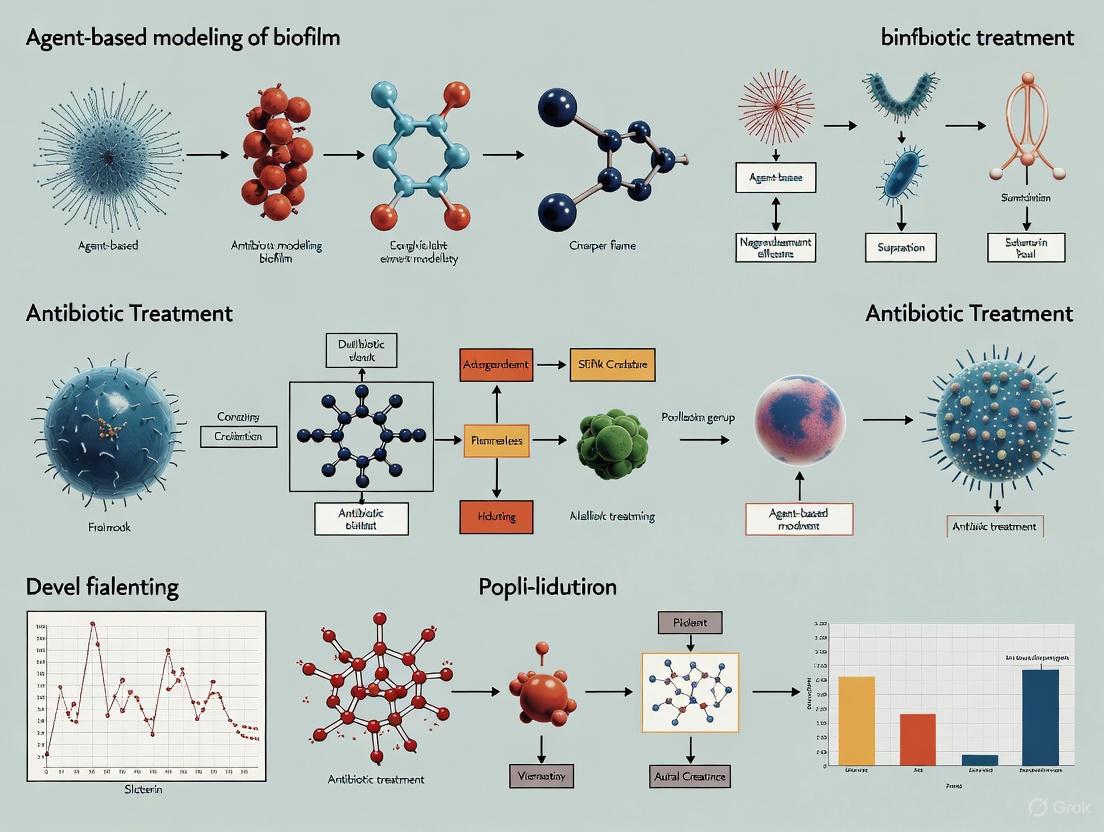
Agent-based models (ABMs) are emerging as powerful computational tools that provide unprecedented, high-resolution insights into the dynamics of bacterial biofilms and their response to antibiotic treatment.
Agent-Based Modeling of Biofilm Antibiotic Treatment: From Single-Cell Dynamics to Optimized Therapeutic Strategies
Abstract
Agent-based models (ABMs) are emerging as powerful computational tools that provide unprecedented, high-resolution insights into the dynamics of bacterial biofilms and their response to antibiotic treatment. By simulating individual cells and their interactions within a structured biofilm environment, ABMs help decipher the complex mechanisms underlying biofilm-associated antibiotic tolerance and resistance, including the critical role of persister cells. This article explores the foundational principles of ABMs, their application in simulating treatment scenarios, and their use in optimizing interventional strategies like periodic dosing. It further discusses model validation and comparative analyses with other in silico approaches, offering a comprehensive resource for researchers and drug development professionals aiming to combat persistent biofilm infections and address the global challenge of antimicrobial resistance.
Decoding the Biofilm Battleground: Fundamentals and the ABM Advantage
Biofilms represent the predominant mode of microbial life on Earth, constituting surface-attached communities of microorganisms encased within a self-produced matrix of extracellular polymeric substances (EPS) [1] [2]. The transition from free-floating planktonic cells to a structured biofilm begins with initial attachment to a surface, followed by microcolony formation, and culminates in the development of a complex three-dimensional architecture characterized by heterogeneity and functional specialization [3]. This structural complexity is not merely morphological; it establishes gradients of nutrients, oxygen, and metabolic waste products that generate diverse microenvironments, driving phenotypic variations and enhancing community resilience [1] [4].
The biofilm matrix, composed of polysaccharides, proteins, nucleic acids, and lipids, serves as both a structural scaffold and a protective barrier [2] [3]. This EPS matrix represents a key distinguishing feature between biofilms and free-living bacterial colonies, contributing significantly to their remarkable resistance to environmental perturbations, including antimicrobial agents and host immune responses [1]. The mechanical resilience of biofilms stems primarily from this crosslinked, viscoelastic polymer network that binds cells to each other and to the substrate [1]. Understanding the architectural principles and compositional elements of biofilms provides the foundational knowledge necessary to appreciate their clinical impact and the challenges they present for therapeutic intervention.
Clinical and Economic Burden of Biofilm-Associated Infections
Biofilm-associated infections present substantial clinical challenges and economic burdens to healthcare systems globally. These structured microbial communities are implicated in 60-80% of microbial infections, contributing significantly to persistent, hard-to-treat conditions [2]. The protective EPS matrix shields microbial cells from antimicrobial agents and host immune responses while facilitating horizontal gene transfer, potentially disseminating antibiotic resistance genes among community members [3].
Economic Impact
The financial burden of biofilm-associated infections is substantial across medical and industrial sectors:
Table: Economic Impact of Biofilm-Associated Infections
| Sector/Infection Type | Estimated Annual Cost | Key Statistics |
|---|---|---|
| Overall U.S. Healthcare | $94 billion | 500,000+ attributed deaths [3] |
| Healthcare-Associated Infections (Global) | $4.5 billion | 88,000+ annual fatalities in U.S. [3] |
| Chronic Wound Infections (U.S.) | $25 billion | Prolonged antibiotic therapies and surgical interventions [3] |
| Waterborne Illnesses (U.S.) | $3.33 billion (direct healthcare) | 7.15 million cases, 118,000 hospitalizations [3] |
Clinical Complications
Biofilm formation on indwelling medical devices—including catheters, prosthetics, and surgical instruments—leads to device malfunction, material degradation, and persistent systemic infections [3]. These complications often necessitate device removal and replacement, amplifying healthcare costs and patient discomfort. The resilience of biofilm-associated pathogens against antibiotics and host defenses makes these infections particularly prone to chronicity and recurrence, creating a persistent challenge in clinical management across various medical specialties [3].
Essential Methodologies for Biofilm Research
Static Biofilm Cultivation and Quantification
The microtiter plate biofilm assay represents a fundamental high-throughput method for monitoring microbial attachment to abiotic surfaces [5]. This static system is particularly valuable for examining early events in biofilm formation, in some cases detecting attachment within 60 minutes, and requires minimal specialized equipment [5].
Table: Microtiter Plate Assay Conditions for Various Bacterial Species
| Organism | Incubation Temperature (°C) | Solvent for Solubilizing Crystal Violet |
|---|---|---|
| Pseudomonas aeruginosa | 25–37 | 95% ethanol or 30% acetic acid [5] |
| Escherichia coli | 25 | 80% ethanol/20% acetone [5] |
| Staphylococcus aureus | 37 | 33% glacial acetic acid [5] |
| Vibrio cholerae | 25–30 | 100% DMSO [5] |
| Streptococcus mutans | 37 | 95% ethanol or 100% DMSO [5] |
Protocol: Microtiter Plate Biofilm Assay [5]
- Inoculation: Dilute stationary phase cultures 1:100 in appropriate media. Pipette 100 μL of each diluted culture into multiple wells of a non-tissue-culture-treated 96-well microtiter plate.
- Incubation: Cover the plate and incubate at the optimal growth temperature for the desired time (typically 24-48 hours).
- Planktonic Cell Removal: Briskly shake the dish to remove liquid and planktonic cells. Wash wells by submerging the plate in tap water and vigorously shaking out the liquid.
- Staining: Add 125 μL of 0.1% crystal violet solution to each well. Stain for 10 minutes at room temperature.
- Washing: Shake out crystal violet solution and wash dishes successively in two water baths, shaking out excess liquid after each wash.
- Solubilization: Add 200 μL of an appropriate solvent (see table above) to each stained well. Incubate 10-15 minutes at room temperature to solubilize the dye.
- Quantification: Transfer 125 μL of the solubilized crystal violet solution to an optically clear flat-bottom 96-well plate. Measure absorbance at 500-600 nm.
Advanced Imaging and Quantitative Analysis
Modern biofilm research relies heavily on advanced imaging technologies and computational analysis tools. Confocal scanning laser microscopy (CSLM) enables detailed examination of three-dimensional biofilm architecture without disrupting the native structure [2]. For comprehensive quantification, BiofilmQ software provides an image cytometry platform for automated high-throughput analysis of numerous biofilm-internal and whole-biofilm properties in three-dimensional space and time [4].
Biofilm Image Analysis Workflow: From sample preparation to quantitative data extraction using platforms like BiofilmQ [4].
Research Reagent Solutions for Biofilm Analysis
Table: Essential Materials for Biofilm Research
| Reagent/Equipment | Function/Application |
|---|---|
| Crystal Violet (0.1%) | Semiquantitative staining of adherent biomass in microtiter plate assays [5] |
| 96-well Microtiter Plates (non-tissue-culture-treated) | High-throughput biofilm cultivation and assessment [5] |
| Confocal Microscopy with Fluorescent Reporters | 3D visualization of biofilm architecture and gene expression patterns [4] |
| BiofilmQ Software | Comprehensive image cytometry for 3D spatial and temporal analysis of biofilm properties [4] |
| Extracellular Matrix Components (VPS, RbmA, RbmC, Bap1) | Key structural elements for Vibrio cholerae biofilm integrity and analysis [1] |
Agent-Based Modeling: A Framework for Understanding Biofilm Dynamics
Agent-based models provide a computational framework for simulating the development of bacterial colonies and biofilms by representing individual cells as discrete entities with defined behaviors and interactions [1]. These models are particularly valuable for investigating the emergence of organizational patterns observed in experimental systems, including orientational ordering, microcolony formation, and spatial heterogeneity in metabolic activity [1].
ABMs typically incorporate several key components: cell shape (often represented as rods, spheres, or spherocylinders), growth and division algorithms, nutrient uptake and diffusion, mechanical interactions between cells and with the substrate, and in the case of biofilms, EPS production and integration [1]. The equations of motion governing these models account for various forces including growth-induced pushing, adhesion, and drag forces [1]. This modeling approach enables researchers to test hypotheses regarding the mechanistic origins of biofilm organization by encoding these mechanisms as quantitative assumptions and generating testable predictions.
Agent-Based Modeling Framework: Key components and workflow for simulating biofilm development [1].
The versatility of ABMs has led to the development of numerous open-source software platforms for implementing simulations of bacterial communities, including BacSim, iDynoMiCS, CellModeller, gro, Simbiotics, and NUFEB [1]. These tools enable researchers to explore how multitude processes—cell growth and division, ECM production and crosslinking, nutrient uptake, and mechanical interactions—collectively dictate the organizational patterns observed in developing biofilms [1].
The structural complexity of biofilms directly underpins their clinical significance, as the emergent properties of these communities—including enhanced antimicrobial tolerance and resilience to environmental stressors—create substantial challenges for infection management. Addressing these challenges requires interdisciplinary approaches that combine traditional microbiological methods with advanced imaging technologies, computational modeling, and innovative therapeutic strategies.
Agent-based modeling represents a particularly powerful approach for bridging scales from individual cellular behaviors to population-level patterns, offering a mechanistic framework for understanding how biofilm structure and function emerge from local interactions [1]. When integrated with experimental validation using the methodological tools outlined in this article, ABMs can accelerate our understanding of biofilm dynamics and contribute to the development of novel strategies for preventing and treating biofilm-associated infections across clinical and industrial contexts.
Agent-based modeling (ABM) represents a paradigm shift in computational biology, enabling researchers to simulate complex systems from the bottom up by modeling the behaviors and interactions of individual components. In microbiology, ABMs treat each bacterial cell as an autonomous agent with its own set of rules, allowing for the emergence of population-level behaviors that are difficult to predict using traditional differential equation-based approaches [6]. This methodology has proven particularly valuable for studying biofilm-associated infections, which are responsible for most chronic bacterial infections and exhibit remarkable resistance to antibiotic treatments—often requiring 100–10,000 times the antibiotic levels needed for planktonic cells [7] [8].
The fundamental power of ABM lies in its ability to capture the spatial and temporal heterogeneity inherent in biofilm environments. Unlike deterministic models that assume homogeneous conditions, ABMs naturally incorporate microenvironments, stochastic events, and localized interactions that drive emergent behaviors such as nutrient gradients, persister cell formation, and resistance development [6] [9]. This capability makes ABMs uniquely suited for optimizing antibiotic treatment strategies against biofilms, particularly for addressing the challenge of phenotypic persistence—where subpopulations of bacteria transiently survive antibiotic exposure without genetic resistance mechanisms [7].
Core Principles and Implementation Framework
Fundamental ABM Architecture
Agent-based models for biofilm research rest upon three foundational principles: autonomous agent behavior, localized interaction rules, and emergent system properties. Each bacterial cell operates as an independent decision-making entity based on its internal state and immediate environment, with system-level behaviors emerging from these individual interactions without being explicitly programmed [6] [9].
The typical ABM framework incorporates several key components:
- Agent definitions: Individual bacteria with attributes including spatial position, physiological state (susceptible/persister), growth rate, and local nutrient concentrations
- Environmental grid: Discrete spatial representation that tracks diffusion of substrates, antibiotics, and metabolic byproducts
- Behavioral rules: Condition-action relationships governing growth, division, phenotypic switching, and death
- Temporal dynamics: Discrete time steps that synchronize agent behaviors and environmental updates
This architecture enables the modeling of multiscale dynamics, from individual cellular processes to population-level biofilm structures, making it possible to investigate how localized interactions generate the collective behaviors that characterize biofilm-mediated antibiotic treatment failure [7] [6].
Rule Implementation for Antibiotic Treatment Simulation
In the context of biofilm antibiotic treatment research, ABMs implement specific rules to capture the dynamics of persistence and treatment response:
Phenotypic Switching Rules:
Treatment Response Rules:
These relatively simple rules, when applied across thousands of individual agents, generate the biphasic killing curves characteristic of biofilm populations containing persister cells [7]. The models can further incorporate environmental factors such as nutrient gradients that create heterogeneous microenvironments within the biofilm, leading to spatial variations in antibiotic efficacy that mirror experimental observations [7] [10].
Quantitative Parameters for ABM of Biofilm Treatment
Table 1: Key Agent-Based Model Parameters for Biofilm Antibiotic Treatment Studies
| Parameter Category | Specific Parameters | Typical Values/Ranges | Biological Significance |
|---|---|---|---|
| Bacterial Growth | Maximal specific growth rate (μmax) | Variable by species | Determines replication rate under ideal conditions |
| Half-saturation constant (KS) | Variable by substrate | Affects growth response to nutrient availability | |
| Division mass threshold | 500 fg (default) [7] | Mass at which cell division occurs | |
| Persister Dynamics | Susceptible→Persister switching rate | Environment-dependent [7] | Determines persister formation frequency |
| Persister→Susceptible switching rate | Environment-dependent [7] | Controls persister resuscitation | |
| Persister death rate under antibiotics | Significantly lower than susceptible [7] | Basis for treatment survival | |
| Antibiotic Effects | Minimum Inhibitory Concentration (MIC) | Compound-specific | Threshold for growth inhibition |
| Susceptible cell kill rate | Concentration-dependent [7] | Primary killing phase dynamics | |
| Persister cell kill rate | Much slower than susceptible [7] | Secondary killing phase dynamics | |
| Environmental Factors | Substrate diffusion coefficient | Substrate-dependent | Affects nutrient penetration in biofilm |
| Antibiotic diffusion coefficient | Compound-dependent | Determines drug penetration profile | |
| Initial cell count | 27 cells (in one model) [7] | Simulation starting population |
Table 2: Experimentally-Derived Anti-Biofilm Compounds for Model Validation
| Compound Name | Class/Category | Reported Biofilm Inhibition (%) | Minimum Inhibitory Concentration Range | Molecular Targets/Effects |
|---|---|---|---|---|
| Salicylaldehyde (SALI) | Phenolic aldehyde | 70.66–92.52% [11] | 1–30 mg/mL [11] | Significant downregulation of ica-A, clf-A, and fnb-A genes [11] |
| α-Methyl-trans-cinnamaldehyde (A-MT) | Cinnamaldehyde derivative | 70.15–85.53% [11] | 25–100 mg/mL [11] | Downregulation of adhesion genes [11] |
| Vanillin (VAN) | Phenolic aldehyde | 70.15–87.38% [11] | 1–55 mg/mL [11] | Biofilm reduction without significant cytotoxicity [11] |
| α-Bromo-trans-cinnamaldehyde (A-BT) | Cinnamaldehyde derivative | 58.31–89.91% [11] | 0.75–5 mg/mL [11] | Potent anti-biofilm activity at low concentrations [11] |
| Cranberry Juice (Vaccinium macrocarpon) | Natural product | Variable across taxa [12] | Tested at 17% concentration [12] | Inhibits multiple oral taxa including Veillonella parvula and Prevotella species [12] |
Experimental Protocol: ABM for Optimizing Periodic Antibiotic Dosing
Model Initialization and Setup
Step 1: Environmental Grid Configuration
- Create a 2D or 3D spatial grid with appropriate dimensions (e.g., 400×400 μm for 2D simulations)
- Define boundary conditions, typically with a solid surface at the bottom for attachment and open boundaries elsewhere
- Initialize substrate concentration in the bulk fluid above the biofilm, typically using representative values such as 5-10 g/L for nutrient sources
- Set antibiotic diffusion parameters from the bulk fluid into the biofilm based on molecular properties [7]
Step 2: Initial Bacterial Population
- Randomly position initial susceptible bacterial cells on the surface (e.g., 27 cells as in published models [7])
- Define individual cell properties including diameter (typically 0.5-1.0 μm), mass (initial mass below division threshold), and physiological state
- For polymicrobial simulations, assign species-specific properties according to experimental data [6] [9]
Simulation Execution Procedure
Step 3: Growth and Division Cycle
- At each time step (typically 1-10 minutes simulated time), calculate local substrate concentration for each cell
- Update individual cell mass according to Monod kinetics: dm/dt = m × μmax × (CS/(KS + CS)) [7]
- Implement division when cell mass exceeds threshold (e.g., 500 fg), creating two daughter cells with 40-60% mass distribution [7]
- Resolve spatial conflicts using a "shoving" algorithm to maintain realistic cell densities [7]
Step 4: Phenotypic State Transitions
- Evaluate persistence switching probabilities based on local environmental conditions
- For antibiotic-induced switching: Pswitch = f(antibioticconcentration, timeexposed)
- For stochastic switching: Pswitch = baseline_rate (typically 10-6 to 10-4 per cell per generation)
- Update cell state accordingly while tracking transition histories [7]
Step 5: Treatment Application Protocol
- Introduce antibiotic at specified concentrations above MIC (typically 10-100× MIC)
- Apply continuous or periodic dosing according to treatment regimen being tested
- For periodic dosing, implement clear intervals with complete antibiotic removal during off-periods
- Calculate killing probabilities for each cell based on its state (susceptible/persister) and local antibiotic concentration [7]
Data Collection and Analysis
Step 6: Output Metrics Recording
- Track total biomass, susceptible/persister ratios, and spatial distribution at regular intervals
- Record individual cell histories for lineage analysis and persistence tracking
- Monitor substrate and antibiotic concentration gradients throughout the biofilm
- Calculate eradication times and treatment efficacy for different regimens [7]
Step 7: Optimization and Validation
- Systematically vary periodic dosing parameters (duration, concentration, timing)
- Identify optimal regimens that minimize total antibiotic dose while achieving eradication
- Validate against experimental data from in vitro or ex vivo biofilm models [7] [12]
- Perform sensitivity analysis to identify critical parameters driving treatment outcomes [7]
Visualization and Workflow Diagrams
ABM Simulation Workflow
Agent-Environment Interactions
Table 3: Research Reagent Solutions for ABM Biofilm Studies
| Reagent/Resource | Category | Application in ABM Context | Specific Examples/Properties |
|---|---|---|---|
| NetLogo Platform | ABM Software | Primary modeling environment for biofilm simulations [7] | Open-source platform with customizable agent behaviors and visualization capabilities |
| iDynoMiCS | ABM Software | Specialized biofilm modeling platform [6] [9] | Open-source platform for individual-based dynamics of microbial communities |
| Salicylaldehyde | Anti-biofilm Compound | Model validation against experimental biofilm inhibition [11] | 70.66–92.52% biofilm inhibition; targets ica-A, clf-A, and fnb-A genes |
| Cranberry Juice Extract | Natural Product | Testing multi-target effects on complex communities [12] | 17% concentration inhibits multiple oral taxa including Veillonella parvula |
| Vancomycin | Antibiotic Control | Positive control for Gram-positive targeting in validation [12] | Pharmacologic levels (5 µg/mL) inhibit subset of Gram-positive bacteria |
| Penicillin G | Antibiotic Control | Gram-positive spectrum reference compound [12] | Standard for comparing model predictions of treatment efficacy |
| AR Isolate Bank | Reference Strains | Model parameterization with clinically relevant isolates [13] | CDC/FDA resource providing antimicrobial-resistant isolates for testing |
| CARB-X Library | Compound Libraries | Source of novel anti-biofilm agents for model testing [13] | Global partnership accelerating antibacterial innovation with screening libraries |
Applications in Optimizing Antibiotic Treatment Strategies
Agent-based modeling has demonstrated particular value in addressing the challenge of phenotypic persistence in biofilms. By simulating the dynamics of susceptible and persister subpopulations under different treatment regimens, ABMs have identified optimized periodic dosing strategies that can reduce total antibiotic doses by nearly 77% while maintaining treatment efficacy [7]. This approach leverages the concept of "reawakening" persistent subpopulations during antibiotic-free intervals to sensitize them to subsequent treatment cycles [7].
The spatial capabilities of ABMs provide insights into treatment failure mechanisms that are difficult to observe experimentally. Models reveal how nutrient gradients create heterogeneous microenvironments within biofilms, leading to uneven antibiotic penetration and varied bacterial responses [7] [10]. Additionally, ABMs can simulate the emergence of resistance by incorporating mutation rates and selection pressures, allowing researchers to test strategies that minimize resistance development while maximizing killing efficacy [7] [13].
Recent innovations have expanded ABM applications to polymicrobial communities, capturing the complex interactions between different species in mixed biofilms [6] [9]. These models can simulate synergistic and antagonistic relationships that significantly impact treatment outcomes, providing a more comprehensive framework for developing effective anti-biofilm strategies in clinically relevant scenarios.
Agent-based modeling (ABM) has emerged as a powerful computational approach for investigating the complex dynamics of polymicrobial biofilms, particularly in the context of antibiotic treatment research [9]. Unlike traditional population-level models, ABMs represent each bacterial cell as an autonomous agent with its own set of rules, enabling the study of emergent biofilm properties such as three-dimensional architecture, heterogeneity, and antibiotic tolerance [7] [9]. This protocol outlines the key components and methodologies for developing an ABM to simulate biofilm formation, with a specific focus on integrating these models into research aimed at overcoming biofilm-mediated antibiotic treatment failure. The core processes governing biofilm development in ABMs include agent behavior (growth, division, phenotypic switching), production of extracellular polymeric substances (EPS), and nutrient diffusion through the biofilm matrix [7] [14].
Core ABM Components and Implementation
Agent Properties and Rules
In an ABM, each bacterial cell is an independent agent with properties and behaviors that dictate the system's evolution.
Growth and Division: Agent growth is typically modeled using Monod kinetics, where the growth rate of a susceptible cell depends on local substrate availability [7]. The mass ( m_i ) of a susceptible cell ( i ) changes according to:
[ \frac{dmi}{dt} = mi \mu{\text{max}} \frac{CS}{CS + KS} ]
where ( \mu{\text{max}} ) is the maximal specific growth rate, ( CS ) is the local substrate concentration, and ( K_S ) is the half-saturation constant [7]. Cells divide upon reaching a threshold mass, producing two daughter cells.
- Phenotypic States: A critical feature for antibiotic treatment models is the inclusion of persister cells. These are transient, slow-growing, or dormant phenotypic variants that survive antibiotic treatment without genetic resistance [7]. In an ABM, agents can stochastically switch between susceptible and persister states based on environmental triggers like antibiotic presence or nutrient availability [7].
Extracellular Polymeric Substances (EPS)
The EPS matrix is a critical component of biofilms, providing structural integrity and influencing nutrient diffusion and antibiotic penetration [15] [16].
- Composition and Function: EPS is a complex mixture of carbohydrates, proteins, extracellular DNA (eDNA), and lipids [16] [17]. In ABMs, EPS is often represented as a localized field or as a property excreted by agents. It contributes to the biofilm's three-dimensional architecture, facilitates cell-surface attachment, and offers protection against antimicrobials and host immune responses [15] [16].
- Modeling EPS Production: EPS production can be linked to agent states and environmental conditions. For instance, EPS-carbohydrate production is influenced by substrate quality and the presence of a surface [15].
Nutrient Diffusion and Environmental Interactions
The biofilm microenvironment is characterized by gradients of nutrients, oxygen, and metabolic by-products, which drive emergent population structures and behaviors.
- Solute Transport: Nutrients and antibiotics diffuse from the bulk fluid (e.g., the intestinal lumen or a flow cell) into the biofilm. This is mathematically described using diffusion-reaction equations. The finite volume method (FVM) can be coupled with ABM to simulate the diffusion and consumption of metabolites [14].
- Metabolic Interactions: ABMs can simulate different types of inter-species interactions by defining rules for metabolite consumption and by-product exchange. These include competition (for a common nutrient), neutralism (consumption of distinct nutrients), commensalism (one species consumes another's waste), and mutualism (cross-feeding of metabolic by-products) [14]. These interactions significantly shape the final biofilm architecture, with competition leading to segregated patches and mutualism fostering highly intermixed communities [14].
Table 1: Key State Variables and Parameters for a Biofilm ABM
| Category | Variable/Parameter | Symbol | Unit | Description |
|---|---|---|---|---|
| Agent State | Cell Mass | ( m_i ) | fg | Mass of an individual cell agent. |
| Cell Type | - | - | Phenotypic state (e.g., Susceptible, Persister). | |
| Cell Position | ( (x, y) ) | μm | Spatial location of the agent in the simulation domain. | |
| Growth Kinetics | Maximal Growth Rate | ( \mu_{\text{max}} ) | ( h^{-1} ) | Maximum specific growth rate under ideal conditions. |
| Substrate Concentration | ( C_S ) | mg/L | Local concentration of a growth-limiting nutrient. | |
| Half-Saturation Constant | ( K_S ) | mg/L | Substrate concentration at half the maximal growth rate. | |
| Environment | EPS Concentration | ( C_{\text{EPS}} ) | mg/L | Local concentration of extracellular polymeric substances. |
| Antibiotic Concentration | ( C_A ) | mg/L | Local concentration of an antimicrobial agent. | |
| Substrate Diffusion Coefficient | ( D_S ) | ( \text{μm}^2/s ) | Measures the rate of nutrient diffusion through the biofilm. |
Protocols for Key Experiments
Protocol: Simulating Biofilm Growth Under Nutrient Gradients
This protocol details how to use an ABM to investigate how nutrient diffusion and consumption shape biofilm structure.
Model Initialization:
- Software: Implement the model using a flexible platform like NetLogo [7].
- Surface & Inoculation: Define a 2D or 3D simulation domain with a solid surface at the bottom. Randomly initialize a small number of bacterial agents on this surface [7].
- Nutrient Boundary: Set a constant concentration of a primary nutrient (substrate) at the top boundary to represent the bulk fluid [14].
Define Agent Rules:
- Program agents to consume the local substrate according to Monod kinetics for growth [7].
- Implement a rule for cell division when an agent's mass reaches a predefined threshold. Upon division, create two daughter cells with a split of the mother cell's mass (e.g., 40%-60%) [7].
- Include a "shoving" algorithm to resolve physical overlaps after division, which promotes the development of a three-dimensional structure [7] [14].
Simulate Solute Transport:
- At each time step, solve the diffusion equation for the substrate field.
- Update the local substrate concentration based on consumption by the agents.
Analysis:
- Quantify the final biofilm biomass, thickness, and roughness.
- Visualize the cross-sectional biofilm structure and the corresponding nutrient gradient to analyze the correlation between nutrient availability and local biomass density.
Protocol: Modeling Periodic Antibiotic Treatment
This protocol leverages ABM to optimize periodic antibiotic dosing schedules against biofilms containing persister cells [7].
Incorporate Persister Dynamics:
- To the base model from Protocol 2.1, add rules for phenotypic switching. Allow susceptible cells to switch to a persister state at a low, stochastic rate. Allow persister cells to revert to the susceptible state, particularly when antibiotics are absent and nutrients are available [7].
- Define differential killing rates: susceptible cells are killed rapidly at high antibiotic concentrations, while persister cells are killed at a much slower rate [7].
Implement Treatment Regimen:
- Simulate the application of a bactericidal antibiotic at a concentration above the minimum inhibitory concentration (MIC) for a defined "on" period.
- Follow this with an "off" period where the antibiotic concentration is zero. This "off" period allows dormant persisters to revert to a susceptible state, making them vulnerable to the next treatment cycle [7].
Optimization and Testing:
- Run multiple simulations while varying the duration of the "on" and "off" periods.
- Identify the treatment schedule that minimizes the total antibiotic dose required to eradicate the biofilm.
Validation:
- Compare the simulation results, such as the biphasic killing curve and the optimized treatment schedule, with established in vitro or in vivo data [7].
Diagram 1: Core agent-based model loop for biofilm simulation, illustrating the sequence of agent decisions and environmental updates within a single time step.
The Scientist's Toolkit: Research Reagent Solutions
Table 2: Essential Materials and Reagents for Biofilm ABM and Validation
| Item Name | Function/Description | Relevance to ABM |
|---|---|---|
| Cation Exchange Resin (CER) | Used in the extraction of EPS from bacterial cultures for compositional analysis [15]. | Provides quantitative data on EPS constituents (carbohydrates, proteins, DNA, amino sugars) used to parameterize and validate the EPS production rules in the ABM [15]. |
| Quartz (SiO₂) Matrix | An inert, defined surface used in vitro to study surface-attached biofilm growth under controlled conditions [15]. | Allows experimental investigation of how a surface influences EPS production and biofilm structure, a key factor that can be represented in the ABM's initial conditions and agent-surface interaction rules [15]. |
| NetLogo/iDynoMiCS | Open-source platforms for developing agent-based models. NetLogo is widely accessible, while iDynoMiCS is specifically designed for microbial communities [7] [9]. | Provides the computational framework to implement the agent rules, environmental dynamics, and spatial interactions described in this protocol. |
| Defined Culture Media (e.g., Glycerol, Starch) | Media with a single, known carbon source used to cultivate biofilms for experimental studies [15]. | Enables controlled experiments to determine how substrate quality affects EPS production and biofilm growth rates, which directly informs the Monod kinetic parameters (( \mu{\text{max}}, KS )) in the ABM [15]. |
Why ABMs? Capturing Spatial Heterogeneity and Stochasticity in Biofilms
Bacterial biofilms are complex microbial communities characterized by self-formed aggregates where resident bacteria exhibit significant physiological heterogeneity. This heterogeneity is a critical emergent property of biofilms, driving their functionality, resilience, and response to environmental stresses such as antibiotic treatments [18]. Understanding biofilm dynamics requires modeling approaches that can capture two fundamental forms of cellular heterogeneity: (1) gradient-driven heterogeneity, arising from physiological responses to resource gradients across the biofilm, and (2) phenotypic heterogeneity, emerging locally among neighboring bacteria due to stochastic variations in gene expression [18].
Traditional population-level models often fail to capture these critical spatial and stochastic elements. Agent-based modeling (ABM) provides a powerful "bottom-up" paradigm that simulates complex system functionalities from the characteristics and interactions of individual agents (bacteria), making it uniquely suited for investigating biofilm assembly, structure, and antibiotic tolerance [14] [18].
Key Heterogeneity Concepts in Biofilms
Gradient-Induced Cell Heterogeneity
Resource gradients—particularly of nutrients and oxygen—are primary drivers of physiological heterogeneity in biofilms. These gradients form due to the balance between diffusion from supplying sources and consumption by cells, leading to distinct spatial patterns of cellular differentiation [18]. Metabolic interactions, including competition, neutralism, commensalism, and mutualism, profoundly influence community structure through nutrient consumption and metabolite exchange [14].
Local Cell-to-Cell Phenotypic Heterogeneity
Even genetically identical cells in homogeneous microenvironments can exhibit distinct phenotypes due to stochastic fluctuations in gene expression. This phenotypic heterogeneity, often amplified by regulatory networks with feedback loops, represents a bet-hedging strategy that enhances population survival under unpredictable conditions [18].
Table 1: Forms of Cellular Heterogeneity in Biofilms
| Heterogeneity Type | Driving Mechanism | Spatial Scale | Functional Impact |
|---|---|---|---|
| Gradient-Induced | Physiological response to nutrient/oxygen gradients | Macroscale (>100 µm) | Metabolic specialization; Cross-feeding; Structural organization |
| Phenotypic | Stochastic gene expression | Microscale (cell-to-cell) | Antibiotic persistence; Bet-hedging; Survival insurance |
Quantitative Parameters for ABM of Biofilms
Data from empirical studies provide critical parameters for developing and validating ABMs of biofilms. The following tables summarize key quantitative measurements essential for model parameterization.
Table 2: Structural and Metabolic Parameters from Experimental Studies
| Parameter Category | Specific Measurement | Experimental Value | Source/Model |
|---|---|---|---|
| Structural Features | Biofilm thickness range | 50-200 µm | [14] |
| Cellular dimensions (Pantoea sp.) | ~2 µm length, ~1 µm diameter | [19] | |
| Flagellar structures height | 20-50 nm | [19] | |
| Metabolic Interactions | Competition-induced segregation | Sparse, segregated patches | [14] |
| Mutualism-induced intermixing | Small, interconnected sectors | [14] | |
| Commensalism effects | High species intermixing | [14] | |
| Antibiotic Response | Ciprofloxacin exposure effect | 93% of isolates showed ≥2-fold MIC increase | [20] |
| Tetracycline exposure effect | 53% of isolates showed ≥2-fold MIC increase | [20] | |
| Cross-resistance development | 80% of ciprofloxacin-exposed isolates gained tetracycline resistance | [20] |
Table 3: ABM Simulation Parameters for Different Interaction Types
| Interaction Type | Spatial Pattern | Population Dynamics | Colonization Success |
|---|---|---|---|
| Competition | Segregated patches | Final composition similar to initial abundances | Variable |
| Neutralism | Separated larger patches | Relative abundances converge to common value | Moderate |
| Commensalism | High intermixing | Relative abundances converge to common value | High |
| Mutualism | Small interconnected sectors | Relative abundances converge to common value | High |
Experimental Protocols for ABM Validation
Protocol: Biofilm Culture and Antibiotic Exposure
Purpose: To generate empirical data on biofilm responses to antibiotics for ABM validation [20].
Reagents and Materials:
- Bacterial strains (e.g., Acinetobacter baumannii AB5075-UW)
- Antibiotics: ciprofloxacin, tetracycline
- Crystal violet (CV) stain
- 96-well microtiter plates
- Spectrophotometer
Procedure:
- Inoculate biofilms in appropriate growth medium in 96-well plates.
- Expose biofilms to sub-inhibitory concentrations of antibiotics (e.g., ciprofloxacin, tetracycline) for 3 days.
- For biofilm quantification: Stain with crystal violet, elute with ethanol, and measure absorbance at 600 nm.
- For minimum inhibitory concentration (MIC) testing: Use broth microdilution assay with biofilm dispersal cells.
- Isplicate random biofilm dispersal isolates for whole-genome sequencing to identify accumulated mutations.
- Perform transcriptomics on biofilms to correlate gene expression with observed phenotypes.
Protocol: High-Resolution Structural Imaging
Purpose: To characterize biofilm spatial organization and cellular arrangements for ABM structural validation [19].
Reagents and Materials:
- PFOTS-treated glass coverslips
- Atomic Force Microscope (AFM) with automated large-area capability
- Machine learning-based image segmentation software
Procedure:
- Incubate bacterial cells (e.g., Pantoea sp. YR343) on PFOTS-treated coverslips.
- At designated time points (30 min, 6-8 h), remove coverslips and gently rinse to remove unattached cells.
- Air-dry samples before AFM imaging.
- Perform automated large-area AFM scanning across millimeter-scale areas.
- Use machine learning algorithms for image stitching, cell detection, and classification.
- Quantify parameters including cell count, confluency, cell shape, and orientation.
Visualization: Conceptual Framework for ABM in Biofilms
Diagram 1: ABM Framework for Biofilm Heterogeneity
The Scientist's Toolkit: Essential Research Reagents and Materials
Table 4: Key Research Reagents and Materials for Biofilm ABM Research
| Item | Function/Application | Example Use |
|---|---|---|
| Crystal Violet Stain | Quantitative biofilm biomass assessment | Spectrophotometric quantification of biofilms after antibiotic exposure [20] |
| PFOTS-Treated Glass | Hydrophobic surface for controlled biofilm attachment | Studying initial attachment dynamics of Pantoea sp. YR343 [19] |
| Atomic Force Microscope (AFM) | High-resolution structural imaging at nanoscale | Visualization of flagellar structures and honeycomb patterns in early biofilms [19] |
| 96-well Microtiter Plates | High-throughput biofilm culture and assessment | Crystal violet biofilm assays and antibiotic MIC testing [20] |
| Sub-inhibitory Antibiotics | Selective pressure for evolution studies | Investigating resistance development in biofilms (e.g., ciprofloxacin, tetracycline) [20] |
| Machine Learning Algorithms | Automated image analysis and cell classification | Stitching large-area AFM images and quantifying cellular parameters [19] |
Agent-based modeling represents a paradigm shift in biofilm research by enabling the explicit simulation of spatial heterogeneity and stochasticity at the individual cell level. By incorporating empirical data on structural organization, metabolic interactions, and antibiotic responses, ABMs provide powerful computational frameworks for unraveling the complex dynamics of biofilm communities and their implications for antibiotic treatment failure. The integration of high-resolution imaging techniques with computational modeling offers promising avenues for developing more effective anti-biofilm strategies.
Building and Applying ABMs: From Virtual Biofilms to Simulated Treatments
Agent-based modeling (ABM) has become an indispensable tool for studying complex biological systems, particularly in the context of biofilm research and antibiotic treatment development. ABMs simulate the actions and interactions of autonomous agents—in this case, individual microbial cells—to understand how system-level properties emerge from these individual behaviors [9]. This bottom-up approach is uniquely suited to microbiology because it can explicitly represent cell-to-cell variability, spatial organization, and the multitude of processes that occur within growing biofilms, including cell growth and division, nutrient uptake, metabolite production, and mechanical interactions [1]. In the specific context of antibiotic treatment research, ABMs allow investigators to probe mechanisms of biofilm resilience that are difficult to study experimentally, such as the emergence of heterogeneous microenvironments that create pockets of antibiotic-tolerant persister cells or the role of extracellular polymeric substances (EPS) in limiting antimicrobial penetration [21].
The inherent complexity of biofilm systems presents significant challenges for traditional experimental approaches. Biofilms form multi-species communities where competition, antagonism, synergy, and mutualism may occur simultaneously among different species under conditions that change over time as biofilms form and as disruptions like antibiotics are introduced [9]. Computational models address these challenges by mimicking complex environments computationally and predicting the outcome of many complex processes occurring simultaneously [9]. When appropriately combined with experimental validation, agent-based modeling provides a powerful framework for generating and testing hypotheses about biofilm behavior under antibiotic pressure, potentially accelerating the development of more effective anti-biofilm therapies.
Platform Summaries
NetLogo
NetLogo is a versatile, programmable modeling environment widely used for simulating natural and social phenomena. While not exclusively designed for biological systems, its accessibility has made it popular for modeling biofilm dynamics and morphological patterns [22] [23]. Researchers have utilized NetLogo to investigate how nutrient concentration and diffusion rates affect biofilm branching patterns and to study phase separation between bacterial cells and extracellular polymeric substances (EPS) [22]. The platform employs an agent-based particle model where bacterial clusters are represented as particles with defined repulsive interactions, while nutrient concentration is modeled as a continuous diffusion equation across a grid of "patches" [22].
iDynoMiCS
iDynoMiCS (Individual-based Dynamics of Microbial Communities Simulator) is an advanced software platform specifically designed to model and simulate microbial communities at the individual level [24]. This open-source framework enables researchers to study interactions, growth, and spatial organization of microbes in complex environments, including both well-mixed systems and spatially structured compartments like biofilms [24]. The platform treats microbes as discrete particles with extent in continuous space, characterized by unique properties and behaviors, and includes a force-based mechanical interaction framework that supports various microbial morphologies including coccoid, bacillus, and filamentous forms [24]. The recently released version 2.0 represents a major upgrade, featuring enhanced ease of use through a graphical user interface (GUI), improved scalability to simulate up to 10 million agents in 3D biofilms, and greater flexibility through support for complex kinetic functions and logic expressions for adaptive behaviors [24].
NUFEB
NUFEB (Newcastle University Frontiers in Engineering Biology) is an open-source software for simulating 3D dynamics of microbial communities, with particular emphasis on biofilms [25]. Built on top of the classical molecular dynamics simulator LAMMPS (Large-scale Atomic/Molecular Massively Parallel Simulator), NUFEB extends this proven framework with individual-based modeling features [25]. This implementation allows NUFEB to leverage LAMMPS's efficient parallelization, enabling simulation of very large numbers of microbes (up to 10^7 individuals and beyond) through domain decomposition that distributes computation across multiple processors [25]. NUFEB implements a comprehensive range of biological, physical, and chemical processes explicitly, including fluid dynamics, pH dynamics, thermodynamics, and gas-liquid transfer, making it particularly suited for investigations that require tight coupling between biological, chemical, and physical processes [25].
Technical Specification Comparison
Table 1: Technical specifications of NetLogo, iDynoMiCS, and NUFEB
| Feature | NetLogo | iDynoMiCS 2.0 | NUFEB |
|---|---|---|---|
| Primary Modeling Approach | Agent-based particle model | Individual-based dynamics with force-based mechanics | Individual-based model built on molecular dynamics simulator |
| Spatial Dimensions | 2D or 3D | 2D or 3D | 3D |
| Agent Capacity | Limited by RAM, typically thousands to hundreds of thousands | Up to 10 million agents | Beyond 10 million agents (10^7+) |
| Parallel Computing | Limited | Fully parallelized | Massively parallel via domain decomposition |
| Mechanical Model | Repulsive forces between particles | Force-based mechanics framework | Soft-sphere model with various force types |
| Morphology Support | Simple particle representation | Spherical, rods, filaments, etc. | Soft spheres |
| Chemical Processes | Customizable diffusion equations | Support for complex kinetics | Advanced processes (pH, thermodynamics, gas-liquid transfer) |
| Fluid Dynamics | Limited or custom implementation | Not specified | Fully coupled fluid-particle interactions |
| License | Open source | CeCILL (similar to GNU GPL) | Open source |
| Programming Requirement | Lower-level programming required | GUI and protocol files, minimal programming | Requires programming expertise |
Application Focus and Capabilities
Table 2: Research applications and specialized capabilities
| Research Application | NetLogo | iDynoMiCS 2.0 | NUFEB |
|---|---|---|---|
| Biofilm Morphogenesis | Excellent for studying branching patterns and fractal morphologies [22] | Suitable for structural emergence from local interactions | Capable of modeling morphology emerging from mechanical interactions |
| Polymicrobial Interactions | Possible but limited by scale | Well-suited for multi-species communities | Excellent for large communities with multiple functional groups |
| Antibiotic Penetration | Can be implemented with diffusion equations | Suitable through metabolic function customization | Excellent with coupled chemistry and fluid dynamics |
| EPS Production & Effects | Supports dual-particle systems (cells + EPS) [22] | EPS as capsules or independent particles | EPS represented as outer shell around particles |
| Metabolic Processes | Custom programming required | Support for metabolic switching and complex kinetics | Advanced with thermodynamics and Gibbs free energy |
| Fluid-Biofilm Interactions | Limited implementation | Not specifically highlighted | Fully coupled fluid dynamics [25] |
| Quantitative Output Analysis | Basic data export capabilities | Compatibility with Matlab, Python, R | Collection of post-processing routines |
Platform Selection Guide
Decision Framework
Selection Criteria
Choosing the appropriate ABM platform requires careful consideration of research objectives, technical requirements, and team expertise:
NetLogo is ideal for proof-of-concept studies and investigations focused primarily on biofilm morphogenesis and pattern formation. Its relative accessibility makes it suitable for researchers with limited computational background or for educational purposes. Studies examining how nutrient gradients influence branching patterns [22] or initial explorations of cell-EPS interactions are well-suited to this platform.
iDynoMiCS 2.0 represents a balanced choice for interdisciplinary teams requiring robust simulation capabilities without extensive programming. Its graphical interface and modular design facilitate rapid model development while maintaining capacity for substantial simulations (up to 10 million agents). Research on multi-species interactions, metabolic interactions, and biofilm development under various environmental conditions benefits from iDynoMiCS's flexibility [9] [24].
NUFEB is essential for high-fidelity simulations requiring advanced physics or massive scale. Investigations of biofilm-fluid interactions [25], studies coupling pH dynamics with microbial growth, or simulations of industrial-scale biofilm reactors demand NUFEB's specialized capabilities. The platform's steep learning curve is offset by its unparalleled performance for systems where chemical and physical processes significantly influence biological outcomes.
For antibiotic treatment research specifically, platform selection depends on the specific mechanisms being investigated: NetLogo suffices for studying population-level antibiotic tolerance patterns; iDynoMiCS offers greater biological realism for metabolic heterogeneity studies; while NUFEB is necessary for modeling antibiotic penetration through the biofilm matrix with fluid flow.
Experimental Protocols
Protocol 1: Simulating Antibiotic Penetration in Biofilms Using iDynoMiCS
Purpose and Applications
This protocol describes a methodology for simulating antibiotic diffusion through a biofilm and its effects on bacterial survival using iDynoMiCS 2.0. The approach can generate testable hypotheses about treatment efficacy, identify potential mechanisms of antibiotic failure, and optimize dosing regimens for biofilm-associated infections.
Materials and Reagents
Table 3: Computational research reagents for antibiotic penetration studies
| Component | Function in Simulation | Implementation in iDynoMiCS |
|---|---|---|
| Bacterial Agents | Represent individual microbial cells with species-specific properties | Define agent types with morphological and growth parameters |
| Extracellular Polymeric Substances (EPS) | Model matrix components that affect antibiotic diffusion | Implement as capsules surrounding cells or independent particles |
| Antibiotic Compound | Simulate antimicrobial agent with specific diffusion and degradation properties | Define as solute with diffusion coefficient and degradation rate |
| Nutrient Medium | Represent growth substrates that influence cellular physiology and antibiotic efficacy | Implement as multiple solutes with uptake kinetics |
| Killing Kinetics Model | Define concentration-dependent antibiotic killing behavior | Use Hill equation or custom kinetic function |
Procedure
Platform Setup: Download and install iDynoMiCS 2.0 from the official GitHub repository. Verify installation by running provided example simulations [24].
Model Definition: Create a new protocol file (XML format) defining the simulation parameters:
- Set domain dimensions appropriate for your biofilm system (typically 100×100×50 μm for initial tests)
- Define nutrient composition and initial concentrations
- Specify antibiotic properties: diffusion coefficient, degradation rate, and initial concentration
Agent Configuration: Define bacterial species parameters including:
- Maximum growth rate under nutrient-replete conditions
- Nutrient uptake kinetics (Monod parameters)
- EPS production rates (if modeling matrix effects)
- Antibiotic susceptibility parameters (minimum inhibitory concentration, killing rate)
Initialization:
- Position initial bacterial cells on a surface (typically 100-1000 cells)
- Set initial nutrient concentrations throughout the domain
- Define antibiotic introduction parameters (time, concentration, duration)
Simulation Execution:
- Run the simulation with appropriate time steps (typically 1-10 seconds of simulated time per computational time step)
- Monitor simulation progress through live visualization tools
- Adjust computational parameters if necessary for stability
Data Collection:
- Record agent states (position, volume, physiological state) at regular intervals
- Capture solute concentration fields (nutrients, antibiotics)
- Track population metrics (total biomass, viability, spatial distribution)
Analysis:
- Calculate antibiotic penetration profiles through the biofilm
- Correlate local antibiotic concentration with bacterial killing
- Identify gradients in killing efficacy and potential refuge zones
Optimization Notes
- Begin with 2D simulations to optimize parameters before progressing to more computationally intensive 3D models
- Validate key parameters against experimental data when possible (e.g., diffusion coefficients from literature)
- Use parameter sensitivity analysis to identify which factors most strongly influence treatment outcomes
Protocol 2: Modeling Biofilm Morphogenesis Under Nutrient Gradients Using NetLogo
Purpose and Applications
This protocol adapts the methodology described by Wang et al. (2023) to investigate how nutrient availability influences biofilm architecture [22]. The approach can identify critical nutrient thresholds that trigger morphological transitions and provide insight into how environmental conditions shape biofilm resilience.
Procedure
Model Setup: Initialize NetLogo environment with patches representing nutrient concentration fields.
Particle Definition: Program bacterial agents as particles with properties including:
- Position and repulsive interaction radius
- Nutrient uptake and utilization parameters
- Division threshold and reproduction rules
Nutrient Dynamics: Implement continuous diffusion equation for nutrient field:
- Set initial nutrient concentration across substrate
- Define nutrient diffusion rate parameter
- Program nutrient consumption by bacterial particles
Interaction Rules: Define repulsive forces between particles to simulate mechanical interactions:
- Calculate repulsive forces between overlapping particles
- Update particle positions based on resultant forces
- Implement boundary conditions
Growth and Division: Program particle replication:
- Monitor accumulated biomass of each particle
- Trigger division when threshold is reached
- Position daughter particles according to interaction forces
Dual-Particle Extension (for EPS modeling):
- Implement second particle type representing EPS
- Define interaction parameters between cell particles and EPS particles
- Program EPS production rules and adhesion effects
Parameter Variation: Systematically alter:
- Initial nutrient concentration (low to high)
- Nutrient diffusion rate (limited to abundant)
- Interaction force parameters
Pattern Analysis: Quantify resulting biofilm morphology using:
- Fractal dimension calculations
- Branching pattern classification
- Surface roughness metrics
Data Interpretation
- Low nutrient conditions typically produce fractal, branching patterns
- High nutrient availability generally leads to compact, uniform growth
- Intermediate conditions may generate labyrinthine patterns
- EPS production often suppresses branching and fills interstitial spaces
Protocol 3: Large-Scale Biofilm Simulation With Fluid Dynamics Using NUFEB
Purpose and Applications
This protocol leverages NUFEB's massively parallel capabilities to simulate biofilm development under fluid flow conditions [25] [26]. This approach is particularly relevant for studying biofilms in medical (catheters, implants) and industrial (pipes, reactors) contexts where fluid mechanics significantly influence biofilm behavior and treatment efficacy.
Procedure
Environment Configuration:
- Define 3D computational domain with appropriate boundaries
- Set up Cartesian grid for chemical field resolution
- Specify boundary conditions (periodic or fixed walls)
Physical Processes Setup:
- Enable fluid dynamics module for flow-biofilm interactions
- Configure chemical processes (nutrient diffusion, reaction kinetics)
- Set mechanical interaction parameters (contact forces, adhesion)
Microbial Community Definition:
- Specify multiple functional groups with distinct metabolic capabilities
- Define species-specific parameters (growth rates, yield coefficients)
- Program EPS production and its effects on mechanical properties
Flow Conditions:
- Set fluid velocity profiles appropriate to the system being modeled
- Define shear stress parameters at biofilm-fluid interface
- Specify mass transfer coefficients for solute transport
Simulation Execution:
- Utilize parallel processing with appropriate domain decomposition
- Run simulation with time steps that maintain numerical stability
- Implement restart capabilities for long-duration simulations
Antibiotic Introduction:
- Introduce antimicrobial compound at defined simulation time
- Model transport through combined diffusion and advection
- Implement degradation kinetics and binding to biofilm components
Analysis of Results:
- Quantify biofilm deformation and detachment under fluid shear
- Map spatial heterogeneity in chemical and physiological states
- Correlate flow patterns with localized treatment efficacy
Technical Notes
- Begin with smaller 2D simulations to validate parameters before full 3D implementation
- Use progressive resolution increase to manage computational load
- Leverage NUFEB's post-processing routines for visualization and quantitative analysis
- Consider coupling with continuum-scale models for multi-scale representation
Research Reagent Solutions
Computational Research Reagents
Table 4: Essential computational components for ABM biofilm research
| Reagent Category | Specific Examples | Research Function |
|---|---|---|
| Biological Parameters | Growth rates, yield coefficients, metabolic maintenance requirements | Determine population dynamics and substrate utilization |
| Physical Parameters | Diffusion coefficients, fluid velocity, shear stress, contact mechanics | Govern transport phenomena and mechanical interactions |
| Chemical Parameters | Nutrient uptake kinetics, inhibition constants, degradation rates | Control chemical transformations and metabolic interactions |
| Antibiotic Properties | MIC/MBC values, diffusion coefficients, binding affinities, pharmacokinetics | Simulate antimicrobial treatment efficacy and penetration |
| Spatial Descriptors | Domain dimensions, boundary conditions, initial cell distributions | Define simulation geometry and initial state |
| Validation Metrics | Biomass quantification, structural metrics, viability assessments | Enable correlation with experimental observations |
The selection of an appropriate ABM platform represents a critical decision point in computational studies of biofilm antibiotic treatment. NetLogo, iDynoMiCS, and NUFEB offer complementary capabilities that address different research needs and computational requirements. NetLogo provides accessibility for initial investigations of morphological patterns; iDynoMiCS 2.0 delivers a balanced combination of biological realism and usability for intermediate-scale studies; while NUFEB offers unparalleled performance and physical realism for large-scale simulations incorporating complex chemistry and fluid dynamics. As biofilm research increasingly focuses on therapeutic interventions, these computational platforms will play an essential role in bridging the gap between single-cell mechanisms and population-level outcomes, ultimately accelerating the development of more effective anti-biofilm strategies.
Application Note
This document provides detailed application notes and protocols for implementing computational and experimental models to study biofilm dynamics, with a specific focus on growth, quorum sensing (QS), and persister cell formation. This work is framed within a broader thesis on agent-based modeling for biofilm antibiotic treatment research, aiming to provide researchers, scientists, and drug development professionals with practical tools to simulate and combat biofilm-associated antibiotic tolerance [7] [27].
Biofilms are structured microbial communities responsible for most chronic infections and are highly tolerant to antibiotics, often requiring 100–10,000 times the antibiotic levels needed for their planktonic counterparts [7]. This resilience is underpinned by several key mechanisms: phenotypic heterogeneity, the formation of dormant persister cells, and sophisticated cell-to-cell communication via quorum sensing [7] [28] [29]. Overcoming biofilm-related infections requires a deep understanding of these dynamics, which can be efficiently explored through computational models before validation in the lab [30] [31].
Computational models, particularly agent-based models (ABMs), have emerged as powerful tools for capturing the spatial heterogeneity and emergent behaviors inherent in biofilms [7]. They enable the rapid, cost-effective testing of a wide range of treatment scenarios, such as optimizing periodic antibiotic dosing, which has been shown to reduce the total antibiotic dose required for effective treatment by nearly 77% when tuned to biofilm dynamics [7]. Furthermore, combining these with models of QS and persister cell formation provides a systems-level approach to identifying novel anti-biofilm strategies [32] [27].
Background and Significance
The Biofilm Challenge in Healthcare
Biofilms are implicated in 65-80% of all microbial infections, forming on biological surfaces and medical devices like catheters, prosthetic heart valves, and artificial joints [27]. Their resistance to conventional antibiotics leads to chronic, recurring infections, resulting in significant morbidity and healthcare costs [7] [27]. The biofilm lifecycle begins with the initial attachment of planktonic cells to a surface, progresses through microcolony formation and maturation, and concludes with active dispersal [31].
Key Mechanisms of Biofilm Resilience
- Persister Cells: These are a subpopulation of transiently dormant, phenotypic variants that exhibit extreme antibiotic tolerance without genetic resistance. They are key to biofilm survival and post-treatment relapse [7] [29]. In silico models demonstrate that after antibiotic treatment, surviving persister cells in the depths of the biofilm can revert to a susceptible state and facilitate biofilm regrowth [29].
- Quorum Sensing (QS): QS is a cell-density-dependent communication system that uses diffusible signal molecules, such as acyl-homoserine lactones (AHLs) in Gram-negative bacteria, to coordinate gene expression across the community [28]. This system regulates the production of virulence factors, public goods, and the extracellular polymeric substance (EPS) matrix, making it a prime target for anti-biofilm strategies [28] [33].
- Adaptive Resistance: The biofilm growth state involves transcriptional reprogramming in response to stress, leading to a generalized, adaptive resistance that reverts when bacteria are in a planktonic state [27].
Protocols for Computational Modeling
Protocol 1: Agent-Based Modeling of Biofilm Growth and Persister Dynamics
This protocol outlines the steps for developing an ABM to simulate biofilm growth and the emergence of persister cells, based on the work of [7].
1. Principle An ABM simulates a biofilm as a collection of discrete agents (bacterial cells) that follow a set of rules governing their individual behavior and interactions with their local environment and neighboring agents. This bottom-up approach captures spatial heterogeneity, stochasticity, and emergent population dynamics, such as the formation of persister cell niches [7].
2. Reagents and Equipment
- Software: NetLogo (for model implementation and visualization) or a command-line equivalent for high-performance computing [7].
- Computational Resources: A standard desktop computer is sufficient for initial models; complex, large-scale simulations may require a computing cluster.
3. Procedure
- Step 1: Model Initialization.
- Define a two-dimensional grid representing the growth surface.
- Randomly place a small number of susceptible bacterial agents (e.g., 27 cells) on the surface [7].
- Step 2: Define Agent States and Rules.
- Cell States: Each agent can be in one of two states:
susceptibleorpersister[7]. - Growth Rule: Susceptible cells grow according to Monod kinetics, where the growth rate depends on the local concentration of a growth substrate (C_S) [7].
dm_i/dt = m_i * μ_max * (C_S / (K_S + C_S))wherem_iis the mass of celli,μ_maxis the maximal specific growth rate, andK_Sis the half-saturation constant. - Division Rule: When a susceptible cell reaches a threshold mass (e.g., 500 fg), it divides into two daughter cells with a random 40-60% mass split [7]. A "shoving algorithm" is applied to resolve overlaps and simulate mechanical interaction [7].
- Persistence Switching Rules:
- Stochastic Switching: Susceptible cells can switch to a persister state at a low, constant rate [29].
- Triggered Switching: The switching rate from susceptible to persister can be increased in response to environmental stress, such as nutrient limitation or the presence of antibiotics [7].
- Reversion Rule: Persister cells can revert to the susceptible state when exposed to fresh growth substrate [29].
- Killing Rules: When antibiotics are present in the environment, susceptible cells are killed at a high rate, while persister cells are killed at a much slower rate [7].
- Cell States: Each agent can be in one of two states:
- Step 3: Simulate Environmental Dynamics.
- Model the diffusion of growth substrate and antibiotics from the bulk liquid above the biofilm into the biofilm structure.
- Step 4: Treatment Simulation and Data Collection.
- Implement treatment regimens (e.g., continuous vs. periodic antibiotic dosing).
- Run the simulation and collect data on total biomass, persister count, and spatial distribution of cells over time.
4. Anticipated Results The model will generate a spatially structured biofilm. It will predict that persister cells accumulate in deeper, nutrient-limited regions of the biofilm, where they are protected from antibiotic killing. After treatment cessation, the model will show biofilm regrowth from these surviving persisters [29]. Simulations can be used to identify periodic dosing schedules that maximize killing while minimizing total antibiotic use [7].
Protocol 2: Modeling Quorum Sensing in a Reaction-Diffusion Framework
This protocol details the setup for a deterministic reaction-diffusion model to simulate QS in a bacterial population, adapted from [28].
1. Principle This model describes the spatial and temporal dynamics of key QS signaling molecules using a system of partial differential equations (PDEs). It is less granular than an ABM but efficiently captures the bulk dynamics of signal propagation and its effect on population-level behavior [28].
2. Reagents and Equipment
- Software: A numerical computing environment (e.g., MATLAB, Python with SciPy) capable of solving PDEs.
- Numerical Method: A finite difference method, such as the Peaceman-Rachford alternating direction implicit method, is recommended for stability and efficiency [28].
3. Procedure
- Step 1: Define the Governing Equations.
The core system of PDEs for a 2D domain is [28]:
∂U/∂t = D_U * ΔU - γ_U * U - γ_{L→U} * L * U + F_1(x, y, t, U)∂L/∂t = D_L * ΔL - γ_L * L + F_2(x, y, t, U)where:Uis the concentration of the AHL autoinducer.Lis the concentration of the Lactonase (a quenching enzyme).D_U,D_Lare diffusion coefficients.γ_U,γ_Lare degradation rates.γ_{L→U}is the rate of AHL degradation by Lactonase.F_1andF_2are generation terms.
- Step 2: Specify Generation Terms.
The production of signals is linked to the bacterial population density,
N(t), and can be modeled with Hill functions to capture the switch-like behavior of QS [28]:F_1(x,y,t,U) = N(t) * Σ [ α_U + (β_U * U^n)/((U_th^n) + U^n) ] * Gaussian(x, y, colony_v)A similar form can be used forF_2, representing Lactonase production. - Step 3: Set Initial and Boundary Conditions.
- Step 4: Numerical Solution and Validation.
- Discretize the domain and solve the PDE system using the chosen numerical method.
- Validate the model by ensuring it reproduces known QS behaviors, such as a rapid increase in signal concentration and associated phenotypic shifts once a critical cell density is reached.
4. Anticipated Results
The model output will show the spatio-temporal distribution of AHL and Lactonase. It will demonstrate how AHL concentration builds up, triggering a coordinated population response (e.g., virulence factor production) in high-density regions, while Lactonase activity can create spatial heterogeneities in signaling [28]. The model can be used to test the efficacy of Quorum Sensing Inhibitors (QSIs) by simulating their impact on the F_1 and F_2 terms [32] [33].
The following tables consolidate key quantitative parameters and findings from the literature to inform and calibrate models.
Table 1: Key Parameters for Agent-Based and Mathematical Biofilm Models
| Parameter | Description | Typical Value / Range | Reference |
|---|---|---|---|
μ_max |
Maximum specific growth rate | Model/Strain dependent | [7] |
K_S |
Half-saturation constant for substrate | Model/Strain dependent | [7] |
k_b |
Biofilm growth rate (exponential model) | Model/Strain dependent | [30] |
B_max |
Maximum biofilm carrying capacity | Model/Strain dependent | [30] |
D_U, D_L |
Diffusion coefficients for AHL, Lactonase | Model dependent | [28] |
γ_U, γ_L |
Degradation rates for AHL, Lactonase | Model dependent | [28] |
U_th |
Critical AHL threshold for QS activation | Model dependent | [28] |
n |
Hill coefficient for QS switch | 1-4 (cooperativity) | [28] |
Table 2: Experimental Findings on Biofilm Treatment and Resistance
| Finding | Quantitative Outcome | Context & Implications | Reference |
|---|---|---|---|
| Optimized Periodic Dosing | Reduced required antibiotic dose by ~77% | ABM prediction; tuned to biofilm persister dynamics | [7] |
| Intermittent Lethal Treatment | Biofilms evolved high-frequency resistance (e.g., mutations in sbmA, fusA); planktonic populations did not. |
10 cycles of 24h treatment with amikacin (5x & 80x MIC) | [34] |
| QS Inhibition (Gingerol, Curcumin) | Suppressed production of biofilm, EPS, pyocyanin, and rhamnolipid; improved antibiotic susceptibility. | In silico screening and in vitro validation against P. aeruginosa | [33] |
| Persister-Mediated Regrowth | Biofilm regrowth occurs from surviving persisters after antibiotic removal. | Predicted by mathematical modeling | [29] |
Experimental Protocol: In Vitro Validation of Anti-Biofilm Strategies
Protocol 3: Assessing Biofilm Eradication and Antibiotic Susceptibility Intensification
This protocol describes an in vitro method for growing biofilms and testing the efficacy of anti-biofilm agents, such as QSIs, in combination with antibiotics, synthesizing approaches from [34] and [33].
1. Principle Biofilms are grown on an abiotic surface (e.g., silicone coupon, microtiter plate). The mature biofilms are then treated with a candidate anti-biofilm agent alone or in combination with a conventional antibiotic. Survival is quantified to determine if the anti-biofilm agent can disrupt the biofilm structure and/or resensitize the population to antibiotic treatment.
2. Reagents and Equipment
- Bacterial Strain: e.g., Escherichia coli LF82, Pseudomonas aeruginosa [34] [33].
- Growth Medium: Appropriate broth (e.g., LB, TSB).
- Antibiotics: e.g., Amikacin [34].
- Anti-Biofilm Agents: e.g., putative QSIs like Gingerol or Curcumin [33].
- Equipment: Sterile medical-grade silicone coupons or 96-well microtiter plates, incubator, shaking platform, sonication bath, colony counting equipment (plate reader or automated colony counter).
3. Procedure
- Step 1: Biofilm Formation.
- Inoculate bacteria in a dilute broth culture.
- Place silicone coupons in the culture or pipette the culture into wells of a microtiter plate.
- Incubate under static or mild shaking conditions for 24-48 hours to allow biofilm formation. Remove planktonic cells by gently washing the coupons/wells with sterile saline or buffer.
- Step 2: Treatment Application.
- Prepare treatment solutions in fresh medium:
- Negative Control: Medium only.
- Antibiotic Control: Antibiotic at sub-MIC or MIC levels.
- Anti-Biofilm Agent: Candidate QSI at a non-bactericidal concentration.
- Combination: Antibiotic + Anti-Biofilm Agent.
- Apply the treatment solutions to the pre-formed biofilms and incubate for a defined period (e.g., 24 hours).
- Prepare treatment solutions in fresh medium:
- Step 3: Biofilm Quantification.
- Viable Count Method: Transfer the silicone coupons to tubes with fresh saline. Sonicate to disaggregate the biofilm. Serially dilute the suspension and plate on agar. Incubate and count Colony Forming Units (CFU) to determine the number of surviving bacteria [34].
- Crystal Violet Staining (for microtiter plates): Wash, fix, and stain biofilms with crystal violet. Elute the dye and measure absorbance with a plate reader as a proxy for total biofilm biomass [33].
- Step 4: Data Analysis.
- Calculate the percentage of survival for each treatment.
- Compare the log-reduction in CFU between antibiotic-alone and combination treatments to identify synergistic effects.
4. Anticipated Results Successful anti-biofilm agents will show a significant reduction in biofilm viability or total biomass compared to the untreated control. A combination of a QSI and an antibiotic is expected to result in a significantly greater log-reduction than the antibiotic alone, demonstrating "antibiotic susceptibility intensification" and validating the potential of this combination therapy approach [33].
Signaling Pathways and Workflows
Biofilm Lifecycle and Stress Response
Quorum Sensing Mechanism and Inhibition
The Scientist's Toolkit: Research Reagent Solutions
Table 3: Essential Reagents and Materials for Biofilm Research
| Item | Function/Application | Specific Example/Note |
|---|---|---|
| Medical-Grade Silicone Coupons | Provides a standardized, inert surface for robust biofilm growth in vitro, mimicking medical implants. | Used in experimental evolution of E. coli biofilms under antibiotic pressure [34]. |
| COMSTAT Software | A quantitative image analysis program for confocal microscopy stacks; measures biomass, thickness, and roughness. | Enables statistical comparison of 3D biofilm architecture across different conditions [30]. |
| Phage DNA Isolation Kit | Purifies high-quality, high-molecular-weight viral DNA for genomic sequencing of bacteriophages. | Critical for characterizing therapeutic phages (e.g., confirming absence of virulence genes) [35]. |
| Quorum Sensing Inhibitors (QSIs) | Small molecules that block bacterial cell-cell communication, attenuating virulence and biofilm formation. | Gingerol and Curcumin identified as effective LasR antagonists via in silico screening [33]. |
| Agent-Based Modeling Platform (NetLogo) | Accessible programming environment for creating agent-based models without extensive coding expertise. | Used to build and visualize 2D biofilm models with integrated persister dynamics [7]. |
The efficacy of antibiotic treatment against bacterial biofilms is a critical concern in both clinical and research settings, particularly given that biofilms can exhibit tolerance levels up to 1000 times greater than their planktonic counterparts [36]. This recalcitrance is not attributable to a single mechanism but is a multifactorial phenomenon. A comprehensive model of antibiotic action must, therefore, account for the dynamic interplay between physical diffusion barriers, heterogeneous bacterial metabolism, and the complex architecture of the biofilm itself. This document provides detailed application notes and protocols for modeling these processes, with a specific focus on generating quantitative data suitable for informing agent-based models (ABMs) of biofilm antibiotic treatment. The protocols are designed for researchers, scientists, and drug development professionals aiming to parameterize and validate computational simulations.
Quantitative Data on Antibiotic Penetration and Efficacy
A critical first step in modeling is parameterizing models with empirical data on antibiotic penetration. The following tables summarize key quantitative findings from the literature, which can be used as initial benchmarks or direct inputs for model calibration.
Table 1: Biofilm Penetration Ratios of Various Antibiotics Through Staphylococcal Biofilms [37]
| Antibiotic Class | Antibiotic Agent | Staphylococcus aureus Penetration Ratio (%) | Staphylococcus epidermidis Penetration Ratio (%) |
|---|---|---|---|
| Fluoroquinolone | Ciprofloxacin | High (Great capacity) | High (Great capacity) |
| β-lactam | Oxacillin | High (Great capacity) | High (Great capacity) |
| Ansamycin | Rifampicin | ~20% | ~20% |
| Aminoglycoside | Tobramycin | 17.8% | 35.6% |
| Aminoglycoside | Kanamycin | ~82.3% | Data Not Specified |
Table 2: Key Physicochemical and Interaction Properties Influencing Antibiotic Diffusion [38] [37] [39]
| Property | Impact on Diffusion & Penetration | Experimental Evidence |
|---|---|---|
| Surface Charge | Positively charged antibiotics (e.g., aminoglycosides) bind to negatively charged matrix components (e.g., eDNA), retarding diffusion. | Identified as a key factor; cationic tobramycin shows low penetration [37] [39]. |
| Molecular Size | Larger molecules exhibit slower diffusion coefficients (<*D_eff*>) through the biofilm matrix. | MPT studies show a significant decrease in <*D_eff*> as NP size increases from 40nm to 500nm [40]. |
| Catalytic Reaction | Enzymatic inactivation (e.g., β-lactamase) can create severe penetration failure if reaction rate is sufficiently rapid. | Theoretical models predict β-lactamase activity can prevent antibiotic penetration beyond a shallow depth [38]. |
| Matrix Sorption | Reversible or irreversible binding to biofilm matrix components retards penetration. | Theoretical analysis suggests sorption alone is insufficient to explain full biofilm resistance [38]. |
Experimental Protocols for Key Assays
Protocol: Agar Disk Diffusion Assay for Quantifying Antibiotic Penetration
This well-established protocol measures the ability of an antibiotic to diffuse through a biofilm and inhibit a lawn of indicator cells [41] [37].
1. Key Research Reagent Solutions
| Item | Function/Description |
|---|---|
| Mueller-Hinton Agar (MHA) Plates | Standardized medium for antibiotic susceptibility testing, used as the base for lawn culture. |
| Colony Biofilm | Biofilm grown on a semi-permeable membrane placed on an agar plate for standardized, consistent biomass production. |
| Antibiotic Impregnated Disk | Filter paper disk containing a known concentration of the antibiotic to be tested. |
| Sterile Phosphate Buffered Saline (PBS) | For washing and standardizing biofilm biomass. |
2. Workflow Procedure
- Step 1: Prepare Lawn Culture. Create a uniform bacterial lawn of the indicator strain (e.g., a susceptible laboratory strain) on the surface of an MHA plate using the spread-plate technique.
- Step 2: Harvest and Apply Biofilm. Grow a colony biofilm of the test strain on a polycarbonate filter placed on an appropriate agar medium. Resuspend the harvested biofilm cells in PBS and standardize the cell density. Spot a known volume of this suspension onto the center of the prepared MHA lawn and allow it to dry, creating a defined biofilm barrier.
- Step 3: Apply Antibiotic Disk. Aseptically place an antibiotic-impregnated disk directly onto the center of the applied biofilm spot.
- Step 4: Incubate and Measure. Incubate the plate at the appropriate temperature (e.g., 37°C) for 16-24 hours. Measure the diameter of the resulting Zone of Inhibition (ZOI) surrounding the disk.
- Step 5: Data Analysis and Quantitation. The ZOI size is measured and converted to an effective antibiotic concentration. This is achieved by comparing it to a standard curve generated by plotting the squared radii of ZOIs against the natural logarithm of known antibiotic concentrations diffusing through agar without a biofilm barrier. The Penetration Ratio is calculated as:
(Antibiotic concentration with biofilm barrier) / (Antibiotic concentration without biofilm barrier) * 100%[37].
Protocol: Multiple Particle Tracking (MPT) for Measuring Biofilm Matrix Properties
MPT is a nanoscale technique used to characterize the diffusion and micro-rheological properties of the biofilm extracellular polymeric substance (EPS) matrix, including changes induced by antibiotic treatment [40].
1. Key Research Reagent Solutions
| Item | Function/Description |
|---|---|
| Fluorescent Nanoparticles (NPs) | Polystyrene beads of defined size (e.g., 40, 100, 200, 500 nm) and surface charge. Serve as probes for matrix porosity and interactions. |
| Confocal Laser Scanning Microscope (CLSM) | Equipment for high-resolution imaging of biofilms and for tracking the movement of fluorescent NPs. |
| Polymyxin B (or other antibiotics) | Used as a treatment to induce measurable changes in the biofilm matrix structure of sensitive strains. |
2. Workflow Procedure
- Step 1: Grow Biofilms. Grow standardized biofilms of the target strain(s) in appropriate culture chambers compatible with CLSM imaging.
- Step 2: Treat with Antibiotic (Optional). Expose mature biofilms to sub-inhibitory or inhibitory concentrations of the antibiotic of interest. This step is crucial for measuring treatment-induced changes.
- Step 3: Introduce Nanoparticles. Incubate the biofilm with a suspension of fluorescent nanoparticles. Allow the particles to diffuse into the biofilm matrix.
- Step 4: Image and Track. Using CLSM, capture time-lapse videos of the nanoparticles' Brownian motion within the biofilm. Track the movement of hundreds to thousands of individual particles to calculate their Mean Square Displacement (MSD) over time.
- Step 5: Data Analysis. Calculate the effective diffusion coefficient (<*D_eff*>) for the nanoparticles. The ratio of <*D_eff*> in the biofilm to the theoretical diffusion coefficient in water (D°) provides a measure of biofilm hindrance. Further analysis of MSD curves can yield parameters like creep compliance, quantifying the mechanical rigidity of the matrix. Treatment-induced matrix disruption is indicated by significant increases in <*D_eff*>/ D° and creep compliance [40].
Conceptual Diagrams for Model Design
The following diagrams, generated using DOT language, illustrate core concepts that should be incorporated into agent-based models of antibiotic action in biofilms.
Biofilm Antibiotic Resistance Mechanisms
Experimental MPT Workflow
The Scientist's Toolkit: Essential Research Reagents
This table catalogs key reagents and their functions for conducting the experiments described in this protocol.
Table 3: Essential Research Reagents and Materials
| Category | Item | Critical Function in Protocol | Key Considerations |
|---|---|---|---|
| Bacterial Strains | MRSA (e.g., 1004A), P. aeruginosa (e.g., PAO1), Isogenic PMB-Sensitive/Resistant E. coli | Model organisms for studying Gram-positive and Gram-negative biofilm resistance. | Use of isogenic pairs (sensitive/resistant) is crucial for isolating resistance mechanisms [40]. |
| Antibiotics | Polymyxin B, Ciprofloxacin, Oxacillin, Rifampicin, Tobramycin, Vancomycin | Challenge agents for inducing and measuring biofilm response. | Cover multiple classes (lipopeptide, fluoroquinolone, β-lactam, etc.) to study class-specific effects [41] [37]. |
| Specialized Assay Kits | Mueller-Hinton Agar, Cation-adjusted Mueller-Hinton Broth (CA-MHB) | Standardized media for susceptibility and diffusion testing. | Essential for reproducible disk diffusion assays [41] [37]. |
| Advanced Imaging & Probes | Fluorescent Nanoparticles (40-500 nm, +/- charge) | Probes for MPT to quantify biofilm matrix porosity and micro-rheology. | Size and charge are critical variables; use a range to fully characterize the matrix [40]. |
| Analytical Software | ImageJ (with MPT plugins), COMSOL Multiphysics, Custom ABM Platforms (e.g., NetLogo) | For particle tracking analysis (ImageJ) and computational modeling of diffusion/killing (COMSOL, ABM). | Required for converting raw video data into quantitative diffusion parameters and for building predictive models [42] [40]. |
Biofilm-associated infections represent a significant challenge in clinical settings due to their high tolerance to conventional antibiotic therapies. The failure of standard treatment regimens is often attributed to the presence of phenotypic persister cells within biofilms—dormant bacterial subpopulations that can survive antibiotic exposure without genetic resistance [7] [43]. This persistence enables biofilm regeneration following treatment cessation, leading to chronic and recurrent infections [44].
Agent-based models (ABMs) have emerged as powerful computational tools for investigating complex biological systems like biofilms. Unlike traditional population-level models, ABMs simulate individual cells (agents) and their interactions within a spatial environment, capturing the emergent behaviors and heterogeneity that characterize biofilm communities [7]. This case study explores the application of ABMs to evaluate the efficacy of periodic versus continuous antibiotic dosing regimens against bacterial biofilms, providing a framework for optimizing treatment strategies to overcome biofilm-associated tolerance.
Background: Biofilm Resistance and Persister Cells
The Biofilm Challenge
Bacterial biofilms are structured communities of microbial cells encased in a self-produced matrix of extracellular polymeric substances (EPS). This matrix, composed of polysaccharides, proteins, and extracellular DNA, creates a physical barrier that impedes antibiotic penetration and contributes to enhanced tolerance [45] [43]. Biofilms demonstrate resistance levels 10-1000 times greater than their planktonic counterparts, making them a primary cause of persistent infections associated with medical implants and chronic conditions [43].
Persister Cell Dynamics
A key mechanism underlying biofilm tolerance is the presence of persister cells. These phenotypic variants exhibit transient dormancy and slow growth, allowing them to survive antibiotic treatments that typically target active cellular processes [7] [44]. The dynamics of persister formation and resuscitation are influenced by environmental factors, including:
- Nutrient availability and oxygen gradients within the biofilm
- Stochastic switching events between susceptible and persister states
- Antibiotic-induced stress responses triggering persistence mechanisms
Following antibiotic removal, persister cells can resuscitate and regenerate the biofilm population, leading to treatment failure [7]. This dynamic cycle presents a formidable obstacle for conventional continuous dosing regimens.
Agent-Based Modeling Methodology
Model Framework and Design
The ABM framework developed for this study simulates biofilm growth, persister dynamics, and antibiotic treatment response in a two-dimensional spatial environment [7]. The model incorporates key biological and physical parameters to accurately represent the biofilm ecosystem.
Table 1: Core Components of the Biofilm ABM Framework
| Model Component | Description | Implementation in ABM |
|---|---|---|
| Agents | Individual bacterial cells | Simulated as discrete entities with states (susceptible/persister) and properties (mass, position) |
| Spatial Environment | Surface for biofilm attachment | 2D grid representing the colonization surface with nutrient and antibiotic diffusion |
| Nutrient Dynamics | Substrate availability for growth | Monod kinetics governing bacterial growth based on local substrate concentration |
| Persister Switching | Transition between cell states | Stochastic switching rates dependent on substrate availability and antibiotic presence |
| Antibiotic Action | Treatment effect on bacterial populations | Concentration-dependent killing with differential rates for susceptible vs. persister cells |
| Physical Interactions | Cell-to-cell contact and shoving | Algorithm to resolve overlapping cells during growth and division |
Mathematical Foundations
The ABM incorporates several mathematical formulations to simulate biological processes:
Bacterial Growth: Cells grow following Monod kinetics, where the growth rate of a susceptible cell i with mass m_i is given by: dm_i/dt = m_i × μ_max × (C_S / (C_S + K_S)) where C_S is the local substrate concentration, μ_max is the maximal specific growth rate, and K_S is the half-saturation constant [7].
Cell Division: Cells divide upon reaching a threshold mass (default 500 fg), with the mother cell mass split randomly (40-60%) between two daughter cells [7].
Antibiotic Pharmacodynamics: Killing rates follow concentration-dependent functions with higher efficacy against susceptible cells compared to persisters.
Simulation Workflow
The following diagram illustrates the core logic and workflow of the ABM simulation:
Comparing Dosing Regimens: ABM Insights
Periodic Dosing Strategy
Periodic (pulse) dosing involves alternating cycles of antibiotic application and drug-free periods. The ABM simulations demonstrated that this approach can significantly enhance biofilm eradication by targeting persister cells after they resuscitate [7] [44]. The optimized periodic regimen identified through ABM testing achieved nearly 77% reduction in total antibiotic dose required for effective treatment compared to continuous therapy [7].
The efficacy of periodic dosing depends critically on treatment timing relative to biofilm dynamics:
- Drug application phases eliminate susceptible populations while persisters survive
- Drug-free intervals allow persister cells to resuscitate and re-enter susceptible states
- Subsequent treatment cycles eliminate resuscitated cells before new persisters form
This cycling approach progressively depletes the persister reservoir, ultimately eradicating the biofilm community [44].
Continuous Dosing Strategy
Continuous antibiotic administration maintains constant drug levels throughout treatment. While effective against susceptible cells, this approach demonstrates limited efficacy against biofilms due to persistent subpopulations that survive treatment and drive biofilm regeneration once therapy ceases [44]. The ABM simulations revealed that continuous dosing results in biphasic killing kinetics, with rapid initial reduction of susceptible cells followed by a persistent subpopulation that survives extended treatment [7].
Comparative Performance Analysis
Table 2: ABM Simulation Results - Periodic vs. Continuous Dosing
| Parameter | Continuous Dosing | Periodic Dosing | Experimental Validation |
|---|---|---|---|
| Total antibiotic dose | Baseline | ~77% reduction [7] | Not quantified |
| Persister survival | High (minimal reduction during treatment) [44] | Progressive depletion with cycles [44] | Reduced with optimized pulses [44] |
| Treatment efficacy | Limited by persister regeneration | Enhanced through resuscitation targeting | Improved biofilm eradication [44] |
| Resistance risk | Potential for resistance development | Lower selective pressure | Evolution observed with suboptimal timing [46] |
| Optimal timing | Not applicable | Critical - tuned to persister resuscitation dynamics [7] | 6-24h cycles effective for S. aureus [44] |
Experimental Validation and Translation
In Vitro Biofilm Models
To validate ABM predictions, researchers employed an in vitro flow system cultivating Staphylococcus aureus biofilms on preconditioned catheter segments [44]. This model enabled precise control over antibiotic pharmacokinetics and assessment of treatment efficacy against mature biofilms.
Experimental Protocol: Biofilm Cultivation and Treatment
Catheter Preparation: Sterile 14G polyurethane catheter segments (1 cm) preconditioned in fetal bovine serum overnight at 37°C to promote bacterial adherence [44]
Biofilm Initiation: Catheters transferred to S. aureus suspension (OD600 0.01) in brain heart infusion (BHI) + 1% glucose broth and incubated for 24h at 37°C
Biofilm Maturation: Catheters transferred to fresh BHI + 1% glucose for 24h, then placed in flow system glass segments
Flow System Conditions: BHI + 1% glucose medium at 0.1 mL/min flow rate, maintained for 16-21h before antibiotic treatment
Treatment Application:
- Continuous dosing: antibiotic maintained in input bottles
- Periodic dosing: alternating antibiotic and drug-free periods using programmable syringe pumps
Biofilm Assessment: Catheters removed, sonicated and vortexed to disrupt biofilms, with serial dilution plating to enumerate colony forming units (CFUs) [44]
Key Findings from Experimental Studies
Experimental results confirmed ABM predictions, demonstrating that correctly timed periodic oxacillin dosing against S. aureus biofilms significantly reduced surviving populations compared to continuous treatment [44]. The length of drug-free intervals critically impacted efficacy, with optimal timing maximizing persister resuscitation while minimizing resistance expansion.
However, a notable caveat emerged from evolution experiments with E. coli biofilms, where intermittent amikacin treatment fostered rapid resistance development through selection of mutations in sbmA and fusA genes [46]. This highlights the importance of carefully optimized periodic schedules to balance efficacy against resistance selection.
The Scientist's Toolkit: Essential Research Reagents
Table 3: Key Research Reagents for Biofilm Dosing Studies
| Reagent / Material | Function / Application | Specifications / Notes |
|---|---|---|
| Polyurethane catheters | Substrate for biofilm growth | 14G, 1 cm segments, preconditioned in FBS [44] |
| Brain Heart Infusion (BHI) | Culture medium for biofilm growth | Supplemented with 1% glucose to stimulate biofilm formation [44] |
| Drip Flow Biofilm Reactor | Air-liquid interface biofilm cultivation | Enables robust biofilm growth under low shear conditions [47] |
| Programmable syringe pumps | Precise antibiotic delivery for periodic dosing | Controlled by electronic timers for automated regimen implementation [44] |
| Sonication/vortex system | Biofilm disruption for CFU enumeration | 5 min sonication + 30s vortexing, repeated 3x for complete dispersal [44] |
| Confocal Laser Scanning Microscopy | Biofilm visualization and viability assessment | Uses live/dead staining (e.g., propidium iodide) to assess spatial distribution [47] [48] |
| NetLogo platform | ABM implementation and simulation | Provides graphical interface for parameter adjustment and visualization [7] |
Implementation Protocol: ABM to Wet-Bench Translation
Step-by-Step Workflow
The following diagram outlines the integrated computational-experimental approach for optimizing antibiotic dosing regimens:
Detailed Experimental Procedure
Phase 1: ABM Parameterization and Preliminary Screening
- Parameterize ABM with measured persister switching dynamics from target bacterial strain
- Screen multiple dosing regimens in silico (e.g., 2h-on/4h-off, 6h-on/12h-off, 24h-on/24h-off)
- Identify promising candidates based on simulated eradication efficacy and total antibiotic exposure
- Establish baseline biofilm culture using optimized growth conditions for target pathogen
Phase 2: Experimental Validation of Optimized Regimens
- Establish mature biofilms (3-5 days) in appropriate model system (flow cell, drip flow reactor)
- Apply top candidate regimens from ABM screening using programmable pump systems
- Monitor treatment response through:
- Time-point sampling for CFU enumeration
- Live/dead staining and confocal microscopy
- PCR monitoring of resistance genes for evolving populations
- Compare outcomes with continuous dosing control and model predictions
Phase 3: Model Refinement and Iteration
- Incorporate experimental results to refine ABM parameters
- Perform additional simulations to further optimize regimens based on experimental feedback
- Validate refined regimens through secondary experimental testing
- Establish final optimized dosing protocol for the specific pathogen-antibiotic combination
This case study demonstrates the power of agent-based modeling for advancing anti-biofilm treatment strategies. By simulating individual cell behaviors and interactions, ABMs provide unique insights into persister cell dynamics and enable rational design of optimized antibiotic dosing regimens. The integration of computational modeling with experimental validation creates a robust framework for developing more effective approaches to combat biofilm-associated infections, potentially reducing treatment failures and curbing antibiotic resistance emergence. As persistence mechanisms become better characterized, ABMs will play an increasingly vital role in translating basic research into improved clinical therapies for chronic bacterial infections.
Overcoming Treatment Failure: Using ABMs to Optimize Anti-Biofilm Therapies
Bacterial persisters, a subpopulation of dormant and metabolically inactive cells, are a major contributor to chronic infections and antibiotic treatment failure. Unlike resistant cells, persisters do not grow in the presence of antibiotics but can resuscitate once the treatment ceases, leading to recurrent infections. This application note explores the mechanisms of persister cell formation and survival, detailing advanced experimental protocols for their study and computational frameworks, particularly agent-based modeling (ABM), for simulating their dynamics within biofilms. We provide a structured overview of quantitative data, detailed methodologies, and essential research tools to advance the development of therapeutic strategies against persistent bacterial infections.
Bacterial persisters are phenotypic variants characterized by a transient, non-hereditary capacity to survive high-dose antibiotic treatment without genetic mutation [49] [50] [51]. They are metabolically dormant or slow-growing, allowing them to evade antibiotics that target active cellular processes [49] [52]. When antibiotic pressure is removed, these cells can resuscitate and repopulate, causing relapse infections [53] [51]. The prevalence of persisters is significantly higher in stationary-phase cultures and biofilms (up to 1% of the population) compared to exponentially growing planktonic cells [49] [50].
The clinical importance of persisters stems from their role in chronic and recurrent infections, such as those associated with cystic fibrosis, tuberculosis, Lyme disease, and infections on medical devices like catheters and prosthetic joints [53] [50] [51]. Critically, their extended survival under antibiotic stress provides a reservoir from which genetically antibiotic-resistant strains can emerge, compounding the global health crisis of antimicrobial resistance [50] [52].
Quantitative Data on Persister Mechanisms & Strategies
Table 1: Nanomaterial-Based Strategies for Targeting Bacterial Persisters
| Material/Compound | Mechanism of Action | Infection Model | Reference |
|---|---|---|---|
| Caff-AuNPs | Direct elimination; disrupts mature biofilms | In vitro, planktonic and biofilm-associated persisters | [53] |
| AuNC@ATP | Enhances bacterial membrane permeability; disrupts outer membrane protein folding | In vitro, planktonic persisters | [53] |
| MPDA/FeOOH-GOx@CaP | Generates reactive oxygen species (ROS) via Fenton-like reaction | Prosthetic joint infections | [53] |
| PS+(triEG-alt-octyl)PDA NPs | Reactivates persisters by activating electron transport chain proteins; disrupts membranes | In vitro, biofilm-associated persisters | [53] |
| FAlsBm | Reactivates persisters using serine | S. aureus persister-induced peritonitis model | [53] |
| LM@PDA NPs | Suppresses persister formation by neutralizing H2S | Persister- and biofilm-associated catheter infections | [53] |
Table 2: Key Parameters for Agent-Based Modeling of Persister Dynamics
| Parameter | Description | Impact on Biofilm Dynamics |
|---|---|---|
| Constant Switching Rate | Fixed probability for phenotype switch, regardless of environment | High formation rates can impair overall biofilm growth [54] |
| Substrate-Dependent Switching | Persister formation induced by low nutrient availability | Persisters form in substrate-deprived zones; does not impair fitness [54] |
| Antibiotic-Dependent Switching | Persister formation induced by antibiotic presence; reversion by its absence | Prevents persister "wake-up" during treatment; does not impair fitness [54] |
| Maximum Switch to Persister (amax) | Maximum rate for a susceptible cell to become a persister | High amax in antibiotic-dependent strategy maximizes survival [54] |
| Maximum Switch to Susceptible (bmax) | Maximum rate for a persister to revert to a susceptible cell | High bmax in antibiotic-dependent strategy enables quick post-antibiotic recovery [54] |
Experimental Protocols for Persister Research
Protocol: High-Throughput Screening for Host-Directed Anti-Persister Adjuvants
This protocol identifies host-directed compounds that resuscitate intracellular persisters, sensitizing them to antibiotic killing, as demonstrated for the compound KL1 [55].
Research Reagent Solutions:
- Reporter Strain: Bioluminescent MRSA strain JE2-lux, whose metabolic activity correlates with luminescence [55].
- Cell Line: Bone Marrow-Derived Macrophages (BMDMs) or other relevant mammalian cell lines.
- Antibiotics: Rifampicin (cell-penetrating) and Vancomycin (non-penetrating control).
- Compound Library: Drug-like compounds (e.g., kinase inhibitor-like structures).
- Assay Medium: Gentamicin-containing media to eliminate extracellular bacteria.
Procedure:
- Infection and Extracellular Killing:
- Infect BMDMs with the JE2-lux reporter strain at a suitable Multiplicity of Infection (MOI).
- Incubate for a predetermined period to allow bacterial internalization (e.g., 30-60 minutes).
- Wash cells and add medium containing gentamicin (e.g., 50 µg/mL) for 1-2 hours to kill all extracellular bacteria.
Compound and Antibiotic Treatment:
- Gently wash the infected macrophages to remove gentamicin.
- Dispense the infected cells into 384-well plates containing the test compounds and a sub-lethal concentration of a cell-penetrating antibiotic like rifampicin (e.g., 2 ng/mL).
- Incubate the plates for 4-6 hours under appropriate conditions (e.g., 37°C, 5% CO₂).
Dual-Parameter Readout:
- Bacterial Metabolic Activity: Measure bioluminescence using a plate reader. An increase in signal indicates enhanced bacterial metabolic activity.
- Host Cell Viability: Perform a cell viability assay (e.g., AlamarBlue, MTT) in the same wells to rule out compound cytotoxicity.
Validation of "Hit" Compounds:
- Take compounds that increase bioluminescence without cytotoxicity for secondary validation.
- Assess their ability to potentiate intracellular killing by co-treating with antibiotics and quantifying bacterial survival via Colony Forming Unit (CFU) plating.
Protocol: Evaluating Anti-Persister Efficacy of ROS-Generating Nanomaterials
This protocol details the synthesis and evaluation of advanced hydrogel microspheres (MPDA/FeOOH-GOx@CaP) designed to eradicate persisters in acidic infection microenvironments [53].
Research Reagent Solutions:
- Core Nanoparticle: Mesoporous Polydopamine (MPDA).
- Catalyst: Hydroxy Iron Oxide (FeOOH) nanocatalysts grown in situ on MPDA.
- Enzyme: Glucose Oxidase (GOx).
- Smart Coating: Calcium Phosphate (CaP).
- Microsphere Matrix: Hyaluronic Acid Methacrylate (HAMA).
- Substrate: D-Glucose.
Procedure:
- Synthesis of Core-Shell Nanoparticles (MPDA/FeOOH-GOx@CaP):
- Synthesize or procure MPDA nanoparticles.
- Grow FeOOH nanocatalysts on the MPDA surface via in-situ precipitation.
- Load Glucose Oxidase (GOx) into the mesopores of the MPDA/FeOOH composite.
- Seal the nanoparticles with a pH-sensitive CaP coating by incubating in a calcium and phosphate solution.
Fabrication of Hydrogel Microspheres:
- Use microfluidic technology to co-encapsulate the synthesized nanoparticles (MPDA/FeOOH-GOx@CaP) and glucose within HAMA hydrogel microspheres.
- Crosslink the structure using UV light to form the final composite gel.
In Vitro Persister Killing Assay:
- Generate persister cells by treating a high-density bacterial culture (e.g., S. aureus or S. epidermidis) with a high concentration of a cidal antibiotic like ciprofloxacin for several hours, followed by washing.
- Incubate the persister suspension with the hydrogel microspheres in an acidic buffer (pH ~5.5) to mimic the infection microenvironment.
- The acidic pH will dissolve the CaP shell, releasing GOx. GOx will then catalyze the oxidation of glucose to produce H₂O₂, which is subsequently converted by FeOOH into highly bactericidal hydroxyl radicals via a Fenton-like reaction.
- Sample the suspension at regular intervals, serially dilute, and plate on nutrient agar to determine the surviving CFU count after 24 hours of incubation.
Computational Modeling of Persister Dynamics
Agent-Based Modeling (ABM) is a powerful computational tool for simulating the emergence and dynamics of persister cells within the complex, heterogeneous environment of a biofilm. The "ABMACT" framework exemplifies this approach for simulating tumor-immune ecosystems and can be adapted for biofilm-persister studies [56].
Key Components of an ABM for Biofilm Persisters:
- Virtual Cells: Each bacterial cell is represented as an independent agent with attributes (e.g., location, metabolic state, phenotype - susceptible or persister).
- Microenvironment: The model simulates the diffusion and local concentration of key substrates (e.g., nutrients, oxygen) and antimicrobial agents.
- Behavioral Rules: Agents follow rules based on experimental data that dictate their behavior, such as:
- Growth and division (for susceptible cells).
- Phenotype switching between susceptible and persister states.
- Response to stress (e.g., antibiotic-triggered dormancy).
- Death due to antibiotic action or lysis.
Implementing Phenotype Switching Strategies: The model can test different hypotheses regarding how and when cells switch phenotype [54]:
- Constant Switching: A cell has a fixed probability per unit time to switch to either state.
P(switch to persister) = a_max - Substrate-Dependent Switching: Switching rates are a function of local nutrient concentration [S].
P(switch to persister) = a_max * (1 - [S]/K_s)P(switch to susceptible) = b_max * ([S]/K_s) - Antibiotic-Dependent Switching: Switching is triggered by the local antibiotic concentration [A].
P(switch to persister) = a_max * ([A]/(K_a + [A]))P(switch to susceptible) = b_max * (1 - [A]/(K_a + [A]))
Simulations run over time, allowing for the observation of emergent population-level behaviors, such as biofilm structure, persister localization, and population survival and recovery after virtual antibiotic treatments.
Diagram 1: Signaling pathways governing persister cell formation and resuscitation. Environmental stressors trigger molecular mechanisms leading to metabolic dormancy.
Diagram 2: Logical workflow of an agent-based model for simulating persister dynamics in biofilms.
The Scientist's Toolkit: Essential Research Reagents & Materials
Table 3: Key Research Reagent Solutions for Persister Studies
| Reagent/Material | Function/Application | Example Use |
|---|---|---|
| Caffeine-functionalized Gold Nanoparticles (Caff-AuNPs) | Direct physical disruption of persister cell membranes and biofilms. | Eradication of planktonic and biofilm-associated persisters in vitro [53]. |
| ATP-functionalized Gold Nanoclusters (AuNC@ATP) | Enhances membrane permeability and disrupts protein folding in persisters. | Achieving multi-log reduction in persister populations in vitro [53]. |
| KL1 Compound | Host-directed adjuvant that modulates macrophage ROS/RNS, resuscitating intracellular persisters. | Sensitizing intracellular S. aureus, Salmonella, and M. tuberculosis to antibiotics in vivo [55]. |
| Cationic Polymer PS+(triEG-alt-octyl) | "Wake-and-kill" strategy; reactivates persisters via electron transport chain and lyses cells. | Clearing persistent biofilms with photothermal-triggered release from PDA nanoparticles [53]. |
| ROS-Generating Hydrogel Microspheres (MPDA/FeOOH-GOx@CaP) | Provides localized, sustained production of hydroxyl radicals in response to acidic pH. | Targeting persisters in prosthetic joint infection models [53]. |
| Reporter Strain JE2-lux | Bioluminescent reporter for real-time monitoring of bacterial metabolic activity. | High-throughput screening for compounds that alter intracellular bacterial metabolism [55]. |
| Sps1 Fluorescent Reporter Strain | Dormancy-specific protein marker for labeling and isolating dormant fungal persisters. | Tracking and isolating dormant Cryptococcus neoformans cells during in vivo infection [57]. |
Optimization of Periodic Dosing Schedules to Reduce Total Antibiotic Dose and Minimize Resistance
Bacterial biofilms are a predominant cause of chronic infections and exhibit remarkable tolerance to antibiotics, requiring doses 100 to 10,000 times higher than those needed for planktonic bacteria [7]. This tolerance is largely attributed to phenotypic heterogeneity within biofilms, particularly the presence of persister cells—dormant, transiently tolerant bacterial subpopulations that survive antibiotic exposure without genetic resistance [7]. Traditional continuous high-dose antibiotic regimens often fail to eradicate these persisters, can cause significant side effects, and exert strong selective pressure for resistance evolution [7] [34].
Periodic dosing strategies, which alternate antibiotic treatment with off-periods, present a promising alternative. These strategies aim to exploit the dynamic physiology of biofilms by allowing persister cells to "reawaken" during drug-free intervals, thereby sensitizing them to subsequent antibiotic pulses [7]. This application note synthesizes recent advances in optimizing such regimens, leveraging agent-based modeling and experimental validation to provide structured protocols for researchers and drug development professionals. When properly tuned to biofilm dynamics, these approaches can reduce the total required antibiotic dose by up to 77% [7] [58].
Quantitative Insights into Biofilm Tolerance and Treatment Efficacy
The design of effective periodic dosing regimens requires an understanding of biofilm-specific tolerance mechanisms and their quantitative impact on treatment success. The data below highlight the challenges of biofilm treatment and the potential benefits of optimized scheduling.
Table 1: Biofilm-Mediated Tolerance and Periodic Dosing Efficacy
| Aspect | Quantitative Finding | Significance for Dosing Optimization | Source |
|---|---|---|---|
| General Biofilm Tolerance | 100-10,000x higher MIC vs. planktonic cells | Justifies higher peak doses or combination therapies for eradication. | [7] |
| Persister-Driven Optimization | Periodic dosing reduces total effective dose by up to 77% | Highlights profound potential of timed interventions over continuous dosing. | [7] [58] |
| MBEC vs. MIC | MBEC~90~ significantly higher than MIC~90~; up to resistant levels for all tested drugs | Sessile MBEC, not planktonic MIC, must be target for biofilm treatment. | [59] |
| Antibiotic Penetration Variability | Ciprofloxacin & oxacillin penetrate well; Rifampicin ~20%; Tobramycin 17.8% (S. aureus) | Drug selection must account for penetration capacity through EPS. | [37] |
| Resistance Evolution Risk | Intermittent lethal dosing selects for resistant mutants (e.g., in sbmA, fusA) faster in biofilms than planktonic cultures |
Suggests off-period duration must be carefully controlled to avoid resistance. | [34] |
Table 2: Efficacy of Non-Antibiotic Antimicrobials Against Biofilms
| Antimicrobial Agent | Biofilm Model | Key Efficacy Finding | Implication for Adjunct Therapy | |
|---|---|---|---|---|
| Cadexomer-Iodine Dressing | Mixed-species (e.g., P. aeruginosa, S. aureus) in lhBIOM | Sustained reduction to ~10² CFU/mL within 6 days (vs. 10¹⁰ CFU/mL in control) | Effective for topical use in wound biofilms. | [60] |
| Octenidine/PHMB Solutions | Mixed-species in lhBIOM | Significant but delayed reduction in biofilm bacteria | Requires repeated, sustained application. | [60] |
| Purified Bovine Lactoferrin | Burkholderia pseudomallei, Francisella tularensis | Significant inhibition of biofilm formation in a dose-dependent manner | Potential broad-spectrum anti-biofilm countermeasure. | [61] |
Agent-Based Modeling: A Framework for Protocol Optimization
Computational agent-based models (ABMs) are powerful tools for simulating the spatial and temporal dynamics of biofilm growth and treatment, providing a cost-effective platform for prototyping and optimizing dosing schedules before wet-lab experimentation [7] [1].
Core Protocol: Developing an ABM for Dosing Optimization
This protocol is adapted from studies that successfully used ABMs to design and test periodic antibiotic treatments [7].
I. Model Initialization and Biofilm Generation
- Platform Selection: Implement the model using a flexible platform like NetLogo, which allows for integrating a graphical interface and executing large-scale simulations via a command line [7].
- Surface and Initialization: Define a 2D or 3D simulation space representing a solid surface. Randomly position a small number of susceptible bacterial cells (e.g., 27 cells) on this surface to mimic initial adhesion [7].
- Growth Dynamics: Program bacterial growth based on local nutrient availability (substrate concentration, C~S~) using Monod kinetics:
dm_i/dt = m_i * μ_max * (C_S / (K_S + C_S))wherem_iis the mass of celli,μ_maxis the maximal specific growth rate, andK_Sis the half-saturation constant [7]. - Cell Division and Shoving: Set a threshold mass for cell division (e.g., 500 fg). Upon division, the mother cell's mass is split randomly (40-60%) between two daughter cells. Implement a "shoving algorithm" to resolve mechanical overlaps and simulate biomass expansion [7].
II. Incorporation of Persister Dynamics
- Phenotypic Switching: Define rules for stochastic switching between susceptible and persister phenotypes. Crucially, model the switching rates to be dependent on both local substrate availability and the presence of antibiotics, reflecting realistic triggers [7].
- Differential Killing: Implement cell death such that the antibiotic killing rate for persister cells is several orders of magnitude lower than for susceptible cells, simulating biphasic killing curves [7].
III. Simulating Treatment and Output Analysis
- Protocol Definition: Introduce antibiotic pulses into the simulation. The antibiotic should diffuse from the bulk liquid above the biofilm. Allow users to define parameters for pulse duration, off-period duration, and antibiotic concentration [7].
- Optimization Loop: Run the model over a broad range of persistence switching dynamics and periodic dosing parameters. The key output to minimize is the total antibiotic dose required for biofilm eradication [7] [58].
- Validation: Use the model to identify a generally optimized periodic treatment that is effective across a range of persister switching rates [7].
The following diagram illustrates the workflow and core logic of the ABM for optimizing treatment schedules.
Diagram 1: Workflow of an Agent-Based Model (ABM) for optimizing periodic antibiotic dosing against bacterial biofilms.
The Scientist's Toolkit: Essential Reagents and Models
Table 3: Key Research Reagent Solutions for Biofilm Dosing Studies
| Category / Item | Specific Example | Function in Protocol | |
|---|---|---|---|
| Computational Platform | NetLogo | Environment for developing and executing the agent-based model to simulate treatment in silico. | [7] |
| Gram-negative Model Organisms | Escherichia coli LF82, Pseudomonas aeruginosa | Pathogenic strains for experimental evolution and biofilm efficacy studies in vitro. | [34] [59] |
| Advanced 3D Biofilm Models | INTERbACT (Implant-Tissue-Biofilm Model), lhBIOM (Leucocyte-Rich Plasma Biofilm) | Clinically relevant models incorporating host tissue, implant material, and immune components. | [62] [60] |
| Conventional Antibiotics | Amikacin (Aminoglycoside), Ciprofloxacin (Fluoroquinolone) | Tool compounds for testing lethal periodic dosing and studying penetration. | [34] [37] |
| Anti-Biofilm Agents | Cadexomer-Iodine, Octenidine-dihydrochloride, Purified Bovine Lactoferrin | Non-antibiotic antimicrobials used as adjunctive therapies or dressings. | [60] [61] |
Experimental Protocol: Validating Model-Derived Dosing Regimens
After an optimized dosing schedule is identified in silico, it must be validated using biologically relevant biofilm models. The following protocol describes this process for a silicone coupon biofilm model, adapted from studies on the evolution of resistance [34].
Title: Experimental Validation of Optimized Periodic Dosing in a Biofilm Model Purpose: To assess the efficacy and resistance-evolution risk of an ABM-optimized intermittent antibiotic regimen against Escherichia coli biofilms.
I. Biofilm Cultivation on Silicone Coupons
- Materials Preparation:
- Substrate: Medical-grade silicone coupons.
- Bacterial Strain: Pathogenic E. coli (e.g., strain LF82).
- Growth Medium: Appropriate broth (e.g., LB or M63 minimal medium).
- Inoculation and Growth:
- Sterilize silicone coupons and place them in a multi-well plate.
- Inoculate wells with a diluted overnight culture of bacteria.
- Incubate under static or mild agitation conditions for 48-72 hours at 37°C to establish mature biofilms. Refresh medium every 24 hours.
II. Periodic Antibiotic Treatment Cycle
- Treatment Pulse:
- Prepare a lethal concentration of amikacin (e.g., 5x to 80x the planktonic MIC) in fresh medium.
- Aspirate the spent medium from the biofilm and add the antibiotic solution.
- Incubate for the ABM-optimized "on" duration (e.g., 24 hours).
- Off-Period / Recovery:
- Aspirate the antibiotic solution and gently wash the biofilm with sterile saline or buffer.
- Add fresh, pre-warmed medium without antibiotic.
- Incubate for the ABM-optimized "off" duration.
III. Assessment and Analysis
- Survival Quantification:
- After each treatment cycle, disaggregate 3-5 replicate biofilms by sonication/vortexing in saline.
- Perform serial dilution and plate counting to determine the number of surviving colony-forming units (CFU).
- Resistance Monitoring:
- Periodically (e.g., every 3 cycles), determine the MIC of the surviving population.
- Plate survivors on agar containing 1x, 2x, and 4x the original MIC to track the frequency of resistant clones.
- Control Populations:
- Include parallel planktonic cultures subjected to the same treatment cycle.
- Include biofilm and planktonic controls without antibiotic treatment.
The dynamics of treatment and the critical experimental checkpoints are summarized below.
Diagram 2: Experimental workflow for validating an optimized periodic dosing schedule against bacterial biofilms.
Critical Considerations and Risk Mitigation
Navigating the Paradox of Resistance Evolution
A critical finding from recent research is that intermittent antibiotic treatment, while effective at reducing total biomass, can paradoxically favor the rapid evolution of genetic resistance in biofilms compared to planktonic cultures [34]. Key mechanisms and mitigation strategies include:
- Mechanisms: The biofilm environment provides intrinsic tolerance, enhancing survival during the initial antibiotic pulse. This is coupled with potentially higher mutation rates and the selection of specific mutations (e.g., in
sbmAandfusAin E. coli) that confer high-level resistance [34]. - Mitigation Strategy: The duration of the drug-free "off-period" is critical. It must be long enough to allow a sufficient proportion of persisters to revert to a susceptible state, but short enough to prevent the outgrowth of resistant mutants selected during the treatment pulse [7] [34]. The ABM is particularly useful for identifying this narrow therapeutic window.
The Promise of Adjunctive Therapies
Given the challenges of antibiotic penetration and persistence, combining periodic dosing with non-antibiotic anti-biofilm agents presents a powerful strategy.
- Penetration Enhancers: Agents that disrupt the extracellular polymeric substance (EPS) can improve antibiotic access to the deeper layers of the biofilm.
- Metabolic Stimulants: Certain metabolites can induce the awakening of persister cells, making them vulnerable to killing by aminoglycosides [63].
- Anti-biofilm Agents: Compounds like lactoferrin can inhibit biofilm formation through multiple mechanisms, including iron chelation and membrane disruption, acting synergistically with traditional antibiotics [61].
The optimization of periodic dosing schedules using agent-based modeling represents a paradigm shift in the approach to treating biofilm-associated infections. This structured protocol demonstrates that integrating in silico simulations with rigorous experimental validation in advanced biofilm models can yield regimens that significantly reduce total antibiotic use—by up to 77%—while actively managing the risk of resistance evolution. For researchers and drug developers, this ABM-guided framework provides a rational, efficient, and highly promising path forward for developing more effective and sustainable antibacterial therapies. Future work should focus on refining models with species-specific parameters and clinically validating the optimized regimens in combination with anti-persister and anti-biofilm adjuncts.
Bacterial biofilms pose a significant challenge in clinical settings due to their enhanced tolerance to antimicrobials, leading to persistent and recurrent infections. The extracellular polymeric substance (EPS) matrix functions as a physical barrier, while heterogeneous metabolic activity and quorum sensing (QS)-mediated coordination further bolster biofilm resilience [64] [65]. To address this multifactorial problem, this application note outlines integrated experimental and computational protocols for evaluating synergistic treatment strategies. Combining conventional antibiotics with EPS-degrading enzymes and quorum sensing inhibitors (QSIs) can disrupt biofilm integrity and virulence, potentially restoring antibiotic efficacy [65] [66]. We frame these methodologies within the context of agent-based modeling (ABM) to provide a quantitative framework for predicting treatment outcomes and optimizing combination therapies.
Background and Rationale
The Biofilm Challenge and Therapeutic Targets
Biofilms are structured communities of microbial cells enclosed in a self-produced EPS matrix. This matrix consists of exopolysaccharides, extracellular proteins, and DNA (eDNA), which collectively contribute to mechanical stability, adhesion, and limited antibiotic penetration [64] [65]. The biofilm mode of growth provides inherent resistance, making bacteria within biofilms up to a thousand times more tolerant to antibiotics than their planktonic counterparts [65].
The rationale for the proposed triple combination therapy targets key biofilm vulnerabilities:
- EPS Matrix: Degrading the structural components facilitates antibiotic penetration and dislodges resident cells [65].
- Quorum Sensing: Disrupting cell-to-cell communication attenuates virulence and can inhibit biofilm maturation [64] [66].
- Dormant Cells: Using conventional antibiotics in combination with these agents targets the metabolically diverse population, including persister cells [65].
Agent-based modeling is uniquely suited to explore the emergent properties of these interactions, as it can simulate individual bacterial cells, their behaviors, and the spatial dynamics within a biofilm structure [6].
Agent-based models (ABMs) are computational frameworks that simulate the actions and interactions of autonomous agents (e.g., individual bacterial cells) to assess their effects on the system as a whole. In biofilm research, ABMs can track the behavior of thousands of individual cells in a virtual environment, incorporating rules for growth, movement, nutrient consumption, EPS production, and response to antimicrobials [6]. This approach allows researchers to model the complex, three-dimensional structure of biofilms and predict the efficacy of anti-biofilm strategies under various conditions. By integrating data from in vitro experiments, ABMs can serve as a powerful tool for hypothesis testing and optimizing combination therapies before moving to costly and time-consuming in vivo studies.
Research Reagents and Essential Materials
The table below catalogues the core reagents required for implementing the synergistic strategies described in this protocol.
Table 1: Essential Research Reagents for Anti-Biofilm Strategies
| Reagent Category | Specific Examples | Function and Rationale |
|---|---|---|
| EPS-Degrading Enzymes | Dispersin B (glycoside hydrolase), DNase I, α-amylase, proteases (e.g., Proteinase K) | Targets and hydrolyzes key structural components of the EPS matrix (dPNAG, eDNA, polysaccharides, proteins), disrupting biofilm integrity and promoting detachment [65]. |
| Quorum Sensing Inhibitors (QSIs) | Furanones, halogenated furanones, ambuic acid, patulin, AHL analogs | Interferes with bacterial cell-to-cell communication systems (e.g., LuxR/LuxI in Gram-negative), attenuating virulence factor production and biofilm maturation [64] [66]. |
| Therapeutic Antibiotics | Tobramycin, ciprofloxacin, vancomycin (selection depends on target pathogen) | Eradicates planktonic and surface-layer bacterial cells; efficacy is enhanced when combined with matrix-disrupting agents [65] [67]. |
| Agent-Based Modeling Platforms | iDynoMiCS, NetLogo, custom models in Python/Matlab | Provides a computational environment to simulate individual bacterial cells, their interactions, and the spatial-temporal effects of combined therapies on biofilm structure and viability [6]. |
| Bacterial Strains & Growth Media | Pseudomonas aeruginosa (e.g., PA14, PAO1), Staphylococcus aureus; Tryptic Soy Broth (TSB), M9 minimal media | Forms robust in vitro biofilms for experimental validation. Standardized media ensure reproducible growth conditions for both experiments and model parameterization [6] [65]. |
Quantitative Data on Biofilm Resistance and Therapeutic Efficacy
Data from the literature supports the need for and potential of combination therapies. The following table summarizes key quantitative findings.
Table 2: Quantitative Data on Biofilm Resistance and Synergistic Therapy Efficacy
| Parameter | Planktonic Cells | Biofilm Cells | Notes and Context |
|---|---|---|---|
| Antibiotic Tolerance | Baseline MIC (e.g., 1-2 µg/mL for tobramycin vs. P. aeruginosa) | Up to 1000x increased tolerance [65] | Tolerance varies by antibiotic class, species, and biofilm age. |
| EPS Matrix Composition | Not applicable | >90% of biofilm dry mass [64] | Matrix is primarily water; dry mass consists of exopolysaccharides, proteins, and eDNA. |
| Common Exopolysaccharides | Not applicable | dPNAG, Alginate, Psl, Pel [65] | dPNAG is a common target for glycoside hydrolases like Dispersin B. |
| Key ABM Parameters | N/A | N/A | Growth rate, oxygen/nutrient diffusion coefficients, EPS production rates, QSI inhibition constants [6]. |
Experimental Protocols forIn VitroSynergy Testing
Protocol: Static Biofilm Cultivation and Treatment in a 96-Well Plate
This protocol is designed for medium-throughput screening of anti-biofilm compounds.
Biofilm Formation:
- Inoculate 200 µL of bacterial suspension (≈1 x 10^6 CFU/mL in appropriate growth medium) into each well of a sterile, flat-bottom 96-well polystyrene microtiter plate.
- Incubate statically for 24-48 hours at the optimal growth temperature for the chosen strain (e.g., 37°C for human pathogens).
Biofilm Treatment:
- Carefully aspirate the planktonic culture and gently wash the adhered biofilms twice with 200 µL of phosphate-buffered saline (PBS) to remove non-adherent cells.
- Prepare fresh treatment solutions in the growth medium. The experimental groups should include:
- Negative Control: Medium only.
- Antibiotic alone (at sub-inhibitory or minimal inhibitory concentration, MIC).
- EPS-degrading enzyme alone (e.g., 10-100 µg/mL Dispersin B or 100 U/mL DNase I).
- QSI alone (e.g., at 50-100 µM, concentration is QSI-dependent).
- All dual and triple combinations of the above.
- Add 200 µL of each treatment solution to the respective wells. Incubate the plate for an additional 4-24 hours.
Biofilm Viability Assessment (CV Assay):
- Post-treatment, aspirate the treatment solutions and wash gently with PBS.
- Fix biofilms with 200 µL of 99% methanol for 15 minutes. Discard methanol and air-dry the plate.
- Stain with 200 µL of 0.1% (w/v) crystal violet (CV) solution for 15 minutes.
- Wash the plate thoroughly under running tap water to remove unbound dye.
- Elute the bound CV with 200 µL of 33% (v/v) glacial acetic acid.
- Measure the absorbance of the eluent at 570-600 nm. A lower absorbance indicates reduced biofilm biomass.
Data Analysis:
- Calculate the percentage of biofilm reduction relative to the untreated control.
- Analyze for synergy using statistical methods such as two-way ANOVA with post-hoc tests, or models like the Bliss independence or Loewe additivity.
Protocol: Advanced Biofilm Reactor and CFU Enumeration
For more mature, flow-adapted biofilms and quantification of bacterial killing.
Biofilm Growth in a Flow Cell Reactor:
- Set up a continuous-flow reactor system with a defined growth medium (e.g., 1/10 TSB) flowing at a constant rate (e.g., 0.2 mL/min) over a relevant substrate (e.g., glass, silicone).
- Inoculate the system with a concentrated bacterial suspension and allow biofilms to develop for 3-5 days.
Treatment and Harvesting:
- Stop the flow and expose the biofilm to treatment solutions (prepared in the same medium) for a defined period (e.g., 24 hours).
- After treatment, carefully scrape the biofilm from the surface into a known volume of PBS. Homogenize the biofilm suspension by vigorous vortexing.
Viability Assessment (CFU Enumeration):
- Perform serial decimal dilutions of the homogenized biofilm suspension in PBS.
- Plate 100 µL aliquots of appropriate dilutions onto solid agar plates in duplicate.
- Incubate plates for 24-48 hours and count the resulting colonies.
- Calculate the Log10 CFU/mL and the log reduction compared to the untreated control.
Agent-Based Model Development and Simulation Protocol
This protocol describes the process of creating and executing an ABM to simulate combination therapy.
Graph Title: ABM Simulation Workflow
Model Parameterization and Setup
- Environment Definition: Create a 2D or 3D grid representing the physical space. Define initial nutrient conditions (e.g., oxygen, glucose) using diffusion-reaction equations.
- Agent (Bacterium) Definition: Program agent rules based on experimental data. Key parameters include:
- Maximum growth rate (from planktonic growth curves).
- Nutrient uptake and maintenance rates.
- EPS production rate (can be linked to QS signal concentration).
- Natural death rate.
- Therapeutic Intervention Rules:
- Antibiotic: Define a killing rate that is a function of local antibiotic concentration, local nutrient level (to simulate metabolic dormancy), and cell state.
- EPS-degrading Enzyme: Model as a factor that increases the local permeability of the biofilm matrix, enhancing antibiotic diffusion and potentially triggering detachment events.
- QSI: Model as a competitive inhibitor that binds to QS signal receptors, reducing the perceived signal concentration and down-regulating EPS production and virulence gene expression.
Simulation Execution and Data Collection
- Run Simulations: Execute the model for a set number of time steps, representing hours or days of treatment. Each simulation should be replicated multiple times with stochastic elements to assess variability.
- Output Metrics: At the end of the simulation, collect quantitative data on:
- Total and viable bacterial cell counts.
- Biofilm thickness and roughness.
- Spatial distribution of live/dead cells and EPS.
- Concentration profiles of antibiotics and QS molecules.
Model Validation and Analysis
- Qualitative Validation: Compare the simulated biofilm architecture (e.g., formation of microcolonies, voids) to confocal microscopy images of control and treated biofilms.
- Quantitative Validation: Compare the simulated reduction in biofilm biomass or viability (CFU) with the experimental data obtained from Protocols 5.1 and 5.2. Calibrate model parameters to minimize the difference between simulated and experimental results.
- Therapeutic Optimization: Use the validated model to run in silico experiments, testing different sequences of administration (e.g., enzyme pre-treatment vs. concurrent treatment), dosing regimens, and novel combination ratios to identify optimal therapeutic strategies.
Application Notes
- Enzyme Stability: The activity of EPS-degrading enzymes can be compromised by proteases in the biofilm environment or by denaturation. Pre-test enzyme activity under simulated treatment conditions is critical [65].
- QSI Specificity: The efficacy of QSIs is highly dependent on the bacterial species and specific QS system (e.g., AHL-based in Gram-negative, AIP-based in Gram-positive). Confirm target engagement in your specific model [66].
- ABM as a Predictive Tool: Once validated, the ABM can be used to explore parameter spaces beyond practical laboratory limits, such as extremely long treatment times or complex, dynamic dosing schedules, providing a powerful tool for rational therapy design [6].
- Correlation of Data: Strong correlation between in vitro experimental results (biomass, CFU) and ABM output is essential for model credibility. Discrepancies often reveal missing biological mechanisms in the model, guiding further experimental investigation.
Intermittent antibiotic therapy, while a valuable strategy for managing chronic infections and reducing drug exposure, carries an inherent risk of accelerating the evolution of resistance in bacterial biofilms. This Application Note synthesizes recent experimental and computational evidence to delineate the mechanisms by which this paradoxical effect occurs. We provide a structured analysis of quantitative data, detailed experimental protocols for investigating this phenomenon, and agent-based modeling (ABM) frameworks to simulate and predict evolutionary outcomes. The insights herein are intended to guide researchers and drug development professionals in designing therapeutic strategies that mitigate the risk of resistance evolution.
The management of biofilm-associated infections often employs intermittent antibiotic dosing regimens to balance efficacy with reduced drug exposure. However, emerging evidence indicates that the biofilm microenvironment, characterized by physico-chemical heterogeneity and diffusion limitation, can transform these cycles of lethal treatment into a powerful driver of resistance [34]. Unlike planktonic populations, biofilms exhibit enhanced mutation rates and intrinsic tolerance, creating a protective niche where resistance mutations can emerge and become fixed in the population, even under antibiotic concentrations above the mutant prevention concentration (MPC) [34].
Table 1: Comparative Evolution of Resistance in Planktonic vs. Biofilm Populations Under Intermittent Amikacin Treatment
| Population Type | Treatment Regimen | Survival Recovery | MIC Increase | Key Mutations Selected | Resistance Evolution Pace |
|---|---|---|---|---|---|
| Biofilm | 10 cycles of 24h @ 5xMIC | Rapid recovery to ~100% by cycle 2-3 [34] | Rapid and significant increase [34] | sbmA, fusA, fimH [34] |
Fast |
| Biofilm | 10 cycles of 24h @ 80xMIC | Recovery to ~1% of population [34] | Rapid and significant increase [34] | sbmA, fusA, fimH [34] |
Fast |
| Planktonic | 10 cycles of 24h @ 5xMIC | Minimal recovery (~0.1% after 7-10 cycles) [34] | Moderate and late increase [34] | Not specified | Slow |
| Planktonic | 10 cycles of 24h @ 80xMIC | No survivors after 3 cycles [34] | Not observed [34] | Not selected | No evolution |
Detailed Experimental Protocols
Protocol: Experimental Evolution of Antibiotic Resistance in Biofilms
This protocol is adapted from studies investigating the rapid evolution of resistance in E. coli biofilms subjected to intermittent amikacin treatment [34].
Objective: To compare the emergence and selection of antibiotic resistance mutations in biofilm versus planktonic bacterial populations under cyclic lethal antibiotic pressure.
Materials:
- Bacterial Strain: Pathogenic Escherichia coli (e.g., strain LF82).
- Antibiotic: Amikacin stock solution.
- Growth Medium: Appropriate broth and agar media (e.g., Lysogeny Broth - LB).
- Biofilm Substrate: Medical-grade silicone coupons.
- Equipment: Sterile culture vessels, incubator, spectrophotometer for OD measurement, sonication bath for biofilm dispersal, colony counter.
Procedure:
- Determine Baseline MIC: Establish the minimum inhibitory concentration (MIC) of amikacin for the parental planktonic E. coli strain using standard broth microdilution methods [68].
- Inoculate Populations:
- Planktonic: Inoculate liquid media with bacteria and incubate with shaking.
- Biofilm: Place silicone coupons in culture vessels, inoculate with bacteria, and incubate under static conditions to allow biofilm formation on the coupon surfaces.
- Intermittent Treatment Cycles:
- a. Expose both planktonic and biofilm populations to a lethal concentration of amikacin (e.g., 5xMIC or 80xMIC) for 24 hours.
- b. After treatment, harvest the populations:
- Planktonic cells are collected by centrifugation.
- Biofilms are removed from coupons via sonication and vortexing to disaggregate cells.
- c. Quantify the surviving population by performing viable cell counts (CFU/mL) on antibiotic-free agar plates.
- d. Use the surviving population to re-inoculate fresh, antibiotic-free medium to initiate the next growth cycle. For biofilms, this involves transferring the cell suspension to new sterile silicone coupons.
- e. Repeat steps a-d for a total of 10 cycles.
- Monitoring Evolution:
- Population Survival: Track the percentage of surviving cells after each treatment cycle.
- Resistance Emergence: Periodically determine the MIC of the evolving populations. Additionally, plate evolved populations on agar containing 1xMIC, 2xMIC, and 4xMIC amikacin to monitor the frequency of resistant clones.
- Genetic Analysis: At the endpoint (e.g., cycle 10), isolate individual clones for whole-genome sequencing to identify selected resistance mutations (e.g., in
sbmA,fusA,fimH).
Protocol: Agent-Based Modeling of Adaptive Therapy in Structured Populations
Objective: To computationally model and quantify how spatial structure and intermittent therapy influence the competitive dynamics between drug-sensitive and resistant cell populations.
Materials:
- Software Platform: NetLogo, iDynoMiCS, or a custom-built modeling environment in Python/R [6] [69].
- Computational Resources: Standard desktop computer or high-performance computing cluster for complex simulations.
Model Setup and Implementation:
- Define the Agent Population: Initialize a 2D or 3D grid. Populate it with two agent types:
- Drug-Sensitive Cells
- Drug-Resistant Cells (with a predefined fitness cost, e.g., slower growth rate) [70].
- Parameterize Agent Rules:
- Growth: Agents consume local nutrients. When a nutrient threshold is met, they divide, and daughter cells are placed in adjacent grid spaces.
- Death: Agents die and are removed from the grid if local nutrient levels fall below a critical threshold or due to drug exposure.
- Drug Treatment: Simulate intermittent therapy by toggling the "drug-on" state. During this phase, sensitive cells have a high probability of death, while resistant cells are unaffected or less affected.
- Simulate Competition Dynamics:
- Run the model under two scenarios:
- Continuous Maximal Therapy: Maintain constant "drug-on" state.
- Intermittent Adaptive Therapy: Cycle between "drug-on" and "drug-off" periods based on a simulated tumor size or a fixed schedule [70].
- Run the model under two scenarios:
- Output and Analysis:
- Quantify the population sizes of sensitive and resistant cells over time.
- Calculate the time to treatment failure (e.g., when the total cell count exceeds a control threshold).
- Visually analyze the emergent spatial structure of the populations (e.g., segregated patches vs. intermixed communities) [69] and quantify competition indices between sensitive-sensitive, sensitive-resistant, and resistant-resistant agent pairs [70].
Diagram 1: ABM of Intermittent Therapy
The Scientist's Toolkit: Key Research Reagents and Materials
Table 2: Essential Research Reagents and Materials for Investigating Resistance Evolution
| Item Name | Function/Application | Specific Example/Notes |
|---|---|---|
| Medical-Grade Silicone Coupons | Provides a standardized, reproducible surface for in vitro biofilm formation, mimicking implants [34]. | Used in experimental evolution studies with E. coli [34]. |
| Amikacin | An aminoglycoside antibiotic; used as a selective pressure in evolution experiments [34]. | Prepare stock solutions and use at multiples of MIC (e.g., 5xMIC, 80xMIC) for lethal intermittent treatment [34]. |
| iDynoMiCS Software | An open-source, agent-based modeling platform specifically designed for simulating microbial communities and biofilms [6]. | Allows simulation of detachment mechanisms, nutrient gradients, and emergent biofilm structures [6]. |
| NetLogo | A versatile, user-friendly platform for developing agent-based models [6]. | Suitable for modeling spatial competition between drug-sensitive and resistant cells in a tumor or biofilm context [70]. |
| Rapid Microbiological Diagnostics | For early pathogen identification and antimicrobial susceptibility testing (AST) to guide therapy [71] [72]. | Enables de-escalation and accurate targeted treatment, reducing unnecessary antibiotic pressure [72]. |
Diagram 2: Resistance Evolution Pathway
Application of Agent-Based Models to Elucidate Pitfalls
Agent-based models are uniquely powerful for deciphering the complex, emergent outcomes of intermittent therapy in structured biofilms. They move beyond population-level averages to simulate individual cell behaviors and local interactions.
Simulating Spatial Competition: ABMs can explicitly model how the spatial architecture of a biofilm or tumor influences competition. In intermixed communities, drug-sensitive cells can effectively suppress the growth of resistant ones. However, if resistant cells cluster into segregated patches, they increasingly compete with each other, reducing the efficacy of competitive suppression and facilitating their expansion during treatment breaks [70]. This illustrates a key pitfall: intermittent therapy may fail if the pre-existing spatial distribution of resistant clones minimizes detrimental inter-specific competition.
Modeling Metabolic Interactions: ABMs can integrate metabolic rules, such as cross-feeding (e.g., commensalism, mutualism) or competition for nutrients. Simulations reveal that these interactions fundamentally shape biofilm morphology and stability [69]. For instance, competitive interactions tend to yield segregated biofilm structures, which could potentially shelter resistant subpopulations from competitive suppression by sensitive cells, thereby accelerating resistance evolution under intermittent treatment.
Informing Therapeutic Timing: By quantifying the competitive dynamics between cell types in silico, ABMs can help optimize the timing of "drug-on" and "drug-off" cycles. The goal is to identify schedules that maximize the period of sensitive cell resurgence and their subsequent suppression of resistant clones, thereby delaying treatment failure [70]. This provides a rational framework for designing intermittent regimens that avoid the pitfall of unintentionally promoting resistance.
The interplay between the biofilm lifestyle and intermittent antibiotic therapy creates a high-risk environment for rapid resistance evolution. To mitigate this risk in both research and clinical practice, the following strategies are recommended:
- Employ Combination Therapy: Using multiple antibiotics with different mechanisms of action can reduce the probability of selecting for resistant mutants during treatment cycles.
- Utilize ABMs for Protocol Optimization: Before initiating costly clinical trials, use agent-based models to simulate different intermittent therapy schedules and identify those predicted to minimize resistance emergence in spatially structured communities.
- Implement Rigorous Diagnostic Monitoring: Incorporate rapid microbiological diagnostics and frequent susceptibility testing to detect resistance emergence early [72]. This allows for timely adaptation of the treatment regimen, such as switching antibiotics before resistant clones dominate the population.
- Consider Anti-Biofilm Adjuvants: Develop and use compounds that disrupt biofilm integrity or increase antibiotic penetration. Breaking down the biofilm's physical structure can eliminate the protected niche that fosters the evolution of resistance.
Ensuring Predictive Power: Validating ABMs and Comparing Modeling Paradigms
Benchmarking ABM Predictions Against Experimental Biofilm Data
Agent-based models (ABMs) offer a powerful framework for simulating the complex, emergent behaviors of bacterial biofilms, particularly their recalcitrance to antibiotic treatment. This protocol provides a detailed methodology for validating these computational predictions against robust, quantitative experimental data. With biofilms implicated in over 65% of bacterial infections and demonstrating antibiotic tolerance up to 1000 times greater than their planktonic counterparts, establishing a rigorous benchmarking pipeline is crucial for translating in silico findings into novel therapeutic strategies [73] [74]. This document outlines standardized procedures for cultivating biofilms, collecting key quantitative metrics, and directly comparing them to ABM outputs to ensure model accuracy and predictive power.
Biofilms are structured communities of microorganisms encapsulated within a self-produced extracellular polymeric substance (EPS) matrix that adhere to biological or inert surfaces [74]. This conformation confers significant survival advantages, including enhanced resistance to antibiotics and host immune responses. The minimum inhibitory concentration (MIC) for eradicating biofilm-associated bacteria can be 100 to 800 times higher than that required for planktonic cells, making many conventional treatments ineffective [73]. This resistance is multifactorial, stemming from physical barriers posed by the EPS, the presence of metabolically dormant persister cells, and the activation of efflux pumps [73].
Agent-based modeling has emerged as a key tool for investigating these dynamics. ABMs can simulate individual bacterial cells (agents) and their interactions with each other and the environment, allowing researchers to study the emergence of community-level properties like antibiotic tolerance. However, the predictive value of these models is entirely dependent on their validation against high-quality empirical data. This protocol leverages recent advances in biofilm cultivation and analysis to provide a standardized framework for this benchmarking process, focusing on metrics such as biomass coverage, spatial distribution, and cell viability in response to antimicrobial challenge [75].
Quantitative Experimental Data for Benchmarking
To effectively calibrate and validate ABMs, computational predictions must be compared against quantitative experimental measurements. The following table summarizes key metrics obtainable from standard biofilm experiments, which serve as direct benchmarks for ABM output.
Table 1: Key Quantitative Metrics for Benchmarking ABM Predictions
| Metric Category | Specific Measurable Parameter | Typical Experimental Value (Example) | Relevance to ABM Validation |
|---|---|---|---|
| Biofilm Growth Dynamics | Total Mean Biomass Coverage Area over time | 9.3% at 24h, 16.2% at 48h, 16.8% at 7 days [75] | Validates model predictions of attachment, growth rate, and carrying capacity. |
| Ratio of Supragingival to Subgingival Coverage | 21.85% (supra) vs. 11.7% (sub) at 7 days [75] | Tests model's ability to simulate microenvironmental gradients (e.g., nutrients, oxygen). | |
| Cell Viability & Physiology | Proportion of Live vs. Dead Cells (via LIVE/DEAD staining) | Data not shown in source; requires experimental measurement. | Calibrates rules for agent death, dormancy (persister cells), and metabolic activity. |
| Presence of Metabolically Heterogeneous Zones | Observed in nutrient-deficient deeper layers [73] | Validates emergence of sub-populations with differing phenotypes. | |
| Antibiotic Response | Minimum Inhibitory Concentration (MIC) for Biofilms | 100-800x higher than planktonic MIC [73] | Tests model predictions of tolerance due to matrix barrier and heterogeneity. |
| Efficacy of Efflux Pump Inhibitors | Can abolish biofilm formation and tolerance [73] | Validates mechanisms of resistance encoded in the model. |
These quantitative benchmarks allow for a point-by-point comparison between the computational model and physical reality. For instance, an ABM that accurately simulates nutrient diffusion and consumption should naturally give rise to the different growth rates and cell viabilities observed between supragingival and subgingival zones, as noted in recent in vivo studies [75].
Experimental Protocols for Biofilm Data Generation
Protocol: In Vivo Biofilm Cultivation on Experimental Abutments
This protocol describes a method for generating standardized biofilm samples on specially designed abutments, providing high-quality, in vivo data on early biofilm development for ABM benchmarking [75].
- Objective: To cultivate and collect undisturbed early-stage oral biofilms from human subjects for quantitative analysis of coverage and viability.
- Materials: See "Research Reagent Solutions" below.
- Procedure:
- Subject Selection & Ethics: Recruit systematically healthy adult patients with controlled periodontal status and at least one healthy dental implant. Obtain written informed consent and ethical approval (e.g., from a local ethics committee). Exclude subjects who have used antibiotics or antiseptics in the 30 days prior to or during the study [75].
- Abutment Placement: Insert a sterile, removable experimental abutment (with micro-threads and a modified rough surface to mimic commercial implants) onto the healthy dental implant. Mark the buccal orientation with a diamond bur. Instruct the patient to refrain from cleaning the abutment for the study duration but allow normal hygiene for the rest of the mouth without toothpaste near the site [75].
- Sample Collection: After the designated incubation period (e.g., 24h, 48h, 7 days), carefully unscrew and remove the abutment. To preserve the biofilm structure, immediately screw the abutment onto an implant analogue inside an individual sterile snap tube, ensuring the biofilm does not contact the tube walls. Transport the samples to the laboratory in sterile snap tubes with a small amount of saliva at 4°C [75].
- Biofilm Staining & Imaging: Process samples within a short, standardized timeframe. Stain the intact biofilm on the abutment using the LIVE/DEAD BacLight Bacterial Viability Kit according to manufacturer instructions. This stain differentiates live (green) and dead (red) cells. Image the stained biofilms using confocal laser scanning microscopy (CLSM). Acquire images from standardized regions of interest (ROIs) on both buccal and palatal/lingual sides, and for both supragingival and subgingival areas [75].
- Image Analysis: Use image analysis software (e.g., MetaMorph) to quantify the mean biofilm covering area and the ratio of live to dead cells for each ROI. Perform 2D and 3D reconstructions of the biofilm structure (e.g., using Imaris Viewer) to analyze spatial distribution and biovolume [75].
Figure 1: In vivo biofilm cultivation and analysis workflow for ABM benchmarking.
Protocol: In Vitro Assessment of Antibiotic Tolerance in Biofilms
This protocol outlines a standard method for determining the antibiotic tolerance of biofilms, a critical benchmark for ABMs simulating treatment outcomes.
- Objective: To determine the minimum biofilm eradication concentration (MBEC) and assess the efficacy of antibiotic and adjuvant combinations against pre-formed biofilms.
- Materials: See "Research Reagent Solutions" below; includes 96-well peg-lid plates, appropriate culture media, antibiotics, and ATP-based viability assay kits.
- Procedure:
- Biofilm Cultivation: Grow biofilms in a standardized system, such as a 96-well plate with a peg-lid, which allows for the simultaneous formation of multiple, identical biofilms. Incubate for a defined period (e.g., 24-48 hours) to form mature biofilms.
- Antibiotic Exposure: Prepare a dilution series of the antibiotic of interest in a fresh microtiter plate. For combination therapy tests, include efflux pump inhibitors (e.g., 50 µM Phe-Arg-β-naphthylamide) or other adjuvants [73]. Transfer the peg-lid with the attached biofilms from the growth medium to the antibiotic plate. Incubate for a further 24 hours.
- Viability Assessment: After exposure, gently wash the pegs to remove non-adherent cells and planktonic bacteria. Determine biofilm viability using an ATP-based luminescence assay. Transfer the pegs to a plate containing a lysis buffer with ATP-releasing reagents, followed by the addition of a luciferin/luciferase mixture. Measure the resulting luminescence, which is proportional to the number of viable cells.
- Data Analysis: Calculate the MBEC, defined as the lowest concentration of antibiotic that reduces viability by >99.9% compared to the untreated control. Compare the MBEC to the MIC for planktonic cells of the same strain, typically demonstrating a 10- to 1000-fold increase for biofilms [73] [74].
The Scientist's Toolkit: Research Reagent Solutions
The following table details essential materials and reagents required for the experimental protocols described above.
Table 2: Essential Research Reagents for Biofilm Experiments
| Item Name | Function / Application | Example Specification / Note |
|---|---|---|
| Experimental Abutments | In vivo biofilm collector; mimics implant macro/microstructure. | Should have micro-threads and a modified rough surface [75]. |
| LIVE/DEAD BacLight Kit | Fluorescent staining of bacterial cell viability in biofilms. | Differentiates live (green) vs. dead (red) cells for confocal microscopy [75]. |
| Confocal Microscope | High-resolution 3D imaging of biofilm architecture and viability. | Essential for quantifying coverage area and spatial distribution [75]. |
| 96-well Peg-Lid Plates | High-throughput in vitro cultivation of standardized biofilms. | Used for antibiotic susceptibility testing (e.g., MBEC assays). |
| Efflux Pump Inhibitors | Research tool to block antibiotic extrusion and study resistance mechanisms. | e.g., Phe-Arg-β-naphthylamide; shown to abolish biofilm tolerance [73]. |
| Image Analysis Software | Quantification of biofilm coverage, biomass, and cell viability. | e.g., MetaMorph or Imaris Viewer for analysis of CLSM data [75]. |
ABM Benchmarking Workflow and Data Integration
The final stage involves the direct, quantitative comparison of ABM outputs with the experimental data generated using the above protocols. This process closes the loop between simulation and validation.
Figure 2: Iterative workflow for benchmarking and refining ABM predictions against experimental data.
- Quantitative Comparison: Export key metrics from the ABM (e.g., simulated biomass over time, spatial distribution of agent states, and reduction in agent count after simulated antibiotic treatment) and compare them statistically to the experimental benchmarks from Table 1. Use statistical measures like R² correlation or root-mean-square error (RMSE) to quantify the fit.
- Iterative Refinement: Discrepancies between the model and data guide model improvement. For example, if the experimental data shows a specific ratio of supragingival to subgingival growth that the model fails to capture, parameters related to nutrient diffusion coefficients or agent response to oxygen gradients may need adjustment [73] [75]. This cycle continues until the model's predictions fall within an acceptable margin of error.
- Predictive Validation: Once calibrated, the model's predictive power should be tested by simulating a condition not used for calibration (e.g., treatment with a novel antibiotic combination). The predictions should then be validated in a subsequent laboratory experiment, ultimately creating a powerful tool for in silico screening of new anti-biofilm strategies.
The study of biofilm-mediated antibiotic resistance represents a critical frontier in public health, given that biofilms are associated with numerous chronic and device-related infections and can exhibit up to 1000-fold greater antibiotic resistance than their planktonic counterparts [76]. Computational modeling has become an indispensable tool for deciphering the complex, multi-factorial nature of biofilm recalcitrance. Within this domain, Agent-Based Models (ABMs), Ordinary Differential Equation (ODE)-based models, and Genome-Scale Metabolic Models (GEMs) offer distinct yet complementary approaches. ABMs simulate the behaviors and interactions of individual entities (e.g., bacterial cells), allowing for the emergence of population-level patterns from discrete, rule-based actions. In contrast, ODE models describe systems through continuous, population-average dynamics, treating biological processes as homogeneous and deterministic [77] [78]. GEMs, while not directly covered in the provided search results, are computational reconstructions of metabolic networks that predict the biochemical capabilities of an organism, enabling researchers to simulate growth, predict essential genes, and identify potential drug targets under various environmental conditions.
This application note provides a comparative analysis of these three modeling frameworks, with a specific focus on their application in biofilm antibiotic treatment research. We provide structured comparisons, detailed protocols for implementation, and visual guides to assist researchers in selecting and applying the appropriate modeling strategy to their specific research questions.
Comparative Analysis of Modeling Approaches
Fundamental Characteristics and Applications
The table below summarizes the core attributes, strengths, and limitations of ABMs, ODEs, and GEMs in the context of biofilm research.
Table 1: Core Characteristics of ABM, ODE, and GEM Modeling Frameworks
| Feature | Agent-Based Models (ABMs) | Ordinary Differential Equation (ODE) Models | Genome-Scale Metabolic Models (GEMs) |
|---|---|---|---|
| Core Principle | Individual-level rules dictate agent behavior and interactions; system properties emerge from the bottom-up [77]. | Continuous, deterministic equations describe population-level averages and bulk dynamics [79] [77]. | Genome-wide biochemical network reconstruction; constraint-based simulation of metabolic fluxes. |
| Representation of Bacteria | Discrete agents with heterogeneous attributes (e.g., location, metabolic state, genotype) [77] [80]. | Continuous, homogeneous population densities (e.g., biomass concentration). | A network of metabolic reactions, often representing the metabolic potential of a "typical" cell. |
| Spatial Consideration | Explicitly incorporated via lattice-based or off-lattice environments [77]. | Not inherently spatial; requires Partial Differential Equations (PDEs) for spatial dynamics [77]. | Non-spatial; describes intracellular metabolism. |
| Handling Heterogeneity | High; innate ability to model cell-to-cell variation and sub-populations (e.g., persisters) [77]. | Low; assumes population averages, though multiple compartments can be defined. | Medium; can predict metabolic variations due to gene deletions or different environmental conditions. |
| Primary Output | Distribution of agent fates and spatial patterns; time-course of population summaries. | Time-course of continuous state variables (e.g., total biofilm biomass, nutrient levels). | Predictions of growth rates, metabolic reaction fluxes, and nutrient uptake/secretion rates. |
| Ideal Use Case | Studying the evolution of resistance, the role of spatial structure, and the effects of heterogeneity in biofilms [80]. | Modeling well-mixed planktonic cultures or bulk pharmacokinetic/pharmacodynamic (PK/PD) relationships [77] [78]. | Predicting biofilm metabolism, identifying anti-biofilm drug targets, and studying metabolic interactions in polymicrobial biofilms. |
| Computational Cost | High, especially with large numbers of agents and complex rules. | Generally low to moderate. | Moderate; depends on the size of the metabolic network and the complexity of constraints. |
Application in Biofilm Antibiotic Resistance
Biofilm recalcitrance is a polygenic trait influenced by a combination of phenotypic mechanisms and genetic evolution [80]. The different modeling frameworks capture these mechanisms in distinct ways:
ABMs for Polygenic Resistance Evolution: ABMs can integrate multiple resistance mechanisms simultaneously. For instance, a model can simulate how an extracellular polymeric substance (EPS) matrix reduces the effective antibiotic concentration within the biofilm, while also tracking the emergence and selection of specific genetic mutations that confer higher resistance [80]. This allows for the study of how phenotypic adaptations and genetic evolution interact, such as predicting that biofilm lifestyle can impede resistance evolution at low antimicrobial concentrations but facilitate it at higher concentrations [80].
ODE Models for Pharmacodynamics: ODEs are well-suited for implementing classical pharmacodynamic functions, which describe the net growth rate of a bacterial population as a function of antibiotic concentration [80]. These models use parameters like the Minimum Inhibitory Concentration (MIC) and the Hill coefficient to capture the collective response of a bacterial population to treatment, making them ideal for predicting treatment outcomes in planktonic cultures or the average effect on a biofilm mass without spatial consideration.
GEMs for Metabolic Basis of Tolerance: Biofilms often contain gradients of oxygen and nutrients, leading to heterogeneous metabolic states, including dormant cells that are highly tolerant to antibiotics [39] [81]. GEMs can be used to predict the metabolic state of bacteria in different layers of a biofilm. By simulating these different conditions, GEMs can help identify metabolic pathways that are essential for survival under the nutrient-limited, slow-growth conditions found in the biofilm core, which could serve as novel therapeutic targets.
Protocols for Model Implementation
Protocol 1: Building an ABM for Biofilm Resistance Evolution
This protocol outlines the steps for developing an ABM to simulate the evolution of antibiotic resistance in a biofilm, based on the polygenic model framework [80].
Research Reagent Solutions & Computational Tools Table 2: Key Resources for Agent-Based Modeling
| Resource | Function/Description | Example Platforms/Tools |
|---|---|---|
| ABM Software | Environments for creating, executing, and visualizing agent-based models. | NetLogo (beginner-friendly), Repast (Java, C++, Python), MASON (Java), MESA (Python) [77]. |
| Programming Languages | Object-oriented languages for implementing custom models and rules. | Python, Java, C, C++ [77]. |
| Modeling Framework | A conceptual structure defining agents, environment, and rules for biofilm resistance. | Polygenic model incorporating EPS protection and physiological alterations [80]. |
Procedure:
- Define Agent Attributes: For each bacterial cell (agent), define a set of attributes. These should include:
- Genotype: A bit-string of length k to represent alleles (sensitive/resistant) at multiple loci [80].
- Spatial Position: Coordinates within a 2D or 3D grid.
- Metabolic State: A discrete or continuous variable (e.g., active, slow-growing, persister) [80].
- Phenotypic MIC: The effective MIC for the agent, calculated based on its genotype and the local biofilm environment.
Define the Environment and Rules:
- Environment: Create a spatial grid representing the biofilm. Simulate the diffusion of nutrients and antibiotics into the biofilm from the top, creating concentration gradients [80].
- Agent Rules: Program rules for agent behaviors:
- Replication: Dependent on local nutrient levels and the agent's genetic fitness.
- Death: Probability of death is a function of the local antibiotic concentration and the agent's phenotypic MIC, often modeled using a pharmacodynamic function [80].
- Mutation: Upon division, a daughter cell may undergo a mutation that alters its resistance genotype.
- EPS Production: Agents can produce EPS, which locally reduces the penetration or effective concentration of antibiotics [80].
Parameterization and Simulation:
- Initialize the model with a population of sensitive cells.
- Expose the virtual biofilm to a defined antibiotic concentration profile over time.
- Run the simulation for a predetermined number of time steps, tracking population size, genetic diversity, and the frequency of resistant alleles.
Output and Analysis:
- Analyze the time-course of resistance emergence.
- Visualize the spatial distribution of different genotypes and metabolic states within the biofilm.
- Compare evolutionary dynamics under different treatment regimens (e.g., constant vs. pulsed dosing).
The following diagram illustrates the core logic and workflow of such an ABM.
Protocol 2: Developing an ODE Model for Biofilm Pharmacodynamics
This protocol describes the formulation of an ODE model to capture the bulk pharmacodynamic response of a biofilm population to antibiotic treatment.
Procedure:
- Define Model Variables and Equations: A simple ODE model can be structured as a modified SIR framework, where the population is divided into states such as Susceptible (S) and Resistant (R) biomass [78].
- ( \frac{dS}{dt} = rS S (1 - \frac{S+R}{K}) - \PsiS(A) S )
- ( \frac{dR}{dt} = rR R (1 - \frac{S+R}{K}) - \PsiR(A) R ) Here, ( r ) is the growth rate, ( K ) is the carrying capacity, and ( \Psi(A) ) is the pharmacodynamic function.
Implement the Pharmacodynamic Function: The net growth rate ( \Psi ) under antibiotic concentration ( A ) is defined by a function such as [80]: ( \Psi = \Psi{max} - (\Psi{max} - \Psi{min}) \frac{(A/MIC)^\kappa}{(A/MIC)^\kappa - \Psi{max}/\Psi_{min}} )
- Parameters:
- ( \Psi{max} ): Maximal growth rate without antibiotic.
- ( \Psi{min} ): Minimal growth rate (maximal kill rate) at high antibiotic concentration.
- MIC: Minimum Inhibitory Concentration for the strain.
- ( \kappa ): Hill coefficient, defining the steepness of the concentration-effect curve.
- Parameters:
Parameterization: Fit the pharmacodynamic function parameters (( \Psi{max}, \Psi{min}, MIC, \kappa )) to time-kill data from experimental studies of biofilm populations [59] [80]. Note that biofilm populations will typically have a different, often higher, functional MIC than planktonic cells.
Simulation and Analysis:
- Numerically solve the system of ODEs using software like R (with
deSolve), Python (withscipy.integrate.odeint), or MATLAB. - Simulate different antibiotic dosing regimens and initial conditions to predict treatment failure or success.
- Numerically solve the system of ODEs using software like R (with
The logical structure of this ODE modeling approach is summarized below.
The future of biofilm research lies in the intelligent integration of multiple modeling frameworks. A promising approach is to use GEMs to define the metabolic rules and capabilities of individual agents within an ABM, thereby grounding cell behavior in a genome-scale biochemical context. The population-level dynamics and pharmacodynamics predicted by ODE models can serve as a benchmark to validate and parameterize the more detailed, stochastic ABMs, ensuring consistency across different scales of biological organization [77].
In conclusion, ABMs excel at investigating the emergent consequences of heterogeneity and spatial structure in biofilms, ODEs provide a robust framework for analyzing bulk kinetics and pharmacodynamics, and GEMs offer unparalleled insight into the metabolic underpinnings of bacterial growth and survival. The choice of model should be dictated by the specific research question, with a growing trend toward hybrid multi-scale models that leverage the strengths of each approach to achieve a more comprehensive understanding of biofilm antibiotic resistance.
In the fight against antibiotic-resistant infections, bacterial biofilms represent a critical frontier. Biofilms, which are structured communities of bacteria encased in a self-produced extracellular polymeric substance (EPS) matrix, are notoriously difficult to eradicate with conventional antibiotics [10]. The inherent resistance of biofilms is a major contributor to persistent infections, contributing to increased healthcare costs and mortality [9] [6]. Research into biofilm antibiotic treatment therefore demands sophisticated tools that can unravel the complex spatial, temporal, and biological interactions within these communities.
Mathematical and computational modeling has become an indispensable approach for understanding and predicting biofilm behavior, complementing traditional experimental methods. A variety of modeling frameworks exist, each with distinct strengths, limitations, and appropriate domains of application. This article assesses the scope and scalability of these different approaches, with a specific focus on the role of Agent-Based Models (ABMs) within a broader research strategy aimed at developing novel anti-biofilm therapies.
Comparative Analysis of Modeling Approaches
The choice of a modeling approach is dictated by the research question, the desired level of mechanistic detail, and the available computational resources. The table below summarizes the key characteristics of major modeling frameworks used in biofilm research.
Table 1: Comparison of Modeling Approaches in Biofilm Research
| Modeling Approach | Core Principles | Typical Applications | Key Strengths | Key Limitations / Scalability Concerns |
|---|---|---|---|---|
| Agent-Based Models (ABMs) | Represents each cell as an autonomous agent following a set of rules; bottom-up simulation of emergent properties [9] [82]. | Studying emergent biofilm structure [69], the impact of metabolic interactions [69], and the effects of cellular heterogeneity [9]. | Naturally incorporates cell-to-cell heterogeneity and local interactions; mechanistically characterizes molecular/cellular processes; flexible for integrating diverse rules [9] [82]. | Computationally expensive for large numbers of agents; model complexity can grow rapidly; rules may be phenomenological [82]. |
| Ordinary Differential Equation (ODE) Models | Uses deterministic equations to describe the dynamics of population-averaged quantities (e.g., biomass, nutrient concentrations) over time [83]. | Modeling quorum sensing dynamics at the single-cell or well-mixed population level [83], and simple population growth. | Computationally efficient; well-established analytical tools for stability and bifurcation analysis [83]. | Lacks spatial resolution; cannot capture emergent spatial structure or individual cell effects; assumes well-mixed conditions [83]. |
| Constraint-Based Reconstruction and Analysis (COBRA) | Uses genome-scale metabolic networks and linear programming to predict metabolic fluxes under stoichiometric and capacity constraints [9] [6]. | Predicting metabolic interactions in microbial communities; modeling human-microbial interactions [9] [6]. | Genome-scale scope provides a comprehensive view of metabolic capabilities; useful for predicting cross-feeding. | Typically assumes a steady-state; lacks dynamic and spatial information; does not incorporate regulation [9]. |
| AI/Machine Learning (ML) Models | Algorithms learn patterns from large datasets to make predictions or generate novel designs [84] [85]. | Discovery of new antibiotic compounds [84] [85]; mining genomic data for antimicrobial peptides [84]. | Can rapidly screen vast chemical or genetic spaces; generative AI can design novel "new-to-nature" molecules [84] [85]. | Predictions are only as good as the training data; can generate compounds that are difficult to synthesize; "black box" nature can limit mechanistic insight [84]. |
Experimental Protocols for Model Validation and Application
The utility of any model is determined by its ability to make testable predictions and its validation against empirical data. The following protocols outline key experiments for calibrating ABMs and validating predictions on biofilm treatment.
Protocol: Calibration of an ABM with Microtiter Biofilm Assay Data
This protocol describes how to use standard biofilm assays to parameterize and validate an ABM simulating the effect of an antimicrobial agent.
1. Research Question: How does a novel depolymerase enzyme, in combination with a lytic phage, impact the structure and viability of a Klebsiella pneumoniae biofilm?
2. Materials and Reagents:
- Bacterial Strain: Multidrug-resistant Klebsiella pneumoniae (e.g., strain 77 (K63)) [86].
- Antimicrobial Agents:
- Assay Kits and Reagents:
- Crystal Violet (CV) stain for total biofilm biomass quantification [86].
- LIVE/DEAD BacLight Bacterial Viability Kit (e.g., containing SYTO9 and propidium iodide) for cell viability and membrane integrity [86].
- Materials for Colony Forming Units (CFU) counting (e.g., agar plates, sterile saline) [86].
3. Equipment:
- Microtiter plates (e.g., 96-well) [86].
- Microplate reader (for absorbance measurement of CV stain) [86].
- Fluorescence microscope or microplate reader (for LIVE/DEAD staining) [86].
4. Procedure:
- Step 1: Biofilm Cultivation. Grow K. pneumoniae biofilms in microtiter plates for 24 h (early), 48 h, and 72 h (mature) under standardized conditions [86].
- Step 2: Treatment Application. Treat biofilms with single agents and combinations (e.g., phage KP34, depolymerase KP34p57, ciprofloxacin, phage KP15 + depolymerase). Include untreated controls. Incubate for a set period (e.g., 2 h) [86].
- Step 3: Parallel Assessment.
- CFU Count: Dislodge and serially dilute biofilm cells, plate on agar, and incubate to count viable bacteria [86].
- LIVE/DEAD Staining: Stain biofilms with SYTO9 and propidium iodide. Quantify the ratio of live (green) to dead (red) cells via fluorescence microscopy or a plate reader [86].
- Crystal Violet Staining: Fix biofilms, stain with CV, solubilize the stain, and measure absorbance at 595 nm to quantify total adhered biomass [86].
- Step 4: Data Integration into ABM. Use the quantitative results (CFU reduction, live/dead ratio, biomass reduction) to parameterize the ABM's rules for growth, death, and matrix degradation. The model can then be run to simulate the experimental conditions and its output compared to the empirical data for validation.
5. Critical Notes:
- Each assay has limitations. CV may show increased staining after depolymerase treatment due to exposed binding sites, giving a false impression of biomass increase. CFU and LIVE/DEAD provide a more accurate picture of antibacterial activity in such cases [86]. A multi-method approach is therefore essential.
Protocol: Validating ABM-Generated Hypotheses with Advanced Imaging
This protocol uses imaging to confirm structural predictions made by an ABM regarding metabolic interactions in a biofilm.
1. Research Question: Do mutualistic metabolic interactions (cross-feeding) between two bacterial species lead to highly intermixed biofilm structures, as predicted by an ABM?
2. Materials and Reagents:
- Bacterial Strains: Two engineered or naturally co-existing bacterial species with a well-defined mutualistic relationship (e.g., cross-feeding of essential metabolites) [69].
- Growth Medium: Containing the necessary nutrients to support the mutualistic interaction.
- Fluorescent Labels: Species-specific fluorescent in-situ hybridization (FISH) probes or constitutively expressed fluorescent proteins (e.g., GFP, RFP) to distinguish the two species in situ.
3. Equipment:
- Confocal Laser Scanning Microscope (CLSM).
- Flow cell system or suitable substrate for biofilm growth under controlled fluid dynamics.
4. Procedure:
- Step 1: ABM Simulation. Run an ABM simulating the dual-species biofilm with rules for growth, division, and metabolite exchange defined by the mutualistic relationship. The model should predict an emergent, highly intermixed spatial structure [69].
- Step 2: Experimental Biofilm Cultivation. Co-culture the two fluorescently labeled bacterial species in a flow cell system with the defined medium, allowing a mature biofilm to form.
- Step 3: Spatial Imaging. Use CLSM to capture high-resolution z-stacks of the mature biofilm at multiple locations.
- Step 4: Image Analysis and Comparison. Analyze the CLSM images to quantify the degree of intermixing of the two species (e.g., using spatial correlation coefficients). Compare the experimental spatial patterns with the structures generated by the ABM.
5. Critical Notes:
- This protocol validates the ABM's ability to predict emergent structural properties from defined mechanistic rules. A successful match between the model and experiment increases confidence in using the ABM to explore other scenarios, such as the impact of antibiotic treatment on the mixed community.
Visualization of Key Concepts
The following diagrams illustrate core concepts and workflows discussed in this article.
Diagram 1: ABM of Biofilm with Metabolic Interactions
This diagram visualizes the core components of an Agent-Based Model (ABM) for a polymicrobial biofilm, highlighting how different types of metabolic interactions between agents (cells) drive the emergence of distinct community structures.
Diagram 2: Multi-Method Biofilm Assay Workflow
This diagram outlines the integrated experimental workflow for comprehensively assessing antibiofilm activity, using multiple methods to overcome the limitations of any single assay.
The Scientist's Toolkit: Key Research Reagent Solutions
The table below lists essential reagents and their functions for conducting the biofilm research and validation experiments described in this article.
Table 2: Essential Research Reagents for Biofilm Antibiotic Treatment Research
| Reagent / Material | Function and Application in Biofilm Research |
|---|---|
| Lytic Phages (e.g., KP34) | Virion-associated depolymerase degrades the biofilm matrix (CPS/EPS) and directly lyses bacterial cells, used to study enzymatic disruption and phage therapy efficacy [86]. |
| Recombinant Depolymerases (e.g., KP34p57) | Purified enzymes selectively degrade the polysaccharide components of the biofilm matrix without being bactericidal, useful for loosening structure and enhancing penetration of other antimicrobials [86]. |
| LIVE/DEAD BacLight Bacterial Viability Kit | Contains fluorescent nucleic acid stains (SYTO9 and propidium iodide) to distinguish between cells with intact (live) and compromised (dead) membranes in a biofilm, providing data on antimicrobial killing efficacy [86]. |
| Crystal Violet Stain | A basic dye that binds to negatively charged surface molecules and polysaccharides in the biofilm matrix, used for high-throughput quantification of total adhered biomass in microtiter assays [86]. |
| Fluorescent In-Situ Hybridization (FISH) Probes | Oligonucleotide probes designed to bind to species-specific ribosomal RNA, allowing for the identification, spatial localization, and visualization of individual species within a polymicrobial biofilm community [69]. |
| Synthetic Genetic Fragments (for AI) | Chemically defined fragments (e.g., from Enamine's REAL space) used as a starting point for generative AI algorithms to design novel antibiotic compounds with activity against specific pathogens like N. gonorrhoeae [85]. |
Application Note
This application note outlines a structured framework for leveraging Agent-Based Models (ABMs) to gain personalized insights into biofilm-associated infections and their treatment. The integration of patient-specific data into ABMs represents a paradigm shift from a one-size-fits-all antibiotic regimen towards tailored therapeutic strategies that account for individual patient microbiomes, pathogen genotypes, and host environments. This approach is particularly vital for managing polymicrobial infections, where interspecies interactions can dramatically alter pathogen drug sensitivity and biofilm resilience [87]. The protocol below details the methodology for constructing, parameterizing, and validating a patient-specific ABM to simulate and predict the efficacy of antibacterial interventions.
Agent-Based Modeling is a computational approach where individual entities (agents), such as bacterial cells, are represented autonomously within a simulated environment. Each agent follows a set of rules governing its behavior, growth, death, and interaction with other agents and the environment. This bottom-up approach is uniquely powerful for modeling biofilms, as it can capture the emergence of complex community-level structures and behaviors—such as heterogeneity, spatial organization, and collective antibiotic tolerance—from simple, individual-level rules [6]. The "learn-build-predict-validate" cycle is a foundational iterative process for developing robust in silico models, ensuring they are grounded in empirical data and yield biologically relevant predictions [88].
Quantitative Landscape of Current In Silico Skin Microbiota Models
The field of in silico skin microbiota modeling is nascent but rapidly expanding. A recent comprehensive review identified only six published models, five of which emerged in the last three years [88]. The table below summarizes the current research landscape, highlighting the limited number of studies and their primary characteristics.
Table 1: Current Research Landscape of In Silico Host-Microbe and Microbe-Microbe Models of the Skin
| Study | Model Type | Skin Condition | Key Research Question | Have Model Predictions Been Validated? |
|---|---|---|---|---|
| Nakaoka et al, 2016 | ODE | General (skin inflammation) | Key mechanisms regulating population shifts of beneficial and harmful bacteria. | No |
| Miyano et al, 2022 | ODE | Atopic Dermatitis (AD) | Varying efficacy of S. aureus-targeted treatments in AD clinical trials. | No |
| Lee et al, 2024 | ODE | Not Specified | Not specified in excerpt. | Not Specified |
| Thibault Greugny et al, 2024 | ODE | Not Specified | Not specified in excerpt. | Not Specified |
| Kim et al, 2023 | GEM | Not Specified | Metabolic pathways within a bacterium. | Not Specified |
| Montgomery et al, 2024 | ABM | Not Specified | Spatiotemporal dynamics of three common skin bacterial genera. | Not Specified |
Abbreviations: ODE, Ordinary Differential Equation; GEM, Genome-Scale Metabolic Model; ABM, Agent-Based Model. Data adapted from [88].
Protocol for Developing a Patient-Specific ABM for Biofilm Treatment
This protocol provides a step-by-step guide for building an ABM integrated with patient-derived data to simulate polymicrobial biofilm formation and treatment response.
Patient Data Acquisition and Pre-processing
Objective: To collect and format the necessary patient-specific data for model parameterization.
- Step 1: Microbiome Profiling. Isolate genomic DNA from patient swabs (e.g., skin, wound). Perform 16S rRNA gene sequencing (for community composition) or whole-genome shotgun sequencing (for strain-level resolution and functional potential). Process raw sequences using bioinformatics pipelines (e.g., QIIME 2, MOTHUR) to determine taxonomic abundance and diversity metrics [88].
- Step 2: Pathogen Genotyping. For target pathogens (e.g., S. aureus, P. aeruginosa), perform whole-genome sequencing to identify resistance genes (e.g., mecA for methicillin resistance in S. aureus [89]) and single nucleotide polymorphisms (SNPs). For P. aeruginosa, assess the expression of specific sRNAs like PA213, which is highly expressed in carbapenem-resistant isolates and promotes biofilm maturation [90].
- Step 3: Antibiotic Susceptibility Testing (AST). Determine the Minimum Inhibitory Concentration (MIC) and Minimum Bactericidal Concentration (MBC) for relevant antibiotics and antiseptics against patient isolates using standard broth microdilution or disk diffusion methods [89] [91]. Establish the biofilm eradication concentration (BEC) where possible.
- Step 4: Biofilm Phenotyping. Quantify the biofilm-forming capability of patient isolates using a microtiter plate assay (Christensen's method) [89] [91]. Use confocal laser scanning microscopy (CLSM) to visualize the 3D architecture of in vitro biofilms and determine the ratio of live-to-dead bacteria using fluorescent viability stains [62].
ABM Construction and Parameterization
Objective: To build the computational model and populate it with the acquired patient data.
- Step 1: Define Agent Rules and Behaviors. Program agent behaviors based on microbiological principles:
- Growth: Implement patient-specific bacterial growth rates derived from experimental data or literature.
- Interaction: Model interspecies interactions that alter drug sensitivity or growth rates. For example, one species may inactivate a drug (e.g., through extracellular inactivation [87]), thereby providing protection to a neighboring, otherwise susceptible species.
- Metabolism: For more complex models, integrate Genome-Scale Metabolic Models (GEMs) to simulate the consumption and production of metabolites [88] [6].
- Response to Treatment: Incorporate the pharmacodynamic (PD) response of bacteria to antibiotics. Model different drug classes (bactericidal vs. bacteriostatic) and their concentration-effect relationships based on the patient's AST profile [87].
- Step 2: Incorporate Spatial Dynamics. Set up a simulated environment representing the infection site. Define rules for nutrient diffusion, antibiotic penetration, and agent movement. The spatial structure is critical as it influences the frequency and strength of local interspecies interactions [6] [87].
- Step 3: Parameterize with Patient Data. Initialize the model with the patient's specific microbial composition and abundance. Set the initial MIC, MBC, and growth rate parameters for each bacterial agent based on the laboratory results from Section 3.1.
Model Simulation, Validation, and Prediction
Objective: To run the calibrated model, validate its predictions, and generate personalized treatment insights.
- Step 1: In Silico Treatment Simulations. Run the model to simulate various treatment regimens. Test different antibiotics, doses, combinations, and treatment durations. The output should track the dynamics of each bacterial population over time.
- Step 2: Model Validation. Compare the model's predictions against in vitro experimental outcomes. For instance, validate the simulated reduction in bacterial load against results from a biofilm intervention study using the INTERbACT model or similar systems [62]. Discrepancies between prediction and observation necessitate refinement of the model's rules and parameters, restarting the iterative cycle [88].
- Step 3: Generate Personalized Insights. Use the validated model to identify the treatment strategy that optimally suppresses pathogenic species while preserving commensal microbiota. The model can predict scenarios that are complex to test in the lab, such as the long-term ecological consequences of a particular antibiotic on the patient's microbiome.
The following diagram illustrates the integrated workflow from patient data acquisition to clinical insight.
The Scientist's Toolkit: Essential Reagents and Materials
Successful execution of this protocol relies on a suite of specialized reagents and tools for both wet-lab and computational work.
Table 2: Key Research Reagent Solutions for ABM-Biofilm Integration Studies
| Item Name | Function/Application | Example Use in Protocol |
|---|---|---|
| 16S rRNA Sequencing Kit | Profiling microbial community composition and relative abundance from patient samples. | Step 1.1: Patient Microbiome Profiling. |
| Whole-Genome Sequencing Service | Identifying pathogen strain type, virulence factors, and antibiotic resistance genes. | Step 1.2: Pathogen Genotyping. |
| Cation-Adjusted Mueller-Hinton Broth | Standardized medium for performing antibiotic susceptibility testing (AST). | Step 1.3: Determining MIC/MBC. |
| Polystyrene Microtiter Plates | Substrate for high-throughput quantification of biofilm formation. | Step 1.4: Biofilm Phenotyping. |
| Live/Dead BacLight Bacterial Viability Kit | Fluorescent staining for visualizing and quantifying live vs. dead cells within a biofilm via CLSM. | Step 1.4: Assessing biofilm viability and structure. |
| NetLogo/iDynoMiCS Platform | Open-source software environments specifically designed for building and running Agent-Based Models. | Section 3.2: ABM Construction and Simulation. |
| INTERbACT Model System | Advanced 3D in vitro model co-culturing organotypic oral mucosa, an implant, and multispecies biofilms. | Step 3.2: Model Validation against a clinically relevant biofilm-tissue system [62]. |
Visualizing Interspecies Interactions and Pharmacodynamic Impact
The pharmacodynamic response of a pathogen in a polymicrobial community is heavily influenced by the type of interspecies interaction and the pharmacological properties of the antibiotic. The following diagram categorizes these interactions and their effects.
The integration of Agent-Based Modeling with patient-specific data provides a powerful in silico platform to navigate the complexity of polymicrobial biofilm infections. The protocol outlined here offers a concrete path for researchers to build predictive models that can identify personalized antibiotic treatment strategies, potentially improving clinical outcomes and combating the rise of antimicrobial resistance. This approach moves computational biology from a theoretical exercise to a tangible component of precision medicine in infectious diseases.
Conclusion
Agent-based modeling represents a paradigm shift in our ability to understand and combat biofilm-associated infections. By bridging the gap between single-cell behavior and population-level outcomes, ABMs have illuminated the dynamics of persister cells, optimized antibiotic dosing regimens, and revealed potential synergies in combination therapies. The future of ABMs lies in their integration with high-resolution experimental data and other modeling frameworks, such as genome-scale metabolic models, to create more comprehensive, predictive digital twins of biofilm infections. This powerful in silico approach holds immense promise for accelerating the discovery of novel anti-biofilm strategies, guiding more effective clinical treatment protocols, and ultimately mitigating the global threat of antimicrobial resistance.
References
- 1. Dissecting the physics of bacterial biofilms with agent- ... [https://www.sciencedirect.com/science/article/abs/pii/S1359028625000154]
- 2. Quantitative and Qualitative Assessment Methods for Biofilm ... [https://pmc.ncbi.nlm.nih.gov/articles/PMC6133255/]
- 3. Frontiers | Ultrasonic strategies for mitigating microbial adhesion and... [https://www.frontiersin.org/journals/microbiology/articles/10.3389/fmicb.2025.1558035/full]
- 4. Quantitative image analysis of microbial communities with ... [https://www.nature.com/articles/s41564-020-00817-4]
- 5. Growing and Analyzing Static Biofilms - PMC [https://pmc.ncbi.nlm.nih.gov/articles/PMC4568995/]
- 6. Agent Based Models of Polymicrobial Biofilms and the ... [https://pmc.ncbi.nlm.nih.gov/articles/PMC7922883/]
- 7. Optimization of periodic treatment strategies for bacterial ... [https://pmc.ncbi.nlm.nih.gov/articles/PMC11003776/]
- 8. A comprehensive review on biofilm-associated infections [https://www.sciencedirect.com/science/article/pii/S2950194625002043]
- 9. Agent Based Models of Polymicrobial Biofilms and the ... [https://www.mdpi.com/2076-2607/9/2/417]
- 10. Investigating Biofilms: Advanced Methods for ... [https://www.imrpress.com/journal/FBL/29/4/10.31083/j.fbl2904133/htm]
- 11. Analysis of the Antimicrobial and Anti-Biofilm Activity ... [https://pmc.ncbi.nlm.nih.gov/articles/PMC9610881/]
- 12. Ex vivo oral biofilm model for rapid screening of ... [https://www.nature.com/articles/s41598-025-87382-0]
- 13. Novel Antimicrobial Drug Development and Access - NCBI - NIH [https://www.ncbi.nlm.nih.gov/books/NBK611093/]
- 14. Metabolic interactions shape emergent biofilm structures in a ... [https://pmc.ncbi.nlm.nih.gov/articles/PMC11447261/]
- 15. Constituent of extracellular polymeric substances (EPS ... [https://pmc.ncbi.nlm.nih.gov/articles/PMC12079940/]
- 16. Biofilm tolerance, resistance and infections increasing ... [http://microbialcell.com/researcharticles/2023a-yang-microbial-cell/]
- 17. Natural phytochemical- based strategies for antibiofilm applications [https://cmjournal.biomedcentral.com/articles/10.1186/s13020-025-01147-5]
- 18. Dissecting cell heterogeneities in bacterial biofilms and ... [https://www.sciencedirect.com/science/article/abs/pii/S1369527424000262]
- 19. Analysis of biofilm assembly by large area automated AFM [https://www.nature.com/articles/s41522-025-00704-y]
- 20. Rapid microevolution of biofilm cells in response to ... [https://www.nature.com/articles/s41522-019-0108-3]
- 21. Biofilms Exposed: Innovative Imaging and Therapeutic ... [https://pmc.ncbi.nlm.nih.gov/articles/PMC12466655/]
- 22. Simulation of various biofilm fractal morphologies by agent- ... [https://www.sciencedirect.com/science/article/abs/pii/S0927776523002308]
- 23. References [https://www.netlogo.org/references/]
- 24. Proudly presenting iDynoMiCS 2.0 – a major upgrade [https://www.birmingham.ac.uk/research/centres-institutes/kreft-lab/idynomics]
- 25. NUFEB: A massively parallel simulator for individual-based ... [https://pmc.ncbi.nlm.nih.gov/articles/PMC6932830/]
- 26. Spring 2022 Seminar Series- "NUFEB- a massively parallel ... [https://fewsus.utk.edu/spring-2022-seminar-series-nufeb-a-massively-parallel-simulator-for-individual-based-modelling-of-microbial-systems/]
- 27. An Overview of Biological and Computational Methods for ... [https://www.frontiersin.org/journals/microbiology/articles/10.3389/fmicb.2021.640787/full]
- 28. Computer-assisted modeling of Quorum sensing in ... [https://www.frontiersin.org/journals/applied-mathematics-and-statistics/articles/10.3389/fams.2022.951783/full]
- 29. Modelling protection from antimicrobial agents in biofilms ... [https://pubmed.ncbi.nlm.nih.gov/15632427/]
- 30. Mathematical Modeling of Biofilm Structures Using ... [https://pmc.ncbi.nlm.nih.gov/articles/PMC5751404/]
- 31. Review Mathematical modeling for the prediction of biofilm ... [https://www.sciencedirect.com/science/article/abs/pii/S0963996924013188]
- 32. Simulation-Based Exploration of Quorum Sensing ... [https://pubmed.ncbi.nlm.nih.gov/29691717/]
- 33. Exemplifying the next generation of antibiotic susceptibility ... [https://www.nature.com/articles/s41598-021-01845-8]
- 34. Intermittent antibiotic treatment of bacterial biofilms favors ... [https://www.nature.com/articles/s42003-023-04601-y]
- 35. Phage Therapy: The Future of Fighting Antibiotic Resistance [https://norgenbiotek.com/blog/phage-therapy-future-fighting-antibiotic-resistance?srsltid=AfmBOoq5RIEvguZMfHLD5ENavAAhAtakCsHwpXOlZjUIztPHJZZd3_cD]
- 36. Biofilms as Promoters of Bacterial Antibiotic Resistance ... [https://pmc.ncbi.nlm.nih.gov/articles/PMC7822488/]
- 37. Accurate quantitation of antibiotic penetration through ... [https://www.sciencedirect.com/science/article/pii/S2590207525000644]
- 38. Theoretical aspects of antibiotic diffusion into microbial ... [https://pubmed.ncbi.nlm.nih.gov/8913456/]
- 39. Mechanisms of antimicrobial resistance in biofilms [https://www.nature.com/articles/s44259-024-00046-3]
- 40. Quantifying the effects of antibiotic treatment on ... [https://www.nature.com/articles/s41522-020-00172-6]
- 41. Penetration barrier contributes to bacterial biofilm- ... [https://pubmed.ncbi.nlm.nih.gov/27402781/]
- 42. Review of mathematical models for biofilms [https://www.sciencedirect.com/science/article/abs/pii/S0038109810000281]
- 43. : an emerging battleground in microbial... Antibiotics versus biofilm [https://aricjournal.biomedcentral.com/articles/10.1186/s13756-019-0533-3]
- 44. Frontiers | Pulse Dosing of Antibiotic Enhances Killing of... [https://www.frontiersin.org/journals/microbiology/articles/10.3389/fmicb.2020.596227/full]
- 45. : an emerging battleground in microbial... Antibiotics versus biofilm [https://pubmed.ncbi.nlm.nih.gov/31131107/]
- 46. Intermittent antibiotic of bacterial treatment favors the rapid... biofilms [https://www.nature.com/articles/s42003-023-04601-y?error=cookies_not_supported&code=df382458-5dfd-48d7-8e0a-a6cd2fe59b46]
- 47. Optimization of an in vitro Pseudomonas aeruginosa ... [https://www.nature.com/articles/s41522-024-00483-y]
- 48. Pharmacodynamic Model of the Dynamic Response ... [https://pmc.ncbi.nlm.nih.gov/articles/PMC10452719/]
- 49. Bacterial Persister Cell Formation and Dormancy - PMC [https://pmc.ncbi.nlm.nih.gov/articles/PMC3837759/]
- 50. Bacterial Persister Cells and Development of Antibiotic ... [https://www.frontierspartnerships.org/journals/british-journal-of-biomedical-science/articles/10.3389/bjbs.2024.12958/full]
- 51. Bacterial persisters: molecular mechanisms and ... [https://www.nature.com/articles/s41392-024-01866-5]
- 52. Mini review: Persister cell control strategies [https://www.frontiersin.org/journals/pharmacology/articles/10.3389/fphar.2025.1706115/full]
- 53. Antibacterial nanoagents: an emerging arsenal against ... [https://pmc.ncbi.nlm.nih.gov/articles/PMC12537890/]
- 54. How do environment-dependent switching rates between ... [https://www.nature.com/articles/s41522-018-0049-2]
- 55. A host-directed adjuvant sensitizes intracellular bacterial ... [https://www.nature.com/articles/s41564-025-02124-2]
- 56. Agent-based modeling of cellular dynamics in adoptive cell ... [https://pubmed.ncbi.nlm.nih.gov/40027823/]
- 57. Persister cells in human fungal pathogens - Research journals [https://journals.plos.org/plospathogens/article?id=10.1371/journal.ppat.1013483]
- 58. Optimization of periodic treatment strategies for bacterial ... [https://pubmed.ncbi.nlm.nih.gov/38593842/]
- 59. Comparative In Vitro Study of Biofilm Formation and ... [https://pmc.ncbi.nlm.nih.gov/articles/PMC9430931/]
- 60. Quantitative Insights and Visualization of Antimicrobial ... [https://www.mdpi.com/2227-9059/11/10/2640]
- 61. Treatment of bacterial biothreat agents with a novel purified ... [https://www.frontiersin.org/journals/cellular-and-infection-microbiology/articles/10.3389/fcimb.2025.1603689/full]
- 62. Impact of antibacterial therapeutic agents on biofilm-tissue ... [https://www.nature.com/articles/s41598-025-03855-2]
- 63. Optimization of periodic treatment strategies for bacterial ... [https://www.semanticscholar.org/paper/Optimization-of-periodic-treatment-strategies-for-Blee-Gorochowski/3dbcc0b4b49d513e30bfd2a72ac7a73e8626eb01]
- 64. Therapeutic Strategies against Biofilm Infections - PMC [https://pmc.ncbi.nlm.nih.gov/articles/PMC9866932/]
- 65. Strategy to combat biofilms: a focus on biofilm dispersal ... [https://www.nature.com/articles/s41522-023-00427-y]
- 66. Biofilm, resistance, and quorum sensing: The triple threat in ... [https://www.sciencedirect.com/science/article/pii/S2950194625003462]
- 67. Current Applications and the Future of Phage Therapy for ... [https://pmc.ncbi.nlm.nih.gov/articles/PMC12189447/]
- 68. Antibiotics, Volume 14, Issue 8 (August 2025) – 115 articles [https://www.mdpi.com/2079-6382/14/8]
- 69. Metabolic interactions shape emergent biofilm structures in ... [https://www.nature.com/articles/s41522-024-00572-y]
- 70. Spatial structure impacts adaptive therapy by shaping intra- ... [https://www.nature.com/articles/s43856-022-00110-x]
- 71. The Changing Landscape of Antibiotic Treatment [https://pmc.ncbi.nlm.nih.gov/articles/PMC12291801/]
- 72. Timing in antibiotic therapy: when and how to start, de- ... [https://pmc.ncbi.nlm.nih.gov/articles/PMC9717451/]
- 73. Strategies for combating antibiotic resistance in bacterial ... [https://pmc.ncbi.nlm.nih.gov/articles/PMC10846525/]
- 74. Strategies for combating bacterial biofilm infections [https://www.nature.com/articles/ijos201465]
- 75. In vivo analysis of early biofilm development and cell viability ... [https://pmc.ncbi.nlm.nih.gov/articles/PMC12275246/]
- 76. Comparative Analysis of Biofilm Formation and Antibiotic ... [https://pmc.ncbi.nlm.nih.gov/articles/PMC12382965/]
- 77. Step‐by‐step comparison of ordinary differential equation and ... [https://pmc.ncbi.nlm.nih.gov/articles/PMC8846629/]
- 78. Comparison of the Agent-Based-Modeling and Differential- ... [https://escholarship.org/uc/item/534309f9]
- 79. V-1. Introduction – Agent-Based Evolutionary Game ... [https://wisc.pb.unizin.org/agent-based-evolutionary-game-dynamics/chapter/v-1/]
- 80. Modeling Polygenic Antibiotic Resistance Evolution in ... [https://www.frontiersin.org/journals/microbiology/articles/10.3389/fmicb.2022.916035/full]
- 81. Bacterial biofilm and its role in antibiotic resistance [https://www.sciencedirect.com/science/article/pii/S2950194625001244]
- 82. Agent-based Modeling of Microbial Communities - PMC [https://pmc.ncbi.nlm.nih.gov/articles/PMC10129392/]
- 83. Mathematical perspectives on bacterial quorum sensing - PMC [https://pmc.ncbi.nlm.nih.gov/articles/PMC12546806/]
- 84. Harnessing AI to Revolutionize Antibiotic Discovery [https://asm.org/articles/2025/august/ai-next-frontier-antibiotic-discovery]
- 85. Using generative AI, researchers design compounds that ... [https://news.mit.edu/2025/using-generative-ai-researchers-design-compounds-kill-drug-resistant-bacteria-0814]
- 86. Advantages and limitations of microtiter biofilm assays in ... [https://www.nature.com/articles/s41598-020-77198-5]
- 87. Pharmacodynamics of interspecies interactions in ... [https://www.nature.com/articles/s41522-024-00621-6]
- 88. Toward the Next Generation of In Silico Modeling ... [https://pmc.ncbi.nlm.nih.gov/articles/PMC12221595/]
- 89. Comparative Analysis of Biofilm Formation and Antibiotic ... [https://pubmed.ncbi.nlm.nih.gov/40868035/]
- 90. Biofilm Maturation in Carbapenem-resistant Pseudomonas ... [https://www.sciencedirect.com/science/article/pii/S0924857925001803]
- 91. Modern antiseptics against multidrug-resistant ... [https://www.frontiersin.org/journals/microbiology/articles/10.3389/fmicb.2025.1656270/full]