Beyond Agar: A Comprehensive Effectiveness Assessment of Gelling Agent Alternatives for Pharmaceutical and Clinical Applications
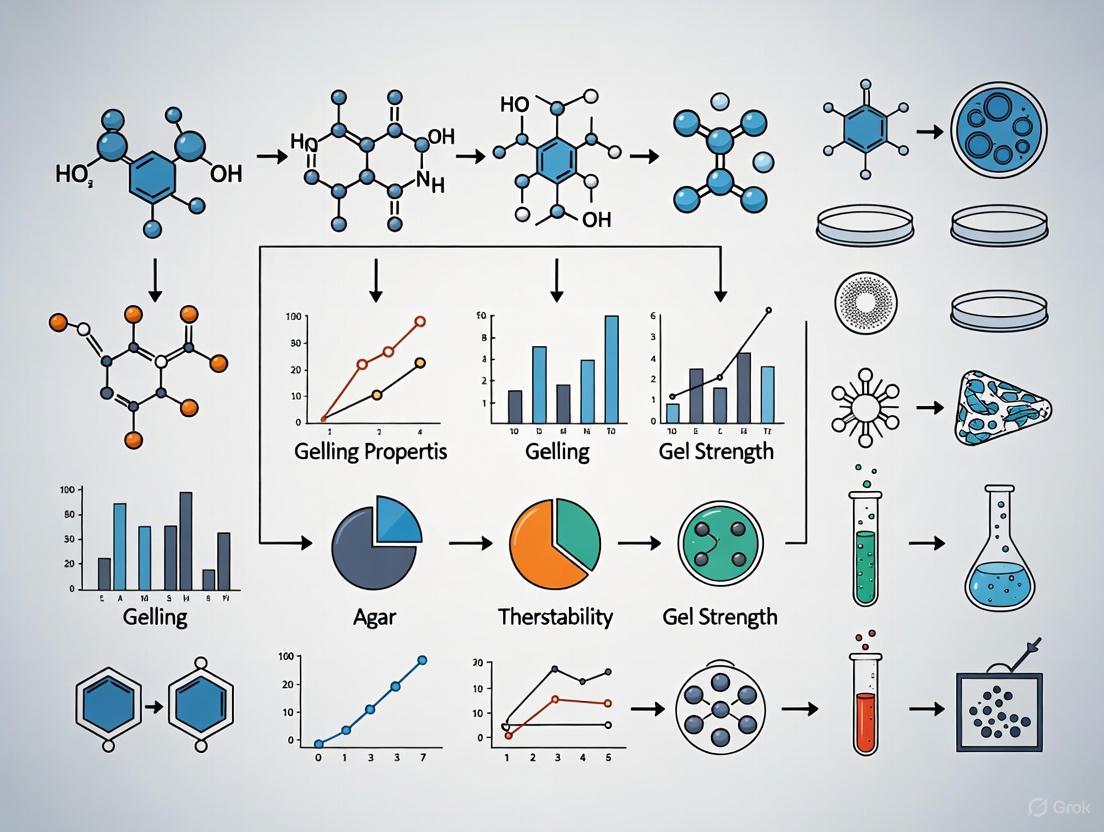
This article provides a systematic assessment of agar alternatives for researchers and drug development professionals.
Beyond Agar: A Comprehensive Effectiveness Assessment of Gelling Agent Alternatives for Pharmaceutical and Clinical Applications
Abstract
This article provides a systematic assessment of agar alternatives for researchers and drug development professionals. It explores the foundational science, functional properties, and performance metrics of prominent gelling agents like gellan gum, pectin, and carrageenan. The scope includes methodological guidance for in-lab evaluation, troubleshooting common formulation challenges, and a comparative analysis validating agents against key pharmaceutical criteria such as gel strength, drug release profiles, and biocompatibility. The content is designed to inform strategic excipient selection for advanced drug delivery systems and biomedical research.
The Science of Gelling: Exploring Properties and Pharmaceutical Potential of Agar Alternatives
In the development of pharmaceuticals, nutraceuticals, and advanced food systems, the selection of a gelling agent is a critical decision that directly influences product efficacy, stability, and consumer acceptance. The global market for gelatin substitutes, a key segment of gelling agents, is projected to grow from USD 3.28 billion in 2025 to USD 5.46 billion by 2033, driven significantly by demand for plant-based, vegan, and allergen-free products [1]. This growth underscores the necessity for a rigorous, data-driven framework to evaluate gelling agent performance. This guide provides a scientific comparison of prevalent gelling agents based on three fundamental performance metrics: Gel Strength, Thermoreversibility, and Clarity. Objective assessment of these metrics provides researchers and drug development professionals with the foundational data required to select optimal gelling agents for specific applications, from capsule formulation and drug delivery systems to cultured media and functional foods.
Comparative Performance Analysis of Gelling Agents
The functional properties of gelling agents vary substantially based on their botanical source, chemical structure, and extraction process. The following section provides a quantitative and qualitative comparison of common agents against the key defined metrics.
Table 1: Comparative Analysis of Key Gelling Agent Performance Metrics
| Gelling Agent | Gel Strength (Typical Range) | Thermoreversibility | Clarity / Transparency | Key Characteristics & Experimental Notes |
|---|---|---|---|---|
| Agar/Agarose | 82 - >1200 g/cm² [2] [3] [4] | No (Sets at ~40°C, Melts at ~85°C) [5] [4] | High (Forms clear gels) [6] | Firm, brittle texture; high gel strength is concentration-dependent [2]. High thermal stability [5]. |
| Gelatin | Not explicitly quantified in results | Yes (Melts at ~35°C, sets when chilled) [5] | High | Soft, elastic, thermo-reversible gel; melts at body temperature [5]. |
| Gellan Gum (GelRite) | 400 - 700 g/cm² [4] | Not explicitly quantified in results | Very High (Exceptionally clear) [4] | Requires cations (e.g., Ca²⁺, Mg²⁺) for gelation; valued for high clarity in tissue culture [4]. |
| Carrageenan | 100 - 1200 g/cm² [4] | Not explicitly quantified in results | Medium to High | Gel properties vary with type (e.g., kappa, iota); can form elastic or brittle gels [7]. |
| Pectin | Not explicitly quantified in results | Dependent on type (e.g., high/low methoxyl) [7] | Medium to High | Requires specific pH and solute conditions for gelation (e.g., sugar, calcium) [7]. |
| Starch | Not explicitly quantified in results | No | Low (Opaque) [7] | Typically forms opaque, non-thermoreversible gels; texture is chewy and dense [7]. |
Detailed Metric Breakdown
Gel Strength
Gel strength is a measure of the force required to rupture a gel's surface, with higher values indicating more rigid, self-supporting structures [2]. It is a fundamental parameter for applications requiring specific textural integrity, such as soft gel capsules, gummy nutraceuticals, and confectionery.
- Agar/Agarose: Exhibits the broadest and highest range of gel strength, making it exceptionally versatile. Commercial agars can have gel strengths exceeding 1100 g/cm², with high-grade extracts reported at 758 g/cm² [3] [4]. This strength is highly concentration-dependent, as demonstrated by experiments showing values from 82 g cm⁻² at 0.5% concentration to 535 g cm⁻² at 1.5% concentration [2].
- Gellan Gum: Possesses a medium gel strength (400-700 g/cm²), which is sufficient for many applications requiring a firm but not brittle structure [4].
- Carrageenan: Shows a highly variable gel strength range (100-1200 g/cm²), dependent on the specific type and the presence of ions that influence its gelling mechanism [4].
Thermoreversibility
Thermoreversibility refers to a gel's ability to repeatedly liquefy upon heating and solidify upon cooling, a property critical for processing and sensory characteristics.
- Gelatin: The classic example of a thermoreversible gelling agent. It dissolves in warm water (~50°C) and sets upon refrigeration, melting again at body temperature, which provides a desirable melt-in-the-mouth sensation [5].
- Agar/Agarose: Is not thermoreversible in a practical sense. It requires boiling (around 85°C) to dissolve and sets at a much higher temperature (around 40°C). Once formed, it does not melt until heated again to a high temperature, making it stable at room temperature and in warm climates [5] [4].
- Starch-based Gels: Are generally not thermoreversible, as the gelation process involves an irreversible swelling and rupture of starch granules [7].
Clarity
Clarity, or transparency, is vital for aesthetic reasons, product monitoring, and applications where visual appeal or the identification of contamination is important.
- Gellan Gum and Agar: Are recognized for high clarity. Gellan gum is often noted for its exceptional transparency, which is advantageous for identifying microbial contamination in culture media [4]. Agar also forms clear gels, which is a key reason for its use in microbiology and food applications [6].
- Starch: Typically results in opaque or cloudy gels, which is a significant functional limitation for many applications [7].
Experimental Protocols for Key Metrics
Standardized experimental protocols are essential for generating reproducible and comparable data. Below are detailed methodologies for assessing the key performance metrics.
Protocol 1: Measuring Gel Strength
A reliable method for measuring gel strength, adaptable for laboratories without access to expensive texture analyzers, is the water-column method [2].
Workflow Diagram: Gel Strength Measurement
Detailed Methodology:
- Gel Preparation: Prepare agar or agarose solutions at the desired concentration (e.g., 0.5% to 1.5% w/v) in distilled water. Boil the mixture for 10 minutes to ensure complete dissolution. Pour a defined volume (e.g., 20-30 mL) into a glass crystallizing dish (50 mm diameter). Allow the solution to cool and gel at room temperature, then cover and store at 4°C until use [2].
- Apparatus Setup: Assemble a home-made gel strength apparatus consisting of:
- A chromatography glass column held vertically by a stand.
- A flat-ended probe with a known surface area (e.g., 2 cm²) attached to the column's tip.
- An electronic scale placed directly under the column.
- A peristaltic pump connected to a water reservoir, with its output tube feeding into the top of the glass column [2].
- Measurement: Place a prepared gel on the scale and tare the weight. Position the probe tip on the center of the gel's surface. Immediately start the pump to fill the column with water at a constant rate. As the water volume increases, the weight pressing down on the gel via the probe will rise. Note the weight displayed on the scale at the exact moment the probe breaks the gel's surface. Immediately stop the pump [2].
- Calculation: Calculate the gel strength using the formula: Gel Strength (g/cm²) = Recorded Break Weight (g) / Surface Area of Probe (cm²). A minimum of six independent replicates are recommended for statistical significance [2].
Protocol 2: Assessing Thermoreversibility and Clarity
Thermoreversibility Workflow:
Methodology:
- Thermoreversibility Assessment: Prepare gel samples in clear containers (e.g., test tubes or cuvettes). For a qualitative test, solidify the gel by chilling, then subject it to a controlled temperature gradient in a water bath. At defined temperature intervals (e.g., 25°C, 35°C, 50°C, 75°C), remove the sample, invert it, and observe if the gel flows. Record the temperature at which the gel liquefies. To confirm reversibility, cool the liquefied sample and observe if it re-forms a solid gel. True thermoreversibility is demonstrated by multiple cycles of melting and setting [5] [4].
- Clarity Measurement: Pour a standardized volume of hot gelling agent solution into a spectrophotometer cuvette and allow it to set. Measure the percentage transmittance (%T) at a wavelength of 600-650 nm using a spectrophotometer, with distilled water as a blank reference (100% transmittance). Higher %T values indicate greater clarity [4] [8].
The Scientist's Toolkit: Essential Research Reagents and Materials
The following table details key materials and reagents required for the experimental evaluation of gelling agents as featured in the cited research.
Table 2: Essential Research Reagents and Materials for Gelling Agent Analysis
| Item | Function/Application | Experimental Context |
|---|---|---|
| Agar/Agarose Powder | The standard gelling agent for comparison; provides a baseline for gel strength and clarity [2] [4]. | Used as a control in gel strength measurements and clarity assays. |
| Alternative Gelling Agents (e.g., Gellan Gum, Carrageenan, Pectin, Starches) | Test substances for performance comparison against standard agar [7] [4] [8]. | Formulated at various concentrations to evaluate their functional properties. |
| Texture Analyzer | Instrument that provides precise, automated measurement of gel strength and other textural properties. | The gold-standard apparatus; an alternative is the manual water-column apparatus [2]. |
| Home-made Gel Strength Apparatus (Glass column, probe, scale, pump) | A flexible, affordable tool for assessing gel quality when a texture analyzer is unavailable [2]. | Core setup for the gel strength protocol described in this guide. |
| Spectrophotometer | Quantifies the clarity/transparency of gel samples by measuring light transmittance [8]. | Essential for obtaining objective, numerical data on gel clarity. |
| Cations (CaCl₂, MgSO₄) | Required for the gelation of certain hydrocolloids like gellan gum and low-methoxy pectin [7] [4]. | Added to the medium to induce and strengthen gel formation for specific agents. |
| pH Buffers | Control the acidity/alkalinity of the solution, which can critically impact the gelation of agents like pectin [7]. | Used to test gel stability and performance across a range of pH conditions. |
The objective comparison of gelling agents through the lenses of Gel Strength, Thermoreversibility, and Clarity provides an indispensable scientific foundation for formulation decisions. The data and protocols presented herein demonstrate that no single gelling agent is superior in all metrics; rather, each possesses a unique functional profile. Agar stands out for its exceptional gel strength and thermal stability, making it ideal for applications requiring firmness and room-temperature integrity. In contrast, gelatin offers unique thermoreversible and elastic properties prized for sensory appeal. The choice of agent must therefore be aligned with the specific technical requirements of the end product, driven by empirical data generated from standardized experimental protocols. As innovation in plant-based and functional materials continues, exemplified by research into novel sources like pea protein and Opuntia hydrocolloids [1] [9], this metrics-based framework will remain essential for validating the performance of next-generation gelling agents in scientific and industrial applications.
In the pursuit of sustainable and ethically-sourced laboratory and product development materials, plant-based hydrocolloids have emerged as critical tools for researchers, scientists, and drug development professionals. These hydrophilic polymers, capable of forming gels when dispersed in water, serve as fundamental components in diverse applications ranging from pharmaceutical formulations to tissue engineering and food science research [10]. Within the broader context of assessing alternatives to agar, a traditional seaweed-derived gelling agent, three plant-based powerhouses stand out for their unique functional properties: gellan gum, pectin, and carrageenan. Each of these biopolymers offers distinct molecular architectures, gelation mechanisms, and functional characteristics that make them suitable for specialized applications where agar may present supply, consistency, or performance limitations. This guide provides an objective, data-driven comparison of these three alternatives, equipping researchers with the necessary information to select the optimal gelling agent for their specific experimental or development needs.
Fundamental Properties and Molecular Characteristics
At the molecular level, gellan gum, pectin, and carrageenan possess distinct structural features that dictate their functional behavior. Gellan gum is a high-molecular-weight, anionic exopolysaccharide produced by the bacterium Sphingomonas elodea through a fermentation process, ensuring consistent quality and reliable supply [11] [12]. Its primary structure consists of a tetrasaccharide repeating unit of glucose, glucuronic acid, and rhamnose in molar ratios of 2:1:1 [13]. A critical distinction exists between its two primary forms: low acyl gellan, which forms hard, brittle, and translucent gels, and high acyl gellan, which yields soft and flexible gels [12]. Pectin, by contrast, is a complex heteropolysaccharide extracted from plant cell walls, primarily citrus peels and apple pomace [14]. Its main component is galacturonic acid, and its gelation properties are largely determined by its degree of methyl-esterification (DM). Pectins are classified as high methoxyl (HMP, DM >50%) or low methoxyl (LMP, DM <50%), with HMP gelling at low pH in the presence of high solute concentrations, and LMP gelling in the presence of divalent cations, typically calcium [10] [14]. Carrageenan, a family of sulfated polysaccharides extracted from red seaweeds, is composed of disaccharide units with varying sulfation patterns that define its three main types: kappa (κ), iota (ι), and lambda (λ) [15]. κ-carrageenan forms strong, brittle gels with potassium ions, while ι-carrageenan forms soft, elastic gels with calcium ions [10].
Table 1: Fundamental Characteristics of Plant-Based Gelling Agents
| Property | Gellan Gum | Pectin | Carrageenan |
|---|---|---|---|
| Source | Microbial fermentation (Sphingomonas elodea) | Plant cell walls (citrus peel, apple pomace) | Red seaweeds (Rhodophyceae) |
| Chemical Nature | Anionic polysaccharide (tetrasaccharide repeat) | Heteropolysaccharide (galacturonic acid backbone) | Sulfated galactan (disaccharide repeat) |
| Primary Forms | Low acyl, High acyl | High methoxyl (HMP), Low methoxyl (LMP) | Kappa (κ), Iota (ι), Lambda (λ) |
| Key Gelation Mechanism | Cation-induced aggregation of double helices (thermoreversible) | HMP: High solute & low pHLMP: Cross-linking via Ca²⁺ ions ("egg-box") | Thermoreversible helix formation & cation-mediated aggregation |
| Typical Gelling Cations | Ca²⁺, Mg²⁺, Na⁺, K⁺ | Ca²⁺ (for LMP) | K⁺ (for κ), Ca²⁺ (for ι) |
Functional Performance and Comparative Analysis
Gel Texture, Strength, and Clarity
The functional performance of these gelling agents varies significantly in terms of gel texture, strength, and clarity, which are critical parameters for application selection. Low acyl gellan gum is renowned for forming firm, brittle gels that are highly transparent and thermally stable, functioning effectively at very low concentrations (as low as 0.05%) [13]. The viscoelastic behavior of gellan gels is characterized by high storage modulus (G') values, indicating a strong, rigid network structure [14]. Pectin gels offer a wide spectrum of textures based on their type; HMP pectin produces spreadable, cohesive gels typical in jams and jellies, while LMP pectin can form more rigid, thermo-irreversible gels in the presence of calcium [10]. Carrageenan's texture profile is type-dependent: κ-carrageenan yields strong, brittle gels that are prone to syneresis (weeping), while ι-carrageenan creates soft, elastic gels that are more syneresis-resistant [15]. In mixed gel systems, carrageenan-rich gels (with carrageenan fraction ≥0.75) can exhibit high storage modulus but tend to be brittle, whereas pectin-rich gels demonstrate higher hardness and cohesiveness [15].
Environmental Stability and Compatibility
The stability of gels under various environmental conditions such as pH, temperature, and ionic strength is a crucial consideration for researchers. Gellan gum demonstrates remarkable stability across a wide pH range (3-8) and high temperatures (up to 120°C), making it suitable for applications requiring thermal processing or acidic conditions [16]. Its gel strength remains relatively unaffected by electrolytes, which is a distinct advantage in complex media [10]. Pectin stability is highly dependent on its type and the application environment. LMP pectin gels are generally more stable across pH ranges than HMP pectins, which require specific low pH conditions (typically <3.5) for gelation [10]. Carrageenan gels are thermoreversible, with melting and setting temperatures that vary based on the type and concentration of cations present. κ-carrageenan gels, for instance, have higher melting points than ι-carrageenan gels, providing better stability at elevated temperatures [10]. All three hydrocolloids exhibit synergistic effects when combined with other polysaccharides, enabling researchers to tailor gel properties for specific requirements [15] [14].
Table 2: Comparative Functional Performance in Research Applications
| Performance Attribute | Gellan Gum | Pectin | Carrageenan |
|---|---|---|---|
| Typical Gelation Concentration | 0.05% - 0.25% | 0.5% - 1.5% | 0.5% - 1.5% |
| Gel Texture Profile | Low acyl: Firm, brittleHigh acyl: Soft, elastic | HMP: Spreadable, cohesiveLMP: Short, rigid | κ: Strong, brittleι: Soft, elastic |
| Thermal Stability | High (up to 120°C) | Moderate | Type-dependent (κ > ι) |
| pH Stability Range | 3 - 8 | LMP: Wide rangeHMP: Requires low pH (<3.5) | Stable in mild acid to neutral |
| Clarity | Highly transparent | Opaque to translucent | κ: Slightly cloudyι: Clear |
| Syneresis Tendency | Low | Low to moderate | κ: Highι: Low |
Experimental Protocols and Methodologies
Protocol: Formulation and Characterization of Mixed κ/ι-Carrageenan - LM Pectin Gels for Probiotic Encapsulation
This protocol outlines the methodology for creating and characterizing composite gels of carrageenan and pectin for encapsulation applications, based on research by Hughes et al. [15].
Research Objective: To formulate self-standing composite gels from κ/ι-carrageenan and low methoxyl pectin (LMP) and evaluate their potential for probiotic encapsulation, specifically for protecting Lacticaseibacillus rhamnosus ATCC 53103 (LGG) under simulated gastrointestinal conditions.
Materials and Reagents:
- Food-grade κ/ι-carrageenan (e.g., Namalact KS)
- Low methoxyl pectin (e.g., Genu Pectin LM-104 AS, CP Kelco)
- Calcium chloride (CaCl₂), analytical grade
- Potassium chloride (KCl), analytical grade
- Lacticaseibacillus rhamnosus ATCC 53103 (LGG) culture
- Deionized water
- Materials for simulated gastrointestinal fluids (e.g., pepsin, pancreatin, bile salts)
Methodology:
- Solution Preparation: Prepare separate stock solutions of carrageenan (2% w/v) and LMP (2% w/v) in deionized water. Heat solutions to 80°C with continuous stirring until complete dissolution.
- Gel Formulation: Blend the stock solutions to achieve target carrageenan fractions (Xc) ranging from 0 (pure pectin) to 1 (pure carrageenan). For example, Xc = 0.25 denotes a pectin-rich gel with 25% carrageenan and 75% pectin in the polymer blend.
- Ionotropic Gelation: Add cross-linking solutions of CaCl₂ (for LMP) and KCl (for carrageenan) to the blended polymer solutions at specified concentrations (e.g., 50-200 mM). Maintain temperature above gelation point during mixing.
- Gelation Process: Pour the mixtures into diffusion cells or molds and allow to set at room temperature for 24 hours to form self-standing gels.
- Rheological Characterization: Perform oscillatory rheometry frequency sweeps (e.g., 1-100 rad/s) at constant strain to determine storage modulus (G') and loss modulus (G") values. Calculate tan δ (G"/G') to characterize gel strength.
- Texture Profile Analysis: Conduct mechanical testing to determine hardness (peak force on first compression) and cohesiveness (ratio of positive force areas during second and first compressions).
- Probiotic Encapsulation & Viability: Incorporate LGG probiotic culture into the gel formulations prior to gelation. Extrude the mixture through a nozzle into a hardening bath containing cross-linking ions to form beads. Subject beads to simulated gastrointestinal conditions (e.g., gastric fluid pH 2.0 with pepsin, followed by intestinal fluid pH 6.8 with pancreatin and bile salts). Determine encapsulation yield and viability via colony-forming unit (CFU) counts before and after exposure.
Protocol: Viscoelastic Analysis of Low Acyl Gellan - Citrus Pectin Mixed Gels
This protocol describes the procedure for analyzing the linear viscoelastic behavior of hybrid gels comprising low acyl gellan (LAG) and citrus pectin, based on the research of Rivera-Hernández et al. [14].
Research Objective: To analyze the viscoelastic behavior and network interactions in mixed hydrogels based on low methoxyl citrus pectin and low acyl gellan in the presence of calcium ions.
Materials and Reagents:
- Low acyl gellan gum (e.g., Kelcogel, CP Kelco)
- Low methoxyl citrus pectin (DE ≈ 30%, e.g., GENU Pectin type LM-12 CG, CP Kelco)
- Calcium chloride (CaCl₂), analytical grade
- Deionized and purified water
Methodology:
- Polysaccharide Hydration: Prepare separate dispersions of LAG (0.3-0.5% w/v) and pectin (0.3-0.5% w/v) in deionized water under constant stirring.
- Solution Preparation: Heat the dispersions to 90°C for 30 minutes with continuous stirring to ensure complete dissolution of the polysaccharides.
- Blending and Cross-linking: Blend the hot LAG and pectin solutions at varying ratios. Add CaCl₂ solution (3-5 mM final concentration) to the blended polymers under continuous stirring.
- Gel Formation: Carefully pour the mixtures onto rheometer plates or into designated molds for testing. Allow gels to set at 25°C for 24 hours before analysis.
- Rheological Analysis: Conduct small-amplitude oscillatory shear (SAOS) tests using a controlled-stress rheometer. Perform strain sweeps to determine the linear viscoelastic region (LVR), followed by frequency sweeps (e.g., 0.1-100 rad/s) at a strain within the LVR.
- Data Modeling: Fit the frequency dependence of storage (G') and loss (G") moduli to the generalized Maxwell model to obtain discrete relaxation spectra, including relaxation times (λ) and relaxation moduli (Gᵢ).
- Network Mesh Size Calculation: Calculate the average network mesh size (ξ) using the following equation derived from rubber elasticity theory:
ξ = (kT / G₀)^{1/3}
where k is Boltzmann's constant, T is absolute temperature, and G₀ is the plateau modulus obtained from the Maxwell model.
Research Reagent Solutions and Essential Materials
For researchers embarking on studies involving these plant-based gelling agents, the following key reagents and materials are essential for experimental work:
Table 3: Essential Research Reagents and Materials
| Reagent/Material | Function/Application | Research Considerations |
|---|---|---|
| Low Acyl Gellan Gum (e.g., Kelcogel) | Forms firm, brittle, high-clarity gels; ideal for controlled release & tissue engineering studies. | Use concentrations typically 0.05%-0.5%; requires cations (Ca²⁺) for gelation; thermoreversible gels. |
| High Acyl Gellan Gum | Forms soft, elastic gels; suitable for texture-sensitive applications. | Provides different texture profile than low acyl form without changing polymer concentration. |
| Low Methoxyl Pectin (LMP) (DE <50%) | Forms ionotropic gels with Ca²⁺; used in encapsulation & bioactive delivery. | Gel strength depends on calcium concentration and distribution of non-esterified galacturonic acid blocks. |
| High Methoxyl Pectin (HMP) (DE >50%) | Forms gels at low pH with high soluble solids; used in traditional food gels. | Requires specific conditions: pH <3.5 and soluble solids >55%. |
| κ-Carrageenan | Forms strong, brittle gels with potassium ions; used in immobilization & texture studies. | Prone to syneresis; often blended with other hydrocolloids to improve texture. |
| ι-Carrageenan | Forms soft, elastic gels with calcium ions; used where syneresis resistance is needed. | More tolerant to freezing/thawing than κ-carrageenan. |
| Calcium Chloride (CaCl₂) | Cross-linking agent for LMP pectin & low acyl gellan; controls gelation rate & strength. | Concentration critically affects gel texture & strength; must be optimized for each system. |
| Potassium Chloride (KCl) | Cross-linking agent for κ-carrageenan; promotes helix aggregation & gel formation. | Required for κ-carrageenan gelation; concentration affects gel strength and melting point. |
Mechanisms and Workflows: A Visual Synthesis
Gel Formation Mechanisms
The following diagram illustrates and contrasts the fundamental gelation mechanisms of the three plant-based gelling agents, highlighting their distinct molecular interactions.
Experimental Workflow for Probiotic Encapsulation
This workflow diagrams the methodology for developing and testing probiotic encapsulation systems using composite carrageenan-pectin gels, based on experimental protocols from recent research.
The comprehensive profiling of gellan gum, pectin, and carrageenan presented in this guide demonstrates that each plant-based gelling agent offers a unique combination of properties that can be strategically leveraged in research and development applications. Gellan gum stands out for its fermentation-based origin, ensuring consistent quality and supply, along with its exceptional gelling efficiency at low concentrations and stability across wide pH and temperature ranges [11] [12] [13]. Pectin offers versatile gelation mechanisms based on its degree of esterification, with LMP's calcium-responsive gelation being particularly valuable for bioactive encapsulation and controlled release systems [14] [17]. Carrageenan provides a spectrum of textural properties based on its specific type (κ, ι), with well-characterized cation-dependent gelation mechanisms suitable for various immobilization and delivery applications [15].
For researchers operating within the framework of assessing agar alternatives, the selection among these three plant-based powerhouses should be guided by specific application requirements: gellan gum for high-clarity, firm gels in controlled release systems; pectin for biocompatible, calcium-responsive encapsulation matrices; and carrageenan for tailored texture profiles in immobilization and delivery applications. The growing body of research on mixed gel systems further expands the possibilities, enabling the creation of customized gel matrices with optimized properties for specialized research needs in pharmaceutical development, tissue engineering, and functional food design [15] [14]. As the field advances, these plant-based hydrocolloids will continue to empower researchers with sustainable, reproducible, and highly functional alternatives to traditional gelling agents.
Fermentation-derived biopolymers, such as xanthan gum and gellan gum, have emerged as critical tools across scientific and industrial landscapes, serving as versatile gelling, thickening, and stabilizing agents. As researchers seek sustainable and effective alternatives to traditional materials like agar, a systematic comparison of their properties, performance, and applications becomes essential. This guide provides a scientifically-grounded, objective comparison between xanthan and gellan gum, drawing upon experimental data to inform their selection and use in research and development contexts, particularly where agar alternatives are being evaluated.
Fundamental Properties and Production
Xanthan gum and gellan gum, while both microbial exopolysaccharides, possess distinct molecular structures and production pathways that define their functional characteristics.
Xanthan gum is produced by the fermentation of carbohydrates by the bacterium Xanthomonas campestris [18]. Its molecular structure is characterized by a cellulose backbone with trisaccharide side chains, which confer its high viscosity in solution. It is renowned for its strong shear-thinning behavior, stability across a wide range of pH and temperatures, and its ability to create viscous solutions rather than firm gels on its own [19].
Gellan gum is synthesized via bacterial fermentation by Sphingomonas elodea [18] [20]. It is a linear tetrasaccharide polymer consisting of glucose, glucuronic acid, and rhamnose residues. It is commercially available in two primary forms: high-acyl gellan, which forms soft, elastic gels, and low-acyl gellan, which produces firm, brittle gels, especially in the presence of cations [18] [20]. A key differentiator is its ability to form high-strength, heat-stable gels at very low concentrations.
Comparative Performance Data from Experimental Studies
The following tables summarize key performance metrics for xanthan gum and gellan gum across various applications, as derived from experimental research.
Table 1: General Functional Properties and Typical Usage
| Property | Xanthan Gum | Gellan Gum | Key Experimental Context |
|---|---|---|---|
| Primary Function | Thickening, Stabilization [18] | Gelling, Thickening, Suspension [18] | Food and laboratory media applications [18]. |
| Gel Texture | Does not gel alone; synergistic gels with other gums [19]. | Firm, brittle gels (low-acyl); soft, elastic gels (high-acyl) [19] [18]. | Texture profile analysis in food systems [19]. |
| Typical Dosage | 0.1 - 0.5% [18] | 0.05 - 0.25% [18] | Concentration ranges for effective functionality [18]. |
| Acid Stability | Stable in acidic and alkaline environments [18]. | Acid-resistant, stable in low-pH applications [18]. | Performance in diverse pH conditions [18]. |
| Shear Properties | Pseudoplastic (shear-thinning) [21]. | Shear-thinning [22]. | Rheological measurements [21] [22]. |
| Synergistic Partners | Guar gum, locust bean gum [18]. | Locust bean gum, calcium ions [18]. | Enhanced viscosity or gel strength in mixtures [18] [22]. |
Table 2: Quantitative Performance in Material Science and Soil Treatment
| Parameter | Xanthan Gum Performance | Experimental Conditions |
|---|---|---|
| Soil Shear Strength | Cohesion increased by 79.47% and compressive strength by 93.31% [21]. | 1.5% XG dosage in red clay after 28 days curing [21]. |
| Soil California Bearing Ratio (CBR) | Peak CBR value of 24.1% achieved [21]. | Treatment of sandy loam; value dependent on XG dosage [23]. |
| Film Tensile Strength (TS) | TS of blend film (GG:XG=7:3) higher than XG-alone film [22]. | Polymer films with hydroxypropyl methylcellulose [22]. |
| Water Vapor Adsorption | Adsorption capacity of 1.38 g g⁻¹ at 25°C and 90% RH [24]. | Xanthan gum-based super-porous hydrogel (XG-SPH) [24]. |
Table 3: Efficacy in Biological and Agricultural Media
| Application | Agent | Performance Outcome | Experimental Context |
|---|---|---|---|
| Plant Tissue Culture | Xanthan Gum | Suitable gelling properties, but higher cost (5.98 Euro L⁻¹) made it less ideal as a low-cost agar substitute [8]. | Propagation of plantain explants on starch-based substrates [8]. |
| Microbial Cultivation | Gellan Gum | Recovers more diverse microbial communities from soil compared to agar [25]. | Cultivation of unculturable soil microorganisms [25]. |
Detailed Experimental Protocols
To ensure reproducibility and provide a clear framework for evaluation, detailed methodologies from key cited studies are outlined below.
Protocol: Soil Stabilization and Strength Analysis using Xanthan Gum
This protocol is adapted from studies on the hydromechanical behavior of XG-treated soil [23] [21].
- Materials: Air-dried soil (e.g., red clay or sandy loam), industrial-grade xanthan gum powder, distilled water, standard compaction mold, universal testing machine, direct shear apparatus.
- Sample Preparation:
- Dry Mixing: Mechanically mix the air-dried soil with predetermined ratios of XG (e.g., 0.5%, 1.0%, 1.5%, and 2.0% by dry soil weight) until homogenous [21].
- Hydration: Add distilled water to the mixture to achieve the soil's optimum moisture content and mix thoroughly [21].
- Curing: Seal the mixture and allow it to hydrate for 24 hours at constant relative humidity before sample preparation [21].
- Compaction: Statically compact the hydrated mixture into standard molds for unconfined compression or direct shear tests [23].
- Testing & Analysis:
- Unconfined Compression Test: Load cylindrical specimens at a constant strain rate (e.g., 1 mm/min) until failure or 20% strain is reached. Record the stress-strain curve to determine peak compressive strength [21].
- Direct Shear Test: Shear the prepared specimens under different normal stresses (e.g., 100, 200, 300, 400 kPa) at a fixed rate (e.g., 0.8 mm/min). Plot shear stress vs. normal stress to determine the cohesion and internal friction angle of the treated soil [21].
- Microstructural Analysis: Examine fractured soil samples using Scanning Electron Microscopy (SEM) to observe the XG-soil matrix interaction, pore-filling, and the formation of fibrous aggregates [23] [21].
Protocol: Evaluating Gellan Gum as a Gelling Agent for Microbial Cultivation
This protocol is based on the use of gellan gum for recovering diverse microbial communities [25].
- Materials: Gellan gum powder, nutrient-poor media components, soil samples, sterile Petri dishes, incubation chamber.
- Media Preparation:
- Prepare a nutrient-poor broth medium suitable for the target microorganisms.
- Add gellan gum as the gelling agent at a concentration typically between 0.5% and 1.0% (w/v). Agar, typically used at 1.5%, serves as the control.
- Heat the mixture to dissolve the gellan gum completely.
- Autoclave to sterilize.
- Pour the sterilized medium into Petri dishes under aseptic conditions [25].
- Inoculation and Incubation:
- Prepare dilutions of the soil sample in a sterile buffer.
- Spread the inoculum evenly onto the surface of the gellan gum plates.
- Incubate the plates under appropriate atmospheric conditions (e.g., microaerophilic or altered gas mixtures like 5% O₂, 10% CO₂) and temperature for the required duration [25].
- Analysis:
- Colony Counting and Isolation: Count the number of colony-forming units (CFUs) and isolate distinct morphotypes.
- Diversity Assessment: Use molecular methods (e.g., 16S rRNA gene sequencing) on the harvested biomass to compare the phylogenetic diversity and abundance of microbial taxa recovered on gellan gum media versus standard agar media [25].
Protocol: Analysis of Synergistic Interactions in Polymer Films
This protocol outlines the method for creating and testing blended films of gellan and xanthan gum [22].
- Materials: Gellan gum (GG), xanthan gum (XG), hydroxypropyl methylcellulose (HPMC), sodium alginate, plasticizers (e.g., PEG-400), potassium citrate, calcium chloride, flat glass plates, universal testing machine.
- Film Solution Preparation:
- Dissolve a total of 1.0% (w/w) of the GG and XG mixture (at varying ratios, e.g., 7:3) in distilled water containing 0.3% (w/w) potassium citrate and 1.0% (w/w) plasticizer at 60°C under agitation.
- Heat the solution to 80°C and add 9% (w/w) HPMC and 0.7% (w/w) sodium alginate. Maintain at 80°C with stirring for 1 hour.
- Cool the solution to 50°C and degas under vacuum [22].
- Film Casting:
- Pour a precise amount of the solution onto a flat glass plate.
- Dry the film in a controlled environment (e.g., 28°C and 60% relative humidity) for a set period (e.g., 3 hours) to achieve a uniform thickness [22].
- Characterization:
- Mechanical Properties: Cut the film into dumbbell strips. Use a universal testing machine to perform tensile tests, determining Tensile Strength (TS) and Tensile Elongation (TE) at break according to standardized methods (e.g., ASTM D882) [22].
- Rheological Measurements: Analyze the film-forming solutions using a rheometer with a cone-and-plate geometry. Perform shear rate sweeps (e.g., from 0.1 to 600 s⁻¹) to assess viscosity and flow behavior [22].
The Scientist's Toolkit: Essential Research Reagents
Table 4: Key Reagents for Experimentation with Xanthan and Gellan Gum
| Reagent / Material | Function in Research | Typical Examples & Notes |
|---|---|---|
| Industrial-Grade Xanthan Gum | Soil stabilization studies, large-scale material testing [21]. | Off-white to light yellow powder; ensure consistent viscosity grade. |
| Food or Laboratory Grade Gellan Gum | Microbial culture media, fabrication of hydrogels and polymer films [25] [22]. | Specify high-acyl (elastic gels) or low-acyl (brittle gels) forms. |
| Cation Sources (e.g., CaCl₂) | Activator for gellan gum gelation; influences gel strength and texture [22]. | Calcium chloride is commonly used in film and capsule preparation. |
| Plasticizers (e.g., PEG-400, Glycerol) | Improves flexibility and reduces brittleness of biopolymer films [22]. | Polyethylene glycol 400 (PEG-400) is effective for plant-based polymer films. |
| Hydrocolloid Synergists | Modifies texture and properties when blended with primary gum [18] [22]. | e.g., Locust bean gum with gellan gum; guar gum with xanthan gum. |
| Mueller-Hinton Agar/Broth | Base medium for antimicrobial susceptibility testing (AST) [26]. | Supplemented with blood or FBS for fastidious organisms like Arcobacter [26]. |
Xanthan gum and gellan gum are both powerful fermentation-derived agents with distinct and sometimes complementary profiles. Gellan gum excels in applications requiring firm, heat-stable, and clear gels at low concentrations, making it superior for advanced microbial culturing and certain food and pharmaceutical formulations. Xanthan gum is unparalleled as a viscosifier and stabilizer, particularly in non-gelling systems like sauces, dressings, and for soil stabilization in geotechnical engineering. The choice between them is not a matter of which is universally better, but which is more fit-for-purpose based on the specific functional requirements, experimental conditions, and economic constraints of the project. Furthermore, their synergistic combination often yields material properties that surpass those of the individual components, opening a promising avenue for creating tailored solutions in research and drug development.
In the assessment of gelling agents for pharmaceutical and research applications, animal-derived gelatin has played a historically pivotal role. As a product derived from collagen found in animal bones, skin, and connective tissues, gelatin functions as a thermoreversible gelling agent, forming soft, elastic gels that melt near body temperature [27]. While its functional properties have made it a staple in capsules, vaccine stabilizers, and culture media, its animal origin imposes significant limitations, driving the investigation of plant-based alternatives like agar within modern scientific paradigms [28]. This guide objectively examines gelatin's performance against other gelling agents, with a focus on its limitations in advanced research and drug development.
Comparative Analysis of Gelling Agents
The selection of a gelling agent is dictated by its physicochemical properties, which directly influence experimental outcomes and product stability. The table below summarizes key quantitative data for gelatin and its common alternatives.
Table 1: Comprehensive Comparison of Gelling Agent Properties and Applications
| Property | Gelatin | Agar-Agar | Pectin | Gellan Gum |
|---|---|---|---|---|
| Source | Animal collagen (bones, skin) [27] [29] | Red algae (seaweed) [30] [31] | Fruit cell walls (e.g., citrus, apple) [27] [32] | Microbial fermentation (Sphingomonas elodea) [28] |
| Chemical Nature | Protein [29] | Polysaccharide (agarose & agaropectin) [5] [28] | Polysaccharide [27] | Polysaccharide [28] |
| Gel Texture | Soft, elastic, "melt-in-the-mouth" [33] [27] | Firm, brittle, clean break [33] [29] | Soft, elastic, spreadable [27] [32] | Very firm, high clarity [28] |
| Setting Temperature | Sets when cooled (~4°C); requires refrigeration [30] [27] | ~32-40°C; sets at room temperature [30] [31] | Dependent on type and pH; sets at room temperature [31] | Thermoreversible; sets on cooling [28] |
| Melting Point | Low (~35°C); melts at body temperature [27] [29] | High (~85°C); heat-stable [27] [31] | Thermally irreversible; stable at room temperature [27] [31] | Very high (~110°C) [28] |
| Thermoreversibility | Yes (melts and re-sets) [27] | Yes [31] | Limited [31] | Yes [28] |
| Key Limitations | Animal-derived, temperature-sensitive, prone to enzymatic degradation [27] [28] | Brittle texture, can synerese (weep liquid), requires boiling to activate [27] [5] | Requires specific conditions (sugar, acid, or calcium) to gel [27] [31] | Requires cations for gelation, can be cost-prohibitive [28] |
| Primary Research Applications | Traditional culture media, capsule shells, soft gels [27] [28] | Microbiological culture media, plant-based capsules, heat-stable gels [27] [28] | Pharmaceutical suspending agents, edible films, drug delivery matrices [31] [32] | Cell culture media, tissue engineering scaffolds [28] |
Key Limitations of Gelatin in Scientific Context
The data in Table 1 highlights several critical limitations of gelatin that can compromise research integrity and pharmaceutical development.
Temperature Lability and Instability
Gelatin's low melting point (~35°C) renders it unsuitable for applications exceeding room temperature, a significant drawback for studies involving thermophilic organisms or products destined for warm climates [27] [29]. This thermal sensitivity necessitates a cold chain for storage and transport, increasing logistical complexity and cost [27].
Susceptibility to Microbial and Enzymatic Degradation
As a protein, gelatin serves as an excellent nutrient source for many microorganisms and is vulnerable to degradation by proteases [28]. This susceptibility can lead to the breakdown of culture media or pharmaceutical formulations, compromising experimental results and product shelf-life [28]. In contrast, polysaccharide-based agents like agar are generally metabolically inert to a wider range of microbes, making them superior for microbiological culture [28].
Dietary and Regulatory Restrictions
Its animal origin excludes gelatin from vegan, vegetarian, and certain religious (halal, kosher) diets, limiting the patient population for pharmaceutical products [27] [29]. Furthermore, concerns about bovine spongiform encephalopathy (BSE) and other zoonotic diseases, though minimized through controlled sourcing, necessitate rigorous documentation and can pose regulatory hurdles [27].
Experimental Protocol: Assessing Gel Strength and Thermostability
A core component of gelling agent research is the quantitative evaluation of functional performance. The following protocol outlines a standard method for comparing the gel strength and heat resistance of gelatin against alternatives like agar.
Research Reagent Solutions
Table 2: Essential Materials for Gelling Agent Analysis
| Reagent/Material | Function/Explanation |
|---|---|
| Gelling Agents | The test subjects (e.g., Gelatin, Agar, Gellan Gum). High-purity, pharmaceutical or bacteriological grade is required for consistent results. |
| Deionized Water | The solvent for creating hydrogel matrices, ensuring no ionic interference. |
| Incubator/Oven | Provides controlled temperature environments to test thermal stability of gels. |
| Texture Analyzer | Instrument that applies a controlled force to measure the firmness (Bloom strength) and fracture point of the gel. |
| Water Bath | Provides precise heating for dissolving agents and testing melting points. |
| Standard Mold Containers | Creates gels of uniform geometry and volume for reproducible mechanical testing. |
Methodology
- Solution Preparation: Prepare separate solutions of each gelling agent (e.g., 1.5% w/v agar, 6% w/v gelatin) in deionized water. Suspend each agent in cold water before heating to prevent clumping.
- Gel Formation: Heat the suspensions with constant stirring until complete dissolution is achieved (agar requires boiling). Pour the solutions into standardized molds and allow them to set under controlled conditions (room temperature for agar, refrigeration for gelatin).
- Gel Strength Measurement: After a fixed setting period (e.g., 24 hours), assess the gel strength using a texture analyzer equipped with a cylindrical probe. Measure the force (in grams or Newtons) required to achieve 4 mm of penetration into the gel surface. This is known as the Bloom test for gelatin.
- Thermostability Testing: Incubate set gels in ovens or water baths at incremental temperatures (e.g., 25°C, 35°C, 45°C) for one hour. Visually inspect for structural integrity, melting, or syneresis (water leakage). Alternatively, measure the precise melting point by placing a gel sample in a test tube with a small ball and heating it in a water bath; the temperature at which the ball falls through the gel is recorded as the melting point.
The workflow for this comparative analysis is outlined below.
Diagram 1: Gelling Agent Test Workflow
Gelatin remains a valuable gelling agent with a proven history in pharmaceutical capsules and certain culture media, prized for its thermoreversibility and elastic texture. However, its limitations are profound and scientifically significant: inherent thermal lability, susceptibility to enzymatic degradation, and animal-derived origin restrict its utility in modern, demanding research and global drug development [27] [28]. The comparative data and experimental framework provided here underscore that plant and microbial-derived hydrocolloids, such as agar, pectin, and gellan gum, offer superior alternatives where heat stability, dietary inclusivity, and resistance to microbial consumption are paramount. A rigorous effectiveness assessment confirms that moving beyond animal-derived options is often critical for advancing research and innovating pharmaceutical formulations.
The global market for gelling agents is undergoing a significant transformation, driven by a powerful consumer-led movement toward natural, sustainable, and plant-based ingredients. This shift is particularly pronounced in the pharmaceutical, food, and biotechnology sectors, where functionality and purity are paramount. The global natural gelling agent market, estimated at USD 5.6 billion in 2025, is projected to grow at a compound annual growth rate (CAGR) of 4.9% to 6%, reaching up to USD 8.4 billion by 2035 [34] [35]. This growth is fundamentally fueled by the demand for clean-label products and alternatives to animal-derived gelatin, with agar emerging as a critical plant-based solution. This guide provides an objective comparison of agar and its alternatives, framing their performance within the context of scientific research and industrial application.
The demand for natural gelling agents is a major force reshaping the ingredient landscape. The following table summarizes the key market drivers and the specific case of the agar market, which serves as a bellwether for the broader industry.
Table 1: Key Market Drivers for Natural Gelling Agents and the Agar Market Snapshot
| Aspect | Key Findings | Data Source |
|---|---|---|
| Global Natural Gelling Agent Market (2025) | USD 5.6 Billion | Future Market Insights [34] |
| Projected Market Value (2035) | USD 8.4 Billion | Future Market Insights [34] |
| Forecast CAGR (2025-2035) | 4.9% - 6% | Future Market Insights, Archive Market Research [34] [35] |
| Primary Consumer Driver | Demand for clean-label and plant-based ingredients | Archive Market Research, Intel Market Research [35] [36] |
| Agar Market Size (2025) | USD 413 - 422 Million | 360 Research Reports, Market Report Analytics [37] [38] |
| Agar Projected Market Value (2032-2034) | USD 630 - 769.9 Million | Intel Market Research, 360 Research Reports [36] [37] |
| Agar Market CAGR | 7.2% - 7.5% | Intel Market Research, 360 Research Reports [36] [37] |
| Dominant Agar Application | Food Industry (~75% of volume) | 360 Research Reports [37] |
| Key Agar Growth Segment | Vegan/vegetarian desserts (>50% of launches use agar) | 360 Research Reports [37] |
The data indicates a robust and growing market, with agar outperforming the overall gelling agent market in terms of growth rate. This is largely due to its strategic position as a plant-based and clean-label hydrocolloid, replacing animal-derived gelatin in over 50% of vegan dessert and dairy alternative launches in key markets [37]. The top three agar manufacturers hold approximately 50% of the global market share, indicating a concentrated and technically advanced industry [36].
Comparative Analysis of Key Natural Gelling Agents
For researchers and product formulators, selecting the appropriate gelling agent requires a clear understanding of their functional properties. The following tables provide a comparative analysis of common natural gelling agents, with a focus on objective performance data.
Table 2: Functional Property Comparison of Common Natural Gelling Agents
| Gelling Agent | Source | Clarity | Acid Stability | Gel Type | Key Strengths | Notable Limitations |
|---|---|---|---|---|---|---|
| Agar | Red Algae | Cloudy [39] | Moderate [39] | Thermo-Irreversible | High gel strength; Plant-based; Syneresis-free [40] | Requires high-temperature dissolution; Can be cloudy [39] |
| Gellan Gum (Low-Acyl) | Microbial Fermentation | Excellent [39] | Yes [39] | Thermo-Reversible | High clarity at low usage (0.015-0.035%); Acid-stable [39] | Sensitive to ions; Can require specific cations for gelation |
| Pectin | Fruits | Slightly Cloudy [39] | Yes [39] | Thermo-Irreversible (HM) / Reversible (LM) | Excellent for acidic systems; Clean-label perception | Limited heat stability; Requires specific sugar/acid conditions [39] |
| Carrageenan | Red Seaweed | Cloudy [39] | Limited [39] | Thermo-Reversible | High viscosity; Good dairy reactivity | Potential sensitivity to low pH; Variability based on type (kappa, iota, lambda) [39] |
| Xanthan Gum | Microbial Fermentation | Opaque [39] | Yes [39] | Does not gel (Thickener) | High shear-thinning viscosity; Extreme pH/temp stability | Does not form a true gel; Provides weak gel-like texture [39] |
Table 3: Quantitative Experimental Usage and Performance Data
| Gelling Agent | Typical Usage Rate (%) | Gel Strength (Approx.) | Melting Point (°C) | Gelling Point (°C) |
|---|---|---|---|---|
| Agar | 0.2 - 0.5% [39] | >900 g/cm² (Food Grade) [37] | 85 - 95°C [40] | 32 - 45°C [40] |
| Gellan Gum (Low-Acyl) | 0.015 - 0.035% [39] | Very High (at low %) | Customizable with ions | Customizable with ions |
| Pectin | 0.3 - 1.0% [39] | Varies by type and conditions | Varies by type | Varies by type |
| Carrageenan | 0.02 - 0.2% [39] | Varies by type (Kappa > Iota) | 50 - 70°C | 30 - 50°C |
| Xanthan Gum | 0.1 - 0.3% [39] | N/A (Thickener) | N/A | N/A |
Experimental Protocols for Gelling Agent Analysis
To ensure reproducible research and development, standardized protocols for creating and analyzing emulsion gels are essential. The following section details common methodologies cited in recent scientific literature.
Preparation of Plant-Based Emulsion Gels (PBEGs)
Plant-based emulsion gels (PBEGs) are complex systems that combine the properties of emulsions and gels. Recent research (2017-2025) identifies three primary types [40]:
- Polymer-gelled emulsions: Oil droplets dispersed within a gelled aqueous phase.
- Aggregated emulsions: A 3D network formed by aggregated oil droplets.
- Jammed emulsions: High-internal-phase emulsions (HIPEs) where droplets are tightly packed.
The most common is the polymer-gelled emulsion, where the aqueous phase is gelled using proteins, polysaccharides, or a combination of both. The table below summarizes specific preparation methods from recent studies.
Table 4: Experimental Protocols for Preparing Plant-Based Emulsion Gels
| Gelling System | Source | Preparation Method & Conditions | Primary Molecular Interactions |
|---|---|---|---|
| Protein-Based (Pea) | [40] | Heat treatment at 95 °C | Disulfide bonds [40] |
| Protein-Based (Soy) | [40] | Addition of calcium ions | Ionic bonds, Hydrophobic interactions [40] |
| Protein-Based (Pea) | [40] | Enzyme treatment with Transglutaminase at pH 7, room temperature | Covalent bonds [40] |
| Polysaccharide-Based (Agar) | [40] | Heat treatment at 60 °C | Physical crosslinked network (Helix formation) [40] |
| Polysaccharide-Based (Chitosan) | [40] | Addition of alginate and calcium ions at room temperature | Ionic bonds [40] |
| Protein-Polysaccharide Complex | [40] | Hold at 90 °C for 30 min, then add calcium ions | Ionic bonds, Disulfide bonds, Hydrogen bonds, Hydrophobic interactions [40] |
Key Characterization Techniques
A robust analysis of gelling agents requires a multi-faceted approach to characterize their structural, physicochemical, and functional properties. Commonly used techniques include [40]:
- Microscopy: To visualize the microstructure of the gel network and oil droplet distribution.
- Rheology: To quantify the mechanical properties, such as gel strength, elasticity (G'), and viscosity.
- Particle Size Analysis: To determine the size distribution of oil droplets in the emulsion.
- Interfacial Charge (Zeta Potential): To assess the electrostatic stability of the emulsion.
- Thermal Analysis: To evaluate the stability of the gel network to temperature changes.
The following diagram illustrates a generalized workflow for the preparation and characterization of a heat-set, protein-based emulsion gel, a common experimental system.
Diagram 1: Workflow for creating and analyzing a heat-set emulsion gel.
The Scientist's Toolkit: Essential Research Reagents and Materials
Successful research into gelling agents requires access to specific, high-quality materials. The following table lists key reagents and their functions based on the analyzed experimental protocols and market reports.
Table 5: Essential Research Reagents and Materials for Gelling Agent Studies
| Item | Function/Relevance | Example/Note |
|---|---|---|
| Plant Proteins | Act as emulsifiers and gelling agents in PBEGs. | Soy, pea, and potato protein are commonly used [40]. |
| Polysaccharides | Form the gelling matrix in the aqueous phase. | Agar, alginate, carrageenan, and pectin are fundamental [40]. |
| Crosslinking Agents | Induce gelation by forming bonds between polymer chains. | Calcium ions (Ca²⁺), transglutaminase enzyme, genipin [40]. |
| pH Modifiers | Adjust the pH to induce gelation or stabilize the system. | Acids (e.g., HCl) or bases (e.g., NaOH) to target specific pH levels [40]. |
| High-Purity Agar | Essential for microbiological and pharmaceutical research. | Bacteriological grade requires gel strength >1000 g/cm² and low heavy-metal content [37]. |
| Rheometer | Key instrument for measuring textural and viscoelastic properties. | Quantifies gel strength (G'), viscosity, and yield stress [40]. |
The shift towards natural and plant-based gelling agents is a well-established, data-backed trend with significant momentum. Agar, with its strong market growth, unique thermo-irreversible gelation, and plant-based credentials, remains a cornerstone of this shift, particularly in food and biotechnology. However, the comparative analysis shows that no single gelling agent is universally superior. The choice depends on a precise combination of required attributes: clarity, acid stability, gel texture, and melting profile.
Future research will likely focus on overcoming key challenges such as raw material supply constraints for agar and other seaweed-derived products [37] [41], and the development of novel blends and customized hydrocolloid systems to achieve specific functionalities [37]. Furthermore, the expansion of agar and its alternatives into high-value pharmaceutical and cosmetic applications presents a significant opportunity, driving demand for ultra-pure, certified, and functionally tailored grades [37]. For scientists and drug development professionals, a deep understanding of the comparative properties and experimental protocols of these agents is fundamental to innovating in line with market trends and consumer demands.
From Theory to Formulation: Methodologies for Assessing Gelling Agents in Drug Development
Standardized Laboratory Protocols for Gel Strength and Viscosity Measurement
The efficacy of a gelling agent, whether in food science, pharmaceuticals, or biomaterials, is fundamentally determined by its mechanical and rheological properties. For researchers evaluating agar alternatives, the precise and standardized measurement of gel strength and viscosity is paramount. These parameters directly influence critical performance aspects such as drug release profiles from hydrogel matrices, the texture of food products, and the mechanical stability of scaffolds in tissue engineering. A comprehensive assessment framework relies on two core methodologies: rheometry, which probes the viscoelastic properties of a gel under deformation, and texture profile analysis (TPA), which provides a quantitative measurement of the gel's mechanical integrity and sensory attributes. The move towards natural and synthetic agar substitutes makes this standardized characterization even more crucial, as it allows for the direct comparison of diverse materials against a benchmark. This guide provides a detailed, experimental data-driven comparison of characterization techniques, serving as a foundational resource for the objective assessment of gelling agent performance.
Standardized Experimental Protocols
To ensure reproducibility and meaningful comparison across studies, adherence to standardized protocols is essential. The following sections detail the core methodologies for rheological and texture analysis.
Rheological Analysis for Viscoelastic Property Assessment
Rheometry is the primary technique for characterizing the viscoelastic nature of gels, quantifying how they store and dissipate energy.
Protocol: Oscillatory Strain Sweep Rheometry This protocol is used to determine the linear viscoelastic region (LVR) and measure gel cohesion.
- Objective: To identify the critical strain limit of a gel and calculate its Modulus of Cohesion (MOC) [42].
- Equipment: Controlled-stress or strain-controlled rotational rheometer equipped with parallel plate or cone-and-plate geometry.
- Methodology:
- Sample Preparation: Gel samples are prepared under standardized conditions (e.g., concentration, pH, ionic strength, and gelation protocol). For supramolecular gels, a slow pH trigger (e.g., to pH ≈3) is often used to ensure reproducible, kinetically trapped materials [43]. The sample is loaded onto the rheometer plate, and the geometry is lowered to a defined gap.
- Conditioning: The sample is allowed to equilibrate at the target temperature (e.g., 25°C) for a set period to stabilize and relieve residual stresses.
- Strain Sweep: A frequency is fixed (e.g., 1 Hz), and the oscillatory strain is increased logarithmically from a very low value (e.g., 0.1%) to a value that breaks the gel structure.
- Data Acquisition: The storage modulus (G′), loss modulus (G″), and complex viscosity (η*) are recorded as a function of strain.
- Key Outputs:
- Linear Viscoelastic Region (LVR): The range of strain where G′ and G″ remain constant, defining the maximum deformation the gel can withstand without structural damage.
- Crossover Point: The strain value where G′ = G″, indicating the solid-to-fluid transition.
- Modulus of Cohesion (MOC): A novel parameter calculated as the integrated area between the G′ and G″ curves from 0% strain to the crossover point. This provides a direct measure of the mechanical energy balance required to induce gel failure [42].
Protocol: Frequency Sweep Rheometry This protocol assesses the stability of the gel network across different timescales.
- Objective: To evaluate the time-dependent stability of the gel network.
- Equipment: As above.
- Methodology:
- Within the LVR identified from the strain sweep, a constant strain is applied.
- The oscillation frequency is varied over a wide range (e.g., 0.1 to 100 rad/s).
- G′ and G″ are recorded as a function of frequency.
- Key Outputs:
- A gel is considered stable and well-structured if G′ is largely independent of frequency and consistently greater than G″ across the measured range [44].
Texture Profile Analysis (TPA) for Gel Strength
TPA, typically performed with a texture analyzer, simulates the sensory experience of chewing and provides quantitative metrics for gel texture.
Protocol: Uniaxial Compression Test This is a standard TPA method for measuring gel strength and related properties.
- Objective: To determine textural properties like hardness, adhesiveness, springiness, and cohesiveness [45].
- Equipment: Texture Analyzer with a cylindrical probe.
- Methodology:
- Sample Preparation: Gels are prepared in standardized cylindrical containers to ensure consistent geometry and height.
- Test Setup: The probe compresses the gel sample to a predetermined percentage of its original height (e.g., 50%) at a fixed crosshead speed.
- Two-Cycle Test: The probe performs two consecutive compression cycles, with a brief pause between them.
- Key Outputs [45]:
- Hardness: The peak force during the first compression cycle (units: g or N).
- Adhesiveness: The negative force area representing the work required to pull the probe away from the sample (units: g·s or N·s).
- Springiness: The degree to which the sample returns to its original height after the first compression (dimensionless).
- Cohesiveness: The ratio of the area under the second force curve to the area under the first force curve, indicating the internal bond strength (dimensionless).
- Gumminess: The product of Hardness and Cohesiveness (Hardness × Cohesiveness).
The following diagram illustrates the logical sequence of these core characterization workflows:
Comparative Performance Data of Gelling Agents
The true power of standardized protocols is revealed in direct, data-driven comparisons. The tables below synthesize experimental findings for various gelling agents, including agar and its alternatives.
Table 1: Rheological properties of vitreous body substitute hydrogels compared to porcine vitreous body. Data sourced from Reichel et al. (2025) [44].
| Gelling Agent Formulation | Viscosity (mPa·s) | Loss Factor (tan δ) | Key Rheological Outcome |
|---|---|---|---|
| Porcine Vitreous Body | Benchmark | Benchmark | Native biological reference |
| Gellan Gum (0.034%) + Hyaluronic Acid (0.264%) | Matched | Matched | Optimized substitute, matched viscosity & loss factor |
| Hyaluronic Acid (0.22%) + Agar (0.09%) | Matched | Matched | Optimized substitute, matched viscosity & loss factor |
| Hyaluronic Acid only | Not Matched | Not Matched | Failed to match key parameters |
| Hypromellose only | Not Matched | Not Matched | Failed to match key parameters |
| Polyacrylamide only | Not Matched | Not Matched | Failed to match key parameters |
Table 2: Textural properties of crude agar gel recovered from industrial waste stream optimized via Response Surface Methodology. Data adapted from study on Gelidium sesquipedale waste (2022) [45].
| Textural Parameter | Value Obtained at Optimized PHWE Conditions |
|---|---|
| Hardness | 431.6 g |
| Adhesiveness | -13.14 g·s |
| Springiness | 0.94 |
| Cohesiveness | 0.63 |
| Gumminess | 274.46 g |
Table 3: Comparative analysis of cohesion measurement techniques for hydrogel implants. Synthesis of data from novel rheometric and empirical methods [42].
| Methodology | Measured Parameter | Key Advantage | Correlation with MOC |
|---|---|---|---|
| Rheometric Strain Sweep | Modulus of Cohesion (MOC) | Integrated metric of strength/ductility; quantifies energy to phase transition | Self (Baseline) |
| Uniaxial Tension | Fracture Strength / Strain | Direct measure of failure point | Strong |
| Drop Weight Method | Impact Cohesion | Assesses resistance to fragmentation under high shear | Strong |
| Haptic Sensory Analysis | Qualitative Tackiness / Firmness | Provides perceptual human assessment | Moderate |
| Aqueous Dispersion | Dispersion Rate | Evaluates structural integrity in aqueous environment | Moderate |
Advanced Techniques and Innovations
Beyond standard protocols, the field is advancing with new characterization techniques and technologies.
Machine Learning for Property Prediction: A significant innovation is the use of machine learning (e.g., Bayesian Additive Regression Trees) to predict the rheological properties of supramolecular gels, such as storage (G′) and loss (G″) moduli, directly from molecular structures (SMILES strings). This approach addresses the major challenge that while many models predict if a molecule will gel, few predict the properties of the resulting gel, which are critical for application-specific design [43].
Novel Rheometric Cohesion Metrics: The Modulus of Cohesion (MOC) has been introduced as a novel, quantitative parameter derived from standard strain sweep data. It captures the balance between energy storage and dissipation from zero strain to the crossover point, providing an integrated metric of gel strength and ductility. Testing on 11 commercial hyaluronic acid gels demonstrated its reliability and strong correlation with other empirical cohesion measurements, solving a longstanding standardization problem in biomaterials research [42].
The Scientist's Toolkit: Essential Research Reagents & Materials
A successful characterization workflow requires specific, high-quality reagents and instruments. The following table details key solutions and materials used in the featured experiments.
Table 4: Essential research reagents and materials for gel characterization protocols.
| Item Name | Function / Application in Protocol |
|---|---|
| Low-Acyl Gellan Gum | Forms firm, brittle gels; ideal for applications requiring clarity and heat stability [46]. |
| PVA–Agar Composite | Used to fabricate stretchable, adhesive hydrogel patches for wearable sensors; PVA provides flexibility, agar provides H-bonding sites [47]. |
| Phosphate-Buffered Saline (PBS) | Adjusts pH and osmolality of hydrogels to match physiological conditions (e.g., for vitreous body substitutes) [44]. |
| Rotational Rheometer | Measures viscoelastic properties (G', G") via oscillatory strain and frequency sweeps [42] [48] [44]. |
| Texture Analyzer | Performs Texture Profile Analysis (TPA) to quantify hardness, springiness, cohesiveness, etc. [45]. |
| VROC (Viscometer/Rheometer-On-a-Chip) | Measures viscosity of low-volume samples (≤100 µL) over a wide range of shear rates [48]. |
| Automated Capillary Viscometer | Measures viscosity of Newtonian fluids using Hagen–Poiseuille law, suitable for extended automated operation [48]. |
| Copper-doped Carbon Dots (MCD) | Functional nanomaterial incorporated into hydrogels to impart specific sensing capabilities (e.g., for Ca²⁺) [47]. |
The integration of these tools and protocols is summarized in the following experimental workflow diagram, which maps the path from material selection to final analysis:
Designing Controlled-Release Matrices with pH-Responsive Hydrogels
pH-responsive hydrogels represent a class of "smart" biomaterials that undergo conformational changes in response to variations in environmental pH, making them particularly valuable for controlled drug delivery applications. These three-dimensional polymeric networks contain ionizable functional groups that can accept or donate protons, triggering swelling or deswelling behavior at specific pH thresholds [49] [50]. This unique property enables precise spatiotemporal control over therapeutic release, addressing fundamental challenges in conventional drug administration such as unequal absorption, premature degradation, and systemic side effects [50] [51]. The biomedical significance of these systems stems from their ability to leverage physiological pH variations occurring along the gastrointestinal tract, within intracellular compartments, and in pathological sites like tumor microenvironments or chronic wounds [49] [52] [53].
The evolution of hydrogel technology has progressed from first-generation cross-linked networks to contemporary "intelligent" systems capable of responding to environmental cues. The first pH-responsive hydrogel was developed in 1971 when Kopecek introduced ionizable groups onto poly(2-hydroxyethyl methacrylate) backbones to manipulate membrane permeability [50]. Today's advanced systems represent third-generation hydrogels with tunable properties that can be engineered to release their payload in response to specific physiological triggers [50]. This progression has enabled increasingly sophisticated applications in gastroretentive delivery, intestinal targeting, cancer therapy, and wound management [49] [52].
Within the broader context of gelling agent effectiveness assessment, researchers must evaluate multiple polymer systems to identify optimal matrices for specific therapeutic applications. Natural polymers like agar, chitosan, and their derivatives offer inherent biocompatibility but often require modification or blending with synthetic polymers to achieve desired mechanical properties and responsive characteristics [50] [54] [55]. This comparative analysis examines the performance of various pH-responsive hydrogels, with particular emphasis on their controlled-release capabilities and potential as agar alternatives in pharmaceutical development.
Mechanisms of pH-Responsive Drug Release
Fundamental Working Principles
The drug release behavior from pH-responsive hydrogels is governed by intricate physiochemical mechanisms that occur at molecular, mesh, and macroscopic scales [51] [56]. At the molecular level, hydrogels contain pendant acidic or basic functional groups that either ionize or protonate in response to specific pH thresholds. Common ionizable moieties include carboxylic acids (pKa ≈ 4-6), sulfonic acids (pKa ≈ 1-2), and primary amines (pKa ≈ 8-11) [50]. When environmental pH exceeds the pKa of acidic groups, deprotonation generates negatively charged carboxylate ions, creating electrostatic repulsion between polymer chains that leads to network expansion. Conversely, for basic groups, protonation occurs when environmental pH drops below pKb, resulting in positively charged ammonium ions with similar repulsive effects [49] [52].
At the mesh scale, these electrostatic phenomena directly influence hydrogel swelling by altering the mesh size (ξ) of the polymer network—the critical parameter governing solute diffusion. The equilibrium swelling ratio can be mathematically described using the Peppas-Merrill equation, which relates swelling to network structure, ionic interactions, and cross-linking density [56]. This swelling behavior creates a dynamic pore structure that controls drug release kinetics through a complex interplay of Fickian diffusion and polymer chain relaxation mechanisms, often characterized using the Korsmeyer-Peppas model [54] [56]. The transport mechanisms can be further classified based on the Deborah number (NDe), which distinguishes between diffusion-controlled (Fickian) and swelling-controlled (non-Fickian) release [56].
The following diagram illustrates the sequential mechanisms of pH-triggered drug release from hydrogels containing ionizable carboxylic acid groups:
Advanced Responsive Mechanisms
Beyond simple ionization, sophisticated hydrogel systems incorporate dynamic covalent bonds that exhibit reversible formation and cleavage in response to pH changes. Schiff base linkages (-C=N-) formed between amine and aldehyde groups demonstrate particular utility in these systems, as they remain stable at neutral pH but undergo rapid hydrolysis under acidic conditions [49] [57]. This mechanism was effectively utilized in a polyvinyl alcohol/ polyethylenimine hydrogel system cross-linked via benzoic-imine bonds, which demonstrated minimal drug leakage at pH 7.4 but significantly accelerated release at pH 6.8, matching the slightly acidic tumor microenvironment [57].
More complex dual-responsive systems have been engineered to respond to multiple environmental triggers simultaneously. For instance, a dual pH- and thermo-responsive hydrogel combining poly(acrylic acid) with functionalized chitosan was designed for colon-specific drug delivery [49] [52]. In this system, chitosan's inherent susceptibility to enzymatic degradation in the colon synergizes with the pH-dependent swelling of poly(acrylic acid), which suppresses premature drug release in the stomach while promoting targeted delivery in the intestinal tract [49]. Similarly, thiolated chitosan hybridized with puerarin created a dual pH/glutathione-responsive hydrogel that leverages the elevated reducing environment in certain pathological sites [52].
The release kinetics of these advanced systems can be precisely programmed through bottom-up design approaches that independently control parameters at synthesis, formulation, fabrication, and environmental levels [56]. By manipulating factors such as cross-linking density, polymer molecular weight, incorporation of secondary delivery systems, and geometric design, researchers can achieve sophisticated release profiles including pulsatile, sequential, and logic-gate triggered release patterns optimized for complex therapeutic regimens [56].
Comparative Performance Analysis of pH-Responsive Hydrogels
Quantitative Comparison of Hydrogel Systems
The controlled-release performance of pH-responsive hydrogels varies significantly based on their polymer composition, cross-linking method, and intended application environment. The following table summarizes key experimental data from recent studies investigating different hydrogel formulations:
Table 1: Comparative Performance of pH-Responsive Hydrogel Systems
| Polymer Composition | Cross-linking Method | Drug Model | Swelling Ratio (pH 1.2→7.4) | Drug Release Efficiency | Key Applications |
|---|---|---|---|---|---|
| Agarose-Polyacrylic Acid [54] | Covalent tethering | Ibuprofen | 1.58±0.09 to 3.29±0.12 | 64.9±1.7% at intestinal pH | GI delivery, NSAID therapy |
| O-allyl Chitosan/PEG-SH [49] [52] | UV-triggered "thiol-ene" | Doxorubicin | Significantly higher at pH 6.8 vs acidic pH | Controlled release based on tissue pH | Cancer targeting |
| N-carboxyethyl Chitosan/ Aldehyde Hyaluronic Acid [49] [52] | Schiff base formation | Doxorubicin | Higher at pH 7.4 vs 5.8 | Sustained release in tumor therapy | Injectable tumor therapy |
| Prunus armeniaca Gum/ Acrylic Acid [49] [52] | Free radical polymerization | Tramadol HCl | Swelling at pH 7.4 due to deprotonation | Site-specific release | Controlled drug delivery |
| Bacterial Cellulose/ Chitosan [49] [52] | Hydrogen bonding | Naproxen | Higher in alkaline conditions | Enhanced release at intestinal pH | Drug delivery carrier |
| PVA-FBA/PEI [57] | Benzoic-imine bonds | Doxorubicin | Minimal at pH 7.4, significant at 6.8 | Ultra-sensitive tumor targeting | Cancer chemotherapy |
Analysis of Comparative Performance
The data reveals distinctive performance patterns across various hydrogel systems. Agarose-polyacrylic acid hybrid hydrogels demonstrate particularly favorable characteristics for gastrointestinal delivery, with a 3.5-fold improvement in drug incorporation efficiency (78.1±3.4%) compared to traditional alginate systems, while maintaining minimal burst release (<15%) in gastric conditions [54]. This system achieves programmed mechanical properties, with storage modulus decreasing from 2000±150 Pa to 1000±90 Pa across pH 1.2-9.0, facilitating intestinal-specific ibuprofen release (64.9±1.7%) while protecting against gastric toxicity [54].
For anticancer applications, chitosan-based systems exhibit superior tumor microenvironment targeting. The O-allyl chitosan/PEG-SH hydrogel demonstrates significantly higher doxorubicin release at pH 6.8 compared to acidic environments, enabling site-specific chemotherapy with reduced systemic exposure [49] [52]. Similarly, the ultra-sensitive PVA-FBA/PEI system exhibits minimal drug leakage under physiological conditions (pH 7.4) while rapidly releasing its payload at tumor-relevant pH 6.8, underscoring its potential for precision oncology [57].
The release kinetics also vary considerably between systems. Covalently tethered designs like the agarose-polyacrylic acid hybrid demonstrate Fickian diffusion-controlled release (Korsmeyer-Peppas n = 0.30-0.41) through their hierarchically porous architecture (11.33±6.27 μm) [54]. In contrast, Schiff base-cross-linked systems exhibit more rapid, stimulus-triggered release due to bond cleavage mechanisms [49] [57]. These differences highlight how material selection directly controls release profiles, enabling researchers to match hydrogel systems with specific therapeutic requirements.
Experimental Methodologies for Hydrogel Characterization
Standardized Testing Protocols
Robust evaluation of pH-responsive hydrogels requires standardized methodologies to assess their swelling behavior, mechanical properties, and drug release profiles. The following experimental workflow outlines the key characterization processes:
Swelling studies represent a fundamental characterization method where pre-weighed dry hydrogel samples (W₀) are immersed in buffer solutions at different pH values (typically 1.2, 4.5, 6.8, and 7.4) and temperatures (37°C) to simulate physiological conditions [50] [54]. At predetermined time intervals, samples are removed, excess surface liquid is carefully blotted, and the swollen weight (Wₛ) is recorded. The swelling ratio (Q) is then calculated as Q = (Wₛ - W₀)/W₀, generating time-dependent and pH-dependent swelling profiles [54]. For the agarose-polyacrylic acid system, this methodology revealed swelling ratios ranging from 1.58±0.09 (pH 1.2) to 3.29±0.12 (pH 7.4), confirming its pH-responsive behavior [54].
In vitro drug release testing follows a similar approach, where drug-loaded hydrogels are immersed in release media at different pH values with continuous agitation simulating gastrointestinal motility or blood flow [54] [56]. Samples are periodically withdrawn and replaced with fresh medium to maintain sink conditions, with drug concentration quantified using UV-Vis spectroscopy, HPLC, or other appropriate analytical methods. The cumulative release percentage is calculated and plotted against time to generate release profiles, which are subsequently fitted to mathematical models (zero-order, first-order, Higuchi, Korsmeyer-Peppas) to identify the predominant release mechanisms [54] [56].
Advanced Characterization Techniques
Beyond these fundamental protocols, advanced characterization methods provide deeper insights into hydrogel performance and functionality. Rheological analysis measures the viscoelastic properties of hydrogels through oscillatory shear tests, determining storage modulus (G'), loss modulus (G"), and complex viscosity as functions of frequency, strain, temperature, or pH [54] [55]. These measurements critically evaluate structural stability, injectability, and self-healing capabilities, as demonstrated in the PVA-FBA/PEI system which maintained structural integrity while exhibiting favorable injectability and self-healing properties [57].
Molecular dynamics simulations offer computational insights into drug-polymer interactions at the atomistic level. In the agarose-polyacrylic acid hydrogel study, simulations confirmed stable drug-polymer interactions (ΔG = -25.3 kJ/mol), providing a theoretical foundation for the observed sustained release behavior [54]. Additionally, thermal analysis techniques like differential scanning calorimetry (DSC) and thermogravimetric analysis (TGA) characterize thermal transitions and stability, while spectroscopic methods (FTIR, NMR) verify chemical structures and interactions within the hydrogel network [58] [54].
For comprehensive functional assessment, biological evaluations including cytotoxicity assays (e.g., MTT assay against cell lines like HeLa cells), antimicrobial testing (against E. coli and S. aureus), and in vivo wound healing models provide critical data on biocompatibility and therapeutic efficacy [49] [57] [53]. These multidimensional characterization approaches collectively enable researchers to establish robust structure-function-property relationships, guiding the rational design of optimized hydrogel systems for specific pharmaceutical applications.
Research Reagent Solutions Toolkit
Table 2: Essential Materials for pH-Responsive Hydrogel Research
| Category | Specific Reagents/Materials | Research Function | Key Characteristics |
|---|---|---|---|
| Natural Polymers | Agar/Agarose [54] [55] | Biocompatible matrix with gelling properties | Linear polysaccharide from red seaweed; forms thermoreversible gels |
| Chitosan & Derivatives (O-allyl chitosan, N-carboxyethyl chitosan) [49] [52] | pH-responsive backbone with amine groups | Biodegradable, mucoadhesive; modifiable amino groups for functionalization | |
| Hyaluronic Acid [49] [52] | Bioactive polymer for targeting | Native tissue component; targets CD44 receptors in cancer cells | |
| Synthetic Polymers | Poly(acrylic acid) & Derivatives [49] [54] | Anionic pH-responsive component | Carboxylic acid groups ionize at pH >4.5; provides mucoadhesion |
| Polyvinyl Alcohol (PVA) [57] | Synthetic biodegradable backbone | Excellent film-forming properties; modifiable with functional groups | |
| Polyethylene Glycol (PEG) [49] [52] | Cross-linking agent & hydrophilicity modifier | Biocompatible; "stealth" properties reduce protein adsorption | |
| Cross-linking Agents | N,N'-methylenebisacrylamide [49] [52] | Chemical cross-linker for free radical polymerization | Creates covalent networks; controls mesh size and mechanical strength |
| Polyethylenimine (PEI) [57] | Cationic polymer for Schiff base formation | Contains multiple amine groups for pH-sensitive imine bond formation | |
| Analytical Tools | Potassium Persulfate [49] [52] | Free radical polymerization initiator | Thermal decomposition generates radicals for polymer chain growth |
| Buffer Solutions (pH 1.2-7.4) [50] [54] | Simulate physiological environments for release studies | HCl buffer (pH 1.2 stomach), phosphate buffers (intestinal pH) | |
| Model Drugs (Doxorubicin, Ibuprofen, Tramadol) [49] [54] [57] | Therapeutic release markers | Represent different drug classes with varying solubility and stability |
This comprehensive toolkit enables researchers to systematically formulate and evaluate pH-responsive hydrogel systems. The selection of natural polymers provides biocompatibility and biodegradability, while synthetic polymers offer tunable mechanical properties and consistent quality [50]. The combination of both polymer types in hybrid systems frequently yields superior performance, as demonstrated by the agarose-polyacrylic acid hydrogel which leveraged the biocompatibility of agarose with the pH-responsiveness of polyacrylic acid [54].
The cross-linking methodology represents another critical design consideration, with chemical cross-linkers like N,N'-methylenebisacrylamide creating permanent covalent networks, while dynamic covalent bonds (e.g., Schiff bases) enable reversible, stimuli-responsive behavior [49] [57]. The choice of model drugs allows researchers to simulate different therapeutic scenarios, with hydrophilic small molecules (ibuprofen), hydrophobic agents, and macromolecular drugs each presenting distinct release challenges that test hydrogel performance across diverse application contexts [49] [54] [56].
The systematic comparison of pH-responsive hydrogel systems reveals distinctive advantages and limitations across different polymer compositions and cross-linking strategies. Agarose-based hybrids demonstrate exceptional potential for gastrointestinal delivery applications, combining favorable swelling characteristics with precise pH-dependent release profiles that protect drugs from gastric degradation while ensuring efficient intestinal delivery [54]. Chitosan-derived systems offer versatile platforms for tumor-targeted therapy, leveraging their innate pH-responsive amine groups and potential for functional modification to create sophisticated targeting mechanisms [49] [52]. Synthetic polymer composites like PVA-FBA/PEI exemplify the trend toward ultra-sensitive systems capable of discriminating subtle physiological pH variations, opening new possibilities for disease-specific drug delivery [57].
Future research directions in pH-responsive hydrogel design should focus on multi-stimuli responsiveness integrating pH sensitivity with reactions to other biological cues such as enzyme concentrations, redox potential, or temperature [56] [53]. The development of autonomous feedback systems that self-regulate drug release based on real-time physiological monitoring represents another promising frontier, potentially leveraging advances in biosensor integration and machine learning-assisted design [56]. Additionally, addressing manufacturing challenges through scalable production methods and standardized quality control protocols will be essential for translating laboratory successes into clinically viable products [51] [56].
Within the broader context of gelling agent effectiveness assessment, this analysis demonstrates that optimal hydrogel selection depends critically on the specific therapeutic application, with different polymer systems offering complementary advantages. The ongoing refinement of structure-function-property relationships through integrated experimental and computational approaches will continue to advance the rational design of pH-responsive hydrogels, ultimately enabling more precise, effective, and patient-friendly drug delivery systems that maximize therapeutic efficacy while minimizing adverse effects.
Gelling agents are fundamental components in pharmaceutical and biotechnology industries, serving as the structural backbone for drug delivery systems, topical formulations, and advanced biofabrication technologies. These hydrocolloids form three-dimensional networks that immobilize aqueous solutions, creating matrices with tailored mechanical properties, diffusion characteristics, and release profiles. For researchers and drug development professionals, selecting the appropriate gelling agent is critical for achieving desired product performance, whether for controlling drug release in capsules, enhancing bioavailability in topical formulations, or ensuring cell viability in bioprinted constructs.
The effectiveness assessment of gelling agents extends beyond simple gel strength to encompass rheological behavior, thermal stability, biocompatibility, and interaction with active ingredients. This comparison guide objectively evaluates the performance of various gelling agents, with a specific focus on agar and its alternatives, across three key applications: capsule formulation, topical gel development, and 3D bioprinting. By synthesizing experimental data and technical parameters, this analysis provides a scientific framework for selection criteria based on empirical evidence rather than anecdotal preference.
Comparative Analysis of Gelling Agent Properties
Fundamental Characteristics of Primary Gelling Agents
Table 1: Fundamental Properties of Common Gelling Agents
| Gelling Agent | Origin Composition | Gelation Mechanism | Gelation Temperature | Melting Temperature | Typical Use Concentration | Key Functional Properties |
|---|---|---|---|---|---|---|
| Agar | Red algae (agarose + agaropectin) | Thermal (cooling) | 32-40°C [59] | 85°C [59] | 0.5%-10% [59] | Firm, brittle gels; stable at room temperature [60] [7] |
| Agarose | Red algae (purified agar) | Thermal (cooling) | 34-38°C (low-melt) [61] | 65-85°C (varies by type) [61] | 3-6% (bioprinting) [61] | Reversible thermal gelation; minimal enzyme leaching [61] |
| Gelatin | Animal collagen (hydrolyzed) | Thermal (cooling) & triple helix formation | 25-35°C [7] | 35-40°C | 2-10% | Thermoreversible; elastic texture; melts at body temperature [60] [7] |
| Gellan Gum | Bacterial (Sphingomonas elodea) | Cation-induced crosslinking | Low acyl: 25-30°C; High acyl: 65-70°C [59] | 110°C [59] | 0.2-0.4% [59] | High clarity; heat stability; ion-dependent gelation [7] [59] |
| Alginate | Brown algae | Ionic crosslinking (Ca²⁺) | Instant (ion-dependent) | Does not melt (degrades) | 1-3% | Mild gelation conditions; biocompatible; requires divalent cations [62] [63] |
| Pectin | Fruit peels (citrus, apple) | Sugar/acid or calcium crosslinking | Varies by type (HM/LM) | Varies | 0.5-1.5% | Sugar-dependent (HM) or calcium-dependent (LM); natural source [60] |
Quantitative Performance Comparison in Applications
Table 2: Application-Specific Performance Metrics of Gelling Agents
| Gelling Agent | Capsule Formation | Topical Gel Drug Release | 3D Bioprinting Printability | Biocompatibility & Stability |
|---|---|---|---|---|
| Agar | Good gel strength; opaque appearance [59] | Limited studies; potential for sustained release | Moderate shape fidelity; requires optimization [63] | High biocompatibility; stable at room temp [60] |
| Agarose | Not typically used | Not typically used | Excellent with optimized setup; minimal enzyme leaching [61] | High biocompatibility; concentration-dependent stability [61] |
| Gelatin | Commonly used with crosslinkers | Thermosensitive release; melts at skin temperature [7] | Good initial printing; requires crosslinking for stability [62] | Excellent cell compatibility; animal origin [60] |
| Gellan Gum | High clarity; firm gels [59] | Controlled release possible; cation-dependent | Excellent resolution; requires cation optimization [7] | Plant-based; stable at high temperatures [59] |
| Alginate | Not used alone for capsules | Rapid release of hydrophilic compounds [64] | Excellent with crosslinking; versatile bioink [62] [65] | High biocompatibility; gentle gelation [62] |
| Carrageenan | Vegan alternative; similar to agar [66] | Modified release profiles | Limited data; potential as bioink component | Plant-based (seaweed); stable [7] |
Experimental Protocols for Gelling Agent Assessment
Protocol 1: Evaluation of Mechanical Properties in Hydrogels
Objective: To quantitatively compare the mechanical strength and gelation behavior of various gelling agents for application selection.
Materials:
- Gelling agents (agar, agarose, gelatin, gellan gum, alginate)
- Calcium chloride (for alginate crosslinking)
- Phosphate buffered saline (PBS, pH 7.4)
- Rheometer with temperature control
- Texture analyzer/mechanical tester
Methodology:
- Prepare hydrogel samples at standardized concentrations (e.g., 3%, 4.5%, 6% w/v) in PBS or appropriate solvent.
- For temperature-sensitive gels (agar, agarose, gelatin): Dissolve polymer in heated solvent (>85°C for agar/agarose, >40°C for gelatin), cast in molds, and cool to 4°C for 1 hour.
- For ion-crosslinked gels (alginate, gellan gum): Prepare polymer solution, then add crosslinking solution (e.g., 100mM CaCl₂ for alginate).
- Perform rheological analysis using temperature sweep from 20°C to 50°C at 5°C/min, fixed frequency of 1Hz, and 1% strain to determine gelation temperature (crossover point of G' and G″) [61].
- Conduct compression testing using texture analyzer: compress cylindrical gel samples (8mm diameter × 5mm height) at constant strain rate (e.g., 1mm/min) until fracture to determine compressive modulus and strength [61].
- Repeat measurements in triplicate for statistical analysis.
Data Interpretation: Compare storage modulus (G'), compressive modulus, and gelation temperatures across formulations. Higher polymer concentrations generally increase mechanical strength but may reduce diffusion rates [61].
Protocol 2: Assessment of Drug Release Profiles from Topical Gels
Objective: To evaluate the release kinetics of model drugs from different gel matrices for topical formulation development.
Materials:
- Gelling agents
- Model drugs (hydrophilic and hydrophobic)
- Franz diffusion cells
- Synthetic membranes or ex vivo skin models
- HPLC or UV-Vis spectrophotometer for quantification
Methodology:
- Prepare gel formulations containing 0.1% w/w of model drug (e.g., caffeine for hydrophilic, ketoprofen for hydrophobic).
- Incorporate solid dispersion technology for hydrophobic drugs: prepare drug-polymer solid dispersions using spray drying or hot melt extrusion before incorporation into hydrogel [64].
- Load gel formulations (1g) into donor compartment of Franz diffusion cells with synthetic membrane or ex vivo skin.
- Fill receiver compartment with receptor fluid (e.g., PBS with preservatives) maintained at 32°C to simulate skin temperature.
- At predetermined time intervals (0.5, 1, 2, 4, 6, 8, 12, 24h), sample receiver fluid and replace with fresh medium to maintain sink conditions.
- Analyze drug concentration using validated analytical method (HPLC or UV-Vis).
- Calculate cumulative drug release and plot release kinetics.
Data Interpretation: Fit release data to mathematical models (zero-order, first-order, Higuchi) to determine release mechanisms. Compare release rates and completeness across different gel matrices.
Protocol 3: Printability Assessment for 3D Bioprinting Applications
Objective: To systematically evaluate the printability of gelling agents for extrusion-based bioprinting.
Materials:
- Gelling agents
- Bioprinter with temperature-controlled printhead and cooled substrate [61]
- Bioink additives (e.g., cells, enzymes, nanoparticles)
- Lattice or grid structure design files
Methodology:
- Prepare bioinks with varying polymer concentrations (3-6% w/v) [61].
- For enzyme-loaded bioinks: incorporate thermostable enzymes (e.g., esterase 2) during preparation [61].
- Optimize printing parameters: extrusion pressure (2-12 psi), printing speed (8-15 mm/s), and nozzle temperature based on gelation properties [65].
- Print standardized lattice structures (e.g., 10mm × 10mm grid, 5 layers).
- Assess printability by:
- Shape fidelity: comparing printed structure to digital model
- Strand uniformity: measuring strand diameter consistency
- Porosity: calculating pore size and distribution
- Mechanical stability: ability to support multiple layers
- For enzyme-loaded structures, assess activity retention and leaching by incubating in buffer and measuring enzyme activity in supernatant [61].
- Characterize printed structures using rheological measurements and compression tests [61].
Data Interpretation: Printability scores should correlate with polymer concentration. Agarose at ≥4.5% concentration demonstrates improved printing quality with minimal enzyme leaching compared to agar [61].
Visualization of Experimental Workflows and Decision Pathways
Gelling Agent Evaluation Workflow
Gelling Agent Selection Decision Pathway
The Scientist's Toolkit: Essential Research Reagents and Materials
Table 3: Key Research Reagents for Gelling Agent Studies
| Reagent/Material | Function | Application Context | Key Considerations |
|---|---|---|---|
| Low-Melt Agarose | Forms thermoreversible gels with low melting point | 3D bioprinting, enzyme immobilization | Minimal enzyme leaching; concentration-dependent stability [61] |
| Alginate (mAlg & lAlg) | Ionic crosslinking with divalent cations | Bioinks, drug delivery systems | Viscosity affects printability; mild gelation conditions [62] |
| Gelatin Methacrylate (GelMA) | Photocrosslinkable hydrogel | Bioprinting, tissue engineering | Combines biocompatibility with tunable mechanical properties [65] |
| Gellan Gum | High-clarity, heat-stable gels | Capsules, plant tissue culture | Cation-dependent gelation; high transparency [59] |
| Calcium Chloride | Crosslinking agent for ionic gels | Alginate/gellan gum preparation | Concentration controls gelation rate and mechanical properties [62] |
| Soluplus | Amphiphilic polymer for solid dispersions | Enhanced solubility of hydrophobic drugs | Improves dissolution rate in topical hydrogels [64] |
| Poloxamer 407 | Thermoreversible polymer | In situ gelling systems | Reverse thermal gelation; useful for injectable formulations |
| Rheometer | Characterizes viscoelastic properties | All gel formulations | Measures G', G″, gelation temperature, yield stress [61] |
| Franz Diffusion Cells | Assess drug release kinetics | Topical formulation development | Simulates skin permeation; provides release profiles [64] |
The effectiveness assessment of gelling agents reveals a complex landscape where material properties must be carefully matched to application requirements. Agar remains a valuable gelling agent with excellent thermal stability and gelling properties, but alternatives often provide superior performance in specific applications. Agarose demonstrates distinct advantages for 3D bioprinting with minimal enzyme leaching, while gellan gum offers exceptional clarity and heat resistance for capsule formation. For topical applications, composite systems and solid dispersion technologies significantly enhance the delivery of poorly soluble drugs.
Selection criteria must balance multiple factors including gelation mechanism, mechanical properties, release characteristics, and biocompatibility. The experimental protocols outlined provide standardized methodologies for comparative assessment, enabling researchers to make data-driven decisions in formulation development. As pharmaceutical technologies advance, the strategic selection and optimization of gelling agents will continue to play a pivotal role in developing innovative drug delivery systems and biomanufacturing platforms.
Gel formation represents a critical process across numerous scientific and industrial domains, serving as a foundational element in pharmaceutical development, food science, and tissue engineering. The process involves the transformation of liquid solutions into three-dimensional networked structures that exhibit solid-like properties while retaining significant fluid content. The optimization of this process demands precise control over multiple environmental and compositional factors, with temperature, ionic concentration, and pH emerging as particularly influential parameters. These factors collectively govern the molecular interactions that underpin network formation, ultimately determining the functional characteristics of the resulting gel. Understanding the interplay between these variables is essential for researchers seeking to design gels with tailored properties for specific applications, particularly as the field increasingly explores sustainable and effective alternatives to traditional gelling agents like agar.
The pursuit of agar alternatives has gained considerable momentum, driven by both economic and application-specific requirements. While agar remains a gold standard in many laboratory settings due to its reliable gelling properties, its cost can be prohibitive for large-scale or resource-limited applications [8]. This has stimulated rigorous investigation into other biopolymers, including fish gelatin, κ-carrageenan, xanthan gum, and various starch-based substrates, each exhibiting distinct responses to environmental conditions. A comprehensive assessment of these alternatives requires systematic evaluation of their gelling behavior under varied thermal, ionic, and pH environments, providing the necessary foundation for informed material selection in research and development pipelines.
Comparative Analysis of Gelling Agent Performance
The effectiveness of gelling agents is fundamentally governed by their interaction with environmental parameters. The tables below provide a comparative summary of key performance metrics for various gelling agents under different conditions, synthesizing experimental data from recent studies.
Table 1: Impact of pH on Gel Properties of Various Gelling Agents
| Gelling Agent | Optimal pH | Key Performance Metrics at Optimal pH | Reference System |
|---|---|---|---|
| Potato Protein Gel | pH 10 | Water-holding capacity (WHC): 97.88%; Denser, more ordered mesh structure; Minimal WHC loss after freezing. | [67] |
| Fish Gelatin-Xanthan Gum (FG-XG) | pH 6 | Superior gel strength, hardness, and chewiness; Dense gel network structure. | [68] |
| Fish Gelatin-κ-Carrageenan (FG-κC) | pH 6 | Superior gel strength, hardness, and chewiness; Dense gel network structure. | [68] |
| Tetra-Poly(ethylene glycol) (TPEG) | pH 7.4 | Suitable for cell encapsulation; Gelation time predictable via Gaussian process regression. | [69] |
Table 2: Effect of Ionic Strength on Gel Properties
| Gelling System | Optimal Ionic Strength | Observed Effect on Gel Properties | Reference |
|---|---|---|---|
| DAG-HIPPE-Myofibrillar Protein (MP) Gel | 0.6 M NaCl | Minimized cooking/thaw losses; Maximal gel strength and water-holding capacity; Denser 3D network trapping water and emulsion droplets. | [70] |
| HPAM-Cr³⁺ Gel | Specific crosslinking ratio (Cr³⁺:HPAM) | Stable strong gel (SSG) formation with high storage modulus; Effective for reservoir profile control. | [71] |
| Agar-Stabilized Low-Plasticity Soil | 5% Agar concentration | Peak unconfined compressive strength (UCS); Balanced microstructure with effective particle bonding. | [72] |
Table 3: Cost and Practicality Comparison of Agar and Substitutes
| Gelling Agent | Relative Cost | Key Advantages | Key Limitations | Suitability |
|---|---|---|---|---|
| Agar | High (Reference) | Excellent clarity, established protocols, non-toxic to explants. | Most expensive option. | General purpose, high-budget labs. |
| Xanthan Gum | High (5.98 Euro/L) | Good gelling properties, improves hardness of gelatin gels. | High cost, making it a less viable low-cost alternative. | Applications where cost is secondary to performance. |
| Mung Bean Starch | Low (<1 Euro) | Suitable gelling properties, very low cost. | Less established in protocols. | Resource-poor settings, smallholder farmers. |
| Isabgol | Low (<1 Euro) | Suitable gelling properties, very low cost. | Less established in protocols. | Resource-poor settings, smallholder farmers. |
| Cassava Starch | Low (0.99 Euro/L) | Very low cost. | Unsuitable gelling properties (e.g., poor clarity, texture). | Not recommended for sensitive applications. |
Experimental Protocols for Assessing Gel Performance
Protocol 1: Texture Profile Analysis (TPA) for Gel Strength and Texture
This protocol is critical for quantifying the mechanical properties of gels, as applied in studies on fish gelatin composites and soil stabilization [72] [68].
- Apparatus: Texture Analyzer (e.g., Stable Micro Systems) equipped with a cylindrical probe (e.g., P/0.5 for gel strength, P/50 for textural properties).
- Sample Preparation:
- Procedure:
- Gel Strength: Program the analyzer to penetrate the gel to a defined depth (e.g., 4 mm) at a constant speed (e.g., 1 mm/s). Gel strength is recorded as the maximum force (in grams or Newtons) encountered during penetration [68].
- Textural Properties (Hardness, Chewiness): Perform a two-bite compression test (TPA) with parameters such as 40% compression strain, a pre-test speed of 1 mm/s, and a trigger force of 5 g. The resulting force-time curve is analyzed for parameters like hardness (peak force of first compression) and chewiness (hardness × cohesiveness × springiness) [68].
- Data Analysis: Perform a minimum of three replicates per sample. Compare mean values across different formulations or conditions using statistical analysis (e.g., ANOVA) to determine significant differences.
Protocol 2: Rheological Analysis for Gelation Kinetics and Viscoelasticity
This methodology determines the viscoelastic properties and gelation time of polymeric systems, as used in studies on TPEG and DAG-HIPPE-MP gels [70] [69].
- Apparatus: Rheometer (e.g., Discovery Hybrid Rheometer, DHR-2) with parallel plate geometry.
- Sample Preparation: Prepare the gelling solution according to the specific formulation and load it immediately onto the rheometer plate.
- Procedure:
- Time Sweep Experiment: To monitor gelation kinetics, set the instrument to oscillatory mode with a fixed strain (within the linear viscoelastic region, LVR) and frequency (e.g., 1 Hz). Track the evolution of the storage modulus (G′, elastic component) and loss modulus (G″, viscous component) over time at a constant temperature. The gelation point is often identified as the time at which G′ surpasses G″ [70] [73].
- Frequency Sweep Experiment: After gelation is complete, subject the gel to a frequency sweep (e.g., from 0.01 to 10 Hz) at a constant strain within the LVR to characterize the mechanical spectrum of the matured gel [68].
- Flow Behavior (Apparent Viscosity): Perform a shear rate sweep (e.g., from 0.01 to 1000 s⁻¹) at a fixed temperature to model the flow behavior using the Power Law model (τ = kγⁿ) [68].
- Alternative: Microrheology: For high-throughput analysis of sensitive systems (e.g., cell encapsulation), passive microrheology can be used. This involves tracking the motion of embedded tracer particles to calculate the mean-squared displacement (MSD) and infer viscoelastic modelli, automating the determination of gelation time [69].
Protocol 3: Water-Holding Capacity (WHC) and Stability Assessment
This protocol evaluates the ability of a gel network to retain water under stress, a key quality parameter [67] [70].
- Apparatus: Centrifuge, precision balance, filter paper or mesh.
- Procedure:
- Weigh a prepared gel sample (W₁).
- Subject the gel to a stressor, which can be:
- Carefully remove the expelled water and re-weigh the gel sample (W₂).
- Data Analysis: Calculate the WHC using the formula: WHC (%) = (W₂ / W₁) × 100%. A higher percentage indicates a more stable gel network with superior water-binding capacity.
The Scientist's Toolkit: Essential Research Reagents and Materials
Table 4: Key Reagents and Materials for Gel Research
| Reagent/Material | Function in Gel Research | Exemplary Application |
|---|---|---|
| Agar Biopolymer | Polysaccharide gelling agent; forms thermoreversible gels. | Soil stabilization [72], microbiological media [74]. |
| Fish Gelatin (FG) | Protein-based gelling agent; alternative to mammalian gelatin. | Forming composite hydrogels with polysaccharides like κ-carrageenan and xanthan gum [68]. |
| κ-Carrageenan (κC) | Sulfated polysaccharide; forms gels via helix formation in the presence of ions. | Enhancing gel strength, hardness, and viscosity of FG hydrogels [68]. |
| Xanthan Gum (XG) | Microbial polysaccharide; acts as thickener and stabilizer. | Improving the hardness of gelatin gels [68] [8]. |
| Hexamethylenetetramine (HMTA) | Slow-release crosslinker for polymers; decomposes to formaldehyde. | Used in phenolic resin systems for creating high-temperature stable polymer gels [73]. |
| Partially Hydrolyzed Polyacrylamide (HPAM) | Synthetic polymer used with crosslinkers for gel formation. | Creating strong gels with Cr³⁺ ions for profile control in oil reservoirs [71]. |
Visualizing the Gel Optimization Workflow
The following diagram synthesizes the experimental and analytical pathways for optimizing gel formation, integrating the roles of temperature, ions, and pH.
The optimization of gel formation is a multidimensional challenge that requires a nuanced understanding of the complex interplay between gelling agents and their environmental conditions. As the experimental data demonstrates, no single gelling agent is superior across all applications; rather, the optimal choice is intensely context-dependent. For pharmaceutical and tissue culture applications where clarity and non-toxicity are paramount, agar remains the benchmark, though cost-effective substitutes like Isabgol and mung bean starch present viable alternatives for resource-conscious settings [8]. In food science, protein-polysaccharide composites like fish gelatin with κ-carrageenan or xanthan gum offer tunable textures highly responsive to pH optimization [68]. For industrial applications demanding extreme stability, such as oil recovery, synthetic polymer systems like HPAM-Cr³⁺ and tailored phenolic resins provide the necessary mechanical strength, with performance critically dependent on ionic crosslinking ratios and temperature [73] [71].
The strategic path forward for researchers and product developers involves a systematic approach: First, clearly define the non-negotiable performance requirements for the target application—be it mechanical strength, transparency, thermal stability, or cost. Second, utilize the established experimental protocols for texture, rheology, and water-holding capacity to generate comparative data under relevant conditions. Finally, leverage the understanding that pH, ionic strength, and temperature are not isolated variables but interconnected levers that can be adjusted to fine-tune molecular interactions and achieve the desired macroscopic properties. By adopting this rigorous, data-driven framework, scientists can effectively navigate the complex landscape of gelling agents to develop optimized formulations that push the boundaries of innovation in their respective fields.
The development of plant-based capsule shells represents a critical innovation in pharmaceutical and nutraceutical sciences, driven by growing consumer demand for vegan, halal, and kosher products alongside stringent performance requirements. This case study evaluates the effectiveness of carrageenan and gellan gum blends as gelling agents for vegan capsule shells, contextualized within broader research on agar alternatives. While single gelling agents often present performance compromises, emerging evidence suggests that synergistic binary systems can overcome these limitations by leveraging complementary functional properties [75]. This assessment provides researchers and drug development professionals with comparative performance data and validated experimental protocols for developing advanced vegan capsule formulations.
Material Properties and Functional Mechanisms
Carrageenan: Source and Properties
Carrageenan is a sulfated polysaccharide extracted from red seaweed, consisting of linear chains of β-D-galactose and 3,6-anhydro-α-D-galactose units [75]. It exists in several forms (kappa, iota, lambda) with kappa-carrageenan being particularly valuable in capsule development due to its strong gelling characteristics. Kappa-carrageenan primarily relies on ionic electrostatic shielding and helical aggregation to form a rigid, thermoreversible gel network [75]. Its molecular weight typically ranges around 670 kDa for food-grade applications [75], and it produces capsule shells with notable toughness and rapid gelling properties [75].
Gellan Gum: Source and Properties
Gellan gum is an anionic extracellular polysaccharide produced through the fermentation of Sphingomonas elodea or Sphingomonas paucimobilis [76] [77]. Its molecular structure contains glucuronic acid residues, imparting anionic character (pKa ≈ 3.5) [77]. Gellan gum gels through ion bridging between cations and carboxyl groups, resulting in a three-dimensional network with high mechanical strength and stability [75]. With a typical molecular weight of approximately 210 kDa for food-grade material [75], gellan gum forms gels at low concentrations with wide acid resistance range and excellent thermal stability [76].
Comparative Mechanisms of Gel Formation
The fundamental differences in gelation mechanisms between carrageenan and gellan gum create opportunities for synergistic interactions in blended systems:
- Carrageenan: Forms gels through helix formation and aggregation mediated by specific cations (especially potassium), creating brittle, thermoreversible gels [75]
- Gellan Gum: Develops gels through cation-mediated association of double helices into a three-dimensional network, producing hard, non-elastic gels [75]
- Synergistic Blending: Combined systems enable enhanced crosslinking density through complementary mechanisms, with hydrogen bonding interactions between the polymers creating a denser interpenetrating gel network [75]
Comparative Performance Assessment
Mechanical Properties
Experimental data demonstrates that optimized carrageenan/gellan gum ratios significantly enhance the mechanical properties of vegan capsule shells compared to single-component systems:
Table 1: Mechanical properties of capsule shells with different gelling agent ratios
| κ-Carrageenan/Gellan Gum Ratio | Tensile Strength (MPa) | Elongation at Break (%) | Compressive Strength (N) |
|---|---|---|---|
| Single gelling agent | Insufficient | Insufficient | Insufficient |
| 2:2 ratio | 15.04 ± 0.53 | 41.03 ± 1.74 | 11.24 ± 0.62 |
| Other ratios | Suboptimal | Suboptimal | Suboptimal |
Research indicates that capsules prepared using a single gelling agent exhibit inadequate mechanical properties, making them prone to breakage or deformation during storage and transportation [75]. The binary κ-carrageenan/gellan gum system at a 2:2 ratio demonstrates optimal performance, with tensile strength reaching 15.04 ± 0.53 MPa and elongation at break of 41.03 ± 1.74% [75]. This represents a significant improvement over single-component systems, with the compressive strength reaching 11.24 ± 0.62 N [75].
Functional Performance Characteristics
Table 2: Functional properties of carrageenan and gellan gum in capsule applications
| Property | Carrageenan | Gellan Gum | Carrageenan/Gellan Blend |
|---|---|---|---|
| Gelation Mechanism | Helical aggregation via ionic electrostatic shielding | Ion bridging between cations and carboxyl groups | Synergistic hydrogen bonding and complementary crosslinking |
| Thermal Stability | Moderate | High (withstands high-temperature filling) | Enhanced (optimal melting temp: 46.59°C) |
| Gelation Temperature | Varies with type | Low concentration gelling | Optimal at 36.74°C (2:2 ratio) |
| Dissolution Profile | Can delay release in acidic environments | Fast dissolution, meets USP standards | Targeted intestinal release (disintegration: 4.0±1.0 min) |
| Ionic Compatibility | Requires specific cations | Wide compatibility | Enhanced stability with ionic actives |
The carrageenan/gellan gum blend at a 2:2 ratio demonstrates optimal barrier performance, thermal stability, and mechanical properties [75]. The blend exhibits a gelation temperature of 36.74°C and melting temperature of 46.59°C, providing appropriate thermal characteristics for manufacturing processes [75]. In dissolution testing, the resulting plant-based dropping pills achieved targeted intestinal release, with a disintegration time of 4.0 ± 1.0 minutes in intestinal conditions [75].
Safety and Regulatory Profiles
Table 3: Safety and regulatory comparison of gelling agents
| Parameter | Carrageenan | Gellan Gum |
|---|---|---|
| Regulatory Status | FDA approved with some restrictions (banned in EU for infant formula) | FDA GRAS, EFSA, JP compliance without restrictions |
| Safety Concerns | Potential inflammatory effects; degraded form (poligeenan) is carcinogenic | No reported controversies regarding inflammation or toxicity |
| Allergenic Potential | Reported cases of allergic reactions and anaphylaxis | Minimal allergenic concerns |
| Digestive Effects | Linked to bloating, IBS, and IBD relapse in sensitive individuals | No significant adverse effects at approved usage levels |
Carrageenan has faced safety scrutiny due to its degraded form (poligeenan), which is classified as a possible human carcinogen and linked to gut inflammation in animal studies [78] [79]. While food-grade carrageenan is FDA-approved, concerns remain about potential degradation in the gastrointestinal tract [78]. In contrast, gellan gum has no reported links to inflammation or toxicity and holds global regulatory approvals without dosage restrictions [76].
Experimental Protocols
Formulation Preparation Protocol
Objective: Prepare plant-based enteric capsule shells using sodium alginate matrix with κ-carrageenan and gellan gum as composite gelling agents.
Materials:
- Food-grade κ-carrageenan (670 ± 30 kDa)
- Food-grade gellan gum (210 ± 20 kDa)
- Sodium alginate (SA) as enteric matrix
- Pullulan (PUL) as film-forming agent
- Glycerol (GLY) as plasticizer
- CaCl₂ and KCl as crosslinking agents
Methodology:
- Prepare aqueous solutions of κ-carrageenan and gellan gum at varying mass ratios (e.g., 1:1, 2:1, 1:2, 2:2)
- Use sodium alginate as the primary enteric matrix material
- Add pullulan as film-forming agent to ensure capsule shell stability
- Incorporate glycerol as plasticizer to modify mechanical properties
- Dissolve polymers under gentle stirring with heating (85°C) until complete dissolution
- Cool solutions to room temperature for gel formation
- Employ CaCl₂ solution for ionotropic crosslinking of the capsule shells [75]
Rheological Characterization Protocol
Objective: Determine optimal viscosity and gelation properties for the droplet-forming process.
Equipment: Rotational rheometer with parallel plate geometry
Methodology:
- Measure viscosity of blended gel solutions across shear rates (0.01-800 s⁻¹)
- Conduct temperature sweep experiments from 10-45°C at 1°C/min heating rate
- Perform oscillatory frequency sweep tests (0.01-10 Hz) at constant strain (0.1%)
- Determine gelation temperature through time-sweep experiments at constant frequency (1 Hz)
- Evaluate shear-thinning behavior and recovery through step-strain measurements [75]
Key Parameters:
- Complex viscosity profile versus shear rate
- Storage modulus (G′) and loss modulus (G″) as function of temperature
- Gelation temperature (crossover point of G′ and G″)
- Shear-thinning exponent (n) from power-law model fitting
Mechanical Testing Protocol
Objective: Quantify mechanical strength and elasticity of capsule shells.
Equipment: Universal testing machine with appropriate load cell
Methodology:
- Prepare standardized capsule shell specimens of uniform thickness
- Perform tensile testing at constant crosshead speed
- Measure force-displacement curves until failure
- Calculate tensile strength (maximum stress), elongation at break (strain at failure), and Young's modulus (slope of linear region)
- Conduct compressive strength testing on complete capsules
- Perform minimum 5 replicates per formulation for statistical significance [75]
In Vitro Disintegration and Release Testing
Objective: Evaluate enteric performance and targeted release characteristics.
Equipment: USP-compliant disintegration apparatus, dissolution test system
Methodology:
- Expose capsules to simulated gastric fluid (pH 1.2) for 2 hours with continuous agitation
- Transfer to simulated intestinal fluid (pH 6.8) and monitor disintegration
- Measure time for complete capsule disintegration in each medium
- For release studies, incorporate model active compounds (e.g., probiotics, anthocyanins)
- Sample release medium at predetermined time points and analyze active concentration via HPLC or UV-Vis spectroscopy
- Calculate cumulative release profiles and compare formulations [75] [77]
Visualization of Relationships and Workflows
Synergistic Gelation Mechanism
Synergistic Gelation Mechanism Between Polymers
Experimental Workflow for Formulation Development
Capsule Formulation Development Workflow
Research Reagent Solutions
Table 4: Essential research reagents for vegan capsule development
| Reagent | Function | Specifications |
|---|---|---|
| κ-Carrageenan | Primary gelling agent | Food-grade, MW ~670 kDa, provides gel framework and toughness |
| Gellan Gum | Co-gelling agent | Food-grade, MW ~210 kDa, enhances mechanical strength |
| Sodium Alginate | Enteric matrix | Forms pH-sensitive network for targeted intestinal release |
| Pullulan | Film-forming agent | Improves capsule shell stability and water solubility |
| Calcium Chloride | Crosslinking agent | Ionic crosslinker for gel network enhancement |
| Glycerol | Plasticizer | Modifies mechanical properties, reduces brittleness |
This case study demonstrates that strategic blending of carrageenan and gellan gum creates synergistic effects that significantly enhance the performance characteristics of vegan capsule shells. The optimal κ-carrageenan/gellan gum ratio of 2:2 produces capsules with superior mechanical strength (tensile strength: 15.04 ± 0.53 MPa), appropriate thermal properties (melting temperature: 46.59°C), and targeted release profiles (intestinal disintegration: 4.0 ± 1.0 minutes). While carrageenan alone presents certain safety concerns, its combination with gellan gum in optimized ratios offers a promising approach for developing high-performance vegan capsule systems that meet both functional requirements and consumer preferences for plant-based products. Further research should focus on long-term stability studies and in vivo performance validation to advance these formulations toward commercial application.
Solving Real-World Challenges: A Troubleshooting Guide for Gelling Agent Formulations
Syneresis, the undesirable exudation of liquid from a gel network, is a critical defect that compromises the shelf-life, texture, and consumer acceptability of gelled products. This phenomenon is particularly pronounced in challenging formulations such as those with low pH or high ionic strength, which can disrupt the stabilizing forces within the gel matrix [80]. For researchers and product developers in the pharmaceutical and food industries, managing syneresis is essential for creating stable, high-quality products.
The selection of an appropriate gelling agent is the cornerstone of controlling syneresis. While agar has been a traditional benchmark, its performance can be limited in demanding conditions, driving the investigation of alternatives and blends [81] [8]. This guide provides a comparative analysis of gelling agents, grounded in experimental data, to inform strategic decisions for formulating stable gels in acidic and high-ionic strength environments.
Gelling Agent Comparison and Syneresis Performance
A gelling agent's resistance to syneresis is influenced by its chemical structure and the mechanism by which it forms a network. The table below summarizes the key characteristics and performance of common gelling agents.
Table 1: Comparative Analysis of Gelling Agents for Challenging Formulations
| Gelling Agent | Syneresis Profile | Optimal pH Range | Ion Sensitivity | Key Advantages | Key Limitations |
|---|---|---|---|---|---|
| Agar | Moderate; can occur with age or temperature fluctuations [80] | Wide | Low; gels without ions [81] | Strong, rigid gels; high melting point [81] | Can be expensive; relatively high syneresis in some systems [8] |
| Gelrite (Gellan Gum) | Low when fully hydrated and formulated correctly | Broad | High; requires divalent cations (e.g., Ca²⁺, Mg²⁺) for gelation [81] | Very clear gels; high gel strength at low concentrations [81] [82] | High ion sensitivity can be a formulation challenge; may cause hyperhydricity in plant cultures [81] |
| Low-Methoxyl (LM) Pectin | Low to Moderate; controlled by calcium concentration and pH [80] | 2.5 - 6.5 | High; gels specifically with divalent cations like Ca²⁺ [80] | Can form gels at low sugar content; "clean label" appeal | Sensitive to ionic environment; requires precise control of calcium ions |
| Isubgol/Psyllium | Low; forms gels resistant to weeping [81] [8] | Broad | Low | Very cost-effective; resistant to enzymatic breakdown [81] | Can have clarity and texture challenges requiring blending [81] |
| Xanthan Gum | Low; highly effective in stabilizing against water separation [8] | 2.0 - 12.0 | Low | Excellent acid stability; highly pseudoplastic; stable over wide pH and temperature [8] | Does not form firm gels alone; used as a thickener and stabilizer |
Quantitative Performance Data
The following table consolidates experimental data from various studies, highlighting the concentration-dependent performance and economic considerations of these gelling agents.
Table 2: Experimental Data and Cost Comparison of Gelling Agents
| Gelling Agent | Typical Gelling Concentration | Reported Gel Strength / Performance | Relative Cost (per liter of media) | Key Supporting Evidence |
|---|---|---|---|---|
| Agar | 7 - 15 g/L [83] [81] | Baseline for comparison | High (Reference) | Standard gelling agent; used in microbial and plant culture media [83] [84] |
| Gelrite | 1.5 - 3.5 g/L [83] | 100% survival of oil palm polyembryoids at 3.5 g/L [83] | Moderate to High | Superior clarity and strength at low concentrations [83] |
| Isubgol | 5 - 9 g/L [81] [8] | Max shoot regeneration in tobacco at 7 g/L [81] | Very Low (< 1 Euro/L) [8] | Cost-effective with good gelling properties; suitable for resource-limited settings [8] |
| Mung Bean Starch | Not specified | Suitable gelling properties for plantain propagation [8] | Very Low (< 1 Euro/L) [8] | Identified as a promising, very low-cost alternative [8] |
| Xanthan Gum | Varies (as stabilizer) | Effective stabilizer against syneresis [8] | High (5.98 Euro/L) [8] | Good gelling properties but cost is too high to be considered low-cost [8] |
Experimental Protocols for Syneresis Evaluation
Standardized experimental protocols are essential for the objective comparison of gelling agents. The following methodologies are widely used for quantifying syneresis and related properties.
Direct Syneresis Measurement
This method quantifies the amount of liquid expelled from a gel over time, typically under controlled storage conditions or after subjecting the gel to stress (e.g., centrifugation) [80].
- Procedure:
- Prepare the gel sample according to the standard formulation and pour it into a pre-weighed container (e.g., a funnel with a folded filter paper or a graduated cylinder).
- Allow the gel to set completely under defined conditions (temperature, time).
- Invert the container or place it over a collecting vessel.
- Measure the volume or weight of the exuded liquid after a fixed period (e.g., 24 hours) or at regular intervals over the product's anticipated shelf life.
- Calculate the percentage syneresis as: % Syneresis = (Weight of Exuded Liquid / Total Weight of Gel) × 100 [80].
Physicochemical and Rheological Characterization
A comprehensive analysis of a gel system extends beyond syneresis measurement to include fundamental physicochemical and textural properties.
- Physicochemical Analysis:
- pH and Total Soluble Solids (°Brix): Use a pH meter and a refractometer, respectively. These parameters are critical as they directly influence gelation kinetics and final gel stability [80].
- Turbidity: Measured using a spectrophotometer at a wavelength of 500-550 nm. It is calculated as τ = (-1/L) × ln(It/I0), where L is the path length, and It and I0 are the transmitted and incident light intensities. Turbidity provides insight into the microstructure and clarity of the gel [80].
- Textural Analysis (Large Deformation):
- Method: Texture Profile Analysis (TPA) using a texture analyzer.
- Parameters: Hardness (peak force on first compression), Cohesiveness (how well the gel withstands a second deformation relative to the first), Springiness (ability to regain original shape), and Gumminess (Hardness × Cohesiveness) [80].
- Rheological Analysis (Small Deformation):
- Method: Oscillatory rheometry.
- Parameters: Storage Modulus (G'), which measures the solid-like, elastic character of the gel; Loss Modulus (G"), which measures the liquid-like, viscous character; and Loss Tangent (tan δ = G"/G'). A higher G' and a lower tan δ indicate a stronger, more elastic gel network that is more resistant to syneresis [85] [80].
The workflow below illustrates the relationship between formulation, analysis, and stability assessment.
The Scientist's Toolkit: Key Research Reagents and Materials
Successful formulation and analysis require specific reagents and equipment. The following table lists essential items for developing and testing gels for acidic and high-ionic strength environments.
Table 3: Essential Research Reagents and Equipment for Gel Development
| Category | Item | Primary Function in Research |
|---|---|---|
| Gelling Agents | Agar, Gelrite (Gellan Gum), LM Pectin, Isubgol, Xanthan Gum, Carrageenan | Primary network formers; the subject of comparative performance studies. |
| Reagents & Additives | Divalent Cations (e.g., CaCl₂, MgSO₄), Buffers (e.g., Citrate), Acids/Bases (for pH adjustment), Sugars (e.g., Sucrose), Glucono Delta-Lactone (GDL) | Modify gelation triggers (ions), control pH environment, adjust osmotic pressure, or slowly lower pH in-situ [80]. |
| Analytical Instruments | pH Meter, Refractometer (for °Brix), Spectrophotometer (for turbidity) | Measure critical extrinsic factors (pH, soluble solids) and gel clarity [80]. |
| Characterization Equipment | Texture Analyzer, Oscillatory Rheometer, Microscope (with imaging capabilities) | Quantify mechanical strength (TPA), viscoelastic properties (G', G"), and observe network microstructure [85] [80]. |
Selecting the optimal gelling agent to mitigate syneresis in acidic and high-ionic strength formulations is a multi-faceted challenge. No single gelling agent is universally superior; the choice depends on a balance of performance, cost, and specific application requirements.
For applications requiring extreme clarity and high gel strength where ionic content can be precisely controlled, Gelrite is an excellent choice. In acidic environments where cost is a major constraint, Isubgol and other local plant-based gums like Mung bean starch present promising, economically viable alternatives, though they may require blending or refinement to overcome textural or clarity issues [8]. Xanthan gum, while not a firm gelling agent itself, remains a powerful tool for stabilization and preventing water separation in a wide range of conditions [8].
A strategic approach that involves systematic testing using the outlined experimental protocols—focusing on rheological properties, texture, and direct syneresis measurement—will enable researchers to make data-driven decisions. Furthermore, exploring synergistic blends of gelling agents often yields a more robust solution than relying on a single component, paving the way for stable and innovative gelled products.
For researchers and drug development professionals, achieving consistent, high-quality gels is paramount. The recurring issues of grainy texture and incomplete gelation in hydrogels like agar and alginate can compromise experimental integrity, affecting everything from cell culture viability in 3D bioprinting to drug release profiles in encapsulation systems. These textural imperfections often stem from inadequate hydration or suboptimal dissolution during the gel preparation phase. Within the broader thesis on effectiveness assessment of gelling agents, this guide objectively compares the performance of agar against its primary alternative, alginate, by synthesizing supporting experimental data. Understanding the distinct gelation mechanisms—thermal for agar versus ionic for alginate—is the first step toward diagnosing and resolving these common preparation challenges [86].
This article provides a structured comparison, summarizing key quantitative data into accessible tables and detailing experimental protocols to equip scientists with the methodologies needed to optimize their gelation processes for reproducible and reliable results.
Gelation Mechanisms and Fundamental Properties
Agar and alginate, while both derived from seaweed, function through fundamentally different gelation mechanisms, which directly influences their susceptibility to textural defects.
Agar: Thermally-Reversible Gelation: Agar forms gels through a thermal mechanism. When an agar sol is heated above 85°C, the polymer chains exist as random coils. Upon cooling, these chains associate via hydrogen bonds to form double helices, which further aggregate into a three-dimensional network that traps water. This process is thermoreversible, meaning the gel will melt back into a sol upon reheating. The gelation rate and final gel strength are highly dependent on the cooling rate and agar concentration [87] [88]. A key challenge with agar is that prolonged heating of the sol at high temperatures (e.g., 80°C) can lead to hydrolysis and oxidation of the polysaccharides. This "aging" of the sol results in a delayed gelation time and the formation of weaker, coarser microstructures that can manifest as a grainy texture or syneresis (water weeping) [89].
Alginate: Ionically-Crosslinked Gelation: Alginate gels through an ionic mechanism. It requires the presence of divalent cations, most commonly calcium (Ca²⁺), to form bridges between the guluronic acid blocks in adjacent alginate chains. This process, known as ionic gelation, creates a three-dimensional network described by the "egg-box" model. Once formed, these gels are generally irreversible. The primary challenge with alginate is achieving uniform hydration and dissolution of the powder before the introduction of crosslinking ions. If the powder is not fully dissolved, or if crosslinking occurs too rapidly, it results in lump formation and an inhomogeneous, grainy gel [86] [90].
The following workflow outlines the critical control points in the preparation of both agar and alginate gels to prevent common textural defects.
Comparative Analysis of Gelling Agents
Quantitative Performance Data
The functional differences between agar and alginate translate into distinct mechanical properties and stability profiles, which are critical for selecting the appropriate agent for a given application.
Table 1: Comparative Gel Properties of Agar and Alginate
| Property | Agar | Alginate | Experimental Measurement Method |
|---|---|---|---|
| Gelation Mechanism | Thermal cooling [86] | Ionic cross-linking (Ca²⁺) [86] | - |
| Gel Strength | 163 - 754 g/cm² (at 0.5-1.5% conc.) [2] | 300 - 350 g (for 1-3% alginate) [91] | Weight-based penetrometer; Texture analyzer [2] |
| Gelation Time | Minutes (cooling-rate dependent) [86] [87] | Seconds upon ion addition [86] | Rheometry (monitoring G' increase) [87] |
| Thermal Reversibility | Yes (melts at ~85°C) [86] [89] | No [86] | Rheometry with temperature sweep |
| Acid Stability (pH) | Stable in mild acid; degrades in strong acid [86] | Sensitive to low pH; can degrade [86] | Gel incubation in buffer; mechanical testing over time |
| Long-Term Stability (60-90 days) | Gel strength diminishes by ~25% in cell culture [91] | Pore size increases from ~176 Å to ~289 Å [91] | Gel strength measurement; protein diffusion studies [91] |
| Pore Size | N/A (fibrous/foil microstructure) [89] | ~5-16 nm (adjustable with additives) [92] | Small-Angle X-Ray Scattering (SAXS) [92] |
Table 2: Direct Comparison of Key Functional Characteristics
| Characteristic | Agar | Alginate |
|---|---|---|
| Source | Red algae (Rhodophyta) [86] | Brown algae (Phaeophyta) [86] |
| Primary Use Context | Microbiology, tissue scaffolding [86] | Cell encapsulation, drug delivery, wound dressings [86] [91] |
| Resulting Gel Texture | Firm and brittle [86] | Soft and elastic [86] |
| Transparency | High [86] | Often cloudy or opaque [86] |
| Syneresis (Water Weeping) | Prone to syneresis [93] | Minimal syneresis [93] |
Experimental Protocols for Assessing Gel Quality
To systematically overcome grainy texture and incomplete gelation, researchers can employ the following standardized protocols to quantify hydration and gel properties.
Protocol for Measuring Alginate Hydration and Dissolution Kinetics
Objective: To quantitatively monitor the hydration and dissolution rate of alginate powder to prevent lump formation and ensure a homogeneous solution prior to gelation [90].
- Apparatus Setup: Use a rheometer equipped with a cup and propeller geometry. The propeller must provide sufficient agitation to dissolve the alginate but be calibrated to maintain a constant shear rate during measurement, mimicking industrial stirring conditions.
- Sample Preparation: To ensure good dispersion and prevent lumping, disperse the alginate powder (particle size ~250 µm) in a 1:5 ratio with a dispersant like sugar before adding it to the agitated water in the rheometer cup [90].
- Data Acquisition: Begin monitoring the shear stress immediately after adding the dispersed alginate to the water in the cup. The dissolution process is tracked by the increase in solution viscosity, which is proportional to the shear stress value at a constant shear rate.
- Data Analysis: Plot the shear stress against time to generate a dissolution curve. This curve can be fitted to an exponential function. The rate constant derived from this function quantifies the dissolution rate, while a time constant represents the hydration time of the alginate particles before dissolution begins [90].
Key Parameters Influencing Dissolution:
- Particle Size: Larger particles dissolve more slowly [90].
- Agitation Speed: Higher stirrer speeds increase dissolution rates up to a point of sufficient turbulence [90].
- Temperature: The dissolution rate constant follows the Arrhenius law, with an activation energy for dissolution in water of approximately 23 kJ/mol, suggesting the process is diffusion-controlled [90].
Protocol for Measuring Agar Gel Strength
Objective: To provide a simple, reproducible method for quantifying the gel strength of agar, a key indicator of gel quality and consistency [2].
- Gel Preparation: Prepare agar solutions at the desired concentration (e.g., 0.5-1.5% w/w) by boiling in distilled water for a standardized time (e.g., 10 minutes). Pour the hot sol into crystallizing dishes (e.g., 50 mm diameter) at a fixed volume (e.g., 20-30 mL). Allow to cool and gel at room temperature, then store at 4°C until testing [2].
- Apparatus Setup: A cost-effective setup can be assembled using a glass column held vertically by a stand. A flat-ended probe with a known surface area (e.g., 2 cm²) is attached to the column's tip. An electronic scale is placed beneath the column, and a peristaltic pump is used to fill the column with water at a controlled rate [2].
- Measurement: Place a gelled sample on the scale and tare. Position the probe on the center of the gel surface and start the pump. The weight of the water column pressing the probe into the gel increases continuously. Record the weight displayed on the scale at the precise moment the probe fractures the gel surface.
- Calculation: The gel strength (in g/cm²) is calculated by dividing the break weight by the surface area of the probe [2].
Key Parameters for Reproducibility:
- Gel Volume: Use consistent volumes between 25-30 mL for lowest variation [2].
- Fill Rate: The gel break reading is independent of the water column fill rate within a tested range (270-450 mL/min) [2].
The Scientist's Toolkit: Essential Research Reagents
Table 3: Key Reagents and Materials for Gelation Research
| Item | Function/Application |
|---|---|
| Agar Powder (e.g., for molecular biology) | The primary gelling agent for microbial culture media and tissue engineering scaffolds [87] [89]. |
| Sodium Alginate Powder (various M/G ratios) | The ionic gelling polymer for cell encapsulation and drug delivery systems [90] [91]. |
| Calcium Sulfate (CaSO₄) / Calcium Chloride (CaCl₂) | Divalent cation source for cross-linking and gelling alginate [92] [91]. |
| Rheometer | Essential instrument for measuring viscosity development during dissolution and viscoelastic properties (G', G") of formed gels [87] [90]. |
| Texture Analyzer / Gel Penetrometer | Quantifies gel strength and fracture properties via compression or penetration tests [2]. |
| Cryo-Scanning Electron Microscope (Cryo-SEM) | Reveals the microstructure (e.g., fibrous vs. coarse) of hydrogels, crucial for diagnosing texture defects [89]. |
Overcoming grainy texture and incomplete gelation requires a rigorous, mechanistic understanding of the chosen gelling agent. For agar, the primary risk is thermal degradation during sol preparation, which can be mitigated by controlling heating times and cooling rates. For alginate, the challenge lies in achieving complete, lump-free hydration before the introduction of crosslinking ions, a process that can be precisely monitored with rheometry. By adhering to the detailed experimental protocols and utilizing the quantitative data presented in this guide, researchers and drug developers can make informed choices between agar and alginate. This systematic approach ensures the production of high-quality, reproducible hydrogels tailored to the specific demands of their scientific and pharmaceutical applications, from advanced cell culture to controlled drug release.
Mitigating the Impact of High Acidity (pH <4) and Alcohol Content on Gel Integrity
Gelling agents are fundamental components in numerous scientific and industrial fields, from pharmaceutical formulation and drug delivery to microbiology and food science. However, formulating stable gels for use in challenging conditions, specifically those involving high acidity (pH <4) and significant alcohol content, remains a persistent technical hurdle. These conditions can disrupt the hydrogen bonding and hydrophobic interactions that are critical for maintaining gel network integrity, leading to syneresis (weeping), loss of viscosity, and ultimately, functional failure. This guide provides a comparative assessment of various gelling agents, focusing on their resilience under these destabilizing factors. Framed within broader research on agar alternatives, we objectively evaluate the performance of traditional agar against synthetic polymers and other plant-derived substitutes, supported by experimental data on their mechanical properties, stability, and compatibility.
Comparative Analysis of Gelling Agent Performance
The performance of a gelling agent is dictated by its chemical structure, which influences its interaction with solvents, hydrogen ion concentration, and other additives. The table below summarizes the key characteristics of several common gelling agents relevant to acidic and alcoholic environments.
Table 1: Comparative Overview of Gelling Agents in Challenging Conditions
| Gelling Agent | Typical Use Concentration | Effective pH Range | Alcohol/Solvent Compatibility | Key Strengths | Key Limitations in Acidity & Alcohol |
|---|---|---|---|---|---|
| Agar | 0.5% - 2% [8] [55] | Wide | Limited in water-alcohol mixtures; requires modification for stability [94] [95]. | Excellent gel strength; non-toxic; plant-based [55]. | Natural agar is highly hydrophilic, showing poor stability in alcoholic environments without physical/chemical modification [94]. |
| Carbomer (e.g., Carbopol 940) | 0.2% - 2.5% [96] | 6.5 - 11 [96] | Hydrates best in water or water-alcohol combinations [96]. | Forms clear, colorless gels; high viscosity at low concentrations [96] [97]. | Requires neutral to alkaline pH for gelation; incompatible with strong acids [96]. |
| Hydroxyethyl Cellulose (HEC) | 0.5% - 5% [96] | 2 - 12 (less stable below pH 5) [96] | Hydrates best in water [96]. | Broad pH tolerance; good for topical and oral routes [96]. | Solvent evaporation rate increases with alcohol content, compromising long-term gel integrity [97]. |
| Hydroxypropyl Cellulose (HPC) | 0.5% - 5% [96] | 6 - 8 (for best stability) [96] | Hydrates best in alcohol or propylene glycol [96]. | Excellent solubility and gel formation in alcoholic vehicles [96]. | Narrow optimal pH range; performance degrades outside pH 6-8 [96]. |
| Mung Bean Starch & Isabgol | Varies (low-cost substitutes) [8] | Data needed for acidic range | Data needed | Effective low-cost agar substitutes for tissue culture; suitable gelling properties [8]. | Limited published data on performance under high acidity and high alcohol conditions. |
Quantitative Performance Data
Controlled experimental studies provide critical data for direct comparison. The following table summarizes key findings from research on gel stability under alcohol stress and mechanical strength.
Table 2: Experimental Data on Gel Stability and Strength
| Gelling Agent & Formulation | Experimental Condition | Key Result | Source/Study Context |
|---|---|---|---|
| Agar-Laurate (AGLs) | Stabilizing Pickering emulsions at NaCl ≤150 mM and temperature <90°C. | Emulsions showed good stability, demonstrating resilience to ionic and thermal stress after hydrophobic modification [94]. | Food Hydrocolloids, 2025 |
| Agar in Glycerol/Water (60/40) | Aged in open atmosphere at room temperature. | Dimensional and mechanical analysis showed sufficient water retention to maintain the physical network over time [55]. | Gels, 2025 |
| HEC-based ABHS (1.5%) | Solvent evaporation rate in hand sanitizer gel. | Evaporation time increased with higher gelling agent concentration, but still showed significant weight loss [97]. | Gels, 2022 |
| Carbomer-based ABHS (1.0%) | Solvent evaporation rate in hand sanitizer gel. | Evaporation rate was independent of gelling agent amount and slower than cellulose-based gels [97]. | Gels, 2022 |
| Agar Biopolymer (5%) | Soil stabilization; Unconfined Compressive Strength (UCS) after curing. | Achieved peak UCS, demonstrating strong mechanical strength from effective particle bonding [72]. | Polymers, 2025 |
Experimental Protocols for Assessing Gel Integrity
To objectively compare gelling agents, standardized testing protocols are essential. The following methodologies are commonly used in the literature to evaluate stability and mechanical properties.
Solvent Evaporation Rate Test
This protocol assesses the ability of a gel to retain its vehicle (e.g., water-alcohol) when exposed to air, which is critical for topical products like hand sanitizers.
- Procedure [97]:
- A precise weight of the gel (e.g., 20 g) is placed in a container.
- The container is stored at a controlled temperature (e.g., 22°C) and humidity.
- The weight loss is measured at regular intervals over a set period (e.g., 30 minutes).
- The evaporation rate is calculated from the slope of the weight loss versus time curve.
- Application: This test directly compared Carbomer and cellulose-based gels, revealing that Carbomer-based gels maintained a more consistent evaporation profile regardless of polymer concentration [97].
Texture Profile Analysis (TPA) and Compressive Strength
These tests measure the mechanical strength and robustness of a gel network.
- Procedure for Compressive Strength [72]:
- Gels are formed in standard cylindrical molds.
- The samples are subjected to uniaxial compression using a texture analyzer or universal testing machine at a defined crosshead speed.
- The force at failure (rupture) is recorded, and the unconfined compressive strength (UCS) is calculated.
- Application: This method was used to determine that a 5% agar biopolymer concentration provided optimal strength for soil stabilization, beyond which a "masking effect" reduced performance [72].
Stability Under Environmental Stress
This involves incubating gels under a range of controlled stressful conditions to monitor physical integrity.
- Procedure [94]:
- Gels or emulsions are subjected to varying pH conditions (e.g., alkaline to acidic), ionic strengths (e.g., different NaCl concentrations), and temperatures.
- The samples are visually inspected and analyzed over time for phase separation, syneresis, or changes in viscosity.
- Techniques like cryo-scanning electron microscopy (Cryo-SEM) can be used to observe changes in the microstructural network.
- Application: This protocol confirmed the stability of agar-laurate stabilized Pickering emulsions across a range of ionic strengths and temperatures up to 90°C [94].
Experimental Workflow for Gel Assessment
The diagram below outlines a logical workflow for the comprehensive evaluation of a gelling agent's integrity under stress.
The Scientist's Toolkit: Essential Research Reagents
Successful formulation and testing require a specific set of laboratory materials and reagents. The following table details key items and their functions in this field of research.
Table 3: Key Research Reagents and Materials for Gel Integrity Studies
| Reagent/Material | Function in Research | Specific Application Example |
|---|---|---|
| Agar Powder | The benchmark natural gelling agent; used as a control or base for modification. | Served as a model gel for studying the stabilizing effect of glycerol/water mixtures in open atmospheres [55]. |
| Carbomer (Carbopol) | A synthetic polymer used to create high-clarity, high-viscosity gels in neutral/alkaline pH. | Formulated into alcohol-based hand sanitizers to study the effect of gelling agent type on evaporation rate and biocidal activity [97]. |
| Cellulose Derivatives (HEC, HPC) | Semi-synthetic polymers providing tunable viscosity and broad pH compatibility. | HEC and HPMC were compared against Carbomer to evaluate solvent evaporation and spreadability in sanitizing gels [97]. |
| Glycerol | A polyol humectant and solvent used to modify gel properties and reduce volatility. | Mixed with agar and water to formulate stable, compostable organogels that resist drying in open air [55]. |
| Lauric Acid | A fatty acid used to chemically modify hydrophilic polymers and enhance hydrophobicity. | Complexed with agar via ball milling to create hydrophobic granules for stabilizing Pickering emulsions [94]. |
| Ball Mill | Equipment for physical modification of materials, reducing particle size and facilitating complex formation. | Used in a one-step dry process to create hydrophobic agar-laurate granules, improving its emulsifying properties [94]. |
The integrity of gels under high acidity and alcohol content is a complex challenge with no universal solution. The choice of gelling agent must be highly specific to the application's environmental conditions and performance requirements.
- For Neutral to Alkaline Formulations, Carbomer offers superior, consistent performance with high clarity and viscosity.
- For Anhydrous or High-Alcohol Systems, Hydroxypropyl Cellulose (HPC) is an excellent choice due to its preferred hydration in alcohols.
- For Systems Requiring a Broad Acidic pH Range, Hydroxyethyl Cellulose (HEC) provides reliable service, though its stability can be compromised by very high alcohol content.
- For Sustainable or Modified Natural Systems, agar remains a potent candidate, particularly when its properties are enhanced through physical or chemical modification, such as complexation with fatty acids, to improve its stability in challenging environments.
This comparative analysis underscores that while traditional agents like agar have distinct advantages, their limitations in harsh conditions are driving innovation in material science. The future of gel formulation lies in the continued development and characterization of modified natural polymers and smart synthetic alternatives that can maintain integrity across a wide spectrum of physicochemical stresses.
In the pursuit of optimal texture and stability in pharmaceutical and food formulations, researchers are increasingly turning to advanced gelling agent blends rather than relying on single-component systems. The effectiveness assessment of different gelling agents, particularly agar and its alternatives, has revealed that strategic combinations often yield superior functional properties than any single agent alone. Plant-based gelling agents have emerged as a major focus of the modern industry as it tries to create more sustainable, environmentally friendly, and healthy products [40]. These blended systems offer enhanced control over critical parameters such as gel strength, thermal stability, mouthfeel, and release characteristics—properties of paramount importance in drug delivery systems and functional foods.
The global market dynamics reflect this shift toward sophisticated gelling solutions. The gelatin substitutes market, where agar holds a dominant position with approximately 17.4% share, is projected to grow at a CAGR of 6.57% from 2025 to 2033, reaching USD 5.46 billion [1]. Similarly, the broader gelling agents market is expected to grow from USD 8.5 billion in 2023 to approximately USD 13.5 billion by 2032, reflecting a robust CAGR of 5.2% [46]. This growth is fueled by increasing demand across various industries, particularly pharmaceuticals, where gelling agents are essential in formulating controlled-release drugs and other complex therapeutic formulations.
Understanding the fundamental composition of these gelling agents is crucial for effective blending strategies. Agar, for instance, derives its functionality from two primary polysaccharide constituents: agarose (approximately 70%), which provides the strong gelling backbone, and agaropectin (approximately 30%), which offers more flexible components that modulate gel properties [98]. This complex composition allows agar to create firm gels at minimal concentrations and withstand high temperatures without melting, making it indispensable in both kitchens and labs. Similar structural characteristics exist in alternative gelling agents such as carrageenan, pectin, and gellan gum, each with unique properties that can be leveraged in blended systems.
Comparative Performance Data of Gelling Agent Blends
Quantitative Analysis of Binary and Ternary Blends
Recent scientific investigations have systematically evaluated the performance of various gelling agent blends, with particular emphasis on agar-based combinations. The data reveal that specific blend ratios can significantly enhance functional properties compared to single-component systems. These findings are particularly relevant for pharmaceutical applications where precise texture and stability parameters must be maintained.
Table 1: Performance Comparison of Agar-Based Blends with Alternatives
| Gelling Agent/Blend | Concentration Range | Key Functional Properties | Optimal Applications | Limitations |
|---|---|---|---|---|
| Agar-κ-Carrageenan | 1-4% Agar + 0.5-2% κ-Carrageenan [99] | Increased hardness with higher hydrogelator concentration; gelation via hydrogen bonding and ionic interactions [99] | Plant-based bigels with candelilla wax/monoglycerides; pharmaceutical gels requiring excellent stability [99] | Requires specific ion conditions for optimal gelation |
| Agar Alone | 1-4% [99] | Firm, brittle gels; high thermal stability; sets at 32-39°C, doesn't melt below 85°C [98] | Microbiological culture media; drug delivery systems; vegetarian capsules [100] [101] | Can form brittle textures less suitable for some food applications |
| κ-Carrageenan Alone | 0.5-2% [99] | Forms flexible gels with potassium/calcium ions; synergistic with locust bean gum | Dairy products, dessert gels, meat analogs | Requires specific cations for gelation; limited acid stability |
| Low Acyl Gellan Gum | 0.05-0.25% | Forms firm, brittle gels; high clarity; withstands high temperatures | Jellies, desserts, applications requiring clarity and clean label | Brittle texture may be undesirable in some applications |
| Plant-Based Protein-Polysaccharide | Varies by protein source | Customizable texture via cross-linking methods (heat, salt, enzyme-set) [40] | Meat analogs, dairy alternatives, controlled-release drug delivery | Complex formulation required; potential for incompatibility |
The data demonstrate that agar-κ-carrageenan blends exhibit superior stability and modulated hardness compared to either component alone. These binary systems leverage hydrogen bonding and ionic interactions to create stable networks that can incorporate lipid phases, making them particularly valuable in emulsion-based drug delivery systems [99]. The concentration of gelators directly influences the mechanical properties, with higher concentrations yielding increased hardness—a crucial parameter for controlled-release formulations where gel strength affects active ingredient migration rates.
Bigel Systems: Advanced Multi-Component Formulations
Beyond simple hydrocolloid blends, researchers have developed sophisticated bigel systems that combine hydrogel and oleogel components. These systems represent a significant advancement in texture modulation technology, particularly for pharmaceutical and cosmetic applications where dual-phase delivery is desirable.
Table 2: Bigel Formulation Properties and Characteristics
| Bigel Composition | Hydrogel:Oleogel Ratio | Structural Properties | Stability Profile | Functional Advantages |
|---|---|---|---|---|
| Agar/CDW Bigel | Multiple ratios tested | Self-standing in all studied ratios; well-dispersed lipid droplets | Excellent stability; physical interactions between phases | Suitable for various plant-based food and pharmaceutical products [99] |
| Agar/MGs Bigel | 80:20 | Self-standing only at 80:20 ratio; distinct microstructure | Stable at optimal ratio; phase separation at other ratios | Provides unique melting profile; modulated release characteristics |
| Agar/CDW+MGs Bigel | 80:20 | Self-standing only at 80:20 ratio; intermediate droplet size | Good stability at optimal ratio | Combines advantages of both lipid components; customizable texture |
| Polymer-Gelled Emulsion | Varies | Oil droplets in gelled aqueous phase [40] | High stability; customizable | Carriers for colors, flavors, nutrients, and nutraceuticals [40] |
| Aggregated Emulsion | Varies | 3D network of aggregated oil droplets [40] | Moderate to high stability | Enhanced encapsulation efficiency for bioactive compounds |
The bigel systems demonstrate how the type of oleogel component significantly influences microstructure and lipid droplet size. Bigels containing candelilla wax (CDW) formed self-standing structures at all studied hydrogel-to-oleogel ratios, while those with monoglycerides (MGs) or combinations required specific 80:20 ratios for optimal performance [99]. Differential scanning calorimetry and FTIR analyses confirmed that interactions between the two structured phases were mainly physical, contributing to excellent stability—a critical requirement for pharmaceutical applications with extended shelf-life requirements.
Experimental Protocols for Gelling Agent Analysis
Protocol 1: Preparation and Characterization of Agar-κ-Carrageenan Bigels
The following detailed methodology outlines the procedure for creating and analyzing agar-κ-carrageenan bigel systems, adapted from established research protocols with modifications for pharmaceutical applications [99]:
Materials Preparation:
- Hydrogel Phase: Prepare agar (1-4% w/v) and κ-carrageenan (0.5-2% w/v) solutions in deionized water using heating to 85°C with constant stirring to ensure complete dissolution [99].
- Oleogel Phase: Combine candelilla wax (15%), monoglycerides (15%), or a combination (7.5% CDW + 7.5% MGs) with appropriate edible oils (e.g., sunflower, olive, or soybean oil) at 70°C until fully melted and homogeneous [99].
- Equipment: Thermal mixer with temperature control, high-shear homogenizer, texture analyzer, rheometer, differential scanning calorimeter, FTIR spectrometer.
Bigel Formation:
- Combine hydrogel and oleogel phases at specified ratios (e.g., 80:20, 70:30, 60:40) while maintaining temperature at 60°C to prevent premature gelation.
- Emulsify using high-shear homogenizer at 10,000 rpm for 3 minutes to form uniform dispersion.
- Cool resultant bigel to room temperature (25°C) and store for 24 hours before analysis to ensure complete structure formation.
Characterization Methods:
- Texture Profile Analysis: Perform texture analysis using a texture analyzer with cylindrical probe (diameter: 10 mm). Program settings: pre-test speed: 1.0 mm/s, test speed: 0.5 mm/s, post-test speed: 0.5 mm/s, compression strain: 50%, trigger force: 0.05 N. Measure hardness, adhesiveness, springiness, and cohesiveness from resulting force-time curves [99].
- Microstructural Analysis: Examine bigel microstructure using scanning electron microscopy. Prepare samples by freeze-fracturing in liquid nitrogen, sputter-coating with gold-palladium, and observing at accelerating voltages of 5-15 kV.
- Thermal Properties: Analyze thermal behavior using differential scanning calorimetry. Hermetically seal samples (5-10 mg) in aluminum pans. Program temperature range: 0°C to 100°C at heating rate of 5°C/min under nitrogen atmosphere.
- FTIR Analysis: Record infrared spectra using FTIR spectrometer with ATR accessory. Collect spectra in range of 4000-400 cm⁻¹ at resolution of 4 cm⁻¹ with 32 scans per sample to identify molecular interactions.
- Stability Testing: Centrifuge samples at 3000 × g for 30 minutes to assess phase separation. Additionally, conduct storage stability studies at 4°C, 25°C, and 40°C for 30 days with weekly evaluation of texture and appearance.
This protocol generates comprehensive data on the functional performance of bigel systems, particularly their suitability for pharmaceutical applications where consistent texture and stability under varying storage conditions are essential.
Protocol 2: Plant-Based Emulsion Gel Formation for Drug Delivery Systems
This protocol details the preparation of polymer-gelled emulsions, which have significant potential as delivery systems for bioactive compounds in pharmaceutical formulations [40]:
Emulsion Preparation:
- Aqueous Phase: Dissolve plant proteins (soy, pea, or potato) at 2-8% w/v in buffer solution appropriate for the target active pharmaceutical ingredient. Hydrate for 2 hours with stirring, then adjust pH to optimal value for the protein (typically pH 7.0 for most legume proteins).
- Oil Phase: Combine active ingredient with suitable pharmaceutical-grade oil (medium-chain triglycerides, soybean oil, or olive oil) and lipophilic emulsifiers if needed.
- Primary Emulsion: Pre-mix oil and aqueous phases at 25:75 ratio using high-speed blender for 1 minute, then homogenize using high-pressure homogenizer at 50-100 MPa for 3-5 cycles to form fine oil-in-water emulsion.
Gelation Strategies:
- Heat-Set Gelation: Heat emulsion to 85-95°C for 15-30 minutes to denature proteins, then cool to form gel network. Optimal for heat-stable active ingredients [40].
- Salt-Set Gelation: Add calcium chloride (10-50 mM) or other multivalent ions to emulsion with constant stirring. Ionic strength and pH critically influence gel formation [40].
- Enzyme-Set Gelation: Add transglutaminase (10-20 U/g protein) to emulsion and incubate at 37°C for 30-60 minutes to form covalent cross-links between proteins [40].
- Acid-Set Gelation: Slowly add glucono-delta-lactone (0.5-2% w/v) to emulsion to gradually decrease pH to isoelectric point of proteins, facilitating gel formation.
Characterization Parameters:
- Rheological Properties: Measure storage modulus (G'), loss modulus (G"), and yield stress using oscillatory rheometry with parallel plate geometry (1 mm gap).
- Encapsulation Efficiency: Determine using HPLC/UV-Vis spectroscopy after separation of unencapsulated active ingredient by ultracentrifugation.
- Release Kinetics: Conduct in vitro release studies using Franz diffusion cells or dialysis membranes in appropriate release media (e.g., simulated gastric/intestinal fluids).
- Microstructure: Analyze using confocal laser scanning microscopy with appropriate fluorescent dyes for protein and lipid phases.
This systematic approach allows researchers to tailor emulsion gel properties for specific pharmaceutical applications, particularly for controlled release of active ingredients where precise modulation of texture and stability is required.
Research Reagent Solutions for Gelling Agent Studies
The following essential materials represent critical components for advanced research on gelling agent blends and their applications in pharmaceutical and food development:
Table 3: Essential Research Reagents for Gelling Agent Studies
| Reagent Category | Specific Examples | Functional Role | Application Notes |
|---|---|---|---|
| Primary Gelling Agents | Agar (Food/Bacteriological Grade) [100] [101], κ-Carrageenan [99], Gellan Gum (Low/High Acyl) [46] | Form primary gel network; determine base texture and stability | Select grade based on application: Bacteriological Grade for microbial studies [101], Food Grade for product development [100] |
| Plant-Based Proteins | Soy Protein, Pea Protein, Potato Protein [40] | Dual-function as emulsifier and gelling agent; enable protein-polysaccharide interactions | Function as dual-purpose ingredients in plant-based emulsion gels [40] |
| Gelation Modulators | Calcium Chloride, Potassium Chloride, Glucono-Delta-Lactone [40] | Induce or modify gelation through ionic cross-linking or pH adjustment | Concentration critical for texture modulation; optimize for each system |
| Lipid Phase Components | Candelilla Wax [99], Monoglycerides [99], Pharmaceutical-Grade Oils (MCT, Soybean) | Form oleogel component in bigels; influence melting profile and mouthfeel | Candelilla wax provides self-standing bigels at various ratios [99] |
| Analytical Standards | Reference materials for HPLC, DSC calibration standards, Texture Analysis standards | Ensure analytical accuracy and method validation | Essential for reproducible research and regulatory compliance |
| Cross-Linking Enzymes | Transglutaminase [40], Peroxidase [40] | Create covalent bonds in protein-based gels; enhance mechanical strength | Enzyme concentration and incubation conditions determine cross-linking density |
These research reagents form the foundation for systematic investigation of gelling agent blends. The selection of appropriate grades—particularly the distinction between Food Grade and Bacteriological Grade agar—is essential for generating reproducible, application-relevant data [100] [101]. Bacteriological Grade agar undergoes stricter purification protocols to remove impurities that might interfere with microbial growth or biochemical reactions, while Food Grade agar meets standards for human consumption in product development.
Visualization of Experimental Workflows and Interaction Mechanisms
Gelling Agent Blend Formulation Workflow
The following diagram illustrates the systematic workflow for developing and characterizing advanced gelling agent blends, incorporating critical decision points and analytical verification steps:
Diagram 1: Gelling agent blend formulation workflow
This workflow emphasizes the iterative nature of gelling agent development, where analytical results continuously inform parameter modifications to achieve target specifications. The structural characterization phase typically includes microscopy, rheology, and spectroscopic analysis, while functional testing assesses application-specific properties such as drug release profiles, texture attributes, and stability under storage conditions.
Interaction Mechanisms in Gelling Agent Blends
The functional properties of gelling agent blends arise from specific molecular interactions between components. The following diagram visualizes these key interaction mechanisms and their contribution to overall gel properties:
Diagram 2: Molecular interactions in gelling agent blends
These interaction mechanisms directly influence the functional performance of gelling systems in pharmaceutical applications. Hydrogen bonding and ionic interactions, predominant in agar-carrageenan systems, create stable matrices through physical cross-links that can reorganize under stress, contributing to desirable textural properties [99]. Covalent interactions, particularly enzyme-mediated cross-linking, form more permanent networks that provide enhanced mechanical strength suitable for applications requiring structural integrity over extended periods [40]. Understanding these mechanisms enables researchers to strategically select blending approaches that yield targeted functional properties for specific pharmaceutical applications.
The systematic evaluation of gelling agent blends reveals significant advantages over single-component systems for achieving tailored texture and stability profiles in pharmaceutical formulations. Agar-based blends, particularly with κ-carrageenan, demonstrate enhanced functional properties through synergistic interactions that leverage the unique characteristics of each component. The development of bigel systems incorporating both hydrogel and oleogel phases represents a particularly promising advancement for controlled release applications where dual-phase active ingredient delivery is desirable.
The experimental protocols and analytical methods outlined provide researchers with robust frameworks for investigating these complex systems, while the essential reagent toolkit ensures appropriate material selection for specific application needs. As the pharmaceutical industry continues to emphasize plant-based, sustainable ingredients and precision delivery systems, these advanced gelling agent blending techniques will play an increasingly important role in formulation science. Future research directions will likely focus on further optimizing blend ratios for specific active ingredients, developing novel cross-linking strategies for enhanced control over release kinetics, and establishing computational models to predict blend performance based on component properties.
Gel brittleness presents a significant challenge in pharmaceutical and biotechnological applications, compromising the functionality and reliability of products ranging from drug delivery systems to microbial culture media. The susceptibility of gels to fracture under mechanical stress not limits their practical utility but also undermines the reproducibility of experimental and production outcomes. The fundamental solution to this problem lies in strategically balancing the concentration of the gelling agent with the incorporation of plasticizers—additives that improve flexibility by modifying the physical properties of the polymer network.
This guide objectively compares the performance of two principal gelling agents, agar and gelatin, in conjunction with various plasticizers, providing supporting experimental data framed within broader research on gelling agent effectiveness. Agar, a polysaccharide derived from red seaweed, and gelatin, a protein obtained from animal collagen, exhibit distinctly different behaviors and responses to plasticizing agents [102] [103]. Understanding these differences through their mechanical, thermal, and physicochemical properties is essential for researchers, scientists, and drug development professionals seeking to optimize formulations for specific applications, whether in tissue engineering, pharmaceutical capsules, or advanced diagnostic media.
Fundamental Differences Between Agar and Gelatin
Before delving into plasticization strategies, it is crucial to understand the inherent differences between agar and gelatin. These differences in origin and basic properties fundamentally influence their interaction with plasticizers and their subsequent performance.
Table 1: Fundamental Characteristics of Agar and Gelatin
| Characteristic | Agar | Gelatin |
|---|---|---|
| Source | Red seaweed (Plant-based) [102] [103] | Animal collagen (skin, bones) [102] [103] |
| Chemical Nature | Polysaccharide (Agarose, Agaropectin) [102] | Protein (Denatured collagen) [104] |
| Gelling/Melting Point | Gels at ~32-40°C; Melts at ~85°C [103] | Gels at ~20-25°C; Melts at ~35°C [103] |
| Texture | Firm and brittle [102] | Soft and elastic [102] |
| Key Applications | Microbiological media, plant tissue culture, pharmaceuticals, dentistry [103] [101] | Food industry, soft capsules, pharmaceutical films [104] [105] |
The choice between agar and gelatin is often dictated by application requirements. Agar's higher melting point makes it ideal for applications requiring stability at room or incubator temperatures, such as microbial culture media [103]. Conversely, gelatin's melt-in-the-mouth property is desirable in pharmaceutical capsules and certain food products [105]. From a formulation perspective, the rigid, brittle nature of plain agar and the softer, but still potentially brittle when dry, nature of gelatin create different starting points for modification with plasticizers.
Experimental Data on Plasticizer Effects
The incorporation of plasticizers is a well-established method to mitigate brittleness. Plasticizers work by inserting themselves between polymer chains, reducing chain-chain interactions, and increasing free volume, thereby enhancing flexibility and stretchability [105]. The efficacy of a plasticizer depends on its compatibility with the polymer, its molecular size, and the number of functional groups capable of forming hydrogen bonds.
Plasticizer Performance in Gelatin-Based Gels
Gelatin, being a protein, is effectively plasticized by polyols and sugars. The following table summarizes experimental data from various studies on plasticized gelatin films.
Table 2: Mechanical Properties of Gelatin Films with Different Plasticizers
| Plasticizer Type | Plasticizer Concentration | Tensile Strength (MPa) | Elongation at Break (%) | Key Findings | Source Context |
|---|---|---|---|---|---|
| Glycerol | 20-30% (w/w) | 1.67 - 2.91 | Increased significantly | Softer, more flexible films; higher concentrations reduce tensile strength but increase elongation. | [105] |
| Sorbitol | 25% (w/w) | ~25.03 | Improved | Effective plasticizer; produces firmer films compared to glycerol at the same concentration. | [105] |
| Fructose | 100% (w/w to gelatin) | Similar to commercial PU dressing | High flexibility | Formed a flexible thin film on skin with a non-tacky texture. | [104] |
| Glycerol | 100% (w/w to gelatin) | - | - | Best plasticizing effect but resulted in tacky textures. | [104] |
| Propylene Glycol | Various | - | - | Minimal softening effect on dried gelatin sheets. | [104] |
A pivotal 2024 study demonstrated that a fructose-gelatin solution at a weight ratio of 1.0 formed a flexible thin film on human skin with a texture and mechanical properties comparable to a commercially available polyurethane-based flexible film dressing [104]. This highlights the potential of sugar-based plasticizers in creating specific functional properties for biomedical applications.
Plasticizer Performance in Agar-Based Gels
While less extensively studied than gelatin, agarose (the primary gelling component of agar) also shows a significant response to plasticizers. A recent open-access study provides direct comparative data.
Table 3: Mechanical Properties of Agarose Films with Different Plasticizers
| Plasticizer Type | Plasticizer Concentration | Tensile Strength (MPa) | Elongation at Break (%) | Key Findings | Source Context |
|---|---|---|---|---|---|
| Unplasticized Agarose | - | High | Very Low (<5%) | Brittle and fragile at low moisture content. | [106] |
| Glycerol | 20-40% (w/w) | Decreased | Increased to >40% | Most significant improvement in flexibility and stretchability; smaller molecule size with high hydroxyl content. | [106] |
| Glucose | 20-40% (w/w) | Decreased | Increased | Good plasticizing effect, but less effective than glycerol. | [106] |
| Sucrose | 20-40% (w/w) | Decreased | Increased | Moderate plasticizing effect. | [106] |
| Urea | 20-40% (w/w) | Decreased | Increased | Disrupted hydrogen bonds effectively but performed differently. | [106] |
The study concluded that plasticizers with high hydroxyl group content and smaller molecular size, such as glycerol, demonstrated the most significant improvements in the flexibility and stretchability of agarose films [106]. The variations in performance were attributed to differences in intermolecular interactions, primarily driven by changes in hydrogen bonding.
Detailed Experimental Protocols
To ensure reproducibility and provide a practical toolkit for researchers, below are detailed methodologies for key experiments cited in this guide.
Protocol: Preparation of Plasticized Gelatin Films for Mechanical Testing
This protocol is adapted from methods used to generate data similar to that in Table 2 [104] [105].
- Solution Preparation: Weigh gelatin granules (e.g., Type B from bovine bone). Prepare an aqueous solution of the chosen plasticizer (e.g., glycerol, fructose, sorbitol) at the desired concentration relative to gelatin (e.g., 0.2-1.0 w/w). Pour the plasticizer solution into a container with gelatin to achieve a final gelatin/water weight ratio of approximately 0.20-0.25.
- Dissolution and Hydration: Allow the mixture to stand overnight in a refrigerator (4°C) to hydrate. Subsequently, warm the mixture at 60°C for 15 minutes in a water bath with occasional gentle stirring to dissolve the gelatin completely.
- Casting: Pour the warm solution onto level silicone rubber molds or Petri dishes. The recommended initial volume should yield a final dry film thickness of 0.1-0.2 mm.
- Drying: Air-dry the cast solutions in a controlled environment (e.g., 22-23°C, 50-52% relative humidity) for 48 hours. Avoid forced-air ovens to prevent uneven drying and distortion.
- Conditioning and Testing: Peel the dried sheets from the molds and condition them at a standard temperature and humidity (e.g., 25°C, 50% RH) for at least 24 hours before cutting into standardized strips for tensile testing using a texture analyzer or universal testing machine.
Protocol: Preparation of Plasticized Agarose Films for Mechanical Testing
This protocol is based on the study that produced the data in Table 3 [106].
- Solution Preparation: Weigh high-quality agarose powder. Prepare aqueous solutions of the plasticizers (glycerol, glucose, sucrose, urea) at various concentrations (e.g., 20%, 30%, 40% w/w of agarose).
- Gelation and Casting: Dissolve agarose in the plasticizer solutions by heating to boiling while stirring. Once fully dissolved, pour the hot solution onto glass plates fitted with a frame to control thickness. A typical initial agarose concentration is 1-2% (w/v).
- Gelling and Drying: Allow the solution to cool to room temperature to form a gel. Subsequently, allow the gels to dry under ambient conditions or in a controlled humidity chamber until stable, flexible films are formed.
- Equilibration and Testing: Carefully peel the films from the glass plates. Condition them in a controlled environment (e.g., desiccator at specific relative humidity) for several days before cutting into dumb-bell or rectangular strips. Perform tensile tests to measure elongation at break and tensile strength.
Mechanism of Plasticization and Experimental Workflow
The following diagram illustrates the conceptual mechanism of how plasticizers work to prevent brittleness and integrates it into a generalized experimental workflow for optimizing gel formulations.
Diagram: Plasticizer Mechanism & Workflow
Research Reagent Solutions
This section details essential materials and their functions for researchers designing experiments to prevent gel brittleness.
Table 4: Essential Research Reagents for Gel Plasticization Studies
| Reagent / Material | Function in Research | Example Application & Notes |
|---|---|---|
| Gelling Agents | ||
| Agar (Pharmaceutical Grade) | Forms the primary gel matrix. High purity is critical for reproducible results and pharmaceutical applications. [101] | Used as a base for microbial culture media, surgical lubricants, and purgative agents. [101] |
| Gelatin (Type A or B) | Protein-based gelling agent. The type (acid vs. alkaline processing) affects the isoelectric point and film properties. [104] | Base for biodegradable films, soft capsules, and skin-mimicking protective layers. [104] [105] |
| Common Plasticizers | ||
| Glycerol | A polyol plasticizer; small size and high hydroxyl content enable effective penetration between polymer chains. [106] [105] | Highly effective for both agarose and gelatin; can impart tackiness at high concentrations. [104] [106] |
| Sorbitol | A polyol plasticizer; produces firmer and less tacky films compared to glycerol. [105] | Preferred when a less hygroscopic and firmer flexible gel is required. |
| Fructose / Sucrose | Sugar-based plasticizers; act as non-volatile organic compounds that interact with polymer chains. [104] | Fructose shown to create flexible, non-tacky films on skin with gelatin; good biological safety. [104] |
| Specialized Additives | ||
| Sodium Oxalate | A complexant stabilizer that chelates divalent ions (Ca²⁺, Mg²⁺), preventing over-crosslinking and syneresis in HTHS conditions. [107] | Crucial for enhancing the stability of polymer gels in high-salinity environments. [107] |
| Polyethylenimine (PEI) | A temperature-resistant organic crosslinker used as an alternative to metal ions or phenolic systems. [107] | Enables the formation of stable gels at very high temperatures (up to 177°C). [107] |
The strategic balance between gelling agent concentration and plasticizer type and dosage is paramount in overcoming gel brittleness. Experimental data consistently shows that while both agar and gelatin respond positively to plasticizers, their optimal formulations differ significantly due to their distinct chemical natures. Gelatin exhibits excellent flexibility with polyols like glycerol and sugars like fructose, whereas agarose, though starting from a more brittle state, achieves remarkable improvements in elongation with glycerol.
The choice of gelling agent and its plasticization strategy must be application-led. For high-temperature stability, agar with suitable plasticizers is indispensable. For biomedical applications requiring biocompatibility and specific dissolution profiles, gelatin plasticized with sugars like fructose presents a promising option. For researchers in drug development, these insights provide a validated pathway to engineer gels with tailored mechanical properties, enhancing the efficacy and reliability of pharmaceutical products, from advanced drug delivery systems to robust diagnostic media. Future research will continue to refine these relationships, exploring novel plasticizers and blends to push the boundaries of gel performance in demanding scientific and clinical environments.
Head-to-Head Validation: A Comparative Analysis of Gelling Agent Efficacy and Suitability
In scientific research and industrial applications, the selection of an appropriate gelling agent is critical for the success of experiments and product formulations. Gelling agents like agar, gellan gum, and pectin form the foundational matrix in diverse fields ranging from pharmaceutical development to plant biotechnology. Each agent possesses distinct chemical, physical, and functional properties that directly influence experimental outcomes, nutrient availability, and structural integrity. This comparative analysis provides a systematic evaluation of these three hydrocolloids across ten key parameters, offering researchers a evidence-based framework for selection. The objective assessment presented herein is situated within the broader context of optimizing gelling agent efficacy and identifying suitable agar alternatives for specialized research applications, ultimately supporting reproducibility and methodological rigor in scientific inquiry.
Material Origins and Chemical Composition
The fundamental differences between agar, gellan gum, and pectin begin with their source and molecular structure, which dictate their subsequent functional behaviors.
- Agar: A natural polysaccharide extracted from the cell walls of red algae species, primarily Gelidium corneum and Gracilaria. [108]. It is a heterogeneous mixture of two primary components: the linear polysaccharide agarose, which is responsible for its gelling strength, and the more complex agaropectin. [108].
- Gellan Gum: A water-soluble anionic exopolysaccharide produced through the fermentation of the bacterium Sphingomonas elodea (also known as Sphingomonas paucimobilis). [108] [109] [110]. Its chemical structure is a linear tetrasaccharide repeat unit composed of two residues of D-glucose, one of L-rhamnose, and one of D-glucuronic acid. [108] [110]. Its functionality is further defined by its acyl content; High Acyl (HA) gellan gum contains acetate and glycerate groups, yielding soft, elastic gels, while Low Acyl (LA) gellan gum is deacetylated, forming firm and brittle gels. [111] [110].
- Pectin: A complex polysaccharide found in the primary cell walls of terrestrial plants, particularly abundant in citrus peels and apple pomace. [31]. Its structure is based on a linear chain of α-(1-4)-linked D-galacturonic acid units. [112]. A critical functional distinction is made between High Methoxyl (HM) Pectin, which gels in high-sugar, acidic environments, and Low Methoxyl (LM) Pectin, which gels in the presence of divalent cations, typically calcium. [112] [31].
Table 1: Origin and Structural Characteristics
| Parameter | Agar | Gellan Gum | Pectin |
|---|---|---|---|
| Biological Source | Red Seaweed (e.g., Gelidium, Gracilaria) [108] [31] | Bacterium (Sphingomonas elodea) [108] [110] | Plants (e.g., Citrus Peel, Apple Pomace) [112] [31] |
| Chemical Nature | Heterogeneous mixture (Agarose & Agaropectin) [108] | Linear anionic polysaccharide [108] [110] | Linear polygalacturonic acid [112] |
| Key Structural Variants | Not Applicable | High Acyl (flexible), Low Acyl (brittle) [111] [110] | High Methoxyl (HM), Low Methoxyl (LM) [112] [31] |
Comparative Analysis Across 10 Key Parameters
A direct, quantitative comparison of functional properties is essential for rational gelling agent selection. The following data synthesizes findings from experimental studies and technical specifications.
Table 2: Comparative Functional Properties
| Parameter | Agar | Gellan Gum | Pectin |
|---|---|---|---|
| Typical Use Concentration | 6-8 g/L (0.6-0.8%) [108] | 2-4 g/L (0.2-0.4%) [108] | 6-8 g/L (0.6-0.8%) for HM/LM [113] |
| Gelation Temperature | ~37-40°C [108] [31] | Low Acyl: ~25°C; High Acyl: ~65°C [108] | Varies by type; requires cooling [112] |
| Melting Temperature | ~85-95°C [108] [31] | >120°C (Excellent stability) [108] [109] | Low (Thermolabile) [112] [111] |
| Gel Texture | Firm and Brittle [31] | LA: Firm/Brittle; HA: Soft/Elastic [111] [110] | Soft and Elastic [31] |
| Clarity/Transparency | Low (Cloudy/Opaque) [108] | High (Very clear, especially LA) [108] [111] | Moderate (Can be cloudy) [112] [111] |
| Cation Dependency | No | Yes (Requires Ca²⁺/Mg²⁺ for gelation) [111] | LM Pectin: Yes (Requires Ca²⁺) [112] [31] |
| pH Stability | Wide Range (5-8) [31] | Wide Range (3.5-8.0), Acid-stable [111] [110] | Narrow (Acidic, 2.8-3.5 for HM) [112] [31] |
| Syneresis Tendency | Moderate | Low (when formulated correctly) [112] | Low (in proper conditions) [113] |
| Cost Profile | Lower Cost [108] | Higher Cost [108] | Moderate Cost |
| Thermoreversibility | Yes [31] | Yes (Type-dependent) [111] | Limited/No [31] |
Experimental Protocols for Gelling Agent Assessment
Standardized experimental protocols are vital for the empirical evaluation and comparison of gelling agents. The following methodologies provide a framework for assessing key performance parameters.
Protocol 1: Determination of Minimal Gelling Concentration (MGC)
Objective: To determine the lowest concentration of a gelling agent required to form a self-supporting gel under standardized conditions. [108] [113].
Materials:
- Gelling agent (Agar, Gellan Gum, Pectin)
- Deionized water
- Heated magnetic stirrer
- Analytical balance
- 50 mL conical tubes
- Water bath
Methodology:
- Prepare a series of solutions with increasing concentrations of the gelling agent (e.g., 0.1%, 0.2%, 0.3% w/v) in deionized water.
- For gellan gum and pectin, ensure the inclusion of required cations (e.g., calcium for LA gellan and LM pectin) at standardized levels.
- Heat the mixtures to >85°C for agar and gellan gum, or to boiling for pectin, with constant stirring to ensure complete dissolution.
- Dispense 20 mL of each hot solution into pre-weighed 50 mL conical tubes.
- Allow solutions to cool and set at room temperature (25°C) for 1 hour.
- Refrigerate at 4°C for an additional 2 hours.
- Invert the tubes and observe for gel slippage. The MGC is defined as the lowest concentration at which the meniscus remains stationary for 60 seconds upon inversion.
Protocol 2: Assessment of Thermostability via Melt Cycle Analysis
Objective: To evaluate the heat resistance of formed gels by determining their melting point and structural integrity after thermal cycling. [108] [112].
Materials:
- Prepared gels at standard concentration (e.g., 1% Agar, 0.3% Gellan Gum, 1% Pectin)
- Water bath with thermal regulator
- Thermometers
- Refrigerated incubator
- Texture Analyzer or penetrometer
Methodology:
- Prepare standardized gel discs (e.g., 2 cm height x 2 cm diameter) using the MGC + 0.2%.
- Place gel discs in a water bath equipped with a heating element and stirrer.
- Increase the bath temperature at a controlled rate of 1°C per minute starting from 20°C.
- Observe the gels continuously. The temperature at which the gel disc completely dissolves or collapses is recorded as the melting temperature.
- For freeze-thaw stability, subject gels to three cycles of freezing at -20°C for 24 hours and thawing at 25°C for 24 hours.
- Measure syneresis by weighing the expelled water and assess structural changes visually and via texture analysis.
Gel Thermostability Assessment Workflow
Research Reagent Solutions and Essential Materials
Successful experimentation with gelling agents requires specific reagents and materials to control the gelling environment and characterize outcomes.
Table 3: Essential Research Reagents and Materials
| Reagent/Material | Function in Research Context | Application Notes |
|---|---|---|
| High-Purity Gellan Gum (LA/HA) | Provides a clear, high-strength gel matrix with definable cation response. [108] [111] | Select LA for firm gels in plant tissue culture; HA for elastic textures in drug delivery. [111] |
| Microbiology-Grade Agar | The traditional gelling agent for microbial culture and basic gel studies. [108] [31] | Contains impurities that can affect nutrient availability for sensitive organisms or cell lines. [108] |
| Defined Pectin (HM/LM) | Models plant cell wall interactions and enables low-sugar gel formulations. [112] [31] | HM requires specific pH and soluble solids; LM requires controlled calcium addition. [31] |
| Calcium Chloride (CaCl₂·2H₂O) | Cation source for gelation of LA Gellan Gum and LM Pectin. [111] [31] | Concentration must be optimized; excess can over-harden gels, leading to syneresis. |
| pH Buffers (e.g., Citrate, Phosphate) | Maintains the required pH environment for consistent gelation, especially for pectin. [112] [31] | Critical for HM pectin gelation (pH ~3.5). Also used to test pH stability of other agents. |
| Texture Analyzer | Quantifies gel strength, firmness, elasticity, and break point objectively. [112] | Replaces subjective assessment; essential for publication-quality data. |
Decision Workflow for Gelling Agent Selection
The choice between agar, gellan gum, and pectin is multi-factorial. The following decision logic synthesizes the comparative data into a strategic selection tool.
Gelling Agent Selection Logic
This comparative matrix elucidates the distinct performance profiles of agar, gellan gum, and pectin, demonstrating that no single gelling agent is universally superior. Agar remains a robust, cost-effective choice for general microbiological and culture applications where opacity is not a constraint. Gellan gum emerges as a high-performance alternative, offering exceptional clarity, thermal stability, and efficiency at low concentrations, making it ideal for advanced biotechnological work and precise experimental systems. Pectin maintains its critical role in plant science and food research, providing an elastic, biocompatible matrix that functions under specific chemical conditions. For researchers engaged in the development of novel drug delivery systems, tissue engineering, or refined plant tissue culture, gellan gum presents a compelling, high-purity alternative to traditional agar. The data and protocols provided herein empower scientists to make informed, rational selections of gelling agents, thereby enhancing experimental reproducibility, optimizing resource allocation, and driving innovation in gelling agent-dependent research.
Validating Drug Release Profiles and Bioavailability in Hydrogel Systems
Hydrogels, three-dimensional networks of hydrophilic polymers capable of absorbing significant amounts of water, have emerged as cornerstone materials in advanced drug delivery systems [114]. Their exceptional biocompatibility, tunable mechanical properties, and ability to mimic the natural extracellular matrix make them uniquely suited for controlling the release and enhancing the bioavailability of therapeutic agents [114] [115]. The fundamental structure of hydrogels enables them to act as reservoirs for active pharmaceutical ingredients, providing protection from degradation and allowing for sustained release kinetics that can be customized based on polymer composition, cross-linking density, and responsiveness to environmental stimuli [114] [116].
The validation of drug release profiles and bioavailability represents a critical research frontier in hydrogel development, particularly as scientists explore alternatives to traditional gelling agents like agar [117]. Within the broader context of effectiveness assessment for gelling agent alternatives, researchers are systematically investigating how material choices impact key pharmaceutical performance metrics. This comparative guide objectively examines the experimental evidence for several promising hydrogel systems, focusing on their drug release behavior and ability to maintain therapeutic bioavailability through advanced material designs including interpenetrating networks, nanoparticle composites, and smart responsive matrices [118] [114] [115].
Comparative Performance of Hydrogel Systems
The drug delivery performance of hydrogel systems varies significantly based on their material composition, structural properties, and activation mechanisms. The following comparison examines key hydrogel types based on recent experimental findings.
Table 1: Comparative Analysis of Drug Release Performance Across Hydrogel Systems
| Hydrogel System | Drug/Active Agent | Release Profile Characteristics | Key Performance Findings | Experimental Model |
|---|---|---|---|---|
| Chitosan-Agarose-Fe₃O₄ [118] | Vancomycin (antibiotic) | • Tunable release via magnetic field & composition• Lower release under magnetic field• Higher magnetite content = greater magnetic control | • Exceptional biocompatibility (human fibroblast cultures)• Superior antibacterial performance• Skin-like mechanical properties | In vitro bacterial culture inhibition halo assay |
| Lipid Liquid Crystalline (LLC) [119] | SDF-1α (chemokine) | • Initial burst release (37.32% at 2h)• Sustained release phase (94.69% at 144h) | • Significantly enhanced fibroblast migration (32.8% improvement)• Accelerated diabetic wound closure (51.4% faster by day 14)• Complete wound closure by day 21 in diabetic rats | In vitro scratch assay & in vivo diabetic rat model |
| Gellan Gum-MSMP [120] | (Protein gel matrix) | • N/A (structural study) | • Dramatically improved gel strength (17.72g to 109.63g)• Enhanced water-holding capacity (36.80% to 98.55%)• Improved rheological & thermal stability | Texture profile analysis, rheological measurements |
| Gelatin-κ-Carrageenan [121] | (Food-grade gel matrix) | • N/A (structural study) | • Improved gel texture, strength, and elasticity• Increased gelling and melting temperatures• Finer network structure with smaller voids | Texture profile analysis, SR-FTIR, rheological measurements |
Beyond these comparative systems, self-healing hydrogels represent an emerging category with significant potential for improving bioavailability through their ability to autonomously restore structural integrity after damage, thereby maintaining consistent drug release profiles over extended durations [115]. These systems utilize dynamic covalent bonds or non-covalent interactions to achieve self-repair capabilities that address the mechanical failure vulnerabilities of conventional hydrogels, potentially offering more reliable long-term drug delivery performance [115].
Experimental Protocols for Validation
Validating drug release profiles and bioavailability requires standardized methodologies that generate reproducible, clinically relevant data. The following experimental protocols represent current approaches used in hydrogel drug delivery research.
In Vitro Drug Release Kinetics Assessment
The foundational protocol for characterizing drug release profiles involves immersion of hydrogel samples in release media under controlled conditions with subsequent concentration measurements [118] [119]. The standard methodology begins with preparing hydrogel discs of precise dimensions (typically 10mm diameter × 2mm thickness) using aseptic technique. These discs are loaded with a known concentration of the target drug (e.g., vancomycin for antibacterial studies or SDF-1α for wound healing applications) [118] [119]. Each disc is then immersed in individual vessels containing 50mL of phosphate-buffered saline (PBS) as release medium, maintained at 37°C with constant agitation at 50-100 rpm to simulate physiological conditions while ensuring homogeneous distribution.
At predetermined time intervals (e.g., 1, 2, 4, 6, 8, 12, 24, 48, 72, 144 hours), 1mL aliquots of the release medium are withdrawn and replaced with fresh PBS to maintain sink conditions. The collected samples are analyzed using appropriate analytical techniques such as high-performance liquid chromatography (HPLC) or UV-Vis spectrophotometry to quantify drug concentration [119]. For magnetic-responsive systems like the chitosan-agarose-Fe₃O₄ hydrogel, this release study is conducted both with and without application of an external magnetic field to quantify stimulus-responsive behavior [118]. Data from three independent experiments are compiled to calculate cumulative drug release percentages and determine release kinetics through mathematical modeling (zero-order, first-order, Higuchi, and Korsmeyer-Peppas models) to identify the predominant release mechanisms [118].
Bioavailability and Therapeutic Efficacy Testing
In Vitro Scratch Wound Healing Assay
This standard cell migration assay evaluates the bioactivity of released therapeutic agents from hydrogels [119]. Human dermal fibroblast (HDF) cells are cultured to confluence in 12-well plates and a standardized "wound" is created by scratching the monolayer with a sterile 200μL pipette tip. The dislodged cells are removed by gentle washing with PBS, and hydrogel samples containing the active agent (e.g., SDF-1α) are applied to the treatment wells, with control groups receiving either no treatment or empty hydrogels [119]. The wound closure is monitored and imaged at 0, 12, and 24-hour intervals using an inverted phase-contrast microscope. Image analysis software quantifies the percentage of wound closure by measuring the reduction in scratch area over time, with statistical analysis (ANOVA with post-hoc testing) determining significant differences between treatment groups and controls [119].
Antibacterial Efficacy Testing (Inhibition Halo Assay)
For antimicrobial-loaded hydrogels like the vancomycin-containing chitosan-agarose-Fe₃O₄ system, inhibition halo assays provide quantitative data on antibacterial activity [118]. Bacterial lawns are prepared by spreading 100μL of standardized bacterial suspension (e.g., Staphylococcus aureus) evenly on Mueller-Hinton agar plates. Hydrogel discs with varying compositions (different magnetite percentages) and control samples are placed on the inoculated agar surfaces. The plates are incubated at 37°C for 24 hours, after which the diameter of the clear inhibition zone around each hydrogel disc is measured. For magnetic-responsive systems, this assay is conducted both with and without application of a magnetic field to assess its effect on antibacterial efficacy [118]. This methodology directly correlates drug release profiles with functional antimicrobial activity.
In Vivo Wound Healing Models
To validate performance in complex biological environments, in vivo models provide critical data on therapeutic efficacy [119]. Diabetic rats (n=10 per group) receive full-thickness excisional wounds on their dorsum, which are subsequently treated with hydrogel formulations containing active agents (e.g., SDF-1α/LLC hydrogel), blank hydrogels, standard care treatments (e.g., polyhexamethylene biguanide), or left untreated as negative controls [119]. Wound closure is documented through digital photography and measured using image analysis software on days 3, 7, 14, and 21 post-treatment. Histological analysis of wound tissue samples at endpoint assessments evaluates fibroblast proliferation, inflammatory response, collagen deposition, epithelial thickness, and angiogenesis, providing comprehensive data on tissue regeneration and healing quality beyond simple wound closure metrics [119].
Table 2: Key Analytical Methods for Hydrogel Drug Release Validation
| Method Category | Specific Techniques | Parameters Measured | Significance for Drug Delivery |
|---|---|---|---|
| Structural Characterization | SR-FTIR [121], SEM [120] | Molecular interactions, surface morphology, network structure | Elucidates structure-function relationships affecting drug release |
| Rheological Analysis | Oscillatory shear tests, temperature sweeps [121] | Elastic modulus (G'), viscous modulus (G''), gelation temperature | Determines mechanical stability under physiological conditions |
| Release Kinetics | HPLC, UV-Vis spectrophotometry [119] | Cumulative drug release, release rate constants | Quantifies drug release profiles and mechanisms |
| Biological Efficacy | Scratch assay [119], inhibition halo [118], cell viability [119] | Cell migration, antibacterial activity, cytotoxicity | Validates therapeutic bioactivity and safety |
| In Vivo Evaluation | Wound closure measurement [119], histopathology [119] | Healing rate, tissue regeneration, inflammation | Confirms efficacy in physiologically relevant environment |
Mechanisms and Workflows in Hydrogel Drug Delivery
The drug release behavior from hydrogel systems is governed by specific mechanisms that can be visualized through standardized workflows. The following diagrams illustrate key processes in hydrogel-based drug delivery systems.
Magnetic-Responsive Drug Release Mechanism
Diagram 1: Magnetic-Responsive Drug Release Mechanism. This illustrates how external magnetic fields activate Fe₃O₄ nanoparticles embedded in hydrogels, causing structural compression that modulates drug release rates [118].
Hydrogel Drug Release Validation Workflow
Diagram 2: Hydrogel Drug Release Validation Workflow. This outlines the standardized experimental pathway from hydrogel formulation through comprehensive validation, highlighting the iterative relationship between release testing and bioactivity assessment [118] [119].
The mechanisms controlling drug release from hydrogels extend beyond magnetic responsiveness to include diffusion-controlled release, swelling-controlled release, chemically-controlled release (through bond cleavage or degradation), and environmentally-responsive release triggered by pH, temperature, or enzyme activity [114] [115]. Smart hydrogel systems can integrate multiple mechanisms to achieve precise temporal and spatial control over drug delivery, significantly enhancing therapeutic bioavailability while minimizing off-target effects [114]. The validation workflow exemplifies the systematic approach required to establish robust correlations between material properties, release kinetics, and biological efficacy—a critical framework for assessing emerging gelling agents as alternatives to traditional materials like agar [117].
Research Reagent Solutions for Hydrogel Drug Delivery
Successful investigation of drug release profiles and bioavailability requires specific research reagents and materials tailored to hydrogel systems. The following table catalogs essential solutions for this field.
Table 3: Essential Research Reagents for Hydrogel Drug Delivery Studies
| Research Reagent | Function and Application | Representative Examples |
|---|---|---|
| Natural Polymer Bases [118] [120] [115] | Form biodegradable, biocompatible hydrogel networks with inherent bioactivity | Chitosan, agarose, sodium alginate, gellan gum, gelatin, hyaluronic acid |
| Synthetic Polymer Systems [114] [116] | Provide precise control over mechanical properties and degradation kinetics | Polyethylene glycol (PEG), polyvinyl alcohol (PVA), polyacrylic acid (PAA) |
| Functional Nanoparticles [118] | Enable responsive drug release and enhance mechanical properties | Fe₃O₄ magnetic nanoparticles, zinc oxide nanoparticles |
| Crosslinking Agents [114] [115] | Stabilize 3D network structure and control mesh size for drug diffusion | Ionic crosslinkers (Ca²⁺), chemical crosslinkers (glutaraldehyde), enzymatic crosslinkers |
| Therapeutic Payloads [118] [119] | Model compounds for release kinetics and bioavailability studies | Vancomycin (antibiotic), SDF-1α (chemokine), various small molecule drugs |
| Cell Culture Models [118] [119] | Assess biocompatibility and bioactivity of released therapeutics | Human dermal fibroblasts, bacterial cultures (S. aureus) |
| Analytical Standards [119] | Quantify drug release profiles and metabolic products | HPLC standards, protein assays, enzymatic activity kits |
Advanced research in this field increasingly utilizes hybrid hydrogel systems that combine natural and synthetic polymers to leverage the advantages of both material classes [114] [116]. These hybrid systems can be fabricated through several strategies including interpenetrating polymer networks (IPNs), polymer blending, copolymerization, and layer-by-layer assembly, each offering distinct advantages for specific drug delivery applications [116]. The selection of appropriate research reagents must align with the specific mechanistic hypotheses being tested, whether focusing on stimulus-responsive behavior, targeted delivery, sustained release profiles, or enhanced bioavailability through tissue-specific interactions.
The systematic validation of drug release profiles and bioavailability represents a critical component in the development of advanced hydrogel-based drug delivery systems. Experimental evidence demonstrates that material composition significantly influences release kinetics, with systems like chitosan-agarose-Fe₃O₄ enabling external modulation of drug release through magnetic fields [118], while lipid liquid crystalline hydrogels provide sustained release profiles that enhance therapeutic outcomes in complex wound environments [119]. The comprehensive assessment framework—encompassing structural characterization, in vitro release kinetics, mathematical modeling, and in vivo efficacy studies—provides researchers with robust methodologies for evaluating emerging gelling agents against traditional materials.
As the field progresses, the integration of smart responsive elements [114], self-healing capabilities [115], and advanced manufacturing technologies like 4D bioprinting [114] will further expand the functional complexity of hydrogel drug delivery platforms. These innovations promise unprecedented control over spatiotemporal release patterns and bioavailability optimization, ultimately enabling more personalized therapeutic interventions with enhanced efficacy and reduced side effects. The continued systematic comparison of gelling agent alternatives within this structured validation framework will accelerate the development of next-generation hydrogel systems for targeted drug delivery applications.
Assessing Biocompatibility and Meeting Regulatory Standards for Pharmaceutical Use
Gelling agents are indispensable functional excipients in modern pharmaceutical development, serving critical roles in drug delivery systems, controlled-release formulations, and microbiological quality control. These hydrocolloids form three-dimensional networks that provide structural integrity, modify drug release profiles, and create optimal environments for microbial culture. The global market for natural gelling agents specifically is projected to grow significantly, with estimates suggesting an increase from approximately USD 6.2 billion in 2024 to USD 10.5 billion by 2033, driven largely by pharmaceutical and biomedical demand [122].
Selecting an appropriate gelling agent requires a systematic evaluation of its biocompatibility and regulatory compliance, particularly for products intended for human use. Biocompatibility refers to "the ability of a biomaterial to perform its desired function with respect to a medical therapy, without eliciting any undesirable local or systemic effects on the recipient" [123]. This guide provides a comparative analysis of leading gelling agents, with a specific focus on agar and its alternatives, to inform research and development decisions within the pharmaceutical sector.
Regulatory Framework for Biocompatibility
Regulatory bodies globally require comprehensive biological safety evaluation for pharmaceutical products and medical devices containing gelling agents. The International Organization for Standardization (ISO) 10993 series provides the foundational framework for these assessments, particularly for devices or formulations that contact human tissues [123] [124]. The U.S. Food and Drug Administration (FDA) assesses biocompatibility based on the "nature of contact, type of contact, frequency and duration of contact, and materials" used in the final product [124].
The evaluation process mandates a risk-based approach that considers the final finished form of the product, including how sterilization processes and potential interactions between components might affect biological responses [124]. The "Big Three" tests—assessing cytotoxicity, irritation, and sensitization—represent the minimum requirements for nearly all medical devices and relevant pharmaceutical applications [125]. Additional testing for genotoxicity, systemic toxicity, and implantation effects may be required depending on the nature and duration of bodily contact [123] [125].
Comparative Analysis of Pharmaceutical Gelling Agents
The table below summarizes key properties, biocompatibility profiles, and regulatory considerations for common pharmaceutical gelling agents.
Table 1: Comparative Analysis of Pharmaceutical Gelling Agents
| Gelling Agent | Source/Origin | Key Functional Properties | Typical Pharmaceutical Applications | Biocompatibility & Regulatory Considerations |
|---|---|---|---|---|
| Agar | Red algae (Gelidium, Gracilaria) [6] | Thermoreversible gels, high gelling temperature, high clarity [6] | Microbiology culture media, capsules, laxatives, tissue engineering scaffolds [6] | Generally recognized as safe; non-toxic and biocompatible; requires grade-specific purity verification [6] |
| Gelatin | Animal collagen (porcine, bovine) | Thermoreversible gels, film-forming, adhesive properties | Capsule shells, vaccine stabilizers, plasma expanders, wound dressings | Excellent biocompatibility; potential for immunogenicity; religious/vegetarian restrictions; BSE/TSE risk concerns |
| Alginate | Brown seaweed | Ionotropic gelation (Ca²⁺), mild gelation conditions | Wound dressings, dental impressions, controlled drug delivery, cell encapsulation | High biocompatibility; widely used in biomedical applications; requires purity controls |
| Pectin | Plant cell walls (citrus, apple) | Gels in presence of Ca²⁺ and low pH, biodegradability | Colon-specific drug delivery, edible films, hydrogel matrices | Natural, plant-based; good biocompatibility; suitable for vegan formulations [122] |
| Gellan Gum | Microbial fermentation (Sphingomonas elodea) | Thermostable gels, acid stability, high clarity at low concentrations | Controlled-release tablets, ophthalmic formulations, tissue engineering | Generally recognized as safe; requires cytotoxicity testing for novel applications [126] |
| Carrageenan | Red seaweed (Chondrus crispus) | Ionic gelation, varying gel properties (κ, ι, λ types) | Controlled-release systems, suspensions, topical gels | Some regulatory scrutiny regarding dietary safety; grade-specific safety assessment required [126] |
Market Position and Application Trends
The gelling agent market demonstrates dynamic growth patterns, with pectin currently dominating the market by revenue share at 34.19% (USD 1.89 billion in 2024), largely due to its clean-label status and stable supply from citrus and apple pomace [126]. Meanwhile, microbial-derived gums like gellan gum are projected for robust growth (8.34% CAGR), driven by their high efficiency at low dosages and thermoreversible properties in premium pharmaceutical applications such as ophthalmic drugs [126].
The expanding applications of gelling agents in encapsulation and controlled-release systems represent the fastest-growing functional segment, with a projected 9.01% CAGR, as pharmaceutical companies increasingly exploit hydrogel matrices for regulating bioactive compound release [126].
Experimental Assessment of Biocompatibility
A systematic approach to biocompatibility testing is essential for regulatory approval. The following sections outline standard experimental protocols for assessing the biological safety of gelling agents.
The "Big Three" Biocompatibility Tests
The cornerstone of safety assessment, the "Big Three" evaluations must be performed for almost all medical devices and relevant pharmaceutical formulations [125].
Cytotoxicity Testing
Purpose: To assess whether a gelling agent or its extracts causes damage to living cells, evaluating endpoints such as cell viability, morphological changes, and cell lysis [125].
Table 2: Standard In Vitro Cytotoxicity Test Methods
| Method Type | Specific Assays | Key Endpoints Measured | Regulatory Recognition |
|---|---|---|---|
| Quantitative Methods (Preferred by ISO) | MTT/XTT, Neutral Red Uptake (NR), Colony Formation Assays (CFA) [127] [125] | Cell viability, metabolic activity, proliferation capacity [127] | ISO 10993-5, FDA recognized [127] [125] |
| Qualitative Methods | Elution Assay, Agar Overlay/Diffusion, Direct Contact Method [127] | Cell lysis, reactivity zone measurement, morphological changes [127] | USP, specific device standards [127] |
Experimental Protocol: MTT Assay for Cytotoxicity (ISO 10993-5) [127] [125]
- Test Article Preparation: Prepare extracts of the gelling agent using appropriate solvents (e.g., cell culture medium, saline, vegetable oil) under standardized conditions (e.g., 37°C for 24-72 hours) [127].
- Cell Culture: Use mammalian cell lines such as L929 (mouse fibroblast) or Balb 3T3 according to ISO 10993-5. Culture cells in standard conditions until 80-90% confluent [125].
- Exposure: Expose cells to serial dilutions of the test extract for approximately 24 hours. Include positive (e.g., latex extract) and negative (e.g., high-density polyethylene) controls [127] [125].
- Viability Assessment: Add MTT reagent to cultures and incubate to allow formazan crystal formation by viable cells. Solubilize crystals and measure absorbance at 570 nm [127].
- Data Interpretation: Calculate cell viability as a percentage of the negative control. Cell survival ≥70% is generally considered a positive sign, particularly when testing neat extract [125].
Sensitization Assessment
Purpose: To evaluate the potential for a gelling agent to cause allergic contact dermatitis after repeated exposure.
Experimental Protocol: Guinea Pig Maximization Test (GPMT) and Local Lymph Node Assay (LLNA)
- Test System: Traditionally uses guinea pigs (GPMT) or mice (LLNA).
- Induction Phase: Animals receive repeated topical or intradermal exposure to the test material extract with or without adjuvant.
- Challenge Phase: After a rest period, animals receive a topical challenge dose at a previously unexposed site.
- Evaluation: Assess skin reactions for erythema and edema. In LLNA, measure lymphocyte proliferation in draining lymph nodes.
- Alternative Approaches: Regulatory acceptance of non-animal methods like the Direct Peptide Reactivity Assay (DPRA) is growing, aligning with the 3Rs principles (Replacement, Reduction, Refinement) [125].
Irritation Testing
Purpose: To determine if a gelling agent causes reversible inflammatory effects at the application site.
Experimental Protocol: In Vitro Skin Irritation Tests
- Reconstructed Human Epidermis (RhE) Models: Use commercially available skin equivalents like EpiDerm or EpiSkin.
- Exposure: Apply test material extracts directly to the RhE model for a defined period.
- Viability Assessment: Measure tissue viability using MTT assay.
- Classification: Materials reducing viability below 50% are classified as irritants, according to OECD Test Guideline 439.
The following workflow diagrams the standard biocompatibility testing process and decision pathway for gelling agents.
Diagram 1: Biocompatibility testing workflow for pharmaceutical gelling agents, based on ISO 10993-1 and FDA guidance [123] [124] [125].
Advanced and Specialized Testing
For gelling agents used in long-term implantable devices or controlled-release formulations, additional testing is mandatory.
Genotoxicity Testing (ISO 10993-3): Assesses potential for DNA damage using assays like:
- Ames Test: Bacterial reverse mutation assay.
- In Vitro Mammalian Cell Micronucleus Test: Detects chromosome damage.
Systemic Toxicity Testing: Evaluates potential for adverse effects in distant organs following single or repeated exposure to gelling agent extracts.
Hemocompatibility Testing (ISO 10993-4): Critical for gelling agents contacting blood, assessing hemolysis, thrombosis, and platelet adhesion.
The Scientist's Toolkit: Essential Research Reagents
Successful biocompatibility assessment requires specific reagents, cell lines, and testing materials. The following table details key components of the testing toolkit.
Table 3: Essential Research Reagents for Biocompatibility Assessment
| Reagent/Cell Line | Specific Examples | Function in Biocompatibility Testing | Application Notes |
|---|---|---|---|
| Mammalian Cell Lines | L929 (Mouse fibroblast), Balb 3T3, Vero (Kidney epithelial) [125] | Standardized cell substrates for cytotoxicity testing; assess cell viability and morphological changes. | Selected based on ISO 10993-5 recommendations; require regular monitoring for contamination and genetic stability [125]. |
| Cell Viability Assay Kits | MTT, XTT, Neutral Red Uptake, Resazurin [127] [125] | Quantitative measurement of metabolic activity and cell membrane integrity. | MTT is widely accepted; consider assay interference with colored or reactive test materials [127]. |
| Extraction Solvents | Physiological saline, vegetable oil, cell culture medium with serum [127] | Simulate different physiological conditions by extracting leachable substances from test materials. | Selected based on material properties and intended use; polar and non-polar solvents recommended [127]. |
| Reference Materials | High-density polyethylene (negative control), latex or tin-stabilized PVC (positive control) [127] | Validate test system response and ensure consistency across experiments. | Essential for assay qualification and regulatory acceptance [127]. |
| Reconstructed Human Epidermis (RhE) | EpiDerm, EpiSkin, SkinEthic | In vitro models for skin irritation and corrosion testing, replacing animal models. | Requirse specific protocols and acceptance criteria defined in OECD TG 439 and 431. |
The rigorous assessment of biocompatibility and adherence to regulatory standards are fundamental to the successful pharmaceutical application of gelling agents. Agar remains a versatile and well-established option with a strong safety profile, but alternatives like high-purity pectin and gellan gum offer compelling properties for modern drug delivery systems. A systematic testing strategy, beginning with the "Big Three" assessments and expanding based on application-specific risks, provides a clear pathway to regulatory compliance. As innovation continues in both gelling agent technology and safety assessment methodologies—particularly with advancements in AI-integrated formulation design and non-animal testing approaches—researchers are equipped to develop increasingly sophisticated and safe pharmaceutical products.
In the pharmaceutical and biotechnology industries, gelling agents are indispensable components. They form the foundational matrix for solid or semisolid culture media, which are critical for microbial cultivation, cell-based assays, and various diagnostic and production processes. For over a century, agar has been the predominant gelling agent in laboratory and clinical settings [128]. However, a growing body of evidence indicates that agar-based media can inhibit the growth of certain microbial species through mechanisms like the generation of reactive oxygen species (ROS) or the presence of toxic organic contaminants [128]. This, coupled with factors such as cost volatility, sourcing challenges, and the specific needs of advanced clinical manufacturing, has driven the search for viable alternatives. This guide provides an objective comparison of agar against its primary alternatives—gellan gum, xanthan gum, and carrageenan—focusing on the critical parameters of sourcing, purity, and scalability for clinical applications. The shift towards these alternatives is partly reflected in market trends; the gelatin substitutes market, which includes many plant-based gelling agents, is projected to grow at a CAGR of 6.57% from 2025 to 2033, indicating rising adoption across pharmaceutical and nutraceutical sectors [1].
Comparative Analysis of Key Gelling Agents
A systematic evaluation of gelling agents based on quantifiable data is essential for informed decision-making in clinical manufacturing. The following table summarizes the core characteristics of the most relevant agents.
Table 1: Comprehensive Comparison of Gelling Agents for Clinical Manufacturing
| Parameter | Agar | Gellan Gum | Xanthan Gum | Carrageenan |
|---|---|---|---|---|
| Typical Purity Grade Cost (USD/kg) | ~35.0 [129] | Information Missing | Information Missing | Information Missing |
| Gel Strength | High, but can inhibit some microbes [128] | High, forms firm, brittle gels [46] | Medium; primarily a thickener [126] | High [1] |
| Clarity | High | Very High; forms clear gels [46] | Opaque | High |
| Thermal Stability | Good | Excellent; withstands high temperatures [46] | Good | Good; thermoreversible |
| Gelling Mechanism | Cool-set (30-40°C) | Cool-set, requires cations | Not a primary gelling agent | Cool-set, requires cations |
| Ease of Scalability | Moderate; supply chain vulnerabilities [126] | High; microbial fermentation allows for stable, scalable production [126] | High; microbial fermentation [126] | Moderate; subject to seaweed supply volatility [126] |
| Primary Source | Red seaweed (e.g., Gracilaria,* Gelidium*) [129] [36] | Microbial fermentation (Sphingomonas elodea) [126] | Microbial fermentation (Xanthomonas campestris) [126] | Red seaweed (e.g., Chondrus crispus) [1] |
| Sourcing Risk | High; geographic concentration, climate-dependent [126] | Low; fermentation-based, diversified inputs [126] | Low; fermentation-based [126] | High; geographic concentration, climate-dependent [126] |
| Key Clinical Advantage | Standardized, familiar properties | Superior for isolating "unculturable" microorganisms [128] | High viscosity at low concentrations | Useful for controlled-release drug matrices [130] |
Experimental Protocols for Performance Validation
To ensure that a selected gelling agent meets the stringent requirements of clinical manufacturing, specific experimental protocols must be employed to validate its performance. The methodologies below are adapted from rigorous scientific studies.
Protocol for Assessing Microbial Growth Support
This protocol is designed to compare the efficacy of different gelling agents in supporting the growth of diverse microorganisms, including fastidious or previously "unculturable" strains [128].
- Objective: To quantitatively evaluate the ability of alternative gelling agents to support microbial growth compared to a standard agar medium.
- Materials:
- Research Reagent Solutions:
- Gelling Agents: Agar, Gellan Gum, Xanthan Gum, Carrageenan.
- Basal Medium (e.g., Mueller-Hinton Broth or another suitable liquid medium).
- Cation Supplements (for gellan gum: MgCl₂).
- Standardized Microbial Inocula (e.g., Staphylococcus aureus, Escherichia coli, and an environmental isolate).
- Sterile Petri dishes.
- Colony Counter or Automated Cell Imager.
- Research Reagent Solutions:
- Methodology:
- Medium Preparation: Prepare the basal medium according to the manufacturer's instructions. Divide it into equal parts.
- Gelling Agent Addition: Incorporate each gelling agent into a separate part of the basal medium at its optimal concentration (e.g., 1.5% w/v for agar, 0.8% w/v for gellan gum). For gellan gum, add the required cation solution.
- Sterilization & Pouring: Autoclave the media and pour into sterile Petri dishes under aseptic conditions.
- Inoculation: Inoculate the solidified media with a standardized suspension (e.g., 0.5 McFarland) of each test microorganism using a streak plate method for isolation or a spread plate method for colony count.
- Incubation & Analysis: Incubate plates at the appropriate temperature (e.g., 37°C) for 24-48 hours. After incubation, count the number of colony-forming units (CFUs) and assess the colony size and morphology.
- Data Interpretation: A gelling agent that supports a statistically significant higher CFU count and more robust colony morphology for a wider range of microorganisms, particularly challenging isolates, is considered superior. Studies have shown that gellan gum can be "superior to agar in their ability to isolate and maintain either new or known microbial species" [128].
Protocol for Evaluating Gel Strength and Rheology
The physical properties of the gel are critical for handling, stability, and supporting growing cultures or embedded systems.
- Objective: To measure the mechanical strength and texture of gels formed by different agents.
- Materials:
- Research Reagent Solutions:
- Gelling Agents (as listed in 3.1).
- Texture Analyzer equipped with a cylindrical probe.
- Rheometer.
- Water Bath for temperature control.
- Research Reagent Solutions:
- Methodology:
- Gel Preparation: Prepare and pour media with the test gelling agents into standardized containers as described in section 3.1.
- Texture Profile Analysis (TPA): Using a texture analyzer, perform a compression test on the gels. Key parameters to measure include:
- Firmness: The peak force during the first compression cycle.
- Brittleness: The distance or force at which the gel structure fractures.
- Rheological Analysis: Use a rheometer to perform a strain sweep to determine the linear viscoelastic region (LVR) and a frequency sweep to assess the gel's mechanical modulus (G' and G"), which indicates solid-like vs. liquid-like behavior.
- Thermal Stability: Use the rheometer to perform a temperature ramp, measuring the gel-sol transition (melting) and sol-gel transition (setting) temperatures.
- Data Interpretation: Gels with higher firmness and a higher G' value are considered stronger. A higher melting point indicates better thermal stability. Low acyl gellan gum, for instance, is known to form "firm, brittle gels" ideal for applications requiring a clear and stable structure [46].
Visualizing the Gelling Agent Selection Workflow
The following diagram outlines a logical decision-making process for selecting a gelling agent based on clinical manufacturing requirements.
Diagram 1: Gelling Agent Selection Workflow
The Scientist's Toolkit: Essential Research Reagent Solutions
Successful implementation of gelling agents in clinical manufacturing relies on a set of core reagents and materials. The following table details these essential components and their functions.
Table 2: Key Research Reagent Solutions for Gelling Agent Applications
| Reagent/Material | Function in Protocol | Key Considerations for Clinical Use |
|---|---|---|
| Gellan Gum | Forms a clear, high-strength gel matrix for culturing fastidious microorganisms [128]. | Requires cation supplementation (e.g., Mg²⁺) for gelation; ensure high-purity, pharmaceutical-grade material. |
| Agar | The traditional gelling agent; serves as a baseline for comparison in most experiments. | Subject to batch-to-batch variability; choose a grade with consistent gel strength and low impurity levels. |
| Cation Solutions (MgCl₂, CaCl₂) | Essential co-factors for initiating and stabilizing the gel structure of gellan gum and carrageenan. | Must be prepared in ultra-pure water and sterilized separately to prevent precipitation. |
| Murashige and Skoog (MS) Basal Medium | A defined, nutrient-rich medium used as a base for evaluating gelling agents in plant tissue culture models, which can be adapted for certain clinical applications [8]. | Demonstrates the versatility of gelling agents across biological fields beyond microbiology. |
| Texture Analyzer | Quantifies the mechanical properties of gels (firmness, brittleness, elasticity) [46]. | Critical for Quality Control (QC) to ensure batch-to-batch consistency in gel performance. |
| Rheometer | Measures the viscoelastic properties of gels, including melting/setting points and mechanical moduli. | Provides deep insights into gel performance under different stress and temperature conditions. |
The choice of a gelling agent in clinical manufacturing is a critical decision that balances performance, cost, and supply chain reliability. While agar remains a familiar standard, alternatives like gellan gum demonstrate clear advantages in specific, high-value applications, particularly in cultivating challenging microorganisms due to its ability to better recreate natural microenvironment conditions [128]. The broader market is shifting towards plant-based and fermentation-derived alternatives, driven by ESG (Environmental, Social, and Governance) principles, demand for sustainable and ethically sourced ingredients, and supply chain diversification needs [131] [126]. Furthermore, ongoing R&D is focused on overcoming the functional limitations of plant-based alternatives compared to animal gelatin, with breakthroughs in ingredients like pea protein-based substitutes showing promising properties like thermal reversibility [1]. As clinical manufacturing evolves towards more personalized medicine and complex biologics, the selection of a highly defined, reproducible, and functionally superior gelling agent will become increasingly integral to success.
The effectiveness of gel-based medical products is highly dependent on their performance in specific biological environments. For researchers investigating agar alternatives, validating functionality within niche applications like ophthalmology and wound care is a critical translational step. This guide provides a comparative analysis of performance validation for gelling agents in these two distinct fields, synthesizing current experimental data and methodologies to inform drug development and material science research.
Performance validation in these domains extends beyond basic gelation properties to encompass a complex set of biological interactions, drug release profiles, and physical compatibility with delicate tissues. The following sections break down these requirements through structured comparisons of material properties, experimental protocols for key functional tests, and analysis of the resulting performance data.
Comparative Analysis of Gelling Agent Performance
Material Properties and Functional Requirements
Table 1: Performance Requirements Across Application Domains
| Performance Parameter | Ophthalmic Gels | Advanced Wound Dressings | Measurement Techniques |
|---|---|---|---|
| Primary Function | Drug delivery, corneal protection [132] [133] | Infection control, moisture balance, healing promotion [134] [135] [136] | N/A |
| Transparency | Critical (for patient vision & wound inspection) [133] | Not typically required | UV-Vis Spectrophotometry [133] |
| Mechanical Properties | Pliable, elastic modulus ~0.1-100 kPa [133] | Flexible, conformable to skin contours [134] [135] | Tensile testing (ISO 527) [133] |
| Antimicrobial Activity | Via loaded antibiotics (e.g., Cefazolin) [133] | Inherent or functionalized (e.g., AgNPs, chitosan) [137] [136] | Zone of inhibition, bacterial viability assays [134] [133] |
| Drug Release Profile | Sustained release over >10 hours [133] | Sustained release to prevent resistance [134] [136] | HPLC, UV-Vis analysis of release media [133] |
| Key Biomaterials | Agarose, Carboxylated Agarose (CA), Hyaluronic Acid [132] [133] | Alginate, Chitosan, Cellulose, Collagen [134] [135] [136] | N/A |
Experimental Performance Data
Table 2: Quantitative Performance of Select Formulations
| Formulation / Product | Application | Key Experimental Results | Study Context |
|---|---|---|---|
| NA50CA50 Hydrogel [133] | Ophthalmic Dressing | • 55% reduction in Young's modulus vs. pure NA• 25% reduction in evaporation rate• Sustained antibiotic release over 12 hours | In vitro |
| GelDerm [134] | Wound Dressing | • Colorimetric pH sensing with smartphone quantitation• Sustained gentamicin release eradicating bacteria in vitro/ex vivo | In vitro & Ex vivo |
| Lacrifill (Cross-linked HA) [132] | Dry Eye Treatment | • TBUT: +2.28 s vs. +1.30 s (Restasis)• Schirmer score: +2.33 mm vs. +1.08 mm (Restasis)• OSDI: -33.33 points vs. -10.83 points (Restasis) | Clinical (2-month, 20 patients) |
| Chitosan/pAM Hydrogel [136] | Wound Dressing | • Antibacterial ratio: ~76.6% against E. coli; ~72.85% against L. monocytogenes | In vitro |
| Silver Ion Dressings + bFGF [138] | Diabetic Foot Ulcers | Significantly shortened wound healing time vs. traditional dressings in NMA of 35 RCTs | Clinical (Network Meta-Analysis) |
Experimental Protocols for Key Validations
Protocol: Validating Transparency and Mechanical Properties
This protocol is essential for ophthalmic applications where clarity and physical comfort are critical [133].
- 1. Hydrogel Fabrication: Prepare hydrogel-forming solutions (e.g., 2% w/v total polysaccharides in PBS). Heat until complete solubilization is achieved. Cool the solution to 60°C, cast into designated molds (e.g., dog-bone shaped for tensile testing, cuvettes for transparency), and refrigerate at 4°C to complete gelation.
- 2. Transparency Measurement: Using a UV-Vis spectrophotometer, record the absorbance spectrum of cast hydrogels across the visible light range (e.g., 400-700 nm). Calculate transparency based on light transmittance percentages, with high transmittance indicating high clarity.
- 3. Tensile Testing: Mount the dog-bone shaped hydrogel samples onto a tensile testing machine (e.g., Instron). If the hydrogel is too fragile, integrate gauze pieces at the ends during gelation and grip these. Perform the test per ISO 527 standard: equilibrate for 2 minutes at 1 mm/min, then increase the strain rate to 20 mm/min until failure. Record the stress-strain curve to determine the Young's modulus (stiffness) and elongation at break (elasticity).
Protocol: Assessing Antibacterial Efficacy and Drug Release
This methodology is fundamental for validating wound dressing functionality, focusing on infection control [134] [136] [133].
- 1. Sample Preparation: Sterilize hydrogel dressings via UV light (e.g., 365 nm, 200 mW cm¯² for 30 minutes) [134]. For drug-release hydrogels, incorporate antimicrobial agents (e.g., antibiotics, silver nanoparticles) at a specified concentration during the fabrication process before gelation [136] [133].
- 2. Drug Release Kinetics: Place the antimicrobial-loaded hydrogel into a vessel with a release medium (e.g., PBS) at a controlled temperature. At predetermined time intervals, withdraw and replace the entire release medium. Analyze the concentration of the antimicrobial agent in the collected samples using techniques like HPLC or UV-Vis spectroscopy to build a release profile over time.
- 3. Antibacterial Activity Assay:
- Qualitative (Zone of Inhibition): Inoculate agar plates with a lawn of test bacteria (e.g., S. aureus, E. coli). Place sterile hydrogel discs on the agar and incubate. Measure the clear zone of inhibition around the samples after 24 hours.
- Quantitative (Bacterial Viability): Incubate hydrogel samples in a suspension of bacteria for a set period. Subsequently, serially dilute the bacterial suspension and plate on agar. After incubation, count the colony-forming units (CFUs) and calculate the antibacterial ratio compared to a control.
Protocol: In Vivo/Clinical Performance Assessment
For wound dressings, this involves monitoring healing parameters, while for ophthalmic gels, clinical signs and patient-reported outcomes are key [134] [132].
- 1. Wound Healing Models (Preclinical): Create standardized wounds on an animal model. Apply the test dressing and a control dressing. Monitor and quantify healing over time through:
- pH Mapping: Use an array of color-changing sensors integrated into the dressing (e.g., alginate fibers with pH-responsive dye); capture images with a smartphone and convert to quantitative data [134].
- Wound Closure Rate: Measure the reduction in wound area at regular intervals.
- Histological Analysis: Upon sacrifice, examine tissue samples for re-epithelialization, collagen deposition, and immune cell infiltration.
- 2. Clinical Ocular Surface Assessment: In clinical trials for dry eye disease, compare baseline and post-treatment outcomes using standardized metrics [132]:
- Tear Break-Up Time (TBUT): Measures tear film stability.
- Schirmer Test: Assesses tear production.
- Corneal Staining: Grades ocular surface damage (e.g., Efron scale).
- Ocular Surface Disease Index (OSDI): A patient-reported questionnaire quantifying symptoms.
Experimental Workflow for Gel Validation
The Scientist's Toolkit: Essential Research Reagents and Materials
Table 3: Key Reagents and Materials for Performance Validation
| Item | Function/Application | Examples & Specifications |
|---|---|---|
| Native Agarose (NA) | Base gelling agent for transparent hydrogels [133] | Low melting point agarose (ThermoFisher) |
| Carboxylated Agarose (CA) | Modifies mechanical properties, reduces stiffness [133] | Degree of carboxylation = 93% [133] |
| Alginate | Biocompatible base for wound dressings; enables 3D printing [134] | Sodium Alginate (SA) |
| Chitosan (CS) | Natural polymer for inherent antibacterial hydrogels [136] | Various molecular weights, degrees of deacetylation |
| Antimicrobial Agents | Functionalize dressings for infection control [137] [136] [133] | Antibiotics (Cefazolin, Gentamicin [134] [133]), Silver Nanoparticles (AgNPs [137]), Cationic polymers (e.g., MTAC [136]) |
| pH-Responsive Dye | Enables colorimetric infection sensing in wound dressings [134] | Brilliant Yellow, Cabbage Juice extract |
| Cross-linkers | Enhance hydrogel stability and mechanical strength [135] [136] | EDC, NHS, Glutaraldehyde (GA), BIS |
| Cell Lines / Bacteria | For in vitro biocompatibility and efficacy testing [134] [136] [133] | S. aureus (ATCC 29213), E. coli (ATCC 25922), Human dermal fibroblasts |
Logical Relationship of Core Application Requirements
The performance validation of gelling agents is profoundly dictated by the target application. Ophthalmic gels prioritize transparency, precise mechanical pliability, and sustained drug release on a sensitive ocular surface. In contrast, advanced wound dressings demand robust antimicrobial functionality, effective exudate management, and the promotion of healing in a challenging biochemical environment.
The experimental data and protocols outlined in this guide provide a framework for the rigorous assessment of agar alternatives and novel formulations. As the field evolves, the integration of smart sensors, targeted drug delivery, and personalized treatment strategies will further define the next generation of gel-based therapies. Researchers are thus encouraged to adopt these application-specific validation paradigms to successfully translate novel gelling agents from the laboratory to clinical practice.
Conclusion
This assessment confirms that no single gelling agent is universally superior; rather, the optimal choice is dictated by the specific demands of the pharmaceutical application. While gellan gum excels in forming firm, heat-stable gels ideal for controlled release, pectin offers advantages in targeted, pH-responsive systems. The industry's momentum is firmly behind plant-based and sustainably sourced agents, driven by consumer demand and clean-label initiatives. Future progress will hinge on developing sophisticated, multi-agent blends and leveraging advancements in green chemistry to create the next generation of smart hydrogels for personalized medicine and complex clinical applications, ultimately enhancing therapeutic efficacy and patient compliance.
References
- 1. Gelatin Substitutes Market Size & Outlook, 2025-2033 [https://straitsresearch.com/report/gelatin-substitutes-market]
- 2. A Simple Method for Measuring Agar Gel Strength [https://www.mdpi.com/2673-9410/5/1/6]
- 3. A quick and efficient alternative for agar extraction from ... [https://www.sciencedirect.com/science/article/pii/S0268005X22004180]
- 4. How to Choose a Gelling Agent for Your Experiment [https://www.goldbio.com/blogs/articles/how-to-choose-a-gelling-agent-for-your-experiment?srsltid=AfmBOoojYZeX4Xp6hc-XCQ0ZVncWyURaY10mXxFkC3M0tdzEjmyDbHeV]
- 5. Agar Agar vs Gelatin: Ultimate Gelling Power-2025 [https://collagensei.com/agar-agar-vs-gelatin/]
- 6. Applications of Agar-Agar: Versatility Across Food, ... [https://www.chemanalyst.com/Blogs/applications-of-agar-agar-versatility-across-food-biomedical-and-pharmaceutical-35]
- 7. Soft Gels in Food Systems: Recent Advances, Applications ... [https://pmc.ncbi.nlm.nih.gov/articles/PMC12385186/]
- 8. Evaluating suitable low-cost agar substitutes, clarity ... [https://link.springer.com/article/10.1007/s11627-022-10285-6]
- 9. Development of Agar Substitute Formulated with Mucilage ... [https://www.mdpi.com/2227-9717/11/3/717]
- 10. Hydrocolloids as thickening and gelling agents in food [https://pmc.ncbi.nlm.nih.gov/articles/PMC3551143/]
- 11. Gellan Gum Market Size, Share & Trends 2025 to 2035 [https://www.futuremarketinsights.com/reports/gellan-gum-market]
- 12. Advancements in Gellan Gum-Based Films and Coatings ... [https://pmc.ncbi.nlm.nih.gov/articles/PMC11397091/]
- 13. Techincal Data - gellan solutions [https://www.gellansolutions.com/techincal.html]
- 14. Mixed gels based on low acyl gellan and citrus pectin [https://www.sciencedirect.com/science/article/abs/pii/S0268005X22008736]
- 15. Mixed κ/ι-carrageenan - LM pectin gels: Relating the ... [https://www.sciencedirect.com/science/article/abs/pii/S0141813024038145]
- 16. Gellan Gum Market Size, Share [2034] [https://www.360researchreports.com/market-reports/gellan-gum-market-200830]
- 17. Demand for Fruit Pectin in USA [https://www.futuremarketinsights.com/reports/united-states-fruit-pectin-market]
- 18. Gellan Gum vs Xanthan Gum: Choosing the Best Thickener [https://www.cnadditives.com/info/gellan-gum-vs-xanthan-gum-102852831.html]
- 19. Gellan Gum vs Xanthan Gum: Which is the Better Thickener? [https://www.linkedin.com/pulse/gellan-gum-vs-xanthan-which-better-thickener-mondstar-4ovac]
- 20. Gellan Gum as a Clean-Label Additive to Improve Whole ... [https://www.sciencedirect.com/science/article/abs/pii/S0268005X25009129]
- 21. Study on the mechanical properties and microscopic ... [https://www.nature.com/articles/s41598-025-16425-3]
- 22. Effect of Gellan Gum and Xanthan Gum Synergistic ... [https://www.mdpi.com/2073-4360/12/1/121]
- 23. Hydromechanical behaviour and strength prediction of ... [https://www.sciencedirect.com/science/article/pii/S1674775525003750]
- 24. Development of xanthan gum-based solid desiccants for ... [https://pubs.rsc.org/en/content/articlelanding/2025/me/d4me00134f]
- 25. Gellan gum-based media recover more diverse microbial ... [https://pubmed.ncbi.nlm.nih.gov/41175161/]
- 26. Evaluation of agar dilution as an alternative method for ... [https://www.nature.com/articles/s41598-025-16223-x]
- 27. Gelatin vs. Pectin vs. Agar: A Comprehensive Comparison ... [https://bex-foods.com/gelatin-vs-pectin-vs-agar-a-comprehensive-comparison-of-gelling-agents/]
- 28. Progress in the development of gelling agents for improved ... [https://pmc.ncbi.nlm.nih.gov/articles/PMC4511835/]
- 29. Agar Agar vs Gelatin: Choosing Your Gelling Agent [https://www.asiangelatin.com/news/agar-agar-vs-gelatin-choosing-your-gelling-agent/]
- 30. Agar-Agar vs Gelatin: Comparing Gelling Agents [https://www.capecrystalbrands.com/blogs/cape-crystal-brands/agar-agar-vs-gelatin?srsltid=AfmBOoprG5rrx0-e77oAZ_TVxAZflboABblCSf9ALG4VfKp4qM_SrzzU]
- 31. Agar vs Pectin: Understanding the Differences and ... [https://ginobiotech.com/agar-vs-pectin/]
- 32. Pectin Vs. Gelatin: What's The Difference? [https://www.palmerholland.com/in-the-news/Pectin-Vs-Gelatin-Differences]
- 33. Gelatin vs. Agar: The Right Gelling Agent for Your Pastry ... [https://www.pastryclass.com/articles/gelatin-vs-agar-gelling-agent-pastry]
- 34. Gelling Agent Market Size, Demand & Trends 2025 to 2035 [https://www.futuremarketinsights.com/reports/gelling-agent-market]
- 35. Natural Gelling Agent Strategic Insights: Analysis 2025 and ... [https://www.archivemarketresearch.com/reports/natural-gelling-agent-411434]
- 36. Agar Market Outlook 2025-2032 [https://www.intelmarketresearch.com/agar-market-market-15325]
- 37. Agar Market Size, Share, Forecast, 2034 [https://www.360researchreports.com/market-reports/agar-market-203247]
- 38. Agar Market Expansion: Growth Outlook 2025-2033 [https://www.marketreportanalytics.com/reports/agar-168870]
- 39. Comparing Natural Gelling Agents for Clear Beverage ... [https://www.gellangum.net/2025/05/comparing-natural-gelling-agents-for-clear-beverage-applications.html]
- 40. Recent Advances in Plant-Based Emulsion Gels [https://pmc.ncbi.nlm.nih.gov/articles/PMC12385492/]
- 41. Agar agar Market Report 2025 (Global Edition) [https://www.cognitivemarketresearch.com/agar-agar-market-report]
- 42. A novel empirical and rheometric assessment of ... [https://www.sciencedirect.com/science/article/pii/S0021979725003364]
- 43. Predicting the Mechanical Properties of Supramolecular Gels [https://pmc.ncbi.nlm.nih.gov/articles/PMC11854865/]
- 44. Rheological and physicochemical optimization of ... [https://pubmed.ncbi.nlm.nih.gov/40517552/]
- 45. Adjustable Gel Texture of Recovered Crude Agar Induced ... [https://www.mdpi.com/2304-8158/11/14/2081]
- 46. Gelling Agents Market Report | Global Forecast From 2025 ... [https://dataintelo.com/report/gelling-agents-market]
- 47. A stretchable PVA–agar hydrogel patch embedded with metal ... [https://pubs.rsc.org/en/content/articlehtml/2025/ma/d4ma00935e]
- 48. Comparing Techniques for Viscosity Measurement of ... [https://www.bioprocessintl.com/formulation/comparing-techniques-for-viscosity-measurement-of-biopharmaceutical-products]
- 49. pH-Responsive Hydrogels: Recent Advances in ... [https://www.mdpi.com/2073-4360/17/11/1451]
- 50. pH Sensitive Hydrogels in Drug Delivery: Brief History ... [https://pmc.ncbi.nlm.nih.gov/articles/PMC6432076/]
- 51. Designing hydrogels for controlled drug delivery - PMC [https://pmc.ncbi.nlm.nih.gov/articles/PMC5898614/]
- 52. pH-Responsive Hydrogels: Recent Advances in ... [https://pmc.ncbi.nlm.nih.gov/articles/PMC12156964/]
- 53. Emerging stimuli-responsive hydrogels for enhancing chronic ... [https://pubs.rsc.org/en/content/articlehtml/2025/lp/d5lp00092k]
- 54. pH-responsive agarose hydrogel for enhanced ... [https://www.sciencedirect.com/science/article/pii/S2949822825003089]
- 55. Formulation of Sustainable Materials from Agar/Glycerol/Water ... [https://pmc.ncbi.nlm.nih.gov/articles/PMC12564599/]
- 56. Bottom-up design of hydrogels for programmable drug ... [https://www.sciencedirect.com/science/article/abs/pii/S2772950822003776]
- 57. Ultra-sensitive pH responsive hydrogels with injectable ... [https://www.sciencedirect.com/science/article/pii/S2590156725000192]
- 58. Production and characterization of agar based ... [https://www.sciencedirect.com/science/article/abs/pii/S0141813025057848]
- 59. Agar vs. Gellan Gum: Which to Choose? [https://plantcelltechnology.com/blogs/blog/blog-agar-vs-gellan-gum-which-to-choose?srsltid=AfmBOopJyI62rdfJw4vxfkvR32FqUTF29mWXHyhB70YWbOMunar_pYSu]
- 60. 7 Substitutes for Agar Agar Powder [https://www.cleaneatingkitchen.com/substitutes-for-agar-agar/]
- 61. Systematic evaluation of agarose- and agar-based bioinks ... [https://www.frontiersin.org/journals/bioengineering-and-biotechnology/articles/10.3389/fbioe.2022.928878/full]
- 62. 3D bioprinting of plant and animal cell-based hybrid food [https://www.nature.com/articles/s41467-025-61996-4]
- 63. 3D printed agar/ calcium alginate hydrogels with high ... [https://www.sciencedirect.com/science/article/pii/S0032386120310636]
- 64. A Mini-Review on Enhancing Solubility in Topical Hydrogel ... [https://www.mdpi.com/2504-5377/9/2/17]
- 65. Agarose Slurry as a Support Medium for Bioprinting and ... [https://pmc.ncbi.nlm.nih.gov/articles/PMC6594419/]
- 66. Top 10 Agar Agar Substitutes for Cooking & Baking [https://zestforbaking.com/agar-agar-substitutes]
- 67. Effect of freezing on the properties of potato protein gels at ... [https://www.sciencedirect.com/science/article/pii/S0023643825011909]
- 68. Influences of pH on Gelling and Digestion–Fermentation ... [https://pmc.ncbi.nlm.nih.gov/articles/PMC12346719/]
- 69. Optimizing gelation time for cell shape control through active ... [https://pubs.rsc.org/en/content/articlehtml/2025/sm/d4sm01130a]
- 70. Ionic strength effects on rheology, microstructure, and ... [https://www.sciencedirect.com/science/article/abs/pii/S0308814625034363]
- 71. Gelation Performance of HPAM-Cr3+ Gels for Reservoir ... [https://www.mdpi.com/2310-2861/11/11/872]
- 72. Agar Biopolymer as a Sustainable Alternative Binder to ... [https://pmc.ncbi.nlm.nih.gov/articles/PMC12073316/]
- 73. Fabrication of Thixotropic Polymeric Gel System and Its ... [https://pmc.ncbi.nlm.nih.gov/articles/PMC12431626/]
- 74. Increasing segmentation performance with synthetic agar ... [https://www.sciencedirect.com/science/article/pii/S2405844024017456]
- 75. Influence of κ-carrageenan/gellan gum ratios on ... [https://www.sciencedirect.com/science/article/abs/pii/S0141813025068424]
- 76. Gellan Gum & Carrageenan-Based Veggie Capsules [https://www.eekpharma.com/blog/gellan-gum-hpmc-capsules]
- 77. Improving stability and bioavailability of ACNs based on ... [https://pmc.ncbi.nlm.nih.gov/articles/PMC11656087/]
- 78. Carrageenan: Safety, risks, and uses [https://www.medicalnewstoday.com/articles/323117]
- 79. Carrageenan: Safety, Side Effects, and More [https://www.healthline.com/health/food-nutrition/carrageenan]
- 80. General Analytical Schemes for the Characterization of ... [https://pmc.ncbi.nlm.nih.gov/articles/PMC3354751/]
- 81. A comparison of the gelling of isubgol, agar and gelrite on ... [https://www.sciencedirect.com/science/article/abs/pii/S0304423808000964]
- 82. Gelling and reducing agents are potential carbon and energy ... [https://pmc.ncbi.nlm.nih.gov/articles/PMC11921371/]
- 83. Effects of some gelling agents and their concentrations ... - PMC [https://pmc.ncbi.nlm.nih.gov/articles/PMC6995800/]
- 84. Evaluation of the Gelling Property of Some Local Plants ... [https://rsisinternational.org/journals/ijrias/articles/evaluation-of-the-gelling-property-of-some-local-plants-seeds-as-alternative-gelling-agents-to-agar-based-microbial-culture-media/]
- 85. A Critical Review: Gel-Based Edible Inks for 3D Food Printing [https://pmc.ncbi.nlm.nih.gov/articles/PMC12563521/]
- 86. Understanding the Difference Between Agar and Alginate [https://ginobiotech.com/difference-between-agar-and-alginate/]
- 87. gelation behavior of agar sols and fitting of a theoretical ... [https://www.sciencedirect.com/science/article/abs/pii/S0144861702000851]
- 88. Physics of agarose fluid gels: Rheological properties and ... [https://pmc.ncbi.nlm.nih.gov/articles/PMC8255179/]
- 89. Impact on the structural and mechanical properties of agar ... [https://www.sciencedirect.com/science/article/abs/pii/S0268005X16305793]
- 90. A novel method for measuring hydration and dissolution ... [https://www.sciencedirect.com/science/article/abs/pii/S014486170200139X]
- 91. Stability of hydrogels used in cell encapsulation: An in vitro comparison of alginate and agarose - PubMed [https://pubmed.ncbi.nlm.nih.gov/18626986/]
- 92. Hydration Effects Driving Network Remodeling in Hydrogels ... [https://pmc.ncbi.nlm.nih.gov/articles/PMC11841051/]
- 93. Agar Agar vs Xanthan Gum: A Deep Dive into Their Unique ... [https://ginobiotech.com/agar-agar-vs-xanthan-gum/]
- 94. Agar-lauric acid complex-stabilized Pickering emulsions [https://www.sciencedirect.com/science/article/abs/pii/S0268005X24009597]
- 95. In the process of polysaccharide gel formation: A review ... [https://www.sciencedirect.com/science/article/pii/S0141813024072076]
- 96. Choosing an Appropriate Gelling Agent for Your Co [https://www.pccarx.com/Blog/choosing-an-appropriate-gelling-agent-for-your-compounded-preparation]
- 97. Alcohol-Based Hand Sanitizers: Does Gelling Agent Really ... [https://pmc.ncbi.nlm.nih.gov/articles/PMC8871833/]
- 98. Agar Composition Overview: The Vegetarian Gelatin ... [https://ginobiotech.com/agar-composition-overview/]
- 99. Design and characterization of bigels composed of agar, κ ... [https://www.sciencedirect.com/science/article/pii/S0141813025029745]
- 100. Comprehensive Overview of Agar Trends: 2025-2033 [https://www.datainsightsmarket.com/reports/agar-252064]
- 101. Pharmaceutical Grade Agar Analysis 2025 and Forecasts ... [https://www.archivemarketresearch.com/reports/pharmaceutical-grade-agar-398054]
- 102. The Big Differences Between Agar and Gelatin [https://ginobiotech.com/agar-vs-gelatin/]
- 103. Agar vs. Gelatin [https://plantcelltechnology.com/blogs/blog/pct-blog-agar-vs-gelatin?srsltid=AfmBOoo-OJfnOAFLSzkfEz3NqjcYXNpYkxMMyGdDcM8SVMS45ldtot11]
- 104. Plasticizer–gelatin mixed solutions as skin protection materials with flexible-film-forming capability - PMC [https://pmc.ncbi.nlm.nih.gov/articles/PMC10862670/]
- 105. The effect of plasticizers on the functional properties of biodegradable gelatin-based film: A review - ScienceDirect [https://www.sciencedirect.com/science/article/abs/pii/S2212429217306636]
- 106. Plasticized agarose films: A physicochemical, mechanical ... [https://www.sciencedirect.com/science/article/pii/S0141813025019579]
- 107. Optimization of the Methods to Develop Stable Polymer ... [https://pmc.ncbi.nlm.nih.gov/articles/PMC10379814/]
- 108. Agar vs. Gellan Gum: Which to Choose? [https://plantcelltechnology.com/blogs/blog/blog-agar-vs-gellan-gum-which-to-choose?srsltid=AfmBOooGEDcXcG8TMTSI0n39Hm1MhWlRZGt8216hjyl-nWyWG5WZlpxE]
- 109. Gellan Gum as a Unique Microbial Polysaccharide [https://pmc.ncbi.nlm.nih.gov/articles/PMC10970089/]
- 110. Gellan Gum - Chemical Structure, Applications, and Health ... [https://ingreland.com/insights/gellan-gum-info/]
- 111. The Ultimate Guide to Gellan Gum Applications by CINOGEL ... [https://www.gellangum.net/2025/05/ultimate-guide-to-gellan-gum-applications-by-cinogel-biotech.html]
- 112. Gellan Gum vs Pectin in Fruit Fillings: A Deep Dive into ... [https://www.gellangum.net/2025/05/gellan-gum-vs-pectin-in-fruit-fillings.html]
- 113. Gellan Gum Usages [https://www.cinogel.com/p/gellan-gum-usages.html]
- 114. Advancements in Hydrogels: A Comprehensive Review of ... [https://www.mdpi.com/2073-4360/17/15/2026]
- 115. Self‐Healing Hydrogels: Mechanisms and Biomedical ... [https://pmc.ncbi.nlm.nih.gov/articles/PMC12018771/]
- 116. Hydrogel technologies in andrology: advances in research ... [https://www.frontiersin.org/journals/pharmacology/articles/10.3389/fphar.2025.1635007/full]
- 117. Hydrogel-based experimental models of the gastrointestinal tract [https://microbiomejournal.biomedcentral.com/articles/10.1186/s40168-025-02208-5]
- 118. Tailoring drug release from skin-like chitosan-agarose ... [https://www.sciencedirect.com/science/article/pii/S1385894725050491]
- 119. SDF-1α loaded lipid liquid crystalline hydrogel accelerates ... [https://www.nature.com/articles/s41598-025-10756-x]
- 120. Improvement of gel properties and molecular mechanism of ... [https://pmc.ncbi.nlm.nih.gov/articles/PMC12451364/]
- 121. Techno-functional gelling mechanism and rheological ... [https://www.sciencedirect.com/science/article/pii/S2666833525001820]
- 122. Natural Gelling Agent Market Trends 2025 [https://www.linkedin.com/pulse/natural-gelling-agent-market-trends-2025-from-components-u87df/]
- 123. Biocompatibility assessment of biomaterials used in ... [https://pmc.ncbi.nlm.nih.gov/articles/PMC8461597/]
- 124. Basics of Biocompatibility: Information Needed for ... [https://www.fda.gov/medical-devices/biocompatibility-assessment-resource-center/basics-biocompatibility-information-needed-assessment-fda]
- 125. The “Big Three” in biocompatibility testing of medical devices [https://pmc.ncbi.nlm.nih.gov/articles/PMC10800850/]
- 126. Gelling Agents Market Size, Forecast, Share Analysis & ... [https://www.mordorintelligence.com/industry-reports/gelling-agents-market-industry]
- 127. A comparison of in vitro cytotoxicity assays in medical ... [https://www.sciencedirect.com/science/article/abs/pii/S0273230018301594]
- 128. Alternative agar substitutes for culturing unculturable ... [https://pubmed.ncbi.nlm.nih.gov/39287688/]
- 129. trending agar agar powder: Vegan Gelling Agent 2025 [https://www.accio.com/business/trending-agar-agar-powder]
- 130. Gelling Agents in the Real World: 5 Uses You'll Actually ... [https://www.linkedin.com/pulse/gelling-agents-real-world-5-uses-youll-actually-see-nkwmf/]
- 131. Global Natural Gelling Agent Market Impact of ... [https://www.linkedin.com/pulse/global-natural-gelling-agent-market-impact-environmental-ankme]
- 132. A Retrospective Crossover Study on Cross-Linked ... [https://pmc.ncbi.nlm.nih.gov/articles/PMC12399288/]
- 133. Transparent, Pliable, Antimicrobial Hydrogels for Ocular ... [https://www.mdpi.com/2076-3417/10/21/7548]
- 134. An Advanced Multifunctional Hydrogel-Based Dressing for ... [https://pmc.ncbi.nlm.nih.gov/articles/PMC5845857/]
- 135. State-of-the-art in natural hydrogel-based wound dressings [https://www.sciencedirect.com/science/article/pii/S0001868625001381]
- 136. Antibacterial Hydrogels for Wound Dressing Applications [https://www.mdpi.com/2310-2861/10/8/495]
- 137. Beneficial Effect of Wound Dressings Containing Silver and ... [https://pmc.ncbi.nlm.nih.gov/articles/PMC9864212/]
- 138. Efficacy and Safety of Biomaterials and Antimicrobial ... [https://pmc.ncbi.nlm.nih.gov/articles/PMC12527605/]