Beyond the Single Species: A Comparative Evaluation of Mono- vs. Multispecies Biofilm Models for Advancing Therapeutic Development
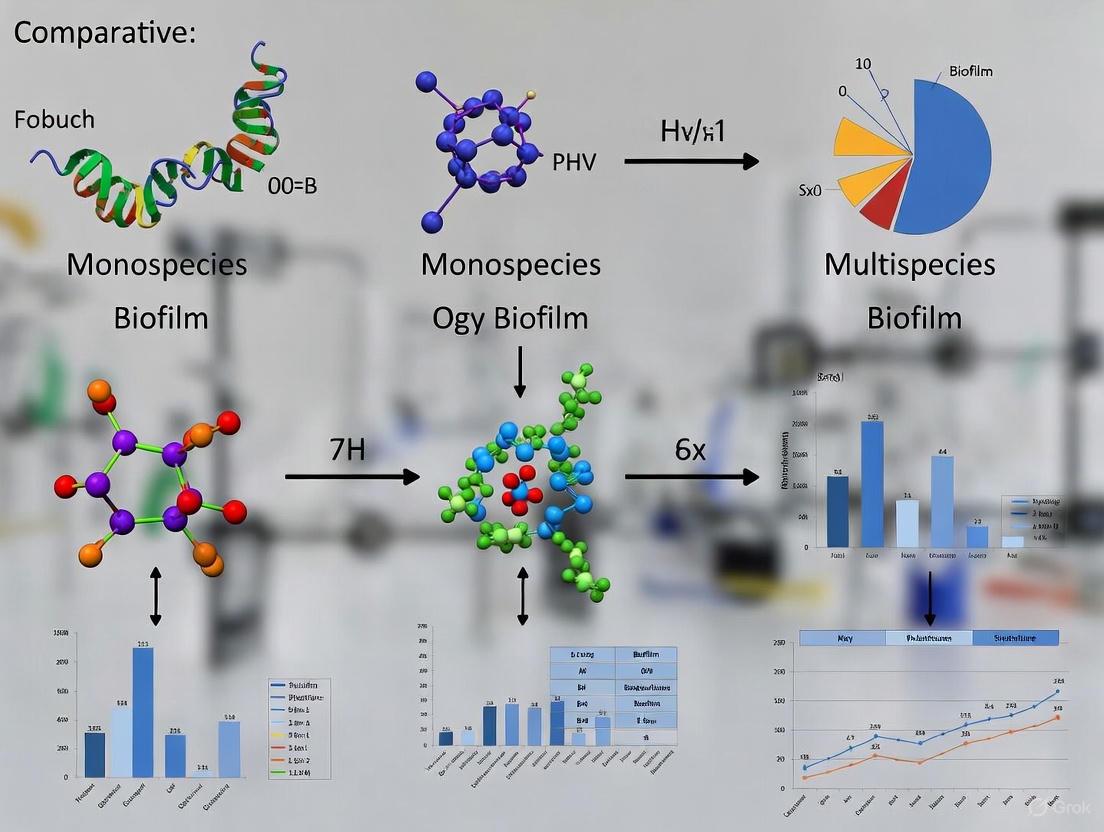
Biofilm-associated infections present a formidable challenge in healthcare, driven by their significant tolerance to antimicrobials and host immune responses.
Beyond the Single Species: A Comparative Evaluation of Mono- vs. Multispecies Biofilm Models for Advancing Therapeutic Development
Abstract
Biofilm-associated infections present a formidable challenge in healthcare, driven by their significant tolerance to antimicrobials and host immune responses. While monospecies biofilm models have been instrumental in foundational research, they often fail to recapitulate the complex, polymicrobial communities found in clinical and industrial settings. This article provides a comparative evaluation of monospecies and multispecies biofilm models, exploring their foundational principles, methodological approaches, and inherent limitations. Tailored for researchers, scientists, and drug development professionals, we dissect the enhanced resilience, metabolic cooperation, and emergent properties of multispecies consortia. We further outline optimized assessment techniques, troubleshoot common pitfalls in model selection, and validate findings through comparative analysis with clinical data. The synthesis aims to guide the selection of physiologically relevant biofilm models to improve the predictive power of anti-biofilm strategies and accelerate the translation of research findings into effective treatments.
From Simple to Complex: Unpacking the Fundamental Biology of Mono- and Multispecies Biofilms
In the relentless fight against antimicrobial resistance and biofilm-associated chronic infections, the scientific community relies on biofilm models to simulate these complex bacterial communities in a laboratory setting. These models serve as the foundational battlefield where new therapeutic and anti-fouling strategies are first conceived and tested. The critical choice between using a single bacterial species (monospecies) or a consortium of species (multispecies) in these models profoundly influences the experimental outcomes, applicability, and predictive value of the research. This guide provides a comparative evaluation of monospecies and multispecies biofilm models, focusing on their distinct architectural and compositional properties. By synthesizing current experimental data and methodologies, we aim to equip researchers with the knowledge to select the most appropriate model system for their specific research objectives, whether in drug discovery, material science, or fundamental microbiology.
Architectural Differences: Structure and Spatial Organization
The physical architecture of a biofilm—its three-dimensional structure, cellular density, and spatial arrangement—is a primary determinant of its phenotype, including its mechanical stability and resistance to antimicrobials. The choice of biofilm model significantly influences this architecture.
Cellular Ordering and Biophysical Principles
At the cellular scale, groundbreaking research has revealed that biofilm architecture is governed by conserved biophysical principles. A cross-species study of Vibrio cholerae, Escherichia coli, Salmonella enterica, and Pseudomonas aeruginosa demonstrated that despite molecular differences, early biofilm microcolony architecture can be predicted by just two control parameters: cellular aspect ratio and local cell density [1]. Data-driven analysis of these biofilms showed a clear separation of species in the phase space defined by these two parameters, revealing an analogy between the growth-active nematic ordering of biofilms and passive liquid crystals [1].
Furthermore, work on V. cholerae has uncovered surprising, precise cell ordering within mature biofilms. Cells at the center dynamically align perpendicular to the surface in a nematic order. This architecture originates from a competition between cell proliferation, cell-to-surface adhesion, and cell-to-cell adhesion [2]. Agent-based simulations suggest that increasing mechanical pressure from cell division eventually exceeds cell-to-surface adhesion forces, causing cells to reorient vertically and driving the transition from 2D to 3D biofilm growth [2].
Synergistic Interactions in Multispecies Systems
When species are combined, their architectural dynamics can change dramatically. An investigation of dual-species biofilms formed by E. coli and Salmonella Typhimurium found that certain inoculum ratios (e.g., 1:1) showed a two-fold increase in biofilm formation compared to monospecies biofilms after 24 hours [3]. Confocal Laser Scanning Microscopy (CLSM) revealed that the mixed-species consortium formed more aggregated and dense structures with a higher biovolume and average thickness [3].
Table 1: Quantitative Comparison of Mono- and Dual-Species Biofilm Architecture
| Architectural Parameter | E. coli (Mono) | S. Typhimurium (Mono) | Dual-Species (1:1) |
|---|---|---|---|
| Biofilm Biomass (OD~540nm~) after 24h | ~0.8 | ~0.8 | ~1.7 [3] |
| Average Thickness (µm) | 17.0 ± 1.5 | 19.5 ± 1.0 | 25.5 ± 1.5 [3] |
| Biovolume (µm³/µm²) | 4.5 ± 0.5 | 5.5 ± 0.5 | 8.5 ± 0.5 [3] |
| Roughness Coefficient | 0.10 ± 0.05 | 0.09 ± 0.04 | 0.05 ± 0.02 [3] |
| Adhesion & Invasion of Caco-2 cells | Baseline | Baseline | Significantly Higher [3] |
Similar synergistic structural effects were observed in a defined consortium of four soil isolates (Microbacterium oxydans, Paenibacillus amylolyticus, Stenotrophomonas rhizophila, and Xanthomonas retroflexus), which exhibited synergistic biofilm biomass in multispecies settings [4]. These structural changes are not merely morphological; they have functional consequences. The enhanced, denser architecture of the E. coli and Salmonella dual-species biofilm correlated with significantly higher adhesion to and invasion of Caco-2 intestinal cells compared to their monospecies or planktonic counterparts, indicating an increased pathogenic potential [3].
Compositional Differences: The Matrix and Metaproteome
Beyond gross architecture, the chemical composition of the extracellular polymeric substance (EPS) is a key differentiator between model systems. Interspecies interactions within multispecies biofilms can trigger the production of unique matrix components that are not produced in monospecies cultures.
EPS Glycans and Proteins
A detailed analysis of the four-species soil consortium used fluorescence lectin binding analysis and meta-proteomics to characterize the matrix. The study revealed substantial differences in glycans (sugar-based polymers) and proteins between monospecies and multispecies biofilms [4].
- Glycans: In isolation, M. oxydans produced galactose/N-Acetylgalactosamine network-like structures. When grown in a multispecies consortium, the presence of this bacterium influenced the overall matrix glycome, indicating that the production of specific glycans is intrinsic to interspecies interactions [4].
- Proteins: Proteomic analysis identified distinct protein profiles. Flagellin proteins were more abundant in X. retroflexus and P. amylolyticus in multispecies biofilms. Notably, P. amylolyticus produced surface-layer proteins and a unique peroxidase exclusively in the multispecies setting, suggesting an enhanced capacity for oxidative stress resistance that emerges only in a community context [4].
Table 2: Compositional Differences in Mono- vs. Multispecies Biofilm Matrix
| Matrix Component | Example Species | Monospecies Biofilm | Multispecies Biofilm |
|---|---|---|---|
| Exopolysaccharides | M. oxydans | Galactose/N-Acetylgalactosamine networks [4] | Influences consortium matrix composition; unique glycan structures emerge [4] |
| Matrix Proteins | P. amylolyticus | Standard profile | Unique Peroxidase, Surface-layer proteins (enhanced stress resistance) [4] |
| Matrix Proteins | X. retroflexus | Baseline flagellin | Increased flagellin proteins [4] |
| Biofilm Matrix Production | B. thuringiensis (Wild-type) | Robust matrix (Congo red binding) [5] | Selection for "light variants" with reduced matrix (Spo0A mutations, reduced TasA) [5] |
Evolutionary Pressures and Phenotypic Diversification
Interspecies interactions also apply selective pressure that drives evolutionary diversification, fundamentally altering the genotypic and phenotypic composition of a biofilm community. A study on Bacillus thuringiensis (BT) co-cultured with Pseudomonas species demonstrated that multispecies biofilms strongly select for the emergence of a specific BT "light variant" with a distinct colony morphotype [5].
This variant, which outcompeted the wild-type by an 18.2-fold ratio in biofilms (compared to only 3.2-fold in planktonic culture), had mutations in the spo0A regulator gene. This led to reduced sporulation and reduced production of the key matrix protein TasA [5]. Proteomics confirmed that while TasA was lower in the variant, its production was increased in co-culture with P. brenneri. This highlights how interspecies interactions can drive diversification toward phenotypes with reduced matrix production, which in turn promotes coexistence with other species by altering the physical and ecological niche [5].
Experimental Protocols for Comparative Analysis
To reliably generate and compare biofilm models, standardized and detailed protocols are essential. Below are key methodologies adapted from the cited research.
Cultivation and Analysis of Mono- and Dual-Species Biofilms
This protocol is adapted from studies with E. coli and Salmonella Typhimurium [3].
1. Bacterial Strains and Culture Conditions:
- Revive glycerol stocks of biofilm-forming strains (e.g., E. coli EMC17 and S. Typhimurium SMC25) on Luria Bertani (LB) agar/broth.
- Grow overnight cultures in LB broth at 37°C with shaking (e.g., 150 rpm).
2. Biofilm Cultivation (96-well plate):
- Adjust overnight cultures to an optical density (OD~600nm~) of 0.1 in fresh LB broth.
- For dual-species biofilms, prepare mixed inoculum at the desired ratio (e.g., 1:1).
- Dispense 200 µL of bacterial suspension per well in a 96-well polystyrene plate. Include sterile broth as a negative control.
- Incubate the plate statically at desired temperature (e.g., 37°C) for 24-120 hours. Refresh media every 24 h for longer experiments.
3. Biofilm Quantification (Crystal Violet Assay):
- After incubation, carefully remove the planktonic cells and culture medium.
- Wash the adhered biofilms gently twice with 300 µL of 1X Phosphate Buffered Saline (PBS), pH 7.4.
- Air-dry the plates and fix the biofilms with 200 µL of 99% methanol per well for 15 minutes.
- Discard methanol, air-dry the plates, and stain with 200 µL of 0.1% (w/v) crystal violet solution for 15 minutes.
- Gently wash the plates under running tap water to remove excess stain and air-dry.
- Solubilize the bound crystal violet in 200 µL of 33% (v/v) glacial acetic acid for 15-30 minutes with shaking.
- Measure the OD of the solubilized dye at 540 nm using a microplate reader.
4. Architectural Analysis (Confocal Laser Scanning Microscopy - CLSM):
- Grow biofilms on suitable surfaces (e.g., polycarbonate chips, glass-bottom dishes) placed within the culture wells.
- After incubation, wash the biofilm-bearing surface with PBS.
- Stain with appropriate fluorescent dyes (e.g., SYTO 9 for live cells, propidium iodide for dead cells, Concanavalin A-Tetramethylrhodamine for polysaccharides).
- Image the stained biofilms using a CLSM system (e.g., Leica TCS SP8). Acquire Z-stacks at consistent intervals (e.g., 1 µm).
- Analyze the 3D image stacks using software like BiofilmQ [3] [1] or ImageJ to extract parameters such as biovolume (µm³/µm²), average thickness (µm), and roughness coefficient.
Lectin Staining and Meta-Proteomics for EPS Characterization
This protocol is used to dissect the matrix composition of complex multispecies biofilms [4].
1. Biofilm Cultivation for Matrix Analysis:
- Grow mono- and multispecies cultures in 24-well plates, each containing a polycarbonate (PC) chip.
- Inoculate wells with 2 mL of OD~600nm~-adjusted cultures (0.15) and incubate statically for 24 hours.
2. Fluorescent Lectin Binding Assay (FLBA):
- Prepare staining solutions of fluorescently labeled lectins (e.g., 100 µg/mL in PBS or filter-sterilized water).
- After biofilm growth, wash the PC chip once with 1X PBS.
- Incubate the biofilm with the lectin staining solution in the dark for a defined period (e.g., 20-30 minutes).
- Wash the chip gently with PBS to remove unbound lectin.
- Image the biofilm immediately using CLSM. A library of 78+ lectins can be screened to identify specific glycan residues (e.g., fucose, amino sugars) present in the EPS [4].
3. Matrix Protein Extraction and Meta-Proteomics:
- Harvest biofilm-covered chips and dislodge the biomass into a suitable buffer.
- Separate the matrix fraction from the cellular fraction via differential centrifugation or a matrix extraction protocol (e.g., using cation exchange resin).
- Process the extracted proteins for LC-MS/MS analysis: reduce, alkylate, and digest with trypsin.
- Analyze the resulting peptides by liquid chromatography coupled to a tandem mass spectrometer.
- Identify proteins by searching fragmentation spectra against a custom database containing the proteomes of all species in the consortium.
- Compare protein abundance between mono- and multispecies conditions to identify proteins that are differentially produced or unique to the multispecies matrix [4].
Key Signaling Pathways in Biofilm Regulation
Biofilm architecture and composition are tightly regulated by intracellular signaling pathways. The following diagram illustrates a key regulatory system, the cyclic di-GMP network, prevalent in many bacterial species.
Diagram 1: Cyclic di-GMP controls the transition between motility and biofilm lifestyles. High intracellular levels of cyclic di-GMP (c-di-GMP), promoted by the activity of diguanylate cyclases (DGCs), drive biofilm formation. Phosphodiesterases (PDEs) degrade c-di-GMP, promoting motility and dispersal [6]. Mutations in regulators like Wsp, YfiBNR, and MorA can lead to constitutive DGC activity and a hyper-biofilm phenotype [6].
The Scientist's Toolkit: Essential Research Reagents
Table 3: Key Reagents for Biofilm Architecture and Composition Research
| Reagent / Material | Function / Application | Example Use Case |
|---|---|---|
| Crystal Violet | A basic dye that binds to negatively charged surface molecules and polysaccharides, used for basic biofilm biomass quantification. | Standard 96-well plate biofilm screening assay [3]. |
| Fluorescent Lectins | Carbohydrate-binding proteins conjugated to fluorophores; used to identify and localize specific glycan structures within the EPS via CLSM. | Mapping spatial distribution of matrix exopolysaccharides (e.g., fucose, galactose) [4]. |
| SYTO 9 / Propidium Iodide | Nucleic acid stains for differentiating between live (SYTO 9, green) and dead (PI, red) cells in a biofilm community. | Viability assessment within biofilm architecture using CLSM [3]. |
| Polycarbonate Chips | Inert, non-nutritive surfaces for biofilm growth in multi-well plates, suitable for CLSM analysis. | Providing a standardized surface for biofilm development in mono- and multispecies cultures [4]. |
| BiofilmQ Software | An open-source software tool for the comprehensive quantification of 3D biofilm image data from CLSM. | Extracting architectural parameters (biovolume, thickness, roughness) from image stacks [1]. |
| Congo Red | A dye that binds to amyloid-like fibers and polysaccharides; used to assess matrix production on agar plates or in liquid. | Differentiating colony morphotypes (e.g., B. thuringiensis "wild-type" vs. "light" variants) based on matrix content [5]. |
| Microfluidic Flow Chambers | Devices that allow for controlled hydrodynamic conditions during biofilm growth and real-time, single-cell resolution imaging. | Studying early biofilm development and architecture under flow [1]. |
The choice between monospecies and multispecies biofilm models is not a matter of simple convenience but a strategic decision that defines the experimental battlefield. Monospecies models offer unparalleled genetic and experimental tractability, enabling deep mechanistic studies into conserved biophysical principles like the role of cell aspect ratio and density in shaping architecture [1]. However, multispecies models introduce a critical layer of biological complexity, fostering synergistic interactions that lead to enhanced biomass, unique EPS composition, and emergent properties like increased stress resistance [3] [4]. Furthermore, multispecies environments act as catalysts for evolutionary diversification, selecting for phenotypic variants that are better adapted to coexist within a community, thereby altering the fundamental landscape of the biofilm [5]. The most physiologically relevant and predictive research outcomes will likely arise from a synergistic approach that leverages the controlled power of monospecies studies to deconstruct mechanisms, while simultaneously embracing the complex, emergent realities of multispecies models.
The Extracellular Polymeric Substance (EPS) matrix is far more than a static scaffold; it is the dynamic, functional heart of a microbial biofilm. For decades, research relied heavily on monospecies biofilm models, which provided foundational knowledge but presented a simplified, often incomplete picture of the complex biofilms found in natural, clinical, and industrial settings. These multispecies biofilms, akin to bustling metropolises compared to single-species hamlets, exhibit emergent properties that cannot be predicted by studying any single species in isolation. The shift from examining monospecies scaffolds to exploring the multispecies metropolis represents a pivotal evolution in microbial ecology, with profound implications for combating biofilm-associated infections and harnessing beneficial microbial communities. This guide provides a comparative evaluation of these two research paradigms, underpinned by experimental data and methodological protocols, to equip researchers with the tools for designing more physiologically relevant studies.
The EPS matrix, often termed the "house of biofilms," is a complex amalgamation of polysaccharides, proteins, extracellular DNA (eDNA), and lipids [7] [8]. In a mature biofilm, microbial cells constitute only 15-20% of the volume, while the EPS matrix makes up the remaining 75-80%, providing structural integrity, protection, and a functional medium for molecular exchanges [8]. The composition and architecture of this matrix are critically altered by interspecies interactions, leading to the community-intrinsic properties—such as enhanced metabolic efficiency, increased biomass, and superior resistance to stressors—that define the multispecies biofilm metropolis [4].
Comparative Analysis: Monospecies vs. Multispecies Biofilms
EPS Composition and Architectural Complexity
The fundamental differences between monospecies and multispecies biofilms extend deeply into the composition and spatial organization of their EPS matrices.
- Monospecies Biofilms (The Scaffold): In isolation, bacterial species produce a characteristic, often predictable, set of EPS components. For instance, in a defined four-species soil consortium, Microbacterium oxydans was found to produce distinct galactose/N-Acetylgalactosamine network-like structures when grown alone [4]. The matrix composition is primarily a result of the species' genetic blueprint and its direct response to the environment.
- Multispecies Biofilms (The Metropolis): When species co-aggregate, their interactions profoundly reshape the EPS landscape. Research on the same soil consortium revealed "substantial differences" in glycan structures and composition, including the presence of fucose and various amino sugar-containing polymers, when grown as a multispecies biofilm compared to the monospecies ones [4]. Proteomic analyses further uncovered the presence of unique proteins, such as a specific peroxidase in Paenibacillus amylolyticus and flagellin proteins in Xanthomonas retroflexus and P. amylolyticus, which were particularly prominent in the multispecies context [4]. This indicates that interspecies interactions can induce the production of novel matrix components that enhance community-level fitness, such as resistance to oxidative stress and structural stability.
Functional and Phenotypic Emergence
The reconfigured EPS matrix in multispecies communities directly facilitates emergent functions that are not inherent to any single constituent species.
- Synergistic Biomass and Stability: A well-studied four-species consortium demonstrated synergistic biofilm biomass, a phenomenon validated across different biofilm setups like multi-well plates and drip-flow reactors [4]. This synergy is a community-intrinsic property, meaning all species are required for the effect.
- Enhanced Metabolic Cooperation and Stress Resistance: Multispecies biofilms can maintain a stable pH environment and engage in metabolic cross-feeding, where the waste product of one species becomes the nutrient for another [4]. The aforementioned unique peroxidase identified in multispecies biofilms points to an induced, community-level mechanism for coping with environmental stressors [4].
- Pathogenesis and Antimicrobial Tolerance: In oral biofilms, which are inherently polymicrobial, the presence of a "keystone pathogen" like Porphyromonas gingivalis* can drive the entire microbiome toward dysbiosis, a state not replicable in monospecies models [8]. The dense, multi-component EPS matrix acts as a barrier, reducing the penetration of antimicrobials and protecting inner-layer cells, thereby contributing to increased tolerance [8].
Table 1: Key Comparative Properties of Monospecies vs. Multispecies Biofilms
| Property | Monospecies Biofilm | Multispecies Biofilm |
|---|---|---|
| EPS Complexity | Low; genetically predetermined | High; reshaped by interspecies interactions |
| Structural Stability | Often lower, model-dependent | Synergistically enhanced [4] |
| Metabolic Capability | Limited to single species' genome | Expanded via cross-feeding and cooperation [4] |
| Stress Resistance | Based on intrinsic species ability | Emergent, community-level resistance [4] |
| Predictability | High | Low; emergent properties are unpredictable |
| Physiological Relevance | Low for most environments | High; mimics natural, clinical, and industrial settings |
Experimental Models and Assessment Methodologies
Model Systems: From Simple to Complex
Choosing an appropriate model is paramount to answering the research question correctly. The field has witnessed a transition from two-dimensional (2D) models to more advanced three-dimensional (3D) systems that better mimic the in vivo microenvironment [8].
- Microtiter Plate Assays: This is a foundational, high-throughput method for growing biofilms in a 96-well format. It is excellent for initial screening of biofilm formation capacity or the efficacy of anti-biofilm agents [9]. However, it provides limited insight into the 3D spatial structure of the biofilm.
- Drip-Flow Reactors and Flow-Cell Systems: These models introduce fluid shear stress, which is a critical physical parameter in many natural and clinical biofilm habitats (e.g., urinary catheters, industrial pipes). They promote the development of more structurally complex biofilms that are thicker and more resistant [4].
- 3D Scaffold-Based Models: A cutting-edge advancement involves the use of melt electrowritten fibrous scaffolds to grow biofilms on structures that mimic the topography and porosity of biological tissues, such as oral or wound environments [8]. These models bridge the gap between in vitro and in vivo conditions.
- Oral Microcosm Models: For oral biofilm research, validated microcosm models are gaining prominence. These models use natural saliva inocula to cultivate highly complex and clinically relevant biofilm communities in the lab, preserving much of the native microbial diversity [8].
Table 2: Common Biofilm Models and Their Applications
| Model Type | Key Features | Advantages | Limitations | Best Used For |
|---|---|---|---|---|
| Microtiter Plate | Static, 96-well format | High-throughput, low cost, easy | Simple architecture, no shear stress | Initial screening, biofilm formation assays [9] |
| Flow-Cell System | Continuous nutrient flow, shear stress | Develops complex 3D structures, in-situ microscopy | Lower throughput, more complex setup | Studying structure, dynamics, and real-time effects of treatments |
| 3D Scaffolds | Biomimetic fibrous scaffolds | Clinically relevant topology, cell-ECM interactions | Custom fabrication required | Host-pathogen interactions, tissue-integrated biofilms [8] |
| Microcosm (Oral) | Natural inoculum (e.g., saliva) | High complexity, clinically relevant | Complex data analysis, inter-donor variability | Studying community ecology, dysbiosis, and therapeutic testing [8] |
A Guide to Assessment Techniques and Their Interpretation
Different assessment techniques probe different aspects of the biofilm, and their results must be interpreted with an understanding of the underlying principle and the mode of action of any treatment being tested.
- Crystal Violet (CV) Staining: This is a common colorimetric assay that quantifies total adhered biomass (cells and EPS). A key limitation is that it cannot distinguish between live and dead cells. Furthermore, as demonstrated in a study using a phage depolymerase, agents that degrade polysaccharides can loosen the biofilm structure, potentially releasing more crystal violet dye and creating a false impression of increased biomass if not carefully controlled and interpreted alongside other methods [9].
- Colony Forming Unit (CFU) Count: This culture-based method quantifies the number of viable, cultivable bacteria. It is a direct measure of bactericidal activity but does not provide information on biofilm structure or the presence of viable but non-culturable cells.
- Live/Dead Staining with CLSM: Using fluorescent dyes like SYTO9 (stains all cells) and propidium iodide (stains dead cells with compromised membranes), this method, combined with Confocal Laser Scanning Microscopy (CLSM), provides information on cell viability and the 3D spatial architecture of the biofilm. It is a powerful tool for visualizing the distribution of live and dead cells within the matrix after treatment [9].
- Lectin Binding Analysis & Meta-Proteomics: Fluorescently labeled lectins can be used to identify and localize specific glycan components within the EPS matrix via CLSM [4]. Meta-proteomics, on the other hand, characterizes the entire protein repertoire of a biofilm community, revealing how interspecies interactions alter the production of structural and functional matrix proteins [4]. This combined approach provides deep insight into the molecular composition of the matrix.
Table 3: Advantages and Limitations of Biofilm Assessment Methods
| Assessment Method | What It Measures | Advantages | Limitations |
|---|---|---|---|
| Crystal Violet | Total adhered biomass | Simple, inexpensive, high-throughput | Does not distinguish live/dead cells; can give false positives with EPS degraders [9] |
| CFU Count | Number of viable, cultivable bacteria | Gold standard for viability, quantitative | Misses non-culturable cells, labor-intensive, no spatial data |
| Live/Dead + CLSM | Cell viability & 3D structure | Visualizes spatial heterogeneity, semi-quantitative | Requires expensive equipment, data analysis can be complex |
| Lectin Staining | Specific glycan structures in EPS | High specificity, spatial localization | Requires a priori knowledge of glycans, can be non-specific |
| Meta-Proteomics | Protein composition of biofilm community | Untargeted, comprehensive functional insights | Complex sample preparation, data analysis, and high cost |
The Scientist's Toolkit: Essential Reagents and Methods
This section details key reagents, materials, and protocols central to advanced EPS and biofilm research.
Research Reagent Solutions
Table 4: Essential Reagents for EPS and Biofilm Analysis
| Reagent / Material | Function / Application | Example in Context |
|---|---|---|
| Fluorescent Lectins (e.g., RCA-Rhodamine) | Binds to specific carbohydrate residues in the EPS matrix to visualize glycan spatial organization [4]. | Used to identify fucose and amino sugar polymers in multispecies biofilms, revealing differences from monospecies systems [4]. |
| Propidium Iodide / SYTO9 (Live/Dead BacLight) | Fluorescent stains for differentiating live (intact membrane) and dead (compromised membrane) cells in a biofilm via CLSM [9]. | Essential for evaluating the bactericidal vs. biofilm-disrupting effects of antimicrobials like phages and antibiotics [9]. |
| Crystal Violet | A basic dye that binds negatively charged molecules, staining total biofilm biomass (cells and EPS) [9]. | A common first-line assay for quantifying biofilm formation and biomass reduction, though requires complementary methods [9]. |
| Hydrolytic Enzymes (e.g., Proteases, DNase, Amylase) | Target specific EPS components (proteins, eDNA, polysaccharides) to study their role in biofilm integrity and for matrix extraction [7]. | Serine proteases (e.g., Savinase) can efficiently detach P. aeruginosa and S. aureus biofilms, highlighting the key role of proteins in their stability [7]. |
| Melt Electrowritten Scaffolds | Synthetic 3D structures that mimic the topology of biological tissues for growing biofilms in a more physiologically relevant context [8]. | Used in novel oral biofilm models to study biofilm development on structures resembling tooth enamel or periodontal pockets [8]. |
Detailed Experimental Protocol: EPS Matrix Analysis via Lectin Staining and Meta-Proteomics
The following workflow, derived from recent research, outlines a comprehensive approach to characterizing the EPS matrix in mono- versus multispecies biofilms [4].
Title: Workflow for EPS Matrix Composition Analysis
Step-by-Step Protocol:
Biofilm Cultivation:
- Inoculate bacterial strains (e.g., M. oxydans, P. amylolyticus, S. rhizophila, X. retroflexus) individually and in a defined consortium (e.g., 1:1:1:1 ratio based on OD₆₀₀) in a 24-well plate, each well containing a polycarbonate (PC) chip [4].
- Incubate the plates for 24 hours at 24°C under static conditions to allow for biofilm development [4].
Sample Preparation:
- Carefully remove the PC chips from the wells and wash once with 1x Phosphate Buffered Saline (PBS) to remove non-adherent planktonic cells [4].
Lectin Staining (Path A):
- Prepare staining solutions with fluorescently labeled lectins (e.g., RCA-Rhodamine) at a concentration of 100 μg/ml [4].
- Apply the lectin solution to the biofilms on the PC chips and incubate in the dark.
- Wash the chips with PBS to remove any unbound lectin.
- Image the stained biofilms using a Confocal Laser Scanning Microscope (CLSM). Use appropriate laser and filter sets for the specific fluorescent label (e.g., Rhodamine) [4].
Meta-Proteomics Analysis (Path B):
- For a parallel sample, perform a matrix extraction to enrich for extracellular, membrane, and surface-associated proteins.
- Digest the extracted proteins with trypsin.
- Analyze the resulting peptides by Liquid Chromatography with Tandem Mass Spectrometry (LC-MS/MS).
- Identify and quantify proteins by searching the MS/MS spectra against a protein database. Focus on proteins that are differentially present or unique to the multispecies biofilm compared to the monospecies counterparts [4].
Data Integration:
- Correlate the spatial organization of glycans from lectin staining with the identified matrix proteins from meta-proteomics. This integrated analysis allows for a comprehensive understanding of how interspecies interactions reshape the biochemical and structural landscape of the EPS matrix [4].
The journey from viewing the EPS matrix as a simple, single-species scaffold to recognizing it as the dynamic core of a multispecies metropolis is fundamental to advancing biofilm research. While monospecies models remain valuable for dissecting basic mechanisms, they are insufficient for understanding the emergent properties that define most real-world biofilms. The comparative data and methodologies outlined in this guide underscore that the enhanced structural stability, metabolic versatility, and heightened stress resistance of multispecies biofilms are direct consequences of a radically altered EPS matrix, forged through interspecies interactions. Future research, leveraging complex 3D models and integrated 'omics' technologies, will continue to decode the secrets of this microbial metropolis, driving innovations in anti-biofilm strategies and the therapeutic application of beneficial microbial communities.
In nature, the vast majority of microorganisms exist not in isolation but within complex, multispecies communities known as biofilms—structured microbial aggregates encased in an extracellular polymeric substance (EPS) matrix that adhere to biological and inert surfaces [4] [10] [11]. These communities represent a predominant mode of microbial life, where interspecies interactions become critical drivers of community assembly, stability, and function. While traditional microbiology has heavily relied on monospecies biofilm models for their simplicity and reproducibility, a paradigm shift toward multispecies models is underway, recognizing that they more accurately mimic the intricate ecological realities of natural habitats, from human oral cavities to soil ecosystems [4] [12] [10]. This comparative analysis examines how cooperative, competitive, and neutral interactions within multispecies biofilms influence emergent community properties, biofilm architecture, and functional outcomes that cannot be predicted from monospecies studies alone.
The fundamental distinction between these approaches lies in their ecological complexity. Monospecies models examine bacteria in isolation, revealing core mechanisms of attachment, matrix production, and growth regulation. In contrast, multispecies models introduce the dimension of interspecies interactions, which can lead to emergent community-level properties such as synergistic biomass production, enhanced stress resistance, metabolic cross-feeding, and novel functional capabilities [4] [13]. Understanding these interactions is not merely an academic exercise—with over 80% of chronic human infections involving biofilms and their significant impacts on industrial and environmental systems, deciphering the rules of multispecies coexistence is essential for developing effective interventions [14] [11].
Theoretical Frameworks for Microbial Coexistence
The persistence of diverse microbial species in biofilms can be understood through classical ecological theories of coexistence. Coexistence theory provides a framework explaining how competitor traits can maintain species diversity and stave off competitive exclusion, even among similar species living in ecologically similar environments [15]. This theory explains stable species coexistence as an interaction between two opposing forces: fitness differences between species, which should drive the best-adapted species to exclude others within a particular ecological niche, and stabilizing mechanisms, which maintain diversity via niche differentiation [15].
For species to coexist stably in a community, population growth must be negative density-dependent—all participating species must have a tendency to increase in density as their populations decline [15]. In such communities, any species that becomes rare will experience positive growth, pushing its population to recover and making local extinction unlikely. This recovery tendency reflects reduced intraspecific competition (within-species) relative to interspecific competition (between-species), the signature of niche differentiation [15]. The competitive exclusion principle (Gause's law) states that complete competitors occupying identical niches cannot coexist, yet natural microbial communities consistently defy this principle through various adaptive mechanisms [16].
Table 1: Mechanisms Supporting Species Coexistence in Biofilms
| Mechanism Type | Definition | Ecological Effect | Example in Biofilms |
|---|---|---|---|
| Equalizing Mechanisms | Reduce fitness differences between species | Push competitive abilities of species closer together | Similar growth rates or carrying capacities among species |
| Stabilizing Mechanisms | Promote coexistence by concentrating intraspecific competition relative to interspecific competition | Enhance niche differentiation | Resource partitioning, spatial organization |
| Variation-Independent Mechanisms | Stabilizing mechanisms functioning within a local place and time | Reduce competition through specialization | Different adhesion mechanisms or substrate preferences |
| Storage Effect | Species affected differently by environmental variation in space or time | Temporal or spatial niche partitioning | Differential responses to pH, oxygen, or nutrient fluctuations |
| Fitness-Density Covariance | Species spread non-uniformly across the landscape | Spatial segregation within biofilm structure | Microdomain specialization in different biofilm layers |
In stochastic environments—which more accurately reflect natural conditions—the limits to species similarity become even more restrictive than predicted by deterministic models [16]. This stochastic limit to similarity means that ecological drift (changes in species abundances caused by random processes) can impose severe constraints on how similar competing species can be while still maintaining stable coexistence, explaining why natural communities often exhibit greater functional diversity than predicted by classical models [16].
Experimental Models: From Simple to Complex Systems
Biofilm research employs a spectrum of experimental models ranging from simple static systems to sophisticated flow-based reactors, each with distinct advantages and limitations for studying interspecies interactions [12] [10]. The choice of model system significantly influences which types of interactions can be observed and how accurately they represent natural environments.
Table 2: Comparison of Biofilm Model Systems
| Model Type | Key Features | Advantages | Limitations | Suitability for Interspecies Studies |
|---|---|---|---|---|
| Static Models (e.g., 96-well plates) | Biofilms form under non-flow conditions | Simple, high-throughput, inexpensive | Does not simulate shear forces, nutrient gradients limited | Limited - minimal physiological relevance |
| Flow-Cell Models | Continuous medium flow over surface | Simulates natural shear forces, enables real-time imaging | Complex setup, lower throughput | Excellent - allows spatial observation of interactions |
| Constant Depth Film Fermenters | Maintains biofilm at constant thickness | Controls biofilm architecture, multiple sampling | Technically complex, expensive | Good - enables structural analysis |
| Drip Flow Reactors | Low shear, semi-batch conditions | Mimics low-shear environments | Requires manual operation | Moderate - suitable for certain environmental biofilms |
| Rotating Biofilm Reactors | Shear created by rotational movement | Uniform mixing, controlled shear | Mechanical complexity | Good - consistent mass transfer |
| Modified Robbins Device | Multiple sampling ports on flow channel | Simultaneous sampling at different time points | Potential for cross-contamination | Good - temporal analysis of development |
Static models, particularly 96-well microtiter plates, represent the most accessible approach for initial biofilm formation studies. In this method, planktonic cultures with the desired concentration of seeding bacteria are added to the plate, allowing adhesion to the polystyrene surface during incubation [10]. While this approach offers high throughput and simplicity, it fails to incorporate the fluid dynamics and shear forces that significantly influence biofilm development and interspecies interactions in natural environments [17] [10].
Flow-based systems address these limitations by incorporating hydrodynamic conditions that more closely mimic natural habitats. The Calgary Biofilm Device (CBD) provides a platform for growing multiple biofilms reproducibly under controlled conditions [10]. More advanced flow cell chambers enable real-time, high-resolution imaging of biofilm development and spatial organization, revealing how different species distribute themselves within the community and how they interact at the microscopic level [17] [10]. These systems demonstrate that shear flow created by moving liquid not only influences biofilm attachment but also enhances nutritional availability throughout the biofilm structure, creating more physiologically relevant conditions for studying interspecies interactions [17].
Diagram 1: Experimental workflow for comparative biofilm analysis, integrating both monospecies and multispecies approaches with advanced analytical techniques.
Comparative Analysis: Monospecies vs. Multispecies Biofilms
Structural and Compositional Differences
Research directly comparing monospecies and multispecies biofilms has revealed profound differences in their structural organization and matrix composition. A seminal study examining a four-species soil consortium (Microbacterium oxydans, Paenibacillus amylolyticus, Stenotrophomonas rhizophila, and Xanthomonas retroflexus) demonstrated that interspecies interactions significantly alter EPS composition, including diverse glycan structures and substantial differences in glycoconjugate organization between monospecies and multispecies biofilms [4].
Fluorescence lectin binding analysis identified specific glycan components that varied dramatically between growth conditions. For instance, M. oxydans in isolation produced galactose/N-Acetylgalactosamine network-like structures, but when grown in multispecies consortia, influenced the matrix composition of other species [4]. Proteomic analyses further revealed that certain proteins, including flagellin in X. retroflexus and P. amylolyticus, were particularly abundant in multispecies biofilms, as were surface-layer proteins and a unique peroxidase in P. amylolyticus, indicating enhanced oxidative stress resistance in mixed communities [4].
Functional and Synergistic Interactions
Multispecies biofilms exhibit emergent properties that cannot be predicted from monospecies studies, including synergistic biofilm biomass production, metabolic cross-feeding, pH stabilization, improved substrate degradation, and enhanced host colonization capabilities [4]. These community-intrinsic properties represent classic examples of synergistic interactions in microbial systems.
In the soil isolate consortium, all four species were required for maximal synergistic effects, highlighting the importance of specific species combinations rather than simply diversity itself [4]. This challenges the notion that more species always lead to greater functional enhancement and instead emphasizes the importance of functional complementarity—where different species contribute distinct capabilities that collectively benefit the community. For example, some species might produce protective matrix components while others generate digestive enzymes or detoxify harmful compounds, creating a division of labor that enhances overall community fitness.
Table 3: Emergent Properties in Multispecies vs. Monospecies Biofilms
| Property | Monospecies Biofilms | Multispecies Biofilms | Functional Implications |
|---|---|---|---|
| Matrix Composition | Limited, species-specific glycans and proteins | Diverse, interaction-modified components | Enhanced structural integrity & adaptability |
| Stress Resistance | Moderate, species-dependent | Enhanced, community-mediated | Improved survival under adverse conditions |
| Metabolic Capabilities | Limited to species capacity | Expanded through cross-feeding | Utilization of diverse nutrient sources |
| Spatial Organization | Homogeneous, uniform | Heterogeneous, structured | Niche differentiation & resource partitioning |
| Biomass Production | Additive, predictable | Often synergistic | Increased biotechnological potential |
| Antimicrobial Tolerance | Moderate | Enhanced | Clinical treatment challenges |
Interspecies Interaction Dynamics
Microbial interactions within biofilms span the full spectrum from cooperation to competition, with most communities featuring complex combinations of both. Cooperative interactions include metabolic cross-feeding, where one species utilizes metabolic byproducts of another; collective matrix production enhancing structural integrity; and coordinated virulence factor expression in pathogenic communities [4] [13].
Competitive interactions manifest through spatial segregation, nutrient competition, and production of inhibitory compounds [13] [16]. The tension between these opposing forces often leads to dynamic equilibria that maintain community diversity. According to coexistence theory, competitive exclusion occurs when interspecific competition exceeds intraspecific competition, but various stabilizing mechanisms can prevent this outcome [15] [16]. In biofilms, these mechanisms include spatial heterogeneity creating microhabitats with different conditions, temporal niche partitioning where species are active at different times, and resource partitioning where species utilize different subsets of available nutrients [13].
Neutral coexistence represents another possibility, where species coexist not through niche differentiation but through functional equivalence and ecological drift—particularly in heterogeneous environments with abundant resources [16]. While pure neutrality is probably rare in nature, near-neutrality may be common in certain environments, explaining the persistence of functionally similar species within complex biofilms.
Methodological Approaches for Interspecies Interaction Analysis
Advanced Analytical Techniques
Deciphering the complex web of interspecies interactions in biofilms requires sophisticated analytical approaches that can resolve spatial organization, molecular composition, and metabolic activity simultaneously. Fluorescence lectin binding analysis enables specific identification and localization of glycoconjugates within the EPS matrix, revealing how glycan composition changes in response to interspecies interactions [4]. When combined with confocal laser scanning microscopy (CLSM), this technique provides three-dimensional spatial information about matrix organization and species distribution [4] [12].
Meta-proteomics approaches characterize the protein complement of biofilm communities, identifying extracellular enzymes, structural proteins, and regulatory factors that are differentially expressed in monospecies versus multispecies contexts [4]. This technique has revealed that certain proteins, including specific flagellins and stress-response enzymes, are uniquely detected or significantly upregulated in multispecies biofilms, indicating how interspecies interactions reshape functional capabilities [4].
Fluorescence in situ hybridization (FISH) enables phylogenetic identification of community members while preserving spatial information, allowing researchers to map the physical arrangement of different species within the biofilm architecture and correlate positioning with functional specialization [12]. When combined with metabolic activity probes, this approach can reveal how different species contribute to collective community functions.
The Scientist's Toolkit: Essential Research Reagents and Materials
Table 4: Key Research Reagents and Materials for Biofilm Interspecies Studies
| Reagent/Material | Function/Application | Examples/Specifications |
|---|---|---|
| Fluorescent Lectins | Glycan composition analysis | FITC, AlexaFluor488, or Fluorescein conjugates [4] |
| CLSM-Compatible Stains | Viability assessment & matrix visualization | Live/Dead staining, EPS-specific dyes [12] |
| Polycarbonate Chips | Biofilm growth substrate | 12×12×0.78 mm for standardized growth [4] |
| Microtiter Plates | High-throughput screening | 96-well format for static models [10] |
| Flow Cell Systems | Physiologically relevant growth conditions | BioFlux, Calgary Biofilm Device [17] [10] |
| Mass Spectrometry | Meta-proteomic analysis | Protein identification & quantification [4] |
| Artificial Saliva/Sputum | Environmental simulation | Defined composition for specific niches [12] |
| Surface Modification Reagents | Adhesion studies | Hydrophobic/hydrophilic surface treatments [10] |
Implications for Research and Applications
Drug Development and Antimicrobial Strategies
The profound differences between monospecies and multispecies biofilms have critical implications for antimicrobial drug development. Traditional approaches based on monospecies models often fail against multispecies communities, where enhanced resistance mechanisms emerge from interspecies interactions [14]. These include collective stress responses, metabolic cooperation enabling persistence under nutrient limitation, and physical protection through combined matrix production [4] [14].
Novel strategies targeting interspecies interactions show promise for overcoming biofilm-mediated treatment failures. These include quorum sensing inhibitors that disrupt cell-cell communication, matrix-degrading enzymes that compromise structural integrity, and nanoparticle-based delivery systems that enhance antimicrobial penetration [14] [17]. The development of these approaches relies heavily on multispecies biofilm models that accurately represent the protective mechanisms operating in natural communities.
Mathematical Modeling and Predictive Frameworks
Mathematical modeling has emerged as a powerful tool for understanding and predicting biofilm behavior, integrating experimental data with mathematical theories to provide a more holistic understanding of biofilm dynamics [18]. Models incorporating quorum sensing regulation, EPS synthesis, and spatial heterogeneity can simulate how interspecies interactions influence community development and treatment responses [18].
These models range from deterministic approaches based on differential equations describing population dynamics to individual-based models that simulate the behavior of single cells and their interactions [18] [16]. The increasing sophistication of biofilm models allows researchers to test hypotheses about interspecies interactions in silico before conducting laborious wet-lab experiments, accelerating the pace of discovery and intervention development.
Diagram 2: Mathematical modeling approaches for predicting biofilm dynamics and interspecies interactions, showing both deterministic and stochastic frameworks.
The comparative evaluation of monospecies versus multispecies biofilm models reveals a fundamental tension in microbiological research: the trade-off between experimental control and ecological relevance. While monospecies models will continue to provide valuable insights into fundamental microbial processes, multispecies approaches offer indispensable perspectives on the interactive networks that govern microbial community behavior in natural environments.
Future research directions should include the development of standardized multispecies model systems that balance complexity with reproducibility, advanced in situ analytical techniques with improved spatial and temporal resolution, and sophisticated computational frameworks that can predict emergent community properties from constituent species characteristics. Additionally, greater attention to environmental context—how factors like fluid dynamics, substrate composition, and nutrient availability influence interspecies interactions—will enhance the translational relevance of biofilm research.
Perhaps most importantly, integrating knowledge across disciplinary boundaries—from molecular microbiology to ecology and systems biology—will provide the comprehensive perspective needed to understand, manipulate, and ultimately manage multispecies biofilm communities for human health, industrial applications, and environmental sustainability. As this comparative analysis demonstrates, the complex web of cooperation, competition, and neutral coexistence in microbial communities represents not just a biological curiosity but a fundamental determinant of biofilm structure, function, and resilience.
The study of bacterial consortia has fundamentally shifted our understanding of microbial behavior, moving beyond reductionist approaches that examine single species in isolation. Multispecies biofilms represent complex communities where microorganisms aggregate within a self-produced extracellular matrix, adopting a distinct lifestyle from their planktonic counterparts [19]. Within these structured communities, interspecies interactions give rise to emergent properties—characteristics not present in individual species or predictable from monospecies analysis [4]. These emergent properties include dramatically enhanced antimicrobial resistance and collective virulence that pose significant challenges in clinical and industrial settings.
The extracellular polymeric substance (EPS) that constitutes the biofilm matrix forms a protective barrier that can constitute over 90% of the biofilm mass [19]. This matrix, composed of polysaccharides, lipids, proteins, and extracellular DNA, hinders antibiotic penetration through multiple mechanisms, including binding antimicrobial agents and creating heterogeneous microenvironments that reduce metabolic activity [19]. Furthermore, the proximity of different species within the biofilm facilitates horizontal gene transfer, enabling the dissemination of resistance genes across the community [20] [21].
This comparative analysis examines the fundamental differences between monospecies and multispecies biofilm models, providing researchers with experimental data, methodological protocols, and analytical frameworks for investigating these complex microbial communities. By understanding how multispecies consortia develop enhanced resistance and virulence through emergent properties, the scientific community can develop more effective strategies to combat biofilm-associated infections.
Comparative Analysis: Monospecies vs. Multispecies Biofilm Models
Structural and Functional Differences
Table 1: Comparative characteristics of monospecies versus multispecies biofilms
| Characteristic | Monospecies Biofilms | Multispecies Biofilms | Experimental Evidence |
|---|---|---|---|
| Matrix Composition | Limited diversity of components; predictable based on single species | Diverse glycans, proteins, and extracellular DNA; novel components emerge | Fluorescence lectin binding analysis revealed diverse glycan structures including fucose and amino sugar-containing polymers in multispecies biofilms that were absent in monospecies [4] |
| Antimicrobial Resistance | Moderate resistance levels; primarily through physiological adaptation | Significantly enhanced resistance; multiple synergistic mechanisms | Multispecies oral biofilms showed continued cell death for up to one week after chlorhexidine treatment and full recovery after eight weeks, demonstrating remarkable resilience [22] |
| Virulence Potential | Determined by single species virulence factors | Enhanced collective virulence; novel pathogenicity mechanisms | Carbapenem-resistant Klebsiella pneumoniae with hybrid virulence-resistance plasmids demonstrated increased mucoviscosity, capsule production, and survival in human serum [20] [21] |
| Community Stability | Vulnerable to environmental fluctuations | Resilient to environmental stress; functional redundancy | Multispecies soil biofilm consortium showed synergistic biomass production, metabolic cross-feeding, and pH stabilization not seen in monospecies cultures [4] |
| Gene Expression | Consistent with planktonic profiles but adapted for sessile life | Distinct expression patterns; coordinated community regulation | Meta-proteomic analysis revealed unique surface-layer proteins and peroxidases in Paenibacillus amylolyticus only in multispecies biofilms, indicating enhanced oxidative stress resistance [4] |
Quantitative Assessment of Enhanced Resistance
Table 2: Resistance metrics of monospecies versus multispecies biofilms to antimicrobial treatment
| Biofilm Model | Antimicrobial Agent | Treatment Duration | Viable Bacteria Post-Treatment | Recovery Time | Reference |
|---|---|---|---|---|---|
| Multispecies Oral Biofilm | 2% Chlorhexidine (CHX) | 10 minutes | Immediate reduction | Full recovery after 8 weeks | [22] |
| Multispecies Oral Biofilm | CHX-Plus (with surface modifiers) | 10 minutes | Greater reduction than regular CHX | Full recovery after 8 weeks | [22] |
| Monospecies P. aeruginosa | Tobramycin | Standard treatment | Significant reduction | No natural recovery observed | [19] |
| Multispecies (CR-hvKp) | Multiple β-lactams | Variable | Continued growth due to NDM metallo-β-lactamase | Not applicable | [20] |
Mechanisms Underlying Emergent Properties in Multispecies Consortia
Metabolic Cooperation and Cross-Feeding
Multispecies biofilms demonstrate sophisticated metabolic interdependence that enhances their collective fitness. Research on a four-species soil biofilm consortium (Microbacterium oxydans, Paenibacillus amylolyticus, Stenotrophomonas rhizophila, and Xanthomonas retroflexus) revealed synergistic biofilm biomass production and metabolic cross-feeding that were absent in monospecies cultures [4]. This metabolic cooperation enables the consortium to utilize a broader range of nutrients and maintain stability under fluctuating environmental conditions. For instance, Herschend et al. demonstrated that community members relied on cooperative interactions enabling cross-feeding on particular amino acids, creating nutritional interdependencies that stabilized the community [4].
In oral biofilms, coordinated metabolic cross-talk between Porphyromonas gingivalis and Treponema denticola illustrates this phenomenon, where the production of isobutyric acid by P. gingivalis stimulates T. denticola growth, while T. denticola secreted succinate affects P. gingivalis cell development [23]. Similarly, Streptococcus gordonii provides metabolic by-products (L-lactate) that promote the pathogenicity of Aggregatibacter actinomycetemcomitans [23]. These cross-feeding relationships create metabolic interdependencies that enhance the overall resilience and virulence of the community.
Hybrid Plasmid Formation and Resistance Gene Transfer
The emergence of hybrid resistance and virulence plasmids represents a significant mechanism through which multispecies consortia develop enhanced pathogenicity. Genomic analysis of carbapenem-resistant Klebsiella pneumoniae (CR-Kp) isolates revealed large mosaic plasmids carrying both carbapenem resistance and hypervirulence determinants [20]. These hybrid plasmids emerged through the acquisition of resistance genes by virulent plasmids, creating "convergent" strains that exhibit both extensive drug resistance and heightened virulence [20] [21].
The discovery of structurally similar hybrid plasmids in geographically distant regions (Russia, UK, and Czech Republic) suggests this phenomenon is widespread [20]. These plasmids often carry genes for New Delhi metallo-β-lactamase (NDM), which confers resistance to most β-lactam antibiotics, combined with virulence factors such as mucoid regulators (RmpADC, RmpA2) that enhance capsule production and siderophores (aerobactin, salmochelin) that improve iron acquisition [20] [21]. The physical proximity of different bacterial species within the biofilm matrix facilitates the transfer of these plasmids, enabling the rapid evolution of high-risk bacterial clones.
Matrix-Mediated Protection and Community-Induced Gene Expression
The extracellular polymeric substance in multispecies biofilms exhibits greater structural and functional complexity compared to monospecies systems. Research using fluorescence lectin binding analysis demonstrated that multispecies biofilms contain diverse glycan structures, including fucose and various amino sugar-containing polymers, that differ substantially from those produced by individual species in isolation [4]. This enhanced matrix complexity contributes to the structural integrity of the biofilm and provides a more effective barrier against antimicrobial penetration.
Moreover, bacterial species in multispecies consortia exhibit altered gene expression profiles that enhance community resilience. Meta-proteomic analysis of multispecies biofilms revealed the presence of flagellin proteins in X. retroflexus and P. amylolyticus specifically in multispecies settings, as well as unique surface-layer proteins and peroxidases in P. amylolyticus that were not detected in monospecies biofilms [4]. These community-induced proteins contribute to structural stability and enhanced oxidative stress resistance, demonstrating how interspecies interactions trigger phenotypic changes that benefit the entire consortium.
Experimental Models and Methodologies
Establishing Multispecies Biofilm Models
Soil Bacterial Consortium Model
A well-established four-species biofilm model composed of Microbacterium oxydans (MO), Paenibacillus amylolyticus (PA), Stenotrophomonas rhizophila (SR), and Xanthomonas retroflexus (XR) has been extensively characterized for studying interspecies interactions [4]. This consortium demonstrates various community-intrinsic properties, including synergistic biofilm biomass, metabolic cross-feeding, pH stabilization, improved degradation of keratin, and plant protection effects [4].
Protocol:
- Strain cultivation: Grow each strain overnight at 24°C in Tryptic Soy Broth (TSB) with continuous shaking at 250 rpm.
- Culture standardization: Adjust overnight cultures to an optical density at 600 nm (OD600) of 0.15 in fresh TSB.
- Biofilm cultivation: Inoculate 24-well plates containing polycarbonate chips with either monospecies cultures or mixed-species cultures in 1:1:1:1 OD600 ratio.
- Incubation: Incubate multi-well plates for 24 hours at 24°C under static conditions.
- Biofilm analysis: Analyze biofilms using confocal laser scanning microscopy (CLSM), fluorescence lectin binding analysis, or meta-proteomics.
Oral Biofilm Model for Antimicrobial Resistance Studies
A multispecies oral biofilm model has been developed to investigate biofilm recovery following antimicrobial treatment [22]. This model incorporates multiple bacterial species relevant to oral diseases and allows for quantitative assessment of biofilm resilience.
Protocol:
- Biofilm growth: Allow biofilms to develop for three weeks to achieve maturity.
- Antimicrobial treatment: Expose biofilms to chlorhexidine gluconate (CHX) or CHX-Plus for 1, 3, or 10 minutes.
- Viability assessment: Use BacLight LIVE/DEAD viability staining combined with confocal laser scanning microscopy to determine the proportion of viable bacterial cells.
- Recovery monitoring: Track biofilm recovery over several weeks post-treatment, assessing viability and thickness at regular intervals.
- Mathematical modeling: Develop mathematical models incorporating bacterial persisters, quorum sensing molecules, and growth factors to predict recovery dynamics.
Analytical Techniques for Assessing Emergent Properties
Matrix Composition Analysis
The extracellular matrix of multispecies biofilms can be characterized using several complementary techniques:
Fluorescence Lectin Binding Analysis (FLBA):
- Principle: Uses fluorescently labeled lectins to identify specific glycan components in the biofilm matrix.
- Procedure: Screen biofilms with a panel of 78 different fluorescently labeled lectins, then visualize using confocal laser scanning microscopy.
- Application: Enables characterization of identity and spatial organization of glycans in mono- versus multispecies biofilms [4].
Meta-Proteomics for Matrix Proteins:
- Principle: Identifies extracellular, membrane, and surface-associated proteins using matrix extraction combined with mass spectrometry.
- Procedure: Enrich extracellular proteins from biofilm matrices, digest with trypsin, analyze by LC-MS/MS, and identify proteins differentially detected in mono- versus multispecies biofilms.
- Application: Reveals community-induced proteins that contribute to structural stability and stress resistance [4].
Assessing Antimicrobial Resistance Dynamics
Resistance Profiling Protocol:
- Minimum Biofilm Eradication Concentration (MBEC): Determine the minimum concentration of antimicrobial required to eradicate biofilms, typically 10-1000 times higher than minimum inhibitory concentrations for planktonic cells.
- Antibiotic Penetration Assays: Measure antibiotic diffusion through biofilm matrices using microelectrodes or fluorescently tagged antibiotics.
- Persister Cell Quantification: Isolate and enumerate dormant, antibiotic-tolerant persister cells following high-dose antibiotic exposure.
- Gene Transfer Monitoring: Track horizontal gene transfer of resistance determinants within biofilms using plasmid conjugation assays or fluorescent markers.
The Scientist's Toolkit: Essential Research Reagents and Materials
Table 3: Essential research reagents for multispecies biofilm studies
| Reagent/Material | Function | Example Application | Considerations |
|---|---|---|---|
| Tryptic Soy Broth (TSB) | General growth medium for biofilm cultivation | Supporting growth of diverse bacterial species in soil consortium models [4] | Nutrient-rich conditions may not simulate natural environments |
| Fluorescent Lectins | Specific binding to glycoconjugates in EPS | Mapping spatial distribution of matrix components via FLBA [4] | Requires careful controls for non-specific binding |
| BacLight LIVE/DEAD Stain | Differentiation of viable/non-viable cells | Quantifying biofilm viability after antimicrobial treatment [22] | Can be affected by membrane potential changes unrelated to viability |
| Chlorhexidine Gluconate | Broad-spectrum antimicrobial agent | Testing biofilm resistance and recovery dynamics [22] | Concentration and exposure time must be optimized for each model |
| Confocal Laser Scanning Microscope | 3D visualization of biofilm structure | Imaging biofilm architecture and matrix organization [4] [22] | Requires fluorescent markers; limited by penetration depth |
| Polycarbonate Chips | Substrate for biofilm growth | Providing uniform surface for biofilm development in reactor systems [4] | Surface properties significantly influence attachment |
| DNA/RNA Protection Reagents | Stabilization of nucleic acids | Preserving samples for metagenomic and transcriptomic analyses | Critical for accurate assessment of microbial community composition |
| Mass Spectrometry Systems | Protein identification and quantification | Meta-proteomic analysis of matrix and cellular proteins [4] | Requires specialized expertise in sample preparation and data analysis |
Implications for Therapeutic Development and Future Research
The emergent properties of multispecies consortia have profound implications for therapeutic development and infection control strategies. The dramatically enhanced antimicrobial resistance observed in multispecies biofilms explains the frequent failure of conventional antibiotic therapies against biofilm-associated infections [19]. Similarly, the collective virulence exhibited by these communities complicates treatment by enabling pathogenicity that exceeds the capabilities of individual species.
Future research should focus on targeting the mechanisms underlying these emergent properties, rather than individual species or specific virulence factors. Promising approaches include:
- Matrix-disrupting enzymes: Glycoside hydrolases and other matrix-degrading enzymes that can dismantle the protective EPS barrier, improving antibiotic penetration [19].
- Quorum sensing inhibitors: Compounds that interfere with intercellular communication, preventing coordinated community behaviors [22].
- Metabolic interference: Strategies that disrupt the cross-feeding relationships essential for community stability [4] [23].
- Combination therapies: Simultaneous targeting of multiple mechanisms to overcome the redundancy and resilience of multispecies communities.
Understanding multispecies consortia as integrated systems with emergent properties represents a paradigm shift in microbiology. By adopting community-level approaches to research and therapeutic development, we can better address the challenges posed by these complex microbial ecosystems in clinical, industrial, and environmental contexts.
In the study of biofilm-associated infections, the choice between monospecies and multispecies model systems is not merely a technical detail but a fundamental consideration that directly impacts the clinical relevance of research outcomes. Biofilms, structured communities of microorganisms embedded in a self-produced polymeric matrix, represent the predominant lifestyle of bacteria in most natural and clinical environments [24]. While monospecies models, utilizing a single bacterial strain, have been instrumental in elucidating basic biofilm biology, they represent a significant simplification of the complex polymicrobial communities found in actual human infections [25]. Multispecies biofilms, comprising genetically distinct bacterial species, engage in physical and chemical interactions that yield emergent properties unavailable to isolated species [4]. This comparative guide objectively evaluates the performance of these contrasting model systems through experimental data, highlighting how system complexity influences predictive value for real-world infectious biofilms.
Quantitative Comparison: Monospecies vs. Multispecies Biofilm Attributes
Table 1: Experimental Comparison of Biofilm Model System Characteristics
| Characteristic | Monospecies Models | Multispecies Models | Experimental Support |
|---|---|---|---|
| Biofilm Coverage | Lower (e.g., ~50% for S. aureus) [26] | Significantly higher (e.g., ~96.5% for S. aureus + C. albicans) [26] | Real-time microfluidic monitoring [26] |
| Matrix Composition | Species-specific; less complex [27] | Enhanced complexity; unique glycans/proteins [4] | Lectin binding analysis & meta-proteomics [4] |
| Antimicrobial Tolerance | Variable, typically lower [26] | Enhanced (e.g., 69% removal vs. 80% in monospecies) [26] | 405-nm laser eradication assay [26] |
| Spatial Organization | Often homogeneous [25] | Structured, species-specific niches [4] [28] | Confocal Laser Scanning Microscopy (CLSM) [4] |
| Metabolic Function | Limited to single genome [4] | Cross-feeding, synergistic metabolism [4] [29] | Proteomics & metabolic flux analysis [4] |
Table 2: Clinical Relevance and Experimental Practicality
| Aspect | Monospecies Models | Multispecies Models |
|---|---|---|
| Representation of Chronic Infections | Limited | High (e.g., dental plaque, cystic fibrosis lungs) [28] [24] |
| Experimental Reproducibility | High | Moderate to Low (due to complex interactions) |
| Technical Complexity | Low | High (requires specialized techniques) [30] |
| Genetic Tractability | Straightforward | Challenging |
| Predictive Value for Therapeutic Efficacy | Variable, often over-optimistic | Higher, more clinically accurate [31] [24] |
Experimental Protocols for Model System Evaluation
Protocol for Quantifying Biofilm Formation and Structure
Objective: To compare biofilm formation capacity and spatial structure between monospecies and multispecies cultures.
- Surface Preparation: Use sterile AISI 316 grade 2B stainless steel coupons (1 mm thick, 2 cm diameter) or polycarbonate chips (12 x 12 x 0.78 mm) placed in multi-well plates [27] [4].
- Inoculum Preparation:
- Grow monocultures of target strains (e.g., Pseudomonas fragi, Lactobacillus reuteri, Staphylococcus aureus, Candida albicans) to stationary phase (e.g., 24 h at 30°C or 24°C) [27] [26].
- Adjust cultures to an optical density (OD₆₀₀) of 0.15 in fresh medium [4].
- For multispecies consortia, prepare mixed inoculums at defined ratios (e.g., 1:1 for dual-species, 1:1:1:1 for four-species) based on OD [4] [26].
- Biofilm Cultivation: Inoculate surfaces with adjusted cultures and incubate under static conditions for a defined period (e.g., 24 h to 7 days), maintaining saturated relative humidity to prevent drying [27] [4].
- Analysis:
Protocol for Evaluating Antimicrobial Tolerance in Biofilms
Objective: To assess and compare the tolerance of monospecies and multispecies biofilms to antimicrobial agents.
- Biofilm Growth: Grow mature monospecies and multispecies biofilms as described in Section 3.1.
- Antimicrobial Challenge: Expose biofilms to a defined concentration of antimicrobial agent (e.g., antibiotic, disinfectant, 405-nm laser light) for a specified duration [26].
- Example: For light-based treatment, apply 405-nm laser light at a fluence of 1080 J/cm² [26].
- Viability Assessment:
- Plate Counting: Dislodge biofilm cells via sonication or scraping, followed by serial dilution and plating on appropriate agar media to determine Log CFU/cm² reduction [27].
- Live/Dead Staining: Use fluorescent stains (e.g., SYTO 9 and propidium iodide) in conjunction with CLSM to visualize the spatial distribution of live and dead cells within the biofilm matrix [26].
- Data Analysis: Calculate the percentage of biofilm removal or killing efficiency for direct comparison between models [26].
Conceptual Framework and Signaling Pathways
The enhanced resilience and functionality of multispecies biofilms emerge from a network of interspecies interactions. The following diagram synthesizes the key pathways and outcomes described across the studies.
Diagram 1: Interspecies Interaction Network in Multispecies Biofilms. This diagram outlines the core physical and chemical interaction mechanisms that give rise to the emergent properties of multispecies biofilms, which are critical for their clinical persistence.
The Scientist's Toolkit: Essential Research Reagents and Solutions
Table 3: Key Reagents for Advanced Biofilm Research
| Reagent / Solution | Function in Biofilm Research | Application Example |
|---|---|---|
| Fluorescently Labeled Lectins | Binds specific glycan residues in the EPS matrix, enabling visualization and characterization of matrix composition [4]. | Identifying fucose and amino sugar-containing polymers in multispecies soil isolate biofilms [4]. |
| Polycarbonate / Stainless Steel Coupons | Provides a standardized, non-reactive surface for biofilm growth in flow cells or well plates [4] [27]. | Studying adhesion and biofilm formation of spoilage bacteria under controlled conditions [27]. |
| Microfluidic Biofilm Chips | Enables real-time, high-resolution imaging of biofilm development under dynamic flow conditions [26]. | Monitoring the synergistic increase in biofilm coverage in dual-species (S. aureus and C. albicans) systems [26]. |
| Meta-proteomics Workflow (LC-MS/MS) | Identifies and quantifies the full suite of proteins, including matrix and surface-layer proteins, in complex biofilm communities [4]. | Discovering unique peroxidases and flagellins in multispecies consortia that are absent in monospecies cultures [4]. |
| Phase-Field Mathematical Models | Predicts the spatiotemporal evolution and co-aggregation dynamics of multi-species biofilms using continuum-based simulations [30]. | Modeling the co-aggregation of oral bacteria and simulating the impact on community structure and growth [30]. |
The comparative analysis unequivocally demonstrates that the complexity of the biofilm model system directly dictates its translational value. Monospecies models offer simplicity and reproducibility, providing foundational knowledge. However, multispecies models consistently demonstrate superior clinical relevance by recapitulating the enhanced biomass, structural complexity, unique matrix composition, and profound antimicrobial tolerance that define recalcitrant human infections [4] [26] [24]. The emergent properties observed in multispecies consortia—from metabolic cooperation to shared defense mechanisms—are unpredictable from monospecies data alone. Therefore, while monospecies systems retain utility for dissecting fundamental mechanisms, a comprehensive research strategy for anti-biofilm therapeutic development must integrate multispecies models to accurately mirror the clinical battlefield and yield strategies with genuine potential to combat chronic infections.
A Practical Toolkit: Methodologies for Cultivating and Analyzing Complex Biofilm Models
In the study of microbial communities, the choice of a model system is paramount, shaping the questions that can be asked and the answers that can be found. Biofilm research is fundamentally divided between two complementary approaches: monospecies models, which offer controlled reductionism, and multispecies models, which embrace ecological complexity. Similarly, the technological landscape spans from static systems like microtiter plates to dynamic flow cells that mimic physiological fluid dynamics. This guide provides a comparative evaluation of these biofilm research platforms, examining their capabilities, limitations, and appropriate applications for researchers and drug development professionals.
Each model system offers distinct advantages and limitations, which are crucial to understand when designing experiments or interpreting literature findings. The following sections provide a detailed comparison of these systems across multiple dimensions, from technical specifications to research applications.
Technical Comparison of Biofilm Model Systems
Table 1: Fundamental characteristics of monospecies versus multispecies biofilm models
| Characteristic | Monospecies Models | Multispecies Models |
|---|---|---|
| Complexity | Single microbial strain | Multiple microbial species (2+ strains) |
| Interspecies Interactions | Absent | Present (competitive, cooperative, synergistic) |
| Experimental Reproducibility | High | Variable due to biological complexity |
| Biofilm Matrix Composition | Homogeneous, predictable | Heterogeneous, emergent properties |
| Resistance to Antimicrobials | Typically lower | Enhanced due to community interactions |
| Key Applications | Mechanistic studies, initial screening | Ecological studies, clinically relevant testing |
Table 2: Comparison of static versus dynamic biofilm cultivation systems
| Characteristic | Static Systems | Dynamic Systems |
|---|---|---|
| Fluid Dynamics | No continuous flow; diffusion-dominated | Continuous flow; convection-dominated |
| Nutrient Availability | Depletes over time | Constant replenishment |
| Waste Accumulation | Accumulates in system | Continuously removed |
| Shear Stress | Minimal or absent | Present, controllable |
| Biofilm Architecture | Uniform, flat | Complex, three-dimensional |
| Throughput | High (e.g., 96-well plates) | Lower (limited by flow channels/pumps) |
| Technical Complexity | Low | Moderate to high |
Table 3: Quantitative comparison of biofilm formation across different model systems
| Model System | Typical Incubation Period | Biofilm Coverage Range | Key Measurement Techniques |
|---|---|---|---|
| Microtiter Plate (Static) | 24-48 hours | OD~540nm~: 0.1-2.0 (crystal violet) [3] [32] | Crystal violet staining, resazurin assay |
| Flow Cell Systems | 24-72 hours | 15-96.5% surface coverage [26] | Confocal microscopy, image analysis |
| 3D Biofilm Models | 48 hours | ~7 Log CFU/cm² [33] [27] | Colony counting, microscopy |
| Microfluidic Platforms | 24 hours | 50% (monospecies) to 96.5% (dual-species) [26] | Real-time imaging, computational analysis |
Experimental Protocols for Biofilm Research
Microtiter Plate (Static) Biofilm Formation
The microtiter plate assay represents the most widely used static method for biofilm formation due to its simplicity, cost-effectiveness, and high throughput capability [32].
Detailed Protocol:
- Inoculum Preparation: Grow overnight cultures of test organisms in appropriate broth (e.g., Tryptic Soy Broth). Adjust the optical density at 600 nm (OD~600~) to 0.1-0.15 in fresh medium [4] [3].
- Inoculation: Transfer 100-200 µL of adjusted bacterial suspension to individual wells of a 96-well flat-bottom polystyrene plate.
- Incubation: Incubate plates for 24-48 hours at optimal growth temperature (e.g., 24°C for environmental isolates, 37°C for pathogens) under static conditions [4] [3].
- Biofilm Quantification:
- Remove planktonic cells by gently washing wells with phosphate-buffered saline (PBS).
- Fix biofilms with 95% methanol or ethanol for 15 minutes.
- Stain with 0.1% crystal violet solution for 15-30 minutes [3] [32].
- Wash excess stain and solubilize bound stain with 33% acetic acid or ethanol.
- Measure optical density at 540 nm using a plate reader [3].
Variations: Alternative staining methods include resazurin for metabolic activity (viability) and SYTO-9/propidium iodide for viability assessment using fluorescence [32].
Dynamic Flow Cell Biofilm Cultivation
Flow cell systems provide controlled hydrodynamic conditions that better mimic natural and clinical environments where biofilms experience fluid flow [26] [10].
Detailed Protocol:
- System Setup: Assemble flow cells with appropriate substrate surfaces (glass, plastic, or medically relevant materials). Connect to medium reservoir and waste container via tubing with a peristaltic pump to control flow rate [10].
- Inoculation: Introduce bacterial suspension (OD~600~ = 0.1) into the flow system and allow cells to adhere during a static phase (1-2 hours).
- Medium Flow: Initiate continuous flow of fresh growth medium at defined rate (e.g., 1.0 µL/min for microfluidic systems [26]).
- Incubation: Maintain flow for 24-72 hours at appropriate temperature.
- Analysis:
- Real-time monitoring: Use phase-contrast or fluorescence microscopy for temporal development [26].
- Endpoint analysis: Employ confocal laser scanning microscopy (CLSM) with fluorescent stains (e.g., LIVE/DEAD BacLight, lectins for glycans [4]) for 3D reconstruction.
- Biomass quantification: Analyze CLSM image stacks with software like COMSTAT or ImageJ.
Multispecies Biofilm Consortium Establishment
Multispecies biofilms require special consideration for species ratio and interaction dynamics [4] [27].
Detailed Protocol:
- Strain Selection: Select compatible species with known interactions (e.g., soil isolates: Microbacterium oxydans, Paenibacillus amylolyticus, Stenotrophomonas rhizophila, and Xanthomonas retroflexus [4]).
- Inoculum Preparation: Grow individual species to stationary phase and adjust to equal densities (OD~600~ = 0.1). Mix species in desired ratios (1:1 for dual-species, 1:1:1:1 for four-species consortium) [4].
- Cultivation: Apply mixed inoculum to chosen biofilm system (static or dynamic).
- Community Analysis:
- Spatial organization: Fluorescence in situ hybridization (FISH) with species-specific probes.
- Matrix composition: Lectin binding analysis for glycans [4] and proteomics for matrix proteins.
- Metabolic interactions: Stable isotope probing or metabolomics.
Interspecies Interactions in Multispecies Biofilms
Multispecies biofilms exhibit complex interactions that fundamentally alter their properties compared to monospecies biofilms. These emergent properties include enhanced resistance, novel metabolic capabilities, and altered spatial organization [34].
Key Interaction Mechanisms:
Physical Interactions: Specific cell-to-cell binding through surface adhesins and receptors enables co-aggregation between different species, a phenomenon particularly well-documented in oral biofilms [30] [34]. These physical interactions determine the spatial organization of multispecies communities and facilitate other forms of communication.
Metabolic Cooperation: Cross-feeding relationships, where metabolic byproducts of one species serve as nutrients for another, create interdependent networks. For example, in a four-species soil isolate consortium, metabolic cross-feeding significantly enhanced biofilm biomass compared to monospecies cultures [4] [34].
Signal-mediated Communication: Interspecies signaling through molecules like autoinducer-2 (AI-2) coordinates gene expression across different species, modulating biofilm development and function [34]. These signaling pathways can either promote cooperative behaviors or antagonistic interactions.
Experimental Design Workflow: From Model Selection to Data Analysis
Choosing the appropriate biofilm model requires careful consideration of research objectives, technical capabilities, and analytical requirements. The following workflow diagram illustrates the decision-making process for selecting and implementing biofilm model systems.
The Scientist's Toolkit: Essential Research Reagents and Materials
Table 4: Essential reagents and materials for biofilm research
| Category | Specific Items | Function/Application | Examples from Literature |
|---|---|---|---|
| Growth Media | Tryptic Soy Broth (TSB), Luria Bertani (LB), Nutrient Rich Medium (NRM) | Supports bacterial growth and biofilm formation | TSB used for soil isolate consortium [4]; NRM for 3D chronic wound models [33] |
| Staining Reagents | Crystal violet, Resazurin, SYTO-9, Propidium iodide, Fluorescent lectins | Biofilm quantification, viability assessment, matrix component visualization | Crystal violet for E. coli/Salmonella biofilms [3]; Lectin binding for glycan analysis [4] |
| Surface Materials | Polystyrene, Stainless steel, Glass, Medical-grade polymers | Substrates for biofilm attachment and growth | Stainless steel coupons for spoilage bacteria [27]; Polycarbonate chips for multispecies studies [4] |
| Molecular Biology Tools | Species-specific FISH probes, PCR primers, Plasmid vectors for fluorescent tagging | Species identification, tracking, and spatial organization | GFP-tagged X. retroflexus for spatial studies [4] |
| Matrix Analysis Reagents | Proteinase K, DNase I, Specific glycosidases | Characterization of matrix components and their functional roles | Meta-proteomics for matrix protein identification [4] |
| Antimicrobial Agents | Antibiotics, Disinfectants, Natural compounds (e.g., quercetin) | Biofilm susceptibility testing and resistance studies | Quercetin with citric acid against E. coli/Salmonella [3] |
The selection of appropriate biofilm models represents a critical decision point in experimental design, with significant implications for data interpretation and translational potential. Monospecies models in static systems offer unparalleled control and reproducibility for mechanistic studies, while multispecies communities in dynamic environments better capture the ecological complexity of natural and clinical settings. The emerging recognition that multispecies biofilms exhibit emergent properties—from enhanced antimicrobial resistance to novel metabolic capabilities—underscores the importance of model systems that can accommodate this complexity. As biofilm research continues to evolve, the strategic integration of both reductionist and ecological approaches will be essential for advancing our understanding of these complex microbial communities and developing effective interventions against biofilm-associated challenges.
In biofilm research, the choice between monospecies and multispecies models is a fundamental strategic decision that directly shapes experimental outcomes, biological relevance, and translational potential. While monospecies biofilms provide controlled, reductionist systems for probing specific mechanisms, multispecies consortia more accurately mirror the complex ecological realities found in clinical, industrial, and natural environments [35] [34]. This comparative guide objectively evaluates the performance characteristics of both approaches to empower researchers in selecting appropriate model systems for their specific investigative goals. The strategic selection of bacterial "warriors"—whether as single isolates or coordinated teams—requires careful consideration of their inherent properties, interactive behaviors, and technical requirements for cultivation and analysis.
Emerging evidence consistently demonstrates that multispecies biofilms exhibit emergent properties unpredictable from monospecies analyses, including enhanced biomass production, metabolic cross-feeding, improved stress resistance, and altered architectural organization [4] [36] [34]. These synergistic interactions create biofilm communities that are structurally more robust and therapeutically more challenging to eradicate than their single-species counterparts [35] [34]. This guide synthesizes experimental data across multiple model systems to provide a structured framework for selecting, establishing, and validating both monospecies and multispecies biofilm models, with particular emphasis on their comparative advantages in simulating real-world scenarios.
Comparative Performance: Quantitative Analysis of Biofilm Models
Table 1: Quantitative Comparison of Monospecies vs. Multispecies Biofilm Characteristics
| Model System | Composition | Biofilm Biomass/ Coverage | Key Performance Findings | Clinical/Environmental Relevance |
|---|---|---|---|---|
| Soil Isolate Consortium [4] | Microbacterium oxydans, Paenibacillus amylolyticus, Stenotrophomonas rhizophila, Xanthomonas retroflexus | 3-fold increase in multispecies vs. monospecies | Production of unique peroxidase in multispecies; altered glycan composition | Plant protection, growth promotion, keratin degradation |
| Cutibacterium acnes Dual-Type [36] | Phylotype IB (EASDk81A) and II (EASDk81B) | 27.7% coverage (dual) vs. 14.3% (monospecies) on titanium | Additive effect without antagonism; distinct transcriptomic profiles | Orthopedic implant-associated infections (OIAIs) |
| Foodborne Pathogen Pair [3] | Escherichia coli EMC17 and Salmonella Typhimurium SMC25 | 2-fold increase in dual-species after 24h (OD~540nm~ = 1.70±0.11) | Enhanced adhesion and invasion in dual-species; synergistic interactions | Food processing contamination, cross-contamination risk |
| Oral Commensal-Pathogen Model [37] | Streptococcus oralis, Actinomyces naeslundii, Veillonella dispar, Porphyromonas gingivalis | Reproducible colonization on titanium discs | Species distribution similar to native oral biofilm | Peri-implant infections, dental plaque ecology |
| Cross-Kingdom Association [26] | Staphylococcus aureus and Candida albicans | 96.5% coverage (dual) vs. 50% (S. aureus) and 35% (C. albicans) | Enhanced resistance to 405-nm laser treatment (69% removal vs. 80% in monospecies) | Burn wounds, catheter infections, mucosal infections |
Table 2: Metabolic and Matrix Composition Differences Across Model Systems
| Model System | Matrix Protein Content | Matrix Polysaccharide Content | Key Metabolic Interactions | Resistance Phenotypes |
|---|---|---|---|---|
| Meat Spoilage Consortium [27] | 70-80% (Lactobacilli, Leuconostoc) | Higher in P. fragi | Competitive displacement (L. reuteri over L. gasicomitatum) | Industry disinfectant tolerance |
| Soil Isolate Consortium [4] | Flagellin, surface-layer proteins in multispecies | Galactose/NAcetylgalactosamine structures (M. oxydans); fucose, amino sugars | Metabolic cross-feeding; pH stabilization | Enhanced oxidative stress resistance |
| C. acnes Dual-Type [36] | Not specified | Not specified | Distinct carbon and amino acid metabolism transcriptome | Not specified |
| Multispecies General [34] | Variable by species composition | Variable by species composition | Nutrient cross-feeding; metabolic cooperation | Enhanced antimicrobial resistance |
Experimental Protocols for Model Establishment
Four-Species Soil Isolate Biofilm Model
Strains and Cultivation: The model employs Microbacterium oxydans, Paenibacillus amylolyticus, Stenotrophomonas rhizophila, and Xanthomonas retroflexus isolated from maize decaying leaf [4]. Cultures are grown overnight at 24°C in Tryptic Soy Broth (TSB) with shaking at 250 rpm. For biofilm cultivation, overnight cultures are adjusted to OD~600~ of 0.15 in fresh TSB.
Biofilm Formation: The experiment is conducted in 24-well plates containing polycarbonate chips (12 × 12 × 0.78 mm) positioned diagonally to allow bacterial adhesion to both sides. Each well receives 2 mL of adjusted culture for monospecies or mixed-species conditions. For multispecies biofilms, species are combined in 1:1:1:1 OD~600~ ratio. Plates are incubated for 24 h at 24°C under static conditions [4].
Matrix Analysis: For glycoconjugate characterization, biofilms are screened with 78 different fluorescently labeled lectins combined with confocal laser scanning microscopy (CLSM). For proteomic analysis, matrix proteins are enriched using matrix extraction and identified through mass spectrometry, comparing mono- versus multispecies biofilms [4].
Dual-Species C. acnes Biofilm on Titanium
Strains and Inoculation: Clinical C. acnes isolates from the same orthopedic implant-associated infection (phylotype IB EASDk81A and phylotype II EASDk81B) are cultured on Brucella blood agar under anaerobic conditions [36]. For biofilm formation, colonies are suspended in brain heart infusion (BHI) broth supplemented with 1% glucose.
Titanium Disc Biofilm Model: Sterile titanium discs (commonly 12 mm diameter) are placed in 24-well plates. Bacterial suspensions are added to achieve approximately 10^6^ CFU/mL in each well. Plates are incubated anaerobically at 37°C for 4 days, with medium replenished at 48 h [36].
Quantification and Visualization: Biofilm formation is quantified using crystal violet staining or by determining surface coverage percentage from micrographs. For spatial distribution analysis, fluorescence in situ hybridization (FISH) with phylotype-specific probes enables visualization using confocal laser scanning microscopy [36].
Microfluidic Platform for Real-Time Monitoring
Chip Design and Operation: The microfluidic device features channels 100 μm wide and 180 μm tall, incorporating a herringbone mixer to ensure thorough mixing of microbial cells before entry into observation channels [26].
Biofilm Formation under Flow: Microbial cultures are injected at controlled flow rates (typically 1.0 μL/min for 24 h) using a syringe pump. The system allows real-time monitoring of adhesion and biofilm development through microscopic observation [26].
Antimicrobial Efficacy Testing: Established biofilms are subjected to treatment with 405-nm laser light at 1080 J/cm². Removal efficacy is quantified by comparing pre- and post-treatment biofilm coverage areas through image analysis [26].
Visualization of Workflows and Interactions
Diagram 1: Experimental Workflow for Biofilm Model Development
Diagram 2: Interspecies Interaction Networks in Multispecies Biofilms
The Scientist's Toolkit: Essential Research Reagents and Materials
Table 3: Essential Research Reagents for Biofilm Model Development
| Reagent/Material | Function/Application | Example Use Cases |
|---|---|---|
| Tryptic Soy Broth (TSB) | General-purpose growth medium for diverse bacterial species | Cultivation of soil isolate consortia [4]; meat spoilage bacteria [27] |
| Brain Heart Infusion (BHI) | Nutrient-rich medium for fastidious organisms | C. acnes biofilm formation [36]; oral multispecies biofilms [37] |
| Polycarbonate/Titanium Surfaces | Substrata for biofilm attachment under static/flow conditions | Soil isolate biofilms on PC chips [4]; oral biofilms on titanium [37] |
| Fluorescent Lectins (78 varieties) | Specific detection of glycoconjugates in EPS matrix | Glycan composition analysis in soil isolate consortia [4] |
| Crystal Violet Stain | Quantitative assessment of biofilm biomass | Microtiter plate assays for C. acnes [36] and foodborne pathogens [3] |
| SYTO9/Propidium Iodide | Live/dead differentiation in viability assays | Cell viability assessment in oral biofilms [37] |
| Species-Specific FISH Probes | Spatial localization of individual species in consortia | Visualization of C. acnes phylotypes in dual-species biofilms [36] |
| Microfluidic Chip Systems | Real-time monitoring under flow conditions | S. aureus and C. albicans dual-species biofilm analysis [26] |
The comparative analysis presented in this guide demonstrates that both monospecies and multispecies biofilm models offer distinct advantages that serve different research objectives. Monospecies systems provide essential mechanistic insights and enable standardized screening protocols, while multispecies consortia deliver enhanced ecological relevance and identify emergent community properties that cannot be predicted from individual species characteristics [4] [36] [34].
Selection of appropriate model systems should be guided by the specific research question, with consideration of the technical requirements, analytical capabilities, and translational goals. For investigative pathways focused on discrete molecular mechanisms, monospecies models offer unparalleled experimental control. Conversely, for studies addressing community ecology, antimicrobial resistance development, or clinical translation, multispecies systems provide indispensable insights into the complex interactions that characterize real-world biofilm infections [35] [34].
The experimental protocols and methodological tools detailed in this guide provide a foundation for establishing robust, reproducible biofilm model systems that yield biologically significant findings. As biofilm research continues to evolve, the strategic selection of single and co-cultured species will remain paramount to advancing our understanding of microbial community behavior and developing effective anti-biofilm strategies across clinical, industrial, and environmental contexts.
Biofilms, defined as complex, three-dimensional microbial communities that grow at an interface and interact with the surrounding environment, represent a fundamental mode of microbial existence with profound implications for both health and disease [38]. The study of these communities demands a highly interdisciplinary approach, bridging microbiology, materials science, and engineering to unravel their complex architecture and emergent properties [38]. Within this field, a critical methodological dichotomy exists between monospecies and multispecies biofilm models. This distinction is not merely technical; it strikes at the heart of ecological relevance versus experimental control. Monospecies biofilms, cultivated from a single bacterial strain, provide a simplified system essential for deciphering fundamental mechanisms of adhesion, matrix production, and genetic regulation. In contrast, multispecies biofilms more accurately mirror natural environments, where interspecies interactions can lead to emergent community-intrinsic properties, including synergistic biomass accumulation, enhanced metabolic cross-feeding, and dramatically increased resistance to antimicrobial agents [4] [3] [26].
The choice between these models directly influences the selection of appropriate analytical techniques and the interpretation of resulting data. This guide provides a comparative evaluation of the quantitative and qualitative techniques that constitute the modern assessment arsenal for biofilm research, framing them within the context of this core comparative paradigm.
Quantitative Characterization of Biofilms
Quantitative methods are the bedrock of comparative biofilm science, allowing researchers to measure biomass, viability, and metabolic activity. These techniques generate the numerical data essential for statistical comparison between mono- and multi-species systems and for evaluating the efficacy of anti-biofilm strategies.
Classical Quantitative Methods
Table 1: Classical Quantitative Methods for Biofilm Analysis
| Method | Principle | Key Applications | Mono-species Utility | Multi-species Utility | Key Limitations |
|---|---|---|---|---|---|
| Colony Forming Unit (CFU) Counting | Enumeration of viable, cultivable cells via serial dilution and plating [38]. | Determining viable bacterial counts; assessing antimicrobial efficacy [38] [39]. | High; straightforward interpretation in pure culture [38]. | Challenging; requires selective media or strain-specific markers to deconvolute species contribution [3]. | Labor-intensive; cannot enumerate viable-but-non-culturable cells; prone to error from bacterial clumping [38]. |
| Crystal Violet (CV) Staining | Staining of total biomass (cells and matrix) bound to a surface [3]. | High-throughput screening of biofilm formation ability; biomass quantification [38] [3]. | High; excellent for genetic studies or compound screening on single strains [3]. | High; effectively measures synergistic biomass increase, as seen in dual-species E. coli & S. Typhimurium biofilms [3]. | Does not distinguish live from dead cells; provides no information on viability or species composition [38]. |
| Microtiter Plate Assays | Platform for high-throughput biofilm cultivation and analysis, often used with CV staining or metabolic dyes [40]. | Standardized screening of biofilm formation under multiple conditions [40]. | The gold standard for monospecies assessment [40]. | Effective but requires careful design to account for interspecies dynamics in shared media [3]. | Results can be influenced by well shape and medium composition [38]. |
| ATP Bioluminescence | Measurement of ATP from metabolically active cells using luciferase enzyme [38]. | Rapid assessment of metabolic activity and viability [38]. | Good correlation with viability in pure cultures. | Interpretation is complex; total ATP signal cannot be attributed to specific species [4]. | Signal varies with metabolic state; does not report on cell number or biomass directly [38]. |
Advanced & Real-Time Quantitative Monitoring
Modern platforms have expanded quantitative capabilities, particularly for dynamic studies. Microfluidic systems coupled with real-time microscopy allow for the precise observation of biofilm development under controlled hydrodynamic conditions. For instance, one study demonstrated that S. aureus monospecies biofilm coverage reached ~50%, while a dual-species biofilm with C. albicans achieved ~96.5% coverage, vividly quantifying the synergistic interaction between these pathogens [26]. This approach provides unparalleled data on the spatial distribution and temporal development of biofilms.
Furthermore, the definition of clear, reproducible biofilm stages is critical for consistent quantification. Research on Staphylococcus aureus has classified biofilm development into statistically significant stages: Stage One (0–6 h, attachment), Stage Two (6–16 h, accumulation), Stage Three (16–24 h, maturation), and Stage Four (>24 h, maturation and dispersal) [39]. Such standardization allows for more meaningful cross-study comparisons when testing antimicrobial agents at specific developmental timepoints.
Qualitative and Structural Characterization of Biofilms
While quantification reveals the "how much," qualitative characterization unveils the "how" and "why" behind biofilm function. These techniques are indispensable for understanding the architecture, composition, and spatial organization of biofilms, especially in complex multispecies consortia.
Microscopy and Imaging Techniques
- Confocal Laser Scanning Microscopy (CLSM): This technique is a cornerstone of modern biofilm research, enabling non-destructive optical sectioning of live, fully hydrated biofilms to reconstruct their three-dimensional architecture [4] [41]. When used with species-specific fluorescent tags (e.g., GFP, RFP) or differential staining, CLSM can reveal the precise spatial organization of different species within a multispecies community, showing how they co-localize and interact [3] [26].
- Scanning Electron Microscopy (SEM): SEM provides high-resolution, topographical images of biofilm surfaces, revealing intricate structures like microcolonies, water channels, and the texture of the extracellular polymeric substance (EPS) matrix [38]. A key limitation is the extensive sample preparation required, which involves dehydration and coating, potentially introducing artifacts.
- Fluorescent Lectin Binding Analysis (FLBA): This method uses fluorescently labeled lectins (proteins that bind specific carbohydrates) to identify and visualize the spatial distribution of particular glycoconjugates within the EPS matrix [4]. Research on a four-species soil consortium revealed that interspecies interactions substantially alter glycan composition in multispecies biofilms compared to monospecies ones, a finding that would be impossible with bulk chemical methods [4].
Molecular and Compositional Analysis
- Matrix Proteomics: Meta-proteomic approaches characterize the proteinaceous components of the biofilm matrix. This technique has identified that certain proteins, such as flagellin in X. retroflexus and surface-layer proteins in P. amylolyticus, are more abundant or uniquely present in multispecies biofilms, indicating an enhanced stress resistance and structural stability under communal conditions [4].
- Zeta (ζ)-Potential Measurements: This technique measures the electrostatic charge on the surface of bacterial cells or biofilms. Notably, studies have shown that weak and strong biofilm-forming staphylococcal isolates exhibit distinct ζ-potential profiles during development, with weak formers having a more negative charge. This biophysical property can influence initial adhesion and may serve as a marker for biofilm-forming propensity [39].
Experimental Protocols for Key Biofilm Assays
This is a widely used, high-throughput method for assessing total biofilm biomass.
- Inoculation: Prepare bacterial suspensions in an appropriate growth medium (e.g., Tryptic Soy Broth with 1.25% dextrose) to an OD600 of 0.15. Dispense 200 µL per well into a 96-well polystyrene microtiter plate. Include negative control wells containing sterile medium only.
- Incubation: Incubate the plate under static conditions for 24-48 hours at the optimal temperature for the strain(s) (e.g., 24°C or 37°C).
- Washing: Gently remove the planktonic culture by inverting and shaking the plate. Wash the adhered biofilms twice with 200-300 µL of phosphate-buffered saline (PBS) to remove non-adherent cells.
- Fixation: Air-dry the plate for 45-60 minutes. Then, add 200 µL of 99% methanol per well to fix the biofilms. Incubate for 15-20 minutes.
- Staining: Remove the methanol and allow the plate to air-dry completely. Add 200 µL of a 0.1% (w/v) crystal violet solution to each well and stain for 10-15 minutes at room temperature.
- Destaining/Washing: Carefully rinse the plate under running tap water until the runoff is clear to remove unbound dye.
- Elution: Add 200 µL of 95% ethanol (or 33% acetic acid) to each well to solubilize the crystal violet bound to the biofilm. Shake the plate for 10-20 minutes.
- Measurement: Transfer 125 µL of the eluent to a new microtiter plate and measure the optical density at 540 nm (OD540) using a microplate reader.
This protocol is used to characterize the glycan components of the biofilm matrix.
- Biofilm Growth: Grow biofilms on a suitable solid substrate (e.g., polycarbonate chips) placed in a multi-well plate for 24-48 hours.
- Washing: Carefully retrieve the substrate and wash once with 1X PBS to remove loosely attached cells.
- Staining: Prepare a staining solution containing the fluorescently labeled lectin(s) of interest at a concentration of 100 µg/mL in a buffer. Incubate the biofilm with the staining solution in the dark for a specified period.
- Washing (Post-staining): Gently rinse the biofilm with buffer to remove any unbound lectin.
- Imaging: Immediately image the stained biofilm using Confocal Laser Scanning Microscopy (CLSM) with the appropriate laser and emission filter settings for the fluorescent label.
The Scientist's Toolkit: Essential Research Reagent Solutions
Table 2: Key Research Reagents for Biofilm Analysis
| Reagent / Material | Function | Application Example |
|---|---|---|
| Polystyrene Microtiter Plates | A standardized platform for high-throughput biofilm cultivation and quantification assays [38] [39]. | Crystal violet staining and microtiter plate assays for screening biofilm formation ability [3] [40]. |
| Crystal Violet | A basic dye that binds nonspecifically to proteins and polysaccharides, allowing total biofilm biomass quantification [38] [3]. | Differentiating between weak, moderate, and strong biofilm formers in monospecies cultures or quantifying synergistic biomass in multispecies consortia [3] [39]. |
| Fluorescently Labeled Lectins | Glycan-specific probes that bind to carbohydrate components of the extracellular polymeric substance (EPS) matrix [4]. | Mapping the spatial distribution of specific glycoconjugates (e.g., fucose, galactose) within mono- vs. multispecies biofilms using CLSM [4]. |
| Triton X-100 or Proteases | Used for biofilm dispersion and homogenization by disrupting the EPS matrix, facilitating the release of cells for downstream analysis [38]. | Releasing embedded bacterial cells for subsequent viable counting (CFU/mL) or flow cytometric analysis [38]. |
| Fluorescent Proteins (GFP, RFP) | Genetic tags for specific labeling of different bacterial species or strains within a community [4] [3]. | Visualizing the spatial organization and interspecies interactions in dual-species biofilms (e.g., E. coli and S. Typhimurium) in real-time using live imaging [3] [26]. |
Visualizing Experimental Workflows
The following diagrams outline the logical flow of key experimental approaches in biofilm analysis.
Biofilm Assessment Strategy
Biofilm Analysis Workflow: This diagram outlines the primary decision-making pathway for selecting appropriate biofilm analysis techniques based on research goals, guiding researchers from sample collection to methodological choice.
Multi-species Biofilm Synergy Analysis
Multi-species Synergy Analysis: This diagram illustrates the logic of investigating synergistic effects in multispecies biofilms, where combining species leads to emergent properties that are quantified and characterized through comparative analysis.
The comprehensive analysis of biofilms, particularly when comparing the simplified model of monospecies systems to the ecologically relevant complexity of multispecies consortia, requires a diversified "assessment arsenal." No single technique can provide a complete picture. Quantitative methods like crystal violet staining and CFU counting are indispensable for generating robust, statistically significant data on biomass and viability, clearly demonstrating phenomena like synergistic growth. However, these must be complemented by qualitative techniques like CLSM, lectin staining, and proteomics, which reveal the underlying architectural and compositional changes driving these quantitative differences. The choice of technique must be guided by the specific research question, whether it is focused on high-throughput screening of anti-biofilm compounds or a deep dive into the mechanistic basis of interspecies interactions. Ultimately, an integrated, multi-method approach is paramount for advancing our understanding of biofilm biology and developing effective strategies to control their detrimental impacts or harness their beneficial potential.
Biofilms, structured communities of microorganisms encased in an extracellular polymeric substance (EPS), represent the predominant mode of microbial life in both natural and clinical settings [42]. The complex spatial organization within these communities, particularly in multispecies biofilms, dictates their functional robustness, antimicrobial tolerance, and ecological impact [4] [42]. Deciphering this intricate architecture requires advanced imaging technologies that can resolve biological structures across multiple scales. Confocal Laser Scanning Microscopy (CLSM), Scanning Electron Microscopy (SEM), and fluorescent tagging have emerged as cornerstone techniques for this purpose, enabling researchers to transition from mere observation to quantitative, three-dimensional analysis [43] [44]. This comparative guide objectively evaluates the performance of these imaging modalities within the critical context of monospecies versus multispecies biofilm research, providing researchers and drug development professionals with the experimental data and protocols necessary to select the appropriate tool for their investigative needs.
Technical Comparison of Core Imaging Modalities
The choice of imaging technique profoundly influences the type of data that can be acquired from a biofilm sample. Each method possesses distinct strengths and limitations in terms of resolution, sample preparation requirements, and the nature of the information it yields.
Table 1: Technical Comparison of CLSM, SEM, and Fluorescent Tagging for Biofilm Imaging
| Feature | Confocal Laser Scanning Microscopy (CLSM) | Scanning Electron Microscopy (SEM) | Fluorescent Tagging & Probes |
|---|---|---|---|
| Primary Function | 3D, non-invasive optical sectioning of living specimens | High-resolution surface imaging of fixed, dehydrated specimens | Specific labeling and functional assessment (e.g., viability, glycans) |
| Resolution | ~200 nm (lateral) | ~1-20 nm (ultimate surface detail) | Dependent on the imaging platform (e.g., CLSM) |
| Sample Preparation | Minimal; viable biofilms can be imaged live | Extensive; requires fixation, dehydration, and sputter-coating | Often involves staining procedures; can be used on live or fixed samples |
| Key Information | Spatial structure, live/dead distribution, EPS matrix architecture in 3D | Topographical morphology, surface details, cell-cell adhesion | Species identity, cell viability, localization of specific matrix components |
| Best Suited For | Dynamic processes, viability assessment, 3D architecture quantification | Detailed surface morphology, ultrastructure of biofilm-substrate interfaces | Functional ecology, tracking specific taxa or molecules in multispecies consortia |
Insights from Experimental Data
The application of these techniques in controlled studies highlights their complementary roles. For instance, a 2025 study evaluating biofilm removal efficacy utilized both CLSM and SEM on the same set of dentin disc samples, providing a comprehensive view of the outcome. CLSM, combined with fluorescent staining, was employed to quantify bacterial biofilm removal, revealing that a hydrodynamic cavitation system achieved 98% removal with physiological saline, a result comparable to chemical disinfectants [45]. Subsequently, SEM was used on the same model to evaluate the removal of smear layer and debris, providing high-resolution evidence that the same system, while effective against debris, could not effectively remove the smear layer [45]. This demonstrates how the two techniques answer different but related research questions.
Furthermore, fluorescent tags, such as those used in Fluorescence In Situ Hybridization (FISH), allow for the precise identification of species within a complex multispecies biofilm. A study on an oral biofilm model containing Streptococcus mutans, S. sanguinis, and S. gordonii used FISH with species-specific fluorescent probes to qualitatively demonstrate that antimicrobial peptide GH12 altered the spatial organization and species composition of the community, selectively reducing the presence of the cariogenic S. mutans [46]. This showcases the power of fluorescent tagging for probing interspecies interactions and community dynamics.
Experimental Protocols for Biofilm Imaging
To ensure reproducibility and generate high-quality data, standardized experimental protocols are essential. The following workflows are synthesized from recent, high-impact studies.
Protocol 1: Multi-Modal Assessment of Biofilm Removal Efficacy
This protocol, adapted from an ex vivo model study, integrates CLSM and SEM for a comprehensive evaluation [45].
Sample Preparation:
- Dentin Disc Preparation: Prepare dentin discs (3 mm diameter, 1 mm thickness) from extracted human single-rooted teeth. Remove the smear layer using 5.25% NaOCl and 6% citric acid.
- Biofilm Growth: Grow 3-week-old bacterial biofilms on the dentin discs. For multispecies models, standardize the inoculum ratio.
- Experimental Treatment: Apply the test interventions (e.g., irrigants like NaOCl, EDTA, or novel systems like Odne Clean with physiological saline).
Data Acquisition and Analysis:
- CLSM for Biofilm Removal:
- Staining: Use a suitable fluorescent viability stain (e.g., SYTO 9/propidium iodide for live/dead analysis).
- Imaging: Acquire z-stacks of the biofilm using a CLSM system (e.g., Leica TCS SP2 or SP5).
- Quantification: Analyze the 3D image stacks using software like COMSTAT [44] or an open-source tool like the Biofilm Viability Checker to calculate the percentage of biofilm removal or biovolume [44].
- SEM for Smear Layer/Debris Removal:
- Fixation: Fix samples in 2.5% glutaraldehyde for 2 hours.
- Dehydration: Process through an ethanol series (e.g., 35%, 50%, 75%, 90%, 100%), allowing 30 minutes per step.
- Drying and Coating: Critical point dry the samples and sputter-coat with gold/palladium.
- Imaging and Scoring: Image using SEM and score the amount of smear layer or debris using a standardized scoring system (e.g., a 1-5 scale) [45].
Diagram 1: Workflow for multi-modal biofilm assessment integrating CLSM and SEM.
Protocol 2: Visualizing Antimicrobial Action with Time-Lapse CLSM
This protocol, based on a foundational 2008 study, uses a fluorogenic esterase substrate to non-invasively visualize the spatiotemporal dynamics of antimicrobial action within a biofilm [43].
Biofilm Reactor Setup:
- Capillary Flow Cell: Grow a tri-species biofilm (e.g., S. oralis, S. gordonii, A. naeslundii) in a glass capillary flow cell reactor under continuous medium flow (e.g., 1/10 strength TSB with 0.05% sucrose) for 20 hours at 37°C.
Staining and Treatment:
- CAM Staining: Flush the reactor with buffer and introduce 10 μg/ml Calcein AM (CAM). Stop the flow and stain statically for 2 hours. CAM is a non-fluorescent, cell-permeant esterase substrate that is hydrolyzed to green-fluorescent Calcein inside cells with intact membranes.
- Wash and Treat: Wash out excess CAM with buffer. Expose the biofilm to the antimicrobial treatment (e.g., 0.12% chlorhexidine) under continuous flow.
- Time-Lapse Imaging: Using a CLSM with two-photon excitation (to reduce photobleaching), collect images of a single focal plane every 30 seconds for 20 minutes.
Data Analysis:
- Quantification of Fluorescence Loss: Use image analysis software (e.g., MetaMorph) to track the integrated green fluorescence intensity within the biofilm clusters over time.
- Penetration Velocity Calculation: Analyze the rate of fluorescence loss from the biofilm periphery inward to quantify the penetration velocity of the antimicrobial agent (e.g., found to be 4 μm/min for chlorhexidine) [43].
The Scientist's Toolkit: Essential Research Reagents and Materials
Successful biofilm imaging relies on a suite of specialized reagents and materials. The following table details key solutions used in the protocols and studies cited herein.
Table 2: Key Research Reagent Solutions for Advanced Biofilm Imaging
| Reagent/Material | Primary Function | Example Application |
|---|---|---|
| Fluorescent Lectins (e.g., RCA-Rhodamine) | Binds specific glycan structures in the EPS matrix | Characterizing glycan composition and spatial organization in mono- vs. multispecies biofilms [4]. |
| Fluorogenic Esterase Substrate (Calcein AM) | Viability probe; fluorescent in live cells | Non-invasive, time-lapse visualization of antimicrobial penetration and action in biofilms [43]. |
| SYTO 9 & Propidium Iodide | Live/Dead viability stain | Differentiating between cells with intact and compromised membranes for CLSM quantification [44]. |
| FISH Probes (Species-specific) | Taxonomic identification of cells | Determining the spatial distribution and abundance of specific bacterial species within a multispecies biofilm [46]. |
| Sputter Coater (Gold/Palladium) | Creates a conductive layer on non-conductive samples | Preparing biological samples for high-resolution SEM imaging to prevent charging [45]. |
The comparative analysis of CLSM, SEM, and fluorescent tagging reveals that no single technique provides a complete picture of biofilm spatial organization. The choice is not which one is superior, but how they can be strategically integrated to answer specific research questions. CLSM excels in providing dynamic, functional data from living systems, allowing for the quantification of 3D architecture and viability. SEM offers unparalleled resolution of surface topology and ultrastructural details. Fluorescent tags and probes bridge the gap, enabling researchers to track specific organisms, molecules, and physiological states within the complex biofilm milieu.
When framing this within the comparative evaluation of monospecies and multispecies models, the limitations of simplified systems become apparent. As research transitions to the more clinically and environmentally relevant multispecies biofilms, the complexity of interspecies interactions demands the use of these advanced imaging tools [4] [42]. Techniques like FISH and lectin staining, combined with CLSM, are indispensable for understanding how different species influence EPS matrix production, spatial organization, and ultimate community function [4] [46]. The future of biofilm research lies in the continued development and integration of these imaging modalities, particularly with the advent of automation and artificial intelligence for image analysis, to fully decipher the sophisticated spatial organization that defines the biofilm lifestyle [44] [47].
The extracellular polymeric substance (EPS) is a complex matrix that determines the architecture, mechanical stability, and function of microbial biofilms. While traditional culture methods can detect biofilm formation, they reveal little about the matrix composition that fundamentally dictates biofilm behavior and resilience. Modern molecular and proteomic approaches have uncovered that the EPS is a dynamic, heterogeneous mixture of polysaccharides, proteins, nucleic acids, and lipids whose composition varies dramatically between monospecies and multispecies communities [4] [38]. This comparative guide examines advanced characterization methodologies that enable researchers to decode EPS complexity, with particular focus on the distinctive molecular signatures emerging from different biofilm models.
The shift from monospecies to multispecies biofilm research represents a critical evolution in our understanding of microbial communities. Where monospecies models provide controlled systems for fundamental research, multispecies biofilms more accurately mimic natural environments where interspecies interactions drive emergent properties [4]. These interactions significantly alter EPS composition, spatial organization, and functional capabilities, necessitating sophisticated analytical approaches that can resolve molecular complexity and identify key biomarkers for targeted therapeutic interventions.
Comparative Analysis: Monospecies vs. Multispecies Biofilm Models
Table 1: Key Characteristics of Monospecies vs. Multispecies Biofilm Models
| Parameter | Monospecies Biofilms | Multispecies Biofilms |
|---|---|---|
| EPS Complexity | Lower complexity; single-source polymers | Higher complexity; diverse polymer mixtures |
| Glycan Diversity | Limited to producer strain capabilities | Expanded diversity including fucose and amino sugar-containing polymers [4] |
| Protein Composition | Consistent with single organism metabolism | Unique proteins induced by interactions (e.g., surface-layer proteins, peroxidases) [4] |
| Spatial Organization | Relatively homogeneous distribution | Complex stratification and niche specialization |
| Functional Properties | Predictable based on single strain | Emergent properties (e.g., enhanced stress resistance, metabolic cooperation) [4] |
| Research Applications | Fundamental mechanism studies, initial screening | Clinically relevant models, ecological studies, consortia-based bioprocessing |
| Analytical Challenges | Standardized protocols effective | Requires complex resolution techniques (e.g., meta-proteomics, multiplex fluorescence) |
Table 2: Molecular Composition Differences in EPS Components
| EPS Component | Monospecies Characteristics | Multispecies Characteristics | Detection Methods |
|---|---|---|---|
| Exopolysaccharides | Homogeneous glycan structures | Diverse structures including galactose/NAcetylgalactosamine networks, unique monosaccharide ratios [4] | Fluorescence lectin binding analysis (78+ lectins), HPLC for monosaccharide composition [48] |
| Extracellular Proteins | Consistent with planktonic proteome but adapted for biofilm lifestyle | Significantly regulated proteins including flagellin, surface-layer proteins, stress response enzymes [49] [4] | LC-MS/MS, iTRAQ-based proteomics, meta-proteomics [49] [50] |
| Structural Elements | Species-specific appendages (flagella, pili) | Community-shared structures; amyloids from one species may protect others [4] | SEM, TEM, fluorescence microscopy with specific staining |
| Functional Enzymes | Limited to genomic capacity of single species | Expanded enzymatic repertoire; cooperative degradation of substrates [4] | Functional assays, enzyme activity staining, proteomic annotation |
Advanced Methodologies for EPS Characterization
Proteomic Approaches for Biofilm Analysis
Proteomic analysis provides unprecedented insights into the functional protein components of biofilms, revealing how microbial communities respond to their environment and to each other.
Intracellular Proteomics compares protein expression between biofilm and planktonic lifestyles. In Desulfovibrio bizertensis, this approach revealed that biofilm cells strongly regulate their proteome, with significant increases in signaling-related proteins and decreases in energy production and DNA replication proteins, suggesting a metabolic reorientation for biofilm maintenance [49]. The experimental workflow involves:
- Biofilm cultivation under controlled conditions (e.g., on Q235 steel coupons for 14 days) [49]
- Cell separation from EPS using centrifugation (5,000× g for 10 min at 4°C)
- Protein extraction using lysis buffers with protease inhibitors
- Digestion and LC-MS/MS analysis with isobaric tagging for quantification
- Bioinformatic analysis using COG and KEGG pathway mapping [50]
Meta-proteomics extends this analysis to multispecies communities, identifying taxa-specific contributions to community function. In a four-species soil isolate consortium, meta-proteomics revealed that P. amylolyticus expresses unique peroxidase enzymes and surface-layer proteins only in multispecies biofilms, indicating enhanced oxidative stress resistance mediated by interspecies interactions [4].
Extracellular Proteomics focuses specifically on the protein components of the EPS matrix. The protocol involves:
- EPS extraction using cation exchange resin (CER) method (70g resin/g VSS, 120 rpm, 4°C for 6h) [49]
- Desalting and concentration via dialysis (3.5 kDa cutoff) and freeze-drying
- Protein separation and identification by LC-MS/MS
- Structural analysis of proteins via FTIR to determine secondary structure (β-sheet and 3-turn helix dominance in D. bizertensis) [49]
Glycan Analysis and Spatial Mapping
The polysaccharide component of EPS forms the structural scaffold of biofilms, with composition that varies significantly between mono- and multispecies systems.
Fluorescence Lectin Binding Analysis (FLBA) uses carbohydrate-binding proteins to identify and localize specific glycoconjugates within intact biofilms. The protocol involves:
- Biofilm cultivation on suitable substrates (e.g., polycarbonate chips for 24h)
- Staining with fluorescently labeled lectins (100 μg/mL concentration, 78 different lectins recommended for comprehensive screening) [4]
- CLSM imaging and analysis of binding patterns
- Co-staining with nucleic acid stains for cellular localization
In the four-species consortium, FLBA revealed that M. oxydans produced galactose/N-acetylgalactosamine network-like structures in isolation, but significantly influenced the overall matrix composition in multispecies biofilms [4]. This spatial organization directly impacts community functions such as nutrient diffusion, antimicrobial penetration, and mechanical stability.
Monosaccharide Composition Analysis provides quantitative data on EPS building blocks:
- EPS hydrolysis with strong acids (e.g., 2M TFA at 121°C for 1h)
- Derivatization for chromatographic separation
- HPLC analysis with appropriate standards [48]
Application to Virgibacillus dokdonensis VITP14 EPS revealed a heteropolysaccharide composed of glucose (25.8%), ribose (18.6%), fructose (31.5%), and xylose (24%) [48], with specific glycosidic linkages determined via NMR analysis.
Integrated Multi-Omics Workflows
Comprehensive EPS characterization requires integrated approaches that combine multiple analytical techniques. The following diagram illustrates a generalized workflow for molecular characterization of biofilm EPS:
Figure 1: Integrated Workflow for EPS Molecular Characterization
Experimental Models and Assessment Methodologies
Biofilm Reactor Models for EPS Research
Table 3: Biofilm Reactor Models for EPS Studies
| Reactor Type | Shear Conditions | Application Strengths | EPS Production Characteristics |
|---|---|---|---|
| Drip Flow Reactor (DFR) | Low shear, laminar flow | Mimics medical device surfaces, wound environments | Higher protein and TOC content relative to CFU [51] |
| CDC Biofilm Reactor (CDC-BR) | High shear, turbulent flow | Represents industrial piping, high-flow environments | Reproducible colonization, standardized protocols [51] |
| 24-Well Plate (Static) | Very low shear | High-throughput screening, antimicrobial testing | Limited oxygen transfer, gradient formation |
| Drip-Flow & Modified CDC | Controlled shear stress | Medical device material testing, disinfectant efficacy | Develops reproducible biofilm with similar CFU levels [51] |
Comparative studies of Pseudomonas aeruginosa biofilms grown using Drip Flow Reactor and CDC Biofilm Reactor on stainless steel coupons revealed that both models developed similar CFU levels despite different shear stress conditions, though they differed in protein and total organic carbon content, highlighting how cultivation methods influence EPS composition [51].
Quantitative and Qualitative Assessment Methods
Direct Quantification Methods:
- Colony Forming Units (CFU): Determines viable cell counts through serial dilution and plating [38]
- Crystal Violet Staining: Measures total biofilm biomass [3]
- Flow Cytometry: Provides automated cell counting with viability assessment [38]
Molecular and Compositional Analysis:
- ATP Bioluminescence: Measures metabolic activity [38]
- Total Organic Carbon (TOC): Quantifies carbon content in EPS matrix [51]
- FTIR Spectroscopy: Identifies functional groups and protein secondary structures [49]
The Scientist's Toolkit: Essential Research Reagents and Materials
Table 4: Key Research Reagent Solutions for EPS Characterization
| Reagent/Material | Application | Function/Utility | Example Use Cases |
|---|---|---|---|
| Cation Exchange Resin (CER) | EPS extraction from biofilms | Disrupts electrostatic interactions between cells and matrix without lysis | D. bizertensis EPS extraction [49] |
| Fluorescent Lectins (78+ types) | Glycan profiling and spatial mapping | Binds specific carbohydrate structures in EPS matrix | Multispecies biofilm glycan screening [4] |
| iTRAQ Tags | Quantitative proteomics | Enables multiplexed protein quantification across multiple conditions | S. thermophilus sugar response analysis [50] |
| Tetramethylrhodamine-Conjugated Concanavalin A | Polysaccharide staining in CLSM | Labels α-mannopyranosyl and α-glucopyranosyl sugars | Biofilm polysaccharide visualization on Q235 steel [49] |
| Modified Postgate C Medium | Sulfate-reducing bacteria culture | Provides optimized conditions for SRB growth and biofilm formation | D. bizertensis cultivation [49] |
| Synthetic Cystic Fibrosis Sputum Medium | Clinically relevant biofilm models | Mimics nutrient environment of CF lung for P. aeruginosa | Phage efficacy testing in biofilm control [52] |
The comparative analysis of monospecies and multispecies biofilm models reveals fundamental differences in EPS composition, organization, and function that stem from interspecies interactions. Where monospecies systems provide controlled environments for mechanistic studies, multispecies communities better represent natural environments where cooperative interactions drive emergent properties including enhanced stress resistance and metabolic capabilities [4].
Advanced proteomic approaches have identified specific protein biomarkers that are uniquely expressed in multispecies communities, including surface-layer proteins, stress response enzymes, and specialized structural components [4]. Similarly, glycan profiling through fluorescence lectin binding demonstrates that multispecies biofilms contain more diverse carbohydrate structures with complex spatial organization that cannot be predicted from monospecies analysis alone.
The continued refinement of these molecular and proteomic approaches, combined with standardized reactor models and analytical techniques, will enable researchers to develop more effective strategies for biofilm control in clinical and industrial settings. By moving beyond culture-based methods to resolve the molecular complexity of EPS, scientists can identify critical targets for intervention and harness biofilm properties for beneficial applications in biotechnology, medicine, and environmental management.
Navigating Model Complexity: Troubleshooting Common Pitfalls and Optimizing for Reproducibility
In the study of microbial biofilms, the transition from simple monospecies models to complex multispecies consortia has unveiled a significant reproducibility crisis. Multispecies biofilms, which are more representative of natural infections and industrial contaminations, exhibit emergent properties such as enhanced resistance to antimicrobials and unique community architectures that are not observable in single-species cultures [53] [54]. However, this biological complexity introduces substantial challenges in standardizing experimental setups, from the initial inoculum ratios and choice of microbial strains to the methods used for quantification and analysis. This guide objectively compares the performance and output of monospecies versus multispecies biofilm models, drawing on recent experimental data to highlight the sources of variability and to provide researchers with a framework for developing more reproducible, robust study protocols.
Quantitative Comparison: Monospecies vs. Multispecies Biofilm Models
Direct comparisons of monospecies and multispecies biofilms consistently demonstrate that the presence of multiple species can drastically alter key biofilm properties, including biomass, microbial load, and resistance. The tables below summarize quantitative findings from recent studies.
Table 1: Comparative Biofilm Mass and Structure
| Biofilm Model Type | Specific Organisms | Key Finding | Quantitative Measurement | Citation |
|---|---|---|---|---|
| Dual-Species | E. coli EMC17 + S. Typhimurium SMC25 | Maximum biofilm mass observed in dual-species setup | OD~540nm~: 1.70 ± 0.11 (after 120h) [3] | |
| Mono-Species | E. coli EMC17 | Lower biofilm mass compared to dual-species | Lower OD~540nm~ than dual-species [3] | |
| Mono-Species | S. Typhimurium SMC25 | Lower biofilm mass compared to dual-species | Lower OD~540nm~ than dual-species [3] | |
| Interkingdom | 10 bacterial species + C. albicans | Increased biomass in polymicrobial biofilm with fungus | Increased biomass vs. bacterial-only model [55] |
Table 2: Comparative Microbial Load and Resistance
| Biofilm Model Type | Specific Organisms | Key Finding | Quantitative Measurement | Citation |
|---|---|---|---|---|
| Interkingdom | 10 bacterial species + C. albicans | Increased bacterial load in presence of fungus | >10x increase in bacterial load [55] | |
| Multi-Species | B. thuringiensis + P. defluvii + P. brenneri | Co-existence and evolutionary adaptation in biofilm | Variant-to-ancestor ratio: 18.2-fold (Biofilm) vs. 3.2-fold (Planktonic) [5] | |
| General Property | Various (e.g., P. aeruginosa) | Increased resistance to antibiotics in biofilms | Up to 1000-fold more resistant than planktonic cells [53] |
Experimental Protocols for Reproducible Biofilm Research
Standardized Biofilm Growth and Harvesting
Adhering to detailed protocols is fundamental for reproducibility. The following methodology, adapted from studies on foodborne pathogens, provides a robust framework for cultivating biofilms for comparative analysis.
- Bacterial Strains and Culture Media: Studies often use genetically characterized strains, such as multidrug-resistant E. coli EMC17 and Salmonella Typhimurium SMC25 isolated from food sources [3]. Strains are typically revived from frozen stocks in standard media like Luria Bertani (LB) broth.
- Inoculum Preparation: Overnight cultures are adjusted to a specific optical density (e.g., OD~600nm~ ≈ 0.8) and then diluted in fresh medium to the target concentration for inoculation (e.g., ~10^6^ CFU/mL) [3].
- Biofilm Cultivation: The diluted inoculum is added to sterile microtiter plates, often with submerged polycarbonate slides or pegs to provide a surface for attachment. A key reproducibility step is the consistent use of inoculum ratios in dual-species models; a 1:1 ratio is common [3] [5]. Plates are then incubated statically at a relevant temperature (e.g., 37°C) for a defined period (e.g., 24-120 hours), with the medium being replaced at regular intervals (e.g., every 24 hours) to replenish nutrients [3].
- Biofilm Harvesting: After incubation, the planktonic cells are discarded by washing the biofilm gently with a buffer like phosphate-buffered saline (PBS). The remaining surface-attached biofilm is then ready for analysis [3] [5]. For evolution experiments, biofilms can be serially passaged by transferring the submerged surface to a new well with fresh media for multiple cycles [5].
Quantitative and Qualitative Assessment Methods
A combination of quantification and visualization techniques is essential for a complete understanding of biofilm properties.
- Biofilm Biomass Quantification (Crystal Violet Staining): This is a high-throughput colorimetric assay for total adhered biomass. Biofilms are fixed with methanol or ethanol, stained with a crystal violet solution, and then destained with a solvent like acetic acid or ethanol. The absorbance of the destained solution is measured, with a higher optical density (e.g., at OD~540nm~) indicating greater biofilm mass [3] [38].
- Viable Cell Count (CFU Enumeration): To determine the number of live bacteria, biofilms are disaggregated from the surface using methods like vortexing, sonication, or scraping in a neutralizing solution. The resulting suspension is then serially diluted, plated on agar, and incubated. The number of colony-forming units per milliliter (CFU/mL) is counted, providing a measure of viability [38]. This is crucial for mixed-species cultures to understand population dynamics.
- Spatial Organization Analysis (Microscopy): Confocal Laser Scanning Microscopy (CLSM) is a powerful tool for visualizing the 3D architecture of biofilms. Strains are genetically engineered to express fluorescent proteins (e.g., GFP, RFP). Z-stack images are acquired and analyzed with software like ImageJ to determine biovolume, thickness, and spatial distribution of different species within the consortium [3] [53].
- Advanced 3D Imaging: For opaque substrates or complex environments, techniques like contrast-enhanced micro-computed tomography (µCT) can be used to non-destructively visualize biofilm structures in 3D [56].
This workflow diagram illustrates the key stages of a standardized biofilm experiment, from preparation to data analysis.
Visualizing Interspecies Interactions in Multispecies Biofilms
The increased resilience and altered properties of multispecies biofilms are driven by complex, dynamic interactions between the constituent microorganisms. These interactions can be cooperative, competitive, or neutral, and they significantly influence the community's overall behavior [54].
This diagram summarizes the key molecular factors and types of interactions that govern multispecies biofilm development.
The Scientist's Toolkit: Essential Research Reagent Solutions
The following table details key reagents, materials, and tools essential for conducting reproducible biofilm research, as cited in the literature.
Table 3: Essential Reagents and Tools for Biofilm Research
| Item Name/Type | Function in Biofilm Research | Example Use Case | Citation |
|---|---|---|---|
| Crystal Violet Stain | Quantitative colorimetric assay for total adhered biofilm biomass. | Staining and quantifying 24-120h biofilms in microtiter plates [3]. | |
| Luria Bertani (LB) Broth | Standard culture medium for growing planktonic and biofilm bacteria. | Reviving and cultivating E. coli and Salmonella strains [3]. | |
| Polycarbonate Slides/Pegs | Provides a standardized, inert surface for biofilm attachment in flow or static systems. | Substratum for biofilm growth in dual-species evolution experiments [5]. | |
| Fluorescent Proteins (GFP, RFP) | Genetic labeling for visualization of spatial organization and structure in live biofilms. | Differentiating E. coli (GFP) and Salmonella (RFP) in CLSM imaging [3]. | |
| Quercetin & Citric Acid | Natural phytochemical and GRAS preservative tested as a synergistic anti-biofilm agent. | Combination treatment to inhibit dual-species biofilms [3]. | |
| Congo Red Agar | Differential medium for identifying biofilm matrix-producing bacterial variants. | Screening for B. thuringiensis "light variants" with reduced matrix [5]. | |
| Contrast-enhancing Stains (e.g., Lugol) | Allows visualization of biofilm structures within opaque materials using µCT. | 3D imaging of biofilms in water treatment plant sand filters [56]. |
The evidence clearly demonstrates that multispecies biofilm models provide more biologically relevant data, revealing enhanced biomass, microbial load, and adaptive evolution that are absent in monospecies systems [3] [55] [5]. However, this complexity is a double-edged sword, introducing significant variables that challenge reproducibility. To meet this challenge, researchers must adopt rigorous standardization in their experimental designs. This includes clearly documenting strain selection and inoculum ratios, utilizing validated protocols for cultivation and harvesting, and employing a multi-method approach to quantification and visualization. By embracing these practices and the detailed methodologies outlined in this guide, the field can overcome the reproducibility crisis, thereby accelerating the development of effective anti-biofilm strategies and reliable consortia applications.
Biofilms, structured communities of microorganisms encased in a self-produced extracellular polymeric substance (EPS) matrix, represent the predominant mode of microbial life. For researchers and drug development professionals, understanding biofilm integrity is crucial, as it significantly influences microbial resistance to antimicrobial agents and the host immune response. The EPS matrix is not a static scaffold; its composition and architecture are dynamically reshaped by environmental conditions and community interactions. This comparative guide evaluates two fundamental research models—monospecies versus multispecies biofilms—focusing on how environmental stressors trigger distinct changes in EPS composition and, consequently, biofilm stability and function. A nuanced understanding of this variability is essential for developing effective strategies to combat biofilm-associated infections or to harness beneficial microbial communities.
The monospecies biofilm model provides a simplified system for investigating the core genetic and molecular mechanisms of biofilm development. In contrast, multispecies biofilms, which are more representative of natural and clinical environments, introduce complex interspecies interactions that can lead to emergent properties, such as enhanced stress resistance and metabolic cooperation, which are not predictable from studying single species in isolation. This analysis delves into the experimental data that reveal how these different models respond to environmental challenges, providing a framework for selecting the appropriate model for specific research applications in microbiology and pharmaceutical development.
EPS Composition and Matrix Heterogeneity: A Comparative Analysis
The extracellular polymeric substance is a complex hydrogel comprising polysaccharides, proteins, extracellular DNA (eDNA), and lipids. Its composition is the primary determinant of a biofilm's structural and functional integrity. Table 1 summarizes the key differences in EPS components and their properties between monospecies and multispecies biofilms.
Table 1: Comparative Analysis of EPS in Monospecies vs. Multispecies Biofilms
| Feature | Monospecies Biofilms | Multispecies Biofilms |
|---|---|---|
| General EPS Composition | Relatively uniform, predictable based on single-species genetics. | Highly heterogeneous and often unique to the specific community; emergent compositions [4]. |
| Glycan Diversity | Limited to the glycoconjugates produced by a single organism. | High diversity; includes fucose, various amino sugars, and complex polymers not seen in monospecies cultures [4]. |
| Matrix Protein Profile | Reflects the proteome of a single species. | More complex; includes unique proteins like specific peroxidases and surface-layer proteins induced by interspecies contact [4]. |
| Spatial Organization | Homogeneous microcolonies. | Structured network-like formations with distinct glycan niches (e.g., galactose/N-Acetylgalactosamine networks) [4]. |
| Functional Stability | Can be more susceptible to environmental perturbations. | Enhanced structural stability and oxidative stress resistance due to synergistic protein expression [4]. |
Experimental Evidence of Interspecies Influence on EPS
Research using a defined four-species soil consortium (Microbacterium oxydans, Paenibacillus amylolyticus, Stenotrophomonas rhizophila, and Xanthomonas retroflexus) provides compelling experimental data on how interspecies interactions reshape the EPS matrix. The study employed fluorescence lectin binding analysis (FLBA) and meta-proteomics to compare mono- and multispecies biofilms [4].
- Glycan Composition Changes: FLBA revealed substantial differences in glycan structures. For instance, M. oxydans in isolation produced distinct galactose/N-Acetylgalactosamine network-like structures. When grown in a multispecies consortium, the overall glycan profile shifted significantly, indicating that the presence of other species influences the production of specific glycans, including fucose and amino sugar-containing polymers [4].
- Induced Protein Expression: Meta-proteomic analysis of the matrix fraction identified proteins that were uniquely present or upregulated in the multispecies biofilm. Notably, P. amylolyticus expressed a unique peroxidase and surface-layer proteins only when grown in the community. This induced expression contributed to enhanced oxidative stress resistance and structural stability of the consortium biofilm, an emergent property not observed in any monospecies culture [4].
These findings confirm that the multispecies biofilm matrix is not merely a sum of its parts but a dynamically regulated, cooperative structure. The interactions between species trigger transcriptional and metabolic changes that lead to a more robust and resilient EPS composite.
Environmental Stressors and Adaptive EPS Remodeling
Biofilms in natural and clinical settings constantly face environmental fluctuations. The EPS matrix is a key interface where adaptation to these stressors occurs. The response, however, differs markedly between simple and complex communities. Table 2 compares how monospecies and multispecies biofilms adapt to common environmental stresses.
Table 2: Biofilm Adaptive Responses to Environmental Stressors
| Environmental Stressor | Monospecies Biofilm Response | Multispecies Biofilm Response | Experimental Evidence |
|---|---|---|---|
| Oxidative Stress | Upregulation of endogenous antioxidant enzymes (e.g., catalase, peroxidase). | Synergistic defense; some members may induce production of protective matrix proteins or antioxidant EPS components that shield the entire community [4]. | A specific peroxidase was identified in multispecies P. amylolyticus biofilms, enhancing community-wide oxidative stress resistance [4]. |
| Osmotic Stress | EPS composition may shift to increase water retention, e.g., by producing more hygroscopic polysaccharides. | Metabolic cross-feeding and shared EPS production can create a more hydrating and protective matrix. Spatial organization allows for niche-specific adaptations. | In Salmonella, osmotic stress significantly induces biofilm production, a response likely modulated by interspecies interactions in complex settings [57]. |
| Acidic Stress | EPS may act as a local buffer; some acidophiles produce uronic acid-rich EPS to sequester metal ions in low-pH environments [58]. | Cooperative pH stabilization; different species can consume or produce metabolites that collectively maintain a neutral pH microenvironment [4]. | The four-species soil consortium showed intrinsic pH stabilization, an emergent property not seen in monospecies cultures [4]. |
| Metal Toxicity | Production of specialized EPS with metal-chelating functional groups (e.g., uronic acids) [58]. | Division of labor; certain members may specialize in metal sequestration, protecting more sensitive species. EPS from some Antarctic bacteria shows strong cadmium chelation [58]. | Pseudoalteromonas sp. from Antarctic sea ice produces sulfated/uronic-acid-rich EPS with demonstrated cadmium chelation (up to 48% removal) [58]. |
Evolutionary Dynamics in Mixed Communities
Environmental stress does not only trigger immediate physiological changes but also drives the long-term evolution of biofilm communities. A study tracking Bacillus thuringiensis (BT) in mono- and co-culture with Pseudomonas species revealed that multispecies biofilm conditions strongly select for specific phenotypic variants [5].
- Variant Selection: A BT "light variant" with mutations in the spo0A regulator (affecting sporulation and matrix production) consistently emerged and demonstrated higher fitness in multispecies biofilm settings compared to planktonic or monospecies conditions [5].
- Phenotypic Consequences: This variant exhibited reduced production of the TasA matrix protein, auto-aggregation, and biofilm biomass. Its success in multispecies biofilms suggests that in a community context, traits like reduced matrix investment can be favorable, potentially by facilitating coexistence with other species and avoiding competition [5].
This evolutionary pressure underscores that multispecies models are critical for understanding the long-term adaptation and persistence of microbial pathogens in clinical and industrial environments.
Research Reagent Solutions for EPS and Biofilm Analysis
A standardized toolkit is essential for conducting rigorous comparative studies on biofilms. The table below details key reagents and their applications based on the methodologies cited in this guide.
Table 3: Essential Research Reagents for Biofilm EPS Analysis
| Research Reagent / Kit | Primary Function in Biofilm Research | Application Example |
|---|---|---|
| Fluorescently Labeled Lectins | Bind to specific sugar residues in EPS glycoconjugates, enabling visualization and spatial mapping. | Used in FLBA to characterize and compare glycan diversity and organization in mono- vs. multispecies biofilms [4]. |
| Congo Red Dye | Binds to amyloid fibers and other matrix components, serving as a visual marker for colony morphotype and matrix production. | Used to identify Bacillus thuringiensis "light variants" with altered matrix production in evolution experiments [5]. |
| Crystal Violet Stain | Quantifies total adhered biofilm biomass on abiotic surfaces. | Commonly used to assess biofilm formation capacity under different stress conditions (e.g., in Salmonella studies) [57]. |
| Meta-Proteomics Kits | For protein extraction, digestion, and preparation for mass spectrometry analysis of the biofilm matrix and cellular content. | Identified differentially expressed matrix proteins (e.g., flagellin, surface-layer proteins) in multispecies consortia [4]. |
| Sodium Hypochlorite (NaClO) | Used as a model disinfectant to challenge biofilms and determine minimum inhibitory/bactericidal concentrations (MIC/MBC). | Evaluating increased disinfectant tolerance in Salmonella Infantis biofilms formed under stress [57]. |
Experimental Workflow for Comparative Biofilm Analysis
The following diagram illustrates a generalized experimental workflow for comparing EPS and biofilm integrity across different conditions, integrating protocols from the cited research.
Experimental Workflow for Biofilm Comparison
Detailed Methodology for Key Protocols
1. Cultivation of Mono- and Multispecies Biofilms:
- Protocol: Inoculate strains in Tryptic Soy Broth (TSB) and grow overnight. Adjust cultures to an OD600 of 0.15. For multispecies consortia, mix species at defined ratios (e.g., 1:1 or 1:1:1:1 based on OD600). Incubate 24-well plates containing polycarbonate chips statically for 24-48 hours to allow biofilm formation on the chips [4].
- Application: This method provides a standardized surface for consistent biofilm growth, facilitating downstream analysis like microscopy and biomass quantification.
2. Fluorescence Lectin Binding Analysis (FLBA):
- Protocol: After biofilm growth, wash chips with 1x PBS to remove non-adhered cells. Incubate with a panel of fluorescently labeled lectins (e.g., at 100 μg/mL concentration) for a defined period. Wash again to remove unbound lectin and image immediately using Confocal Laser Scanning Microscopy (CLSM) [4].
- Application: This technique allows for the specific identification and spatial localization of glycoconjugates within the EPS matrix, revealing heterogeneity induced by interspecies interactions.
3. Biofilm Matrix Proteomics:
- Protocol: Harvest biofilms and subject them to a matrix extraction procedure to enrich for extracellular and surface-associated proteins. Digest the extracted proteins with trypsin and analyze the resulting peptides by Liquid Chromatography with Tandem Mass Spectrometry (LC-MS/MS). Identify proteins by searching against relevant databases and compare their abundance between experimental conditions [4].
- Application: This approach identifies key protein effectors of biofilm stability and stress resistance, highlighting proteins uniquely produced in a multispecies context.
The comparative analysis unequivocally demonstrates that multispecies biofilm models offer a more physiologically relevant and functionally complex system than monospecies models. The data show that interspecies interactions are a powerful driver of EPS heterogeneity, leading to emergent properties such as enhanced structural integrity, superior stress resistance, and unique metabolic capabilities. For researchers and drug development professionals, this implies that therapeutic strategies targeting biofilms—whether aimed at eradication or manipulation—must account for this complexity. A compound that disrupts a monospecies biofilm may be ineffective against a diverse, synergistic community. Future research should continue to leverage advanced 'omics' tools and defined multispecies consortia to decode the molecular dialogue that shapes biofilm integrity, ultimately paving the way for more effective interventions in medicine and industry.
The accurate assessment of biofilm formation, architecture, and viability represents a fundamental challenge in microbiology with direct implications for pharmaceutical development, clinical treatment efficacy, and food safety. Within the context of comparative evaluation of monospecies versus multispecies biofilm models, the selection of appropriate assessment methodologies is paramount, as different assays capture distinct aspects of biofilm biology. The crystal violet (CV) assay has emerged as a cornerstone technique for quantifying adhered biofilm biomass, while various viability assays provide crucial information on metabolic activity and cell survival. However, these methods present significant limitations that can compromise data interpretation, particularly when transitioning from simplified monospecies models to the complex, interactive communities of multispecies biofilms that better mimic natural environments.
This comparative guide objectively analyzes the performance constraints of these assessment approaches, supported by experimental data highlighting how methodological choices can directly impact research outcomes and therapeutic development. Understanding these limitations is essential for researchers designing robust biofilm studies and interpreting results within an appropriate methodological framework, especially when comparing findings across different biofilm model systems.
Core Principles: Understanding Biofilm Assessment Methods
The Crystal Violet Assay: Biomass Quantification
The crystal violet (CV) staining method, first adapted for biofilm quantification by O'Toole and Kolter in 1998, operates on the principle of electrostatic interaction between the positively charged CV dye and negatively charged surface molecules of bacterial cells and extracellular polymeric substances (EPS) [59]. This assay provides a quantitative measure of total adhered biomass—including living cells, dead cells, and extracellular matrix components—through spectrophotometric analysis after dye solubilization [59] [60]. Its popularity stems from technical simplicity, cost-effectiveness, and compatibility with high-throughput workflows in 96-well microplate formats [59].
Viability Assays: Metabolic Activity Assessment
Viability assays encompass a diverse group of methodologies that measure bacterial metabolic activity as a proxy for cell viability. The most common approaches include:
- Tetrazolium salt reduction assays (MTT, XTT): Measure the cellular reduction of tetrazolium salts to colored formazan products by dehydrogenase enzymes [61] [62].
- Resazurin-based assays: Utilize the reduction of resazurin to fluorescent resorufin by metabolically active cells [60].
- Adenosine triphosphate (ATP) assays: Quantify cellular ATP levels using luciferase-based detection systems [63].
These assays function on the principle that metabolic activity correlates with viable cell numbers, though this relationship can be influenced by numerous factors including growth phase, environmental conditions, and substrate availability [63].
Table 1: Fundamental Characteristics of Major Biofilm Assessment Methods
| Assessment Method | Primary Measurement | Key Detection Principle | Throughput Capacity |
|---|---|---|---|
| Crystal Violet | Total adhered biomass | Dye binding to cells and matrix | High (96/384-well plates) |
| MTT/XTT Assay | Metabolic activity | Tetrazolium salt reduction | High (96/384-well plates) |
| Resazurin Assay | Metabolic activity | Fluorometric detection of reduction | High (96/384-well plates) |
| ATP Assay | Cellular ATP content | Luciferase-luciferin reaction | Moderate to High |
| Colony Forming Units | Culturable cell count | Bacterial proliferation on agar | Low (labor-intensive) |
Critical Limitations and Methodological Constraints
Fundamental Constraints of Crystal Violet Staining
The CV assay, despite its widespread adoption, presents several significant limitations that researchers must consider:
- Inability to distinguish between live and dead cells: CV stains all adhered biomass regardless of viability status, potentially overestimating functional biofilm [59] [60]. This limitation becomes particularly problematic when assessing antimicrobial efficacy, as non-viable cells remaining adherent after treatment still contribute to signal generation.
- Non-specific binding to extracellular polymeric substances: The dye interacts with multiple anionic components of the biofilm matrix, including polysaccharides, proteins, and extracellular DNA, making it difficult to correlate staining intensity specifically with cellular biomass [59].
- Poor correlation with bacterial viability under specific conditions: Studies have demonstrated that CV staining can remain stable or even increase despite significant reductions in cultivable cells following antimicrobial treatment [60].
- Limited application to non-adherent populations: The assay exclusively measures surface-adhered biomass, potentially missing important components of biofilm communities that exist in suspended aggregates.
Reliability Concerns in Viability Assays
Viability assays, while providing complementary information to CV staining, harbor their own set of methodological constraints:
- Metabolic interference from test compounds: Substances that affect cellular metabolism without causing death can produce misleading results. For instance, compounds that uncouple oxidative phosphorylation may enhance tetrazolium reduction, creating false negatives in antimicrobial efficacy testing [61].
- Dependence on physiological state: Metabolic activity varies significantly with growth phase, nutrient availability, and environmental conditions, complicating the relationship between signal intensity and actual cell numbers [63].
- Penetration limitations in thick biofilms: Substrates may not adequately penetrate dense biofilm structures, leading to underestimation of viability in deeper layers [59] [62].
- Species-specific reduction capabilities: Different bacterial species exhibit varying capacities to reduce tetrazolium salts or other viability indicators, making cross-species comparisons problematic [61].
Comparative Performance in Monospecies vs. Multispecies Biofilms
The transition from monospecies to multispecies biofilm models introduces additional complexity that exacerbates methodological limitations:
- Differential staining efficiency across species: In multispecies communities, constituent species may exhibit varying affinities for CV or possess divergent metabolic capabilities, potentially biasing results toward certain community members [4] [64].
- Interspecies metabolic interactions: Metabolic cross-feeding or competition in multispecies biofilms can alter viability assay readouts in ways not predictable from monospecies behavior [4] [5].
- Community-specific matrix composition: The EPS composition differs significantly between monospecies and multispecies biofilms, affecting CV binding capacity and substrate penetration [4] [64].
- Emergent community properties: Multispecies biofilms exhibit synergistic or antagonistic interactions that can influence overall biomass production and metabolic activity, complicating data interpretation when using methods validated on monospecies cultures [3] [64].
Table 2: Comparative Limitations in Different Biofilm Model Systems
| Limitation Category | Monospecies Biofilms | Multispecies Biofilms | Practical Implications |
|---|---|---|---|
| CV Specificity | Moderate concern | High concern | Species composition affects biomass interpretation |
| Metabolic Variability | Predictable within species | Unpredictable between species | Altered viability assay kinetics |
| Matrix Interference | Consistent across samples | Highly variable | Differential CV binding affinity |
| Antimicrobial Assessment | Standardized evaluation | Complex interaction outcomes | Efficacy over-/under-estimated |
Experimental Evidence: Case Studies and Data Analysis
Discrepancies in Antibiotic Efficacy Assessment
A seminal study investigating Staphylococcus aureus biofilms demonstrated concerning discrepancies when multiple assessment methods were applied to evaluate antibiotic efficacy [60]. Researchers examined the effects of penicillin G and ciprofloxacin on 18-hour biofilms using parallel assessment of viability (resazurin reduction), biomass (CV staining), and matrix composition (wheat germ agglutinin staining). The results revealed that while both antibiotics reduced bacterial viability and total biomass, their effects on matrix components differed significantly—penicillin G treatment actually increased matrix levels despite reducing viability, while ciprofloxacin showed unchanged matrix levels [60]. This finding highlights a critical limitation of relying solely on CV or viability assays, as matrix persistence following treatment could facilitate biofilm regrowth and clinical recurrence.
Metabolic Interference in Compound Screening
Research comparing MTT and CVS (crystal violet staining) assays for assessing interactions between anticancer compounds revealed how assay choice can dramatically alter interpretation of drug interactions [61]. The study demonstrated that Selol and 2-oxoheptyl ITC, which affect mitochondrial function and reactive oxygen species levels, produced false results in the MTT assay due to direct interference with the tetrazolium reduction process [61]. Consequently, the MTT assay identified an antagonistic interaction between the compounds, while the metabolism-independent CVS test correctly identified an additive or synergistic interaction [61]. This case underscores how mechanistic interference between test compounds and assay chemistry can generate misleading conclusions in interaction studies.
Multispecies Community Dynamics in Food Pathogens
Investigation of dual-species biofilms containing Escherichia coli and Salmonella Typhimurium demonstrated enhanced biofilm formation compared to their monospecies counterparts, with the mixed-species community showing a two-fold increase in CV-measured biomass after 24 hours of incubation [3]. This synergistic effect was not predictable from monospecies behavior and highlights how interspecies interactions can significantly alter biofilm architecture and biomass production. Importantly, this enhanced biomass did not directly correlate with increased antimicrobial resistance, as the mixed community showed differential susceptibility to quercetin-citric acid treatment compared to monospecies biofilms [3].
Table 3: Experimental Evidence Showcasing Methodological Limitations
| Study System | Assessment Methods | Key Finding | Research Implication |
|---|---|---|---|
| S. aureus biofilms [60] | CV, Resazurin, Matrix staining | Antibiotics reduced viability but increased matrix | CV alone overestimates treatment success |
| Anticancer compounds [61] | MTT vs. CVS | Metabolic interference caused false negatives | Assay mechanism must consider compound properties |
| E. coli & Salmonella [3] | CV, Colony counts | Synergistic biomass not correlated with resistance | Multispecies effects unpredictable from mono-cultures |
| Bacillus & Pseudomonas [5] | Congo red, Proteomics | Evolved variants with reduced matrix production | Altered dye binding affects biomass quantification |
Methodological Guidelines: Protocols and Best Practices
Standardized Crystal Violet Staining Protocol
Based on established methodologies [3] [59], the following protocol represents current best practices for CV staining:
- Biofilm Growth: Grow biofilms in appropriate medium using 96-well polystyrene microtiter plates under optimal environmental conditions for target species (typically 24-48 hours incubation).
- Fixation: Carefully remove planktonic cells and medium, then air-dry biofilm or fix with methanol or ethanol (10-20 minutes).
- Staining: Add 0.1-0.5% crystal violet solution (100-200 μL per well) and incubate for 10-20 minutes at room temperature.
- Washing: Gently wash wells 2-3 times with phosphate-buffered saline or distilled water to remove unbound dye.
- Solubilization: Add 1% sodium dodecyl sulfate (SDS) or absolute ethanol (100-200 μL per well) to solubilize bound dye.
- Quantification: Measure absorbance at 570-595 nm using a microplate reader.
Critical considerations include maintaining consistent washing protocols across experiments, using fresh dye solutions to ensure reproducible staining intensity, and including appropriate negative controls (wells without inoculum) to account for non-specific binding to plastic surfaces.
Resazurin Viability Assay Protocol
For assessment of metabolic activity in biofilms [60]:
- Biofilm Preparation: Grow biofilms as described for CV assay.
- Reagent Application: Remove culture medium and replace with fresh medium containing 10-20% (v/v) resazurin solution (typically 0.15-0.5 mg/mL stock).
- Incubation: Protect from light and incubate under appropriate growth conditions for 30 minutes to 4 hours (duration depends on species and biofilm density).
- Measurement: Transfer supernatant to a new microplate if biofilm disturbance is a concern, and measure fluorescence (excitation 530-560 nm, emission 580-590 nm) or absorbance (600 nm).
Optimal resazurin concentration and incubation time should be determined empirically for each bacterial species and growth condition to ensure measurements fall within the linear range of the standard curve.
Complementary Assessment Approaches
To overcome the limitations of individual methods, researchers should consider implementing complementary techniques:
- Combined CV-resazurin sequential staining: Performing CV and resazurin assays sequentially on the same biofilm provides simultaneous information on total biomass and metabolic activity [60].
- Colony forming unit (CFU) enumeration: Despite being labor-intensive, CFU counts remain the gold standard for assessing cultivable cells and should be incorporated as a validation method when possible.
- Microscopy approaches: Fluorescence microscopy with viability stains (e.g., SYTO9/propidium iodide) provides spatial information on live/dead distribution within biofilm structures.
- Matrix-specific staining: Using fluorescent lectins or antibodies against specific matrix components can provide additional information about EPS composition and abundance [4] [60].
Visualizing Experimental Workflows and Biofilm Dynamics
Biofilm Assessment Methodology Comparison: This workflow illustrates the parallel application of different assessment methods and highlights how their individual limitations must be considered during data integration, particularly for multispecies biofilms.
Essential Research Reagent Solutions
Table 4: Key Research Reagents and Their Applications in Biofilm Assessment
| Reagent/Chemical | Primary Function | Application Notes | Methodological Considerations |
|---|---|---|---|
| Crystal Violet | Biomass staining | 0.1-0.5% solutions in water or ethanol | Non-specific binding to EPS; cannot distinguish viability |
| Resazurin Sodium Salt | Metabolic activity indicator | 0.15-0.5 mg/mL in buffer or medium | Light-sensitive; reduction rate species-dependent |
| MTT Tetrazolium | Mitochondrial dehydrogenase activity | 0.5-1 mg/mL in PBS | Formazan crystals require solubilization; metabolic interference |
| SDS Solution | Solubilizes bound crystal violet | 1% in distilled water | More effective than ethanol for difficult stains |
| Tetrazolium Salts (XTT) | Metabolic activity measurement | 1 mg/mL with electron-coupling agent | Water-soluble formazan; no solubilization step required |
| Propidium Iodide | Membrane integrity staining | 0.5-1 μM working concentration | Dead cell indicator; used with SYTO9 for viability |
| SYTO9 Green Stain | Nucleic acid staining all cells | 5 μM working concentration | Live cell indicator; used with propidium iodide |
| Wheat Germ Agglutinin | Matrix polysaccharide staining | Conjugated to fluorophores (e.g., Alexa Fluor 488) | Specific for N-acetylglucosamine in matrix |
The comparative analysis of crystal violet and viability assays reveals significant methodological constraints that researchers must acknowledge when designing experiments and interpreting results, particularly within the context of monospecies versus multispecies biofilm models. The crystal violet assay provides robust biomass quantification but fails to distinguish between living and dead cells or specific matrix components, while viability assays offer insights into metabolic activity but remain susceptible to interference from test compounds and species-specific reduction capabilities.
These limitations become increasingly problematic when studying multispecies biofilms, where interspecies interactions alter community architecture, matrix composition, and metabolic cross-talk in ways not predictable from monospecies behavior. The experimental evidence presented demonstrates how reliance on single assessment methods can produce conflicting or misleading conclusions regarding antimicrobial efficacy, compound interactions, and community dynamics.
Researchers should adopt complementary assessment strategies that combine multiple methodological approaches to overcome these limitations. Sequential staining protocols, integration of cultivation-based methods with staining techniques, and incorporation of microscopy for spatial resolution provide more comprehensive biofilm characterization. As biofilm research continues to evolve toward more complex, physiologically relevant model systems, methodological sophistication must similarly advance to ensure accurate data interpretation and meaningful biological conclusions.
In both natural environments and host-associated infections, bacteria predominantly exist in complex, multispecies biofilms rather than as isolated monocultures. These structured microbial communities, encased in a self-produced extracellular polymeric substance (EPS) matrix, represent a significant challenge for researchers seeking to understand and combat bacterial infections [19] [34]. The ecological and medical significance of these communities is profound, with multispecies biofilms demonstrating enhanced resilience to antimicrobial treatments compared to their monospecies counterparts, contributing to the recalcitrance of chronic infections [34]. This comparative guide examines the critical methodologies and experimental approaches enabling researchers to dissect these complex communities, attribute specific phenotypes to individual species, and understand the emergent properties that arise from microbial interactions.
The fundamental challenge in studying mixed communities lies in the interspecies interactions that dramatically alter microbial behavior, including physical interactions, genetic exchange, metabolic cooperation, and communication via diffusible signals [34]. These interactions can render conventional antimicrobial susceptibility testing, such as standard minimum inhibitory concentration (MIC) assays, poorly predictive of clinical outcomes for polymicrobial infections [65]. As such, understanding how to accurately attribute phenotypes to specific species within a consortium is paramount for both basic research and therapeutic development.
Comparative Analysis: Monospecies vs. Multispecies Biofilm Models
Fundamental Differences and Research Applications
Table 1: Characteristics and Applications of Monospecies and Multispecies Biofilm Models
| Aspect | Monospecies Models | Multispecies Models |
|---|---|---|
| Complexity | Low; single strain/species | High; multiple interacting species |
| Physiological Relevance | Limited for natural environments | High; mimics natural communities |
| Experimental Reproducibility | High | Variable; requires careful standardization |
| Key Research Applications | - Basic mechanism studies- Genetic screening- Initial compound screening | - Study of interspecies interactions- Therapeutic efficacy testing- Ecological succession research |
| Antibiotic Susceptibility Prediction | Often poor clinical correlation | Improved clinical relevance |
| Key Limitations | May miss community-emergent properties | Technically challenging; complex data interpretation |
Monospecies biofilm models have been instrumental in uncovering fundamental mechanisms of biofilm development, including the identification of key genetic determinants and regulatory pathways. However, their simplified nature often fails to capture the emergent properties observed in mixed communities, where interactions between species can dramatically alter virulence, metabolic activity, and antibiotic tolerance [65]. For instance, in cystic fibrosis (CF) airway infections, the standard MIC testing of microorganisms isolated in pure culture has demonstrated limited predictive value for treatment outcomes, highlighting the critical need for models that better recapitulate the polymicrobial nature of these infections [65].
Multispecies biofilm models address these limitations by incorporating the species heterogeneity characteristic of real-world bacterial communities. These models have revealed that spatial interactions arising from this heterogeneity render biofilms highly resilient to conventional antimicrobial treatments [34]. The development of clinically informed, tractable polymicrobial communities represents a crucial advancement for probing the molecular mechanisms governing microbial interactions and their collective responsiveness to antimicrobial agents [65].
Phenotypic Differences Between Growth Conditions
Table 2: Experimentally Observed Phenotypic Differences Between Monospecies and Multispecies Biofilms
| Study System | Monospecies Phenotype | Multispecies Phenotype | Experimental Evidence |
|---|---|---|---|
| CF-relevant community (P. aeruginosa, S. aureus, S. sanguinis, P. melaninogenica) | Wild-type P. aeruginosa susceptible to tobramycin | Wild-type P. aeruginosa sensitized to tobramycin; LasR mutant showed increased tolerance | Altered antibiotic susceptibility profiles in mixed communities; LasR mutant tolerance linked to phenazine production [65] |
| Soil isolate consortium (S. rhizophila, X. retroflexus, M. oxydans, P. amylolyticus) | Individual biofilm formation | ~3x increased biofilm biomass | Synergistic effect attributed to shared evolutionary history and nutrient cross-feeding [34] |
| Meat spoilage community (P. fragi, L. gasicomitatum, L. reuteri) | P. fragi: 4 Log CFU/cm²L. gasicomitatum: 7 Log CFU/cm² | L. reuteri displaced L. gasicomitatum by ~2 Log CFU/cm² after 24h coexistence | Species dominance shifts in mixed biofilms not predictable from monospecies data [66] |
| Cellulose-producing variants (K. sucrofermentans) | Distinct growth rates and cellulose production | Emergence of spatial patterns (bullseye, co-spreading, dominance) | Pattern formation affected by growth rate, cellulose production, and substrate friction [67] |
The data reveal that multispecies communities frequently exhibit community-intrinsic properties that cannot be predicted from studying individual species in isolation. These emergent properties include synergistic increases in biofilm biomass, altered spatial organization, shifts in species dominance, and dramatically changed antimicrobial susceptibility profiles [67] [66] [65]. For example, in a clinically relevant CF model community, wild-type P. aeruginosa showed increased sensitivity to tobramycin when grown in a mixed community compared to monoculture, while LasR loss-of-function mutants of the same species developed increased tolerance specifically in the community context [65]. This community-specific recalcitrance was linked to increased production of phenazines, demonstrating how interspecies interactions can drive unexpected phenotypic outcomes.
Key Methodologies for Phenotype Attribution in Mixed Communities
Fluorescent Labeling and Spatial Pattern Analysis
The use of fluorescently labeled strains enables researchers to track the spatial distribution and abundance of individual species within mixed communities. In one approach, researchers investigated the self-organization of cellulose-producing microbial communities using Komagataeibacter sucrofermentans variants genetically engineered to chromosomally express either yellow (YFP) or red (RFP) fluorescent proteins [67].
Experimental Protocol:
- Strain Preparation: Genetically engineer distinct bacterial variants to express fluorescent proteins (YFP, RFP) via chromosomal integration.
- Inoculation: Deposit mixed inoculum containing equal proportions of distinct fluorescently-tagged strains onto nutrient-rich solid agar substrates.
- Biofilm Growth: Incubate for extended periods (e.g., 11 days) under controlled conditions.
- Imaging: Analyze developed biofilms using confocal microscopy with multiple fluorescence channels.
- Quantification: Sum z-stack images from different fluorescence channels to quantify cell density and spatial distribution of each variant.
This methodology revealed that mixed pairs of variants produced striking spatial patterns, categorized as: (1) bullseye patterns (one strain dominates inner region, another the outer edge), (2) one-strain dominated patterns, and (3) two-strain co-spreading patterns [67]. These patterns were influenced by phenotypic traits including growth rate, cellulose-production rate, expansion rate, and friction with the underlying substrate.
Figure 1: Experimental workflow for analyzing spatial patterns in mixed microbial communities using fluorescent labeling
Matrix Composition Analysis Through Lectin Binding and Meta-Proteomics
Understanding the composition of the extracellular matrix in multispecies biofilms requires specialized approaches to characterize glycans and proteins. Fluorescence lectin binding analysis (FLBA) enables identification of specific glycan components, while meta-proteomics characterizes matrix proteins in both mono- and multispecies biofilms [4].
Experimental Protocol for Lectin Staining:
- Biofilm Cultivation: Grow biofilms on polycarbonate chips for 24 hours in appropriate growth medium.
- Sample Preparation: Wash biofilms once with 1x PBS to remove non-adherent cells.
- Staining Solution: Prepare fluorescently-labeled lectins at a concentration of 100 μg/mL.
- Staining: Apply lectin staining solutions to biofilms and incubate.
- Imaging: Analyze stained biofilms using confocal laser scanning microscopy (CLSM).
- Analysis: Identify specific glycan structures and composition differences between mono- and multispecies biofilms.
This approach has revealed substantial differences in matrix composition between monospecies and multispecies biofilms, including variations in fucose and amino sugar-containing polymers [4]. For example, in isolation, Microbacterium oxydans produced galactose/N-Acetylgalactosamine network-like structures and influenced the matrix composition when grown in multispecies biofilms.
Computational Approaches for Community Design
Informed community design represents a crucial methodological approach for creating clinically relevant model systems. One strategy employs computational approaches informed by clinical data to construct mixed communities of clinical relevance [65].
Experimental Protocol:
- Data Analysis: Leverage available 16S rRNA gene amplicon sequencing data and associated clinical metadata.
- Community Clustering: Use computational approaches (k-means clustering, gap statistic) to identify representative microbial community types.
- Metabolic Modeling: Perform metabolic flux analyses of various community types to identify top predicted exchanged metabolites.
- Strain Selection: Select a limited number of community members based on abundance, prevalence, and clinical relevance.
- Model Validation: Validate the developed model community with multiple isolates of the selected genera.
This methodology was used to develop a cystic fibrosis-relevant mixed community model composed of Pseudomonas aeruginosa, Staphylococcus aureus, Streptococcus sanguinis, and Prevotella melaninogenica [65]. The resulting model enabled investigation of community-specific traits relevant to infections, particularly altered antimicrobial susceptibility profiles that could not be predicted from monoculture studies.
The Scientist's Toolkit: Essential Research Reagents and Solutions
Table 3: Key Research Reagents and Methodologies for Studying Mixed Communities
| Reagent/Methodology | Function | Application Example |
|---|---|---|
| Fluorescent Proteins (YFP, RFP) | Chromosomal labeling for strain identification | Tracking spatial distribution of K. sucrofermentans variants in mixed biofilms [67] |
| Fluorescently Labeled Lectins | Specific binding to glycoconjugates in EPS | Characterizing matrix glycan components in multispecies biofilms [4] |
| Meta-Proteomics | Identification and quantification of matrix proteins | Characterizing extracellular and surface-associated proteins in mono- vs. multispecies biofilms [4] |
| Confocal Laser Scanning Microscopy | High-resolution 3D imaging of biofilm structure | Visualizing spatial organization and architecture of mixed communities [67] [4] |
| Computational Metabolic Modeling | Predicting metabolic interactions and fluxes | Designing clinically relevant model communities based on metabolic cross-feeding potential [65] |
| Cellulase Enzymes | Selective degradation of cellulose matrix | Quantifying cell proliferation independent of cellulose fibers in cellulose-producing systems [67] |
Advanced Analytical Approaches
Mathematical Modeling of Multispecies Biofilms
Mathematical modeling provides powerful tools for understanding the dynamics of multispecies biofilm development and species interactions. Continuum-based models using systems of partial differential equations can predict biofilm growth, species distribution, substrate trends, and the invasion of new species into established communities [68].
These models typically incorporate:
- Hyperbolic partial differential equations to govern biomass growth and transport
- Parabolic partial differential equations to describe substrate diffusion and reaction
- Free boundary problems to capture the expanding biofilm front
- Invasion terms to model the incorporation of new species from the bulk liquid
Such models have been applied to understand heterotrophic and autotrophic bacterial competition, predicting biomass distribution, substrate concentration trends across biofilm depth, and the conditions facilitating establishment of new bacterial species within existing communities [68].
Multi-Attribute Subset Selection (MASS) for Phenomic Data
The Multi-Attribute Subset Selection (MASS) algorithm represents a novel computational approach for analyzing large phenotypic datasets, using mixed integer linear programming (MILP) to identify the most informative subset of phenotypic measurements [69].
Methodology:
- Data Input: A phenotype matrix of n organisms by m environmental conditions.
- Predictor Selection: For each possible number of predictors p, MASS selects p predictors from m environmental conditions.
- Linear Modeling: Expresses the response conditions as a linear combination of the predictor conditions.
- Output: A binary predictor vector indicating whether an environment is a predictor or response.
This approach helps researchers minimize the number of experiments needed while maintaining information about an organism's phenotypic capabilities, providing biologically interpretable axes for strain discrimination [69]. When applied to microbial growth phenotypes across different conditions, MASS can identify environmental conditions that predict phenotypes under other conditions, enabling more efficient experimental design.
Accurately attributing phenotypes to specific species within mixed microbial communities requires sophisticated methodological approaches that account for the complex interplay between community members. The experimental data comprehensively demonstrate that multispecies biofilm models yield distinct phenotypic outcomes that cannot be predicted from monospecies studies alone, particularly regarding antimicrobial susceptibility, spatial organization, and metabolic cooperation.
The integration of fluorescent labeling techniques, advanced matrix characterization methods, computational modeling, and informed community design provides researchers with a powerful toolkit for dissecting these complex communities. As the field continues to advance, the development of increasingly refined model systems that better recapitulate the complexity of natural microbial communities will be essential for both understanding fundamental microbial ecology and developing effective therapeutic strategies against polymicrobial infections.
The evidence clearly indicates that embracing the complexity of multispecies systems, despite their technical challenges, provides more clinically and ecologically relevant insights than simplified monospecies models. Future research directions should focus on standardizing these complex model systems, developing more sophisticated analytical tools for data interpretation, and further elucidating the molecular mechanisms underlying emergent community-level properties.
Best Practices for Maintaining Species Equilibrium and Preventing Culture Domination
In the comparative evaluation of monospecies versus multispecies biofilm models, a central challenge emerges: maintaining species equilibrium to prevent the domination of a single culture. Multispecies biofilms, which more accurately mimic natural environments from the human oral cavity to freshwater systems, are characterized by complex interspecies interactions that affect biofilm physiology and can increase antimicrobial resistance by up to 1000-fold compared to their planktonic counterparts [70]. However, the very complexity that makes these models valuable also makes them susceptible to ecological instability, where certain species can outcompete others, fundamentally altering the biofilm's properties and compromising experimental validity. This guide objectively compares the performance of different methodological approaches for maintaining stable multispecies communities, providing researchers with experimental data and protocols to navigate the tradeoffs between model simplicity and ecological relevance.
Comparative Analysis of Biofilm Model Performance
Fundamental Limitations of Monospecies Models
Monospecies biofilm models, while historically prevalent in caries research, present significant limitations for studying microbial ecosystems. These simplified models fail to capture the critical phenotypic and physiological characteristics that microorganisms display when living in sessile mixed-species aggregates compared to planktonic pure cultures [70]. The absence of interspecies interactions, including those mediated by chemical communication systems, results in biofilm physiology that poorly represents natural environments. Consequently, findings from monospecies models have limited translational potential for understanding and controlling complex biofilm-associated infections in clinical settings.
Advancements and Challenges in Multispecies Models
Multispecies biofilm models have emerged as essential tools for periodontal disease research and environmental biofilm studies. These models typically incorporate 6-10 species, though a more recent 34-species model was developed to better examine dynamics within oral biofilms [70]. The enhanced complexity of such polymicrobial models more consistently mimics the oral microbiome and different aspects of the oral environment. However, this complexity introduces the significant challenge of maintaining species equilibrium, as competitive and cooperative interactions among species can lead to culture domination if not properly managed. Periodontitis research exemplifies this challenge, as key pathogens like Porphyromonas gingivalis, Tannerella forsythia, and Treponema denticola rarely adhere to common substrates independently, making multispecies models essential yet difficult to maintain [70].
Table 1: Comparative Performance of Biofilm Model Types
| Model Characteristic | Monospecies Models | Basic Multispecies Models (6-10 species) | Complex Multispecies Models (30+ species) |
|---|---|---|---|
| Ecological Relevance | Low | Moderate | High |
| Technical Complexity | Low | Moderate | High |
| Reproducibility | High | Moderate | Variable |
| Risk of Culture Domination | Not applicable | Moderate | High |
| Interspecies Interaction Complexity | None | Limited | Comprehensive |
| Antimicrobial Resistance Prediction | Poor | Moderate | Good |
Experimental Evidence: Nutrient Manipulation Effects on Species Equilibrium
Strategic manipulation of growth media represents a primary method for maintaining species equilibrium. Experimental data demonstrates that supplementation of low-nutrient media with carbon sources significantly impacts community composition. A 2020 study investigating the effects of sodium citrate supplementation on early-stage multispecies biofilms revealed distinct structural and compositional changes [71].
Table 2: Impact of Sodium Citrate Supplementation on Biofilm Parameters [71]
| Biofilm Parameter | Sodium Citrate-Free Conditions | 1mM Sodium Citrate Supplementation |
|---|---|---|
| Total Biomass | Baseline | Distinctly increased |
| Formation Rate | Slow (15+ days for thin patchy biofilm) | Accelerated |
| Dominant Phylum | Mixed community | Increased relative abundance of Proteobacteria |
| Microbial Diversity | Higher | Reduced due to dominance patterns |
| Community Stability | More stable | Shifted toward specialized community |
Qualitative and quantitative analyses of confocal laser scanning microscopy data confirmed that sodium citrate supplementation distinctly increased biofilm biomass [71]. However, sequencing data revealed that this supplementation caused structural and compositional biases in the microbial community, characterized by increased relative abundance and dominance of Proteobacteria compared to biofilms grown in sodium citrate-free conditions. These findings highlight the critical impact of nutrient manipulation on species equilibrium and demonstrate that acceleration of biofilm development often comes at the cost of altered community composition.
Detailed Experimental Protocols for Maintaining Species Equilibrium
Protocol: Dynamic Freshwater Biofilm Model with Controlled Nutrient Supplementation
The following protocol, adapted from a 2020 Scientific Reports study, provides a methodology for establishing multispecies biofilms while monitoring species domination [71]:
Equipment and Reagents:
- Annular Biofilm Reactor (ABR, BioSurface Technologies Corp.), 1-L working volume
- Stainless steel coupons (40 surfaces per ABR)
- Simulated freshwater medium
- Sodium citrate solution
- Syto 9 Green Fluorescent Nucleic Acid Stain (5 mM)
- Quick-DNA Fecal/Soil Microbe Kits
Methodology:
- System Setup: Fill two 5-L holding tanks with standardized artificial ecosystem water. Connect each tank to an individual ABR operated in recirculation mode.
- Experimental Design: Designate one system as the control (no supplementation) and the other as the treatment group. Add sodium citrate to the treatment holding tank at a final concentration of 1 mM immediately following twice-weekly water replacement.
- Biofilm Sampling: Collect biofilms for analysis at days 7, 14, 21, and 28 to investigate shifts during early-stage formation.
- Structural Analysis: Stain samples with Syto 9 without affecting original biofilm structure. Acquire 3D image stacks using confocal laser scanning microscopy (CLSM) with appropriate objectives (40x for control biofilms, 20x for supplemented biofilms due to biomass differences).
- Quantitative Analysis: Process microscopy data using Fiji software tools. Perform quantitative analysis using the image analysis tool PHLIP running in MATLAB to evaluate total biovolume (µm³), surface coverage (µm²), mean thickness (µm), and biofilm roughness.
- Community Composition Analysis: Extract genomic DNA using Quick-DNA Fecal/Soil Microbe Kits. Perform 16S rRNA gene pyrosequencing of V3-V4 regions using primers 3'-CCTAYGGGRBGCASCAG-5' (forward) and 3'-GGACTACNNGGGTATCTAAT-5' (reverse).
Protocol: Mathematical Modeling of Co-aggregation for Predicting Species Interactions
For predicting and managing species interactions that affect equilibrium, implement a phase-field modeling approach [30]:
Computational Tools:
- FEM framework with multi-physics user element
- ANSYS solver
- MATLAB for additional analysis
Methodology:
- Model Formulation: Develop a three-dimensional continuum model that includes two bacterial species, a nutritional substance, and the extent of co-aggregation as primary variables.
- Parameter Definition: Define growth kinetics for each species, nutrient diffusion coefficients, and co-aggregation parameters based on experimental measurements.
- Numerical Implementation: Implement a fully implicit and monolithic scheme within the FEM framework. Use a new multi-field user element developed for this multiphysics problem.
- Validation: Compare predictions with experimental observations of co-aggregation patterns and species distribution.
- Simulation: Run simulations to predict conditions under which species equilibrium is maintained versus when domination occurs.
This mathematical approach is particularly valuable for understanding the pivotal role of co-aggregation in oral biofilm development, which governs the sequential recruitment of different species, their spatial distribution, and ecology [30].
Visualization of Workflows and Relationships
Experimental Design Decision Pathway
Species Interaction Network
The Scientist's Toolkit: Essential Research Reagents and Materials
Table 3: Key Research Reagents for Multispecies Biofilm Studies
| Reagent/Material | Function | Application Notes |
|---|---|---|
| Annular Biofilm Reactor (ABR) | Provides dynamic flow conditions for biofilm development | Essential for simulating natural environments with continual nutrient renewal and shear forces [71] |
| Sodium Citrate | Carbon source supplementation | Accelerates biofilm formation but may cause Proteobacteria dominance; use at 1mM concentration [71] |
| Syto 9 Green Fluorescent Stain | Nucleic acid staining for CLSM | Enables 3D visualization of biofilm structure without disrupting architecture [71] |
| Quick-DNA Fecal/Soil Microbe Kits | Genomic DNA extraction from biofilm samples | Optimized for efficient DNA extraction from complex microbial communities [71] |
| 16S rRNA V3-V4 Primers | Bacterial community analysis | Forward: CCTAYGGGRBGCASCAG; Reverse: GGACTACNNGGGTATCTAAT for community profiling [71] |
| Phase-Field Modeling Framework | Computational prediction of co-aggregation | Mathematical approach to simulate species interactions and predict equilibrium conditions [30] |
| Simulated Freshwater Medium | Low-nutrient growth environment | Supports more natural community development than nutrient-rich media [71] |
The comparative analysis of monospecies versus multispecies biofilm models reveals that maintaining species equilibrium requires careful consideration of model complexity, nutrient supplementation strategies, and monitoring protocols. While monospecies models offer simplicity and reproducibility, they fail to capture the essential interspecies interactions that define biofilm behavior in natural environments. Multispecies models provide superior ecological relevance but introduce challenges in preventing culture domination, particularly when using nutrient supplementation to accelerate biofilm development. The experimental data presented demonstrates that researchers must strategically balance these factors based on their specific research objectives, opting for minimal nutrient manipulation when studying natural community dynamics while employing targeted supplementation when prioritizing biofilm biomass or acceleration of formation. Through implementation of the protocols, monitoring techniques, and computational tools outlined in this guide, researchers can make informed decisions in model selection and proactively address the challenge of maintaining species equilibrium in biofilm research.
Bench to Bedside: Validating Model Predictions and a Comparative Outlook on Therapeutic Efficacy
Antibiotic failure represents a critical challenge in modern clinical practice, contributing significantly to morbidity, mortality, and healthcare costs. Accurate predictive models are essential tools for anticipating treatment outcomes and designing effective therapeutic strategies. However, the predictive power of these models varies considerably depending on their biological complexity and methodological approach. This guide provides a comparative evaluation of two predominant modeling frameworks: machine learning (ML) models derived from clinical surveillance data and in vitro biofilm models of varying microbial complexity. While ML models leverage extensive patient data to identify resistance patterns, they often overlook the fundamental biological reality that most clinical infections involve structured microbial communities known as biofilms. Within this context, we specifically examine the critical distinction between monospecies and multispecies biofilm models, as the latter more accurately mimics the interactive microbial communities responsible for persistent, hard-to-treat infections. Understanding the strengths and limitations of each modeling approach is paramount for researchers and drug development professionals aiming to translate experimental findings into clinically effective treatments.
Comparative Performance of Predictive Modeling Approaches
The predictive power of different modeling approaches can be quantitatively assessed based on their correlation with clinical antibiotic failure. The table below summarizes the key performance metrics, advantages, and limitations of clinical machine learning models and laboratory biofilm models.
Table 1: Performance Comparison of Antibiotic Failure Prediction Models
| Model Type | Key Performance Metrics | Strengths | Limitations in Predicting Clinical Failure |
|---|---|---|---|
| Clinical Machine Learning Models [72] [73] | AUROC: 0.74-0.78High SpecificityFeatures: Prior resistance, antibiotic prescriptions, comorbidities | Identifies real-world patient risk factors; analyzes large, diverse datasets (>900k isolates) [73]; dynamic and updatable with new data. | Does not model underlying biofilm biology; predictive power is constrained by historical data patterns. |
| Monospecies Biofilm Models [74] [75] | 10-1000x increase in antibiotic tolerance compared to planktonic cells [74]. | Establishes foundational mechanisms of biofilm-mediated tolerance (e.g., reduced penetration, metabolic heterogeneity) [74] [76]. | Poor representation of polymicrobial infections; misses critical interspecies interactions that enhance community-wide tolerance [75] [34]. |
| Multispecies Biofilm Models [4] [75] | Enhanced tolerance in 4-species CAUTI model; species gain protection in community context [75].Synergistic biofilm biomass increased up to 3-fold [34]. | Recapitulates clinical community interactions (cooperation, competition); reveals emergent properties like cross-feeding and shared stress resistance [4] [75] [34]. | Technically challenging; standardized protocols are less established; complex data interpretation. |
Experimental Protocols for Model Validation
Clinical Machine Learning Model Development
The development of machine learning models for predicting antibiotic resistance follows a structured pipeline focused on leveraging electronic health record (EHR) data.
Table 2: Key Protocol for Clinical Machine Learning Models [72]
| Step | Description | Critical Parameters |
|---|---|---|
| 1. Cohort Definition | Inclusion of adult patients with positive blood, urine, or respiratory cultures within 24 hours of hospitalization. | Unit of analysis: 49,872 patient-encounters. Exclusion: pediatric patients, outpatients, transfers, incomplete records [72]. |
| 2. Feature Engineering | Extraction of structured data from EHRs categorized into specific domains. | Domains: Demographics, vital signs, comorbidities (e.g., Charlson index), prior antibiotic use, prior microbiological results, institutional antibiogram data [72]. |
| 3. Model Training & Validation | Using algorithms like LightGBM, with temporal validation to assess real-world performance. | Training set: 2009-2021 data (n=38,312). Test set: 2022-2023 data (n=11,560). Performance metrics: AUROC, sensitivity, specificity [72]. |
In Vitro Multispecies Biofilm Model Setup
To accurately assess antibiotic tolerance in a context that mirrors complex infections, researchers utilize defined multispecies biofilm consortia. The following protocol is adapted from studies on urinary catheter and soil isolate biofilms [4] [75].
Table 3: Key Protocol for a Four-Species Biofilm Model [4] [75]
| Step | Description | Critical Parameters |
|---|---|---|
| 1. Strain Selection & Culture | Use of clinical or environmental isolates with documented interaction history (e.g., E. coli, P. aeruginosa, K. oxytoca, P. mirabilis for CAUTI). | Growth in Tryptic Soy Broth (TSB) or LB medium at 37°C overnight [4] [75]. |
| 2. Biofilm Cultivation | Inoculation of substrates (e.g., polycarbonate chips, catheters) with adjusted monoculture or mixed-species suspensions. | Inoculum ratio: 1:1 or 1:1:1:1 OD600. Growth conditions: 24-72 hours at 24-37°C under static conditions [4] [75]. |
| 3. Antibiotic Challenge & Analysis | Exposure of mature biofilms to clinically relevant antibiotics. Post-treatment analysis to determine species-specific tolerance. | Viability assessment: CFU counting, confocal microscopy with live/dead staining. Spatial & compositional analysis: Fluorescence lectin binding analysis (glycans), meta-proteomics [4] [75]. |
Visualizing Interspecies Interactions in Multispecies Biofilms
The enhanced antibiotic tolerance observed in multispecies biofilms emerges from complex interspecies interactions that are not present in monospecies models. The following diagram illustrates the key mechanisms that contribute to community-level resilience and reduced antibiotic susceptibility.
The Scientist's Toolkit: Essential Reagents for Multispecies Biofilm Research
Table 4: Essential Research Reagent Solutions for Advanced Biofilm Studies
| Reagent / Material | Function in Research | Specific Application Example |
|---|---|---|
| Fluorescently Labeled Lectins [4] | Binds to specific glycan structures in the EPS matrix, enabling visualization and characterization. | Identification of diverse glycans (e.g., fucose, amino sugars) in multispecies biofilms via Confocal Laser Scanning Microscopy (CLSM) [4]. |
| Meta-proteomics Workflow [4] | Characterizes the full protein complement of a biofilm community, including surface-layer and stress-response proteins. | Identification of unique peroxidase in P. amylolyticus and flagellin proteins in multispecies consortia, indicating enhanced oxidative stress resistance [4]. |
| Matrix Extraction Buffer [4] | Selectively enriches for extracellular, membrane, and surface-associated proteins from the biofilm matrix. | Preparation of samples for mass spectrometry to identify proteins differentially expressed in mono- vs. multispecies biofilms [4]. |
| Polycarbonate Chips / Catheter Pieces [4] [75] | Provides a standardized, non-biological surface for biofilm growth, mimicking medical implants. | Serves as a substrate for growing reproducible 24-hour biofilms in multi-well plates for antibiotic tolerance testing [4] [75]. |
| TSB / LB Growth Media [4] [75] | Nutrient-rich medium supporting the growth of a wide range of bacterial species in a consortium. | Cultivation of a defined four-species consortium of soil isolates or uropathogens for interaction studies [4] [75]. |
Discussion & Conclusive Analysis
The predictive power of a model is intrinsically linked to its biological relevance. Clinical machine learning models demonstrate moderate predictive value (AUROC 0.74-0.78) by identifying at-risk patients based on historical and clinical features [72]. However, they operate as a "black box," failing to elucidate the underlying microbiological mechanisms of failure. In contrast, in vitro biofilm models directly interrogate these mechanisms. While monospecies biofilms validly demonstrate the baseline tolerance provided by the biofilm lifestyle [74], they significantly underestimate the resilience of clinical polymicrobial infections.
Evidence consistently shows that multispecies biofilms exhibit emergent properties, such as synergistic biomass increase [34], metabolic cooperation [4] [34], and enhanced community-wide tolerance to antibiotics [75]. The production of unique matrix components and stress-response proteins in multispecies consortia [4] creates a protective environment that is unpredictable from monospecies data. Therefore, for research aimed at understanding and overcoming clinical antibiotic failure, particularly in chronic and device-associated infections, multispecies biofilm models provide a superior and more predictive experimental framework. The future of effective therapeutic development lies in integrating the computational power of ML with the biological fidelity of complex, multispecies in vitro models.
Biofilms, which are structured communities of microorganisms encapsulated in an extracellular polymeric substance (EPS), represent a significant challenge to disinfection protocols in industrial, medical, and food processing environments [19]. While many laboratory studies investigate monospecies biofilms for simplicity, natural environments typically host complex polymicrobial communities [77] [78]. This case study provides a comparative evaluation of disinfectant efficacy against monospecies versus multispecies biofilm models, examining how interspecies interactions influence biofilm formation, structural complexity, and antimicrobial resistance. Understanding these differences is crucial for developing more effective biofilm control strategies that reflect real-world conditions.
Background: Biofilm Biology and Resistance Mechanisms
The Biofilm Lifecycle and Structure
Biofilm development follows a defined lifecycle comprising initial attachment, irreversible attachment, micro-colony formation, maturation, and dispersion [19]. During maturation, cells produce an extensive extracellular matrix that can constitute over 90% of the biofilm mass, providing structural integrity and protection [19]. This matrix comprises various biopolymers collectively known as extracellular polymeric substances (EPS), including polysaccharides, lipids, proteins, and extracellular DNA (eDNA) [19]. The specific composition varies considerably based on microbial species, nutrient availability, and environmental conditions [19].
Intrinsic Resistance Mechanisms in Biofilms
Biofilms exhibit heightened tolerance to antimicrobial agents through multiple interconnected mechanisms:
- Physical barrier function: The EPS matrix hinders antibiotic penetration into the biofilm depth, with some antimicrobials forming complexes with matrix components or being degraded by matrix enzymes [19]. Positively charged aminoglycosides, for instance, can bind to negatively charged eDNA in the matrix, significantly slowing penetration [19].
- Physiological heterogeneity: Biofilms contain metabolically dormant cells and persister cells with dramatically reduced metabolic activity, contributing to intrinsic tolerance to antimicrobials that target active cellular processes [19].
- Enhanced gene exchange: The proximity of cells within the biofilm structure facilitates efficient horizontal gene transfer, accelerating the dissemination of resistance genes [19].
- Stress response activation: The biofilm microenvironment induces stress responses that enhance cellular resistance mechanisms [79].
Comparative Analysis: Mono- vs. Multispecies Biofilms
Structural and Compositional Differences
Multispecies biofilms often demonstrate increased structural complexity and stability compared to monospecies biofilms. The interactions between different species—whether cooperative, competitive, or neutral—significantly influence the final architecture and composition of the biofilm community [54]. In mixed-species communities, the combined metabolic activities and EPS production of different members can create a more robust and protective matrix environment [54].
Table 1: Comparative Characteristics of Mono- versus Multispecies Biofilms
| Characteristic | Monospecies Biofilms | Multispecies Biofilms |
|---|---|---|
| Structural Complexity | Relatively uniform architecture | Enhanced structural diversity and stratification |
| Matrix Composition | Species-specific EPS components | Combined, potentially complementary EPS components |
| Metabolic Diversity | Limited to single species capabilities | Expanded metabolic capabilities through species interactions |
| Community Interactions | Intraspecies competition | Cooperative, competitive, and neutral interactions |
| Genetic Exchange | Limited to intraspecies transfer | Potential for interspecies horizontal gene transfer |
| Stress Resistance | Species-specific resistance mechanisms | Potentially enhanced resistance through synergistic interactions |
Disinfectant Efficacy Across Biofilm Models
Research consistently demonstrates that disinfectant concentrations sufficient to inactivate planktonic cells or monospecies biofilms often prove inadequate against multispecies communities [78] [79]. The complex interactions within polymicrobial biofilms can significantly alter their tolerance to chemical disinfectants.
Table 2: Disinfectant Efficacy Against Mono- versus Multispecies Biofilms
| Disinfectant Type | Efficacy Against Monospecies Biofilms | Efficacy Against Multispecies Biofilms | Key Findings |
|---|---|---|---|
| Peracetic Acid | Variable efficacy; requires higher concentrations than for planktonic cells [79] | Further reduced efficacy; requires significantly higher concentrations [79] | In one study, biofilms required higher PAA concentrations than planktonic cells [79] |
| Glutaraldehyde | Variable efficacy; requires higher concentrations than for planktonic cells [79] | Further reduced efficacy; requires significantly higher concentrations [79] | Glutaraldehyde efficacy against biofilms was strain-dependent [79] |
| Quaternary Ammonium Compounds | Generally effective at appropriate concentrations [80] | Reduced efficacy in multispecies communities [54] | Benzalkonium chloride showed limited efficacy against resistance genes [81] |
| Chlorine-based | Effective against planktonic cells [80] | Limited efficacy in damaging bacterial DNA in biofilms [81] | Less effective against DNA than anticipated; resistance genes may persist [81] |
| Hydrogen Peroxide | Moderate efficacy as single agent [80] | Enhanced efficacy when combined with peracetic acid [78] | Combination products show improved antibiofilm activity [78] |
Experimental Models and Methodologies
Standardized Biofilm Cultivation Models
Various experimental models have been developed to study biofilm formation and disinfectant efficacy:
- Stainless steel coupon model: Used for evaluating biofilm formation on industrial surfaces, where bacteria are inoculated onto coupons and incubated under static conditions for extended periods (e.g., 7 days at 30°C) to form mature biofilms [27].
- Sequential polymicrobial biofilm models: Employed for oral biofilm studies, where species are introduced in sequence to mimic the natural development of complex communities [82].
- Flow cell systems: Used with various growth media to investigate biofilm architecture under shear stress, producing characteristic structures like mushroom-shaped microcolonies in Pseudomonas aeruginosa biofilms [19].
Disinfectant Efficacy Testing Protocols
Standardized protocols for evaluating disinfectant efficacy against biofilms include:
- Suspension tests: Quantitative suspension tests (e.g., EN 1656:2019) determine efficacy against planktonic cells, requiring a ≥5 log10 reduction for bactericidal activity [79].
- Surface tests: Quantitative surface tests (e.g., EN 13697:2015) evaluate efficacy against surface-associated bacteria, with successful disinfection defined as ≥4 log10 reduction [79].
- Residual efficacy tests: Specialized methods (e.g., EPA 01-1A, PAS 2424:2014) assess long-lasting disinfection performance on treated surfaces through multiple abrasion cycles [83].
Diagram Title: Biofilm Disinfection Experimental Workflow
Molecular Mechanisms of Enhanced Resistance in Multispecies Biofilms
Interspecies Interactions and Signaling
Multispecies biofilms exhibit complex interactions that significantly impact their resistance profiles:
- Cooperative interactions: Some species produce EPS components that benefit other community members, enhancing overall matrix protection [54]. For instance, in a study of spoilage bacteria, Lactobacillus reuteri was able to displace Leuconostoc gasicomitatum in mixed biofilms, demonstrating competitive interactions that alter community dynamics [27].
- Quorum sensing modulation: Different species produce and respond to quorum-sensing signal molecules that regulate biofilm development and resistance mechanisms [54]. The interplay between signaling systems in mixed communities can alter biofilm architecture and stress responses.
- Metabolic cooperation: Cross-feeding relationships and complementary metabolic pathways in multispecies consortia enhance overall community fitness and survival under stress conditions [54].
Matrix-Mediated Protection
The EPS matrix in multispecies biofilms often exhibits greater complexity and protective capacity:
- Composite matrix formation: Different species contribute various EPS components (proteins, polysaccharides, eDNA) that create a more robust physical barrier against disinfectants [54] [27].
- Electrostatic interactions: Matrix components with negative charges (e.g., eDNA) can bind and sequester positively charged disinfectants like quaternary ammonium compounds, reducing their effective concentration [19].
- Enzyme-mediated inactivation: Some biofilm communities produce enzymes that degrade or modify antimicrobial compounds before they reach their cellular targets [19].
Diagram Title: Multispecies Biofilm Resistance Mechanisms
The Scientist's Toolkit: Essential Research Reagents and Materials
Table 3: Key Research Reagents and Materials for Biofilm Disinfection Studies
| Reagent/Material | Function/Application | Examples/Specifications |
|---|---|---|
| Stainless Steel Coupons | Surface for biofilm growth in industrial settings | AISI 316 grade 2B, 1mm thick, 2cm diameter [27] |
| Chemical Disinfectants | Antimicrobial efficacy testing | Peracetic acid, Glutaraldehyde, Quaternary ammonium compounds [78] [79] |
| Neutralizing Agents | Stopping disinfectant action after contact time | Sodium sulfite for PAA, Glycine+Tween 80 for glutaraldehyde [79] |
| Culture Media | Biofilm growth and recovery | Tryptic Soy Broth (TSB), Brain Heart Infusion (BHI), MRS for lactobacilli [78] [27] |
| Reference Strains | Standardized testing | Salmonella Typhimurium ATCC 14028, S. aureus ATCC 6538 [79] [83] |
| Interfering Substances | Simulating organic load in real-world conditions | Bovine Serum Albumin (3g/L) for low-level soiling [79] |
This comparative analysis demonstrates that multispecies biofilm models consistently show enhanced resistance to disinfectants compared to monospecies biofilms, highlighting the limitations of single-species testing for predicting real-world efficacy. The complex interactions in polymicrobial communities—including cooperative matrix production, interspecies signaling, and metabolic cooperation—create protective environments that significantly reduce disinfectant effectiveness. Future research should prioritize developing standardized multispecies biofilm models that better represent environmental and clinical scenarios, enabling more accurate assessment of antimicrobial products and strategies. Furthermore, disinfectant efficacy testing protocols should evolve to include not only bacterial inactivation but also the potential persistence of resistance genes, which may survive treatment and facilitate the spread of antimicrobial resistance [81].
Antimicrobial resistance (AMR) represents one of the most pressing global health threats of the 21st century, with projections indicating it may cause 10 million deaths annually by 2050 [84]. Traditional antimicrobial development and testing has predominantly relied on monospecies models, which fail to capture the complexity of natural microbial ecosystems. Most biofilms in clinical, industrial, and natural environments are composed of multiple microbial species that engage in complex interactions [85] [86]. These multispecies consortia exhibit emergent properties that significantly influence AMR development, including enhanced resistance mechanisms, metabolic cooperation, and increased genetic exchange [5].
This comparative guide objectively evaluates the experimental performance of monospecies versus multispecies biofilm models in AMR research. By synthesizing current experimental data and methodologies, we provide researchers with a framework for selecting appropriate model systems and interpreting results within the context of a broader thesis on comparative evaluation of biofilm models. The evidence demonstrates that multispecies biofilms not more accurately mimic natural infections but also drive distinct evolutionary pathways and resistance profiles that cannot be predicted from monospecies studies alone.
Comparative Analysis of Biofilm Model Performance
Key Characteristics and Experimental Findings
Table 1: Comparative performance of monospecies versus multispecies biofilm models in AMR research
| Parameter | Monospecies Biofilms | Multispecies Biofilms | Experimental Support |
|---|---|---|---|
| Structural Complexity | Limited, homogeneous architecture | Enhanced, heterogeneous structures with specialized niches | Tight structures with distinct spatial organization on wheat fibers [86] |
| Metabolic Capabilities | Limited to single-species metabolism | Expanded metabolic repertoire via cross-feeding | Upregulation of amino acid and purine metabolism pathways [86] |
| Stress Resistance | Standard resistance profiles | Enhanced tolerance to pH, bile salts, antimicrobials | Better retention of biofilm formation under pH and bile salt stress [86] |
| Evolutionary Dynamics | Conventional mutation selection | Rapid diversification facilitated by interspecies interactions | Consistent emergence of variants with reduced matrix production [5] |
| Gene Expression | Species-specific expression profiles | Altered regulons with novel cooperative behaviors | 740 common differentially expressed genes across nine species [86] |
| Antimicrobial Efficacy | Predictable susceptibility patterns | Altered efficacy requiring combination therapies | Enhanced resistance to vancomycin in S. aureus due to C. albicans interactions [86] |
Quantitative Experimental Data from Comparative Studies
Table 2: Experimental data from direct comparisons of monospecies and multispecies biofilm models
| Study System | Experimental Measurement | Monospecies Results | Multispecies Results | Reference |
|---|---|---|---|---|
| Bacillus thuringiensis with Pseudomonads | Variant-to-wildtype ratio (CFU/mL) after evolution | Planktonic: 3.2-fold | Biofilm: 18.2-fold | [5] |
| Nine gut bacteria on wheat fibers (M9) | Biofilm formation ability | Variable, species-dependent | Significantly enhanced versus all monospecies | [86] |
| Four soil isolates | Matrix protein composition | Standard profiles | Unique peroxidases and surface-layer proteins | [85] |
| Multi-omics analysis | Differentially accumulated metabolites | Limited diversity | Numerous peptides, amino acids, guanosine, hypoxanthine | [86] |
| Checkerboard synergy assays | FICI scores for antimicrobial combinations | Additive effects predominant | Synergistic interactions more prevalent | [87] |
Experimental Protocols for Biofilm AMR Research
Standardized Checkerboard Assay for Combination Therapy Screening
The broth microdilution checkerboard assay is a well-established method for assessing synergistic effects of antimicrobial combinations in both monospecies and multispecies contexts [87].
Protocol Details:
- Prepare bioactive solutions at 4× the highest desired final concentration in Mueller-Hinton broth (MHB)
- Arrange serial dilutions (1:2) of drug A and drug B in separate 96-well plates
- Combine preparations in final test plate (1:2 dilution) in an 8×8 checkerboard layout
- Inoculate wells with bacterial suspension (final concentration 5×10^5 CFU/mL)
- Incubate plates at 37°C for 18 hours on rotary incubator (120 RPM)
- Measure absorbance at 625 nm at t=0 and t=18 hours
- Calculate percentage growth relative to 100% growth control
- Determine Fractional Inhibitory Concentration Index (FICI) with values ≤0.5 indicating synergy [87]
Special Considerations for Multispecies Systems:
- Use hydrophilic-coated microplate lids (20% IPA, 0.5% Triton-X100) to prevent evaporation
- Include species-specific viability counts in addition to turbidity measurements
- Account for potential interspecies metabolic interactions that may alter drug efficacy
Multi-omics Integration for Biofilm Matrix Analysis
Advanced omics technologies enable comprehensive characterization of complex multispecies biofilm matrices.
Transcriptome and Metabolome Profiling Protocol:
- Cultivate mono- and multispecies biofilms using dynamic fermentation systems (120 RPM, 37°C, anaerobic conditions)
- For biofilm transcriptomics: centrifuge samples (100 RPM, 2 minutes), wash with PBS to remove planktonic cells
- Rapidly freeze samples in liquid nitrogen; store at -80°C until RNA extraction
- Extract total RNA using commercial kits (e.g., RNAprep Pure Cell/Bacteria Kit)
- Assess RNA quality using NanoDrop and Agilent 2100 systems; require Q20>99%, Q30>99.9%
- Prepare sequencing libraries; sequence on Illumina platform with PE150 strategy
- Map clean reads to reference genomes using STAR software (v2.7.10b)
- Count mapped reads with featureCounts (v2.0.3)
- For metabolomics: analyze peptides, amino acids, and derivatives via LC-MS
- Integrate datasets to identify correlations between DEGs and DAMs [86]
Signaling Pathways and Metabolic Interactions in Multispecies Biofilms
Diagram 1: Regulatory network of metabolic interactions in multispecies biofilms showing key pathways influencing AMR development.
The Scientist's Toolkit: Essential Research Reagents and Solutions
Table 3: Key research reagents and solutions for monospecies and multispecies biofilm AMR studies
| Category | Specific Reagent/Solution | Application in Biofilm Research | Experimental Notes |
|---|---|---|---|
| Growth Media | Mueller-Hinton Broth (MHB) | Standardized antimicrobial susceptibility testing | Required for checkerboard assays; supports consistent growth [87] |
| Biofilm Carriers | Wheat fibers (~45μm) | Physiologically relevant substrate for gut biofilm models | Mimics undigested food particles in gastrointestinal tract [86] |
| Chemical Reagents | Congo Red dye | Visualization of matrix components in colony morphotypes | Binds amyloids and polysaccharides; identifies matrix variants [5] |
| Bioactive Compounds | Silver Nitrate (AgNO₃) | Synergistic antimicrobial combination studies | Enhances efficacy of paired treatments; particularly with nisin [87] |
| Molecular Biology | RNAprep Pure Cell/Bacteria Kit | RNA extraction from complex biofilm matrices | Maintains RNA integrity for transcriptome studies [86] |
| Cell Culture | Vero cell line (ATCC CCL-81) | Cytotoxicity assessment of novel antimicrobials | MTT assay determines non-toxic concentrations [88] |
| Anaerobic Systems | Anaerobic incubator | Cultivation of obligate anaerobic species | Essential for gut microbiome biofilm models [86] |
The comparative assessment of monospecies versus multispecies biofilm models reveals significant differences in antimicrobial resistance development that directly impact drug discovery and testing paradigms. Multispecies biofilms demonstrate enhanced resistance mechanisms, distinct evolutionary trajectories, and altered metabolic states that cannot be predicted from simplified monospecies systems. The experimental data consistently show that microbial interactions in complex consortia upregulate stress response pathways, increase genetic diversity, and create protective microenvironments that enhance survival under antimicrobial pressure.
These findings have profound implications for AMR research and therapeutic development. First, antimicrobial efficacy testing should incorporate multispecies models to better predict clinical performance. Second, combination therapies that target interspecies cooperation mechanisms may prove more effective than conventional broad-spectrum approaches. Finally, understanding the metabolic interdependence in multispecies communities could reveal novel targets for anti-biofilm strategies. As AMR continues to escalate as a global health threat, embracing the complexity of multispecies biofilm models will be essential for developing effective interventions against resistant infections.
The evaluation of novel anti-biofilm agents, including Quorum Sensing Inhibitors (QSIs) and nanotherapeutics, represents a frontier in combating persistent bacterial infections. The selection of an appropriate experimental model—monospecies versus multispecies biofilms—is not merely a technical detail but a fundamental determinant of a therapeutic strategy's translational potential. Multispecies biofilms, which more accurately mimic natural and clinical environments, exhibit emergent properties that can significantly alter therapeutic outcomes. These complex consortia demonstrate enhanced resistance, synergistic interactions, and unique spatial organization not predictable from monospecies studies [3] [4] [5]. This guide provides a comparative evaluation of experimental approaches and performance data for anti-biofilm agents, contextualized within the critical framework of model complexity to inform drug development and microbiological research.
Comparative Performance of Anti-biofilm Agents: Quantitative Analysis
Table 1: Comparative Efficacy of Anti-biofilm Agents in Mono- vs. Multispecies Models
| Anti-biofilm Agent | Target Pathogen/Model | Efficacy (Monospecies) | Efficacy (Multispecies) | Key Findings |
|---|---|---|---|---|
| Quercetin + Citric Acid [3] | E. coli & S. Typhimurium | Moderate biofilm inhibition | Enhanced, synergistic inhibition | Dual-species biofilms showed 2-fold higher initial biofilm formation; combination therapy was most effective against complex consortia. |
| Natural Product QSIs [89] | Various (Broad-Spectrum) | High efficacy in disrupting QS pathways | Variable; often reduced | Mechanisms include signal inhibition, receptor antagonism, and enzyme degradation. Efficacy challenged by bacterial adaptability in mixed communities. |
| Nano-delivery Systems [90] [91] | Various (e.g., S. aureus, P. aeruginosa) | High penetration and efficacy | Improved targeting but complex matrix interactions | Liposomes, polymers, and inorganic NPs penetrate EPS. Efficacy maintained via enhanced permeability and retention in multispecies environments. |
| Cationic Polymer NPs (PS+(triEG-alt-octyl)) [91] | Bacterial Persisters | Effective "wake-up and kill" | N/A (Data in complex models limited) | Reactivates dormant persisters via electron transport chain stimulation and subsequently disrupts bacterial membranes. |
Table 2: Emergent Properties in Multispecies Biofilms Impacting Therapeutic Efficacy
| Property | Impact on Biofilm Resistance | Experimental Evidence |
|---|---|---|
| Enhanced Structural Integrity [4] | Altered EPS composition increases matrix barrier function. | Metaproteomics revealed unique glycans (e.g., fucose, amino sugars) and proteins (e.g., flagellin, surface-layer proteins) in multispecies consortia. |
| Metabolic Cooperation [5] | Cross-feeding and niche specialization support community stability. | Bacillus thuringiensis evolved variants with reduced matrix production (e.g., lower TasA) that coexisted stably with Pseudomonas species. |
| Synergistic Biofilm Formation [3] | Increased overall biomass and cell load complicates eradication. | Dual-species biofilms of E. coli and S. Typhimurium showed significantly higher adhesion and invasion potential than monospecies equivalents. |
Essential Experimental Protocols for Model Evaluation
Cultivating Mono- and Dual-Species Biofilms for Efficacy Testing
The following protocol, adapted from Kaushik et al. (2025), is designed to robustly compare agent efficacy across model complexities [3].
- Bacterial Strains and Culture Conditions:
- Revive and culture relevant strains (e.g., E. coli EMC17 and Salmonella Typhimurium SMC25) from glycerol stocks in appropriate broth (e.g., Luria Bertani broth) for 18-24 hours at 37°C.
- Biofilm Cultivation:
- Inoculum Preparation: Adjust overnight cultures to a standard optical density (e.g., OD600 ~0.1). For dual-species models, prepare mixed inoculums in specific ratios (e.g., 1:1).
- Static Biofilm Growth: Dispense inoculums into 96-well or 24-well plates, optionally containing a substrate like a polycarbonate chip. Incubate statically for 24-120 hours at the required temperature to establish mature biofilms.
- Treatment with Anti-biofilm Agents:
- After biofilm formation, carefully remove spent media and replace with fresh media containing the test agent (e.g., QSIs, nanotherapeutics) at desired concentrations. Include untreated controls.
- Incubate for a further specified period (e.g., 24 hours).
- Biofilm Quantification - Crystal Violet Assay:
- Fixation and Staining: Remove planktonic cells and gently wash the adhered biofilms. Stain with 0.1% crystal violet solution for 15-30 minutes.
- Destaining and Quantification: Gently wash off excess stain and destain with an organic solvent (e.g., 95% ethanol or 33% acetic acid). Transfer the destained solution to a new plate and measure the absorbance at 540-570 nm to quantify the remaining biofilm biomass [3] [92].
- Analysis:
- Compare the absorbance values between treated and control groups, and between monospecies and multispecies models, to calculate percentage inhibition. Statistical analysis (e.g., ANOVA) is crucial to confirm significance.
Advanced Matrix Component Analysis in Multispecies Consortia
For a deeper mechanistic understanding, proteomic and glycan analysis of the EPS can be performed [4].
- Biofilm Matrix Extraction: Grow biofilms as described, then gently scrape them from surfaces. Separate the matrix from cells via centrifugation and filtration.
- Fluorescent Lectin Staining: Use a panel of fluorescently labeled lectins to bind specific glycan structures within the biofilm matrix. Analyze using Confocal Laser Scanning Microscopy (CLSM) to identify and localize components like galactose/N-Acetylgalactosamine networks.
- Meta-proteomics: Subject the extracted matrix proteins to tryptic digestion and analyze via Liquid Chromatography with Tandem Mass Spectrometry (LC-MS/MS). Identify proteins that are uniquely present or upregulated in multispecies biofilms, such as specific peroxidases or surface-layer proteins, which may confer enhanced resistance [4].
Visualizing Pathways and Workflows
Quorum Sensing Inhibition Pathways
Nano-agent Mechanisms Against Biofilms
Experimental Workflow for Model Comparison
The Scientist's Toolkit: Key Research Reagent Solutions
Table 3: Essential Reagents and Materials for Anti-biofilm Research
| Category | Specific Examples | Function in Experimental Protocol |
|---|---|---|
| Standard Assay Kits | Crystal Violet Staining Solution | Quantifies total adhered biofilm biomass after destaining and absorbance measurement [3] [92]. |
| Congo Red Agar Plates | Qualitatively identifies EPS-producing strains based on colony morphotype (black, crystalline vs. smooth red) [5] [92]. | |
| Specialized Stains & Labels | Fluorescently Labeled Lectins (e.g., RCA-Rhodamine) | Binds specific glycan structures (e.g., galactose) in the EPS matrix for visualization via CLSM [4]. |
| Fluorescent Proteins (GFP, RFP) | Used for generating labeled strains to track spatial organization and species interactions in multispecies models [3]. | |
| Nanotherapeutic Agents | Cationic Polymer Nanoparticles | Reactivates dormant persisters and disrupts membranes ("wake-up and kill" strategy) [91]. |
| ROS-Generating Hydrogel Microspheres | Produces hydroxyl radicals in the biofilm microenvironment for physical disruption [91]. | |
| Culture Substrates | Polycarbonate Chips/Plates | Provides a standardized, inert surface for consistent biofilm growth in static or dynamic systems [3] [4]. |
| Computational Tools | Molecular Docking Software (e.g., Schrödinger) | Predicts binding interactions of potential QSIs with target proteins (e.g., LasR) [93]. |
The concept of a "gold standard" in research is undergoing a significant transformation across scientific disciplines. For decades, the quantitative paradigm, exemplified by randomized controlled trials (RCTs), has dominated medical and health services research, privileging causal explanation and standardized outcome measurement [94]. Similarly, in microbiology, monospecies biofilm models have served as the conventional standard for investigating bacterial biofilm biology. However, researchers are increasingly recognizing that these simplified models fail to capture the complexity of real-world environments, where multispecies interactions are the norm rather than the exception [5] [95].
This article examines the growing justification for employing more complex multispecies biofilm models within a broader thesis of comparative evaluation. As the scientific community experiences what some term a "Fourth Research Paradigm" – integrating mixed-methods with real-time, emergent data – the validation of complex models becomes increasingly crucial [94]. We present a comprehensive comparison of monospecies versus multispecies biofilm models, providing experimental data and methodological frameworks to guide researchers, scientists, and drug development professionals in model selection for specific research objectives.
Understanding Biofilm Models: From Simple to Complex
The Conventional Standard: Monospecies Biofilms
Monospecies biofilms represent the simplified, reductionist approach to studying microbial surface-associated communities. These models consist of a single bacterial species cultivated in isolation, allowing researchers to investigate fundamental mechanisms of biofilm formation, architecture, and dispersal without the confounding variables introduced by other microorganisms. The strength of this model lies in its experimental controllability, reproducibility, and straightforward interpretation of results [5]. For decades, this approach has enabled significant advances in understanding the basic molecular pathways governing biofilm development, including gene regulation, matrix production, and the transition from planktonic to sessile lifestyles.
The Ecologically Relevant Alternative: Multispecies Biofilms
Multispecies biofilms represent complex communities where diverse microorganisms interact within an extracellular polymeric substance (EPS) matrix that shapes structure, adaptability, and functionality [85]. These models more accurately mimic natural environments, where bacteria exist in complex consortia, engaging in synergistic, competitive, and neutral interactions that influence community behavior, stress resistance, and evolutionary trajectories [5]. The fundamental rationale for employing multispecies models rests on the recognition that interspecies interactions can produce emergent properties – characteristics not observable in isolated cultures [5] [85]. As research moves toward more inclusive models of bacterial physiology, multispecies biofilms provide a platform for understanding microbial communities in their natural contexts [95].
Comparative Analysis: Key Experimental Findings
Quantitative Comparison of Model Characteristics
Table 1: Direct comparison of monospecies versus multispecies biofilm models
| Characteristic | Monospecies Models | Multispecies Models | Experimental Support |
|---|---|---|---|
| Ecological relevance | Low; simplified system | High; mimics natural environments | [5] [95] [85] |
| Spatial organization | Often uniform, predictable structure | Complex, heterogeneous organization | [5] [85] |
| Interspecies interactions | Absent | Present and influential | [5] [85] |
| Evolutionary dynamics | Limited genetic diversity | Enhanced diversification potential | [5] |
| EPS composition | Species-specific matrix components | Diverse, modified glycans and proteins | [85] |
| Stress resistance | Predictable, species-dependent | Potentially enhanced through cooperation | [85] |
| Experimental reproducibility | High | Variable, context-dependent | [5] |
| Technical complexity | Low | High, requires specialized methods | [5] [85] |
Impact on Bacterial Evolution and Adaptation
Recent research demonstrates that multispecies environments significantly influence evolutionary pathways. A 2025 study investigating Bacillus thuringiensis (BT) evolution revealed that a distinct phenotypic variant (termed "light variant") emerged consistently across conditions but was strongly selected in biofilms and during coexistence with Pseudomonas defluvii (PD) and/or Pseudomonas brenneri (PB) [5]. Compared to its ancestor, the variant exhibited:
- Shorter generation times
- Reduced sporulation
- Decreased auto-aggregation
- Lower biomass production in mixed-species biofilms
Genomic analysis identified mutations in the spo0A regulator, which controls sporulation and biofilm matrix production, in all variants [5]. This finding highlights how interspecies interactions drive bacterial diversification, promoting traits like reduced matrix production that facilitate species coexistence. The study further revealed that the variant-to-wildtype ratio was substantially higher in biofilm conditions compared to planktonic settings (18.2-fold versus 3.2-fold), underscoring the selective pressure exerted by structured, multispecies environments [5].
Matrix Composition and Functional Implications
Table 2: Comparative EPS composition in mono- versus multispecies biofilms
| Matrix Component | Monospecies Biofilms | Multispecies Biofilms | Functional Consequences |
|---|---|---|---|
| Glycan diversity | Limited, species-specific | Expanded, modified structures | Enhanced structural integrity, niche adaptation [85] |
| Matrix proteins | Consistent, predictable | Diverse, including unique enzymes | Novel functionalities, stress resistance [85] |
| Specific examples | M. oxydans: galactose/GalNAc networks | Modified glycan profiles, fucose polymers | Altered community organization [85] |
| Proteomic features | Core proteome | Unique proteins (e.g., peroxidases) | Enhanced oxidative stress resistance [85] |
The EPS matrix in multispecies biofilms represents a dynamically shared environment where compositional changes influence community function. Proteomic analyses have revealed the presence of unique proteins, such as peroxidases in P. amylolyticus multispecies biofilms, indicating enhanced oxidative stress resistance under these conditions [85]. Similarly, fluorescence lectin binding analysis demonstrates substantial differences in glycan structures and composition between monospecies and multispecies biofilms, including the presence of fucose and various amino sugar-containing polymers that are often absent in single-species cultures [85].
Experimental Protocols for Model Comparison
Short-Term Evolution Assay for Tracking Diversification
Objective: To investigate how cultivation conditions and interspecies interactions influence bacterial diversification [5].
Methodology:
- Biofilm cultivation: Incubate cells in appropriate media with submerged polycarbonate slides
- Pellicle removal: Discard floating pellicles to focus on surface-adhered cells
- Cyclic transfer: Remove slides, wash with PBS to eliminate unattached cells, and transfer to fresh media
- Iteration: Repeat process for multiple consecutive cycles (e.g., 8 cycles over 8 days)
- Analysis: Plate and enumerate cultures based on distinct colony morphology
- Characterization: Employ specialized agar (e.g., TSA Congo Red) to identify matrix variants
Key Considerations: Congo red binds various biofilm matrix components, including amyloids and polysaccharides, providing a visual marker of underlying genetic changes [5]. Altered colony morphology often reflects genotypic changes that shape biofilm formation and adaptation.
Multi-Method Matrix Characterization
Objective: To comprehensively analyze EPS composition in mono- versus multispecies biofilms [85].
Methodology:
- Glycan profiling:
- Utilize fluorescence lectin binding analysis
- Identify specific glycan components
- Compare structural differences between model systems
Proteomic analysis:
- Employ meta-proteomics to characterize matrix proteins
- Use MaxQuant for data analysis
- Deposit raw data in ProteomeXchange Consortium via PRIDE
Spatial organization:
- Apply microscopy techniques to visualize community structure
- Correlate compositional data with organizational patterns
Applications: This protocol enables researchers to identify how interspecies interactions reshape the biofilm matrix at molecular and structural levels, providing mechanistic insights into functional differences between model systems.
Visualizing Research Workflows and Biological Pathways
Experimental Workflow for Model Comparison
Experimental Workflow for Biofilm Model Comparison
Interspecies Interaction Pathways
Pathways of Interspecies Interactions in Biofilms
The Scientist's Toolkit: Essential Research Reagents
Table 3: Key research reagents for biofilm model comparison studies
| Reagent/Category | Specific Examples | Function/Application |
|---|---|---|
| Bacterial Strains | Bacillus thuringiensis, Pseudomonas defluvii, P. brenneri | Model organisms for evolution studies [5] |
| Growth Media | Tryptic Soy Broth (TSB), TSA Congo Red Agar | Biofilm cultivation and variant identification [5] |
| Matrix Stains | Congo red, Fluorescent lectins | EPS component visualization and characterization [5] [85] |
| Surface Materials | Polycarbonate slides | Substratum for biofilm growth [5] |
| Proteomics Tools | MaxQuant software, PRIDE repository | Protein identification and data sharing [85] |
| Molecular Biology | PCR, Sequencing primers | Genotype confirmation of spo0A mutations [5] |
The debate over research model selection reflects a broader methodological evolution across scientific disciplines. As health research embraces a "Fourth Research Paradigm" that integrates diverse data sources and methodological approaches [94], microbiology similarly benefits from adopting more complex, ecologically relevant model systems. The experimental evidence presented demonstrates that multispecies biofilm models offer unique insights into bacterial adaptation, evolution, and community dynamics that cannot be captured through simplified monospecies approaches.
Rather than categorically rejecting conventional models, this analysis supports a context-dependent model selection framework where research questions dictate methodological choices. Monospecies models retain value for investigating fundamental mechanisms with high precision and reproducibility, while multispecies systems provide essential insights into ecological and evolutionary processes in realistic environments. The most robust research programs will strategically employ both approaches at different stages of investigation, leveraging their complementary strengths to advance our understanding of microbial biology and its applications in drug development, agriculture, and environmental management.
Conclusion
The comparative evaluation of monospecies and multispecies biofilm models unequivocally demonstrates that complexity matters. While monospecies models offer controlled, reductionist systems for deciphering fundamental mechanisms, they fall short in predicting outcomes in the polymicrobial reality of most infections. Multispecies models, with their synergistic interactions, enhanced EPS production, and emergent resistance phenotypes, provide a more clinically relevant platform for therapeutic testing. The future of anti-biofilm research lies in embracing this complexity. Future directions must include the development of standardized, high-throughput multispecies models, the integration of host-pathogen interactions, and the application of omics technologies to fully unravel the metabolic networking that defines these communities. For biomedical and clinical research, this paradigm shift is not merely an option but a necessity to develop the next generation of effective biofilm-disrupting therapies that can overcome the formidable defenses of polymicrobial communities.
References
- 1. Shared biophysical mechanisms determine early biofilm ... [https://pmc.ncbi.nlm.nih.gov/articles/PMC9605341/]
- 2. Cellular-scale architecture of biofilms - Yan Laboratory [https://yanbiofilmlab.yale.edu/research/cellular-scale-architecture-biofilms]
- 3. Dynamics of mono and dual-species biofilms ... [https://www.sciencedirect.com/science/article/pii/S0168160525002259]
- 4. Decoding the impact of interspecies interactions on biofilm ... [https://pmc.ncbi.nlm.nih.gov/articles/PMC11985002/]
- 5. Evolution of genotypic and phenotypic diversity in ... [https://www.nature.com/articles/s41522-025-00755-1]
- 6. Student-led experimental evolution reveals novel biofilm ... [https://pmc.ncbi.nlm.nih.gov/articles/PMC12157681/]
- 7. Extracellular polymeric substances, a key element in ... [https://pmc.ncbi.nlm.nih.gov/articles/PMC6604936/]
- 8. Evaluating models and assessment techniques for ... [https://pmc.ncbi.nlm.nih.gov/articles/PMC10464519/]
- 9. Advantages and limitations of microtiter biofilm assays in ... [https://www.nature.com/articles/s41598-020-77198-5]
- 10. Classical and Modern Models for Biofilm Studies [https://www.mdpi.com/2079-6382/13/12/1228]
- 11. Biofilm Research Center [https://www.binghamton.edu/centers/biofilm-research/]
- 12. Experimental Models of Oral Biofilms Developed on Inert ... [https://pmc.ncbi.nlm.nih.gov/articles/PMC5028824/]
- 13. Interspecific Interaction - an overview [https://www.sciencedirect.com/topics/earth-and-planetary-sciences/interspecific-interaction]
- 14. Development of Antibiofilm Therapeutics Strategies to ... [https://pmc.ncbi.nlm.nih.gov/articles/PMC8879831/]
- 15. Coexistence theory [https://en.wikipedia.org/wiki/Coexistence_theory]
- 16. How similar can co-occurring species be in the presence of ... [https://pmc.ncbi.nlm.nih.gov/articles/PMC4614473/]
- 17. How the experts are overcoming obstacles in biofilm ... [https://cellmicrosystems.com/blog/experts-overcoming-obstacles-in-biofilms/]
- 18. Review Mathematical modeling for the prediction of biofilm ... [https://www.sciencedirect.com/science/article/abs/pii/S0963996924013188]
- 19. Mechanisms of antimicrobial resistance in biofilms [https://www.nature.com/articles/s44259-024-00046-3]
- 20. of Hybrid Emergence and Resistance Plasmids Harboring... Virulence [https://pubmed.ncbi.nlm.nih.gov/34207702/]
- 21. Carbapenem- Resistant , Virulence Plasmid–Harboring Klebsiella... [https://wwwnc.cdc.gov/eid/article/31/4/24-1396_article]
- 22. Experimental and Theoretical Investigation of Multispecies ... [https://www.nature.com/articles/srep27537]
- 23. Frontiers | The Role of Candida albicans Virulence Factors in the... [https://www.frontiersin.org/journals/cellular-and-infection-microbiology/articles/10.3389/fcimb.2021.765942/full]
- 24. Biofilms and their role on diseases - BMC Microbiology [https://bmcmicrobiol.biomedcentral.com/articles/10.1186/s12866-023-02954-2]
- 25. The biofilm life cycle– expanding the conceptual model of ... [https://pmc.ncbi.nlm.nih.gov/articles/PMC9841534/]
- 26. Real-time monitoring of mono- and dual-species biofilm ... [https://www.nature.com/articles/s41598-022-13699-9]
- 27. Quantitative and Compositional Study of Monospecies ... [https://pmc.ncbi.nlm.nih.gov/articles/PMC6956169/]
- 28. Biofilms by bacterial human pathogens: Clinical relevance [https://pmc.ncbi.nlm.nih.gov/articles/PMC7841849/]
- 29. Development and experimental evaluation of a steady ... [https://pubmed.ncbi.nlm.nih.gov/18601029/]
- 30. Numerical and experimental investigation of multi-species ... [https://www.nature.com/articles/s41598-023-38806-2]
- 31. The clinical impact of bacterial biofilms - PMC [https://pmc.ncbi.nlm.nih.gov/articles/PMC3469878/]
- 32. An overview of various methods for in vitro biofilm formation [https://pmc.ncbi.nlm.nih.gov/articles/PMC10533769/]
- 33. 3D Biofilm Models Containing Multiple Species for ... [https://pmc.ncbi.nlm.nih.gov/articles/PMC9611244/]
- 34. We Are One: Multispecies Metabolism of a Biofilm ... [https://www.frontiersin.org/journals/microbiology/articles/10.3389/fmicb.2021.635432/full]
- 35. Biofilms: Formation, Research Models, Potential Targets, and ... [https://pmc.ncbi.nlm.nih.gov/articles/PMC9561771/]
- 36. Increased biofilm formation in dual-strain compared to ... [https://www.nature.com/articles/s41598-024-65348-y]
- 37. Development and characterization of an oral multispecies ... [https://pmc.ncbi.nlm.nih.gov/articles/PMC5957423/]
- 38. Quantitative and Qualitative Assessment Methods for Biofilm ... [https://pmc.ncbi.nlm.nih.gov/articles/PMC6133255/]
- 39. Staphylococcus biofilm dynamics and antibiotic resistance [https://pmc.ncbi.nlm.nih.gov/articles/PMC12054104/]
- 40. The global prevalence of biofilm-forming Enterococcus ... [https://bmcinfectdis.biomedcentral.com/articles/10.1186/s12879-025-11399-z]
- 41. Formation, architecture, and persistence of oral biofilms [https://www.frontiersin.org/journals/microbiology/articles/10.3389/fmicb.2025.1602962/full]
- 42. 自然环境中的多物种生物膜: 研究方法及社群相互作用 [https://www.aed.org.cn/nyzyyhjxb/html/2017/1/20170102.htm]
- 43. Direct Visualization of Spatial and Temporal Patterns of ... [https://pmc.ncbi.nlm.nih.gov/articles/PMC2268315/]
- 44. Biofilm viability checker: An open-source tool for automated ... [https://www.nature.com/articles/s41522-021-00214-7]
- 45. Evaluation of bacterial biofilm, smear layer, and debris ... [https://pmc.ncbi.nlm.nih.gov/articles/PMC11742200/]
- 46. Effects of antimicrobial peptide GH12 on the morphology ... [https://pmc.ncbi.nlm.nih.gov/articles/PMC8055762/]
- 47. Advances in imaging techniques for real-time microbial ... [https://www.sciencedirect.com/science/article/abs/pii/S0165993625000950]
- 48. Molecular Characterization and Biocompatibility of ... [https://pmc.ncbi.nlm.nih.gov/articles/PMC9570845/]
- 49. Proteomics and EPS Compositional Analysis Reveals ... [https://pmc.ncbi.nlm.nih.gov/articles/PMC11509735/]
- 50. Proteomic analysis reveals potential factors associated ... [https://www.nature.com/articles/s41598-020-57665-9]
- 51. Comparison of Two Models of Biofilm Formation on ... [https://pubmed.ncbi.nlm.nih.gov/41265798/]
- 52. Directed evolution of phages in biofilms enhances ... [https://www.nature.com/articles/s41467-025-65014-5]
- 53. Speciality Grand Challenge for “Biofilms” - PMC [https://pmc.ncbi.nlm.nih.gov/articles/PMC7937965/]
- 54. Formation of Multispecies Biofilms and Their Resistance to ... [https://www.sciencedirect.com/science/article/pii/S0362028X22057295]
- 55. Candida albicans as an Essential "Keystone" Component ... [https://pubmed.ncbi.nlm.nih.gov/33379333/]
- 56. Contrast-Enhanced micro-computed tomography for 3D ... [https://www.sciencedirect.com/science/article/pii/S0043135425010590]
- 57. Environmental Stress Promotes Biofilm Formation and ... [https://www.mdpi.com/2076-2607/13/8/1812]
- 58. Bioactivity of microbial biofilms in extreme environments - PMC [https://pmc.ncbi.nlm.nih.gov/articles/PMC12446376/]
- 59. Critical Assessment of Methods to Quantify Biofilm Growth ... [https://pmc.ncbi.nlm.nih.gov/articles/PMC6022921/]
- 60. Combining biofilm matrix measurements with biomass and ... [https://www.nature.com/articles/ja201249]
- 61. The Comparison of MTT and CVS Assays for ... [https://pmc.ncbi.nlm.nih.gov/articles/PMC4873276/]
- 62. Development of an implantable three-dimensional model ... [https://www.nature.com/articles/s41598-022-25569-5]
- 63. From dye exclusion to high-throughput screening: A review ... [https://www.sciencedirect.com/science/article/pii/S0734975025002502]
- 64. Characterization of multispecies microbial communities at ... [https://www.frontiersin.org/journals/microbiology/articles/10.3389/fmicb.2025.1605719/full]
- 65. Community composition shapes microbial-specific ... [https://elifesciences.org/articles/81604]
- 66. Quantitative and Compositional Study of Monospecies ... [https://www.mdpi.com/2076-2607/7/12/655]
- 67. Self-organization of cellulose-producing microbial ... [https://pubs.rsc.org/en/content/articlehtml/2025/sm/d5sm00720h]
- 68. Modeling multispecies biofilms including new bacterial ... [https://www.sciencedirect.com/science/article/abs/pii/S0025556414002247]
- 69. Multi-Attribute Subset Selection enables prediction of ... [https://www.nature.com/articles/s42003-024-06093-w]
- 70. Recent Updates on Microbial Biofilms in Periodontitis: An Analysis of... [https://pubmed.ncbi.nlm.nih.gov/35612797/]
- 71. Effects of sodium citrate on the structure and microbial community... [https://www.nature.com/articles/s41598-020-73731-8?error=cookies_not_supported&code=9b314e89-9683-45ff-a8bf-e054a38535c8]
- 72. A Machine Learning Approach to Predicting Antibiotic ... [https://pmc.ncbi.nlm.nih.gov/articles/PMC12099390/]
- 73. Prediction of antibiotic resistance from ... [https://www.nature.com/articles/s41598-025-14078-w]
- 74. Biofilms as Promoters of Bacterial Antibiotic Resistance ... [https://pmc.ncbi.nlm.nih.gov/articles/PMC7822488/]
- 75. Enhanced Antibiotic Tolerance of an In Vitro Multispecies ... [https://pmc.ncbi.nlm.nih.gov/articles/PMC9227968/]
- 76. Strategies for combating antibiotic resistance in bacterial ... [https://www.frontiersin.org/journals/cellular-and-infection-microbiology/articles/10.3389/fcimb.2024.1352273/full]
- 77. Do Mixed-Species Biofilms Dominate in Chronic Infections? [https://pmc.ncbi.nlm.nih.gov/articles/PMC7419433/]
- 78. Differential Biofilm Formation and Chemical Disinfection ... [https://pmc.ncbi.nlm.nih.gov/articles/PMC3318796/]
- 79. Evaluation of Biofilm Cultivation Models for Efficacy Testing ... [https://pmc.ncbi.nlm.nih.gov/articles/PMC10052953/]
- 80. Assessment of disinfectant efficacy in reducing microbial growth [https://pmc.ncbi.nlm.nih.gov/articles/PMC9236243/]
- 81. UW researchers test common disinfectants' abilities to fight ... [https://www.washington.edu/news/2025/08/11/test-common-disinfectants-fight-antibiotic-resistance-genetic-level-bacteria-hospitals-health-care/]
- 82. Generation of Multispecies Oral Bacteria Biofilm Models [https://pubmed.ncbi.nlm.nih.gov/36418689/]
- 83. The antibacterial performance of a residual disinfectant ... [https://www.frontiersin.org/journals/microbiology/articles/10.3389/fmicb.2024.1338238/full]
- 84. How AI can help us beat AMR | npj Antimicrobials and ... [https://www.nature.com/articles/s44259-025-00085-4]
- 85. Decoding the impact of interspecies interactions on biofilm ... [https://www.sciencedirect.com/science/article/pii/S259020752500019X]
- 86. Combined Analysis of Transcriptomes and Metabolomes ... [https://pmc.ncbi.nlm.nih.gov/articles/PMC11857192/]
- 87. Synergy Assessment of Four Antimicrobial Bioactive ... [https://pmc.ncbi.nlm.nih.gov/articles/PMC10452528/]
- 88. Synergistic antibacterial effects of postbiotics combined ... [https://www.frontiersin.org/journals/cellular-and-infection-microbiology/articles/10.3389/fcimb.2025.1616501/full]
- 89. Natural product-based inhibitors of quorum sensing [https://www.sciencedirect.com/science/article/pii/S2405580825001980]
- 90. Nanomaterial-enabled anti-biofilm strategies - RSC Publishing [https://pubs.rsc.org/en/content/articlehtml/2025/nr/d4nr04774e]
- 91. Antibacterial nanoagents: an emerging arsenal against ... [https://www.frontiersin.org/journals/microbiology/articles/10.3389/fmicb.2025.1688413/full]
- 92. Biofilms Exposed: Innovative Imaging and Therapeutic ... [https://pmc.ncbi.nlm.nih.gov/articles/PMC12466655/]
- 93. Integrative experimental and computational dataset for ... [https://pmc.ncbi.nlm.nih.gov/articles/PMC12446609/]
- 94. Are we on the cusp of a fourth research paradigm? ... [https://pmc.ncbi.nlm.nih.gov/articles/PMC6237033/]
- 95. The biofilm life cycle: expanding the conceptual model of biofilm ... [https://pubmed.ncbi.nlm.nih.gov/35922483/]