Beyond the Superbugs: Navigating the Expanding Genomic and Phenotypic Diversity of Human Bacterial Pathogens
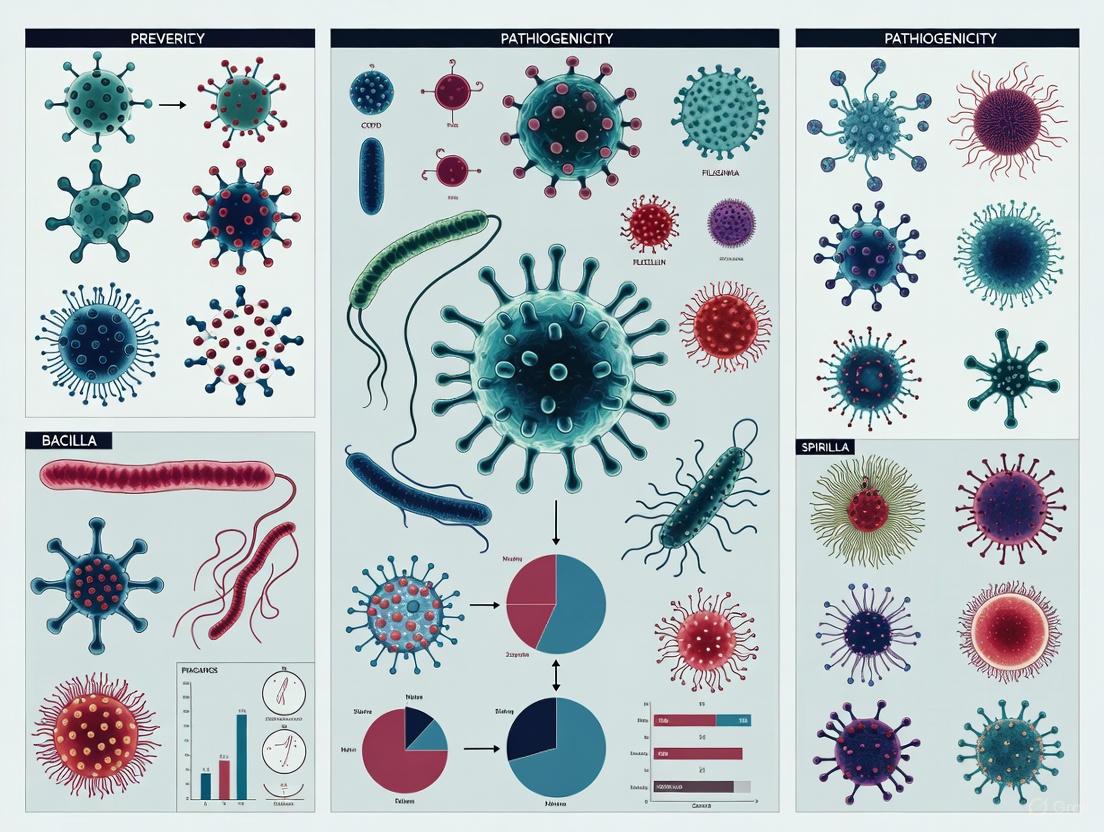
The landscape of human bacterial pathogens is undergoing a rapid and critical expansion, driven by genomic plasticity, antimicrobial resistance (AMR), and a deeper understanding of pathogenicity mechanisms.
Beyond the Superbugs: Navigating the Expanding Genomic and Phenotypic Diversity of Human Bacterial Pathogens
Abstract
The landscape of human bacterial pathogens is undergoing a rapid and critical expansion, driven by genomic plasticity, antimicrobial resistance (AMR), and a deeper understanding of pathogenicity mechanisms. This article synthesizes current research for a scientific audience, exploring the foundational principles of bacterial diversity from strain-level evolution to the dynamics of pathogenic lifestyles. It evaluates innovative methodological approaches in diagnostics and surveillance, addresses the pressing challenges in troubleshooting drug development against resilient pathogens like Gram-negative bacteria and biofilms, and validates strategies through comparative analysis of recent R&D initiatives. The synthesis aims to inform and guide future research, drug development, and public health policy in an era defined by increasing microbial complexity.
The Genetic and Ecological Frontiers of Bacterial Pathogenicity
The evolutionary success of bacterial pathogens hinges on their remarkable genomic plasticity—the capacity to dynamically reshape their genetic material in response to environmental pressures. Central to this adaptability is the concept of the pan-genome, which encompasses the entire gene repertoire of a bacterial species, consisting of both the core genome (genes shared by all strains) and the accessory genome (genes variably present across strains) [1] [2]. The core genome, typically encoding essential metabolic and cellular machinery, ensures species identity and stability. In contrast, the accessory genome serves as a flexible gene pool, frequently gained through horizontal gene transfer (HGT) or lost through deletion events, enabling rapid adaptation to new niches, including the acquisition of antimicrobial resistance (AMR) and virulence factors [3]. In pathogens such as Escherichia coli and Acinetobacter baumannii, this genomic duality creates a powerful evolutionary strategy: genetic conservation coupled with strategic flexibility. This review examines the structure, dynamics, and clinical implications of these genomic components within the broader context of expanding diversity in human bacterial pathogens research.
Quantitative Landscape of Core and Accessory Genomes
The relative proportions of core and accessory genomes reveal fundamental aspects of a pathogen's lifestyle and evolutionary history. Species with a large, open pan-genome relative to their core genome exhibit high genomic plasticity, allowing them to colonize diverse environments.
Table 1: Core vs. Accessory Genome Composition in Bacterial Pathogens
| Bacterial Species | Core Genome Size (% of Pan-Genome) | Accessory Genome Size (% of Pan-Genome) | Key Characteristics | Primary Reference |
|---|---|---|---|---|
| Escherichia coli | ~993 gene families (6%) | ~14,748 gene families (94%) | High diversity; pathotypes defined by accessory genes | [1] |
| Acinetobacter baumannii (Historical Isolates) | 5.34% of total genes | 94.66% of total genes | Multidrug-resistant nosocomial pathogen | [4] |
| Acinetobacter baumannii (Contemporary Isolates) | 10.68% of total genes | ~89.32% of total genes | Trend toward genomic streamlining | [4] |
The data illustrates that in E. coli, the accessory genome constitutes the vast majority of the pan-genome, with only a small fraction of genes being universal across all strains [1]. This pattern is echoed in A. baumannii, though a comparative analysis of historical versus contemporary isolates suggests an evolutionary trend toward an increased core genome proportion, potentially indicating selection for optimized, successful clones in healthcare settings [4].
Measuring Genome Plasticity: From Fluidty to FOGS
Quantifying genomic plasticity requires specialized indices that go beyond simple gene counts. Traditional metrics like Jaccard distance and genome fluidity (Φ) measure gene content diversity but lack a temporal component, failing to distinguish between gradual gene accumulation and rapid gain/loss events [5].
To address this, a novel index termed Flux of Gene Segments (FOGS) has been developed. FOGS incorporates evolutionary distance (e.g., SNP distance) to measure the rate of gene exchange. A key innovation of FOGS is that it treats consecutive, unique genes as a single acquired segment, more accurately modeling horizontal gene transfer events which often involve multi-gene regions [5]. Application of FOGS to K. pneumoniae, S. aureus, and E. coli has revealed that heightened genome plasticity is correlated with globally disseminated, high-risk clones, underscoring its clinical relevance [5].
Methodologies for Genomic Analysis: A Technical Guide
Research into pan-genomes relies on a standardized workflow of sequencing, annotation, and comparative analysis. The following diagram outlines a typical pipeline for defining core and accessory genomes.
Diagram Title: Pan-Genome Analysis Workflow
Detailed Experimental Protocols
Genome Sequencing and Assembly
- DNA Extraction & Library Preparation: High-quality genomic DNA is extracted using kits such as the QIAamp DSP DNA Mini Kit. Libraries are prepared with platforms like the Illumina Nextera XT for short-read sequencing, which is cost-effective for large sample sizes. For improved assembly, particularly of repetitive regions, long-read technologies like Nanopore sequencing are employed [6] [7].
- Quality Control and Assembly: Raw sequencing reads are quality-checked with FastQC and trimmed with Trimmomatic to remove adapters and low-quality bases. De novo assembly is performed using assemblers like SPAdes, which is effective for both pure cultures and metagenomic samples [6] [7].
Gene Annotation and Pan-Genome Construction
- Genome Annotation: All assembled genomes are uniformly annotated with Prokka to ensure consistency in gene calling and functional prediction, which is critical for comparative analyses [6].
- Pan-Genome Definition: The annotated General Feature Format (GFF) files from all isolates are used as input for Roary. Roary clusters predicted coding sequences into orthologous groups, rapidly identifying the core genome (genes present in ≥99% of isolates) and the accessory genome (genes absent from one or more isolates) [6]. Roary can be run with the
-sflag to not split paralogs.
Phylogenomic and Accessory Genome Analysis
- Core Genome Phylogeny: The core genome alignment generated by Roary or from SNP-calling pipelines like Snippy is used to infer phylogenetic relationships. Tools like FastTree generate maximum-likelihood trees, revealing the vertical evolutionary history and population structure of the isolates [1] [8].
- Accessory Genome Clustering: The presence/absence matrix of accessory genes from Roary is used for hierarchical clustering. This analysis can clearly separate strains into pathotypes or sequence types that are often jumbled when using traditional multi-locus sequence typing (MLST) [1].
Table 2: Essential Research Reagents and Computational Tools
| Category | Item/Software | Primary Function in Analysis |
|---|---|---|
| Wet-Lab Reagents | QIAamp DSP DNA Mini Kit (Qiagen) | High-quality genomic DNA extraction from bacterial cultures. |
| Nextera XT DNA Library Prep Kit (Illumina) | Preparation of sequencing libraries for short-read platforms. | |
| Bioinformatics Tools | Prokka | Rapid annotation of prokaryotic genomes. |
| Roary | Pan-genome pipeline, clusters genes into core and accessory. | |
| Snippy | Rapid haploid variant calling and core genome alignment. | |
| FastTree | Infers large-scale maximum-likelihood phylogenetic trees. | |
| P-DOR / dRep | Pipeline for population genomics; removes redundant genomes. | |
| Databases | PubMLST | Database for multi-locus sequence typing schemes. |
| VFDB (Virulence Factor Database) | Repository for virulence factors and associated genes. | |
| NCBI AMRFinderPlus | Tool and database for identifying antimicrobial resistance genes. |
Clinical and Epidemiological Implications
Pathogen Evolution and Outbreak Tracing
The accessory genome is a powerful tool for genomic epidemiology, especially over short timescales where the core genome may not have accumulated enough single-nucleotide polymorphisms (SNPs) for resolution [8]. A study of A. baumannii in a hospital over a decade demonstrated that while core genome phylogeny suggested several introductions of International Clone 2 (IC2) into the hospital, the accessory genome revealed how these lineages were extensively disseminated across various wards [8]. This highlights that gene content variation can occur rapidly and provides a higher-resolution view of transmission dynamics.
Virulence and Antimicrobial Resistance
The accessory genome is a primary repository for genes that dictate virulence and resistance profiles. A compelling example comes from Shiga toxin-producing E. coli (STEC). A comparative genomic study of Australian and international O157 STEC strains revealed that the most distinct difference was the absence of the stx2a gene in all Australian isolates, which are associated with milder human disease [6]. Internationally, the acquisition of stx2a is a key event in the emergence of highly pathogenic outbreak clones. This underscores how the gain or loss of a single accessory gene can dramatically alter a pathogen's clinical impact [6].
Similarly, the evolution of A. baumannii' resistome demonstrates the dynamic nature of the accessory genome. Contemporary isolates show the emergence of new resistance determinants like blaNDM-1, blaOXA-58, and blaPER-7 within their accessory genomes, contributing to a broader resistance spectrum and complicating treatment options [4].
The distinction between the core and accessory genome is fundamental to understanding the evolution, transmission, and pathogenicity of bacteria. The stable core maintains essential biological functions, while the highly plastic accessory genome serves as a toolkit for rapid adaptation, directly fueling the diversity of human bacterial pathogens. The advent of large-scale genomic sequencing and robust bioinformatic pipelines has transformed our ability to study these components at a population level.
Future research will be shaped by several key trends. The development of sophisticated indices like FOGS to quantitatively measure plasticity will enhance our ability to predict the emergence of high-risk clones [5]. Furthermore, moving beyond the pan-genome to the pan-transcriptome—as demonstrated in yeast studies—will reveal how variable gene content translates to regulatory and phenotypic diversity [9]. Finally, integrating genomic data with clinical and epidemiological metadata through genome-wide association studies (GWAS) will continue to unravel the complex interactions between genetic variation, pathogen biology, and disease outcomes, ultimately informing novel therapeutic and infection control strategies.
In the expanding field of human bacterial pathogens research, a critical challenge often remains unaddressed: the extensive genetic and phenotypic diversity that exists both between different strains of the same species (inter-strain diversity) and within populations of a single strain (intra-strain diversity). This diversity represents what has been termed the "elephant in the (living) room" – a substantial yet frequently overlooked factor that significantly impacts research reproducibility, therapeutic development, and our fundamental understanding of pathogen behavior [10]. For researchers and drug development professionals, recognizing and accounting for this multi-level diversity is paramount for advancing the field beyond its current limitations.
The genomic plasticity of bacterial pathogens creates a dual challenge. First, at the inter-strain level, different clinical isolates of the same species can exhibit remarkable genomic variation, leading to distinct phenotypic profiles in virulence, antibiotic resistance, and host adaptation strategies. Second, at the intra-strain level, successive subculturing in laboratory environments and spontaneous genetic variations can result in significantly altered genotypes and phenotypes in strains that share the same designation [10]. This review provides a comprehensive technical examination of this bipartite problem, offering methodological frameworks for its quantification and analysis within the broader context of bacterial pathogenesis research.
The Genomic Landscape of Bacterial Strain Diversity
Quantitative Frameworks for Defining Strain-Level Variation
Advancements in genomic analysis have enabled researchers to establish quantitative thresholds for delineating bacterial strains. Studies on natural bacterial populations have revealed a bimodal distribution in genome-aggregate average nucleotide identity (ANI) values, with a natural "gap" in sequence space between 99.2% and 99.8% ANI [11]. This discovery provides an empirical basis for defining sub-species taxonomic units:
- Genomovars: Bacterial lineages sharing <99.8% ANI but >99.2% ANI, representing distinct evolutionary lines within a species [11].
- Strains: Bacterial populations sharing >99.99% ANI and >99.0% shared gene content, representing the finest routinely distinguishable taxonomic unit [11].
Table 1: Genomic Thresholds for Defining Bacterial Diversity Units
| Diversity Unit | ANI Threshold | Gene Content Threshold | Definition |
|---|---|---|---|
| Same Species | >95% | ~60-80% | Basic taxonomic unit based on DNA relatedness |
| Genomovar | 99.2-99.8% | Not specified | Distinct evolutionary line within a species |
| Strain | >99.99% | >99.0% | Finest distinguishable taxonomic unit |
| Clone | 100% | 100% | Genetically identical descendants |
The practical implications of these thresholds are profound. Research on Salinibacter ruber populations suggests that a single natural environment can contain between 5,500 to 11,000 distinct genomovars, the majority of which are rare in situ [11]. This extensive diversity highlights the limitations of cultivation-based approaches, as the most frequently recovered isolate in laboratory media often does not represent the most abundant genomovar in natural environments.
Mechanisms Generating Diversity
The genomic heterogeneity observed in bacterial populations arises through multiple mechanisms:
- Mobile genetic elements: Plasmids, insertion sequences, integrons, and bacteriophages facilitate horizontal gene transfer, rapidly altering genomic content and organization [10].
- Natural transformation and recombination: Bacterial species with potent capabilities for DNA uptake and recombination, such as Acinetobacter baumannii, exhibit heightened genomic plasticity [10].
- Phase variation: High-frequency, reversible genetic switches that alter gene expression patterns and create phenotypic heterogeneity within clonal populations [10].
- Spontaneous mutations: Continuous accumulation of single nucleotide polymorphisms, insertions, deletions, and other genetic changes during bacterial replication and adaptation [12].
Case Studies in Pathogen Diversity
Acinetobacter baumannii: A Model for Laboratory Strain Divergence
Acinetobacter baumannii, a WHO-priority Gram-negative pathogen, exemplifies the challenges posed by bacterial strain diversity. Research on this organism relies heavily on a limited set of reference strains, yet these strains demonstrate significant genetic and phenotypic instability that often goes unreported [10].
Table 2: Documented Genetic Variation in Common A. baumannii Laboratory Strains
| Strain | Original Isolation | Key Documented Variations | Functional Consequences |
|---|---|---|---|
| ATCC19606T | Human urine, pre-1949 | Presence/absence of 52 kb Φ19606 prophage; SNPs; micro/macro-deletions [10] | Prophage carries eptA1 gene conferring inducible colistin resistance [10] |
| ATCC17978 | Infant meningitis case, 1951 | Loss of pAB3 plasmid; AbaAL44 44-kb accessory locus presence/absence [10] | Plasmid loss activates T6SS; AbaAL44 alters virulence in mouse pneumonia model [10] |
| AB5075 | Contemporary MDR isolate | Multiple undocumented variants across laboratories [10] | Unknown but potentially significant phenotypic differences |
The case of ATCC17978 is particularly illustrative. A single-nucleotide polymorphism in the obgE gene, which encodes a GTPase involved in stringent response, was found to invalidate previous research conclusions about glycerophospholipid transport in Gram-negative bacteria [10]. This example underscores how undetected intra-strain variation can compromise the scientific literature and lead to erroneous conclusions.
Staphylococcus aureus: Functional Consequences of Intra-Strain Variation
Staphylococcus aureus small colony variants (SCVs) provide compelling evidence for the functional impact of intra-strain diversity. Research on consecutive SCV isolates from a single cystic fibrosis patient revealed that while all isolates originated from the same genetic lineage, they exhibited significant differences in biofilm formation capacity and immune stimulation patterns [12].
These functional differences emerged despite the isolates being derived from the same strain, demonstrating how intra-strain variation can generate clinically relevant phenotypic diversity during host adaptation. The SCV phenotype, characterized by altered metabolic activity and slow growth, illustrates how genetic changes can stabilize distinct phenotypic states within a bacterial population, contributing to persistent infections and alternating recurrence-remission cycles [12].
Group A Streptococcus: Linking Genotype to Clinical Phenotype
Comprehensive genomic analysis of serotype M3 Group A Streptococcus (GAS) strains has revealed how inter-strain diversity correlates with disease presentation. Research comparing strains from asymptomatic carriers versus invasive infections demonstrated that carrier strains were significantly less virulent in mouse models and had evolved through distinct genetic pathways [13].
Notably, the presence or absence of specific prophages encoding virulence factors like streptococcal pyrogenic exotoxin A was strongly associated with strain persistence between epidemics [13]. Furthermore, a serotype M3 clone significantly underrepresented in necrotizing fasciitis cases was found to possess a unique frameshift mutation truncating the MtsR transcriptional regulator, which subsequently altered expression of iron-acquisition genes [13]. This example provides a clear mechanistic link between specific genetic variations and patient disease outcomes.
Methodological Approaches for Characterizing Diversity
Genomic Techniques for Strain Resolution
Diagram 1: Genomic workflow for strain resolution
Experimental Protocols for Diversity Assessment
Protocol 1: Whole-Genome Sequencing and ANI Analysis for Strain Delineation
- Strain selection and DNA extraction: Select multiple isolates from different sources or laboratory conditions. Extract high-molecular-weight DNA using standardized protocols suitable for the selected sequencing platform.
- Library preparation and sequencing: Prepare sequencing libraries according to manufacturer specifications. For comprehensive analysis, utilize both short-read (Illumina) and long-read (PacBio, Oxford Nanopore) technologies to ensure complete genome assembly and variant detection.
- Genome assembly and annotation: Assemble reads into contigs using appropriate assemblers (e.g., Unicycler, HGAP, Flye). Annotate genomes using standardized pipelines (e.g., Prokka, RAST) to identify coding sequences and functional elements.
- Average Nucleotide Identity calculation: Perform pairwise whole-genome comparisons using tools such as FastANI or PyANI. Calculate ANI values for all strain combinations.
- Identification of ANI gaps: Plot the distribution of ANI values to identify natural discontinuities. Use the established threshold of 99.2-99.8% ANI to define genomovars and >99.99% ANI to define strains [11].
- Pan-genome analysis: Identify core, accessory, and unique gene content using tools such as Roary or Panaroo. Calculate shared gene content percentages between strains.
Protocol 2: Dynamic Covariance Mapping for Community Interactions
- Community time-series sampling: Collect abundance data for community members at multiple time points during ecological observations or experimental interventions.
- High-resolution lineage tracking: For intra-species diversity assessment, implement chromosomal barcoding techniques to track sub-lineage dynamics. The Tn7 transposon system can be used to integrate approximately 500,000 distinct DNA barcodes into a bacterial population [14].
- Covariance calculation: Compute the pairwise covariance between the abundance time series of each member and the time derivative of abundance (growth rate) of every other member.
- Interaction matrix construction: Apply the Dynamic Covariance Mapping (DCM) algorithm to estimate the community interaction matrix from the covariance patterns, capturing both inter- and intra-species interactions [14].
- Temporal phase identification: Use eigenvalue decomposition of the time-dependent community matrix to identify distinct temporal domains based on community stability.
- Genetic validation: Perform whole-genome sequencing of dynamically distinct clonal clusters to identify genetic underpinnings of observed ecological dynamics.
Table 3: Key Research Reagents for Strain Diversity Studies
| Reagent/Resource | Function/Application | Example Use Case |
|---|---|---|
| Reference Strains (ATCC19606T, ATCC17978, AB5075) | Baseline comparators for genetic and phenotypic studies | Identifying laboratory-acquired variations in A. baumannii [10] |
| RAPD Primers | Rapid fingerprinting for preliminary strain differentiation | Dereplicating isolates into clonal varieties before genomic sequencing [11] |
| Chromosomal Barcoding System (Tn7 transposon with barcode library) | High-resolution tracking of sub-lineage dynamics | Monitoring intra-species variation in community contexts [14] |
| Long-Read Sequencing Reagents (PacBio, Nanopore) | Complete genome assembly and structural variant detection | Identifying prophage presence/absence and large deletions [10] |
| ANI Calculation Software (FastANI, PyANI) | Quantifying genomic relatedness between isolates | Establishing strain boundaries based on natural ANI gaps [11] |
Research Implications and Future Directions
The documented extent of inter- and intra-strain diversity has profound implications for bacterial pathogenesis research and therapeutic development. The "elephant in the room" metaphor underscores how overlooking this diversity compromises research reproducibility, therapeutic target validation, and our fundamental understanding of pathogen biology.
Diagram 2: Research implications of strain diversity
Recommended Best Practices for Pathogen Research
To address the challenges posed by bacterial strain diversity, researchers should adopt the following practices:
- Systematic strain validation: Implement whole-genome sequencing as a routine verification step for bacterial strains used in research, including regular re-sequencing of laboratory stocks to monitor microevolution.
- Diversity-informed study design: Include multiple genetically distinct strains in experimental designs to ensure findings represent general species characteristics rather than strain-specific phenomena.
- Transparent reporting: Clearly document the specific strain variants used in research publications, including source information and verification methods.
- Repository standardization: Culture collections should implement regular genomic verification of distributed strains and maintain detailed records of observed variations.
- Function-first approaches: Prioritize functional validation of discoveries across diverse genetic backgrounds to ensure robustness of identified mechanisms.
The extensive inter- and intra-strain diversity present in bacterial pathogens represents both a challenge and an opportunity for advancing human health research. As this review has detailed, acknowledging this "elephant in the room" is essential for producing reproducible, clinically relevant research. The methodological frameworks and technical approaches outlined here provide researchers with the tools necessary to systematically characterize and account for bacterial diversity in their investigations. By embracing rather than overlooking strain diversity, the research community can develop more effective therapeutic strategies and deepen our understanding of host-pathogen interactions in all their complexity.
Within the context of a broader thesis on the expanding diversity of human bacterial pathogens, this whitepaper synthesizes current knowledge on the molecular arsenals that underpin microbial pathogenicity. The relentless adaptive evolution of bacterial pathogens poses a significant and dynamic challenge to global public health. Central to this evolution are specialized mechanisms—virulence factors, sophisticated secretion systems, and horizontally acquired pathogenicity islands—that enable bacteria to colonize host tissues, evade immune responses, and cause disease [15] [16]. The co-evolution of virulence and antimicrobial resistance genes, particularly their co-localization on mobile genetic elements, represents a paradigm shift in our understanding of bacterial pathogenesis, moving beyond earlier models that viewed these traits as independent [15]. This guide provides an in-depth technical analysis of these core mechanisms, structured data presentation for comparative analysis, detailed experimental methodologies, and essential resource toolkits, thereby offering a foundational resource for researchers, scientists, and drug development professionals dedicated to confronting the threat of bacterial diseases.
Virulence Factors: The Pathogen's Toolkit
Virulence factors are molecules expressed and secreted by pathogens that enable them to achieve colonization of a niche in the host, immunoevasion, immunosuppression, entry into and out of cells, and obtain nutrition from the host [17]. These factors are functionally categorized based on their mechanisms of action during infection.
Table 1: Functional Categorization of Key Virulence Factors
| Category | Function | Examples | Pathogens |
|---|---|---|---|
| Toxin Genes | Encode toxins that disrupt host cell integrity and physiological function or induce tissue damage | ctxAB (Cholera toxin), TcdA/TcdB (Enterotoxins) | Vibrio cholerae, Clostridioides difficile [15] |
| Adhesin Genes | Mediate pathogen attachment to host cell receptors, facilitating colonization and invasion | fimH (Type 1 fimbrial tip protein), fnbA/fnbB (Fibronectin-binding proteins) | Uropathogenic Escherichia coli, Staphylococcus aureus [15] |
| Invasion Genes | Enable pathogens to breach host barriers and invade tissues or cells | ipaBCD (T3SS effectors), inlA/inlB (Internalins) | Shigella spp., Listeria monocytogenes [15] |
| Immune Evasion Genes | Interfere with immune recognition, suppress host defense, or evade clearance mechanisms | cps (Capsular polysaccharide synthesis), UL49.5, EFG1 | Streptococcus pneumoniae, Herpesviruses, Candida albicans [15] |
Bacterial Virulence Factors: A Closer Look
In bacteria, virulence genes are often clustered within Pathogenicity Islands (PAIs) or other mobile genetic elements, facilitating their horizontal transfer and rapid evolution [15] [17]. A prime example is the fimH gene in uropathogenic Escherichia coli (UPEC), which encodes the tip protein of type 1 pili that specifically binds to mannose receptors on urinary epithelial cells, a critical step in initiating urinary tract infections [15] [18]. Similarly, the fibronectin-binding protein A (fnbA) gene in Staphylococcus aureus mediates adhesion to damaged host tissues [15]. For invasion and direct manipulation of host cells, enteropathogenic E. coli (EPEC) employs a type III secretion system (T3SS) to inject effector proteins like the translocated intimin receptor (Tir) directly into host cells. Once inserted, Tir acts as a receptor for the bacterial outer membrane protein intimin, leading to actin rearrangement and the formation of characteristic "actin pedestals" that disrupt the intestinal barrier [15] [19].
Regulation and Niche Adaptation
The expression of virulence factors is tightly regulated in response to environmental cues. Mycobacterium tuberculosis exemplifies this sophisticated adaptation through its dormancy survival regulator (dosR) system. In the hypoxic microenvironment within macrophages, DosR is activated, triggering a genetic program that induces a dormant state, thereby promoting bacterial persistence and evading host immune clearance [15]. This state is maintained by epigenetic silencing of virulence genes, allowing the bacterium to remain latent for extended periods [15].
Pathogenicity Islands: Hubs of Virulence and Horizontal Gene Transfer
Pathogenicity Islands (PAIs) are a distinct class of genomic islands (GEIs) acquired by microorganisms through horizontal gene transfer (HGT) [17] [16]. They are incorporated into the genomes of pathogenic organisms but are typically absent from nonpathogenic organisms of the same or closely related species [17]. These mobile genetic elements can range from 10 to 200 kilobases in size and are primary vectors for the acquisition of virulence genes, effectively acting as evolutionary catalysts that can convert benign strains into pathogens [16].
Defining Characteristics of PAIs
PAIs possess several key genetic signatures that distinguish them from the core genome:
- Flanking Direct Repeats and tRNA Loci: They are often flanked by direct repeats (DRs) and are frequently inserted into tRNA genes, which serve as stable integration sites for recombination [17] [16].
- Unusual GC Content: The GC content of PAIs often differs significantly from that of the core genome, indicating a foreign origin [17] [16].
- Mobility Genes: They often carry remnants of mobile genetic elements, such as integrases, transposases, or insertion sequences (IS), which facilitate their excision and transfer [17] [16].
- Instability: Due to their mobile nature, PAIs can be unstable and may be spontaneously lost from the genome under non-selective conditions [16].
Table 2: Key Characteristics and Examples of Pathogenicity Islands
| Characteristic | Description | Functional Implication |
|---|---|---|
| GC Content Deviation | Lower or higher GC content compared to the core genome. | Indicator of foreign origin through horizontal gene transfer [17] [16]. |
| Flanking Direct Repeats | Short, identical sequences at both ends of the PAI. | Sites for recombination events, facilitating integration and excision [17] [16]. |
| tRNA Association | Frequent integration at tRNA loci. | tRNA genes are common targets for site-specific recombination systems [17] [16]. |
| Mobility Genes | Presence of integrase, transposase, or IS elements. | Mediates the mobility and transfer of the PAI within or between genomes [17] [16]. |
| Example PAI | Locus of Enterocyte Effacement (LEE) | |
| Pathogen | Enterohemorrhagic E. coli (EHEC), Enteropathogenic E. coli (EPEC), Citrobacter rodentium [19]. | |
| Key Functions | Encodes a Type III Secretion System (T3SS), effector proteins (Tir, Esp proteins), and an adhesin (intimin) [19]. | Essential for the formation of attaching/effacing (A/E) lesions on intestinal epithelium [19]. |
The Locus of Enterocyte Effacement (LEE): A Model PAI
The LEE island in A/E pathogens such as EHEC and EPEC is a prototypical and well-characterized PAI [19]. A systematic mutagenesis study of all 41 genes in the Citrobacter rodentium LEE (a model for human A/E pathogens) identified 33 virulence factors, highlighting the dense clustering of essential pathogenic functions [19]. This study also revealed that the LEE-encoded T3SS secretes effector proteins encoded not only within the LEE but also on other, uncharacterized PAIs, suggesting cooperative interactions between multiple genomic islands in pathogenesis [19].
The regulation of the LEE is hierarchical. The PAI encodes key regulators, including Ler, which is the master regulator of the LEE genes. Another regulator, Orf11, was identified as a positive regulator that acts upstream of Ler by promoting the expression of the ler gene itself [19]. Furthermore, the type III secretion system (T3SS) within the LEE acts as a hierarchical switch, controlling the secretion of effector proteins [19].
Experimental Approaches: From Classical Genetics to Modern Omics
Understanding pathogenicity mechanisms requires a multidisciplinary approach, combining classical genetics with cutting-edge technologies.
Protocol 1: Systematic Analysis of a Pathogenicity Island
This protocol is based on the seminal study that systematically mutagenized the entire LEE PAI [19].
- Objective: To functionally characterize all genes within a pathogenicity island both in vitro and in vivo.
- Materials:
- Bacterial Strains: Wild-type pathogenic strain (e.g., Citrobacter rodentium for LEE studies) and a closely related non-pathogenic strain.
- Mutagenesis Tools: Lambda Red recombinase system or sacB-based allelic exchange for generating precise, non-polar deletion mutants.
- Cell Culture: Relevant host cell lines (e.g., HeLa cells for actin staining).
- Animal Model: A relevant infection model (e.g., mice for C. rodentium).
- Antibodies: Specific antibodies for detecting secreted bacterial proteins (e.g., against Tir, EspB).
- Complementation Vectors: Plasmids for in trans expression of mutated genes to confirm phenotype specificity.
- Methodology:
- Mutant Library Generation: Create a comprehensive library of non-polar deletion mutants, each lacking a single gene from the PAI.
- In vitro Phenotyping:
- Protein Secretion Assay: Grow mutants in secretion-inducing media (e.g., DMEM). Concentrate secreted proteins from the culture supernatant and analyze via SDS-PAGE and Western blotting using specific antibodies.
- Fluorescent Actin Staining (FAS): Infect HeLa cells with mutants. Fix and stain cells with fluorescently-labeled phalloidin to visualize actin accumulation (pedestals) beneath attached bacteria.
- In vivo Virulence Assay: Infect cohorts of animals (e.g., mice) with the wild-type strain and each mutant. Monitor for disease signs, measure bacterial colonization (e.g., fecal shedding, tissue loads), and analyze pathological changes in tissues.
- Regulatory Analysis: Use transcriptional fusions (e.g., promoter-cat reporter fusions) and primer extension assays in the mutant backgrounds to delineate regulatory hierarchies.
- Interpretation: Mutants that fail to secrete effectors, form actin pedestals in vitro, or show attenuated virulence in vivo identify essential virulence factors. Altered expression of key regulators in specific mutants reveals the underlying regulatory network.
Protocol 2: Phylogenomic Identification of Novel Pathogenicity Determinants
This modern approach uses comparative genomics to discover novel virulence factors across a wide range of pathogens [20].
- Objective: To identify potential novel and widespread bacterial pathogenicity determinants across diverse taxa using phylogenetic-based orthology analysis.
- Materials:
- Genomic Dataset: Curated, high-quality complete genomes from both pathogenic (HP) and non-pathogenic (NHP) bacterial strains. Databases like BacSPaD provide reliable pathogenicity annotations.
- Computational Tools: OrthoFinder software for phylogenetic orthology analysis, and subsequent statistical analysis tools (e.g., R).
- High-Performance Computing (HPC) Cluster: Essential for processing large-scale genomic data.
- Methodology:
- Data Curation: Acquire and rigorously filter genomes based on CheckM completeness (>95%) and contamination thresholds. Select a representative set of strains to ensure taxonomic breadth and data quality.
- Orthology Inference: Use OrthoFinder to perform an all-vs-all protein sequence comparison and infer Hierarchical Orthologous Groups (HOGs). This method groups proteins by shared ancestry, accounting for speciation and gene duplication events.
- Statistical Association: Convert HOG data into a binary presence/absence matrix across all strains. Apply a Fisher's exact test to identify HOGs significantly associated with the HP label, correcting for multiple testing (e.g., Benjamini-Hochberg FDR < 0.05).
- Downstream Analysis: Rank significant HP-associated HOGs. Perform clustering analysis (e.g., hierarchical clustering) on the presence/absence matrix of top HOGs to reveal patterns of association with pathogenic strains.
- Interpretation: HOGs strongly associated with HP strains represent a pool of candidate virulence factors, including both known and novel determinants. This provides a powerful, unbiased resource for prioritizing targets for future experimental validation.
Advancing research in bacterial pathogenesis relies on a suite of critical reagents, computational tools, and databases.
Table 3: Essential Research Reagents and Resources for Pathogenicity Research
| Category / Item | Specific Examples | Function / Application |
|---|---|---|
| Key Reagents | ||
| Defined Bacterial Mutant Libraries | Non-polar deletion mutants of all genes in a PAI (e.g., 41 LEE gene mutants) [19]. | Functional screening to identify essential virulence factors. |
| Relevant Animal Infection Models | Mouse model for Citrobacter rodentium infection [19]. | In vivo assessment of bacterial colonization and virulence. |
| Specific Antibodies | Anti-Tir, Anti-EspB antibodies [19]. | Detection and analysis of secreted bacterial effector proteins. |
| Complementation Vectors | pACYC184-based plasmids for in trans gene expression [19]. | Confirmation that a phenotypic defect is due to the specific gene mutation. |
| Computational Tools | ||
| Orthology Analysis Software | OrthoFinder [20]. | Inference of Hierarchical Orthologous Groups (HOGs) from proteome data. |
| GEI/PAI Prediction Tools | IslandViewer 4, SIGI-HMM, PAI Finder [16]. | In silico identification of genomic islands and PAIs in bacterial genomes. |
| Critical Databases | ||
| Virulence Factor Database (VFDB) | VFDB [20]. | Central repository for experimentally validated virulence factors. |
| Bacterial Strains' Pathogenicity Database | BacSPaD [20]. | Source of curated, strain-level pathogenicity annotations for genomics studies. |
The study of pathogenicity mechanisms is a cornerstone of microbiological research with direct implications for therapeutic and diagnostic development. The intricate interplay between virulence factors, their delivery via specialized secretion systems, and their frequent genomic organization into mobile pathogenicity islands illustrates a dynamic and efficient evolutionary strategy. The emerging paradigm of co-localized virulence and resistance genes on mobile elements underscores the urgent need for integrated research approaches that consider pathogenicity and antimicrobial resistance as interconnected threats [15]. Future research will be propelled by the integration of multi-omics data, the application of artificial intelligence for predictive modeling of virulence, and the use of CRISPR-based genome editing for high-throughput functional studies [15]. Furthermore, large-scale phylogenomic analyses provide a powerful, unbiased strategy for discovering novel pathogenicity determinants, thereby expanding the universe of potential targets for novel antimicrobials and vaccines [20]. As the diversity of human bacterial pathogens continues to expand, a deep and mechanistic understanding of these core principles will be essential for designing the next generation of precision diagnostics and targeted interventions to reduce the global burden of infectious diseases.
The classic dichotomy of bacterial pathogens as solely extracellular or intracellular is no longer sufficient to describe the complex lifestyle spectrum revealed by modern research. Pathogens exhibit a remarkable capacity to adapt, employing diverse and often overlapping survival strategies within the host. Biofilm-forming communities, dynamic intracellular lifestyles, and cooperative interspecies interactions represent a paradigm shift in our understanding of bacterial pathogenesis [21] [22] [23]. This expanded view is critical for addressing the escalating crisis of antimicrobial resistance (AMR), which causes over 4.95 million deaths globally each year [24]. Framing pathogen diversity through the lens of ecological niches and lifestyles is not merely an academic exercise; it is essential for developing next-generation diagnostics, therapeutics, and prophylactics to combat persistent and recalcitrant infections.
Defining Pathogen Lifestyles and Niches
The pathogenic strategy is fundamentally defined by the ecological niche a bacterium occupies within the human host. Each niche offers distinct advantages and challenges, shaping the pathogen's virulence, resistance profile, and interaction with the host immune system.
Table 1: Core Characteristics of Pathogen Lifestyles and Niches
| Lifestyle/Niche | Definition | Key Examples | Primary Advantages to Pathogen |
|---|---|---|---|
| Extracellular | Resides and replicates outside host cells, in interstitial spaces, blood, or lumens. | Streptococcus pneumoniae, Staphylococcus aureus (planktonic), Haemophilus influenzae [25] | Access to abundant nutrients; avoids intracellular degradation pathways. |
| Intracellular | Survives and replicates inside host cells (e.g., macrophages, epithelial cells). | Mycobacterium tuberculosis, Salmonella Typhi, Legionella pneumophila [25] | Protection from humoral immunity (antibodies) and some antibiotics [25]. |
| Biofilm-Forming | Communities of microbes embedded in a self-produced extracellular polymeric substance (EPS) matrix, attached to biotic or abiotic surfaces. | ESKAPE pathogens (Enterococcus faecium, S. aureus, Klebsiella pneumoniae, Acinetobacter baumannii, Pseudomonas aeruginosa, Enterobacter spp.) [21] [22] | Enhanced tolerance to antibiotics and host immune defenses; metabolic heterogeneity; cooperative benefits [21] [22]. |
| Facultative Intracellular | Capable of surviving both inside and outside host cells. | Pseudomonas aeruginosa, Salmonella Typhimurium, Staphylococcus aureus [23] [26] | Niche flexibility; can exploit different host microenvironments. |
The following diagram illustrates the core lifestyles and niches of bacterial pathogens, highlighting their key characteristics and interrelationships.
The Biofilm Lifestyle: A Protected Community Existence
Biofilms represent a predominant mode of growth for many microorganisms, characterized by surface-attached, structured communities encased in a hydrated matrix of extracellular polymeric substances (EPS) [21].
Architecture and Development
Biofilm architecture is a complex, three-dimensional structure containing microcolonies of bacterial cells surrounded by a network of EPS, which comprises polysaccharides, proteins, extracellular DNA (eDNA), and lipids [21] [22]. The development is a sequential, multi-step process:
- Initial Reversible Attachment: Free-floating (planktonic) cells adhere to a preconditioned surface through weak interactions like van der Waals forces and electrostatic interactions [21].
- Irreversible Attachment: Cells anchor themselves firmly using cell surface structures (e.g., pili, fimbriae) and begin producing the EPS matrix [21].
- Maturation: Microcolonies form and develop into a mature biofilm with characteristic 3D architecture, including water channels that facilitate nutrient distribution and waste removal [21] [22].
- Dispersion: Active detachment of individual cells or clusters from the biofilm to colonize new surfaces, completing the life cycle [22].
Mechanisms of Resistance and Tolerance in Biofilms
Biofilms are notoriously resistant to antimicrobials and host defenses, a property multifactorial in nature [21] [27]:
- Physical Barrier: The EPS matrix acts as a physical barrier, impeding the penetration of antimicrobial agents and host immune cells like phagocytes [21] [22].
- Metabolic Heterogeneity: Gradients of nutrients, oxygen, and waste products create diverse microniches within the biofilm. This leads to heterogeneous metabolic activity, with subpopulations of slow-growing or dormant "persister" cells that are highly tolerant to antibiotics which typically target active cellular processes [27].
- Altered Microenvironment: The local biofilm environment (e.g., low pH, nutrient limitation) can negatively impact antibiotic activity [21].
- Enhanced Horizontal Gene Transfer: The close proximity of cells within the biofilm facilitates the exchange of mobile genetic elements, such as plasmids, rapidly spreading antibiotic resistance genes (e.g., β-lactamases, efflux pump genes) across the community [22] [24].
The Intracellular Lifestyle: Survival Within the Host Cell
Intracellular pathogens have evolved to exploit the host cell's interior as a protective niche, evading extracellular immune defenses.
Entry and Replication Niches
Pathogens employ various mechanisms to enter phagocytic and non-phagocytic cells, often using surface adhesins and invasins to trigger their own uptake. Once inside, they occupy distinct compartments:
- Vacuolar Pathogens: Reside and replicate within membrane-bound vacuoles (e.g., Salmonella in Salmonella-containing vacuoles, SCVs; Mycobacterium tuberculosis in phagosomes). They manipulate vacuolar trafficking to avoid fusion with lysosomes and create a replicative niche [26].
- Cytosolic Pathogens: Escape from the vacuole into the host cell cytoplasm, where they replicate freely (e.g., Listeria monocytogenes, Shigella flexneri) [26].
- Facultative Lifestyle: Some pathogens, like Pseudomonas aeruginosa, demonstrate remarkable plasticity, capable of establishing both vacuolar and cytosolic populations within the same host cell [23].
Mechanisms of Intracellular Survival and Immune Evasion
The intracellular lifestyle requires sophisticated strategies to subvert host cell defenses:
- Inhibition of Phagolysosomal Fusion: Vacuolar pathogens secrete effectors that interfere with the host endosomal trafficking machinery, preventing the acidification and enzymatic degradation of their compartment [25].
- Resistance to Intracellular Killing: Pathogens upregulate detoxification systems to neutralize host-derived reactive oxygen and nitrogen species within phagocytes [25].
- Modulation of Host Cell Death: Many intracellular pathogens inhibit apoptosis to maintain their replicative niche, while others may induce pyroptosis or necroptosis to facilitate spread [25].
- Nutrient Acquisition: They actively scavenge essential nutrients (e.g., iron, amino acids) from the host cell, competing with host metabolic pathways [25].
Experimental Models and Methodologies for Studying Pathogen Lifestyles
Understanding these complex lifestyles requires a multifaceted experimental approach, combining classical microbiology with advanced imaging and 'omics' technologies.
Table 2: Key Experimental Protocols for Studying Pathogen Lifestyles
| Research Objective | Core Methodology | Key Technical Steps | Data Output & Analysis |
|---|---|---|---|
| Quantify Intracellular Replication | Gentamicin Protection Assay [23] | 1. Infect host cells. 2. Remove extracellular bacteria with non-cell permeable antibiotic (e.g., gentamicin). 3. Lyse host cells at time points. 4. Plate lysates for Colony Forming Units (CFU). | - Intracellular replication curves.- Calculation of replication rates. |
| Visualize Intracellular Niches & Heterogeneity | High-Resolution Live-Cell Confocal Microscopy [23] [26] | 1. Infect host cells expressing fluorescent organelle markers. 2. Use bacteria expressing fluorescent proteins (e.g., GFP). 3. Image live cells over time. 4. Use automated image analysis macros. | - Spatial localization (vacuolar vs. cytosolic).- Single-cell heterogeneity in replication.- Dynamics of vacuole escape. |
| Analyze Biofilm Architecture & Composition | Scanning Electron Microscopy (SEM) / Confocal Laser Scanning Microscopy (CLSM) [21] | 1. Grow biofilms on relevant surfaces. 2. Fix, dehydrate, and critical-point dry (SEM) or use viability stains (CLSM). 3. Image 3D structure. | - 3D biofilm architecture.- Biomass quantification.- Analysis of matrix composition. |
| Track Bacterial Subpopulation Cooperation | Dual-Fluorescence Reporter Systems [23] | 1. Engineer strains with reporters for specific genes (e.g., T3SS-ON vs T3SS-OFF). 2. Co-infect host cells. 3. Monitor gene expression and localization via microscopy. | - Identification of specialized subpopulations.- Evidence of cross-talk and cooperation. |
The workflow for investigating intracellular pathogenesis, from infection to quantitative analysis, is outlined below.
The Scientist's Toolkit: Essential Research Reagents
Table 3: Key Reagent Solutions for Pathogen Lifestyle Research
| Reagent / Tool | Function / Application | Example Use-Case |
|---|---|---|
| Gentamicin (or other non-cell permeable antibiotics) | Selective killing of extracellular bacteria to isolate intracellular population. | Gentamicin protection assay to quantify bacterial invasion and intracellular replication [23]. |
| Fluorescent Protein Reporters (e.g., GFP, mCherry) | Visualizing bacteria in live cells; tracking subpopulations and gene expression. | Distinguishing vacuolar vs. cytosolic P. aeruginosa using constitutive reporters [23]. |
| Organelle-Specific Dyes & Host Cell Markers | Labeling host cell structures (e.g., lysosomes, actin, endoplasmic reticulum). | Co-localization analysis to determine if an intracellular pathogen resides in a modified vacuole or the cytosol [26]. |
| Type III Secretion System (T3SS) Mutants (e.g., ΔexsA, ΔexsE) | Genetic tools to manipulate key virulence pathways and study their role in intracellular survival. | Demonstrating the requirement of T3SS for vacuolar escape in P. aeruginosa [23]. |
| Specific Chemical Inducers / Inhibitors | Modulating host or bacterial pathways (e.g., Ca²⁺ ionophores, cytoskeleton inhibitors). | Testing the role of host calcium signaling in facilitating bacterial escape from vacuoles [23]. |
| Amplicon Sequencing (16S rRNA/ITS) & Shotgun Metagenomics | Profiling microbial community composition and functional potential. | Identifying niche-specific core microbiomes and horizontal gene transfer potential in biofilms [22] [28]. |
Interplay and Convergence of Lifestyles
The boundaries between pathogen lifestyles are increasingly blurred, revealing sophisticated adaptive strategies.
Facultative and Hybrid Lifestyles
A prime example of lifestyle plasticity is Pseudomonas aeruginosa. Recent research demonstrates that an extracellular subpopulation of P. aeruginosa can assist an intracellular, vacuolar subpopulation in escaping to the cytoplasm. This cross-membrane cooperation is mediated by the extracellular bacteria's Type III Secretion System (T3SS), which increases host cytosolic calcium levels, triggering vacuole rupture [23]. This illustrates a facultative intracellular pathogen where different subpopulations adopt specialized roles, cooperating to enhance overall pathogenesis and persistence.
Biofilms as a Source of Intracellular and Persistent Infections
Biofilms are not static structures; they are a source of disseminated and chronic infections. The dispersion phase can release planktonic cells capable of seeding new infection sites. Furthermore, biofilms on medical devices or tissues can be a reservoir for pathogens that are subsequently phagocytosed by host immune cells, leading to persistent intracellular infections [22]. Biofilm-related infections are estimated to account for over 80% of all nosocomial infections, underlining their clinical significance [22].
Implications for Drug Development and Therapeutic Strategies
The lifestyle and niche of a pathogen have profound implications for treatment efficacy and the development of new antimicrobials.
Table 4: Therapeutic Challenges and Strategies by Pathogen Lifestyle
| Lifestyle | Therapeutic Challenge | Emerging Control Strategies |
|---|---|---|
| Extracellular | Classical antibiotic resistance (e.g., enzymatic inactivation, efflux pumps) [24]. | - Novel antibiotic classes targeting new pathways.- Phage therapy.- Immunotherapies (e.g., monoclonal antibodies). |
| Intracellular | Poor antibiotic penetration into cells; low activity in specific subcellular compartments (e.g., vacuoles) [25]. | - Antibiotic encapsulation in liposomes or nanoparticles for enhanced intracellular delivery.- Host-directed therapies to modulate immune response or disrupt the pathogen's niche.- Drugs active at low pH. |
| Biofilm-Forming | Multicomponent resistance: poor penetration, metabolic dormancy, and persister cells [21] [27]. | - Biofilm-disrupting agents (e.g., enzymes like DNase, dispersin B; surfactants).- Quorum-sensing inhibitors.- Physical disruption (e.g., ultrasound) [21].- Antimicrobial coatings on devices. |
| Facultative/ Cooperative | Subpopulation synergy and niche switching, rendering single-target approaches ineffective. | - Combination therapies targeting both extracellular and intracellular compartments.- Anti-virulence drugs that disarm key cooperation mechanisms (e.g., T3SS inhibitors). |
The diversity of human bacterial pathogens is most accurately understood through the ecological niches and lifestyles they adopt during infection. The traditional categories of extracellular and intracellular are now seen as points on a spectrum, with many pathogens, like P. aeruginosa, exhibiting facultative behaviors and even cooperative sub-specialization [23]. Biofilms represent a dominant, community-based lifestyle that confers extreme resilience and is a cornerstone of chronic infections [21] [22]. Future research must continue to dissect the molecular mechanisms governing niche specificity and transition, leveraging advanced single-cell and spatial 'omics' technologies. Embracing this nuanced, niche-focused understanding of bacterial pathogenesis is the key to developing the innovative therapeutic strategies desperately needed to overcome the global threat of antimicrobial resistance.
The relentless expansion of antimicrobial resistance (AMR) represents one of the most pressing challenges to global public health, modern medicine, and the sustainability of health systems worldwide. Framed within the broader context of the expanding diversity of human bacterial pathogens, understanding the precise burden and trajectories of resistance across specific pathogen-antibiotic combinations is paramount for guiding research priorities and therapeutic development. The World Health Organization's Global Antimicrobial Resistance and Use Surveillance System (GLASS), established to standardize global AMR data, has markedly enhanced the scope and quality of international surveillance efforts. The 2025 report, drawing from over 23 million laboratory-confirmed infections reported by 110 countries between 2016 and 2023, provides an unprecedented analysis of resistance patterns [29] [30]. This technical guide synthesizes the report's critical findings, placing them in the context of pathogen diversity and evolution, and provides methodologies and resources to support the research community in combating this complex threat.
Global AMR Surveillance: Progress and Persistent Gaps
The WHO GLASS initiative has witnessed a four-fold increase in country participation since its inception, growing from 25 countries in 2016 to 104 reporting data in 2023, with 127 countries and territories enrolled by the end of 2024 [29] [30] [31]. This expanding participation has enabled, for the first time, the generation of adjusted global, regional, and national estimates of AMR prevalence for 93 infection type–pathogen–antibiotic combinations, accounting for variables such as country-level demographic structure and surveillance-related biases [29] [31].
Despite this progress, critical surveillance gaps persist. The overall global score for national data completeness was only 53.8%, with large areas of sub-Saharan Africa, Central Asia, and Latin America contributing little or no data [31]. Furthermore, approximately 48% of countries did not report data to GLASS in 2023, and about half of the reporting countries still lacked the systems to generate reliable data [32] [33]. Countries with the weakest surveillance infrastructure and lowest universal health coverage often report the highest apparent levels of resistance, creating a complex interplay between true biological prevalence and surveillance artefact [31]. This is particularly concerning as AMR disproportionately burdens low- and middle-income countries (LMICs), where fragile health systems, inadequate laboratory capacity, and restricted access to effective antibiotics create a syndemic of resistance and under-treatment [30]. For instance, fewer than 0.3% of clinical laboratories across sub-Saharan Africa are equipped to perform both bacteriological testing and automated antimicrobial susceptibility testing [31].
Table 1: Global Status of AMR Surveillance (Data from 2023)
| Surveillance Aspect | Metric | Note |
|---|---|---|
| Country Participation | 104 countries reported data | 127 countries enrolled in GLASS by end of2024 [30] [31] |
| Data Completeness | Global score of 53.8% | Includes epidemiological, demographic, and clinical information [31] |
| Geographic Gaps | Large gaps in sub-Saharan Africa, Central Asia, parts of Latin America | Limited surveillance infrastructure and laboratory capacity [31] |
| Reported Infections | >23 million lab-confirmed cases (2016-2023) | Used for trend analysis across 110 countries [29] |
Resistance Trends Across Key Pathogen-Antibiotic Combinations
The Growing Threat of Gram-Negative Pathogens
The 2025 GLASS report identifies drug-resistant Gram-negative bacteria as the most dangerous and escalating threat, with the greatest burden falling on countries least equipped to respond [32] [33]. Escherichia coli and Klebsiella pneumoniae are the leading drug-resistant Gram-negative pathogens found in bloodstream infections, which are among the most severe bacterial infections often resulting in sepsis, organ failure, and death [32] [33]. Surveillance data reveals that more than 40% of E. coli and over 55% of K. pneumoniae globally are now resistant to third-generation cephalosporins, the first-choice treatment for these infections [32]. In the WHO African Region, this resistance exceeds 70% [32] [33].
Resistance to last-resort antibiotics is also becoming more frequent. Carbapenem resistance, once rare, is narrowing treatment options and forcing reliance on more costly and often inaccessible last-resort antibiotics, particularly in LMICs [32] [24] [33]. Klebsiella pneumoniae resistant to imipenem, a carbapenem antibiotic, increased globally by approximately 15% per year between 2018 and 2023, rising fastest in the African Region [31]. Similarly, resistance to fluoroquinolones is exceeding 40-70% for E. coli and K. pneumoniae in many regions [30].
Regional and Global Resistance Prevalence
Antibiotic resistance is not uniformly distributed across the globe. WHO estimates that resistance is highest in the South-East Asian and Eastern Mediterranean Regions, where 1 in 3 reported infections were resistant in 2023 [32] [33]. In the African Region, 1 in 5 infections was resistant, while data for the Americas Region shows that 1 in 7 infections is resistant to antibiotics, slightly better than the global average of 1 in 6 [30] [32] [33]. Between 2018 and 2023, antibiotic resistance rose in over 40% of the monitored pathogen-antibiotic combinations, with an average relative annual increase of 5-15% [32] [33] [34].
Table 2: Global Resistance Prevalence for Key Pathogen-Antibiotic Combinations (2023)
| Pathogen | Antibiotic Class | Global Resistance Prevalence | Notes |
|---|---|---|---|
| Escherichia coli | Third-generation cephalosporins | >40% [32] | First-choice treatment for bloodstream infections [32] |
| Klebsiella pneumoniae | Third-generation cephalosporins | >55% [32] | Leading cause of drug-resistant bloodstream infections [32] |
| Klebsiella pneumoniae | Carbapenems (Imipenem) | Increasing ~15% annually [31] | A last-resort antibiotic class [31] |
| Staphylococcus aureus | Methicillin (MRSA) | ≈27% [30] | Widespread in hospital and community settings [30] |
| All monitored pathogens | Multiple | 1 in 6 infections (global average) [33] | Aggregate resistance prevalence |
Experimental Protocols for AMR Surveillance and Research
WHO GLASS Surveillance Methodology
The WHO GLASS framework employs a standardized protocol for national surveillance systems to generate comparable AMR data. The process begins with passive surveillance of bacterial isolates from routinely collected clinical specimens from patients with suspected infections [29]. Priority infection sites include bloodstream infections, urinary tract infections, gastrointestinal infections, and urogenital gonorrhoea [29]. Isolates from these specimens undergo bacteriological confirmation and species identification using standard microbiological methods [31].
The core of the protocol is antimicrobial susceptibility testing (AST), performed using methods such as disk diffusion, broth microdilution, or automated AST systems where available [31]. The resulting minimum inhibitory concentration (MIC) values or zone diameters are interpreted according to internationally recognized standards (e.g., EUCAST or CLSI) to categorize isolates as susceptible, intermediate, or resistant [31]. Epidemiological, demographic (age, sex), and clinical data are collected alongside laboratory results to enable comprehensive analysis [31]. National data is then submitted to GLASS using standardized formats for global aggregation and analysis.
Systematic Review and Meta-Analysis Protocol
To complement and validate the GLASS surveillance data, systematic reviews of the scientific literature are conducted. The protocol involves:
- Search Strategy: A comprehensive search of electronic databases (e.g., PubMed, Scopus, Google Scholar) using predefined search terms related to "antibiotic resistance," specific pathogens, and antibiotics [24] [35].
- Study Selection: Application of strict inclusion and exclusion criteria, typically focusing on peer-reviewed studies from a specific timeframe (e.g., 2018-2023) that report AMR data relevant to the GLASS pathogens and antibiotics [35].
- Data Extraction: Standardized extraction of key data points from included studies, such as study location, setting (hospital/community), pathogen, antibiotic, number of isolates tested, number resistant, and resistance percentage [35].
- Quality Assessment: Evaluation of study quality and risk of bias, often focusing on laboratory methodology, sampling framework, and reporting completeness [31] [35].
- Data Synthesis and Meta-Analysis: Statistical pooling of resistance estimates where appropriate, with analysis of heterogeneity. This process can identify regional hotspots and provide greater data granularity than national-level GLASS reports alone [35].
Advanced Statistical Modeling of AMR Data
The 2025 GLASS report utilizes sophisticated Bayesian statistical models to produce more representative and comparable estimates. The workflow involves:
- Data Input and Covariate Selection: The models incorporate raw resistance counts and totals, with key covariates including country-level demographic structure (age, sex) and surveillance coverage (number of isolates reported relative to the national population) [31].
- Model Specification: A Bayesian hierarchical model is constructed, which accounts for the inherent uncertainty in the data and allows for borrowing of information across countries and regions to stabilize estimates where data is sparse [31].
- Bias Adjustment: The model uses the estimated association between surveillance coverage and AMR prevalence to predict how resistance levels might change under a higher surveillance coverage scenario, thereby partially adjusting for the bias that countries with weaker systems often report higher resistance levels [31].
- Estimation and Prediction: The model generates adjusted global, regional, and national estimates with credible intervals, and tracks trends over time (e.g., 2018-2023) for 16 key pathogen-antibiotic combinations [29] [31].
The Scientist's Toolkit: Research Reagent Solutions
Table 3: Essential Research Materials for AMR Mechanism and Surveillance Studies
| Research Reagent / Material | Function / Application | Context from Search Results |
|---|---|---|
| Automated Antimicrobial Susceptibility Testing (AST) Systems | High-throughput phenotypic resistance profiling for clinical surveillance. | Critical for generating reliable national surveillance data; availability is limited in many LMICs [31]. |
| Standardized Culture Media & Biochemical Tests | Isolation, identification, and pure culture of bacterial pathogens from clinical samples. | Foundational for bacteriological confirmation in passive surveillance systems [31]. |
| DNA/RNA Extraction & Purification Kits | Isolation of high-quality nucleic acids for molecular analysis of resistance mechanisms. | Essential for converting RNA to DNA before sequencing in viral/bacterial metagenomic studies [36]. |
| PCR & qPCR Reagents (Primers/Probes, Master Mixes) | Detection and quantification of specific resistance genes (e.g., blaKPC, mecA, mcr-1). | Used to identify genetic determinants of resistance, such as the mecA gene in MRSA [24]. |
| Whole Genome Sequencing (WGS) Kits & Platforms | Comprehensive analysis of resistance genes, mutations, and phylogenetic relationships. | Enables comparative genome analysis to identify virulence genes and pathogenicity islands [37]. |
| Proteomics Reagents (for 2D Chromatography, Trypsin) | Study of protein expression, modification, and damage under antimicrobial stress. | Used in techniques to analyze the bacterial proteome and extracellular proteins [37]. |
| Reference Strains (e.g., ATCC, NCTC) | Quality control for AST, molecular assays, and experimental reproducibility. | Implied by the need for standardized methodologies in global surveillance [29] [31]. |
Discussion and Future Directions
The 2025 GLASS report underscores that AMR is not merely a clinical challenge but a global equity and health-systems crisis, rising fastest where surveillance, prevention, and access to effective medicines are weakest [30]. The findings reveal a critical tension: the regions reporting the highest resistance burdens, notably the South-East Asian, Eastern Mediterranean, and African Regions, are often those with the most limited capacity for robust, population-representative surveillance [32] [31] [33]. This creates a cycle of vulnerability where a lack of data hampers evidence-based treatment and policy, potentially exacerbating the resistance problem. The stark disparities in resistance prevalence and trends across demographic groups and geographic regions highlight the need for interventions that are tailored to local contexts rather than applying one-size-fits-all policies [31].
The molecular basis of this crisis is deeply intertwined with the expanding diversity of bacterial pathogens, a theme highlighted in the search results. Pathogenic strains, such as extra-intestinal E. coli (ExPEC), possess a "flexible gene pool" that can constitute up to one-third of their genome, including pathogenicity islands that confer virulence functions [37]. This genomic plasticity, facilitated by horizontal gene transfer, allows for a "mix and match" combinatorial system of virulence factors, enabling rapid adaptation and the emergence of resistant clones [37] [24]. The finding that large pools of virulence genes in septicemic E. coli are independent of the host species implies a high risk of zoonotic transmission, further complicating containment efforts [37].
Future research and action must be guided by several priorities. First, closing the surveillance gap is fundamental. WHO calls for all countries to report high-quality data to GLASS by 2030, which requires concerted investment in laboratory infrastructure, especially in underserved regions [32] [31] [33]. Second, the fight against AMR must be waged on multiple fronts simultaneously: strengthening antimicrobial stewardship to ensure that first-line "Access" antibiotics account for at least 70% of use; enhancing infection prevention and control in healthcare settings; and incentivizing the development of next-generation antibiotics and rapid diagnostics [30] [32] [33]. Finally, the "One Health" approach, which integrates human, animal, and environmental surveillance, is essential to fully understand and mitigate the transmission of resistance genes and organisms across ecosystems [32] [24] [33]. Without this urgent, coordinated, and multi-pronged global action, the progress of modern medicine is at risk of being reversed by the relentless evolution of bacterial pathogens.
Innovative Tools for Pathogen Detection, Surveillance, and R&D
The field of bacterial pathogen research is continuously challenged by the vast diversity and adaptability of microorganisms. Pathogenic bacteria exhibit remarkable diversity in characteristics such as size, shape, metabolism, and lifestyle, ranging from spherical cocci to rod-shaped bacilli and metabolically versatile species capable of surviving in extreme environments [38]. This diversity extends to their mechanisms of infection, with pathogens classified as either intracellular, multiplying within host cells, or extracellular, existing outside host cells and multiplying in extracellular spaces [38]. Understanding this complexity requires diagnostic tools capable of detecting and identifying a broad spectrum of pathogens rapidly and accurately, especially given the significant global health impact of infectious diseases, which cause over 15 million deaths annually [39].
rRNA-targeted hybridization assays represent a technological advancement that addresses these challenges by leveraging the genetic signatures of pathogens for identification. The 16S ribosomal RNA (rRNA) gene, in particular, serves as an ideal target for these assays due to its presence in all bacteria, containing both highly conserved regions for broad targeting and variable regions for species-specific differentiation [40]. These assays are now being integrated with next-generation sequencing (NGS) platforms and advanced biosensors, creating powerful diagnostic systems that support the broader research mission of expanding our understanding of bacterial pathogen diversity, transmission dynamics, and pathogenesis mechanisms [41] [39]. This technical guide explores the principles, methodologies, and applications of these advanced hybridization assays, providing researchers with the knowledge to implement them effectively in pathogen identification workflows.
Technical Foundations of rRNA-Targeted Hybridization
Principles of Hybridization-Based Detection
Nucleic acid hybridization operates on the fundamental principle of complementary base pairing, where single-stranded oligonucleotide probes bind specifically to their target sequences within the 16S rRNA molecule. The 16S rRNA subunit is ideal for this purpose because it contains both highly conserved regions, useful for universal bacterial detection, and variable regions that provide species-specific signature sequences [40]. This combination allows for the design of probes with varying specificities, from genus-level to strain-level identification.
The hybridization process involves several critical steps. First, the target rRNA must be accessible for probe binding, which can be influenced by the secondary structure of the rRNA molecule. Second, probe design must account for thermodynamic properties such as melting temperature (Tm) and binding affinity to ensure specific hybridization to the intended target while minimizing off-target binding. Finally, the detection system must be sensitive enough to report successful hybridization events, typically through fluorescent, colorimetric, or other signaling mechanisms [40].
Two primary hybridization formats are employed in diagnostic applications:
- Solution-based hybridization: Probes and targets interact in liquid phase, often employing specialized probe chemistries like molecular beacons that fluoresce only upon target binding.
- Solid-phase hybridization: Targets are captured by immobilized probes on solid substrates such as microarrays, chips, or magnetic beads, facilitating separation and washing steps to enhance specificity [40] [42].
Advanced Probe Chemistries
Peptide Nucleic Acid (PNA) Probes represent a significant advancement in hybridization technology. Unlike natural nucleic acids with sugar-phosphate backbones, PNA probes feature an electro-neutral polypeptide backbone [40]. This structural difference confers several advantages for rRNA-targeted assays:
- Enhanced binding strength to complementary RNA and DNA sequences
- Reduced dependence on salt concentration during hybridization
- Improved discrimination of single-base mismatches due to higher thermal stability differences
- Resistance to nuclease and protease degradation, increasing probe stability
- Less affected by target secondary structure, improving hybridization efficiency [40]
Molecular Beacon (MB) Probes, particularly in PNA format (PNA MBs), further enhance detection capabilities. These stem-loop structured probes contain a fluorophore at one end and a quencher at the other. When no target is present, the stem-loop structure keeps the fluorophore and quencher in close proximity, preventing fluorescence. Upon hybridization to the target rRNA, the probe undergoes a conformational change that separates the fluorophore from the quencher, resulting in detectable fluorescence [40]. The stemless loop structure of PNA MBs simplifies probe design while maintaining the benefits of both PNA chemistry and molecular beacon functionality.
Experimental Protocols and Methodologies
PNA Molecular Beacon Hybridization Assay
This protocol describes a solution-based hybridization approach using PNA Molecular Beacon (PNA MB) probes for quantifying specific bacterial populations in complex samples through targeting of their 16S rRNA [40].
Materials and Reagents
- PNA MB probes (e.g., 50 μM stock solutions in distilled deionized water)
- RNA extracts from bacterial cultures or environmental samples
- Hybridization buffer (optimal salt concentration, typically 10 mM NaCl)
- Formamide (for stringency optimization)
- Polypropylene vials for storage
- Thermal cycler or precision water bath for temperature control
- Spectrofluorometer or real-time PCR instrument for fluorescence detection
Procedure
PNA MB Probe Design and Preparation:
- Design PNA MB probes targeting variable regions of 16S rRNA specific to your bacterial targets of interest.
- Suspend PNA MBs in distilled deionized water at 50 μM concentration as stock solutions.
- Store stock solutions at -80°C in the dark in polypropylene vials.
- Prepare 10-fold dilutions as working stocks; store at -20°C in the dark.
- Prior to use, heat stock solutions to 50°C for 10 minutes to ensure homogeneity.
RNA Extraction:
- Extract total RNA from bacterial cultures or environmental samples using standard phenol-chloroform methods or commercial kits.
- Quantify RNA concentration and quality using spectrophotometry.
- For environmental samples, include appropriate controls for inhibition and recovery efficiency.
Hybridization Reaction Setup:
- Prepare hybridization buffer with optimal salt concentration (10 mM NaCl determined optimal for maximizing target/nontarget differentiation).
- Add formamide to buffer if higher stringency is required (concentration must be optimized for each probe).
- In appropriate reaction tubes, combine:
- RNA sample (1.6 nM detection limit established for 16S rRNA)
- Hybridization buffer
- PNA MB probe (final concentration typically 50-200 nM)
- Include control reactions without template and with non-target RNA.
Hybridization and Detection:
- Incubate reactions at optimized hybridization temperature (typically 55-65°C) for 1-2 hours.
- Monitor fluorescence continuously or take endpoint measurements using a spectrofluorometer.
- For kinetic studies, measure fluorescence at regular intervals to establish hybridization rates.
Data Analysis:
- Calculate fluorescence signals relative to background and controls.
- Use standard curves with known rRNA concentrations for quantification.
- Apply appropriate statistical methods for population quantification in complex samples.
Optimization Guidelines
- Temperature Optimization: Test hybridization temperatures between 55-75°C to maximize specific signal while minimizing non-target hybridization.
- Formamide Optimization: Use formamide concentrations from 0-40% to fine-tune stringency for challenging discriminations.
- Salt Concentration: Test NaCl concentrations from 0-50 mM; 10 mM was found optimal for PNA MB hybridization to maximize target/nontarget differentiation [40].
- Probe Concentration: Titrate probe concentrations from 50-500 nM to determine optimal signal-to-noise ratio.
Magnetic-Bead Assisted Hybridization and Detection
This protocol adapts hybridization assays for multiplexed pathogen detection using magnetic beads as solid supports, enabling target concentration and facile separation [43].
Materials and Reagents
- Magnetic beads with functionalized surfaces (streptavidin or carboxylated)
- Biotinylated or modified capture probes specific to target pathogens
- Magnet for bead separation
- Washing buffers (e.g., SSC buffers of varying stringency)
- Fluorescence-encoded magnetic beads for multiplexing
- Fluorescence scanner or microscope for detection
Procedure
Probe Immobilization:
- Incubate biotinylated capture probes with streptavidin-coated magnetic beads for 30-60 minutes.
- Wash beads to remove unbound probes using appropriate buffer.
Sample Hybridization:
- Mix target RNA with probe-conjugated magnetic beads in hybridization buffer.
- Incubate with rotation or agitation for 1-2 hours at optimized temperature.
Washing and Stringency:
- Separate beads using a magnet and remove supernatant.
- Wash beads with increasingly stringent buffers to remove non-specifically bound RNA.
Detection:
- For direct detection, use labeled detection probes added during hybridization.
- For signal amplification, employ enzyme conjugates with chromogenic or fluorescent substrates.
- For multiplexed detection, use fluorescence-encoded beads and detect with appropriate instrumentation.
Data Interpretation:
- Use artificial intelligence algorithms for automated interpretation of multiplexed results [43].
- Apply decoding algorithms to distinguish signals from different bead types in multiplexed assays.
Integration with Advanced Detection Platforms
Optical Biosensing Systems
rRNA-targeted hybridization assays have been successfully integrated with various optical biosensing platforms to enhance detection capabilities:
Fluorescence-Based Biosensors leverage the intrinsic sensitivity of fluorescence detection. Svechkarev et al. developed a ratiometric fluorescence sensor array using 3-hydroxyflavone derivatives with excited-state intramolecular proton transfer properties, enabling discrimination of eight distinct bacterial species and their Gram-staining characteristics through linear discriminant analysis [39]. These systems benefit from real-time monitoring capabilities and high sensitivity, with detection limits reaching clinically relevant concentrations for many pathogens.
Colorimetric Biosensors offer instrumentation-free detection in some applications. Wen et al. described an achromatic colorimetric biosensor using magnetically separated plasmon nanoparticles targeting different pathogens [39]. This approach generated distinct color changes in the supernatant for individual infections, enabling simultaneous identification of multiple pathogens without complex instrumentation. Zhang et al. developed a colorimetric biosensor using nanoarrays with capillary-assisted pre-concentrations to enhance optical signal amplification, achieving detection of specific bacteria with an identification time below 10 minutes and a limit of detection of 10 CFU/mL [39].
Surface-Enhanced Raman Scattering (SERS) platforms provide multiplexing capability through distinct spectral signatures. SERS-based biosensors functionalized with specific probes can detect multiple pathogen targets simultaneously by measuring unique Raman spectra for each captured target, offering potentially higher multiplexing capacity than fluorescence-based systems [39].
Microfluidic and Automated Platforms
Microfluidic technology has revolutionized hybridization assays by enabling miniaturization, automation, and integration of multiple processing steps. Digital microfluidics technology precisely controls discrete droplets on an electrode array, facilitating droplet movement, mixing, separation, or distribution [39]. By constructing integrated biosensors for sample preparation, reaction, and detection, these systems enable complete analysis in a single device, reducing processing time and potential contamination.
Microfluidic approaches offer several advantages for rRNA-targeted assays:
- Reduced reagent consumption and sample volumes
- Faster hybridization kinetics due to shortened diffusion distances
- Parallel processing of multiple samples or analyses
- Integration of sample preparation with detection
- Compatibility with point-of-care testing applications
These platforms are particularly valuable for multiplexed pathogen detection, where simultaneous analysis of multiple targets in minimal sample volume is essential [39].
Research Reagent Solutions and Tools
Table 1: Essential Research Reagents for rRNA-Targeted Hybridization Assays
| Reagent Type | Specific Examples | Function and Application | Key Characteristics |
|---|---|---|---|
| PNA MB Probes | S-G-Dmonas-0121-a-A-18, S-G-Dsoma-0848-a-A-17 [40] | Target-specific hybridization to 16S rRNA for pathogen detection | Stemless loop structure with fluorophore (TAMRA) and quencher (DABCYL); high specificity and binding affinity |
| Hybridization Buffers | Low-salt buffer (10 mM NaCl) with optional formamide [40] | Create optimal environment for specific probe-target binding | Low salt concentration maximizes target/nontarget differentiation for PNA probes |
| Magnetic Beads | Streptavidin-coated magnetic beads [43] | Solid support for probe immobilization and target concentration | Enable separation and washing; can be fluorescence-encoded for multiplexing |
| Enzyme Conjugates | Horseradish peroxidase-streptavidin [43] | Signal amplification for detection | Catalyze colorimetric, chemiluminescent, or fluorescent signal generation |
| Nanoparticle Reporters | Gold nanoparticles, silver nanoparticles, silver triangle nanoparticles [39] | Visual detection through plasmonic effects | Different shapes/sizes produce distinct colors; enable multiplexed detection |
| Fluorescent Dyes | Tetramethylrhodamine (TAMRA), carboxylic fluorescein, acridine orange [39] [40] | Signal generation for fluorescence-based detection | Varying excitation/emission spectra enable multiplexing; some offer rationetric capability |
Data Presentation and Analysis
Performance Metrics of rRNA-Targeted Detection Platforms
Table 2: Comparison of rRNA-Targeted Pathogen Detection Technologies
| Technology Platform | Limit of Detection | Detection Range | Multiplexing Capacity | Time to Result | Key Applications |
|---|---|---|---|---|---|
| PNA MB Hybridization [40] | 1.6 nM 16S rRNA | Not specified | Moderate (3-10-plex) | 1-2 hours | Environmental monitoring, microbial population quantification |
| d-MAGIC System [43] | 6 CFU/mL | 10^1 to 10^7 CFU/mL | High (multiplexed detection of 3 pathogens demonstrated) | Not specified | Food safety testing, multiplexed pathogen detection |
| Colorimetric Nanoarray [39] | 10 CFU/mL | Not specified | Moderate | <10 minutes | Clinical diagnostics, point-of-care testing |
| Achromatic Colorimetric Biosensor [39] | Not specified | Not specified | High (3 pathogens simultaneously) | Not specified | Foodborne pathogen detection, environmental monitoring |
| Ratiometric Fluorescence Sensor [39] | Not specified | Not specified | High (8 bacterial species distinguished) | Not specified | Bacterial species discrimination, Gram-stain characterization |
Analysis of Experimental Results
Data interpretation for rRNA-targeted hybridization assays requires careful consideration of several factors. For quantitative applications, standard curves must be established using known concentrations of target rRNA, accounting for potential variations in hybridization efficiency across different targets [40]. Specificity must be validated against closely related non-target species, with particular attention to single-nucleotide polymorphisms that might affect probe binding.
In multiplexed assays, cross-reactivity must be minimized through careful probe design and optimization of hybridization conditions. For complex samples, statistical methods such as linear discriminant analysis can enhance discrimination between closely related species [39]. Artificial intelligence approaches are increasingly being employed for pattern recognition in complex multiplexed data sets, improving classification accuracy for bacterial identification [43].
Quality control measures should include:
- Positive and negative controls with each assay run
- Internal standards to account for variations in hybridization efficiency
- Replicate measurements to assess reproducibility
- Blinded samples to minimize interpretation bias
- Limit of detection determinations for each target
Workflow Visualization
Diagram 1: PNA Molecular Beacon rRNA Detection Workflow. This diagram illustrates the key steps in a solution-based hybridization assay using PNA Molecular Beacon probes for pathogen detection, from sample collection through data analysis and application.
Diagram 2: Multiplexed Magnetic-Bead Assisted Detection System. This workflow depicts a multiplexed pathogen detection approach using fluorescence-encoded magnetic beads, showing the process from sample input through AI-assisted interpretation of results.
rRNA-targeted hybridization assays represent a powerful approach for rapid, multiplexed pathogen identification that directly supports the expansion of bacterial pathogen diversity research. The integration of advanced probe chemistries like PNA molecular beacons with sophisticated detection platforms such as optical biosensors and microfluidic systems has created a versatile toolkit for researchers studying diverse bacterial pathogens [39] [40]. These technologies enable specific detection and quantification of pathogens in complex samples, providing insights into microbial community dynamics and pathogen prevalence.
As research continues to reveal the extensive diversity of bacterial pathogens and their adaptive capabilities [38] [44], rRNA-targeted hybridization assays will play an increasingly important role in furthering our understanding of pathogenesis, transmission, and ecology. Future developments will likely focus on enhancing multiplexing capacity, reducing time-to-result, and increasing accessibility for point-of-care applications, ultimately contributing to improved public health outcomes through better pathogen surveillance and diagnosis.
The relentless evolution and expanding diversity of human bacterial pathogens pose a significant challenge to global public health. Traditional approaches to pathogen research and therapeutic development have often struggled to keep pace with this diversity, particularly for emerging, re-emerging, or previously overlooked pathogens. The integration of genomic and proteomic technologies has revolutionized our ability to decode the complex biology of diverse bacterial pathogens at an unprecedented speed and resolution. Whole-genome sequencing (WGS) provides a comprehensive blueprint of genetic potential, while proteomic analyses reveal the functional expression of that potential. Together, these pipelines form the foundation of modern bacterial pathogenesis research and therapeutic discovery.
Reverse vaccinology exemplifies the power of these integrated approaches, enabling the in silico identification of vaccine targets directly from genomic data, thus bypassing the need for pathogen cultivation [45]. This is particularly valuable for studying fastidious or dangerous bacteria, and for addressing the critical threat of multidrug-resistant organisms frequently encountered in hospital settings, especially among vulnerable intensive care unit patients [46]. This technical guide details the core pipelines from WGS to reverse vaccinology, providing researchers with the methodologies and tools needed to expand the frontiers of bacterial pathogen research.
Whole-Genome Sequencing Platforms and Analysis Pipelines
Sequencing Platform Comparison
The selection of an appropriate sequencing platform is a critical first step that influences all subsequent analyses. Key performance metrics include throughput, read length, accuracy, and cost. While several platforms exist, the most widely used for bacterial pathogen genomics are the Illumina MiSeq, Ion Torrent PGM, and the now-discontinued but historically significant Roche 454 GS FLX+ [47].
Table 1: Comparison of Next-Generation Sequencing Platforms for Bacterial Genomics
| Platform | Max Read Length | Key Strength | Key Limitation | Optimal Application |
|---|---|---|---|---|
| Illumina MiSeq | Up to 2x300 bp (PE) | High throughput, fast run time, low substitution error rate | Relatively shorter reads, decline in quality after base 90-99 [47] | Large-scale sequencing projects, variant calling |
| Ion Torrent PGM | ~400 bp | Fast run time, low homopolymer error rate compared to 454 [47] | Lower throughput, shorter reads, lower quality scores [47] | Rapid diagnostics, small-scale projects |
| Roche 454 GS FLX+ | ~700 bp | Longest reads among platforms listed [47] | High cost, high homopolymer error rate, discontinued [47] | De novo genome assembly (historical context) |
Recent advancements have focused on increasing throughput and accuracy while reducing costs. A comprehensive analysis of 70 different analytic pipelines, combining 7 short-read aligners and 10 variant callers, revealed remarkable differences in their outputs. The number of variants called by different pipelines varied widely, with max/min ratios of 1.3 to 3.4, underscoring that the choice of pipeline significantly impacts sensitivity, especially for insertions and deletions (indels) [48]. The similarity between variant call sets was determined more by the choice of variant calling algorithm than by the short-read aligner [48].
Standard WGS Analysis Protocol for Bacterial Pathogens
A robust WGS pipeline for bacterial pathogens involves multiple steps, from sample preparation to variant calling.
Experimental Protocol: 16S rRNA Amplicon Sequencing for Microbiome Studies [47]
- DNA Isolation: Extract total genomic DNA from bacterial content (e.g., 200 mg of intestinal content) using a commercial stool DNA kit. Homogenize samples with glass beads using a TissueLyser (5 min at 30 Hz in 1-min intervals). Assess DNA quality and purity via agarose gel electrophoresis and NanoDrop spectrophotometry (260/280 and 260/230 ratios). Quantify concentration using a fluorescent assay like PicoGreen.
- Library Preparation (for Illumina MiSeq): Amplify the hypervariable regions (e.g., V1-V2) of the bacterial 16S rRNA gene via PCR using specific primers. The MBQC project identified the DNA isolation method and 16S rRNA amplification primers as major sources of variation in such studies.
- Sequencing: Load the prepared library onto the Illumina MiSeq system following the manufacturer's protocol for paired-end sequencing.
- Bioinformatics Analysis:
- Quality Control: Use tools like FastQC to assess read quality.
- OTU Picking/ASV Generation: Employ pipelines like QIIME (for Operational Taxonomic Units - OTUs) or DADA2 (for Amplicon Sequence Variants - ASVs). QIIME with de novo OTU picking typically yields the highest number of unique species and alpha diversity, while UPARSE and DADA2 show reduced diversity metrics [47].
- Taxonomic Assignment: Classify sequences against reference databases (e.g., Greengenes, SILVA) to determine microbial composition.
Experimental Protocol: Variant Calling from Whole-Genome Sequencing [48]
- Quality Control & Trimming: Use Trimmomatic or similar tools to remove adapter sequences and low-quality bases from raw sequencing reads.
- Alignment/Short-Read Mapping: Map quality-filtered reads to a reference bacterial genome using aligners such as BWA-MEM, Bowtie2, or Novoalign. The choice of aligner can affect downstream variant discovery.
- Post-Alignment Processing: Sort and index alignment files. Perform duplicate marking to flag PCR artifacts and perform base quality score recalibration (BQSR) to correct for systematic errors in base quality scores.
- Variant Calling: Identify genomic variants (SNPs and indels) using algorithms like GATK HaplotypeCaller, Samtools, or FreeBayes. Notably, a single pipeline using BWA-MEM and GATK-HaplotypeCaller performed comparably to pipeline ensembles for 'callable' regions (~97%) of the human reference genome, suggesting its robustness for common variant analysis [48].
- Variant Filtering and Annotation: Filter raw variant calls based on quality metrics (e.g., depth, quality score) and annotate variants to predict functional impact.
A critical consideration in WGS analysis is contamination. Bacterial, viral, and computational contamination is common in WGS data and can originate from laboratory reagents, sequencing kits, or sample cross-contamination [49]. For instance, Y-chromosome fragments not present in the human reference genome have been shown to mis-map to bacterial reference genomes, creating spurious associations [49]. Tools like Kraken2 can help identify and classify contaminating sequences, and including negative controls in sequencing batches is essential for reliable results.
Proteogenomics: Bridging Genomics and Proteomics
Proteogenomics represents a powerful integration of genomic and proteomic data, primarily used to refine genome annotations and identify novel protein-coding regions. This approach is particularly valuable for bacterial species with poorly annotated genomes.
The core methodology involves creating a customized protein database based on the six-frame translation of the organism's genome, which is then used to search tandem mass spectrometry (MS/MS) data [50]. Identified peptides that do not match annotated proteins can indicate novel genes, incorrect gene boundaries, or single nucleotide variants (SNVs) that alter the protein sequence.
Experimental Protocol: Bacterial Proteogenomic Pipeline [50]
- Six-Frame Translation: Translate the bacterial genome sequence in all six reading frames to generate a comprehensive database of "pseudo proteins." The pipeline starts a new pseudo protein at every stop codon and also translates the longest open reading frame (ORF) for any region containing a start codon.
- Decoy Database Creation (Optional): Generate a decoy database of shuffled peptide sequences for false discovery rate (FDR) estimation during peptide identification.
- Mass Spectrometry and Peptide Identification: Digest bacterial proteins with a protease (e.g., trypsin) and analyze the resulting peptides via LC-MS/MS. Search the acquired MS/MS spectra against the combined database of known and six-frame translated pseudo proteins using search engines like SEQUEST, MS-GF+, Mascot, or X!Tandem.
- Result Combination and Analysis: Combine peptide identification results from multiple runs and export data into formats like mzTab or GFF3 for visualization in genome browsers. This allows for manual review, where peptides can be traced back to their genomic origin to validate or discover gene models.
This pipeline has been successfully implemented using the Bacterial Proteogenomic Pipeline, a platform-independent Java tool that facilitates these analyses [50].
Reverse Vaccinology: From Genome to Vaccine Candidate
Reverse vaccinology (RV) represents a paradigm shift in vaccine development. In contrast to traditional methods, which start with culturing the pathogen, RV begins with in silico analysis of the pathogen's genome to predict potential vaccine candidates (PVCs) [45]. This approach is highly efficient, culture-independent, and allows for the identification of antigens that may be expressed at low levels in vitro.
Core Workflow and Tool Comparison
The foundational RV protocol was first successfully applied to Neisseria meningitidis serogroup B (MenB), leading to the licensed vaccine Bexsero [45]. The typical workflow involves screening all open reading frames in a genome for proteins with features associated with antigens, such as surface localization, non-homology to the host, and adhesin probability.
RV tools can be categorized into two types: decision-tree ("filtering") and machine-learning ("classifying") programs [45]. Decision-tree tools (e.g., NERVE, Vaxign) pass protein sequences through a series of sequential filters. Machine-learning tools (e.g., VaxiJen, Bowman-Heinson) use trained models to rank proteins based on their likelihood of being protective antigens.
Table 2: Comparison of Open-Source Reverse Vaccinology Programs for Bacterial Pathogens [45]
| Tool | Category | PVC Selection Criteria | Key Advantage | Key Disadvantage |
|---|---|---|---|---|
| NERVE | Decision-tree | Non-cytoplasmic, <2 transmembrane helices, high adhesin probability, no human homology | Input/output automatically structured in a database | Not updated |
| VaxiJen | Machine-learning | Output probability > cut-off (e.g., 0.5) | Very fast, user-friendly graphical interface | Relies on a fixed, small training dataset |
| Vaxign | Decision-tree | Non-cytoplasmic, <2 transmembrane helices, high adhesin probability, no human/mouse homology | Regularly maintained, easy to use | Download of results is limited |
| Bowman-Heinson | Machine-learning | Output probability > cut-off (e.g., 0.5) | Larger training set, good balance between candidate list size and recall of known antigens | Limited accessibility for non-experts |
A critical review demonstrated that no single RV program could recall 100% of a set of known bacterial protective antigens (BPAs), and the output lists from different programs showed poor agreement. This strongly suggests that researchers should not rely on a single RV tool when prioritizing vaccine candidates [45].
Subtractive Proteomics and Multi-Epitope Vaccine Design
Subtractive proteomics is a strategic complement to RV that focuses on identifying pathogen-specific proteins essential for survival but absent from the host proteome, thereby minimizing the risk of cross-reactivity [51]. This approach is followed by the design of multi-epitope vaccines (MEVs), which integrate selected B-cell and T-cell epitopes into a single construct.
Experimental Protocol: Subtractive Proteomics and MEV Design [52] [53] [51]
- Proteome Retrieval and Filtering: Retrieve the complete proteome of the target pathogen from UniProt. Use CD-HIT to remove redundant sequences at a 70-80% similarity threshold [53].
- Subtractive Proteomics:
- Essentiality Check: Compare the proteome against the Database of Essential Genes (DEG) to identify proteins crucial for pathogen survival [51].
- Non-Human Homology: Perform a BLASTp search against the human proteome to remove proteins with significant similarity (e.g., E-value < 10^-4, sequence similarity > 35%) [53].
- Subcellular Localization: Predict surface-exposed or extracellular proteins using tools like CELLO2GO or PSORTb, as these are more accessible to immune recognition [53] [51].
- Antigenicity and Safety Screening: Analyze the final shortlisted proteins for antigenicity (VaxiJen, threshold > 0.4) [52] [53], allergenicity (AllergenFP, AllerTop) [52] [53], and toxicity (ToxinPred2) [52].
- Epitope Prediction:
- Cytotoxic T-Lymphocyte (CTL) Epitopes: Use tools like NetCTL or IEDB MHC-I binding predictor for common HLA alleles. Filter for antigenicity, non-allergenicity, and non-toxicity [53] [51].
- Helper T-Lymphocyte (HTL) Epitopes: Use IEDB MHC-II binding predictor. Select epitopes based on percentile rank (e.g., <5%) and immunogenicity score [52] [51].
- Linear B-Cell Epitopes: Predict using servers like ABCPred or SVMtrip with a threshold score > 0.8 [52] [53].
- Vaccine Construct Assembly: Link the selected epitopes using appropriate linkers (e.g., AAY or GGGS for CTL epitopes, GPGPG for HTL epitopes, and KK for B-cell epitopes) [52] [53]. To enhance immunogenicity, an adjuvant (e.g., HMGN1, beta-defensin) is often added to the N-terminus via a stable linker like EAAAK [52] [53].
- In Silico Validation:
- Physiochemical Properties: Use ProtParam to assess molecular weight, instability index, aliphatic index, and solubility [52].
- Structural Modeling and Docking: Model the 3D structure of the MEV and perform molecular docking with immune receptors (e.g., TLR4) using tools like ClusPro or HADDOCK. Stability is confirmed through molecular dynamics simulations [52] [53] [51].
- In Silico Cloning: Reverse translate and optimize the MEV sequence for codon usage in an expression system like E. coli. The Codon Adaptation Index (CAI) should be >0.8, and the GC content should be between 30-60% for optimal expression [52] [51].
This integrated protocol has been successfully applied to design vaccine candidates against diverse pathogens, including Brucella spp. [52], Haemophilus parainfluenzae [53], and Ruminococcus gnavus [51].
The Scientist's Toolkit: Essential Research Reagents and Materials
Table 3: Key Research Reagent Solutions for Genomic and Proteomic Pipelines
| Reagent/Material | Function | Example Application |
|---|---|---|
| E.Z.N.A. Stool DNA Kit | Extracts high-quality genomic DNA from complex biological samples like stool. | DNA isolation for 16S rRNA amplicon sequencing of gut microbiome [47]. |
| Quant-iT PicoGreen dsDNA Reagent | Fluorescent quantitation of double-stranded DNA concentration. | Accurate quantification of DNA prior to sequencing library preparation [47]. |
| PhiX Lambda Phage Control | Serves as a spike-in control for Illumina sequencing runs to monitor quality and calibrate base calling. | Standard quality control in Illumina sequencing pipelines [49]. |
| Trypsin (Proteomics Grade) | Protease that digests proteins into peptides for mass spectrometric analysis. | Protein digestion in bottom-up proteomics and proteogenomic studies [50]. |
| pET-28a(+) Vector | A common bacterial expression vector for recombinant protein production. | Cloning and expressing the designed multi-epitope vaccine construct in E. coli [52] [54]. |
| TLR4 Protein & Assays | Toll-like receptor 4 is a key immune receptor used to study vaccine-immune system interactions. | Molecular docking and dynamics simulations to validate vaccine construct binding [53] [51]. |
The integrated use of genomic and proteomic pipelines has fundamentally transformed our approach to studying the expanding diversity of human bacterial pathogens. Whole-genome sequencing provides the foundational blueprint, proteogenomics refines our understanding of functional gene products, and reverse vaccinology leverages this information to rapidly identify therapeutic targets. Despite the power of these computational approaches, it is crucial to remember their limitations. Concordance between different WGS pipelines is not perfect, especially for rare and novel variants [48], and no single reverse vaccinology tool can identify all possible antigens [45]. Furthermore, contamination remains a persistent challenge that must be actively managed [49]. Therefore, the highest fidelity research will continue to rely on a strategy that couples sophisticated in silico predictions with rigorous in vitro and in vivo experimental validation. This multi-faceted approach is our most promising path toward developing new countermeasures against the ever-changing landscape of bacterial pathogens.
Antimicrobial resistance (AMR) represents a critical global health threat, potentially undermining the foundations of modern medicine. Current estimates indicate AMR is responsible for approximately one million deaths annually, with projections suggesting this could rise to 39 million fatalities by 2050 if not adequately addressed [55]. The World Health Organization has classified AMR as one of the top ten global public health threats, with the World Bank projecting economic costs between $1-3.4 trillion annually by 2030 [55]. The escalation of multidrug-resistant (MDR) bacterial infections has complicated clinical management, particularly in healthcare settings such as surgical intensive care units (ICUs), where studies have documented MDR rates exceeding 60% among bacterial isolates [56]. This crisis has emerged from complex factors including widespread antibiotic misuse, population growth, increased global travel, and poor sanitary conditions in rapidly expanding urban centers [57].
The fight against AMR necessitates innovative approaches that transcend traditional methods. Artificial intelligence (AI) and machine learning (ML) have emerged as transformative technologies offering promising pathways to address AMR across multiple fronts—from enhancing diagnostic accuracy and optimizing antimicrobial stewardship to accelerating drug discovery and predicting resistance patterns. This technical guide explores how AI and ML technologies are being deployed to predict resistance emergence and accelerate antimicrobial drug discovery, with particular emphasis on their application to expanding the diversity of human bacterial pathogens under investigation.
AI for Predicting Antimicrobial Resistance
The development of robust AI models for AMR prediction relies on diverse, high-quality datasets. Surveillance programs worldwide collect culture-based antibiotic susceptibility testing (AST) results alongside patient demographic data and microbiological information. Notable examples include the World Health Organization's Global Antimicrobial Resistance and Use Surveillance System (GLASS) and the Pfizer ATLAS database, which contains records for 917,049 bacterial isolates from 83 countries [58]. These datasets typically include minimum inhibitory concentration (MIC) values or zone diameter measurements interpreted as susceptible, intermediate, or resistant according to clinical breakpoints.
Table 1: Key Data Sources for AI-Driven AMR Prediction
| Database | Description | Key Features | Utility in AI Modeling |
|---|---|---|---|
| Pfizer ATLAS | Global surveillance data | 917,049 isolates, 50 antibiotic drugs, patient demographics | Training phenotype prediction models [58] |
| CARD | Comprehensive Antibiotic Resistance Database | Antibiotic resistance genes, mechanisms, pathogens | Genotype-prediction correlation [57] |
| WHO BPPL | WHO Bacterial Priority Pathogens List | Categorization based on threat level | Guiding research priority settings [57] |
| NDARO | National Database of Antibiotic Resistant Organisms | Tracks AMR in pathogens | Supplemental training data [57] |
Genotypic data increasingly complements phenotypic information in AMR prediction. The inclusion of genetic markers such as β-lactamase genes (TEM, AMPC, CTXM, NDM) enables models to connect molecular mechanisms with resistance outcomes [58]. However, significant data challenges persist, including fragmentation across sources, limited representation from low- and middle-income countries (LMICs), and substantial missing data, particularly for genetic markers where resource constraints limit comprehensive testing.
Machine Learning Approaches and Model Architectures
Multiple machine learning approaches have demonstrated efficacy in AMR prediction. In studies utilizing the Pfizer ATLAS dataset, XGBoost consistently outperformed other models, achieving Area Under the Curve (AUC) values of 0.96 and 0.95 for phenotype-only and phenotype-genotype combined datasets, respectively [58]. The antibiotic used emerged as the most influential feature in predicting resistance outcomes across all models.
For clinical settings with limited sample sizes, ensemble methods and careful feature engineering have shown promise. A retrospective study of surgical ICU patients implemented an XGBoost classifier that achieved a test ROC-AUC of 0.786 and mean cross-validation AUC of 0.896, using features including Gram-negative infection type, Gram-positive infection type, length of therapy (LOT), and patient age [56]. Model interpretability techniques such as SHAP (SHapley Additive exPlanations) analysis provide insights into feature importance, enabling clinical validation of predictive models.
Table 2: Performance Comparison of ML Models in AMR Prediction
| Model Architecture | Dataset | Performance Metrics | Key Predictive Features |
|---|---|---|---|
| XGBoost | Pfizer ATLAS (917,049 isolates) | AUC: 0.96 (phenotype-only), 0.95 (with genotype) | Antibiotic used, pathogen species, genetic markers [58] |
| XGBoost | Surgical ICU (106 patients) | AUC: 0.786 (test), 0.896 (cross-validation) | Infection type, LOT, age [56] |
| Logistic Regression | Surgical ICU (106 patients) | AUC: 0.743, Accuracy: 77% | Gram-negative/positive infection status [56] |
Experimental Protocol for Predictive Model Development
Developing ML models for AMR prediction follows a structured workflow:
Data Collection and Curation: Collect bacterial isolates with AST results, patient demographics, and genomic data where available. The dataset should represent diverse pathogen-drug combinations.
Exploratory Data Analysis: Assess data distributions, missing values, and correlations between features. Generate heatmaps to visualize data completeness and temporal trends in resistance patterns.
Data Preprocessing: Handle missing data through appropriate imputation techniques or exclusion based on clinical relevance. Encode categorical variables and normalize numerical features. Address class imbalance using techniques such as SMOTE or class weighting.
Feature Selection: Identify clinically relevant predictors while excluding variables that directly indicate the outcome to prevent data leakage. Common features include pathogen species, infection source, patient age, comorbidities, and prior antibiotic exposure.
Model Training and Validation: Implement multiple algorithms (XGBoost, Random Forest, Logistic Regression) with k-fold cross-validation. Apply hyperparameter tuning and evaluate using AUC-ROC, precision, recall, and F1-score.
Interpretability Analysis: Apply SHAP or similar methods to identify feature importance and validate model decisions against clinical knowledge.
Clinical Validation: Prospectively validate model performance in clinical settings, assessing impact on treatment decisions and patient outcomes.
AI-Driven Drug Discovery for Novel Antimicrobials
AI Platforms and Design Approaches
AI has rapidly evolved from theoretical promise to tangible impact in antimicrobial drug discovery, with multiple platforms demonstrating accelerated development timelines. Leading AI-driven companies have advanced novel candidates into clinical trials, employing diverse technological approaches:
Exscientia: Utilizes generative AI for small-molecule design, integrating patient-derived biology through high-content phenotypic screening of AI-designed compounds on patient samples. Their platform reportedly achieves design cycles approximately 70% faster than industry standards, requiring 10x fewer synthesized compounds [59].
Insilico Medicine: Employs generative adversarial networks (GANs) and reinforcement learning for novel compound generation. Their platform advanced an idiopathic pulmonary fibrosis drug candidate from target discovery to Phase I trials within 18 months, significantly faster than the typical 5-year timeline [59].
Recursion Pharmaceuticals: Combines automated cell culture and high-content imaging with ML analysis to generate rich biological datasets for phenotypic drug discovery [59].
These platforms exemplify the paradigm shift from labor-intensive, human-driven workflows to AI-powered discovery engines capable of compressing timelines and expanding chemical and biological search spaces.
The Design-Make-Test-Analyze (DMTA) Cycle Acceleration
AI technologies accelerate each stage of the antimicrobial discovery DMTA cycle:
AI-Enhanced Design: Computer-Assisted Synthesis Planning (CASP) has evolved from early rule-based expert systems to data-driven ML models. Modern CASP methodologies include both single-step retrosynthesis prediction and multi-step synthesis planning using search algorithms like Monte Carlo Tree Search [60]. Graph neural networks successfully predict specific reaction outcomes, such as C-H functionalization reactions and Suzuki-Miyaura couplings, guiding condition selection [60].
Automated Synthesis (Make): The synthesis process represents the most costly and lengthy part of the DMTA cycle, particularly for complex molecules. Digitalization and automation address this bottleneck through AI-powered synthesis planning, streamlined sourcing, automated reaction setup, monitoring, purification, and characterization [60]. Automated synthesis platforms integrated with AI design tools create closed-loop systems that rapidly iterate through compound optimization.
High-Throughput Testing: AI-enhanced screening compresses the testing phase through automated biological assays and high-content imaging. Platforms like Recursion's combine robotics-driven experimentation with computer vision to generate rich phenotypic data from cell-based assays [59].
Intelligent Analysis: ML algorithms analyze complex structure-activity relationships (SAR) from heterogeneous data sources, identifying promising compound candidates for further optimization. Bayesian optimization methods efficiently navigate chemical space while balancing multiple objectives including potency, selectivity, and ADME properties [60].
Case Study: AI-Driven Discovery of Halicin
A landmark demonstration of AI in antimicrobial discovery came with the identification of halicin in 2020. Researchers employed a deep neural network (DNN) trained on a database of over 100 million compounds to predict molecules with growth-inhibitory activity against Escherichia coli [57]. After in silico screening, halicin was selected for experimental validation, demonstrating efficacy against a range of resistant pathogens including Mycobacterium tuberculosis, Enterobacteriaceae spp., Clostridioides difficile, and Acinetobacter baumannii. This case exemplifies how AI can identify novel chemical scaffolds with activity against clinically relevant MDR pathogens, bypassing conventional discovery approaches.
Research Reagent Solutions for AI-Driven AMR Research
Table 3: Essential Research Reagents and Platforms for AI-AMR Investigations
| Reagent/Platform | Function | Application in AI-AMR Workflows |
|---|---|---|
| ATLAS Database | Global antibiotic susceptibility data | Training and validating AMR prediction models [58] |
| CARD 2023 | Bioinformatics resource for resistance genes | Correlating genotypic markers with resistance phenotypes [57] |
| Enamine MADE Building Blocks | Synthetically accessible chemical compounds | Expanding accessible chemical space for AI-driven compound design [60] |
| High-Throughput Screening Assays | Automated biological testing | Generating training data for structure-activity relationship models [59] |
| FAIR Data Standards | Data management principles | Ensuring interoperability and reusability of experimental data [60] |
| SHAP Analysis Framework | Model interpretability tool | Explaining feature importance in AMR prediction models [58] [56] |
Integrated Frameworks and Future Directions
The BARDI Framework: An Integrated Approach
The BARDI framework (Brokered data-sharing, AI-driven modelling, Rapid diagnostics, Drug discovery, and Integrated economic prevention) offers a holistic, systems-level response to AMR challenges [55]. Developed through thematic analysis of expert interviews, this framework addresses key barriers identified in applying AI to AMR:
Brokered Data-Sharing: Establishes secure, structured mechanisms for sharing datasets across sectors while protecting proprietary interests. This addresses the critical challenge of fragmented data access that currently limits model performance.
AI-Driven Modeling: Enhances predictive capabilities for resistance forecasting, combination therapy design, and pharmacokinetic/pharmacodynamic predictions, with emphasis on uncertainty estimation.
Rapid Diagnostics: Accelerates clinical decision-making through AI-powered interpretation of genomic data and point-of-care deployment, particularly in resource-limited settings.
Drug Discovery: Leverages AI for high-throughput screening, small molecule prediction, and vaccine design to expand the antimicrobial pipeline.
Integrated Economic Prevention: Develops economic models and incentives to sustainable AMR mitigation strategies, addressing the market failures that have limited traditional antibiotic development.
Expanding Pathogen Diversity in Research
A critical challenge in current AI-AMR research is the underrepresentation of diverse bacterial pathogens, particularly those predominantly affecting low- and middle-income countries. Surveillance data is heavily skewed toward well-resourced settings, with the Pfizer ATLAS dataset containing 31% of samples from the United States alone, while Sub-Saharan Africa is significantly underrepresented despite its high AMR burden [58]. This data bias risks reinforcing global health inequities and limits model generalizability.
Future research priorities must include:
- Expanding surveillance infrastructure in underrepresented regions
- Developing transfer learning approaches that adapt models trained on limited data from high-burden settings
- Incorporating genomic data from diverse geographical isolates to capture global resistance mechanisms
- Creating federated learning approaches that enable model training without data centralization
Experimental Protocol for AI-Driven Compound Discovery
The workflow for AI-driven antimicrobial discovery follows these key stages:
Target Identification and Validation:
- Utilize knowledge graphs and multi-omics data to identify novel bacterial targets
- Apply deep learning to predict essentiality and druggability
- Validate targets through CRISPR screens and transcriptomic analysis
Compound Design and Generation:
- Employ generative models (VAEs, GANs, diffusion models) to create novel molecular structures
- Apply reinforcement learning to optimize for multiple properties simultaneously
- Use physics-based simulations for binding affinity prediction
Synthesis Planning and Execution:
- Implement CASP tools for retrosynthetic analysis
- Deploy automated synthesis platforms for rapid compound production
- Utilize reaction prediction models to optimize conditions
Biological Evaluation:
- Conduct high-throughput MIC determinations against diverse pathogen panels
- Perform time-kill assays and resistance induction studies
- Assess cytotoxicity against human cell lines
Lead Optimization:
- Apply Bayesian optimization for multiparameter optimization
- Use explainable AI to guide structural modifications
- Iterate through abbreviated DMTA cycles
AI and machine learning technologies are fundamentally transforming AMR research and drug development. Current applications demonstrate significant advances in predicting resistance patterns, understanding resistance mechanisms, and accelerating antimicrobial discovery. The integration of diverse data types—from phenotypic susceptibility results to genomic sequences and chemical structures—enables increasingly sophisticated models that capture the complex biology underlying antimicrobial resistance.
As these technologies mature, key challenges remain: ensuring global equity in data representation, improving model interpretability for clinical adoption, and creating sustainable economic models for AI-driven antibiotic development. The continued expansion of pathogen diversity in research datasets will be essential for developing robust, globally applicable solutions. Through frameworks like BARDI and ongoing technological innovations, AI promises to play an indispensable role in addressing the escalating AMR crisis, ultimately preserving the efficacy of antimicrobial therapies for future generations.
The World Health Organization (WHO) released its 2025 analysis of antibacterial agents in clinical and preclinical development, providing a critical evaluation of the global pipeline against bacterial priority pathogens [61]. This report assesses how effectively the current research and development (R&D) landscape addresses the growing threat of antimicrobial resistance (AMR), examining both traditional antibiotics and emerging non-traditional agents [62]. The analysis is particularly relevant in the context of expanding diversity of human bacterial pathogens research, highlighting the disconnect between pathogen evolution and therapeutic development. With nearly 5 million annual deaths attributed to AMR globally, the WHO report serves as a crucial benchmark for researchers, scientists, and drug development professionals working to bridge this gap [63].
The WHO's 2025 analysis reveals a antibacterial pipeline that is both shrinking and fragile [64]. The clinical pipeline has decreased from 97 agents in 2023 to 90 agents in 2025, with only a small fraction representing truly innovative approaches [62] [63]. The report identifies a "dual crisis" of scarcity and lack of innovation, with particularly concerning gaps in treatments targeting WHO's "critical priority" pathogens and formulations suitable for pediatric and outpatient use [63] [65]. The preclinical pipeline shows slightly more promise with 232 programs, but 90% are led by small firms with fewer than 50 employees, highlighting the ecosystem's volatility [64] [62]. These findings underscore the urgent need for coordinated global efforts, increased investment, and novel approaches to address the escalating threat of drug-resistant infections.
Methodology of WHO Pipeline Analysis
Data Collection and Inclusion Criteria
The WHO analysis employed a systematic approach to evaluate the global antibacterial pipeline with a data cut-off of 15 February 2025 [61]. The assessment included comprehensive tracking of both traditional (direct-acting small molecules) and non-traditional antibacterial candidates in development worldwide [61] [66]. Researchers identified agents through regulatory databases, clinical trial registries, company announcements, and direct communications with developers.
The methodology specifically evaluated agents targeting pathogens on the updated 2024 WHO bacterial priority pathogens list (BPPL), as well as Clostridioides difficile, Helicobacter pylori, and Mycobacterium tuberculosis [66]. For traditional agents, the assessment applied strict criteria for innovation: absence of known cross-resistance, new targets, novel modes of action, and/or new drug classes [61]. The analysis also included a review of antibacterial agents receiving regulatory authorization since 1 July 2017, providing a comprehensive view of recent approvals alongside pipeline assets [61].
Table: WHO Pipeline Analysis Methodology Framework
| Analysis Component | Methodological Approach | Data Sources |
|---|---|---|
| Pipeline Tracking | Systematic identification and categorization of agents in clinical and preclinical development | Clinical trial registries, regulatory databases, company announcements, developer communications |
| Innovation Assessment | Evaluation against predefined criteria: absence of cross-resistance, new targets, novel modes of action, new drug classes | Scientific publications, patent data, regulatory documents, developer data |
| Public Health Value | Alignment with WHO BPPL pathogens, assessment of clinical indications, formulations, and addressable patient populations | WHO priority pathogen lists, epidemiological data, clinical development plans |
| Trend Analysis | Longitudinal tracking of pipeline composition, therapeutic approaches, and target pathogens from 1 July 2017 to 15 February 2025 | Historical pipeline data, regulatory approval records, clinical trial databases |
Experimental Protocols for Pipeline Evaluation
The WHO assessment implemented standardized protocols for characterizing each antibacterial agent's potential clinical utility. These protocols included:
Pathogen Spectrum Profiling: Each agent was tested against a standardized panel of WHO priority pathogens to determine its spectrum of activity, with minimum inhibitory concentration (MIC) values collected and compared against established breakpoints [61] [66].
Cross-Resistance Assessment: Laboratories employed standardized methodologies to evaluate potential cross-resistance with existing antibiotic classes through systematic testing against resistant mutant libraries and genomic analysis of resistance mechanisms [61].
Pharmacodynamic Profiling: Established in vitro and in vivo infection models were used to characterize each agent's pharmacodynamic properties, including time-kill kinetics, post-antibiotic effect, and resistance prevention indices [66].
Formulation Analysis: Each agent was evaluated for its development status across different formulations (oral, intravenous, inhalation) and specific population indications (pediatric, outpatient) [62] [63].
Analysis of the Clinical Antibacterial Pipeline
The 2025 WHO analysis identifies 90 antibacterial agents in clinical development, representing a concerning decline from the 97 agents reported in 2023 [62] [63]. This pipeline is almost evenly split between traditional antibacterial agents (50) and non-traditional approaches (40), reflecting a gradual shift in therapeutic strategies [64] [62]. Since the previous analysis in 2023, the pipeline has seen 4 agents receive regulatory approval, 1 under regulatory review, and 10 withdrawn from development, illustrating the high attrition rate in this field [63].
Table: Clinical Pipeline Composition (2025)
| Development Phase | Traditional Antibacterials | Non-Traditional Agents | Total Agents |
|---|---|---|---|
| Phase 1 | 15 | 12 | 27 |
| Phase 2 | 22 | 18 | 40 |
| Phase 3 | 13 | 10 | 23 |
| Total | 50 | 40 | 90 |
The distribution across development phases shows a progressive attrition, with 27 agents in Phase 1, 40 in Phase 2, and only 23 advancing to Phase 3 trials [61] [66]. This progressive narrowing reflects the significant challenges in advancing antibacterial agents through later-stage clinical development.
Evaluation of Traditional Antibacterial Agents
The assessment of traditional antibiotics reveals significant limitations in addressing the most critical antimicrobial resistance threats. Of the 50 traditional agents in development, only 15 (30%) are considered innovative according to WHO criteria [62] [65]. Even among these, available data are insufficient to confirm absence of cross-resistance for 10 agents, raising concerns about their potential susceptibility to existing resistance mechanisms [62].
Most concerning is the scarcity of agents targeting WHO "critical priority" pathogens—the highest risk category that includes carbapenem-resistant Acinetobacter baumannii, carbapenem-resistant Enterobacterales, and third-generation cephalosporin-resistant Enterobacterales [63]. Only 5 of the 90 agents in clinical development target at least one of these critical priority pathogens [62] [65]. The analysis also identifies important gaps in pediatric formulations and oral treatments suitable for outpatient use, limiting treatment flexibility across patient populations [62] [63].
Since July 2017, only 17 new antibacterial agents against priority pathogens have obtained marketing authorization, with just two representing truly novel chemical classes [62] [65]. This slow pace of innovation is inadequate to address the accelerating spread of resistance mechanisms.
Assessment of Non-Traditional Antibacterial Approaches
The non-traditional pipeline comprises 40 agents employing diverse mechanisms that represent a departure from conventional antibiotic approaches [64] [62]. These include bacteriophages (viruses that specifically target bacteria), antibodies, microbiome-modulating agents, and other innovative modalities [63] [67]. While these approaches offer potential pathways to overcome existing resistance mechanisms, they face significant developmental and regulatory hurdles [67].
Non-traditional agents are increasingly investigated for combination strategies with traditional antibiotics, potentially enhancing efficacy and reducing resistance emergence [62]. However, the high attrition rates for these novel approaches reflect the challenges in establishing proof-of-concept, optimizing delivery, and defining regulatory pathways for clinical development [66] [67].
Diagram: Mechanisms of Action of Non-Traditional Antibacterial Approaches
The Preclinical Pipeline Analysis
Current Status and Composition
The preclinical pipeline presents a more active landscape with 232 programs being advanced by 148 research groups worldwide [62] [66]. This substantial activity at the discovery and preclinical development stages suggests continued scientific interest in addressing antibacterial resistance, though many of these programs will not successfully transition to clinical development [64].
The focus of preclinical research remains heavily weighted toward Gram-negative pathogens, where innovation is most urgently needed due to the escalating resistance problems in this group of bacteria [62]. This targeting aligns with the WHO priority pathogen list, which categorizes several Gram-negative pathogens as "critical priority" due to their resistance profiles and impact on healthcare settings [63].
Fragility of the R&D Ecosystem
A critical finding from the preclinical pipeline analysis is the extreme fragmentation and vulnerability of the research ecosystem. Approximately 90% of companies involved in preclinical development are small firms with fewer than 50 employees [64] [62]. This concentration in small enterprises creates systemic fragility, as these organizations typically operate with limited financial runways and are highly vulnerable to funding disruptions [67].
The departure of large pharmaceutical companies from antibacterial research has exacerbated this fragility, with most major players including AstraZeneca, Sanofi, Novartis, and others having exited or significantly downsized their antibiotic R&D programs in recent years [67]. This has created a concerning "brain drain" in the field, with an estimated only 3,000 AMR researchers currently active worldwide [67].
Diagnostic Tools Landscape Analysis
Current Diagnostic Capabilities and Gaps
The WHO's parallel analysis of diagnostic tools for bacterial priority pathogens identifies critical gaps that impede effective antimicrobial stewardship [62]. While sophisticated diagnostic systems exist for detecting and identifying bacterial pathogens and performing antimicrobial susceptibility testing, these are predominantly available only in tertiary and higher-level healthcare facilities [63]. This creates significant disparities in diagnostic capabilities, particularly affecting low- and middle-income countries (LMICs) where most patients initially present at primary health-care facilities [62] [63].
The report identifies several persistent diagnostic gaps, including the absence of multiplex platforms suitable for intermediate referral (level II) laboratories to identify bloodstream infections directly from whole blood without culture [64] [62]. Additionally, there is insufficient access to biomarker tests (such as C-reactive protein and procalcitonin) to distinguish bacterial from viral infections, and limited availability of simple, point-of-care diagnostic tools for primary and secondary care facilities [64] [62].
Research Reagent Solutions for Diagnostic Development
Table: Essential Research Reagents for Diagnostic Development
| Reagent Category | Specific Examples | Research Applications |
|---|---|---|
| Molecular Detection Components | PCR primers/probes, isothermal amplification reagents, CRISPR-Cas nucleic acid detection systems | Detection and identification of bacterial pathogens and resistance genes from clinical specimens |
| Culture-Free Testing Reagents | Blood DNA extraction kits, pathogen enrichment solutions, host DNA depletion agents | Enabling direct testing from whole blood and other clinical samples without prior culture |
| Immunoassay Components | Monoclonal antibodies, antigen capture reagents, lateral flow materials, signal amplification systems | Development of rapid tests for pathogen antigens or host biomarkers |
| Susceptibility Testing Materials | Culture media, antibiotic panels, fluorescence-based viability markers, automated reading systems | Phenotypic antimicrobial susceptibility testing (AST) and genotypic resistance detection |
| Point-of-Care Platform Components | Sample preparation cartridges, lyophilized reagents, microfluidic chips, portable readers | Development of robust, simple-to-use diagnostic platforms for low-resource settings |
Research Gaps and Future Directions
Critical Unmet Needs in Antibacterial R&D
The WHO analysis identifies several critical gaps in the current antibacterial R&D landscape. The most significant is the insufficient development of agents targeting WHO "critical priority" pathogens, which represent the most urgent threats due to their resistance profiles and association with severe healthcare-associated infections [62] [63]. Additional gaps include the limited development of pediatric formulations, oral treatments for outpatient use, and agents with novel mechanisms that could overcome existing resistance [62] [65].
The diagnostic landscape similarly shows critical gaps, particularly in tools suitable for low-resource settings where the burden of drug-resistant infections is often highest [62] [63]. The absence of simple, affordable, point-of-care diagnostic platforms that can function without sophisticated laboratory infrastructure represents a major barrier to appropriate antibiotic use and antimicrobial stewardship in these settings [62].
Innovation Priorities and Strategic Recommendations
The WHO report emphasizes the need for a fundamental shift in antibacterial R&D toward truly innovative approaches that can stay ahead of bacterial evolution [62]. Key recommendations include prioritizing development of agents with lower propensity for resistance selection, combination strategies incorporating non-traditional agents, and platforms capable of overcoming multiple resistance mechanisms [62] [67].
From a strategic perspective, the report calls for substantial investments in R&D targeting the most serious infections, with emphasis on novel mechanisms rather than incremental improvements to existing classes [63] [65]. It also stresses the importance of publishing data on antibacterial activity to foster collaboration, attract investment, and accelerate innovation across the field [62].
Diagram: Strategic Framework for Strengthening the Antibacterial Ecosystem
The WHO's 2025 analysis of the antibacterial development pipeline presents a concerning picture of a global response inadequate to address the escalating threat of antimicrobial resistance. The shrinking clinical pipeline, limited truly innovative agents, and systemic fragility of the R&D ecosystem collectively represent a critical public health vulnerability. While non-traditional approaches offer promising alternative pathways, they face significant developmental and regulatory hurdles. The parallel gaps in diagnostic capabilities, particularly in low-resource settings, further compound the challenge. Addressing these deficiencies requires coordinated global action, substantial increases in R&D investment, innovative economic models to support sustainable development, and policy frameworks that prioritize antibacterial innovation as a essential component of global health security. Without such measures, the threat of untreatable bacterial infections will continue to grow, undermining modern medical advances and global health stability.
The human body is home to complex communities of microorganisms, collectively known as the microbiome, which play a fundamental role in health and disease. These microbial ecosystems, particularly in the gut, constitute a dynamic interface where ecological interactions between commensal bacteria and pathogens determine disease outcomes [68]. The contemporary understanding of the microbiome has evolved from merely cataloging microbial inhabitants to deciphering the functional ecological principles that govern their interactions with bacterial pathogens [69]. This ecological perspective is revolutionizing our approach to pathogen control, shifting the paradigm from direct antimicrobial attacks to strategies that reinforce the microbiome's inherent defensive capabilities.
Advances in DNA sequencing technologies and computational biology have revealed that the microbiome contributes significantly more genes than the human genome itself, creating a vast repertoire of metabolic capabilities that influence host physiology, immune development, and resistance to colonization by pathogens [68]. Each individual harbors a unique microbial ecosystem, with an estimated 500-1000 bacterial species existing in the human body at any time, though the functional stability of these communities appears more conserved than their taxonomic composition [68]. This review synthesizes current ecological insights into microbiome-pathogen interactions and explores how these principles can be harnessed for developing novel therapeutic strategies against bacterial pathogens, particularly in an era of escalating antibiotic resistance.
Ecological Foundations of Microbial Colonization Resistance
Mechanisms of Microbiome-Mediated Protection
The healthy gut microbiome provides robust colonization resistance against pathogenic bacteria through multiple interconnected mechanisms that collectively create a hostile environment for invaders while supporting commensal persistence. These defensive functions represent a cornerstone of the body's innate defense system and operate through nutritional, spatial, immunological, and chemical pathways.
Nutritional Competition and Niche Exclusion: Commensal microbes directly compete with pathogens for limited nutrients and physical attachment sites within the gastrointestinal tract. The concept of niche exclusion demonstrates how resident microbes utilizing specific substrates can prevent pathogen colonization by resource competition [70]. For instance, indigenous E. coli strains compete with pathogenic E. coli O157:H7 for the amino acid proline, while Klebsiella oxytoca prevents colonization of Klebsiella pneumoniae through competition for shared nutritional substrates [70]. This resource monopoly creates a significant ecological barrier for incoming pathogens.
Antimicrobial Metabolite Production: Commensal bacteria produce a diverse array of antimicrobial compounds that directly inhibit pathogen growth. Short-chain fatty acids (SCFAs) like butyrate and propionate, generated through fermentation of dietary fibers, lower intestinal pH and exhibit direct antimicrobial effects against enteric pathogens [69]. Bacteriocins, which are ribosomally synthesized antimicrobial peptides, provide targeted inhibition against closely related bacterial species without affecting the broader microbial community [70].
Immune System Priming and Modulation: The microbiome plays an essential role in educating and regulating the host immune system. Commensal bacteria stimulate the development of intestinal lymphoid structures, promote balanced T-cell responses, and enhance epithelial barrier function through tight junction reinforcement [68] [69]. This primed immune state ensures rapid detection and response to potential invaders while maintaining tolerance to beneficial microbes.
Interference Signaling and Quorum Quenching: Some commensal bacteria can disrupt pathogen communication systems by degrading or interfering with quorum-sensing molecules. This quorum quenching prevents pathogens from coordinating virulence gene expression and collective behaviors essential for establishing infection [71].
Quantitative Assessment of Colonization Resistance
Table 1: Microbial Taxa Associated with Enterobacteriaceae Colonization Patterns Based on Large-Scale Metagenomic Analysis
| Category | Number of Species | Representative Genera | Functional Associations |
|---|---|---|---|
| Co-excluders | 135 | Faecalibacterium, Christensenella | Short-chain fatty acid production, iron metabolism, quorum sensing interference |
| Co-colonizers | 172 | Faecalimonas phoceensis (strain-specific) | Metabolic similarity to Enterobacteriaceae, greater functional diversity |
Large-scale metagenomic analyses of over 12,000 human gut samples have identified specific microbial signatures associated with resistance to pathogen colonization [71]. Machine learning classifiers trained on non-Enterobacteriaceae microbiome composition can predict colonization status with high accuracy (median AUROC = 0.788-0.812), indicating robust ecological patterns conserved across geographic locations and health states [71]. Notably, beta diversity estimates reveal higher pairwise distance among samples with Enterobacteriaceae compared to those without, suggesting that microbiome disruption precedes or facilitates pathogen colonization [71].
Microbiome Disruption and Pathogen Emergence
Antibiotic-Induced Dysbiosis and Ecological Consequences
Antibiotic administration represents one of the most significant disruptors of microbiome integrity, with profound ecological consequences that can facilitate pathogen emergence and dissemination. Even appropriately prescribed antibiotics cause collateral damage to commensal communities, destabilizing the delicate ecological balance that confers colonization resistance [72]. The relationship between antibiotic use and pathogen susceptibility follows a paradoxical trade-off: while antibiotics directly clear bacterial pathogens, they simultaneously increase host susceptibility to recolonization by the same or different pathogens through microbiome disruption [72].
The mechanistic sequelae of antibiotic-induced dysbiosis includes:
- Reduced Abundance and Diversity: Antibiotics cause dramatic reductions in commensal bacterial abundance and diversity, particularly among anaerobic bacteria that contribute significantly to colonization resistance [72].
- Impairment of Host Immune Responses: Microbiome disruption diminishes immune-modulatory signals essential for maintaining appropriate inflammatory tone and surveillance capacity [68].
- Ecological Release: Elimination of drug-sensitive competitors allows previously suppressed antibiotic-resistant or subdominant pathogens to proliferate in the newly available ecological space [72].
- Enhanced Horizontal Gene Transfer: Dysbiotic conditions may increase conjugation rates and mobilization of antibiotic resistance genes among remaining bacterial populations [72].
Mathematical Modeling of Microbiome-Pathogen Epidemiology
Table 2: Key Parameters in Epidemiological Models of Microbiome-Pathogen Interactions in Healthcare Settings
| Parameter | Symbol | Interpretation | Impact on Resistance Spread |
|---|---|---|---|
| Microbiome recovery rate | ρ | Rate at which microbiome-mediated colonization resistance is restored after disruption | Higher values reduce pathogen persistence and transmission |
| Antibiotic-induced susceptibility | ω | Increase in acquisition rate due to antibiotic-mediated microbiome damage | Major driver of pathogen incidence in models |
| Transmission rate | β | Host-to-host transmission rate for the pathogen | Determines epidemic potential but less influenced by microbiome |
| Microbiome-pathogen competition | δ | Strength of competitive inhibition of pathogen by microbiome | Critical determinant of colonization resistance efficacy |
Mathematical modeling frameworks formalizing within-host microbiome-pathogen competition demonstrate how ecological interactions drive epidemiological dynamics of antibiotic resistance [72]. These models reveal that microbiome-mediated colonization resistance significantly influences pathogen incidence but has limited effect on population-level resistance rates, reflecting the distinct epidemiological relevance of different competitive forces [72]. When applied to nosocomial pathogens, models demonstrate species-specific intervention efficacy based on their particular within-host ecological interactions, highlighting the importance of tailored approaches rather than one-size-fits-all control measures [72].
Methodologies for Studying Microbiome-Pathogen Interactions
Experimental Models and Methodological Considerations
Germ-Free and Gnotobiotic Mouse Models: Germ-free (GF) mice, born and maintained in sterile isolators, provide a blank slate for investigating microbial colonization and function without the confounding variables of an existing microbiome [69]. These models have been instrumental in establishing causal relationships between specific microbes and host phenotypes. Researchers can colonize GF mice with defined microbial communities (creating gnotobiotic models) to systematically study how individual species or consortia influence pathogen resistance [69]. Key experimental protocols include:
- Derivation and Maintenance: GF mice are derived via cesarean section in sterile isolators and maintained in flexible film isolators with sterilized air, food, and water.
- Microbial Inoculation: Defined microbial communities are introduced via oral gavage or in drinking water, with colonization verified through regular culturing and molecular analysis.
- Pathogen Challenge: After stable colonization, mice are challenged with specific pathogens (e.g., C. difficile, Salmonella, E. coli) at predetermined doses, with disease progression monitored through clinical scoring, bacterial shedding, and histological analysis.
- Sample Collection: Time-course collection of fecal samples, tissues (intestinal segments, mesenteric lymph nodes, systemic organs), and blood for multi-omics analyses.
While invaluable, translational limitations must be considered. Human and murine gut microbiota share approximately 90% overlap at phyla and genera levels, but significant compositional differences exist, particularly in the Firmicutes/Bacteroidetes ratio and specific genus representation [69]. Additionally, substantial differences in immune system regulation between species can modulate microbiome-immune interactions.
Human Cohort Studies: Large-scale observational studies correlating microbiome composition with health outcomes provide essential insights but face challenges in establishing causality. Standardized protocols include:
- Longitudinal Sampling: Repeated sampling from the same individuals over time to capture microbiome dynamics and establish temporal relationships between microbiome changes and health outcomes.
- Multi-omics Integration: Combining metagenomic sequencing with metabolomic, proteomic, and immunologic profiling to bridge taxonomic composition with functional potential and host response.
- Metadata Collection: Comprehensive recording of dietary habits, medication use, clinical parameters, and lifestyle factors to control for confounding variables.
In Vitro Culturing Systems: Advanced culturing systems like the SHIME (Simulator of Human Intestinal Microbial Ecosystem) enable controlled investigation of microbial communities under conditions mimicking different gastrointestinal regions. These systems allow for direct manipulation of variables and high-resolution sampling not feasible in human studies.
The Scientist's Toolkit: Essential Research Reagents and Technologies
Table 3: Essential Research Reagents and Technologies for Microbiome-Pathogen Interaction Studies
| Category | Specific Reagents/Technologies | Function/Application |
|---|---|---|
| Sequencing Technologies | 16S rRNA gene sequencing (V3-V4 region), Shotgun metagenomics, Metatranscriptomics | Microbial community profiling, functional gene analysis, gene expression profiling |
| Bioinformatic Tools | SILVA database, UHGG catalogue, MetaPhlAn, HUMAnN | Taxonomic classification, functional pathway analysis, strain-level profiling |
| Gnotobiotic Models | Germ-free mice, Defined microbial consortia, Humanized microbiota mice | Establishing causality, mechanistic studies of specific microbial functions |
| Culture Media | Pre-reduced anaerobically sterilized (PRAS) media, YCFA, M2GSC | Culturing fastidious anaerobic gut bacteria |
| Molecular Biology Reagents | DNeasy PowerSoil kit (QIAGEN), Phosphate-buffered saline (PBS), 0.22μm filters | DNA extraction from complex samples, separation of bacterial cells and extracellular vesicles |
Microbiome-Based Therapeutic Interventions
Ecological Approaches to Pathogen Control
Fecal Microbiota Transplantation (FMT): FMT involves transferring processed fecal material from a healthy donor to a recipient patient, effectively restoring a healthy microbial ecosystem. The procedure has demonstrated remarkable efficacy against recurrent Clostridioides difficile infection, with resolution rates approaching 90% [71]. Standard FMT protocol includes:
- Donor Screening: Comprehensive medical history and laboratory testing to exclude transmissible pathogens.
- Material Preparation: Fresh or frozen fecal material (typically 50g) homogenized in sterile saline and filtered to remove particulate matter.
- Administration: Delivery via colonoscopy, nasoenteric tube, or oral capsules, with the route influencing efficacy and patient acceptance.
- Monitoring: Assessment of clinical response, microbial engraftment, and potential adverse events.
The mechanisms underlying FMT success include restoration of bile acid metabolism, reconstitution of secondary bile acid-producing communities, and direct competition between donor microbes and C. difficile [71].
Probiotics and Next-Generation Biotherapeutics: Probiotics are live microorganisms that confer health benefits when administered in adequate amounts. While traditional probiotics (e.g., lactobacilli and bifidobacteria) have shown variable efficacy, next-generation biotherapeutics are being developed with enhanced ecological functions. These include:
- Consortia Design: Rational selection of complementary strains based on their functional attributes rather than taxonomic identity.
- Engineered Strains: Genetic modification of strains to enhance specific functions like pathogen inhibition or immunomodulation.
- Ecologically Adapted Strains: Selection of strains based on their ability to persist and integrate into existing microbial communities.
Prebiotics and Dietary Interventions: Prebiotics are selectively fermented ingredients that result in specific changes in the composition and/or activity of the gastrointestinal microbiota. Dietary fibers that increase short-chain fatty acid production represent a powerful non-invasive approach to enhancing colonization resistance [70]. Emerging evidence suggests that personalized nutritional approaches based on an individual's microbiota composition may optimize intervention efficacy.
Phage Therapy: Bacteriophages offer a targeted approach to pathogen reduction without collateral damage to commensal communities. Phage cocktails can be designed to specifically target pathogens while sparing beneficial taxa, though ecological consequences of phage introduction require careful evaluation [73].
Visualization of Therapeutic Development Pipeline
Microbiome Therapeutic Development Pipeline
Future Directions and Translational Applications
Integrating Multi-Omics Data for Predictive Ecology
The future of microbiome-based pathogen control lies in developing predictive ecological models that integrate multi-omics data to forecast intervention outcomes. Machine learning approaches applied to large-scale metagenomic datasets have already demonstrated the ability to identify robust microbiome signatures associated with pathogen colonization states [71]. Expanding these models to incorporate metabolomic, proteomic, and host immune data will enhance their predictive power and clinical applicability. Key developments in this area include:
- Dynamic Network Modeling: Moving beyond static correlations to dynamic interaction networks that capture how microbial communities respond to perturbations and reorganize over time.
- Strain-Level Resolution: Leveraging improved reference databases and sequencing technologies to resolve strain-level dynamics, which often underlie functional differences in pathogen inhibition [71].
- Host-Microbe Integration: Developing models that incorporate host genetic and immunological variables that modulate microbiome-pathogen interactions.
Targeted Microbial Engineering and Synthetic Ecology
Advances in synthetic biology and genetic engineering are enabling the development of precisely targeted microbial therapeutics with enhanced capabilities for pathogen control. These approaches include:
- Sensing-Actuator Systems: Engineering commensal bacteria to detect pathogen-associated signals and respond with production of specific antimicrobial compounds.
- Quorum Sensing Disruption: Designing microbial constructs that interfere with pathogen communication systems without affecting commensal communities.
- Receptor Mimics: Engineering commensals that express decoy receptors for pathogen adhesins, preventing attachment to host tissues.
These approaches represent a shift from broad-spectrum antimicrobials to precision ecology, where therapeutic interventions are designed to specifically target pathogens while preserving or enhancing beneficial microbial functions.
The ecological perspective on microbiome-pathogen interactions provides a powerful framework for developing novel approaches to infectious disease prevention and treatment. By understanding and harnessing the principles of colonization resistance, microbial competition, and community ecology, we can move beyond conventional antibiotic therapies toward strategies that reinforce the body's natural defenses. The integration of ecological theory with advanced technologies in sequencing, bioinformatics, and synthetic biology promises to revolutionize our approach to pathogen control in an era of increasing antibiotic resistance. As we continue to decipher the complex ecological networks within the human microbiome, we open new possibilities for targeted, effective, and sustainable interventions that preserve microbial diversity while protecting against infectious threats.
Confronting AMR and Treatment Failures in Diverse Pathogens
The intrinsic resistance of Gram-negative bacteria to antimicrobial agents represents a critical challenge in modern infectious disease treatment. This resilience primarily stems from two synergistic defense mechanisms: a formidable, low-permeability outer membrane and a network of highly efficient efflux pump systems [74] [24]. The outer membrane, rich in lipopolysaccharides (LPS), acts as a formidable physical barrier, restricting the penetration of hydrophobic and large molecules [75]. Simultaneously, chromosomally-encoded efflux pumps, such as AcrAB-TolC in Escherichia coli and MexAB-OprM in Pseudomonas aeruginosa, actively recognize and expel a wide range of toxic compounds, including multiple classes of antibiotics, from the bacterial cell [76]. This "double-barrier" strategy significantly reduces the intracellular concentration of antimicrobials, thereby diminishing their efficacy and facilitating the emergence of additional resistance mechanisms [74]. Within the context of expanding the diversity of human bacterial pathogens research, understanding and overcoming these fundamental defenses is not merely a technical goal but a prerequisite for developing next-generation therapeutics against priority pathogens identified by the World Health Organization, such as carbapenem-resistant Acinetobacter baumannii, Pseudomonas aeruginosa, and Enterobacteriaceae [77] [24].
Molecular Mechanisms of Resistance
Architecture and Function of Major Efflux Pump Systems
Efflux pumps are active transport systems that are central to the multidrug resistance (MDR) phenotype in Gram-negative bacteria. These protein complexes span the cell envelope and function to extrude a diverse array of structurally unrelated compounds, including antibiotics, dyes, detergents, and biocides [74] [76]. They are typically classified into five major families based on their structure and energy source: the Resistance-Nodulation-Division (RND) family, the Major Facilitator Superfamily (MFS), the Small Multidrug Resistance (SMR) family, the Multidrug and Toxic Compound Extrusion (MATE) family, and the ATP-Binding Cassette (ABC) family [75]. Among these, the RND-type pumps are particularly significant in Gram-negative bacteria due to their broad substrate specificity and synergy with the outer membrane barrier [74].
The RND pumps, such as AcrAB-TolC in E. coli and MexAB-OprM in P. aeruginosa, form intricate tripartite complexes. These systems consist of an inner membrane RND transporter (e.g., AcrB, MexB) that serves as the engine for drug recognition and proton antiport, a periplasmic membrane fusion protein (MFP) (e.g., AcrA, MexA) that stabilizes the complex, and an outer membrane factor (OMF) (e.g., TolC, OprM) that forms a channel for substrate exit directly into the extracellular space [76]. This assembly allows the pump to bypass the periplasm and expel drugs directly across both membranes. The operation of these pumps is energized by the proton motive force, making them highly efficient and capable of generating a low-level intrinsic resistance to multiple drug classes. This initial resistance provides a survival window for bacteria to acquire more specific, high-level resistance mechanisms via mutation or horizontal gene transfer [74].
The Impermeable Outer Membrane Barrier
The Gram-negative outer membrane is an asymmetric bilayer with an inner leaflet composed of phospholipids and an outer leaflet consisting predominantly of lipopolysaccharide (LPS) [75]. This unique structure presents a highly impermeable barrier to hydrophobic molecules and large antibiotics. The passage of hydrophilic nutrients and small molecules, including certain antibiotics like β-lactams and fluoroquinolones, is facilitated by porins—transmembrane protein channels that form water-filled diffusion pores [75].
Bacteria can modulate their membrane permeability to resist antibiotics through several adaptive strategies. These include remodeling the LPS structure by adding phosphoethanolamine or sugar groups to reduce the binding of cationic antimicrobials (e.g., polymyxins), and downregulating the expression or mutating key porins like OmpF and OmpC in E. coli or OprD in P. aeruginosa [75]. Such alterations effectively limit the intracellular accumulation of antibiotics, creating a formidable first line of defense that works in concert with efflux pump activity. The synergy between these two systems is profound; efflux pumps can expel antibiotics that have managed to permeate the outer membrane, thereby significantly lowering the intracellular drug concentration to sub-lethal levels [74] [76].
Current Research Strategies and Quantitative Findings
Efflux Pump Inhibitors (EPIs) and Permeabilizers
A primary strategy to combat efflux-mediated resistance is the development of Efflux Pump Inhibitors (EPIs). These are small molecules designed to block the function of the pump, thereby restoring the susceptibility of the bacterium to conventional antibiotics [74] [76]. EPIs can act through various mechanisms, including competitive or non-competitive inhibition of substrate binding, interference with energy transduction, or disruption of the assembly of the pump complex itself. For instance, research has identified diamine compounds and peptidomimetics that target the MexAB-OprM system in P. aeruginosa, showing promise in potentiating the activity of levofloxacin [76]. Similarly, phenylalanine-arginine β-naphthylamide (PAβN) has been widely studied as an EPI that sensitizes bacteria to macrolide antibiotics [76]. However, the development of clinically viable EPIs has been hampered by challenges such as host cell toxicity, poor pharmacokinetic compatibility with antibiotics, and the complexity of efflux pump structures [74].
Alongside EPIs, membrane permeabilizers represent another therapeutic avenue. These compounds aim to disrupt the integrity of the outer membrane, enhancing the penetration of co-administered antibiotics. This class includes antimicrobial peptides (AMPs) and engineered agents derived from natural sources, such as endolysins from bacteriophages [77]. For example, modifying endolysins by fusing them with hydrophobic peptides or introducing positive charges has been shown to increase their ability to penetrate the Gram-negative outer membrane and exert bactericidal activity [77].
Table 1: Key Resistance Mechanisms and Corresponding Counter-Strategies
| Resistance Mechanism | Molecular Components | Representative Counter-Strategies | Key Challenges |
|---|---|---|---|
| Active Efflux | RND Pumps (e.g., AcrAB-TolC, MexAB-OprM) [74] [76] | Small-molecule EPIs (e.g., diamines, peptidomimetics) [76] | Toxicity, pharmacokinetic issues, substrate promiscuity of pumps [74] |
| Reduced Permeability | Porins (e.g., OmpF, OmpC), LPS layer [75] | Membrane permeabilizers, AMPs, engineered endolysins [77] | Achieving selective bacterial membrane disruption over host cell damage |
| Enzymatic Degradation | β-lactamases (e.g., NDM, KPC) [24] [78] | β-lactamase inhibitors (e.g., avibactam) [75] | Rapid evolution of novel enzyme variants |
| Synergistic Efflux & Permeability | Combined porin loss and efflux pump overexpression [74] | Hybrid molecules, combination therapies (EPI + antibiotic) [74] [75] | Diagnosing the dominant mechanism in clinical isolates |
Quantitative Insights from Antibiotic Accumulation Studies
Recent research has quantitatively demonstrated the critical role of poor drug accumulation in intrinsic antibiotic resistance. A 2025 study on Mycobacterium abscessus utilized liquid chromatography-mass spectrometry (LC-MS) to directly measure the intracellular accumulation of a panel of 20 therapeutically relevant antibiotics [79]. The findings revealed a striking >1000-fold variation in accumulation levels across different drugs. Notably, a significant negative correlation was observed between intracellular antibiotic accumulation and drug potency (MIC50) for antibiotics with intracellular targets, indicating that poor uptake is a major determinant of efficacy [79]. Linezolid, an oxazolidinone antibiotic, was found to have the lowest accumulation, a discovery that guided subsequent genetic screens to identify transporters and permeability factors contributing to its resistance [79]. These quantitative approaches underscore the importance of considering intracellular drug concentration, not just inherent antibacterial activity, in the development of new agents against Gram-negative pathogens.
Table 2: Selected Antibiotics and Their Documented Resistance Mechanisms in Gram-Negative Bacteria
| Antibiotic Class | Example Agents | Primary Mechanism of Action | Key Resistance Mechanisms in Gram-Negative Bacteria |
|---|---|---|---|
| β-lactams | Penicillins, Cephalosporins, Carbapenems | Inhibit cell wall synthesis [24] | Enzymatic hydrolysis by β-lactamases (e.g., ESBLs, KPC, NDM) [24] [78]; Reduced uptake via porin loss; Efflux [75] |
| Fluoroquinolones | Ciprofloxacin, Levofloxacin | Inhibit DNA gyrase & topoisomerase IV [24] | Target site mutations (gyrA, parC); Efflux (e.g., via MexAB-OprM) [75] [76] |
| Tetracyclines | Tetracycline, Doxycycline | Inhibit protein synthesis [24] | Ribosomal protection; Major facilitator superfamily (MFS) efflux pumps (e.g., TetA) [75] |
| Aminoglycosides | Gentamicin, Amikacin | Cause mRNA misreading [24] | Enzymatic modification (e.g., acetyltransferases); 16S rRNA methylation; Efflux [24] |
| Polymyxins | Colistin, Polymyxin B | Disrupt cell membrane [24] | LPS modifications (e.g., via mcr genes); Efflux [24] |
Diagram 1: A visualization of the synergistic defense mechanisms in a Gram-negative bacterium, including the restrictive outer membrane and the tripartite efflux pump complex, which work in concert to reduce intracellular antibiotic concentration. Potential intervention strategies using Efflux Pump Inhibitors (EPIs) and Membrane Permeabilizers to overcome these barriers are also shown.
Experimental Approaches and Methodologies
Core Protocols for Studying Efflux and Permeability
Fluorometric Accumulation Assay
A standard method for evaluating efflux pump activity involves measuring the intracellular accumulation of fluorescent substrates [74].
- Principle: This assay uses fluorescent dyes (e.g., ethidium bromide, Hoechst 33342) that are known substrates for efflux pumps. The intracellular fluorescence intensity, which is inversely proportional to efflux pump activity, is quantified.
- Procedure:
- Bacterial cells are grown to mid-logarithmic phase and harvested.
- Cells are washed and resuspended in an appropriate buffer, often containing an energy source like glucose.
- The fluorescent dye is added to the cell suspension.
- Intracellular fluorescence is measured over time using a spectrofluorometer. An initial baseline is established.
- An efflux pump inhibitor (e.g., Carbonyl Cyanide m-Chlorophenylhydrazone/CCCP, which dissipates the proton motive force) or a positive control inhibitor is added to a parallel sample.
- The increase in fluorescence in the inhibitor-treated sample compared to the untreated control is a direct indicator of efflux inhibition. A greater increase suggests that the efflux pump was actively expelling the dye and that the inhibitor is effective.
- Applications: This assay is fundamental for screening potential EPIs and for phenotypically characterizing efflux-deficient mutant strains [74].
Liquid Chromatography-Mass Spectrometry (LC-MS) for Antibiotic Accumulation
For direct and quantitative measurement of antibiotic uptake, LC-MS is considered the gold standard [79].
- Principle: This method directly quantifies the mass of an antibiotic accumulated inside bacterial cells, providing an absolute measure of uptake.
- Procedure:
- Bacteria are incubated with the antibiotic of interest for a defined period (e.g., 4 hours).
- The cells are then rapidly separated from the medium by fast filtration or centrifugation through silicone oil.
- The bacterial pellet is lysed, and the internalized antibiotic is extracted.
- The extract is analyzed via LC-MS. The antibiotic is separated by liquid chromatography and its quantity is determined by mass spectrometry.
- The intracellular concentration is calculated based on a standard curve and normalized to the cell number or protein content. The "relative accumulation" is often reported as the ratio of intracellular antibiotic to the initial concentration in the media [79].
- Applications: This technique was pivotal in the M. abscessus study that identified linezolid as the poorest-accumulating antibiotic, thereby validating the critical link between drug uptake and efficacy [79].
The Scientist's Toolkit: Key Research Reagents
Table 3: Essential Reagents for Studying Gram-Negative Bacterial Defenses
| Research Reagent / Tool | Primary Function in Research | Key Applications and Notes |
|---|---|---|
| Fluorescent Dyes (e.g., Ethidium Bromide) | Substrate for efflux pumps; fluorescence indicates intracellular accumulation [74]. | Used in fluorometric assays to screen for EPI activity and characterize efflux pump function. |
| Proton Uncouplers (e.g., CCCP) | Dissipates the proton motive force, de-energizing efflux pumps [74]. | A positive control in accumulation assays; confirms that an increase in fluorescence is due to inhibited efflux. |
| Liquid Chromatography-Mass Spectrometry (LC-MS) | Directly measures the mass and quantity of an antibiotic inside bacterial cells [79]. | Provides quantitative, definitive data on intracellular antibiotic accumulation; considered a gold standard. |
| Genetically Modified Strains (e.g., efflux pump knockouts) | Provides isogenic controls to isolate the contribution of specific pumps to resistance [79]. | Essential for validating the role of a specific transporter; used in transposon mutagenesis screens. |
| Synthetic Antimicrobial Peptides (AMPs) | Engineered to disrupt or permeabilize the outer membrane [77] [80]. | Used to study membrane integrity and as potential potentiators of conventional antibiotics. |
| Bioinformatic & AI Models | Predicts molecule-pump interactions and designs novel antimicrobials or EPIs [81] [82]. | Accelerates discovery by screening vast chemical spaces; identifies compounds with desired permeability/retention. |
Emerging Technologies and Global Initiatives
The fight against Gram-negative defenses is being revolutionized by advanced technologies, particularly Artificial Intelligence (AI) and machine learning. AI models are now being deployed to supercharge the discovery of new antibiotics and adjuvants. For example, a major new research partnership between GSK and the Fleming Initiative aims to use advanced automation and AI/machine learning (AI/ML) models to design novel antibiotics targeting multi-drug resistant Gram-negative infections [81]. These models are trained on diverse molecular datasets to predict compounds that can effectively penetrate the outer membrane and avoid efflux, thereby bypassing the traditional barriers of drug discovery [81] [82]. Furthermore, AI is being applied to diagnose infections and predict antibiotic resistance patterns from complex datasets, including medical images and genomic sequences, potentially guiding more effective and timely therapies [82].
Other innovative strategies under investigation include the engineering of bacteriophage-derived endolysins. These enzymes, which naturally degrade the peptidoglycan layer, are being modified with hydrophobic peptides or positive charges to equip them with the ability to traverse the Gram-negative outer membrane, creating a new class of "artilysins" with potent bactericidal activity [77]. The exploration of the human immune response to drug-resistant pathogens, such as Staphylococcus aureus, also represents a promising frontier for informing the development of novel vaccines that could prevent infections altogether [81].
Overcoming the combined defenses of efflux pumps and the impermeable outer membrane of Gram-negative bacteria is one of the most pressing challenges in antimicrobial research. As detailed in this review, the complexity of these systems—their redundancy, broad substrate specificity, and synergy—demands a multifaceted research and development approach. No single strategy will be sufficient. Progress hinges on the integration of advanced experimental methods, such as LC-MS-based accumulation studies and high-throughput screening for EPIs, with cutting-edge computational tools like AI-driven drug design.
The expanding diversity of research on human bacterial pathogens continuously reveals new layers of complexity in host-pathogen interactions and resistance mechanisms. In this context, a successful path forward requires a convergent, global effort that combines deep mechanistic understanding with translational innovation. This includes strengthening antimicrobial stewardship, incentivizing the development of novel therapeutic modalities (such as EPIs, permeabilizers, and engineered lysins), and integrating surveillance and research under a One Health framework. By uniting fundamental science with clinical and technological advances, the scientific community can develop the transformative solutions needed to outpace bacterial evolution and safeguard the efficacy of antimicrobials for future generations.
The study of bacterial pathogenesis is undergoing a critical expansion, moving beyond a focus on a limited set of model organisms to embrace the vast diversity of clinical isolates. This shift is paramount in addressing complex microbial behaviors, most notably biofilm formation. Biofilms are structured communities of microorganisms encased in a self-produced extracellular polymeric substance (EPS) matrix that represent a primary mode of existence for bacteria in nature and a significant challenge in clinical settings [83]. Within the context of chronic infections, biofilms are a major contributor to persistence, driven by their enhanced capacity to evade host immune responses and tolerate antimicrobial agents [84]. This inherent resilience is not a singular phenomenon but a multifactorial problem, intricately linked to the genetic and phenotypic diversity of bacterial pathogens. As research broadens to include a wider array of strains, it becomes increasingly evident that understanding the spectrum of biofilm mechanisms is essential for developing effective countermeasures. This whitepaper delves into the core mechanisms of immune evasion and antibiotic tolerance in biofilm-associated chronic infections, framing the discussion within the imperative for a more diverse and inclusive approach to bacterial pathogen research.
Biofilm Architecture and Developmental Lifecycle
The formation of a biofilm is a complex, multi-stage developmental process that transforms free-living planktonic bacteria into a structured, surface-attached community. This lifecycle can be broadly delineated into five key stages: initial attachment, irreversible attachment, micro-colony formation, maturation, and dispersion [85].
The process commences with the initial attachment of planktonic cells to a biotic or abiotic surface. This attachment is initially reversible, mediated by weak physical forces such as van der Waals forces, electrostatic interactions, and hydrophobic interactions [21] [84]. Following initial contact, cells undergo irreversible attachment, strengthening their adhesion via bacterial appendages like pili and flagella, and beginning the production of extracellular polymeric substances (EPS) [83]. This is followed by micro-colony formation, where the attached cells proliferate and form clusters. Cell-to-cell communication, or quorum sensing, plays a critical role in coordinating this behavior and the subsequent development of the biofilm [83].
The maturation stage involves the development of a complex, three-dimensional architecture characterized by water channels that facilitate nutrient distribution and waste removal [83]. The EPS matrix, a hallmark of the biofilm, is fully established during this phase, comprising polysaccharides, proteins, extracellular DNA (eDNA), and lipids [83] [85]. Finally, the dispersion phase sees the active release of cells from the biofilm to colonize new niches. This can occur as a result of environmental cues such as nutrient depletion and is facilitated by enzymes that degrade the EPS matrix [83] [84]. The entire lifecycle is regulated by intracellular signaling molecules, with cyclic diguanylate monophosphate (c-di-GMP) being a key regulator—high levels promote biofilm formation, while low levels encourage dispersal [84].
Diagram 1: The Biofilm Developmental Lifecycle. This diagram illustrates the five key stages of biofilm formation, from initial reversible attachment to dispersion, highlighting the primary processes and structures involved at each phase.
Mechanisms of Antibiotic Tolerance and Resistance
Biofilms exhibit a remarkable ability to survive antibiotic treatments that would readily eliminate their planktonic counterparts. This resilience is not solely due to acquired genetic resistance but is predominantly an intrinsic feature of the biofilm lifestyle, arising from a combination of physical, physiological, and genetic adaptations.
Physical and Physiological Barriers
The Extracellular Polymeric Substance (EPS) Matrix as a Diffusion Barrier: The EPS matrix acts as a physical barrier that restricts the penetration of antimicrobial agents into the deeper layers of the biofilm [86]. Certain antibiotics, particularly positively charged ones like aminoglycosides, can bind to negatively charged components of the matrix, such as eDNA, leading to their sequestration and neutralization [86] [85]. The matrix can also host antibiotic-degrading enzymes, such as β-lactamases, which further reduce the concentration of active drug reaching the bacterial cells [84].
Metabolic Heterogeneity and Persister Cells: The structured environment of a biofilm creates gradients of oxygen, nutrients, and waste products [87] [84]. This leads to metabolic heterogeneity, where cells in different regions of the biofilm exhibit varied metabolic states. Subpopulations of bacteria, particularly those in oxygen-depleted or nutrient-poor regions, enter a slow-growing or dormant state [86] [85]. These dormant cells, known as persisters, are highly tolerant to antibiotics that typically target active cellular processes. Upon cessation of antibiotic treatment, persister cells can repopulate the biofilm, leading to recurrent infections [86].
Genetic Adaptations
- Horizontal Gene Transfer (HGT): The dense, structured environment of a biofilm is highly conducive to the efficient exchange of genetic material between bacteria through conjugation, transformation, and transduction [87]. This proximity facilitates the horizontal transfer of antibiotic resistance genes, rapidly disseminating resistance traits throughout the microbial community and even across different species [87] [85].
Table 1: Key Mechanisms of Antibiotic Tolerance and Resistance in Biofilms
| Mechanism Category | Specific Mechanism | Description | Impact on Antibiotic Efficacy |
|---|---|---|---|
| Physical Barrier | Matrix-based Diffusion Limitation | The EPS matrix physically hinders antibiotic penetration; some antibiotics bind to anionic matrix components (eDNA) [86]. | Reduced antibiotic concentration in deeper biofilm layers [85]. |
| Physiological State | Metabolic Heterogeneity & Persister Cells | Gradients of oxygen/nutrients create subpopulations of dormant, slow-growing cells [84]. | High tolerance to antibiotics that require active metabolism [86]. |
| Genetic Adaptation | Horizontal Gene Transfer (HGT) | Close cell proximity facilitates plasmid and resistance gene exchange via conjugation [87]. | Dissemination and acquisition of genetic antibiotic resistance [85]. |
| Enzymatic Inactivation | Matrix-Associated Enzymes | Antibiotic-degrading enzymes (e.g., β-lactamases) are retained within the EPS matrix [84]. | Localized inactivation of antibiotics before reaching cellular targets. |
Immune Evasion Strategies
The biofilm mode of growth provides an effective fortress against the host immune system. The strategies employed are multifaceted, involving physical shielding, modulation of immune responses, and induction of chronic inflammation.
Physical Shielding by the EPS Matrix: The EPS matrix serves as a mechanical barrier that protects embedded cells from phagocytosis by immune cells such as neutrophils and macrophages [84]. It also sterically shields bacterial pathogen-associated molecular patterns (PAMPs), preventing their recognition by host pattern recognition receptors (PRRs) and thereby blunting the initiation of a robust immune response [84].
Induction of Chronic, Non-Resolving Inflammation: Biofilms can dysregulate the host immune response, often leading to a state of chronic inflammation. While the host mounts an immune attack, the biofilm structure prevents complete bacterial clearance. The persistent recruitment and activation of neutrophils and other immune cells result in the release of host-derived damaging agents, including reactive oxygen species and enzymes like elastase [83] [84]. Crucially, this inflammatory response often causes collateral damage to the surrounding host tissue, facilitating nutrient release for the bacteria and further impeding wound healing, thereby perpetuating the cycle of infection [84].
Biofilm-Associated Molecular Patterns (BAMPs): Recent research has identified specific components of the biofilm matrix, such as exopolysaccharides (e.g., Pel and Psl in Pseudomonas aeruginosa), filamentous bacteriophages, and other matrix polymers, which act as BAMPs [84]. These BAMPs can trigger a unique and potent immune response compared to their planktonic counterparts, potentially contributing to the hyper-inflammatory state observed in chronic biofilm infections [84].
Diagram 2: Mechanisms of Biofilm-Mediated Immune Evasion. This diagram illustrates the three primary strategies biofilms use to evade the host immune system: physical shielding by the EPS matrix, induction of a chronic inflammatory state that damages host tissue, and the action of specific Biofilm-Associated Molecular Patterns (BAMPs).
Experimental Models and Methodologies for Biofilm Research
Investigating biofilm-related phenomena requires robust and reproducible experimental models. The choice of model depends on the specific research question, ranging from basic mechanistic studies to more complex host-pathogen interaction analyses.
In Vitro Biofilm Formation and Assessment
Static Microtiter Plate Assay: This is a foundational method for quantifying biofilm formation. Bacteria are incubated in multi-well plates, allowing them to adhere and form biofilms on the walls and bottom. Non-adherent cells are removed by washing, and the adherent biofilm is stained with crystal violet or other dyes for quantification [83]. This high-throughput method is ideal for initial screening of biofilm formation capacity under different conditions or for mutant strains.
Continuous Flow Cell Systems: For studying biofilm architecture and development in real-time, continuous flow systems are employed. These devices allow a constant supply of fresh medium to flow over the surface where biofilms form, mimicking the shear forces found in many natural environments. The biofilms can be visualized non-destructively using confocal laser scanning microscopy (CLSM) to analyze the 3D structure, biomass, and spatial organization [84].
Assessment of Antibiotic Tolerance: Standard antibiotic susceptibility testing (AST) designed for planktonic bacteria often fails to predict efficacy against biofilms. Specialized assays involve growing biofilms and then exposing them to antimicrobials. Viability is assessed using assays like the minimum biofilm eradication concentration (MBEC) assay, which determines the lowest concentration of an antibiotic required to eradicate a biofilm [86]. Metabolic assays (e.g., using resazurin) and colony-forming unit (CFU) counts from disrupted biofilms are common endpoints.
Molecular Techniques for Mechanistic Insight
Mutant Construction and Gene Expression Analysis: Understanding the genetic basis of biofilm formation involves creating isogenic mutant strains lacking specific genes hypothesized to be involved in attachment, matrix production, or regulation (e.g., quorum sensing genes) [83]. The phenotypic impact is then assessed using the models above. Transcriptomic analyses, such as RNA sequencing (RNA-seq), are used to compare global gene expression patterns between planktonic and biofilm states, identifying key pathways upregulated in biofilms [10].
Advanced Imaging and Compositional Analysis: Confocal microscopy, often combined with fluorescent stains or reporter strains, is indispensable for visualizing the biofilm structure and the spatial distribution of different cellular states (e.g., live/dead, metabolic activity) [84]. The composition of the EPS matrix can be analyzed by extracting and quantifying its key components—polysaccharides, proteins, and eDNA—using biochemical assays [85].
Table 2: Essential Reagents and Models for Biofilm Research
| Category | Reagent / Model | Function / Application | Key Consideration |
|---|---|---|---|
| In Vitro Models | Static Microtiter Plate | High-throughput quantification of biofilm formation [83]. | Limited physiological relevance; static conditions. |
| Continuous Flow Cell | Real-time, non-destructive study of 3D biofilm architecture under shear stress [84]. | More complex setup; requires specialized imaging. | |
| Molecular Tools | Isogenic Mutant Strains | Functional analysis of specific genes in biofilm formation and tolerance [83] [10]. | Essential for establishing causal relationships. |
| RNA Sequencing (RNA-seq) | Global profiling of gene expression differences between planktonic and biofilm states [10]. | Identifies regulated pathways and novel targets. | |
| Assessment Kits | Crystal Violet / Syto Stains | Staining for biomass quantification and viability assessment within biofilms. | Provides quantitative and spatial data when combined with microscopy. |
| MBEC Assay Kit | Standardized measurement of minimum biofilm eradication concentration for antibiotics [86]. | More clinically relevant than standard MIC testing. |
Emerging Anti-Biofilm Therapeutic Strategies
The multifaceted nature of biofilm resistance necessitates innovative therapeutic approaches that move beyond simply killing bacteria to include matrix disruption, prevention of attachment, and targeting of regulatory systems.
Matrix-Degrading Enzymes: Enzymes such as Dispersin B (which degrades poly-N-acetylglucosamine polysaccharide) and DNase I (which targets extracellular DNA) can disrupt the structural integrity of the biofilm matrix [87]. This disruption enhances the penetration and efficacy of co-administered antibiotics and can also promote biofilm dispersal [21].
Quorum Sensing Inhibitors (QSIs): Since quorum sensing coordinates biofilm formation and virulence, interrupting this communication is a promising strategy. Both natural compounds (e.g., curcumin, berberine) and synthetic molecules (e.g., acyl homoserine lactone analogs) can act as QSIs, suppressing matrix production and biofilm maturation without exerting a strong selective pressure for resistance [87].
Phage-Antibiotic Synergy (PAS): Bacteriophages (viruses that infect bacteria) can penetrate biofilms and lyse bacterial cells. When used in combination with antibiotics, phages can sensitize the biofilm community, leading to synergistic effects that are more effective than either agent alone [87].
Nanoparticle-Based Delivery Systems: Nanomaterials, such as silver or zinc oxide nanoparticles, exhibit inherent antimicrobial and anti-biofilm activity, often through the generation of reactive oxygen species [87]. Furthermore, nanoparticles can be engineered as delivery vehicles to transport conventional antibiotics or QSIs directly into the deep layers of the biofilm, overcoming penetration barriers [87].
CRISPR-Based Antimicrobials: This emerging strategy involves using CRISPR-Cas systems to precisely target and eliminate antibiotic resistance genes or essential genes in pathogenic bacteria within a biofilm, offering a highly specific approach to combat multidrug-resistant infections [87].
The "biofilm challenge" represents a critical frontier in the fight against chronic and persistent bacterial infections. Their formidable capacity for immune evasion and antibiotic tolerance stems from a complex interplay of physical barriers, physiological adaptations, and genetic plasticity. Addressing this challenge effectively requires a dual-pronged approach. First, the research community must continue to deepen its mechanistic understanding of biofilm biology, leveraging advanced models and molecular techniques. Second, and equally important, is the need to consciously expand the diversity of bacterial strains used in fundamental research. Relying on a few laboratory-adapted references risks overlooking the vast arsenal of strategies employed by clinical isolates in the wild. By embracing this diversity and developing innovative, multi-targeted therapeutic strategies that disrupt the very foundations of the biofilm lifestyle, we can pave the way for more effective treatments and improved patient outcomes in the face of these resilient microbial communities.
Within the controlled environments of research laboratories, a silent and often overlooked process is underway: the continuous microevolution of bacterial strains. This phenomenon, defined as genetic changes occurring within the same bacterial isolate during routine culture and experimentation, represents a significant threat to the reproducibility and translational validity of preclinical research on human bacterial pathogens [88]. The "elephant in the living room" of microbiology research is the high degree of both inter-strain diversity (genomic heterogeneity among different isolates) and intra-strain diversity (genetic variation within a single strain), which is frequently disregarded in experimental reporting [88]. When Acinetobacter baumannii subcultures evolve genetic and phenotypic differences or Escherichia coli populations in the mouse gut diversify into ecotypes within thousands of generations, they exemplify why research findings often fail to translate across laboratories or into clinical applications [89] [88]. This technical review examines the mechanisms and consequences of strain microevolution and provides evidence-based frameworks for mitigating its impact within the broader context of expanding diversity in human bacterial pathogens research.
The Scope of the Problem: Quantifying Microevolution
Documented Evidence of Strain Instability
The genomic plasticity of bacterial pathogens manifests strikingly even in controlled laboratory settings. In Acinetobacter baumannii, a pathogen known for its extensive genomic heterogeneity, successive subculturing of widely used reference strains (ATCC17978, ATCC19606T, AB5075) results in significantly altered genotypes and phenotypes that often go unrecognized [88]. Different laboratories maintaining supposedly identical strains have reported divergent genomic sequences with varying plasmid content, insertion sequences, and single nucleotide polymorphisms, leading to inconsistent research outcomes [88]. Table 1 summarizes quantitative evidence of microevolution across bacterial species.
Table 1: Documented Rates and Impacts of Bacterial Strain Microevolution
| Bacterial Species | Evolutionary Context | Generations | Key Observations | Impact on Phenotype |
|---|---|---|---|---|
| Escherichia coli | Mouse gut colonization [89] | ~6,000 | Mutation rate: 2.1×10⁻³ per genome/generation; 46 selective sweeps observed | Metabolic specialization, phage domestication |
| Acinetobacter baumannii | Laboratory subculture [88] | Not specified | Significant genomic heterogeneity in reference strains (ATCC17978, ATCC19606T, AB5075) | Variations in virulence, antibiotic resistance, growth rate |
| Escherichia coli | Long-term evolution experiment (LTEE) [90] | 60,000+ | Continuing adaptation after 60,000 generations; citrate+ (cit+) phenotype evolution | Novel metabolic capability emergence |
| Salmonella enterica | Serial batch transfer [90] | 2,000 | Parallel evolution across populations | Differential antibiotic resistance profiles |
Two Modes of Bacterial Microevolution
Research reveals that bacterial microevolution in experimental settings follows distinct patterns with different implications for reproducibility:
Diversifying Selection: Leads to long-term coexistence of ecotypes within a population, maintaining genetic variation over extended periods [89]. This is exemplified by E. coli populations in the mouse gut where multiple sublineages persist for >6,000 generations without fixation of any single mutation, despite large population sizes (~10⁷-10⁸ CFUs/g) [89].
Directional Selection: Propels selective sweeps where beneficial mutations rapidly fixate in the population [89]. This mode is characterized by recurrent selective sweeps intertwined with horizontal gene transfer events, leading to dramatic population shifts [89].
The molecular analysis of evolved E. coli populations in mouse guts demonstrates parallel evolution with a high ratio of non-synonymous to synonymous mutations, indicative of strong adaptive evolution [89]. Mutations occur not only in coding regions but also in intergenic sequences (24% of observed changes), altering gene regulation and driving adaptation through transcriptional changes [89].
Mechanisms Driving Strain Microevolution
Figure 1: Drivers of Bacterial Strain Microevolution in Laboratory Environments
Genetic Mechanisms of Adaptation
Bacterial pathogens employ diverse genetic strategies to adapt to laboratory environments:
De novo mutations: Spontaneous mutations occurring during replication provide the raw material for adaptation [90]. In experimental evolution studies, these mutations accumulate at clock-like rates (approximately 2.1×10⁻³ per genome per generation in E. coli), with non-synonymous mutations predominating under strong selection [89].
Horizontal Gene Transfer (HGT): Prophage induction, plasmid acquisition, and natural transformation facilitate rapid genetic exchange [89] [88]. In A. baumannii, HGT contributes significantly to genomic plasticity through movement of mobile genetic elements [88].
Insertion Sequence (IS) Activity: IS elements mediate genomic rearrangements and alter gene expression, with parallel IS mutations indicating adaptive benefits [89].
Recombination: Homologous recombination reshapes genomes, particularly in naturally competent pathogens like A. baumannii [88].
Selective Pressures in Laboratory Environments
Laboratory conditions impose unique selective pressures that drive microevolution:
Nutrient specialization: Adaptation to rich laboratory media selects for mutations in metabolic regulators (frlR, dgoR) that would be disadvantageous in natural environments [89].
Serial passaging: Repeated transfer creates periodic population bottlenecks, accelerating genetic drift and fixation of deleterious mutations [90] [91]. Long-term serial passaging causes genotypic and phenotypic drift in microorganisms, altering virulence, antibiotic resistance, and growth characteristics [91].
Antibiotic exposure: Subinhibitory antibiotic concentrations in culture media select for resistance mutations that carry fitness costs, potentially compromising virulence studies [90] [92].
Impact on Research Reproducibility and Translational Validity
Consequences for Experimental Outcomes
Strain microevolution directly undermines research reproducibility through multiple mechanisms:
Variable virulence: Genetic changes accumulated during serial passage alter expression of virulence factors, host interaction mechanisms, and pathogenicity [88].
Differential antibiotic susceptibility: Microevolution can lead to heterogeneous resistance profiles within supposedly clonal stocks, confounding drug discovery efforts [92].
Altered metabolic capabilities: Adaptation to laboratory media selects for metabolic specialists that may poorly reflect the nutritional versatility of clinical isolates [89].
Inconsistent results across laboratories: The same reference strain maintained in different laboratories evolves along independent trajectories, generating conflicting data [88].
The reproducibility crisis in preclinical research has quantifiable economic impacts, with an estimated $28 billion annually spent on non-reproducible preclinical research in the United States alone [91] [93]. Beyond financial costs, poor translational validity contributes to the 90% failure rate for drugs progressing from phase 1 trials to final approval [94].
Methodological Framework for Tracking and Controlling Microevolution
The Scientist's Toolkit: Authentication and Quality Control
Table 2: Essential Research Reagent Solutions for Strain Management
| Tool/Method | Function | Application in Microevolution Control |
|---|---|---|
| Whole-genome sequencing | Comprehensive genomic characterization | Establish baseline genotypes; monitor genetic drift |
| Digital Home Cage Monitoring (e.g., JAX Envision) [95] | Continuous, non-invasive observation | Minimize human-interference variability in animal models |
| Genetic barcoding [90] | Lineage tracking through unique DNA sequences | High-throughput quantification of population dynamics |
| CRISPR-based lineage tracking | Precise lineage identification | Monitor subpopulation dynamics in complex environments |
| Flow-cytometry with fluorescent markers [92] | Real-time population differentiation | Track multiple strains simultaneously in co-culture |
| Biological reference materials | Certified, low-passage strains | Ensure experimental consistency across laboratories |
| Structured stock management | Controlled passage records | Limit cumulative genetic drift |
| Competitive fitness assays [89] [92] | Quantitative fitness measurements | Detect subtle fitness changes in evolved strains |
Experimental Protocols for Monitoring Microevolution
Protocol 1: Longitudinal Genome Sequencing for Strain Authentication
- Baseline sequencing: Perform complete genome sequencing of new strain acquisitions using both short-read (Illumina) and long-read (PacBio, Oxford Nanopore) technologies [88].
- Regular interval testing: Sequence representative isolates every 10-15 passages or 3 months, whichever comes first.
- Variant calling: Identify single nucleotide polymorphisms, insertions/deletions, and structural variants relative to the baseline.
- Annotation and impact assessment: Determine functional consequences of mutations using appropriate bioinformatics pipelines.
Protocol 2: Competitive Fitness Assays for Phenotypic Monitoring
- Strain labeling: Introduce neutral genetic markers (fluorescent proteins, antibiotic resistance cassettes, or genetic barcodes) to enable differentiation [92].
- Co-culture experiment: Inoculate reference and experimental strains at 1:1 ratio in relevant media.
- Longitudinal sampling: Sample populations at 0, 4, 8, and 24 hours (adjust based on growth rate).
- Population quantification: Use flow cytometry, selective plating, or barcode sequencing to determine strain ratios [92].
- Fitness calculation: Compute selection coefficients from the change in strain frequency over time [90].
Figure 2: Strain Authentication and Management Workflow
Addressing strain microevolution requires a paradigm shift in how the research community manages, authenticates, and reports bacterial strains. Promising approaches include:
Development of community standards: Establishing consensus procedures for strain authentication, passage tracking, and quality control thresholds [88] [93].
Digital monitoring technologies: Platforms like the JAX Envision system enable continuous, unbiased data collection in animal models, reducing variability introduced by human intervention and timing [95].
Pre-registration of studies: Specifying strain sources, passage history, and authentication methods before initiating experiments [91].
Reporting negative data: Publishing studies that document strain instability and microevolution to build community knowledge [91].
Implementation of Good Research Practice (GRP) guidelines: Adopting standardized protocols for non-regulated preclinical research, similar to standards in clinical research [93].
The expanding diversity of human bacterial pathogens presents both challenges and opportunities for understanding host-pathogen interactions. As research encompasses increasingly diverse clinical isolates, acknowledging and controlling for strain microevolution becomes paramount. By implementing robust strain management practices, employing continuous monitoring technologies, and adopting standardized reporting guidelines, researchers can enhance the reproducibility and translational validity of preclinical infectious disease research. Only by confronting the "elephant in the living room" of strain microevolution can we build a more reliable foundation for understanding bacterial pathogenesis and developing effective antimicrobial interventions.
The World Health Organization's 2024 Bacterial Priority Pathogens List (WHO BPPL) categorizes 15 families of antibiotic-resistant bacteria into critical, high, and medium priority groups to guide global research and development (R&D) efforts [96]. Recent analyses reveal a clinical pipeline in crisis: only 90 antibacterial agents were in clinical development in 2025 (down from 97 in 2023), with a critical scarcity of innovative products targeting the most dangerous pathogens [62] [97]. Of these, merely 5 agents demonstrate efficacy against WHO "critical" priority pathogens [62]. This whitepaper provides a technical assessment of the current R&D landscape, detailed methodological frameworks for pathogen research, and essential tools to advance innovation against evolving bacterial threats, contextualized within the imperative to expand diversity in human bacterial pathogens research.
The WHO Priority Pathogens List and Clinical Pipeline Analysis
2024 WHO Bacterial Priority Pathogens List (BPPL)
The 2024 WHO BPPL represents a critical update to address the rapidly evolving challenge of antimicrobial resistance (AMR). This list prioritizes 24 pathogens across 15 families based on global burden, transmissibility, treatability, and prevention options [96]. The categorization directly informs R&D prioritization and investment strategies for the global scientific community.
Table 1: 2024 WHO Bacterial Priority Pathogens List (BPPL) Categorization
| Priority Category | Pathogen Examples | Key Resistance Characteristics |
|---|---|---|
| Critical | Acinetobacter baumannii, Enterobacterales, Pseudomonas aeruginosa, Mycobacterium tuberculosis | Carbapenem-resistant, Rifampicin-resistant |
| High | Salmonella, Shigella, Neisseria gonorrhoeae | Fluoroquinolone-resistant, Third-generation cephalosporin-resistant |
| Medium | Staphylococcus aureus, Streptococcus pneumoniae | Methicillin-resistant, Macrolide-resistant |
Quantitative Analysis of the Clinical Development Pipeline
Recent WHO data indicates a concerning contraction and innovation deficit in the antibacterial clinical pipeline. As of February 2025, the pipeline comprises only 90 antibacterial agents in phases I-III, down from 97 in 2023 [97]. This includes 50 traditional antibiotics and 40 non-traditional agents (e.g., bacteriophages, antibodies, microbiome-modulating agents) [62] [97].
Table 2: Clinical Pipeline Analysis for WHO Priority Pathogens (as of February 2025)
| Development Metric | Total Pipeline | Against Critical Priority Pathogens | Innovative Agents |
|---|---|---|---|
| Total Clinical Agents | 90 | 5 | 15 |
| Traditional Antibiotics | 50 | 21 (some activity) | 11 |
| Non-Traditional Agents | 40 | Not specified | 4 |
| Targeting M. tuberculosis | 20 (18 antibiotics, 2 non-traditional) | Included in critical count | Not specified |
The innovation gap is particularly alarming. Only 15 of the 90 agents in development (17%) qualify as innovative, and for 10 of these, insufficient data exists to confirm the absence of cross-resistance [62]. The preclinical pipeline shows slightly more activity with 232 programs, but 90% are driven by small firms with fewer than 50 employees, highlighting ecosystem fragility [62].
Advanced Methodologies for Pathogen Research
Metagenomic Next-Generation Sequencing (mNGS) for Pulmonary Tuberculosis
Background and Objective: mNGS has emerged as a powerful, unbiased approach for comprehensive pathogen detection, particularly valuable for detecting co-infections and characterizing microbiome diversity in complex infections like pulmonary tuberculosis [98]. This protocol details the application of mNGS to bronchoalveolar lavage fluid (BALF) samples to investigate co-infecting pathogens and lung microbiomes.
Experimental Workflow:
- Patient Enrollment and Sample Collection: The study enrolls patients with suspected pulmonary TB based on clinical manifestations and imaging examinations. BALF samples are collected by experienced bronchoscopists via bronchoscopy under midazolam anesthesia, following standard operational procedures [98].
- DNA Extraction and Quality Control: DNA is extracted from BALF samples using an automated system (e.g., NGS Automatic Library Preparation System). DNA quality is assessed using BioAnalyzer 2100 combined with quantitative PCR to measure adapters before sequencing [98].
- Library Preparation and Sequencing: Qualified DNA libraries are pooled and sequenced on an Illumina NextSeq500 system (50 bp single-end). Each sequencing run includes negative and positive controls for quality assurance [98].
- Bioinformatic Analysis: Sequencing data undergoes quality filtering, and pathogens are identified based on established data-filtering criteria. Statistical analyses can include Fisher's exact test for categorical variables, Student's t-test or Wilcoxon rank-sum test for continuous variables, and random forest modeling to identify differential microbial markers [98].
Key Findings and Applications: A recent study employing this protocol analyzed 198 BALF samples, detecting 63 distinct pathogens. The TB group exhibited significantly higher pathogen diversity (n=51) compared to non-TB groups (n=37) [98]. A random forest model combining eight differential microbes and five clinical parameters achieved an area under the curve (AUC) of 0.86 for differentiating TB from non-TB cohorts, demonstrating the potential of integrated microbial and clinical marker analysis [98].
Retrospective Cohort Analysis for Antibiotic Effectiveness
Background and Objective: Real-world evidence (RWE) studies are crucial for validating the effectiveness of antibacterial agents in diverse clinical settings beyond controlled trials. The PROSE study assessed the real-world effectiveness of cefiderocol, a siderophore cephalosporin antibiotic, against serious Gram-negative infections [99].
Methodological Framework:
- Study Design and Period: International, retrospective cohort study conducted from November 2020 through July 2024 [99].
- Patient Population: Enrolled over 1,000 US and European patients with serious respiratory tract, skin and skin-structure, and bloodstream infections, most caused by multidrug-resistant pathogens. Over half (57.3%) were ICU patients, and 47.6% required organ support [99].
- Data Collection and Analysis: Collected real-world data on patient demographics, infection types, causative pathogens, treatment protocols (empirical vs. salvage therapy), and clinical outcomes. Clinical cure rates were compared between patient groups using appropriate statistical methods [99].
- Pathogen Identification: Causative pathogens were identified through standard clinical microbiology methods, with predominant organisms including Pseudomonas aeruginosa (29.9%), Acinetobacter baumannii (21.7%), and Enterobacterales (11.4%) [99].
Key Insights: The analysis demonstrated significantly higher clinical cure rates when cefiderocol was used empirically (73.7%) compared to salvage therapy (54.3%), highlighting the importance of early appropriate treatment for serious Gram-negative infections [99].
Essential Research Toolkit
Research Reagent Solutions for Priority Pathogen Studies
Table 3: Essential Research Materials and Their Applications
| Reagent / Material | Function and Application | Example Use Case |
|---|---|---|
| Bronchoalveolar Lavage Fluid (BALF) | Source material for direct pathogen detection and microbiome analysis from lower respiratory tract. | mNGS detection of MTB complex and co-infecting pathogens in pulmonary TB [98]. |
| Siderophore Cephalosporins (e.g., Cefiderocol) | Last-resort antibiotic with novel iron-uptake mechanism; tool for studying resistance in Gram-negative bacteria. | Real-world effectiveness studies against MDR P. aeruginosa and A. baumannii [99]. |
| Reference Strains (e.g., ATCC19606T, ATCC17978) | Standardized strains for comparative genomics, virulence studies, and resistance mechanism investigation. | Studying genomic heterogeneity and microevolution in A. baumannii [10]. |
| Whole Blood Samples | Critical sample type for developing direct pathogen identification assays for bloodstream infections. | Addressing diagnostic gaps for sepsis in resource-limited settings [62] [63]. |
Addressing Pathogen Diversity in Research Models
The "elephant in the room" in bacterial pathogens research remains the extensive inter- and intra-strain diversity observed in priority pathogens. Acinetobacter baumannii exemplifies this challenge, with an open pan-genome of approximately 51,000 unique genes and significant genomic plasticity driven by mobile genetic elements [10]. Research findings can be significantly influenced by the choice of bacterial strain and its subsequent microevolution in laboratory settings.
Critical Considerations for Strain Selection and Validation:
- Inter-strain Diversity: Different clinical isolates of the same species (e.g., A. baumannii strains ATCC19606T, ATCC17978, and AB5075) show vast genomic and phenotypic differences, affecting virulence, resistance, and experimental outcomes [10].
- Intra-strain Diversity: Widely used reference strains undergo microevolution during laboratory subculturing, leading to genetically distinct variants. For instance, ATCC17978 variants differ by a 44-kb accessory locus (AbaAL44) that significantly alters host-pathogen interaction phenotypes in vitro and in vivo [10].
- Validation Imperative: Systematic genomic and phenotypic characterization of bacterial strains used in research is essential, as current strain designation methods do not adequately communicate these critical differences [10].
The innovation gap in the antibacterial pipeline represents a critical threat to global health security, particularly as surveillance data indicates a 40% increase in antibiotic resistance between 2018 and 2023 [100] [101]. Bridging this gap requires a multi-faceted approach: prioritizing truly innovative R&D targeting critical priority pathogens, adopting advanced methodological frameworks like mNGS for comprehensive pathogen detection, and accounting for the extensive diversity of bacterial pathogens in research models. The fragility of the R&D ecosystem, dominated by small firms with limited resources, underscores the need for sustained global investment and coordinated action across drug discovery, diagnostic innovation, and novel funding models [62] [97] [63]. Success depends on integrating these advanced methodologies and reagents while maintaining a sharp focus on the evolving diversity of bacterial pathogens, ensuring the scientific community stays ahead of the AMR curve.
The ESKAPE pathogens—Enterococcus faecium, Staphylococcus aureus, Klebsiella pneumoniae, Acinetobacter baumannii, Pseudomonas aeruginosa, and Enterobacter spp.—represent a critical group of multidrug-resistant (MDR) bacteria that pose a formidable challenge to global health systems. These organisms are so designated for their collective ability to "escape" the biocidal effects of conventional antibiotics, leading to treatment failures and increased mortality [102] [103]. They are leading causes of nosocomial infections, particularly in intensive care units, and have been classified as priority pathogens by the World Health Organization due to their resistance profiles and impact on public health [104] [103]. The escalating crisis is underscored by projections indicating that AMR could cause 10 million annual deaths by 2050 if left unchecked [105]. This whitepaper provides an in-depth analysis of the resistance mechanisms employed by ESKAPE pathogens, current epidemiological trends, and the promising novel therapeutic strategies emerging from contemporary research, framing this discussion within the context of expanding diversity in human bacterial pathogen research.
Resistance Mechanisms in ESKAPE Pathogens
ESKAPE pathogens utilize a diverse arsenal of intrinsic and acquired mechanisms to counteract antibiotics. Understanding these mechanisms is fundamental to developing effective countermeasures.
Primary Antibiotic Resistance Mechanisms
- Enzymatic Inactivation: Bacteria produce enzymes that modify or destroy antibiotics. β-lactamases, including extended-spectrum β-lactamases (ESBLs) and carbapenemases, hydrolyze the β-lactam ring of penicillins, cephalosporins, and carbapenems [103]. Other examples include chloramphenicol acetyltransferases (CATs) and aminoglycoside-modifying enzymes [103].
- Efflux Pumps: Membrane-associated transporter proteins actively export multiple, structurally distinct antibiotics from the cell, reducing intracellular concentrations. The Resistance Nodulation Division (RND) superfamily (e.g., AcrAB-TolC in K. pneumoniae, MexCD-OprJ in P. aeruginosa) is particularly significant in Gram-negative bacteria [102] [103].
- Target Site Modification: Genetic mutations or enzymatic alterations change the structure of the antibiotic's cellular target. Examples include mutations in DNA gyrase (gyrA) and topoisomerase IV (parC) conferring fluoroquinolone resistance, and methylation of 23S rRNA by Erm enzymes leading to macrolide resistance [103].
- Reduced Permeability: Primarily in Gram-negative bacteria, alterations in outer membrane porins (e.g., loss of OprD in P. aeruginosa) limit the influx of antibiotics [103].
- Biofilm Formation: A community of bacteria encased in an extracellular polymeric substance that acts as a physical and metabolic barrier against antibiotics and host immune responses. Bacteria within biofilms can exhibit 10–1000-fold greater resistance than their planktonic counterparts [106].
The following diagram illustrates the interplay of these core resistance mechanisms used by ESKAPE pathogens to evade antibiotic action.
Advanced Resistance Strategies
Beyond the primary mechanisms, ESKAPE pathogens employ more sophisticated strategies:
- Alternative Low-Affinity Target Acquisition: Bacteria acquire genes encoding proteins that substitute the original antibiotic target. A classic example is the acquisition of PBP2a (encoded by mecA) by methicillin-resistant S. aureus (MRSA), which has a low affinity for most β-lactam antibiotics [103]. Similarly, vancomycin resistance in enterococci is mediated by the van gene clusters, which remodel the peptidoglycan precursor from D-Ala-D-Ala to D-Ala-D-Lac, drastically reducing vancomycin binding affinity [103].
- Ribosomal Protection: Proteins such as Tet(M) and Tet(O) bind to the ribosome and dislodge tetracycline antibiotics, thereby protecting protein synthesis [103].
- Changes in Cell Surface Charge: Gram-negative bacteria can modify their lipopolysaccharide (LPS) by adding phosphoethanolamine or 4-amino-4-deoxy-L-arabinose to lipid A, reducing its net negative charge. This modification repels the cationic antimicrobial peptide polymyxin (colistin) and is often mediated by plasmid-borne mcr genes [103]. In S. aureus, mutations in the mprF gene lead to increased lysinylation of membrane phosphatidylglycerol, increasing positive surface charge and conferring resistance to daptomycin and vancomycin [103].
Current Epidemiological Landscape and Resistance Profiles
Continuous surveillance is vital for understanding the evolving threat of ESKAPE pathogens. Recent studies from across the globe highlight alarming trends in resistance rates.
Table 1: Recent Prevalence and Key Resistance Markers of ESKAPE Pathogens in Clinical Settings (2023-2025)
| Pathogen | Key Resistance Markers | Prevalence / Notable Trends | Location / Study Context |
|---|---|---|---|
| Acinetobacter baumannii | Carbapenem resistance, XDR profiles | 33.9% of ICU isolates; high MDR & XDR rates; resistance universal except colistin/cefiderocol [104] [107]. | Greece (ICU, 2013-2022) [107] |
| Pseudomonas aeruginosa | Carbapenem resistance (e.g., meropenem) | 28.3% of ICU isolates; significant decrease in meropenem resistance observed [104] [107]. | Greece (ICU, 2013-2022) [107] |
| Klebsiella pneumoniae | Carbapenemases (55% resistance), ESBLs | 15% of ICU isolates; alarming rise in NDM+OXA-48 co-producers; associated with higher mortality [104] [108] [107]. | Poland (Bloodstream, 2018-2024) [108] |
| Enterobacter spp. | Carbapenem resistance | 7.4% of ICU isolates; lower resistance (4.6% carbapenem resistance) [104] [107]. | Greece (ICU, 2013-2022) [107] |
| Staphylococcus aureus | MRSA (mecA gene) | 9% of ICU isolates; 35.0% oxacillin-resistant; significant decline in resistance trend [104]. | Italy (2018-2023) [104] |
| Enterococcus faecium | VRE (vanA/vanB genes) | 6.4% of ICU isolates; 19.4% vancomycin-resistant with significant upward trend [104] [107]. | Italy (2018-2023) [104] |
Table 2: Comparative Multidrug Resistance (MDR) Profile of ESKAPE Pathogens from a Tertiary Hospital Study
| Pathogen | MDR Rate (%) | Key Drug Resistance Observations |
|---|---|---|
| E. faecium | 90% | High-level resistance to fluoroquinolones (e.g., ~87% to ciprofloxacin); ampillin resistance (86.67%) [106]. |
| A. baumannii | >74% | High resistance to carbapenems, cephalosporins, and β-lactam/β-lactamase inhibitors [104] [106]. |
| K. pneumoniae | ~46-55% | High resistance to carbapenems and 3rd-gen cephalosporins; notable colistin resistance (42.86%) [106]. |
| P. aeruginosa | Relatively Lower | Lower resistance compared to other Gram-negatives; preserved susceptibility to colistin [104] [106] [108]. |
| S. aureus | 10% | Low MDR rate; high susceptibility to linezolid, gentamicin, SXT; ~47% carried mecA (MRSA) [106]. |
The environment acts as a significant reservoir for ESKAPE pathogens. A 2025 review highlighted their prevalence in aquatic systems worldwide, with P. aeruginosa, S. aureus, and Enterobacter spp. being the most frequently reported, indicating a broadening ecological diversity beyond hospital settings [105].
Novel and Emerging Therapeutic Strategies
The relentless evolution of resistance necessitates a move beyond conventional antibiotics. Several innovative therapeutic strategies are under investigation.
CRISPR-Cas Based Antimicrobials
The CRISPR-Cas system, a prokaryotic adaptive immune system, has been repurposed to precisely target and eliminate antibiotic resistance genes in bacterial pathogens [109].
- Mechanism of Action: The system uses a Cas nuclease (e.g., Cas9) guided by a CRISPR RNA (crRNA) to create double-strand breaks in specific DNA sequences, such as antibiotic resistance genes located on chromosomes or plasmids. This can lead to the irreversible degradation of the resistance gene and re-sensitization of the bacterium to antibiotics [109].
- Experimental Evidence:
- A native CRISPR-Cas3 system in K. pneumoniae achieved nearly 100% elimination of resistance plasmids in vivo, effectively reversing drug resistance [109].
- A conjugative CRISPR-Cas9 system targeting the mobile colistin resistance gene mcr-1 and the tigecycline resistance gene tet(X4) successfully re-sensitized E. coli to these last-resort antibiotics, reducing the population of resistant bacteria to less than 1% [109].
- Delivery Mechanisms: Efficient delivery of CRISPR-Cas components remains a challenge. Current strategies include:
- Engineered Bacteriophages: Phages are modified to carry the CRISPR-Cas payload and inject it into specific bacterial hosts upon infection [109].
- Conjugative Plasmids: Exploiting bacterial mating mechanisms to transfer CRISPR-Cas machinery between cells [109].
- Nanoparticles: Synthetic particles designed to encapsulate and protect the CRISPR-Cas components, enhancing cellular uptake and stability [109].
The workflow below outlines the process of using CRISPR-Cas to combat antimicrobial resistance, from system design to the resulting phenotypic outcome.
Bacteriophage Therapy
Bacteriophages (phages) are viruses that specifically infect and lyse bacteria. Their use as therapeutics is gaining renewed interest for treating MDR infections [103].
- Mechanism of Action: Lytic phages infect bacteria, hijack the host's replication machinery to produce new virions, and cause cell lysis, releasing progeny phages to infect neighboring bacteria [109] [103].
- Synergy with Antibiotics: Phages can be used in combination with antibiotics to enhance efficacy. For instance, the lytic phage OMKO1 targets the OprM outer membrane protein of P. aeruginosa, which is a component of the MexAB-OprM efflux pump. To evade phage infection, the bacterium may downregulate or lose OprM, which simultaneously compromises the efflux pump and leads to increased intracellular accumulation of antibiotics, re-sensitizing the bacterium to drugs like aztreonam and ceftazidime [109].
- Challenges and Solutions: Limitations include the narrow host range of individual phages and the rapid evolution of bacterial resistance to phage infection. These are being addressed through the use of pre-optimized phage cocktails targeting multiple bacterial receptors and phage-antibiotic combination therapies [103].
Other Promising Therapeutic Avenues
- Antimicrobial Peptides (AMPs): These are short, cationic peptides part of the innate immune system. They act primarily by disrupting the bacterial membrane. Research is focused on modifying natural AMPs to enhance their stability, efficacy, and reduce susceptibility to bacterial degradation [103] [110].
- Antisense Oligonucleotides (ASOs): These are short nucleotide sequences designed to bind to complementary mRNA of essential bacterial genes, leading to degradation of the mRNA or blockade of translation. This offers a highly specific method to inhibit bacterial growth [103].
- Nanomedicine: Nanoparticles (e.g., silver nanoparticles) can exert antimicrobial effects by disrupting bacterial membranes, generating reactive oxygen species, and interfering with DNA and protein functions. Liposome-encapsulated antibiotics can enhance drug delivery and biofilm penetration [109].
The Scientist's Toolkit: Essential Reagents and Methodologies
Table 3: Key Research Reagent Solutions for Investigating ESKAPE Resistance and Novel Therapies
| Reagent / Material | Function in Research | Example Application / Note |
|---|---|---|
| CRISPR-Cas Systems | Targeted gene editing and disruption of resistance genes. | Used to re-sensitize bacteria by knocking out genes like mcr-1 and blaKPC [109]. |
| Engineered Lytic Bacteriophages | Delivery vehicle for CRISPR systems or direct bactericidal agent. | OMKO1 phage used to target P. aeruginosa efflux pumps [109]. |
| Functional Metagenomic Libraries | Discovery of novel resistance genes from environmental/clinical microbiomes. | Used to identify mobile resistance genes to antibiotic candidates [111]. |
| Antimicrobial Peptides (AMPs) | Studying membrane disruption and alternative killing mechanisms. | Research involves chemical modification (e.g., Glatiramer acetate) to improve stability [103] [110]. |
| Microtiter Plates for Biofilm Assays | Quantification of biofilm formation capacity. | Critical for evaluating a key resistance and persistence phenotype [106]. |
| Laboratory Evolution Protocols | In vitro modeling of resistance development. | Involves serial passaging of bacteria under antibiotic pressure for ~120 generations [111]. |
Core Experimental Protocols
A. Adaptive Laboratory Evolution (ALE) to Model Resistance: This protocol is used to study the potential and trajectories of resistance evolution against new antibiotic candidates [111].
- Inoculum: Select representative strains (e.g., SEN, MDR, XDR) of target ESKAPE pathogens.
- Culture Conditions: Initiate multiple (e.g., 10) parallel evolving populations in liquid media or on agar plates.
- Antibiotic Exposure: Expose populations to a sub-inhibitory concentration of the test antibiotic.
- Serial Passaging: Over a fixed period (e.g., 60 days, ~120 generations), periodically transfer growing populations to fresh media containing incrementally increasing concentrations of the antibiotic.
- Analysis: Monitor population growth. At endpoints, determine the Minimum Inhibitory Concentration (MIC) of evolved lines and sequence genomes to identify resistance-conferring mutations [111].
B. Assessing Biofilm Formation (Microtiter Plate Method): This standard protocol evaluates the biofilm-forming capacity of clinical isolates, a key virulence and resistance factor [106].
- Inoculation: Dilute overnight bacterial cultures and inoculate 200 µL into the wells of a sterile 96-well flat-bottom polystyrene microtiter plate. Include negative control wells with sterile broth only.
- Incubation: Incubate the plate statically at 37°C for 24-48 hours to allow biofilm formation on the well walls.
- Washing: Gently remove the planktonic cells by inverting and tapping the plate, then wash the adhered biofilms twice with phosphate-buffered saline (PBS).
- Fixation and Staining: Fix the biofilms with absolute methanol for 15 minutes, then air-dry. Stain with 0.1% crystal violet solution for 15 minutes.
- Destaining and Quantification: Wash the plate thoroughly to remove unbound dye. Destain the bound crystal violet with 33% glacial acetic acid. Measure the optical density (OD) of the dissolved dye at 570-595 nm using a microplate reader. Classify isolates as non, weak, moderate, or strong biofilm producers based on OD values compared to the negative control [106].
The fight against multidrug-resistant ESKAPE pathogens is at a critical juncture. The sophisticated and multifactorial resistance mechanisms deployed by these organisms, detailed in this review, underscore the limitations of our current antimicrobial arsenal. However, the expanding diversity of research is yielding unprecedented insights and tools. From the precise gene-editing capability of CRISPR-Cas systems to the targeted lethality of engineered bacteriophages and the membrane-disrupting action of advanced AMPs, the pipeline of innovative therapeutic strategies is rich with potential. The future of managing ESKAPE infections lies in a multi-pronged approach that combines robust global surveillance, unwavering antimicrobial stewardship, and the accelerated development and clinical translation of these next-generation anti-infectives. Embracing this diversified research paradigm is not merely an option but an imperative to avert the looming public health crisis of a post-antibiotic era.
Evaluating Scientific Evidence and R&D Strategies for Clinical Impact
The field of bacterial pathogen research is undergoing a significant expansion, moving beyond a narrow focus on classic pathogens to encompass the vast diversity of environmental and commensal organisms with pathogenic potential. This paradigm shift recognizes that the lines between non-pathogenic and pathogenic bacteria are increasingly blurred, with many opportunistic pathogens emerging from diverse ecological niches. Comparative genomics has emerged as an indispensable tool for navigating this complexity, enabling researchers to identify and validate the genetic determinants that underlie virulence and antimicrobial resistance (AMR) across a broad spectrum of bacterial strains and species [112] [113].
The genomic diversity of pathogens is crucial for their adaptability, driven by mechanisms such as DNA mutation, repair, and horizontal gene transfer [112]. Understanding the genetic basis and molecular mechanisms enabling pathogens to adapt to different environments and hosts is essential for developing targeted treatment and prevention strategies. This technical guide provides a comprehensive framework for applying comparative genomics to validate virulence and resistance mechanisms, thereby supporting the broader research objective of understanding and mitigating threats from the expanding diversity of human bacterial pathogens.
Core Principles of Comparative Genomic Analysis
Comparative genomics leverages high-throughput sequencing and bioinformatics to compare genetic content across multiple bacterial genomes. This approach identifies conserved elements, lineage-specific innovations, and horizontally acquired sequences that contribute to phenotypic variations, particularly in virulence and resistance.
Genomic Features Under Investigation
- Virulence Factors (VFs): Genes encoding proteins that enable host colonization, invasion, immune evasion, and damage. These include toxins, adhesins, invasins, and secretion system components [114] [115].
- Antimicrobial Resistance Genes (ARGs): Genes conferring resistance to antimicrobial agents through mechanisms such as drug inactivation, efflux pumps, or target protection [116] [117].
- Mobile Genetic Elements (MGEs): Plasmids, transposons, bacteriophages, and genomic islands that facilitate horizontal gene transfer, accelerating the dissemination of VFs and ARGs across strain and species boundaries [113] [116].
- Secretory Systems: Specialized protein secretion machinery (e.g., T1SS-T6SS) that deliver effector proteins to host cells, playing critical roles in pathogenesis [113].
The following diagram illustrates the core workflow for a comparative genomics study designed to validate virulence and resistance traits:
Methodological Framework: From Sequencing to Validation
Genome Sequencing, Quality Control, and Assembly
Robust genome sequencing and preprocessing form the foundation of reliable comparative analyses.
Experimental Protocol:
- DNA Extraction: Use standardized kits (e.g., MasterPure Gram Positive DNA Purification Kit) with modifications as needed for specific bacterial lineages [116].
- Library Preparation: Utilize Illumina TruSeq DNA library preparation kits for short-read sequencing or Oxford Nanopore kits for long-read sequencing to achieve high coverage [116].
- Sequencing: Perform on Illumina HiSeq/MiSeq (2×150 bp paired-end) or PacBio/Oxford Nanopore platforms, depending on resolution requirements [114] [116].
- Quality Control: Assess read quality using FastQC and perform adapter trimming with tools like Cutadapt.
- Assembly: Assemble genomes using MIRA, SPAdes, or other assemblers, with contigs typically required to be >1,500 bp in length and have coverage of >66% of the average genome coverage [116].
- Quality Assessment: Evaluate assembly completeness and contamination with CheckM, retaining genomes with completeness ≥95% and contamination <5% [112].
Genome Annotation and Functional Categorization
Functional annotation translates raw sequence data into biologically meaningful information.
Experimental Protocol:
- ORF Prediction: Use Prokka v1.14.6 with default parameters to identify open reading frames [112] [114].
- Functional Assignment: Map predicted ORFs to the Cluster of Orthologous Groups (COG) database using RPS-BLAST (e-value threshold 0.01, minimum coverage 70%) [112].
- Specialized Annotation:
- Pan-Genome Analysis: Determine core, accessory, and unique genes using Roary v3.11.2 with BLASTP-based clustering at 85% identity cutoff [114].
Identification of Virulence and Resistance Determinants
Specific databases and analytical approaches are required for accurate identification of virulence and resistance elements.
Table 1: Key Databases for Virulence and Resistance Gene Identification
| Database | Primary Use | Key Features | Citation |
|---|---|---|---|
| VFDB (Virulence Factors of Pathogenic Bacteria) | Virulence factor annotation | Comprehensive collection of virulence factors, regularly updated | [114] [113] |
| CARD (Comprehensive Antibiotic Resistance Database) | Antimicrobial resistance gene annotation | Includes resistance mechanisms and ontology | [112] [113] |
| PLSDB | Plasmid detection | Catalog of plasmid sequences from various bacteria | [114] |
| COG (Cluster of Orthologous Groups) | Functional categorization | Phylogenetic classification of proteins | [112] |
| CAZy (Carbohydrate-Active Enzymes) | CAZyme annotation | Database for enzymes that build and breakdown complex carbohydrates | [112] |
Experimental Protocol for Virulence and Resistance Profiling:
- Gene Identification: Perform BLAST analysis against VFDB and CARD using thresholds (E-value < 1e-6, identity > 60%) [113].
- Mobile Genetic Element Detection: Identify genomic islands with IslandViewer 4, prophages with PHASTER, and CRISPR arrays with CRT1.2 [113].
- Secretory System Analysis: Identify secretion systems (T1SS-T6SS) using MacSyFinder with default parameters [113].
- Pathogenicity Prediction: Assess human pathogen potential using PathogenFinder v1.1 [113].
- Plasmid-Mediated Transfer: Annotate plasmid replicons and assess HGT potential using tools like gSpreadComp, which calculates gene spread using normalized weighted average prevalence [118].
Phylogenetic and Population Genetic Analysis
Contextualizing genomic findings within an evolutionary framework is essential for understanding trait distribution.
Experimental Protocol:
- Marker Gene Selection: Identify universal single-copy genes using AMPHORA2 or similar tools [112].
- Sequence Alignment: Perform multiple sequence alignments for each marker gene using Muscle v5.1 or MAFFT [112] [114].
- Phylogenetic Reconstruction: Concatenate alignments and construct maximum likelihood trees using FastTree v2.1.11 or MEGA11 with 1000 bootstrap replicates [112] [114].
- Population Structure Analysis: Determine sequence types (STs) and clonal complexes (CCs) using MLST software against established schemes [114] [119].
- Evolutionary Analysis: Calculate nucleotide diversity for virulence genes (e.g., π for sadP, mrp, and ofs in Streptococcus suis) to identify selection pressures [116].
Key Experimental Applications and Case Studies
Validating Virulence Potential in Non-Model Organisms
Comparative genomics has revealed virulence potential in previously understudied bacterial species.
Case Study: Listeria innocua [114]
- Objective: Assess pathogenic potential of food-source L. innocua, traditionally considered non-pathogenic.
- Methods: Comparative genomics of 108 isolates from the USA, England, China, and Egypt, followed by experimental validation using Galleria mellonella larval model.
- Key Findings:
- Identification of virulence genes identical to pathogenic L. monocytogenes (e.g., inlA, inlB).
- 100% mortality in a subset of larvae, albeit with delayed time to death compared to L. monocytogenes.
- Significance: Demonstrated that L. innocua strains possess pathogenic potential that should be considered in public health risk assessments.
Case Study: Cupriavidus Species Complexes [113]
- Objective: Clarify taxonomy and virulence potential of Cupriavidus species, environmentally ubiquitous bacteria with emerging clinical relevance.
- Methods: Comparative analysis of 97 genomes focusing on virulence factors, secretion systems, and antibiotic resistance genes.
- Key Findings:
- Identification of 47 virulence-related genes, including acrB (antimicrobial activity), adeG (biofilm), and stress survival genes (clpP, katA).
- Six types of secretion systems (T1SS-T6SS) with diverse distribution across species.
- C. gilardii and C. metallidurans contained extra virulence genes (plc-2) consistent with their status as opportunistic pathogens.
- Significance: Established a genomic framework for understanding pathogenicity in an understudied but clinically relevant genus.
Tracking Antimicrobial Resistance Across Hosts and Environments
Comparative genomics provides powerful approaches for understanding AMR transmission dynamics.
Case Study: Escherichia coli from Dairy Cattle [117]
- Objective: Characterize genetic diversity of AMR and virulence factors in E. coli from dairy cattle across seven countries.
- Methods: Whole-genome sequencing of 172 isolates with analysis of ARGs, virulence genes, and mobile genetic elements.
- Key Findings:
- ESBL-producing isolates carried significantly more ARGs and virulence genes than non-ESBL isolates.
- Predominant ARGs: sul2, blaTEM-1B, and tet(A).
- Key virulence genes: iss (increased serum survival), fimH (adhesion), and astA (heat-stable toxin).
- MGEs such as IncF plasmids and IS26 played crucial roles in AMR dissemination.
- Significance: Demonstrated the role of dairy cattle as reservoirs of MDR E. coli with implications for zoonotic transmission.
Case Study: Streptococcus suis from the United States [116]
- Objective: Evaluate genetic diversity and AMR distribution in U.S. S. suis isolates.
- Methods: Whole-genome sequencing of 106 isolates with analysis of sequence types, serotypes, virulence genes, and AMR elements.
- Key Findings:
- 46 sequence types identified with ST28 as most prevalent.
- Tetracycline resistance most common, followed by MLSB resistance.
- AMR genes (ble, tetO, ermB) frequently located within mobile genetic elements.
- Absence of the 89K pathogenicity island found in virulent Asian strains.
- Significance: Provided baseline data for assessing zoonotic risks and informed public health concerns regarding occupational exposure.
Table 2: Distribution of Virulence and Resistance Factors Across Pathogen Case Studies
| Pathogen | Key Virulence Factors Identified | Key Resistance Elements | Mobile Genetic Elements | Citation |
|---|---|---|---|---|
| Listeria innocua | inlA, inlB, plcA, plcB, hly | Not specified | Plasmids detected via PLSDB | [114] |
| Cupriavidus spp. | acrB, adeG, algU, clpP, katA, plc-2 | emre (aminoglycoside efflux) | Genomic islands, prophages, CRISPRs | [113] |
| Escherichia coli (dairy) | iss, fimH, astA, lpfA, hra | sul2, blaTEM-1B, tet(A) | IncF plasmids, IS26, class 1 integrons | [117] |
| Streptococcus suis (U.S.) | sadP, mrp, epf, sly | tetO, ermB, ble | MGEs carrying AMR genes | [116] |
| Staphylococcus epidermidis | IS256, ica locus, mecA, SesJ | Methicillin, ciprofloxacin, gentamicin resistance | SCCmec, pathogenicity islands | [119] |
The Scientist's Toolkit: Essential Research Reagents and Solutions
Successful implementation of comparative genomics workflows requires specific computational tools and analytical resources.
Table 3: Essential Research Reagents and Computational Tools
| Tool/Resource | Category | Specific Function | Application Example | Citation |
|---|---|---|---|---|
| Prokka | Genome Annotation | Rapid prokaryotic genome annotation | ORF prediction in L. innocua and Cupriavidus studies | [112] [114] |
| Roary | Pan-genome Analysis | Pan-genome pipeline | Core genome analysis of L. innocua from different regions | [114] |
| FastTree | Phylogenetics | Maximum likelihood phylogenetic trees | Phylogenetic reconstruction in large-scale genome studies | [112] |
| VFDB | Specialized Database | Virulence factor reference | Identification of virulence genes in Cupriavidus and Aliarcobacter | [114] [113] |
| CARD | Specialized Database | Antimicrobial resistance reference | Annotation of resistance genes in S. suis and Cupriavidus | [112] [116] |
| gSpreadComp | Workflow Tool | Gene spread and risk-ranking | Analysis of AMR spread in human gut microbiomes across diets | [118] |
| IslandViewer 4 | MGE Detection | Genomic island prediction | Identification of horizontally acquired regions in Cupriavidus | [113] |
| MacSyFinder | Secretion System Analysis | Identification of protein secretion systems | Classification of T1SS-T6SS in Cupriavidus genomes | [113] |
| PathogenFinder | Pathogenicity Prediction | Prediction of human pathogenicity | Assessment of pathogenic potential in Cupriavidus strains | [113] |
Data Integration and Interpretation Framework
Correlation with Phenotypic Data
Genomic predictions require validation through phenotypic assays to establish biological relevance.
Experimental Protocol for Phenotypic Validation:
- Antimicrobial Susceptibility Testing: Perform broth microdilution following CLSI guidelines to correlate genotype with resistance phenotype [119] [116].
- Biofilm Formation Assay: Quantify biofilm production using microtiter plate assays to validate adherence and persistence genes [119].
- Virulence Assessment: Utilize appropriate animal models (e.g., Galleria mellonella larvae) to confirm pathogenic potential predicted from genomic analyses [114].
- Statistical Correlation: Employ multivariate analysis to identify genetic markers significantly associated with clinical outcomes (e.g., persistent infection) [119].
Statistical and Bioinformatics Integration
Robust statistical frameworks are essential for drawing meaningful conclusions from comparative genomic data.
Analytical Protocol:
- Machine Learning Approaches: Apply algorithms to identify niche-associated signature genes and enhance predictive accuracy [112].
- Phylogenetic Correlation: Use phylogenetic ANOVA or similar methods to identify genes associated with specific niches or phenotypes [112].
- Network Analysis: Construct gene co-occurrence networks to identify linked virulence and resistance determinants.
- Population Genetic Statistics: Calculate nucleotide diversity (π) and dN/dS ratios to identify genes under positive selection [116].
The following diagram illustrates the integrated framework for validating genomic predictions through phenotypic correlation and statistical analysis:
Comparative genomics provides an powerful framework for validating virulence and resistance mechanisms across diverse pathogen strains and species, directly supporting the expansion of human bacterial pathogens research. The integrated approach outlined in this technical guide—combining comprehensive genome sequencing, specialized database annotation, evolutionary analysis, and experimental validation—enables researchers to navigate the complex landscape of bacterial pathogenesis and antimicrobial resistance. As the field advances, the continued refinement of these methodologies will be essential for addressing emerging pathogenic threats and developing targeted interventions against the expanding diversity of bacterial pathogens with implications for human health.
Acinetobacter baumannii is a Gram-negative opportunistic pathogen that the World Health Organization (WHO) ranks as a critical priority for research and development of new antibiotics due to its pervasive multidrug resistance [10] [120] [121]. As a leading member of the ESKAPE group of pathogens, it exemplifies the growing crisis of antimicrobial resistance, responsible for severe nosocomial infections including pneumonia, bloodstream infections, and wound infections, particularly in intensive care units [122] [120]. The genomic plasticity of A. baumannii, characterized by an open pan-genome of approximately 51,000 unique genes, is fundamental to its success as a pathogen [10] [120]. This plasticity manifests as extensive diversity between different strains (inter-strain diversity) and significant microevolution within individual strains (intra-strain diversity) [10]. This case study explores how genetic heterogeneity among common laboratory and clinical strains—often overlooked in scientific communications—drives divergent pathogenic profiles, complicates research reproducibility, and underscores the need for a refined understanding of bacterial pathogen diversity.
Strain Variants: Genetic and Phenotypic Divergence in Common Laboratory Strains
Despite the vast diversity of clinical isolates, much of the fundamental knowledge of A. baumannii biology is derived from a limited set of established strains. Recent investigations reveal that even these reference strains are not genetically uniform, having accrued significant variations through successive subculturing and microevolution in laboratories worldwide [10].
ATCC 19606ᵀ: The Type Strain and Its Heterogeneity
As the designated type strain of the species, A. baumannii ATCC 19606ᵀ is a benchmark for taxonomic classification and a widely used model in virulence and resistance studies [10]. Isolated from human urine before 1949, it is generally antibiotic-susceptible but carries sulphonamide resistance (sul2) and a plasmid-borne peroxide resistance gene (ohr) [10]. Comparative analyses of different isolates bearing the ATCC 19606ᵀ designation have uncovered considerable genetic differences, including single nucleotide polymorphisms (SNPs), micro- and macro-deletions, and the presence or absence of a 52 kb prophage (Φ19606) of the Vieuvirus genus [10]. Critically, this prophage carries the eptA1 gene, which encodes a lipid A phosphoethanolamine transferase that can confer colistin resistance under inducing conditions of low calcium and magnesium [10]. These genotypic differences are likely to yield substantially altered phenotypic outputs in research settings.
ATCC 17978: Plasmid Instability and Accessory Loci
Isolated in 1951 from a fatal case of infant meningitis, ATCC 17978 is another cornerstone of A. baumannii research [10]. Resequencing efforts have highlighted its genetic instability. Initially sequenced in 2007, a subsequent PacBio sequencing study in 2015 corrected a major assembly error, finding that a 148 kb conjugative plasmid, pAB3, had been incorrectly assembled into the chromosome [10]. This plasmid contains a molecular switch for the Type VI Secretion System (T6SS), and its loss during non-selective laboratory culture was documented, effectively altering the strain's secretory activity and adaptive potential [10]. Furthermore, two variants of ATCC 17978 have been identified, differing by a 44 kb accessory locus termed AbaAL44 (A. baumannii accessory locus 44 kb) [10]. American Type Culture Collection (ATCC) stocks themselves were found to contain a mixture of these two variants. Infections with the AbaAL44-harboring variant resulted in divergent pathogenicity in a mouse pneumonia model, indicating this locus encodes putative virulence factors [10]. A separate single-nucleotide polymorphism in the obgE gene of an ATCC 17978 variant, which impacts the stringent response, was later found to have invalidated the conclusions of a prior study on glycerophospholipid transport [10].
AB5075: Phase Variation and Colony Morphotypes
The contemporary, multidrug-resistant strain AB5075 is frequently used to study virulence and resistance mechanisms. This strain exhibits phase variation, manifesting as two distinct colony morphotypes: a virulent, opaque (VIR-O) phenotype and an avirulent, translucent (AV-T) phenotype [120]. The transition is governed by a TetR-type "master" transcriptional regulator. The VIR-O phenotype is highly capsulated, a trait essential for causing pulmonary infection in mice and conferring resistance to antimicrobials, disinfectants, and desiccation [120]. Overexpression of the regulator abrogates virulence and reduces resistance to lysozyme, antimicrobial peptides, and reactive oxygen species [120]. The frequency of switching is influenced by the small RNA SrvS, and different combinations of activated TetR-type regulators can generate translucent subpopulations with unique survival advantages, illustrating how phenotypic heterogeneity can be a bet-hedging strategy [120].
Table 1: Key Genetic Variations in Major A. baumannii Laboratory Strains
| Strain | Isolation Context | Key Genetic Variations | Documented Phenotypic Impact |
|---|---|---|---|
| ATCC 19606ᵀ | Type strain; human urine, pre-1949 [10] | Presence/absence of Φ19606 prophage; SNPs; micro/macro-deletions [10] | Inducible colistin resistance via eptA1 on prophage; altered virulence in models [10] |
| ATCC 17978 | Infant meningitis, 1951 [10] | Plasmid pAB3 loss/gain; AbaAL44 locus presence/absence; obgE SNP [10] | Altered T6SS activity; divergent pathogenicity in mouse pneumonia; invalidated metabolic studies [10] |
| AB5075 | Contemporary MDR clinical isolate [120] | Stochastic switching of TetR-type regulators controlling capsule production [120] | Opaque (VIR-O): virulent, capsulated, stress-resistant. Translucent (AV-T): avirulent, low capsule [120] |
Pathogenic Profiles: Linking Genetic Variation to Virulence and Resistance Mechanisms
The genetic diversity observed in A. baumannii strains directly translates into divergent profiles in key pathogenic mechanisms, including virulence factor expression and antibiotic resistance.
Virulence Factors and Host-Pathogen Interactions
- Outer Membrane Protein A (OmpA): This highly conserved, abundant protein is a multifunctional virulence factor. In strain ATCC 19606ᵀ, OmpA mediates biofilm formation on abiotic surfaces, adhesion to epithelial cells, and invasion via a zipper-like mechanism involving cytoskeleton rearrangements [120]. It also triggers apoptosis in dendritic cells and can translocate to the host nucleus, inducing cell death [120] [123]. OmpA-deficient mutants of ATCC 19606ᵀ and ATCC 17978 show attenuated virulence in murine pneumonia and peritoneal sepsis models, with reduced bacterial burdens in lungs, spleen, and blood [120] [123].
- Capsular Polysaccharide (CPS): The capsule is a critical determinant of virulence, as demonstrated by the AB5075 morphotypes. The capsule confers resistance to complement-mediated killing and phagocytosis, and is essential for virulence in pulmonary infection models [120]. Its composition varies significantly between strains; for instance, a specific glycosyltransferase mutation in a clinical isolate from International Clonal Lineage (ICL) II altered the capsule structure, protecting it from CR3 receptor-mediated phagocytosis and increasing its virulence in a bacteremia model [120].
- Lipooligosaccharide (LOS): A. baumannii produces a lipooligosaccharide (lacking an O-antigen) whose lipid A moiety stimulates the innate immune response via Toll-like receptor 4 (TLR4) [120]. Modifications to the LOS structure, such as those mediated by the acyltransferase LpxS during cold stress, enhance membrane fluidity and promote survival under adverse conditions [120].
- Iron Acquisition Systems: A. baumannii expresses high-affinity iron acquisition systems like acinetobactin and baumannoferrin. Transcriptomic studies in co-culture with P. aeruginosa show that competition for resources triggers massive upregulation of these siderophore systems, a key adaptive response for survival in the host [124].
Antibiotic Resistance: A Dynamic Arsenal
The antibiotic resistance of A. baumannii is a prime example of its genomic adaptability, driven by the acquisition of mobile genetic elements (MGEs) and mutational changes [122] [125] [121].
- β-Lactam Resistance: This is primarily mediated by β-lactamase enzymes. A. baumannii produces diverse β-lactamases across Ambler classes A, B, C, and D [122] [121]. Of particular concern are the carbapenem-hydrolyzing class D serine β-lactamases (OXA-type enzymes) and class B metallo-β-lactamases (MBLs like NDM, VIM, IMP) [122] [125] [121]. The expression of the intrinsic Acinetobacter-derived cephalosporinase (ADC, a class C enzyme) can be amplified by the insertion of ISAba1 upstream of the blaADC gene [122]. The blaOXA-23-like gene is widespread, present in 100% of isolates in a recent study, often mobilized by transposons such as Tn2006 [125] [126].
- Efflux Pumps: Overexpression of resistance-nodulation-division (RND)-type efflux pumps, such as AdeABC, contributes to multidrug resistance by expelling a broad range of antibiotics, including aminoglycosides, fluoroquinolones, tetracyclines, and β-lactams [121]. The AdeABC pump is so prevalent that genes encoding its components (adeA, adeB, adeC) were found in 85-100% of clinical isolates genotyped [126].
- Modification of Drug Targets: Resistance to aminoglycosides can occur through enzymatic modification (e.g., aminoglycoside-modifying enzymes) or via 16S rRNA methylation by enzymes like ArmA [121]. Colistin resistance often arises from mutations in genes responsible for lipid A modification (pmrA/B, lpxA/C/D) or through the acquisition of the mcr plasmid-borne genes [123] [121].
- Role of Mobile Genetic Elements: Genomic Islands (e.g., AbaR in IC1, AbGRI in IC2), transposons, integrons, and plasmids act as vehicles for the horizontal transfer of resistance genes, facilitating their rapid dissemination across strains and clones [125]. Homologous recombination is an underappreciated mechanism that allows for the acquisition of large DNA segments carrying multiple resistance genes, such as the entire AbGRI3 resistance island [125].
Table 2: Core Antibiotic Resistance Mechanisms in A. baumannii
| Resistance Mechanism | Key Genetic Determinants | Antibiotic Classes Affected |
|---|---|---|
| Enzymatic Inactivation | ||
| - Class B β-lactamases (MBLs) | blaNDM, blaIMP, blaVIM, blaSIM [122] [121] | Carbapenems (but not monobactams) |
| - Class D β-lactamases (OXA) | blaOXA-23-like, blaOXA-24-like, blaOXA-51-like, blaOXA-58-like [125] [126] | Carbapenems, penicillins |
| - Aminoglycoside Modifying Enzymes | aac, aad, aph genes [121] | Aminoglycosides |
| Efflux Pump Overexpression | AdeABC (adeA, adeB, adeC), AdelJK, AdeFGH [126] [121] | Aminoglycosides, β-lactams, Tetracyclines, Fluoroquinolones, Chloramphenicol |
| Target Site Modification | ||
| - 16S rRNA methylation | armA [125] [121] | Aminoglycosides |
| - Lipid A modification | Mutations in pmrA/B, lpxA/C/D; mcr genes [123] [121] | Polymyxins (Colistin) |
| Reduced Permeability | Loss/mutation of porins (e.g., CarO) [123] | Carbapenems |
Experimental Methodologies for Characterizing Strain Variants
A multi-faceted approach is essential to delineate the genetic basis and functional consequences of strain variation.
Genomic and Transcriptomic Analyses
- Whole-Genome Sequencing (WGS): High-resolution sequencing technologies (e.g., Illumina for accuracy, PacBio/Oxford Nanopore for long reads) are indispensable for identifying SNPs, insertions, deletions, and large structural variations like prophages and genomic islands [10]. WGS is a prerequisite for authenticating laboratory strains.
- RNA Sequencing (RNA-seq): Transcriptomic profiling under various conditions (e.g., antibiotic stress, host-mimicking environments, co-culture) reveals differentially expressed pathways. In co-culture with P. aeruginosa, RNA-seq of A. baumannii showed profound upregulation of iron-acquisition genes and downregulation of the fosfomycin resistance gene fosB, correlating with increased fosfomycin susceptibility [124].
- ERIC-PCR and MLST: Techniques like Enterobacterial Repetitive Intergenic Consensus-PCR (ERIC-PCR) provide a rapid, low-cost method for genotyping and clustering isolates into clonal groups [126]. Multilocus Sequence Typing (MLST) defines sequence types (STs) and international clonal lineages (e.g., IC1, IC2), providing essential epidemiological context [120].
Phenotypic Characterization
- Antimicrobial Susceptibility Testing (AST): Performing AST via disk diffusion or broth microdilution according to CLSI or EUCAST guidelines is fundamental to establishing resistance profiles [127] [126]. This should be complemented by phenotypic assays for specific resistance mechanisms, such as the Combined Disk Test (CDT) for metallo-β-lactamase production [126].
- Virulence and Fitness Assays:
- Biofilm Formation: Quantified using assays like crystal violet staining of biofilms grown on abiotic surfaces (e.g., polystyrene) [120] [123].
- Stress Tolerance: Assessing survival under desiccation, exposure to disinfectants, or oxidative stress (e.g., hydrogen peroxide) [120].
- Animal Infection Models: Using murine models of pneumonia or sepsis to compare bacterial burden (in lungs, spleen, blood) and host survival between strain variants [10] [120]. For example, the AbaAL44 locus in ATCC 17978 was shown to alter pathogenicity in a mouse pneumonia model [10].
Diagram 1: Experimental Workflow for Characterizing Strain Variants. This workflow integrates genomic, transcriptomic, and phenotypic analyses to define a strain's complete pathogenic profile.
A standardized set of reagents and well-characterized biological materials is crucial for ensuring reproducibility and meaningful comparisons across studies of A. baumannii strain variants.
Table 3: Essential Research Reagents for A. baumannii Strain Variation Studies
| Reagent/Material | Function/Application | Example Usage & Notes |
|---|---|---|
| Reference Strains | Benchmark for genetic and phenotypic comparisons. | ATCC 19606ᵀ (type strain) [10], ATCC 17978 [10], AB5075 (MDR model) [120]. Note: Require WGS validation upon receipt. |
| Mutant Construction Tools | Genetic manipulation to determine gene function. | Suicide vectors for allelic exchange [120]; CRISPR-based systems for targeted mutagenesis. |
| Culture Media | Supports growth and specific phenotypic assays. | Cation-adjusted Mueller-Hinton Broth for AST [126]; Human Serum for serum resistance assays [10]. |
| Antibiotic Discs/Strips | Phenotypic antimicrobial susceptibility testing. | Used in Kirby-Bauer disc diffusion or E-test to determine MICs [126]. |
| Specific Gene Detects | Molecular detection of resistance/virulence genes. | PCR primers for blaOXA-51-like (species-specific) [126], adeABC efflux pump genes [126], ompA [126]. |
| Cell Lines | In vitro models of host-pathogen interactions. | A549 alveolar epithelial cells [123] for adhesion, invasion, and cytotoxicity assays. |
| Animal Models | In vivo assessment of virulence. | Murine pneumonia [10] [120] or sepsis models to compare bacterial load and host survival. |
Discussion and Implications for Research and Therapeutic Development
The extensive inter- and intra-strain diversity in A. baumannii is not a peripheral concern but a central factor influencing its biology. The "elephant in the (living) room"—the widespread, often unacknowledged, genetic heterogeneity of commonly used strains—poses a significant challenge to the reproducibility and interpretation of scientific data [10]. The documented cases where a single nucleotide polymorphism or the presence of an accessory locus has altered experimental outcomes underscore the critical need for systematic genomic validation of strains at the outset of any study [10].
From a therapeutic perspective, this diversity is a formidable barrier. A virulence factor or resistance mechanism predominant in one strain variant may be absent or non-functional in another. This complicates the development of broad-spectrum treatments, such as monoclonal antibodies or vaccines, which often target specific, conserved surface structures. The dynamic nature of the A. baumannii genome, fueled by horizontal gene transfer and homologous recombination, ensures a continuous emergence of new variants, as seen with the global spread of successful clones like IC1 and IC2 [125]. Future research must, therefore, adopt a population-based framework that accounts for this diversity. Robust surveillance, integrating whole-genome sequencing with standardized phenotypic profiling, is essential to track the evolution and spread of new, high-risk variants. Furthermore, a deeper understanding of the conditions that foster microevolution in both clinical and laboratory settings is needed to mitigate its impact and to develop therapeutic strategies that are resilient to the inherent variability of this cunning opponent.
Antimicrobial resistance (AMR) represents one of the most pressing global public health challenges of our time, with recent World Health Organization (WHO) data indicating that approximately one in six laboratory-confirmed bacterial infections is now caused by antibiotic-resistant bacteria [81] [128]. Without effective intervention strategies, annual deaths associated with AMR are projected to rise by 74.5%, from 4.71 million in 2021 to 8.22 million by 2050 [81] [129]. This escalating crisis demands innovative research and development (R&D) approaches that can outpace pathogen evolution and diversify our arsenal against resistant infections.
Public-private partnerships (PPPs) have emerged as critical mechanisms for addressing the complex scientific and economic challenges inherent in AMR R&D. The GSK-Fleming Initiative, a landmark collaboration between pharmaceutical leader GSK and the Fleming Initiative (established by Imperial College London and Imperial College Healthcare NHS Trust), exemplifies this model through its £45 million investment in six targeted research programmes [81] [130]. This partnership represents a strategic response to market failures in antibiotic development, where scientific hurdles, high development costs, and limited commercial returns have discouraged investment. By combining resources, expertise, and infrastructure from multiple sectors, such PPPs aim to accelerate innovation while ensuring equitable access to scientific advancements.
Framed within the context of expanding diversity in bacterial pathogens research, this analysis examines how the GSK-Fleming Initiative and comparable partnerships are structured to address the global burden of AMR through diversified scientific approaches, inclusive data collection, and equitable knowledge sharing.
Quantitative Analysis of AMR PPPs: Structures and Investments
Benchmarking AMR-focused PPPs requires systematic analysis of their financial structures, research priorities, and operational frameworks. The table below summarizes key quantitative metrics from major initiatives, highlighting the scale and scope of current AMR R&D efforts.
Table 1: Comparative Analysis of Major AMR Public-Private Partnerships
| Partnership Name | Total Investment | Duration | Key Research Foci | Number of Programmes | Geographic Focus |
|---|---|---|---|---|---|
| GSK-Fleming Initiative | £45 million (from GSK) | 3 years (initial phase) | Novel antibiotics, fungal infections, immune response, AI prediction models, clinical trials, policy | 6 "Grand Challenges" | Global, with focus on high-burden regions [81] [130] |
| IMI ND4BB | €225+ million (total, with €55M from GSK) | Multi-phase (since 2013) | Antibiotic translocation, clinical trials, Gram-negative antibiotics, sustainable innovation | 4 core projects | European with global partnerships [131] |
| BARDA-GSK Partnership | Not fully disclosed | Ongoing (since 2013) | Multiple assets in antibacterial portfolio | Portfolio approach | United States with global applicability [131] |
| DTRA Partnership | Not fully disclosed | Ongoing (since 2007) | Biothreat agents and resistant bacterial infections | Candidate compound through Phase 2 | Military and civilian biothreat preparedness [131] |
| GSK Institute (Beijing) | >£20 million | 3 years (initial investment) | Infectious diseases and public health alignment | Multiple research streams | China-focused with global research integration [131] |
The GSK-Fleming Initiative distinguishes itself through its comprehensive approach, addressing multiple facets of the AMR challenge simultaneously. The partnership allocates its £45 million investment across six "Grand Challenge" programmes, each fully funded for three years and scheduled to commence by early 2026 [81]. This multi-pronged strategy recognizes that solving AMR requires advances not only in basic science but also in clinical practice, public policy, and global surveillance.
Workforce development represents another critical investment area, with the initiative funding approximately 50 dedicated scientific, clinical, and academic roles in the UK [81]. This addresses a significant capacity gap identified in the 2024 AMR Industry Alliance report, "Leaving the Lab," which documented declining scientific engagement in AMR research due to limited career pathways and funding instability [81]. By creating dedicated positions and fostering interdisciplinary collaboration, the initiative builds sustainable research capacity that can persist beyond initial funding periods.
Research Diversification Framework: Expanding the Pathogen Portfolio
A central thesis of modern AMR research is that expanding the diversity of pathogens studied – both in terms of bacterial species and their geographic distribution – yields more comprehensive and effective solutions. The GSK-Fleming Initiative operationalizes this principle through targeted research programmes addressing distinct pathogen classes and resistance mechanisms.
Table 2: Pathogen Diversity in AMR Research Initiatives
| Pathogen Category | Specific Pathogens Targeted | Burden/Diversity Considerations | Research Approaches |
|---|---|---|---|
| Gram-negative bacteria | E. coli, Klebsiella pneumoniae | Complex cell envelope defense systems; efflux pumps; priority pathogens per WHO [81] | AI/ML model development; advanced automation; novel molecule datasets [81] [132] |
| Fungal pathogens | Aspergillus species | 2 million annual cases; >46% mortality in ICU patients; limited drug classes [81] | AI vulnerability identification; novel target discovery [81] |
| Gram-positive bacteria | Staphylococcus aureus (including MRSA) | >1 million annual deaths globally; previous vaccine failures [81] | Human immune response modeling; surgical site infection replication [81] |
| Vancomycin-resistant enterococci | Enterococcus faecium | WHO priority pathogen; affects immunocompromised patients [133] | Microbiota barrier effect enhancement; bacterial consortium administration [133] |
The initiative's approach to Gram-negative bacteria exemplifies the technical sophistication required for diverse pathogen research. These pathogens possess a complex cell envelope defense system that prevents antibiotic accumulation and features efflux pumps that actively remove drugs that penetrate the initial barrier [81] [132]. To address this challenge, chemists, microbiologists, and AI experts at Imperial's Drug Discovery Hub are partnering with GSK scientists and Agilent Technologies to use advanced automation and generate novel datasets on diverse molecules. The resulting AI/machine learning models will enhance antibiotic design capabilities for multi-drug-resistant Gram-negative infections, with all data and models made globally available to accelerate development [81].
This diversified research strategy acknowledges that pathogen diversity extends beyond taxonomy to encompass variations in resistance mechanisms, geographic prevalence, and host interactions. Recent research highlights significant differences in ARG composition across continents and environments, with wastewater treatment plants serving as critical reservoirs and mixing points for resistance genes [134]. A global analysis of 226 activated sludge samples from 142 wastewater treatment plants across six continents revealed a core set of 20 ARGs present in all samples, yet significant compositional variations between regions [134]. These findings underscore the importance of geographically diverse sampling and inclusive data collection to develop effective global interventions.
Methodological Toolkit: Experimental Frameworks for Diverse Pathogen Research
AI-Driven Antibiotic Discovery Workflow
The application of artificial intelligence and machine learning represents a paradigm shift in antibiotic discovery, particularly for addressing the unique challenges posed by diverse pathogen species. The GSK-Fleming Initiative employs a sophisticated workflow that integrates high-throughput automation with predictive modeling.
Diagram 1: AI-Driven Antibiotic Discovery Workflow. This framework integrates diverse data sources with high-throughput automation and AI modeling to accelerate antibiotic development, particularly for Gram-negative pathogens.
Immune Response Profiling Protocol
Understanding host-pathogen interactions represents another critical dimension of diverse pathogen research. The GSK-Fleming Initiative includes a specialized protocol for modeling human immune responses to drug-resistant bacteria, focusing initially on Staphylococcus aureus.
Experimental Protocol: Human Immune Response Modeling
Controlled Infection Model Establishment:
- Replicate surgical site infections under strictly controlled and safe conditions using ex vivo human tissue models and immune cell cultures
- Standardize bacterial inoculum (10^6-10^8 CFU/mL) of clinically relevant MRSA strains
- Monitor infection progression through time-lapse microscopy and cytokine profiling
Multi-dimensional Immune Monitoring:
- Perform high-dimensional flow cytometry (30+ parameters) to characterize innate and adaptive immune cell populations
- Conduct single-cell RNA sequencing to identify pathogen-specific transcriptional responses
- Analyze proteomic profiles of 50+ inflammatory mediators across infection timecourse
Vaccine Antigen Identification:
- Apply reverse vaccinology approaches to identify surface-exposed and secreted bacterial antigens
- Validate antigen immunogenicity through T-cell activation and B-cell binding assays
- Test protective efficacy of lead antigens in complementary animal models
This comprehensive immune profiling addresses a critical gap in previous S. aureus vaccine development efforts, which have largely failed due to insufficient understanding of human-relevant immune responses to this pathogen [81].
Research Reagent Solutions for Diverse Pathogen Studies
Table 3: Essential Research Reagents for Expanded Pathogen Research
| Reagent/Category | Specifications | Research Application | Diversity Consideration |
|---|---|---|---|
| Bacterial Strain Panels | Clinically isolated strains from diverse geographic regions; characterized resistance profiles | Pathogen coverage assessment; compound screening; resistance mechanism studies | Ensures global representation; captures regional resistance variations [134] |
| Human Immune Cell Assays | Primary cells from diverse donors; standardized cytokine panels; multiparameter flow cytometry | Immune response profiling; vaccine candidate evaluation | Accounts for human genetic diversity in immune recognition [81] |
| Metagenomic Sequencing Kits | Shotgun and 16S rRNA protocols; environmental sample compatibility | Resistome analysis; microbiome studies; pathogen surveillance | Enables comparative analysis across different ecosystems and populations [134] |
| Specialized Growth Media | Culture conditions for fastidious organisms; artificial sputum/microbiome models | Pathogen physiology studies; compound efficacy testing | Supports inclusion of underrepresented pathogens with unique growth requirements [133] |
| Mobile Genetic Element Tools | Plasmid libraries; conjugation systems; CRISPR modification kits | Horizontal gene transfer studies; resistance transmission mapping | Addresses key driver of resistance spread across diverse bacterial species [134] |
Diversity and Representation Frameworks in AMR Research
Expanding pathogen diversity in research necessitates parallel attention to diversity in research teams, study populations, and geographic representation. Evidence indicates that inclusive scientific practices enhance innovation and ensure research outcomes benefit global populations equitably.
Recent analyses demonstrate that AMR research has historically overlooked key patient demographic factors such as gender and ethnicity, introducing biases in understanding resistance patterns and treatment efficacy [135]. Similarly, global resistome mapping reveals significant compositional differences in antibiotic resistance genes (ARGs) across continents, with wastewater treatment plants in different regions harboring distinct resistance profiles [134]. These findings underscore the scientific necessity of diverse sampling and inclusive research practices.
The GSK-Fleming Initiative incorporates several structural elements to promote diversity and representation:
Global Knowledge Sharing: All AI models and datasets generated through the partnership will be made available to scientists worldwide, prioritizing accessibility for researchers in low- and middle-income countries (LMICs) where AMR burden is often highest [81]
Capacity Building: By creating approximately 50 dedicated scientific roles in the UK and supporting similar positions globally, the initiative addresses workforce diversity while building sustainable research capacity [81]
Geographically-Informed Research: The initiative's focus on WHO priority pathogens ensures research addresses global health needs rather than narrow market considerations [130]
Complementary research demonstrates the importance of diverse microbial communities in combating AMR. INRAE scientists recently identified a consortium of seven commensal bacteria that promotes gut microbiota recovery and strengthens ecological barriers against vancomycin-resistant enterococci (VRE) [133]. This approach, known as the "barrier effect," leverages ecological diversity to prevent pathogen colonization – a strategy that mirrors the benefits of diversity in research teams and study populations.
The GSK-Fleming Initiative offers a transformative model for AMR R&D, demonstrating how public-private partnerships can accelerate progress against diverse bacterial pathogens while promoting equitable innovation. Based on analysis of this initiative and comparable partnerships, several strategic recommendations emerge for future AMR-focused collaborations:
First, successful PPPs require true collaborative engagement that extends beyond financial transactions to encompass shared decision-making, transparent knowledge exchange, and aligned objectives across all partners [131]. The GSK-Fleming model exemplifies this through its co-designed "Grand Challenges" that leverage complementary expertise from academic, clinical, and industry partners.
Second, expanding pathogen diversity in research demands parallel attention to geographic, methodological, and demographic diversity. Future partnerships should intentionally incorporate strain collections from understudied regions, research teams with diverse expertise and backgrounds, and study designs that account for human population variations in immune responses and microbiome compositions.
Third, sustainable AMR solutions require innovative incentive structures that reconcile public health priorities with commercial realities. The GSK-Fleming Initiative's commitment to open data sharing represents one promising approach, while other models like milestone-based funding, push-pull incentives, and delinked reimbursement models warrant further exploration and implementation.
Finally, addressing the global AMR crisis demands unprecedented collaboration across sectors, disciplines, and geographic boundaries. As Professor Lord Ara Darzi, Head of the Fleming Initiative, emphasizes: "Tackling the rise of drug-resistant infections can only be done by bringing together a wide range of expertise – from across science, industry and policy, alongside public engagement" [81]. The GSK-Fleming Partnership provides a compelling template for this collaborative approach, offering hope that through diversified research and equitable partnerships, we can indeed get ahead of disease together.
The escalating crisis of antimicrobial resistance (AMR) presents a formidable global challenge, rendering many conventional antibiotics ineffective and necessitating the urgent discovery of innovative antibacterial agents [136]. The World Health Organization (WHO) has declared AMR a critical health crisis, highlighting the precarious state of the antibacterial development pipeline, which is characterized by both scarcity and a lack of innovation [62]. A recent analysis reveals a troubling decrease in the number of antibacterials in the clinical pipeline, with only a minority qualifying as truly innovative and even fewer targeting the most critical resistant pathogens [62]. This reality underscores that the discovery of new antibacterial classes is not a given, as traditional empirical screening methods have yielded diminishing returns since the 1980s [137].
Within this context, validating novel molecular targets has emerged as a critical, yet challenging, strategy for discovering fundamentally new antibiotics that circumvent existing resistance mechanisms. The historical success of antibacterial agents is largely attributed to their action on a relatively small set of privileged targets, primarily involved in pathways of macromolecular synthesis such as cell wall formation, protein synthesis, and nucleic acid replication [137]. The advent of genomics promised a wealth of new, unexploited targets but has been surprisingly unproductive in delivering new drugs, largely due to issues like the high frequency of rapid resistance to single-enzyme inhibitors and the difficulty of achieving effective compound penetration into bacterial cells [137]. Therefore, a rigorous and multi-faceted approach to target validation is essential to define the criteria that separate truly innovative antibacterial targets from those that are merely novel. This guide outlines these criteria and the associated experimental methodologies within the broader thesis of expanding the diversity and resilience of research against human bacterial pathogens.
Core Criteria for Novel Antibacterial Target Assessment
Selecting a target with a high likelihood of yielding a successful, resistance-resistant antibiotic requires evaluating multiple interdependent criteria. The following parameters are critical for defining an innovative antibacterial target.
Essentiality for Bacterial Survival and Pathogenesis
A target must be essential for bacterial growth in vitro and/or for establishing or maintaining an infection in vivo. Gene essentiality can be determined through genetic methods such as constructing conditional lethal mutants (e.g., using inducible promoters or temperature-sensitive alleles) or through modern high-throughput transposon mutagenesis (Tn-Seq) [137]. These techniques identify genes required for survival under laboratory conditions. Furthermore, targets involved in virulence factors or persistence mechanisms are increasingly attractive, as disabling them could combat chronic or recalcitrant infections. Bacterial persisters—dormant, phenotypic variants tolerant to antibiotics—are a major clinical concern and can be a gateway to genetic resistance [138]. Targets that disrupt persistence, particularly those affecting membrane structure and permeability in slow-growing cells, are highly valuable [138].
Selectivity and Safety: Absence of a Human Homolog
A paramount criterion is that the target must be sufficiently dissimilar from human molecular counterparts to ensure selective toxicity. This minimizes the risk of off-target effects and host cytotoxicity. Bioinformatics tools should be used to perform comprehensive sequence and structural alignments against human proteomes to confirm the lack of close homologs. The ideal target is unique to the bacterial kingdom or possesses active sites or functional domains that are structurally distinct from any human proteins.
Druggability and Assayability
The "druggability" of a target refers to the theoretical ability of a small molecule to modulate its function. This involves assessing the presence of well-defined binding pockets (e.g., for enzymes) or the feasibility of disrupting protein-protein or protein-RNA interactions. Assayability is the practical capacity to develop robust, high-throughput screening assays to identify hit compounds. This requires the production of a stable, functional form of the target protein and the design of a biochemical or cell-based assay suitable for screening large chemical libraries [139].
Vulnerability to Resistance Development
The propensity for resistance must be evaluated early. Targets where single-point mutations confer high-level resistance are less desirable. The multitarget hypothesis suggests that successful systemic antibiotics often target the products of multiple genes or entire pathways (e.g., β-lactams targeting several penicillin-binding proteins, fluoroquinolones targeting two topoisomerases), making single-step, high-level resistance rare [137]. In contrast, agents targeting a single enzyme often face rapid resistance selection in the laboratory [137]. Innovative targets should therefore be evaluated for their potential to be inhibited in a way that makes resistance evolution microbiologically "costly" or unlikely.
Conservation Across Pathogenic Species and Spectrum of Activity
An ideal target is highly conserved across a broad range of clinically important bacterial pathogens. This increases the likelihood that an agent effective against one species will have a useful spectrum of activity against others, particularly those listed as priorities by the WHO (e.g., MRSA, VRE, carbapenem-resistant Enterobacteriaceae) [62] [140]. Conservation analysis through comparative genomics can identify such targets, which is crucial for addressing multidrug-resistant infections.
Table 1: Core Criteria for Defining an Innovative Antibacterial Target
| Criterion | Definition | Key Evaluation Methods |
|---|---|---|
| Essentiality | The target is required for bacterial survival in vitro and/or in vivo. | Conditional mutants, Transposon mutagenesis (Tn-Seq), Gene silencing. |
| Selectivity | The target is sufficiently distinct from human homologs to enable selective toxicity. | Bioinformatics sequence/structure alignment, Cellular cytotoxicity assays. |
| Druggability | The target is theoretically amenable to modulation by a small-molecule drug. | Structural biology (X-ray crystallography, Cryo-EM), In silico binding site prediction. |
| Assayability | A practical HTS-compatible assay can be developed for the target. | Protein purification, development of biochemical or cell-based phenotypic assays. |
| Low Resistance Potential | Single-step mutations are unlikely to confer high-level resistance. | In vitro serial passage experiments, genetic characterization of resistant mutants. |
| Broad Conservation | The target is present and essential across multiple priority bacterial pathogens. | Comparative genomics, phylogenetic analysis. |
Quantitative and Methodological Frameworks for Validation
Translating a putative target into a validated one requires a cascade of quantitative experimental protocols. The following methodologies form the backbone of this validation process.
1In VitroSusceptibility Testing and Interpretive Criteria
Determining the minimum inhibitory concentration (MIC) is a fundamental first step in evaluating any new antibacterial compound. Standardized methods, as defined by bodies like the Clinical and Laboratory Standards Institute (CLSI) and recognized by regulatory agencies including the FDA, are critical for generating reproducible and comparable data [141]. Key methodologies include:
- Broth Dilution Assays: Both macrodilution and microdilution in 96-well plates are used to determine the MIC, which is the lowest concentration that prevents visible growth [136].
- Agar Diffusion Assays: Disk-diffusion and well-diffusion methods, where compounds diffuse into agar seeded with test bacteria, creating a zone of inhibition whose size correlates with susceptibility [136].
- Resazurin Assay: This method uses a colorimetric redox indicator (resazurin, which changes from blue to pink/colorless upon reduction) to determine cell viability and MIC more rapidly and objectively [136].
Once a lead compound is identified, its activity is categorized using Susceptibility Test Interpretive Criteria (STIC or "breakpoints"). These are the agreed-upon MIC concentrations (or zone diameter thresholds) that define whether a bacterial isolate is "Susceptible," "Intermediate," or "Resistant" to the drug [141]. The FDA recognizes breakpoints published in CLSI standards, providing a crucial regulatory framework for interpreting in vitro data [141].
Evaluating Bactericidal Activity and Persistence
For many infections, a bactericidal (killing) effect is preferred over a bacteriostatic (growth-inhibiting) one. The time-kill kinetics assay is the gold standard for characterizing the rate and extent of killing.
- Protocol: Bacteria are exposed to a range of antibiotic concentrations (e.g., 1x, 4x, 10x MIC) in a liquid medium. Viable counts (CFU/mL) are determined by plating serial dilutions onto agar plates at predetermined time points (e.g., 0, 2, 4, 6, 24 hours) and counting colonies after incubation [136] [138].
- Data Interpretation: A ≥3-log₁₀ (99.9%) reduction in CFU/mL compared to the initial inoculum defines bactericidal activity. A biphasic killing curve, where an initial rapid kill is followed by a plateau of surviving cells, indicates the presence of a persister population [138]. Quantifying this persister fraction is critical, as it is a phenotypic state linked to chronic and relapsing infections.
Advanced Techniques for Mechanism of Action and Cellular Integrity
Advanced techniques provide deeper insights into the compound's impact on cellular integrity and its mechanism of action (MoA).
- Flow Cytometry: This powerful tool can rapidly assess antimicrobial-induced changes on a single-cell level. It can be used with fluorescent dyes to probe membrane potential, membrane integrity (e.g., using propidium iodide), and enzymatic activity, providing a sensitive and rapid profile of the compound's effect [136].
- Bioluminescence and Impedance Measurement: These are label-free, non-destructive methods for real-time monitoring of bacterial metabolic activity and growth. Bioluminescence assays often use bacterial strains engineered to express luciferase, where a decrease in light output indicates metabolic inhibition. Impedance analysis measures electrical changes in the growth medium caused by microbial metabolism, allowing for real-time monitoring of growth kinetics [136].
Table 2: Key Methodologies for Antimicrobial Evaluation and Target Validation
| Method Category | Specific Technique | Primary Application & Output | Advantages & Limitations |
|---|---|---|---|
| Susceptibility Testing | Broth Microdilution [136] | Determines Minimum Inhibitory Concentration (MIC). | Gold standard, quantitative; requires manual reading. |
| Agar Disk Diffusion [136] | Qualitative susceptibility screening via zone of inhibition. | Low-cost, simple; less quantitative. | |
| Resazurin Assay [136] | Colorimetric determination of MIC and cell viability. | Rapid, objective; can be less sensitive. | |
| Cidal Activity & Persistence | Time-Kill Kinetics Assay [136] [138] | Quantifies bactericidal activity and persister fractions. | Definitive for killing kinetics; labor-intensive and low-throughput. |
| Mechanism of Action | Flow Cytometry [136] | Assesses impact on membrane integrity, viability at single-cell level. | Rapid, sensitive, multi-parameter; requires specialized equipment. |
| Bioautography [136] | Links biological activity to a specific compound on a TLC plate. | Directly identifies active compounds in a mixture. | |
| Bioluminescence/Impedance [136] | Real-time monitoring of metabolic activity/growth. | Label-free, continuous data; may require specialized instrumentation. |
Emerging Frontiers and Case Studies in Antibacterial Discovery
The field of antibacterial discovery is being revitalized by novel approaches that move beyond traditional screening paradigms.
AI-Driven Design of Novel Antibacterial Compounds
Generative artificial intelligence (AI) is now being used to design entirely new antibacterial compounds from scratch, exploring vast regions of chemical space previously inaccessible. MIT researchers, for example, employed two AI algorithms—Chemically Reasonable Mutations (CReM) and a Fragment-Based Variational Autoencoder (F-VAE)—to generate over 36 million hypothetical compounds [142]. After computational filtering for antibacterial activity and synthesizability, they identified two promising candidates: NG1, effective against drug-resistant Neisseria gonorrhoeae and acting on the novel target LptA, and DN1, effective against MRSA and appearing to disrupt bacterial cell membranes [142]. This AI-powered approach demonstrates a pathway to discover structurally unique antibiotics with novel mechanisms of action.
Rediscovery and Re-evaluation of Natural Products
The natural world remains a rich source of novel antibiotics, but innovation lies in looking at familiar producers in new ways. A seminal discovery by researchers at the University of Warwick and Monash University identified a potent new antibiotic, pre-methylenomycin C lactone, from the well-studied bacterium Streptomyces coelicolor [140]. This compound was a previously overlooked intermediate in the biosynthetic pathway of the known antibiotic methylenomycin A. Remarkably, it demonstrated over 100 times greater activity against Gram-positive bacteria like MRSA and VRE than the final product and showed no signs of resistance development in initial tests [140]. This "hidden intermediate" approach establishes a new paradigm for antibiotic discovery by focusing on pathway intermediates rather than just the end products.
The Scientist's Toolkit: Key Reagents and Materials
The following table details essential reagents and tools used in the experiments and methodologies described in this guide.
Table 3: Research Reagent Solutions for Antibacterial Target Validation
| Reagent / Material | Function and Application |
|---|---|
| Cation-Adjusted Mueller-Hinton Broth | The standardized culture medium recommended by CLSI for broth microdilution susceptibility testing, ensuring reproducible and comparable MIC results [136]. |
| Resazurin Sodium Salt | A redox indicator used in colorimetric viability assays. Metabolically active cells reduce blue, non-fluorescent resazurin to pink, fluorescent resazurin, allowing rapid MIC determination [136]. |
| Recombinant Target Protein | A purified, functionally active version of the novel target protein (e.g., an enzyme) produced via heterologous expression in E. coli. Essential for developing biochemical high-throughput screening (HTS) assays [137]. |
| Propidium Iodide (PI) | A membrane-impermeant fluorescent dye that binds to DNA. It is used in flow cytometry and fluorescence microscopy to identify cells with compromised membrane integrity, a hallmark of many antimicrobial mechanisms [136]. |
| CLSI M100 Document (Performance Standards for Antimicrobial Susceptibility Testing) | The definitive reference for methodologies, quality control ranges, and interpretive breakpoints (STIC) for antimicrobial susceptibility testing, recognized by the FDA [141]. |
Visualizing Workflows and Relationships
The following diagrams illustrate key experimental workflows and conceptual relationships in antibacterial target validation.
Diagram 1: Antibacterial Target Validation Workflow
Diagram 2: Mechanisms of Antibacterial Action & Resistance
The field of pathogen genomics has ushered in an era of pathogen intelligence, transforming public health responses to infectious disease outbreaks [143]. Genomic surveillance enables the detection of novel pathogens, the monitoring of case clusters, and the identification of markers for virulence, antimicrobial resistance, and immune escape [143]. This technical guide frames these capabilities within the critical context of a broader thesis: expanding the diversity of human bacterial pathogens research is essential for equitable and effective global health outcomes. Significant disparities currently exist in genomic studies, which are predominantly based on populations of European ancestry, leading to a flawed and incomplete understanding of global infection burdens and limiting the generalizability of diagnostics, therapeutics, and surveillance tools [144]. This whitepaper provides researchers and drug development professionals with the technical frameworks and methodologies for validating epidemiological insights through the lens of genomic diversity.
The Imperative for Diversity in Pathogen and Host Genomic Research
The underrepresentation of diverse populations in genomic studies has profound scientific and clinical consequences. As of 2021, individuals of European descent constituted 86.3% of genome-wide association studies (GWAS), followed by East Asian (5.9%), African (1.1%), South Asian (0.8%), and Hispanic/Latino (0.08%) populations [144]. This Eurocentric bias means the benefits of genomic research—including improved clinical care, rational drug design, and accurate disease risk prediction—may elude underrepresented populations.
Table 1: Global Disparities in Genomic Study Representation [144]
| Ancestral Population | Representation in GWAS (as of June 2021) |
|---|---|
| European | 86.3% |
| East Asian | 5.9% |
| African | 1.1% |
| South Asian | 0.8% |
| Hispanic/Latino | 0.08% |
| Multiple Ancestries | 4.8% |
The scientific cost of this imbalance includes:
- Missed Novel Associations: Populations with greater genetic diversity, such as those in Africa, harbor unique, population-enriched variants. Key discoveries like the association between
APOL1and chronic kidney disease, and loss-of-function variants inPCSK9that lower LDL cholesterol, were only identified in populations with African ancestry [144]. - Reduced Accuracy of Polygenic Risk Scores (PRS): The predictive utility of PRS decays with increasing genetic distance from the study cohort. Eurocentric GWAS results produce PRS that are 4.5-fold more accurate for individuals with European ancestry than for those with African ancestry, potentially exacerbating health disparities [144].
- Impaired Phylodynamic Resolution: Genomic estimates of pathogen burden and transmission dynamics rely on tracking genetic diversity. Biased sampling fails to capture the true diversity of circulating pathogens, limiting the accuracy of burden estimates and evolutionary understanding [143].
Methodologies for Genomic Epidemiology and Burden Estimation
Phylodynamics for Estimating Pathogen Burden
Phylodynamics leverages pathogen genomic diversity and estimates coalescent rates to infer disease trends and effective population size, offering a solution to the challenge of underreporting in traditional surveillance [143].
- Core Principle: The method assumes pathogens accrue mutations at a consistent rate over time. By analyzing the genetic differences between sampled pathogen sequences within a phylogenetic framework, researchers can model the pathogen's population history and growth.
- Protocol for Phylodynamic Estimation:
- Pathogen Sequencing: Conduct whole-genome sequencing (WGS) of pathogens from a subset of clinical or environmental (e.g., wastewater) samples [143].
- Multiple Sequence Alignment: Align the generated sequences to a reference genome to identify single nucleotide polymorphisms (SNPs) and other genetic variations.
- Phylogenetic Inference: Reconstruct a time-scaled phylogenetic tree using Bayesian methods (e.g., BEAST, MrBayes) that co-infer tree topology, mutation rate, and population dynamics.
- Coalescent Model Selection: Choose an appropriate coalescent model (e.g., Skyline, Exponential Growth) to model how the sampled lineages merge backwards in time to a common ancestor.
- Estimation of Effective Population Size (
N_e): The model outputs an estimate ofN_e, which correlates with the number of infected individuals. A study of a SARS-CoV-2 outbreak in a remote Apache community demonstrated that genomically derivedN_efrom just 36% of sequenced cases explained 86% of the variation in total case counts over time [143].
- Considerations: The accuracy of phylodynamic inferences can be affected by sampling bias, variations in sampling across space and time, and the pathogen's evolutionary rate [143].
Integrating Genomic Data into Public Health Surveillance
Public health agencies are increasingly integrating WGS into routine surveillance for multidrug-resistant organisms (MDROs). A pilot program in Washington, USA, successfully used a "genomics-first" cluster definition to enhance the surveillance of carbapenemase-producing organisms, demonstrating that genomic and epidemiologic data define highly congruent outbreaks [145]. This integration allows for the refinement of linkage hypotheses and addresses gaps in traditional epidemiologic surveillance.
Experimental Models: Studying Host Genetic Diversity in Infection Outcomes
Understanding how host genetic diversity contributes to the spectrum of disease severity is crucial. The Collaborative Cross (CC) mouse model provides a powerful system for this research.
- Model Rationale: The CC is a genetic reference population derived from eight founder strains, capturing nearly 90% of the genetic diversity present in Mus musculus. This diversity allows researchers to model the variation in disease outcomes seen in human populations [146].
- Experimental Protocol: Crimean-Congo Hemorrhagic Fever (CCHFV) Case Study [146]
- Infection: Inoculate male and female mice from multiple CC strains intraperitoneally with a mouse-adapted strain of CCHFV.
- Disease Monitoring: Monitor mice for weight loss, body temperature (via telemetry), and survival for up to 14 days. Mice will recapitulate a spectrum of disease from asymptomatic to lethal.
- Sample Collection: At peak disease, euthanize a cohort for analysis. Collect blood, liver, and spleen tissues.
- Virological Analysis: Quantify viral RNA loads in tissues using qRT-PCR.
- Immunological Analysis: Measure levels of inflammatory cytokines in serum using a multiplex immunoassay (e.g., Bio-Plex Pro Mouse Cytokine 23-plex Assay).
- Histopathology and Immunohistochemistry: Score liver and spleen tissues for necrosis and viral antigen (using anti-CCHFV immunoreactivity) on a scale of 0-5.
Visualizing Workflows and Relationships
Genomic Epidemiology Workflow
Host Genetic Diversity Model
The Scientist's Toolkit: Key Research Reagents and Materials
Table 2: Essential Reagents for Genomic Epidemiology and Diversity Studies
| Research Reagent / Material | Function and Application |
|---|---|
| Next-Generation Sequencing (NGS) Platforms | Enables high-throughput whole-genome sequencing of pathogen isolates for phylogenetic and phylodynamic analysis [143] [145]. |
| Bioinformatic Software Containers | Packaged software that encapsulates applications and dependencies, ensuring reproducibility and simplifying deployment of NGS workflows across different laboratories [145]. |
| Collaborative Cross (CC) Mouse Resource | A genetically diverse mouse population used to model how host genetic variation influences infection outcomes, from asymptomatic to severe disease [146]. |
| Multiplex Immunoassays (e.g., Bio-Plex) | Allows simultaneous quantification of multiple cytokines and chemokines in serum or tissue samples to characterize host inflammatory responses to infection [146]. |
| Genotyping Arrays (e.g., H3Africa Array) | Population-specific genotyping arrays designed to capture a greater proportion of genetic diversity relevant to underrepresented groups, improving the power of GWAS [144]. |
The path forward requires a concerted global effort to enhance diversity in genomic studies. This includes building local research capacity and infrastructure in underrepresented regions, fostering equitable international collaborations led by local scientists, and implementing community engagement strategies that build trust [144]. By deliberately expanding the scope of human bacterial pathogen research to encompass global genetic diversity, the scientific community can ensure that the benefits of genomic medicine—accurate diagnostics, effective therapeutics, and precise public health surveillance—are realized for all populations.
Conclusion
The expanding diversity of human bacterial pathogens, characterized by profound genomic plasticity and sophisticated adaptation mechanisms, presents a formidable but not insurmountable challenge. The key takeaway is that a singular focus on the pathogen is insufficient; a multi-pronged approach integrating foundational science, advanced diagnostics, innovative therapeutic discovery, and robust surveillance is essential. Future success hinges on embracing strain-level diversity in research models, leveraging AI and genomics to outpace evolution, and fostering global collaborations. The path forward requires a paradigm shift from reactive treatment to proactive prediction and precision intervention, ensuring that our scientific and clinical tools evolve as dynamically as the pathogens they aim to conquer.
References
- 1. Comparison of 61 Sequenced Escherichia coli Genomes [https://pmc.ncbi.nlm.nih.gov/articles/PMC2974192/]
- 2. The genetic integrity of bacterial species: the core genome ... [https://pmc.ncbi.nlm.nih.gov/articles/PMC3434323/]
- 3. Review Whole genome plasticity in pathogenic bacteria [https://www.sciencedirect.com/science/article/abs/pii/S1369527400002502]
- 4. Pangenomic framework and comparative genomics of ... [https://www.sciencedirect.com/science/article/pii/S295019462500322X]
- 5. How to measure bacterial genome plasticity? A novel index ... [https://pmc.ncbi.nlm.nih.gov/articles/PMC12321203/]
- 6. Core and Accessory Genome Comparison of Australian ... [https://www.frontiersin.org/journals/microbiology/articles/10.3389/fmicb.2020.566415/full]
- 7. Genome-resolved metagenomics reveals microbiome ... [https://www.nature.com/articles/s41564-025-02119-z]
- 8. Accessory Genomic Epidemiology of Cocirculating ... [https://pmc.ncbi.nlm.nih.gov/articles/PMC8407383/]
- 9. Pan-transcriptome reveals a large accessory genome ... [https://www.nature.com/articles/s41588-024-01769-9]
- 10. Inter- and intra-bacterial strain diversity remains the “ ... [https://www.nature.com/articles/s44259-025-00138-8]
- 11. Towards estimating the number of strains that make up a ... [https://www.nature.com/articles/s41467-023-44622-z]
- 12. Functional variation reflects intra-strain diversity of ... [https://www.sciencedirect.com/science/article/abs/pii/S1438422113000039]
- 13. Molecular genetic anatomy of inter- and intraserotype ... [https://pmc.ncbi.nlm.nih.gov/articles/PMC1459018/]
- 14. Quantifying the intra- and inter-species ... [https://www.nature.com/articles/s41467-025-61368-y]
- 15. Pathogen virulence genes: Advances, challenges and future ... [https://pmc.ncbi.nlm.nih.gov/articles/PMC12404894/]
- 16. Review Emerging concept of genomic islands in bacterial ... [https://www.sciencedirect.com/science/article/abs/pii/S0923250825000385]
- 17. 14.1C: Pathogenicity Islands and Virulence Factors [https://bio.libretexts.org/Bookshelves/Microbiology/Microbiology_(Boundless)/14%3A_Pathogenicity/14.01%3A_Entry_into_the_Host/14.1C%3A_Pathogenicity_Islands_and_Virulence_Factors]
- 18. Pathogenicity and virulence factors of Escherichia coli ... [https://www.frontiersin.org/journals/bacteriology/articles/10.3389/fbrio.2025.1677775/full]
- 19. Systematic and functional analyses of a pathogenicity island [https://pmc.ncbi.nlm.nih.gov/articles/PMC373508/]
- 20. Identifying potential novel widespread determinants of ... [https://www.frontiersin.org/journals/microbiology/articles/10.3389/fmicb.2025.1494490/full]
- 21. Biofilms: structure, resistance mechanism, emerging control ... [https://pubs.rsc.org/en/content/articlehtml/2025/pm/d5pm00094g]
- 22. What are the advantages of living in a community? A microbial ... [https://pmc.ncbi.nlm.nih.gov/articles/PMC6057313/]
- 23. Cross-membrane cooperation among bacteria can ... [https://www.nature.com/articles/s41467-025-62575-3]
- 24. The Global Challenge of Antimicrobial Resistance [https://pmc.ncbi.nlm.nih.gov/articles/PMC12284435/]
- 25. Intracellular Pathogens: Host Immunity and Microbial ... [https://pmc.ncbi.nlm.nih.gov/articles/PMC6487120/]
- 26. Heterogeneity of intracellular replication of bacterial ... [https://www.sciencedirect.com/science/article/abs/pii/S1369527413000039]
- 27. Biofilms: Understanding the structure and contribution ... [https://www.sciencedirect.com/science/article/pii/S2590097823000095]
- 28. Niche-specific microbial diversity, interactions, and ... [https://pmc.ncbi.nlm.nih.gov/articles/PMC12538574/]
- 29. Global antibiotic resistance surveillance report 2025 [https://www.who.int/publications/i/item/9789240116337]
- 30. Global antibiotic resistance surveillance report 2025 [https://www.amr-insights.eu/global-antibiotic-resistance-surveillance-report-2025/]
- 31. WHO's 2025 GLASS Report: Progress, patterns and ... [https://www.lshtm.ac.uk/research/centres/amr/news/473666/whos-2025-glass-report-progress-patterns-and-persistent-gaps]
- 32. WHO warns of widespread resistance to common ... [https://www.paho.org/en/news/13-10-2025-who-warns-widespread-resistance-common-antibiotics-worldwide]
- 33. WHO warns of widespread resistance to common ... [https://www.who.int/news/item/13-10-2025-who-warns-of-widespread-resistance-to-common-antibiotics-worldwide]
- 34. ICARS welcomes the new WHO GLASS report on global ... [https://icars-global.org/glass-report-2025/]
- 35. WHO Releases New Global Antimicrobial Resistance ... [https://www.oucru.org/who-releases-new-global-antimicrobial-resistance-surveillance-report-highlights-and-oucrus-contribution/]
- 36. Study finds vast diversity among viruses that infect bacteria [https://medicine.washu.edu/news/study-finds-vast-diversity-among-viruses-that-infect-bacteria/]
- 37. The diversity of bacterial pathogenicity mechanisms - PMC [https://pmc.ncbi.nlm.nih.gov/articles/PMC1175951/]
- 38. Understanding bacterial pathogenicity: a closer look at the ... [https://pmc.ncbi.nlm.nih.gov/articles/PMC10912505/]
- 39. Research Progress on Multiplexed Pathogen Detection ... [https://pmc.ncbi.nlm.nih.gov/articles/PMC12191064/]
- 40. Quantitative rRNA-Targeted Solution-Based Hybridization ... [https://pmc.ncbi.nlm.nih.gov/articles/PMC2592938/]
- 41. Target Enrichment Approaches for Next-Generation ... [https://pmc.ncbi.nlm.nih.gov/articles/PMC9318977/]
- 42. Existing Depletion Technologies for NGS Analysis [https://www.revvity.com/blog/existing-depletion-technologies-next-generation-sequencing-ngs]
- 43. Multiplexed food-borne pathogen detection using an ... [https://www.nature.com/articles/s43016-024-01082-y]
- 44. High microbiome diversity constricts the prevalence of ... [https://www.sciencedirect.com/science/article/pii/S2590332224002975]
- 45. Comparison of Open-Source Reverse Vaccinology ... [https://pmc.ncbi.nlm.nih.gov/articles/PMC6382693/]
- 46. Whole-Genome Sequencing of Bacterial Pathogens [https://pmc.ncbi.nlm.nih.gov/articles/PMC5608882/]
- 47. A comparison of sequencing platforms and bioinformatics ... [https://pmc.ncbi.nlm.nih.gov/articles/PMC5598039/]
- 48. Comparative analysis of whole-genome sequencing ... [https://www.nature.com/articles/s41598-019-39108-2]
- 49. bacterial, viral, and computational contamination in whole ... [https://www.nature.com/articles/s41598-022-13269-z]
- 50. The bacterial proteogenomic pipeline - BMC Genomics [https://bmcgenomics.biomedcentral.com/articles/10.1186/1471-2164-15-S9-S19]
- 51. Subtractive proteomics and reverse-vaccinology ... [https://www.frontiersin.org/journals/immunology/articles/10.3389/fimmu.2025.1555741/full]
- 52. Reverse vaccinology-driven construction and ... [https://www.nature.com/articles/s41598-025-20507-7]
- 53. Subtractive proteomic analysis to identify highly antigenic ... [https://www.nature.com/articles/s41598-025-98720-7]
- 54. a ray of hope for vaccine development [https://pubmed.ncbi.nlm.nih.gov/40458397/]
- 55. Mitigating antimicrobial resistance by innovative solutions in ... [https://pmc.ncbi.nlm.nih.gov/articles/PMC12402447/]
- 56. Evaluating antimicrobial resistance and clinical outcomes in ... [https://bmcinfectdis.biomedcentral.com/articles/10.1186/s12879-025-11900-8]
- 57. Perspectives in clinical microbiology for combating multi-drug ... [https://pmc.ncbi.nlm.nih.gov/articles/PMC12500734/]
- 58. Prediction of antibiotic resistance from ... [https://www.nature.com/articles/s41598-025-14078-w]
- 59. Leading AI-Driven Drug Discovery Platforms [https://www.sciencedirect.com/science/article/abs/pii/S0031699725075118]
- 60. Accelerating compound synthesis in drug discovery [https://pmc.ncbi.nlm.nih.gov/articles/PMC12560346/]
- 61. Analysis of antibacterial agents in clinical and preclinical ... [https://www.who.int/publications/i/item/9789240113091]
- 62. WHO releases new reports on new tests and treatments in ... [https://www.who.int/news/item/02-10-2025-who-releases-new-reports-on-new-tests-and-treatments-in-development-for-bacterial-infections]
- 63. Reports identify weakness in global pipeline for new ... [https://www.cidrap.umn.edu/antimicrobial-stewardship/reports-identify-weakness-global-pipeline-new-antibiotics-diagnostics]
- 64. WHO: Reviews of antibacterial therapeutics and ... [https://amr.solutions/2025/10/04/who-reviews-of-antibacterial-therapeutics-and-diagnostics/]
- 65. Antimicrobial resistance: Not enough antibacterials in the ... [https://www.soci.org/news/2025/10/antimicrobial-resistance-not-enough-antibacterials-in-the-pipeline-says-who]
- 66. Analysis of antibacterial agents in clinical and preclinical ... [https://www.amr-insights.eu/analysis-of-antibacterial-agents-in-clinical-and-preclinical-development-overview-and-analysis-2025/]
- 67. Antibiotics re-booted—time to kick back against drug ... [https://www.nature.com/articles/s44259-025-00096-1]
- 68. Current understanding of the human microbiome - PMC [https://pmc.ncbi.nlm.nih.gov/articles/PMC7043356/]
- 69. Microbiota in health and diseases [https://www.nature.com/articles/s41392-022-00974-4]
- 70. Microbiome-based interventions to modulate gut ecology ... [https://pmc.ncbi.nlm.nih.gov/articles/PMC9705255/]
- 71. Ecological dynamics of Enterobacteriaceae in the human ... [https://www.nature.com/articles/s41564-024-01912-6]
- 72. Microbiome-pathogen interactions drive epidemiological ... [https://elifesciences.org/articles/68764]
- 73. Origin of Antibiotics and Antibiotic Resistance, and Their ... [https://pmc.ncbi.nlm.nih.gov/articles/PMC10675245/]
- 74. Efflux-Mediated Resistance in Enterobacteriaceae [https://pubmed.ncbi.nlm.nih.gov/40867973/]
- 75. Small-molecule strategies to combat antibiotic resistance [https://pubs.rsc.org/en/content/articlehtml/2025/ra/d5ra04047g?page=search]
- 76. Inhibitors of efflux pumps in Gram-negative bacteria [https://www.sciencedirect.com/science/article/abs/pii/S1471491405001267]
- 77. Endolysins and membrane-active peptides - PubMed Central [https://pmc.ncbi.nlm.nih.gov/articles/PMC12170589/]
- 78. Antimicrobial resistance: Linking molecular mechanisms to ... [https://www.sciencedirect.com/science/article/pii/S2472555225000255]
- 79. Efflux pumps and membrane permeability contribute to ... [https://journals.plos.org/plospathogens/article?id=10.1371/journal.ppat.1013027]
- 80. Optimized strategies for designing antimicrobial peptides ... [https://www.sciencedirect.com/science/article/pii/S0753332225004585]
- 81. GSK and Fleming Initiative scientists unite to target AMR ... [https://www.gsk.com/en-gb/media/press-releases/gsk-and-fleming-initiative-scientists-unite-to-target-amr-with-advanced-ai/]
- 82. Challenges and applications of artificial intelligence in ... [https://www.nature.com/articles/s44259-024-00068-x]
- 83. Biofilm Formation in Chronic Infections - PubMed Central - NIH [https://pmc.ncbi.nlm.nih.gov/articles/PMC11527504/]
- 84. Biofilm tolerance, resistance and infections increasing ... [http://microbialcell.com/researcharticles/2023a-yang-microbial-cell/]
- 85. Mechanisms of antimicrobial resistance in biofilms [https://www.nature.com/articles/s44259-024-00046-3]
- 86. The Role of Bacterial Biofilms in Antimicrobial Resistance [https://asm.org/articles/2023/march/the-role-of-bacterial-biofilms-in-antimicrobial-re]
- 87. Biofilms and multidrug resistance: an emerging crisis and the ... [https://pmc.ncbi.nlm.nih.gov/articles/PMC12237878/]
- 88. Inter- and intra-bacterial strain diversity remains the “ ... [https://pmc.ncbi.nlm.nih.gov/articles/PMC12297434/]
- 89. Two modes of evolution shape bacterial strain diversity in ... [https://www.nature.com/articles/s41467-022-33412-8]
- 90. Microbial Experimental Evolution – a proving ground for ... [https://pmc.ncbi.nlm.nih.gov/articles/PMC6680118/]
- 91. Six factors affecting reproducibility in life science research ... [https://www.nature.com/articles/d42473-019-00004-y]
- 92. Unlocking the potential of experimental evolution to study ... [https://www.nature.com/articles/s44259-024-00064-1]
- 93. The reproducibility crisis in preclinical research - lessons ... [https://trilogywriting.com/document/the-reproducibility-crisis-in-preclinical-research-lessons-to-learn-from-clinical-research/]
- 94. Enhancing Reproducibility in Drug Development Research [https://www.cos.io/blog/enhancing-reproducibility-in-drug-development-research]
- 95. Fostering Replicability in Preclinical Research [https://www.jax.org/news-and-insights/jax-blog/2025/may/replicability-in-preclinical-research]
- 96. WHO bacterial priority pathogens list, 2024 [https://www.who.int/publications/i/item/9789240093461]
- 97. Antibacterial products in clinical development for priority ... [https://www.who.int/observatories/global-observatory-on-health-research-and-development/monitoring/antibacterial-products-in-clinical-development-for-priority-pathogens]
- 98. Comprehensive Analysis of Pathogen Diversity and ... [https://pmc.ncbi.nlm.nih.gov/articles/PMC12056525/]
- 99. Drugmakers announce encouraging new antibiotic data at ... [https://www.cidrap.umn.edu/antimicrobial-stewardship/drugmakers-announce-encouraging-new-antibiotic-data-idweek]
- 100. Antibiotic resistance surges globally, UN health agency warns [https://news.un.org/en/story/2025/10/1166087]
- 101. WHO Reports 40 Percent Jump in Antibiotic-Resistant ... [https://www.bu.edu/articles/2025/antibiotic-resistant-infection-bu-based-nonprofit-fightback/]
- 102. Mechanisms of Multidrug Antimicrobial Resistance in Gram ... [https://pubmed.ncbi.nlm.nih.gov/39858349/]
- 103. How can we escape the ESKAPEs: Antimicrobial resistance ... [https://pmc.ncbi.nlm.nih.gov/articles/PMC11175505/]
- 104. Antimicrobial Resistance in ESKAPE Pathogens [https://pmc.ncbi.nlm.nih.gov/articles/PMC11851393/]
- 105. The Prevalence of ESKAPE Pathogens and Their Drug ... [https://www.mdpi.com/2036-7481/16/9/201]
- 106. Comparative Analysis of Biofilm Formation and Antibiotic ... [https://pmc.ncbi.nlm.nih.gov/articles/PMC12382965/]
- 107. The evolving epidemiology of antimicrobial resistance ... [https://www.sciencedirect.com/science/article/abs/pii/S0732889325001270]
- 108. ESKAPE Pathogens in Bloodstream Infections [https://pubmed.ncbi.nlm.nih.gov/41096012/]
- 109. CRISPR-Cas mediated targeting of resistance genes for ... [https://www.sciencedirect.com/science/article/abs/pii/S0141813025097375]
- 110. Recent advances in the development of antimicrobial ... [https://www.sciencedirect.com/science/article/pii/S2405844024079891]
- 111. ESKAPE pathogens rapidly develop resistance against ... [https://www.nature.com/articles/s41564-024-01891-8]
- 112. Comparative genomics reveals key adaptive mechanisms ... [https://www.frontiersin.org/journals/microbiology/articles/10.3389/fmicb.2025.1543610/full]
- 113. Insights into the taxonomy and virulence-related genetic ... [https://bmcgenomics.biomedcentral.com/articles/10.1186/s12864-025-11841-1]
- 114. Investigating the Biological Characteristics and Pathogenic ... [https://www.mdpi.com/2076-2607/13/11/2525]
- 115. Comparative genomics analysis and virulence-related factors ... [https://bmcgenomics.biomedcentral.com/articles/10.1186/s12864-022-08663-w]
- 116. Comparative virulence and antimicrobial resistance ... [https://www.frontiersin.org/journals/microbiology/articles/10.3389/fmicb.2022.1043529/full]
- 117. Genetic comparison of virulence and resistance factors in ... [https://www.sciencedirect.com/science/article/abs/pii/S0048969725021795]
- 118. Integrating comparative genomics and risk classification by ... [https://pmc.ncbi.nlm.nih.gov/articles/PMC12199706/]
- 119. Comparative genomic analysis of resistance and virulence ... [https://www.nature.com/articles/s41598-025-09061-4]
- 120. Pathogenicity and virulence of Acinetobacter baumannii [https://pmc.ncbi.nlm.nih.gov/articles/PMC10732645/]
- 121. Acinetobacter baumannii: an evolving and cunning opponent [https://www.frontiersin.org/journals/microbiology/articles/10.3389/fmicb.2024.1332108/full]
- 122. Acinetobacter baumannii Antibiotic Resistance Mechanisms [https://pmc.ncbi.nlm.nih.gov/articles/PMC8003822/]
- 123. Virulence Factors and Pathogenicity Mechanisms of ... [https://www.mdpi.com/2079-6382/12/12/1749]
- 124. Pseudomonas aeruginosa affects Acinetobacter ... [https://www.sciencedirect.com/science/article/pii/S2666517425001609]
- 125. Portrait of a killer: Uncovering resistance mechanisms and ... [https://journals.plos.org/plospathogens/article?id=10.1371/journal.ppat.1011520]
- 126. Distribution of antimicrobial resistance genes and virulence ... [https://bmcinfectdis.biomedcentral.com/articles/10.1186/s12879-025-11632-9]
- 127. Trends in Antimicrobial Resistance of Acinetobacter ... [https://pmc.ncbi.nlm.nih.gov/articles/PMC12298429/]
- 128. GSK and Fleming Initiative scientists unite to target AMR ... [https://www.imperial.ac.uk/news/articles/2025/gsk-and-fleming-initiative-scientists-unite-to-target-amr-with-advanced-ai/]
- 129. GSK and Fleming Initiative launch programmes to tackle ... [https://www.ddw-online.com/gsk-and-fleming-initiative-launch-programmes-to-tackle-amr-39069-202511/]
- 130. GSK to become a founding partner of Fleming Initiative ... [https://www.gsk.com/en-gb/media/press-releases/gsk-to-become-a-founding-partner-of-fleming-initiative-to-fight-antimicrobial-resistance-amr/]
- 131. GSK - Public-Private Partnerships to Share Knowledge and ... [https://www.amrindustryalliance.org/case-study/public-private-partnerships-to-share-knowledge-and-expertise-in-research-and-development/]
- 132. £45m UK initiative to slow resistance to antibiotics [https://www.innovationnewsnetwork.com/45m-uk-initiative-to-slow-resistance-to-antibiotics/63878/]
- 133. Using bacteria to improve microbiota resistance to pathogens [https://www.inrae.fr/en/news/using-bacteria-improve-microbiota-resistance-pathogens]
- 134. Global diversity and distribution of antibiotic resistance ... [https://www.nature.com/articles/s41467-025-59019-3]
- 135. Importance of diversity and representation in science [https://pmc.ncbi.nlm.nih.gov/articles/PMC11992184/]
- 136. Methods for screening and evaluation of antimicrobial activity [https://pmc.ncbi.nlm.nih.gov/articles/PMC11097785/]
- 137. Appropriate Targets for Antibacterial Drugs - PMC [https://pmc.ncbi.nlm.nih.gov/articles/PMC5131749/]
- 138. A Quantitative Survey of Bacterial Persistence in the ... [https://www.mdpi.com/2079-6382/9/8/508]
- 139. Improving target assessment in biomedical research [https://www.nature.com/articles/s41573-020-0087-3]
- 140. Scientists find hidden antibiotic 100x stronger against ... [https://www.sciencedaily.com/releases/2025/10/251029002855.htm]
- 141. Antibacterial Susceptibility Test Interpretive Criteria [https://www.fda.gov/drugs/development-resources/antibacterial-susceptibility-test-interpretive-criteria]
- 142. Using generative AI, researchers design compounds that ... [https://news.mit.edu/2025/using-generative-ai-researchers-design-compounds-kill-drug-resistant-bacteria-0814]
- 143. Genomic Epidemiology for Estimating Pathogen Burden in ... [https://pmc.ncbi.nlm.nih.gov/articles/PMC12078551/]
- 144. Diversity in Genomic Studies: A Roadmap to Address the ... [https://pmc.ncbi.nlm.nih.gov/articles/PMC7614889/]
- 145. Volume 31, Supplement—April 2025 - Emerging Infectious ... [https://wwwnc.cdc.gov/eid/articles/issue/31/13/table-of-contents]
- 146. Host genetic diversity contributes to disease outcome in ... [https://pmc.ncbi.nlm.nih.gov/articles/PMC11868557/]