Breaking Barriers: Advanced Strategies to Enhance Antibiotic Penetration Through Biofilm Matrices
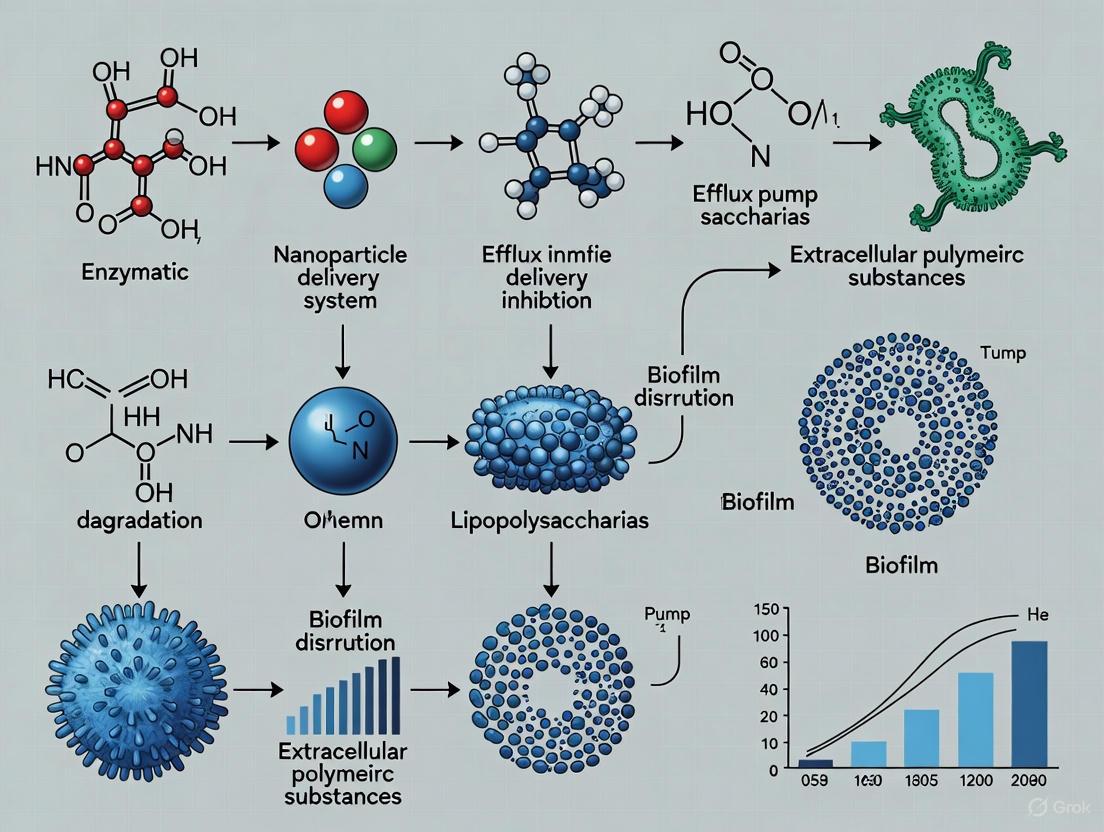
Biofilms, structured microbial communities encased in an extracellular matrix, are a primary driver of multidrug resistance, protecting pathogens from antimicrobial agents and complicating the treatment of chronic infections.
Breaking Barriers: Advanced Strategies to Enhance Antibiotic Penetration Through Biofilm Matrices
Abstract
Biofilms, structured microbial communities encased in an extracellular matrix, are a primary driver of multidrug resistance, protecting pathogens from antimicrobial agents and complicating the treatment of chronic infections. This article provides a comprehensive analysis for researchers and drug development professionals on innovative strategies designed to disrupt the biofilm barrier and enhance antibiotic efficacy. We explore the foundational mechanisms of biofilm-mediated resistance, evaluate emerging methodological approaches including matrix-degrading enzymes, nanoparticle delivery systems, and quorum sensing inhibitors, and address critical troubleshooting aspects for translational application. Furthermore, we discuss advanced validation techniques and comparative analyses of combinatorial therapies, synthesizing key findings to outline a clear path for future biomedical research and clinical intervention against biofilm-associated infections.
Understanding the Biofilm Fortress: Composition, Architecture, and Intrinsic Resistance Mechanisms
Biofilms are structured communities of microbial cells enclosed in a self-produced extracellular polymeric substance (EPS) matrix and represent a dominant mode of bacterial life [1] [2]. For researchers investigating antibiotic penetration, understanding the biofilm lifecycle is not merely academic—it is fundamental to developing effective intervention strategies. Biofilms can be up to 1,500 times more resistant to antibiotics than their planktonic counterparts [3], a statistic that underscores the formidable challenge they pose in clinical and industrial settings. This resistance is not solely genetic but is intrinsically linked to the biofilm's physical structure and the heterogeneous physiological states of cells within it [4]. This guide provides a detailed technical framework for studying the biofilm lifecycle, with a focus on experiments that can enhance antimicrobial efficacy.
Deconstructing the Biofilm Lifecycle: Stages and Experimental Focus
The classic model of biofilm development is a stepwise process. However, recent research emphasizes that biofilms can also form as non-surface attached aggregates, a critical consideration for designing relevant experimental models [5]. The table below summarizes the core stages and their significance for antibiotic penetration research.
| Lifecycle Stage | Key Characteristics | Experimental Significance for Antibiotic Research |
|---|---|---|
| Initial Reversible Attachment [1] [6] [2] | Planktonic cells weakly adhere to surfaces via van der Waals forces and electrostatic interactions [6]. | Ideal stage for testing anti-adhesion coatings [4] and surface modifications to prevent colonization. |
| Irreversible Attachment [1] [6] | Cells anchor permanently using adhesins like pili; begins initial EPS production [1]. | Target for compounds that inhibit cell-to-surface binding and early matrix synthesis. |
| Maturation I & II [1] [2] | Development of a 3D structure with water channels; active quorum sensing; high cellular density and EPS matrix production [1]. | Primary target for matrix-disrupting agents (enzymes, chelators), quorum sensing inhibitors [7], and penetration enhancers. |
| Dispersion [1] [2] | Active release of planktonic cells from the biofilm to colonize new niches [1] [2]. | Target for therapies that promote dispersion without increasing virulence, and for understanding recurrence of infections. |
Frequently Asked Questions & Troubleshooting
FAQ 1: Our antibiotic assays show high efficacy in planktonic cultures but consistently fail against biofilms. What are the primary causes?
Answer: This is a common issue rooted in the multi-faceted resistance mechanisms of biofilms. The causes are typically synergistic:
- The Physical Barrier: The EPS matrix (composed of polysaccharides, extracellular DNA (eDNA), and proteins) can physically impede antibiotic penetration [1] [6] [4]. The anionic nature of the matrix can also bind and neutralize positively charged antimicrobials [4].
- Metabolic Heterogeneity: Biofilms contain gradients of nutrients, oxygen, and waste products [4]. This creates microenvironments with slow-growing or dormant "persister cells" that are highly tolerant to antibiotics which typically target active cellular processes [4].
- Altered Microenvironment: The local biofilm environment (e.g., low pH) can inactivate some antibiotics [4].
Troubleshooting Guide:
- Problem: Inconsistent/Minimal Antibiotic Activity.
- Solution A: Introduce a matrix-disrupting pre-treatment. Add DNase I (to degrade eDNA) or Dispersin B (to degrade polysaccharides) to your assay and re-test antibiotic efficacy [7] [4].
- Solution B: Combine your antibiotic with a Quorum Sensing Inhibitor (QSI) to prevent the coordinated behavior that reinforces resistance [7].
FAQ 2: Which in vitro biofilm model is most suitable for testing penetration strategies?
Answer: The choice of model depends on your research question and the required throughput.
- For High-Throughput Screening: Use the 96-well Microtiter Plate (MtP) Assay [8]. It is excellent for initial, rapid screening of anti-biofilm compounds and basic adhesion studies.
- For Biomass and Basic Architecture: The Calgary Biofilm Device (CBD) is ideal for generating reproducible, uniform biofilms for Minimum Biofilm Eradication Concentration (MBEC) testing [5].
- For Advanced Structural and Penetration Analysis: Use Flow Cell Systems [5]. These systems allow for real-time, non-destructive imaging (e.g., via Confocal Laser Scanning Microscopy) of biofilm structure and the penetration of fluorescently tagged antibiotics.
FAQ 3: How can we accurately quantify biofilm disruption in response to a new treatment?
Answer: Rely on a combination of metrics, as no single method provides a complete picture.
- Biomass Quantification: Use Crystal Violet (CV) Staining [8]. This is a simple, colorimetric method for measuring total attached biomass.
- Metabolic Activity: Use assays like Resazurin (AlamarBlue) or XTT [8]. These measure the metabolic activity of cells within the biofilm, which may remain even if biomass is slightly reduced.
- Bacterial Viability: Perform colony-forming unit (CFU) counts after disrupting the biofilm (e.g., via sonication) [5]. This remains the gold standard for determining the number of live bacteria.
- Structural Integrity: Use Scanning Electron Microscopy (SEM) or Confocal Laser Scanning Microscopy (CLSM) [8] to visually confirm structural disruption of the EPS matrix that CV staining might miss.
Research Reagent Solutions for Biofilm Studies
The table below lists key reagents and their applications for researching the biofilm lifecycle and antibiotic penetration.
| Research Reagent / Tool | Function / Application in Biofilm Research |
|---|---|
| DNase I [1] [4] | Enzyme that degrades extracellular DNA (eDNA) in the biofilm matrix, weakening structure and enhancing antibiotic penetration. |
| Dispersin B [2] [4] | Enzyme that hydrolyzes the polysaccharide poly-N-acetylglucosamine (PNAG), a key matrix component in many species. |
| Quorum Sensing Inhibitors (QSIs) [7] | Synthetic or natural compounds (e.g., AHL analogs, plant-derived compounds) that disrupt bacterial cell-cell communication. |
| Congo Red Agar (CRA) [8] | Differential medium used to qualitatively identify biofilm-forming strains based on EPS production. |
| Crystal Violet [8] | A simple stain used to quantify total biofilm biomass in microtiter plate assays. |
| Resazurin Sodium Salt [8] | A cell-permeant dye used in metabolic assays to measure viability within biofilms. |
| Hypochlorous Acid (HOCl) [3] | A potent oxidizing agent used in studies of biofilm removal, effective at disrupting the EPS matrix. |
Experimental Protocols for Key Lifecycle Investigations
Protocol 1: Assessing the Impact of Matrix-Degrading Enzymes on Antibiotic Efficacy
This protocol evaluates whether disrupting the EPS matrix can potentiate the effect of a standard antibiotic.
- Objective: To determine the synergistic effect of DNase I and Tobramycin against a mature Pseudomonas aeruginosa biofilm.
- Materials:
- P. aeruginosa PAO1 strain
- DNase I (from bovine pancreas)
- Tobramycin sulfate
- 96-well flat-bottomed polystyrene plates
- Tryptic Soy Broth (TSB)
- Phosphate Buffered Saline (PBS)
- Crystal Violet stain solution
- Workflow:
- Grow Biofilm: Inoculate 200 µL of TSB containing ~10^6 CFU/mL P. aeruginosa into wells of a 96-well plate. Incubate statically for 24-48 hours at 37°C to form a mature biofilm.
- Treat: Carefully aspirate the planktonic culture.
- Group 1 (Control): Add PBS.
- Group 2 (Antibiotic Only): Add Tobramycin in PBS at 4x MIC.
- Group 3 (Enzyme Only): Add DNase I (10 µg/mL) in PBS.
- Group 4 (Combination): Add Tobramycin (4x MIC) + DNase I (10 µg/mL) in PBS.
- Incubate: Incubate the plate for an additional 18-24 hours at 37°C.
- Quantify: Aspirate treatments, wash gently with PBS, and perform Crystal Violet staining to measure remaining biomass and/or perform CFU counts to determine bacterial viability.
Protocol 2: Visualizing Antibiotic Penetration into Biofilms using CLSM
This protocol provides a methodology to directly observe and confirm the enhanced penetration of an antibiotic following matrix disruption.
- Objective: To visualize the penetration depth of a fluorescently tagged vancomycin analog in Staphylococcus aureus biofilms with and without QSI pre-treatment.
- Materials:
- S. aureus biofilm-forming strain
- Flow cell system
- Synthetic quorum sensing inhibitor (e.g., AHL analog [7])
- BODIPY FL Vancomycin (or other fluorescent antibiotic conjugate)
- Confocal Laser Scanning Microscope (CLSM)
- SYTO 60 (or other far-red nucleic acid stain for total biomass)
- Workflow:
- Establish Biofilm: Grow a mature S. aureus biofilm in a flow cell system with a continuous supply of nutrient medium for 3-5 days.
- Pre-treat: Stop the flow and introduce the QSI solution for a predetermined period (e.g., 2 hours). Use a medium-only control for comparison.
- Label: Introduce BODIPY FL Vancomycin to both the treated and control biofilms. Allow for sufficient incubation time.
- Counterstain and Image: Wash with buffer to remove unbound label. Introduce SYTO 60 to stain all bacterial cells. Image immediately using CLSM, collecting Z-stacks through the entire biofilm depth.
- Analyze: Use image analysis software (e.g., ImageJ) to measure the fluorescence intensity profile of the green (vancomycin) and red (biomass) channels through the Z-stack to quantify penetration depth.
Core Concepts: The EPS Matrix Explained
What is the EPS and what are its primary components?
The Extracellular Polymeric Substance (EPS) is a self-produced, hydrated polymer matrix that encompasses microbial cells in a biofilm, providing functional and structural integrity [9] [10]. It is a complex biological barrier that determines the physicochemical properties of the biofilm and is a key reason for the ineffectiveness of many antimicrobial treatments [6] [11]. The EPS is composed of a conglomerate of different biopolymers, primarily polysaccharides, proteins, extracellular DNA (eDNA), and lipids, all integrated into a three-dimensional network [9] [10] [12]. Water is the most abundant component, providing a hydrated environment that protects against desiccation [12].
What are the primary functions of the EPS in antibiotic resistance?
The EPS matrix contributes to antimicrobial resistance through several interconnected mechanisms [13] [11]:
- Physical Barrier: The matrix acts as a diffusion barrier, hindering the penetration of antibiotic molecules into the deeper layers of the biofilm [13].
- Direct Interaction: Some matrix components can directly interact with and neutralize antimicrobial agents. For instance, negatively charged eDNA can bind to positively charged aminoglycoside antibiotics, reducing their effective concentration [13].
- Physiological Heterogeneity: The matrix contributes to the formation of gradients of nutrients, oxygen, and waste products. This leads to heterogeneous metabolic activity within the biofilm, including the presence of dormant persister cells that are highly tolerant to antibiotics [13] [4].
- Enhanced Horizontal Gene Transfer: The dense, structured environment facilitates the efficient exchange of genetic material between cells, promoting the spread of antibiotic resistance genes [4].
Analytical Methods & Troubleshooting
This section provides detailed methodologies for key experiments and solutions to common problems encountered in EPS research.
FAQ: How can I quantitatively and qualitatively analyze the main chemical components of the EPS?
Fourier Transform Infrared (FT-IR) Spectroscopy is a powerful, non-destructive technique that provides a fingerprint of the biofilm's chemical composition.
Detailed Protocol: ATR/FT-IR Spectroscopy for EPS Analysis [9]
- Sample Preparation: Grow biofilms directly on the surface of the Internal Reflection Element (IRE), typically a germanium crystal, to enable in situ analysis under hydrated conditions. For mature, thick biofilms, desiccation may be necessary to reduce thickness, but this prevents monitoring the same sample over time.
- Spectral Acquisition: Use an Attenuated Total Reflection (ATR) attachment. The IR radiation creates an evanescent wave that penetrates the sample (~2 µm depth). Organic molecules absorb energy at specific wavelengths, causing characteristic vibrations.
- Data Interpretation: Identify the main EPS components by analyzing specific absorption windows in the resulting spectrum, as outlined in Table 1.
Table 1: Key FT-IR Spectral Windows for EPS Component Identification [9]
| IR Spectral Window | Target EPS Component | Functional Groups Detected |
|---|---|---|
| 2800–3000 cm⁻¹ | Lipids | C-H, CH₂, CH₃ (stretching) |
| 1500–1800 cm⁻¹ | Proteins | C=O, N-H, C-N (Amide I & II bands) |
| 900–1250 cm⁻¹ | Polysaccharides, Nucleic Acids | C-O, C-O-C, P=O (from eDNA), C-N |
Troubleshooting Guide:
- Problem: Weak or No Signal.
- Solution 1: Ensure the biofilm is in direct, uniform contact with the IRE crystal. Apply gentle, consistent pressure.
- Solution 2: For hydrated biofilms, confirm the penetration depth is sufficient. For thin biofilms, consider using a crystal with a higher refractive index to increase sensitivity.
- Problem: Spectral Bands are Too Broad/Overlapping.
- Solution 1: Employ second-derivative analysis or deconvolution techniques to resolve overlapping peaks.
- Solution 2: Validate findings with a complementary method, such as enzymatic digestion or specific biochemical assays.
FAQ: How do I determine the functional role of a specific EPS component in biofilm integrity?
Using hydrolytic enzymes to selectively degrade EPS components is a common and effective functional assay.
Detailed Protocol: Enzymatic Disruption of Biofilms [9]
- Enzyme Selection: Choose highly pure, molecular biology-grade enzymes to avoid side effects.
- Proteases (e.g., Serratiopeptidase, Subtilisin A): Target protein components and adhesins.
- Glycoside Hydrolases (e.g., α-amylase, Dispersin B): Target polysaccharides like PNAG and starch.
- DNase I: Degrades extracellular DNA (eDNA).
- Biofilm Treatment: Grow biofilms in a standard assay (e.g., 96-well plate). Gently wash mature biofilms with a buffered solution to remove non-adherent cells. Add the enzyme in an appropriate buffer (include a buffer-only negative control). Incubate under optimal conditions for the enzyme (e.g., 37°C for several hours).
- Integrity Assessment: Quantify the remaining biofilm using a crystal violet (biomass) assay or a metabolic activity assay like MTT/XTT. Compare the results to the untreated control to determine the percentage of disruption.
Troubleshooting Guide:
- Problem: Enzyme Treatment Has No Effect.
- Solution 1: Verify enzyme activity using a standard substrate (e.g., casein for proteases). The enzyme may be inactive.
- Solution 2: Check if the target EPS component is actually present in your biofilm model. For example, Dispersin B will only be effective if the biofilm contains its target, PNAG [14].
- Problem: Treatment Kills Planktonic Cells, Obscuring Results.
- Solution: Use a viability stain specifically designed for biofilms (e.g., a LIVE/DEAD stain) combined with confocal microscopy. This distinguishes between dispersal of the structure and bacterial cell death.
FAQ: How can I assess antibiotic penetration through the EPS matrix?
Standard MIC testing is insufficient as it only evaluates planktonic cells. Methods that directly measure diffusion through intact biofilms are required.
Detailed Protocol: Assessing Antibiotic Penetration [15] [16]
- Biofilm Growth: Establish mature, stage-four biofilms on a relevant substrate. The zeta (ζ)-potential of the biofilm can be measured as an indicator of surface charge, which may influence interaction with charged antibiotics [16].
- Antibiotic Exposure: Expose the biofilm to a range of antibiotic concentrations, often far exceeding the planktonic MIC (up to 1000-fold). The goal is to find the Minimum Biofilm Eradication Concentration (MBEC).
- Penetration & Efficacy Analysis:
- Viability Counting: After exposure, disaggregate the biofilm (via sonication/vortexing) and plate serial dilutions to count Colony Forming Units (CFU). The MBEC is the lowest concentration that achieves a pre-defined log-reduction in viability (e.g., ≥3-log kill).
- Advanced Techniques: Use custom setups like diffusion cells coupled with HPLC-MS to quantitatively track the antibiotic concentration gradient across the biofilm layers over time [15].
Troubleshooting Guide:
- Problem: High Antibiotic Concentrations Seem to Increase Biofilm Biomass.
- Solution: This counterintuitive result is a documented phenomenon where sub-inhibitory antibiotic levels can induce stress responses that promote biofilm formation [16]. Focus on viability (CFU counts) rather than just biomass (crystal violet) to find the true eradication concentration.
- Problem: High Variability in Replicates.
- Solution 1: Standardize the growth stage of the biofilm meticulously. Biofilm properties change dramatically over time [16].
- Solution 2: Ensure consistent hydrodynamic conditions during biofilm growth and antibiotic exposure, as flow rate significantly impacts biofilm structure and diffusion.
The Scientist's Toolkit: Key Research Reagents & Materials
Table 2: Essential Reagents for EPS Deconstruction and Biofilm Analysis
| Reagent / Material | Function / Target | Key Application in Research |
|---|---|---|
| Dispersin B [14] | Glycoside hydrolase that specifically degrades PNAG (Poly-β-(1,6)-N-acetylglucosamine). | Used to dismantle biofilms of pathogens like S. aureus and E. coli that rely on PNAG for structural integrity. |
| DNase I [4] | Enzyme that hydrolyzes extracellular DNA (eDNA). | Disrupts biofilms where eDNA is a key structural component (e.g., P. aeruginosa); can be combined with antibiotics to enhance efficacy. |
| Serratiopeptidase / Subtilisin A [9] | Proteases that degrade protein components of the EPS. | Targets biofilm adhesins and structural proteins; used to evaluate the protein's role in matrix stability and to detach biofilms. |
| Polystyrene Tissue Culture Plates [16] | Standard substrate for high-throughput, in vitro biofilm cultivation and quantification. | The basis for the microtiter plate biofilm assay, enabling the screening of anti-biofilm compounds under static conditions. |
| Cation-Adjusted Mueller Hinton Broth (CA-MHB) [16] | Growth medium supplemented with specific cations (Mg²⁺, Ca²⁺). | Essential for standardized antibiotic susceptibility testing, as cation concentration can critically impact the activity of certain antibiotics like daptomycin. |
Experimental Workflow: From Analysis to Eradication
The following diagram summarizes a logical workflow for a comprehensive EPS deconstruction and biofilm eradication study.
Troubleshooting Common Experimental Challenges in Biofilm Research
FAQ: Why are my antibiotics ineffective against my in vitro biofilm model, even when they work against planktonic cells?
This is a fundamental characteristic of biofilms. The observed tolerance is likely due to a combination of the biofilm's physical barrier, metabolic heterogeneity, and the presence of persister cells rather than genetic resistance [17]. The minimal inhibitory concentration (MIC) for biofilm cells can be 100 to 1,000 times higher than for their planktonic counterparts [18] [19]. To confirm, check that your planktonic cells remain genetically susceptible after isolation from the biofilm.
FAQ: How can I distinguish between antibiotic tolerance in persisters and genuine genetic resistance?
The key is to perform a rechallenge experiment. After antibiotic treatment, wash the biofilm and resuspend the surviving cells in fresh medium. Allow them to grow and then re-test their susceptibility to the same antibiotic. Persister cells will regrow and exhibit the same susceptibility profile as the original, parental strain. In contrast, genetically resistant cells will maintain their elevated MIC [20] [21]. The table below outlines the core differences:
Table 1: Differentiating Antibiotic Survival Mechanisms in Bacteria
| Characteristic | Persister Cells | Genetically Resistant Cells |
|---|---|---|
| Minimum Inhibitory Concentration (MIC) | Unchanged from parent strain [21] | Significantly elevated |
| Underlying Mechanism | Phenotypic, dormant state [20] [22] | Genetic mutations or acquired resistance genes |
| Heritability | Non-heritable; progeny are susceptible [21] | Heritable |
| Population Proportion | Small subpopulation (often <1%) [21] | Can constitute the entire population |
FAQ: My biofilm staining is inconsistent. What could be going wrong?
Inconsistent staining often stems from biofilm heterogeneity or protocol-specific issues. For the standard microtiter plate assay, ensure vigorous washing to remove all non-adherent planktonic cells [23]. If using crystal violet, verify that your solubilization solvent (e.g., 30% acetic acid, 95% ethanol, or 100% DMSO) is appropriate for your bacterial species, as efficiency varies [23]. For advanced imaging like X-ray μCT, the choice of contrast agent is critical, as some (e.g., BaSO4) can displace biofilms or are highly toxic, while others like Potassium Bromide (KBr) may be less bactericidal and provide good contrast [24].
FAQ: What are the best strategies to disrupt the biofilm barrier for enhanced antibiotic penetration?
A multimodal approach is most effective. Consider:
- Matrix Degradation: Use enzymes like Dispersin B (targets polysaccharides) or DNase I (targets extracellular DNA) to dismantle the EPS structure [25].
- Quorum Sensing Inhibition: Natural compounds like curcumin or quercetin, or synthetic analogs, can disrupt bacterial communication and suppress EPS production [25].
- Combination Therapy: Employing biofilm-disrupting agents first to compromise the matrix, followed by a conventional antibiotic, can significantly improve efficacy [25] [19].
Essential Experimental Protocols for Characterizing Biofilm Defense
Microtiter Plate Biofilm Assay for Quantifying Adherent Biomass
This high-throughput protocol is ideal for screening bacterial attachment and the effects of anti-biofilm compounds [23].
Detailed Protocol:
- Inoculation: Dilute an overnight culture of your bacterium 1:100 in fresh, appropriate medium. Pipet 100 μL of the diluted culture into multiple wells of a 96-well microtiter plate (not tissue-culture treated). Include media-only wells as negative controls.
- Incubation: Cover the plate and incubate at the optimal growth temperature for the desired time (e.g., 24-48 hours). The lid can be reused after cleaning with 70% ethanol.
- Washing: After incubation, briskly shake the liquid out of the wells into a waste tray. Submerge the plate in a tray of tap water, then shake out the liquid vigorously. Repeat this wash in one or two fresh water trays to remove all non-adherent cells.
- Staining: Add 125 μL of a 0.1% (w/v) crystal violet solution to each well. Stain for 10 minutes at room temperature.
- Destaining: Shake out the crystal violet and wash the plate as in Step 3 until the water runs clear. Tap the inverted plate on paper towels to remove excess liquid and allow it to air-dry completely.
- Solubilization: Add 200 μL of an appropriate solvent (e.g., 30% acetic acid) to each stained well. Incubate for 10-15 minutes at room temperature to solubilize the dye bound to the biofilm.
- Quantification: Pipet 125 μL of the solubilized crystal violet solution from each well into a new, optically clear flat-bottom 96-well plate. Measure the optical density at 550-600 nm using a plate reader. The average OD from replicate wells provides a semi-quantitative measure of the adherent biofilm biomass [23].
Protocol for Inducing and Isoling Persister Cells
This protocol outlines a method for generating a population enriched in persister cells via antibiotic selection.
Detailed Protocol:
- Culture and Stress: Grow your bacterial strain to the stationary phase, as the proportion of persisters is highest during this slow- or no-growth phase [20]. Optionally, apply a mild environmental stress (e.g., nutrient limitation) known to induce dormancy.
- Antibiotic Challenge: Expose the culture to a high concentration of a bactericidal antibiotic (e.g., 10-100x MIC of a fluoroquinolone or beta-lactam). The duration must be optimized but is typically several hours.
- Elimination of Vegetative Cells: The antibiotic will kill the metabolically active, susceptible cells. The surviving population, which dies off much more slowly, will be enriched in persisters [21].
- Washing and Resuspension: Centrifuge the culture and carefully remove the supernatant containing the antibiotic. Wash the pellet gently with sterile buffer or saline to remove residual antibiotic.
- Confirmation: Resuspend the pellet in fresh medium. The persister cells will resume growth after this "stress removal." You can confirm their phenotypic nature by showing that the regrown culture has the same MIC as the original, parent strain [20] [22].
This workflow diagram illustrates the key steps in isolating and validating bacterial persister cells:
Key Signaling Pathways in Biofilm Defense and Persister Formation
The formation of persister cells is regulated by a complex network of interconnected bacterial stress responses. The following diagram synthesizes the major pathways involved:
This diagram maps the core molecular pathways that lead to bacterial persistence and biofilm-mediated antibiotic tolerance:
The Scientist's Toolkit: Research Reagent Solutions
Table 2: Essential Reagents for Studying Biofilm Defense Mechanisms
| Reagent / Material | Primary Function | Key Consideration |
|---|---|---|
| Crystal Violet (0.1%) | Stains adherent biomass in microtiter plate assays for semi-quantitative analysis [23]. | Solubilization solvent (e.g., 30% acetic acid) must be optimized for the bacterial species being studied [23]. |
| Dispersin B & DNase I | Enzymatic disruption of the biofilm matrix; target polysaccharides and extracellular DNA (eDNA), respectively [25]. | Used to compromise the physical barrier and enhance penetration of other antimicrobial agents. |
| Synthetic Quorum Sensing Inhibitors (e.g., AHL analogs) | Block bacterial cell-to-cell communication, suppressing virulence and EPS production without selective pressure for resistance [25]. | A targeted strategy to prevent biofilm maturation and cohesion. |
| Potassium Bromide (KBr) | Contrast agent for non-destructive 3D visualization of biofilms in porous substrates using X-ray μCT [24]. | Less bactericidal than other agents (e.g., BaSO4, FeSO4) and provides good attenuation contrast. |
| 96-well Microtiter Plates (non-tissue culture treated) | Surface for high-throughput static biofilm formation [23]. | Tissue culture-treated plates are designed to resist cell attachment and will inhibit biofilm formation. |
Bacterial biofilms, which are structured communities of microorganisms encased in an extracellular polymeric substance (EPS), represent a predominant mode of microbial life [26] [6]. These complex aggregates are not merely passive structures; they are dynamic environments that facilitate the rapid dissemination of antibiotic resistance genes (ARGs) through horizontal gene transfer (HGT) [26]. Within the biofilm matrix, the close proximity of bacterial cells, combined with longer retention times and the presence of extracellular DNA (eDNA), creates an ideal environment for genetic exchange, making biofilms significant hotspots for the development and spread of multidrug resistance [26] [4]. This technical guide addresses common experimental challenges and provides detailed protocols for researchers investigating HGT within biofilms, specifically in the context of strategies to enhance antibiotic penetration.
The Scientist's Toolkit: Essential Research Reagents & Materials
The table below catalogs key reagents and materials essential for studying HGT and antibiotic penetration in biofilms.
Table 1: Key Research Reagents for Biofilm HGT and Antibiotic Penetration Studies
| Reagent/Material | Function/Application | Specific Examples & Notes |
|---|---|---|
| Microtiter Plates | High-throughput biofilm cultivation for quantification assays [27]. | 96-well polystyrene plates are standard for crystal violet (CV) staining and metabolic assays. |
| Crystal Violet (CV) | A basic dye that stains negatively charged polysaccharides and proteins, enabling quantitative analysis of total biofilm biomass [27]. | Requires solubilization with acetic acid or ethanol for absorbance measurement [27]. |
| Scanning Electron Microscopy (SEM) Reagents | For high-resolution imaging of biofilm ultrastructure and spatial organization [27]. | Requires fixation (e.g., glutaraldehyde), dehydration, and critical point drying [27]. |
| Confocal Scanning Laser Microscopy (CSLM) Reagents | For 3D visualization of live/dead cells, EPS components, and spatial gene expression within intact biofilms [27] [28]. | Utilizes fluorescent stains (e.g., SYTO 9, propidium iodide, ConA) and immunofluorescence tags [28]. |
| DNase I | An enzyme that degrades extracellular DNA (eDNA) in the biofilm matrix, used to study matrix integrity and antibiotic penetration [4]. | Disrupts the structural scaffold of the matrix and can enhance antibiotic efficacy [4]. |
| Dispersin B | A glycoside hydrolase enzyme that specifically hydrolyzes poly-N-acetylglucosamine (PNAG), a key polysaccharide in the biofilm matrix of many species [4]. | Used in matrix-dispersal strategies to sensitize biofilms to antimicrobials [4]. |
| Quorum Sensing Inhibitors (QSIs) | Synthetic or natural compounds that disrupt bacterial cell-to-cell communication, thereby inhibiting coordinated behaviors like biofilm formation and virulence [7] [4]. | Acyl homoserine lactone (AHL) analogs; plant-derived compounds like curcumin and berberine [7] [4]. |
Experimental Protocols & Methodologies
Protocol: Standardized Biofilm Cultivation in Microtiter Plates
This method is ideal for high-throughput screening of biofilm formation under different conditions or for antibiotic susceptibility testing [27].
- Inoculum Preparation: Grow planktonic cultures of the bacterial strain(s) to mid-log phase. Dilute the culture in fresh, appropriate medium to a standardized optical density (e.g., OD600 ~0.1) [27].
- Biofilm Growth: Dispense 200 µL of the diluted inoculum into the wells of a sterile 96-well microtiter plate. Include negative control wells with sterile medium only. Cover the plate to prevent evaporation.
- Incubation: Incubate under static conditions at the optimal growth temperature for the desired period (e.g., 24-48 hours). For some protocols, semi-static conditions with gentle shaking may be used.
- Washing: After incubation, carefully invert the plate to discard the planktonic culture. Gently wash the adherent biofilms twice with 200-300 µL of phosphate-buffered saline (PBS) to remove non-adherent cells.
- Analysis: The washed biofilm is now ready for downstream quantification assays, such as crystal violet staining for biomass or CFU counting for viable cells.
Protocol: Quantifying Biofilm Biomass via Crystal Violet Staining
This is a classic, colorimetric method for quantifying total adhered biofilm biomass [27].
- Fixation: After washing the biofilm (from Protocol 1, Step 4), air-dry the plate for 45-60 minutes. Then, add 200 µL of 99% methanol per well to fix the biofilms for 15 minutes.
- Staining: Remove the methanol and allow the plate to air-dry completely. Add 200 µL of a 0.1% (w/v) crystal violet solution to each well and stain for 5-15 minutes.
- Destaining: Pour off the crystal violet solution and rinse the plate thoroughly under running tap water until the control wells run clear. Air-dry the plate.
- Solubilization: Add 200 µL of 33% (v/v) glacial acetic acid to each well to solubilize the stain bound to the biofilm. Shake the plate gently for 10-30 minutes.
- Measurement: Transfer 125 µL of the solubilized dye from each well to a new microtiter plate (or measure directly). Measure the absorbance at 570-600 nm using a microplate reader.
Protocol: Assessing Viable Cell Counts in Biofilms (CFU Enumeration)
This protocol determines the number of live, cultivable bacteria within a biofilm, which is crucial for evaluating antimicrobial efficacy [27].
- Biofilm Disruption: After growing and washing the biofilm, add a known volume of sterile PBS or medium to each well. Dislodge the biofilm by rigorous scraping with a pipette tip or using a microtip sonicator at low energy for short bursts (e.g., 5-10 seconds) to avoid killing cells. Vortex the suspension for 1-2 minutes to homogenize [27].
- Serial Dilution: Prepare a series of 10-fold serial dilutions (e.g., 10⁻¹ to 10⁻⁷) of the homogenized biofilm suspension in sterile PBS or saline.
- Plating: Spot or spread plate a known volume (e.g., 100 µL) of each dilution onto the surface of nutrient agar plates. Use at least three subsequent dilutions expected to yield countable colonies (30-300 colonies per plate).
- Incubation and Counting: Incubate the plates at the appropriate temperature until colonies are visible (24-72 hours). Count the colonies on the plates and calculate the Colony Forming Units per mL (CFU/mL) of the original biofilm suspension using the formula: CFU/mL = (number of colonies) / (dilution factor × volume plated in mL).
Troubleshooting Guides & FAQs
FAQ 1: Why is HGT more efficient in biofilms than in planktonic cultures?
HGT is significantly enhanced in biofilms due to a combination of physical and biological factors [26]. The dense, aggregated structure of the biofilm provides close cell-to-cell contact, which is essential for conjugation [26]. The EPS matrix offers protection from environmental stresses, allowing for a longer bacterial retention time and a more stable environment for genetic exchange to occur [26] [13]. Furthermore, the matrix itself contains extracellular DNA (eDNA), which can be readily taken up by competent cells via natural transformation [26] [13]. Studies have demonstrated that the frequency of HGT can be orders of magnitude higher within a biofilm compared to suspended cultures [26].
FAQ 2: What are the primary mechanisms of antimicrobial resistance in biofilms that hinder antibiotic penetration?
Biofilms employ multiple, concurrent mechanisms to resist antimicrobials, creating a formidable barrier to treatment [6] [13].
- Physical Barrier: The EPS matrix, composed of polysaccharides, proteins, and eDNA, can physically restrict the diffusion of antibiotic molecules into the deeper layers of the biofilm. Positively charged antibiotics, like aminoglycosides, can also bind to negatively charged polymers like eDNA in the matrix, effectively neutralizing them [13].
- Physiological Heterogeneity: Gradients of nutrients, oxygen, and waste products within the biofilm create diverse microenvironments. This leads to subpopulations of metabolically inactive or dormant "persister" cells that are highly tolerant to antibiotics which typically target active cellular processes [4].
- Enhanced HGT: As covered in this guide, the biofilm environment acts as a hotspot for the exchange of ARGs, accelerating the development and spread of resistance within the community [26] [4].
FAQ 3: Our antibiotic treatment fails against a biofilm despite in vitro susceptibility tests showing efficacy. Why?
This common issue often arises because standard antimicrobial susceptibility testing (AST) is performed on planktonic (free-floating) bacteria [26]. Biofilms are intrinsically more tolerant, and their resistance mechanisms are not captured in these tests [26] [13]. The concentration of an antibiotic that easily kills planktonic cells may be insufficient to eradicate the same organism in a biofilm state due to the mechanisms described in FAQ 2. To address this, researchers should employ biofilm-specific susceptibility assays, such as measuring the Minimum Biofilm Eradication Concentration (MBEC) instead of the Minimum Inhibitory Concentration (MIC) for planktonic cells [26].
FAQ 4: What are the best methods to quantitatively compare biofilm formation and structure across different experimental conditions?
A combination of quantitative and qualitative methods provides the most comprehensive assessment. The table below summarizes key techniques.
Table 2: Quantitative Methods for Biofilm Characterization
| Method | What It Measures | Key Advantages | Key Limitations |
|---|---|---|---|
| Crystal Violet Staining [27] | Total biofilm biomass (cells + matrix). | High-throughput, inexpensive, simple protocol. | Does not distinguish between live and dead cells; measures total adherence. |
| CFU Enumeration [27] | Number of viable, cultivable cells. | Direct measure of cell viability; gold standard for antimicrobial efficacy. | Labor-intensive; may underestimate cells in clumps; slow (requires incubation). |
| ATP Bioluminescence [27] | Metabolic activity via cellular ATP. | Very rapid; highly sensitive. | Does not directly measure cell number; signal can be influenced by metabolic state. |
| Confocal Microscopy + Image Analysis (e.g., BiofilmQ) [28] | 3D architecture, biovolume, thickness, spatial distribution of labels. | Provides rich, 3D structural data; can co-localize different fluorophores. | Requires expensive equipment; complex data analysis; not truly high-throughput. |
| Scanning Electron Microscopy (SEM) [27] | High-resolution surface topography and ultrastructure. | Exceptional resolution for detailed surface morphology. | Requires extensive sample preparation (dehydration, coating); only images surface. |
Workflow Visualization: Analyzing Biofilm HGT
The following diagram illustrates a generalized experimental workflow for studying horizontal gene transfer in biofilms, from cultivation to data analysis.
The ESKAPE pathogens—Enterococcus faecium, Staphylococcus aureus, Klebsiella pneumoniae, Acinetobacter baumannii, Pseudomonas aeruginosa, and Enterobacter species—represent a group of nosocomial pathogens notorious for their ability to "escape" the biocidal action of antimicrobial agents [29]. These pathogens are characterized by increased levels of resistance toward multiple classes of first-line and last-resort antibiotics, making them a serious public health concern [30] [31]. A key factor contributing to their resilience is their ability to create biofilms—complex microbial communities encased in a self-produced extracellular polymeric substance (EPS) matrix that shields them from the immune system and renders antibiotics ineffective [30] [6].
Biofilms are biological barriers that consist of microbial cells embedded in a complex matrix of extracellular polymeric substances, including polysaccharides, proteins, lipids, and nucleic acids [6] [32]. This structured, three-dimensional architecture provides physical protection for the bacteria within from chemical, physical, and biological attacks, including antibiotic treatments and host immune responses [6]. The biofilm lifestyle allows bacteria to withstand hostile environmental conditions and is considered a major cause of persistent nosocomial infections in immunocompromised patients [33]. Around 50% of nosocomial infections are associated with indwelling medical devices such as catheters, cardiac pacemakers, joint prostheses, and prosthetic heart valves, which provide ideal surfaces for bacterial attachment and biofilm formation [33].
ESKAPE pathogens are responsible for the majority of healthcare-associated infections and are capable of causing life-threatening conditions such as skin and soft tissue infections, pneumonia, endocarditis, bloodstream infections, surgical site infections, and urinary tract infections [34]. The World Health Organization has listed ESKAPE pathogens in its priority list of bacteria against which new antibiotics are urgently needed, with carbapenem-resistant A. baumannii and P. aeruginosa and extended-spectrum β-lactamase (ESBL) or carbapenem-resistant K. pneumoniae and Enterobacter species in the critical priority category [29]. Understanding the biofilm-forming capabilities of these pathogens is thus crucial for developing effective strategies to combat the infections they cause.
Understanding Biofilm Formation and Architecture
The Biofilm Lifecycle
Biofilm formation is a complex, multi-stage process that involves physical, chemical, and biological elements [6]. The development typically unfolds through the following stages:
Initial Reversible Attachment: Free-floating (planktonic) microorganisms initially adhere to preconditioned surfaces through weak interactions such as van der Waals forces, electrostatic interactions, and hydrophobic forces [34] [6]. The nature of the surface plays a vital role in this process, with rough surfaces generally promoting better microbial adhesion compared to smooth surfaces [6]. Bacterial structures such as pili, fimbriae, and flagella often facilitate this initial attachment [6].
Irreversible Attachment: The reversibly attached cells begin producing extracellular polymeric substances (EPS), leading to firm attachment to the surface [6] [32]. This stage represents a transition from reversible to permanent attachment, mediated by the sticky, three-dimensional EPS matrix that encases the microbial cells [6].
Maturation and Growth: The attached cells utilize nutrients from the microenvironment to grow and divide, developing the characteristic three-dimensional structure of the biofilm [6]. Microcolonies evolve into mature biofilms with defined architectural features, including water channels that transport nutrients and remove waste products [33] [32]. During this stage, the biofilm community becomes increasingly heterogeneous, with subpopulations of bacteria exhibiting different metabolic states and physiological characteristics [32].
Dispersion: The mature biofilm releases planktonic cells through both mechanical processes (erosion or sloughing) and active processes mediated by enzymes that degrade the biofilm matrix [33] [32]. These dispersed cells can then migrate to new, unoccupied surfaces and initiate fresh biofilm formation, continuing the cycle [6] [32].
Biofilm Architecture and Composition
The mature biofilm architecture consists of distinct microcolonies with different compositions and sizes, creating a heterogeneous and diverse environment that allows effective exploitation of ecological niches [6]. This spatial organization generates gradients of nutrient utilization and waste products, which significantly influence microbial interactions and behavior [6]. The EPS matrix typically comprises less than 10% of the microorganism's dry weight but accounts for 90% of the biofilm matrix [34], and consists of:
Exopolysaccharides: Structural components including poly-N-acetylglucosamine (dPNAG), alginate, Psl, Pel, amylose-like glucan, cellulose, galactosaminogalactan, β-(1,3)-glucan, levan, and inulin [32]. These provide the structural framework of the biofilm.
Extracellular DNA (eDNA): Provides structural integrity and facilitates horizontal gene transfer [32].
Proteins: Including enzymes and structural proteins that contribute to matrix stability and functionality [32].
Lipids and secondary metabolites: Various other components that contribute to the biofilm's protective properties [32].
The microbial communities within a biofilm engage in sophisticated communications through quorum sensing, a cell-density dependent signaling mechanism that allows for effective coordination and adaptation to environmental changes, including resistance to threats such as antimicrobial agents [30] [6].
Biofilm-Associated Resistance Mechanisms
Biofilms confer resistance to antimicrobial agents through multiple mechanisms, making biofilm-associated infections particularly challenging to treat. The primary resistance mechanisms include:
Physical Barrier Function: The EPS matrix acts as a physical barrier that limits the penetration of antimicrobial agents [33] [32]. However, it's important to note that the matrix does not always function as a mechanical barrier alone; in some cases, antibiotics can penetrate but are degraded by enzymes within the biofilm before reaching the bacterial cells [33].
Metabolic Heterogeneity: Biofilms contain bacterial populations with different metabolic states [33] [32]. Cells in the core of the biofilm often exist in a low-oxygen microenvironment with decreased metabolic rates, making them less susceptible to antibiotics that target actively dividing cells [32]. This heterogeneity creates nutrient-depleted zones where slow-growing or dormant cells exhibit increased tolerance to antimicrobials [33].
Persister Cells: A small subpopulation of cells within the biofilm community, known as persister cells, adopt a dormant state with extreme antimicrobial tolerance [32]. These cells can survive antimicrobial treatment regardless of concentration and repopulate the microbial community once treatment ceases, leading to recurrent infections [32].
Enhanced Mutation Rates and Gene Transfer: Biofilm cells can undergo a higher rate of mutation than their planktonic counterparts, resulting in increased efficiency of transfer of plasmids containing antibiotic resistance genes [33]. The close proximity of cells within the biofilm facilitates horizontal gene transfer, further accelerating the spread of resistance determinants [34].
Altered Microenvironment: The biofilm microenvironment can differ significantly from the surrounding environment in terms of pH, oxygen concentration, and nutrient availability, which can affect antibiotic activity and efficacy [33].
These combined mechanisms make bacteria growing in biofilms up to thousands of times more tolerant to antibiotic treatment than their planktonic counterparts [32], necessitating specialized approaches to combat biofilm-associated infections.
Quantitative Profiling of ESKAPE Pathogen Resistance
Understanding the prevalence and resistance patterns of ESKAPE pathogens is essential for developing effective control strategies. The following table summarizes key resistance data from clinical isolates:
Table 1: Antimicrobial Resistance Profiles of ESKAPE Pathogens
| Pathogen | Key Resistance Markers | Prevalence in Clinical Isolates | Multidrug Resistance (MDR) Rates |
|---|---|---|---|
| Staphylococcus aureus | Methicillin resistance (MRSA) | 26.0% of bacterial isolates [35] | 86.6% in MRSA strains [35] |
| Klebsiella pneumoniae | Extended-spectrum β-lactamase (ESBL), Carbapenem resistance | 9.55% of bacterial isolates [35] | 24.4% [35] |
| Pseudomonas aeruginosa | Carbapenem resistance | 8.78% of bacterial isolates [35] | 29.1% [35] |
| Acinetobacter baumannii | Carbapenem resistance | 0.67% of bacterial isolates [35] | 36.8% [35] |
| Enterococcus faecium | Vancomycin resistance (VRE) | 3.55% of bacterial isolates [35] | No vancomycin resistance found in studied cohort [35] |
| Escherichia coli (associated) | Extended-spectrum β-lactamase (ESBL) | 38.26% of bacterial isolates [35] | Data not specified |
The high prevalence of these pathogens in healthcare settings, combined with their substantial multidrug resistance rates, underscores the urgent need for novel approaches to combat biofilm-associated infections.
Troubleshooting Guide for Biofilm Research
FAQ 1: Why are my anti-biofilm compounds ineffective against mature ESKAPE biofilms?
Potential Issue: The compound may not adequately penetrate the extracellular polymeric substance (EPS) matrix, or the biofilm may contain a high proportion of persister cells.
Solutions:
- Use EPS-degrading enzymes: Combine your compound with matrix-degrading enzymes such as DNase I (targets eDNA), dispersin B (targets dPNAG), or proteases (target protein components) to enhance penetration [32].
- Implement combination therapy: Utilize anti-biofilm agents alongside conventional antibiotics to target both actively growing and dormant cell populations [29].
- Optimize dosing strategy: Apply compounds at the minimum biofilm inhibitory concentration (MBIC) rather than minimum inhibitory concentration (MIC), as biofilms typically require significantly higher concentrations for eradication [33].
- Consider timing of intervention: Apply anti-biofilm agents during early biofilm development stages, as mature biofilms are inherently more resistant to treatment [6].
FAQ 2: How can I improve the reproducibility of my biofilm quantification assays?
Potential Issue: Inconsistent biofilm formation due to variable growth conditions or inadequate surface preparation.
Solutions:
- Standardize inoculum preparation: Use fresh cultures at standardized optical density (OD600 = 0.5-1.0) from mid-log phase growth [36].
- Control surface properties: Use consistent surface materials with standardized pretreatment; rough surfaces generally promote better biofilm adhesion [6].
- Optimize growth conditions: Ensure consistent temperature (typically 37°C for clinical isolates), nutrient availability, and static incubation conditions [36].
- Include appropriate controls: Always include known strong and weak biofilm-forming strains as positive and negative controls, respectively [36].
- Implement multiple detection methods: Combine crystal violet staining with complementary methods such as confocal microscopy with live/dead staining or ATP-based viability assays for more comprehensive assessment [33].
FAQ 3: What could cause high variability in antibiotic susceptibility testing of biofilm-grown cells?
Potential Issue: Incomplete dispersion of biofilms or presence of aggregates leading to non-uniform cell suspensions.
Solutions:
- Optimize dispersion protocol: Use enzymatic dispersal methods (e.g., DNase I + proteinase K treatment) followed by gentle vortexing rather than vigorous pipetting, which can damage cells [32].
- Verify dispersion efficiency: Check dispersed suspensions under microscope for presence of residual aggregates before proceeding with susceptibility testing [33].
- Standardize biofilm growth time: Use consistent maturation periods (typically 24-48 hours) to ensure comparable developmental stages [6] [32].
- Include planktonic controls: Always test susceptibility of planktonic cells from the same strain in parallel for reference [33].
FAQ 4: Why do my nanoparticle formulations show inconsistent anti-biofilm activity?
Potential Issue: Variable nanoparticle penetration, aggregation, or interaction with biofilm components.
Solutions:
- Characterize nanoparticle properties: Consistently measure size, surface charge, and stability in biological media, as these significantly impact penetration capability [34].
- Functionalize nanoparticle surfaces: Modify surfaces with charged groups or targeting molecules to enhance penetration through the EPS matrix [34].
- Control concentration carefully: Use appropriate concentrations that balance efficacy with potential cytotoxicity, as some nanoparticles (e.g., silver) can be toxic to human cells at high concentrations [34].
- Consider combination approaches: Use nanoparticles as carriers for conventional antibiotics or anti-biofilm agents to enhance delivery to deeper biofilm layers [30] [34].
Research Reagent Solutions for Biofilm Studies
Table 2: Essential Reagents for ESKAPE Biofilm Research
| Reagent Category | Specific Examples | Research Applications | Key Considerations |
|---|---|---|---|
| Matrix-Degrading Enzymes | DNase I, Dispersin B, Proteases (Proteinase K, Trypsin), Alginate lyase | Biofilm dispersal studies, Enhancing antimicrobial penetration, Matrix composition analysis | Enzyme specificity varies by pathogen; optimize concentration and incubation time [32] |
| Quorum Sensing Inhibitors | Natural compounds (plant extracts), Synthetic small molecules, Quorum quenching enzymes | Interference with bacterial communication, Virulence attenuation, Biofilm prevention studies | Target specific QS systems (e.g., LuxS system); monitor for potential resistance development [30] [7] |
| Nanoparticles | Silver nanoparticles (AgNPs), Gold nanoparticles (AuNPs), Polymeric nanoparticles (PNPs) | Antimicrobial penetration studies, Biofilm imaging, Drug delivery systems | Assess cytotoxicity on human cells; optimize size for biofilm penetration; surface functionalization enhances efficacy [30] [34] |
| Viability Stains | SYTO9/propidium iodide, Resazurin, CTC-DAPI, ATP-based assays | Biofilm viability assessment, Antimicrobial efficacy testing, Confocal microscopy | Combine multiple stains for accurate viability interpretation; consider metabolic state influences [33] |
| Antimicrobial Peptides | Nisin, Colistin, Custom-designed peptides | Alternative antimicrobial mechanisms, Combination therapy studies, Anti-biofilm activity screening | Monitor stability in experimental conditions; potential cytotoxicity at higher concentrations [7] [29] |
Experimental Protocols for Key Biofilm Analyses
Protocol: Assessment of Anti-Biofilm Activity Using Microtiter Plate Assay
Principle: This standard method quantifies biofilm formation and anti-biofilm activity through crystal violet staining and spectrophotometric measurement [33].
Materials:
- Sterile 96-well flat-bottom polystyrene microtiter plates
- Appropriate growth medium (e.g., TSB, LB, MRS for Lactobacillus)
- Crystal violet solution (0.1% w/v)
- Ethanol (95%) or acetic acid (33%) for dye solubilization
- Microplate reader
Procedure:
- Inoculum Preparation: Grow test organisms overnight in appropriate medium. Dilute to standardized optical density (OD600 ≈ 0.1) in fresh medium [36].
- Biofilm Formation: Add 200 μL diluted inoculum to wells. Include medium-only controls. Incubate statically at optimal growth temperature (typically 37°C) for 24-48 hours [36].
- Anti-Biofilm Treatment: For anti-biofilm testing, add test compounds after initial biofilm formation (e.g., at 24 hours). Incubate for additional 24 hours.
- Staining: Carefully remove planktonic cells by rinsing wells twice with phosphate-buffered saline (PBS). Air dry plates for 15-30 minutes. Add 200 μL 0.1% crystal violet to each well. Stain for 15 minutes at room temperature [33].
- Destaining and Quantification: Rinse wells thoroughly with distilled water until no residual dye is visible. Add 200 μL 33% acetic acid or 95% ethanol to solubilize bound dye. Incubate for 15-30 minutes with gentle shaking. Measure OD570 using microplate reader [33].
Troubleshooting Tips:
- Ensure consistent drying time after rinsing, as this affects staining intensity
- For strong biofilms, increase crystal violet staining time to 20 minutes
- Use fresh acetic acid/ethanol for optimal dye solubilization
- Normalize data to untreated controls for comparative analysis
Protocol: Biofilm Dispersal Assay with Enzymatic Treatment
Principle: This assay evaluates the efficacy of matrix-degrading enzymes in disrupting pre-formed biofilms [32].
Materials:
- Pre-formed biofilms in microtiter plates or on relevant surfaces
- Enzyme solutions: DNase I (100 μg/mL in buffer), dispersin B (specific for dPNAG), proteases, or other matrix-targeting enzymes
- Appropriate enzyme buffers and controls
- ATP-based viability assay kit or colony counting materials
Procedure:
- Biofilm Formation: Grow biofilms as described in Protocol 7.1 for 24-48 hours until mature [32].
- Enzyme Treatment: Gently wash mature biofilms with appropriate buffer. Add enzyme solutions at optimized concentrations (typically 50-200 μg/mL) in suitable buffer. Include buffer-only negative controls [32].
- Incubation: Incubate at enzyme-optimal temperature (typically 37°C) for 1-4 hours. For time-course studies, collect samples at multiple time points.
- Dispersal Assessment:
- Quantitative: Measure released cells by OD600 or colony counting of supernatant
- Viability Assessment: Use ATP-based assays or live/dead staining followed by confocal microscopy
- Biomass Reduction: Measure remaining biofilm using crystal violet staining as in Protocol 7.1 [32]
- Microscopic Validation: Visualize enzyme-treated and control biofilms using scanning electron microscopy or confocal laser scanning microscopy to observe structural changes [32].
Troubleshooting Tips:
- Include enzyme activity controls to verify functionality
- Optimize enzyme concentration and incubation time for specific biofilm type
- Use enzyme inhibitors in control groups to confirm specificity of effect
- Combine complementary enzymes for enhanced dispersal of complex matrices
Emerging Strategies to Combat ESKAPE Biofilms
Nanoparticle-Based Approaches
Nanoparticles show significant promise in combating biofilm-related infections due to their unique properties and multiple mechanisms of action [34]:
- Enhanced Penetration: Their small size and increased surface area make nanoparticles highly reactive, enabling them to penetrate biofilm matrices more effectively than conventional antimicrobials [34].
- Multiple Mechanisms: Nanoparticles can disrupt bacterial cell membranes, interfere with efflux pumps, generate reactive oxygen species, and disrupt quorum sensing signaling [34].
- Functionalization Potential: Surface modification with charged groups or targeting molecules enhances biofilm penetration and specificity [34].
- Types and Applications:
- Silver Nanoparticles (AgNPs): Exhibit strong antimicrobial properties; PVP-capped AgNPs inhibit infection of carbapenem-resistant A. baumannii [30].
- Gold Nanoparticles (AuNPs): Excellent biocompatibility and easy surface modification for drug delivery and imaging [34].
- Polymeric Nanoparticles (PNPs): Versatile carriers allowing controlled drug release and biodegradability [34].
Enzymatic Dispersal Strategies
Enzymes that target specific components of the biofilm matrix offer targeted approaches to biofilm disruption [32]:
- Glycoside Hydrolases: Target exopolysaccharide components including dPNAG (dispersin B), alginate (alginate lyase), and other structural polysaccharides [32].
- Proteases: Degrade protein components of the EPS matrix and can disrupt protein-mediated adhesion [32].
- Deoxyribonucleases (DNases): Target extracellular DNA (eDNA), a crucial structural component in many biofilms; DNase I has been shown to significantly inhibit early biofilm formation in P. aeruginosa and S. aureus in dose-dependent manner [30] [32].
Quorum Sensing Inhibition
Quorum sensing inhibitors (QSIs) and quorum quenching approaches interfere with bacterial communication networks, potentially reducing virulence and biofilm formation without imposing strong selective pressure for resistance [30] [7]:
- Natural QSIs: Plant extracts and microbial compounds can interfere with QS circuits such as the LuxS system that alters antibiotic susceptibility and regulates biofilm formation [30].
- Synthetic Inhibitors: Small molecules designed to mimic or interfere with autoinducer signaling [7].
- Enzymatic Quorum Quenching: Enzymes that degrade signaling molecules, disrupting coordination of biofilm development [7].
Probiotic and Biological Interventions
Probiotic bacteria, particularly lactic acid bacteria (LAB) from natural sources such as the caprine gut, demonstrate promising growth inhibitory and anti-biofilm properties against ESKAPE pathogens [36]:
- Competitive Exclusion: Probiotics compete with pathogens for adhesion sites and nutrients [36].
- Antimicrobial Production: LAB produce organic acids, bacteriocins, hydrogen peroxide, and other antimicrobial compounds [36].
- Biofilm Disruption: Certain Lactobacillus strains can impair biofilm formation independently of bactericidal effects [36].
Combination Therapies
Given the complexity of biofilm-associated resistance, combination approaches often show superior efficacy compared to monotherapies [29]:
- Antibiotic-Adjuvant Combinations: β-lactamase inhibitors (e.g., avibactam, vaborbactam) restore antibiotic activity against resistant strains [29].
- Nanoparticle-Antibiotic Conjugates: Enhance drug delivery to biofilm-embedded cells [34].
- Enzyme-Antimicrobial Combinations: Matrix-degrading enzymes improve antimicrobial penetration [32].
ESKAPE pathogens represent a critical challenge in clinical settings due to their ability to form resilient biofilms that confer enhanced resistance to antimicrobial agents and host immune responses. The complex architecture of biofilms, with their heterogeneous populations and multiple resistance mechanisms, necessitates innovative approaches beyond conventional antibiotics. Promising strategies including nanoparticle applications, enzymatic dispersal, quorum sensing inhibition, probiotic interventions, and combination therapies offer potential pathways to overcome these challenges. As research advances, focusing on the disruption of biofilm integrity and enhancement of antimicrobial penetration will be crucial for developing effective treatments against these formidable pathogens. The protocols and troubleshooting guides provided here offer practical frameworks for researchers working to address this pressing clinical need.
Arming the Arsenal: Cutting-Edge Strategies for Biofilm Disruption and Enhanced Drug Delivery
Frequently Asked Questions (FAQs)
What is the primary advantage of using enzymatic disruption over traditional antibiotics for biofilms? Traditional antibiotics primarily target planktonic (free-floating) bacteria and are often ineffective against the complex, protective structure of biofilms. Enzymes like Dispersin B, DNase I, and glycoside hydrolases work by degrading the extracellular polymeric substance (EPS) matrix that constitutes the biofilm's physical scaffold [37] [38]. This disruption disassembles the biofilm, releasing the embedded bacterial cells and making them more susceptible to antibiotic treatments and the host's immune system [37] [33]. This strategy targets the biofilm's core defense mechanism rather than just the bacteria themselves.
How do I choose the right enzyme for my specific biofilm model? Enzyme selection should be based on the primary composition of the biofilm matrix in your experimental model. The table below summarizes the key enzymes and their targets.
Table 1: Guide to Selecting Biofilm-Disrupting Enzymes
| Enzyme | Primary Target | Key Mechanism of Action | Example Biofilm Producers |
|---|---|---|---|
| Dispersin B | Poly-β-(1,6)-N-acetyl-D-glucosamine (dPNAG/PNAG) [37] [38] | Hydrolyzes glycosidic bonds in the polysaccharide backbone, disrupting structural integrity [38] | Staphylococcus aureus, Escherichia coli, Yersinia pestis [37] |
| Glycoside Hydrolases | Various exopolysaccharides (e.g., Alginate, Pel, Psl, Cellulose) [37] | Breaks down polysaccharide components within the EPS matrix [37] [38] | Pseudomonas aeruginosa (alginate), various Gram-negative and Gram-positive bacteria [37] |
| DNase I | Extracellular DNA (eDNA) [37] | Degrades the eDNA scaffold that provides structural stability and negative charge for cation retention [37] [13] | S. aureus, P. aeruginosa [13] |
| Proteases | Extracellular Proteins [37] | Hydrolyzes protein adhesins and structural proteins within the matrix [37] [38] | Various bacterial species |
Can these enzymes be used in combination to enhance efficacy? Yes, combination therapy is often more effective due to the heterogeneous nature of biofilms. The EPS matrix is a complex mixture of polysaccharides, proteins, and eDNA [37] [38]. Using a cocktail of enzymes, such as Dispersin B with DNase I or a glycoside hydrolase with a protease, can synergistically disrupt multiple matrix components simultaneously, leading to more significant biofilm breakdown than any single enzyme alone [38]. This approach is particularly useful when the exact composition of the biofilm is unknown.
My biofilm dispersal experiment failed. What could be the reason? Several factors could lead to suboptimal dispersal:
- Incorrect Enzyme Selection: The enzyme may not target the dominant polymer in your specific biofilm matrix. Refer to Table 1 for guidance.
- Suboptimal Activity Conditions: The pH, temperature, or ion concentration (e.g., Ca²⁺, Mg²⁺) in your assay buffer may be outside the enzyme's optimal range, reducing its activity.
- Insufficient Concentration/Duration: The enzyme concentration may be too low, or the incubation time too short, to effectively degrade the dense matrix.
- Enzyme Inhibition: Components of the biofilm matrix or the culture medium may inhibit the enzyme.
- Biofilm Maturity: Older, more mature biofilms often have a denser and more complex matrix, making them more recalcitrant to degradation.
Troubleshooting Guides
Problem: Incomplete Biofilm Dispersal
Potential Causes and Solutions:
Cause 1: Inadequate enzyme targeting.
- Solution: Perform a compositional analysis of your biofilm's EPS. Use staining (e.g., Calcofluor white for polysaccharides, FITC-labeled lectins) or specific assays to identify the major components. Adjust your enzyme cocktail based on the results [37].
Cause 2: Sub-optimal reaction conditions.
- Solution: Review the manufacturer's specifications for your enzyme. Systematically test different pH buffers (e.g., pH 5 vs. pH 7) and temperatures. For instance, cellulase efficacy against P. aeruginosa biofilm was enhanced at pH 5 compared to pH 7 [38].
Cause 3: Enzyme concentration is too low.
- Solution: Perform a dose-response curve. Incrementally increase the enzyme concentration while monitoring dispersal via metrics like Crystal Violet staining or viable cell counts. Note that some studies report biofilm eradication requiring enzyme or antibiotic concentrations 64-512 times the minimum inhibitory concentration (MIC) for planktonic cells [16].
Problem: High Variability in Dispersal Assay Results
Potential Causes and Solutions:
Cause 1: Inconsistent biofilm growth.
- Solution: Standardize your biofilm cultivation protocol. Control for inoculum size, growth medium, incubation time, and surface material. Using flow cell systems can improve reproducibility over static cultures [13].
Cause 2: Improper sample handling during dispersal.
- Solution: Ensure gentle but consistent mixing during the enzyme incubation step to facilitate enzyme penetration without mechanically dislodging cells. Standardize the washing and staining procedures post-incubation.
Problem: Dispersed Cells Re-form Biofilm Quickly
Potential Cause and Solution:
- Cause: The enzymatic treatment disperses the biofilm but does not kill the bacteria. The released planktonic cells can subsequently re-attach and form new biofilms.
- Solution: Enzymatic dispersal should be used as a combination therapy. Always follow enzymatic treatment with a conventional antibiotic. Research shows that dispersing enzymes can increase the susceptibility of the bacteria to antibiotics, making the follow-up treatment much more effective [37] [33]. The diagram below illustrates this synergistic workflow.
Quantitative Data for Experimental Planning
The table below summarizes quantitative findings from published research to aid in experimental design and benchmarking.
Table 2: Quantitative Efficacy of Biofilm-Disrupting Agents
| Agent / Strategy | Experimental Model | Key Metric & Result | Notes / Context |
|---|---|---|---|
| Daptomycin (Antibiotic) | Staphylococcus aureus stage-four biofilms [16] | Achieved ≥75% reduction in biofilm viability at 32–256 μg/mL (64–512× MIC) [16] | Highlights the high antibiotic concentrations needed to eradicate biofilm-associated cells. |
| Cellulase | Pseudomonas aeruginosa biofilm on glass [38] | Reduced biomass and CFU; efficacy was concentration-dependent and greater at pH 5 than pH 7 [38] | Demonstrates the importance of optimizing pH for enzymatic activity. |
| Enzymatic Dispersal | General concept from in-vitro and in-vivo studies [37] [38] | Increases susceptibility to antibiotics, antiseptics, and host immune cells [37] [38] | The primary goal is not direct killing but restoring susceptibility. |
Detailed Experimental Protocols
Protocol 1: Assessing Enzymatic Disruption of Pre-formed Biofilms
Principle: This protocol quantifies the ability of an enzyme to disrupt a mature biofilm, typically using a microtiter plate crystal violet staining assay.
Materials:
- 96-well polystyrene tissue culture-treated plates
- Tryptic Soy Broth (TSB) supplemented with 1.25% dextrose
- Purified enzyme (e.g., Dispersin B, DNase I)
- Phosphate Buffered Saline (PBS)
- Crystal Violet solution (0.1% w/v)
- Acetic acid (30% v/v)
- Microplate reader
Method:
- Biofilm Formation: Prepare a bacterial inoculum in supplemented TSB to a density of 5-6 log10 CFU/mL. Dispense 200 μL per well into a 96-well plate. Incubate for 16-24 hours (or until a mature biofilm forms) at the appropriate temperature (e.g., 37°C) [16].
- Washing: Gently remove the planktonic culture by inverting the plate. Wash the biofilm twice with 200 μL of PBS to remove non-adherent cells.
- Enzyme Treatment: Add 200 μL of the enzyme solution, prepared in an appropriate buffer at the optimal pH, to the test wells. Add buffer alone to the negative control wells. Incubate for a set period (e.g., 1-2 hours) at the enzyme's optimal temperature.
- Staining and Quantification:
- Wash the plates twice with PBS.
- Air-dry the plates for 45-60 minutes.
- Add 200 μL of 0.1% Crystal Violet to each well and stain for 15 minutes.
- Rinse the plates thoroughly under running tap water to remove unbound dye.
- Elute the bound dye by adding 200 μL of 30% acetic acid per well and incubating for 15 minutes with gentle shaking.
- Measure the absorbance of the eluent at 570 nm using a microplate reader. The percentage of dispersal is calculated relative to the untreated control.
Protocol 2: Testing Synergy Between Enzymes and Antibiotics
Principle: This protocol evaluates whether enzymatic pre-treatment can sensitize biofilm-embedded bacteria to a subsequently applied antibiotic.
Method:
- Biofilm Formation and Washing: Follow Steps 1 and 2 from Protocol 1.
- Pre-treatment: Add the enzyme solution to the wells and incubate to allow for initial dispersal.
- Antibiotic Challenge: Without washing, add the antibiotic directly to the enzyme-containing wells at the desired concentration. Incubate for a further 18-24 hours.
- Viability Assessment: The most accurate method is to determine the number of viable cells. After treatment, aspirate the liquid. Gently scrape the bottom of the wells with a pipette tip in PBS to resuspend any remaining adherent cells. Serially dilute the suspension and plate on agar to enumerate Colony Forming Units (CFUs). A synergistic effect is indicated by a significantly greater reduction in CFUs in the "Enzyme + Antibiotic" group compared to either treatment alone [38].
The Scientist's Toolkit: Research Reagent Solutions
Table 3: Essential Reagents for Enzymatic Biofilm Disruption Studies
| Reagent / Material | Function in Experiment | Key Considerations |
|---|---|---|
| Polystyrene Microplates (TC-Treated) | Provides a standardized surface for high-throughput biofilm growth [16] | Ensure consistency across experiments; surface treatment can affect initial attachment. |
| Cation-Adjusted Mueller Hinton Broth (CA-MHB) | Medium for antibiotic susceptibility testing (e.g., for post-dispersal kill assays) [16] | Essential for accurate MIC determination, as cation levels can affect antibiotic activity. |
| Dispersin B (Glycoside Hydrolase) | To specifically target and hydrolyze the PNAG/dPNAG polysaccharide in the biofilm matrix [37] [38] | Check for source and purity; effective against biofilms from S. aureus, E. coli, and other PNAG producers. |
| DNase I | To degrade the eDNA component of the biofilm matrix, weakening its structural integrity [37] | Requires Mg²⁺ or Ca²⁺ as a cofactor for activity; ensure your buffer is compatible. |
| Protease (e.g., Proteinase K) | To hydrolyze proteinaceous components and adhesins within the EPS [37] [38] | Broad-spectrum activity is useful for exploratory studies on unknown biofilms. |
| Crystal Violet Stain | A simple and common dye for total biomass quantification of biofilms. | Stains all biomass (live and dead); should be paired with viability assays like CFU counting. |
Biofilm-associated infections represent a profound challenge in modern medicine, accounting for approximately 65-80% of all microbial infections [39]. These structured communities of microbial cells, encased in a self-produced extracellular polymeric substance (EPS), exhibit remarkable resistance to conventional antibiotics, often requiring doses 10 to 1000 times higher than those needed to target their free-floating (planktonic) counterparts [40] [41]. The biofilm matrix acts as a formidable physical and chemical barrier, limiting antibiotic penetration, creating heterogeneous microenvironments with reduced metabolic activity, and facilitating horizontal gene transfer of resistance elements [41] [42].
Nanoparticle-mediated delivery systems have emerged as a transformative strategy to overcome these barriers, leveraging unique physicochemical properties including small size (typically 1-100 nm), high surface area-to-volume ratio, and tunable surface chemistry [43] [44]. These systems employ multi-mechanistic approaches to combat biofilms, including reactive oxygen species (ROS) generation, direct membrane disruption, enzymatic degradation of the EPS matrix, and inhibition of quorum sensing communication [40] [42]. By enhancing antibiotic penetration and accumulation at infection sites, nanoparticle carriers offer a promising pathway to revitalize existing antibiotics against resistant biofilm-mediated infections [39] [43].
This technical support center provides specialized guidance for researchers developing silver, zinc oxide, and graphene-based nanocarriers to enhance antibiotic penetration through biofilm matrices. The following troubleshooting guides, FAQs, experimental protocols, and resource specifications address the most frequent experimental challenges encountered in this innovative field.
Troubleshooting Guides: Overcoming Common Experimental Challenges
Problem: Nanoparticle Aggregation in Biological Media
Issue: Metallic nanoparticles (Ag, ZnO) aggregate in culture media or physiological buffers, reducing bioavailability and efficacy.
Solution:
- Surface Functionalization: Modify nanoparticle surface with PEG (polyethylene glycol) or coatings like chitosan to improve stability and prevent aggregation [45] [46]. PEGylation creates steric hindrance that prevents particle-particle interactions.
- Optimal Concentration: Use nanoparticles at concentrations below critical aggregation concentration. For ZnO NPs, concentrations ≤ 0.2% w/v typically maintain dispersion stability [46].
- Sonication Protocol: Apply probe sonication (100 W, 20 kHz) for 5-10 minutes immediately before use to disrupt aggregates. For heat-sensitive materials, use water bath sonication for 15-30 minutes [46].
Problem: Inconsistent Antibacterial Efficacy Across Biofilm Models
Issue: Nanoparticles show variable efficacy between different biofilm models (e.g., static vs. flow systems).
Solution:
- Standardize Biofilm Maturity: Use 48-72 hour grown biofilms for consistent EPS production across experiments [39].
- Characterize EPS Composition: Analyze protein, carbohydrate, and extracellular DNA (eDNA) content of biofilms, as these components differentially interact with nanoparticles [42].
- Optimize Charge Interactions: Use cationic nanoparticles (+15 to +30 mV zeta potential) for enhanced penetration through anionic biofilm matrices [39].
Problem: Cytotoxicity in Mammalian Cell Lines
Issue: Effective anti-biofilm concentrations cause toxicity to host cells.
Solution:
- Dose Optimization: Implement time-controlled exposure (e.g., 2-4 hour pulses) rather than continuous treatment [45].
- Surface Modification: Use biocompatible coatings (e.g., silica shell, polyethylene glycol) on AgNPs to reduce nonspecific cytotoxicity while maintaining antimicrobial activity [45].
- Combination Therapy: Reduce nanoparticle concentration by combining with conventional antibiotics at sub-MIC levels, leveraging synergistic effects [41] [43].
Problem: Inadequate Antibiotic Loading in Nanocarriers
Issue: Low encapsulation efficiency of antibiotics in graphene oxide or polymeric nanocarriers.
Solution:
- Optimize Drug-Nanocarrier Interactions: For graphene oxide carriers, enhance π-π stacking interactions by selecting antibiotics with aromatic structures [46].
- Adjust Synthesis Parameters: For polymeric nanoparticles, use double emulsion solvent evaporation method (W/O/W) for hydrophilic drugs, and single emulsion (O/W) for hydrophobic drugs [39].
- Functionalize Surface Groups: Carboxylate modification on ZnO NPs improves conjugation efficiency with amine-containing antibiotics [47].
Frequently Asked Questions (FAQs)
Q1: What are the key mechanisms by which nanoparticles enhance antibiotic penetration into biofilms?
A1: Nanoparticles employ multiple mechanisms to enhance antibiotic penetration: (1) EPS degradation through enzyme-like activity or delivered matrix-degrading enzymes; (2) Small size effect enabling physical penetration through biofilm pores (typically 100-300 nm) [39]; (3) Charge-based interactions where cationic nanoparticles disrupt anionic EPS components; (4) Quorum sensing inhibition preventing biofilm maturation and increasing susceptibility; and (5) Synergistic activity where nanoparticles themselves possess antimicrobial properties through ROS generation or metal ion release [40] [41] [43].
Q2: How do I select the optimal nanoparticle size for biofilm penetration?
A2: The optimal size range for biofilm penetration is 20-200 nm. Smaller particles (<20 nm) may have insufficient drug payload, while larger particles (>200 nm) get trapped in the dense EPS matrix [39]. Size optimization should balance penetration depth (favored by smaller sizes) and drug loading capacity (favored by larger sizes). For zinc oxide nanoparticles, 50-70 nm particles have demonstrated optimal balance between penetration and antimicrobial efficacy [47] [46].
Q3: What factors influence the choice between silver, zinc oxide, and graphene-based nanocarriers?
A3: Selection depends on multiple factors summarized in the table below:
Table: Comparative Analysis of Nanocarrier Platforms for Anti-Biofilm Applications
| Parameter | Silver Nanoparticles (AgNPs) | Zinc Oxide Nanoparticles (ZnO NPs) | Graphene Oxide (GO) Nanosheets |
|---|---|---|---|
| Primary Mechanism | Membrane disruption, ROS generation, protein/DNA interaction [45] | ROS generation, Zn²⁺ release, membrane damage [47] | Physical cutting of membranes, oxidative stress, drug delivery platform [46] |
| Broad-Spectrum Efficacy | Excellent against Gram-positive and Gram-negative bacteria [45] | Good, with additional antifungal properties [47] | Moderate, enhanced when functionalized or composited [46] |
| Drug Loading Capacity | Low (surface conjugation only) | Moderate (surface adsorption) | High (large surface area, π-π stacking) [46] |
| Cytotoxicity Concerns | Moderate to high (dose-dependent) | Low to moderate (concentration-dependent) [47] | Low when properly functionalized [46] |
| Synthesis Complexity | Moderate (green synthesis available) | Low to moderate | High (requires oxidation of graphite) |
| Cost Considerations | Moderate (silver precursor cost) | Low (zinc precursors inexpensive) | Moderate to high |
Q4: How can I minimize the development of bacterial resistance to nanoparticle treatments?
A4: Implement these strategies to minimize resistance: (1) Use combination therapies with conventional antibiotics, as nanoparticles can bypass traditional resistance mechanisms [41] [43]; (2) Employ multiple mechanisms by selecting nanoparticles with diverse antibacterial actions (e.g., ROS generation plus physical membrane disruption) [45]; (3) Utilize responsive release systems that deliver payloads specifically in biofilm microenvironments (pH, enzyme, or ROS-triggered) [39]; (4) Rotate nanoparticle types in treatment regimens to prevent adaptation; and (5) Target resistance mechanisms directly, such as using nanoparticles to inhibit efflux pumps [43].
Q5: What are the critical quality control parameters for characterizing anti-biofilm nanocarriers?
A5: Essential characterization parameters include: (1) Size and polydispersity index (PDI) by dynamic light scattering (DLS) - PDI <0.3 indicates monodisperse population; (2) Zeta potential indicating colloidal stability (>±30 mV for good stability); (3) Drug loading efficiency and encapsulation efficiency; (4) In vitro release profile under biofilm-mimicking conditions (e.g., acidic pH, specific enzymes); (5) Morphology by TEM/SEM; (6) Crystallinity for metal nanoparticles (XRD); and (7) Surface chemistry (FTIR) [45] [46].
Experimental Protocols
Protocol: Synthesis of ZnO/GO Nanocomposites for Enhanced Anti-Biofilm Activity
This protocol describes the synthesis of zinc oxide/graphene oxide nanocomposites optimized for dental resin applications with demonstrated 60.33% reduction in bacterial colonies and 23.4% improvement in flexural strength at 0.2% w/w loading [46].
Materials:
- Zinc acetate dihydrate (Zn(CH₃COO)₂·2H₂O)
- Lithium hydroxide monohydrate (LiOH·H₂O)
- Graphene oxide suspension (2 mg/mL)
- Anhydrous ethanol
- n-Hexane
- Polymethyl methacrylate (PMMA) powder (for incorporation studies)
Procedure:
- Dissolve 0.32 g zinc acetate in 30 mL anhydrous ethanol with stirring at 80°C for 15 minutes.
- Cool solution to 40°C.
- In separate container, dissolve 0.12 g LiOH·H₂O in 12 mL anhydrous ethanol.
- Add 20 mL GO suspension (2 mg/mL) to LiOH solution with vigorous stirring.
- Gradually add the GO/LiOH mixture to the zinc acetate solution under continuous stirring at room temperature for 1 hour.
- Set mixture in n-hexane overnight at 4°C to precipitate nanocomposites.
- Collect precipitates by centrifugation (10,000 rpm, 10 minutes).
- Wash sequentially with ethanol and deionized water.
- Dry at 60°C for 12 hours in vacuum oven.
- Characterize by TEM, XRD, and FTIR to confirm nanocomposite formation.
Incorporation into PMMA Resin:
- Disperse dried ZnO/GO nanocomposites in deionized water via ultrasonication.
- Add PMMA powder at desired mass ratio (0.1-0.4% w/w).
- Mix for 24 hours followed by drying.
- Use manufacturer's specified powder-liquid ratio (22g/10±0.5mL) for specimen preparation [46].
Protocol: Biofilm Penetration Assessment Using Confocal Microscopy
Materials:
- Mature biofilms (48-72 hour culture)
- Fluorescently-labeled nanoparticles
- Concanavalin A-Alexa Fluor 647 (for EPS staining)
- SYTO 9 green fluorescent nucleic acid stain (for bacteria)
- Phosphate buffered saline (PBS)
- Confocal laser scanning microscope
Procedure:
- Grow biofilms on appropriate substrate (e.g., glass coverslips, catheter pieces).
- Stain biofilm structure with Concanavalin A-Alexa Fluor 647 (EPS) and SYTO 9 (bacteria) according to manufacturer protocols.
- Treat biofilms with fluorescent nanoparticles at predetermined sub-MIC concentrations.
- Incubate for predetermined time intervals (1-4 hours).
- Gently wash with PBS to remove non-adherent nanoparticles.
- Image using confocal microscope with appropriate filter sets.
- Use Z-stack imaging (0.5-1 μm slices) to visualize nanoparticle distribution through biofilm depth.
- Quantify penetration using intensity profile analysis across Z-stack images.
- Compare treated vs. untreated biofilm architecture to assess disruption.
Protocol: Green Synthesis of Silver Nanoparticles with Antibiotic Loading
Materials:
- Plant extract (e.g., Allophylus cobbe, Artemisia princeps) as reducing agent
- Silver nitrate solution (1-10 mM)
- Target antibiotic (e.g., vancomycin, ampicillin)
- Dialysis membrane (MWCO 12-14 kDa)
- Centrifugation equipment
Procedure:
- Prepare plant extract by boiling plant material (10% w/v) in deionized water for 10 minutes, followed by filtration.
- Mix 1 mM silver nitrate solution with plant extract in 4:1 ratio (v/v).
- Incubate mixture at room temperature in dark until color changes to reddish-brown (indicating nanoparticle formation).
- Add antibiotic solution to biologically synthesized AgNPs at desired concentration.
- Stir mixture for 6 hours at 4°C to allow antibiotic adsorption.
- Remove unbound antibiotic by dialysis against deionized water for 24 hours or centrifugation at 15,000 rpm for 30 minutes.
- Resuspend antibiotic-loaded AgNPs in appropriate buffer.
- Characterize by UV-Vis spectroscopy (surface plasmon resonance peak ~420 nm for AgNPs), DLS, and TEM [45].
Signaling Pathways and Workflow Diagrams
Diagram Title: Nanoparticle Mechanisms Against Biofilm Development
Diagram Title: Nanoparticle Development Workflow
Research Reagent Solutions: Essential Materials for Anti-Biofilm Nanocarrier Development
Table: Essential Research Reagents for Anti-Biofilm Nanoparticle Development
| Reagent/Category | Specific Examples | Function/Application | Technical Notes |
|---|---|---|---|
| Nanoparticle Precursors | Silver nitrate (AgNO₃), Zinc acetate dihydrate, Graphite powder | Source material for nanoparticle synthesis | Use high-purity (>99%) grades; store in desiccator protected from light [45] [46] |
| Surface Modifiers | Polyethylene glycol (PEG), Chitosan, Polyvinylpyrrolidone (PVP) | Enhance stability, reduce cytotoxicity, improve biofilm penetration | PEG molecular weight 2k-5k Da optimal; chitosan degree of deacetylation >85% [45] |
| Characterization Tools | Dynamic Light Scattering (DLS), TEM grid materials, XRD standards | Size, morphology, and crystallinity analysis | Include zeta potential measurement in DLS protocol; use appropriate TEM staining agents [46] |
| Biofilm Matrix Components | Alginate, Extracellular DNA, Proteins (e.g., BSA) | 模拟EPS屏障用于穿透研究 | Prepare synthetic EPS solutions at 1-2 mg/mL concentration for preliminary screening [42] |
| Antibiotic Conjugation Reagents | EDC/NHS crosslinkers, SMCC, Maleimide compounds | Covalent attachment of antibiotics to nanocarriers | Optimize pH (6.5-7.5) for conjugation efficiency; remove excess crosslinkers by dialysis [39] |
| Cell Culture Components | Calgary Biofilm Device, Flow cell systems, Specific bacterial strains (e.g., PAO1, MRSA) | Biofilm cultivation under standardized conditions | Use 48-72 hour growth period for mature biofilms; validate with crystal violet staining [42] |
| Analytical Standards | ICP-MS standards for metal quantification, HPLC standards for antibiotic release | Quantification of nanoparticle components and drug release | Prepare standard curves daily; include quality control samples with known concentrations [47] [46] |
Table: Comparative Efficacy of Nanomaterial-Based Anti-Biofilm Strategies
| Nanomaterial Platform | Target Pathogen | Key Metrics | Experimental Results | Reference |
|---|---|---|---|---|
| ZnO/GO Nanocomposites | S. mutans | Bacterial reduction, Mechanical properties | 60.33% reduction in bacterial colonies; 23.4% increase in flexural strength at 0.2% loading | [46] |
| Silver Nanoparticles (AgNPs) | MRSA, P. aeruginosa | MIC, Membrane disruption | 4-8 fold reduction in MIC when combined with vancomycin; 85% biofilm eradication at 50 μg/mL | [45] |
| Liposomal Nanocarriers | Multi-species biofilms | Penetration depth, Antibiotic efficacy | 3.2× deeper penetration vs free drug; 99% killing of biofilm bacteria with tobramycin load | [39] |
| Cationic Polymer NPs | E. coli, S. aureus | Zeta potential, Anti-biofilm activity | +25 to +35 mV zeta potential correlated with 70-90% biofilm inhibition | [40] |
| Metal-Organic Frameworks (MOFs) | C. albicans | Drug loading, Controlled release | 25% w/w antibiotic loading; pH-responsive release over 72 hours | [39] |
Quorum Sensing (QS) is a cell-density-dependent communication system that allows bacteria to coordinate collective behaviors, including virulence factor production, biofilm formation, and antibiotic resistance [48] [49]. This process relies on the production, release, and detection of small signaling molecules called autoinducers. Biofilms, which are structured communities of bacteria encased in a self-produced extracellular polymeric substance (EPS) matrix, represent a primary defense mechanism for many pathogenic bacteria [6] [13]. The biofilm matrix, comprising polysaccharides, proteins, and extracellular DNA, can constitute over 90% of the biofilm's dry mass, creating a significant barrier that impedes antibiotic penetration and contributes to treatment failures in chronic infections [13] [50]. Within the context of enhancing antibiotic penetration, disrupting QS presents a promising therapeutic strategy. By interfering with the bacterial communication that governs virulence and matrix production, QS inhibitors (QSIs) can attenuate pathogenicity without exerting lethal pressure, thereby potentially reducing the development of resistance and increasing the susceptibility of biofilms to conventional antibiotics [48] [49].
Understanding Quorum Sensing Mechanisms
Core Quorum Sensing Pathways
Bacteria utilize distinct QS systems based on their Gram classification and specific ecological needs. The table below summarizes the primary QS systems.
Table 1: Major Bacterial Quorum Sensing Systems
| System Type | Signaling Molecule | Example Bacteria | Key Regulated Functions |
|---|---|---|---|
| Gram-Negative | N-acyl homoserine lactones (AHLs) | Pseudomonas aeruginosa, Chromobacterium violaceum | Virulence factor production, biofilm formation, bioluminescence [48] [51] |
| Gram-Positive | Autoinducing Peptides (AIPs) | Staphylococcus aureus, Bacillus subtilis | Competence, sporulation, virulence [48] |
| Universal | Autoinducer-2 (AI-2) | Diverse species (e.g., Vibrio spp.) | Interspecies communication, virulence, biofilm formation [48] |
Visualizing the Quorum Sensing Pathway
The following diagram illustrates the fundamental mechanism of a canonical AHL-based QS system in Gram-negative bacteria.
Diagram 1: AHL-Based Quorum Sensing Mechanism. As the bacterial population grows, AHL signals (red) accumulate extracellularly. Upon reaching a critical threshold, they bind to cytoplasmic receptors (blue), triggering the expression of collective behavioral genes.
Experimental Protocols for QS Inhibition Research
Protocol: Biosensor-Based Detection of QS Inhibition
This protocol utilizes AHL biosensor strains to visually detect and quantify QS and Quorum Quenching (QQ) activity in a tri-trophic system involving plant roots, adapted from a established method [52].
Application: Screening for QQ bacteria or validating synthetic QSI efficacy. Principle: The biosensor Agrobacterium tumefaciens KYC55 carries a TraR-dependent lacZ reporter. In the presence of AHLs, β-galactosidase is produced, cleaving the X-gal substrate to yield a blue pigment. QQ activity prevents this coloration [52].
Materials:
- Biosensor Strain: A. tumefaciens KYC55 (or C. violaceum CV026 for short-chain AHLs)
- QS Strain: A known AHL producer (e.g., Sinorhizobium meliloti Rm8530)
- QQ Strain/Synthetic QSI: Test bacterium or compound
- Media: Minimal Glutamate Mannitol (MGM) soft agar
- Substrate: X-gal (5-Bromo-4-chloro-3-indolyl β-D-galactopyranoside)
- Equipment: Soft-agar plates, growth chamber
Step-by-Step Workflow:
Diagram 2: Biosensor Assay Workflow. The workflow for setting up the tri-trophic biosensor assay to detect Quorum Sensing and Quorum Quenching activity.
Procedure:
- Preparation: Incorporate pre-induced KYC55 cells and X-gal into MGM-based soft agar (0.5-0.7%) and pour into plates [52].
- Setup: Aseptically transfer 3-day-old plant seedlings (e.g., Medicago truncatula) to the center of the solid soft-agar plate.
- Inoculation: Spot the QS strain (e.g., S. meliloti) and the putative QQ strain or synthetic QSI near the plant root.
- Incubation: Incubate plates vertically for 48-72 hours at 28°C.
- Interpretation:
- Positive QS (Blue Color): AHL production by the QS strain activates the biosensor.
- Positive QQ (No Color): Degradation or inhibition of AHLs by the test sample prevents biosensor activation, resulting in a clear zone.
Troubleshooting:
- No blue color in positive control: Check biosensor viability and AHL producer functionality.
- High background color: Optimize X-gal concentration and ensure sterile technique.
Protocol: Assessing Biofilm Disruption Using Microtiter Plates
This standard protocol evaluates the ability of QSIs to prevent or disrupt biofilm formation.
Materials:
- 96-well flat-bottom polystyrene microtiter plates
- Bacterial culture (e.g., P. aeruginosa, S. aureus)
- Test QSIs (natural or synthetic)
- Crystal violet stain (0.1%), ethanol (95%), or acetic acid (30%)
Procedure:
- Growth: Grow bacteria to mid-log phase and dilute in fresh medium.
- Treatment: Add diluted culture and various concentrations of QSI to wells. Include wells with growth medium only (blank) and bacteria without QSI (positive control).
- Adhesion & Growth: Incubate statically for 24-48 hours at optimal growth temperature to allow biofilm formation.
- Staining: Gently remove planktonic cells and wash the biofilm with water. Stain adherent biofilms with crystal violet for 15-30 minutes.
- Destaining & Quantification: Wash off excess stain, solubilize the bound crystal violet with ethanol or acetic acid, and measure the absorbance at 570-600 nm.
- Analysis: Compare the absorbance of treated samples to the untreated control to calculate the percentage of biofilm inhibition.
The Scientist's Toolkit: Key Research Reagents
Table 2: Essential Reagents for QS Interference Research
| Reagent / Tool | Function & Application | Key Examples |
|---|---|---|
| AHL Biosensors | Detect and visualize specific AHL signals in situ. | A. tumefaciens KYC55 (broad-range), C. violaceum CV026 (short-chain) [52] |
| Natural QSIs | Disrupt QS with potentially lower selective pressure for resistance. | Plant phytochemicals, microbial secondary metabolites, marine bioactive compounds [48] |
| Synthetic Peptide QSIs | Engineered for high specificity and potency against QS receptors. | Antimicrobial Peptides (AMPs), Cyclic Dipeptides (CDPs), synthetic AHL analogs [49] |
| Quorum Quenching Enzymes | Degrade AHL signals, preventing receptor binding. | Lactonases (e.g., SsoPox W263I), acylases [51] |
| Model Biofilm Systems | Reproducible platforms for studying biofilm formation and inhibition. | Microtiter plate assays, flow-cell systems, CDC biofilm reactors [13] |
Troubleshooting Guides & FAQs
FAQ 1: My QSI shows excellent activity in vitro but fails in an animal infection model. What could be the reason?
- A: This is a common translational challenge. The issue often lies in the pharmacokinetic and bioavailability profiles of the compound. Key factors to investigate include:
- Stability: The QSI may be rapidly metabolized or degraded in vivo. Consider formulating the QSI with nanoparticles (e.g., lipid or polymer-based) to enhance its stability and half-life [48].
- Penetration: The compound might not effectively reach the site of infection, especially within dense biofilms or specific tissues. Evaluate its distribution and explore co-administration with penetration enhancers.
- In vivo Microenvironment: Factors like pH, serum protein binding, and host enzymes can inactivate the QSI. Conduct stability studies in serum and relevant biological fluids.
FAQ 2: The QS inhibition zone in my biosensor assay is faint and inconsistent. How can I improve the results?
- A: Inconsistent zones typically point to suboptimal assay conditions or reagent concentrations.
- Confirm Biosensor Health: Ensure the biosensor strain is fresh and sensitive. Use a positive control AHL (e.g., C6-HSL for CV026) to verify performance.
- Optimize Concentrations: Titrate the concentrations of the AHL producer and the test QSI. The signal might be too weak or too strong to be effectively quenched.
- Check Diffusion: Ensure the agar consistency is correct for uniform diffusion of molecules. Faint zones can result from slow or limited diffusion of the QSI.
- Extend Incubation: Slight extensions in incubation time may allow for clearer zone development.
FAQ 3: I am observing regrowth of bacteria after prolonged exposure to a potent QSI. Is this a sign of resistance development?
- A: Regrowth can indicate adaptation. While QSIs exert lower selective pressure than bactericidal antibiotics, resistance is not impossible. Mechanisms can include:
- Efflux Pump Upregulation: Bacteria may upregulate pumps that export the QSI [48].
- Mutation in Target Receptors: Mutations in LuxR-type receptor proteins can reduce the binding affinity of the QSI [49].
- Metabolic Bypass: The population might shift to QS-independent regulatory pathways for virulence expression.
- It is crucial to sequence the evolved strains to identify potential genetic changes and investigate cross-resistance patterns.
FAQ 4: How can I distinguish between general antimicrobial activity and specific quorum quenching?
- A: This is a critical control experiment. The primary method is to test the compound at sub-inhibitory concentrations (sub-MIC).
- If the compound specifically inhibits QS-regulated behaviors (e.g., violacein pigment, protease production, biofilm formation) without affecting bacterial growth, it is a true QSI/QQ agent [51].
- If the anti-virulence effect is only observed at or above the MIC, it is likely a side effect of general growth inhibition or lethality. Always run parallel assays to measure both growth (OD600) and QS-related phenotypes.
Quantitative Data on QS Inhibitors
Table 3: Efficacy of Selected Natural and Synthetic QS Inhibitors
| Inhibitor Class | Specific Example | Target Bacteria / System | Reported Efficacy / Outcome | Key Findings |
|---|---|---|---|---|
| Enzymatic QQ | Lactonase SsoPox-W263I | Chromobacterium violaceum | >50% reduction in violacein production; downregulation of anisomycin antibiotic [51] | Drastically altered social interactions with other microbes and eukaryotes, demonstrating the broad ecological impact of QQ. |
| Natural Products | Phytochemicals (e.g., from Artemisia annua) | Pseudomonas aeruginosa | Synergistic effects with conventional antibiotics; enhanced biofilm penetration [48] | Reduced virulence and biofilm formation without bactericidal pressure, potentially reversing antibiotic resistance. |
| Synthetic Peptides | Engineered AMPs and CDPs | P. aeruginosa, S. aureus | Inhibition of biofilm formation at sub-MIC concentrations; disruption of pre-formed biofilms [49] | Multi-mechanistic action: competitive receptor inhibition, signal degradation, and membrane disruption. |
| Marine Natural Products | Bioactive compounds from fungi/bacteria | Various Gram-negative pathogens | Disruption of AHL signaling and biofilm architecture [48] [49] | A promising and largely unexplored resource for novel QSI scaffolds. |
This technical support center is designed for researchers and drug development professionals working to overcome the challenge of biofilm-mediated antimicrobial resistance. The guides and FAQs within are framed within a broader research thesis on "enhancing antibiotic penetration through biofilm matrix strategies." They are based on the latest research and experimental data, providing targeted troubleshooting for implementing Phage-Antibiotic Synergy (PAS) against resilient biofilm communities of Gram-negative ESKAPE pathogens.
Troubleshooting Guides & FAQs
Frequently Asked Questions (FAQs)
Q1: What is the fundamental principle behind Phage-Antibiotic Synergy (PAS) against biofilms? PAS describes a phenomenon where bacteriophages and antibiotics work cooperatively to produce a combined antibacterial effect that is greater than the sum of their individual effects [53]. In biofilms, this can occur through several mechanisms: phages can degrade the extracellular polymeric substance (EPS) matrix, improving antibiotic penetration; sub-inhibitory concentrations of certain antibiotics can induce bacterial filamentation, increasing the yield of progeny phages; and phages can target and lyse persister cells, making the biofilm community more susceptible to antibiotic action [53] [54] [55].
Q2: My phage-antibiotic combination works well in planktonic cultures but fails against biofilms. What could be wrong? This is a common issue, often stemming from biofilm heterogeneity and inadequate phage penetration. The complex structure and heterogeneity of biofilms, such as those formed by Pseudomonas aeruginosa, pose significant challenges as they can limit phage access to all bacterial subpopulations [56]. Furthermore, the EPS matrix can act as a diffusion barrier. To troubleshoot:
- Consider phage adaptation: Directly evolve your phages in a biofilm environment rather than in planktonic culture. A recent study evolved the phage PE1 against P. aeruginosa biofilms, resulting in mutants with enhanced efficacy due to improved recognition of truncated lipopolysaccharide (LPS) variants present within the heterogeneous biofilm [56].
- Verify phage enzymatic activity: Ensure your phage encodes and produces depolymerases, enzymes that degrade key components of the EPS matrix (e.g., polysaccharides, DNA, proteins) [57] [58]. This activity is crucial for phage penetration and is a key feature of effective anti-biofilm phages.
- Re-evaluate your dosing strategy: Biofilms require higher phage titers and potentially multiple doses. Dosing with insufficient titers is a common experimental pitfall. It is recommended to use high phage titers (e.g., ≥10^8 PFU/mL) to ensure substantial phage propagation within the biofilm [57].
Q3: How can I distinguish between the prevention of new biofilm growth and the removal of an existing, mature biofilm in my experiments? This is a critical distinction often overlooked in experimental design [57]. To accurately determine if your PAS treatment is removing established biofilm, you must:
- Include a zero-time point control: Measure biofilm properties (e.g., CFUs, biomass) just prior to phage/antibiotic application.
- Compare to mock-treatment controls: After treatment, compare the results to both the zero-time point and a control that was incubated for the same duration without treatment. True biofilm removal will show a reduction in biofilm presence compared to the zero-time point. Merely controlling growth will show less biofilm than the mock-treated control, but not necessarily less than what was originally present [57].
Q4: What are the most promising antibiotic classes to combine with phages for synergy? Synergy is highly dependent on the specific bacterial strain, phage, and antibiotic. However, recent studies have identified several promising combinations, particularly for Gram-negative ESKAPE pathogens. The table below summarizes quantitative findings from recent research.
Table 1: Documented Phage-Antibiotic Synergies Against Biofilm-Forming Pathogens
| Pathogen | Phage | Synergistic Antibiotic(s) | Observed Effect & Key Metric | Reference |
|---|---|---|---|---|
| Pseudomonas aeruginosa | PAW33 (Bruynoghevirus) | Ciprofloxacin, Levofloxacin | Synergistic eradication of all tested strains | [59] |
| Klebsiella pneumoniae | KPW17 (Webervirus) | Doripenem, Levofloxacin | Synergistic eradication of environmental and clinical strains | [59] |
| Klebsiella pneumoniae | Phage Cocktail (KPKp, KSKp) | Ciprofloxacin | >90% inhibition even at sub-lethal antibiotic doses; superior reduction in bacterial load in vivo | [60] |
| Enterobacter cloacae | ECSR5 (Eclunavirus) | Doripenem, Gentamicin | Synergistic against clinical strain NCTC 13406; additive effect against strain 4L with gentamicin | [59] |
| Acinetobacter baumannii | ABTW1 (Vieuvirus) | Piperacillin-tazobactam, Imipenem | Indifferent interaction (activity equal to most active agent alone) against clinical strain AB3 | [59] |
| Pseudomonas aeruginosa | phiLCL12 (Pbunavirus) | Imipenem (sub-inhibitory) | Significant enhancement of biofilm clearance in vitro and improved survival in a zebrafish model | [54] |
Q5: How do I design a robust in vitro experiment to test PAS efficacy against biofilms? A well-designed experiment should avoid common pitfalls. Here is a workflow for a key PAS efficacy assay, highlighting critical control points.
Diagram 1: PAS Biofilm Assay Workflow
Experimental Protocol: PAS Checkerboard Assay for Biofilm Eradication
This protocol is adapted from recent studies to test multiple combination ratios [59] [60].
Objective: To quantitatively assess the synergistic interaction between a bacteriophage and an antibiotic against a pre-formed mature biofilm.
Materials:
- Biofilm Growth Chamber: 96-well or 24-well polystyrene microtiter plates.
- Bacterial Strain: e.g., a clinical isolate of P. aeruginosa or K. pneumoniae.
- Lytic Bacteriophage: High-titer stock (≥10^8 PFU/mL).
- Antibiotic: Stock solution of the antibiotic of interest.
- Culture Media: Appropriate broth for the pathogen (e.g., Tryptic Soy Broth, LB Broth).
- Staining Solution (optional): 0.1% Crystal Violet for biomass quantification.
- Virucide: e.g., 1% Chloroform in SM Buffer, for CFU enumeration [57].
Method:
- Biofilm Formation: Grow a mature biofilm by incubating a standardized bacterial suspension in the wells of a microtiter plate for 24-48 hours at the optimal growth temperature (e.g., 37°C). Gently remove non-adherent cells by washing with sterile saline or phosphate-buffered saline (PBS).
- Establish Time-Zero (T0) Controls: For a subset of wells (n≥3), disrupt the biofilm and perform viable cell counts (CFU/mL) or measure biomass. This is your crucial baseline for determining true biofilm removal versus growth control [57].
- Prepare Treatment Dilutions: In a separate plate, prepare a 2D checkerboard of serial dilutions of the phage (e.g., across rows) and the antibiotic (e.g., down columns). Use sub-inhibitory concentrations of the antibiotic.
- Apply Treatments: Carefully remove the washing solution from the biofilm plate. Transfer the pre-mixed treatment combinations from the checkerboard plate to the biofilm plate.
- Incubate and Analyze: Incubate the plate for a set period (e.g., 24h). After incubation:
- For CFU Counts: Disrupt the biofilm by vigorous pipetting or sonication in the presence of a virucide to neutralize any free phages that could interfere with the plating and CFU count [57]. Perform serial dilutions and plate for viable counts.
- For Biomass: Fix and stain the biofilm with Crystal Violet, elute the dye, and measure absorbance.
- Data Analysis: Compare the CFU/mL or biomass from each treatment group to the T0 control and the mock-treated control. Synergy is confirmed when the combination results in a ≥2-log reduction in CFU compared to the most effective single agent [59].
The Scientist's Toolkit: Research Reagent Solutions
Table 2: Essential Reagents and Materials for PAS Biofilm Research
| Item | Function/Description | Key Considerations for Use |
|---|---|---|
| Lytic Bacteriophages | Obligately lytic viruses that infect and lyse specific bacterial hosts, disrupting biofilm structure and killing embedded cells. | Prefer phages encoding depolymerases for matrix degradation [58]. Confirm the absence of lysogenic genes (e.g., integrase) via genome annotation [60]. |
| Sub-Inhibitory Antibiotics | Antibiotics used at concentrations below the minimum inhibitory concentration (MIC) to induce physiological changes that enhance phage activity. | β-lactams are common for inducing filamentation [53]. Fluoroquinolones like ciprofloxacin penetrate biofilms effectively and show strong synergy [59] [60]. |
| Synthetic Cystic Fibrosis Sputum Medium (SCFM2) | A defined culture medium that mimics the nutrient environment of the CF lung, promoting in vivo-relevant biofilm phenotypes. | Critical for generating clinically meaningful data, especially for pathogens like P. aeruginosa [56]. |
| Virucide (e.g., 1% Chloroform) | An agent that inactivates free phages during biofilm disruption, preventing them from lysing bacterial cells during the CFU plating process. | Essential for obtaining accurate viable cell counts after phage treatment. Disrupt biofilms within a virucide if sufficient dilution volumes are not achievable [57]. |
| 3D Bioengineered Skin Models | Advanced in vitro models that mimic the complex architecture of human skin, including hypodermis, dermis, and epidermis. | Provides a more physiologically relevant platform for studying polymicrobial biofilms in wounds (e.g., Diabetic Foot Ulcers) and testing PAS efficacy [58]. |
| Galleria mellonella Larvae | An in vivo model used for preliminary assessment of treatment efficacy and host toxicity. | Allows for high-throughput screening of PAS combinations before moving to more complex vertebrate models [60]. |
Frequently Asked Questions (FAQs)
FAQ 1: What is the fundamental rationale behind combining matrix-targeting agents with conventional antibiotics? The combination strategy addresses the core problem of biofilms: the extracellular polymeric substance (EPS) matrix acts as a formidable barrier that restricts antibiotic penetration and protects resident bacteria [13] [61]. Matrix-targeting agents, such as enzymes that degrade polysaccharides or eDNA, disrupt this protective shield. This disruption enhances the penetration of co-administered antibiotics to their cellular targets, thereby overcoming intrinsic biofilm tolerance and improving bacterial clearance [13] [61] [62].
FAQ 2: What are the common types of matrix-targeting agents used in these synergistic pairings? Matrix-targeting agents are categorized based on their target within the EPS. Common types include:
- EPS Degrading Enzymes: Such as glycoside hydrolases that break down polysaccharide components (e.g., dispersin B) or DNase I that degrades extracellular DNA (eDNA) [13] [61].
- Chelating Agents: Like EDTA, which can sequalize cations that help stabilize the EPS structure [61].
- Biosurfactants and Synthetic Surfactants: For instance, Tween 80 or Triton X-100, which can interfere with initial bacterial adhesion and disrupt mature biofilm architecture [61].
- Antimicrobial Peptides (AMPs): Some AMPs possess the dual ability to disrupt biofilm matrices and kill bacterial cells [62].
FAQ 3: Why might my combination therapy work well in a planktonic cell assay but fail against a mature biofilm? Biofilms confer up to 1,000 times greater tolerance to antimicrobials than planktonic cells due to multi-factorial mechanisms beyond just physical barrier function [13] [61]. Failure against mature biofilms could be due to:
- Insufficient Matrix Penetration: The matrix-targeting agent may not adequately degrade the specific EPS components of your test biofilm.
- Persister Cells: The antibiotic may not effectively kill dormant, non-growing bacterial subpopulations (persisters) deeply embedded within the biofilm [61].
- Altered Microenvironment: Nutrient and oxygen gradients within the biofilm can render bacteria less metabolically active, reducing the efficacy of time-dependent antibiotics [61].
FAQ 4: How do I quantify the synergy between a matrix-targeting agent and an antibiotic? Synergy is typically quantified using in vitro methods like the Checkerboard Assay or Time-Kill Assay [63]. The results are interpreted using models like the Fractional Inhibitory Concentration Index (FICI) or by analyzing killing curves. A FICI of ≤0.5 generally indicates synergy, meaning the combined effect is significantly greater than the sum of the individual effects [64].
Troubleshooting Guides
Issue 1: Inconsistent or Lack of Synergistic Effect
| Possible Cause | Diagnostic Experiments | Proposed Solution |
|---|---|---|
| Incorrect Agent-Antibiotic Pairing | Test the matrix agent and antibiotic individually against pre-formed biofilms using a standard biofilm viability assay (e.g., CV staining or resazurin metabolism). | Research published synergistic pairs for your target pathogen. Consider switching to an antibiotic class with a different mechanism of action (e.g., from a cell wall inhibitor to a nucleic acid synthesis inhibitor) [63] [62]. |
| Sub-inhibitory Concentration of Agents | Determine the minimum biofilm eradication concentration (MBEC) for each agent alone and in combination. | Perform a checkerboard assay to find the optimal synergistic ratio. Increase the concentration of the matrix-targeting agent to ensure sufficient matrix disruption [64]. |
| Inadequate Biofilm Maturation | Confirm biofilm maturity using microscopy (e.g., CLSM with EPS-specific stains) after 24-48 hours of growth. | Standardize biofilm growth conditions (surface, medium, incubation time) to ensure a robust and consistent model is used for all assays [13]. |
Issue 2: High Variability in Biofilm Disruption Assays
| Possible Cause | Diagnostic Experiments | Proposed Solution |
|---|---|---|
| Heterogeneous Biofilm Structure | Image multiple replicates of biofilms to assess structural heterogeneity. | Use a continuous-flow model (e.g., drip-flow reactor) to grow more uniform biofilms. Increase the number of experimental replicates (n≥6) [13]. |
| Unstable Matrix-Targeting Agent | Pre-incub the agent in the relevant buffer/broth for the assay duration and test its residual activity. | Include a fresh-agent control in every experiment. Optimize storage conditions (e.g., -80°C, avoiding freeze-thaw cycles) or use stabilized reagent formulations [61]. |
| Inefficient Dispersion of Agents | Use a fluorescently tagged version of the matrix agent or antibiotic to visualize its distribution within the biofilm via CLSM. | Increase the volume of treatment solution or incorporate mild agitation during the treatment phase to improve contact and penetration [65]. |
Quantitative Data on Synergistic Efficacy
Table 1: Summary of Documented Synergistic Pairings for Biofilm Eradication
| Matrix-Targeting Agent | Conventional Antibiotic | Target Pathogen | Reported Efficacy Enhancement | Key Mechanism |
|---|---|---|---|---|
| DNase I | Tobramycin (Aminoglycoside) | Pseudomonas aeruginosa | Up to 100-fold reduction in biofilm viability [13] | Degradation of eDNA, enhancing antibiotic diffusion and disrupting neutrophil extracellular trap (NET) protection [13]. |
| Tween 80 (Surfactant) | Vancomycin (Glycopeptide) | Staphylococcus aureus | Significant reduction in biofilm mass and increased antibiotic susceptibility [61] | Alteration of biofilm architecture and reduction of protein/carbohydrate content in the EPS [61]. |
| LL-37 (Antimicrobial Peptide) | Colistin (Polymyxin) | Multidrug-resistant Escherichia coli | Strong synergy, drastically reduced MICs [62] | Bacterial membrane permeabilization and circumvention of efflux pumps [62]. |
| Glycoside Hydrolases | Rifampicin | S. aureus & P. aeruginosa (polymicrobial) | Effective dispersal; dispersed cells killed by antibiotics [13] | Breakdown of glycosidic bonds in polysaccharide matrix components, leading to biofilm dispersal [13]. |
Detailed Experimental Protocols
Protocol 1: Standardized Checkerboard Assay for Screening Synergy against Biofilms
Principle: This method systematically tests a range of concentrations for two agents to identify combinations that inhibit biofilm growth more effectively than either agent alone [64].
Materials:
- Sterile 96-well flat-bottom polystyrene microtiter plates
- Tryptic Soy Broth (TSB) or other appropriate growth medium
- Stock solutions of test antibiotic and matrix-targeting agent
- Phosphate Buffered Saline (PBS)
- 0.1% Crystal Violet (CV) solution or resazurin dye
- Acetic acid (30%) for CV elution
- Microplate reader
Methodology:
- Biofilm Formation: Grow biofilms of the target strain in the microtiter plate for 24-48 hours under optimal conditions. Gently wash wells with PBS to remove non-adherent planktonic cells.
- Agent Preparation: Prepare a 2x concentration series of the antibiotic across the plate's rows (e.g., 8 concentrations). Prepare a separate 2x concentration series of the matrix-targeting agent down the plate's columns (e.g., 8 concentrations). Use medium as a negative control and each agent at its highest concentration as positive controls.
- Combination Treatment: Add the prepared solutions to the pre-formed biofilms, resulting in a matrix of 64 unique combination treatments. Incubate the plate for a specified period (e.g., 24 hours).
- Biofilm Quantification:
- Crystal Violet Staining: Wash, fix with methanol, stain with CV, elute with acetic acid, and measure absorbance at 595 nm.
- Metabolic Assay: After treatment, add resazurin, incubate, and measure fluorescence (Ex560/Em590).
- Data Analysis: Calculate the Fractional Inhibitory Concentration Index (FICI) for each well.
- FIC (Antibiotic) = MICAB in combo / MICAB alone
- FIC (Matrix Agent) = MICAgent in combo / MICAgent alone
- FICI = FICAB + FICAgent
- Interpretation: FICI ≤ 0.5 = Synergy; 0.5 < FICI ≤ 4 = Additivity/Indifference; FICI > 4 = Antagonism [64].
Protocol 2: Confocal Laser Scanning Microscopy (CLSM) for Visualizing Enhanced Penetration
Principle: To visually confirm that the matrix-targeting agent improves the penetration of an antibiotic through the biofilm EPS.
Materials:
- Fluorescently tagged antibiotic (e.g., BODIPY-tagged vancomycin)
- Matrix-targeting agent
- Suitable biofilm growth substrate for microscopy (e.g., glass-bottom dish)
- LIVE/DEAD BacLight Bacterial Viability Kit or similar
- Confocal Laser Scanning Microscope
Methodology:
- Biofilm Growth: Grow a mature biofilm on the glass-bottom dish.
- Treatment: Treat the biofilm with the matrix-targeting agent for a predetermined time, followed by incubation with the fluorescently tagged antibiotic.
- Staining: If performing viability staining, apply the LIVE/DEAD stain according to the manufacturer's protocol.
- Imaging: Capture Z-stack images of the biofilm using CLSM. Set appropriate laser and detection filters for the fluorescent tags used.
- Analysis:
- Compare the depth and intensity of the fluorescent antibiotic signal in treated vs. untreated (antibiotic-only) biofilms.
- Overlay channels to correlate antibiotic penetration (green) with areas of cell death (red from LIVE/DEAD stain) and the physical structure of the biofilm.
Signaling Pathways and Workflow Diagrams
Experimental Workflow for Synergy Screening
Mechanism of Synergistic Action
The Scientist's Toolkit: Key Research Reagents
Table 2: Essential Reagents for Biofilm Combination Therapy Research
| Reagent Category | Specific Examples | Function in Experimentation |
|---|---|---|
| Matrix-Targeting Enzymes | DNase I, Dispersin B, Glycoside Hydrolases | Degrades specific structural components (eDNA, polysaccharides) of the biofilm EPS to facilitate antibiotic entry [13] [61]. |
| Surfactants & Chelators | Tween 80, Triton X-100, EDTA | Disrupts biofilm integrity by altering cell-surface interactions or chelating stabilizing cations; often used to inhibit initial attachment or disrupt mature biofilms [61]. |
| Antimicrobial Peptides (AMPs) | LL-37, Pleurocidin, synthetic analogs | Often target and disrupt bacterial membranes; can synergize by increasing membrane permeability for other antibiotics and some possess intrinsic anti-biofilm activity [62]. |
| Viability Stains & Reporters | LIVE/DEAD BacLight, Resazurin, Crystal Violet | To quantify total biofilm biomass (CV), differentiate live/dead cells (fluorescence microscopy), or measure metabolic activity (resazurin) pre- and post-treatment [61]. |
| Fluorescent Tags | BODIPY, FITC, Cyanine Dyes (Cy3, Cy5) | Conjugate to antibiotics or matrix agents to visually track their penetration and distribution within the biofilm using microscopy (e.g., CLSM) [65]. |
Biofilms are structured communities of microorganisms protected by a self-produced matrix of extracellular polymeric substances (EPS). This matrix acts as a formidable barrier, rendering biofilms up to 1000 times more resistant to antibiotics than their free-floating counterparts [66]. This resistance is a major contributor to persistent chronic infections and the global crisis of antimicrobial resistance [4] [25].
To combat this, non-chemical methods of biofilm disruption are being developed. These strategies aim to physically compromise the biofilm's structural integrity or exploit electrochemical properties, thereby enhancing the efficacy of subsequent antimicrobial treatments like antibiotics [67]. This technical support center provides protocols, troubleshooting guides, and resources to help researchers implement these innovative techniques.
Experimental Protocols & Data
This section provides detailed methodologies for two key non-chemical disruption techniques: electrochemical monitoring and shockwave treatment.
Protocol 1: Real-Time Electrochemical Monitoring of Biofilm Development
This protocol, based on recent research [66], allows for the label-free, real-time tracking of biofilm growth, which is crucial for assessing the timing and effectiveness of disruption interventions.
- Objective: To monitor biofilm formation in real-time using carbonised mesoporous silicon (C-pSi) substrates as both a growth surface and an electrochemical sensor.
- Key Materials:
- Carbonised mesoporous silicon (C-pSi) substrates: Function as the electrode and biofilm growth surface.
- Potentiostat/Galvanostat: For applying electrochemical signals and measuring responses.
- Standard three-electrode setup: C-pSi as working electrode, Platinum wire as counter electrode, and Ag/AgCl as reference electrode.
- Electrolyte solution: Phosphate Buffered Saline (PBS) or a suitable growth medium.
- Methodology:
- Setup: Place the C-pSi substrate in an electrochemical cell containing the electrolyte and the three-electrode setup.
- Baseline Measurement: Before inoculating with bacteria, perform cyclic voltammetry (CV) and electrochemical impedance spectroscopy (EIS) to establish a baseline signal.
- Inoculation: Introduce the bacterial culture (e.g., Pseudomonas aeruginosa) into the cell.
- Real-Time Monitoring: At regular intervals (e.g., every 30 minutes), perform CV and EIS measurements.
- Data Analysis: Monitor for changes in the electrochemical signals, such as a decrease in Faradaic current in CV or an increase in charge-transfer resistance in EIS, which are characteristic of biofilm formation obstructing the electrode surface.
The workflow for this experimental setup is outlined below.
Protocol 2: Shockwave Disruption of Tubular Biofilms
This protocol describes a method to physically disrupt biofilms formed on the inner surfaces of tubular structures, such as catheters, using acoustic shockwaves, significantly enhancing subsequent antibiotic efficacy [67].
- Objective: To degrade biofilm structure in a silicone tube model using shockwave treatment and evaluate the enhancement of antibiotic activity.
- Key Materials:
- Silicone tubes (Inner diameter: 4 mm).
- Shockwave Intravascular Lithotripsy (IVL) system (e.g., Shockwave C2+ balloon catheter).
- Peristaltic pumps for dynamic biofilm growth.
- Antibiotic solution: e.g., Ciprofloxacin.
- Analytical tools: Colony-forming unit (CFU) analysis, Confocal Laser Scanning Microscopy (CLSM), Crystal Violet (CV) staining, Scanning Electron Microscopy (SEM).
- Methodology:
- Biofilm Formation: Circulate a bacterial culture (e.g., P. aeruginosa) through silicone tubes for 72 hours at 37°C under dynamic conditions to form a mature biofilm.
- Shockwave Treatment: Place the biofilm-coated tube in a saline bath. Insert the IVL balloon catheter and administer shockwaves at 4 kV, 2 Hz for 120 pulses (total 60 seconds).
- Antibiotic Treatment: Immediately after shockwave treatment, expose the biofilm to a clinically relevant concentration of antibiotic (e.g., 4 µg/ml ciprofloxacin for 6 hours).
- Analysis:
- Bacterial Viability: Use CFU counts and LIVE/DEAD staining with CLSM.
- Biofilm Biomass: Use CV staining.
- Structural Integrity: Visualize using SEM.
The following table summarizes the quantitative outcomes of the combined shockwave and antibiotic treatment compared to controls, as reported in the source study [67].
Table 1: Efficacy of Shockwave and Antibiotic Treatment on P. aeruginosa Biofilm
| Evaluation Method | Untreated Control | Shockwave + Antibiotic | Result Summary |
|---|---|---|---|
| SEM Analysis | Full biofilm coverage | - | 97.5% biofilm surface area removed |
| CFU Analysis | Baseline viability | - | 40% reduction in bacterial viability |
| Crystal Violet Staining (OD600) | Baseline biomass | OD600 = 0.14 | Significant reduction in biofilm biomass |
| CLSM (Live/Dead Staining) | Baseline live cells | 67% dead bacteria | Majority of population non-viable |
The mechanism of this combined treatment is illustrated in the diagram below.
Troubleshooting Guides & FAQs
Electrochemical Monitoring
Q1: We observe inconsistent electrochemical signals between experimental replicates. What could be the cause? A: Inconsistent signals often stem from substrate or electrode preparation. Ensure C-pSi substrates are synthesized and cleaned in a highly standardized, reproducible manner. Variations in pore size and surface chemistry significantly impact bacterial adhesion and signal generation. Also, verify that the electrolyte composition and temperature are kept constant across all runs.
Q2: Our baseline signal is unstable. How can we improve it? A: An unstable baseline suggests the C-pSi electrode surface is not electrochemically stable. Implement a "conditioning" step before baseline measurement by performing multiple CV cycles in the clean electrolyte until the voltammogram stabilizes. This removes transient surface contaminants and ensures a reliable baseline.
Shockwave Disruption
Q3: Shockwave treatment alone shows minimal reduction in CFU counts. Is the method ineffective? A: This is an expected result. The primary role of shockwave treatment is not to kill bacteria but to physically disrupt the biofilm matrix and enable detachment [67]. The key metric of success is a significant enhancement in antibiotic killing after shockwave treatment compared to antibiotic treatment alone. Always use shockwaves as a pre-treatment to enhance antimicrobial agents.
Q4: How do we optimize shockwave parameters for different biofilm models? A: Energy level (kV), number of pulses, and pulse frequency (Hz) are critical. Start with the published parameters (e.g., 4 kV, 120 pulses, 2 Hz [67]) as a baseline. Use Crystal Violet staining and SEM to visually assess structural disruption. Then, perform a dose-response curve, varying one parameter at a time (e.g., 60, 120, 180 pulses) and measuring the resulting enhancement in antibiotic efficacy via CFU counts.
The Scientist's Toolkit: Research Reagent Solutions
Table 2: Essential Materials for Non-Chemical Biofilm Disruption Experiments
| Item | Function/Application | Example |
|---|---|---|
| Carbonised Porous Silicon (C-pSi) | Electrode material for real-time, label-free electrochemical monitoring of biofilm growth [66]. | Custom-synthesized substrates [66]. |
| Shockwave IVL System | Generates high-pressure acoustic waves to physically disrupt and detach biofilms from surfaces, particularly in tubular structures [67]. | Shockwave C2+ balloon catheter [67]. |
| Crystal Violet (CV) Stain | A basic dye used to quantify total adhered biofilm biomass after disruption treatments [67]. | 1% aqueous crystal violet solution [67]. |
| LIVE/DEAD BacLight Bacterial Viability Kit | A two-color fluorescence assay using SYTO9 and propidium iodide (PI) to distinguish between live (green) and dead (red) bacterial populations via CLSM [67]. | Invitrogen LIVE/DEAD BacLight Kit [67]. |
| Silicone Tubing | A common substrate for forming tubular biofilm models that simulate medical devices like catheters [67]. | Medical-grade silicone tubing (e.g., 4mm inner diameter) [67]. |
| Scanning Electron Microscopy (SEM) | Provides high-resolution images of the biofilm's 3D structure, allowing visual assessment of disruption and damage to the EPS matrix [67]. | Standard SEM preparation (glutaraldehyde fixation, ethanol dehydration) [67]. |
Navigating Translational Hurdles: Bioavailability, Toxicity, and Resistance Evolution
Overcoming Bioavailability and Scalability Challenges of Natural Antimicrobials
Frequently Asked Questions (FAQs) and Troubleshooting Guide
This technical support resource addresses common experimental challenges in enhancing the efficacy of natural antimicrobials against bacterial biofilms, focusing on strategies to improve antibiotic penetration through the biofilm matrix.
FAQ 1: Why do my natural antimicrobial peptides (AMPs) show high efficacy in planktonic assays but fail against mature biofilms?
Answer: This is a common issue primarily due to the protective Extracellular Polymeric Substance (EPS) matrix of biofilms. The matrix acts as a diffusion barrier, trapping and neutralizing antimicrobial agents before they reach embedded bacterial cells [68] [13] [69].
- Primary Cause: The negative charge of common EPS components (e.g., polysaccharides, eDNA) can electrostatically bind and sequester positively charged AMPs, preventing penetration [68] [13]. Furthermore, biofilms harbor metabolically dormant "persister" cells that are tolerant to antimicrobials targeting active cellular processes [61] [13].
- Troubleshooting Steps:
- Confirm Matrix Interaction: Use a binding assay with isolated EPS components (like alginate or eDNA) to see if your AMP is being sequestered.
- Visualize Penetration: Employ fluorescently tagged versions of your AMP and use confocal microscopy to visually confirm whether it is penetrating the biofilm depth.
- Combine with EPS-Targeting Agents: Consider co-administering your AMP with a matrix-disrupting agent, such as DNase I to degrade eDNA or dispersin B to break down polysaccharides [61] [69].
FAQ 2: How can I improve the stability and reduce the cytotoxicity of natural AMPs in my formulations?
Answer: Natural AMPs often suffer from proteolytic degradation and non-specific cytotoxicity, which can be mitigated through strategic peptide engineering and formulation [68].
- Primary Cause: Natural AMP sequences are susceptible to cleavage by host and bacterial proteases (e.g., LL-37 is cleaved by trypsin, pepsin, and aureolysin) [68]. Their amphiphilic structure can also disrupt eukaryotic cell membranes at high concentrations.
- Troubleshooting Steps:
- Peptide Modification: Synthesize shorter, more stable peptide analogues or use D-amino acids to enhance resistance to proteolytic degradation [68].
- Nano-Formulation: Encapsulate AMPs within nanoparticle carriers. This shields them from degradation, reduces non-specific toxicity by targeting delivery, and can enhance penetration into the biofilm matrix [68] [70].
- Cytotoxicity Screening: Always run parallel assays on eukaryotic cell lines (e.g., leukocytes, red blood cells) to determine the selectivity index and safe dosage windows [68].
FAQ 3: What are the best practices for transitioning from in vitro to in vivo biofilm models?
Answer: A major translational challenge is the failure of laboratory results to translate into clinically effective treatments. Bridging this gap requires using increasingly complex and relevant models [71].
- Primary Cause: Standard in vitro models (e.g., microtiter plates) do not recapitulate the host environment, complex polymicrobial communities, or physiological conditions found in real infections [71].
- Troubleshooting Steps:
- Advance Your Model System: Progress from simple in vitro models to more sophisticated ones like 3D hydrogel models (e.g., collagen-based wounds) or tissue culture models that better mimic host tissues [71].
- Utilize Non-Mammalian Models: Before moving to rodent studies, consider using alternative in vivo models like amphibians, which have been shown to be a valuable model for biofilm studies [68].
- Validate with Clinical Isolates: Use recently isolated clinical strains rather than laboratory-adapted strains, as their biofilm formation mechanisms and matrix composition can differ significantly [13] [71].
Experimental Protocols
Protocol 1: Evaluating Natural Antimicrobial Penetration through a Biofilm Matrix
Objective: To quantitatively assess the ability of a natural antimicrobial agent to penetrate a established biofilm.
Materials:
- Standard biofilm-forming strain (e.g., Pseudomonas aeruginosa PAO1 or Staphylococcus aureus)
- Natural antimicrobial compound (e.g., AMP)
- Fluorescent dye for tagging (e.g., FITC, NHS-fluorescein)
- Confocal laser scanning microscope (CLSM)
- Continuous flow cell system or microtiter plates
- DNase I, Dispersin B, or other EPS-degrading enzymes (as controls)
Methodology:
- Biofilm Growth: Grow a mature biofilm (48-72 hours) in a flow cell chamber or on a coverslip in a microtiter plate [13].
- Staining: Tag the natural antimicrobial with a fluorescent dye following standard conjugation protocols. Ensure the tagging process does not inhibit its antimicrobial activity via a separate MIC assay.
- Treatment: Apply the fluorescently tagged antimicrobial to the mature biofilm at the desired sub-MIC or MIC concentration. For test groups, pre-treat or co-treat with an EPS-disrupting agent (e.g., 100 µg/mL DNase I for 30 minutes) [69].
- Imaging and Analysis: After incubation, use CLSM to capture Z-stack images through the entire biofilm depth. Quantify the fluorescence intensity as a function of depth using image analysis software (e.g., ImageJ).
- Expected Outcome: Successful penetration will show a gradient of fluorescence from the top to the bottom of the biofilm. Co-treatment with EPS disruptors should result in a more uniform and deeper penetration profile [69].
Protocol 2: High-Throughput Screening of EPS-Disruption Agents
Objective: To rapidly identify compounds that disrupt the biofilm matrix, thereby sensitizing biofilms to natural antimicrobials.
Materials:
- 96-well crystal violet assay plates
- Library of test compounds (e.g., biosurfactants, chelating agents, enzymes)
- Microplate reader
- Natural antimicrobial for synergy testing
Methodology:
- Biofilm Formation: Grow biofilms in a 96-well plate for 24-48 hours.
- Treatment: Add sub-inhibitory concentrations of test compounds to the mature biofilms. Include controls (media only, biofilm control, and known EPS disruptors).
- Biomass Quantification: Perform a standard crystal violet assay. Measure the absorbance of the dissolved crystal violet at 570nm. A significant reduction in absorbance indicates a loss of biofilm biomass [61].
- Synergy Check: For hits that disrupt biomass, wash the wells and add a sub-MIC concentration of your natural antimicrobial. Assess viability with a resazurin assay. A significant drop in viability compared to antimicrobial alone indicates successful synergy [61].
- Expected Outcome: This protocol will yield a list of candidate compounds that disrupt the EPS matrix and can potentiate the action of your primary antimicrobial agent.
The diagram below illustrates the logical workflow for this screening protocol.
Quantitative Data on Biofilm Tolerance Mechanisms
Table 1: Key Mechanisms of Biofilm-Associated Antimicrobial Tolerance and Relevant Experimental Metrics.
| Mechanism | Description | Experimental Measurement Method |
|---|---|---|
| EPS Barrier [61] [13] [69] | Matrix components (e.g., polysaccharides, eDNA) physically block or chemically neutralize antimicrobials. | Confocal microscopy with fluorescent antimicrobials; MIC comparison (planktonic vs. biofilm). |
| Metabolic Dormancy [61] [13] | Reduced metabolic activity in biofilm core renders cells less susceptible. | ATP assays; staining with metabolic dyes (e.g., CTC); expression of stress response genes. |
| Persister Cells [61] [13] | A small sub-population of dormant, multi-drug tolerant cells. | Survival curve after high-dose antibiotic exposure; isolation via lysis of non-persisters. |
| Efflux Pump Upregulation [61] [70] | Increased expression of pumps that actively export antimicrobials. | RT-qPCR for efflux pump genes; use of efflux pump inhibitors (e.g., PAβN). |
| Enzymatic Inactivation [13] | Enzymes within the EPS (e.g., β-lactamases) degrade antimicrobials. | Enzyme activity assays; HPLC/MS to detect degraded antimicrobial. |
Research Reagent Solutions
Table 2: Essential Reagents for Biofilm and Antimicrobial Penetration Research.
| Reagent / Material | Function in Experiment | Example & Brief Explanation |
|---|---|---|
| DNase I [61] [69] | Degrades extracellular DNA (eDNA) in the matrix, disrupting structure and reducing cationic drug binding. | Used to test the role of eDNA in AMP resistance; often applied at 10-100 µg/mL. |
| Dispersin B [61] [69] | Hydrolyzes poly-N-acetylglucosamine (PNAG), a key polysaccharide in staphylococcal biofilms. | Specific enzyme for disrupting polysaccharide-based matrix components. |
| Biosurfactants [61] | Reduce surface tension, inhibiting initial bacterial attachment and disrupting mature biofilm architecture. | Rhamnolipids or surfactin can be used to prevent biofilm formation or aid penetration. |
| Microfluidic Biofilm Devices [72] [71] | Provide a controlled, flow-based environment for growing biofilms that mimic in vivo conditions. | Enables real-time, high-resolution imaging of biofilm development and antimicrobial penetration. |
| Protease Inhibitors [68] | Protect natural AMPs from degradation by bacterial or host proteases, enhancing stability. | Cocktails targeting specific proteases (e.g., elastase, aureolysin) can be co-administered. |
| Cationic Nanoparticle Carriers [68] [70] | Nano-formulations designed to encapsulate AMPs, shield them, and enhance delivery through the negatively charged EPS. | Lipid or polymer nanoparticles can be functionalized to target biofilm components. |
The diagram below outlines a general strategy for developing a nano-enhanced natural antimicrobial.
Assessing Biocompatibility and Long-Term Toxicity of Synthetic Compounds and Nanomaterials
Frequently Asked Questions (FAQs)
FAQ 1: What are the core principles for integrating risk management into biological evaluation according to the latest standards?
The ISO 10993-1:2025 standard represents a significant step in aligning biological evaluation with the risk management framework of ISO 14971. Biological evaluation is now formally presented as an integral part of the overall risk management process. This includes the specific identification of biological hazards, the definition of biologically hazardous situations, and the establishment of potential biological harms. The standard mandates a structured process that mirrors the lifecycle approach of ISO 14971, ensuring biological safety is assessed from the design phase through post-market surveillance. It requires biological risk estimation (considering severity and probability of harm) and the implementation of biological risk control measures, with all decisions and their justifications documented in a Biological Evaluation Report [73].
FAQ 2: How does the updated standard change the assessment of a medical device's contact duration?
The 2025 update refines the process for determining contact duration, moving beyond simple, single-exposure scenarios. Key definitions now include:
- Total Exposure Period: The number of contact days between the first and last use of a medical device on a single patient.
- Contact Day: Any day in which a medical device contacts the body, irrespective of the actual contact time within that day. For devices with multiple exposures, the total exposure period must be calculated. A device used on two separate days, for example, would be categorized as having a "prolonged" duration (≥ 24 hours to 30 days), even if each individual use was brief. Furthermore, the concept of "reasonably foreseeable misuse," such as using a device longer than intended, must now be considered when determining the worst-case exposure scenario [73].
FAQ 3: Why do biofilms pose a significant challenge in treating device-related infections, and how does this impact biocompatibility?
Biofilms are structured communities of microbial cells encased in a self-produced extracellular polymeric substance (EPS) matrix. This matrix acts as a robust physical and chemical barrier, severely restricting the penetration of antibiotics and other antimicrobial agents. This leads to persistent, chronic infections that are difficult to eradicate with traditional therapies. From a biocompatibility and long-term toxicity perspective, a device that promotes biofilm formation can become a reservoir for infection. The presence of a biofilm can also alter the local tissue response and potentially lead to the release of microbial toxins and pro-inflammatory components, complicating the overall biological safety assessment of the device [6] [11].
FAQ 4: What advanced strategies are being developed to enhance antibiotic penetration into biofilms?
Research is focused on developing smart drug delivery systems that can overcome the biofilm barrier. Key strategies include:
- Stimuli-Responsive Nanocarriers: These carriers release their antibiotic payload in response to unique conditions in the biofilm microenvironment, such as lower pH, higher levels of specific enzymes (e.g., hyaluronidase, lipase), or elevated glutathione and H₂O₂ concentrations [74].
- Enzyme-Mediated Disruption: Using enzymes like DNase to break down the extracellular DNA component of the EPS matrix, thereby weakening the biofilm structure and improving antimicrobial penetration [11].
- Cationic Polymer-Based Systems: Utilizing materials like ε-polylysine (ε-PLL), which has a positive charge, to interact with and disrupt the negatively charged biofilm matrix, facilitating deeper accumulation of conjugated antibiotics [75].
Troubleshooting Guides
Problem 1: Inconsistent or Poor Penetration of Antimicrobials in Biofilm Models
| Potential Cause | Investigation Questions | Suggested Action |
|---|---|---|
| Robust EPS Barrier | Has the EPS composition (e.g., polysaccharides, eDNA, proteins) been characterized? | Pre-treat biofilms with EPS-disrupting agents (e.g., DNase, dispersin B) or use stimuli-responsive nanocarriers that degrade the matrix [6] [74]. |
| Incorrect Dosing/Formulation | Is the antibiotic concentration sufficient? Is it stable in the test environment? | Utilize nanoparticle formulations to protect the drug and ensure sustained release. Verify the Minimum Inhibitory/Bactericidal Concentration (MIC/MBC) against planktonic and biofilm cells [75]. |
| Metabolic Heterogeneity | Does the assay account for dormant "persister" cells? | Consider combination therapies that include an antibiotic with a metabolic activator to target dormant cells, or use agents that induce biofilm dispersion [6] [11]. |
Problem 2: Unanticipated Cytotoxicity or Inflammatory Response to a New Nanomaterial
| Potential Cause | Investigation Questions | Suggested Action |
|---|---|---|
| Leachables & Extractables | Have all processing solvents and residual monomers been identified? | Conduct a thorough chemical characterization per ISO 10993-18. Use advanced analytics (e.g., LC-MS) to identify toxic leachables and refine the synthesis or purification process [76]. |
| Nanomaterial Surface Properties | How do the surface charge, roughness, and functionalization affect cell interaction? | Modify the surface with biocompatible coatings (e.g., PEGylation) to reduce nonspecific interactions and minimize immune recognition [74]. |
| High Initial Burst Release | Is the drug release profile too rapid? | Reformulate the nanocarrier to achieve a more controlled and sustained release, thereby reducing the local peak concentration of the drug or material [75] [74]. |
Problem 3: Justifying "No Testing" for a Device with Long-Term Exposure
- Step 1: Gather Comprehensive Existing Data. Compile all existing information on the raw materials, including chemical structure, prior biological safety data (e.g., USP Class VI certifications), and any relevant historical clinical data from equivalent devices.
- Step 2: Perform a Rigorous Risk Assessment. Following the ISO 14971 framework embedded in ISO 10993-1:2025, identify all potential biological hazards. For each hazard, estimate the risk based on the nature of the material, the severity of harm, and the probability of occurrence within the specific device design and clinical context [73].
- Step 3: Provide Scientifically Sound Justification. The Biological Evaluation Report must document a rationale for waiving testing. This justification must be based on the conclusion from the risk assessment that the risks are acceptable and that additional testing would not provide new information. This often relies on a thorough analysis of the chemical composition and a comparison to well-established medical materials with a long history of safe use [73] [76].
Experimental Data & Protocols
Table 1: Key Characteristics of a Novel Biofilm-Targeting Antibiotic Delivery System
Data derived from the development and testing of ε-Polylysine-Cyclodextrin-Linezolid (ε-PLL-CD-LZD) [75].
| Parameter | Result | Experimental Method |
|---|---|---|
| Cyclodextrin Grafting Rate | 9.88% | Nuclear Magnetic Resonance (NMR) Spectroscopy |
| In Vitro Cytocompatibility | >90% cell survival | Live/Dead staining with MC3T3-E1, 3T3-L1, and HUVEC cell lines |
| Minimum Inhibitory Concentration (MIC) against MRSA Biofilm | 2 mg/L | Broth microdilution method per CLSI guidelines |
| Biofilm Penetration & Enrichment | Strong ability | Fluorescence tracking using FITC-labeled system (ε-PLL-CD-LZD-FITC) |
| In Vivo Antibacterial Efficacy | Significant reduction in bacterial load | Study on SD rat model of bone and joint infection |
Protocol 1: Assessing Biofilm Penetration and Enrichment of a Delivery System
Objective: To qualitatively and quantitatively evaluate the ability of a test article to penetrate and accumulate within a bacterial biofilm.
Materials:
- Mature biofilms (e.g., of MRSA) grown on sterile coverslips in 24-well plates.
- Fluorescently labeled test article (e.g., ε-PLL-CD-LZD-FITC) and a free-fluorophore control (FITC).
- Mueller-Hinton Broth (MHB).
- Confocal laser scanning microscope (CLSM) or fluorescence microscope.
- Multimode microplate reader.
Method:
- Biofilm Preparation: Grow standardized biofilms on coverslips in 24-well plates for 48 hours. Gently wash the biofilms with PBS to remove non-adherent planktonic cells.
- Treatment: Dilute the fluorescent test article and control to the desired concentration (e.g., 10 mg/L) in MHB. Add 1 mL of each solution to the respective biofilm-containing wells. Incubate for a set period (e.g., 2-4 hours).
- Washing and Imaging: Carefully remove the treatment solutions and gently wash the coverslips with PBS to remove any non-specifically bound compounds. Mount the coverslips on glass slides and visualize under a fluorescence microscope to observe the distribution and intensity of fluorescence within the biofilm structure.
- Quantitation (Optional): For quantitative analysis, treat biofilms as above. After incubation and washing, dissolve the biofilm and associated fluorescent compound in a suitable solvent. Measure the fluorescence intensity with a plate reader and compare it to a standard curve to calculate the amount of compound accumulated [75].
Protocol 2: In Vitro Cytocompatibility Testing per ISO 10993-5
Objective: To evaluate the potential cytotoxicity of a material or extract using mammalian cell lines.
Materials:
- Relevant cell line (e.g., L-929 mouse fibroblast or MC3T3-E1 osteoblast precursor).
- Complete cell culture medium.
- Test material extracts (prepared using both polar and non-polar solvents as per ISO 10993-12).
- Positive control (e.g., latex extract) and negative control (e.g., HDPE extract).
- Multi-well cell culture plates, Calcein-AM / Propidium Iodide (PI) or MTT/XTT assay kit.
Method:
- Cell Seeding: Seed cells in a 96-well plate at a standard density and incubate for 24 hours to allow attachment.
- Exposure: Prepare extracts of the test material. Replace the culture medium in the wells with the test material extracts, negative control, and positive control. Incubate for 24-72 hours.
- Viability Assessment:
- Live/Dead Staining: Incubate cells with Calcein-AM (labels live cells green) and PI (labels dead cells red) for 30-60 minutes. Visualize and count cells using fluorescence microscopy. Calculate the percentage of viable cells.
- Metabolic Activity (MTT Assay): Add MTT reagent to the wells and incubate. Metabolically active cells will convert MTT to purple formazan crystals. Solubilize the crystals and measure the absorbance. The signal is proportional to the number of viable cells.
- Interpretation: A reduction in cell viability by more than 30% is typically considered a cytotoxic effect, according to the standard [76].
The Scientist's Toolkit: Research Reagent Solutions
| Item | Function/Explanation | Example Application |
|---|---|---|
| ε-Polylysine (ε-PLL) | Cationic polymer that electrostatically interacts with and disrupts the negatively charged biofilm matrix, enhancing penetration and retention. | Used as a backbone for constructing biofilm-targeting drug delivery systems (e.g., ε-PLL-CD-LZD) [75]. |
| Cyclodextrin (CD) | Oligosaccharide with a hydrophilic exterior and hydrophobic interior that can form inclusion complexes with drug molecules, enabling controlled release. | Conjugated to ε-PLL to create a carrier for hydrophobic antibiotics like Linezolid [75]. |
| Stimuli-Responsive Nanocarriers | Nanoparticles designed to release their payload in response to specific biofilm microenvironment triggers (e.g., low pH, enzymes, H₂O₂). | Used for "on-demand" antibiotic release directly at the infection site, improving efficacy and potentially reducing systemic toxicity [74]. |
| DNase I Enzyme | Degrades extracellular DNA (eDNA), a critical component of the biofilm EPS matrix that contributes to structural integrity and antibiotic tolerance. | Used as a pre-treatment to disrupt the biofilm matrix and facilitate the penetration of antimicrobial agents [11]. |
| Bacteriophages | Viruses that specifically infect and lyse bacteria. They can penetrate biofilms and replicate within bacterial hosts. | Investigated as a biological agent to target and kill biofilm-embedded bacteria, often in combination with antibiotics [6] [11]. |
Visual Workflows and Pathways
Biofilm-Targeted Drug Delivery Mechanism
Biological Safety Evaluation Workflow
Optimizing Pharmacokinetics/Pharmacodynamics (PK/PD) for Biofilm Microenvironments
Bacterial biofilms represent a significant challenge in treating infections, with biofilm-embedded bacteria exhibiting resistance to antibiotics that can be 100 to 800 times greater than their planktonic counterparts [77]. This resistance arises from the complex structure of biofilms, where microbial communities are encased in an extracellular polymeric substance (EPS) matrix that acts as a barrier to antimicrobial penetration [6] [78]. Within this heterogeneous microenvironment, gradients of nutrients, oxygen, and metabolic activity create distinct bacterial subpopulations, including dormant persister cells that demonstrate exceptional tolerance to antimicrobial therapy [79] [77]. Optimizing pharmacokinetics (what the body does to the drug) and pharmacodynamics (what the drug does to the body) for biofilm microenvironments requires specialized models that account for delayed antibiotic diffusion, heterogeneous bacterial metabolic states, and the need for extended therapy durations. This technical guide addresses the key challenges and solutions for researchers developing anti-biofilm therapeutic strategies.
PK/PD Modeling for Biofilm Microenvironments
Advanced PK/PD Model Structures
Traditional PK/PD models based on minimum inhibitory concentration (MIC) often fail to predict antibiotic efficacy against biofilms. Advanced models incorporate critical biofilm-specific parameters, including drug diffusion barriers, metabolic heterogeneity, and time-dependent bacterial killing [80] [79].
Table 1: Key Parameters in Biofilm PK/PD Models
| Parameter | Description | Impact on PK/PD |
|---|---|---|
| Diffusion Rate Constant (ks) | Describes antibiotic diffusion through the EPS matrix | Slower diffusion delays antibiotic arrival at target site, requiring longer exposure times [80] |
| Transit Compartments (n) | Number of intermediate states bacteria pass through before death | Varies by antibiotic mechanism; more compartments (e.g., 5 for tobramycin) indicate longer killing delay [80] |
| Metabolic Gradient | Variation in bacterial metabolic activity through biofilm depth | Creates antibiotic-tolerant subpopulations in nutrient-deficient zones [77] |
| Efflux Pump Activity | Bacterial membrane transporters that export antibiotics | Upregulated in biofilm subpopulations, further reducing intracellular antibiotic concentration [77] |
The compartmental model structure below visualizes the complex pathway antibiotics must navigate to eradicate biofilm-embedded bacteria:
Quantitative PK/PD Parameters for Common Anti-Biofilm Antibiotics
Table 2: Experimentally-Derived PK/PD Parameters for Biofilm Treatment
| Antibiotic | Mechanism of Action | Transit Compartments | Key Model Insights | Clinical Implication |
|---|---|---|---|---|
| Tobramycin | Binds 30S ribosomal subunit, inhibiting protein synthesis [80] | 5 compartments [80] | Extended killing delay due to multiple transit states; efficacy highly dependent on diffusion time | Requires prolonged high concentrations; ideal for controlled-release formulations |
| Colistin | Disrupts bacterial membranes [80] | 1 compartment [80] | Faster killing kinetics but may not eradicate dormant cells; combines well with penetration enhancers | Potentially effective in pulsed high-dose regimens against Gram-negative biofilms |
Essential Research Methodologies
Experimental Protocol: PK/PD Model Development for Biofilm Infections
Objective: To develop and validate a pharmacodynamic model for antibiotic efficacy against Pseudomonas aeruginosa biofilms.
Materials and Methods:
Biofilm Cultivation: Culture GFP-tagged P. aeruginosa (strain PA14) in flow cells with minimal medium containing 0.5 mM citrate at 3.3 mL/h for 48 hours to establish mature biofilms [80].
Antibiotic Exposure: Apply continuous or transient treatments of tobramycin or colistin at concentrations spanning 0.1-10× MIC using the flow cell system.
Viability Assessment: Include propidium iodide (PI) dye in flow solution to stain nonviable biomass. Record resulting fluorescence via automated microscopy normalized to maximum fluorescence intensity [80].
Data Processing: Account for drug transit time in tubing (approximately 90 minutes) by subtracting 1.5 hours from raw data.
Mathematical Modeling: Implement mass balance equations using MATLAB ode45 solver with the following structure [80]:
- Normalize all compartment values to maximum biovolume observed
- Model includes healthy biofilm cells (B), transit states (D1-D5 for tobramycin, D1 for colistin), and dead cells (X)
- Fit parameters (μ, fc, kt, α, β) using genetic algorithm minimization of squared differences between model and data
Model Validation: Test model predictions across ten-fold concentration ranges and both continuous and transient exposure protocols.
Advanced Biofilm Imaging Techniques
Visualizing antibiotic penetration and effect requires sophisticated imaging methodologies. The workflow below outlines the integration of molecular imaging with PK/PD modeling:
Table 3: Research Reagent Solutions for Biofilm PK/PD Studies
| Reagent/Category | Function | Application Notes |
|---|---|---|
| Flow Cell Systems | Enables controlled development of biofilms under fluid shear conditions | Essential for simulating in vivo biofilm conditions; allows real-time imaging during antibiotic exposure [80] |
| Propidium Iodide (PI) | Membrane-impermeant fluorescent dye that stains dead cells | Used to quantify nonviable biomass in time-kill studies; compatible with real-time monitoring [80] |
| Maneval's Dual Stain | Cost-effective differentiation of bacterial cells (magenta-red) from EPS matrix (blue) | Alternative to expensive microscopy; uses basic light microscopy for biomass quantification [81] |
| Hypochlorous Acid (HOCl) | Disrupts biofilm matrix proteins | Used as a pretreatment to enhance antibiotic penetration; effective in pressurized delivery systems [82] |
| Extracellular DNA Digesting Enzymes (e.g., DNase I) | Degrades eDNA component of EPS matrix | Reduces biofilm structural integrity; can be combined with antibiotics to enhance efficacy [78] |
| Efflux Pump Inhibitors | Blocks bacterial antibiotic export mechanisms | Addresses one mechanism of biofilm-mediated antibiotic tolerance; improves intracellular antibiotic accumulation [77] |
Troubleshooting Guide: Frequently Asked Questions
FAQ 1: Our antibiotic shows excellent efficacy in planktonic MIC assays but fails against biofilm-grown bacteria. What modeling approaches can bridge this gap?
Solution: Transition from traditional MIC-based models to compartmental PK/PD models that incorporate:
- Diffusion barriers through the EPS matrix using a diffusion rate constant (ks)
- Multiple transit compartments representing progressive cellular damage before death
- Metabolic heterogeneity by modeling distinct bacterial subpopulations based on nutrient and oxygen gradients [80] [79]
- Implement a model structure with separate compartments for healthy cells (B), damaged cells in transit states (D1-Dn), and dead cells (X) to account for delayed killing kinetics observed in biofilms [80]
FAQ 2: How can we accurately measure antibiotic penetration rates through the biofilm matrix?
Solution: Employ these complementary techniques:
- Confocal Laser Scanning Microscopy (CLSM) with fluorescently-tagged antibiotics for real-time penetration monitoring
- Mass Spectrometry Imaging (MSI) to spatially map antibiotic distribution and concentration gradients within the biofilm
- Liquid SIMS (Secondary Ion Mass Spectrometry) for tracking specific molecules, including quorum-sensing molecules and metabolites, at various biofilm depths [83]
- Customized SEM protocols with osmium tetroxide, ruthenium red, or tannic acid staining for high-resolution structural analysis that preserves native biofilm architecture [84]
FAQ 3: What experimental factors most significantly impact the predictive value of biofilm PK/PD models?
Solution: Focus on these critical parameters:
- Biofilm maturation time - Ensure adequate maturation (typically 48-72 hours) to develop complex EPS matrix architecture
- Fluid shear conditions - Incorporate relevant flow rates that influence biofilm structure and density
- Nutrient composition - Match in vivo conditions where possible as nutrient availability dramatically affects metabolic states and antibiotic tolerance
- Treatment duration - Extend exposure times significantly beyond planktonic assays to account for delayed killing kinetics [80] [79] [77]
FAQ 4: How can we overcome the limitations of traditional staining methods for biofilm visualization?
Solution: Implement these innovative approaches:
- Dual-staining method with Maneval's stain for cost-effective differentiation of bacterial cells (appearing magenta-red) from the polysaccharide matrix (appearing blue) using standard light microscopy [81]
- Multimodal imaging approaches that combine complementary techniques such as CLSM with SEM to correlate live/dead distribution with ultrastructural details [84] [83]
- Molecular imaging techniques including Raman spectroscopy and micro-CT to track antibiotic distribution and metabolic changes without disturbing biofilm integrity [83]
FAQ 5: What strategies can enhance antibiotic efficacy against biofilm-associated persister cells?
Solution: Consider these combination approaches:
- EPS matrix disruption using hypochlorous acid, DNase, or specific enzymes prior to antibiotic application [78] [82]
- Efflux pump inhibition to increase intracellular antibiotic accumulation in biofilm subpopulations [77]
- Metabolic priming with nutrients to reactivate dormant cells before antibiotic exposure
- Quorum sensing inhibitors to disrupt community coordination and biofilm stability [78] [77]
- Nanoparticle-based delivery to enhance penetration and provide sustained antibiotic release within the biofilm matrix [78]
Addressing Host-Specific Factors and Ecological Stability in Probiotic Applications
Quantitative Data on Host vs. Microbiome Selection Pressure
The table below summarizes quantitative findings from key studies investigating the relative contributions of host-specific factors versus the native microbiome in shaping probiotic evolution.
Table 1: Relative Contribution of Host and Native Microbiome to Probiotic Genetic Evolution
| Probiotic Strain | Host Model | Total Mutations Identified | Contribution of Host Factors | Contribution of Native Microbiome | Reference |
|---|---|---|---|---|---|
| Lactiplantibacillus plantarum HNU082 (Lp082) | Germ-Free (GF) Mice | 10 | 0.24% | -- | [85] |
| Lactiplantibacillus plantarum HNU082 (Lp082) | Specific Pathogen-Free (SPF) Mice | 840 | -- | 99.76% | [85] |
| Bifidobacterium animalis subsp. lactis V9 (BV9) | Germ-Free (GF) Mice | 13 | 0.05% | -- | [85] |
| Bifidobacterium animalis subsp. lactis V9 (BV9) | Specific Pathogen-Free (SPF) Mice | 21,579 | -- | 99.95% | [85] |
| Lactiplantibacillus plantarum HNU082 (Lp082) | Humans, Mice, Zebrafish | ~10 per host (average) | Highly convergent mutations across hosts | Induces 10-70x more evolutionary changes in resident gut microbes | [86] |
Experimental Protocols for Key Investigations
FAQ: How can I experimentally determine the adaptive evolution of a probiotic in different host environments?
Detailed Methodology: Tracking In Vivo Probiotic Evolution
This protocol is adapted from studies on Lactiplantibacillus plantarum HNU082 (Lp082) [85] [86].
Probiotic Administration:
- Strain Preparation: Grow the probiotic strain (e.g., Lp082) in a suitable medium like de Man, Rogosa, and Sharpe (MRS) broth. Prepare for administration as vacuum freeze-dried powder or liquid culture.
- Dosage and Gavage: Administer the probiotic daily to germ-free (GF) and specific pathogen-free (SPF) mouse models via oral gavage. A typical dose is 4 × 10^8 CFU/g for mice or 7 × 10^9 CFU per day for human volunteers, for a duration of 7 days [85] [86].
Sample Collection and Isolation:
- Time Points: Collect fecal samples or intestinal contents at different time points during and after administration (e.g., every 2 days during a 7-day administration and then periodically over 4 weeks post-administration).
- Probiotic Isolation: Homogenize fecal samples and plate on selective media containing strain-specific antibiotics to isolate the ingested probiotic from the complex gut microbiota. Verify the identity of colonies using strain-specific DNA primers [85] [86].
Genomic Analysis:
- DNA Sequencing: Perform whole-genome sequencing on the isolated probiotic colonies and the original reference strain.
- Variant Identification: Map the sequence data from the isolates against the reference genome to identify single-nucleotide variants (SNVs), insertions, and deletions.
- Validation: Experimentally verify putative adaptive mutations using methods like PCR [86].
FAQ: What is a standard method to assess the resilience of microbial biofilms?
Detailed Methodology: Assessing Biofilm Resilience to Antimicrobials
This protocol is based on common practices for studying biofilm recalcitrance [87] [88] [89].
Biofilm Formation:
- Inoculation: Introduce a standardized suspension of planktonic bacteria into wells of a microtiter plate containing a suitable growth broth.
- Incubation: Incubate the plate under optimal conditions (e.g., 37°C) for a set period (e.g., 24-48 hours) to allow biofilm development on the well surfaces.
Antibiotic Exposure:
- Treatment: After incubation and careful washing to remove non-adherent cells, expose the mature biofilms to a range of antibiotic concentrations. This should include supra-inhibitory, inhibitory, and sub-inhibitory concentrations relative to the minimum inhibitory concentration (MIC) for planktonic cells.
- Controls: Include untreated biofilm controls and planktonic cell controls.
Resilience Assessment:
- Viability Staining: Use metabolic assays (e.g., MTT, XTT) or live/dead staining kits followed by fluorescence microscopy or spectrometry to quantify the proportion of viable cells within the biofilm after antibiotic exposure.
- Biomass Quantification: Stain the biofilm matrix with crystal violet and measure the eluted dye spectrophotometrically to assess the impact of antibiotics on the total biofilm biomass.
- CFU Enumeration: Dislodge and disrupt the biofilm through sonication or vigorous scraping/vortexing, then plate serial dilutions to count the colony-forming units (CFUs) and determine the number of surviving bacteria [87] [89].
The Scientist's Toolkit: Research Reagent Solutions
Table 2: Essential Materials for Probiotic and Biofilm Research
| Item | Function/Application | Example Usage in Context |
|---|---|---|
| Germ-Free (GF) & Specific Pathogen-Free (SPF) Mouse Models | Isolating the selective pressures of host factors from those of the native microbiome. | Comparing probiotic mutation rates and types in GF vs. SPF mice to quantify host vs. microbiome contributions [85]. |
| Selective Media with Antibiotics | Selective isolation and cultivation of the specific probiotic strain from complex fecal samples. | Using strain-specific antibiotics in culture media to isolate L. plantarum HNU082 from mouse feces for subsequent genomic analysis [85] [86]. |
| Synbiotic Formulations | Enhancing probiotic viability, stability, and engraftment in the gastrointestinal tract. | Co-administering probiotics with prebiotics (e.g., FOS, GOS) to improve survival during GI transit and provide a selective nutrient advantage [90] [91]. |
| Sub-inhibitory Concentrations of Antibiotics | Studying biofilm enhancement, adaptive resistance, and polymicrobial interactions. | Exposing biofilms to sub-MIC levels of antibiotics to investigate induced biofilm formation and resilience mechanisms [88]. |
| Crystal Violet & Metabolic Assays (e.g., XTT, MTT) | Quantifying total biofilm biomass and metabolic activity of biofilm-resident cells. | Standard in vitro assessment of biofilm formation capacity and treatment efficacy in microtiter plate assays [89]. |
| Extracellular DNA (eDNA) | Studying biofilm matrix integrity, adhesion, and horizontal gene transfer. | Adding DNase to biofilm cultures to disrupt matrix integrity and assess its role in antibiotic tolerance [87]. |
Visualizing Biofilm-Mediated Antibiotic Resilience
The following diagram illustrates the multi-faceted mechanisms that contribute to antibiotic resilience in microbial biofilms, a central challenge in enhancing antibiotic penetration.
Diagram 1: Biofilm antibiotic resilience mechanisms.
Probiotic-Microbiome-Host Interaction Workflow
The diagram below outlines a comprehensive experimental workflow for studying probiotic evolution and its impact on the resident microbiome, integrating host-specific factors.
Diagram 2: Probiotic evolution study workflow.
Mitigating Adaptive Resistance and Preempting Evolutionary Escape Pathways
Technical Support Center: Biofilm Matrix Research
Frequently Asked Questions (FAQs)
FAQ 1: Why do standard antibiotic doses consistently fail to eradicate our in vitro biofilm models?
Biofilms exhibit profound intrinsic antibiotic tolerance. The minimum inhibitory concentration (MIC) for biofilm-embedded bacteria can be 100 to 1000-fold higher than for their planktonic counterparts due to multiple factors [18] [17] [77]. This is not classical genetic resistance but often a phenotypic tolerance. The extracellular polymeric substance (EPS) matrix significantly reduces antibiotic penetration through binding and sequestration [78] [13]. Furthermore, biofilms contain metabolic heterogeneities; nutrient and oxygen gradients create zones of dormant "persister cells" that are highly tolerant to antibiotics [18] [13]. Success requires strategies that enhance penetration and target dormant populations, not just increasing antibiotic concentration.
FAQ 2: Our anti-biofilm agent works in a static model but fails under flow conditions. What is the critical factor we are missing?
Dynamic flow conditions fundamentally alter biofilm architecture and physiology. Under flow, biofilms often increase EPS production, particularly polysaccharides, as a protective response to fluid shear and mechanical pressure [18] [77]. Your static model likely does not replicate the hypoxic conditions found in deeper layers of mature biofilms under flow, which dramatically influence bacterial metabolism and antibiotic susceptibility [18]. Furthermore, flow continuously removes your agent, preventing accumulation to effective concentrations. You must validate all promising candidates in a relevant dynamic biofilm model (e.g., flow cell, CDC biofilm reactor) early in the screening process.
FAQ 3: We observe rapid regrowth after seemingly successful biofilm disruption. How can we target these residual populations?
You are likely observing the outgrowth of recalcitrant persister cells or regrowth from microcolonies that were not fully eradicated [18] [17]. Treatments that disrupt the biofilm matrix without directly killing the bacteria can inadvertently release these trapped persisters, potentially worsening an infection. The solution is a combination therapy approach: pair your matrix-disrupting agent (e.g., glycoside hydrolases, DNase, chelators) with a conventional antibiotic that is effective against the now-planktonic cells [78] [13]. Ensure your treatment duration is sufficiently long to target the slow-growing or dormant subpopulations.
FAQ 4: How can we differentiate between poor antibiotic penetration and true cellular resistance in our biofilm experiments?
This requires a tiered experimental approach [17] [13]:
- Penetration Assay: Directly visualize antibiotic penetration using fluorescently tagged antibiotic variants (e.g., fluorescent vancomycin) or measure concentration gradients within the biofilm via mass spectrometry.
- Homogenization Control: Physically disrupt the biofilm and compare the susceptibility of the newly planktonic cells to the intact biofilm. If homogenized cells become susceptible, the matrix barrier was a major factor.
- Gene Expression Analysis: Profile expression of known resistance genes (e.g., efflux pumps) in biofilm vs. planktonic cells via RNA-seq or RT-qPCR. Efflux pumps are often differentially regulated in specific biofilm zones [18] [77].
Biofilm Antibiotic Resistance: Quantitative Profiles
Table 1: Comparative Antibiotic Efficacy Against Planktonic vs. Biofilm Bacteria
| Bacterial Strain | Antibiotic | Planktonic MIC (µg/mL) | Biofilm MIC (µg/mL) | Fold-Increase in Biofilm | Primary Resistance Mechanism |
|---|---|---|---|---|---|
| Staphylococcus epidermidis | Vancomycin | Susceptible | Resistant | >1000x | Matrix barrier, phenotypic tolerance [17] |
| Pseudomonas aeruginosa | Tobramycin | ~1 | 100-800 | 100-800x | eDNA binding, efflux pumps, persisters [18] [13] |
| Staphylococcus aureus | Ciprofloxacin | ~0.5 | Not Fully Eradicated | N/A | Low oxygen reducing efficacy [17] |
Table 2: Emerging Anti-Biofilm Nanotechnologies and Their Efficacy
| Nanoparticle (NP) Type | Primary Function | Target Biofilm Component | Reported Efficacy (In Vitro) | Key Challenge |
|---|---|---|---|---|
| Liposomal CRISPR-Cas9 | Delivery of gene-editing machinery | Antibiotic resistance genes, QS pathways | >90% reduction in P. aeruginosa biomass [92] | Optimization of delivery efficiency [92] |
| Gold NPs (Carrier) | Enhanced delivery platform | N/A (Delivery enhancer) | 3.5x increase in editing efficiency [92] | Potential cytotoxicity [92] |
| Metal Oxide NPs (ZnO, TiO₂) | Intrinsic antimicrobial/anti-biofilm | EPS matrix, bacterial cell wall | Significant biomass reduction across species [78] | Specificity and safety profiling [78] |
Experimental Protocols for Biofilm Matrix Disruption
Protocol 1: Assessing Antibiotic Penetration Through Staphylococcal Biofilms using Disk Diffusion Assay
This protocol adapts a method from Biofilm (2025) for quantifying antibiotic penetration [15].
- Biofilm Growth: Grow a standardized S. aureus biofilm (e.g., strain ATCC 25923) on a cellulose membrane placed on Tryptic Soy Agar (TSA) supplemented with 1% glucose for 24-48 hours at 37°C.
- Transfer and Application: Aseptically transfer the membrane with the mature biofilm to a fresh TSA plate. Place a standard antibiotic disk (e.g., vancomycin) at the center of the biofilm-coated membrane.
- Incubation and Analysis: Incubate the plate for 18-24 hours at 37°C. Measure the zone of inhibition (ZOI) on the underside of the agar plate (where diffused antibiotic accumulates) and compare it to a control ZOI from a plate with a biofilm-free membrane.
- Calculation: The percentage reduction in ZI diameter under the biofilm is a direct metric of the matrix's penetration barrier effect. This simple assay provides a rapid, quantitative readout for screening penetration-enhancing adjuvants.
Protocol 2: CRISPR-Cas9 Nanoparticle Synthesis for Targeted Gene Disruption in Biofilms
This protocol outlines the creation of a liposomal nanoparticle system for delivering CRISPR-Cas9, based on a 2025 review [92].
- Component Preparation: Formulate a thin lipid film from a mixture of cationic and helper lipids (e.g., DOTAP, DOPE) using standard lipid film hydration and extrusion methods to create ~100 nm unilamellar vesicles.
- CRISPR Payload Complexation: Complex the pre-assembled Cas9-gRNA ribonucleoprotein (RNP) targeting a specific biofilm-related gene (e.g., lasI in the QS system of P. aeruginosa) with a cationic polymer.
- Active Loading: Use a remote loading technique to encapsulate the RNP complex into the pre-formed liposomes. Purify the final CRISPR-NPs via size-exclusion chromatography.
- Validation: Characterize NPs for size, charge, and encapsulation efficiency. Validate functional delivery by treating a mature P. aeruginosa biofilm in a flow cell and measuring target gene knockout efficiency (via sequencing) and subsequent reduction in biofilm biomass (via crystal violet staining or confocal microscopy).
Experimental Workflow & Biofilm Resistance Pathways
Experimental Workflow for Anti-Biofilm Compound Screening
Biofilm Intrinsic Resistance Pathways
The Scientist's Toolkit: Research Reagent Solutions
Table 3: Essential Reagents for Biofilm Penetration and Resistance Research
| Reagent / Material | Function in Experiment | Key Application Notes |
|---|---|---|
| Glycoside Hydrolases (Dispersin B) | Enzymatic degradation of polysaccharide components (PIA/PNAG) in the EPS matrix [13]. | Use in combination with antibiotics; effective against staphylococcal biofilms; optimal pH and temperature must be maintained. |
| DNase I | Degrades extracellular DNA (eDNA), a crucial structural and defensive component of the matrix [78] [13]. | Particularly effective against P. aeruginosa and S. aureus biofilms; can be added to antibiotic regimens to enhance efficacy. |
| Cationic Chelators (e.g., EDTA) | Disrupts divalent cation bridging (Ca²⁺, Mg²⁺) that stabilizes the EPS matrix, increasing permeability [6]. | Useful for gram-negative biofilms; can be cytotoxic at high concentrations; requires concentration optimization. |
| Quorum Sensing Inhibitors (QSIs) | Attenuates bacterial cell-to-cell communication, reducing virulence and EPS production without killing [78] [18]. | Can prevent biofilm maturation; often used as a prophylactic or in combination with bactericidal agents. |
| Fluorescent Vancomycin (Vanco-FL) | A fluorescent probe for direct visualization of antibiotic binding and penetration in live biofilms [17]. | Used in confocal microscopy; allows real-time, spatial assessment of penetration barriers. |
| Liposomal Nanoparticles | Carrier system for efficient delivery of encapsulated drugs or CRISPR-Cas9 components through the EPS [92]. | Protects payload, enhances localized concentration; size, charge, and lipid composition are critical for efficacy. |
From Bench to Bedside: Validation Models, Efficacy Metrics, and Comparative Therapeutic Analysis
FAQs: Troubleshooting Common Experimental Challenges
FAQ 1: Why do I get inconsistent antibiotic penetration results when testing different biofilm batches? Biofilms are inherently heterogeneous, leading to natural variation in your results.
- Potential Cause & Solution: The extracellular polymeric substance (EPS) matrix composition and density can vary significantly between batches, directly impacting antibiotic diffusion [13]. Standardize your biofilm growth conditions meticulously (inoculum size, nutrient medium, incubation time, and surface material). Quantify the baseline biofilm biomass for each experiment (e.g., using crystal violet staining) and report it alongside penetration data to provide context [15].
FAQ 2: My detection signal for the antibiotic within the biofilm is too low for accurate quantitation. What can I do? This is a common issue caused by the biofilm matrix binding or degrading the antibiotic.
- Potential Cause & Solution: The EPS matrix can bind charged antibiotic molecules (e.g., aminoglycosides to eDNA) or contain enzymes that inactivate them [13]. Consider using a biofilm matrix disruption pre-treatment. Incorporating matrix-degrading enzymes like DNase I (to target eDNA) or Dispersin B (to target polysaccharides) can enhance antibiotic penetration and improve your signal [7] [93]. Alternatively, use fluorescently tagged antibiotics and confocal laser scanning microscopy (CLSM) for more sensitive, spatially-resolved detection [94].
FAQ 3: How can I distinguish between poor antibiotic penetration and true cellular resistance in my biofilm model? Differentiating between these mechanisms is crucial for understanding the resistance phenotype.
- Potential Cause & Solution: Traditional minimum inhibitory concentration (MIC) tests on planktonic cells may not reflect biofilm resistance [13]. Implement a combination of assays:
- Viability Assay: Measure cell viability after antibiotic exposure using colony-forming unit (CFU) counts or metabolic assays.
- Penetration Assay: Quantify the antibiotic that successfully traverses the biofilm using methods like HPLC or the disk diffusion assay adapted for biofilms [15].
- Gene Expression: Analyze the expression of resistance genes (e.g., efflux pumps) in biofilm vs. planktonic cells via qPCR [94]. A significant discrepancy between penetrated concentration and viability loss suggests phenotypic tolerance.
FAQ 4: What are the best methods to validate the efficacy of a novel nanoparticle-based eradication strategy? Evaluating anti-biofilm nanoparticles requires assessing multiple parameters.
- Potential Cause & Solution: A robust validation strategy should confirm that the nanoparticles both penetrate the biofilm and kill the bacteria [40] [94]. Use a combination of the following methods:
- Visualization: Use CLSM or scanning electron microscopy (SEM) to visually confirm nanoparticle distribution within the biofilm structure.
- Biomass Reduction: Quantify total biofilm biomass reduction with crystal violet or SYTOX staining.
- Viability Assessment: Perform CFU counts to measure the log reduction in viable cells.
- Penetration Enhancement: Co-deliver a fluorescent antibiotic with the nanoparticles and measure the increase in fluorescence intensity deep within the biofilm compared to antibiotic alone.
Experimental Protocols for Key Quantitation Methods
Protocol: Disk Diffusion Assay for Antibiotic Penetration through Biofilms
This protocol adapts the classic Kirby-Bauer disk diffusion method to quantify antibiotic diffusion through a pre-formed biofilm on an agar surface [15].
Principle: A biofilm is grown on an agar plate. An antibiotic-containing disk is placed on top of the biofilm, and the zone of inhibition (ZOI) is measured and compared to the ZOI on a plate without a biofilm. The reduction in ZOI indicates the barrier effect of the biofilm.
Key Materials:
- Mueller-Hinton Agar (MHA) plates
- Sterile antibiotic susceptibility disks
- Phosphate Buffered Saline (PBS)
- Caliper or digital zone scanner
Step-by-Step Methodology:
- Biofilm Preparation: Grow a standardized biofilm of your target organism (e.g., Staphylococcus aureus) on the surface of MHA plates for 24-48 hours.
- Control Setup: Prepare control plates with MHA only (no biofilm).
- Disk Application: Aseptically place antibiotic disks onto the center of both the biofilm-coated and control plates.
- Incubation: Incubate the plates at 37°C for 18-24 hours.
- Quantitation: Measure the diameter of the ZOI on both plates with a caliper.
- Calculation: Calculate the percentage penetration efficiency or the reduction in ZOI diameter caused by the biofilm.
Protocol: Quantifying Anti-biofilm Efficacy of Nanoparticles
This protocol outlines a standard method to test the effectiveness of nanoparticles (NPs) in eradicating pre-formed biofilms in a 96-well plate format [40] [94].
Principle: A pre-formed biofilm is treated with NPs. Efficacy is measured by quantifying the reduction in both biofilm biomass and bacterial viability.
Key Materials:
- 96-well flat-bottom polystyrene microtiter plates
- Test nanoparticles (e.g., metal, lipid-based, or polymeric NPs)
- Crystal violet solution (0.1% w/v)
- Acetic acid (30% v/v)
- PBS
- Microplate reader
Step-by-Step Methodology:
- Biofilm Formation: Grow a biofilm in a 96-well plate for 24-48 hours. Gently wash wells with PBS to remove non-adherent planktonic cells.
- NP Treatment: Add serial dilutions of the NP suspension to the biofilms. Include untreated (media only) and vehicle controls.
- Incubation: Incubate the plate for a predetermined time (e.g., 4-24 hours).
- Biomass Quantification (Crystal Violet Assay):
- Wash the wells gently with PBS.
- Fix the biofilm with 99% methanol for 15 minutes, then air dry.
- Stain with 0.1% crystal violet for 15 minutes.
- Wash extensively with water to remove excess stain.
- Elute the bound stain with 30% acetic acid.
- Measure the absorbance of the eluent at 595 nm using a microplate reader. Lower absorbance indicates greater biofilm removal.
- Viability Assessment (CFU Count):
- After NP treatment, wash the biofilms with PBS.
- Scrape the biofilms off the well surface and resuspend in PBS via vigorous pipetting or sonication.
- Serially dilute the suspension and plate on nutrient agar.
- Incubate and count CFUs to determine the log reduction in viable cells compared to the untreated control.
Table 1: Efficacy of Selected Advanced Anti-biofilm Strategies
| Strategy | Key Metric | Quantitative Result | Experimental Model | Reference |
|---|---|---|---|---|
| Liposomal CRISPR-Cas9 | Biofilm Biomass Reduction | >90% reduction | Pseudomonas aeruginosa in vitro | [94] |
| Gold Nanoparticle CRISPR Delivery | Gene-editing Efficiency | 3.5-fold increase vs. non-carrier systems | Bacterial biofilms | [94] |
| Nanoparticle-Antibiotic Combination | Increase in Bacterial Resistance | Up to 1000x greater tolerance vs. planktonic cells | General biofilm model | [40] |
| Electrochemical Disruption + PAS | Synergistic Efficacy | Proposed workflow for enhanced eradication | Conceptual/theoretical | [4] |
Table 2: Research Reagent Solutions for Biofilm Eradication Studies
| Reagent / Material | Function / Application |
|---|---|
| Dispersin B | Enzyme that degrades polysaccharide component of biofilm matrix, disrupting integrity [7]. |
| DNase I | Enzyme that degrades extracellular DNA (eDNA) in the matrix, enhancing antibiotic penetration [7] [93]. |
| Acyl Homoserine Lactone (AHL) Analogs | Synthetic quorum sensing inhibitors that disrupt bacterial communication and biofilm formation [4]. |
| Selux AST System | Automated antimicrobial susceptibility test (AST) system for quantitative in vitro testing directly from positive blood cultures [95]. |
| Crystal Violet | Dye used in colorimetric assays to quantify total biofilm biomass [40]. |
| Fluorescently-tagged Antibiotics | Tools for visualizing and quantifying antibiotic penetration and distribution within biofilms via microscopy [94]. |
Experimental Workflow and Strategy Visualization
Diagram: Troubleshooting Biofilm Eradication Experiments
Diagram: Multimodal Biofilm Disruption Strategy
In Vitro and In Vivo Model Systems for Evaluating Anti-Biofilm Strategies
Bacterial biofilms are structured communities of microorganisms encapsulated within a self-produced extracellular polymeric substance (EPS) matrix. This matrix acts as a critical barrier in healthcare, significantly impeding antibiotic penetration and contributing to a dramatic increase in antimicrobial resistance—often by 10 to 1,000-fold compared to their planktonic counterparts [17]. This review establishes a technical support framework for researchers developing and testing novel strategies to disrupt the biofilm matrix and enhance antibiotic efficacy. We provide a curated selection of experimental models, detailed protocols, and troubleshooting guides to accelerate your research in this critical field.
Core Concepts: The Biofilm Challenge
The Biofilm Lifecycle and Key Resistance Mechanisms
Understanding the biofilm lifecycle is essential for targeting interventions. The process is generally characterized by five main stages [13]:
Table: Stages of Biofilm Lifecycle
| Stage | Description | Potential Intervention Point |
|---|---|---|
| 1. Initial Attachment | Reversible adhesion of planktonic cells to a surface. | Surface modification, anti-fouling coatings. |
| 2. Irreversible Attachment | Cells anchor permanently using surface structures like pili and adhesins. | Disruption of adhesion mechanisms. |
| 3. Micro-Colony Formation | Cells divide and begin to form a structured community. | Quorum sensing inhibition. |
| 4. Biofilm Maturation | Development of a complex 3D architecture with a robust EPS matrix. | EPS matrix disruption, enzyme treatments. |
| 5. Dispersion | Release of cells from the biofilm to colonize new surfaces. | Prevention of dispersal, combined antibiotic therapies. |
The recalcitrance of biofilms to antimicrobials is not due to a single mechanism but a combination of factors [18] [13] [17]:
- The EPS Matrix as a Physical and Chemical Barrier: The matrix, composed of exopolysaccharides, proteins, and extracellular DNA (eDNA), can bind to and inactivate antibiotics, or simply slow their diffusion, allowing time for enzymatic degradation [13].
- Metabolic Heterogeneity and Persister Cells: Gradients of nutrients and oxygen within the biofilm create zones of slow-growing or dormant "persister cells" that are highly tolerant to conventional antibiotics which typically target active cellular processes [18] [96].
- Upregulation of Efflux Pumps: Expression of multidrug efflux pumps can be heightened in biofilm cells, actively expelling antibiotics that have penetrated the matrix [18].
Diagram 1: The Biofilm Lifecycle and Key Resistance Mechanisms. The maturation stage is where key resistance mechanisms, such as the EPS matrix, persister cells, and efflux pumps, become most prominent. Targeting these mechanisms is the focus of enhanced antibiotic penetration strategies.
The Scientist's Toolkit: Model Systems for Anti-Biofilm Research
Selecting the appropriate model system is the first critical step in experimental design. The choice depends on the research question, whether it is initial high-throughput screening or more complex host-pathogen interaction studies.
Table: Comparison of In Vitro Biofilm Model Systems
| Model Type | Key Features | Best Use Cases | Throughput | Key Reagents/Equipment |
|---|---|---|---|---|
| Static Models (e.g., Microtiter Plate, Colony Biofilm) [97] [98] | Simple, low-cost, limited nutrient & aeration control. | Initial screening of anti-biofilm compounds, assessment of strain biofilm-forming capacity. | High | 96-well plates, crystal violet stain, XTT assay kit, multi-channel pipette. |
| Dynamic Models (e.g., Flow Cell, CDC Biofilm Reactor) [97] [96] | Constant medium replenishment, controlled shear forces, mimics physiological flow. | Studying biofilm architecture (e.g., via CLSM), testing antibiotic penetration under flow. | Low to Medium | Flow cells, peristaltic pump, confocal laser scanning microscope (CLSM), coupon holders. |
| Microcosm & Advanced 3D Models (e.g., 3D-printed scaffolds, microfluidics) [98] [96] | Incorporates host components (cells, proteins), mimics tissue complexity, nutrient/oxygen gradients. | Evaluating host-biofilm interactions, testing novel drug delivery systems in a tissue-like environment. | Low | 3D bioprinter, microfluidic chips, human cell lines, relevant extracellular matrix proteins (e.g., collagen). |
Table: Common In Vivo Biofilm Model Systems
| Model Organism | Infection Model | Advantages | Limitations | Key Reagents |
|---|---|---|---|---|
| Rodent Models (e.g., mice, rats) [99] [97] | Catheter-associated infection, chronic wound, tissue cage model. | Mammalian immune system, well-established surgical protocols. | Ethical constraints, cost, inter-animal variability. | Medical-grade implant material (e.g., catheters), anesthesia, analgesics. |
| Non-Mammalian Surrogates (e.g., insects, zebrafish) [97] | Systemic infection, wound models. | Lower cost, high-throughput, no ethical restrictions in some cases. | Limited complexity of mammalian immune response. | Specific pathogen-free animal lines, injection micromanipulators. |
Diagram 2: A Workflow for Selecting an Appropriate Biofilm Model System. This decision tree guides the researcher from the initial research question to the most suitable class of experimental model.
Technical Support Center: FAQs and Troubleshooting
FAQ 1: Why is there such high variability in biofilm biomass between replicates in my microtiter plate assay?
Answer: High inter-replicate variability is a common challenge, often stemming from inconsistent initial conditions.
- Primary Cause: Inconsistent bacterial inoculation is the most likely culprit. This can be due to improper mixing of the bacterial suspension before aliquoting or using cells that have not been standardized to a specific growth phase (e.g., mid-log phase) [97].
- Troubleshooting Guide:
- Protocol Step: Inoculum Preparation
- Issue: Planktonic culture density not accurately measured.
- Solution: Always standardize your inoculum using a method like optical density (OD) at 600 nm and confirm counts via plating for colony-forming units (CFU/mL). Use cultures harvested at the same growth phase.
- Protocol Step: Plate Setup
- Issue: Uneven distribution of cells in wells.
- Solution: Ensure the bacterial suspension is thoroughly mixed via vortexing immediately before aliquoting. Use a multi-channel pipette with reverse pipetting for better accuracy. Avoid placing plates on uneven surfaces during incubation.
- Additional Consideration: Edge effects in the microtiter plate can cause uneven evaporation. Consider only using the inner 60 wells and filling the outer perimeter with sterile water or PBS to humidify the chamber.
- Protocol Step: Inoculum Preparation
FAQ 2: My anti-biofilm compound works perfectly in a static microtiter plate model but shows no efficacy in a dynamic flow cell system. Why?
Answer: This discrepancy highlights a critical limitation of static models and the importance of model selection for studying antibiotic penetration [96].
- Primary Cause: The compound may be ineffective under fluid shear stress or may be being washed away before it can penetrate the more robust, mature biofilm that forms under dynamic conditions. The biofilm architecture itself (e.g., mushroom-shaped vs. flat) is highly dependent on flow and nutrient conditions, which can alter matrix composition and penetration routes [13] [96].
- Troubleshooting Guide:
- Experimental Design: When screening for compounds aimed at enhancing antibiotic penetration, prioritize dynamic models from an earlier stage. The microtiter plate should be seen as a primary, high-throughput filter, not a definitive efficacy model.
- Protocol Adjustment - Compound Administration: In the flow cell, try pulsing the compound at a higher concentration for a shorter duration, or temporarily stopping the flow to allow for initial compound binding and penetration before resuming flow to mimic in vivo conditions more closely.
- Analysis: Use confocal microscopy with fluorescently-tagged antibiotics in conjunction with your compound to visually confirm whether co-administration improves antibiotic depth of penetration into the flow-cell-grown biofilm.
FAQ 3: How can I effectively disrupt the EPS matrix to measure accurate viable cell counts after treatment?
Answer: Dispersing the biofilm without killing the bacteria is technically challenging but essential for accurate CFU enumeration.
- Primary Cause: Harsh physical disruption (e.g., intense vortexing) can lyse a significant portion of the bacterial cells, leading to an underestimation of viable counts. Incomplete dispersion, on the other hand, will lead to clumping and overestimation.
- Troubleshooting Guide:
- Protocol Step: Biofilm Harvesting & Dispersion
- Recommended Method: Use enzymatic digestion in combination with mild physical disruption.
- Detailed Protocol:
- Rinse: Gently rinse the biofilm surface with a neutral buffer (e.g., PBS) to remove non-adherent planktonic cells.
- Enzymatic Treatment: Incubate the biofilm with a cocktail of EPS-degrading enzymes. A common combination includes:
- Mild Physical Disruption: Following enzymatic incubation, use a bench-top sonicator in a water bath at low power (e.g., 30-60 seconds) or vigorous pipetting to complete the dispersion.
- Validation: Validate your dispersion method by comparing microscopic images of the biofilm before and after treatment to ensure conversion to a primarily single-cell suspension.
- Protocol Step: Biofilm Harvesting & Dispersion
Research Reagent Solutions
This table outlines key reagents used in the protocols and models discussed above.
Table: Essential Reagents for Biofilm Matrix Research
| Reagent / Material | Function / Application | Example Use Case |
|---|---|---|
| Crystal Violet | A simple stain that binds to cells and polysaccharides, used for basic biofilm biomass quantification. | Staining biofilms in microtiter plate assays [97]. |
| XTT Assay Kit | A colorimetric metabolic assay that measures the activity of bacterial dehydrogenases, used as a proxy for viable biofilm biomass. | Assessing biofilm metabolic activity after antibiotic treatment [98]. |
| DNase I | An enzyme that hydrolyzes extracellular DNA (eDNA), a key structural component of many biofilms. | Used in EPS disruption protocols to improve antibiotic penetration or for accurate cell harvesting [13]. |
| Dispersin B | A glycoside hydrolase enzyme that specifically degrades poly-N-acetylglucosamine (PNAG), a common biofilm polysaccharide. | Testing as an anti-biofilm agent against Staphylococci; used in dispersion protocols [33]. |
| Synthetic Liposomes | Nano-sized vesicles that can encapsulate antibiotics, potentially improving their penetration and delivery through the EPS matrix. | Investigating novel drug delivery strategies to overcome the biofilm barrier [96]. |
| Hydroxyapatite Discs | A material that mimics the mineral composition of tooth enamel, used as a substrate for growing oral biofilms. | Creating microcosm models of dental plaque for anti-biofilm testing [97]. |
Visualizing Key Pathways: Quorum Sensing as an Anti-Biofilm Target
Quorum Sensing (QS) is a cell-cell communication system that regulates biofilm formation and virulence. Disrupting QS, known as quorum quenching, is a key strategy to prevent biofilm maturation and enhance antibiotic susceptibility [100].
Diagram 3: The Quorum Sensing Pathway and Anti-Biofilm Intervention Points. As bacterial cell density increases, signaling molecules (autoinducers) accumulate. Upon reaching a threshold, they trigger genetic programs for biofilm maturation. Quorum quenching strategies aim to disrupt this communication, thereby preventing biofilm development and making bacteria more susceptible to antibiotics.
Comparative Analysis of Monotherapy vs. Multimodal Combination Approaches
What is the fundamental difference between monotherapy and multimodal approaches in biofilm eradication? Monotherapy relies on a single agent (e.g., one antibiotic) to target biofilms, but its efficacy is often limited by the biofilm's physical and physiological barriers. In contrast, multimodal approaches synergistically combine multiple strategies with different mechanisms of action—such as physical disruption, enhanced drug delivery, and biological agents—to attack the biofilm structure, penetrate the matrix, and kill embedded cells simultaneously [25] [101]. This combination can address the heterogeneity and resilience of biofilms that monotherapies cannot overcome.
Why are traditional monotherapy antibiotic regimens often ineffective against biofilm-associated infections? Biofilms possess complex, multi-layered defense mechanisms that render them up to 1,000 times more resistant to antibiotics than their free-floating (planktonic) counterparts [17] [102]. Key reasons for monotherapy failure include:
- The Extracellular Polymeric Substance (EPS) Matrix: This slimy barrier, composed of polysaccharides, proteins, and DNA, physically restricts antibiotic penetration and can inactivate antimicrobials at the biofilm surface [25] [103].
- Metabolic Heterogeneity and Persister Cells: Gradients of oxygen and nutrients create varied microenvironments within the biofilm. This leads to the formation of dormant "persister" cells that are highly tolerant to antibiotics which typically target active cellular processes [25] [17].
- Enhanced Horizontal Gene Transfer: The dense, structured environment of a biofilm facilitates the exchange of antibiotic resistance genes between bacteria, accelerating the development of multidrug resistance [25] [103].
What quantitative evidence demonstrates the superiority of combination strategies? Recent research provides compelling data on the enhanced efficacy of multimodal therapies. The table below summarizes key comparative findings.
Table 1: Quantitative Comparison of Therapeutic Efficacy Against Biofilms
| Therapeutic Approach | Target Pathogen | Key Metric | Monotherapy Result | Multimodal Result |
|---|---|---|---|---|
| Vancomycin + UTMD [101] | Methicillin-resistant Staphylococcus aureus (MRSA) | Reduction in biofilm viability (CFU counts) | ~1 log reduction (Vancomycin alone) | ~3-4 log reduction (Vancomycin-MBs + UTMD) |
| Vancomycin + UTMD [101] | MRSA | Reduction in biofilm biomass (Crystal Violet staining) | Modest reduction | Significant reduction (>50% compared to control) |
| Phage + Antibiotic Synergy [25] | General Biofilm-Forming Bacteria | Antibiotic Resistance | High levels of resistance observed | Biofilm sensitization; allows antibiotics to penetrate and act effectively |
| Nanoparticle + Antibiotic [25] [103] | MRSA & MRSE | Biofilm Formation Prevention | Not Specified | >95% reduction |
The Scientist's Toolkit: Research Reagent Solutions
Table 2: Essential Reagents and Materials for Anti-Biofilm Research
| Reagent / Material | Function in Experimentation | Key Example / Application |
|---|---|---|
| Dispersin B [25] | Enzymatic biofilm disruptor; degrades polysaccharide component of EPS matrix. | Used to weaken biofilm structure, enhancing penetration of co-administered antibiotics. |
| DNase I [25] | Enzymatic biofilm disruptor; degrades extracellular DNA (eDNA) in the EPS matrix. | Applied to disrupt biofilm integrity and reduce adhesion, facilitating removal. |
| Quorum Sensing Inhibitors (QSIs) [25] [103] | Suppress bacterial cell-to-cell communication, reducing virulence and EPS production. | Natural (e.g., curcumin) or synthetic (e.g., AHL analogs) QSIs prevent biofilm maturation. |
| Engineered Nanoparticles [25] [104] | Serve as targeted drug delivery vehicles or possess intrinsic antimicrobial activity (e.g., ROS generation). | Silver or zinc oxide nanoparticles used to disrupt bacterial membranes and deliver antibiotics. |
| Bacteriophages [25] [105] | Lyse bacterial cells within biofilms; can synergize with antibiotics (Phage-Antibiotic Synergy, PAS). | Specific phages target and degrade biofilm structure, sensitizing bacteria to conventional antibiotics. |
| Vancomycin-loaded Microbubbles (Van-MBs) [101] | Ultrasound-responsive drug carriers for targeted and enhanced antibiotic delivery. | Used with Ultrasound-Targeted Microbubble Destruction (UTMD) to force antibiotics deep into biofilms. |
| RNAIII-Inhibiting Peptides [102] | Inhibit quorum sensing in Staphylococci, reducing toxin production and biofilm formation. | Potential therapeutic for device-related infections caused by S. aureus and S. epidermidis. |
Experimental Protocols & Methodologies
What is a detailed protocol for testing a nanoparticle-antibiotic combination therapy? This protocol outlines the key steps for synthesizing and evaluating antibiotic-loaded nanoparticles against biofilms, a common multimodal strategy [25] [104].
Synthesis and Characterization of Antimicrobial Nanoparticles:
- Preparation: Use methods like thin-film hydration [101] or chemical reduction to synthesize metallic (e.g., silver, zinc oxide) or lipid-polymer nanoparticles.
- Drug Loading: For drug-carrier nanoparticles, incubate the pre-formed nanoparticles with an antibiotic solution. Purify to remove unencapsulated drug.
- Characterization:
- Size and Charge: Use Dynamic Light Scattering (DLS) to measure hydrodynamic diameter and zeta potential.
- Morphology: Confirm shape and uniformity using Transmission Electron Microscopy (TEM) or Scanning Electron Microscopy (SEM).
- Drug Loading Efficiency: Quantify the amount of encapsulated antibiotic using High-Performance Liquid Chromatography (HPLC) [101].
In Vitro Biofilm Cultivation:
- Grow biofilms in standardized assays (e.g., using 96-well plates or confocal dishes) with appropriate media for 24-48 hours to form mature biofilms [101].
Treatment and Efficacy Assessment:
- Treatment Groups: Include a negative control (media only), antibiotic monotherapy, nanoparticle alone, and the nanoparticle-antibiotic combination.
- Viability Assessment (CFU Counting):
- After treatment, gently wash biofilms to remove non-adherent cells.
- Disrupt the biofilm using sonication or scraping and serially dilute the suspension.
- Plate dilutions on agar plates, incubate, and count Colony Forming Units (CFUs) to quantify viable bacteria [101].
- Biomass Assessment (Crystal Violet Staining):
- Fix treated biofilms with methanol and stain with 0.1% crystal violet.
- Dissolve the bound stain in acetic acid and measure the optical density to determine total biofilm biomass [101].
- Structural and Morphological Analysis (Microscopy):
- Use Confocal Laser Scanning Microscopy (CLSM) on live/dead stained biofilms to visualize biofilm architecture and the spatial distribution of live/dead cells.
- Use SEM to observe ultrastructural damage to the biofilm and bacterial cells.
How do I set up an experiment to evaluate phage-antibiotic synergy (PAS)?
- Phage Propagation and Purification: Amplify the candidate bacteriophage on a susceptible host strain in a liquid culture. Purify the lysate through filtration and centrifugation to obtain a high-titer stock.
- Determination of MIC and MPC:
- Determine the Minimum Inhibitory Concentration (MIC) of the antibiotic against the planktonic bacteria.
- Determine the Minimum Phage Concentration (MPC) required to inhibit bacterial growth or cause lysis.
- Checkerboard Assay for Synergy:
- In a 96-well plate containing biofilm cultures, create a matrix of serial dilutions of the antibiotic (rows) and the phage (columns).
- Include controls for antibiotic alone, phage alone, and growth.
- After incubation, measure biofilm viability using a metabolic assay (e.g., resazurin) or CFU counting.
- Calculate the Fractional Inhibitory Concentration (FIC) index to quantify synergy (FIC ≤0.5 indicates synergy) [25] [105].
Can you provide a specific protocol for the Vancomycin-loaded Microbubbles (Van-MBs) + UTMD approach? This protocol is adapted from a study targeting MRSA biofilms [101].
- Step 1: Preparation of Van-MBs. Use the thin-film hydration method. Dissolve lipids (e.g., DSPC and DSPE-PEG2000 at a 9:1 molar ratio) in chloroform with vancomycin. Evaporate the solvent to form a thin lipid-drug film. Hydrate the film with buffer and agitate under perfluoropropane (C3F8) gas to form the microbubbles.
- Step 2: Characterization of Van-MBs. Analyze morphology by microscopy, size distribution by DLS, and determine vancomycin encapsulation efficiency using HPLC.
- Step 3: Biofilm Treatment.
- Group 1 (Control): Biofilms treated with buffer.
- Group 2 (Vancomycin): Biofilms treated with free vancomycin at the desired concentration (e.g., 32 mg/L).
- Group 3 (Van-MBs): Biofilms treated with Van-MBs suspension.
- Group 4 (Van-MBs + UTMD): Biofilms treated with Van-MBs and subjected to ultrasound (e.g., 1.7–3.4 MHz, 50% duty cycle, MI = 0.6) for 2 minutes.
- Step 4: Analysis. After treatment, assess biofilm disruption and bactericidal efficiency via CFU counting, crystal violet staining, and CLSM imaging.
Diagram 1: Anti-Biofilm Experiment Workflow
Frequently Asked Questions (FAQs) & Troubleshooting
We are not seeing a significant improvement with our combination therapy. What could be going wrong?
- Problem: Incorrect dosing or timing of agents.
- Solution: The sequence of administration is critical. A physical disrupting agent (e.g., ultrasound, enzyme) should often be applied before or concurrently with the antimicrobial agent to facilitate its penetration [25] [101]. Perform a time-kill assay or checkerboard design to optimize the combination ratio and timing.
- Problem: The biofilm model is not representative.
- Solution: Simple microtiter plate assays may not capture the full complexity of in vivo biofilms. Consider using more advanced models like flow-cell systems, biofilms grown on relevant substrates (e.g., catheter pieces), or even polymicrobial biofilms to better mimic clinical scenarios [106] [105].
How can I confirm that my anti-biofilm agent is actually penetrating the EPS matrix?
- Recommended Approach: Use fluorescently tagged versions of your therapeutic agent (e.g., Cy5-labeled vancomycin) [101]. Treat a mature biofilm and then use Confocal Laser Scanning Microscopy (CLSM) to create Z-stacks, providing a 3D visualization of the penetration depth and distribution of the agent throughout the biofilm structure.
Our candidate compound shows great anti-biofilm activity in vitro, but it is toxic to human cells. What are our options?
- Strategy 1: Reformulate for Targeted Delivery. Encapsulate the compound in a nanoparticle or microbubble system. This can reduce off-target toxicity and enhance delivery to the biofilm site, potentially allowing you to use a lower effective dose [25] [101].
- Strategy 2: Explore Synergy with Lower Doses. Test if your compound shows strong synergy with existing, well-tolerated antibiotics. You may achieve significant biofilm eradication using a sub-toxic concentration of your compound when it is combined with a low dose of a standard antibiotic [25] [105].
Why is it crucial to include multiple bacterial strains in my testing?
- Key Reason: Biofilm-related phenotypes, including resistance mechanisms and matrix composition, can vary significantly from one strain to another, even within the same species. Testing a single laboratory strain can lead to misleading conclusions about the broad applicability of your therapy. Always include a panel of clinically relevant and genetically diverse strains to ensure robust findings [106].
Diagram 2: Combination Therapy Troubleshooting
Future Perspectives & Advanced Strategies
What are the next-generation strategies beyond conventional combination therapies? The field is moving towards highly targeted and intelligent interventions. Key emerging areas include:
- CRISPR-based Antimicrobials: These are being developed to precisely target and eliminate antibiotic resistance genes or essential virulence factors within biofilm communities, offering a potential "programmable" therapy [25] [105].
- AI and Machine Learning: These tools are being leveraged to analyze complex biofilm systems, predict optimal synergistic drug combinations, and accelerate the discovery of new anti-biofilm molecules, moving beyond traditional trial-and-error approaches [25] [105].
- Advanced Probiotics and Microbiome Engineering: Using beneficial bacteria or their metabolites to competitively exclude pathogens, disrupt quorum sensing, or directly produce anti-biofilm agents represents a biologically nuanced strategy [25].
A profound challenge in antibiotic discovery is the failure of many promising compounds to eradicate biofilm-associated infections. Biofilms, structured communities of bacteria encased in protective extracellular polymeric substances (EPS), exhibit tolerance to antibiotics up to 1,000-fold greater than their free-floating (planktonic) counterparts [16]. This resilience stems from multiple factors: the physical barrier of the EPS matrix that limits antibiotic penetration, metabolic heterogeneity leading to dormant persister cells, and efficient horizontal gene transfer that disseminates resistance traits [13] [4]. Validating target engagement—demonstrating that a therapeutic agent successfully interacts with its intended bacterial target—is therefore particularly complex within the biofilm context. This technical support guide outlines integrated strategies from bioinformatics to experimental models to confirm that your anti-biofilm strategies effectively engage their targets and enhance antibiotic penetration.
FAQs: Core Concepts in Biofilm Target Engagement
Q1: Why is standard minimum inhibitory concentration (MIC) testing insufficient for validating anti-biofilm compounds?
Standard MIC assays measure the concentration of an antimicrobial required to prevent the growth of planktonic bacteria in liquid cultures [16]. This model fails to recapitulate the structured, heterogeneous microenvironment of a biofilm. Research demonstrates that biofilms can require antibiotic concentrations 64 to 512 times the MIC to achieve significant eradication, a metric known as the minimum biofilm eradication concentration (MBEC) [16]. Relying solely on MIC data can thus lead to false negatives and the premature dismissal of compounds that are active against biofilms.
Q2: What are the primary mechanisms by which biofilms limit antibiotic penetration and efficacy?
Biofilms employ a multi-faceted defense strategy, which complicates target engagement. Key mechanisms include:
- Physical Barrier: The EPS matrix, composed of polysaccharides, proteins, and extracellular DNA (eDNA), can bind to or degrade antibiotics, physically hindering their diffusion [13] [103].
- Metabolic Heterogeneity: Gradients of nutrients, oxygen, and waste products create zones of slow-growing or dormant bacterial cells (persisters) that are less susceptible to antibiotics that target active cellular processes [4].
- Efflux Pumps & Enzyme Production: Upregulated efflux pumps can expel antibiotics, and enzymes within the biofilm can inactivate them [13].
Q3: How can I distinguish between biofilm disruption and bacterial killing in my assay results?
It is crucial to employ complementary assays:
- Biomass Assays: Methods like crystal violet staining quantify total biofilm biomass (both cells and matrix). A reduction indicates disruption of biofilm structure.
- Viability Assays: Techniques like colony-forming unit (CFU) counts or metabolic assays (e.g., resazurin) measure the number of living bacteria. A compound that disrupts biofilms without killing bacteria will show reduced biomass but stable or slightly reduced CFU counts. An ideal candidate shows a strong effect in both, indicating successful penetration and target engagement leading to cell death [16].
Troubleshooting Guides for Experimental Challenges
Issue: Inconsistent Biofilm Growth in In Vitro Models
| Potential Cause | Diagnostic Steps | Solution |
|---|---|---|
| Inoculum Preparation | Verify culture purity and growth phase. | Use mid-log phase planktonic cultures, standardized to a specific optical density (e.g., OD~600~ = 0.1) [16]. |
| Surface Variability | Test different well plate materials (e.g., polystyrene vs. tissue-culture treated). | Use tissue-culture treated plates for better attachment; ensure surface uniformity across experiments [16]. |
| Nutrient/Growth Conditions | Check the composition of the growth medium. | Supplement media to encourage biofilm formation (e.g., add 1% glucose to tryptic soy broth for Staphylococcus aureus) [16]. |
Issue: Poor Penetration of Candidate Compound into Biofilm
| Potential Cause | Diagnostic Steps | Solution |
|---|---|---|
| Compound Sequestration | Measure the compound's concentration in biofilm supernatant vs. control. | Formulate the compound with permeabilizing agents or use nanoparticle carriers designed to penetrate the EPS [4] [94]. |
| High Molecular Weight/Charge | Evaluate the compound's physicochemical properties. | Consider using smaller, active fragments of the molecule or co-administer with matrix-degrading enzymes (e.g., DNase I, Dispersin B) [7] [4]. |
| Ineffective Targeting | Use fluorescence tagging or labeled derivatives to visualize localization. | Re-evaluate the target's accessibility and expression within the biofilm context using transcriptomics or proteomics [107]. |
Quantitative Data: Benchmarking Anti-Biofilm Efficacy
The table below summarizes efficacy data for various antibiotic classes against mature Staphylococcus aureus biofilms, illustrating the critical difference between planktonic and biofilm-specific dosing [16].
Table 1: Comparative Efficacy of Antibiotics Against Planktonic vs. Biofilm S. aureus
| Antibiotic Class | Example | Planktonic MIC (µg/mL) | Biofilm Eradication Concentration (≥75% kill, µg/mL) | Fold Increase |
|---|---|---|---|---|
| Lipopeptide | Daptomycin | 0.25 - 0.5 | 32 - 256 | 64 - 512x |
| Glycopeptide | Vancomycin | 1.0 - 2.0 | >1024 | >512x |
| Fluoroquinolone | Levofloxacin | 0.125 - 32 | >1024 | >32x |
Experimental Protocols for Key Assays
Protocol: Modified Crone's Model (MCM) for Semi-Solid Biofilm Growth
Purpose: To grow biofilms in a soft-tissue-like agar matrix that better recapitulates the spatial and diffusional constraints of in vivo infections than liquid-culture assays [107].
Materials:
- Tryptic Soy Broth (TSB) or other suitable bacterial growth medium
- Bacteriological Agar
- 24-well or 96-well tissue culture plates
- Test bacterial strain (e.g., P. aeruginosa, S. aureus)
Methodology:
- Prepare Inoculum: Grow planktonic bacteria to mid-log phase and adjust to ~10^6^ CFU/mL in fresh medium.
- Create Semi-Solid Matrix: Mix molten agar (maintained at 45-50°C) with an equal volume of 2x concentrated growth medium to achieve a final agar concentration of 0.5-1.0%.
- Embed Bacteria: Gently mix the bacterial inoculum with the warm agar-medium solution and quickly dispense into the wells of a tissue culture plate. Allow to solidify at room temperature.
- Incubate: Incubate the plate at 37°C with high humidity for 16-48 hours to allow biofilm development.
- Treatment & Analysis: Overlay test compounds dissolved in a small volume of buffer or medium. After incubation, the entire agar plug can be homogenized for CFU counting or used for imaging.
Technical Note: The MCM model has been shown to produce biofilms with in vivo-like morphology and can reveal anti-biofilm activity and antibiotic potentiation undetectable in standard broth assays [107].
Protocol: Assessing Biofilm Viability and Biomass (Crystal Violet & CFU Counting)
Purpose: To simultaneously quantify the total biofilm biomass and the number of viable bacteria within it.
Materials:
- 96-well polystyrene microtiter plates with grown biofilms
- Phosphate Buffered Saline (PBS)
- 0.1% Crystal Violet (CV) solution in water
- 30% Acetic acid solution
- Tryptic Soy Agar (TSA) plates
Methodology:
- Biofilm Fixation: After treatment, carefully remove the medium and gently wash the biofilm twice with PBS to remove non-adherent cells.
- Crystal Violet Staining (Biomass):
- Add 125 µL of 0.1% CV solution to each well and incubate for 10-15 minutes at room temperature.
- Wash the wells thoroughly with water until the runoff is clear.
- Add 125 µL of 30% acetic acid to solubilize the stain bound to the biofilm. Incubate for 10-15 minutes.
- Transfer 100 µL of the solubilized dye to a new plate and measure the absorbance at 570 nm. Higher absorbance correlates with more biofilm biomass.
- Viable Count (CFU):
- In parallel wells, after washing, add 100 µL of PBS and scrape the bottom of the well thoroughly with a pipette tip to dislodge the biofilm.
- Serially dilute the homogenized biofilm suspension in PBS.
- Plate appropriate dilutions onto TSA plates and incubate for 24-48 hours.
- Count the resulting colonies to calculate the CFU/well.
Research Reagent Solutions
Table 2: Essential Reagents for Biofilm and Target Engagement Research
| Reagent / Material | Function & Application in Biofilm Research |
|---|---|
| Dispersin B | A glycoside hydrolase enzyme that degrades the polysaccharide poly-N-acetylglucosamine (PNAG), a key matrix component in many biofilms. Used to disrupt biofilm integrity and enhance antibiotic penetration [4]. |
| DNase I | An enzyme that degrades extracellular DNA (eDNA) in the biofilm matrix. eDNA chelates antimicrobial peptides and contributes to matrix stability; its degradation sensitizes biofilms to treatment [13] [4]. |
| Cation-Adjusted Mueller Hinton Broth (CA-MHB) | The standard medium for antimicrobial susceptibility testing (e.g., MIC). Must be supplemented with calcium (50 mg/L) and magnesium (25 mg/L) for accurate testing of specific antibiotics like daptomycin [16]. |
| Quorum Sensing Inhibitors (QSIs) | Synthetic (e.g., AHL analogs) or natural (e.g., curcumin, cinnamaldehyde) compounds that disrupt bacterial cell-to-cell communication. This inhibits the coordinated expression of virulence factors and biofilm formation [7] [4]. |
| CRISPR/Cas9 System with gRNA | A gene-editing tool used for precise target validation. Guide RNAs (gRNAs) can be designed to disrupt specific antibiotic resistance genes (e.g., mecA, bla), quorum-sensing circuits, or biofilm-regulating factors, thereby resensitizing bacteria to antibiotics [94]. |
| Nanoparticles (e.g., Gold, Liposomal) | Engineered carriers for targeted delivery. They can co-deliver antibiotics and CRISPR-Cas9 components, enhancing penetration through the biofilm matrix and improving intracellular delivery and editing efficiency [94]. |
Visualizing Workflows and Pathways
Integrated Workflow for Validating Anti-Biofilm Target Engagement
This diagram outlines a multidisciplinary pipeline from initial computational discovery to experimental validation of compounds designed to enhance antibiotic penetration into biofilms.
Mechanism of Nanoparticle-Mediated Delivery for Enhanced Penetration
This diagram illustrates how nanoparticles can be engineered to co-deliver multiple therapeutic payloads (e.g., antibiotics and CRISPR-Cas9) to overcome biofilm barriers.
The Role of AI and Machine Learning in Predicting Synergy and Optimizing Therapy
FAQs: Core Concepts and Workflow Integration
Q1: How can AI models predict the efficacy of antibiotics against biofilm-grown bacteria when standard susceptibility tests fail? Standard Antibiotic Susceptibility Tests (ASTs) use planktonic (free-floating) bacteria and often fail to predict treatment outcomes because they do not account for biofilm-specific tolerance mechanisms [108]. Biofilms can be up to 1000 times more resistant to antibiotics than their planktonic counterparts [109]. AI models address this by being trained on data that captures the biofilm phenotype. For instance, machine learning models can be trained on data from techniques like multi-excitation Raman spectroscopy (MX-Raman) or isothermal microcalorimetry (IMC), which provide insights into the biochemical composition and metabolic activity of biofilm-grown bacteria, respectively [108]. These models can then predict key metrics like the Biofilm Prevention Concentration (BPC), which is the lowest antibiotic concentration that prevents biofilm growth, offering a more relevant measure for treating biofilm-associated infections [108].
Q2: What are the primary data types used to train AI models for biofilm-related therapy optimization? AI models for this purpose leverage diverse data types, each providing a different layer of information about the biofilm and its response to treatment [108]. The table below summarizes the key data modalities and their applications.
Table 1: Data Types for AI Models in Biofilm Therapy
| Data Type | Description | AI Application Example |
|---|---|---|
| Whole-Genome Sequencing (WGS) | Identifies genetic mutations and known resistance genes. | Predicts resistance based on genomic markers [108]. |
| MALDI-TOF MS | Provides a proteomic fingerprint of the bacterial sample. | Classifies isolates as susceptible or resistant with high accuracy based on protein profiles [108]. |
| Multi-excitation Raman Spectroscopy (MX-Raman) | Measures molecular vibrations to reveal the overall biochemical composition. | Predicts biofilm prevention concentration (BPC) by detecting antibiotic-induced biochemical changes [108]. |
| Isothermal Microcalorimetry (IMC) | Measures heat flow from metabolic processes in real-time. | Assesses biofilm metabolic activity and its response to antimicrobial agents [108]. |
| Image Analysis | Uses microscopy images (e.g., optical coherence tomography) of biofilms. | Employs machine learning (SVM, Random Forest) to identify and classify biofilm-forming pathogens on biotic and abiotic surfaces [109]. |
Q3: A common problem is the low accuracy of my AI model in predicting synergy. What could be the issue? Low predictive accuracy often stems from data quality and quantity limitations [110]. The model may be trained on a dataset that is too small, lacks diversity in bacterial strains and conditions, or contains noisy labels. Furthermore, the black-box nature of some complex models can make it difficult to interpret why a particular combination is predicted to be synergistic, hindering model refinement and trust [111]. To troubleshoot:
- Data Augmentation: Expand your dataset using techniques like in-silico generation of virtual compounds or adding relevant physicochemical properties [111].
- Explainable AI (XAI): Implement XAI methods to interpret your model's predictions and identify which features are driving the synergy outcome, allowing you to refine your input data [111].
- Hybrid Modeling: Combine AI with traditional experimental methods and expert knowledge to ground the predictions in biological reality [111].
Q4: Our research group is experiencing a "hype cycle" with AI, leading to waning enthusiasm after initial excitement. How can we manage expectations? This is a recognized challenge in the field. Overhyping AI can create unrealistic expectations that, when not immediately met, lead to disillusionment and a loss of belief in the technology's potential [112]. To foster sustainable AI development:
- Promote a Culture of Realism: Clearly communicate that AI is a powerful tool to augment and accelerate human ingenuity, not replace it. It is most effective when working in tandem with researcher intuition and creativity [112].
- Focus on Incremental Wins: Start with well-defined, smaller problems where AI can demonstrate clear value. This builds confidence and buy-in from team members who may be skeptical [112].
- Highlight the "Creative Partner" Role: Frame AI as a system that can propose novel ideas or combinations a human might not consider, thereby enhancing creative discovery rather than crushing it with mundane data processing [112].
Troubleshooting Guides: From Theory to Practice
Guide 1: Implementing a Machine Learning Workflow for Biofilm Susceptibility Prediction
This guide outlines the steps to build an ML model for predicting antibiotic susceptibility in biofilms, based on a validated study with Pseudomonas aeruginosa [108].
Experimental Protocol:
Biofilm Cultivation & Susceptibility Testing:
- Grow bacterial biofilms in a physiologically relevant medium (e.g., Synthetic Cystic Fibrosis Medium 2 (SCFM2) for P. aeruginosa to mimic the lung environment in cystic fibrosis patients) [108].
- Experimentally determine the reference values for Minimal Inhibitory Concentration (MIC) for planktonic cells and Biofilm Prevention Concentration (BPC) for biofilm-grown cells. The BPC is defined as the lowest antibiotic concentration that prevents at least 90% of biofilm growth compared to the control [108].
Data Acquisition from Evolved Strains:
- Generate a diverse set of bacterial isolates with varying susceptibility profiles, for example, through experimental evolution under antibiotic pressure [108].
- For each isolate, collect data using one or more of the analytical techniques listed in Table 1 (e.g., WGS, MALDI-TOF MS, Raman Spectroscopy, IMC).
Machine Learning Model Training and Validation:
- Use an ordinal regression model for prediction, as MIC and BPC values are ordinal categories (e.g., 1, 2, 4, 8 µg/mL) [108].
- Train the model on the data from your evolved strains. In the referenced study, models achieved an accuracy of up to 97.83% for MIC prediction (using MALDI-TOF MS) and 80.43% for BPC prediction (using Raman spectroscopy) [108].
- Critically, validate the trained model on an independent set of clinical isolates to assess its real-world performance and generalizability [108].
The following diagram illustrates this integrated experimental and computational workflow.
Guide 2: Troubleshooting Poor Model Generalization to New Clinical Isolates
A model that performs well on lab-evolved strains but fails on clinical isolates suffers from a generalization problem.
Problem: The model's predictions for new, unseen clinical isolates are no better than random.
Potential Causes & Solutions:
Table 2: Troubleshooting Poor Model Generalization
| Problem | Underlying Cause | Solution |
|---|---|---|
| Dataset Shift | The lab-evolved strains used for training do not adequately represent the genetic and phenotypic diversity of natural clinical populations. | Intentionally include a wide variety of clinical isolates in the training dataset from the outset to capture real-world diversity [108]. |
| Ignoring Biofilm Microenvironment | Training data was generated in standard lab media that doesn't reflect the in vivo conditions where the biofilm exists (e.g., nutrient availability, host factors). | Culture biofilms in physiologically relevant media (e.g., SCFM2 for CF lung models) to ensure the data reflects the true therapeutic environment [108]. |
| Overfitting on Genomic Data | The model relies solely on WGS data and may miss novel or poorly understood resistance/tolerance mechanisms not encoded in known genes. | Adopt a multi-modal approach. Combine WGS with other data types like MALDI-TOF MS or IMC, which capture functional, phenotypic information that can improve predictions for clinical isolates [108]. |
The Scientist's Toolkit: Essential Research Reagents & Materials
This table details key reagents and computational tools essential for conducting research at the intersection of AI and biofilm therapy.
Table 3: Essential Research Reagents and Tools
| Item Name | Function/Application | Brief Explanation |
|---|---|---|
| Synthetic Cystic Fibrosis Medium 2 (SCFM2) | Physiologically relevant biofilm culture. | Promotes the formation of in vivo-like biofilm microaggregates in P. aeruginosa, making susceptibility tests more clinically relevant [108]. |
| Crystal Violet (CV) Staining | Basic biofilm detection and quantification. | A common colorimetric assay that stains the biofilm biomass, allowing for semi-quantitative measurement of biofilm formation [109]. |
| Machine Learning Ordinal Regression Model | Predicting ordinal susceptibility values (MIC/BPC). | The appropriate ML model type for predicting categories with a natural order (e.g., antibiotic concentration tiers) [108]. |
| Explainable AI (XAI) Tools | Interpreting "black-box" AI model predictions. | Provides insights into which features (e.g., specific genetic mutations or spectral peaks) the model uses to make a prediction, building trust and aiding debugging [111]. |
| Antimicrobial Peptide (AMP) Databases (e.g., APD3, DRAMP) | Data sources for AI-driven antimicrobial discovery. | Curated repositories of AMP sequences and activities used to train AI models for de novo design of novel anti-biofilm peptides [110]. |
| Metal/Metal Oxide Nanoparticles | Anti-biofilm agents for combination therapy. | Nanoparticles can penetrate the biofilm matrix, disrupt its structure via ROS generation, and enhance the delivery of co-administered antibiotics [40]. |
Conclusion
The escalating crisis of biofilm-associated antimicrobial resistance demands a paradigm shift from conventional antibiotic monotherapies to innovative, multidisciplinary strategies. Success hinges on a multi-pronged approach that integrates matrix-disrupting enzymes, advanced delivery systems like nanoparticles, and non-antibiotic adjuvants such as quorum sensing inhibitors. The future of combating recalcitrant biofilm infections lies in sophisticated combination therapies, validated through robust in vitro and in vivo models and guided by AI-driven analytics. For clinical translation, the field must prioritize the development of tailored pharmacokinetic/pharmacodynamic models for biofilm microenvironments, invest in rapid diagnostic tools to guide therapy, and establish new regulatory pathways for evaluating complex combinatorial treatments. By dismantling the physical and physiological barriers of the biofilm matrix, these advanced strategies promise to restore the efficacy of existing antibiotics and safeguard modern medicine against the rising tide of multidrug-resistant infections.
References
- 1. Biofilms and their role in pathogenesis [https://www.immunology.org/public-information/bitesized-immunology/pathogens-disease/biofilms-and-their-role-pathogenesis]
- 2. 6.11B: Biofilms [https://bio.libretexts.org/Bookshelves/Microbiology/Microbiology_(Boundless)/06%3A_Culturing_Microorganisms/6.11%3A_Microbial_Growth_in_Communities/6.11B%3A_Biofilms]
- 3. Answering 4 Big Questions on Biofilms - Biomiq [https://biomiq.health/blogs/blog/answering-4-big-questions-on-biofilms?srsltid=AfmBOoqiIyhVQqWpvb37Jyix4wXeD7WQRFiapfXKOTEtU6_aA8x_XyZ2]
- 4. Biofilms and multidrug resistance: an emerging crisis ... [https://www.frontiersin.org/journals/bioengineering-and-biotechnology/articles/10.3389/fbioe.2025.1625356/full]
- 5. The biofilm life cycle– expanding the conceptual model of ... [https://pmc.ncbi.nlm.nih.gov/articles/PMC9841534/]
- 6. Biofilms: structure, resistance mechanism, emerging control ... [https://pubs.rsc.org/en/content/articlehtml/2025/pm/d5pm00094g]
- 7. The Impact of Antibiofilm Strategies in Controlling Microbial ... [https://pubmed.ncbi.nlm.nih.gov/40586964/]
- 8. Strategies For Effective Testing And Prevention of Biofilms [https://biodtex.com/case-study/strategies-for-effective-testing-and-prevention-of-biofilms/]
- 9. Extracellular polymeric substances, a key element in ... [https://pmc.ncbi.nlm.nih.gov/articles/PMC6604936/]
- 10. Extracellular polymeric substance [https://en.wikipedia.org/wiki/Extracellular_polymeric_substance]
- 11. Molecular Mechanisms Driving Antibiotic Resistance in ... [https://pubmed.ncbi.nlm.nih.gov/40001933/]
- 12. Components and functions of the bacterial biofilms' matrix [https://www.christeyns.com/be-fr/components-and-functions-of-the-bacterial-biofilms-matrix/]
- 13. Mechanisms of antimicrobial resistance in biofilms [https://www.nature.com/articles/s44259-024-00046-3]
- 14. Polysaccharides' Structures and Functions in Biofilm ... [https://pmc.ncbi.nlm.nih.gov/articles/PMC9965654/]
- 15. Accurate quantitation of antibiotic penetration through ... [https://www.sciencedirect.com/science/article/pii/S2590207525000644]
- 16. Staphylococcus biofilm dynamics and antibiotic resistance [https://pmc.ncbi.nlm.nih.gov/articles/PMC12054104/]
- 17. The Role of Bacterial Biofilms in Antimicrobial Resistance [https://asm.org/articles/2023/march/the-role-of-bacterial-biofilms-in-antimicrobial-re]
- 18. Strategies for combating antibiotic resistance in bacterial ... [https://pmc.ncbi.nlm.nih.gov/articles/PMC10846525/]
- 19. Strategies for combating bacterial biofilm infections [https://www.nature.com/articles/ijos201465]
- 20. Bacterial Persister Cells and Development of Antibiotic ... - PMC [https://pmc.ncbi.nlm.nih.gov/articles/PMC11335562/]
- 21. Molecular mechanism and application of emerging ... [https://bmcmicrobiol.biomedcentral.com/articles/10.1186/s12866-024-03628-3]
- 22. Bacterial persisters: molecular mechanisms and ... [https://www.nature.com/articles/s41392-024-01866-5]
- 23. Growing and Analyzing Static Biofilms - PMC [https://pmc.ncbi.nlm.nih.gov/articles/PMC4568995/]
- 24. Study on the Effect of Contrast Agent on Biofilms and Their ... [https://www.mdpi.com/2076-3417/10/16/5435]
- 25. Biofilms and multidrug resistance: an emerging crisis and the ... [https://pmc.ncbi.nlm.nih.gov/articles/PMC12237878/]
- 26. Horizontal Gene Transfer of Antibiotic Resistance Genes in ... [https://pmc.ncbi.nlm.nih.gov/articles/PMC9952180/]
- 27. Quantitative and Qualitative Assessment Methods for Biofilm ... [https://pmc.ncbi.nlm.nih.gov/articles/PMC6133255/]
- 28. Quantitative image analysis of microbial communities with ... [https://www.nature.com/articles/s41564-020-00817-4]
- 29. Emerging Strategies to Combat ESKAPE Pathogens in the ... [https://www.frontiersin.org/journals/microbiology/articles/10.3389/fmicb.2019.00539/full]
- 30. Editorial: ESKAPE biofilm: challenges and solutions - PMC [https://pmc.ncbi.nlm.nih.gov/articles/PMC10434215/]
- 31. Prevalence of ESKAPE pathogens in the environment [https://www.sciencedirect.com/science/article/pii/S143846392200089X]
- 32. Strategy to combat biofilms: a focus on biofilm dispersal ... [https://www.nature.com/articles/s41522-023-00427-y]
- 33. Strategies for combating bacterial biofilms: A focus on anti ... [https://pmc.ncbi.nlm.nih.gov/articles/PMC5955472/]
- 34. Escaping the ESKAPE pathogens: A review on antibiofilm ... [https://www.sciencedirect.com/science/article/abs/pii/S0882401024003097]
- 35. Prevalence of Antibiotic Resistance of ESKAPE Pathogens ... [https://pmc.ncbi.nlm.nih.gov/articles/PMC8238535/]
- 36. Restriction of growth and biofilm formation of ESKAPE ... [https://www.frontiersin.org/journals/microbiology/articles/10.3389/fmicb.2024.1428808/full]
- 37. Strategy to combat biofilms: a focus on biofilm dispersal ... [https://pmc.ncbi.nlm.nih.gov/articles/PMC10485009/]
- 38. Microbial enzymes as powerful natural anti-biofilm candidates [https://microbialcellfactories.biomedcentral.com/articles/10.1186/s12934-024-02610-y]
- 39. Nanomaterial-enabled anti-biofilm strategies - RSC Publishing [https://pubs.rsc.org/en/content/articlehtml/2025/nr/d4nr04774e]
- 40. Nanoparticles targeting biofilms: A new era in combating ... [https://www.sciencedirect.com/science/article/pii/S2590097825000370]
- 41. Nanomaterial-Based Strategies to Combat Antibiotic Resistance [https://pmc.ncbi.nlm.nih.gov/articles/PMC11852044/]
- 42. Advancing Nanotechnology: Targeting Biofilm-Forming ... [https://pmc.ncbi.nlm.nih.gov/articles/PMC11876546/]
- 43. A Comprehensive Review of Nanoparticles in the Fight ... [https://www.mdpi.com/2076-0817/14/11/1090/xml]
- 44. Cutting-Edge Nanoparticle Innovations in Biomedical ... [https://www.scientificarchives.com/article/cutting-edge-nanoparticle-innovations-in-biomedical-science-synthesis-applications-challenges-and-future-prospects]
- 45. Silver nanoparticles as next-generation antimicrobial agents [https://www.frontiersin.org/journals/cellular-and-infection-microbiology/articles/10.3389/fcimb.2025.1599113/full]
- 46. Effect of zinc oxide/graphene oxide nanocomposites on the ... [https://bmcoralhealth.biomedcentral.com/articles/10.1186/s12903-024-04754-0]
- 47. Zinc Oxide Nanoparticles in Modern Science and Technology [https://pmc.ncbi.nlm.nih.gov/articles/PMC12113910/]
- 48. Natural product-based inhibitors of quorum sensing: A novel ... [https://pmc.ncbi.nlm.nih.gov/articles/PMC12242448/]
- 49. Peptide-based approaches to quorum-sensing disruption [https://www.sciencedirect.com/science/article/pii/S0968089625004377]
- 50. What We Still Don't Know About Biofilms—Current ... [https://www.mdpi.com/2036-7481/16/2/46]
- 51. Disrupting quorum sensing alters social interactions in ... [https://www.nature.com/articles/s41522-021-00211-w]
- 52. Protocol: a simple method for biosensor visualization of ... [https://pmc.ncbi.nlm.nih.gov/articles/PMC9479286/]
- 53. The Current Landscape of Phage–Antibiotic Synergistic (PAS ... [https://pmc.ncbi.nlm.nih.gov/articles/PMC12190067/]
- 54. Phage–Antibiotic Synergy Enhances Biofilm Eradication ... [https://www.mdpi.com/1422-0067/26/11/5337]
- 55. The effectiveness and role of phages in the disruption ... [https://www.sciencedirect.com/science/article/pii/S0013935123013907]
- 56. Directed evolution of phages in biofilms enhances ... [https://www.nature.com/articles/s41467-025-65014-5]
- 57. Improving Phage-Biofilm In Vitro Experimentation - PMC [https://pmc.ncbi.nlm.nih.gov/articles/PMC8234374/]
- 58. The landscape of biofilm models for phage therapy [https://www.frontiersin.org/journals/microbiology/articles/10.3389/fmicb.2025.1553979/full]
- 59. Phage-antibiotic synergy to combat multidrug resistant ... [https://www.nature.com/articles/s41598-025-01489-y]
- 60. Phage (cocktail)-antibiotic synergism: a new frontier in ... [https://www.frontiersin.org/journals/microbiology/articles/10.3389/fmicb.2025.1588472/full]
- 61. Recent Strategies to Combat Biofilms Using Antimicrobial ... [https://pmc.ncbi.nlm.nih.gov/articles/PMC8955104/]
- 62. Synergistic action of antimicrobial peptides and antibiotics [https://www.frontiersin.org/journals/microbiology/articles/10.3389/fmicb.2024.1390765/full]
- 63. Drug combinations targeting antibiotic resistance [https://www.nature.com/articles/s44259-024-00047-2]
- 64. The future of antibiotics begins with discovering new ... [https://pmc.ncbi.nlm.nih.gov/articles/PMC8290516/]
- 65. Strategies and progresses for enhancing targeted antibiotic ... [https://www.sciencedirect.com/science/article/pii/S0169409X22003921]
- 66. New electrochemical method tracks biofilms in real time [https://iciq.org/new/new-electrochemical-method-tracks-biofilms-in-real-time/]
- 67. Investigation of shockwave treatment for disruption ... [https://www.nature.com/articles/s41598-025-19955-y]
- 68. Biofilms: Novel Strategies Based on Antimicrobial Peptides [https://pmc.ncbi.nlm.nih.gov/articles/PMC6680976/]
- 69. Innovative Strategies Toward the Disassembly of the EPS ... [https://www.frontiersin.org/journals/microbiology/articles/10.3389/fmicb.2020.00952/full]
- 70. Targeted Drug Delivery Strategies in Overcoming ... [https://www.mdpi.com/1999-4923/17/11/1426]
- 71. Translational challenges and opportunities in biofilm science [https://www.nature.com/articles/s41522-022-00327-7]
- 72. Intrinsically robust and scalable biofilm segmentation ... [https://pmc.ncbi.nlm.nih.gov/articles/PMC11635021/]
- 73. ISO 10993-1:2025 Updates —Top 10 Biological Evaluation ... [https://namsa.com/resources/blog/iso-10993-12025top-10-biological-evaluation-essentials-in-the-update/]
- 74. Stimuli-responsive nanocarriers for bacterial biofilm treatment [https://link.springer.com/article/10.1007/s12598-021-01802-4]
- 75. 基于ε-聚赖氨酸和环糊精构建细菌生物膜抗生素递送系统治疗 ... [https://pmc.ncbi.nlm.nih.gov/articles/PMC11919504/]
- 76. Biocompatibility in Medical Devices | Control and Safety - MCI [https://mci-cr.com/en/2025/03/31/biocompatibility-assessment-ensuring-safety-in-medical-devices/]
- 77. Strategies for combating antibiotic resistance in bacterial ... [https://www.frontiersin.org/journals/cellular-and-infection-microbiology/articles/10.3389/fcimb.2024.1352273/full]
- 78. Therapeutic Strategies against Biofilm Infections - PMC [https://pmc.ncbi.nlm.nih.gov/articles/PMC9866932/]
- 79. Effect of host microenvironment and bacterial lifestyles on ... [https://www.nature.com/articles/s44259-025-00113-3]
- 80. Pharmacodynamic Model of the Dynamic Response ... [https://pmc.ncbi.nlm.nih.gov/articles/PMC10452719/]
- 81. A novel dual-staining method for cost-effective visualization ... [https://www.nature.com/articles/s41598-024-80644-3]
- 82. Answering 4 Big Questions on Biofilms - Biomiq [https://biomiq.health/blogs/blog/answering-4-big-questions-on-biofilms?srsltid=AfmBOoq5uTidC4luRM3Sp-8hKoTg6cqkOBFcml_DB0Hr_FIiExjSnefY]
- 83. Molecular imaging of bacterial biofilms—a systematic review [https://pmc.ncbi.nlm.nih.gov/articles/PMC11523921/]
- 84. Microscopy Methods for Biofilm Imaging: Focus on SEM ... [https://pmc.ncbi.nlm.nih.gov/articles/PMC7828176/]
- 85. Native microbiome dominates over host factors in shaping the probiotic genetic evolution in the gut - PMC [https://pmc.ncbi.nlm.nih.gov/articles/PMC10576824/]
- 86. Candidate probiotic Lactiplantibacillus plantarum HNU082 rapidly and convergently evolves within human, mice, and zebrafish gut but differentially influences the resident microbiome | Microbiome | Full Text [https://microbiomejournal.biomedcentral.com/articles/10.1186/s40168-021-01102-0]
- 87. Biofilms as Promoters of Bacterial Antibiotic Resistance ... [https://pmc.ncbi.nlm.nih.gov/articles/PMC7822488/]
- 88. Secondary Effects of Antibiotics on Microbial Biofilms [https://www.frontiersin.org/journals/microbiology/articles/10.3389/fmicb.2020.02109/full]
- 89. Microbial Biofilm: A Review on Formation, Infection ... [https://www.mdpi.com/2076-2607/11/6/1614]
- 90. Frontiers | A comprehensive review of probiotics and human health-current prospective and applications [https://www.frontiersin.org/journals/microbiology/articles/10.3389/fmicb.2024.1487641/full]
- 91. Applications of Probiotic-Based Multi-Components to Human, Animal and Ecosystem Health: Concepts, Methodologies, and Action Mechanisms - PMC [https://pmc.ncbi.nlm.nih.gov/articles/PMC9502345/]
- 92. Innovative approaches to combat antibiotic resistance [https://pubmed.ncbi.nlm.nih.gov/40830872/]
- 93. Pharmacological strategies for targeting biofilms in ... [https://pmc.ncbi.nlm.nih.gov/articles/PMC12001231/]
- 94. integrating CRISPR/Cas9 and nanoparticles against biofilm ... [https://bmcmedicine.biomedcentral.com/articles/10.1186/s12916-025-04323-4]
- 95. Antimicrobial Resistance [https://www.fda.gov/emergency-preparedness-and-response/mcm-issues/antimicrobial-resistance]
- 96. In Vitro Models of Bacterial Biofilms: Innovative Tools to ... [https://www.mdpi.com/2079-4991/13/5/904]
- 97. From in vitro to in vivo Models of Bacterial Biofilm-Related ... [https://pmc.ncbi.nlm.nih.gov/articles/PMC4235718/]
- 98. Evaluating models and assessment techniques for ... [https://pmc.ncbi.nlm.nih.gov/articles/PMC10464519/]
- 99. In vitro and in vivo model systems to study microbial biofilm ... [https://pubmed.ncbi.nlm.nih.gov/20816706/]
- 100. Anti-Biofilm Strategies: A Focused Review on Innovative ... [https://www.mdpi.com/2076-2607/12/4/639]
- 101. Enhancing biofilm disruption and bactericidal efficiency using ... [https://pmc.ncbi.nlm.nih.gov/articles/PMC11920867/]
- 102. Biofilm Resilience: Molecular Mechanisms Driving ... [https://www.mdpi.com/2079-7737/14/2/165]
- 103. Biofilm and Antimicrobial Resistance: Mechanisms, ... [https://www.mdpi.com/2036-7481/16/8/183]
- 104. A comprehensive review on biofilm-associated infections [https://www.sciencedirect.com/science/article/pii/S2950194625002043]
- 105. Polymicrobial Biofilms: Interkingdom Interactions, Resistance ... [https://pmc.ncbi.nlm.nih.gov/articles/PMC12373980/]
- 106. A guide to publishing in Biofilm: how to avoid a desk rejection [https://pmc.ncbi.nlm.nih.gov/articles/PMC12206335/]
- 107. A Semi-Solid In Vitro Biofilm Model for Evaluating ... [https://www.sciencedirect.com/science/article/pii/S2590207525000760]
- 108. Harnessing machine learning to predict antibiotic ... [https://www.nature.com/articles/s41522-025-00833-4]
- 109. Artificial Intelligence-Driven Analysis of Antimicrobial ... [https://pmc.ncbi.nlm.nih.gov/articles/PMC11351874/]
- 110. AI-Driven Discovery and Design of Antimicrobial Peptides [https://link.springer.com/article/10.1007/s12602-025-10856-0]
- 111. The Role of AI in Drug Discovery: Challenges, Opportunities ... [https://pmc.ncbi.nlm.nih.gov/articles/PMC10302890/]
- 112. Five potential problems with overhyping AI in drug discovery [https://www.ddw-online.com/five-potential-problems-with-overhyping-ai-in-drug-discovery-34511-202504/]