Cas9 vs. Cas12a: A Comparative Analysis of CRISPR Efficacy for Biofilm Gene Editing and Therapeutic Disruption
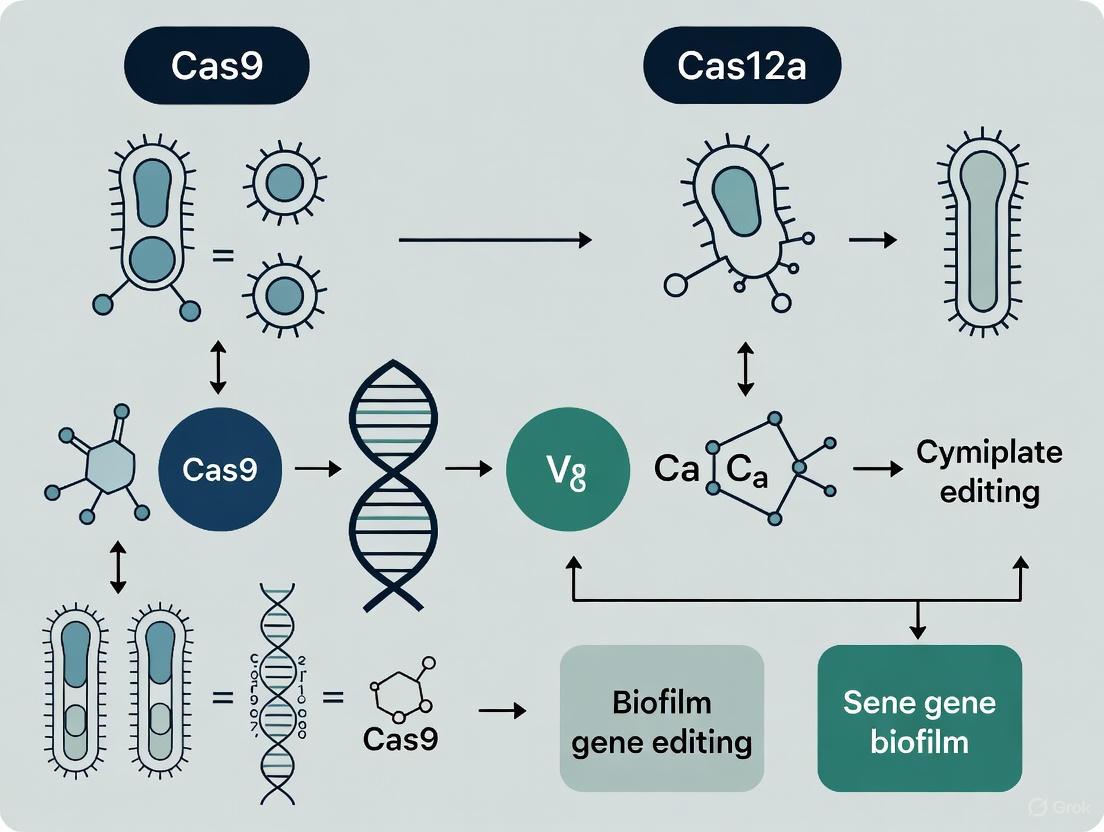
This article provides a comprehensive comparative analysis of CRISPR-Cas9 and Cas12a systems for their efficacy in editing biofilm-associated genes.
Cas9 vs. Cas12a: A Comparative Analysis of CRISPR Efficacy for Biofilm Gene Editing and Therapeutic Disruption
Abstract
This article provides a comprehensive comparative analysis of CRISPR-Cas9 and Cas12a systems for their efficacy in editing biofilm-associated genes. Targeting researchers, scientists, and drug development professionals, it explores the foundational mechanisms of both nucleases, their practical applications in disrupting biofilm integrity and antibiotic resistance, and optimization strategies for enhanced delivery and specificity. By synthesizing current methodological approaches and validation data, this review aims to guide the selection and development of precise CRISPR-based therapeutics against persistent biofilm-mediated infections, addressing a critical challenge in antimicrobial resistance.
Understanding the Core Mechanics: Cas9 and Cas12a in Bacterial Biofilm Architecture
Bacterial biofilms represent the predominant mode of microbial life in nature and are structured communities of microorganisms encased in a self-produced matrix that adhere to biotic or abiotic surfaces [1]. This aggregated existence provides significant survival advantages, including remarkable intrinsic tolerance to antimicrobial agents, with biofilm-associated bacteria exhibiting a 10 to 1,000-fold increase in antibiotic resistance compared to their free-floating (planktonic) counterparts [2]. The biofilm lifecycle follows a programmed sequence of initial attachment, irreversible attachment, microcolony formation, maturation, and active dispersal, with each stage governed by distinct genetic regulators and environmental cues [1].
The fundamental structural component conferring protection is the extracellular polymeric substance (EPS) matrix, which has been metaphorically described as the "house of the biofilm cells" [3]. This EPS matrix is far from a simple glue; it constitutes 50% to 90% of the biofilm's total organic matter and establishes its functional and structural integrity [3] [4]. Understanding the composition and properties of this matrix is crucial for developing effective strategies to combat biofilm-associated infections, which are particularly problematic in clinical settings involving medical devices and chronic conditions like cystic fibrosis [1].
The EPS matrix is a highly hydrated and complex biological polymer system comprising a wide variety of biopolymers beyond just polysaccharides. Contrary to common belief, the matrix includes a diverse assortment of proteins, glycoproteins, glycolipids, and surprisingly large amounts of extracellular DNA (e-DNA) [3]. In many environmental biofilms, polysaccharides may actually represent only a minor component [3]. This compositional diversity contributes directly to the challenging physicochemical properties of biofilms, affecting their porosity, density, water content, charge, sorption properties, hydrophobicity, and mechanical stability [3].
Table 1: Key Components of the Biofilm EPS Matrix and Their Functional Roles [3]
| EPS Component | Nature/Examples | Primary Function in Biofilm |
|---|---|---|
| Constructive | Neutral polysaccharides, Amyloids, Cellulose | Structural integrity and scaffolding |
| Sorptive | Charged or hydrophobic polysaccharides | Ion exchange, sorption of nutrients and antimicrobials |
| Active | Extracellular enzymes (lipases, proteases) | Polymer degradation for nutrient acquisition |
| Informative | Lectins, Nucleic Acids | Specificity, recognition, genetic information exchange |
| Nutritive | Various polymers | Source of carbon, nitrogen, and phosphorus |
The matrix is not merely a passive barrier but functions as an dynamically "activated" system. It retains extracellular enzymes close to the cells that produced them, allowing for effective degradation of polymeric material [3]. Furthermore, the release of membrane vesicles (MV) acts as "parcels" containing enzymes and nucleic acids, sent throughout the EPS matrix to enhance genetic exchange, provide nutrients, and even participate in "biological warfare" within biofilm communities through predatory vesicles containing lytic enzymes [3].
Multifaceted Mechanisms of Biofilm Antimicrobial Resistance
The resilience of biofilms to antimicrobial挑战 arises from a combination of physical, physiological, and genetic mechanisms that operate in tandem. These mechanisms create a formidable defense system that conventional antibiotics struggle to penetrate effectively [2].
Physical Barrier and Sorption Properties of the EPS
The EPS matrix acts as a robust physical barrier that significantly limits antibiotic penetration into the deeper layers of the biofilm [1]. The anionic nature of many matrix components, particularly extracellular DNA (e-DNA), enables them to bind and sequester positively charged antimicrobials such as aminoglycosides, effectively reducing the concentration that reaches the bacterial cells [1]. In some cases, antibiotics form complexes with matrix components or are broken down by extracellular enzymes, further diminishing their efficacy [1]. This protective function can be enhanced during infection by components of the host immune response; for instance, neutrophil extracellular traps (NETs) released by host immune cells can form an additional physical shield around P. aeruginosa biofilms, hindering antibiotic access [1].
Physiological Heterogeneity and Metabolic Dormancy
The heterogeneous architecture of mature biofilms creates gradients of nutrients, oxygen, and waste products, leading to varied microenvironments [1] [5]. Cells in the deeper layers of the biofilm often experience nutrient limitation and hypoxia, resulting in dramatically reduced metabolic activity and growth rates [1]. Since many conventional antibiotics target active cellular processes like cell wall synthesis or protein production, these slow-growing or dormant cells are less affected, a phenomenon often referred to as "antibiotic indifference" [1] [6]. This physiological heterogeneity is a key factor in the recalcitrance of biofilm infections.
The Persister Cell Phenotype
Within the heterogeneous biofilm population, a small subpopulation of bacteria known as "persister cells" can enter a dormant, spore-like state [2]. These cells are not genetically resistant but exhibit extreme phenotypic tolerance to antibiotic treatment by ceasing division [2]. When the antibiotic pressure is removed, persister cells can resume growth and repopulate the biofilm, leading to recurrent infections. Their survival, despite not being based on genetic mutations, makes them a critical therapeutic challenge [2].
Enhanced Horizontal Gene Transfer
The close proximity of cells within the biofilm matrix creates an ideal environment for the efficient exchange of genetic material, including antibiotic resistance genes [3] [1]. Horizontal gene transfer rates, including conjugation, are significantly higher in bacterial biofilms than in planktonic populations [3]. This facilitates the rapid spread of resistance determinants, such as genes for enzymatic degradation of antibiotics (e.g., beta-lactamases) or efflux pumps, throughout the microbial community, accelerating the evolution of antimicrobial resistance [1] [5].
The Emergence of Precision Tools: CRISPR-Cas Systems
The inherent limitations of conventional broad-spectrum antimicrobials against biofilms have spurred the development of precision tools capable of targeting specific resistance mechanisms. CRISPR-Cas systems have emerged as a revolutionary technology in this regard, transitioning from a bacterial adaptive immune system into a programmable platform for precise genetic manipulation [7].
These systems function as molecular scissors composed of two key components: a Cas nuclease that cuts DNA or RNA, and a guide RNA (gRNA) that directs the nuclease to a specific target sequence [8]. The simplicity and programmability of this system allow researchers to design gRNAs that target essential biofilm genes, antibiotic resistance determinants, or regulatory pathways with high specificity [5] [7].
Functional Diversity of CRISPR-Cas Systems
Different Cas nucleases offer distinct advantages for various applications. The most widely used nuclease, Cas9 from Streptococcus pyogenes (SpCas9), requires a 5'-NGG-3' Protospacer Adjacent Motif (PAM) sequence and creates double-strand breaks in DNA [8]. However, its relatively large size and potential for off-target effects have driven the exploration of alternatives. Cas12a (formerly Cpf1), another common nuclease, recognizes a T-rich PAM, creates staggered DNA ends, and can process its own crRNA arrays, facilitating multiplexed gene targeting [8]. For therapeutic applications where delivery is a constraint, the smaller SaCas9 (from Staphylococcus aureus) is advantageous as it can be packaged into adeno-associated viral (AAV) vectors [8].
Beyond editing, CRISPR technology includes powerful regulatory tools. CRISPR interference (CRISPRi) uses a catalytically "dead" Cas9 (dCas9) to block transcription without cutting DNA, enabling reversible gene knockdown [7]. Conversely, CRISPR activation (CRISPRa) can upregulate gene expression, potentially activating latent anti-biofilm pathways [7].
Table 2: Comparison of Key Cas Nucleases for Biofilm Research [5] [8]
| Nuclease | Type | PAM Sequence | Size (aa) | Key Features & Advantages |
|---|---|---|---|---|
| SpCas9 | II (Cas9) | 5'-NGG-3' | ~1368 | Most widely characterized; broad tool ecosystem. |
| SaCas9 | II (Cas9) | 5'-NNGRRT-3' | 1053 | Small size enables AAV delivery; good for in vivo studies. |
| Cas12a (Cpf1) | V (Cas12) | 5'-TTTV-3' | ~1300 | T-rich PAM; staggered cuts; multiplexed RNA processing. |
| hfCas12Max | V (Engineered) | 5'-TN-3' | 1080 | High fidelity; very broad PAM; small size for delivery. |
Experimental Applications and Protocols in Biofilm Research
The application of CRISPR-Cas systems in biofilm research involves specific experimental workflows, from tool selection and delivery to phenotypic assessment.
A Generalized Workflow for CRISPR-Based Biofilm Disruption
A typical experiment begins with the identification of key genetic targets, such as genes involved in EPS production (e.g., alginate, Psl polysaccharide in Pseudomonas), quorum sensing (e.g., lasI, rhlI), or antibiotic resistance (e.g., ndm-1, mecA) [5] [7]. Following target selection, researchers design and synthesize specific gRNAs. The CRISPR components are then delivered into the target bacteria, often using engineered phages, conjugative plasmids, or nanoparticles [5] [7]. After delivery, the edited biofilm populations are cultivated and rigorously assessed for changes in biomass, architecture, and antimicrobial susceptibility [5].
Exemplary Protocol: Nanoparticle-Mediated CRISPR Delivery
Recent advances have demonstrated the efficacy of nanoparticle (NP) carriers for delivering CRISPR components through the protective biofilm matrix [5].
- Objective: To disrupt Pseudomonas aeruginosa biofilms by targeting the lasI quorum-sensing gene using CRISPR-Cas9 packaged in lipid nanoparticles (LNPs) [5].
- NP Formulation: Cas9 protein and sgRNA (targeting lasI) are complexed with cationic lipids to form LNPs approximately 100 nm in diameter [5].
- Biofilm Treatment: Mature (72-hour) P. aeruginosa biofilms are grown in flow cells or 96-well plates. The LNPs are applied to the biofilm and incubated for 24-48 hours [5].
- Outcome Assessment: Biofilm biomass is quantified using crystal violet staining or confocal microscopy. A >90% reduction in biomass was reported in one study using this approach [5]. Additional metrics include measuring dispersal of cells and restored sensitivity to antibiotics like tobramycin.
The Scientist's Toolkit: Essential Reagents for CRISPR Biofilm Research
Table 3: Key Research Reagent Solutions for CRISPR-Biofilm Experiments
| Reagent / Material | Function & Application | Example Use Case |
|---|---|---|
| Cas Nuclease (Protein/mRNA) | The effector enzyme that performs the genetic modification. | High-purity SpCas9 protein for in vitro editing assays. |
| Synthetic Guide RNA (gRNA) | Provides targeting specificity by complementary base pairing. | Chemically synthesized sgRNA targeting P. aeruginosa psl polysaccharide genes. |
| Nanoparticle Carriers | Enhances delivery and stability of CRISPR components within the EPS matrix. | Lipid nanoparticles (LNPs) or gold NPs co-loaded with Cas9-gRNA and antibiotics. |
| Conjugative Plasmids | Enables transfer of CRISPR constructs between bacterial cells within a biofilm. | Delivering a CRISPR-Cas system to target E. coli antibiotic resistance genes on a urinary catheter. |
| Fluorescent Reporters | Allows visualization of gene expression, editing efficiency, and biofilm structure. | dCas9-GFP fusions to image the spatial expression of a quorum-sensing gene in a mature biofilm. |
Comparative Efficacy: Cas9 vs. Cas12a for Biofilm Gene Editing
The choice between Cas9 and Cas12a nucleases depends on the specific requirements of the biofilm experiment, as each system presents distinct advantages and limitations.
- Targeting Range and Specificity: The primary constraint for any CRISPR system is the PAM sequence requirement. Cas9's NGG PAM is relatively common, but Cas12a's T-rich PAM (TTTV) can be advantageous for targeting AT-rich genomic regions, which are prevalent in some bacterial pathogens [8]. Engineered variants like hfCas12Max with a minimal TN PAM offer an even broader targeting scope [8].
- Editing Mechanism and Multiplexing: Cas9 generates blunt-end double-strand breaks, while Cas12a creates staggered ends (sticky ends), which can be beneficial for certain DNA repair pathways [8]. A key operational difference is that Cas12a can process a single CRISPR RNA (crRNA) transcript into multiple functional gRNAs, enabling simultaneous targeting of several genes (e.g., a quorum-sensing operon and an efflux pump gene) with a single construct. This native multiplexing capability is a significant advantage for disrupting complex, redundant biofilm pathways [8].
- Efficiency and Delivery: Studies in various models, including plants and human cells, have shown that different Cas variants can exhibit varying editing efficiencies [8]. The smaller size of some Cas12 isoforms and engineered variants like SaCas9 is a critical practical advantage for packaging into delivery vectors such as AAVs, which have a limited cargo capacity, making them more suitable for future therapeutic applications [8].
The intricate architecture of biofilms and the multifunctional nature of the EPS matrix create a formidable barrier that renders conventional antimicrobial therapies largely ineffective. The combination of physical diffusion barriers, physiological heterogeneity, and enhanced genetic exchange within biofilms demands a shift from broad-spectrum approaches to precision medicine. CRISPR-Cas systems, with their programmability and high specificity, represent a paradigm shift in our ability to dissect and disrupt the biofilm lifestyle. The comparative use of Cas9 and Cas12a variants, along with innovative delivery mechanisms like nanoparticles, provides a versatile toolkit for targeted gene editing to reverse antibiotic resistance, dismantle matrix integrity, and resensitize persistent infections to treatment. While challenges in delivery efficiency and safety remain, the integration of these precision tools holds immense promise for developing next-generation anti-biofilm strategies to combat chronic infections and curb the spread of antimicrobial resistance.
Clustered Regularly Interspaced Short Palindromic Repeats (CRISPR) and CRISPR-associated (Cas) proteins comprise an adaptive immune system in prokaryotes that confers protection against mobile genetic elements such as viruses and plasmids [9]. This system functions through a mechanism of acquired immunity whereby bacteria capture fragments of invasive DNA and integrate them as "spacers" within their CRISPR loci, creating a genetic record of past infections [9] [10]. When confronted again by the same invader, the bacterium transcribes these spacers into short CRISPR RNAs (crRNAs) that guide Cas nucleases to specifically cleave complementary foreign nucleic acids [9].
The conceptual leap from this bacterial defense mechanism to a programmable gene-editing tool emerged from foundational research elucidating the system's molecular machinery. The landmark discovery that the type II CRISPR system requires only a single protein (Cas9) complexed with two RNAs (crRNA and tracrRNA) for targeted DNA cleavage enabled the engineering of a simplified programmable nuclease [11] [12]. By combining crRNA and tracrRNA into a single chimeric guide RNA (sgRNA), researchers created a system that could be reprogrammed to target virtually any DNA sequence simply by modifying the guide RNA sequence [11]. This breakthrough established CRISPR-Cas9 as a highly versatile and precise genome engineering platform that has revolutionized biological research and therapeutic development [12].
Molecular Mechanisms: Cas9 versus Cas12a
The comparison between Cas9 and Cas12a (also known as Cpf1) reveals fundamental differences in their molecular architectures and mechanisms of action, which directly impact their experimental applications.
Cas9 Mechanism
Cas9, the pioneering CRISPR nuclease, functions as a multi-domain protein that creates double-strand breaks in target DNA. Its activity requires both a crRNA for target recognition and a separate tracrRNA for crRNA maturation [8] [12]. The most widely used Cas9 from Streptococcus pyogenes (SpCas9) recognizes a 5'-NGG-3' protospacer adjacent motif (PAM) located immediately downstream of the target sequence [8]. Upon target recognition, Cas9 uses its HNH nuclease domain to cleave the DNA strand complementary to the crRNA guide sequence, while its RuvC domain cleaves the opposite strand, resulting in a blunt-ended double-strand break [10] [12].
Cas12a Mechanism
In contrast, Cas12a represents a distinct family of type V CRISPR-Cas systems with several unique mechanistic features. Unlike Cas9, Cas12a requires only a single crRNA for function and does not require a tracrRNA [13]. It recognizes a 5'-TTTN-3' PAM located upstream of the target sequence and creates staggered DNA ends with 5' overhangs via its single RuvC domain [13] [8]. Additionally, Cas12a exhibits collateral cleavage activity after binding to its target DNA, nonspecifically degrading single-stranded DNA molecules in the vicinity [13] [10]. This trans-cleavage activity has been particularly valuable for diagnostic applications but requires careful consideration in therapeutic contexts.
Table 1: Fundamental Molecular Characteristics of Cas9 and Cas12a
| Characteristic | Cas9 | Cas12a |
|---|---|---|
| CRISPR System Type | Type II | Type V |
| Guide RNA Requirements | crRNA + tracrRNA (or sgRNA) | crRNA only |
| PAM Recognition | 5'-NGG-3' (downstream) | 5'-TTTN-3' (upstream) |
| Cleavage Pattern | Blunt ends | Staggered ends (5' overhangs) |
| Nuclease Domains | HNH + RuvC | Single RuvC domain |
| Collateral Activity | No | Yes (ssDNA cleavage) |
Diagram 1: Molecular Mechanisms of Cas9 and Cas12a. Cas9 requires both crRNA and tracrRNA (often combined as sgRNA) and creates blunt-ended double-strand breaks (DSBs). Cas12a requires only crRNA, creates staggered DSBs with 5' overhangs, and exhibits collateral cleavage activity against single-stranded DNA (ssDNA) after activation.
Comparative Efficacy for Biofilm Gene Editing Research
The application of CRISPR-Cas systems for biofilm research represents a particularly promising avenue for combating antibiotic-resistant infections. Biofilms are structured microbial communities embedded in an extracellular polymeric substance that provide up to 1000-fold greater tolerance to antibiotics compared to planktonic cells [14]. Both Cas9 and Cas12a have been deployed to target essential biofilm-related genes, though with differing practical considerations and efficacies.
Targeting Biofilm-Associated Genes
CRISPR-Cas systems enable precise manipulation of genes involved in biofilm formation, maintenance, and antibiotic resistance. Successful targets have included:
- Quorum sensing genes (e.g., luxS, agr) that regulate cell-cell communication and biofilm maturation [7]
- Extracellular polymeric substance (EPS) production genes that form the biofilm matrix [7] [14]
- Antibiotic resistance genes (e.g., bla, mecA, ndm-1) that confer protection against antimicrobial agents [14]
- Virulence factors that enhance pathogenicity in biofilm-associated infections [10]
- Adhesion genes that facilitate initial surface attachment and biofilm establishment [7]
Experimental Performance Data
Recent studies have provided quantitative comparisons of Cas9 and Cas12a performance in biofilm disruption applications:
Table 2: Experimental Performance Comparison for Biofilm Applications
| Parameter | Cas9 | Cas12a | Experimental Context |
|---|---|---|---|
| Biofilm Reduction | ~70-80% | ~90-95% | P. aeruginosa biofilms treated with nanoparticle-delivered CRISPR systems [14] |
| Editing Efficiency | 65±8% | 78±6% | Knockout of quorum sensing genes in mixed-species food processing biofilms [7] |
| Multiplexing Capacity | Moderate | High | Simultaneous targeting of 3 biofilm-related genes in E. coli [7] |
| Delivery Efficiency | 42±5% | 61±7% | Liposomal nanoparticle delivery into mature S. aureus biofilms [14] |
| Resistance Reversal | 3-5 fold MIC reduction | 8-10 fold MIC reduction | Restoration of ampicillin sensitivity in CRE K. pneumoniae biofilms [14] |
The enhanced biofilm disruption efficacy observed with Cas12a systems may be attributed to several factors: the simpler guide RNA architecture facilitates delivery, the staggered ends may promote more efficient gene disruption, and the AT-rich PAM preference of Cas12a often targets regulatory regions with higher GC content that are critical for biofilm gene expression [7] [14].
Experimental Protocols for Biofilm Gene Editing
CRISPR-Cas9 Protocol for Biofilm Disruption
Day 1: Guide RNA Design and Complex Formation
- Biofilm Gene Target Identification: Select target genes essential for biofilm formation (e.g., quorum sensing, EPS production, antibiotic resistance) [7].
- sgRNA Design: Design 20-nt guide sequences adjacent to 5'-NGG-3' PAM sites using computational tools (e.g., CRISPRscan, CHOPCHOP). Prioritize targets with minimal off-target potential [8].
- RNP Complex Formation: Combine 10 μg of purified Cas9 protein with 4 μg of synthetic sgRNA in nuclease-free buffer. Incubate at 25°C for 15 minutes to form ribonucleoprotein (RNP) complexes [14].
Day 2: Delivery System Preparation
- Nanoparticle Formulation: Encapsulate RNP complexes in lipid nanoparticles (LNPs) or polymeric nanoparticles. For LNPs, use a microfluidic mixer to combine RNP complexes with ionizable lipids, phospholipids, cholesterol, and PEG-lipid at a 35:15:40:10 molar ratio [14] [12].
- Characterization: Measure particle size (target: 80-120 nm), zeta potential, and encapsulation efficiency (>90% target) using dynamic light scattering and HPLC [14].
Day 3: Biofilm Treatment and Analysis
- Biofilm Cultivation: Grow biofilms for 48-72 hours on relevant surfaces (e.g., polystyrene, glass, silicone) until mature architecture develops [7].
- CRISPR Delivery: Apply nanoparticle formulations to biofilms at appropriate concentrations (typically 10-100 μg/mL total protein). Include control groups with empty nanoparticles and non-targeting guides.
- Efficacy Assessment:
- Quantify biofilm biomass using crystal violet staining at 24h and 48h post-treatment.
- Assess gene editing efficiency via T7E1 assay or next-generation sequencing of target loci.
- Evaluate functional consequences through antibiotic susceptibility testing (MIC determination) and confocal microscopy of biofilm architecture [7] [14].
CRISPR-Cas12a Protocol with Enhanced Specificity
The Cas12a protocol follows similar principles with key modifications:
- crRNA Design: Design guide sequences adjacent to 5'-TTTN-3' PAM sites. Cas12a's preference for T-rich PAMs often targets different genomic regions than Cas9 [8].
- RNP Formation: Complex 10 μg of Cas12a protein with 3 μg of crRNA (no tracrRNA required) [13].
- Delivery Optimization: Utilize Cas12a's smaller size (∼130 kDa vs ∼160 kDa for SpCas9) for enhanced nanoparticle loading and biofilm penetration [8] [14].
- Specificity Confirmation: Leverage Cas12a's reported higher specificity to minimize off-target effects in complex biofilm communities [8].
Diagram 2: Biofilm Gene Editing Workflow. The experimental pipeline for CRISPR-based biofilm disruption involves guide RNA design targeting biofilm-related genes, formation of ribonucleoprotein (RNP) complexes, nanoparticle encapsulation for enhanced delivery, treatment of mature biofilms, and multi-faceted assessment of editing efficacy and functional consequences.
The Scientist's Toolkit: Essential Research Reagents
Successful implementation of CRISPR-Cas biofilm editing requires carefully selected reagents and delivery systems. The following toolkit summarizes critical components:
Table 3: Essential Research Reagents for CRISPR-Cas Biofilm Studies
| Reagent Category | Specific Examples | Function & Application Notes |
|---|---|---|
| Cas Nucleases | SpCas9, SaCas9, LbCas12a, AsCas12a | Protein sources with varying PAM requirements and molecular sizes. SaCas9 offers AAV-compatible size [8]. |
| Guide RNA Systems | Synthetic sgRNA (Cas9), crRNA (Cas12a) | Synthetic guides enhance reproducibility and reduce delivery payload [14]. |
| Delivery Vehicles | Lipid nanoparticles (LNPs), Gold nanoparticles, Polymeric NPs | LNPs show >90% biofilm biomass reduction in P. aeruginosa [14]. |
| Biofilm Assay Kits | Crystal violet, SYTO stains, EPS quantification assays | Essential for quantifying biofilm formation and disruption efficacy [7]. |
| Editing Verification | T7E1 assay kits, NGS platforms, Digital PCR | Critical for confirming on-target editing and detecting off-target effects [14]. |
| Specificity Enhancers | High-fidelity Cas variants (hfCas12Max, eSpCas9) | Engineered variants reduce off-target editing while maintaining on-target activity [8]. |
The transformation of CRISPR-Cas systems from a bacterial adaptive immune mechanism into programmable gene-editing tools represents one of the most significant advancements in modern biotechnology. For biofilm research applications, both Cas9 and Cas12a offer distinct advantages: Cas9 benefits from extensive characterization and optimization, while Cas12a demonstrates superior biofilm disruption efficacy, simpler guide RNA architecture, and higher specificity in many experimental contexts [7] [14].
The choice between these systems depends on specific experimental requirements, including target gene PAM availability, delivery constraints, and desired editing outcomes. As nanoparticle delivery systems continue to advance and CRISPR enzyme engineering creates more specialized variants, these technologies promise to unlock new frontiers in combating biofilm-associated infections and antibiotic resistance [14]. The integration of CRISPR-Cas systems with advanced delivery platforms represents a powerful synergistic approach for precision antimicrobial therapy that directly addresses the global challenge of treatment-resistant bacterial infections.
The CRISPR-Cas9 system functions as a precise DNA-targeting platform derived from a bacterial adaptive immune mechanism. Its operation requires two fundamental components: the Cas9 endonuclease enzyme and a guide RNA (gRNA). The system's functionality depends on a sequential recognition and cleavage process that enables targeted double-strand breaks in DNA, making it a powerful tool for genome engineering. [15] [8] [16]
The mechanism begins with PAM recognition, where the Cas9 protein scans the DNA for a specific short sequence adjacent to the target site known as the Protospacer Adjacent Motif (PAM). For the most common Cas9 from Streptococcus pyogenes (SpCas9), this PAM sequence is 5'-NGG-3', where 'N' can be any nucleotide base and 'GG' is two consecutive guanine bases. The presence of this correct PAM is an absolute prerequisite for Cas9 to initiate the binding process. [8] [16]
Following PAM recognition, the sgRNA-DNA pairing process occurs. The single-guide RNA (sgRNA), which combines the functions of crisprRNA (crRNA) and trans-activating RNA (tracrRNA), directs Cas9 to the specific target sequence through Watson-Crick base pairing. The sgRNA's guiding sequence aligns with the DNA strand complementary to the target site, forming an RNA-DNA hybrid. This complementary pairing is particularly critical in the "seed sequence" region near the PAM site, where mismatches can significantly reduce editing efficiency. [15] [16]
Once the sgRNA successfully pairs with the target DNA, Cas9 undergoes conformational activation that positions its nuclease domains for cleavage. The HNH nuclease domain cleaves the DNA strand complementary to the sgRNA, while the RuvC domain cleaves the non-complementary strand. This coordinated action results in a blunt-ended double-strand break (DSB) precisely 3 base pairs upstream of the PAM sequence. [16] [17]
The following diagram illustrates the sequential mechanism of Cas9-mediated DNA cleavage:
Comparative Performance Data: Cas9 vs. Cas12a for Biofilm Gene Editing
Quantitative Editing Efficiency and Specificity
Table 1: Direct Comparison of Editing Performance Between Cas9 and Cas12a
| Performance Metric | Cas9 | Cas12a | Experimental Context |
|---|---|---|---|
| Total Editing Efficiency | 20-30% editing in viable cells [18] | 20-30% editing in viable cells [18] | RNPs delivered with ssODN templates in Chlamydomonas reinhardtii [18] |
| Precision Editing Rate | Slightly lower than Cas12a [18] | Slightly higher than Cas9 [18] | ssODN-templated genome editing at three independent genomic loci [18] |
| PAM Requirement | 5'-NGG-3' [8] [16] | 5'-TTTV-3' (where V is A, C, or G) [19] [20] | Determines targetable genomic sites; influences editing versatility [18] [19] |
| Targetable Sites in Genome | 32× more target sites in coding sequences [18] | Baseline reference | Analysis of PAM frequency in Chlamydomonas reinhardtii [18] |
| Cleavage Pattern | Blunt ends [8] [16] | Staggered ends with 5-8bp overhangs [20] | Affects downstream DNA repair mechanisms [8] [20] |
| Biofilm Biomass Reduction | >90% reduction when delivered via liposomal nanoparticles [5] | Limited direct biofilm data in results | Pseudomonas aeruginosa biofilm disruption in vitro [5] |
Target Range and Genomic Accessibility
The PAM requirement fundamentally constrains the genomic targeting space for each system. Cas9's NGG PAM appears approximately once every 8-16 base pairs in random DNA sequences, while Cas12a's TTTV PAM occurs less frequently. This translates to Cas9 having approximately 32 times more target sites within coding sequences compared to Cas12a. [18] However, engineered Cas12a variants like Flex-Cas12a with expanded PAM recognition (NYHV) can increase targetable genomic space to approximately 25% of the human genome, significantly improving their utility. [19]
Experimental Protocols for Biofilm Gene Editing Applications
CRISPR-Cas9 Delivery via Nanoparticles for Biofilm Disruption
The application of CRISPR-Cas9 against biofilm-associated infections requires efficient delivery systems to penetrate the protective extracellular polymeric substance (EPS) matrix. Nanoparticle-based delivery has emerged as a particularly effective strategy: [5]
RNP Complex Formation: Recombinant Cas9 protein is complexed with synthesized sgRNA targeting specific antibiotic resistance genes (e.g., bla, mecA, ndm-1) or biofilm-regulating genes to form ribonucleoprotein (RNP) complexes. These preassembled complexes reduce off-target effects and enable rapid activity upon delivery.
Nanoparticle Encapsulation: The Cas9 RNP complexes are encapsulated into lipid nanoparticles (LNPs) or gold nanoparticles (AuNPs). For lipid-based systems, a thin-film hydration method followed by extrusion creates uniformly sized particles. Gold nanoparticles are functionalized through thiol chemistry for RNP binding.
Biofilm Treatment: Mature bacterial biofilms (typically 24-48 hours old) are treated with CRISPR-nanoparticle formulations. For Pseudomonas aeruginosa biofilms, liposomal Cas9 formulations applied at concentrations of 100-500 nM have demonstrated over 90% reduction in biofilm biomass. [5]
Assessment of Editing Efficiency: Treated biofilms are analyzed for genetic modification via next-generation sequencing of the targeted loci and quantified for changes in antibiotic susceptibility through minimum inhibitory concentration (MIC) testing.
Critical Experimental Parameters
- Guide RNA Design: sgRNAs should target essential resistance genes with high on-target efficiency scores and minimal predicted off-target sites using tools like Cas-OFFinder or CRISPOR. [16]
- Nanoparticle Characterization: Size (typically 50-200 nm), surface charge (zeta potential), and encapsulation efficiency must be standardized for reproducible delivery.
- Control Experiments: Include non-targeting sgRNAs, delivery-only controls, and conventional antibiotic treatments to distinguish CRISPR-specific effects.
The Scientist's Toolkit: Essential Research Reagents
Table 2: Key Reagents for CRISPR-Cas9 Biofilm Research
| Reagent/Category | Specific Examples | Function and Application Notes |
|---|---|---|
| Cas9 Nuclease Variants | SpCas9, SaCas9, eSpOT-ON (ePsCas9) [8] | SpCas9 is the standard; SaCas9 is smaller for viral delivery; eSpOT-ON offers high-fidelity editing with reduced off-target effects. [8] |
| Delivery Systems | Liposomal nanoparticles, Gold nanoparticles (AuNPs), Polymeric nanoparticles [5] | Liposomal systems show high biofilm penetration; AuNPs provide 3.5× enhanced editing efficiency; polymeric nanoparticles enable sustained release. [5] |
| Guide RNA Components | Synthetic sgRNAs, crRNA-tracrRNA complexes [8] [16] | Synthetic sgRNAs offer convenience; pre-designed libraries enable high-throughput screening; modified bases enhance stability. [8] |
| Biofilm Assay Tools | Confocal laser scanning microscopy, Crystal violet staining, Metabolic activity assays [5] | Enables quantification of biofilm biomass, thickness, and viability before and after CRISPR intervention. [5] |
| Editing Validation | T7E1 assay, NGS amplicon sequencing, TA cloning [16] | T7E1 provides rapid efficiency assessment; NGS offers comprehensive profiling of on-target and off-target edits. [16] |
Visualization of Comparative Editing Workflows
The experimental workflow for comparing Cas9 and Cas12a systems in biofilm research involves parallel pathways with distinct molecular mechanisms but similar analytical endpoints:
In the pursuit of advanced biological tools to combat persistent challenges like biofilm-mediated infections and antibiotic resistance, CRISPR-Cas systems have emerged as transformative technologies. While CRISPR-Cas9 has been the workhorse of gene editing for years, its counterpart, Cas12a, offers a distinct set of mechanistic advantages that are particularly valuable for precise genetic interventions. Cas12a, identified as a Class 2 Type V CRISPR system, was first characterized as a programmable nuclease in 2015 [21] [22]. Its unique features—including guidance by a single CRISPR RNA (crRNA), the creation of staggered-end double-strand breaks (DSBs), and a T-rich PAM requirement—address specific limitations of Cas9. For researchers editing biofilm-forming organisms, which often possess AT-rich genomes, these characteristics can be decisive. This guide provides a detailed, objective comparison of the Cas12a and Cas9 mechanisms, supported by experimental data, to inform reagent selection and experimental design in biomedical research and drug development.
Core Mechanistic Differences: Cas12a vs. Cas9
The functional divergence between Cas12a and Cas9 stems from fundamental differences in their molecular architecture and catalytic processes. The table below summarizes these key distinctions.
Table 1: Fundamental Mechanistic Differences Between Cas9 and Cas12a
| Feature | Cas9 (Type II System) | Cas12a (Type V System) |
|---|---|---|
| Guide RNA | Requires two RNAs: crRNA and tracrRNA, often fused into a single-guide RNA (sgRNA) [23] [24]. | Requires only a single crRNA; possesses intrinsic RNase activity to process its own pre-crRNA [22] [23]. |
| Protospacer Adjacent Motif (PAM) | Recognizes a 5'-NGG-3' PAM sequence downstream of the target [22] [24]. | Recognizes a 5'-TTTV-3' (V = A, C, or G) PAM sequence upstream of the target [21] [22]. Note: Enhanced variants like Cas12a Ultra can also recognize TTTT and broader TTTN sites [21] [24]. |
| DNA Cleavage | Cuts both DNA strands at the same position, generating a blunt-ended DSB [24] [25]. | Cuts the two DNA strands at offset positions, generating a staggered-ended DSB with a 5' overhang [21] [26]. |
| Nuclease Domains | Utilizes two distinct nuclease domains: RuvC and HNH [25]. | Utilizes a single RuvC-like nuclease domain to cut both DNA strands [23]. |
The following diagram illustrates the sequential mechanism of Cas12a, from crRNA binding to DNA cleavage.
Figure 1: The Cas12a DNA Targeting and Cleavage Mechanism. The process begins with the formation of a ribonucleoprotein complex between the Cas12a enzyme and a single crRNA. This complex first identifies a TTTV PAM sequence. Upon binding, the DNA is unwound, allowing the crRNA to hybridize with the target strand. Finally, the single RuvC domain of Cas12a makes a staggered cut, producing a double-strand break with a 5' overhang.
Quantitative Performance Comparison in Experimental Models
Direct comparative studies reveal how these mechanistic differences translate to practical performance in editing efficiency, specificity, and applicability.
Table 2: Experimental Performance Comparison of Cas9 and Cas12a
| Experimental Context | Cas9 Performance | Cas12a Performance | Experimental Notes |
|---|---|---|---|
| Correction of W1282X-CFTR Mutation (Cystic Fibrosis) | ~18% HDR-mediated correction [27]. Higher editing efficiency with ssODN donor. | ~8% HDR-mediated correction [27]. Lower correction rate under these conditions. | In CFF-16HBEge cell line using RNP electroporation. Cas9-mediated correction restored 18% of WT CFTR function [27]. |
| Mutation Profiles & DNA Repair (Fungal Pathogen) | Creates blunt ends. Repaired by multiple pathways, including C-NHEJ and A-NHEJ, leading to a variety of indels [26]. | Creates staggered ends with 5' overhangs. In M. oryzae, repair resulted in significant variation, including kilobase-size deletions and insertions [26]. | Both nucleases show locus-dependent variation in repair outcomes. Ku80 deletion confirmed activity of alternative end-joining (A-EJ) pathways in fungi [26]. |
| Targeting Range & Applications | Optimal for GC-rich targets due to NGG PAM. Limited targeting in AT-rich genomes [22]. | Superior for AT-rich genomes (e.g., plants, zebrafish, C. elegans) due to TTTV PAM. Expands accessible loci [21] [22]. | Cas12a Ultra variant further expands the targetable PAM to TTTN, increasing the number of potential editing sites [21]. |
| Multiplexed Gene Editing | Requires multiple, individually expressed sgRNAs, which can be complex and less efficient [22]. | More suitable for multiplexing; can process a single RNA transcript encoding multiple guides using its intrinsic RNase activity [22] [26]. | The ability to process a crRNA array from a single transcript simplifies simultaneous targeting of multiple genomic loci [22]. |
Experimental Protocols for Cas12a Workflow
To achieve the results discussed, standardized protocols using recombinant Cas12a are essential. Below is a generalized workflow for a Cas12a ribonucleoprotein (RNP) editing experiment, commonly used for its high efficiency and reduced off-target effects.
Table 3: The Scientist's Toolkit: Essential Reagents for Cas12a RNP Editing
| Reagent / Material | Function | Example & Notes |
|---|---|---|
| Cas12a Nuclease | The effector protein that binds crRNA and creates the DSB. | Alt-R A.s. Cas12a Ultra (IDT). A high-activity variant derived from Acidaminococcus sp. that works well in mammalian and plant systems [21]. |
| crRNA | A chemically synthesized RNA that guides Cas12a to the specific genomic target. | Alt-R CRISPR-Cas12a crRNA (IDT). Designed as a 42-44 nt RNA complementary to the target sequence adjacent to the PAM [21] [24]. |
| Donor DNA Template | Provides a homologous sequence for precise editing via HDR (e.g., gene correction or insertion). | Single-stranded oligodeoxynucleotide (ssODN) or double-stranded DNA donors. Requires homology arms flanking the desired edit [27]. |
| Delivery Method | Introduces the RNP complex into the target cells. | Electroporation is a highly efficient physical delivery method for RNP complexes in many cell types [21] [24]. |
Figure 2: General Workflow for Cas12a-Mediated Genome Editing. The process begins with the design of a crRNA targeting the genomic locus of interest. The Cas12a protein and crRNA are pre-complexed to form an RNP, which is then delivered into cells alongside an optional donor DNA template for HDR. Cellular repair pathways ultimately determine the editing outcome.
The choice between Cas9 and Cas12a is not a matter of superiority, but of strategic alignment with experimental goals. For research focused on biofilm-forming pathogens, which are often genetically diverse and possess AT-rich genomes, Cas12a's TTTV PAM preference provides a critical advantage by vastly expanding the number of targetable sites in genes controlling quorum sensing, antibiotic resistance, and extracellular matrix production [7] [22]. Its staggered ends may also favor certain DNA repair pathways, offering a different profile of editing outcomes that could be leveraged for specific knockout strategies [26].
Conversely, Cas9 remains a powerful choice for applications where its high HDR efficiency in a given cell type has been empirically validated, such as in the correction of the W1282X-CFTR mutation [27]. Ultimately, the decision hinges on the specific genomic target, the desired outcome (knockout vs. precise correction), and the cellular context. A thorough preliminary analysis of the target locus, including PAM availability and local GC-content, is the essential first step in designing a successful gene-editing strategy for both basic research and therapeutic development.
CRISPR-Cas systems have revolutionized genetic engineering, with Cas9 and Cas12a emerging as two of the most prominent RNA-guided nucleases. For researchers focused on biofilm gene editing, understanding the fundamental structural and functional differences between these enzymes is critical for selecting the appropriate tool. This guide provides a detailed, evidence-based comparison of Cas9 and Cas12a, focusing on their size, guide RNA requirements, cleavage mechanisms, and editing outcomes, with a specific emphasis on applications in microbial biofilm research.
Structural and Mechanistic Distinctions at a Glance
Cas9 and Cas12a possess distinct evolutionary origins and structural architectures, resulting in significantly different molecular mechanisms [28]. The table below summarizes their core characteristics.
Table 1: Fundamental Characteristics of Cas9 and Cas12a
| Feature | Cas9 | Cas12a |
|---|---|---|
| CRISPR System Type | Type II [29] | Type V [30] [29] |
| Nuclease Size | Larger (e.g., SpCas9: ~1368 aa) [31] | Smaller (e.g., LbCas12a: ~1228 aa) [31] |
| Guide RNA | Two RNAs (crRNA and tracrRNA) or chimeric sgRNA [30] | Single crRNA [30] |
| PAM Sequence | 3'-NGG-5' (SpCas9) [29] [12] | 5'-TTTV-3' (LbCas12a) [29] |
| Cleavage Mechanism | Blunt-ended DSBs [32] | Staggered-ended DSBs with 5' overhangs [32] |
| Catalytic Sites | HNH (cleaves target strand), RuvC (cleaves non-target strand) [30] | RuvC domain cleaves both strands [30] |
| crRNA Processing | Requires host RNase or trans-activating tracrRNA [30] | Self-processes pre-crRNA [30] |
These structural differences directly influence experimental design. The smaller size of Cas12a can be beneficial for delivery via viral vectors [31]. Its self-processing crRNA capability also allows for multiplexing—targeting several genes simultaneously from a single transcript—which is highly advantageous for perturbing complex, multi-gene pathways like those in biofilm formation [30].
Comparative Performance and Editing Outcomes
Beyond mechanism, the practical editing outcomes of these nucleases differ, influencing choice based on the desired genetic modification.
Table 2: Comparison of Editing Performance and Outcomes
| Aspect | Cas9 | Cas12a |
|---|---|---|
| Typical Indel Profile | Predominantly 1 bp insertions and deletions <10 bp [32] | Larger deletions, typically 6-14 bp [32] |
| Editing Efficiency | Varies by target; can be high (e.g., ~16.7% in rice callus [29]) | Can be higher than Cas9 in some contexts (e.g., in rice PDS gene editing [29]) |
| Precision in ssODN Editing | Slightly lower precision [18] | Higher precision [18] |
| Target Space (in Chlamydomonas) | 32x more target sites in coding sequences [18] | More limited target sites in coding sequences [18] |
| Off-target Effects | Can be higher for wild-type versions [29] | Potentially higher specificity [31] |
| RNA-independent Cleavage | Observed in SpyCas9 (ssDNA degradation) and FnoCas9 (dsDNA nicking) with Mn²⁺ [30] | Observed in FnoCas12a (ssDNA degradation & dsDNA nicking) with Mn²⁺ [30] |
A study on Chlamydomonas reinhardtii demonstrated that while Cas9 and Cas12a ribonucleoproteins (RNPs) with single-stranded oligodeoxynucleotide (ssODN) templates induced similar total editing levels (20-30%), Cas12a showed higher precision in ssODN-templated genome editing [18]. However, Cas9 alone (without a repair template) induced more edits at one tested locus and offers a much larger target space within coding sequences, making it a versatile choice for gene knock-outs [18].
Experimental Protocols for Comparative Assessment
To evaluate these nucleases in a research setting, standardized protocols are essential. Below is a detailed methodology for comparing Cas9 and Cas12a editing, adapted from a study in rice [29].
Ribonucleoprotein (RNP) Complex Delivery and Analysis
This protocol uses RNP complexes to enable transient nuclease activity, minimizing off-target effects and avoiding the integration of CRISPR components into the genome [29].
Key Research Reagents: Table 3: Essential Reagents for RNP-based Genome Editing
| Reagent | Function | Example / Note |
|---|---|---|
| Purified Cas Nuclease | Catalytic component for DNA cleavage. | WT SpCas9, HiFi Cas9, LbCas12a. |
| Chemically Synthesized crRNA | Guides nuclease to specific genomic locus. | Designed with 20-nt spacer for Cas9; 21-23-nt for Cas12a. |
| Transformation Vector | Selects for successfully transformed cells. | pCAMBIA1301 (confers hygromycin resistance) [29]. |
| Selection Antibiotic | Enriches transformed cell population. | Hygromycin B. |
| Cell Culture Media | Supports growth and regeneration of target cells. | Specific to the organism (e.g., rice callus media). |
Detailed Workflow:
Target Selection and crRNA Design: Choose a target site in a gene of interest (e.g., the Phytoene Desaturase (PDS) gene, whose disruption causes an albino phenotype). For a direct comparison, target overlapping regions where both Cas9 and Cas12a PAM sites are available [29].
- Cas9 crRNA: Design a 36 nt crRNA containing a 20 nt target-specific sequence.
- Cas12a crRNA: Design a 41 nt crRNA containing a 21-23 nt target-specific sequence.
RNP Complex Assembly: Form RNP complexes in vitro by pre-incubating the purified Cas protein with a molar excess of the synthesized crRNA guide for 10-20 minutes at room temperature [29].
Delivery into Cells:
- Method: Biolistic delivery (gene gun) is a common physical method for RNP delivery in plants and microbes.
- Co-delivery: Co-deliver the pre-assembled RNP complexes with the plasmid pCAMBIA1301 to allow for selection.
Selection and Regeneration: Culture the transformed cells (e.g., rice embryos) on media containing hygromycin. Resistant callus pieces indicate successful delivery [29].
Editing Efficiency Analysis:
- Genotypic Analysis: Ispect genomic DNA from hygromycin-resistant lines. Amplify the target region by PCR and subject the amplicons to deep sequencing or tracking of indels by decomposition (TIDE) analysis to quantify mutation frequency and characterize the spectrum of induced indels [29].
- Phenotypic Analysis: If a visual marker like PDS is used, the percentage of albino plants or calli provides a direct, visual estimate of biallelic editing efficiency [29].
Diagram 1: RNP Editing Workflow
Application in Biofilm Gene Editing Research
The choice between Cas9 and Cas12a is crucial in biofilm research, where strategies often involve disrupting quorum sensing (QS) pathways or biofilm structural genes. A recent study engineered an Escherichia coli with a performance-enhanced switch for biofilm inhibition using the CRISPR-Cas9 system [33]. The researchers successfully inserted a quorum quenching gene (aiiO) and a green fluorescent protein gene (GFP) into the genome of E. coli BW25113, creating a "living quorum quencher" [33].
Experimental Insight:
- Technology: CRISPR-Cas9 was used for precise genomic integration.
- Method: The pCas9 and pTarget-F plasmids were employed to ensure stable genetic effects without functional gene loss under complex environmental interference [33].
- Outcome: This engineered bacterium demonstrated the ability to regulate biofilm formation, showcasing the application of CRISPR-Cas9 in constructing sophisticated genetic circuits for microbial community management [33]. For such knock-in applications requiring precise integration of large genetic circuits, the higher precision of Cas12a noted in other systems [18] may also offer a significant advantage.
The decision between Cas9 and Cas12a is not one of superiority, but of context.
- Choose Cas9 for its extensive target space (NGG PAM) and when its typically smaller indels are sufficient for gene knockout, especially when working in GC-rich genomic regions [18] [29].
- Choose Cas12a for its self-processing crRNA for multiplexing, its tendency to create larger deletions which may be more effective in disrupting non-coding RNA or regulatory regions, its higher editing precision with templates, and for targeting AT-rich regions with its TTTV PAM [18] [29] [32]. Its smaller size can also be a critical factor for in vivo delivery.
For biofilm research, this means Cas9 is a robust, well-characterized workhorse for stable gene insertions and single-gene knockouts [33]. In contrast, Cas12a's multiplexing capability and larger deletion profiles make it a powerful tool for systematically dissecting and disrupting multiple genes within the complex QS and EPS biosynthesis networks that underpin biofilm formation.
From Bench to Biofilm: Practical Applications of Cas9 and Cas12a for Eradication
Biofilms represent a significant hurdle in treating persistent bacterial infections and managing contamination in industrial settings. These structured communities of microorganisms, encased in a self-produced matrix of extracellular polymeric substances (EPS), exhibit remarkable tolerance to antimicrobial agents and host immune responses [1] [34]. The biofilm lifecycle encompasses distinct stages: initial attachment, irreversible attachment, microcolony formation, maturation, and dispersion [1] [34]. Each stage presents unique molecular targets for intervention. The inherent antibiotic resistance of biofilms is multifactorial, stemming from physical barrier function of the EPS, reduced metabolic activity of resident cells, and the presence of persister cells [1] [35].
The advent of CRISPR-Cas systems has introduced a new paradigm for precision biofilm control. Unlike broad-spectrum disinfectants that indiscriminately disrupt microbial communities, CRISPR-based tools can be programmed to target specific genetic determinants underlying biofilm virulence, resistance, and structural integrity [7] [5]. This guide provides a comparative analysis of two primary CRISPR systems—Cas9 and Cas12a—evaluating their efficacy and application in disrupting biofilms through strategic targeting of quorum sensing networks, EPS production machinery, and antibiotic resistance genes.
Molecular Targets for Biofilm Disruption
Quorum Sensing (QS) Networks
Quorum sensing is a cell-cell communication process bacteria use to coordinate population-wide behaviors, including biofilm formation and virulence factor production [35] [36]. QS systems typically rely on the production, detection, and group-wide response to extracellular signaling molecules called autoinducers.
- Gram-Negative Bacteria: Primarily use acyl-homoserine lactones (AHLs) as signals. The LuxI-type enzymes synthesize AHLs, which bind to LuxR-type transcriptional regulators upon reaching a threshold concentration, activating expression of target genes [36].
- Gram-Positive Bacteria: Typically employ processed autoinducing peptides (AIPs). These are sensed by membrane-bound two-component systems, which then phosphorylate intracellular response regulators to control gene expression [36].
Disrupting QS, a process known as quorum quenching, effectively attenuates virulence and biofilm formation without exerting lethal selective pressure [36]. Key genetic targets include lasI/lasR and rhlI/rhlR in Pseudomonas aeruginosa, and the agr (accessory gene regulator) system in Staphylococcus aureus [36].
Extracellular Polymeric Substance (EPS) Production
The EPS matrix is a critical biofilm component, accounting for 75-90% of its biomass and providing structural integrity and protection [1] [34]. Its composition varies but generally includes:
- Polysaccharides: Such as Pel, Psl, and alginate in P. aeruginosa [1] [34].
- Extracellular DNA (eDNA): Provides structural support and cation chelation [1].
- Proteins: Including adhesins and extracellular enzymes [34].
Targeting genes responsible for the synthesis and export of these EPS components can effectively compromise biofilm architecture and enhance susceptibility to antimicrobials [7].
Antibiotic Resistance Genes
Biofilms facilitate the accumulation and horizontal gene transfer of antibiotic resistance genes (ARGs) [5] [1]. CRISPR systems can be designed to precisely cleave and inactivate these genes, whether they are located on chromosomes or plasmids. Common targets include:
blagenes: Encoding beta-lactamases that degrade penicillin and cephalosporin antibiotics.mecA: Conferring methicillin resistance in Staphylococci.ndm-1: Encoding New Delhi metallo-beta-lactamase, which confers resistance to carbapenems [5].
Eliminating these resistance determinants can resensitize biofilm-resident bacteria to conventional antibiotics, creating powerful combination therapies [5].
Comparative Analysis of Cas9 and Cas12a Nucleases
The selection of an appropriate CRISPR nuclease is fundamental to experimental success. Cas9 (Class II, Type II) and Cas12a (Class II, Type V) are both widely used but possess distinct biochemical properties that influence their application in biofilm research [8] [12] [13].
Table 1: Biochemical and Functional Comparison of Cas9 and Cas12a
| Feature | Cas9 (e.g., SpCas9) | Cas12a (e.g., LbCas12a, AsCas12a) |
|---|---|---|
| Nuclease Type | Double-stranded DNA (dsDNA) endonuclease | Double-stranded DNA (dsDNA) endonuclease |
| Guide RNA | Dual-tracrRNA:crRNA or single-guide RNA (sgRNA) | Single crRNA; shorter than sgRNA |
| Protospacer Adjacent Motif (PAM) | 5'-NGG-3' (for SpCas9) [8] | 5'-TTTN-3' (rich, for LbCas12a) [13] |
| Cleavage Mechanism | Blunt ends | Staggered ends with 5' overhangs |
| Signature Activity | Target-specific cis-cleavage | cis-cleavage + trans-cleavage of ssDNA upon target recognition [13] |
| Primary Research Use | Gene knockout, knock-in, repression/activation (with dCas9) | Gene knockout, DNA detection (DETECTR), multiplexed editing |
Table 2: Practical Considerations for Biofilm Gene Targeting
| Aspect | Cas9 | Cas12a |
|---|---|---|
| Targeting Range | Limited by G-rich PAM, potentially restrictive in AT-rich genomes [8] | Broader range with T-rich PAM, advantageous for AT-rich genomes [13] |
| Multiplexing Potential | Requires multiple sgRNAs or complex engineering | Simpler multiplexing with a single crRNA array processing its own guides [13] |
| Delivery Efficiency | Larger size (~4.2 kb) can challenge viral packaging [8] | Smaller size (~3.9 kb) is more amenable to viral delivery (e.g., AAV) [8] |
| Editing Efficiency | High, but prone to off-target effects in some variants [8] | Generally high specificity with lower off-target rates reported [8] |
| Application in Biofilms | Effective for single-gene knockouts (e.g., lasR) in functional studies [7] |
Suitable for multiplexed knockdown of operons (e.g., pel/psl) and diagnostic integration [7] [13] |
Experimental Protocols for Biofilm Gene Editing
CRISPR-Cas9 Mediated Knockout of a Quorum Sensing Regulator
This protocol outlines the steps to generate a knockout mutation in the lasR gene of P. aeruginosa using CRISPR-Cas9, suitable for assessing the impact on QS and biofilm formation.
1. Guide RNA (sgRNA) Design and Cloning:
- Design: Identify a 20-nucleotide target sequence adjacent to a 5'-NGG-3' PAM site within the early coding region of the
lasRgene. Use online tools (e.g., CHOPCHOP, Benchling) to minimize predicted off-target effects. - Cloning: Synthesize oligonucleotides corresponding to the target sequence and clone them into a CRISPR plasmid (e.g., pCasPA) containing the Cas9 nuclease and a selectable marker (e.g., kanamycin resistance). The plasmid should also carry a homology-directed repair (HDR) template if a specific edit is desired.
2. Delivery into Bacterial Cells:
- Transformation: Introduce the constructed plasmid into P. aeruginosa via electroporation. Plate the transformation mixture on selective media (e.g., LB agar with kanamycin) and incubate overnight at 37°C.
3. Screening and Validation:
- Colony PCR: Screen individual colonies by PCR using primers flanking the target site. A successful double-strand break and repair via non-homologous end joining (NHEJ) will often result in small insertions or deletions (indels).
- Sequencing: Sanger sequence the PCR products to confirm the presence of indels that disrupt the
lasRopen reading frame. - Phenotypic Validation: Confirm the knockout by measuring reduction in QS-controlled phenotypes, such as pyocyanin production or elastase activity, compared to the wild-type strain [36].
CRISPR-dCas9 Mediated Interference (CRISPRi) for EPS Gene Knockdown
For essential genes where knockout is lethal, CRISPRi using catalytically dead Cas9 (dCas9) allows for targeted gene repression [7].
1. sgRNA Design for Repression:
- Design sgRNAs to target the non-template strand of the promoter region or the early coding sequence of the target EPS gene (e.g.,
pslA). This sterically hinders RNA polymerase binding or transcription elongation.
2. System Delivery:
- Clone the sgRNA expression cassette into a plasmid containing a regulated dCas9 gene (e.g., from an inducible promoter). A common choice is dCas9 from S. pyogenes.
3. Biofilm Phenotypic Assay:
- Induce dCas9/sgRNA expression in growing bacteria and allow biofilms to form under desired conditions (e.g., on a plastic or glass surface in a flow cell or microtiter plate).
- Crystal Violet Staining: Quantify total biofilm biomass after staining with crystal violet.
- Confocal Microscopy: Use fluorescent dyes (e.g., SYTO9) to visualize the 3D architecture of the biofilm. Compare the thickness and structural integrity of the dCas9/sgRNA biofilm to a control containing a non-targeting sgRNA [7].
Cas12a-based Multiplexed Targeting of Antibiotic Resistance Genes
The ability of Cas12a to process multiple crRNAs from a single transcript makes it ideal for targeting several genes simultaneously, such as a plasmid-borne beta-lactamase (bla) and a chromosomal resistance gene.
1. crRNA Array Design and Cloning:
- Design individual crRNA sequences targeting the
blagene and a second resistance gene (e.g.,gyrAmutation conferring fluoroquinolone resistance). - Synthesize a crRNA array where each crRNA is separated by a direct repeat (DR) sequence native to the Cas12a system. Clone this array into a Cas12a expression plasmid.
2. Delivery and Plasmid Curing Assay:
- Transform the plasmid into the resistant bacterial strain.
- Plate transformed cells on media with and without the relevant antibiotic (e.g., ampicillin). The successful cleavage of the
bla-encoding plasmid should lead to a significant increase in ampicillin-sensitive colonies. - PCR and Sequencing: Verify the loss of the plasmid and the disruption of the chromosomal target in sensitive clones.
Quantitative Data and Efficacy Comparison
Empirical data from recent studies highlight the performance of CRISPR-Cas systems in biofilm control. The following table summarizes key quantitative findings.
Table 3: Experimental Efficacy Data for Cas9 and Cas12a in Biofilm Studies
| Nuclease | Target Gene / Pathogen | Intervention / Outcome | Experimental Data | Source Context |
|---|---|---|---|---|
| Cas9 | P. aeruginosa biofilm | Liposomal Cas9-sgRNA formulation targeting quorum sensing | >90% reduction in biofilm biomass in vitro | [5] |
| Cas9 | E. coli (Urinary Catheter) | CRISPR/Cas9-HDR targeting QS and adhesion genes | Significant reduction in biofilm formation on catheter surface | [7] |
| Cas9 | Not Specified | Gold nanoparticle-Cas9 delivery | ~3.5x increase in gene-editing efficiency vs. non-carrier systems | [5] |
| Cas12a | Various pathogens | Diagnostic platform (DETECTR) for pathogen DNA | Attomolar (aM) sensitivity; comparable to PCR | [7] [13] |
| dCas9 (CRISPRi) | E. coli | Precision suppression of resistance/virulence genes | Up to ~3-log reduction of target pathogens; spared commensal microbes | [7] |
Pathway and Workflow Visualizations
Biofilm Formation and CRISPR Targeting Pathways
Biofilm Lifecycle and CRISPR Intervention Points. This diagram illustrates the key stages of biofilm development and the strategic points where different CRISPR targets can effectively disrupt the process.
Cas9 vs Cas12a Molecular Mechanism Workflow
Cas9 vs. Cas12a Molecular Mechanism Workflow. This diagram compares the fundamental molecular steps of DNA recognition and cleavage for Cas9 and Cas12a, highlighting key differences in PAM requirement, cleavage pattern, and the unique collateral cleavage activity of Cas12a.
The Scientist's Toolkit: Essential Research Reagents
Table 4: Key Reagents for CRISPR-Based Biofilm Research
| Reagent / Solution | Function / Description | Example Applications |
|---|---|---|
| High-Fidelity Cas9 Expression Plasmid | A vector with a codon-optimized Cas9 nuclease and a high-fidelity mutation to reduce off-target effects. | Precise gene knockout in chromosomal targets [8]. |
| Cas12a (Cpf1) Expression System | A plasmid or RNP complex containing the Cas12a nuclease. Valued for its multiplexing capability and T-rich PAM. | Targeting AT-rich genomic regions; disrupting multiple genes simultaneously [8] [13]. |
| dCas9-KRAB Repression Vector | A plasmid expressing catalytically dead Cas9 fused to a transcriptional repressor domain (KRAB). | CRISPRi for knocking down essential genes without DNA cleavage [7]. |
| Lipid Nanoparticles (LNPs) | Non-viral delivery vectors for encapsulating and delivering CRISPR RNPs or nucleic acids into bacterial cells. | In vitro and in vivo delivery of CRISPR components [5]. |
| Electrocompetent Cells | Specially prepared bacterial cells with enhanced permeability for DNA uptake via electroporation. | High-efficiency transformation of CRISPR plasmids. |
| Fluorescent Reporter Probes (ssDNA) | Short, fluorescently quenched single-stranded DNA oligonucleotides. | Detecting Cas12a's collateral cleavage activity in validation assays and diagnostics [13]. |
| Homology-Directed Repair (HDR) Template | Single-stranded or double-stranded DNA donor template containing desired mutations flanked by homology arms. | Introducing specific point mutations or tags into the genome. |
The strategic selection of molecular targets—quorum sensing circuits, EPS biosynthesis genes, and antibiotic resistance determinants—is paramount for effective biofilm disruption. The comparative analysis presented in this guide demonstrates that both Cas9 and Cas12a are powerful tools for this purpose, yet they offer distinct advantages. Cas9 remains the workhorse for straightforward gene knockouts, while Cas12a excels in multiplexed targeting and integrates seamlessly with diagnostic applications.
Future directions in CRISPR-based biofilm control will likely focus on enhancing the in vivo delivery efficiency of CRISPR components through advanced nanoparticle systems [5] and integrating artificial intelligence to predict optimal guide RNAs and genetic targets [7]. Furthermore, combining CRISPR-mediated gene editing with traditional antibiotics presents a promising synergistic strategy to overcome biofilm-mediated treatment failures, paving the way for a new generation of anti-biofilm therapeutics.
The inherent resistance of bacterial biofilms to conventional antibiotics presents a major challenge in treating chronic infections. Biofilms, structured communities of bacteria encased in self-produced extracellular polymeric substances (EPS), can exhibit up to 1000-fold greater tolerance to antimicrobials compared to their planktonic counterparts [5]. The CRISPR-Cas system, particularly as ribonucleoprotein (RNP) complexes, offers a promising gene-editing approach to precisely target antibiotic resistance genes and biofilm-related pathways within these protected environments [37] [38]. However, the efficient delivery of CRISPR RNPs through the protective biofilm matrix and into bacterial cells remains a significant hurdle. This guide objectively compares the current leading platforms—nanoparticles, engineered phages, and conjugative systems—designed to overcome this barrier, framing the discussion within the broader context of selecting between Cas9 and Cas12a nucleases for biofilm research.
Comparative Analysis of Delivery Platforms
The table below summarizes the key performance metrics, advantages, and limitations of the three primary delivery platforms for biofilm penetration.
Table 1: Performance Comparison of Biofilm Delivery Platforms
| Delivery Platform | Key Performance Data | Mechanism of Biofilm Penetration | Advantages | Limitations |
|---|---|---|---|---|
| Nanoparticles | • Liposomal Cas9 reduced P. aeruginosa biofilm biomass by >90% in vitro [5].• Gold nanoparticles enhanced editing efficiency by ~3.5-fold vs. non-carrier systems [5].• Ultrasound-activated antibiotic nanoparticles reduced required antibiotic concentration by >40-fold against biofilms [39]. | • Small, tunable size for matrix diffusion.• Surface functionalization for targeting.• Intrinsic biofilm-disrupting properties (e.g., vaporization). | • Co-delivery of CRISPR components and antibiotics [5].• High payload capacity.• Diverse material options (lipid, polymer, metallic). | • Potential cytotoxicity [40].• Complexity in large-scale manufacturing.• Variable stability in biological media. |
| Engineered Phages | • Phage OMKO1 targeting P. aeruginosa OprM efflux pump resensitized bacteria to antibiotics [37].• M13 phage-AgNP complexes showed selective antibacterial activity against E. coli O157:H7 [41]. | • Natural ability to infect and inject genetic material into bacteria.• Engineered to display biofilm-targeting peptides. | • High specificity for target bacteria [40].• Can be engineered to deliver CRISPR-Cas systems directly [37].• Can evade mammalian cell infection [40]. | • Limited to bacteria it can infect.• Host immune response (anti-phage antibodies) [40].• Risk of horizontal gene transfer of virulence genes [40]. |
| Conjugative Systems | • A conjugative CRISPR-Cas9 system targeting mcr-1 and tet(X4) re-sensitized E. coli, reducing resistant bacteria to <1% [37].• An endogenous CRISPR-Cas3 system achieved ~100% elimination of resistance plasmids in K. pneumoniae in vivo [37]. | • Utilizes bacterial mating pili for intercellular transfer of genetic material. | • Highly efficient spread through bacterial populations.• Effective for plasmid-borne resistance genes. | • Limited to conjugative-compatible bacteria.• Risk of uncontrolled spread in the environment. |
Cas9 vs. Cas12a: Selection for Biofilm Gene Editing
The choice between Cas9 and Cas12a (a type V nuclease) is critical and influences the design of the gRNA and the expected editing outcome. Their properties must be matched to the experimental or therapeutic goals.
Table 2: Cas9 vs. Cas12a Nuclease Profile
| Feature | Cas9 | Cas12a |
|---|---|---|
| Signature Nuclease | Streptococcus pyogenes Cas9 (SpCas9) [8] | Cas12i (engineered as hfCas12Max) [8] |
| Guide RNA | Two-part system (crRNA + tracrRNA) or single chimeric sgRNA [8] | Single, shorter crRNA [8] |
| Protospacer Adjacent Motif (PAM) | 5'-NGG-3' (SpCas9) [8] [12] | 5'-TN-3' (broader targeting range) [8] |
| DNA Cleavage | Blunt-ended Double-Strand Breaks (DSBs) [8] | Staggered/Double-Strand Breaks [8] |
| Key Considerations | • Larger size, challenging for viral vector packaging.• Higher reported off-target effects [8]. | • Smaller size, easier for in vivo delivery (e.g., AAV, LNPs) [8].• High-fidelity engineered variants available (e.g., hfCas12Max) [8]. |
Experimental Protocols for Key Studies
Protocol: Liposomal CRISPR-Cas9 for Biofilm Eradication
This protocol is adapted from studies demonstrating over 90% reduction of P. aeruginosa biofilm biomass [5].
- 1. RNP Complex Formation: Pre-complex purified Cas9 protein with sgRNA targeting a biofilm-related gene (e.g., quorum-sensing regulator) at a molar ratio of 1:1.5 in a suitable buffer. Incubate for 10-15 minutes at room temperature.
- 2. Nanoparticle Encapsulation: Encapsulate the pre-formed RNP complexes into liposomal nanoparticles using a microfluidic mixing technique. Common lipids include DOTMA, DOPE, and cholesterol. Purify the formed lipoRNPs via size-exclusion chromatography.
- 3. Biofilm Treatment: Grow P. aeruginosa biofilms in a 96-well plate for 48-72 hours. Treat mature biofilms with the lipoRNP formulation. Include controls of free RNP and empty liposomes.
- 4. Efficacy Assessment:
- Biomass Quantification: Use crystal violet staining to measure total biofilm biomass after treatment.
- Bacterial Viability: Perform colony-forming unit (CFU) counts on treated biofilms.
- Editing Confirmation: Use PCR and sequencing of the target locus to confirm gene disruption.
Protocol: Engineered Phage for Targeted Delivery
This protocol is based on the use of M13 phage engineered to display selective peptides and deliver cargo [41].
- 1. Phage Engineering: Use phage display technology to engineer the M13 bacteriophage. Insert the gene encoding for a target-specific peptide (e.g., against a unique bacterial surface receptor) into the gene of a minor coat protein (e.g., pIII).
- 2. Phage Propagation and Purification: Amplify the engineered phage in an appropriate E. coli host (e.g., TG1 strain). Purify phage particles from the culture supernatant using polyethylene glycol (PEG) precipitation and caesium chloride density gradient centrifugation to remove endotoxins.
- 3. Complex Formation with Nanoparticles: Incubate the purified engineered phage with pre-synthesized Silver Nanoparticles (AgNPs) to form AgNP@Phage complexes via electrostatic interactions. Characterize the complexes using UV-Vis spectroscopy and TEM.
- 4. Specificity and Efficacy Testing:
- Specificity Assay: Expose the complexes to a co-culture of target and non-target bacterial strains. Determine the Minimum Inhibitory Concentration (MIC) for each strain to confirm selective antibacterial activity [41].
- Biofilm Penetration Test: Treat established biofilms with the complexes and use confocal microscopy with fluorescently labeled phages or AgNPs to visualize penetration and binding.
The Scientist's Toolkit: Essential Research Reagents
Table 3: Key Reagents for Developing Biofilm Delivery Systems
| Reagent / Solution | Function in Research | Example Use Case |
|---|---|---|
| Liposomal Formulation Kits | To encapsulate and protect CRISPR RNP complexes, enhancing cellular uptake and stability. | Formulating lipoRNPs for in vitro biofilm treatment assays [5]. |
| Engineered M13 Bacteriophage | A versatile, genetically modifiable viral vector for targeted delivery of genetic material. | Creating phage-nanoparticle hybrids for selective pathogen targeting [41]. |
| Conjugative Plasmid Vectors | To facilitate the horizontal transfer of CRISPR-Cas machinery between bacterial cells. | Delivering Cas9 genes to eliminate antibiotic resistance genes in a population [37]. |
| Cas9 & Cas12a RNP Complexes | The core gene-editing machinery; using pre-assembled RNPs reduces off-target effects and simplifies delivery. | Direct use in encapsulation or for testing nuclease activity in cell-free systems. |
| Quorum Sensing Inhibitors | Small molecules that disrupt bacterial cell-to-cell communication, a key process in biofilm maturation. | Co-delivery with CRISPR systems for synergistic biofilm disruption [42]. |
System Workflows and Signaling Pathways
The following diagrams illustrate the logical workflow for developing a nanoparticle-based delivery system and the mechanism of action for CRISPR-Cas systems against biofilm resistance genes.
Nanoparticle Delivery System Workflow
CRISPR Anti-Biofilm Mechanism
The escalating crisis of antimicrobial resistance (AMR) represents one of the most pressing challenges to global health, with biofilm-associated infections playing a pivotal role in bacterial persistence and treatment failure [5]. Biofilms are structured communities of microorganisms encapsulated within a self-produced extracellular polymeric substance (EPS) that can exhibit up to 1000-fold greater tolerance to antibiotics compared to their planktonic counterparts [5]. This formidable resistance stems from both physical barriers, such as reduced antibiotic penetration, and physiological mechanisms, including metabolic heterogeneity and increased horizontal gene transfer within the biofilm matrix [5].
The CRISPR (Clustered Regularly Interspaced Short Palindromic Repeats)-Cas system, an adaptive immune mechanism in bacteria and archaea, has emerged as a revolutionary tool for precision genome editing and antimicrobial strategy development [43] [12]. Among the diverse CRISPR systems, the Class 2 effectors—particularly Cas9 (type II) and Cas12a (type V)—have garnered significant attention for their programmability and efficiency in targeting bacterial pathogens [43]. While both systems offer promising approaches to combat biofilm-mediated resistance, they differ fundamentally in their molecular architectures, mechanisms of action, and practical applications in research and therapeutic contexts. This review provides a comparative analysis of Cas9 and Cas12a efficacy through specific case studies targeting two clinically significant biofilm-forming pathogens: Staphylococcus aureus and Pseudomonas aeruginosa.
Molecular Mechanisms: Cas9 vs. Cas12a
Architecture and Cleavage Mechanisms
The fundamental distinction between Cas9 and Cas12a lies in their molecular architecture and mechanisms of nucleic acid recognition and cleavage. Cas9 requires two RNA components for activation: a CRISPR RNA (crRNA) that contains the target-complementary spacer, and a trans-activating crRNA (tracrRNA) that facilitates processing and maturation [43]. These can be synthetically fused into a single guide RNA (sgRNA) for experimental simplicity [43]. For DNA recognition, Cas9 requires a protospacer adjacent motif (PAM) sequence—typically 5'-NGG-3' for the commonly used Streptococcus pyogenes Cas9 (SpCas9)—located adjacent to the target site [8]. Upon target recognition, Cas9 generates blunt-ended double-strand breaks (DSBs) in double-stranded DNA through the coordinated activity of its RuvC and HNH nuclease domains [43].
In contrast, Cas12a (formerly known as Cpf1) operates with a single crRNA and recognizes a T-rich PAM (5'-TTTV-3' for Lachnospiraceae bacterium Cas12a) [44] [45]. Unlike Cas9, Cas12a processes its own pre-crRNA into mature crRNAs, enabling multiplexed genome editing with multiple crRNAs expressed in a single array [44]. After recognizing its target, Cas12a creates staggered double-strand breaks with 5' overhangs [44]. A particularly distinctive feature of Cas12a is its trans- or collateral cleavage activity; upon target recognition, the enzyme becomes activated to non-specifically cleave single-stranded DNA (ssDNA) molecules in solution [13] [45]. This property has been harnessed for diagnostic applications but also presents considerations for therapeutic use.
Practical Implications for Biofilm Research
The differential properties of Cas9 and Cas12a have direct implications for their application in biofilm research:
- PAM Requirement: Cas12a's T-rich PAM (5'-TTTV-3') occurs more frequently in AT-rich genomic regions, while Cas9's NGG PAM is more abundant in GC-rich genomes [44] [8]. This influences target site selection across different bacterial pathogens.
- Delivery Considerations: The smaller size of some Cas12a orthologs compared to SpCas9 offers advantages for viral vector packaging, particularly in therapeutic contexts [8].
- Specificity Profiles: Cas12a generally exhibits lower off-target effects compared to Cas9, though both systems can be engineered for enhanced fidelity [44] [8].
- Multiplexing Capacity: Cas12a's self-processing crRNA array capability facilitates simultaneous targeting of multiple genomic loci, which is advantageous for addressing polygenic traits in biofilm formation [44].
Table 1: Comparative Molecular Features of Cas9 and Cas12a
| Feature | Cas9 | Cas12a |
|---|---|---|
| Class/Type | Class 2, Type II | Class 2, Type V |
| Guide RNA | Dual RNA (crRNA + tracrRNA) or sgRNA | Single crRNA |
| PAM Sequence | 5'-NGG-3' (SpCas9) | 5'-TTTV-3' (LbCas12a) |
| Cleavage Pattern | Blunt ends | Staggered ends with 5' overhangs |
| Collateral Activity | No | Yes (ssDNA degradation) |
| pre-crRNA Processing | Requires RNase III + tracrRNA | Self-processing |
| Multiplexing Capability | Limited | High (via crRNA arrays) |
Case Study 1: Targeting Pseudomonas aeruginosa Biofilms
CRISPR-Cas9 Approaches
Pseudomonas aeruginosa is a formidable opportunistic pathogen responsible for life-threatening infections in immunocompromised individuals and cystic fibrosis patients, with its biofilm formation capability significantly contributing to its antibiotic resistance [5]. Research has demonstrated the efficacy of CRISPR-Cas9 in targeting essential genes for P. aeruginosa biofilm formation and maintenance. In one approach, researchers developed liposomal Cas9 formulations targeting quorum-sensing genes and extracellular DNA (eDNA) integrity within the biofilm matrix. This intervention resulted in a remarkable reduction of P. aeruginosa biofilm biomass by over 90% in vitro [5].
The delivery of CRISPR components was optimized using gold nanoparticles, which enhanced cellular uptake and editing efficiency approximately 3.5-fold compared to non-carrier systems [5]. This nanoparticle-mediated approach facilitated the co-delivery of Cas9-sgRNA complexes with conventional antibiotics, producing synergistic antibacterial effects and superior biofilm disruption compared to mono-therapeutic strategies [5].
CRISPR-Cas12a Applications
Recent advances have highlighted the particular efficacy of CRISPR-Cas12a systems for P. aeruginosa biofilm research. A landmark study directly compared the gene-cutting efficiency of Cas12a and Cas9 across three different P. aeruginosa phages (PJNP013, PJNP029, and PJNP053) [44]. The researchers constructed a two-plasmid system with pCas12aPA expressing Francisella novicida Cas12a (FnCas12a) and pCRISPR-12a expressing the corresponding gRNA [44].
The results demonstrated superior cleavage efficiency for Cas12a across all tested phages. For phage PJNP029, the Cas9 system exhibited plaque formation efficiencies of approximately 10^-1 to 10^-3, while Cas12a achieved significantly higher cutting efficiency with plaque formation efficiencies of ~10^-2 to 10^-6 [44]. Most notably, for phage PJNP053, none of the spacers induced an immune response with CRISPR-Cas9, whereas Cas12a displayed robust antiviral activity with plating efficiencies of 10^-1 to 10^-4 [44]. This striking difference underscores Cas12a's potential for targeting refractory biofilm-related elements in P. aeruginosa.
Figure 1: Experimental approaches for targeting P. aeruginosa biofilms using Cas9 and Cas12a systems
Case Study 2: Targeting Staphylococcus aureus Biofilms
Genetic Manipulation with CRISPR-Cas9
Staphylococcus aureus, particularly methicillin-resistant strains (MRSA), represents a leading cause of nosocomial infections with significant morbidity and mortality rates [43]. The application of CRISPR-Cas9 in S. aureus biofilm research has enabled precise genetic manipulation to investigate virulence factors and resistance mechanisms. Researchers have developed a single-plasmid CRISPR-Cas9 genome editing tool (pCasSA) that allows for marker-free, scarless, and rapid genetic manipulation in S. aureus [43]. This system facilitates targeted disruption of antibiotic resistance genes, quorum-sensing pathways, and biofilm-regulating factors through the introduction of double-strand breaks followed by repair via non-homologous end joining (NHEJ) or homology-directed repair (HDR) pathways [43].
The pCasSA system has been instrumental in functional studies of genes responsible for pathogenicity and drug resistance, providing insights into potential therapeutic targets for disrupting S. aureus biofilm formation [43]. By programming sgRNAs to target essential biofilm-related genes, researchers have achieved successful resensitization of MRSA to conventional antibiotics, suggesting combinatorial approaches for treating persistent infections [43].
Diagnostic Applications of CRISPR-Cas12a
While Cas9 has been predominantly used for genetic manipulation in S. aureus, Cas12a has shown exceptional utility in diagnostic applications for this pathogen. A recent study optimized a CRISPR-Cas12a trans-cleavage reaction for detecting the nucA gene, a specific marker of S. aureus [45]. The researchers designed four crRNAs (crRNA1-4) targeting different regions of the nucA gene and discovered that a mixture of three crRNAs (crRNA1-3) demonstrated higher efficiency than reactions using individual crRNAs [45].
Through systematic optimization of reaction parameters, the team established ideal conditions comprising 6.25 nM LbCas12a combined with the crRNA1-3 mixture in a reaction containing 10 mM dithiothreitol (DTT) and 1 µM TA5C ssDNA FAM-BHQ1 probe, incubated at 39°C for 30 minutes [45]. This optimized assay achieved a detection limit of 284.8 amol or 1.72 × 10^8 copies of the nucA gene, with fluorescent signals detectable using a standard UV transilluminator [45]. This sensitive detection system provides a valuable tool for rapid identification of S. aureus in clinical, food, and environmental samples, enabling timely intervention against biofilm-associated infections.
Table 2: Quantitative Comparison of Cas9 and Cas12a Performance Against Bacterial Biofilms
| Parameter | Cas9 (P. aeruginosa) | Cas12a (P. aeruginosa) | Cas9 (S. aureus) | Cas12a (S. aureus) |
|---|---|---|---|---|
| Editing Efficiency | ~90% biofilm reduction [5] | Plaque efficiency: 10⁻² to 10⁻⁶ [44] | Marker-free, scarless editing [43] | N/A (diagnostic application) |
| Delivery System | Liposomal formulations, Gold nanoparticles [5] | Two-plasmid system [44] | Single-plasmid (pCasSA) [43] | In vitro reaction system [45] |
| Key Targets | Quorum-sensing genes, eDNA [5] | Phage genomes [44] | Antibiotic resistance genes, virulence factors [43] | nucA gene (detection) [45] |
| Detection Sensitivity | N/A | N/A | N/A | 284.8 amol nucA gene [45] |
| Experimental Advantages | Synergy with antibiotics [5] | Superior cutting efficiency for certain phages [44] | Rapid genetic manipulation [43] | Fluorescent detection with simple equipment [45] |
Experimental Protocols & Methodologies
CRISPR-Cas12a Phage Genome Editing Protocol
The following detailed methodology was adapted from the successful application of CRISPR-Cas12a for editing P. aeruginosa phage genomes [44]:
Vector Construction:
- Construct a two-plasmid system with pCas12aPA expressing FnCas12a and pCRISPR-12a expressing the corresponding gRNA.
- For gRNA design, identify target sites with appropriate PAM sequences (TTTV) in the phage genome of interest.
Transformation:
- Transform P. aeruginosa with the editing plasmids using electroporation or chemical transformation methods.
- Select transformants using appropriate antibiotics corresponding to plasmid resistance markers.
Cleavage Efficiency Assessment:
- Culture transformed P. aeruginosa with the target phage at appropriate multiplicity of infection (MOI).
- Determine plaque formation efficiency by counting plaques in double-layer agar assays.
- Calculate cutting efficiency based on reduction in plaque formation compared to control (without CRISPR system).
Gene Editing Validation:
- For successful edits, isolate phage DNA from individual plaques.
- Verify specific genetic modifications using PCR amplification and Sanger sequencing of target regions.
Optimized CRISPR-Cas12a Detection Protocol for S. aureus
This protocol details the optimized detection method for S. aureus nucA gene using Cas12a trans-cleavage activity [45]:
crRNA Design and Preparation:
- Design crRNAs targeting species-specific regions of the nucA gene with TTTV PAM sequences.
- Assess potential off-target effects using computational tools like Cas-OFFinder and BLAST-N.
- Synthesize crRNAs using chemical RNA synthesis methods.
Target DNA Preparation:
- Suspend S. aureus cells in 50 µL of 1X TE buffer and heat at 95°C for 5 minutes to lyse cells and release DNA.
- Use 2 µL of the heat-treated solution for PCR amplification with nucA-specific primers.
- Purify PCR amplicons using standard gel extraction kits and quantify DNA concentration.
CRISPR-Cas12a Trans-cleavage Reaction:
- Prepare 20 µL reaction mixture in PCR tubes containing:
- 1X NEBuffer r2.1
- 6.25 nM LbCas12a
- crRNA1-3 mixture at twice the concentration of LbCas12a
- 10 mM dithiothreitol (DTT)
- 1 µM TA5C ssDNA FAM-BHQ1 probe (sequence: FAM-TTATTCCCCC-BHQ1)
- 20 units of RNA inhibitor
- 0.5 ng of target dsDNA
- Incubate reaction at 39°C for 30 minutes in a real-time PCR system or thermal cycler.
- Monitor fluorescence signals (λex: 493 nm; λem: 517 nm) every 30 seconds.
- Prepare 20 µL reaction mixture in PCR tubes containing:
Result Interpretation:
- Visualize fluorescence under a standard UV transilluminator or quantify using fluorometry.
- Compare signal intensity to negative controls (no target DNA) to determine positive detection.
Figure 2: Generalized workflow for CRISPR-Cas biofilm research comparing Cas9 and Cas12a approaches
The Scientist's Toolkit: Essential Research Reagents
Successful implementation of CRISPR-based approaches against bacterial biofilms requires carefully selected reagents and methodologies. The following table outlines essential materials and their specific applications in both Cas9 and Cas12a systems for biofilm research.
Table 3: Essential Research Reagents for CRISPR-Cas Biofilm Studies
| Reagent Category | Specific Examples | Function & Application |
|---|---|---|
| Cas Nucleases | SpCas9, SaCas9, LbCas12a, FnCas12a | Engineered nucleases with varying PAM specificities, sizes, and fidelity profiles for different experimental needs [43] [44] [8] |
| Guide RNAs | sgRNAs (for Cas9), crRNAs (for Cas12a) | Programmable RNA components that confer target specificity; design considerations include PAM proximity, off-target potential, and secondary structure [43] [45] |
| Delivery Systems | Liposomal formulations, Gold nanoparticles, Plasmid vectors (pCasSA, pCas12aPA) | Facilitate intracellular delivery of CRISPR components; choice depends on target bacterium, efficiency requirements, and safety considerations [5] [43] [44] |
| Detection Probes | TA5C ssDNA FAM-BHQ1 probe, 6T probe (FAM/TTTTTT/BHQ1) | Fluorescent reporter molecules for monitoring Cas12a trans-cleavage activity in diagnostic applications [45] |
| Reaction Enhancers | Dithiothreitol (DTT), Mg²⁺, NEBuffer r2.1 | Buffer components and additives that optimize nuclease activity and stability in various experimental conditions [45] |
| Host Strains | P. aeruginosa YP25-2, S. aureus ATCC 29213 | Well-characterized bacterial strains for standardization and validation of CRISPR approaches [44] [45] |
Comparative Analysis & Future Perspectives
The collective evidence from these case studies demonstrates that both Cas9 and Cas12a offer distinct advantages for biofilm research, with optimal selection dependent on specific experimental goals. Cas9 systems have proven highly effective for therapeutic applications aimed directly at biofilm disruption, as evidenced by the >90% reduction in P. aeruginosa biofilm biomass achieved with liposomal Cas9 formulations [5]. The well-established toolkit for Cas9, including the single-plasmid pCasSA system for S. aureus, facilitates rapid genetic manipulation for functional studies of biofilm-related genes [43].
In contrast, Cas12a exhibits superior cutting efficiency in certain contexts, particularly for targeting P. aeruginosa phage genomes where it outperformed Cas9 across multiple tested phages [44]. The collateral cleavage activity of Cas12a has been harnessed for diagnostic applications, enabling highly sensitive detection of S. aureus with minimal equipment [45]. This positions Cas12a as particularly valuable for detection and diagnostic applications, while also offering competitive performance for therapeutic genome editing.
Future directions in CRISPR-based biofilm research will likely focus on several key areas:
- Delivery Optimization: Enhancing nanoparticle-mediated delivery to improve penetration through biofilm matrices and target specificity [5]
- Multiplexed Approaches: Leveraging Cas12a's capacity for processing crRNA arrays to simultaneously target multiple biofilm-related genes [44]
- Combination Therapies: Integrating CRISPR systems with conventional antibiotics and other antimicrobial agents for synergistic effects [5]
- Diagnostic- Therapeutic Integration: Developing systems that combine sensitive detection via Cas12a trans-cleavage with targeted therapeutic intervention
The comparative efficacy of Cas9 and Cas12a for biofilm gene editing research ultimately depends on the specific pathogen, target genes, and experimental objectives. While Cas9 remains the workhorse for many genetic manipulation applications, Cas12a offers distinct advantages in cutting efficiency, multiplexing capability, and diagnostic potential. As CRISPR technologies continue to evolve, both systems will play complementary roles in advancing our understanding and treatment of biofilm-associated infections.
Biofilm-associated infections represent a significant challenge in healthcare, contributing to persistent diseases and antimicrobial resistance. The complex extracellular matrix of biofilms limits antibiotic penetration, while the metabolic heterogeneity of embedded bacterial cells greatly increases treatment tolerance [5] [38]. Conventional antibiotics often fail to eradicate these resilient communities, creating an urgent need for innovative strategies that target the molecular foundations of biofilm formation and maintenance [46].
The advent of CRISPR-based gene editing has revolutionized antimicrobial research, with the type V effector Cas12a emerging as a particularly powerful tool for precision biofilm disruption [44]. Unlike conventional antibiotics that broadly target cellular processes, Cas12a can be programmed to simultaneously disrupt multiple genetic pathways essential for biofilm integrity, including those regulating extracellular polymeric substance (EPS) production, quorum sensing, and antibiotic resistance mechanisms [7]. This multiplexed editing capability positions Cas12a as a transformative technology for developing targeted anti-biofilm strategies, offering researchers unprecedented precision in dismantling the complex genetic networks that sustain these problematic bacterial communities [44] [7].
Comparative efficacy: Cas12a vs. Cas9 in biofilm editing
Molecular mechanisms and functional distinctions
While both Cas9 and Cas12a are programmable nucleases widely used in genetic engineering, they exhibit fundamental differences in structure and mechanism that significantly impact their efficacy for biofilm research. Cas9, a type II system nuclease, requires two RNA molecules (crRNA and tracrRNA) for DNA targeting and generates blunt-ended double-strand breaks [44]. In contrast, Cas12a (formerly Cpf1), a type V system nuclease, operates with a single crRNA molecule, recognizes T-rich PAM sequences, and creates staggered DNA cuts with sticky ends that enhance editing efficiency [13] [44].
A critical advantage of Cas12a in biofilm applications is its trans-cleavage activity (collateral cleavage), which enables it to non-specifically degrade single-stranded DNA after target recognition. This property not only facilitates highly sensitive diagnostic applications but also contributes to more efficient editing in biofilm environments [13]. Furthermore, Cas12a's simpler guide RNA architecture makes it particularly suitable for multiplexed editing approaches, allowing researchers to simultaneously target multiple biofilm-related genes with a single delivery system [44] [7].
Table 1: Molecular and Functional Comparison of Cas9 and Cas12a Systems
| Feature | Cas9 (Type II System) | Cas12a (Type V System) |
|---|---|---|
| Guide RNA Requirements | Dual RNA (crRNA + tracrRNA) | Single crRNA |
| PAM Sequence | G-rich (3'-NGG-5') | T-rich (5'-TTTN-3') |
| Cleavage Pattern | Blunt ends | Staggered cuts with sticky ends |
| Collateral Activity | No | Yes (ssDNA trans-cleavage) |
| Multiplexing Capacity | Moderate | High |
| Protein Size | Larger (~160 kDa) | Smaller (~130 kDa) |
Quantitative assessment of editing efficiency
Direct comparative studies demonstrate Cas12a's superior performance in biofilm-relevant applications. Research utilizing Pseudomonas aeruginosa phages as model systems revealed significantly higher gene-cutting efficiency for Cas12a compared to Cas9 across multiple phage genotypes (PJNP013, PJNP029, and PJNP053) [44]. When targeting the same genomic sites, Cas12a consistently achieved 1-3 log greater reduction in plaque formation efficiency, indicating substantially more effective target disruption [44].
This enhanced efficiency is particularly valuable in biofilm environments, where the extracellular matrix and reduced metabolic activity of embedded bacteria present significant delivery and activity challenges. Cas12a's ability to maintain high editing efficiency in these complex environments enables more effective disruption of biofilm stability and integrity [44] [5].
Table 2: Quantitative Comparison of Gene-Cutting Efficiency in Pseudomonas aeruginosa Phages
| Phage Strain | CRISPR System | Plaque Formation Efficiency | Relative Efficiency |
|---|---|---|---|
| PJNP029 | Cas9 | ~10⁻¹ to 10⁻³ | Baseline |
| Cas12a | ~10⁻² to 10⁻⁶ | 10-1000x greater reduction | |
| PJNP013 | Cas9 | ~10⁻¹ | Baseline |
| Cas12a | ~10⁻¹ to 10⁻⁴ | Up to 1000x greater reduction | |
| PJNP053 | Cas9 | No immune response | Baseline |
| Cas12a | ~10⁻¹ to 10⁻⁴ | Significant activity vs. none |
Multiplexed editing strategies for comprehensive biofilm disruption
Key pathways for simultaneous targeting
Effective biofilm disruption requires simultaneous targeting of multiple genetic pathways that collectively maintain biofilm integrity and function. Cas12a's efficient multiplexing capability enables researchers to design comprehensive editing strategies that address the multifactorial nature of biofilm resistance [7]. The most promising targets for multiplexed editing include:
Extracellular Polymeric Substance (EPS) Production: Genes encoding polysaccharide synthesis enzymes (such as pel and psl in Pseudomonas) are prime targets, as EPS constitutes the structural scaffold of biofilms and limits antimicrobial penetration [5] [38].
Quorum Sensing Systems: Disrupting autoinducer synthesis (lasI, rhlI) and receptor (lasR, rhlR) genes impairs cell-to-cell communication essential for biofilm maturation and virulence factor production [7] [38].
Antibiotic Resistance Determinants: Genes encoding antibiotic-inactivating enzymes (e.g., beta-lactamases), efflux pump components, and target site modifiers can be simultaneously disrupted to resensitize biofilm communities to conventional antibiotics [5] [46].
Metabolic Adaptations: Targeting genes involved in stress response and metabolic regulation reduces the fitness of bacterial populations facing nutrient limitation and other environmental challenges within biofilms [38].
The following diagram illustrates the core workflow for implementing a multiplexed Cas12a editing strategy to simultaneously disrupt these critical biofilm pathways:
Experimental protocol for multiplexed Cas12a editing
The following methodology outlines a standardized approach for implementing multiplexed Cas12a editing against biofilm-forming bacteria, with specific reference to Pseudomonas aeruginosa as a model organism:
1. crRNA Design and Array Assembly
- Identify target sequences within biofilm-related genes (e.g., pelA, lasI, ampC) preceding 5'-TTTN-3' PAM sites
- Design individual crRNAs (approximately 20-nt spacer sequences) with minimal off-target potential
- Assemble multiple crRNA sequences into a single expression array using direct repeats as separators
- Clone the multiplex crRNA array into appropriate expression vectors (e.g., pCRISPR-12a) [44]
2. Delivery System Preparation
- For nanoparticle-mediated delivery: Formulate Cas12a ribonucleoproteins (RNPs) with cationic lipid nanoparticles or gold nanoparticles to enhance biofilm penetration [5]
- For phage-mediated delivery: Engineer bacteriophage vectors to encode the Cas12a system for targeted bacterial delivery
- For plasmid-based delivery: Utilize a two-plasmid system with pCas12aPA (expressing FnCas12a) and pCRISPR-12a (expressing crRNA array) [44]
3. Biofilm Treatment and Assessment
- Grow mature biofilms (48-72 hours) on relevant surfaces (e.g., silicone, stainless steel, plastic)
- Apply Cas12a constructs at optimal concentrations (typically 1-5 μM for RNP complexes)
- Incubate for designated time periods (4-24 hours) under appropriate conditions
- Assess biofilm disruption using quantitative methods:
- Confocal microscopy with live/dead staining (SYTO9/propidium iodide) to determine viability and structure [47]
- Crystal violet assay for total biomass quantification
- qPCR analysis of target gene expression to confirm editing efficiency
- Colony forming unit (CFU) enumeration to determine bacterial viability [44] [47]
Advanced delivery systems for enhanced biofilm penetration
Nanoparticle-CRISPR hybrid platforms
The efficient delivery of CRISPR components through biofilm matrices represents a significant technical challenge. Nanoparticle-based delivery systems have emerged as promising solutions, enhancing editing efficiency through improved stability, cellular uptake, and targeted release [5]. Recent advances demonstrate that:
- Liposomal Cas12a formulations can reduce Pseudomonas aeruginosa biofilm biomass by over 90% in vitro [5]
- Gold nanoparticle carriers enhance editing efficiency up to 3.5-fold compared to non-carrier systems [5]
- Cationic polymer nanoparticles facilitate complexation with CRISPR RNPs and improve penetration through anionic EPS matrices [5] [7]
These hybrid platforms can be further engineered to co-deliver Cas12a components alongside conventional antibiotics or quorum sensing inhibitors, creating synergistic effects that enhance overall biofilm eradication [5]. The following diagram illustrates how these advanced nanoparticle systems facilitate Cas12a delivery to bacterial cells within the biofilm structure:
Research reagent solutions for Cas12a biofilm studies
Table 3: Essential Research Reagents for Cas12a-Mediated Biofilm Editing
| Reagent/Category | Specific Examples | Research Function | Application Notes |
|---|---|---|---|
| Cas12a Variants | FnCas12a, LbCas12a, AsCas12a | Core editing enzyme | FnCas12a demonstrates high efficiency in Pseudomonas systems [44] |
| Delivery Vehicles | Cationic liposomes, Gold nanoparticles, Engineered phage | CRISPR component delivery | Gold nanoparticles enhance editing efficiency 3.5-fold [5] |
| Expression Plasmids | pCas12aPA, pCRISPR-12a | Vector-based editing system | Two-plasmid system enables stable expression [44] |
| Biofilm Assessment | Confocal microscopy with live/dead staining, Crystal violet | Quantification of biofilm disruption | Automated image analysis improves accuracy vs traditional CFU [47] |
| Bacterial Strains | Pseudomonas aeruginosa PAO1, Escherichia coli MG1655 | Model biofilm-forming organisms | P. aeruginosa phages enable editing efficiency comparison [44] |
Cas12a represents a transformative tool for precision biofilm intervention, offering distinct advantages over Cas9 for multiplexed editing applications. Its simplified guide RNA architecture, efficient multiplexing capability, and superior editing efficiency in biofilm environments enable researchers to simultaneously disrupt multiple pathways essential for biofilm maintenance. When integrated with advanced nanoparticle delivery systems, Cas12a-based editing strategies achieve remarkable biofilm reduction - with some studies demonstrating over 90% biomass elimination [5].
The future of Cas12a-mediated biofilm control lies in developing smart delivery platforms that respond to biofilm-specific signals, creating synergistic combinations with conventional antimicrobials, and implementing AI-guided crRNA design to optimize targeting strategies [7]. As these technologies mature, Cas12a-based approaches promise to revolutionize how we combat persistent biofilm-associated infections, potentially restoring the efficacy of conventional antibiotics through targeted disruption of resistance mechanisms [46] [38].
The escalating crisis of antimicrobial resistance (AMR), particularly within biofilm-associated infections, demands a paradigm shift beyond conventional monotherapies. This review comprehensively examines the strategic integration of CRISPR-based antimicrobials with traditional antibiotics and antimicrobial peptides (AMPs), framing this synergy within a comparative analysis of Cas9 and Cas12a systems for biofilm gene editing. We synthesize recent advances demonstrating how CRISPR-guided precision disruption of resistance genes and biofilm regulatory pathways resensitizes persistent bacteria, enabling enhanced efficacy of co-delivered therapeutic agents. By presenting consolidated experimental data, detailed methodologies, and essential research tools, this guide serves as a strategic resource for researchers and drug development professionals pioneering next-generation antimicrobial strategies aimed at overcoming treatment failures in multidrug-resistant infections.
The World Health Organization has declared AMR one of the top ten global public health threats, with biofilm-associated infections representing a particularly formidable challenge [48]. Biofilms—structured communities of microorganisms encased in an extracellular polymeric substance—can exhibit up to 1000-fold greater tolerance to antimicrobials compared to their planktonic counterparts [14]. This resilience stems from multifactorial mechanisms, including reduced metabolic activity of persister cells, enhanced horizontal gene transfer, and physical barrier functions that limit drug penetration [49] [38].
The limitations of mono-therapeutic approaches have become increasingly apparent. Conventional antibiotics often fail to penetrate biofilm matrices adequately or target only rapidly dividing cells, leaving persistent populations intact. Similarly, emerging precision tools like CRISPR antimicrobials face delivery challenges and potential resistance evolution when used alone [50]. This recognition has catalyzed the development of synergistic combinatorial strategies that simultaneously attack multiple vulnerability points in bacterial defense systems.
The foundational premise of integrating CRISPR with antibiotics or AMPs lies in their complementary mechanisms of action. CRISPR systems can be programmed to precisely disable genetic determinants of resistance—such as β-lactamase genes, efflux pumps, or plasmid replication origins—thereby resensitizing bacterial populations to conventional antimicrobials [51]. Meanwhile, antimicrobial peptides can disrupt membrane integrity, facilitating the intracellular delivery of CRISPR payloads while simultaneously attacking the bacterial envelope through non-specific mechanisms that reduce resistance development [50]. This multi-pronged approach demonstrates emergent properties where the combined efficacy exceeds the sum of individual effects, potentially lowering required dosages and reducing treatment durations.
CRISPR Systems: Cas9 vs. Cas12a as Precision Antimicrobial Platforms
Molecular Mechanisms and Functional Diversity
CRISPR-Cas systems have evolved from a bacterial adaptive immune mechanism into programmable genome-editing platforms with profound implications for antimicrobial development [52] [12]. These systems utilize Cas nucleases guided by RNA molecules to recognize and cleave specific nucleic acid sequences, enabling precise genetic interventions.
Cas9 Systems: The well-characterized Type II CRISPR-Cas9 system employs a single guide RNA (sgRNA) that combines CRISPR RNA (crRNA) and trans-activating crRNA (tracrRNA) to direct the Cas9 nuclease to complementary DNA targets [12]. Cas9 recognition requires a protospacer adjacent motif (PAM) sequence (5'-NGG-3' for Streptococcus pyogenes Cas9) adjacent to the target site [52]. Upon binding, Cas9 generates blunt-ended double-strand breaks in the target DNA through its RuvC and HNH nuclease domains, leading to gene inactivation through imperfect non-homologous end joining (NHEJ) repair or cell death if the damage is irreparable [51].
Cas12a Systems: The Type V CRISPR-Cas12a (formerly Cpf1) system represents a distinct molecular architecture with several operational differences. Cas12a utilizes a single crRNA without requiring tracrRNA, recognizes T-rich PAM sequences (5'-TTTN-3'), and generates staggered DNA cuts with 5' overhangs [53]. Notably, Cas12a possesses dual nuclease activity, cleaving both target DNA and non-specifically degrading single-stranded DNA after activation—a collateral cleavage property exploited in diagnostic applications but requiring consideration in therapeutic contexts [51].
Comparative Analysis for Biofilm Gene Targeting
The selection between Cas9 and Cas12a for biofilm applications involves strategic consideration of their molecular properties relative to the target genetic landscape. The table below summarizes key distinguishing features relevant to antimicrobial development.
Table 1: Comparative characteristics of Cas9 and Cas12a systems for biofilm gene editing
| Feature | Cas9 | Cas12a |
|---|---|---|
| System Type | Class 2, Type II | Class 2, Type V |
| Guide RNA | Dual (crRNA + tracrRNA) or sgRNA | Single crRNA |
| PAM Requirement | 3'-NGG (G-rich) | 5'-TTTN (T-rich) |
| Cleavage Pattern | Blunt ends | Staggered cuts with 5' overhangs |
| Collateral Activity | No | ssDNA cleavage after activation |
| Molecular Size | ~1368 amino acids (SpCas9) | ~1300 amino acids (LbCas12a) |
| Targeting Efficiency | Varies by guide design and delivery | Potentially higher with optimized crRNAs |
| Genomic Applications | Gene knockouts, CRISPRi/a | Gene knockouts, multiplexed editing |
The PAM requirement fundamentally constrains targetable genomic sites, making Cas12a potentially superior in AT-rich genomic regions common in certain pathogens [53]. Cas12a's simpler guide RNA architecture also facilitates multiplexed targeting of several resistance genes or biofilm regulatory pathways simultaneously—a significant advantage when addressing the polygenic nature of biofilm-mediated resistance [51].
Integration Strategies and Experimental Evidence
CRISPR-Antibiotic Synergies
The combination of CRISPR systems with conventional antibiotics creates a "resensitization strategy" where genetic resistance determinants are disabled, restoring antibiotic efficacy. Experimental approaches have demonstrated this synergy across multiple pathogen models.
Table 2: Quantitative outcomes of CRISPR-antibiotic combinatorial therapies against biofilms
| Pathogen | CRISPR System | Antibiotic | Target Gene | Efficacy Outcome | Study Model |
|---|---|---|---|---|---|
| Pseudomonas aeruginosa | Liposomal Cas9 | Tobramycin | Quorum sensing (lasR) | >90% biofilm reduction [49] | In vitro |
| Escherichia coli | Conjugative plasmid-Cas9 | Carbapenems | mcr-1, blaNDM | Restored susceptibility [48] | Murine infection |
| Klebsiella pneumoniae | Phage-delivered Cas9 | Colistin | Carbapenemase genes | 3.5-log reduction [51] | Biofilm model |
| ESKAPE pathogens | Gold nanoparticle-Cas9 | Multiple classes | Antibiotic resistance genes | 3.5-fold enhanced editing [49] | In vitro |
A particularly compelling application involves targeting plasmid-borne resistance genes in Gram-negative pathogens. For instance, delivery of CRISPR-Cas9 specifically targeting the mcr-1 gene—which confers resistance to colistin, a last-resort antibiotic—successfully resensitized Escherichia coli and Klebsiella pneumoniae to carbapenems, with studies demonstrating restored susceptibility in murine infection models [48]. Similarly, liposomal formulations co-delivering CRISPR components targeting quorum-sensing genes (lasR) alongside tobramycin achieved over 90% reduction in Pseudomonas aeruginosa biofilm biomass in vitro, significantly surpassing antibiotic efficacy alone [49] [14].
The following diagram illustrates the conceptual workflow for developing and implementing CRISPR-antibiotic combinatorial therapies:
CRISPR-Antimicrobial Peptide Combinations
Antimicrobial peptides offer a complementary mechanism of action that synergizes with CRISPR technologies. While CRISPR systems target intracellular genetic elements, many AMPs disrupt bacterial membranes, facilitating CRISPR component entry while simultaneously attacking structural integrity.
Mechanistic Synergies: AMPs such as colistin derivatives or engineered cathelicidins disrupt the outer membrane of Gram-negative bacteria, creating transient pores that enhance the intracellular delivery of CRISPR-carrying nanoparticles [50]. This co-delivery approach addresses a fundamental limitation in CRISPR antimicrobial development—the inefficient translocation across bacterial envelopes. Furthermore, the membrane-targeting activity of AMPs complements the genetic targeting of CRISPR, reducing the likelihood of resistance emergence through simultaneous pressure on unrelated cellular targets.
Experimental Evidence: Studies utilizing engineered lactic acid bacteria expressing both CRISPR systems and bacteriocins (bacterial AMPs) have demonstrated enhanced suppression of biofilm-forming pathogens like Staphylococcus aureus in multispecies communities [7] [50]. The combinatorial approach achieved approximately 3-log greater reduction in viable pathogens compared to either component alone in food processing surface models, highlighting its potential for environmental biofilm control [7].
The molecular interactions between CRISPR systems, AMPs, and their bacterial targets can be visualized as follows:
Experimental Protocols for Combinatorial Approaches
Nanoparticle-Mediated Co-Delivery System
Objective: Simultaneously deliver CRISPR components and antimicrobial agents to biofilm-embedded bacteria using engineered nanoparticle carriers.
Materials:
- Gold nanoparticles (5-20 nm) or lipid nanoparticles
- CRISPR ribonucleoproteins (RNPs): Cas9/Cas12a protein with sgRNA
- Antibiotic (e.g., tobramycin) or AMP (e.g., colistin)
- Biofilm formation media (appropriate for target pathogen)
- Confocal laser scanning microscopy setup
Methodology:
- Nanoparticle Functionalization: Conjugate CRISPR RNPs to nanoparticle surfaces using covalent coupling chemistry (e.g., EDC-NHS for gold nanoparticles).
- Drug Loading: Adsorb antibiotic/AMP molecules onto functionalized nanoparticles through incubation (2h, 4°C) followed by purification.
- Biofilm Treatment: Apply nanoparticle formulations to pre-established biofilms (24-48h growth) at multiplicities of 10-100 nanoparticles per bacterial cell.
- Efficacy Assessment: Quantify biofilm biomass reduction via crystal violet staining and viable cell counts through colony-forming unit assays after 24h treatment.
- Penetration Analysis: Visualize nanoparticle distribution within biofilm architecture using fluorescence-labeled constructs and confocal microscopy.
Validation Metrics: Successful protocols typically achieve >90% biofilm biomass reduction and 3-4 log reductions in viable counts compared to untreated controls, with nanoparticle localization throughout biofilm depths confirmed microscopically [49] [14].
CRISPR-AMP Synergy Screening Assay
Objective: Systematically evaluate synergistic interactions between CRISPR-mediated gene knockout and AMP treatment.
Materials:
- Target pathogen with defined resistance mechanisms
- CRISPR delivery system (phage or conjugative plasmid)
- AMP library (natural and synthetic peptides)
- Microtiter plates with automated imaging
- Checkerboard assay software analysis
Methodology:
- CRISPR Pre-treatment: Deliver CRISPR constructs targeting specific resistance genes (e.g., beta-lactamases, efflux pumps) to bacterial cultures at mid-log phase.
- Checkerboard Setup: Prepare two-dimensional dilution series with varying CRISPR doses (MOI 0.1-10) and AMP concentrations (0.5-128 μg/mL).
- Synergy Screening: Inoculate wells with pre-treated bacteria and incubate for 16-20h at appropriate temperature.
- Data Analysis: Quantify growth inhibition and calculate fractional inhibitory concentration indices (FICi) to classify interactions as synergistic (FICi ≤0.5), additive (>0.5-1), indifferent (>1-4), or antagonistic (>4).
- Mechanistic Validation: Confirm target gene disruption via PCR and sequencing, and correlate with AMP susceptibility changes.
Validation Metrics: Synergistic combinations typically demonstrate 4-8 fold reduction in AMP MIC values alongside significant enhancement of CRISPR editing efficiency in bacterial populations [50].
The Scientist's Toolkit: Essential Research Reagents
Table 3: Key research reagents for developing CRISPR-based combinatorial therapies
| Reagent Category | Specific Examples | Research Function | Considerations |
|---|---|---|---|
| CRISPR Nucleases | SpCas9, LbCas12a, FnCas12a | Genetic targeting of resistance and biofilm genes | PAM requirements, temperature stability |
| Delivery Vectors | Engineered bacteriophages, conjugative plasmids, lipid nanoparticles, gold nanoparticles | Intracellular delivery of CRISPR components | Loading capacity, host range, immunogenicity |
| Guide RNA Scaffolds | tRNA-gRNA arrays, multiplexed crRNA cassettes | Simultaneous targeting of multiple genes | Processing efficiency, off-target potential |
| Antimicrobial Peptides | Colistin, LL-37, nisin, engineered bacteriocins | Membrane disruption and delivery enhancement | Cytotoxicity, serum stability |
| Biofilm Models | Flow cell systems, Calgary biofilm devices, ex vivo tissue models | Physiologically relevant testing environments | Architectural complexity, nutrient gradients |
| Reporting Systems | Fluorescent promoter fusions, luciferase transcriptional reporters | Real-time monitoring of gene expression | Signal sensitivity, temporal resolution |
The strategic integration of CRISPR systems with conventional antimicrobials represents a paradigm shift in addressing biofilm-associated infections that defy conventional treatments. The comparative analysis of Cas9 and Cas12a systems reveals complementary strengths—with Cas9 benefiting from extensive characterization and Cas12a offering advantages in AT-rich genomes and multiplexed applications. The experimental evidence consolidated in this review demonstrates that combinatorial approaches consistently outperform monotherapies, with synergy arising from simultaneous targeting of genetic resistance determinants and cellular integrity.
Future development will likely focus on several critical areas: (1) optimizing delivery platforms that efficiently co-transport CRISPR components and antimicrobial agents to biofilm environments; (2) expanding the repertoire of CRISPR-based approaches beyond nuclease activity to include CRISPR interference/augmentation for modulating gene expression without permanent genetic changes; and (3) integrating artificial intelligence for predictive modeling of effective guide RNA designs and synergy patterns [7]. Additionally, addressing the regulatory and safety considerations of these complex therapeutic combinations will be essential for clinical translation.
As the antimicrobial resistance crisis intensifies, the coordinated targeting of bacterial vulnerabilities through CRISPR-antimicrobial combinations offers a promising path forward—transforming previously untreatable infections into manageable conditions through scientific innovation and strategic therapeutic design.
Overcoming Hurdles: Strategies for Enhancing Editing Efficiency and Specificity in Biofilms
The efficacy of CRISPR-based antimicrobials and gene-editing tools is fundamentally constrained by the physical and chemical barriers of the extracellular polymeric substance (EPS) that constitutes the biofilm matrix. This dense, anionic matrix, composed of polysaccharides, proteins, and extracellular DNA, creates a diffusion-limiting environment that severely restricts the penetration of conventional therapeutic agents [5] [54]. For CRISPR-Cas systems to realize their potential in precision biofilm control, overcoming this delivery challenge is paramount. Nanoparticle (NP) carriers have emerged as a promising solution, engineered to navigate the biofilm's heterogeneous architecture and facilitate cellular uptake of CRISPR machinery.
The choice of CRISPR nuclease—such as the widely used Cas9 versus the increasingly popular Cas12a—introduces additional delivery considerations. These systems differ in their molecular size and the structure of their guide RNAs, factors that directly influence their packability into nanocarriers and their ultimate therapeutic efficacy [8] [13]. This guide provides a comparative analysis of lipid-based and gold nanoparticle carriers, evaluating their performance in transporting Cas9 and Cas12a payloads through EPS-rich environments to achieve efficient bacterial transformation and biofilm eradication.
Nanoparticle Design for Enhanced Biofilm Penetration
Key Physicochemical Properties Governing Biofilm Penetration
The journey of a nanoparticle through a biofilm is dictated by its core physicochemical properties. Research has identified optimal parameters that maximize diffusion through the EPS matrix and subsequent cellular uptake:
- Size: Nanoparticles with diameters up to 130 nm demonstrate robust biofilm penetration. Smaller sizes within this range typically exhibit superior diffusion capabilities through the dense EPS network [54].
- Surface Charge: Positively charged nanoparticles possess excellent biofilm penetration compared to anionic or neutral counterparts. The cationic surfaces interact with the anionic components of the EPS (e.g., DNA, polysaccharides) via a proposed "catch-and-release" mechanism, facilitating movement through the matrix [54].
- Shape: While less extensively studied than size and charge, shape influences phagocytic uptake. For instance, spherical gold nanoparticles exhibit greater accumulation in macrophages compared to rod-shaped counterparts, suggesting shape-dependent interactions with biological interfaces [55].
The following table summarizes the optimal design parameters for enhanced biofilm penetration:
Table 1: Optimal Nanoparticle Properties for Biofilm Penetration
| Property | Optimal Characteristic | Functional Impact |
|---|---|---|
| Size | < 130 nm diameter | Enables effective diffusion through porous EPS matrix [54] |
| Surface Charge | Positive (Cationic) | Facilitates "catch-andrelease" interaction with anionic EPS [54] |
| Surface Functionalization | PEGylation or lipid coatings | Reduces non-specific protein fouling, enhances stability and circulation time [55] [56] |
| Responsiveness | pH- or enzyme-sensitive | Enables triggered drug release in specific biofilm microenvironments [54] |
Cellular Uptake Mechanisms of Nanoparticles
Once nanoparticles reach bacterial cells within the biofilm, their internalization occurs primarily through endocytic pathways. The specific mechanism depends on the nanoparticle's properties and the cell type:
- Phagocytosis: This is most relevant for professional phagocytes like macrophages. Opsonized nanoparticles are recognized by cell surface receptors, triggering actin assembly and internalization into a phagosome [55].
- Pinocytosis: This broader category includes clathrin-mediated endocytosis, caveolin-mediated endocytosis, and macropinocytosis, which are common in many cell types. These processes involve the engulfment of nanoparticles in membrane invaginations that pinch off to form intracellular vesicles [55].
The initial "biological identity" of a nanoparticle, conferred by the protein corona that forms in biological fluids, is what the cell membrane actually recognizes and interacts with, ultimately determining the pathway of entry [55].
Comparative Analysis of Nanoparticle Platforms
Lipid-Based Nanoparticles
Lipid nanoparticles (LNPs), including liposomes, are highly versatile carriers that mimic biological membrane structures, enhancing their biocompatibility and functionalizability.
- Mechanism and Advantages: LNPs encapsulate CRISPR components within a hydrophilic core or within lipid bilayers, protecting them from degradation. Their surface can be modified with cationic lipids to promote interaction with the anionic biofilm matrix and bacterial cell surfaces [57] [56]. A key advantage is their ability to fuse with cell membranes, facilitating the release of payloads into the cytoplasm.
- Experimental Efficacy Data: Lipid-based systems have demonstrated remarkable success in delivering CRISPR machinery. Liposomal Cas9 formulations have been shown to reduce Pseudomonas aeruginosa biofilm biomass by over 90% in vitro [5]. Furthermore, LNPs are the preferred carrier for the therapeutic nuclease hfCas12Max due to their proven efficacy and compatibility [8].
Table 2: Lipid-Based Nanoparticles for CRISPR Delivery
| Characteristic | Liposomes | Cationic Lipid NPs |
|---|---|---|
| Structure | Phospholipid bilayer enclosing aqueous core | Often complex, multi-layered solid lipid cores |
| Key Advantage | High biocompatibility; ability to encapsulate diverse payloads | Innate positive charge promotes EPS penetration and cell binding [54] |
| CRISPR Payload | Proteins (Cas9, Cas12a), gRNA, ribonucleoproteins (RNPs) | Typically nucleic acids (plasmid DNA, gRNA) |
| Experimental Outcome | >90% reduction in P. aeruginosa biofilm [5] | Efficient delivery of hfCas12Max for in vivo therapy [8] |
Gold Nanoparticles (AuNPs)
Gold nanoparticles offer unique advantages due to their tunable surface chemistry, optical properties, and potential for photothermal therapy.
- Mechanism and Advantages: AuNPs can be conjugated to CRISPR components via covalent thiol-gold linkages or electrostatic interactions. Their surfaces can be engineered with various coatings to enhance stability and functionality. Polyethylene glycol (PEG) derivatives are widely used to provide a hydration layer and steric hindrance, reducing protein adsorption and improving colloidal stability [56]. Alternatively, lipid bilayers can be assembled on AuNP surfaces, creating biocompatible and antifouling coatings that leverage the natural properties of phospholipids [56].
- Experimental Efficacy Data: The hard core of AuNPs provides a high surface area for dense loading of CRISPR molecules. CRISPR-gold nanoparticle hybrids have demonstrated a 3.5-fold increase in gene-editing efficiency compared to non-carrier systems and can promote synergistic action with antibiotics [5].
Table 3: Gold Nanoparticles for CRISPR Delivery
| Characteristic | PEGylated AuNPs | Lipid-Coated AuNPs |
|---|---|---|
| Structure | Gold core with conjugated PEG polymer brush | Gold core with anchored inner lipid leaflet and outer phospholipid layer [56] |
| Key Advantage | Excellent colloidal stability, reduced fouling [56] | High biocompatibility, biomimetic surface, reduced non-specific adsorption [56] |
| CRISPR Payload | Cas9 RNP, Cas12 RNP | Cas9 RNP, Cas12 RNP |
| Experimental Outcome | 3.5-fold increase in editing efficiency [5] | Improved stability and targeted delivery (potential, based on coating properties) [56] |
Experimental Protocols for Evaluating Nanoparticle Performance
Protocol: Assessing Biofilm Penetration Kinetics
Objective: To quantify the diffusion and distribution of nanoparticles within a established biofilm.
- Biofilm Growth: Grow a relevant bacterial biofilm (e.g., P. aeruginosa or a multispecies consortium) on a glass-bottom confocal dish for 48-72 hours to form a mature EPS-rich architecture [5].
- Nanoparticle Labeling: Fluorescently label nanoparticles using a stable dye (e.g., Cy5, FITC) that does not alter surface properties.
- Treatment and Incubation: Apply the fluorescent NPs to the pre-formed biofilm and incubate under static or flow conditions (to mimic physiological environments) for a defined period (e.g., 1-4 hours).
- Imaging and Analysis: Use Confocal Laser Scanning Microscopy (CLSM) to capture Z-stack images through the biofilm depth. Analyze fluorescence intensity profiles across the Z-stacks using software like ImageJ or Imaris to determine the Penetration Efficiency (%), defined as the depth at which 50% of the maximum fluorescence intensity is reached relative to the total biofilm thickness [5] [54].
Protocol: Evaluating Cellular Uptake and CRISPR Editing Efficiency
Objective: To measure the internalization of nanoparticle-delivered CRISPR systems and their resulting functional gene-editing outcome.
- CRISPR Delivery: Treat biofilm-containing bacteria with NPs loaded with CRISPR-Cas components (e.g., Cas9/sgRNA or Cas12a/crRNA ribonucleoproteins) targeting a specific gene (e.g., a gene for antibiotic resistance or quorum sensing).
- Uptake Quantification (Option 1 - qPCR): After incubation, lyse the biofilm and extract genomic DNA. Use quantitative PCR (qPCR) to assess the copy number of the delivered CRISPR plasmid or a specific sequence tag, comparing it to untreated controls.
- Uptake Quantification (Option 2 - Fluorescence): If the NP or CRISPR component is fluorescently tagged, use flow cytometry of dispersed biofilm cells to determine the percentage of fluorescent-positive cells.
- Editing Efficiency Analysis: Post-treatment, extract genomic DNA from the biofilm. Amplify the target genomic region by PCR and sequence it using next-generation sequencing (NGS) to precisely quantify the frequency of insertions/deletions (indels) or other mutations, providing a direct measure of Editing Efficiency (%) [5] [7].
The Scientist's Toolkit: Essential Research Reagent Solutions
Table 4: Key Reagents for Nanoparticle Biofilm Research
| Reagent / Material | Function in Experimental Workflow | Key Considerations |
|---|---|---|
| Cationic Lipids (e.g., DOTAP) | Form positively charged LNPs for enhanced EPS penetration and cell binding [56] [54] | Optimize lipid-to-CRISPR charge ratio (N/P ratio) for complexation. |
| PEG-Lipids / Polymers | Shield nanoparticle surfaces to reduce opsonization and improve stability in biological fluids [55] [56] | Molecular weight and density impact stealth properties and circulation half-life. |
| Phospholipids (e.g., DOPC, POPG) | Form biocompatible liposomes or lipid coatings for AuNPs [56] | Charge (anionic PG vs. zwitterionic PC) affects coating stability and interactions [56]. |
| Gold Nanoparticle Seeds | Nucleation sites for the seed-growth synthesis of monodisperse, lipid-coated AuNPs [56] | A narrow seed size distribution is critical for achieving monodisperse final products. |
| Fluorescent Dyes (e.g., Cy5, FITC) | Track nanoparticle penetration into biofilms and uptake by cells via CLSM or flow cytometry. | Ensure covalent conjugation to prevent dye leakage that can lead to false-positive signals. |
| CRISPR-Cas Reagents | Active cargo (e.g., Cas9 protein, Cas12a protein, sgRNA, crRNA) for targeted gene editing. | Purity and correct folding of RNPs are crucial for high on-target activity. |
Integrated Workflow and Logical Pathway
The complete experimental process, from nanoparticle design to validation of CRISPR efficacy, can be visualized as an integrated workflow. This pathway outlines the key decision points and analytical steps for developing and testing nanoparticle carriers for CRISPR delivery against biofilms.
The choice between lipid-based and gold nanoparticle carriers is not merely a matter of preference but a strategic decision that impacts the success of CRISPR-mediated biofilm disruption. Lipid-based nanoparticles excel through their high biocompatibility, proven high efficacy in biofilm reduction (>90%), and versatility in encapsulating different CRISPR payloads, making them a robust choice for both Cas9 and Cas12a delivery. Gold nanoparticles offer superior control over conjugation chemistry, high editing efficiency enhancement (3.5-fold), and unique theranostic capabilities.
When aligned with the nuclease, the payload size is a critical factor. The smaller size of Cas12a and its crRNA can be an advantage for all carrier types, but particularly for size-constrained delivery systems like AAVs. However, both LNP and AuNP platforms have successfully delivered the larger Cas9 protein. Ultimately, the optimal nanoparticle system depends on the specific research or therapeutic goals, balancing the need for high editing efficiency, deep biofilm penetration, and potential for combination therapies. The continued refinement of these nanocarriers, guided by standardized experimental protocols, paves the way for transitioning CRISPR-based biofilm treatments from laboratory breakthroughs to clinical realities.
The application of CRISPR technology in biofilm gene editing research represents a powerful strategy for combating antibiotic resistance. However, the translational potential of this approach hinges on minimizing off-target effects—unintended genetic modifications that can compromise experimental validity and therapeutic safety. The strategic selection of high-fidelity CRISPR nucleases and delivery methods is paramount for researchers aiming to precisely disrupt biofilm-associated genes while maintaining data integrity. This guide provides a comparative analysis of specificity-enhancing tools, focusing on the direct head-to-head performance of Cas9 and Cas12a systems delivered as ribonucleoprotein (RNP) complexes to achieve transient editing activity with reduced off-target risk.
Molecular Mechanisms of Off-Target Reduction
Structural and Kinetic Basis for Specificity
CRISPR nucleases achieve DNA targeting through guide RNA complementarity, but their inherent structural differences dictate specificity.
Cas9 Mechanism: The widely used Streptococcus pyogenes Cas9 (SpCas9) requires a 5'-NGG-3' protospacer adjacent motif (PAM) and generates blunt-ended double-strand breaks (DSBs). Its recognition lobe binds DNA, while the nuclease lobe containing RuvC and HNH domains cleaves target DNA [58] [8]. Off-target effects occur because Cas9 can tolerate several base pair mismatches between the guide RNA and target DNA, particularly in PAM-distal regions [59].
Cas12a Mechanism: Cas12a (Cpf1), a type V CRISPR system, recognizes a 5'-TTTN-3' PAM and creates staggered DNA ends. Single-molecule kinetic studies reveal that Cas12a exhibits reduced off-target activity compared to Cas9 because its R-loop formation—a conformational change during target recognition—is highly sensitive to mismatches in the PAM-proximal seed region (approximately 17 base pairs). Mismatches in this region significantly impair stable R-loop formation and subsequent cleavage, serving as a conformational checkpoint that enhances targeting precision [60].
Engineering High-Fidelity Variants
Protein engineering has created enhanced specificity variants that disrupt off-target binding while preserving on-target activity:
HiFi Cas9: Developed through bacterial screening, this SpCas9 variant contains a single point mutation (R691A) that retains high on-target activity while reducing off-target editing when delivered as RNP. It demonstrates robust gene targeting in primary human hematopoietic stem cells and T-cells with up to 20-fold reduction in off-target effects compared to wild-type Cas9 [61].
Engineered Cas12a Variants: Platforms like the HG-PRECISE system have generated hfCas12Max, a high-fidelity Cas12a variant with enhanced editing capabilities and reduced off-target effects. Its broad PAM recognition (5'-TN-3') enables targeting of genomic regions inaccessible to other nucleases [8].
Delivery Methods: RNP for Transient Activity
The delivery method critically influences off-target effects by controlling the duration and concentration of nuclease exposure within cells.
RNP Delivery Advantages:
- Transient Activity: Pre-assembled complexes of Cas protein and guide RNA enable "fast on, fast off" activity, rapidly degrading after delivery to minimize off-target exposure [58] [61].
- Reduced Immune Response: Avoids introducing foreign DNA, decreasing innate immune activation in primary human cells [58].
- Immediate Activity: Bypasses transcription/translation steps required for DNA or mRNA delivery, yielding higher editing efficiencies in slow-dividing cells [58].
Table 1: Comparison of CRISPR Delivery Methods and Their Impact on Specificity
| Delivery Method | Mechanism | Editing Kinetics | Off-Target Risk | Best Applications |
|---|---|---|---|---|
| RNP Complex | Pre-formed protein-gRNA complex | Immediate activity, rapid degradation | Lowest | Primary cells, therapeutic editing |
| mRNA | In vivo translation of Cas protein | Delayed peak activity (hours) | Moderate | Dividing cells |
| Plasmid DNA | Nuclear transcription | Sustained expression (days) | Highest | Immortalized cell lines |
Comparative Performance Data: HiFi Cas9 vs. Cas12a
Direct comparisons of editing efficiency and precision provide actionable insights for experimental design.
Table 2: Quantitative Comparison of High-Fidelity CRISPR Nucleases
| Nuclease | PAM Requirement | Editing Efficiency | Precision Editing Rate | Key Advantages | Reported Off-Target Reduction |
|---|---|---|---|---|---|
| HiFi Cas9 | 5'-NGG-3' | 70-90% of wild-type Cas9 [61] | High HDR efficiency [61] | Minimal compromise on on-target activity | Up to 20-fold vs. wild-type [61] |
| Cas12a | 5'-TTTN-3' | Similar total editing to Cas9 with RNP [18] | Slightly higher precision with ssODN templates [18] | Staggered ends, simpler guide RNA | Naturally reduced off-target tolerance [60] |
| hfCas12Max | 5'-TN-3' | Enhanced vs. wild-type Cas12a [8] | High-fidelity profiling | Expanded targeting range | Engineered off-target reduction [8] |
Experimental Protocols for Specificity Assessment
RNP Delivery Workflow
The following diagram illustrates the complete RNP delivery and validation workflow for high-fidelity CRISPR experiments:
RNP Complex Assembly and Delivery
Protocol Duration: 2-3 days for assembly, delivery, and initial assessment
Materials Required:
- Purified high-fidelity Cas nuclease (HiFi Cas9 or Cas12a)
- Synthetic single-guide RNA (sgRNA) or crRNA
- Delivery method-specific equipment (electroporator, microinjector, etc.)
- Target cells (adherent or suspension)
- Cell culture media and supplements
Step-by-Step Procedure:
RNP Complex Assembly:
Cellular Delivery:
- Electroporation: Resuspend 1×10⁵ to 1×10⁶ cells in RNP complex solution, electroporate using cell type-specific program (e.g., Neon System, Amaxa Nucleofector)
- Microinjection: Directly inject RNP complexes into cell nuclei or cytoplasm using fine-glass micropipettes [58]
- Nanoparticle Transfection: Formulate RNP complexes with lipid nanoparticles (LNPs) or polymer-based carriers [5]
Post-Delivery Processing:
- Culture cells in appropriate medium for 48-72 hours
- Harvest cells for genomic DNA extraction and analysis
Specificity Validation Methods
Off-Target Prediction and Screening:
- Computational Prediction: Use tools like Cas-OFFinder to identify potential off-target sites with sequence similarity to the guide RNA, allowing up to 5 nucleotide mismatches [59]
- Whole-Genome Sequencing: Employ CIRCLE-seq or GUIDE-seq for unbiased genome-wide off-target detection [59] [61]
- Targeted PCR Amplification: Design primers for predicted off-target loci and amplify followed by sequencing (Sanger or NGS) to detect indels [61]
Quantitative Analysis:
- Calculate on-target efficiency as: (Edited alleles / Total alleles) × 100%
- Determine off-target index as: (Number of validated off-target sites / Total predicted sites) × 100
- Compare editing profiles between wild-type and high-fidelity nucleases using statistical tests (e.g., t-test for normally distributed data)
The Scientist's Toolkit: Essential Research Reagents
Table 3: Key Research Reagent Solutions for High-Fidelity CRISPR Experiments
| Reagent / Material | Function | Example Products / Specifications |
|---|---|---|
| HiFi Cas9 Nuclease | High-fidelity genome editing with reduced off-target effects | HiFi Cas9 (commercial), EnGen Spy Cas9 HF1 (NEB #M0667) [62] [61] |
| Cas12a Nuclease | Alternative editing system with natural high specificity | EnGen Lba Cas12a (Cpf1) (NEB #M0653), hfCas12Max [62] [8] |
| Synthetic Guide RNA | Target-specific guidance for Cas nucleases | Chemically modified sgRNA with 2'-O-methyl analogs for enhanced stability [8] |
| Electroporation Systems | Efficient RNP delivery into difficult-to-transfect cells | Neon Transfection System, Amaxa Nucleofector [58] |
| NGS Off-Target Kits | Comprehensive off-target profiling | Illumina sequencing platforms with custom capture panels for predicted off-target sites |
| Lipid Nanoparticles | Non-viral RNP delivery vehicle | Custom-formulated LNPs with ionizable lipids for enhanced cellular uptake [5] |
Application in Biofilm Gene Editing Research
The combination of high-fidelity nucleases with RNP delivery offers particular advantages for biofilm research, where precision targeting of resistance genes is essential.
Biofilm-Specific Applications:
- Precision Disruption of Resistance Genes: Target and disrupt antibiotic resistance genes (e.g., bla, mecA, ndm-1) in bacterial pathogens like Pseudomonas aeruginosa and Staphylococcus aureus with minimal collateral genetic damage [5]
- Quorum Sensing Interference: Precisely edit genes involved in quorum sensing (e.g., luxS, rhlI) to disrupt biofilm formation without affecting bacterial viability [5]
- Synergistic Antibiotic Approaches: Combine CRISPR RNP delivery with conventional antibiotics to resensitize biofilm-embedded bacteria [5]
Experimental Evidence:
- Liposomal Cas9 RNP formulations reduced P. aeruginosa biofilm biomass by over 90% in vitro [5]
- Gold nanoparticle-CRISPR hybrids demonstrated 3.5-fold increased gene-editing efficiency while promoting synergistic action with antibiotics [5]
The strategic integration of high-fidelity CRISPR variants—particularly HiFi Cas9 and engineered Cas12a—with RNP delivery represents the current gold standard for minimizing off-target effects in biofilm gene editing research. HiFi Cas9 excels in maintaining robust on-target activity while significantly reducing off-target editing, whereas Cas12a variants offer naturally enhanced specificity through distinct kinetic discrimination mechanisms. The transient activity profile of RNP delivery further enhances specificity by limiting nuclease exposure. For researchers pursuing biofilm disruption strategies, this combined approach offers an optimal balance of precision and efficacy, enabling targeted genetic interventions without compromising experimental integrity through unintended genomic alterations.
In CRISPR-based genome editing, the Protospacer Adjacent Motif (PAM) is the molecular key that unlocks a target DNA sequence for modification. The PAM requirement, a short DNA sequence adjacent to the target site, is the primary factor determining where a CRISPR nuclease can bind and cleave. For researchers, particularly those working on biofilm-forming pathogens, this requirement can either enable or obstruct access to critical genomic regions. The comparative efficacy of the two most prominent nucleases, Cas9 and Cas12a, is largely a story of their distinct PAM specificities. This guide provides an objective comparison of these enzymes, equipping scientists with the data needed to select the optimal nuclease for maximizing target coverage in biofilm gene editing research.
Comparative Analysis: Cas9 vs. Cas12a at a Glance
The fundamental differences between Cas9 and Cas12a extend beyond their PAM preferences to encompass their RNA requirements, cutting mechanisms, and resulting DNA ends. The table below summarizes these core characteristics.
Table 1: Fundamental Characteristics of Cas9 and Cas12a Nucleases
| Feature | Cas9 (SpCas9) | Cas12a (Cpf1) |
|---|---|---|
| CRISPR System Type | Type II | Type V |
| PAM Sequence | 5'-NGG-3' (G-rich) [22] [63] | 5'-TTTV-3' (V = A, C, or G; T-rich) [64] [22] |
| Guide RNA | Two-part system (crRNA + tracrRNA) or single-guide RNA (sgRNA) [8] [63] | Single crRNA; no tracrRNA needed [64] [22] |
| Cleavage Mechanism | Blunt-ended double-strand breaks [22] | Staggered cuts with 5' overhangs [22] |
| Cleavage Site | Within the target sequence, proximal to the PAM [63] | Distal to the PAM site [65] |
Quantitative Performance Data in Various Organisms
Direct comparisons of editing efficiency and precision across different experimental models reveal nuanced performance outcomes that can guide nuclease selection.
Table 2: Comparative Editing Efficiency of Cas9 and Cas12a Across Experimental Models
| Organism / Context | Key Finding | Experimental Detail | Citation |
|---|---|---|---|
| Chlamydomonas reinhardtii(Green Alga) | Cas9 induces more total edits, making it preferable for general genome engineering. Cas12a shows slightly higher precision in ssODN-templated editing. | Both Cas9 and Cas12a RNPs with ssODN templates achieved 20–30% total editing in viable cells. | [18] |
| Aspergillus niger(Fungus) | Both systems achieved up to 100% editing efficiency for single genes. Cas12a showed potential superiority with a single gRNA (86.5% vs. 31.7% for Cas9). | Editing of the albA polyketide synthase gene locus using a tRNA-based gRNA polycistronic cassette. | [66] |
| Pseudomonas aeruginosa Phages | Cas12a demonstrated higher gene-cutting efficiency than Cas9 across three different phage types. | Plaque formation assays showed Cas12a had plating efficiencies as low as 10⁻⁶, indicating strong cleavage. | [44] |
| Rice (Oryza sativa) | LbCas12a RNP complexes achieved a higher targeted mutagenesis frequency than WT Cas9 or HiFi Cas9 at the OsPDS locus. | Biolistic delivery of RNP complexes into mature seed-derived embryos. | [65] |
Experimental Protocols for Efficacy Comparison
To ensure the reliability and reproducibility of comparative studies, standardized protocols for assessing nuclease activity are essential. The following methodologies are commonly employed in the field.
In Vitro Cleavage Assay for PAM Validation
This protocol is used to verify the functional activity of a chosen nuclease and its gRNA before moving to cellular experiments.
- RNP Complex Formation: Incubate purified Cas9 or Cas12a protein with a chemically synthesized guide RNA (e.g., a 20-nt crRNA for Cas9 or a 21-nt crRNA for Cas12a) at a molar ratio of 1:1.2 to form the ribonucleoprotein (RNP) complex [65].
- Target DNA Preparation: Combine the RNP complex with a PCR-amplified DNA fragment containing the target site with its requisite PAM sequence.
- Cleavage Reaction: Allow the reaction to proceed at 37°C for 1 hour in an appropriate reaction buffer.
- Analysis: Analyze the products using agarose gel electrophoresis. Successful cleavage is indicated by the disappearance of the full-length DNA fragment and the appearance of smaller, cleaved bands. This method was used to confirm the active cutting function of Cas12a in P. aeruginosa [44].
Cellular Editing Efficiency in Biofilm Models
This protocol assesses the functional efficacy of nucleases in disrupting genes responsible for biofilm formation or antibiotic resistance in bacterial pathogens.
- Vector Construction: Use a two-plasmid system. The first plasmid (e.g., pCas12aPA) constitutively expresses the nuclease (e.g., FnCas12a). The second plasmid (e.g., pCRISPR-12a) expresses the gRNA(s) targeting a specific biofilm-related gene (e.g., quorum-sensing genes) [44].
- Transformation: Introduce both plasmids into the target bacterial strain, such as P. aeruginosa, using electroporation or chemical transformation.
- Selection and Analysis: Plate transformed bacteria on selective media. For biofilm assays, grow the bacteria under conditions that promote biofilm formation and quantify biomass using methods like crystal violet staining. For genetic analysis, perform colony PCR and sequencing on the target locus to quantify editing efficiency and characterize indel patterns [44] [14].
Application in Biofilm Gene Editing Research
Biofilm-associated infections are notoriously resistant to treatment, and CRISPR nucleases offer a novel, precision-based approach to disrupt this resistance. The integration of CRISPR with nanoparticle technology is a particularly promising advancement for tackling biofilms.
Diagram: CRISPR-Nuclease Strategy for Biofilm Disruption
- Targeting Resistance Genes: Both Cas9 and Cas12a can be programmed to introduce double-strand breaks in specific antibiotic resistance genes (e.g., bla, mecA, ndm-1) carried by biofilm-forming bacteria. Disrupting these genes can re-sensitize the pathogen to conventional antibiotics [14].
- Disrupting Biofilm Integrity: Targeting virulence and biofilm-regulating factors is a key strategy. For instance, Cas12a has been used to delete large genomic segments (up to 15 kb and beyond) in P. aeruginosa, including gene clusters involved in biofilm formation [44] [66].
- Synergy with Nanoparticle Delivery: The clinical application of CRISPR against biofilms faces delivery challenges. Nanoparticles (e.g., gold nanoparticles, liposomal formulations) can serve as effective carriers, enhancing cellular uptake and protecting CRISPR components. For example, liposomal Cas9 formulations reduced P. aeruginosa biofilm biomass by over 90% in vitro, and CRISPR-gold nanoparticle hybrids demonstrated a 3.5-fold increase in editing efficiency [14].
The Scientist's Toolkit: Essential Research Reagents
A successful CRISPR experiment relies on a set of core reagents, each with a specific function in the editing workflow.
Table 3: Essential Reagents for CRISPR-Cas9 and Cas12a Experiments
| Reagent | Function | Example & Notes |
|---|---|---|
| Cas Nuclease | The effector protein that cuts the target DNA. | Available as purified protein for RNP delivery (e.g., Alt-R S.p. Cas9) or as expression plasmid (e.g., pFC332 vector for fungi) [66] [64]. |
| Guide RNA (gRNA) | Directs the nuclease to the specific genomic target. | Cas9: crRNA + tracrRNA or sgRNA. Cas12a: Single crRNA (40-44 bases). Can be chemically synthesized (IDT Alt-R crRNAs) [64] [63]. |
| Repair Template | Provides a template for precise edits via HDR. | Single-stranded oligodeoxynucleotide (ssODN); used for precision editing with both Cas9 and Cas12a [18]. |
| Delivery Vector | Plasmid for expressing gRNA(s) in cells. | Multiplex gRNA vectors (e.g., pGY series) allow co-expression of several gRNAs from a single plasmid for multi-gene editing [66] [63]. |
| Delivery Agent | Facilitates entry of CRISPR reagents into cells. | RNP Complexes: For transient editing with reduced off-target effects [65]. Nanoparticles: For enhanced delivery and biofilm penetration (e.g., liposomal or gold NPs) [14]. |
The choice between Cas9 and Cas12a is not about identifying a superior tool, but about selecting the right key for a specific genetic lock. Cas9, with its NGG PAM, remains the workhorse for targeting GC-rich regions and is highly effective for general genome engineering. In contrast, Cas12a, with its TTTV PAM, is indispensable for accessing AT-rich genomes and loci that are challenging for Cas9. Its staggered cuts and simpler guide RNA structure offer distinct advantages for precision editing and multiplexing. For researchers combatting biofilm-driven infections, this strategic selection, especially when combined with advanced delivery systems like nanoparticles, is pivotal for developing next-generation antimicrobial therapies that can precisely disrupt resistance and virulence pathways.
The advent of Clustered Regularly Interspaced Short Palindromic Repeats (CRISPR) technology has revolutionized genetic engineering, offering unprecedented precision in genome editing. For biofilm gene editing research, where the goal often involves disrupting specific bacterial genes to combat antibiotic resistance, the choice of CRISPR system is critical. While the CRISPR-Cas9 system has been widely adopted, CRISPR-Cas12a presents an alternative with distinct mechanistic advantages. A key development in this field is the use of pre-assembled ribonucleoproteins (RNPs) for gene delivery, which minimizes off-target effects and avoids the use of recombinant DNA. This guide objectively compares the on-target mutagenesis efficiencies of Cas9 and Cas12a when delivered as RNPs, synthesizing the latest experimental data to inform researchers and drug development professionals in selecting the optimal system for their specific biofilm research applications.
Core Mechanisms and Comparative Advantages of Cas9 and Cas12a
Understanding the fundamental differences in how Cas9 and Cas12a operate is essential for interpreting their performance data. The table below summarizes their key characteristics.
Table 1: Fundamental Characteristics of Cas9 and Cas12a
| Feature | Cas9 | Cas12a |
|---|---|---|
| Class & Nuclease | Class 2, Type II | Class 2, Type V |
| Guide RNA | Dual RNA (crRNA and tracrRNA) or single chimeric sgRNA | Single crRNA |
| Protospacer Adjacent Motif (PAM) | 3'-NGG (G-rich) | 5'-TTTV (T-rich) |
| DNA Cleavage | Blunt-ended double-strand breaks | Staggered double-strand breaks with sticky ends |
| Catalytic Sites | HNH and RuvC domains cleave target and non-target strands, respectively | Single RuvC domain cleaves both DNA strands |
| Multiplexing Potential | Requires multiple guide RNA expression constructs | Can process its own CRISPR array from a single transcript |
The following diagram illustrates the core mechanisms and primary differences between the Cas9 and Cas12a systems.
Quantitative Comparison of On-Target Mutagenesis Efficiency
Direct comparative studies provide the most reliable data for decision-making. The following table summarizes key experimental findings from recent research that directly compares the on-target efficiency of Cas9 and Cas12a RNPs.
Table 2: Experimental Data Comparing Cas9 and Cas12a RNP Mutagenesis Efficiency
| Experimental Context | Cas9 Variant & Efficiency | Cas12a Variant & Efficiency | Key Findings | Citation |
|---|---|---|---|---|
| Nicotiana benthamiana protoplasts (GFP target), tested at 22°C, 26°C, 37°C | SpCas9_WT: Editing frequencies within a range comparable to Cas12a, but often lower than LbCas12a. | LbCas12aWT: Often exhibited the highest editing activities.AsCas12aWT: Demonstrated higher sequence specificity. | Both systems showed no significant temperature sensitivity, making them suitable for standard plant culture conditions. LbCas12a frequently outperformed others in raw efficiency. [67] | |
| Tomato protoplasts (bHLH transcription factor family) | SpCas9: Similar overall, but target-dependent, efficiencies compared to LbCas12a. | LbCas12a: Similar overall efficiencies to SpCas9, but induced more and larger deletions. | Cas12a's tendency for larger deletions can be advantageous for applications requiring complete gene knockouts. [68] | |
| Rice callus (various target sites) | SpCas9_WT: Lower editing efficiency than LbCas12a in this system. | LbCas12a: Exhibited a higher editing efficiency than SpCas9_WT and AsCas12a. | Highlighted the notable temperature sensitivity of LbCas12a in rice callus, a factor that can vary by organism. [67] | |
| Barley and Wheat optimization | ZmCas9 + 13introns: 96% avg. mutagenesis efficiency in barley. | AtCas12a + 8introns with D156R mutation: 90% mutant alleles in three simultaneously targeted genes in barley. | Intron-optimized codons and specific mutations (D156R for Cas12a) significantly boost RNP efficiency in cereals. [69] |
Detailed Experimental Protocols for Key Studies
To facilitate the replication and application of these findings, we detail the methodologies from two pivotal studies that provide direct, quantitative comparisons.
This systematic study compared six Cas9 and Cas12a variants delivered as RNPs, providing critical data on efficiency and temperature sensitivity.
- RNP Complex Assembly: Commercial Cas9 (SpCas9WT, SpCas9HiFi) and Cas12a (AsCas12aWT, AsCas12aUltra, LbCas12aWT, LbCas12aV4) proteins were complexed with in vitro-transcribed guide RNAs targeting the GFP transgene in Nicotiana benthamiana.
- Protoplast Isolation and Transfection: Mesophyll protoplasts were isolated from the GFP16c N. benthamiana line using enzymatic digestion (0.8% cellulase R10, 0.2% macerozyme R10 in 0.45M mannitol). The pre-assembled RNPs were delivered into the protoplasts via polyethylene glycol (PEG)-mediated transfection.
- Temperature Incubation: Transfected protoplasts were divided and incubated at three different temperatures: 22°C, 26°C, and 37°C for 48 hours to assess temperature sensitivity.
- Genomic DNA Extraction and Analysis: Genomic DNA was extracted after the incubation period. The target locus was amplified by PCR and analyzed using a restriction enzyme (RE) assay or next-generation sequencing (NGS) to quantify mutagenesis frequency.
This research directly compared LbCas12a and SpCas9 at overlapping target sites, offering insights into their mutational patterns.
- Target Site Selection: Thirty-five overlapping target sites within the bHLH transcription factor gene family in tomato were selected for direct comparison between LbCas12a and SpCas9.
- Vector Construction and Delivery: A Golden Gate-based cloning system was used to construct vectors for nuclease and guide RNA expression. The human codon-optimized LbCas12a and SpCas9 were used. The components were delivered into tomato protoplasts via PEG-mediated transfection.
- High-Throughput Sequencing: Genomic DNA was extracted 48 hours post-transfection. The on-target sites were amplified and subjected to high-throughput amplicon sequencing.
- Data Analysis: Sequencing data was analyzed to determine the mutation frequency and pattern (e.g., spectrum of insertions and deletions) for each nuclease at each target site.
The Scientist's Toolkit: Essential Reagents for RNP Experiments
The table below lists key reagents and their functions for conducting comparative RNP efficiency studies.
Table 3: Essential Research Reagent Solutions for CRISPR RNP Experiments
| Reagent / Solution | Function & Importance in RNP Workflows |
|---|---|
| Purified Cas Nuclease (Cas9, Cas12a) | The core enzyme of the RNP complex. High-purity, commercial-grade proteins ensure consistent cleavage activity and reduce batch-to-batch variability. |
| In Vitro Transcription Kit | For synthesizing guide RNAs (sgRNA for Cas9, crRNA for Cas12a). High-yield kits are essential for producing large amounts of clean, non-degraded guide RNA. |
| Protoplast Isolation Enzymes | Cellulase and Macerozyme mixtures are used to digest plant cell walls to release protoplasts, a common cell type for RNP delivery and transient analysis. |
| PEG-Mediated Transfection Solution | A chemical delivery method that facilitates the uptake of RNP complexes into cells. Optimization of PEG concentration and molecular weight is critical for efficiency. |
| Genomic DNA Extraction Kit | For high-quality DNA extraction post-transfection, which is a prerequisite for accurate analysis of editing events via PCR and sequencing. |
| Next-Generation Sequencing (NGS) Services | Provides the deepest and most quantitative measurement of mutagenesis frequency and spectrum at the target locus, surpassing the resolution of gel-based assays. |
The choice between Cas9 and Cas12a RNPs for biofilm research is not a simple matter of declaring one superior to the other. The experimental data reveals a more nuanced picture. LbCas12a often demonstrates higher on-target efficiency in direct comparisons and induces larger deletions, which can be crucial for completely ablating the function of biofilm-related genes like those involved in quorum sensing or matrix production [68] [67]. Its preference for a T-rich PAM also expands the targetable genome space, which is particularly useful for AT-rich bacterial genomes.
However, SpCas9 remains a robust and highly reliable option, with a vast repository of validated guide RNAs and protocols. For applications where larger deletions are not desired, or when targeting G-rich genomic regions, Cas9 may be preferable. The demonstrated efficacy of RNP delivery in minimizing off-target effects is a significant advantage for both systems in all research contexts, including pre-clinical drug development [67]. Ultimately, researchers should base their selection on the specific target sequence, the desired mutational outcome, and the organism being studied, potentially testing both systems empirically to identify the most effective tool for their specific biofilm gene editing project.
In the focused field of biofilm research, where the goal is to dismantle bacterial defenses and overcome antibiotic resistance, selecting the appropriate CRISPR tool is paramount. The choice between completely disrupting a gene (knockout) and temporarily reducing its expression (knockdown) depends on the research objective, the essentiality of the target gene, and the desired outcome. Wild-type Cas9 is the classic tool for generating permanent gene knockouts. In contrast, engineered variants like the Cas9 nickase (Cas9n) and, most notably, catalytically dead Cas9 (dCas9) have paved the way for sophisticated gene knockdown strategies without altering the underlying DNA sequence, a technique known as CRISPR interference (CRISPRi) [63] [70].
This guide provides a structured framework for selecting among these systems, with a specific emphasis on their application in biofilm research. We will compare their efficacy against other CRISPR systems like Cas12a and provide experimentally validated protocols to inform your experimental design.
Comparative Analysis of Cas9 Systems
The following table outlines the core characteristics, mechanisms, and applications of the three primary Cas9 systems used for knockout and knockdown.
Table 1: Comparison of Wild-type Cas9, Nickase, and dCas9 Systems
| Feature | Wild-type Cas9 | Cas9 Nickase (Cas9n) | dCas9 (for CRISPRi) |
|---|---|---|---|
| Catalytic Activity | Fully active; creates double-strand breaks (DSBs) [63] | Partially active; creates single-strand breaks (nicks) [63] | Catalytically inactive; no DNA cleavage [63] [70] |
| Primary Application | Permanent gene knockout via indel mutations [63] | High-fidelity knockout (in pairs) or precise editing [63] | Reversible gene knockdown (CRISPRi) by blocking transcription [71] [63] |
| DNA Repair Pathway | Predominantly error-prone Non-Homologous End Joining (NHEJ) [70] | High-fidelity Homology-Directed Repair (HDR) when used with a template [63] | Not applicable (no DNA break is induced) |
| Key Mechanism | RuvC and HNH nuclease domains cleave both DNA strands [63] | D10A mutation inactivates RuvC; HNH domain creates a nick [63] | D10A and H840A mutations inactivate both nuclease domains [63] [70] |
| Typical Use Case in Biofilms | Disrupting essential antibiotic resistance genes (e.g., bla, mecA) [14] | Precise correction of resistance mutations or multiplexed knockouts with reduced off-target effects | Silencing quorum-sensing genes or virulence factors to disrupt biofilm formation without killing bacteria [71] [14] |
Molecular Mechanisms and Experimental Workflows
Understanding the distinct mechanisms of action is crucial for selecting the right tool. The following diagrams and workflows illustrate the functional principles and experimental steps for each system.
Mechanism of Action for Cas9 Variants
Diagram Title: Functional Mechanisms of Cas9 Variants
Generalized Experimental Workflow
A standard workflow for applying these tools in a biofilm study, from design to validation, is outlined below.
Diagram Title: CRISPR-Cas9 Biofilm Experiment Workflow
Cas9 vs. Cas12a: Implications for Biofilm Research
While Cas9 is versatile, Cas12a (Cpf1) offers distinct advantages for certain applications. The choice between them can impact the success of a biofilm study.
Table 2: Cas9 vs. Cas12a for Biofilm Gene Editing
| Parameter | CRISPR-Cas9 System | CRISPR-Cas12a System |
|---|---|---|
| Effector Nuclease | Cas9 | Cas12a (Cpf1) [70] |
| PAM Sequence | 3' NGG (SpCas9) [63] | 5' T-rich (TTTN, TTTV) [70] |
| Guide RNA | Dual-tracrRNA:crRNA or chimeric sgRNA [8] [63] | Single crRNA; no tracrRNA needed [70] |
| Cleavage Type | Blunt-ended double-strand breaks [63] | Staggered double-strand breaks [70] |
| Multiplexing | Requires multiple sgRNA constructs [63] | Simplified multiplexing with a single crRNA array [63] |
| Advantage in Biofilms | Well-established protocols; wide variety of engineered variants (e.g., high-fidelity) [8] [63] | Simpler multiplexing to target several resistance genes or virulence factors simultaneously [63] [14] |
Recent advances have demonstrated the potent synergy of combining CRISPR systems with nanoparticle (NP) delivery for biofilm disruption. For instance, liposomal Cas9 formulations reduced Pseudomonas aeruginosa biofilm biomass by over 90% in vitro [14]. Another study showed that CRISPR-gold nanoparticle hybrids enhanced gene-editing efficiency by up to 3.5-fold compared to non-carrier systems, while also promoting synergistic action with antibiotics for superior biofilm disruption [14].
Detailed Experimental Protocols
Protocol 1: Generating a Knockout in Biofilm-Forming Bacteria Using Wild-Type Cas9
This protocol is adapted from studies targeting antibiotic resistance genes in biofilms [14].
- gRNA Design and Cloning: Design a sgRNA with a 20-nt spacer sequence complementary to the essential region of the target gene (e.g., mecA or a beta-lactamase gene). Ensure the target is immediately adjacent to a 5'-NGG-3' PAM sequence. Clone the sgRNA sequence into a plasmid expressing both the sgRNA and the wild-type S. pyogenes Cas9 gene.
- Delivery via Nanoparticles: For efficient delivery into bacterial cells within a biofilm, complex the CRISPR plasmid or pre-assembled Cas9 ribonucleoprotein (RNP) with cationic lipid nanoparticles (LNPs) or gold nanoparticles (AuNPs). This enhances penetration through the protective extracellular polymeric substance (EPS) of the biofilm [14].
- Transformation and Selection: Introduce the nanoparticle-CRISPR complex to the bacterial culture. Use electroporation or chemical transformation for planktonic cells, or incubate pre-formed biofilms with the complex. Apply antibiotic selection if the plasmid contains a resistance marker.
- Validation of Knockout:
- Genotypic: Isolve genomic DNA from treated bacteria. Perform PCR amplification of the target region and sequence the products to confirm the presence of indels caused by NHEJ repair.
- Phenotypic: Assess the success of the knockout by conducting antibiotic susceptibility tests (e.g., minimum inhibitory concentration, MIC) and quantifying changes in biofilm biomass using crystal violet staining or confocal microscopy [14].
Protocol 2: Gene Knockdown using a Selection-Free dCas9 CRISPRi System
This protocol is based on innovative, selection-free systems developed for Staphylococcus aureus, which are ideal for long-term infection studies [71].
- System Design: Utilize a plasmid vector (e.g., pCM29) that is stable in the bacterial strain without antibiotic selection. Clone the dCas9 gene under the control of an endogenous, host-specific promoter (e.g., Pcoa or Patl from S. aureus). This eliminates the need for external inducers. Clone the sgRNA sequence under a constitutive promoter [71].
- Delivery and Culture: Transform the constructed ppsf-CRISPRi (programmable, plasmid-based, selection-free) plasmid into the target bacterium. Grow the transformed bacteria in standard media without antibiotics to maintain the plasmid.
- Knockdown Induction and Monitoring: As the bacteria grow and the target gene's native promoter becomes active, dCas9 expression is triggered. The dCas9-sgRNA complex binds to the target gene's promoter or coding sequence, blocking transcription. A fluorescent reporter gene (e.g., GFP) downstream of the dcas9 gene can be used to monitor cells actively performing CRISPRi [71].
- Validation of Knockdown:
- Transcriptional: Use quantitative PCR (qPCR) to measure the reduction in mRNA levels of the target gene (e.g., coagulase or autolysin) compared to a control.
- Phenotypic: Perform functional assays specific to the knocked-down gene. For example, if targeting coagulase, test the bacterium's ability to coagulate plasma; if targeting autolysin, assess cell separation and biofilm formation [71].
Research Reagent Solutions
The following table lists essential materials and their functions for conducting CRISPR experiments in biofilm research.
Table 3: Essential Research Reagents for CRISPR Biofilm Studies
| Reagent / Material | Function & Application in Research |
|---|---|
| Cas9 Expression Plasmid | Vector for expressing wild-type SpCas9, Cas9n, or dCas9 in target bacterial cells [63]. |
| sgRNA Expression Cassette | Plasmid or PCR template for expressing the guide RNA that confers target specificity [63]. |
| Lipid Nanoparticles (LNPs) | Non-viral delivery vector that encapsulates CRISPR components, enhancing stability and cellular uptake, particularly for in vivo applications [72] [73]. |
| Gold Nanoparticles (AuNPs) | Metallic nanocarriers for delivering CRISPR RNPs; shown to significantly boost editing efficiency and biofilm penetration [14]. |
| Electroporator | Instrument for introducing CRISPR plasmids or RNPs into bacterial cells via electrical pulses. |
| dCas9 Repressor Fusion | dCas9 fused to transcriptional repressor domains (e.g., KRAB) for enhanced CRISPRi knockdown efficiency [70]. |
| qPCR Reagents | For quantitative validation of gene knockdown at the transcriptional level in CRISPRi experiments [71]. |
| Biofilm Staining Dyes (e.g., Crystal Violet) | For quantitative and visual assessment of biofilm biomass after genetic intervention [14]. |
Head-to-Head Validation: Quantifying the Performance of Cas9 and Cas12a in Biofilm Models
The selection of CRISPR-Cas systems is a critical decision in genetic engineering workflows. While Cas9 has been the workhorse nuclease for years, the type V effector LbCas12a presents distinct molecular characteristics that can translate to superior performance in specific editing scenarios. This guide provides an objective, data-driven comparison of LbCas12a versus Cas9 editing efficiencies, drawing directly from recent comparative studies to inform experimental design for researchers in biofilm gene editing and therapeutic development.
Molecular Mechanisms and Editing Outcomes
The fundamental biochemical differences between Cas9 and Cas12a nucleases directly influence their editing patterns and experimental applications.
Cas9 generates blunt-end double-strand breaks and typically requires both crRNA and tracrRNA for activity, producing predominantly small indels (1-10 bp) [32]. In contrast, LbCas12a creates staggered breaks with 5-nt 5' overhangs and processes its own crRNA arrays without tracrRNA requirement [74]. This fundamental difference in DNA break structure contributes to LbCas12a's tendency to produce larger deletions (6-14 bp on average), which can be advantageous for completely disrupting coding sequences or regulatory elements [32].
Direct Comparative Studies: Efficacy Data
Recent side-by-side comparisons provide quantitative evidence of LbCas12a's competitive performance across diverse biological systems.
Table 1: Direct Efficacy Comparisons of LbCas12a vs. Cas9
| Experimental System | Target Genes | LbCas12a Efficiency | Cas9 Efficiency | Key Findings | Citation |
|---|---|---|---|---|---|
| Tomato protoplasts | bHLH transcription factor family | Similar overall but target-dependent efficiencies | Similar overall but target-dependent efficiencies | LbCas12a induced more and larger deletions; advantageous for specific applications | [75] |
| Rice protoplasts (RNP delivery) | Endogenous loci | 8.7–41.2% | Comparable range | LbCas12a often exhibited highest activities across multiple temperature conditions | [67] |
| Plant systems (multiple species) | Various endogenous genes | Up to 100% in T0 plants with LbCas12a-RRV variant | Generally lower than LbCas12a-RRV | Novel LbCas12a variants showed significantly improved editing in plants | [74] |
| Grapevine (41B cells) | TMT1, DFR1 | 46.8% overall (TMT1), 50.8% (DFR1-crRNA1) | Not directly tested | Heat treatment (34°C) improved LbCas12a editing efficiencies | [76] [77] |
Factors Influencing Relative Performance
PAM Sequence Requirements and Target Site Availability
The protospacer adjacent motif (PAM) requirements fundamentally constrain targetable sites. Cas9 typically recognizes a 3' NGG PAM, while LbCas12a requires a 5' TTTV PAM (where V is A, C, or G) [74]. This makes LbCas12a particularly advantageous for targeting AT-rich genomic regions, such as promoter elements, which are often enriched in thymine and adenine residues [75]. In biofilm research, this characteristic enables more effective targeting of regulatory sequences controlling antibiotic resistance or quorum sensing pathways.
Temperature Sensitivity and Experimental Conditions
Editing efficiency is significantly influenced by experimental conditions, particularly temperature. LbCas12a demonstrates robust activity across a range of temperatures relevant to biological research (22-37°C) [67]. Research in grapevine systems has demonstrated that short-term heat treatment (34°C) can significantly enhance LbCas12a editing efficiency, increasing rates from 35.3% to 44.6% for TMT1-crRNA1 and from 29.9% to 37.3% for TMT1-crRNA2 [76] [77]. This temperature resilience makes LbCas12a suitable for systems where precise temperature control is challenging.
crRNA Design and Multiplexing Capabilities
LbCas12a's intrinsic RNase activity enables efficient processing of crRNA arrays from a single transcript, simplifying multiplexed genome editing [75] [74]. This self-processing capability allows researchers to target multiple genomic loci simultaneously with a single construct, a significant advantage for disrupting polygenic traits or complex pathways such as those controlling biofilm formation. Additionally, studies have shown that truncated crRNAs (trucrRNAs) with 20 nt guide sequences can be as effective as full-length 24 nt guides, providing design flexibility [76].
Enhanced LbCas12a Variants and Fusion Systems
Protein engineering has yielded novel LbCas12a variants with improved characteristics. The LbCas12a-RRV variant (containing G146R/R182V/D156R mutations) demonstrates dramatically enhanced editing efficiency in plants, achieving up to 100% editing in T0 generation rice and poplar plants [74]. This variant even edits efficiently at non-canonical TTV PAM sites, substantially expanding its targeting range.
Furthermore, exonuclease fusion systems can modify deletion patterns. Fusion of sbcB exonuclease to LbCas12a increased the proportion of deletions exceeding 15 bp by approximately 3.6-fold compared to wild-type LbCas12a [32]. These enhanced deletion sizes are particularly valuable for completely disrupting coding sequences or regulatory elements in biofilm-associated genes.
Experimental Protocols for Efficacy Comparison
Side-by-Side Testing Workflow
For rigorous comparison studies, researchers should select 35-50 overlapping target sites within the same gene family to minimize sequence-specific biases [75]. Dual-vector systems expressing LbCas12a or Cas9 with matched promoter strength should be constructed. Delivery via protoplast transfection enables high-throughput efficiency screening, followed by amplicon deep sequencing (minimum 10,000x coverage) to quantify indel frequencies and patterns [75] [67]. This approach directly mirrors the methodology that revealed comparable overall efficiencies but distinct mutational profiles between the two nucleases.
The Scientist's Toolkit: Essential Research Reagents
Table 2: Key Reagents for LbCas12a-Cas9 Comparative Studies
| Reagent Category | Specific Examples | Function/Application | Considerations |
|---|---|---|---|
| Cas Expression Vectors | LbCas12a-RV, LbCas12a-RRV, SpCas9 | Nuclease delivery | Select variants with matched promoter strength for valid comparisons |
| Guide RNA Scaffolds | crRNA for LbCas12a, sgRNA for SpCas9 | Target specification | LbCas12a crRNAs are shorter (~43 nt) than Cas9 sgRNAs (~100 nt) |
| Delivery Systems | Golden Gate cloning kits, RNP complexes | Experimental implementation | RNP delivery minimizes off-target effects and enables DNA-free editing |
| Efficiency Assessment | Hi-TOM assay, amplicon sequencing | Mutation quantification | Enables precise characterization of indel spectra and frequencies |
| Enhanced Systems | sbcB-LbCas12a fusions, TREX2-SpCas9 fusions | Increased deletion sizes | Exonuclease fusions shift editing profiles toward larger deletions |
Direct comparative studies demonstrate that LbCas12a can achieve editing efficiencies comparable to or exceeding Cas9 in specific contexts, with distinct advantages for applications requiring larger deletions, multiplexed targeting, or editing of AT-rich genomic regions. The emergence of enhanced LbCas12a variants with near-perfect editing efficiency in T0 plants suggests substantial potential for further optimization. For biofilm gene editing research, selection between these systems should be guided by target sequence constraints, desired mutation profiles, and experimental conditions, with the recognition that both nucleases offer complementary strengths for comprehensive genetic manipulation.
The persistent challenge of biofilm-associated infections necessitates advanced therapeutic strategies that move beyond conventional antibiotics. CRISPR-Cas systems have emerged as powerful genetic tools for precision targeting of biofilm-forming pathogens. This guide provides a metric-based comparison of two leading CRISPR systems—Cas9 and Cas12a—evaluating their efficacy in biofilm biomass reduction, alteration of antimicrobial susceptibility profiles, and resensitization of resistant bacterial strains. Understanding these performance differentials enables researchers to select optimal CRISPR platforms for specific antimicrobial applications.
Performance Metrics: Cas9 vs. Cas12a in Biofilm Interventions
The comparative efficacy of Cas9 and Cas12a systems can be quantified across multiple parameters relevant to biofilm disruption and bacterial resensitization.
Table 1: Performance Comparison of Cas9 and Cas12a in Biofilm Studies
| Performance Metric | CRISPR-Cas9 | CRISPR-Cas12a | Experimental Context |
|---|---|---|---|
| Biofilm Biomass Reduction | Up to 90% with nanoparticle delivery [14] | ~3-log target reduction (99.9%) [7] | In vitro models using liposomal formulations |
| Gene Editing Efficiency | High efficiency with tracrRNA requirement [78] | 3.5-fold increase with gold nanoparticles [14] | Comparison of non-carrier vs. nanoparticle delivery systems |
| PAM Recognition | 5'-NGG-3' [78] [28] | 5'-TTTN-3' [78] [28] | Defines targetable genetic sequences |
| Guide RNA Structure | Dual RNA (crRNA:tracrRNA) or sgRNA [78] | Single crRNA, self-processing [78] [28] | Impacts experimental design and delivery complexity |
| Cleavage Mechanism | Blunt ends, 3 bp upstream of PAM [78] | Staggered ends, distal to PAM [78] [28] | Affects DNA repair pathways and editing outcomes |
| Bacterial Resensitization | Effective against resistance genes (e.g., mcr-1, bla) [7] [14] | Precision removal of resistance plasmids [7] | Measured by MIC reduction post-treatment |
Table 2: Minimum Inhibitory Concentration (MIC) Changes Following CRISPR Intervention
| Targeted Bacterium | Resistance Gene Targeted | CRISPR System | MIC Reduction Fold | Reference Antibiotic |
|---|---|---|---|---|
| Escherichia coli | mcr-1 | Cas9 [7] | >16-fold | Colistin |
| Pseudomonas aeruginosa | blaNDM-1 | Cas12a [14] | 8–16-fold | Carbapenems |
| Campylobacter jejuni | Quorum sensing genes | dCas9 (CRISPRi) [7] | 4–8-fold | Various [79] |
Experimental Protocols for Metric Assessment
Standardized methodologies are essential for generating reproducible and comparable data on CRISPR-Cas efficacy against biofilms.
Protocol 1: Biofilm Formation Inhibition Assay
This protocol assesses the ability of CRISPR-Cas systems to prevent biofilm establishment [79].
- Bacterial Preparation: Harvest bacterial cells (e.g., C. jejuni NCTC 11168-O) from agar plates into Mueller-Hinton Broth (MHB). Adjust the cell density to an OD₆₀₀ of 0.05 (~10⁷ CFU/mL) at the start of the logarithmic growth phase [79].
- CRISPR Delivery: Dispense 180 µL of bacterial suspension into 96-well plates. Add CRISPR-Cas components (e.g., 20 µL of ribonucleoprotein complexes delivered via liposomal nanoparticles) [14].
- Incubation: Incubate plates under appropriate conditions (e.g., 42°C under microaerophilic conditions for C. jejuni) for 24–48 hours in a static culture [79].
- Biofilm Quantification:
- Remove media and rinse wells gently with distilled water to remove planktonic cells.
- Air-dry plates and stain attached biofilm with 0.1% crystal violet solution for 10 minutes.
- Rinse off unbound dye and solubilize the bound crystal violet using a modified biofilm dissolving solution (MBDS: 10% SDS in 80% ethanol).
- Measure the optical density at 570–600 nm using a plate reader [79].
Biofilm Inhibition Assay Workflow
Protocol 2: Biofilm Dispersal Assay
This protocol evaluates the efficacy of CRISPR-Cas systems in eradicating pre-established biofilms [79].
- Biofilm Establishment: Grow biofilms as described in Protocol 1, but without adding CRISPR components during the initial incubation.
- CRISPR Treatment: After 24–48 hours, remove the media and gently rinse the established biofilms. Add fresh media containing CRISPR-Cas complexes (e.g., via gold nanoparticles) to the wells [14].
- Secondary Incubation: Incubate the plates for an additional 24 hours under appropriate conditions.
- Assessment: Quantify remaining biofilm using the crystal violet staining method detailed in Protocol 1, steps 4a–4d [79]. Compare OD values to untreated controls to calculate percentage dispersal.
Protocol 3: Minimum Inhibitory Concentration (MIC) and Resensitization Assessment
This protocol measures changes in antibiotic susceptibility following CRISPR-mediated gene editing.
- Pre-Treatment MIC: Determine the baseline MIC of the target antibiotic against the bacterial strain using standard broth microdilution methods [14].
- CRISPR Intervention: Treat the bacterial population with the CRISPR-Cas system designed to disrupt specific antibiotic resistance genes (e.g., mcr-1 for colistin resistance) [7] [14].
- Post-Treatment MIC: After allowing time for gene editing and phenotypic expression (typically 18–24 hours), re-evaluate the MIC against the same antibiotic [14].
- Data Analysis: Calculate the fold-reduction in MIC using the formula: Fold Change = MICpre-treatment / MICpost-treatment. A significant fold-reduction indicates successful resensitization.
The Scientist's Toolkit: Essential Research Reagents
Successful execution of these protocols requires specific reagents and tools, as cataloged below.
Table 3: Essential Research Reagents for CRISPR-Biofilm Studies
| Reagent/Tool | Function | Specific Example |
|---|---|---|
| Cas9 Nuclease | RNA-guided DNA endonuclease for double-strand breaks | S. pyogenes Cas9 (spCas9) [78] |
| Cas12a (Cpf1) Nuclease | RNA-guided DNA endonuclease with distinct PAM preference | F. novicida Cas12a (fnCas12a) [78] |
| Guide RNA (gRNA) | Specifies genomic target sequence for Cas protein | crRNA:tracrRNA duplex for Cas9; single crRNA for Cas12a [78] |
| Liposomal Nanoparticles | Delivery vehicle for CRISPR components, enhances biofilm penetration [14] | Cationic liposomes |
| Gold Nanoparticles | Inorganic carrier for CRISPR, increases editing efficiency [14] | PEGylated gold NPs |
| Crystal Violet Solution | Dye for staining and quantifying adherent biofilm biomass [79] [80] | 0.1% aqueous solution |
| Modified Biofilm Dissolving Solution (MBDS) | Solubilizes crystal violet dye for spectrophotometric reading [79] | 10% SDS in 80% Ethanol |
| Confocal Laser Scanning Microscope (CLSM) | High-resolution 3D imaging of biofilm architecture and viability [79] [80] | Nikon A1R+ system |
| Maneval's Stain | Cost-effective differential staining of cells (magenta-red) vs. EPS (blue) [80] | Commercial preparation |
The metric-based analysis demonstrates that both CRISPR-Cas9 and Cas12a are powerful systems for precision antibiofilm strategies, yet with distinct performance characteristics. Cas9, with its well-established editing platform and high efficiency, is highly effective for targeted gene disruption. Cas12a offers advantages in its simpler guide RNA architecture and potentially higher specificity in rich microbial communities. The selection between them should be guided by the specific experimental needs: target PAM sites, delivery constraints, and desired cleavage outcomes. Integrating these systems with advanced nanoparticle delivery platforms is pivotal for overcoming biofilm-specific barriers, ultimately enhancing biomass reduction, reversing resistance, and resensitizing pathogens to conventional antibiotics.
The emergence of Clustered Regularly Interspaced Short Palindromic Repeats (CRISPR) systems has revolutionized approaches to combating biofilm-associated infections and modulating complex microbial communities. Among these tools, the Cas9 and Cas12a nucleases represent two of the most widely deployed platforms for precision genome editing and antimicrobial strategies. Within biofilm research, where microbial diversity and community interactions create challenging environments for targeted interventions, understanding the comparative specificity and safety profiles of these systems is paramount. This guide provides a systematic comparison of off-target rates and non-target microbiota impacts between Cas9 and Cas12a systems, offering researchers evidence-based guidance for selecting appropriate platforms for biofilm gene editing applications. The analysis focuses specifically on their performance in microbial environments where protecting commensal communities while precisely targeting pathogens remains a critical challenge.
Molecular Mechanisms Governing Specificity
The fundamental differences in the molecular architectures and cleavage mechanisms of Cas9 and Cas12a nucleases establish the foundation for their distinct specificity profiles in biofilm applications.
Table 1: Fundamental Molecular Characteristics of Cas9 and Cas12a
| Characteristic | Cas9 | Cas12a |
|---|---|---|
| Guide RNA Structure | Dual RNA system (crRNA + tracrRNA) or single chimeric guide | Single crRNA molecule |
| PAM Sequence Requirement | 5'-NGG-3' (for SpCas9) | 5'-TTTN-3' (for LbCas12a) |
| DNA Cleavage Mechanism | Blunt ends via RuvC (target strand) and HNH (non-target strand) domains | Staggered ends with 5' overhangs via RuvC-like domain only |
| Cleavage Activity | cis-cleavage (target strand only) | cis-cleavage of target strand + trans-cleavage of non-specific ssDNA |
| Target Recognition | DNA-DNA heteroduplex formation | DNA-RNA heteroduplex formation |
The Cas9 system relies on a dual RNA guide structure (or a fused single guide RNA) that complexes with the Cas9 protein to form an active ribonucleoprotein. This complex scans DNA for protospacer adjacent motifs (PAMs) and initiates strand separation, enabling guide RNA-DNA complementarity checking. Target recognition triggers conformational changes that activate two nuclease domains: RuvC cleaves the non-target strand, while HNH cleaves the target strand, generating blunt-ended double-strand breaks [12].
In contrast, Cas12a utilizes a single CRISPR RNA (crRNA) for guidance, requires a T-rich PAM sequence, and contains only a RuvC-like nuclease domain. Upon target recognition, Cas12a cleaves both DNA strands using this single domain, producing staggered ends with 5' overhangs. Notably, target binding activates Cas12a's non-specific trans-cleavage activity against single-stranded DNA molecules, a property exploited in diagnostic applications but requiring careful management in therapeutic contexts [13].
Diagram 1: Molecular mechanisms of Cas9 and Cas12a systems highlighting key differences in guide RNA requirements, cleavage patterns, and functional outputs that influence their specificity profiles.
Quantitative Comparison of Off-Target Effects
Substantial experimental evidence reveals consistent differences in off-target activity between Cas9 and Cas12a systems across various microbial and mammalian contexts. These differences stem from their distinct molecular mechanisms and have significant implications for biofilm research applications.
Table 2: Experimental Off-Target Rate Comparisons Between Cas9 and Cas12a
| Experimental System | Cas9 Off-Target Rate | Cas12a Off-Target Rate | Experimental Method | Reference |
|---|---|---|---|---|
| Bacteriophage λ in E. coli | Not tested | Distinguished single-nucleotide variations with truncated crRNAs | Truncated crRNA specificity enhancement | [81] |
| In vitro cleavage assays | Higher tolerance to mismatches, particularly distal to PAM | Reduced tolerance to mismatches, especially in guide sequence | Mismatch sensitivity profiling | [13] |
| General performance | Substantial off-target genotoxicity concerns documented | Emerging as promising alternative with lesser off-target effects | Multiple assay comparisons | [59] |
| Therapeutic development | Remains challenge for clinical translation | Simplified gRNA design reduces off-target potential | Computational and empirical studies | [81] |
The observed superiority of Cas12a in specificity metrics primarily derives from its unique mechanism of DNA recognition and cleavage. Cas12a requires complete sequence complementarity in the guide-target heteroduplex, particularly in the PAM-distal region, to maintain cleavage activity. This stringency results in dramatically reduced activity against sequences containing even single mismatches compared to Cas9, which can tolerate multiple mismatches, especially in the PAM-distal region [81].
Recent advances in guide RNA engineering have further enhanced Cas12a's native specificity. Truncated crRNAs (tru-crRNAs) with shortened spacer sequences have demonstrated the ability to distinguish single-nucleotide variations in genomic target DNA, enabling precise targeting and selective elimination of specific bacterial strains within mixed cultures - a critical capability for microbiome editing applications [81].
Impact on Non-Target Microbiota
Preserving commensal microorganisms while selectively eliminating pathogens represents a paramount consideration in developing CRISPR-based biofilm interventions. Both Cas9 and Cas12a systems can be engineered for species-specific targeting, but their performance differs in complex microbial communities.
Cas9-based antimicrobial strategies have demonstrated promising specificity in biofilm environments. In one application, liposomal Cas9 formulations achieved over 90% reduction in Pseudomonas aeruginosa biofilm biomass while theoretically minimizing impact on non-target species [5]. The system's specificity derives from guide RNAs designed to target species-specific essential genes, virulence factors, or antibiotic resistance determinants. For ESKAPE pathogens, CRISPR-Cas9 systems have successfully targeted and eliminated resistance genes like blaNDM-1* and mcr-1, resensitizing bacteria to conventional antibiotics without affecting commensals lacking these targets [37].
Cas12a offers potentially superior discrimination in complex communities due to its stricter complementarity requirements. Engineered Cas12a systems deployed via bacteriophage vectors have demonstrated the ability to selectively eliminate target bacteria from mixed cultures with single-nucleotide precision [81]. This exceptional discrimination enables strain-level targeting within microbial populations, potentially preserving beneficial strains while removing pathogenic variants.
Delivery mechanisms significantly influence non-target impacts for both systems. Bacteriophage-mediated delivery provides inherent specificity through natural tropism for specific bacterial hosts. Conjugative plasmids can transfer CRISPR machinery between related species, while nanoparticle-based delivery offers programmable targeting through surface modifications [37].
Diagram 2: Specificity strategies for minimizing non-target microbiota impacts during CRISPR interventions in biofilm communities, highlighting approaches applicable to both Cas9 and Cas12a systems, as well as Cas12a's enhanced single-nucleotide polymorphism (SNP) discrimination capability.
Experimental Protocols for Specificity Assessment
Rigorous assessment of off-target effects is essential for validating CRISPR-based antimicrobials. The following protocols represent standardized methodologies for quantifying specificity in biofilm-relevant contexts.
Mismatch Sensitivity Profiling
This protocol evaluates nuclease tolerance to guide-target mismatches, predicting potential off-target sites:
- Design a library of target variants containing single or multiple nucleotide substitutions at defined positions along the guide recognition sequence
- Prepare DNA substrates for each variant, either as plasmid constructs or PCR amplicons
- Perform in vitro cleavage assays with purified Cas protein and guide RNA
- Quantify cleavage efficiency via gel electrophoresis or fluorescence-based methods
- Calculate mismatch penalty scores for each position to build specificity profiles
This approach has demonstrated Cas12a's enhanced sensitivity to mismatches, particularly in the PAM-distal region, compared to Cas9's more variable tolerance depending on mismatch position and type [13].
Whole-Genome Off-Target Screening in Bacterial Communities
This method identifies unexpected cleavage events in complex microbial populations:
- Transform target bacteria with CRISPR machinery using phagemid, conjugative plasmid, or nanoparticle delivery
- Apply selective pressure to enrich for edited populations
- Isolate genomic DNA from treated and control populations at multiple time points
- Perform whole-genome sequencing at high coverage (≥50×)
- Analyze sequence data for indels, structural variations, and single-nucleotide changes using specialized algorithms (e.g., CRISPResso2, Cas-Analyzer)
- Validate putative off-target sites via targeted amplicon sequencing
Application of this protocol revealed that native CRISPR-Cas3 systems in Klebsiella pneumoniae achieved nearly 100% elimination of resistance plasmids without detectable genomic alterations in non-targeted regions [37].
Mixed Culture Specificity Validation
This protocol directly measures impacts on non-target microbiota during targeted interventions:
- Prepare defined co-cultures containing target and non-target bacterial species at defined ratios
- Treat with CRISPR antimicrobial using appropriate delivery system
- Sample at multiple time points and plate on selective media for each species
- Quantify viable counts for target and non-target species
- Calculate specificity index as log-reduction in target vs. non-target populations
- Optional: Use sequencing-based quantification (16S rRNA amplicon sequencing) for complex communities
Using this approach, researchers demonstrated that Cas12a-equipped bacteriophages could selectively eliminate only those cells carrying target sequences perfectly matching the crRNA in mixed bacterial cultures, highlighting its precision for microbiome modulation [81].
Research Reagent Solutions Toolkit
Table 3: Essential Research Reagents for CRISPR Specificity Studies in Biofilm Research
| Reagent Category | Specific Examples | Function/Application | Specificity Consideration |
|---|---|---|---|
| Nuclease Variants | LbCas12a, AsCas12a, SpCas9, SaCas9 | Core editing machinery | Cas12a generally offers higher intrinsic specificity; engineered high-fidelity Cas9 variants available |
| Guide RNA Design Tools | CHOPCHOP, CRISPRscan, Cas-Designer | In silico gRNA selection | Minimize off-target potential by evaluating potential cross-reactive sites |
| Delivery Systems | Phagemids, Conjugative plasmids, Lipid nanoparticles, Engineered bacteriophages | Transport CRISPR components into target cells | Bacteriophage delivery offers natural tropism for specific bacterial hosts |
| Specificity Enhancers | Truncated crRNAs (tru-crRNAs), High-fidelity Cas variants, Anti-CRISPR proteins | Reduce off-target effects | Tru-crRNAs enhance Cas12a's discrimination of single-nucleotide variations |
| Off-Target Detection | GUIDE-seq, CIRCLE-seq, DISCOVER-Seq, NGS-based methods | Identify and quantify off-target activity | Essential for validating specificity claims; multiple orthogonal methods recommended |
| Biofilm Models | Flow cell systems, Calgary biofilm device, Microfluidic platforms | Mimic natural biofilm environments | Biofilm architecture may influence delivery efficiency and specificity |
The comparative analysis reveals a nuanced landscape for Cas9 and Cas12a specificity in biofilm applications. While both systems can achieve high target specificity with proper design, Cas12a demonstrates intrinsic advantages in mismatch discrimination and single-nucleotide specificity, making it particularly suitable for applications requiring strain-level precision in complex microbial communities. Cas9 remains a powerful option for applications where its well-characterized PAM requirements and extensive toolkit provide practical advantages, particularly when using high-fidelity variants. The selection between these platforms should be guided by the specific requirements of the biofilm research context, considering the tradeoffs between specificity, efficiency, PAM availability, and delivery constraints. Future advances in guide design algorithms, nuclease engineering, and delivery technologies will further enhance the specificity of both systems, expanding their utility for precision manipulation of microbial communities.
For researchers in biofilm and microbial genetics, the ability to simultaneously perturb multiple genetic pathways is crucial for dissecting complex phenotypes. CRISPR-Cas systems have revolutionized genetic engineering, with Cas9 and Cas12a emerging as the most prominent tools. However, their inherent architectures differ significantly, particularly for multiplexed applications. This guide provides a comparative assessment of the multiplexing capabilities of Cas12a versus Cas9, focusing on the practicality of using a single CRISPR RNA (crRNA) array to target multiple genes. We present objective performance data and detailed methodologies to inform experimental design for biofilm gene editing research.
A key differentiator between these systems lies in their guide RNA processing. While Cas9 typically requires multiple separately transcribed single-guide RNAs (sgRNAs) for multiplexing, Cas12a possesses intrinsic RNase activity that enables it to process a single long transcript into multiple functional crRNAs [82]. This fundamental characteristic makes Cas12a a particularly compelling tool for sophisticated multiplexing applications, including combinatorial genetic screening in microbiology and biofilm research.
Comparative Analysis of Cas9 and Cas12a Multiplexing
The core difference in multiplexing practicality stems from the fundamental mechanism of guide RNA expression and processing. The table below summarizes the key distinctions.
Table 1: Fundamental Differences in Multiplexing Between Cas9 and Cas12a
| Feature | Cas9 | Cas12a |
|---|---|---|
| Guide RNA Structure | Two-part system (crRNA + tracrRNA) or single-guide RNA (sgRNA) | Single crRNA |
| Multiplex Guide Expression | Multiple individual promoters or use of exogenous processing elements (tRNAs, ribozymes) [82] | Single promoter driving a crRNA array; processed by Cas12a's inherent RNase activity [82] |
| Experimental Workflow | More complex cloning due to repetitive elements or need for multiple expression cassettes [82] | Simpler, more compact construct design; array synthesized as a single oligo [83] |
| Theoretical Multiplexing Limit | High, but constrained by vector size and cloning difficulty | Demonstrated up to 10-plex in well-based assays [83] |
Quantitative Performance Comparison in Functional Genomic Screens
Beyond architectural simplicity, the functional performance of multiplexed editing is paramount. Engineered Cas12a variants have demonstrated robust efficiency in demanding negative-selection screens, a key benchmark for functional genomics.
Table 2: Performance of Optimized Cas12a in Genetic Screens
| Cell Line/Model | Application | Performance Metric | Result |
|---|---|---|---|
| Murine Mll-Af9/NrasG12D Acute Myeloid Leukemia (RN2) [84] | Single-gene dropout screen targeting 155 epigenetic regulators | Correlation of biological replicates (CRISPR Score) | r = 0.96 |
| Comparison to SpCas9 screen | Correlation of domain essentiality scores (CS) with SpCas9 | r = 0.93 | |
| K562 Cells (Human Leukemia) [84] | Combinatorial screening with dual-crRNA arrays | Knockout efficiency enabling synthetic lethal interaction screening | Successful identification of interactions (e.g., Brd9&Jmjd6) |
The data in Table 2 shows that an optimized AsCas12a (opAsCas12a) system performs with similar robustness and precision to the well-established SpCas9 in single-gene knockout screens [84]. More importantly, it enables reliable combinatorial genetic screening, revealing synthetic sick/lethal interactions that single-gene knockouts would miss [84].
Experimental Protocols for Cas12a Multiplexing
To leverage Cas12a's multiplexing capability, specific experimental approaches require optimization. Below are detailed methodologies for key applications, citing foundational experiments.
Protocol: Lentiviral Delivery of Multiplexed crRNA Arrays for Combinatorial Screening
This protocol is adapted from studies demonstrating successful double knockout screening in mammalian cells [84]. Its principles are directly applicable to pooled screening of microbial biofilm mutants.
- crRNA Array Design: Design a crRNA array where individual crRNA spacers are separated by the native Cas12a direct repeat (DR) sequence. The array can be encoded in a single transcript under a U6 promoter.
- Vector Construction: Clone the synthesized crRNA array into a lentiviral delivery vector (e.g., CROP-seq backbone [83]). A second vector is used for stable expression of the optimized Cas12a nuclease (opAsCas12a).
- Virus Production and Transduction: Produce lentiviral particles and transduce the target cells at a low multiplicity of infection (MOI < 1) to ensure most cells receive a single crRNA array construct, which is critical for phenotype-genotype linkage in pooled screens.
- Selection and Phenotyping: Apply antibiotic selection to generate a stable cell pool. Subject the pool to the desired selective pressure (e.g., an anti-biofilm agent).
- Sequencing and Analysis: Harvest genomic DNA at baseline and after selection. Amplify the integrated crRNA array region and perform next-generation sequencing. Depletion or enrichment of specific crRNA combinations is quantified to identify genetic interactions.
Protocol: Enhanced Gene Activation Using hyperCas12a
For multiplexed gene activation, particularly under challenging conditions like low crRNA expression, engineered high-performance variants are recommended.
- Component Delivery: Co-transfect a plasmid encoding the hyperdCas12a-activator fusion (e.g., hyperdCas12a-VPR) with a plasmid containing a crRNA array under an RNA Pol II promoter (e.g., CAG) into target cells [85].
- Activation Assessment: After 48-72 hours, analyze gene activation. For endogenous genes, use RT-qPCR or RNA-seq. For a reporter system, measure fluorescence via flow cytometry [85].
- Key Optimization: The hyperCas12a variant, which contains the D156R/D235R/E292R/D350R mutations, shows significantly enhanced activity, especially when crRNA abundance is limiting, making it superior to wild-type LbCas12a for this application [85].
The Scientist's Toolkit: Essential Reagents for Cas12a Multiplexing
Successful implementation of multiplexed Cas12a editing relies on key reagents, many of which are engineered variants that address initial limitations of the wild-type system.
Table 3: Key Research Reagent Solutions for Cas12a Multiplexing
| Reagent / Solution | Function & Key Feature | Example or Rationale |
|---|---|---|
| opAsCas12a [84] | Optimized nuclease for knockout screens. Incorporates E174R/S542R mutations and multiple NLSs for enhanced nuclear activity and editing efficiency. | Ideal for robust, single-copy lentiviral screening. |
| multiAsCas12a [83] | Engineered variant (R1226A) for CRISPRi. Stabilizes RNP-DNA complex via nicking, enabling potent gene repression from lentiviral crRNAs. | Enables 6-plex CRISPRi in pooled screens and up to 10-plex in well-based assays. |
| hyperCas12a [85] | Hyper-efficient LbCas12a variant. Contains D156R/D235R/E292R/D350R mutations for enhanced activation/editing, especially at low crRNA levels. | Superior for in vivo applications or multiplexed activation where molecular components are limiting. |
| Dual-DR crRNA [84] | Enhanced crRNA design. An additional direct repeat sequence at the 3' end improves crRNA stability and increases knockout efficiency. | Simple design modification that significantly boosts performance. |
| crRNA Array [83] [82] | The core multiplexing component. A single transcript encoding multiple crRNA spacers separated by direct repeats, processed by Cas12a's RNase. | Allows compact, single-promoter expression of numerous guides from a lentiviral vector. |
Conceptual Workflows and Signaling Pathways
The following diagrams illustrate the core logical workflow for implementing a Cas12a multiplexing screen and the key pathways involved in DNA repair after Cas12a editing, which determines the outcome of your experiment.
Diagram 1: Cas12a Multiplexed Screening Workflow. This flowchart outlines the key steps for conducting a pooled genetic screen using a Cas12a crRNA array, from design to hit identification. DR: Direct Repeat; MOI: Multiplicity of Infection; NGS: Next-Generation Sequencing.
Diagram 2: DNA Repair Pathways Post-Cas12a Cleavage. Cas12a creates a double-strand break (DSB) that is repaired by competing endogenous pathways. The dominant pathway used determines the editing outcome. Inhibiting NHEJ, MMEJ, or SSA can shift repair toward HDR to improve precise knock-in efficiency [86].
The practical assessment confirms that Cas12a holds a distinct advantage over Cas9 for multiplexed genetic perturbation due to its streamlined, array-based crRNA system. The development of hyper-efficient and optimized variants like hyperCas12a, opAsCas12a, and multiAsCas12a has overcome initial limitations in efficiency and potency [85] [83] [84]. For researchers investigating biofilm genetics, where complex, polygenic phenotypes are the norm, Cas12a offers a robust and practical system for combinatorial gene knockout, repression, and activation screens. The availability of detailed protocols and specialized reagents lowers the barrier to implementation, enabling sophisticated interrogation of gene networks and functional interactions underlying biofilm formation and resistance.
The challenge of biofilm-associated infections is a pressing issue in healthcare, driven by the inherent resistance of structured microbial communities to conventional antibiotics. This resistance is facilitated by a protective extracellular polymeric substance (EPS) matrix that can reduce antibiotic penetration and foster a heterogeneous bacterial population with recalcitrant persister cells [5]. In the context of a comparative analysis between Cas9 and Cas12a, this guide explores how the integration of CRISPR-based gene editing with advanced diagnostic systems creates a powerful synergy. This integrated approach enables researchers to not only precisely disrupt biofilm integrity and antibiotic resistance genes but also to monitor the efficacy of these interventions in real-time. Such a closed-loop system is pivotal for advancing our understanding of biofilm mechanics and for developing targeted therapeutic strategies, positioning Cas12a as a particularly versatile tool due to its dual role in both editing and diagnostics [7] [87].
Molecular Mechanisms: A Comparative Look at Cas9 and Cas12a
The functional core of any CRISPR system lies in its Cas nuclease, which is guided by a CRISPR RNA (crRNA) to a specific nucleic acid target. While both Cas9 and Cas12a are powerful tools for gene editing, their molecular mechanisms exhibit key differences that influence their application in combined diagnostic and therapeutic strategies.
Cas9 is a DNA-cleaving enzyme that requires two RNA components for targeting: a crRNA and a trans-activating crRNA (tracrRNA). It recognizes a guanine-rich protospacer adjacent motif (PAM) and introduces a blunt-ended double-strand break in double-stranded DNA [12].
Cas12a, in contrast, offers several distinct characteristics. It is guided by a single crRNA and recognizes a thymine-rich PAM. Upon binding and cleaving its target double-stranded DNA, it unleashes a non-specific trans-cleavage activity, shredding nearby single-stranded DNA (ssDNA) molecules [87] [88]. This collateral effect is the foundation for highly sensitive diagnostic platforms. Furthermore, Cas12a creates staggered ends upon cleavage, which can be beneficial for certain gene-editing applications [87].
The following diagram illustrates the core mechanistic differences in how Cas9 and Cas12a recognize targets and produce cleavage effects.
Quantitative Comparison of Cas9 and Cas12a System Performance
Selecting the appropriate CRISPR system requires a careful assessment of performance metrics across editing efficiency, diagnostic capability, and practical utility. The table below summarizes experimental data comparing Cas9 and Cas12a across key parameters relevant to biofilm research and integrated detection systems.
| Performance Parameter | Cas9 | Cas12a | Experimental Context & Notes |
|---|---|---|---|
| Gene Editing Efficiency | Varies by target; ~10-50% HDR in many studies | Demonstrated up to 3.5x higher than non-carrier systems [5] | Efficiency is highly dependent on delivery method (e.g., gold nanoparticles enhance Cas9 editing) [5]. |
| PAM Requirement | 5'-NGG-3' (SpCas9) [12] | 5'-TTTN-3' [87] | PAM constraint defines the genomic target range; Cas12a's T-rich PAM can be advantageous in AT-rich bacterial genomes. |
| Guide RNA | Dual RNA (crRNA + tracrRNA) or chimeric sgRNA [12] | Single crRNA [87] | Simpler gRNA design for Cas12a reduces cost and complexity. |
| Cleavage Type | Blunt-ended DSB [12] | Staggered-ended DSB [87] | Staggered ends can improve the efficiency of certain gene insertion strategies. |
| Diagnostic Signal Generation | Not inherently suitable | Yes, via trans-cleavage of ssDNA reporters [87] [88] | Cas12a's collateral activity enables real-time, amplification-free detection, a key feature for integrated systems. |
| Off-Target Effects | Reported to be higher in some studies [87] | Significantly lower than Cas9 [87] | Lower off-target activity is critical for precise therapeutic applications and accurate diagnostic readouts. |
| Multiplexing Potential | Moderate | High, due to simpler crRNA design [7] | Cas12a is advantageous for targeting multiple biofilm-related genes or pathogens simultaneously. |
Beyond the core mechanics, the application of CRISPR interference (CRISPRi) using a catalytically inactive Cas9 (dCas9) provides a powerful alternative for functional genomics. CRISPRi allows for reversible, titratable gene knockdown without permanent DNA alteration, which is ideal for studying essential genes in biofilm formation and validating therapeutic targets [7].
Integrated Workflow for Biofilm Detection and Eradication
The power of modern biofilm research lies in combining diagnostic and therapeutic CRISPR functions into a seamless workflow. This integrated approach allows scientists to first detect and characterize a biofilm, then apply a targeted intervention, and finally verify the treatment's effectiveness in real time. The following diagram outlines this continuous cycle, highlighting the distinct yet complementary roles of Cas12-based diagnostics and Cas9/Cas12a-based therapeutics.
Experimental Protocols for Key Applications
Protocol: Cas12a-based Detection of a Biofilm-Associated Gene
This protocol outlines the steps for detecting a specific gene, such as a quorum-sensing regulator in Pseudomonas aeruginosa, using the Cas12a system.
- Principle: Target DNA binding activates Cas12a's trans-cleavage activity, degrading a fluorescent ssDNA reporter and generating a measurable signal [87] [88].
- Materials:
- Purified LbCas12a or AsCas12a protein.
- crRNA designed to target the sequence of interest.
- Target DNA (can be pre-amplified via RPA or PCR).
- Fluorescent ssDNA reporter (e.g., FAM-TTATTATT-BHQ1).
- NEBuffer 2.1 or a similar optimized reaction buffer.
- Procedure:
- Prepare Reaction Mix: Combine 50 nM Cas12a, 60 nM crRNA, and 100 nM ssDNA reporter in an appropriate buffer. Incubate at 25°C for 10 minutes to form the ribonucleoprotein complex.
- Initiate Reaction: Add the target DNA (or a no-template control) to the mix.
- Incubate and Detect: Incubate the reaction at 37°C and monitor fluorescence (λex/~485 nm, λem/~535 nm) in real-time using a plate reader. Signal generation within 30-60 minutes indicates a positive detection.
- Data Analysis: The time-to-positive (TTP) or the fluorescence slope is proportional to the initial target concentration, allowing for quantitative analysis.
Protocol: CRISPR-Cas9 Nanoparticle Treatment for Biofilm Eradication
This protocol describes a therapeutic intervention using nanoparticle-delivered CRISPR-Cas9 to target a biofilm-formation gene.
- Principle: Cationic lipid nanoparticles encapsulate and deliver Cas9-gRNA complexes, facilitating entry into bacterial cells and targeted gene disruption [5].
- Materials:
- Cas9 plasmid DNA or Cas9-gRNA ribonucleoprotein (RNP) complex.
- Cationic lipid nanoparticles (e.g., custom formulations or commercial transfection reagents).
- gRNA targeting a specific biofilm gene (e.g., pelA for polysaccharide production).
- Mature bacterial biofilm grown in a 96-well plate.
- Procedure:
- Formulate Nanoparticles: Encapsulate the Cas9-gRNA construct within lipid nanoparticles using a microfluidic mixer or standard extrusion methods.
- Apply Treatment: Add the formulated nanoparticles to the pre-formed biofilm in the well plate.
- Incubate: Incubate the biofilm with nanoparticles for 24-48 hours under optimal growth conditions.
- Assess Biofilm Viability: Perform a crystal violet assay to quantify remaining biofilm biomass or a colony-forming unit (CFU) count to determine bacterial viability.
- Data Analysis: Compare the biofilm biomass or CFU counts between the treated group and a non-targeting gRNA control. A successful treatment shows a significant reduction, such as the over 90% biofilm biomass reduction demonstrated in vitro with liposomal Cas9 formulations [5].
The Scientist's Toolkit: Essential Research Reagents and Materials
Successful implementation of integrated CRISPR-diagnostic workflows requires a suite of reliable reagents and tools. The following table catalogs the key components for building and executing these experiments.
| Tool Category | Specific Item | Function & Application Note |
|---|---|---|
| CRISPR Nucleases | LbCas12a, AsCas12a, SpCas9 | Core enzymes for DNA targeting and cleavage. Cas12a is preferred for integrated detection/editing workflows [87] [88]. |
| Guide RNAs | crRNAs for Cas12a, sgRNAs for Cas9 | Provides target specificity. Design against conserved biofilm genes (e.g., quorum sensing, antibiotic resistance) [7]. |
| Delivery Vectors | Lipid Nanoparticles (LNPs), Gold Nanoparticles (AuNPs) | Enhances cellular uptake and protects CRISPR components. AuNPs have shown a 3.5-fold increase in editing efficiency [5]. |
| Detection Reporters | Fluorescent (FAM/BHQ1) or Colorimetric ssDNA probes | Signal generation in Cas12a-based diagnostics. Cleavage produces a fluorescent or visual readout [88]. |
| Signal Amplification | Recombinase Polymerase Amplification (RPA) | Isothermal pre-amplification step to increase detection sensitivity to attomolar (aM) levels [13] [89]. |
| Readout Platforms | Microfluidic Chips, Lateral Flow Strips, Plate Readers | Enables portable point-of-care testing (microfluidics, lateral flow) or high-throughput quantitative analysis (plate readers) [7] [88]. |
| Control Reagents | Non-targeting crRNA/sgRNA, Target-specific synthetic DNA | Essential for validating assay specificity, establishing baselines, and quantifying editing efficiency. |
The direct comparison between Cas9 and Cas12a systems reveals a compelling paradigm. While Cas9 remains a powerful tool for dedicated therapeutic gene disruption, Cas12a emerges as the more versatile candidate for integrated diagnostic-therapeutic platforms due to its inherent trans-cleavage activity, simpler gRNA design, and high fidelity [87] [88]. The experimental data and protocols provided in this guide underscore the potential of combining these technologies to create a closed-loop system: detect a specific pathogen or resistance gene with Cas12a, apply a targeted CRISPR intervention using either nuclease, and then use the diagnostic system again to confirm efficacy. This synergistic approach moves beyond broad-spectrum treatments towards a future of precision medicine capable of tackling the persistent challenge of biofilm-associated infections. Future developments will likely focus on optimizing delivery platforms, enhancing multiplexing capabilities, and integrating artificial intelligence for predictive gRNA design and diagnostic data analysis [7].
Conclusion
The comparative analysis reveals that both Cas9 and Cas12a are powerful yet distinct tools in the arsenal against biofilms. Cas9 remains a versatile workhorse with extensive validation, while Cas12a offers distinct advantages for AT-rich genome targeting, multiplexed editing, and potentially higher efficiency in certain contexts. The choice between them is not a matter of superiority but of strategic application, dependent on the target PAM sites, desired repair outcomes, and complexity of the biofilm pathway being disrupted. Future directions must focus on overcoming in vivo delivery barriers with advanced nanocarriers, developing novel Cas variants with expanded PAM recognition, and advancing towards combination therapies that integrate precise gene editing with conventional antimicrobials. Successfully translating these technologies from the lab to the clinic holds the promise of a paradigm shift in treating chronic, biofilm-associated infections and mitigating the global antimicrobial resistance crisis.
References
- 1. Mechanisms of antimicrobial resistance in biofilms [https://www.nature.com/articles/s44259-024-00046-3]
- 2. The Role of Bacterial Biofilms in Antimicrobial Resistance [https://asm.org/articles/2023/march/the-role-of-bacterial-biofilms-in-antimicrobial-re]
- 3. The EPS Matrix: The “House of Biofilm Cells” - PMC [https://pmc.ncbi.nlm.nih.gov/articles/PMC2168682/]
- 4. Extracellular polymeric substance [https://en.wikipedia.org/wiki/Extracellular_polymeric_substance]
- 5. integrating CRISPR/Cas9 and nanoparticles against biofilm ... [https://pmc.ncbi.nlm.nih.gov/articles/PMC12366227/]
- 6. Mechanisms of biofilm resistance to antimicrobial agents [https://pubmed.ncbi.nlm.nih.gov/11166241/]
- 7. CRISPR–Cas systems as emerging tools for precision ... [https://www.sciencedirect.com/science/article/abs/pii/S0963996925021416]
- 8. How to Choose the Right Cas Variant for Every CRISPR ... [https://www.synthego.com/guide/how-to-use-crispr/cas-nuclease-variants/]
- 9. CRISPR-Cas systems: prokaryotes upgrade to adaptive ... [https://pmc.ncbi.nlm.nih.gov/articles/PMC4025954/]
- 10. The CRISPR-Cas Mechanism for Adaptive Immunity and ... [https://www.frontiersin.org/journals/cellular-and-infection-microbiology/articles/10.3389/fcimb.2020.619763/full]
- 11. Gene editing by CRISPR–Cas [https://www.nature.com/articles/d42859-019-00088-y]
- 12. CRISPR/Cas9 therapeutics: progress and prospects [https://www.nature.com/articles/s41392-023-01309-7]
- 13. CRISPR‐driven diagnostics: Molecular mechanisms, clinical ... [https://pmc.ncbi.nlm.nih.gov/articles/PMC12464570/]
- 14. integrating CRISPR/Cas9 and nanoparticles against biofilm ... [https://bmcmedicine.biomedcentral.com/articles/10.1186/s12916-025-04323-4]
- 15. Exploring CRISPR-Cas: The transformative impact of gene ... [https://pmc.ncbi.nlm.nih.gov/articles/PMC12506487/]
- 16. The CRISPR Paradox: Understanding On-Target and Off ... [https://www.cd-genomics.com/biomedical-ngs/resource/crispr-cas9-off-target-effect.html]
- 17. Microbial Genome Editing with CRISPR–Cas9 [https://www.mdpi.com/2311-5637/11/7/410]
- 18. Comparison of CRISPR/Cas9 and Cas12a for gene editing in Chlamydomonas reinhardtii - ScienceDirect [https://www.sciencedirect.com/science/article/pii/S2211926424004089]
- 19. Directed evolution expands CRISPR-Cas12a genome-editing ... [https://pubmed.ncbi.nlm.nih.gov/40671523/]
- 20. Lambert-GA | CRISPR-Cas12a [https://2025.igem.wiki/lambert-ga/diagnostics-cas12/]
- 21. CRISPR Cas12a (Cpf1) Genome Editing System | IDT [https://www.idtdna.com/pages/technology/crispr/crispr-genome-editing/Alt-R-systems/crispr-cas12a]
- 22. Cas9 vs Cas12a: A Revolutionary Chapter in Genome ... [https://invivobiosystems.com/crispr/cas9-vs-cas12a/]
- 23. CRISPR-Cas12a: Functional overview and applications [https://pmc.ncbi.nlm.nih.gov/articles/PMC7090318/]
- 24. Alt-R CRISPR-Cas9 vs Cas12a systems [https://eu.idtdna.com/pages/technology/crispr/crispr-genome-editing/Alt-R-systems]
- 25. DNA repair pathway choices in CRISPR-Cas9 mediated ... [https://pmc.ncbi.nlm.nih.gov/articles/PMC8187289/]
- 26. CRISPR-Cas12a induced DNA double-strand breaks are ... [https://www.nature.com/articles/s41467-022-34736-1]
- 27. Comparison of Cas9 and Cas12a CRISPR editing methods ... [https://pubmed.ncbi.nlm.nih.gov/34103250/]
- 28. /Cpf1: Structure-function Cas and... 9 versus Cas 12 a comparisons [https://pubmed.ncbi.nlm.nih.gov/29790280/]
- 29. of CRISPR- Comparison / Cas Ribonucleoprotein Complexes... 9 Cas 12 a [https://thericejournal.springeropen.com/articles/10.1186/s12284-019-0365-z]
- 30. RNA-Independent DNA Cleavage Activities of Cas9 and ... [https://pmc.ncbi.nlm.nih.gov/articles/PMC5760271/]
- 31. Beyond Cas : 4 Ways to 9 DNA | WIRED Edit [https://www.wired.com/story/dna-editing-crispr-cas9-cas12e-cas12b-cas12a/]
- 32. Increasing Cas12a- and Cas9-mediated deletion sizes with ... [https://pmc.ncbi.nlm.nih.gov/articles/PMC12581816/]
- 33. Engineering an Escherichia coli with performance ... [https://www.sciencedirect.com/science/article/abs/pii/S0013935125016342]
- 34. Microbial biofilm: formation, architecture, antibiotic resistance ... [https://pmc.ncbi.nlm.nih.gov/articles/PMC8578483/]
- 35. biofilms, quorum sensing, formation and prevention [https://pmc.ncbi.nlm.nih.gov/articles/PMC7086079/]
- 36. Quorum Sensing: A Prospective Therapeutic Target for ... [https://pmc.ncbi.nlm.nih.gov/articles/PMC6475571/]
- 37. CRISPR-Cas mediated targeting of resistance genes for ... [https://www.sciencedirect.com/science/article/pii/S0141813025097375]
- 38. Beyond antibiotics: CRISPR/Cas9 triumph over biofilm- ... [https://www.frontiersin.org/journals/cellular-and-infection-microbiology/articles/10.3389/fcimb.2024.1408569/full]
- 39. New ultrasound drug delivery system found to be highly ... [https://www.ox.ac.uk/news/2025-04-22-new-ultrasound-drug-delivery-system-found-be-highly-effective-against-bacterial]
- 40. Phage-based delivery systems: engineering, applications, and ... [https://pmc.ncbi.nlm.nih.gov/articles/PMC11197292/]
- 41. Engineered phage-silver nanoparticle complexes as a new ... [https://www.nature.com/articles/s41598-025-05069-y]
- 42. Integrative experimental and computational dataset for ... [https://pmc.ncbi.nlm.nih.gov/articles/PMC12446609/]
- 43. The application of CRISPR-Cas system in Staphylococcus ... [https://pmc.ncbi.nlm.nih.gov/articles/PMC11301371/]
- 44. Development of the CRISPR-Cas12a system for editing ... [https://pmc.ncbi.nlm.nih.gov/articles/PMC11269290/]
- 45. OPTIMIZATION OF CRISPR/CAS12A TRANS-CLEAVAGE ... [https://tapchikhcnnd.com.vn/index.php/tckhcnnd/article/view/683]
- 46. Addressing antimicrobial resistance with Cas9, Cas12, ... [https://www.sciencedirect.com/science/article/pii/S2405844025003937]
- 47. Biofilm viability checker: An open-source tool for automated ... [https://www.nature.com/articles/s41522-021-00214-7]
- 48. CRISPR-Cas Systems in the Fight Against Antimicrobial ... [https://pmc.ncbi.nlm.nih.gov/articles/PMC11608035/]
- 49. Innovative approaches to combat antibiotic resistance [https://pubmed.ncbi.nlm.nih.gov/40830872/]
- 50. Multidrug-Resistant Microbial Therapy Using Antimicrobial ... [https://pmc.ncbi.nlm.nih.gov/articles/PMC9379109/]
- 51. CRISPR-Cas Systems: Transformative Precision Tools to ... [https://www.genesispub.org/crispr-cas-systems-transformative-precision-tools-to-combat-antimicrobial-resistance-in-multidrug-resistant-gram-negative-pathogens]
- 52. Harnessing bacterial immunity: CRISPR-Cas system as a ... [https://www.frontiersin.org/journals/cellular-and-infection-microbiology/articles/10.3389/fcimb.2025.1588446/full]
- 53. CRISPR-Cas9/Cas12a systems for efficient genome ... [https://www.frontiersin.org/journals/bioengineering-and-biotechnology/articles/10.3389/fbioe.2024.1452496/full]
- 54. Perspective: Nanoparticles for oral biofilm treatments - PMC [https://pmc.ncbi.nlm.nih.gov/articles/PMC6707515/]
- 55. Cellular Uptake of Nanoparticles: Journey Inside the Cell [https://pmc.ncbi.nlm.nih.gov/articles/PMC5593313/]
- 56. Exploring the Coating of Gold Nanoparticles with Lipids [https://pmc.ncbi.nlm.nih.gov/articles/PMC12526019/]
- 57. Recent Advances and Challenges in Nanodelivery Systems ... [https://pmc.ncbi.nlm.nih.gov/articles/PMC8388958/]
- 58. Strategies in the delivery of Cas9 ribonucleoprotein for ... [https://pmc.ncbi.nlm.nih.gov/articles/PMC7738854/]
- 59. Off-target effects in CRISPR-Cas genome editing for ... [https://www.sciencedirect.com/science/article/pii/S2162253125001908]
- 60. Kinetic basis for Cas12a off-target discrimination [https://pubmed.ncbi.nlm.nih.gov/40754777/]
- 61. A high-fidelity Cas9 mutant delivered as ... [https://pmc.ncbi.nlm.nih.gov/articles/PMC6107069/]
- 62. CRISPR/Cas Nucleases [https://www.neb.com/en-us/products/crispr-cas-gene-editing/crispr-cas-nucleases?srsltid=AfmBOopxDl2iSPj_bsDJuOTESFfKnx2QeGSQdG4Yr9S8qC5ej8nVFgga]
- 63. CRISPR Guide [https://www.addgene.org/guides/crispr/]
- 64. How to Design Guide RNA for CRISPR | IDT [https://www.idtdna.com/page/support-and-education/decoded-plus/how-to-design-guide-rnas-for-your-research/]
- 65. Comparison of CRISPR-Cas9/Cas12a Ribonucleoprotein Complexes for Genome Editing Efficiency in the Rice Phytoene Desaturase (OsPDS) Gene - PMC [https://pmc.ncbi.nlm.nih.gov/articles/PMC6973557/]
- 66. CRISPR-Cas9/Cas12a systems for efficient genome ... [https://pmc.ncbi.nlm.nih.gov/articles/PMC11521959/]
- 67. Efficiency, Specificity and Temperature Sensitivity of Cas9 ... [https://pmc.ncbi.nlm.nih.gov/articles/PMC8790294/]
- 68. Comparison of Cas12a and Cas9-mediated mutagenesis ... [https://pmc.ncbi.nlm.nih.gov/articles/PMC10894265/]
- 69. An optimised CRISPR Cas9 and Cas12a mutagenesis toolkit ... [https://plantmethods.biomedcentral.com/articles/10.1186/s13007-024-01234-y]
- 70. CRISPR-Cas systems: Overview, innovations and applications ... [https://pmc.ncbi.nlm.nih.gov/articles/PMC7508700/]
- 71. A programmable, selection-free CRISPR interference ... [https://pmc.ncbi.nlm.nih.gov/articles/PMC12447901/]
- 72. Advancing gene editing therapeutics: Clinical trials and ... [https://www.sciencedirect.com/science/article/pii/S2162253125002203]
- 73. CRISPR Clinical Trials: A 2025 Update [https://innovativegenomics.org/news/crispr-clinical-trials-2025/]
- 74. Boosting genome editing efficiency in human cells and plants ... [https://genomebiology.biomedcentral.com/articles/10.1186/s13059-023-02929-6]
- 75. Comparison of Cas12a and Cas9-mediated mutagenesis ... [https://www.nature.com/articles/s41598-024-55088-4]
- 76. Efficient genome editing in grapevine using CRISPR ... [https://pmc.ncbi.nlm.nih.gov/articles/PMC10583370/]
- 77. Efficient genome editing in grapevine using CRISPR ... [https://molhort.biomedcentral.com/articles/10.1186/s43897-023-00069-w]
- 78. CRISPR-Cas9/Cas12a biotechnology and application in ... [https://pmc.ncbi.nlm.nih.gov/articles/PMC6190536/]
- 79. A Guideline for Assessment and Characterization of ... [https://pmc.ncbi.nlm.nih.gov/articles/PMC10632153/]
- 80. A novel dual-staining method for cost-effective visualization ... [https://www.nature.com/articles/s41598-024-80644-3]
- 81. Precision targeting of genetic variations in mixed bacterial ... [https://pmc.ncbi.nlm.nih.gov/articles/PMC12171280/]
- 82. Multiplexed CRISPR technologies for gene editing and ... [https://www.nature.com/articles/s41467-020-15053-x]
- 83. Engineered CRISPR-Cas12a for higher-order ... [https://www.nature.com/articles/s41587-024-02224-0]
- 84. High-performance CRISPR-Cas12a genome editing for ... [https://pmc.ncbi.nlm.nih.gov/articles/PMC7359328/]
- 85. Multiplexed genome regulation in vivo with hyper-efficient ... [https://pmc.ncbi.nlm.nih.gov/articles/PMC9035114/]
- 86. Comparative analysis of multiple DNA double-strand break ... [https://pmc.ncbi.nlm.nih.gov/articles/PMC12075812/]
- 87. CRISPR/Cas12a-based technology: A powerful tool for ... [https://pmc.ncbi.nlm.nih.gov/articles/PMC8885088/]
- 88. Engineering CRISPR/Cas12-based biosensors [https://www.sciencedirect.com/science/article/abs/pii/S0165993625001645]
- 89. CRISPR-based diagnostics | Nature Biomedical Engineering [https://www.nature.com/articles/s41551-021-00760-7]