Chemical Force Microscopy: Probing Microbial Surface Properties for Drug Development and Biomedical Research
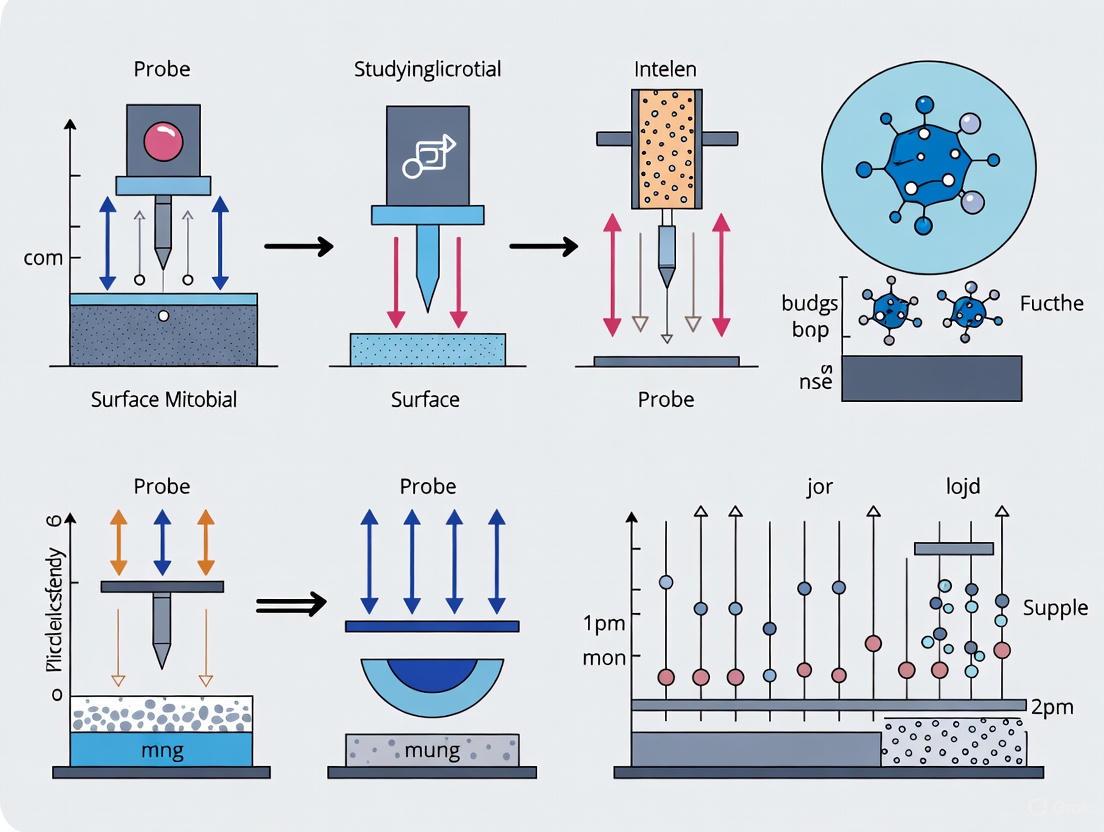
Chemical Force Microscopy (CFM) has emerged as a powerful technique in microbiological research, enabling the nanoscale mapping of chemical and physical properties of microbial surfaces under physiological conditions.
Chemical Force Microscopy: Probing Microbial Surface Properties for Drug Development and Biomedical Research
Abstract
Chemical Force Microscopy (CFM) has emerged as a powerful technique in microbiological research, enabling the nanoscale mapping of chemical and physical properties of microbial surfaces under physiological conditions. This article provides a comprehensive overview for researchers and drug development professionals, covering the foundational principles of CFM, detailed methodologies for probing microbial cells, and advanced applications in antimicrobial resistance and biofilm studies. It further addresses common troubleshooting and optimization strategies to enhance data reproducibility and discusses the validation of CFM findings through complementary techniques. By integrating the latest research, this review highlights how CFM-derived insights into microbial surface heterogeneity, adhesion, and mechanics are informing the development of novel therapeutic strategies and diagnostic tools.
Understanding Chemical Force Microscopy: Principles and Microbial Surface Fundamentals
Core Principles of Atomic Force Microscopy (AFM) and Chemical Force Microscopy (CFM)
Fundamental Principles and Operating Modes
Atomic Force Microscopy (AFM) Fundamentals
Atomic Force Microscopy (AFM) is a powerful microscopy technique for nanoscale analysis, capable of achieving atomic resolution with Ångström-level height accuracy [1]. AFM operates by scanning a sharp tip, mounted on a flexible cantilever, across a sample surface. The interaction forces between the tip and the sample cause the cantilever to bend, and this deflection is detected by a laser beam reflected off the cantilever onto a position-sensitive photodetector (PSPD) [1] [2]. A feedback loop maintains a constant tip-sample interaction during scanning, enabling the construction of a three-dimensional topographic map of the surface [1].
The key components of a typical AFM setup include [3] [4]:
- A sharp probe tip (with a radius of curvature on the order of nanometers)
- A flexible cantilever that acts as a spring
- A laser and a position-sensitive photodetector (PSPD) to measure cantilever deflection
- Piezoelectric elements that facilitate precise scanning movements
- An electronic feedback loop to maintain constant force or height
Primary AFM Operational Modes
AFM can operate in several distinct modes, each suited to different sample types and measurement requirements [1] [3]:
Contact Mode: In this fundamental mode, the cantilever scans while applying a constant force onto the sample surface. The cantilever bends as it passes over surface features, and the feedback loop moves the Z scanner to maintain constant cantilever deflection, thereby mapping the surface topography [1]. This mode is typically used for hard samples but may damage soft surfaces [3].
Tapping Mode (Dynamic Mode): The cantilever oscillates at or near its resonance frequency, "tapping" the surface during scanning [1] [2]. The oscillation amplitude changes as the tip interacts with surface features, and the feedback system maintains a constant amplitude. This mode reduces lateral forces and is gentler on soft samples, making it suitable for biological applications [2] [5].
Non-Contact Mode: The cantilever oscillates above the sample surface without making direct contact. Changes in oscillation amplitude or frequency due to long-range forces (e.g., van der Waals, electrostatic) are used to map the topography. This mode is ideal for imaging soft samples as it minimizes sample damage [1] [3].
Table 1: Comparison of Primary AFM Operational Modes
| Operating Mode | Tip-Sample Interaction | Forces Measured | Best For | Limitations |
|---|---|---|---|---|
| Contact Mode | Continuous physical contact | Repulsive forces | Hard samples; high-speed imaging | Can damage soft samples and blunt tips |
| Tapping Mode | Intermittent contact | Both attractive and repulsive forces | Soft, fragile, adhesive samples; biological materials | Slower scan speeds; complex operation |
| Non-Contact Mode | No physical contact; close proximity | Attractive forces (van der Waals, electrostatic) | High-resolution imaging of soft materials | Lower resolution; sensitive to contaminants |
Chemical Force Microscopy (CFM) Principles
Chemical Force Microscopy is a specialized variation of AFM that uses chemically modified tips to characterize materials surfaces based on specific chemical interactions rather than just morphological features [6] [7]. In CFM, the AFM tip is functionalized with specific chemical groups (typically using gold-coated tips with attached thiols, where R represents the functional groups of interest) [6]. This functionalization enables the measurement of chemical interactions such as hydrogen bonding, acid-base interactions, and hydrophobic/hydrophilic forces [6] [7].
CFM provides the ability to determine the chemical nature of surfaces irrespective of their specific morphology and facilitates studies of basic chemical bonding enthalpy and surface energy [6]. The technique is limited by thermal vibrations within the cantilever, which limits force measurement resolution to approximately 1 pN, though this remains sufficient for probing weak molecular interactions (e.g., COOH/CH3 interactions are ~20 pN per pair) [6].
Experimental Protocols and Methodologies
CFM Tip Functionalization Protocol
Objective: To covalently attach specific chemical functional groups to AFM tips for chemical force measurements.
Materials:
- AFM cantilevers (typically silicon or silicon nitride)
- Gold or chromium coating equipment (for evaporation)
- Functional thiols (e.g., alkane thiols with desired terminal groups: -CH3, -COOH, -NH2)
- Appropriate solvents (ethanol, toluene)
- UV-ozone cleaner or oxygen plasma cleaner
Procedure:
- Cantilever Cleaning: Clean cantilevers in an ultraviolet (UV) ozone cleaner or oxygen plasma for 10-30 minutes to remove organic contaminants [6].
- Metal Coating: Deposit a thin adhesion layer (chromium or titanium, ~5 nm) followed by a gold layer (30-50 nm) onto the cantilevers using thermal or electron beam evaporation [6].
- Self-Assembled Monolayer Formation: Incubate the gold-coated cantilevers in a 1-10 mM solution of the desired functionalized thiol in ethanol or toluene for 12-24 hours to form a self-assembled monolayer (SAM) [6].
- Rinsing and Drying: Rinse the functionalized tips thoroughly with the pure solvent to remove physically adsorbed thiols, then dry under a gentle stream of nitrogen [6].
- Validation: Confirm monolayer formation using contact angle measurements or surface characterization techniques before use.
Force-Distance Spectroscopy Protocol for Microbial Surface Characterization
Objective: To measure adhesion forces and mechanical properties of microbial surfaces at the nanoscale.
Materials:
- Functionalized AFM probes (for CFM) or standard probes (for topography)
- Bacterial cells cultured to appropriate growth phase
- Appropriate buffer solution (e.g., PBS or growth medium)
- AFM with liquid cell capability
- Temperature control system (if needed)
Procedure:
- Sample Preparation: Immobilize microbial cells on a solid substrate. Methods include:
AFM Calibration:
Force Curve Acquisition:
- Approach the functionalized tip to the microbial surface at a controlled speed (typically 0.5-1 μm/s) [8] [5]
- Record the cantilever deflection versus piezoelectric displacement
- Retract the tip while continuing to record deflection
- Repeat measurements at multiple locations on the cell surface (typically 50-100 force curves per cell) [8]
Data Analysis:
- Convert deflection versus displacement curves to force-distance curves using Hooke's law (F = -k × d) [5]
- Measure adhesion forces from the retraction curve "pull-off" events [8]
- Fit approach curves with appropriate contact mechanics models (e.g., Hertz, Sneddon, Johnson-Kendall-Roberts) to extract mechanical properties like Young's modulus [8] [5]
CFM Experimental Workflow for Microbial Surface Characterization
Frictional Force Mapping Protocol
Objective: To create spatial maps of chemical functionality across a sample surface.
Materials:
- Chemically functionalized AFM tips
- Patterned substrate with known chemical functionalities
- AFM with lateral force measurement capability
Procedure:
- Topography Imaging: First, image the sample topography in standard contact or tapping mode to identify regions of interest [6].
- Frictional Force Measurement: Scan the functionalized tip across the surface while monitoring torsional deflections (friction) of the cantilever [6].
- Load Dependence: Perform measurements at different applied loads to enhance contrast between different chemical functionalities [6].
- Data Interpretation: Analyze lateral force signals, where brighter areas in the friction image typically correspond to regions of stronger chemical interaction between the tip and surface functional groups [6].
Research Toolkit: Essential Materials and Reagents
Table 2: Key Research Reagent Solutions for AFM/CFM Microbial Studies
| Reagent/Material | Function/Purpose | Application Examples | Key Considerations |
|---|---|---|---|
| Functionalized Thiols | Form self-assembled monolayers on gold-coated tips | CFM studies of hydrophobicity, specific molecular interactions | Choice of terminal group (-CH3, -COOH, -NH2) determines interaction specificity |
| Gold-Coated Cantilevers | Provide surface for thiol attachment | Standard substrate for CFM tip functionalization | Require chromium or titanium adhesion layer; typical thickness 30-50 nm |
| ITO-Coated Glass Substrates | Cell immobilization for liquid imaging | AFM of live microbial cells in physiological conditions | Hydrophobic properties facilitate cell adhesion without chemical fixation [9] |
| Porous Membranes | Mechanical cell entrapment | AFM of live cells without chemical modification | Polycarbonate filters with pore size smaller than cells [8] |
| Polyelectrolyte Coatings | Promote cell adhesion to substrates | Immobilization of microbial cells for AFM imaging | Coated surfaces improve cell adhesion while maintaining viability [8] |
| Appropriate Buffer Solutions | Maintain physiological conditions | Live-cell AFM under native conditions | PBS, growth media; consider osmolarity and ion composition |
Applications in Microbial Surface Research
Quantitative Analysis of Microbial Surface Properties
AFM and CFM provide quantitative data on various microbial surface properties, enabling detailed characterization of cellular structures and their functional implications.
Table 3: Quantitative Nanomechanical Properties of Microbial Systems Measured by AFM
| Microbial System | Young's Modulus (Stiffness) | Adhesion Forces | Measured Parameters | Experimental Conditions |
|---|---|---|---|---|
| Rhodococcus wratislaviensis | Effective stiffness: 0.23 ± 0.05 N/m [9] | Not specified | Topography, nanomechanical properties | Liquid medium, no immobilization [9] |
| Pantoea sp. YR343 | Not specified | Flagella interactions: ~20-50 nm height [10] | Cellular dimensions, flagellar structures | PFOTS-treated glass, dried samples [10] |
| Bacterial Nanotubes | Lower Young's modulus than cell body [9] | Not specified | Flexibility, intercellular connectivity | Liquid, living bacteria [9] |
| General Bacterial Cells | 0.1 - 2.5 MPa (varies by species and conditions) [5] | 0.1 - 10 nN (depending on tip chemistry) [8] | Elasticity, viscosity, adhesion | Buffer solutions, temperature control [5] |
Recent Advances and Applications
Nanotube Characterization: Recent studies using AFM in liquid have visualized bacterial nanotubes, revealing their lower Young's modulus compared to the main bacterial body, suggesting flexibility that facilitates intercellular communication and material transfer [9]. This application demonstrates AFM's capability to characterize previously unknown microbial structures under physiological conditions.
Biofilm Assembly Studies: Automated large-area AFM combined with machine learning has enabled the characterization of biofilm assembly over millimeter-scale areas, revealing spatial heterogeneity, cellular morphology, and the role of flagella in early biofilm formation [10]. This approach overcomes traditional AFM limitations of small scan areas and enables the correlation of nanoscale features with macroscale organization.
Single-Cell Force Spectroscopy: CFM has been applied to measure the unfolding forces of proteins on microbial surfaces, revealing details about internal protein structure and constituent interactions [6]. This approach provides fundamental insights into the structure-function relationships of cell surfaces at the single-molecule level.
Chemical Heterogeneity Mapping: CFM enables mapping of chemical group distributions across microbial surfaces with resolutions down to 10-20 nm, allowing researchers to correlate spatial organization of chemical functionalities with biological processes such as adhesion and host-pathogen interactions [7].
Atomic Force Microscopy (AFM) has emerged as a powerful tool in microbiology for probing the nanoscale architecture and physicochemical properties of microbial cell surfaces under physiological conditions. Unlike electron microscopy techniques, which often require vacuum conditions and extensive sample preparation that can alter native structures, AFM enables the visualization of surface components on living cells in aqueous environments [11]. This capability provides unprecedented opportunities for researchers and drug development professionals to understand the structural and functional relationships of key microbial surface polymers—polysaccharides, peptidoglycan, and teichoic acids—which play crucial roles in cell shape maintenance, environmental interaction, antibiotic resistance, and pathogenesis [11] [12]. The application of AFM in microbial surface analysis spans both topographic imaging to resolve surface ultrastructure and force spectroscopy to quantify mechanical properties and molecular interactions, offering a comprehensive platform for investigating microbial surfaces at the single-molecule level [11].
Atomic Force Microscopy operates by scanning a sharp tip attached to a flexible cantilever across a sample surface while monitoring the tip-sample interactions. A laser beam reflected from the back of the cantilever onto a position-sensitive photodetector enables precise measurement of cantilever deflections, which correspond to surface topography and interaction forces [7] [12]. AFM can be operated in various modes, with contact mode and dynamic (tapping) mode being most common for biological imaging. Contact mode maintains constant cantilever deflection during scanning but may exert higher forces on delicate samples, while dynamic mode oscillates the cantilever near its resonance frequency, minimizing lateral forces and reducing sample damage [13].
Chemical Force Microscopy (CFM) represents a specialized AFM variant where the tip is chemically functionalized with specific molecular groups or biomolecules, enabling the detection of specific chemical interactions, mapping of functional group distribution, and measurement of binding forces at the single-molecule level [7]. This modification transforms the AFM tip into a sensor capable of probing specific ligand-receptor interactions, hydrophobic forces, or electrostatic interactions on microbial surfaces [7].
Table 1: Key AFM Operational Modes for Microbial Surface Analysis
| Mode | Principle | Key Applications | Advantages | Limitations |
|---|---|---|---|---|
| Contact Mode | Maintains constant cantilever deflection during scanning | High-resolution topography imaging of robust samples | Fast scanning speed; high resolution on hard samples | Potential sample deformation/damage from lateral forces |
| Dynamic (Tapping) Mode | Cantilever oscillates at or near resonance frequency | Imaging delicate surface structures on live cells | Minimal lateral forces; reduced sample damage | Slightly slower scanning speed than contact mode |
| Chemical Force Microscopy (CFM) | Uses chemically functionalized tips | Mapping chemical group distribution; specific molecular recognition | Enables chemical contrast; detects specific interactions | Requires tip functionalization expertise |
| Single-Molecule Force Spectroscopy (SMFS) | Measures force-distance curves at single points | Probing mechanical properties of single molecules; receptor-ligand binding | Quantifies interaction forces at pico-Newton resolution | Time-consuming for mapping large areas |
| Single-Cell Force Spectroscopy (SCFS) | Uses a whole cell attached to the cantilever | Measuring cell adhesion forces to surfaces or other cells | Provides direct measurement of cellular adhesion | Cell immobilization on cantilever can be challenging |
Visualizing Polysaccharides
Structural Insights and Imaging Protocols
Microbial surface polysaccharides, including exopolysaccharides, capsular polysaccharides, and other glycopolymers, play critical roles in protection, adhesion, and biofilm formation. AFM enables direct visualization of these structures at the single-molecule level under "near-native" conditions, providing insights into their morphological features and molecular characteristics [13]. AFM imaging has revealed that polysaccharides can exhibit diverse nanostructures including linear chains, branched structures, helical assemblies, and complex networks [13]. For instance, AFM studies of the probiotic bacterium Lactobacillus rhamnosus GG revealed a rough surface morphology decorated with nanoscale waves corresponding to extracellular polysaccharides, features that were significantly diminished in a mutant strain impaired in exopolysaccharide production [11].
The following workflow outlines the standard protocol for polysaccharide imaging via drop deposition:
Protocol 1: AFM Imaging of Isolated Polysaccharides
Sample Preparation:
Substrate Preparation and Deposition:
- Use freshly cleaved mica as substrate for most applications due to its atomically flat surface.
- Apply 10-20 µL of polysaccharide solution to mica surface and allow adsorption for 1-5 minutes.
- Remove excess liquid by gentle blotting and air-dry under mild conditions or under nitrogen gas flow [13].
AFM Imaging Parameters:
- Operate in dynamic (tapping) mode to minimize sample deformation.
- Use silicon cantilevers with spring constants of 0.5-5 N/m and resonant frequencies of 50-150 kHz.
- Optimize scan parameters (setpoint, gains) to maintain minimal imaging force (typically 250 pN to 1 nN) [13].
- Perform imaging in air or liquid depending on the required conditions, with liquid imaging preserving more native structures.
Quantitative Analysis of Polysaccharide Nanostructures
AFM enables not only qualitative assessment of polysaccharide morphology but also quantitative analysis of molecular dimensions. Height measurements from AFM topography are particularly reliable as they are less affected by tip-broadening effects compared to lateral dimensions [13]. These measurements have revealed structural details for various polysaccharides: curdlan triple helices show heights of 0.6-1.0 nm, xanthan exhibits heights of 0.7-1.5 nm, while carrageenan helix diameters range from 0.8-2.0 nm [13].
Table 2: AFM-Dimensional Parameters of Selected Microbial Polysaccharides
| Polysaccharide | Source | Height/Diameter (nm) | Observed Nanostructures | Notes |
|---|---|---|---|---|
| Curdlan | Bacteria (Agrobacterium) | 0.6-1.0 nm | Triple helices, network structures | Height consistent with triple helix model |
| Xanthan | Xanthomonas campestris | 0.7-1.5 nm | Single strands, branched networks | Side chains influence chain stiffness |
| Carrageenan | Red Seaweeds | 0.8-2.0 nm | Helical structures, aggregates | Molecular conformation affects gelation |
| Gellan | Sphingomonas elodea | 0.5-0.8 nm | Single & double helices | Double helices ~1.6 nm height |
| Bacterial Capsular Polysaccharides | Various Gram-negative bacteria | 1.0-2.5 nm | Capsular layers surrounding cells | Visualized on intact cells |
Probing Peptidoglycan Architecture
High-Resolution Imaging of Bacterial Cell Walls
Peptidoglycan is the fundamental structural constituent of the bacterial cell wall, providing mechanical strength and cell shape. Despite its essential functions, the three-dimensional organization of peptidoglycan has long been controversial, with competing models proposing either a layered, woven fabric or a scaffold-like structure [14]. AFM has provided crucial experimental evidence to address this controversy through high-resolution imaging of both isolated sacculi and living cells.
In Gram-positive bacteria such as Bacillus subtilis, AFM studies of isolated sacculi have revealed a regular architecture of approximately 50-nm-wide cables running parallel to the short axis of the cell, with cross-striations exhibiting ~25 nm periodicity along each cable [11]. These observations supported a coiled-coil model where glycan strands form peptidoglycan ropes that are helically arranged [11]. More recent studies have demonstrated that peptidoglycan architecture is not static but undergoes remodeling during growth. In Bacillus subtilis strain AS1.398, the side wall peptidoglycan transitions from an irregular architecture during exponential growth to an ordered cable-like architecture in stationary phase [15].
The protocol below details the preparation and imaging of peptidoglycan sacculi:
Protocol 2: Isolation and AFM Imaging of Peptidoglycan Sacculi
Cell Culture and Harvest:
- Grow bacterial cells to desired growth phase (mid-exponential, late exponential, or stationary phase) as peptidoglycan architecture changes during growth [15].
- Harvest cells by centrifugation at appropriate speed for the bacterial species.
Sacculi Purification:
- Resuspend cell pellets in deionized water and boil for 7 minutes to inactivate autolysins.
- Treat with sodium dodecyl sulfate (SDS, 5% w/v) to solubilize membranes and proteins.
- Incubate with DNase (0.5 mg/mL), RNase (0.5 mg/mL), and pronase (2 mg/mL) to remove nucleic acids and proteins.
- Remove secondary cell wall polymers by treatment with 48% hydrofluoric acid (HF) at 4°C for 24 hours [15].
- Wash purified sacculi thoroughly with MilliQ water (at least three times).
AFM Sample Preparation and Imaging:
- Dilute sacculi in MilliQ water and deposit onto freshly cleaved mica.
- Air-dry samples before imaging in ambient conditions, or image under liquid for more native structures.
- Use ScanAsyst or dynamic mode with silicon cantilevers (spring constant ~2.7 N/m) for high-resolution imaging [15].
Single-Molecule Recognition Imaging of Peptidoglycan
AFM single-molecule recognition imaging enables the specific localization of peptidoglycan components on living cells. This technique combines dynamic force microscopy with force spectroscopy using functionalized tips. For example, tips modified with vancomycin (which binds to D-Ala-D-Ala sites in peptidoglycan) or LysM domains (which bind to glycan strands) allow specific mapping of peptidoglycan distribution on living cells [11] [14].
In studies of Lactococcus lactis, wild-type cells displayed a smooth surface when imaged with conventional AFM, but mutant strains lacking cell wall exopolysaccharides revealed 25-nm-wide periodic bands running parallel to the short axis of the cell [14]. Recognition imaging using LysM-functionalized tips confirmed that these bands consisted of peptidoglycan, demonstrating that in wild-type cells, peptidoglycan is hidden by an outer layer of surface constituents [14]. This application of AFM has revealed species-specific variations in peptidoglycan architecture, providing evidence against a universal structural model [11].
Nanomechanical Properties of Peptidoglycan
Force spectroscopy measurements have quantified how modifications in peptidoglycan structure affect mechanical properties of the cell envelope. In Staphylococcus aureus, reduction of peptidoglycan crosslinking through deletion of penicillin-binding protein 4 (PBP4) resulted in decreased cell wall stiffness, demonstrating the correlation between crosslinking density and mechanical integrity [16]. This relationship has important implications for understanding antibiotic resistance mechanisms, as cell wall mechanical properties influence susceptibility to antimicrobial agents [17].
Table 3: AFM Applications in Peptidoglycan Research
| Application | Key Findings | Experimental Approach | Significance |
|---|---|---|---|
| Architecture Imaging | 25-50 nm wide cables running parallel to short cell axis in Bacillus; varies by growth phase | Isolated sacculi imaging on mica substrates | Revealed structural remodeling during growth; strain-specific differences |
| Live Cell Peptidoglycan Mapping | Hidden peptidoglycan in wild-type cells; exposed in polysaccharide-deficient mutants | Single-molecule recognition imaging with LysM or vancomycin tips | Demonstrated outer polysaccharide layer masks underlying peptidoglycan |
| Mechanical Properties | Reduced crosslinking decreases cell wall stiffness | Force spectroscopy on live cells; nanoindentation | Established link between chemical structure and mechanical function |
| Division Site Analysis | Distinct architecture at septa compared to side walls | High-resolution imaging of division sites | Insights into cell division process and new peptidoglycan insertion |
Analyzing Teichoic Acids
Distribution and Organization on Cell Surfaces
Teichoic acids are anionic polymers found in the cell walls of Gram-positive bacteria, playing important roles in cell elongation, division, and interaction with environment. While their biochemical composition has been characterized, their spatial organization and dynamics on the cell surface remain challenging to study. AFM has been combined with fluorescence microscopy to map the distribution of wall teichoic acids (WTAs) in Lactobacillus plantarum, revealing that these polymers are required for proper cell elongation and division [11].
The distribution of teichoic acids can be indirectly visualized by comparing wild-type and mutant strains. For instance, X-ray photoelectron spectroscopy (XPS) analysis of Lactococcus lactis wild-type and mutant strains lacking cell wall polysaccharides showed that the outermost surface of mutants was essentially composed of peptidoglycan with some lipids, while wild-type strains showed much higher polysaccharide content [14]. This approach, combined with AFM imaging, enables researchers to correlate surface composition with nanoscale topography.
The Scientist's Toolkit: Research Reagent Solutions
Table 4: Essential Research Reagents for AFM-Based Microbial Surface Analysis
| Reagent/Material | Function | Application Notes |
|---|---|---|
| Freshly Cleaved Mica | Atomically flat substrate for sample adsorption | Ideal for polysaccharide and sacculi imaging; provides clean background |
| Silicon Cantilevers | Sensing probe for surface topography | Spring constants 0.01-0.10 N/m for live cells; 0.5-5 N/m for isolated structures |
| Poly-L-Lysine | Cell immobilization on substrates | Promotes adhesion of negatively charged cells to surfaces; 0.1% solution |
| SDS (Sodium Dodecyl Sulfate) | Membrane solubilization in sacculi preparation | 5% w/v solution for removing membranes during peptidoglycan purification |
| HF (Hydrofluoric Acid) | Removal of secondary cell wall polymers | 48% v/v at 4°C for 24h; EXTREME CAUTION required due to high toxicity |
| Vancomycin-Functionalized Tips | Recognition of D-Ala-D-Ala sites in peptidoglycan | Single-molecule force spectroscopy of peptidoglycan distribution |
| LysM-Functionalized Tips | Recognition of N-acetylglucosamine in glycan strands | Mapping peptidoglycan organization on live cells |
| Lectin-Functionalized Tips | Recognition of specific sugar moieties | Identification and localization of polysaccharide types on cell surfaces |
AFM technologies provide powerful approaches for visualizing the nanoscale organization of microbial surface components under physiological conditions. The ability to image living cells at molecular resolution, combined with single-molecule force spectroscopy techniques, has transformed our understanding of polysaccharide architecture, peptidoglycan organization, and teichoic acid distribution. These structural insights are particularly valuable for drug development professionals investigating antibiotic resistance mechanisms, as the mechanical properties and organizational dynamics of microbial surface polymers directly influence susceptibility to antimicrobial agents. The protocols and applications detailed in these Application Notes provide a foundation for researchers to investigate the intricate architecture of microbial surfaces and its relationship to cellular function and pathogenicity.
Atomic Force Microscopy (AFM) has evolved from a topographical imaging tool into a versatile platform for investigating chemical and biological interactions at the single-molecule level. This transformation is largely enabled by chemical functionalization of AFM tips, which creates specific molecular interfaces for precise probing of microbial surfaces. For researchers investigating microbial surface properties, functionalized tips serve as biospecific sensors that can detect and localize individual target molecules on cell surfaces, measure binding forces, and map mechanical properties under physiological conditions [18] [8].
The fundamental principle involves tethering specific sensor molecules (e.g., antibodies, oligonucleotides, or small molecules) to the AFM tip apex, converting it into a molecular recognition device [18]. When these functionalized tips are brought into contact with microbial surfaces, they can probe specific interactions with piconewton sensitivity and nanometer spatial resolution, providing unprecedented insights into the structure-function relationships of microbial cell surfaces [8]. This capability is particularly valuable for studying antimicrobial resistance mechanisms, biofilm formation, and host-pathogen interactions, where molecular-scale events dictate macroscopic outcomes.
Key Functionalization Strategies
Polyethylene Glycol (PEG)-Based Spacer Chemistry
The most established functionalization approach uses heterobifunctional PEG crosslinkers containing distinct reactive groups at each terminus. These crosslinkers typically feature a thiol group for gold-coated tip surfaces and an amine-reactive group (such as N-hydroxysuccinimide ester) for coupling to proteins [18] [19].
Table: PEG-Based Functionalization Components
| Component | Function | Typical Specifications |
|---|---|---|
| Gold-coated AFM tips | Provides surface for thiol bonding | 10-50 nm gold layer over 2-5 nm chromium adhesion layer |
| Alkanethiol-PEG-NHS crosslinker | Flexible tether with reactive ends | PEG length: 6-10 nm (approximately 24 ethylene oxide units) |
| Sensor molecules | Biological recognition elements | Antibodies, antigens, oligonucleotides, or small molecules |
The PEG spacer plays multiple critical roles: it provides molecular flexibility allowing the sensor molecule to freely orient and interact with its target; it separates the recognition event from the tip surface, reducing nonspecific interactions; and its known length (typically 6-10 nm) provides a characteristic rupture signature in force-distance curves that helps distinguish specific from nonspecific binding events [18] [19].
Plasma-Enhanced Chemical Vapor Deposition (PECVD)
For creating uniformly functionalized tips with amine groups, PECVD of aminated precursors offers a rapid, reproducible alternative to liquid-phase methods. This approach deposits thin, uniform coatings of aminopropyltriethoxysilane (APTES) through gas-phase deposition, creating a high density of amine functional groups on the tip and cantilever [20].
The PECVD process involves:
- Placing AFM probes in a vacuum chamber
- Introducing APTES vapor under controlled conditions
- Applying RF plasma power (typically 14 W) to initiate deposition
- Forming a stable, functional aminized layer in approximately 30 seconds
This method produces coatings approximately 5.2 nm thick with high amine group density, excellent stability under varying environmental conditions, and minimal impact on tip radius compared to gold coating methods [20]. The amine-functionalized tips can subsequently be used for coupling various biological molecules using standard conjugation chemistry.
DNA Tetrahedra Nanostructures
An innovative approach uses three-dimensional DNA nanostructures as molecular scaffolds for tip functionalization. DNA tetrahedra composed of four oligonucleotides forming a rigid, pyramidal structure offer several advantages: precisely controlled three-dimensional geometry, defined positioning of functional groups, and inherent biocompatibility [21].
The functionalization protocol involves:
- Designing tetrahedra with three thiol-modified vertices for gold surface attachment
- Incorporating a biotin or aptamer-modified vertex for molecular recognition
- Pre-assembling tetrahedra in solution before tip immobilization
- Attaching complete nanostructures to gold-coated tips via thiol-gold chemistry
This method enables "dip-and-measure" tip chemistry with sharply defined rupture length distributions and high success rates, particularly advantageous when working with DNA aptamers as sensing molecules [21].
Atomically Defined Tips for Fundamental Interactions
For ultrahigh vacuum applications probing fundamental chemical interactions, researchers have developed atomically defined tip terminations using single molecules or atoms. Common approaches include:
- CO-terminated tips: Provide exceptional resolution for organic molecules but exhibit significant flexibility that can cause imaging artifacts [22] [23]
- Xe-terminated tips: Offer chemical passivation but similar flexibility issues as CO tips [22]
- CuOx-tips: Feature covalent oxygen bonding to copper tips, providing higher rigidity and selectively increased chemical reactivity that prevents tip-bending artifacts while generating distinct chemical contrast [22]
These tip functionalizations have revealed site-specific chemical interactions on metal surfaces with picometer resolution, enabling quantification of weak chemical forces that govern molecular adsorption and surface reactions [23].
Experimental Protocols
Protocol: PEG-Based Antibody Functionalization
This protocol describes the functionalization of AFM tips with antibodies for specific antigen recognition on microbial surfaces, adapted from established methodologies [18] [19].
Table: Reagents and Equipment
| Item | Specification | Purpose |
|---|---|---|
| AFM probes | Silicon nitride, triangular cantilevers | Functionalization substrate |
| Cantilever spring constant | 0.01-0.1 N/m | Optimal for biological force measurements |
| Alkanethiol-PEG-NHS | MW ~3400 Da (24 ethylene oxide units) | Flexible heterobifunctional crosslinker |
| Ethanol | Absolute, high purity | Solvent for SAM formation |
| Phosphate Buffered Saline (PBS) | 10 mM, pH 7.4 | Coupling and washing buffer |
| Antibody solution | 0.1-0.5 mg/mL in PBS | Recognition element |
Step-by-Step Procedure:
Tip cleaning and gold coating: Clean silicon nitride tips with oxygen plasma (5 min, 100 W) followed by thermal evaporation of 2 nm chromium adhesion layer and 15 nm gold layer under high vacuum.
Self-assembled monolayer formation: Incubate gold-coated tips in 1 mM alkanethiol-PEG-NHS solution in ethanol for 2 hours at room temperature protected from light.
Rinsing and drying: Rinse thoroughly with absolute ethanol to remove physically adsorbed molecules and blow dry under gentle nitrogen stream.
Antibody coupling: Incubate functionalized tips in 0.1-0.5 mg/mL antibody solution in PBS (pH 7.4) for 1 hour at room temperature or overnight at 4°C.
Quenching and stabilization: Immerse tips in 1M ethanolamine-HCl (pH 8.5) for 10 minutes to quench unreacted NHS esters, then rinse with PBS.
Storage: Store functionalized tips in PBS at 4°C and use within 48 hours for optimal activity.
Quality Control: Validate functionalization by performing force-distance measurements on surfaces with known antigen distribution. Successful functionalization shows characteristic rupture events with lengths corresponding to PEG spacer extension (approximately 9-10 nm for PEG24) and specific force signatures [19].
Protocol: PECVD Amination of AFM Tips
This protocol describes gas-phase amination of AFM tips using PECVD for creating amine-functionalized surfaces [20].
Procedure:
Tip cleaning: Clean silicon or silicon nitride AFM probes with oxygen plasma (2 min, 50 W) to remove organic contaminants and activate the surface.
PECVD chamber preparation: Place tips in PECVD reactor chamber and evacuate to base pressure (<5×10⁻² mbar).
Precursor introduction: Introduce APTES vapor into the chamber using a controlled argon carrier gas flow.
Plasma deposition: Apply RF plasma power (14 W) for 30 seconds to deposit aminized coating.
Post-processing: Remove functionalized tips and characterize coating thickness by ellipsometry on reference silicon wafers processed simultaneously.
Validation: Confirm successful functionalization by chemical force titration in buffers of varying pH, monitoring adhesion forces characteristic of amine group ionization [20].
Applications in Microbial Surface Research
Single-Molecule Force Spectroscopy of Microbial Adhesins
Functionalized AFM tips enable quantification of ligand-receptor interactions on microbial surfaces with single-molecule resolution. In a typical experiment, tips functionalized with specific host receptors (e.g., fibronectin, laminin) are used to probe corresponding adhesins on microbial surfaces, revealing binding kinetics, strength, and spatial distribution [8].
Force-distance curves obtained from these measurements provide:
- Adhesion force: The force required to rupture single molecular complexes
- Rupture length: Characteristic distance corresponding to spacer molecule extension
- Unbinding work: Energy dissipated during the unbinding process
For microbial research, this approach has revealed how pathogens such as Staphylococcus aureus and Candida albicans display specific adhesins with nanoscale organization that contributes to host attachment and biofilm formation [8].
Mapping Nanomechanical Properties of Biofilms
Functionalized tips with controlled chemistry enable precise mapping of nanomechanical properties of microbial biofilms. By using tips functionalized with specific chemical groups (e.g., charged, hydrophobic, or hydrophilic), researchers can correlate spatial heterogeneity in chemical composition with mechanical behavior in developing biofilms [10] [24].
Advanced AFM modes including force volume, nano-DMA, and bimodal AFM provide viscoelastic parameter mapping (Young's modulus, adhesion, energy dissipation) that reveals how extracellular polymeric substances contribute to biofilm mechanical integrity and antibiotic resistance [24].
Recognition Imaging of Surface Antigens
Combining functionalization with advanced imaging modes enables molecular recognition imaging, which simultaneously maps topography and specific binding sites on microbial surfaces. This technique uses tips functionalized with antibodies or lectins to identify the distribution of specific antigens or carbohydrates on microbial cells [18] [8].
In practice, recognition imaging has revealed:
- Heterogeneous distribution of virulence factors on pathogenic bacteria
- Dynamic changes in surface composition during biofilm development
- Spatial organization of drug targets on fungal pathogens
The Scientist's Toolkit
Table: Essential Research Reagent Solutions for AFM Tip Functionalization
| Reagent/Category | Function | Key Considerations |
|---|---|---|
| Gold-coated AFM probes | Substrate for thiol-based chemistry | Coating thickness affects tip radius; spring constant (0.01-0.5 N/m) should match application |
| Heterobifunctional PEG crosslinkers | Flexible spacers for biomolecule attachment | Length (2-20 nm) affects accessibility; endpoint chemistry must match biomolecule |
| DNA tetrahedra nanostructures | Molecular scaffolds for precise functionalization | Pre-assembled structures offer defined geometry; ideal for nucleic acid probes |
| Aminosilane compounds (e.g., APTES) | Primary amine introduction for subsequent coupling | Liquid-phase deposition can yield multilayers; PECVD offers better control |
| NHS-ester compounds | Amine-reactive chemistry for protein coupling | Hydrolyzes in aqueous solution; use fresh preparations |
| Maleimide compounds | Thiol-reactive chemistry for cysteine-containing proteins | Requires reducing conditions for free thiol maintenance |
| Biomolecular recognition elements | Target-specific probes (antibodies, aptamers, lectins) | Purification and activity preservation are critical; orientation affects function |
Data Analysis and Interpretation
Force-Distance Curve Analysis
Interpreting force-distance curves is essential for distinguishing specific molecular interactions from nonspecific binding. The following dot script illustrates the key features analyzed:
Key analysis parameters:
- Specific binding: Shows characteristic rupture length corresponding to PEG spacer extension (typically 8-12 nm for PEG24) and quantifiable adhesion forces [19]
- Nonspecific binding: Lacks defined rupture length, often shows multiple irregular peaks, and typically exhibits higher adhesion forces [19]
- Multiple binding events: Display sequential rupture peaks suggesting simultaneous engagement of multiple molecular pairs
Statistical Analysis of Single-Molecule Interactions
Robust analysis requires collecting hundreds to thousands of force-distance curves from multiple experiments. Data should be filtered to exclude nonspecific interactions before constructing:
- Adhesion force histograms: Reveal most probable unbinding forces
- Rupture length distributions: Confirm specificity through spacer length correlation
- Force maps: Spatial distribution of binding events across microbial surfaces
Control experiments with blocked receptors, competitive inhibition, or irrelevant functionalizations are essential to verify specificity [19] [8].
Troubleshooting and Optimization
Common Functionalization Issues
Table: Troubleshooting AFM Tip Functionalization
| Problem | Possible Causes | Solutions |
|---|---|---|
| No specific interactions | Low probe density, incorrect orientation, denatured probes | Optimize coupling density, use oriented coupling strategies, verify probe activity |
| High nonspecific adhesion | Incomplete SAM formation, exposed tip surface | Extend SAM formation time, include backfilling step with short-chain thiols |
| Inconsistent results | Tip contamination, probe degradation, unstable functionalization | Implement rigorous cleaning, use fresh reagents, verify storage conditions |
| Multiple binding events | Excessive probe density leading to multivalent interactions | Dilute coupling concentration, reduce incubation time |
Optimizing for Microbial Applications
When studying microbial surfaces, consider these specific optimizations:
- Spring constant calibration: Use thermal tuning method for accurate force quantification
- Physiological conditions: Maintain appropriate temperature, pH, and ion composition to preserve microbial viability
- Contact time optimization: Vary surface contact time (0.1-1.0 s) to probe binding kinetics
- Loading rate dependence: Vary retraction velocity (0.1-10 μm/s) to explore energy landscapes
Future Perspectives
Recent advances in AFM tip functionalization are creating new opportunities for microbial research. DNA-based nanostructures offer precisely defined geometry for multiplexed detection [21]. Plasma-based functionalization provides highly reproducible coatings for quantitative comparison across experiments [20]. Machine learning integration enables automated analysis of force spectroscopy data, revealing subtle patterns in molecular interactions across microbial populations [10].
These developments will enhance our understanding of fundamental microbial processes, including antimicrobial resistance mechanisms, biofilm maturation, and host-microbe interactions, ultimately contributing to new therapeutic strategies for managing microbial infections.
Force-distance (F-D) curves, obtained via atomic force microscopy (AFM), are a foundational tool in nanomechanics for quantifying the physical and adhesive properties of surfaces at the nanometer scale [25]. In chemical force microscopy of microbial surfaces, F-D spectroscopy enables researchers to probe the ultrastructure, mechanical behavior, and interaction forces of living cells under physiological conditions [26] [12]. This technique operates by measuring the force experienced by a sharp AFM probe as it approaches and retracts from a sample surface, generating a curve that contains a wealth of information about material properties such as elasticity, adhesion, and deformation [25]. The application of F-D curve analysis to microbes has revolutionized our understanding of cell surface layers [26], phenotypic heterogeneity [27], and biofilm assembly [10], providing critical insights for drug development, antimicrobial strategies, and biomedical research.
Basic Principles of Force-Distance Curve Analysis
The Force-Distance Curve
An F-D curve is recorded by monitoring the deflection of a cantilever as a probe approaches, contacts, and retracts from the sample surface while maintaining a constant XY position [25]. The raw data of cantilever deflection versus Z-scanner position is converted into a quantitative force-separation curve through calibration procedures, including determining the cantilever's spring constant [25]. The resulting curve features distinctive regions corresponding to different interaction regimes between the tip and sample:
- Non-contact region (A): The probe is far from the surface with no detectable interaction [25].
- Snap-in point (B): An attractive force gradient causes the probe to jump into contact with the surface [25].
- Contact region (C): Repulsive forces dominate as the probe indents the sample [25].
- Adhesion regime (D): During retraction, attractive forces cause cantilever deflection toward the surface [25].
- Pull-off point (E): The probe separates from the surface when the cantilever's restoring force exceeds the adhesion force [25].
Key Measurable Parameters
From F-D curves, researchers can extract several quantitative nanomechanical parameters:
- Young's modulus: Calculated from the slope of the force-indentation curve in the contact region using appropriate contact mechanics models [25] [28].
- Adhesion force: Measured as the maximum negative force in the retract curve, representing the force required to separate the tip from the sample [25].
- Adhesion energy: Determined by calculating the area between the retract curve and the baseline [25].
- Energy dissipation: Represented by the hysteresis between approach and retract curves, indicating energy loss through irreversible processes [25].
- Stiffness: The slope of the force-separation curve in the contact region [25].
Table 1: Key parameters obtained from force-distance curve analysis
| Parameter | Description | Extraction Method | Units |
|---|---|---|---|
| Young's Modulus | Intrinsic material stiffness | Slope of force-indentation curve with contact models | Pa |
| Adhesion Force | Maximum force to separate surfaces | Minimum force value in retract curve | nN |
| Adhesion Energy | Work required for separation | Area under retract curve | aJ |
| Stiffness | Resistance to deformation | Slope of contact region | N/m |
| Energy Dissipation | Irreversible energy loss | Hysteresis area between approach/retract curves | aJ |
Experimental Protocols for Microbial Analysis
Microbial Cell Immobilization
Successful F-D analysis requires robust immobilization of live microbial cells without altering their surface properties. Multiple effective strategies have been developed:
- Gelatin coating: Gelatin-coated glass surfaces provide effective immobilization for various bacterial species. Cells are centrifuged, washed, resuspended, and deposited on gelatin-coated slides for 30 minutes before gentle rinsing [27].
- Physical entrapment: Porous polymer membranes (e.g., polycarbonate) with pore sizes smaller than the cells can physically trap microorganisms while allowing AFM probe access [12].
- Chemical fixation: Thin layers of polydopamine or poly-L-lysine on substrates promote strong cell adhesion through electrostatic interactions [12].
- Agarose embedding: Microbial cells can be partially embedded in a thin agarose gel, providing stability while maintaining physiological conditions [12].
Probe Selection and Functionalization
The choice of AFM probe significantly influences F-D measurements:
- Colloidal probes: For single-cell mechanical properties, 5μm diameter glass beads attached to tipless cantilevers provide well-defined geometry and minimize local surface heterogeneity effects [27] [29].
- Sharp tips: Standard sharp tips (2-50nm radius) are preferred for high-resolution mapping of specific surface features and single-molecule interactions [12] [25].
- Functionalized probes: Tips chemically modified with specific functional groups (e.g., carboxyl, amine) or biomolecules enable chemical force microscopy to map chemical group distribution and specific receptor-ligand interactions on microbial surfaces [25] [28].
Force Spectroscopy Acquisition Parameters
Optimal parameter selection ensures reliable and reproducible data:
- Force setpoint: Typically 0.5-1nN for living microbial cells to avoid damage [29].
- Approach/retract speed: 0.5-1μm/s to minimize hydrodynamic effects while capturing relevant interactions [29].
- Sampling rate: Sufficiently high to detect short-range interactions (often 2-10kHz) [25].
- Contact time: Brief (100-500ms) to minimize plastic deformation or molecular rearrangements [25].
- Spatial sampling: Grid patterns (e.g., 16×16 to 64×64 points) for force volume mapping over single cells or surface areas [25].
Diagram 1: Microbial force-distance analysis workflow
Data Analysis and Interpretation
Contact Mechanics Models
The extraction of quantitative mechanical properties from F-D curves requires fitting the contact region with appropriate mechanical models. The choice of model depends on sample properties, tip geometry, and dominant forces:
- Hertz model: Applied for purely elastic, non-adhesive contacts with various tip geometries [25] [28].
- Sneddon model: A generalization of Hertz model for different indenter shapes [28].
- Johnson-Kendall-Roberts (JKR) model: Suitable for highly adhesive contacts with large tip radii and high surface energies [25] [28].
- Derjaguin-Müller-Toporov (DMT) model: Appropriate for contacts with low adhesion and small tip radii [25] [28].
- Oliver-Pharr model: Commonly used for materials exhibiting plastic deformation [28].
Table 2: Contact mechanics models for F-D curve analysis
| Model | Applicable Conditions | Adhesion Consideration | Typical Applications |
|---|---|---|---|
| Hertz | Elastic, non-adhesive | Negligible | Bacterial cell walls, intracellular components |
| Sneddon | Elastic, various indenters | Negligible | Fungal cells, yeast |
| JKR | High adhesion, large radius | Included | Microbial biofilms, adhesive mutants |
| DMT | Low adhesion, small radius | Included | Virus capsids, S-layers |
| Oliver-Pharr | Elastic-plastic | Optional | Dried microbes, surface layers |
Adhesion Event Analysis
The retraction portion of F-D curves reveals adhesive interactions through distinctive features:
- Single adhesion events: Sharp discontinuities indicating simultaneous rupture of multiple bonds [25].
- Multiple unbinding events: Sawtooth patterns with sequential rupture peaks characteristic of polymer unfolding or sequential bond breaking [25].
- Adhesion force distribution: Statistical analysis of multiple curves reveals heterogeneity in surface adhesion properties [27] [25].
For microbial systems, adhesion analysis has revealed that lipopolysaccharide (LPS) structures significantly influence population heterogeneity. Partial removal of LPS from Escherichia coli surfaces via EDTA treatment reduces cell-to-cell variability in adhesion forces and elasticity, homogenizing population behavior [27].
Applications in Microbial Surface Characterization
Nanomechanical Properties of Microbial Cells
F-D curve analysis has revealed substantial diversity in mechanical properties across microbial species and conditions:
- Bacterial elasticity: Measurements of Gram-negative bacteria show that LPS composition significantly impacts cell stiffness, with modified strains exhibiting markedly different Young's modulus values [27].
- Fungal mechanical properties: AFM indentation of fungal cells reveals how cell wall composition determines rigidity and response to antifungal agents [26].
- Antibiotic effects: Time-dependent changes in mechanical properties following antibiotic exposure can indicate mechanism of action and resistance development [28].
- Phenotypic heterogeneity: Single-cell analysis reveals subpopulations with distinct mechanical properties within clonal cultures, with potential implications for virulence and environmental adaptation [27].
Single-Molecule Force Spectroscopy
AFM enables the measurement of specific molecular interactions on microbial surfaces through functionalized probes:
- Ligand-receptor binding: Tips modified with specific receptors can map their distribution and measure binding kinetics on living cells [25] [28].
- Protein unfolding: Force-induced unfolding of membrane proteins reveals structural stability and conformational changes [26] [25].
- Antibody-antigen interactions: Binding forces between therapeutic antibodies and surface antigens provide insights for drug development [28].
Diagram 2: Information and applications from microbial F-D curves
Chemical Force Microscopy
By modifying AFM tips with specific chemical functionalities, researchers can map the distribution of chemical groups on microbial surfaces:
- Hydrophobicity mapping: Tips with methyl groups reveal heterogeneous distribution of hydrophobic domains [28].
- Charge mapping: Carboxyl- and amine-modified probes electrostatic potential variations across cell surfaces [26] [28].
- Specific molecular recognition: Antibody-functionalized tips identify antigen localization on pathogens [25] [28].
Advanced Applications and Recent Developments
High-Throughput and Large-Area AFM
Traditional AFM limitations in scan area are being addressed through automated large-area approaches that acquire high-resolution images over millimeter-scale areas [10]. This advancement enables:
- Biofilm architecture analysis: Correlation of local nanomechanical properties with overall biofilm structure and organization [10].
- Rare cell identification: Detection of mechanical outliers in heterogeneous microbial populations [27] [10].
- Combinatorial surface studies: Assessment of bacterial adhesion and mechanics across surface chemistry gradients [10].
Integration with Machine Learning
Machine learning algorithms are transforming F-D curve analysis through:
- Automated curve classification: Rapid identification of curve types and artifacts in large datasets [10].
- Feature extraction: Unsupervised identification of relevant parameters from complex F-D signatures [10].
- Predictive modeling: Correlation of mechanical properties with biological states or treatment outcomes [10].
The Scientist's Toolkit: Essential Research Reagents and Materials
Table 3: Essential research reagents and materials for microbial F-D analysis
| Item | Specifications | Function | Example Applications |
|---|---|---|---|
| Cantilevers | Si₃N₄, k=0.01-0.5 N/m, colloidal probes (5μm) | Force sensing with minimal cell damage | Bacterial cell mechanics, adhesion mapping |
| Immobilization Substrates | Gelatin-coated glass, polycarbonate membranes, polydopamine | Secure cell fixation during measurement | Live cell imaging under physiological conditions |
| Calibration Standards | Certified reference samples (e.g., PDMS, glass) | Cantilever spring constant calibration | Quantitative modulus measurement |
| Functionalization Reagents | Dendrons, PEG linkers, specific antibodies | Tip modification for chemical force microscopy | Ligand-receptor binding studies |
| Cell Culture Media | LB broth, Schneider's medium, specific formulations | Maintain cell viability during experiments | Live cell measurements in liquid |
| Analysis Software | MountainsSPIP, JPK SPM software, MATLAB | F-D curve processing and model fitting | Data quantification and visualization |
Force-distance curve analysis provides an exceptionally powerful framework for quantifying the nanomechanical and adhesive properties of microbial surfaces at unprecedented resolution. The techniques and applications outlined in this protocol enable researchers to connect mechanical properties to biological function, offering insights into microbial pathogenesis, antibiotic mechanisms, and surface interactions. As automated large-area AFM and machine learning approaches continue to evolve [10], F-D spectroscopy is poised to reveal even greater complexity in microbial systems, accelerating discovery in drug development and biomedical research. The integration of nanomechanical characterization with molecular biology approaches will further enhance our understanding of how physical properties contribute to microbial life processes and adaptation.
The Critical Role of Physiological Conditions in Preserving Native Microbial States
The investigation of microbial surface properties is a cornerstone of research in drug development, microbiology, and biomedical engineering. The field of chemical force microscopy (CFM) has emerged as a powerful tool for this purpose, enabling the nanoscale mapping of physical and chemical properties on live microbial cells. A paramount, yet often underappreciated, principle governing the success and biological relevance of these studies is the strict maintenance of physiological conditions throughout the experimental workflow. This application note details the critical protocols and methodologies for preserving the native state of microbial cells, from sample preparation through to CFM analysis. We provide a structured guide featuring quantitative data tables, detailed experimental procedures, essential reagent solutions, and visual workflows, all framed within the context of obtaining physiologically relevant data on microbial surface properties.
The microbial cell surface is the primary interface for environmental interaction, mediating critical processes such as host-pathogen recognition, biofilm formation, and response to antimicrobial agents [12]. Consequently, the surfaceome—the compendium of surface-exposed proteins, lipids, and polysaccharides—is highly dynamic and responsive to external stresses. Analyzing this surface under non-physiological conditions (e.g., air, vacuum, or improper buffers) can induce artifacts, including protein denaturation, loss of turgor pressure, and rearrangement of surface molecules, ultimately leading to erroneous data [30] [12].
Advanced techniques like Atomic Force Microscopy (AFM) and its application in CFM offer the unique capability to probe live cells under physiological liquids, providing topographical, nanomechanical, and chemical information with unprecedented resolution [10] [12]. The integrity of this data is inextricably linked to the preservation of the cell's native state from the moment of harvesting to the final measurement. The following sections outline the core principles, protocols, and tools to achieve this goal.
Core Principles for Preserving Native States
Adherence to several core principles is non-negotiable for meaningful CFM data:
- Liquid Environment: All imaging and force measurements must be performed in an appropriate aqueous buffer (e.g., PBS, MOPS) to maintain cell viability, membrane integrity, and protein function [12].
- Physiological Buffers and Temperature: The pH, ionic strength, and osmolarity of the buffer must match the microbe's natural habitat. The sample stage should be equipped with a temperature controller to maintain optimal growth temperature where necessary.
- Minimal Sample Processing: Avoid fixation, dehydration, or metallic coating, which are common in electron microscopy but irrevocably alter native surface properties [10].
- Stable Immobilization: A prerequisite for high-resolution AFM/CFM is the firm but non-destructive immobilization of live microbial cells to a solid substrate, preventing displacement by the scanning probe but not inhibiting normal physiological processes [12].
Experimental Protocols for Native-State Analysis
Protocol: Immobilization of Live Microbial Cells for CFM
Principle: Firmly attach live cells to a solid substrate without chemical fixation, preserving membrane fluidity and surface protein functionality.
Materials:
- Microorganisms: Liquid culture of target bacteria (e.g., Pseudomonas aeruginosa, Escherichia coli) in mid-logarithmic phase.
- Substrate: Freshly cleaved mica or glass coverslip.
- Coating Solution: 0.1% w/v Poly-L-Lysine (PLL) or Gelatin.
- Buffers: Physiological buffer (e.g., 10mM PBS, 10mM HEPES, pH 7.4).
- Equipment: AFM with liquid cell, centrifugal tube, pipettes.
Procedure:
- Substrate Preparation: Coat a clean mica surface with 100 µL of 0.1% PLL solution for 30 minutes. Rinse thoroughly with ultrapure water to remove excess PLL and air-dry.
- Cell Harvesting: Grow bacteria to mid-log phase. Harvest cells by gentle centrifugation (2,000-4,000 x g for 5 min). Resuspend the pellet gently in 1 mL of physiological buffer to remove residual growth media.
- Cell Deposition: Apply 50-100 µL of the cell suspension onto the PLL-coated mica surface. Allow cells to settle and adhere for 15-30 minutes.
- Gentle Rinsing: Carefully rinse the surface with 2-3 mL of physiological buffer to remove loosely attached cells. Avoid forceful streaming.
- AFM/CFM Setup: Immediately mount the sample into the AFM liquid cell and submerge in the appropriate physiological buffer. Begin imaging or force spectroscopy within 30 minutes of preparation.
Protocol: Chemical Force Microscopy with Functionalized Tips
Principle: Use AFM tips chemically modified with specific functional groups (e.g., -CH3, -COOH, -NH2) or biomolecules to map chemical heterogeneity and receptor-ligand interactions on the native microbial surface.
Materials:
- AFM Probes: Silicon nitride cantilevers (spring constant: ~0.01-0.10 N/m).
- Functionalization Reagents: Silane or thiol chemistry kits for tip modification with desired functional groups or biomolecules (e.g., lectins, antibodies).
- Liquid Cell: Sealed AFM liquid cell.
Procedure:
- Tip Functionalization: Following established protocols, chemically modify the AFM tips with the desired functional group or biomolecule. Validate the modification by measuring adhesion forces on reference surfaces.
- System Calibration: Calibrate the cantilever's spring constant and the photodetector's sensitivity in liquid.
- Topographical Imaging: First, acquire a high-resolution topographical image of the cell surface in buffer using standard contact or tapping mode.
- Force Volume Mapping: On a selected region of interest, perform a force volume map. This involves recording force-distance curves at each pixel in a 2D grid.
- Data Analysis: Analyze the force curves to extract parameters such as adhesion force, rupture events, and elasticity (Young's modulus). Correlate these maps with the topographical image to link structure with chemical and mechanical properties.
Table 1: Summary of AFM Operational Parameters for Microbial Cell Analysis under Physiological Conditions
| Parameter | Typical Range | Significance for Native State Preservation |
|---|---|---|
| Scanning Medium | Liquid (Physiological Buffer) | Prevents dehydration, maintains membrane fluidity and protein function [12]. |
| Cantilever Spring Constant | 0.01 - 0.10 N/m | Minimizes applied force, preventing cell damage or indentation [12]. |
| Imaging Mode | Contact, Tapping (AC), or PeakForce Tapping | Tapping modes reduce lateral forces, minimizing cell displacement. |
| Applied Force | < 500 pN | Crucial for non-destructive imaging and accurate nanomechanical property measurement. |
| Lateral Resolution | < 1 nm (sub-nanometer achievable) | Resolves individual membrane proteins and fine structures like flagella [10]. |
| Vertical Resolution | ~0.1 nm | Allows tracking of dynamic surface changes in real-time. |
Table 2: Impact of Non-Physiological Conditions on Microbial Surface Properties
| Condition | Effect on Microbial Surface | Consequence for CFM Data |
|---|---|---|
| Air Drying | Collapse of surface structures, protein denaturation, loss of turgor pressure. | Overestimated stiffness, loss of chemical recognition, distorted topography [12]. |
| Chemical Fixation | Cross-linking of surface molecules, altered nanomechanics. | Artificially high Young's modulus, loss of dynamic information, potential masking of epitopes. |
| Non-physiological Buffer | Altered osmolarity can cause cell shrinkage or swelling; incorrect pH can denature proteins. | Changes in cell volume and morphology, unreliable adhesion and mechanical measurements. |
| Excessive Imaging Force | Physical damage to the cell wall and membrane. | Scratches in images, unrepresentative force curves, cell death. |
The Scientist's Toolkit: Research Reagent Solutions
Table 3: Essential Materials for Native-State Microbial CFM
| Reagent / Material | Function & Importance |
|---|---|
| Poly-L-Lysine (PLL) | A cationic polymer used to coat substrates (mica/glass) to electrostatically immobilize negatively charged microbial cells [12]. |
| Porous Membrane Filters | Used in physical entrapment methods, where cells are trapped by a filter, allowing buffer exchange while keeping cells immobilized [12]. |
| Polydimethylsiloxane (PDMS) | A soft elastomer used to create microfluidic chips or microwells for cell immobilization and long-term live-cell studies under flow conditions. |
| Functionalized AFM Probes | Tips modified with specific chemical groups (-CH3, -COOH, -NH2) or biomolecules (antibodies, lectins) to perform CFM and map chemical properties or specific interactions. |
| Silane Coupling Agents | Chemicals (e.g., APTES) used to create a self-assembled monolayer on AFM tips and substrates, providing a reactive interface for further functionalization. |
Workflow Visualization
Probing the Microbial Surface: CFM Techniques and Applications in Drug Discovery
Single-Molecule Force Spectroscopy (SMFS) for Receptor-Ligand Binding Affinity
Single-Molecule Force Spectroscopy (SMFS) with the Atomic Force Microscope (AFM) provides molecular-level insights into protein function by allowing researchers to reconstruct energy landscapes and understand functional mechanisms in biology [31]. This technique has greatly accelerated our understanding of force transduction, mechanical deformation, and mechanostability within receptor-ligand complexes by directly probing structural changes of macromolecules under the influence of mechanical force [31]. In the context of microbial surface properties research, SMFS enables the quantification of binding strengths and kinetics between receptors and ligands, revealing how mechanical forces modulate these interactions in physiologically relevant conditions.
The fundamental principle involves applying controlled mechanical forces to individual receptor-ligand complexes and measuring the resulting rupture forces and unfolding patterns. Conceptually, the application of mechanical force tilts the underlying free energy landscape of a biomolecule, forcing it to sample conformations along a specific reaction coordinate in an accelerated manner [31]. This allows researchers to observe conformational changes and reactions that might otherwise be too slow to observe experimentally, and to quantify discrete states of a molecule that may be transient in the absence of force but biologically relevant nonetheless.
Quantitative Data on Receptor-Ligand Interactions by SMFS
SMFS provides direct measurements of binding strengths and mechanical properties of receptor-ligand complexes. The tables below summarize key quantitative parameters obtained from recent SMFS studies on various biological systems.
Table 1: Experimentally Measured Rupture Forces and Binding Parameters
| Receptor-Ligand System | Rupture Force (pN) | Experimental Conditions | Binding Affinity/Dissociation Constant | Reference |
|---|---|---|---|---|
| SARS-CoV-2 RBD - Integrin αvβ6 | Exceeds ACE2-RBD binding force | Single-molecule force spectroscopy, cation-dependent | Strong binding, supports αvβ6 as alternative receptor | [32] |
| Gelsolin Domain 6 (G6) - Calcium ions | 23.9 ± 6.1 (calcium-free) to 41.0 ± 6.1 (calcium-bound) | AFM-SMFS with (GB1-G6)4 polyprotein, saturating [Ca²⁺] = 50 μM | Force-enhanced binding; Kd decreases exponentially with force | [33] |
| HA-β2-AR - Anti-HA antibody | 61.7 ± 18.9 (specific binding) | AFM with anti-HA-dendritip on living WTT-CHO cells | Specific binding >40 pN; 44% adhesive events in expressing cells vs 18% controls | [34] |
| Folate Receptor - Folate ligand | Multiple binding forces detected | Multiple molecule force spectroscopy (MMFS) with functionalized microsphere probe | Distribution varies by cell type and membrane region | [35] |
Table 2: SMFS Experimental Parameters and Analytical Outputs
| Parameter Category | Specific Parameters | Biological Significance |
|---|---|---|
| Kinetic Parameters | Spontaneous unfolding rates (k₀), unfolding distance (Δxᵤ) | Reveals energy landscape, transition states, and mechanical stability |
| Thermodynamic Parameters | Dissociation constant (Kd), free energy changes (ΔG) | Quantifies binding affinity and its force dependence |
| Spatial Distribution | Receptor density, clustering patterns, membrane localization | Relates to signaling efficiency, cooperativity, and cellular response |
| Force Dependency | Rupture force distributions, loading rate dependence | Characterizes energy landscape topography and biological functionality |
Detailed Experimental Protocols
Protocol 1: SMFS with Engineered Polyproteins for Ligand Binding Studies
This protocol is adapted from studies on force-dependent calcium binding to gelsolin [33] and can be generalized for various receptor-ligand systems.
Materials and Reagents:
- Engineered polyprotein (e.g., (GB1-G6)₄ for calcium binding studies)
- Functionalized AFM cantilevers
- Appropriate buffer systems with controlled cation concentrations
- Purified receptor and ligand components
Procedure:
Polyprotein Engineering: Construct a polyprotein where the receptor domain of interest alternates with a mechanically stable fingerprint protein (e.g., GB1). This design allows unambiguous identification of receptor unfolding events within the force-extension curve [33].
Sample Immobilization: Sparsely adsorb the polyprotein onto a clean gold or mica surface to achieve a monolayer with isolated molecules.
Cantilever Functionalization: Use standard aldehyde-dendrimer chemistry to functionalize AFM cantilevers for specific pickup of polyproteins.
Force Spectroscopy Measurements:
- Approach the functionalized cantilever to the surface with a contact force of 0.5-1 nN and a contact time of 200-500 ms.
- Retract the cantilever at constant velocity (typically 100-1000 nm/s) while recording force-distance curves.
- Repeat for thousands of approach-retract cycles to acquire sufficient statistical data.
Ligand Concentration Studies: Perform measurements across a range of ligand concentrations (e.g., 0-50 μM Ca²⁺ for gelsolin studies) to obtain binding isotherms [33].
Data Collection Criteria: Include only force-extension curves showing the characteristic sawtooth pattern with the fingerprint protein's unfolding signature, ensuring single-molecule stretching events.
Protocol 2: SMFS on Living Cells for Receptor Mapping
This protocol enables direct measurement of receptor distribution and unfolding on living cell surfaces, adapted from GPCR architecture studies [34] and receptor distribution analysis [35].
Materials and Reagents:
- Adherent mammalian cells expressing target receptor with extracellular tag
- Anti-HA antibodies for receptor recognition (for HA-tagged receptors)
- Amino-modified silica microspheres (10 μm diameter)
- UV-curable adhesive
- Appropriate cell culture media and buffers
Procedure:
Probe Preparation:
- Attach amino-modified silica microsphere to AFM tip cantilever using UV-curable adhesive [35].
- Conjugate specific ligands (e.g., folate, EGF) or antibodies (e.g., anti-HA) to the microsphere via carboxyl-amine chemistry.
Cell Preparation:
- Culture adherent cells (e.g., WTT-CHO, HeLa, A549) expressing tagged receptors to appropriate confluence.
- Confirm receptor expression and function through ELISA and functional assays (e.g., cAMP production for β2-AR) [34].
SMFS Measurement on Cells:
- Approach the functionalized probe to the cell surface with maximal applied force of 0.5 nN and contact time of 200 ms.
- Retract at constant velocity while recording force-distance curves.
- Conduct serial approach-withdrawal cycles while scanning a 3 × 3 μm² area at the cell surface.
Specificity Controls: Include control cells lacking receptor expression to quantify non-specific adhesion (typically <20% of events) [34].
Spatial Mapping: Resolve the spatial arrangement of adhesive events (specific receptor unfoldings) and non-adhesive events across the scanned area.
Real-time Monitoring: For dynamic studies, introduce pharmacological regulators (e.g., hyaluronic acid with different disaccharide units) and monitor receptor distribution changes over time [35].
Data Analysis:
- Manually measure the distance between the contact point and the point of lowest force on each retraction curve.
- Apply mixed Gaussian distribution analysis using Bayesian Information Criterion (BIC) for model selection.
- Correlate population means with theoretical lengths of receptor monomers and oligomers.
The Scientist's Toolkit: Research Reagent Solutions
Table 3: Essential Materials and Reagents for SMFS Binding Studies
| Category | Specific Item | Function and Application | Examples/Specifications |
|---|---|---|---|
| AFM Components | Functionalizable cantilevers | Force sensing and application | Various spring constants (10-100 pN/nm) |
| Aldehyde-dendrimer chemistry | Tip functionalization for specific binding | Enables covalent antibody attachment [34] | |
| Protein Engineering | Fingerprint proteins | Internal control for identification | GB1 domain (unfolds at ~150 pN, ΔLc ~18 nm) [33] |
| Polyprotein constructs | Controlled mechanical loading | (GB1-Receptor)₄ design for unambiguous unfolding [33] | |
| Cell Culture | Tagged receptor constructs | Specific recognition and detection | HA-tagged β2-AR, mGlu3-R [34] |
| Cell lines with varied receptor expression | Comparative distribution studies | HeLa, A549, Vero cells [35] | |
| Ligand Binding | Silica microspheres | Multiple molecule force spectroscopy | 10 μm amino-modified spheres [35] |
| Specific ligands | Receptor targeting and binding studies | Folate, EGF, calcium ions [33] [35] |
Data Analysis and Interpretation
Force-Distance Curve Analysis
SMFS data appears as force-extension curves featuring characteristic sawtooth patterns for polyproteins or complex unfolding signatures for cellular receptors. Each unfolding event appears as a peak where the force drops abruptly, representing the rupture of a single receptor-ligand bond or protein domain unfolding.
Key Analytical Steps:
Worm-Like Chain (WLC) Fitting: Fit individual unfolding peaks using the WLC model of polymer elasticity to obtain contour length increments (ΔLc), which should match theoretical values for the unfolded domain [33].
Unfolding Force Distributions: Construct histograms of unfolding forces at different ligand concentrations. For slow-exchange systems, two distinct populations appear (bound and unbound), while fast-exchange systems show unimodal distributions shifting with concentration [33].
Loading Rate Dependence: Measure unfolding forces at different pulling speeds. The unfolding force typically increases logarithmically with loading rate, allowing extraction of spontaneous unfolding rates (k₀) and unfolding distance barriers (Δxᵤ) [33].
Gaussian Mixture Modeling: For cellular receptor unfolding, analyze unfolding distance distributions using mixed Gaussian fits according to Bayesian Information Criterion (BIC) to identify monomeric, dimeric, and oligomeric receptor populations [34].
Determining Binding Affinity and Force Dependence
For receptor-ligand systems, SMFS enables determination of dissociation constants (Kd) and their force dependence:
Binding Isotherm Construction: Measure the probability of ligand-bound conformation versus ligand concentration at constant force.
Force-Dependent Kd Calculation: Model the exponential decrease in Kd with applied force using the relationship: Kd(F) = Kd(0) × exp(-FΔx/kBT), where Δx is the distance to the transition state [33].
Energy Landscape Reconstruction: Combine kinetic parameters from force spectroscopy measurements to reconstruct the underlying energy landscape of the receptor-ligand interaction.
Application in Microbial Surface Research
The SMFS methodologies described herein can be directly applied to investigate microbial surface properties through several approaches:
Pathogen-Host Interactions: Study binding forces between microbial surface proteins and host cell receptors at the single-molecule level, revealing the mechanical basis of infection mechanisms.
Antibiotic Mechanism Studies: Investigate how antimicrobial compounds mechanically disrupt microbial membrane integrity or protein function through force-dependent unfolding experiments.
Microbial Receptor Mapping: Characterize the distribution and organization of receptors on microbial surfaces using multiple molecule force spectroscopy approaches similar to those described for mammalian cells [35].
Force-Dependent Drug Binding: Examine how mechanical forces modulate the binding affinity of antifungal or antibacterial agents to their microbial targets, potentially informing drug design strategies.
The protocols and analysis methods presented provide a comprehensive framework for applying SMFS to quantify receptor-ligand interactions in microbial systems, contributing to a deeper understanding of microbial surface properties and their role in infection and treatment.
Single-Cell Force Spectroscopy (SCFS) for Quantifying Cellular Adhesion Forces
Single-Cell Force Spectroscopy (SCFS) represents a specialized implementation of atomic force microscopy (AFM) that enables the precise quantification of cellular adhesion forces under near-physiological conditions [36]. This technique provides unrivaled spatial and temporal control for studying the adhesion of living cells, permitting researchers to characterize both overall cell adhesion and the properties of single adhesion-receptor-ligand interactions [36]. The fundamental principle involves immobilizing a single living cell on an AFM cantilever to create a "cellular probe" that can be approached and retracted from a substrate while measuring the interaction forces with piconewton sensitivity [37]. This approach has revolutionized our understanding of cellular mechanics by allowing direct measurement of the forces, energetics, and kinetics underlying cell-adhesion processes that are crucial for tissue development, maintenance, and microbial pathogenesis [36].
The significance of SCFS extends across multiple biological disciplines, from fundamental research into cell mechanics to applied pharmaceutical development. During the past decade, SCFS has been instrumental in measuring the forces driving microbial and mammalian cell adhesion on a single-cell basis, providing insights that were previously obscured by population-averaging effects [37]. The capacity to study adhesion at the single-cell level is particularly valuable for understanding heterogeneous cellular responses, which has implications for cancer research, immune cell function, and the development of advanced therapeutic strategies [38] [39].
Theoretical Foundations and Methodological Principles
Fundamental Mechanisms of Cellular Adhesion
Cellular adhesion is a complex process mediated by specific molecular interactions between cell surface receptors and complementary ligands on substrates or other cells. Transmembrane proteins, particularly integrins, serve as primary adhesion molecules that form connections between the extracellular environment and intracellular cytoskeletal components [38]. These adhesion molecules anchor to the actin filament network through focal adhesion complexes - highly organized clusters of proteins that facilitate mechanical signaling and force transmission [38]. The adhesion process involves both specific molecular recognition and nonspecific contributions, including electrostatic interactions, van der Waals forces, and steric interactions [37].
The strength of cellular adhesion is influenced by multiple factors, including contact duration, substrate rigidity, lateral spacing of ligands, and ligand tether length [38]. As cells adhere to surfaces, the number of integrin-ligand pairs increases over time, enhancing adhesion strength through multivalent interactions. This dynamic process can be divided into distinct phases: initial passive adsorption mediated by the glycocalyx, subsequent attachment, spreading, and finally the formation of stable focal adhesions [38]. In vivo, this process is further modulated by circulatory forces, signaling processes, and extracellular matrix components that create a highly regulated adhesion cascade [38].
Technical Implementation of SCFS
SCFS operates by mechanically controlling the interaction between a single cell and a substrate of interest while precisely measuring the resulting forces. The core instrumentation includes an atomic force microscope equipped with a sensitive cantilever and optical detection system. In a typical experiment, a single cell is immobilized on the cantilever using either chemical fixation or microfluidic aspiration techniques [40]. The cell-functionalized cantilever is then approached toward the target surface until contact is established, followed by a controlled retraction while continuously monitoring cantilever deflection [36].
The force-distance curves obtained during retraction provide rich information about adhesion properties. The maximum force required to detach the cell represents the adhesion strength, while the area under the curve corresponds to the adhesion energy [39]. The rupture events observed in the retraction curve can reveal details about individual molecular bonds and their collective behavior [36]. Advanced implementations can quantify kinetic parameters of integrin-ligand interactions, such as binding and unbinding rates, providing fundamental insights into the biophysical mechanisms governing cell adhesion [41].
Experimental Protocols and Workflows
SCFS Protocol for Microbial Cell Adhesion
The investigation of microbial adhesion forces requires specific protocols adapted to the smaller size and different surface properties of microbial cells. The following protocol has been established for quantifying adhesion forces of medically important microbes, including Lactobacillus plantarum, Staphylococcus epidermidis, and Candida albicans [37]:
Cell Preparation: Culture microbial cells under appropriate conditions to mid-logarithmic growth phase. Harvest cells by gentle centrifugation (2,000-5,000 × g for 5 minutes) and wash twice with appropriate buffer (e.g., PBS or specific growth medium without additives that might interfere with adhesion).
Cantilever Functionalization: Clean AFM cantilevers with ultraviolet/ozone treatment for 15-30 minutes. Functionalize with concanavalin A (0.1-1 mg/mL in PBS) or poly-D-lysine (0.01% w/v) for 20 minutes, followed by rinsing with buffer solution. For chemical fixation, use glutaraldehyde (0.5-2.5% in PBS) for 2 minutes before cell attachment.
Single-Cell Probing: Approach the functionalized cantilever to a microbial cell deposited on a glass slide. Apply gentle contact force (100-500 pN) for 2-5 seconds to allow attachment. Retract the cantilever to verify firm cell immobilization.
Adhesion Measurements: Approach the cellular probe toward the substrate of interest at a constant velocity (0.5-1 μm/s). Upon contact, apply a predefined compression force (0.5-2 nN) for a controlled contact time (0-60 seconds). Retract the cantilever at constant velocity (0.5-2 μm/s) while recording the force-distance curve.
Data Collection: Acquire a minimum of 10-20 force curves per cell across different locations on the substrate. Test at least 10-15 individual cells per experimental condition to account for biological variability.
Data Analysis: Determine the maximum detachment force (Fmax) and work of adhesion (Wad) from each force curve. Calculate the number of specific rupture events and their characteristic unbinding forces for molecular-level analysis.
With proper training, this entire protocol can be mastered within one week, enabling rapid screening of microbial adhesion properties under various conditions [37].
SCFS Protocol for Mammalian Cell Adhesion
Mammalian cells require modified protocols that account for their larger size, greater sensitivity to mechanical stress, and more complex adhesion machinery:
Cell Preparation: Culture cells according to standard protocols. For adhesion measurements, harvest cells using mild detachment methods (e.g., enzyme-free cell dissociation buffers) to preserve surface receptors. Resuspend in appropriate assay buffer containing calcium and magnesium to support integrin function.
Cantilever Functionalization: For traditional SCFS, functionalize tipless cantilevers with fibronectin (10-50 μg/mL) or collagen I (0.1-1 mg/mL) for 1 hour at 37°C. Alternatively, use concanavalin A (0.5 mg/mL) for 30 minutes at room temperature. For FluidFM systems, no chemical functionalization is required as cells are immobilized by gentle suction through microchanneled cantilevers [40].
Cell Immobilization: For traditional SCFS, bring the functionalized cantilever into contact with a single cell for 2-5 seconds with minimal compression force. For FluidFM, apply negative pressure (50-200 mbar) to aspirate and hold a single cell against the aperture of the microchanneled cantilever [40].
Adhesion Measurement: Approach the cell toward the substrate at 1-2 μm/s. After contact, maintain a constant contact force (0.5-1 nN) for varying durations (1-300 seconds) to probe adhesion kinetics. Retract the cantilever at constant velocity (0.5-5 μm/s) while recording force-distance curves.
Data Acquisition and Analysis: Collect multiple force curves (typically 5-10) per cell at different locations. Analyze detachment force, adhesion energy, and rupture length distributions. For kinetic studies, vary contact time and determine the time-dependent strengthening of adhesion.
The integration of robotic fluidic force microscopy (FluidFM BOT) has significantly increased throughput, enabling measurements of up to 200 cells per day using semi-automated workflows [39] [40]. This robotic system can address single cells over millimeter- to centimeter-scale areas, making it compatible with microplate-based biosensor systems [39].
Workflow Visualization
Quantitative Data and Comparative Analysis
Adhesion Force Measurements Across Cell Types
SCFS has been employed to quantify adhesion forces across diverse cell types and experimental conditions. The following table summarizes representative adhesion force values reported in the literature:
Table 1: Comparative Adhesion Forces Measured by SCFS
| Cell Type | Substrate | Contact Time | Adhesion Force | Adhesion Energy | Reference |
|---|---|---|---|---|---|
| HEK Mac-1 cells | Fibrinogen-coated surface | 10 s | 1.5-2.5 nN | 15-25 fJ | [41] |
| Mesenchymal stem cells | RGD-coated glass | 30 s | ~2.8 nN | ~30 fJ | [42] |
| Mesenchymal stem cells | Bare glass | 30 s | ~1.2 nN | ~10 fJ | [42] |
| Lactobacillus plantarum (probiotic) | Abiotic surface | 2 s | 0.5-3 nN | 5-35 fJ | [37] |
| Staphylococcus epidermidis (pathogen) | Fibrinogen-coated surface | 2 s | 1.5-4 nN | 15-50 fJ | [37] |
| Candida albicans (fungal) | Abiotic surface | 2 s | 0.8-2.5 nN | 8-30 fJ | [37] |
| HeLa cells | PPR-functionalized surface | 60 s | 2-6 nN | 20-60 fJ | [39] |
The data demonstrate significant variability in adhesion forces depending on cell type, substrate properties, and contact duration. Mammalian cells typically exhibit stronger adhesion than microbial cells, reflecting their more complex adhesion machinery. Functionalized surfaces consistently enhance adhesion compared to bare substrates, highlighting the importance of specific receptor-ligand interactions.
Kinetic Parameters of Cell Adhesion
The time-dependent strengthening of cellular adhesion provides insights into the dynamics of adhesion complex formation. The following table summarizes kinetic parameters derived from SCFS measurements:
Table 2: Kinetic Parameters of Cellular Adhesion
| Cell Type | Substrate | Adhesion Strengthening Rate | Characteristic Time Constant | Reference |
|---|---|---|---|---|
| HeLa cells | RGD-functionalized surface | 0.05-0.1 nN/s | 50-100 s | [39] |
| Macrophages | Functionalized glass | 0.03-0.08 nN/s | 60-120 s | [41] |
| Neutrophils | Fibrinogen-coated surface | 0.02-0.05 nN/s | 30-80 s | [41] |
| Staphylococcus epidermidis | Fibrinogen-coated surface | 0.5-1.0 nN/s | 5-15 s | [37] |
Adhesion strengthening follows a log-normal distribution within cell populations, reflecting the stochastic nature of bond formation and cytoskeletal reorganization [39]. Microbial cells typically exhibit faster adhesion kinetics compared to mammalian cells, which may reflect their simpler adhesion mechanisms and evolutionary adaptation for rapid surface colonization.
Advanced Applications in Microbial Surface Research
Investigation of Biofilm Formation Mechanisms
SCFS has provided fundamental insights into the initial stages of biofilm formation, a critical process in both environmental microbiology and medical contexts. Recent research utilizing automated large-area AFM has revealed that bacterial cells during early biofilm development often exhibit preferred orientations and form distinctive honeycomb patterns [10]. For Pantoea sp. YR343, high-resolution AFM imaging showed flagellar structures measuring 20-50 nm in height and extending tens of micrometers across surfaces, with these appendages bridging gaps between cells during early attachment [10]. These structural observations combined with SCFS measurements demonstrate that flagellar coordination contributes to biofilm assembly beyond initial attachment, providing both mechanical connectivity and facilitating cell-cell communication.
The application of SCFS to study biofilm-forming pathogens has revealed how specific molecular interactions drive community assembly. For Staphylococcus epidermidis, SCFS measurements quantified the forces mediating attachment to fibrinogen-coated surfaces, identifying key adhesins responsible for surface recognition [37]. Similarly, SCFS analysis of Candida albicans demonstrated the role of Als-mediated fungal adhesion in biofilm formation and host colonization [37]. These measurements at the single-cell level have been crucial for understanding how mechanical forces influence the transition from planktonic cells to structured communities, with important implications for developing anti-biofilm strategies.
Assessment of Peptide-Modified Biomaterials
SCFS enables rapid screening of cell interactions with functionalized biomaterials, providing critical data for implant design and tissue engineering. In one application, researchers used SCFS to evaluate the adhesion of mesenchymal stem cells (MSCs) to RGD-coated glass surfaces [42]. The RGD motif (Arg-Gly-Asp) is recognized by integrin receptors and promotes cellular attachment. SCFS measurements demonstrated that RGD-coated surfaces induced significantly stronger adhesion forces (~2.8 nN) compared to bare glass substrates (~1.2 nN) after 30 seconds of contact [42]. These quantitative force measurements correlated with enhanced cell adhesion observed in conventional culture assays and inverse centrifugation tests, validating SCFS as a predictive tool for biomaterial evaluation.
The methodology combining SCFS with peptide-decorated surfaces represents a efficient approach for screening potential bioactive coatings that enhance tissue integration of medical implants [42]. By directly quantifying adhesion forces at the single-cell level, researchers can rapidly identify optimal peptide sequences and surface densities that promote specific cellular responses, accelerating the development of advanced biomaterials with tailored biological properties.
Microbial Adhesion in Complex Environments
SCFS has revealed how microbial pathogens utilize diverse strategies for surface colonization under challenging conditions. Recent research has identified "swashing" as a propulsion-independent form of bacterial surface migration where microbes spread across moist surfaces by generating fluid currents through metabolic activity [43]. When breaking down sugars, bacteria produce acidic by-products that pull water outward, creating flows that carry cells across surfaces even when their flagella are non-functional [43]. This mechanism demonstrates how physicochemical forces complement biological adhesion mechanisms in microbial colonization.
Additionally, studies on Flavobacteria have revealed a molecular "gear-shifting" mechanism in the Type 9 Secretion System (T9SS), where a conveyor-belt protein (GldJ) controls directional movement by flipping motor rotation from counterclockwise to clockwise [43]. This sophisticated mechanical system enables precise control of bacterial adhesion and movement, with significant implications for both pathogenic and beneficial host-microbe interactions in the human microbiome.
Essential Research Reagents and Materials
Successful implementation of SCFS requires specific reagents and materials optimized for single-cell studies. The following table outlines key components:
Table 3: Essential Research Reagents for SCFS Experiments
| Reagent/Material | Function | Examples/Specifications |
|---|---|---|
| Functionalized Cantilevers | Cell immobilization | Tipless cantilevers (0.01-0.06 N/m spring constant) coated with concanavalin A, fibronectin, or poly-D-lysine |
| FluidFM Probes | Non-invasive cell handling | Microchanneled cantilevers with 2-8 μm apertures enabling aspiration with controlled pressure |
| Extracellular Matrix Proteins | Substrate functionalization | Fibronectin (10-50 μg/mL), collagen I (0.1-1 mg/mL), fibrinogen (100 μg/mL) |
| Peptide Motifs | Specific adhesion ligands | RGD-containing peptides (0.1-1 mM) for integrin-mediated adhesion |
| Cell Culture Media | Maintain cell viability | Buffer-compatible media (e.g., RPMI-1640 without phenol red) with HEPES |
| Adhesion Buffers | Control ionic environment | PBS or HBSS with Ca²⁺/Mg²⁺ for integrin function |
| Crosslinkers | Surface chemistry | EDC/NHS chemistry for covalent peptide immobilization |
| Surface Treatment Reagents | Substrate modification | Activated vapor silanization (AVS) for controlled surface functionalization |
The selection of appropriate reagents critically influences measurement outcomes. Spring constants of cantilevers must be matched to expected adhesion forces, while surface chemistry must preserve biological activity of adhesion molecules. FluidFM technology has emerged as particularly valuable, enabling reversible cell immobilization without chemical fixation and significantly improving experimental throughput and reproducibility [40].
Technological Advances and Integration Approaches
High-Throughput SCFS Methodologies
Traditional SCFS approaches have been limited by low throughput, typically examining only a few cells per day. Recent technological innovations have dramatically improved this limitation through automation and parallelization. Robotic fluidic force microscopy (FluidFM BOT) represents a significant advancement, enabling single-cell force measurements over millimeter- to centimeter-scale areas with throughput of up to 200 cells per day [39] [40]. This system combines the precision of AFM with robotic positioning and microfluidic cell handling, eliminating the need for individual cantilever functionalization for each cell.
The integration of SCFS with resonant waveguide grating (RWG) optical biosensors has created a powerful platform for correlating adhesion forces with real-time kinetic data on cell spreading and adhesion maturation [39]. This combined approach allows researchers to first calibrate the optical biosensor signal against direct force measurements on individual cells, then use the calibrated optical system to monitor adhesion kinetics across hundreds of cells simultaneously with high temporal resolution [39]. This methodology revealed that the distribution of single-cell adhesion forces follows log-normal functions during cell spreading, providing new insights into the stochastic nature of adhesion complex assembly.
Advanced Imaging Correlations
The combination of SCFS with high-resolution imaging techniques has expanded the structural context of adhesion measurements. Large-area automated AFM approaches now enable correlation of adhesion force data with detailed structural information over millimeter-scale areas [10]. These systems utilize machine learning for image stitching, cell detection, and classification, allowing comprehensive analysis of spatial heterogeneity in cellular organization and its relationship to adhesion properties [10].
The integration of total internal reflection fluorescence microscopy (TIRFM) with SCFS has enabled simultaneous optical monitoring of cell-substrate interactions during force measurements [41]. This approach revealed that HEK Mac-1 cells can remove fibrinogen molecules from multi-layered fibrinogen matrices during detachment, providing insights into the dynamic remodeling of adhesion interfaces [41]. Such multimodal approaches bridge the gap between nanomechanical measurements and molecular-scale reorganization events during adhesion and detachment.
Data Analysis and Visualization Framework
Single-Cell Force Spectroscopy has established itself as an indispensable tool for quantifying cellular adhesion forces with precision and statistical relevance. The methodologies and applications outlined in this technical review demonstrate the versatility of SCFS across diverse research domains, from fundamental studies of adhesion mechanisms to applied screening of biomaterials and therapeutic agents. The ongoing development of high-throughput approaches, particularly through robotic fluidic force microscopy and integration with optical biosensors, is transforming SCFS from a specialized technique into a robust platform for quantitative cell biology.
For research focused on chemical force microscopy of microbial surface properties, SCFS provides unmatched capability to correlate surface chemistry with adhesion function. The ability to quantify how specific surface modifications influence adhesion forces at the single-cell level creates opportunities for rational design of anti-fouling surfaces, improved probiotic formulations, and novel anti-infective strategies that target adhesion mechanisms. As SCFS methodologies continue to evolve toward greater automation, integration, and computational analysis, they will undoubtedly yield new insights into the mechanical dimensions of cellular life and their implications for human health and disease.
In the broader context of chemical force microscopy research on microbial surface properties, nanomechanical mapping has emerged as a pivotal technique for probing the biophysical characteristics of cells. The mechanical properties of cells, particularly stiffness, are intrinsically linked to their physiological and pathological states. Atomic force microscopy (AFM) has established itself as a premier tool for generating high-spatial-resolution images and quantitative maps of nanomechanical properties under physiological conditions [28]. This application note details how AFM-based nanomechanical mapping can distinguish between healthy and pathogenic cells through stiffness measurements, providing researchers with detailed protocols and quantitative frameworks for implementing this powerful technology in drug development and basic research.
Quantitative Stiffness Differences Between Healthy and Pathological Cells
Numerous studies have consistently demonstrated that pathological transformations alter cellular mechanical properties. The following table summarizes key findings from recent research on how cell stiffness varies between healthy and diseased states across different cell types.
Table 1: Nanomechanical Properties of Healthy Versus Pathological Cells
| Cell Type | Healthy Cell Stiffness | Pathological Cell Stiffness | Measurement Conditions | Biological Significance |
|---|---|---|---|---|
| Generic Cell Lines | Higher Young's modulus | Softer; cancer cells are softer than healthy cells [28] | Liquid environment, force volume mode | Softer cells correlate with increased metastatic potential [28] |
| Human Erythrocytes | Lower Young's modulus in young cells | Progressive stiffening along aging pathway [44] | Dehydrated (air) and hydrated (physiological buffer) | Cells become more rigid while membrane roughness decreases during aging [44] |
| Bacterial Cells | Native stiffness profile | Altered properties when adapting to antibiotics [28] | Physiological conditions | Development of antimicrobial resistance [28] |
| Viral Capsids | Native stiffness | Stiffer virus capsids correlate with reduced infectivity [28] | AFM indentation experiments | Mechanical properties indicate infectious potential [28] |
The observed mechanical differences stem from fundamental reorganizations of subcellular structures. In eukaryotic cells, the mechanical stiffness is predominantly determined by the cytoskeleton, particularly the networks of actin and intermediate filaments and their associated proteins [45]. Pathological transformations often involve cytoskeletal rearrangements that manifest as measurable stiffness alterations. For instance, the stiffness of live cells serves as an index for evaluating cytoskeletal structure and myosin activity [45]. In prokaryotic cells, structural components of the cell wall and membrane contribute significantly to their mechanical properties, which can be altered during processes like antibiotic adaptation [28].
Table 2: Technical Approaches for Nanomechanical Mapping of Cells
| AFM Mode | Measured Parameters | Spatial Resolution | Throughput | Best Applications |
|---|---|---|---|---|
| Force Volume | Young's modulus, adhesion forces | Nanoscale | Low to moderate | Detailed mechanical characterization of heterogeneous samples [46] |
| Nano-DMA | Storage/loss moduli, viscoelastic properties | Nanoscale | Moderate | Rheological characterization of living cells [46] |
| Parametric Modes | Modulus, adhesion, recognition | Nanoscale | High | High-speed mapping of dynamic processes [46] |
| Force Spectroscopy | Young's modulus, adhesion, binding forces | Single molecules to cells | Low | Single-cell and single-molecule mechanics [28] [47] |
Detailed Experimental Protocols
AFM-Based Stiffness Measurement of Living Cells
This protocol describes the procedure for characterizing the stiffness of living cells using AFM microindentation, adapted from established methodologies [45] with modifications for specific application to healthy versus pathogenic cell discrimination.
Sample Preparation
- Cell Culture: Plate cells on sterile glass-bottom Petri dishes or appropriate substrates at a density of 10,000-50,000 cells/cm² and culture for 24-48 hours to achieve 60-80% confluence.
- Medium Replacement: Prior to AFM measurement, replace culture medium with CO2-independent medium pre-warmed to 37°C for measurements longer than 30 minutes.
- Temperature Stabilization: Install the dish heater accessory on the AFM stage and set temperature to 37°C. Wait for 20 minutes for the system to reach stable thermal equilibrium.
AFM Calibration
- Cantilever Selection: Use soft cantilevers with spring constants of 0.01-0.1 N/m appropriate for biological samples.
- InvOLS Calibration: Engage the AFM tip on a clean area of the culture dish. Perform force spectroscopy with a trigger point of +2 V. Zoom into the firm-contact region of the force curve and perform a linear fit to find the slope in V/nm. The reciprocal is the inverse optical lever sensitivity (InvOLS).
- Spring Constant Calibration: Use the thermal tune method to determine the spring constant. Raise the scanner away from the sample stage and capture thermal vibration data. Fit the power spectrum segment centered at the fundamental resonance peak to determine the spring constant.
Force Curve Acquisition
- Positioning: Using the top-view CCD camera, position the cantilever above a cell region of interest, avoiding the nucleus and cell edges.
- Approach Settings: Set the approach velocity to 1-5 μm/s and the maximum force to 0.5-2 nN to avoid cell damage.
- Grid Definition: Define a measurement grid over single cells or cell populations (typically 8×8 to 16×16 points depending on required spatial resolution).
- Data Acquisition: Acquire force-distance curves in all grid points using force volume mode, which records cantilever deflection as a function of piezo displacement [46].
Data Analysis
- Contact Point Determination: Identify the contact point in each force curve where the tip first makes contact with the cell surface.
Hertz Model Fitting: Fit the approach portion of the force curve to the Hertz model with the appropriate tip geometry (spherical for colloidal probes, pyramidal for sharp tips):
F = (4/3)E/(1-ν²)√Rδ³/²
where F is force, E is Young's modulus, ν is Poisson's ratio (typically assumed as 0.5 for cells), R is tip radius, and δ is indentation.
Spatial Mapping: Represent Young's modulus values as a function of the tip's spatial coordinates to generate nanomechanical maps [46].
Chemical Force Microscopy of Microbial Surface Properties
This specialized protocol extends standard nanomechanical mapping to incorporate chemical specificity for investigating microbial surfaces, directly supporting the thesis context of chemical force microscopy research.
Probe Functionalization
- Tip Selection: Use silicon nitride AFM tips with nominal spring constants of 0.05-0.5 N/m.
- Surface Cleaning: Clean tips in acetone followed by ethanol for 15 minutes each in an ultrasonic cleaner.
- Surface Activation: Expose tips to oxygen plasma for 1-2 minutes to generate hydroxyl groups.
- Ligand Immobilization: Incubate tips with 1-5 mM solution of functional alkanethiols in ethanol for 18 hours at room temperature for gold-coated tips, or use silane chemistry for silicon nitride tips.
- Validation: Characterize functionalized tips using X-ray photoelectron spectroscopy or water contact angle measurements to confirm successful modification.
Adhesion Force Mapping
- Force Volume Acquisition: Collect force-volume arrays using functionalized tips as described in section 3.1.3.
- Adhesion Analysis: Extract adhesion forces from the retraction curves by measuring the maximum force required to separate the tip from the sample surface [28].
- Specificity Controls: Perform blocking experiments by adding free ligands to the solution to confirm specific binding events.
Data Interpretation
- Adhesion Force Mapping: Generate spatial maps of adhesion forces to identify regions with specific receptor density.
- Binding Probability: Calculate the percentage of force curves showing adhesive events in different cellular regions.
- Binding Unbinding: Analyze the rupture length and force from retraction curves to identify specific molecular interactions.
Experimental Workflows and Signaling Pathways
The following diagram illustrates the integrated workflow for nanomechanical mapping to differentiate healthy and pathogenic cells, incorporating both technical processes and underlying biological significance.
Integrated Workflow for Cell Differentiation via Stiffness
The relationship between nanomechanical properties and cellular health status stems from structural reorganizations during pathogenesis. The following diagram details the biological pathway connecting mechanical properties to disease states, particularly focusing on cytoskeletal rearrangements.
Mechanobiological Pathway of Disease Progression
The Scientist's Toolkit: Essential Research Reagents and Materials
Successful implementation of nanomechanical mapping for cell differentiation requires specific reagents and instrumentation. The following table details essential components of the experimental workflow.
Table 3: Research Reagent Solutions for Nanomechanical Mapping
| Item | Specifications | Function/Purpose | Example Brands/References |
|---|---|---|---|
| AFM Instrument | Bio-friendly AFM with liquid cell, temperature control, and CO2 incubation | High-resolution imaging and force spectroscopy under physiological conditions | Asylum MFP-3D-Bio, Bruker BioScope, NT-MDT NTEGra [45] |
| Cantilevers | Soft spring constants (0.01-0.1 N/m), colloidal probes for higher accuracy | Force sensing and indentation; softer cantilevers prevent cell damage | Bruker DNP-10, Olympus BioLevers, NanoWorld Arrow-TL1 [45] |
| Cell Culture Substrata | Glass-bottom dishes, functionalized substrates with known stiffness | Cell support during measurement; control of mechanical environment | MatTek dishes, Ibidi μ-dishes, custom hydrogel substrates [48] |
| Analysis Software | MountainsSPIP, Asylum Research AR, custom MATLAB routines | Processing force curves, calculating Young's modulus, generating maps | MountainsSPIP for force curve analysis and particle analysis [47] |
| Calibration References | Certified cantilevers, grating samples, polymer standards | System calibration and validation of mechanical measurements | Bruker calibration samples, TGQ1 grating, PDMS standards [45] |
| Functionalization Reagents | Alkanethiols, silanes, PEG linkers, biotin-avidin systems | Tip modification for chemical force microscopy | Sigma-Aldrich thiols, Creative PEGWorks linkers [28] |
Applications in Drug Development and Research
The ability to distinguish between healthy and pathogenic cells via stiffness measurements has profound implications for drug development. Monitoring mechanical properties of cells can evaluate the effectiveness of drug treatments [45]. For instance, the restoration of normal mechanical properties in diseased cells following treatment could indicate drug efficacy. Furthermore, AFM-based assessment of how bacteria adapt to antibiotics addresses the critical challenge of antimicrobial resistance [28]. In cancer research, the correlation between cell softness and metastatic potential provides a mechanical biomarker for aggressive phenotypes, enabling new approaches for prognostic applications and therapeutic monitoring [28].
Advanced implementations of nanomechanical mapping now include high-speed data acquisition, machine learning integration for automated analysis, and viscoelastic property mapping [46]. These technological advances enhance the throughput and statistical power of mechanical phenotyping, making the approach increasingly suitable for screening applications in drug discovery pipelines. The integration of AFM with other complementary techniques through correlative microscopy further enriches the biochemical context of mechanical measurements [47], providing a comprehensive framework for understanding the relationship between cellular mechanics and pathological states.
Chemical Force Titrations (CFTs) represent a specialized application of Atomic Force Microscopy (AFM) that enables the quantitative mapping of surface charge and the determination of acid dissociation constants (pKa) at the nanoscale. This technique functionalizes AFM probes with specific chemical groups, transforming them into nanoscale chemical sensors capable of measuring adhesion forces as a function of solution pH. Within microbial surface research, CFTs provide unprecedented insights into the electrochemical properties of cell membranes, appendages, and extracellular polymeric substances that govern microbial adhesion, biofilm formation, and surface interactions.
The fundamental principle underlying CFTs is the pH-dependent ionization of surface functional groups, which directly influences the adhesion force between the functionalized AFM tip and the sample surface. By systematically varying the environmental pH and measuring the corresponding adhesion forces, researchers can construct force-pH curves that reveal the protonation states of ionizable groups, yielding both spatial distribution maps of surface charge and quantitative pKa values for specific chemical moieties. This approach has become indispensable for studying microbial systems where surface charge governs everything from initial attachment and biofilm development to antimicrobial resistance and interspecies interactions.
Theoretical Foundations
The Henderson-Hasselbalch Equation and pKa Determination
The theoretical basis for Chemical Force Titrations stems from the Henderson-Hasselbalch equation, which describes the relationship between pH and the ratio of protonated to deprotonated forms of weak acids. Originally formulated by Henderson in 1908 and later expressed in logarithmic form by Hasselbalch in 1916, this equation remains the cornerstone for interpreting acid-base equilibria in titration experiments [49].
The standard form of the Henderson-Hasselbalch equation is:
pH = pKa + log([A⁻]/[HA])
where [A⁻] represents the concentration of the deprotonated base form, and [HA] represents the concentration of the protonated acid form. In the context of CFTs, the degree of dissociation (α) becomes a crucial parameter, defined as:
α = [A⁻]/([HA] + [A⁻])
When combined with the Henderson-Hasselbalch equation, this yields:
log(α/(1-α)) = pH - pKa
This relationship produces a characteristic sigmoidal curve when plotting the measured parameter against pH, with the inflection point occurring at α = 0.5, where pH equals pKa [49]. In CFT experiments, the adhesion force measured between the functionalized AFM tip and the sample surface serves as a proxy for the degree of dissociation, enabling pKa determination through this established mathematical framework.
Factors Influencing pKa Measurements
While pKa is often referred to as a constant, its measured value depends significantly on environmental conditions that must be carefully controlled during CFT experiments:
Temperature dependence: The enthalpy change of dissociation (ΔH) influences pKa values according to the van't Hoff relationship. Plotting pKa versus 1/T typically yields a linear relationship, though this assumes ΔH remains independent of temperature [49].
Ionic strength effects: The ionic strength of the solution, defined as I = 1/2∑z²·c (where z is charge number and c is concentration), directly impacts activity coefficients through Debye-Hückel theory, consequently influencing measured pKa values, particularly at higher charge numbers [49].
Solvent composition: The dielectric constant of the solvent affects solvation energies of both protonated and deprotonated species, shifting observed pKa values. This is particularly relevant for biological systems where local environments may differ significantly from bulk solution [49].
These dependencies necessitate careful reporting of experimental conditions including temperature, ionic strength, and buffer composition to ensure meaningful and reproducible pKa determinations.
Experimental Design and Methodology
AFM Instrumentation and Capabilities
Modern Atomic Force Microscopes for CFT experiments must combine high force sensitivity with exceptional thermal and mechanical stability. Key specifications include:
- Low-noise detection systems capable of measuring forces in the pico-Newton range
- Precision fluid cells for environmental control during liquid-phase measurements
- Advanced scanning modes such as Quantitative Imaging (QI) that combine topographic mapping with force spectroscopy
- Environmental chambers to maintain constant temperature and minimize acoustic and vibrational interference
As demonstrated in recent biofilm studies, AFM can reveal structural details unachievable with optical microscopy or other methods, enabling visualization of flagellar structures measuring ~20-50 nm in height and extending tens of micrometers across surfaces [10]. The integration of machine learning and artificial intelligence has further enhanced AFM capabilities, optimizing scanning processes, improving tip-sample interactions, and enabling automated segmentation and classification of acquired data [10].
Probe Functionalization Protocols
Cantilever Selection and Preparation
The foundation of successful CFT experiments lies in appropriate cantilever selection and rigorous cleaning procedures:
Cantilever selection: Choose cantilevers with spring constants appropriate for the expected adhesion forces (typically 0.01-0.5 N/m for biological samples in liquid). Stiffer cantilevers may be necessary for measurements in high-adhesion regimes.
Surface cleaning: Immerse cantilevers in freshly prepared Piranha solution (3:1 concentrated H₂SO₄:30% H₂O₂) for 20-30 minutes CAUTION: Piranha solution is highly explosive when combined with organic materials and must be handled with extreme care.
Alternative cleaning: For less robust functionalizations, use sequential 10-minute ultrasonication in chloroform, acetone, and ethanol.
UV-ozone treatment: Expose cleaned cantilevers to UV-ozone for 30 minutes to generate maximum surface hydroxyl groups.
Thorough rinsing: Rinse copiously with high-purity water and dry under a stream of nitrogen or argon.
Self-Assembled Monolayer Formation
Self-assembled monolayers (SAMs) provide the organized chemical interface essential for well-defined CFT measurements:
Silane chemistry for oxide surfaces: Immerse cleaned cantilevers in 1-10 mM solution of organosilane in anhydrous toluene. Add 1% (v/v) alkylamine as a catalyst for slow-silane reactions. Incubate for 2-24 hours under anhydrous conditions and inert atmosphere.
Thiol chemistry for gold coatings: Evaporate 2-5 nm chromium adhesion layer followed by 30-100 nm gold onto cantilevers. Immerse in 0.1-1 mM solution of functional thiol in absolute ethanol for 12-48 hours.
SAM quality verification: Characterize monolayer formation by measuring water contact angle and using techniques such as polarization modulation infrared reflection absorption spectroscopy (PM-IRRAS).
Terminal Functional Group Selection
The choice of terminal functional group determines the specific surface interactions measurable by CFT:
- COOH-terminated groups: Probe basic sites on sample surfaces via hydrogen bonding and electrostatic interactions
- NH₂-terminated groups: Probe acidic sites on sample surfaces with sensitivity to cationic interactions
- CH₃-terminated groups: Provide hydrophobic reference interactions
- OH-terminated groups: Offer neutral hydrophilic reference surfaces
Each functionalization chemistry must be validated through appropriate control experiments and characterized for surface density and organization.
Sample Preparation Techniques
Microbial sample preparation for CFT requires careful attention to maintaining cellular viability while ensuring appropriate immobilization:
Substrate selection: Use ultra-flatom substrates such as freshly cleaved mica, silicon wafers, or indium-tin-oxide (ITO)-coated glass. ITO's smooth surface and hydrophobic properties facilitate better adhesion of bacterial cells, allowing for stable imaging in liquid [9].
Cell immobilization: Develop protocols that image living bacteria adhering to the substratum without aggressive external immobilization protocols, neither chemical nor mechanical entrapment, to avoid inducing stressful conditions that may alter bacterial cell physiology [9].
Buffer exchange: Implement gentle buffer exchange techniques to maintain consistent ionic strength while varying pH during titration experiments.
Viability assessment: Include control experiments to confirm cellular viability throughout measurement procedures, such as membrane integrity stains or post-experiment culturability tests.
Force Measurement and Titration Protocol
The core CFT experimental procedure involves systematic adhesion measurements across a pH series:
Buffer preparation: Prepare a series of buffers with identical ionic strength (typically 10-100 mM) across the relevant pH range (usually pH 2-10). Common buffer systems include citrate-phosphate (pH 3-7), phosphate (pH 6-8), and borate (pH 8-10).
Approach-retract cycling: At each pH value, collect force-distance curves at multiple locations across the sample surface (typically 256-1024 curves per location). Utilize a minimum contact time (0.1-1.0 second) and constant approach/retraction speed (0.5-1.0 μm/s).
Adhesion force extraction: Determine adhesion force from the retraction curve by measuring the maximum force required to separate the tip from the surface.
pH sequence: Perform measurements in random pH order to minimize systematic drift effects, with periodic returns to reference pH values to verify measurement stability.
Control experiments: Include control measurements with non-functionalized tips and tips with neutral terminal groups to account for non-specific interactions.
Table 1: Key Parameters for CFT Force Measurements
| Parameter | Typical Range | Optimization Considerations |
|---|---|---|
| Spring Constant | 0.01-0.5 N/m | Must be calibrated for each cantilever; softer cantilevers provide higher force sensitivity |
| Approach/Retract Speed | 0.5-1.0 μm/s | Lower speeds minimize hydrodynamic drag effects |
| Contact Time | 0.1-1.0 second | Balance between equilibrium binding and sample drift |
| Contact Force | 0.1-2.0 nN | Minimum necessary for reliable contact; excessive force may damage samples |
| pH Resolution | 0.3-0.5 pH units | Determines precision of pKa determination |
| Curves per pH | 256-1024 | Statistical requirements depend on heterogeneity |
Data Analysis and Interpretation
Adhesion Force Processing
Raw force curve data requires careful processing to extract meaningful adhesion values:
Baseline correction: Subtract baseline drift from force curves using linear or polynomial fitting to non-contact regions.
Adhesion force extraction: Identify the minimum force in retraction curves, corresponding to the maximum adhesion force.
Statistical analysis: Compute mean adhesion force and standard deviation for each measurement location at each pH value.
Normalization: Normalize adhesion forces to the maximum observed value to facilitate comparison between different tips and samples.
pKa Determination from Force-pH Curves
The processed adhesion force data forms the basis for pKa determination:
Plotting force-pH relationship: Graph normalized adhesion force as a function of pH, which typically produces a sigmoidal curve.
Curve fitting: Fit the data to a modified Henderson-Hasselbalch equation:
F = Fmin + (Fmax - F_min) / (1 + 10^(n(pKa - pH)))
where F is the measured adhesion force, Fmin and Fmax are the minimum and maximum adhesion forces, and n is a cooperativity coefficient.
pKa extraction: The midpoint of the fitted curve corresponds to the pKa value, while the slope at the inflection point reflects the cooperativity of the protonation process.
Spatial mapping: Create pKa distribution maps by performing this analysis pixel-by-pixel across the scanned area.
Table 2: Troubleshooting Common Issues in CFT Data Analysis
| Issue | Potential Causes | Solutions |
|---|---|---|
| No pH Dependence | Non-specific interactions dominating | Verify functionalization quality; increase ionic strength to screen non-specific forces |
| Poor Curve Fitting | Insufficient data points across transition | Increase pH resolution near suspected pKa; ensure adequate sampling |
| High Spatial Heterogeneity | Multiple chemical groups contributing | Consider multiple pKa fitting models; increase sampling density |
| Irreproducible Results | Tip contamination or damage | Implement more rigorous cleaning protocols; verify tip integrity more frequently |
| Drifting Baseline | Unstable thermal or mechanical conditions | Improve environmental control; allow longer equilibration time |
Applications in Microbial Surface Research
Mapping Bacterial Envelope Properties
CFT has revealed remarkable heterogeneity in the surface charge distributions across bacterial cell envelopes:
Spatial organization of ionizable groups: CFT mapping has identified nanoscale domains with distinct pKa values on bacterial surfaces, corresponding to regions enriched in specific functional groups.
Membrane composition correlations: Combining CFT with other characterization techniques has established relationships between local pKa values and membrane composition, including lipopolysaccharide structures in gram-negative bacteria and teichoic acid distributions in gram-positive species.
Environmental adaptation: Comparative CFT studies have demonstrated how bacterial surfaces modify their charge characteristics in response to environmental stressors, including antibiotic exposure and nutrient limitation.
Biofilm Formation and Surface Colonization
The initial stages of bacterial adhesion leading to biofilm formation are governed by interfacial forces that CFT directly measures:
Adhesion prediction: CFT-derived surface charge parameters strongly correlate with bacterial adhesion propensity to both natural and synthetic surfaces.
EPS characterization: The extracellular polymeric substances (EPS) that form the biofilm matrix can be characterized through their nanoscale charge properties, revealing how matrix composition influences biofilm architecture and stability [10].
Interspecies interactions: In multi-species biofilms, CFT has elucidated the charge-based interactions that facilitate coaggregation and community assembly.
Antimicrobial Mechanism Elucidation
CFT provides unique insights into how antimicrobial agents interact with microbial surfaces:
Membrane disruption mechanisms: By mapping changes in surface charge following antimicrobial exposure, researchers have visualized the nanoscale action of membrane-disrupting agents.
Resistance mechanisms: CFT comparisons between susceptible and resistant strains have identified surface charge modifications that contribute to reduced antimicrobial binding.
Drug delivery optimization: Surface charge mapping informs the design of nanoparticle-based delivery systems with optimized adhesion to target pathogens.
Advanced Applications and Integration
Combining CFT with Other AFM Modalities
The integration of CFT with complementary AFM techniques provides multidimensional nanoscale characterization:
Topographical correlation: Simultaneous mapping of surface roughness and charge distribution reveals relationships between physical and chemical surface properties.
Mechanical property mapping: Combining CFT with nanomechanical mapping (as demonstrated in studies of bacterial nanotubes [9]) connects surface charge to structural characteristics and cellular stiffness.
Recognition imaging: Incorporating antibody-functionalized tips with CFT enables correlation between specific binding events and general surface charge properties.
Machine Learning-Enhanced CFT
Recent advances in machine learning (ML) and artificial intelligence (AI) are transforming CFT data acquisition and analysis:
Automated region selection: ML algorithms optimize scanning location selection based on initial reconnaissance scans, maximizing information content while minimizing measurement time [10].
Enhanced data analysis: Deep learning approaches enable more accurate separation of overlapping pKa values from heterogeneous surfaces and identification of subtle spatial patterns.
Predictive modeling: Trained ML models can predict surface behavior under untested conditions based on limited CFT measurements, accelerating material characterization.
Research Reagent Solutions
Table 3: Essential Materials for Chemical Force Titrations
| Reagent/Material | Function | Application Notes |
|---|---|---|
| Functionalized Cantilevers | Nanoscale force sensing with chemical specificity | Commercially available with COOH, NH₂, CH₃, and OH terminations; spring constant calibration critical |
| Ultra-flat Substrates | Sample support with minimal roughness interference | Mica, silicon wafers, ITO-coated glass; ITO offers superior bacterial adhesion for live cell imaging [9] |
| Buffer Components | pH control with constant ionic strength | Citrate-phosphate (pH 3-7), phosphate (pH 6-8), borate (pH 8-10); maintain ≤100 mM ionic strength |
| Organosilane Reagents | Probe functionalization for oxide surfaces | (3-Aminopropyl)triethoxysilane (APTES), 11-carboxydecyltrimethoxysilane; require anhydrous conditions |
| Functional Thiols | Probe functionalization for gold coatings | 11-mercaptoundecanoic acid (11-MUA), 8-amino-1-octanethiol; use antioxidant-stabilized products |
| Microbial Culture Media | Maintenance of cellular viability during measurements | Specific to microbial strain; may require modification to control ionic composition during experiments |
Workflow and Data Interpretation
The following diagram illustrates the complete experimental workflow for Chemical Force Titrations, from probe preparation through data interpretation:
CFT Experimental Workflow: This diagram outlines the sequential steps in performing Chemical Force Titrations, from initial probe preparation through final data interpretation.
The following diagram illustrates the theoretical basis for pKa determination from force-pH data:
pKa Determination Principle: This diagram shows the logical relationship between surface protonation states, measured adhesion forces, and the resulting sigmoidal curve from which pKa values are determined.
Chemical Force Titrations have emerged as a powerful methodology for quantifying surface charge and acid-base properties at the nanoscale, providing critical insights into microbial surface characteristics that govern adhesion, biofilm formation, and host-pathogen interactions. The rigorous experimental protocols outlined in these Application Notes enable researchers to obtain reproducible, quantitative pKa values from diverse biological surfaces while maintaining relevant physiological conditions.
As AFM technology continues to advance with improved automation, enhanced sensitivity, and integrated machine learning approaches, the applications of CFT in microbial research will expand correspondingly. Future developments will likely enable real-time monitoring of surface charge dynamics during cellular processes and higher-throughput characterization of microbial populations. When properly executed with appropriate controls and careful data interpretation, Chemical Force Titrations offer an unparalleled window into the nanoscale electrochemical world of microbial surfaces.
Chemical Force Microscopy (CFM) is a specialized mode of Atomic Force Microscopy (AFM) that enables the nanoscale mapping of chemical properties on microbial cell surfaces. By functionalizing AFM tips with specific chemical groups, researchers can quantify interaction forces and map receptor sites, providing unprecedented insight into the chemical heterogeneity of bacterial envelopes [50]. This technique is particularly valuable in antimicrobial research, as the bacterial cell envelope is the primary target for many antibiotics. CFM allows researchers to track dynamic changes in surface properties—such as hydrophobicity, charge, and the distribution of specific molecules—as bacteria adapt to and develop resistance against antimicrobial agents [51] [52]. The ability to perform these measurements under physiological conditions offers a significant advantage, enabling the real-time study of live microbial cells interacting with drugs at the molecular level [52].
Key Research Reagent Solutions
The following table details essential materials and reagents used in CFM studies of microbial surfaces.
- Research Reagent Solutions for CFM in Microbiology
| Reagent/Material | Function in CFM Experiment |
|---|---|
| Gold-Coated AFM Tips | Serves as a substrate for creating self-assembled monolayers (SAMs) for tip functionalization [52]. |
| Alkanethiols | Molecules used to form SAMs on gold-coated tips, terminating in specific functional groups (e.g., -CH3, -OH, -COOH) for chemical sensitivity [52]. |
| Porous Polymer Membranes | Used for the gentle immobilization of live microbial cells by physically trapping them based on size, preventing detachment during scanning [52]. |
| Poly-L-Lysine | A positively charged polymer used to coat substrates (e.g., glass, mica) for electrostatic immobilization of negatively charged bacterial cells [52]. |
| Lipopolysaccharide (LPS) | A key component of the Gram-negative outer membrane; used in model membranes to study the mechanism of antibiotics like polymyxin [51]. |
| Supported Lipid Bilayers (SLBs) | Planar model membranes reconstituted from bacterial lipid extracts; used for high-resolution imaging of drug-membrane interactions [51]. |
CFM Experimental Protocol for Antimicrobial Studies
Microbial Cell Immobilization
Robust cell immobilization is a critical first step for reliable CFM analysis. Two primary methods are recommended:
- Electrostatic Immobilization: Treat freshly cleaved mica or glass coverslips with a solution of poly-L-lysine (0.1% w/v) for 30 minutes. After rinsing with deionized water and drying, apply a concentrated cell suspension (≈10^8 cells/mL) to the coated surface. Allow cells to adhere for 10-15 minutes before gently rinsing with an appropriate buffer to remove non-adherent cells [52].
- Mechanical Trapping with Porous Membranes: For cells with suitable geometry (e.g., spherical spores or rod-shaped mycobacteria), use a filtration setup. Place a concentrated cell suspension onto a porous polymer membrane with a pore size similar to the cell dimensions (e.g., 1-3 µm). Apply gentle vacuum or pressure to filter the buffer, trapping individual cells securely within the pores [52]. This method is highly effective for imaging live cells in liquid media.
AFM Tip Functionalization
Tip functionalization is essential for conferring chemical specificity to the AFM probe.
- Formation of Self-Assembled Monolayers (SAMs): Incubate gold-coated AFM tips in a 1-10 mM ethanol solution of the desired alkanethiol (e.g., 1-hexadecanethiol for -CH3 groups, 16-mercaptohexadecanoic acid for -COOH groups) for a minimum of 12-18 hours. This forms a dense, ordered monolayer on the tip surface [52].
- Thorough Rinsing: After incubation, rinse the tips thoroughly with pure ethanol and then with the buffer solution that will be used in the experiment to remove any physisorbed molecules.
CFM Measurement and Force Mapping
- Data Acquisition: Perform force-volume mapping to collect force-distance curves at a grid of points (e.g., 64x64 or 128x128) over the cell surface. Each curve records the interaction force between the functionalized tip and the sample as the tip approaches, contacts, and retracts from the surface [50] [52].
- Adhesion Force Analysis: The adhesion force, measured during tip retraction, is extracted from each force curve. This force corresponds to the unbinding event between the functional group on the tip and the complementary group or molecule on the cell surface.
- Chemical Map Generation: Compile the adhesion forces from all points in the grid to generate a quantitative map of chemical properties, revealing nanoscale heterogeneity in hydrophobicity, charge, or specific ligand-receptor interactions [50].
Workflow Diagram: CFM for Tracking Antibiotic Action
CFM Antibiotic Tracking Workflow
Application Note: Investigating Polymyxin Action on Gram-Negative Bacteria
Background and Objective
Polymyxins are antibiotics of last resort that target the Lipopolysaccharide (LPS) in the outer membrane of Gram-negative bacteria. The precise mechanism of action, however, has been difficult to elucidate with traditional methods. This application note details how high-resolution CFM and AFM imaging were used to reveal the molecular-scale interactions between polymyxin and the bacterial outer membrane [51].
Experimental Setup and Key Parameters
Researchers used E. coli as a model Gram-negative bacterium. The experimental setup involved both isolated native outer membrane patches and supported lipid bilayers (SLBs) containing LPS to facilitate high-resolution imaging. CFM tips were functionalized to probe specific interactions with LPS molecules. Key experimental parameters are summarized below.
- Quantitative Parameters for Polymyxin CFM Study
| Parameter | Specification | Rationale |
|---|---|---|
| Bacterial Model | Escherichia coli | Model Gram-negative organism with well-characterized outer membrane [51]. |
| Sample Substrate | Mica for membrane patches; Silicon wafer for SLBs | Provides an atomically flat surface for high-resolution imaging [51]. |
| Imaging Mode | Tapping Mode AFM | Minimizes lateral forces and sample damage during imaging [51]. |
| Antibiotic | Polymyxin B and variants | Directly targets LPS in the outer leaflet [51]. |
| Key Measurement | Nanoscale membrane roughness, thickness, and adhesion forces | Indicators of structural and chemical alterations induced by the antibiotic [51]. |
Results and Data Interpretation
CFM and high-resolution AFM imaging revealed that polymyxin does not disrupt the membrane in a non-specific manner. Instead, it organizes LPS molecules into highly ordered crystalline structures in the presence of divalent cations [51]. This crystallization leads to measurable biophysical changes:
- A decrease in membrane thickness.
- An increase in membrane surface area.
- A significant increase in membrane stiffness.
These changes collectively weaken the integrity of the outer membrane, ultimately leading to its disruption and bacterial death. This finding fundamentally alters the previous paradigm of a non-specific, detergent-like mechanism and provides a new structural basis for understanding the drug's action and for designing novel polymyxin derivatives [51].
Data Interpretation Diagram: Polymyxin-Induced Crystallization
Polymyxin Mechanism of Action
Advanced Application: Tracking Dynamic Adaptation with High-Speed CFM
Real-Time Observation of Antimicrobial Action
The development of High-Speed AFM (HS-AFM) has enabled the direct observation of dynamic processes on bacterial surfaces with sub-second temporal resolution. This advanced application allows researchers to track not just the static outcome of antibiotic action, but the entire kinetic process. For instance, HS-AFM has been used to visualize the real-time formation of toroidal pores and tubules in the membranes of Gram-positive bacteria by the lipopeptide antibiotic daptomycin [51]. This capability is crucial for distinguishing between bactericidal activity (pore formation leading to death) and bacterial survival mechanisms (membrane repair following transient pore formation) [51].
Protocol for High-Speed CFM of Living Bacteria
- Cell Preparation: Immobilize live bacteria using the mechanical trapping method with porous membranes to ensure maximum stability during high-speed scanning.
- Buffer Conditions: Use a physiologically relevant buffer (e.g., PBS or growth medium) and maintain a constant temperature (e.g., 37°C) using a stage-top incubator throughout the experiment.
- Data Acquisition: Set the HS-AFM to capture images at a high rate (100-500 ms/frame). Establish a stable baseline by imaging the native cell surface for 1-2 minutes before injecting the antibiotic of interest directly into the liquid cell.
- Data Analysis: Analyze the time-lapse image series to quantify kinetic parameters such as the rate of pore formation, changes in membrane dynamics, and structural reorganization over time.
Investigating Biofilm Assembly and Intercellular Nanotubes for Community Behavior
The investigation of microbial community behavior requires an understanding of the sophisticated physical and chemical interactions at cell surfaces. This application note details integrated methodologies for probing biofilm assembly and intercellular nanotube formation, focusing on the application of chemical force microscopy (CFM) and complementary techniques to characterize microbial surface properties. Biofilms represent structured microbial communities encased in a self-produced extracellular polymeric matrix, while intercellular nanotubes constitute a recently discovered form of direct bacterial communication enabling exchange of cellular components [53] [54]. The precise characterization of the nanoscale architecture and chemical properties of these structures is fundamental to understanding microbial community dynamics, with significant implications for addressing antibiotic resistance and biofilm-associated infections.
The following sections provide detailed protocols for the preparation and analysis of microbial systems exhibiting biofilm and nanotube-mediated behaviors, with particular emphasis on CFM as a principal investigation tool. These protocols are designed to be implemented within a broader research framework investigating structure-function relationships at microbial surfaces.
Theoretical Framework and Key Principles
Nanotube-Mediated Intercellular Communication
Intercellular nanotubes represent a previously uncharacterized mechanism of bacterial communication that bridges neighboring cells, facilitating direct molecular exchange. These tubular extensions serve as conduits for transfer of cytoplasmic molecules between adjacent cells, enabling communication even across evolutionarily distant species [53]. This exchange can confer both nonhereditary features, such as transient antibiotic resistance, and hereditary features through plasmid transfer, fundamentally influencing community-level behavior and resilience [53].
Biofilm Architecture and Development
Biofilms are sophisticated multicellular communities where microorganisms are embedded within a protective extracellular polymeric substance (EPS) matrix. Their life cycle progresses through distinct stages: initial attachment, microcolony formation, maturation, and dispersal [55]. The EPS matrix, comprising exopolysaccharides, proteins, and extracellular DNA, creates a unique microenvironment that shields constituent cells from external threats and facilitates metabolic cooperation [54] [55]. The transition from planktonic to biofilm growth is regulated through complex signaling mechanisms, including quorum sensing, where autoinducer accumulation above threshold concentrations upregulates genes associated with biofilm formation [56].
Chemical Force Microscopy Fundamentals
Atomic force microscopy (AFM) operates by sensing interaction forces between a sharp tip and sample surface, providing three-dimensional topographic imaging and force quantification at molecular resolution [11]. CFM extends this capability by functionalizing AFM tips with specific chemical groups or biomolecules, enabling researchers to map chemical properties and specific interactions on living microbial cells [11] [57]. This approach allows for quantitative analysis of localization, adhesion forces, and mechanical properties of individual cell wall constituents under physiological conditions, offering significant advantages over ensemble-average techniques [11] [57].
Experimental Protocols
Protocol 1: CFM of Microbial Cell Surfaces
Objective: To characterize the nanoscale organization and chemical properties of microbial cell surfaces using chemical force microscopy.
Materials:
- Microbial strain of interest (e.g., Bacillus subtilis, Staphylococcus aureus)
- AFM with liquid imaging capability
- MSNL-10 cantilevers (Bruker) or equivalent
- NPO-10 tipless cantilevers for functionalization (Bruker)
- UV-curing resin (Loctite)
- 10 µm borosilicate spheres (Whitehouse Scientific)
- Functionalization ligands (e.g., vancomycin, lectins, LysM motifs)
- Appropriate growth media and buffers
Procedure:
Sample Preparation:
- Grow microbial cells to mid-logarithmic phase in appropriate medium.
- For immobilized samples, deposit cell suspension on freshly cleaved mica or glass substrate.
- Allow cells to adhere for 15-30 minutes, then gently rinse with appropriate buffer to remove non-adherent cells.
- Maintain hydration throughout preparation and imaging.
AFM Probe Functionalization:
- Tipless cantilevers are modified with 10 µm borosilicate spheres using UV-curing resin [58].
- Cure under UV light (λ = 400 nm) for 5 minutes.
- For chemical force microscopy, further functionalize probes with specific ligands relevant to investigation:
- Calibrate cantilever spring constant before use (typical value: 0.36 ± 0.18 N/m) [58].
Image Acquisition:
- Perform AFM imaging in appropriate buffer solution using contact mode or oscillating mode.
- Set applied force to minimum necessary for stable imaging (typically 100-500 pN) to avoid sample damage.
- Acquire multiple images from different areas of sample to ensure representative sampling.
- For force mapping, perform force-volume imaging with specified array density (e.g., 64×64 or 128×128 points).
Single-Molecule Force Spectroscopy (SMFS):
- Approach functionalized tip to cell surface at controlled rate (typically 0.5-1 µm/s).
- Record force-distance curves during retraction to detect specific binding events.
- Perform minimum of 1000-2000 force curves per sample condition.
- Analyze rupture forces and unbinding lengths to characterize molecular interactions.
Data Analysis:
- Process topographic images to determine surface roughness and nanostructure dimensions.
- Analyze force curves to identify specific binding events based on characteristic rupture forces and lengths.
- Generate adhesion maps to visualize spatial distribution of specific molecules.
- Statistically analyze rupture forces across multiple cells and experiments.
Table 1: Key Parameters for CFM Experiments
| Parameter | Recommended Setting | Notes |
|---|---|---|
| Imaging Mode | Contact or Quantitative Imaging | Maintain constant force |
| Applied Force | 100-500 pN | Minimize sample deformation |
| Scan Rate | 0.5-1.5 Hz | Adjust based on image quality |
| Force Curve Acquisition Rate | 0.5-2 kHz | Balance resolution and throughput |
| Buffer Conditions | Physiological pH and ionic strength | Maintain cell viability |
| Temperature | 25-37°C | Control with temperature stage |
Protocol 2: Assessing Biofilm Formation and Inhibition
Objective: To evaluate biofilm formation capacity and assess efficacy of inhibitory compounds using microtiter plate assays.
Materials:
- Test bacterial strain (e.g., Campylobacter jejuni NCTC 11168-O)
- Mueller-Hinton broth (MHB)
- 24- or 96-well clear flat-bottom polystyrene plates
- Test compounds (e.g., D-amino acids, natural inhibitors)
- 0.1% Crystal violet solution
- Modified biofilm dissolving solution (MBDS: 10% SDS in 80% ethanol)
- Plate reader capable of measuring OD570-600
Procedure:
Biofilm Cultivation:
- Prepare bacterial inoculum from fresh agar plates, harvesting cells into 1 mL MHB.
- Dilute overnight culture in fresh MHB to OD600 of 0.05 (~10⁷ CFU/mL) [59].
- Dispense 180 µL (96-well plate) or 2 mL (24-well plate) of diluted suspension per well.
- For inhibition assays, add test compounds at desired concentrations directly to wells.
- Include medium-only controls in at least four wells per plate.
Incubation:
- Incubate plates under appropriate conditions (e.g., for C. jejuni: 42°C under microaerophilic conditions for 24 h) without shaking [59].
- Ensure consistent incubation time across experiments.
Biofilm Quantification:
- Carefully remove growth media by inverting plates over absorbent paper.
- Rinse gently with distilled water twice to remove non-adherent cells.
- Air-dry plates for 15 minutes in laminar flow cabinet.
- Stain adherent biofilm with 125-300 µL of 0.1% crystal violet solution per well for 10 minutes at room temperature.
- Remove unbound dye by rinsing thoroughly with distilled water.
- Air-dry plates completely (15 minutes in cabinet or overnight at room temperature).
- Solubilize bound crystal violet with 200-500 µL MBDS per well for 10 minutes.
- Transfer 125-200 µL of solubilized dye to fresh flat-bottom plate for measurement.
- Measure optical density at 570-600 nm using plate reader.
Data Analysis:
- Subtract blank well (MBDS only) measurements from all sample values.
- Calculate mean and standard deviation of replicate wells.
- Express biofilm formation as normalized OD values or percentage of control.
- For inhibition assays, calculate percentage inhibition relative to untreated controls.
Table 2: Troubleshooting Biofilm Assays
| Issue | Potential Cause | Solution |
|---|---|---|
| High variability between replicates | Inconsistent rinsing | Standardize rinsing technique and volume |
| Low signal intensity | Insufficient biofilm formation | Optimize incubation time and inoculum density |
| High background in controls | Incomplete dye removal | Increase rinse steps and volume |
| Poor dissolution of crystal violet | Improper MBDS preparation | Ensure fresh MBDS preparation and complete mixing |
Protocol 3: Visualization of Intercellular Nanotubes
Objective: To visualize and characterize intercellular nanotubes using electron microscopy.
Materials:
- Bacterial strains (e.g., Bacillus subtilis, Pseudomonas aeruginosa)
- Appropriate growth media
- Silicon nanopillar substrates (optional)
- Glutaraldehyde (2.5% in appropriate buffer)
- Ethanol series (30%, 50%, 70%, 90%, 100%)
- Hexamethyldisilazane (HMDS) or critical point dryer
- Conductivity coating system (sputter coater)
Procedure:
Sample Preparation:
- Grow bacterial cells to mid-exponential phase in appropriate medium.
- For co-culture experiments, mix strains at desired ratio (typically 1:1).
- For nanopillar assays, fabricate substrates via e-beam lithography as described [60].
- Incubate bacterial suspensions with substrates for 2-24 hours as required.
Fixation and Dehydration:
- Gently rinse samples with appropriate buffer to remove non-adherent cells.
- Fix samples with 2.5% glutaraldehyde in buffer for 2-4 hours at 4°C.
- Perform graded ethanol dehydration series (10 minutes each in 30%, 50%, 70%, 90%, 100% ethanol).
- Process through HMDS drying or critical point drying to preserve delicate structures.
Sample Coating:
- Mount samples appropriately on SEM stubs.
- Apply thin conductive coating (e.g., 5-10 nm gold-palladium) using sputter coater.
Visualization and Imaging:
- Image samples using scanning electron microscopy at appropriate accelerating voltage (typically 5-15 kV).
- Capture multiple images from different areas to assess nanotube prevalence.
- Document nanotube morphology, connections between cells, and relationship to substrate features.
Image Analysis:
- Quantify nanotube frequency per cell under different conditions.
- Measure nanotube dimensions (diameter, length).
- Document spatial distribution and connection patterns.
Data Analysis and Interpretation
Quantitative Analysis of CFM Data
Analysis of force-distance curves generated by CFM provides quantitative information about specific molecular interactions at microbial surfaces. Characteristic rupture forces for different receptor-ligand pairs typically fall within 50-250 pN range [11]. Spatially resolved SMFS enables construction of adhesion maps revealing distribution of specific molecules. Statistical analysis of multiple force curves allows discrimination between specific and nonspecific interactions based on unbinding length and force values.
Biofilm Quantification and Statistics
Biofilm formation data obtained from microtiter plate assays should be analyzed with appropriate statistical tests (e.g., ANOVA with post-hoc testing for multiple comparisons). Normalization to positive controls enables comparison across experiments. For assessment of inhibitor efficacy, dose-response curves can be generated to determine IC₅₀ values.
Table 3: Expected Nanotube-Mediated Molecular Transfer [53]
| Transferred Molecule Type | Functional Consequence | Experimental Evidence |
|---|---|---|
| Cytoplasmic fluorescent markers | Visual confirmation of cytoplasmic connection | Intercellular transfer of fluorescent proteins |
| Antibiotic resistance enzymes | Transient nonhereditary resistance | Survival of recipient cells without genetic change |
| Non-conjugative plasmids | Hereditary feature acquisition | Stable transfer of plasmid-encoded traits |
| Species-specific metabolites | Cross-species metabolic cooperation | Growth support between evolutionarily distant species |
Research Reagent Solutions
Table 4: Essential Research Reagents for Biofilm and Nanotube Studies
| Reagent/Category | Specific Examples | Function/Application |
|---|---|---|
| Microbial Strains | Bacillus subtilis, Pseudomonas aeruginosa PAO1, Campylobacter jejuni NCTC 11168-O | Model organisms for biofilm and nanotube research |
| Culture Media | Mueller-Hinton Broth (MHB), Tryptic Soy Broth (TSB), Brain Heart Infusion (BHI) | Support microbial growth under controlled conditions |
| AFM Probes | MSNL-10, NPO-10 with borosilicate spheres | Nanomechanical probing of surface properties |
| Functionalization Ligands | Vancomycin, Lectins (e.g., ConA), LysM motifs | Molecular recognition in chemical force microscopy |
| Biofilm Stains | Crystal Violet, Erythrosine B, Coomassie Brilliant Blue, SYTO stains | Visualization and quantification of biofilm biomass |
| Fixation Reagents | Glutaraldehyde, Formaldehyde | Structural preservation for electron microscopy |
| Nanopatterned Substrates | Silicon nanopillars, PDMS replicas | Investigation of topographical influences on bacterial behavior |
Visualizations
Workflow for Integrated Biofilm and Nanotube Analysis
Nanotube-Mediated Community Interactions
The integrated methodologies presented in this application note provide a comprehensive framework for investigating biofilm assembly and intercellular nanotube formation. The combination of chemical force microscopy with traditional microbiological approaches and advanced imaging techniques enables researchers to establish critical structure-property relationships at microbial surfaces. These protocols support the broader investigation of how nanoscale surface properties influence macroscopic community behaviors, with significant implications for understanding microbial pathogenesis and developing novel anti-biofilm strategies. The standardized approaches to biofilm quantification, nanotube visualization, and surface characterization presented here will facilitate comparative studies across different microbial systems and experimental conditions.
Optimizing CFM Experiments: A Guide to Reproducible Nanomechanical Characterization
Selecting and Calibrating Cantilevers for Soft Biological Samples
Atomic Force Microscopy (AFM) has emerged as a pivotal tool in chemical force microscopy for investigating microbial surface properties, enabling researchers to probe structural and physical characteristics with unprecedented resolution under physiologically relevant conditions. The core sensitivity of AFM for studying soft, delicate samples such as bacterial cells, viruses, and biomolecules hinges critically on the appropriate selection and precise calibration of the cantilever. This sensor directly governs interaction forces, measurement accuracy, and ultimately, sample integrity. This application note provides a detailed framework for the selection, calibration, and application of AFlevers specifically within the context of microbial surface research, forming an essential methodology chapter for a thesis on this topic.
Cantilever Selection for Soft Biological Samples
The selection of an appropriate cantilever is the first critical step in ensuring successful and reproducible nanomechanical measurements on microbial surfaces. The general softness of biological specimens—with elastic moduli often in the kPa range for cells, compared to GPa for materials like bone or collagen—demands specific cantilever properties to minimize sample deformation and obtain valid data [61].
Key Selection Criteria
- Stiffness (Spring Constant): For imaging soft samples in contact mode, cantilevers with a stiffness of approximately 0.1 N/m or lower are most suitable to prevent sample damage. For oscillatory modes (e.g., tapping mode), soft cantilevers with stiffness of about 1 N/m or lower are preferable [61]. Excessively stiff cantilevers can exert damaging peak forces, as demonstrated by the irreversible rupture of viral capsids when using a 0.072 N/m cantilever compared to intact imaging with a 0.063 N/m cantilever [62].
- Resonance Frequency and Q-Factor: In liquid environments, damping causes a significant drop in the quality factor (Q) and resonance frequency. Cantilevers with high resonance frequencies in air will maintain higher oscillation stability in liquid. Q factors in liquid are typically low (e.g., 1-30 for soft cantilevers fully immersed), but this can be managed with appropriate feedback systems [63].
- Tip Geometry: Sharper tips (with a small apex diameter, e.g., 20-30 nm) provide higher lateral resolution for imaging fine structures like individual membrane proteins [61]. However, for force spectroscopy on cells, colloidal probes (microspheres attached to tipless levers) with a spherical geometry are often preferred because they provide a well-defined contact area, reduce local pressure that can damage the sample, and are more amenable to Hertzian contact mechanics models [64].
- Functionalization: For chemical force microscopy (CFM), cantilevers must be functionalized with specific chemical groups or biomolecules. Tipless cantilevers are often used as a platform for attaching microspheres or for direct functionalization [61]. The functionalization process enables the measurement of specific molecular interactions (e.g., receptor-ligand, antigen-antibody) and the mapping of surface properties [65] [8].
Table 1: Cantilever Selection Guide for Microbial AFM Applications
| Application | Recommended Mode | Target Stiffness | Tip Geometry | Example Probes |
|---|---|---|---|---|
| High-Res Imaging of Biomolecules | Contact Mode | ~0.1 N/m | Sharp | HQ:CSC17 [61] |
| Imaging Live Cells in Liquid | Tapping/Oscillatory Mode | ~0.1 - 0.5 N/m | Sharp | HQ:NSC19 [61] |
| Single-Molecule Force Spectroscopy | Force Spectroscopy | ~0.01 - 0.1 N/m | Sharp, Functionalized | Soft Si₃N₄, BioLever [61] [62] |
| Nanomechanical Mapping (Elasticity) | Force Volume / PeakForce | ~0.01 - 0.1 N/m | Spherical (Colloidal Probe) | Functionalized Tipless Levers [64] |
The Scientist's Toolkit: Essential Research Reagents and Materials
Table 2: Key Reagents and Materials for Microbial CFM
| Item | Function/Application |
|---|---|
| Soft Silicon or Silicon Nitride AFM Probes | Base sensor for imaging and force spectroscopy; amenable to chemical functionalization [61]. |
| Tipless Cantilevers (e.g., HQ:CSC37) | Platform for attaching functionalized microspheres for CFM and colloidal probe spectroscopy [61]. |
| Functionalized Microspheres | Provide a defined spherical geometry for quantitative nanomechanical measurements on soft samples [64]. |
| Polymer Membranes (e.g., Porous Filters) | Used for mechanical trapping of microbial cells to prevent displacement by the scanning tip [66]. |
| Muscovite Mica | Atomically flat substrate for adsorbing biomolecules or for calibration [63]. |
| PNIPAM Hydrogels | Calibrated soft substrates (E ~ 100 Pa - 10 kPa) for validating AFM nanomechanical measurements [64]. |
Calibration Protocols
Accurate cantilever calibration is non-negotiable for quantitative force spectroscopy, as an erroneous spring constant directly and proportionally affects all measured forces and derived biophysical parameters [67].
Spring Constant Calibration: Thermal Noise and Sader Methods
A robust calibration protocol should combine the Thermal Noise Method and the direct Sader Method [67]. Using both methods simultaneously provides an accurate consistency check for the instrument.
- Recommended Protocol (Based on Round-Robin Study) [67]:
- Environment Setup: Perform calibration in the same environment (air or liquid) as the subsequent experiments.
- Thermal Noise Method: Acquire the power spectral density of the cantilever's thermal fluctuations. The spring constant ( k ) is calculated from the mean square deflection, using the equipartition theorem ( \frac{1}{2}k\langle z^2 \rangle = \frac{1}{2}kB T ), where ( kB ) is Boltzmann's constant and ( T ) is temperature. Ensure the correct correction factors for the cantilever's geometry (rectangular vs. V-shaped) and the detection system are applied [67].
- Direct Sader Method: Determine the cantilever's resonant frequency ( f0 ) and quality factor ( Q ) from the thermal tune or a resonance curve. Measure the cantilever's length ( L ) and width ( w ) via optical microscopy. The spring constant is then calculated as ( k = 0.1907 \rhof w^2 L Q f0^2 \Gammai(f0) ), where ( \rhof ) is the fluid density and ( \Gammai(f0) ) is the imaginary component of the hydrodynamic function at resonance [67].
- Cross-Validation: Compare the results from both methods. The Sader method has been shown to be superior, with accuracies of ~3% on a single AFM versus ~7% across multiple AFMs, compared to ~6% and ~15% for the thermal method, respectively [67]. A significant discrepancy suggests a potential instrumental issue.
Sample Preparation for Microbial Studies
Reliable AFM requires immobilizing microbial cells to prevent displacement by the scanning tip.
- Mechanical Trapping: A highly effective method involves filtering a cell suspension onto a porous polymer membrane (e.g., polycarbonate) with a pore size slightly smaller than the cells. This traps cells in the pores, holding them securely for imaging in liquid buffers [66].
- Physical Adsorption: Cells can be adsorbed onto solid supports like glass or mica. This often requires surface treatment (e.g., with poly-L-lysine or gelatin coating) to improve adhesion [66] [8].
- Chemical Fixation: While not suitable for all live-cell studies, mild chemical fixation (e.g., with low concentrations of glutaraldehyde) can be used to stabilize cells for topographical imaging.
Experimental Workflow and Data Acquisition
The following diagram and protocol outline a standard workflow for a chemical force microscopy experiment on microbial surfaces.
Figure 1: Experimental workflow for chemical force microscopy of microbial surfaces.
Detailed Protocol for Force Volume Nanomechanical Mapping
This protocol describes how to acquire spatially resolved mechanical properties [64].
- Cantilever and Sample Preparation: Select a soft, colloidal probe cantilever (( k \approx 0.06 ) N/m). Calibrate the spring constant in air. Immobilize the microbial cells (e.g., bacteria, yeast) on a suitable substrate in the liquid cell using mechanical trapping or adsorption.
- Microscope Setup: Mount the liquid cell on the AFM scanner. Engage the cantilever in the buffer solution. Perform a thermal tune to determine the cantilever's resonance frequency and Q-factor in liquid.
- Parameter Configuration:
- Set the ramp length (e.g., 5-10 μm) to ensure sufficient travel for indentation and withdrawal.
- Set the maximum force (e.g., 0.5-5 nN for ultrasoft samples) to avoid sample damage.
- Maintain a moderate indentation velocity (e.g., 20 μm/s) to balance hydrodynamic drag and measurement time.
- Define the resolution of the force map (e.g., a 64 x 64 grid over the area of interest).
- Data Acquisition: Initiate the Force Volume scan. The AFM will automatically acquire a force-distance curve at every point in the grid.
- Data Processing and Analysis:
- Preprocessing: Determine the contact point for each force curve. This is often the most critical step and can be done by identifying the point where the force signal deviates from the non-contact baseline [64].
- Model Fitting: Fit the indentation segment of the force curve with a contact mechanics model. For spherical colloidal probes, use the Hertz model: ( F = \frac{4}{3} \frac{E}{1-\nu^2} \sqrt{R} \delta^{3/2} ) where ( F ) is force, ( E ) is Young's modulus, ( \nu ) is Poisson's ratio (assumed 0.5 for soft, incompressible materials), ( R ) is tip radius, and ( \delta ) is indentation [64].
- Map Generation: Create spatial maps of sample topography (from the contact point) and Young's modulus (from the fit at each point).
The rigorous selection and calibration of AFM cantilevers form the foundation of reliable chemical force microscopy on soft microbial surfaces. By adhering to the protocols outlined herein—choosing probes with appropriately low stiffness, employing a dual-method calibration approach, utilizing robust sample immobilization strategies, and applying correct mechanical models—researchers can obtain quantitative, high-resolution data on the nanomechanical and chemical properties of microbes. This methodological framework is essential for advancing our understanding of structure-function relationships at microbial surfaces, with significant implications for drug development, biofilm management, and fundamental microbiology.
Best Practices for Microbial Sample Preparation without Inducing Artifacts
In the context of chemical force microscopy (CFM) research on microbial surface properties, proper sample preparation is paramount. CFM, an extension of atomic force microscopy (AFM) that employs chemically-functionalized tips, enables the probing of local chemical information on microbial surfaces under near-native environments at nanoscale spatial resolution [68]. The quality and reliability of this data are directly contingent upon sample preparation methodologies that preserve native surface structures and chemical properties while preventing the introduction of artifacts. Artifacts, which are features in AFM/CFM data that do not represent the true sample characteristics, can arise from improper immobilization, surface interference, or inappropriate environmental control [69] [70]. This application note provides detailed protocols to guide researchers and drug development professionals in preparing microbial samples for CFM, thereby ensuring the accurate characterization of surface properties crucial for understanding microbial adhesion, biofilm formation, and host-pathogen interactions.
Surface Functionalization for Cell Immobilization
Effective immobilization of microbial cells onto a substrate is the critical first step, preventing displacement by the scanning tip while maintaining cell viability and surface integrity.
Poly-L-Lysine Functionalization
This method uses electrostatic interactions to immobilize cells onto negatively charged surfaces like mica, stainless steel, or gold [71].
- Materials: Freshly cleaned mica, gold, or stainless steel substrates; 0.1% (w/v) aqueous poly-L-lysine solution; sterile phosphate-buffered saline (PBS); microbial cell culture in appropriate growth medium.
- Protocol:
- Substrate Preparation: For mica, use a fresh, clean surface obtained by cleaving. For metals (gold, stainless steel), clean via sonication in ethanol and Milli-Q water, then dry under a stream of nitrogen gas.
- Coating: Apply 50-100 µL of the 0.1% poly-L-lysine solution to cover the entire substrate surface. Incubate for 20 minutes at ambient temperature.
- Rinsing: Gently rinse the substrate with 5 mL of Milli-Q water to remove any unbound poly-L-lysine. Remove excess liquid by blotting with a clean lint-free tissue, ensuring the surface does not dry completely.
- Cell Deposition: Apply a suspension of microbial cells (OD600 ~ 0.5) in a suitable buffer (e.g., PBS) to the functionalized surface. Incubate for 30-60 minutes to allow for cell adhesion.
- Final Rinsing: Gently rinse with a low-ionic strength buffer (e.g., 1-10 mM HEPES) to remove non-adherent cells and culture medium salts that could crystallize upon drying or interfere with CFM measurements [71].
Membrane Filter Immobilization
This method is suitable for immobilizing cells without chemical modification of the surface, leveraging physical confinement.
- Materials: Polycarbonate membrane filters (pore size 0.2-0.45 µm, compatible with cell size); vacuum filtration apparatus; appropriate growth medium or buffer.
- Protocol:
- Filtration: Place the membrane filter in the filtration apparatus. Apply a mild vacuum and slowly filter a volume of cell suspension containing a sufficient number of cells to form a monolayer on the filter surface.
- Transfer: Carefully release the vacuum and use fine tweezers to transfer the membrane with the immobilized cells onto a rigid, flat support (e.g., a glass slide or metal stub).
- Hydration Maintenance: If imaging in liquid, immediately add a droplet of buffer to cover the membrane. For imaging in air, allow the sample to air-dry gently, though this may introduce morphological artifacts [72].
Optimizing the Imaging Environment
The imaging environment significantly influences the measured forces and the integrity of biological samples.
Liquid vs. Ambient Imaging
- Liquid Environment: Imaging in an appropriate aqueous buffer (e.g., 1-10 mM HEPES or Tris) is strongly recommended. It preserves microbial viability, minimizes capillary forces that dominate in air and can cause tip-sample adhesion, and maintains the native conformation of surface biomolecules [68] [73]. High-ionic strength buffers (e.g., PBS) should be avoided in Kelvin probe force microscopy (KPFM) measurements due to mobile ion interference [71].
- Ambient/Air Imaging: If imaging in air is necessary, ensure the sample is rinsed with a volatile buffer (e.g., ammonium acetate) or Milli-Q water to prevent salt crystallization on the surface. Be aware that drying can collapse surface structures like pili and adhesins, leading to significant morphological artifacts and altered chemical properties [72].
Control of Physicochemical Conditions
- Buffer pH and Ionic Strength: The pH of the imaging buffer directly affects the charge state of surface functional groups (e.g., carboxyl, amino groups), which in turn influences adhesion forces measured by CFM [68]. Use buffers to control pH based on the isoelectric point of the microbial surface or the specific interaction under investigation.
- Minimizing Mechanical Stress: Use the softest possible cantilevers compatible with the imaging mode (typically 0.01-0.1 N/m for contact mode in liquid) and set the minimal possible imaging force in the feedback loop to avoid damaging or displacing cells [73].
CFM Tip Functionalization and Calibration
The core of CFM is the use of tips with well-defined surface chemistry to probe specific interactions [68].
Common Functionalization Methods
- Gold-Coated Tips with Thiols: Tips are first coated with a thin chromium or titanium adhesion layer (1-5 nm) followed by a gold layer (20-50 nm). The gold surface is then immersed in a 1-10 mM ethanolic solution of alkanethiols bearing the terminal functional group of interest (e.g., -CH3 for hydrophobicity, -COOH for acidity, -NH2 for basicity) for 12-24 hours to form a self-assembled monolayer (SAM) [68].
- Silicon/Silicon Nitride Tips with Silanes: Native oxide surfaces on silicon-based tips can be functionalized with organosilane molecules (e.g., trichlorosilanes or alkoxysilanes). This process often requires anhydrous conditions and controlled humidity to form quality SAMs and avoid polymerization [68].
Benchmarking Tip Performance
Different tip terminations offer trade-offs between resolution, chemical selectivity, and rigidity. Benchmarking is essential for interpreting data correctly.
Table 1: Performance Comparison of Atomically Defined AFM Tips for Chemical-Selective Imaging
| Tip Type | Chemical Reactivity | Mechanical Rigidity | Key Imaging Characteristics | Potential Artifacts |
|---|---|---|---|---|
| Cu-terminated | High | High | Prone to reaction with surface species (e.g., oxygen) [74]. | Chemical modification of the tip and sample during scanning. |
| Xe-terminated | Low (Inert) | Low (Flexible) | Allows repulsive force regime; high resolution on inert surfaces [74]. | Tip-bending artifacts due to high flexibility [74]. |
| CO-terminated | Low (Passivated) | Low (Flexible) | High resolution on flat, inert surfaces; suppressed chemical contrast [74]. | Imaging artifacts due to flexibility; limited chemical information [74]. |
| O-terminated Cu (CuOx) | Selective Reactivity | High | Distinct chemical contrast on oxides; high rigidity prevents bending [74]. | Limited data on complex biological surfaces. |
Recognizing and Mitigating Common Artifacts
Awareness of common artifacts is key to avoiding misinterpretation.
Table 2: Common Artifacts in Microbial AFM/CFM and Mitigation Strategies
| Artifact Type | Cause | Impact on Data | Mitigation Strategy |
|---|---|---|---|
| Optical Interference [69] | Interference between laser light reflected from cantilever and sample. | Periodic, wavy stripes in topography and friction images; inaccurate roughness measurements. | Use non-reflective substrates (e.g., mica); apply anti-reflective coatings; use FFT filtering during processing [69]. |
| Tip Contamination [68] | Accumulation of sample debris or impurities on tip apex. | Blurred images, loss of resolution, spurious adhesion events in force spectroscopy. | Use cleaner tips; perform checks on reference samples; employ in-situ plasma cleaning if available. |
| Sample Deformation [73] | Excessive imaging force applied by the AFM tip. | Compressed or damaged microbial cells; altered surface structures. | Use softer cantilevers; operate in liquid to reduce adhesion forces; minimize setpoint. |
| Scanner Nonlinearities [70] | Imperfect response of piezoelectric scanner to applied voltage. | Distorted images (bowing, shearing); inaccurate lateral dimensions. | Use closed-loop scanner systems; calibrate scanner regularly with reference gratings. |
Workflow for Reliable Microbial CFM
The following workflow integrates the protocols above into a logical sequence for obtaining reliable chemical force microscopy data on microbial samples.
The Scientist's Toolkit: Key Research Reagent Solutions
Table 3: Essential Materials for Microbial CFM Sample Preparation
| Reagent/Material | Function | Application Notes |
|---|---|---|
| Freshly Cleaved Mica | Atomically flat, negatively charged substrate. | Ideal for high-resolution imaging. Requires functionalization (e.g., poly-L-lysine) for cell adhesion [71]. |
| Poly-L-Lysine Solution | Positively charged polymer for electrostatic cell immobilization. | 0.01%-0.1% (w/v) in water. Avoid over-coating, which can create a thick, soft layer that obscures surface details [71]. |
| Alkanethiols | Molecules for forming SAMs on gold-coated tips. | Choose chain length (C11-C16) and terminal group (-CH3, -COOH, -OH, -NH2) based on the desired interaction [68]. |
| Organosilanes | Molecules for functionalizing silicon/silicon nitride tips. | Requires controlled reaction conditions (anhydrous solvent, humidity) to form well-ordered monolayers [68]. |
| Low-Ionic Strength Buffers | Maintain physiological pH without interfering with electrostatic measurements. | HEPES, Tris, or ammonium acetate at 1-10 mM concentration are suitable, especially for KPFM [71]. |
Adherence to these detailed protocols for microbial sample preparation, immobilization, and environmental control is fundamental for obtaining artifact-free, chemically relevant data in CFM studies. By carefully selecting and functionalizing substrates, optimizing the imaging environment, using properly characterized CFM tips, and vigilantly recognizing potential artifacts, researchers can reliably investigate the nanoscale chemical properties of microbial surfaces. This rigorous approach is essential for advancing our understanding of microbial adhesion, biofilm formation, and the development of novel anti-adhesion therapies in drug development.
Disclaimer: These protocols serve as a general guideline. Optimal parameters (e.g., incubation time, buffer composition, imaging force) may require empirical determination for specific microbial species and research objectives.
Overcoming Challenges in Live-Cell Imaging in Liquid Environments
Live-cell imaging in liquid environments is crucial for studying microbial surface properties under physiologically relevant conditions. This application note details protocols and methodologies that integrate chemical force microscopy (CFM) with advanced live-cell imaging to overcome challenges such as cell immobilization, maintaining viability, and achieving high-resolution data in liquid media. These approaches enable researchers to quantitatively map chemical groups and receptor sites on live microbial cells, providing invaluable insights for drug development targeting microbial surfaces.
Key Research Reagent Solutions
The following table catalogues essential materials and reagents critical for successful live-cell CFM experiments.
Table 1: Essential Research Reagents and Materials for Live-Cell CFM
| Item Name | Function/Application | Key Specifications |
|---|---|---|
| Porous Polymer Membranes [75] | Immobilizes single live microbial cells for AFM/CFM in liquid. | Pore size should be comparable to the microbial cell size. |
| Alkanethiols [75] | Forms self-assembled monolayers (SAMs) on AFM tips for CFM. | Used to functionalize gold-coated tips with specific chemical groups. |
| Poly-L-Lysine [75] | Positively charged coating for immobilizing negatively charged cells on glass or mica supports. | Facilitates firm attachment of cells in liquid. |
| Live-Cell Analysis System [76] | Enables non-disturbing, continuous monitoring of cells in a controlled environment. | Example: Incucyte CX3; should have confocal imaging to minimize phototoxicity. |
| 3-Aminopropyltrimethoxysilane [75] | Silanizing agent for covalent bonding of cells to solid supports. | Used at 10% (wt/vol) in methanol. |
| EDC & NHS Crosslinkers [75] | Covalently attaches biomolecules to functionalized AFM tips for single-molecule force spectroscopy. | Activates carboxyl groups for amine coupling. |
The table below summarizes example quantitative measurements obtainable from CFM studies, illustrating the type of data generated for analysis.
Table 2: Example Quantitative Data from a Comparative CFM Adhesion Study
| Sample Group | Mean Adhesion Force (pN) | Standard Deviation (pN) | Sample Size (n) | IQR (pN) |
|---|---|---|---|---|
| Wild-Type Strain | 2.22 | 1.270 | 14 | 1.50 |
| Mutant Strain | 0.91 | 1.131 | 11 | 0.95 |
| Difference | 1.31 | --- | --- | --- |
Detailed Experimental Protocols
Protocol A: Immobilization of Microbial Cells Using Porous Membranes
This protocol is designed for the gentle and effective immobilization of live microbial cells, such as Aspergillus fumigatus spores, for high-resolution imaging and force measurements in liquid [75].
- Step 1: Membrane Selection. Select a porous polymer membrane with an average pore size similar to the diameter of the microbial cell under investigation.
- Step 2: Cell Preparation. Concentrate a microbial cell suspension to a high density (e.g., ~10^8 cells per mL) in an appropriate nutrient medium to maintain viability.
- Step 3: Immobilization. Assemble a filtration apparatus with the membrane. Gently apply the concentrated cell suspension to the membrane and apply mild suction. The suction pulls the liquid through, leaving individual cells trapped in the pores.
- Step 4: Transfer and Hydration. Carefully transfer the membrane with the immobilized cells to the AFM sample stage. Ensure the membrane remains hydrated with a suitable buffer or medium throughout the transfer and subsequent imaging.
Protocol B: Functionalization of AFM Tips for Chemical Force Microscopy
This protocol describes the creation of chemically-sensitive AFM tips by forming self-assembled monolayers (SAMs) of alkanethiols, which is the most common method for CFM [50] [75].
- Step 1: Tip Coating. Evaporate a thin layer of gold (typically 10-50 nm) onto standard silicon or silicon nitride AFM cantilevers.
- Step 2: SAM Formation. Immerse the gold-coated tips in a 1-10 mM ethanolic solution of the desired alkanethiol for a minimum of 12-18 hours. Alkanethiols are chosen with terminal functional groups (e.g., -OH, -CH3, -COOH, -NH2) that will interact with the cell surface.
- Step 3: Rinsing and Drying. Thoroughly rinse the tips in pure ethanol to remove any physically adsorbed alkanethiols. Gently dry the tips under a stream of inert gas (e.g., nitrogen).
- Step 4: Validation. Before use, confirm the quality of the SAM by performing force-distance curves on a reference surface with known chemical properties.
Protocol C: Live-Cell CFM Imaging and Adhesion Mapping in Liquid
This integrated protocol outlines the procedure for correlating high-resolution topography with nanoscale chemical property maps on live cells.
- Step 1: System Setup. Mount the prepared sample (from Protocol A) into the AFM liquid cell. Inject the appropriate imaging buffer or culture medium to submerge the sample and the functionalized tip (from Protocol B).
- Step 2: Microscope Configuration. Set up the AFM for operation in contact mode or a dynamic mode (e.g., tapping mode) suitable for imaging soft, biological samples in liquid. Configure the live-cell imaging platform (e.g., Incucyte CX3) for simultaneous optical monitoring if available [76].
- Step 3: Imaging and Force Mapping. Engage the tip with the cell surface using a minimal applied force (typically 0.1-0.5 nN) to prevent cell damage [75]. To acquire a CFM adhesion map, record force-distance curves at a predefined array of points (e.g., 64x64 or 128x128) over the region of interest on the cell surface.
- Step 4: Data Analysis. Analyze the recorded force curves to extract the adhesion force (the "pull-off" force) at each location. Compile these values to generate a spatial map of adhesion forces that correlates with the chemical heterogeneity of the cell surface.
Experimental Workflow and Signaling Pathways
The following diagram outlines the core experimental workflow for a live-cell CFM experiment, from sample and probe preparation to final data analysis.
Parameter Optimization for High-Resolution Imaging and Force Spectroscopy
Atomic Force Microscopy (AFM) has become an indispensable tool in microbial surface research, enabling the quantitative analysis of nanomechanical properties and molecular interactions on live cells under physiological conditions. This application note provides a detailed protocol for optimizing AFM parameters to achieve high-resolution imaging and reliable force spectroscopy within the context of chemical force microscopy (CFM) of microbial surfaces. The ability to correlate surface properties with microbial functions, such as antimicrobial resistance (AMR) and biofilm formation, is crucial for advancing drug development [11] [77]. CFM, with its capability to measure adhesion forces, elastic properties, and specific receptor-ligand interactions at the single-molecule level, offers unique insights into the mechanistic basis of microbial behavior and resistance patterns, providing pharmaceutical researchers with valuable data for targeting persistent infections [77].
Core Principles and Microbial Context
In CFM, a sharp tip functionalized with specific chemical groups or biomolecules is used to probe microbial surfaces. The interaction forces between the tip and the sample are measured with piconewton sensitivity, generating force-distance curves that contain rich information about the sample's mechanical properties and chemical composition [11] [77]. For microbial research, this technique is particularly valuable because resistant strains often exhibit distinct nanomechanical properties, such as greater cell wall stiffness and increased adhesiveness, which can be quantified through AFM [77]. These properties are dictated by alterations in cell wall composition, including cross-linked peptidoglycan and teichoic acids in bacteria, which reduce permeability and contribute to drug resistance [77].
The following diagram illustrates the core workflow of a CFM experiment for microbial surface characterization:
Critical Parameter Optimization for Microbial Studies
Achieving high-resolution data from microbial samples requires careful optimization of key parameters. The following tables summarize essential optimization guidelines for both imaging and force spectroscopy applications.
Optimization Parameters for High-Resolution Imaging
Table 1: Key parameters for optimizing high-resolution imaging of microbial surfaces
| Parameter | Optimal Range for Microbial Cells | Impact on Image Quality | Considerations for Live Cells |
|---|---|---|---|
| Scanning Mode | Tapping Mode (in liquid) | Reduces lateral forces, prevents cell detachment or damage [11] | Maintains cell viability and native surface structure |
| Setpoint | 0.8-0.9 of free amplitude | Balances force minimization with stability for soft, dynamic samples [78] | Too low setpoint causes loss of contact; too high damages cell |
| Scan Rate | 0.5-2 Hz | Lower rates reduce noise but increase drift risk; adjust based on feature stability [78] | Must accommodate cell motility and surface dynamics |
| Resolution | 512×512 pixels or higher | Reveals nanoscale features like peptidoglycan fibers (25-50 nm) and S-layers [11] | Higher resolution increases scan duration, risking drift |
| Cantilever Spring Constant | 0.1-0.5 N/m | Softer cantilevers enhance force sensitivity for compliant microbial surfaces [77] | Must be matched to sample stiffness and adhesion properties |
| Feedback Gains | Proportional: 0.5-2.0, Integral: 0.5-3.0 | Optimized gains prevent oscillations while maintaining tip-sample contact [78] | Requires real-time adjustment for heterogeneous surfaces |
Optimization Parameters for Force Spectroscopy
Table 2: Key parameters for optimizing force spectroscopy on microbial surfaces
| Parameter | Optimal Range | Impact on Force Measurements | Microbial Application Notes |
|---|---|---|---|
| Approach/Retract Velocity | 0.5-2 µm/s | Lower velocities reduce hydrodynamic drag; higher velocities probe dynamics [46] | Critical for quantifying binding kinetics of adhesins |
| Trigger Force | 100-500 pN | Minimizes cell deformation while ensuring sufficient contact for adhesion measurement [77] | Resistant strains often require higher forces due to stiffer walls [77] |
| Dwell Time | 0-1 second | Controls interaction time between functionalized tip and surface molecules [77] | Longer dwell times increase specific binding events for receptor mapping |
| Sampling Rate | 2-10 kHz | Higher rates capture finer details of rupture events and mechanical responses [46] | Essential for resolving multiple bond ruptures in polymer chains |
| Retract Distance | 0.5-2 µm | Ensures complete detachment for adhesion force quantification [77] | Must accommodate long extracellular polymers and tethers |
| Measurement Points | 256×256 to 512×512 grid | Higher density improves spatial resolution for property mapping [46] | Creates nanomechanical maps of heterogeneous cell surfaces |
Experimental Protocols
Protocol: Single-Molecule Force Spectroscopy (SMFS) on Microbial Cell Walls
Objective: To quantify specific ligand-receptor interactions or polymer properties on microbial surfaces at the single-molecule level.
Materials:
- AFM with liquid cell capability
- Cantilevers with nominal spring constant of 0.01-0.1 N/m
- Functionalization reagents (e.g., poly-dopamine, cross-linkers)
- Target molecules (lectins, antibodies, or antimicrobial compounds)
- Microbial culture in appropriate growth medium
- Immobilization substrate (e.g., mica, glass coated with poly-L-lysine or gelatin)
Procedure:
- Tip Functionalization:
- Clean cantilevers in UV-ozone cleaner for 20 minutes
- Incubate tips in 0.5 mg/mL poly-dopamine solution for 30 minutes for adhesive coating [77]
- Covalently attach specific ligands (e.g., lectins for polysaccharide mapping) using appropriate cross-linkers such as PEG linkers
- Validate functionalization by measuring specific binding events on control surfaces
Sample Preparation:
- Grow microbial cells to mid-log phase (OD600 ≈ 0.5)
- Gently wash cells in appropriate buffer (e.g., PBS or growth medium)
- Immobilize cells on poly-L-lysine coated mica for 15 minutes
- Rinse gently to remove non-adherent cells
- Maintain hydration throughout the process
Force Measurement Optimization:
- Approach the functionalized tip to the microbial surface at 1 µm/s velocity
- Set trigger force to 200-500 pN to ensure contact without cell damage
- Use dwell time of 0.5 seconds to allow specific binding
- Retract tip at constant velocity of 0.5-1 µm/s
- Acquire 1000-3000 force curves across multiple cells and locations
- Perform control experiments with blocked receptors or non-functionalized tips
Data Analysis:
- Identify specific adhesion events in retraction curves
- Measure rupture forces and lengths for single-molecule interactions
- Construct force histograms to determine characteristic unbinding forces
- Generate adhesion maps by correlating force parameters with spatial coordinates
Protocol: Nanomechanical Mapping of Live Microbial Cells
Objective: To spatially resolve the mechanical properties of live microbial cells and identify heterogeneity associated with antimicrobial resistance.
Materials:
- AFM with quantitative nanomechanical mapping capability (e.g., PeakForce QNM, bimodal AFM)
- Sharp cantilevers (tip radius < 10 nm) with spring constant of 0.1-0.5 N/m
- Appropriate calibration samples (e.g., polystyrene, PDMS)
- Microbial culture and growth media
- Liquid cell compatible with physiological conditions
Procedure:
- Instrument Calibration:
- Precisely calibrate cantilever spring constant using thermal tune method
- Determine optical lever sensitivity on rigid substrate (e.g., silicon)
- Verify tip shape and radius using characterized sample (e.g., gratings)
- Calibrate force measurements with reference samples of known modulus
Sample Immobilization:
- Use porous membrane filters or micro-well arrays for gentle cell trapping
- Alternatively, use biocompatible adhesives like polydopamine for firm attachment [77]
- Ensure immobilization preserves cell viability and normal morphology
Mapping Acquisition:
- Engage in appropriate mapping mode (e.g., PeakForce QNM, force volume)
- Set imaging resolution to 256×256 or 512×512 pixels for single cells
- Adjust peak force setpoint to 100-500 pN to minimize cell deformation
- Optimize scan rate (0.3-1 Hz) to balance spatial resolution and temporal stability
- Maintain temperature and CO2 control if needed for viability
Data Processing and Analysis:
- Apply appropriate flattening to remove background tilt
- Use contact mechanics models (e.g., Hertz, Sneddon, DMT) to calculate elastic modulus
- Generate spatial maps of Young's modulus, adhesion, and deformation
- Correlate mechanical properties with surface features and cellular regions
- Compare mechanical profiles between sensitive and resistant strains
The following diagram illustrates the nanomechanical property mapping process:
The Scientist's Toolkit: Essential Research Reagents and Materials
Table 3: Essential research reagents and materials for AFM-based microbial surface studies
| Item | Function/Application | Specific Examples & Notes |
|---|---|---|
| Functionalized Cantilevers | Probing specific molecular interactions | Lectin-coated tips (polysaccharide mapping); antibiotic-functionalized tips (binding studies); PEG linkers for single-molecule studies [77] |
| Biocompatible Adhesives | Cell immobilization without affecting viability | Poly-L-lysine, poly-dopamine, gelatin, polyethyleneimine; critical for live cell studies under physiological conditions [77] |
| Calibration Samples | Instrument verification and quantitative accuracy | Polystyrene films (elasticity); gratings (tip shape); reference samples of known modulus [46] |
| Vibration Isolation Systems | Minimizing environmental noise for high-resolution data | Active and passive isolation platforms; acoustic enclosures; essential for resolving nanoscale features [78] |
| Liquid Cells | Maintaining physiological conditions during imaging | Temperature control; fluid exchange capabilities; gas control for aerobic organisms [11] |
| Surface Modifications | Creating defined substrates for controlled immobilization | Mica, gold surfaces, silane chemistries; patterned substrates for single-cell positioning [77] |
Advanced Applications in Antimicrobial Research
The optimized parameters and protocols described enable critical investigations into microbial resistance mechanisms. CFM has revealed that drug-resistant strains such as MRSA and VRE exhibit distinct nanomechanical signatures, including greater cell wall stiffness and enhanced adhesion properties [77]. These characteristics contribute to reduced drug permeability and increased biofilm formation, which are key challenges in treating persistent infections.
Advanced AFM techniques like single-cell force spectroscopy (SCFS) enable quantification of adhesion forces associated with biofilm formation, a key virulence factor in many resistant pathogens [77]. By measuring the forces required to detach single bacterial cells from surfaces, researchers can quantify the effectiveness of anti-biofilm compounds and understand the fundamental mechanisms of microbial adhesion.
The emerging technique of AFM mechano-spectroscopy (AFM-MS) combines high-resolution imaging with machine learning classification to identify material composition at unprecedented lateral resolution of 1.6 nm [79]. This approach shows great promise for characterizing the complex extracellular matrix of microbial biofilms and understanding how compositional changes contribute to resistance phenotypes.
Furthermore, high-speed AFM (HS-AFM) enables researchers to monitor dynamic processes on microbial surfaces in real-time, capturing structural changes during cell growth, division, and antibiotic exposure [80]. These capabilities provide pharmaceutical researchers with powerful tools for screening novel antimicrobial compounds and understanding their mechanisms of action at the nanoscale.
Leveraging Automation and Machine Learning for Large-Area AFM and Data Analysis
Atomic force microscopy (AFM) is a powerful tool for high-resolution topographical imaging and nanomechanical property mapping of biological samples, including live microbial cells, without the need for extensive sample preparation such as fixation, dehydration, or metal coating [81] [11]. However, its impact on biofilm research has been limited by a fundamental scale mismatch: conventional AFM offers high resolution but over a very small imaging area (typically <100 µm), making it difficult to capture the spatial complexity and heterogeneity of millimeter-scale microbial communities [10]. This limitation, combined with the labor-intensive and slow nature of traditional AFM operation, has hindered the study of dynamic structural changes in biofilms over extended time and length scales [10].
Recent advancements are overcoming these barriers through the integration of automated large-area AFM and machine learning (ML). Automated large-area AFM enables the acquisition of high-resolution images over millimeter-scale areas, providing a detailed view of spatial heterogeneity and cellular morphology previously obscured by smaller scan sizes [10]. Concurrently, ML and artificial intelligence (AI) are transforming AFM by enhancing data acquisition, control, and analysis. These technologies automate routine tasks, optimize decision-making processes, and enable the efficient analysis of the high-volume, information-rich data produced by large-area scans [10] [81]. This powerful combination is opening new frontiers in the chemical force microscopy of microbial surface properties, allowing researchers to link subcellular-scale features to the functional macroscale organization of biofilms.
Machine Learning Applications in AFM
The integration of ML and AI into AFM operations is a paradigm shift, making the technology more efficient, high-throughput, and accessible. These applications can be categorized into four key areas, as detailed in Table 1 [81].
Table 1: Key Areas of Machine Learning Application in AFM
| Application Area | Description | Examples |
|---|---|---|
| Sample & Scanning Site Selection | ML models automatically identify and select regions of interest for scanning, reducing human intervention. | ML-guided cell shape detection for automatic AFM tip navigation [10] [81]. |
| Scanning Process Optimization | AI improves the quality and speed of the scanning process itself. | Refining tip-sample interactions; correcting distortions; sparse scanning approaches; autonomous probe conditioning [10] [81]. |
| AFM Data Analytics | ML tools automate the analysis of the large, complex datasets generated by AFM. | Automated segmentation, classification, and defect detection in AFM images; identification of atomic structures [10] [81] [82]. |
| Virtual AFM & Simulation | Computational methods are used to generate synthetic AFM data. | GPU-accelerated volume rendering to create synthetic AFM images of protein samples [81]. |
For biofilm research, ML-based image segmentation and analysis are particularly valuable. They automate the extraction of critical parameters from large-area scans—such as cell count, confluency, cell shape, and orientation—enabling efficient and quantitative characterization of microbial communities over extensive areas [10]. Furthermore, ML is adept at analyzing multidimensional AFM images, where a dozen different physicochemical properties of a sample surface are simultaneously mapped, a task that is challenging with traditional analysis methods [82].
Protocols for Large-Area AFM of Microbial Surfaces
The following protocols provide a detailed methodology for applying automated large-area AFM and machine learning analysis to study microbial surface properties, specifically within the context of biofilms.
Protocol 1: Automated Large-Area AFM Imaging of Biofilm Assembly
This protocol outlines the steps for imaging the early stages of biofilm formation using an automated large-area AFM approach, as demonstrated for Pantoea sp. YR343 [10].
- Objective: To capture high-resolution topographical data over millimeter-scale areas to analyze spatial heterogeneity, cellular morphology, and the role of appendages in early biofilm assembly.
Materials:
- Bacterial Strain: Pantoea sp. YR343 (or relevant microbial strain) [10].
- Substrate: PFOTS-treated glass coverslips (or other relevant chemically modified surfaces) [10].
- Growth Medium: Appropriate liquid growth medium.
- Imaging Instrument: Atomic force microscope capable of automated large-area scanning.
Methodology:
- Surface Preparation: Treat glass coverslips with PFOTS (or other surface modifiers) to create a defined surface chemistry for bacterial attachment [10].
- Inoculation and Incubation: Place the treated coverslips in a petri dish and inoculate with bacterial cells suspended in liquid growth medium. Incubate for selected time points (e.g., ~30 minutes for initial attachment, 6-8 hours for cluster formation) [10].
- Sample Rinsing and Drying: At each time point, carefully remove a coverslip from the Petri dish and gently rinse with a suitable buffer (e.g., deionized water) to remove non-adherent cells. Air-dry the sample before imaging [10].
- Automated Large-Area AFM Imaging:
- Mount the prepared sample on the AFM stage.
- Configure the automated large-area scanning software to acquire multiple contiguous high-resolution images over a predefined millimeter-sized area.
- Use a scanning mode appropriate for the sample (e.g., tapping mode in air or liquid).
- Employ minimal overlap between individual scans to maximize acquisition speed [10].
- Image Stitching and Data Processing: Use integrated algorithms (potentially aided by machine learning) to seamlessly stitch the individual scans into a single, high-resolution mosaic image of the large area [10].
Anticipated Results: This method provides a detailed view of early biofilm development. After ~30 minutes, individual rod-shaped cells (approx. 2 µm long, 1 µm diameter) with flagellar appendages (approx. 20-50 nm in height) can be resolved. After 6-8 hours, cells form clusters with a distinctive honeycomb pattern, and flagella can be seen bridging gaps between cells, suggesting a role in biofilm assembly beyond mere attachment [10].
Protocol 2: Immobilization of Live Bacteria for AFM in Nutrient Media
Stable immobilization of live, rod-shaped bacteria in physiological conditions is a critical challenge. This protocol, optimized for Escherichia coli, ensures firm attachment while preserving cell viability for dynamic studies [83].
- Objective: To immobilize viable bacterial cells to withstand AFM lateral forces, enabling high-resolution imaging in nutrient media over multiple division cycles.
Materials:
- Bacterial Strain: E. coli (or other Gram-negative bacteria).
- Substrate: Poly-L-lysine (PLL) coated glass slides.
- Buffers and Solutions:
- Low ionic strength buffer (e.g., 0.01x PBS).
- Supplement solution: Mg²⁺ and Ca²⁺ divalent cations, and glucose.
- Nutrient media (e.g., LB broth).
Methodology:
- Substrate Coating: Coat clean glass slides with a 0.5% poly-L-lysine solution and allow to dry at room temperature [83].
- Cell Preparation: Use bacterial cells from an overnight culture for synchronization.
- Immobilization:
- Resuspend and wash the bacterial cells in a low ionic strength buffer (e.g., 0.01x PBS) supplemented with Mg²⁺ (e.g., 1-10 mM) and Ca²⁺ (e.g., 0.1-1 mM) [83].
- Apply the cell suspension to the PLL-coated surface and allow to adhere.
- Membrane Recovery: After immobilization, expose the cells to a nutrient medium (e.g., minimal media or LB broth) supplemented with glucose for a recovery period (e.g., 30-60 minutes) to restore membrane integrity compromised by the hypoosmotic stress of the low ionic strength buffer [83].
- AFM Imaging: Image the stably immobilized and viable cells in the desired nutrient media. Cells prepared this way can withstand imaging through multiple division cycles.
Anticipated Results: This immobilization strategy results in a sample of stably attached cells with satisfactory membrane integrity. Researchers can successfully image wild-type and mutant cells in nutrient broth for extended periods and record multiple division events, confirming the preservation of cell viability [83].
Protocol 3: ML-Driven Analysis of Large-Area AFM Image Datasets
This protocol describes the workflow for applying machine learning to analyze large-area AFM images of microbial communities, automating the extraction of quantitative data.
- Objective: To efficiently process large-area AFM mosaics to obtain quantitative parameters describing the microbial community structure.
- Input Data: A stitched, large-area AFM topographical image (mosaic).
Software: Machine learning environment (e.g., Python with TensorFlow/PyTorch, or specialized AFM software with ML modules).
Methodology:
- Data Preprocessing: Prepare the stitched AFM image for analysis, which may include flattening, noise reduction, and contrast normalization.
- Image Segmentation: Apply a trained ML model (e.g., a Convolutional Neural Network or CNN) to automatically identify and segment individual bacterial cells within the large image, distinguishing them from the background and extracellular features [10] [82].
- Feature Extraction: For each segmented cell, the ML algorithm extracts key morphological and positional parameters, such as:
- Cell count
- Confluency (% surface coverage)
- Cell dimensions (length, width, surface area)
- Cellular orientation
- Spatial distribution patterns [10]
- Classification and Analysis: The extracted data can be used to classify cells or regions based on the defined parameters. This allows for the quantitative analysis of spatial heterogeneity and the identification of distinct patterns within the biofilm, such as the formation of a honeycomb structure with a preferred cellular orientation [10].
Anticipated Results: The ML analysis enables the rapid and objective quantification of biofilm architecture across a statistically relevant area. For example, it can confirm a preferred cellular orientation and provide distributions of cell size and shape, moving beyond qualitative description to robust statistical analysis [10].
The Scientist's Toolkit: Essential Research Reagents and Materials
Table 2: Essential Research Reagent Solutions for AFM of Microbial Surfaces
| Item | Function/Application | Example Usage & Notes |
|---|---|---|
| Poly-L-Lysine (PLL) | Electrostatic chemical immobilization of cells to substrate. | Optimal for immobilizing less adherent, rod-shaped bacteria like E. coli in nutrient media when used with a stabilizing buffer [83]. |
| Gelatin Coating | Biocompatible chemical immobilization of cells to substrate. | Effective for immobilizing Gram-negative and Gram-positive bacteria in aqueous conditions; may have reduced efficacy in high ionic strength buffers [83]. |
| Chemically Modified Substrates (e.g., PFOTS-treated glass) | Surfaces with defined chemistry to study how surface properties influence bacterial adhesion and biofilm formation. | Used to observe specific cellular organization, such as the honeycomb pattern in Pantoea sp. YR343 [10]. |
| Divalent Cations (Mg²⁺, Ca²⁺) | Membrane stabilizers added to immobilization buffers. | Critical for preserving membrane integrity of Gram-negative bacteria immobilized on PLL in low ionic strength buffers [83]. |
| Functionalized AFM Tips | Enable chemical force microscopy and single-molecule force spectroscopy (SMFS). | Tips coated with specific biomolecules (e.g., lectins, antibodies, vancomycin) to map the distribution and measure the binding forces of specific surface molecules on live cells [11]. |
Workflow and Data Analysis Diagrams
The following diagram illustrates the integrated workflow for automated large-area AFM and ML-based analysis of microbial surfaces.
Diagram 1: Integrated workflow for automated large-area AFM and ML analysis of microbial surfaces.
The integration of automation and machine learning with large-area AFM represents a significant leap forward for the field of microbial surface research. This powerful synergy directly addresses the long-standing limitations of traditional AFM by enabling comprehensive, high-resolution characterization of complex biofilm architectures across scales that are biologically and functionally relevant. The detailed protocols and tools outlined provide a framework for researchers to quantitatively probe the structural and functional dynamics of microbial communities, opening new pathways for developing targeted strategies to control biofilm growth in medical, industrial, and environmental contexts.
Validating CFM Data: Correlative Microscopy and Comparative Analysis
Integrating CFM with Fluorescence Microscopy for Correlated Structural Insights
The investigation of microbial surface properties, such as cell wall composition, elasticity, and adhesion forces, is pivotal for understanding biofilm formation, antimicrobial mechanisms, and drug resistance. Chemical Force Microscopy (CFM) has emerged as a powerful technique for mapping chemical functionalities and measuring specific intermolecular interaction forces on microbial surfaces at nanoscale resolution [68]. However, CFM lacks the ability to visualize underlying cellular structures or locate specific biomolecules within the cell. Conversely, Fluorescence Microscopy (FM) excels at visualizing spatial localization of specific targets and cellular processes but provides limited nanomechanical information. This application note details protocols for integrating these two modalities to obtain correlated structural and chemical insights into microbial systems, providing a more comprehensive analytical framework for researchers and drug development professionals.
Theoretical Background and Technical Synergy
Chemical Force Microscopy (CFM) is an extension of Atomic Force Microscopy (AFM) that employs a sharp, chemically-functionalized tip to probe local chemical information on sample surfaces under near-native environments [68]. By controlling the chemical interactions between the tip and sample, CFM can measure single intermolecular interaction forces and investigate nanoscale heterogeneity of surface-chemical properties. The technique typically uses tips modified with organomercaptan self-assembled monolayers (SAMs) or organosiloxane SAMs to enhance specific intermolecular interactions while suppressing interfering forces [68].
Confocal Fluorescence Microscopy (CFM) is a powerful optical biopsy technique that captures cellular-resolution images by using a laser point-source and pinhole aperture to collect light only from the illuminated focused spot, rejecting out-of-focus light [84]. This enables sharp, focused cellular imaging without physical sectioning. The evolution of CFM with miniaturization and fiber-based optics now allows rapid capture of wide-field images with microscopic resolution, making it suitable for real-time biological imaging [84].
The integration of these techniques creates a synergistic platform where fluorescence microscopy identifies regions of interest and provides structural context, while chemical force microscopy delivers quantitative nanomechanical and chemical data from precisely the same locations.
Quantitative Performance Comparison of Microscopy Modalities
Table 1: Comparison of Technical Capabilities for Microbial Surface Characterization
| Technique | Spatial Resolution | Key Measurable Parameters | Throughput | Sample Requirements |
|---|---|---|---|---|
| Chemical Force Microscopy (CFM) | Nanoscale (down to 10 nm) [68] | Single intermolecular forces, surface chemical heterogeneity, adhesion forces [68] | Low (point-by-point measurement) | Must withstand AFM probing in liquid |
| Confocal Fluorescence Microscopy | Sub-micrometer (∼200 nm lateral) [84] | Cellular localization, biomolecule distribution, viability, membrane integrity | Medium-High (imaging speed dependent on system) | Requires fluorescent probes or staining |
| Widefield Fluorescence Microscopy | Micrometer-scale [85] | General cellular structure, gross localization | High | Requires fluorescent probes; prone to haze [85] |
| Integrated CFM-FM Platform | Correlated nanoscale and micrometer-scale | Chemical properties with structural correlation | Low-Medium | Must be compatible with both techniques |
Table 2: Reported Diagnostic Accuracy of Advanced Microscopy Systems in Biomedical Applications
| Microscopy System/Technology | Reported Accuracy | Imaging Speed | Key Applications | Limitations |
|---|---|---|---|---|
| Bench-top Confocal Systems | 83% - 99.6% [84] | Minutes for large-area mosaicking | Ex-vivo tissue analysis, detailed structural imaging [84] | Size and operational complexity limit live surgical use [84] |
| Fibre-based Confocal Systems (e.g., Cellvizio) | Up to 94% [84] | Real-time capability | Intra-operative diagnosis, in-situ imaging [84] | Limited data on diagnostic accuracy for certain specimen types [84] |
| Histolog Confocal System | Identifies missed tumor margins in up to 75% of cases [84] | <45 seconds for 17cm² area with 2μm resolution [84] | Rapid margin assessment, surgical guidance | Commercial system with specific staining requirements |
| AI-Enhanced CFM | Promising but requires large-scale validation [84] | Real-time processing potential | Automated tissue classification, reduced interpretation errors [84] | Dependent on quality training datasets |
Experimental Protocols
Protocol 1: Microbial Sample Preparation for Correlated CFM-FM
Objective: To prepare microbial samples that maintain structural integrity and surface properties for sequential CFM and FM analysis.
Materials:
- Microbial culture (e.g., Staphylococcus aureus, Escherichia coli, Candida albicans)
- Appropriate growth medium
- Glass-bottom culture dishes or specialized AFM sample plates
- Phosphate Buffered Saline (PBS), pH 7.4
- Poly-L-lysine solution (0.01%)
- Paraformaldehyde (4% in PBS)
- Permeabilization buffer (0.1% Triton X-100 in PBS, if internal staining required)
- Blocking buffer (1% BSA in PBS)
- Fluorescent probes (e.g., membrane stains, viability markers, specific antibody conjugates)
Procedure:
- Culture and Harvest: Grow microorganisms to mid-log phase in appropriate medium. Harvest cells by gentle centrifugation (2000 × g for 5 minutes).
- Washing: Wash cells twice with PBS to remove medium components.
- Immobilization: Treat glass-bottom dishes with poly-L-lysine for 15 minutes, then rinse with distilled water. Apply microbial suspension and allow adhesion for 30-60 minutes.
- Fixation: Gently add 4% paraformaldehyde in PBS and incubate for 15 minutes at room temperature. Note: Test fixation conditions as excessive cross-linking may affect CFM measurements.
- Staining: For fluorescence imaging, apply appropriate fluorescent probes in blocking buffer. Incubate for 1 hour in dark, then wash 3× with PBS.
- Storage: Store samples in PBS at 4°C until imaging. Perform correlated imaging within 24 hours.
Technical Notes:
- For live-cell imaging, omit fixation steps and maintain appropriate environmental conditions.
- Validate that staining protocols do not significantly alter surface properties measured by CFM.
- For CFM-first workflows, consider milder fixation or live-cell imaging to preserve native surface properties.
Protocol 2: Sequential FM-CFM Correlative Imaging
Objective: To acquire fluorescence images and corresponding chemical force maps from identical regions on microbial samples.
Materials:
- Integrated FM-CFM system or separate systems with correlative workflow
- Chemically-functionalized AFM probes (see Section 5.1)
- Appropriate immersion oil (for high-resolution FM)
- Imaging buffer compatible with both techniques
Procedure:
- System Setup: If using separate systems, establish coordinate system alignment using fiduciary markers. For integrated systems, ensure optical path alignment.
- Region Identification: Using fluorescence mode, survey sample to identify regions of interest based on fluorescence signals (e.g., specific cellular structures, expression patterns).
- Reference Point Registration: Capture low-magnification FM images and note coordinates of distinctive features that will facilitate correlation.
- High-Resolution FM: Acquire high-resolution z-stacks of regions of interest using appropriate laser lines and emission filters.
- Sample Transfer: If using separate systems, carefully transfer sample to AFM/CFM system while maintaining orientation.
- Tip Functionalization: Mount appropriate chemically-functionalized AFM probe (see Section 5.1).
- CFM Approach: Approach sample surface in appropriate buffer solution using standard AFM engagement protocol.
- Correlated CFM: Navigate to previously identified regions using coordinate system or distinctive topographic features. Perform force volume mapping or chemical recognition imaging.
- Data Correlation: Overlay FM and CFM datasets using distinctive cellular features or fiduciary markers for alignment.
Technical Notes:
- Minimize time between FM and CFM acquisitions for live samples to reduce temporal variations.
- For force mapping, optimize spatial resolution (pixels/μm) based on biological question and sample stability.
- Record all imaging parameters (laser power, gain, scan size, scan rate, trigger points) for reproducible results.
Protocol 3: Single-Cell Force Spectroscopy on Identified Microbial Subpopulations
Objective: To measure specific adhesion forces on microbial subpopulations identified by fluorescence signatures.
Materials:
- Functionalized AFM probes with relevant chemical groups or biomolecules
- Force calibration cantilevers
- Appropriate binding buffers
Procedure:
- Fluorescence Identification: Using FM, identify cells with specific fluorescence patterns (e.g., expressing surface proteins, membrane integrity markers).
- Probe Functionalization: Functionalize AFM cantilevers with specific ligands, receptors, or chemical groups of interest.
- Single-Cell Force Spectroscopy: Position CFM tip over identified cells and approach surface at controlled velocity (typically 0.5-1 μm/s).
- Contact and Retraction: Establish contact with defined force setpoint (0.5-2 nN) and contact time (0.1-1 s), then retract at same velocity.
- Data Collection: Acquire multiple force-distance curves (50-100) per cell at different locations.
- Data Analysis: Analyze rupture events, adhesion forces, and unfolding patterns using appropriate software.
Technical Notes:
- Include control measurements with non-functionalized tips or competitive inhibition.
- Consider environmental control (temperature, CO₂) for physiologically relevant measurements.
- Statistical analysis typically requires measurements from multiple cells (n≥20) and multiple locations per cell.
The Scientist's Toolkit
Research Reagent Solutions
Table 3: Essential Reagents and Materials for CFM-FM Correlative Studies
| Reagent/Material | Function/Application | Examples/Specifications |
|---|---|---|
| AFM Probes | Base for chemical functionalization | Si₃N₄ tips, gold-coated tips, silicon tips [68] |
| Self-Assembled Monolayer (SAM) Precursors | Tip functionalization for specific interactions | Organomercaptan SAMs for gold-coated tips, organosiloxane SAMs for oxide-coated tips [68] |
| Functional Group Modifiers | Impart specific chemical properties to tips | -COOH (carboxylic acid), -CH₃ (methyl), -NH₂ (amino), -OH (hydroxyl) terminated SAMs [68] |
| Biomolecular Conjugation Reagents | Immobilize biomolecules on tips | Crosslinkers (e.g., EDC-NHS chemistry), PEG spacers |
| Fluorescent Probes | Specific labeling for fluorescence microscopy | Membrane stains (FM dyes), viability markers, fluorescent antibody conjugates, GFP transfection |
| Immobilization Substrates | Sample stabilization for correlated imaging | Glass-bottom dishes, poly-L-lysine coated surfaces, functionalized mica |
| Imaging Buffers | Maintain physiological conditions during imaging | PBS, appropriate culture media, HEPES-buffered saline |
CFM Tip Functionalization Protocol
Objective: To prepare chemically-functionalized AFM tips for specific interaction measurements.
Materials:
- Gold-coated AFM cantilevers
- Absolute ethanol (HPLC grade)
- Alkanethiol compounds with desired terminal functional groups (e.g., 1-mercaptoundecanoic acid for -COOH, 1-undecanethiol for -CH₃)
- Glass vials with Teflon-lined caps
- UV-ozone cleaner or plasma cleaner
Procedure:
- Tip Cleaning: Expose gold-coated cantilevers to UV-ozone treatment for 15-20 minutes to remove organic contaminants.
- SAM Formation: Prepare 1-2 mM solution of desired alkanethiol in absolute ethanol. Immerse cantilevers in solution for 12-24 hours at room temperature in sealed vials.
- Rinsing: Remove cantilevers from thiol solution and rinse thoroughly with absolute ethanol to remove physically adsorbed molecules.
- Drying: Gently dry cantilevers under stream of nitrogen or argon gas.
- Characterization: Verify monolayer formation by measuring contact angle or performing reference force measurements.
- Storage: Store functionalized tips in clean, dry environment until use (typically within 1-2 days).
Technical Notes:
- Mixed SAMs can be created using solutions with different functionalized thiols to control surface density.
- For biomolecular functionalization, use carboxylic acid-terminated SAMs and employ EDC-NHS chemistry to conjugate proteins or other biomolecules.
- Always include control measurements with differently-functionalized or non-functionalized tips.
Workflow Visualization and Data Integration
Diagram 1: Correlative FM-CFM workflow for microbial surface analysis.
Diagram 2: Chemical Force Microscopy working principle.
Data Analysis and Interpretation Framework
The correlated FM-CFM approach generates multi-parametric datasets requiring integrated analysis:
Spatial Correlation Analysis: Overlay adhesion maps from CFM with fluorescence channels to identify relationships between chemical properties and molecular localization.
Statistical Analysis: Compare force distributions between different microbial subpopulations identified by fluorescence signatures using appropriate statistical tests (Kolmogorov-Smirnov, ANOVA).
Cross-correlation Metrics: Quantify spatial relationships between chemical heterogeneity and fluorescence patterns using image cross-correlation algorithms.
Control Experiments: Essential controls include measurements with non-functionalized tips, competitive inhibition with free ligands, and measurements on irrelevant biological surfaces.
Applications in Antimicrobial Research and Development
The integrated CFM-FM platform enables several advanced applications in antimicrobial research:
Mechanism of Action Studies: Correlate drug-induced changes in surface chemistry (via CFM) with cellular localization of fluorescent drug conjugates (via FM) to elucidate antimicrobial mechanisms.
Biofilm Characterization: Map chemical heterogeneity across biofilm structures while simultaneously visualizing matrix components and cellular differentiation using fluorescent reporters.
Resistance Mechanism Analysis: Investigate relationships between surface property modifications in resistant strains and distribution of resistance factors using specific fluorescent labels.
Antimicrobial Surface Testing: Evaluate microbial adhesion forces on novel biomaterials while visualizing attachment patterns and viability simultaneously.
Technical Considerations and Limitations
Sample Compatibility: Must withstand both imaging environments without significant alteration of properties. Fixed samples provide stability but may alter native surface properties.
Resolution Mismatch: FM resolution (∼200 nm) exceeds CFM resolution (∼10 nm), requiring careful correlation approach and interpretation.
Throughput Limitations: CFM remains relatively low-throughput compared to FM, necessitating strategic selection of regions for correlated analysis.
Live-Cell Challenges: Maintaining viability and minimizing perturbation during sequential imaging requires careful environmental control and minimized imaging durations.
Data Complexity: Multi-parametric datasets require sophisticated analysis frameworks and visualization tools for meaningful interpretation.
This integrated approach provides unprecedented insights into microbial surface properties by bridging the gap between nanoscale chemical mapping and structural visualization, offering powerful tools for fundamental research and therapeutic development.
Combining AFM-IR with CFM for Nanoscale Chemical Fingerprinting
In the field of microbial surface properties research, achieving correlative nanoscale data on physical structure, chemical composition, and specific molecular interactions is a significant challenge. Individual techniques often provide only a partial view: chemical force microscopy (CFM) excels at mapping interaction forces and physical properties but lacks detailed molecular specificity, while atomic force microscopy-infrared spectroscopy (AFM-IR) provides exceptional chemical identification but not direct functional force measurement [8] [86]. This application note details a framework for integrating AFM-IR with CFM to create a unified platform for comprehensive nanoscale chemical fingerprinting of microbial surfaces. This correlative approach enables researchers to simultaneously obtain topographical, chemical, nanomechanical, and adhesion force data from the same sample location, providing profound insights into structure-function relationships at the microbial surface [10] [8].
The synergy between these techniques is particularly powerful for investigating complex biological systems such as biofilms, bacterial cell walls, and phage-host interactions. For microbial research, this integrated methodology can unravel the relationships between surface chemical composition, observed through IR absorption, and functional properties such as adhesion, elasticity, and binding events, measured via CFM [87] [8]. The protocols herein are designed for researchers, scientists, and drug development professionals seeking to advance understanding of microbial surface properties, antimicrobial mechanisms, and biofilm resilience.
Technical Principles
Atomic Force Microscopy-Infrared Spectroscopy (AFM-IR)
AFM-IR operates on the principle of photothermal expansion. A pulsed, tunable infrared laser is focused onto the sample. When the laser wavelength matches a molecular vibrational transition in the sample, IR absorption occurs, leading to rapid local heating and thermal expansion. This nanoscale expansion is detected as an oscillation of the AFM cantilever in contact with the sample surface [88] [86]. The amplitude of this oscillation is directly proportional to the local IR absorption coefficient, enabling the collection of IR spectra with spatial resolutions below 10 nm, far exceeding the optical diffraction limit [86].
Key AFM-IR operational modes include:
- Contact Mode: The foundational mode, suitable for relatively thick samples (>50 nm) [86].
- Resonance-Enhanced (RE) Mode: Enhances sensitivity by leveraging the cantilever's contact resonance, enabling monolayer and single-molecule detection [89] [86].
- Tapping AFM-IR Mode: Reduces lateral forces, ideal for soft, sticky, or loosely bound materials [86].
- PeakForce Tapping AFM-IR Mode: Utilizes Bruker's PeakForce Tapping technology for quantitative nanomechanical property mapping simultaneous with IR chemical analysis [86].
A significant advantage of AFM-IR is that its spectra directly correlate with bulk FTIR transmission spectra, allowing for reliable chemical identification using existing spectral libraries [86]. Furthermore, the technique can probe subsurface features; signal intensity and spatial resolution in chemical imaging are influenced by the lateral size and depth of the absorbing structures [88].
Chemical Force Microscopy (CFM)
CFM is a specialized AFM mode that functionalizes the AFM tip with specific chemical groups or biomolecules to measure tip-sample interaction forces [8]. By recording force-distance curves at multiple points across a sample surface, CFM generates maps of adhesion force, elasticity, and other physicochemical properties with nanoscale resolution [90] [8]. In microbial research, CFM has been used to measure the physical properties of single cells, the binding forces of individual receptor-ligand pairs, and the distribution of hydrophobic or charged groups on cell surfaces [8].
Integrated Experimental Workflow
The successful integration of AFM-IR and CFM requires a meticulous, multi-stage workflow that encompasses sample preparation, probe functionalization, multimodal data acquisition, and correlated data analysis.
Workflow Diagram
The following diagram illustrates the integrated experimental workflow for correlative AFM-IR and CFM analysis:
Sample Preparation Protocol
Objective: To immobilize microbial cells (e.g., bacteria, yeast) or biofilm specimens without altering native surface chemistry or morphology.
Materials:
- Microbial culture (e.g., Pantoea sp. YR343, Pseudomonas aeruginosa)
- Suitable growth medium
- PFOTS-treated glass coverslips or silicon substrates [10]
- Phosphate Buffered Saline (PBS), pH 7.4
- Centrifuge and microcentrifuge tubes
Procedure:
- Culture and Harvest: Grow microbial cells to mid-logarithmic phase. Harvest cells by gentle centrifugation (e.g., 2,500 × g for 5 minutes). Wash the pellet twice with PBS to remove residual medium [10] [8].
- Immobilize Cells: Deposit a 10-50 µL droplet of the cell suspension (OD600 ≈ 0.1 - 0.5) onto a PFOTS-treated glass coverslip or other functionally modified substrate. Incubate for 15-60 minutes in a humidified chamber to allow for cell attachment.
- Rinse and Dry: Gently rinse the coverslip with filtered, deionized water or PBS to remove non-adherent cells. Allow the sample to air-dry under ambient conditions or under a gentle stream of nitrogen gas [10].
- Verification: Optionally, verify cell density and distribution using optical microscopy prior to AFM analysis.
Note: For biofilm studies, biofilms can be grown directly on substrates for specified periods before rinsing and drying [10]. The goal is to preserve native surface structures, including delicate appendages like flagella and pili.
Probe Selection and Functionalization for CFM
Objective: To functionalize AFM probes with specific chemical groups or biomolecules for targeted force measurements.
Materials:
- Silicon AFM probes (e.g., nominal spring constant 0.1 - 0.5 N/m)
- Gold-coated cantilevers (for thiol-based chemistry)
- Functionalization reagents (e.g., 11-mercaptounderanoic acid, ethanolamine, glutaraldehyde)
- Anhydrous ethanol
- Phosphate Buffered Saline (PBS)
Procedure:
- Probe Selection: Select a probe with an appropriate spring constant for force spectroscopy on soft biological samples (typically 0.01 - 0.5 N/m).
- UV/Ozone Cleaning: Clean gold-coated cantilevers with UV/ozone for 20 minutes to remove organic contaminants.
- Self-Assembled Monolayer (SAM) Formation: Immerse the cantilever in a 1 mM solution of the chosen molecule (e.g., 11-mercaptounderanoic acid for COOH-terminated tips) in anhydrous ethanol for 12-18 hours.
- Rinsing: Rinse the functionalized tip thoroughly with pure ethanol and dry under a gentle stream of nitrogen or argon.
- Bio-Functionalization (Optional): For specific ligand-receptor studies, immobilize proteins or ligands onto the functionalized tip using established cross-linking chemistries (e.g., EDC-NHS for carboxylated surfaces) [8].
Correlative AFM-IR and CFM Data Acquisition
Objective: To acquire spatially correlated topographical, chemical, and adhesion force data from the same sample region.
Instrumentation: A commercial AFM-IR system (e.g., Bruker Dimension IconIR) capable of both photothermal IR detection and force spectroscopy is required [91] [86].
Protocol:
- System Setup:
- Install and align the appropriate IR laser source (e.g., QCL or OPO).
- Perform automatic IR beam alignment using system software (e.g., SmartScan) to maximize the PiFM/AFM-IR signal [91].
- Engage the functionalized CFM probe onto a clean area of the substrate to calibrate its sensitivity and spring constant.
Topographical Survey:
AFM-IR Chemical Analysis:
- Position the AFM tip over a specific feature of interest (e.g., cell body, extracellular matrix, flagella).
- Acquire a local IR spectrum by sweeping the IR laser wavelength (e.g., across the 1500-1800 cm⁻¹ amide/ester region) while recording the cantilever oscillation amplitude. Co-add 16-64 scans per spectrum to enhance the signal-to-noise ratio [86].
- Generate chemical maps by fixing the laser at a specific absorption wavelength (e.g., 1730 cm⁻¹ for PMMA's C=O, 1650 cm⁻¹ for Amide I) and scanning the tip across the area of interest.
CFM Force-Volume Mapping:
- On the same region, switch to force spectroscopy mode.
- Program a grid of measurement points (e.g., 64x64 or 128x128) over the topographical image.
- At each point, acquire a force-distance curve using the functionalized tip. Set parameters: approach/retract velocity = 0.5 - 1 µm/s, maximum applied force ≤ 500 pN to minimize sample deformation [90] [8].
- The system automatically records thousands of force curves for subsequent analysis.
Data Analysis and Correlation
Objective: To extract quantitative parameters from AFM-IR and CFM data and establish spatial correlations.
AFM-IR Data: Analyze spectra to identify chemical components by comparing peak positions and shapes to FTIR spectral libraries. Generate chemical maps based on the intensity of specific absorption bands [86].
CFM Data: Use automated software (e.g., Bruker's NanoScope Analysis) to batch-process force-volume maps. For each force curve, extract:
- Adhesion Force: The minimum force value during retraction.
- Elasticity (Young's Modulus): By fitting the approach curve with an appropriate model (e.g., Hertzian).
- Deformation: The sample indentation at a given applied force [90].
Data Fusion: Overlay the chemical maps from AFM-IR with the adhesion force or elasticity maps from CFM. This correlated visualization allows for direct assessment of how local chemical composition influences nanomechanical properties and interaction forces.
Applications in Microbial Research
The integrated AFM-IR/CFM platform enables several advanced applications in microbial surface research:
- Biofilm Matrix Heterogeneity: Resolve the spatial distribution of different chemical components (e.g., proteins, polysaccharides, lipids) within the extracellular polymeric substance (EPS) via AFM-IR and correlate these regions with variations in adhesion and stiffness measured by CFM [10]. This is crucial for understanding biofilm cohesion and resistance mechanisms.
- Antimicrobial Mechanism of Action: Investigate the nanoscale chemical and physical changes in bacterial cell surfaces upon exposure to antimicrobial agents or bacteriophages. AFM-IR can track chemical modifications of cell wall components, while CFM can quantify associated changes in cell wall stiffness and adhesion [87].
- Phage-Host Interactions: Study the chemical fingerprint of individual bacteriophages and their interaction with bacterial cell surfaces. s-SNOM, a related technique, has been used for label-free chemical mapping of phages, demonstrating the potential of nanoscale IR spectroscopy in this field [87].
- Surface Property Engineering: Systematically evaluate how surface modifications or coatings affect microbial adhesion and biofilm formation by combining chemical identification with quantitative force measurements [10].
Key Research Reagents and Materials
The table below details essential materials and their functions for experiments combining AFM-IR with CFM for microbial studies.
Table 1: Essential Research Reagents and Materials
| Item | Function/Description | Application in Protocol |
|---|---|---|
| PFOTS-treated Glass | Creates a hydrophobic substrate for immobilizing microbial cells without chemical fixation. | Sample Preparation |
| Silicon Nitride AFM Probes | Standard probes for topographical imaging and AFM-IR; low spring constant is ideal for biological samples. | Probe Selection |
| Gold-Coated Cantilevers | Required for functionalization via thiol-based self-assembled monolayers (SAMs) for CFM. | CFM Probe Functionalization |
| 11-mercaptounderanoic acid | A thiol compound used to create a COOH-terminated SAM on gold-coated tips for subsequent bio-conjugation. | CFM Probe Functionalization |
| EDC / NHS Crosslinkers | Chemistry used to covalently link amine-containing ligands (e.g., proteins, antibodies) to COOH-functionalized tips. | CFM Bio-Functionalization |
| Phosphate Buffered Saline (PBS) | Standard isotonic buffer for washing cells and preparing aqueous solutions. | Sample Preparation, Probe Functionalization |
| Tunable IR Laser (QCL/OPO) | The infrared light source, tunable across the mid-IR range (e.g., ~800 - 1800 cm⁻¹), to excite molecular vibrations. | AFM-IR Data Acquisition |
Technical Considerations
- Spatial Resolution: AFM-IR chemical mapping can achieve a lateral resolution of <10 nm, while CFM adhesion mapping resolution is determined by the tip radius and the sharpness of the functionalization [86].
- Probe Selection: The ideal probe is a compromise. It must have a low spring constant for sensitive force measurement, a sharp tip for high resolution, and appropriate coating/geometry for efficient IR detection and functionalization.
- Closed-Loop Control: For highest accuracy, especially on common substrates like glass or silicon, consider systems with closed-loop (CL) piezo controllers. This technology minimizes measurement artifacts and reduces noise in AFM-IR by maintaining a null cantilever deflection via feedback control, leading to more reliable chemical data [89].
- Data Acquisition Time: Hyperspectral AFM-IR imaging and dense force-volume mapping are time-intensive. Optimize parameters (e.g., grid density, number of spectra co-adds) based on the required information and sample stability.
In the multidisciplinary field of microbial surface properties research, no single imaging technique can provide a complete picture of complex biological systems. Chemical Force Microscopy (CFM), a specialized mode of Atomic Force Microscopy (AFM), has emerged as a powerful tool that uniquely bridges the gap between the functional characterization of chemical properties and the high-resolution structural imaging provided by electron and optical microscopy techniques. This application note details how CFM complements established microscopic methods, providing researchers with a comprehensive toolkit for investigating microbial surfaces, including their mechanical properties, chemical group distribution, and molecular interaction forces. By integrating CFM with correlative microscopy workflows, scientists can achieve a more holistic understanding of surface-mediated processes critical to drug development, such as pathogen-host interactions, antimicrobial mechanism of action, and cellular response to therapeutics.
Fundamental Principles and Comparative Analysis of Microscopy Techniques
Chemical Force Microscopy (CFM)
CFM is a modified version of AFM where the tip is chemically functionalized with specific molecular groups (e.g., -CH3, -COOH, -NH2) to make it sensitive to specific chemical interactions [7]. This functionalization allows CFM to quantify forces between different molecular groups, probe surface free energies on a nanometer scale, and map the spatial distribution of specific functional groups and their ionization state [7]. Unlike conventional AFM, which primarily images topography, CFM exploits system-specific forces such as hydrogen bonding, acid-base interactions, and antibody-antigen interactions, which dominate nonspecific van der Waals forces and enhance chemical contrast in AFM micrographs [7]. In microbial research, this enables the direct measurement of adhesion forces related to hydrophobicity, ligand-receptor binding, and surface charge.
Optical and Fluorescence Microscopy
Optical microscopy techniques, including Confocal Fluorescence Microscopy (CFM – note: acronym overlap, distinct from Chemical Force Microscopy), provide dynamic information about the localization and interactions of chemical species in biological systems [92]. CFM (Confocal) uses laser light as a point source and a pinhole aperture to collect light only from the illuminated focused spot, rejecting out-of-focus light and enabling the imaging of thin optical sections through a sample without physical sectioning [84]. Advanced super-resolution fluorescence techniques (e.g., STED, PALM/STORM) have filled a resolution gap between conventional light microscopy and electron microscopy, allowing for nanoscale spatial resolution [92]. These methods are invaluable for tracking the transport and position of fluorescently-labeled molecules in living cells.
Electron Microscopy (EM)
Electron microscopy, including Scanning EM (SEM) and Transmission EM (TEM), provides the highest resolution images, up to sub-nanometer levels, of surface and internal structures [92] [93]. SEM is a surface technique that generates images from backscattered or secondary electrons, providing detailed surface morphology [92]. TEM transmits electrons through an ultra-thin sample to capture detailed images of internal structures, with resolution capable of revealing the arrangement of atoms within a sample [93]. While EM provides unparalleled structural detail, it generally requires extensive sample preparation, such as fixation, dehydration, and coating, and must often be operated in a vacuum environment, which can preclude the study of live biological processes [94] [93].
Table 1: Comparative Analysis of Key Microscopy Techniques
| Criterion | Chemical Force Microscopy (CFM) | Confocal Fluorescence Microscopy (CFM) | Scanning Electron Microscopy (SEM) | Transmission Electron Microscopy (TEM) |
|---|---|---|---|---|
| Resolution | High lateral resolution (10-20 nm) for chemical mapping [7] | Sub-micron to nanoscale (super-resolution) [92] | High lateral resolution (1-10 nm) [93] | Atomic-scale lateral resolution (0.1-0.2 nm) [93] |
| Sample Preparation | Minimal; can image under nearly native conditions [94] | May require fluorescent staining; can image live cells [84] | Moderate; often requires conductive coating and dehydration [93] | Extensive; requires ultra-thin sectioning (≤100 nm) [93] |
| Operating Environment | High flexibility; air, vacuum, liquids, controlled atmospheres [93] | Typically air or aqueous environments for live-cell imaging | High-vacuum (standard), lower vacuum (ESEM) [93] | High-vacuum [93] |
| Primary Information | Chemical group distribution, adhesion forces, surface energy, molecular interactions [7] | Molecular localization, dynamic processes, cellular trafficking [92] | Surface morphology, topological contrast, elemental composition (with EDS) [93] | Internal ultrastructure, crystallography, atomic arrangement [93] |
| Throughput | Low to moderate; suitable for detailed analysis of small areas [93] | Moderate to high, especially for larger area mosaics [95] | High; fast imaging over large areas [93] | Low; time-consuming imaging and data processing [93] |
Integrated Workflows and Protocols for Microbial Surface Analysis
The true power of CFM is realized when it is integrated into correlative microscopy workflows. These protocols combine dynamic functional data from CFM with high-resolution structural context from EM and fluorescence microscopy, offering a multi-parameter view of microbial surfaces.
Protocol 1: Correlative Chemical Force and Electron Microscopy for Biofilm Analysis
This protocol is designed to map the chemical heterogeneity of a microbial biofilm and correlate it with high-resolution ultrastructure.
Research Reagent Solutions:
- Functionalized AFM Probes: Silicon nitride cantilevers with -COOH and -CH3 terminated self-assembled monolayers (SAMs) to probe hydrophilic and hydrophobic interactions, respectively [7].
- Microbial Culture Media: Appropriate growth medium (e.g., LB for E. coli, TSB for S. aureus).
- Buffers: Phosphate Buffered Saline (PBS) for rinsing and imaging.
- Fixative: Glutaraldehyde (2.5% in buffer) for structural preservation for SEM.
- EM Preparation Reagents: Ethanol series for dehydration, hexamethyldisilazane (HMDS) for critical point drying, and sputter coater with gold/palladium target.
Detailed Methodology:
- Sample Preparation:
- Grow a mono-species biofilm on a sterile, positively-charged glass or mica substrate for 24-48 hours.
- Rinse gently with PBS to remove non-adherent cells.
Chemical Force Microscopy:
- Mount the hydrated sample in the AFM liquid cell containing PBS.
- Engage a chemically functionalized tip (-COOH for hydrophilicity mapping).
- Acquire topographical images in AC mode (tapping mode) in liquid to minimize sample damage.
- Switch to force spectroscopy mode. Perform a grid of force-distance curves over the sample surface (e.g., a 32x32 grid over a 10x10 µm area).
- Analyze the adhesion force from the retraction curve of each force-distance measurement to generate a chemical force map.
- Repeat the force mapping with a -CH3 terminated tip to map hydrophobic domains.
Correlative EM Processing:
- Gently fix the same sample with 2.5% glutaraldehyde in PBS for 1 hour.
- Dehydrate through a graded ethanol series (30%, 50%, 70%, 90%, 100%).
- Critical point dry or air-dry using HMDS.
- Sputter-coat the sample with a thin (10-15 nm) layer of gold/palladium.
- Image the exact same regions analyzed by CFM using SEM to correlate chemical adhesion maps with high-resolution surface morphology.
Protocol 2: Integrated CFM and Confocal Fluorescence for Live-Cell Response to Antimicrobials
This protocol investigates how antimicrobial agent exposure changes the nanomechanical and chemical properties of a microbial cell wall in real-time, while simultaneously confirming cell viability.
Research Reagent Solutions:
- AFM Probes: Sharp silicon nitride tips (nominal spring constant ~0.1 N/m).
- Fluorescent Viability Stain: A dual-fluorescence stain (e.g., SYTO 9 and propidium iodide from a LIVE/DEAD BacLight kit).
- Antimicrobial Agent: A solution of the drug candidate under investigation at the desired sub-lethal or lethal concentration.
- Imaging Buffer: A suitable physiological buffer (e.g., 10mM HEPES, 150mM NaCl, pH 7.4).
Detailed Methodology:
- Sample Preparation and Staining:
- Grow microbes to mid-log phase, harvest by gentle centrifugation, and resuspend in imaging buffer.
- Incubate an aliquot of the cell suspension with the fluorescent viability stain according to the manufacturer's protocol.
- Allow the stained cells to adhere to a poly-L-lysine coated glass-bottom Petri dish for 15-20 minutes.
- Correlative Confocal and Chemical Force Microscopy:
- Step A: Initial Fluorescence Imaging. Use the confocal microscope to identify a region of interest (ROI) with well-adhered cells and acquire a baseline fluorescence image confirming cell viability.
- Step B: Baseline CFM Measurement. Transfer the dish to the integrated AFM/confocal system or carefully relocate the ROI under the AFM. Acquire a high-resolution topographical image and perform force spectroscopy on the cell surface to establish baseline mechanical properties (elasticity/adhesion).
- Step C: Introduce Antimicrobial. Gently perfuse the drug solution into the dish while the AFM tip remains engaged near, but not on, a target cell.
- Step D: Real-time Monitoring. Continuously acquire force-distance curves at a fixed location on the cell surface to monitor changes in stiffness (elastic modulus) and adhesion over time (e.g., every 30 seconds for 20 minutes).
- Step E: Post-treatment Correlation. After CFM measurement, re-image the same cell with the confocal microscope. The fluorescence signal will confirm whether the cell under mechanical investigation has undergone membrane compromise (i.e., is dead).
The workflow below illustrates the logical sequence of this integrated protocol.
Essential Research Reagent Solutions
The following table details key materials required for the CFM-based experiments described in this note.
Table 2: Essential Research Reagents for CFM of Microbial Surfaces
| Item Name | Function/Description | Application Example |
|---|---|---|
| Chemically Functionalized AFM Probes | Tips coated with specific molecular groups (e.g., -CH3, -COOH, -NH2) to detect specific chemical interactions [7]. | Mapping hydrophobicity and charge distribution on bacterial spores. |
| Self-Assembled Monomer Solutions | Chemicals (e.g., alkanethiols) used to functionalize gold-coated AFM tips in-lab for custom CFM experiments [7]. | Creating tips with covalently attached antibiotics to study binding forces to membrane proteins. |
| LIVE/DEAD BacLight Viability Kit | A fluorescent stain utilizing SYTO 9 and propidium iodide to distinguish live (green) from dead (red) bacteria based on membrane integrity. | Correlating nanomechanical changes measured by CFM with cell viability in Protocol 2. |
| Functionalized Microspheres | Silica or polymer beads that can be chemically modified and attached to AFM cantilevers for single-molecule force spectroscopy. | Measuring specific ligand-receptor unbinding forces on yeast cell surfaces. |
| Poly-L-Lysine Solution | A positively-charged polymer used to coat substrates (glass, mica) to enhance the adhesion of microbial cells for stable AFM imaging. | Immobilizing bacterial cells for high-resolution topographical and force mapping. |
Chemical Force Microscopy is not a standalone tool but a pivotal component in a modern correlative microscopy arsenal. Its unique capacity to quantitatively map chemical and physical forces at the nanoscale, under physiologically relevant conditions, directly complements the high-resolution structural snapshots provided by EM and the dynamic, specific labeling capabilities of optical fluorescence microscopy. For researchers and drug development professionals working on microbial surface properties, the integration of CFM into their workflows provides a deeper, more mechanistic understanding of surface-driven processes, ultimately accelerating the development of novel therapeutic strategies and diagnostic tools.
Benchmarking CFM Findings Against Biochemical and Spectroscopic Assays
Within the field of microbial surface properties research, chemical force microscopy (CFM) has emerged as a powerful tool for probing the structural and functional characteristics of microbial cell surfaces at the single-molecule level. CFM extends conventional atomic force microscopy (AFM) by utilizing tips functionalized with specific chemical groups to measure interaction forces, adhesion properties, and molecular recognition events on living microbial cells under physiological conditions [11]. This application note provides a detailed framework for validating CFM findings through correlation with established biochemical and spectroscopic assays, enabling researchers to build a comprehensive, multi-technique understanding of microbial surface characteristics relevant to drug development and basic research.
The validation of CFM data is particularly crucial when investigating microbial surface properties that influence host-pathogen interactions, antibiotic resistance, and antimicrobial drug development. By implementing the benchmarking protocols outlined in this document, researchers can confirm that CFM-based measurements of properties such as receptor-ligand binding forces, surface elasticity, and hydrophobic interactions accurately reflect biological reality and are not artifacts of the CFM technique itself [11].
Theoretical Background and Technical Principles
CFM operates on the same fundamental principle as AFM but with chemically modified tips. The instrument senses the piconewton-scale forces (1 pN = 10⁻¹² N) acting between a sharp tip and the sample surface [11]. A piezoelectric scanner enables high-resolution three-dimensional positioning of the tip, which is attached to a soft cantilever that deflects in response to forces. This deflection is measured by a laser beam reflected from the cantilever into a photodiode detector [11].
In CFM, tips are functionalized with specific biomolecules or chemical groups, allowing researchers to probe particular interactions:
- Single-Molecule Force Spectroscopy (SMFS): The functionalized tip is approached toward and retracted from the sample surface while measuring cantilever deflection, generating force-distance curves that reveal information about the localization, binding strength, and mechanics of specific cell surface molecules [11].
- Single-Cell Force Spectroscopy (SCFS): A variation where the tip is replaced by an entire microbial cell, enabling measurement of whole-cell adhesion forces to surfaces or other cells [11].
CFM provides several advantages for microbial research: (1) ability to work under physiological conditions without requiring staining, labeling, or fixation; (2) capacity to resolve structural details at near-molecular resolution; and (3) capacity to simultaneously map structural and mechanical properties of living cells [11].
Figure 1: Conceptual Framework for Benchmarking CFM Data. This diagram illustrates the integrative approach for correlating CFM findings with biochemical and spectroscopic methods to achieve validated conclusions about microbial surface properties.
Experimental Protocols
CFM Instrument Setup and Tip Functionalization
Principle: Proper tip functionalization is fundamental to CFM experiments, as it determines the specificity of interactions that can be probed with microbial surfaces [11].
Materials:
- AFM with liquid cell capability
- Silicon or silicon nitride cantilevers with appropriate spring constants (typically 0.01-0.1 N/m)
- Functionalization reagents: specific to desired chemistry (e.g., aminosilanes for amine conjugation, PEG linkers for biomolecule attachment)
- Purified ligands, antibodies, or chemical groups of interest
- Buffer solutions for functionalization and measurement
Procedure:
- Cantilever Selection: Choose cantilevers with spring constants appropriate for the expected force range (softer cantilevers for weaker interactions).
- Surface Cleaning: Clean cantilevers in UV-ozone cleaner or plasma cleaner for 15-30 minutes.
- Chemical Functionalization:
- For hydrophobic interactions: evaporate thin gold coating followed by immersion in alkanethiol solution.
- For specific molecular recognition: use PEG linkers with terminal functional groups for biomolecule attachment.
- For charge interactions: use self-assembled monolayers with terminal ionic groups.
- Ligand Attachment: Immobilize specific biomolecules (lectins for carbohydrate recognition, antibodies for antigen binding, etc.) using appropriate conjugation chemistry.
- Blocking: Treat functionalized tips with blocking agents (e.g., BSA, ethanolamine) to reduce non-specific binding.
- Validation: Confirm successful functionalization through control measurements on reference surfaces.
Critical Parameters:
- Functionalization density affects the probability of single-molecule interactions
- Linker length influences force resolution and accessibility
- Storage conditions maintain functionalization integrity
CFM Measurement of Microbial Surface Properties
Principle: CFM enables quantitative mapping of chemical force distributions across microbial surfaces with high spatial resolution [11].
Sample Preparation:
- Microbial Culture: Grow microbial cells under standardized conditions relevant to the research question.
- Surface Immobilization: Attach cells firmly to substrates using:
- Mechanical trapping in porous membranes
- Chemical attachment with concanavalin A or poly-L-lysine
- Entrapment in soft agar
- Buffer Selection: Use appropriate physiological buffer to maintain cell viability and function.
Force Volume Imaging:
- Approach Parameters: Set approach speed (typically 0.5-2 μm/s) to minimize hydrodynamic effects.
- Force Setpoint: Adjust to maintain consistent contact force (typically 100-500 pN).
- Spatial Resolution: Configure pixel density to achieve desired resolution (64×64 to 256×256 pixels).
- Mapping Area: Select region of interest encompassing relevant cellular features.
- Data Acquisition: Collect force-distance curves at each pixel position.
Single-Molecule Force Spectroscopy:
- Positioning: Locate tip at specific cellular regions of interest.
- Approach-Retract Cycles: Perform multiple cycles (50-1000) at fixed position to obtain statistics.
- Force Curve Analysis: Identify unbinding events, adhesion forces, and rupture lengths.
Data Processing:
- Baseline Correction: Subtract cantilever deflection baseline from all force curves.
- Trigger Point Detection: Identify point of contact between tip and sample.
- Adhesion Analysis: Quantify adhesion forces from retraction curves.
- Statistical Analysis: Compile histograms of adhesion forces and calculate mean values and distributions.
Biochemical Validation Assays
Principle: Ligand binding assays provide solution-based measurements of interaction affinities to corroborate CFM findings [96].
Surface Plasmon Resonance (SPR):
- Immobilization: Covalently attach microbial surface molecules or whole cells to SPR chip surface.
- Ligand Injection: Flow ligands of interest over immobilized surface at varying concentrations.
- Binding Measurement: Monitor association and dissociation phases in real-time.
- Data Analysis: Calculate kinetic parameters (kₐ, kd) and equilibrium dissociation constant (KD).
Enzyme-Linked Immunosorbent Assay (ELISA):
- Coating: Immobilize microbial surface antigens or whole cells in microplate wells.
- Blocking: Incubate with blocking buffer to prevent non-specific binding.
- Primary Antibody: Add specific antibodies against target epitopes.
- Detection: Incubate with enzyme-conjugated secondary antibodies.
- Signal Development: Add substrate and measure colorimetric or chemiluminescent signal.
- Quantification: Compare to standard curve for semi-quantitative analysis.
Liquid Chromatography-Tandem Mass Spectrometry (LC-MS/MS):
- Sample Preparation: Extract and purify microbial surface molecules of interest.
- Chromatographic Separation: Separate components by liquid chromatography.
- Mass Analysis: Identify and quantify molecules using tandem mass spectrometry [96].
- Method Validation: Establish accuracy, precision, and sensitivity parameters following established guidelines [96].
Spectroscopic Correlation Methods
Principle: Spectroscopic techniques provide complementary information about molecular composition and environment that helps interpret CFM data [11].
Mass Spectrometry for Metabolite Identification:
- Sample Preparation: Extract metabolites from microbial surfaces using appropriate solvents.
- Instrument Configuration: Use electrospray ionization quadrupole time-of-flight (ESI-QTOF) mass spectrometer.
- Data Acquisition: Collect MS/MS spectra at multiple collision energies (10 eV, 20 eV, 40 eV).
- Spectral Interpretation: Utilize tools like CFM-ID 4.0 for accurate metabolite identification from MS/MS data [97].
Fluorescence Correlation Spectroscopy (FCS):
- Labeling: Tag molecules of interest with appropriate fluorophores.
- Measurement: Focus laser on microbial surface and monitor fluorescence fluctuations.
- Correlation Analysis: Calculate diffusion coefficients and concentration from autocorrelation function.
- Binding Assessment: Detect changes in diffusion properties upon molecular interactions.
Data Integration and Analysis
Comparative Data Tables
Table 1: Benchmarking CFM Adhesion Measurements Against Biochemical Binding Assays
| Interaction Type | CFM Adhesion Force (pN) | SPR K_D (M) | ELISA EC₅₀ (μg/mL) | Correlation Coefficient | Optimal Application Context |
|---|---|---|---|---|---|
| Protein-Carbohydrate | 75-150 | 10⁻⁶-10⁻⁹ | 0.1-5.0 | 0.85-0.95 | Host-pathogen recognition |
| Antibody-Antigen | 50-200 | 10⁻⁷-10⁻¹⁰ | 0.01-1.0 | 0.90-0.98 | Vaccine development studies |
| Hydrophobic | 20-100 | N/A | N/A | N/A | Biofilm formation analysis |
| Electrostatic | 10-50 | N/A | N/A | N/A | Antimicrobial peptide studies |
| Ligand-Receptor | 60-250 | 10⁻⁸-10⁻¹¹ | 0.05-2.0 | 0.80-0.92 | Drug targeting investigations |
Table 2: Method Comparison for Microbial Surface Characterization Techniques
| Parameter | CFM | LC-MS/MS | SPR | ELISA | Fluorescence Spectroscopy |
|---|---|---|---|---|---|
| Spatial Resolution | 1-10 nm | N/A | N/A | N/A | ~250 nm |
| Force Sensitivity | 10-50 pN | N/A | N/A | N/A | N/A |
| Concentration Sensitivity | N/A | nM-fM | pM-nM | pM-nM | nM-pM |
| Throughput | Low | Medium | Medium-High | High | Medium |
| Live Cell Capability | Yes | No | Limited | No | Yes |
| Molecular Specificity | Medium-High | High | High | High | Medium-High |
| Sample Preparation | Moderate | Complex | Moderate | Simple | Simple |
| Quantitative Accuracy | Medium | High | High | Medium | Medium |
Statistical Correlation Framework
To establish reliable benchmarking between CFM and other methods, implement the following statistical approach:
- Passing-Bablok Regression: Assess systematic and proportional differences between methods without assuming normal distribution [96].
- Bland-Altman Analysis: Evaluate agreement between CFM and reference methods by plotting difference against mean of measurements [96].
- Spearman Correlation: Calculate rank-based correlation coefficients to quantify relationship strength between orthogonal measurements [96].
- ROC Analysis: Determine optimal cut-off values for CFM measurements when benchmarking against categorical biological outcomes [96].
Figure 2: Experimental Workflow for CFM Benchmarking. This diagram outlines the integrated approach for correlating CFM data with biochemical and spectroscopic methods to develop validated models of microbial surface properties.
Research Reagent Solutions
Table 3: Essential Reagents for CFM and Benchmarking Assays
| Reagent Category | Specific Examples | Function in Experimental Workflow | Optimal Storage Conditions |
|---|---|---|---|
| Functionalization Chemicals | Aminosilanes, PEG linkers, Alkanethiols | Enable chemical modification of AFM tips for specific interactions | Argon atmosphere, -20°C, desiccated |
| Biological Ligands | Lectins, Antibodies, Recombinant receptors | Provide molecular recognition capability for CFM tips | -80°C in single-use aliquots |
| Buffer Systems | PBS, HEPES, MES at various pH | Maintain physiological conditions during force measurements | 4°C, protected from light |
| Blocking Agents | BSA, Casein, Ethanolamine | Reduce non-specific binding in CFM and immunoassays | 4°C for solutions, room temperature for powders |
| Detection Reagents | Enzyme conjugates, Fluorophores, Radioisotopes | Enable signal generation in correlation assays | Varies by conjugate, typically -20°C protected from light |
| Reference Standards | Certified biomolecules, Calibrator solutions | Facilitate method validation and quantitative comparisons | As specified by manufacturer, typically -80°C |
| Cell Culture Media | LB broth, DMEM, RPMI-1640 with supplements | Support microbial growth under defined conditions | 4°C protected from light |
Troubleshooting and Technical Notes
Common CFM Artifacts and Solutions
Inconsistent Force Curves:
- Cause: Contaminated tips or sample debris
- Solution: Implement rigorous cleaning protocols and verify tip functionality regularly
Excessive Non-Specific Adhesion:
- Cause: Inadequate blocking or improper functionalization
- Solution: Optimize blocking conditions and verify functionalization specificity with control surfaces
Drifting Baseline:
- Cause: Thermal instability or buffer evaporation
- Solution: Allow sufficient thermal equilibration and use closed fluid cells with sealed reservoirs
Unusually High/Low Adhesion Forces:
- Cause: Multiple simultaneous interactions or damaged tip apex
- Solution: Functionalize at lower density to ensure single-molecule interactions and regularly inspect tips
Method-Specific Considerations
For Biomarker Assays: When benchmarking CFM against immunoassays, note that "fit-for-purpose" validation approaches are recommended for biomarker measurements, as they differ substantially from pharmacokinetic assays in their validation requirements [98]. Specifically, parallelism assessments are critical for demonstrating similarity between endogenous analytes and calibrators [98].
For Microbial Applications: Remember that microbial cells exhibit substantial intra- and inter-individual biological variability that can affect measurements beyond analytical properties of the assays themselves [11]. This biological variability should be considered during data interpretation and when establishing correlation between techniques.
For Quantitative Applications: When developing quantitative CFM methods, incorporate principles from established validation frameworks, including assessment of accuracy, precision, specificity, selectivity, and analyte stability, while recognizing that approaches must be fundamentally different from those used for pharmacokinetic assays to address performance with endogenous analytes [98].
The integration of CFM with established biochemical and spectroscopic methods provides a powerful framework for validating nanoscale measurements of microbial surface properties. By implementing the comprehensive benchmarking approach outlined in this application note, researchers can confidently correlate single-molecule force measurements with ensemble-averaged biochemical data, leading to more robust conclusions about microbial surface characteristics. This multi-technique validation strategy is particularly valuable in drug development applications where understanding microbial surface properties at multiple scales can inform therapeutic design and mechanism of action studies.
The experimental protocols and correlation frameworks presented here enable researchers to establish method-specific cut-off values, quantify agreement between techniques, and develop validated models of microbial surface interactions. As CFM technology continues to evolve, this benchmarking approach will remain essential for ensuring that nanoscale measurements accurately reflect biological reality and provide meaningful insights for microbiological research and therapeutic development.
Chemical force microscopy (CFM) has emerged as a powerful technique for mapping surface chemistry with nanometer resolution, providing critical insights into organic-mineral interactions. This application note details how CFM, utilizing functionalized atomic force microscope (AFM) probes, enables the direct measurement of interfacial forces between proteins and mineral surfaces. We present detailed protocols for conducting chemical force titrations and correlating the resulting surface charge patterns with the binding behavior of matrix proteins on natural hydroxyapatite. The findings demonstrate that CFM is an indispensable tool for elucidating the mechanisms controlling biomineralization, protein adhesion, and the rational design of bioinspired materials.
The interactions between proteins and mineral surfaces are fundamental to processes ranging from biomineralization in skeletal tissues to the origins of life and the development of advanced biomaterials. The strength and specificity of these intermolecular interactions, influenced by factors such as pH, temperature, and electrolyte concentration, profoundly impact protein structure, aggregation, and molecular recognition events [99]. A critical challenge has been directly measuring and mapping these interactions at the molecular scale. Chemical force microscopy (CFM) addresses this by combining the high spatial resolution of atomic force microscopy (AFM) with the chemical sensitivity of functionalized probes. This case study frames CFM's application within broader thesis research on microbial surface properties, showcasing its utility in correlating nanometer-scale surface chemical patterns of natural hydroxyapatite with the binding mechanisms of extracellular matrix proteins [99]. The protocols herein are designed for researchers and drug development professionals seeking to understand and manipulate organic-inorganic interfaces.
The Scientist's Toolkit: Essential Research Reagents and Materials
The following table catalogues key reagents and materials essential for conducting CFM studies and related research on protein-mineral interactions.
Table 1: Key Research Reagent Solutions and Essential Materials
| Item Name | Function/Application |
|---|---|
| Functionalized AFM Probes | AFM tips chemically modified with specific functional groups (e.g., -COOH, -CH₃, -NH₂) to probe chemical interactions via force measurements [99]. |
| 11-mercaptoundecanoic acid | A carboxylic acid-terminated alkane thiol used to create functionalized self-assembled monolayers (SAMs) on gold-coated AFM tips for studying ionizable acid groups [99]. |
| Natural Hydroxyapatite | A key mineral component of skeletal tissues; serves as a model substrate for studying biomineralization and protein-mineral binding [99]. |
| Designed Helical Repeat (DHR) Proteins | De novo designed proteins (e.g., DHR10-mica6) used as sensitive molecular probes to investigate the role of surface symmetry and solution conditions on binding affinity and self-assembly [100]. |
| Layered Double Hydroxides (LDH) | Mixed brucite-like clays with a positive layer charge; used in studies of prebiotic peptide formation and as adsorption templates for amino acids [101]. |
| Muscovite Mica | An atomically flat, pseudohexagonal crystalline surface used as a template for the oriented adsorption and self-assembly of biomolecules like DNA and proteins [100]. |
Experimental Protocols for Key Techniques
Protocol: Chemical Force Microscopy and Force-Distance Measurements
This protocol details the procedure for measuring adhesion forces between a functionalized AFM probe and a sample surface.
3.1.1 Probe Functionalization:
- Materials: Gold-coated AFM cantilevers, 1 mM ethanolic solution of 11-mercaptoundecanoic acid (or other desired alkane thiol).
- Procedure: Immerse the gold-coated cantilevers in the alkane thiol solution for a minimum of 18 hours to form a self-assembled monolayer (SAM). Thoroughly rinse with pure ethanol and dry under a stream of nitrogen or inert gas [99].
3.1.2 Force-Distance Measurement:
- System Setup: Calibrate the AFM cantilever's spring constant using standard thermal tuning or other established methods.
- Data Acquisition: Approach the functionalized probe to the mineral surface (e.g., natural hydroxyapatite) in the desired buffer solution. Upon contact, retract the probe at a constant velocity while recording the cantilever deflection. This generates a force-distance curve.
- Analysis: The "pull-off" or "adhesion" force is determined from the retraction curve's minimum. Collect hundreds of force curves at different locations to build a statistical distribution of adhesion forces [99].
Protocol: Chemical Force Titration
This method assesses the ionization state of surface groups as a function of pH.
- Preparation: Prepare a series of buffer solutions covering a broad pH range (e.g., pH 3 to 10) at a constant ionic strength.
- Measurement: Using a carboxylic acid-functionalized tip and substrate, perform force-distance measurements (as in Protocol 3.1) in each buffer solution.
- Data Analysis: Plot the measured adhesion force against pH to generate a force titration curve. The pH at which the adhesion force is maximal corresponds to the apparent pKₐ of the surface functional groups. Vary the ionic strength to probe electrostatic contributions [99].
Protocol: Investigating Protein-Mineral Interactions via CFM
This protocol outlines the correlation of surface charge patterns with protein binding.
- Surface Mapping: Use a charged functionalized tip (e.g., -COOH) to perform CFM on a natural hydroxyapatite surface in a physiologically relevant buffer. This generates a map of adhesion forces, which correlates with the distribution of surface charge [99].
- Protein Binding Experiment: Incubate the mapped mineral surface with a solution of the protein of interest (e.g., amelogenin or other matrix proteins).
- Correlation Analysis: Re-image the surface after protein binding. Correlate the initial adhesion force map with the locations of protein adsorption to identify the surface chemical patterns that preferentially bind the protein [99].
Data Presentation and Analysis
CFM generates quantitative data on adhesion forces and their dependence on environmental factors. The tables below summarize typical findings.
Table 2: Chemical Force Titration Data for a COOH-functionalized Tip and Substrate [99]
| pH Condition | Ionic Strength | Average Adhesion Force (nN) | Observation |
|---|---|---|---|
| Low pH (~5) | ~10⁻⁷ M | ~6 nN | Finite adhesion observed |
| pH 8 | ~10⁻⁷ M | ~60 nN | Peak adhesion force |
| High pH (>10) | ~10⁻⁷ M | ~0 nN | Strongly repulsive interaction |
| pH 8 | 0.1 M NaCl | ~15 nN | Peak adhesion reduced due to screening |
Table 3: Correlation of Hydroxyapatite Surface Charge with Protein Binding [99]
| Mineral Surface Region | CFM Adhesion Signal | Inferred Surface Charge | Observed Protein Binding Affinity |
|---|---|---|---|
| Crystal C-face | Low | Less negative / Neutral | Low |
| Crystal S-face | High | Strongly negative | High |
| Amorphous Regions | Variable | Heterogeneous / Patchy | Variable / Selective |
Workflow and Data Interpretation Visualizations
Diagram 1: CFM experimental workflow for mapping protein-mineral interactions.
Diagram 2: Logic of data interpretation from CFM adhesion to protein binding.
Discussion and Application
CFM studies on natural hydroxyapatite have revealed that surface charge is not uniform but displays distinct patterns, with strongly negative regions (e.g., on the S-face) showing high affinity for matrix proteins [99]. This correlation provides a molecular-scale explanation for the biological control of crystal growth, where proteins bind selectively to specific crystal faces to inhibit or promote growth. The sensitivity of these interactions to solution conditions, such as the specific ion effects (e.g., K⁺ vs. Na⁺) observed in protein assembly on muscovite, underscores the importance of the local environment [100]. Furthermore, techniques like atom probe tomography have independently validated complex interfacial structures, showing protein entrapment during mineral aggregation [102]. These insights are pivotal for thesis research aiming to link microbial surface chemistry to function and for designing targeted therapeutic agents that modulate biomineralization pathways or engineer advanced bioinspired materials with de novo designed proteins [103].
Conclusion
Chemical Force Microscopy has fundamentally expanded our ability to interrogate the microbial world, providing unprecedented spatial and chemical resolution of cell surface properties. The synthesis of insights from foundational principles to advanced applications confirms CFM's pivotal role in identifying critical phenotypic differences, such as the increased softness of cancer cells or the adaptive stiffening of bacteria under antibiotic stress. These nanomechanical and chemical signatures are emerging as valuable biomarkers for diagnostics and therapeutic targeting. Future directions will be shaped by increased automation through AI-driven platforms, deeper integration with multi-modal microscopy, and the application of these techniques to complex, multi-species microbiomes in clinically relevant environments. For drug development, the continued refinement of CFM promises to accelerate the discovery of anti-adhesion therapies, novel antimicrobial agents, and efficient drug delivery systems by offering a direct window into the physical interactions that govern host-pathogen relationships and treatment efficacy.
References
- 1. How AFM Works - Atomic Force Microscopy [https://www.parksystems.com/en/learning-center/how-afm-works]
- 2. AFM Principle - How Does an Atomic Force Microscope Work? [https://afm.oxinst.com/outreach/how-does-an-afm-microscope-work]
- 3. Atomic Force Microscopy: General Principles and ... [https://www.azooptics.com/Article.aspx?ArticleID=2083]
- 4. Atomic force microscopy [https://en.wikipedia.org/wiki/Atomic_force_microscopy]
- 5. A beginner's guide to atomic force microscopy probing for ... [https://pmc.ncbi.nlm.nih.gov/articles/PMC5217064/]
- 6. Chemical force microscopy [https://en.wikipedia.org/wiki/Chemical_force_microscopy]
- 7. Chemical Force Microscopy - an overview [https://www.sciencedirect.com/topics/medicine-and-dentistry/chemical-force-microscopy]
- 8. Microbial Surfaces Investigated Using Atomic Force ... [https://www.sciencedirect.com/science/article/abs/pii/S0580951704340067]
- 9. Atomic Force Microsocopy: Key Unconventional Approach for ... [https://pmc.ncbi.nlm.nih.gov/articles/PMC11603319/]
- 10. Analysis of biofilm assembly by large area automated AFM [https://www.nature.com/articles/s41522-025-00704-y]
- 11. Atomic Force Microscopy in Microbiology: New Structural ... [https://pmc.ncbi.nlm.nih.gov/articles/PMC4120197/]
- 12. Microbial Cells Analysis by Atomic Force Microscopy [https://www.sciencedirect.com/science/article/abs/pii/B9780123918567000251]
- 13. Application of atomic force microscopy in microscopic ... [https://www.sciencedirect.com/science/article/abs/pii/S0924224417305605]
- 14. Imaging the nanoscale organization of peptidoglycan in ... [https://www.nature.com/articles/ncomms1027]
- 15. Atomic Force Microscopy of Side Wall and Septa ... [https://www.frontiersin.org/journals/microbiology/articles/10.3389/fmicb.2018.00620/full]
- 16. Reduction of the Peptidoglycan Crosslinking Causes a ... [https://www.sciencedirect.com/science/article/pii/S0006349514007474]
- 17. Atomic Force Microscopy (AFM) As a Surface Mapping ... [https://www.frontiersin.org/journals/pharmacology/articles/10.3389/fphar.2020.517165/full]
- 18. Functionalization of AFM Tips and Supports for Molecular ... [https://pubmed.ncbi.nlm.nih.gov/30374865/]
- 19. Single molecule interactions analysis using force-distance ... [https://www.parksystems.com/en/learning-center/lc-detail.learning123.html]
- 20. Plasma functionalization of AFM tips for measurement ... [https://www.sciencedirect.com/science/article/abs/pii/S0021979710004431]
- 21. DNA building blocks for AFM tip functionalization: An easy, ... [https://www.sciencedirect.com/science/article/pii/S1046202321000669]
- 22. Benchmarking atomically defined AFM tips for chemical ... [https://pubs.rsc.org/en/content/articlehtml/2021/nr/d1nr04080d]
- 23. Probing weak chemical interactions of metal surface atoms ... [https://www.nature.com/articles/s41467-025-63159-x]
- 24. Advances in nanomechanical property mapping by atomic ... [https://pubs.rsc.org/en/content/articlehtml/2025/na/d5na00702j]
- 25. Force-Distance Spectroscopy [https://www.parksystems.com/en/products/research-afm/AFM-modes/Nanomechanical-Modes/force-distance-spectroscopy]
- 26. Application of atomic force microscopy to microbial surfaces [https://www.sciencedirect.com/science/article/abs/pii/S0968432899001067]
- 27. Single-cell analysis of lipopolysaccharide-mediated ... [https://pmc.ncbi.nlm.nih.gov/articles/PMC12535489/]
- 28. Nanomechanical characterization of soft nanomaterial ... [https://www.sciencedirect.com/science/article/pii/S259000642500064X]
- 29. Protocol for measuring mechanical properties of live cells ... [https://pmc.ncbi.nlm.nih.gov/articles/PMC10865473/]
- 30. Bacterial cell surface characterization by phage display ... [https://www.nature.com/articles/s41467-024-51912-7]
- 31. Next Generation Methods for Single-Molecule Force ... [https://pmc.ncbi.nlm.nih.gov/articles/PMC7248566/]
- 32. Direct measurement of SARS-CoV-2 spike RBD binding to ... [https://pubs.rsc.org/en/content/articlehtml/2025/cc/d5cc03034j?page=search]
- 33. Single-molecule force spectroscopy reveals ... [https://www.nature.com/articles/ncomms5623]
- 34. Atomic force microscopy-single-molecule ... [https://www.nature.com/articles/s42003-022-03162-w]
- 35. Analyzing the distribution of cell membrane receptors in ... [https://www.sciencedirect.com/science/article/abs/pii/S0039914025007325]
- 36. Single-cell force spectroscopy [https://pubmed.ncbi.nlm.nih.gov/18492792/]
- 37. Quantifying the forces guiding microbial cell adhesion ... [https://www.nature.com/articles/nprot.2014.066]
- 38. A Review of Single-Cell Adhesion Force Kinetics and ... [https://pmc.ncbi.nlm.nih.gov/articles/PMC8000588/]
- 39. Single-cell adhesion force kinetics of cell populations from ... [https://www.nature.com/articles/s41598-019-56898-7]
- 40. Single Cell Force Spectroscopy Use Cases with FluidFM [https://www.cytosurge.com/applications/mechanobiology/use-cases]
- 41. Single Cell Force Spectroscopy for Quantification of ... [http://ui.adsabs.harvard.edu/abs/2016PhDT.......157C/abstract]
- 42. Application of single cell force spectroscopy (SCFS) to the ... [https://www.sciencedirect.com/science/article/pii/S0141813023022638]
- 43. Scientists Discover a Surprisingly Simple New Way ... [https://scitechdaily.com/scientists-discover-a-surprisingly-simple-new-way-microbes-travel-without-flagella/]
- 44. Comparing Nanomechanical Properties and Membrane ... [https://www.mdpi.com/2409-9279/8/4/86]
- 45. Measuring the Mechanical Properties of Living Cells Using ... [https://pmc.ncbi.nlm.nih.gov/articles/PMC3729185/]
- 46. Advances in nanomechanical property mapping by atomic ... [https://pmc.ncbi.nlm.nih.gov/articles/PMC12379807/]
- 47. MountainsSPIP® image analysis software for scanning ... [https://www.digitalsurf.com/software-solutions/scanning-probe-microscopy/]
- 48. A detailed protocol for cell force measurement by traction ... [https://www.sciencedirect.com/science/article/pii/S259018342300039X]
- 49. Development of Methods for the Determination of pKa Values [https://pmc.ncbi.nlm.nih.gov/articles/PMC3747999/]
- 50. sciencedirect.com/topics/ chemistry / chemical - force - microscopy [https://www.sciencedirect.com/topics/chemistry/chemical-force-microscopy]
- 51. High-resolution AFM imaging captures antibiotic action in ... [https://pmc.ncbi.nlm.nih.gov/articles/PMC9587010/]
- 52. Atomic force and microscopy ... | Nature Protocols chemical force [https://www.nature.com/articles/nprot.2008.101?error=cookies_not_supported&code=be645145-044f-4771-b142-155c6737326b]
- 53. Intercellular Nanotubes Mediate Bacterial Communication [https://www.sciencedirect.com/science/article/pii/S009286741100016X]
- 54. Intercellular communication and social behaviors in ... [https://pmc.ncbi.nlm.nih.gov/articles/PMC9514802/]
- 55. Time-resolved compositional and dynamics analysis of biofilm ... [https://pmc.ncbi.nlm.nih.gov/articles/PMC11779841/]
- 56. A biophysical threshold for biofilm formation [https://elifesciences.org/articles/76380]
- 57. Microbial nanoscopy: a closer look at microbial cell surfaces [https://www.sciencedirect.com/science/article/abs/pii/S0966842X10001046]
- 58. A Multi-scale Biophysical Approach to Develop Structure ... [https://www.nature.com/articles/s41598-018-23798-1]
- 59. A Guideline for Assessment and Characterization of ... [https://pmc.ncbi.nlm.nih.gov/articles/PMC10632153/]
- 60. Bacterial nanotubes mediate bacterial growth on periodic ... [https://pubs.rsc.org/en/content/articlehtml/2020/sm/d0sm00602e]
- 61. Selecting AFM Probes for Life Sciences AFM Applications [https://www.spmtips.com/how-to-choose-afm-probes-by-applications-life-science]
- 62. Unmasking Imaging Forces on Soft Biological Samples in ... [https://pmc.ncbi.nlm.nih.gov/articles/PMC2517028/]
- 63. Imaging in Biologically-Relevant Environments with AFM ... [https://www.nature.com/articles/s41598-018-27608-6]
- 64. Space-resolved quantitative mechanical measurements of ... [https://www.nature.com/articles/am2016170]
- 65. Applying the Atomic Force Microscopy Technique in ... [https://pmc.ncbi.nlm.nih.gov/articles/PMC11429229/]
- 66. Refining Our Perception of Bacterial Surfaces with the Atomic ... [https://pmc.ncbi.nlm.nih.gov/articles/PMC415742/]
- 67. Interlaboratory round robin on cantilever calibration for ... [https://www.sciencedirect.com/science/article/abs/pii/S0304399111002300]
- 68. Chemical-force microscopy for materials characterization [https://www.sciencedirect.com/science/article/abs/pii/S0165993610000063]
- 69. Optical interference artifacts in contact atomic force ... [https://www.sciencedirect.com/science/article/abs/pii/S0304399102001407]
- 70. Recognizing and avoiding artifacts in atomic force ... [https://pubmed.ncbi.nlm.nih.gov/21660719/]
- 71. Surface Potential Measurement of Bacteria Using Kelvin ... [https://pmc.ncbi.nlm.nih.gov/articles/PMC4354437/]
- 72. How Microbes Use Force To Control Adhesion - PMC [https://pmc.ncbi.nlm.nih.gov/articles/PMC7253613/]
- 73. The importance of force in microbial cell adhesion [https://www.sciencedirect.com/science/article/abs/pii/S1359029420300017]
- 74. Benchmarking atomically defined AFM tips for chemical- ... [https://pubs.rsc.org/en/content/articlelanding/2021/nr/d1nr04080d]
- 75. Atomic force and microscopy ... | Nature Protocols chemical force [https://www.nature.com/articles/nprot.2008.101?error=cookies_not_supported&code=ed346fb0-b7c2-4cdb-87bc-e03505059e8d]
- 76. Overcoming Challenges in Live Imaging of 3D Cell Cultures [https://www.labcompare.com/622190-Overcoming-Challenges-in-Live-Imaging-of-3D-Cell-Cultures/]
- 77. Atomic Force Microscopy (AFM) As a Surface Mapping ... [https://pmc.ncbi.nlm.nih.gov/articles/PMC7567160/]
- 78. Measure Atomic Force Microscopy Image Quality — Evaluation ... [https://eureka.patsnap.com/report-measure-atomic-force-microscopy-image-quality-evaluation-parameters]
- 79. Mechanical spectroscopy of materials using atomic force ... [https://www.sciencedirect.com/science/article/abs/pii/S1369702124001871]
- 80. High-speed atomic force microscopy and 3D modeling ... [https://www.nature.com/articles/s41467-025-59987-6]
- 81. Machine learning approaches for improving atomic force ... [https://www.frontiersin.org/journals/physics/articles/10.3389/fphy.2024.1347648/full]
- 82. On machine learning analysis of atomic force microscopy ... [https://pubs.rsc.org/en/content/articlelanding/2024/cp/d3cp05673b]
- 83. Immobilizing live Escherichia coli for AFM studies of ... [https://www.sciencedirect.com/science/article/abs/pii/S0304399113002945]
- 84. Confocal fluorescence microscopy for real-time breast ... [https://www.frontiersin.org/journals/medical-engineering/articles/10.3389/fmede.2025.1607453/full]
- 85. Dehazing Light Microscopy Images with Guided ... [https://arxiv.org/html/2506.22397v1]
- 86. A Guide to Photothermal Spectroscopy [https://www.azom.com/article.aspx?ArticleID=23629]
- 87. Chemical fingerprint of bacteriophages by infrared nano ... [https://www.sciencedirect.com/science/article/pii/S0003267025004209]
- 88. Experimental and Theoretical Insights into Nanoscale AFM ... [https://pmc.ncbi.nlm.nih.gov/articles/PMC12489900/]
- 89. Closed-loop atomic force microscopy-infrared ... [https://pmc.ncbi.nlm.nih.gov/articles/PMC7320136/]
- 90. Data processing in force curve mapping [https://www.sciencedirect.com/science/article/abs/pii/S0169433298008769]
- 91. AFM-IR – Research Atomic Force Microscopy [https://www.parksystems.com/en/products/research-afm/afm-ir]
- 92. Correlative Fluorescence and Electron Microscopy - PMC [https://pmc.ncbi.nlm.nih.gov/articles/PMC4211606/]
- 93. Choosing the Right Nanoscale Imaging Technique [https://www.nanosurf.com/insights/choosing-the-right-nanoscale-imaging-technique]
- 94. Molecular imaging of membrane proteins and microfilaments ... [https://pmc.ncbi.nlm.nih.gov/articles/PMC2947017/]
- 95. Direct comparison between confocal and multiphoton ... [https://pmc.ncbi.nlm.nih.gov/articles/PMC5197052/]
- 96. Comparative evaluation of four new immunoassays and LC ... [https://pubmed.ncbi.nlm.nih.gov/40584217/]
- 97. CFM-ID 4.0 – A Web Server for Accurate MS-based ... [https://www.pnnl.gov/publications/cfm-id-40-web-server-accurate-ms-based-metabolite-identification]
- 98. Why is Biomarker Assay Validation Different from that of ... [https://link.springer.com/article/10.1208/s12248-025-01135-5]
- 99. Review Chemical force microscopy: applications in surface ... [https://www.sciencedirect.com/science/article/abs/pii/S0003267002013740]
- 100. Ion-dependent protein–surface interactions from intrinsic ... [https://pmc.ncbi.nlm.nih.gov/articles/PMC8255788/]
- 101. Mineral surface chemistry control for origin of prebiotic ... [https://www.nature.com/articles/s41467-017-02248-y]
- 102. Resolving protein-mineral interfacial interactions during in ... [https://www.sciencedirect.com/science/article/pii/S2590049823000383]
- 103. Interactions at the interface between proteins and minerals [https://digital.lib.washington.edu/researchworks/items/eebe511c-9bd9-4f4e-b701-de4084d97aee/full]