Comparative Analysis of Bacterial Viability Methods: From Classic Culturability to Advanced Molecular Assays
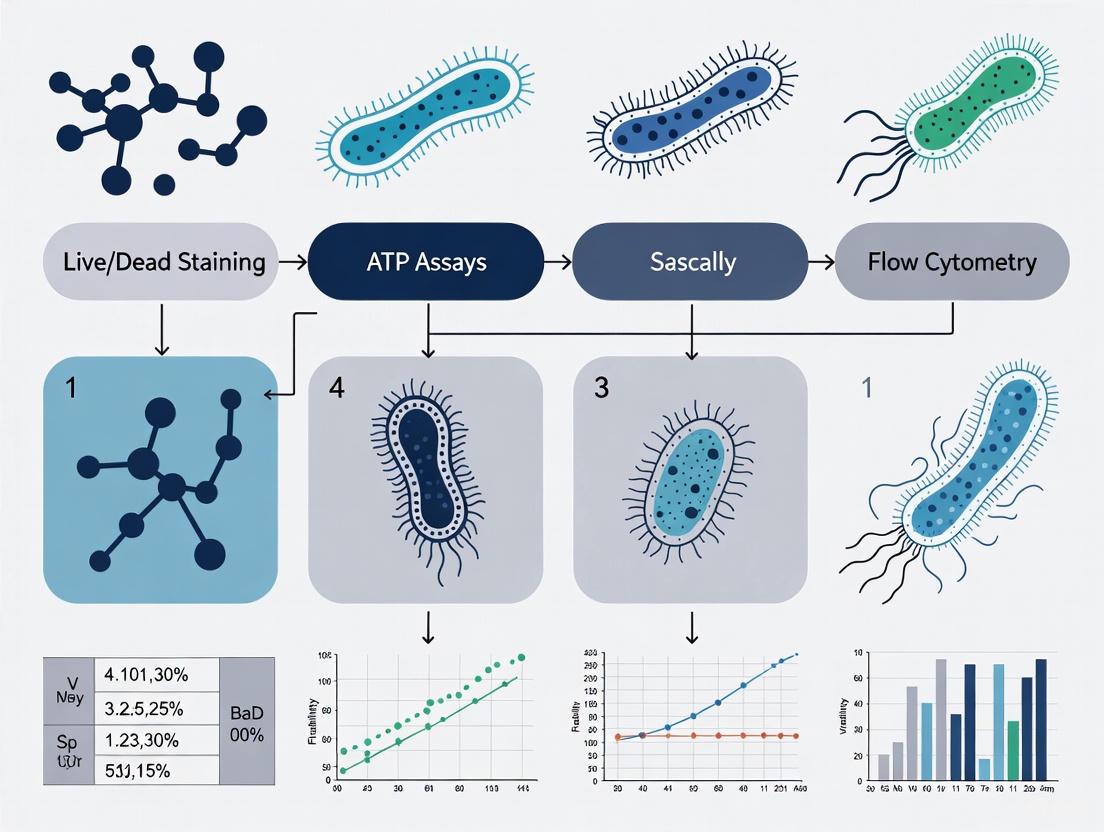
This article provides a comprehensive comparative analysis of bacterial viability assessment methods, tailored for researchers, scientists, and drug development professionals.
Comparative Analysis of Bacterial Viability Methods: From Classic Culturability to Advanced Molecular Assays
Abstract
This article provides a comprehensive comparative analysis of bacterial viability assessment methods, tailored for researchers, scientists, and drug development professionals. We explore the foundational principles defining bacterial viability, including the established triumvirate of culturability, metabolic activity, and membrane integrity. The review details a wide array of methodological approaches, from traditional plating and dye-based assays to cutting-edge techniques like viability PCR, flow cytometry, and laser desorption ionization mass spectrometry. Practical guidance on troubleshooting common pitfalls and optimizing protocols for specific applications is provided. Finally, a rigorous validation and comparative analysis equips readers with the knowledge to select the most appropriate, accurate, and efficient method for their specific research or diagnostic context, from antimicrobial susceptibility testing to probiotic enumeration.
Defining Bacterial Viability: Beyond Culturability to Metabolic and Membrane Integrity
In microbiology and drug development, accurately determining whether a bacterial cell is viable is fundamental to assessing infectious risks, evaluating antibiotic efficacy, and ensuring product safety. The concept of viability is multifaceted, resting on three widely accepted pillars: culturability, metabolic activity, and membrane integrity [1] [2]. Each pillar probes a different aspect of cellular life, from the ability to reproduce to the maintenance of basic physiological functions and structural barriers. No single method provides a complete picture, as cells can exist in states such as the viable but non-culturable (VBNC) state, where they are metabolically active but cannot form colonies on standard media [1] [3]. This guide provides a comparative analysis of the methods underpinning these three pillars, summarizing their principles, applications, and limitations to aid researchers in selecting the most fit-for-purpose assays.
The Three Pillars: Core Principles and Comparative Analysis
Viability assessment strategies are categorized based on which of the three core criteria they measure. The following table provides a high-level comparison of these foundational approaches.
Table 1: Core Principles and Characteristics of the Three Pillars of Viability Assessment
| Assessment Pillar | Fundamental Principle | Key Advantage | Primary Limitation |
|---|---|---|---|
| Culturability | Measures the ability of a single cell to grow and form a visible colony on solid media [1]. | Considered the historical "gold standard"; provides definitive proof of reproductive capacity [4] [5]. | Cannot detect VBNC cells, which are alive but do not divide on standard media [1] [2]. |
| Metabolic Activity | Probes the presence of ongoing biochemical processes, such as enzyme activity or substrate uptake [1] [6]. | Can detect VBNC cells that are still metabolically active [1]. | Dormant cells with silenced metabolism may give false-negative results; results can be sensitive to assay conditions (e.g., pH) [1] [6]. |
| Membrane Integrity | Assesses the physical intactness of the cell membrane, a key feature of living cells [1] [7]. | Directly measures a fundamental characteristic of life; can detect some viable cells that are non-culturable and metabolically dormant [1] [8]. | A temporarily compromised membrane may be repaired, and membrane integrity alone does not guarantee replicative capacity [7]. |
The relationship between these pillars and the cellular states they detect can be visualized as a series of nested subsets. The population with intact membranes is the broadest, encompassing all cells considered viable by this structural definition. Within this group exists a subset of cells with active metabolism, which, in turn, contains the subset of cells capable of replication on culture media [1].
Comparative Method Performance: Data and Protocols
A deeper understanding of these pillars requires examining the specific methods that operationalize them. The table below summarizes key performance metrics for representative assays from each category.
Table 2: Performance Comparison of Representative Viability Assessment Methods
| Method (Pillar) | Dynamic Range (CFU/mL) | Time to Result | Key Measurand / Reagent | Throughput |
|---|---|---|---|---|
| Plate Culture (Culturability) [5] | 1 - 10^8 | 1 - 7 days | Growth on solid agar media | Low |
| Geometric Viability Assay - GVA (Culturability) [5] | 1 - 10^6 | ~1 day | Colony distribution in a pipette tip | High (≈1,200/day) |
| Flow Cytometry with Viability Dyes (Membrane Integrity) [9] | 10^4 - 10^7 | Minutes to hours | SYTOX Green, Propidium Iodide | Very High |
| Tetrazolium Salt Reduction (e.g., CTC, MTT) (Metabolic Activity) [6] | Varies | 1 - 4 hours | Tetrazolium salt → Formazan | Medium |
| Fluorescein Diacetate (FDA) Hydrolysis (Metabolic Activity) [1] | Varies | 30 mins - 2 hours | FDA → Fluorescein | Medium |
| Viability PCR (vPCR) (Membrane Integrity) [4] | Varies | 3 - 6 hours | DNA intercalating dyes (e.g., PMA) | Medium |
Detailed Experimental Protocols
To ensure reproducibility, below are detailed protocols for one innovative method from each pillar.
Protocol: Geometric Viability Assay (GVA) for Culturability
GVA is a high-throughput method that calculates viable counts based on the geometric distribution of colonies forming inside a pipette tip, effectively creating a dilution series in a single step [5].
- Sample Preparation: Mix the bacterial sample thoroughly with melted LB agarose (cooled to ≤55°C) to a final agarose concentration of 0.5%. Include triphenyl tetrazolium chloride (TTC) in the agarose to enhance colony contrast.
- Loading and Solidification: Aspirate the sample-agarose mixture into a standard pipette tip. Allow the agarose to solidify completely at room temperature.
- Incubation: Eject the solidified agarose tip into an empty, sterile tip rack. Incubate the entire rack overnight at the microbe's optimal growth temperature (e.g., 37°C for E. coli).
- Imaging and Analysis: Image the tip using a custom optical setup or a standard gel documentation system. Manually or automatically record the position of each colony along the tip's long axis (x-coordinate).
- Calculation: Compute the CFU concentration using the formula:
CFU/mL = N / ( V * ∫ PDF(x) dx )whereNis the number of colonies counted in a segment,Vis the volume of the tip, andPDF(x)is the probability density function(3x²/h³), withhbeing the total length of the tip [5].
Protocol: Flow Cytometry with SYTOX Green for Membrane Integrity
This protocol uses the nucleic acid stain SYTOX Green, which penetrates only cells with compromised membranes, providing a count of dead cells within a heterogeneous population [9].
- Stain Preparation: Prepare a working solution of SYTOX Green dye in an appropriate buffer (e.g., DMSO or water) as per manufacturer instructions.
- Staining: Mix the bacterial sample with the SYTOX Green solution to achieve the recommended final concentration (e.g., 1 µM). Incubate the mixture in the dark for 10-15 minutes at room temperature.
- Instrument Setup: Power on the flow cytometer and set up the instrument for microbial analysis. Create a plot of green fluorescence (e.g., FITC or GFP channel, ~530 nm) versus side scatter (SSC).
- Thresholding and Gating: Run an unstained control to set the background fluorescence and define a gate for the total population. Run the stained sample and establish a gate for the SYTOX Green-positive (dead) population based on a significant increase in green fluorescence.
- Acquisition and Analysis: Acquire events for all test samples at a stable flow rate. The viable cell count is determined as the difference between the total cell count and the SYTOX Green-positive count [9].
Protocol: Tetrazolium Salt Reduction (CTC) for Metabolic Activity
This assay measures the activity of the electron transport system by reducing a colorless tetrazolium salt (CTC) to a fluorescent, insoluble formazan precipitate inside metabolically active cells [6].
- Reagent Preparation: Prepare a stock solution of 5-cyano-2,3-ditolyl tetrazolium chloride (CTC) in deionized water or phosphate-buffered saline (PBS). Filter-sterilize.
- Staining and Incubation: Add the CTC solution to the bacterial sample to a final concentration typically between 2-5 mM. Incubate in the dark for 60-90 minutes at the optimal growth temperature.
- Fixation (Optional): If necessary, fix the cells with a low concentration of formaldehyde (e.g., 1.5-4%) to preserve the signal.
- Microscopy or Extraction: Analyze the cells directly under an epifluorescence microscope (excitation ~450-490 nm, emission >600 nm) to count red-fluorescent cells. Alternatively, for quantification, extract the insoluble formazan with an organic solvent (e.g., ethanol or acetone) and measure the absorbance spectrophotometrically [6].
Essential Research Reagent Solutions
The successful implementation of viability assays depends on key reagents. The following table details essential materials and their functions.
Table 3: Key Reagent Solutions for Bacterial Viability Assessment
| Reagent / Kit | Primary Function | Viability Pillar | Key Consideration |
|---|---|---|---|
| Triphenyl Tetrazolium Chloride (TTC) | Incorporated into growth media; reduced by metabolically active cells to a red formazan, visualizing colonies [5]. | Culturability | Enhances contrast for automated colony counting in assays like GVA. |
| SYTOX Green | Membrane-impermeant nucleic acid stain that enters only dead cells with compromised membranes, producing green fluorescence [9]. | Membrane Integrity | Requires flow cytometry or fluorescence microscopy for detection. |
| Tetrazolium Salts (e.g., CTC, XTT, MTT) | Act as electron acceptors; reduced by metabolically active cells to colored formazan products [6]. | Metabolic Activity | Some salts (e.g., CTC) can be toxic to certain bacteria; product solubility (soluble vs. insoluble) varies. |
| Fluorescein Diacetate (FDA) | Cell-permeant esterase substrate; cleaved by intracellular enzymes to release fluorescent fluorescein in live cells [1]. | Metabolic Activity | Signal is highly sensitive to intracellular pH and can leak from cells. |
| Proliferation Dyes (e.g., WST-8) | Water-soluble tetrazolium salts reduced by cellular dehydrogenases to a water-soluble formazan, allowing colorimetric reading [4]. | Metabolic Activity | Suitable for high-throughput microplate assays. |
| Viability PCR Reagents (e.g., PMA dyes) | DNA intercalating dyes that selectively enter dead cells; upon photoactivation, they crosslink to DNA and inhibit its PCR amplification [4]. | Membrane Integrity | Allows PCR to target only intact (viable) cells; requires optimization of light exposure. |
The comparative analysis of culturability, metabolic activity, and membrane integrity reveals that no single pillar is universally superior. The choice of assay must be driven by the specific research question. For determining reproductive capacity, culturability-based methods like the classic plate count or the innovative GVA remain definitive. For rapid, high-throughput screening of cell status, particularly in complex samples like multi-species probiotics, flow cytometry-based membrane integrity assays are powerful. Metabolic activity assays offer a glimpse into the physiological state between replication and death, crucial for identifying VBNC populations. A comprehensive understanding of bacterial viability often necessitates a multi-faceted approach, leveraging the complementary strengths of these three fundamental pillars.
The Viable But Non-Culturable (VBNC) state represents a dormant survival strategy adopted by numerous bacterial species when facing environmental stress. First identified in 1982 and formally termed in 1985, this state is defined by a temporary loss of culturability on routine laboratory media while bacteria maintain viability, metabolic activity, and potential pathogenicity [10] [11]. VBNC cells cannot form visible colonies on standard agar plates, rendering them undetectable by conventional culture-based methods that form the cornerstone of microbiological testing in clinical, food safety, and public health laboratories worldwide [11] [12]. This fundamental detection gap creates a significant blind spot in public health protection, allowing pathogenic bacteria to evade surveillance systems and established control measures.
The public health implications of the VBNC state are profound and multifaceted. Numerous human pathogens can enter this dormant state, including Listeria monocytogenes, Escherichia coli, Salmonella enterica, Vibrio cholerae, Helicobacter pylori, and Klebsiella pneumoniae [11] [13] [14]. When in the VBNC state, these pathogens often exhibit enhanced resistance to antibiotics, disinfectants, and environmental stresses, complicating treatment and eradication efforts [10] [11]. Perhaps most concerning is their ability to resuscitate under favorable conditions, potentially leading to silent transmission, recurrent infections, and unexplained disease outbreaks that defy conventional epidemiological investigation [11] [15]. The systematic failure to detect VBNC pathogens consequently undermines the effectiveness of microbiological monitoring programs across healthcare, food production, and water safety sectors, creating unrecognized reservoirs of infectious agents that threaten public health.
Comparative Analysis of VBNC Detection Methods
The accurate identification of VBNC bacteria requires a paradigm shift from growth-based detection to methodologies that probe viability through alternative metrics. Current approaches focus on distinguishing viable cells (with intact membranes and metabolic activity) from both culturable and dead cells, creating a analytical challenge that no single method perfectly addresses. The optimal choice depends on required sensitivity, sample matrix, equipment availability, and whether qualitative detection or absolute quantification is needed.
Table 1: Comparison of Major VBNC Detection Methodologies
| Method Category | Specific Technique | Detection Principle | Key Advantages | Key Limitations | Reported Sensitivity/Accuracy |
|---|---|---|---|---|---|
| Molecular Viability Assays | PMA/dPCR combined (PMA-dPCR) | Inhibits DNA amplification from membrane-compromised cells; absolute quantification via microfluidic partitioning | Absolute quantification without standard curves; high sensitivity; resistant to PCR inhibitors | Requires optimization of PMA concentration; higher cost; specialized equipment | Absolute quantification of VBNC K. pneumoniae; 1.13-0.64 log10 reduction detection [14] |
| Molecular Viability Assays | PMAxx/EMA-qPCR combined | Dual dye approach improves exclusion of dead cells with intact membranes | Better dead cell exclusion than single dyes; applicable to complex matrices | Requires extensive validation for specific matrices; may overestimate VBNC cells | Effective detection in chlorine-treated process wash water [16] |
| Molecular Viability Assays | mRNA-based RT-qPCR | Detects labile mRNA transcripts indicating active metabolism | Direct evidence of metabolic activity; high specificity | mRNA instability requires rapid processing; technically challenging | Correlates with viability through essential gene expression (16S rDNA, rpoS) [17] |
| Cellular Viability Staining | Live/Dead staining with flow cytometry | Membrane integrity assessment using fluorescent dyes (SYTO9/PI) | Rapid results; visual confirmation; distinguishes intact/damaged membranes | Overestimation in complex matrices; equipment-dependent | Not suitable for complex wash water due to interference [16] |
| Cellular Viability Staining | ATP assays | Measures cellular ATP levels as indicator of metabolic activity | Direct metabolic measurement; rapid results | Does not distinguish VBNC from active cells; affected by extracellular ATP | High ATP in L. monocytogenes after one year in VBNC state [11] |
| Advanced Imaging | AI-enabled hyperspectral microscopy | Detects spectral signatures of VBNC cells using deep learning | Label-free; high specificity; visual validation | Specialized equipment; AI model training required | 97.1% accuracy for VBNC E. coli classification [18] |
Methodological Insights and Performance Gaps
The comparative analysis reveals a critical trade-off between methodological complexity and detection reliability. While culture-based methods remain the gold standard for detecting culturable pathogens, they completely fail to identify VBNC populations, creating a significant analytical gap [11] [12]. Molecular methods like PMA-PCR have emerged as the most practical compromise, offering reasonable sensitivity while accommodating the sample throughput needs of public health laboratories. However, even these advanced methods struggle with complete discrimination between VBNC and dead cells, particularly in complex matrices like food or environmental samples [16]. The emerging generation of technologies—particularly AI-enabled hyperspectral imaging and digital PCR—promises enhanced accuracy but requires specialized instrumentation currently unavailable in most routine laboratory settings [18] [14].
Experimental Protocols for VBNC Research
VBNC Induction and Validation Protocol
Research into the VBNC state requires standardized approaches for inducing, detecting, and quantifying this dormant population. The following integrated protocol synthesizes methodologies from multiple recent studies:
Induction Conditions:
- Starvation stress: Suspend bacteria in minimal media or artificial seawater (ASW) at 4°C for extended periods (days to weeks) [14]. For K. pneumoniae, incubation in ASW at 4°C for 50 days successfully induced the VBNC state [14].
- Chemical stressors: Expose to sublethal concentrations of disinfectants (e.g., 10 mg/L chlorine), household cleaners with non-ionic surfactants, or oxidative agents (0.01% hydrogen peroxide) [16] [18] [15]. Gram-positive bacteria like Listeria monocytogenes show particular susceptibility to VBNC induction by non-ionic surfactants combined with salts [15].
- Physical stresses: Apply temperature extremes, UV radiation, or high pressure treatments at sublethal intensities [11].
Confirmation of VBNC State:
- Culturability assessment: Plate on appropriate non-selective media; true VBNC states show no colony formation after prolonged incubation [14].
- Membrane integrity: Apply LIVE/DEAD BacLight staining (SYTO9/PI) - VBNC cells display green fluorescence indicating intact membranes [17] [15].
- Metabolic activity: Measure ATP production or use tetrazolium salts; VBNC cells maintain low but detectable metabolic activity [11] [15].
- Molecular confirmation: Use PMA-qPCR to verify presence of intact cells while ruling out culturable populations [16].
Viability PCR with PMAxx/EMA Treatment Protocol
The combination of viability dyes with quantitative PCR represents one of the most practical approaches for VBNC detection in complex matrices. The following optimized protocol from food safety research enables discrimination between VBNC and dead cells in process wash water [16]:
Reagent Preparation:
- Prepare stock solutions of PMAxx (1 mM) and EMA (1 mM) in distilled water
- Prepare phosphate-buffered saline (PBS) for sample dilution
- Have sodium thiosulfate pentahydrate (0.3 M) available for chlorine neutralization if needed
Sample Processing:
- Concentrate bacterial cells from sample matrix by centrifugation (2,500 × g for 5 min)
- Resuspend pellet in PBS to desired concentration (approximately 10⁵ CFU/mL)
- Add PMAxx and EMA to final concentrations of 75 μM and 10 μM respectively
- Incubate in the dark at 40°C for 40 minutes with occasional mixing
- Place samples on ice and photoactivate for 15 minutes using a 650W halogen light source at 20cm distance
- Extract genomic DNA using commercial kits (e.g., Wizard Genomic DNA Purification Kit)
qPCR Analysis:
- Prepare reaction mix with appropriate primers and probe sets for target pathogen
- Use single-copy essential genes (rpoB, adhE) as targets for quantification
- Include no-dye controls to assess total bacterial DNA
- Include killed cell controls to validate dye penetration efficiency
- Run quantification cycle (Cq) comparison between dyed and non-dyed samples
Validation:
- The method should inhibit >99% of DNA amplification from dead cells
- Specificity should be confirmed using target pathogens in relevant food matrices
- The limit of detection typically ranges 10²-10³ gene copies/mL depending on the matrix
Research Reagent Solutions for VBNC Studies
Table 2: Essential Research Reagents for VBNC Investigation
| Reagent Category | Specific Examples | Research Application | Key Considerations |
|---|---|---|---|
| Viability Dyes | PMA, PMAxx, EMA | Differentiation of membrane-intact cells in molecular assays | PMAxx shows improved dead cell exclusion vs. PMA; EMA may penetrate some viable cells [16] |
| Viability Dyes | LIVE/DEAD BacLight Bacterial Viability Kit (SYTO9/PI) | Membrane integrity assessment via fluorescence microscopy/flow cytometry | Green fluorescence (SYTO9) indicates intact membranes; red fluorescence (PI) indicates compromised membranes [17] [15] |
| DNA Extraction Kits | Wizard Genomic DNA Purification Kit | Isolation of amplifiable DNA from complex samples | Consistent yield crucial for molecular quantification; must remove PCR inhibitors [14] |
| PCR Reagents | Premix Ex Taq, specific primers/probes | Quantitative detection of viable pathogens | Target single-copy essential genes (rpoB, adhE, 16S rDNA) for accurate quantification [14] |
| Culture Media | Brain Heart Infusion (BHI), LB broth, ASW | Induction and resuscitation studies | Nutrient deprivation in ASW induces VBNC; rich media (BHI) may support resuscitation [14] [15] |
| Induction Agents | Hydrogen peroxide, peracetic acid, chlorine, surfactants | Controlled VBNC state induction | Sublethal concentrations critical; surfactants + salts particularly effective for Gram-positives [18] [15] |
Practical Implementation Considerations
The selection of appropriate reagents fundamentally influences the reliability of VBNC detection assays. Viability dyes require extensive validation for each bacterial species and matrix combination, as penetration efficiency varies significantly [16]. For molecular detection, targeting multiple single-copy genes (e.g., rpoB, adhE) provides more reliable quantification than single targets, reducing variability from potential gene copy number fluctuations [14]. When inducing VBNC states experimentally, combining multiple mild stresses often more closely mimics environmental conditions than single intense stressors, potentially yielding more physiologically relevant VBNC populations [15].
The VBNC state represents a significant challenge to conventional microbiological paradigms and public health protection systems. The comparative analysis presented herein demonstrates that while no perfect detection method exists, integrated approaches combining viability dyes with molecular detection currently offer the most practical solution for identifying these elusive pathogens. The persistence of VBNC bacteria across clinical, food production, and environmental settings necessitates a fundamental re-evaluation of current microbiological monitoring programs that remain dependent on culture-based methods.
Future directions in VBNC research should focus on standardizing detection protocols across sectors, developing cost-effective rapid methods deployable in resource-limited settings, and elucidating the genetic mechanisms controlling entry into and resuscitation from the VBNC state. Particularly promising are technologies enabling single-cell analysis of VBNC populations, which could reveal heterogeneity within dormant communities and identify key resuscitation triggers. Additionally, epidemiological studies correlating VBNC detection with public health outcomes would strengthen the evidence base for incorporating these advanced detection methods into routine surveillance.
As our understanding of bacterial dormancy deepens, integrating VBNC detection into public health practice will be essential for addressing persistent challenges in infectious disease control, food safety assurance, and water quality monitoring. The methodological framework presented here provides a foundation for developing more comprehensive pathogen surveillance systems capable of detecting both active and dormant threats to public health.
Metabolic dormancy represents a fundamental survival strategy across biological kingdoms, from microorganisms to human cancer cells. This state of reduced metabolic activity allows cells to persist under unfavorable conditions, such as nutrient deprivation, hypoxia, or chemical stress, by entering a temporary period of quiescence [19]. In microbiology, most microorganisms in natural environments exist in dormant rather than growing states, challenging the growth-centric paradigm that has traditionally dominated the field [20]. Similarly, in oncology, dormant cancer cells can enter a resting phase (G0/G1 phase) that complicates treatment and increases the risk of cancer recurrence years or even decades after initial therapy [19] [21].
Understanding metabolic dormancy is crucial for multiple disciplines. For environmental and medical microbiologists, it explains how pathogens evade antimicrobial treatments and how microbial communities maintain ecosystem services during starvation. For cancer researchers, it reveals mechanisms behind therapeutic resistance and metastatic relapse. This comparative guide examines the principles, assessment methods, and experimental approaches for studying metabolic dormancy, providing researchers with the tools to investigate this complex phenomenon across biological systems.
Fundamental Principles of Metabolic Dormancy
Defining Characteristics and Types
Metabolic dormancy encompasses several distinct but related states characterized by reduced metabolic activity, reversible cell cycle arrest, and enhanced stress resistance. In microbiology, the viable but nonculturable (VBNC) state describes bacteria that remain metabolically active but cannot proliferate on standard laboratory media, often entering a dormant state when faced with unfavorable conditions like low temperatures, low-nutrient environments, and high antibiotic concentrations [1]. In cancer biology, tumor dormancy occurs when disseminated cancer cells enter cellular quiescence, remaining viable but non-proliferative for extended periods before potentially reactivating to cause disease recurrence [21].
Three main types of dormancy mechanisms have been identified across biological systems:
Cellular Dormancy: Individual cells enter a reversible quiescent phase (G0), ceasing proliferation while maintaining viability and basal metabolic activity [21]. This state is regulated by cyclin-dependent kinase inhibitors such as p21 and p27, which halt cell cycle progression [21].
Angiogenic Dormancy: Observed in small tumor clusters, this state results from insufficient blood supply that restricts growth beyond 1-2 mm in diameter due to lack of oxygen and nutrients [21].
Immunological Dormancy: The immune system recognizes and contains dormant cells but cannot completely eliminate them, creating an equilibrium that prevents expansion but permits survival [21].
Metabolic Adaptations in Dormancy
Dormant cells undergo significant metabolic reprogramming to survive under resource-limited conditions. Rather than simply downregulating metabolic processes, many organisms demonstrate surprising metabolic flexibility during dormancy. For example, obligate heterotrophs can scavenge inorganic energy sources during carbon starvation, and obligate aerobes may utilize fermentation as a last resort during hypoxia [20].
Table 1: Key Metabolic Adaptations in Dormant Cells
| Adaptation Type | Microorganisms | Cancer Cells | Plant Seeds |
|---|---|---|---|
| Energy Source | Atmospheric trace gases (H₂) [20] | Enhanced autophagy [21] | Stored carbohydrates & lipids [22] |
| Metabolic Rate | Reduced but maintained [20] | Hypometabolism [21] | Drastically reduced [22] |
| Pathway Utilization | Broadened metabolic repertoire [20] | Alternative metabolic pathways [21] | Shifted respiratory pathways [22] |
| Primary Function | Maintenance energy [20] | Survival & stress resistance [19] | Embryo preservation [22] |
A remarkable example of metabolic flexibility comes from bacteria that can "live on air" by oxidizing atmospheric trace gases like hydrogen (H₂) during carbon starvation. This process is mediated by specialized high-affinity, oxygen-tolerant [NiFe]-hydrogenases that feed electrons from H₂ oxidation into the aerobic respiratory chain [20]. Similarly, dormant cancer cells exhibit metabolic adaptations that facilitate survival during periods of low metabolic activity, including enhanced autophagy to recycle cellular components and a switch to alternative metabolic pathways to conserve energy [21].
Comparative Analysis of Viability Assessment Methods
Three Criteria for Viability Assessment
Determining the viability of dormant cells presents significant challenges, as these cells often fail to grow under standard culture conditions despite maintaining metabolic activity. Three established criteria form the basis for viability assessment in dormant populations:
- Culturability: The ability to form colonies on appropriate solid media, requiring reproducibility, metabolic activity, and intact membranes [1].
- Metabolic Activity: Measurement of biochemical processes, including substrate uptake, enzyme activity, or respiration [1] [6].
- Membrane Integrity: The maintenance of an intact membrane, typically assessed by dye exclusion assays [1].
No single method can comprehensively assess all aspects of viability in dormant cells, necessitating a multi-faceted approach. The following sections compare the major methodological categories for viability assessment.
Method Comparisons and Performance Data
Table 2: Comparison of Viability Assessment Methods for Dormant Cells
| Method Category | Specific Assay | Detection Principle | Target Dormancy State | Time Required | Key Limitations |
|---|---|---|---|---|---|
| Culturability-Based | Plate culture [1] [23] | Colony formation | Culturable cells only | 2-7 days | Cannot detect VBNC cells |
| Metabolic Activity-Based | Dehydrogenase activity (TTC/INT reduction) [23] [6] | Respiratory chain activity | Metabolically active cells | 1-4 hours | May miss deeply dormant cells |
| Metabolic Activity-Based | Fluorescein diacetate (FDA) hydrolysis [1] [6] | Esterase/lipase activity | Cells with active enzyme systems | 20-30 minutes | Sensitive to pH variations |
| Metabolic Activity-Based | Glucose uptake (2-NBDG) [1] | Substrate transport & metabolism | Cells with active transport | 1-2 hours | Not universal among bacteria |
| Membrane Integrity-Based | Live/Dead BacLight (SYTO9/PI) [1] [23] | Membrane permeability | Cells with intact membranes | 20-30 minutes | May misclassify VBNC cells as dead |
| Membrane Integrity-Based | Flow cytometry with vital dyes [23] | Multiple membrane parameters | Population heterogeneity | 1-2 hours | Requires specialized equipment |
Table 3: Experimental Performance Comparison Following Disinfection
| Viability Assessment Method | Sensitivity After Thermal Treatment | Sensitivity After Chemical Treatment | Correlation with Colony Forming Units (CFU) |
|---|---|---|---|
| Live/Dead Staining | Lower [23] | Similar to dehydrogenase assay [23] | Linear relationship [23] |
| Dehydrogenase Activity Assay | Highest [23] | Similar to staining approach [23] | Similar to colony counts [23] |
| Direct Colony Enumeration | Reference method | Reference method | Gold standard |
The performance characteristics of viability assays vary significantly depending on the inactivation method and the specific dormancy state being investigated. After thermal treatment, the sensitivity of the staining approach was lower, while that of the dehydrogenase activity assay was the highest. After chemical treatment, the sensitivity of detection for both methods was similar [23]. This highlights the importance of selecting appropriate assessment methods based on the specific experimental context and the type of dormancy under investigation.
Experimental Protocols for Key Assays
Live/Dead Bacterial Cell Staining Protocol
The Live/Dead BacLight bacterial viability kit utilizes two nucleic acid stains with different membrane penetration properties: SYTO9 (green fluorescence, penetrates all cells) and propidium iodide (red fluorescence, penetrates only compromised membranes) [23].
Materials:
- SYTO9 green fluorescent nucleic acid stain
- Propidium iodide (PI)
- Dimethyl sulfoxide (DMSO)
- 0.85% (w/v) NaCl solution
- Microcentrifuge tubes
- Confocal scanning laser microscope or fluorescence microscope
Procedure:
- Prepare the staining solution by mixing SYTO9 and PI (100 μL each) and diluting 1:10 in 0.085% NaCl solution [23].
- Add 20 μL of the staining solution to 1 mL of cell suspension [23].
- Incubate in the dark at room temperature (25°C) for 20 minutes [23].
- Remove excess dye by centrifugation at 9,450 × g for 5 minutes and discard supernatant [23].
- Resuspend cell pellets in 0.85% NaCl solution [23].
- Within 1 hour, analyze by confocal laser scanning microscopy using appropriate filters (excitation 488 nm for SYTO9, 543 nm for PI) [23].
- Quantify live (green) and dead (red) cells using image analysis software such as ImageJ [23].
Technical Considerations: This method rapidly differentiates between cells with intact and compromised membranes, but may misclassify VBNC cells with intact membranes as dead if metabolic activity is not simultaneously assessed [1].
Dehydrogenase Activity Assay Protocol
Dehydrogenase activity (DHA) measures microbial respiratory activity through the reduction of tetrazolium salts to colored formazan compounds [23] [6].
Materials:
- 2,3,5-Triphenyltetrazolium chloride (TTC) or INT
- D-(+)-Glucose solution (1% w/v)
- Methanol (HPLC grade, chilled to -20°C)
- Phosphate buffer (pH 7.0-7.5)
- Centrifuge tubes
- UV-Visible spectrophotometer
Procedure:
- Prepare TTC stock solution (2% w/v) in sterile deionized water and filter-sterilize [23].
- Centrifuge 200 μL of bacterial suspension at 9,450 × g for 5 minutes and discard supernatant [23].
- Resuspend cell pellet in 100 μL of 1% glucose solution to provide an organic substrate [23].
- Add 20 μL of TTC stock solution and mix thoroughly [23].
- Incubate in the dark at room temperature for 1 hour [23].
- Stop the reaction by adding 1 mL of chilled methanol (-20°C) [23].
- Centrifuge to remove cells and particulate matter [6].
- Measure absorbance of the supernatant at 489 nm using a spectrophotometer [23].
- Include cell-free samples as blank controls [23].
Technical Considerations: The rate of formazan formation is proportional to the number of actively respiring cells and their metabolic activity [6]. This assay is particularly sensitive for detecting low levels of metabolic activity in dormant cells, showing the highest sensitivity after thermal treatment of samples [23].
Diagram 1: Dehydrogenase Activity Assay Workflow. This diagram illustrates the step-by-step procedure for measuring dehydrogenase activity as an indicator of metabolic activity in dormant cells.
Molecular Regulation of Dormancy
Signaling Pathways Controlling Dormancy
The transition between active proliferation and dormancy is regulated by complex signaling networks that respond to environmental and cellular cues. In cancer cells, key pathways include:
ERK/p38 MAPK Balance: The ratio of extracellular signal-regulating kinases (ERK) to p38 mitogen-activated protein kinases determines cellular fate. While ERK phosphorylation promotes proliferation, p38 phosphorylation induces cellular dormancy. A lower ERK/p38 expression ratio serves as an indicator of the dormant state [19].
PI3K/AKT/mTOR Pathway: Frequently dysregulated in cancer, this pathway is often downregulated in dormancy, leading to decreased protein synthesis and cell cycle arrest. Inhibition of mTOR can induce a dormancy-like state in various cancer cell lines [19] [24].
TGF-β Signaling: This multifunctional cytokine can induce and maintain quiescence during dormancy. In the bone microenvironment, TGF-β2 cooperates with all-trans retinoic acid to promote cellular dormancy characterized by growth arrest and enhanced survival [19].
Bone Morphogenetic Proteins: BMP-7, secreted by bone stromal cells, induces dormancy in prostate cancer cells via the p38 pathway and upregulation of the metastasis suppressor gene NDRG1 [19].
Diagram 2: Signaling Pathways Regulating Cellular Dormancy. This diagram illustrates the key molecular pathways that control the transition to and maintenance of dormancy in response to environmental stressors.
Metabolic Strategies in Dormant Cells
Dormant cells employ diverse metabolic strategies to maintain viability under resource-limited conditions:
Energy Conservation: Dormant cancer cells exhibit reduced metabolic activity (hypometabolism), diminished nutrient intake, and decreased reproductive capacity [21]. This hypometabolic state allows them to survive for extended periods without dividing.
Metabolic Flexibility: Bacteria demonstrate the ability to broaden their metabolic repertoire during persistence. Obligate heterotrophs can scavenge inorganic energy sources during carbon starvation, while obligate aerobes may utilize fermentation as a last resort during hypoxia [20].
Atmospheric Trace Gas Utilization: Numerous aerobic bacteria from dominant soil phyla encode high-affinity hydrogenases that allow them to oxidize atmospheric hydrogen (H₂) during carbon starvation. This process provides maintenance energy during dormancy and is particularly important in extreme environments like Antarctic dry deserts [20].
Autophagy Enhancement: Dormant cells often enhance autophagy to degrade and recycle cellular components to fulfill energy requirements during nutrient deprivation [21].
Research Reagent Solutions Toolkit
Table 4: Essential Research Reagents for Metabolic Dormancy Studies
| Reagent/Category | Specific Examples | Function in Dormancy Research | Application Notes |
|---|---|---|---|
| Viability Stains | SYTO9 & Propidium iodide (Live/Dead BacLight) [23] | Differentiates cells based on membrane integrity | Dual staining allows simultaneous detection of live/dead populations |
| Metabolic Probes | Tetrazolium salts (TTC, INT, XTT) [23] [6] | Measures respiratory chain activity via reduction to formazan | Different tetrazolium salts vary in toxicity and penetration ability |
| Enzyme Substrates | Fluorescein diacetate (FDA) [1] | Assesses esterase/lipase activity in viable cells | pH-sensitive; requires optimization for different cell types |
| Metabolic Tracers | 2-NBDG (fluorescent glucose analog) [1] | Measures glucose uptake and metabolism | Not universally transported by all bacterial species |
| Pathway Modulators | HDAC inhibitors [24] | Induces dormancy phenotype in cancer cells | Increases Leukemia Inhibitory Factor Receptor expression |
| Cytokine Assays | IL-6 & G-CSF measurement tools [21] | Detects protumor cytokines that reactivate dormant cells | Key for understanding microenvironmental triggers of reactivation |
Metabolic dormancy represents a complex survival strategy with significant implications across microbiology, oncology, and plant biology. The comparative analysis presented in this guide demonstrates that accurate assessment of dormant states requires a multifaceted approach that considers culturability, metabolic activity, and membrane integrity. No single method can fully characterize dormant populations, necessitating carefully selected method combinations based on the specific research questions and biological system.
The experimental protocols and reagent toolkit provided here offer researchers practical resources for investigating metabolic dormancy in various contexts. As research in this field advances, emerging technologies such as single-cell multi-omics, spatial transcriptomics, and advanced biomimetic models promise to unravel the intricate mechanisms governing dormancy entry, maintenance, and reactivation [24]. Understanding these processes is crucial for developing novel therapeutic strategies against persistent bacterial infections and preventing cancer recurrence, ultimately improving patient outcomes across clinical contexts.
Evaluating bacterial viability is a fundamental practice in microbiology, crucial for public health risk assessment, food safety, and pharmaceutical development [25]. Currently, viability assessment relies on three widespread and accepted criteria: culturability, metabolic activity, and membrane integrity [25]. Each criterion probes a different aspect of cellular function, and while they often correlate, significant discordance can occur due to particular physiological states. The most well-known example of such discordance is the viable but non-culturable (VBNC) state, where bacteria are metabolically active and possess intact membranes but cannot form colonies on standard growth media [25]. This state, induced by stress, directly challenges the gold-standard plate count method. Furthermore, dormant cells may exhibit minimal metabolic activity, leading to underestimation of viability by methods relying on that criterion [25]. Understanding the principles, advantages, and limitations of each methodological approach is therefore essential for researchers to accurately interpret viability data and select the most appropriate assay for their specific experimental context.
Comparative Analysis of Viability Assessment Methods
The following table summarizes the core principles and key characteristics of the primary viability assessment methods based on the three accepted criteria.
Table 1: Comparison of Key Bacterial Viability Assessment Methods
| Method | Underlying Principle | Viability Criterion | Key Advantages | Key Limitations | Typical Time to Result |
|---|---|---|---|---|---|
| Plate Culture [25] | Ability of a single cell to form a visible colony on solid media. | Culturability | - Considered the gold standard- Provides quantification- Can aid in identification | - Cannot detect VBNC cells- Time-consuming (2 days to 1 week)- Labor-intensive | 2 days - 1 week |
| Fluorescein Diacetate (FDA) Assay [25] | Hydrolysis of non-fluorescent FDA by intracellular enzymes to produce fluorescent fluorescein. | Metabolic Activity | - Can detect some VBNC cells- Passive dye uptake | - Signal sensitive to intracellular pH- Fluorescein can leak from cells | 1 - 4 hours |
| 2-NBDG Uptake [25] | Uptake and decomposition of fluorescent glucose analog (2-NBDG) via active glucose transport system. | Metabolic Activity | - Can detect metabolic activity in specific cells | - Not all bacteria consume 2-NBDG- Requires fluorescent detection equipment | 1 - 4 hours |
| Geometric Viability Assay (GVA) [5] | Calculation of viable cells based on distribution of micro-colonies growing in a cone-shaped tip. | Culturability | - High throughput (≈1,200/day)- Low waste- Dynamic range (1 to 10^6 cells) | - Requires custom imaging setup- Newer method, less established | 1 - 2 days |
| Propidium Iodide (PI) Staining [7] | Dye exclusion; PI enters only cells with compromised membranes and binds to DNA. | Membrane Integrity | - Clearly identifies dead cells- Simple and fast- Compatible with flow cytometry | - Can produce false positives due to transient membrane permeabilization | 30 minutes - 2 hours |
| Lactate Dehydrogenase (LDH) Release [7] | Measurement of cytoplasmic enzyme LDH released into supernatant upon membrane damage. | Membrane Integrity | - Easy to perform in a plate reader- Suitable for high-throughput screening | - High background in some samples- Can leak from stressed but viable cells | 1 - 4 hours |
Detailed Experimental Protocols
To ensure replicability and reproducibility, which are critical challenges in viability screening [26], the following section outlines standardized protocols for key methodologies.
Protocol: Plate Culture (Drop CFU Assay)
The plate culture method is the traditional gold standard for assessing viability based on culturability [25].
- Sample Preparation: Serially dilute the bacterial sample in a suitable sterile buffer (e.g., phosphate-buffered saline) to achieve a countable range (typically 30-300 colonies per plate).
- Plating: Spread a known volume (e.g., 100 µL) of the diluted sample onto the surface of a nutrient-rich agar plate. Alternatively, use an automated spiral plater [25].
- Incubation: Invert the plates and incubate them at the optimal temperature for the specific bacterial strain for a prescribed time (often 24-48 hours).
- Enumeration: Count the number of colony-forming units (CFUs) manually or using an automated colony counter [25]. The viable concentration (CFU/mL) is calculated using the plate volume and dilution factor.
Protocol: Fluorescein Diacetate (FDA) Assay
This protocol assesses metabolic activity via nonspecific esterase activity [25].
- Dye Preparation: Prepare an FDA stock solution in a suitable solvent (e.g., acetone or DMSO) and dilute to a working concentration in buffer.
- Staining: Mix the bacterial suspension with an equal volume of the FDA working solution.
- Incubation: Incubate the mixture in the dark for a predetermined time (e.g., 15-60 minutes) at the growth temperature.
- Detection and Analysis: Measure the fluorescence intensity (excitation ~490 nm, emission ~525 nm) using a fluorometer, fluorescence microplate reader, or fluorescence microscope. The signal intensity correlates with the proportion of metabolically active cells.
Protocol: Geometric Viability Assay (GVA)
GVA is a high-throughput, low-waste method that quantifies culturability within a pipette tip [5].
- Embedding: Thoroughly mix the bacterial sample with melted, cooled (≤55°C) LB agarose containing a viability indicator like triphenyl tetrazolium chloride (TTC) to a final agarose concentration of 0.5%.
- Loading: Aspirate the cell-agarose mixture into a standard pipette tip.
- Solidification: Eject the tip into a rack and allow the agarose to solidify completely.
- Incubation: Incubate the entire rack of tips overnight at the bacterium's optimal growth temperature to allow micro-colony formation.
- Imaging and Analysis: Image the tips using a custom-built optical setup. The number of viable cells in the original sample is computed based on the distribution of colonies along the longitudinal axis of the tip using a derived probability function [5].
Protocol: Membrane Integrity Staining (Propidium Iodide)
This protocol distinguishes cells with compromised membranes [7].
- Staining Solution: Prepare a working solution of propidium iodide (PI) in buffer according to manufacturer recommendations.
- Staining: Add the PI solution to the bacterial pellet or suspension at an appropriate dilution.
- Incubation: Incubate the mixture for 5-15 minutes at room temperature in the dark.
- Washing (Optional): Centrifuge the sample and resuspend in fresh buffer to remove excess dye, if required by the detection method.
- Detection and Analysis: Analyze the sample using fluorescence microscopy or flow cytometry. PI is excited at ~535 nm and emits at ~617 nm. Cells displaying fluorescence are considered non-viable.
Visualizing Methodological Discordance and Workflow
The following diagrams illustrate the logical relationship between different viability criteria and the experimental workflow for a combined viability assay, highlighting potential sources of discordance.
Diagram 1: Logic of Viability Criteria Discordance. This diagram shows how applying different viability criteria to the same bacterial population can lead to discordant results, as each method interrogates a different cellular function. Specific physiological states like VBNC, dormancy, and death explain these discrepancies.
Diagram 2: Workflow for a Combined Viability Staining Assay. This workflow demonstrates how membrane integrity and metabolic activity stains can be used simultaneously on a single sample to differentiate between subpopulations of viable, dead, and dormant/VBNC cells, providing a more comprehensive viability profile.
The Scientist's Toolkit: Essential Research Reagents
Selecting the appropriate reagents is fundamental to obtaining reliable viability data. The following table lists key solutions and their critical functions in the protocols described above.
Table 2: Key Research Reagent Solutions for Viability Assessment
| Reagent / Kit | Primary Function in Viability Assessment | Key Considerations for Use |
|---|---|---|
| Nutrient Agar Plates | Solid growth medium to support bacterial reproduction and colony formation for culturability assays. | Selection of appropriate nutrients and incubation conditions is species-specific. |
| Fluorescein Diacetate (FDA) | Cell-permeant substrate for intracellular esterases; hydrolysis yields fluorescent fluorescein indicating metabolic activity. | Signal is pH-sensitive; high intracellular concentrations can lead to quenching [25]. |
| Propidium Iodide (PI) | Membrane-impermeant nucleic acid stain that only fluoresces upon binding to DNA in cells with compromised membranes. | May stain viable cells with transiently permeable membranes; requires careful incubation timing [7]. |
| 2-NBDG | Fluorescent D-glucose analog taken up by cells via glucose transporters; uptake indicates active metabolism. | Not universally transported by all bacterial species (e.g., not taken up by Vibrio mimicus, Bacillus cereus) [25]. |
| Resazurin Sodium Salt | Blue, non-fluorescent dye reduced to pink, fluorescent resorufin by metabolically active cells. | Can be used in plate-based assays; prolonged incubation can lead to non-fluorescent dihydroresorufin [26]. |
| Lactate Dehydrogenase (LDH) Assay Kit | Measures the activity of LDH enzyme released from the cytoplasm of cells with damaged membranes. | Can have high background in complex samples; may leak from stressed but viable cells [7]. |
| Triphenyl Tetrazolium Chloride (TTC) | Colorimetric indicator of metabolic activity; reduced to a red, insoluble formazan compound in viable cells. | Used in GVA and other solid-phase assays to enhance colony contrast [5]. |
| Dimethyl Sulfoxide (DMSO) | Common solvent for stock solutions of hydrophobic dyes and compounds (e.g., FDA). | Cytotoxic at high concentrations (>1%); requires matched vehicle controls in dose-response experiments [26]. |
A Toolkit of Techniques: From Plate Counts to Metabolic Monitoring and Viability PCR
For over a century, the colony-forming unit (CFU) assay has served as the gold standard for quantifying viable bacteria in microbiology. This culture-based method, rooted in the pioneering work of Robert Koch in the 1880s, relies on a simple principle: a single viable microbial cell that can proliferate on a solid culture medium will give rise to a visible colony [27]. Despite its longstanding dominance in clinical, food, and environmental microbiology, modern science has increasingly revealed significant limitations of the CFU assay, particularly its inability to detect microorganisms that resist cultivation under standard laboratory conditions [27] [1]. This comparative analysis examines the technical foundations, limitations, and emerging alternatives to CFU-based methods, providing researchers with a framework for selecting appropriate bacterial viability assessment strategies.
The CFU Assay: Methodology and Historical Context
Experimental Protocol: Standard CFU Assay
The traditional CFU assay follows a standardized protocol that requires careful execution to generate reproducible results:
Sample Preparation and Serial Dilution: The bacterial sample is typically subjected to serial log-fold dilutions in an appropriate buffer or growth medium to reduce cell density to a countable range [5]. This step is critical as insufficient dilution results in overcrowded plates, while excessive dilution may yield no colonies.
Plating and Incubation: An aliquot of each dilution (typically 100 µL) is spread evenly across the surface of an agar plate containing appropriate nutrients, or mixed with molten agar and poured as a pour plate [1]. The plates are then incubated at optimal temperatures for the target microorganisms for a specified period (usually 24-48 hours for most bacteria, longer for slow-growing species) [1].
Enumeration and Calculation: After incubation, discrete colonies are counted manually or using automated systems. The viable count is calculated using the formula: CFU/mL = (Number of colonies counted × Dilution factor) / Volume plated [28]. Only plates containing 30-300 colonies are considered statistically valid for enumeration [29].
Historical Development
The development of cultural microbiological methods spans several key historical milestones:
- 1860s-1870s: Louis Pasteur pioneered liquid culture techniques but struggled to obtain pure cultures [27].
- 1872: Transition to solid media began with Schroeter's use of potato slices and Brefeld's introduction of gelatin as a solidifying agent [27].
- 1881-1884: Robert Koch and his team standardized the use of nutrient agar in Petri dishes, creating the foundation of modern plating techniques [27] [1].
- 1898: Winterburg first documented the discrepancy between microscopic counts and CFU, noting what would later be termed the "great plate count anomaly" [27].
Table 1: Historical Timeline of Cultural Microbiology Methods
| Time Period | Key Innovator | Contribution | Impact |
|---|---|---|---|
| 1861 | Louis Pasteur | Liquid culture media | Enabled bulk cultivation of bacteria |
| 1872 | Schroeter & Brefeld | Solid media (potato, gelatin) | Initial isolation of pure cultures |
| 1878 | Joseph Lister | Serial dilution & enumeration | First quantitative bacterial counts |
| 1881-1884 | Robert Koch | Agar plates, Petri dishes | Standardized pure culture technique |
| 1898 | Winterburg | Documented CFU limitations | First recognition of "great plate count anomaly" |
Limitations of the CFU Paradigm
The "Great Plate Count Anomaly" and Culturalility Gap
The most significant limitation of CFU-based methods is the substantial discrepancy between microscopic counts and cultivable cells, a phenomenon recognized for over a century and termed the "great plate count anomaly" by Staley and Konopka in 1985 [27]. Multiple studies have quantified this gap:
- Environmental samples: Direct microscopic counts of soil bacteria exceed plate counts by factors of 10 to 1,000, with fluorescent staining revealing even greater disparities [27].
- Aquatic environments: Marine microbiology studies show direct microscopic methods detect 10 to 10,000 times more bacteria than cultural methods [27].
- Overall microbial diversity: rRNA gene sequence analysis reveals that cultivable microorganisms represent less than 1% of those observed by direct microscopic examination in most environments, dropping to 0.1-0.01% in oceanic microbiota [27].
Technical and Methodological Limitations
Beyond the fundamental culturalility gap, CFU assays face several technical challenges:
Viable But Non-Culturable (VBNC) State: Many bacteria enter a VBNC state when exposed to environmental stresses (low temperatures, low-nutrient environments, high antibiotic concentrations), maintaining metabolic activity while losing culturalility [1]. These cells remain pathogenic potential but escape detection by CFU assays [1].
Selective Culturalility: Standard media and conditions favor rapidly growing microorganisms while suppressing slow-growing species, creating a biased representation of microbial communities [27]. Factors including media composition, gelling agents, pouring temperature, and incubation conditions significantly influence recovery [27].
Time and Resource Intensity: Traditional CFU enumeration requires 2-3 days for isolation and up to 1 week for complete results, limiting utility in time-sensitive applications [1]. The process also consumes significant materials (plates, media, pipettes) and personnel time [30] [5].
Colony Heterogeneity: Within individual colonies, cells exist in different physiological states due to nutrient and oxygen gradients, with the youngest cells at the margins and oldest, potentially non-viable cells at the center [27].
Diagnostic Limitations in Clinical Settings
In clinical microbiology, particularly for urinary tract infections (UTIs), reliance on standard urine culture (SUC) presents specific challenges:
- Underreporting of Polymicrobial Infections: SUC typically reports only the predominant microbe, missing potentially important co-pathogens that may influence treatment outcomes [31].
- Dichotomous Diagnosis Paradigm: The binary approach to UTI diagnosis (infected/not infected) fails to account for microbiome complexities and often mismatches patient symptoms with culture results [31].
- Antibiotic Stewardship Issues: Slow culture results (2-3 days) prolong patient suffering while waiting for antibiotic sensitivity guidance, potentially leading to inappropriate empiric therapy [31].
Emerging Alternatives to CFU Assays
Molecular-Based Viability Assessment
Molecular techniques that differentiate between live and dead cells offer promising alternatives to culture-based methods:
PMA-qPCR: Propidium monoazide (PMA) selectively penetrates membrane-compromised (dead) cells and crosslinks DNA upon light exposure, preventing amplification. Subsequent qPCR thus targets only intact (viable) cells [32] [33]. This method has been validated for quantification of viable Campylobacter in meat rinses with performance statistically similar to or better than cultural methods [32] [33].
RNA-Based Detection: mRNA detection targets metabolically active cells, as RNA degrades rapidly after cell death. Reverse transcriptase PCR (RT-PCR) provides indication of viability through metabolic activity [27].
Ribosomal RNA Sequencing: 16S rRNA gene analysis enables detection and identification of non-cultivable microorganisms, revolutionizing understanding of microbial diversity in environmental and human microbiome samples [27].
Metabolic and Cytochemical Assays
Viability assessments based on metabolic activity or membrane integrity bypass the need for cultivation:
Tetrazolium Salt Reduction: Colorless tetrazolium salts (e.g., CTC, INT, XTT) are reduced to colored formazan derivatives by metabolically active cells, providing a measure of respiratory activity [6]. This method correlates with metabolic activity but may be toxic to some bacteria and is not universally applicable across species [6].
Membrane Integrity Assays: Fluorescent dyes like propidium iodide (membrane-impermeant, enters dead cells) and SYTO 9 (membrane-permeant, stains all cells) allow differential counting of live/dead cells using fluorescence microscopy or flow cytometry [1].
Enzyme Activity Probes: Fluorogenic substrates (e.g., fluorescein diacetate) are hydrolyzed by intracellular enzymes in viable cells, releasing detectable fluorescent products [1] [6].
Table 2: Comparison of Bacterial Viability Assessment Methods
| Method | Basis | Detection Limit | Time Required | Advantages | Limitations |
|---|---|---|---|---|---|
| CFU Assay | Culturalility | 1 CFU/sample | 1-7 days | Gold standard, simple, species identification | Misses VBNC, labor-intensive, slow |
| PMA-qPCR | Membrane integrity + DNA detection | 2.3 log10 cells/mL [32] | 3-6 hours | Rapid, specific, detects VBNC | Requires optimization, DNA may persist |
| Metabolic Probes | Enzyme activity | 10³-10⁴ cells/mL | 30 min - 4 hours | Rapid, measures activity | May not detect dormant cells |
| Flow Cytometry | Membrane integrity/ physiology | 10²-10³ cells/mL | 1-2 hours | Rapid, quantitative, multi-parameter | Equipment cost, requires expertise |
| Geometric Viability Assay | Culturalility in microformat | 1-10⁶ CFU [30] [5] | 24 hours | High-throughput, low waste | Limited to cultivable cells |
Novel Cultivation-Based Approaches
Innovative methods maintain the culturalility principle while addressing traditional limitations:
Geometric Viability Assay (GVA): This recently developed method embeds samples in agarose within pipette tips, using the geometry of the cone to create an inherent dilution series [30] [5]. The distribution of colonies along the tip's axis enables calculation of viable counts across 6 orders of magnitude while reducing time and consumables by over 10-fold compared to traditional CFU [5].
Fractal Dimension Analysis: An image analysis approach that quantifies colony distribution on plates using fractal geometry, providing automated counting that correlates excellently with manual counts (r = 0.995-0.998, p = 0.0001) while reducing subjectivity and time [29].
Microfluidic and Automated Systems: Microscale culture systems enable high-throughput cultivation and monitoring, while automated plate readers and spiral platers reduce manual labor in traditional CFU protocols [1].
Research Reagent Solutions for Viability Assessment
Table 3: Essential Research Reagents for Bacterial Viability Assessment
| Reagent/Category | Specific Examples | Function | Applicable Methods |
|---|---|---|---|
| Growth Media | LB Agar, CLED Agar, Blood Agar | Support growth and differentiation of bacteria | CFU, GVA |
| Viability Stains | Propidium monoazide (PMA), Tetrazolium salts (CTC, INT, XTT), Fluorescein diacetate (FDA) | Differentiate live/dead cells based on membrane integrity or metabolic activity | PMA-qPCR, Metabolic assays, Microscopy |
| Nucleic Acid Amplification | PCR primers, qPCR probes, Reverse transcriptase | Detect and quantify DNA/RNA from viable cells | PMA-qPCR, RNA-based detection |
| Microbiological Buffers | Phosphate-buffered saline (PBS), Dilution buffers | Maintain osmotic balance and pH during sample processing | All methods |
| Image Analysis Software | ImageJⓇ with Fractal Box-Counter plugin | Automated colony counting and analysis | Fractal dimension analysis, Digital CFU |
Experimental Workflows: Traditional and Modern Approaches
Standard CFU Assay Workflow
Integrated Viability Assessment Strategy
The colony-forming unit assay remains a foundational tool in microbiology, providing unmatched simplicity and direct evidence of bacterial culturalility. However, its limitations—particularly the inability to detect VBNC states and the substantial "great plate count anomaly"—necessitate a paradigm shift in how we define and measure bacterial viability. For researchers and drug development professionals, the choice of viability assessment method must align with specific experimental questions and acknowledge the complementary strengths of cultural, molecular, and metabolic approaches. No single method currently provides a complete picture of microbial viability, but integrated strategies that combine multiple approaches offer the most comprehensive solution. As alternative methods like PMA-qPCR and geometric viability assays continue to undergo validation and standardization, they promise to complement and potentially supplant aspects of traditional CFU-based assessment, enabling more accurate, rapid, and comprehensive understanding of microbial communities in health, disease, and environmental contexts.
Metabolic activity assays are indispensable tools in microbiology and cell biology, serving as vital proxies for assessing cell viability, proliferation, and overall physiological state. These assays measure biochemical processes within living cells as indicators of cellular activity and metabolism, often providing higher sensitivity for detecting early stress or damage than traditional membrane integrity assays [34]. Among the most widely used metabolic proxies are tetrazolium salts, resazurin, and fluorescein diacetate (FDA) hydrolysis, each operating on distinct biochemical principles while sharing the common goal of differentiating metabolically active from inactive cells [35]. Understanding the mechanisms, applications, and limitations of these assays is crucial for researchers and drug development professionals who rely on accurate viability assessment for screening compounds, evaluating toxicity, and monitoring cell health across diverse biological systems from pure cultures to complex environmental samples.
Biochemical Principles and Mechanisms
Tetrazolium Salts
Tetrazolium salts represent a large family of compounds that measure redox activity in metabolically active cells [35]. The assay principle involves the reduction of water-soluble, lightly colored tetrazolium salts into intensely colored, water-insoluble formazan products by various cellular reductases and dehydrogenases [36]. This reduction process is primarily associated with a functional and active electron transport system (ETS) and is linked to reduced nicotinamide adenine dinucleotides (NADH, NADPH)-dependent oxidoreductases [35]. The colorless tetrazolium salts readily pass through bacterial cell membranes and are reduced intracellularly to different red to violet formazan derivatives [35]. The resulting formazan products are typically quantified after extraction with organic solvents using spectrophotometry [36].
Different tetrazolium salts vary in their chemical properties, reduction requirements, and formazan characteristics as shown in Table 1. Early salts like MTT and INT produce insoluble formazan crystals that require solubilization steps, while newer derivatives like XTT, MTS, and WST series compounds yield soluble formazans amenable to direct measurement [35]. The net positive charge on tetrazolium salts such as MTT and NBT facilitates their cellular uptake and interaction with negatively charged mitochondrial membranes [36].
Figure 1: Tetrazolium Salt Reduction Pathway. The biochemical pathway shows how colorless tetrazolium salts are reduced to colored formazan products through cellular electron transfer systems [35].
Resazurin (Alamar Blue)
The resazurin assay employs a cell-permeable redox indicator that functions as a metabolic activity marker [37]. Resazurin, a non-fluorescent blue dye, is converted to pink, highly fluorescent resorufin in the presence of metabolically active cells [37]. The reduction is primarily mediated by NADPH dehydrogenase, which transfers electrons from NADPH + H+ to resazurin [37]. This conversion can be detected through multiple methods: visual observation of color change from blue to pink, absorbance measurement (typically at 570/600 nm), or fluorimetry (excitation 530-570 nm, emission 580-590 nm) [37]. Unlike tetrazolium assays that often require cell lysis, the resazurin assay is non-destructive, allowing for continuous monitoring and additional parallel analyses on the same samples [37].
Figure 2: Resazurin Reduction Pathway. The metabolic conversion of non-fluorescent resazurin to fluorescent resorufin by cellular reductases [37].
Fluorescein Diacetate (FDA) Hydrolysis
Fluorescein diacetate (FDA) hydrolysis operates on a different principle than the redox-based assays. FDA is a non-fluorescent, membrane-permeable compound that is hydrolyzed by intracellular esterases in viable cells to release fluorescein, a highly fluorescent product [35]. The process requires active hydrolase enzymes, which are functional only in cells with intact metabolic processes [35]. The generated fluorescein is retained in cells with intact plasma membranes, creating a strong correlation between fluorescence intensity and the number of viable cells [35]. Fluorescein accumulation can be quantified using fluorimetry with excitation at 485-500 nm and emission measurement at 520-530 nm [35]. This enzyme-based mechanism makes FDA hydrolysis particularly useful for assessing viability across diverse microorganisms, though the specificity depends on the presence and activity of appropriate esterase enzymes in the target cells [35].
Figure 3: FDA Hydrolysis Pathway. Enzymatic conversion of non-fluorescent FDA to fluorescent fluorescein by intracellular esterases [35].
Comparative Analysis of Metabolic Proxies
Table 1: Direct Comparison of Key Metabolic Activity Assays
| Parameter | Tetrazolium Salts (e.g., MTT) | Resazurin (Alamar Blue) | FDA Hydrolysis |
|---|---|---|---|
| Biochemical Principle | Reduction to formazan by cellular reductases/ETS [35] | Reduction to resorufin by NADPH dehydrogenase [37] | Hydrolysis by intracellular esterases [35] |
| Detection Methods | Absorbance after formazan solubilization [36] | Absorbance, fluorescence, or visual color change [37] | Fluorescence measurement [35] |
| Key Detection Wavelengths | 500-600 nm (depends on specific tetrazolium) [35] | Abs: 570/600 nm; Fluor: Ex 530-570/Em 580-590 nm [37] | Ex 485-500 nm/Em 520-530 nm [35] |
| Signal Output | Color development (violet to red) | Color change (blue to pink) and fluorescence development | Fluorescence development |
| Assay Format | End-point (formazan crystals require solubilization) | Kinetic or end-point, suitable for continuous monitoring [37] | Kinetic or end-point |
| Cell Permeability | Generally good for bacteria, varies for eukaryotes [35] | Excellent [37] | Good [35] |
| Toxicity to Cells | Can be toxic at high concentrations [35] | Generally non-toxic, reversible [37] | Generally non-toxic |
| Key Advantages | Wide application range, well-established | Non-destructive, multiple detection methods, real-time monitoring [37] | Direct enzyme activity measurement, sensitive |
| Key Limitations | Solubilization required for insoluble formazans, potential abiotic reduction [35] | Further reduction to non-fluorescent product [36] | pH-dependent fluorescence, enzyme specificity [35] |
Experimental Protocols and Methodologies
Tetrazolium Salt Assay Protocol
The tetrazolium reduction assay requires careful optimization of several parameters for accurate results [35]. A standardized protocol for MTT assay in bacterial cultures is outlined below:
Sample Preparation: Harvest cells and adjust to appropriate density (typically 10⁶-10⁸ cells/mL). Include a negative control with formaldehyde-fixed cells (1.5-4% final concentration) to account for abiotic reduction [35].
MTT Solution Preparation: Prepare MTT stock solution in PBS or saline at 5 mg/mL. Filter sterilize and protect from light [35].
Assay Procedure:
- Add MTT solution to samples to achieve final concentration of 0.2-1.0 mg/mL.
- Incubate in dark at optimal growth temperature for 30 minutes to 4 hours.
- Terminate reaction by adding formaldehyde (final concentration 1%) or solubilization solution [35].
Formazan Solubilization:
- Add equal volume of solubilization solution (e.g., DMSO, isopropanol, or acidic sodium dodecyl sulfate).
- Mix thoroughly until formazan crystals are completely dissolved.
- Centrifuge if necessary to remove cell debris [35].
Measurement and Analysis:
- Measure absorbance at 570 nm with reference wavelength at 630-690 nm.
- Calculate metabolic activity relative to negative control and standard curves [35].
Critical parameters requiring optimization include tetrazolium concentration (balancing enzyme saturation against dye toxicity), incubation time, pH, temperature, and potential interference from abiotic reductants present in samples [35].
Resazurin Assay Protocol
The resazurin assay provides a flexible approach for viability assessment with minimal procedural steps [37]:
Reagent Preparation: Prepare resazurin stock solution (0.15-0.5 mg/mL in PBS or culture medium). Filter sterilize and store protected from light [37].
Assay Setup:
- For bacterial cultures, adjust cell density to approximately 10⁵-10⁷ CFU/mL.
- Add resazurin solution to achieve final concentration of 10-50 μM (typically 10% v/v of stock).
- Mix gently and incubate under optimal growth conditions [37].
Kinetic Measurement:
- Monitor fluorescence development over time (15 minutes to 2 hours) using plate reader or fluorimeter.
- Optimal measurement occurs during linear phase of fluorescence increase.
- Alternatively, use end-point measurement after fixed incubation period [37].
Detection Methods:
- Fluorimetric: Excitation 530-570 nm, Emission 580-590 nm
- Colorimetric: Absorbance at 570 nm and 600 nm, calculate reduction ratio
- Visual: Color change from blue to pink indicates metabolic activity [37]
Validation studies demonstrate strong correlation between resazurin reduction and colony-forming units (CFU), with detection limits of approximately 5 log CFU/mL and maximum detection around 8-10 log CFU/mL [37]. The assay shows superior sensitivity compared to optical density measurements, particularly at lower cell densities [37].
FDA Hydrolysis Assay Protocol
The FDA hydrolysis assay protocol focuses on esterase activity as a viability marker [35]:
Stock Solution Preparation: Prepare FDA stock solution (1-5 mg/mL) in acetone or DMSO. Store at -20°C protected from light.
Assay Procedure:
- Add FDA stock to cell suspension to achieve final concentration of 5-50 μg/mL.
- Mix thoroughly and incubate in dark at optimal temperature (typically 20-37°C) for 15-60 minutes.
- Stop reaction by dilution in ice-cold buffer or adding stop solution.
Fluorescence Measurement:
- Measure fluorescence with excitation at 485-500 nm and emission at 520-530 nm.
- Include controls without cells and with heat-killed cells to account for background and non-enzymatic hydrolysis.
Data Interpretation:
- Calculate fluorescence intensity relative to controls.
- Generate standard curves relating fluorescence to cell numbers for quantitative assessment.
The assay is particularly useful for environmental samples and biofilm studies, though optimal FDA concentration and incubation time require empirical determination for different microorganisms [35].
Applications and Performance Data
Comparative Performance in Bacterial Inactivation Studies
Recent studies have directly compared these metabolic proxies in pharmacological and microbiological applications. In bacterial inactivation studies evaluating phage therapy efficacy, the resazurin assay demonstrated superior performance compared to traditional methods [37]. When monitoring Escherichia coli and Salmonella Typhimurium inactivation by bacteriophages, the resazurin assay provided results comparable to the standard colony-forming unit (CFU) method while offering significant advantages in speed and throughput [37]. The detection range for resazurin was established between 5-10 log CFU/mL, with maximum relative fluorescence units (RFU) detected at approximately 8-10 log CFU/mL [37]. Critically, the resazurin assay detected metabolic inhibition earlier than optical density measurements, making it particularly valuable for rapid screening of antimicrobial agents [37].
Environmental and Complex Sample Applications
In environmental microbiology, these metabolic proxies face additional challenges including sample heterogeneity and potential interference [35]. Tetrazolium salts have been widely applied in environmental studies, though careful interpretation is required as reduction depends on both microbial activity and community composition [35]. The FDA hydrolysis assay has proven valuable for assessing total microbial activity in soils, sediments, and biofilms, as esterase enzymes are widespread among diverse microorganisms [35]. However, all three methods share the fundamental limitation of measuring potential metabolic activity rather than direct growth or replication, necessitating complementary approaches for comprehensive microbial characterization [35].
Table 2: Application Suitability Across Research Fields
| Research Field | Recommended Assay | Rationale | Key Considerations |
|---|---|---|---|
| Antimicrobial Screening | Resazurin | Non-destructive, real-time monitoring, high throughput compatibility [37] | Linear range 5-10 log CFU/mL; superior to OD measurements [37] |
| Environmental Microbiology | FDA Hydrolysis | Broad enzyme distribution across diverse microbes [35] | Requires pH control; activity varies with community composition [35] |
| Cell Proliferation & Cytotoxicity | Tetrazolium Salts (MTT, XTT) | Well-established, correlates with biomass [36] | Potential toxicity; solubilization required for insoluble formazans [35] |
| Biofilm Studies | Tetrazolium (CTC) or Resazurin | Can penetrate matrix; measure metabolic activity in situ [35] [37] | Diffusion limitations; may require extended incubation [35] |
| Anaerobic Cultures | Tetrazolium (INT) | Functions under anaerobic conditions [35] | Specialized tetrazolium salts required; may have different reduction pathways [35] |
Research Reagent Solutions
Table 3: Essential Research Reagents for Metabolic Activity Assays
| Reagent/Chemical | Function | Key Considerations |
|---|---|---|
| MTT (Thiazolyl Blue Tetrazolium Bromide) | Tetrazolium salt reduced to purple formazan [35] | Insoluble formazan requires solubilization; working concentration 0.2-1 mg/mL [35] |
| Resazurin Sodium Salt | Blue redox indicator reduced to pink resorufin [37] | Multiple detection modes; non-toxic; working concentration 10-50 μM [37] |
| Fluorescein Diacetate (FDA) | Esterase substrate converted to fluorescent fluorescein [35] | Stock solution in acetone/DMSO; light-sensitive; working concentration 5-50 μg/mL [35] |
| Dimethyl Sulfoxide (DMSO) | Solubilizes insoluble formazan products [35] | High purity required; may interfere with some detection methods [35] |
| Formaldehyde | Fixative for negative controls; stops reactions [35] | Use at 1.5-4% for negative controls; handle with appropriate safety measures [35] |
| NADH/NADPH | Cofactors for reductase enzymes [35] | Used for assay validation; unstable in solution [35] |
Limitations and Technical Considerations
All metabolic activity assays share common limitations that researchers must consider during experimental design and data interpretation. A fundamental challenge is distinguishing between metabolic activity and actual growth or cell division [35]. Cells may exhibit metabolic activity without dividing, particularly under stress conditions or in stationary phase cultures [35]. Conversely, metabolic assays may underestimate viability if cells are in dormant states with reduced metabolic rates [35].
Technical interferences present additional challenges. Tetrazolium reduction can be influenced by abiotic reductants in samples, necessitating appropriate controls with fixed cells [35]. The resazurin assay can be affected by further reduction of resorufin to non-fluorescent dihydroresorufin, particularly with extended incubation times [36]. FDA hydrolysis is pH-dependent, as fluorescein fluorescence intensity varies with pH [35]. Additionally, all assays may be influenced by compound toxicity, with tetrazolium salts particularly prone to cytotoxicity at higher concentrations [35].
For environmental samples, no single assay provides a complete picture of microbial viability or community activity [35]. Tetrazolium reduction depends on an active electron transport system [35], while FDA hydrolysis measures esterase activity [35], and resazurin reduction involves multiple reductase enzymes [37]. The correlation between these different metabolic processes and actual microbial growth varies across different microorganisms and environmental conditions [35].
Tetrazolium salts, resazurin, and FDA hydrolysis represent three distinct approaches to assessing metabolic activity as proxies for cell viability. Tetrazolium salts offer well-established, robust methods with extensive historical data but often require additional processing steps. Resazurin provides exceptional flexibility with multiple detection methods and non-destructive monitoring capabilities, making it ideal for kinetic studies and high-throughput screening. FDA hydrolysis targets a different cellular process (esterase activity) and is particularly valuable for environmental samples and applications where redox potential may be compromised.
Selection of the appropriate metabolic proxy depends critically on the specific research question, sample type, and experimental requirements. No single assay universally outperforms others across all applications, and orthogonal validation with complementary methods is recommended for conclusive viability assessment. Understanding the mechanisms, advantages, and limitations of each approach enables researchers to make informed decisions and generate reliable, reproducible data in diverse microbiological and pharmacological contexts.
Accurately determining bacterial viability is a cornerstone of microbiological research, with direct implications for pharmaceutical development, antimicrobial testing, and food safety monitoring [38] [39] [40]. Viability assessment methods generally fall into three categories: those measuring clonogenicity (the ability to reproduce, like Colony Forming Unit (CFU) assays), those measuring vitality (detection of enzymatic activities), and those measuring plasma membrane integrity, which is considered a "point of no return" for cell death [38]. The combination of SYTO 9 and propidium iodide (PI) stains with flow cytometry is a widely adopted membrane integrity assay that provides a rapid, quantitative, and high-throughput alternative to traditional culture-based methods [38] [39]. This guide provides a comparative analysis of this technique, detailing its protocols, performance data, and optimal applications within a landscape of available viability assessment methods.
Mechanism of SYTO 9 and Propidium Iodide Staining
The SYTO 9/PI staining method operates on the principle of differential membrane permeability and competitive DNA binding [38]. SYTO 9 is a green-fluorescent nucleic acid stain that is permeant to both live and dead bacterial cell membranes. Upon binding to nucleic acids, it exhibits an excitation maximum at 483 nm and an emission maximum at 503 nm [41]. In contrast, propidium iodide (PI) is a red-fluorescent stain (excitation/emission ~535/617 nm) that is only able to penetrate bacteria with compromised cytoplasmic membranes [38] [42]. When both dyes are present, PI, having a higher affinity for nucleic acids, competitively displaces SYTO 9 from the DNA strands in membrane-compromised cells [38]. Furthermore, the dyes form a Förster Resonance Energy Transfer (FRET) pair, where the emission from SYTO 9 is absorbed by PI. The net result is that cells with intact membranes fluoresce bright green, while cells with damaged membranes fluoresce red [38]. This differential staining allows for clear distinction between viable and non-viable cell populations.
Detailed Experimental Protocol
Reagent and Equipment Preparation
Research Reagent Solutions:
| Component | Function/Description | Example Source / Catalog |
|---|---|---|
| SYTO 9 Stain | Green-fluorescent nucleic acid stain; labels all cells. | Thermo Fisher Scientific [41] |
| Propidium Iodide (PI) | Red-fluorescent nucleic acid stain; labels only membrane-compromised cells. | Thermo Fisher Scientific (e.g., FungaLight Kit L34952) [38] |
| 0.85% Saline Buffer | Staining buffer; minimizes artifacts compared to water or growth media. | Sodium Chloride (e.g., Sigma-Aldrich S9888) [38] |
| Synthetic Complete (SC) Media | For yeast culture; contains Yeast Nitrogen Base, amino acids, glucose. | Yeast Nitrogen Base (e.g., Sigma Aldrich Y0626) [38] |
| Flow Cytometer | Instrument for quantitative, high-throughput cell analysis. | Attune NxT (Thermo Fisher) [38] |
Prior to the experiment, prepare sterile 0.85% saline buffer, which has been shown to minimize staining artifacts compared to deionized water or growth media [38]. From stock solutions, prepare a working stock of PI (e.g., 0.2 mM) in deionized water, which can be stored at 4°C for up to 6 months. Prepare a working stock of SYTO 9 (e.g., 33.4 µM) fresh on the day of the experiment; it should not be stored and reused [38].
Staining and Flow Cytometry Workflow
The following workflow, optimized for Candida glabrata but applicable to other microbes, ensures reproducible results [38]:
- Cell Harvesting: After treatment, pellet microbial cells by centrifugation (e.g., 3,000 × g for 5 minutes at room temperature). Carefully remove the supernatant by aspiration without disturbing the pellet [38].
- Staining Resuspension: Resuspend the cell pellet in the prepared 0.85% saline buffer, standardizing the cell density (e.g., to an OD600 of 1.0) to ensure consistent staining [38].
- Dye Incubation: Add the prepared working stocks of SYTO 9 and PI to the cell suspension. Gently mix and incubate in the dark for 15–30 minutes at room temperature to allow for complete dye binding [38] [39].
- Flow Cytometry Acquisition: Analyze the stained samples on a flow cytometer equipped with a 488-nm laser. Detect SYTO 9 fluorescence using a ~530/30 nm bandpass filter and PI fluorescence using a ~695/40 nm bandpass filter [38] [39].
- Data Analysis: Create a dot plot of green (SYTO 9) versus red (PI) fluorescence. Viable cells (SYTO 9 positive, PI negative) will form one distinct population, while dead cells (PI positive) will form another. An intermediate "damaged" population may also be visible [38].
Comparative Performance Data
Quantitative Comparison with Other Viability Methods
The performance of SYTO 9/PI flow cytometry must be evaluated against established benchmarks like CFU and other instrumental methods. The table below summarizes key comparative data.
Table 1: Performance Comparison of Bacterial Viability Assessment Methods
| Method | Measured Property | Time to Result | Throughput | Key Advantages | Key Limitations / Discrepancies |
|---|---|---|---|---|---|
| SYTO 9/PI with Flow Cytometry | Membrane Integrity | 15-30 min (staining) + analysis [38] | High (10,000s of cells/sec) [38] | Rapid, quantitative, distinguishes live, dead, and damaged subpopulations [38] | Can overestimate viability vs. CFU in biofilms due to eDNA staining [42] |
| Colony Forming Unit (CFU) | Clonogenicity (Reproductive ability) | 24-48 hours [38] [39] | Very Low | Considered the "gold standard" for cultivability | Misses VBNC cells; long incubation [39] |
| SYTO 9/PI with Fluorescence Microscopy | Membrane Integrity | 15-30 min (staining) + imaging | Low | Provides visual context and morphology [39] | Lower throughput, subjective counting, risk of photobleaching [43] |
| Fluorescence Microplate Reader | Membrane Integrity | 15-30 min (staining) + reading | Medium | Amenable to automation | No single-cell data, population average only [39] |
Analysis of Agreement and Discrepancy
The correlation between SYTO 9/PI flow cytometry and other methods is context-dependent. A standardized protocol on yeast demonstrated that SYTO 9/PI and CFU yielded consistent results for mock- and lethal-dose treatments [38]. However, at sublethal stress (100 mM H2O2), SYTO 9/PI estimated a higher survival rate than CFU [38]. This highlights a fundamental difference: membrane integrity assays evaluate viability immediately after stress, while CFU quantifies the percentage of cells that can recover and reproduce, capturing potentially damaged cells that cannot replicate [38].
A critical limitation of PI-based staining emerges in biofilm research. One study found that despite 68% of cells in 24-hour E. coli and S. epidermidis biofilms being metabolically active and 82-89% being cultivable, 76-96% stained PI-positive (red) in situ [42]. This "false dead" layer is attributed to PI binding to extracellular nucleic acids (eNA) present in the biofilm matrix, leading to a significant underestimation of viability [42]. Therefore, for adherent cells or biofilms, viability results should be validated by an alternative method, preferably cultivation [42].
In a comparative study of cytometry methods, SYTO 9/PI flow cytometry showed a strong correlation (r = 0.94) with fluorescence microscopy data for particulate-induced cytotoxicity, demonstrating its reliability for suspension cells [43].
Technical Considerations and Best Practices
Optimizing Assay Accuracy
To ensure reliable and reproducible data from SYTO 9/PI flow cytometry, several factors must be considered:
- Staining Buffer: Use 0.85% saline instead of water or growth media to minimize artifacts like unstained or dead-like cells in control samples [38].
- Dye Concentration and Freshness: Adhere to optimized dye concentrations. Prepare SYTO 9 working stock fresh for each experiment, while PI stock can be stored at 4°C for months [38].
- Inclusion of Controls: Always include unstained cells and single-stained controls (SYTO 9 only, PI only) for proper instrument compensation and gating, which is critical for accurate population identification [38].
- Contextual Interpretation: Be aware that membrane integrity is not always synonymous with cultivability. The method detects "viable but non-culturable" (VBNC) cells that CFU misses, but it can also miss culturable cells in biofilms due to eNA interference [39] [42]. The method is best used as a complementary tool with CFU for a comprehensive view [38].
SYTO 9/PI staining coupled with flow cytometry is a powerful tool for the rapid, quantitative assessment of bacterial viability based on membrane integrity. Its high throughput and ability to resolve damaged subpopulations offer distinct advantages over slower, lower-throughput methods like CFU and fluorescence microscopy. However, researchers must be cognizant of its limitations, particularly the potential for underestimating viability in biofilms and the conceptual difference between membrane integrity and reproductive capacity. When employed with optimized protocols and its results are interpreted within the appropriate biological context, it provides invaluable complementary data that can significantly enhance understanding of microbial response to stress and antimicrobial agents.
Viability PCR (v-PCR) represents a significant advancement in molecular microbiology, enabling the differentiation between live and dead bacterial cells by combining DNA intercalating dyes with polymerase chain reaction. This methodology addresses a critical limitation of conventional PCR, which amplifies DNA from both viable and non-viable cells, potentially leading to false-positive results in pathogen detection and an overestimation of viable cell counts in complex samples. The cornerstone of this technology is propidium monoazide (PMA), a viability dye that selectively penetrates cells with compromised membrane integrity—a key characteristic of dead bacteria. Upon photoactivation with bright light, PMA forms stable covalent bonds with DNA, rendering it insoluble and preventing amplification in subsequent PCR reactions. In contrast, viable cells with intact membranes exclude the dye, allowing their DNA to be amplified and quantified normally. This fundamental principle has been successfully adapted for both quantitative PCR (qPCR) and droplet digital PCR (ddPCR) platforms, creating the v-PCR and v-ddPCR methodologies that provide researchers with powerful tools for accurate viability assessment [44] [45].
The discrimination mechanism relies exclusively on membrane integrity as a viability marker, which generally correlates well with culturalbility for many bacterial pathogens. The technology has found applications across diverse fields including clinical diagnostics, food safety, pharmaceutical development, and environmental monitoring. Notably, v-PCR has demonstrated particular utility for detecting viable but non-culturable (VBNC) cells, which remain metabolically active but cannot form colonies on culture media—a significant limitation of traditional plating methods. As the field continues to evolve, optimization of protocol parameters has emerged as a critical factor for obtaining reliable, reproducible results across different bacterial species and sample matrices [46] [45].
Methodological Approaches and Workflows
The successful implementation of viability PCR requires careful execution of a multi-step workflow, with specific considerations for different sample types and bacterial targets. The following diagram illustrates the core procedural pathway for PMA-treated viability PCR:
Critical Procedural Steps
Sample Preparation and Pre-treatment: For complex matrices like whole blood, additional processing steps are often necessary. Researchers have successfully incorporated a eukaryotic-specific lysis step prior to PMA exposure using commercial red blood cell lysis solutions, significantly improving protocol efficiency by reducing background interference from mammalian DNA [44]. Similarly, for biofilm samples, mechanical or enzymatic disruption may be required to liberate embedded bacteria while maintaining viability status.
PMA Treatment Parameters: Optimization of PMA concentration is species-dependent and critical for accurate viability discrimination. Studies report effective concentrations ranging from 0.5 to 100 μM, with considerable variation between gram-positive and gram-negative bacteria [47] [45]. For instance, Lactobacillus acidophilus and Bifidobacterium animalis subsp. lactis in probiotic products required different optimal concentrations of a PMA-EMA combination (PE51) despite both being gram-positive [48]. Incubation should occur in the dark with continuous mixing for 10-15 minutes to ensure adequate dye penetration into membrane-compromised cells.
Photoactivation Conditions: Photoinduced cross-linking is typically achieved using a halogen light source or specialized LED devices for 15-20 minutes with samples placed on ice to prevent overheating. Transparent containers like clear glass vials enhance light penetration compared to natural-colored microcentrifuge tubes [47]. This step covalently links PMA to DNA from dead cells, creating amplification-resistant DNA complexes.
Nucleic Acid Extraction and PCR: Following photoactivation, standard DNA extraction protocols are employed, with the important distinction that PMA-crosslinked DNA is removed during purification through precipitation into the insoluble fraction [47] [45]. Both qPCR and ddPCR platforms can then be used for quantification, with ddPCR offering absolute quantification without standard curves and demonstrated higher resistance to PCR inhibitors [48] [49].
Comparative Performance Analysis
Quantitative Assessment Across Applications
Table 1: Performance Characteristics of PMA-based Viability PCR Across Different Applications
| Application Context | Microorganism | Limit of Detection | Linear Range | Comparison to Culture | Key Findings |
|---|---|---|---|---|---|
| Bacteremia Detection [44] | Escherichia coli | 102 CFU/mL | 102-108 CFU/mL | Overestimation by 1.85 Log10 CFU/mL | Effective detection in whole blood with eukaryotic lysis step |
| Probiotic Enumeration [48] | Lactobacillus acidophilus | Not specified | Strong correlation with plate counts (R2 = 0.998) | Agreement with plate counts | Requires strain-specific dye concentration optimization |
| Mixed Biofilm Analysis [45] | Candida albicans & Staphylococcus aureus | Not specified | Not specified | Overestimation of viable cells | Simultaneous quantification of prokaryotic and eukaryotic pathogens in biofilm |
Comparative Method Performance
Table 2: Method Comparison for Bacterial Viability Assessment
| Method Parameter | Culture Methods | Conventional qPCR | v-PCR (PMA-qPCR) | v-ddPCR (PMA-ddPCR) |
|---|---|---|---|---|
| Time to Results | 1-10 days [44] [46] | 2-4 hours [46] | 3-6 hours [44] [45] | 4-8 hours [48] |
| Viability Discrimination | Yes (via growth) | No | Yes (via membrane integrity) | Yes (via membrane integrity) |
| Detection of VBNC | No | Yes, but cannot differentiate viability | Yes | Yes |
| Throughput | Low | High | High | Medium |
| Quantification Precision | 15-30% CV [48] | High | Medium | 1-3% CV [48] |
| Sample Interference | High (growth inhibitors) | Medium (PCR inhibitors) | Medium (PCR inhibitors, sample matrix) | Low (resistant to inhibitors) |
Key Advantages and Limitations
The comparative data reveal several notable advantages of viability PCR methods. The significantly reduced time to results—hours instead of days—represents a substantial improvement over culture-based methods, particularly critical for clinical diagnostics and time-sensitive industrial applications [44] [48]. Furthermore, v-PCR techniques demonstrate superior analytical precision compared to traditional plate counts, with v-ddPCR achieving remarkably low coefficients of variation (1-3%) [48]. The capacity for multiplexed detection in complex samples, including mixed species biofilms and probiotic formulations, provides researchers with a powerful tool for analyzing microbial communities without the need for selective media [48] [45].
However, these methodologies present important limitations that must be considered. The consistent overestimation of viable counts compared to culture methods, typically by approximately 2 Log10 CFU/mL, suggests the detection of cells that are membrane-intact but non-culturable [44] [45]. The species-specific optimization requirements for dye concentration and incubation parameters necessitate extensive validation for each new application [48] [47]. Recent research has also identified a "hook effect" in PMA cross-linkage, where excessive dead cell concentrations or suboptimal PMA levels can lead to incomplete DNA modification and false-positive signals [47]. Additionally, the inability to detect metabolic activity as a viability marker represents a fundamental limitation, as membrane integrity alone may not always correlate with reproductive capacity [48] [45].
Essential Research Reagent Solutions
Table 3: Key Reagents and Their Functions in Viability PCR
| Reagent/Category | Specific Examples | Function in Workflow | Technical Considerations |
|---|---|---|---|
| Viability Dyes | PMA, PMAxx, EMA, PE51 (PMA-EMA combination) [48] | Selective DNA modification in dead cells | PMA less permeable to intact cells; dual stains may improve accuracy for gram-positive bacteria |
| DNA Extraction Kits | QIAamp DNA Mini Kit [44], Zymo HostZERO [44] | Nucleic acid purification | Must efficiently remove PMA-crosslinked DNA; host DNA depletion beneficial for clinical samples |
| PCR Reagents | Strain-specific primers/probes [48], ddPCR supermixes | Target amplification and detection | Amplicon size and GC content affect PMA efficiency; strain-specific assays enable discrimination |
| Specialized Buffers | Eukaryotic lysis buffer [44], Host DNA Depletion Solution [44] | Sample pre-processing | Critical for complex matrices like blood; reduces host DNA background |
| Reference Materials | Heat-killed cells [44] [47], DNA standards [44] | Process controls | Essential for validating PMA efficiency; confirm killing by plate culture |
Technical Considerations and Optimization Strategies
Critical Optimization Parameters
Successful implementation of viability PCR requires careful attention to several technical parameters. The bacterial concentration-to-PMA ratio emerges as a particularly critical factor, with recent studies demonstrating a "hook effect" where excessive dead cell concentrations overwhelm available PMA molecules, leading to incomplete DNA modification and false-positive signals [47]. This effect varies considerably between bacterial species, necessitating strain-specific validation even within the same genus [48] [47]. Additionally, sample matrix effects significantly influence method performance, with complex samples like blood, feces, or biofilm material potentially interfering with PMA penetration or PCR amplification efficiency [44] [45].
The photoactivation conditions represent another crucial optimization point. Studies indicate that clear glass vials provide more consistent and efficient light activation compared to standard plastic microcentrifuge tubes [47]. The duration and intensity of light exposure must be sufficient to complete the covalent binding reaction without causing DNA damage through excessive heating. Furthermore, post-PMA treatment processing, including a concentration step via centrifugation, can enhance detection sensitivity by ensuring target levels exceed the assay's limit of detection [47].
Troubleshooting Common Challenges
Incomplete Suppression of Dead Cell Signals: This may result from insufficient PMA concentration, inadequate light activation, or excessive dead cell concentrations. Suggested remedies include performing PMA titration experiments, verifying light source intensity, and implementing sample dilution strategies [47] [50].
Reduced Signal from Viable Cells: Excessive PMA concentrations or improper incubation conditions can lead to dye penetration into viable cells. Optimization should include testing lower PMA concentrations and ensuring samples are properly mixed during the incubation period [48] [50].
High Background in Complex Matrices: For samples like blood or biofilm material, incorporating specialized pre-treatment steps such as eukaryotic cell lysis or enzymatic disruption can significantly reduce background interference and improve viability signal detection [44] [45].
Poor Correlation with Culture Methods: The inherent differences between membrane integrity (v-PCR) and reproductive capacity (culture) mean perfect correlation is unlikely. Establishing method-specific reference ranges rather than expecting identical counts provides more meaningful interpretation of results [44] [45].
Viability PCR methodologies incorporating propidium monoazide represent a powerful advancement in molecular bacterial detection, effectively bridging the gap between traditional culture-based enumeration and genetic detection techniques. The technology offers distinct advantages in speed, sensitivity, and applicability to complex samples, with v-ddPCR providing particularly precise quantification. When implementing these methods, researchers must consider the specific experimental context and limitations, including the potential for overestimation compared to culture and the requirement for strain-specific optimization. As the field continues to evolve, standardization of protocols and increased understanding of PMA mechanism
The rapid and accurate assessment of bacterial viability and metabolic state is a cornerstone of modern microbiological research, antimicrobial drug development, and clinical diagnostics. Traditional methods often rely on time-consuming culture-based techniques or fluorescent labeling, which can be limited in throughput, scalability, or ability to provide molecular-level information. This guide provides a comparative analysis of two advanced technological platforms that have emerged to address these limitations: Laser Desorption Ionization Mass Spectrometry (LDI-MS) and Nanowell-based Metabolic Monitoring. We will objectively compare their performance characteristics, applications, and experimental requirements to inform researchers and drug development professionals in selecting the most appropriate methodology for their specific needs.
Laser Desorption Ionization Mass Spectrometry (LDI-MS)
LDI-MS is a soft ionization technique that enables the desorption and ionization of analytes from a solid surface using a laser. In its conventional form, Matrix-Assisted Laser Desorption/Ionization (MALDI) employs a chemical matrix to facilitate this process, but it generates significant background interference in the low-mass region (<500 m/z), complicating the analysis of small molecules [51] [52]. To overcome this, Surface-Assisted LDI-MS (SALDI-MS) and Nanostructure-Assisted LDI-MS (NALDI-MS) utilize nanomaterials such as porous silicon, noble metal nanoparticles (e.g., gold, silver), metal-organic frameworks (MOFs), and carbon-based nanostructures as the energy-absorbing substrate [53] [54] [55]. These nanomaterials efficiently absorb laser energy and transfer it to analytes, enabling their ionization with minimal background noise and high salt tolerance [51] [54].
Nanowell Metabolic Monitoring
Nanowell-based monitoring is an electrochemical sensing technology that utilizes arrays of microscopic wells fabricated on a sensor chip. Each nanowell typically contains overlapping electrodes separated by a thin insulating layer [56] [57]. When functionalized with specific capture molecules (e.g., antibodies), the binding of target analytes (proteins, metabolites) within the confined space of the nanowell alters the local ionic environment, leading to a measurable change in electrical impedance [57] [58]. This label-free approach allows for the real-time, quantitative tracking of biomolecular interactions in a high-throughput format.
Comparative Performance Analysis
The following tables summarize the key performance metrics and application profiles of LDI-MS and Nanowell Monitoring based on current literature.
Table 1: Key Performance Metrics for LDI-MS and Nanowell Monitoring
| Performance Parameter | LDI-MS | Nanowell Monitoring |
|---|---|---|
| Detection Sensitivity | Attomole to femtomole for metabolites [54]; 5 ppm for carnitine standards [53] | Picomolar (pM) to femtomolar (fM) for proteins (e.g., 45 pM IL-6) [57] [58] |
| Assay Speed | Minutes per sample for spectral acquisition [55] | Real-time monitoring; ~10 minutes for antigen binding step [58] |
| Multiplexing Capability | High; can detect hundreds of metabolites simultaneously [54] | Moderate; can be designed for multiple biomarkers with array layouts [56] |
| Sample Throughput | High for MS analysis; sample preparation can be a bottleneck | High; suitable for multi-well array formats [56] |
| Label Required? | No (Label-free) | No (Label-free) [57] |
| Key Advantage | Broad, untargeted metabolic profiling | Real-time kinetic data and portability for point-of-care use [57] [58] |
Table 2: Application Profile and Experimental Considerations
| Aspect | LDI-MS | Nanowell Monitoring |
|---|---|---|
| Primary Applications | Metabolic fingerprinting, biomarker discovery, drug analysis, pathogen identification [51] [59] [54] | Protein biomarker quantification, cytokine monitoring (e.g., IL-6), clinical diagnostics [56] [57] [58] |
| Bacterial Viability Assessment | Yes; via monitoring microbial metabolic activity or redox dyes (e.g., resazurin) [59] | Primarily for host response biomarkers (e.g., cytokines from infection); less direct for bacterial metabolism |
| Sample Compatibility | Complex biological fluids (serum, urine, biofluids), tissues, cells [54] | High-salt physiological samples (serum, blood, wound fluid) [57] [58] |
| Key Limitation | High initial instrument cost, requires technical expertise | Requires sensor functionalization and specific probe molecules |
Experimental Protocols
Protocol for LDI-MS in Bacterial Viability Assessment
This protocol is adapted from a study demonstrating rapid antimicrobial susceptibility testing (AST) by tracking bacterial viability through the redox reaction of resazurin [59].
- Sample Preparation: Inoculate bacteria in culture medium with and without (control) exposure to antibiotic drugs.
- Metabolic Reaction: Add resazurin (RS) to the bacterial suspensions. Viable bacteria reduce resazurin (RS) to resorufin (RF).
- Sample Deposition: Spot the reaction mixture directly onto the LDI-MS target plate without any organic matrix.
- LDI-MS Analysis:
- Instrument: A MALDI-TOF mass spectrometer or similar LDI-capable system.
- Mode: Reflector positive ion mode.
- Detection: Monitor the intensities of the specific ions for RS (m/z 214) and RF (m/z 230).
- Quantification: Calculate the intensity ratio of RF to RS (RF/RS). A higher ratio indicates greater bacterial viability and thus antibiotic resistance [59].
Protocol for Nanowell Impedance Sensing of Proteins
This protocol outlines the steps for detecting a protein biomarker like Interleukin-6 (IL-6) using a nanowell array sensor [57] [58].
- Sensor Preparation: Use a nanowell sensor with two overlapping electrodes insulated by Al₂O₃ and wells of defined geometry (e.g., 2 µm diameter) [57].
- Antibody Immobilization:
- Apply a solution containing capture antibodies (e.g., anti-IL-6) to the sensor.
- Incubate for 10-20 minutes to allow physical adsorption of antibodies within the nanowells. Monitor impedance until a signal plateau is reached.
- Washing: Rinse the sensor with buffer (e.g., PBS) to remove unbound antibodies.
- Baseline Acquisition: Add buffer to the sensor and record the baseline impedance.
- Sample Exposure: Introduce the sample containing the target antigen (e.g., IL-6 protein) to the sensor.
- Impedance Measurement:
- Instrument: A lock-in amplifier system (commercial or portable custom PCB) set to an optimal frequency (e.g., 1 MHz) [57].
- Measurement: Monitor the real-time change in impedance as the antigen binds to the antibodies in the nanowells. Binding events block the ion current path, causing an increase in impedance.
- Quantification: The magnitude of the impedance shift is proportional to the concentration of the target protein [57] [58].
The Scientist's Toolkit: Essential Research Reagents and Materials
Table 3: Key Reagent Solutions for LDI-MS and Nanowell Experiments
| Item Name | Function / Description | Representative Application |
|---|---|---|
| Porous Silicon or Gold Nanoparticles (AuNPs) | Nanostructured substrate for energy absorption and analyte ionization in LDI-MS. | Enhanced detection of small molecules like metabolites and drugs with low background [53] [54]. |
| Resazurin (RS) | Redox dye; reduced by metabolically active cells. | Serving as a direct metabolic indicator for LDI-MS-based bacterial viability and AST assays [59]. |
| Nanowell Array Sensor Chip | Miniaturized impedance sensor with integrated electrodes. | Core platform for label-free, real-time detection of proteins and biomarkers [56] [57]. |
| Capture Antibodies | Probes immobilized on the sensor surface for specific antigen binding. | Functionalization of nanowell sensors for specific detection of target proteins (e.g., anti-IL-6 for IL-6) [57] [58]. |
| Lock-in Amplifier | Electronic instrument for precise measurement of small impedance changes. | Critical for signal detection in nanowell-based impedance sensing [56] [57]. |
Both LDI-MS and Nanowell Metabolic Monitoring represent powerful, label-free approaches that move beyond traditional analytical methods. The choice between them hinges on the specific research question.
- LDI-MS is the superior tool for discovery-phase research, offering unparalleled ability to conduct broad, untargeted analyses of small molecules and metabolites directly from complex samples. Its recent application in rapid AST showcases its potential for revolutionizing microbiological diagnostics [59].
- Nanowell Monitoring excels in targeted, quantitative analysis, particularly for proteins and cytokines, offering real-time kinetic data and a path toward portable, point-of-care diagnostic devices [57] [58].
For a comprehensive research strategy, these technologies can be viewed as complementary. LDI-MS could first be used to identify novel metabolic biomarkers of bacterial response to antibiotics, which could then be developed into a rapid, targeted diagnostic assay using nanowell impedance sensors.
Optimizing Viability Assays: Overcoming Technical Pitfalls and Method-Specific Challenges
A comparative analysis of bacterial viability assessment methods must account for a fundamental biological challenge: the starkly different cell envelope structures of Gram-positive and Gram-negative bacteria. This structural difference creates a significant barrier to the penetration of many chemical agents, including dyes and antibiotics, complicating efforts to assess microbial viability. Gram-positive organisms possess a thick peptidoglycan layer (20-80 nm) that retains crystal violet dye in the Gram staining method, causing them to appear purple under a microscope [60]. In contrast, Gram-negative bacteria have a much thinner peptidoglycan layer (2-3 nm) covered by an outer lipid bilayer membrane, which prevents them from retaining the crystal violet dye, causing them to appear pink or red after counterstaining [60] [61] [62]. This outer membrane, rich in lipopolysaccharides, acts as a formidable permeability barrier that restricts the penetration of many dyes and antibiotics, making Gram-negative bacteria generally more resistant to antimicrobial agents [63] [64]. Understanding and overcoming this differential penetration is crucial for developing accurate viability assessment methods and effective antimicrobial strategies.
Structural Basis for Differential Dye Penetration
Gram-Positive Cell Wall Architecture
The Gram-positive cell wall is characterized by a thick, multilayered peptidoglycan mesh (50-90% of the cell envelope) that provides structural integrity [62]. Embedded within this mesh are teichoic acids, glycopolymeric substances that generate a net negative charge on the cell surface, contribute to cell wall rigidity, and aid in cell division and resistance to environmental stressors [62]. Despite its density, the peptidoglycan layer remains relatively porous, allowing most small molecules to permeate through it, though larger nutrients require breakdown by exoenzymes secreted extracellularly [62]. This generally porous nature facilitates easier penetration of many dyes and antibiotics compared to Gram-negative species.
Gram-Negative Cell Wall Architecture
The Gram-negative cell envelope presents a more complex barrier with two membranes (diderm structure) [62]. The outer membrane contains lipopolysaccharide (LPS) in its outer leaflet, which can constitute up to 80% of the outer membrane in bacteria like E. coli and Salmonella [62]. The LPS molecules, consisting of O-antigen, core polysaccharide, and lipid A, contribute to the cell's negative charge, protect against chemicals, and act as potent endotoxins in host-pathogen interactions [62]. Transport across this membrane is regulated by porin proteins that form water-filled channels allowing specific molecules to pass based on size and charge [63]. Between the outer and inner cytoplasmic membrane lies the periplasmic space containing a thin peptidoglycan layer and various enzymes. This combination of orthogonal membranes and efflux pumps creates a barrier that is impermeable to most compounds [63].
Diagram 1: Comparative cell envelope structures of Gram-positive and Gram-negative bacteria, highlighting differential dye penetration pathways. The multi-layered Gram-negative envelope significantly restricts dye access compared to the more porous Gram-positive structure.
Quantitative Comparison of Dye Efficacy
Photodynamic Inactivation Performance of Common Dyes
Recent research has quantitatively compared the efficacy of various dyes used in photodynamic antimicrobial chemotherapy (PACT) against both Gram-positive and Gram-negative bacteria. The table below summarizes the concentration-dependent efficacy of four common organic dyes against model organisms:
Table 1: Comparative photodynamic inactivation efficacy of visible-light-activated dyes against Gram-positive and Gram-negative bacteria [65]
| Dye | Dye Class | Gram-Positive Bacteria (S. epidermidis) | Gram-Negative Bacteria (E. coli) | Key Findings |
|---|---|---|---|---|
| Crystal Violet (CV) | Triarylmethane | Effective at ~500 μM | Effective at ~500 μM | Equal efficacy against both bacterial types; superior to other dyes against Gram-negative |
| Rose Bengal (RB) | Halogenated Xanthene | Effective at ~50 μM | Effective at ~500 μM | 10× higher concentration needed for Gram-negative; most effective against Gram-positive |
| Methylene Blue (MB) | Phenothiazine | Effective at ~500 μM | Partially effective at ~500 μM | Moderate efficacy with better performance against Gram-positive |
| Toluidine Blue O (TBO) | Phenothiazine | Effective at ~500 μM | Partially effective at ~500 μM | Performance similar to MB against both bacterial types |
The data reveals that Rose Bengal demonstrates the most significant differential efficacy, requiring approximately 10 times higher concentration to achieve similar inactivation of Gram-negative E. coli compared to Gram-positive S. epidermidis [65]. In contrast, Crystal Violet showed relatively equal efficacy against both bacterial types at the same concentration (~500 μM) [65]. This differential effectiveness directly correlates with the structural differences in bacterial cell envelopes, with Gram-negative bacteria generally exhibiting higher resistance to photodynamic inactivation across all dye types.
Optimized Dye Concentrations for Bacterial Detection
Beyond photodynamic applications, dye concentration optimization is also critical for bacterial detection and viability assessment. Research on fluorescent vancomycin probes demonstrates how structural modifications can enhance detection capabilities while maintaining targeting specificity:
Table 2: Optimized concentrations for bacterial detection using modified vancomycin probes [66] [67]
| Detection Method | Probe / Dye | Target Bacteria | Optimal Concentration | Key Application Notes |
|---|---|---|---|---|
| Fluorescent Staining | Van-JF669 | Gram-positive (S. aureus) | 2-10 nM | No-wash imaging possible due to high signal-to-background ratio |
| Super-resolution Imaging | Van-JF669 | Gram-positive (S. epidermidis) | 0.1 nM | Enables live-cell SMLM without fixation or special buffers |
| General Detection | BODIPY-Vancomycin | Gram-positive | ~2.5 μM | Lower brightness and more background than Van-JF669 |
| Antibacterial Probes | Azido-Vancomycin 3 | Gram-positive | MIC: 0.5 μg/mL | Retains antimicrobial activity while enabling conjugation |
The development of vancomycin-based probes like Van-JF669 demonstrates how strategic chemical modifications can optimize dye performance. This far-red fluorescent probe exhibits strong fluorescence and low background in human tissues, outperforming previous tools for S. aureus detection while operating at nanomolar concentrations [66]. The structural modification site (primary amine on the disaccharide) was strategically selected to avoid interference with vancomycin's binding to its D-Ala-D-Ala target in peptidoglycan, preserving its specificity for Gram-positive bacteria [66].
Experimental Protocols for Dye Penetration Studies
Photodynamic Inactivation Assay Protocol
The quantitative comparison data presented in Table 1 was generated using a standardized photodynamic inactivation protocol [65]:
- Bacterial Preparation: Grow bacterial cultures (S. epidermidis for Gram-positive, E. coli for Gram-negative) to mid-log phase and harvest by centrifugation.
- Dye Exposure: Resuspend bacterial pellets in aqueous solutions of each dye at varying concentrations (0-500 μM) and incubate in the dark for 30 minutes.
- Light Activation: Expose dye-treated bacterial suspensions to visible light (wavelength specific to each dye's absorption maximum) for a standardized duration.
- Viability Assessment: Serially dilute treated suspensions, plate on nutrient agar, and enumerate colony-forming units after overnight incubation at 37°C.
- Control Experiments: Include dark controls (dye without light) and light controls (light without dye) to account for non-photodynamic effects.
This protocol enables quantitative comparison of dye efficacy across different bacterial types while controlling for variables such as dye concentration, light exposure, and bacterial density.
Viability PCR with Propidium Monoazide
For dye penetration studies focused on viability assessment rather than inactivation, viability PCR (vPCR) with DNA-intercalating dyes like propidium monoazide (PMA) provides a robust method [68]:
- Sample Preparation: Mix bacterial suspensions with PMA dye at optimized concentrations (typically 10-50 μM) and incubate in the dark for 5-10 minutes.
- Photoactivation: Expose samples to bright visible light using a dedicated PMA-Lite device or high-intensity halogen lamp for 5-15 minutes.
- DNA Extraction: Lyse bacterial cells using mechanical, enzymatic, or chemical methods to release DNA from dye-free cells.
- PCR Amplification: Perform quantitative PCR targeting species-specific genes with appropriate controls.
- Validation: Compare results with culture-based methods to ensure complete suppression of signals from membrane-compromised (dead) cells.
The optimized vPCR protocol developed by Dinh Thanh et al. successfully completely suppressed DNA signals from up to 5.0 × 10^7 dead cells in a final reaction volume of 200 μl when combined with double PMA treatment and tube change between dark incubation and light exposure [68].
Surfactant-Enhanced Dye Penetration Protocol
To overcome the penetration barrier in Gram-negative bacteria, researchers have developed surfactant-enhanced protocols [64]:
- Bacterial Preparation: Grow uropathogenic Gram-negative strains (E. coli, K. pneumoniae, P. aeruginosa, P. mirabilis) to logarithmic phase and standardize suspensions to 1-2 × 10^8 CFU/mL.
- Surfactant Treatment: Add non-ionic detergents (Triton X-100 or Tween 80) at concentrations ranging from 1-10% (vol/vol) to bacterial suspensions.
- Photosensitizer Incubation: Add photosensitizer (e.g., Fotoditazin at 50 μg/mL) and incubate for 10-30 minutes in the dark at room temperature.
- Washing (Optional): For some experiments, remove unbound photosensitizer by centrifugation and resuspension in fresh medium to distinguish intracellular vs. extracellular effects.
- Irradiation and Assessment: Expose to laser light at 662 nm (output power 150-450 mW) for 10 minutes, then quantify bacterial viability by plating.
This approach demonstrated that Triton X-100 at 10% (vol/vol) enhanced the efficacy of antimicrobial photodynamic therapy against E. coli by up to 52% [64].
Diagram 2: Experimental workflow for dye penetration and efficacy studies, incorporating treatment groups, essential controls, and multiple viability assessment endpoints to ensure comprehensive data collection.
The Scientist's Toolkit: Essential Research Reagents
Table 3: Key research reagents for studying dye penetration and efficacy in bacterial systems
| Reagent Category | Specific Examples | Function/Application | Considerations for Gram-positive vs. Gram-negative |
|---|---|---|---|
| Photosensitizing Dyes | Crystal Violet, Rose Bengal, Methylene Blue, Toluidine Blue O | Generate reactive oxygen species upon light activation for photodynamic inactivation | Gram-negative require higher concentrations or combination with permeabilizers [65] |
| Viability Stains | Propidium Monoazide (PMA), Ethidium Monoazide (EMA) | Penetrate only membrane-compromised cells; differentiate viable vs. non-viable bacteria in PCR-based methods | Optimized protocols needed for complete signal suppression from dead cells [68] |
| Targeted Probes | Vancomycin-Fluorophore Conjugates (Van-JF669, BODIPY-Van) | Specifically bind to Gram-positive peptidoglycan for detection and imaging | Retain binding specificity while improving photophysical properties [66] [67] |
| Permeabilizing Agents | Triton X-100, Tween 80, EDTA | Disrupt outer membrane structure to enhance dye penetration in Gram-negative bacteria | Concentration-dependent effects must be optimized to avoid complete membrane disruption [64] |
| Culture Media | Nutrient Broth, Muller Hinton Agar, BG-11 Broth | Support bacterial growth for control samples and viability assessment post-treatment | Standardized media essential for reproducible results across experiments [69] [65] |
The optimization of dye concentrations for Gram-positive versus Gram-negative bacteria requires careful consideration of fundamental structural differences in their cell envelopes. The comparative data presented in this guide demonstrates that Gram-negative bacteria consistently require higher dye concentrations or additional permeabilization strategies to achieve efficacy comparable to Gram-positive species. Rose Bengal exemplifies this challenge, requiring approximately 10 times higher concentration for effective photodynamic inactivation of Gram-negative E. coli compared to Gram-positive S. epidermidis [65]. The development of specialized reagents, including vancomycin-based fluorescent probes and surfactant-enhanced protocols, provides researchers with powerful tools to overcome these penetration barriers. As antibiotic resistance continues to threaten global health, understanding and exploiting these differential penetration characteristics through carefully optimized experimental approaches will remain crucial for developing accurate bacterial viability assessment methods and effective antimicrobial strategies.
The accurate detection and quantification of bacterial viability or specific analytes in complex environments such as blood, sludge, and nanoparticle-laden samples represent a significant challenge in analytical science. These matrices introduce substantial background interference that can compromise data accuracy, leading to both false-positive and false-negative results. The matrix effect—where co-eluting compounds alter analyte signal intensity—is particularly problematic in mass spectrometry and other detection platforms, suppressing or enhancing signals and thereby skewing quantitative results [70]. Similarly, in nanotechnology and microbiological research, nanoparticles can directly interfere with optical measurements and bacterial viability assessments [71]. Understanding these interference mechanisms is crucial for developing robust analytical protocols. This guide provides a comparative analysis of current methodologies designed to mitigate these effects, offering researchers a framework for selecting appropriate techniques based on their specific application requirements, sample type, and available instrumentation.
Comparative Analysis of Bacterial Viability Methods in Complex Matrices
Performance Comparison of Common Viability Assays
The presence of nanoparticles and complex biological matrices introduces significant interference in bacterial viability assessment. Different conventional methods exhibit varying degrees of susceptibility to this interference, as summarized in Table 1.
Table 1: Comparison of bacterial quantification methods in the presence of nanoparticles
| Method | Basis of Detection | Interference from NPs | Key Advantages | Key Limitations | Best Use Cases |
|---|---|---|---|---|---|
| Flow Cytometry | Membrane integrity & enzymatic activity [72] | Minimal apparent interference [71] | High-throughput, detects VBNC states, excellent accuracy [72] | High equipment cost, requires trained personnel [72] | High-precision studies with diverse bacterial populations |
| Culture-Based (CFU) | Culturability [25] | Low interference but results impacted by antibacterial effects [71] | Low cost, identifies viable species [72] | Time-consuming, misses VBNC bacteria, labor-intensive [71] | Routine checks where culturality is definitive |
| Optical Density | Light scattering by cells & debris [71] | Severe interference, especially with TiO₂ > ZnO > SiO₂ [71] | Rapid, low-cost, non-destructive [71] | Cannot distinguish live/dead cells, highly unreliable with NPs [71] | Preliminary screening in NP-free buffers |
| qPCR/Viability PCR | DNA amplification [72] | NPs interfere with amplification [72] | Rapid, specific, does not require culturing [72] | Cannot distinguish live/dead without dyes, NP interference [72] | Specific identification in characterized systems |
Experimental Evidence on Nanoparticle Interference
Comparative studies demonstrate that flow cytometry using viability stains (e.g., LIVE/DEAD BacLight) shows no apparent interference when quantifying various bacterial species (Salmonella enterica, Staphylococcus epidermidis, Enterococcus faecalis, and E. coli) exposed to ZnO, TiO₂, and SiO₂ nanoparticles at concentrations up to 1 mg/mL [71]. In contrast, the spectrophotometric OD method showed severe interference, with TiO₂ nanoparticles causing the most significant background issues, making S. epidermidis cells undetectable at just 0.1 mg/mL TiO₂ [71]. Similarly, viability qPCR faced challenges due to nanoparticle interference with the PCR amplification process itself [72].
Methodologies for Matrix Effect Minimization
Sample Preparation and Cleanup Techniques
Effective sample preparation is the first line of defense against matrix effects. Key approaches include:
Magnetic Dispersive Solid-Phase Extraction (MDSPE): This technique utilizes functionalized magnetic nanoparticles for efficient cleanup. For instance, Fe₃O₄@SiO₂-PSA nanoparticles have been successfully employed to remove matrix interferents like proteins and lipids from aquatic product extracts prior to UPLC-MS/MS analysis of diazepam residues, achieving recoveries of 74.9–109% with RSDs of 1.24–11.6% [73]. The magnetic properties allow easy separation without centrifugation or filtration.
Optimized Extraction Protocols: For challenging matrices like sewage sludge, optimized extraction parameters significantly improve accuracy. A validated method for PFAS analysis in sludge demonstrated that optimizing the liquid-solid ratio (30 mL/g), extracting solvent (methanol ammonia hydroxide 99.5:0.5, v/v), oscillation time (60 min), and pH (pH = 3 before SPE) dramatically enhanced precision and correctness while minimizing matrix effects [74].
Selective Enrichment with Nanoparticles: Nanoparticles with high surface area and tunable surface chemistry serve as effective sorbents. Materials including metal-organic frameworks (MOFs), covalent organic frameworks (COFs), molecularly imprinted polymers (MIPs), and carbon-based nanomaterials have been applied for selective metabolite enrichment from biological matrices prior to MS analysis [75].
Analytical Techniques and Data Processing Approaches
Beyond sample preparation, analytical and computational strategies further mitigate matrix effects:
Standard Addition Method (SAM): This technique involves adding known quantities of analyte to the sample and extrapolating to determine original concentration. A novel algorithm extends SAM to high-dimensional data (e.g., full spectra) without requiring knowledge of matrix composition or blank measurements, effectively compensating for matrix effects in complex samples like seawater or food [76].
Chromatographic Optimization: Gradient elution in liquid chromatography demonstrates significantly lower matrix effects (%RSDMF) compared to isocratic elution. The order of sample analysis (interleaved vs. block schemes) also influences matrix effect detection, with interleaved schemes proving more sensitive in identifying matrix effects [70].
Internal Standardization: Using isotopically labeled internal standards is a widely recommended approach to correct for ion suppression or enhancement, particularly in LC-MS/MS analysis of complex matrices [74].
Experimental Protocols for Assessing Matrix Effects
Protocol: Flow Cytometry for Bacterial Viability in Nanoparticle-Rich Environments
Application: Quantifying viable bacteria in the presence of antimicrobial nanoparticles [72] [71].
Reagents: LIVE/DEAD BacLight Bacterial Viability Kit (SYTO9 and propidium iodide); culture medium; phosphate buffered saline (PBS).
Procedure:
- Prepare nanoparticle suspensions in appropriate buffer (e.g., PBS) and characterize size distribution by DLS.
- Culture bacterial strains to mid-log phase and dilute to approximately 10⁹ cells/mL.
- Expose bacterial suspensions to various nanoparticle concentrations (e.g., 0-1 mg/mL) for predetermined time.
- Centrifuge samples and resuspend in PBS to remove excess nanoparticles.
- Stain with LIVE/DEAD dyes according to manufacturer's instructions (e.g., 15 min incubation in dark).
- Analyze by flow cytometry, collecting at least 20,000 events per sample.
- Set acquisition gates using fluorescence-minus-one (FMO) controls and distinguish live (SYTO9-positive) and dead (PI-positive) populations.
Data Analysis: Compare viability ratios between nanoparticle-exposed and control samples. Statistical analysis using linear models can assess effectiveness of different treatments [72].
Protocol: Magnetic SPE for Complex Matrices
Application: Extracting analytes from complex biological matrices while removing interferents [73].
Reagents: Functionalized magnetic nanoparticles (e.g., Fe₃O₄@SiO₂-PSA); extraction solvents (acetonitrile, methanol); sample matrix.
Procedure:
- Synthesize and characterize magnetic nanoparticles (TEM, SEM, FTIR, VSM).
- Extract samples with appropriate solvent (e.g., 1% ammonia-acetonitrile for diazepam).
- Add predetermined amount of magnetic nanoparticles to extract.
- Vortex mixture for sufficient contact time.
- Separate nanoparticles using external magnet.
- Transfer cleaned supernatant for analysis.
- Regenerate nanoparticles with appropriate washing solvent for reuse.
Data Analysis: Quantify analyte recovery using matrix-matched calibration standards. Evaluate method linearity, LOD, LOQ, and precision across multiple replicates.
Research Reagent Solutions Toolkit
Table 2: Essential reagents and materials for matrix effect minimization
| Reagent/Material | Function | Application Examples |
|---|---|---|
| Functionalized Magnetic Nanoparticles (Fe₃O₄@SiO₂-PSA) | Selective adsorption of interferents; easy magnetic separation | Removal of proteins, lipids from aquatic products [73] |
| LIVE/DEAD BacLight Viability Kit | Differential staining of live/dead bacteria based on membrane integrity | Flow cytometry quantification of bacteria exposed to NPs [72] [71] |
| Isotopically Labeled Internal Standards | Correction for ion suppression/enhancement in MS | LC-MS/MS bioanalysis of drugs in plasma [70] |
| Methanol Ammonia Hydroxide (99.5:0.5 v/v) | Efficient extraction of analytes from complex matrices | PFAS extraction from sewage sludge [74] |
| C18 Extraction Sorbents | Reversed-phase extraction of non-polar analytes | Pyrethroid pesticide extraction from water [75] |
Workflow Visualization
Diagram 1: Experimental workflow for addressing background interference in complex matrices. This flowchart outlines the decision process for selecting appropriate methods based on analysis type, highlighting sample preparation options and specialized techniques for different interference challenges.
The comparative analysis presented in this guide demonstrates that effective management of background interference in complex matrices requires method-specific approaches. For bacterial viability assessment in nanoparticle-rich environments, flow cytometry emerges as the most reliable technique, overcoming limitations of traditional culture-based methods and optical density measurements. For chemical analysis in complex matrices like blood, sludge, or environmental samples, a combination of effective sample cleanup (e.g., MDSPE), chromatographic optimization, and advanced data processing (e.g., high-dimensional standard addition) provides the most robust approach to matrix effect compensation.
Future methodological developments will likely focus on creating more selective functionalized materials for sample cleanup, refining computational approaches for background subtraction, and developing standardized protocols for specific matrix-analyte combinations. Researchers should prioritize method validation that includes comprehensive matrix effect testing using appropriate sample ordering schemes (interleaved designs for greater sensitivity) and multiple matrix sources to ensure analytical reliability across diverse sample types.
The accurate distinction between viable and non-viable bacterial cells is a fundamental challenge in molecular microbiology. While quantitative polymerase chain reaction (qPCR) provides rapid and specific detection of pathogens, its inability to differentiate DNA from live and dead cells limits its application for assessing infectious risk and treatment efficacy. Viability PCR (v-PCR) addresses this limitation through pretreatment with DNA-binding dyes that selectively penetrate compromised cells. Among these, propidium monoazide (PMA) and ethidium monoazide (EMA) have emerged as valuable tools, with their combination (PE51) offering enhanced accuracy for specific applications.
This guide provides a comparative analysis of PMA, EMA, and the PE51 combination, presenting experimental data and optimized protocols to inform researchers in selecting appropriate viability testing methods. The PE51 formulation, typically consisting of 5-parts PMA to 1-part EMA, leverages the complementary mechanisms of its components to simultaneously assess membrane integrity and metabolic activity, providing a more comprehensive viability assessment than either dye alone [77] [78].
Mechanism of Action: How Viability Dyes Work
Fundamental Principles of DNA Intercalation
PMA and EMA function as viability markers through their ability to intercalate with DNA and inhibit PCR amplification following photoactivation. Both dyes share a similar core mechanism: they passively diffuse through compromised membranes of dead cells, intercalate with DNA, and form covalent bonds upon light exposure, permanently modifying the DNA and preventing its amplification. This selective process ensures that only DNA from viable cells with intact membranes is amplified and detected [77] [25].
The critical distinction between PMA and EMA lies in their membrane interaction characteristics. PMA is largely excluded by intact cell membranes, making it a specific indicator of membrane integrity. In contrast, EMA can penetrate some cells with intact membranes but is actively expelled by viable cells through efflux pump systems, making it an indicator of both membrane integrity and metabolic activity [78].
Table 1: Key Characteristics of Viability Dyes
| Property | PMA | EMA | PE51 Combination |
|---|---|---|---|
| Membrane Permeability | Limited penetration of intact membranes | Can penetrate some intact membranes | Combines both penetration profiles |
| Efflux System Susceptibility | Not effectively effluxed | Actively expelled by viable cells | Accounts for both mechanisms |
| Primary Viability Indicator | Membrane integrity | Membrane integrity + metabolic activity | Comprehensive viability assessment |
| Optimal Concentration Range | 10-100 µM (matrix-dependent) | 1-20 µM (matrix-dependent) | ~50 µM PMA + ~10 µM EMA |
| Matrix Interference | Affected by organic matter and turbidity | Similar limitations | Similar limitations requiring optimization |
Visualizing the v-PCR Workflow with PE51 Treatment
The following diagram illustrates the complete workflow for viability PCR using the PE51 dye combination, highlighting the critical steps where optimization is required for accurate results:
Comparative Performance Analysis
Quantitative Comparison Across Bacterial Species
Multiple studies have systematically evaluated the performance of PMA, EMA, and their combination across different bacterial species and conditions. The optimal dye concentration varies significantly based on the target organism and sample matrix, highlighting the necessity for method optimization.
Table 2: Comparative Performance of Viability Dyes Across Bacterial Species
| Study | Bacterial Species | Optimal Dye Concentration | Performance Notes |
|---|---|---|---|
| Løvdal et al. (2009) [79] | Mixed flora from fish fillets | Not specified | EMA and PMA both effective after heat treatment; EMA showed lower erroneous survival detection |
| Vasudevan et al. (2017) [80] | Multiple pathogens including L. pneumophila, P. aeruginosa, S. typhimurium | 6 µM EMA or 50 µM PMA | Both dyes at these concentrations showed comparable results to DNase treatment |
| Hansen et al. (2020) [77] | L. acidophilus La-14, B. animalis subsp. lactis Bi-07 | PE51 combination (5:1 ratio) | Required genera-specific and assay-specific optimization; showed agreement with plate counts |
| Fysar et al. (2022) [78] | Multi-strain probiotic blends | PE51 combination | Demonstrated agreement with plate counts during storage studies (bias = 7.63e+9) |
| Elkorauchi et al. (2015) [81] | L. monocytogenes in piggery effluents | 20-55 µM PMA (matrix-dependent) | Optimal concentration varied with total suspended solids |
Matrix Effects and Optimization Requirements
The efficiency of viability dye treatment is significantly influenced by sample matrix composition. Complex matrices with high organic content or turbidity can interfere with dye penetration and photoactivation, requiring customized protocols.
Research on Listeria monocytogenes detection in piggery effluents demonstrated that optimal PMA concentration varied substantially between manure (55 µM) and lagoon effluent (20 µM), with photoactivation time also differing significantly (56 minutes vs. 30 minutes) [81]. This highlights that matrix-specific optimization is essential, particularly for samples with high total suspended solids or organic content that can shield cells from light exposure or bind dye molecules.
Similar matrix effects were observed in produce wash water, where an on-filter PMA-qPCR method was developed to enhance detection of viable E. coli O157:H7. The optimized protocol used 10 µM PMA with 10-minute exposure, achieving a detection limit of 1.3 CFU/mL despite organic matter interference [82].
Experimental Protocols and Methodologies
Standardized PE51 Treatment Protocol
Based on the reviewed literature, the following protocol provides a standardized approach for PE51 treatment in viability PCR applications:
Reagent Preparation:
- Prepare 10 mM EMA stock solution in molecular biology grade water
- Use commercial 20 mM PMA solution or prepare stock in water
- Create PE51 working solution by combining PMA and EMA in a 5:1 ratio (e.g., 50 µM PMA + 10 µM EMA)
- Verify dye concentrations spectrophotometrically (PMA at A470, EMA at A464) [77]
Sample Processing:
- Add PE51 solution to sample to achieve desired final concentration
- Incubate in darkness for 5-20 minutes at room temperature with occasional mixing
- Place samples on ice and expose to halogen lamp (500-600W) at 20 cm distance for 15-60 minutes
- Proceed with standard DNA extraction and PCR amplification
Critical Optimization Points:
- Dye Concentration: Test a concentration gradient (e.g., 10-100 µM total dye)
- Incubation Time: Evaluate 5, 10, and 20-minute intervals
- Photoactivation: Assess different exposure times and ensure uniform sample illumination
Validation Methods for Protocol Optimization
To validate optimized PE51 conditions, researchers should include appropriate controls:
- Viable cells: Untreated culture in exponential growth phase
- Dead cells: Heat-killed (70-95°C for 10-15 minutes) or chemically inactivated cells
- Mixed populations: Known ratios of viable and dead cells
- No-dye control: To assess baseline DNA amplification efficiency
Compare PE51-treated results with reference methods such as plate counts, flow cytometry, or microscopy to establish correlation. For probiotic enumeration, PE51-ddPCR has demonstrated strong agreement with traditional plate counts (r = 0.762) when properly optimized [78].
The Scientist's Toolkit: Essential Research Reagents
Table 3: Key Reagents for Viability PCR with PE51
| Reagent/Solution | Function/Purpose | Implementation Notes |
|---|---|---|
| PMA (Propidium Monoazide) | Membrane integrity marker; penetrates cells with compromised membranes | Light-sensitive; prepare fresh stock solutions or use commercial formulations like PMAxx |
| EMA (Ethidium Monoazide) | Metabolic activity indicator; penetrated cells but expelled by active efflux systems | More prone to penetrating viable cells than PMA; use at lower concentrations |
| Halogen Lamp System | Photoactivation light source for dye-DNA crosslinking | 500-600W system recommended; maintain 20cm distance with cooling for samples |
| DNA Extraction Kit | Nucleic acid purification post-dye treatment | Standard molecular biology kits suitable; ensure compatibility with sample matrix |
| Strain-Specific Primers/Probes | Target amplification in digital PCR or qPCR | Design for single-copy genes; amplicon length and GC content affect dye efficiency |
The PE51 combination dye approach represents a significant advancement in viability PCR, addressing limitations of individual dyes through complementary mechanisms. The dual assessment of membrane integrity (via PMA) and metabolic activity (via EMA) provides a more comprehensive viability assessment, particularly for challenging applications like probiotic enumeration and pathogen detection in complex matrices.
Successful implementation requires careful optimization of multiple parameters, including dye concentration, incubation time, and photoactivation conditions, with these factors varying significantly based on the target microorganism, genetic assay, and sample matrix. The experimental data and protocols presented herein provide researchers with a foundation for developing optimized viability testing methods tailored to their specific applications.
As molecular methods continue to evolve, viability dye treatments like PE51 offer powerful approaches for accurate microbial quantification, ultimately enhancing safety assessments in pharmaceutical development, food safety, and clinical diagnostics.
Long-term storage of cells is a cornerstone of modern biological research, drug development, and clinical applications in regenerative medicine. Maintaining cell viability and functional integrity during storage presents significant technical challenges, as environmental stressors can compromise cellular structures and essential functions [83]. The critical parameters governing successful preservation primarily involve the strategic use of cryoprotective agents (CPAs) and the precise control of storage temperatures. These elements work in concert to mitigate the primary causes of cell death during freezing and thawing, notably intracellular ice crystal formation, osmotic stress, and dehydration [84]. The choice of viability assessment method further influences the interpretation of storage success, as different assays measure distinct aspects of cellular health [7]. This guide provides a comparative analysis of these critical parameters, underpinned by experimental data, to inform the development of robust, reliable preservation protocols for research and therapeutic applications.
Comparative Analysis of Cryoprotectants: Mechanisms and Formulations
Cryoprotectants are substances designed to protect biological materials from freeze-related damage. They are broadly classified into two categories based on their mechanism of action and molecular properties.
Penetrating vs. Non-Penetrating Cryoprotectants
Table 1: Key Differences Between Penetrating and Non-Penetrating Cryoprotectants
| Aspect | Penetrating Cryoprotectants | Non-Penetrating Cryoprotectants |
|---|---|---|
| Molecular Size | Small (< 100 daltons) [84] | Large (> 1,000 daltons) [84] |
| Action Location | Inside cells [84] | Outside cells [84] |
| Primary Mechanism | Lower freezing point of intracellular water; prevent intracellular ice formation [84] | Increase solution tonicity, drawing water out; prevent extracellular ice formation [84] |
| Toxicity Profile | Higher at concentrations needed for vitrification [84] | Generally lower toxicity [84] |
| Common Examples | DMSO, Ethylene Glycol, Glycerol [85] [84] | Trehalose, Sucrose, Dextran, Skim Milk [83] [85] [84] |
Penetrating cryoprotectants, such as Dimethyl Sulfoxide (DMSO) and ethylene glycol, are small molecules that cross the cell membrane. They function by replacing intracellular water, thereby depressing the freezing point and minimizing the formation of lethal intracellular ice crystals. However, a significant limitation is their potential cytotoxicity, which escalates with increased concentration and temperature [84].
In contrast, non-penetrating cryoprotectants, including disaccharides like trehalose and sucrose, as well as polymers like dextran, operate extracellularly. They exert an osmotic effect, drawing water out of cells and promoting gentle dehydration before freezing. This process reduces the amount of freezable water and minimizes mechanical damage from ice crystals. These agents are typically less toxic and are often used in combination with penetrating CPAs to reduce the required concentration of the latter, thereby mitigating toxicity [83] [84].
Experimental Data on Cryoprotectant Efficacy
Comparative studies provide quantitative evidence for selecting effective cryoprotectant formulations. Research on umbilical cord blood (UCB) stem cells evaluated three different CPA mixtures, with post-thaw analysis revealing significant differences in performance [85].
Table 2: Comparison of Cryoprotectant Formulations for Umbilical Cord Blood Stem Cells [85]
| Cryoprotectant Formulation | Post-Thaw Cell Viability | Colony Forming Units (CFUs) | Apoptosis Rate |
|---|---|---|---|
| Group A: 10% Ethylene Glycol + 2.0% DMSO | Lower | Lower | Higher |
| Group B: 10% DMSO + 2.0% Dextran-40 | Intermediate | Intermediate | Intermediate |
| Group C: 2.5% DMSO + 30 mmol/L Trehalose | Higher | Higher | Lower |
| Group D: No Cryoprotectant | Lowest | Lowest | Highest |
The data demonstrates that a combination of a low concentration of a penetrating CPA (DMSO) with a non-penetrating sugar (trehalose)—Group C—yielded superior outcomes. This formulation achieved higher cell viability, better preservation of functional stem cells (as measured by CFUs), and a lower rate of cell death post-thaw [85]. This supports the strategy of using compound formulations to balance efficacy and safety.
Similarly, a study on probiotic bacteria isolated from chicken gut found that an optimized combination of 5% glucose, 5% sucrose, 7% skim milk powder, and 2% glycine provided optimal protection during lyophilization and long-term storage. This combination effectively reduced oxidative and gastrointestinal stress, preserving key probiotic traits [83] [86].
Figure 1: Dual Mechanisms of Cryoprotectant Action. Penetrating cryoprotectants enter the cell to prevent internal ice formation, while non-penetrating agents act outside the cell to control water movement and inhibit extracellular ice crystal growth.
The Critical Role of Storage Temperature
Storage temperature is a decisive factor for maintaining long-term cell viability, as it directly influences metabolic activity and the rate of biochemical degradation.
Comparative Temperature Effects Across Cell Types
Different cell types and preservation states (e.g., liquid suspension vs. lyophilized) have distinct optimal storage temperatures. Research consistently shows that ultra-low temperatures (-80°C and below) are essential for long-term storage of cryopreserved and lyophilized cells.
A 12-month study on lyophilized probiotic bacteria demonstrated that storage at -80°C with an optimized cryoprotectant formulation provided the best protection for viability and probiotic functionality. In contrast, storage at -20°C and particularly at 4°C resulted in significant viability loss and functional decline over time [83] [86].
For short-term storage of cells in liquid suspension, however, non-freezing temperatures can be optimal. Research on human epidermal cell sheets (CES) found that 12°C was ideal for one-week storage, best preserving an undifferentiated phenotype and proliferation capacity. Lower temperatures (4°C) led to reduced viability and gaps in the cell layer, while higher temperatures (24°C) triggered increased differentiation, mitochondrial ROS production, and DNA damage [87].
Similarly, a study on menstrual blood-derived endometrial stem cells (MenSCs) in an oxygen-glucose deprivation microenvironment concluded that 4°C was suitable and cost-effective for maintaining viability during storage, partly through the sustained release of autophagy-produced energy [88].
Table 3: Optimal Storage Temperatures for Different Cell Types and Contexts
| Cell Type / Context | Recommended Storage Temperature | Key Experimental Findings |
|---|---|---|
| Lyophilized Probiotic Bacteria (Long-term) | -80°C [83] [86] | Optimal preservation of viability & probiotic properties over 12 months. |
| Cryopreserved UCB Stem Cells (Long-term) | Liquid Nitrogen [85] | Standard for long-term biobanking; requires controlled-rate freezing. |
| Cultured Epidermal Sheets (Short-term, 1 week) | 12°C [87] | Best retention of undifferentiated cell phenotype & viability. |
| MenSCs in Suspension (Short-term) | 4°C [88] | Maintained viability in OGD microenvironment via induced autophagy. |
The Freezing Process: Controlled-Rate vs. Passive Freezing
The method of cooling is as critical as the final storage temperature. A survey by the ISCT Cold Chain Management & Logistics Working Group found that 87% of cell and gene therapy industry professionals use controlled-rate freezers (CRFs) for cryopreservation [89].
Table 4: Controlled-Rate Freezing vs. Passive Freezing [89]
| Parameter | Controlled-Rate Freezing (CRF) | Passive Freezing |
|---|---|---|
| Process Control | High control over critical parameters (cooling rate) [89] | Lack of control over critical process parameters [89] |
| Consistency | High consistency and reproducibility [89] | Variable outcomes, difficult to standardize [89] |
| Cost & Complexity | High-cost infrastructure; specialized expertise required [89] | Low-cost, simple operation; low technical barrier [89] |
| Scalability | Can be a bottleneck for batch scale-up [89] | Ease of scaling [89] |
| Typical Use | Late-stage clinical and commercial products [89] | Often used in early R&D and phase I/II trials [89] |
CRFs allow users to define a specific cooling profile, controlling the rate of cooling before and after ice nucleation. This precise control helps mitigate chilling injury, osmotic stress, and intracellular ice formation—all of which are critical to post-thaw cell recovery [89]. While many CRFs come with default freezing profiles that work for a variety of cells, sensitive or engineered cell types (e.g., iPSCs, CAR-T cells) often require optimized, cell-specific profiles to achieve the best viability and functionality [89].
Assessing Cell Viability: A Scientist's Toolkit
Accurately measuring cell viability is essential for evaluating the success of any storage protocol. The choice of assay depends on the experimental endpoint, required sensitivity, and available resources.
Comparison of Cell Viability Assessment Methods
Table 5: Common Cell Viability Assays: Principles and Applications [43] [7]
| Assay Category | Principle / Mechanism | Key Advantages | Key Limitations |
|---|---|---|---|
| Metabolic Activity (e.g., MTT, CCK-8) | Measures activity of cellular enzymes to reduce a substrate, producing a colorimetric change [7] [90]. | Easy procedure; high-throughput compatible; widely used [90]. | Does not directly measure cell death; can be influenced by metabolic rate [7]. |
| Membrane Integrity (e.g., Trypan Blue, PI/FDA) | Distinguishes live/dead cells based on plasma membrane integrity. Dyes enter only dead cells [7] [87]. | Direct assessment of a key death indicator (membrane rupture); cost-effective [7]. | Short dye incubation required to avoid false positives; cannot distinguish death pathways [7]. |
| Flow Cytometry (Multiparametric) | Uses multiple fluorescent probes (e.g., Annexin V, PI, Hoechst) to classify viable, apoptotic, and necrotic populations [43] [7]. | High-throughput; quantitative; distinguishes modes of cell death; superior statistical power [43]. | Requires cells in suspension; specialized instrumentation; complex data analysis [43]. |
| Fluorescence Microscopy | Visualizes live/dead stained cells (e.g., FDA/PI) directly on a microscope slide [43]. | Allows direct imaging and morphological assessment of cells [43]. | Lower throughput; prone to sampling bias; difficult to quantify; cannot consistently distinguish apoptosis from necrosis [43]. |
| Enzyme Release (e.g., LDH) | Quantifies lactate dehydrogenase (LDH) released from the cytoplasm of dead cells with damaged membranes [7] [87]. | Can be performed on cell culture supernatant without direct cell contact [7]. | Can have high background; enzymes can leak from stressed but viable cells [7]. |
A comparative study investigating the cytotoxicity of bioactive glass particles on osteoblast-like cells highlighted the superior performance of flow cytometry. It demonstrated a strong correlation with fluorescence microscopy data (r = 0.94) but offered greater precision, especially under high cytotoxic stress, and could distinguish early and late apoptosis from necrosis [43].
Experimental Protocol for Viability Assessment via Flow Cytometry
The following detailed methodology is adapted from studies that successfully employed multiparametric flow cytometry for precise viability and cell death analysis [88] [43].
Objective: To quantitatively assess the viability, apoptosis, and necrosis rates in a cell population recovered from a storage experiment.
Materials:
- Flow cytometer equipped with appropriate lasers and filters.
- Propidium Iodide (PI) stock solution: Membrane-impermeant dye that stains DNA in dead/necrotic cells.
- Annexin V-FITC conjugate: Binds to phosphatidylserine (PS) externalized on the surface of apoptotic cells.
- Binding Buffer: 10 mM HEPES, 140 mM NaCl, 2.5 mM CaCl₂, pH 7.4.
- Cell suspension post-thaw/recovery.
Procedure:
- Cell Preparation: Harvest and wash the cell suspension in PBS. Centrifuge at 1,200 rpm for 5 minutes and discard the supernatant [88].
- Staining: Resuspend the cell pellet in 195 µL of Annexin V Binding Buffer.
- Add 5 µL of Annexin V-FITC and 10 µL of Propidium Iodide (PI) solution to the cell suspension. Gently mix the cells and incubate at 4°C in the dark for 20 minutes [88].
- Analysis: After incubation, add 300 µL of additional binding buffer to each tube and analyze the cells on the flow cytometer within 1 hour.
- Gating and Quantification:
- Use forward scatter (FSC) vs. side scatter (SSC) to gate on the main population of cells, excluding debris.
- Create a dot plot of FITC (Annexin V) vs. PI.
- Viable cells: Annexin V-negative / PI-negative.
- Early apoptotic cells: Annexin V-positive / PI-negative.
- Late apoptotic/necrotic cells: Annexin V-positive / PI-positive.
Figure 2: Experimental Workflow for Viability Assessment. This flowchart outlines the key steps for staining and analyzing cell samples using Annexin V and Propidium Iodide to distinguish between viable, apoptotic, and necrotic cell populations via flow cytometry.
Essential Research Reagent Solutions
The following table details key reagents and materials critical for conducting cryopreservation and viability assessment experiments, as featured in the cited research.
Table 6: Research Reagent Solutions for Cryopreservation and Viability Studies
| Reagent / Material | Function / Application | Example from Research |
|---|---|---|
| Dimethyl Sulfoxide (DMSO) | Penetrating cryoprotectant [84]. | Used at 2.5%-10% in cryoprotectant formulations for UCB stem cells [85]. |
| Trehalose | Non-penetrating cryoprotectant; stabilizes membranes and proteins [85] [84]. | 30 mmol/L trehalose + 2.5% DMSO was an optimal formulation for UCB stem cells [85]. |
| Skim Milk Powder | Non-penetrating cryoprotectant; forms a protective film around cells [83]. | Part of an optimal formulation (7%) for lyophilizing probiotic bacteria [83]. |
| Sucrose & Glucose | Non-penetrating cryoprotectants; form vitrified matrices and act as osmoprotectants [83]. | Used at 5% each in an optimized lyophilization protectant mix [83]. |
| Annexin V-FITC / PI Kit | Multiparametric staining for flow cytometry to detect apoptosis and necrosis [88] [7]. | Used to determine MenSC apoptosis after storage in OGD conditions [88]. |
| Controlled-Rate Freezer (CRF) | Equipment that precisely controls cooling rate during cryopreservation [89]. | Used by 87% of survey respondents in the cell and gene therapy industry [89]. |
| Lactate Dehydrogenase (LDH) Assay Kit | Measures LDH enzyme released from damaged cells as a marker of cytotoxicity [7] [87]. | Used to assess membrane damage in cultured epidermal sheets after storage [87]. |
The comparative analysis presented in this guide underscores that there is no universal solution for long-term cell storage. The optimization of cryoprotectant formulations and storage temperatures is highly dependent on the cell type and the intended storage duration. The most successful strategies often employ a combined approach, using low concentrations of penetrating CPAs like DMSO alongside non-penetrating agents like trehalose or sucrose to maximize protection while minimizing toxicity [83] [85]. Furthermore, for long-term stability, ultra-low temperature storage (-80°C) following controlled-rate freezing remains the industry gold standard for sensitive therapeutic cells, despite the emergence of effective short-term hypothermic storage for specific applications [83] [89]. Finally, the choice of a viability assessment method must align with the research question, with flow cytometry offering superior, quantitative insights into cell death pathways when precise, high-throughput data is required [43]. By carefully considering and integrating these critical parameters, researchers and drug development professionals can significantly enhance the viability and functional integrity of their stored cellular products.
Benchmarking Performance: A Rigorous Comparison of Sensitivity, Speed, and Applicability
Accurately determining bacterial viability is a cornerstone of microbiology, with critical implications for evaluating antibiotic efficacy, assessing biofilm formation, and ensuring public health safety. The colony-forming unit (CFU) assay has long been the unchallenged gold standard for this purpose. However, the evolving needs of modern research and clinical diagnostics have driven the development of alternative methods, including membrane integrity staining and metabolic activity assays, each with distinct principles and applications. This guide provides a comparative analysis of these fundamental techniques, summarizing their agreement, discrepancies, and optimal use cases based on recent scientific investigations to inform method selection by researchers and drug development professionals.
Table 1: Core Characteristics of Bacterial Viability Assessment Methods
Table summarizing the fundamental principles, advantages, and limitations of CFU, staining, and metabolic assays.
| Method Category | Specific Method/Assay | Underlying Principle | Key Advantages | Primary Limitations |
|---|---|---|---|---|
| Culture-Based | Colony-Forming Unit (CFU) | Ability of a viable cell to proliferate and form a visible colony on solid media. | Considered the gold standard; simple and widely available. | Time-consuming (24-48 hrs); labor-intensive; only detects culturable cells; underestimates viability [91] [5]. |
| Membrane Integrity Staining | SYTO9/Propidium Iodide (PI) | Differential nucleic acid staining based on membrane integrity. SYTO9 enters all cells, PI enters only membrane-compromised cells. | Rapid; allows for spatial visualization in structures like biofilms. | Can overestimate dead cells due to non-specific staining or membrane damage not equating to death; can underestimate viability in untreated biofilms [92]. |
| Metabolic Activity Staining | Calcein AM (CAM)/TMA-DPH | CAM is a cell-permeant esterase substrate that fluoresces upon enzymatic cleavage in live cells. TMA-DPH labels the entire population. | Reflects metabolic vitality; shows strong correlation with CFU counts [92]. | May not detect viable but dormant (metabolically inactive) cells. |
| Carboxyfluorescein Diacetate (cFDA)/PI | cFDA is hydrolyzed by intracellular esterases in metabolically active cells, producing fluorescent carboxyfluorescein. PI indicates membrane damage. | Provides a versatile indication of both metabolic activity and membrane integrity [93]. | Staining efficiency can vary between bacterial species. | |
| Flow Cytometry | BacLight LIVE/DEAD with FCM | Uses fluorescent stains (e.g., SYTO9/PI) coupled with automated, high-throughput cell counting. | Fast, accurate, and automatable; counts >20,000 cells/sample; minimal interference from nanoparticles [91] [71]. | Requires expensive instrumentation; complex data analysis. |
Quantitative Comparison and Method Agreement
Direct comparative studies provide crucial data on how these methods correlate, revealing both concordance and significant discrepancies.
CFU vs. Metabolic Staining Assays
A 2024 study directly compared the novel metabolic staining combination CAM/TMA-DPH with the traditional SYTO9/PI stain across biofilms of several bacterial species, using CFU counts as the reference. The research found that CAM/TMA-DPH staining demonstrated strong positive correlations with CFU counts across all tested species (Pseudomonas aeruginosa, Klebsiella pneumoniae, Staphylococcus aureus, and Enterococcus faecium), with correlation coefficients (r) ranging from 0.59 to 0.91 [92]. In stark contrast, SYTO9/PI staining consistently underestimated the viability of untreated biofilms, particularly in Klebsiella pneumoniae, where a negative correlation with CFU/mL was observed (r = -0.04) [92]. This highlights a key limitation of membrane integrity-based assays and underscores the potential of metabolic-based probes like CAM to more accurately reflect cultivable vitality.
CFU vs. Flow Cytometry
A 2014 comparison study evaluated CFU counting, optical density (OD), and flow cytometry (FCM) for quantifying bacteria in the presence of interfering metal oxide nanoparticles. The study concluded that FCM measurement proved to be the best method for rapid, accurate, and automatic detection [91] [71]. It showed no apparent interference from nanoparticles, whereas OD measurement was highly unreliable. While CFU counting remained reliable, it was noted to be time-consuming, labor-intensive, and less accurate due to the limited number of colonies counted (typically several hundred) compared to the tens of thousands of cells counted by FCM [91].
Detailed Experimental Protocols from Key Studies
To facilitate replication and understanding, below are summarized methodologies from pivotal comparative studies.
- Biofilm Culture: Mature biofilms of target bacteria (e.g., P. aeruginosa, S. aureus) are grown in relevant media.
- Treatment: Biofilms are exposed to a range of antibiotic concentrations or sterile medium as a control.
- Staining: Biofilms are stained with either:
- CAM/TMA-DPH: Using calcein acetoxymethyl ester (CAM) to detect esterase activity in viable cells and TMA-DPH to label the total biofilm population.
- SYTO9/PI: Following the standard LIVE/DEAD BacLight protocol.
- Imaging & Analysis: Biofilms are visualized using Confocal Laser Scanning Microscopy (CLSM). Image analysis software (e.g., ImageJ) is used to quantify the surface coverage of viable cells.
- Correlation with CFU: The results from staining are directly correlated with standard CFU/mL counts obtained from parallel samples.
This protocol exemplifies an integrated approach to characterize subpopulations after stress.
- Treatment: Lacticaseibacillus casei cell suspension is subjected to ultrasound attenuation (e.g., sonication for 6 and 8 minutes).
- Flow Cytometry Staining:
- Viability/Membrane Integrity: A sample is stained with SYTO 24 and propidium iodide (PI) according to ISO 19344 protocol.
- Metabolic Activity: A separate sample is stained with carboxyfluorescein diacetate (cFDA) to measure esterase activity.
- Analysis: Flow cytometry is used to distinguish and quantitate subpopulations: viable (SYTO24+, PI-), dead (PI+), and metabolically active (cFDA+).
- Correlation with Culture: Data from flow cytometry is compared with plate count (CFU) data to identify viable but non-culturable (VBNC) states and other physiological subpopulations.
Visualizing the Method Selection Workflow
The following diagram illustrates the logical decision-making process for selecting an appropriate viability assessment method based on research goals and sample characteristics.
Key Research Reagent Solutions
The following table lists essential reagents and their functions as identified in the cited research, providing a quick reference for experimental design.
Table listing key reagents, their functions, and example applications in viability assessment.
| Reagent / Kit | Primary Function | Example Application |
|---|---|---|
| CAM (Calcein AM) | Cell-permeant substrate for intracellular esterases; marks metabolically active cells. | Viability assessment in bacterial biofilms; used with TMA-DPH as a superior alternative to SYTO9/PI [92]. |
| cFDA (5,(6)-Carboxyfluorescein diacetate) | Cell-permeant substrate for intracellular esterases; produces fluorescent carboxyfluorescein. | Assessing metabolic activity in lactic acid bacteria; often combined with PI for a versatile viability stain [93]. |
| SYTO9 & Propidium Iodide (PI) | Nucleic acid stains for membrane integrity; SYTO9 enters all cells, PI only enters dead cells. | Standard LIVE/DEAD staining for flow cytometry or microscopy (e.g., BacLight kit) [91] [94]. |
| BacLight LIVE/DEAD Viability Kit | Commercial kit containing SYTO9 and PI for flow cytometry or microscopy. | Rapid, automated viability counting using flow cytometry, especially useful with interfering particles [91] [71]. |
| TMA-DPH | (1-(4-Trimethylammoniumphenyl)-6-phenyl-1,3,5-hexatriene p-toluenesulfonate) | Labels the total biofilm population; used in conjunction with CAM [92]. |
The direct comparison between CFU, staining, and metabolic assays reveals that no single method is universally superior. The CFU assay remains the benchmark for cultivability but is hampered by its inability to detect VBNC states and low throughput. Membrane integrity stains (SYTO9/PI) offer speed but can be misleading, often underestimating true viability, particularly in complex structures like biofilms. Metabolic activity assays (e.g., CAM/TMA-DPH, cFDA/PI) have emerged as promising alternatives, showing stronger correlation with CFU counts by probing a more definitive sign of life: enzymatic activity [92] [93].
For the most comprehensive assessment, particularly when studying stressed populations or evaluating anti-biofilm strategies, an integrated approach is highly recommended. Combining CFU counts with a multiparametric technique like flow cytometry, which can simultaneously probe membrane integrity and metabolic activity, provides a powerful and holistic view of bacterial viability that accounts for the full spectrum of physiological states [94].
The accurate detection and quantification of bacteria are fundamental to public health, clinical diagnostics, and food safety. The performance of any detection method is critically defined by two key parameters: sensitivity—the ability to correctly identify true positives, and limit of detection (LOD)—the lowest concentration of bacteria that can be reliably distinguished from a blank sample. These parameters directly impact diagnostic accuracy, particularly in challenging scenarios involving low bacterial loads, viable but non-culturable (VBNC) states, or complex sample matrices like food, clinical tissues, or environmental samples [1] [95]. The choice of detection technique can significantly influence the reported microbial concentration, potentially leading to false negatives or inaccurate quantifications. This guide provides a comparative analysis of major bacterial detection methods, evaluating their performance characteristics to inform method selection for research and diagnostic applications.
Comparative Analysis of Bacterial Detection Methods
Bacterial detection techniques can be broadly categorized into culture-dependent, nucleic acid-based, and viability staining methods. Each category operates on different principles, leading to variations in sensitivity, LOD, speed, and the type of information they provide.
Table 1: Overview of Major Bacterial Detection Method Categories
| Method Category | Principle | Key Strengths | Key Limitations |
|---|---|---|---|
| Culture-Based | Growth and colony formation on solid or liquid media [1]. | Gold standard; allows antibiotic susceptibility testing [1]. | Time-consuming (2-7 days); cannot detect VBNC bacteria [1]. |
| Nucleic Acid-Based (e.g., PCR, ddPCR) | Amplification of specific DNA sequences [95]. | High sensitivity and specificity; rapid (hours) [95]. | May not differentiate between live and dead cells [1]. |
| Viability Staining (e.g., S9/PI) | Differential staining based on membrane integrity [96]. | Rapid; distinguishes live/dead cells [1]. | Can be difficult to apply in complex matrices; requires specialized equipment like CLSM [96]. |
Quantitative Performance Comparison
The LOD of a method is not an absolute value and is influenced by factors such as the bacterial species, the sample matrix (e.g., food, feces, tissue), and the specific protocol used. The following table synthesizes LOD data reported across various studies.
Table 2: Comparison of Reported Limits of Detection (LOD) for Different Methods and Bacteria
| Detection Method | Target Bacteria / Context | Sample Matrix | Reported LOD | Reference |
|---|---|---|---|---|
| PCR | Various foodborne pathogens | Food samples | Average: 6 CFU/mL [95] | [95] |
| Droplet Digital PCR (ddPCR) | Limosilactobacillus reuteri | Human fecal samples | ~103 - 104 cells/g feces [97] | [97] |
| Lateral Flow Immunoassay (LFIA) | Various foodborne pathogens | Food samples | Average: 24 CFU/mL [95] | [95] |
| Electrochemical Method | Various foodborne pathogens | Food samples | Average: 12 CFU/mL [95] | [95] |
| Culture (Theoretical Model) | Periprosthetic joint infection | Tissue biopsy | 104 CFU/g tissue (assumed for modeling) [98] | [98] |
| Microplate Assay (Biofilm) | Catheter-associated uropathogens | Clinical isolates | Qualitative (Strong/Moderate/Weak/Non) [99] | [99] |
The data reveals that nucleic acid-based methods like PCR and ddPCR generally offer the lowest LODs, making them suitable for detecting low-abundance pathogens. However, a key limitation of molecular methods is their inability to distinguish between DNA from live bacteria and that from dead cells or environmental sources, which can lead to overestimation of viable populations [100]. In contrast, while culture-based methods provide confirmation of viability, their LOD is affected by the physiological state of the bacteria, such as the VBNC state, leading to potential false negatives [1].
The Challenge of Bacterial Aggregation and Sampling
A critical, often overlooked factor affecting detection sensitivity is the heterogeneous distribution of bacteria, particularly when they form aggregates or biofilms in tissues or on surfaces. This aggregation dramatically reduces the probability of detecting bacteria in a small tissue biopsy.
Statistical modeling shows that when bacteria are uniformly distributed, a biopsy will almost certainly be positive if the bacterial load (η) exceeds the detection limit (ηℓ). However, when bacteria form aggregates of size c (in Colony Forming Units, CFU), the probability of a positive biopsy follows a Poisson distribution and is given by:
P(at least one positive biopsy) ≈ 1 - Q(1 + (ηℓ • mB)/c, (η • mB)/c)M [98]
Where:
- ηℓ: Detection limit (CFU/g)
- mB: Biopsy size (g)
- M: Number of biopsies
- Q: Regularized gamma function
This model demonstrates that aggregation strongly impacts detection. Below a critical aggregation level, obtaining five tissue specimens provides a high detection probability. However, at high aggregation levels, simply increasing the number of specimens becomes ineffective, leading to culture-negative diagnoses despite the presence of infection [98]. This underscores the importance of method selection in contexts like periprosthetic joint infection, where culture-negative rates can reach 20% [98].
Experimental Protocols for Key Methods
Protocol: Droplet Digital PCR (ddPCR) for Absolute Quantification in Feces
ddPCR provides absolute quantification without a standard curve and is less susceptible to PCR inhibitors, making it valuable for complex samples like feces [97].
- Sample Preparation: Homogenize fecal sample in phosphate-buffered saline (PBS).
- DNA Extraction: Use a kit-based method (e.g., QIAamp Fast DNA Stool Mini Kit). Include steps for mechanical lysis (e.g., bead beating) to ensure efficient Gram-positive bacterial cell disruption.
- Droplet Generation: Mix the DNA sample with a PCR supermix, primers, and probes. Load the mixture into a droplet generator to create thousands of nanoliter-sized water-in-oil droplets, effectively partitioning the sample.
- PCR Amplification: Transfer the droplets to a PCR plate and run the thermal cycling protocol.
- Droplet Reading: Place the plate in a droplet reader, which counts the number of fluorescence-positive (containing the target DNA) and negative droplets.
- Quantification: The absolute concentration of the target (copies/μL) is calculated using Poisson statistics based on the ratio of positive to negative droplets [97].
Protocol: Tissue Culture Plate Method (TCPM) for Biofilm Detection
The TCPM is considered a gold standard for quantitatively assessing biofilm formation in vitro [99].
- Inoculum Preparation: Grow bacterial isolates in trypticase soy broth (TSB), often supplemented with 1% glucose, to promote biofilm formation.
- Incubation: Dispense 180 μL of sterile TSB into wells of a 96-well flat-bottom polystyrene plate. Inoculate each well with 20 μL of the adjusted bacterial suspension. Cover the plate with parafilm and incubate at 37°C for 24 hours.
- Washing: After incubation, gently shake out the contents of the wells to remove planktonic (non-adherent) cells. Wash each well 3-4 times with sterile distilled water to remove loosely attached cells.
- Fixation and Staining: Air-dry the plate inverted. Add 200 μL of 2% sodium acetate per well to fix the adhered biofilms for 30 minutes. Wash again and stain with 200 μL of 0.1% crystal violet solution for 15 minutes.
- Elution and Measurement: Wash the plate thoroughly to remove excess stain. Elute the bound crystal violet by adding 200 μL of 95% ethanol (or acetic acid) to each well. Measure the optical density (OD) of the eluent at a wavelength of 570 nm using a microplate reader.
- Interpretation: The OD value is proportional to the amount of biofilm formed. Strains are classified as strong, moderate, weak, or non-biofilm producers based on defined OD cut-offs [99].
Protocol: Viability Staining with SYTO9 and Propidium Iodide (PI)
This fluorescent staining method differentiates bacteria with intact (live) and compromised (dead) cell membranes [96].
- Sample Preparation: For plant or tissue samples, prepare free-hand thin sections (50-100 μm) using a sterile razor blade. For cell suspensions, concentrate cells by centrifugation and wash with sterile water.
- Staining: Prepare a cocktail of the fluorescent nucleic acid stains SYTO9 (e.g., 6 μM) and Propidium Iodide (e.g., 30 μM). Incubate the sample with the staining cocktail for 20 minutes at room temperature in the dark.
- Washing: Gently wash the stained sample multiple times with sterile distilled water to remove unbound dye.
- Imaging: Visualize immediately under a Confocal Laser Scanning Microscope (CLSM). SYTO9 (green fluorescence) penetrates all bacteria, while PI (red fluorescence) only enters bacteria with damaged membranes. Their differential staining allows for the enumeration of live (green) and dead (red) populations. Specificity for bacteria over host organelles (e.g., mitochondria) should be confirmed with control stains like MitoTracker Deep Red [96].
Visual Workflow and Logical Relationships
The following diagram illustrates the logical decision-making process for selecting an appropriate bacterial detection method based on key research objectives and sample characteristics.
Method Selection Workflow - This flowchart outlines the decision process for choosing a bacterial detection method based on key research requirements.
The Scientist's Toolkit: Essential Research Reagent Solutions
The following table lists key reagents and their critical functions in the experimental protocols discussed in this guide.
Table 3: Essential Reagents for Bacterial Viability and Detection Assays
| Reagent / Kit | Function / Principle | Key Application |
|---|---|---|
| SYTO9 & Propidium Iodide (PI) [96] | Differential fluorescent nucleic acid stains. SYTO9 enters all cells; PI only enters membrane-compromised cells, quenching SYTO9. | Distinguishing live (green) from dead (red) bacterial cells via microscopy. |
| Crystal Violet [99] | A basic dye that binds to negatively charged surface molecules and polysaccharides in the biofilm matrix. | Quantitative staining of adherent bacterial biofilms in the Tissue Culture Plate Method (TCPM). |
| MitoTracker Deep Red [96] | A cell-permeant dye that accumulates in active mitochondria, fluorescing in the far-red spectrum. | Used as a control stain to distinguish bacterial signals from host organelle signals in complex samples. |
| LIVE/DEAD BacLight Viability Kit [96] | A commercial kit providing optimized mixtures of SYTO9 and PI stains. | Standardized assay for viability counting of bacteria. |
| Strain-Specific PCR Primers [97] | Short, single-stranded DNA molecules designed to hybridize to unique genomic sequences of a target bacterial strain. | Enables highly specific detection and quantification of a single bacterial strain within a complex community via qPCR/ddPCR. |
| QIAamp Fast DNA Stool Mini Kit [97] | A commercial DNA purification kit optimized for efficient lysis of diverse bacterial cells and removal of PCR inhibitors from feces. | DNA extraction from complex and inhibitor-rich samples like feces for downstream molecular analysis. |
The optimal choice of a bacterial detection method is a strategic decision that balances sensitivity, speed, cost, and the specific biological question. Nucleic acid-based techniques, particularly ddPCR and qPCR, offer superior sensitivity and rapid quantification for low-biomass samples but do not confirm cell viability. Culture methods remain the gold standard for obtaining viable isolates for further analysis but are slow and can miss VBNC populations. Viability staining and biofilm assays provide crucial insights into the physiological state and structure of bacterial communities. Researchers must consider the significant impact of sample heterogeneity, such as bacterial aggregation, on the effective LOD of any method. By understanding the performance characteristics and limitations of each technique, scientists can select the most appropriate tool to ensure accurate and reliable results in their specific research or diagnostic context.
For researchers and drug development professionals, selecting a bacterial viability method has long meant choosing between speed and accuracy. This guide provides a comparative analysis of established and emerging technologies, offering objective performance data to inform your critical applications.
Bacterial viability assessment is a cornerstone of public health, food safety, and pharmaceutical development. Traditional methods, while considered a gold standard, often require days to deliver results, creating bottlenecks in research and clinical decision-making. The industry is now shifting toward innovative approaches that compress these timelines to minutes or hours while maintaining, and in some cases enhancing, analytical precision. This evolution is driven by the need for higher throughput in drug discovery and the critical understanding that many bacterial pathogens can enter a viable but nonculturable (VBNC) state, evading detection by traditional culture-based methods [1]. This guide objectively compares the performance of these methods, providing a framework for selecting the right technology for your application.
At a Glance: Comparative Analysis of Key Viability Methods
The table below summarizes the core performance characteristics of current viability assessment methods.
Table 1: Performance Comparison of Bacterial Viability Assessment Methods
| Method | Principle of Detection | Typical Analysis Time | Approximate Throughput (Samples/Researcher/Day) | Distinguishing Capability (VBNC vs. Dead) |
|---|---|---|---|---|
| Plate Culture (CFU Assay) | Culturability | 24 hours - 1 week [1] | ~48 (estimated from comparison data) | No [1] |
| Geometric Viability Assay (GVA) | Embedded culturability in a pipette tip | Overnight incubation (~16-24h) [5] | ~1,200 [5] | No (but greatly increases throughput for culturable cells) |
| Start Growth Time (SGT) | Metabolic activity & growth | 2 - 11.5 hours [101] | High (96/384-well plate format) [101] | No (detects live, metabolically active cells) |
| Fluorescein Diacetate (FDA) Hydrolysis | Enzymatic metabolic activity | Minutes to hours (assay-dependent) [1] [6] | Medium to High (assay-dependent) | Yes (can detect metabolic activity in VBNC cells) [1] |
| Membrane Potential (FLIM) | Membrane integrity & physiology | Minutes (after staining) [8] | Low (microscopy-limited) | Yes (differentiates based on membrane physiology) [8] |
| Molecular Methods (ddPCR/vPCR) | Membrane integrity & nucleic acid presence | 3 - 6 hours [8] [102] | Medium | Yes (with viability dyes like PMA) [103] [8] |
Detailed Experimental Protocols and Methodologies
Understanding the underlying protocols is essential for comparing methods. Here, we detail the workflows for three key approaches representing different speed and throughput categories.
The Gold Standard: Colony Forming Unit (CFU) Assay
The CFU assay relies on the ability of a single, viable bacterial cell to grow into a visible colony on a solid agar plate [1].
Detailed Protocol:
- Sample Preparation: Serially dilute the bacterial sample in a suitable liquid medium to obtain a countable number of colonies (typically 30-300).
- Plating: Spread a fixed volume of the diluted sample onto the surface of a nutrient agar plate. Alternatively, the sample can be mixed with molten agar and poured into a plate.
- Incubation: Incubate the plates at the optimal temperature for the bacterium for 24-48 hours, or up to a week for slow-growing species [1].
- Counting and Calculation: Count the number of colonies on the plate and multiply by the dilution factor to calculate the CFU/mL in the original sample.
Limitations: The method is time-consuming, labor-intensive, and cannot detect VBNC cells, which are viable and potentially pathogenic but have lost the ability to grow on standard media [1] [103].
The High-Throughput Revolution: Geometric Viability Assay (GVA)
GVA is a novel method that transforms a standard pipette tip into a micro-scale culture vessel, leveraging geometry to eliminate serial dilutions [5].
Detailed Protocol:
- Embedding: Mix a sample of unknown bacterial concentration with melted, cooled agarose (≤55°C) containing growth medium and a redox dye like triphenyl tetrazolium chloride (TTC).
- Loading: Pipette the mixture into a standard pipette tip and allow it to solidify.
- Incubation: Incubate the entire tip at the appropriate temperature overnight. Viable cells grow into embedded colonies.
- Imaging and Analysis: Image the entire tip using a custom optical setup. The positions of colonies along the tip's axis are recorded. The colony density is computed based on a probability function derived from the cone's geometry, requiring only a subset of colonies to calculate the total concentration accurately [5].
Key Advantage: This method reduces the time and consumables required for a CFU-equivalent measurement by over 10-fold and increases throughput to about 1,200 viability measurements per researcher per day [5].
The Metabolic Speedster: Start Growth Time (SGT) Method
The SGT method quantifies live bacteria based on the time a culture needs to reach a threshold optical density, which is inversely proportional to the starting number of viable cells [101].
Detailed Protocol:
- Treatment and Dilution: Treat the bacterial culture (e.g., with an antibiotic). After treatment, dilute the culture 1:500 in fresh medium to remove the antibiotic effect.
- Continuous Monitoring: Transfer the diluted culture to a 96-well plate and load it into an automated plate reader.
- Kinetic Measurement: The plate reader continuously incubates the plate and measures the OD~600nm~ at regular intervals (e.g., every 15 minutes).
- SGT Determination: The SGT is defined as the time required for the culture to reach a set OD threshold (e.g., 0.15-0.2). A calibration curve is used to convert the SGT value into an estimate of the starting live cell concentration [101].
Key Advantage: SGT can provide results in as little as 2 hours for high-concentration samples and is highly suited for high-throughput studies, such as screening antibiotic efficacy or the size of persister cell subpopulations [101].
Diagram 1: A comparison of experimental workflows and their associated time requirements for three key viability methods.
The Scientist's Toolkit: Essential Reagents and Materials
Successful viability testing depends on the right tools. The following table outlines key reagents and their functions in the methods discussed.
Table 2: Key Research Reagent Solutions for Viability Testing
| Reagent/Material | Function | Primary Application(s) |
|---|---|---|
| Nutrient Agar Plates | Solid growth medium to support bacterial reproduction and colony formation. | CFU Assay |
| Triphenyl Tetrazolium Chloride (TTC) | Redox dye; reduced to red formazan by metabolically active cells, visualizing colonies. | GVA, other metabolic assays [5] [6] |
| Fluorescein Diacetate (FDA) | A substrate hydrolyzed by non-specific esterases in live cells, producing fluorescent fluorescein. | Metabolic Activity Assays [1] [6] |
| Propidium Monoazide (PMA) | DNA-binding dye that penetrates only cells with compromised membranes; used to differentiate DNA from live/dead cells in PCR. | Molecular Viability Testing (vPCR/ddPCR) [103] [8] |
| 2-NBDG | Fluorescent glucose analog taken up by cells with active glucose transport systems. | Metabolic Activity Assays [1] |
| Low-Melt Agarose | Used to embed cells for 3D culture within tips or other containers without harming them. | GVA [5] |
| Tetrazolium Salts (e.g., CTC, INT) | A family of redox dyes reduced by active electron transport systems to colored formazans. | Metabolic Activity Assays [6] |
Logical Pathway for Method Selection
Choosing the right viability method depends on the specific requirements of the experiment. The following decision tree guides this selection based on key criteria.
Diagram 2: A logical decision pathway for selecting the most appropriate bacterial viability assessment method based on project requirements.
The landscape of bacterial viability testing is undergoing a rapid transformation, moving from multi-day, labor-intensive protocols to streamlined, high-throughput assays that deliver results in minutes to hours. While the CFU assay remains the gold standard for culturable cells, newer methods like GVA and SGT offer dramatic improvements in throughput and speed for applications in drug discovery and functional genomics [5] [101]. For scenarios where VBNC cells pose a significant risk, molecular and fluorescence-based methods provide the necessary specificity [1] [8]. The choice of method is no longer a simple trade-off but a strategic decision based on the specific needs for speed, throughput, and biological relevance, empowering researchers to accelerate their critical applications without compromising data quality.
Antimicrobial resistance (AMR) presents one of the most urgent global public health threats, contributing to nearly 1 million deaths annually and potentially rising to 10 million by 2050 without intervention [104]. Conventional antimicrobial susceptibility testing (AST) methods, while considered the gold standard, face significant limitations with turnaround times typically requiring 48-72 hours from specimen collection to results [105] [106]. This delay forces clinicians to rely on empirical antimicrobial therapies, contributing to both treatment failures in infected patients and the broader AMR crisis [104] [107].
The emerging paradigm in AST shifts focus from culturability-based assessment toward metabolic monitoring approaches that detect bacterial viability through physiological activity rather than visible growth [25]. Metabolic monitoring-based AST leverages the fundamental principle that viable bacteria maintain metabolic activity even when non-culturable or in dormant states [25]. This review provides a comparative analysis of metabolic monitoring for rapid AST against conventional and emerging methodologies, examining experimental protocols, performance data, and implementation considerations for research and clinical applications.
Conventional AST Methods: Established but Time-Consuming Approaches
Phenotypic Reference Methods
Conventional phenotypic AST methods remain the foundation of clinical microbiology, with broth microdilution (BMD) and agar dilution serving as reference standards for determining minimum inhibitory concentrations (MICs) [104] [106]. These methods quantify the lowest antimicrobial concentration that visibly inhibits bacterial growth after 16-24 hours of incubation under standardized conditions [104]. The disk diffusion method, another widely used conventional approach, measures zones of inhibition around antibiotic-impregnated disks after overnight incubation [107] [106]. While these methods provide reliable results and are relatively inexpensive to perform, their major limitation is the extended time-to-result, which includes prior bacterial isolation and identification steps totaling at least 18-24 hours for most clinically important bacteria, and up to 48 hours for fastidious or slow-growing organisms [104].
Automated Commercial Systems
Automated systems such as the BD Phoenix M50 and VITEK 2 systems have improved efficiency in clinical laboratories by using microdilution trays to provide faster results (typically 6-24 hours after initial isolation) [104] [105]. These systems automate both inoculation and reading, reducing hands-on time while providing MIC determinations and categorical interpretations [106]. However, despite their widespread adoption, the overall time from specimen collection to result remains similar to manual methods due to the prerequisite of obtaining pure colonies [104]. Additionally, these systems represent significant investments in both equipment and consumables, limiting their accessibility in resource-limited settings [108].
Table 1: Comparison of Conventional AST Methods
| Method | Time to Result | Key Advantages | Major Limitations |
|---|---|---|---|
| Broth Microdilution | 16-24 hours after isolation | Reference standard, quantitative MIC results | Labor-intensive, manual interpretation |
| Agar Dilution | 16-24 hours after isolation | Suitable for batch testing, quantitative | Resource-intensive, medium preparation |
| Disk Diffusion | 16-24 hours after isolation | Cost-effective, flexible antimicrobial selection | Qualitative only, standardization challenges |
| Automated Systems (VITEK 2, BD Phoenix) | 6-24 hours after isolation | Reduced hands-on time, automated interpretation | High equipment costs, pure colonies required |
Metabolic Monitoring for Rapid AST: Principles and Mechanisms
Theoretical Foundation of Metabolic Viability Assessment
Metabolic monitoring for AST is predicated on three accepted criteria for bacterial viability: culturability, metabolic activity, and membrane integrity [25]. While conventional methods rely exclusively on culturability, metabolic monitoring approaches detect bacterial viability through physiological activity, enabling detection of viable but non-culturable (VBNC) bacteria that remain metabolically active despite being undetectable by growth-based methods [25]. Bacteria can enter the VBNC state under unfavorable conditions such as antibiotic pressure, nutrient limitation, or other environmental stresses, creating a significant limitation for culture-dependent AST methods [25].
The underlying principle of metabolic monitoring AST involves detecting biochemical activities that are essential for bacterial survival, including substrate uptake, enzyme activity, and energy metabolism [25]. When exposed to effective antimicrobial agents, susceptible bacteria exhibit rapid cessation or significant reduction of metabolic activity, while resistant organisms maintain normal metabolic function [25]. This metabolic response typically occurs within hours rather than the days required for visible growth inhibition, providing the foundation for accelerated AST.
Diagram 1: Metabolic Monitoring AST Principle. This workflow illustrates the fundamental process of assessing antimicrobial susceptibility through bacterial metabolic activity detection using various biochemical markers.
Key Metabolic Monitoring Techniques
Fluorescent Dye-Based Assays
Fluorescein diacetate (FDA) uptake represents a common metabolic monitoring approach where this nonpolar, nonfluorescent dye passively crosses bacterial membranes and is hydrolyzed by intracellular esterases, lipases, and proteases to produce fluorescent signals [25]. The accumulated fluorescence directly correlates with enzymatic activity and cellular viability. A significant advantage of FDA-based detection is that extracellular FDA produces minimal background signal, enhancing signal-to-noise ratios [25]. However, limitations include potential fluorescence quenching at high intracellular concentrations and pH sensitivity, as acidic conditions can promote fluorescein efflux and reduce detectable signals [25].
2-[N-(7-nitrobenz-2-oxa-1,3-diazol-4-yl)amino]-2-deoxy-D-glucose (2-NBDG), a fluorescent glucose analog, provides another metabolic monitoring approach where viable bacteria with active transport systems incorporate and metabolize the compound, resulting in fluorescence reduction [25]. However, a significant limitation is that not all bacterial species can transport 2-NBDG, restricting its broad application [25].
Glucose Consumption Monitoring
Monitoring glucose uptake through enzymatic assays provides an alternative metabolic monitoring strategy that measures bacterial energy metabolism [25]. As viable bacteria consume glucose from their environment through active transport systems, the decrease in glucose concentration correlates with metabolic activity and cellular viability [25]. This approach can be coupled with various detection platforms including colorimetric, fluorescence, or electrochemical sensors to quantify metabolic activity [25].
Emerging Metabolic Monitoring Platforms and Performance Data
dRAST System Evaluation
The QuantaMatrix dRAST (direct and rapid antimicrobial susceptibility testing) system represents an advanced metabolic monitoring platform that utilizes a microfluidic agarose channel (MAC) system to immobilize bacteria in antibiotic-containing chambers [105] [107]. Bacterial growth under different antibiotic conditions is tracked through time-lapse imaging, monitoring morphological changes and metabolic activity rather than relying solely on population growth [107]. This system enables AST directly from positive blood cultures, bypassing the subculture step required by conventional methods [107].
In a comparative study evaluating 191 positive blood cultures (88 Enterobacterales, 25 non-fermentative Gram-negative bacteria, and 78 Gram-positive bacteria), dRAST demonstrated categorical agreement (CA) rates of 94.3% for Gram-negative and 92.8% for Gram-positive bacteria compared to disk diffusion methods [107]. When compared to VITEK 2, dRAST showed CA of 91.1% for Gram-negative and 92.8% for Gram-positive isolates [107]. The system provided results within 4-7 hours directly from positive blood cultures, significantly faster than conventional methods requiring 18-48 hours [107].
Table 2: dRAST System Performance Compared to Reference Methods
| Organism Group | Comparison Method | Categorical Agreement (%) | Very Major Error Rate (%) | Major Error Rate (%) | Time to Result |
|---|---|---|---|---|---|
| Gram-negative | Disk Diffusion | 94.3 | 1.4 | 2.8 | 4-7 hours |
| Gram-positive | Disk Diffusion | 92.8 | 1.7 | 4.0 | 4-7 hours |
| Gram-negative | VITEK 2 | 91.1 | 3.8 | 4.8 | 4-7 hours |
| Gram-positive | VITEK 2 | 92.8 | 2.1 | 3.5 | 4-7 hours |
Integration with Rapid Identification Technologies
Metabolic monitoring AST increasingly combines with rapid identification technologies to provide comprehensive pathogen identification and susceptibility profiles. The FilmArray Blood Culture Identification 2 (BCID2) panel enables multiplex PCR-based detection of pathogens and resistance genes directly from positive blood cultures in approximately 1 hour [105]. When paired with metabolic monitoring AST systems, this approach provides both identification and phenotypic susceptibility testing within a single workflow [105].
SepsiTyper kit preparation coupled with MALDI-TOF MS identification represents another integrated approach, providing species-level identification within approximately 30 minutes of hands-on time [105]. Studies demonstrate that combining these rapid identification methods with metabolic monitoring AST can reduce total turnaround time from blood culture positivity to AST results by approximately 1 day compared to conventional methods [105].
Diagram 2: Integrated Identification & AST Workflow. This diagram illustrates the streamlined process combining rapid pathogen identification with metabolic monitoring AST for accelerated comprehensive microbiology results.
Comparative Performance Analysis with Alternative AST Methods
Methodological Comparison
When evaluating metabolic monitoring against other AST technologies, each approach demonstrates distinct advantages and limitations. Genotypic methods detect specific resistance markers using molecular techniques like PCR or whole genome sequencing, providing rapid results within 1-6 hours but limited by detection of only known resistance determinants and potential overestimation of resistance when detected genes are not expressed [104] [106]. Phenotypic methods that monitor bacterial growth through automated systems (VITEK 2, BD Phoenix) offer established workflows but still require 6-24 hours after isolation [104]. Microscopy-based systems like the Accelerate Pheno system combine morphological analysis with metabolic indicators to provide AST results within 7 hours directly from positive blood cultures [105].
Metabolic monitoring positions uniquely within this landscape by focusing on physiological activity rather than growth or genetic markers, enabling detection of antibiotic effects on bacterial cellular processes before visible growth inhibition occurs [25]. This fundamental difference provides the theoretical basis for reduced time-to-result compared to growth-based methods while maintaining the phenotypic relevance that genotypic methods may lack.
Table 3: Comprehensive Method Comparison for AST
| Method Category | Example Technologies | Time to Result | Detection Principle | Key Advantages | Major Limitations |
|---|---|---|---|---|---|
| Metabolic Monitoring | dRAST, FDA/2-NBDG assays | 4-7 hours | Metabolic activity & enzyme function | Rapid, detects VBNC bacteria | Dye specificity issues, standardization challenges |
| Conventional Phenotypic | Broth microdilution, disk diffusion | 16-48 hours | Visible growth inhibition | Gold standard, well-established | Slow, labor-intensive |
| Automated Phenotypic | VITEK 2, BD Phoenix | 6-24 hours after isolation | Automated growth detection | Standardized, reduced hands-on time | Pure colonies required, equipment costs |
| Genotypic | PCR, WGS, FilmArray BCID2 | 1-6 hours | Resistance gene detection | Rapid, specific | Limited target spectrum, may not match phenotype |
| Microscopy-Based | Accelerate Pheno system | ~7 hours | Morphological changes & growth | Direct from sample, automated | Limited antimicrobial panels, high cost |
Analytical Performance Metrics
Studies directly comparing metabolic monitoring AST to reference methods generally meet Clinical and Laboratory Standards Institute (CLSI) acceptance criteria for new AST methods, which require essential agreement and categorical agreement rates >90%, very major error rates <3%, and major error rates <3% [107]. The dRAST system demonstrated overall categorical agreement exceeding 91% for both Gram-negative and Gram-positive bacteria compared to reference methods, with most very major error rates below the 3% threshold, though some drug-bacterium combinations showed elevated error rates requiring optimization [107].
Metabolic monitoring methods show particular strength in detecting antibiotic effects against slow-growing or fastidious organisms, where conventional methods require extended incubation [104] [25]. Additionally, these approaches can identify heterogeneous resistance patterns within bacterial populations through single-cell analysis capabilities in microfluidic platforms [108] [25].
Research Reagent Solutions for Metabolic Monitoring AST
Table 4: Essential Research Reagents for Metabolic Monitoring AST
| Reagent Category | Specific Examples | Function & Application | Considerations |
|---|---|---|---|
| Metabolic Dyes | Fluorescein diacetate (FDA) | Non-specific esterase activity detection | pH-sensitive, potential quenching at high concentrations |
| 2-NBDG | Glucose uptake monitoring | Not transported by all bacterial species | |
| Resazurin | Metabolic activity indicator | Colorimetric/fluorimetric conversion by viable cells | |
| Microfluidic Components | Agarose matrices | Bacterial immobilization for time-lapse imaging | Compatible with various antibiotic concentrations |
| Polydimethylsiloxane (PDMS) | Microfluidic device fabrication | Optical clarity for imaging, gas permeability | |
| Culture Media | Cation-adjusted Mueller Hinton Broth | Standardized AST medium | Requires quality control for consistent results |
| Blood culture media supplements | Direct testing from blood cultures | SPS can inhibit certain antibiotics | |
| Enzyme Substrates | Synthetic enzyme substrates | Specific enzyme activity profiling | Target enzyme must be constitutively expressed |
| Chromogenic/fluorogenic compounds | Signal generation for detection | Stability and permeability considerations |
Metabolic monitoring for rapid AST represents a significant advancement in combating antimicrobial resistance by reducing the diagnostic timeline from days to hours. The approach demonstrates comparable performance to conventional methods while offering substantial time savings, with technologies like the dRAST system providing results within 4-7 hours directly from positive blood cultures [107]. As AMR continues to threaten global public health, with current estimates attributing nearly 1 million deaths annually to drug-resistant infections [104], the implementation of rapid AST methods becomes increasingly critical for both appropriate antimicrobial therapy and effective antimicrobial stewardship programs.
Future developments in metabolic monitoring AST will likely focus on enhancing automation, expanding pathogen-antibiotic combination coverage, and improving accessibility in resource-limited settings [108]. Integration with artificial intelligence for image analysis in systems utilizing time-lapse microscopy may further reduce interpretation time and enhance accuracy [108] [107]. Additionally, the combination of metabolic monitoring with genotypic resistance detection creates opportunities for comprehensive resistance profiling that leverages both the speed of molecular methods and the functional relevance of phenotypic approaches [105] [108]. As these technologies continue to evolve and undergo clinical validation, metabolic monitoring-based AST holds significant promise for transforming clinical microbiology practice and addressing the escalating threat of antimicrobial resistance.
Determining bacterial viability is a fundamental practice in microbiology, with critical implications across public health, clinical diagnostics, and pharmaceutical development. Viability assessment moves beyond simple detection to determine whether bacterial cells are living and capable of reproduction or metabolic activity. The fundamental challenge in this field lies in the fact that bacteria can exist in various physiological states—including active, dormant, and viable but non-culturable (VBNC) states—each requiring different detection approaches [1]. The VBNC state represents a particular challenge, as these cells are metabolically active and potentially pathogenic but cannot form colonies on standard growth media, leading to significant underestimation of viable cells in conventional culture-based methods [1] [109].
This guide provides a systematic comparison of current bacterial viability assessment methods, focusing on their operating principles, applications, and limitations across different settings. We present a structured decision matrix to assist researchers, clinical microbiologists, and industry professionals in selecting the most appropriate method based on their specific needs, sample type, and resource constraints. By framing this comparison within the context of a broader thesis on methodological selection, we aim to bridge the gap between technical capability and practical implementation in complex biological environments.
Fundamental Principles and Viability Criteria
Bacterial viability assessment traditionally relies on three established criteria: culturability, metabolic activity, and membrane integrity [1]. Each criterion targets different aspects of bacterial physiology and varies in its ability to detect different viability states.
Culturability, the historical gold standard, determines viability based on a bacterium's ability to replicate and form visible colonies on solid growth media [1]. This method fundamentally depends on the premise that viable cells can undergo cell division under appropriate conditions. However, a significant limitation arises from the fact that bacteria exposed to environmental stresses (e.g., nutrient deprivation, extreme temperatures, or antibiotic exposure) can enter a VBNC state where they remain metabolically active but lose the ability to form colonies on standard media [1] [109]. This VBNC state leads to substantial underestimation of viable cell counts when relying solely on culturability.
Metabolic activity serves as an alternative viability criterion, detecting biochemical processes within cells, such as enzyme activity or substrate uptake. Methods based on this principle can detect VBNC cells because they don't require cell division [1]. Common approaches include measuring the reduction of tetrazolium salts to colored formazan products [6] or the hydrolysis of fluorescein diacetate (FDA) to fluorescent fluorescein [1]. However, dormant cells with minimal metabolic activity may not be detected by these methods, potentially leading to false negatives [1].
Membrane integrity provides a third viability criterion based on the fundamental structural difference between live and dead cells—an intact cytoplasmic membrane. Viable cells typically maintain membrane integrity, while dead cells exhibit membrane disruption [1]. This approach often uses fluorescent dyes that penetrate only compromised membranes (e.g., propidium iodide) or are retained only by intact membranes (e.g., SYTO dyes). While this method can detect cells that might be missed by culturability or metabolic assays, it requires multiple processing steps and specialized instrumentation [1].
Figure 1: Fundamental principles of bacterial viability assessment. The diagram illustrates the three main criteria for determining viability and their limitations in detecting different bacterial physiological states.
Comparative Analysis of Viability Assessment Methods
Established Methods and Their Characteristics
Culture-Based Methods
The Colony Forming Unit (CFU) assay remains the gold standard for viability assessment despite the development of numerous alternative methods. This technique involves serially diluting a bacterial sample, plating it on appropriate solid media, and counting the resulting colonies after incubation [1]. Each visible colony theoretically originates from a single viable mother cell, providing a direct measure of cultivable bacteria [1]. The method's key advantages include its simplicity, wide dynamic range (typically 1-10⁸ viable cells), and minimal equipment requirements [5]. However, CFU assays are time-consuming (requiring 24-48 hours for most bacteria and up to a week for slow-growing species), labor-intensive, and critically, cannot detect VBNC bacteria [1]. Recent automation attempts using systems like Scan 500 and near-infrared imaging have reduced manual counting efforts but haven't addressed the fundamental limitation of detecting non-culturable cells [1].
Metabolism-Based Methods
Metabolic assays detect viability through biochemical activities within living cells. The tetrazolium reduction assay represents a common approach where colorless tetrazolium salts penetrate bacterial cells and are reduced to colored formazan products by active electron transport systems or dehydrogenases [6]. This reduction is proportional to both cell number and metabolic activity, allowing differentiation between active and inactive cells [6]. However, some bacterial strains lack the ability to reduce specific tetrazolium salts, and certain formazan derivatives (particularly CTC) can be toxic to sensitive bacteria [6].
The fluorescein diacetate (FDA) hydrolysis assay utilizes a non-fluorescent substrate that passively diffuses into cells, where intracellular esterases hydrolyze it to fluorescent fluorescein [1]. The accumulated fluorescence indicates viable cells with active enzyme systems. While FDA uptake doesn't require specific transport mechanisms and produces minimal background signal, it suffers from limitations including fluorescence quenching at high product concentrations and sensitivity to pH fluctuations that can affect enzyme activity and product retention [1].
Glucose uptake assays monitor another fundamental metabolic process, employing either artificial fluorescent glucose analogs (2-NBDG) or enzymatic measurements of glucose consumption [1]. However, not all bacteria can transport 2-NBDG, and enzymatic assays often require specialized equipment and can be expensive [1].
Membrane Integrity-Based Methods
Methods assessing membrane integrity typically utilize fluorescent dyes that differentiate between intact and compromised membranes. These approaches can detect bacteria that might be missed by culture-based or metabolic methods, including some VBNC cells [1]. However, they generally require multiple processing steps, sophisticated instrumentation like flow cytometers or fluorescence microscopes, and trained personnel, limiting their application in resource-limited settings [1]. Common dyes include propidium iodide (which enters only cells with damaged membranes) and membrane-permeant nucleic acid stains that are retained only in cells with intact membranes.
Innovative Approaches: Geometric Viability Assay (GVA)
The Geometric Viability Assay (GVA) represents a recent innovation that combines principles of culture-based methods with geometric probability to overcome some limitations of traditional CFU counting [5]. In GVA, samples are mixed with melted agarose and solidified within pipette tips, creating a conical geometry where the probability of colony formation follows a predictable distribution based on distance from the tip [5]. By measuring the positions of colonies within the tip and applying a probability density function, the total viable count can be accurately calculated without counting all colonies [5].
This method replicates CFU measurements over 6 orders of magnitude while reducing time and consumable requirements by over 10-fold compared to traditional CFU assays [5]. GVA maintains compatibility with various microorganisms including Gram-positive and Gram-negative bacteria, biofilms, and fungi, and enables throughput of up to 1,200 viability measurements per researcher daily [5]. The enclosed nature of the system also facilitates safe handling of pathogenic strains through external decontamination procedures [5].
Comparative Performance Data
Table 1: Comprehensive comparison of bacterial viability assessment methods
| Method | Principle | Detection Limit | Time Required | Throughput | Cost | VBNC Detection | Key Limitations |
|---|---|---|---|---|---|---|---|
| CFU Assay | Culturability | 1-10⁸ CFU/mL [5] | 24h - 1 week [1] | Low | Low | No [1] | Time-consuming; misses VBNC cells |
| Tetrazolium Reduction | Metabolic activity | Varies by dye | 2-6 hours [6] | Medium | Low-Medium | Yes [6] | Dye toxicity; strain-dependent efficiency |
| FDA Hydrolysis | Enzyme activity | ~10³ cells/mL [1] | 30min - 2 hours [1] | Medium | Low | Yes [1] | pH sensitivity; potential fluorescence quenching |
| Membrane Integrity | Structural integrity | ~10² cells/mL [1] | 1-2 hours [1] | Medium-High | Medium-High | Partial [1] | Requires specialized equipment |
| GVA | Culturability + probability | 1-10⁶ CFU/mL [5] | 18-24h + analysis [5] | High (1200/day) [5] | Low | No | New method; requires imaging setup |
Table 2: Applicability of viability assessment methods across different microbial types
| Method | Gram-positive Bacteria | Gram-negative Bacteria | Fungi/Yeast | Biofilms | Environmental Samples |
|---|---|---|---|---|---|
| CFU Assay | Yes [5] | Yes [1] | Yes [5] | Possible with processing | Limited by cultivability |
| Tetrazolium Reduction | Variable [6] | Variable [6] | Limited [6] | Limited data | Possible with optimization |
| FDA Hydrolysis | Yes [1] | Yes [1] | Limited data | Limited data | Possible with optimization |
| Membrane Integrity | Yes [1] | Yes [1] | Yes | Limited data | Possible |
| GVA | Yes (B. subtilis) [5] | Yes (E. coli, P. aeruginosa) [5] | Yes (S. cerevisiae) [5] | Yes [5] | Yes (preliminary data) [5] |
Decision Matrix for Method Selection
Method Selection Framework
Selecting the appropriate viability assessment method requires systematic consideration of multiple factors. The International Standards Organization (ISO/IEC 17025) emphasizes that laboratories "shall use appropriate methods and procedures for all laboratory activities," particularly focusing on the intended use of results when customers don't specify methods [110]. This principle forms the foundation of our decision matrix, which guides method selection through a structured evaluation process.
The decision framework begins with clearly defining the testing objective and understanding how results will be used [110]. Subsequent steps include reviewing existing literature and standards, assessing available equipment and resources, evaluating method characteristics (sensitivity, specificity, accuracy, precision), analyzing sample matrix effects, considering time and throughput requirements, and finally, validating and verifying the selected method [110]. This systematic approach ensures the chosen method aligns with both scientific requirements and practical constraints.
Application-Specific Recommendations
Research Settings
In basic research applications, where understanding bacterial physiology is paramount, combining multiple methods often provides the most comprehensive assessment. For studies investigating bacterial stress responses or dormancy states, pairing membrane integrity assays with metabolic probes offers insights into different physiological states [1] [6]. When working with uncharacterized bacterial species or environmental isolates, GVA provides high-throughput screening capability with the reliability of culture-based methods [5]. For gene expression studies or functional genomics, where viability assessment serves as a secondary endpoint, tetrazolium reduction assays offer reasonable compromise between speed and reliability [6].
Clinical Diagnostics
Clinical settings prioritize rapid, actionable results for patient management. While culture remains definitive for antibiotic susceptibility testing, membrane integrity assays using fluorescent stains provide rapid viability assessment for time-sensitive decisions [1] [109]. For epidemiological studies or infection control investigations, GVA's high throughput enables processing of large sample numbers [5]. When assessing antibiotic efficacy or disinfectant activity, combining culture-based methods with metabolic assays helps detect VBNC cells that might cause recurrent infections [1] [109].
Industrial Applications
Industrial applications span quality control, biotechnology, and pharmaceutical development. For high-throughput screening in drug discovery, GVA significantly reduces time and resource requirements compared to traditional CFU assays [5]. In food safety and water quality monitoring, where regulatory standards often specify culture methods, FDA hydrolysis or tetrazolium reduction assays provide rapid preliminary results [1]. For biofilm studies relevant to medical devices or industrial systems, GVA has demonstrated efficacy in quantifying viable cells in biofilms [5].
Figure 2: Decision matrix for selecting bacterial viability assessment methods across different settings. The flowchart guides users through key considerations to identify the most appropriate method for their specific application.
Experimental Protocols for Key Methods
Geometric Viability Assay (GVA) Protocol
The GVA protocol enables high-throughput viability assessment with significant time and resource savings compared to traditional CFU assays [5].
Materials Required:
- Bacterial sample in appropriate culture medium
- Low-melt agarose (0.5% final concentration)
- Appropriate culture medium for agarose preparation
- Triphenyl tetrazolium chloride (TTC) for colony contrast (optional)
- Standard pipette tips (200 μL recommended)
- Temperature-controlled water bath or heat block
- Custom imaging setup with mirrorless camera or equivalent
Procedure:
- Prepare molten agarose in appropriate culture medium at 0.5% concentration and maintain at ≤55°C until use.
- Mix bacterial sample 1:1 with molten agarose, ensuring homogeneous distribution.
- For higher contrast, add TTC to final concentration of 0.05-0.1 mg/mL before solidification.
- Aspirate 100-200 μL of the mixture into pipette tips using standard pipettor.
- Eject solidified tips into empty tip rack and incubate at appropriate temperature (typically 37°C for mesophilic bacteria) for 18-24 hours.
- Image tips using custom optical setup with consistent orientation and lighting.
- Measure positions of colonies along the tip axis (distance from tip).
- Calculate viable concentration using probability density function: CFU/mL = N / (V × ∫PDF(x)dx), where PDF(x) = 3x²/h³ (x = distance from tip, h = total tip length) [5].
Validation: Compare GVA results with traditional CFU counts for initial validation. Bland-Altman analysis should show average bias less than factor of 2 across 6 orders of magnitude [5].
Tetrazolium Reduction Assay Protocol
Tetrazolium salts measure metabolic activity through reduction to formazan products [6].
Materials Required:
- Bacterial culture in appropriate medium
- Tetrazolium salt (INT, CTC, or XTT at 1-5 mM stock concentration)
- Appropriate buffer (phosphate or Tris buffer, pH 7.0-7.5)
- Organic solvent (methanol, ethanol, or DMSO) for formazan extraction
- Microplate reader or spectrophotometer
Procedure:
- Prepare bacterial suspension in appropriate buffer at optimal density (typically 10⁵-10⁷ cells/mL).
- Add tetrazolium salt to final concentration of 0.1-1.0 mM.
- Incubate in dark at appropriate temperature for 2-6 hours.
- For insoluble formazan products, extract with equal volume of organic solvent.
- Measure absorbance at appropriate wavelength (typically 450-500 nm for most formazan products).
- Include controls: sterile medium blank, formaldehyde-fixed cells (1.5-4.0% final concentration) to assess abiotic reduction [6].
Optimization Notes:
- Tetrazolium concentration should balance enzyme saturation and dye toxicity.
- Different bacterial species may reduce specific tetrazolium salts with varying efficiency.
- Incubation time should be optimized to ensure linear response.
Essential Research Reagent Solutions
Table 3: Key reagents for bacterial viability assessment and their applications
| Reagent/Category | Function | Application Notes |
|---|---|---|
| Triphenyl Tetrazolium Chloride (TTC) | Colony contrast agent | Reduces to red formazan in metabolically active cells; used in GVA at 0.05-0.1 mg/mL [5] |
| Tetrazolium Salts (INT, CTC, XTT) | Metabolic activity indicators | Reduced to formazan by electron transport system; concentration typically 0.1-1.0 mM [6] |
| Fluorescein Diacetate (FDA) | Enzyme substrate for viability | Hydrolyzed by esterases to fluorescent fluorescein; passive diffusion into cells [1] |
| 2-NBDG | Glucose uptake probe | Fluorescent glucose analog; not transported by all bacterial species [1] |
| Low-Melt Agarose | Matrix for embedded growth | Used at 0.5% in GVA; maintains cell position while allowing nutrient diffusion [5] |
| Membrane Integrity Dyes | Viability staining | Include propidium iodide (membrane-impermeant) and SYTO dyes (membrane-permeant) [1] |
| Formaldehyde | Negative control preparation | Used at 1.5-4.0% to fix cells for abiotic reduction controls in tetrazolium assays [6] |
Bacterial viability assessment continues to evolve from traditional culture-based methods toward increasingly sophisticated approaches that detect various physiological states. The ideal method selection depends critically on the specific application, sample characteristics, and resource constraints. While the CFU assay remains the gold standard for cultivable bacteria, emerging techniques like GVA address significant limitations in throughput and efficiency [5]. Metabolic assays and membrane integrity stains provide valuable alternatives when VBNC detection is required, though each method carries specific limitations that must be considered during experimental design [1] [6].
The decision matrix presented here offers a systematic framework for method selection across research, clinical, and industrial settings. By aligning methodological capabilities with application requirements, researchers and practitioners can optimize their viability assessment strategies to generate accurate, actionable data. As methodological innovations continue to emerge, the fundamental principles of understanding bacterial physiology and method limitations will remain essential for appropriate implementation and interpretation of viability assessment results.
Conclusion
The comparative analysis underscores that no single bacterial viability assessment method is universally superior; the optimal choice is dictated by the specific application, required information (pure viability vs. vitality and metabolic rates), and sample matrix. While culture-based methods remain the definitive standard for cultivable bacteria, their inability to detect VBNC states and long turnaround times are significant drawbacks. Metabolic and membrane integrity assays offer rapid results but can be affected by bacterial dormancy and dye-specific issues. Advanced techniques like v-PCR and innovative methods using metabolic monitoring in nanowells or LDI-MS provide powerful, rapid, and sensitive alternatives, particularly for clinical diagnostics and drug development. The future of viability testing lies in the continued optimization of these rapid, culture-free techniques, the development of multi-parameter assays that simultaneously probe membrane integrity and metabolic activity, and their integration into automated platforms to provide actionable results for improved patient care and public health safety.
References
- 1. Recent Methods for the Viability Assessment of Bacterial ... [https://pmc.ncbi.nlm.nih.gov/articles/PMC9500772/]
- 2. Recent Methods for the Viability Assessment of Bacterial ... [https://pubmed.ncbi.nlm.nih.gov/36145489/]
- 3. GSE249021 - GEO Accession viewer - NIH [https://www.ncbi.nlm.nih.gov/geo/query/acc.cgi?acc=GSE249021]
- 4. Microbial Viability Testing [https://microbiosci.creative-biogene.com/microbial-viability-testing.html]
- 5. A high-throughput and low-waste viability assay for microbes [https://www.nature.com/articles/s41564-023-01513-9]
- 6. A Review of Methods to Determine Viability, Vitality, and ... [https://www.frontiersin.org/journals/microbiology/articles/10.3389/fmicb.2020.547458/full]
- 7. An Overview of the Current State of Cell Viability ... [https://pmc.ncbi.nlm.nih.gov/articles/PMC11719996/]
- 8. Methods to Quantify Microbial Viability | NIST [https://www.nist.gov/programs-projects/methods-quantify-microbial-viability]
- 9. High-Throughput Viability Testing of Microbial ... [https://www.mdpi.com/2673-8007/3/3/74]
- 10. Viable but non-cultivable state in oral microbiota [https://www.frontiersin.org/journals/cellular-and-infection-microbiology/articles/10.3389/fcimb.2025.1533768/full]
- 11. The importance of the viable but non-culturable state in ... [https://pmc.ncbi.nlm.nih.gov/articles/PMC4040921/]
- 12. The significance and detection of VBNC microorganisms [https://www.europeanpharmaceuticalreview.com/article/2352/the-significance-and-detection-of-vbnc-microorganisms/]
- 13. Latest Developments of Research on the Viable Non ... [https://www.mdpi.com/2076-3417/15/3/1454]
- 14. Absolute quantification of VBNC state formation and ... [https://pmc.ncbi.nlm.nih.gov/articles/PMC12535994/]
- 15. Induction of the viable but non-culturable state in bacterial ... [https://www.nature.com/articles/s41598-018-33595-5]
- 16. Detection and Quantification Methods for Viable but Non- ... [https://pmc.ncbi.nlm.nih.gov/articles/PMC7214806/]
- 17. "Viable But Non-Culturable (VBNC)": Zombies of the ... [https://bitesizebio.com/41416/viable-but-non-culturable-vbnc-zombies-of-the-bacterial-world/]
- 18. Detection of Viable but Nonculturable E. coli Induced by ... [https://www.sciencedirect.com/science/article/pii/S0362028X2400214X]
- 19. Cancer cell dormancy: An update to 2025 [https://bmrat.org/index.php/BMRAT/article/view/994]
- 20. Uncovering the Metabolic Strategies of the Dormant Microbial ... [https://pmc.ncbi.nlm.nih.gov/articles/PMC6529542/]
- 21. understanding the molecular mechanisms of cancer recurrence [https://mmrjournal.biomedcentral.com/articles/10.1186/s40779-025-00595-2]
- 22. The roles of metabolic pathways in maintaining primary ... [https://pmc.ncbi.nlm.nih.gov/articles/PMC6907207/]
- 23. A comparative study of three different viability tests for ... [https://www.eeer.org/journal/view.php?number=899]
- 24. Bridging the Gap in Breast Cancer Dormancy - PubMed Central [https://pmc.ncbi.nlm.nih.gov/articles/PMC12298558/]
- 25. Recent Methods for the Viability Assessment of Bacterial ... [https://www.mdpi.com/2076-0817/11/9/1057]
- 26. Optimization of cell viability assays to improve replicability ... [https://www.nature.com/articles/s41598-020-62848-5]
- 27. The limitations of the colony-forming unit in microbiology [https://www.europeanpharmaceuticalreview.com/article/37416/the-limitations-of-the-colony-forming-unit-in-microbiology/]
- 28. Colony-Forming Unit - an overview [https://www.sciencedirect.com/topics/immunology-and-microbiology/colony-forming-unit]
- 29. A new tool for analyzing colony-forming units [https://pmc.ncbi.nlm.nih.gov/articles/PMC8374233/]
- 30. High Throughput Viability Assay for Microbiology - PMC [https://pmc.ncbi.nlm.nih.gov/articles/PMC9881960/]
- 31. Tarnished gold—the “standard” urine culture [https://pmc.ncbi.nlm.nih.gov/articles/PMC12327316/]
- 32. Challenging the “gold standard” of colony-forming units - Validation of a multiplex real-time PCR for quantification of viable Campylobacter spp. in meat rinses - ScienceDirect [https://www.sciencedirect.com/science/article/pii/S0168160521003767]
- 33. Challenging the "gold standard" of colony-forming units - Validation of a multiplex real-time PCR for quantification of viable Campylobacter spp. in meat rinses - PubMed [https://pubmed.ncbi.nlm.nih.gov/34624596/]
- 34. From dye exclusion to high-throughput screening: A review ... [https://www.sciencedirect.com/science/article/pii/S0734975025002502]
- 35. A Review of Methods to Determine Viability, Vitality, and ... [https://pmc.ncbi.nlm.nih.gov/articles/PMC7705206/]
- 36. Tetrazolium salts and formazan products in Cell Biology [https://www.sciencedirect.com/science/article/abs/pii/S0065128117304749]
- 37. Application of the Resazurin Cell Viability Assay to Monitor ... [https://pmc.ncbi.nlm.nih.gov/articles/PMC8389016/]
- 38. An Optimized LIVE/DEAD Assay Coupled with Flow ... [https://pmc.ncbi.nlm.nih.gov/articles/PMC12453624/]
- 39. Rapid and cost-effective evaluation of bacterial viability ... [https://pmc.ncbi.nlm.nih.gov/articles/PMC6571086/]
- 40. Measurement quality metrics to improve absolute microbial ... [https://www.frontiersin.org/journals/microbiology/articles/10.3389/fmicb.2025.1631377/full]
- 41. SYTO 9 Stain | Thermo Fisher Scientific - US [https://www.thermofisher.com/us/en/home/life-science/cell-analysis/fluorophores/syto-9.html]
- 42. Propidium iodide staining underestimates viability of ... [https://www.nature.com/articles/s41598-019-42906-3]
- 43. Evaluating cell viability assessment techniques: a comparative ... [https://biomedical-engineering-online.biomedcentral.com/articles/10.1186/s12938-025-01452-y]
- 44. Optimization and Testing of a Commercial Viability PCR ... [https://pmc.ncbi.nlm.nih.gov/articles/PMC11052410/]
- 45. Practical application of PMA–qPCR assay for ... [https://pmc.ncbi.nlm.nih.gov/articles/PMC11631528/]
- 46. Viability PCR, a Culture-Independent Method for Rapid ... [https://pmc.ncbi.nlm.nih.gov/articles/PMC2687295/]
- 47. Propidium Monoazide is Unreliable for Quantitative Live– ... [https://pmc.ncbi.nlm.nih.gov/articles/PMC11822742/]
- 48. Optimization of Viability Treatment Essential for Accurate ... [https://pmc.ncbi.nlm.nih.gov/articles/PMC7399075/]
- 49. Combining droplet digital PCR (ddPCR) with the viability ... [https://biotium.com/citations/combining-droplet-digital-pcr-ddpcr-with-the-viability-dye-pma-to-measure-probiotic-success/]
- 50. Sources of variability for viability PCR using propidium ... [https://www.sciencedirect.com/science/article/pii/S0944501325001806]
- 51. Applications in small molecule analysis over the past five ... [https://www.sciencedirect.com/science/article/abs/pii/S0165993624005855]
- 52. and Nanostructure-Assisted Laser Desorption/Ionization ... [https://www.mdpi.com/2079-4991/9/2/260]
- 53. LASER DESORPTION IONIZATION MASS ... [https://pmc.ncbi.nlm.nih.gov/articles/PMC2939284/]
- 54. Advances in nanomaterials based laser desorption ... [https://www.sciencedirect.com/science/article/abs/pii/S0165993625000585]
- 55. Surface-Assisted Laser Desorption/Ionization Mass ... [https://www.mdpi.com/2571-9637/6/4/24]
- 56. Optimization of Nanowell-Based Label-Free Impedance ... [https://pmc.ncbi.nlm.nih.gov/articles/PMC11430111/]
- 57. A portable analog front-end system for label-free sensing of ... [https://www.nature.com/articles/s41598-022-23286-7]
- 58. Wireless Power-Up and Readout of Label-Free ... [https://pmc.ncbi.nlm.nih.gov/articles/PMC12461922/]
- 59. Assessment of bacterial viability by laser desorption ... [https://pubmed.ncbi.nlm.nih.gov/34215038/]
- 60. Gram-Positive Bacteria - StatPearls - NCBI Bookshelf [https://www.ncbi.nlm.nih.gov/books/NBK470553/]
- 61. Gram Staining - StatPearls - NCBI Bookshelf [https://www.ncbi.nlm.nih.gov/books/NBK562156/]
- 62. Gram stain - Wikipedia [https://en.wikipedia.org/wiki/Gram_stain]
- 63. Defining New Chemical Space for Drug Penetration into ... [https://pmc.ncbi.nlm.nih.gov/articles/PMC7897441/]
- 64. Enhancement of the Efficacy of Photodynamic Therapy ... [https://www.mdpi.com/2304-6732/10/3/310]
- 65. Rose bengal, crystal violet, methylene blue, and toluidine ... [https://www.sciencedirect.com/science/article/abs/pii/S0013935123019631]
- 66. A Far-Red Fluorescent Probe to Visualize Gram-Positive ... [https://pmc.ncbi.nlm.nih.gov/articles/PMC11091877/]
- 67. Synthesis of vancomycin fluorescent probes that retain ... [https://www.nature.com/articles/s42003-023-04745-x]
- 68. Optimization of the viability PCR for accurate detection of ... [https://journals.plos.org/plosone/article?id=10.1371/journal.pone.0324819]
- 69. Evaluation of Cladophora and Chlamydomonas microalgae for environmental sustainability: A comparative study of antimicrobial and photocatalytic dye degradation - ScienceDirect [https://www.sciencedirect.com/science/article/abs/pii/S0269749123018080]
- 70. How does the order of sample analysis influence the matrix ... [https://www.sciencedirect.com/science/article/abs/pii/S1570023223002106]
- 71. A comparison of conventional methods for the quantification of ... [https://bmcmicrobiol.biomedcentral.com/articles/10.1186/s12866-014-0222-6]
- 72. A comparison of methods to assess the antimicrobial ... [https://pmc.ncbi.nlm.nih.gov/articles/PMC5794139/]
- 73. Matrix Interference Removal Using Fe3O4@SiO2-PSA-Based ... [https://pmc.ncbi.nlm.nih.gov/articles/PMC12294301/]
- 74. Robust Extraction and Matrix Effect-Minimized method [https://www.sciencedirect.com/science/article/abs/pii/S0043135425015696]
- 75. Nanoparticle-assisted strategies in mass spectrometry ... [https://pmc.ncbi.nlm.nih.gov/articles/PMC12374875/]
- 76. Compensation for Matrix Effects in High-Dimensional ... [https://www.mdpi.com/1424-8220/25/3/612]
- 77. Optimization of Viability Treatment Essential for Accurate ... [https://www.frontiersin.org/journals/microbiology/articles/10.3389/fmicb.2020.01811/full]
- 78. Viability droplet digital polymerase chain reaction ... [https://www.frontiersin.org/journals/microbiology/articles/10.3389/fmicb.2022.966264/full]
- 79. A comparative study of the ability of EMA and PMA ... [https://pubmed.ncbi.nlm.nih.gov/18817818/]
- 80. Comparison of EMA-, PMA- and DNase qPCR for the ... [https://pubmed.ncbi.nlm.nih.gov/28875372/]
- 81. Experimental design for the optimization of propidium ... [https://bmcmicrobiol.biomedcentral.com/articles/10.1186/s12866-015-0505-6]
- 82. Enhanced Detection of Viable Escherichia coli O157:H7 in ... [https://www.mdpi.com/2076-2607/13/1/34]
- 83. Optimization of cryoprotectants and storage temperatures for ... [https://journals.plos.org/plosone/article?id=10.1371/journal.pone.0328216]
- 84. 5 Key Differences Between Cryoprotectant Types [https://allanchem.com/key-differences-cryoprotectant-types/]
- 85. Comparison of the Effects of Different Cryoprotectants on ... [https://pmc.ncbi.nlm.nih.gov/articles/PMC4685149/]
- 86. Optimization of cryoprotectants and storage temperatures ... [https://pubmed.ncbi.nlm.nih.gov/40638653/]
- 87. Optimization of Storage Temperature for Retention ... [https://www.nature.com/articles/s41598-017-08586-7]
- 88. Nonfreezing Low Temperature Maintains the Viability of ... [https://pmc.ncbi.nlm.nih.gov/articles/PMC9014719/]
- 89. Cryopreservation - Key Survey Findings from the ISCT ... [https://www.isctglobal.org/telegrafthub/blogs/ken-ip1/2025/05/28/cryopreservation-key-survey-findings-from-the-isct]
- 90. Cell Viability Assays Market 2025 North America Leads ... [https://www.towardshealthcare.com/insights/cell-viability-assays-market-sizing]
- 91. A comparison of conventional methods for the quantification of ... [https://pmc.ncbi.nlm.nih.gov/articles/PMC4236543/]
- 92. CAM/TMA-DPH as a promising alternative to SYTO9/PI for ... [https://pubmed.ncbi.nlm.nih.gov/39906213/]
- 93. A comparison of fluorescent stains for the ... - PubMed [https://pubmed.ncbi.nlm.nih.gov/22805812/]
- 94. Exploring ultrasound-induced metabolic attenuation in ... [https://pmc.ncbi.nlm.nih.gov/articles/PMC12241099/]
- 95. Review of Detection Limits for Various Techniques ... [https://www.mdpi.com/2079-4991/14/10/855]
- 96. Comparative analysis of endophytic bacterial localization ... [https://www.frontiersin.org/journals/microbiology/articles/10.3389/fmicb.2025.1568209/full]
- 97. Highly accurate and sensitive absolute quantification of ... [https://microbiomejournal.biomedcentral.com/articles/10.1186/s40168-024-01881-2]
- 98. Detection limitations of bacteria in tissue samples - PMC [https://pmc.ncbi.nlm.nih.gov/articles/PMC12178716/]
- 99. Comparative analysis of biofilm detection methods and ... [https://bmcmicrobiol.biomedcentral.com/articles/10.1186/s12866-025-04506-2]
- 100. Comparative Analysis of Concentration and Quantification ... [https://pmc.ncbi.nlm.nih.gov/articles/PMC12566704/]
- 101. A method for high throughput determination of viable bacteria ... [https://bmcmicrobiol.biomedcentral.com/articles/10.1186/1471-2180-12-259]
- 102. Molecular methods for the assessment of bacterial viability - PubMed [https://pubmed.ncbi.nlm.nih.gov/12654489/]
- 103. Assessment of bacterial viability: a comprehensive review on recent advances and challenges - PubMed [https://pubmed.ncbi.nlm.nih.gov/30843781/]
- 104. Antimicrobial Susceptibility Testing: A Comprehensive Review ... [https://pmc.ncbi.nlm.nih.gov/articles/PMC9024665/]
- 105. Comparative Assessment of Rapid Identification and ... [https://pmc.ncbi.nlm.nih.gov/articles/PMC12113830/]
- 106. Conventional methods and future trends in antimicrobial ... [https://www.sciencedirect.com/science/article/pii/S1319562X2300027X]
- 107. A comparative study of a rapid phenotypic antimicrobial ... [https://www.sciencedirect.com/science/article/abs/pii/S0167701224001581]
- 108. Next-generation rapid phenotypic antimicrobial ... [https://www.nature.com/articles/s41467-024-53930-x]
- 109. Bacterial Viability - an overview [https://www.sciencedirect.com/topics/immunology-and-microbiology/bacterial-viability]
- 110. Method Selection: A Step-by-Step Guide [https://www.masmanagementsystems.com.au/method-selection-a-step-by-step-guide/]