Comparative Virulence Assessment of Novel Bacterial Species: Genomic Strategies, Pathogenicity Profiling, and Therapeutic Implications
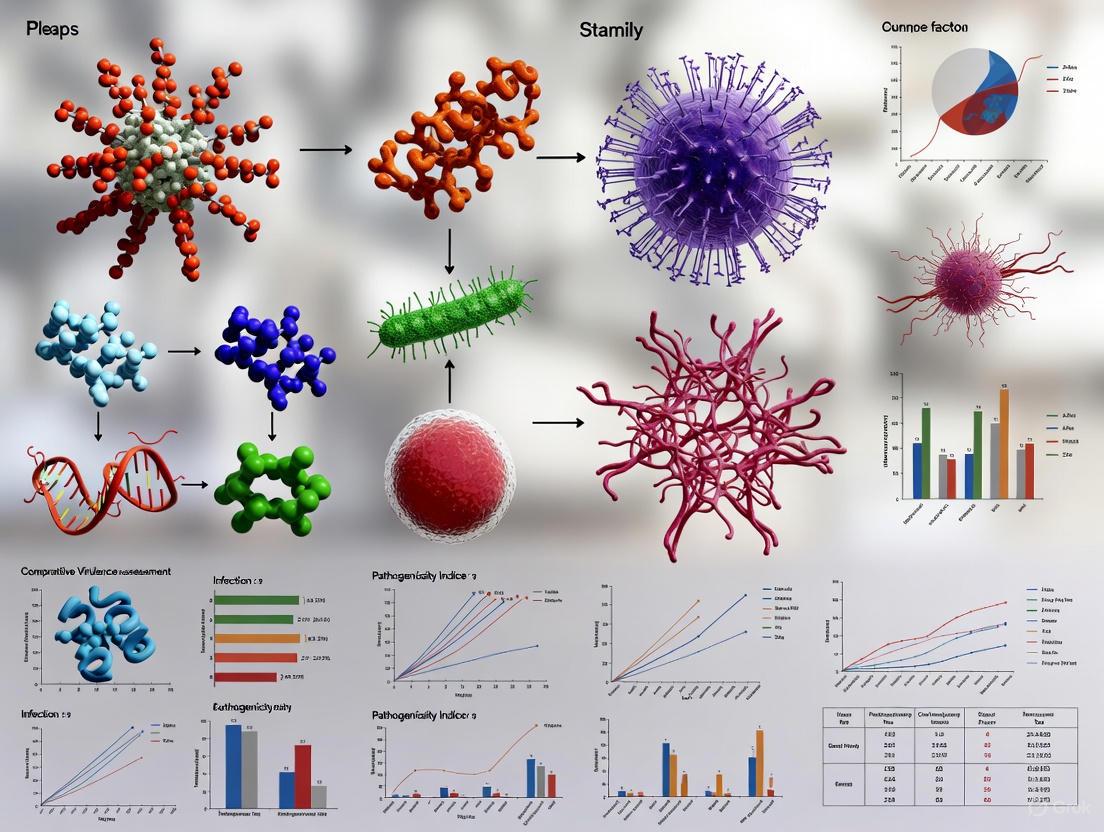
The rapid emergence of novel and often multidrug-resistant bacterial species poses a significant threat to public health, necessitating robust frameworks for their virulence assessment.
Comparative Virulence Assessment of Novel Bacterial Species: Genomic Strategies, Pathogenicity Profiling, and Therapeutic Implications
Abstract
The rapid emergence of novel and often multidrug-resistant bacterial species poses a significant threat to public health, necessitating robust frameworks for their virulence assessment. This article provides a comprehensive resource for researchers and drug development professionals, detailing the integration of comparative genomics, machine learning, and phenotypic assays to systematically evaluate the pathogenic potential of emerging bacteria. We explore foundational concepts of virulence factor diversity, methodological advances in genome-wide association studies (GWAS) and bioinformatics, strategies for troubleshooting analytical challenges, and rigorous validation through in vitro and in vivo models. By synthesizing current methodologies and data resources, this review aims to accelerate the identification of novel virulence determinants and inform the development of targeted anti-virulence therapeutics to combat antibiotic-resistant infections.
Decoding Bacterial Pathogenicity: Core Concepts and Genomic Diversity in Novel Species
Virulence factors are the specialized molecules produced by pathogens that enable them to establish infection, invade host tissues, evade immune responses, and cause disease. Understanding these factors—from adhesins and toxins to immune evasion mechanisms—is fundamental to the field of bacterial pathogenesis and forms the cornerstone of developing novel therapeutic and preventive strategies. This guide provides a comparative analysis of key virulence factors, supported by experimental data and methodologies relevant to researchers and drug development professionals. Through a structured examination of quantitative prevalence studies, functional classifications, and assessment protocols, this article offers a framework for the systematic evaluation of virulence in novel bacterial species, with implications for vaccine design, diagnostics, and anti-virulence therapies.
Comparative Analysis of Virulence Factor Prevalence
The pathogenic potential of a bacterium is largely determined by its repertoire of virulence factors. A network meta-analysis of Staphylococcus aureus isolates provides a model for quantifying the prevalence of adhesion and biofilm-related genes, demonstrating how such data can be used to prioritize targets for intervention [1].
Table 1: Prevalence of Adhesion and Biofilm-Related Genes in Staphylococcus aureus Isolates
| Gene | Function/Category | Prevalence (p-estimate) | 95% Confidence Interval |
|---|---|---|---|
| clfB | Adhesin | 85.4% | 78% - 90.6% |
| eno | Adhesin | 81.1% | 61.7% - 91.9% |
| icaD | Biofilm formation | 77.0% | 68.6% - 83.6% |
| fnbA | Adhesin | 74.6% | 60.3% - 84.9% |
| icaA | Biofilm formation | 71.1% | 57.6% - 81.6% |
| bbp | Adhesin | 18.7% | Data not provided |
| bap | Biofilm formation | 6.7% | Data not provided |
Source: Adapted from Sharifi et al. (2025) [1]
This quantitative analysis reveals that genes like clfB and eno are highly prevalent core virulence factors, while others like bap are rare, suggesting niche-specific roles. The study also identified frequently co-studied gene pairs, such as icaA-icaD (30 times) and fnbA-fnbB (25 times), highlighting functional relationships critical for complex processes like biofilm formation [1]. Subgroup analysis further showed that the source of the isolate (human, animal, or food) can significantly impact gene prevalence; for instance, the occurrence of icaC and icaB was significantly lower in animal isolates compared to others [1]. This structured, data-driven approach is a template for the comparative virulence assessment of novel bacterial species.
Functional Classification of Virulence Factors
Virulence factors can be categorized based on their mechanism of action and distribution across pathogenic and non-pathogenic bacteria. A comparative genomic study of 51 pathogenic bacteria revealed that virulence factors can be divided into two major classes: pathogen-specific VFs and common VFs [2].
Table 2: Functional Distribution of Pathogen-Specific vs. Common Virulence Factors
| Functional Category | Prevalence in Pathogen-Specific VFs | Prevalence in Common VFs | Key Characteristics and Examples |
|---|---|---|---|
| Exotoxins | High (11.77%) | Low (2.70%) | Often strain-specific, potent toxins (e.g., T3SS effectors) [2]. |
| Type IV Secretion System (T4SS) | High (12.26%) | Low (4.09%) | Specialized machinery for effector delivery [2]. |
| Type III Secretion System (T3SS) | Varies (Effector proteins: 5.00%) | Varies (Apparatus proteins: 1.32%) | Effectors are pathogen-specific; structural apparatus proteins can be common [2]. |
| Adhesins | Found in both classes | Found in both classes | Often common VFs; facilitate initial attachment to host cells [3] [4]. |
| Genomic Location | More likely in Pathogenicity Islands (PAIs) | More likely outside of PAIs | Pathogen-specific VFs are frequently acquired via horizontal gene transfer [2]. |
| Protein Complexity | -- | -- | Common VFs tend to be more complex and less compact proteins [2]. |
This classification is crucial for comparative analysis. Pathogen-specific VFs, which account for approximately 31% of all VFs and are often located on pathogenicity islands, are strong candidates for explaining the emergence of pathogenic strains and are prime targets for specific diagnostics [2]. In contrast, common VFs, which make up about 69% of VFs, are involved in general host-microbe interactions and may represent foundational mechanisms that pathogens have co-opted for virulence [2].
Adhesins, Exoenzymes, and Toxins
- Adhesins: These surface-localized molecules, such as proteins or glycoproteins, are critical for the initial step of pathogenesis: attachment to host cells [3] [4]. They can be found on fimbriae (pili) or other surface structures and mediate specific binding to host receptors. For example, type 1 fimbrial adhesin in enterotoxigenic E. coli (ETEC) attaches to mannose glycans on intestinal cells [3].
- Exoenzymes: These extracellular enzymes, such as hydrolases and proteases, allow the pathogen to invade host cells and deeper tissues by breaking down physical barriers [3].
- Toxins: These biological poisons are categorized as either exotoxins or endotoxins [5].
- Exotoxins are proteins secreted by both Gram-positive and Gram-negative bacteria. They are highly potent, often enzyme-like, and can be classified by their target into intracellular-targeting toxins (e.g., cholera toxin), membrane-disrupting toxins, and superantigens [5].
- Endotoxin, also known as lipopolysaccharide (LPS), is a component of the outer membrane of Gram-negative bacteria. Its lipid A component is responsible for triggering a systemic inflammatory response that can lead to septic shock [5].
Table 3: Key Characteristics of Endotoxins vs. Exotoxins
| Characteristic | Endotoxin | Exotoxin |
|---|---|---|
| Source | Gram-negative bacteria | Primarily Gram-positive and some Gram-negative bacteria |
| Composition | Lipid A component of LPS | Protein |
| Effect on Host | General systemic inflammation and fever | Specific, targeted cell damage |
| Heat Stability | Stable | Most are heat-labile |
| Lethal Dose (LD50) | Relatively high (0.24 mg/kg) | Very low (e.g., Botulinum toxin: 0.000001 mg/kg) |
Source: Adapted from Liu et al. [5]
Experimental Protocols for Virulence Assessment
A robust comparative virulence assessment relies on standardized, multi-faceted experimental approaches. The following protocols, drawn from recent studies, provide a framework for evaluating novel bacterial species.
Protocol 1: Genomic Analysis of Virulence Factors
This protocol is used for in silico identification and characterization of virulence factors.
- Genome Sequencing and Assembly: Sequence the bacterial isolate using a long-read platform (e.g., PacBio) to achieve a complete, closed genome [6].
- Gene Annotation: Annotate the genome using tools like Prokka and databases such as VFDB (Virulence Factor Database) to identify putative virulence genes [2] [6].
- Ortholog Analysis: Perform a reciprocal-best-BLAST-hits (RBH) approach against a non-pathogenic bacteria protein database to classify virulence factors as pathogen-specific or common [2].
- Phylogenetic and Comparative Genomics: Conduct multilocus sequence typing (MLST), core-genome SNP (cgSNP) analysis, and compare genomic structures (e.g., pathogenicity islands) to related strains to understand evolutionary relationships and genomic context of virulence factors [6].
Protocol 2:In VitroFunctional Assays
These assays assess the phenotypic expression of virulence factors.
- Biofilm Formation Assay:
- Grow the bacterial strain in a nutrient-rich medium, such as Tryptic Soy Broth (TSB), in a 96-well plate.
- Incubate statically for a defined period (e.g., 24-48 hours) [6].
- Remove planktonic cells, stain the adherent biofilm with crystal violet (0.1%), and dissolve the bound dye in acetic acid (33%).
- Measure the optical density at 570 nm (OD~570~) to quantify biofilm formation relative to control strains [6].
- Cell Adhesion and Invasion Assay:
- Infect a monolayer of cultured host cells (e.g., epithelial cell lines) with bacteria at a specific Multiplicity of Infection (MOI).
- Centrifuge to synchronize infection and incubate.
- For adhesion, wash and lyse cells after a short incubation (e.g., 2 hours) and plate lysates to count adherent bacteria.
- For invasion, after the adhesion step, incubate further with antibiotics (e.g., gentamicin) to kill extracellular bacteria before lysing and plating to count internalized bacteria [7].
Protocol 3:In VivoVirulence Assessment in a Murine Model
This protocol evaluates the overall pathogenic potential in a whole-animal model.
- Animal Infection: Infect groups of mice (e.g., via intraperitoneal injection) with a standardized inoculum of the bacterial strain(s) under investigation [7].
- Disease Monitoring: Monitor and score mice for clinical signs of disease (e.g., lethargy, ruffled fur, weight loss) over a defined period.
- Sample Collection: At predetermined endpoints, collect blood and tissue samples (e.g., spleen, liver) for bacterial load quantification and cytokine analysis [7].
- Cytokine Profiling: Measure serum levels of key cytokines (e.g., IL-6, IL-10, IFN-γ, MCP-1) using multiplex bead-based immunoassays (e.g., Luminex) or ELISA. Elevated levels of specific cytokines are associated with severe disease outcomes [7].
Modeling Immune Evasion Mechanisms
Pathogens employ diverse strategies to evade host immune defenses. Mathematical modeling of whole-blood infection assays can help dissect these complex mechanisms. A state-based model (SBM) framework has been used to compare three primary immune evasion (IE) hypotheses for pathogens like Candida albicans and Staphylococcus aureus [8].
Immune Evasion Mechanisms: This diagram illustrates three core hypotheses for how pathogens become immune-evasive during infection: spontaneous switching (spon-IE), host-mediated induction (PMNmed-IE), and a pre-existing subpopulation (alivePre-IE) [8].
The models are calibrated against time-resolved experimental data, and their quality is assessed using the least-square error (LSE) and the Akaike information criterion (AIC) [8]. This integrated computational and experimental approach allows researchers to reject inadequate hypotheses (e.g., the model including pre-existing killed immune-evasive pathogens) and identify the most plausible mechanisms driving persistence in specific pathogens [8].
The Scientist's Toolkit: Essential Research Reagents
The following table details key reagents and their applications in virulence factor research, as derived from the experimental protocols cited.
Table 4: Essential Research Reagents for Virulence Factor Analysis
| Reagent / Solution | Primary Application | Function in Experimentation |
|---|---|---|
| Tryptic Soy Broth (TSB) | Biofilm formation assay [6] | Nutrient-rich medium that supports robust bacterial growth and biofilm development. |
| Crystal Violet (0.1%) | Biofilm formation assay [6] | Stain that binds to biomass, enabling quantitative measurement of adhered biofilm. |
| Gentamicin | Cell invasion assay [7] | Antibiotic used to kill extracellular bacteria, allowing selective quantification of internalized (invaded) bacteria. |
| Luminex Bead Arrays / ELISA Kits | Cytokine profiling [7] | Multiplex or single-plex immunoassays for quantifying host immune response markers (e.g., IL-6, IFN-γ) in serum or supernatant. |
| Limulus Amebocyte Lysate (LAL) | Endotoxin detection [5] | Aqueous extract of horseshoe crab blood cells used to detect and quantify endotoxin (LPS) via a gel-clot or chromogenic reaction. |
| Specific Cell Lines | Adhesion/Invasion assays [7] | Cultured host cells (e.g., epithelial, endothelial) used as a model system to study pathogen-host cell interactions. |
Comparative virulence assessment reveals that pathogenicity is rarely the product of a single molecule but rather a complex interplay of multiple factors. Studies on diverse pathogens from Staphylococcus aureus to Orientia tsutsugamushi consistently show that virulence is a multifaceted trait, distributed throughout the genome and influenced by a combination of adhesins, toxins, secreted effectors, and immune evasion mechanisms [1] [7]. The most effective strategies for combating bacterial diseases will therefore rely on integrated approaches that combine genomic surveillance, functional in vitro and in vivo assays, and computational modeling. This holistic understanding enables the identification of critical vulnerabilities in pathogenic bacteria, paving the way for novel anti-virulence drugs, targeted vaccines, and improved diagnostic tools for researchers and drug developers.
The remarkable ability of bacterial pathogens to adapt, evolve, and cause disease is encoded within their genomic architecture, which is fundamentally organized into two complementary components: the core genome and the accessory genome. The core genome comprises genes universally present in all strains of a species, maintaining essential cellular functions and housekeeping roles that ensure basic survival [9]. In contrast, the accessory genome consists of genes variably absent or present across different strains, forming a reservoir of specialized functions that enable niche adaptation and pathogenicity [10]. This genetic dichotomy creates a dynamic evolutionary landscape where stable, conserved elements coexist with highly flexible, adaptive components, together shaping the pathogenic potential of bacterial species.
The growing availability of whole-genome sequences has revolutionized our understanding of bacterial population genetics, revealing that the concept of a bacterial species as a genetically discrete entity is often far from absolute [9]. Through comparative genomics, researchers can now delineate how the interplay between core and accessory genomic elements drives the emergence of virulent pathogens, the acquisition of antimicrobial resistance, and the adaptation to specific host environments. This guide provides a comprehensive comparison of these genomic components, detailing their distinct roles in bacterial pathogenesis and the experimental frameworks used to investigate them.
Genomic Architecture: Core vs. Accessory Genome
Defining Characteristics and Functional Roles
The structural and functional distinctions between the core and accessory genome create a complementary system that balances genetic stability with adaptive flexibility.
Table 1: Fundamental Characteristics of Core and Accessory Genomes
| Feature | Core Genome | Accessory Genome |
|---|---|---|
| Definition | Genes present in all strains of a species [9] | Genes variably absent or present across strains [9] |
| Primary Inheritance | Vertical descent [9] | Horizontal gene transfer [10] |
| Genomic Location | Chromosomal, conserved regions | Often on mobile genetic elements (plasmids, genomic islands, phages) [10] |
| Functional Category | Essential housekeeping functions (e.g., DNA replication, protein synthesis, central metabolism) [11] | Niche-specific adaptations (e.g., virulence factors, antibiotic resistance, specialized metabolism) [10] |
| Evolutionary Rate | Lower mutational divergence, conserved sequences [11] | Higher sequence variation, frequent gain/loss events [9] |
| Impact of Loss | Typically lethal | Often non-lethal, context-dependent fitness cost |
The Pan-Genome Concept
The totality of genes found across all strains of a bacterial species constitutes its pan-genome, which encompasses both the core and accessory components [12]. Bacterial species exhibit significant variation in their pan-genome structure, classified as either "open" or "closed." Species with an open pan-genome (e.g., Escherichia coli, Streptococcus pneumoniae) continuously acquire new genes from environmental gene pools, resulting in an accessory genome that expands with each sequenced genome [9]. In contrast, species with a closed pan-genome (e.g., Bacillus anthracis) show minimal new gene acquisition, with a largely fixed genetic repertoire across isolates. The nature of a species' pan-genome profoundly influences its evolutionary trajectory and pathogenic versatility.
Comparative Analysis of Functional Contributions to Pathogenicity
Virulence Mechanisms and Host Adaptation
The pathogenic success of bacteria emerges from sophisticated interactions between core and accessory genomic elements, each contributing distinct yet interconnected virulence mechanisms.
Core Genome Virulence Contributions: While the accessory genome often commands attention for its dramatic virulence factors, the core genome provides fundamental pathogenicity functions. Essential genes maintain the basic cellular processes required for successful infection, including cell wall biosynthesis, nutrient uptake, and energy metabolism [11]. The core genome also encodes components of secretion systems (e.g., Type III, Type VI) that serve as delivery platforms for effector proteins, many of which are themselves accessory elements [13]. Notably, core genes can exhibit higher homologous recombination rates than accessory genes, enhancing selective efficiency in conserved genomic regions and potentially facilitating immune evasion or host adaptation [11].
Accessory Genome Virulence Arsenal: The accessory genome functions as a customizable toolkit for pathogenicity, encoding specialized virulence determinants that enable host colonization, tissue damage, and immune evasion. These include toxins, adhesins, invasins, siderophores, and capsules [10]. For example, in Vibrio cholerae, the genes encoding the lethal cholera toxin are carried on a lysogenic bacteriophage, a classic example of accessory genome acquisition transforming a non-pathogenic strain into a deadly pathogen [10]. Similarly, the emergence of highly virulent Acinetobacter baumannii clones has been linked to the acquisition of specific genomic islands carrying virulence-associated genes [14].
Table 2: Documented Virulence Factors in Selected Bacterial Pathogens
| Bacterial Species | Core Genome Virulence Elements | Accessory Genome Virulence Elements | Experimental Evidence |
|---|---|---|---|
| Escherichia coli | Type 1 fimbriae (fimC gene present in all isolates) [15] | Shiga toxin (stx1), hemolysin (hlyA), bundle-forming pilus (bfpB) [15] | PCR screening of human and canine isolates revealed fimC in 100% of samples, while bfpB varied (46.4-90%) [15] |
| Acinetobacter baumannii | Biofilm-associated protein (Bap), core secretion system components | Type VI secretion system components (hcp-2, vipB/mglB), RTX toxins (rtxC) [14] [13] | Pan-genome analysis of 27,884 genomes identified widespread distribution of virulence genes across strains, with specific elements enriched in epidemic clones [14] |
| Vibrio anguillarum | Chromosomal siderophore biosynthesis genes | Plasmid-encoded siderophore system (pJM1), type VI secretion system components [10] [13] | Comparative genomics of 16 strains identified 118 genomic plasticity regions carrying virulence factors; plasmid pJM1 essential for fish virulence [10] [13] |
| Klebsiella pneumoniae | Fimbrial operons (fim), capsular polysaccharide synthesis genes | Iron acquisition systems, hypermucoidy regulators, metalloenzymes [16] | Genomic analysis of wet market isolates identified complete fim and mrk (core) biofilm operons alongside accessory siderophores [16] |
Antimicrobial Resistance Mechanisms
The escalating crisis of antimicrobial resistance (AMR) is profoundly linked to the dynamic interplay between core and accessory genomes, with each component contributing distinct resistance mechanisms.
Core Genome Resistance: The core genome can develop resistance through spontaneous mutations in chromosomal genes encoding drug targets or regulatory elements. For example, mutations in genes encoding DNA gyrase (gyrA, gyrB) or topoisomerase IV (parC, parE) confer resistance to fluoroquinolones, while alterations in ribosomal RNA genes can enable aminoglycoside resistance. These mutations typically emerge under selective pressure and can spread vertically within clonal lineages.
Accessory Genome Resistance: The accessory genome serves as the primary reservoir for horizontally acquired resistance determinants, including genes encoding antibiotic-inactivating enzymes, efflux pumps, and modified targets. These genes are frequently clustered on mobile genetic elements such as plasmids, transposons, and integrons, enabling rapid dissemination across diverse bacterial populations [10]. In Klebsiella pneumoniae, environmental isolates have been found to carry accessory genes for efflux pumps (acrAB, oqxAB) that confer resistance to multiple drug classes [16].
Table 3: Antimicrobial Resistance Mechanisms in Bacterial Genomes
| Resistance Mechanism | Core Genome Association | Accessory Genome Association |
|---|---|---|
| Antibiotic Inactivation | Rare (occasionally mutated chromosomal enzymes) | Common (e.g., β-lactamases, aminoglycoside-modifying enzymes) [16] |
| Target Modification | Mutations in drug target genes (e.g., rpoB for rifampin) | Acquired genes encoding alternative, resistant targets (e.g., mecA for methicillin) |
| Efflux Pumps | Chromosomally encoded regulatable pumps | Acquired pumps with specific resistance profiles (e.g., tet genes for tetracycline) [16] |
| Cellular Permeability | Mutations in porin genes | Acquired genes encoding membrane modifications |
Experimental Approaches for Comparative Pathogenomics
Genomic Sequencing and Analysis Workflows
Contemporary comparative pathogenomics relies on integrated experimental and computational workflows that enable comprehensive characterization of both core and accessory genomic components across multiple bacterial isolates.
Detailed Methodological Protocols
Pan-Genome Analysis Pipeline
Objective: To characterize the core and accessory genomic components across multiple bacterial isolates and identify strain-specific virulence associations.
Materials and Reagents:
- Pure bacterial genomic DNA (extracted using kits such as PureLink Microbiome DNA Purification Kit) [16]
- Sequencing platforms (Illumina HiSeq/MiSeq for coverage; Oxford Nanopore/PacBio for completeness) [16]
- Bioinformatics tools: Roary for pan-genome analysis, Prokka for genome annotation, Gegenees for fragmented genome alignment [14] [9]
Procedure:
- Genome Sequencing and Assembly: Sequence genomic DNA using an appropriate platform. Assemble reads into contigs using hybrid assemblers when combining short and long-read technologies. Assess assembly quality using metrics (e.g., BUSCO scores ≥95%) [16].
- Genome Annotation: Annotate all coding sequences (CDS), ribosomal RNAs, and transfer RNAs using Prokka or similar annotation pipelines [14].
- Pan-Genome Calculation: Input annotated genome files into Roary to identify orthologous gene clusters. Standard parameters typically employ a BLASTP identity threshold of 95% for assigning gene clusters [14].
- Core/Accessory Categorization: Genes present in 99-100% of strains are typically classified as core genome; those in lower percentages are considered accessory [9].
- Phylogenetic Analysis: Construct a core genome phylogeny using concatenated alignments of universal single-copy core genes with tools such as IQ-TREE.
- Virulence Correlation: Map the distribution of known virulence factors (from databases like VFDB) onto phylogenetic trees to identify associations between accessory gene content and pathogenic potential [14].
Virulence Gene Detection via PCR
Objective: To rapidly screen bacterial isolates for specific virulence determinants located in either core or accessory genomic regions.
Materials and Reagents:
- PCR reagents: Taq polymerase, dNTPs, primer sets for target virulence genes, buffer solutions
- Reference strains: Positive controls for each target gene (e.g., E. coli ATCC 35401 for elt gene) [15]
- Electrophoresis equipment: Agarose gels, DNA staining, visualization system
Procedure:
- DNA Extraction: Prepare bacterial DNA templates using boiling method or commercial kits [15].
- Primer Design: Select primers specific to target virulence genes (e.g., bfpB, stx1, hlyA, fimC) with published sequences and expected product sizes [15].
- PCR Amplification: Set up reactions with initial denaturation (94°C, 5 min), followed by 30 cycles of denaturation (94°C, 30 s), annealing (temperature gradient, 30 s), and extension (72°C, 1.5 min), with final extension (72°C, 5 min) [15].
- Amplicon Analysis: Separate PCR products by agarose gel electrophoresis, visualize amplification, and confirm product sizes against references.
- Data Interpretation: Classify detected genes as core (present in all isolates) or accessory (variable presence) based on distribution patterns across isolates [15].
Case Studies in Comparative Pathogenomics
Pseudomonas aeruginosa: Environmental Isolate Pathogenic Potential
A comprehensive genomic analysis of the environmental P. aeruginosa isolate KRP1 demonstrated how comparative genomics can predict pathogenic potential without extensive animal testing. Researchers sequenced KRP1 and compared it to over 100 publicly available P. aeruginosa genomes, identifying 17 genomic islands and 8 genomic islets that marked most of the accessory genome (~12% of the total genome) [17]. Through this analysis, they discovered that KRP1 shared substantial genomic information with the highly virulent strains PSE9 and LESB58, whose increased virulence had been directly linked to their accessory genome content. Specifically, KRP1 contained pathogenicity islands (PAPI) and genomic islands (PAGI) associated with enhanced virulence in clinical strains, enabling researchers to predict its pathogenic potential through in silico analysis alone [17].
Vibrio anguillarum: Serotype-Specific Genomic Adaptations
A multiscale comparative pathogenomic analysis of 16 V. anguillarum strains revealed how serotype diversity reflects genomic plasticity and pathogenicity. The study found that V. anguillarum has an open pan-genome with 2,038 core genes and 5,197 cloud (rare) genes, with 118 genomic plasticity regions highlighting extensive horizontal gene transfer [13]. Phylogenetic analysis showed serotype-specific clustering, with O1 strains displaying genetic homogeneity while O2 and O3 exhibited divergence, suggesting distinct evolutionary adaptations influencing pathogenicity. The research identified key virulence factors in the accessory genome, including type VI secretion system (T6SS) components (hcp-2, vipB/mglB) and RTX toxins (rtxC), which contribute to the strain-specific pathogenic profiles observed in this marine fish pathogen [13].
Orientia tsutsugamushi: Multifaceted Virulence Determinants
A comparative virulence analysis of seven diverse O. tsutsugamushi strains revealed a complex interplay of virulence factors distributed throughout the genome rather than localized to specific regions. The study combined murine infections with epidemiological human data to rank strains by relative virulence, finding that the most virulent strains (Ikeda and Kato) induced higher levels of proinflammatory cytokines [7]. Genomic comparisons showed no single gene or gene group correlated with virulence; instead, pathogenicity appeared to be distributed throughout the genome, likely in the large and varying arsenal of effector proteins encoded by different strains, particularly ankyrin repeat proteins (Anks) and tetratricopeptide repeat proteins (TPRs) located in highly variable genomic regions [7].
Table 4: Key Research Reagents and Computational Tools for Pathogenomics
| Resource Category | Specific Tools/Reagents | Primary Application | Technical Notes |
|---|---|---|---|
| Sequencing Platforms | Illumina HiSeq/NovaSeq, Oxford Nanopore, PacBio | Whole genome sequencing | Illumina for accuracy; long-read technologies for resolution of repetitive regions [16] |
| Genome Annotation | Prokka, RAST | Automated genome annotation | Prokka provides rapid annotation for prokaryotic genomes [14] |
| Pan-Genome Analysis | Roary, PanX, Anvio | Core/accessory genome determination | Roary can process thousands of genomes efficiently; visualizations with Phandango [14] |
| Comparative Genomics | Gegenees, BLAST, Mauve | Genome alignment and similarity assessment | Gegenees uses fragmented alignment for average nucleotide identity [9] |
| Virulence Factor DBs | Virulence Factor Database (VFDB), PATRIC | Identification of known virulence factors | Abricate tool can screen genomes against VFDB [14] |
| AMR Gene Detection | AMRFinderPlus, CARD, ResFinder | Identification of antimicrobial resistance genes | AMRFinderPlus integrates with NCBI pipeline for comprehensive screening [14] |
| Phylogenetic Analysis | IQ-TREE, RAxML, FastTree | Phylogenetic reconstruction from core genes | Core genome SNP phylogenies offer highest resolution [17] |
| Genomic Island Prediction | IslandPath-DIMOB, SIGI-HMM, PHASTER | Identification of horizontally acquired regions | Combined use of multiple tools recommended for comprehensive detection [17] |
The pathogenic potential of bacterial species emerges from the sophisticated interplay between their conserved core genome and dynamic accessory genome. The core genome provides essential cellular functions and evolutionary stability, while the accessory genome offers adaptive flexibility through horizontal gene transfer. This genomic duality enables bacterial pathogens to maintain basic viability while rapidly acquiring specialized virulence determinants and resistance mechanisms in response to selective pressures.
Contemporary comparative pathogenomics, powered by high-throughput sequencing and bioinformatic analysis, provides researchers with unprecedented capability to decipher this complex genomic landscape. By integrating pan-genome analysis, virulence factor screening, and phylogenetic reconstruction, scientists can now predict pathogenic potential, trace outbreak lineages, and identify emerging threats with increasing precision. As these methodologies continue to evolve, they will undoubtedly yield new insights into the fundamental mechanisms of bacterial pathogenesis and inform the development of novel therapeutic strategies to combat increasingly resistant pathogens.
The Virulence Factor Database (VFDB) is an integrated and comprehensive online resource dedicated to curating information about virulence factors (VFs) of bacterial pathogens. Since its inception in 2004, VFDB has provided the scientific community with up-to-date knowledge of VFs from various medically significant bacterial pathogens, facilitating research into bacterial pathogenesis and the development of novel therapeutic strategies [18]. The database was initially motivated by the need to provide in-depth coverage of major virulence factors from well-characterized bacterial pathogens, detailing their structural features, functions, and mechanisms that enable pathogens to conquer new niches, circumvent host defenses, and cause disease [18]. A second key motivation was to organize current knowledge of the diverse mechanisms employed by bacterial pathogens, thereby enabling researchers to elucidate pathogenic mechanisms in poorly characterized bacterial diseases and develop rational new approaches to treating and preventing infectious diseases [18].
In the context of comparative virulence assessment for novel bacterial species research, VFDB serves as an essential reference database and analysis platform. It has evolved significantly from a simple repository to a sophisticated pathogenomics platform that supports the identification and characterization of virulence factors in bacterial genomes, including those from newly sequenced or emerging pathogens [19]. With the rapid development of next-generation sequencing technologies and the increasing availability of bacterial genome sequences, VFDB has incorporated tools like VFanalyzer to automatically identify known and potential virulence factors in complete or draft bacterial genomes, making it particularly valuable for researchers studying novel bacterial species [18] [19].
VFDB in the Context of Alternative Virulence Factor Identification Tools
Several computational approaches exist for identifying virulence factors in bacterial genomes, each with distinct methodologies and applications. Table 1 provides a comparative overview of VFDB and other prominent tools, highlighting their key features, strengths, and limitations.
Table 1: Comparison of Virulence Factor Identification Tools and Databases
| Tool/Database | Primary Methodology | Key Features | Strengths | Limitations |
|---|---|---|---|---|
| VFDB | Curated database + VFanalyzer pipeline (ortholog grouping + iterative BLAST + contextual analysis) | Comprehensive VF collection; General VF classification scheme; Anti-virulence compounds data | High-quality curated data; User-friendly web interface; Regular updates; Covers 32 bacterial genera | Limited to medically significant pathogens; No built-in AMR prediction |
| Network-Based Method | Protein-protein interaction networks from STRING database | Functional association analysis (gene neighborhood, co-occurrence) | High accuracy (~0.9); Identifies novel VFs beyond sequence similarity | Limited to species with PPI network data; Less useful for novel pathogens |
| PathoFact | HMM profiles + random forest model + mobile genetic element context | Simultaneous prediction of VFs, toxins, and antimicrobial resistance genes | Integrates MGE context; Modular workflow; Good specificity (0.957 for VFs) | Lower sensitivity for toxin prediction (0.832); Limited to metagenomic assemblies |
| Sequence-Based Methods (BLAST, VirulentPred) | Sequence similarity (BLAST) or machine learning based on sequence features | Rapid identification based on homology or sequence patterns | Fast and straightforward; Widely accessible | Limited to conserved VFs; Poor performance for novel VFs |
Performance Comparison and Experimental Data
Evaluations of these different methodologies have demonstrated varying performance characteristics. A 2012 study comparing computational methods for identifying virulence factors found that a network-based approach using protein-protein interaction data from the STRING database achieved significantly higher accuracy (approximately 0.9) compared to sequence-based methods like BLAST, feature selection, and VirulentPred [20]. The study revealed that functional associations such as gene neighborhood and co-occurrence were the primary associations between virulence factors in the STRING database, enabling more reliable identification beyond simple sequence similarity [20].
More recently, PathoFact, a tool designed for predicting virulence factors, bacterial toxins, and antimicrobial resistance genes in metagenomic data, demonstrated high accuracy and specificity in evaluations. Specifically, it achieved accuracy scores of 0.921 for virulence factors, 0.832 for bacterial toxins, and 0.979 for antimicrobial resistance genes, with corresponding specificities of 0.957, 0.989, and 0.994, respectively [21]. When compared to other metagenomic analysis workflows (MOCAT2 and HUMANn3), PathoFact outperformed all existing workflows in predicting virulence factors and toxin genes, while performing comparably to one pipeline for antimicrobial resistance prediction [21].
VFDB's VFanalyzer employs a more sophisticated approach than simple BLAST searches, incorporating ortholog identification, hierarchical sequence similarity searches, and contextual validation to achieve relatively high specificity and sensitivity without manual curation [19]. This makes it particularly valuable for accurate virulence factor identification in novel bacterial species where simple homology searches might yield false positives or miss divergent virulence factors.
VFDB Technical Specifications and Analytical Capabilities
Database Content and Classification Scheme
The VFDB provides a systematically organized repository of bacterial virulence factors with a coherent classification scheme designed to facilitate pan-bacterial analyses. The database covers virulence factors from 32 genera of medically important bacterial pathogens, making it highly relevant for researchers studying novel bacterial species with potential clinical significance [22]. A significant update in 2022 introduced a general classification scheme for bacterial virulence factors that organizes all known VFs into 14 basal categories with over 100 subcategories in a hierarchical architecture [22].
Table 2: VFDB Virulence Factor Classification Categories (2022 Scheme)
| VF Category | Representative Subcategories | Number of VFs |
|---|---|---|
| Adherence | Fimbrial adhesin, Non-fimbrial adhesin | 1,885 |
| Invasion | - | 391 |
| Effector Delivery System | Type II-VII secretion systems | 1,242 |
| Motility | Flagella-mediated motility, Intracellular motility | 189 |
| Exotoxin | Membrane-acting toxin, Intracellularly active toxin | 1,101 |
| Exoenzyme | Hyaluronidase, Kinase, Coagulase, Lipase, Protease, Nuclease | 522 |
| Immune Modulation | Antiphagocytosis, Complement evasion, Apoptosis, Inflammatory signaling | 1,540 |
| Biofilm | Biofilm formation, Quorum sensing | 297 |
| Nutritional/Metabolic Factor | Metal uptake, Metabolic adaptation | 1,912 |
| Stress Survival | - | 492 |
| Regulation | - | 1,140 |
| Others | - | 427 |
This comprehensive classification system enables researchers to systematically categorize virulence factors from novel bacterial species and compare them across different pathogens, supporting comparative virulence assessments in evolutionary and mechanistic contexts [22].
VFanalyzer: Automated Virulence Factor Identification Pipeline
VFanalyzer represents VFDB's integrated pipeline for automatically identifying known and potential virulence factors in bacterial genomes. Unlike conventional methods that rely solely on BLAST searches, VFanalyzer implements a sophisticated multi-step process illustrated in Figure 1 below.
Figure 1: VFanalyzer Workflow for Virulence Factor Identification
The VFanalyzer pipeline begins with whole-genome ortholog identification using OrthoMCL to compare the query genome with pre-analyzed reference genomes from VFDB, avoiding potential false positives due to paralogs [19]. Genes explicitly assigned to orthologous groups shared with reference genomes are tagged as potential VF-related genes. Subsequently, untagged genes undergo hierarchical and iterative similarity searches against VFDB's datasets: first against experimentally verified VFs from the same genus, then predicted VFs from the same genus, and finally VFs from other genera [19]. This iterative approach with strict cutoffs helps identify untypical or strain-specific VFs. For highly divergent proteins, VFanalyzer uses hidden Markov models to identify conserved protein domains. Finally, a context-based refinement process checks for collinearity in VFs encoded by gene clusters and attempts to recover missing components using deliberately loosened similarity criteria within specific genomic locations [19].
Anti-Virulence Compounds Resource
A notable recent addition to VFDB is the comprehensive dataset of anti-virulence compounds, reflecting the growing interest in anti-virulence therapeutic strategies as alternatives to conventional antibiotics. As of the 2025 update, VFDB has curated a comprehensive dataset of 902 anti-virulence compounds across 17 superclasses reported by 262 studies worldwide [23]. These compounds are systematically categorized and integrated with information on target pathogens and virulence factors, creating a valuable resource for drug discovery and repurposing efforts [18] [23].
The anti-virulence compounds data reveals current research trends, showing that approximately two-thirds of explored compounds target VFs involved in biofilm formation, effector delivery systems, and exoenzymes [23]. This distribution aligns with pathogenic mechanisms, as biofilms enhance resistance to host immunity and antibiotics, often contributing to chronic infections. Despite significant growth in anti-virulence research over the past two decades, most compounds (approximately 78%) remain in preclinical stages, with only four having progressed to clinical trials [23]. Furthermore, about 40% of compiled compounds lack detailed molecular mechanism information and cannot be linked to specific target VFs [23].
Experimental Protocols for Virulence Assessment Using VFDB
Standard Workflow for Novel Bacterial Species Characterization
Researchers investigating novel bacterial species can follow a systematic protocol for virulence assessment using VFDB:
Genome Sequencing and Quality Control: Obtain high-quality complete or draft genome sequences using appropriate sequencing platforms (Illumina, PacBio, or Oxford Nanopore). For VFanalyzer, complete or nearly complete draft genomes are required as initial queries [19].
Data Preparation: Prepare genome data in acceptable formats: raw FASTA sequences, pre-annotated genomes in GenBank format, or predicted protein sequences.
VFanalyzer Submission: Submit genome data to VFanalyzer through the VFDB website. The system will assign a unique job ID for tracking progress and retrieving results.
Results Retrieval and Interpretation: Access the VFanalyzer report presented in a concise table with comparative pathogenomic compositions. The report identifies known and potential virulence factors, classified according to VFDB's categorization scheme.
Comparative Analysis: Compare the virulence profile of the novel species with related pathogens using VFDB's built-in comparative tools, focusing on presence/absence of key virulence factors and their genomic organization.
Contextual Validation: For virulence factors identified through similarity searches, examine genomic context (e.g., operon organization, proximity to mobile genetic elements) to support functional predictions.
Case Study: Virulence Assessment of Aliarcobacter Species
A 2022 study demonstrates the application of VFDB in assessing the virulence potential of novel Aliarcobacter species (A. faecis and A. lanthieri) through comparative genomics analysis [24]. Researchers performed whole-genome sequencing of reference strains, followed by comprehensive virulence factor identification using VFDB and related resources.
The analysis revealed that both species contained genes associated with virulence, including flagella genes for motility and export apparatus, genes encoding secretion pathways (Tat, type II, and type III), and invasion and immune evasion genes (ciaB, iamA, mviN, pldA, irgA, and fur2) [24]. Adherence genes (cadF and cj1349) were uniquely identified in A. lanthieri, while acid, heat, osmotic, and low-iron stress resistance genes were present in both species [24]. Experimental validation using PCR assays confirmed the presence of 11 virulence, antibiotic-resistance, and toxin genes, with A. lanthieri testing positive for all 11 genes [24].
This case study illustrates how VFDB can support the identification of virulence-related factors in novel bacterial species, generating testable hypotheses about pathogenic mechanisms and potential clinical significance.
Essential Research Reagent Solutions for Virulence Assessment
Table 3: Key Research Reagents and Resources for Virulence Factor Analysis
| Research Reagent/Resource | Function in Virulence Assessment | Application Notes |
|---|---|---|
| VFDB Database | Comprehensive reference for known virulence factors and classification | Essential for comparative analysis; Regularly updated with new VFs and features |
| VFanalyzer Pipeline | Automated identification of VFs in bacterial genomes | Requires complete/draft genomes; Provides comparative pathogenomics reports |
| Anti-Virulence Compounds Dataset | Resource for identifying potential virulence-targeting therapeutics | Useful for drug discovery and repurposing; Links compounds to target VFs |
| OrthoMCL Software | Ortholog group identification between multiple genomes | Used by VFanalyzer for initial gene classification; Reduces false positives from paralogs |
| HMMER3 Package | Protein domain identification using hidden Markov models | Identifies divergent VFs with conserved domains; Complementary to BLAST searches |
| STRING Database | Protein-protein interaction network data | Enables network-based VF identification; Useful for novel VF discovery |
| PathoFact Pipeline | Simultaneous prediction of VFs, toxins, and AMR genes | Particularly useful for metagenomic data; Provides MGE context |
VFDB represents a sophisticated and continuously evolving resource that significantly enhances our capacity to identify and characterize virulence factors in novel bacterial species. Its strengths lie in the comprehensive curated dataset, systematic classification scheme, and powerful analytical tools like VFanalyzer, which together provide researchers with a robust platform for comparative virulence assessment. While alternative approaches such as network-based methods and integrated pipelines like PathoFact offer complementary capabilities, VFDB remains a cornerstone resource for pathogenicity research, particularly for studies involving medically significant bacterial pathogens.
The recent expansion of VFDB to include anti-virulence compounds further extends its utility beyond basic pathogenicity assessment to therapeutic development, addressing the critical need for novel strategies to combat antibiotic-resistant infections. For researchers investigating novel bacterial species, VFDB provides essential tools and reference data to systematically evaluate virulence potential, generate testable hypotheses about pathogenic mechanisms, and facilitate the development of targeted therapeutic interventions.
The genus Aliarcobacter, a member of the Campylobacteraceae family, comprises Gram-negative, curved-shaped bacteria that are emerging as significant foodborne and zoonotic pathogens [25]. While species like A. butzleri, A. cryaerophilus, and A. skirrowii are established human pathogens associated with gastroenteritis, bacteremia, and reproductive disorders [26], newly identified species such as A. faecis and A. lanthieri present a new frontier in understanding bacterial pathogenesis [27]. These emerging species, isolated from human and livestock feces, represent a potential threat to public health due to their uncertain pathogenic potential and genetic proximity to known zoonotic pathogens [26] [28]. This case study employs a comparative genomics framework to identify and characterize novel virulence factors in these emerging Aliarcobacter species, providing researchers and drug development professionals with critical insights into their pathogenicity mechanisms and potential intervention strategies.
Comparative Genomic Analysis of Virulence-Associated Genes
Methodology for Genomic Characterization
The identification of virulence factors in emerging Aliarcobacter species relied on comprehensive comparative genomics approaches. Reference strains of A. faecis (AF1078T) and A. lanthieri (AF1440T) were cultured on modified Agarose Medium (m-AAM) containing selective antibiotic supplements (cefoperazone, amphotericin-B, and teicoplanin) under microaerophilic conditions (85% N2, 10% CO2, and 5% O2) at 30°C for 3-6 days [26]. Genomic DNA was extracted using the Wizard Genomic DNA purification kit, with concentration determined via Qubit 2.0 Fluorometer [26]. Whole-genome sequencing was performed on the Illumina HiSeq 2500 platform, generating 2×101 bp paired-end reads, with mate-pair sequencing conducted using the Nextera Mate Pair kit [26]. Virulence-associated genes were identified through comparative analysis with known virulence determinants in related pathogenic species.
Virulence Factor Distribution Across Aliarcobacter Species
Table 1: Distribution of key virulence-associated genes in Aliarcobacter species
| Virulence Category | Specific Genes | A. faecis | A. lanthieri | A. butzleri |
|---|---|---|---|---|
| Adherence | cadF | Absent | Present | Present [29] |
| cj1349 | Absent | Present | Present [29] | |
| Invasion & Immune Evasion | ciaB | Present | Present | Present [29] |
| iamA | Present | Present | Not reported | |
| mviN | Present | Present | Present [29] | |
| pldA | Present | Present | Present [29] | |
| irgA | Present | Present | Present [29] | |
| fur2 | Present | Present | Not reported | |
| Flagellar Assembly & Motility | flaA, flaB, flgG, flhA, flhB, fliI, fliP, motA, cheY1 | Present | Present | Variable |
| Secretion Systems | tatA, tatB, tatC (Twin-arginine translocation) | Present | Present | Present |
| pulE, pulF (Type II) | Present | Present | Present | |
| fliF, fliN, ylqH (Type III) | Present | Present | Present | |
| Stress Resistance | clpB (acid/heat) | Present | Present | Variable |
| clpA (heat) | Present | Present | Variable | |
| mviN (osmotic) | Present | Present | Present [29] | |
| irgA, fur2 (low-iron) | Present | Present | Present [29] | |
| Toxin Production | cdtA, cdtB, cdtC (cytolethal distending toxin) | cdtA, cdtC present* | Present | Variable |
Note: *A. faecis showed positive for ten virulence, antibiotic-resistance, and toxin (VAT) genes except for cdtB because no PCR assay was available for this gene in this species [26].
The genomic analysis revealed that A. lanthieri possesses a more comprehensive arsenal of adherence genes compared to A. faecis, with both cadF and cj1349 (encoding fibronectin-binding proteins that promote bacterial binding to intestinal cells) present only in A. lanthieri [26]. Both species shared invasion and immune evasion genes including ciaB (Campylobacter invasive antigen B), mviN (essential for peptidoglycan biosynthesis), pldA (outer membrane phospholipase A associated with erythrocyte lysis), and iron acquisition genes (irgA and fur2) [26] [29]. The presence of a complete flagellar assembly system in both species indicates motility capability, a key virulence attribute for gastrointestinal pathogens [26].
Figure 1: Virulence factor landscape in emerging Aliarcobacter species
Experimental Validation of Virulence Potential
PCR-Based Detection of Virulence, Antibiotic Resistance, and Toxin Genes
To validate in silico predictions, researchers conducted PCR assays targeting 11 virulence, antibiotic resistance, and toxin (VAT) genes in both emerging Aliarcobacter species [26]. These included six virulence genes (cadF, ciaB, irgA, mviN, pldA, and tlyA), two antibiotic resistance genes (tet(O) and tet(W)), and three cytolethal distending toxin genes (cdtA, cdtB, and cdtC) [26]. A. lanthieri tested positive for all 11 VAT genes, while A. faecis showed positivity for ten genes except for cdtB (no PCR assay was available for this gene in A. faecis) [26]. The presence of cytolethal distending toxin genes is particularly significant as this toxin causes cell cycle arrest and apoptosis in eukaryotic cells, representing a key virulence mechanism in related pathogens.
Phenotypic Virulence Assays
Beyond genetic characterization, phenotypic assays provide functional validation of virulence potential. Adhesion and invasion capabilities have been demonstrated in A. butzleri through Caco-2 cell line infection assays [29]. In these experiments, bacterial strains are incubated with human intestinal epithelial cells, followed by washing and gentamicin protection assays to quantify adhered and internalized bacteria [29]. Cytotoxicity testing using Vero cells has revealed that Aliarcobacter isolates can induce cell elongation and vacuole formation, indicating active toxin production [28]. Motility assays confirm the functional expression of flagellar genes, showing characteristic spreading patterns in semi-solid agar [29].
Table 2: In vitro pathogenicity profiles of Aliarcobacter species
| Pathogenicity Assay | Experimental Method | A. butzleri Results | A. faecis & A. lanthieri Predictions |
|---|---|---|---|
| Cell Adhesion | Caco-2 adhesion assay | 4.2-8.7% adhesion rate [30] | Predicted based on cadF, cj1349 presence |
| Cell Invasion | Gentamicin protection assay | 0.3-1.5% invasion rate [30] | Predicted based on ciaB presence |
| Cytotoxicity | Vero cell elongation & vacuolation | 95% of isolates positive [28] | Predicted based on cdt genes |
| Motility | Spreading in semi-solid agar | Positive [29] | Predicted based on flagellar genes |
| Biofilm Formation | Microtiter plate assay | Weak to moderate [31] | Not determined |
| Hemolytic Activity | Blood agar lysis | Positive [29] | Predicted based on pldA, tlyA |
For in vivo assessment, the rabbit ileal loop model has demonstrated that A. butzleri can induce intestinal hemorrhage and destruction of intestinal crypts [31]. In chicken inoculation studies, A. butzleri infection resulted in mild diarrhea, intestinal hyperemia, and inflammatory infiltrate in the lamina propria [31]. These experimental models provide valuable insights into the potential pathogenic effects of the emerging Aliarcobacter species, which share many virulence genes with A. butzleri.
Antimicrobial Resistance Profiles
Methodologies for Antimicrobial Susceptibility Testing
Antimicrobial susceptibility testing of Aliarcobacter species presents methodological challenges due to the lack of standardized protocols specifically developed for this genus [25]. Current approaches typically use either the gradient strip diffusion method (E-test) or broth microdilution method [25] [31]. For gradient testing, bacterial suspensions are adjusted to an optical density of 0.1 at 600 nm (approximately 3-5 × 10^8 cfu/mL) in phosphate-buffered saline, spread on Mueller-Hinton agar plates, and incubated for 48 hours at 30°C under microaerophilic conditions before determining minimum inhibitory concentrations (MICs) [25] [32]. Interpretation criteria typically rely on EUCAST breakpoints for Campylobacter jejuni/coli (for macrolides, fluoroquinolones, and tetracyclines) and Enterobacterales (for aminoglycosides and β-lactams) in the absence of species-specific breakpoints [25] [32].
Resistance Mechanisms and Prevalence
Table 3: Antimicrobial resistance profiles in Aliarcobacter species
| Antibiotic Class | Specific Antibiotic | A. butzleri Resistance Rate | Resistance Mechanisms |
|---|---|---|---|
| Macrolides | Erythromycin | 71.1% (32/45 strains) [32] | Unknown efflux mechanisms |
| Azithromycin | 11.1% (3/27 strains) [31] | Unknown efflux mechanisms | |
| Tetracyclines | Tetracycline | 3.7% (1/27 strains) [31] | tet(O), tet(W) genes [26] |
| Doxycycline | 57.8% (26/45 strains) [32] | tet(O), tet(W) genes [26] | |
| Fluoroquinolones | Ciprofloxacin | 4.4% (2/45 strains) [32] | gyrA mutations (Thr-85-Ile) [32] |
| Aminoglycosides | Streptomycin | 86.7% (39/45 strains) [32] | Unknown mechanisms |
| Gentamicin | 0% (0/27 strains) [31] | - | |
| Lincosamides | Clindamycin | 77.7% (21/27 strains) [31] | Unknown mechanisms |
| Amphenicols | Florfenicol | 62.9% (17/27 strains) [31] | Unknown mechanisms |
Genomic analysis has identified several antimicrobial resistance genes in emerging Aliarcobacter species. Both A. faecis and A. lanthieri possess arcB, gyrA, and gyrB genes, mutations in which may mediate resistance to quaternary ammonium compounds (QACs) [26]. The identification of tet(O) and tet(W) genes in both species [26] correlates with the observed tetracycline resistance in A. butzleri (3.7% resistance to tetracycline, 57.8% to doxycycline) [32] [31]. A significant finding is the correlation between a specific gyrA point mutation (Thr-85-Ile) and ciprofloxacin resistance in A. butzleri [32], highlighting the importance of target gene mutations in resistance development.
The Scientist's Toolkit: Essential Research Reagents and Materials
Table 4: Key research reagent solutions for Aliarcobacter virulence studies
| Reagent/Material | Specific Product Examples | Application in Aliarcobacter Research |
|---|---|---|
| Culture Media | Modified Agarose Medium (m-AAM) | Selective isolation [26] |
| Arcobacter broth with CAT supplement | Enrichment culture [25] | |
| Mueller-Hinton agar with 5% blood | Antimicrobial susceptibility testing [25] | |
| Antibiotic Supplements | Cefoperazone, Amphotericin, Teicoplanin (CAT) | Selective inhibition of contaminants [26] |
| DNA Extraction Kits | Wizard Genomic DNA Purification Kit | High-quality DNA for sequencing [26] |
| High Pure PCR Template Preparation Kit | Rapid DNA extraction for PCR [25] | |
| Identification Systems | MALDI-TOF MS with Bruker Biotyper | Species identification [25] |
| Multiplex PCR assays | Species confirmation and virulence gene detection [28] | |
| Cell Lines | Caco-2 human intestinal epithelial cells | Adhesion and invasion assays [29] |
| Vero cells | Cytotoxicity testing [31] | |
| Antimicrobial Testing | E-test strips | MIC determination [25] |
| Broth microdilution panels | Standardized MIC testing [31] |
Figure 2: Experimental workflow for Aliarcobacter virulence factor research
Discussion and Research Implications
The comprehensive characterization of virulence factors in emerging Aliarcobacter species reveals significant pathogenic potential that warrants further investigation. The genetic repertoire of A. faecis and A. lanthieri includes sophisticated secretion systems, toxin production capabilities, stress response mechanisms, and adherence apparatus that collectively enable host colonization and pathogenesis [26]. The presence of cytolethal distending toxin genes in A. lanthieri is particularly concerning, as this toxin represents a major virulence mechanism in related gastrointestinal pathogens.
The differential distribution of virulence factors between species highlights the importance of strain-specific pathogenicity assessments. While A. lanthieri possesses a more complete set of adherence genes (cadF and cj1349), both species share invasion-related genes that may facilitate host cell penetration [26]. This variation may result in different clinical manifestations and infection courses, emphasizing the need for species-level identification in clinical settings.
From a therapeutic perspective, the identification of antimicrobial resistance genes in these emerging pathogens is significant for public health planning. The presence of tet(O) and tet(W) genes correlates with observed tetracycline resistance in clinical Aliarcobacter isolates [26] [31], while the gyrA mutation (Thr-85-Ile) associated with fluoroquinolone resistance in A. butzleri [32] represents a potential resistance mechanism that may emerge in these novel species under antimicrobial selection pressure.
Future research should focus on expanding the number of clinical and environmental isolates studied to better understand intraspecies genetic variation and its impact on pathogenicity. Functional studies using animal models and advanced cell culture systems will be essential to validate the activity of predicted virulence factors and elucidate their mechanisms of action. Additionally, the development of species-specific antimicrobial breakpoints will enhance clinical management of infections caused by these emerging pathogens.
In conclusion, this case study demonstrates that A. faecis and A. lanthieri possess diverse virulence factor arsenals that position them as potential opportunistic pathogens of clinical significance. Their genetic proximity to established human pathogens, combined with their antimicrobial resistance profiles, underscores the importance of ongoing surveillance and characterization of emerging Aliarcobacter species in both clinical and food safety contexts.
The One Health concept represents an integrated, unifying approach that aims to sustainably balance and optimize the health of people, animals, and ecosystems [33]. This perspective recognizes that the health of humans, domestic and wild animals, plants, and the wider environment are closely linked and interdependent [33]. The approach is particularly relevant to understanding and mitigating zoonotic diseases—pathogens naturally transmitted between vertebrates and humans—which account for approximately 60% of human infectious diseases and 75% of emerging infections [34] [35]. The increasing prevalence of zoonotic diseases underscores the critical importance of cross-disciplinary collaboration in pathogen surveillance, virulence assessment, and therapeutic development.
This guide examines the comparative virulence of bacterial pathogens from a One Health perspective, focusing on mechanisms of cross-species transmission and the experimental approaches used to assess zoonotic potential. We provide structured comparisons of virulence factors, transmission dynamics, and assessment methodologies to support researchers, scientists, and drug development professionals in their work to address these complex public health challenges.
Zoonotic Bacterial Pathogens: Classification and Global Impact
Zoonotic pathogens encompass a wide spectrum of bacteria, viruses, parasites, and fungi. Bacterial zoonoses specifically include significant pathogens such as Bacillus anthracis (anthrax), Mycobacterium bovis (tuberculosis), Brucella species (brucellosis), Yersinia pestis (plague), and enterohemorrhagic Escherichia coli [34]. These pathogens represent a substantial global disease burden, with the 13 most common zoonoses causing an estimated 2.4 billion human illnesses and 2.7 million human deaths annually worldwide [34].
Urban wildlife, particularly rodents, serve as important reservoirs for numerous bacterial zoonoses. Wild rats, due to their global distribution in urban, sylvatic, and agricultural environments, represent significant reservoirs for zoonotic pathogens and contribute to the global public health problem of re-emerging diseases even after implementation of control measures [36].
Table 1: Major Bacterial Zoonotic Pathogens and Their Characteristics
| Disease | Etiological Agent | Animal Host | Major Symptoms/Systems Affected |
|---|---|---|---|
| Anthrax | Bacillus anthracis | Cattle, horses, sheep, pigs, dogs, bison, goats | Skin, respiratory organs, or GI tract |
| Tuberculosis | Mycobacterium bovis | Cattle, sheep, swine, deer, wild boars, camels | Respiratory organs, bone marrow |
| Brucellosis | Brucella abortus, B. melitensis | Cattle, goats, sheep, pigs, dogs | Fever (often high in afternoon), back pain, joint pain, poor appetite, weight loss |
| Bubonic Plague | Yersinia pestis | Rock squirrels, wood rats, ground squirrels, prairie dogs, mice, voles | Fever, chills, abdominal pain, diarrhea, vomiting, bleeding from natural openings |
| Lyme Disease | Borrelia burgdorferi | Cats, dogs, horses | Fever, headache, skin rash, erythema migrans |
| Salmonellosis | Salmonella enterica | Domestic animals, birds, dogs | Enteritis |
Mechanisms of Bacterial Pathogenesis and Virulence Factors
Bacterial pathogenicity depends on virulence factors (VFs)—gene products that enable microorganisms to establish themselves on or within a host and enhance disease potential [18]. These include bacterial toxins, cell surface proteins that mediate attachment, surface carbohydrates and proteins that provide protection, and hydrolytic enzymes that contribute to pathogenicity [18].
The Virulence Factor Database (VFDB) provides a comprehensive resource for curating information about virulence factors of bacterial pathogens [18]. The database recently introduced a generalized classification scheme that categorizes VFs into functional groups including:
- Adhesion and invasion mechanisms
- Secretion systems
- Toxins
- Iron acquisition systems
- Biofilm formation components
- Effector delivery systems
- Immune evasion molecules
- Regulatory systems [18]
Advanced bioinformatics tools like VFanalyzer enable automated identification of virulence factors in bacterial genomes, facilitating rapid assessment of pathogenicity potential in novel bacterial species [18].
Bacterial Mimicry of Host Systems
Sophisticated virulence mechanisms include bacterial mimicry of host components. For example, Salmonella enterica serovar Enteritidis produces TlpA, a TIR-like protein that mimics mammalian Toll-like receptor domains [37]. This bacterial protein suppresses NF-κB induction by stimuli that involve TIR domain proteins, modulating host immune responses and contributing to virulence [37]. Such molecular mimicry represents an effective evolutionary strategy for bacterial pathogens to subvert host defenses.
Environmental Pathogens and Their Virulence Mechanisms
Beyond traditional zoonotic pathogens, environmental bacteria can also develop virulence mechanisms affecting diverse hosts. Nautella sp. R11, a member of the marine Roseobacter clade, causes bleaching disease in the red alga Delisea pulchra [38]. Genomic analysis reveals factors including adhesion mechanisms, transport systems for algal metabolites, resistance to oxidative stress, cytolysins, and global regulatory mechanisms that enable a switch to a pathogenic lifestyle [38]. Similarly, Phaeobacter gallaeciensis produces a potent algicide against the microalga Emiliania huxleyi [38], demonstrating that virulence mechanisms in environmental bacteria share functional similarities with human pathogens.
Table 2: Key Virulence Mechanisms and Their Functions in Bacterial Pathogens
| Virulence Mechanism | Function | Example Pathogens |
|---|---|---|
| Adhesion factors | Facilitate attachment to host cells | Nautella sp. R11, Uropathogenic E. coli |
| Toxins | Damage host cells and tissues | Bacillus anthracis, Clostridium species |
| Secretion systems | Deliver effector proteins into host cells | Salmonella spp., Yersinia spp. |
| Molecular mimicry | Subvert host immune signaling | Salmonella enterica (TlpA protein) |
| Biofilm formation | Enhance resistance to antibiotics and host defenses | Staphylococcus aureus, Pseudomonas aeruginosa |
| Iron acquisition systems | Scavenge essential nutrients from host | Multiple bacterial pathogens |
| Quorum sensing | Coordinate population-wide virulence expression | Multiple pathogenic species |
Methodologies for Assessing Cross-Species Transmission and Pathogen Virulence
Experimental Approaches for Studying Transmission Dynamics
Understanding cross-species transmission requires sophisticated experimental designs. A landmark study experimentally manipulated transmission in a natural multihost-multipathogen-multivector system by blocking flea-borne pathogen transmission from co-occurring host species (bank voles and wood mice) using targeted insecticide treatment [39]. The methodology included:
Field Methods: Researchers conducted longitudinal sampling from 2013 to 2014 at two sites in northwest England, trapping wood mice and bank voles every three weeks from May to December (11 trapping sessions per year) [39]. All captured animals received sub-cutaneous electronic PIT-tags for individual identification, and standard metrics were recorded at each capture [39].
Transmission-Blocking Treatment: The study used grid-level insecticide treatment with fipronil (Frontline Plus) applied topically at 10 mg kg⁻¹ to disrupt flea and vector-borne pathogen transmission [39]. The experimental design included four treatment types: (1) mouse-only treatment, (2) vole-only treatment, (3) combined mouse-and-vole treatment (50:50), and (4) control grid with no treatment [39].
Pathogen Detection: Small blood samples (approximately 25 µl) were collected from the tail tip of each individual at each trapping session to determine infection with Bartonella or Trypanosoma species [39]. Genetic analysis of resulting infections in hosts and vectors enabled researchers to track transmission pathways.
This experimental approach demonstrated that despite apparent complexity in natural systems, "covert simplicity" exists where pathogen transmission is primarily dominated by single host species, potentially facilitating targeted control measures [39].
High-Throughput Phenotyping for Virulence Assessment
Comparative analysis of phenotyping methods provides valuable insights for assessing pathogen virulence and host resistance. A study on Fusarium head blight (FHB) compared distinct phenotyping methods for assessing wheat resistance and pathogen virulence [40]. While focused on fungal pathogens, the methodological approaches offer valuable frameworks for bacterial virulence assessment:
Coleoptile Infection Assay: Wheat seeds are germinated on moist filter paper, and emerged coleoptiles are individually inoculated with fungal spores. This method showed strong concordance with traditional head infection assays, accurately reflecting disease severity differences across species and plant genotypes [40].
Seedling Assays: These assays provide rapid, high-throughput alternatives for breeding programs, accelerating identification of resistant genotypes and reducing reliance on labor-intensive traditional methods [40].
Detached Leaf Assay: This method provided some differentiation among species but was inconsistent in identifying differences between plant genotypes [40].
These phenotyping platforms significantly improve measurement accuracy, enhancing selection of superior lines for disease resistance and offering simultaneous insights into pathogen virulence under various conditions [40].
The One Health Approach in Practice: Surveillance and Control
Implementation Frameworks and Challenges
The One Health approach relies on shared and effective governance, communication, collaboration, and coordination across multiple sectors [33]. This can be applied at community, subnational, national, regional, and global levels [33]. The World Health Organization, in partnership with FAO, OIE, and UNEP, is developing a comprehensive One Health Joint Plan of Action to mainstream and operationalize One Health at multiple levels [33].
However, implementation faces significant challenges. An evaluation of One Health platforms in Guinea revealed an overall performance score of just 41%, with none of the eight assessed regions reaching the 60% performance threshold [35]. Critical gaps were identified in resource mobilization (scoring only 9%), highlighting major cross-cutting challenges despite strong performance in legislation (89% in the Conakry region) [35]. These findings emphasize the urgent need to reinforce One Health implementation amid persistent zoonotic threats.
Anti-Virulence Strategies for Controlling Bacterial Infections
With the escalating crisis of bacterial multidrug resistance, anti-virulence therapeutic strategies have emerged as promising alternatives to conventional antibiotics [23]. These compounds specifically target virulence factors, disarming pathogens without affecting bacterial growth and thus potentially reducing selective pressure for resistance development [23] [18].
The Virulence Factor Database now includes comprehensive information on anti-virulence compounds, having curated 902 individual compounds across 17 superclasses from 262 studies worldwide [23]. These compounds target various bacterial virulence mechanisms:
- Preventing bacterial adhesion using pilicides that inhibit pilus biogenesis
- Disrupting biofilm formation through compounds that interfere with quorum sensing
- Blocking effector delivery systems that transport virulence factors into host cells
- Inhibiting toxin function using small molecules that block pore-forming ability
- Attenuating virulence through global or specific gene expression regulation [23]
Approximately two-thirds of currently explored anti-virulence compounds target bacterial virulence factors involved in biofilm formation, effector delivery systems, and exoenzymes [23]. However, despite significant growth in research on anti-virulence small molecules, most remain in preclinical stages, with approximately 78% demonstrating virulence attenuation only in vitro, and only four having progressed to clinical trials [23].
Comparative Virulence Assessment: Experimental Data and Research Tools
Essential Research Reagents and Methodologies
Table 3: Research Reagent Solutions for One Health Pathogen Studies
| Research Reagent/Technique | Application in One Health Research | Experimental Function |
|---|---|---|
| Fipronil (Frontline Plus) | Transmission-blocking in wild rodent populations | Insecticide treatment to disrupt flea-borne pathogen transmission between species [39] |
| PIT-tags (Subcutaneous electronic tags) | Longitudinal wildlife studies | Individual identification and tracking of animal hosts in natural systems [39] |
| VFanalyzer bioinformatics tool | Genomic virulence factor identification | Automated, accurate identification of bacterial VFs in genomic data [18] |
| Coleoptile infection assay | High-throughput virulence screening | Rapid assessment of pathogen virulence across multiple species [40] |
| Anti-virulence compound libraries | Therapeutic development | Collections of small molecules targeting specific virulence mechanisms [23] |
| Standardized Africa CDC evaluation tool | One Health platform assessment | Quantitative measurement of One Health implementation effectiveness [35] |
Signaling Pathways in Host-Pathogen Interactions
The following diagram illustrates key signaling pathways in host-pathogen interactions, particularly focusing on bacterial mimicry and immune response modulation:
Diagram 1: Host-Pathogen Interaction Signaling Pathways. Bacterial virulence factors (red) target multiple points in host immune signaling pathways (yellow/green) to suppress defense responses.
One Health Implementation Framework
The following workflow diagram outlines the integrated components of an effective One Health approach to zoonotic disease control:
Diagram 2: One Health Implementation Framework. Integrated approach connecting human, animal, and environmental health systems through coordinated platforms.
The One Health perspective provides an essential framework for understanding cross-species transmission and zoonotic potential of bacterial pathogens. Experimental evidence demonstrates that despite the complexity of natural systems, pathogen transmission can display "covert simplicity" with dominance by single host species [39], offering potential targets for intervention. Comparative virulence assessment requires integrated approaches combining field studies, genomic analysis of virulence factors [38] [18], and high-throughput phenotyping methods [40].
The development of anti-virulence compounds represents a promising alternative to conventional antibiotics, particularly against multidrug-resistant pathogens [23]. However, most candidates remain in preclinical stages, highlighting the need for accelerated research and development. Implementation of One Health platforms faces significant challenges, including resource limitations and regional disparities [35], but remains critical for addressing persistent and emerging zoonotic threats.
Future directions should focus on strengthening integrated surveillance systems, developing standardized virulence assessment protocols, advancing anti-virulence therapeutics, and addressing implementation gaps in One Health platforms globally. Such coordinated efforts will enhance our ability to predict, prevent, and respond to zoonotic disease emergence in an increasingly interconnected world.
A Practical Workflow for Virulence Assessment: From Sequencing to Functional Analysis
Building a Pathogen Collection: Sourcing Clinical, Environmental, and Animal Isolates
The study of bacterial pathogens is a cornerstone of public health and therapeutic development. A critical first step in this research is the construction of a well-characterized pathogen collection, which serves as a fundamental resource for comparative studies on virulence, antimicrobial resistance (AMR), and the identification of novel therapeutic targets. The isolation source—whether clinical, environmental, or animal—is not merely a metadata attribute but a crucial determinant of a strain's phenotypic and genotypic characteristics. This guide provides a systematic, data-driven comparison of pathogens sourced from these different reservoirs, offering researchers a framework for building collections tailored to specific investigative goals, such as comparative virulence assessment of novel bacterial species.
Pathogen genomes are highly dynamic. Their interaction with specific environments—be it a human host, a body of water, or an animal gut—shapes their genetic architecture through evolutionary pressure. Consequently, isolates from different sources can exhibit profound differences in their complement of virulence factors (VFs), antimicrobial resistance (AMR) genes, and mobile genetic elements (MGEs) [41] [42]. Ignoring the source when building a collection can introduce significant bias and lead to flawed conclusions about a pathogen's inherent capabilities.
For instance, a comparative genomics study of Vibrio parahaemolyticus demonstrated that clinical isolates are typically enriched with genes for toxins and secretion systems, while environmental isolates may possess a broader set of genes for metabolic versatility and stress response [42]. Furthermore, evidence suggests that resistance determinants often emerge in environmental settings before appearing in clinical isolates, highlighting the environment's role as a potential reservoir for novel AMR genes [43]. This guide synthesizes such findings to empower researchers in making informed decisions when sourcing isolates.
Comparative Analysis of Pathogens from Different Reservoirs
The table below summarizes key comparative studies analyzing the genomic and phenotypic differences between pathogens isolated from clinical, environmental, and animal sources.
Table 1: Key Studies Comparing Pathogen Characteristics Across Isolation Sources
| Pathogen Group/Focus | Clinical Isolates Characteristics | Environmental/Animal Isolates Characteristics | Key Findings and Research Implications |
|---|---|---|---|
| Vibrio parahaemolyticus (Pangenome Analysis) | Enriched with virulence genes (e.g., T3SS, T6SS, hemolysins); often belong to specific sequence types (e.g., ST3, ST120) [41] [42]. | Higher genomic plasticity; more mobile genetic elements; larger core genome; greater metabolic versatility [42]. | Source is a major driver of genomic content. Clinical isolates are optimized for virulence, while environmental isolates are adapted for survival and gene acquisition. Ideal for studying pathogen emergence. |
| General AMR Trends (US Isolates 2013-2018) | Higher occurrence frequencies of AMR pathogens like Salmonella enterica and E. coli/Shigella often peaked in clinical settings after appearing in the environment [43]. | AMR genes (e.g., fosA, blaTEM-1, sul1, tet(A)) and resistant pathogens were detected earlier in environmental samples [43]. |
Environmental surveillance can serve as an early warning system for emerging clinical AMR threats. Critical for collections focused on AMR forecasting. |
| E. coli Bacteriocins & Virulence | Bacteriocins (bacterial warfare weapons) are strongly associated with pathogenic, particularly extra-intestinal (ExPEC), strains. They are frequently co-located with VFs and AMR genes on large plasmids [44]. | Lower carriage of bacteriocin systems in commensal or gut-associated strains used as a proxy for non-pathogenic E. coli [44]. | Bacteriocin carriage is a marker for hypervirulent and resistant strains. Useful for selecting particularly aggressive isolates for virulence competition studies. |
| Zoonotic Pathogens (Wildlife Hospitals) | Not the focus of the study, but these pathogens are the source of human infection. | Campylobacter spp. isolated from birds; Salmonella spp. and Giardia spp. from birds and mammals; Cryptosporidium spp. from mammals [45]. | Wildlife and their immediate environment are direct reservoirs of diverse zoonotic pathogens. Essential for collections aimed at understanding wildlife-to-human transmission. |
Detailed Methodologies for Cross-Source Pathogen Analysis
To build and validate a pathogen collection, researchers rely on several high-resolution experimental and bioinformatic protocols. Below are detailed methodologies for key analyses cited in this guide.
Pangenome Analysis for Comparative Genomics
Objective: To identify the core, accessory, and unique genes within a bacterial species by comparing genomes from multiple isolates, thereby uncovering source-specific genetic determinants.
Protocol (as applied to Vibrio spp.): [41] [42]
- Genome Sequencing and Assembly: Isolates from clinical and environmental sources are subjected to Whole Genome Sequencing (WGS). The resulting reads are assembled into contigs or complete genomes using assemblers like SPAdes. Assembly quality is assessed via metrics like N50 and CheckM completeness.
- Genome Annotation: Assembled genomes are annotated using tools like PROKKA to identify all coding sequences (CDS).
- Ortholog Group Inference: The annotated protein sequences from all isolates are clustered into orthologous groups (groups of genes descended from a common ancestor) using software such as OrthoFinder or PEPPAN. This step defines the pangenome.
- Core Genome: Gene clusters present in ≥99% of isolates.
- Accessory Genome: Gene clusters present in a subset of isolates.
- Singletons: Genes unique to a single isolate.
- Functional Enrichment Analysis: Gene clusters that are significantly associated with a specific source (e.g., clinical) are analyzed for functional enrichment using databases like Clusters of Orthologous Groups (COG) and the Kyoto Encyclopedia of Genes and Genomes (KEGG). This identifies biological processes (e.g., cell motility, secretion systems) that are over-represented in one group.
Workflow Visualization: The following diagram illustrates the multi-step process of pangenome analysis, from isolate collection to functional interpretation.
Phylogenetic-Based Orthology Analysis for Pathogenicity Determinants
Objective: To identify novel and widespread genes associated with human pathogenicity by comparing the proteomes of pathogenic (HP) and non-pathogenic (NHP) bacterial strains across a wide phylogenetic spectrum.
Protocol (as described in Frontiers in Microbiology, 2025): [46]
- Data Acquisition and Curation: Obtain high-quality, complete genome sequences with curated pathogenicity labels (HP or NHP) from databases like BacSPaD.
- Strain Selection and Filtering: Implement a rigorous filtering process:
- Retain only genomes with >95% completeness (CheckM) and >500 predicted proteins.
- For species with multiple genomes, select the top two representative genomes based on a composite score of protein count, completeness, and low contamination.
- Inference of Hierarchical Orthogroups (HOGs): Use OrthoFinder to perform an all-versus-all protein sequence comparison and infer HOGs. This method uses phylogenetic relationships to group proteins by common ancestry, accounting for gene duplications and speciation events.
- Statistical Association Testing: Convert HOG data into a binary presence/absence matrix across all strains. Perform a two-sided Fisher's exact test to identify HOGs significantly associated with the HP label. Apply Benjamini-Hochberg correction for multiple testing (FDR < 0.05).
- Prioritization and Validation: Rank significant HOGs based on FDR value and prevalence. Use complementary analyses, such as protein domain enrichment, to validate the potential role of identified HOGs as pathogenicity determinants.
Antimicrobial Resistance and Virulence Gene Profiling
Objective: To comprehensively identify AMR genes, virulence factors, and stress response genes in bacterial isolate genomes.
Protocol (as implemented by NCBI's Pathogen Detection Pipeline): [43] [47]
- Data Input: Use assembled whole genome sequences (contigs or complete genomes) of the pathogen isolates.
- Analysis with AMRFinderPlus: Process the genomes using the AMRFinderPlus tool and its curated reference database (the AMRFinderPlus database).
- The tool uses BLAST and HMMER to compare the query genome against a curated set of reference protein sequences and hidden Markov models (HMMs) for AMR genes, virulence factors, and stress response genes.
- Unlike simple best-hit methods, AMRFinderPlus uses a hierarchy to assign the most specific gene symbol based on the available evidence (e.g., reporting a novel allele as
blaKPCrather than its closest hitblaKPC-2).
- Data Access and Interpretation: Results can be accessed via:
- MicroBIGG-E: A web browser to explore the genetic elements found in public isolates.
- NCBI Pathogen Detection Isolates Browser: To view AMR data in the context of isolate metadata and phylogenetic trees.
The Scientist's Toolkit: Essential Research Reagent Solutions
Building and analyzing a pathogen collection requires a suite of reliable reagents, databases, and software tools. The following table details key resources for this process.
Table 2: Essential Research Reagents and Resources for Pathogen Collection Research
| Resource Name | Type/Category | Primary Function in Research |
|---|---|---|
| NCBI Pathogen Detection [47] | Database & Analysis Platform | Centralized system that clusters related pathogen sequences and identifies AMR/VF genes via AMRFinderPlus. Essential for placing your isolates in a global context. |
| AMRFinderPlus [47] | Bioinformatic Tool & Database | Curated software and reference database for identifying AMR genes, virulence factors, and stress response genes from genomic data. |
| OrthoFinder [46] [42] | Bioinformatic Tool | Infers hierarchical orthologous groups (HOGs) from whole proteome data, enabling accurate pangenome and evolutionary analysis. |
| Virulence Factor Database (VFDB) [23] | Curated Database | Provides comprehensive information on experimentally validated virulence factors (VFs) and has recently been expanded to include anti-virulence compounds. |
| BacSPaD (Bacterial Strains' Pathogenicity Database) [46] | Curated Database | Provides rigorously curated, strain-level pathogenicity annotations for bacterial genomes, crucial for training and testing predictive models. |
| MobileElementFinder [42] | Bioinformatic Tool | Identifies mobile genetic elements (MGEs) like plasmids and insertion sequences in assembled genomes, key to understanding horizontal gene transfer. |
| PROKKA [42] | Bioinformatic Tool | Rapidly annotates draft bacterial genomes, producing standard file formats (GFF3) suitable for downstream analysis with pangenome tools. |
Building a pathogen collection is a strategic endeavor. The isolation source of bacterial strains is a fundamental variable that directly influences research outcomes in virulence and AMR studies. As the data shows, clinical isolates are an unsurpassed resource for studying active disease mechanisms, whereas environmental and animal isolates are invaluable for understanding the evolutionary origins of pathogenicity and resistance, and for forecasting emerging threats.
A robust, forward-looking pathogen collection will intentionally integrate isolates from all these reservoirs. This multi-source approach, combined with the high-resolution methodological frameworks outlined in this guide, empowers researchers to move beyond simple catalogs of strains toward dynamic systems for answering the most pressing questions in bacterial pathogenesis and therapeutic development.
Selecting the appropriate genome sequencing technology is a critical step in modern bacterial genomics, directly impacting the resolution and reliability of comparative virulence assessments. This guide provides an objective, data-driven comparison of three leading platforms—Illumina, PacBio, and Oxford Nanopore Technologies (ONT)—to help researchers make informed decisions for characterizing novel bacterial species.
The table below summarizes the core characteristics of each sequencing platform, highlighting their primary strengths and common applications in bacterial research.
| Platform | Key Technology | Read Length | Key Strengths | Common Bacterial Genomics Applications |
|---|---|---|---|---|
| Illumina | Short-read sequencing by synthesis | Up to 2x 500 bp [48] | High accuracy (≥85% bases >Q30), high throughput, cost-effective for broad surveys [48] [49] | 16S rRNA amplicon sequencing, shotgun metagenomics, pathogen detection [48] |
| PacBio | Long-read HiFi (High Fidelity) Circular Consensus Sequencing | ~1,453 bp (average for 16S) [50] | High accuracy (Q27), long reads for resolving repetitive regions and full-length genes [50] [51] | Full-length 16S sequencing for species-level ID, resolving complex genomic regions, complete genome assembly |
| Oxford Nanopore (ONT) | Long-read electronic nanopore sensing | ~1,412 bp (average for 16S) to 30+ kb [50] [52] | Very long reads, real-time sequencing, direct detection of epigenetic modifications [53] [52] | Full-length 16S sequencing, rapid whole-genome sequencing, epigenetic profiling [52] [54] |
Performance Comparison: Key Metrics and Experimental Data
Taxonomic Resolution in 16S rRNA Gene Sequencing
For virulence studies, accurately identifying a novel bacterium to the species level is often the first step. A 2025 comparative study of rabbit gut microbiota using identical DNA samples revealed significant differences in taxonomic resolution across the three platforms, as summarized in the following table.
| Taxonomic Level | Illumina (V3-V4) | PacBio (Full-Length) | ONT (Full-Length) |
|---|---|---|---|
| Species-Level Resolution | 48% | 63% | 76% |
| Genus-Level Resolution | 80% | 85% | 91% |
| Family-Level Resolution | >99% | >99% | >99% |
Source: Adapted from Frontiers in Microbiomes (2025) [50].
The data demonstrates that while all platforms are reliable for classification at the family level, long-read technologies (PacBio and ONT) offer superior species-level resolution, which is crucial for pinpointing virulence factors in novel pathogens. However, the same study noted that a significant portion of species-level classifications were labeled as "uncultured_bacterium," indicating that database limitations remain a challenge for all platforms [50].
Throughput, Run Time, and Cost Considerations
Project scale, budget, and turnaround time are practical concerns that influence technology selection.
- Illumina MiSeq i100 Series: Run times vary from ~4 to 24 hours, generating up to 30 Gb of data per flow cell [48]. It is a well-established, high-throughput workhorse for large-scale microbial surveys.
- PacBio Revio with SPRQ-Nx Chemistry: Designed to deliver a HiFi human genome for under $300 at scale, representing a ~40% cost reduction. This makes long-read sequencing more accessible for population-scale studies, including large bacterial genome projects [51].
- Oxford Nanopore: Offers a 24-hour whole-genome sequencing workflow from blood to answer, achieving ≥30x coverage in 13-16 hours [52]. Its real-time data streaming can further accelerate time-to-insight for urgent diagnostics.
Accuracy and Error Profiles
Understanding error types is essential for downstream analysis and variant calling.
- Illumina is known for high per-base accuracy (Q30 and above), with very low inherent error rates (<0.1%), making it reliable for detecting single-nucleotide variations [49].
- PacBio HiFi reads achieve high accuracy (~Q27) by repeatedly sequencing the same DNA molecule to build a consensus, effectively eliminating random errors [50]. This makes it highly suitable for detecting SNPs and small indels.
- Oxford Nanopore has historically had a higher raw error rate. However, with latest chemistries (R10.4.1) and improved base-calling models (Dorado), its accuracy has significantly improved, rivaling other technologies for variant calling [53] [49]. A 2025 preprint noted that PacBio Kinnex for RNA sequencing had "significantly higher SNP calling performance than ONT" [55].
Detailed Experimental Protocol: 16S rRNA Gene Sequencing for Microbiome Analysis
The following workflow is synthesized from recent comparative studies that directly benchmarked these platforms for bacterial community profiling [50] [49]. Adhering to a standardized protocol allows for a more objective comparison of platform performance.
Key Experimental Steps and Rationale
Sample Collection & DNA Extraction: The use of identical DNA samples for all three platforms is critical for a fair comparison. Studies used the DNeasy PowerSoil kit for extraction [50]. High-quality, high-molecular-weight DNA is particularly important for optimal long-read sequencing performance.
PCR Amplification and Library Preparation:
- Illumina: Targets the V3-V4 hypervariable regions (~460 bp) of the 16S rRNA gene using primers such as those from the QIAseq 16S/ITS Region Panel [49].
- PacBio & ONT: Amplify the near-full-length 16S rRNA gene (~1,500 bp) using universal primers 27F and 1492R [50]. This full-length amplification is the key to their enhanced species-level resolution.
Sequencing:
- Illumina: Sequencing is performed on platforms like the MiSeq i100 or NextSeq [48] [49].
- PacBio: Utilizes the Sequel II system with SMRTbell library preparation to generate HiFi reads [50].
- ONT: Libraries are run on MinION or PromethION flow cells (R10.4.1), with basecalling performed in real-time using the Dorado basecaller [50] [49].
Bioinformatic Analysis:
- Illumina & PacBio: Processed using the DADA2 pipeline within QIIME2 to generate Amplicon Sequence Variants (ASVs), which resolve single-nucleotide differences [50] [49].
- ONT: Due to a different error profile, ONT reads are often processed with specialized pipelines like Spaghetti or the EPI2ME Labs 16S Workflow, which cluster sequences into Operational Taxonomic Units (OTUs) [50] [49].
- All sequences are classified against a common reference database (e.g., SILVA) using a Naïve Bayes classifier for consistent taxonomic assignment [50].
The Scientist's Toolkit: Essential Research Reagents and Materials
The table below lists key reagents and kits used in the cited comparative studies, providing a practical starting point for experimental planning.
| Item | Function | Example Product / Kit |
|---|---|---|
| DNA Extraction Kit | Isolates high-quality genomic DNA from complex samples. | DNeasy PowerSoil Kit (QIAGEN) [50] |
| Illumina Library Prep Kit | Prepares amplicon libraries targeting specific 16S regions. | QIAseq 16S/ITS Region Panel (Qiagen) [49] |
| PacBio Library Prep Kit | Prepares SMRTbell libraries for full-length 16S sequencing. | SMRTbell Express Template Prep Kit 2.0 (PacBio) [50] |
| ONT Library Prep Kit | Barcodes and prepares libraries for full-length 16S sequencing. | 16S Barcoding Kit (Oxford Nanopore) [50] [49] |
| Quality Control Tool | Assesses DNA concentration, purity, and fragment size. | Fragment Analyzer / Bioanalyzer (Agilent) [50] |
| Bioinformatics Pipeline | Processes raw data into analyzed taxonomic profiles. | DADA2 (Illumina/PacBio), Spaghetti/EPI2ME (ONT) [50] [49] |
| Reference Database | Provides a curated taxonomy for classifying sequences. | SILVA 138.1 [50] [49] |
Decision Framework for Virulence Assessment of Novel Bacterial Species
The following diagram provides a structured pathway for selecting the most suitable sequencing technology based on the specific goals of a virulence study.
Guiding Questions for Platform Selection
Is the goal rapid identification and initial genus-level characterization? → Choose Illumina. Its speed, low cost, and high accuracy make it ideal for initial broad surveys to understand microbial community structure and identify dominant members [48] [49].
Is high-confidence species-level identification, strain typing, or detection of epigenetic markers the priority? → Choose PacBio or Oxford Nanopore.
- PacBio HiFi is superior when the highest single-molecule accuracy is required for confident SNP calling and variant detection, which is essential for distinguishing between closely related pathogenic strains [55].
- Oxford Nanopore is ideal when the application benefits from real-time data streaming, very long reads (>30 kb), or the direct detection of epigenetic modifications like methylation, which can regulate virulence gene expression [53] [54].
Is the objective a complete, closed genome assembly to analyze complex virulence gene clusters? → A hybrid approach is often best. Use PacBio HiFi or ONT ultra-long reads for the primary assembly to resolve repetitive elements and complex regions. Illumina short reads can then be used to polish the assembly and correct any residual errors, leveraging the strengths of both technologies [51] [49].
In comparative virulence assessment of novel bacterial species, bioinformatics pipelines for variant calling are indispensable. They enable researchers to pinpoint the specific genetic differences—including Single Nucleotide Polymorphisms (SNPs), insertions and deletions (indels), and the presence or absence of accessory genes—that underpin pathogenic adaptations. Whole Genome Sequencing (WGS) has transformed bacterial strain typing, moving beyond traditional methods to provide a comprehensive view of genetic relatedness and the dynamic nature of bacterial genomes, which are frequently altered by mobile genetic elements (MGEs) and homologous recombination [56]. The accuracy of this calling is paramount, as it directly impacts the identification of genetic markers associated with virulence, antibiotic resistance, and ecological niche specialization.
The genomic landscape of a bacterial species is classically described by its pangenome, which comprises the core genome (genes shared by all strains) and the accessory genome (genes variably present across strains) [57]. Accessory regions are often enriched in transposable elements and are thought to be hotbeds for rapid pathogen adaptation [58]. Effectively identifying and interpreting these variants requires robust, standardized bioinformatics workflows, from DNA sequencing and genome assembly to advanced comparative analysis.
Comparative Analysis of Bioinformatics Pipelines
Several streamlined computational workflows have been developed to facilitate genome analysis, variant calling, and the identification of lifestyle-associated genes (LAGs), including those involved in virulence. The table below summarizes the key features of several relevant platforms.
Table 1: Comparison of Bioinformatics Pipelines for Bacterial Genomic Analysis
| Pipeline Name | Primary Function | Key Strengths | User Experience | Citation |
|---|---|---|---|---|
| bacLIFE | Comparative genomics & prediction of Lifestyle-Associated Genes (LAGs) | Integrates Markov clustering (MCL) and machine learning (Random Forest) to predict LAGs; Includes antiSMASH for Biosynthetic Gene Cluster (BGC) analysis. | User-friendly Shiny interface for interactive analysis; Organized via Snakemake. | [59] |
| BacExplorer | End-to-end analysis of raw sequencing data | Comprehensive workflow from quality control to specialized typing (e.g., MLST, AMR, virulence); Integrated species-specific analyses. | Desktop GUI (Electron framework); Docker container for easy deployment; HTML report output. | [60] |
| Roary/Panaroo | Pangenome construction | Rapid large-scale pangenome analysis; Categorizes genes into core, soft-core, shell, and cloud. | Command-line tool. | [61] |
| ggcaller | Pangenome construction and lineage analysis | Uses a graph-based approach to identify lineages and account for recombination; Infers evolutionary relationships. | Command-line tool; Python environment. | [61] |
Performance Considerations in Variant Calling
The proficiency of a variant calling workflow is heavily influenced by the choice of sequencing technology and the corresponding algorithms. While short-read sequencing (e.g., Illumina) has been the standard, recent advances in long-read sequencing, particularly from Oxford Nanopore Technologies (ONT), have shown remarkable improvements. A benchmark study comparing seven ONT variant calling pipelines found that tools like Clair3 and DeepVariant achieved significantly higher F1 scores (a metric balancing precision and recall) with high-accuracy flow cells, often outperforming Illumina short-read variant calling [56].
Critical steps in any variant calling pipeline include:
- Sequence Alignment Considerations: Input data preprocessing (quality filtering, adapter trimming) and selecting an appropriate reference genome are crucial. A highly divergent reference can introduce alignment biases and reduce sensitivity [56].
- Variant Calling Parameter Optimization: The choice of which genomic sites to analyze impacts phylogenetic resolution. Analyzing the "soft-core" genome (sites present in most, but not all, strains, e.g., >95%) can retain more informative sites than a "strict-core" (>99%) approach, improving accuracy in diverse datasets [56].
- Genome Masking: Excluding regions prone to high variability (e.g., MGEs, recombination hotspots) from read mapping reduces false positives. However, over-masking can omit genetically informative elements [56].
Experimental Protocols for Validating Virulence-Associated Variants
Linking genetic variants to virulence phenotypes requires a combination of robust bioinformatics and direct experimental validation. The following protocols outline a proven approach used in recent research.
Protocol 1: Evolve and Re-sequence (E&R) for Identifying Adaptive Mutations
This methodology uses experimental evolution to study adaptation under controlled conditions, followed by whole-genome sequencing to identify the underlying genetic changes [58].
- Step 1: Experimental Evolution. Subject a clonal ancestral bacterial strain to serial passages (e.g., 10 passages) through different environmental conditions relevant to virulence. These can include passage through a model host organism (e.g., tomato plants, insect larvae) or axenic media at different temperatures. Maintain multiple independent replicate lines for each condition to distinguish adaptive mutations from random genetic drift [58].
- Step 2: Fitness Assessment. After the final passage, perform pairwise competition experiments. Co-inoculate evolved isolates with the ancestral clone under the selection condition and measure the relative fitness. This quantifies the adaptive improvement and can reveal trade-offs (e.g., increased fitness in vitro may correlate with reduced virulence in a host) [58].
- Step 3: Whole-Genome Sequencing and Variant Calling. Sequence the evolved populations and the ancestral clone. Map the sequencing reads to a high-quality reference genome. Use a standardized variant calling pipeline to detect de novo variants, including:
- SNPs and Indels: Identify single-nucleotide variations and small insertions/deletions.
- Transposable Element Insertion Variations (TIVs): A predominant type of mutation in some fungal pathogens, accounting for over 70% of detected variants in one study [58].
- Step 4: Association with Genomic Compartments. Analyze the location of identified variants. In pathogens with compartmentalized "two-speed" genomes, TIVs and other mutations are often enriched in accessory regions (ARs), which are characterized by histone modifications like H3K27me3 and harbor pathogenicity-related genes [58].
Protocol 2: Computational Prediction and Experimental Validation of Lifestyle-Associated Genes (LAGs)
This protocol uses a comparative genomics workflow to predict genes associated with a pathogenic lifestyle, followed by site-directed mutagenesis and phenotyping [59].
- Step 1: Large-Scale Comparative Genomics with bacLIFE. Input a large set of genomes from the target bacterial genus. The bacLIFE pipeline will:
- Cluster genes into functional gene families using Markov Clustering (MCL) and MMseqs2.
- Predict Lifestyle using a random forest machine learning model trained on absence/presence matrices of these gene clusters.
- Output a list of predicted Lifestyle-Associated Genes (pLAGs) that are significantly enriched in phytopathogenic or other target lifestyles [59].
- Step 2: Selection of Candidate pLAGs. Prioritize pLAGs of unknown function for experimental validation, as these may reveal novel virulence mechanisms.
- Step 3: Site-Directed Mutagenesis. Create knockout mutants for the selected pLAGs in a wild-type pathogenic background (e.g., in Burkholderia plantarii or Pseudomonas syringae).
- Step 4: Phenotypic Characterization. Assay the mutants for virulence-related traits in a relevant host model (e.g., rice or bean plants). A significant reduction in pathogenicity in the mutant compared to the wild-type strain validates the predicted gene as a "true LAG" involved in virulence [59].
Workflow Visualization for Variant Calling and Analysis
The following diagram illustrates the integrated bioinformatics workflow for processing sequencing data to identify and analyze variants in the context of virulence.
Variant Calling and Analysis Workflow
Essential Research Reagent Solutions and Computational Tools
Successful implementation of the described protocols relies on a suite of wet-lab reagents and dry-lab computational resources.
Table 2: Key Research Reagents and Computational Tools for Variant Analysis
| Category | Item/Software | Function/Description | Citation |
|---|---|---|---|
| Wet-Lab Reagents & Kits | DNA Extraction Kits | Obtain high-quality, high-molecular-weight genomic DNA from pure bacterial cultures. | [57] |
| PCR Reagents & Barcode Indexes | Amplify DNA for library preparation and allow multiplexing of samples during sequencing. | [57] | |
| Sequencing Flow Cells | Solid support for the clonal amplification and sequencing of DNA fragments (Illumina, ONT). | [57] | |
| Core Bioinformatics Tools | SPAdes | De novo genome assembler for small genomes. | [60] |
| BWA/Bowtie2 | Aligns sequencing reads to a reference genome. | [56] [57] | |
| Prokka | Rapid annotation of prokaryotic genomes. | [61] | |
| DeepVariant/Clair3 | High-performance variant callers for SNVs and Indels. | [56] | |
| Roary/Panaroo | Rapid large-scale pangenome analysis. | [61] | |
| bacLIFE | Comparative genomics workflow for predicting lifestyle-associated genes. | [59] | |
| Specialized Databases | CARD, ResFinder | Databases for annotating antimicrobial resistance genes. | [60] |
| VFDB | Virulence Factor Database for identifying virulence genes. | [60] | |
| eggNOG/InterProScan | Tools for functional annotation of genes (Gene Ontology, protein domains). | [61] |
The integrated use of advanced bioinformatics pipelines like bacLIFE, BacExplorer, and high-accuracy variant callers provides an unprecedented ability to decipher the genetic basis of virulence in novel bacterial species. The combination of experimental evolution, large-scale comparative genomics, and systematic experimental validation offers a powerful framework for moving from correlation to causation. As sequencing technologies and machine learning models continue to advance, the precision and speed of identifying critical SNPs, indels, and accessory genes will be further enhanced, accelerating the development of targeted therapeutic and public health interventions.
In the field of bacterial genomics, identifying the genetic determinants of virulence is crucial for understanding pathogenesis, tracking outbreaks, and developing new therapeutic strategies. For researchers characterizing novel bacterial species, a suite of sophisticated bioinformatics tools has been developed to enable comparative virulence assessment. Among these, VFanalyzer and Scoary have emerged as cornerstone methodologies for systematic virulence factor identification and genome-wide association studies, respectively. When integrated with robust phylogenetic analysis, they form a powerful framework for deciphering the complex genetic basis of bacterial pathogenicity. This guide provides an objective comparison of these tools, detailing their experimental protocols, performance characteristics, and practical applications in contemporary research settings.
The following table summarizes the primary characteristics, strengths, and optimal use cases for VFanalyzer and Scoary.
Table 1: Core Functional Overview of VFanalyzer and Scoary
| Feature | VFanalyzer | Scoary (and Scoary2) |
|---|---|---|
| Primary Function | Automated identification & annotation of known/potential virulence factors (VFs) in bacterial genomes [19]. | Pan-genome-wide association studies (Pan-GWAS) to link gene presence/absence to phenotypic traits [62] [63]. |
| Core Methodology | Ortholog identification, iterative BLAST searches against hierarchical VF datasets, genomic context validation [19]. | Fisher's exact test followed by phylogenetic permutation to control for population structure [63]. |
| Input Requirements | Complete or draft bacterial genomes (FASTA, GenBank format, or predicted proteins) [19]. | Gene presence/absence matrix (e.g., from Roary) and a trait phenotype file for isolates [62]. |
| Typical Application | Comprehensive virulence profiling of single or multiple genomes; pathogenicity assessment of novel isolates [23] [19]. | Identifying genetic loci associated with virulence, antibiotic resistance, or other binary traits across a population [62] [63]. |
Experimental Protocols for Virulence Assessment
Employing these tools effectively requires adherence to structured bioinformatics workflows. The protocols below outline the key steps for leveraging VFanalyzer and Scoary in a comparative virulence study.
Protocol 1: Virulence Factor Annotation with VFanalyzer
VFanalyzer automates the identification of virulence factors by leveraging the well-curated VFDB dataset and a comparative pathogenomics strategy, going beyond simple BLAST searches to achieve high accuracy [19].
- Data Submission: Researchers submit their complete or draft bacterial genome sequence to the VFDB webserver in an accepted format (FASTA, GenBank, or predicted proteins).
- Whole-Genome Ortholog Identification: The pipeline uses OrthoMCL to identify orthologous groups (OGs) between the query genome and pre-analyzed reference genomes from the same genus in VFDB. Genes assigned to OGs shared with reference VFs are tagged as potential virulence-associated genes [19].
- Hierarchical and Iterative Homolog Searches: Untagged genes undergo exhaustive screening. This involves iterative BLAST searches against expanding VF datasets (genus-specific verified VFs, genus-specific predicted VFs, and finally, VFs from all genera) and protein domain searches using hidden Markov models (HMMs) to identify highly divergent VFs [19].
- Post-Search Validation and Recovery: The tool performs a genomic context check for VFs encoded by gene clusters. It validates components based on collinearity with reference genomes and attempts to recover highly divergent missing components using loosened similarity cutoffs within specific genomic locations [19].
- Results Retrieval: A comprehensive report is generated and presented on the VFDB website, detailing the comparative pathogenomic composition of the query genome.
Protocol 2: Gene-Trait Association with Scoary2
Scoary2 is an ultra-fast microbial Genome-Wide Association Study (mGWAS) tool designed to find associations between gene presence/absence and phenotypic traits across a collection of bacterial isolates, with enhanced performance and an interactive exploration app [62].
- Input Preparation:
- Genotype Matrix: A gene presence/absence matrix for all isolates under study, typically generated by the pan-genome tool Roary [63].
- Trait File: A table defining binary phenotypic traits (e.g., virulent/avirulent, resistant/susceptible) for each isolate. Continuous traits can be binned into categories [63].
- Population-Agnostic Association Testing: For each gene and trait, Scoary2 performs a Fisher's exact test on a 2x2 contingency table (gene present/absent vs. trait positive/negative). This provides an initial, uncorrected measure of association [63].
- Population Structure Correction: To control for spurious associations arising from clonal population structure, Scoary2 implements a post-hoc pairwise comparisons algorithm [63]. This method uses a phylogenetic tree (user-supplied or inferred from the genotype matrix) to find the maximum number of phylogenetically independent pairs of isolates that contrast in both the gene and trait states. This step counts the minimum number of independent evolutionary transitions supporting the association.
- Multiple Testing Correction: Bonferroni or Benjamini-Hochberg corrections are applied to account for the thousands of hypotheses tested simultaneously.
- Results Exploration: The significantly associated genes are output, and the integrated HTML/JavaScript app in Scoary2 allows for interactive exploration of the results, integrating optional metadata for isolates, traits, and genes [62].
Performance and Experimental Data Comparison
The selection of a bioinformatics tool is often dictated by its performance, scalability, and accuracy. The following table summarizes key quantitative benchmarks.
Table 2: Performance and Benchmarking Data
| Performance Metric | VFanalyzer | Scoary2 |
|---|---|---|
| Speed / Runtime | Several to dozens of minutes per genome, depending on genus and size [19]. | Extremely fast; processes 100 traits across 44 isolates with 9,051 genes in 23 seconds (vs. 22 minutes for original Scoary). A dataset of 3,889 traits, 182 isolates, and 10,358 genes took 16 minutes [62]. |
| Scalability | Designed for single or multiple genomes; backend computing resources are substantial (56 CPU cores, 512 GB RAM) [19]. | Highly scalable; can analyze datasets with up to ~13,000 isolates, a significant increase from the original limit of 3,000 [62]. |
| Sensitivity & Specificity | Employs genomic context validation to suppress false positives and recover false negatives, achieving high sensitivity and specificity without manual curation [19]. | On synthetic datasets, the underlying MetaVF toolkit (a related approach for VFG profiling) showed a True Discovery Rate (TDR) >97% and a False Discovery Rate (FDR) <0.0001% at 90% sequence identity threshold [64]. |
Integrated Workflow for Comparative Virulence Assessment
A robust virulence assessment strategy integrates multiple tools. The following diagram illustrates a recommended workflow for analyzing a novel bacterial species.
Successful genomic analysis relies on a portfolio of specialized databases and software tools.
Table 3: Essential Resources for Comparative Genomic Analysis of Virulence
| Resource Name | Type | Primary Function in Analysis |
|---|---|---|
| VFDB (Virulence Factor Database) [23] [19] | Database | Core repository of experimentally verified and predicted virulence factors (VFs) used by VFanalyzer and other tools for annotation. |
| Roary [63] | Software | Rapid, scalable construction of the pan-genome from annotated genomic data, generating the gene presence/absence matrix required by Scoary. |
| Prokka [65] | Software | Rapid annotation of bacterial genomes, providing the standardized gene predictions needed for pan-genome and downstream analyses. |
| FastTree [66] | Software | Infers approximately-maximum-likelihood phylogenetic trees from genomic alignments, essential for phylogeny-aware analysis in Scoary and evolutionary context. |
| bacLIFE [59] | Software Workflow | An alternative/complementary tool that uses machine learning (random forest) to predict Lifestyle-Associated Genes (LAGs) from comparative genomics data. |
| CheckM [66] | Software | Assesses the quality (completeness, contamination) of assembled genomes, a critical step in dataset curation for reliable analysis. |
VFanalyzer and Scoary represent two powerful but distinct approaches for probing bacterial virulence. VFanalyzer excels as a comprehensive profiling engine, providing a deep and curated annotation of virulence factors in individual genomes. In contrast, Scoary2 serves as a hypothesis-generating discovery tool, capable of sifting through the entire accessory genome across hundreds of isolates to find statistically robust genetic associations with virulence phenotypes. Their performance characteristics—with VFanalyzer offering depth and curation, and Scoary2 offering unparalleled speed and scalability for population studies—make them suited for different phases of research. For a holistic comparative virulence assessment of novel bacterial species, an integrated workflow that leverages the strengths of both tools, grounded in a solid phylogenetic framework, provides the most powerful and insightful approach.
Integrating Machine Learning and Genome-Wide Association Studies (GWAS) for Virulence Gene Discovery
The convergence of large-scale genomic data and sophisticated machine learning (ML) algorithms is revolutionizing the discovery of bacterial virulence factors. Virulence factors are crucial tools that enable bacterial pathogens to colonize hosts, evade immune responses, and cause disease [67]. Traditional methods for identifying these factors have relied heavily on laborious experimental approaches, which are often low-throughput and time-consuming [68] [67]. The advent of affordable whole-genome sequencing has generated an unprecedented volume of bacterial genomic data, creating both an opportunity and a challenge for researchers [67] [69]. While genome-wide association studies (GWAS) provide a powerful, unbiased method to identify genetic variants associated with virulence phenotypes, they often generate numerous candidate loci with small effect sizes, making it difficult to pinpoint the most biologically significant variants [70] [71].
Machine learning excels in this context by integrating complex, multidimensional genomic data to build predictive models of virulence. ML algorithms can capture non-linear relationships and interaction effects that traditional statistical methods might miss, ultimately enhancing our ability to identify genuine virulence determinants from background noise [72] [69]. This integrated approach is particularly valuable for understanding the pathogenic potential of emerging bacterial strains and for anticipating zoonotic transmissions from animals to humans [69]. As the field progresses, the combination of GWAS and ML is providing a scalable framework for applying precision medicine to infectious diseases and for developing targeted antimicrobial therapies [70] [67].
Performance Benchmarking: GWAS and ML Model Comparisons
Quantitative Performance of ML-Enhanced Virulence Prediction
Table 1: Performance metrics of recent ML models for virulence prediction
| Study / Tool | Organism / Focus | Key ML Algorithm(s) | Accuracy | Key Advantages |
|---|---|---|---|---|
| pLM4VF (2025) [73] | Gram+/Gram- Bacteria | SVM with Protein Language Models | 84.2-85.0% | Separate models for Gram+ and Gram-; uses ESM-2 pLM |
| Pan-GWAS + ML (2025) [69] | Brucella spp. | SVM, Random Forest, XGBoost | High (SVM selected) | Quantifies zoonotic potential by host origin |
| VirulentPred 2.0 (2023) [68] | Bacterial Virulent Proteins | AutoGluon (14 algorithms) | 84.7-85.2% | 11% improvement over v1.0; PSSM-based features |
| MP4 (2022) [74] | Pathogenic Protein Classes | SVM with Dipeptide Features | 79-81.7% | Functional annotation into 3 pathogenic classes |
| Xiao et al. (2025) [70] | Taiwanese Hakka Population | Random Forest | 85-88% | GWAS pre-filtering + feature selection; eQTL validation |
Methodological Comparison of GWAS-ML Integration Approaches
Table 2: Comparative analysis of GWAS-ML integration methodologies for virulence discovery
| Aspect | Traditional GWAS | Integrated GWAS-ML Approach | Key Improvements |
|---|---|---|---|
| Primary Goal | Identify significant SNP-trait associations [71] | Predict virulence and identify complex determinants [69] | Shifts from association to prediction and mechanism |
| Variant Prioritization | P-value thresholds & effect sizes [71] | Feature importance scores + model performance [70] | Captures epistatic and interaction effects |
| Data Types Handled | Primarily SNPs/small variants [67] | SNPs, k-mers, accessory genes, pangenomes [69] | Incorporates diverse genomic feature types |
| Population Generalizability | Often population-specific [70] | Explicit external validation [70] [69] | Improved transferability across populations |
| Functional Annotation | Separate downstream analysis [71] | Integrated pathway analysis & eQTL mapping [70] | Direct biological interpretation |
Integrated GWAS-ML frameworks demonstrate clear advantages over traditional approaches. For instance, a study on the Taiwanese Hakka population showed that models using only GWAS-significant SNPs had moderate accuracy but poor generalizability, while incorporating ML-based feature selection significantly improved performance, with Random Forest achieving 85-88% accuracy in external validation [70]. Similarly, in Brucella research, pan-GWAS coupled with ML identified 268 genes associated with zoonotic potential and enabled high-resolution prediction of risk based on host origin, a refinement not possible with phylogenetic analysis alone [69].
Experimental Protocols and Workflows
Standardized Workflow for GWAS-ML Integration
The integration of GWAS and ML follows a structured workflow that ensures robust and interpretable results. The process begins with pathogen collection and sequencing, where a diverse set of bacterial isolates is assembled and subjected to whole-genome sequencing using platforms such as Illumina, PacBio SMRT, or Oxford Nanopore [67]. The next critical step is precise virulence phenotyping, which can be achieved through various methods including animal infection models (e.g., LD₅₀ in wax moth or mouse models), cell culture assays (invasion or cytotoxicity), or correlation with clinical outcomes from patient data [67]. For genomic analysis, sequence variant identification extends beyond single nucleotide polymorphisms (SNPs) to include k-mers, accessory genes, and pan-genome features, often using tools like BugWAS, GEMMA, or PYSEER [67] [69].
The core integration begins with GWAS pre-filtering, where traditional association analysis identifies a set of candidate variants. These are then subjected to ML-based feature selection using methods like wrapper-based selection with best-first search to refine the most informative predictors [70]. Subsequently, multiple ML algorithms are trained and validated, with common choices including Random Forest, Support Vector Machine (SVM), and XGBoost [70] [72] [69]. The process culminates in biological validation, where computational predictions are tested through experimental methods such as cytotoxicity assays, animal challenge studies, or functional genomics approaches like eQTL analysis [70] [73].
Detailed Protocol: Pan-GWAS with Machine Learning for Zoonotic Potential
A recent groundbreaking study on Brucella species provides an exemplary protocol for integrating pan-genome-wide association studies (pan-GWAS) with machine learning to assess zoonotic potential [69]. This approach is particularly valuable for closely related bacterial pathogens with high genetic similarity but divergent virulence properties.
Step 1: Pangenome Construction and Annotation
- Collect whole-genome sequencing data from diverse isolates (e.g., 991 Brucella strains)
- Define core genes (shared by all strains), accessory genes (present in multiple strains), and unique genes (strain-specific) using tools like Roary or Panaroo
- Annotate gene functions using databases such as Clusters of Orthologous Genes (COGs)
- Assess pangenome openness using Heap's law (γ > 0 indicates an open pangenome)
Step 2: Pan-GWAS for Gene-Trait Association
- Define binary phenotype (e.g., zoonotic vs. non-zoonotic) based on isolation source
- Perform association testing between accessory gene presence/absence and zoonotic phenotype
- Identify significant genes meeting statistical thresholds (e.g., FDR < 0.05)
- In the Brucella study, this identified 268 genes potentially associated with zoonotic potential
Step 3: Machine Learning Model Development
- Use pan-GWAS identified genes as features in ML models
- Train multiple algorithms including Support Vector Machine (SVM), Random Forest, and XGBoost
- Optimize hyperparameters through cross-validation
- Select best-performing model based on accuracy and generalizability
- The Brucella study found SVM achieved superior performance for this application
Step 4: Prediction and Biological Interpretation
- Apply trained model to predict zoonotic potential of uncharacterized strains
- Calculate virulence probability scores for different host origins
- Identify key predictive genes through feature importance analysis
- Generate hypotheses about mechanisms of host adaptation and zoonotic transmission
This protocol successfully demonstrated that Brucella melitensis strains from humans had higher zoonotic potential than those from cattle, goats, and sheep, while Brucella suis biovar 2 strains from domestic pigs displayed higher zoonotic potential than those from wild boars [69].
Table 3: Essential research reagents and computational tools for GWAS-ML integration
| Category | Specific Tools/Databases | Primary Function | Key Applications |
|---|---|---|---|
| Genomic Databases | VFDB [68] [74], PATRIC [74], UniProt [68] | Curated virulence factor data | Training set construction; functional annotation |
| GWAS Tools | PLINK [71], GEMMA [67], PYSEER [67] | Genetic association testing | Initial variant selection; population structure control |
| ML Frameworks | AutoGluon [68], Scikit-learn [72], XGBoost [72] | Model training & validation | End-to-end ML pipelines; algorithm comparison |
| Feature Extraction | ESM Protein Language Models [73], PSI-BLAST [68] | Protein sequence representation | Generating predictive features from amino acid sequences |
| Validation Resources | Animal models (G. mellonella, mice) [67], Cell culture assays [67] | Experimental verification | Confirming computational predictions in biological systems |
Key Signaling Pathways and Biological Mechanisms Identified
Integrated GWAS-ML approaches have uncovered several important biological pathways and mechanisms underlying bacterial virulence. Functional annotation of virulence-associated genes consistently implicates specific functional categories. For instance, in Brucella studies, unique genes in the pangenome showed enrichment in the L category (Replication, recombination, and repair), particularly genes related to DNA modification such as DNA adenine methylation and restriction/modification systems, suggesting these may contribute to epigenetic plasticity and niche adaptation [69].
eQTL analysis following GWAS-ML integration has revealed specific functional associations, such as the relationship between rs12121653 and KDM5B and MGAT4EP, implicating pathways involved in metabolic and mitochondrial regulation [70]. Furthermore, feature importance analysis from ML models has highlighted specific transcription regulators as critical predictors of strain-specific virulence. In Streptococcus pyogenes, mga2 and lrp were identified as the most mathematically powerful predictors of strain type, with biological significance as mga regulates up to 10% of the GAS genome and lrp is encoded adjacent to the streptokinase gene, influencing human-specific plasminogen activation [75].
The integration of machine learning with genome-wide association studies represents a transformative approach for virulence gene discovery in bacterial pathogens. This powerful combination leverages the systematic variant detection of GWAS with the predictive power and pattern recognition capabilities of ML, enabling researchers to move beyond simple associations to functional predictions of virulence determinants. The methodologies outlined in this guide—from standardized workflows to specific experimental protocols—provide a framework for implementing this integrated approach across diverse bacterial systems.
As the field advances, several emerging trends are likely to shape future research. Protein language models like ESM-2 are demonstrating remarkable performance in virulence prediction, achieving accuracy improvements of 0.063-0.320 over traditional methods by capturing complex functional patterns in protein sequences [73]. The development of separate models for gram-positive and gram-negative bacteria acknowledges their distinct virulence strategies and cellular architectures, leading to more accurate predictions [73]. Furthermore, the move toward "linked" genome analysis—simultaneously sequencing bacterial and host genomes from the same infection event—promises to reveal the co-genomic determinants of disease susceptibility and severity [75].
For researchers and drug development professionals, these integrated approaches offer exciting opportunities to identify novel therapeutic targets, develop virulence-based diagnostics, and ultimately design more effective interventions against bacterial pathogens. By continuing to refine these methodologies and address current limitations—including the need for larger, more diverse datasets with standardized phenotype metadata—the scientific community can accelerate the translation of genomic insights into clinical applications for combating infectious diseases.
In the field of bacterial pathogenesis research, phenotypic validation of virulence represents a critical step in understanding the disease-causing potential of microbial pathogens. For novel bacterial species, comparative virulence assessment provides essential insights into the mechanisms underlying host-pathogen interactions, disease progression, and potential therapeutic targets. This guide objectively compares the performance of various cell culture and animal infection models, supported by experimental data, to inform researchers and drug development professionals about the strengths and limitations of each approach within the context of comprehensive virulence assessment.
Cell Culture Models:In VitroVirulence Assessment
Cell culture models serve as the first line of investigation for preliminary virulence screening, offering controlled conditions, high reproducibility, and ethical advantages over animal models. These systems are particularly valuable for deciphering molecular mechanisms at the cellular level.
Macrophage Infection Models
The macrophage infection model represents a fundamental approach for intracellular pathogens, particularly mycobacteria. Mycobacterium marinum (Mmar) and its human pathogenic relative Mycobacterium tuberculosis (Mtb) have been extensively studied using macrophage models to identify virulence factors essential for intracellular survival [76].
Experimental Protocol:
- Isolate and seed primary human macrophages or use established macrophage cell lines (e.g., THP-1, J774) in appropriate culture media.
- Activate macrophages using phorbol esters if using TH-1 cells.
- Infect macrophages with bacterial strains at a predetermined multiplicity of infection (MOI), typically ranging from 1:1 to 10:1 (bacteria to macrophage ratio).
- Centrifuge culture plates briefly to synchronize infection.
- After 2-4 hours, wash cells with warm media and incubate with gentamicin (50-100 µg/mL) for 1-2 hours to kill extracellular bacteria.
- Lyse macrophages at various time points (0, 24, 48, 72 hours) post-infection using detergent solutions (e.g., 0.025% SDS).
- Plate serial dilutions of lysates on appropriate agar media for colony-forming unit (CFU) enumeration.
- Calculate intracellular replication by comparing bacterial counts at later time points to the initial inoculation [76].
Table 1: Comparative Performance of Virulence Assessment Models
| Model Type | Key Measurable Parameters | Typical Experimental Readouts | Advantages | Limitations |
|---|---|---|---|---|
| Macrophage Models | Intracellular replication, phagosome maturation, cytokine production | CFU counts, fluorescence microscopy, ELISA | High throughput, mechanistic studies, cost-effective | Lack of systemic immunity, simplified environment |
| Drosophila melanogaster | Survival rate, bacterial proliferation, immune responses | Kaplan-Meier survival curves, CFU/fly, gene expression | Whole-animal physiology, innate immunity focus, low cost | Lack of adaptive immunity, temperature restrictions |
| Rodent Models | Mortality, bacterial load in organs, histopathology, immune profiling | Survival curves, CFU/organ, pathological scoring, flow cytometry | Complete immune system, clinical relevance, therapeutic testing | High cost, ethical considerations, complex husbandry |
| Galleria mellonella | Survival rate, melanization response, bacterial proliferation | Larval killing assays, CFU/larval, phenotypic observation | Low cost, high throughput, no ethical restrictions | Limited temperature range, simple immune system |
Biofilm Formation Assays
Biofilm formation represents a crucial virulence trait for numerous pathogens, including Acinetobacter baumannii and Vibrio parahaemolyticus, contributing to antibiotic resistance and persistence in hostile environments [77] [78].
Experimental Protocol:
- Prepare bacterial suspensions in appropriate broth media and standardize to 0.5 McFarland standard (~1.5 × 10^8 CFU/mL).
- Transfer 200 µL aliquots to 96-well polystyrene microtiter plates.
- Incubate statically at optimal growth temperature for 24-48 hours.
- Carefully remove planktonic cells and wash wells with phosphate-buffered saline (PBS).
- Fix adherent cells with 95% ethanol or methanol for 15 minutes.
- Stain with 0.1% crystal violet solution for 5-15 minutes.
- Wash extensively with distilled water to remove unbound dye.
- Solubilize bound crystal violet in 33% acetic acid or 95% ethanol.
- Measure optical density at 570-600 nm using a microplate reader [77].
- Classify isolates as weak, moderate, or strong biofilm producers based on optical density thresholds.
Hemolytic Activity Assessment
Hemolysins represent important virulence factors that damage host cells and facilitate nutrient acquisition, particularly in pathogens like Vibrio parahaemolyticus which produces thermostable direct hemolysin (TDH) and TDH-related hemolysin (TRH) [78].
Experimental Protocol:
- Streak test isolates onto Columbia agar supplemented with 5% sheep blood.
- Alternatively, spot 3-5 µL of standardized bacterial suspension onto blood agar plates.
- Incubate plates at 37°C for 24 hours.
- Examine zones of clearing around bacterial growth indicating complete hemolysis (β-hemolysis).
- Record partial hemolysis (α-hemolysis) as greenish discoloration and no hemolysis (γ-hemolysis) as unchanged medium [77] [78].
Animal Infection Models:In VivoVirulence Profiling
Animal models provide indispensable systems for studying virulence in the context of whole-organism physiology, immune responses, and host-pathogen interactions that cannot be fully recapitulated in cell culture.
Drosophila melanogaster Infection Model
The fruit fly Drosophila melanogaster offers a powerful invertebrate model for studying innate immune responses to bacterial pathogens, with demonstrated utility for mycobacterial infections [76].
Experimental Protocol:
- Maintain fly stocks on standard cornmeal-agar medium at appropriate temperatures (25-29°C).
- Collect age-matched adult flies (2-5 days post-eclosion) under mild CO~2~ anesthesia.
- For systemic infection, prick the thorax of flies with a thin needle dipped in concentrated bacterial suspension (approximately 5,000 CFU/fly).
- For natural infection, mix bacteria with food or introduce via aerosol.
- House infected flies at 29°C to support Mmar growth and monitor survival daily.
- For bacterial proliferation assays, homogenize individual flies at various time points in sterile PBS with detergent.
- Plate serial dilutions of homogenates on Middlebrook 7H10 agar for CFU enumeration [76].
- Statistical analysis of survival data using Log-rank (Mantel-Cox) test and bacterial loads using Student's t-test or ANOVA.
Galleria mellonella Infection Model
The wax moth larva Galleria mellonella has emerged as a valuable invertebrate model for assessing virulence of bacterial pathogens, including Acinetobacter baumannii, with innate immune responses that share functional similarities with mammals [77].
Experimental Protocol:
- Select healthy larvae weighing 200-300 mg with cream coloration and minimal melanization.
- Divide larvae randomly into experimental groups (typically n=10-16 per group).
- Clean the larval prolegs with 70% ethanol before injection.
- Inject 5-10 µL of bacterial suspension (typically 10^5-10^6 CFU/larva) into the hemocoel via the last proleg using a microsyringe with a 30-gauge needle.
- Include control groups injected with sterile PBS alone.
- Incubate injected larvae at 37°C in Petri dishes without food.
- Monitor survival every 24 hours for up to 5-7 days, recording death as lack of movement in response to touch.
- For bacterial proliferation assessment, homogenize individual larvae at selected time points in PBS and plate serial dilutions for CFU counts [77].
Rodent Infection Models
Rodent models, particularly mice, represent the gold standard for in vivo virulence assessment, providing mammalian immune responses and pathophysiology relevant to human disease.
Experimental Protocol:
- Use age and sex-matched mice (typically 6-8 weeks old) with appropriate genetic background.
- For MPXV infection in dormice, anesthetize animals and inoculate intranasally with 100 µL of virus suspension (10^3.5 to 10^5.5 PFU) [79].
- Monitor clinical symptoms daily using standardized scoring systems (e.g., 0: healthy to 5: moribund/deceased).
- Record body weight changes, respiratory status, and survival rates.
- For bacterial load determination, euthanize subsets of animals at predetermined time points.
- Aseptically collect organs (lungs, liver, spleen, etc.) and homogenize in sterile PBS.
- Plate serial dilutions of homogenates on appropriate selective media for CFU enumeration.
- For histopathological analysis, fix tissue samples in 10% neutral buffered formalin, embed in paraffin, section, and stain with hematoxylin and eosin.
- Score pathological changes using standardized systems (e.g., 0: no pathology to 4: >90% affected area) [79].
Table 2: Virulence Assessment Parameters Across Model Systems
| Parameter | Cell Culture | D. melanogaster | G. mellonella | Rodent Models |
|---|---|---|---|---|
| Survival Analysis | Not applicable | Kaplan-Meier curves, Log-rank test | Kaplan-Meier curves, Log-rank test | Kaplan-Meier curves, Log-rank test |
| Bacterial Replication | Intracellular CFU counts | Whole-fly CFU counts | Whole-larva CFU counts | Tissue-specific CFU counts |
| Immune Response Assessment | Cytokine measurements, phagocytosis assays | AMP gene expression, melanization | Hemocyte counts, melanization | Cytokine profiling, flow cytometry, antibody titers |
| Pathology Assessment | Cellular morphology, staining | Tissue melanization, gross morphology | Melanization, liquefaction | Histopathology, organ scoring |
| Typical Experiment Duration | 1-3 days | 5-15 days | 2-5 days | 7-60 days |
| Regulatory Considerations | Minimal | Minimal in most countries | Minimal in most countries | Strict oversight required |
Integration of Phenotypic and Genotypic Data
Modern virulence assessment increasingly combines phenotypic validation with genotypic analysis to establish comprehensive virulence profiles, particularly for multidrug-resistant pathogens.
Correlating Virulence Gene Expression with Phenotypic Outcomes
Quantitative analysis of virulence gene expression provides mechanistic insights into phenotypic observations. In Acinetobacter baumannii, differential expression of quorum sensing (abaI/R) and biofilm formation genes (csuCDE, bap) correlates with enhanced virulence traits, including surface motility and host cell adherence [80].
Experimental Protocol:
- Extract total RNA from bacterial cultures grown under conditions mimicking infection (e.g., iron limitation, host-mimicking media).
- Treat with DNase I to remove genomic DNA contamination.
- Synthesize cDNA using reverse transcriptase with random hexamers or gene-specific primers.
- Perform quantitative real-time PCR (qRT-PCR) using SYBR Green or TaqMan chemistry.
- Design primers specific for target virulence genes (ompA, bauA, csuE, bap, etc.).
- Include reference genes (e.g., rpoB, gyrB) for normalization.
- Calculate relative gene expression using the 2^(-ΔΔCt) method [77] [80].
- Correlate expression levels with phenotypic virulence measurements.
Transposon Mutagenesis for Virulence Gene Identification
Transposon insertion sequencing (TnSeq) enables genome-wide identification of bacterial genes required for virulence in specific host environments [76].
Experimental Protocol:
- Generate high-density transposon mutant libraries in the target bacterial pathogen.
- Infect appropriate host models (e.g., Drosophila, mice, macrophages) with the mutant library.
- Harvest bacterial populations after sufficient infection time.
- Extract genomic DNA from output pools and the original input library.
- Prepare sequencing libraries using transposon-specific adapters.
- Sequence using high-throughput platforms (Illumina).
- Map sequencing reads to the reference genome to identify transposon insertion sites.
- Compare insertion abundances between input and output pools to identify genes essential for in vivo fitness.
- Validate individual mutants in targeted virulence assays [76].
The Scientist's Toolkit: Essential Research Reagents and Materials
Successful phenotypic validation of virulence requires carefully selected reagents and materials. The following table details essential solutions for designing robust virulence assessment experiments.
Table 3: Essential Research Reagents for Virulence Assessment
| Reagent/Material | Application | Specific Examples | Function |
|---|---|---|---|
| Cell Culture Media | Mammalian cell maintenance and infection | DMEM, RPMI-1640 with 10% FBS | Support host cell viability during infection assays |
| Bacterial Culture Media | Pathogen propagation | Middlebrook 7H9/7H10 for mycobacteria, LB broth for enterics | Support bacterial growth under standardized conditions |
| Antibiotics | Selection of resistant strains, elimination of extracellular bacteria | Gentamicin, kanamycin, hygromycin | Select for transformants or kill extracellular bacteria in invasion assays |
| Staining Reagents | Visualization of cellular structures and bacteria | Crystal violet, hematoxylin and eosin, Ziehl-Neelsen stain | Assess biofilm formation, tissue pathology, and bacterial morphology |
| Molecular Biology Kits | Nucleic acid extraction and analysis | DNA/RNA extraction kits, cDNA synthesis kits, PCR master mixes | Enable genetic analysis of virulence factors and gene expression |
| Agar Formulations | Solid media for CFU enumeration | Columbia blood agar, TCBS agar, Middlebrook 7H10 agar | Support bacterial growth from infected samples for quantification |
| Animal Model Supplies | In vivo infection studies | Drosophila vials, insect needles, microinjection syringes | Facilitate proper housing and infection of animal models |
Phenotypic validation of virulence through cell culture and animal models remains indispensable for understanding bacterial pathogenesis. Each model system offers distinct advantages and limitations, with the choice dependent on research questions, resources, and regulatory considerations. Cell culture models provide mechanistic insights at the cellular level with high throughput capacity, while invertebrate models like Drosophila melanogaster and Galleria mellonella offer whole-organism context with ethical and practical advantages. Rodent models continue to represent the gold standard for preclinical virulence assessment, particularly for mammalian-specific pathogenesis. Integration of phenotypic data with genotypic analyses through modern approaches like TnSeq and gene expression profiling enables comprehensive virulence assessment essential for drug development and therapeutic target identification. As antimicrobial resistance continues to escalate, these validated approaches for measuring bacterial virulence will play increasingly critical roles in developing novel anti-infective strategies.
Overcoming Challenges in Virulence Research: Data Integration and Model Selection
The genomic diversity of bacterial pathogens presents a significant challenge in the field of comparative virulence assessment. This heterogeneity, driven by mechanisms such as horizontal gene transfer, gene loss, and the action of mobile genetic elements, results in a vast spectrum of pathogenic potential even among closely related strains [66]. For researchers investigating novel bacterial species, this diversity complicates the identification of true virulence markers, as pathogenicity is often a polygenic trait influenced by a complex interplay of factors rather than a single gene [7]. Understanding this genomic plasticity is crucial for developing accurate virulence assessment strategies that can distinguish between harmless commensals and potential pathogens, ultimately informing therapeutic development and public health interventions.
The strategies outlined in this guide provide a framework for navigating this complexity through integrated genomic and experimental approaches. By combining cutting-edge sequencing technologies with robust phenotypic assays, researchers can dissect the relationship between genetic content and pathogenic potential, even in the most heterogeneous bacterial populations. This systematic approach enables the identification of virulence factors that may be strain-specific, conserved across pathogenic lineages, or uniquely associated with specific ecological niches or host adaptations [66] [81].
Comparative Genomic Workflows: From Sequencing to Virulence Prediction
Advanced Sequencing Technologies for Diverse Populations
The first critical step in analyzing heterogeneous bacterial populations is selecting appropriate sequencing technologies that can adequately capture their genomic diversity. Long-read sequencing platforms, such as Nanopore, have demonstrated remarkable capability in recovering high-quality microbial genomes from highly complex environmental samples. A recent large-scale study utilizing deep long-read sequencing of 154 soil and sediment samples successfully recovered 15,314 previously undescribed microbial species, expanding the phylogenetic diversity of the prokaryotic tree of life by 8% [82]. This approach is particularly valuable for virulence assessment as it enables the recovery of complete virulence loci, biosynthetic gene clusters, and mobile genetic elements that are often fragmented or missed with short-read technologies.
For analyzing known pathogens with established reference genomes, whole-genome sequencing (WGS) of multiple strains remains the gold standard. In comparative studies of bacterial fish pathogens, WGS has enabled comprehensive profiling of virulence factors, antimicrobial resistance genes, mobile genetic elements, and secretion systems across 21 diverse pathogens [81]. This approach revealed significant interspecies variation in virulence potential and defensive mechanisms, highlighting species-specific adaptations that would be obscured in less comprehensive analyses.
Bioinformatics Pipelines for Genome Assembly and Analysis
Specialized bioinformatics workflows are essential for processing sequencing data from heterogeneous populations. The mmlong2 metagenomics workflow represents a significant advancement for recovering prokaryotic genomes from extremely complex datasets [82]. This workflow incorporates multiple optimizations including differential coverage binning (incorporating read mapping information from multi-sample datasets), ensemble binning (using multiple binners on the same metagenome), and iterative binning (repeated binning of the metagenome) to maximize genome recovery from high-complexity samples.
For virulence-specific analysis, functional annotation pipelines integrate multiple specialized databases to identify potential virulence determinants:
- VFDB (Virulence Factor Database) for identification of known virulence factors [81]
- CARD (Comprehensive Antibiotic Resistance Database) for antimicrobial resistance genes [66]
- dbCAN2 for carbohydrate-active enzyme genes [66]
- COG (Cluster of Orthologous Groups) for functional categorization [66]
These annotations form the basis for comparative analyses that identify virulence-associated genes enriched in pathogenic strains compared to non-pathogenic relatives.
Table 1: Key Bioinformatic Tools for Virulence Factor Identification
| Tool/Database | Primary Function | Application in Virulence Assessment |
|---|---|---|
| VFDB | Catalog of known virulence factors | Identification of adherence, invasion, toxin, and immune evasion genes |
| CARD | Antibiotic resistance gene repository | Detection of antimicrobial resistance mechanisms |
| dbCAN2 | CAZy database annotation | Identification of carbohydrate-active enzymes involved in host-pathogen interactions |
| CheckM | Genome quality assessment | Evaluation of genome completeness and contamination |
| Scoary | Pan-genome-wide association studies | Identification of genes associated with pathogenic phenotypes |
Experimental Validation of Bioinformatic Predictions
Bioinformatic predictions of virulence potential require experimental validation through targeted molecular assays. PCR-based validation of identified virulence, antibiotic resistance, and toxin (VAT) genes provides confirmation of their presence in the studied strains. For example, in a study of Aliarcobacter species, researchers validated 11 VAT genes through PCR assays, with A. lanthieri testing positive for all 11 genes while A. faecis showed positive for ten except for cdtB [26]. This step is crucial for verifying that predicted genes are actually present and detectable in the bacterial strains of interest.
Repetitive sequence-based polymerase chain reaction (rep-PCR) offers a higher-resolution method for strain typing and comparing genetic relatedness between isolates from different sources. This technique has been successfully used to compare E. coli strains from dogs and humans, revealing 12 different genetic clusters with five containing isolates from both humans and dogs, suggesting potential zoonotic transmission [83]. This method provides valuable epidemiological insights when whole-genome sequencing is not feasible.
Methodological Approaches for Comparative Virulence Analysis
Integrated Genomic-Phenotypic Workflow
A comprehensive approach to virulence assessment requires the integration of genomic data with experimental phenotypic characterization. The following workflow visualization illustrates the key stages in this integrated process:
This integrated workflow emphasizes the cyclical nature of virulence assessment, where genomic predictions inform experimental design, and experimental results validate and refine genomic analyses. The combination of these approaches provides a more complete picture of pathogenic potential than either method alone.
In vitro Virulence Assays
Biofilm formation assays represent a crucial component of virulence assessment, as biofilms contribute significantly to antibiotic tolerance and persistence in chronic infections. The microtiter plate assay provides a quantitative measure of biofilm production capacity across different strains [83]. In comparative studies of E. coli from dogs and humans, this method revealed that 56.6% of animal-derived samples produced strong biofilms compared to only 20% of human-derived samples, highlighting important differences in pathogenic potential between isolates from different sources [83].
Antimicrobial susceptibility testing using the Kirby-Bauer disk diffusion method or broth microdilution provides essential data on resistance profiles [83]. When combined with genomic identification of resistance genes, these phenotypic assays help establish correlations between genetic determinants and observable resistance patterns. This integrated approach is particularly valuable for identifying multidrug-resistant strains, with studies showing over 90% of E. coli isolates from both dogs and humans display multidrug resistance [83].
Cell culture models enable assessment of invasion capacity and intracellular survival mechanisms. For obligate intracellular pathogens like Orientia tsutsugamushi, microscopy-based analysis of the intracellular infection cycle can reveal strain-specific differences in subcellular localization and expression of surface proteins that correlate with virulence [7]. These assays provide critical functional data to complement genomic predictions of virulence.
In vivo Virulence Assessment
Animal models, particularly murine infection systems, provide the most comprehensive assessment of virulence potential by accounting for the complex interplay between pathogen and host immune system. In comparative studies of Orientia tsutsugamushi strains, murine infection models combined with cytokine profiling revealed that the most virulent strains (Ikeda and Kato) induced higher levels of IL-6, IL-10, IFN-γ and MCP-1 than other strains, consistent with cytokine patterns observed in human patients with severe disease [7]. This approach allows researchers to rank strains by relative virulence and identify bacterial factors that drive differential disease outcomes.
Essential Research Reagents and Solutions
Table 2: Key Research Reagent Solutions for Comparative Virulence Studies
| Reagent/Category | Specific Examples | Research Application | Experimental Function |
|---|---|---|---|
| Culture Media | Modified Agarose Medium (m-AAM) with antibiotics [26], MacConkey Agar, EMB Agar [83] | Selective isolation | Supports growth of fastidious pathogens while inhibiting contaminants |
| DNA Extraction Kits | Wizard Genomic DNA Purification Kit [26] | Nucleic acid isolation | High-quality DNA preparation for sequencing and PCR |
| Sequencing Kits | Illumina TruSeq DNA Library Prep Kit, Nextera Mate Pair Kit [26] | Library preparation | Fragment size selection and adapter ligation for NGS |
| PCR Reagents | Custom primers for virulence genes (bfpB, elt, stx1, hlyA, fimC) [83] | Gene detection | Amplification and validation of specific virulence determinants |
| Antibiotic Discs | Nitrofurantoin, Fluoroquinolones, Aminoglycosides [83] | Susceptibility testing | Phenotypic resistance profiling using Kirby-Bauer method |
| Biofilm Assay Reagents | Crystal violet, 33% Acetic acid, Polystyrene microtiter plates [83] | Virulence phenotyping | Quantification of extracellular matrix production |
| Cell Culture Lines | Various mammalian cell lines | Invasion assays | Assessment of host-pathogen interactions in controlled systems |
Data Integration and Interpretation in Virulence Assessment
Correlation of Genomic and Phenotypic Data
The final and most critical stage of comparative virulence assessment involves integrating diverse datasets to form a coherent picture of pathogenic potential. Machine learning approaches can enhance the identification of host-specific bacterial genes and virulence-associated patterns across large genomic datasets [66]. These computational methods can detect complex relationships between genetic markers and pathogenic phenotypes that might be missed through manual analysis.
Comparative genomic studies of human-associated bacteria have revealed that different phylogenetic groups employ distinct adaptive strategies. Bacteria from the phylum Pseudomonadota tend to utilize gene acquisition strategies, enriching their genomes with carbohydrate-active enzyme genes and virulence factors related to immune modulation and adhesion [66]. In contrast, Actinomycetota and certain Bacillota employ genome reduction as an adaptive mechanism, shedding non-essential genes to specialize for host association [66]. Understanding these phylum-specific strategies provides valuable context for interpreting virulence gene profiles in novel species.
Addressing Strain-Specific Virulence Patterns
Research on Orientia tsutsugamushi has demonstrated that virulence is often not determined by a single gene or gene group, but is distributed throughout the genome, likely in the large and varying arsenal of effector proteins encoded by different strains [7]. This distributed model of pathogenicity explains why comparative analyses often fail to identify universal virulence markers and must instead account for strain-specific combinations of virulence determinants.
This complexity necessitates the analysis of multiple strains within a species to distinguish core virulence mechanisms from strain-specific factors. Studies incorporating seven diverse strains of Orientia tsutsugamushi found no clear pattern of in vitro growth rate that predicted disease, highlighting the limitation of relying on single phenotypic markers for virulence assessment [7]. Instead, multifaceted approaches that examine genomic content, in vitro phenotypes, and in vivo virulence collectively provide the most robust assessment of pathogenic potential.
Analyzing highly heterogeneous bacterial populations requires a multifaceted strategy that integrates advanced genomic technologies with rigorous phenotypic validation. The approaches outlined in this guide—from long-read sequencing and specialized bioinformatics pipelines to in vitro and in vivo virulence assays—provide a comprehensive framework for assessing the pathogenic potential of novel bacterial species. As genomic technologies continue to evolve, enabling even deeper characterization of diverse microbial communities, these integrated approaches will become increasingly essential for translating genomic insights into meaningful assessments of virulence and therapeutic vulnerability.
Selecting an appropriate model for virulence assessment is a critical step in bacterial pathogenesis research and therapeutic development. This guide provides a comparative analysis of three fundamental models—the Galleria mellonella insect larva, murine models, and in vitro cell-based assays—to help researchers make informed decisions aligned with their experimental goals, resources, and ethical considerations.
The study of bacterial pathogenesis relies on model systems that can replicate key aspects of the interaction between a pathogen and its host. No single model is perfect; each offers a unique balance of physiological relevance, experimental throughput, cost, and ethical considerations. The choice of model often follows a tiered approach, starting with simple, high-throughput systems to prioritize candidates for further investigation in more complex, mammalian models. A comprehensive understanding of the strengths and limitations of each system is therefore essential for designing a robust research pipeline and accurately interpreting experimental data.
Model Comparison: Core Characteristics and Applications
The table below summarizes the primary technical and logistical characteristics of each model to facilitate direct comparison.
| Feature | Galleria mellonella Larvae | Murine Models | Cell-Based Assays |
|---|---|---|---|
| Organismal Complexity | Intermediate (invertebrate, complete organism) | High (vertebrate mammal) | Low (single cell type or co-culture) |
| Immune System | Innate immunity only | Innate & Adaptive immunity | No immune function |
| Typical Experiment Duration | 24-72 hours [84] [85] | Days to weeks | 2-24 hours |
| Throughput Potential | High | Low | Very High |
| Ethical Approvals | Not required in most regions [86] [87] | Required (e.g., IACUC) | Not required for cell lines |
| Inoculation Route | Hemocoel injection [84] [85] | Various (e.g., IP, IV, inhalation) | Addition to cell culture medium |
| Facility & Cost | Low cost, simple incubation [86] | High (specialized vivarium, high per-animal cost) | Moderate (BSL-2 lab, cell culture costs) |
| Key Readouts | Survival, melanization, bacterial burden [86] [84] | Survival, bacterial burden, clinical scoring, histopathology | Adhesion, invasion, cytotoxicity, cytokine production [88] |
| Ideal For | Early-stage virulence screening, mutant prioritization, antibiotic/antiviral efficacy tests [86] [84] [89] | Pre-clinical validation, studies of adaptive immunity, complex disease pathology | Molecular mechanisms of host-pathogen interactions, high-throughput drug screening [88] |
Model-Specific Experimental Protocols
Galleria mellonella Infection Model
The G. mellonella model is valued for its rapid and cost-effective in vivo screening capabilities.
- Larval Selection and Preparation: Healthy larvae weighing 190-300 mg are selected to ensure uniform size [84] [89]. They are typically surface-disinfected with 70% ethanol prior to injection [89].
- Bacterial Preparation: An overnight culture of the bacterium is grown, harvested by centrifugation, and washed with phosphate-buffered saline (PBS). The bacterial concentration is adjusted optically (e.g., OD600) and verified by serial dilution and plating to determine the colony-forming units (CFU) per mL [84] [89].
- Inoculation: A microsyringe (e.g., 27-gauge needle) and an automated pump are used to inject a precise volume (typically 10 μL) of the bacterial suspension into the hemocoel (body cavity) via the last pro-leg [84] [85]. A control group injected with sterile PBS is always included to account for mortality from physical injury.
- Incubation and Monitoring: Injected larvae are incubated in the dark at 37°C, a temperature that supports the expression of many bacterial virulence factors [86] [84]. Survival is monitored every 24 hours for up to 72-96 hours. Larvae are considered dead when they display no movement in response to touch and show visible melanization (darkening) [89] [85]. Hemolymph can also be extracted at various time points to quantify bacterial burden (CFU/larva) or to analyze immune cell (hemocyte) responses [85].
Murine Infection Model
Murine models represent the gold standard for pre-clinical assessment of virulence and therapeutic efficacy.
- Animal Considerations: Mouse strain (e.g., A/J, BALB/c, C57BL/6), age, and sex must be selected based on the research question. Immunocompromised strains are often used to model specific patient populations. All procedures require prior approval from an Institutional Animal Care and Use Committee (IACUC).
- Bacterial Preparation and Inoculation: Bacteria are prepared as for the Galleria model. The route of administration is chosen based on the disease being modeled. Common routes include intraperitoneal (IP), intravenous (IV), or intranasal inoculation for pulmonary infections [89]. The inoculum dose is carefully determined through pilot studies.
- Post-Infection Monitoring: Mice are monitored daily for signs of illness (e.g., ruffled fur, lethargy, weight loss). The primary endpoint is often survival. At predetermined time points or at the endpoint, animals are euthanized, and target organs (e.g., spleen, liver, lungs) are harvested. These organs are homogenized, and the homogenate is plated to determine the bacterial burden (CFU/organ). Tissues can also be preserved for histological analysis [90].
Cell-Based Assay Models
Cell cultures are indispensable for dissecting molecular mechanisms at the cellular level.
- Cell Line and Culture: Relevant mammalian cell lines are selected, such as A549 (lung epithelial) or HEK-293 cells [88]. Cells are maintained in appropriate culture medium and seeded into multi-well plates to reach a desired confluence, often 70-90%, at the time of infection.
- Infection and Multiplicity of Infection (MOI): Bacteria are grown and resuspended in a cell-compatible buffer. The multiplicity of infection (MOI), the ratio of bacterial cells to host cells, is a critical parameter and must be optimized for each bacterium-cell pair [88]. The bacterial suspension is added to the washed cell monolayer.
- Assay-Specific Protocols:
- Adhesion/Invasion Assay: For adhesion, infected cells are incubated for a short period (e.g., 1-2h), washed vigorously to remove non-adherent bacteria, and then lysed to plate the cell-associated bacteria. To measure invasion, an additional step is included after incubation: cells are treated with gentamicin or another antibiotic that kills extracellular but not intracellular bacteria before lysis and plating [88].
- Cytotoxicity Assay: After infection, the cell culture supernatant is collected. The release of lactate dehydrogenase (LDH), a cytoplasmic enzyme released upon cell membrane damage, is measured using a colorimetric assay kit as a standard indicator of cytotoxicity.
- Cytokine Profiling: The cell culture supernatant can also be analyzed using enzyme-linked immunosorbent assays (ELISA) or multiplex bead arrays to quantify the production of pro-inflammatory cytokines (e.g., IL-6, IL-8, TNF-α) in response to infection.
Research Reagent Solutions
A successful virulence study relies on specific reagents and materials. The table below lists key items and their functions.
| Item | Function/Application |
|---|---|
| Brain Heart Infusion (BHI) Broth | A nutrient-rich medium for growing a wide variety of fastidious bacteria, including Bacillus anthracis and others [84]. |
| Phosphate Buffered Saline (PBS) | A balanced salt solution used for washing bacterial cells and preparing inoculum for injection into larvae or mice [84] [89]. |
| Columbia Blood Agar | A general-purpose growth medium often used for cultivating Campylobacter jejuni and other pathogens prior to infection studies [85]. |
| Gentamicin Protection Assay | A standard method to differentiate between total cell-associated bacteria (adhesion) and internalized bacteria (invasion) in cell culture models. |
| Lactate Dehydrogenase (LDH) Assay Kit | A colorimetric kit used to quantitatively measure cell death and cytotoxicity by detecting LDH enzyme released from damaged cells. |
| Cell Culture Inserts (Transwells) | Permeable supports used in co-culture models to study bacterial translocation across epithelial or endothelial barriers. |
Visualizing the Innate Immune Response in Galleria mellonella
The utility of G. mellonella stems from the conservation of its innate immune system with mammals. The diagram below illustrates the key cellular and humoral immune pathways activated upon bacterial infection.
Integrated Workflow for Comparative Virulence Assessment
A strategic, multi-stage approach efficiently leverages the strengths of each model. The following workflow diagram outlines a path from initial discovery to pre-clinical validation.
This integrated workflow, utilizing all three models, allows for the efficient and rigorous identification and validation of virulence factors and potential therapeutic candidates.
Understanding the genetic basis of phenotypes, particularly virulence in novel bacterial species, represents a fundamental challenge in infectious disease research. Genome-wide association studies (GWAS) have emerged as a powerful tool for connecting bacterial genetic variation to pathogenic traits, enabling researchers to identify specific genetic variants associated with virulence mechanisms. However, the statistical power limitations of GWAS present significant obstacles, especially when studying complex polygenic traits or rare variants of large effect [91]. In comparative virulence assessment of novel bacterial species, such as Aliarcobacter faecis and Aliarcobacter lanthieri, these limitations can obscure true genotype-phenotype relationships and impede the identification of authentic virulence factors [24]. This review examines the methodological framework for conducting sufficiently powered GWAS in bacterial virulence research, comparing statistical approaches and providing experimental protocols to overcome these challenges while maintaining focus on their application within comparative bacterial pathogenesis.
Fundamental Concepts: GWAS Principles and Terminology
GWAS operates by surveying thousands of genetic variants across many individuals and testing their association with traits of interest, which in virulence research may include infection severity, host specificity, or antimicrobial resistance profiles [92]. Several key concepts form the foundation of GWAS and its application to bacterial pathogenesis:
Heritability (h²) refers to the proportion of phenotypic variance attributable to genetic factors, with SNP heritability representing the fraction explained by common genetic variants [92]. In bacterial virulence studies, high heritability suggests a strong genetic component to observed differences in pathogenicity between strains.
Effect size quantifies the magnitude of influence each genetic variant has on a trait. For virulence traits, this might represent the increased likelihood of systemic infection associated with a particular bacterial genetic variant [92].
Pleiotropy occurs when a single gene affects multiple apparently unrelated phenotypic traits, a common phenomenon in bacterial pathogens where virulence factors may influence multiple aspects of host-pathogen interaction [92].
Linkage Disequilibrium (LD) describes the non-random association of alleles in a population, which varies substantially between different bacterial lineages and must be accounted for in bacterial GWAS [92].
Genetic architecture of virulence traits exists on a spectrum from simple (few loci with large effects) to highly complex (many loci with small effects), which directly influences the sample size and statistical power required for successful GWAS [91].
Statistical Power Limitations in Bacterial Virulence GWAS
Key Challenges in Virulence Trait Analysis
The genetic analysis of virulence factors in bacterial species presents specific statistical challenges that can limit GWAS power and accuracy:
Sample Size Constraints: Unlike human genetics, bacterial studies often face practical limitations in obtaining large sample sizes, particularly for novel or emerging pathogens. With smaller sample sizes, GWAS power is substantially reduced, especially for detecting variants with small to moderate effects [91]. For example, in studies of Orientia tsutsugamushi virulence, the limited availability of well-characterized strains constrains statistical power [7].
Rare Variants of Large Effect: Virulence traits may be influenced by rare genetic variants with substantial phenotypic effects. These variants suffer from being in strong association with many non-causative rare variants throughout the genome, creating "synthetic associations" that can generate false positives [91]. In Aliarcobacter species, rare virulence genes may be present in only a subset of strains, complicating their detection [24].
Genetic Heterogeneity: Different genetic variants may underlie similar virulence phenotypes in distinct bacterial lineages or in response to different host environments. This heterogeneity weakens the correlation between any specific variant and the phenotype, reducing detection power [91]. The multifaceted nature of Orientia tsutsugamushi virulence illustrates this challenge, with different strains employing distinct genetic mechanisms to cause disease [7].
Polygenic Architecture: Complex virulence traits often involve many genes with small individual effects. In such cases, extremely large sample sizes are required to detect associations that meet genome-wide significance thresholds after multiple testing correction [92] [91].
Table 1: Key Statistical Power Limitations in Bacterial Virulence GWAS
| Limitation | Impact on Statistical Power | Example from Bacterial Virulence Research |
|---|---|---|
| Small Sample Size | Reduced ability to detect variants, especially with small effects | Limited Orientia tsutsugamushi strains available for analysis [7] |
| Rare Variants | Synthetic associations create false positives; difficult to detect true causal variants | Rare virulence genes in Aliarcobacter species [24] |
| Genetic Heterogeneity | Dilutes association signal for any specific variant | Different virulence mechanisms across O. tsutsugamushi strains [7] |
| Polygenic Architecture | Requires very large samples to detect small effects | Multiple genes contributing to host invasion in Aliarcobacter [24] |
Effect Size and Sample Size Interrelationship
The relationship between effect size and sample size is fundamental to GWAS power. The ability to detect a true association between a genetic variant and a virulence trait depends on both the effect size (how strongly the variant influences the phenotype) and its frequency in the population [91]. Variants with small effect sizes require larger sample sizes to achieve statistical significance, while rare variants—even those with large effects—may be missed in undersampled populations. This is particularly relevant in bacterial virulence studies where key virulence factors may be present at low frequencies in natural populations [91].
Methodological Approaches for Enhancing GWAS Power
Study Design Strategies
Optimizing study design represents the most effective approach to addressing power limitations in bacterial virulence GWAS:
Strain Selection: Carefully selecting bacterial strains for GWAS can maximize power while controlling for genetic heterogeneity. Two primary approaches exist: (1) densely sampling a local population with phenotypic diversity, which minimizes genetic heterogeneity but may miss globally relevant variants, or (2) using a star-like design including geographically distant isolates to maximize genetic variance while potentially introducing heterogeneity [91].
Sample Size Determination: Power calculations should inform sample size selection based on the expected genetic architecture of the virulence trait. For traits influenced by common variants with moderate effects, hundreds of strains may suffice, while polygenic architectures or rare variants may require thousands [91].
Phenotyping Precision: Accurate and quantitative measurement of virulence phenotypes is crucial. In bacterial studies, this may include in vitro assays of host cell invasion, immune evasion, or in vivo animal models of infection severity [7] [24]. For example, in Orientia tsutsugamushi research, murine cytokine profiles (IL-6, IL-10, IFN-γ, MCP-1) provide quantitative measures of virulence [7].
Stratified Analysis: Population structure can be addressed through stratification of analyses based on phylogenetic lineages or geographical origin, reducing false positives while maintaining power to detect true associations [91].
Statistical Methods for Power Enhancement
Advanced statistical methods can significantly improve power in bacterial virulence GWAS:
Mixed Models: These approaches account for genetic relatedness and population structure, reducing false positives while maintaining power. They are particularly valuable in bacterial GWAS where population structure is often pronounced [91].
Variant Set Tests: Methods that aggregate rare variants within functional units (genes or pathways) increase power to detect associations with rare variants by testing their combined effect [91].
Bayesian Approaches: Bayesian methods incorporate prior knowledge about genetic architecture, which can be particularly useful in bacterial virulence studies where previous functional data may inform priors [91].
Meta-Analysis: Combining results across multiple independent studies increases effective sample size and power, especially for detecting variants with small effects [92].
Table 2: Methodological Solutions for GWAS Power Limitations
| Power Limitation | Methodological Solution | Key Considerations for Bacterial Virulence Studies |
|---|---|---|
| Small Sample Size | Collaborative consortia; Meta-analysis; Careful strain selection | Combine isolates from multiple surveillance sites; Prioritize strains with diverse virulence phenotypes [91] |
| Rare Variants | Variant set tests; Burden tests; Functional annotation | Group variants by virulence-related genes or pathways [91] [24] |
| Genetic Heterogeneity | Stratified analysis; Including competing variants as cofactors | Account for different bacterial lineages or ecological niches [91] |
| Polygenic Architecture | Polygenic risk scores; Bayesian methods; Very large samples | Focus on conserved virulence mechanisms across strains [92] [91] |
Experimental Design and Protocol for Bacterial Virulence GWAS
Comprehensive Workflow for Virulence-Focused GWAS
The following experimental protocol provides a standardized approach for conducting well-powered GWAS on bacterial virulence traits, integrating both genomic and phenotypic characterization:
Detailed Methodological Protocols
Strain Selection and Genomic Characterization
Sample Collection and DNA Extraction:
- Collect bacterial isolates from diverse geographical locations and hosts to maximize genetic diversity [91]. For Aliarcobacter studies, isolates from human clinical cases, livestock, and environmental sources provide valuable contrasts [24].
- Culture isolates under standardized conditions. For fastidious organisms like Aliarcobacter, use modified Agarose Medium with selective antibiotic supplements (cefoperazone, amphotericin-B, teicoplanin), incubating at 30°C under microaerophilic conditions (85% N₂, 10% CO₂, 5% O₂) for 3-6 days [24].
- Extract high-quality genomic DNA using commercial kits (e.g., Wizard Genomic DNA Purification Kit), quantifying concentration with fluorometric methods (e.g., Qubit Fluorometer) [24].
Whole Genome Sequencing:
- Prepare sequencing libraries with Illumina TruSeq DNA library preparation kit targeting 300bp insert size [24].
- Perform paired-end sequencing on Illumina HiSeq 2500 platform (2×101bp reads), generating minimum 30x coverage [24].
- For improved genome assembly, supplement with mate-pair sequencing using Nextera Mate Pair kit with size selection (1.8-3.5Kb, 4.0-7.0Kb, 8.0-12.0Kb fragments) [24].
Virulence Phenotyping Protocols
In Vitro Virulence Assays:
- Host Cell Invasion: Infect cultured mammalian cells (e.g., HEK-293 or HeLa) at MOI 100:1, centrifuge 10min at 500×g to synchronize infection, incubate 2h at 37°C, then treat with gentamicin (100μg/mL, 2h) to kill extracellular bacteria. Lysc cells and plate serial dilutions to quantify intracellular bacteria [7] [24].
- Cytokine Response Profiling: Infect murine macrophages or human peripheral blood mononuclear cells, collecting supernatant at 24h post-infection. Quantify IL-6, IL-10, IFN-γ, and MCP-1 using ELISA or multiplex bead-based assays [7].
- Biofilm Formation: Use microtiter plate assay with crystal violet staining. Incubate bacteria in appropriate medium for 48h, stain with 0.1% crystal violet, solubilize with ethanol-acetone (80:20), and measure absorbance at 595nm [15].
Antimicrobial Resistance Testing:
- Perform Kirby-Bauer disk diffusion method on Mueller-Hinton agar according to CLSI guidelines [15].
- Test against relevant antibiotics including fluoroquinolones, aminoglycosides, β-lactams, and macrolides.
- Classify isolates as multidrug-resistant (MDR) if resistant to ≥1 agent in ≥3 antimicrobial categories [15].
Genomic Analysis and Association Testing
Variant Calling Pipeline:
- Quality control of raw reads with FastQC, adapter trimming with Trimmomatic.
- Reference-based alignment using BWA-MEM, with choice of reference genome based on phylogenetic proximity.
- Variant calling with GATK, including base quality recalibration and variant quality score recalibration.
- Filter variants based on quality metrics (QD<2.0, FS>60.0, MQ<40.0, MQRankSum<-12.5, ReadPosRankSum<-8.0).
Association Analysis:
- Implement mixed models in GEMMA or TASSEL to account for population structure and relatedness [91].
- Include principal components as fixed effects to control for stratification.
- Apply genome-wide significance threshold adjusted for multiple testing (p < 5×10⁻⁸ for common variants).
- For rare variants, use burden tests or SKAT tests with grouping by gene or pathway.
Essential Research Reagents and Tools for Bacterial Virulence GWAS
Table 3: Research Reagent Solutions for Bacterial Virulence GWAS
| Reagent/Tool | Specific Example | Function in Virulence GWAS |
|---|---|---|
| Selective Culture Media | Modified Agarose Medium (m-AAM) with cefoperazone, amphotericin-B, teicoplanin [24] | Isolation and propagation of fastidious bacterial pathogens |
| DNA Extraction Kits | Wizard Genomic DNA Purification Kit [24] | High-quality DNA preparation for whole genome sequencing |
| Sequencing Platforms | Illumina HiSeq 2500 [24] | High-throughput genome sequencing for variant discovery |
| Variant Callers | GATK [92] | Identification of genetic variants from sequencing data |
| GWAS Software | GEMMA, TASSEL [91] | Association testing with mixed models to control population structure |
| Cell Culture Lines | HEK-293, HeLa, Murine Macrophages [7] [24] | In vitro assessment of host-pathogen interactions |
| Cytokine Assays | ELISA, Multiplex Bead Arrays [7] | Quantification of host immune response to infection |
| Antibiotic Test Panels | CLSI-compliant antibiotic discs [15] | Phenotypic antimicrobial resistance profiling |
Comparative Analysis of GWAS versus Alternative Approaches
GWAS versus QTL Mapping in Bacterial Virulence Research
GWAS and QTL mapping represent complementary approaches for connecting genotype to phenotype, each with distinct advantages and limitations for bacterial virulence research:
Genetic Diversity: GWAS surveys natural variation across diverse isolates, capturing population-level diversity, while QTL mapping focuses on variation segregating between specific parental strains [91]. For virulence studies, GWAS enables discovery of variants across the species, while QTL provides high-resolution mapping of specific genetic interactions.
Mapping Resolution: GWAS typically offers higher resolution due to historical recombination accumulating over evolutionary timescales, whereas QTL resolution is limited by recombination events in the mapping population [91].
Allelic Spectrum: QTL mapping can detect rare variants that are elevated to intermediate frequency through crossing schemes, while GWAS struggles with rare variants unless sample sizes are very large [91].
Epistasis Detection: Controlled crosses in QTL mapping facilitate detection of epistatic interactions, while population structure in GWAS can complicate epistasis analysis [91].
Integrated Approaches for Comprehensive Virulence Gene Identification
The most powerful strategies combine GWAS with complementary methods:
GWAS + Comparative Genomics: Identifies candidate virulence loci through association, then examines their distribution across the phylogeny and presence in pathogenic versus non-pathogenic strains [24].
GWAS + Functional Validation: Uses GWAS to generate hypotheses, then tests candidates through molecular methods like gene knockout/complementation studies [7].
Cross-Species Validation: Applies findings from model organisms to clinical isolates, as demonstrated in Orientia tsutsugamushi studies comparing murine virulence data with human clinical outcomes [7].
Overcoming statistical power limitations in GWAS is essential for advancing our understanding of bacterial pathogenesis. Through optimized study designs, advanced statistical methods, and integrated experimental approaches, researchers can successfully link bacterial genetic variation to virulence phenotypes even in the face of complex genetic architectures. The methodologies outlined here provide a framework for conducting sufficiently powered GWAS in bacterial systems, enabling more reliable identification of virulence factors in novel and emerging pathogens. As genomic technologies continue to advance and sample sizes increase through collaborative efforts, GWAS will play an increasingly important role in unraveling the genetic basis of bacterial virulence, ultimately informing therapeutic development and public health interventions for infectious diseases.
The rapid advancement of computational tools for predicting bacterial virulence factors has created a significant gap between in silico discoveries and their biological validation. While bioinformatics pipelines can rapidly analyze genomic data to identify potential virulence determinants, these predictions remain hypothetical until confirmed through experimental methods. This guide compares the current computational approaches and provides a structured framework for researchers, particularly those working with novel bacterial species, to experimentally validate these predictions. The integration of robust computational predictions with multifaceted experimental validation is paramount for accurate virulence assessment and drug development.
Computational Prediction Tools: A Comparative Analysis
Before designing validation experiments, researchers must understand the capabilities and limitations of current computational prediction tools. The table below summarizes the key features of major virulence factor prediction methods.
Table 1: Comparison of Computational Virulence Factor Prediction Tools
| Tool/Method | Underlying Approach | Key Features | Reported Accuracy | Best Use Case |
|---|---|---|---|---|
| PLMVF [93] | Protein language model (ESM-2) & structural similarity (TM-score) | Integrates sequence-level context and 3D structural information; captures remote homology. | 86.1% (ACC) | High-accuracy identification of novel VFs with potential structural similarities. |
| DTVF [94] | Deep Transfer Learning (ProtT5) & dual-channel CNN-LSTM | Uses large-scale pre-trained model; incorporates an attention mechanism. | 84.55% (ACC), 92.08% (AUROC) | General-purpose VF detection from protein sequences. |
| bacLIFE [59] | Comparative genomics & machine learning (Random Forest) | Predicts lifestyle-associated genes (LAGs); user-friendly workflow for genome analysis. | Effective for phytopathogen LAG identification | Linking virulence genes to specific bacterial lifestyles (e.g., pathogenic vs. environmental). |
| Network-Based Method [20] | Protein-protein interaction (PPI) networks from STRING | Leverages functional associations like gene neighborhood and co-occurrence. | ~90% (ACC) | Identifying VFs within well-characterized PPI networks. |
| PathoFact [95] | HMM profiles & Random Forest | Modular pipeline for VFs, toxins, and antimicrobial resistance genes; contextualizes with MGEs. | 92.1% (Specificity for VFs) | Metagenomic data analysis; simultaneous profiling of multiple pathogenicity factors. |
| De Novo Feature Discovery [96] | Domain architecture & machine learning | Expands known VFs by discovering spatially proximal genes; not limited to existing databases. | 0.81 (F1-Score) | Risk assessment of novel or emerging pathogens with limited prior knowledge. |
A Framework for Experimental Validation
Validation should progress from general confirmatory studies to highly specific mechanistic investigations. The following workflow provides a logical sequence for this process.
Step 1: In Vitro Phenotypic Screening
The initial validation involves correlating the presence and expression of the predicted virulence factor with pathogenic behaviors in controlled laboratory assays.
- Adhesion and Invasion Assays: Quantify the bacterium's ability to adhere to and invade cultured host cells (e.g., epithelial cell lines). A significant reduction in adhesion or invasion upon silencing the candidate gene strongly supports its role as an adhesin or invasin [97] [20].
- Cytotoxicity and Cell Damage Assays: Measure host cell death or damage using assays like Lactate Dehydrogenase (LDH) release. This is particularly relevant for predicted toxins or effectors [95].
- Biofilm Formation Assays: Assess biofilm production using methods like crystal violet staining in microtiter plates. This validates predictions of factors involved in colonization and immune evasion [23].
- Immune Evasion Profiling: Use ELISA or multiplex immunoassays to quantify the production of key immune signaling molecules (e.g., IL-6, IL-10, IFN-γ, MCP-1) from infected host cells. Virulent strains often induce distinct cytokine profiles [7].
Step 2: Molecular Genetic Manipulation
Directly linking a gene to a phenotype requires genetic manipulation of the pathogen.
- Gene Knockout/Mutagenesis: Create isogenic mutant strains where the candidate virulence gene is disrupted. Site-directed mutagenesis, as successfully employed in
bacLIFEvalidation studies, is a definitive method [59]. - Complementation: Re-introduce a functional copy of the gene into the mutant strain. The restoration of the wild-type virulence phenotype confirms that the observed defect was due to the specific gene knockout and not secondary mutations.
- Gene Expression Analysis: Use RT-qPCR or RNA-Seq to verify that the candidate gene is expressed under conditions that mimic the host environment (e.g., specific temperature, pH, or nutrient availability) [97].
Step 3: In Vivo Animal Model Studies
The gold standard for virulence assessment is demonstrating the factor's role in a living host.
- Infection Models: Infect appropriate animal models (e.g., mice, zebrafish) with the wild-type and mutant bacterial strains.
- Virulence Metrics: Compare key disease outcomes, including:
- Mortality (LD₅₀): The dose required to kill 50% of infected animals.
- Bacterial Burden: Quantifying bacterial loads in target organs (e.g., spleen, liver).
- Histopathological Analysis: Examining tissue damage and inflammatory responses at the infection site.
- Immune Response Monitoring: Tracking cytokine levels in the host, as severe disease is often correlated with specific cytokine signatures [7].
Step 4: Mechanistic and Structural Analysis
For a comprehensive understanding, investigate the molecular mechanism of action.
- Protein Localization: Use immunofluorescence or GFP-tagging to visualize the subcellular localization of the virulence factor during infection, which can provide critical insights into its function [7].
- Protein-Protein Interaction Studies: Identify host proteins that interact with the bacterial factor using techniques like yeast two-hybrid screening or co-immunoprecipitation.
- Structural Biology: Determine the 3D structure of the virulence factor using X-ray crystallography or Cryo-EM. This is invaluable for structure-based inhibitor design, especially for "druggable" targets like enzymes and transporters [97] [93].
The Scientist's Toolkit: Essential Reagents and Materials
Table 2: Key Research Reagent Solutions for Virulence Factor Validation
| Reagent / Material | Function in Validation | Example Application |
|---|---|---|
| Site-Directed Mutagenesis Kits | Precise genetic knockout of candidate virulence genes in the bacterial genome. | Creating isogenic mutant strains to compare phenotypes with wild-type bacteria [59]. |
| Mammalian Cell Culture Lines | Model host systems for in vitro infection studies. | Epithelial or macrophage cell lines for adhesion, invasion, and cytotoxicity assays [97]. |
| Cytokine Detection Kits (ELISA/MSD) | Quantify host immune response biomarkers. | Profiling IL-6, IL-10, IFN-γ, and MCP-1 levels in cell supernatants or animal sera [7]. |
| Animal Infection Models | Provide a whole-organism context for assessing pathogenicity. | Murine models to measure mortality, bacterial burden, and tissue damage [7]. |
| Antibodies for Immunofluorescence | Visualize the spatial and temporal localization of virulence factors. | Determining if a protein is surface-exposed, secreted, or localized to specific host organelles [7]. |
| Next-Generation Sequencer | Validate gene expression and strain identity. | RNA-Seq to confirm gene expression under host-like conditions and whole-genome sequencing to verify strains [97] [96]. |
Integrating Multi-Omics Data for a Holistic View
For novel bacterial species, a single-method approach is insufficient. A powerful strategy involves integrating genomics with other omics data. Comparative genomics can identify genes enriched in pathogenic versus non-pathogenic strains [66] [59]. Transcriptomics (RNA-Seq) reveals which of these genes are actively expressed during host infection. Proteomics confirms that the predicted proteins are actually synthesized and can identify their post-translational modifications. This multi-layered data provides a strong foundation for selecting the most promising candidates for labor-intensive experimental validation [97].
Validating computational predictions of virulence factors is a multifaceted process that requires a strategic combination of in silico, in vitro, and in vivo approaches. As research on a pathogen like Orientia tsutsugamushi demonstrates, virulence is often not the product of a single gene but a "multifaceted and complex interplay" of many factors [7]. The framework presented here, from computational prioritization to mechanistic dissection, provides a robust roadmap for confirming the role of predicted virulence factors. By systematically applying these best practices, researchers can bridge the gap between prediction and biological reality, accelerating the development of novel antimicrobials and vaccines. The following diagram summarizes the integrated multi-technique approach essential for comprehensive validation.
In comparative virulence assessment of novel bacterial species, the accuracy of genomic conclusions is fundamentally constrained by the quality of genome assembly and functional annotation. Erroneous genome reconstruction or misannotation can directly lead to false predictions of virulence potential, misdirecting research and therapeutic development. High-quality genomic data is essential for reliable identification of virulence factors, antibiotic resistance genes, and evolutionary adaptations [66] [96]. The expanding use of long-read sequencing technologies and automated annotation pipelines has made robust quality control (QC) protocols more crucial than ever. This guide systematically compares current methodologies and tools, providing experimental data and standardized protocols to ensure genomic analyses supporting virulence research meet the highest standards of accuracy and reproducibility.
Experimental Methodologies for Benchmarking Genomic Tools
Standardized Genome Assembly Benchmarking Protocol
Comprehensive benchmarking of assembly tools requires standardized datasets, computational resources, and evaluation metrics. A representative study sequenced Escherichia coli DH5α using Oxford Nanopore Technologies (ONT) and evaluated 11 long-read assemblers—Canu, Flye, HINGE, Miniasm, NECAT, NextDenovo, Raven, Shasta, SmartDenovo, wtdbg2 (Redbean), and Unicycler—using identical computational resources [98]. Assemblies were evaluated based on multiple performance dimensions:
- Runtime and Computational Efficiency: Total execution time and resource consumption
- Contiguity Metrics: N50, total assembly length, and contig count
- Sequence Accuracy: GC content stability and base-level precision
- Completeness: Assessed using Benchmarking Universal Single-Copy Orthologs (BUSCO)
Preprocessing strategies were systematically evaluated, including read filtering, trimming, and error correction. The study determined that preprocessing decisions significantly impact final assembly quality, with filtering improving genome fraction and BUSCO completeness, while correction algorithms benefited overlap-layout-consensus (OLC) based assemblers but sometimes increased misassemblies in graph-based tools [98].
Annotation Validation Experimental Design
Methodological rigor is equally critical for annotation validation. A recent investigation compared annotation tools using two vertically transmitted clones of avian pathogenic Escherichia coli (APEC) comprising six strains belonging to pulse field gel electrophoresis types 65-ST95 and 47-ST131 [99]. The experimental design included:
- Sequencing Technology Comparison: Illumina short-read sequencing versus Nanopore long-read sequencing
- Assembly Method Evaluation: SPAdes and CLC Genomic Workbench for short-read assembly; Unicycler and Flye for hybrid assembly
- Annotation Tool Assessment: RAST (Rapid Annotation using Subsystem Technology) versus PROKKA
- Error Analysis: Focus on coding sequences (CDSs) of shorter length (<150 nt) with functions such as transposases, mobile genetic elements, or hypothetical proteins
This systematic approach enabled quantitative comparison of misannotation rates between different annotation pipelines [99].
Comparative Performance of Assembly and Annotation Tools
Genome Assembler Performance Benchmarking
Table 1: Performance Comparison of Long-Read Genome Assemblers
| Assembler | Assembly Contiguity | Runtime Efficiency | Completeness (BUSCO) | Best Application Context |
|---|---|---|---|---|
| NextDenovo | Near-complete, single-contig | Moderate | 98.5% | High-quality reference genomes |
| NECAT | Near-complete, single-contig | Moderate | 98.2% | Production-scale assemblies |
| Flye | High contiguity, some fragmentation | Fast | 97.8% | Balanced accuracy and speed |
| Canu | Fragmented (3-5 contigs) | Very slow | 96.5% | Maximum base-level accuracy |
| Unicycler | Circular assemblies, shorter contigs | Moderate | 96.1% | Hybrid assembly approaches |
| Miniasm/Shasta | Highly fragmented | Very fast | 90.2% | Rapid draft assemblies |
Data adapted from benchmarking studies using standardized computational resources [98].
Performance variation across assemblers is substantial, with assemblers employing progressive error correction with consensus refinement (NextDenovo and NECAT) consistently generating near-complete, single-contig assemblies with low misassemblies [98]. Flye offered a strong balance of accuracy and contiguity, though it demonstrated sensitivity to corrected input data. Canu achieved high accuracy but produced fragmented assemblies (3-5 contigs) with the longest runtimes. Ultrafast tools like Miniasm and Shasta provided rapid draft assemblies but were highly dependent on preprocessing and required polishing to achieve acceptable completeness [98].
Assembly quality varies significantly across bacterial species, particularly for pathogens with atypical genomic features. In a study evaluating assemblies of highly pathogenic bacteria with low mutation rates, Bacillus anthracis achieved nearly perfect assembly, while Brucella spp. assemblies contained 5-46 nucleotide errors compared to Sanger-sequenced references [100]. Error analysis revealed that 81% of observed errors in ONT assemblies were located within coding sequences (CDSs), directly impacting functional annotation accuracy. Furthermore, 6.5% of errors were linked to methylation patterns, which could be partially mitigated using bacterial methylation-aware polishing models [100].
Annotation Tool Accuracy Assessment
Table 2: Annotation Tool Accuracy Comparison
| Annotation Tool | Error Rate | Strengths | Limitations | Virulence Factor Detection |
|---|---|---|---|---|
| RAST | 2.1% | Comprehensive subsystem coverage | Higher error rate for short CDSs | Limited virulence database |
| PROKKA | 0.9% | Lower overall error rate | Limited functional annotation | Basic virulence factor detection |
| VFDB 2.0 + MetaVF | <0.0001% FDR | Superior VFG detection sensitivity | Specialized for virulence factors | Comprehensive virulence profiling |
| AMRFinderPlus | N/A | Excellent AMR detection | Limited virulence annotation | Not designed for virulence |
| SeqScreen | N/A | Functional characterization without VFDB dependency | Complex setup and analysis | Custom sequences of concern |
Data compiled from multiple annotation benchmarking studies [64] [99].
Annotation accuracy varies substantially between tools, with error rates particularly elevated for specific gene categories. In a comparison of RAST and PROKKA using APEC genomes, RAST exhibited a 2.1% error rate while PROKKA demonstrated a 0.9% error rate [99]. These errors were most frequently associated with shorter coding sequences (<150 nucleotides) with functions such as transposases, mobile genetic elements, or hypothetical proteins. The study highlighted the critical importance of manual verification for automatic annotations, particularly for strains not belonging to well-characterized lineages like K12 or B [99].
For virulence assessment specifically, the expanded Virulence Factor Database (VFDB 2.0) and its associated MetaVF toolkit significantly outperform general annotation tools. VFDB 2.0 contains 62,332 nonredundant orthologues and alleles of virulence factor genes (VFGs) from 135 bacterial species, providing comprehensive coverage of virulence determinants [64]. The MetaVF toolkit achieves exceptional accuracy with a false discovery rate (FDR) of <0.0001% and true discovery rate (TDR) >97% when using a 90% sequence identity threshold [64]. This precision is crucial for reliable virulence assessment in novel bacterial species.
Integrated QC Workflow for Virulence Assessment
Comprehensive Quality Control Pipeline
Diagram 1: Comprehensive QC Workflow for Virulence Assessment
A robust quality control pipeline for virulence assessment integrates multiple validation steps from raw data processing to manual curation of virulence factors. The workflow begins with quality assessment of raw sequencing data using tools like FastQC, followed by preprocessing with Trimmomatic or similar tools [66] [98]. Genome assembly should be performed using at least two different algorithms (e.g., NextDenovo for completeness and Flye for balanced performance), with systematic evaluation using CheckM (completeness and contamination), QUAST (contiguity metrics), and BUSCO (completeness) [66] [98]. Functional annotation with PROKKA provides general gene calling, while virulence-specific annotation requires specialized tools like VFDB and MetaVF for comprehensive virulence factor identification [64] [99]. Manual curation is particularly crucial for short coding sequences and mobile genetic elements, which demonstrate elevated misannotation rates [99].
Advanced Approaches for Virulence Factor Discovery
Beyond standard annotation, advanced methods are emerging for de novo virulence feature discovery. One innovative approach leverages protein domain architectures and gene co-localization patterns to identify novel virulence-associated sequences beyond those cataloged in existing databases [96]. This method expands known virulence factors by three orders of magnitude, moving beyond the limitations of reference databases that cover only a small set of medically significant pathogens [96]. The approach utilizes InterPro (IPR) codes to define domain architectures, then identifies virulence-associated domains through co-localization with known virulence factors. When applied to Klebsiella pneumoniae, this method achieved an F1-Score of 0.81 for strain-level virulence prediction, significantly outperforming approaches restricted to extant virulence database content [96].
Essential Research Reagents and Computational Tools
Table 3: Essential Research Toolkit for Genomic QC
| Category | Tool/Resource | Specific Function | Application in Virulence Research |
|---|---|---|---|
| Assembly Tools | NextDenovo | Progressive error correction | High-quality reference genomes for virulence comparison |
| Flye | Graph-based assembly | Balanced assembly of diverse pathogens | |
| Unicycler | Hybrid assembly | Integration of short and long reads for accuracy | |
| Annotation Resources | VFDB 2.0 | Comprehensive virulence factor database | Gold standard for VF identification |
| MetaVF Toolkit | Precise VFG profiling | Accurate detection of virulence genes in metagenomes | |
| PROKKA | Rapid genome annotation | General functional annotation | |
| QC Assessment | CheckM | Genome completeness and contamination | Quality verification of assembled genomes |
| BUSCO | Universal single-copy ortholog assessment | Completeness benchmarking | |
| QUAST | Assembly quality evaluation | Contiguity and accuracy metrics |
This curated toolkit represents essential resources for implementing the quality control protocols described in this guide, with specific applications for virulence research in novel bacterial species.
Quality control in genomic analyses represents a foundational requirement for reliable virulence assessment in novel bacterial species. Based on comprehensive benchmarking data, we recommend:
Implement Multi-Tool Assembly Strategies: Combine assemblers with complementary strengths—NextDenovo for completeness and Flye for contiguity—to maximize assembly quality [98].
Apply Species-Specific Optimization: Recognize that assembly performance varies across bacterial taxa, particularly for pathogens with atypical GC content or methylation patterns [100].
Employ Specialized Virulence Annotation: Supplement general annotation tools with VFDB 2.0 and MetaVF for comprehensive virulence factor identification, achieving FDR <0.0001% [64].
Prioritize Manual Curation: Allocate resources for manual verification of automated annotations, particularly for short coding sequences and mobile genetic elements which exhibit elevated error rates [99].
Explore Beyond Database Limitations: Implement advanced methods like domain architecture analysis and gene co-localization for de novo virulence discovery beyond reference databases [96].
As genomic technologies continue evolving, maintaining rigorous quality control standards will remain essential for ensuring that virulence assessments of novel bacterial species yield biologically meaningful and clinically actionable insights.
From Prediction to Confirmation: Validating Virulence and Cross-Species Comparisons
In the field of bacterial pathogenesis research, accurate virulence assessment is fundamental for understanding infectious disease mechanisms, developing antibacterial therapies, and implementing effective infection control measures. The global health impact of bacterial infections remains staggering, with recent data indicating they rank as the second leading cause of death worldwide and were responsible for approximately 13.7 million deaths in 2019 alone [73]. Within this context, the precise evaluation of bacterial virulence factors (VFs)—molecular components that facilitate host colonization, immune evasion, and tissue damage—has become increasingly critical for both basic research and clinical applications.
Virulence assessment faces particular challenges when studying opportunistic pathogens, which represent a significant proportion of clinically relevant bacteria. Unlike primary pathogens, opportunistic pathogens demonstrate variable virulence that depends heavily on host susceptibility factors and environmental conditions [101]. This variability complicates the establishment of standardized assessment protocols, as virulence manifestations may differ substantially across infection sites and host immune statuses. The complexity is further compounded by the multifactorial nature of virulence, which typically involves coordinated expression of multiple VFs rather than single determinants [101].
The contemporary landscape of virulence assessment methodologies spans multiple approaches, including phenotypic assays, genomic analyses, computational predictions, and high-throughput screening platforms. Each method offers distinct advantages and limitations in terms of sensitivity, specificity, throughput, and biological relevance. This review provides a comprehensive comparison of current virulence assessment technologies, evaluating their performance characteristics and applications within bacterial pathogenesis research, with particular emphasis on method selection for novel bacterial species investigation.
Methodological Approaches to Virulence Assessment
Phenotypic Virulence Assays
Traditional phenotypic methods remain foundational for direct assessment of bacterial virulence capabilities, providing biologically relevant data through observation of pathogen behaviors under controlled conditions.
Cell-Based Virulence Models: In vitro cell culture systems offer reproducible platforms for quantifying specific virulence phenotypes. A comprehensive study evaluating Listeria monocytogenes strains demonstrated the utility of cell-based models for assessing bacterial interaction with host tissues [102]. The experimental protocol involves:
- Culturing human intestinal epithelial (Caco-2) cells and placental trophoblast (JEG-3) cells in appropriate media
- Infecting cell monolayers with bacterial suspensions at standardized multiplicities of infection (MOI)
- Quantifying bacterial adhesion, invasion, and translocation capabilities through gentamicin protection assays and transepithelial electrical resistance measurements
- Statistical analysis of virulence differences between bacterial strains
This approach successfully differentiated clinical and food-derived L. monocytogenes isolates, with clinical strains exhibiting significantly higher translocation ability (p<0.05) and invasion rates in JEG-3 cells [102]. The method provides quantitative virulence data but requires specialized cell culture facilities and may not fully recapitulate in vivo complexity.
Motility and Biofilm Formation Assays: Functional virulence traits including motility and biofilm formation represent key indicators of pathogenic potential. A comparative analysis of Pseudomonas aeruginosa isolates from bloodstream infections versus chronic wounds employed standardized protocols for assessing these phenotypes [103]:
- Biofilm quantification: Bacterial cultures incubated in 96-well polystyrene plates for 24 hours, followed by crystal violet staining and spectrophotometric measurement at OD570nm
- Motility assays: Swimming (0.3% agar), swarming (0.6% agar), and twitching (1% agar) motilities assessed by measuring bacterial migration distances
- Proteolytic activity: Skim milk agar plates used to detect extracellular protease production
- Pyocyanin production: Chloroform and HCl extraction method followed by OD520nm measurement
This study revealed significant differences between bacterial isolates, with bloodstream infection strains demonstrating stronger biofilm formation (p=0.0041), enhanced swarming (p<0.0001) and twitching (p=0.0126) motility, and higher proteolytic activity (p=0.0002) compared to chronic wound isolates [103].
Plant-Based Models: For fungal pathogens, plant disease models provide valuable virulence assessment platforms. Research on Fusarium species causing head blight in wheat employed multiple phenotyping methods [40]:
- Coleoptile infection assay: Germinated wheat seeds inoculated with fungal spores, followed by disease severity assessment
- Seedling assay: Seedlings grown in controlled conditions and inoculated with fungal cultures
- Detached leaf assay: Leaves placed in Petri dishes with moist filter paper, inoculated with fungal spores
- Head infection assay: Traditional whole-plant method for comparison
These assays effectively differentiated virulence across Fusarium species, with F. graminearum consistently exhibiting the highest virulence across all assays, while F. poae showed the lowest [40]. The coleoptile and seedling assays demonstrated strong concordance with traditional head infection assays, suggesting their utility as high-throughput alternatives.
Genomic and Computational Approaches
Advances in sequencing technologies and bioinformatics have enabled genome-based virulence prediction methods that offer high throughput and early assessment capabilities prior to phenotypic characterization.
Virulence Factor Database Mining: The Virulence Factor Database (VFDB) serves as a comprehensive resource for bacterial VFs, systematically integrating information on pathogens, virulence mechanisms, and anti-virulence compounds [23]. As of 2024, VFDB has curated 902 anti-virulence compounds across 17 superclasses from 262 studies worldwide, providing reference data for virulence assessment and drug discovery [23]. The database links bacterial VFs with relevant compounds, including classifications, chemical structures, molecular targets, and mechanisms of action, creating a valuable knowledge base for cross-referencing virulence attributes.
Machine Learning Frameworks: Computational prediction of virulence factors has been revolutionized by machine learning approaches. The pLM4VF framework represents a recent advancement that utilizes protein language models (pLMs) for VF prediction [73]. This method employs the following protocol:
- Protein sequences encoded using ESM pLMs (ESM-2-650M for Gram-positive bacteria; ESM-1b for Gram-negative bacteria)
- Separate model training for Gram-positive and Gram-negative bacterial VFs
- Implementation of stacking strategy for model ensemble
- Performance evaluation through cross-validation and independent testing
This approach demonstrated significant performance improvements over traditional methods, with accuracy increases of 0.088–0.320 and 0.063–0.307 for VF prediction in Gram-positive and Gram-negative bacteria, respectively [73]. The method successfully captures VF characteristics without relying on handcrafted feature representations, enhancing sensitivity for evolutionarily divergent VFs.
Virulence Gene-Based Pathogen Identification: Machine learning applied to virulence genes enables pathogen identification from complex samples. The VF-KNN method was developed for identifying human pathogenic bacteria from soil metagenomes [104]:
- Training on VF features of pathogenic and non-pathogenic bacteria
- K-Nearest Neighbors algorithm implementation
- Model validation using isolated pathogenic strains
- Performance assessment through receiver operating characteristic analysis
This approach achieved an AUC of 0.95 and accuracy of 0.85 in pathogen identification, maintaining prediction accuracy >0.90 at 0.4X–1.0X genome coverage for top soil pathogens [104]. The method identified 28% more potential pathogenic species compared to conventional reference-based approaches, highlighting its enhanced sensitivity for novel pathogen discovery.
High-Throughput Screening Methods
Modern virulence assessment increasingly utilizes high-throughput platforms that enable rapid evaluation of multiple strains under various conditions.
Multi-Phenotype Automation: Advanced phenotyping platforms allow simultaneous assessment of multiple virulence traits. These systems typically integrate:
- Automated liquid handling for standardized inoculation
- Multi-well formats for parallel processing
- Optical density monitoring for growth kinetics
- Image analysis for colony morphology and motility
- Fluorescence or colorimetric readouts for specific activities
Such platforms significantly increase throughput compared to traditional methods, facilitating larger-scale virulence profiling studies while maintaining reproducibility.
Microfluidic and Microscopy Applications: Emerging technologies enable single-cell analysis of virulence behaviors under conditions that better mimic host environments. These approaches provide insights into population heterogeneity and dynamic virulence expression patterns that may be obscured in bulk measurements.
Comparative Performance Analysis
Sensitivity and Specificity Across Methods
The performance characteristics of virulence assessment methods vary considerably based on their underlying principles and applications. The table below summarizes the quantitative performance metrics of different approaches described in the literature:
Table 1: Performance Metrics of Virulence Assessment Methods
| Method Category | Specific Method | Sensitivity | Specificity | Accuracy | AUC | Reference |
|---|---|---|---|---|---|---|
| Computational Prediction | pLM4VF (Gram-positive) | 0.781 | 0.801 | 0.762 | 0.830 | [73] |
| Computational Prediction | pLM4VF (Gram-negative) | 0.842 | 0.851 | 0.822 | 0.888 | [73] |
| Computational Identification | VF-KNN | N/A | N/A | 0.85 | 0.95 | [104] |
| Phenotypic Discrimination | Cell-based (L. monocytogenes) | High (clinical vs. food) | High (lineage I vs. II) | Qualitative | N/A | [102] |
| Phenotypic Discrimination | Motility/biofilm (P. aeruginosa) | High (source differentiation) | High (source differentiation) | Quantitative | N/A | [103] |
Method Capabilities and Applications
Each virulence assessment approach offers distinct capabilities that make it suitable for particular research scenarios. The following table compares the key characteristics and optimal applications of each method category:
Table 2: Comparative Analysis of Virulence Assessment Method Capabilities
| Method Type | Throughput | Cost | Technical Expertise | Biological Relevance | Optimal Application Context |
|---|---|---|---|---|---|
| Cell-Based Models | Low-medium | Medium-high | High | High | Mechanistic studies, host-pathogen interaction analysis |
| Phenotypic Assays | Low-medium | Low-medium | Medium | High | Functional validation, strain comparison |
| Genomic Analysis | High | Medium | High | Medium | Pathogen screening, comparative genomics |
| Machine Learning | Very high | Low (post-development) | Very high | Medium | Large-scale prediction, novel pathogen identification |
Integrated Workflow for Comprehensive Virulence Assessment
Based on the comparative analysis of method performance, an integrated workflow emerges for comprehensive virulence assessment of novel bacterial species:
Virulence Assessment Workflow: This diagram illustrates the recommended integrated approach for comprehensive virulence assessment of novel bacterial species, combining computational and phenotypic methods.
Experimental Protocols for Key Methods
Cell-Based Virulence Assay Protocol
The following detailed protocol for assessing bacterial virulence using cell culture models is adapted from the Listeria monocytogenes study [102]:
Materials and Reagents:
- Human intestinal epithelial Caco-2 cells (ATCC HTB-37)
- Human placental trophoblast JEG-3 cells (ATCC HTB-36)
- Dulbecco's Modified Eagle Medium (DMEM) with 10% fetal bovine serum
- Tissue culture flasks and 24-well transwell plates
- Bacterial strains grown in appropriate media to mid-log phase
- Gentamicin (50 μg/mL for killing extracellular bacteria)
- Phosphate buffered saline (PBS) for washing
- Triton X-100 (0.1% for cell lysis)
Procedure:
- Culture Caco-2 cells on transwell filters until differentiated (21 days) and JEG-3 cells in 24-well plates until 90% confluent
- Wash cell monolayers with PBS and add fresh media without antibiotics
- Infect cells with bacterial suspension at MOI 10:1 (bacteria:cell) and centrifuge briefly (800 × g, 5 minutes) to enhance bacteria-cell contact
- Incubate at 37°C with 5% CO₂ for 1 hour to allow bacterial adhesion and invasion
- Wash cells with PBS and incubate with medium containing gentamicin for 1 hour to kill extracellular bacteria
- Lyse cells with Triton X-100 and plate serial dilutions on agar plates to quantify intracellular bacteria
- For translocation assays, collect media from basolateral chambers at various time points and plate for bacterial quantification
- Express results as percentage of inoculum recovered (adhesion/invasion) or translocation rate over time
Computational Virulence Prediction Protocol
The pLM4VF framework provides a state-of-the-art protocol for computational virulence factor prediction [73]:
Input Data Preparation:
- Obtain protein sequences in FASTA format
- Separate sequences by Gram stain characteristics if known
- For novel species without Gram stain information, perform preliminary classification using conserved marker genes
Feature Extraction:
- For Gram-positive bacteria: Use ESM-2-650M model (esm2t33650M_UR50D) for sequence embedding
- For Gram-negative bacteria: Use ESM-1b model (esm1bt33650M_UR50S) for sequence embedding
- Generate per-residue embeddings and compute mean-pooled sequence representations
- Format output as feature vectors for machine learning
Model Application:
- Implement Support Vector Machine (SVM) classifier with optimal hyperparameters
- For Gram-positive VF prediction: Use ESM-2-650M embeddings with SVM
- For Gram-negative VF prediction: Use ESM-1b embeddings with SVM
- Generate prediction scores (0-1) for each protein sequence
- Apply optimized threshold values for classification (typically 0.5)
Validation and Interpretation:
- Perform independent validation using known VFs from VFDB
- Compare performance against traditional methods (BLAST, HMMER)
- Conduct biological validation through literature mining or experimental follow-up
Essential Research Reagents and Tools
Table 3: Essential Research Reagents for Virulence Assessment
| Category | Specific Reagents/Tools | Application | Key Characteristics |
|---|---|---|---|
| Cell Lines | Caco-2, JEG-3, HEK-293, THP-1 | Cell-based virulence assays | Human-derived, relevant to infection sites |
| Culture Media | DMEM, RPMI-1640, LB broth, TSB-YE | Bacterial and cell culture | Standardized formulations |
| Database Resources | VFDB, PHI-base, Victors | Virulence factor annotation | Curated VF information |
| Computational Tools | pLM4VF, VF-KNN, SPAAN, MP3 | In silico VF prediction | Varied algorithms and performance |
| Antibiotics | Gentamicin, Ampicillin, Kanamycin | Selection, intracellular killing | Concentration-dependent effects |
| Staining Reagents | Crystal violet, DAPI, Propidium Iodide | Biofilm quantification, viability | Fluorescent and colorimetric options |
The comparative analysis of virulence assessment methods reveals a complex landscape where method selection must be guided by specific research questions, available resources, and required performance characteristics. Phenotypic methods including cell-based models and functional assays provide high biological relevance and remain essential for validation studies, but suffer from limitations in throughput and standardization. Genomic and computational approaches offer powerful alternatives for high-throughput screening and prediction, with recent advances in protein language models significantly enhancing prediction accuracy for both Gram-positive and Gram-negative bacteria.
The integration of multiple assessment strategies through structured workflows provides the most comprehensive approach for virulence characterization, particularly for novel bacterial species. This integrated methodology leverages the complementary strengths of computational prediction and phenotypic validation, enabling researchers to efficiently prioritize candidates for further investigation while maintaining biological relevance. As virulence assessment technologies continue to evolve, the development of standardized benchmarks and reference datasets will be crucial for objective method comparison and performance validation across diverse bacterial pathogens and experimental contexts.
Klebsiella pneumoniae is a formidable opportunistic pathogen within the Enterobacteriaceae family, representing a significant and growing threat to global public health. It is a leading cause of antimicrobial-resistant opportunistic infections in hospitalized patients, responsible for diseases including pneumonia, bloodstream infections, urinary tract infections, and meningitis [105] [106]. The challenge of managing K. pneumoniae is compounded by its frequent multidrug resistance (MDR) phenotype and its capacity for rapid genomic adaptation [107] [108].
The K. pneumoniae species complex (KpSC) encompasses not only K. pneumoniae sensu stricto but also closely related species such as K. variicola and K. quasipneumoniae [107]. Traditionally, K. pneumoniae was primarily considered a nosocomial pathogen affecting immunocompromised individuals. However, the emergence of hypervirulent strains (hvKP) capable of causing severe community-acquired infections in healthy individuals has marked a significant epidemiological shift [105]. This parallel phenomenon of severe community-acquired infections associated with strains expressing acquired virulence factors presents a dual public health challenge [105].
Understanding the transmission dynamics and genomic plasticity of K. pneumoniae requires a One Health approach that integrates genomic analysis of isolates from human, animal, and environmental sources [109] [110]. This case study employs comparative genomics to dissect the population structure, virulence determinants, and antimicrobial resistance patterns of K. pneumoniae across these reservoirs, providing insights essential for designing targeted interventions against this pervasive pathogen.
Comparative Genomic Analysis of K. pneumoniae Across Reservoirs
Population Structure and Genetic Relatedness
Comparative genomic analyses reveal that K. pneumoniae populations from different niches are distinct yet overlapping, with significant genetic diversity both between and within sources [110]. Core genome phylogenetic analysis of 139 isolates from clinical and environmental sources demonstrated close relatedness between strains from different reservoirs, corroborating findings from multi-locus sequence typing (MLST) [107].
Sequence Type (ST) distribution provides compelling evidence of shared lineages across reservoirs. Among 62 identified STs, eight (ST11, ST14, ST15, ST37, ST45, ST147, ST348, and ST437) included both clinical (CLI) and environmental (ENV) genomes [107]. This overlapping population structure suggests that certain lineages circulate freely between the environment and clinical settings [107]. A comprehensive One Health study in Norway that analyzed 3,255 isolates further identified several sublineages (SL17, SL35, SL37, SL45, SL107, and SL301) that were common across human, animal, and marine sources [110].
The genetic similarity between human and animal isolates is particularly noteworthy. A study from St. Kitts identified three STs (ST23, ST37, and ST307) that were shared between humans and animals, though the accessory genomes of isolates from different hosts often showed significant differences [109]. Similarly, vervet monkey ST23 isolates formed a specific clade within the global ST23 population, suggesting some degree of host adaptation [109]. These findings indicate that while host-specific lineages exist, the boundaries between reservoirs are permeable, allowing for strain exchange.
Table 1: Shared Sequence Types (STs) of K. pneumoniae Across Different Reservoirs
| Sequence Type | Human Isolates | Animal Isolates | Environmental Isolates | Geographic Distribution |
|---|---|---|---|---|
| ST11 | Yes (Germany, China, USA, Spain) | Not Reported | Yes (Japan) | Intercontinental |
| ST14 | Yes (USA) | Not Reported | Yes (Algeria) | Intercontinental |
| ST15 | Yes (Portugal, Nepal, USA, China) | Not Reported | Yes (Portugal) | Intercontinental |
| ST23 | Yes | Yes (Vervets) | Not Reported | Caribbean |
| ST37 | Yes (USA, China) | Yes (Vervet) | Yes (Thailand) | Intercontinental |
| ST147 | Yes (Portugal, Germany, UAE, Thailand, Pakistan, Spain) | Not Reported | Yes (Portugal, Switzerland) | Intercontinental |
| ST307 | Yes | Yes (Horse, Cat) | Not Reported | Caribbean |
| ST348 | Yes (Portugal) | Not Reported | Yes (Portugal) | Portugal |
Virulence Factor Distribution
The virulence potential of K. pneumoniae is determined by an arsenal of factors that facilitate host colonization, immune evasion, and tissue damage. Analysis of 109 clinical isolates from Poland revealed that genes encoding adhesins were nearly ubiquitous, with fimH (type 1 fimbriae) present in 91.7% and mrkD (type 3 fimbriae) in 96.3% of isolates [106]. These adhesins enable attachment to host tissues and biofilm formation, critical early steps in pathogenesis [111].
Iron acquisition systems represent another crucial virulence mechanism. The enterobactin gene (entB) was identified in 100% of clinical isolates, while yersiniabactin (irp-1) was present in 88% [106]. More specialized siderophores like salmochelin (iroD—9.2%, iroN—7.3%) and colibactin (clbA, clbB—0.9%) were rare [106]. The hypervirulent K. pneumoniae (hvKP) pathotype is characterized by specific virulence markers, including the hypermucoviscosity regulator rmpA (present in 6.4% of Polish clinical isolates) and aerobactin siderophore systems [106].
Notably, virulence gene profiles often show host-specific patterns. Vervet monkey isolates generally carried more virulence genes compared to other animal isolates, while human infection isolates showed the greatest connectivity with each other, followed by isolates from human carriage, pigs, and bivalves [109] [110]. Aerobactin-encoding plasmids and the bacteriocin colicin A were significantly associated with animal isolates in the Norwegian study [110].
Table 2: Prevalence of Key Virulence Genes in K. pneumoniae Clinical Isolates (n=109) from Poland
| Virulence Category | Gene | Function | Prevalence (%) |
|---|---|---|---|
| Adhesins | fimH | Type 1 fimbriae adhesin | 91.7 |
| Adhesins | mrkD | Type 3 fimbriae adhesin | 96.3 |
| Siderophores | entB | Enterobactin production | 100 |
| Siderophores | irp-1 | Yersiniabactin production | 88 |
| Siderophores | iroD | Salmochelin production | 9.2 |
| Siderophores | iroN | Salmochelin receptor | 7.3 |
| Capsule | rmpA | Hypermucoviscosity regulator | 6.4 |
| Capsule | magA | K1 capsule serotype | 19.2 |
| Toxin | clbA/clbB | Colibactin synthesis | 0.9 |
Antimicrobial Resistance Profiles
Antimicrobial resistance (AMR) in K. pneumoniae represents one of its most formidable characteristics. Clinical isolates frequently demonstrate high resistance rates, with 68.8% of Polish isolates classified as multidrug-resistant (MDR) and 59.6% producing extended-spectrum β-lactamases (ESBLs) [106]. Resistance to carbapenems, a class of last-resort antibiotics, was observed in 24.5% (meropenem) and 21.5% (imipenem) of isolates, with notable concentration in anal swab isolates (92.3% resistant to meropenem) [106].
The distribution of resistance genes often varies by reservoir. Human isolates generally carry a larger number and diversity of acquired resistance genes compared to animal and environmental isolates [107] [109]. In the St. Kitts study, most (19/22) animal isolates carried no acquired resistance genes, while the majority (37/50) of human isolates carried at least one [109]. This pattern reflects the selective pressure exerted by clinical antibiotic use.
The genetic context of resistance genes reveals extensive global dissemination. Analysis of ESBL-producing K. pneumoniae from hospital wastewater in Nepal identified a putative plasmid contig carrying blaCTX-M-15 and blaTEM that showed phylogenetic similarity with contigs from clinical isolates across five countries [112]. Similarly, a specific multidrug resistance arrangement (mphA-MRx-IS6100-tnpA-sul1-qacEΔ1-aadA2-dfrA12-int) found in Nepalese wastewater isolates appeared to be widely distributed globally [112]. This evidence underscores the role of mobile genetic elements in facilitating the global spread of resistance.
Table 3: Antimicrobial Resistance Profiles of K. pneumoniae Clinical Isolates from Poland
| Antibiotic Class | Specific Antibiotic | Resistance Rate (%) | Noteworthy Observations |
|---|---|---|---|
| Penicillin/β-lactamase inhibitors | Amoxicillin/Clavulanic Acid | 71.1 | 100% resistance in anal isolates |
| Penicillin/β-lactamase inhibitors | Piperacillin/Tazobactam | 70.0 | Lower resistance in blood isolates (30%) |
| Second-gen. cephalosporins | Cefuroxime | 86.4 | 100% resistance in anal isolates |
| Third-gen. cephalosporins | Cefotaxime | 84.4 | 97.4% resistance in urine isolates |
| Carbapenems | Meropenem | 24.5 | 92.3% resistance in anal isolates |
| Carbapenems | Imipenem | 21.5 | 76.9% resistance in anal isolates |
| Aminoglycosides | Amikacin | 15.0 | - |
| Aminoglycosides | Gentamicin | 26.5 | - |
| Fluoroquinolones | Ciprofloxacin | 81.4 | 100% resistance in anal isolates |
| Folate pathway inhibitors | Trimethoprim/Sulfamethoxazole | ~70.0 | - |
Experimental Protocols for Genomic Analysis
Genome Sequencing, Assembly, and Annotation
Whole genome sequencing (WGS) forms the foundation of comparative genomic studies. High-quality sequencing data is essential for accurate downstream analyses, including phylogenetic reconstruction, virulence gene detection, and resistance profiling [108].
Protocol:
- DNA Extraction: Use commercial genomic DNA extraction kits (e.g., Gentra Puregene Yeast/Bact. Kit, Qiagen) to obtain high-molecular-weight, pure genomic DNA. Assess DNA purity and integrity via agarose gel electrophoresis and quantify using fluorometric methods (e.g., Qubit fluorometer) [108].
- Library Preparation and Sequencing: Employ both short-read (Illumina) and long-read (Oxford Nanopore Technology - ONT) platforms for complementary sequencing advantages. For Illumina libraries, use standard protocols with size selection and adapter ligation. For ONT libraries, utilize ligation sequencing kits following manufacturer guidelines [108].
- Quality Control and Assembly: Process Illumina data with Fastp software to remove adapter contamination, sequences with >10% N bases, or low-quality reads (Q ≤20 over 50% of read length) [108]. Perform initial assembly using ONT data, then refine with Illumina data to produce high-quality hybrid assemblies.
- Genome Annotation: Use automated annotation pipelines (e.g., Prokka, NCBI PGAAP) to identify coding sequences, tRNA, rRNA, and other genomic features. Species identification can be confirmed using Average Nucleotide Identity (ANI) calculations, with values ≥95% suggesting conspecificity [107].
Comparative Genomic Analysis
Comparative genomics enables researchers to identify similarities and differences between bacterial isolates from various sources, revealing patterns of evolution, transmission, and niche adaptation [107] [113].
Protocol:
- Multi-Locus Sequence Typing (MLST): Extract and compare allele sequences of seven housekeeping genes (gapA, infB, mdh, pgi, phoE, infB, tonB) to determine sequence types (STs) using tools such as Kleborate [108] [109].
- Core Genome Phylogenetics: Identify core genes present in ≥95% of isolates using tools like Roary or Panaroo. Align core gene sequences and construct phylogenetic trees using maximum likelihood methods (IQ-TREE) with appropriate substitution models (e.g., Generalized Time Reversible model) [107].
- Pan-Genome Analysis: Calculate the pan-genome (all genes in the population) and partition into core and accessory components. Perform pan-genome-wide association studies (PGWAS) to identify genes statistically associated with specific niches (e.g., clinical vs. environmental) [107].
- Single Nucleotide Polymorphism (SNP) Analysis: Identify SNPs in the core genome alignment using tools like Snippy or NASP. Construct SNP-based phylogenies to investigate recent transmission events and microevolution [113].
Virulence and Resistance Gene Profiling
Comprehensive characterization of virulence and resistance determinants is essential for understanding pathogenicity and treatment limitations [106].
Protocol:
- In Silico Virulence Gene Detection: Screen assembled genomes for known virulence factors using specialized tools such as Kleborate or databases like the Virulence Factor Database (VFDB). Key markers to target include siderophore systems (iucA, iroB, ybtS), regulators of hypermucoviscosity (rmpA, rmpA2), and capsule synthesis genes (wzi, wza) [108] [96] [106].
- Machine Learning for Virulence Prediction: For advanced analysis, employ machine learning approaches that expand beyond known virulence factors. One method involves:
- Using protein domain architectures (DAs) based on InterPro (IPR) codes as feature representations
- Leveraging gene co-localization and co-occurrence to identify putative virulence proteins
- Applying machine learning models trained on expanded "discovered" functional genetic content for superior virulence prediction compared to database-dependent methods [96]
- Antimicrobial Resistance Gene Identification: Use tools like Kleborate, CGE pipelines, or ABRicate to detect acquired resistance genes and mutations. Specifically screen for carbapenemase genes (blaKPC, blaNDM, blaOXA-48), ESBL genes (blaCTX-M, blaTEM, blaSHV), and plasmid-mediated quinolone resistance determinants [108] [109].
- Phenotypic Correlation: Validate genotypic predictions with phenotypic antibiotic susceptibility testing using broth microdilution methods according to CLSI guidelines [106].
Diagram 1: Genomic Analysis Workflow for K. pneumoniae Comparative Studies
The Scientist's Toolkit: Essential Research Reagents and Platforms
Table 4: Essential Research Reagents and Platforms for K. pneumoniae Genomic Studies
| Category | Item/Platform | Specific Example | Function/Application |
|---|---|---|---|
| Wet Lab Supplies | DNA Extraction Kit | Gentra Puregene Yeast/Bact. Kit (Qiagen) | High-quality genomic DNA extraction for sequencing |
| Wet Lab Supplies | Library Prep Kit | Nanopore Ligation Sequencing Kit | Preparation of libraries for long-read sequencing |
| Wet Lab Supplies | Bacterial Identification | Vitek-2Compact (bioMérieux) | Automated bacterial identification and phenotyping |
| Bioinformatics Tools | Genome Assembler | SPAdes | De novo genome assembly from sequencing reads |
| Bioinformatics Tools | Quality Control | Fastp | Quality control and adapter trimming of Illumina data |
| Bioinformatics Tools | Typing and Analysis | Kleborate | MLST, virulence, and resistance gene profiling |
| Bioinformatics Tools | Pan-genome Analysis | Roary | High-speed pan-genome pipeline |
| Bioinformatics Tools | Phylogenetics | IQ-TREE | Maximum likelihood phylogenetic inference |
| Bioinformatics Tools | Read Mapping | CLC Genomics Workbench | Reference-based analysis and variant calling |
| Databases | Virulence Factors | Virulence Factor Database (VFDB) | Reference database for known virulence factors |
| Databases | Antimicrobial Resistance | CGE Resistance Databases | Comprehensive AMR gene detection |
| Databases | Protein Domains | InterPro (IPR) | Functional analysis of proteins using domain architectures |
This comparative genomics case study demonstrates that K. pneumoniae exists as a complex metapopulation with considerable overlap between human, animal, and environmental reservoirs. The evidence from multiple studies reveals that while some niche adaptation occurs, strain and gene exchange between reservoirs is a reality with significant implications for public health [107] [109] [110].
The convergence of multidrug resistance and hypervirulence in single strains represents one of the most concerning developments in K. pneumoniae evolution [105] [108]. Studies have documented the emergence of MDR-ST11 strains harboring virulence plasmid variants that display both enhanced survival against human neutrophils and increased virulence in infection models [105]. Similarly, the detection of hvKP markers in 16.5% of clinical isolates from Poland, more than half of which were MDR and produced ESBLs, underscores the gravity of this convergence [106].
From a One Health perspective, the identification of overlapping populations across reservoirs indicates that while human-to-human transmission remains the primary route of infection in healthcare settings, spillover from animal and environmental sources does occur and contributes to the diversity of strains colonizing and infecting humans [109] [110]. The discovery that nearly 5% of human infection isolates in Norway had close relatives (≤22 SNPs) among animal and marine isolates, despite temporally and geographically distant sampling, provides compelling evidence for such connections [110].
The methodological advances in genomic analysis, particularly the application of machine learning to discover novel virulence-associated features beyond existing database content, represent promising approaches for future risk assessment and public health surveillance [96]. As the technical capabilities for genomic analysis continue to advance and become more accessible, their integration into public health surveillance systems will be essential for tracking the evolution and spread of high-risk K. pneumoniae clones across the One Health continuum.
Diagram 2: Machine Learning Workflow for De Novo Virulence Prediction in K. pneumoniae
Functional characterization of putative virulence factors is a critical step in understanding the molecular mechanisms of bacterial pathogenesis. Within the context of comparative virulence assessment of novel bacterial species, gene knockout and complementation studies represent the gold standard for establishing causal relationships between specific genes and pathogenic outcomes. These techniques allow researchers to move beyond correlative genomic analyses to direct experimental validation of gene function. As antibiotic resistance continues to escalate globally, pinpointing precise virulence determinants offers promising avenues for novel therapeutic interventions, including anti-virulence strategies that disarm pathogens without exerting strong selective pressure for resistance development [23] [114].
The fundamental principle underlying these approaches involves creating isogenic bacterial strains differing only at the target gene locus, enabling direct comparison of pathogenic behaviors. Knockout mutants (e.g., Δgene) help identify virulence defects, while complemented strains (e.g., Δgene::gene) confirm that observed phenotypes result from the specific genetic manipulation rather than secondary mutations. This systematic methodology provides robust evidence for gene function and has become an indispensable component of molecular pathogenesis research across diverse bacterial species, from plant pathogens like Xylella fastidiosa to human pathogens like Orientia tsutsugamushi [115] [7].
Established Methodologies for Genetic Manipulation
Key Knockout and Complementation Technologies
Several well-established technologies enable precise genetic manipulation in bacteria, each with distinct advantages and applications. The most commonly employed methods include Red homologous recombination, CRISPR/Cas9 systems, and suicide plasmid vectors, which facilitate targeted gene disruption or deletion through DNA double-strand breaks and subsequent repair mechanisms [116].
Table 1: Comparison of Major Gene Knockout Technologies
| Technology | Mechanism | Key Components | Primary Applications | Efficiency Considerations |
|---|---|---|---|---|
| Red Homologous Recombination | Phage-derived recombinase system mediates homologous recombination | Gam, Exo, Beta proteins; temperature-sensitive plasmids (e.g., pKD46) | Gram-negative bacteria (E. coli, Salmonella, Klebsiella); requires short homologous arms (36 nt) | High efficiency with optimized protocols; requires specific host compatibility [116] |
| CRISPR/Cas9 | RNA-guided endonuclease creates DSBs; harnesses host repair systems | Cas9 nuclease, guide RNA (gRNA), repair template | Broad host range; enables multiplexed editing; requires optimization of gRNA and delivery | Potential off-target effects; efficiency varies by bacterial species [116] |
| Suicide Plasmid Systems | Plasmid integration/excision via homologous recombination | Suicide vectors with replication origin, selection marker, homologous sequences | Broad host range; suitable for bacteria with limited genetic tools | Requires two recombination events; can be time-consuming [116] |
The λ-Red recombination system has proven particularly valuable for genetic manipulation in Gram-negative bacteria. This system employs three key bacteriophage proteins: Gam, which inhibits host RecBCD nuclease to protect linear DNA; Exo, a 5'-3' exonuclease that generates single-stranded overhangs; and Beta, which binds single-stranded DNA to promote homologous pairing and recombination. When expressed from temperature-sensitive plasmids like pKD46, these proteins enable highly efficient gene replacement using PCR products containing short homologous sequences [116].
Experimental Workflow for Functional Characterization
The standard approach for functionally characterizing virulence factors involves a sequential process of mutant creation, phenotypic analysis, and genetic complementation, followed by comprehensive assessment of virulence attributes.
Diagram 1: Experimental workflow for virulence factor characterization
This systematic workflow ensures rigorous evaluation of gene function through comparative analysis of wild-type, knockout, and complemented strains. The process typically begins with bioinformatic identification of putative virulence factors, followed by targeted genetic manipulation and comprehensive phenotypic characterization under both laboratory conditions and during host infection [115] [117] [7].
Case Studies in Diverse Bacterial Systems
Pilin Paralogs in Xylella fastidiosa Pathogenesis
Research on the plant pathogen Xylella fastidiosa, which causes devastating diseases in grapevines, citrus, and olives, exemplifies the power of knockout/complementation approaches. A study investigating type IV pili (TFP), crucial for twitching motility and virulence, utilized fusion PCR and natural transformation to create deletion mutants of two pilin paralogs (pilA1 and pilA2) in two different X. fastidiosa strains. The experimental protocol involved:
Knockout Construction: Fusion PCR created deletion constructs with homologous flanking sequences, which were introduced via natural transformation [115].
Complementation: A wild-type copy of the target gene was inserted at a neutral site in the mutant genome [115].
Phenotypic Assessment: Mutants were evaluated for twitching motility and biofilm formation [115].
The results demonstrated distinct functional specialization between paralogs: ΔpilA2 mutants completely lost twitching motility, while ΔpilA1 mutants showed normal motility but exhibited hyperpiliation with TFP distributed abnormally along the cell sides. Genetic complementation restored wild-type phenotypes, confirming that the observed defects directly resulted from the targeted gene deletions [115]. This study not only elucidated specific virulence mechanisms but also established a streamlined protocol for genetic manipulation in this fastidious bacterium.
ABC Transporters in Fungal Virulence
A similar approach elucidated the role of an ABC transporter in the woody plant pathogen Neofusicoccum parvum. Researchers employed gene knockout and complementation to investigate NpABC1 function:
Mutant Generation: Knockout mutants (ΔNpABC1) were created and compared to wild-type and complemented (NpABC1c) strains [117].
Stress Response Profiling: Mutants showed significantly reduced growth under various stressors including H₂O₂, NaCl, Congo red, chloramphenicol, MnSO₄, and CuSO₄ [117].
Virulence Assays: Walnut infection experiments demonstrated that ΔNpABC1 caused significantly less severe disease compared to wild-type and complemented strains [117].
These findings established that NpABC1 contributes to stress tolerance and is required for full virulence, possibly through heavy metal resistance mechanisms or other protective functions during host infection [117].
Agarase Characterization in Vibrio Species
In marine bacteria, knockout/complementation studies have clarified gene functions in environmental adaptation and nutrient acquisition. Research on Vibrio astriarenae strain HN897 identified eight putative β-agarases in its genome. Through gene knockout and complementation combined with phenotypic assays, researchers confirmed that Vas1_1339, a GH16_16 subfamily gene, was responsible for the observed agarolytic activity [118]. This systematic approach allowed precise functional assignment within a multigene family, demonstrating how these methods can disentangle complex metabolic capabilities in environmental bacteria.
Comparative Analysis of Virulence Across Bacterial Strains
Multifactorial Virulence Assessment in Orientia tsutsugamushi
A comprehensive comparative analysis of seven diverse Orientia tsutsugamushi strains illustrates how knockout studies fit within broader virulence assessment frameworks. Researchers employed multiple approaches to classify strains by virulence:
Table 2: Virulence comparison of Orientia tsutsugamushi strains
| Strain | Virulence Classification | Key Cytokine Responses | Genomic Features | Intracellular Localization |
|---|---|---|---|---|
| Ikeda | High virulence | Elevated IL-6, IL-10, IFN-γ, MCP-1 | Complex effector repertoire | Normal perinuclear localization |
| Kato | High virulence | Elevated IL-6, IL-10, IFN-γ, MCP-1 | Diverse Anks and TPRs | Normal perinuclear localization |
| TA686 | Avirulent | Diminished cytokine response | Unique ScaC expression | Aberrant subcellular localization |
| Karp | Intermediate | Moderate cytokine levels | Intermediate effector count | Normal pattern |
The study revealed that virulence correlated with specific cytokine profiles (elevated IL-6, IL-10, IFN-γ and MCP-1) and proper intracellular localization, rather than depending on any single gene. The avirulent TA686 strain exhibited aberrant ScaC surface protein expression and defective intracellular positioning, highlighting how gene expression differences impact virulence [7]. This systems-level analysis demonstrates that while gene knockout studies identify individual contributors, virulence ultimately emerges from complex genetic networks and host-pathogen interactions.
The Scientist's Toolkit: Essential Research Reagents
Successful execution of knockout and complementation studies requires specialized reagents and genetic tools. The following table summarizes key resources for these investigations:
Table 3: Essential research reagents for knockout and complementation studies
| Reagent Category | Specific Examples | Function and Application |
|---|---|---|
| Expression Plasmids | pKD46 (temperature-sensitive, arabinose-inducible λ-Red), pCP20 (FLP recombinase) | Enable controlled expression of recombinases; facilitate marker excision [116] |
| Selection Markers | Chloramphenicol (cat), Kanamycin (kan), Ampicillin (amp) resistance genes | Select for successful transformants; typically flanked by FRT sites for removal |
| Suicide Vectors | pDM4 (origen R6K, requires pir gene for replication) | Deliver genetic constructs to target cells without maintaining in recipients [118] |
| Complementation Vectors | pMMB207 (broad-host-range), neutral site integration plasmids | Restore gene function at specific genomic locations for valid comparisons [118] |
| Homologous Arms | 36-50 bp flanking sequences for Red system; 500-1000 bp for traditional recombination | Guide targeted integration into specific genomic loci [115] [116] |
Technological Advances and Future Perspectives
Recent methodological advances continue to enhance the efficiency and scope of virulence gene characterization. The development of fusion PCR protocols for Xylella fastidiosa demonstrates how techniques can be optimized for fastidious bacteria that are challenging to manipulate genetically [115]. Similarly, high-throughput functional genomics methods like Coaux-Seq, which combines complementation of auxotrophic E. coli with DNA barcode sequencing, enable systematic functional annotation of genes from diverse bacteria [119].
Emerging approaches in perturbative map building create unified embedding spaces that capture biological relationships between different genetic perturbations. These maps integrate data from CRISPR knockouts, CRISPRi knockdowns, and compound treatments, allowing systematic comparison of perturbation effects across multiple readout modalities [120]. Such frameworks enhance our ability to contextualize individual gene functions within broader biological networks.
The integration of knockout studies with comprehensive virulence factor databases like VFDB, which now catalogs anti-virulence compounds targeting specific virulence mechanisms, bridges basic research and therapeutic development [23] [114]. As comparative genomics continues to identify putative virulence factors across diverse bacterial species [66], robust functional characterization through knockout and complementation will remain essential for validating these predictions and advancing our understanding of bacterial pathogenesis.
Diagram 2: From gene identification to therapeutic applications
The rising threat of antimicrobial resistance and the emergence of novel bacterial pathogens have intensified the need for accurate pathogenicity prediction tools that can bridge genomic data with clinical outcomes [121] [101]. While next-generation sequencing has enabled rapid characterization of bacterial genomes, a significant challenge remains in translating genomic virulence potential into predictable patient impacts [122]. Current research endeavors aim to move beyond simple virulence factor detection toward integrated models that can forecast infection severity, optimize therapeutic interventions, and guide public health responses [101] [122].
This comparative analysis examines the current landscape of computational tools and experimental approaches for pathogenicity assessment, with particular focus on their validation against clinical outcome data. By evaluating the performance characteristics, methodological requirements, and clinical applicability of diverse platforms, we provide a framework for researchers and drug development professionals to select appropriate pathogenicity prediction strategies for specific research contexts.
Computational Prediction Platforms: A Comparative Analysis
Platform Architectures and Prediction Approaches
Table 1: Feature Comparison of Major Pathogenicity Prediction Platforms
| Platform | Prediction Basis | Input Requirements | Key Advantages | Clinical Validation |
|---|---|---|---|---|
| WSPC | Protein family presence/absence [121] | Assembled genomes | High interpretability; identifies stress tolerance & metabolism genes [121] | Benchmark accuracy: 0.921 balanced accuracy [121] |
| PathoFact | Virulence factor HMM profiles & random forest [21] | Metagenomic assembly | Modular VF, toxin, & AMR prediction; MGE context [21] | Specificity: VFs (0.957), toxins (0.989), AMR (0.994) [21] |
| PaPrBaG | Compositional features & random forest [123] | Raw NGS reads | No assembly required; reliable at low coverages [123] | Comprehensive evaluation vs. similarity-based approaches [123] |
| Orthology Analysis | Hierarchical orthologous groups [46] | High-quality genomes | Phylogenetic context; novel determinant discovery [46] | 4,383 HOGs associated with pathogenicity [46] |
Performance Metrics and Clinical Applicability
Table 2: Performance Metrics of Prediction Methodologies
| Methodology | Sensitivity | Specificity | Accuracy | Clinical Correlation Evidence |
|---|---|---|---|---|
| Protein Family Classifiers | 0.832 (toxins) [21] | 0.989 (toxins) [21] | 0.921 (VFs) [21] | Association with infection severity [122] |
| Genomic Virulence Markers | Varies by marker | Varies by marker | Not quantified | ST235/175 & biofilm genes with mortality [122] |
| Orthology-Based Prediction | Not specified | Not specified | Not specified | Identified 4,383 HOGs with pathogenic association [46] |
Experimental Protocols for Pathogenicity Assessment
Comparative Genomics Workflow for Virulence Characterization
The following protocol, adapted from studies on Aliarcobacter species, outlines a standardized approach for genomic virulence characterization [26]:
Culturing and DNA Extraction:
- Culture bacterial strains on selective media (e.g., modified Agarose Medium with cefoperazone, amphotericin-B, teicoplanin) under microaerophilic conditions (85% N₂, 10% CO₂, 5% O₂) at 30°C for 3-6 days [26]
- Extract genomic DNA using commercial purification kits (e.g., Wizard Genomic DNA Purification Kit)
- Quantify DNA concentration using fluorometric methods (e.g., Qubit Fluorometer) [26]
Library Preparation and Sequencing:
- Prepare Illumina-compatible libraries (e.g., TruSeq DNA library preparation kit) with median insert size of 300bp [26]
- Perform quality control using Bioanalyzer
- Sequence on Illumina platforms (HiSeq 2500) generating 2×101bp paired-end reads [26]
- Consider mate-pair sequencing for improved assembly (e.g., Nextera Mate Pair kit with size selection: 1.8-3.5Kb, 4.0-7.0Kb, 8.0-12.0Kb) [26]
Bioinformatic Analysis:
- Assemble genomes using appropriate assemblers (SPAdes, etc.)
- Annotate virulence factors using specialized databases (VFDB)
- Perform comparative genomics to identify virulence-related genes [26]
- Conduct PCR validation of identified virulence factors [26]
Clinical Outcome Correlation Protocol
For establishing correlations between genomic markers and patient outcomes, the following protocol adapted from Pseudomonas aeruginosa BSI studies is recommended [122]:
Cohort Selection and Data Collection:
- Establish multicenter cohort with consecutive patient enrollment
- Collect comprehensive clinical data: demographics, comorbidities (Charlson index), immunocompromised status, infection source, appropriate empiric therapy, septic shock, mortality [122]
- Define septic shock as sustained hypotension despite adequate fluid replacement requiring vasopressors [122]
Bacterial Isolation and Antimicrobial Testing:
- Identify clinical isolates from blood cultures
- Perform antimicrobial susceptibility testing following EUCAST standards
- Define MDR/XDR using standardized criteria [122]
Genomic Analysis and Statistical Correlation:
- Conduct whole-genome sequencing (Illumina platforms)
- Identify virulence genes, sequence types, and resistance markers
- Perform cluster analysis based on virulence genotypes
- Employ multivariate regression adjusting for host factors to identify genomic markers associated with severe outcomes [122]
Visualization of Methodologies
Integrated Pathogenicity Prediction Workflow
The Scientist's Toolkit: Essential Research Reagents and Platforms
Table 3: Key Research Reagent Solutions for Pathogenicity Assessment
| Category | Specific Products/Platforms | Application Note |
|---|---|---|
| Sequencing Platforms | Illumina HiSeq 2500 [26] [122] | Standard for WGS; 2×101bp or 2×150bp paired-end |
| Library Prep Kits | Illumina TruSeq DNA, Nextera Mate Pair [26] | Size selection crucial for mate-pair libraries |
| DNA Extraction | Wizard Genomic DNA Purification Kit [26] | High-molecular-weight DNA required |
| Quality Control | Qubit Fluorometer, Bioanalyzer [26] | Essential for accurate quantification |
| Cultural Media | Modified Agarose Medium (m-AAM) [26] | Selective antibiotics: cefoperazone, amphotericin-B, teicoplanin |
| Virulence Databases | Virulence Factor Database (VFDB) [23] | Curated resource with anti-virulence compound data |
| Analysis Pipelines | PathoFact, microSALT, OrthoFinder [122] [46] [21] | Specialized for VF prediction, WGS analysis, orthology |
| Experimental Models | Galleria mellonella [124] | Human innate immune system similarities |
Discussion and Future Directions
The integration of genomic predictions with clinical outcomes represents a paradigm shift in microbial pathogenesis research. Current evidence demonstrates that specific virulence genotypes correlate with severe clinical manifestations, including septic shock and mortality [122]. The ST235 and ST175 Pseudomonas aeruginosa clones, for instance, show clear association with mortality, while the type III secretion system correlates with septic shock [122]. These findings highlight the prognostic value of genomic biomarkers in severe infections.
Machine learning approaches that leverage protein family presence-absence patterns have demonstrated remarkable accuracy in pathogenicity prediction [121]. The WSPC classifier achieves high balanced accuracy by identifying widely distributed protein families involved in stress tolerance, metabolic versatility, and survival mechanisms rather than traditional virulence factors [121]. This suggests that pathogenic potential may be more accurately determined by essential survival genes than by canonical virulence determinants.
Future developments in predictive pathogenicity will likely focus on multi-optic integration, combining genomic virulence markers with transcriptomic, proteomic, and metabolomic data to build comprehensive models of host-pathogen interactions [101] [66]. Additionally, the growing database of anti-virulence compounds [23] provides promising avenues for therapeutic interventions targeting predicted virulence mechanisms. As these tools evolve, their implementation in clinical diagnostics may enable personalized antimicrobial strategies and improved infection management.
Pathogenicity islands (PAIs) are mobile genetic elements that play a pivotal role in bacterial virulence by encoding essential virulence factors. This review provides a comprehensive comparison of PAIs across significant bacterial pathogens, examining their host-specific adaptations and conserved universal functions. We analyze the genetic architecture, regulation, and functional mechanisms of PAIs in key pathogens including Yersinia, Salmonella, Escherichia coli, Shigella, Francisella, and Bacillus species. By integrating current genomic data with experimental evidence, we identify conserved patterns in PAI organization, transfer mechanisms, and virulence determinants that operate across species boundaries while highlighting specialized adaptations to specific host niches. The findings provide a framework for understanding bacterial evolution and developing novel therapeutic strategies targeting virulence mechanisms.
Pathogenicity islands (PAIs) represent distinct classes of genomic islands acquired by microorganisms through horizontal gene transfer [125]. First termed in 1990, these genetic elements are found in both animal and plant pathogens and across Gram-positive and Gram-negative bacteria [125]. PAIs enable microorganisms to induce disease and contribute significantly to microbial evolution, facilitating the conversion of non-pathogenic strains into pathogens that infect animal and plant hosts [125]. The transfer of PAIs among bacterial species drives important ecological changes, including the spread of antibiotic resistance [125].
These virulence elements are incorporated into the genome, chromosomally or extrachromosomally, of pathogenic organisms but are typically absent from nonpathogenic relatives of the same or closely related species [125] [126]. They may be located on a bacterial chromosome or transferred within plasmids or bacteriophage genomes [125]. The acquisition of PAIs represents an ancient evolutionary event that has led to the appearance of bacterial pathogens over millions of years, while simultaneously functioning as a mechanism that can contribute to the emergence of new pathogens within a human lifespan [126].
Table 1: Fundamental Characteristics of Pathogenicity Islands
| Characteristic | Description | Functional Significance |
|---|---|---|
| Virulence Genes | Carry one or more virulence factors | Directly determines pathogenic potential |
| Species Distribution | Present in pathogens, absent in non-pathogenic relatives | Indicator of virulence acquisition |
| Genomic Size | Relatively large regions (10-200 kb) | Capacity for multiple coordinated virulence functions |
| Base Composition | G+C content often differs from core genome | Indicator of horizontal gene transfer |
| Integration Sites | Frequently adjacent to tRNA genes | Provides stable integration points |
| Genetic Instability | Susceptible to deletion or mobilization | Facilitates evolution and adaptation |
Universal Features and Identification of PAIs
Molecular Signatures and Structural Features
Pathogenicity islands exhibit characteristic molecular features that facilitate their identification in bacterial genomes. Every genomic island typically displays: a GC-content that differs from the surrounding DNA sequence, association with tRNA genes, presence of direct repeats at both ends, and the capacity to recombine, usually evidenced by an integrase gene [125]. The GC-content and codon usage of PAIs often differs from that of the rest of the genome, serving as an important detection signature unless the donor and recipient of the PAI have similar GC-content [125].
The structural organization of PAIs frequently includes mobility elements that facilitate their transfer and integration. The most basic mobile genetic element is an insertion sequence (IS), which usually contains one or two open reading frames encoding genes that facilitate transposition [125]. Sections within PAIs may be rearranged or deleted using IS components, encouraging adaptation and generating alternative strains [125]. PAIs also contain transposons, which represent more sophisticated forms of IS elements, often surrounded by brief terminal inverted repeats that serve as homologous recombination sites, enhancing PAI stability [125].
Table 2: Molecular Markers for PAI Identification
| Genetic Marker | Detection Method | Interpretation |
|---|---|---|
| GC Content Deviation | Genomic sequence analysis | Suggests foreign origin; ancient PAIs may show minimal deviation |
| tRNA Loci Association | Chromosomal mapping | Indicates preferred integration sites |
| Direct Repeats (DR) | Flanking sequence analysis | Evidence of mobility and insertion mechanisms |
| Integrase/Transposase Genes | Gene identification algorithms | Functional mobility elements |
| Virulence Gene Clusters | Functional annotation | Primary virulence determinants |
| Insertion Sequences | Sequence alignment | Rearrangement and deletion hotspots |
Genomic Distribution and Organization
Beyond individual characteristics, PAIs can form complex organizational structures across bacterial genomes. Recent research has revealed that multiple pathogenicity islands can form a coherently organized, single "archipelago" at the genome scale [127]. In several plant pathogens and a human pathogen, virulence determinants that are scattered in multiple islands along the genome follow a common principle of genome organization across genera [127]. This organization demonstrates periodicity relations extending a complex pattern over the entire genome, supporting the concept of an organized pathogenicity archipelago rather than isolated islands [127].
This higher-order genome architecture favors DNA folding into solenoidal conformations that spatially cluster co-regulated genes [127]. Such spatial clustering optimizes transcriptional control, potentially enhancing efficiency by up to 70-fold as demonstrated in other bacterial systems [127]. Additionally, in half of the studied species, most genes encoding secreted enzymes are transcribed from the same DNA strand (transcriptional co-orientation) [127]. This architecture favors genes spatial co-localization, sometimes complemented by co-orientation, which may facilitate efficient funneling of virulence factors at convergent points within the cell [127].
Comparative Analysis of Key Pathogenicity Islands
Gram-Negative Bacterial Systems
Yersinia High-Pathogenicity Island (HPI)
The Yersinia high-pathogenicity island (HPI) is present exclusively in highly pathogenic strains of Yersinia (Y. enterocolitica 1B, Y. pseudotuberculosis, and Y. pestis) [128]. This PAI carries a cluster of genes involved in the biosynthesis, transport, and regulation of the siderophore yersiniabactin, with its major function being the acquisition of iron molecules essential for in vivo bacterial growth and dissemination [128]. The HPI demonstrates a unique distribution among enterobacteria; although first identified in Yersinia spp., it has subsequently been detected in other genera including E. coli, Klebsiella, and Citrobacter [128].
The HPI contains an integrase gene and attachment (att) sites homologous to those of phage P4, together with a G+C content much higher than the chromosomal background, suggesting foreign origin through chromosomal integration of a phage [128]. Notably, the HPI can excise from the chromosome of Y. pseudotuberculosis and is found inserted into any of the three copies of the asn tRNA loci present in this species [128]. This mobility contributes to its cross-species distribution and represents a mechanism for dissemination of high-pathogenicity traits among enteric bacteria.
Salmonella Pathogenicity Islands (SPIs)
Salmonella possesses multiple pathogenicity islands, with at least five identified in various strains [125]. These SPIs are essential for the pathogenicity of the genus, mediating diverse host-pathogen interactions [129]. Different SPIs enable specific aspects of the bacterium's invasion and survival within host cells [125]. For example, SPI-1 and SPI-2 play distinct roles in the pathogenicity cascade, with SPI-1 mediating bacterial invasion of epithelial cells and SPI-2 supporting survival within host cells [125] [129].
The acquisition of Salmonella pathogenicity islands has been pivotal in the evolution of Salmonella as a pathogen [129]. Genomic analyses have revealed that SPIs identified in the pre-genomic era have experimental evidence for functionality, though this work was performed in a limited number of type strains [129]. Contemporary genomic approaches are expanding our understanding of SPI distribution and prevalence across large-scale Salmonella datasets, though these analyses remain challenging due to the complex analytical approaches required compared to other in silico analyses [129].
Francisella Pathogenicity Island (FPI)
Francisella tularensis, a category A bioterror agent, possesses a approximately 30-kb pathogenicity island (FPI) required for intramacrophage growth and virulence [130]. The FPI contains four large open reading frames (ORFs) of 2.5 to 3.9 kb and 13 ORFs of 1.5 kb or smaller [130]. The G+C content of a 17.7-kb stretch of the FPI is 26.6%, approximately 6.6% below the average G+C content of the F. tularensis genome, suggesting import from a microbe with a very low G+C-containing chromosome [130].
The FPI encodes novel virulence factors that show no definitive similarity to known prokaryotic virulence proteins [130]. Genes within the FPI, including iglB and iglC, are essential for intramacrophage growth [130]. Furthermore, one FPI gene appears to be present in highly virulent type A F. tularensis, absent in moderately virulent type B F. tularensis, and altered in F. tularensis subsp. novicida, correlating with differences in human virulence [130].
Gram-Positive Bacterial Systems
Bacillus anthracis Plasmids pXO1 and pXO2
Bacillus anthracis, the causative agent of anthrax, carries its major virulence determinants on two large plasmids rather than chromosomal PAIs [131] [132]. The pXO1 plasmid (182 kb) contains the genes encoding the anthrax toxin components: protective antigen (PA), lethal factor (LF), and edema factor (EF) [131] [132]. These factors are contained within a 44.8-kb pathogenicity island on the plasmid [132]. The pXO2 plasmid (96 kb) carries the biosynthetic operon for capsule synthesis (capBCADE), which produces a poly-D-glutamic acid capsule that enables the bacterium to evade host immune responses [131] [132].
Both plasmids are required for full virulence and represent distinct plasmid families [132]. The expression of virulence factors on these plasmids is regulated in response to environmental signals, with optimal synthesis of toxin proteins occurring at 37°C in the presence of bicarbonate [131]. The pXO1 PAI also contains genes encoding transcriptional regulators AtxA and PagR, which control expression of the anthrax toxin genes [132].
Bacillus cereus Pathogenicity Island
Recent research has identified a novel pathogenicity island in Bacillus cereus, located on a large plasmid [133]. In a study of three B. cereus isolates from a single patient with sepsis, the last recovered strain had lost the mega pAH187270 plasmid and demonstrated altered phenotypes including germination delay, different antibiotic susceptibility, and decreased virulence in an insect model [133]. A 50-kbp region of the pAH187270 plasmid was shown to be involved in virulence potential, defining a new PAI in B. cereus [133].
This PAI appears to contribute to the pathogenic potential of B. cereus strains and provides insight into the role of large plasmids in virulence [133]. The presence of this PAI helps explain the variation in pathogenicity among B. cereus strains, which ranges from beneficial to pathogenic, and provides tools for better assessment of risks associated with B. cereus infections [133].
Table 3: Comparative Analysis of Key Pathogenicity Islands
| Pathogen | PAI Name | Size | Key Virulence Factors | Host Specificity |
|---|---|---|---|---|
| Yersinia spp. | High-Pathogenicity Island (HPI) | ~35-45 kb | Yersiniabactin siderophore system | Broad (found in Yersinia, E. coli, Klebsiella) |
| Salmonella enterica | Multiple SPIs | Variable | Type III secretion systems, invasion factors | Host-adapted serovars |
| Shigella flexneri | SHI-2 | 23.8 kb | Aerobactin system, colicin V immunity | Human-specific |
| Francisella tularensis | FPI | ~30 kb | Novel virulence proteins (IglC, IglB) | Type A and B variations |
| Bacillus anthracis | pXO1 PAI | 44.8 kb | Anthrax toxin components | Broad mammalian |
| Escherichia coli (UPEC) | PAI I/II | >30 kb each | Hemolysin, P fimbriae | Urinary tract |
Experimental Approaches for PAI Analysis
Genomic Identification Protocols
The identification of pathogenicity islands in bacterial genomes relies on both computational and experimental approaches. Comparative genomics serves as the primary method for initial PAI detection, utilizing the fundamental characteristic that PAIs are present in pathogenic strains but absent from nonpathogenic relatives [126]. This approach is enhanced by analyzing features such as atypical G+C content, association with tRNA genes, and the presence of mobility genes [125] [126].
Experimental verification of PAI function typically involves mutagenesis studies to demonstrate the contribution of island-encoded genes to virulence. For example, in Francisella tularensis, transposon insertion into iglB and iglC genes within the FPI profoundly affects intramacrophage growth [130]. Similarly, in Bacillus cereus, knockout of the identified PAI region on the pAH187 plasmid resulted in decreased virulence capacity in an insect model [133]. These functional assays are essential for confirming the role of putative PAIs in pathogenicity.
Molecular Characterization Workflows
Characterization of PAIs requires detailed molecular analysis to understand their structure, regulation, and function. Common approaches include:
Genetic Complementation: Introducing cloned PAI genes into mutant strains to restore virulence functions [130] [133]. For example, in Francisella studies, DNA cloned into broad-host-range plasmids was used to complement mutants and verify gene function [130].
Transcriptional Analysis: Assessing gene expression under conditions mimicking host environments. In Bacillus anthracis, toxin and capsule gene expression increases up to 60-fold in response to bicarbonate signals [131].
Protein Function Studies: Analyzing the biochemical activities of PAI-encoded virulence factors. For instance, the type III secretion system encoded by many PAIs functions as a molecular syringe to inject effector proteins into host cells [125].
Horizontal Transfer Experiments: Investigating the mobility of PAIs between strains using conjugation, transformation, or phage transduction methods [125] [126].
Figure 1: PAI Identification and Validation Workflow. This diagram illustrates the integrated computational and experimental approaches for identifying and confirming pathogenicity islands in bacterial genomes.
Research Reagent Solutions for PAI Studies
Table 4: Essential Research Reagents for PAI Characterization
| Reagent Category | Specific Examples | Research Application |
|---|---|---|
| Selection Antibiotics | Erythromycin, Kanamycin, Spectinomycin | Selection of mutants and complemented strains [130] [133] |
| Cloning Vectors | pWSK29, pCR2.1, pDSK519, pAT113 | Molecular cloning and genetic manipulation [130] [133] |
| Transposon Systems | TnMax2 | Random mutagenesis for gene function studies [130] |
| PCR Reagents | Custom primers, Pfx polymerase | Amplification of specific PAI regions [130] |
| Sequence Analysis Tools | BLAST, LaserGene, GREAT:SCAN:patterns | Bioinformatics analysis of PAI structure [130] [127] |
| Cell Culture Models | Macrophage cell lines | Intracellular growth assays [130] |
| Animal Models | Mouse infection models | In vivo virulence assessment [130] [133] |
Cross-Species Comparative Virulence Assessment
Universal versus Host-Specific PAI Elements
Comparative analysis of PAIs across bacterial species reveals both conserved universal elements and host-specific adaptations. Iron acquisition systems represent a universal virulence mechanism encoded by PAIs in diverse pathogens. The Yersinia HPI carries genes for yersiniabactin-mediated iron acquisition [128], while the SHI-2 island of Shigella flexneri contains genes encoding the aerobactin iron acquisition siderophore system [134]. This conservation highlights the fundamental importance of iron acquisition in bacterial pathogenesis across different host systems.
In contrast, secretion systems show greater specialization based on host-pathogen interactions. Type III and type IV secretion systems are frequently associated with PAIs in Gram-negative bacteria [125] [129], while Gram-positive pathogens like Bacillus anthracis utilize different secretion mechanisms for their toxin components [131] [132]. The type III secretion system (T3SS) functions as a molecular syringe that secretes effectors from bacterial cells to host cells through a needle-like apparatus [125]. This system is particularly associated with host-cell invasion and intracellular survival mechanisms in pathogens like Salmonella and Shigella [125] [129].
Genomic Architecture and Regulation
The genomic organization of PAIs follows both conserved and specialized patterns across species. A fundamental conservation is the frequent association with tRNA genes, which serve as integration sites for horizontal gene transfer [125] [126] [134]. The selC tRNA locus, for example, serves as an integration site for PAIs in diverse pathogens including uropathogenic E. coli, enterohaemorrhagic E. coli, Salmonella enterica, and Shigella flexneri [134]. This conservation suggests common mechanisms of horizontal transfer and integration across Gram-negative pathogens.
Regulatory mechanisms governing PAI gene expression show both universal principles and pathogen-specific adaptations. A common theme is the coordination of virulence gene expression with environmental signals relevant to infection. In Bacillus anthracis, toxin and capsule synthesis are induced by temperature shifts and bicarbonate concentrations that mimic host conditions [131]. Similarly, in Salmonella, expression of SPI-1 and SPI-2 genes is sequentially regulated in response to specific intracellular environments [129]. However, the specific regulatory proteins involved often differ, with PAIs in some species containing their own regulatory genes (such as AraC-like proteins and two-component response regulators) while others are regulated by chromosomal elements outside the PAI [125].
Figure 2: Functional Classification of PAI-Encoded Virulence Mechanisms. This diagram categorizes the primary virulence functions encoded by pathogenicity islands and their contributions to host-pathogen interactions.
The comparative analysis of pathogenicity islands across bacterial species reveals both conserved evolutionary strategies and specialized adaptations for host-specific virulence. Universal themes include the importance of iron acquisition systems, the strategic integration at tRNA loci, and the coordination of virulence gene expression with host environmental cues. Specialized adaptations are evident in the specific secretion systems, toxin repertoires, and immune evasion mechanisms that different pathogens have acquired through horizontal gene transfer.
Future research directions should focus on several key areas: (1) expanding genomic surveys of PAIs in emerging pathogens using standardized bioinformatic approaches; (2) developing experimental models that better recapitulate host-specific interactions; (3) exploring the potential for therapeutic interventions targeting PAI-encoded virulence factors; and (4) investigating the ecological dynamics of PAI transfer in natural environments. The continued integration of genomic, experimental, and clinical data will enhance our understanding of how these mobile genetic elements shape bacterial pathogenesis and provide new strategies for combating infectious diseases.
The knowledge gained from cross-species PAI comparisons has significant implications for public health responses to emerging pathogens, development of novel antimicrobial strategies that target virulence rather than bacterial viability, and improved vaccine design focusing on conserved virulence mechanisms. As genomic technologies continue to advance, our ability to identify and characterize these critical determinants of bacterial pathogenicity will expand, providing new insights into the evolutionary arms race between pathogens and their hosts.
Conclusion
The comparative assessment of virulence in novel bacterial species has been fundamentally transformed by the integration of high-throughput sequencing and advanced computational biology. This synthesis demonstrates that a multi-faceted approach—combining comparative genomics, GWAS, machine learning, and rigorous phenotypic validation—is essential for accurately profiling pathogenic potential. Key takeaways include the critical distinction between core and accessory genome elements in virulence, the power of large-scale genomic datasets to reveal cross-species transmission risks, and the growing importance of the VFDB as a centralized resource. Future directions must focus on standardizing virulence assessment frameworks, expanding the characterization of understudied species, and leveraging discovered virulence factors for the development of novel anti-virulence therapies. This integrated, One Health-informed approach is paramount for proactively addressing the dual threats of emerging bacterial pathogens and antimicrobial resistance, ultimately guiding more effective public health interventions and therapeutic development.
References
- 1. The Prevalence and Comparative Analysis of Adhesion ... [https://pubmed.ncbi.nlm.nih.gov/39639432/]
- 2. Common and pathogen-specific virulence factors are different ... [https://pmc.ncbi.nlm.nih.gov/articles/PMC5359729/]
- 3. 17.2: Bacterial Virulence Factors- Adhesins and Exoenzymes [https://bio.libretexts.org/Courses/City_College_of_San_Francisco/Introduction_to_Microbiology_(Liu_et_al.)/17%3A_Pathogenicity_and_Virulence_Factors/17.02%3A_Bacterial_Virulence_Factors-_Adhesins_and_Exoenzymes]
- 4. Adhesins and invasins of pathogenic bacteria: a structural ... [https://www.sciencedirect.com/science/article/pii/S1286457903002958]
- 5. 17.3: Bacterial Virulence Factors- Toxins [https://bio.libretexts.org/Courses/City_College_of_San_Francisco/Introduction_to_Microbiology_(Liu_et_al.)/17%3A_Pathogenicity_and_Virulence_Factors/17.03%3A_Bacterial_Virulence_Factors-_Toxins]
- 6. Comparative genomic and virulence analyses of a novel ... [https://pubmed.ncbi.nlm.nih.gov/40581843/]
- 7. Comparative virulence analysis of seven diverse strains of ... [https://journals.plos.org/plospathogens/article?id=10.1371/journal.ppat.1012833]
- 8. Comparative assessment of immune evasion mechanisms ... [https://pmc.ncbi.nlm.nih.gov/articles/PMC8016326/]
- 9. The genetic integrity of bacterial species: the core genome ... [https://pmc.ncbi.nlm.nih.gov/articles/PMC3434323/]
- 10. The influence of the accessory genome on bacterial ... [https://pmc.ncbi.nlm.nih.gov/articles/PMC3190274/]
- 11. Core genes can have higher recombination rates than ... [https://elifesciences.org/articles/78533]
- 12. comparative analysis of the genomes of bacterial pathogens [https://pubmed.ncbi.nlm.nih.gov/21764529/]
- 13. Multiscale comparative pathogenomic analysis of Vibrio ... [https://www.sciencedirect.com/science/article/pii/S1687157X25000666]
- 14. deep dive into virulence factors, resistance elements, and ... [https://pubmed.ncbi.nlm.nih.gov/40650755/]
- 15. Comparative analysis of virulence genes, biofilm ... [https://pmc.ncbi.nlm.nih.gov/articles/PMC12639669/]
- 16. Genomic Profiling Reveals Clinically Relevant Antimicrobial ... [https://pmc.ncbi.nlm.nih.gov/articles/PMC12466527/]
- 17. Estimation of pathogenic potential of an environmental ... [https://www.nature.com/articles/s41598-020-80592-8]
- 18. VFDB: Virulence Factors of Bacterial Pathogens [https://www.mgc.ac.cn/VFs/main.htm]
- 19. VFDB 2019: a comparative pathogenomic platform with an ... [https://pmc.ncbi.nlm.nih.gov/articles/PMC6324032/]
- 20. A Comparison of Computational Methods for Identifying ... [https://journals.plos.org/plosone/article?id=10.1371/journal.pone.0042517]
- 21. PathoFact: a pipeline for the prediction of virulence factors and ... [https://microbiomejournal.biomedcentral.com/articles/10.1186/s40168-020-00993-9]
- 22. VFDB 2022: a general classification scheme for bacterial ... [https://pmc.ncbi.nlm.nih.gov/articles/PMC8728188/]
- 23. VFDB 2025: an integrated resource for exploring anti ... [https://pmc.ncbi.nlm.nih.gov/articles/PMC11701737/]
- 24. Comparative genomics analysis and virulence-related factors ... [https://bmcgenomics.biomedcentral.com/articles/10.1186/s12864-022-08663-w]
- 25. Antimicrobial Susceptibility and Genomic Analysis of ... [https://www.frontiersin.org/journals/cellular-and-infection-microbiology/articles/10.3389/fcimb.2021.532989/full]
- 26. genomics analysis and Comparative -related virulence in... factors [https://pmc.ncbi.nlm.nih.gov/articles/PMC9235176/]
- 27. Comparative genomics analysis and virulence-related ... [https://pubmed.ncbi.nlm.nih.gov/35761183/]
- 28. The Prevalence of Aliarcobacter Species in the Fecal ... [https://pmc.ncbi.nlm.nih.gov/articles/PMC9787757/]
- 29. Virulence genotype and phenotype of two clinical isolates ... [https://link.springer.com/article/10.1007/s00203-023-03709-3]
- 30. Functional pangenome analysis reveals high virulence ... [https://www.sciencedirect.com/science/article/pii/S0888754321001737]
- 31. Antimicrobial Resistance and Pathogenicity of ... [https://www.mdpi.com/2079-6382/12/2/282]
- 32. Frontiers | Antimicrobial Resistance and in silico Virulence Profiling of... [https://www.frontiersin.org/journals/microbiology/articles/10.3389/fmicb.2020.617685/full]
- 33. One health [https://www.who.int/health-topics/one-health]
- 34. Zoonotic Diseases: Etiology, Impact, and Control - PMC [https://pmc.ncbi.nlm.nih.gov/articles/PMC7563794/]
- 35. Performance of the One Health platform in zoonotic ... [https://www.frontiersin.org/journals/public-health/articles/10.3389/fpubh.2025.1634641/full]
- 36. A global overview of the most important zoonotic bacteria ... [https://www.sciencedirect.com/science/article/pii/S2772431X22000326]
- 37. Identification and Characterization of a Novel Bacterial ... [https://pmc.ncbi.nlm.nih.gov/articles/PMC1346628/]
- 38. Genomes and Virulence Factors of Novel Bacterial Pathogens ... [https://journals.plos.org/plosone/article?id=10.1371/journal.pone.0027387]
- 39. Experimental assessment of cross-species transmission in a ... [https://pmc.ncbi.nlm.nih.gov/articles/PMC10646469/]
- 40. Comparative analysis of distinct phenotyping methods for ... [https://plantmethods.biomedcentral.com/articles/10.1186/s13007-025-01402-8]
- 41. Comparative Genomics of Clinical and Environmental ... [https://www.mdpi.com/2076-0817/10/12/1605]
- 42. Comparative pan-genomic analysis reveals pathogenic ... [https://www.frontiersin.org/journals/cellular-and-infection-microbiology/articles/10.3389/fcimb.2025.1574627/full]
- 43. Comparison of Antimicrobial Resistance Detected in ... [https://pmc.ncbi.nlm.nih.gov/articles/PMC7174961/]
- 44. Bacterial warfare is associated with virulence and ... [https://www.nature.com/articles/s41467-025-64363-5]
- 45. Zoonotic pathogens isolated from wild animals and ... [https://pubmed.ncbi.nlm.nih.gov/21401435/]
- 46. Identifying potential novel widespread determinants of ... [https://www.frontiersin.org/journals/microbiology/articles/10.3389/fmicb.2025.1494490/full]
- 47. Pathogen Detection Help Document - NCBI [https://www.ncbi.nlm.nih.gov/pathogens/pathogens_help/]
- 48. MiSeq i100 Series Specifications | Run time, output, and ... [https://www.illumina.com/systems/sequencing-platforms/miseq-i100/specifications.html]
- 49. Comparative analysis of illumina and oxford nanopore ... [https://www.nature.com/articles/s41598-025-18768-3]
- 50. Frontiers | Comparative analysis of Illumina , PacBio , and nanopore ... [https://www.frontiersin.org/journals/microbiomes/articles/10.3389/frmbi.2025.1587712/full]
- 51. PacBio Announces Major Advances for Revio and Vega to ... [https://www.pacb.com/press_releases/pacbio-announces-major-advances-for-revio-and-vega-to-lower-genome-cost-and-expand-multiomic-capabilities/]
- 52. Oxford Nanopore launches a 24-hour whole genome ... [https://nanoporetech.com/news/oxford-nanopore-launches-a-24-hour-whole-genome-sequencing-workflow-for-rare-disease-research]
- 53. London Calling 2025 Technology Update [https://nanoporetech.com/news/london-calling-2025-technology-update]
- 54. Oxford Nanopore at AMP 2025 [https://nanoporetech.com/about/events/conferences/amp-2025]
- 55. Powered by PacBio: Selected publications from June 2025 [https://www.pacb.com/blog/powered-by-pacbio-selected-publications-from-june-2025/]
- 56. Genome-wide approaches to bacterial strain typing [https://pmc.ncbi.nlm.nih.gov/articles/PMC12237114/]
- 57. Comparative genomics: a key tool in bacterial research [https://efor-group.com/en/comparative-genomics-bacterial-research/]
- 58. Transposons and accessory genes drive adaptation in a ... [https://www.nature.com/articles/s41467-025-62213-y]
- 59. bacLIFE: a user-friendly computational workflow for ... [https://www.nature.com/articles/s41467-024-46302-y]
- 60. BacExplorer: an integrated platform for de novo bacterial ... [https://pmc.ncbi.nlm.nih.gov/articles/PMC12640510/]
- 61. Benchmarking pangenome dynamics and horizontal gene ... [https://www.frontiersin.org/journals/microbiology/articles/10.3389/fmicb.2025.1537826/full]
- 62. Scoary2: rapid association of phenotypic multi-omics data with ... [https://genomebiology.biomedcentral.com/articles/10.1186/s13059-024-03233-7]
- 63. Rapid scoring of genes in microbial pan-genome-wide ... [https://pmc.ncbi.nlm.nih.gov/articles/PMC5124306/]
- 64. An expanded database and analytical toolkit for identifying ... [https://www.nature.com/articles/s41467-024-51864-y]
- 65. Tools for bacterial comparative genomics [https://holtlab.net/2015/02/25/tools-for-bacterial-comparative-genomics/]
- 66. Comparative genomics reveals key adaptive mechanisms ... [https://www.frontiersin.org/journals/microbiology/articles/10.3389/fmicb.2025.1543610/full]
- 67. Forest and Trees: Exploring Bacterial Virulence with Genome ... [https://pmc.ncbi.nlm.nih.gov/articles/PMC8187264/]
- 68. VirulentPred 2.0: An improved method for prediction of ... [https://pmc.ncbi.nlm.nih.gov/articles/PMC10659933/]
- 69. Machine learning based on pangenome-wide association ... [https://www.nature.com/articles/s42003-025-08650-3]
- 70. Integrating GWAS and Machine Learning for Disease Risk ... [https://www.frontiersin.org/journals/genetics/articles/10.3389/fgene.2025.1694084/full]
- 71. Genome-Wide Association Study of Growth Performance and ... [https://pmc.ncbi.nlm.nih.gov/articles/PMC8570395/]
- 72. Artificial intelligence and machine learning approaches using ... [https://pmc.ncbi.nlm.nih.gov/articles/PMC10233311/]
- 73. Advancing virulence factor prediction using protein language ... [https://bmcbiol.biomedcentral.com/articles/10.1186/s12915-025-02374-w]
- 74. MP4: a machine learning based classification tool for ... [https://bmcbioinformatics.biomedcentral.com/articles/10.1186/s12859-022-05061-7]
- 75. Lessons Learnt From Using the Machine Learning ... [https://www.frontiersin.org/journals/cellular-and-infection-microbiology/articles/10.3389/fcimb.2021.809560/full]
- 76. Genome-wide phenotypic insights into mycobacterial ... [https://pmc.ncbi.nlm.nih.gov/articles/PMC12425279/]
- 77. Comparative study of phenotypic and genotypic expression ... [https://pmc.ncbi.nlm.nih.gov/articles/PMC11724464/]
- 78. In-depth characterization of virulence traits, pathogenicity ... [https://www.nature.com/articles/s41598-025-20333-x]
- 79. Establishment of an animal model for monkeypox virus ... [https://www.nature.com/articles/s41598-025-88725-7]
- 80. and high-virulent Acinetobacter baumannii strains: Insights ... [https://www.sciencedirect.com/science/article/pii/S0882401024005850]
- 81. Comparative genomic analysis reveals distinct virulence ... [https://www.sciencedirect.com/science/article/abs/pii/S0882401024005667]
- 82. Genome-resolved long-read sequencing expands known ... [https://www.nature.com/articles/s41564-025-02062-z]
- 83. Comparative analysis of virulence genes, biofilm production ... [https://bmcvetres.biomedcentral.com/articles/10.1186/s12917-025-05139-3]
- 84. Galleria mellonella as an Infection Model for Bacillus ... [https://www.frontiersin.org/journals/cellular-and-infection-microbiology/articles/10.3389/fcimb.2019.00360/full]
- 85. Galleria mellonella as a model for Campylobacter jejuni ... [https://www.frontiersin.org/journals/cellular-and-infection-microbiology/articles/10.3389/fcimb.2025.1686074/full]
- 86. Galleria mellonella infection models for the study of ... [https://pmc.ncbi.nlm.nih.gov/articles/PMC4871635/]
- 87. Galleria mellonella as a Simple Yet Reliable In Vivo Model ... [https://pmc.ncbi.nlm.nih.gov/articles/PMC12484393/]
- 88. Recent advances in host models in studying virulence ... [https://www.frontiersin.org/journals/cellular-and-infection-microbiology/articles/10.3389/fcimb.2025.1715193/full]
- 89. Revealing fitness and virulence determinants of hypervirulent ... [https://pmc.ncbi.nlm.nih.gov/articles/PMC12411516/]
- 90. Models for Studying Fungal Pathogenesis [https://link.springer.com/article/10.1007/s40588-025-00249-w]
- 91. The advantages and limitations of trait analysis with GWAS [https://plantmethods.biomedcentral.com/articles/10.1186/1746-4811-9-29]
- 92. Genome-wide association studies: utility and limitations for ... [https://pmc.ncbi.nlm.nih.gov/articles/PMC10527550/]
- 93. Accurate prediction of virulence factors using pre-train protein ... [https://bmcgenomics.biomedcentral.com/articles/10.1186/s12864-025-11694-8]
- 94. DTVF: A User-Friendly Tool for Virulence Factor Prediction ... [https://www.mdpi.com/2073-4425/15/9/1170]
- 95. PathoFact: a pipeline for the prediction of virulence factors ... [https://pmc.ncbi.nlm.nih.gov/articles/PMC7890817/]
- 96. De novo virulence feature discovery and risk assessment ... [https://www.nature.com/articles/s42003-025-07678-9]
- 97. Computational Approaches for Discovering Virulence Factors ... [https://pmc.ncbi.nlm.nih.gov/articles/PMC12565308/]
- 98. Research Article Benchmarking long-read assembly tools ... [https://www.sciencedirect.com/science/article/pii/S2215017X2500058X]
- 99. Comparison of genomic assembly and annotation based ... [https://www.sciencedirect.com/science/article/pii/S0923250825000804]
- 100. Accurately assembling nanopore sequencing data of highly ... [https://bmcgenomics.biomedcentral.com/articles/10.1186/s12864-025-11793-6]
- 101. Detection of virulence factors in opportunistic bacteria [https://pmc.ncbi.nlm.nih.gov/articles/PMC12484208/]
- 102. Comparative analysis of virulence in Listeria monocytogenes [https://www.sciencedirect.com/science/article/abs/pii/S0168160525001333]
- 103. Comparative analysis of virulence factors produced by ... [https://pmc.ncbi.nlm.nih.gov/articles/PMC11688615/]
- 104. Identification of human pathogens in soil by virulence gene ... [https://www.sciencedirect.com/science/article/pii/S2772985025000407]
- 105. Population genomics of Klebsiella pneumoniae | Nature Reviews Microbiology [https://www.nature.com/articles/s41579-019-0315-1]
- 106. Virulence analysis and antibiotic resistance of Klebsiella ... [https://www.nature.com/articles/s41598-023-31086-w]
- 107. Common and distinctive genomic features of Klebsiella ... [https://www.nature.com/articles/s41598-022-14547-6]
- 108. Genome Sequencing and Comparative Genomic Analysis of ... [https://pmc.ncbi.nlm.nih.gov/articles/PMC12357558/]
- 109. One Health Genomic Study of Human and Animal Klebsiella ... [https://pmc.ncbi.nlm.nih.gov/articles/PMC8772961/]
- 110. A genome-wide One Health study of Klebsiella pneumoniae in ... [https://genomemedicine.biomedcentral.com/articles/10.1186/s13073-025-01466-0]
- 111. A review: Virulence factors of Klebsiella pneumonia as ... [https://pmc.ncbi.nlm.nih.gov/articles/PMC9631384/]
- 112. Genomic insights into the extended-spectrum β-lactamase ... [https://www.sciencedirect.com/science/article/pii/S3050641725000448]
- 113. Comparative genomics of blood and faecal E. coli and K. ... [https://www.nature.com/articles/s42003-025-09008-5]
- 114. VFDB 2025: an integrated resource for exploring anti- ... [https://pubmed.ncbi.nlm.nih.gov/39470738]
- 115. A Short Protocol for Gene Knockout and Complementation in ... [https://pmc.ncbi.nlm.nih.gov/articles/PMC6121978/]
- 116. Review of knockout technology approaches in bacterial ... [https://pmc.ncbi.nlm.nih.gov/articles/PMC10440060/]
- 117. Comparative Transcriptomics and Gene Knockout Reveal ... [https://www.frontiersin.org/journals/microbiology/articles/10.3389/fmicb.2022.926620/full]
- 118. Genome-Wide Identification and Functional ... [https://www.frontiersin.org/journals/microbiology/articles/10.3389/fmicb.2020.01404/full]
- 119. High-throughput protein characterization by complementation ... [https://pmc.ncbi.nlm.nih.gov/articles/PMC11535334/]
- 120. Building, benchmarking, and exploring perturbative maps ... [https://pmc.ncbi.nlm.nih.gov/articles/PMC11469686/]
- 121. Predicting the pathogenicity of bacterial genomes using ... [https://pmc.ncbi.nlm.nih.gov/articles/PMC9233384/]
- 122. Genomic virulence markers are associated with severe ... [https://www.nature.com/articles/s43856-024-00696-4]
- 123. PaPrBaG: A machine learning approach for the detection of ... [https://www.nature.com/articles/srep39194]
- 124. Exploring the Pathogenic Potential of Bacterial Strains ... [https://digitalcommons.oberlin.edu/researchsymp/2025/posters/19/]
- 125. Pathogenicity island - Wikipedia [https://en.wikipedia.org/wiki/Pathogenicity_island]
- 126. Pathogenicity Islands in Bacterial Pathogenesis - PMC [https://pmc.ncbi.nlm.nih.gov/articles/PMC321463/]
- 127. From multiple pathogenicity islands to a unique organized ... [https://www.nature.com/articles/srep27978]
- 128. The Yersinia high-pathogenicity island [https://pubmed.ncbi.nlm.nih.gov/10943409/]
- 129. Review Salmonella pathogenicity islands in the genomic era [https://www.sciencedirect.com/science/article/pii/S0966842X25000381]
- 130. A Francisella tularensis Pathogenicity Island Required for ... [https://pmc.ncbi.nlm.nih.gov/articles/PMC516616/]
- 131. Bacillus anthracis Physiology and Genetics - PMC [https://pmc.ncbi.nlm.nih.gov/articles/PMC2784286/]
- 132. Bacillus anthracis [https://en.wikipedia.org/wiki/Bacillus_anthracis]
- 133. Identification of a New Pathogenicity Island Within the Large ... [https://pmc.ncbi.nlm.nih.gov/articles/PMC8811155/]
- 134. The selC-associated SHI-2 pathogenicity island of Shigella ... [https://pubmed.ncbi.nlm.nih.gov/10411725/]