Conquering the Low-Biomass Frontier: Advanced Strategies for Respiratory Microbiome Research
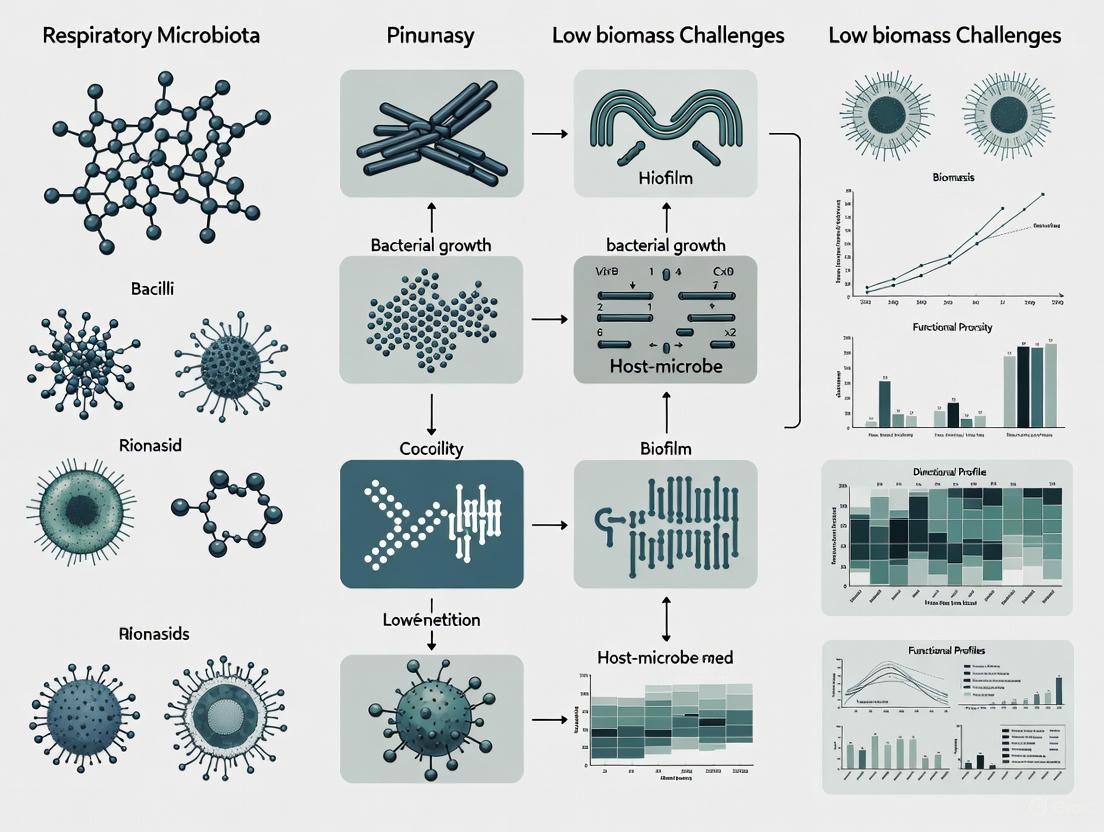
Respiratory microbiome research is fundamentally challenged by the low-biomass nature of its samples, where contaminating DNA can easily overwhelm the true biological signal.
Conquering the Low-Biomass Frontier: Advanced Strategies for Respiratory Microbiome Research
Abstract
Respiratory microbiome research is fundamentally challenged by the low-biomass nature of its samples, where contaminating DNA can easily overwhelm the true biological signal. This article provides a comprehensive guide for researchers and drug development professionals on overcoming these hurdles. It covers the foundational importance of the respiratory microbiome in health and disease, details rigorous methodological protocols for sample collection and processing, offers troubleshooting strategies for contamination control, and evaluates the latest sequencing technologies and validation techniques. By synthesizing current evidence and best practices, this resource aims to empower robust, reproducible, and clinically relevant studies of the lung ecosystem.
The Critical Role and Unique Challenges of the Respiratory Microbiome
For decades, the healthy human lung was considered a sterile environment. Advances in molecular sequencing techniques have fundamentally overturned this doctrine, revealing a complex and dynamic ecosystem of bacteria, fungi, and viruses. This paradigm shift introduces new complexities for researchers, as the lung presents a unique low microbial biomass environment, making it highly susceptible to contamination and technical artifacts. This technical support center is designed to help you navigate these challenges and implement robust, reproducible methods for studying the respiratory microbiome.
Frequently Asked Questions & Troubleshooting Guides
What are the most critical factors to consider when designing a lung microbiome study?
Challenge: Study results are confounded by unexpected variables, leading to irreproducible findings.
Solution: Meticulous experimental design is the most effective control. Key factors to account for include:
- Host Variables: Age, diet, antibiotic use (including recent history), pet ownership, and smoking status can significantly alter microbiome composition [1].
- Sample Processing: Use the same batch of DNA extraction kits for your entire study to minimize batch effects [1]. For animal studies, house multiple mice per condition in different cages and treat "cage" as a statistical variable to account for microbial sharing [1].
- Longitudinal Stability: Understand the natural variation of the microbiome at your sampling site. Unlike the relatively stable gut, the lung microbiome is more transient and dynamic [2] [1].
How can I minimize contamination in low-biomass lung samples?
Challenge: Contaminating DNA from reagents, the environment, or during sample processing can comprise most or all of the signal in a low-biomass sample like bronchoalveolar lavage fluid (BALF) [1] [3].
Solution: Implement a rigorous protocol of controls and optimized methods.
- Run Controls: Always process negative controls (e.g., sterile water, blank lysis buffer) alongside your experimental samples through DNA extraction and sequencing. These are essential for identifying contaminating taxa [1].
- Optimize DNA Extraction: Choose or develop extraction protocols that maximize bacterial DNA yield. Studies show that custom protocols, such as those incorporating polyethylene glycol (PEG) precipitation or enhanced enzymatic lysis, can outperform some commercial kits in efficiency and reduce the relative impact of contamination [3].
- Bioinformatic Subtraction: After sequencing, subtract any taxa present in your negative controls from your experimental samples [4].
Which sequencing method should I use: 16S rRNA gene sequencing or shotgun metagenomics?
Challenge: Selecting an inappropriate sequencing method leads to insufficient taxonomic resolution or missed functional insights.
Solution: The choice depends on your research question and resources. The table below compares the two primary approaches.
| Feature | 16S rRNA Gene Sequencing | Shotgun Metagenomics |
|---|---|---|
| Target | Amplifies a single, highly conserved gene (e.g., V4 region) [5] [6] | Sequences all DNA present in a sample [6] |
| Information Gained | Taxonomic identification (primarily genus-level) and relative abundance [6] | Taxonomic identification (potentially species-strain level) and functional gene potential [6] |
| Cost | Lower cost per sample | Higher cost per sample |
| Best For | Community profiling, comparing diversity between sample groups [6] | Discovering functional pathways, studying non-bacterial microbes (viruses, fungi) [6] |
| Key Consideration | Primers target specific variable regions (e.g., V4); choice affects results [6] [1] | Requires higher sequencing depth and more complex bioinformatics analysis [6] |
How do I analyze and visualize microbiome sequencing data?
Challenge: The high-dimensional data from sequencing is complex and non-normal, requiring specialized statistical approaches.
Solution: Use standardized pipelines and diversity metrics.
- Standardized Bioinformatics: Process raw sequence data through established pipelines like QIIME 2 [4] or DADA2 [6] to denoise reads, remove chimeras, and assign taxonomy against databases like SILVA [4] or Greengenes [6].
- Diversity Analysis:
- Alpha Diversity: Measures within-sample diversity using metrics like Observed ASVs/OTUs (richness) and the Shannon Index (richness and evenness) [6] [4]. A loss of alpha diversity is a common feature in dysbiosis [2].
- Beta Diversity: Measures between-sample differences using metrics like Bray-Curtis dissimilarity and visualizes them with Principal Coordinates Analysis (PCoA) [4]. This helps determine if microbial communities cluster by disease state or treatment group.
- Visualization for Rare Diseases: For studies with small sample sizes (e.g., rare lung diseases), Sankey diagrams are powerful for visualizing the taxonomic composition and abundance of a single sample [7].
Essential Experimental Protocols
Detailed Protocol: Optimized DNA Extraction from Low-Biomass BALF
This protocol, adapted from recent research, uses PEG precipitation to enhance DNA recovery from volume-limited BALF samples [3].
Principle: Combines enzymatic lysis to efficiently break down bacterial cell walls with PEG-induced condensation of DNA to maximize recovery.
Materials & Reagents:
- BALF sample (e.g., 1 mL aliquot)
- HyClone PBS (without EDTA)
- MetaPolyzyme (10 mg/mL in PBS): A mixture of hydrolytic enzymes for microbial cell wall digestion [3].
- Proteinase K (10 ng/mL): Digests proteins and nucleases.
- Polyethylene Glycol (PEG) 8000 Solution (30% PEG in 1.6 M NaCl): Condenses and precipitates nucleic acids [3].
- 70% Ethanol: For washing the DNA pellet.
Step-by-Step Method:
- Sample Pre-processing: Centrifuge 1 mL of BALF at 20,000 × g for 30 minutes at 4°C. Carefully discard the supernatant and resuspend the pellet in 100 µL of PBS [3].
- Enzymatic Lysis: Add 20 µL of MetaPolyzyme solution to the resuspended pellet. Incubate for 4 hours at 35°C [3].
- Protein Digestion: Add 10 µL of Proteinase K solution. Mix and incubate for 1 hour at 56°C [3].
- PEG Precipitation: Add 300 µL of PEG 8000/NaCl solution. Mix thoroughly and incubate on ice for 30 minutes to precipitate the DNA.
- DNA Pellet: Centrifuge at 14,000 × g for 15 minutes at 4°C. A visible DNA pellet should form. Carefully discard the supernatant.
- Wash: Wash the pellet with 500 µL of 70% ethanol. Centrifuge again and discard the ethanol. Air-dry the pellet.
- Elution: Resuspend the final DNA pellet in 25-50 µL of nuclease-free water.
Troubleshooting:
- Low DNA Yield: Ensure the BALF pellet is fully resuspended before lysis. Increasing the initial BALF volume can also improve yield.
- High Host DNA Contamination: Consider incorporating a mild host depletion step, though this may also reduce bacterial DNA yield.
The Scientist's Toolkit: Key Research Reagent Solutions
| Reagent / Kit | Function / Application | Key Consideration |
|---|---|---|
| NAxtra Nucleic Acid Kit [4] | Magnetic nanoparticle-based nucleic acid extraction. Fast, automatable, and cost-effective for high-throughput studies. | A promising protocol for low-biomass samples; performance against other methods under active evaluation. |
| QIAamp DNA Microbiome Kit [3] | Silica column-based DNA extraction with optional host depletion steps. | Can underperform in low-biomass samples compared to optimized in-house protocols [3]. |
| ZymoBIOMICS Microbial Community DNA Standard [4] | Defined microbial community with known composition. Used as a positive control for DNA extraction and sequencing. | Critical for identifying technical biases and ensuring sequencing accuracy. |
| PEG 8000 / NaCl Solution [3] | Precipitates nucleic acids after lysis. Core component of high-efficiency, low-cost custom extraction protocols. | Allows for concentration of DNA from large volume, low-concentration samples. |
| MetaPolyzyme [3] | Enzyme cocktail (lysozyme, lysostaphin, mutanolysin, labiase) for digesting diverse bacterial cell walls. | More effective than single enzymes for lysing a broad spectrum of Gram-positive and Gram-negative bacteria. |
Data Analysis & Visualization Workflow
The path from raw sequencing data to biological insight requires a structured bioinformatics pipeline. The following diagram and table outline the critical steps.
| Analysis Step | Common Tools/Metrics | Purpose |
|---|---|---|
| Quality Control & Denoising | DADA2 [6], Deblur | Removes sequencing errors and identifies exact Amplicon Sequence Variants (ASVs), providing higher resolution than traditional OTUs. |
| Taxonomic Assignment | SILVA [4], Greengenes [6] databases; RDP classifier [6] | Assigns a taxonomic identity (Phylum to Genus) to each ASV. |
| Diversity Analysis | QIIME 2 [4], phyloseq (R) [4] | Quantifies within-sample (Alpha) and between-sample (Beta) diversity to describe community structure. |
| Statistical Testing | PERMANOVA [4], Kruskal-Wallis test [4] | Determines if diversity differences or taxon abundances between groups are statistically significant. |
| Visualization | Sankey diagrams [7], PCoA plots [4], Krona charts [7] | Creates intuitive graphical representations of complex microbiome data. |
Frequently Asked Questions
FAQ: What constitutes the core healthy lung microbiome?
The healthy lung microbiome is not sterile but hosts a low-biomass, dynamic community. The core bacterial taxa commonly include Pseudomonas, Streptococcus, Prevotella, Veillonella, Haemophilus, and Porphyromonas [8] [9]. Firmicutes and Bacteroidetes are the most common bacterial phyla [9]. Unlike the gut, the lung microbiome is in a constant state of flux, maintained by a balance of microbial immigration (primarily from the upper respiratory tract) and elimination [8].
FAQ: What are the major technical challenges in studying the lung microbiome?
The main challenge is its low microbial biomass, which makes results highly susceptible to distortion from contaminating microbial DNA present in laboratory reagents or introduced during sampling [3] [10]. Accurate characterization requires stringent negative controls, optimized DNA extraction protocols for low biomass, and careful data interpretation to distinguish true signals from noise [3] [10].
FAQ: How does the lung maintain a dynamic microbial equilibrium?
Equilibrium is maintained through a balance of continuous microbial immigration (via microaspiration from the upper respiratory tract) and efficient microbial clearance mechanisms [8]. These clearance mechanisms include mucociliary clearance, cough reflexes, and immune-mediated clearance by pulmonary macrophages [8] [9].
FAQ: Why is the choice of DNA dilution solvent important for positive controls?
The solvent used to dilute positive controls (like a Zymo mock community) can significantly impact the resulting microbial profile. One study found that using elution buffer provided a much more accurate representation of the theoretical community profile (21.6% difference) compared to dilution in DNA/RNA shield (79.6% difference) [10]. This is critical for ensuring the fidelity of your sequencing results.
Troubleshooting Low-Biomass Experiments
Issue: High Background Noise in Sequencing Data
- Potential Cause: Contaminating DNA from laboratory reagents or the environment is dominating the signal from your low-biomass sample.
- Solution:
- Include Controls: Process DNA extraction blanks and no-template PCR controls in parallel with your samples [10].
- Optimized DNA Extraction: Use a DNA extraction protocol specifically designed for low biomass, such as the PEG-based method, which has been shown to outperform some commercial kits in recovery efficiency [3].
- Benchmark Workflow: Follow a standardized workflow: amplify with 30 PCR cycles, purify amplicon pools with two consecutive AMPure XP cleanups, and sequence with the V3 MiSeq reagent kit [10].
Issue: Inconsistent Microbiota Profiles Between Replicates
- Potential Cause: Inefficient or uneven cell lysis and DNA recovery during extraction.
- Solution: Incorporate a bead-beating step with zirconia/silica beads and a enzymatic pre-treatment (e.g., with MetaPolyzyme) to ensure thorough mechanical and enzymatic lysis of diverse bacterial cell walls [3].
Issue: Inability to Distinguish True Signal from Contamination
- Potential Cause: The microbial profile of your samples clusters closely with your negative controls.
- Solution: Perform a rigorous bioinformatic analysis. If the microbiota profiles of your experimental low-biomass samples form a distinct cluster from your DNA blanks, it indicates a true biological signal has been successfully captured [10].
Quantitative Data for Experimental Planning
Table 1: Benchmarking Laboratory Processes for 16S rRNA Gene Sequencing of Low-Biomass Samples
| Process Parameter | Tested Options | Recommended Protocol | Impact on Microbiota Profile |
|---|---|---|---|
| PCR Cycles | 25, 30, 35 cycles | 30 cycles | No significant influence on community profile [10] |
| Library Purification | Agarose Gel vs. AMPure XP beads | Two consecutive AMPure XP cleanups | Paired Bray-Curtis dissimilarity median: 0.03 (highly similar) [10] |
| MiSeq Reagent Kit | V2 vs. V3 chemistry | V3 reagent kit | Paired Bray-Curtis dissimilarity median: 0.05 (highly similar) [10] |
| Positive Control Diluent | DNA/RNA Shield, Elution Buffer, Milli-Q | Elution Buffer | Most accurate to theoretical mock (21.6% difference for elution buffer vs. 79.6% for DNA/RNA shield) [10] |
Table 2: Core Bacterial Genera in the Healthy Lung Microbiome
| Core Bacterial Genus | Common Phylum | Notes |
|---|---|---|
| Streptococcus | Firmicutes | One of the most common genera [9] |
| Prevotella | Bacteroidetes | One of the most common genera [9] |
| Veillonella | Firmicutes | One of the most common genera; specialized anaerobe [9] |
| Pseudomonas | Proteobacteria | Part of the core lung microbiome [9] |
| Haemophilus | Proteobacteria | Core genus; proportions differ from the oropharynx [9] |
| Porphyromonas | Bacteroidetes | Specialized anaerobe [9] |
The Scientist's Toolkit: Essential Research Reagents
Table 3: Key Reagent Solutions for Lung Microbiome Research
| Reagent / Material | Function in Workflow | Specific Example / Note |
|---|---|---|
| MetaPolyzyme | Enzymatic cocktail to digest diverse bacterial cell walls, improving DNA yield from hard-to-lyse bacteria [3]. | Used in a PEG-based DNA extraction protocol for BALF [3]. |
| Polyethylene Glycol (PEG) | Used with NaCl to condense and precipitate DNA from solution, serving as an alternative to column-based purification [3]. | Core of a cost-efficient, high-recovery DNA extraction method [3]. |
| ZymoBIOMICS Microbial Community Standard (Zymo Mock) | Defined mock microbial community used as a positive control to assess accuracy and bias throughout the entire workflow [10]. | Should be diluted in elution buffer, not DNA/RNA shield, for most accurate results [10]. |
| AMPure XP Beads | Magnetic beads used for purifying and size-selecting PCR amplicons prior to sequencing. | Two consecutive cleanups are recommended for optimal results in low-biomass workflows [10]. |
| Zirconia/Silica Beads | Used in mechanical lysis (bead-beating) to physically disrupt bacterial cell walls during DNA extraction [3]. | Essential for efficient lysis of a wide range of bacterial species. |
| Universal 16S rRNA qPCR Primers/Probe | To quantify the total bacterial load in a sample prior to library preparation, ensuring sufficient input DNA [10]. | Critical for determining if a sample falls into the low-biomass category. |
Experimental Workflow Visualization
Optimized Workflow for Low-Biomass Lung Microbiome Analysis
Balance of Lung Microbial Forces
FAQs: Microbiome Dysbiosis in Respiratory Disease
Q1: What is the fundamental difference between a healthy and diseased respiratory microbiome? A healthy lung microbiome is characterized by low bacterial biomass but high diversity, dominated by the phyla Firmicutes and Bacteroidetes, with key genera including Streptococcus, Prevotella, and Veillonella [9] [11]. This composition is transient and maintained by a balance of microbial immigration and elimination. In disease states, dysbiosis occurs, marked by a shift in this balance. In COPD and Asthma, there is often an enrichment of pathogenic Proteobacteria, such as Haemophilus [9]. In ARDS, a common feature is a decrease in alpha diversity and an increased bacterial burden, often with an enrichment of gut-associated bacteria like Bacteroides [11].
Q2: How does the "gut-lung axis" influence respiratory diseases? The gut-lung axis is a bidirectional communication network where the gut microbiome can influence lung immunity and pathology, and vice versa [12] [13]. For example, specific gut microbiota taxa are causally associated with different phenotypes of COPD and asthma. Mendelian randomization studies have identified taxa like Streptococcaceae and Holdemanella associated with early-onset COPD, and Butyricimonas associated with a lower risk of allergic asthma [14]. Gut microbiota-derived metabolites, such as short-chain fatty acids (SCFAs), can exert anti-inflammatory effects and modulate immune responses in the lungs [13].
Q3: What are the primary technical challenges when studying the lung microbiome, and why? The main challenge is the low bacterial biomass of the lung environment [15] [16]. In samples with few bacteria, the signal from the true microbiome can be overwhelmed by background contamination present in DNA extraction kits, laboratory reagents, and during sample collection [17] [16]. This can lead to erroneous conclusions if not properly controlled. The lung's structure also presents challenges, as microbial movement is tidal and bidirectional, unlike the unidirectional flow in the gut [18].
Q4: What is the therapeutic potential of targeting the microbiome in respiratory diseases? Targeting the microbiome offers a promising avenue for novel therapies. Strategies include:
- Probiotics: Specific bacterial genera, such as Lactobacillus rhamnosus and Akkermansia muciniphila, have shown protective effects in animal models of ARDS and other lung injuries [13].
- Antibiotics: Inhaled or systemic antibiotics can modulate the respiratory microbiota. The clinical efficacy of antibiotics like erythromycin in bronchiectasis can depend on the patient's baseline microbiota [19].
- Microbiome-Based Adjuncts: The composition of the lung microbiome can influence the efficacy of treatments like corticosteroids and immunotherapy for lung cancer, suggesting potential for combination therapies [12] [11].
Troubleshooting Guides for Low-Biomass Research
Guide 1: Overcoming Contamination in Low-Biomass Samples
| Problem | Potential Cause | Solution | Verification Method |
|---|---|---|---|
| Sequencing data is dominated by taxa commonly found in laboratory reagents or kits (e.g., Pseudomonas, Acinetobacter). | Background bacterial DNA from contaminants outcompetes the signal from the low-biomass sample. | 1. Process negative controls (e.g., sterile water, saline) alongside patient samples through entire workflow [15] [16].2. Use nucleic acid-free reagents where possible.3. Perform DNA extraction and library preparation in a UV-treated laminar flow cabinet [16]. | Quantify bacterial load via 16S qPCR. Samples with load near negative control levels should be interpreted with caution or excluded [16]. |
| Inconsistent microbial profiles between technical replicates of the same sample. | Stochastic detection of contaminants due to very low starting bacterial DNA. | 1. Concentrate the sample by centrifuging large volume BALF (>100 mL) before DNA extraction [16].2. Use an optimized, high-yield DNA extraction protocol over standard commercial kits to maximize target DNA recovery [17]. | Compare the 16S rRNA gene copy number between the new method and a standard kit using qPCR [17]. |
| Uncertainty about the origin of detected microbial signals. | Inability to distinguish true lung microbiota from upper respiratory tract (URT) contamination during bronchoscopy. | 1. Use protected specimen brushing during collection [18].2. Collect and sequence procedural controls (e.g., bronchoscope saline wash, URT swabs) to account for background and URT flora [9] [16]. | Statistically compare patient sample profiles to all control profiles to identify and subtract contaminating sequences. |
Guide 2: Addressing Low DNA Yield and Poor Sequencing Quality
| Problem | Potential Cause | Solution | Verification Method |
|---|---|---|---|
| Insufficient DNA concentration for library preparation. | Low bacterial load in starting material (e.g., BALF, protected brushes). | 1. Implement a bead-beating step during DNA extraction to ensure efficient lysis of tough bacterial cell walls [17].2. Use polyethylene glycol (PEG) precipitation as part of the extraction to improve DNA recovery over column-based methods [17].3. Pool multiple technical replicates if sample volume allows. | Use a fluorescence-based dsDNA assay (e.g., Qubit) for accurate quantification of low-concentration DNA. |
| High levels of host DNA in samples, reducing microbial sequencing depth. | Samples are enriched with human epithelial and immune cells. | Employ a host DNA depletion step using commercial kits prior to microbial DNA amplification or sequencing [17]. | Check the ratio of microbial to host DNA reads in sequencing data after depletion. |
| Low sequence read count after sequencing. | Limited microbial DNA template leads to poor library amplification. | 1. Request deeper sequencing for low-biomass samples.2. Use PCR kits designed for high sensitivity and low bias when amplifying 16S rRNA genes. | Monitor the number of sequences obtained per sample after demultiplexing; samples below a quality threshold (e.g., <10,000 reads) may need to be re-run. |
Experimental Protocols for Key Analyses
Protocol 1: Optimized DNA Extraction from Bronchoalveolar Lavage Fluid (BALF)
Principle: Maximize the recovery of microbial DNA from low-volume, low-biomass BALF samples by combining mechanical lysis with a precipitation-based concentration method, outperforming standard silica-column kits [17].
Workflow Diagram:
Reagents and Steps:
- Pre-processing: Centrifuge 1 mL of BALF at 20,000 × g for 30 minutes at 4°C. Discard the supernatant and resuspend the pellet in 100 µL of PBS [17].
- Enzymatic Lysis: Add a cocktail of hydrolytic enzymes (e.g., lysozyme, mutanolysin, lysostaphin) to efficiently digest diverse bacterial cell walls. Incubate at 37°C [17].
- Mechanical Lysis: Transfer the suspension to a tube containing 0.1 mm zirconia/silica beads. Subject to bead-beating using a cell disrupter (e.g., 4 pulses of 1 minute each) [17].
- Chemical Lysis: Add SDS and Proteinase K to the lysate and incubate to complete the lysis and digest proteins.
- DNA Concentration and Purification: Perform PEG-8000/NaCl precipitation to concentrate nucleic acids. Centrifuge to form a DNA pellet. Wash the pellet with ethanol, air dry, and resuspend in nuclease-free buffer or TE [17].
Protocol 2: 16S rRNA Gene Sequencing and Contamination Assessment
Principle: Use amplicon sequencing to profile microbial communities and implement a rigorous framework to identify and account for background contamination using negative controls [15] [16].
Workflow Diagram:
Key Steps:
- Amplification and Sequencing: Amplify the hypervariable V4 region of the 16S rRNA gene using barcoded primers. Pool amplified libraries and sequence on an Illumina MiSeq platform.
- Bioinformatic Processing: Process raw sequences using a pipeline like QIIME2 or DADA2 to infer amplicon sequence variants (ASVs). Crucially, use the
decontampackage (R) or similar to identify and remove ASVs that are significantly more prevalent in your negative controls than in true samples [15]. - Analysis: Calculate ecological metrics (alpha and beta diversity). Use statistical tests to compare community structures between experimental groups, ensuring conclusions are based on contaminant-corrected data.
The Scientist's Toolkit: Essential Research Reagents & Materials
| Item | Function/Benefit | Application Example |
|---|---|---|
| Zirconia/Silica Beads (0.1mm) | Provides mechanical shearing for efficient lysis of tough Gram-positive bacterial cell walls during DNA extraction. | Bead-beating step in the optimized BALF DNA extraction protocol [17]. |
| Hydrolytic Enzyme Cocktail (Lysozyme, Mutanolysin) | Enzymatically digests the peptidoglycan layer of bacterial cell walls, complementing mechanical lysis. | Used in the enzymatic lysis step to maximize DNA yield from a wide range of bacteria [17]. |
| PEG-8000 (Polyethylene Glycol) | Aids in the precipitation and concentration of DNA from dilute solutions, improving recovery over column-based methods. | Used as the core purification and concentration method in the optimized DNA extraction protocol [17]. |
| Host Depletion Kit | Selectively degrades mammalian DNA, thereby enriching the relative proportion of bacterial DNA for sequencing. | Treatment of BALF samples before 16S PCR to increase microbial sequencing depth [17]. |
| Decontam (R package) | A statistical tool to identify and remove contaminating sequence features based on their prevalence in negative controls. | Post-sequencing bioinformatic cleanup to ensure analyzed data reflects true biology, not contamination [15]. |
| Protected Specimen Brushing | A bronchoscopic technique designed to minimize oropharyngeal contamination during sampling of the lower airways. | Collecting microbiome samples from a specific lung segment while avoiding upper airway contamination [18]. |
Signaling Pathways in Microbiome-Mediated Lung Disease
Pathway Diagram: Microbiome-Immune Interactions in ARDS and COPD
Key Mechanisms:
- Local Lung Dysbiosis: In ARDS and COPD, dysbiosis (e.g., enrichment of Proteobacteria, gut-associated Bacteroides) provides ligands for Pattern Recognition Receptors (PRRs) on alveolar macrophages and epithelial cells [12] [11].
- Innate Immune Activation: PRR signaling (e.g., via TLR4) activates key pro-inflammatory pathways, including NF-κB and STAT3, leading to a cascade of pro-inflammatory cytokines like TNF-α, IL-6, and IL-8 [12] [11].
- Tissue Damage: The resulting inflammation causes alveolar epithelial and endothelial damage, impairing gas exchange and contributing to the pathophysiology of ARDS and exacerbations of COPD [11] [13].
- Gut-Lung Axis: Gut dysbiosis can lead to a decrease in protective metabolites like Short-Chain Fatty Acids (SCFAs) and an increase in harmful ones like TMAO. This alters systemic immunity, priming the lungs for excessive inflammatory responses and contributing to endothelial dysfunction, thereby exacerbating lung injury [13].
The gut-lung axis (GLA) represents a bidirectional communication pathway between the gastrointestinal and respiratory systems. Despite their anatomical distinction, these organs share a common embryonic origin from the foregut and maintain continuous immunological crosstalk to maintain homeostasis [20]. This connection involves complex interactions between the gut microbiota, lung microbiota, and the host immune system, influencing both health and respiratory diseases [21] [22].
The GLA involves host-microbe and microbe-microbe interactions with both localized and systemic effects. Through this axis, the gut microbiome can systemically influence pulmonary immunity, while lung microbiota and inflammation can impact gut microbial communities [21]. Understanding this inter-organ communication provides new insights into respiratory disease pathogenesis and potential therapeutic interventions.
Core Mechanisms of the Gut-Lung Axis
Anatomical and Embryological Foundations
The gastrointestinal and respiratory systems share fundamental developmental origins:
- Common embryonic origin: Both systems arise from the primitive gut tube, with the respiratory diverticulum pinching off from the foregut endoderm around the 4th week of human gestation [20]
- Similar histological structures: Both organs contain mucosa-associated lymphoid tissue (MALT) - gut-associated lymphoid tissue (GALT) and bronchus-associated lymphoid tissue (BALT) - that serve as integral components of this axis [20]
- Shared molecular signaling: Development of both systems is regulated by similar signaling pathways including FGF, BMP, Wnt, and Sonic hedgehog (SHH) [20]
Communication Pathways
The gut and lungs communicate through multiple direct and indirect pathways:
Figure 1. Bidirectional Communication Pathways of the Gut-Lung Axis. The diagram illustrates the primary mechanisms facilitating crosstalk between gut and lung compartments, including microbial metabolites, immune cell trafficking, and inflammatory signaling.
Immunological Crosstalk
The immune system serves as a crucial mediator in the GLA through several mechanisms:
- Microbial metabolite signaling: Gut microbiota produce short-chain fatty acids (SCFAs) that circulate systemically and influence lung immunity [20] [23]
- Immune cell priming: Gut microbiota educate and modulate immune cells that subsequently traffic to the lungs [21]
- Systemic inflammation: Increased gut permeability ("leaky gut") allows microbial products to enter circulation, potentially triggering systemic inflammatory responses that affect pulmonary health [20]
- Toll-like receptor signaling: Microbial associated molecular patterns (MAMPs) from gut microbiota communicate with immune cells expressing TLR throughout the body [22]
Technical Challenges in Respiratory Microbiome Research
Low Biomass Considerations
Respiratory microbiome research faces unique technical challenges, particularly in lower airway studies:
Table 1: Challenges in Low Biomass Microbiome Research
| Challenge | Impact on Research | Potential Solutions |
|---|---|---|
| Low microbial biomass | 10-100 bacterial cells per 1,000 human lung cells [21] | Enhanced contamination controls, sample pooling |
| Contamination risks | High susceptibility to reagent/environmental contamination [15] | Extensive negative controls, background subtraction |
| Dynamic ecosystem | Continuous microbial immigration/elimination [24] | Standardized sampling protocols, longitudinal designs |
| Technical variability | Inconsistent DNA yield and amplification [15] | Protocol standardization, internal standards |
Experimental Design Considerations
Robust experimental design is essential for reliable respiratory microbiome research:
- Comprehensive controls: Include extraction controls, PCR negatives, and sampling controls to detect contamination [15]
- Sample size justification: Power calculations should account for expected effect sizes and high inter-individual variability
- Standardized sampling: Consistent sampling methods (BAL, sputum, tissue) across compared groups [19]
- Metadata collection: Detailed clinical, environmental, and technical metadata for confounding factor assessment
Troubleshooting Guide: Common Experimental Issues
FAQ 1: How can I distinguish true respiratory microbiota from contamination?
Issue: Contamination dominates sequencing results from low biomass respiratory samples.
Solution:
- Implement rigorous controls: Include extraction blanks, PCR negatives, and sampling controls in every batch [15]
- Statistical decontamination: Use bioinformatic tools (decontam, sourcetracker) to identify and remove contaminant sequences
- Biomass assessment: Quantify total bacterial load via qPCR before sequencing
- Replicate verification: Confirm findings across technical and biological replicates
Preventive measures:
- Process low biomass samples separately from high biomass samples
- Use dedicated equipment and workspace for low biomass work
- Implement UV irradiation and bleach cleaning protocols
FAQ 2: Why do I see high variability in lung microbiome composition between technical replicates?
Issue: Inconsistent results from same sample or adjacent lung regions.
Solution:
- Standardize sampling technique: Use consistent BAL volume and protocol [19]
- Sample pooling: For limited biomass, pool multiple technical replicates before DNA extraction
- Storage optimization: Flash-freeze samples immediately after collection in liquid nitrogen
- DNA preservation: Use DNA/RNA shield solutions for storage and transport
Technical considerations:
- The lung microbiome has inherent spatial heterogeneity [24]
- Microbial distribution follows ecological gradients (oxygen, pH, nutrients)
- Consider regional sampling differences (upper vs. lower lobe, central vs. peripheral)
FAQ 3: How can I validate functional interactions along the gut-lung axis?
Issue: Difficulty establishing causal mechanisms in observed correlations.
Solution:
- Multi-omics integration: Combine 16S sequencing with metagenomics, metatranscriptomics, and metabolomics [25]
- Animal models: Use germ-free, gnotobiotic, or fecal transplant models to test causality [21]
- Immune profiling: Pair microbiome analysis with cytokine measurements and immune cell characterization
- In vitro systems: Develop lung-gut co-culture models to study microbial metabolites
Experimental workflow:
Figure 2. Experimental Workflow for Gut-Lung Axis Research. This diagram outlines a comprehensive approach to studying gut-lung interactions, from sample collection to mechanistic validation.
Research Reagent Solutions
Table 2: Essential Research Reagents for Gut-Lung Axis Studies
| Reagent Category | Specific Examples | Application Notes |
|---|---|---|
| DNA Extraction Kits | DNeasy PowerSoil Pro, MolBio UltraClean | Include inhibition removal for respiratory samples |
| Contamination Controls | ZymoBIOMICS Spike-in, Synthetic communities | Quantify and correct for contamination |
| 16S Primers | 27F/338R, 515F/806R | Target V1-V3 or V4 regions for lung microbiota |
| qPCR Assays | 16S universal, specific pathogen assays | Quantify bacterial load before sequencing |
| SCFA Analysis | GC-MS, LC-MS standards | Quantify butyrate, acetate, propionate |
| Cell Culture Media | Transwell systems, organoid media | Develop gut-lung co-culture models |
| Cytokine Panels | Luminex, MSD multi-array | Profile systemic immune responses |
Methodological Protocols
Protocol: Sampling the Lower Respiratory Tract Microbiome
Principle: Obtain representative lower airway samples while minimizing upper respiratory contamination.
Materials:
- Bronchoscope with protected specimen brush or BAL system
- DNA/RNA shield preservation buffer
- Sterile saline solution
- -80°C freezer or liquid nitrogen
Procedure:
- Patient preparation: Fast for 6-8 hours to reduce aspiration risk
- Oral cavity cleansing: Use antiseptic mouthwash before procedure
- Protected sampling: Use telescoping catheter with plastic sheath
- BAL collection: Instill and recover 20-60mL sterile saline in selected lung segment
- Immediate processing: Aliquot samples for different analyses within 30 minutes
- Preservation: Add to DNA/RNA shield solution and flash freeze
Technical notes:
- Record BAL recovery percentage (ideally >40%)
- Process first aliquot for microbiology to minimize contamination
- Consider simultaneous oral/nasal sampling for comparison
Protocol: Analyzing Microbial Metabolites in Serum
Principle: Quantify gut-derived microbial metabolites that may influence lung immunity.
Materials:
- GC-MS or LC-MS system
- SCFA standards (acetate, propionate, butyrate)
- Solid-phase extraction columns
- Derivatization reagents
Procedure:
- Sample preparation: Add internal standards to serum immediately after collection
- Protein precipitation: Use acetonitrile or methanol
- Metabolite extraction: Solid-phase or liquid-liquid extraction
- Derivatization: For GC-MS analysis, use BSTFA or other silylation reagents
- Instrumental analysis: Separate and quantify using calibrated MS methods
- Data analysis: Normalize to internal standards and create calibration curves
Technical notes:
- Process samples rapidly to prevent metabolite degradation
- Use stable isotope-labeled internal standards for quantification
- Correlate metabolite levels with microbiome and immune data
Future Directions and Therapeutic Implications
The gut-lung axis represents a promising therapeutic target for respiratory diseases. Current research focuses on:
- Microbiome modulation: Probiotics, prebiotics, and fecal microbiota transplantation to influence pulmonary health [23]
- Pharmacomicrobiomics: Understanding how microbiome variation affects drug response in respiratory diseases [25]
- Diagnostic applications: Using gut microbiome profiles as biomarkers for respiratory disease risk and progression
- Nutritional interventions: Dietary strategies to optimize gut microbiota for respiratory benefit
Understanding and accounting for the technical challenges in respiratory microbiome research, particularly the low biomass nature of samples, is essential for generating robust, reproducible findings that advance our understanding of the gut-lung axis and its clinical applications.
In respiratory microbiota research, the "low-biomass" environment refers to anatomical sites, such as the healthy lung, that harbor minimal quantities of microbial DNA. This creates a fundamental signal-to-noise problem, where the true microbial signal from the sample can be dwarfed by contamination and stochastic noise introduced during sampling and laboratory processing [26]. Distinguishing this authentic signal from background noise is one of the most significant challenges in the field. Failure to do so can lead to irreproducible results and spurious conclusions, potentially misdirecting research and drug development efforts [27] [28]. This technical support center is designed to help you navigate these challenges with robust troubleshooting guides and detailed protocols.
Troubleshooting Guides
Guide 1: Addressing Irreproducible Microbial Community Results
Problem: Sequencing results from low-biomass respiratory samples (e.g., bronchoalveolar lavage, exhaled breath condensate) show microbial communities that are inconsistent between technical replicates.
Explanation: In low-biomass conditions, the input DNA is below a critical threshold. During sequencing, this can generate stochastic noise—random, irreproducible sequences that are not shared between replicates of the same sample. This noise is distinct from consistent contamination and can mistakenly be interpreted as a real microbial community [27].
Solutions:
- Increase Technical Replicates: Sequence at least 3-4 technical replicates per sample. A true signal will be consistent across replicates, while noise will not [27].
- Quantify Biomass Input: Use droplet digital PCR (ddPCR) to quantify the number of 16S rRNA gene copies in your sample before sequencing. Samples containing fewer than 10⁴ copies of the 16S rRNA gene per sample are highly susceptible to being dominated by stochastic noise [27].
- Analyze Replicate Concordance: Calculate the Bray-Curtis dissimilarity between your technical replicates. Low intra-replicate similarity (high dissimilarity) indicates that your results are likely dominated by stochastic noise [27].
Guide 2: Managing Contamination in Sample Processing
Problem: Negative controls (blanks) and patient samples are consistently contaminated with the same set of microbial taxa.
Explanation: Reagents, kits, and the laboratory environment contain trace amounts of microbial DNA. In low-biomass studies, this contamination can constitute a large proportion, or even the majority, of your sequencing data, obscuring the true signal [28].
Solutions:
- Use Multiple Negative Controls: Include a full set of negative controls (e.g., empty collection vessels, swabs exposed to air, aliquots of preservation solution) for every batch of samples processed [28].
- Decontaminate Surfaces and Tools: Decontaminate equipment and workspaces with 80% ethanol (to kill cells) followed by a nucleic acid degrading solution (e.g., bleach, UV-C light) to remove residual DNA. Note that autoclaving removes viable cells but not cell-free DNA [28].
- Apply Post-Hoc Contamination Removal: Use bioinformatic tools (e.g.,
decontamin R) to identify and remove contaminant sequences found prominently in your negative controls from your sample dataset [28].
Frequently Asked Questions (FAQs)
FAQ 1: What is the difference between contamination and stochastic noise?
- Contamination is DNA from external sources (kits, reagents, operator) that is consistent and reproducible between technical replicates and is also present in your negative controls.
- Stochastic Noise is a random, irreproducible signal generated during sequencing when DNA input is very low. It is not shared between technical replicates and may not appear in controls [27]. Understanding this distinction is critical for accurate data interpretation in low-biomass studies.
FAQ 2: My negative controls show no amplification. Does this mean my samples are free of contamination? Not necessarily. Even if controls show no amplification, a lack of consistency between technical replicates from the same sample indicates that the results may be dominated by stochastic noise, which is a separate issue from contamination. Always check the similarity between your replicates [27].
FAQ 3: What is the minimum bacterial biomass required for reliable sequencing? While the threshold can vary, one rigorous study defined a critical threshold of 10⁴ copies of the 16S rRNA gene per sample. Samples below this biomass transition from producing reproducible sequences to ones dominated by irreproducible, stochastic noise [27].
FAQ 4: What are the best practices for collecting low-biomass respiratory samples?
- Use Personal Protective Equipment (PPE): Wear gloves, masks, and clean suits to minimize contamination from the operator [28].
- Use Single-Use, DNA-Free Consumables: Opt for pre-sterilized collection vessels and swabs [28].
- Incorporate Sampling Controls: Collect controls from potential contamination sources (e.g., air, preservation solution, PPE surfaces) alongside your samples [28].
Data & Protocols
Critical Biomass Thresholds for Respiratory Samples
The table below summarizes quantitative data on biomass thresholds and their impact on data reliability, crucial for experimental planning.
Table 1: Critical Biomass Thresholds and Data Reliability in Low-Biomass Sequencing
| Sample Type / Metric | Critical Threshold | Impact on Data Reliability | Key Observation |
|---|---|---|---|
| General Low-Biomass Sample [27] | < 10⁴ 16S rRNA gene copies/sample | Transition to noise-dominated, irreproducible sequences | Stochastic noise becomes the dominant signal. |
| Exhaled Breath Condensate (EBC) [27] | Typically below threshold | Characterized as an "irreproducible sampling modality" | Results are not consistent and are dominated by noise. |
| Bronchoalveolar Lavage (BAL) & Oral Rinse [27] | Variable, often above threshold | Can produce reproducible results | Higher biomass allows for more reliable community analysis. |
Experimental Protocol: Microbial Profiling of Low-Biomass Upper Respiratory Tract Samples
This protocol is adapted from best practices for characterizing microbial communities in low-biomass niches like the upper respiratory tract [5].
1. Sample Collection & Storage
- Collect samples (e.g., nasal swabs) using sterile, DNA-free swabs.
- Immediately place samples in sterile, DNA-free tubes containing a preservation buffer (e.g., DNA/RNA Shield).
- Flash-freeze samples in liquid nitrogen and store at -80°C until DNA extraction.
2. DNA Extraction (Optimized for Low Biomass)
- Use a DNA extraction kit validated for low-biomass samples.
- Incorporate a mechanical lysis step (e.g., bead beating) alongside chemical lysis to ensure robust cell wall disruption.
- Include negative extraction controls: Process a blank (only buffers) through the entire extraction protocol alongside your samples.
3. 16S rRNA Gene Sequencing
- Amplify the V4 region of the 16S rRNA gene using dual-indexed primers.
- Perform sequencing on an Illumina MiSeq platform with at least 4 technical replicates per sample to assess stochasticity [27].
4. Bioinformatics & Data Analysis
- Process sequences using a standard pipeline (e.g., QIIME 2, DADA2).
- Filtering based on controls: Remove any Amplicon Sequence Variants (ASVs) that are more abundant in your negative controls than in your actual samples.
- Assess replicate reproducibility: Only retain ASVs that are present in the majority of technical replicates for a given sample to filter out stochastic noise [27].
Workflow Visualization
The following diagram illustrates the core concepts of signal and noise in low-biomass sequencing data analysis.
The Scientist's Toolkit: Essential Reagents & Materials
Table 2: Key Research Reagent Solutions for Low-Biomass Research
| Item | Function | Considerations for Low-Biomass Studies |
|---|---|---|
| DNA-Free Collection Swabs & Tubes | Sample collection and storage. | Pre-sterilized and certified DNA-free to prevent introduction of contaminants at the first step [28]. |
| DNA Extraction Kits | Isolation of total genomic DNA from samples. | Select kits with low elution volumes and demonstrated low background contamination. Include kit controls [28]. |
| dPCR/ddPCR Reagents | Absolute quantification of 16S rRNA gene copy number. | Essential for quantifying input biomass to assess if a sample is above the critical threshold for reliable sequencing [27]. |
| 16S rRNA PCR Primers & Master Mix | Amplification of the target gene for sequencing. | Use of a high-fidelity polymerase is recommended. The number of PCR cycles should be minimized to reduce chimera formation. |
| Personal Protective Equipment (PPE) | Creates a barrier between the operator and the sample. | Gloves, masks, and clean suits are necessary to reduce human-derived contamination during sampling and processing [28]. |
| Nucleic Acid Degrading Solution | Surface and equipment decontamination. | Used after ethanol cleaning to destroy residual cell-free DNA that autoclaving cannot remove (e.g., bleach, UV-C light) [28]. |
Rigorous Protocols for Low-Biomass Sample Collection and Handling
Frequently Asked Questions (FAQs)
Q1: What is the main challenge when studying respiratory microbiota, and why does sample choice matter? The primary challenge is the low biomass of the respiratory tract, meaning the total amount of microbial DNA in a sample is very small. In this context, an inappropriate sample choice can lead to misleading results. For instance, samples collected via the oral route, like expectorated sputum, are highly susceptible to contamination by microbes from the upper respiratory tract and mouth. This can overwhelm the signal from the actual lung microbiota, making it difficult to distinguish true lung pathogens from contamination [19].
Q2: For a mechanically ventilated patient with pneumonia, which sample is more practical: Bronchoalveolar Lavage (BAL) or Endotracheal Aspirate (ETA)? ETA is often considered more practical. It is less invasive, easier and quicker to collect, and does not require specialized equipment like a bronchoscope [29]. Some studies have found that microbiota profiles from EA and BAL are very similar in terms of diversity and composition, suggesting EA could be a suitable and more useful alternative for microbiome identification in such patients [30].
Q3: If BAL and ETA microbiota profiles are similar, does that mean they are interchangeable for all analyses? Not necessarily. While overall community profiles may be similar, direct, paired comparisons can show discrepancies. One study performing mNGS on both sample types from the same patients found a complete agreement rate of only 33.3% [29]. Furthermore, clinical outcomes may differ; one study found that using BALF mNGS led to a higher rate of targeted treatment changes and a significantly higher pneumonia improvement rate compared to using ETA mNGS [29].
Q4: When is expectorated sputum a suitable sample for lower respiratory tract research? Expectorated sputum is generally considered the least reliable sample for studying the lower respiratory tract microbiome due to its high potential for contamination by saliva and oropharyngeal bacteria. Its use should be approached with caution, and it is not recommended when the research goal is to accurately profile the lung-specific microbiota, especially in the context of low biomass [19].
Technical Troubleshooting Guides
Problem 1: Inconsistent or Contaminated Microbiota Results
- Symptoms: High levels of oral commensal bacteria (e.g., Prevotella, Rothia); results that do not align with clinical presentation.
- Possible Causes:
- Sample Type: Use of expectorated sputum, which has high contamination risk.
- Sample Collection: Non-sterile collection technique.
- Low Biomass: The low microbial load in true lung samples makes them particularly vulnerable to being skewed by even minimal contaminating DNA.
- Solutions:
- Switch Sample Type: Move to a more distal sampling method like BAL or protected ETA to bypass the upper airway.
- Implement Rigorous Controls: Include negative control samples (e.g., sterile saline processed alongside patient samples) during DNA extraction and sequencing to identify laboratory contaminants.
- Use Bioinformatic Filtering: Establish a database of common background and contaminant microorganisms and subtract these sequences from your results during analysis [29].
Problem 2: Discrepancy Between mNGS and Culture Results
- Symptoms: mNGS detects pathogens not grown in culture, or culture-positive samples show no pathogens via mNGS.
- Possible Causes:
- Viable vs. Non-Viable Bacteria: Culture only detects live bacteria, while mNGS can detect DNA from dead organisms.
- Prior Antibiotic Treatment: Administration of antibiotics can suppress bacterial growth in culture but not eliminate bacterial DNA.
- Different Sensitivities: mNGS may be more sensitive for detecting fastidious or slow-growing bacteria, viruses, and fungi.
- Solutions:
- Correlate with Clinical Data: Always interpret molecular results in the context of the patient's symptoms and other lab findings.
- Use Quantitative Metrics: For mNGS, use semi-quantitative measures like Reads Per Million (RPM) to help distinguish true pathogens from background noise [29].
- Collect Samples Before Treatment: Ideally, collect respiratory samples before initiating antibiotic therapy.
Comparative Data Table: BAL vs. Endotracheal Aspirates
The table below summarizes key comparative data from recent studies to aid in sample selection.
| Feature | Bronchoalveolar Lavage (BAL) | Endotracheal Aspirate (ETA) |
|---|---|---|
| Invasiveness | High (requires bronchoscopy) [29] | Low (collected via existing tube) [29] |
| Microbiota Similarity | Reference standard for lower airways | Similar to BAL in diversity and composition in some studies [30] |
| Clinical Impact | Higher rate of targeted treatment changes; higher pneumonia improvement rate in one study [29] | Lower rate of treatment changes based on results [29] |
| Pathogen Agreement | Low (33.3% complete agreement with ETA in a paired study) [29] | Low (33.3% complete agreement with BAL in a paired study) [29] |
| Practicality in ICU | Time-consuming, requires specialist, expensive equipment [29] | Convenient, quick to obtain, readily available [30] [29] |
Detailed Experimental Protocol: mNGS of Respiratory Samples
This protocol is adapted from methodologies described in the search results [30] [29].
1. Sample Collection and Storage
- BAL: Perform bronchoscopy with a protected catheter and instill sterile saline. Aspirate the fluid and collect in a sterile container.
- ETA: Using a sterile catheter, aspirate secretions from the endotracheal tube into a sterile trap.
- Immediately transport samples on ice. Aliquot and store at -80°C until DNA extraction.
2. DNA Extraction
- Thaw samples and transfer 600 µL to a microcentrifuge tube.
- Add glass beads and Lyticase enzyme to mechanically and enzymatically break down tough microbial cell walls [29].
- Extract DNA using a commercial kit (e.g., QIAamp DNA Blood Mini Kit or TIANamp Micro DNA Kit). Use 300 µL of the processed sample mixture, following the manufacturer's instructions for DNA purification [30] [29].
- Elute DNA in a small volume (e.g., 30 µL) of buffer. Quantify DNA concentration and quality using a fluorometer.
3. Library Preparation and Sequencing
- Perform a two-step PCR amplification.
- In the first PCR, add primers with adapters and a "heterogeneity spacer" to target the V4 hypervariable region of the 16S rRNA gene, providing a balanced base composition [30].
- Purify the amplicons after each PCR step using a purification kit (e.g., AMPure XP).
- Quantify the final library and pool samples. Use a platform like BGISEQ-50 or Illumina MiSeq for 250 paired-end sequencing [30] [29].
4. Bioinformatic Analysis
- Quality Control: Remove low-quality reads and trim sequences using tools like FASTX-Toolkit. Retain only sequences where both forward and reverse reads pass quality filters (e.g., minimum quality score of 20, length >100bp) [30].
- Human DNA Depletion: Map sequencing reads to a human reference genome (e.g., using BWA) and remove them from the dataset [29].
- Taxonomy Assignment: Use a pipeline like QIIME to align sequences against a curated database (e.g., Greengenes). Cluster sequences into Operational Taxonomic Units (OTUs) at 97% similarity [30].
- Positive Result Criteria: Compare detected microorganisms to a lab-specific background database. Consider a microorganism positive if its absolute abundance is high (e.g., ≥30% at the genus level) or if its Reads Per Million (RPM) is significantly higher than in negative control samples [29].
Experimental Workflow Diagram
The Scientist's Toolkit: Key Research Reagents & Materials
| Item | Function / Application |
|---|---|
| QIAamp DNA Blood Mini Kit | For efficient extraction of microbial DNA from low-biomass respiratory samples [30]. |
| Lyticase | An enzyme used to break down the tough cell walls of fungi and some bacteria, improving DNA yield [29]. |
| Glass Beads (0.5mm) | Used in conjunction with vortexing for the mechanical disruption of microbial cells (bead-beating) [29]. |
| AMPure XP Beads | Magnetic beads for purifying DNA fragments after enzymatic reactions and size-selecting the final library [30]. |
| 16S rRNA V4 Primers | PCR primers designed to amplify the V4 hypervariable region of the 16S rRNA gene for taxonomic profiling [30]. |
| BGISEQ-50 / Illumina MiSeq | Next-generation sequencing platforms used for high-throughput metagenomic sequencing [30] [29]. |
| Greengenes Database | A curated 16S rRNA gene database used as a reference for classifying and naming detected bacteria [30]. |
In respiratory microbiota research, samples from environments like the lungs are characterized by low microbial biomass, where the target DNA signal can be easily overwhelmed by contaminating DNA from external sources [28] [31]. This makes contamination-aware practices not merely a best practice but an absolute necessity for generating reliable and reproducible data. Contaminants introduced during sampling can distort ecological patterns, lead to false attributions of pathogen exposure, and ultimately contribute to incorrect conclusions [28]. This technical support guide outlines a comprehensive strategy encompassing personal protective equipment (PPE), decontamination, and physical barriers to minimize the introduction of contaminants at the sample collection stage, which is the first and one of the most critical points of potential compromise in low-biomass studies [28] [9].
Core Concepts: FAQs on Fundamental Principles
FAQ 1: Why are low-biomass samples like those from the respiratory tract particularly vulnerable to contamination? In low-biomass samples, the amount of microbial DNA from the actual environment is very small. Any contaminating DNA introduced during sampling or processing constitutes a much larger proportion of the total DNA collected. This means the "noise" from contaminants can easily drown out the true "signal" from the sample, leading to spurious results [28]. In contrast, high-biomass samples (e.g., stool) have a much stronger intrinsic signal, making them less susceptible to being skewed by low-level contamination [28].
FAQ 2: What are the primary sources of contamination during sample collection? The main contamination sources during sampling include:
- Human Operators: Microbial cells and DNA shed from the skin, hair, or aerosolized through breathing and talking [28] [32].
- Sampling Equipment: Contaminants present on reusable tools, collection vessels, swabs, and preservative solutions that have not been properly decontaminated [28].
- Adjacent Environments: Exposure of a sterile sample to non-sterile surfaces, such as a patient's skin during a blood draw or overlying water during sediment sampling [28]. In dental and clinical settings, aerosols generated during procedures are a significant source [32].
FAQ 3: What is the difference between sterility and being DNA-free? This is a crucial distinction. Sterility means the absence of viable, replicating microorganisms. DNA-free means the absence of all DNA, including from non-viable cells and free-floating DNA fragments. Autoclaving or ethanol treatment can achieve sterility by killing cells, but the DNA from those dead cells can remain intact and be detected by sensitive sequencing methods [28]. For low-biomass microbiome work, achieving a DNA-free state for equipment is often the required standard.
Troubleshooting Guides: Identifying and Solving Common Problems
Troubleshooting Guide 1: High Contaminant Reads in Sequencing Data
Problem: Initial sequencing results from respiratory samples (e.g., BALF, sputum) show a high abundance of taxa commonly associated with contaminants (e.g., Pseudomonas, Staphylococcus, Bacillus), suggesting potential issues during sampling.
Solution Checklist:
- Audit PPE and Handling:
- Confirm that a fresh pair of gloves was worn and decontaminated with a nucleic acid degrading solution (e.g., bleach, hydrogen peroxide) immediately before sample collection [28].
- Verify that personnel wore appropriate PPE (masks, cleansuits) to minimize shedding from skin and respiratory droplets [28].
- Review Equipment Decontamination:
- Analyze Negative Controls:
Troubleshooting Guide 2: Inconsistent Results Between Technicians
Problem: Significant variation in microbiome profiles is observed when the same sample type is collected by different members of the research team.
Solution Checklist:
- Standardize Protocols:
- Develop and implement a single, detailed, step-by-step Standard Operating Procedure (SOP) for sample collection.
- Ensure all personnel undergo mandatory, hands-on training for the sampling protocol, with emphasis on consistent decontamination practices and aseptic technique [28].
- Control for Personnel-Associated Biomes:
- Incorporate personnel-specific controls, such as swabs of gloves or PPE after donning but before sampling, to identify and account for individual-specific contaminants [28].
- Validate Surface Decontamination:
Experimental Protocols & Workflows
Detailed Protocol: Decontamination of Reusable Sampling Equipment
This protocol is designed to render equipment sterile and DNA-free for low-biomass microbiome sampling [28] [33].
Key Research Reagent Solutions:
- 70-80% Ethanol: Effective against most vegetative cells but does not remove DNA.
- DNA Decontamination Solution (e.g., 0.5-1% Sodium Hypochlorite/ Bleach): Degrades contaminating DNA. Caution: Can be corrosive. Must be rinsed with DNA-free water.
- DNA-Free Water: Water that has been autoclaved, filtered through a 0.22 µm filter, and/or treated with DNA-degrading agents.
- UV-C Crosslinker or Cabinet: Provides a no-touch decontamination method via short-wavelength ultraviolet light that damages DNA.
Procedure:
- Initial Cleaning: Physically clean equipment to remove any visible soil or residue using a neutral detergent and DNA-free water.
- Decontamination Step 1 (Killing): Thoroughly wipe down or submerge the equipment in 70-80% ethanol. Allow to air dry completely.
- Decontamination Step 2 (DNA Removal): Treat the equipment with a DNA-degrading solution.
- Option A (Chemical): Wipe or soak equipment in a 0.5-1% sodium hypochlorite solution for 5-10 minutes. Rinse thoroughly with DNA-free water to neutralize the bleach and wipe dry [28].
- Option B (Physical): Expose equipment to UV-C light (254 nm wavelength) in a crosslinker or cabinet for at least 30 minutes. This method is ideal for items that cannot tolerate wet chemistry [28] [33].
- Packaging and Storage: Place decontaminated equipment in sterile, single-use packaging. Seal and store in a clean, dedicated space until use.
Workflow: Contamination-Aware Sampling for Respiratory Microbiota
The following diagram illustrates the critical decision points and actions for a robust sampling workflow.
The Scientist's Toolkit: Essential Materials for Contamination Control
Table: Key Research Reagent Solutions for Contamination-Aware Sampling
| Item | Function & Rationale | Key Considerations |
|---|---|---|
| Single-Use, DNA-Free Swabs & Tubes | Primary sample collection. Eliminates risk of cross-contamination between samples and from reagent contaminants. | Pre-sterilized via irradiation or filtration. Verify "DNA-free" certification from supplier [28]. |
| Nucleic Acid Degrading Solution (e.g., Bleach) | Chemical removal of contaminating DNA from surfaces and reusable equipment. | Effective against free DNA. Can be corrosive; requires rinsing with DNA-free water [28]. |
| UV-C Lamp/Crosslinker | No-touch decontamination of surfaces, equipment, and reagents via DNA strand breakage. | "Line-of-sight" effectiveness; shadows are not treated. Requires calibrated exposure times [33]. |
| ATP Bioluminescence Kit | Rapid verification of cleaning efficacy by measuring organic residue on surfaces. | Provides results in minutes. Does not differentiate between microbial and other organic matter [32]. |
| Personal Protective Equipment (PPE) | Barrier to prevent operator-derived contamination (skin cells, aerosols). | Should include gloves, mask, cleansuit, and hair net. Gloves should be decontaminated immediately before sampling [28]. |
| DNA-Free Water | Preparation of solutions and rinsing of decontaminated equipment. | Prevents introduction of environmental DNA and microorganisms. |
Data Presentation: Quantitative Evidence
Table: Documented Contamination Rates on Surfaces and PPE in Clinical Environments
The following table summarizes empirical data on contamination, underscoring the need for rigorous decontamination protocols.
| Source / Item | Contaminant Type | Positive Contamination Rate / Level | Key Findings & Implications |
|---|---|---|---|
| Healthcare Personnel Gowns [35] | Gram-negative bacteria (including ESKAPE group) | 61.05% of gowns contaminated | Gowns act as significant reservoirs for pathogenic and antibiotic-resistant bacteria, highlighting a major cross-contamination risk. |
| Dental Practitioners' Gloves [32] | Blood | 45.00% overall (67.65% after tooth extractions) | Demonstrates high frequency of exposure to potentially infectious body fluids, necessitating strict protocols for glove use and change. |
| Environmental Surfaces [33] | General microbial load (via ATP) | 1-log to 2-log reduction with UVC in 10-25 min | No-touch technologies like UVC are effective adjuncts to, but not replacements for, manual cleaning. |
| Laboratory Reagents & Kits [28] [34] | Bacterial DNA | Variable; can dominate low-biomass samples | Contaminants are inherent in many laboratory reagents, making negative controls essential for their identification. |
Advanced Topics: No-Touch Decontamination Technologies
FAQ: What are 'no-touch' decontamination technologies and what is their role? No-touch decontamination technologies (NTDs) are automated systems that decontaminate the air and environmental surfaces without manual wiping. They are used as an adjunct to, not a replacement for, standard manual cleaning [33]. They are particularly valuable for managing complex equipment and hard-to-reach areas.
Comparison of Major NTDs:
- Vaporized Hydrogen Peroxide (VHP): Effective against all pathogens and leaves no harmful residue (breaking down to water and oxygen). A key drawback is the long room vacancy time required, often several hours, which can disrupt workflow [33].
- Ultraviolet-C (UV-C) Radiation: Causes "line-of-sight" inactivation of microbes by damaging their DNA. Its major limitation is that surfaces not in the direct path of the light (in shadows) will not be decontaminated. Typical cycles run from 10 to 25 minutes [33].
- Hydroxyl Radicals: Generated from air and water vapor, this method is noted for its speed and low toxicity, allowing for potential use in occupied spaces. However, Gram-positive bacteria with thicker cell walls may be less susceptible [33].
A rigorous contamination control strategy is not optional—it is the foundation of reliable low-biomass microbiome research.
Profiling the respiratory microbiome presents a unique challenge: the microbial signal is often dwarfed by host DNA and potential contaminants. In low-biomass samples like bronchoalveolar lavage fluid (BALF), the microbe-to-host read ratio can be as low as 1:5263, making the data highly susceptible to distortion by exogenous DNA [36]. This guide outlines the essential controls and protocols to ensure the integrity of your research in this technically demanding field.
Why are Controls Non-Negotiable in Low-Biomass Research?
In low-biomass environments, the microbial DNA from the sample can be minimal, meaning that even tiny amounts of contaminating DNA from reagents, sampling equipment, or the researcher can overwhelm the true signal. This contamination can lead to false positives and spurious ecological conclusions [28]. A 2025 consensus statement emphasizes that practices suitable for high-biomass samples (like stool) can produce misleading results when applied to low-biomass samples [28].
Therefore, a contamination-informed sampling design is critical to distinguish environmental "noise" from the true biological "signal" [28].
A Guide to Essential Experimental Controls
Incorporating a panel of controls throughout your experiment is the most effective way to identify and account for contaminants. The following table summarizes the key types of controls to use.
| Control Type | Purpose | Example in Respiratory Research |
|---|---|---|
| Negative Controls (Blanks) | Identify contaminants from reagents and the laboratory environment. | An aliquot of sterile saline or DNA/RNA-free water taken through DNA extraction and sequencing [28]. |
| Sampling Controls (Swabs) | Identify contaminants introduced during the collection process itself. | An unused, sterile swab exposed to the air in the sampling room or a swab of the collector's gloves [28]. |
| Process Controls | Monitor for cross-contamination between samples during processing. | A known microbial community (mock community) or a tracer dye added to samples to track well-to-well leakage [28]. |
| Tracer Dyes | Visually confirm if cross-contamination has occurred between samples. | Placing a tracer dye in a drilling or cutting fluid; if the dye appears in the sample, it indicates contamination [28]. |
The power of these controls was demonstrated in a study of fetal meconium, where researchers used swabs of decontaminated maternal skin and operating theatre air to conclusively show that the fetal microbiome was indistinguishable from the negative controls [28].
Implementing Controls: A Practical Workflow
The diagram below illustrates how to integrate these essential controls into a typical workflow for respiratory microbiome research.
Step 1: Sample Collection & Handling
- Decontaminate Everything: Use single-use, DNA-free collection tools where possible. For re-usable equipment, decontaminate with 80% ethanol to kill cells, followed by a DNA-degrading solution (e.g., dilute sodium hypochlorite) to remove residual DNA [28].
- Use Personal Protective Equipment (PPE): Wear gloves, masks, and clean lab coats to minimize the introduction of human-associated contaminants from skin, hair, or breath [28].
- Collect Sampling Controls:
- Air Swab: Open a sterile swab in the sampling environment for the duration of the procedure.
- Equipment Swab: Swab surfaces the sample may contact.
- Blank Reagent: Preserve an aliquot of the sterile solution used for lavage or storage [28].
Step 2: Laboratory Processing
- Include Negative Controls: Process a blank sample (e.g., sterile water) alongside your biological samples through every step, especially DNA extraction and library preparation. This controls for contaminating DNA in your kits and reagents [28].
- Prevent Cross-Contamination: Use physical barriers and work in a clean, dedicated pre-PCR workspace. The inclusion of tracer dyes in a subset of samples can help visually identify well-to-well leakage during liquid handling [28].
Step 3: Data Analysis & Reporting
- Profile Your Controls: Sequence all your controls alongside your samples.
- Identify and Remove Contaminants: Use bioinformatic tools (e.g.,
decontamin R) to compare the taxa in your samples with those in your negative controls. Species prevalent in negative controls are likely contaminants and should be removed from the analysis. - Report Minimal Standards: Clearly document all controls used and the bioinformatic steps taken to remove contaminants. This is essential for the transparency and reproducibility of your study [28].
The Scientist's Toolkit: Key Reagents & Materials
| Item | Function | Application Notes |
|---|---|---|
| DNA-free Saline | Sample collection and processing fluid. | Verified to be free of microbial DNA by sequencing a blank control. |
| Sodium Hypochlorite (Bleach) | Degrades contaminating DNA on surfaces and equipment. | A critical step after ethanol decontamination to remove DNA, not just cells [28]. |
| Sterile Swabs | For collecting oropharyngeal (OP) and control samples. | Use flocked swabs for improved sample collection. Include unused swabs as controls. |
| Personal Protective Equipment (PPE) | Creates a barrier between the operator and the sample. | Reduces contamination from human skin cells and aerosols [28]. |
| Tracer Dyes | Visual detection of cross-contamination during liquid handling. | Added to a control well to monitor for spillover into adjacent samples [28]. |
| Mock Microbial Community | A defined mix of microbial DNA. | Processed alongside samples to monitor technical variability, PCR amplification bias, and cross-contamination [28]. |
Frequently Asked Questions
What is the most common source of contamination in respiratory microbiome studies?
Contamination is a multi-source problem. The primary sources are human operators (skin, breath), sampling equipment, laboratory reagents/kits, and the lab environment itself. During sequencing, cross-contamination between samples in the same sequencing run is also a significant risk [28].
Our lab is new to low-biomass work. What is the single most important control to implement?
While a full panel is ideal, start with extraction blanks (negative controls). These will capture contaminants from your most variable and impactful reagents, providing a baseline of the "noise" in your workflow. However, a consensus statement stresses that multiple controls are needed to fully characterize contamination [28].
We've found high levels of host DNA in our BALF samples. Should we use a host depletion method?
Yes, host depletion is often necessary. A 2025 study benchmarking seven methods found that all significantly increased microbial reads (from 2.5-fold to over 100-fold) in BALF samples. However, these methods can also reduce total bacterial biomass, introduce contamination, and alter microbial abundance, so the choice of method requires careful consideration [36] [37]. The F_ase method (filtering followed by nuclease digestion) was noted for its balanced performance [36].
Can we use upper respiratory swabs as a proxy for lower respiratory infections?
Proceed with caution. While convenient, high-resolution microbiome profiling has revealed distinct differences between the upper and lower tracts. In pneumonia patients, 16.7% of high-abundance species in BALF were underrepresented in paired oropharyngeal swabs, highlighting the limitations of using upper airway samples as proxies for lower tract infections [36] [37].
Optimized DNA Extraction for Maximum Yield and Purity from Low-Input Samples
FAQs and Troubleshooting Guides
Frequently Asked Questions
Q1: What are the most critical factors affecting DNA yield from low-input respiratory samples? The most critical factors are the lysis method, purification technology, and elution volume [38]. Efficient lysis is essential to release the minimal DNA present, with enzymatic digestion (e.g., Proteinase K) being preferred for gentle and effective lysis that preserves DNA integrity [38]. For purification, magnetic bead-based systems with carrier RNA offer high recovery rates for trace amounts of DNA, whereas traditional spin columns can be inefficient for sub-nanogram inputs [38]. Finally, eluting into a small volume (≤20 µL) is crucial to avoid excessive dilution and achieve a measurable concentration for downstream applications [38].
Q2: How can I accurately quantify DNA from a low-biomass extraction? Accurate quantification requires sensitive, DNA-specific methods. Fluorometric methods like Qubit with High-Sensitivity assays are recommended, as they can detect concentrations as low as 0.01 ng/µL and are not influenced by contaminating RNA or free nucleotides [38]. In contrast, UV spectrophotometry (e.g., NanoDrop) often overestimates concentration at low levels and is better suited for quick purity checks via 260/280 and 260/230 ratios [38].
Q3: What is the single biggest source of variability in microbiome studies, and how can I control it? For microbiome studies, the DNA extraction protocol itself has been identified as the largest source of experimental variability [39]. This variability can stem from the lysis method (mechanical vs. enzymatic), reagent contamination, and personnel differences. To control this, it is essential to: 1) Use the same, standardized DNA extraction protocol across all samples in a study, especially in multi-site projects; 2) Include appropriate positive and negative controls in every extraction batch; and 3) Report the DNA extraction method in sufficient detail to allow for exact replication [39].
Q4: My low-biomass DNA extracts seem pure by Nanodrop, but my downstream PCR fails. What could be the issue? Nanodrop may indicate purity but cannot detect common issues in low-input samples. The problem could be carryover of PCR inhibitors from the sample or extraction reagents, or DNA fragmentation [38]. Furthermore, the concentration measured by Nanodrop may be inaccurate. It is advised to use Qubit for accurate quantification and capillary electrophoresis (e.g., TapeStation) to assess DNA integrity and check for fragmentation [38]. For respiratory samples, an additional purification step may be necessary to remove inhibitors [40].
Troubleshooting Guide for Common Low-Input DNA Extraction Problems
| Problem | Potential Causes | Recommended Solutions |
|---|---|---|
| Low DNA Yield | • Inefficient cell lysis• DNA loss during purification• Over-diluted eluate | • Optimize lysis with enzymatic (Proteinase K) and chemical methods [38]• Use magnetic bead-based purification with carrier RNA [38]• Reduce elution volume to ≤20 µL and use low-binding tubes [38] |
| Inconsistent Results Between Samples | • Unstandardized protocol• Batch effects | • Use the same, detailed protocol across all samples [39]• Design experiments to avoid confounding phenotypes with processing batches (e.g., randomize sample processing) [41] |
| High Background/Contamination in Downstream Sequencing | • Reagent or environmental contamination• Cross-contamination between samples• Host DNA misclassification | • Include negative controls (e.g., blank extraction controls) in every batch [39] [28]• Use physical barriers and decontaminate workspaces [28]. Utilize computational decontamination tools that account for well-to-well leakage [41]For metagenomics: Use tools to identify and filter host-derived sequences [41] |
| Poor DNA Quality/Integrity | • Harsh lysis conditions• Sample degradation during storage | • Use gentle enzymatic lysis over harsh mechanical disruption [38]• Store samples at -80°C immediately after collection and avoid freeze-thaw cycles [40] |
Experimental Protocols for Respiratory Microbiota Research
Detailed Protocol: DNA Extraction from Low-Biomass Upper Respiratory Tract Samples
Adapted from a peer-reviewed protocol for microbial profiling of low-biomass upper respiratory tract samples [40].
Key Resources:
- Biological Samples: Nasopharynx or oropharynx samples collected with COPAN eSwabs in liquid Amies medium.
- Critical Reagents: Lysis Buffer, Proteinase K, Zirconium beads (0.1 mm), Phenol-Tris, Binding Buffer, Magnetic Beads Solution, Wash Buffers, Elution Buffer.
- Equipment: Mini-Beadbeater-24, ThermoMixer, Magnetic Separator (e.g., DynaMag-2), LoBind Eppendorf tubes.
Procedure:
- Sample Preparation: Thaw frozen swab media on ice. Aliquot a maximum of 200 µL into a LoBind tube.
- Enzymatic and Mechanical Lysis:
- Add 25 µL of Lysis Buffer and 5 µL of Proteinase K to the sample.
- Incubate at 56°C for 1 hour with shaking (550 rpm) in a ThermoMixer.
- Add ~100 mg of 0.1 mm Zirconium beads.
- Mechanically disrupt cells using a bead beater (e.g., Mini-Beadbeater-24) for 1 minute at high speed.
- DNA Binding and Purification (Magnetic Beads):
- Add Binding Buffer and Magnetic Beads Solution to the lysate. Mix thoroughly and incubate to allow DNA binding.
- Place the tube on a magnetic separator until the solution clears. Carefully discard the supernatant.
- Washing:
- While the tube is on the magnet, wash the beads twice with Wash Buffer 1 and once with Wash Buffer 2. Remove all supernatant completely.
- Elution:
- Air-dry the bead pellet briefly (5-10 minutes) to evaporate residual ethanol.
- Remove the tube from the magnet and add Elution Buffer (e.g., 20-50 µL).
- Resuspend the beads and incubate at 65°C for 2-5 minutes to elute the DNA.
- Place the tube back on the magnetic separator and transfer the purified DNA supernatant to a new LoBind tube.
- Storage: Store the extracted DNA at -80°C.
Quantitative and Qualitative Assessment
DNA Quantification and QC Methods Comparison
| Method | Principle | Minimum Detection | Recommended Use |
|---|---|---|---|
| Qubit Fluorometry | Fluorescent dye binding to dsDNA | 0.01 ng/µL (High-Sensitivity assay) | Primary quantification for low-input samples; highly accurate [38] |
| NanoDrop UV Spectrophotometry | UV absorbance at 260 nm | ~2 ng/µL (less reliable at low conc.) | Quick check of sample purity (260/280 ~1.8; 260/230 ~2.0-2.2) [38] |
| TapeStation / Fragment Analyzer (Capillary Electrophoresis) | Size separation and fluorescence detection | ~1 µL of sample | Assess DNA integrity and size distribution; provides a DNA Integrity Number (DIN) [38] |
The Scientist's Toolkit: Essential Research Reagents and Materials
Key Research Reagent Solutions for Low-Biomass DNA Extraction
| Item | Function | Example Use Case |
|---|---|---|
| Magnetic Beads (Silica-coated) | Binds DNA in high-salt conditions; enables efficient washing and elution. Ideal for automation. | High-recovery purification from nasopharyngeal swabs [38] [40]. |
| Carrier RNA | Improves precipitation and recovery of trace amounts of nucleic acid by reducing losses to tube surfaces. | Used with magnetic bead protocols for inputs <10 ng [38]. |
| Proteinase K | Broad-spectrum serine protease that digests proteins and aids in gentle, efficient cell lysis. | Enzymatic lysis of bacterial cells in respiratory samples during incubation [38] [40]. |
| Zirconium Beads (0.1 mm) | Used for mechanical disruption of tough bacterial cell walls in a bead beater. | Lysing robust Gram-positive bacteria in sputum or swab samples [40]. |
| LoBind Tubes | Polypropylene tubes treated to minimize adsorption of biomolecules to plastic surfaces. | Used throughout the extraction and storage of low-concentration DNA eluates [40]. |
| Positive Control (Mock Community) | Defined mixture of microbial cells or DNA used to monitor extraction efficiency and sequencing accuracy. | Included in each extraction batch to benchmark performance and identify technical biases [39] [40]. |
| DNA Decontamination Solution | Removes environmental DNA from work surfaces and equipment to prevent contamination. | Decontaminating workstations, tools, and equipment before handling low-biomass samples [28]. |
Workflow and Signaling Diagrams
Low-Input DNA Extraction and Analysis Workflow
Best Practices for Sample Storage and Transport to Preserve Integrity
In low-biomass respiratory microbiota research, such as studies of the upper respiratory tract (URT) where bacterial biomass can be as low as 10³ bacteria per swab, the integrity of your samples is paramount. The fragility of these samples means that even minor deviations in storage or transport protocols can introduce contamination, degrade target microbial DNA, and ultimately compromise your data. This guide provides essential protocols and troubleshooting advice to ensure your sample integrity from collection to analysis, framed within the context of overcoming low-biomass challenges.
FAQs: Core Principles for Low-Biomass Samples
Q1: Why is low-biomass sample preservation particularly challenging?
Low-biomass samples from the URT, such as nasopharyngeal swabs, contain minimal microbial DNA. This makes them highly susceptible to contamination and degradation, as the target "signal" can be easily overwhelmed by contaminant "noise" introduced from reagents, sampling equipment, or the laboratory environment. Furthermore, the ratio of host-to-bacterial DNA is significantly higher, which can further obscure the true microbial signature if not properly managed [42].
Q2: What are the immediate first steps after sample collection?
The most critical step is immediate preservation. Microbial communities are dynamic and can change rapidly post-collection due to enzyme activity (DNases, RNases) or shifts in environmental conditions that favor the "bloom" of certain bacteria. Preserving the sample stabilizes this biological activity and freezes the microbial community in time, preventing the creation of false data [43].
Q3: How can I identify and control for contamination?
A contamination-informed sampling design is essential. Key strategies include:
- Using Negative Controls: Collect and process sampling controls, such as an empty collection vessel, a swab exposed to the air in the sampling environment, or an aliquot of the preservation solution. These controls should be carried through all downstream DNA extraction and sequencing steps to identify contaminating sequences [28].
- Decontaminating Equipment: Surfaces and non-single-use equipment should be decontaminated with 80% ethanol (to kill organisms) followed by a nucleic acid degrading solution like sodium hypochlorite (bleach) to remove residual DNA [28].
- Using Personal Protective Equipment (PPE): Gloves, masks, and clean lab coats should be worn to limit the introduction of contaminants from the researcher, such as skin cells or aerosol droplets [28].
Troubleshooting Guide: Common Scenarios and Solutions
| Problem | Potential Cause | Solution |
|---|---|---|
| Low DNA yield during extraction | Inefficient lysis of low-biomass sample. | Implement mechanical disruption (e.g., bead-beating for 2 minutes) alongside chemical lysis to ensure comprehensive cell breakage [44]. |
| High levels of host DNA in sequencing data | Sample dominated by human cells, swamping the microbial signal. | Optimize sampling technique to avoid excessive host cell collection. Bioinformatic tools can also be used to filter out host sequences post-sequencing. |
| Skewed microbial profiles (e.g., overgrowth of a single taxon) | Sample degradation or microbial blooming during transport/thaw. | Use immediate chemical preservation instead of relying on cold chain only. Avoid repeated freeze-thaw cycles, as they selectively degrade more fragile microbes [43]. |
| Inconsistent results between sample replicates | Cross-contamination between samples or inconsistent handling. | Use single-use, DNA-free collection tools. Include multiple negative controls to detect cross-contamination and ensure all personnel follow a standardized, written protocol [28]. |
Experimental Protocols & Data
Detailed Protocol: 16S rRNA Gene Sequencing for Low-Biomass URT Samples
This protocol is adapted from established methods for microbial profiling of low-biomass upper respiratory tract samples [5] [45] [42].
1. Sample Collection
- Materials: Use sterile, DNA-free swabs (e.g., Copan eSwabs stored in Amies Medium [44]).
- Procedure: Trained personnel should collect nasopharyngeal or oropharyngeal samples using appropriate PPE. Collect field blanks (air swabs) during sampling.
2. Storage & Transport
- Gold Standard: Immediate flash-freezing in liquid nitrogen followed by long-term storage at -80°C [46] [47].
- When Freezing is Not Feasible: Use chemical preservatives validated for DNA that allow for room-temperature storage and transport.
3. DNA Extraction
- Protocol: Use kits designed for low-biomass samples. The protocol should include a mechanical lysis step.
- Example: Homogenize samples using a bead-beater (e.g., 2 minutes at 3500 oscillations/minute, transferring samples to ice between beatings) to ensure robust cell wall breakage [44].
- Controls: Include both positive controls (e.g., a ZymoBIOMICS microbial community standard) and negative controls (lysis buffer only) in every extraction batch [44].
4. 16S rRNA Gene Amplification & Sequencing
- Target Region: Amplify the hypervariable V4 region using primers 515F/806R [48] [44]. Alternative primers like V1V2 may also be considered for certain studies [46].
- Sequencing: Purify amplicon pools (e.g., with AMPure XP beads) and sequence on an Illumina MiSeq platform using a v3 (600-cycle) kit [5] [44].
5. Bioinformatics & Contamination Removal
- Processing: Use pipelines like DADA2 for quality filtering, denoising, and chimera removal to generate amplicon sequence variants (ASVs) [48] [44].
- Taxonomy: Assign taxonomy using a reference database such as SILVA [44].
- Critical Step: Use the data from your negative controls to identify and subtract contaminant sequences from your dataset using specialized tools before downstream analysis [28].
Quantitative Data from Key Studies
The table below summarizes findings from recent studies that illustrate the impact of preservation and environmental exposure on respiratory microbiota.
Table 1: Impact of Storage and Environmental Exposure on Microbiota Composition
| Study Factor | Key Finding | Measurement / Significance | Source |
|---|---|---|---|
| TRAP Exposure | Significant increase in nasal microbiome α-diversity after short-term exposure. | Chao1 Index (p = 0.0097); Observed Species (p = 0.0089) [48] | |
| Ammonia Exposure | Major driver of nasopharyngeal microbiota variation in COPD patients. | Explains 6.6% of variation in community composition (β-diversity) [44] | |
| Preservation: RNAlater vs. Flash-Freezing | Minimal difference in metaproteome profiles for fecal samples. | < 0.7% of identified proteins differed in abundance [47] | |
| Preservation: Ethanol vs. Other Methods | Significant alteration of metaproteome. | 9.5% of identified proteins differed in abundance [47] |
The Scientist's Toolkit: Essential Research Reagents & Materials
Table 2: Key Reagents and Kits for Low-Biomass Research
| Item | Function | Example / Note |
|---|---|---|
| DNA/RNA Shield | Chemical preservative that inactivates nucleases and allows for room-temperature storage and transport. | Ideal for field or clinical settings where immediate freezing is not possible [43]. |
| RNAlater | Aqueous, non-toxic buffer that stabilizes and protects cellular RNA and DNA in unfrozen samples. | A widely used alternative to freezing; performance is sample-dependent [47]. |
| ZymoBIOMICS Microbial Community Standard | Defined mock community used as a positive control during DNA extraction and sequencing. | Critical for verifying the accuracy and reproducibility of your entire workflow [44]. |
| Bead Beater | Instrument for mechanical lysis of microbial cells. | Essential for breaking tough cell walls (e.g., Gram-positive bacteria) in low-biomass samples to ensure sufficient DNA yield [44]. |
| AMPure XP Beads | Magnetic beads used for post-amplification clean-up of sequencing libraries. | Purifies amplicon pools to improve sequencing quality [44]. |
Workflow Diagram: From Sample to Data
The following diagram outlines the complete workflow for low-biomass respiratory microbiota research, highlighting critical control points to preserve sample integrity.
Minimizing and Identifying Contamination in the Lab and Data
In low-biomass respiratory microbiota research, such as studies of lung tissue or bronchoalveolar lavage (BAL) fluid, the accurate detection of microbial signals is critically vulnerable to contamination. When bacterial DNA from the sample is scarce, even trace amounts of exogenous DNA from reagents, kits, or the laboratory environment can be amplified and misinterpreted as genuine signal, leading to spurious findings [49] [28]. This guide outlines the common sources of this contamination and provides actionable protocols and strategies to mitigate it, ensuring the integrity of your research.
FAQ: Key Questions on Laboratory Contamination
1. What are the most common sources of DNA contamination in microbiome workflows? Contamination can be introduced at virtually every stage of an experiment. The primary sources include:
- Reagents and Kits: DNA extraction kits, PCR reagents, and molecular biology-grade water are frequent sources of contaminating bacterial DNA [49] [50]. These contaminants often include bacterial genera found in soil and water, such as Pseudomonas, Burkholderia, and Ralstonia [49].
- Laboratory Environment: Dust in the air, surfaces, and ventilation systems can carry microbial DNA [51] [52]. Contamination from personnel, including skin cells, hair, and residues from lotions or cosmetics, is also a significant risk [28] [52].
- Cross-Contamination: This involves the transfer of DNA between samples, often via aerosols during pipetting, or from contaminated equipment like reusable glassware or homogenizers [53] [54]. Amplified PCR products are a particularly potent source of cross-contamination [53].
2. Why are low-biomass samples like respiratory specimens especially vulnerable? Samples from the lower respiratory tract, such as BAL fluid or lung tissue, inherently contain very low levels of bacterial biomass [3] [31]. In these samples, the small amount of legitimate microbial DNA (the "signal") can be easily overwhelmed by the contaminating DNA (the "noise") introduced during collection and processing [49] [28]. This can lead to contamination constituting the majority of the sequencing data, fundamentally distorting the results [49].
3. How can I identify which contaminants are present in my lab? The most effective method is to sequence negative control samples [49] [28]. These controls, which contain no sample template, should be processed alongside your experimental samples through the entire workflow—from DNA extraction to sequencing. The microbial profiles obtained from these negatives represent the contamination background of your lab and specific reagent batches, allowing you to identify contaminating genera for subsequent subtraction or scrutiny [49].
Troubleshooting Guide: Identifying and Mitigating Contamination
Problem: High levels of bacterial DNA are detected in negative control samples.
| Possible Cause | Diagnostic Steps | Corrective Action |
|---|---|---|
| Contaminated reagent batch | Compare negative controls from different kit lots or reagent bottles. | Use the same batch of kits/reagents for an entire study [50]. Test new batches before use. |
| Cross-contamination from samples or amplicons | Review lab workflow. Check if high-biomass samples are processed before low-biomass ones. | Implement a unidirectional workflow. Physically separate pre- and post-PCR areas [53] [28]. |
| Contaminated labware or surfaces | Swab benches, equipment, and glassware, then test for DNA. | Routinely clean surfaces with a nucleic acid-removing agent (e.g., bleach, commercial DNA removal solutions) [53] [28]. |
Problem: Microbial community profiles from respiratory samples are indistinguishable from negative controls.
| Possible Cause | Diagnostic Steps | Corrective Action |
|---|---|---|
| Excessively low input biomass | Quantify bacterial DNA in samples and controls using ddPCR or qPCR [54]. | Optimize DNA extraction protocol for higher yield (e.g., PEG-based concentration) [3]. Use whole lung tissue over BAL fluid in murine studies [54]. |
| Inefficient lysis of bacterial cells | Check protocol for inclusion of a bead-beating or enzymatic lysis step. | Incorporate a mechanical lysis step (bead-beating) and/or enzymatic pretreatment (e.g., lysozyme, MetaPolyzyme) [3] [54]. |
| Contamination introduced during sampling | Include sampling controls (e.g., sterile swabs, collection fluid). | Decontaminate sampling equipment with ethanol and DNA removal agents. Use sterile, single-use DNA-free collection vessels [28]. |
Experimental Protocols for Low-Biomass Research
Protocol 1: Processing Low-Biomass Respiratory Samples with a PEG-Based DNA Extraction
This protocol, adapted from a study on bronchoalveolar lavage fluid (BALF), enhances DNA recovery through polyethylene glycol (PEG) condensation [3].
Workflow Overview
Materials and Reagents
- HyClone PBS (without EDTA)
- MetaPolyzyme (Sigma-Aldrich, MAC4L)
- Proteinase K
- Polyethylene Glycol (PEG) 8000
- 5 M Sodium Chloride (NaCl)
- Isopropanol
- 70% Ethanol
- Nuclease-free water
Step-by-Step Procedure
- Pelleting: Centrifuge 1 mL of BALF at 20,000 × g for 30 minutes at 4°C. Discard the supernatant and resuspend the pellet in 100 μL of PBS.
- Enzymatic Lysis: Incubate the resuspended pellet with 20 μL of MetaPolyzyme solution (10 mg/mL in PBS) for 4 hours at 35°C to digest bacterial cell walls.
- Proteinase K Digestion: Add 10 μL of Proteinase K (10 ng/μL) and incubate for 1 hour at 56°C.
- PEG Condensation: Add 300 μL of a PEG/NaCl solution (13% PEG 8000, 0.8 M NaCl) to the lysate. Mix thoroughly and incubate at room temperature for 10 minutes.
- DNA Recovery: Centrifuge at 20,000 × g for 30 minutes to pellet the DNA. Wash the pellet with 70% ethanol, air-dry, and finally resuspend in nuclease-free water.
Protocol 2: Rigorous Negative Control Strategy
Consistent sequencing of negative controls is non-negotiable for low-biomass studies [49] [28].
Workflow Overview
Procedure
- DNA Extraction Control: For each batch of extractions, include a tube containing only the lysis and extraction reagents, with no sample added [49] [54].
- PCR Control: Include a well in your PCR plate that contains all PCR master mix components but no DNA template.
- Sampling Control: During sample collection, process a control that mimics the sampling procedure without actual tissue or fluid. For BAL, this could be sterile PBS passed through a syringe and tubing [54].
- Sequencing and Analysis: Sequence all controls concurrently with experimental samples. Use the resulting data to identify and bioinformatically subtract contaminating taxa from your experimental dataset [28].
The Scientist's Toolkit: Essential Reagents & Solutions
| Item | Function in Low-Biomass Research | Key Considerations |
|---|---|---|
| DNA Extraction Kit | Purifies trace amounts of bacterial DNA from a sample. | Use a single batch for an entire project [50]. Kits with bead-beating provide more robust lysis [54]. |
| Nucleic Acid Removal Solution | Degrades contaminating DNA and RNA on surfaces and equipment. | Essential for decontaminating lab benches, tools, and non-disposable equipment [53]. |
| PCR-Grade Water | Serves as the solvent for master mixes and dilutions. | Must be certified nuclease-free and of the highest purity to avoid introducing contaminating DNA [52]. |
| Personal Protective Equipment (PPE) | Creates a barrier between the researcher and the sample. | Use powder-free gloves, clean lab coats, and consider masks to reduce human-derived contamination [28] [52]. |
The table below lists bacterial genera frequently identified as contaminants in laboratory reagents and kits, as identified by Salter et al. (2014) and other studies [49].
| Phylum | Common Contaminant Genera |
|---|---|
| Proteobacteria | Acinetobacter, Bradyrhizobium, Burkholderia, Cupriavidus, Methylobacterium, Pseudomonas, Ralstonia, Sphingomonas, Stenotrophomonas |
| Actinobacteria | Corynebacterium, Microbacterium, Propionibacterium, Rhodococcus |
| Firmicutes | Bacillus, Streptococcus, Paenibacillus |
| Bacteroidetes | Chryseobacterium, Flavobacterium, Pedobacter |
In respiratory microbiota research, the low microbial biomass characteristic of samples like bronchoalveolar lavage fluid (BALF) presents a unique challenge. The DNA from environmental contaminants or ineffective decontamination protocols can easily skew results, making it difficult to distinguish true biological signals from noise. This technical support center provides targeted guidance to overcome these specific hurdles, ensuring the reliability of your research outcomes.
Troubleshooting Guides
Guide 1: Addressing Inconsistent Microbial Reduction After Disinfection
Problem: Unexpected microbial persistence on surfaces or in environmental samples after applying disinfection protocols.
Solutions:
- Confirm Contact Time: For sodium hypochlorite (bleach) wipes, ensure surfaces remain wet for the entire recommended contact time (at least one minute). For manual methods, this includes the total wiping time and any undisturbed time required for the disinfectant to act [55].
- Check Hydrogen Peroxide Humidity Levels: Before initiating Hydrogen Peroxide Vaporization (HPV), control ambient humidity. One study commenced experiments only after using a dehumidifier to achieve 50-60% relative humidity, as higher levels (70-80%) can compromise efficacy [55].
- Maximize UV-C Line-of-Sight: UV-C light requires direct exposure for optimal effect. During disinfection, prepare the room by opening drawers and doors, and turning equipment to face the light source to minimize shadowed areas [56].
Guide 2: Managing Contamination in Low-Biomass Respiratory Samples
Problem: High levels of contaminating DNA in negative controls or samples, obscuring the true respiratory microbiome profile.
Solutions:
- Implement Rigorous Controls: Always process DNA blanks and negative extraction controls alongside your low-biomass samples. Their microbiota profiles should form a distinct cluster from actual samples, allowing for accurate distinction and identification of contaminants [10].
- Optimize DNA Extraction for Efficiency: Low DNA concentration increases susceptibility to contamination bias. Use a DNA extraction protocol specifically designed for efficiency in low-biomass contexts, such as a polyethylene glycol (PEG)-based method, which has been shown to outperform some commercial kits in terms of extraction yield and distinguishing true signals from controls [3].
- Benchmark Laboratory Workflows: To ensure comparability, adopt a standardized workflow: amplify obtained microbial DNA with 30 PCR cycles, purify amplicon pools with two consecutive AMPure XP steps, and sequence with a V3 MiSeq reagent kit [10].
Frequently Asked Questions (FAQs)
FAQ 1: Is a combination of UV-C and sodium hypochlorite less effective than bleach alone? No, current evidence does not support this concern. A laboratory study found that while UV-C light can decompose bleach, the combination treatment against Pseudomonas aeruginosa did not result in a statistically significant difference in efficacy compared to bleach alone. The combined treatment achieved a >6.3 log₁₀ reduction, which was comparable to bleach alone (>5.6 log₁₀ reduction) [57].
FAQ 2: Can automated disinfection replace manual cleaning in clinical environments? Yes, under certain conditions. Hydrogen Peroxide Vaporization (HPV) alone has demonstrated significantly greater efficacy (68% sterilization rate) against bacterial spores compared to standard manual scrubbing with sodium hypochlorite (0% sterilization rate) [55]. This makes it a viable option, particularly during staff shortages or as a terminal disinfection method. However, for the highest level of sterility, a combination of sodium hypochlorite followed by HPV was most effective (95% sterilization rate) [55].
FAQ 3: How do I validate the effectiveness of my surface decontamination protocol? You can use several methods:
- Adenosine Triphosphate (ATP) Monitoring: This provides immediate feedback (in 15 seconds) on the cleanliness of a surface by detecting organic residue, though it measures cleaning effectiveness rather than microbial kill [56].
- Microbial Cultures: Swab high-touch surfaces and culture them to confirm the reduction of viable microorganisms. This is a direct measure of disinfection efficacy [56].
- Biological Indicators: Use spores of Geobacillus stearothermophilus as biological indicators of sterility. Their elimination after a decontamination cycle confirms high-level disinfection or sterilization [55].
FAQ 4: Why is the choice of DNA extraction protocol critical for respiratory microbiome studies? The low bacterial biomass in respiratory samples makes them highly susceptible to contamination, and the impact of this unwanted DNA is concentration-dependent. A more efficient DNA extraction protocol that yields a higher amount of the true target DNA will minimize the relative proportion of contaminating DNA, thereby providing a more accurate profile of the microbial community [3] [10].
Comparative Efficacy Data
Table 1: Comparison of Disinfection Method Efficacy on Environmental Surfaces
| Disinfection Method | Test Organism | Reduction/Efficacy | Key Factors |
|---|---|---|---|
| Sodium Hypochlorite (Manual Scrubbing) | Geobacillus stearothermophilus spores | 0% sterilization rate after 24h [55] | Contact time (≥1 min), wiping technique [55] |
| Sodium Hypochlorite (Towel Placement) | Geobacillus stearothermophilus spores | 27% sterilization rate after 24h [55] | Contact time without disturbance [55] |
| Hydrogen Peroxide Vaporization (HPV) Alone | Geobacillus stearothermophilus spores | 68% sterilization rate after 24h [55] | Controlled humidity (50-60%), room sealing [55] |
| HPV + Sodium Hypochlorite | Geobacillus stearothermophilus spores | 95% sterilization rate after 24h [55] | Combined chemical and automated action [55] |
| UV-C Light Alone | Pseudomonas aeruginosa | >2.5 log₁₀ reduction [57] | Line-of-sight exposure, placement locations [56] |
| UV-C + Sodium Hypochlorite | Pseudomonas aeruginosa | >6.3 log₁₀ reduction [57] | No statistical difference from bleach alone [57] |
Table 2: Impact of UV-C Disinfection in a Nursing Home Setting on Infection Rates
| Infection Type | Impact of UV-C Protocol | Statistical Significance |
|---|---|---|
| Total Infections | Significant decrease | ( p = 0.004 ) [56] |
| Urinary Tract Infections | Significant decrease | ( p = 0.014 ) [56] |
| Respiratory System Infections | Significant decrease | ( p = 0.017 ) [56] |
| Skin & Soft Tissue Infections | Significant decrease | ( p = 0.014 ) [56] |
| Hospitalization for Pneumonia | Notable decrease | ( p = 0.006 ) [56] |
Experimental Protocols
Protocol 1: Evaluating Hydrogen Peroxide Vaporization (HPV) Efficacy
This protocol is adapted from a study comparing HPV to standard disinfection practices [55].
- Biological Indicators: Inoculate 10 different high-touch hospital surfaces (e.g., bed rails, tables, medical trays) with a known quantity (e.g., 10⁷ CFU/0.1 mL) of Geobacillus stearothermophilus spores.
- Drying: Allow the inoculated spores to dry on the surfaces for 120 minutes.
- Room Preparation: Seal all room openings (vents, door gaps) with tape. Hang bed mattresses at an angle and open all drawers to facilitate vapor penetration.
- Humidity Control: Measure room humidity. Use a dehumidifier if necessary to achieve a relative humidity of 50-60% before starting the process.
- HPV Cycle: Execute the HPV process in three stages using 35% hydrogen peroxide:
- Injection: 60 minutes
- Dwell: 30 minutes
- Aeration: 60 minutes (until concentration is below 1 ppm)
- Sampling and Analysis: After aeration, don sterile personal protective equipment and swab the inoculated surfaces with sterile swabs moistened with distilled water. Inoculate the swabs into culture media (e.g., Tryptic Soy Broth) and incubate at 55-60°C for up to 168 hours. Monitor for color change to indicate growth.
Protocol 2: UV-C Disinfection and Surface Sampling
This protocol is based on a study evaluating UV-C in a long-term care facility [56].
- Baseline Sampling:
- ATP Monitoring: Use a luminometer to take baseline readings (in Relative Light Units - RLU) from high-touch surfaces (bed rail, call button, table, toilet seat, faucet).
- Microbial Cultures: Collect swab samples from specific surfaces (e.g., grab bar, overbed table, faucet) using sterile swabs in transport media.
- Manual Cleaning: Housekeeping staff performs standard cleaning of the room using a sodium hypochlorite and detergent solution on all high-touch surfaces.
- Post-Cleaning Sampling: Repeat the ATP monitoring and microbial culture sampling.
- UV-C Disinfection:
- Room Preparation: Open drawers, turn call buttons and phone handsets toward the device, and close blinds.
- Device Operation: Place the pulsed-xenon UV-C device in three pre-determined locations within the room for 5 minutes per location. Staff must exit the room within 15 seconds of activation.
- Post-UV-C Sampling: After the UV-C cycle is complete, re-enter the room and perform a final round of ATP monitoring and microbial culture sampling.
- Analysis: Compare ATP RLU values and culture results (reported as colony counts and morphology) across the three time points (baseline, post-cleaning, post-UV-C) to assess the additive effect of UV-C.
Workflow Visualization
Diagram 1: Integrated decontamination and analysis workflow for reliable low-biomass microbiome research.
The Scientist's Toolkit: Research Reagent Solutions
Table 3: Essential Materials for Decontamination and Low-Biomass Microbiome Research
| Item | Function/Application | Example/Specification |
|---|---|---|
| Sodium Hypochlorite | Chemical disinfectant for manual surface cleaning. Effective against a broad spectrum of pathogens. | Diluted to 1000 ppm for environmental surface disinfection [55]. |
| Geobacillus stearothermophilus Spores | Biological indicators for validating high-level disinfection or sterilization processes, such as HPV. | Spore suspension (e.g., 10⁹ CFU/10 mL) used as a standard strain [55]. |
| Hydrogen Peroxide | Active agent for vaporized room decontamination systems. | Used at 35% concentration for Hydrogen Peroxide Vaporization (HPV) [55]. |
| Polyethylene Glycol (PEG) | Component in efficient DNA extraction protocols for low-biomass samples. Improves DNA recovery. | Used in a PEG-based DNA extraction protocol to precipitate DNA, yielding higher efficiency than some commercial kits [3]. |
| Adenosine Triphosphate (ATP) Monitoring System | Rapid hygiene monitoring to verify surface cleaning effectiveness by detecting organic residue. | Luminometer (e.g., Hygiena EnSURE) providing results in Relative Light Units (RLU) in 15 seconds [56]. |
| ZymoBIOMICS Microbial Community Standard | Positive control for microbiome sequencing workflows to assess accuracy and performance of methods. | Used as a defined mock community to benchmark laboratory processes [10]. |
DNA Removal Strategies and Verification of Sterile Supplies
In respiratory microbiota research, the low bacterial density of samples makes studies particularly susceptible to confounding errors caused by contaminating DNA. This technical noise can originate from laboratory reagents, the environment, or sampling equipment itself, potentially leading to false conclusions about microbial communities in organs like the lungs. The impact of this undesirable variability is negatively correlated with the DNA concentration in the sample, highlighting the necessity for robust DNA removal and verification protocols to ensure research integrity [15] [3]. This guide provides actionable strategies and troubleshooting advice to overcome these critical challenges.
Troubleshooting Guides
FAQ 1: How can I verify that my DNA removal or sterilization process has been successful?
Answer: Successful verification requires a multi-faceted approach combining negative controls and biological indicators.
- Rigorous Negative Controls: Include multiple types of negative controls throughout your workflow—during sampling (e.g., a sterile swab exposed only to the air), DNA extraction (a blank reagent-only control), and PCR/sequencing. The microbial profile of your actual samples should be distinctly different from these controls. If controls show significant microbial signals, your decontamination process has failed [15].
- Biological Indicators: For sterilizing equipment and reagents, use biological indicators containing known, hard-to-kill microorganisms. For steam sterilization, the spore-forming bacterium Geobacillus stearothermophilus is the gold standard due to its high heat resistance. A successful process will eliminate all viable spores, which can be confirmed by culturing the biological indicator post-sterilization [58].
FAQ 2: Our negative controls still show high levels of microbial DNA after kit-based extraction. What should we do?
Answer: This is a common issue in low-biomass studies. Consider these steps:
- Switch to a Specialized DNA Extraction Protocol: Standard commercial kits may not be optimized for low-biomass samples. Use a protocol or kit specifically designed for this purpose, often featuring host (human) DNA depletion and enrichment for microbial DNA. These kits are formulated with DNA-free reagents and plastics to minimize background contamination [3] [59].
- Implement an Enhanced Lysis and Purification Protocol: Research shows that protocols combining optimized enzymatic digestion (e.g., using MetaPolyzyme to break down diverse cell walls) with polyethylene glycol (PEG)-based DNA condensation outperform standard column-based kits. This method has been demonstrated to yield DNA extracts clearly distinguishable from negative extraction controls in terms of 16S copy number and microbiome community profiles [3].
FAQ 3: Our sampling method for sensitive respiratory tissues (e.g., BALF) yields insufficient DNA. How can we improve yield without increasing contamination?
Answer: The sampling technique itself is crucial.
- Optimize Sample Pre-processing: For bronchoalveolar lavage fluid (BALF), concentrate the microbial biomass by centrifuging the sample, discarding the supernatant, and resuspending the pellet in a smaller volume of buffer before DNA extraction [3].
- Evaluate Alternative Sampling Techniques: While swabbing is common, it can fail on surfaces with low microbial biomass. A pilot study on sensitive facial skin found that gentle scraping with a sterile surgical blade recovered sufficient microbial DNA where swabbing consistently failed, without causing significant discomfort. This method enabled comprehensive bacterial and fungal profiling from a single session [60].
Experimental Protocols for Validation
Protocol 1: Steam Sterilization Validation for Laboratory Equipment
This protocol is adapted from industry standards for validating the sterilization of reusable medical devices, which can be applied to specific lab tools [58].
1. Principle: Use an "overkill" method to prove that a half-cycle of steam sterilization is sufficient to eliminate a high concentration of a highly resistant biological indicator, ensuring a high margin of safety for the full cycle.
2. Materials:
- Steam sterilizer
- Biological Indicators (BIs): Spores of Geobacillus stearothermophilus with a known population of 10^6 spores.
- Temperature and pressure sensors.
3. Procedure:
- Placement: Place the BIs in the most challenging locations within the equipment or load (e.g., within lumens, tight hinges, or mated surfaces).
- Half-Cycle Run: Execute a sterilization cycle with exactly half the intended exposure time, but with standard temperature (121-135°C) and pressure parameters.
- Incubation: After the cycle, aseptically transfer the BIs to growth media and incubate according to the manufacturer's instructions.
- Analysis: Check for any growth after incubation. No growth of the BIs confirms sterilization efficacy.
4. Verification Parameters: The table below summarizes the key parameters to define and monitor.
| Parameter | Specification | Verification Method |
|---|---|---|
| Biological Indicator | Geobacillus stearothermophilus | Use commercially prepared spores. |
| Spore Population | 10^6 | Manufacturer's certificate. |
| Cycle Type | Half-cycle (Overkill method) | Pre-defined cycle parameters. |
| Temperature | 121°C - 135°C | Thermal sensors during cycle. |
| Exposure Time | 3 - 30 minutes (half of full cycle) | Cycle timer and validation. |
| Result Acceptance | No growth in all BIs | Visual inspection post-incubation. |
Protocol 2: In-House PEG-Based DNA Extraction from Low-Biomass BALF
This protocol is designed to maximize DNA recovery from low-biomass respiratory samples like Bronchoalveolar Lavage Fluid (BALF) while minimizing co-isolation of contaminating DNA [3].
1. Principle: This method combines enzymatic lysis with PEG-induced condensation to efficiently recover microbial DNA from concentrated samples.
2. Materials:
- Sterile PBS (without EDTA)
- MetaPolyzyme (Sigma-Aldrich)
- Proteinase K
- Polyethylene Glycol (PEG) Solution
- NaCl
- Nuclease-Free Water
3. Procedure:
- Sample Pre-concentration: Centrifuge 1 mL of BALF at 20,000 × g for 30 minutes at 4°C. Discard the supernatant and resuspend the pellet in 100 μL of PBS.
- Enzymatic Lysis: Incubate the resuspended pellet with 20 μL of MetaPolyzyme (10 mg/mL) for 4 hours at 35°C. Then, add 10 μL of proteinase K (10 ng/mL) and incubate for 1 hour at 56°C.
- DNA Condensation and Purification: Add PEG solution and NaCl to the lysate to induce DNA condensation. Precipitate the DNA, wash, and resuspend in nuclease-free water.
4. Critical Steps and Data Interpretation: Quantify the extracted DNA and compare it directly to a negative control that underwent the exact same extraction process without a sample.
| Analysis Metric | Expected Result for Successful Extraction | Indicator of Problem |
|---|---|---|
| DNA Concentration (Qubit) | Significantly higher than negative control. | Yield similar to control indicates failure or high contamination. |
| 16S rRNA qPCR (Cq value) | Cq value several cycles lower than negative control. | Cq value of sample is close to control. |
| Microbial Profile (16S sequencing) | Distinctly different community from control. | Community profile overlaps significantly with control. |
Workflow Visualization
The following diagram illustrates the logical workflow for ensuring DNA-free sterile supplies and reliable sample processing in low-biomass research, integrating the protocols and checks described above.
The Scientist's Toolkit: Essential Reagents and Kits
The table below lists key solutions for conducting rigorous low-biomass respiratory microbiota research.
| Research Reagent / Kit | Primary Function | Specific Application Context |
|---|---|---|
| Ultra-Deep Microbiome Prep (Molzym) | Host DNA depletion & microbial DNA isolation | Extraction of enriched microbiome DNA from low-biomass body fluids (e.g., BAL) and tissues [59]. |
| HostZERO Microbial DNA Kit (Zymo Research) | Host DNA depletion & microbial DNA isolation | Used in skin microbiome studies to remove host DNA and improve microbial signal [60]. |
| QIAamp DNA Microbiome Kit (Qiagen) | DNA extraction from microbiomes | A column-based method for purifying microbial DNA from swabs and body fluids; performance may vary with biomass [3]. |
| Geobacillus stearothermophilus Spores | Biological Indicator for sterilization | Validating the efficacy of steam sterilization processes [58]. |
| MetaPolyzyme (Sigma-Aldrich) | Enzymatic cell wall lysis | A mixture of hydrolytic enzymes to improve lysis of diverse bacterial and fungal cells in samples [3]. |
| Polyethylene Glycol (PEG) | DNA condensation & purification | Used in custom protocols to efficiently precipitate and recover DNA from complex solutions [3]. |
In respiratory microbiota research, the low microbial biomass of samples presents a formidable analytical challenge. Contaminant DNA from reagents, kits, laboratory environments, and even researchers themselves can constitute a substantial proportion, or even the majority, of sequenced material in samples from environments like the lung [34] [41]. This contamination risk is not merely a technical nuisance; it has generated significant controversies in the field, with early findings of placental and tumor microbiomes being subsequently attributed to contamination [41]. Consequently, robust bioinformatic decontamination is not an optional preprocessing step but a fundamental requirement for deriving biologically meaningful conclusions from respiratory microbiome studies.
This technical support guide provides respiratory researchers and drug development professionals with a comprehensive framework for implementing bioinformatic decontamination. It outlines the core principles of contamination identification, benchmarks established and emerging tools, provides detailed experimental protocols for validation, and offers troubleshooting guidance for common pitfalls. By adopting these practices, researchers can significantly enhance the reliability and reproducibility of their findings in low-biomass contexts.
Categories of Contamination
In low-biomass studies, contamination can be classified into three primary types:
- External Contamination: DNA introduced from sources other than the sample itself, including DNA extraction kits, laboratory consumables, reagents, and personnel [34] [41]. This is particularly problematic because its composition can vary between processing batches.
- Cross-Contamination (Well-to-Well Leakage): The transfer of DNA between samples processed concurrently, for instance, in adjacent wells on a 96-well plate [41] [28]. This can violate the core assumptions of many decontamination algorithms.
- Host DNA Misclassification: In metagenomic studies of host-associated environments, host DNA can be misclassified as microbial, creating substantial noise that obscures the true microbial signal [41].
Computational Decontamination Approaches
Bioinformatic decontamination strategies are broadly categorized into three methodological frameworks:
- Blacklist-Based Approaches: These methods remove contaminants based on pre-established lists of known common contaminants (e.g., genera frequently found in reagents) [34] [61]. Their advantage is simplicity, but they are static and may not capture study-specific contaminants.
- Sample-Based Approaches: These algorithms, such as the frequency filter in
Decontam, identify contaminants based on their behavior across all samples without requiring negative controls. They often rely on principles like a negative correlation between a sequence's relative abundance and the total DNA concentration of a sample [34] [61]. - Control-Based Approaches: These methods, including the
Decontamprevalence filter,SourceTracker,MicrobIEM, andSCRuB, use sequencing data from negative controls processed alongside the experimental samples to identify and remove contaminants [34] [61] [62]. These are considered the gold standard for low-biomass studies as they account for the specific contamination profile of a given study batch.
Tool Benchmarking and Selection Guide
Selecting the appropriate decontamination tool and parameters is highly context-dependent. Benchmarking studies using mock communities with known composition are essential for guiding this choice.
Key Findings from Tool Benchmarking
A 2023 benchmarking study compared MicrobIEM against five established methods using serially diluted mock communities with both even and staggered (more realistic) taxon compositions [34] [61]. The key findings were:
- Performance is parameter-dependent: The effectiveness of all tools depended strongly on user-selected algorithm parameters.
- Composition matters: Sample-based algorithms performed best in even mock communities, while control-based algorithms outperformed them in staggered mock communities, especially in low-biomass samples (≤ 10^6 cells) [34] [61].
- Evaluation metrics are critical: The use of unbiased evaluation measures like Youden’s index is crucial for a correct benchmarking, as traditional accuracy can be misleading [34].
- Top performers: In a real skin microbiome dataset (a low-biomass environment), the
Decontamprevalence filter andMicrobIEM's ratio filter were most effective at reducing common contaminants while preserving skin-associated genera [34] [61].
Comparison of Bioinformatic Decontamination Tools
Table 1: Overview of Major Bioinformatic Decontamination Tools
| Tool Name | Primary Method | Input Requirements | Key Features | Best Use Cases |
|---|---|---|---|---|
| Decontam [34] | Sample-based & Control-based | OTU/ASV Table, (Optional: Negative Controls or DNA Conc.) | Two filters: "Frequency" (sample-based) and "Prevalence" (control-based). | General purpose decontamination; well-established and widely used. |
| MicrobIEM [34] [61] | Control-based | OTU/ASV Table, Negative Controls | Ratio filter: Based on abundance in controls vs. samples. User-friendly GUI with interactive plots. | Beginners or users without coding experience; rapid parameter exploration. |
| SourceTracker [34] | Control-based | OTU/ASV Table, Negative Controls | Bayesian approach to estimate proportion of contamination from sources. | Estimating contribution of contamination from multiple sources. |
| SCRuB [62] | Control-based | OTU/ASV Table, Negative Controls, Well Locations | Accounts for well-to-well leakage; removes only the contaminating portion of counts. | Studies with known plate layouts where cross-talk is a major concern. |
| micRoclean [62] | Pipeline integrating multiple methods | OTU/ASV Table, Metadata (Control IDs, Batch) | Two pipelines: "Original Composition" (based on SCRuB) and "Biomarker Identification". | Multi-batch studies; users seeking guidance on pipeline choice based on research goal. |
Decision Workflow for Tool Selection
The following diagram outlines a logical workflow to select the most appropriate decontamination strategy based on your experimental design and research goals.
Essential Experimental Protocols
Robust decontamination begins not at the computer, but in the laboratory. The wet-lab protocol is critical for generating data that can be effectively cleaned.
Protocol: Incorporating and Processing Negative Controls
Objective: To capture the profile of contaminating DNA introduced throughout the experimental workflow, from DNA extraction to sequencing [41] [28].
Materials:
- DNA-free water (e.g., PCR-grade)
- DNA extraction kits
- Sterile, DNA-free collection tubes (e.g., pre-treated with UV irradiation or bleach)
- All standard PCR and library preparation reagents
Procedure:
- Control Types: Include at least two types of negative controls in every processing batch [41]:
- Pipeline Negative Control: An empty tube that undergoes the entire DNA extraction and library preparation process alongside your samples. This captures contaminants from kits and lab environments.
- PCR No-Template Control (NTC): A well containing only PCR-grade water added during the PCR setup. This captures contaminants introduced from the PCR master mix and reagents.
- Replication: Include multiple replicates (at least two) of each control type to account for stochastic variation and provide a more robust contamination profile [41].
- Batch Design: Process samples from different experimental groups (e.g., case and control) in the same batch in an interspersed, randomized fashion. Never process all samples from one group in a separate batch, as this will confound biological signal with batch-specific contamination [41].
- Sequencing: Sequence the negative controls on the same sequencing run as the biological samples, using the same primers and settings.
Protocol: Validating Decontamination with Staggered Mock Communities
Objective: To empirically determine the optimal decontamination tool and parameters for your specific study.
Materials:
- A defined microbial mock community standard (e.g., ZymoBIOMICS)
- Materials for creating a custom staggered community with taxa varying in abundance over several orders of magnitude [34] [61]
Procedure:
- Community Preparation: Create a dilution series (e.g., from 10^8 to 10^3 cells) of both an even and a staggered mock community. The staggered community more accurately represents the uneven taxon abundances found in natural samples like the respiratory tract [34] [61].
- Processing: Process the mock community dilutions and your standard negative controls simultaneously through the same DNA extraction and sequencing pipeline as your experimental samples.
- Bioinformatic Application: Apply the candidate decontamination tools and parameters to the mock community data.
- Performance Evaluation: For each tool and parameter setting, calculate performance metrics by comparing the post-decontamination results to the known composition of the mock community. Key metrics include:
- Youden's Index (J): J = Sensitivity + Specificity - 1. This is an unbiased metric that is robust to class imbalance (many more contaminants than true signals) [34].
- Filtering Loss (FL): A statistic implemented in the
micRocleanpackage that quantifies the impact of decontamination on the overall covariance structure of the data. Values closer to 1 may indicate over-filtering [62].
- Tool Selection: Select the tool and parameters that maximize metrics like Youden's Index on the staggered mock community, particularly at dilution levels matching your expected sample biomass.
The Scientist's Toolkit: Essential Research Reagents and Materials
Table 2: Key Materials for Low-Biomass Microbiome Research
| Item | Function / Rationale | Key Considerations |
|---|---|---|
| Negative Control Materials [41] [28] | Serves as a procedural blank to profile contaminant DNA. | Use DNA-free water and ensure tubes are sterile and DNA-free. |
| Defined Mock Community [34] [61] | Provides a truth set for benchmarking decontamination tools. | Use a staggered community for realistic benchmarking. |
| DNA Decontamination Solution (e.g., 10% bleach) [28] | To remove ambient DNA from work surfaces and equipment. | Critical for pre-PCR areas to prevent contamination of reagents. |
| Personal Protective Equipment (PPE) [28] | Acts as a barrier to operator-derived contamination. | Gloves, masks, and lab coats minimize introduction of human DNA and microbiota. |
| Single-Use, DNA-Free Consumables [28] | Prevents carry-over contamination between samples. | Use filter tips and pre-sterilized plasticware. |
Troubleshooting Guides and FAQs
Frequently Asked Questions
Q1: What is the primary purpose of bioinformatic pipeline troubleshooting in decontamination? The primary purpose is to identify and resolve errors or inefficiencies in workflows, ensuring the accuracy and reliability of your data analysis. This is paramount in low-biomass studies where false signals can easily arise from contamination [63].
Q2: My decontamination tool removed a genus I expected to be a true signal. How can I determine if this was justified? First, check the genus against common contaminant lists (blacklists) and its prevalence and abundance in your negative controls. If it is a known reagent contaminant and is abundant in your controls, the removal was likely correct. Validation with a mock community can build confidence in your tool's performance for your specific sample type [34] [64].
Q3: What does a high "Filtering Loss (FL)" value from micRoclean indicate? A value closer to 1 indicates that the features being removed contribute highly to the overall covariance structure of your dataset. This could be a warning sign of over-filtering, where true biological signal is being erroneously removed. You should investigate a less aggressive decontamination threshold [62].
Q4: How many negative controls are sufficient for my study? While there is no universal consensus, at least two controls per type per batch are recommended. This provides a basis for assessing variability in the contamination profile. In cases where high contamination is expected or the study is large, more controls are beneficial [41].
Q5: Can I rely solely on bioinformatic decontamination to fix my data? No. Bioinformatics is a safety net, not a substitute for good laboratory practice. Contamination should be minimized at the source through rigorous experimental design, including the use of PPE, sterile consumables, and negative controls [28]. Bioinformatic decontamination is the final, critical step in a holistic contamination mitigation strategy.
Common Error Messages and Solutions
Table 3: Common Troubleshooting Scenarios in Decontamination Workflows
| Problem | Potential Cause | Solution |
|---|---|---|
| Tool fails to run or produces an error message. | Typos in commands or file paths; incorrect formatting of input files (e.g., ASV table). | Perform a simple spell check of your command and file paths. Ensure your input table is correctly formatted (samples as rows, features as columns) [65]. |
| Decontamination removes all sequences from my lowest biomass samples. | Over-aggressive decontamination parameters; sample biomass is too low relative to contamination. | Re-run the tool with a less stringent threshold (e.g., a higher p-value in Decontam). Re-assess wet-lab protocols to increase target DNA yield and reduce contamination. |
| Results are not reproducible after updating a tool. | Version conflicts or changes in software dependencies. | Use a workflow management system (e.g., Nextflow, Snakemake) and containerization (e.g., Docker, Singularity) to ensure computational environment and software version consistency [66]. |
| Suspected well-to-well leakage is distorting results. | DNA splash between adjacent wells on a plate during processing. | Use tools like SCRuB or the micRoclean Original Composition pipeline, which explicitly model and correct for spatial leakage if well location metadata is provided [62]. |
Establishing Minimal Reporting Standards for Low-Biomass Studies
FAQs: Navigating Low-Biomass Respiratory Microbiota Research
Q1: Why do low-biomass samples like those from the respiratory tract require such specialized handling? Low-biomass samples, including those from the lower airways, placenta, or blood, contain minimal microbial DNA. This makes them highly susceptible to contamination from external DNA sources (e.g., human operators, lab reagents) and cross-contamination from other samples [28] [41]. In these samples, the contaminant DNA can constitute a large proportion, or even the majority, of the sequenced genetic material, leading to spurious results and incorrect biological conclusions [41]. This has fueled controversies in the field, such as past debates over the existence of a placental microbiome, which was later largely attributed to contamination [28] [41].
Q2: What are the most critical controls to include in a low-biomass study design? A robust low-biomass study should incorporate multiple types of process controls to identify all potential contamination sources [41]. Relying on a single type of control is insufficient. The table below outlines the essential controls.
Table: Essential Process Controls for Low-Biomass Studies
| Control Type | Description | Purpose |
|---|---|---|
| Sampling Controls [28] | Empty collection vessels, air swabs, swabs of PPE or surfaces. | Identifies contaminants introduced during the sample collection process. |
| Reagent/Kit Controls [41] | "No-template" or "blank" controls containing only the DNA extraction and purification reagents. | Reveals microbial DNA inherently present within the laboratory reagents and kits. |
| Extraction Controls [41] | Controls that undergo the entire DNA extraction process without any starting sample. | Monitors contamination introduced during the DNA extraction workflow. |
| Library Preparation Controls [41] | Controls that proceed through the library preparation and sequencing steps. | Detects contamination originating from the sequencing library construction process. |
Q3: How can I prevent contamination during sample collection from the respiratory tract? Preventing contamination starts at the very first step of sample collection. Key strategies include:
- Decontaminate Equipment: Use single-use, DNA-free collection tools where possible. Reusable equipment should be decontaminated with solutions like 80% ethanol (to kill cells) followed by sodium hypochlorite (bleach) or UV-C light to degrade residual DNA [28].
- Use Personal Protective Equipment (PPE): Researchers should wear gloves, masks, coveralls, and other appropriate PPE to limit the introduction of human-associated microbes and aerosols into the sample [28].
- Collect Sampling Controls: Actively swab the air in the sampling environment, gloves, or other surfaces the sample may contact to create a profile of potential contaminants [28].
Q4: What is "well-to-well leakage" and how can I mitigate it? Well-to-well leakage, or cross-contamination, occurs when DNA from one sample on a multi-well plate (like a 96-well plate) contaminates an adjacent well during laboratory processing, such as pipetting or centrifugation [28] [41]. This "splashome" can severely compromise your data. To mitigate it:
- Physical Layout: When possible, arrange high-biomass samples and low-biomass/control samples on separate plates. If they must be on the same plate, do not place them in adjacent wells [41].
- Account in Design: Acknowledge this risk in your experimental design and use computational methods post-sequencing that can identify and correct for this type of contamination [41].
Q5: My data shows microbial signals, but how can I be sure they are real and not contamination? Distinguishing true signal from noise is the central challenge. A multi-pronged approach is necessary:
- Compare to Controls: Any taxa found in your samples must be rigorously compared to those found in your full suite of process controls. Sequences that are more abundant in your samples than in controls are more likely to be genuine [28].
- Use Decontamination Tools: Employ established bioinformatic pipelines (e.g., Decontam, SourceTracker) that use control data to statistically identify and remove contaminant sequences from your dataset [28].
- Validate Findings: Where possible, use complementary techniques such as cultivation, fluorescence in situ hybridization (FISH), or metatranscriptomics to confirm the presence and activity of the microbes you detect [67].
Troubleshooting Guides
Issue 1: High Levels of Contamination in Sequencing Data
Problem: After sequencing, your negative controls show high microbial diversity, or your samples are dominated by taxa commonly found in laboratory reagents (e.g., Delftia, Pseudomonas, Comamonadaceae).
Solutions:
- Review Laboratory Practices: Audit your lab's aseptic techniques. Use dedicated pre-PCR lab spaces and equipment for low-biomass work. Regularly clean workspaces with DNA-degrading solutions [28].
- Improve DNA Recovery: Low DNA yield increases the relative proportion of contamination. Consider optimizing or changing your DNA extraction protocol to improve efficiency. One study developed a custom protocol for Bronchoalveolar Lavage Fluid (BALF) that combined enzymatic lysis with polyethylene glycol (PEG) precipitation, which outperformed a commercial kit in recovering microbial DNA and distinguishing true signal from control background [17].
- Re-evaluate Controls: Ensure you have collected the correct types and a sufficient number of controls. At least two controls per contamination source are recommended to account for variability [41].
Issue 2: Inconsistent or Irreproducible Results Between Batches
Problem: The microbial community profiles you obtain vary significantly between different processing batches, and this variation is confounded with your experimental groups.
Solutions:
- Avoid Batch Confounding: The most critical step is to design your experiment so that your case and control samples are processed in the same batches, in a randomized or actively balanced manner. Never process all cases in one batch and all controls in another [41].
- Include Controls in Every Batch: Each extraction and sequencing batch must include its own full set of negative controls to account for batch-specific contamination and bias [41].
- Monitor Batch Effects: Use ordination plots (e.g., PCoA) to visualize your data. If samples cluster strongly by processing batch rather than by biological group, a batch effect is likely present and must be accounted for statistically before drawing biological conclusions [41].
Issue 3: Low Microbial DNA Yield from Respiratory Samples
Problem: The concentration of DNA extracted from respiratory samples (e.g., BALF, sputum) is too low for downstream sequencing.
Solutions:
- Optimize Lysis: Ensure efficient microbial cell lysis by incorporating a bead-beating step with zirconia/silica beads to break open tough cell walls, particularly for Gram-positive bacteria [17].
- Increase Input Volume: If sample volume allows, concentrate a larger volume of the starting material (e.g., by centrifuging more BALF) to increase the number of microbial cells for extraction [17].
- Evaluate Kits: Test different DNA extraction kits or protocols specifically validated for low-biomass body fluids. Homemade protocols sometimes offer better recovery than commercial kits [17].
The Scientist's Toolkit
Table: Key Reagents and Materials for Low-Biomass Respiratory Research
| Item | Function | Considerations |
|---|---|---|
| DNA-free Swabs & Tubes [28] | Sample collection and storage. | Pre-sterilized and certified DNA-free to prevent introducing contaminants at the first step. |
| Personal Protective Equipment (PPE) [28] | Creates a barrier between the operator and the sample. | Gloves, masks, and cleansuits minimize contamination from skin, hair, and breath. |
| Nucleic Acid Degrading Solutions [28] | Surface decontamination. | Solutions like sodium hypochlorite (bleach) are used to degrade trace DNA on work surfaces and equipment that cannot be autoclaved. |
| DNA Extraction Kits for Body Fluids [17] | Isolation of microbial DNA. | Select kits designed for maximum yield from low-biomass samples. Validation against a custom protocol is advisable. |
| Bead-Beating Tubes [17] | Mechanical cell lysis. | Essential for breaking open a wide spectrum of bacterial cells, including tough Gram-positive species. |
| Quantitative PCR (qPCR) Assay [17] | Quantification of bacterial load. | Used to measure 16S rRNA gene copy numbers to confirm successful DNA recovery above background levels in negative controls. |
Workflow for Robust Low-Biomass Research
The following diagram synthesizes the search findings into a critical pathway for establishing confidence in low-biomass studies, from initial design to final reporting.
Diagram: A Comprehensive Low-Biomass Research Workflow
Minimal Reporting Standards Checklist
For a low-biomass microbiome study to be transparent, reproducible, and trustworthy, the following elements must be included in any publication or data submission.
Table: Minimal Reporting Standards for Publication
| Category | Reporting Requirement | Details to Include |
|---|---|---|
| Sample Information | Collection Method & Site [68] | Exact anatomical site (e.g., BALF, sputum), collection method (e.g., bronchoscopy), and type of sample (e.g., supernatant, pellet). |
| Experimental Protocol | DNA Extraction & Sequencing [28] | Kit used (including lot number), any protocol modifications, lysis method (e.g., bead-beating), sequencing platform, and targeted gene region. |
| Quality Control | Controls & Replicates [28] [41] | Number and type of all negative controls (sampling, extraction, etc.), number of technical replicates, and data indicating DNA concentration in samples vs. controls. |
| Data Analysis | Decontamination & Statistics [28] | Bioinformatics pipeline used, specific decontamination method/tool and its parameters, and how batch effects were addressed statistically. |
| Data Availability | Public Repository Submission [68] | All sequence data and minimal metadata must be uploaded to a public repository (e.g., SRA) in a findable and accessible format, adhering to FAIR principles. |
Evaluating Sequencing Technologies and Analytical Pipelines
FAQ: Platform Selection and Performance
Q1: Which sequencing platform provides better species-level identification for respiratory samples?
A: Oxford Nanopore Technologies (ONT) is generally superior for species-level resolution because it sequences the full-length (~1,500 bp) 16S rRNA gene. This long-read capability allows for more precise differentiation between closely related species. Illumina, typically sequencing shorter hypervariable regions (e.g., V3-V4, ~300-500 bp), is often limited to reliable genus-level classification [69] [70]. However, it is important to note that ONT's potential for higher resolution can be tempered by its traditionally higher error rates (5-15%), though recent improvements in chemistry and base-calling have enhanced its accuracy [69].
Q2: For a low-biomass respiratory study, which platform is more sensitive to contamination?
A: Both platforms are equally susceptible to contamination, as this is primarily an issue of sample origin and laboratory workflow rather than the sequencing technology itself. Low-biomass samples, like those from the upper respiratory tract, are particularly vulnerable because contaminating DNA can constitute a large proportion of the total sequenced DNA [15] [41]. Rigorous experimental controls are essential regardless of the platform chosen.
Q3: We need quantitative data on bacterial load. Can 16S sequencing provide this?
A: Standard 16S rRNA amplicon sequencing produces relative abundance data (compositional data), which does not directly indicate absolute microbial loads [71]. However, quantitative profiling is possible by incorporating a known quantity of an internal control (e.g., a synthetic spike-in community) during library preparation. This allows researchers to estimate absolute abundances of bacterial taxa in a sample, a method that has been validated across diverse human microbiome samples [71].
Q4: How do the platforms compare in terms of speed and workflow?
A: ONT offers a significant advantage in speed. Its technology enables real-time sequencing, allowing for data analysis to begin within hours of starting a run, with the potential for a full run to complete in 1-3 days [69]. Illumina sequencing runs, while highly multiplexed, typically take longer from library preparation to final data output. ONT's portability, with devices like the MinION Mk1C, also facilitates potential in-field sequencing [72].
Troubleshooting Common Experimental Issues
Q1: We are detecting unexpected bacterial taxa in our nasal microbiota samples. What could be the cause?
A: Unexplained taxa can stem from several sources:
- Kitome Contamination: Reagents and DNA extraction kits contain trace microbial DNA. Always process negative extraction controls (blanks) alongside your samples to identify these contaminants [41].
- Host DNA Off-Target Amplification: In low-biomass samples with high host DNA, 16S primers can mis-prime and amplify human DNA sequences, which are then misclassified as bacteria. This is a known issue with the commonly used V3-V4 primers [73]. Mitigation strategies include using primers for the V1-V2 regions or employing bioinformatic tools to remove reads that align to the human genome.
- Well-to-Well Leakage: Cross-contamination can occur between adjacent wells on a plate during PCR or library preparation. Ensure proper physical separation of samples and include negative controls to monitor for this "splashome" effect [41].
Q2: Our Nanopore data shows a low abundance of Corynebacterium compared to Illumina data. Is this a technical artifact?
A: Yes, this is a recognized issue. Some studies have reported that ONT 16S sequencing, likely due to primer mismatches, can underrepresent Corynebacterium compared to Illumina [70]. It is crucial to validate findings for specific taxa of interest using multiple methods and to be aware of platform-specific biases during data interpretation.
Q3: How can we ensure our low-biomass study is rigorous and conclusions are valid?
A: Ensuring rigor requires careful design and controlled experimentation [15]:
- Avoid Batch Confounding: Do not process all case samples in one batch and control samples in another. Randomize or strategically balance sample processing across all batches [41].
- Use Comprehensive Controls: Include multiple types of controls: blank extraction kits, no-template PCR controls, and even sample collection controls (e.g., unused swabs) [41].
- Involve Microbiologists: Collaborate with scientists trained in microbial ecology to ensure biological interpretations are plausible and not driven by contamination or artifacts [15].
Research Reagent Solutions
The table below details key reagents and materials essential for conducting robust 16S rRNA profiling studies, particularly in low-biomass contexts.
| Item | Function | Application Notes |
|---|---|---|
| Mock Community Standards (e.g., ZymoBIOMICS) | Validates sequencing accuracy and bioinformatics pipeline by providing a sample with known bacterial composition [71]. | Use to test new protocols, PCR cycle numbers, and to compare performance between sequencing runs. |
| Spike-in Controls (e.g., ZymoBIOMICS Spike-in Control I) | Enables absolute quantification by adding a known number of cells from unique species not found in the sample [71]. | Spike-in should be added to the sample prior to DNA extraction. The ratio of spike-in to sample reads allows for load estimation. |
| DNA Extraction Kits with Bead Beating (e.g., QIAamp PowerFecal Pro) | Ensures efficient lysis of diverse bacterial cell types, including tough Gram-positive species [71] [70]. | Mechanical lysis is critical for a representative profile. Always include an extraction blank. |
| 16S Barcoding Kits (ONT SQK-16S114.24 / Illumina QIAseq 16S) | Provides optimized primers and reagents for target amplification and attachment of barcodes for multiplexing [69]. | Follow manufacturer protocols for cycle number to minimize PCR amplification bias. |
| Negative Controls (Blank extraction, No-template PCR) | Serves as a critical reagent control to identify contamination from reagents and laboratory environment [41]. | Must be processed in parallel with actual samples through the entire workflow. |
Experimental Workflow and Decision Pathway
The following diagram illustrates the key decision points and steps for a rigorous 16S rRNA profiling experiment designed for low-biomass respiratory research.
Low-Biomass 16S Profiling Workflow. This workflow outlines the critical steps for a robust experiment, from sample collection with essential controls to the choice of sequencing platform based on research objectives, culminating in integrated data analysis.
Technical Comparison Table
The table below provides a direct, quantitative comparison of Illumina and Oxford Nanopore technologies for 16S rRNA gene sequencing.
| Feature | Illumina | Oxford Nanopore |
|---|---|---|
| Typical Read Length | Short reads (~300 - 600 bp) [69] | Long reads (Full-length 16S, ~1,500 bp) [69] |
| Error Rate | Low (< 0.1 %) [69] | Historically higher (5-15%), improving [69] |
| Primary Advantage | High accuracy & throughput; ideal for genus-level profiling [69] | Species-level resolution & real-time sequencing [69] |
| Best Suited For | Large-scale diversity studies, high-resolution community profiling [69] | Studies requiring speciation, rapid diagnostics, in-field use [69] [72] |
| Reported Biases | Detects broader range of taxa; better for richness [69] | May over/under-represent specific taxa (e.g., Corynebacterium) [69] [70] |
| Run Time | Several hours to days [72] | Real-time data; results in hours to 1-3 days [69] |
In the challenging field of respiratory microbiota research, particularly with low-biomass samples, selecting the appropriate sequencing technology is paramount. The core dilemma faced by researchers often centers on the trade-off between the high base-calling accuracy of short-read platforms and the superior genomic resolution offered by long-read technologies. This technical resource provides a detailed comparison, troubleshooting guides, and experimental protocols to guide your sequencing strategy, ensuring you can effectively overcome the unique obstacles presented by low microbial biomass samples from the respiratory tract.
The choice between short-read and long-read sequencing technologies influences every aspect of data generation and interpretation, from genome assembly quality to the accurate detection of species and strains.
Core Technology Principles
- Short-Read Sequencing (e.g., Illumina): This technology fragments DNA into small segments, which are then amplified and sequenced in parallel. Reads are typically 75-300 base pairs (bp) in length. Its high throughput and low per-base cost have made it a cornerstone of microbiome research [74] [75].
- Long-Read Sequencing (e.g., Oxford Nanopore Technologies - ONT, Pacific Biosciences - PacBio): These platforms sequence single, long DNA molecules in real-time.
- ONT measures ionic current fluctuations as DNA strands pass through biological nanopores, producing reads that can range from hundreds of bases to over 2 million bases [74] [75].
- PacBio utilizes Single Molecule, Real-Time (SMRT) sequencing, which involves observing the incorporation of fluorescently labeled nucleotides by a polymerase. Its HiFi mode generates long reads (typically 10-25 kbp) with very high accuracy (>99.9%) by sequencing the same molecule multiple times to create a consensus [76] [74].
Quantitative Performance Comparison
The table below summarizes key performance metrics critical for experimental planning, especially in the context of lower respiratory tract infection (LRTI) diagnostics and low-biomass research [77].
| Performance Metric | Short-Read (e.g., Illumina) | Long-Read (e.g., Oxford Nanopore) |
|---|---|---|
| Average Sensitivity (for LRTI) | 71.8% | 71.9% |
| Specificity Range | 42.9% to 95% | 28.6% to 100% |
| Typical Read Length | 75-300 bp | 5-20 kbp or more |
| Per-Base Accuracy | >99.9% | ~99% (modern chemistries); >99.9% (PacBio HiFi) |
| Turnaround Time | Several days | < 24 hours (from sample to result) |
| Genome Coverage | Approaching 100% (superior coverage) | High, but can be lower per sequencing depth |
| Strength in LRTI Context | Maximal accuracy and genome coverage | Rapid, versatile detection; superior for Mycobacterium |
Frequently Asked Questions (FAQs) and Troubleshooting
Q1: My respiratory samples have very low microbial biomass. How can I ensure my sequencing results are genuine and not due to contamination?
- A: Contamination is a major confounder in low-biomass studies [15]. Implement a rigorous protocol of negative controls throughout your workflow.
- Sample Collection: Include a control where a sterile sample (e.g., DNA-free water) is taken through the entire collection process.
- DNA Extraction: Use "ultra-clean" DNA extraction kits specifically designed for low-biomass samples. Perform "mock extractions" using only water to identify contaminants inherent to your reagents and kit components (the "kitome") [78] [79].
- Library Preparation: Include a water-only control in your library prep. Sequence these controls alongside your actual samples. Any species or sequences that appear prominently in your negative controls should be treated as potential contaminants and filtered from your final dataset [15] [79].
Q2: When should I prioritize long-read sequencing over short-read for respiratory microbiome studies?
- A: Choose long-read sequencing when your research goals require:
- Complete Genome Assembly: Long reads are exceptional for assembling complete microbial genomes from complex metagenomic samples, as they can span repetitive regions that fragment short-read assemblies [80] [75].
- High Taxonomic Resolution: For amplicon sequencing, using long reads to sequence the entire 16S rRNA gene provides species- or even strain-level resolution, which is difficult with short reads that only cover hypervariable regions [75].
- Detection of Complex Genomic Variants: Long reads excel at identifying large structural variants, haplotypes, and episomal DNA [76].
- Rapid Turnaround is Critical: The ability of Nanopore platforms to provide results in less than 24 hours makes them ideal for point-of-care diagnostics or outbreak investigations [77].
Q3: What are the main limitations of long-read sequencing, and how can I mitigate them?
- A: The primary challenges are input DNA requirements and cost.
- Input DNA: Long-read sequencing often requires higher quantities of high-molecular-weight (HMW), intact DNA. To mitigate this, use DNA extraction protocols optimized for long fragments and consider using carrier DNA or additional PCR cycles for ultra-low biomass samples [79] [75].
- Cost: While sequencers like the MinION are inexpensive, the per-base cost of sequencing can be higher than Illumina. Mitigation strategies include using hybrid approaches (combining shallow long-read with deep short-read data) or employing adaptive sampling to enrich for target sequences, thereby using sequencing capacity more efficiently [81].
Q4: We are considering a hybrid sequencing approach. What are the benefits?
- A: A hybrid strategy, which combines both short- and long-read data, can leverage the strengths of both technologies. Short reads can provide deep coverage to polish and correct errors in long-read assemblies, while long reads provide the scaffold to resolve complex genomic regions. One study found that a hybrid approach yielded the longest assemblies and the highest mapping rate to bacterial genomes, representing a balanced path forward [81].
Essential Experimental Protocols for Low-Biomass Respiratory Research
Protocol: A Rigorous Workflow for Ultra-Low Biomass Surface Sampling and Rapid Sequencing
This protocol, adapted from cleanroom research, is ideal for sampling low-biomass environments and is directly applicable to clinical surfaces or equipment [79].
Title: Low-Biomass Sampling and Sequencing Workflow
Key Materials:
- SALSA (Squeegee-Aspirator for Large Sampling Area) Device or equivalent high-efficiency swab: Provides higher recovery efficiency (≥60%) compared to standard swabs (~10%) by avoiding adsorption to fibers [79].
- DNA-free Wetting Buffer (e.g., PCR-grade water): Critical to avoid introducing external DNA during sampling.
- InnovaPrep CP-150 or similar Concentrator: Uses hollow fiber filtration to concentrate samples from milliliters to a volume (e.g., 150 µL) suitable for DNA extraction [79].
- Maxwell RSC Instrument & Kit or other 'ultra-clean' DNA extraction system: Automated systems with certified DNA-free reagents minimize contamination.
- Oxford Nanopore Rapid PCR Barcoding Kit: Allows for low DNA input (can be modified for inputs <1 ng) and rapid library preparation.
Procedure:
- Sample Collection: Pre-wet the target surface area with DNA-free water. Use the SALSA device or a high-efficiency swab to collect the sample, depositing it directly into a sterile collection tube. In parallel, prepare process controls (CON) by aspirating the wetting buffer without touching a surface.
- Concentration: Immediately concentrate the sample using the hollow fiber concentrator according to the manufacturer's instructions, eluting into a small volume of PBS.
- DNA Extraction: Extract DNA from the concentrated sample and your controls using the ultra-clean kit. Elute in a small volume (e.g., 50 µL) of Tris buffer.
- Library Preparation and Sequencing: Perform a modified version of the Rapid PCR Barcoding kit, which may include additional PCR cycles to amplify ultra-low input DNA. Sequence on a Nanopore device (e.g., MinION) for ~24 hours.
Protocol: Bioinformatic Processing with the mmlong2 Workflow for Complex Metagenomes
For deep, long-read sequencing of complex samples like soil or respiratory samples, specialized bioinformatic workflows are needed to maximize the recovery of high-quality genomes [80].
Title: Advanced Metagenomic Binning with mmlong2
Key Steps:
- Assembly and Polishing: Assemble the long reads into contigs using a tool like Flye, then polish the assembly to reduce errors.
- Prokaryote Enrichment: Remove contigs identified as eukaryotic.
- Circular MAG Extraction: Identify and extract small, circular contigs that represent complete plasmids or small bacterial genomes.
- Iterative Binning: This is a key feature of mmlong2. The workflow performs multiple rounds of binning:
- Differential Coverage Binning: Uses read mapping information from multiple related samples to improve binning accuracy.
- Ensemble Binning: Runs multiple binning algorithms (e.g., MetaBAT2, MaxBin2) and aggregates the results to form a consensus set of bins.
- Iterative Process: The metagenome is binned multiple times; after each iteration, the assigned sequences are removed, allowing the binner to focus on the remaining sequences in the next round, thereby recovering more genomes [80].
Research Reagent Solutions
The table below lists essential reagents and kits for successfully navigating sequencing trade-offs in low-biomass research.
| Reagent / Kit | Primary Function | Key Consideration for Low-Biomass |
|---|---|---|
| miRNeasy Serum/Plasma Advanced Kit (QIAGEN) | RNA/DNA co-extraction from liquid samples. | "Ultra-clean" production reduces background "kitome" contamination compared to standard kits [78]. |
| Maxwell RSC Blood Kits (Promega) | Automated nucleic acid extraction. | Provides consistent, hands-off extraction, reducing contamination risk during manual processing [79]. |
| Oxford Nanopore Rapid PCR Barcoding Kit | Library preparation for low-input DNA. | Can be modified with extra PCR cycles to work with sub-nanogram inputs, crucial for ultra-low biomass [79]. |
| InnovaPrep CP Concentrating Pipette | Sample volume reduction and analyte concentration. | Hollow fiber technology efficiently concentrates cells and DNA from large volume samples into a small eluate [79]. |
| SALSA Sampling Device | High-efficiency surface sampling. | Bypasses swab absorption issues, achieving >60% recovery efficiency from surfaces [79]. |
Frequently Asked Questions
1. What do Alpha and Beta Diversity measure in microbiome studies? Alpha diversity measures the species diversity within a single sample, accounting for richness (number of species) and evenness (abundance distribution of species). Beta diversity measures the diversity between samples, quantifying how dissimilar microbial communities are from each other [82] [83].
2. Why are low biomass samples, like respiratory samples, particularly challenging for diversity analysis? In low biomass samples, the authentic microbial signal is very small. Contaminating DNA from reagents, kits, or the environment can comprise most or all of the sequenced material, making it difficult to distinguish real microbiota from contamination. This can severely skew diversity metrics, making them unreliable [1].
3. How does the choice of DNA extraction method impact diversity metrics? Different DNA extraction kits and methods have varying efficiencies in lysing different bacterial cell wall types. Furthermore, different batches of the same DNA extraction kit can be a significant source of variation in longitudinal studies, directly affecting the consistency and comparability of alpha and beta diversity results [1].
4. My negative controls show microbial signals. How should I handle this in my analysis? The presence of microbial signals in negative controls is a major indicator of contamination. It is crucial to sequence negative controls (e.g., blank extraction kits, molecular grade water) alongside your experimental samples. The contaminants identified in these controls should be subtracted from your experimental dataset before calculating diversity metrics, especially in low biomass studies [1].
5. Which beta diversity metric should I use, Bray-Curtis or Jaccard? The choice depends on your research question. Bray-Curtis is a quantitative metric that takes species abundance (read counts) into account and is more powerful for detecting subtle clusters. Jaccard is a qualitative metric based on species presence/absence and may perform well only on distinctly clustered samples. For a more comprehensive view, it is often useful to compare results from both metrics [83].
6. How can "cage effects" in animal studies confound beta diversity results? Mice or other animals housed in the same cage can develop highly similar gut microbiota due to coprophagia (ingestion of feces). This "cage effect" can be a stronger driver of microbial community similarity than the experimental intervention itself. To account for this, you must house experimental groups across multiple cages and include "cage" as a variable in your statistical model [1].
Troubleshooting Guides
Issue 1: Inconsistent Alpha Diversity Results Across Replicates
Problem: High variability in Shannon or Simpson indices between technical or biological replicates from the same group. Solutions:
- Confirm Homogenization: Ensure samples are thoroughly homogenized before DNA extraction to avoid subsampling bias.
- Review Storage Conditions: Store all samples identically (e.g., all at -80°C). For field collections without immediate freezer access, use 95% ethanol, FTA cards, or the OMNIgene Gut kit for stabilization [1].
- Control for Kit Lot: Use the same lot of DNA extraction kits for all samples in a study to minimize batch effects [1].
- Increase Sample Size: Power your study adequately during the design phase to account for biological variability, which can be high in microbiome data [84] [1].
Issue 2: Beta Diversity PCoA Plots Show No Expected Group Separation
Problem: Samples from different experimental groups (e.g., healthy vs. disease) do not cluster separately in the PCoA plot. Solutions:
- Check Metric Choice: If using the qualitative Jaccard index, try the quantitative Bray-Curtis dissimilarity, as it is more sensitive to subtle, abundance-based differences [83].
- Investigate Confounders: Analyze if technical confounders (e.g., different experimenters, day of processing, DNA extraction batch) or biological confounders (e.g., age, diet, antibiotic use) are the primary drivers of clustering. Include these factors in your statistical model (e.g., PERMANOVA) [1].
- Verify DNA Quality and Concentration: For low biomass samples, use highly sensitive fluorescence-based quantification methods (e.g., Qubit) over spectrophotometry (e.g., Nanodrop), which is less accurate for low concentrations [84].
Issue 3: Low Biomass Samples Yield Highly Variable or Suspect Diversity Metrics
Problem: Respiratory or other low biomass samples show erratic diversity values that may be dominated by contamination. Solutions:
- Run Rigorous Controls: Always include and sequence negative controls (extraction blanks, no-template PCR controls) with every batch of samples [1].
- Bioinformatic Decontamination: Use specialized tools (e.g.,
decontampackage in R) to identify and remove contaminants present in your negative controls from the experimental dataset. - Threshold Analysis: Apply a minimum DNA concentration or sequencing depth threshold; samples below this threshold should be excluded as unreliable [1].
- Avoid Over-amplification: Limit the number of PCR cycles during library preparation to reduce the amplification of contaminating DNA [84].
Diversity Metrics and Their Properties
Table 1: Common Alpha Diversity Metrics and Their Characteristics
| Metric Name | Measures | Interpretation | Best For |
|---|---|---|---|
| Shannon Index [83] | Richness & Evenness | Higher value = higher diversity. Sensitive to rare species. | General use, when both species count and distribution are important. |
| Simpson Index [83] | Dominance (focus on common species) | Closer to 1 = higher diversity. Gives more weight to abundant species. | Understanding the dominance of common species in a community. |
Table 2: Common Beta Diversity Metrics and Their Applications
| Metric Name | Type | Calculation Basis | Best For |
|---|---|---|---|
| Bray-Curtis Dissimilarity [83] | Quantitative | Species abundances (read counts) | Most studies; sensitive to abundance changes and subtle clustering. |
| Jaccard Index [83] | Qualitative (Binary) | Species presence/absence | Studies focused only on species occurrence, not their abundance. |
Experimental Protocols for Reliable Low Biomass Diversity Analysis
Protocol: Handling and Processing Respiratory Samples for Microbiota Analysis
Objective: To minimize contamination and bias from sample collection to sequencing, ensuring reliable alpha and beta diversity metrics.
Materials:
- Sterile sampling equipment (e.g., nasal swabs, bronchoscopes)
- DNA/RNA Shield or similar nucleic acid preservation buffer
- DNA extraction kit (validated for low biomass)
- PCR reagents (high-fidelity polymerase)
- 16S rRNA gene primers (e.g., targeting V3-V4 region) [84]
- Negative controls (molecular grade water, extraction kit blanks)
Procedure:
- Sample Collection: Perform collection using aseptic techniques. Record all metadata (e.g., patient age, sampling location, time of day) [1].
- Immediate Preservation: Place the sample directly into preservation buffer immediately after collection. Flash-freeze in liquid nitrogen or dry ice and transfer to -80°C for long-term storage [1].
- Nucleic Acid Extraction:
- Library Preparation and Sequencing:
Protocol: Incorporating Controls and Validating Diversity Metrics
Objective: To detect and correct for contamination, and to validate the reliability of calculated diversity metrics.
Materials:
- Mock community with known composition (positive control)
- Molecular grade water (negative control)
- Bioinformatic tools (e.g., QIIME 2, DADA2, decontam)
Procedure:
- Experimental Design:
- For every batch of extractions, include one negative control (extraction blank) for every 10-12 samples.
- Include one mock community (positive control) per sequencing run [1].
- Bioinformatic Processing:
- Process raw sequences through quality filtering, denoising, and chimera removal.
- Cluster sequences into Amplicon Sequence Variants (ASVs) or Operational Taxonomic Units (OTUs).
- Control Analysis:
- Negative Controls: Taxa appearing in negative controls are potential contaminants. Use a statistical decontamination tool to remove these sequences from all samples.
- Positive Control: Calculate alpha diversity for the mock community. The result should match the expected diversity of the known community. High discrepancy indicates technical issues.
- Diversity Calculation:
- Calculate alpha diversity (Shannon, Simpson) only after decontamination.
- Calculate beta diversity (Bray-Curtis, Jaccard) and visualize with PCoA.
- Statistically test for group differences in beta diversity using PERMANOVA, including technical confounders (e.g., sequencing run) as covariates [1].
Experimental Workflow for Low Biomass Studies
The following diagram outlines the critical steps for ensuring reliable diversity metrics in low biomass research.
The Scientist's Toolkit: Research Reagent Solutions
Table 3: Essential Materials for Low Biomass Microbiota Diversity Studies
| Item | Function | Considerations for Low Biomass |
|---|---|---|
| Nucleic Acid Preservation Buffer (e.g., DNA/RNA Shield) | Stabilizes nucleic acids immediately upon collection, preventing microbial growth and degradation. | Critical for preserving the fragile signal in low biomass samples during transport and storage [1]. |
| DNA Extraction Kit for Low Biomass | Isolates microbial DNA from samples. | Choose a kit with a bead-beating step for comprehensive lysis and one that has been independently validated for low biomass applications [1]. |
| Mock Microbial Community | A defined mix of DNA from known microbes. Serves as a positive control. | Allows you to track errors and biases introduced during wet-lab and computational processes, validating your entire pipeline [1]. |
| Molecular Grade Water | Serves as a negative control during DNA extraction and library preparation. | Essential for identifying contaminating DNA derived from reagents and the laboratory environment [1]. |
| Fluorescence-based DNA Quantification Kit (e.g., Qubit) | Accurately measures double-stranded DNA concentration. | More accurate than UV absorbance (Nanodrop) for low concentrations, preventing over-amplification of low-quality samples [84]. |
Validating Findings with Complementary Methods (qPCR, Culture)
In respiratory microbiota research, the low bacterial biomass of samples presents a significant challenge, making findings highly susceptible to contamination and technical artifacts. Robust validation of results through complementary methods is not merely best practice but a necessity to ensure data integrity. This technical support center provides targeted troubleshooting guides and FAQs to help researchers overcome these specific challenges, ensuring their findings on the respiratory microbiome are both reliable and reproducible.
Troubleshooting Guides
Guide: Troubleshooting Low Amplification in qPCR for Low-Biomass Samples
Problem: You are obtaining no or low amplification signals from your qPCR runs on respiratory samples like nasopharyngeal swabs or bronchoalveolar lavage fluid (BALF).
Explanation: Low biomass samples contain very little starting template DNA. This makes the qPCR reaction highly sensitive to suboptimal conditions, which would not necessarily affect high-biomass samples.
| Possible Cause | Recommendation | Underlying Principle |
|---|---|---|
| Suboptimal fit to thermal cycler | Use PCR plates/tubes verified for compatibility with your thermal cycler. Consult manufacturer selection guides. [85] | Ensures optimal physical contact for efficient heat transfer during cycling. |
| Inadequate PCR input DNA | For samples with DNA concentration <20 pg/µL, use undiluted DNA. For higher concentrations, dilute to the recommended input. [10] | Prevents inhibition from over-concentration and ensures the reaction operates within its linear dynamic range. |
| Inefficient DNA extraction | Implement a protocol combining mechanical bead-beating, enzymatic lysis (e.g., MetaPolyzyme), and chemical lysis to maximize DNA yield. [3] | The tough cell wall of Gram-positive bacteria, common in the respiratory tract, requires rigorous lysis for efficient DNA recovery. |
| Sample evaporation | Ensure proper sealing of plates. Do not over- or underfill wells. Use sealing films applied with firm, even pressure. [85] | Prevents loss of reaction volume, which increases reagent concentration and can lead to failed reactions. |
Guide: Troubleshooting Contamination and Background Noise in Microbiome Profiles
Problem: Your 16S rRNA sequencing results from respiratory samples are dominated by taxa commonly found in laboratory reagents or negative controls, making true biological signals difficult to discern.
Explanation: In low-biomass contexts, the signal from contaminating microbial DNA in reagents and the environment can be as strong as, or stronger than, the signal from the sample itself.
| Possible Cause | Recommendation | Underlying Principle |
|---|---|---|
| High contaminant DNA in reagents | Use high-purity, molecular biology-grade reagents. Request a Certificate of Analysis from the manufacturer confirming the absence of human DNA and nucleases. [85] | Proactively minimizes the introduction of contaminating DNA that skews community profiles. [10] [3] |
| Ineffective negative controls | Include multiple negative controls (e.g., DNA extraction blanks, no-template PCR controls) in every batch. | Allows for the statistical identification and subtraction of contaminating sequences from your sample data. [10] |
| Inefficient DNA recovery | Use a DNA extraction protocol optimized for low biomass, such as a PEG-based condensation method, which has been shown to yield profiles distinct from negative controls. [3] | Improving the yield of target sample DNA reduces the relative proportion of contaminant DNA, improving the signal-to-noise ratio. |
| Inconsistent lab workflow | Benchmark and standardize the entire laboratory process, from DNA extraction to library purification and sequencing (e.g., using two consecutive AMPure XP purification steps and a V3 MiSeq kit). [10] | Standardization ensures comparability within and between studies and reduces technical variability that can be mistaken for biological variation. |
Frequently Asked Questions (FAQs)
Q1: Why is it critical to use complementary methods like culture alongside qPCR in respiratory microbiome studies?
While qPCR is excellent for sensitive detection and quantification of specific targets, it cannot distinguish between live and dead cells. Culturing, though often less sensitive, confirms the viability and presence of metabolically active organisms. Using both methods provides a more comprehensive and validated picture of the microbial community. For instance, a positive qPCR signal for a pathogen coupled with its successful culture provides strong evidence for its active role in a disease state, ruling out signal from non-viable organisms.
Q2: What is the recommended number of PCR cycles for 16S rRNA gene amplification from low-biomass respiratory samples?
Based on benchmarking studies, 30 PCR cycles is recommended for amplifying the obtained microbial DNA from low-biomass respiratory samples. This number has been shown to provide a robust amplification without significantly altering the resulting microbial community profile. [10]
Q3: My qPCR calibration curve has high efficiency and linearity, but I suspect my results are inaccurate. How can I further validate my assay's performance?
A calibration curve alone may not reveal all assay deficiencies. You should consider additional validation techniques like PCR-Stop analysis. This method tests the assay's performance during the initial qPCR cycles by running batches of samples through different numbers of pre-amplification cycles. It can reveal whether the DNA duplication is consistent with the expected efficiency from the very first cycle and can uncover irregularities and high variability that a standard curve might mask. [86]
Q4: How can I improve the cross-cultural validity of a scale or measurement instrument in multi-country health research?
A structured framework is essential. Key steps include:
- Item Generation: Use focus groups and in-depth interviews with diverse target populations and involve subject matter, measurement, and linguistics experts.
- Translation: Employ a rigorous process such as back-and-forth translation and expert review.
- Scale Evaluation: Test for measurement invariance across groups using techniques like Multi-Group Confirmatory Factor Analysis (MGCFA) to ensure the tool measures the same construct in the same way across different cultures. [87]
Experimental Workflows & Signaling Pathways
Research Workflow for Low-Biomass Respiratory Sample Analysis
This diagram outlines a robust, contamination-aware workflow for processing low-biomass respiratory samples, from collection to data analysis.
qPCR Assay Validation and Troubleshooting Pathway
This flowchart provides a logical pathway for developing and validating a qPCR assay, with integrated troubleshooting steps for common issues.
Research Reagent Solutions
The following table details key materials and reagents essential for successfully conducting low-biomass respiratory microbiota research.
| Item | Function/Application in Research | Key Considerations |
|---|---|---|
| High-Fidelity DNA Polymerase | Amplification of 16S rRNA gene for sequencing. | Essential for accurate amplification with low error rates. Use hot-start versions to minimize non-specific amplification. [10] |
| SYBR Green / TaqMan Probes | Fluorescent detection of DNA amplification in qPCR. | Probe-based methods (TaqMan) offer higher specificity, crucial for distinguishing between closely related species in a complex mix. [88] |
| Zirconia/Silica Beads | Mechanical lysis of bacterial cell walls during DNA extraction. | Critical for efficiently breaking down Gram-positive bacteria, which are common in the respiratory tract, to release DNA. [3] |
| PEG (Polyethylene Glycol) | DNA condensation and purification in custom extraction protocols. | Improves DNA recovery efficiency from volume-limited low-biomass samples, enhancing signal over background contamination. [3] |
| Nuclease-Free Water | A core reagent for preparing PCR reactions and dilutions. | Must be certified nuclease-free to prevent degradation of DNA templates and primers, which is critical for sensitive qPCR. [85] |
| Magnetic Beads (AMPure XP) | Purification of amplicon libraries post-amplification. | Recommended for two consecutive clean-up steps to remove primers and dimers, ensuring high-quality sequencing libraries. [10] |
Leveraging Hybrid Sequencing Approaches for Comprehensive Characterization
Characterizing the respiratory microbiome presents significant challenges, particularly due to its low microbial biomass, which can lead to contamination and biased results. Next-generation sequencing (NGS) technologies have revolutionized this field, yet each platform has inherent limitations. Hybrid sequencing approaches, which combine the strengths of multiple platforms, are emerging as a powerful strategy to overcome these challenges and achieve a more comprehensive and accurate microbial profile. This technical support center provides troubleshooting guides and FAQs to help researchers successfully implement these integrated methods.
→ FAQs: Sequencing Platform Selection and Hybrid Approaches
1. What are the core technical differences between Illumina and Oxford Nanopore sequencing that justify a hybrid approach?
The two major platforms differ fundamentally in read length and accuracy, making them highly complementary [69].
- Illumina (Short-Read): Known for high per-base accuracy (>99.9%) but limited to short read lengths (e.g., ~300 bp for the V3-V4 region of the 16S rRNA gene). This makes it excellent for detecting a broad range of taxa and achieving high genome coverage but struggles with species-level resolution due to the short length [69] [89].
- Oxford Nanopore (ONT/Long-Read): Generates long reads (up to thousands of base pairs), enabling full-length 16S rRNA sequencing (~1,500 bp) for superior species-level and strain-level resolution. However, it has a historically higher error rate (5–15%), though this has improved with recent chemistries [69] [89].
A hybrid approach uses Illumina's high accuracy to correct and validate the long-read data from ONT, resulting in a more complete and reliable characterization [69].
2. How does low biomass in respiratory samples specifically impact sequencing, and how can a hybrid protocol help?
Low-biomass samples, common in respiratory research, are susceptible to several issues:
- Increased Contamination: Reagent-derived and environmental bacterial DNA can constitute a significant portion of the sequence data, skewing results.
- Reduced Library Complexity: A lower starting amount of microbial DNA can lead to over-amplification during PCR, increasing biases and duplication rates.
- Taxonomic Misclassification: With less target DNA, sequencing errors can have a disproportionately large effect on final results.
A hybrid protocol mitigates these issues by using long reads to provide a definitive taxonomic framework for complex regions, which can be validated and polished with the high accuracy of short reads. This cross-platform verification increases confidence in results from precious, low-yield samples [69].
3. Our Illumina data shows high species richness but poor species-level classification. What is the best way to resolve this?
This is a classic limitation of short-read sequencing. A targeted hybrid solution is to:
- Continue using Illumina for its high sensitivity in detecting the presence of a wide variety of organisms (richness).
- Supplement with ONT sequencing on a subset of key samples. The long reads can span multiple variable regions of the 16S rRNA gene or entire genes, providing the resolution needed for confident species-level identification of the taxa detected by Illumina [69].
4. We are observing high error rates in our Nanopore data, which is concerning for low-biomass analysis. How can this be improved?
High error rates are a known challenge with Nanopore sequencing. Improvement strategies include:
- Using Latest Chemistry: Employ the most recent flow cells (e.g., R10.4.1) and basecalling models (e.g., Dorado basecaller with High Accuracy (HAC) mode), which have significantly improved accuracy [69].
- Implementing Hybrid Correction: Use the high-accuracy Illumina reads to computationally correct the errors in the Nanopore long reads during bioinformatic analysis. This creates highly accurate long reads.
- Rigorous QC: Apply strict quality filters during data processing, such as those implemented in the EPI2ME or nf-core/ampliseq workflows [69].
→ Troubleshooting Common Experimental Issues
| Problem Category | Typical Failure Signals | Common Root Causes in Low-Biomass Samples | Corrective Actions |
|---|---|---|---|
| Sample Input / Quality | Low library yield; smear in electropherogram; high duplicate rate [90] | DNA degradation; contaminants (salts, phenol) inhibiting enzymes; inaccurate quantification [90]. | Re-purify DNA with clean-up kits; use fluorometric quantification (Qubit) over absorbance (NanoDrop); include negative controls. |
| Amplification / PCR | Over-amplification artifacts; high duplication rate; primer dimer peaks [90] | Too many PCR cycles due to low starting template; primer exhaustion; contaminants [90]. | Optimize and minimize PCR cycles; use high-fidelity polymerases; perform post-PCR clean-up. |
| Fragmentation & Ligation | Unexpected fragment size; inefficient ligation; high adapter-dimer peaks [90] | Over-shearing of already scarce DNA; suboptimal adapter-to-insert molar ratio [90]. | Titrate fragmentation time/energy; optimize adapter concentration; use bead-based size selection. |
| Purification & Cleanup | Incomplete removal of adapter dimers; significant sample loss [90] | Wrong bead-to-sample ratio; over-drying beads; inefficient washes [90]. | Precisely follow bead cleanup protocols; avoid over-drying; elute in appropriate buffer. |
→ Quantitative Data Comparison: Illumina vs. Oxford Nanopore
The table below summarizes key performance metrics from comparative studies, highlighting the trade-offs between the two platforms [69] [89].
| Performance Metric | Illumina (Short-Read) | Oxford Nanopore (Long-Read) | Implication for Hybrid Use |
|---|---|---|---|
| Average Sensitivity | 71.8% [89] | 71.9% [89] | Platforms are similarly sensitive; combined use can validate true positives. |
| Specificity Range | 42.9% to 95% [89] | 28.6% to 100% [89] | Hybrid data can improve specificity by cross-verifying platform-specific biases. |
| Read Length | ~300 bp (V3-V4) [69] | ~1,500 bp (Full-length 16S) [69] | Use ONT for species-resolution, Illumina for validation and richness. |
| Per-Base Accuracy | >99.9% [89] | ~95-99% (varies with chemistry) [69] [89] | Use Illumina data to correct ONT errors bioinformatically. |
| Strength in Taxa Detection | Broader range of taxa (higher richness) [69] | Improved resolution for dominant species [69] | Illumina finds rare species, ONT identifies key players at species level. |
→ The Scientist's Toolkit: Essential Research Reagents and Materials
| Item | Function in Hybrid Sequencing | Key Consideration for Low-Biomass |
|---|---|---|
| Sputum DNA Isolation Kit (e.g., Norgen Biotek) [69] | Extracts microbial DNA from complex respiratory samples. | Choose kits with protocols modified for low biomass to maximize yield and minimize contamination. |
| QIAseq 16S/ITS Region Panel (Qiagen) [69] | For targeted amplification of 16S rRNA hypervariable regions (Illumina). | Helps focus sequencing on bacterial targets, conserving data output from precious samples. |
| ONT 16S Barcoding Kit (SQK-16S114.24) [69] | For preparing libraries for full-length 16S rRNA sequencing (Nanopore). | Allows multiplexing of many low-biomass samples to reduce per-sample cost. |
| Magnetic Beads (SPRI) | For post-amplification clean-up and size selection. | Critical for removing PCR artifacts and adapter dimers that can dominate low-DNA libraries [90]. |
| DNA Stabilization Buffer | Preserves DNA integrity at the point of sample collection. | Vital for respiratory samples to prevent degradation of already scarce target material. |
→ Detailed Hybrid Experimental Protocol
Sample Collection, DNA Extraction, and Parallel Library Preparation
This protocol is adapted from a comparative study of respiratory microbiomes [69].
- Sample Collection and Storage: Collect respiratory samples (e.g., bronchoalveolar lavage, sputum) and immediately store them at -80°C to preserve nucleic acid integrity.
- DNA Extraction: Extract genomic DNA using a kit designed for difficult samples (e.g., Sputum DNA Isolation Kit). Follow the manufacturer's instructions, with potential modifications to optimize yield and purity for low biomass. Assess DNA quality and concentration using a fluorometer (e.g., Qubit) and spectrophotometer (e.g., NanoDrop for purity ratios) [69].
- Parallel Library Preparation:
- For Illumina Sequencing: Prepare libraries using a panel like the QIAseq 16S/ITS Region Panel, which targets the V3-V4 hypervariable regions. The amplification program typically involves: denaturation at 95°C for 5 min; 20 cycles of denaturation (95°C for 30s), annealing (60°C for 30s), and extension (72°C for 30s); with a final elongation at 72°C for 5 min [69].
- For ONT Sequencing: Prepare libraries using the ONT 16S Barcoding Kit (SQK-16S114.24) following the manufacturer's protocol. This kit facilitates the amplification and barcoding of the full-length 16S rRNA gene.
- Sequencing:
Bioinformatic Processing and Integration
The following workflow outlines the key steps for processing and integrating data from both platforms.
Diagram 1: Hybrid sequencing data analysis workflow.
Downstream Analysis:
- Diversity Analysis: Use R packages like
phyloseqandveganto calculate alpha and beta diversity metrics for each dataset and the integrated hybrid set [69]. - Differential Abundance: Apply statistical models like
ANCOM-BC2to identify taxa that are significantly abundant between conditions, using the hybrid data to increase confidence [69]. - Data Integration: The key step is to leverage the strengths of each dataset. Use the long reads from ONT as a scaffold for confident taxonomic placement, especially at the species level. Use the high-accuracy short reads from Illumina to validate these placements, correct errors, and enhance the detection of rare species that might be missed or misclassified by either platform alone [69] [91].
Conclusion
Overcoming the challenges of low-biomass respiratory microbiome research is not merely a technical obstacle but a prerequisite for generating clinically meaningful insights. A multi-faceted approach is essential, integrating contamination-aware sampling, rigorous laboratory practices, appropriate technology selection, and robust bioinformatics. The convergence of these strategies will enable researchers to move beyond descriptive studies toward mechanistic understanding and therapeutic applications. Future directions must focus on standardizing protocols across laboratories, developing more sensitive and specific analytical tools, and leveraging the gut-lung axis to explore novel microbiome-based diagnostics and interventions for respiratory diseases. By mastering these low-biomass techniques, the field can fully unlock the potential of the respiratory microbiome in precision medicine.
References
- 1. Optimizing methods and dodging pitfalls in microbiome research [https://microbiomejournal.biomedcentral.com/articles/10.1186/s40168-017-0267-5]
- 2. The pulmonary microbiome: challenges of a new paradigm [https://pmc.ncbi.nlm.nih.gov/articles/PMC6467588/]
- 3. Microbiomic Analysis on Low Abundant Respiratory ... [https://pmc.ncbi.nlm.nih.gov/articles/PMC7573210/]
- 4. A preliminary evaluation of a fast, low-cost, and high ... [https://www.nature.com/articles/s41598-024-84682-9]
- 5. Protocol for microbial profiling of low-biomass upper ... [https://www.sciencedirect.com/science/article/pii/S2666166725001467]
- 6. Tools for Analysis of the Microbiome - PMC [https://pmc.ncbi.nlm.nih.gov/articles/PMC7598837/]
- 7. Visualization of the individual blood microbiome to study ... [https://pmc.ncbi.nlm.nih.gov/articles/PMC10624578/]
- 8. The dynamic lung microbiome in health and disease - PMC [https://pmc.ncbi.nlm.nih.gov/articles/PMC9668228/]
- 9. Lung microbiome: new insights into the pathogenesis of ... [https://www.nature.com/articles/s41392-023-01722-y]
- 10. Benchmarking laboratory processes to characterise low ... [https://www.nature.com/articles/s41598-021-96556-5]
- 11. Lung microbiota: a new hope for treating acute respiratory ... [https://www.frontiersin.org/journals/microbiology/articles/10.3389/fmicb.2025.1586949/full]
- 12. Influence of gut and lung dysbiosis on lung cancer ... [https://pmc.ncbi.nlm.nih.gov/articles/PMC11586092/]
- 13. Exploring the gut-lung-brain axis: Focus on endothelial ... [https://www.sciencedirect.com/science/article/abs/pii/S0024320525007258]
- 14. Association of the gut microbiome and different phenotypes ... [https://pubmed.ncbi.nlm.nih.gov/39373519/]
- 15. Ensuring rigour of low-biomass microbiome research [https://www.nature.com/articles/s41564-025-01939-3]
- 16. How low can we go? The implications of low bacterial load in ... [https://pneumonia.biomedcentral.com/articles/10.1186/s41479-018-0051-8]
- 17. Microbiomic Analysis on Low Abundant Respiratory ... [https://www.frontiersin.org/journals/microbiology/articles/10.3389/fmicb.2020.572504/full]
- 18. Lung microbiome: new insights into bronchiectasis' outcome [https://pmc.ncbi.nlm.nih.gov/articles/PMC11183332/]
- 19. Therapeutic Targeting of the Respiratory Microbiome - PMC [https://pmc.ncbi.nlm.nih.gov/articles/PMC9716896/]
- 20. an interdisciplinary journey through the gut-lung axis with ... [https://pmc.ncbi.nlm.nih.gov/articles/PMC11410641/]
- 21. Frontiers | The Gut-Lung Axis in Health and Respiratory Diseases: A Place for Inter-Organ and Inter-Kingdom Crosstalks [https://www.frontiersin.org/journals/cellular-and-infection-microbiology/articles/10.3389/fcimb.2020.00009/full]
- 22. The Gut-Lung Axis in Health and Respiratory Diseases: A Place for Inter-Organ and Inter-Kingdom Crosstalks - PMC [https://pmc.ncbi.nlm.nih.gov/articles/PMC7042389/]
- 23. Gut-lung axis, probiotics, and prebiotics - Frontiers [https://www.frontiersin.org/journals/nutrition/articles/10.3389/fnut.2025.1624803/full]
- 24. The Respiratory Microbiome's Role in Antibiotic Resistance [https://pmc.ncbi.nlm.nih.gov/articles/PMC12030467/]
- 25. Drug-microbiota interactions: an emerging priority for ... [https://www.nature.com/articles/s41392-023-01619-w]
- 26. Nature | 肺部微生物:从健康维护者到疾病催化剂 [https://news.bioon.com/article/37bf8228257b.html]
- 27. Critical Relevance of Stochastic Effects on Low-Bacterial- ... [https://pmc.ncbi.nlm.nih.gov/articles/PMC7373192/]
- 28. Guidelines for preventing and reporting contamination in ... [https://www.nature.com/articles/s41564-025-02035-2]
- 29. Comparison of endotracheal aspirate and bronchoalveolar ... [https://bmcinfectdis.biomedcentral.com/articles/10.1186/s12879-023-08376-9]
- 30. Compared the Microbiota Profiles between Samples from ... [https://pmc.ncbi.nlm.nih.gov/articles/PMC8778781/]
- 31. Methods in Lung Microbiome Research - PMC [https://pmc.ncbi.nlm.nih.gov/articles/PMC7055701/]
- 32. Contamination and control of environmental surfaces ... [https://www.sciencedirect.com/science/article/abs/pii/S019567012500091X]
- 33. Current Challenges in Environmental Decontamination and ... [https://pmc.ncbi.nlm.nih.gov/articles/PMC11583872/]
- 34. Benchmarking MicrobIEM – a user-friendly tool for ... [https://pmc.ncbi.nlm.nih.gov/articles/PMC10666409/]
- 35. Comprehensive Assessment of Health Risks Associated ... [https://www.mdpi.com/2076-2607/13/7/1687]
- 36. Benefits and challenges of host depletion methods in ... [https://www.nature.com/articles/s41522-025-00762-2]
- 37. Benefits and challenges of host depletion methods in ... [https://pubmed.ncbi.nlm.nih.gov/40624015/]
- 38. Low-Input DNA Extraction Guide: Best Kits, QC & Sample Tips - CD Genomics [https://www.cd-genomics.com/resource-low-input-dna-extraction.html]
- 39. DNA extraction for human microbiome studies - Genome Biology [https://genomebiology.biomedcentral.com/articles/10.1186/s13059-019-1843-8]
- 40. Protocol for microbial profiling of low-biomass upper ... [https://pmc.ncbi.nlm.nih.gov/articles/PMC12008583/]
- 41. Planning and analyzing a low-biomass microbiome study [https://pmc.ncbi.nlm.nih.gov/articles/PMC12445924/]
- 42. Protocol for microbial profiling of low biomass upper ... [https://www.research.ed.ac.uk/en/publications/protocol-for-microbial-profiling-of-low-biomass-upper-respiratory/]
- 43. How to Master the Microbiome: Sample Collection [https://www.zymoresearch.de/blogs/blog/how-to-master-the-microbiome-sample-collection]
- 44. Nasopharyngeal microbiota is influenced by agricultural air ... [https://www.nature.com/articles/s41598-025-00242-9]
- 45. Protocol for microbial profiling of low-biomass upper ... [https://pubmed.ncbi.nlm.nih.gov/40198218]
- 46. Best Practice Guidelines for Collecting Microbiome ... [https://www.sciencedirect.com/science/article/abs/pii/S2405456924002657]
- 47. Evaluation of Sample Preservation and Storage Methods for ... [https://pmc.ncbi.nlm.nih.gov/articles/PMC8672883/]
- 48. Effects of Short-Term Traffic-Related Air Pollution Exposure ... [https://pmc.ncbi.nlm.nih.gov/articles/PMC11945942/]
- 49. Reagent and laboratory contamination can critically impact ... [https://pmc.ncbi.nlm.nih.gov/articles/PMC4228153/]
- 50. Strategies to Mitigate Common DNA Contamination in ... [https://www.cd-genomics.com/resource-dna-contamination-in-microbial-sequencing.html]
- 51. Contaminants in your lab? What you should look for [https://www.biotage.com/blog/contaminants-in-your-lab-what-you-should-look-for]
- 52. A Common Sense Laboratory Guide to Reducing Errors ... [https://www.spectroscopyonline.com/view/common-sense-laboratory-guide-reducing-errors-and-contamination-icp-and-icp-ms-analysis]
- 53. Sources of DNA Contamination in the Laboratory [https://agscientific.com/blog/sources-of-dna-contamination-in-the-laboratory.html?srsltid=AfmBOoplHke-FaZLrCZTq0x2nZMsohCBjq1hrsbLAVszFUw_SPRj9P8x]
- 54. Whole lung tissue is the preferred sampling ... - Microbiome [https://microbiomejournal.biomedcentral.com/articles/10.1186/s40168-021-01055-4]
- 55. Comparative Analysis of Environmental Disinfection Methods [https://pmc.ncbi.nlm.nih.gov/articles/PMC12155998/]
- 56. Evaluation of an ultraviolet room disinfection protocol to ... [https://bmcinfectdis.biomedcentral.com/articles/10.1186/s12879-017-2275-2]
- 57. Is the combination of UV-C light and bleach less effective ... [https://www.sciencedirect.com/science/article/pii/S2590088923000409]
- 58. A Look at the Process of Steam Sterilization Validation [https://highpowervtls.com/2025/04/a-look-at-the-process-of-steam-sterilization-validation/]
- 59. Ultra-Deep Microbiome Prep [https://www.molzym.com/next-generation-sequencing/ultra-deep-microbiome-prep]
- 60. Scraping enhances microbial DNA recovery over swabbing ... [https://www.nature.com/articles/s41598-025-22259-w]
- 61. Benchmarking MicrobIEM – a user-friendly tool ... - BMC Biology [https://bmcbiol.biomedcentral.com/articles/10.1186/s12915-023-01737-5]
- 62. an R package for decontaminating low-biomass 16S-rRNA ... [https://pmc.ncbi.nlm.nih.gov/articles/PMC12095030/]
- 63. Bioinformatics Pipeline Troubleshooting [https://www.meegle.com/en_us/topics/bioinformatics-pipeline/bioinformatics-pipeline-troubleshooting]
- 64. Contamination in Low Microbial Biomass Microbiome Studies [https://www.sciencedirect.com/science/article/pii/S0966842X18302531]
- 65. a beginner's guide to troubleshooting command error messages [https://wildlife-genomics.sydney.edu.au/the-error-in-your-way-a-beginners-guide-to-troubleshooting-command-error-messages/]
- 66. Streamlining data-intensive biology with workflow systems [https://pmc.ncbi.nlm.nih.gov/articles/PMC8631065/]
- 67. Possibilities and limitations of using low biomass samples ... [https://pmc.ncbi.nlm.nih.gov/articles/PMC9747588/]
- 68. Realising respiratory microbiomic meta-analyses: time for a ... [https://microbiomejournal.biomedcentral.com/articles/10.1186/s40168-023-01499-w]
- 69. Comparative analysis of illumina and oxford nanopore ... [https://www.nature.com/articles/s41598-025-18768-3]
- 70. Comparison of Illumina versus Nanopore 16S rRNA Gene ... [https://pmc.ncbi.nlm.nih.gov/articles/PMC7565314/]
- 71. Quantitative profiling of bacterial communities via full ... [https://pmc.ncbi.nlm.nih.gov/articles/PMC12581304/]
- 72. Advancing molecular macrobenthos biodiversity monitoring [https://peerj.com/articles/19158/]
- 73. Human DNA hijacking microbiota surveys: causes and ... [https://pmc.ncbi.nlm.nih.gov/articles/PMC12455517/]
- 74. Opportunities and challenges in long-read sequencing data ... [https://genomebiology.biomedcentral.com/articles/10.1186/s13059-020-1935-5]
- 75. Long-read vs short-read sequencing in microbiome research [https://blog.microbiomeinsights.com/long-read-vs-short-read-sequencing-in-microbiome-research]
- 76. A Hitchhiker's Guide to long-read genomic analysis - PMC [https://pmc.ncbi.nlm.nih.gov/articles/PMC12047252/]
- 77. Comparative Meta-Analysis of Long-Read and Short-Read ... [https://pmc.ncbi.nlm.nih.gov/articles/PMC12566492/]
- 78. Small RNA profiling of low samples: identification and... biomass [https://bmcbiol.biomedcentral.com/articles/10.1186/s12915-018-0522-7]
- 79. of Microbiomes from Ultra- Analysis Surfaces Using... Low Biomass [https://pmc.ncbi.nlm.nih.gov/articles/PMC10644977/]
- 80. Genome-resolved long-read sequencing expands known ... [https://www.nature.com/articles/s41564-025-02062-z]
- 81. A comparison of short-read, HiFi long-read, and hybrid ... [https://pubmed.ncbi.nlm.nih.gov/38451230/]
- 82. Estimating Alpha, Beta, and Gamma Diversity Through Deep Learning - PMC [https://pmc.ncbi.nlm.nih.gov/articles/PMC9062518/]
- 83. Alpha & beta diversity | Partek [https://help.partek.illumina.com/partek-flow/user-manual/task-menu/metagenomics/alpha-and-beta-diversity]
- 84. Current challenges and best-practice protocols for ... [https://pmc.ncbi.nlm.nih.gov/articles/PMC7820839/]
- 85. PCR/qPCR Plates and Tubes Troubleshooting Guide [https://www.thermofisher.com/us/en/home/life-science/cloning/cloning-learning-center/invitrogen-school-of-molecular-biology/pcr-education/pcr-qpcr-plastics/pcr-qpcr-plastics-troubleshooting.html]
- 86. -Stop analysis as a new tool for PCR assay qPCR | Scientific... validation [https://www.nature.com/articles/s41598-018-26116-x?error=cookies_not_supported&code=d313a0df-89c0-4c07-b93f-5ca0d01fa24a]
- 87. Conducting cross-cultural, multi-lingual or multi-country ... [https://pmc.ncbi.nlm.nih.gov/articles/PMC11257704/]
- 88. Recommendations for Method Development and Validation of qPCR ... [https://link.springer.com/article/10.1208/s12248-023-00880-9]
- 89. Comparative Meta-Analysis of Long-Read and Short ... [https://www.mdpi.com/2076-2607/13/10/2366]
- 90. How to Troubleshoot Sequencing Preparation Errors (NGS ... [https://www.cd-genomics.com/resource-sequencing-preparation-troubleshooting.html]
- 91. Comprehensive gut microbiota composition and microbial ... [https://pmc.ncbi.nlm.nih.gov/articles/PMC11488730/]