CRISPR-Cas12a Biosensors: A New Paradigm for Real-Time Biofilm Monitoring and Infection Control
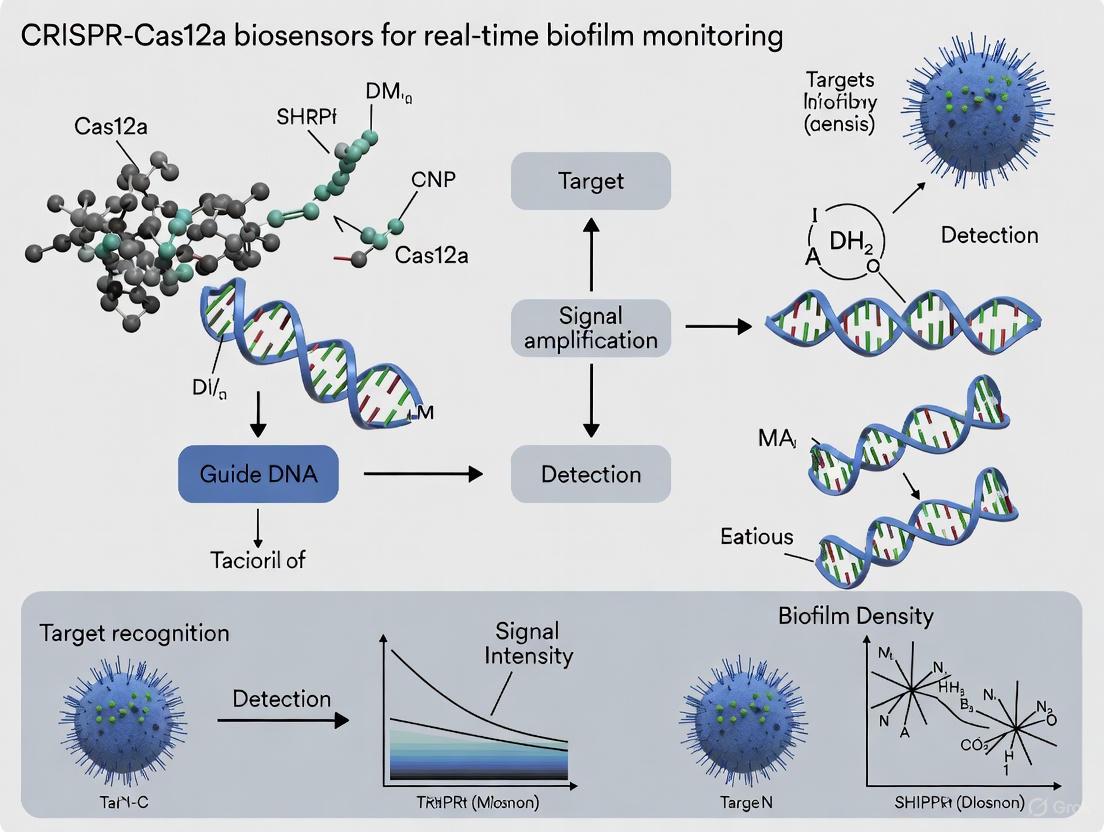
This article explores the transformative potential of CRISPR-Cas12a-based biosensing technology for real-time biofilm monitoring.
CRISPR-Cas12a Biosensors: A New Paradigm for Real-Time Biofilm Monitoring and Infection Control
Abstract
This article explores the transformative potential of CRISPR-Cas12a-based biosensing technology for real-time biofilm monitoring. Biofilms are a major challenge in healthcare and industry, contributing to antimicrobial resistance and persistent infections. We provide a comprehensive analysis for researchers, scientists, and drug development professionals, covering the foundational mechanisms of CRISPR-Cas12a, its specific methodological adaptation for detecting biofilm-associated pathogens and genes, crucial optimization strategies to enhance performance in complex matrices, and a comparative validation against existing diagnostic standards. The integration of this technology with advanced microfluidic systems and novel readout methods promises to revolutionize point-of-care diagnostics and enable proactive anti-biofilm strategies.
The Core Engine: Understanding CRISPR-Cas12a's Mechanism for Biosensing
The Clustered Regularly Interspaced Short Palindromic Repeats (CRISPR) and associated Cas (CRISPR-associated) proteins function as an adaptive immune system in bacteria and archaea [1] [2]. Originally identified in Escherichia coli genomes in 1987 and later recognized as a bacterial defense mechanism, this system protects prokaryotes from viral infection by recognizing and cleaving foreign DNA [1]. The CRISPR-Cas12a system, in particular, has revolutionized molecular diagnostics due to its unique enzymatic properties. Among the various CRISPR systems, Cas12a (formerly known as Cpf1) has emerged as a powerful tool for biosensing applications. Unlike Cas9, Cas12a requires only a CRISPR RNA (crRNA) for guidance, recognizes thymine-rich protospacer adjacent motif (PAM) sequences, produces staggered DNA ends, and exhibits both target-specific cis-cleavage and non-specific trans-cleavage activities [3] [4]. This latter trans-cleavage activity – the ability to indiscriminately cleave single-stranded DNA after target recognition – is the fundamental property that enables Cas12a's application in sensitive diagnostic platforms [1] [5].
Molecular Mechanism of CRISPR-Cas12a
Core Components and Target Recognition
The CRISPR-Cas12a system consists of two core components: the Cas12a protein, an RNA-guided DNA cleavage enzyme, and the CRISPR RNA (crRNA), which serves as the guide molecule [4]. The crRNAs in the CRISPR-Cas12a system are typically 42-44 nucleotides long, with a 20-22 nucleotide target sequence [4]. Cas12a contains two key functional domains: the HNH domain, which catalyzes single-strand cleavage at the 3' end of the target DNA, and the RuvC domain, which cleaves at the 5' end [4].
Target recognition begins with the complementary pairing of the crRNA spacer region with the target nucleic acid sequence [1]. Cas12a requires a short protospacer adjacent motif (PAM) sequence - typically 5'-TTTV-3' (where V is A, G, or C) - located adjacent to the target DNA [6]. Upon PAM recognition and target DNA binding, the Cas12a/crRNA complex undergoes conformational changes that activate its nuclease activities [1].
The Trans-Cleavage Activity
A defining feature of Cas12a is its dual cleavage activity. After recognizing and cleaving the target DNA (cis-cleavage), Cas12a exhibits collateral trans-cleavage activity, nonspecifically degrading any surrounding single-stranded DNA molecules [1] [5]. This activated Cas12a complex can cleave thousands of ssDNA reporters per hour, making it ideal for signal amplification in diagnostic applications [5]. This property enables the development of highly sensitive biosensors where the cleavage of reporter molecules (e.g., fluorescent or electrochemical probes) generates a detectable signal indicating the presence of the target pathogen [7].
Table 1: Key Characteristics of Cas12a in Bacterial Immunity and Biosensing
| Aspect | Role in Bacterial Immunity | Application in Biosensing |
|---|---|---|
| Primary Function | Defense against foreign genetic elements | Pathogen detection and molecular diagnostics |
| Target Recognition | crRNA complementary to viral DNA | crRNA designed against pathogen-specific sequences |
| PAM Requirement | TTTA/TTTV sequences in invading DNA | Enables specific targeting of pathogen DNA |
| cis-Cleavage | Destroys invading viral DNA | Confirms target presence |
| trans-Cleavage | May enhance defense through collateral activity | Amplifies signal for sensitive detection |
| Key Advantage | Adaptive immunity with memory | High specificity and sensitivity |
Quantitative Detection Performance of CRISPR-Cas12a Systems
CRISPR-Cas12a detection platforms demonstrate exceptional sensitivity across various applications, often achieving attomolar (aM) detection limits without target amplification [7]. When combined with isothermal amplification methods, these systems can detect target molecules at concentrations as low as 100 fg per reaction [6]. The quantitative performance of various Cas12a-based detection systems is summarized in Table 2.
Table 2: Detection Performance of CRISPR-Cas12a Platforms Across Applications
| Detection Platform | Target | Sample Matrix | Limit of Detection | Time Required | Citation |
|---|---|---|---|---|---|
| CRISPR-CLA | Nocardia farcinica DNA | Sputum specimens | 100 fg dsDNA/reaction | 70 min | [6] |
| Label-free Impedimetric Biosensor | Staphylococcus aureus DNA | Buffer and human serum | 20 aM (amplification-free) | Minutes | [7] |
| CaT-SMelor | Uric acid | Clinical human blood | 10 nM | N/R | [5] |
| Qualitative PCR for Cpf1 | Cpf1 DNA | Gene-edited cotton | 0.1% (approx. 44 copies) | N/R | [3] |
| qPCR for Cpf1 | Cpf1 DNA | Gene-edited cotton | 14 copies | N/R | [3] |
| SAHARA | RNA targets | Buffer | Picomolar concentrations (without amplification/RT) | N/R | [8] |
Experimental Protocols for CRISPR-Cas12a-Based Detection
Protocol 1: CRISPR-CLA for Bacterial Pathogen Detection
The CRISPR-CLA (CRISPR/Cas12a-mediated nucleic acid detection platform coupled with LAMP) provides a rapid, economic, and accurate method for diagnosing bacterial infections [6].
Materials and Reagents:
- Target-specific LAMP primers (FIP, BIP, F3, B3, LF, LB)
- Cas12a protein (e.g., EnGen Lba Cas12a)
- crRNA targeting the pathogen of interest
- DNA extraction kit (e.g., Wizard Genomic DNA Purification Kit)
- LAMP premix (e.g., DNA isothermal amplification kit)
- Fluorescent ssDNA reporter (e.g., FQ-labeled ssDNA)
- 10× NEBuffer 2.1
- Nuclease-free water
Procedure:
- DNA Extraction (20 min): Extract genomic DNA from clinical samples (e.g., sputum) using a commercial DNA extraction kit according to manufacturer's instructions.
- LAMP Preamplification (40 min):
- Prepare LAMP reaction mixture containing:
- 12.5 μL 2× LAMP premix
- 1.6 μM each of FIP and BIP primers
- 0.2 μM each of F3 and B3 primers
- 0.8 μM each of LF and LB primers
- 2 μL template DNA
- Nuclease-free water to 25 μL
- Incubate at 70°C for 40 minutes
- Prepare LAMP reaction mixture containing:
- Cas12a/crRNA Complex Preparation (5 min):
- Mix 1 μL Cas12a (100 nM) with 1 μL crRNA (100 nM) in 1× NEBuffer 2.1
- Incubate at 37°C for 5 minutes
- CRISPR/Cas12a-mediated Detection (8 min):
- Add 2 μL of LAMP product to the Cas12a/crRNA complex
- Add 1 μL of fluorescent ssDNA reporter (500 nM)
- Incubate at 37°C for 8 minutes
- Result Readout:
- Fluorescence detection: Measure fluorescence with a plate reader
- Lateral flow biosensor: Apply reaction mixture to a lateral flow strip and visualize results
Technical Notes:
- The forward inner primer (FIP) must be engineered with a PAM site (TTTA) at the linker region
- crRNA should be designed to target the LAMP amplicon
- Optimal reaction temperature for Cas12a detection is 37°C
Protocol 2: Label-free Impedimetric Biosensor for Amplification-free DNA Detection
This protocol describes an amplification-free electrochemical biosensor for ultrasensitive detection of bacterial DNA, suitable for point-of-care diagnostics [7].
Materials and Reagents:
- Gold disk working electrode
- Cas12a protein and custom crRNA
- SH-ssDNA reporter sequence (5'-/5ThioMC6-D/-AAAAAAAAAA-3')
- [Fe(CN)6]3−/4− redox probe
- Phosphate buffer saline (PBS, 0.1 M, pH 7.4)
- Ethanol and ultrapure water
- Target bacterial DNA
Procedure:
- Electrode Pretreatment:
- Polish gold electrode with 0.3 and 0.05 μm alumina slurry
- Rinse thoroughly with ethanol and ultrapure water
- Electrochemically clean in 0.5 M H2SO4 via cyclic voltammetry
SH-ssDNA Reporter Immobilization (2 hours):
- Incubate electrode with 1 μM SH-ssDNA reporter in PBS
- Allow self-assembly monolayer formation for 2 hours
- Rinse with PBS to remove unbound DNA
CRISPR/Cas12a Reaction (30-60 min):
- Pre-incubate Cas12a (50 nM) with crRNA (62.5 nM) for 10 minutes to form RNP complex
- Mix RNP complex with target DNA in reaction buffer
- Incubate at 37°C for 30-60 minutes
Electrochemical Measurement:
- Transfer reaction mixture to electrode surface
- Measure electrochemical impedance spectroscopy (EIS)
- Use [Fe(CN)6]3−/4− as redox probe in PBS
- Apply frequency range from 0.1 Hz to 100 kHz with 10 mV amplitude
Data Analysis:
- Monitor change in charge transfer resistance (Rct)
- Calculate ΔRct = Rct(after) - Rct(before)
- Correlate ΔRct with target concentration
Technical Notes:
- The SH-ssDNA reporter should be 10 nucleotides long with a thiol modification
- Optimal Cas12a:crRNA ratio is 1:1.25
- PAM sequence must be present in the target DNA for efficient activation
Visualizing the CRISPR-Cas12a Mechanism and Workflow
Diagram 1: From Bacterial Immunity to Biosensing: The CRISPR-Cas12a Pathway. This workflow illustrates the natural biological pathway of CRISPR-Cas12a in bacterial immunity and how it has been repurposed for diagnostic biosensing applications.
Diagram 2: CRISPR-Cas12a Biosensing Workflow. This diagram outlines the complete experimental workflow for pathogen detection using CRISPR-Cas12a technology, from sample collection to result interpretation.
The Scientist's Toolkit: Essential Research Reagents
Table 3: Essential Research Reagents for CRISPR-Cas12a Biosensor Development
| Reagent/Category | Specific Examples | Function/Purpose | Technical Notes |
|---|---|---|---|
| Cas12a Orthologs | LbCas12a, AsCas12a, ErCas12a | RNA-guided DNA cleavage enzyme | Different orthologs may vary in PAM preference, cleavage efficiency, and temperature optimum [8] |
| crRNA Design | Target-specific crRNA (42-44 nt) | Guides Cas12a to target sequence | crRNA should be designed with complementarity to target DNA; seed region (PAM-proximal) is critical for specificity [1] [8] |
| Nucleic Acid Amplification | LAMP, RPA, PCR | Pre-amplification of target DNA | Increases detection sensitivity; LAMP particularly suitable for point-of-care applications [6] |
| Reporters for trans-Cleavage | FQ-labeled ssDNA, SH-ssDNA, Fluorescent probes | Signal generation upon target recognition | Choice depends on detection modality (fluorescence, electrochemical, colorimetric) [7] |
| Detection Platforms | Fluorescence readers, Electrochemical sensors, Lateral flow strips | Result readout | Electrochemical sensors offer high sensitivity and miniaturization potential [7] |
| Buffer Systems | NEBuffer 2.1, Custom reaction buffers | Optimal enzyme activity | Mg²⁺ concentration and pH critically affect Cas12a activity [6] |
The transformation of CRISPR-Cas12a from a bacterial immune mechanism to a powerful biosensing platform represents a remarkable convergence of basic microbiology and applied biotechnology. The unique properties of Cas12a - including its single RNA guide requirement, T-rich PAM recognition, and particularly its trans-cleavage activity - have enabled the development of diagnostic tools with exceptional sensitivity, specificity, and versatility [1] [4]. These systems now demonstrate detection capabilities reaching attomolar sensitivity without target amplification [7] and can be adapted for various readout modalities including fluorescence, electrochemical, and colorimetric detection [9].
For researchers focused on real-time biofilm monitoring, CRISPR-Cas12a biosensors offer particularly promising applications. The technology's programmability allows for designing crRNAs that target biofilm-specific genes or pathogen signatures, while the rapid detection timeframe (often under 70 minutes [6]) enables near real-time monitoring. The integration of Cas12a with electrochemical platforms shows special promise for developing continuous monitoring systems that could track biofilm formation or treatment efficacy in clinical and industrial settings [7]. As these biosensing platforms continue to evolve, addressing current challenges related to sample preparation, inhibitor interference, and ecological adaptability will be crucial for translating laboratory innovations into practical biofilm monitoring solutions that can improve outcomes in healthcare, industrial maintenance, and environmental management.
CRISPR-Cas12a, a type V-A CRISPR-associated nuclease, exhibits a unique dual cleavage mechanism that distinguishes it from other CRISPR systems. Upon recognition and cleavage of its specific target DNA (cis-cleavage), Cas12a undergoes a conformational activation that enables promiscuous degradation of nearby non-target single-stranded DNA (trans-cleavage) [10]. This collateral activity serves as a powerful signal amplifier, forming the foundational principle for highly sensitive biosensing platforms, including those developed for real-time biofilm monitoring [11] [12].
This application note delineates the fundamental mechanisms of cis- and trans-cleavage, provides quantitative comparisons, and outlines detailed protocols for harnessing this principle in the detection of biofilm-associated pathogens.
Mechanistic Insights into cis- and trans-Cleavage
The Molecular Mechanism of Target-Dependent Activation
Cas12a is guided by a single CRISPR RNA (crRNA) to recognize a specific double-stranded DNA (dsDNA) target sequence adjacent to a T-rich protospacer adjacent motif (PAM) [10]. Target recognition and binding induce a conformational change in the Cas12a protein, allosterically activating its catalytic RuvC domain [13]. This activation initiates the cis-cleavage event, wherein the target dsDNA is precisely cut.
The cis-cleavage process is ordered and sequential [13]:
- PAM Binding and Strand Separation: The Cas12a-crRNA complex binds to the PAM sequence, facilitating local unwinding of the dsDNA duplex.
- Non-Target Strand Cleavage: The displaced non-target DNA strand is the first to be cleaved.
- Target Strand Cleavage: The crRNA-bound target strand is then cut.
- Product Release: The Cas12a complex releases the PAM-distal cleavage product but remains bound to the PAM-proximal end, retaining catalytic activity [13].
The Collateral trans-Cleavage Activity
Following target-specific cis-cleavage, the ternary Cas12a-crRNA-target DNA complex enters a catalytically promiscuous state. In this state, the RuvC active site becomes accessible and cleaves nearby single-stranded DNA (ssDNA) molecules indiscriminately, a activity termed trans- or collateral cleavage [10] [13]. This activity is highly efficient and ubiquitous across Cas12a orthologs from various species [10].
Key characteristics of trans-cleavage include:
- Target Independence: The cleaved ssDNA reporters need no sequence complementarity to the crRNA guide [10].
- Product Profile: Trans-cleavage generates short oligonucleotide fragments, predominantly 2-4 nucleotides in length for 3'- and 5'-labeled substrates, respectively [10].
- Catalytic Pocket: Structural studies confirm that the same RuvC catalytic pocket responsible for cis-cleavage also executes the trans-cleavage of collateral ssDNAs [10].
The diagram below illustrates the sequential activation and dual cleavage activities of the Cas12a system.
Quantitative Comparison of cis- and trans-Cleavage Activities
The functional outputs of the two cleavage modes differ significantly in specificity, kinetics, and application. The table below summarizes the key differentiating parameters.
Table 1: Comparative analysis of Cas12a cis- and trans-cleavage activities.
| Parameter | cis-Cleavage | trans-Cleavage |
|---|---|---|
| Function | Target DNA degradation [10] | Collateral ssDNA degradation [10] |
| Specificity | High (Sequence-programmable) [10] | Low/Promiscuous (Non-specific) [10] |
| Key Requirement | crRNA complementarity & PAM sequence [10] | Prior cis-cleavage activation [10] [13] |
| Primary Role | Target identification & initial切割 | Signal amplification for detection [12] [14] |
| Kinetics | Relatively faster [10] | Relatively slower [10] |
| Application | Genome editing [15] | Biosensing & molecular diagnostics [12] [14] |
Directional Preference in trans-Cleavage
Recent investigations have revealed that the trans-cleavage activity of Cas12a exhibits a unidirectional preference. Cas12a trans-cleaves double-stranded DNA (dsDNA) substrates with a 3' overhang at least three times faster than those with a 5' overhang [16]. This behavior is hypothesized to be governed by the directional enzymatic activity of the RuvC and Nuc domains. This insight is critical for designing optimal reporter molecules for non-optical biosensing platforms [16].
Experimental Protocols for Biosensor Development
This section provides a detailed methodology for constructing a Cas12a-based biosensor, from DNA extraction to signal detection, with a focus on detecting pathogens relevant to biofilm formation.
Protocol 1: CRISPR-Cas12a Assay for Pathogen Detection
Principle: Target DNA from a biofilm pathogen is amplified and introduced into a Cas12a-crRNA reaction mix. The activated Cas12a trans-cleaves a reporter molecule, generating a detectable signal (fluorescent or colorimetric) proportional to the target presence [12].
I. Sample Preparation and DNA Extraction
- Resuspend Biofilm Samples: Suspend biofilm samples collected from surfaces (e.g., stainless steel, plastic) in sterile PBS or lysis buffer.
- Extract Genomic DNA: Use a commercial bacterial genomic DNA isolation kit.
- Example: Use the Rapid Bacterial Genomic DNA Isolation Kit [12].
- Quantify DNA: Measure DNA concentration using a spectrophotometer and dilute to a working concentration.
II. Recombinase Polymerase Amplification (RPA)
- Prepare RPA Reaction: Assemble a 50 μL RPA reaction containing:
- 1x RPA rehydration buffer
- 420 nM forward primer (specific to target gene, e.g., for E. coli)
- 420 nM reverse primer
- 14 mM Magnesium acetate (MgOAc)
- 5 μL of extracted template DNA
- Nuclease-free water to 50 μL
- Incubate: Transfer the mix to a thermos-top tube containing a dried enzyme pellet. Incubate at 37-42°C for 15-25 minutes [12].
III. CRISPR-Cas12a Detection Reaction
- Prepare Reaction Mix: Combine the following components in a PCR tube or a microplate well to a final volume of 20-25 μL:
- 1x NEBuffer 2.1 (50 mM NaCl, 10 mM Tris-HCl, 10 mM MgCl₂, 100 μg/mL BSA, pH 7.9) [16]
- 40 nM LbaCas12a (FnCas12a can also be used) [12] [16]
- 20 nM crRNA (designed to be complementary to the amplified target sequence) [12] [16]
- 400-800 nM reporter molecule (e.g., ssDNA-FQ reporter or hybrid dsDNA reporter) [12] [16]
- 2-5 μL of the RPA amplification product
- Incubate: Incubate the reaction at 37°C for 10-30 minutes.
IV. Signal Detection and Analysis
- Fluorescence Measurement: For an ssDNA reporter labeled with a fluorophore and quencher (e.g., FAM/BHQ-1), monitor real-time fluorescence using a plate reader (Ex/Em: 485/535 nm).
- Naked-Eye Colorimetric Readout: For a gold nanoparticle (AuNP)-based reporter, observe the color change from aggregated state (transparent/blue) to dispersed state (purple/red) [12].
- Gel Electrophoresis: To confirm cleavage, run products on a 2-4% agarose gel. Cleaved reporters appear as lower molecular weight bands [16].
The following workflow graph provides a visual summary of the entire experimental process.
Key Research Reagent Solutions
The successful implementation of the above protocol relies on a set of core reagents. The table below lists these essential materials and their functions.
Table 2: Essential reagents for CRISPR-Cas12a biosensor experiments.
| Reagent / Material | Function / Description | Example Specifications / Notes |
|---|---|---|
| Cas12a Nuclease | Effector protein that provides programmable cis- and trans-cleavage activities. | LbaCas12a or FnCas12a; working concentration ~40-100 nM [12] [16]. |
| crRNA | Single guide RNA that confers sequence specificity to the Cas12a complex. | Designed with a ~20 nt spacer complementary to the target; working concentration ~20-50 nM [12] [16]. |
| ssDNA-FQ Reporter | Fluorescent substrate for trans-cleavage. Collateral cleavage separates fluorophore from quencher. | e.g., 5'-FAM-TTATT-BHQ1-3' [14]; used for real-time fluorescent detection. |
| Hybrid dsDNA Reporter | dsDNA with a 3' overhang for sensitive non-optical detection. | Cas12a cleaves 3' overhang dsDNA ~3x faster than 5' overhang [16]. |
| Gold Nanoparticles | Colorimetric reporter probe. Cleavage of linker-ssDNA prevents aggregation, causing color change. | Enables naked-eye detection without equipment [12]. |
| RPA Kit | For isothermal amplification of target DNA, enabling high sensitivity at constant temperature. | Amplifies target to detectable levels in ~20 minutes [12]. |
| NEBuffer 2.1 | Reaction buffer providing optimal ionic and Mg²⁺ conditions for Cas12a activity. | 50 mM NaCl, 10 mM Tris-HCl, 10 mM MgCl₂, 100 μg/mL BSA, pH 7.9 [16]. |
The exceptional sensitivity and programmability of CRISPR-Cas12a biosensors make them ideal for addressing the challenge of precision biofilm control in food safety and clinical settings [11]. These systems can be designed for the rapid, on-site detection of specific biofilm-forming pathogens like Listeria monocytogenes, Escherichia coli O157:H7, and Salmonella typhimurium with limits of detection (LOD) as low as 1 × 10¹ to 1 × 10² CFU/mL in spiked food samples [12]. The integration of this technology with portable platforms, such as lateral flow assays, paves the way for real-time biofilm monitoring on food-contact surfaces, enabling proactive sanitation interventions and significantly enhancing public health protection [11] [12].
In summary, the fundamental principle of target-activated collateral ssDNA cleavage (trans-cleavage) by Cas12a provides a versatile and powerful engine for next-generation biosensors. A deep understanding of the mechanistic nuances between its cis- and trans-cleavage activities is paramount for developing robust, sensitive, and field-deployable diagnostic tools for complex environments like microbial biofilms.
The Protospacer Adjacent Motif (PAM) is a short, specific DNA sequence adjacent to the target DNA site that is fundamental to the function of CRISPR-Cas12a systems. For Cas12a from Lachnospiraceae bacterium (LbCas12a), the canonical PAM sequence is 5'-TTTV-3' (where V is A, C, or G), which is recognized by the protein's PAM-interacting (PI) domain [17]. This recognition is not merely a binding event; it triggers a critical conformational change in the Cas12a protein. The binding of the Cas12a-crRNA ribonucleoprotein (RNP) complex to the PAM sequence induces the unwinding of the double-stranded DNA (dsDNA), allowing the target strand (TS) to form an RNA-DNA heteroduplex with the crRNA [18]. This activation mechanism is the cornerstone of target specificity, ensuring that the system discriminates between self and non-self DNA, and is therefore indispensable for the activation of Cas12a's trans-cleavage activity by dsDNA activators in biosensing applications [17] [18]. In the context of real-time biofilm monitoring, understanding and leveraging PAM recognition is paramount for designing sensors that can accurately detect pathogen-specific DNA sequences associated with biofilm formation and antibiotic resistance.
Quantitative Profiling of Cas12a PAM Recognition
The binding affinity and subsequent catalytic efficiency of Cas12a are directly influenced by the specific PAM sequence. The following table summarizes key quantitative parameters for different PAM sequences and their impact on the Cas12a reaction, which are critical for assay design.
Table 1: Quantitative Parameters of Cas12a PAM Recognition and Activation
| PAM Sequence | Relative Recognition Efficiency | Impact on Reaction Kinetics (k~cat~/K~m~) | Typical Application in Biosensing |
|---|---|---|---|
| 5'-TTTA-3' | High (Reference) | ~5.0 × 10⁶ s⁻¹ M⁻¹[cite:3] | Gold standard for high-sensitivity detection [17] |
| 5'-TTTC-3' | High | ~5.0 × 10⁶ s⁻¹ M⁻¹ | Used in DETECTR for HPV16/18 [17] |
| 5'-TTTG-3' | High | ~5.0 × 10⁶ s⁻¹ M⁻¹ | Common in SARS-CoV-2 detection assays [17] |
| Non-canonical (e.g., TTTT) | Low to None | Not significant | Generally avoided; can lead to false negatives |
| PAM-free Hairpin Activator | Moderate (Structure-dependent) | Requires empirical determination [18] | Detection of non-nucleic acid targets (e.g., HOCl, Ca²⁺) [18] |
The PAM sequence must be present on the non-target strand (NTS) of the dsDNA activator, upstream of the protospacer sequence [17]. The activation kinetics are robust, with a reported turnover number of approximately 3 per second, enabling significant signal amplification in a short time frame [19]. This high catalytic efficiency makes Cas12a an excellent engine for biosensors aimed at detecting low-abundance targets, such as specific bacterial genes expressed during biofilm formation.
Experimental Protocol for PAM-Dependent dsDNA Detection
This protocol details the detection of a dsDNA target, such as the mecA gene from methicillin-resistant Staphylococcus aureus (MRSA)—a common biofilm-forming pathogen—using a CRISPR-Cas12a fluorescence assay coupled with pre-amplification.
Research Reagent Solutions
Table 2: Essential Reagents for CRISPR-Cas12a dsDNA Detection
| Reagent/Component | Function/Description | Example Supplier/Reference |
|---|---|---|
| LbCas12a (Cpf1) Nuclease | The core effector enzyme that provides target-specific cis- and trans-cleavage activity. | New England Biolabs (NEB) [19] [20] |
| Target-Specific crRNA | Guide RNA that confers specificity by binding to the target DNA sequence adjacent to the PAM. | Synthesized by commercial providers (e.g., Sangon Biotech) [20] |
| ssDNA Fluorescent Reporter | A quenched ssDNA probe (e.g., FAM-TTATT-BHQ1) cleaved during trans-cleavage to generate a fluorescent signal. | [17] [20] |
| Recombinase Polymerase Amplification (RPA) Kit | Isothermal amplification kit (e.g., TwistAmp Liquid Basic) for rapid target pre-amplification. | TwistDx [20] |
| 10× NEBuffer r2.1/r3.1 | Reaction buffer providing optimal pH, Mg²⁺, and salt conditions for Cas12a activity. | NEB [20] [18] |
| RNase Inhibitor | Protects the crRNA from degradation during the reaction assembly and incubation. | [19] [20] |
Step-by-Step Procedure
Target Pre-amplification (RPA)
- Prepare a 25 μL RPA reaction mix at the bottom of a 0.2 mL tube:
- 10 μL of 2× Reaction Buffer
- 1 μL of dNTPs
- 2 μL of 10× E-mix
- 1 μL each of forward and reverse RPA primers (10 μM)
- 1 μL of 20× Core Reaction mix
- 2 μL of template DNA (e.g., purified from a biofilm sample)
- Nuclease-free water to 23 μL
- Initiate the reaction by adding 2 μL of Magnesium Acetate (MgOAc). Briefly spin down and incubate the tube at 42 °C for 10-20 minutes [20].
- Prepare a 25 μL RPA reaction mix at the bottom of a 0.2 mL tube:
CRISPR-Cas12a Detection Master Mix Assembly
- While the RPA is running, prepare the CRISPR detection mix in the tube's cap or a separate tube:
- Incubate this RNP complex at 37 °C for 10-15 minutes to pre-assemble [18].
One-Tube Reaction and Fluorescence Measurement
- After the RPA amplification is complete, briefly centrifuge the tube to combine the pre-amplified product from the bottom with the CRISPR detection mix in the cap.
- Immediately transfer the tube to a real-time PCR instrument or a fluorescence reader pre-heated to 42 °C.
- Measure the fluorescence (Ex: 485 nm, Em: 525 nm) every minute for 15-30 minutes [20].
Data Analysis
- Positive Detection: A positive result is indicated by a sharp, exponential increase in fluorescence signal over time, which occurs because the amplified, PAM-containing dsDNA activates Cas12a's trans-cleavage activity.
- Negative Control: Reactions lacking the target template should show only a minimal, baseline fluorescence increase.
- Sensitivity: This method can achieve high sensitivity, with some protocols detecting as few as 1.25 copies of a target gene per reaction [21] or 10 copies/μL for viral targets [17].
Workflow Visualization and Signaling Pathway
The following diagram illustrates the core mechanism of PAM-dependent dsDNA activation and the subsequent collateral cleavage that enables detection.
Cas12a Activation by PAM-containing dsDNA
Advanced Application: PAM-Free Hairpin Activators for Biofilm Monitoring
While canonical PAM recognition is crucial, recent advances have identified non-canonical activators. Hairpin (Hp)-structured DNA with a distal loop can activate Cas12a's trans-cleavage activity in a PAM-independent manner [18]. This novel mechanism enables the construction of allosteric biosensors. For instance, a hairpin activator can be designed such that its loop is a substrate for hypochlorous acid (HOCl)—a reactive oxygen species produced by immune cells during biofilm-related infections. Cleavage of the loop by HOCl disrupts the hairpin, preventing Cas12a activation and resulting in a concentration-dependent decrease in fluorescence [18]. This paradigm shift allows for the direct detection of non-nucleic acid biomarkers relevant to biofilm pathophysiology, significantly expanding the utility of CRISPR-Cas12a biosensors in complex monitoring scenarios.
The programmability of the CRISPR RNA (crRNA) is the cornerstone of developing specific and sensitive biosensors using the CRISPR-Cas12a system. In the context of real-time biofilm monitoring, the ability to custom-design the crRNA spacer sequence allows researchers to target unique genetic signatures of pathogens with high precision [22]. The Cas12a effector complex, once guided to its target DNA by the crRNA, undergoes a conformational change that activates its non-specific single-stranded DNA (ssDNA) cleavage activity, known as trans-cleavage [17]. This collateral activity enables robust signal amplification, forming the basis for sensitive detection systems that can be leveraged for monitoring dynamic biofilm formation and composition.
The fundamental architecture of a crRNA consists of a scaffold region (direct repeat), essential for Cas12a protein binding and complex stability, and a spacer region, which provides the target-specific programmability through Watson-Crick base pairing [22] [23]. This modular architecture allows for the rational design of crRNAs to detect a wide array of nucleic acid targets, from bacterial genes to viral sequences, making it an indispensable tool for diagnostic and environmental monitoring applications [24].
Core Principles of crRNA Design
Fundamental Architecture and Components
The functional crRNA is a short RNA molecule composed of two critical parts:
- Scaffold (Direct Repeat): This is a conserved, invariant sequence that folds into a specific secondary structure. This scaffold is recognized by and binds to the Cas12a protein, forming the core of the ribonucleoprotein complex [23].
- Spacer: This is a user-defined, 20-24 nucleotide sequence that is programmable. It determines the specificity of the Cas12a complex by hybridizing with a complementary target DNA sequence [22] [17].
The binding of the crRNA-guided Cas12a complex to its target DNA is contingent upon the recognition of a short Protospacer Adjacent Motif (PAM). For most Cas12a orthologs, this is a 5'-TTTV-3' (where V is A, G, or C) sequence located immediately upstream of the target region on the non-target DNA strand [17]. The PAM requirement is a fundamental constraint that must be considered during target site selection.
Mechanism of Target Recognition and Signal Activation
The pathway from crRNA design to detectable signal involves a precise sequence of molecular events, illustrated below.
Advanced Engineering Strategies for Enhanced Detection
To overcome limitations in sensitivity and specificity, and to enable the detection of non-nucleic acid targets, advanced crRNA engineering strategies have been developed.
Split crRNA Systems for Ultimate Specificity
Split crRNA technology involves artificially dividing the crRNA into two or more inactive fragments that reassemble into a functional guide only in the presence of the specific target analyte [23]. This strategy is particularly useful for:
- Direct detection of ultrashort targets like microRNAs, without the need for pre-amplification [23].
- Superior discrimination of single-nucleotide polymorphisms (SNPs), crucial for identifying specific bacterial strains within a biofilm [23].
- Constructing molecular logic gates (e.g., AND gates) for multiplexed detection [23].
The most common formats include splitting the crRNA into its scaffold and spacer moieties, or using "splice-at-will" designs to create truncated crRNAs (tcrRNAs) that are completed by the target sequence itself [23].
Activator-Based Splitting for Versatile Sensing
Beyond splitting the crRNA itself, an alternative strategy involves splitting the DNA activator—the strand that triggers Cas12a's trans-cleavage. The activator is divided into fragments that are ligated or reassembled through a target-induced reaction, such as hybridization or chemical bonding [23]. This method is highly adaptable for sensing a broad range of non-nucleic acid targets, including proteins and small molecules, by linking their presence to the assembly of the active DNA activator.
Quantitative Design Parameters and Performance
The performance of a Cas12a biosensor is highly dependent on specific, quantifiable crRNA design parameters. The table below summarizes key criteria and their impact on assay performance.
Table 1: Key crRNA Design Parameters and Their Impact on Cas12a Biosensor Performance
| Design Parameter | Optimal Range / Feature | Impact on Performance | Rationale |
|---|---|---|---|
| Spacer Length | 20 - 24 nucleotides [17] | Specificity & Efficiency | Shorter spacers may reduce specificity; longer spacers can impair complex formation. |
| PAM Requirement | 5'-TTTV-3' (for Cas12a) [17] | Targetability | Absolute requirement for initial DNA binding and complex activation. |
| Spacer Sequence | ~40-70% GC content; Avoid stable secondary structures | Sensitivity & Kinetics | High GC increases binding strength but may slow kinetics. Secondary structures prevent target binding. |
| Seed Region | 5-10 nucleotides proximal to PAM [23] | Specificity & Mismatch Tolerance | Critical for initial DNA recognition; mismatches here drastically reduce activity. |
The design directly influences analytical performance, as demonstrated in various diagnostic applications:
Table 2: Performance Metrics of Selected Cas12a-Based Diagnostic Assays
| Target Pathogen | Amplification Method | crRNA Design Target | Reported Sensitivity | Detection Time | Citation |
|---|---|---|---|---|---|
| C. pneumoniae | Enzymatic Recombinase Amplification (ERA) | ompA gene | 100 copies/µL | 30-50 min | [25] |
| African Swine Fever Virus (ASFV) | RPA / LAMP | - | 1 - 6.8 copies/µL | 50 - 60 min | [17] |
| HPV 16/18 | RPA | - | - | ~60 min | [17] |
| SARS-CoV-2 | RT-RPA / RT-LAMP | - | 0.4 - 10 copies/µL | 30 - 50 min | [17] |
Detailed Experimental Protocol: crRNA Design forC. pneumoniaeDetection
This protocol details the steps for designing and validating a crRNA for the specific detection of C. pneumoniae, as exemplified in the referenced study [25]. This workflow can be adapted for targeting pathogens relevant to biofilm research.
The process from gene sequence to a validated detection assay follows a structured pathway.
Step-by-Step Procedure
Step 1: Target Gene and PAM Site Identification
- Objective: Identify a unique genomic sequence in the target pathogen (C. pneumoniae) for highly specific detection.
- Procedure:
- Retrieve the gene sequence of a suitable target. For C. pneumoniae, the major outer membrane protein (ompA) gene is a well-established target [25].
- Scan the target sequence for the presence of Cas12a PAM sites (5'-TTTV-3') using sequence analysis software (e.g., Geneious, CLC Main Workbench).
- Confirm the uniqueness of the selected target region by performing a BLAST search against non-target genomes (e.g., host DNA, common biofilm flora) to avoid cross-reactivity.
Step 2: Spacer Sequence Selection and Design
- Objective: Design a crRNA spacer that ensures efficient binding and activation.
- Procedure:
- Select the 20-24 nucleotides immediately downstream (3') of a chosen PAM site as the candidate spacer sequence.
- Analyze the candidate spacer's properties:
- Calculate the GC content. Aim for 40-70%.
- Check for self-complementarity or potential to form stable secondary structures that could interfere with crRNA loading or target binding. Tools like NUPACK or IDT OligoAnalyzer can be used.
- Ensure the "seed sequence" (first 5-10 nt adjacent to the PAM) is devoid of any mismatches to the target.
- It is advisable to design 2-3 candidate spacers targeting different regions of the gene for empirical validation.
Step 3: crRNA Synthesis and Complex Formation
- Objective: Produce the functional crRNA and form the active Cas12a complex.
- Procedure:
- crRNA Synthesis: The crRNA can be obtained via:
- In vitro transcription from a DNA template.
- Direct chemical synthesis from commercial suppliers (e.g., Sangon Biotech, Integrated DNA Technologies).
- Sequence Structure: The final crRNA sequence is: [Scaffold/Direct Repeat] + [Spacer Sequence].
- RNP Complex Assembly: Pre-incubate the purified Cas12a protein with the synthesized crRNA at a molar ratio of 1:2 to 1:3 (Cas12a:crRNA) in an appropriate buffer (e.g., NEBuffer 2.1) at 25°C for 10-20 minutes to form the ribonucleoprotein (RNP) complex [25].
- crRNA Synthesis: The crRNA can be obtained via:
Step 4: Assay Validation and Optimization
- Objective: Confirm the functionality, specificity, and sensitivity of the designed crRNA.
- Procedure (Using the C. pneumoniae Protocol as a Model [25]):
- Isothermal Amplification: Perform ERA or RPA on the target DNA (e.g., from clinical samples or cultured bacteria) using a commercial kit. Conditions: 37°C for 20 minutes.
- CRISPR Detection:
- Prepare the detection mix containing the pre-assembled RNP complex and a fluorescent ssDNA reporter (e.g., 5'-6-FAM-TTATT-3' with BHQ1 quencher).
- Add the amplified product to the detection mix.
- Incubate at 37°C and monitor fluorescence in real-time using a plate reader or qPCR instrument.
- Lateral Flow Readout (Alternative): For visual detection, use a reporter labeled with FAM and biotin. After trans-cleavage, the cleavage products are detected on a lateral flow strip, where the absence of a test line indicates a positive result [25].
- Specificity Test: Challenge the assay with genomic DNA from non-target pathogens (e.g., M. pneumoniae, S. aureus) to confirm no cross-reactivity.
- Sensitivity Test: Perform the assay with a serial dilution of the target DNA to determine the limit of detection (LOD), expressed in copies per microliter.
The Scientist's Toolkit: Essential Reagents and Materials
Table 3: Key Research Reagent Solutions for crRNA-Based Cas12a Detection
| Reagent / Material | Function / Description | Example Source / Kit |
|---|---|---|
| Cas12a Enzyme | The core effector protein that executes target cleavage and collateral activity. | Purified from commercial suppliers (e.g., New England Biolabs, IDT). |
| crRNA | The programmable guide RNA that confers specificity to the biosensor. | Chemically synthesized by companies like Sangon Biotech [25]. |
| ssDNA Fluorescent Reporter | A short ssDNA oligonucleotide dual-labeled with a fluorophore and a quencher. Signal is generated upon Cas12a collateral cleavage. | Custom ordered from oligo synthesis companies (e.g., 5'-6-FAM-TTATT-BHQ1-3'). |
| Isothermal Amplification Kit | For pre-amplifying the target nucleic acid to enhance detection sensitivity. | Enzymatic Recombinase Amplification (ERA) Kit [25] or RPA Kit. |
| Nucleic Acid Extraction Kit | For isolating target DNA from complex samples like biofilm or clinical specimens. | QIAamp DNA Mini Kit [25]. |
| Lateral Flow Strips | For visual, instrument-free readout of the detection result. | Milenia GenLine HybriDetect kit [25]. |
| Reaction Buffer | Provides optimal ionic and pH conditions for Cas12a enzymatic activity. | NEBuffer 2.1 or similar proprietary buffers [25]. |
CRISPR-Cas12a biosensors have emerged as powerful tools for the specific and sensitive detection of pathogens, making them exceptionally suitable for monitoring bacterial biofilms in real-time. The core of this detection technology hinges on sophisticated signal probes that translate the Cas12a's enzymatic activity into a measurable output. This document provides detailed application notes and protocols for utilizing two primary classes of signal reporters—fluorophore-quencher (FQ) pairs and colorimetric substrates—within the context of CRISPR-Cas12a biosensors for biofilm research. We focus on their integration into assays for detecting biofilm-forming pathogens and their associated antimicrobial resistance genes, providing researchers with the foundational tools to develop precise monitoring systems.
Fluorophore-Quencher Reporters
Fluorophore-quencher (FQ) reporters are the cornerstone of highly sensitive, real-time detection in CRISPR-Cas12a assays. Their function is based on a proximity-dependent quenching mechanism.
Core Mechanism: These probes are short, single-stranded DNA (ssDNA) oligonucleotides labeled with a fluorophore at one end and a quencher molecule at the other. When the probe is intact, the proximity of the quencher to the fluorophore suppresses fluorescence through mechanisms such as Förster Resonance Energy Transfer (FRET) or contact (static) quenching [26]. Upon activation, the Cas12a enzyme's non-specific trans-cleavage activity severs the ssDNA probe. This physical separation of the fluorophore from the quencher results in a dramatic increase in fluorescent signal that can be detected in real-time [27] [1] [5].
Quenching Mechanisms: The efficiency of quenching is critically dependent on the distance between the fluorophore and quencher.
- FRET Quenching: A through-space energy transfer mechanism where the emission spectrum of the fluorophore overlaps with the absorption spectrum of the quencher. Efficiency is inversely proportional to the sixth power of the distance between the pair [26] [28].
- Static Quenching (Contact Quenching): Involves the direct binding of the fluorophore and quencher to form a non-fluorescent complex. This mechanism is highly efficient and depends on the molecular affinity and planarity of the dye molecules [26].
Evolution of Quenchers: The development of "dark quenchers" like the Black Hole Quencher (BHQ) family has been pivotal. Unlike early fluorescent quenchers (e.g., TAMRA), dark quenchers do not emit fluorescence, which significantly reduces background noise and improves the signal-to-noise ratio for more sensitive detection [26].
Colorimetric Reporters
Colorimetric reporters offer a simple, instrument-light alternative for visual or spectrophotometric detection, making them ideal for point-of-care applications.
Core Mechanism: These assays typically rely on the enzymatic oxidation of a chromogenic substrate to produce a visible color change. While not a direct function of Cas12a itself, the system can be coupled with a reporter enzyme like Horseradish Peroxidase (HRP). This is often achieved by designing the assay so that the activated Cas12a complex generates a detectable DNA product that can be conjugated to HRP, or by using ssDNA probes conjugated directly to the enzyme [29].
Common Substrates: The two most common HRP substrates are 3,3',5,5'-Tetramethylbenzidine (TMB) and 2,2'-Azinobis (3-ethylbenzothiazoline-6-sulfonic acid) (ABTS). TMB produces a blue color upon oxidation, which turns yellow when stopped with a strong acid. ABTS yields a green product [29].
Signal Enhancement: The colorimetric signal can be enhanced and stabilized by using a stopping solution (e.g., sulfuric acid for TMB). Research indicates that TMB generally generates a more stable and easily detectable stopped signal compared to ABTS in paper-based formats, which is beneficial for reproducible results [29].
Table 1: Key Characteristics of Signal Reporter Systems
| Feature | Fluorophore-Quencher (FQ) Reporters | Colorimetric Reporters |
|---|---|---|
| Readout Mode | Fluorescence (real-time or end-point) | Visual or absorbance (end-point) |
| Primary Use | Quantitative, real-time monitoring | Qualitative/Semi-quantitative, point-of-care |
| Sensitivity | Very High (attomolar range demonstrated) [1] | Moderate to High |
| Instrumentation | Fluorometer, plate reader | Spectrophotometer, or visual inspection |
| Key Advantage | High signal-to-noise, kinetic data | Low cost, simplicity, no specialized equipment needed |
| Example Probes | FAM-BHQ1, TAMRA-QSY7 [26] [28] | TMB, ABTS [29] |
Application in CRISPR-Cas12a Biosensors for Biofilm Monitoring
The unique trans-cleavage activity of CRISPR-Cas12a is the engine that powers these signal probes. Upon recognition and cis-cleavage of its target dsDNA (e.g., a gene specific to a biofilm-forming bacterium), the Cas12a-crRNA complex undergoes a conformational change, activating its non-specific ssDNase activity [27] [1]. This activated state triggers the cleavage of surrounding ssDNA molecules, which includes the FQ or colorimetrically-linked reporters, thereby generating a detectable signal.
This mechanism can be applied to detect specific pathogens known to form robust biofilms, such as Pseudomonas aeruginosa, Staphylococcus aureus, and Klebsiella pneumoniae [30] [31]. For instance, a CRISPR-Cas12a assay has been successfully configured to identify Klebsiella pneumoniae and its KPC resistance gene, using a combination of fluorescence and lateral flow readouts [31].
The following diagram illustrates the logical workflow and signaling pathways of a typical CRISPR-Cas12a biosensor utilizing these probes.
Experimental Protocols
Protocol 1: Fluorophore-Quencher Based Detection of Biofilm-Associated Genes
This protocol details the steps for using an FQ-reporter to detect a specific gene from a biofilm-forming pathogen (e.g., the 16S rRNA of P. aeruginosa or a virulence factor) [30] [1].
Research Reagent Solutions & Essential Materials
Table 2: Key Reagents for FQ-Based CRISPR-Cas12a Detection
| Item | Function/Description | Example/Notes |
|---|---|---|
| Cas12a Enzyme | CRISPR effector protein; provides trans-cleavage activity. | LbCas12a or AsCas12a [27]. |
| crRNA | Guide RNA; confers specificity by binding to target DNA. | Designed to be complementary to the target gene sequence [1]. |
| FQ-Labeled ssDNA Reporter | Signal probe; cleaved by activated Cas12a to produce fluorescence. | e.g., FAM-TTATT-BHQ1 [5]. Keep protected from light. |
| Target DNA | The nucleic acid sequence to be detected. | Amplified DNA from a sample, or synthetic oligos for testing. |
| Reaction Buffer | Provides optimal ionic and pH conditions for Cas12a activity. | Typically contains Mg²⁺, salts, and buffer like HEPES [5]. |
| Fluorometer/Microplate Reader | Instrumentation for detecting fluorescence signal. | Capable of exciting and detecting the fluorophore's wavelengths. |
Procedure
Assay Setup:
- Prepare a master mix on ice containing the following components per reaction:
- 10 nM Cas12a enzyme
- 20 nM crRNA (designed for the specific target gene)
- 100 nM FQ-labeled ssDNA reporter probe
- 1X Cas12a reaction buffer
- Nuclease-free water to volume
- Gently mix by pipetting and briefly centrifuge.
- Prepare a master mix on ice containing the following components per reaction:
Target Addition and Incubation:
- Aliquot the master mix into appropriate reaction tubes or a microplate.
- Initiate the reaction by adding the target DNA sample (e.g., 5-10 µL of pre-amplified product) to the experimental wells. Include a no-template control (NTC) containing water.
- Seal the plate or tubes to prevent evaporation and incubate at 37°C for 15-60 minutes. For real-time kinetic analysis, place the plate immediately into a pre-warmed fluorometer.
Signal Detection:
- Real-Time Monitoring: Read fluorescence every 1-2 minutes using the appropriate filters for your fluorophore (e.g., excitation/emission of 485/535 nm for FAM).
- End-Point Analysis: After incubation, read the fluorescence intensity once. The signal in samples containing the target DNA will be significantly higher than the NTC.
Troubleshooting Notes:
- High Background in NTC: This indicates non-specific cleavage or probe degradation. Ensure reagent purity, use fresh buffers, and optimize the Cas12a and crRNA concentrations to minimize off-target activity.
- Low Signal: The target concentration may be below the assay's limit of detection (LOD). Consider incorporating a pre-amplification step (e.g., RPA or LAMP) or increasing the incubation time. Verify that the crRNA sequence is correctly designed and functional.
Protocol 2: Colorimetric Detection via an HRP-Linked System
This protocol adapts the CRISPR-Cas12a detection for a colorimetric readout, which is less sensitive but highly suitable for rapid, visual assessment [29] [31].
Procedure
Assay Setup and Primary Reaction:
- Follow Step 1 of Protocol 1 to set up the Cas12a cleavage reaction. However, replace the FQ-reporter with a biotin-labeled ssDNA reporter of the same sequence.
- Incubate the reaction at 37°C for 30-60 minutes to allow for trans-cleavage. The activated Cas12a will degrade the biotinylated ssDNA.
Streptavidin-HRP Capture and Detection:
- After incubation, add streptavidin-conjugated Horseradish Peroxidase (Streptavidin-HRP) to the reaction mix. Any intact, non-cleaved biotinylated ssDNA will bind the Streptavidin-HRP.
- Transfer the mixture to a well of a streptavidin-coated microtiter plate or a lateral flow strip with a capture line. The Streptavidin-HRP bound to intact ssDNA will be captured.
Color Development:
- Wash the well or strip to remove unbound HRP.
- Add the colorimetric HRP substrate (e.g., TMB solution).
- Incubate for 5-15 minutes at room temperature in the dark. The development of a blue color (for TMB) indicates the presence of intact probe, meaning the target DNA was absent and did not activate Cas12a. The absence of color indicates that the probe was cleaved, and the target was present.
Signal Stopping and Quantification (Optional):
- For more consistent results, add an equal volume of stop solution (e.g., 0.5 M sulfuric acid for TMB), which turns the blue solution yellow.
- Measure the absorbance immediately with a plate reader (e.g., at 450 nm for yellow TMB).
Troubleshooting Notes:
- Weak Color Development: Optimize the concentration of the biotinylated ssDNA reporter and the Streptavidin-HRP. Ensure the TMB substrate is fresh and has not been exposed to light.
- High Background Color: The wash steps after the capture of Streptavidin-HRP are critical. Increase the number or volume of washes to remove all unbound enzyme completely.
The Scientist's Toolkit: Research Reagent Solutions
A successful assay relies on a suite of reliable reagents. The table below expands on the essential materials used in the featured protocols.
Table 3: Essential Research Reagents for CRISPR-Cas12a Biosensing
| Category | Item | Critical Function & Notes |
|---|---|---|
| CRISPR Components | Cas12a Enzyme (LbCas12a, AsCas12a) | The engineered effector protein; its purity and specific activity are paramount for efficient trans-cleavage [27]. |
| crRNA (CRISPR RNA) | The targeting guide; must be designed for high specificity and minimal off-target binding to ensure accurate detection of the biofilm pathogen [1]. | |
| Signal Probes | Fluorophore-Quencher ssDNA Probes (e.g., FAM-BHQ1) | The real-time reporter; BHQ quenchers are "dark," providing low background and high signal-to-noise ratios [26] [5]. |
| Biotinylated ssDNA Probes | Used for colorimetric or lateral flow readouts; enables conjugation to Streptavidin-HRP for enzyme-mediated signal generation [31]. | |
| Enzymes & Substrates | Horseradish Peroxidase (HRP) | Reporter enzyme for colorimetric assays; conjugated to streptavidin for probe detection [29]. |
| Chromogenic Substrates (TMB, ABTS) | HRP substrates that produce a visible color change upon oxidation; TMB is often preferred for its stability and sensitivity [29]. | |
| Sample Prep | Nucleic Acid Amplification Kits (RPA, LAMP) | For pre-amplifying target DNA from samples; crucial for detecting low-abundance targets in complex biofilm samples without DNA extraction [31]. |
| Detection Platforms | Lateral Flow Strips | Provide a simple, equipment-free readout; often used with gold nanoparticles or colorimetric enzymes for visual detection [31]. |
| Microfluidic Chips | Enable miniaturization, automation, and multiplexing of the assay, ideal for developing portable diagnostic devices [27] [31]. |
From Lab to Application: Building CRISPR-Cas12a Biosensors for Biofilm Detection
Within the framework of developing CRISPR-Cas12a biosensors for real-time biofilm monitoring, the precise selection of molecular targets is a foundational step. This document provides detailed application notes and protocols for identifying and validating two critical target categories: biofilm-specific markers, which are genes crucial for biofilm assembly and integrity, and antimicrobial resistance (AMR) genes, which pose a significant threat to public health. The integration of these targets into CRISPR-Cas12a detection systems enables the creation of powerful biosensors for monitoring biofilm formation and antibiotic resistance spread in real-time [32].
The following core principles guide the target selection process:
- Biofilm Markers: Focus on genes encoding proteins involved in initial attachment, microcolony formation, and the production of extracellular polymeric substances (EPS) [33] [34].
- AMR Genes: Prioritize genes conferring resistance to last-resort antibiotics (e.g., carbapenems) and those with high prevalence in global priority pathogens [35] [32].
- CRISPR Compatibility: Selected target regions must contain a compatible Protospacer Adjacent Motif (PAM, e.g., TTTV for Cas12a) and a specific sequence for guide RNA (gRNA) design [35] [21].
Target Selection Strategies
Biofilm-Specific Marker Genes
Biofilm formation is a multi-step process. The table below lists high-value genetic targets involved in key stages, ideal for detection and monitoring.
Table 1: Key Biofilm-Specific Marker Genes for Target Selection
| Target Gene | Function in Biofilm Formation | Organism(s) of Interest | Detection Significance |
|---|---|---|---|
rmlA |
Biosynthesis of exopolysaccharides, critical for cell attachment and aggregate formation [33] | Stenotrophomonas AGS-1, others | Knockout reduces attachment by >38%; overexpression increases it by >30% [33] |
xanB |
Identified as an attachment-related gene; precise role under investigation [33] | Stenotrophomonas AGS-1 | Validated as an attachment gene via CRISPR/Cas12a knockout [33] |
rpfF |
Involved in cell-to-cell communication (quorum sensing) and biofilm maturation [33] | Stenotrophomonas AGS-1 | Validated as an attachment gene via CRISPR/Cas12a knockout [33] |
| Flagellar Genes | Encoding flagella; critical for initial surface attachment and motility [34] | Pantoea sp. YR343 | High-resolution imaging shows flagella coordinate cellular orientation into honeycomb patterns [34] |
Antimicrobial Resistance (AMR) Genes
Carbapenem-resistant Enterobacterales (CRE) represent an urgent threat. The table below outlines high-priority AMR genes for CRISPR-Cas12a biosensor development.
Table 2: High-Priority Antimicrobial Resistance (AMR) Genes for Detection
| Target AMR Gene | Resistance Mechanism & Clinical Relevance | Key Pathogens | CRISPR Detection Performance |
|---|---|---|---|
blaNDM (New Delhi Metallo-β-lactamase) |
Confers resistance to nearly all β-lactam antibiotics, including carbapenems [35] | E. coli, K. pneumoniae | LOD: 2.7 × 100 CFU/mL; 100x more sensitive than conventional PCR [35] |
blaOXA-1 (Oxacillinase) |
Extended-spectrum β-lactamase (ESBL); hydrolyzes penicillins and cephalosporins [21] | E. coli, K. pneumoniae, A. baumannii | LOD: 1.25 gene copies per reaction; detection in 70 min (65 min PCR + 5 min Cas12a) [21] |
blaKPC (K. pneumoniae Carbapenemase) |
Carbapenemase enzyme; a major global concern in CRE [32] | K. pneumoniae, E. coli | Targeted for gene editing to resensitize bacteria to carbapenems [32] |
mcr-1 |
Confers resistance to colistin, a last-resort antibiotic [32] | E. coli | Plasmid curing achieved with 94% efficiency, restoring antibiotic susceptibility [32] |
Experimental Protocols
Protocol 1: In Silico Selection of CRISPR Targets and gRNA Design
This protocol describes the bioinformatic workflow for identifying target sites within a gene of interest and designing specific guide RNAs (gRNAs).
Workflow Overview:
Materials & Reagents:
- Gene Sequence Data: Obtain target gene sequence (e.g.,
blaNDM,rmlA) from public databases like NCBI GenBank. - Sequence Alignment Software: MEGA7.0.26 or similar, using the ClustalW algorithm [21].
- gRNA Design Tool: Benchling online platform (https://www.benchling.com) [21].
Procedure:
- Sequence Retrieval and Alignment: Retrieve full-length nucleotide sequences of your target gene from relevant bacterial strains. Import these sequences into alignment software (e.g., MEGA7) to identify conserved regions. These regions are ideal for designing gRNAs that provide broad detection coverage [21].
- PAM Site Identification: Within the conserved regions, scan for the presence of the Cas12a-specific Protospacer Adjacent Motif (PAM) sequence,
TTTN(where N is A, C, or G), on the target DNA strand [21]. - gRNA Candidate Design:
- Input the conserved target gene fragment into the Benchling "Design CRISPR guides" tool.
- In the guide parameters, select "
TTTN (AsCpf1/LbCpf1 5' side)" as the PAM sequence. - The tool will generate a list of potential gRNA spacer sequences adjacent to the PAM sites. Select a candidate with high on-target efficiency scores and minimal off-target potential in the genome of interest.
- Final gRNA Sequence: The final gRNA is a synthetic RNA oligo with the structure: 5'- [UAAUUUCUACUAAGUGUAGAU] + [20-24 nt target-specific spacer] -3' [35]. The spacer sequence is reverse-complementary to the target DNA region immediately following the PAM site.
Protocol 2: PCR-coupled CRISPR/Cas12a Fluorescence Assay
This protocol details the experimental steps for detecting a specific target gene (e.g., an AMR gene) from a bacterial sample, combining PCR pre-amplification with CRISPR/Cas12a detection.
Workflow Overview:
Materials & Reagents:
- Nuclease-free water [35]
- Oligonucleotides: Primers for target amplification; ssDNA-FQ reporter (e.g., 5'-HEX-TTTTTTTTTT-IABkFQ-3'); designed gRNA [35] [21].
- Enzymes: EnGen Lba Cas12a (NEB); High-fidelity DNA polymerase (e.g., PrimeSTAR HS) [35].
- Buffers: NEBuffer 2.1 or 10× Cas12 reaction buffer [35] [21].
- Equipment: Thermal cycler, real-time PCR instrument or fluorescence microplate reader.
Procedure: Part A: Target Pre-amplification by PCR
- PCR Setup: Prepare a 25-50 µL PCR reaction containing:
- 1× PCR buffer
- 200 µM of each dNTP
- 0.2-0.5 µM forward and reverse primers
- 10-100 ng of template genomic DNA
- 0.5-1.0 U of DNA polymerase
- PCR Cycling:
- Pre-denaturation: 95°C for 15 min
- 35 cycles of:
- Denaturation: 95°C for 15 s
- Annealing: 55-60°C for 30 s
- Elongation: 72°C for 30 s
- Final elongation: 72°C for 5 min [21].
Part B: CRISPR/Cas12a Detection
- Reaction Mix Preparation: Prepare the CRISPR detection mix in a total volume of 20 µL:
- 1× NEBuffer 2.1
- 50-100 nM EnGen Lba Cas12a
- 50-100 nM synthesized gRNA
- 500 nM ssDNA-FQ reporter
- 2-5 µL of the purified PCR amplicon as target
- Incubation and Detection:
The Scientist's Toolkit: Research Reagent Solutions
Table 3: Essential Reagents for CRISPR-Cas12a Biofilm and AMR Detection Assays
| Reagent / Material | Function / Role in the Workflow | Example Product / Source |
|---|---|---|
| Lba Cas12a (Cpf1) Nuclease | The core effector enzyme that, upon gRNA-mediated target recognition, cleaves both the target DNA and the fluorescent reporter. | EnGen Lba Cas12a (NEB) [35] |
| Custom gRNA | Directs the Cas12a protein to the specific target DNA sequence with high precision. | Synthesized chemically (e.g., from IDT, GenTerra) [35] [21] |
| ssDNA-FQ Reporter | A single-stranded DNA oligonucleotide labeled with a fluorophore and a quencher. Cleavage by activated Cas12a generates a fluorescence signal. | 5'-HEX-TTTTTTTTTT-IABkFQ-3' (IDT) [35] |
| High-Fidelity DNA Polymerase | For accurate pre-amplification of the target gene region from genomic DNA. | PrimeSTAR HS DNA Polymerase (Takara Bio) [35] |
| NEBuffer 2.1 | Provides optimal ionic and pH conditions for Cas12a enzyme activity. | New England Biolabs (NEB) [35] |
The development of rapid, sensitive, and specific molecular diagnostics has transformed pathogen detection and biosensing applications. Isothermal nucleic acid amplification techniques, particularly recombinase polymerase amplification (RPA) and loop-mediated isothermal amplification (LAMP), have emerged as powerful alternatives to conventional polymerase chain reaction (PCR), eliminating the requirement for thermal cyclers and enabling field-deployable diagnostics [36] [37]. When integrated with CRISPR-Cas12a biosensing platforms, these technologies provide a robust framework for real-time monitoring of complex biological systems, including microbial biofilms [11] [17].
This application note provides a detailed comparison of RPA and LAMP methodologies and presents optimized protocols for their integration with CRISPR-Cas12a detection systems. The focus is on practical implementation for researchers and drug development professionals working on molecular diagnostics and real-time biofilm monitoring.
Technical Comparison: RPA vs. LAMP
Table 1: Comparative analysis of key isothermal amplification techniques
| Parameter | RPA/RAA | LAMP | PCR |
|---|---|---|---|
| Year Developed | 2006 [36] | 2000 [37] | 1980s [36] |
| Reaction Temperature | 37-42°C [36] [38] | 60-65°C [36] [39] | 55-95°C (cycling) [36] |
| Amplification Time | 5-20 minutes [36] | ~1 hour [36] [39] | 1.5-2 hours [36] |
| Number of Primers | 2 [36] | 4-6 [36] | 2 [36] |
| Key Enzymes | Recombinase (T4 UvsX), Single-Stranded Binding Protein (SSB), DNA Polymerase [36] [38] | Bst DNA Polymerase [37] | Taq DNA Polymerase [36] |
| Template | DNA, RNA (with RT) [36] | DNA, RNA (with RT) [36] [38] | DNA, RNA (with RT) |
| Key Advantage | Fastest amplification; low-temperature operation [36] [40] | High robustness and resistance to inhibitors [37] | Gold standard; high sensitivity and specificity; quantitative [36] |
| Key Disadvantage | Susceptible to non-specific amplification; higher reagent cost [36] [40] | Complex primer design [39] [38] | Requires expensive thermal cyclers [36] |
Table 2: Performance of RPA/LAMP coupled with CRISPR-Cas12a for pathogen detection
| Target Pathogen | Isothermal Method | CRISPR Enzyme | Detection Limit | Total Assay Time | Reference |
|---|---|---|---|---|---|
| SARS-CoV-2 | RT-LAMP | Cas12a | 5-10 copies/μL | 40-50 min | [39] [17] |
| SARS-CoV-2 | RT-RPA | Cas12a | 0.4-10 copies/μL | 30-50 min | [17] |
| Bovine Diarrhea Viruses | RAA | Cas12a | 1-10 copies/μL | 40 min | [41] |
| African Swine Fever Virus (ASFV) | RPA | Cas12a | 6.8 copies/μL | 1 h | [17] |
| Human Papillomavirus (HPV) | RPA | Cas12a | 16.6 aM | 30 min - 1 h | [17] |
Integration with CRISPR-Cas12a Biosensors
The CRISPR-Cas12a system has emerged as a highly specific and programmable biosensing tool. Upon recognition of its target DNA sequence, guided by a CRISPR RNA (crRNA), the Cas12a enzyme exhibits both target-specific cis-cleavage and nonspecific trans-cleavage activity [17] [1]. This trans-cleavage can degrade single-stranded DNA (ssDNA) reporters, generating a fluorescent, colorimetric, or electrochemical signal that indicates the presence of the target amplicon [17] [23].
Integrating RPA or LAMP with CRISPR-Cas12a creates a two-step assay: the isothermal reaction first amplifies the target nucleic acid, which is then detected by the activated Cas12a. This combination leverages the high sensitivity of amplification with the exceptional specificity of CRISPR, enabling single-base discrimination [38] [41]. For biofilm monitoring, this allows for the precise detection of specific pathogenic strains or resistance genes within a complex microbial community [11].
Figure 1: Integrated workflow for RPA/LAMP and CRISPR-Cas12a detection. The process begins with nucleic acid amplification at a constant temperature, producing target amplicons. These amplicons bind to the Cas12a-crRNA ribonucleoprotein (RNP) complex, activating the enzyme's non-specific trans-cleavage activity. The activated Cas12a then cleaves a single-stranded DNA (ssDNA) reporter labeled with a fluorophore (F) and quencher (Q), generating a detectable fluorescent signal.
Application Notes & Protocols
Protocol A: Two-Step RT-RPA/CRISPR-Cas12a Fluorescence Assay
This protocol is optimized for detecting RNA targets (e.g., viral pathogens) and is readily adaptable for detecting bacterial mRNA transcripts in biofilm studies [17] [41].
I. Reverse Transcription RPA (RT-RPA) Amplification
- Reaction Setup: On ice, prepare a 50 μL RT-RPA master mix containing:
- 29.4 μL of rehydration buffer (commercial kit)
- 2.4 μL of forward primer (10 μM)
- 2.4 μL of reverse primer (10 μM)
- 11.8 μL of nuclease-free water
- 1 μL of RNA template (or standard)
- 2 μL of the provided enzyme blend (recombinase, polymerase, reverse transcriptase)
- Incubation: Immediately transfer the reaction tube to a heating block or water bath pre-equilibrated to 42°C and incubate for 15-20 minutes [36] [38].
- Post-amplification: Briefly centrifuge the tube. The amplicon can be used directly in the Cas12a detection step or diluted 10-20 fold to minimize potential inhibition.
II. CRISPR-Cas12a Fluorescence Detection
- RNP Complex Assembly: Prepare the detection mix on ice:
- 1 μL LbaCas12a enzyme (10 μM)
- 1.2 μL crRNA (10 μM)
- 2 μL 10X NEB Buffer 2.1
- 0.5 μL ssDNA F-Q Reporter (10 μM, e.g., FAM-TTATT-BHQ1)
- 15.3 μL nuclease-free water
- Incubate at room temperature for 5-10 minutes to form the RNP complex.
- Reaction Initiation: Add 5 μL of the diluted RPA amplicon to the 20 μL detection mix, pipetting to mix.
- Signal Acquisition: Incubate the combined reaction at 37°C for 10 minutes and measure the fluorescence in real-time using a portable fluorometer or qPCR instrument. A positive result is indicated by a rapid increase in fluorescence over background [39] [17].
Protocol B: One-Tube RT-LAMP/CRISPR-Cas12a Assay
This protocol simplifies the workflow by containing both reactions in a single tube, reducing hands-on time and contamination risk [39].
- Tube Preparation: For a 25 μL total reaction, pipette the CRISPR detection mix (Cas12a, crRNA, ssDNA reporter in an appropriate buffer) onto the inside wall of the tube's lid. Ensure the lid volume does not contact the main reaction mix prematurely.
- LAMP Master Mix: In the bottom of the tube, prepare the LAMP reaction containing:
- 1X Isothermal Amplification Buffer
- 6-8 LAMP primers (F3/B3, FIP/BIP, LF/LB)
- 8 U Bst 2.0/3.0 DNA Polymerase
- 5-10 mM MgSO₄
- Target DNA template
- Amplification & Mixing: Place the tube in a heated block at 62°C for 20-25 minutes to allow the LAMP reaction to proceed.
- Cas12a Activation: Briefly centrifuge the tube for 5-10 seconds to mix the LAMP amplicons with the CRISPR detection mix in the lid.
- Incubation & Readout: Return the tube to the heater and continue incubating at 37°C for 10-15 minutes. Visualize fluorescence using a blue light transilluminator or a portable device [39].
The Scientist's Toolkit: Essential Research Reagents
Table 3: Key reagents and materials for RPA/LAMP-CRISPR integration
| Item | Function/Description | Example Notes |
|---|---|---|
| crRNA | CRISPR RNA guide; confers target specificity by binding to complementary amplicon sequences. | Design crRNA to target a ~20-24 nt region within the RPA/LAMP amplicon that is adjacent to a suitable PAM site (e.g., TTTV for LbaCas12a) [17] [41]. |
| Cas12a Nuclease | Effector enzyme (e.g., LbaCas12a, AsCas12a); performs targeted cis-cleavage and non-specific trans-cleavage. | LbaCas12a is commonly used but has a lower optimal temperature (~37°C). Thermostable variants (e.g., YmeCas12a) can be explored for higher temperature compatibility [39]. |
| ssDNA Reporter | Fluorescent probe cleaved during trans-cleavage to generate signal. | Typically a short ssDNA oligo (e.g., 5-8 nt) dual-labeled with a fluorophore (e.g., FAM, HEX) and a quencher (e.g., BHQ1). Cleavage separates F from Q, increasing fluorescence [17] [23]. |
| RPA/LAMP Primers | Initiate isothermal amplification of the target nucleic acid sequence. | RPA primers are typically 30-35 nt long. LAMP requires 4-6 primers recognizing distinct regions of the target, demanding careful design using tools like PrimerExplorer [36] [38]. |
| Isothermal Enzyme Blends | Catalyze nucleic acid amplification at constant temperature. | RPA kits contain a proprietary blend of recombinase, SSB, and polymerase. LAMP uses strand-displacing DNA polymerase (e.g., Bst polymerase) [36] [37]. |
| Portable Incubation Device | Provides constant, precise temperature for reactions. | A simple heat block, water bath, or battery-powered incubator is sufficient, enabling field-deployment [40] [41]. |
| Signal Detection Device | Reads the output signal (fluorescence, lateral flow). | Ranges from a blue light transilluminator for visual inspection to a handheld fluorometer for quantitative results. Lateral flow strips allow equipment-free detection [17] [41]. |
Concluding Remarks
The strategic integration of RPA or LAMP with CRISPR-Cas12a biosensors creates a powerful diagnostic platform that combines speed, sensitivity, and high specificity in a field-deployable format. RPA offers the advantage of very rapid amplification at lower temperatures, while LAMP provides robustness against inhibitors. The choice between them depends on the specific application requirements, including target pathogen, sample matrix, and available infrastructure.
For real-time biofilm monitoring, these integrated systems can be developed to target unique genetic sequences of biofilm-forming pathogens or their antimicrobial resistance genes, providing a powerful tool for precision sanitation and intervention in industrial and clinical settings [11]. Future directions will focus on overcoming remaining challenges, such as streamlining one-tube reactions, developing stable lyophilized reagents, and creating fully integrated microfluidic devices for true sample-to-result automation [39] [17] [37].
The accurate and reliable detection of specific nucleic acid sequences is paramount in molecular diagnostics, environmental monitoring, and food safety. Single-mode biosensors, while valuable, can be susceptible to environmental interference, instrumental variability, and false positives/negatives in complex sample matrices. The integration of multiple detection modalities within a single biosensing platform provides a powerful mechanism for cross-validation, significantly enhancing the reliability and accuracy of results. This application note details the principles and protocols for implementing a tri-modal biosensor that synergistically combines the sensitivity of fluorescence, the simplicity of colorimetric readouts (using Gold Nanoparticles, AuNPs), and the quantitative precision of electrochemistry, all built upon the highly specific target recognition of the CRISPR-Cas12a system. This approach is particularly suited for challenging applications such as real-time biofilm monitoring, where robust and verifiable signal output is critical [42] [43].
The core mechanism relies on the target-activated trans-cleavage activity of the Cas12a enzyme. Upon recognition and binding to its target DNA (e.g., a gene specific to a biofilm-forming pathogen), the Cas12a/crRNA complex exhibits nonspecific cleavage activity toward single-stranded DNA (ssDNA) reporters. This collateral cleavage is harnessed to generate signals across three different channels:
- Fluorescence: Cleavage of an ssDNA probe with a fluorophore-quencher pair results in a measurable fluorescence increase.
- Colorimetric (AuNPs): Cleavage of an ssDNA strand that otherwise prevents the salt-induced aggregation of AuNPs, leading to a visible color change from red to blue.
- Electrochemical: Cleavage of an ssDNA strand immobilized on an electrode surface, altering the electron transfer efficiency of a redox label, which is measured as a change in current.
This multi-modal design ensures that a positive detection event is confirmed by three independent physical principles, drastically reducing the likelihood of false results and providing both semi-quantitative visual assessment and highly sensitive quantitative data [17] [44] [45].
Performance Comparison of Detection Modalities
The table below summarizes the key performance metrics typically achievable with each detection modality in a CRISPR-Cas12a biosensing context, based on recent research.
Table 1: Performance Metrics of Fluorescence, Colorimetric (AuNPs), and Electrochemical Detection Modalities
| Detection Modality | Typical Linear Range | Limit of Detection (LOD) | Assay Time (post-amplification) | Key Advantage |
|---|---|---|---|---|
| Fluorescence | 10 μM - 1 M [46] | 0.083 - 2.84 μM [46] | 10 - 30 minutes | Ultra-high sensitivity, real-time kinetic measurement |
| Colorimetric (AuNPs) | Not specified in results | 4.21 CFU/mL [47] | 15 - 45 minutes | Simplicity, visual readout, no need for sophisticated instruments |
| Electrochemical | 1 nM - 1 M [46] | 0.36 nM - 0.83 aM [46] [45] | 5 - 20 minutes | Excellent sensitivity, portability, and miniaturization potential |
Experimental Protocols
Material and Reagent Preparation
Research Reagent Solutions: Table 2: Essential Reagents and Materials
| Item | Function/Description | Source/Example |
|---|---|---|
| LbaCas12a Nuclease | CRISPR effector protein for target-specific cis-cleavage and non-specific trans-cleavage of ssDNA. | Novoprotein Scientific Inc. [48] |
| crRNA | Guide RNA that directs Cas12a to the specific target DNA sequence. | Custom synthesis from commercial providers (e.g., Sangon Biotech) [48] |
| Fluorescent ssDNA Reporter | ssDNA dual-labeled with a fluorophore (e.g., FAM) and a quencher (e.g., BHQ1). Trans-cleavage separates the pair, generating a fluorescent signal. | [17] [48] |
| AuNPs (e.g., 13 nm) | Colorimetric indicator. Dispersion (red) and aggregation (blue) states are controlled by ssDNA stability. | Citrate-stabilized, commercially available [47] [44] |
| Electrochemical Reporter | ssDNA modified with a redox label (e.g., Methylene Blue) immobilized on a gold or screen-printed carbon electrode. | [45] |
| NEBuffer 2.1 | A common reaction buffer optimized for Cas12a activity, providing ideal ionic and pH conditions. | New England Biolabs (or equivalent) [17] |
| Target DNA | The nucleic acid sequence to be detected (e.g., a gene fragment from a biofilm-forming bacterium). | Sample-derived (e.g., from lysed bacteria) |
Buffers and Solutions:
- Cas12a Reaction Buffer (10X): 200 mM HEPES, 1 M NaCl, 100 mM MgCl₂, 10 mM DTT, pH 6.5.
- AuNP Storage Buffer: 2 mM Tris, 0.1 mM EDTA, pH 7.0.
- Electrochemical Assay Buffer: 10 mM Tris-HCl, 100 mM NaCl, 5 mM MgCl₂, 5 mM KCl, pH 7.4.
Tri-Modal Detection Procedure
The following workflow can be adapted for simultaneous or sequential tri-modal readout.
Step 1: CRISPR-Cas12a Reaction Setup
- Prepare the master reaction mix on ice.
Component Volume (μL) Final Concentration 10X Cas12a Reaction Buffer 2.0 1X LbaCas12a Nuclease (10 μM) 0.5 250 nM crRNA (10 μM) 0.5 250 nM Fluorescent Reporter (1 μM) 1.0 50 nM ssDNA for AuNPs (5 μM) 2.0 500 nM Nuclease-free Water 12.0 - Total Volume 18.0
- Aliquot 18 μL of the master mix into a 0.2 mL PCR tube.
- Initiate the reaction by adding 2 μL of the target DNA sample (or nuclease-free water for negative control) to the master mix. Pipette gently to mix.
- Incubate the reaction at 37°C for 30-60 minutes in a thermal cycler or dry bath. Note: For the electrochemical readout, a separate but identical reaction is typically set up without the fluorescent and AuNP-reporters, as the electrode is used as the solid-phase reporter.
Step 2: Parallel Signal Readout
2.A Fluorescence Detection
- After incubation, transfer the entire 20 μL reaction mixture to a microcuvette or a black 96-well plate.
- Measure the fluorescence intensity using a fluorometer or plate reader. For a FAM reporter, set excitation to 485 nm and emission to 528 nm.
- Data Analysis: Plot the fluorescence intensity against target concentration. The limit of detection (LOD) can be as low as sub-nanomolar levels with high sensitivity [46] [48].
2.B Colorimetric Detection (AuNPs)
- Functionalization of AuNPs (Pre-experiment): Incubate 1 nM AuNPs with the complementary ssDNA (cDNA) to the AuNP-reporting ssDNA used in the Cas12a reaction. This cDNA stabilizes the AuNPs against salt-induced aggregation [47] [44].
- After the Cas12a reaction, add 5 μL of the reaction mixture to 45 μL of functionalized AuNPs. Incubate at room temperature for 5 minutes.
- Add 5 μL of a high-salt solution (e.g., 1 M NaCl) to induce aggregation. Mix thoroughly and allow to stand for 5-10 minutes.
- Visual Readout:
- Positive Result (No Target): The AuNP-reporting ssDNA is intact, binds to cDNA on AuNPs, and prevents aggregation. The solution remains red.
- Positive Result (Target Present): The AuNP-reporting ssDNA is cleaved by Cas12a. The cDNA on AuNPs has nothing to bind to, leading to salt-induced aggregation. The solution turns blue.
- For semi-quantification, measure the UV-Vis absorbance spectrum. The ratio of absorbance at 520 nm (dispersion) and 620 nm (aggregation) can be calculated.
2.C Electrochemical Detection
- Electrode Preparation (Pre-experiment): Immerse a clean gold or screen-printed carbon electrode in a solution of thiol- or streptavidin-modified ssDNA reporter labeled with Methylene Blue (MB) to form a self-assembled monolayer [45].
- After the Cas12a reaction (set up without other reporters), incubate the modified electrode with the reaction mixture for 15 minutes at room temperature.
- Wash the electrode gently with electrochemical assay buffer to remove unbound components.
- Perform Differential Pulse Voltammetry (DPV) or Square Wave Voltammetry (SWV) in a solution containing only the assay buffer.
- Data Analysis:
- Negative Result (No Target): The ssDNA reporter is intact on the electrode surface, and MB produces a strong Faradaic current.
- Positive Result (Target Present): The ssDNA reporter is cleaved by Cas12a, causing the MB label to diffuse away from the electrode surface, resulting in a significant decrease in the redox current. This "signal-off" mode provides high sensitivity, with LODs reported in the attomolar range [45].
Troubleshooting and Optimization
- Low Fluorescence Signal: Ensure the fluorophore and quencher are a matched pair. Check for RNase contamination that might degrade the crRNA. Optimize the ratio of Cas12a to crRNA.
- Poor Colorimetric Contrast: Titrate the concentration of salt used for aggregation. Ensure the AuNPs are of high quality and uniformly sized. Optimize the concentration and sequence of the cDNA used to functionalize the AuNPs [47].
- High Electrochemical Background: Ensure thorough washing of the electrode after incubation. Check the integrity of the ssDNA self-assembled monolayer. Use a redox probe like Ferro/ferricyanide to check electrode performance.
- Overall Low Sensitivity: Extend the Cas12a reaction incubation time. Incorporate a pre-amplification step (e.g., RPA, LAMP) for detecting low-abundance targets, which is crucial for biofilm monitoring applications where bacterial load may be variable [17].
The integration of fluorescence, colorimetric (AuNPs), and electrochemical readouts into a single CRISPR-Cas12a biosensing platform creates a powerful and robust diagnostic tool. This tri-modal approach leverages the unique advantages of each method, providing a built-in mechanism for result verification. The protocols outlined herein provide a foundational framework for researchers developing highly reliable biosensors for demanding applications, including the real-time monitoring of biofilm-associated pathogens in clinical and industrial settings. The cross-validated results enhance confidence in the analytical data, a critical factor for drug development professionals and scientists engaged in microbial surveillance and control.
Klebsiella pneumoniae is a significant Gram-negative, opportunistic nosocomial pathogen responsible for severe infections including pneumonia, sepsis, and bacteremia, particularly in immunocompromised patients [49] [50]. The emergence of carbapenem-resistant K. pneumoniae poses a critical global health threat, complicating treatment options and increasing mortality rates. A primary mechanism of this resistance is the production of Klebsiella pneumoniae carbapenemase (KPC), an Ambler class A β-lactamase encoded by the blaKPC gene [49] [51]. This case study details established and emerging methodologies for detecting K. pneumoniae and its KPC carbapenemase gene, with specific emphasis on their integration into a research thesis exploring CRISPR-Cas12a biosensors for real-time biofilm monitoring.
Detection ofKlebsiella pneumoniae: Identification and Isolation
Accurate identification of K. pneumoniae is the foundational step preceding resistance gene detection. Conventional and molecular methods are employed as outlined below.
Conventional Biochemical Identification
Initial isolation and identification from clinical samples (e.g., urine, blood, sputum, wound exudates) rely on standard microbiological techniques [49] [51].
- Culture & Gram Staining: Colonies are grown on selective media and observed as Gram-negative rods.
- Biochemical Tests: A series of tests confirm species identity. These typically include:
- Lactose Fermentation: Positive (lactose-fermenting colonies).
- Indole Test: Negative (distinguishing it from E. coli).
- Citrate Test: Positive.
- Urease Test: Positive.
- MR-VP Test: Positive for Voges-Proskauer.
Molecular Confirmation by PCR
For definitive confirmation, PCR targeting species-specific genes is performed.
- Target Gene: The rcsA gene or the galacturonase-specific gene (pehX) can be used [51] [50].
- Method: DNA is extracted from pure colonies via a simple boiling method and used as a template for PCR with gene-specific primers [51].
Table 1: Key Research Reagent Solutions for Bacterial Identification and Culture
| Reagent/Material | Function/Explanation |
|---|---|
| MacConkey Agar | Selective and differential medium for Gram-negative bacteria; lactose-fermenting K. pneumoniae appears as pink colonies. |
| Trypticase Soy Agar with 5% Sheep Blood | General-purpose medium for bacterial growth and isolation from clinical samples [52]. |
| PCR Master Mix | Pre-mixed solution containing Taq polymerase, dNTPs, and buffer for reliable PCR amplification [49]. |
| Species-Specific Primers (e.g., rcsA, pehX) | Short, single-stranded DNA molecules designed to bind to and amplify unique genomic sequences of K. pneumoniae [51] [50]. |
Detection of Carbapenem Resistance: Phenotypic Methods
Phenotypic tests confirm carbapenemase activity, providing an essential correlate to genotypic findings.
Modified Carbapenem Inactivation Method (mCIM)
The mCIM is a reliable phenotypic test recommended by the Clinical and Laboratory Standards Institute (CLSI) [50].
- Principle: The test organism is incubated with a meropenem disk. If the organism produces a carbapenemase, the drug is inactivated. The disk is then placed on a lawn of a susceptible E. coli strain. A reduced zone of inhibition indicates a positive result for carbapenemase production.
- Procedure:
- Emulsify several test colonies in 2 mL of tryptic soy broth.
- Immerse a meropenem disk into the broth and incubate at 35°C ± 2°C for 4 hours.
- Remove the disk and place it on a Mueller-Hinton agar plate seeded with E. coli ATCC 25922.
- Incubate for 18-24 hours. A zone diameter of ≤15 mm (or presence of a pinpoint colony within a 16-18 mm zone) is interpreted as positive.
Modified Hodge Test (MHT)
The MHT is another phenotypic screening tool, though it may show lower specificity compared to mCIM [49] [53].
- Procedure:
- Create a lawn of a carbapenem-susceptible E. coli strain (ATCC 25922) on a Mueller-Hinton Agar plate.
- Place an ertapenem or meropenem disk in the center.
- Streak the test isolates in a straight line from the edge of the disk to the periphery of the plate.
- After incubation, a "clover-leaf" indentation at the intersection of the test strain and the zone of inhibition indicates carbapenemase production.
Table 2: Performance Comparison of Phenotypic Carbapenemase Detection Methods
| Method | Principle | Sensitivity | Specificity | Key Advantage | Key Limitation |
|---|---|---|---|---|---|
| Modified Carbapenem Inactivation Method (mCIM) | Detection of enzymatic inactivation of a carbapenem antibiotic | >99% [50] | >99% [50] | CLSI recommended; high reliability | Requires overnight incubation |
| Modified Hodge Test (MHT) | Detection of growth enhancement of a susceptible indicator strain | 77-80.5% [49] [53] | Variable, can be low | Technically simple and low-cost | Can yield false positives with ESBL/AmpC hyperproducers |
The experimental workflow for the initial identification and phenotypic characterization of KPC-producing K. pneumoniae is summarized below.
Genotypic Detection of theblaKPC Gene
Molecular techniques provide definitive confirmation of the blaKPC gene, enabling precise surveillance and infection control.
Real-Time PCR (TaqMan) Protocol
The CDC provides a standardized real-time PCR protocol for specific detection of blaKPC and blaNDM genes [52]. This method is highly sensitive and specific, making it a gold standard for genotypic confirmation.
Principle: Uses sequence-specific primers and a fluorescently labeled TaqMan probe to amplify and detect the blaKPC gene in real-time.
Sample Lysate Preparation:
- Select several pure colonies from an overnight blood agar plate.
- Resuspend a 1µL loopful of growth in 25µL sterile water.
- Add 25µL of 0.1 N NaOH, mix, and heat at 95–99°C for 10 minutes.
- Cool on ice, neutralize with 18µL of 0.5 M Tris-HCl (pH 8.0).
- Add 400µL cold sterile water, centrifuge, and use the supernatant as template DNA [52].
PCR Reaction Setup:
- Master Mix (per 20µL reaction):
- 10 µL: 2x KiCqStart Probe qPCR ReadyMix, ROX
- 5 µL: Primer-Probe Mix (Final conc.: 500nM each primer, 250nM probe)
- 3 µL: Nuclease-free water
- 2 µL: Template DNA (sample lysate)
- Primers & Probes [52]:
- KPC-F Primer: 5′-GGC CGC CGT GCA ATA C-3′
- KPC-R Primer: 5′-GCC GCC CAA CTC CTT CA-3′
- KPC-Probe (FAM): 5′-[FAM]TG ATA ACG CCG CCG CCA ATT TGT-[BHQ]3′
- Cycling Conditions:
- Enzyme Activation: 95°C for 3 minutes
- 35 Cycles:
- Denature: 95°C for 3 seconds
- Anneal/Extend: 60°C for 30 seconds
- Master Mix (per 20µL reaction):
Controls:
- Positive Control: K. pneumoniae ATCC BAA-1705 (KPC-positive).
- Negative Control: K. pneumoniae ATCC BAA-1706 (KPC-negative).
- No Template Control (NTC): Nuclease-free water.
Result Interpretation: A cycle threshold (Ct) value between 10 and 30 for the FAM channel is reported as positive for blaKPC [52].
Conventional PCR and Sequencing
For gel-based detection or subsequent sequencing, a conventional PCR protocol can be used.
- Primers: KPC-Forward: 5′-CAG CTC ATT CAA GGG CTT TC-3′; KPC-Reverse: 5′-AGT CAT TTG CCG TGC CAT AC-3′ [51].
- Cycling Conditions: Initial denaturation at 95°C for 5 min; 35 cycles of 94°C for 45s, 52°C for 45s, 72°C for 45s; final extension at 72°C for 10 min [51].
- Analysis: PCR products are visualized on a 1.5% agarose gel. A positive result is indicated by a band of the expected size (e.g., ~500 bp).
Table 3: Key Research Reagent Solutions for Genotypic KPC Detection
| Reagent/Material | Function/Explanation |
|---|---|
| KPC Specific Primers & Probes | Oligonucleotides designed to bind unique sequences of the blaKPC gene for amplification and detection [52] [51]. |
| qPCR ReadyMix (ROX) | Optimized buffer containing DNA polymerase, dNTPs, and a passive reference dye (ROX) for robust real-time PCR amplification [52]. |
| Thermal Cycler with Optical Detection | Instrument for precise temperature cycling and real-time fluorescence monitoring during qPCR [52]. |
| K. pneumoniae ATCC BAA-1705 | Quality control strain serving as a positive control for KPC detection assays [52]. |
Advanced Application: CRISPR-Cas12a for KPC Detection
Emerging CRISPR-based biosensors represent a paradigm shift in molecular diagnostics, offering rapid, sensitive, and instrument-free detection, which is highly applicable to point-of-care settings and real-time monitoring research.
CRISPR-Cas12a DETECTR System Principle
The CRISPR-Cas12a system for nucleic acid detection leverages the protein's collateral cleavage activity [17] [23].
- Components: The system requires:
- Cas12a Enzyme: A CRISPR-associated nuclease.
- crRNA (CRISPR RNA): A guide RNA specific to the blaKPC target sequence.
- ssDNA Reporter Probe: A fluorescently quenched single-stranded DNA molecule.
- Mechanism of Action:
- Recognition and Activation: When the Cas12a-crRNA complex binds to its target blaKPC DNA sequence, the Cas12a enzyme becomes activated.
- Collateral Cleavage (trans-cleavage): The activated Cas12a non-specifically cleaves any surrounding ssDNA molecules.
- Signal Generation: Cleavage of the quenched ssDNA reporter separates the fluorophore from the quencher, generating a measurable fluorescent signal [17]. This allows for the detection of the target gene without complex instrumentation if coupled with lateral flow strips.
Protocol for CRISPR-Cas12a-Based KPC Detection
A typical workflow involves combining pre-amplification of the target gene with CRISPR-Cas12a detection [31] [17].
- Step 1: Recombinase Polymerase Amplification (RPA).
- Purpose: Rapid, isothermal amplification of the blaKPC gene from extracted bacterial DNA to enhance detection sensitivity.
- Procedure: Use a commercial RPA kit according to manufacturer instructions with primers targeting blaKPC. Incubate at 37-42°C for 15-20 minutes.
- Step 2: CRISPR-Cas12a Detection.
- Reaction Mix:
- 5 µL: RPA amplicon
- 200 nM: Cas12a enzyme
- 200 nM: blaKPC-specific crRNA
- 500 nM: Fluorescent ssDNA reporter (e.g., FAM-TTATT-BHQ1)
- Nuclease-free buffer to a final volume (e.g., 20 µL)
- Incubation: Incubate the reaction at 37°C for 5-10 minutes.
- Signal Detection:
- Reaction Mix:
The mechanism and workflow for this advanced detection method are illustrated below.
Table 4: Research Reagent Solutions for CRISPR-Cas12a KPC Detection
| Reagent/Material | Function/Explanation |
|---|---|
| Recombinase Polymerase Amplification (RPA) Kit | Enables rapid, isothermal amplification of the blaKPC target gene, eliminating the need for a thermal cycler [17]. |
| Cas12a (Cpf1) Nuclease | The core enzyme of the detection system; upon target recognition, it exhibits non-specific ssDNase (collateral) activity [17] [23]. |
| blaKPC-specific crRNA | Guide RNA that programs the Cas12a nuclease to specifically recognize and bind to the blaKPC target sequence [17]. |
| ssDNA Fluorescent Reporter | A quenched ssDNA probe (e.g., FAM/TTATT/BHQ-1); cleavage by activated Cas12a generates a fluorescent signal [17]. |
| Lateral Flow Test Strips | Provide a simple, instrument-free visual readout for the CRISPR assay, ideal for point-of-care use [31]. |
Integration with Biofilm Monitoring Research
The methodologies detailed herein are foundational for a broader thesis investigating CRISPR-Cas12a biosensors for real-time biofilm monitoring. Biofilms, structured communities of bacteria encased in an extracellular matrix, are key to K. pneumoniae persistence on medical devices and host tissues. They contribute significantly to antibiotic tolerance and treatment failure [54]. The integration of these detection protocols enables:
- Baseline Characterization: Isolating and genotyping K. pneumoniae strains from biofilm-related infections is the first critical step.
- Sensor Validation: The gold-standard PCR and phenotypic protocols serve as reference methods to validate the performance (sensitivity and specificity) of novel CRISPR-Cas12a biosensors.
- Towards Real-Time Monitoring: The speed, portability, and high specificity of the CRISPR-Cas12a system make it a prime candidate for engineering into biosensors that can detect the emergence of KPC-producing bacteria directly within biofilm structures in real-time, a application highlighted by recent research [31]. This approach could revolutionize the management of biofilm-associated infections by enabling early intervention and monitoring of treatment efficacy.
Integration with Microfluidics and 3D-Printed Flow Chambers for Real-Time Tracking
The persistence of pathogenic biofilms on industrial and medical surfaces presents a formidable challenge to public health and product safety. Traditional biofilm monitoring methods often lack the temporal resolution and scalability required for rapid intervention and fundamental research. This Application Note details a synergistic methodology that integrates CRISPR-Cas12a biosensors with custom 3D-printed microfluidic flow chambers to establish a powerful platform for the real-time tracking of biofilm dynamics. The system enables sensitive, multiplexed, and non-destructive monitoring of specific bacterial pathogens within a biofilm, providing researchers with a robust tool for investigating biofilm development and the efficacy of anti-biofilm strategies.
The operational core of this platform rests on the fusion of two advanced technologies: the programmable sensitivity of CRISPR-Cas12a and the precise environmental control afforded by 3D-printed microfluidics.
CRISPR-Cas12a Biosensing Mechanism
The Cas12a protein, upon formation of a complex with a custom-designed CRISPR RNA (crRNA) and its specific target double-stranded DNA sequence, is activated to perform two cleavage activities. It first cleaves the target DNA in cis. Subsequently, it exhibits a nonspecific trans-cleavage activity, indiscriminately degrading surrounding single-stranded DNA (ssDNA) [17] [1]. This collateral activity is harnessed for detection by introducing a fluorescently quenched ssDNA reporter probe. The Cas12a-mediated cleavage of this probe separates the fluorophore from the quencher, generating a quantifiable fluorescent signal that is proportional to the presence of the target pathogen [55] [21].
3D-Printed Microfluidic Flow Chambers
3D printing enables the rapid prototyping of bespoke microfluidic devices, known as flow chambers, with integrated channel networks and miniaturized wells [55] [56]. These chambers are designed to be optically accessible, allowing for real-time microscopic observation. They facilitate the cultivation of biofilms under controlled, dynamic flow conditions that closely mimic natural environments, such as industrial water systems or implant surfaces [56]. The integration of optical pH sensors directly into the chamber further enables continuous monitoring of metabolic activity within the biofilm [56].
Diagram: CRISPR-Cas12a Biosensing and Microfluidic Integration Workflow
Key Experimental Protocols
Protocol 1: Fabrication of 3D-Printed Microfluidic Flow Chambers
This protocol outlines the procedure for manufacturing transparent, biocompatible microfluidic chambers suitable for real-time imaging and CRISPR-based biosensing.
Materials:
- 3D Printer: High-resolution MultiJet or stereolithography (SLA) printer.
- Printing Resin: Transparent, biocompatible resin (e.g., specific acrylic-based photopolymers).
- Design Software: Computer-aided design (CAD) software.
- Post-processing Supplies: Isopropyl alcohol, UV curing station.
Procedure:
- Device Design: Using CAD software, design a flow chamber featuring a main flow channel (e.g., 1 mm x 5 mm x 40 mm), an integrated specimen port for a glass coverslip to ensure optical clarity, and fluidic inlets/outlets compatible with standard tubing (e.g., 1/16" outer diameter) [56].
- 3D Printing: Print the device using a transparent resin according to the manufacturer's settings. Optimize layer thickness and orientation to maximize optical clarity for the viewing area.
- Post-processing: Thoroughly wash the printed device in isopropyl alcohol to remove uncured resin. Follow with a final cure under UV light to ensure complete polymerization and biocompatibility.
- Bonding & Assembly: Permanently bond a glass coverslip to the specimen port using oxygen plasma treatment or a compatible, optically clear adhesive. Finally, connect fluidic tubing to the inlets and outlets.
Validation: Confirm the sterility and biocompatibility of the chamber by cultivating a control biofilm (e.g., a known oral species consortium) and verifying normal growth via confocal laser scanning microscopy (CLSM) over 24-48 hours [56].
Protocol 2: CRISPR-Cas12a Assay for Multiplexed Pathogen Detection
This protocol describes a two-step process for sensitively detecting specific waterborne pathogens (e.g., Shigella, Campylobacter) from a biofilm sample.
Materials:
- Recombinant Proteins: LbCas12a or AsCas12a.
- Nucleic Acids: Custom crRNAs targeting pathogen-specific genes (e.g., ipaH for Shigella), primers for loop-mediated isothermal amplification (LAMP), and a fluorescent ssDNA reporter (e.g., 5'-6-FAM-TTATT-3IABkFQ-3').
- Enzymes and Buffers: LAMP isothermal amplification kit, Cas12a reaction buffer.
Procedure:
- Sample Lysis and Nucleic Acid Extraction: Harvest biofilm from the flow chamber and extract total genomic DNA using a commercial kit.
- Target Pre-amplification: Perform LAMP amplification on the extracted DNA.
- Reaction Mix: 25 µL total volume containing LAMP master mix, target-specific primers.
- Conditions: 65°C for 45-60 minutes, followed by enzyme inactivation at 80°C for 5 minutes [55].
- CRISPR-Cas12a Detection:
- Reaction Mix: In a new tube, combine 5 µL of the LAMP product with a master mix containing 100 nM Cas12a, 50 nM crRNA, and 500 nM fluorescent ssDNA reporter in 1x Cas12a reaction buffer [55].
- Incubation and Readout: Incubate the reaction at 37°C for 10-15 minutes. Monitor the fluorescence signal in real-time using a plate reader or a miniaturized fluorescence detector integrated with the microfluidic system.
Troubleshooting: High background fluorescence may indicate crRNA off-target effects or nuclease contamination. Re-design crRNAs and use fresh, high-quality reagents.
Quantitative System Performance Data
The integrated system has been quantitatively validated for sensitivity, specificity, and speed in detecting target pathogens.
Table 1: Performance Metrics of the CRISPR-Cas12a Microfluidic Biosensor
| Parameter | Performance Value | Experimental Conditions |
|---|---|---|
| Detection Sensitivity | Femtogram (fg) per mL level (e.g., 1-10 fg/mL for specific waterborne pathogens) [55] | For 4 waterborne pathogens (Shigella, Campylobacter, Cholera, Legionella) |
| Total Assay Time | < 1 hour [55] | Includes sample preparation, LAMP amplification (45-60 min), and Cas12a detection (10-15 min) |
| Detection Limit (Gene Copies) | As low as 1.25 copies/reaction for specific antibiotic resistance genes (e.g., blaOXA-1) [21] | Using PCR pre-amplification followed by Cas12a fluorescence detection |
| Pathogen Targets | Multiplex detection of up to 4 pathogens demonstrated [55] | In a single 3D-printed composable microfluidic plate (cPlate) device |
| Fluid Volume Handled | Picoliter (pL) to microliter (µL) scale [57] | 300 pL microchambers for single-cell analysis; µL-scale for reagent volumes in cPlate [55] [57] |
The Scientist's Toolkit: Essential Research Reagents and Materials
Successful implementation of this integrated platform requires the following key reagents and materials.
Table 2: Essential Research Reagent Solutions for CRISPR-Cas12a Biofilm Monitoring
| Item | Function / Description | Example / Key Specification |
|---|---|---|
| LbCas12a / AsCas12a | The core effector enzyme that provides programmable DNA recognition and trans-cleavage activity. | Recombinant, purified protein >90% purity. |
| crRNA | Guide RNA that confers specificity by directing Cas12a to the target DNA sequence. | Target-specific, synthetic, HPLC-purified. |
| Fluorescent ssDNA Reporter | The signal-generating probe cleaved during trans-cleavage. | Dual-labeled (e.g., FAM/TAMRA or FAM/BHQ-1). |
| Isothermal Amplification Mix | For pre-amplifying target DNA to enhance detection sensitivity (e.g., LAMP, RPA). | Commercial kit (e.g., WarmStart LAMP Kit). |
| 3D Printing Resin | Material for fabricating custom microfluidic flow chambers. | Biocompatible, transparent resin for SLA printing. |
| Optical Sensor Spots | Enables real-time monitoring of metabolic parameters (e.g., pH) within the biofilm. | Fluorescence-based, adhesive sensor spots [56]. |
| Microfluidic Syringe Pump | Provides precise, continuous flow of growth media and reagents through the chamber. | Programmable, multi-channel. |
Diagram: Integrated Experimental Setup for Real-Time Tracking
Enhancing Performance: Overcoming Technical Barriers in Complex Biofilm Environments
Advancements in biosensing technologies are crucial for real-time biofilm monitoring, where detecting low-abundance nucleic acids at the single-cell level without amplification presents significant challenges. CRISPR-Cas12a biosensors have emerged as powerful tools in this domain, leveraging the programmability of CRISPR RNA (crRNA) and the trans-cleavage activity of Cas12a proteins for specific target recognition and signal generation [1] [58]. This application note details innovative strategies that enhance the sensitivity of Cas12a-based detection systems to attomolar (aM) levels, enabling amplification-free analysis ideal for monitoring dynamic biofilm formation and antimicrobial resistance development. These approaches integrate novel enzyme engineering, reporter design, and signal amplification techniques to overcome traditional sensitivity barriers, providing researchers with robust methodologies for precise microbial detection in complex matrices.
Key Sensitivity-Enhancement Strategies
Engineered Cas12a Variants and Optimized Reporters
Sensitivity in amplification-free detection begins with optimizing the core CRISPR components. Screening of various Cas12a orthologs has identified LbCas12a-Ultra as a high-performance variant, demonstrating superior sensitivity for plant pathogen detection compared to standard LbCas12a [59]. This engineered protein exhibits enhanced collateral activity, enabling stronger signal generation from minimal target sequences.
Complementing protein engineering, structural modifications to the trans-cleavage reporter significantly boost signal output. Research demonstrates that a 7-nucleotide stem-loop structured reporter outperforms conventional linear single-stranded DNA (ssDNA) reporters [59]. The constrained structure of this hairpin reporter potentially facilitates more efficient cleavage by activated Cas12a, resulting in a 10-fold increase in detection sensitivity when combined with LbCas12a-Ultra. This combination provides a plug-and-play sensitivity enhancement adaptable to nearly any Cas12a-based detection platform.
Dual-Enzyme Signal Amplification Systems
Integrating Cas12a with auxiliary enzymes creates powerful signal amplification cascades. A notable example combines Cas12a with alkaline phosphatase (ALP) in a diagnostic platform for human papillomavirus (HPV) detection [60]. This system employs ALP-labeled oligonucleotides that are released through Cas12a trans-cleavage upon target recognition. The free ALP then catalyzes a reaction with gold nanoparticles (AuNPs), inducing aggregation changes measurable via surface plasmon resonance (SPR) shift. This dual-enzyme architecture achieves attomolar sensitivity (300 aM) without target pre-amplification, representing a 10,000-fold improvement over conventional Cas12a detection coupled with ALP-mediated substrate hydrolysis.
Similarly, integration of Cas12a with terminal deoxynucleotidyl transferase (TdT) enables ultrasensitive detection of DNA breakpoints, relevant for assessing cellular stress in biofilm environments [61]. TdT extends poly-A tails at DNA 3'-OH ends, creating specific recognition sites for Cas12a-crRNA complexes. This TdT/Cas12a biosensor achieves exceptional sensitivity, detecting DNA breakages as low as 0.001 nM with molecular-level resolution.
Split Activator and Nanoconfined Sensing Systems
Split activator technology represents a innovative approach for enhancing detection specificity and signal-to-noise ratio. This method divides the Cas12a activator DNA into two or more fragments that remain inactive until reassembled by target-specific hybridization [23]. For instance, activator fragments modified with hydrazine and aldehyde groups reunite through hydrazone bond formation when facilitated by target presence, reconstructing the full activator and triggering robust Cas12a trans-cleavage. This modular design enables conditional "AND-gate" activation, significantly reducing background signal while improving specificity for single-nucleotide variants.
Nanoconfinement strategies further enhance sensitivity by concentrating reaction components and modulating signal transduction. One platform integrates Cas12a with a vertically ordered mesoporous silica membrane (VMSM) acting as a molecular sieve [62]. Target-induced Cas12a activation triggers a hybridization chain reaction (HCR) that assembles guanine nanowires (G-wires), generating dual-mode electrochemiluminescence (ECL) and fluorescence (FL) signals. The nanoconfined environment significantly boosts signal intensity, enabling detection of lipopolysaccharide (LPS) – a key biofilm component – with detection limits of 3.4 pg mL⁻¹ (ECL) and 1.4 pg mL⁻¹ (FL).
Table 1: Performance Comparison of Amplification-Free Cas12a Detection Strategies
| Strategy | Key Components | Detection Limit | Application Demonstrated | Reference |
|---|---|---|---|---|
| ALP-integrated CRISPR/Cas12a | LbCas12a, ALP, AuNPs, p-APP | 300 aM | HPV DNA detection | [60] |
| TdT/Cas12a Biosensor | LbCas12a, TdT, dATP, FAM-BHQ1 probe | 0.001 nM | Sperm DNA breakage detection | [61] |
| VMSM-Nanoconfined Cas12a | LbCas12a, VMSM, HCR, G-wires | 1.4-3.4 pg mL⁻¹ | Lipopolysaccharide detection | [62] |
| LbCas12a-Ultra + Stem-loop Reporter | LbCas12a-Ultra, 7nt stem-loop reporter | 10-fold improvement over standard | Phytoplasma detection | [59] |
Experimental Protocols
Protocol 1: ALP-Integrated Cas12a Biosensor for Ultrasensitive DNA Detection
This protocol details the procedure for implementing the ALP-integrated CRISPR/Cas12a biosensing platform, achieving attomolar sensitivity through enzymatic signal amplification [60].
Reagents and Materials:
- LbCas12a (commercially available, e.g., NEB M0653T)
- Custom crRNA targeting desired sequence (design spacer complementary to target)
- ALP-conjugated ssDNA reporter (synthesized with 5' or 3' ALP modification)
- Gold nanoparticles (AuNPs, 20-40 nm diameter)
- p-Aminophenyl phosphate (p-APP) substrate
- Reaction buffer: 20 mM HEPES, 100 mM NaCl, 5 mM MgCl₂, pH 6.5
- Microplate reader capable of measuring absorbance or SPR
Procedure:
- crRNA Design and Preparation: Design crRNA spacer sequence complementary to the target DNA region. Resuspend synthesized crRNA in nuclease-free water to 100 µM stock concentration.
Cas12a-crRNA RNP Complex Formation: Mix LbCas12a (50 nM final) with crRNA (60 nM final) in reaction buffer. Incubate at 25°C for 15 minutes to form the ribonucleoprotein (RNP) complex.
Target Recognition and ALP Reporter Cleavage: Add target DNA sample to the RNP complex. Include ALP-conjugated ssDNA reporter (100 nM final). Incubate at 37°C for 30 minutes to allow target-specific Cas12a activation and ALP-ssDNA cleavage.
Signal Development: Transfer the reaction mixture to a microwell containing AuNPs. Add p-APP substrate (1 mM final concentration). Incubate at 37°C for 20 minutes. The released ALP catalyzes p-APP hydrolysis to p-aminophenol, which reduces Au³⁺ ions, causing AuNP aggregation and solution color change.
Signal Detection: Measure the surface plasmon resonance shift using a microplate reader at 530 nm absorbance, or visually assess color change from red to blue-purple.
Troubleshooting Tips:
- Optimize crRNA:target hybridization by checking for secondary structures.
- If background is high, titrate ALP-ssDNA reporter concentration.
- For quantitative measurements, include standard curves with known target concentrations.
Protocol 2: TdT-Assisted Cas12a Detection of DNA Breakpoints
This protocol describes a sensitive method for detecting DNA damage relevant to antimicrobial-induced cellular stress in biofilms, combining TdT extension with Cas12a trans-cleavage [61].
Reagents and Materials:
- LbCas12a (commercially available)
- crRNA designed to recognize poly-T sequences
- Terminal deoxynucleotidyl transferase (TdT)
- dATP nucleotides
- CoCl₂ solution
- FAM-labeled ssDNA reporter with BHQ1 quencher (e.g., 5'-FAM-TTATT-BHQ1-3')
- TdT reaction buffer
- NEBuffer 2.1
- Real-time PCR instrument or fluorometer
Procedure:
- DNA Sample Preparation: Extract DNA from samples using standard kits. Adjust concentration to 5 ng/µL using a spectrophotometer.
TdT-Mediated Tailing Reaction: Prepare 15 µL reaction containing:
- 1× TdT buffer
- 1× CoCl₂
- 0.1 mM dATP
- 0.5 U TdT
- 2 µL DNA template (5 ng/µL) Incubate at 37°C for 30 minutes, then heat-inactivate at 85°C for 10 minutes.
Cas12a Fluorescence Detection: Add the CRISPR-Cas12a detection system to the same tube:
- 20 nM Cas12a
- 10 nM crRNA (specific for poly-A tails)
- 5 mM MgCl₂
- 200 nM FAM-BHQ1 ssDNA reporter
- 1× NEBuffer 2.1 Bring final volume to 30 µL with nuclease-free water.
Fluorescence Measurement: Load samples into a real-time PCR instrument. Set program to 37°C for 60 cycles (30 seconds each). Monitor FAM fluorescence during each cycle.
Data Analysis: Calculate ΔRn by subtracting background fluorescence. Plot fluorescence versus time or cycle number. Higher DNA breakage results in faster fluorescence increase.
Validation: Validate assay performance using control DNA with known breakpoint concentrations. The system should detect breakpoints at 0.001 nM concentration with linear response across dilution series.
The Scientist's Toolkit: Essential Research Reagents
Table 2: Key Research Reagent Solutions for Amplification-Free Cas12a Biosensing
| Reagent/Category | Specific Examples | Function in Detection System | Procurement Considerations |
|---|---|---|---|
| Cas12a Variants | LbCas12a-Ultra, AsCas12a, LbCas12a (WT) | Target-specific cis-cleavage and non-specific trans-cleavage of reporters | Commercial sources (NEB, IDT); LbCas12a-Ultra shows enhanced sensitivity [59] |
| Reporter Molecules | Linear ssDNA (FAM-BHQ1), 7nt stem-loop reporters, ALP-conjugated oligonucleotides | Signal generation upon Cas12a trans-cleavage; stem-loop structures enhance sensitivity [59] | Custom synthesis; modification with fluorophore-quencher pairs or enzymes |
| Signal Amplification Enzymes | Alkaline phosphatase (ALP), Terminal deoxynucleotidyl transferase (TdT) | Secondary signal amplification; ALP generates colored products, TdT extends DNA breakpoints [60] [61] | Commercial enzyme sources (NEB, Thermo Fisher); activity validation recommended |
| Nanomaterials | Gold nanoparticles (AuNPs), Vertically ordered mesoporous silica membranes (VMSM) | Signal transduction and enhancement; AuNPs for colorimetric readout, VMSM for nanoconfinement [60] [62] | Size-controlled synthesis or commercial sources; functionalization may be required |
| Specialized Buffers | NEBuffer 2.1, Custom HEPES-based buffers with MgCl₂ | Optimal enzymatic activity; Mg²⁺ is essential for Cas12a trans-cleavage activity [61] | Commercial buffers or custom formulation; cation optimization critical |
Strategic Workflows for Enhanced Detection
Workflow for ALP-Integrated Cas12a Detection with AuNPs
Workflow for Split Activator-Based Detection
The sensitivity-enhancement strategies detailed in this application note provide researchers with multiple pathways to achieve single-cell, amplification-free detection using CRISPR-Cas12a biosensors. The integration of engineered Cas proteins, optimized reporter structures, enzymatic signal amplification, and nanoconfined sensing environments enables detection limits previously attainable only with target amplification. These approaches offer versatile solutions for real-time biofilm monitoring applications where sensitivity, specificity, and rapid results are paramount. As these technologies continue to evolve, they promise to unlock new capabilities in microbial detection, antimicrobial resistance monitoring, and fundamental biofilm research.
The precision of CRISPR-Cas12a biosensors in real-time biofilm monitoring is often limited by their ability to distinguish between highly similar genetic sequences. Single-nucleotide variants (SNVs) are critical biomarkers for tracking microbial community dynamics, pathogen virulence, and antibiotic resistance gene evolution within biofilms. Conventional CRISPR-Cas12a biosensors face challenges in achieving sufficient specificity for reliable SNV discrimination due to the enzymatic tolerance of mismatches in the target-crRNA duplex. Split crRNA technology represents a transformative advancement that overcomes this limitation by introducing a modular activation mechanism with enhanced sequence stringency. This application note details the implementation of split crRNA systems within CRISPR-Cas12a biosensors to achieve high-fidelity SNV discrimination, specifically tailored for biofilm monitoring applications where precision is paramount for accurate microbial surveillance and intervention efficacy assessment.
Fundamental Principles of Split crRNA Technology
Split crRNA technology innovatively segments the natural, contiguous crRNA into two or more modular components that must cooperatively reassemble on the target nucleic acid to activate Cas12a's trans-cleavage activity [63]. This conditional activation mechanism fundamentally differs from conventional Cas12a biosensors and provides a powerful means for enhancing specificity.
Table 1: Comparison of Conventional vs. Split crRNA Cas12a Systems
| Feature | Conventional Cas12a | Split crRNA Cas12a |
|---|---|---|
| crRNA Structure | Single, contiguous RNA molecule | Modular segments (scaffold + spacer fragments) |
| Activation Mechanism | Direct target binding | Target-assisted fragment assembly |
| Mismatch Tolerance | Relatively high, varies with position | Greatly reduced due to cooperative binding |
| Design Flexibility | Limited to spacer sequence | Multiple split sites, tunable fragment lengths |
| Background Signal | Moderate | Significantly lower when properly optimized |
| SNV Discrimination | Limited, position-dependent | Excellent, especially for central mismatches |
The core architecture typically comprises:
- Scaffold RNA (Constant Region): A truncated crRNA fragment containing the invariant sequence required for Cas12a protein binding but lacking target-complementary spacer sequences [64] [63].
- Spacer RNA (Variable Region): One or more RNA fragments containing the target-complementary spacer sequences that are split at strategic positions [65] [63].
Activation occurs only when all fragments co-localize and hybridize adjacently on the target nucleic acid, forming a complete guide complex. This cooperative assembly is highly disruptive to mismatches, as even a single nucleotide variant can impair the precise spatial alignment and thermodynamic stability required for Cas12a activation [63]. The "reverse activation" strategy is particularly effective for short RNA targets like miRNAs, where the target itself functions as the spacer component to complete the crRNA structure [64].
Figure 1: Split crRNA Activation and SNV Discrimination Mechanism. The system remains inactive until all fragments co-assemble on the target. Single-nucleotide variants disrupt precise hybridization, preventing Cas12a activation.
Critical Design Parameters and Optimization
System performance depends critically on several tunable parameters that govern reassembly efficiency and specificity. Orthogonal optimization of these factors is essential for achieving maximal SNV discrimination.
Table 2: Key Design Parameters for Split crRNA Systems
| Parameter | Optimal Range | Impact on Specificity | Experimental Validation Method |
|---|---|---|---|
| Split Site Position | Central spacer region (≈nt 10-15 of 20-nt spacer) | Maximizes disruption from SNVs | Test multiple split sites; measure fluorescence ratio (WT/Mutant) |
| Fragment Length | 8-12 nt per segment | Too short: weak binding; Too long: mismatch tolerance | Fluorescence kinetics with perfectly matched vs. mismatched targets |
| GC Content | 30-60% per fragment | Extreme GC% causes non-specific assembly or weak binding | Melting temperature analysis; signal-to-background ratio assessment |
| Overhang Design | 1-2 nt complementary overlap | Facilitates cooperative binding while maintaining specificity | Gel shift assays; kinetic measurements with variant targets |
| Fragment Concentration | 1:1 ratio, 100-500 nM each | Prevents dominant-negative effects from individual fragments | Titration experiments; determine optimal molar ratios |
Molecular dynamics simulations reveal that cDNA (target) length directly modulates the binding stability of the Cas12a–split crRNA–cDNA assembly, thereby influencing catalytic efficiency [65]. Systems with shorter complementary DNAs (scDNA, 21 nt) exhibit greater structural flexibility and reduced activation efficiency compared to those with full-length complements (fcDNA, 27 nt), highlighting the importance of target length on complex stability [65]. Furthermore, strategic introduction of short gaps or mismatches at the fragment junctions can dramatically enhance single-base discrimination by creating energetic barriers that only perfectly matched targets can overcome [63].
Experimental Protocol for SNV Discrimination in Biofilm-Derived Targets
Reagent Preparation
Cas12a Enzyme: Use commercially available LbaCas12a or AsCas12a (e.g., EnGen Lba Cas12a from New England Biolabs) diluted to 500 nM working concentration in 1× NEBuffer r2.1 [65]. Scaffold RNA: Resuspend synthetic scaffold RNA (sequence: 5'-AAUUUCUACUAAGUGUAGAU-3') [64] in nuclease-free water to 100 μM stock concentration; dilute to 1 μM working concentration. Split Spacer RNA Fragments: Design complementary RNA fragments (8-12 nt each) targeting the biofilm-relevant gene (e.g., antibiotic resistance marker, virulence factor). Resuspend to 100 μM stocks; dilute to 1 μM working concentrations. ssDNA Reporter Probe: Use FAM-TTATTATT-BHQ1 or similar ssDNA-FQ reporter (500 nM final concentration) [65]. Target Nucleic Acids: Extract DNA/RNA from biofilm samples using standard kits. For RNA targets, include DNase treatment step. Dilute targets in series for sensitivity testing (e.g., 1 fM to 100 nM).
Assembly of Split crRNA-Cas12a Complex
- In a 0.2 mL PCR tube, combine the following components on ice:
- 1.0 μL scaffold RNA (1 μM)
- 1.0 μL split spacer RNA fragment 1 (1 μM)
- 1.0 μL split spacer RNA fragment 2 (1 μM)
- 2.0 μL Cas12a enzyme (500 nM)
- 2.0 μL 5× NEBuffer r2.1
- 3.8 μL nuclease-free water
- Incubate the mixture at 25°C for 30 minutes to allow pre-assembly of the ribonucleoprotein complex [65].
Fluorescence Detection Assay
- Add 1.0 μL ssDNA reporter probe (5 μM) and 1.0 μL target nucleic acid (varying concentrations for standard curve or biofilm samples) to the pre-assembled complex.
- Bring final reaction volume to 10 μL with nuclease-free water.
- Transfer to a real-time PCR instrument or fluorescence plate reader pre-heated to 37°C.
- Measure fluorescence (excitation: 485 nm, emission: 530 nm) every minute for 60-90 minutes.
- Analyze fluorescence kinetics: plot normalized fluorescence versus time and determine time to threshold or initial velocity for quantitative analysis.
Specificity Validation for SNV Discrimination
- Prepare parallel reactions with:
- Perfectly matched target sequence
- Single-nucleotide variant target (mutation at split junction)
- Non-complementary control target
- Compare fluorescence kinetics and endpoint signals at 60 minutes.
- Calculate discrimination factor as (F{perfect match} - F{background}) / (F{SNV} - F{background}). A factor >3.0 indicates robust SNV discrimination [64] [63].
The Scientist's Toolkit: Essential Research Reagents
Table 3: Key Research Reagents for Split crRNA Experiments
| Reagent/Category | Specific Examples | Function & Importance |
|---|---|---|
| Cas12a Variants | LbaCas12a, AsCas12a (commercially available as EnGen Cas12a) | RNA-guided DNA endonuclease; core enzyme for trans-cleavage activity upon activation [65]. |
| crRNA Components | Synthetic scaffold RNA, split spacer RNA fragments (8-12 nt each) | Guide complex that confers target specificity; modular design enables enhanced SNV discrimination [64] [63]. |
| Fluorescent Reporters | FAM-TTATTATT-BHQ1 (ssDNA-FQ reporter), HEX-labeled ssDNA probes | Signal generation via collateral cleavage; fluorescence quenching enables real-time reaction monitoring [65]. |
| Reaction Buffers | NEBuffer r2.1, commercially available or custom-formulated Cas12a buffer | Optimal ionic strength and pH for maintaining Cas12a activity and crRNA complex stability [65]. |
| Nucleic Acid Targets | Synthetic DNA/RNA oligos, extracted biofilm DNA/RNA, amplified products | Validation of system performance and analytical sensitivity/specificity using characterized targets [64]. |
| Lateral Flow Strips | Commercial CRISPR lateral flow strips (e.g., Milenia HybriDetect) | Portable, instrument-free detection format for point-of-use applications in biofilm monitoring [65]. |
Application to Biofilm Monitoring Research
In biofilm monitoring contexts, split crRNA technology enables precise tracking of genetic variations within microbial communities. The system can discriminate SNVs in antibiotic resistance genes (e.g., point mutations in gyrase genes conferring fluoroquinolone resistance) or virulence factors with exceptional specificity [64]. This capability allows researchers to monitor resistance development in real-time without culture-based methods, providing crucial insights into biofilm adaptation dynamics under antimicrobial pressure.
When integrated with nucleic acid amplification methods like recombinase polymerase amplification (RPA), split crRNA systems can detect attomolar levels of pathogen DNA (e.g., HPV) in clinical samples [64], suggesting similar sensitivity is achievable for biofilm-derived targets. The combination of pre-amplification with split crRNA detection creates a powerful assay for low-abundance SNVs in complex biofilm samples where target concentration may be limited.
For real-time biofilm monitoring applications, split crRNA biosensors can be incorporated into flow cell systems or microfluidic devices to continuously track genetic changes in developing biofilms. The technology's specificity ensures that signal generation specifically correlates with target SNV presence, reducing false positives from closely related non-target sequences commonly present in multispecies biofilms.
Split crRNA technology significantly advances the specificity frontier for CRISPR-Cas12a biosensors in biofilm monitoring applications. By requiring cooperative assembly of modular crRNA fragments on target nucleic acids, this approach creates energetic barriers that only perfectly matched sequences can overcome, enabling exceptional discrimination of single-nucleotide variants. The protocols and design principles outlined herein provide researchers with a framework for implementing this technology to track genetic variations in biofilm communities with unprecedented precision, ultimately enhancing our ability to monitor biofilm dynamics, antibiotic resistance development, and intervention efficacy in real-time.
The application of CRISPR-Cas12a biosensors for real-time biofilm monitoring represents a transformative approach in microbial detection. However, the translation of this technology from controlled laboratory settings to real-world clinical and environmental samples reveals significant challenges with inhibitory substances. Complex sample matrices—including sputum, wastewater, blood, and soil—contain numerous compounds that can interfere with the CRISPR-Cas12a reaction, leading to reduced sensitivity or complete assay failure [1]. Field studies in sub-Saharan Africa have demonstrated performance drops of up to 63% in Cas14-based assays under high humidity conditions, emphasizing the fragility of enzymatic activity in non-ideal environments [1]. These inhibitors may affect various components of the detection system, including the Cas12a enzyme itself, nucleic acid amplification enzymes, or the target nucleic acids, ultimately compromising the ultra-sensitive detection required for effective biofilm monitoring.
The CRISPR-Cas12a system functions through a sequence-specific recognition mechanism guided by CRISPR RNA (crRNA), which activates both specific cis-cleavage of target DNA and non-specific trans-cleavage of single-stranded DNA reporters [17]. This trans-cleavage activity forms the basis for signal generation in biosensing applications. When inhibitors disrupt this carefully orchestrated process, the resulting high background noise or diminished signal intensity can render the system ineffective for monitoring dynamic biofilm formation processes. Understanding and mitigating these inhibitory effects is therefore paramount for developing robust biosensors capable of functioning in the complex matrices where biofilms proliferate.
Mechanisms of Inhibition in Complex Samples
Inhibition of CRISPR-Cas12a biosensors in complex samples occurs through multiple mechanisms that vary depending on the sample origin and processing methods. Clinical samples such as sputum, blood, and urine often contain hemoglobin, immunoglobulins, lactoferrin, and complex salts that can chelate essential metal ions or directly inhibit enzymatic activity [1]. Environmental samples, including wastewater and soil extracts, present different challenges with humic acids, fulvic acids, heavy metals, and polysaccharides that interfere with molecular reactions through multiple pathways including enzyme denaturation, nucleic acid binding, and catalysis interference.
The susceptibility of the Cas12a protein to these inhibitors stems from its structural complexity and requirement for precise folding and cofactor interactions. Magnesium ions, essential for RuvC nuclease domain activity, are particularly vulnerable to chelation by compounds like EDTA or citrate present in sample collection tubes [17]. Similarly, the guide RNA component can be degraded by nucleases or bound by proteins in crude samples, preventing proper ribonucleoprotein complex formation. When combined with isothermal amplification methods like Recombinase Polymerase Amplification (RPA) for pre-amplification, additional vulnerabilities emerge as amplification enzymes exhibit distinct sensitivity profiles to different inhibitors compared to Cas12a [66].
The timing of inhibition also significantly impacts detection outcomes. Pre-amplification inhibitors reduce target template availability, while those affecting Cas12a directly impair the signal generation mechanism. Understanding these temporal aspects is crucial for designing effective mitigation strategies that address the entire detection workflow rather than individual components.
Optimization Strategies for Reaction Conditions
Sample Preparation and Pre-treatment Methods
Effective sample preparation represents the first line of defense against inhibition in CRISPR-Cas12a biosensing. The selection of appropriate pre-treatment methods depends on both the sample matrix and the target analyte, requiring careful optimization to balance inhibitor removal with target recovery.
Table 1: Sample Pre-treatment Methods for Different Sample Types
| Sample Type | Inhibitors of Concern | Recommended Pre-treatment | Efficiency | Considerations |
|---|---|---|---|---|
| Sputum/Biofilm | Mucopolysaccharides, proteases, host DNA | Dithiothreitol (DTT) + centrifugation + filtration | >95% inhibitor removal | May require optimization of DTT concentration to avoid Cas12a inhibition |
| Wastewater | Humic acids, heavy metals, organic matter | Magnetic bead-based purification + polyvinylpyrrolidone (PVP) treatment | 90-99% recovery | PVP concentration critical; excess may inhibit downstream reactions |
| Blood/Serum | Hemoglobin, immunoglobulins, lactoferrin | Proteinase K digestion + spin-column purification | 85-95% recovery | Proteinase K must be thoroughly inactivated before Cas12a reaction |
| Soil/Sediment | Humic substances, polysaccharides, phenolic compounds | Silica membrane columns + guanidinium thiocyanate | 70-90% recovery | Extensive washing required; may benefit from dilution after extraction |
| Urine | Urea, salts, metabolic byproducts | Dilution + centrifugal filtration | 80-95% recovery | Optimal dilution factor must balance inhibitor reduction and target concentration |
For biofilm samples, mechanical disruption combined with enzymatic digestion using lysozyme or proteinase K effectively liberates microbial cells while degrading extracellular polymeric substances that can inhibit downstream reactions [1]. Subsequent purification using magnetic silica beads functionalized with carboxyl groups shows particular promise for removing humic acid analogues while maintaining nucleic acid integrity. In wastewater applications, the addition of polyvinylpyrrolidone during extraction effectively binds polyphenolic compounds through hydrogen bonding, preventing their interference with Cas12a activity [67].
Centrifugal filtration devices with appropriate molecular weight cut-offs (typically 30-100 kDa) provide a rapid method for separating low molecular weight inhibitors from larger nucleic acid targets, though this approach may sacrifice some target material. For field-deployable applications, simple dilution protocols can mitigate inhibition when target abundance is sufficiently high, though this approach reduces overall sensitivity and may be unsuitable for low-biomass biofilms.
Reaction Composition Optimization
Strategic modification of the CRISPR-Cas12a reaction mixture represents the second critical approach for overcoming inhibition. By adjusting component concentrations and incorporating specific additives, the system's resilience to residual inhibitors can be significantly enhanced.
Table 2: Reaction Composition Optimization for Inhibitor Mitigation
| Reaction Component | Standard Concentration | Optimized Concentration | Additives/Modifications | Mechanism of Action |
|---|---|---|---|---|
| Cas12a Enzyme | 50-100 nM | 100-200 nM (inhibited samples) | Thermostable Cas12a variants | Increased enzyme:inhibitor ratio; enhanced stability |
| crRNA | 50-100 nM | 100-150 nM | Chemical modifications (2'-O-methyl) | Protection from nucleases; improved binding affinity |
| Magnesium Concentration | 10 mM | 5-15 mM (sample-dependent) | Magnesium acetate instead of chloride | Cofactor optimization; reduced susceptibility to chelation |
| Buffer System | Standard Tris-HCl | HEPES + BSA (0.1-0.5 mg/mL) | Betaine (1-2 M), Trehalose (0.5 M) | Stabilization of enzyme structure; competitive inhibition binding |
| Detergent Supplement | None | Tween-20 (0.05-0.2%), Triton X-100 (0.01-0.1%) | CHAPS (0.1-0.5%) | Reduced non-specific binding; improved enzyme accessibility |
| Background Reducers | None | Single-stranded binding protein (0.1 μM) | RNase inhibitor (0.5 U/μL) | Prevention of non-specific activation; protection of RNA components |
Increasing Cas12a concentration by 2-4 fold can overcome competitive inhibition by providing sufficient active enzyme despite inhibitor presence, though this approach increases assay cost [17]. Similarly, elevating crRNA concentration protects against nucleases and improves hybridization kinetics. The inclusion of crowding agents like betaine and polyethylene glycol enhances Cas12a activity by mimicking intracellular conditions and stabilizing the enzyme's active conformation [67].
The choice of magnesium salt significantly influences reaction robustness, with magnesium acetate generally providing better stability than chloride salts in complex matrices. The addition of non-ionic detergents at optimized concentrations helps disperse hydrophobic inhibitors and prevents their interaction with Cas12a, while bovine serum albumin acts as a competitive binder for phenolic compounds and other enzyme-adsorbing agents [66].
For samples with persistent nuclease activity, specific inhibitors such as actinomycin D (for DNases) or ribonucleoside-vanadyl complexes (for RNases) can be incorporated, though these require careful titration to avoid inhibiting the Cas12a enzyme itself. The optimal combination of these additives must be determined empirically for each sample type, as synergistic effects are common.
Advanced Engineering Approaches
Recent advances in Cas12a engineering and system design offer promising avenues for fundamentally overcoming inhibition challenges. Protein engineering efforts have produced Cas12a variants with enhanced stability and reduced susceptibility to inhibitory compounds through directed evolution and rational design approaches [67].
The development of the spatially blocked split CRISPR-Cas12a system (SBS-Cas) represents a particularly innovative approach for reducing background signal in complex samples [67]. This system employs a split crRNA design where the scaffold and spacer segments remain separate until activated by target recognition, fundamentally suppressing non-specific trans-cleavage activity that contributes to background noise in conventional assays. The SBS-Cas system demonstrates remarkable sensitivity with detection limits reaching 20 pM for small molecules even in complex environments, making it exceptionally suitable for biofilm monitoring applications where signal-to-noise ratio is critical [67].
Nucleic acid mimics including locked nucleic acids (LNA) and peptide nucleic acids (PNA) can replace standard crRNA components to enhance resistance to nuclease degradation in samples with high microbial load [1]. Similarly, the use of truncated crRNAs with shorter spacer sequences improves specificity while reducing susceptibility to off-target interactions with inhibitor compounds.
For field-deployable biofilm monitoring, lyophilization of complete reaction mixtures with appropriate stabilizers like trehalose and pullulan preserves Cas12a activity during storage and enhances resistance to environmental inhibitors [66]. These lyophilized reagents can be integrated with microfluidic platforms for automated sample processing and analysis, minimizing manual handling and further reducing inhibition risks.
Detailed Experimental Protocols
Protocol 1: CRISPR-Cas12a Assay for Inhibited Wastewater Samples
This protocol describes a optimized procedure for detecting biofilm-associated pathogens in wastewater samples using inhibitor-mitigation strategies.
Reagents and Equipment:
- Purified Cas12a enzyme (100 nM working concentration)
- crRNA targeting specific biofilm marker (150 nM working concentration)
- Fluorescent reporter (FAM-TTATT-BHQ1, 200 nM)
- RPA amplification kit (basic kit with rehydration buffer)
- Magnesium acetate (100 mM stock)
- Reaction additives: BSA (10 mg/mL), Tween-20 (10%), betaine (5 M)
- Wastewater sample pre-treated with magnetic silica beads
- Microcentrifuge tubes or 96-well plates
- Fluorescence reader or real-time PCR instrument
Procedure:
- Sample Pre-treatment:
- Mix 1 mL wastewater sample with 2 mL extraction buffer containing 2% PVP and 40 mM guanidine thiocyanate.
- Add 50 μL magnetic silica bead suspension and incubate for 10 minutes with continuous mixing.
- Place tube on magnetic stand for 2 minutes until solution clears, then discard supernatant.
- Wash beads twice with 1 mL wash buffer (70% ethanol, 10 mM Tris-HCl).
- Elute nucleic acids in 50 μL elution buffer (10 mM Tris-HCl, pH 8.0).
RPA Pre-amplification:
- Prepare RPA master mix according to manufacturer's instructions.
- Add 5 μL extracted nucleic acids to 45 μL RPA master mix.
- Incubate at 39°C for 20 minutes in a heating block or water bath.
- Terminate reaction by heating at 85°C for 5 minutes.
CRISPR-Cas12a Detection:
- Prepare Cas12a detection mix:
- 5 μL Cas12a enzyme (100 nM)
- 5 μL crRNA (150 nM)
- 2.5 μL fluorescent reporter (200 nM)
- 2.5 μL magnesium acetate (100 mM)
- 2.5 μL BSA (10 mg/mL)
- 2.5 μL betaine (5 M)
- 0.25 μL Tween-20 (10%)
- 24.25 μL nuclease-free water
- Add 5 μL of RPA amplification product to 45 μL Cas12a detection mix.
- Incubate at 37°C for 30 minutes while monitoring fluorescence every minute.
- Calculate results based on fluorescence increase compared to negative controls.
- Prepare Cas12a detection mix:
Troubleshooting:
- If fluorescence remains low, increase Cas12a concentration to 200 nM.
- If background is high, reduce magnesium concentration to 5 mM.
- If amplification fails, add 1 μL RNase inhibitor to RPA reaction.
Protocol 2: Biofilm Spatiotemporal Monitoring Using SBS-Cas System
This protocol adapts the spatially blocked split CRISPR-Cas12a system for real-time biofilm monitoring with minimal background interference.
Reagents and Equipment:
- Split Cas12a system: scaffold strand with 3' modification, spacer strand
- Macromolecule binding partner for spatial hindrance
- Competitive small molecule for activation
- Cas12a enzyme (wild type or engineered variant)
- Fluorescent reporter (FAM-TTATT-BHQ1, 200 nM)
- Microfluidic flow cell or biofilm reactor
- Confocal microscopy system with environmental chamber
Procedure:
- SBS-Cas Complex Preparation:
- Combine scaffold strand (100 nM) with macromolecule binding partner (200 nM) in assembly buffer.
- Incubate at 25°C for 15 minutes to allow complex formation.
- Add spacer strand (150 nM) and incubate additional 5 minutes.
- The complex is now spatially blocked and ready for use.
Biofilm Sample Collection:
- For in situ monitoring, directly add SBS-Cas complex to flow medium at 1:100 dilution.
- For endpoint analysis, harvest biofilm by gentle scraping and resuspend in 500 μL monitoring buffer.
Activation and Detection:
- Prepare complete reaction mix:
- 40 μL spatially blocked SBS-Cas complex
- 5 μL Cas12a enzyme (50 nM)
- 2.5 μL fluorescent reporter (200 nM)
- 2.5 μL magnesium acetate (100 mM)
- Initiate reaction by adding competitive small molecule or biofilm sample.
- Monitor fluorescence in real-time using plate reader or microfluidic sensors.
- For spatial imaging, use confocal microscopy with appropriate filter sets.
- Prepare complete reaction mix:
Data Analysis:
- Calculate activation kinetics from fluorescence trajectories.
- Generate spatial maps of biofilm activity from imaging data.
- Correlate Cas12a activation with biofilm biomass and metabolic activity.
Validation:
- Confirm system specificity using knockout biofilms or target-deficient strains.
- Verify sensitivity against serial dilutions of purified target.
- Compare performance with conventional CRISPR-Cas12a in inhibited samples.
The Scientist's Toolkit: Essential Research Reagents
Table 3: Key Research Reagent Solutions for Inhibition Mitigation
| Reagent Category | Specific Products | Function | Usage Considerations |
|---|---|---|---|
| Nucleic Acid Purification | Magnetic silica beads (Carboxyl-modified), Silica membrane columns, CTAB-based extraction kits | Removal of PCR inhibitors (humic acids, polysaccharides, hematin) | Binding capacity varies by manufacturer; may require sample-specific optimization |
| Cas12a Enzyme Formats | Wild-type LbCas12a, AsCas12a, Engineered thermostable variants, Lyophilized preparations | Target recognition and trans-cleavage activity | Thermostable variants show enhanced resistance to environmental inhibitors |
| Reaction Enhancers | BSA (molecular biology grade), Tween-20, Betaine, Trehalose, Single-stranded binding protein | Stabilization of enzymes, competitive inhibitor binding, reduced non-specific activation | Must be titrated carefully; some enhancers can inhibit at high concentrations |
| crRNA Modifications | 2'-O-methyl modified crRNA, LNA-containing guides, Truncated spacers | Enhanced nuclease resistance, improved specificity, reduced off-target effects | Modification may alter cleavage kinetics; requires validation for each target |
| Signal Detection | FAM/TAMRA/BHQ quencher systems, Lateral flow strips, Electrochemical reporters, Portable fluorometers | Signal generation and readout | Fluorescent reporters offer quantitative data; lateral flow enables point-of-care application |
| Amplification Systems | RPA kits, LAMP kits, Portable isothermal amplifiers | Target pre-amplification for enhanced sensitivity | RPA shows better resistance to inhibitors than PCR but requires optimization |
Workflow Diagrams
In the field of real-time biofilm monitoring, the ability to simultaneously detect multiple pathogens is crucial for comprehensive risk assessment and intervention. Biofilms in food processing and clinical environments are often complex, multispecies communities that act as reservoirs for pathogens and spoilage organisms, leading to persistent contamination and serious economic losses [11]. CRISPR-Cas12a biosensors have emerged as powerful tools for nucleic acid detection due to their high specificity and programmable collateral cleavage activity. This application note details two primary strategies—physical separation and logic-gate designs—for achieving multiplex detection of pathogenic targets within biofilms, enabling researchers to develop sophisticated multi-pathogen panels for enhanced surveillance and diagnostic applications.
Multiplexing Strategies for CRISPR-Cas12a Biosensors
Physical Separation Approach
The physical separation method involves isolating different CRISPR-Cas reactions in distinct physical compartments or microfluidic channels to prevent cross-talk and enable simultaneous detection of multiple targets.
Methodology and Experimental Protocol
Principle: Each detection channel is pre-loaded with Cas12a-crRNA complexes programmed for specific pathogen biomarkers. Sample amplicons are distributed across these channels, triggering target-specific collateral cleavage of reporter molecules only in channels where complementary targets exist [27].
Procedure:
- Nucleic Acid Extraction: Extract total DNA/RNA from biofilm samples using commercial kits.
- Target Amplification: Perform multiplex Recombinase Polymerase Amplification (RPA) or PCR to amplify target genes.
- Microfluidic Chamber Preparation:
- Design microfluidic device with 4-8 parallel detection channels.
- Pre-load each channel with a reaction mix containing:
- 50 nM LbCas12a or AsCas12a enzyme
- 60 nM target-specific crRNA
- 500 nM ssDNA FQ-reporter (FAM-TTATT-BHQ1 for fluorescence detection)
- 1× NEB Buffer 2.1
- Ensure each channel contains crRNA for a different pathogen target
- Sample Introduction and Incubation:
- Introduce amplified sample into the microfluidic device
- Distribute sample equally across all channels
- Incubate at 37°C for 30-45 minutes
- Signal Detection:
- Measure fluorescence in each channel using a plate reader or built-in LED/photodetector
- Calculate fluorescence intensity relative to negative controls
Table 1: Detection Limits and Performance Parameters for Physical Separation Multiplexing
| Target Pathogen | Biomarker Gene | Limit of Detection (LOD) | Dynamic Range | Assay Time | Specificity |
|---|---|---|---|---|---|
| Acinetobacter baumannii | OXA-51 | 1.3 × 10⁻⁶ ng/μL [68] | 10²-10⁷ CFU/mL [69] | ~90 min [68] | 100% [68] |
| Staphylococcus aureus | nuc | 10³ CFU/mL [69] | 10³-10⁷ CFU/mL [69] | ~2 h [69] | High [69] |
| Pseudomonas aeruginosa | gyrB | Comparable to singleplex | 10²-10⁷ CFU/mL | ~90 min | High |
| Escherichia coli | uidA | Comparable to singleplex | 10²-10⁷ CFU/mL | ~90 min | High |
Logic-Gate Designs
CRISPR-Cas12a systems can be engineered to perform Boolean logic operations, enabling intelligent detection of pathogen combinations that pose higher risks in biofilm formations.
Fundamental Logic Gate Constructions
AND Gates: Require the simultaneous presence of two distinct pathogen biomarkers to generate a detection signal, reducing false positives and targeting specific pathogen combinations [69].
OR Gates: Generate positive signals when any one of multiple target pathogens is detected, providing broad-spectrum surveillance capabilities.
INHIBIT Gates: Activate detection only when one pathogen is present and another is absent, useful for monitoring pathogen displacement or exclusion.
Experimental Protocol for AND Gate Implementation
Procedure:
- crRNA Design for Logic Operations:
- Design split crRNA elements that only form functional guides when co-localized through target hybridization
- Program crRNA-1 to target pathogen A signature sequence
- Program crRNA-2 to target pathogen B signature sequence
Reaction Setup:
- Prepare master mix containing:
- 50 nM Cas12a enzyme
- 75 nM each split crRNA component
- 500 nM ssDNA reporter
- 1× reaction buffer
- Add extracted and amplified nucleic acids from biofilm samples
- Include appropriate controls (single targets, no template)
- Prepare master mix containing:
Incubation and Detection:
- Incubate at 37°C for 40 minutes
- Measure fluorescence emission
- Interpret results based on predetermined threshold values
Table 2: Logic Gate Response Patterns for Pathogen Detection
| Pathogen A | Pathogen B | AND Gate | OR Gate | INHIBIT Gate (A unless B) |
|---|---|---|---|---|
| Absent | Absent | No Signal | No Signal | No Signal |
| Present | Absent | No Signal | Signal | Signal |
| Absent | Present | No Signal | Signal | No Signal |
| Present | Present | Signal | Signal | No Signal |
Workflow Visualization
Physical Separation Multiplexing Workflow
CRISPR-Cas12a Logic Gate Mechanism
The Scientist's Toolkit: Research Reagent Solutions
Table 3: Essential Research Reagents for CRISPR-Cas12a Multiplex Detection
| Reagent/Material | Function | Recommended Specifications | Application Notes |
|---|---|---|---|
| LbCas12a Enzyme | CRISPR effector with collateral cleavage activity | 50-100 nM final concentration; >90% purity | Preferred for its high specificity and efficiency in diagnostic applications [27] |
| crRNA Scaffold | Binds Cas12a and provides structural stability | 20-25 nt scaffold region; HPLC purified | Constant region for all targets; ensures proper Cas12a binding [23] |
| Target-Specific Spacer | Guides Cas12a to complementary DNA targets | 18-25 nt; specific to pathogen biomarkers | Design spacers with minimal cross-reactivity; check for off-target potential [68] |
| ssDNA FQ-Reporters | Signal generation via collateral cleavage | FAM-TTATT-BHQ1 (or similar); 200-500 nM | Quencher fluorophore pair with high signal-to-noise ratio [27] |
| RPA Primers | Isothermal amplification of target sequences | 30-35 nt; target-specific | Enables rapid amplification at 37-42°C without thermal cycling [68] |
| Microfluidic Chip | Physical separation of multiplex reactions | 4-8 channels; PDMS or plastic | Each channel pre-loaded with different crRNA targets [27] |
| Nucleic Acid Extraction Kit | Isolation of DNA/RNA from biofilm samples | Compatible with complex matrices | Must effectively disrupt biofilm EPS for nucleic acid release [11] |
Applications in Biofilm Monitoring and Future Perspectives
The integration of these multiplexing strategies into biofilm monitoring systems enables researchers to track specific pathogen combinations that contribute to biofilm resilience and pathogenicity. AND gate designs are particularly valuable for detecting synergistic pathogen interactions, while physical separation approaches provide comprehensive surveillance of diverse microbial communities in food processing environments [11]. Future developments in this field will likely focus on integrating these detection platforms with automated sampling systems for continuous biofilm monitoring, potentially combined with AI-assisted analysis to predict biofilm development stages and intervention points [11]. Additionally, the emergence of split CRISPR systems, where activators or crRNAs are divided into fragments that reassemble only in the presence of specific targets, offers enhanced specificity for distinguishing closely related bacterial species within complex biofilm consortia [23]. These advancements will significantly improve our ability to implement precision biofilm control strategies tailored to the specific microbial threats present in individual processing environments.
Benchmarking Success: Validating CRISPR-Cas12a Against Gold Standards and Emerging Technologies
In the development of CRISPR-Cas12a biosensors for real-time biofilm monitoring, rigorous characterization of performance metrics is not merely beneficial—it is fundamental to ensuring technological reliability and clinical utility. The limit of detection (LOD), analytical sensitivity, and specificity collectively form the cornerstone for evaluating any diagnostic platform, determining its ability to accurately identify target biomarkers at biologically relevant concentrations. For biofilm-related research, where early detection of bacterial colonization can dictate therapeutic outcomes, these metrics separate research-grade assays from clinically actionable tools.
The integration of CRISPR-Cas12a systems into biosensing platforms has created a paradigm shift in molecular detection, offering unprecedented opportunities for monitoring bacterial pathogens and associated virulence factors within biofilms. However, the sophisticated biochemistry of these systems demands equally sophisticated metric characterization. This Application Note provides a structured framework for quantifying and validating the essential performance parameters of CRISPR-Cas12a biosensors, with specific application to the challenges of real-time biofilm monitoring. The protocols and analytical procedures outlined herein are designed to equip researchers with standardized methodologies for benchmarking their systems against industry expectations and regulatory requirements.
Defining Core Performance Metrics
Limit of Detection (LOD)
The Limit of Detection (LOD) is defined as the lowest concentration of an analyte that can be reliably distinguished from zero with a high degree of confidence (typically 95% probability) [70]. In practical terms for CRISPR biosensors, this represents the minimal number of target DNA or RNA molecules that the system can consistently identify above background signal. The LOD is not a fixed value for a given technology but varies based on assay configuration, sample matrix, and detection modality. For biofilm applications, establishing the LOD under conditions that mimic the complex biofilm environment is particularly crucial, as inhibitory substances may significantly impact this parameter.
Analytical Sensitivity and Diagnostic Sensitivity
A critical distinction must be made between analytical sensitivity and diagnostic sensitivity:
Analytical Sensitivity: Often used interchangeably with LOD, this refers specifically to the minimal quantity of analyte that an assay can detect in a controlled setting [71]. It is a pure measure of the assay's detection capability in the tube.
Diagnostic Sensitivity: This clinical metric measures an assay's ability to correctly identify individuals with the disease (true positives) [71]. Unlike analytical sensitivity, diagnostic sensitivity evaluates performance in patient populations and is calculated as:
Sensitivity = TP / (TP + FN) × 100%,
where TP represents true positives and FN represents false negatives [71].
Analytical Specificity and Diagnostic Specificity
Similarly, specificity encompasses two related but distinct concepts:
Analytical Specificity: The ability of an assay to detect only the intended target analyte without cross-reacting with non-target molecules that may be present in the sample.
Diagnostic Specificity: The ability of an assay to correctly identify individuals without the disease (true negatives) [71]. This is calculated as:
Specificity = TN / (TN + FP) × 100%,
where TN represents true negatives and FP represents false positives [71].
For CRISPR-Cas12a biosensors targeting biofilm pathogens, both forms of specificity are crucial. The guide RNA must be designed to avoid cross-reactivity with genetically similar but distinct organisms (analytical specificity), while the overall platform must distinguish between colonized and non-colonized states in clinical samples (diagnostic specificity).
Performance Benchmarking of CRISPR-Cas12a Biosensors
Recent advances in CRISPR-Cas12a biosensor technology have demonstrated remarkable performance characteristics across various detection modalities and application domains. The following table summarizes published performance metrics from representative studies, providing benchmarks for developers in the biofilm monitoring field.
Table 1: Performance Metrics of Recent CRISPR-Cas12a Biosensing Platforms
| Detection Target | Detection Method | LOD | Assay Time | Specificity Assessment | Reference |
|---|---|---|---|---|---|
| Staphylococcus aureus DNA | Impedimetric | 20 aM (dsDNA) | Rapid | Specificity confirmed with single mismatch in PAM sequence; validation in human serum | [72] |
| β-thalassemia mutation gene | SERS | 0.48 fM | 80 min | Distinguished single-nucleotide variants; validated with clinical blood samples vs. RT-qPCR | [73] |
| Sperm DNA breakages | Fluorescence | 0.001 nM | ~60 min | High specificity for DNA breakpoints; standard strand quality control | [61] |
| Bovine Theileria annulata parasite | ERA-CRISPR/Cas12a | 10 copies/μL | 40 min | High specificity for target parasite; 100× more sensitive than conventional PCR | [74] |
| Pathogenic bacterial DNA | CRISPR/Cas12a (general) | aM level | Variable (rapid) | High specificity leveraging crRNA-guided targeting | [1] |
The exceptional sensitivity demonstrated across these platforms—extending to attomolar (aM) concentrations for some targets—highlights the potential of CRISPR-Cas12a systems for detecting low-abundance bacterial targets within early-stage biofilms. The consistent validation across complex sample matrices, including blood and serum, further supports their applicability to real-world biofilm monitoring scenarios where sample purity cannot be guaranteed.
Experimental Protocols for Metric Determination
Protocol 1: Determination of Limit of Detection (LOD)
Principle: The LOD is established through statistical analysis of calibration curve data or through probit analysis of replicate measurements at low analyte concentrations [75] [76].
Materials:
- Purified target DNA at known concentration
- CRISPR-Cas12a reagents (Cas12a enzyme, crRNA, buffer)
- Fluorescent or colorimetric reporter probe (e.g., FAM-BHQ1 labeled ssDNA)
- Real-time PCR instrument or plate reader for signal detection
- Appropriate negative controls (nuclease-free water)
Procedure:
- Prepare a dilution series of target DNA spanning 4-6 orders of magnitude, with concentrations expected to bracket the LOD.
- For each concentration, perform a minimum of n=10 replicate CRISPR-Cas12a reactions.
- Run reactions under optimal conditions (typically 37°C for 30-60 minutes) with continuous or endpoint signal detection.
- For calibration curve method:
- Perform linear regression analysis of signal versus concentration.
- Calculate LOD using the formula: LOD = 3.3 × σ / S, where σ is the standard deviation of the response and S is the slope of the calibration curve [75].
- For probit analysis method:
- For each concentration, calculate the proportion of replicates that yield positive results.
- Use probit analysis to determine the concentration at which 95% of replicates test positive [76].
- Confirm the calculated LOD experimentally by testing n≥6 replicates at the proposed LOD concentration; ≥95% should test positive.
Notes: For biofilm applications, consider performing LOD determination in the presence of background matrix components (e.g., synthetic sputum, extracellular polymeric substances) to simulate realistic operating conditions.
Protocol 2: Evaluation of Diagnostic Sensitivity and Specificity
Principle: Diagnostic performance is assessed by comparing CRISPR biosensor results against a reference method using well-characterized clinical samples.
Materials:
- Panel of clinical or contrived samples with known status (positive/negative) by reference method
- CRISPR-Cas12a biosensor platform
- Reference method (e.g., culture, PCR, sequencing)
- Appropriate sample processing reagents
Procedure:
- Assemble a sample panel comprising both positive and negative samples, with sample size determined by power analysis (typically n≥50 of each category).
- Process all samples using the CRISPR-Cas12a biosensor following established protocols.
- In parallel, test all samples using the reference method.
- Compile results in a 2×2 contingency table comparing CRISPR results against reference results.
- Calculate diagnostic sensitivity as: TP / (TP + FN) × 100%
- Calculate diagnostic specificity as: TN / (TN + FP) × 100%
- Calculate 95% confidence intervals for both metrics using appropriate statistical methods.
Notes: For biofilm monitoring applications, the reference method might include scanning electron microscopy, confocal microscopy, or viable plate counts, depending on the specific biofilm parameter being measured.
Protocol 3: Assessing Analytical Specificity (Cross-Reactivity)
Principle: Analytical specificity is determined by testing the CRISPR biosensor against a panel of near-neighbor organisms or similar genetic targets that could potentially cause cross-reaction.
Materials:
- Purified nucleic acids from target organism
- Purified nucleic acids from near-neighbor organisms (non-targets)
- CRISPR-Cas12a biosensor platform
Procedure:
- Design crRNA targeting unique sequence regions of the target organism using bioinformatics tools.
- Test crRNA against the intended target to confirm functionality.
- Test the same crRNA against nucleic acids from at least 5-10 near-neighbor non-target organisms.
- Include samples containing mixtures of target and non-target nucleic acids.
- Run all reactions in replicate (n≥3) and compare signals.
- A specific assay will show strong signal only with the target organism and minimal signal (comparable to negative controls) with non-targets.
Notes: For biofilm pathogens, particular attention should be paid to organisms that commonly co-colonize the same ecological niches, as these represent the most likely sources of cross-reactivity.
CRISPR-Cas12a Mechanism and Workflow Visualization
The exceptional performance metrics of CRISPR-Cas12a biosensors are enabled by their underlying molecular mechanism, which couples target-specific recognition with non-specific collateral cleavage activity. The following diagram illustrates this core mechanism and its integration into a complete detection workflow.
Figure 1: CRISPR-Cas12a biosensor core mechanism and biofilm monitoring workflow. The Cas12a-crRNA complex binds target DNA with a PAM site, activating collateral cleavage of reporter molecules and generating detectable signals.
The Researcher's Toolkit: Essential Reagents and Materials
Successful implementation of CRISPR-Cas12a biosensing for biofilm monitoring requires careful selection and quality control of key reagents. The following table outlines essential components and their critical functions in establishing robust performance metrics.
Table 2: Essential Research Reagents for CRISPR-Cas12a Biosensor Development
| Reagent/Material | Function | Quality Control Considerations |
|---|---|---|
| Cas12a Nuclease | Principal detection enzyme; provides both target-specific and collateral cleavage activities | Verify nuclease activity and purity; check for absence of contaminating nucleases |
| Target-Specific crRNA | Guides Cas12a to specific DNA target; determines analytical specificity | HPLC purification; verify sequence integrity and absence of degradation |
| Fluorescent Reporter Probe (e.g., FAM-BHQ1 ssDNA) | Signal generation via collateral cleavage; enables quantitative detection | Mass spec confirmation of modification integrity; verify quenching efficiency |
| Positive Control Target DNA | Assay validation and performance monitoring; LOD determination | Sequence verification; accurate quantification via spectrophotometry/fluorometry |
| Molecular Grade Water | Reaction preparation; negative controls | Test for nuclease contamination; ensure low nucleic acid background |
| Buffer Components (MgCl₂, salts, etc.) | Optimal enzyme activity and reaction conditions | Certify molecular biology grade; test for nuclease contamination |
| Sample Processing Reagents | Nucleic acid extraction and purification from biofilm samples | Verify compatibility with downstream CRISPR reactions; monitor inhibitor removal |
The rigorous characterization of LOD, sensitivity, and specificity represents a critical pathway from proof-of-concept demonstrations to clinically actionable biosensing platforms for biofilm monitoring. The standardized protocols and benchmarking data presented in this Application Note provide researchers with essential methodologies for validating CRISPR-Cas12a systems against the stringent requirements of real-world application. As these technologies continue to evolve toward point-of-care biofilm monitoring, consistent and transparent reporting of these performance metrics will be essential for comparing platforms, guiding improvements, and ultimately translating laboratory advances into tools that can meaningfully impact patient outcomes in biofilm-associated infections.
Within the context of developing CRISPR-Cas12a biosensors for real-time biofilm monitoring, selecting the appropriate pathogen detection method is paramount. This analysis provides a comparative evaluation of Clustered Regularly Interspaced Short Palindromic Repeats (CRISPR)-based detection against established techniques—quantitative polymerase chain reaction (qPCR), culture-based methods, and Enzyme-Linked Immunosorbent Assay (ELISA). The performance of each method is assessed based on sensitivity, speed, cost, and applicability for point-of-care use, with a specific focus on requirements for biofilm research and drug development.
Comparative Performance Analysis
The following table summarizes the key characteristics of the four diagnostic methods based on current literature.
Table 1: Comparative Analysis of Pathogen Detection Methods
| Characteristic | CRISPR-Cas (e.g., Cas12a) | qPCR / RT-qPCR | Traditional Culture | ELISA |
|---|---|---|---|---|
| Detection Target | Nucleic Acids (DNA/RNA) [1] [17] | Nucleic Acids (DNA/RNA) [77] [78] | Viable whole organism [79] [80] | Proteins (Antigens/Antibodies) [79] [78] |
| Typical Sensitivity | Attomolar (aM) level [1]; ~10 copies/µL [20] [81] | 1-10 copies/µL [77] [78] | Viable CFU (Varies by sample) [79] | 0.1-10 ng/mL [78] |
| Typical Time-to-Result | 20 min - 2 hours [20] [81] [80] | 1 - 4 hours [79] [80] | 1 - 5 days [79] [81] [80] | 2 - 6 hours [78] |
| Key Advantage | High specificity, rapid, portable, low-cost potential [1] [79] | High sensitivity, quantitative, gold standard for nucleic acids [77] | Gold standard for viability, inexpensive materials [79] | High-throughput, detects non-nucleic acid targets [78] |
| Key Limitation | Sample inhibitors, evolving regulations [1] [79] | Expensive equipment, skilled personnel required [1] [79] | Slow, cannot detect viable but non-culturable states [79] [81] | Lower specificity, cannot distinguish live/dead [79] [78] |
| Equipment Needs | Low (Isothermal incubation, simple reader) [79] [81] | High (Thermocycler, real-time detector) [1] [79] | Low (Incubator, biosafety cabinet) [79] | Medium (Plate washer, spectrophotometer) [78] |
| Point-of-Care Suitability | High [1] [20] | Low [17] [79] | Low [79] | Medium [78] |
Experimental Protocols for Key Methods
Protocol: One-Tube RPA-CRISPR/Cas12a for Bacterial Detection (e.g., MRSA,P. aeruginosa)
This protocol, adapted from published studies [20] [81] [80], details a rapid, contamination-free method for detecting bacterial pathogens, suitable for point-of-care testing.
1. Principle: Target genomic DNA is first amplified isothermally using Recombinase Polymerase Amplification (RPA). The RPA amplicons then activate the Cas12a/crRNA complex, triggering trans-cleavage activity that degrades a reporter molecule, generating a fluorescent or lateral flow signal [20] [81].
2. Reagents and Equipment:
- Target DNA: Bacterial genomic DNA (purified or crude lysate).
- Enzymes: LbaCas12a (NEB), RNAse inhibitor, RPA basic kit (e.g., TwistAmp).
- Oligonucleotides: RPA primers, crRNA targeting the gene of interest (e.g., mecA for MRSA [20] or lasB for P. aeruginosa [80]), ssDNA reporter (FQ for fluorescence, FAM/Biotin for LFS).
- Buffer: 10× NEBuffer 2.1.
- Equipment: Thermostat or water bath (37-42°C), fluorescence reader or blue light illuminator, lateral flow strips.
3. Step-by-Step Procedure:
- Step 1: RPA Amplification
Step 2: CRISPR/Cas12a Detection (Pre-assembled in Tube Lid)
- During RPA incubation, prepare the CRISPR mix in the tube lid: LbaCas12a, crRNA, RNAse inhibitor, ssDNA reporter, and NEBuffer [20].
- After the RPA incubation, briefly centrifuge the tube to mix the RPA amplicons with the CRISPR mix.
Step 3: Signal Incubation and Readout
- Incubate the combined reaction at 37°C for 10-20 minutes.
- Fluorescence Readout: Monitor real-time fluorescence every minute or visualize under a blue light transilluminator [20].
- Lateral Flow Readout: Dilute the reaction mixture, dip the strip, and read results within 3-5 minutes. The appearance of a test (T) line indicates a positive result [81] [80].
4. Key Notes:
- The one-tube method minimizes aerosol contamination [20].
- Crude DNA extraction via heat lysis is sufficient for many applications, simplifying the workflow [81].
Protocol: Quantitative Real-Time PCR (qPCR) for Bacterial Quantification
This protocol outlines the standard process for absolute quantification of bacterial load using qPCR, as benchmarked in comparative studies [77] [80].
1. Principle: Target DNA is amplified in a thermal cycler with sequence-specific primers and a fluorescent probe (e.g., TaqMan). The cycle threshold (Ct) at which fluorescence exceeds the background is proportional to the starting quantity of the target, allowing quantification against a standard curve [77].
2. Reagents and Equipment:
- Target DNA: Purified bacterial genomic DNA.
- Master Mix: Commercial qPCR master mix (e.g., SYBR Green or Probe-based).
- Oligonucleotides: Specific primers and double-quenched hydrolysis probes [77].
- Equipment: Real-time PCR thermocycler.
3. Step-by-Step Procedure:
- Step 1: Reaction Setup
Step 2: Thermal Cycling
- Run the following program on the qPCR instrument:
- Initial Denaturation: 95°C for 60 s.
- 40 Cycles of:
- Denaturation: 95°C for 10 s.
- Annealing/Extension: 60°C for 30 s (acquire fluorescence) [77].
- Run the following program on the qPCR instrument:
Step 3: Data Analysis
- The software generates a standard curve from the control standards.
- The absolute quantity of the target in unknown samples is interpolated from the standard curve based on their Ct values.
4. Key Notes:
- qPCR is highly sensitive but requires high-quality DNA extraction to avoid inhibitors [77].
- Digital PCR (dPCR), a related technology, offers superior precision and tolerance to inhibitors for quantifying low-abundance targets without a standard curve [77].
Technology Workflow and Mechanism
Diagram 1: A comparison of the key procedural workflows for CRISPR, qPCR, and ELISA detection methods.
The Scientist's Toolkit: Research Reagent Solutions
Table 2: Essential Reagents for CRISPR-Cas12a and qPCR Detection
| Item | Function/Description | Example Use Case |
|---|---|---|
| LbaCas12a (Cpf1) Nuclease | Type V CRISPR effector protein; provides programmable DNA targeting and trans-cleavage activity [17] [20]. | Core component of CRISPR-based diagnostic assays. |
| crRNA (CRISPR RNA) | Custom-designed guide RNA; confers specificity by binding to target DNA sequence [1] [80]. | Target-specific detection (e.g., designed against mecA or lasB genes). |
| ssDNA Fluorescent Reporter | Short ssDNA oligo labeled with fluorophore/quencher; trans-cleavage produces fluorescent signal [17] [20]. | Real-time fluorescence readout in tube-based assays. |
| ssDNA LFS Reporter | Short ssDNA oligo labeled with FAM and biotin; cleavage prevents binding to test line [81] [80]. | Visual readout on lateral flow strips for point-of-care use. |
| RPA Basic Kit | Isothermal amplification kit; rapidly amplifies target DNA at constant temperature [20] [80]. | Pre-amplification step to enhance detection sensitivity. |
| TaqMan qPCR Master Mix | Optimized mix containing polymerase, dNTPs, and buffer; enables real-time fluorescent detection [77]. | Gold-standard nucleic acid quantification. |
| Double-Quenched Probes | Hydrolysis probes with internal quencher; increase signal-to-noise ratio in multiplex qPCR/dPCR [77]. | Sensitive and specific target detection in qPCR/dPCR assays. |
CRISPR-Cas12a Molecular Mechanism
Diagram 2: The molecular mechanism of CRISPR-Cas12a for nucleic acid detection. The formation of the ternary complex activates both target and reporter cleavage.
CRISPR-Cas12a biosensors represent a transformative technology for molecular diagnostics, combining high sensitivity and specificity with the potential for rapid, point-of-care testing. A critical step in the translational pathway of these biosensors is rigorous clinical validation using complex human samples. This application note provides a detailed framework for assessing the performance of CRISPR-Cas12a detection systems against two clinically relevant sample matrices: human respiratory specimens and human serum. Within the broader context of real-time biofilm monitoring research, robust validation in these samples establishes the foundation for detecting biofilm-associated pathogens and their biomarkers in realistic diagnostic scenarios, ultimately supporting therapeutic development and clinical management.
Data from recent studies demonstrate that CRISPR-Cas12a systems, when coupled with appropriate nucleic acid amplification techniques, achieve high analytical sensitivity and specificity across diverse clinical sample types. The tables below summarize key performance metrics from validated assays.
Table 1: Performance of CRISPR-Cas12a Assays with Human Respiratory Samples
| Target Analyte | Sample Type | Assay Format | Sensitivity | Specificity | Detection Time | Clinical Performance |
|---|---|---|---|---|---|---|
| Mycobacterium tuberculosis [82] | Sputum, Tongue Swabs | One-pot RPA-CRISPR/Cas12a (ActCRISPR-TB) | 5 copies/μL | 100% | 15-45 min | 93% Sens (adult respiratory), 64% Sens (tuberculous meningitis) |
| Streptococcus pneumoniae (SP) [83] | Bronchoalveolar Lavage Fluid (BALF), Nasopharyngeal Swabs (NPS) | LAMP-CRISPR/Cas12a | High Sensitivity (Specific data in study) | High Specificity (Specific data in study) | ~1 hour | Successfully detected SP in clinical samples |
| Mycoplasma pneumoniae (MP) [83] | BALF, NPS | LAMP-CRISPR/Cas12a | Promising Specificity | Promising Specificity | ~1 hour | Successfully detected MP in clinical samples |
| Human Adenovirus 55 (HAdV55) [84] | - | ERA-CRISPR/Cas12a | 2.5 copies/μL (live strain) | 100% (No cross-reactivity with 5 other adenovirus subtypes & 4 other pathogens) | 30 min | - |
Table 2: Performance of CRISPR-Cas12a Assays with Human Serum
| Target Analyte | Assay Format & Key Innovation | Sample Processing | Sensitivity (LOD) | Linear Range | Recovery Rate in Serum |
|---|---|---|---|---|---|
| Anti-Dig Antibody [85] | CRISPR/Cas12a with circular crRNA (CcrRNA) & MNAzyme | Diluted Human Serum | 15 pM | 25 pM – 50 nM | 96.16% to 103.08% |
| Mycobacterium tuberculosis [82] | Two-step CRISPR-based assay (Cell-free Mtb DNA) | Serum/Plasma | - | - | Detected in patient samples |
Experimental Protocols
This section details standardized methodologies for processing respiratory and serum samples for CRISPR-Cas12a analysis, as drawn from the cited literature.
Protocol 1: Detection of Respiratory Pathogens via LAMP-CRISPR/Cas12a
This protocol is adapted from the clinical validation study on pediatric respiratory samples by Zhou et al. [83].
1. Sample Collection and Nucleic Acid Extraction
- Sample Types: Collect bronchoalveolar lavage fluid (BALF) or nasopharyngeal swab (NPS) specimens using standard clinical procedures.
- Storage: Store samples at -20°C until processing.
- Extraction: Use a magnetic bead-based nucleic acid purification kit.
- Add 200 μL of sample to a premixed solution containing Proteinase K, magnetic beads (e.g., FineMag Particles G), and Buffer MVN.
- Vortex for 30 seconds and incubate at room temperature for 10 minutes.
- Place the tube on a magnetic stand for 30 seconds. Discard the supernatant.
- Wash the beads three times with Buffer DWIP.
- Air-dry the beads for 5-10 minutes at room temperature.
- Elute the nucleic acids in 50-100 μL of RNase-free water by shaking at 70°C for 2.5 minutes. Transfer the supernatant containing the purified nucleic acids to a new tube.
2. LAMP Amplification
- Primer Design: Design LAMP primers targeting conserved, pathogen-specific genes (e.g., the
cpsAgene for S. pneumoniae or thep1gene for M. pneumoniae). - Reaction Setup: Prepare the LAMP reaction mix according to the manufacturer's instructions. Add the extracted nucleic acid template.
- Amplification Conditions: Incubate the reaction at a constant temperature (typically 60-65°C) for 30-60 minutes to amplify the target DNA isothermally.
3. CRISPR/Cas12a Detection
- Reaction Mix:
- Cas12a protein (e.g., LbaCas12a)
- pathogen-specific crRNA
- Fluorescent ssDNA reporter probe (e.g., FAM-TTATT-BHQ1)
- Nuclease-free buffer
- Amplified LAMP product
- Incubation: Incubate the reaction at 37°C for 10-20 minutes.
- Signal Readout: Measure the fluorescence signal using a portable fluorometer, quantitative PCR instrument, or visually under blue light. A significant increase in fluorescence over the negative control indicates a positive result.
Protocol 2: Sensitive Protein Detection in Serum via CRISPR/Cas12a with Circular crRNA
This protocol outlines the method for detecting the Anti-Dig antibody in human serum, as described by Xiang et al. [85]. Its low-background design is particularly suitable for complex matrices like serum.
1. Principle The assay uses a topology-controlled circular crRNA (CcrRNA) that keeps the CRISPR/Cas12a system inactive, minimizing background signal. The target antibody triggers the assembly of a multicomponent nucleic acid enzyme (MNAzyme) that cleaves the CcrRNA into an active linear crRNA (LcrRNA). This activates the trans-cleavage activity of Cas12a, leading to cleavage of a fluorescent ssDNA reporter and signal generation.
2. Assay Procedure
- Serum Sample Preparation: Dilute human serum samples appropriately in a suitable buffer (e.g., PBS).
- Reaction Assembly:
- Combine the following in a reaction tube:
- Cas12a protein (e.g., LbaCas12a)
- CcrRNA
- Partzyme A and Partzyme B (components of the MNAzyme)
- Fluorescent ssDNA reporter (e.g., FAM-TTATT-BHQ1)
- Mg²⁺ (to enable MNAzyme activity)
- Diluted serum sample containing the target antibody.
- Combine the following in a reaction tube:
- Incubation: Incubate the reaction at 37°C for 60 minutes.
- Signal Measurement: Measure the resulting fluorescence using a fluorometer. The signal intensity is proportional to the concentration of the target antibody in the sample.
The Scientist's Toolkit: Research Reagent Solutions
Table 3: Essential Reagents and Materials for Clinical CRISPR-Cas12a Assays
| Item | Function / Application | Specific Examples / Notes |
|---|---|---|
| Cas12a Protein [17] [85] | The core effector enzyme that provides specific DNA binding and non-specific trans-cleavage activity. | LbaCas12a is commonly used. Commercially available from biotechnology suppliers (e.g., EnGen Lba Cas12a). |
| crRNA / gRNA [82] [85] | Guides the Cas12a protein to the specific DNA target sequence. | Can be designed using online tools (e.g., Benchling). Synthesized commercially. Circular crRNA (CcrRNA) can be used for low-background assays [85]. |
| ssDNA Fluorescent Reporter [17] [85] | A molecule cleaved during trans-cleavage to generate a detectable signal. | Often a short ssDNA oligo labeled with a fluorophore (e.g., FAM) and a quencher (e.g., BHQ1). |
| Isothermal Amplification Kits [83] [84] | Pre-amplifies the target nucleic acid to detectable levels, crucial for sensitivity. | LAMP, RPA, or ERA kits. Selection depends on desired reaction temperature and time. |
| Magnetic Bead NA Extraction Kits [83] | Purifies and concentrates nucleic acids from complex clinical samples. | Essential for removing PCR inhibitors and achieving consistent results from BALF, swabs, and serum. |
| MNAzyme Components [85] | Enables detection of non-nucleic acid targets (e.g., antibodies) by converting target recognition into nucleic acid signal. | Partzyme A and Partzyme B, which assemble into an active DNAzyme in the presence of the target. |
Within the field of molecular diagnostics, CRISPR-based biosensors represent a transformative technological advancement. For researchers focused on the persistent challenge of biofilm monitoring, selecting the appropriate CRISPR system is a critical determinant of experimental success. This application note provides a structured comparison of three principal CRISPR systems—Cas9, Cas12a, and Cas13—focusing on their mechanistic properties and practical applications for detecting biofilm-forming pathogens and their associated antibiotic resistance genes. The content is framed within the context of developing robust biosensors for real-time biofilm monitoring, providing benchmarked data, detailed protocols, and essential resources to guide research and development efforts.
Comparative Analysis of Key CRISPR Systems
The selection of a CRISPR system dictates every aspect of a diagnostic assay, from target choice to signal output. Table 1 summarizes the core characteristics of Cas9, Cas12a, and Cas13, highlighting their suitability for biofilm diagnostics [1] [27] [86].
Table 1: Technological Benchmarking of CRISPR-Cas Systems for Diagnostics
| Feature | Cas9 | Cas12a | Cas13 |
|---|---|---|---|
| Target Nucleic Acid | Double-stranded DNA (dsDNA) | Double-stranded DNA (dsDNA) | Single-stranded RNA (ssRNA) |
| Guide RNA | crRNA + tracrRNA | crRNA only | crRNA only |
| PAM / PFS Requirement | 5'-NGG-3' PAM | 5'-TTTN-3' PAM (T-rich) | 3' Non-G PFS for Cas13a |
| Core Cleavage Activity | Target-specific (cis) cleavage of dsDNA | cis-cleavage of dsDNA & non-specific trans-cleavage of ssDNA | cis-cleavage of target RNA & non-specific trans-cleavage of ssRNA |
| Collateral Activity | No | Yes (ssDNA degradation) | Yes (ssRNA degradation) |
| Primary Diagnostic Signal | Not inherently suitable; requires additional steps | Activation of fluorescent or lateral flow reporters via ssDNA cleavage | Activation of fluorescent or lateral flow reporters via ssRNA cleavage |
| Key Advantage for Biofilms | High-fidelity gene editing for functional studies | Direct DNA target detection, high sensitivity, simple guide design | Direct RNA detection, potential for viability assessment |
| Common Biofilm Targets | Gene knockouts in biofilm pathways; not typically used for detection | Antibiotic resistance genes (e.g., blaOXA-1), species-specific genomic DNA [21] | mRNA of virulence factors, 16S rRNA, transcriptomic markers |
As delineated in Table 1, Cas12a and Cas13 are the primary systems used for diagnostic applications due to their promiscuous trans-cleavage activity, which provides a powerful signal amplification mechanism upon target recognition [1] [17]. Cas12a is particularly adept at detecting DNA targets, making it ideal for identifying pathogen-specific genes or antibiotic resistance markers (e.g., blaOXA-1) within biofilm consortia [11] [21]. Cas13, which targets RNA, can be applied to gene expression profiling or potentially to distinguish viable cells through mRNA detection [1] [86]. While Cas9 is a powerful tool for gene editing and functional genomics studies of biofilm mechanisms, its lack of collateral activity renders it less suitable for direct diagnostic applications [11] [87].
Experimental Protocol: Cas12a-Based Detection of a Biofilm-Associated Gene
The following protocol details a two-step method for detecting the blaOXA-1 beta-lactamase gene, a relevant target in antibiotic-resistant biofilms, using an RPA-CRISPR/Cas12a assay [66] [21]. This protocol can be adapted to other DNA targets by redesigning the RPA primers and crRNA.
Principle and Workflow
The assay combines isothermal amplification for sensitivity with CRISPR/Cas12a for specificity. The workflow involves: (1) amplifying the target gene from a purified sample using Recombinase Polymerase Amplification (RPA), and (2) detecting the amplicon via Cas12a's target-activated collateral cleavage of a fluorescent reporter.
Materials and Reagents
Table 2: Research Reagent Solutions for RPA-CRISPR/Cas12a Assay
| Item | Function/Description | Example Source / Note |
|---|---|---|
| crRNA | Guides Cas12a to the specific target DNA sequence. | Designed to be complementary to the target region within the blaOXA-1 amplicon, must be adjacent to a T-rich PAM sequence [17] [21]. |
| Recombinant LbCas12a Protein | The effector nuclease that executes target-specific and collateral cleavage. | Commercially available recombinant protein (e.g., from integrated DNA technologies) [21]. |
| RPA Kit | For isothermal amplification of the target DNA. | TwistAmp Basic kit or equivalent [66]. |
| Fluorescent Reporter | Single-stranded DNA molecule with a fluorophore and quencher. Signal is generated upon Cas12a-mediated cleavage. | e.g., 5'-FAM-TTATT-BHQ1-3' [17] [21]. |
| Lateral Flow Strip | For visual, equipment-free readout. Uses a different reporter (e.g., FAM/Biotin). | Milenia HybriDetect strips or equivalent [66]. |
| 10x Cas12a Reaction Buffer | Provides optimal ionic and pH conditions for Cas12a activity. | Typically contains Tris-HCl, NaCl, and MgCl2 [21]. |
Step-by-Step Procedure
Target Amplification via RPA
- Primer Design: Design RPA primers to amplify a ~150-300 bp region of the blaOXA-1 gene. Ensure the amplicon contains the crRNA target site with its requisite PAM sequence.
- Reaction Setup: Prepare the RPA reaction according to the manufacturer's instructions. A typical 50 μL reaction contains rehydration buffer, forward and reverse primers (each at 420 nM), template DNA (1-5 μL), and magnesium acetate (as the starter).
- Incubation: Incubate the reaction tube at 37-42°C for 15-20 minutes.
CRISPR/Cas12a Detection
- Reaction Mix Preparation: During the RPA incubation, prepare the CRISPR detection mix in a separate tube or a designated well of a microfluidic chip. For a 20 μL reaction, combine:
- 2 μL of 10x Cas12a Reaction Buffer
- 100 nM recombinant LbCas12a protein
- 100 nM blaOXA-1-specific crRNA
- 500 nM fluorescent reporter probe (e.g., FAM-TTATT-BHQ1)
- Nuclease-free water to 18 μL
- Initiation: After RPA amplification, add 2 μL of the RPA product to the 18 μL CRISPR detection mix.
- Incubation and Signal Acquisition: Incubate the combined reaction at 37°C for 5-15 minutes. Monitor the fluorescence in real-time using a portable fluorometer or quantitative PCR instrument. Alternatively, for an endpoint readout, transfer the reaction to a lateral flow strip after incubation.
- Reaction Mix Preparation: During the RPA incubation, prepare the CRISPR detection mix in a separate tube or a designated well of a microfluidic chip. For a 20 μL reaction, combine:
Performance Metrics
For the blaOXA-1 detection assay, the reported performance is as follows [21]:
- Sensitivity: Can detect as low as 1.25 copies of the blaOXA-1 gene per reaction.
- Time-to-Result: ~70 minutes total (65 min for PCR pre-amplification + 5 min for Cas12a detection). When using RPA, the amplification time is reduced to 15-20 minutes, enabling a total assay time of 20-35 minutes [66].
- Specificity: The combination of RPA primer specificity and crRNA-guided recognition enables single-base mismatch discrimination, effectively distinguishing between different bacterial strains.
System Selection and Workflow Design
Choosing between Cas12a and Cas13 depends primarily on the nature of the target analyte. The following decision pathway aids in selecting the optimal CRISPR system for a given biofilm diagnostic application.
Advanced Configurations: Towards Real-Time Monitoring
For advanced applications like real-time biofilm monitoring, core detection technology can be integrated into more complex systems:
- Multiplexing: Cas12a can be used in microfluidic devices with multiple channels, each programmed with a different crRNA to simultaneously detect various pathogens or resistance genes [27] [11].
- Integration with Omics and AI: CRISPR diagnostics can be coupled with transcriptomic and proteomic data. Artificial Intelligence (AI) can then predict the most effective gene targets for CRISPR-based biofilm disruption and optimize guide RNA designs to maximize detection efficiency and minimize off-target effects [11].
- Delivery Systems for Biofilm Control: Beyond diagnostics, CRISPR systems can be packaged in engineered phages or nanocarriers for precision antimicrobials. These systems can deliver Cas9 or Cas12a machinery to selectively kill pathogenic bacteria or disrupt biofilm integrity by targeting essential genes or antibiotic resistance cassettes [11].
CRISPR-Cas12a emerges as a superior tool for DNA-based detection of biofilm-related genetic markers, balancing high sensitivity, specificity, and operational practicality. Cas13 serves a complementary role for RNA targets. The future of biofilm diagnostics lies in integrating these precise CRISPR biosensors with microfluidic automation, AI-driven analytics, and targeted antimicrobial strategies, ultimately enabling a closed-loop system for monitoring and controlling complex microbial communities.
The application of Clustered Regularly Interspaced Short Palindromic Repeats associated with Cas12a (CRISPR-Cas12a) technology represents a paradigm shift in molecular diagnostics for biofilm-related infections. For researchers and drug development professionals, the transition from laboratory validation to commercially viable point-of-care (POC) devices requires careful assessment of portability, cost-effectiveness, and operational simplicity. CRISPR-Cas12a systems outperform conventional nucleic acid detection methods in terms of portability, simplicity, speed, and efficiency, making them ideal candidates for POC biofilm monitoring [17]. These biosensing platforms leverage the sequence-specific target recognition and subsequent "collateral cleavage" activity of Cas12a, which non-specifically degrades single-stranded DNA reporters upon target activation, enabling highly sensitive detection of pathogen-specific nucleic acid sequences [1] [27]. This application note provides a structured framework for evaluating the commercial translation potential of CRISPR-Cas12a biosensors, with specific application to real-time biofilm monitoring research.
Performance Metrics and Commercialization Landscape
Quantitative Comparison of CRISPR-Cas12a Detection Modalities
Table 1: Performance Metrics of CRISPR-Cas12a Biofilm Detection Platforms
| Detection Format | Readout Method | Limit of Detection (LOD) | Time-to-Result | Equipment Needs | Cost per Test (Est.) | Multiplexing Capability |
|---|---|---|---|---|---|---|
| Fluorescence [17] | Portable fluorometer/UV lamp | 5-30 copies/μL [17] | 30-50 min [17] | LED blue light, UV lamp | $ | Low |
| Lateral Flow Assay [88] | Naked eye | 10 copies/μL [89] | <40 min [90] | None | $ | Medium |
| Electrochemical [91] | Portable potentiostat | 5 CFU/mL [91] | ~90 min [91] | Miniaturized electrode | $$ | High |
| Colorimetric (AuNP) [12] | Naked eye | 1×10⁰ CFU/mL [12] | ~1 hour [12] | None | $ | Low |
| Dual-mode Fluorescence-Electrochemical [91] | Multi-detector system | 14 CFU/mL (Fluorescence) 5 CFU/mL (Electrochemical) [91] | ~100 min [91] | Integrated reader | $$$ | High |
Commercialization Assessment Framework
Table 2: Commercialization Potential of CRISPR-Cas12a POC Platforms
| Evaluation Parameter | Laboratory Grade | Transitional Systems | True POC Devices |
|---|---|---|---|
| Portability | Benchtop equipment (>10 kg) [92] | Portable devices (1-10 kg) [92] | Handheld, pocket-sized (<1 kg) [88] |
| Cost per Test | >$50 (reagents + labor) | $10-50 | <$10 [89] |
| Ease of Use | Trained personnel, multiple manual steps | Minimal training, <5 steps | Single-step, instrument-free [88] |
| Sample Preparation | Separate extraction required | Integrated but multi-step | Direct sample application [89] |
| Power Requirements | Mains electricity | Rechargeable battery | No power or solar [92] |
| Environmental Robustness | Controlled lab conditions | Temperature tolerance 15-30°C | Field-deployable, humidity resistant |
Experimental Protocols for POC CRISPR-Cas12a Biosensing
Protocol 1: One-Pot RPA-CRISPR Cas12a Lateral Flow Detection
Purpose: To detect biofilm-forming pathogens in clinical samples without specialized equipment Principle: Combines isothermal amplification with Cas12a cleavage for visual detection on lateral flow strips [90]
Reagents and Equipment:
- Nucleic acid release buffer (5 M guanidine thiocyanate, 50 mM Tris, 20 mM EDTA, 21.3 mM Triton X-100) [90]
- Recombinase Polymerase Amplification (RPA) dry powder pellet (basic kit)
- LbCas12a enzyme (200 nM working concentration)
- Target-specific crRNA (40 nM final concentration)
- Fluorescently quenched ssDNA reporter (FAM-TTATT-BHQ1) and biotinylated ssDNA reporter (Biotin-TTATT) [88]
- Lateral flow strips with anti-FAM and control lines
- Portable heating block or body heat incubation (37-42°C)
Procedure:
- Sample Preparation (5 minutes):
- Suspend biofilm sample in 100 μL release buffer
- Heat at 95°C for 3 minutes
- Centrifuge briefly, use 5 μL supernatant directly in RPA reaction [90]
Target Amplification and Detection (40 minutes):
- Prepare master mix containing RPA pellets, primers, and nuclease-free water
- Add 5 μL of processed sample to RPA tube
- Incubate at 37-42°C for 25 minutes
- Without opening tube, invert to mix with pre-dried Cas12a/crRNA/detection reporter
- Incubate for additional 15 minutes at room temperature [90]
Result Readout (2 minutes):
- Apply 50 μL reaction mixture to lateral flow strip
- Wait 5 minutes for band development
- Interpret results: Test and control lines visible = positive; Only control line = negative [88]
Troubleshooting:
- Faint test line: Optimize crRNA concentration or increase RPA time
- No control line: Invalid test, repeat with fresh reagents
- High background: Dilute sample or reduce Cas12a concentration
Protocol 2: Electrochemical CRISPR-Cas12a Biosensor for Quantitative Biofilm Detection
Purpose: Sensitive, quantitative detection of pathogen load with single-digit CFU/mL sensitivity Principle: Uses Cas12a collateral cleavage to modulate electrochemical signal on aptamer-functionalized electrodes [91]
Reagents and Equipment:
- DNA tetrahedron (Td) probes with methylene blue (MB) modification
- Screen-printed gold electrodes
- HCR amplification hairpins (H2-IRMOF3 and H3)
- Portable potentiostat with Bluetooth connectivity
- Target-specific crRNA and LbCas12a enzyme
- Phosphate buffered saline (PBS) with 5 mM [Fe(CN)6]³⁻/⁴⁻ as redox mediator
Procedure:
- Biosensor Fabrication:
- Immobilize DNA tetrahedron (Td) nanostructures on gold electrode via Au-S bonds
- Functionalize with aptamers specific to target pathogen
- Block with 2% BSA for 1 hour at room temperature [91]
Sample Processing and Detection:
- Incubate 50 μL sample with functionalized electrode for 15 minutes
- Wash with PBS to remove unbound cells
- Add HCR hairpins for first signal amplification (30 minutes)
- Incubate with Cas12a/crRNA complex (20 minutes)
- Measure differential pulse voltammetry (DPV) signal [91]
Data Analysis:
- Plot peak current against logarithm of bacterial concentration
- Generate calibration curve for quantitative assessment
- LOD as low as 5 CFU/mL achievable with this method [91]
Signaling Pathways and Experimental Workflows
The Scientist's Toolkit: Research Reagent Solutions
Table 3: Essential Reagents for CRISPR-Cas12a Biofilm Biosensor Development
| Reagent / Material | Function | Commercial Sources | Optimization Notes |
|---|---|---|---|
| LbCas12a or AsCas12a | CRISPR effector enzyme; provides target-specific recognition and trans-cleavage activity | New England Biolabs, IDT, Thermo Fisher | LbCas12a shows higher specificity; AsCas12a has broader PAM recognition [27] |
| Custom crRNA | Guides Cas12a to specific target sequence; determines detection specificity | IDT, GENEWIZ, Sangon Biotech | Design spacer complementary to conserved biofilm gene regions; avoid off-target matches [23] |
| ssDNA Fluorescent Reporters | Trans-cleavage substrate; signal generation when cleaved (FAM/TAMRA with BHQ quenchers) | IDT, Sigma-Aldrich | FAM-TTATT-BHQ1 most common; optimize concentration to balance signal-to-noise [17] |
| RPA/LAMP Kits | Isothermal amplification of target DNA; enables high sensitivity without thermal cyclers | TwistDx, New England Biolabs, Weifang Anpu | Lyophilized pellets enhance POC stability; optimize primers for robust amplification [90] |
| Lateral Flow Strips | Naked-eye result readout; capture detected analytes with test and control lines | Milenia Biotec, Abcam, Creative Diagnostics | Anti-FAM test line; anti-digoxigenin control line; validate with clinical samples [88] |
| Screen-printed Electrodes | Electrochemical signal transduction; customizable platform for quantitative detection | Metrohm, Bioanalytical Systems | Gold electrodes for DNA immobilization; carbon for lower cost applications [91] |
| DNA Tetrahedron (Td) Probes | Nanostructured biosensor interface; improves orientation and stability of capture probes | Custom synthesis required | Enhances detection sensitivity; enables multiplexing; complex to fabricate [91] |
The commercialization pathway for CRISPR-Cas12a biosensors in biofilm monitoring requires balancing analytical performance with practical implementation requirements. Current research demonstrates that fluorescence, lateral flow, and electrochemical detection formats each offer distinct advantages for different POC scenarios. Fluorescence methods provide robust quantification, lateral flow assays maximize ease of use, and electrochemical systems enable ultrasensitive quantification with portable instrumentation [91] [12] [88].
Future development should focus on integrated "sample-to-result" systems that combine sample preparation, amplification, and detection in a single device. Emerging technologies such as split-Cas12a systems [23], microfluidic integration [92], and machine learning-assisted result interpretation [89] will further enhance the commercial viability of these platforms. Additionally, addressing regulatory requirements, manufacturing scalability, and stability under diverse environmental conditions will be crucial for successful translation from research laboratories to clinical and industrial biofilm monitoring applications.
Conclusion
CRISPR-Cas12a biosensors represent a paradigm shift in biofilm monitoring, moving from retrospective analysis to real-time, specific, and highly sensitive detection. By leveraging its programmable crRNA and robust trans-cleavage activity, this technology addresses critical gaps in diagnosing persistent and antimicrobial-resistant infections. Future advancements hinge on the development of integrated, multiplexed point-of-care devices that combine isothermal amplification, microfluidics, and smartphone-based readouts. The convergence of CRISPR diagnostics with artificial intelligence for automated analysis and the creation of more sophisticated biomimetic 3D models for testing will further accelerate its clinical translation. Ultimately, the widespread adoption of these biosensors will empower proactive therapeutic interventions, fundamentally improving outcomes in clinical medicine, industrial bioprocessing, and public health.
References
- 1. CRISPR‐driven diagnostics: Molecular mechanisms, clinical ... [https://pmc.ncbi.nlm.nih.gov/articles/PMC12464570/]
- 2. Towards application of CRISPR-Cas12a in the design of ... [https://jnanobiotechnology.biomedcentral.com/articles/10.1186/s12951-022-01246-7]
- 3. Qualitative and Quantitative Detection of CRISPR ... [https://pmc.ncbi.nlm.nih.gov/articles/PMC10572612/]
- 4. Application and development of CRISPR-Cas12a methods ... [https://www.sciencedirect.com/science/article/abs/pii/S0003267024014041]
- 5. A CRISPR-Cas12a-derived biosensing platform for the ... [https://www.nature.com/articles/s41467-019-11648-1]
- 6. CRISPR/Cas12a-Based Diagnostic Platform Accurately ... [https://www.frontiersin.org/journals/cellular-and-infection-microbiology/articles/10.3389/fcimb.2022.884411/full]
- 7. Exploring a CRISPR/Cas12a-powered impedimetric ... [https://www.sciencedirect.com/science/article/abs/pii/S0956566325004816]
- 8. Programmable RNA detection with CRISPR-Cas12a [https://www.nature.com/articles/s41467-023-41006-1]
- 9. CRISPR/Cas12a-powered universal platform with dual ... [https://www.sciencedirect.com/science/article/pii/S0023643824015135]
- 10. CRISPR-Cas12a has both cis- and trans-cleavage ... [https://www.nature.com/articles/s41422-018-0022-x]
- 11. CRISPR–Cas systems as emerging tools for precision ... [https://www.sciencedirect.com/science/article/abs/pii/S0963996925021416]
- 12. CRISPR-Cas12a-based nanoparticle biosensor for ... [https://www.sciencedirect.com/science/article/abs/pii/S0026265X24019258]
- 13. Mechanistic Insights into the cis- and trans-Acting DNase ... [https://www.sciencedirect.com/science/article/pii/S1097276518309912]
- 14. Applying CRISPR-Cas12a as a Signal Amplifier to ... [https://pubmed.ncbi.nlm.nih.gov/32157873/]
- 15. Development of the CRISPR-Cas12a system for editing ... [https://pmc.ncbi.nlm.nih.gov/articles/PMC11269290/]
- 16. Unidirectional trans-cleaving behavior of CRISPR-Cas12a ... [https://pmc.ncbi.nlm.nih.gov/articles/PMC10570054/]
- 17. CRISPR/Cas12a-Based Biosensing - PubMed Central - NIH [https://pmc.ncbi.nlm.nih.gov/articles/PMC12190445/]
- 18. PAM-free hairpin target binding activates trans-cleavage ... [https://pmc.ncbi.nlm.nih.gov/articles/PMC12188295/]
- 19. Modularization of dual recognized CRISPR/Cas12a system ... [https://www.sciencedirect.com/science/article/abs/pii/S0304389424014560]
- 20. Rapid One-Tube RPA-CRISPR/Cas12 Detection Platform ... [https://pmc.ncbi.nlm.nih.gov/articles/PMC9028452/]
- 21. Ultrasensitive CRISPR/Cas12a-Based System for ... [https://www.mdpi.com/1467-3045/47/4/238]
- 22. Engineering CRISPR guide RNAs for programmable RNA ... [https://pmc.ncbi.nlm.nih.gov/articles/PMC10754282/]
- 23. Advancements and Applications of Split Technology in ... [https://www.mdpi.com/2079-6374/15/9/595]
- 24. Research progress of CRISPR-based biosensors and ... [https://pmc.ncbi.nlm.nih.gov/articles/PMC9524266/]
- 25. ERA-CRISPR/Cas12a-based, fast and specific diagnostic ... [https://www.frontiersin.org/journals/cellular-and-infection-microbiology/articles/10.3389/fcimb.2024.1477422/full]
- 26. Quenching mechanisms in oligonucleotide probes [https://oligos.biosearchtech.com/support/education/quenching-mechanisms]
- 27. CRISPR/Cas12a-based technology: A powerful tool for ... [https://pmc.ncbi.nlm.nih.gov/articles/PMC8885088/]
- 28. Fluorophore-quencher based activatable targeted optical ... [https://pmc.ncbi.nlm.nih.gov/articles/PMC2891627/]
- 29. Enhanced Colorimetric Signal for Accurate ... [https://pmc.ncbi.nlm.nih.gov/articles/PMC7167932/]
- 30. Real-time biofilm detection techniques: advances and ... [https://pmc.ncbi.nlm.nih.gov/articles/PMC11318681/]
- 31. Editorial: Development of point-of-care sensors for ... [https://www.frontiersin.org/journals/bioengineering-and-biotechnology/articles/10.3389/fbioe.2025.1716394/full]
- 32. Reinvigorating AMR resilience: leveraging CRISPR–Cas ... [https://tropmedhealth.biomedcentral.com/articles/10.1186/s41182-025-00728-2]
- 33. Construction and application of a new CRISPR/Cas12a ... [https://pubmed.ncbi.nlm.nih.gov/37288647/]
- 34. Analysis of biofilm assembly by large area automated AFM [https://www.nature.com/articles/s41522-025-00704-y]
- 35. A CRISPR/Cas12a-Based System for Sensitive Detection ... [https://pmc.ncbi.nlm.nih.gov/articles/PMC11048238/]
- 36. Recent advances in recombinase polymerase amplification [https://pmc.ncbi.nlm.nih.gov/articles/PMC9742450/]
- 37. Challenges and perspectives in the application of ... [https://link.springer.com/article/10.1007/s00216-018-1553-1]
- 38. Advancements in the synergy of isothermal amplification ... [https://pmc.ncbi.nlm.nih.gov/articles/PMC10598474/]
- 39. Optimization and Benchmarking of RT-LAMP-CRISPR ... [https://pmc.ncbi.nlm.nih.gov/articles/PMC11899638/]
- 40. Recombinase polymerase amplification technology for ... [https://www.sciencedirect.com/science/article/pii/S1201971225000554]
- 41. RAA-CRISPR/Cas12a-based visual field detection system ... [https://www.frontiersin.org/journals/cellular-and-infection-microbiology/articles/10.3389/fcimb.2025.1616161/full]
- 42. Recent advancements in dual modality biosensors for ... [https://www.sciencedirect.com/science/article/abs/pii/S016599362500322X]
- 43. Fluorescent–Electrochemical–Colorimetric Triple-Model ... [https://www.mdpi.com/2079-6374/15/6/376]
- 44. A CRISPR/Cas12a-based colorimetric AuNPs biosensor ... [https://pubmed.ncbi.nlm.nih.gov/39893892/]
- 45. CRISPR/Cas12-based electrochemical biosensors for ... [https://www.sciencedirect.com/science/article/abs/pii/S1567539423002372]
- 46. Dual-mode fluorescent/electrochemical sensors based on ... [https://www.sciencedirect.com/science/article/abs/pii/S1385894725085158]
- 47. A colorimetric/fluorescent dual-mode aptasensor for the rapid ... [https://pmc.ncbi.nlm.nih.gov/articles/PMC12362018/]
- 48. CRISPR/Cas12a-based fluorescence biosensor for ... [https://www.sciencedirect.com/science/article/abs/pii/S0026265X22011985]
- 49. Detection of the Klebsiella pneumoniae carbapenemase ... [https://pmc.ncbi.nlm.nih.gov/articles/PMC4539771/]
- 50. Rapid Detection of Carbapenem Resistance in Klebsiella ... [https://www.sciencedirect.com/science/article/abs/pii/S0732889325004882]
- 51. Identification of Klebsiella pneumoniae Carbapenemase ... [https://pmc.ncbi.nlm.nih.gov/articles/PMC5079191/]
- 52. Laboratory Testing for Klebsiella pneumoniae ... [https://www.cdc.gov/gram-negative-bacteria/php/laboratories/index.html]
- 53. Approach to Carbapenemase Detection in Klebsiella ... [https://pmc.ncbi.nlm.nih.gov/articles/PMC5296431/]
- 54. integrating CRISPR/Cas9 and nanoparticles against biofilm ... [https://bmcmedicine.biomedcentral.com/articles/10.1186/s12916-025-04323-4]
- 55. A 3D printed microfluidic device for scalable multiplexed ... [https://pubmed.ncbi.nlm.nih.gov/37642743/]
- 56. Optically accessible, 3D-printed flow chamber with ... [https://www.frontiersin.org/journals/bioengineering-and-biotechnology/articles/10.3389/fbioe.2024.1483200/full]
- 57. AI-powered high-throughput digital colony picker platform ... [https://www.nature.com/articles/s41467-025-63929-7]
- 58. Engineering CRISPR/Cas12-based biosensors [https://www.sciencedirect.com/science/article/abs/pii/S0165993625001645]
- 59. Amplification-free detection of plant pathogens by ... [https://www.frontiersin.org/journals/plant-science/articles/10.3389/fpls.2025.1544513/full]
- 60. Amplification-free CRISPR/Cas12a biosensor integrating ... [https://www.sciencedirect.com/science/article/abs/pii/S095656632500836X]
- 61. TdT/Cas12a-based biosensor for sensitive detection of ... [https://www.nature.com/articles/s41598-025-09768-4]
- 62. CRISPR/Cas12a-Powered Nanoconfined Biosensing ... [https://pubs.rsc.org/en/content/articlelanding/2025/an/d5an00184f]
- 63. Transforming Molecular Diagnostics and Biosensing [https://pmc.ncbi.nlm.nih.gov/articles/PMC12467008/]
- 64. Split crRNA with CRISPR-Cas12a enabling highly ... [https://www.nature.com/articles/s41467-024-52691-x]
- 65. Cas12a-assisted split crRNA complex for analysis and ... [https://pmc.ncbi.nlm.nih.gov/articles/PMC12630131/]
- 66. Research progress on the application of RPA-CRISPR/ ... [https://www.frontiersin.org/journals/cellular-and-infection-microbiology/articles/10.3389/fcimb.2025.1640938/full]
- 67. Spatially blocked split CRISPR-Cas12a system for ultra ... [https://www.nature.com/articles/s41467-025-60265-8]
- 68. A multiplex RPA coupled with CRISPR-Cas12a system for ... [https://pmc.ncbi.nlm.nih.gov/articles/PMC10956356/]
- 69. Integration of logic gates to CRISPR/Cas12a system for ... [https://www.sciencedirect.com/science/article/abs/pii/S0003267020305420]
- 70. Limit of Detection | National Exposure Report [https://www.cdc.gov/environmental-exposure-report/php/about-the-data/limit-of-detection.html]
- 71. Getting Sensitive: Diagnostic Sensitivity and Specificity ... [https://bitesizebio.com/44620/getting-sensitive-diagnostic-sensitivity-and-specificity-simplified/]
- 72. Exploring a CRISPR/Cas12a-powered impedimetric ... [https://pubmed.ncbi.nlm.nih.gov/40419416/]
- 73. SERS biosensor based on CRISPR/Cas12a-mediated ... [https://www.sciencedirect.com/science/article/abs/pii/S0925400525019367]
- 74. Rapid and sensitive detection of bovine Theileria annulata ... [https://www.frontiersin.org/journals/microbiology/articles/10.3389/fmicb.2025.1647929/full]
- 75. Determining LOD and LOQ Based on the Calibration Curve [https://www.sepscience.com/hplc-solutions-126-chromatographic-measurements-part-5-determining-lod-and-loq-based-on-the-calibration-curve-6959]
- 76. Determination of limit of detection (LOD) for loop-mediated ... [https://pubmed.ncbi.nlm.nih.gov/39476772/]
- 77. Digital PCR outperforms quantitative real-time PCR for the ... [https://pmc.ncbi.nlm.nih.gov/articles/PMC12288185/]
- 78. CRISPR-Cas13a as a next-generation tool for rapid and ... [https://plantmethods.biomedcentral.com/articles/10.1186/s13007-025-01401-9]
- 79. CRISPR revolution: Unleashing precision pathogen ... [https://www.sciencedirect.com/science/article/pii/S104620232500115X]
- 80. Rapid, sensitive, and user-friendly detection of Pseudomonas ... [https://bmcinfectdis.biomedcentral.com/articles/10.1186/s12879-024-09348-3]
- 81. Rapid and sensitive detection of Pseudomonas aeruginosa ... [https://www.nature.com/articles/s41598-023-45766-0]
- 82. Sensitive pathogen DNA detection by a multi-guide RNA ... [https://www.nature.com/articles/s41467-025-63094-x]
- 83. Method development and clinical validation of LAMP ... [https://www.frontiersin.org/journals/pediatrics/articles/10.3389/fped.2025.1533100/full]
- 84. An ERA-CRISPR/Cas12a Method for Highly Sensitive ... [https://www.mdpi.com/2075-4418/15/21/2725]
- 85. Low-background CRISPR/Cas12a sensing system with ... [https://www.sciencedirect.com/science/article/abs/pii/S0039914025002164]
- 86. Advances in the application of CRISPR technology ... [https://www.frontiersin.org/journals/cellular-and-infection-microbiology/articles/10.3389/fcimb.2025.1645699/full]
- 87. How to Choose the Right Cas Variant for Every CRISPR ... [https://www.synthego.com/guide/how-to-use-crispr/cas-nuclease-variants/]
- 88. CRISPR biosensing with lateral flow assays for point of ... [https://www.sciencedirect.com/science/article/pii/S0165993625001438]
- 89. Recent developments and future directions in point-of-care ... [https://link.springer.com/article/10.1007/s10238-024-01540-8]
- 90. CRISPR/Cas12a-based biosensing platform for the on-site ... [https://www.frontiersin.org/journals/plant-science/articles/10.3389/fpls.2022.944295/full]
- 91. Dual-mode biosensor with multiple signal amplification ... [https://www.sciencedirect.com/science/article/abs/pii/S0925400524004660]
- 92. Point-of-care CRISPR/Cas nucleic acid detection [https://pmc.ncbi.nlm.nih.gov/articles/PMC7382963/]