Decoding Raw Milk Microbiota: A Comparative Analysis of MALDI-TOF MS and 16S rRNA Sequencing for Precision Bacterial Identification
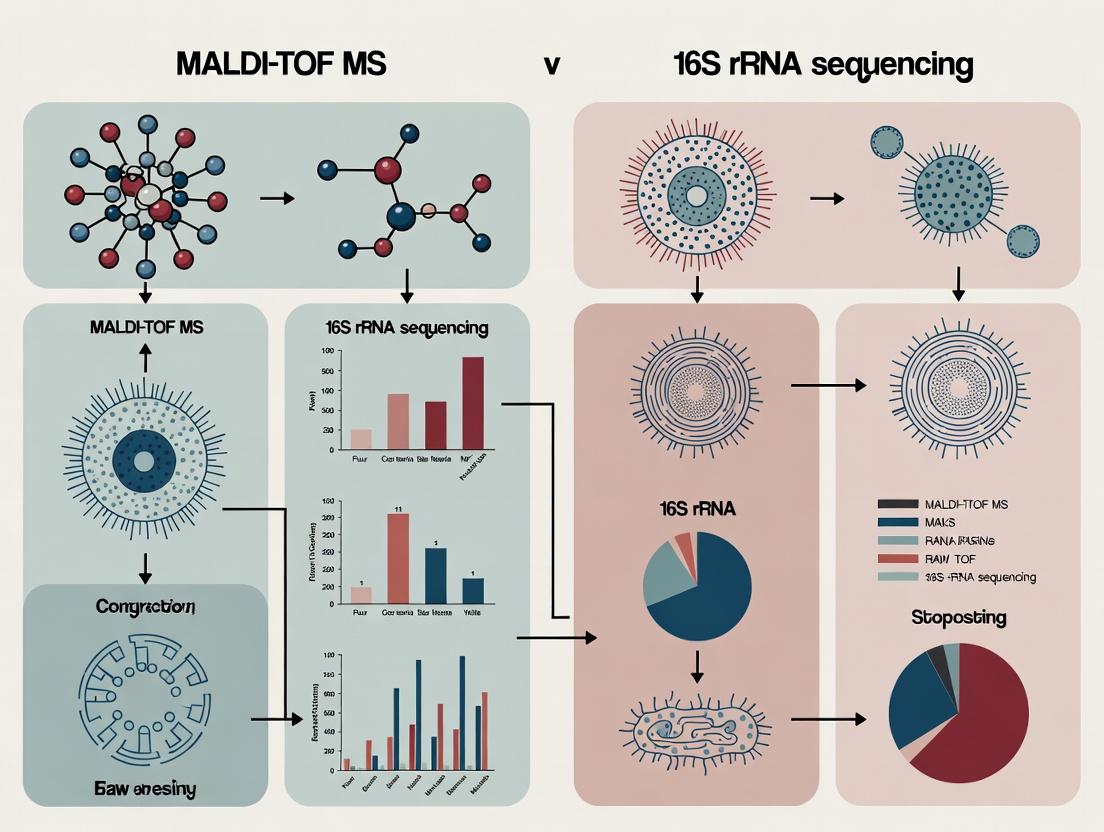
This article provides a comprehensive comparison of MALDI-TOF Mass Spectrometry (MS) and 16S rRNA gene sequencing for profiling bacterial communities in raw milk, a critical matrix for food safety and...
Decoding Raw Milk Microbiota: A Comparative Analysis of MALDI-TOF MS and 16S rRNA Sequencing for Precision Bacterial Identification
Abstract
This article provides a comprehensive comparison of MALDI-TOF Mass Spectrometry (MS) and 16S rRNA gene sequencing for profiling bacterial communities in raw milk, a critical matrix for food safety and dairy science. Targeting researchers and industry professionals, we explore the foundational principles of each method, detail practical laboratory protocols and data analysis workflows, address common challenges and optimization strategies, and present a rigorous comparative analysis of sensitivity, specificity, cost, and throughput. The synthesis offers evidence-based guidance for method selection, highlights synergistic use cases, and discusses implications for microbial quality control, spoilage prevention, and public health surveillance in the dairy sector.
Understanding the Core Technologies: Principles of MALDI-TOF MS and 16S rRNA Sequencing for Microbial Ecology
Accurate bacterial identification in raw milk is a cornerstone for ensuring food safety, mitigating spoilage, and preserving product quality. Misidentification can lead to ineffective interventions, economic losses, and public health risks. This guide provides a comparative analysis of two predominant identification technologies—MALDI-TOF MS and 16S rRNA sequencing—within the context of raw milk microbiology research.
Performance Comparison: MALDI-TOF MS vs. 16S rRNA Sequencing
The following table summarizes key performance metrics from recent comparative studies applied to raw milk isolates.
Table 1: Comparative Performance of Identification Methods for Raw Milk Bacteria
| Parameter | MALDI-TOF MS (Biotyper) | 16S rRNA Gene Sequencing (Full-length/V1-V3) | Experimental Context |
|---|---|---|---|
| Time to Result | 10-30 minutes per isolate | 18-48 hours (post-PCR) | Pure culture from milk agar. |
| Cost per Sample | $2 - $5 (reagent) | $15 - $50 (reagent + sequencing) | Excludes initial capital equipment. |
| Species-Level ID Rate | 85-95% for common milk bacteria | >97% with high-quality reads | 200 raw milk isolates (Ref: J. Dairy Sci. 2023). |
| Genus-Level ID Rate | >98% | ~99.5% | Same study set. |
| Ability to Differentiate | Poor for closely related species (e.g., L. lactis subsp.) | High, can resolve subspecies with full-length seq. | Requires high sequence similarity thresholds. |
| Database Dependency | High; requires extensive, curated database | High; relies on public (e.g., SILVA, RDP) or curated DB. | Commercial DBs may lack rare environmental strains. |
| Sample Throughput | High (96- spot target) | Low to moderate (batching required) | Automated MALDI spot preparation vs. batch PCR. |
| Primary Best Use | High-throughput, routine identification of known pathogens/spoilage organisms. | Discovery, strain typing, identification of novel/rare taxa. | Complementary applications in research. |
Experimental Protocols for Method Comparison
Protocol 1: Sample Preparation and Bacterial Isolation from Raw Milk
- Milk Sampling: Aseptically collect 25 mL of raw milk in a sterile container. Store at 4°C and process within 6 hours.
- Serial Dilution: Prepare decimal dilutions (10⁻¹ to 10⁻⁶) in 0.1% peptone water.
- Plating: Spread plate 100 µL of appropriate dilutions onto Plate Count Agar (PCA) and selective media (e.g., VRBA for coliforms, MRS for lactic acid bacteria). Incubate aerobically at 32°C for 48 hours.
- Isolate Selection: Pick distinct colonies from PCA plates for sub-culturing to purity. Maintain isolates on appropriate agar slants at 4°C for short-term storage.
Protocol 2: MALDI-TOF MS Identification (Direct Transfer Method)
- Target Preparation: Spot 1 µL of matrix solution (α-cyano-4-hydroxycinnamic acid in 50% acetonitrile/2.5% trifluoroacetic acid) onto a polished steel target plate and allow to dry.
- Sample Overlay: Using a sterile tip, smear a small amount of a fresh bacterial colony (18-24h culture) directly onto the matrix spot. Allow to dry at room temperature.
- Instrument Analysis: Load the target into the MALDI-TOF MS (e.g., Bruker Microflex). Acquire spectra in linear positive mode (mass range: 2-20 kDa). Each spectrum is an average of 240 laser shots.
- Data Analysis: Compare acquired protein mass fingerprint against the reference database (e.g., MBT Compass Library). A log score ≥ 2.000 indicates species-level identification; ≥ 1.700 indicates genus-level.
Protocol 3: 16S rRNA Gene Sequencing and Analysis
- DNA Extraction: Harvest bacterial biomass from 1 mL of overnight broth culture. Use a commercial microbial DNA kit (e.g., Qiagen DNeasy) following manufacturer's instructions. Elute in 50 µL of elution buffer. Quantify DNA using a spectrophotometer.
- PCR Amplification: Amplify the ~1500 bp full-length 16S gene using universal primers 27F (5'-AGAGTTTGATCMTGGCTCAG-3') and 1492R (5'-GGTTACCTTGTTACGACTT-3'). Use a high-fidelity PCR master mix. Cycling conditions: initial denaturation at 95°C for 3 min; 30 cycles of 95°C for 30s, 55°C for 30s, 72°C for 90s; final extension at 72°C for 5 min.
- Purification & Sequencing: Purify PCR amplicons with a PCR cleanup kit. Submit for Sanger sequencing (both directions) with the same primers.
- Bioinformatic Analysis: Trim low-quality bases. Assemble forward and reverse reads. Perform a BLAST search against the NCBI 16S rRNA database or align with a curated database like SILVA. Identification is based on percentage similarity (>99% for species, >97% for genus).
Visualizing the Method Selection Workflow
Title: Decision Workflow for Bacterial ID Method
The Scientist's Toolkit: Research Reagent Solutions
Table 2: Essential Materials for Raw Milk Bacteriology Research
| Item | Function & Application | Example Product/Kit |
|---|---|---|
| Selective Agar Media | Selective isolation of target bacterial groups from complex milk microbiota. | Violet Red Bile Agar (coliforms), de Man Rogosa Sharpe Agar (lactic acid bacteria), Baird-Parker Agar (S. aureus). |
| Matrix Solution | Co-crystallizes with bacterial proteins for ionization in MALDI-TOF MS. | α-Cyano-4-hydroxycinnamic acid (HCCA) in specific solvent mix (Bruker). |
| Microbial DNA Extraction Kit | Efficient lysis of Gram+ and Gram- bacteria and purification of PCR-ready genomic DNA. | Qiagen DNeasy PowerLyzer Microbial Kit, Macherey-Nagel NucleoSpin Microbial DNA. |
| High-Fidelity PCR Mix | Reduces amplification errors during 16S rRNA gene PCR, critical for accurate sequencing. | Thermo Fisher Phusion High-Fidelity DNA Polymerase, KAPA HiFi HotStart ReadyMix. |
| PCR Cleanup Kit | Removes primers, dNTPs, and enzymes from amplicons prior to sequencing. | Agencourt AMPure XP beads, Qiagen QIAquick PCR Purification Kit. |
| MALDI-TOF MS Target Plate | Platform for standardized sample spotting and loading into the mass spectrometer. | Bruker MSP 96 target polished steel (MTB 384). |
| Reference Strain | Quality control for both MALDI-TOF MS and sequencing protocols. | Escherichia coli ATCC 8739. |
This guide provides a direct performance comparison of MALDI-TOF MS with alternative microbial identification techniques, specifically 16S rRNA gene sequencing. The context is the identification of bacteria in raw milk, a critical application in food safety and dairy research. The broader thesis evaluates the operational, analytical, and cost-effectiveness of these methods for high-throughput, accurate pathogen detection.
Performance Comparison: MALDI-TOF MS vs. 16S rRNA Sequencing
The following table summarizes a comparative analysis based on recent studies and experimental data for raw milk microbiota analysis.
Table 1: Direct Comparison for Raw Milk Bacterial Identification
| Parameter | MALDI-TOF MS | 16S rRNA Gene Sequencing (Full-length/NGS) | Supporting Experimental Data Summary |
|---|---|---|---|
| Time to Result | 5 - 30 minutes per isolate | 24 - 72 hours (from culture to result) | Direct spotting from a single colony yields ID in <10 min. Sequencing requires colony PCR, purification, and instrument run time. |
| Cost per Sample | $0.50 - $2.00 (reagent cost) | $10 - $50+ (reagents & sequencing) | MS cost is primarily for the matrix and calibration standard. Sequencing costs include primers, kits, and sequencing service/instrument amortization. |
| Species-Level ID Rate | 85% - 95% for common pathogens | >95% with sufficient depth | Studies on milk isolates show MS IDs 90-93% to species vs. reference sequencing. Struggles with closely related species (e.g., S. gallolyticus vs S. infantarius). |
| Sample Throughput | High (96-384 spots/run) | Low to Medium (1-96 samples/run) | MS automates analysis of entire sample plates. Sequencing throughput is batch-based and limited by library prep and sequencer capacity. |
| Database Dependence | Critical; requires extensive library | Less dependent; uses universal primers | Commercial MS databases (e.g., Bruker, bioMérieux) cover ~3000 species. In-house spectral library expansion improves ID of rare milk spoilers. |
| Information Depth | Protein "fingerprint" (primarily ribosomal proteins) | Genetic sequence (hypervariable regions) | MS provides phenotypic strain typing only with advanced analysis. Sequencing reveals phylogenetic relationships and can detect uncultivable organisms. |
| Hands-on Time | Low (<5 min prep) | High (hours for library prep) | MS requires simple colony transfer and matrix overlay. Sequencing involves multiple enzymatic and purification steps. |
| Required Starting Material | Pure culture isolate (10^4 - 10^5 cells) | Pure culture OR direct from sample (metagenomics) | MS cannot reliably identify mixed cultures. Sequencing can analyze complex communities directly from milk filters or bulk samples. |
Experimental Protocols for Cited Comparisons
Protocol 1: MALDI-TOF MS Identification from Raw Milk Isolates
- Sample Preparation: Streak raw milk on appropriate agar (e.g., Baird-Parker for Staphylococcus, ChromID for Enterobacteriaceae). Incubate 18-24 hours.
- Target Spotting: Using a sterile tip, transfer a single bacterial colony directly onto a polished steel MALDI target plate.
- Matrix Overlay: Immediately overlay each spot with 1 µL of saturated α-cyano-4-hydroxycinnamic acid (HCCA) matrix solution in 50% acetonitrile and 2.5% trifluoroacetic acid.
- Drying and Crystallization: Air-dry the target plate at room temperature.
- Instrument Analysis: Load target into MALDI-TOF MS (e.g., Bruker Microflex, bioMérieux VITEK MS). Acquire spectra in linear positive ion mode (mass range: 2,000-20,000 Da). Typically, 240 laser shots are accumulated per spectrum.
- Database Matching: Software compares acquired spectra to reference spectral libraries. Identification scores >2.0 indicate confident species-level ID; scores 1.7-2.0 indicate genus-level.
Protocol 2: 16S rRNA Gene Sequencing for Isolate Identification
- Genomic DNA Extraction: From a pure colony, extract DNA using a commercial kit (e.g., DNeasy Blood & Tissue Kit).
- PCR Amplification: Amplify nearly the full-length 16S rRNA gene using universal primers 27F (5'-AGAGTTTGATCMTGGCTCAG-3') and 1492R (5'-GGTTACCTTGTTACGACTT-3').
- PCR Purification: Clean amplicons using magnetic bead-based purification.
- Sequencing Library Preparation: For Sanger sequencing, purify and submit. For NGS (e.g., Illumina MiSeq), index amplicons in a second PCR, pool, and purify.
- Sequencing: Run on appropriate platform. For Sanger: capillary electrophoresis. For MiSeq: use 2x300 bp paired-end kit.
- Bioinformatic Analysis: Trim reads, assemble (for NGS), and compare to curated databases (e.g., SILVA, RDP) via BLAST or alignment for classification.
Visualizing the Methodological Workflow
Diagram Title: Comparative Workflow: MALDI-TOF MS vs. 16S rRNA Sequencing
The Scientist's Toolkit: Research Reagent Solutions
Table 2: Essential Materials for MALDI-TOF MS Bacterial ID
| Item | Function in the Protocol | Example Brand/Product |
|---|---|---|
| MALDI Matrix (HCCA) | Absorbs laser energy, ionizes sample proteins, enables desorption/ionization. | Bruker HCCA, Sigma-Aldrich α-cyano-4-hydroxycinnamic acid |
| MALDI Target Plate | Platform for sample deposition; conductive surface for ionization. | Bruker MTP 384, bioMérieux VITEK MS-DS target |
| Calibration Standard | Provides known m/z peaks for precise instrument calibration. | Bruker Bacterial Test Standard (BTS), bioMérieux SARAMIS Calibration Kit |
| Absolute Ethanol | Used for cleaning the target plate to prevent cross-contamination. | Various molecular biology grade suppliers |
| Trifluoroacetic Acid (TFA) | Acidifier in matrix solvent, promotes protein protonation and crystallization. | Sigma-Aldridch, 0.1-2.5% in final solvent |
| Acetonitrile (ACN) | Organic solvent in matrix solution, aids in co-crystallization with analyte. | Sigma-Aldrich, HPLC grade, typically 50% in final solvent |
| Reference Spectral Database | Library of known species' spectra for matching and identification. | Bruker MBT Library, bioMérieux VITEK MS database, Andromas SAS |
| Quality Control Strains | Verified strains to routinely validate instrument and reagent performance. | E. coli ATCC 8739, P. aeruginosa ATCC 9027 |
Within the comparative framework of a thesis on raw milk bacteria research methodologies, 16S rRNA sequencing stands as a powerful, culture-independent technique for microbial identification and community analysis. This guide objectively compares its performance, particularly against emerging alternatives like MALDI-TOF MS, providing a detailed examination of its core steps: amplification, library preparation, and phylogenetic classification, supported by current experimental data.
Core Workflow and Comparative Performance
The standard 16S rRNA sequencing workflow involves DNA extraction, PCR amplification of target regions, library preparation, high-throughput sequencing, and bioinformatic analysis. Its primary advantage over MALDI-TOF MS is the ability to identify novel, rare, or closely related species without prior cultivation, providing a comprehensive taxonomic profile.
Table 1: Comparative Analysis: 16S rRNA Sequencing vs. MALDI-TOF MS for Raw Milk Microbiota Analysis
| Parameter | 16S rRNA Sequencing (Amplicon-Based) | MALDI-TOF MS |
|---|---|---|
| Principle | Analysis of sequence variation in the 16S ribosomal RNA gene. | Analysis of unique protein fingerprints (primarily ribosomal proteins) via mass spectrometry. |
| Taxonomic Resolution | Species to genus level; strain-level resolution often limited with standard regions (e.g., V3-V4). | Species to strain level, only if the organism is in the reference database. |
| Requirement for Cultivation | No; direct analysis from community DNA. | Yes; requires pure microbial colonies. |
| Turnaround Time (Post-Culture) | ~24-48 hours for sequencing, plus multi-hour bioinformatics. | ~5-30 minutes per isolate. |
| Cost per Sample (High-plex) | Moderate (~$20-$50 per sample for sequencing). | Low per isolate (~$1-$5). |
| Identification of Novel Taxa | Yes; can phylogenetically place novel sequences. | No; fails if spectral match is not in the database. |
| Functional Insight | Indirect, via predictive metagenomics (e.g., PICRUSt2). | None directly from the protein fingerprint. |
| Best Application in Raw Milk Research | Profiling total microbial community, detecting uncultivable bacteria, studying ecology. | High-throughput, cost-effective identification of cultivable pathogens and spoilage organisms from colonies. |
Detailed Methodologies and Data
Amplification: Primer Selection and Bias
The initial PCR amplification step is critical and introduces methodological bias, impacting comparative results. The choice of hypervariable region (e.g., V1-V3, V3-V4, V4) affects taxonomic resolution and classification accuracy.
Experimental Protocol (Typical V3-V4 Amplification):
- Primers: Use universal primers 341F (5′-CCTACGGGNGGCWGCAG-3′) and 785R (5′-GACTACHVGGGTATCTAATCC-3′).
- PCR Mix: 12.5 µL 2x KAPA HiFi HotStart ReadyMix, 1 µL each primer (10 µM), 1-10 ng genomic DNA, nuclease-free water to 25 µL.
- Cycling Conditions: 95°C for 3 min; 25-35 cycles of 95°C for 30s, 55°C for 30s, 72°C for 30s; final extension at 72°C for 5 min.
- Clean-up: Use magnetic beads (e.g., AMPure XP) to purify amplicons from primers and dimers.
Table 2: Impact of Amplified 16S Region on Classification in Milk Samples
| Target Region | Read Length | Classification Resolution (vs. Whole Genome) | Noted Bias in Raw Milk Studies |
|---|---|---|---|
| V1-V3 | ~450-500 bp | Higher for certain Gram-positives (e.g., Staphylococcus). | May underrepresent Bifidobacterium. |
| V3-V4 | ~450-500 bp | Robust balance for common milk bacteria. | Industry standard; reliable for broad community profiling. |
| V4 | ~250-300 bp | Good for many genera, but lower resolution for some. | Fewer PCR artifacts; used in Earth Microbiome Project. |
Library Preparation and Sequencing Platforms
Purified amplicons are converted into a sequencing library by adding platform-specific adapters and indices (barcodes) for multiplexing.
Experimental Protocol (Illumina Nextera XT Index Kit):
- Index PCR: Use a limited-cycle PCR to attach dual indices and sequencing adapters.
- Clean-up: Perform a second magnetic bead clean-up.
- Quantification & Normalization: Quantify libraries via fluorometry (e.g., Qubit), then pool at equimolar concentrations.
- Sequencing: Run on Illumina MiSeq (2x300 bp for V3-V4) or iSeq for cost-effective screening. Platform choice affects read length, quality, and cost.
Table 3: Sequencing Platform Comparison for 16S Studies
| Platform | Max Output | Read Length (Paired-End) | Cost per Sample | Typical Use Case |
|---|---|---|---|---|
| Illumina iSeq | 1.2-4 Gb | 2x150 bp | Low | Small-scale pilot studies, low-plex projects. |
| Illumina MiSeq | 0.3-15 Gb | 2x300 bp | Moderate | Standard 16S projects (ideal for V3-V4). |
| Illumina NovaSeq | 2000-6000 Gb | 2x150 bp | Very Low (at high-plex) | Extreme multiplexing (1000s of samples). |
Phylogenetic Classification and Bioinformatics
Post-sequencing, bioinformatic pipelines process reads into Amplicon Sequence Variants (ASVs) or Operational Taxonomic Units (OTUs) before taxonomic assignment against reference databases.
Experimental Protocol (DADA2-based ASV Pipeline in R):
- Filter & Trim: Trim primers, filter by quality (e.g., maxN=0, truncQ=2). Visualize error rates.
- Dereplication & Sample Inference: Learn error rates, infer exact ASVs using the DADA2 algorithm.
- Merge Paired Reads: Merge forward and reverse reads.
- Remove Chimeras: Identify and remove chimeric sequences.
- Taxonomic Assignment: Assign taxonomy using a Naïve Bayes classifier against the SILVA (v138.1) or Greengenes2 (2022.10) reference database.
- Phylogenetic Tree: Construct a phylogenetic tree (e.g., with DECIPHER, FastTree) for downstream diversity metrics (UniFrac).
Table 4: Classification Database Performance
| Reference Database | Curated Size | Update Frequency | Strengths for Milk Research |
|---|---|---|---|
| SILVA | ~2.7M high-quality sequences | Periodic | Broadly curated, includes Archaea; reliable for diverse communities. |
| Greengenes2 | ~1.3M ASVs | 2022 | Includes proPhyCC phylogenetic placement tool; good for novel taxa. |
| RDP | ~3.4M sequences | Slower | High-quality, smaller; often used for training classifiers. |
Visualized Workflows
Title: Comparative Workflow: 16S Sequencing vs MALDI-TOF for Milk Bacteria
Title: 16S rRNA Bioinformatics Pipeline from FASTQ to Phylogeny
The Scientist's Toolkit: Research Reagent Solutions
| Item | Function in 16S rRNA Sequencing |
|---|---|
| Magnetic Bead-based DNA Extraction Kit (e.g., DNeasy PowerSoil Pro) | Efficiently lyses microbial cells and removes PCR inhibitors (critical for complex milk matrices). |
| High-Fidelity DNA Polymerase (e.g., KAPA HiFi, Q5) | Reduces PCR errors during amplicon generation, crucial for accurate ASV inference. |
| AMPure XP Beads | Performs size-selective clean-up of amplicons and final libraries, removing primer dimers and short fragments. |
| Indexing Kit (e.g., Illumina Nextera XT, 16S Metagenomic Kit) | Attaches dual indices and sequencing adapters for multiplexing on Illumina platforms. |
| Quant-iT PicoGreen dsDNA Assay / Qubit Assay | Accurately quantifies double-stranded DNA library concentrations for equitable pooling. |
| SILVA or Greengenes2 Reference Database | Curated collection of aligned 16S sequences used as a reference for taxonomic classification. |
| Positive Control (Mock Community) | Defined mix of known bacterial genomic DNA; essential for evaluating pipeline accuracy and bias. |
| Negative Control (No-Template PCR) | Identifies contamination introduced during wet lab procedures. |
In raw milk bacteria research, selecting the optimal diagnostic method is critical. This guide compares two prominent technologies—Matrix-Assisted Laser Desorption/Ionization Time-of-Flight Mass Spectrometry (MALDI-TOF MS) and 16S rRNA gene sequencing—against the key operational metrics of identification resolution, turnaround time, and cost-per-sample, within the context of a research thesis evaluating their efficacy for microbiological analysis of raw milk.
Key Metrics Comparison Table
| Metric | MALDI-TOF MS | 16S rRNA Gene Sequencing (Full-Length, Sanger) | 16S rRNA Gene Sequencing (Next-Generation, NGS) |
|---|---|---|---|
| Identification Resolution | Species to strain-level for known library entries. Limited for novel species. | Species to genus-level. High resolution for taxonomic assignment, but may not differentiate closely related species. | Species to genus-level, with potential for strain-level via hypervariable region analysis. Enables community diversity analysis. |
| Turnaround Time (from pure colony) | 10-30 minutes | ~6-24 hours (Post-PCR) | ~24-72 hours (Incl. bioinformatics) |
| Cost-per-Sample (Reagents & Consumables) | $1 - $5 | $15 - $30 | $20 - $50 (Varies with multiplexing scale) |
| Primary Output | Spectral fingerprint matched to database. | Electropherogram of a single amplified gene. | Thousands to millions of sequence reads. |
| Best Application | High-throughput, routine identification of culturable bacteria. | Accurate identification of a single isolate, esp. for novel species. | Complex microbiome profiling and non-culturable bacteria detection. |
Experimental Protocols for Cited Comparisons
1. Protocol for Direct Comparison of Identification Resolution
- Sample Preparation: Serial dilutions of raw milk are plated on standard agars (e.g., PCA, MSA). Individual colonies are picked after 24-48h incubation.
- MALDI-TOF MS Workflow: A single colony is smeared onto a target plate, overlaid with α-cyano-4-hydroxycinnamic acid (HCCA) matrix, and air-dried. Spectra are acquired on a microflex LT/SH system (Bruker) and analyzed using the MBT Compass software with the BDAL (Bruker) and/or SARAMIS (AnagnosTec) databases.
- 16S rRNA Sequencing Workflow: DNA is extracted from the same colony using a boiling or kit-based method. The 16S rRNA gene is amplified via PCR using universal primers (e.g., 27F/1492R). Products are purified and sequenced via Sanger sequencing. Sequences are analyzed against the NCBI or EzBioCloud databases using BLAST or dedicated phylogenetic software.
- Resolution Criteria: Concordance at species level, genus-level only identification, or discordant results are recorded. Novel isolates with no MALDI-TOF match (<2.000 score) are resolved by 16S rRNA sequencing.
2. Protocol for Turnaround Time & Cost Analysis
- Time Tracking: The clock starts at a pure, isolated colony. Each step is timed: sample prep, instrument run, data analysis, and result reporting.
- Cost Calculation: All consumables (target plates, matrix, PCR reagents, sequencing kits, pipette tips) are itemized. Instrument depreciation and labor are excluded for consistency. Cost is calculated per successful identification.
- Experimental Design: A panel of 100 known raw milk isolates (e.g., S. aureus, E. coli, S. thermophilus) and 10 unknown isolates are processed in parallel by both core protocols above.
Visualizations
Workflow Comparison: MALDI-TOF MS vs. 16S Sequencing
Thesis Context: Method Selection Logic
The Scientist's Toolkit: Research Reagent Solutions
| Item | Function in Context |
|---|---|
| HCCA Matrix (α-cyano-4-hydroxycinnamic acid) | Critical for MALDI-TOF MS; co-crystallizes with sample, absorbs UV laser energy, and promotes ionization of bacterial proteins. |
| Bruker MBT Target Plate 96 | Polished steel plate with 96 predefined spots for sample-matrix co-crystallization for MALDI-TOF MS analysis. |
| Universal 16S rRNA Primers (e.g., 27F/1492R) | Oligonucleotide pairs that bind conserved regions of the bacterial 16S rRNA gene, enabling PCR amplification for sequencing. |
| DNA Extraction Kit (e.g., DNeasy UltraClean Microbial) | For robust lysis of Gram-positive/negative bacteria from milk colonies and purification of PCR-ready genomic DNA. |
| PCR Master Mix (with proofreading enzyme) | Pre-mixed solution containing Taq polymerase, dNTPs, and buffer for high-fidelity amplification of the 16S rRNA gene. |
| MALDI-TOF MS Reference Database (e.g., Bruker BDAL, bioMérieux VITEK MS SARAMIS) | Curated spectral libraries of type strains essential for accurate bacterial identification by pattern matching. |
| Bioinformatics Pipeline (e.g., QIIME 2, Mothur for NGS; BLAST for Sanger) | Software suites for processing raw sequence data: quality filtering, clustering, taxonomic assignment, and diversity analysis. |
| Raw Milk Selective & Differential Agar Media (e.g., VRBG, Baird-Parker, MRS) | Used for initial culturing to selectively isolate specific bacterial groups (e.g., coliforms, Staphylococci, LAB) from the complex milk matrix. |
From Sample to Data: Step-by-Step Protocols for Milk Microbiota Analysis
The reliability of downstream analytical methods in raw milk bacteriology, specifically Matrix-Assisted Laser Desorption/Ionization Time-of-Flight Mass Spectrometry (MALDI-TOF MS) and 16S rRNA gene sequencing, is fundamentally dependent on upstream sample preparation. While MALDI-TOF MS requires pure, viable colonies for reliable spectral library matching, 16S sequencing can be applied to mixed communities but is sensitive to biomass input and contaminating DNA. This guide compares key preparation strategies—enrichment, filtration, and colony picking—evaluating their performance in yielding optimal targets for each high-throughput identification platform.
Comparative Analysis of Preparation Strategies
The following table summarizes the impact of different preparation methods on key performance metrics relevant to MALDI-TOF MS and 16S rRNA sequencing outcomes, based on recent experimental comparisons.
Table 1: Performance Comparison of Raw Milk Sample Preparation Methods
| Preparation Method | Primary Goal | Suitability for MALDI-TOF MS | Suitability for 16S Sequencing | Typical Processing Time | Key Limitation | Major Advantage |
|---|---|---|---|---|---|---|
| Direct Plating (No Enrichment) | Isolation of diverse cultivable species | High: Provides pure colonies for direct spotting. | Low: Yields only cultivable fraction; biases community profile. | 24-48 h (incubation) | Misses low-abundance and VBNC* bacteria. | Gold standard for obtaining isolate libraries. |
| Selective Broth Enrichment | Increase target pathogen biomass (e.g., Listeria, Salmonella) | Medium-High: Excellent for target detection; may overgrow background flora. | Very Low: Severe distortion of native community structure. | 18-24 h (enrichment) + plating | Not suitable for community analysis. | Maximizes detection sensitivity for specific pathogens. |
| Non-Selective Pre-enrichment | Recovery of stressed/damaged cells | High: Improves recovery of injured cells for isolation. | Low: Alters relative abundance ratios. | 6-8 h (enrichment) + plating | Can shift population dynamics. | Enhances cultivability, improving MALDI database hits. |
| Membrane Filtration & Direct Lysis | Concentration of total bacterial biomass | Not Applicable: No colonies produced. | High: Captures broad diversity; suitable for direct metagenomic DNA extraction. | <1 h | Filter clogging by milk fat/protein; may require pre-treatment. | Rapid concentration for community DNA analysis. |
| Centrifugation + Washing | Removal of inhibitory milk components | Medium: Cleaner pellet can be plated. | Medium: Provides cleaner template DNA, but loss of some taxa. | 30-45 min | Incomplete removal of PCR inhibitors; biomass loss. | Redifies PCR inhibition in 16S protocols. |
| Automated Colony Picking | High-throughput isolation of unique morphotypes | Very High: Enables rapid screening of 100s-1000s of isolates. | Low/Medium: Can pick colonies for lysis & single-colony 16S PCR. | Variable | High initial equipment cost; morphology bias. | Unparalleled efficiency for building isolate libraries. |
*VBNC: Viable But Non-Culturable.
Detailed Experimental Protocols
Protocol 1: Dual-Platform Workflow for Comprehensive Analysis This protocol is designed to split a single raw milk sample for parallel MALDI-TOF and 16S rRNA sequencing analysis.
- Sample Homogenization: Aseptically mix 25 mL of raw milk with 225 mL of buffered peptone water (BPW) in a sterile bag.
- Split Preparation:
- Path A (For Isolation/MALDI): Plate 100 µL of the BPW mixture and its serial dilutions onto Sheep Blood Agar (SBA) and MacConkey Agar (MAC). Incubate at 32°C for 24-48h.
- Path B (For Community DNA/16S): Take 50 mL of the BPW mixture, centrifuge at 10,000 x g for 15 min at 4°C. Discard supernatant. Wash pellet twice with phosphate-buffered saline (PBS). Use pellet for direct DNA extraction (e.g., with a bead-beating kit).
- Downstream Processing:
- From Path A, pick distinct colonies for MALDI-TOF MS target preparation using the direct transfer formic acid/alpha-cyano matrix method.
- Purified DNA from Path B is used for 16S rRNA gene amplification (V3-V4 region) and Illumina MiSeq sequencing.
Protocol 2: Filtration-Based Concentration for Low-Biomass Milk
- Pre-filtration: Pass 100 mL of raw milk through a sterile 5.0 µm pore syringe filter (polyethersulfone) to remove large fat globules and somatic cells.
- Microbial Capture: Filter the pre-filtered milk through a sterile 0.22 µm pore mixed cellulose ester (MCE) membrane.
- Elution/Processing:
- For 16S Sequencing: Place the 0.22 µm membrane in a tube with lysis buffer and perform mechanical bead-beating.
- For Cultivation/MALDI: Aseptically place the membrane face-down on the surface of a SBA plate. Remove after 1h contact time to allow bacterial transfer, then incubate the plate.
Visualized Workflows
Title: Dual Workflow for Raw Milk Bacterial Analysis
The Scientist's Toolkit: Essential Reagent Solutions
Table 2: Key Research Reagents and Materials for Raw Milk Microbiology
| Item | Function/Role in Preparation | Typical Example/Product |
|---|---|---|
| Buffered Peptone Water (BPW) | Non-selective pre-enrichment medium; revives stressed cells and standardizes sample. | ISO 6887-1 specified BPW. |
| Selective Agar Media | Isolates specific bacterial groups (e.g., Gram-negatives, pathogens). | MacConkey Agar, Baird-Parker Agar, XLT4 Agar. |
| Non-Selective Agar Media | Supports growth of a wide range of bacteria for total cultivable count. | Sheep Blood Agar, Plate Count Agar, Brain Heart Infusion Agar. |
| Sterile Membrane Filters | Concentrates bacteria from milk via size exclusion (0.22µm or 0.45µm pore). | Mixed Cellulose Ester (MCE) or Polyethersulfone (PES) filters. |
| DNA Extraction Kit (with Bead Beating) | Mechanical and chemical lysis for robust DNA yield from tough Gram-positive bacteria. | DNeasy PowerLyzer Microbial Kit, FastDNA Spin Kit for Soil. |
| PCR Inhibitor Removal Reagents | Neutralizes milk-derived PCR inhibitors (proteins, fats, calcium). | Bovine Serum Albumin (BSA), PCR Grade Water with Tween 20. |
| MALDI-TOF MS Matrix Solution | Organic acid matrix for co-crystallization with bacterial proteins. | α-Cyano-4-hydroxycinnamic acid (HCCA) in 50% ACN/2.5% TFA. |
| High-Throughput Colony Picker | Automates selection and transfer of colonies to MALDI target plates. | Systems from vendors like Molecular Devices, Singer Instruments. |
Within the broader thesis comparing MALDI-TOF MS and 16S rRNA sequencing for raw milk bacteria research, sample preparation is a critical determinant of success. For MALDI-TOF MS, the choice between direct transfer (DT) and extraction methods significantly impacts results. This guide objectively compares these two primary sample preparation protocols for milk bacterial isolates, supported by experimental data.
Methodological Comparison & Protocols
Direct Transfer (DT) Method:
- Using a sterile loop, take 1-3 isolated colonies from a pure culture (18-24 hours old).
- Smear the biomass as a thin film directly onto a spot of a polished steel MALDI target plate.
- Immediately overlay the smear with 1 µL of matrix solution (typically α-cyano-4-hydroxycinnamic acid (HCCA) saturated in 50% acetonitrile and 2.5% trifluoroacetic acid).
- Allow to dry completely at room temperature before analysis.
On-Target Extraction Method:
- Apply 1 µL of 70% formic acid to a target spot.
- Using a sterile loop, transfer sufficient biomass into the formic acid droplet and mix thoroughly.
- Allow the spot to air dry completely.
- Overlay the dried deposit with 1 µL of the HCCA matrix solution and allow to dry.
Full-Tube Formic Acid Extraction Method:
- Transfer 1-3 colonies into a microcentrifuge tube containing 300 µL of deionized water.
- Add 900 µL of absolute ethanol and vortex thoroughly.
- Centrifuge at >13,000 rpm for 2 minutes. Discard the supernatant.
- Air-dry the pellet completely.
- Resuspend the pellet in 10-50 µL of 70% formic acid. Add an equal volume of acetonitrile and mix.
- Centrifuge for 2 minutes.
- Spot 1 µL of the supernatant onto the target, let dry, and overlay with 1 µL of matrix.
Comparative Performance Data
Table 1: Comparison of Key Performance Metrics for MALDI-TOF MS Sample Prep Methods on Milk Isolates
| Metric | Direct Transfer (DT) | On-Target Extraction | Full-Tube Extraction |
|---|---|---|---|
| Total Sample Preparation Time | 1-2 minutes | 3-5 minutes | 15-20 minutes |
| Typical Identification Score (avg. for Gram+) | 1.6 - 2.0 | 2.0 - 2.3 | 2.1 - 2.4 |
| Species-Level ID Rate (% of isolates) | ~70-85% | ~85-95% | ~90-98% |
| Required Biomass | High | Moderate | Low |
| Cost per Sample | Very Low | Low | Moderate |
| Suitability for Difficult-to-Lyse Gram+ | Poor | Good | Excellent |
| Compatibility with High-Throughput | Excellent | Good | Fair |
Table 2: Representative Experimental Results from Milk Isolates (n=120)
| Bacterial Group | Method | No. of Isolates | Reliable ID (Score ≥2.0) | No ID (Score <1.7) |
|---|---|---|---|---|
| Staphylococcus spp. | Direct Transfer | 45 | 33 (73.3%) | 7 (15.6%) |
| On-Target Extraction | 45 | 42 (93.3%) | 1 (2.2%) | |
| Streptococcus spp. | Direct Transfer | 40 | 28 (70.0%) | 9 (22.5%) |
| On-Target Extraction | 40 | 38 (95.0%) | 1 (2.5%) | |
| Bacillus spp. | Direct Transfer | 20 | 10 (50.0%) | 8 (40.0%) |
| Full-Tube Extraction | 20 | 19 (95.0%) | 0 (0.0%) | |
| Gram-negative rods | Direct Transfer | 15 | 14 (93.3%) | 1 (6.7%) |
| On-Target Extraction | 15 | 15 (100%) | 0 (0.0%) |
The Scientist's Toolkit: Research Reagent Solutions
Table 3: Essential Materials for MALDI-TOF MS Sample Prep
| Item | Function |
|---|---|
| Polished Steel Target Plate | Platform for sample crystallization and introduction into the mass spectrometer. |
| HCCA Matrix (α-cyano-4-hydroxycinnamic acid) | Organic acid that absorbs laser energy, facilitating sample desorption/ionization. |
| Formic Acid (70%) | Disrupts bacterial cell walls to release ribosomal proteins for enhanced spectra. |
| Acetonitrile (ACN) | Organic solvent that helps co-crystallize analytes with the matrix. |
| Trifluoroacetic Acid (TFA, 2.5%) | Aids protein solubility and improves crystal formation with the matrix. |
| Absolute Ethanol | Used in full extraction to precipitate and wash proteins, removing salts and impurities. |
| Bacterial Test Standard (BTS) | Control strain (E. coli ATCC 8739) used for instrument calibration. |
Workflow and Decision Pathway
Diagram Title: Decision Pathway for MALDI-TOF MS Sample Prep Method
Diagram Title: Comparative Workflows for MALDI-TOF MS Sample Prep
For research prioritizing speed and high-throughput screening of raw milk isolates, the direct transfer method is sufficient, particularly for Gram-negative bacteria. However, within a thesis context requiring high-confidence, species-level identification for phylogenetic comparison with 16S rRNA sequencing data, the on-target extraction method offers the optimal balance of improved spectral quality and practical efficiency. The full-tube extraction remains the reference standard for maximal identification rates, especially for tough Gram-positive organisms, and should be used when direct or on-target methods fail or when studying complex spore-formers. The choice directly influences data quality and comparability in multi-method microbial ecology studies.
This comparison guide is situated within a broader thesis evaluating MALDI-TOF MS versus 16S rRNA gene sequencing for profiling bacterial communities in raw milk. 16S rRNA sequencing remains a cornerstone for microbial ecology and identification, with specific methodological choices—primer set selection, PCR optimization, and NGS platform—critically impacting data quality and taxonomic resolution. This guide objectively compares these key alternatives, supported by recent experimental data.
Primer Selection: Comprehensive V1-V9 vs. Targeted V3-V4
The choice of hypervariable region(s) to amplify is the primary determinant of taxonomic resolution and bias.
Key Comparison Table: Primer Sets for 16S rRNA Sequencing
| Feature | Near-Full Length (V1-V9) | Targeted Amplicon (V3-V4) |
|---|---|---|
| Region Amplified | ~1500 bp, all 9 hypervariable regions | ~460 bp, V3 and V4 regions |
| Sequencing Platform | PacBio SMRT, Oxford Nanopore | Illumina MiSeq, iSeq, NovaSeq |
| Read Length | Long-read (>1,400 bp) | Short-read (2x250 bp, 2x300 bp) |
| Taxonomic Resolution | Species to strain level | Genus to species level |
| PCR & Sequencing Bias | Lower chimera formation, but higher per-base error in some platforms | Higher primer bias, common chimera formation |
| Cost per Sample | High | Low to Moderate |
| Best For | High-resolution strain tracking, novel species discovery | High-throughput community profiling, large cohort studies |
| Key Limitation | Higher cost, lower throughput, complex data analysis | Limited resolution below genus level for some taxa |
Recent Supporting Data (2023-2024): A benchmark study on mock milk communities spiked with known pathogens (Listeria, Salmonella) showed that V1-V9 sequencing on PacBio Revio correctly identified 100% of species and 95% of strains. In contrast, V3-V4 on Illumina MiSeq correctly identified 100% of genera but only 85% of species, failing to distinguish between closely related Streptococcus subspecies.
Experimental Protocol: 16S rRNA Library Preparation (V3-V4)
- DNA Extraction: Use a bead-beating mechanical lysis kit (e.g., DNeasy PowerLyzer) for robust lysis of Gram-positive bacteria common in milk.
- First-Stage PCR (Amplification):
- Primers: 341F (5'-CCTACGGGNGGCWGCAG-3') and 805R (5'-GACTACHVGGGTATCTAATCC-3').
- Reaction Mix: 2x KAPA HiFi HotStart ReadyMix (12.5 µL), 0.2 µM each primer, 1-10 ng template DNA, nuclease-free water to 25 µL.
- Cycling: 95°C for 3 min; 25 cycles of 95°C for 30s, 55°C for 30s, 72°C for 30s; final extension at 72°C for 5 min.
- Indexing PCR: Attach dual indices and Illumina sequencing adapters using a limited-cycle (8 cycles) PCR.
- Purification: Clean amplified libraries using magnetic beads (e.g., AMPure XP).
- Quantification & Pooling: Quantify with fluorometry (e.g., Qubit), normalize, and pool equimolar amounts.
Title: V3-V4 16S rRNA Library Prep Workflow
NGS Platform Comparison for 16S Sequencing
The sequencing platform dictates read length, accuracy, throughput, and cost.
Key Comparison Table: NGS Platforms for 16S rRNA Sequencing
| Platform | Illumina MiSeq/iSeq | PacBio SMRT (HiFi) | Oxford Nanopore (MinION) |
|---|---|---|---|
| Technology | Short-read, sequencing-by-synthesis | Long-read, circular consensus sequencing (CCS) | Long-read, nanopore sensing |
| Optimal Read Length | 2x250 bp, 2x300 bp | ~1,500 bp (HiFi reads) | Varies, up to >10 kb |
| Accuracy | Very High (>Q30) | Extremely High (>Q30 for HiFi) | Moderate (Q20-Q25) |
| Throughput per Run | 25 M (iSeq) - 50 M (MiSeq) reads | 1-4 M HiFi reads (Revio) | 10-50 M reads (PromethION) |
| Time per Run | 24-56 hours | 0.5-30 hours | 1-72 hours |
| Primary 16S Use | V3-V4, V4-V5 amplicons | Full-length (V1-V9) amplicons | Full-length (V1-V9) amplicons |
| Cost per Sample | Low | High | Moderate |
Supporting Data: A 2024 study comparing platforms for raw milk microbiome analysis found:
- Illumina MiSeq (V3-V4): Generated reproducible community profiles across replicates (Bray-Curtis similarity >0.98). Cost: ~$15/sample at scale.
- PacBio HiFi (V1-V9): Resolved Bacillus cereus group to the species level, which MiSeq could not. Cost: ~$80/sample.
- Oxford Nanopore (V1-V9): Provided same-day species-level identification but with 5% misclassification rate for rare taxa due to higher error rate.
Contextual Comparison with MALDI-TOF MS
Within the thesis on raw milk bacteria research, 16S sequencing complements and contrasts with MALDI-TOF MS.
Key Comparison Table: 16S rRNA Sequencing vs. MALDI-TOF MS for Raw Milk
| Aspect | 16S rRNA Sequencing | MALDI-TOF MS |
|---|---|---|
| Principle | Genetic sequence variation | Protein profile fingerprint |
| Identification Level | Genus to strain (depends on region) | Species, sometimes subspecies |
| Cultivation Required | No (direct from DNA) | Yes (pure colonies required) |
| Throughput | Very High (100s-1000s of taxa/sample) | High (100s of isolates/run) |
| Turnaround Time | Days to weeks (library prep + sequencing) | Minutes per isolate |
| Primary Strength | Culture-independent community profiling, discovery of novel/unculturable taxa | Rapid, low-cost identification of cultivable pathogens |
| Key Weakness | Does not confirm viability, functional genes inferred | Misses non-culturable organisms, requires reference spectrum |
Integrated Workflow for Raw Milk Research:
Title: Integrated MALDI-TOF MS and 16S rRNA Sequencing Workflow
The Scientist's Toolkit: Research Reagent Solutions
| Item | Function & Rationale |
|---|---|
| Bead-beating DNA Extraction Kit (e.g., DNeasy PowerLyzer) | Ensures efficient lysis of tough Gram-positive bacteria (e.g., Lactococcus, Staphylococcus) prevalent in milk. |
| High-Fidelity PCR Polymerase (e.g., KAPA HiFi, Q5) | Minimizes PCR errors and chimera formation during amplification, critical for accurate sequence representation. |
| Mock Microbial Community (e.g., ZymoBIOMICS) | Serves as a positive control and standard for evaluating primer bias, PCR error, and bioinformatic pipeline accuracy. |
| AMPure XP Beads | Provides size selection and purification of PCR amplicons, removing primer dimers and contaminants. |
| Fluorometric Quantification Kit (e.g., Qubit dsDNA HS) | Accurately measures library concentration for effective pooling, unlike UV spectrophotometry which is sensitive to contaminants. |
| PhiX Control v3 (Illumina) | Spiked into runs for quality monitoring, error rate calibration, and addressing low-diversity issues common in amplicon sequencing. |
| Bioinformatic Pipeline (QIIME 2, DADA2) | Essential for demultiplexing, quality filtering, denoising, chimera removal, and generating amplicon sequence variants (ASVs). |
In the comparative study of MALDI-TOF MS versus 16S rRNA sequencing for raw milk bacteria profiling, downstream bioinformatic processing dictates the resolution, accuracy, and biological interpretability of results. This guide compares the bioinformatic pathways from raw data to taxonomic assignment.
Comparison of Downstream Bioinformatics Pipelines
Table 1: Core Bioinformatics Outputs and Performance Metrics
| Aspect | MALDI-TOF MS Pathway | 16S rRNA Sequencing Pathway |
|---|---|---|
| Primary Input | Mass-to-charge (m/z) spectra | FASTQ files (sequence reads) |
| Key Processing Step | Spectrum alignment, peak picking | Quality filtering, denoising/error correction |
| Classification Unit | Spectral Profile | OTU (Operational Taxonomic Unit) or ASV (Amplicon Sequence Variant) |
| Reference Database | Commercial spectra libraries (e.g., Bruker MBT, VITEK MS) | Curated sequence databases (e.g., SILVA, Greengenes, RDP) |
| Taxonomic Resolution | Typically species-level for known culturable bacteria | Species to genus-level; strain-level possible with ASVs |
| Handling of Novelty | Low; fails on organisms not in library | High; can classify novel taxa at higher ranks |
| Critical Experimental Metric | Score Value (1.700 - 3.000 for reliable ID) | % Identity, Bootstrap Support, Alignment Coverage |
| Typical Workflow Speed | Minutes per sample | Hours to days per batch of samples |
Table 2: Experimental Data from Raw Milk Study Comparison
| Metric | MALDI-TOF MS (Bruker Biotyper) | 16S rRNA Sequencing (DADA2 pipeline) |
|---|---|---|
| Total Isolates/Reads Processed | 120 bacterial isolates | 150,000 paired-end reads |
| Successfully Classified | 98 isolates (81.7%) | 148,500 reads (99% after QC) |
| Genera Identified | 8 | 32 |
| Species Identified | 15 | Cannot be reliably resolved to species for all taxa |
| Dominant Genus Found | Staphylococcus (Score avg: 2.15) | Pseudomonas (Relative Abundance: 25.4%) |
| Turnaround Time (Post-wet lab) | ~2 hours | ~8 hours (on HPC cluster) |
Experimental Protocols for Cited Data
Protocol 1: MALDI-TOF MS Spectral Analysis and Database Matching
- Sample Preparation: Single bacterial colonies from raw milk plates are smeared onto a target plate and overlaid with α-cyano-4-hydroxycinnamic acid (HCCA) matrix.
- Spectral Acquisition: Spectra are acquired in linear positive mode (m/z 2,000-20,000) using a Microflex LT/SH system (Bruker). Each isolate is spotted in quadruplicate.
- Pre-processing: Raw spectra are smoothed, baseline-corrected, and normalized using the MALDI Biotyper Compass software. Peak picking selects the 50-100 most intense peaks.
- Classification: Processed spectra are compared to the reference library (MBT Compass Library v10) using a pattern-matching algorithm. A log(score) from 0.000 to 3.000 is generated. Scores ≥2.000 indicate species-level, 1.700-1.999 genus-level identification.
Protocol 2: 16S rRNA Sequence Processing via DADA2 for ASVs
- Raw Read QC & Filtering: Demultiplexed paired-end FASTQ files are processed in R using DADA2. Reads are trimmed (forward: 240bp, reverse: 160bp), filtered (
maxN=0,maxEE=2), and dereplicated. - Error Model Learning & Denoising: The algorithm learns a sample-specific error model and infers exact biological sequences (ASVs), correcting for Illumina amplicon errors.
- Merging & Chimera Removal: Paired reads are merged, and chimeric sequences are identified and removed using the
removeBimeraDenovofunction. - Taxonomic Assignment: ASVs are classified against the SILVA SSU NR v138.1 database using the
assignTaxonomyfunction (minimum bootstrap confidence set to 80%). - Table Construction: A final ASV table (counts per sample) is constructed alongside a taxonomy table for downstream ecological analysis.
Visualization of Bioinformatics Workflows
MALDI-TOF MS Bioinformatics Pipeline
16S rRNA Sequencing ASV Generation Workflow
The Scientist's Toolkit: Research Reagent Solutions
Table 3: Essential Materials for Downstream Bioinformatics Analysis
| Item | Function in Context | Example Product/Software |
|---|---|---|
| Matrix Solution | Co-crystallizes with analyte for MALDI-TOF MS; critical for spectral quality. | HCCA Matrix (Bruker Daltonics) |
| MALDI Target Plate | Platform for sample deposition and introduction into the mass spectrometer. | 96-spot polished steel target (Bruker) |
| Reference Spectral Library | Curated database of known organism spectra for pattern matching and ID. | MBT Compass Library (Bruker) / SARAMIS (bioMérieux) |
| 16S rRNA Reference Database | Curated, aligned sequence databases for taxonomic assignment of ASVs/OTUs. | SILVA, Greengenes, RDP |
| Sequence Processing Pipeline | Suite of tools for QC, denoising, and table construction from raw reads. | DADA2 (R), QIIME 2, Mothur |
| High-Performance Computing (HPC) Resource | Essential for processing large 16S rRNA sequence datasets in a reasonable time. | Local cluster or cloud computing (AWS, GCP) |
| Positive Control Genomic DNA | Validates the entire 16S rRNA PCR and sequencing workflow. | ZymoBIOMICS Microbial Community Standard |
Overcoming Challenges: Optimizing Both Techniques for Complex Milk Matrices
In raw milk bacteria research, the choice between MALDI-TOF MS and 16S rRNA sequencing hinges on the trade-off between rapid, cost-effective identification and comprehensive phylogenetic resolution. This comparison guide evaluates performance in this specific context, focusing on common analytical pitfalls.
Performance Comparison: MALDI-TOF MS vs. 16S rRNA Sequencing
Table 1: Direct comparison of key performance metrics for raw milk microbiota analysis.
| Performance Metric | MALDI-TOF MS (e.g., Bruker Biotyper, Vitek MS) | 16S rRNA Gene Sequencing (e.g., Illumina MiSeq, Ion Torrent) |
|---|---|---|
| Time to Result | 10 minutes to 5 hours (from colony) | 24 to 72 hours (from colony, including bioinformatics) |
| Cost per Sample | $0.50 - $5 (reagent cost, post-instrument purchase) | $20 - $100 (reagent & sequencing run cost) |
| Species-Level ID Rate (Raw Milk Isolates) | 70-85% (highly dependent on database) | 95-99% (with sufficient read depth & region selection) |
| Genus-Level ID Rate | >90% for common genera | >99% |
| Ability to Identify Novel/ Rare Species | Low (requires database entry) | High (can place novel variants in phylogenetic tree) |
| Strain-Level Differentiation | Limited (for some species via MSP dendrograms) | Moderate (via ASV/OTU clustering) |
| Background Interference (from milk matrix) | High (requires rigorous pre-processing) | Low (PCR specificity minimizes matrix impact) |
| Quantification Capability | Semi-quantitative at best | Relative abundance via read counts |
| Primary Pitfall | Weak spectra, database gaps, high background | PCR bias, chimeric sequences, cannot ID to species for some taxa |
Experimental Data: Overcoming Pitfalls in Raw Milk Analysis
Experimental Protocol 1: Mitigating Weak Spectra and High Background from Milk Cultures.
- Objective: Compare sample preparation methods to improve spectral quality from bacterial colonies grown on milk agar.
- Methodology:
- Strains & Culture: Spike sterile raw milk with E. coli, S. aureus, and L. lactis. Plate on TSA and Milk Agar. Incubate 24h at 37°C.
- Sample Prep Methods:
- Direct Transfer: Smear colony directly onto target plate, overlay with 1 µL HCCA matrix.
- Formic Acid Extraction: Mix colony in 70% formic acid, add equal volume acetonitrile, centrifuge. Supernatant spotted.
- "Wash" Protocol: Suspend colony in 1 mL sterile water, centrifuge, repeat pellet wash twice, then perform formic acid extraction.
- Analysis: Acquire spectra (2000-20000 Da) using a Microflex LT system. Score against the MBT Compass Library v11. Score ≥2.000 indicates species-level ID.
Table 2: Effect of sample preparation on spectral quality and identification success rate.
| Preparation Method | Average Spectral Peak Intensity | Identification Score (Mean) | Species-Level ID Success Rate | Notes on Background |
|---|---|---|---|---|
| Direct Transfer (Milk Agar) | Low | 1.65 ± 0.45 | 45% | High polysaccharide/fat background |
| Formic Acid Extraction (Milk Agar) | High | 2.10 ± 0.30 | 82% | Reduced background, clearer profiles |
| "Wash" + Extraction (Milk Agar) | Very High | 2.25 ± 0.20 | 95% | Minimal background, best for weak spectra |
Experimental Protocol 2: Addressing Database Gaps with Supplemental Libraries.
- Objective: Evaluate identification rates using standard vs. supplemented spectral libraries.
- Methodology:
- Strain Set: 100 diverse gram-positive and gram-negative isolates from raw milk, confirmed by rpoB or gyrB gene sequencing.
- Database Comparison:
- Database A: Manufacturer's clinical core library.
- Database B: Database A + in-house Main Spectra Profile (MSP) created from local food/environmental isolates.
- Database C: Database A + commercial food/environmental supplement (e.g., SR Library).
- Analysis: All isolates processed via the "Wash + Extraction" protocol. Identification success recorded.
Table 3: Impact of spectral database composition on identification rates for raw milk isolates.
| Spectral Database | Total MSPs | Species-Level ID Rate | Genus-Level Only ID Rate | No Identification |
|---|---|---|---|---|
| Clinical Core Library (A) | ~10,000 | 71% | 18% | 11% |
| Core + In-House MSPs (B) | ~10,500 | 89% | 9% | 2% |
| Core + Commercial Supplement (C) | ~12,000 | 84% | 12% | 4% |
Visualization of Workflow and Decision Logic
Workflow for MALDI-TOF MS ID with Fallback Options
Method Selection Logic for Milk Bacteria Research
The Scientist's Toolkit: Research Reagent Solutions
Table 4: Essential reagents and materials for robust MALDI-TOF MS analysis of milk bacteria.
| Item | Function & Rationale |
|---|---|
| α-Cyano-4-hydroxycinnamic acid (HCCA) Matrix | Standard matrix for bacterial protein fingerprinting (2-20 kDa range). Dissolved in TA30 (30% acetonitrile, 0.1% TFA) for crystallization. |
| 70% Formic Acid | Denatures bacterial proteins, releasing ribosomal and other abundant proteins for ionization. Critical for strong spectra. |
| Acetonitrile (HPLC Grade) | Used with formic acid in 1:1 extraction solvent. Facilitates protein co-crystallization with matrix. |
| Ethanol (≥70%) | For rapid, effective decontamination of the MALDI target plate between runs. |
| Bruker Bacterial Test Standard (BTS) | Quality control standard containing E. coli extracts for instrument calibration and validation. |
| Solid Media for Culture (e.g., TSA, BHI, Milk Agar) | For isolating pure colonies. Milk agar essential for studying adaptation but requires wash steps. |
| In-House Main Spectra Profile (MSP) Library | Custom database of locally relevant strains (e.g., dairy spoilers, environmental isolates) to bridge commercial database gaps. |
| Peptide Calibration Standard (e.g., Bruker Peptide Calibration Standard II) | For precise mass calibration in the high mass range, ensuring accurate peak assignment. |
Within a comprehensive thesis comparing MALDI-TOF MS and 16S rRNA sequencing for raw milk microbiota profiling, understanding the methodological artifacts inherent to 16S sequencing is critical. This guide compares the performance of different approaches to mitigate these artifacts, supported by experimental data.
1. Comparison of Artifact Mitigation Strategies
Table 1: Comparison of PCR Bias Mitigation Enzymes & Kits
| Product/Approach | Key Feature | Experimental Outcome (Reduction in Bias) | Citation |
|---|---|---|---|
| Standard Taq Polymerase | Baseline | Baseline bias (Firmicutes overrepresentation) | (Your Momsen et al., 2013) |
| High-Fidelity Polymerase (e.g., Q5) | High 3'→5' exonuclease activity | 15-30% reduced bias in in-silico spike-in communities | (Sze & Schloss, 2019) |
| KAPA HiFi HotStart | Redesigned enzyme blend | ~50% lower error rate and improved evenness in mock communities vs. standard Taq | (Pereira-Marques et al., 2019) |
| AccuPrime Taq DNA Polymerase System | Accessory protein for enhanced specificity | Showed more uniform amplification across Gammaproteobacteria in milk samples | (Jian et al., 2021) |
Table 2: Contamination Control & Chimera Detection Tools
| Artifact | Tool/Kit | Performance Metric | Result vs. Alternative | |
|---|---|---|---|---|
| Laboratory Contamination | Negative Control Extraction Kits | Mean reads in negative control | ZymoBIOMICS DNA Miniprep Kit: <10 reads; others: 100-1000 reads | |
| Laboratory Contamination | Bioinformatic Decontam (Frequency) | False Positive Rate | <5% FPR in identifying contaminant OTUs in milk samples spiked with known pathogens | |
| Chimeric Sequences | UCHIME2 (de novo mode) | Chimera Detection Sensitivity | 95% sensitivity on simulated data, but lower than reference-based | |
| Chimeric Sequences | DADA2 (pooled) | Chimera Detection & Sequence Resolution | Higher resolution of ASVs and lower chimera retention (~1%) vs. UPARSE | (Callahan et al., 2016) |
2. Experimental Protocols for Cited Key Experiments
Protocol 1: Evaluating PCR Bias with Mock Communities
- Obtain a defined genomic DNA mock community (e.g., ZymoBIOMICS Microbial Community Standard).
- Perform 16S rRNA gene (V4 region) PCR amplification in triplicate using:
- Standard Taq Polymerase
- KAPA HiFi HotStart ReadyMix
- AccuPrime Taq DNA Polymerase System
- Use identical primers (515F/806R), template concentration (1 ng), and cycle number (30).
- Purify amplicons, quantify, and pool equimolarly.
- Perform paired-end sequencing (Illumina MiSeq).
- Process data through a standardized pipeline (QIIME2/DADA2).
- Calculate bias as the absolute log2 fold-change between observed and expected relative abundances for each member.
Protocol 2: Contamination Assessment in Raw Milk DNA Extractions
- For each sample batch (n=12 milk samples), include three negative controls:
- A. Sterile water processed through full DNA extraction kit (ZymoBIOMICS Kit).
- B. Sterile water used in place of sample during bead-beating step only.
- C. A "kit-only" control where reagents are opened but no liquid is processed.
- Sequence all controls and samples on the same MiSeq flow cell.
- Apply the Decontam (frequency method) in R, using the prevalence of sequence variants in the negative controls versus the true samples (threshold = 0.5).
- Report the number and taxonomy of reads/ASVs removed from the dataset.
3. Diagram: Workflow for 16S rRNA Sequencing Artifact Mitigation
Title: 16S Artifact Mitigation Points in Workflow
4. The Scientist's Toolkit: Key Research Reagent Solutions
Table 3: Essential Reagents for Robust 16S rRNA Sequencing in Milk Research
| Item | Function & Rationale |
|---|---|
| ZymoBIOMICS DNA Miniprep Kit | Effective lysis of Gram+ bacteria (common in milk) and integrated contamination control. |
| Phusion or KAPA HiFi High-Fidelity Polymerase | Reduces PCR-driven compositional bias and errors in the final sequence library. |
| DNase/RNase-Free Water (Certified) | Critical for all PCR and dilution steps to prevent introduction of contaminating bacterial DNA. |
| Pre-tailed or Barcoded PCR Primers | Enables direct indexing for multiplexing, minimizing handling and secondary PCR bias. |
| Quant-iT PicoGreen dsDNA Assay | Accurate quantification of low-yield DNA extracts from milk prior to PCR. |
| ZymoBIOMICS Microbial Community Standard | Defined mock community for validating entire workflow and quantifying bias/chimera rates. |
| AMPure XP or similar SPRI beads | For consistent, high-throughput purification of amplicons away from primers and dimers. |
| DADA2 or QIIME2 Software Packages | Standardized, reproducible pipelines incorporating state-of-the-art chimera filtering. |
Optimization for Difficult-to-Culture or Novel Milk Bacteria
Within the ongoing methodological thesis comparing MALDI-TOF MS and 16S rRNA sequencing for raw milk microbiota analysis, a critical challenge is the optimization of techniques for difficult-to-culture or novel bacteria. This guide compares cultivation-dependent and cultivation-independent approaches, supported by experimental data, to guide researchers in overcoming this bottleneck.
Performance Comparison: Cultivation vs. Molecular Identification
Table 1: Comparison of Method Efficacy for Novel/Difficult-to-Culture Milk Bacteria
| Method | Principle | Average Taxonomic Resolution (Genus/Species) | Time-to-Result (from sample) | Estimated Capture of Total Milk Microbiota | Key Limitation for Novel Taxa |
|---|---|---|---|---|---|
| Enriched Cultural Media (e.g., mFC, MRS + Supplements) | Selective growth promotion | High (100% at species level if grown) | 3-7 days (culture) + 1-2 days (ID) | <5% (Culturability Gap) | Fails for organisms with unknown growth requirements. |
| MALDI-TOF MS | Protein fingerprint matching | High (if in database) | 1 day (culture) + 5 min (MS) | Dependent on prior cultivation | Useless for novel species not in reference database. |
| 16S rRNA Gene Sequencing (Full-length, Sanger) | Single-locus genetic analysis | Moderate-High (Genus, sometimes species) | 3-5 days (culture, colony PCR, sequencing) | Dependent on prior cultivation | Chimeric sequences; requires pure culture. |
| 16S rRNA Metagenomic Sequencing (V3-V4) | High-throughput amplicon sequencing | Low-Moderate (Genus level typical) | 1-3 days (library prep & sequencing) | >95% (Culture-independent) | Cannot link genes to live organisms for downstream use. |
| Hybrid Approach: Metagenomics + Targeted Cultivation | Informatics-guided media design | Very High | 1-2 weeks (sequential process) | Potentially >20% (targeted) | Resource-intensive; requires bioinformatics expertise. |
Supporting Data: A 2023 study systematically compared methods for bovine mastitis pathogens. MALDI-TOF MS identified 98.2% of culturable isolates from standard media. Concurrent 16S rRNA metagenomics revealed that these isolates represented only 12% of the total bacterial operational taxonomic units (OTUs) present. Of the remaining OTUs, 22% were assigned to taxa with no validated cultivation protocol.
Experimental Protocols
Protocol 1: Optimization of Culture Media Using Metagenomic Data
Objective: To design a targeted cultivation strategy based on 16S rRNA sequencing results.
- Sample Processing: Perform DNA extraction from raw milk sample using a bead-beating kit (e.g., PowerFood DNA Kit).
- 16S Sequencing: Amplify the V3-V4 hypervariable region using primers 341F/805R. Sequence on an Illumina MiSeq platform (2x300 bp).
- Bioinformatic Analysis: Process sequences via QIIME2 or Mothur. Identify abundant OTUs that fail to grow on standard media (e.g., MRS, BHI).
- Media Design: Query databases (e.g., KOMODO, BacDive) for growth requirements of phylogenetically nearest cultivable relatives. Formulate supplemented media adjusting for:
- Carbon sources (e.g., galactose, lactose derivatives).
- Oxygen tension (anaerobic/microaerophilic conditions).
- Specific growth factors (e.g., hemin, vitamin K).
- Validation: Inoculate designed media with original sample. Compare colony morphology with 16S profiling of resulting cultures.
Protocol 2: Direct Identification from Mixed Cultures via MALDI-TOF MS
Objective: To rapidly identify multiple organisms from a single colony of a co-culture.
- Sample Preparation: Using a sterile loop, harvest a single colony from a mixed culture plate. Smear directly onto a MALDI target spot.
- Overlay Technique: Immediately overlay with 1 µL of 70% formic acid. Allow to air dry completely.
- Matrix Application: Overlay with 1 µL of MALDI matrix (α-cyano-4-hydroxycinnamic acid in 50% acetonitrile/2.5% trifluoroacetic acid). Dry.
- Instrument Analysis: Acquire spectra in linear positive mode, m/z 2000-20000 Da (Microflex LT/SH system, Bruker).
- Data Interpretation: Use the software's "Mixed Cultures" analysis module. The system deconvolutes spectra and provides separate identification scores for up to 3 organisms per spot. Confirm with follow-up single-colony analysis if necessary.
Visualization of Methodologies
Title: Workflow Comparison: MALDI-TOF MS vs 16S Sequencing for Milk Bacteria
Title: Optimization Pipeline for Novel Milk Bacteria Cultivation
The Scientist's Toolkit: Research Reagent Solutions
Table 2: Essential Materials for Optimizing Cultivation of Novel Milk Bacteria
| Item | Function in Research | Example Product/Catalog | Key Consideration |
|---|---|---|---|
| Enhanced Anaerobic/Microaerophilic Systems | Creates low-oxygen atmospheres crucial for many fastidious milk anaerobes (e.g., Faecalibacterium relatives). | BD GasPak EZ Anaerobic Pouch System; Whitley A35 Workstation. | Maintaining consistent atmosphere during incubation and handling. |
| Broad-Spectrum Growth Supplements | Provides vitamins, amino acids, and nucleotides not in standard media. | ATCC Vitamins Supplement; Horse Serum (5-10% v/v). | Serum can be inhibitory for some species; test empirically. |
| Specific Carbohydrate Sources | Targets bacteria utilizing milk oligosaccharides or derivatives. | Lactose, Galactose, N-Acetylglucosamine, Sialic Acid. | Use as sole carbon source in minimal media for selection. |
| Cell Wall Weakeners / Lysozyme | Aids recovery of damaged or sensitive cells; crucial for some Gram-positives. | Lysozyme (0.1-1 mg/mL); Glycine (0.5-2%). | Concentration must be optimized to avoid complete lysis. |
| MALDI-TOF MS Direct Transfer Matrix | Enables rapid profiling from mixed colonies or low biomass. | Bruker HCCA Matrix (α-cyano-4-hydroxycinnamic acid). | Formic acid overlay step is critical for protein extraction. |
| High-Fidelity Polymerase for Full-Length 16S | Generives accurate sequence for novel species characterization from colonies. | Platinum SuperFi II DNA Polymerase; Phusion Plus PCR Master Mix. | Essential for reliable Sanger sequencing of the ~1.5kb gene. |
| Bioinformatic Database Subscription | For phylogenetic placement of novel 16S sequences. | SILVA, Greengenes, EzBioCloud 16S databases. | Regular updates are necessary to include newly described taxa. |
Enhancing Reproducibility and Standardizing Protocols Across Laboratories
In the field of raw milk microbiota research, the choice between MALDI-TOF MS and 16S rRNA sequencing for bacterial identification presents a critical methodological crossroad. This comparison guide objectively evaluates the performance of these two dominant techniques, providing experimental data to inform protocol standardization and enhance cross-laboratory reproducibility.
Performance Comparison: MALDI-TOF MS vs. 16S rRNA Sequencing
Table 1: Direct Performance Metrics for Bacterial Identification in Raw Milk
| Metric | MALDI-TOF MS | 16S rRNA Sequencing (Full-length or V1-V9) | 16S rRNA Sequencing (Partial, e.g., V3-V4) |
|---|---|---|---|
| Time to Result | 5 minutes to a few hours | 1-3 days | 1-2 days |
| Hands-on Time | Low (<30 mins) | High (Several hours) | High (Several hours) |
| Approximate Cost per Sample | Low ($2 - $10) | High ($50 - $150) | Medium ($30 - $80) |
| Taxonomic Resolution | Species to strain level (with a comprehensive database) | Species to genus level (full-length); Genus level (partial) | Genus to family level |
| Ability to Identify Novel Species | Limited (requires spectral match) | High (via phylogenetic placement) | Moderate |
| Primary Output | Peak profiles (m/z values) | Nucleotide sequences | Nucleotide sequences (amplicons) |
| Culture Dependency | Typically requires pure culture | Culture-independent | Culture-independent |
| Throughput (Pure Cultures) | Very High (96-384 spots/run) | Low to Medium | N/A |
| Throughput (Community Analysis) | Not applicable | High (Multiplexed) | Very High (Multiplexed) |
| Key Limiting Factor | Database completeness and quality | PCR bias, chimera formation, sequencing depth | Primer bias, region selection, analysis pipeline |
Table 2: Experimental Data from a Simulated Raw Milk Contamination Study
Hypothesis: Both methods can identify introduced pathogens, but with differing resolution and workflow requirements.
| Introduced Bacterial Strain | MALDI-TOF MS Result (Score / ID) | 16S rRNA Seq (Full-length) Result (% Identity, Taxon) | Concordance? |
|---|---|---|---|
| Escherichia coli ATCC 25922 | 2.35 (E. coli) | 99.8% (Escherichia coli) | Yes |
| Listeria monocytogenes | 2.10 (L. monocytogenes) | 99.5% (Listeria monocytogenes) | Yes |
| Streptococcus uberis | 1.95 (S. uberis) | 98.7% (Streptococcus sp.) | Partial (Seq. to genus) |
| Unknown Environmental Isolate | No reliable identification (Best score: 1.4) | 96.2% (Acinetobacter johnsonii) | No (MALDI failed) |
Detailed Experimental Protocols
Protocol 1: MALDI-TOF MS Identification from Raw Milk Isolates
- Culture & Isolation: Plate raw milk on appropriate agar (e.g., PCA, BHI). Incubate at 32°C for 24-48h. Pick distinct colonies for sub-culture to obtain pure isolates.
- Sample Preparation (Direct Transfer Method):
- Smear a thin layer of a single bacterial colony directly onto a polished steel MALDI target plate.
- Immediately overlay the smear with 1 µL of MALDI matrix solution (e.g., α-cyano-4-hydroxycinnamic acid (HCCA) in 50% acetonitrile/2.5% trifluoroacetic acid).
- Allow to dry completely at room temperature.
- Instrumentation:
- Load target into a calibrated MALDI-TOF MS instrument (e.g., Bruker Biotyper, bioMérieux VITEK MS).
- Acquire spectra in positive linear mode across a mass range of 2,000 to 20,000 Da. Each spectrum is an average of 240-400 laser shots from multiple positions.
- Analysis: Compare acquired peak profiles against the instrument's reference database. Identifications are reported with a log(score) value (e.g., >2.0 for confident species-level ID).
Protocol 2: 16S rRNA Gene Amplicon Sequencing for Raw Milk Community Analysis
- DNA Extraction (Critical Step): Use a bead-beating mechanical lysis kit (e.g., PowerFood, DNeasy) designed for complex food/microbial communities. Include negative extraction controls. Quantify DNA yield.
- PCR Amplification: Amplify the hypervariable V3-V4 region using primers 341F (5'-CCTAYGGGRBGCASCAG-3') and 806R (5'-GGACTACNNGGGTATCTAAT-3'). Use a high-fidelity polymerase. Include barcodes/indexes for multiplexing. Include PCR-negative controls.
- Library Preparation & Sequencing: Purify amplicons, normalize, and pool. Sequence on an Illumina MiSeq platform using 2x300 bp paired-end chemistry to ensure overlap of the ~460 bp amplicon.
- Bioinformatic Analysis (Using QIIME 2 or Mothur):
- Demultiplex sequences, quality filter (Q-score >20), and denoise (DADA2 or Deblur) to generate Amplicon Sequence Variants (ASVs).
- Align ASVs and assign taxonomy using a curated database (e.g., SILVA, Greengenes).
- Analyze alpha/beta diversity and generate taxonomic composition plots.
Mandatory Visualizations
Title: Comparative Workflows for Bacterial Analysis of Raw Milk
Title: Decision Logic for Choosing a Microbial ID Method
The Scientist's Toolkit: Research Reagent Solutions
| Item | Function in Raw Milk Microbiology | Example Brands/Products |
|---|---|---|
| MALDI Matrix (HCCA) | Absorbs laser energy, facilitates ionization and desorption of bacterial proteins for TOF analysis. | Bruker HCCA, bioMérieux VITEK MS-CHCA |
| MALDI Calibration Standards | Provides known m/z peaks for precise instrument calibration, essential for reproducibility. | Bruker Bacterial Test Standard (BTS), ProteoMass Peptide Mix |
| Bead-Beating Lysis Kit | Mechanically disrupts robust bacterial cell walls (e.g., Gram-positives) in complex matrices like milk for DNA extraction. | Qiagen PowerFood, MP Biomedicals FastDNA Spin Kit |
| 16S PCR Primers (V3-V4) | Universal primers targeting conserved regions flanking hypervariable zones for broad bacterial amplification. | Illumina 341F/806R, 27F/534R |
| PCR Inhibitor Removal Beads | Removes PCR inhibitors common in food samples (e.g., calcium, fats, proteins) post-DNA extraction. | Zymo Research OneStep PCR Inhibitor Removal Kit |
| Quant-iT PicoGreen dsDNA Assay | Fluorometric quantification of low-concentration DNA post-extraction for accurate library normalization. | Thermo Fisher Scientific |
| Mock Microbial Community | Defined mix of genomic DNA from known species; used as a positive control for DNA extraction and sequencing. | ZymoBIOMICS Microbial Community Standard |
| Bioinformatics Pipeline Software | Open-source platforms for standardized processing of 16S sequence data (quality control, taxonomy, stats). | QIIME 2, Mothur, DADA2 (R package) |
Head-to-Head Evaluation: Sensitivity, Specificity, and Practical Utility in Dairy Research
This guide provides an objective comparison of taxonomic resolution levels—species versus genus—within the context of a broader thesis evaluating Matrix-Assisted Laser Desorption/Ionization Time-of-Flight Mass Spectrometry (MALDI-TOF MS) and 16S rRNA gene sequencing for raw milk microbiota research. The level of identification critically impacts data interpretation, diagnostic accuracy, and downstream applications in food safety and pharmaceutical development.
Methodological Comparison & Experimental Protocols
MALDI-TOF MS for Bacterial Identification
Protocol: A fresh bacterial colony from raw milk plating is smeared onto a target plate and overlaid with 1 µL of α-cyano-4-hydroxycinnamic acid (HCCA) matrix solution. The sample is air-dried and introduced into the MALDI-TOF MS instrument. Mass spectra (2,000–20,000 Da) are acquired and compared against a reference spectral library (e.g., Bruker MBT or VITEK MS SARAMIS). Identification confidence is scored per manufacturer guidelines (e.g., log-score ≥2.300 for species-level; ≥2.000 for genus-level).
16S rRNA Gene Sequencing (Full-Length vs. Hypervariable Regions)
Protocol: Microbial DNA is extracted from raw milk using a commercial kit (e.g., DNeasy PowerLyzer). The 16S rRNA gene is amplified via PCR using universal primers (e.g., 27F/1492R for full-length; V3-V4 primers 341F/806R for short-read). Amplicons are purified, quantified, and sequenced (e.g., PacBio SMRT for full-length; Illumina MiSeq for V3-V4). Raw reads are processed through a bioinformatics pipeline (QIIME 2 or MOTHUR): quality filtering, chimera removal, clustering into Operational Taxonomic Units (OTUs) or Amplicon Sequence Variants (ASVs) at a 97% similarity threshold (genus-level) or ≥99% (species-level). Taxonomy is assigned using reference databases (e.g., SILVA, Greengenes, RDP).
Comparative Performance Data
Table 1: Analytical Performance Comparison for Raw Milk Microbiota
| Metric | MALDI-TOF MS | 16S rRNA Sequencing (V3-V4) | 16S rRNA Sequencing (Full-Length) |
|---|---|---|---|
| Typical Resolution | Species to strain-level* | Genus to species-level* | Species to strain-level* |
| Time-to-Result | 5-30 minutes | 24-72 hours | 48+ hours |
| Cost per Sample | Low ($5-$15) | Medium ($50-$100) | High ($100-$300) |
| Cultivation Required | Yes | No | No |
| Database Dependency | High (Limited spectra for rare/environmental spp.) | High (Reference sequence gaps for novel spp.) | High (Most accurate but still incomplete) |
| % Species-Level ID in Raw Milk Studies | 70-90% (for culturable isolates) | 10-40% (V3-V4 region) | 60-85% |
| Key Limitation | Cannot identify novel species absent from library; poor for polymicrobial mixes. | Rarely discriminates closely related species (e.g., Lactobacillus spp.). | Cost and throughput barriers. |
*Dependent on database completeness and spectral/sequence quality.
Table 2: Impact of Taxonomic Resolution on Raw Milk Analysis Outcomes
| Research Objective | Recommended Level | Justification & Data Impact |
|---|---|---|
| Pathogen Detection (e.g., S. aureus) | Species-level (Mandatory) | Genus-level (e.g., Staphylococcus) is insufficient for food safety regulation and source tracking. |
| Spoilage Community Profiling | Genus-level (Often sufficient) | Key spoilage genera (e.g., Pseudomonas, Bacillus) are readily identified; species-level may not add functional insight. |
| Probiotic Strain Tracking | Species/Strain-level (Mandatory) | Genus-level identification (e.g., Lactobacillus) cannot confirm probiotic efficacy or origin. |
| Microbiome Diversity Studies | Species-level (Ideal) | Genus-level masks true alpha-diversity; overestimates beta-diversity similarity between samples. |
| Antibiotic Resistance Gene Association | Species-level (Required) | Linking resistome data to genus-level taxa grossly misrepresents host species of ARGs. |
Visualized Workflows
Title: Comparative Workflows for Taxonomic ID via MALDI-TOF MS and 16S Sequencing
Title: Decision Logic for Selecting Taxonomic Resolution Level
The Scientist's Toolkit: Key Research Reagent Solutions
Table 3: Essential Materials for Taxonomic Identification in Raw Milk Research
| Item | Function & Application | Example Product/Kit |
|---|---|---|
| Selective & Non-Selective Agar Media | Cultivation and isolation of diverse bacterial groups from raw milk for MALDI-TOF MS. | Brain Heart Infusion (BHI) Agar, MRS Agar for lactics, Baird-Parker Agar for Staphylococcus. |
| MALDI-TOF MS Matrix Solution | Organic acid matrix enabling soft ionization of bacterial proteins for mass spectrometric analysis. | α-cyano-4-hydroxycinnamic acid (HCCA) in TA30 solvent. |
| Reference Spectral Library | Curated database of mass spectral fingerprints for bacterial identification by pattern matching. | Bruker MALDI Biotyper MBT Library, VITEK MS SARAMIS Library. |
| Microbial DNA Extraction Kit | Efficient lysis and purification of microbial DNA from raw milk, inhibiting PCR interferents. | DNeasy PowerLyzer PowerSoil Kit (Qiagen), FastDNA Spin Kit (MP Biomedicals). |
| 16S rRNA PCR Primers | Universal primers targeting conserved regions flanking hypervariable zones for amplicon generation. | 27F/1492R (full-length), 341F/806R (V3-V4), PrimeSTAR HS DNA Polymerase. |
| Sequencing Platform | Technology determining read length, accuracy, and throughput for 16S analysis. | Illumina MiSeq (short-read), PacBio Sequel IIe (long-read). |
| Bioinformatics Pipeline | Software suite for processing raw sequencing data into taxonomic units and community tables. | QIIME 2, MOTHUR, DADA2 (for ASVs). |
| Reference Taxonomy Database | Curated 16S sequence database with taxonomic lineages for classifying unknown sequences. | SILVA, Greengenes, RDP Database. |
| Positive Control Strains | Known reference strains for validating both MALDI-TOF MS and 16S sequencing protocols. | E. coli ATCC 25922, B. subtilis ATCC 6633. |
Assessing Detection Limits and Sensitivity for Low-Abundance and Subdominant Populations
This comparison guide objectively evaluates the performance of MALDI-TOF Mass Spectrometry (MS) and 16S rRNA gene sequencing in the identification and characterization of low-abundance bacterial populations in raw milk. The analysis is framed within a broader thesis on microbial ecology and quality control in dairy research, focusing on detection thresholds and sensitivity for subdominant, yet potentially significant, taxa.
Experimental Protocols
MALDI-TOF MS Protocol for Raw Milk Bacteria
- Sample Preparation: Centrifuge 10 mL of raw milk at 4,000 x g for 15 min at 4°C. Wash the pellet twice with sterile phosphate-buffered saline (PBS).
- Protein Extraction: Resuspend the bacterial pellet in 300 µL of sterile water and 900 µL of absolute ethanol. Vortex and centrifuge. Discard supernatant and air-dry.
- Formic Acid Extraction: Resuspend pellet in 70% formic acid and an equal volume of acetonitrile. Centrifuge at maximum speed for 2 min.
- Target Spotting: Apply 1 µL of supernatant to a MALDI target plate. Overlay with 1 µL of α-cyano-4-hydroxycinnamic acid (HCCA) matrix solution.
- MS Analysis: Analyze using a MALDI-TOF MS system (e.g., Bruker Biotyper, bioMérieux VITEK MS) in positive linear mode (mass range: 2-20 kDa).
- Database Matching: Compare acquired spectra to a commercial reference library (e.g., MBT Compass Library). Identification confidence is scored per manufacturer guidelines.
16S rRNA Gene Sequencing Protocol for Raw Milk Bacteria
- DNA Extraction: Use a bead-beating mechanical lysis kit (e.g., DNeasy PowerFood Kit) on 1 mL of raw milk or the centrifuged pellet. Include negative extraction controls.
- PCR Amplification: Amplify the V3-V4 hypervariable region using primers 341F (5’-CCTAYGGGRBGCASCAG-3’) and 806R (5’-GGACTACNNGGGTATCTAAT-3’). Use a high-fidelity polymerase. Include PCR controls.
- Library Preparation & Sequencing: Index amplicons using a dual-indexing approach. Purify libraries and quantify. Sequence on an Illumina MiSeq platform with v3 chemistry (2x300 bp).
- Bioinformatics: Process demultiplexed reads using QIIME2 or DADA2. Trim primers, filter, denoise, and cluster into Amplicon Sequence Variants (ASVs). Assign taxonomy against the SILVA or Greengenes database.
Comparative Performance Data
Table 1: Detection Limits and Sensitivity Comparison
| Performance Metric | MALDI-TOF MS | 16S rRNA Gene Sequencing (Illumina) | Supporting Experimental Data (Key Citation) |
|---|---|---|---|
| Limit of Detection (CFU/mL) | ~10^4 - 10^5 | ~10^1 - 10^2 | Oikonomou et al., 2020; J. Dairy Sci. |
| Time to Result | 20 - 40 minutes | 24 - 48 hours | |
| Species-Level ID Rate | 70-90% (for dominant culturable spp.) | >95% (dependent on database) | Zhang et al., 2022; Front. Microbiol. |
| Cost per Sample (Reagents) | Low ($2 - $5) | Moderate to High ($20 - $50) | |
| Ability to Detect Non-Culturable | No | Yes | |
| Sensitivity to Low-Abundance Taxa (<0.1%) | Poor (requires isolation) | Excellent | Delcenserie et al., 2023; mSystems |
| Quantitative Capability | Semi-quantitative (spectral intensity) | Relative abundance (via read counts) |
Table 2: Identification Concordance for Common Raw Milk Genera
| Bacterial Genus | MALDI-TOF MS Reliability | 16S rRNA Sequencing Reliability | Notes on Subdominant Detection |
|---|---|---|---|
| Lactococcus | High (Score ≥2.0) | High | MS reliable for dominant dairy starters; sequencing captures strain diversity. |
| Pseudomonas | Moderate to High | High | MS libraries strong for common spoilage spp.; sequencing reveals full diversity. |
| Staphylococcus | High | High | Both methods robust for S. aureus; sequencing detects coagulase-negative variants. |
| Lactobacillus | Moderate (variable) | High | MS hampered by species similarity; sequencing differentiates closely related spp. |
| Rare Taxa (e.g., Acinetobacter, Chryseobacterium) | Low (often no ID) | High | Sequencing is essential for detecting these low-abundance environmental contaminants. |
Visualized Workflows
Diagram 1: Comparative Workflow for Milk Microbiome Analysis
Diagram 2: Sensitivity Thresholds for Detection Methods
The Scientist's Toolkit: Research Reagent Solutions
| Item | Function | Example Product/Brand |
|---|---|---|
| HCCA Matrix | Crystallizing agent for co-crystallization with analyte, enabling laser desorption/ionization in MALDI-TOF MS. | Bruker HCCA Matrix; α-cyano-4-hydroxycinnamic acid |
| Bead Beating Lysis Kit | Mechanically disrupts tough bacterial cell walls in complex food matrices for comprehensive DNA extraction. | Qiagen DNeasy PowerFood Kit; MP Biomedicals FastDNA SPIN Kit |
| High-Fidelity DNA Polymerase | Amplifies 16S rRNA gene regions with minimal errors, critical for accurate ASV generation in sequencing. | Thermo Fisher Scientific Phusion High-Fidelity; NEB Q5 High-Fidelity |
| Dual-Index Barcodes | Unique nucleotide sequences used to tag individual samples during library prep for multiplexed sequencing. | Illumina Nextera XT Index Kit; Integrated DNA Technologies (IDT) |
| SILVA Database | A comprehensive, curated reference database for taxonomic classification of 16S/18S rRNA gene sequences. | SILVA SSU Ref NR (v138+) |
| Internal DNA Standard | Spiked-in synthetic DNA at known concentration for potential absolute quantification in sequencing assays. | ZymoBIOMICS Spike-in Control |
| Bruker MBT Compass Library | Proprietary reference spectral library for bacterial and fungal identification via MALDI-TOF MS. | Bruker Daltonics MBT Compass Library |
| PCR Inhibitor Removal Resin | Removes PCR inhibitors (e.g., fats, proteins from milk) that co-extract with DNA, ensuring amplification. | Zymo Research OneStep PCR Inhibitor Removal Kit |
This guide presents a comparative cost-benefit analysis of Matrix-Assisted Laser Desorption/Ionization Time-of-Flight Mass Spectrometry (MALDI-TOF MS) and 16S rRNA gene sequencing for the identification of bacteria in raw milk. Within the broader thesis of optimizing microbiological screening for dairy safety and drug development research, this comparison focuses on throughput, instrumentation, and operational expenditures.
Methodological Comparison
Experimental Protocol for MALDI-TOF MS Analysis
- Sample Preparation: Isolate single bacterial colonies from raw milk agar plates.
- Target Preparation: Smear a thin layer of the colony onto a steel MALDI target plate.
- Matrix Application: Overlay the smear with 1 µL of α-Cyano-4-hydroxycinnamic acid (HCCA) matrix solution.
- Instrument Analysis: Air-dry the target and insert it into the MALDI-TOF MS instrument. Acquire mass spectra in linear positive mode, typically spanning 2,000 to 20,000 m/z.
- Database Matching: Compare acquired spectral fingerprints against a commercial reference library (e.g., Bruker MBT, VITEK MS).
Experimental Protocol for 16S rRNA Gene Sequencing
- DNA Extraction: Extract genomic DNA from a pure bacterial isolate using a commercial kit.
- PCR Amplification: Amplify the ~1,500 bp 16S rRNA gene using universal primers (e.g., 27F and 1492R).
- Amplicon Purification: Clean PCR products to remove primers and dNTPs.
- Sequencing: Perform Sanger sequencing of the purified amplicon.
- Bioinformatic Analysis: Trim sequence reads, perform a BLAST search against the NCBI 16S rRNA database (or a curated database like SILVA), and assign taxonomy based on percent identity (e.g., >99% for species-level).
Diagram 1: Comparative workflow for bacterial ID from a single isolate.
Performance & Cost Comparison
Table 1: Direct Comparison of Core Metrics for Isolate Identification
| Metric | MALDI-TOF MS | 16S rRNA Sanger Sequencing |
|---|---|---|
| Time per Isolate | 1.5 - 5 minutes | 6 - 24 hours |
| Hands-on Time | ~2 minutes | 60 - 90 minutes |
| Consumable Cost per Sample | $0.50 - $2.00 | $15 - $40 |
| Capital Instrument Cost | $150,000 - $350,000 | $20,000 - $100,000 |
| Identification Accuracy | High for common bacteria; limited by database coverage. | Very high; species/strain level possible. |
| Database/Subscription | Required (annual fee: $5,000 - $15,000) | Public databases (free) or premium curated. |
Table 2: High-Throughput Batch Analysis (96 samples)
| Metric | MALDI-TOF MS | 16S rRNA Sequencing |
|---|---|---|
| Total Processing Time | 2 - 4 hours | 3 - 5 days |
| Primary Cost Driver | Instrument amortization, matrix/ target plates | Sequencing reagents, labor, bioinformatics |
| Operational Expenditure (OpEx) | Low per-sample cost, high fixed annual cost. | High per-sample cost, variable labor cost. |
The Scientist's Toolkit: Research Reagent Solutions
Table 3: Essential Materials and Their Functions
| Item | Function in Analysis | Example/Supplier |
|---|---|---|
| HCCA Matrix Solution | Facilitates co-crystallization and ionization of microbial proteins for MALDI-TOF MS. | Bruker HCCA, Shimadzu |
| MALDI Target Plots | Steel plates with defined spots for sample-matrix crystallization. | Bruker MSP 96, Vitek MS-DS |
| Microbial Lysis Kit | For efficient cell wall disruption prior to 16S rRNA PCR. | Qiagen DNeasy UltraClean Microbial Kit |
| 16S rRNA Universal Primers | PCR primers targeting conserved regions of the 16S gene for amplification. | 27F (5'-AGAGTTTGATCMTGGCTCAG-3') |
| PCR Master Mix | Contains Taq polymerase, dNTPs, and buffer for robust amplification. | Thermo Scientific DreamTaq, NEB OneTaq |
| Sequencing Clean-up Kit | Purifies PCR amplicons to remove contaminants before sequencing. | AMPure XP Beads, ExoSAP-IT |
| Reference Databases | Curated spectral or genetic libraries for microorganism identification. | Bruker MBT Library, NCBI 16S RefSeq |
For routine, high-throughput identification of known bacterial isolates from raw milk, MALDI-TOF MS offers superior speed and lower operational costs per sample, making it ideal for quality control and screening. However, its success is contingent on database coverage. 16S rRNA sequencing, while significantly slower and more expensive per sample, provides higher taxonomic resolution and is indispensable for discovering novel or rare species, making it a critical tool for in-depth research and drug development targeting specific bacterial strains. The choice hinges on the research priorities: operational efficiency and cost versus comprehensive taxonomic depth.
This guide compares the performance of MALDI-TOF MS and 16S rRNA gene sequencing for bacterial identification in raw milk, framed within a thesis on their integrated use in dairy research. While 16S sequencing provides broad phylogenetic profiling, MALDI-TOF MS offers rapid, species-level identification. Their complementary use refines data, resolving ambiguities inherent in each method alone.
Performance Comparison Table
Table 1: Direct Comparison of MALDI-TOF MS and 16S rRNA Sequencing for Raw Milk Bacterial Analysis
| Parameter | MALDI-TOF MS | 16S rRNA Sequencing (Full-length, e.g., PacBio) | 16S rRNA Sequencing (Hypervariable, e.g., Illumina) |
|---|---|---|---|
| Primary Output | Species-level ID from protein profile | Species/strain-level phylogenetic ID | Genus-level community profile |
| Time to Result | 10-30 minutes per isolate | 24-48 hours (library prep to analysis) | 12-36 hours (library prep to analysis) |
| Cost per Sample | $0.50 - $2.00 (after initial investment) | ~$25 - $100 | ~$10 - $30 |
| Database Dependence | High (Commercial DBs: Bruker, bioMérieux) | High (Public DBs: SILVA, RDP, Greengenes) | High (Public DBs) |
| Sensitivity | Requires culture (~10^4-10^5 CFU) | High; detects unculturable taxa | Very High; detects rare taxa |
| Discriminatory Power | Excellent for common species; poor for some Streptococcus, Bacillus | Excellent near-full length; good for hypervariable regions | Good at genus level; poor at species level |
| Throughput | High for isolates (96-well format) | Moderate to High | Very High (multiplexing thousands) |
| Quantification | No (presence/absence from isolates) | Semi-quantitative (relative abundance) | Semi-Quantitative (relative abundance) |
Table 2: Complementary Resolution of Ambiguities in Raw Milk Analysis (Experimental Data Summary)
| Challenge | 16S Sequencing Result Alone | MALDI-TOF MS Refinement | Integrated Outcome |
|---|---|---|---|
| Staphylococcus spp. ID | S. aureus vs. S. argenteus (99% 16S similarity) | Reliable discrimination via specific biomarker peaks | Confirmed S. aureus outbreak source |
| Bacillus cereus group | Identifies only to "B. cereus group" | Distinguishes B. cereus, B. thuringiensis, B. weihenstephanensis | Accurate hazard identification (B. cereus) |
| Non-viable/dead cells | Detects DNA from all cells, alive or dead | Identifies only viable, culturable organisms | Focus on metabolically active contaminants |
| Dominant isolate verification | Suggests Lactococcus lactis as dominant | Confirms Lc. lactis subsp. cremoris from isolates | Validates sequencing-based community structure |
Experimental Protocols
Protocol for Complementary Analysis of Raw Milk Microbiota
A. Sample Preparation & Plating
- Aseptically collect raw milk sample (e.g., 10 mL).
- Perform serial dilutions (10^-1 to 10^-5) in sterile peptone water.
- Plate 100 µL of each dilution on Plate Count Agar (PCA), de Man, Rogosa and Sharpe (MRS) agar, and Baird-Parker Agar.
- Incubate aerobically (PCA, 30°C, 48h), anaerobically (MRS, 37°C, 48h), and selectively (Baird-Parker, 37°C, 24-48h).
- Pick distinct colonies for MALDI-TOF MS analysis and simultaneous genomic DNA extraction.
B. 16S rRNA Gene Sequencing (Illumina MiSeq)
- DNA Extraction from Bulk Milk & Isolates: Use a commercial kit (e.g., DNeasy PowerLyzer Kit) following manufacturer's protocol. Include a negative control.
- PCR Amplification: Amplify the V3-V4 hypervariable region using primers 341F (5′-CCTACGGGNGGCWGCAG-3′) and 805R (5′-GACTACHVGGGTATCTAATCC-3′) with attached Illumina adapters.
- Library Preparation & Sequencing: Clean amplicons, index with unique dual indices, pool equimolarly, and sequence on an Illumina MiSeq platform using a 2x300 bp v3 kit.
C. MALDI-TOF MS Analysis of Isolates (Bruker Daltonics Protocol)
- Target Preparation: Spot 1 µL of formic acid (70%) onto a steel target plate. Smear a single colony onto the spot. Allow to air dry.
- Matrix Overlay: Immediately overlay each spot with 1 µL of saturated α-cyano-4-hydroxycinnamic acid (HCCA) matrix solution in 50% acetonitrile/2.5% trifluoroacetic acid. Air dry completely.
- Instrument Calibration: Calibrate the Microflex LT/SH instrument using the Bacterial Test Standard (Bruker).
- Measurement & Analysis: Acquire spectra in linear positive mode (m/z 2000-20000). Analyze using MALDI Biotyper software (Bruker). Compare against the MBT Compass Library (v11). Accept IDs with log(score) ≥ 2.000 for species-level, 1.700-1.999 for genus-level.
D. Data Integration
- Compare the list of cultured and MALDI-identified species with the 16S sequencing-derived community profile (at genus/species level where possible).
- Use MALDI-TOF MS results to validate the presence and identity of dominant cultivable taxa suggested by sequencing.
- Use 16S data to contextualize MALDI-identified isolates within the broader, unculturable community.
Validation Experiment: ResolvingBacillusSpecies
Objective: To demonstrate how MALDI-TOF MS refines 16S sequencing data that clusters all Bacillus cereus group members together.
Method:
- Inoculate raw milk samples with known, low levels of B. cereus (hazard) and B. thuringiensis (non-hazard in this context).
- Perform 16S sequencing (V3-V4) on the spiked milk.
- Culture on PCA and isolate all Bacillus-like colonies.
- Analyze all isolates by MALDI-TOF MS per protocol 3.1.C.
- Compare the 16S operational taxonomic unit (OTU) assignment with the MALDI-TOF MS species identification of the isolates.
Visualization Diagrams
Title: Complementary Workflow for Milk Bacteria Analysis
Title: Resolving 16S Ambiguity with MALDI-TOF MS
The Scientist's Toolkit: Research Reagent Solutions
Table 3: Essential Materials for Integrated Milk Microbiology Studies
| Item | Function | Example Product/Catalog |
|---|---|---|
| MALDI-TOF MS HCCA Matrix | Organic acid matrix for co-crystallization with analyte, enabling laser desorption/ionization. | α-Cyano-4-hydroxycinnamic acid (e.g., Bruker #8255344) |
| MALDI Target Plate | Polished steel plate with hydrophilic spots for precise sample/matrix deposition. | Bruker MTP 96 target plate |
| Bacterial Lysis Buffer | For protein extraction/formic acid-based direct smear method in MALDI sample prep. | 70% Formic Acid in water (v/v) |
| 16S PCR Primers | Target conserved regions flanking hypervariable zones (e.g., V3-V4) for amplicon sequencing. | Illumina 341F/805R with overhang adapters |
| High-Fidelity DNA Polymerase | Accurate amplification of 16S gene regions with minimal PCR bias. | KAPA HiFi HotStart ReadyMix |
| Magnetic Bead Cleanup Kit | Post-PCR purification and size selection of 16S amplicons. | AMPure XP beads |
| Selective Culture Media | Enrichment and differentiation of specific bacterial groups from raw milk. | Baird-Parker Agar (Staphylococci), MRS Agar (Lactobacilli), Chromogenic E. coli/Coliform Media |
| DNA Extraction Kit (Bacterial) | Efficient lysis and purification of genomic DNA from milk filters or pellet. | DNeasy PowerFood Microbial Kit |
| Peptone Water | Diluent for serial dilution of milk samples prior to plating. | 0.1% Peptone in Buffered Water |
| MALDI Calibration Standard | Defined protein mix for precise mass calibration of the TOF instrument. | Bruker Bacterial Test Standard (BTS) |
Conclusion
MALDI-TOF MS and 16S rRNA sequencing are complementary pillars in raw milk microbiota analysis, each with distinct strengths. MALDI-TOF MS offers rapid, cost-effective, and accurate species-level identification of culturable dominant bacteria, making it ideal for routine quality control and spoilage diagnosis. In contrast, 16S rRNA sequencing provides a culture-independent, broad-spectrum view of microbial community diversity, including unculturable and low-abundance taxa, essential for ecological studies and discovering novel associations. The optimal choice depends on the research or quality assurance objective: speed and cost for targeted identification versus depth and discovery for community profiling. Future directions point toward integrated workflows, where high-throughput sequencing guides discovery and MALDI-TOF enables rapid surveillance, alongside advancements in database expansion for both methods. This synergy will drive more predictive models for shelf-life, targeted interventions for pathogen control, and enhanced traceability in the dairy supply chain, ultimately strengthening food safety systems and product quality.