Host Gene Expression Signatures for Bacterial vs Viral Infection: From Foundational Biology to Clinical Diagnostics
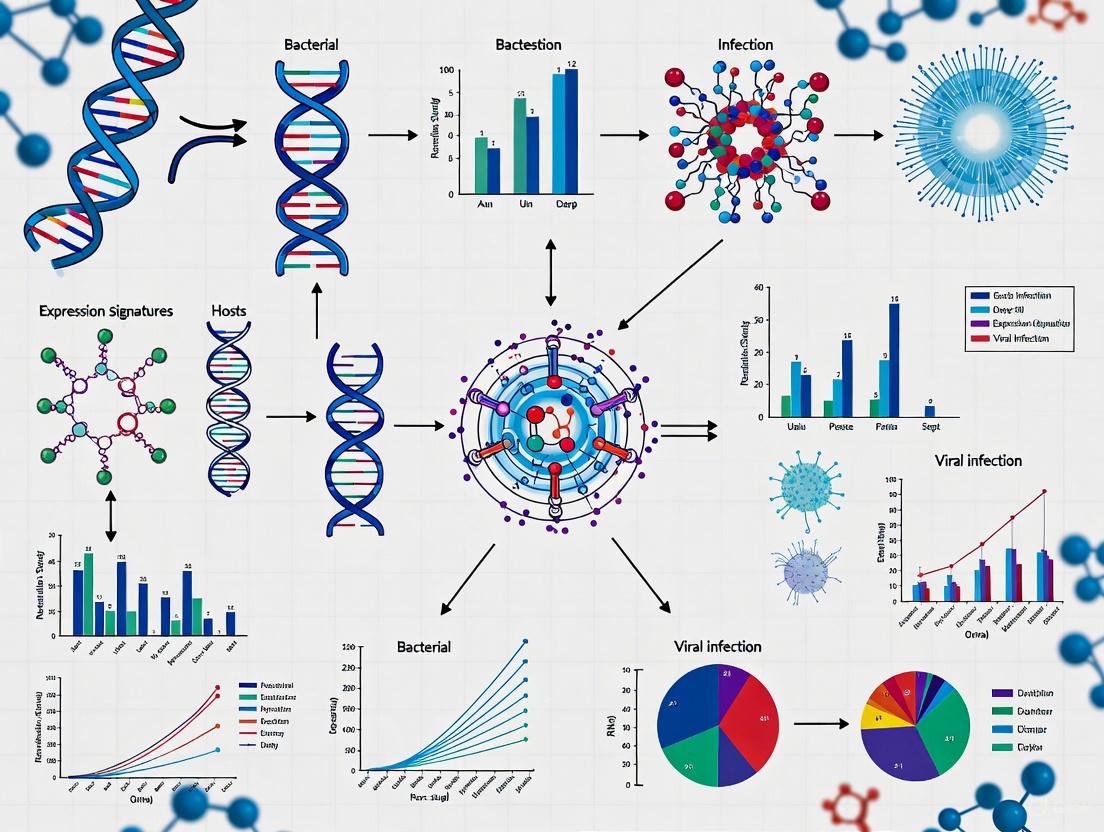
Accurate discrimination between bacterial and viral infections is a critical unmet need in clinical medicine, directly impacting antibiotic stewardship and patient outcomes.
Host Gene Expression Signatures for Bacterial vs Viral Infection: From Foundational Biology to Clinical Diagnostics
Abstract
Accurate discrimination between bacterial and viral infections is a critical unmet need in clinical medicine, directly impacting antibiotic stewardship and patient outcomes. This article synthesizes current research on host gene expression signatures as novel diagnostic tools. We explore the foundational biology of distinct host immune responses, review methodological advances in signature discovery using machine learning and multi-cohort analysis, and address key challenges in real-world application, including biological heterogeneity and population-specific performance. The content further provides a comparative analysis of validated signatures, highlighting their validation across global populations and alignment with World Health Organization target product profiles. This resource is designed to inform researchers, scientists, and drug development professionals engaged in creating the next generation of host-response-based diagnostic solutions.
The Biological Foundation: Decoding the Host's Distinct Immune Responses to Pathogens
Antimicrobial resistance (AMR) represents a critical global health threat, directly causing an estimated 1.27 million deaths annually and complicating the treatment of infections worldwide [1]. The crisis is particularly acute in clinical settings where the inability to rapidly distinguish bacterial from viral infections leads to substantial antibiotic misuse, accelerating the development of resistant pathogens [2] [3]. This application note details how host gene expression signatures—specific patterns of gene activation in a patient's blood cells—are emerging as powerful diagnostic tools to address this challenge. By enabling precise discrimination between bacterial and viral infections, these signatures facilitate targeted antimicrobial therapy, directly supporting antimicrobial stewardship efforts to preserve the efficacy of existing antibiotics. We present validated transcriptional biomarkers, detailed experimental protocols for their implementation, and analytical frameworks to integrate these approaches into clinical research and diagnostic development pipelines.
Recent transcriptomic studies have identified several minimal gene signatures capable of accurately discriminating bacterial from viral infections. The performance characteristics of three key signatures are summarized in Table 1.
Table 1: Performance Characteristics of Validated Host Gene Expression Signatures
| Signature Name | Gene Components | Population | Accuracy | AUC | Sensitivity/Specificity | Citation |
|---|---|---|---|---|---|---|
| Five-Gene Febrile Children Signature | IFIT2, SLPI, IFI27, LCN2, PI3 | Febrile children (n=384) | 85.3% (RF); 92.4% (ANN) | 0.9517 (testing, RF); 0.9540 (testing, ANN) | 95.1%/80.0% (RF); 86.8%/95.0% (ANN) | [4] [5] |
| Five-Transcript Pneumonia Signature | FAM20A, BAG3, TDRD9, MXRA7, KLF14 | Pediatric pneumonia (n=154 cases + 38 controls) | N/R | 0.95 [0.88-1.00] (discovery); 0.92 [0.83-1.00] (validation) | N/R | [6] |
| Global Fever Bacterial/Viral (GF-B/V) Model | 42-gene panel (includes neutrophil and T-cell related genes) | Multi-country cohort (n=101 validation) | 81.6% | 0.84 [0.76-0.90] | N/R | [7] |
Abbreviations: AUC (Area Under the Curve); RF (Random Forest); ANN (Artificial Neural Network); N/R (Not Reported)
The five-gene signature for febrile children (IFIT2, SLPI, IFI27, LCN2, PI3) was identified through integrative bioinformatics analysis of transcriptome data from 384 febrile young children, with subsequent validation in a generalized model encompassing 1,042 patients with diverse bacterial and viral infections [4]. The Random Forest model built on this signature achieved 95.1% sensitivity and 80.0% specificity, while the Artificial Neural Network model achieved 86.8% sensitivity and 95.0% specificity, demonstrating the robustness of this approach across different analytical frameworks [5].
Experimental Protocols
Sample Collection and RNA Extraction
Principle: Obtain high-quality RNA from whole blood for transcriptomic analysis while preserving gene expression patterns.
Materials:
- PAXgene Blood RNA Tubes (QIAGEN)
- PAXgene miRNA Extraction Kit (QIAGEN) or equivalent
- NanoDrop ND-2000 spectrophotometer (ThermoFisher Scientific)
- 2100 Bioanalyzer with RNA 6000 Nano kit (Agilent Technologies)
- RNase-free consumables
Procedure:
- Collect 2.5 mL whole blood directly into PAXgene Blood RNA Tubes via venipuncture
- Invert tubes 8-10 times immediately after collection to ensure mixing with lysing solution
- Store tubes upright at room temperature (15-25°C) for 2-24 hours for complete erythrocyte lysis
- Transfer to -20°C or -70°C for long-term storage (up to 5 months at -20°C; longer at -70°C)
- Thaw samples at room temperature if frozen (approximately 2 hours)
- Extract total RNA using PAXgene miRNA Extraction Kit according to manufacturer's instructions: a. Centrifuge tubes to pellet nucleic acids b. Wash pellets with RNase-free water and purification buffers c. DNase treatment to remove genomic DNA contamination d. Elute RNA in 40-100 μL elution buffer
- Quantify RNA concentration and purity using NanoDrop (A260/A280 ratio >1.8 indicates pure RNA)
- Assess RNA integrity using Bioanalyzer (RNA Integrity Number, RIN >7.0 required for sequencing)
Technical Notes:
- Process all samples under consistent conditions to minimize batch effects
- For multi-site studies, implement standardized protocols across all collection sites
- Include randomization of sample processing order to avoid systematic bias
- Aliquot RNA to avoid repeated freeze-thaw cycles
Transcriptomic Profiling and Data Preprocessing
Principle: Generate comprehensive gene expression data and normalize for cross-sample comparison.
Materials:
- TruSeq Stranded mRNA Library Prep Kit (Illumina) or NuGEN Universal Plus mRNA-Seq Kit
- GlobinClear RNA Reduction (Invitrogen) or AnyDeplete Globin depletion (NuGEN/Tecan)
- Illumina sequencing platform (HiSeq 2500, NovaSeq 6000, or equivalent)
- High-performance computing infrastructure for bioinformatics analysis
Procedure for RNA Sequencing:
- Perform globin mRNA reduction to enhance detection of non-globin transcripts
- Prepare sequencing libraries using poly-A selection according to kit specifications
- Assess library quality using Bioanalyzer
- Sequence on Illumina platform to target depth of >40 million reads per sample with 50 bp paired-end reads
- Include crossover samples between batches for quality control and batch effect correction
Alternative Procedure for NanoString Platform (Translational Applications):
- Design custom codeset containing target genes and reference genes
- Hybridize 100 ng total RNA with reporter and capture probes for 18-21 hours at 65°C
- Process samples on nCounter Digital Analyzer according to manufacturer's protocol
- Extract raw count data using nSolver software
Data Preprocessing and Normalization:
- For RNA-seq data: a. Perform quality control using FastQC b. Align reads to reference genome (e.g., GRCh38) using STAR aligner c. Generate count matrices using featureCounts d. Apply variance stabilizing transformation or TPM normalization
- Apply mathematical preprocessing to enhance model extrapolation capability:
RefValue(i) = Sigmoid[expr.value(i)/expr.value(reference)][5] - Perform batch effect correction using ComBat or similar methods when integrating multiple datasets
- For multi-class comparisons, apply housekeeping gene normalization using comprehensive stability algorithms (RefFinder) that integrate Delta CT, BestKeeper, Normfinder, and Genorm methods
Machine Learning Model Development
Principle: Develop robust classification models to distinguish bacterial from viral infections.
Materials:
- R statistical environment (version 4.4.1 or higher) with packages: limma, DESeq2, ggplot2, glmnet, randomForest, caret
- SPSS Statistics (for ANN implementation) or Python with scikit-learn, TensorFlow/PyTorch
- High-performance computing resources for large-scale analysis
Procedure for Random Forest Model Construction:
- Integrate transcriptomic data from multiple cohorts (example: GSE40396, GSE72809, GSE72810, GSE73464)
- Partition data into training (70%) and testing (30%) sets with stratification by infection type
- Identify candidate genes through intersecting differentially expressed genes (DEGs) and weighted gene co-expression network analysis (WGCNA)
- Apply L1 regularization (LASSO) to reduce variables and identify top predictors
- Train Random Forest classifier with 500 trees and optimized mtry parameter
- Validate model performance on independent testing set using AUC, accuracy, sensitivity, specificity
- For generalized models, validate across diverse etiologies and age groups
Procedure for Artificial Neural Network (Multilayer Perceptron) Construction:
- Use RefValue(i) transformed expression values as input features
- Set diagnosis status (bacterial/viral) as dependent variable
- Implement multilayer architecture with input, hidden, and output layers
- Apply backpropagation for weight optimization
- Use 7:3 training:testing split with cross-validation
- Tune hyperparameters (learning rate, hidden units, regularization) via grid search
Advanced Model - bvnGPS2 Deep Neural Network:
- Utilize large-scale integrated host transcriptome dataset (4,949 samples across 40 cohorts)
- Apply iPAGE omics data integration method to select discriminant gene pairs
- Incorporate attention mechanism to weight informative features
- Train model to identify Gram-positive, Gram-negative, and viral infections
- Validate on independent cohorts (n=374 samples) [8]
Visualization of Experimental Workflows
Host Gene Expression Analysis Pipeline
Diagram 1: Host gene expression analysis pipeline showing key stages from sample collection to model validation.
Diagnostic Decision Pathway
Diagram 2: Diagnostic decision pathway illustrating how host gene signatures guide appropriate therapy selection to reduce antimicrobial resistance risk.
The Scientist's Toolkit: Research Reagent Solutions
Table 2: Essential Research Reagents for Host Gene Signature Studies
| Reagent/Platform | Manufacturer | Function | Application Notes |
|---|---|---|---|
| PAXgene Blood RNA Tubes | QIAGEN | Stabilize RNA in whole blood at collection | Critical for preserving in vivo gene expression profiles; enables multi-site studies |
| PAXgene miRNA Kit | QIAGEN | Extract total RNA including small RNAs | Standardized protocol minimizes technical variability |
| TruSeq Stranded mRNA Kit | Illumina | Library preparation for RNA-seq | Maintains strand specificity for accurate transcript quantification |
| GlobinClear | Invitrogen | Deplete globin mRNA from blood samples | Increases detection sensitivity for non-globin transcripts by >40% |
| AnyDeplete Globin | NuGEN/Tecan | Deplete globin mRNA | Alternative to GlobinClear; compatible with automated systems |
| nCounter XT Custom Panel | NanoString | Multiplex gene expression without amplification | Ideal for clinical translation; validates RNA-seq findings |
| LM22 Signature Matrix | N/A | Immune cell deconvolution | Enables estimation of 22 immune cell type proportions from blood transcriptome |
| RefFinder Algorithm | N/A | Comprehensive reference gene stability | Integrates four algorithms to identify optimal reference genes |
Discussion and Clinical Implications
The integration of host gene expression signatures into diagnostic pipelines represents a paradigm shift in infectious disease management with profound implications for antimicrobial stewardship. The validated signatures described herein achieve diagnostic accuracy exceeding 80-90% across diverse populations and age groups, significantly outperforming conventional biomarkers like CRP and procalcitonin in distinguishing bacterial from viral infections [4] [6] [7]. This precision enables clinicians to confidently withhold antibiotics in viral cases, directly addressing a key driver of antimicrobial resistance.
The FDA's recognition of AMR as a serious public health threat underscores the urgent need for such innovative diagnostic approaches [9]. Current development pathways including Qualified Infectious Disease Product (QIDP) designation and the Limited Population Pathway for Antibacterial and Antifungal Drugs (LPAD) provide regulatory frameworks to accelerate the translation of these signatures into clinical practice [9]. Furthermore, the WHO's emphasis on diagnostic gaps in low-resource settings highlights the potential impact of host response biomarkers in regions with high burdens of infectious diseases and emerging AMR [2].
From a research perspective, the consistency of immune dysregulation signatures across diverse populations suggests conserved biological pathways response to infection [10] [7]. The identification of neutrophil-related genes as key discriminators in multiple studies points to the central role of innate immune responses in pathogen classification [10]. The modifiability of these signatures in response to risk factor reduction (e.g., smoking cessation, glycemic control) further suggests potential for monitoring intervention effectiveness [10].
Future directions should focus on simplifying these signatures into rapid point-of-care tests suitable for primary care settings, where most antibiotic prescribing occurs. The successful translation of the 42-gene Global Fever signature to a multiplex RT-PCR platform demonstrates the feasibility of this approach [7]. Additionally, integrating host gene signatures with pathogen detection technologies may provide comprehensive diagnostic solutions that simultaneously identify the causative agent and characterize the host response, ultimately enabling truly personalized antimicrobial therapy.
Host gene expression signatures represent a transformative approach to combating antimicrobial resistance by enabling precise discrimination between bacterial and viral infections. The experimental protocols and analytical frameworks presented in this application note provide researchers with validated methodologies to advance this critical field. As diagnostic development continues, integration of these signatures into clinical decision support systems promises to significantly reduce inappropriate antibiotic use, preserve the efficacy of existing antimicrobials, and ultimately mitigate the global AMR crisis.
The innate immune system constitutes the host's first line of defense against pathogenic invaders, deploying distinct molecular strategies tailored to specific threat classes. Type I interferon (IFN-I) responses represent a specialized antiviral defense mechanism, while broad inflammatory cascades primarily address bacterial challenges. These pathways are initiated by pattern recognition receptors (PRRs) that detect conserved microbial structures, triggering sophisticated intracellular signaling networks that culminate in the expression of effector molecules [11] [12] [13]. The fundamental distinction lies in their operational framework: interferon responses establish an "antiviral state" in infected and neighboring cells to inhibit viral replication, whereas inflammatory responses recruit immune cells to the site of bacterial infection for pathogen clearance [11] [14].
Contemporary research has revealed that these defense strategies manifest unique host gene expression signatures, providing powerful biomarkers for differentiating infection etiologies. Advances in transcriptomic profiling and computational analytics now enable researchers to exploit these signatures for developing precise diagnostic tools, moving beyond traditional culture-based methods and nonspecific inflammatory markers [4] [5] [15]. This application note delineates the core mechanisms of these immune pathways, presents experimental protocols for their investigation, and highlights translational applications in infectious disease diagnostics and therapeutic development.
Interferon Response to Viral Infection
Pathway Mechanism
The antiviral interferon response initiates when host pattern recognition receptors (PRRs), including RIG-I-like receptors (RLRs) and Toll-like receptors (TLRs), detect viral nucleic acids in the cytoplasm or endosomal compartments [11] [12]. RNA viruses are primarily recognized by RIG-I and MDA5 in the cytoplasm, while DNA viruses are detected by sensors like cGAS [12] [16]. This recognition triggers signaling cascades that activate transcription factors, principally interferon regulatory factors (IRFs) and NF-κB, which translocate to the nucleus and induce the expression of type I interferons (IFN-α and IFN-β) [11] [12].
Following secretion, IFN-α/β bind to the ubiquitous interferon-α receptor (IFNAR) complex on cell surfaces, initiating the canonical JAK-STAT signaling pathway. This receptor activation prompts the phosphorylation of associated JAK kinases (JAK1 and TYK2), which subsequently phosphorylate STAT1 and STAT2 proteins [11] [16]. The phosphorylated STAT1 and STAT2 form a heterodimer that recruits IRF9 to assemble the ISGF3 complex (IFN-stimulated gene factor 3). This complex translocates to the nucleus and binds to interferon-stimulated response elements (ISREs) in the promoters of hundreds of IFN-stimulated genes (ISGs) [11] [16]. The protein products of these ISGs establish the antiviral state by targeting various stages of the viral life cycle, effectively inhibiting viral replication and spread [11] [12] [14].
Table 1: Key Components of Viral Sensing and Interferon Signaling
| Component Category | Key Elements | Primary Function |
|---|---|---|
| Viral Sensors | RIG-I, MDA5, cGAS, TLR3/7/8/9 | Detect viral nucleic acids and initiate signaling cascades |
| Transcription Factors | IRF3, IRF7, NF-κB | Induce type I interferon gene expression |
| IFN Signaling | IFN-α/β, IFNAR1/2, JAK1, TYK2 | Transduce extracellular IFN signal to intracellular space |
| STAT Proteins | STAT1, STAT2, IRF9 | Form ISGF3 complex and activate ISRE-containing genes |
| Antiviral Effectors | MxA, PKR, OAS, ISG15, Viperin | Directly inhibit various stages of viral replication |
Key Interferon-Stimulated Genes (ISGs) and Their Antiviral Functions
The interferon response culminates in the expression of hundreds of ISGs that establish a multifaceted antiviral defense system. Among these, MxA protein targets the nucleocapsid of influenza-like viruses, trapping viral components in perinuclear complexes [14]. The 2',5'-oligoadenylate synthetase (OAS)/RNase L system is activated by viral double-stranded RNA, leading to degradation of cellular and viral RNA [11] [12]. Protein kinase R (PKR) phosphorylates eukaryotic initiation factor 2α (eIF2α), thereby inhibiting viral protein translation [14]. Additionally, ISG15 functions as a ubiquitin-like modifier that can conjugate to both host and viral proteins, potentially disrupting viral replication [12]. The collective action of these and numerous other ISGs creates a hostile intracellular environment for viruses, effectively limiting their replication and spread to neighboring cells.
Inflammatory Cascade to Bacterial Infection
Pathway Mechanism
The inflammatory response to bacterial infection initiates when pattern recognition receptors (PRRs), including Toll-like receptors (TLRs) and nucleotide-binding oligomerization domain (NOD)-like receptors, detect conserved bacterial components such as lipopolysaccharide (LPS), peptidoglycan, and flagellin [13] [16]. TLR4, for instance, recognizes LPS from Gram-negative bacteria, while TLR2 detects lipopeptides from Gram-positive bacteria, and TLR9 responds to bacterial CpG DNA [16]. This recognition occurs on cell surfaces, in endosomal compartments, or in the cytosol, depending on the receptor type and its subcellular localization.
PRR activation triggers downstream signaling cascades that converge on the activation of pivotal transcription factors, most notably nuclear factor kappa B (NF-κB) and activator protein 1 (AP-1) [13] [16]. These signaling pathways typically involve adapter proteins such as MyD88 and TRIF, which relay the signal through series of kinase interactions [16]. The activated transcription factors then translocate to the nucleus and bind to specific promoter elements, inducing the expression of proinflammatory cytokines (e.g., TNF-α, IL-1β, IL-6), chemokines (e.g., IL-8, MCP-1), and adhesion molecules [13]. These mediators collectively orchestrate the inflammatory response by increasing vascular permeability, promoting the adhesion of leukocytes to endothelial cells, and directing the migration of immune cells (primarily neutrophils and macrophages) to the site of infection for bacterial clearance [13].
Table 2: Key Components of Bacterial Sensing and Inflammatory Response
| Component Category | Key Elements | Primary Function |
|---|---|---|
| Bacterial Sensors | TLR2, TLR4, TLR5, TLR9, NOD1/2 | Detect bacterial cell wall components, flagella, and DNA |
| Signaling Adaptors | MyD88, TRIF, TRAF6 | Transduce signals from activated PRRs to downstream effectors |
| Transcription Factors | NF-κB, AP-1 | Induce proinflammatory gene expression |
| Inflammatory Mediators | TNF-α, IL-1β, IL-6, IL-8 | Promote vasodilation, fever, and immune cell recruitment |
| Adhesion Molecules | Selectins, ICAM-1, VCAM-1 | Mediate leukocyte attachment and extravasation |
| Effector Cells | Neutrophils, Macrophages | Phagocytose and destroy bacteria |
Cellular Recruitment and Resolution
The inflammatory cascade mediates the recruitment of leukocytes from the circulation to the site of infection through a carefully coordinated sequence of events. Initially, vasodilation and increased vascular permeability allow plasma proteins and immune cells to access the affected tissue. Subsequently, chemotactic factors such as IL-8, leukotriene B4, and complement component C5a guide the directional migration of neutrophils and monocytes [13]. The process of leukocyte extravasation involves a multi-step adhesion cascade comprising selectin-mediated rolling, integrin-mediated firm adhesion, and transendothelial migration [13]. Once at the infection site, neutrophils and macrophages phagocytose bacteria and destroy them through oxidative and non-oxidative mechanisms. Ideally, the inflammatory response resolves once the threat is eliminated, involving the production of specialized pro-resolving mediators and apoptosis of spent neutrophils. However, dysregulated or persistent inflammation can lead to tissue damage and chronic inflammatory conditions [13].
Comparative Analysis of Key Pathway Features
Table 3: Comparative Analysis of Interferon vs. Inflammatory Pathways
| Feature | Interferon Response (Viral) | Inflammatory Cascade (Bacterial) |
|---|---|---|
| Primary Inducers | Viral nucleic acids (dsRNA, ssRNA, DNA) | Bacterial components (LPS, peptidoglycan, flagellin) |
| Key Receptors | RIG-I, MDA5, cGAS, TLR3/7/8/9 | TLR2/4/5/9, NOD1/2 |
| Signaling Pathways | JAK-STAT, IRF activation | NF-κB, MAPK, PI3K-AKT |
| Key Transcription Factors | IRF3, IRF7, ISGF3 complex | NF-κB, AP-1 |
| Major Effector Molecules | ISGs (MxA, OAS, PKR, ISG15) | Cytokines (TNF-α, IL-1β, IL-6), chemokines |
| Primary Cellular Outcome | Antiviral state in infected and neighboring cells | Recruitment and activation of immune cells |
| Key Cell Types | Virtually all nucleated cells | Myeloid cells (macrophages, neutrophils) |
| Representative Biomarkers | IFIT2, IFI27, SIGLEC1, MS4A4A | LCN2, SLPI, PI3, IL-6, TNF-α |
| Pathway Cross-talk | Can inhibit NF-κB signaling under certain conditions | Can induce IFN production in some contexts |
Host Gene Expression Signatures for Differential Diagnosis
Diagnostic Gene Signatures
The distinct molecular pathways activated during viral versus bacterial infections generate unique host gene expression signatures that can be leveraged for precise differential diagnosis. Research has identified specific gene patterns that effectively discriminate between these infection types, offering significant advantages over traditional diagnostic methods that rely on pathogen detection or nonspecific inflammatory markers [4] [5] [15].
A pivotal study developing machine learning models for febrile children identified a five-gene host signature (LCN2, IFI27, SLPI, IFIT2, and PI3) that accurately distinguishes bacterial from viral infections [4] [5]. The Random Forest model utilizing this signature achieved an area under the curve (AUC) of 0.9517 in testing, with 85.3% accuracy, 95.1% sensitivity, and 80.0% specificity [4] [5]. Similarly, research on arthritis patients identified a type I interferon signature characterized by upregulation of SIGLEC1 and MS4A4A that distinguished persistent inflammatory arthritis from self-limiting disease [15]. These host-response signatures reflect the underlying immune activation pathways and offer a powerful approach for etiological diagnosis, particularly in cases where direct pathogen detection is challenging.
Table 4: Validated Host Gene Expression Signatures for Infection Diagnosis
| Gene Symbol | Full Name | Function | Expression Pattern | Performance Metrics |
|---|---|---|---|---|
| IFI27 | Interferon Alpha Inducible Protein 27 | IFN-stimulated protein with unclear antiviral function | Upregulated in viral infections | 84.4% predictor importance [4] |
| IFIT2 | Interferon Induced Protein With Tetratricopeptide Repeats 2 | Antiviral protein that inhibits viral translation | Upregulated in viral infections | 44.6% predictor importance [4] |
| LCN2 | Lipocalin 2 | Siderophore-binding protein that limits bacterial iron acquisition | Upregulated in bacterial infections | 100% predictor importance [4] |
| SLPI | Secretory Leukocyte Peptidase Inhibitor | Anti-protease with antibacterial properties | Upregulated in bacterial infections | 63.2% predictor importance [4] |
| PI3 | Elafin | Protease inhibitor with antimicrobial activity | Upregulated in bacterial infections | 44.5% predictor importance [4] |
| SIGLEC1 | Sialic Acid Binding Ig Like Lectin 1 | IFN-inducible endocytic receptor | Upregulated in persistent inflammatory arthritis | p=0.00597 [15] |
| MS4A4A | Membrane Spanning 4-Domains A4A | Tetraspanin-like protein expressed on macrophages | Upregulated in rheumatoid arthritis | p=0.00000904 [15] |
Experimental Protocol: Host Gene Signature Analysis
Objective: To profile host gene expression signatures in whole blood samples for discriminating bacterial versus viral infections.
Sample Preparation:
- Collect 2.5-5 mL whole blood in PAXgene Blood RNA tubes or similar RNA stabilization tubes
- Store samples at -20°C or -80°C until RNA extraction
- Extract total RNA using commercial kits (e.g., QIAamp RNA Blood Mini Kit) with DNase treatment to remove genomic DNA contamination
- Assess RNA quality using Agilent Bioanalyzer or similar systems; samples with RNA Integrity Number (RIN) >7 are suitable for analysis
Gene Expression Profiling:
- Convert 100-500 ng total RNA to labeled cDNA using 3' IVT Express Kit or similar systems
- Hybridize to gene expression microarrays (e.g., Affymetrix GeneChip Human Genome U133 Plus 2.0 Array) or prepare libraries for RNA sequencing
- For microarray analysis: fragment labeled cDNA, hybridize to arrays for 16 hours at 45°C, wash and stain arrays using fluidics stations, and scan with appropriate scanners
- For RNA-seq: prepare libraries using TruSeq Stranded mRNA kit, sequence on Illumina platforms to achieve minimum 20 million reads per sample
Computational Analysis:
- Process raw data: for microarrays, perform RMA normalization; for RNA-seq, conduct adapter trimming, quality control, and alignment to reference genome
- Identify differentially expressed genes using linear models (limma package) for microarrays or DESeq2 for RNA-seq data
- Perform weighted gene co-expression network analysis (WGCNA) to identify gene modules associated with infection types
- Apply machine learning algorithms (random forest, artificial neural networks) to build classification models using candidate gene signatures
- Validate model performance through cross-validation and independent test sets, reporting AUC, accuracy, sensitivity, and specificity
The Scientist's Toolkit: Research Reagent Solutions
Table 5: Essential Research Reagents for Studying Immune Pathways
| Reagent Category | Specific Products/Assays | Research Application |
|---|---|---|
| Pathogen Recognition Reagents | Ultrapure LPS, Poly(I:C), R848, CpG ODN | PRR stimulation for pathway activation studies |
| Cytokine Detection | ELISA kits for IFN-α/β, TNF-α, IL-6, IL-1β; Luminex multiplex panels | Quantification of pathway-specific cytokine production |
| Gene Expression Analysis | PAXgene Blood RNA System, Tempus Blood RNA tubes | Blood RNA stabilization for transcriptomic studies |
| RNA Sequencing | TruSeq Stranded mRNA Library Prep Kit, SMARTer Stranded RNA-Seq Kit | Library preparation for whole transcriptome analysis |
| Microarray Platforms | Affymetrix GeneChip Human Transcriptome Array 2.0 | Global gene expression profiling |
| qRT-PCR Reagents | TaqMan Gene Expression Assays, SYBR Green Master Mix | Targeted quantification of signature gene expression |
| Pathway Inhibitors | JAK inhibitors (Ruxolitinib), IKK inhibitors (BAY 11-7082) | Mechanistic studies through specific pathway blockade |
| Cell Isolation Kits | PBMC isolation tubes (CPT), neutrophil/monocyte isolation kits | Immune cell separation for cell-type specific analyses |
| Antibodies for Protein Detection | Phospho-STAT1 (Tyr701), Phospho-NF-κB p65 (Ser536) | Western blot analysis of pathway activation |
Advanced Applications and Research Implications
Biomarker Validation and Clinical Translation
The transition from basic pathway characterization to clinical application requires rigorous biomarker validation across diverse patient populations. For instance, the type I interferon signature characterized by SIGLEC1 and MS4A4A demonstrated significant prognostic value in rheumatology, distinguishing drug-naïve early arthritis patients who would develop persistent disease from those with self-limiting conditions [15]. Receiver operating characteristic (ROC) curve analysis revealed that MS4A4A achieved an AUC of 0.894 for discriminating rheumatoid arthritis patients from healthy controls, while PDZK1IP1 and EPHB2 showed AUCs of 0.785 and 0.794 respectively at presentation [15]. These findings underscore the clinical utility of pathway-specific signatures not only for diagnosis but also for disease stratification and prognosis.
Therapeutic Implications and Drug Development
Understanding the nuanced regulation of these immune pathways opens avenues for targeted therapeutic interventions. In autoimmune conditions like systemic lupus erythematosus (SLE) and rheumatoid arthritis (RA), where type I interferon signaling is aberrantly activated, therapeutic strategies targeting IFN-α or its receptor have shown promise [16]. Similarly, excessive inflammatory responses to bacterial infections, such as those observed in sepsis, might be modulated by interventions targeting specific cytokines like IL-1β or IL-6 [13]. The host gene signatures discussed herein may also serve as pharmacodynamic biomarkers to monitor response to these targeted therapies, enabling personalized treatment approaches and dose optimization [17] [15].
Experimental Protocol: Monitoring Interferon Bioactivity
Objective: To assess functional interferon pathway activation in patient samples using MxA protein expression as a biomarker.
Methodology:
- Collect peripheral blood mononuclear cells (PBMCs) from patient whole blood using density gradient centrifugation or dedicated PBMC isolation tubes
- Isolve total RNA using silica-membrane spin columns with integrated DNase digestion to prevent genomic DNA contamination
- Convert 100-500 ng RNA to cDNA using reverse transcriptase with random hexamers and oligo(dT) primers
- Perform quantitative real-time PCR using TaqMan chemistry with the following parameters:
- Primer/Probe Sets: MxA (forward: 5'-CTGATGGCCGAGTCTATCTCCA-3'; reverse: 5'-GATCTTCTGCCAGTCACCAAGG-3'; probe: FAM-ACATCGCCCTGTCTGTGCTGGA-TAMRA)
- Reference Genes: GAPDH, β-actin, or HPRT1 for normalization
- Reaction Conditions: 95°C for 10 min, followed by 40 cycles of 95°C for 15 sec and 60°C for 1 min
- Calculate relative gene expression using the 2^(-ΔΔCt) method, comparing to healthy control samples
- Interpret results: MxA mRNA levels >2-fold above healthy control baseline indicate significant IFN pathway activation
Application Notes: This protocol has demonstrated clinical utility for monitoring interferon bioactivity in multiple sclerosis patients receiving interferon-β therapy, where MxA mRNA measurement predicted relapse-free survival more effectively than neutralizing antibody assays [17]. The assay can be adapted to high-throughput formats for clinical trial applications and combined with other signature genes for enhanced diagnostic precision.
The interferon response to viruses and inflammatory cascade to bacteria represent evolutionarily optimized defense strategies that generate distinct molecular signatures detectable in host cells. While the interferon pathway establishes an antiviral state through JAK-STAT signaling and ISG induction, the inflammatory response recruits and activates immune cells through NF-κB-mediated cytokine production. The identification of pathway-specific gene signatures, such as the five-gene panel (LCN2, IFI27, SLPI, IFIT2, PI3) for infection discrimination or the interferon signature (SIGLEC1, MS4A4A) for arthritis prognosis, provides powerful tools for diagnostic development, patient stratification, and therapeutic monitoring. As these signatures are refined through advanced analytics and validated across diverse clinical contexts, they promise to transform our approach to infectious and inflammatory diseases, enabling more precise, personalized medical interventions.
The Critical Challenge of Intracellular Bacterial Infections and Their Interferon-Driven Host Response
Intracellular bacterial pathogens represent a significant challenge to host defense, having evolved sophisticated strategies to invade host cells and replicate within them while evading immune detection. A critical aspect of the host's response to these invaders is the interferon (IFN) signaling system, which orchestrates a complex transcriptional program. While essential for antiviral immunity, the role of interferon in bacterial infections presents a paradox, often exhibiting both protective and detrimental effects depending on the context. This application note explores the interferon-driven host response to intracellular bacterial infections, framed within the broader research on discriminating bacterial and viral infections through host gene expression signatures. We detail specific mechanisms, provide experimental protocols for studying these responses, and present quantitative data on host transcriptional signatures, offering researchers a comprehensive toolkit for advancing diagnostic and therapeutic strategies.
Molecular Mechanisms of Interferon-Mediated Defense
The host deploys a multi-layered defense strategy against intracellular bacteria, with interferon signaling playing a central role in coordinating these efforts through both direct antimicrobial mechanisms and complex immunoregulatory functions.
GTPase-Mediated Cell-Autonomous Immunity
Interferon-induced GTPases represent a crucial first line of defense against intracellular bacteria. These proteins directly target pathogens through several mechanisms:
Coatomer Formation and Bacterial Immobilization: The interferon-induced GTPase GVIN1 forms coatomers around intracellular bacteria such as Burkholderia thailandensis, leading to the loss of bacterial actin-based motility proteins (e.g., BimA) and consequent inhibition of actin tail formation. This immobilization prevents cell-to-cell spread, containing the infection [18].
Complementary GTPase Functions: Both GBP1 and GVIN1 act independently to restrict bacterial motility, though their targeting specificity varies by pathogen. While Shigella flexneri is targeted primarily by GBP1, B. thailandensis is restricted by both GTPases. These proteins appear to require different bacterial surface components for recognition, with GVIN1 dependent on the O-antigen of lipopolysaccharide [18].
Distributed Antimicrobial Control: Recent evidence suggests a model of distributed antimicrobial control rather than reliance on single critical genes. Studies with Legionella pneumophila demonstrate that multiple interferon-stimulated genes (ISGs) act in parallel, with significant functional redundancy. Only when six key genes (Nos2, Cybb, Irgm1, Irgm3, Casp4, Acod1) were simultaneously knocked out was IFN-γ-mediated control completely lost [19].
The Dual Nature of Type I Interferon Signaling
Type I interferons establish a complex transcriptional program during bacterial infections with dual protective and detrimental effects:
Transcriptional Suppression of Immune Genes: Beyond the well-characterized induction of interferon-stimulated genes (ISGs), type I interferons simultaneously drive suppression of numerous immune mediators, termed Type I Interferon Inhibited Genes (TIIGs). This suppressed group includes key cytokines and receptors such as IL-1β, IL-12, IL-17A/F, IFNγR, and chemokines including CXCL1 and CXCL2 [20].
Species-Specific Antimicrobial Strategies: Comparative studies reveal significant differences in interferon-induced effector mechanisms between mice and humans. While mice rely heavily on nitric oxide (produced by iNOS/NOS2) and itaconate (produced by IRG1/ACOD1) for bacterial control, humans exhibit regulatory and catalytic differences that markedly reduce production of both metabolites, suggesting alternative defense strategies [19].
Table 1: Key Interferon-Stimulated GTPases in Bacterial Defense
| GTPase | Inducing Signal | Target Bacteria | Mechanism of Action |
|---|---|---|---|
| GVIN1 | IFN-γ | Burkholderia thailandensis | Forms coatomers; inhibits actin tail formation by removing BimA |
| GBP1 | IFN-γ | Burkholderia thailandensis, Shigella flexneri | Forms coatomers; restricts actin-based motility |
| IRGM1 | IFN-γ | Multiple intracellular pathogens | Suppresses pathological type I interferon production |
Regulatory Mechanisms and Immunopathology
The interferon response requires precise regulation to avoid detrimental consequences:
IRGM1-Mediated Regulation: The immunity-related GTPase IRGM1 supports host defense primarily by constraining pathological type I interferon production. Irgm1⁻/⁻ mice spontaneously produce excess IFN-I and succumb to intracellular bacterial infections, but this susceptibility is rescued in Irgm1⁻/⁻Ifnar⁻/⁻ mice lacking the type I interferon receptor, demonstrating that unchecked IFN-I signaling drives pathogenesis [21].
Negative Feedback Loops: Type I interferons transcriptionally suppress their own signaling components and those of other immune pathways, potentially as a regulatory mechanism to prevent excessive inflammation. This includes downregulation of the interferon gamma receptor (IFNγR) on myeloid cells, creating complex cross-regulation between interferon types [20].
Host Transcriptional Signatures for Infection Discrimination
The host transcriptional response to infection provides powerful signatures for discriminating bacterial from viral infections, with several specific gene signatures demonstrating high diagnostic accuracy.
Pediatric Pneumonia Transcriptomic Signature
A robust 5-transcript signature has been identified for discriminating bacterial from viral pneumonia in children, addressing a critical diagnostic challenge in a high-mortality setting:
Signature Genes: The signature comprises FAM20A, BAG3, TDRD9, MXRA7, and KLF14, which collectively achieved an area under the curve (AUC) of 0.95 [0.88–1.00] in the discovery cohort [6].
Validation Performance: Initial validation using combined definitive and probable cases yielded an AUC of 0.87 [0.77–0.97], with full validation in a new prospective cohort of 32 patients achieving an AUC of 0.92 [0.83–1.00] [6].
Biological Context: This signature was developed from RNA sequencing of 192 prospectively collected whole blood samples (38 controls, 154 pneumonia cases), with differential expression analysis revealing over 5,000 genes differentially expressed in pneumonia versus healthy controls [6].
RNA Editing-Based Signatures
Beyond gene expression, post-transcriptional modifications provide additional layers of discriminatory information:
A-to-I RNA Editing Patterns: Intracellular bacterial pathogen (IBP) infections alter host RNA editing profiles, with consistent changes observed in genes involved in neutrophil-mediated immunity and lipid metabolism. These include increased editing in Calmodulin 1 (Calm1) and Tyrosine 3-Monooxygenase/Tryptophan 5-Monooxygenase Activation Protein Gamma (Ywhag) shared across multiple IBP infection models [22].
Consistent Enzyme Expression Changes: Most IBP infections increase expression of the RNA editing enzyme Adar while decreasing Adarb1, suggesting a coordinated program of post-transcriptional regulation during bacterial infection [22].
Discriminatory Capacity: Comparison of RNA editing patterns reveals both similarities and dramatic differences between IBP and single-strand RNA viral infections, enabling clear distinction between these infection types [22].
Table 2: Diagnostic Performance of Host Response Signatures
| Signature Type | Signature Components | Infection Types Discriminated | Performance (AUC) |
|---|---|---|---|
| 5-Transcript Signature | FAM20A, BAG3, TDRD9, MXRA7, KLF14 | Bacterial vs. Viral Pneumonia | 0.95 [0.88-1.00] (Discovery) [6] |
| RNA Editing Signature | A-to-I editing in Calm1, Ywhag, and Rab family genes | Intracellular Bacterial vs. ssRNA Viral | Enables clear distinction [22] |
| Interferon-Induced GTPases | GVIN1, GBP1 coating patterns | Specific intracellular bacteria | Species-specific recognition [18] |
Experimental Protocols and Methodologies
This section provides detailed methodologies for key experiments investigating interferon-driven host responses to intracellular bacterial infections.
Protocol 1: Transcriptomic Signature Validation
Objective: To validate host gene expression signatures for discriminating bacterial from viral infections in patient samples.
Materials and Reagents:
- PAXgene Blood RNA tubes
- RNA extraction kit (e.g., Qiagen PAXgene Blood RNA Kit)
- RNA sequencing library preparation kit (e.g., Illumina TruSeq Stranded mRNA)
- RT-PCR reagents and validated primer-probe sets for signature genes
- Healthy control and patient whole blood samples
Procedure:
- Sample Collection: Collect whole blood into PAXgene Blood RNA tubes from patients with clinically confirmed bacterial or viral infections and healthy controls [6].
- RNA Extraction: Extract total RNA according to manufacturer's protocols, including DNase treatment to remove genomic DNA contamination.
- Quality Control: Assess RNA integrity using Bioanalyzer or TapeStation, accepting only samples with RIN > 7.0.
- Library Preparation and Sequencing: Prepare RNA sequencing libraries using a stranded mRNA approach. Sequence on an Illumina platform to a minimum depth of 30 million reads per sample.
- Data Analysis:
- Align sequences to the reference genome using STAR aligner.
- Quantify gene expression using featureCounts or similar tools.
- Apply generalized linear models with quasi-likelihood F-tests (GLMQL) for differential expression analysis [23].
- Validate signature genes using RT-PCR on an independent cohort.
Validation: Assess diagnostic performance using receiver operating characteristic (ROC) analysis and calculate area under the curve (AUC) with confidence intervals [6].
Protocol 2: GTPase Coatomer Formation Assay
Objective: To visualize and quantify GTPase-mediated coating of intracellular bacteria.
Materials and Reagents:
- Human cell lines (e.g., T24, HeLa)
- Bacterial strains (e.g., Burkholderia thailandensis, Shigella flexneri)
- Recombinant interferon-gamma (IFN-γ)
- Antibodies for GTPases (anti-GBP1, anti-GVIN1)
- Fluorescently-conjugated secondary antibodies
- Actin stain (e.g., phalloidin)
- DAPI for nuclear staining
- siRNA for gene knockdown
Procedure:
- Cell Culture and Stimulation: Culture T24 and HeLa cells in appropriate media. Pre-treat with 100 U/mL IFN-γ for 16 hours to induce GTPase expression [18].
- Gene Knockdown: Transfert cells with siRNA targeting GBP1, GVIN1, or non-targeting control using appropriate transfection reagents.
- Infection: Infect cells with bacteria at MOI 10:1, centrifuge briefly to synchronize infection, and incubate for 1 hour.
- Antibody Staining: Fix cells at appropriate timepoints post-infection (typically 3-4 hours), permeabilize, and stain with primary antibodies against GTPases, followed by fluorescent secondary antibodies.
- Microscopy and Analysis:
- Image using confocal microscopy with appropriate filters.
- Quantify the percentage of bacteria associated with GTPase coating in each condition.
- Assess actin tail formation using phalloidin staining.
Interpretation: GTPase coating is indicated by bacterial localization of fluorescence. Successful restriction of bacterial spread is demonstrated by reduced actin tail formation in IFN-γ-treated cells [18].
Signaling Pathways and Experimental Workflows
The following diagrams visualize key signaling pathways and experimental workflows central to studying interferon-driven host responses to intracellular bacterial infections.
Diagram 1: Interferon signaling and effector mechanisms in intracellular bacterial infection. The pathway shows detection through PRRs, JAK-STAT signaling, ISG transcription, and effector mechanisms including GTPase-mediated bacterial immobilization and transcriptional suppression of immune genes (TIIGs).
Research Reagent Solutions
The following table details essential research reagents and their applications in studying interferon responses to intracellular bacterial infections.
Table 3: Essential Research Reagents for Studying Interferon Responses to Intracellular Bacteria
| Reagent Category | Specific Examples | Research Application | Key Considerations |
|---|---|---|---|
| Cellular Models | T24 cell line, HeLa cell line, Bone Marrow-Derived Macrophages (BMDMs) | Studying cell-type-specific GTPase function and bacterial restriction mechanisms | T24 cells express crucial GBP1 cofactor; HeLa cells lack this cofactor [18] |
| Bacterial Strains | Burkholderia thailandensis, Shigella flexneri, Legionella pneumophila | Modeling intracellular bacterial pathogenesis and host defense mechanisms | Different bacteria exhibit varying susceptibility to specific GTPases (e.g., Shigella targeted by GBP1 only) [18] |
| Cytokines & Stimulants | Recombinant interferon-gamma (IFN-γ), Recombinant interferon-beta (IFN-β), LPS | Inducing interferon-stimulated gene expression and modeling immune activation | IFN-γ pretreatment (16 hours, 100 U/mL) induces GTPase expression necessary for bacterial restriction [18] |
| Genetic Tools | siRNA for GBP1/GVIN1 knockdown, CRISPR/Cas9 for gene knockout (e.g., IRGM1, IFNAR) | Determining specific gene functions in host defense | Combined knockout of GBP1 and GVIN1 completely restores bacterial actin tail formation [18] |
| Detection Reagents | Antibodies against GTPases (GBP1, GVIN1), Actin stains, ISG/TIIG expression panels | Visualizing and quantifying host-pathogen interactions and immune responses | GTPase coating visualized by immunofluorescence; TIIG suppression measured by RNA-Seq or RT-PCR [20] |
The interferon-driven host response to intracellular bacterial infections represents a complex interplay of protective and pathological mechanisms. The distributed nature of antimicrobial control, involving multiple interferon-stimulated genes acting in concert, highlights the challenge of targeting single pathways for therapeutic intervention. However, the consistent host transcriptional signatures identified across diverse populations and infection types offer promising avenues for diagnostic development. Future research should focus on elucidating the cofactors required for GTPase function, understanding the context-specificity of interferon responses across tissues and species, and translating host response signatures into clinically applicable diagnostic tools. The protocols and reagents detailed in this application note provide a foundation for these investigations, supporting advances in managing intracellular bacterial infections through manipulation of the host interferon response.
In host gene expression research for distinguishing bacterial from viral infections, the choice of biospecimen—whole blood (WB) or peripheral blood mononuclear cells (PBMC)—is a critical methodological decision. These two sample types represent fundamentally different biological compartments, leading to the capture of distinct transcriptional signatures [24]. This application note delineates the key differences between WB and PBMC transcriptomic profiles, provides detailed protocols for their analysis, and discusses their implications for research on infectious disease diagnostics.
Comparative Analysis: Whole Blood vs. PBMC
Cellular Composition and Transcriptomic Coverage
Whole blood contains all circulating cell types, including granulocytes (neutrophils, eosinophils, basophils), platelets, and red blood cells, in addition to the mononuclear cells (lymphocytes and monocytes) that constitute PBMCs. Consequently, WB transcriptomics provides a comprehensive view of the systemic immune response, while PBMC profiling offers a focused view on the adaptive immune system and certain innate functions [24] [25].
A direct comparison of gene expression profiles revealed profound differences. One study identified 704 differentially expressed genes between WB and PBMC compartments. Of these, only 6 genes showed increased expression in PBMCs, while the vast majority were heightened in WB [24]. This demonstrates that WB contains a much wider array of detectable immune transcripts.
Table 1: Compartment-Specific Transcript Detection
| Sample Type | Number of Unique Transcripts Detected | Representative Biological Processes |
|---|---|---|
| Whole Blood | 64 | Innate, humoral, and adaptive immune processes |
| PBMC | 13 | T-cell and monocyte-mediated processes [24] |
Technical and Practical Considerations
From a methodological standpoint, each approach presents distinct advantages and challenges.
Table 2: Methodological Comparison for Research Settings
| Parameter | Whole Blood (PAXgene) | PBMC (CPT/Ficoll) |
|---|---|---|
| Minimum Blood Volume | 2.5 ml [25] | 8 ml [25] |
| Sample Processing | Simple stabilization in PAXgene tubes; minimal hands-on time [24] | Labor-intensive; requires Ficoll density gradient centrifugation [25] |
| RNA Yield & Quality | Excellent data with minimal variability [24] | Subject to technical variability from isolation steps [25] |
| Suitability for Multi-centre Studies | High; easy standardization [24] | Lower; requires strict SOPs to minimize bias [25] |
| Cost & Implementation | Lower processing cost; easier to implement | Higher processing cost; requires specialized training |
Diagnostic Sensitivity in Disease Contexts
The choice of compartment significantly impacts the detection of disease-associated gene signatures. In a study on mild allergic asthma, analysis of WB revealed 47 differentially expressed transcripts between asthmatics and non-asthmatics. In stark contrast, the PBMC analysis identified only 1 differentially expressed transcript under the same statistical conditions [24]. This suggests that for systemic conditions like asthma, WB captures a more robust disease signal. In the context of infection, PBMCs show distinct pathway activation; for example, during mpox virus (MPXV) infection in a rabbit model, PBMC transcriptomics showed enrichment for the T cell receptor signaling pathway during the recovery phase (14 days post-infection) [26].
Application in Infection Research
The core objective of host gene expression signatures in infectious diseases is to distinguish bacterial from viral etiologies to guide appropriate antibiotic therapy. The differential cellular composition of WB and PBMCs directly influences the resulting biomarker signatures.
- Whole Blood Signatures: Likely to be dominated by genes expressed by neutrophils and other granulocytes, which are primary responders in bacterial infections. These signatures may reflect pathways like neutrophil degranulation, pattern recognition receptor signaling, and inflammasome activation.
- PBMC Signatures: Tend to emphasize T-cell and B-cell activation, interferon-stimulated gene (ISG) responses, and monocytic inflammation. This is particularly relevant for viral infections, as seen in MPXV infection where PBMCs upregulate interferon pathway genes (e.g., ISG15, OAS, IFIT families) [26].
Detailed Experimental Protocols
Protocol 1: Whole Blood RNA Isolation and Analysis using PAXgene Tubes
This protocol is designed for simplicity and reproducibility, making it ideal for multi-centre studies [24].
{Title}: WB RNA Protocol for Host Gene Expression Signature Discovery {Trial design}: Observational cohort study for biomarker discovery. {Objectives}: To isolate high-quality RNA from whole blood for transcriptomic analysis of host response to infection.
Materials:
- PAXgene Blood RNA Tubes (PreAnalytiX, BD)
- PAXgene Blood RNA Kit (Qiagen)
- NanoString nCounter PanCancer Immune Profiling Panel (or equivalent, e.g., RNA-seq)
Procedure:
- Blood Collection: Collect 2.5 ml of venous blood directly into a PAXgene Blood RNA Tube [25]. Invert the tube 8-10 times immediately to ensure mixing with the RNA-stabilizing reagent.
- Sample Stabilization: Incubate the PAXgene tube at room temperature for a minimum of 2 hours to ensure complete RNA stabilization [24] [25].
- Storage: After incubation, store the tubes at -80°C until RNA extraction.
- RNA Extraction: Extract total RNA, including small RNAs, using the PAXgene Blood miRNA Kit according to the manufacturer's instructions. This protocol includes a DNase digestion step to remove genomic DNA contamination [24].
- RNA Quantification and Quality Control: Quantify RNA using a spectrophotometer (e.g., NanoDrop) and assess integrity (e.g., RIN > 7.0) using an instrument such as the Agilent Bioanalyzer.
- Gene Expression Profiling:
- Option A (NanoString): Use 100 ng of total RNA with the nCounter PanCancer Immune Profiling Panel (or a custom-designed panel targeting infection-related genes) as described in the literature [24].
- Option B (RNA-seq): Prepare sequencing libraries from 100-500 ng of high-quality RNA using a stranded mRNA-seq library preparation kit. Sequence on an Illumina platform to a minimum depth of 20 million paired-end reads per sample.
Data Analysis:
- NanoString: Normalize raw counts using built-in positive and negative controls and housekeeping genes. Perform differential expression analysis using packages like LIMMA in R [24].
- RNA-seq: Process raw reads: quality control (FastQC), adapter trimming (Trimmomatic), alignment to the human reference genome (STAR), and gene-level quantification (featureCounts). Conduct differential expression analysis with DESeq2 or edgeR.
Protocol 2: PBMC Isolation, RNA Extraction, and Analysis
This protocol is more complex and requires careful technique to preserve RNA integrity and avoid introducing technical artifacts [25].
{Title}: PBMC RNA Protocol for Host Immune Profiling {Trial design}: Observational cohort study for biomarker discovery. {Objectives}: To isolate PBMCs and extract high-quality RNA for transcriptomic analysis of mononuclear cell-specific immune responses.
Materials:
- CPT (Cell Preparation Tubes) or EDTA tubes with Ficoll-Paque PLUS
- RNase-free phosphate-buffered saline (PBS)
- RLT Lysis Buffer (Qiagen) supplemented with β-mercaptoethanol
- RNeasy Mini Kit (or equivalent)
Procedure:
- Blood Collection: Collect 8-10 ml of venous blood into a CPT tube or a standard EDTA tube [25].
- CPT Tube: Invert gently 8-10 times and centrifuge according to manufacturer's instructions.
- EDTA Tube: Dilute blood 1:1 with PBS. Carefully layer the diluted blood over Ficoll-Paque in a centrifuge tube. Centrifuge at 400-800 × g for 20-30 minutes at room temperature with the brake off.
- PBMC Harvesting: After centrifugation, carefully aspirate the cloudy PBMC layer at the plasma-Ficoll interface using a pipette.
- PBMC Washing: Transfer the PBMCs to a new tube. Wash the cells with PBS and centrifuge to pellet the cells. Repeat wash step.
- Cell Lysis: Lyse the PBMC pellet thoroughly in RLT buffer (with β-mercaptoethanol) to immediately stabilize RNA [24] [25].
- RNA Extraction: Purify total RNA using the RNeasy Mini Kit, including the on-column DNase digestion step.
- RNA Quantification and Quality Control: Quantify RNA and assess integrity as described in Protocol 1.
- Gene Expression Profiling: Proceed with gene expression analysis using NanoString or RNA-seq, as detailed in Protocol 1.
Data Analysis: Follow the same data analysis pipeline as for WB samples (Protocol 1) to ensure comparability.
The Scientist's Toolkit: Essential Research Reagents
Table 3: Key Research Reagent Solutions for Host Transcriptomic Profiling
| Reagent / Kit | Function | Application Note |
|---|---|---|
| PAXgene Blood RNA Tube | Stabilizes intracellular RNA at the point of collection, preserving the in vivo gene expression profile. | Critical for WB studies; minimizes ex vivo changes and pre-analytical variability [24]. |
| CPT (Cell Preparation Tubes) | Integrated tube containing Ficoll gradient and a gel barrier for simplified PBMC isolation. | Streamlines PBMC preparation, reducing hands-on time and potential for contamination. |
| NanoString nCounter PanCancer Immune Profiling Panel | Multiplexed gene expression analysis of 730 immune-related genes without amplification. | Provides highly reproducible data; ideal for standardized multi-site studies [24]. |
| RNeasy Mini Kit | Silica-membrane based purification of high-quality total RNA from cells and tissues. | Standard for PBMC RNA extraction; includes DNase step to remove genomic DNA. |
| Ficoll-Paque PLUS | Density gradient medium for the isolation of high-purity PBMCs from whole blood. | The gold-standard reagent for manual PBMC isolation from blood collected in standard tubes. |
The decision to use whole blood or PBMCs for transcriptomic profiling in infection research is fundamental and context-dependent. Whole blood is the superior choice for comprehensive, system-wide biomarker discovery, especially when targeting granulocyte-heavy responses typical of bacterial infections. Its simplicity and robustness facilitate clinical implementation. PBMCs are preferable for deep interrogation of specific adaptive and monocyte-driven immune mechanisms, which can be pivotal in viral pathogenesis and vaccine response. The chosen methodology should align directly with the specific biological question, target patient population, and practical constraints of the research program.
The accurate and timely distinction between bacterial and viral infections remains a critical challenge in clinical practice, directly influencing therapeutic decisions and antibiotic stewardship. While conventional diagnostics often rely on single biomarkers or pathogen detection, recent advances demonstrate that host-response profiling through multi-gene signature panels offers superior diagnostic and prognostic capabilities. These signatures capture the complex, coordinated immune response to infection, providing a more robust and comprehensive assessment of infection etiology than any single biomarker can deliver.
This Application Note details the experimental and computational methodologies for developing and validating multi-gene signature panels, framed within the context of host gene expression research for differentiating bacterial from viral infections. We provide structured protocols and resource guides to facilitate implementation in research settings.
Key Multi-Gene Signatures in Infection Research
Research has identified several promising multi-gene and multi-protein signatures for distinguishing bacterial from viral infections. The quantitative performance of two key signatures is summarized below.
Table 1: Performance Metrics of Key Host-Response Signatures
| Signature Name | Signature Components | Infection Type | Performance (AUC) | Sensitivity | Specificity |
|---|---|---|---|---|---|
| Five-Gene mRNA Signature [27] | IFIT2, SLPI, IFI27, LCN2, PI3 |
Bacterial vs. Viral | 0.9917 (Training)0.9517 (Testing) | 95.1% | 80.0% |
| Six-Protein Serum Signature [28] | SELE, NGAL, IFN-γ (Bacterial↑)IL18, NCAM1, LG3BP (Viral↑) |
Bacterial vs. Viral | 89.4% - 93.6% | Reported | Reported |
Experimental Protocols for Signature Development and Validation
Protocol 1: Discovery of Host mRNA Signatures from Whole Blood
This protocol outlines the process for identifying a host mRNA signature from patient whole blood transcriptomic data [27].
- Step 1: Cohort Selection and Sample Collection. Recruit febrile pediatric patients with definitively diagnosed bacterial (e.g., positive sterile site culture) or viral (e.g., positive PCR with no evidence of bacterial coinfection) infections. Collect whole blood samples in PAXgene Blood RNA tubes or equivalent for transcriptome preservation.
- Step 2: RNA Extraction and Transcriptomic Profiling. Extract total RNA using standardized kits. Perform genome-wide expression profiling using microarray (e.g., Illumina HumanHT-12 BeadChip) or RNA-Seq platforms.
- Step 3: Bioinformatic Analysis for Signature Identification.
- Differential Expression Analysis: Identify Differentially Expressed Genes (DEGs) between bacterial and viral infection groups using R/Bioconductor packages (e.g.,
limma,DESeq2). - Co-expression Network Analysis: Perform Weighted Gene Co-expression Network Analysis (WGCNA) to identify modules of highly correlated genes associated with infection type.
- Candidate Gene Selection: Select candidate biomarkers from the overlap between DEGs and key module genes.
- Feature Reduction: Apply feature selection algorithms like L1 regularization (LASSO) or variable importance analysis (e.g., via Multilayer Perceptron) to refine the candidate list to a minimal set of top predictors.
- Differential Expression Analysis: Identify Differentially Expressed Genes (DEGs) between bacterial and viral infection groups using R/Bioconductor packages (e.g.,
- Step 4: Diagnostic Model Construction. Build a machine learning classifier (e.g., Random Forest or Artificial Neural Network) using the expression values of the final gene set. Validate model performance using a held-out test set or cross-validation.
Protocol 2: Developing a Protein-Based Signature for Point-of-Care Applications
This protocol describes a multi-platform approach to derive a protein signature suitable for rapid diagnostic tests [28].
- Step 1: Multi-Cohort Sample Procurement. Obtain serum or plasma samples from well-phenotyped patient cohorts (e.g., EUCLIDS, PERFORM studies). Ensure samples are from patients with definitive bacterial or viral infections.
- Step 2: High-Dimensional Proteomic Screening. Generate discovery datasets using high-throughput platforms:
- SomaScan Assay: For aptamer-based protein measurement.
- Liquid Chromatography Tandem Mass Spectrometry (LC-MS/MS): For untargeted proteomic profiling.
- Step 3: Biomarker Shortlisting and Verification.
- Conduct differential abundance analysis between bacterial and viral groups.
- Use feature selection methods like Forward Selection-Partial Least Squares (FS-PLS) to shortlist candidate proteins.
- Supplement the list with candidates from literature reviews.
- Verify shortlisted proteins using commercially available immunoassays (e.g., Luminex, ELISA) on a subset of the discovery samples.
- Step 4: Signature Refinement and Validation. Perform a final round of feature selection on the immunoassay data to define a sparse, robust signature. Validate the final signature's performance on an independent cohort using the chosen immunoassay platform.
Workflow Visualization: Multi-Gene Signature Development
The following diagram illustrates the logical workflow for developing a multi-gene signature, integrating both mRNA and protein-level approaches.
The Scientist's Toolkit: Essential Research Reagent Solutions
Successful implementation of the protocols requires specific reagents and platforms. The following table details key solutions for different stages of the workflow.
Table 2: Key Research Reagent Solutions for Host-Signature Research
| Category | Item | Function/Application | Example Platforms/Catalog Numbers |
|---|---|---|---|
| Sample Collection & Stabilization | PAXgene Blood RNA Tube | Stabilizes intracellular RNA for transcriptomic studies | PreAnalytix (Qiagen) #762165 |
| EDTA or Heparin Tubes (Plasma) | Collection of plasma for proteomic/serologic studies | BD Vacutainer #367525 or #367874 | |
| Serum Separator Tubes (SST) | Collection of serum for proteomic/serologic studies | BD Vacutainer #367988 | |
| Transcriptomic Profiling | Microarray Platform | Genome-wide expression profiling from total RNA | Illumina HumanHT-12 v4 BeadChip [27] |
| RNA-Seq Library Prep Kit | Preparation of RNA sequencing libraries | Illumina TruSeq Stranded Total RNA | |
| Proteomic Profiling | Multiplex Immunoassay | Quantification of multiple proteins in serum/plasma | Luminex xMAP Assays [28] |
| SomaScan Platform | Aptamer-based proteomic discovery | SomaLogic SomaScan [28] | |
| LC-MS/MS System | Untargeted proteomic discovery and validation | Thermo Scientific Orbitrap Fusion | |
| Data Analysis | Differential Expression | Identifies genes/proteins altered between groups | R packages: limma, DESeq2 [27] |
| Co-expression Analysis | Finds modules of correlated genes | R package: WGCNA [27] |
|
| Feature Selection | Reduces feature set to most predictive ones | LASSO, FS-PLS [27] [28] |
Signaling Pathway and Biological Context
The power of multi-gene signatures lies in their ability to capture the activity of multiple, interconnected immune pathways. The identified genes are not isolated markers but part of a coordinated host response.
- IFI27 and IFIT2 are interferon-stimulated genes (ISGs). Their pronounced upregulation in viral infections reflects the host's antiviral defense mechanism, which is typically more strongly induced by viruses than by bacteria [27].
- LCN2 (Lipocalin-2) and SLPI (Secretory Leukocyte Peptidase Inhibitor) play roles in the innate immune response to bacteria. LCN2 sequesters iron-scavenging siderophores, impairing bacterial growth, while SLPI has anti-inflammatory and antimicrobial properties [27].
- Proteins like NGAL (LCN2) and IFN-γ are elevated in bacterial infections and point to the activation of myeloid cells and T-helper 1 (Th1) pathways, respectively. In contrast, elevation of IL18 in viral infections can indicate inflammasome activation or other antiviral signaling cascades [28].
The following diagram visualizes how these signature components map onto core immune pathways, illustrating the biological logic behind the multi-gene approach.
From Data to Diagnostics: Methodologies for Signature Discovery and Clinical Translation
Accurately distinguishing bacterial from viral infections remains a major challenge in clinical practice, with inappropriate antibiotic prescribing for viral illnesses contributing significantly to the global antimicrobial resistance crisis [7] [29]. Host gene expression analysis represents a transformative diagnostic strategy that leverages the body's distinct immune responses to different pathogen classes. Technological advances in high-throughput transcriptomic technologies, particularly RNA-Sequencing (RNA-Seq) and multiplex PCR platforms like NanoString, have enabled the discovery and translation of robust host-response signatures into potential clinical tools [7] [30]. These approaches address critical limitations of pathogen-detection methods by identifying patterns in the host's immune response, which can discriminate infection etiology even when the pathogen itself cannot be detected. This application note details experimental protocols and analytical frameworks for implementing these technologies within host-response biomarker research for differentiating bacterial and viral infections.
Technology Platforms: Principles and Applications
RNA-Sequencing for Signature Discovery
RNA-Sequencing provides a comprehensive, unbiased profile of the transcriptome, making it the gold standard for discovering novel gene expression signatures. It enables the simultaneous quantification of all RNA molecules in a biological sample, typically whole blood or peripheral blood mononuclear cells (PBMCs), which are central to the systemic immune response during infection [7] [6]. The key advantage of RNA-Seq in host-response research is its ability to identify differentially expressed genes without prior knowledge of which transcripts might be important, facilitating the discovery of previously uncharacterized biomarkers and pathways.
Recent protocols have expanded to include high-throughput single-cell RNA sequencing for bacterial studies (microSPLiT), which profiles transcriptional states in hundreds of thousands of bacterial cells through combinatorial barcoding, without requiring specialized equipment [31]. While primarily used for pathogen biology, this methodology informs host-pathogen interaction studies. For host-response diagnostics, bulk RNA-Seq of patient blood has identified numerous multi-gene signatures. For example, a 2025 study identified a 5-transcript signature (FAM20A, BAG3, TDRD9, MXRA7, and KLF14) from whole blood RNA-Seq data that distinguishes bacterial from viral pneumonia in children with an Area Under the Curve (AUC) of 0.95 [6].
Multiplex PCR Platforms for Translational Validation
Multiplex PCR platforms, such as NanoString's nCounter system, provide a targeted approach for validating and translating discovered signatures into clinically applicable assays. Unlike RNA-Seq, these platforms do not require reverse transcription or amplification, enabling highly reproducible and sensitive direct counting of RNA molecules [7]. The NanoString platform utilizes a unique digital color-coded barcode technology where each target RNA molecule is captured by a specific probe pair bearing a fluorescent barcode, which is then counted digitally.
This technology is particularly suited for clinical translation because it offers simplified workflow, rapid turnaround time (enabling same-day results), and the ability to precisely quantify a predefined set of target genes from small RNA inputs (e.g., 100ng total RNA) [7]. Furthermore, rapid, sample-to-answer systems like Qvella's FAST HR platform have demonstrated the feasibility of quantifying host gene expression signatures in less than 45 minutes from whole blood, achieving 90.6% overall accuracy in discriminating viral from nonviral etiologies [30]. These characteristics make multiplex PCR platforms ideal for eventual point-of-care implementation of host-response diagnostics.
Table 1: Comparison of High-Throughput Transcriptomic Technologies
| Feature | RNA-Sequencing | NanoString nCounter | Rapid PCR Systems |
|---|---|---|---|
| Primary Application | Discovery, unbiased profiling | Targeted validation, clinical translation | Point-of-care testing |
| Throughput | Whole transcriptome (10,000+ genes) | Custom panels (up to 800 targets) | Small signatures (1-20 targets) |
| Time to Result | Days | ~24 hours | <45 minutes [30] |
| Sample Input | 100ng-1μg total RNA | 100ng total RNA [7] | ~27μL whole blood [30] |
| Key Advantage | Comprehensive discovery | High reproducibility, simple workflow | Speed, sample-to-answer capability |
| Reported Accuracy (Bacterial vs. Viral) | AUC up to 0.95 [6] | AUC 0.84 in validation [7] | 90.6% overall accuracy [30] |
Experimental Protocols and Workflows
Sample Collection and RNA Extraction
Standardized sample collection and processing are critical for generating reliable gene expression data. The following protocol outlines the optimal workflow:
- Blood Collection: Collect whole blood via venipuncture directly into PAXgene Blood RNA tubes. Invert tubes 8-10 times immediately after collection to ensure proper mixing with the lysing/preserving solution [7] [30].
- Storage: Store PAXgene tubes at -70°C to -80°C until RNA extraction. Consistent freezing within a few hours of collection is recommended to preserve RNA integrity.
- RNA Extraction: Use the PAXgene Blood RNA Kit (QIAGEN) or similar according to manufacturer's instructions. This typically involves:
- Thawing samples completely and centrifuging to pellet cellular material.
- Washing pellets and digesting genomic DNA with DNase I treatment.
- Eluting purified RNA in nuclease-free water or elution buffer.
- Quality Control: Assess RNA concentration using a spectrophotometer (e.g., NanoDrop) and RNA integrity (RIN) with a 2100 Bioanalyzer (Agilent Technologies). Samples with RIN >7 are generally considered suitable for downstream analysis [7].
Signature Discovery via RNA-Sequencing
For the discovery of novel host-response signatures, the following RNA-Seq workflow is recommended:
- Library Preparation: Use kits that incorporate globin mRNA depletion to enhance sensitivity for immune transcripts (e.g., NuGEN Universal Plus mRNA-Seq with AnyDeplete Globin). Globin mRNAs are highly abundant in whole blood and can mask critical immune-related transcripts if not removed [7].
- Sequencing: Perform sequencing on an Illumina platform (e.g., NovaSeq 6000) with a target depth of >40 million paired-end reads per sample to ensure adequate coverage for quantitative analysis [7].
- Bioinformatic Analysis:
- Quality Control & Alignment: Use FastQC for quality assessment and tools like STAR or HISAT2 to align reads to the human reference genome.
- Differential Expression: Employ packages such as Limma-voom to identify genes with statistically significant (adjusted p-value < 0.01) and substantial (e.g., ≥10 fold-change) differences between bacterial and viral infection groups [7].
- Pathway Analysis: Utilize functional annotation tools like DAVID or ENRICHR to identify biological pathways (e.g., neutrophil degranulation, interferon signaling) enriched in the differentially expressed gene set [7] [6].
- Classifier Development: Apply machine learning approaches, such as regularized regression (LASSO), to build a parsimonious predictive model from the most informative transcripts, using nested cross-validation to prevent overfitting [7] [32].
Translation and Validation via Multiplex PCR
To translate a discovered signature to a multiplex platform like NanoString:
- Assay Design: Design a custom nCounter XT probe panel targeting the final gene signature (e.g., 10-30 genes) including necessary housekeeping genes (e.g., HPRT1) for normalization [7] [30].
- Sample Processing:
- Use 100ng of total RNA per sample as input for the NanoString assay.
- Perform hybridization, purification, and immobilization steps according to manufacturer protocols (NanoString Technologies) [7].
- Data Normalization and Analysis:
- Normalize raw counts using included positive controls and housekeeping genes. A common approach is to subtract the CT value (for PCR) or count value (for NanoString) of the reference gene (e.g., HPRT1) from each target.
- Build a classification model (e.g., logistic regression with elastic net penalty) using the normalized expression values of the signature genes to predict infection etiology [30].
Performance and Validation of Transcriptional Signatures
Rigorous validation across diverse populations is essential to demonstrate the real-world utility of host-response signatures. Systematic comparisons of 28 published signatures revealed considerable performance variation, with median AUCs ranging from 0.55 to 0.96 for bacterial infection classification and 0.69 to 0.97 for viral infection classification [29]. Key findings from large-scale validation studies include:
- Signature Size: Smaller signatures (e.g., 1-10 genes) generally performed more poorly than larger signatures, suggesting that capturing the complexity of the immune response requires a sufficient number of transcriptional features [29].
- Population Considerations: Viral infection was generally easier to diagnose than bacterial infection (84% vs. 79% overall accuracy). Performance was lower in some pediatric populations compared to adults, underscoring the potential need for age-specific signatures [29].
- Global Relevance: Recent multi-site studies demonstrate robust performance across geographically diverse populations. The Global Fever-Bacterial/Viral (GF-B/V) model maintained an AUROC of 0.84 with 81.6% overall accuracy when validated in cohorts from the USA, Sri Lanka, Australia, Cambodia, and Tanzania, indicating utility across different endemic pathogens [7].
Table 2: Performance Metrics of Selected Host-Response Signatures
| Signature Name/Study | Signature Size (Genes) | Population | Performance (Bacterial vs. Viral) | Validation Scope |
|---|---|---|---|---|
| Global Fever (GF-B/V) [7] | Not specified | Multi-national, all ages | AUROC: 0.84Accuracy: 81.6% | 101 participants across 5 countries |
| 5-Transcript Pediatric Pneumonia [6] | 5 | Pediatric pneumonia | AUROC: 0.95 [0.88–1.00] | 192 children (discovery) |
| FAST HR Test [30] | 10 | Adults, suspected infection | Accuracy: 90.6%(Viral vs. Non-viral) | 128 subjects (34 viral, 30 bacterial) |
| 28-Signature Median (Range) [29] | 1-398 | Mixed ages & geographies | Bacterial AUC: 0.55-0.96Viral AUC: 0.69-0.97 | Systematic review of 4,589 subjects |
The Scientist's Toolkit: Essential Research Reagents and Materials
Table 3: Key Research Reagent Solutions for Host-Response Transcriptomics
| Item | Function/Application | Example Products/Assays |
|---|---|---|
| Blood Collection & RNA Stabilization | Preserves in vivo gene expression profile at time of draw for accurate downstream analysis. | PAXgene Blood RNA Tubes (QIAGEN) [7] [30] |
| Total RNA Extraction | Purifies high-quality, DNA-free RNA from stabilized whole blood samples. | PAXgene Blood RNA Kit (QIAGEN) [7] |
| Globin Reduction | Depletes abundant globin mRNAs from whole blood RNA to improve detection of immune transcripts. | GlobinClear, AnyDeplete Globin [7] |
| RNA-Seq Library Prep | Prepares RNA samples for next-generation sequencing; critical for discovery phase. | TruSeq Stranded mRNA, NuGEN Universal Plus mRNA-Seq [7] |
| Multiplex Target Quantification | Validates and measures predefined gene signatures without amplification; used for translational studies. | nCounter XT Custom Panel (NanoString) [7] |
| Reference Genes | Used for data normalization to control for technical variation between samples. | HPRT1, other housekeeping genes [30] |
| Bioinformatic Tools | For differential expression analysis and predictive model building. | Limma-voom, LASSO/Elastic Net regression [7] [32] |
Analytical Pathways and Data Interpretation
The analytical pathway from raw data to clinical interpretation involves multiple steps to ensure robust and biologically meaningful conclusions. The workflow below outlines the key decision points and processes for developing a diagnostic classifier.
Critical considerations for data interpretation include:
- Batch Effects: Technical variation between sequencing runs or sites must be identified and corrected using statistical methods or through the use of randomized sample processing [7] [32].
- Clinical Adjudication: High-quality phenotypic classification of patients into bacterial, viral, or non-infectious illness groups is essential for model accuracy and requires rigorous case definitions and expert review [7] [29].
- Model Generalizability: Performance must be tested in independent, prospectively collected cohorts that reflect the intended-use population, including diverse ages, geographies, and co-morbidities [7] [29].
High-throughput transcriptomic technologies have fundamentally advanced the field of host-response diagnostics for infection differentiation. RNA-Sequencing provides a powerful discovery engine for identifying novel signatures, while multiplex PCR platforms like NanoString offer a robust path for clinical translation and potential point-of-care implementation. The consistent demonstration of accurate classification across global populations underscores the robustness of the host's immune response as a diagnostic signal. As these technologies continue to evolve toward greater speed, affordability, and ease of use, host-response transcriptional signatures hold immense promise for transforming clinical practice by enabling precise etiologic diagnosis of acute infections, thereby guiding appropriate antimicrobial therapy and combating the growing threat of antimicrobial resistance.
The accurate differentiation between bacterial and viral infections is a critical challenge in clinical practice, directly impacting patient outcomes through appropriate antibiotic or antiviral treatment decisions [4]. Traditional diagnostic methods, including pathogen cultures and conventional biomarkers like C-reactive protein (CRP) and procalcitonin (PCT, often lack sufficient sensitivity and specificity for rapid and accurate diagnosis [5]. In recent years, the analysis of host gene expression signatures has emerged as a powerful alternative, leveraging the distinct molecular footprints that different pathogens leave on the host immune system [27]. Within this field, bioinformatics pipelines integrating Differential Expression Analysis and Weighted Gene Co-expression Network Analysis (WGCNA) have proven invaluable for identifying robust diagnostic biomarkers and understanding underlying host response mechanisms [4] [33]. This protocol details the application of these integrated bioinformatics approaches specifically for discovering host gene signatures that distinguish bacterial from viral infections in febrile children, a population where rapid etiological diagnosis is particularly crucial [4].
Application Notes: Integrated Bioinformatics Analysis for Infection Typing
Key Findings and Biological Significance
Recent research demonstrates the potent combination of Differential Expression (DE) analysis and WGCNA for identifying diagnostically significant host genes. A 2025 study by Frontiers in Pediatrics successfully identified a core five-gene host signature (LCN2, IFI27, SLPI, IFIT2, and PI3) capable of distinguishing bacterial from viral infections in febrile children [4] [5]. The study achieved high diagnostic accuracy using machine learning models, with the random forest model reaching an Area Under the Curve (AUC) of 0.9517 in testing, and an artificial neural network (ANN) model achieving 92.4% accuracy, 86.8% sensitivity, and 95% specificity [4]. The general workflow and biological rationale for this approach are summarized in the following diagram.
The biological relevance of these genes is profound. IFI27 and IFIT2 are interferon-stimulated genes (ISGs) typically upregulated in response to viral infections, playing key roles in antiviral defense mechanisms [4]. Conversely, LCN2 (Lipocalin 2) is involved in the innate immune response to bacterial pathogens by sequestering iron-scavenging siderophores, thereby limiting bacterial growth [5]. SLPI (Secretory Leukocyte Peptidase Inhibitor) exhibits anti-inflammatory and antimicrobial properties, while PI3 (Elafin) is a protease inhibitor upregulated in inflammatory conditions [4]. The distinct expression patterns of these genes in bacterial versus viral challenges form the basis of a reliable diagnostic signature.
Quantitative Results from Host Gene Signature Studies
Table 1: Performance Metrics of Machine Learning Models for B/V Diagnosis
| Model Type | Dataset Size | Accuracy (%) | Sensitivity (%) | Specificity (%) | AUC (Testing) |
|---|---|---|---|---|---|
| Random Forest (RF) | 384 febrile children | 85.3 | 95.1 | 80.0 | 0.9517 |
| Artificial Neural Network (ANN) | 384 febrile children | 92.4 | 86.8 | 95.0 | 0.9540 |
| Generalized RF Model | 1,042 patients | N/A | N/A | N/A | 0.8968 |
Table 2: Top Five Host Gene Signatures for Bacterial vs. Viral Infection Diagnosis
| Gene Symbol | Full Name | Reported Importance (%) | Primary Immune Function |
|---|---|---|---|
| LCN2 | Lipocalin 2 | 100.0 | Iron sequestration; antibacterial response |
| IFI27 | Interferon Alpha Inducible Protein 27 | 84.4 | Interferon-stimulated gene; antiviral response |
| SLPI | Secretory Leukocyte Peptidase Inhibitor | 63.2 | Anti-inflammatory; antimicrobial peptide |
| IFIT2 | Interferon Induced Protein With Tetratricopeptide Repeats 2 | 44.6 | Interferon-stimulated gene; antiviral response |
| PI3 | Peptidase Inhibitor 3 (Elafin) | 44.5 | Protease inhibitor; inflammatory response |
Experimental Protocol
Data Collection and Preprocessing
- Data Source: Obtain transcriptome data from public repositories such as the Gene Expression Omnibus (GEO) database (https://www.ncbi.nlm.nih.gov/gds/). A typical search query may include: ("childhood" OR "children") AND ("bacterial" AND "viral") [5].
- Inclusion Criteria: Select datasets based on:
- Data completeness and availability of raw or normalized expression data.
- Use of whole-blood samples for consistency.
- Clear diagnostic criteria for bacterial and viral groups (e.g., positive bacterial culture from a sterile site for bacterial infection; positive PCR or immunofluorescence test for viral infection without evidence of bacterial coinfection) [5] [27].
- Data Preprocessing: Normalize the raw data across different datasets and platforms to correct for technical batch effects using R/Bioconductor packages like
limma. This ensures data from multiple studies (e.g., GSE40396, GSE72809, GSE72810, GSE73464) can be combined for a robust meta-analysis [5].
Differential Expression (DE) Analysis
- Tool Selection: Use the
limmaR package (version 4.4.1 or higher) for microarray data orDESeq2for RNA-seq data [5] [33]. - Execution: Perform statistical analysis to identify genes significantly differentially expressed between predefined bacterial and viral infection groups.
- Thresholding: Apply a significance threshold, typically an adjusted p-value (padj) < 0.05 and an absolute log2 fold change (|log2FC|) > 1, to define statistically and biologically significant Differentially Expressed Genes (DEGs) [33] [34].
- Output: Generate a list of DEGs, which can be visualized using volcano plots and heatmaps (e.g., using
ggplot2andpheatmapR packages) [33].
Weighted Gene Co-expression Network Analysis (WGCNA)
- Input Data Preparation: Construct an expression matrix of genes across all samples. The union set of DEGs from various comparisons (e.g., across time points or stimuli) can be used as input [35].
- Network Construction: Use the
WGCNAR package. - Module Detection: Perform hierarchical clustering to identify modules of highly co-expressed genes. Set a minimum module size (e.g., 30 genes) [5] [35].
- Module-Trait Association: Correlate module eigengenes (the first principal component of a module) with clinical traits of interest (e.g., bacterial infection vs. viral infection). Identify modules with the highest absolute correlation and significant p-values as key modules of interest [33] [35].
- Hub Gene Identification: Within the key modules, identify genes with high intramodular connectivity (kWithin) or module membership (MM), as these "hub genes" are biologically central to the network's function [35].
Integration and Functional Analysis
- Identify Candidate Genes: Perform an intersection analysis (e.g., using a Venn diagram) between the lists of DEGs and genes from the key WGCNA modules to obtain high-confidence candidate biomarkers [4] [5].
- Functional Enrichment: Conduct Gene Ontology (GO) and Kyoto Encyclopedia of Genes and Genomes (KEGG) pathway enrichment analyses on the candidate gene list using R packages like
clusterProfiler[33] [35]. This reveals overrepresented biological processes, molecular functions, and pathways (e.g., "response to virus," "defense response to bacterium," "inflammatory response"). - Feature Selection for Modeling: Further refine the candidate gene list using feature selection algorithms like L1 regularization (LASSO) to identify the minimal gene set with the highest predictive power for model construction [4] [34].
The Scientist's Toolkit
Table 3: Essential Research Reagents and Computational Tools
| Item / Resource | Function / Description | Example / Source |
|---|---|---|
| Whole Blood RNA Samples | Starting material for transcriptome analysis to capture the host's immune response. | From febrile patients with confirmed bacterial or viral infection [4]. |
| GEO Database | Public repository to download curated transcriptomic datasets for analysis. | https://www.ncbi.nlm.nih.gov/gds/ [5] [33]. |
| R Statistical Software | Primary platform for executing all bioinformatic analyses. | https://www.r-project.org/ (v4.4.1+) [5]. |
| Bioconductor Packages | Specialized R packages for genomic data analysis. | limma, DESeq2 (DE analysis); WGCNA (network analysis); clusterProfiler (enrichment) [5] [33] [34]. |
| STRING Database | Online tool for constructing and analyzing Protein-Protein Interaction (PPI) networks. | https://string-db.org/ [33]. |
| Cytoscape | Software platform for visualizing complex molecular interaction networks. | https://cytoscape.org/ (Used with CytoHubba plugin) [33]. |
| CIBERSORTx | Computational tool for deconvoluting immune cell fractions from bulk tissue gene expression profiles. | https://cibersortx.stanford.edu/ [5]. |
Workflow and Pathway Visualization
The following diagram illustrates the core computational workflow that integrates Differential Expression Analysis and WGCNA, leading from raw data to a validated diagnostic model.
Within the field of infectious disease diagnostics, the precise discrimination between bacterial and viral infections in febrile patients remains a significant clinical challenge. Current reliance on conventional biomarkers such as C-reactive protein (CRP) and procalcitonin (PCT) is often inadequate due to limitations in sensitivity and specificity [5]. Host-response-based transcriptional biomarkers, which capture the distinct immune response pathways activated during different types of infections, offer a transformative diagnostic approach [5] [7]. The analysis of these complex, high-dimensional gene expression datasets necessitates advanced machine learning (ML) techniques. This document provides detailed application notes and protocols for employing three pivotal ML models—LASSO Regression, Random Forest (RF), and Artificial Neural Networks (ANN)—in the development of diagnostic classifiers based on host gene expression signatures, specifically within the context of bacterial versus viral infection research.
Key Research Reagent Solutions
The transition from biomarker discovery to a functional diagnostic assay requires specific reagent solutions. The following table details essential components used in the featured research for translating host gene signatures into a multiplexed assay format.
Table 1: Essential Research Reagents for Host-Response Transcriptional Analysis
| Reagent / Solution | Function / Application | Example from Literature |
|---|---|---|
| PAXgene Blood RNA Tubes | Collection and stabilization of RNA from whole blood samples to preserve the in vivo gene expression profile at the time of draw [7]. | Used for sample collection in global validation cohorts [7]. |
| NanoString nCounter Platform | Multiplexed, PCR-free digital detection and counting of target mRNAs from total RNA samples; enables direct translation of multi-gene signatures into a clinical assay [7] [36]. | Served as the target platform for the 29-mRNA IMX-BVN-1 classifier [36] and the GF-B/V model validation [7]. |
| Custom Transcriptional Probe Panels | Target-specific probe sets for genes comprising the diagnostic signature, designed for use on platforms like NanoString. | A custom NanoString XT probe panel was developed for the Global Fever (GF-B/V) model genes [7]. |
| Globin mRNA Depletion Kits | Reduction of globin mRNA in whole-blood RNA samples to improve sequencing library complexity and assay sensitivity. | Used in library preparation for RNA sequencing (e.g., GlobinClear, AnyDeplete Globin) [7]. |
| Stranded mRNA Library Prep Kits | Preparation of sequencing libraries from purified mRNA for transcriptome-wide discovery of biomarker genes. | Used in discovery cohorts (e.g., TruSeq Stranded mRNA, NuGEN Universal Plus mRNA-Seq) [7]. |
Experimental Workflow & Data Analysis Protocols
Core Data Analysis Protocol: Biomarker Discovery and Model Training
The following diagram illustrates the integrated bioinformatics workflow for identifying host gene signatures and training machine learning models.
Data Collection and Preprocessing
- Data Source: Curate transcriptomic datasets from public repositories like the Gene Expression Omnibus (GEO). Use search terms such as
("childhood" OR "children") AND ("bacterial" AND "viral")[5]. - Inclusion Criteria: Select datasets based on data completeness, use of whole-blood samples, and clear adjudication of infection etiology (e.g., positive bacterial culture or PCR confirmation) [5] [7]. For a foundational study, this resulted in 384 febrile children (135 bacterial, 249 viral) for model construction [5].
- Data Transformation: Apply a mathematical preprocessing step to decrease variability. One method is to calculate a
RefValue(i) = Sigmoid[expr.value(i) / expr.value(ref)]for each gene, whereexpr.value(i)is the expression of gene i andexpr.value(ref)is the expression of a reference gene [5].
Candidate Gene Identification
- Differentially Expressed Genes (DEGs) Analysis: Identify genes with statistically significant expression differences between bacterial and viral infection groups using R/Bioconductor packages (e.g.,
limma,DESeq2) [5]. - Weighted Gene Co-expression Network Analysis (WGCNA): Construct a co-expression network to identify modules of highly correlated genes and link them to the infection phenotype [5].
- Intersection Analysis: Obtain a robust set of candidate biomarkers by identifying the overlap between DEGs and key genes from significant WGCNA modules. One study identified 57 candidate genes from this intersection [5].
Feature Selection using LASSO Regression
- Objective: Reduce dimensionality and prevent overfitting by penalizing the absolute size of regression coefficients.
- Protocol:
- Input the expression data of the candidate genes (e.g., the 57 genes from intersection analysis) into a LASSO (L1 regularization) algorithm [5].
- Use nested, repeated (e.g., 500 repeats) k-fold cross-validation to tune the penalty parameter (λ) [7].
- The LASSO model will shrink the coefficients of less important genes to zero, resulting in a minimal set of the most predictive features [5] [7]. This process identified a 5-gene signature (LCN2, IFI27, SLPI, IFIT2, PI3) as top predictors [5].
Model Training & Validation Protocol
Random Forest (RF) Model Construction
- Rationale: RF is an ensemble method adept at handling non-linear relationships and multiple datasets, making it suitable for binary classification (B/V infection) [5].
- Protocol:
- Performance Metrics: A model based on the 5-gene signature achieved an Area Under the Curve (AUC) of 0.95 on the test set, with 85.3% accuracy, 95.1% sensitivity, and 80.0% specificity [5].
Artificial Neural Network (ANN) Model Construction
- Rationale: ANNs (Multilayer Perceptrons or MLPs) can model complex interactions between genes and have demonstrated high performance in multi-class infection classification [5] [36].
- Protocol:
- Architecture: A two-hidden-layer MLP with four nodes per layer and linear activations has been successfully used [36]. Incorporate batch normalization and lasso regularization (penalty coefficient 0.1) to improve training and prevent overfitting [36].
- Training: Train the network using a backpropagation algorithm for a fixed number of iterations (e.g., 250) with a low learning rate (e.g., 1e-5) [36].
- Use a 7:3 training-to-testing split for model development and evaluation [5].
- Performance Metrics: An ANN model for the 5-gene signature achieved 92.4% accuracy, 86.8% sensitivity, and 95.0% specificity in testing [5]. A separate 29-mRNA ANN classifier (IMX-BVN-1) showed a viral-vs-other AUC of 0.91 in patients enrolled within 36 hours of admission [36].
Table 2: Performance Comparison of Machine Learning Models in Host-Response Diagnostics
| Model / Study | Gene Signature | Population | Key Performance Metrics |
|---|---|---|---|
| Random Forest [5] | 5 genes (IFIT2, SLPI, IFI27, LCN2, PI3) | 384 febrile children | AUC: 0.95 (Test); Accuracy: 85.3%; Sensitivity: 95.1%; Specificity: 80.0% |
| Artificial Neural Network [5] | 5 genes (IFIT2, SLPI, IFI27, LCN2, PI3) | 384 febrile children | Accuracy: 92.4%; Sensitivity: 86.8%; Specificity: 95.0% |
| ANN (IMX-BVN-1) [36] | 29 mRNAs | 163 independent cohort (ICU) | Bacterial-vs-other AUC: 0.92 (within 36h of admission); Viral-vs-other AUC: 0.91 |
| LASSO (GF-B/V Model) [7] | Not specified (Nanostring) | 101 participants (Global validation) | AUC: 0.84; Overall Accuracy: 81.6% |
Integrated Diagnostic Pathway
The application of these models culminates in a comprehensive diagnostic pathway, from sample collection to clinical interpretation, as summarized below.
Accurately distinguishing bacterial from viral infections remains a major challenge in clinical practice, with the erroneous prescription of antibiotics for viral illnesses contributing significantly to the global threat of antimicrobial resistance [37]. Host-response-based diagnostics, which detect changes in a patient's gene expression profile, present a promising solution by providing a rapid, non-specific method to identify the type of infection, even when the pathogen itself is not detected [5] [27]. However, many existing host-response signatures were developed using patient populations predominantly from Western Europe and North America and demonstrate lower accuracy for intracellular bacterial infections, which are more common in low- and middle-income countries (LMICs) [37]. This case study details the development and validation of a novel 8-gene host-expression signature designed to overcome these limitations and distinguish both intracellular and extracellular bacterial infections from viral infections with high accuracy across global populations [37].
Signature Identification and Rationale
The Challenge of Biological Heterogeneity
The initial analysis of 64 existing transcriptome datasets revealed a critical weakness in previous diagnostic signatures: they were significantly less accurate at distinguishing intracellular bacterial infections (e.g., Salmonella enterica Typhi, Orientia tsutsugamushi) from viral infections compared to distinguishing extracellular bacterial infections (e.g., Staphylococcus aureus, Escherichia coli) from viral infections [37]. The area under the receiver operating characteristic curve (AUROC) for existing signatures dropped by as much as 24.2% when applied to intracellular bacterial infections, likely because these pathogens trigger an interferon-driven host response similar to that of viruses [37].
Multi-Cohort Discovery Framework
To address this lack of generalizability, a comprehensive analysis framework was employed. The study integrated 4,200 samples across 69 blood transcriptome datasets from 20 countries, representing a wide spectrum of biological, clinical, and technical heterogeneity [37]. This large, diverse dataset included transcriptome profiles from 1,186 healthy controls and 2,522 patients with microbiologically confirmed infections (728 extracellular bacterial, 301 intracellular bacterial, 1,302 viral) [37]. The data was co-normalized using the Combat Co-normalization Using Controls (COCONUT) method to enable robust cross-dataset analysis [37]. From this analysis, an 8-gene signature was identified that accurately diagnoses both intra- and extracellular bacterial infections with comparable accuracy [37].
Performance and Validation
The 8-gene signature was rigorously validated for its diagnostic performance.
Retrospective and Prospective Validation
In the initial retrospective analysis across the 69 co-normalized datasets, the signature distinguished bacterial infections from viral infections with an AUROC of >0.91, demonstrating 90.2% sensitivity and 85.9% specificity [37]. Furthermore, the signature was prospectively validated in cohorts from Nepal and Laos, where it achieved an AUROC of 0.94 (87.9% specificity and 91% sensitivity), thereby meeting the target product profile proposed by the World Health Organization (WHO) for distinguishing bacterial and viral infections [37].
Performance Comparison with Other Signatures
Table 1: Performance Comparison of Host-Response Signatures in Distinguishing Bacterial from Viral Infection
| Signature Name | Number of Genes | AUROC (Extracellular Bacterial vs. Viral) | AUROC (Intracellular Bacterial vs. Viral) | Performance Gap |
|---|---|---|---|---|
| 8-Gene Signature [37] | 8 | >0.91 | >0.91 | Minimal |
| Sweeney7 [37] | 7 | 0.91 | 0.83 | 7.6% |
| Sampson4 [37] | 4 | 0.91 | 0.78 | 13.2% |
| Herberg2 [37] | 2 | 0.87 | 0.69 | 18.0% |
| Tsalik120 [37] | 120 | 0.85 | 0.61 | 24.2% |
Experimental Protocols
Sample Collection and RNA Sequencing
Materials:
- PAXgene Blood RNA Tubes
- RNA extraction kit (e.g., PAXgene Blood RNA Kit)
- RNA integrity assessment (e.g., Bioanalyzer)
- Library preparation kit (e.g., Illumina)
- High-throughput sequencer (e.g., Illumina NovaSeq)
Protocol:
- Sample Collection: Collect whole blood into PAXgene Blood RNA Tubes from patients with suspected acute infection and from healthy controls. Invert tubes 10 times and store at -20°C or -80°C until RNA extraction [37].
- RNA Extraction: Extract total RNA according to the manufacturer's instructions. Quantify RNA concentration using a spectrophotometer and assess integrity (RNA Integrity Number, RIN >7.0 is recommended) [37].
- Library Preparation and Sequencing: Perform ribosomal RNA depletion. Convert 100-500 ng of total RNA into a sequencing library using a strand-specific protocol. Sequence the libraries on an Illumina platform to generate a minimum of 20 million paired-end reads per sample [37].
Data Pre-processing and Co-normalization
Materials:
- High-performance computing cluster
- Bioinformatics software (R/Bioconductor)
Protocol:
- Quality Control: Assess raw sequencing reads using FastQC. Trim adapters and low-quality bases with Trimmomatic.
- Alignment and Quantification: Align reads to the human reference genome (e.g., GRCh38) using Spliced Transcripts Alignment to a Reference (STAR). Quantify gene-level reads with featureCounts.
- Multi-Cohort Co-normalization: To batch-correct the multiple independent datasets, apply the COCONUT algorithm using healthy control samples as a reference to create a unified, co-normalized expression matrix for downstream analysis [37].
Diagnostic Classifier Training and Testing
Materials:
- Bioinformatics software (R/Python)
- Machine learning libraries (e.g.,
glmnet,randomForest)
Protocol:
- Feature Selection: Using the co-normalized data, identify the minimal set of genes that best separates bacterial from viral infections across all datasets, employing feature selection algorithms to arrive at the final 8-gene panel [37].
- Model Training: Train a logistic regression or random forest classifier using the expression values of the 8-gene signature. Use bacterial/viral infection status, confirmed by culture/PCR, as the outcome variable.
- Model Validation: Validate the classifier's performance by calculating AUROC, sensitivity, and specificity first on held-out portions of the retrospective data, and subsequently on independent, prospective cohorts from different geographical regions [37].
Diagram 1: Experimental workflow for 8-gene signature development.
The Scientist's Toolkit: Research Reagent Solutions
Table 2: Essential Research Reagents and Materials for Host-Response Signature Development
| Item | Function/Application | Examples/Specifications |
|---|---|---|
| PAXgene Blood RNA Tube | Stabilizes intracellular RNA in whole blood at the point of collection, preserving the gene expression profile for accurate downstream analysis. | Pre-filled, vacuum-based blood collection system. |
| RNA Extraction Kit | Isolates high-quality, intact total RNA from stabilized whole blood samples for sequencing. | PAXgene Blood RNA Kit; silica-membrane based purification. |
| RNA Integrity Number (RIN) | Quantitative assessment of RNA quality; critical for ensuring reliable gene expression data. | Agilent Bioanalyzer system; RIN >7.0 is typically required. |
| Stranded RNA-Seq Library Prep Kit | Prepares sequencing libraries that preserve the strand orientation of transcripts, improving annotation accuracy. | Illumina TruSeq Stranded Total RNA Kit; includes ribosomal RNA depletion. |
| Co-normalization Algorithm | Computational method to correct for technical variation (batch effects) across multiple independent datasets. | Combat COCONUT (Using Controls) [37]. |
| Machine Learning Classifier | Algorithm that uses the expression values of the signature genes to predict infection etiology (bacterial/viral). | Logistic Regression, Random Forest, or Support Vector Machine (SVM). |
Biological Pathways and Logical Workflow
The host immune response to infection involves complex signaling pathways. The 8-gene signature likely captures key aspects of these pathways, particularly the differential response to intracellular bacteria (which often trigger interferon signaling similar to viruses) versus extracellular bacteria (which may trigger distinct inflammatory cascades).
Diagram 2: Simplified host-response pathway logic.
Within the broader investigation of host gene expression signatures for distinguishing bacterial and viral (B/V) infections, the diagnostic challenge presented by febrile children remains a significant clinical priority. The accurate and early discrimination of infection etiology is critical, as it directly influences the pivotal decision of whether to administer antibiotics, thereby combating the rising threat of antimicrobial resistance [27] [7]. Conventional biomarkers like C-reactive protein (CRP) and procalcitonin (PCT) often lack the necessary sensitivity and specificity for reliable diagnosis, driving the exploration of novel diagnostic strategies [27] [5].
Host-response transcriptomics represents a paradigm shift from pathogen-based detection methods. This approach focuses on profiling the patient's unique immune response to infection, offering a powerful tool for differential diagnosis [27] [7]. Recent advances in bioinformatics and machine learning have accelerated the discovery of host gene signatures, yet the transition of these signatures from research to clinical application requires robust, validated, and practical models [29]. This case study focuses on the development, validation, and practical application of a novel 5-gene host signature (IFIT2, SLPI, IFI27, LCN2, and PI3) for diagnosing B/V infections in febrile children, framing it within the essential workflow of host gene expression research.
Discovery and Validation of the 5-Gene Signature
Signature Discovery through Integrative Bioinformatics
The identification of the 5-gene signature was the result of a rigorous multi-step bioinformatics pipeline applied to transcriptome data from the whole blood of febrile children [27] [5].
- Data Acquisition and Cohort Definition: Transcriptomic datasets (GSE40396, GSE72809, GSE72810, GSE73464) were sourced from the Gene Expression Omnibus (GEO) database. The initial cohort for model construction comprised 384 febrile children (135 with definite bacterial infection; 249 with definite viral infection) [27] [38].
- Differential Expression and Co-expression Analysis: The analysis began with Differentially Expressed Genes (DEGs) analysis, which identified 117 genes with significant expression differences between B/V groups. In parallel, Weighted Gene Co-expression Network Analysis (WGCNA) was employed to construct scale-free co-expression networks and identify 264 module member genes highly correlated with infection phenotypes [27] [38].
- Gene Selection and Prioritization: The overlap of 57 candidate genes from the DEGs and WGCNA analyses was subjected to further refinement. L1 regularization (LASSO) algorithms and variable significance analysis via a multilayer perceptron (MLP) were used to simplify and rank the predictive features. This process identified the top five predictors: LCN2 (100.0%), IFI27 (84.4%), SLPI (63.2%), IFIT2 (44.6%), and PI3 (44.5%), based on their relative importance [27] [5].
The following diagram illustrates this systematic discovery workflow.
Diagnostic Performance of the Signature
The diagnostic power of the 5-gene signature was evaluated using two machine learning models: a Random Forest (RF) classifier and an Artificial Neural Network (ANN). To enhance model generalizability across different data sources, gene expression values were transformed using a reference gene-based preprocessing formula: RefValue(i) = Sigmoid[expr.value(i) / expr.value(ref)] [5] [38].
Table 1: Performance Metrics of the 5-Gene Signature Models on Febrile Children (n=384)
| Model | AUC (Training) | AUC (Testing) | Accuracy | Sensitivity | Specificity |
|---|---|---|---|---|---|
| Random Forest (RF) | 0.9917 | 0.9517 | 85.3% | 95.1% | 80.0% |
| Artificial Neural Network (ANN) | Information Not Provided | 0.9540 | 92.4% | 86.8% | 95.0% |
The high performance metrics, particularly the exceptional sensitivity of the RF model, demonstrate the signature's strong potential to correctly identify viral infections and reduce unnecessary antibiotic use [27] [4] [5].
Generalizability and Multiclass Potential
To test the robustness of the signature, a generalized RF model was developed using a larger and more complex dataset of 1,042 patients (including both children and adults) with diverse bacterial and viral etiologies. This model achieved an AUC of 0.9421 in training and 0.8968 in testing, confirming that the 5-gene signature maintains strong diagnostic performance even in heterogeneous populations [27] [5].
This work aligns with a broader trend in the field toward multiclass diagnostics. A separate 2024 study successfully validated a multi-transcript panel on the NanoString platform that could discriminate between bacterial infection, viral infection, tuberculosis, and Kawasaki disease in a single assay, achieving AUCs between 0.825 and 0.897 [39]. This underscores the feasibility of expanding the 5-gene signature into a comprehensive, multi-category diagnostic tool in the future.
Functional Interpretation of the 5-Gene Signature
The identified genes are not arbitrary markers but have well-defined roles in the host immune response, providing a biological rationale for the signature's efficacy.
- IFI27 & IFIT2 (Viral-Associated): These genes are interferon-stimulated genes (ISGs). IFI27 has consistently shown robust upregulation in response to viral infections and is a key component in several published viral classifiers [29] [7]. IFIT2 is also induced by interferons and plays a role in antiviral defense mechanisms.
- LCN2, PI3, & SLPI (Bacterial-Associated): These genes are involved in the innate immune response to bacterial pathogens. LCN2 (Lipocalin 2) is upregulated in bacterial infections and is thought to sequester bacterial siderophores, limiting iron availability for pathogens. PI3 (Elafin) and SLPI (Secretory Leukocyte Peptidase Inhibitor) are serine protease inhibitors with anti-inflammatory and antimicrobial activities, and their expression is heightened during bacterial challenge [27] [38].
Pathway analysis (KEGG, GO) revealed that these five genes are strongly associated with critical host immune pathways, including influenza A response, COVID-19, measles, and NLR/RLR/TLR signaling pathways, which are central to differentiating bacterial and viral invasions [38].
The diagram below maps these genes to their respective roles in the host immune response.
Experimental Protocol: Validating the 5-Gene Signature
This section provides a detailed application note protocol for researchers seeking to implement and validate the 5-gene host signature using the described Random Forest model.
Sample Collection and RNA Extraction
- Sample Type: Collect whole blood (2.5 - 5 mL) from febrile pediatric patients (axillary temperature ≥38°C) directly into PAXgene Blood RNA Tubes [7].
- RNA Extraction: Use the PAXgene miRNA Extraction Kit (or similar) following the manufacturer's instructions.
- Quality Control: Assess RNA yield and integrity using a spectrophotometer (e.g., NanoDrop) and an analyzer (e.g., Bioanalyzer with RNA 6000 Nano kit). RNA Integrity Number (RIN) >7.0 is recommended.
Gene Expression Quantification
The protocol can be adapted for different downstream applications.
Table 2: Research Reagent Solutions for Transcript Quantification
| Reagent / Platform | Function / Description | Example Kits & Probes |
|---|---|---|
| PAXgene Blood RNA Tube | Stabilizes intracellular RNA at the point of collection for accurate downstream analysis. | PAXgene Blood RNA Tubes (QIAGEN) [7] |
| RNA Extraction Kit | Purifies high-quality total RNA from whole blood, including mRNA and non-coding RNA. | PAXgene miRNA Extraction Kit (QIAGEN) [7] |
| NanoString nCounter Panel | Enables multiplexed digital quantification of target transcripts without amplification; ideal for clinical translation. | Custom NanoString nCounter XT Panel (probes for IFIT2, SLPI, IFI27, LCN2, PI3 + housekeeping) [39] |
| RT-PCR Assay | Provides a highly sensitive and quantitative method for transcript detection; requires conversion of RNA to cDNA. | Custom TaqMan Assays or SYBR Green assays for the 5-gene signature. |
| RNA-Seq Library Prep Kit | Used for discovery-phase, whole-transcriptome analysis to identify novel signatures. | TruSeq Stranded mRNA Kit (Illumina); NuGEN Universal Plus mRNA-Seq Kit [7] |
Option 1: NanoString nCounter Platform
- Procedure: Use a custom codeset for the five target genes and reference genes. Process 100-200 ng of total RNA on the nCounter system according to the manufacturer's protocol. This method is highly reproducible and avoids amplification bias [39].
Option 2: Multiplex Quantitative RT-PCR
- Procedure: Convert RNA to cDNA using a reverse transcription kit. Perform multiplex qPCR with TaqMan probes or SYBR Green primers specific for IFIT2, SLPI, IFI27, LCN2, and PI3. Normalize expression levels to stable reference genes (e.g., GAPDH, ACTB) identified using tools like RefFinder [5].
Data Preprocessing and Transformation
- Normalization: Normalize raw expression counts (from NanoString or qPCR) using the selected reference genes.
- Value Transformation: Apply the
RefValue(i)transformation to decrease data variability from different technical platforms [5] [38]:RefValue(i) = Sigmoid[ Expression Value of Gene(i) / Expression Value of Reference Gene ]
Model Application and Interpretation
- Load the Model: Import the pre-trained Random Forest model (consisting of 694 trees, requiring 8 random features per split) into a statistical environment like R (version 4.4.1) [38].
- Input Data: Input the five transformed
RefValue(i)for each patient sample into the model. - Generate Prediction: The model will output a classification ("Bacterial" or "Viral") along with a probability score.
- Interpretation: A probability score >0.5 typically indicates a bacterial infection, while a score ≤0.5 indicates a viral infection. The model's performance thresholds can be adjusted based on clinical requirements for sensitivity or specificity.
Discussion and Future Directions
The development of the 5-gene signature exemplifies the convergence of bioinformatics, molecular biology, and machine learning to solve a pressing clinical problem. Its high performance, coupled with a compact gene set, offers a practical advantage over larger signatures (e.g., 398 genes) that may be more costly and complex to implement [29]. A systematic comparison of 28 host gene signatures confirmed that while larger signatures often perform better, smaller, refined signatures like this one can achieve excellent accuracy suitable for clinical translation [29].
Future work should focus on several key areas:
- Prospective Clinical Validation: Collecting whole blood samples from diverse geographical locations for real-world validation is a critical next step [38].
- Integration of Co-infections: The current model excludes bacterial-viral co-infections. Future iterations could leverage the directionality of gene expression (e.g., high LCN2 and high IFI27) to flag potential co-infections [38].
- Platform Standardization: Transitioning the assay to a rapid, point-of-care platform like a streamlined PCR or NanoString assay will be essential for widespread adoption in clinical and resource-limited settings [39] [7].
In conclusion, this 5-gene host signature represents a significant advancement in the field of host-response diagnostics. Its strong performance in discriminating bacterial and viral infections in febrile children, backed by a clear biological rationale and a detailed application protocol, positions it as a promising candidate for improving antibiotic stewardship and patient outcomes.
The accurate and prompt discrimination between bacterial and viral infections is a critical challenge in clinical management, directly influencing therapeutic decisions and combating the rise of antimicrobial resistance. Host gene expression profiling represents a transformative diagnostic approach, moving beyond pathogen-detection methods by capturing the distinct immune response signatures elicited by different infectious agents. However, the translation of transcriptomic signatures into robust clinical diagnostics has been hampered by technical variability, batch effects, and the heterogeneity of patient populations. To address these limitations, the InfectDiagno algorithm was developed as a rank-based ensemble machine learning framework. This protocol details the application of InfectDiagno, a powerful tool designed to achieve robust performance across diverse datasets and sequencing platforms by leveraging relative gene expression rankings, thereby enhancing the precision of infection diagnosis within the research setting of host gene expression signatures for bacterial vs. viral infection research [40] [41].
The InfectDiagno algorithm was developed and validated using a multi-cohort study design. The model demonstrates high accuracy in distinguishing not only between infected and non-infected states but also between bacterial and viral etiologies.
Table 1: Performance Metrics of the InfectDiagno Algorithm in Validation Cohorts
| Diagnostic Task | Cohort | AUC (95% CI) | Sensitivity | Specificity | Overall Accuracy |
|---|---|---|---|---|---|
| Non-infected vs. Infected | Training (11 datasets) | 0.95 (0.93–0.97) | - | - | - |
| Bacterial vs. Viral (B/V) | Training (11 datasets) | 0.95 (0.93–0.97) | - | - | - |
| Bacterial Infection | Independent Validation | - | 0.931 | 0.963 | - |
| Viral Infection | Independent Validation | - | 0.872 | 0.929 | - |
| Bacterial & Viral | Prospective Clinical Cohort (n=517) | - | - | - | 95% |
Complementary research has identified specific host gene signatures. One study focusing on febrile children identified a five-gene host signature (IFIT2, SLPI, IFI27, LCN2, and PI3) for B/V discrimination. The Random Forest model built on this signature achieved an accuracy of 85.3%, sensitivity of 95.1%, and specificity of 80.0%. The accompanying Artificial Neural Network (ANN) model achieved 92.4% accuracy, 86.8% sensitivity, and 95% specificity [4] [5].
Table 2: Key Host Gene Signature Biomarkers for Bacterial vs. Viral Discrimination
| Gene Symbol | Reported Relative Importance (%) | Brief Functional Description in Infection Context |
|---|---|---|
| LCN2 | 100.0% | Neutrophil gelatinase-associated lipocalin; involved in innate immune response to bacteria. |
| IFI27 | 84.4% | Interferon alpha inducible protein; strongly upregulated in viral infections. |
| SLPI | 63.2% | Secretory leukocyte peptidase inhibitor; anti-inflammatory and anti-protease functions. |
| IFIT2 | 44.6% | Interferon-induced protein with tetratricopeptide repeats; antiviral activity. |
| PI3 | 44.5% | Elafin/SKALP; a protease inhibitor induced in skin inflammation and infection. |
Experimental Protocols
Computational Methodology for InfectDiagno
The InfectDiagno algorithm employs a rank-based ensemble approach to ensure robustness against technical variability [40] [41].
Procedure:
- Input Data Preprocessing: Obtain normalized gene expression matrix (e.g., FPKM from RNA-Seq or intensity values from Microarray) from whole blood or relevant tissue samples.
- Feature Gene Selection: Reduce the dataset to the pre-identified set of 100 feature genes crucial for infection prediction. The identity of these genes is derived from the multi-cohort training analysis [40].
- Rank Transformation: For each sample, convert the absolute expression values of the 100 feature genes into ranks (1 to 100) based on their expression level within that sample. This step minimizes platform-specific batch effects and inter-individual baseline variation.
- Ensemble Model Application:
- Apply the pre-trained non-infected/infected classifier to the rank-transformed data to determine infection status.
- For samples classified as "infected," apply the pre-trained bacterial/viral classifier to the same rank-transformed data to determine the etiology.
- Output Interpretation: The model returns a classification (Non-infected/Bacterial/Viral) along with associated probability scores for research analysis.
Wet-Lab Validation Protocol for Host-Response Biomarkers
This protocol outlines the translation of a host gene signature, such as the 5-gene set (IFIT2, SLPI, IFI27, LCN2, PI3), into a multiplex RT-PCR assay for validation [5] [7].
Materials:
- PAXgene Blood RNA Tubes (QIAGEN)
- PAXgene miRNA Extraction Kit (QIAGEN)
- NanoDrop Spectrophotometer
- Bioanalyzer (Agilent)
- NanoString nCounter XT custom transcriptional response probe panel (or equivalent RT-PCR platform)
Procedure:
- Sample Collection: Draw whole blood directly into PAXgene Blood RNA tubes. Invert several times to mix and store at -70°C until RNA extraction.
- RNA Extraction: Extract total RNA using the PAXgene miRNA Extraction Kit according to the manufacturer's instructions.
- RNA Quality Control: Assess RNA concentration using a NanoDrop spectrophotometer. Evaluate RNA integrity (RIN > 7.0) using a Bioanalyzer.
- Multiplex Transcript Detection:
- For NanoString: Hybridize 100 ng of total RNA with the custom codeset containing probes for the target genes (e.g., the 5-gene signature) and internal reference/housekeeping genes.
- Perform the hybridization reaction, post-hybridization processing, and data collection on the nCounter platform as per the manufacturer's protocol.
- Data Normalization: Normalize the raw count data for the target genes using the included internal positive controls and reference genes to account for technical variation.
Workflow and Pathway Visualizations
InfectDiagno Analysis Workflow
Host Gene Signature Validation Pathway
The Scientist's Toolkit
Table 3: Essential Research Reagent Solutions for Host Gene Expression Studies
| Reagent / Material | Function / Application | Example Product / Note |
|---|---|---|
| PAXgene Blood RNA Tube | Standardized collection and stabilization of intracellular RNA from whole blood, preserving the gene expression profile at the time of draw. | QIAGEN PAXgene Blood RNA Tubes |
| RNA Extraction Kit | Isolation of high-quality, intact total RNA from stabilized blood samples. | PAXgene miRNA Kit (QIAGEN) |
| RNA Integrity Analyzer | Assessment of RNA quality to ensure reliable downstream gene expression results. | Agilent Bioanalyzer (RIN >7.0 recommended) |
| Multiplex Gene Expression Platform | Simultaneous quantification of multiple host-response mRNA targets from a single RNA sample. | NanoString nCounter / Custom RT-PCR Panels |
| Custom Probe Panel | Targeted detection of a pre-defined set of host gene biomarkers (e.g., 5-gene signature). | Designed based on validated gene signatures. |
| Machine Learning Software | Environment for building, training, and validating rank-based ensemble classifiers. | R/Python with scikit-learn, tidyverse |
Navigating Real-World Challenges: Optimizing Signature Performance and Generalizability
Biological heterogeneity, stemming from differences in age, comorbidity burden, and specific pathogen exposures, presents a significant challenge in the development and application of host-response-based diagnostics for distinguishing bacterial from viral infections. The host's immune response, which forms the basis of novel diagnostic signatures, is not a static entity but is profoundly shaped by these clinical and demographic variables. Host gene expression signatures and protein biomarkers must therefore demonstrate robustness across diverse patient populations to be clinically useful. This Application Note details the critical experimental protocols and analytical frameworks required to evaluate and validate host-response diagnostics in the context of this biological heterogeneity, providing a methodological roadmap for researchers and drug development professionals working in the field of infectious disease diagnostics.
Impact of Age on Host-Response Signatures
The immune system undergoes significant evolution across the lifespan, a process known as immunosenescence in older adults, which can alter the expression of key diagnostic biomarkers. Research indicates that carefully selected host-response signatures can maintain high diagnostic accuracy in both pediatric and geriatric populations.
Table 1: Performance of Host-Response Tests Across Age Groups
| Test / Signature Name | Patient Population | Key Biomarkers | Reported Performance (AUC/Accuracy) | Citation |
|---|---|---|---|---|
| MeMed BV | Older Adults (≥65 years), suspected acute infection | TRAIL, IP-10, CRP | AUC: 0.95 (0.92-0.98) | [42] |
| 5-Gene ML Model | Febrile children, diverse pathogens | LCN2, IFI27, SLPI, IFIT2, PI3 | Accuracy: 85.3% (RF), 92.4% (ANN) | [4] |
| Generalized RF Model | Febrile children, 1,042 patients | 5-Gene Signature (see above) | AUC: 0.90 (Testing) | [4] |
Experimental Protocol: Validating Signatures in Pediatric and Geriatric Cohorts
Objective: To confirm that a host-response signature performs robustly across extreme age groups (pediatric and geriatric) compared to a general adult population.
Materials:
- Research Reagent Solutions:
- PAXgene Blood RNA Tubes (QIAGEN): For standardized collection, stabilization, and transport of whole blood for transcriptomic analysis [7].
- NanoString nCounter XT Custom Panels (NanoString Technologies): For multiplexed, direct quantification of target gene expression without amplification [7].
- LIAISON MeMed BV Reagents (DiaSorin): Chemiluminescence immunoassay reagents for quantifying TRAIL, IP-10, and CRP protein levels in serum [43].
Procedure:
- Cohort Selection: Recruit three distinct patient groups presenting with suspected acute infection: a) pediatric cohort (e.g., 1 month - 18 years), b) general adult cohort (18-64 years), and c) geriatric cohort (≥65 years). Ensure cohorts are well-characterized with comprehensive clinical metadata.
- Sample Collection: Collect whole blood into PAXgene RNA tubes for transcriptomic analysis and serum separator tubes for protein biomarker analysis.
- Biomarker Measurement:
- For transcriptomic signatures, extract total RNA and profile using the predefined custom NanoString panel or RNA sequencing.
- For protein signatures, run serum samples on the appropriate platform (e.g., LIAISON XL for MeMed BV).
- Reference Standard Adjudication: Establish an expert panel blinded to the index test results. Adjudicate the etiology (bacterial, viral, non-infectious, or indeterminate) for each patient based on all available clinical, microbiological, and radiological data, using a predefined threshold (e.g., requiring high-confidence labels from ≥2 out of 3 adjudicators) [42].
- Data Analysis: Calculate the signature's score for each patient. Compare the Area Under the Receiver Operating Characteristic Curve (AUC) for discriminating bacterial from viral infection across the three age cohorts. Test for statistical significance of any performance differences.
Influence of Comorbidities on Diagnostic Signatures
Comorbidities can modulate baseline immune status and alter the response to infection, potentially confounding host-response diagnostics. Studies show that multimorbidity is common in older adults hospitalized with infections (e.g., 79% had ≥3 comorbidities) [42], and specific conditions like obesity, diabetes, and COPD are independently associated with worse outcomes in infections like COVID-19 [44]. The key is to determine if comorbidities cause misclassification or merely correlate with overall risk.
Experimental Protocol: Assessing Comorbidity-Driven Heterogeneity
Objective: To systematically evaluate the impact of specific comorbidities and overall multimorbidity burden on the accuracy of a host-response signature.
Materials:
- Data Collection Tool: A standardized electronic case report form (eCRF) to capture comorbidity status, number of comorbidities, and medication history.
- Statistical Software: R or Python with appropriate packages for multivariate regression and model performance evaluation.
Procedure:
- Comorbidity Phenotyping: For all enrolled patients, document the presence and severity of key comorbidities known to affect immune function (e.g., diabetes mellitus, chronic obstructive pulmonary disease, chronic kidney disease, active cancer, obesity). Calculate a composite score for overall multimorbidity (e.g., simple count).
- Signature Performance Stratification:
- Stratify patients into subgroups based on the presence of specific comorbidities and by multimorbidity burden (e.g., 0, 1-2, ≥3 comorbidities).
- Calculate the signature's sensitivity, specificity, and AUC for each subgroup.
- Multivariate Regression Analysis: Perform a logistic regression analysis with the signature's result and key comorbidities as independent variables, and the adjudicated etiology as the dependent variable. This determines if comorbidities provide independent predictive power beyond the signature.
- Impact on Clinical Utility: Estimate the potential impact of the signature on antibiotic use in high-comorbidity populations by comparing actual antibiotic prescriptions to those that would have been guided by the test result [42].
Table 2: Analysis of Comorbidity Impact on a Host-Response Test (Representative Framework)
| Comorbidity Status | Subgroup (n) | Sensitivity for Bacterial Infection (%) | Specificity for Viral Infection (%) | Equivocal Rate (%) | Potential Antibiotic Reduction |
|---|---|---|---|---|---|
| All Patients | 248 | 96.2 | 85.7 | 10.6 | 2.5-fold (62.3% to 24.7%) |
| Multimorbidity (≥3) | ~196 | [Data] | [Data] | [Data] | [Data] |
| Diabetes Mellitus | ~59 | [Data] | [Data] | [Data] | [Data] |
| Chronic Heart Disease | ~[Data] | [Data] | [Data] | [Data] | [Data] |
| No Comorbidities | ~52 | [Data] | [Data] | [Data] | [Data] |
Note: Data in brackets to be filled from experimental results. The first row shows published data for MeMed BV in older adults, demonstrating high performance and potential utility in a complex population [42].
Accounting for Specific Pathogen Diversity
The etiological landscape of infections varies geographically and by age. In older adults, Streptococcus pneumoniae and Staphylococcus aureus are leading bacterial pathogens, particularly for pneumonia and meningitis [45]. A robust host-signature must perform well across this diverse pathogen spectrum, not just for a narrow set of common agents.
Experimental Protocol: Global Pathogen Coverage and Signature Generalization
Objective: To validate that a host-response signature accurately classifies infections caused by a wide range of bacterial and viral pathogens relevant to the target population.
Materials:
- Pathogen Testing Suite:
- Microbiological Culture Systems: For bacterial isolation from blood, sputum, and other sterile sites.
- Multiplex PCR Panels (e.g., Luminex NxTAG Respiratory Pathogen Panel): For broad detection of respiratory viruses from nasopharyngeal swabs [7].
- Serological Assays: For confirmation of acute infection for pathogens like Leptospira, Brucella, Rickettsia, and Dengue virus (e.g., via microscopic agglutination test or four-fold rise in antibody titer) [7].
Procedure:
- Comprehensive Etiologic Testing: In addition to standard clinical cultures, perform systematic and broad molecular, antigen, and serological testing on all enrolled patients to capture a wide array of endemic bacterial, viral, and atypical pathogens.
- Adjudication with Pathogen Data: The expert panel incorporates the results from this extensive testing to assign a definitive or probable etiology for each case.
- Signature Validation by Pathogen:
- For the bacterial class, analyze signature performance across subgroups defined by gram-positive, gram-negative, and intracellular/atypical bacteria.
- For the viral class, analyze performance across subgroups of common respiratory viruses, enteroviruses, and specific viruses like influenza and Dengue.
- Model Generalization Test: Train a model on a cohort from one geographical region (e.g., USA/Sri Lanka) and validate its performance on a completely independent, global cohort with diverse endemic pathogens (e.g., from Tanzania, Cambodia, Australia) [7].
Integrated Workflow for Confronting Heterogeneity
The following protocol provides an end-to-end workflow for a comprehensive validation study that simultaneously addresses all major sources of biological heterogeneity.
Integrated Experimental Protocol
Objective: To generate high-quality evidence that a host-response diagnostic is robust to age, comorbidities, and pathogen diversity.
Study Design: Prospective, multi-center, international observational study.
Materials:
- As listed in Sections 2.1, 3.2, and 4.1.
Procedure:
- Multi-Center Recruitment: Establish a network of clinical sites in different geographic locations (high-income and low-middle-income countries) to ensure diverse pathogen exposure and patient demographics.
- Standardized Data and Biospecimen Collection:
- Collect detailed demographic, clinical, and comorbidity data using a unified eCRF.
- Collect biospecimens: whole blood (PAXgene RNA tube for host transcriptome; serum for protein biomarkers), nasopharyngeal swabs (for respiratory virus PCR), and acute/convalescent sera (for serology).
- Blinded Analysis:
- Perform host-signature testing (transcriptomic or protein-based) in a central laboratory blinded to all clinical and pathogen data.
- Perform extensive microbiological and serological testing in designated labs, blinded to host-signature results.
- Reference Standard Adjudication: An independent panel of expert physicians, blinded to the host-signature results, reviews all data (clinical, lab, radiological, follow-up) to assign a final etiology label (Bacterial, Viral, Non-infectious, Indeterminate) with a confidence level [42] [7].
- Integrated Data Analysis:
- Calculate overall diagnostic accuracy (AUC, sensitivity, specificity).
- Conduct pre-specified subgroup analyses to check for performance variation across:
- Age strata
- Comorbidity burden and specific comorbidities
- Key pathogen groups
- Geographic regions
- Use multivariate models to identify any residual confounding factors.
The Scientist's Toolkit
Table 3: Essential Research Reagent Solutions for Host-Response Studies
| Item Name | Provider (Example) | Critical Function | Application Context |
|---|---|---|---|
| PAXgene Blood RNA Tube | QIAGEN | Stabilizes intracellular RNA at the point of collection, preserving the gene expression profile for transcriptomic signatures. | Whole-blood RNA sequencing and targeted gene expression panels [7]. |
| NanoString nCounter XT Custom Panel | NanoString Technologies | Enables multiplexed, direct digital quantification of dozens of pre-specified host mRNA targets without enzymatic amplification. | Targeted validation of a pre-defined host gene expression signature [7]. |
| LIAISON MeMed BV Assay | DiaSorin | Automated chemiluminescence immunoassay that quantifies TRAIL, IP-10, and CRP proteins from serum, generating a single score. | Validation of protein-based host-response signatures in clinical cohorts [43]. |
| Multiplex PCR Respiratory Panel | Luminex Corporation | Simultaneously detects ~20 common respiratory viral and bacterial pathogens from a single nasopharyngeal sample. | Comprehensive etiologic testing for respiratory infections, crucial for reference standard [7]. |
The accurate and timely distinction between bacterial and viral infections is a cornerstone of effective antimicrobial stewardship. However, the diagnostic precision of host gene expression signatures has historically been compromised by a critical flaw: their failure to adequately account for the unique biology of intracellular bacterial pathogens. Unlike their extracellular counterparts, intracellular bacteria, such as Salmonella enterica Typhi and Orientia tsutsugamushi, often elicit host immune responses that closely mirror those triggered by viral infections, leading to a high rate of misclassification [37]. This diagnostic blind spot has significant clinical consequences, contributing to the erroneous prescription of antibiotics in up to 95% of non-bacterial infection cases in some low- and middle-income countries (LMICs) [37].
The World Health Organization (WHO) has outlined a target product profile for infections diagnostics demanding >90% sensitivity and >80% specificity [2]. Traditional host-response-based signatures, derived predominantly from patient populations in Western Europe and North America where extracellular bacterial infections are more common, consistently failed to meet this benchmark for intracellular infections [37]. This article delineates the molecular and technological roots of this failure and details how innovative experimental models and refined diagnostic signatures are now paving the way for a new era of precision in infectious disease diagnostics.
The Failure of Early Signatures: A Problem of Biological Heterogeneity
The Interferon Response Conundrum
Early host-response signatures were predominantly identified using cohorts infected with extracellular bacteria or viruses. A fundamental weakness of these signatures emerged from their inability to interpret the interferon (IFN) response, a classic antiviral pathway that is also robustly activated by many intracellular bacteria.
- Viral and Intracellular Bacterial Overlap: Intracellular bacteria and viruses both trigger a strong type I interferon (IFN-I) response in the host. This shared pathway confounded early diagnostic algorithms, which often classified IFN-high samples as viral infections by default [37] [46].
- Evidence of Failure: A comprehensive analysis of 69 blood transcriptome datasets revealed that four previously established gene signatures exhibited significantly lower accuracy in distinguishing intracellular bacterial infections from viral infections compared to extracellular bacterial infections. The difference in Area Under the Receiver Operating Characteristic Curve (AUROC) was as high as 24.2% for one signature [37]. The table below summarizes this performance gap.
Table 1: Performance Gap of Early Host-Response Signatures for Intracellular Bacteria
| Gene Signature (Number of Genes) | AUROC: Extracellular Bacterial vs. Viral | AUROC: Intracellular Bacterial vs. Viral | Performance Gap |
|---|---|---|---|
| Sampson4 | 0.91 | 0.83 | 8.8% |
| Sweeney7 | 0.91 | 0.83 | 7.6% |
| Herberg2 | 0.87 | 0.72 | 15.0% |
| Tsalik120 | 0.85 | 0.61 | 24.2% |
Limitations of Traditional Infection Models
The development of these early signatures was hampered by reliance on traditional, physiologically simplistic infection models that poorly recapitulated the in vivo environment.
- Static In Vitro Models: Conventional static time-kill curve assays, where infected cells are exposed to constant antibiotic concentrations, fail to mimic the dynamic pharmacokinetic (PK) profiles of antibiotics in the human body [47]. This is particularly problematic for evaluating drugs against intracellular pathogens, as their efficacy is often influenced by peak concentration (
Cmax) and fluctuations over time [47]. - Poor Predictive Value of Animal Models: Interspecies differences in immune system organization and pharmacokinetics limit the translatability of data from animal models to human patients. Furthermore, ethical concerns and high costs restrict their widespread use [48].
The Rise of Next-Generation Diagnostic Signatures
To overcome the limitations of early signatures, newer studies have adopted a multi-cohort analysis framework that intentionally incorporates the biological heterogeneity of global infections.
The 8-Gene Signature for Global Application
By integrating and co-normalizing 64 independent datasets from 20 countries—encompassing a wide spectrum of extracellular and intracellular bacteria—researchers identified an 8-gene host signature [37].
- Development and Validation: This signature was derived from 3,708 blood samples, including 728 extracellular and 301 intracellular bacterial infections. Its robustness was prospectively validated in cohorts from Nepal and Laos, achieving an AUROC of 0.94 (87.9% specificity, 91.0% sensitivity) in distinguishing bacterial from viral infections [37].
- Key Advantage: Crucially, this signature demonstrates similar diagnostic accuracy for both extracellular and intracellular bacterial infections, directly addressing the core weakness of its predecessors [37].
Machine Learning-Enhanced 5-Gene Signature
Parallel research has leveraged machine learning to refine signature parsimony and power. Using transcriptomic data from febrile children, a five-gene signature (IFIT2, SLPI, IFI27, LCN2, and PI3) was identified [4] [5].
- Model Performance: A Random Forest model built on this signature achieved an AUC of 0.9917 in training and 0.9517 in testing for diagnosing bacterial vs. viral infection. An Artificial Neural Network model also showed high performance with 92.4% accuracy [4] [5].
- Generalizability: A generalized model involving 1,042 patients with diverse infections maintained strong performance (AUC 0.8968 in testing), demonstrating broad applicability [5].
Table 2: Comparison of Newer Host-Response-Based Diagnostic Signatures
| Feature | 8-Gene Signature [37] | 5-Gene Signature (with ML) [4] [5] |
|---|---|---|
| Primary Strength | Generalizability to global populations; equal accuracy for intra/extra-cellular bacteria | High accuracy in paediatric fever; integration with machine learning models |
| Reported AUC/Accuracy | AUC: 0.94 (Prospective validation) | AUC: 0.95 (Testing); Accuracy: 85.3%-92.4% |
| Sensitivity/Specificity | 91.0% / 87.9% | 95.1% / 80.0% (RF); 86.8% / 95.0% (ANN) |
| Validation Context | Multi-country retrospective and prospective cohorts (Nepal, Laos) | Febrile children from public transcriptome databases |
Advanced Experimental Models to Decipher Intracellular Niches
The Hollow Fiber Infection Model (HFIM)
The HFIM is a dynamic in vitro system considered the gold standard for studying antibiotic pharmacodynamics. It has been successfully adapted to model intracellular infections.
- Principle: The system uses a hollow fiber cartridge through which culture fluid is renewed at a predefined rate. The flow rate is meticulously adjusted to simulate human pharmacokinetic profiles of antibiotics, exposing intracellular bacteria to clinically relevant drug concentration fluctuations [47].
- Application and Findings: Researchers established an HFIM for Staphylococcus aureus infection in THP-1 monocytes. When they evaluated fluoroquinolones in this dynamic system versus static models, they found moxifloxacin was more effective (0.87 log~10~ killing gain) in the HFIM, while ciprofloxacin kill rate was slower (18 vs. 12 hours to achieve 1 log~10~ killing). These differences were linked to the
Cmax/MICratio, demonstrating the model's relevance for optimizing dosing [47].
Diagram: Workflow of the Hollow Fiber Infection Model (HFIM) for Intracellular Pathogens
High-Throughput Screening for Host-Directed Therapies
Addressing the problem of intracellular bacterial persisters—dormant, antibiotic-tolerant subpopulations—requires novel screening approaches.
- Screening Platform: A high-throughput screen was developed using a bioluminescent MRSA strain to probe intracellular bacterial metabolic activity within macrophages. The screen identified host-directed compounds that alter the intracellular environment to sensitize persisters to antibiotics [49].
- Key Discovery: The lead compound, KL1, was found to increase intracellular bacterial metabolic activity without causing bacterial outgrowth or host cytotoxicity. It sensitized persister populations of S. aureus, Salmonella Typhimurium, and Mycobacterium tuberculosis to antibiotics. Mechanistic studies revealed that KL1 modulates host immune genes and suppresses the production of reactive oxygen and nitrogen species in macrophages, alleviating a key inducer of antibiotic tolerance [49].
Diagram: High-Throughput Screening for Intracellular Antibiotic Adjuvants
Experimental Protocols
Protocol 1: HFIM for Evaluating Antibiotics Against Intracellular S. aureus
This protocol is adapted from the research that established the HFIM for intracellular infection [47].
Key Research Reagent Solutions:
- THP-1 Human Monocytic Cell Line: Used as the host cell model for S. aureus infection.
- S. aureus Reference Strain: A standardized strain for consistent infection dynamics.
- Hollow Fiber Cartridge System: The core bioreactor for maintaining dynamic conditions.
- Cell Culture Media & Supplements: To support both host cells and bacterial survival.
- Gentamicin: Used to kill extracellular bacteria post-infection, isolating the intracellular population.
- Antibiotics for Testing (e.g., Ciprofloxacin, Moxifloxacin): Prepared for infusion according to simulated PK profiles.
Methodology:
- Cell Preparation and Infection: Differentiate THP-1 monocytes and infect with S. aureus at a low multiplicity of infection (MOI of 0.0001) to achieve a balanced infection and maintain host cell viability.
- Loading and Equilibration: Transfer the infected cells into the hollow fiber cartridge. Allow a 12-hour pre-conditioning period for the system to equilibrate and for the intracellular infection to establish.
- Simulate Pharmacokinetics: Initiate the flow of medium containing the antibiotic(s) of interest. Program the pump flow rates to precisely mimic the human plasma concentration-time profile (e.g., half-life,
Cmax) of the drug. - Monitoring and Sampling: Periodically collect samples from the cartridge effluent over the course of the experiment (e.g., 24-48 hours).
- Bacterial Burden: Lyse host cells and plate serial dilutions on agar to determine intracellular bacterial counts (CFU/mg protein).
- Host Cell Viability: Assess using assays like trypan blue exclusion.
- Drug Concentration: Validate simulated antibiotic concentrations using methods like LC-MS/MS.
- Data Analysis: Compare the reduction in intracellular CFU in the dynamic HFIM against results from conventional static time-kill curve assays.
Protocol 2: Screening for Host-Directed Antibiotic Adjuvants
This protocol is based on the screen that identified KL1 [49].
Key Research Reagent Solutions:
- Bioluminescent S. aureus Strain (e.g., JE2-lux): Engineered to constitutively express lux genes, coupling light output to metabolic activity.
- Primary or Immortalized Macrophages (e.g., BMDMs): Professional phagocytes for hosting the infection.
- Compound Library: A collection of drug-like small molecules for screening.
- Cell Viability Assay Reagent (e.g., Resazurin): To monitor compound cytotoxicity in parallel.
- Automated Liquid Handling and Plate Reader: Essential for high-throughput processing and detection of bioluminescence/fluorescence.
Methodology:
- Infection: Seed macrophages in 384-well plates and infect with the bioluminescent S. aureus at a pre-optimized MOI.
- Elimination of Extracellular Bacteria: After a suitable invasion period, replace the medium with one containing a high concentration of gentamicin (or another non-cell-penetrating antibiotic) to kill extracellular bacteria.
- Compound Treatment: Add the library compounds to the wells. Include controls: DMSO (vehicle), a known metabolic inhibitor (e.g., rifampicin, negative control for bioluminescence), and a cytotoxic compound (positive control for cell death assay).
- Dual-Parameter Readout: After a defined incubation period (e.g., 4 hours):
- Measure bioluminescence as a proxy for intracellular bacterial metabolic activity.
- Measure fluorescence/absorbance from the cell viability assay to assess host cell health.
- Hit Identification: Primary hits are compounds that significantly increase bioluminescence signal without reducing host cell viability. These are then advanced to secondary validation.
- Validation of Adjuvant Activity: Treat infected macrophages with the hit compound in combination with a conventional antibiotic (e.g., rifampicin, moxifloxacin). After a longer incubation (e.g., 24 hours), lyse the cells and determine intracellular CFU. A valid hit (adjuvant) will show significantly enhanced bacterial killing in the combination treatment compared to the antibiotic alone.
The Scientist's Toolkit: Research Reagent Solutions
Table 3: Essential Reagents and Models for Intracellular Bacteria Research
| Research Tool | Function/Application | Example Use Case |
|---|---|---|
| Hollow Fiber Infection Model (HFIM) | Gold-standard dynamic system to mimic human antibiotic PK/PD against intracellular pathogens in vitro. | Evaluating concentration-dependent antibiotic efficacy against intracellular S. aureus [47]. |
| Bioluminescent Bacterial Reporters | Real-time, non-invasive probing of intracellular bacterial metabolic activity and burden. | High-throughput screening for host-directed compounds that alter bacterial metabolism [49]. |
| Genome-wide CRISPR/Cas9 Screening | Unbiased identification of host factors critical for pathogen infection and survival. | Discovering host sphingolipids are key for maintaining the vacuole of Chlamydia trachomatis [50]. |
| Super-resolution Microscopy (e.g., dSTORM) | Visualization of host-pathogen interactions at nanometer-scale resolution. | Revealing the precise arrangement of ubiquitin on the surface of cytosolic Salmonella [51]. |
| 8-Gene Host Signature | Differentiating bacterial (both extra- and intracellular) from viral infections with high accuracy in diverse populations. | Prospective diagnostic validation in cohorts from Nepal and Laos [37]. |
| 5-Gene ML Signature | Machine learning model for diagnosing B/V infection in febrile children using a minimal gene set. | Achieving high AUC in transcriptomic data from febrile children [4] [5]. |
The dilemma of diagnosing and treating intracellular bacterial infections is being systematically addressed through a dual-pronged approach: the development of smarter, more inclusive host-response signatures that account for global biological heterogeneity, and the adoption of advanced, physiologically relevant infection models. The integration of dynamic systems like HFIM and sophisticated functional screening platforms with machine learning-driven signature refinement is moving the field beyond the limitations of outdated models and simplistic biomarkers. These advancements promise not only to improve diagnostic accuracy and antibiotic stewardship but also to unveil novel host-directed therapeutic strategies to eradicate the persistent intracellular reservoirs that underlie chronic and recurrent infections.
The differentiation of bacterial and viral infections using host gene expression signatures represents a transformative approach in clinical diagnostics. This methodology focuses on detecting characteristic changes in a patient's immune response rather than detecting the pathogen itself, offering the potential for rapid, accurate aetiological diagnoses that can guide appropriate treatment decisions [27]. However, the analytical pathway from raw transcriptomic data to a robust, clinically applicable model is fraught with significant technical challenges that can compromise result validity and generalizability if not properly addressed.
The primary hurdles in this research domain stem from the inherent nature of multi-centre, high-throughput biological data. Batch effects—technical variations introduced during different experimental runs—can create systematic biases that obscure true biological signals [52] [53]. Data normalization techniques are required to mitigate these effects and enable meaningful cross-dataset comparisons [54]. Finally, the high-dimensional nature of transcriptomic data (many genes, relatively few samples) creates substantial risk for model overfitting, where machine learning models perform well on training data but fail to generalize to new patient populations [55] [56]. This Application Note provides detailed protocols and analytical frameworks to address these critical challenges within the context of host gene expression signature research for infection differentiation.
Batch Effects in Multi-Centre Transcriptomic Studies
Understanding the Impact of Batch Effects
Batch effects constitute one of the most significant threats to the validity of multi-centre gene expression studies. These technical artifacts arise from variations in sample processing, reagent lots, sequencing platforms, personnel, and laboratory environments [53]. In the context of infection signature research, uncorrected batch effects can lead to false biomarker discovery, where technical variations are misinterpreted as biologically significant signals. This can ultimately result in diagnostic signatures that perform well in the original study cohort but fail completely in external validation [52].
The molecular landscape of respiratory infection research, which typically integrates datasets from multiple clinical sites, is particularly vulnerable to these effects. For instance, a recent large-scale respiratory infection transcriptome dataset incorporated samples from 502 patients across 11 centres in 5 countries, creating substantial potential for technical variation [57]. Without appropriate correction, these technical differences can completely obscure the subtle but clinically crucial expression differences that distinguish bacterial from viral infections.
Protocol: Batch Effect Correction Using BERT for Incomplete Omic Profiles
The Batch-Effect Reduction Trees (BERT) algorithm represents a significant advancement for handling incomplete omic data, which is common in integrated transcriptomic analyses [52].
Principle: BERT decomposes the data integration task into a binary tree of batch-effect correction steps, using established methods (ComBat or limma) at each node while strategically propagating features with insufficient data [52].
Table 1: Key Steps in BERT Algorithm Implementation
| Step | Procedure | Parameters & Considerations |
|---|---|---|
| 1. Input Preparation | Format data as SummarizedExperiment or data.frame | Ensure sample metadata includes batch IDs and biological covariates |
| 2. Pre-processing | Remove singular numerical values from individual batches | Typically affects <1% of available numerical values [52] |
| 3. Tree Construction | Decompose integration task into binary tree structure | Pairs of batches are selected for correction at each tree level |
| 4. Parallel Processing | Distribute sub-trees across multiple computing processes | User-defined parameters P (initial processes), R (reduction factor), S (sequential threshold) |
| 5. Covariate Integration | Specify categorical covariates (e.g., sex, infection type) | Preserves biological signal while removing technical variance [52] |
| 6. Quality Assessment | Calculate average silhouette width (ASW) scores | ASWbatch (should decrease), ASWlabel (should be preserved) |
Experimental Workflow:
Data Collection: Assemble transcriptomic datasets from public repositories (e.g., GEO) and in-house studies. For infection differentiation, relevant datasets include GSE72809, GSE72810, and GSE40396 [27].
Metadata Standardization: Ensure consistent annotation of batch information (sequencing run, processing date), biological covariates (age, sex, infection type), and clinical variables.
BERT Implementation:
Validation: Compare pre- and post-correction principal component analysis (PCA) plots, where samples should cluster by biological type rather than batch origin.
Figure 1: BERT Algorithm Workflow for Batch Effect Correction
Data Normalization Strategies for High-Dimensional Transcriptomic Data
Normalization Methods for High-Parameter Data
Normalization is a critical pre-processing step that enables quantitative comparison between datasets by removing technical variations while preserving biological signals. For host gene expression studies, particularly those utilizing high-dimensional data from multiple platforms, appropriate normalization can determine the success or failure of downstream analyses [54].
Multiple normalization approaches exist, each with distinct strengths and limitations. cytoNorm and cyCombine are two elegant algorithms specifically designed for high-parameter data normalization, with applications extending to transcriptomic datasets [54]. These methods employ different mathematical frameworks to align data distributions across batches while minimizing the loss of biological information.
Table 2: Comparison of Normalization Tools for Transcriptomic Data
| Tool | Mechanism | Advantages | Limitations | Best Use Cases |
|---|---|---|---|---|
| cytoNorm | Uses quantile normalization with cluster-based alignment | Preserves population structure; handles large datasets | Requires reference samples; longer runtime | Datasets with clear internal controls or reference samples |
| cyCombine | Mutual nearest neighbors (MNN) based integration | No reference required; robust to population composition changes | May struggle with extremely large batch effects | Multi-centre studies with diverse patient populations |
| HarmonizR | Matrix dissection with ComBat/limma integration | Handles arbitrarily incomplete data; parallel processing | Introduces data loss via unique removal [52] | Proteomic and transcriptomic data with missing values |
| BERT | Binary tree decomposition with established methods | Minimal data loss; handles covariates and references | Computational intensity for very large datasets | Incomplete omic profiles with design imbalances |
Protocol: Multi-Dataset Normalization for Host Gene Expression Signatures
This protocol outlines a standardized workflow for normalizing transcriptomic data from multiple studies to identify robust host gene expression signatures for infection differentiation.
Experimental Workflow:
Data Collection and Quality Control:
Normalization Implementation:
Validation and Visualization:
- Generate UMAP plots pre- and post-normalization
- Create histogram overlays of key marker genes (e.g., CD4, CD8) [54]
- Calculate variance metrics across batches
Figure 2: Decision Tree for Normalization Method Selection
Preventing Model Overfitting in High-Dimensional Host Gene Signature Development
Understanding the Overfitting Challenge in Signature Development
Overfitting represents a critical challenge in developing host gene expression signatures for infection differentiation. This phenomenon occurs when a machine learning model learns not only the underlying biological patterns but also the noise and random fluctuations specific to the training dataset [55]. The consequence is a model that demonstrates excellent performance during training but fails to generalize to new, unseen patient data—a fatal flaw for clinical diagnostic applications [56].
The risk of overfitting is particularly acute in transcriptomic studies due to the high dimensionality of the data. A typical host gene expression study might analyze expression levels of thousands of genes across only hundreds of patients [27]. Without appropriate safeguards, machine learning algorithms can easily identify chance patterns that appear predictive in the training cohort but have no true biological relevance or diagnostic value.
Protocol: Robust Model Development with Overfitting Prevention
This protocol outlines a comprehensive strategy for developing host gene signature models while minimizing overfitting risks, incorporating specific techniques successfully employed in bacterial vs. viral infection classification [27] [4].
Feature Selection and Regularization:
Identify Candidate Biomarkers:
- Perform differential expression analysis (limma, DESeq2) between bacterial and viral infection groups [27]
- Conduct weighted gene co-expression network analysis (WGCNA) to identify gene modules associated with infection type [27]
- Identify overlapping genes from both analyses (e.g., 57 candidate genes from 117 DEGs and 264 module genes) [27]
Apply Regularization Techniques:
- Utilize L1 regularization (LASSO) to select the most predictive features and shrink less important coefficients to zero [27]
- Rank predictive features by importance (e.g., LCN2: 100.0%, IFI27: 84.4%, SLPI: 63.2%) [27]
- Finalize a compact gene signature (e.g., 5-gene signature: IFIT2, SLPI, IFI27, LCN2, PI3) [27]
Model Training and Validation Framework:
Data Partitioning:
Implement Cross-Validation:
Train Multiple Algorithm Types:
Apply Early Stopping:
Table 3: Performance Metrics for Final Host Gene Signature Models
| Model Type | Training AUC | Testing AUC | Accuracy | Sensitivity | Specificity |
|---|---|---|---|---|---|
| Random Forest | 0.9917 | 0.9517 | 85.3% | 95.1% | 80.0% |
| Artificial Neural Network | - | 0.9540 | 92.4% | 86.8% | 95.0% |
| Generalized RF (1,042 patients) | 0.9421 | 0.8968 | - | - | - |
Figure 3: Overfitting Prevention Workflow in Model Development
The Scientist's Toolkit: Essential Research Reagents and Materials
Successful implementation of host gene expression signature research requires careful selection of reagents and analytical tools. The following table outlines essential materials and their applications in bacterial vs. viral infection differentiation studies.
Table 4: Research Reagent Solutions for Host Gene Signature Studies
| Reagent/Material | Function | Application Example | Considerations |
|---|---|---|---|
| PAXgene Blood RNA Tubes (PreAnalytiX, Qiagen) | RNA stabilization in whole blood | Sample collection and stabilization for multi-centre studies [57] | Maintain integrity during transport; store at -80°C long-term |
| Illumina Stranded Total RNA Prep with Ribo-Zero Plus | Library preparation with ribosomal RNA depletion | Preparation of RNA-seq libraries from whole blood [57] | Requires high-quality RNA (RIN >7); optimized for Illumina platforms |
| DNase I Treatment | Removal of genomic DNA contamination | RNA purification pre-library prep [57] | Critical for accurate RNA quantification and sequencing |
| STAR Aligner | Spliced transcript alignment to reference genome | Mapping sequencing reads to GRCh38 [57] | Balanced sensitivity and speed; handles splice junctions |
| HTSeq-count | Quantification of gene expression levels | Generate count matrices from aligned reads [57] | Provides standardized input for differential expression analysis |
| ComBat/limma | Batch effect correction | Integration of multi-centre transcriptomic data [52] | limma preferred for RNA-seq data; handles complex experimental designs |
| BERT Algorithm | Batch effect correction for incomplete data | Integration of datasets with missing values [52] | Preserves more data compared to HarmonizR; handles covariates |
| cytoNorm/cyCombine | Normalization of high-dimensional data | Aligning distributions across batches and platforms [54] | cytoNorm requires reference samples; cyCombine uses MNN approach |
The integration of host gene expression signatures into clinical practice for differentiating bacterial and viral infections represents a promising frontier in diagnostic medicine. However, realizing this potential requires meticulous attention to the technical challenges outlined in this Application Note. Through systematic implementation of robust batch effect correction, appropriate normalization strategies, and rigorous overfitting prevention techniques, researchers can develop diagnostic signatures that maintain their accuracy and clinical utility across diverse patient populations and healthcare settings.
The protocols and methodologies detailed herein provide a standardized framework for navigating these analytical hurdles. By adopting these best practices and utilizing the essential research tools outlined in the Scientist's Toolkit, the research community can accelerate the development of validated, clinically implementable host gene expression signatures that will ultimately improve patient care through more accurate infection differentiation and optimized antimicrobial stewardship.
Within the field of infectious disease diagnostics, a critical challenge remains the accurate and timely discrimination between bacterial and viral infections. This distinction is paramount for guiding appropriate treatment, particularly in curbing the unnecessary use of antibiotics and combating antimicrobial resistance. Host gene expression signatures have emerged as a powerful, novel paradigm for infection diagnosis. Unlike traditional pathogen-detecting tests, these signatures measure the host's unique immune response to different pathogen classes. Numerous research groups have developed distinct transcriptional signatures, leading to a crowded field of candidates with varying sizes, compositions, and reported performance. However, the absence of a standardized comparison has made it difficult to discern the core principles underlying an optimal signature. This application note synthesizes findings from a systematic comparison of 28 published host gene expression signatures to elucidate the key trade-offs between signature size and diagnostic performance, providing a foundational guide for researchers and drug development professionals in this area [58] [29].
Key Findings from a Systematic 28-Signature Comparison
A large-scale validation study systematically evaluated 28 published host gene expression signatures across 51 publicly available datasets, encompassing 4,589 subjects. The primary aim was to understand how these signatures compare in composition and performance, and to define the impact of clinical and demographic characteristics on classification accuracy [58] [29].
Table 1: Overall Performance of 28 Host Gene Expression Signatures for Infection Classification
| Classification Task | Median AUC Range | Overall Accuracy | Key Performance Insights |
|---|---|---|---|
| Bacterial Infection | 0.55 - 0.96 | 79% | Performance is more challenging than viral classification |
| Viral Infection | 0.69 - 0.97 | 84% | Significantly easier to diagnose than bacterial infection |
| COVID-19 (as Viral) | Median AUC: 0.80 | N/A | Slightly lower performance compared to general viral classification |
The analysis revealed that viral infection was consistently easier to diagnose than bacterial infection. Furthermore, signature performance varied significantly based on patient age. Classifiers performed more poorly in pediatric populations (3 months-1 year and 2-11 years) compared to adults for both bacterial infection (73% and 70% vs. 82%, respectively) and viral infection (80% and 79% vs. 88%, respectively). No significant classification differences were observed based on illness severity as defined by ICU admission [58].
The Critical Impact of Signature Size
One of the most significant findings was the clear relationship between the number of genes in a signature and its diagnostic performance. Signatures ranged dramatically in size, from a single gene to 398 genes [58] [59].
Table 2: Signature Size and Its Impact on Performance and Properties
| Signature Size | General Performance | Advantages | Disadvantages |
|---|---|---|---|
| Small (1-10 genes) | Generally poorer (P < 0.04) [58] | Potential for low-cost, rapid point-of-care tests [30] | Lower accuracy; less robust to biological and technical noise |
| Medium (11-100 genes) | Variable, with top performers in this range [37] | Balance between performance and clinical translatability | Requires careful gene selection to avoid redundancy |
| Large (>100 genes) | High median AUC, but not universally [58] | Captures broad biological processes; often more robust | Complex, expensive to implement; risk of overfitting |
While smaller signatures generally performed more poorly, a signature's size alone does not guarantee success. The biological relevance of the selected genes and the heterogeneity of the population used for discovery are equally critical. For instance, many existing signatures demonstrated lower accuracy in distinguishing intracellular bacterial infections (e.g., Salmonella enterica Typhi, Orientia tsutsugamushi) from viral infections because their discovery cohorts did not adequately represent these pathogens, which elicit an interferon-driven response similar to viruses [37]. This highlights that the quality and diversity of the training data are as important as the quantity of genes.
Experimental Protocols for Signature Validation
Protocol: Systematic Signature Comparison and Benchmarking
Objective: To objectively evaluate and compare the performance of multiple host gene expression signatures across diverse, independent datasets. Key Resources:
- Public Data Repositories: Gene Expression Omnibus (GEO), ArrayExpress.
- Computational Tools: Python packages (scikit-learn, pandas), R packages (edgeR, metandi).
- Reference Databases: Ensembl ID database (g:Profiler) for gene ID conversion.
Methodology:
- Signature Curation: Compile published gene signatures from literature searches. Annotate genes as "positive" or "negative" based on their upregulation or downregulation in the target infection group [59].
- Dataset Compilation: Systematically identify and curate transcriptomic datasets (microarray or RNA-seq) from whole blood or PBMCs. Exclude datasets used for the original signature discovery to avoid incorporation bias. Annotate samples with clinical metadata (e.g., infection type, pathogen, age, ICU status) [58] [59].
- Data Pre-processing:
- Model Building and Validation: For each signature and dataset, fit a classifier using logistic regression with a lasso penalty. Evaluate performance using nested leave-one-out or k-fold cross-validation [58] [29].
- Performance Metrics: Calculate the Area Under the Receiver Operating Characteristic Curve (AUC) for each signature-dataset combination. Determine overall performance using weighted mean AUC across all datasets. Compute accuracy, sensitivity, and specificity using dataset-specific thresholds [58].
Protocol: Addressing Intracellular Bacterial Pathogen Challenge
Objective: To develop and validate a host-response signature that accurately distinguishes both extracellular and intracellular bacterial infections from viral infections.
Methodology:
- Multi-Cohort Framework: Integrate a large number of independent datasets from diverse global populations, ensuring representation of intracellular bacterial pathogens common in LMICs [37].
- Data Co-normalization: Use a batch-effect correction method like Combat Co-normalization Using Controls (COCONUT) to merge datasets from different sources into a unified analysis-ready compendium [37].
- Signature Discovery: Apply machine learning techniques to the co-normalized compendium to identify a minimal gene set that is differentially expressed in both intra- and extracellular bacterial infections compared to viral infections. The 8-gene signature identified by Rao et al. is an example output of this process [37].
- Prospective Validation: Validate the final signature performance in independent, prospective cohorts from geographically distinct locations to confirm generalizability [37].
Visualization of Signature Discovery and Validation Workflows
Diagram 1: Signature benchmarking workflow.
Diagram 2: Host response pathways and diagnostic challenges.
The Scientist's Toolkit: Research Reagent Solutions
Table 3: Essential Research Reagents and Platforms for Host-Response Diagnostic Development
| Reagent / Platform | Function | Application Note |
|---|---|---|
| PAXgene Blood RNA Tubes | Stabilizes intracellular RNA in whole blood at the point of collection. | Critical for preserving the transcriptional profile from the moment of draw; standard for biobanking [30]. |
| e-lysis / FAST HR System | Electrical lysis and sample preparation platform. | Enables rapid, sample-to-answer mRNA quantification in <45 minutes, demonstrating clinical translation potential [30]. |
| Combat COCONUT | Batch-effect correction algorithm for co-normalization. | Essential for integrating multiple heterogeneous transcriptional datasets into a unified compendium for robust signature discovery [37]. |
| GREIN (GEO RNA-seq Experiments Interactive Navigator) | Online platform for re-analysis of public RNA-seq data. | Facilitates standardized processing and normalization of RNA-seq data from GEO for validation studies [29]. |
| SepstratifieR / CIBERSORT | Machine learning tools for endotype stratification and cell deconvolution. | Used to validate signatures against known sepsis endotypes (e.g., SRS1) and infer cellular composition from bulk RNA-seq data [60]. |
The systematic comparison of 28 host gene expression signatures yields clear, actionable insights for the research community. First, a direct trade-off exists between signature size and performance, with very small signatures often proving inadequate. Second, the target population is critical; signatures must be validated across ages and against a full spectrum of pathogens, particularly intracellular bacteria, to ensure global applicability. The development of an 8-gene signature that successfully generalizes across diverse populations demonstrates that a methodical, multi-cohort approach can yield a minimal, high-performing classifier that meets the WHO target product profile. Future work should focus on refining these robust, compact signatures and translating them into rapid, cost-effective point-of-care tests to truly impact clinical practice and antibiotic stewardship worldwide.
Sepsis, defined as life-threatening organ dysfunction caused by a dysregulated host response to infection, remains a leading cause of global mortality with an estimated 11 million annual deaths worldwide [61]. The profound heterogeneity in clinical presentation, pathobiology, and patient outcomes has been a significant obstacle to developing effective therapeutics, as evidenced by the failure of numerous clinical trials investigating immune-modulating therapies [62] [63]. This heterogeneity stems from diverse causative pathogens, patient comorbidities, age, genetic factors, and individual variations in immune response dynamics [64].
The emerging field of sepsis precision medicine seeks to address this challenge by identifying homogeneous patient subgroups based on underlying biological mechanisms. This approach has led to the concept of endotypes—subtypes of a condition defined by distinct pathobiological mechanisms, as opposed to subphenotypes which are grouped by shared clinical characteristics [64]. Current research focuses on leveraging host gene expression signatures to classify sepsis into molecular endotypes with prognostic and therapeutic significance, potentially enabling targeted therapies for specific biological mechanisms [62] [61].
Consensus Frameworks for Sepsis Endotyping
The SUBSPACE Consortium Immune Dysregulation Framework
The SUBSPACE consortium, an international collaborative effort, has made significant strides in integrating existing sepsis endotyping schemas through analysis of over 7,074 samples from 37 independent cohorts. This comprehensive evaluation revealed that previously proposed transcriptomic endotypes converge into four consensus molecular clusters with shared biological underpinnings [62].
This research demonstrated that immune dysregulation could be quantified along two primary axes: myeloid dysregulation and lymphoid dysregulation. These axes were consistently associated with disease severity and mortality across all cohorts and were observed not only in sepsis but also in other critical illnesses including ARDS, trauma, and burns, suggesting a conserved mechanism across critical illness syndromes [62].
Table 1: Consensus Sepsis Endotypes Identified Through Multicohort Integration
| Consensus Endotype | Component Signatures | Biological Characteristics | Clinical Association |
|---|---|---|---|
| Detrimental Myeloid | Sweeney inflammopathic, Yao innate, SoM modules 1 & 2, MARS2 | Innate immune activation, hyperinflammation | Higher disease severity and mortality |
| Protective Myeloid | Wong score, MARS4, SoM module 4 | Balanced innate immune response | Improved outcomes |
| Protective Lymphoid | Sweeney adaptive, Yao adaptive, SoM module 4, MARS3 | Adaptive immune activation | Lower mortality |
| Mixed Myeloid-Lymphoid | Sweeney coagulopathic, Yao coagulopathic, MARS1 | Coagulation dysfunction, mixed immune features | Variable outcomes |
Analysis of clinical trial data from SAVE-MORE, VICTAS, and VANISH trials demonstrated that these dysregulation scores could identify patients most likely to benefit from specific therapies. Patients with significant myeloid dysregulation showed differential mortality responses when treated with anakinra, while those with lymphoid dysregulation responded differently to corticosteroids, underscoring the therapeutic implications of this framework [62].
Additional Endotyping Frameworks
Multiple research groups have independently identified similar sepsis endotypes using varied methodologies and patient populations:
Global Cohort Analysis: A study of 494 patients across West Africa, Southeast Asia, and North America identified four sepsis endotypes differentiated by 28-day mortality: (1) a low mortality immunocompetent group with adaptive immune features; (2) an immunosuppressed group with dysfunctional immune response; (3) an acute-inflammation group with innate immune features; and (4) an immunometabolic group characterized by metabolic pathways including heme biosynthesis [65] [66].
RNA-seq Meta-analysis: Integration of 280 adults with sepsis from four datasets revealed three distinct endotypes: coagulopathic (30% prevalence, 30% mortality), inflammatory (42% prevalence), and adaptive (28% prevalence, 16% mortality). The coagulopathic endotype showed upregulated coagulation signaling with increased monocyte and neutrophil composition, while the adaptive endotype demonstrated enhanced T and B cell responses [61].
Neonatal Sepsis Endotypes: Research in neonatal populations has identified a high-risk endotype characterized by dysregulated hyperinflammatory response with emergency granulopoiesis, associated with 22% mortality compared to 0% in other endotypes, and significantly higher rates of cardiac dysfunction (61% vs. 31%) [67].
Methodological Approaches for Endotype Identification
Transcriptomic Data Generation and Preprocessing
The foundation of sepsis endotyping relies on high-quality transcriptomic data from peripheral blood samples. The standard workflow begins with blood collection in PAXgene RNA tubes, followed by RNA extraction using specialized kits such as the PAXgene Blood miRNA Kit. Most protocols include ribosomal RNA and globin depletion steps using kits like Globin-Zero Gold rRNA Removal to enhance detection of informative transcripts [65].
For sequencing, libraries are typically prepared to generate approximately 50 million paired-end reads (150bp length) per sample. The resulting sequencing data undergoes quality control using tools like FastQC, followed by alignment to the human genome (GRCh38) using Hisat2 and transcript assembly with Stringtie [65].
Critical preprocessing steps include:
- Low-expression filtering: Removing genes with counts per million <10
- Normalization: Using methods like Median Ratio Normalization or trimmed mean of M-values
- Batch effect correction: Employing algorithms like Combat co-normalization using controls (COCONUT) or ComBat-seq to address technical variations across datasets [62] [65] [61]
Table 2: Essential Computational Tools for Sepsis Endotyping
| Tool Category | Specific Tools | Application in Endotyping |
|---|---|---|
| Quality Control | FastQC, Fastp | Assessing sequence quality, adapter contamination |
| Alignment | Hisat2, Salmon | Mapping reads to reference genome |
| Normalization | EdgeR, DESeq2 | Removing technical variability between samples |
| Batch Correction | COCONUT, ComBat-seq | Harmonizing data across multiple cohorts |
| Cell Type Deconvolution | CIBERSORTx | Estimating immune cell abundances from bulk data |
| Pathway Analysis | GSEA, Reactome, IPA | Interpreting biological significance of gene signatures |
Unsupervised Clustering and Endotype Identification
Endotype discovery typically employs unsupervised clustering approaches to identify molecular patterns without prior assumptions about clinical outcomes. The ConsensusClusterPlus algorithm is frequently used with 100 resampling iterations, 80% subsampling of samples, and 100% of features per iteration, using k-means clustering and Euclidean distance [61].
The optimal number of clusters is determined by evaluating consensus matrices, cluster consensus values, and the relative change in area under the cumulative distribution function curve. Additional validation methods include silhouette index analysis and bootstrapping to ensure robust cluster identification [62].
Dimensionality reduction techniques such as uniform manifold approximation and projection (UMAP) and t-distributed stochastic neighbor embedding (t-SNE) are valuable for visualizing the identified endotypes in two-dimensional space [65] [67].
Biological Characterization of Endotypes
Once endotypes are identified, several analytical approaches characterize their biological foundations:
Differential expression analysis: Using the limma package with false discovery rate (FDR) correction to identify genes differentially expressed between endotypes (typically |Log2 fold change| ≥1 and FDR <0.05) [61]
Gene set enrichment analysis: Employing tools like fgsea with Hallmark and Gene Ontology biological process gene sets to identify pathways enriched in each endotype [61]
Immune cell deconvolution: Using CIBERSORTx with the LM22 signature matrix to estimate proportions of 22 immune cell types from bulk transcriptomic data [61]
Upstream regulator analysis: Applying tools like ChIP Enrichment Analysis (ChEA3) and Ingenuity Pathway Analysis to identify transcription factors and upstream regulators that may drive observed expression patterns [67]
Experimental Protocols
Protocol 1: RNA Sequencing from Patient Peripheral Blood
Purpose: To generate high-quality transcriptomic data for endotype identification from patient blood samples.
Materials:
- PAXgene RNA blood collection tubes
- PAXgene Blood miRNA Kit (Qiagen)
- Globin-Zero Gold rRNA Removal Kit (Illumina)
- Library preparation reagents appropriate for sequencing platform
- Sequencing platform (Illumina recommended)
Procedure:
- Collect 2.5-5mL peripheral blood directly into PAXgene RNA tubes and invert 8-10 times immediately
- Store tubes at room temperature for 2-24 hours, then transfer to -20°C or -80°C for long-term storage
- Extract total RNA according to PAXgene Blood miRNA Kit instructions, including optional DNase digestion step
- Assess RNA quality using Bioanalyzer or TapeStation (RIN >7.0 recommended)
- Perform ribosomal and globin RNA depletion using Globin-Zero Gold rRNA Removal Kit
- Prepare sequencing libraries using platform-specific protocols (Illumina TruSeq recommended)
- Assess library quality and quantity using appropriate methods (qPCR, Bioanalyzer)
- Sequence libraries to generate ≥50 million 150bp paired-end reads per sample
- Perform initial quality assessment using FastQC [65]
Protocol 2: Multicohort Integration and Endotype Discovery
Purpose: To identify consensus sepsis endotypes by integrating multiple transcriptomic datasets.
Materials:
- Processed transcriptomic data from multiple cohorts
- Computational resources (R statistical environment)
- Required R packages: ConsensusClusterPlus, limma, sva, WGCNA, CIBERSORTx
Procedure:
- Data preprocessing:
- Import and normalize count data using tximport and edgeR/DEseq2
- Filter low-expression genes using filterByExpr function
- Correct batch effects using ComBat-seq function from sva package
Consensus clustering:
- Execute ConsensusClusterPlus with 100 resampling iterations, 80% subsampling
- Use k-means clustering with Euclidean distance
- Determine optimal cluster number using consensus matrices and CDF curves
Biological characterization:
- Perform differential expression analysis between endotypes using limma
- Conduct gene set enrichment analysis using fgsea with Hallmark gene sets
- Estimate immune cell proportions using CIBERSORTx with LM22 signature
Clinical validation:
Protocol 3: Rapid Endotype Classification Using Gene Panels
Purpose: To implement a simplified endotyping approach suitable for clinical application.
Materials:
- Patient RNA samples
- qPCR platform and reagents
- Primers for target genes (e.g., TBX21, GNLY, PRF1, IL2RB)
- CIBERSORTx computational tool
Procedure:
- Extract RNA from patient blood samples as described in Protocol 1
- Convert RNA to cDNA using reverse transcription kit
- Perform qPCR for target genes using validated primer sets
- Calculate expression values using ΔΔCt method with appropriate housekeeping genes
- Apply machine learning classifiers (GLM, SVM, XGBoost, or random forest) trained on reference cohorts
- Assign endotype based on classifier output
- Optionally, validate with immune cell deconvolution using CIBERSORTx [68]
Research Reagent Solutions
Table 3: Essential Research Reagents for Sepsis Endotyping Studies
| Reagent/Category | Specific Examples | Function in Endotyping |
|---|---|---|
| Blood Collection | PAXgene RNA tubes | Stabilizes intracellular RNA for accurate gene expression profiling |
| RNA Extraction | PAXgene Blood miRNA Kit | Isolves high-quality total RNA including miRNAs from whole blood |
| RNA Depletion | Globin-Zero Gold rRNA Removal Kit | Removes abundant ribosomal and globin RNAs to enhance detection of immune transcripts |
| Library Prep | Illumina TruSeq Stranded mRNA | Prepares sequencing libraries from purified RNA |
| qPCR Reagents | SYBR Green or TaqMan master mixes | Enables targeted gene expression validation |
| Cell Deconvolution | CIBERSORTx web tool | Estimates immune cell abundances from bulk RNA-seq data |
| Pathway Analysis | Ingenuity Pathway Analysis (IPA) | Interprets biological meaning in gene expression data |
Signaling Pathways and Biological Mechanisms
The biological distinction between sepsis endotypes revolves around three primary pathophysiological axes: innate immune activation, adaptive immune competence, and coagulation function.
The hyperinflammatory endotypes (SRS1, Mars2/4, inflammatory) demonstrate upregulation of innate immune pathways including Toll-like receptor signaling, NF-κB activation, and IL-6/JAK/STAT3 signaling, with increased neutrophil activation and proinflammatory cytokine production [69] [61].
The immunosuppressed endotypes (SRS2, Mars1, adaptive) are characterized by T-cell exhaustion, downregulation of HLA class II molecules, impaired antigen presentation, and reduced B-cell function, creating a state of immunoparalysis that increases susceptibility to secondary infections [69] [61] [68].
The coagulopathic endotypes show upregulation of coagulation pathways, platelet activation, fibrin deposition, and increased risk of microvascular thrombosis, connecting immune dysfunction with coagulation abnormalities [61].
Therapeutic Implications and Clinical Applications
The identification of sepsis endotypes has significant implications for targeted therapies and clinical trial design:
Immunostimulatory Approaches: Patients in immunosuppressed endotypes may benefit from therapies such as interferon-gamma, IL-7, or immune checkpoint inhibitors to reverse immunoparalysis [69] [64].
Immunomodulatory Therapies: Those with hyperinflammatory endotypes may respond better to targeted anti-cytokine therapies like anakinra (IL-1 receptor antagonist) or corticosteroids, particularly when guided by myeloid dysregulation scores [62].
Anticoagulant Strategies: Coagulopathic endotypes might benefit from targeted anticoagulation therapies beyond standard care, potentially preventing microvascular thrombosis and organ dysfunction [61].
Evidence from clinical trials repurposed using endotyping frameworks supports these approaches. In the SAVE-MORE trial, patients with significant myeloid dysregulation showed differential response to anakinra, while in the VICTAS and VANISH trials, lymphoid dysregulation identified patients with differential responses to corticosteroids [62].
The development of simplified gene expression panels, such as the 4-gene panel (TBX21, GNLY, PRF1, IL2RB) for immune status assessment, enables potential point-of-care applications. This panel has demonstrated ability to identify patients who benefit from hydrocortisone or thymosin therapy, with significant mortality reduction in responsive endotypes (OR 12.46 for hydrocortisone in high-expression groups) [68].
Sepsis endotyping based on host gene expression signatures represents a transformative approach to addressing the profound heterogeneity that has hampered therapeutic development. The convergence of multiple independent classification systems into consensus frameworks provides a robust foundation for precision medicine in sepsis.
Future directions include:
- Development of rapid point-of-care tests for endotype identification
- Prospective clinical trials assigning therapies based on endotype
- Integration of longitudinal sampling to track endotype evolution during critical illness
- Combination of transcriptomic data with other omics layers (proteomics, metabolomics) for enhanced classification
- Application of artificial intelligence and machine learning for real-time endotype prediction from clinical data [63] [64]
The implementation of sepsis endotyping holds promise for finally achieving effective targeted therapies for this complex and deadly syndrome, moving beyond the failed one-size-fits-all approach that has dominated sepsis research for decades.
Benchmarking Success: Validation Frameworks and Comparative Performance Analysis
The rising threat of antimicrobial resistance underscores an urgent need for precise diagnostic tools that can accurately distinguish bacterial from viral infections. Host-response-based biomarkers, particularly gene expression signatures and protein profiles, represent a promising solution to this challenge. However, their transition from research discoveries to clinically viable tools necessitates rigorous validation strategies. This application note details the methodologies for establishing robust validation through prospective cohorts and independent multi-country studies, framed within the broader context of advancing host-response bacterial vs. viral infection research.
Signature Panels and Performance Benchmarks
Research has yielded multiple host-response signatures with demonstrated efficacy. The table below summarizes key validated signatures and their reported performance metrics.
Table 1: Host-Response Signatures for Discriminating Bacterial from Viral Infections
| Signature Name | Type | Components | Reported Performance (AUROC) | Key Validation Cohorts |
|---|---|---|---|---|
| Three-Gene Signature [70] | mRNA Transcript | HERC6, IGF1R, NAGK |
0.976 (Bacterial vs. Viral) [70] | UK emergency department; included COVID-19 patients [70] |
| Eight-Gene Signature [37] | mRNA Transcript | 8 genes (specifics not listed in results) | 0.94 (Bacterial vs. Viral) [37] | Nepal and Laos; addresses intracellular bacteria [37] |
| Global Fever (GF-B/V) [7] | mRNA Transcript | 6 genes (specifics not listed in results) | 0.93 (Discovery), 0.84 (Independent Validation) [7] | USA, Sri Lanka, Australia, Cambodia, Tanzania [7] |
| 45-Transcript Signature (HR-B/V) [71] | mRNA Transcript | 45 host mRNA transcripts | 0.85 (Bacterial), 0.91 (Viral) [71] | Four U.S. Emergency Departments [71] |
| MeMed BV [43] [72] | Protein | TRAIL, IP-10, CRP | AUC 0.95 in older adults [73] [42] | Israel, USA, Italy, Germany; pediatric and adult studies [43] [74] [72] |
Experimental Protocols for Signature Validation
Protocol for Transcriptional Signature Validation via Multiplex RT-PCR
This protocol is adapted from validation studies of host gene expression signatures, such as the GF-B/V and 45-transcript models [7] [71].
I. Sample Collection and Preparation
- Sample Type: Collect whole blood (e.g., 2.5-5 mL) directly into PAXgene Blood RNA Tubes.
- Storage: Store samples at -70°C to preserve RNA integrity until processing.
- RNA Extraction: Use standardized kits (e.g., PAXgene miRNA Extraction Kit, QIAGEN). Assess RNA yield and integrity using spectrophotometry (e.g., NanoDrop) and bioanalyzer systems (e.g., Agilent 2100 Bioanalyzer).
II. Transcript Quantification
- Platform: Utilize a high-throughput multiplex platform such as the NanoString nCounter XT system [7] or the BioFire FilmArray System [71].
- Procedure:
- Input: Use 100 ng of total RNA per sample.
- Hybridization: Incubate RNA with custom codesets for the target signature genes and internal control genes for a minimum of 12 hours.
- Processing: Load cartridges into the instrument for automated counting of fluorescent barcodes (NanoString) or perform automated sample extraction, nucleic acid purification, reverse-transcription, and nested real-time PCR (BioFire System).
III. Data Analysis and Model Application
- Normalization: Normalize raw transcript counts using internal and endogenous control genes to account for technical variability.
- Model Scoring: Apply a pre-defined algorithm (e.g., logistic regression model) to the normalized expression values. The model outputs independent probabilities for bacterial and viral infection.
- Interpretation: Classify the sample based on established probability thresholds. For example, in the HR-B/V test, a bacterial probability >27.5% indicates bacterial infection, and a viral probability >41.7% indicates viral infection [71].
Protocol for Protein Signature Validation via Chemiluminescence Immunoassay
This protocol is based on the validation of the MeMed BV test, which measures TRAIL, IP-10, and CRP [43] [72].
I. Sample Collection and Preparation
- Sample Type: Collect serum from blood samples.
- Handling: Fractionate blood within two hours of collection and store serum at -20°C or lower.
II. Protein Measurement and Score Calculation
- Platform: Perform testing on an automated immunoassay platform such as the LIAISON XL or MeMed Key.
- Procedure:
- Assay: Use the MeMed BV test cartridge, which employs chemiluminescent immunoassay (CLIA) technology.
- Measurement: The platform automatically quantifies the serum concentrations of TRAIL, IP-10, and CRP.
- Algorithm Integration: The instrument's software computationally integrates the levels of the three proteins using a validated logistic regression algorithm to generate a single score ranging from 0 to 100.
IV. Interpretation
- Score Ranges:
- 0-35: High or moderate likelihood of viral infection.
- 35-65: Indeterminate.
- 65-100: High or moderate likelihood of bacterial infection or co-infection [43].
Diagram 1: Workflow for validating host-response signatures via transcriptional and protein pathways.
The Scientist's Toolkit: Essential Research Reagents
Successful execution of these validation studies requires specific reagents and platforms. The following table catalogues essential solutions used in the cited research.
Table 2: Key Research Reagent Solutions for Host-Response Validation Studies
| Reagent / Platform | Function | Example Use in Context |
|---|---|---|
| PAXgene Blood RNA Tube | Stabilizes intracellular RNA in whole blood at the point of collection, preserving the gene expression profile. | Used universally in transcriptional studies for standardized blood collection and RNA preservation [7] [71]. |
| NanoString nCounter | Multiplex digital quantification of target RNA transcripts without amplification, minimizing technical bias. | Employed to quantify the custom Global Fever (GF-B/V) gene expression panel [7]. |
| BioFire FilmArray System | Integrated, automated system for nucleic acid extraction, amplification, and real-time PCR analysis with a rapid turnaround. | Hosted the 45-transcript HR-B/V test, demonstrating translation to a rapid point-of-care platform [71]. |
| LIAISON MeMed BV / MeMed Key | Automated immunoassay platforms that quantify TRAIL, IP-10, and CRP levels and compute an integrated score. | Used in multiple prospective studies to validate the performance of the 3-protein signature [43] [42] [72]. |
| Custom PCR Panels (e.g., ResPlex) | Multiplex pathogen detection to confirm viral or bacterial etiology as part of the reference standard. | Used for nasopharyngeal swab analysis to identify respiratory viruses in adjudication [71] [74]. |
Pathway to Robust Clinical Validation
The transition from a discovery signature to a clinically robust diagnostic test requires a multi-stage validation pathway designed to assess generalizability and real-world impact.
Diagram 2: The multi-stage pathway for robust clinical validation of host-response diagnostics.
Key Stages:
- Discovery & Derivation: Initial signature identification using well-phenotyped, often retrospective, cohorts with confirmed infections (e.g., the three-gene signature derived from the BioAID cohort) [70].
- Technical Validation & Assay Translation: Converting the complex signature into a practical, rapid diagnostic platform, such as the translation of a 45-transcript signature to the BioFire FilmArray system [71].
- Independent Multi-Country Prospective Validation: The most critical phase for establishing generalizability. This involves:
- Diverse Pathogen Spectrum: Ensuring the signature performs accurately against infections relevant to different geographical regions (e.g., typhoid, dengue, scrub typhus in addition to common bacterial and respiratory viruses) [37] [7].
- Addressing Biological Heterogeneity: Specifically validating performance against intracellular bacterial infections, which can elicit host responses similar to viral infections [37].
- Standardized Adjudication: Using an expert panel blinded to the index test results to assign a reference standard diagnosis based on all available clinical, microbiological, and follow-up data [7] [74].
Analysis of Validation Data and Reporting
Robust statistical analysis is paramount. Key steps include:
- Primary Analysis: Calculate the Area Under the Receiver Operating Characteristic Curve (AUROC) to evaluate the signature's overall discriminative ability [70] [37] [71].
- Performance Metrics: Report sensitivity, specificity, positive predictive value (PPV), and negative predictive value (NPV) against the adjudicated reference standard [74] [72].
- Comparative Analysis: Benchmark performance against current standards of care, such as CRP and procalcitonin. Multiple studies have demonstrated that host-response signatures outperform these conventional biomarkers [70] [71].
- Impact Estimation: Model the potential clinical impact by comparing actual antibiotic prescription rates with the rates that would have been guided by the test result, demonstrating a potential for significant reduction in unnecessary antibiotic use [42] [72].
Establishing robust validation for host-response signatures requires a deliberate, multi-faceted approach centered on prospective, independent, and geographically diverse cohort studies. By adhering to detailed experimental protocols for signature measurement and a rigorous, staged validation pathway, researchers can generate the high-quality evidence needed to translate promising signatures into diagnostic tools that effectively combat antimicrobial resistance.
A critical unmet need in managing acute infectious diseases is the accurate and timely differentiation between bacterial and viral etiologies. Erroneous prescription of empiric antibiotics remains widespread, occurring in 30–75% of viral infection cases in the US, Canada, and UK, and up to 95% in low- and middle-income countries (LMICs) [37]. This practice fuels the growing crisis of antimicrobial resistance, which is projected to cause 10 million annual deaths by 2050 [7]. To address this, the World Health Organization (WHO) and the Foundation for Innovative New Diagnostics (FIND) have proposed a Target Product Profile (TPP) for diagnostics that can safely rule out bacterial infection, requiring >90% sensitivity and >80% specificity [37]. While pathogen-detecting solutions have struggled to meet this TPP, host-response-based diagnostics utilizing gene expression signatures have emerged as a promising pathway to achieving these stringent performance targets [37] [7].
Target Product Profiles: The WHO Diagnostic Benchmark
A Target Product Profile outlines the minimal and optimal characteristics for a diagnostic test to address a specific clinical need. The TPP for point-of-care CD4 tests exemplifies these requirements, specifying intended use, target population, and critical performance metrics [75]. For distinguishing bacterial from viral infections, the core TPP requirements are:
- Sensitivity: >90% (Minimal/Acceptable) to >95% (Preferred/Optimal/Ideal)
- Specificity: >80% (Minimal/Acceptable) to >90% (Preferred/Optimal/Ideal) [37]
These thresholds ensure that tests can reliably identify true bacterial infections (sensitivity) while minimizing false positives that lead to unnecessary antibiotic use (specificity). Similar TPP-driven approaches are guiding the development of tuberculosis screening tests, highlighting the broader application of this framework across infectious diseases [76] [77].
Meeting the TPP: Validated Host-Response Gene Signatures
Recent advances in transcriptomic analysis have identified specific host gene expression patterns that accurately discriminate between bacterial and viral infections. The table below summarizes the performance of key gene signatures validated against the WHO TPP.
Table 1: Performance of Host-Response Gene Signatures for Bacterial vs. Viral Diagnosis
| Gene Signature | Sensitivity (%) | Specificity (%) | AUROC | Validation Cohort |
|---|---|---|---|---|
| 8-Gene Signature [37] | 90.2 | 85.9 | 0.91 | Retrospective analysis of 4,200 samples across 69 datasets from 20 countries |
| 8-Gene Signature (Prospective) [37] | 91.0 | 87.9 | 0.94 | Prospective cohorts from Nepal and Laos |
| Global Fever-Bacterial/Viral (GF-B/V) Model [7] | 81.6 (Overall Accuracy) | 0.84 | Independent cohort of 101 participants from USA, Sri Lanka, Australia, Cambodia, Tanzania |
The 8-gene signature demonstrates performance that meets the WHO TPP, achieving both >90% sensitivity and >80% specificity in large-scale validation [37]. This signature was specifically designed to overcome a key limitation of earlier host-response biomarkers: lower accuracy in distinguishing intracellular bacterial infections (e.g., Salmonella enterica Typhi, Orientia tsutsugamushi) from viral infections. The 8-gene classifier overcomes this by demonstrating similar accuracy for both extracellular and intracellular bacterial pathogens [37].
Experimental Protocol: Validation of an 8-Gene Host-Response Signature
This protocol details the methodology for validating a host-response gene signature, based on the workflow used to demonstrate the 8-gene signature's compliance with WHO TPP.
Sample Collection and Preparation
- Patient Population: Enroll patients presenting with suspected acute infection (e.g., fever ≥ 38.0°C) within 48 hours of presentation. Include a cohort with confirmed bacterial (intracellular and extracellular), viral, and non-infectious illnesses, adjudicated by an independent clinical committee [37] [7].
- Sample Type: Collect whole blood (2.5-5 mL) directly into PAXgene Blood RNA tubes to immediately stabilize RNA [7].
- Sample Processing: Store samples at -70°C. Ship on dry ice to the processing laboratory.
- RNA Extraction: Extract total RNA using the PAXgene miRNA Extraction Kit (QIAGEN). Assess RNA yield and integrity using a spectrophotometer (e.g., NanoDrop) and bioanalyzer (e.g., Agilent 2100 Bioanalyzer with RNA 6000 Nano kit) [7].
Transcriptomic Profiling and Analysis
- Library Preparation & Sequencing: Perform library preparation with globin reduction and mRNA selection using kits such as the TruSeq Stranded mRNA Library Kit (Illumina) or NuGEN Universal Plus mRNA-Seq. Sequence on a high-throughput platform (e.g., Illumina HiSeq 2500 or NovaSeq 6000) targeting >40 million paired-end reads per sample [37] [7].
- Data Normalization: Co-normalize multiple datasets to account for technical and biological heterogeneity using a method like Combat Co-normalization Using Controls (COCONUT) [37].
- Model Building & Cross-Validation: Employ supervised regularized regression analysis, such as Least Absolute Shrinkage and Selection Operator (LASSO), on the entire transcriptome. Perform nested, repeated (e.g., 500 repeats) fivefold cross-validation to estimate prediction probabilities and prevent overfitting [7].
- Assay Translation: Translate the identified gene signature to a multiplex platform suitable for clinical use, such as a quantitative RT-PCR assay (e.g., NanoString nCounter XT custom panel) [7].
Diagram Title: Host-Response Signature Validation Workflow
The Scientist's Toolkit: Essential Research Reagents and Platforms
Successfully developing and translating a host-response diagnostic requires specific reagents and platforms. The following table catalogs key solutions used in the cited studies.
Table 2: Essential Research Reagent Solutions for Host-Response Diagnostic Development
| Research Reagent / Platform | Function / Application | Specific Example |
|---|---|---|
| PAXgene Blood RNA System (QIAGEN) | Stabilizes intracellular RNA in whole blood at the point of collection, ensuring an accurate snapshot of the host transcriptional response. | PAXgene Blood RNA Tubes; PAXgene miRNA Extraction Kit [7] |
| Globin Reduction & mRNA Library Prep Kits | Reduces high abundance globin mRNA to improve sequencing depth of informative transcripts and prepares RNA-seq libraries. | TruSeq Stranded mRNA Kit (Illumina); NuGEN AnyDeplete Globin; NuGEN Universal Plus mRNA-Seq Kit [7] |
| Next-Generation Sequencing (NGS) Platforms | Generates high-throughput transcriptome data for signature discovery and initial validation. | Illumina HiSeq 2500; Illumina NovaSeq 6000 [7] |
| Multiplex Transcript Detection Platform | Translates discovered gene signatures into a rapid, clinically actionable diagnostic format. | NanoString nCounter XT Custom Panel [7] |
| Bioinformatic Analysis Tools | Provides statistical framework for differential expression analysis, classifier construction, and cross-validation. | Limma-voom modeling; LASSO regression; COCONUT co-normalization [37] [7] |
Achieving the WHO TPP for bacterial vs. viral infection tests (>90% sensitivity, >80% specificity) is critical for curbing antimicrobial resistance. Robust, multi-cohort validated host-response gene expression signatures, such as the described 8-gene classifier, now demonstrate that meeting and exceeding these benchmarks is feasible. The pathway to success involves a rigorous experimental protocol that accounts for global pathogen diversity, utilizes stabilized RNA sampling, and employs robust bioinformatic co-normalization and modeling techniques. By adhering to this framework and leveraging the essential research tools outlined, researchers and developers can advance the next generation of host-response diagnostics from research to clinical application, ultimately fulfilling an urgent public health need.
This application note provides a consolidated comparison of contemporary host-response-based diagnostic strategies for discriminating bacterial from viral infections. For researchers and drug development professionals, we summarize performance metrics from recent validation studies, detail essential experimental protocols, and catalog critical research reagents. The data underscores that host gene expression signatures consistently achieve superior accuracy (AUC up to 0.93) compared to protein biomarkers and procalcitonin, offering a robust foundation for diagnostic development and clinical decision support [78].
Quantitative Performance Comparison of Host-Response Signatures
The table below provides a head-to-head comparison of the diagnostic accuracy for key host-response strategies, as validated in independent clinical cohorts.
Table 1: Diagnostic Performance of Host-Response Signatures for Bacterial vs. Viral Classification
| Signature Type & Description | Cohort Details | Bacterial vs. Viral Classification Performance | Key References | |
|---|---|---|---|---|
| 45-Transcript mRNA PanelMeasures host mRNA abundance to generate independent bacterial and viral probability scores. | 286 subjects with ARI (Bacterial, Viral, or Non-infectious) from emergency departments [78]. | AUC: 0.93Sensitivity: 92% | Specificity: 83% | [78] |
| 3-Protein Panel (CRP, IP-10, TRAIL)Combines viral (↑TRAIL, ↑IP-10) and bacterial (↑CRP) response proteins. | 314 patients (56% viral, 44% bacterial) with respiratory infection or fever without source [79]. | AUC: ~0.84Sensitivity: 93.5% | Specificity: 94.3% | [78] [79] |
| Procalcitonin (PCT)Single protein biomarker, levels rise in systemic bacterial infection. | 286 subjects with ARI (Bacterial, Viral, or Non-infectious) from emergency departments [78]. | AUC: 0.84Sensitivity: 68% | Specificity: 87% | [78] |
| 5-Gene Signature (IFI27, LCN2, SLPI, IFIT2, PI3)Machine learning model (Random Forest) for febrile children. | 384 febrile children (135 bacterial, 249 viral) from public transcriptomic databases [4] [5]. | AUC: 0.95 (Testing)Sensitivity: 95.1% | Specificity: 80.0% | [4] [5] |
| Global Fever (GF-B/V) ModelHost transcriptional signature validated across diverse global sites. | 101 participants from the USA, Sri Lanka, Australia, Cambodia, and Tanzania [7]. | AUC: 0.84Overall Accuracy: 81.6% | [7] |
Detailed Experimental Protocols
Protocol 1: Host Gene Expression Signature Workflow
This protocol outlines the end-to-end process for developing and validating a host gene expression classifier, from sample collection to model validation.
Subject Enrollment & Sample Collection
- Cohort Definition: Enroll patients presenting with symptoms of acute infection (e.g., fever ≥38.0°C, symptom duration ≤12 days) alongside control groups (non-infectious illness) [78] [7].
- Reference Standard Adjudication: Establish a panel of at least two physicians to adjudicate the final etiology (bacterial, viral, or non-infectious) based on all available clinical, microbiological, and radiographic data, blinded to the host signature results [78] [7].
- Blood Collection: Collect whole blood directly into PAXgene Blood RNA tubes (QIAGEN) to stabilize RNA. Invert tubes 10 times and store at -80°C until RNA extraction [78] [7].
RNA Extraction & Quality Control
- RNA Extraction: Use the PAXgene miRNA Extraction Kit (or similar) according to the manufacturer's instructions. Perform all purifications under appropriate biosafety conditions [7].
- Quality Control (QC): Assess RNA yield and integrity using a NanoDrop spectrophotometer and Agilent 2100 Bioanalyzer with an RNA Nano kit. RNA Integrity Number (RIN) >7.0 is typically recommended for sequencing applications [7].
Transcriptional Profiling
Two primary platforms are used for gene expression measurement:
- RNA Sequencing (Discovery): For novel signature discovery, use Illumina-based sequencing (e.g., HiSeq 2500, NovaSeq 6000). Prepare libraries with kits such as the TruSeq Stranded mRNA Library Kit or NuGEN Universal Plus mRNA-Seq, incorporating globin RNA reduction. Target >40 million paired-end reads per sample [7].
- Multiplex RT-PCR (Validation/Translation): For targeted assay development, use platforms like the NanoString nCounter system. Hybridize 100-500 ng of total RNA to a custom codeset per standard protocols, requiring no reverse transcription or amplification [7].
Data Analysis & Classifier Construction
- Differential Expression: Identify significantly differentially expressed genes between bacterial and viral infection groups using packages like
limma-voom(R/Bioconductor). Apply a false discovery rate (FDR) correction (e.g., FDR < 0.05) and a fold-change threshold (e.g., ≥10-fold) [7]. - Predictive Modeling: Employ regularized regression methods like LASSO (Least Absolute Shrinkage and Selection Operator) on the training cohort to select the most informative transcripts and build a binary classifier. Use nested, repeated (e.g., 500x) fivefold cross-validation to estimate model performance and avoid overfitting [7].
Protocol 2: Protein Biomarker Panel Assay
This protocol details the steps for quantifying protein biomarkers in plasma or serum samples.
Sample Processing
- Blood Collection: Draw venous blood into EDTA tubes (for plasma) or serum separator tubes.
- Processing: Centrifuge blood samples within a specified time frame (e.g., 2-5 hours post-collection). Fractionate into plasma/serum aliquots and store at -80°C to maintain protein stability [78] [79].
Immunoassay Measurement
- Multiplex Protein Measurement: Use sandwich immunoassays with electrochemiluminescent detection, such as the Meso Scale Discovery (MSD) platform. Utilize U-PLEX assays for IP-10 and TRAIL, and V-PLEX for CRP, following manufacturer protocols. Thaw samples on ice before use [78].
- Single Protein Assays: Measure individual biomarkers like Procalcitonin (PCT) and CRP on FDA-cleared clinical immunoanalyzers (e.g., Roche Elecsys, bioMérieux VIDAS) [78] [79].
Data Interpretation
- Score Calculation: Input the concentrations of CRP, IP-10, and TRAIL into a pre-defined multinomial logistic regression model to generate a bacterial likelihood score (ranging from 0 to 1) [78].
- Classification: Apply validated thresholds to interpret the score. For example, a score of ≥0.30 may classify a sample as bacterial, while a score <0.30 classifies it as viral/non-bacterial [78].
The Scientist's Toolkit: Essential Research Reagents & Materials
Table 2: Key Reagents and Resources for Host-Response Signature Research
| Item | Function/Description | Example Products & Kits |
|---|---|---|
| Blood Collection System | Stabilizes intracellular RNA for transcriptomic analysis at the point of collection. | PAXgene Blood RNA Tubes (QIAGEN) [78] [7] |
| RNA Extraction Kit | Purifies high-quality total RNA, including miRNAs, from whole blood. | PAXgene miRNA Extraction Kit (QIAGEN) [7] |
| RNA QC Instruments | Assesses RNA concentration, purity, and integrity. | NanoDrop Spectrophotometer, Agilent 2100 Bioanalyzer [7] |
| Library Prep Kit | Prepares RNA sequencing libraries; often includes globin reduction. | TruSeq Stranded mRNA Kit (Illumina), NuGEN Universal Plus mRNA-Seq [7] |
| Multiplex Gene Platform | Measures the abundance of specific target mRNAs without amplification. | NanoString nCounter System [7] |
| Multiplex Protein Platform | Quantifies multiple protein biomarkers simultaneously from a single sample. | Meso Scale Discovery (MSD) U-PLEX & V-PLEX Assays [78] |
| Clinical Immunoanalyzer | Quantifies single protein biomarkers (e.g., PCT, CRP) with high throughput. | Roche Elecsys, bioMérieux VIDAS [78] [79] |
| Data Analysis Software | Statistical computing environment for differential expression and model building. | R/Bioconductor with limma, DESeq2 packages [5] [7] |
The accurate distinction between bacterial and viral infections remains a critical challenge in clinical practice, directly impacting antimicrobial stewardship and patient outcomes. Host gene expression signatures have emerged as a powerful diagnostic strategy, moving beyond the limitations of pathogen-based tests by detecting the host's immune response to infection. The true test for any novel diagnostic, however, lies in its performance across diverse global populations with varying genetic backgrounds, endemic pathogens, and healthcare environments. This Application Note synthesizes validation data from studies conducted across North America, Europe, Asia, and Africa, demonstrating that host-response signatures maintain high diagnostic accuracy across geographically and ethnically diverse populations. The consistent performance of these signatures underscores their potential as reliable tools for infection classification in global health contexts.
Global Performance Validation Data
Table 1: Performance Metrics of Host Gene Expression Classifiers Across Global Regions
| Classifier Name | Population Characteristics | Sample Size | AUROC (B vs V) | Sensitivity | Specificity | Citation |
|---|---|---|---|---|---|---|
| GF-B/V (Global Fever-Bacterial/Viral) | USA, Sri Lanka, Australia, Cambodia, Tanzania | 101 | 0.84 (0.76-0.90) | 81.6% (overall accuracy) | 81.6% (overall accuracy) | [7] |
| 5-Gene Signature (IFIT2, SLPI, IFI27, LCN2, PI3) | Febrile children (multiple datasets) | 384 | 0.9517 (testing) | 95.1% (RF), 86.8% (ANN) | 80.0% (RF), 95.0% (ANN) | [4] [5] |
| Pan-Viral Classifier | Sri Lanka (≥15 years with fever/respiratory symptoms) | 79 | 95% (overall accuracy) | - | - | [80] |
| ARI Classifier | Sri Lanka (≥15 years with fever/respiratory symptoms) | 79 | 94% (overall accuracy) | 91% (bacterial) | 95% (bacterial) | [80] |
| 45-Transcript mRNA Panel | USA emergency departments | 286 | 0.93 | 92% | 83% | [78] |
Table 2: Comparison with Conventional Biomarkers in Global Populations
| Biomarker | Population | AUROC (B vs V) | Sensitivity for Bacterial Infection | Specificity for Bacterial Infection | Citation |
|---|---|---|---|---|---|
| mRNA Gene Expression Panel | USA emergency departments | 0.93 | 92% | 83% | [78] |
| 3-Protein Panel (CRP, IP-10, TRAIL) | USA emergency departments | 0.83 | 81% | 73% | [78] |
| Procalcitonin | USA emergency departments | 0.84 | 68% | 87% | [78] |
| Procalcitonin (>0.25 ng/mL) | Sri Lanka | - | 100% | 41% | [80] |
| C-reactive Protein (>10 mg/L) | Sri Lanka | - | 100% | 34% | [80] |
Detailed Experimental Protocols
Sample Collection and RNA Preservation Protocol
Purpose: To ensure standardized collection, stabilization, and transport of high-quality RNA from whole blood for host gene expression analysis.
Materials:
- PAXgene Blood RNA Tubes (PreAnalytiX, QIAGEN) [80] [7] [65]
- PAXgene Blood miRNA Kit (QIAGEN) for RNA extraction [80] [65]
- NanoDrop Spectrophotometer (Thermo Fisher Scientific) for RNA quantification [80]
- Agilent 2100 Bioanalyzer (Agilent Technologies) for RNA quality assessment [7]
Procedure:
- Collect 2.5-5 mL of whole blood directly into PAXgene Blood RNA Tubes by venous puncture.
- Invert the tubes 8-10 times immediately after collection to ensure proper mixing with the RNA-stabilizing solution.
- Store tubes at room temperature (15-25°C) for a minimum of 2 hours and a maximum of 72 hours before processing.
- For long-term storage, maintain at -70°C ± 10°C until RNA extraction.
- Extract total RNA using the PAXgene Blood miRNA Kit according to manufacturer's instructions.
- Quantify RNA concentration and assess purity using NanoDrop (A260/A280 ratio >1.8 indicates pure RNA).
- Evaluate RNA integrity using Agilent 2100 Bioanalyzer (RNA Integrity Number ≥7.0 recommended for sequencing).
Technical Notes: All samples should be processed according to standardized protocols, shipped on dry ice, and undergo batch effect correction during data analysis to account for technical variations [80] [7].
RNA Sequencing and Classifier Application Protocol
Purpose: To generate high-quality transcriptomic data and apply host gene expression classifiers for bacterial versus viral discrimination.
Materials:
- TruSeq Stranded mRNA Library Prep Kit (Illumina) or NuGEN Universal Plus mRNA-Seq Kit [80] [7]
- GlobinClear Human Kit (Invitrogen) or AnyDeplete Globin depletion system (NuGEN) [80] [7]
- Illumina HiSeq or NovaSeq sequencing platforms [80] [7]
- NanoString nCounter XT custom transcriptional response probe panel (NanoString Technologies) [7]
Procedure: Library Preparation and Sequencing:
- Deplete globin mRNA transcripts using GlobinClear or AnyDeplete systems to enhance detection of informative transcripts.
- Prepare stranded mRNA sequencing libraries using validated commercial kits.
- Sequence libraries on Illumina platforms with target of >40 million read pairs per sample at 50-bp paired-end reads.
- Perform quality control using FastQC and align reads to human genome (GRCh38) using Hisat2.
- Assemble transcripts using Stringtie and normalize data using Median Ratio Normalization or trimmed-mean normalization.
Classifier Application:
- For the 5-gene signature (IFIT2, SLPI, IFI27, LCN2, PI3), transform expression values using the formula: RefValue(i) = Sigmoid[expr.value(i)/expr.value] to decrease data variability [4] [5].
- Input transformed values into pre-validated Random Forest or Artificial Neural Network models.
- For the GF-B/V model, apply regularized regression (LASSO) analysis to the entire transcriptome with nested, repeated fivefold cross-validation [7].
- Generate probability scores for bacterial versus viral classification based on established thresholds.
Technical Notes: The ARI classifier uses a one-versus-all scheme where class is assigned by the highest predicted probability among bacterial, viral, or noninfectious signatures [80].
Signaling Pathways and Experimental Workflows
Figure 1: Global Validation Workflow for Host Gene Expression Classifiers. This diagram illustrates the standardized process from patient presentation to clinical decision support, demonstrating the pathway for validating and applying host gene expression classifiers across diverse global populations.
Figure 2: Multi-Model Analytical Framework for Infection Classification. This diagram illustrates the parallel application of different machine learning approaches to host gene expression data, demonstrating how each model contributes to robust infection classification with varying performance characteristics.
The Scientist's Toolkit: Research Reagent Solutions
Table 3: Essential Research Materials for Host Gene Expression Studies
| Reagent/Kit | Manufacturer | Function | Validation Context |
|---|---|---|---|
| PAXgene Blood RNA Tube | PreAnalytiX (QIAGEN) | Stabilizes intracellular RNA in whole blood during collection and storage | Global validation studies across multiple continents [80] [7] [65] |
| PAXgene Blood miRNA Kit | QIAGEN | Extracts high-quality total RNA including miRNAs from whole blood | Used in standardized RNA extraction across validation cohorts [80] [65] |
| TruSeq Stranded mRNA Library Prep Kit | Illumina | Prepares sequencing libraries from purified mRNA | Employed in transcriptomic profiling for classifier development [80] |
| NuGEN Universal Plus mRNA-Seq Kit | NuGEN Technologies | Prepares sequencing libraries with globin mRNA depletion | Alternative platform for transcriptome analysis in validation studies [80] [7] |
| NanoString nCounter XT Custom Panel | NanoString Technologies | Multiplexed gene expression analysis without amplification | Used to translate signatures to practical diagnostic platforms [7] |
| GlobinClear Human Kit | Invitrogen | Depletes globin mRNA to enhance sensitivity | Critical for improving blood transcriptome data quality [80] |
Discussion and Research Implications
The collective evidence from validation studies across North America, Europe, Asia, and Africa demonstrates that host gene expression signatures maintain robust performance across diverse genetic backgrounds and endemic pathogen exposures. The 5-gene signature (IFIT2, SLPI, IFI27, LCN2, PI3) achieved AUCs of 0.9517 in febrile children across multiple datasets [4] [5], while the GF-B/V model maintained an AUC of 0.84 across validation sites in the USA, Sri Lanka, Australia, Cambodia, and Tanzania [7]. This consistency across populations suggests that the core host response to bacterial versus viral infection is preserved despite demographic and geographic variations.
The superior performance of gene expression signatures compared to conventional biomarkers like CRP and procalcitonin is particularly notable in tropical settings where atypical pathogens confound diagnosis [80] [78]. The 45-transcript mRNA panel significantly outperformed both the 3-protein panel and procalcitonin in emergency department settings [78], highlighting the advantage of multi-analyte transcriptional profiling over single-protein biomarkers. Furthermore, the successful application of previously derived classifiers in Sri Lankan populations without performance degradation confirms the generalizability of these signatures beyond the populations in which they were developed [80].
For research applications, these findings support the continued development of host-response diagnostics as tools for antimicrobial stewardship, particularly in regions with high burdens of antimicrobial resistance. The translation of these signatures to practical platforms like the NanoString system [7] and the identification of minimal gene sets (as few as 5 genes) that maintain high accuracy [4] [5] represent significant advances toward point-of-care implementation. Future research directions should focus on further validation in primary care settings, development of rapid turn-around testing platforms, and exploration of cost-effectiveness in resource-limited environments.
The accurate differentiation between bacterial and viral infections is a critical challenge in clinical practice. Conventional biomarkers like C-reactive protein (CRP) and procalcitonin (PCT) are widely used but have limitations in specificity and sensitivity, leading to antibiotic misuse and emerging resistance [81] [82]. Host-response-based strategies, including gene expression signatures and multi-protein assays, have emerged as superior tools by capturing the nuanced immune response to pathogens. This application note synthesizes quantitative data and protocols for these advanced methodologies, providing researchers with a framework for implementation in diagnostic development.
Performance Comparison: Novel Host-Response vs. Conventional Biomarkers
The tables below summarize key studies comparing the diagnostic accuracy of novel host-response biomarkers against conventional markers.
Table 1: Performance of Protein-Based Host-Response Assays
| Biomarker/Assay | Study Population | AUC | Sensitivity (%) | Specificity (%) | Reference |
|---|---|---|---|---|---|
| CRP (single marker) | Children with ARTI | 0.55–0.65 | 64.4–90.0 | 69.4–82.0 | [81] [82] |
| PCT (single marker) | Children with ARTI | 0.65–0.77 | 66.7–90.0 | 59.3–91.7 | [82] [83] |
| MeMed BV (TRAIL+IP-10+CRP) | Febrile children | 0.90–0.98 | 95.1 | 80.0 | [43] [83] |
| Estimated CRP velocity (eCRPv) | Adults with febrile illness | N/A | N/A | N/A | [84] |
Note: ARTI = Acute Respiratory Tract Infections; AUC = Area Under the Curve; eCRPv = CRP level/time from symptom onset. The MeMed BV assay significantly outperforms single-marker approaches, especially in discriminating bacterial vs. viral infections [43] [83].
Table 2: Performance of Gene Expression-Based Classifiers
| Gene Signature/Model | Population | AUC | Accuracy (%) | Key Genes | Reference |
|---|---|---|---|---|---|
| 5-Gene RF Model (IFIT2, SLPI, IFI27, LCN2, PI3) | Febrile children | 0.95–0.99 | 85.3–92.4 | IFIT2, SLPI, IFI27, LCN2, PI3 | [4] [5] |
| Global Fever (GF-B/V) Model | Multi-country cohort | 0.84–0.93 | 81.6 | Multiple host transcripts | [7] |
| ANN Model (5-gene signature) | Febrile children | 0.95 | 92.4 | IFIT2, SLPI, IFI27, LCN2, PI3 | [5] |
Note: RF = Random Forest; ANN = Artificial Neural Network. Gene signatures demonstrate consistently high AUCs (>0.84) across diverse populations and etiologies [4] [5] [7].
Experimental Protocols for Host-Response Biomarker Analysis
Protocol 1: Host Protein-Based Assay (MeMed BV)
Objective: Quantify TRAIL, IP-10, and CRP levels in serum to compute a score distinguishing bacterial from viral infections. Workflow:
- Sample Collection: Collect venous blood in serum separator tubes. Centrifuge at 1,500–2,000 × g for 10 min. Store serum at –80°C if not tested immediately.
- Automated Immunoassay:
- Use the LIAISON MeMed BV platform with chemiluminescence detection.
- Load samples and reagents. The assay quantifies TRAIL, IP-10, and CRP simultaneously in <30 min.
- Algorithmic Scoring:
- Calculate score = ( f(\text{TRAIL}, \text{IP-10}, \text{CRP}) ), ranging from 0–100.
- Interpret results:
- 0–35: Viral infection likely.
- 35–65: Indeterminate.
- 65–100: Bacterial infection likely.
- Validation: Compare scores against reference standards (e.g., microbiological culture/PCR) [43].
Protocol 2: Host Gene Expression Signature Analysis
Objective: Profile whole-blood transcriptomes to classify bacterial vs. viral infections using machine learning models. Workflow:
- RNA Extraction:
- Collect blood in PAXgene RNA tubes.
- Extract total RNA using PAXgene miRNA Kit (QIAGEN). Assess integrity via Bioanalyzer (RIN >7.0).
- Transcriptome Profiling:
- Option A (RNA-Seq): Prepare libraries with TruSeq Stranded mRNA Kit (Illumina). Sequence on Illumina platforms (e.g., NovaSeq 6000) at >40 million reads/sample.
- Option B (NanoString): Use custom panels (e.g., NanoString nCounter) for multiplexed RT-PCR-free quantification.
- Data Analysis:
- Differential Expression: Identify DEGs using Limma-voom (FDR <0.01, fold-change ≥10) [7].
- Model Training:
- Apply LASSO regularization to select top genes (e.g., IFI27, LCN2).
- Train RF/ANN models with 5-fold cross-validation.
- Validation: Test independent cohorts using AUC and accuracy metrics [4] [5] [7].
Diagram 1: Experimental workflow for host-response biomarker development, covering sample processing to computational classification.
Signaling Pathways and Analytical Workflows
Host-response biomarkers leverage distinct immune pathways:
- Viral Infections: Upregulate interferon-stimulated genes (e.g., IFI27, IFIT2) and proteins like TRAIL and IP-10, which mediate apoptosis and antiviral immunity [43] [7].
- Bacterial Infections: Activate inflammasome pathways, increasing CRP, LCN2 (neutrophil activation), and SLPI (antimicrobial response) [4] [5].
Diagram 2: Key signaling pathways in host-response biomarkers. Viral infections trigger interferon-dominated responses, while bacterial infections activate inflammasome and acute-phase proteins.
Research Reagent Solutions
Table 3: Essential Reagents and Tools for Host-Response Studies
| Reagent/Platform | Function | Example Use |
|---|---|---|
| PAXgene Blood RNA Tubes | Stabilizes RNA for transcriptomics | Whole-blood RNA preservation for gene expression profiling [7]. |
| NanoString nCounter | Multiplexed gene expression without amplification | Quantifying host-response gene signatures (e.g., GF-B/V panel) [7]. |
| LIAISON MeMed BV | Automated immunoassay for protein biomarkers | Simultaneous detection of TRAIL, IP-10, and CRP [43]. |
| TruSeq Stranded mRNA Kit | RNA-Seq library preparation | Transcriptome sequencing for biomarker discovery [7]. |
| LASSO/Random Forest | Machine learning for feature selection | Identifying top predictive genes (e.g., IFI27, LCN2) [4] [5]. |
Host-response biomarkers significantly outperform conventional CRP and PCT in distinguishing bacterial from viral infections, achieving AUCs >0.90 through multi-analyte protein assays or gene expression models. The integration of these approaches into automated platforms (e.g., MeMed BV) and machine learning pipelines enables rapid, accurate diagnostics, supporting antibiotic stewardship and personalized therapy. Researchers are encouraged to adopt the protocols and reagents outlined here to advance biomarker validation and clinical translation.
The ability to rapidly and accurately distinguish bacterial from viral infections represents a critical challenge in clinical medicine. Misdiagnosis leads to inappropriate antibiotic use, fueling the global antimicrobial resistance crisis, while also delaying effective patient care. Host gene expression signatures have emerged as a powerful solution, reflecting the body's distinct immune responses to different pathogens. The translational pathway for these biomarkers, from initial discovery to clinically validated commercial assays, requires a meticulously structured process to ensure analytical robustness and clinical utility [85] [7]. This application note details the key stages and methodologies for developing a commercially viable host-response diagnostic test, using a recently identified five-gene signature as a foundational example.
Biomarker Discovery and Performance
The initial discovery phase leverages high-throughput transcriptomics to identify candidate genes with statistically significant differential expression in bacterial versus viral infections. A 2025 study identified a core five-gene host signature demonstrating high diagnostic accuracy [4] [5]. The performance of models based on this signature is summarized in Table 1.
Table 1: Performance Metrics of a Five-Gene Host Signature Model for Discriminating Bacterial vs. Viral Infections in Febrile Children
| Model Type | Cohort | Sample Size | Accuracy (%) | Sensitivity (%) | Specificity (%) | AUC |
|---|---|---|---|---|---|---|
| Random Forest | Training | 384 | - | - | - | 0.9917 |
| Random Forest | Testing | 384 | 85.3 | 95.1 | 80.0 | 0.9517 |
| ANN (MLP) | Testing | 384 | 92.4 | 86.8 | 95.0 | 0.9540 |
| Generalized RF | Training | 1,042 | - | - | - | 0.9421 |
| Generalized RF | Testing | 1,042 | - | - | - | 0.8968 |
Note: AUC = Area Under the Receiver Operating Characteristic Curve; ANN=Artificial Neural Network; MLP=Multilayer Perceptron; RF=Random Forest. Data adapted from [4] [5].
The five key genes, along with their relative importance in the model, are:
- LCN2 (Lipocalin-2): 100.0% relative importance. A key player in the innate immune response to bacterial infections, often involved in iron sequestration.
- IFI27 (Interferon Alpha Inducible Protein 27): 84.4% relative importance. Strongly induced by interferon, highlighting the antiviral response pathway.
- SLPI (Secretory Leukocyte Peptidase Inhibitor): 63.2% relative importance. Modulates inflammatory responses and is involved in host defense.
- IFIT2 (Interferon Induced Protein With Tetratricopeptide Repeats 2): 44.6% relative importance. An interferon-stimulated gene with potent antiviral activity.
- PI3 (Peptidase Inhibitor 3): 44.5% relative importance. An elastase inhibitor expressed in neutrophils, often associated with bacterial infection [4] [5].
Experimental Protocol: From Sample to Result
This section provides a detailed workflow for validating a host gene expression signature, from patient cohort definition to data analysis.
Patient Cohort Definition and Sample Collection
- Inclusion Criteria: Enroll febrile pediatric or adult patients presenting within 48 hours of symptom onset with clinical signs of infection (e.g., fever ≥ 38.0°C, elevated heart rate, elevated white blood cell count) [7].
- Adjudication of Infection Etiology: Establish a panel of at least two physicians to review all clinical, microbiological, and laboratory data to assign a definitive classification of "bacterial," "viral," or "non-infectious" according to pre-specified case definitions. This adjudicated result serves as the reference standard [5] [7].
- Sample Collection: Draw whole blood (e.g., 2.5 mL) directly into PAXgene Blood RNA Tubes. Invert tubes 10 times to ensure mixing with the lysing/preserving solution.
- Sample Storage and Shipping: Store samples at -70°C and ship on dry ice to the processing laboratory to preserve RNA integrity [7].
RNA Extraction and Quality Control
- Extraction: Extract total RNA from the PAXgene tubes using the PAXgene miRNA Extraction Kit (or similar) according to the manufacturer's instructions. This typically involves lysis, binding to a silica membrane, and several wash steps before elution.
- Quality Control (QC):
- Assess RNA concentration and purity using a spectrophotometer (e.g., NanoDrop). Acceptable 260/280 ratios are typically ~2.0.
- Evaluate RNA integrity (RIN) using a system like the Agilent 2100 Bioanalyzer with the RNA 6000 Nano Kit. Proceed only with samples having a RIN > 7.0 [7].
Gene Expression Measurement via Multiplex RT-PCR
For translation into a clinically applicable format, the signature can be deployed on a multiplex platform like the NanoString nCounter.
- Assay Setup:
- Design a custom CodeSet containing probes for the five target genes (LCN2, IFI27, SLPI, IFIT2, PI3) and at least three reference genes (e.g., GAPDH, ACTB, B2M) for data normalization.
- Use 100 ng of total RNA input per sample.
- Hybridize the RNA with the reporter and capture probes for 12-24 hours at a defined temperature (e.g., 65°C) [7].
- Processing:
- After hybridization, purify and immobilize the probe-transcript complexes on a cartridge using the nCounter Prep Station.
- Image the cartridge on the nCounter Digital Analyzer, which counts the individual fluorescent barcodes. The raw output is a count of transcripts for each gene per sample.
Data Preprocessing and Model Application
- Normalization: Normalize the raw count data from the target genes using the geometric mean of the reference genes to account for technical variability.
- Data Transformation: Apply a pre-defined transformation function to the normalized data. The 2025 study used a sigmoid function:
RefValue(i) = Sigmoid[expr.value(i) / expr.value(ref)]to enhance model extrapolation capability [5]. - Classification: Input the transformed
RefValue(i)for the five genes into the pre-trained and validated machine learning model (e.g., Random Forest or Artificial Neural Network). The model outputs a classification (Bacterial or Viral) and a probability score.
Workflow and Pathway Diagrams
Assay Development Workflow
Diagram Title: Translational Workflow for Host-Response Diagnostic
Biological Pathways of the 5-Gene Signature
Diagram Title: Core Host-Response Biological Pathways
The Scientist's Toolkit: Research Reagent Solutions
Table 2: Essential Research Reagents and Platforms for Host-Response Diagnostic Development
| Item / Reagent | Function / Role | Example Product / Platform |
|---|---|---|
| PAXgene Blood RNA Tube | Stabilizes intracellular RNA at the point of collection, ensuring an accurate snapshot of gene expression. | PAXgene Blood RNA Tubes (QIAGEN) [7] |
| RNA Extraction Kit | Purifies high-quality, intact total RNA from stabilized whole blood. | PAXgene miRNA Extraction Kit (QIAGEN) [5] [7] |
| RNA Quality Control Tools | Assesses RNA concentration, purity, and integrity to ensure only high-quality samples proceed. | NanoDrop Spectrophotometer, Agilent 2100 Bioanalyzer [7] |
| Multiplex Gene Expression Platform | Enables precise, reproducible quantitation of multiple target genes simultaneously from a single RNA sample. | NanoString nCounter Platform [7] |
| Stable Reference Genes | Used for data normalization to control for technical variation between samples. | GAPDH, ACTB, B2M [5] |
| Custom Probe Panels | Target-specific reagents designed to detect and quantify the host gene signature of interest. | nCounter XT Custom CodeSets (NanoString) [7] |
The Path to Commercial Diagnostic Assay
Transitioning a research-use-only (RUO) assay to a commercially available in vitro diagnostic (IVD) requires rigorous analytical and clinical validation, followed by regulatory review.
- Analytical Validation: The assay must meet stringent performance criteria for limit of detection (LOD), precision (%CV), dynamic range, and reproducibility across different reagent lots and operators. For digital immunoassays, platforms like Simoa have demonstrated CV values under 10%, a benchmark for diagnostic-grade performance [85].
- Clinical Validation: The assay's clinical sensitivity and specificity must be confirmed in large, independent, and multi-center cohorts that reflect the intended-use population [85] [7].
- Regulatory Submissions: Successful validation data is compiled for submission to regulatory bodies (e.g., FDA, under IVDR in Europe) to obtain clearance or approval. This process requires alignment with guidance on analytical validation, clinical performance, and labeling [85] [86].
- Commercial Deployment: Once approved, the assay can be deployed in CLIA-certified labs as a Laboratory Developed Test (LDT) or as a kit for broader distribution, ultimately guiding antibiotic stewardship and improving patient outcomes in clinical practice [85].
Conclusion
Host gene expression signatures represent a paradigm shift in infectious disease diagnostics, moving from pathogen detection to decoding the host's specific immune response. The convergence of foundational biology, advanced machine learning methodologies, and rigorous multi-cohort validation has produced robust signatures that meet critical clinical performance targets. These tools directly address the global challenge of antimicrobial resistance by enabling the reduction of inappropriate antibiotic prescriptions. Future directions must focus on the point-of-care translation of these signatures into rapid, low-cost assays, further exploration of host-virus interfaces for therapeutic targeting, and the continuous refinement of models to encompass a wider spectrum of pathogens and patient populations, including those with non-infectious illness mimics. The integration of host-response diagnostics into clinical practice promises a new era of precision medicine for infectious diseases.
References
- 1. Antimicrobial Resistance: A Rising Global Threat to Public ... [https://pmc.ncbi.nlm.nih.gov/articles/PMC12558087/]
- 2. WHO releases new reports on new tests and treatments in ... [https://www.who.int/news/item/02-10-2025-who-releases-new-reports-on-new-tests-and-treatments-in-development-for-bacterial-infections]
- 3. Diagnostic Innovations to Combat Antibiotic Resistance in ... [https://www.mdpi.com/2075-4418/15/17/2244]
- 4. Development of a host-signature-based machine learning ... [https://pubmed.ncbi.nlm.nih.gov/40843077/]
- 5. Development of a host-signature-based machine learning ... [https://www.frontiersin.org/journals/pediatrics/articles/10.3389/fped.2025.1608812/full]
- 6. A 5-transcript signature for discriminating viral and ... [https://pmc.ncbi.nlm.nih.gov/articles/PMC11791257/]
- 7. Host-response transcriptional biomarkers accurately ... [https://www.nature.com/articles/s41598-023-49734-6]
- 8. Deep learning model to discriminate diverse infection types ... [https://www.sciencedirect.com/science/article/pii/S2589004224011301]
- 9. Antimicrobial Resistance [https://www.fda.gov/emergency-preparedness-and-response/mcm-issues/antimicrobial-resistance]
- 10. Immune 'dysregulation' present prior to infection predicts ... [https://med.stanford.edu/news/all-news/2025/06/immune-response.html]
- 11. Protective versus Pathogenic Type I Interferon Responses ... [https://pmc.ncbi.nlm.nih.gov/articles/PMC10538102/]
- 12. Interferons in Viral Infections - PMC [https://pmc.ncbi.nlm.nih.gov/articles/PMC10974426/]
- 13. Cascade of immune mechanism and consequences of ... [https://pmc.ncbi.nlm.nih.gov/articles/PMC8373857/]
- 14. Viruses and interferon: a fight for supremacy [https://www.nature.com/articles/nri888]
- 15. Novel biomarkers of a peripheral blood interferon signature ... [https://www.nature.com/articles/s41598-020-63757-3]
- 16. The crucial regulatory role of type I interferon in inflammatory ... [https://cellandbioscience.biomedcentral.com/articles/10.1186/s13578-023-01188-z]
- 17. Predictive markers for response to interferon therapy in ... [https://pubmed.ncbi.nlm.nih.gov/18272865/]
- 18. Interferon Signaling: Immobilizing bacteria to prevent ... [https://elifesciences.org/articles/107383]
- 19. Dissecting antimicrobial logic: species-specific strategies for ... [https://pmc.ncbi.nlm.nih.gov/articles/PMC12482154/]
- 20. Working in negative space: Type I interferon mediated ... [https://pmc.ncbi.nlm.nih.gov/articles/PMC12365442/]
- 21. IRGM1 supports host defense against intracellular bacteria ... [https://www.jci.org/articles/view/171982]
- 22. Host A-to-I RNA editing signatures in intracellular bacterial ... [https://www.frontiersin.org/journals/immunology/articles/10.3389/fimmu.2023.1121096/full]
- 23. Analysis of gene expression dynamics and differential ... [https://www.frontiersin.org/journals/microbiology/articles/10.3389/fmicb.2024.1342328/full]
- 24. Whole blood vs PBMC: compartmental differences in gene ... [https://pmc.ncbi.nlm.nih.gov/articles/PMC6873413/]
- 25. Comparison of Whole Blood and Peripheral Blood ... [https://journals.plos.org/plosone/article?id=10.1371/journal.pone.0115097]
- 26. Transcriptome Analysis Reveals Host Peripheral Blood ... [https://pmc.ncbi.nlm.nih.gov/articles/PMC12568322/]
- 27. Development of a host-signature-based machine learning ... [https://pmc.ncbi.nlm.nih.gov/articles/PMC12364931/]
- 28. A multi-platform approach to identify a blood-based host ... [https://www.sciencedirect.com/science/article/pii/S2589750023001498]
- 29. Systematic comparison of published host gene expression ... [https://pmc.ncbi.nlm.nih.gov/articles/PMC8858657/]
- 30. Rapid, Sample-to-Answer Host Gene Expression Test to ... [https://pmc.ncbi.nlm.nih.gov/articles/PMC8210837/]
- 31. High-throughput single-cell transcriptomics of bacteria using ... [https://pmc.ncbi.nlm.nih.gov/articles/PMC11575931/]
- 32. Machine learning-based identification of a transcriptomic ... [https://www.sciencedirect.com/science/article/abs/pii/S2666634025002673]
- 33. Integrated bioinformatics analysis identifies hub genes and ... [https://www.frontiersin.org/journals/immunology/articles/10.3389/fimmu.2025.1600713/full]
- 34. Stacking ensemble learning models diagnose pulmonary ... [https://www.nature.com/articles/s41598-025-15914-9]
- 35. Weighted Gene Co-Expression Network Analysis Based on ... [https://www.mdpi.com/2076-2615/14/1/80]
- 36. A generalizable 29-mRNA neural-network classifier for ... [https://www.nature.com/articles/s41467-020-14975-w]
- 37. A robust host-response-based signature distinguishes ... [https://pmc.ncbi.nlm.nih.gov/articles/PMC9797950/]
- 38. https://www.frontiersin.org/journals/pediatrics/articles/10.3389/ ... [https://www.frontiersin.org/journals/pediatrics/articles/10.3389/fped.2025.1608812/xml]
- 39. Integration and validation of host transcript signatures ... [https://pubmed.ncbi.nlm.nih.gov/39210372/]
- 40. Robust Diagnosis of Acute Bacterial and Viral Infections via ... [https://pubmed.ncbi.nlm.nih.gov/39835348/]
- 41. InfectDiagno [http://ibi.zju.edu.cn/InfectDiagno/]
- 42. A Host-Protein Test for Differentiating Bacterial From Viral ... [https://pmc.ncbi.nlm.nih.gov/articles/PMC12529685/]
- 43. A new biomarker combination differentiates viral from ... [https://www.nature.com/articles/s41598-025-20208-1]
- 44. The Role of Comorbidities in COVID-19 Severity [https://www.mdpi.com/1999-4915/17/7/957]
- 45. Burden of microbial pathogens–associated infectious ... [https://www.frontiersin.org/journals/public-health/articles/10.3389/fpubh.2025.1648877/full]
- 46. Commentary on 'Early diagnosis of serious bacterial ... [https://www.nature.com/articles/s41390-025-04474-3]
- 47. A hollow fiber infection model to study intracellular and ... [https://pmc.ncbi.nlm.nih.gov/articles/PMC11930174/]
- 48. In vitro and ex vivo systems at the forefront of infection ... [https://pmc.ncbi.nlm.nih.gov/articles/PMC7172914/]
- 49. A host-directed adjuvant sensitizes intracellular bacterial ... [https://www.nature.com/articles/s41564-025-02124-2]
- 50. Obligate intracellular bacteria: from bench to field and ... [https://royalsociety.org/science-events-and-lectures/2025/11/intracellular-bacteria/]
- 51. Emerging technologies and infection models in cellular ... [https://www.nature.com/articles/s41467-021-26641-w]
- 52. High performance data integration for large-scale analyses ... [https://www.nature.com/articles/s41467-025-62237-4]
- 53. Stop Wasting Time: Correcting Batch Effects in Multi-Omics ... [https://pluto.bio/resources/Learning%20Series/batch-effects-multi-omics-data-analysis]
- 54. Batch to the Future: How normalisation tools help reduce ... [https://help.omiq.ai/hc/en-us/articles/40037326944148-Batch-to-the-Future-How-normalisation-tools-help-reduce-batch-effect-in-high-parameter-cytometry]
- 55. Overfitting in Machine Learning Explained [https://aws.amazon.com/what-is/overfitting/]
- 56. Prevent overfitting and imbalanced data with Automated ML [https://learn.microsoft.com/en-us/azure/machine-learning/concept-manage-ml-pitfalls?view=azureml-api-2]
- 57. A large-scale, multi-centre blood transcriptome dataset [https://www.nature.com/articles/s41597-025-05488-6]
- 58. Systematic comparison of published host gene expression ... [https://pubmed.ncbi.nlm.nih.gov/35184750/]
- 59. Benchmarking transcriptional host response signatures for ... [https://pmc.ncbi.nlm.nih.gov/articles/PMC9768893/]
- 60. Gene expression signatures in blood from a West African ... [https://www.nature.com/articles/s41467-024-48821-0]
- 61. Molecular endotypes in sepsis: integration of multicohort ... [https://pmc.ncbi.nlm.nih.gov/articles/PMC12123803/]
- 62. A consensus immune dysregulation framework for sepsis ... [https://www.nature.com/articles/s41591-025-03956-5]
- 63. Transforming sepsis heterogeneity: challenges and progress [https://www.frontiersin.org/journals/science/articles/10.3389/fsci.2025.1557323/full]
- 64. Aiming for precision: personalized medicine through sepsis ... [https://pmc.ncbi.nlm.nih.gov/articles/PMC11697112/]
- 65. Sepsis endotypes identified by host gene expression ... [https://www.nature.com/articles/s43856-024-00542-7]
- 66. Sepsis endotypes identified by host gene expression ... [https://pubmed.ncbi.nlm.nih.gov/38890515/]
- 67. Transcriptomic mortality signature defines high-risk ... [https://www.frontiersin.org/journals/immunology/articles/10.3389/fimmu.2025.1601316/full]
- 68. Development of a gene panel for immune status assessment ... [https://annalsofintensivecare.springeropen.com/articles/10.1186/s13613-025-01594-1]
- 69. Heterogeneity in sepsis: new biological evidence with clinical ... [https://pmc.ncbi.nlm.nih.gov/articles/PMC6408778/]
- 70. Discovery and validation of a three-gene signature to ... [https://pmc.ncbi.nlm.nih.gov/articles/PMC8367196/]
- 71. Discriminating Bacterial and Viral Infection Using a Rapid ... [https://pmc.ncbi.nlm.nih.gov/articles/PMC8448917/]
- 72. A host signature based on TRAIL, IP-10, and CRP for ... [https://www.sciencedirect.com/science/article/pii/S1198743X21006212]
- 73. A Host-Protein Test for Differentiating Bacterial From Viral ... [https://www.sciencedirect.com/science/article/pii/S2688115225002036]
- 74. Bacterial vs viral etiology of fever: A prospective study of a ... [https://journals.plos.org/plosone/article?id=10.1371/journal.pone.0281018]
- 75. TPP: For point-of-care CD4 tests to support the ... [https://www.who.int/tools/target-product-profile-database/item/tpp--for-point-of-care-cd4-tests-to-support-the-identification-of-individuals-with-advanced-hiv-disease]
- 76. Guiding the development of the tuberculosis screening ... [https://www.sciencedirect.com/science/article/pii/S2214109X2500244X]
- 77. Guiding the development of the tuberculosis screening ... [https://pubmed.ncbi.nlm.nih.gov/40975082/]
- 78. A comparison of host response strategies to distinguish ... [https://pmc.ncbi.nlm.nih.gov/articles/PMC8670660/]
- 79. A host-protein signature is superior to other biomarkers for ... [https://link.springer.com/article/10.1007/s10096-018-3261-3]
- 80. Previously Derived Host Gene Expression Classifiers ... [https://pmc.ncbi.nlm.nih.gov/articles/PMC7314590/]
- 81. Differential Markers of Bacterial and Viral Infections in ... [https://pmc.ncbi.nlm.nih.gov/articles/PMC7522093/]
- 82. Usefulness of procalcitonin (PCT), C-reactive protein (CRP ... [https://bmcpulmmed.biomedcentral.com/articles/10.1186/s12890-021-01756-4]
- 83. Development of a Reference Standard to Assign Bacterial ... [https://pubmed.ncbi.nlm.nih.gov/39750735/]
- 84. Differentiating between bacterial and viral infections by ... [https://pmc.ncbi.nlm.nih.gov/articles/PMC9728869/]
- 85. Proteomics in Transition: From Discovery to Diagnostic Utility [https://www.quanterix.com/blog-proteomics-in-transition-from-discovery-to-diagnostic-utility/]
- 86. Insights from Biomarkers & Precision Medicine 2025 [https://www.signifyresearch.net/insights/biomarkers-billions-and-breakthroughs-insights-from-biomarkers-precision-medicine-2025/]