LC-MS/MS Proteomics in Biofilm Research: From Fundamentals to Clinical Applications
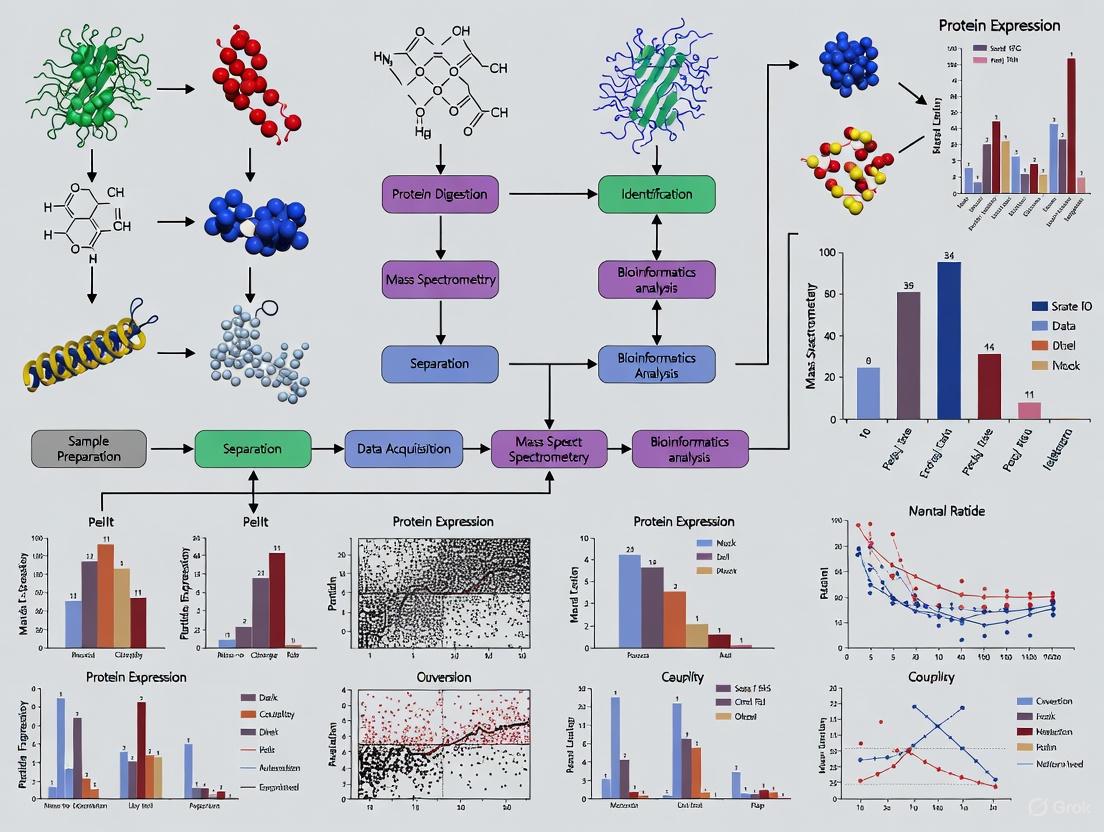
This comprehensive review explores the transformative role of LC-MS/MS proteomics in analyzing biofilm-forming bacterial strains, addressing critical challenges in biomedical research and therapeutic development.
LC-MS/MS Proteomics in Biofilm Research: From Fundamentals to Clinical Applications
Abstract
This comprehensive review explores the transformative role of LC-MS/MS proteomics in analyzing biofilm-forming bacterial strains, addressing critical challenges in biomedical research and therapeutic development. We establish foundational principles of biofilm biology and proteomic workflows, then detail methodological approaches from sample preparation to data acquisition. The article provides practical troubleshooting guidance for common proteomic pitfalls and examines validation strategies through comparative case studies across diverse bacterial species including Pseudomonas aeruginosa, Corynebacterium pseudotuberculosis, and Gram-negative bacilli from prosthetic joint infections. Aimed at researchers, scientists, and drug development professionals, this synthesis of current methodologies and applications demonstrates how LC-MS/MS proteomics enables identification of novel biofilm biomarkers, reveals antibiotic tolerance mechanisms, and informs targeted therapeutic strategies against persistent bacterial infections.
Understanding Biofilm Proteomes: Composition, Diversity, and Biological Significance
Biofilm Architecture and Extracellular Polymeric Substance (EPS) Composition
This application note provides a structured overview of the critical relationship between the three-dimensional architecture of microbial biofilms and the chemical composition of their extracellular polymeric substance (EPS) matrix. It details standardized protocols for the concurrent analysis of biofilm structural development and EPS composition, with a specific emphasis on techniques relevant for proteomic investigations via LC-MS/MS. Within the broader scope of thesis research on LC-MS/MS proteomic analysis of biofilm-forming strains, this document serves as a methodological guide for researchers and drug development professionals, presenting quantitative data, experimental workflows, and essential research tools to advance the discovery of novel antibiofilm strategies.
Microbial biofilms are structured communities of surface-attached cells encased in a self-produced matrix of Extracellular Polymeric Substances (EPS) [1]. This matrix constitutes 75-90% of the biofilm's total organic matter, with microbial cells themselves making up only 10-25% [1] [2]. The EPS forms a scaffold that provides structural integrity, mediates adhesion, and protects the resident microorganisms from antimicrobial agents and host immune responses [1] [3]. This protective effect is a major contributor to the multifold antibiotic resistance observed in biofilm-associated infections, which account for approximately 80% of all chronic infections [1].
The lifecycle of a biofilm is a complex, multi-stage developmental process. It begins with the initial reversible attachment of planktonic cells to a surface, progresses through microcolony formation and maturation into a complex three-dimensional structure, and culminates in active dispersal of cells to colonize new surfaces [1] [4]. The EPS matrix is the key architectural component throughout this lifecycle, and its composition is dynamically regulated, influencing and being influenced by the biofilm's structure [4] [3]. Understanding the precise correlation between EPS composition and biofilm architecture is therefore fundamental to developing effective interventions against pathogenic biofilms.
Composition of the Extracellular Polymeric Substance (EPS)
The EPS matrix is a complex, heterogeneous amalgam of biopolymers that determines the physicochemical and mechanical properties of the biofilm [2] [3]. Its composition varies significantly depending on the microbial species, environmental conditions, and nutrient availability [5] [3].
Table 1: Core Components of the Extracellular Polymeric Substance (EPS)
| EPS Component | Average Proportion | Key Functions |
|---|---|---|
| Water | Up to 97% [1] | Provides a hydrated environment for nutrient diffusion and enzymatic activity. |
| Polysaccharides | 1-2% [1] | Structural scaffolding, cell-cell and cell-surface adhesion, protection [1] [2]. |
| Proteins | <1-2% [1] | Matrix stabilization, enzymatic activity, surface colonization, integrity [1] [5]. |
| Extracellular DNA (eDNA) | <1-2% [1] | Horizontal gene transfer, structural component, biofilm stability [5] [3]. |
| Lipids & Other Polymers | Variable | Contribution to hydrophobicity, structural support, and other biophysical properties. |
Table 2: Quantitative Correlation Between EPS Components and Biofilm Structural Parameters in Vibrio parahaemolyticus [4]
| EPS Chemical Component (Raman Intensity) | Correlation with Biovolume | Correlation with Mean Thickness | Correlation with Porosity |
|---|---|---|---|
| Carbohydrates | Positive (p < 0.01) | Positive (p < 0.01) | Negative |
| Nucleic Acids | Positive | Positive | Negative (p < 0.01) |
Beyond the primary components, other molecules play crucial roles. Amino sugars like galactosamine (GalN) and mannosamine (ManN) have been identified as exclusive microbial EPS constituents, though their specific functions are still being elucidated [5]. Furthermore, the presence of minerals like calcite (CaCO3) through biomineralization can provide additional structural integrity to the biofilm matrix [2].
Experimental Protocols for Architectural and Compositional Analysis
Protocol I: Analysis of Biofilm Structural Development using Confocal Laser Scanning Microscopy (CLSM)
Principle: This protocol uses CLSM in conjunction with image analysis software to quantitatively characterize the three-dimensional structural parameters of biofilms, such as biovolume, mean thickness, and porosity [4].
Materials:
- Sterile glass coupons (e.g., diameter 14 mm) or relevant substrate
- 24-well polystyrene microtiter plates
- Appropriate bacterial growth medium (e.g., Tryptic Soy Broth for V. parahaemolyticus with 3% NaCl)
- Phosphate-Buffered Saline (PBS), pH 7.4
- SYBR Green I nucleic acid stain
- 4% glutaraldehyde solution in PBS
Procedure:
- Biofilm Cultivation: Place sterile glass coupons into wells of a 24-well plate. Inoculate each well with a diluted bacterial culture and fill with fresh medium. Seal the plate to minimize evaporation and incubate statically at the desired temperature (e.g., 25°C) for defined time periods (e.g., 12, 24, 36, 48, 60, and 72 hours) to capture different developmental stages [4].
- Biofilm Fixation: After incubation, carefully discard the supernatant and gently wash the coupons three times with 1 mL of 0.1 M PBS to remove non-adherent cells. Submerge the coupons in a 4% glutaraldehyde solution and fix for 30 minutes at 4°C [4].
- Staining: Rinse the fixed biofilms gently three times with PBS. Stain with SYBR Green I (or an equivalent fluorescent nucleic acid stain) for 30 minutes in the dark at room temperature. Remove excess stain and air-dry the coupons [4].
- Image Acquisition: Acquire CLSM images using a confocal laser scanning microscope (e.g., LSM710, Carl Zeiss) with a 20x objective. For SYBR Green I, use an excitation wavelength of 488 nm and collect emission with a 525 ± 25 nm band-pass filter. Capture image stacks with a defined step size (e.g., 1 μm) from at least six random fields per sample to ensure statistical robustness [4].
- Structural Quantification: Analyze the acquired CLSM image stacks using specialized image analysis software (e.g., ISA-2, Zen). Extract quantitative structural parameters including biovolume (μm³/μm²), mean thickness (μm), and porosity [4].
Figure 1: Workflow for CLSM-based analysis of biofilm structure.
Protocol II: EPS Extraction and Component Quantification for Proteomic Workflows
Principle: This protocol describes the extraction of EPS from biofilms using a cation exchange resin (CER) method, which is effective for downstream proteomic and other compositional analyses while minimizing cell lysis [5].
Materials:
- Cation Exchange Resin (CER), e.g., Amberlite HPR1100
- Phosphate Saline Buffer (PBS), pH 7.4
- Probe sonicator
- Reagents for protein quantification (e.g., Lowry assay)
- Reagents for carbohydrate quantification (e.g., BCA microplate assay after mild acid hydrolysis)
Procedure:
- Biofilm Harvesting: Grow biofilms as described in Protocol I on a suitable surface and scale. After incubation, discard the culture medium and gently rinse the biofilm with PBS. To harvest, scrape the biofilm into a defined volume of PBS or use physical scraping/sonication in PBS [5] [6].
- CER Extraction: Add a pre-optimized amount of CER (e.g., 70-80 g CER/g volatile suspended solids) to the biofilm suspension. Stir the mixture vigorously for a specified period (e.g., 2 hours) at 4°C to exchange cations and disrupt ionic interactions within the EPS matrix [5].
- Separation: After stirring, allow the CER to settle or use low-speed centrifugation. Carefully collect the supernatant, which contains the extracted EPS [5].
- Post-Extraction Clarification (Optional): To ensure the removal of any residual cells or CER, the supernatant can be centrifuged at high speed (e.g., 13,000 × g for 20 minutes) and then filtered through a 0.22 μm pore-size membrane [6].
- EPS Constituent Analysis:
- Total Proteins: Quantify using the Lowry assay microplate method. Incubate EPS extracts with a copper sulphate solution containing the Folin-Ciocalteu reagent and measure absorbance at 750 nm [5].
- Total Carbohydrates: Determine via acid hydrolysis followed by a microplate assay. Add H₂SO₄ to EPS aliquots, hydrolyze at 100°C, dilute with PBS, and use the bicinchoninic acid (BCA) assay, measuring absorbance at 562 nm [5].
- Sample Preparation for LC-MS/MS Proteomics: For proteomic analysis, the extracted EPS proteins must be precipitated, digested (e.g., with trypsin), and desalted using standard protocols before analysis by LC-MS/MS to identify specific protein biomarkers, such as PA2146 in P. aeruginosa biofilms [7].
Figure 2: Workflow for EPS extraction and component analysis.
Protocol III: Modulating EPS to Investigate Structure-Function Relationships
Principle: This protocol employs specific enzymes and chemicals to selectively target and degrade individual EPS components, allowing researchers to investigate the contribution of each component to the biofilm's overall mechanical stability and architecture [3].
Materials:
- Purified enzymes: Proteinase K, DNase I, Lipase, Dispersin B (for polysaccharides)
- Chemical agents: Periodic Acid (HIO₄)
- Divalent cations: CaCl₂, MgCl₂ solutions
- CDC Biofilm Reactor or similar flow-cell system
- Atomic Force Microscope (AFM) for mechanical testing
Procedure:
- Biofilm Growth: Grow standardized biofilms (e.g., of Staphylococcus epidermidis) under controlled, shear conditions using a CDC biofilm reactor to obtain structurally relevant samples [3].
- EPS Modifier Treatment: After a desired growth period (e.g., 12 days), treat the biofilms with optimized concentrations of EPS-modifying agents for a specified duration.
- Protease K: Degrades protein components of the EPS.
- DNase I: Breaks down extracellular DNA (eDNA).
- Periodic Acid/Dispersin B: Targets and cleaves expopolysaccharides.
- Lipase: Hydrolyzes lipid components.
- Ca²⁺/Mg²⁺: Can strengthen the EPS matrix through ion bridging [3].
- Post-Treatment Analysis:
- Mechanical Properties: Use Atomic Force Microscopy (AFM) to measure the Young's Modulus of treated versus untreated biofilms, quantifying changes in stiffness [3].
- Structural Analysis: Apply Protocol I (CLSM) to quantify changes in biovolume, thickness, and roughness after treatment [3].
- Compositional Analysis: Use Fourier Transform Infrared (FTIR) spectroscopy to confirm the specific reduction of the targeted EPS components (proteins, polysaccharides, etc.) [3].
The Scientist's Toolkit: Research Reagent Solutions
Table 3: Essential Reagents for EPS and Biofilm Architecture Research
| Research Reagent / Tool | Function / Application | Example Use Case |
|---|---|---|
| Cation Exchange Resin (CER) | Efficient extraction of EPS with minimal cell lysis, ideal for proteomics [5]. | Protocol II: Extraction of intact proteins and other polymers for compositional analysis. |
| SYBR Green I / DNA Stains | Fluorescent staining of nucleic acids to visualize biofilm biomass in 3D via CLSM [4]. | Protocol I: Quantifying total biovolume and spatial distribution of cells within the architecture. |
| Proteinase K | Serine protease that cleaves peptide bonds; selectively degrades protein components within the EPS [3]. | Protocol III: Investigating the role of proteins in biofilm mechanical stability and structure. |
| DNase I | Enzyme that hydrolyzes phosphodiester bonds in DNA; targets eDNA in the biofilm matrix [3]. | Protocol III: Probing the contribution of eDNA to biofilm adhesion and resistance to detachment. |
| Periodic Acid (HIO₄) | Chemical oxidizer that cleaves carbon-carbon bonds in vicinal diols; targets polysaccharides [3]. | Protocol III: Disrupting the polysaccharide scaffold to assess its role in structural integrity. |
| Atomic Force Microscope (AFM) | Measures nanoscale mechanical properties (e.g., Young's Modulus) of biological surfaces [3]. | Protocol III: Quantifying changes in biofilm stiffness and cohesiveness after EPS modification. |
Concluding Remarks
The interplay between biofilm architecture and EPS composition is a dynamic and complex relationship that dictates the functional properties of these microbial communities, including their recalcitrance to treatment. The protocols and data outlined in this application note provide a standardized framework for deconstructing this relationship. Integrating robust structural analyses with detailed compositional studies, particularly through modern proteomic approaches like LC-MS/MS, empowers researchers to identify critical targets for novel therapeutic strategies. This is especially pertinent in the context of medical device-related infections and chronic diseases, where disrupting the biofilm matrix offers a promising avenue to restore the efficacy of conventional antimicrobial agents.
Key Proteomic Differences Between Planktonic and Sessile Bacterial Populations
Bacterial populations transition between two distinct phenotypic states: the free-swimming planktonic state and the surface-attached, matrix-encased sessile state, known as a biofilm. This phenotypic switch is governed by extensive reprogramming of protein expression, which confers upon sessile communities an increased tolerance to antibiotics and environmental stresses [8] [9]. Understanding the key proteomic differences between these states is therefore critical for combating persistent bacterial infections, particularly those associated with medical implants and antibiotic-resistant pathogens. Liquid Chromatography tandem Mass Spectrometry (LC-MS/MS) based proteomics has emerged as a powerful tool for unraveling these complex molecular adaptations, providing insights that can inform the development of novel anti-biofilm strategies [8] [10]. This Application Note synthesizes recent proteomic findings from diverse bacterial species and provides detailed protocols for researchers aiming to characterize these phenotypes.
Section 1: Core Proteomic Signatures of Planktonic and Sessile Cells
Global proteomic profiling reveals that the transition from a planktonic to a sessile lifestyle involves a profound metabolic rewiring, a shift in stress response mechanisms, and an upregulation of proteins dedicated to structural integrity and community cooperation.
Table 1: Key Functional Protein Categories Differentially Expressed Between Planktonic and Sessile Bacterial Cells
| Functional Category | Expression in Sessile (Biofilm) Cells | Expression in Planktonic Cells | Representative Proteins / Pathways | Observed in Species |
|---|---|---|---|---|
| Central Carbon Metabolism | Glycolysis enriched; TCA cycle often downregulated [11] | Active glycolysis & TCA cycle [11] | Lactate dehydrogenase, formate acetyltransferase [11] | Staphylococcus epidermidis [11] |
| Energy Metabolism | Overexpression of NTP synthesis proteins [12] | Proteins linked to anaerobic growth [12] | Nucleoside triphosphate synthesis proteins [12] | Staphylococcus epidermidis [12] |
| Amino Acid & Nitrogen Metabolism | Arginine and proline metabolism altered [13] | Ornithine/arginine biosynthesis upregulated [14] | Ornithine lipids, biosynthetic enzymes for histidine [14] [13] | Pseudoalteromonas lipolytica [14], Salmonella Enteritidis [13] |
| Membrane & Lipids | Phosphatidylethanolamine (PE) derivatives over-produced [14] | Ornithine lipids (OLs) more synthesized [14] | Phosphatidylethanolamine (PE) derivatives, Ornithine lipids (OLs) [14] | Pseudoalteromonas lipolytica [14] |
| Stress Response | Proteins for general maintenance & homeostasis [13] | Oxidative stress response proteins upregulated [11] | Catalase (KatA), heat shock protein (HtpG) [8] | Pseudomonas aeruginosa [8], Staphylococcus epidermidis [11] |
| Virulence & Quorum Sensing | Virulence factors often downregulated by anti-biofilm agents [8] | Virulence factor production active | LasA protease, AlgL, RhlR, PhzB2 [8] | Pseudomonas aeruginosa [8] |
| Cell Envelope & Transport | Membrane/transmembrane proteins upregulated [10] | Nutrient assimilation proteins [14] | Membrane proteins, transmembrane helix proteins [10] | Enterococcus faecalis, Staphylococcus lugdunensis [10] |
The following diagram summarizes the major metabolic and functional shifts that occur during the transition from a planktonic to a sessile lifestyle.
Section 2: Detailed Experimental Protocol for LC-MS/MS-Based Proteomic Analysis
This section provides a standardized workflow for the comparative proteomic analysis of planktonic and sessile bacterial cells, from culture to data analysis.
Bacterial Culture and Sample Preparation
A. Culture of Planktonic and Sessile Cells
- Planktonic Culture: Inoculate a single bacterial colony into an appropriate liquid growth medium (e.g., LB, TSB, BHI). Incubate with vigorous shaking (e.g., 160-200 rpm) at the optimal growth temperature (e.g., 37°C) until the desired growth phase, typically mid- to late-exponential phase [8] [10].
- Sessile (Biofilm) Culture:
- Surface-Grown Biofilms: Inoculate sterile, relevant material surfaces (e.g., sandblasted titanium disks, glass coupons, polystyrene plates) with a standardized bacterial inoculum. Incubate statically for 24-72 hours to allow for mature biofilm formation [10] [12].
- Collection: After incubation, gently wash the surface with a buffer like phosphate-buffered saline (PBS) to remove non-adherent cells. Biofilm cells can be detached by physical means such as scraping or vortexing with glass beads [10].
B. Protein Extraction
- Cell Lysis: Resuspend bacterial pellets (from planktonic culture or harvested biofilm) in a lysis buffer containing chaotropic agents (e.g., 7 M urea, 2 M thiourea), detergents (e.g., 2% CHAPS), and protease inhibitors [12].
- Mechanical Disruption: Subject the suspension to bead-beating using zirconium silica beads (e.g., six cycles of 60 seconds at 4,000 rpm, interspersed with cooling on ice) [12].
- Clarification: Centrifuge the lysate at high speed (e.g., 20,000 × g for 30 min at 2°C) and collect the supernatant containing the soluble proteins [12].
- Protein Quantification: Determine protein concentration using a colorimetric assay such as Bradford or BCA [10] [12].
Protein Digestion and Peptide Preparation
The Filter-Aided Sample Preparation (FASP) protocol is widely used for efficient digestion.
- Reduction and Alkylation: Reduce disulfide bonds with 5 mM TCEP (37°C for 30 min) and alkylate free thiols with 50 mM iodoacetamide (IAA) in the dark (25°C for 1 h) [10].
- Digestion: Add trypsin in a 1:50 (enzyme-to-protein) ratio and incubate at 37°C for 18 hours [10].
- Peptide Desalting: Acidify the digested peptide mixture and desalt using C18 micro spin columns. Eluted peptides are dried in a vacuum concentrator and stored at -20°C until LC-MS/MS analysis [10].
LC-MS/MS Analysis and Data Processing
A. Liquid Chromatography (LC)
- Column: Use a reverse-phase C18 analytical column (e.g., 75 µm x 50 cm, 2 µm particle size) [10].
- Mobile Phase: Solvent A: Water with 0.1% formic acid; Solvent B: 80% Acetonitrile with 0.1% formic acid.
- Gradient: Employ a non-linear gradient over 120-180 minutes. For example: 4-40% Solvent B over 120 min, followed by a rapid increase to 96% B for washing [10].
B. Mass Spectrometry (MS)
- Instrumentation: High-resolution mass spectrometers like Q-Exactive are recommended.
- Data Acquisition: Use data-dependent acquisition (DDA) mode. A typical method includes:
- Full MS scan (e.g., 400-2000 m/z) for precursor ion detection.
- Subsequent MS/MS scans on the most intense ions for peptide fragmentation and sequence identification [10].
C. Data Analysis
- Database Search: Process raw data using software (e.g., Proteome Discoverer, MaxQuant) to search against a species-specific protein database (e.g., from UniProt).
- Identification and Quantification: Identify proteins with a false discovery rate (FDR) ≤ 1%. For label-free quantification, normalize peptide abundances based on total protein amount or use internal reference signals [10].
- Bioinformatics: Perform statistical analysis (e.g., t-tests) to determine differentially expressed proteins (DEPs). Use Gene Ontology (GO), Kyoto Encyclopedia of Genes and Genomes (KEGG), and protein-protein interaction networks (e.g., STRING) for functional enrichment analysis [8] [10] [9].
The workflow for this detailed protocol is visualized below.
Section 3: The Scientist's Toolkit: Essential Research Reagents
Table 2: Key Reagent Solutions for Planktonic and Sessile Cell Proteomics
| Reagent / Material | Function / Application | Example from Search Results |
|---|---|---|
| Sandblasted Titanium Disks | Provides a clinically relevant surface for growing sessile biofilms, mimicking orthopedic implants [12]. | Used to culture sessile Staphylococcus epidermidis [12]. |
| Glass Coupons | Offers a smooth, standardized surface for biofilm formation in well plates [10]. | Used for biofilm growth of Salmonella Enteritidis and Enterococcus faecalis [10] [13]. |
| RIPA Lysis Buffer | Efficiently extracts proteins from bacterial cells for downstream proteomic analysis [10]. | Used for protein extraction from Enterococcus faecalis and Staphylococcus lugdunensis [10]. |
| Urea/Thiourea/CHAPS Buffer | Chaotropic lysis buffer for effective protein solubilization and denaturation [12]. | Used for protein extraction from Staphylococcus epidermidis pellets [12]. |
| Trypsin (Proteomics Grade) | Protease for specific cleavage of proteins at lysine and arginine residues, generating peptides for LC-MS/MS [10]. | Used for protein digestion in multiple studies [10] [9]. |
| C18 Micro Spin Columns | Desalting and purification of digested peptide mixtures prior to mass spectrometry [10]. | Used for peptide clean-up in the E. faecalis/S. lugdunensis protocol [10]. |
| Tandem Mass Tag (TMT) / iTRAQ | Isobaric labels for multiplexed, quantitative proteomics across multiple conditions in a single MS run. | (Implied as a common method in quantitative proteomics) |
| Anti-Virulence Compounds (e.g., Umbelliferone) | Used to investigate proteomic changes associated with biofilm disruption and virulence inhibition [8]. | Used to treat Pseudomonas aeruginosa to study anti-virulence mechanisms [8]. |
Section 4: Application in Drug Development and Pathogen Control
Proteomic insights are directly enabling new strategies to combat biofilm-related challenges.
- Identification of Novel Drug Targets: Proteins that are essential and uniquely upregulated in biofilms represent promising targets. For example, in Aeromonas hydrophila, the TetR-family transcriptional regulator UidR was identified as a negative regulator of biofilm formation. Its deletion led to a significant increase in biofilm, and proteomic analysis of the ΔuidR mutant revealed 220 differentially expressed proteins, highlighting potential pathways for therapeutic intervention [9].
- Anti-Virulence and Combination Therapies: Targeting the proteomic machinery of virulence and persistence, rather than essential growth pathways, is a promising approach. The plant compound umbelliferone was shown to inhibit Pseudomonas aeruginosa biofilms and downregulate key virulence-associated proteins (e.g., RhlR, LasA, AlgL). Furthermore, umbelliferone treatment made the cells more susceptible to conventional antibiotics like amikacin and ciprofloxacin, illustrating the potential of anti-virulence agents to synergize with existing drugs [8].
- Development of Biocontrol Agents: Proteomics can reveal the mechanisms of microbial competition. A proteomic study of Pediococcus pentosaceus CRL 2145, a lactic acid bacterium, when grown in a mixed biofilm with E. coli O157:H7, showed upregulation of 156 proteins related to metabolism, transcription, and stress response. This suggests a multifactorial mechanism of pathogen inhibition, paving the way for using such strains or their metabolites as natural biocontrol agents in food processing environments [15].
The distinct lifestyles of planktonic and sessile bacterial populations are underpinned by significant and reproducible proteomic differences, primarily affecting central carbon metabolism, stress responses, and membrane composition. The application of standardized LC-MS/MS proteomic protocols, as outlined in this document, provides a powerful means to uncover these differences systematically. The resulting proteomic signatures are more than just molecular fingerprints; they offer a rich resource for identifying critical vulnerabilities in biofilm-forming pathogens. By integrating these proteomic insights with other functional data, researchers and drug developers can accelerate the discovery of next-generation anti-biofilm agents and therapeutic strategies to tackle persistent and recalcitrant infections.
Strain-Specific Metabolic Signatures in Marine and Pathogenic Biofilms
Within the realm of clinical microbiology and antimicrobial development, the ability of bacteria to form biofilms presents a formidable challenge, conferring enhanced resistance to antibiotics and host immune responses. While the biofilm lifestyle is a common trait among diverse bacterial species, recent advances in liquid chromatography-tandem mass spectrometry (LC-MS/MS) reveal that their molecular underpinnings are highly strain-specific. This application note details how LC-MS/MS-based proteomic and metabolomic analyses are uncovering distinct metabolic signatures that differentiate biofilm-forming strains, even within the same species. Framed within a broader thesis on LC-MS/MS proteomic analysis of biofilm-forming strains, this document provides detailed protocols and key findings that demonstrate how these strain-specific profiles influence virulence, antibiotic resistance, and environmental adaptation, offering new avenues for targeted therapeutic strategies.
Key Findings: Strain-Specific Metabolic Signatures
LC-MS/MS analyses consistently reveal that biofilm-forming bacteria exhibit pronounced metabolic reprogramming. The key differentially regulated pathways and metabolite classes are summarized in the table below.
Table 1: Key Strain-Specific Metabolic Signatures Identified by LC-MS/MS in Biofilm-Forming Bacteria
| Bacterial Strain / System | Key Upregulated Metabolites/Proteins | Associated Pathways & Biological Significance | Citation |
|---|---|---|---|
| Marine Bacteria (P. mediterranea, P. lipolytica) | Ornithine lipids, hydroxylated ornithine lipids, glycine lipids, diamine derivatives (e.g., putrescine amides) | Membrane remodeling, stress response, and inter-strain discrimination. | [16] |
| Pseudomonas aeruginosa (Clinical Strains) | Rhamnolipids, alkyl quinolones, phenazines, a novel cationic metabolite (C12H15N2) | Virulence, quorum sensing, iron acquisition, and oxidative stress response. Serves as biomarkers for virulence phenotype. | [17] |
| Carbapenemase-Producing Enterobacterales (CPE) | Metabolites linked to arginine metabolism, purine metabolism, biotin metabolism, and biofilm formation | Mechanisms underpinning the antimicrobial resistance phenotype. | [18] |
| Corynebacterium pseudotuberculosis (Biofilm vs. Non-Biofilm Forming) | Penicillin-binding protein, N-acetylmuramoyl-L-alanine amidase, galactose-1-phosphate uridylyltransferase | Peptidoglycan formation, exopolysaccharide biosynthesis, and biofilm matrix development. | [19] |
| Dual-Species Biofilm (E. coli & E. faecalis) | E. coli: Proteins for motility, transcription, protein synthesis.E. faecalis: Downregulation of metabolic activity, transcription, translation. | Coordinated adaptation; E. coli adopts a proactive role while E. faecalis conserves resources. Significant downregulation of virulence in both. | [20] |
The following diagram illustrates the core analytical workflow for uncovering these strain-specific signatures, from sample preparation through data analysis and biological interpretation.
Figure 1: Workflow for LC-MS/MS-based identification of strain-specific metabolic signatures in biofilms.
Detailed Experimental Protocols
Protocol 1: Untargeted Metabolomics of Bacterial Biofilms
This protocol, adapted from studies on P. aeruginosa and marine bacteria, is designed for the comprehensive profiling of metabolites to discriminate between strains of varying virulence and biofilm-forming capacity [16] [17].
Sample Preparation
- Culture Conditions: Grow bacterial strains of interest under conditions that promote biofilm formation (e.g., static culture in tryptic soy broth or artificial urine media for up to 72 hours). Include planktonic cultures as controls.
- Harvesting: For biofilm cells, gently wash the adhered biomass with phosphate-buffered saline (PBS) to remove non-adherent cells. Scrape or sonicate biofilm cells into a suspension. For planktonic cells, pellet by centrifugation.
- Metabolite Extraction: Resuspend cell pellets in 500 μL of cold methanol containing internal standards (e.g., 0.1 mg/L trimethoprim). Disrupt cells by vigorous vortexing and sonication. Centrifuge to remove debris and collect the supernatant.
- Sample Concentration: Concentrate 400 μL of extract to complete dryness using a centrifugal vacuum concentrator. Reconstitute the dried extract in 40 μL of 50% (v/v) acetonitrile with 0.1% formic acid.
LC-MS/MS Analysis
- Chromatography: Utilize a reversed-phase UPLC system with a C18 column. Employ a binary solvent gradient: (A) water with 0.1% formic acid and (B) acetonitrile with 0.1% formic acid. A typical gradient runs from 5% B to 100% B over 15-20 minutes.
- Mass Spectrometry: Use a high-resolution mass spectrometer (e.g., Q-TOF) in positive and negative electrospray ionization modes. Acquire data in data-dependent acquisition (DDA) mode, where the top N most intense ions from the full MS scan are selected for MS/MS fragmentation.
Data Processing and Analysis
- Feature Detection: Process raw data using software (e.g., XCMS, Progenesis QI) for peak picking, alignment, and normalization to internal standards and cell density.
- Statistical Analysis: Perform multivariate statistical analysis, including Principal Component Analysis and Partial Least Squares-Discriminant Analysis to identify metabolite features that contribute most to the separation between strain groups.
- Metabolite Identification: Search MS/MS spectra against authentic standards and databases (e.g., GNPS, HMDB). Construct molecular networks to visualize related metabolite families and identify novel biomarkers [16].
Protocol 2: Proteomic Analysis of Biofilm-Forming Strains
This protocol, derived from studies on C. pseudotuberculosis and dual-species biofilms, outlines the steps for a quantitative comparison of the proteomes of biofilm-forming and non-forming strains [19] [20].
Sample Preparation and Protein Extraction
- Culture and Harvest: Cultivate biofilm-forming and non-forming strains identically. Harvest cells by centrifugation.
- Cell Lysis: Resuspend the cell pellet in a lysis buffer (e.g., 7M Urea, 2M Thiourea, 3% SDC). Lyse cells using a combination of chemical disruption and sonication on ice.
- Protein Purification and Digestion: Purify proteins using a Filter Aided Sample Preparation or SP3 protocol. Reduce proteins with dithiothreitol, alkylate with iodoacetamide, and digest with sequencing-grade trypsin overnight at 37°C.
LC-MS/MS Analysis
- Chromatography: Desalt and separate peptides on a nanoUPLC system using a C18 trap column and analytical column with a gradient of increasing acetonitrile.
- Mass Spectrometry: Analyze peptides using a high-resolution tandem mass spectrometer (e.g., Synapt G2-Si, Exploris 480). Acquire data in data-independent acquisition (DIA) mode for deep, reproducible quantification.
Data Processing and Bioinformatics
- Protein Identification and Quantification: Search MS/MS data against a species-specific protein database using software (e.g., Scaffold DIA, MaxQuant). Set false discovery rates to 1%.
- Differential Analysis and Pathway Mapping: Identify proteins with significant abundance changes (e.g., >2-fold, p-value < 0.05). Perform Gene Ontology and KEGG pathway enrichment analysis to determine biological processes and pathways associated with biofilm formation [19].
The Scientist's Toolkit: Research Reagent Solutions
The following table compiles essential materials and reagents used in the featured protocols, with their specific functions.
Table 2: Key Research Reagents for LC-MS/MS Biofilm Analysis
| Reagent / Material | Function / Application | Example from Protocol |
|---|---|---|
| Internal Standards (IS) | Normalization of MS data for technical variation | Trimethoprim, Nortriptyline, Caffeine-d9 [17] |
| Lysis Buffer Components | Efficient extraction of proteins and metabolites | Urea, Thiourea, Sodium Deoxycholate (SDC) [19] |
| Reducing & Alkylating Agents | Protein denaturation for digestion | Dithiothreitol (DTT), Iodoacetamide (IAA) [20] [21] |
| Proteolytic Enzyme | Protein digestion into peptides for LC-MS/MS | Sequencing-grade modified trypsin [19] |
| Chromatography Column | Separation of metabolites or peptides prior to MS | Reversed-phase C18 column (e.g., 75μm x 150mm) [19] [17] |
| Artificial Urine Media | Physiologically relevant culture medium for uropathogens | In vitro modeling of catheter-associated biofilms [20] |
Visualizing Metabolic Pathways
The strain-specific adaptation of bacteria to the biofilm lifestyle often involves distinct shifts in central metabolic pathways. The following diagram synthesizes key pathway alterations commonly identified in the referenced studies.
Figure 2: Key metabolic pathways altered in biofilm-forming bacterial strains, leading to the production of strain-specific signature molecules.
Ornithine Lipids and Polyamines as Discriminatory Metabolic Biomarkers
Within the framework of advanced LC-MS/MS proteomic and metabolomic analyses of biofilm-forming bacterial strains, the discovery of specific molecular biomarkers is crucial for differentiating between species and understanding their unique survival strategies. This application note details how ornithine lipids and polyamines serve as potent discriminatory metabolic biomarkers in biofilm research. These classes of molecules, identified via liquid chromatography-mass spectrometry (LC-MS) profiling, provide a powerful means to distinguish between closely related bacterial strains at the species level, offering insights into their adaptive mechanisms in biofilm states [16] [22]. Their role extends beyond mere identification; these biomarkers are intimately linked with the bacteria's response to environmental conditions and their virulence, presenting potential targets for novel therapeutic strategies against persistent biofilm-associated infections.
Key Biomarker Data and Biological Significance
The table below summarizes the core biomarkers and their specific roles in differentiating bacterial strains, as identified through LC-MS metabolomics.
Table 1: Discriminatory Biomarkers and Their Biological Significance in Biofilm-Forming Bacteria
| Biomarker Class | Specific Biomarkers | Bacterial Strains Discriminated | Biological Significance & Proposed Role in Biofilms |
|---|---|---|---|
| Ornithine Lipids | A series of ornithine lipids | Pseudoalteromonas lipolytica TC8 [16] [22] | Key component of the outer membrane; may contribute to stress resistance and biofilm stability. |
| Modified Ornithine Lipids | Hydroxylated ornithine lipids; Glycine lipids | Persicivirga (Nonlabens) mediterranea strains (TC4 & TC7) [16] [22] | Structural modifications potentially altering membrane fluidity and permeability in response to the marine environment. |
| Polyamines | Diamine derivatives, notably putrescine amides | Persicivirga mediterranea TC7 (distinguishing it from TC4) [16] [22] | Involved in stress response, biofilm development, and stabilization of nucleic acids and membranes [23]. |
Experimental Protocols for Biomarker Identification
Bacterial Cultivation and Biofilm Formation
- Strains and Culture Conditions: Utilize the target bacterial strains (e.g., P. mediterranea TC4/TC7, P. lipolytica TC8). Culture them in appropriate marine broth media [16] [22].
- Growth Conditions: To compare metabolic states, cultivate bacteria in both planktonic (shaking conditions) and biofilm (static conditions on a suitable surface) modes. Incubate at a relevant temperature (e.g., 25°C) for a defined period (e.g., 72 hours) [16] [21].
- Harvesting: For biofilm cells, gently wash the surface to remove loosely attached cells and then scrape the biofilm into a suspension. For planktonic cells, harvest by centrifugation. Flash-freeze all cell pellets in liquid nitrogen and store at -80°C until metabolite extraction [21].
Metabolite Extraction for LC-MS Analysis
- Cell Lysis: Resuspend the frozen cell pellet in a suitable extraction solvent blend, such as chloroform:methanol:water (2:5:2, v/v/v). Use a Lysing Matrix B tube containing silica spheres and disrupt cells using a reciprocating homogenizer (e.g., MP Biomedicals FP120) for 45 seconds [16] [21].
- Separation: Centrifuge the lysate to pellet debris. Collect the supernatant containing the metabolites.
- Partitioning (Optional): For comprehensive lipidomics, a biphasic separation can be achieved by adding further volumes of chloroform and water to the supernatant, creating distinct polar and non-polar layers. The non-polar phase will be enriched for lipids, including ornithine lipids [16].
- Concentration: Dry the metabolite-containing extracts under a gentle stream of nitrogen gas.
- Reconstitution: Reconstitute the dried extract in a solvent compatible with the LC-MS system (e.g., methanol) for analysis [16].
LC-MS/MS Profiling and Data Analysis
- Liquid Chromatography (LC): Employ a reversed-phase C18 column (e.g., 75 μm x 150 mm) for metabolite separation. Use a gradient elution from water to acetonitrile, both supplemented with 0.1% formic acid, over a 30-minute run time [20].
- Mass Spectrometry (MS):
- Perform initial high-resolution MS profiling in positive and negative ion modes to capture accurate mass data for all detectable metabolites [16].
- Conduct data-dependent or data-independent MS/MS analysis to fragment precursor ions and obtain structural information for biomarker identification [16] [20].
- Data Processing and Statistical Analysis:
- Process raw LC-MS data using software (e.g., Scaffold DIA) for peak picking, alignment, and deconvolution [20].
- Perform multivariate statistical analysis, such as Partial Least-Squares Discriminant Analysis (PLS-DA), to visualize metabolic differences between strains and culture conditions and identify significant biomarker ions [16].
- MS/MS Molecular Networking: Construct a molecular network using MS/MS data (e.g., using GNPS platform) to cluster related metabolite spectra. This allows for the identification of biomarker families, such as different analogs of ornithine lipids and polyamines, based on spectral similarity [16].
Biomarker Pathways and Experimental Workflow
The following diagram illustrates the interconnected metabolic pathways of ornithine lipids and polyamines, and their role as discriminatory biomarkers in biofilm-forming bacteria.
The Scientist's Toolkit: Essential Research Reagents and Materials
The table below lists key reagents and materials essential for conducting the proteomic and metabolomic analyses of biofilm-forming bacteria as described.
Table 2: Key Research Reagent Solutions for Biomarker Discovery in Biofilms
| Reagent/Material | Function/Application | Example from Literature |
|---|---|---|
| LC-MS Grade Solvents | Metabolite extraction and liquid chromatography mobile phases to minimize background noise. | Chloroform, Methanol, Water [16] |
| Lysing Matrix B Tubes | Homogenization and efficient mechanical disruption of bacterial cells for comprehensive metabolite extraction. | Tubes with 0.1 mm silica spheres (MP Biomedicals) [21] |
| Reversed-Phase C18 LC Column | High-resolution separation of complex lipid and metabolite mixtures prior to mass spectrometry. | nanoACQUITY UPLC HSS T3 Column [19] |
| Trypsin, Sequencing Grade | Enzymatic digestion of proteins into peptides for bottom-up LC-MS/MS proteomic analysis. | Used in protein sample preparation [19] [20] |
| High-Resolution Mass Spectrometer | Accurate mass measurement and structural elucidation of biomarkers via MS/MS fragmentation. | Synapt G2-Si HDMS [19], ThermoFisher Exploris 480 [20] |
| Biofilm Formation Assay Plates | Standardized in vitro cultivation and quantification of bacterial biofilms. | 96-well microplates for crystal violet staining [9] |
The integration of LC-MS/MS-based metabolomics with robust experimental protocols provides a powerful platform for identifying and validating ornithine lipids and polyamines as discriminatory biomarkers. Their consistent expression across varying culture parameters makes them reliable tools for differentiating biofilm-forming bacterial strains at the species level. Furthermore, their known biological functions suggest they are not merely bystanders but active players in biofilm biology and virulence. This makes them promising targets for future research aimed at developing novel diagnostic tools and anti-biofilm therapeutic strategies, such as molecules that disrupt these critical metabolic pathways.
Bacteria utilize complex signaling networks to sense their environment and coordinate population-wide behaviors. Two of the most widely conserved systems are cyclic di-GMP (c-di-GMP) signaling and quorum sensing (QS). While historically studied in isolation, emerging research reveals these pathways are intricately intertwined, forming a sophisticated regulatory circuitry that allows bacteria to assimilate information about local population density with physicochemical environmental cues [24]. This integration is particularly crucial for controlling vital functions such as virulence, biofilm formation, and motility in many bacterial species [24] [25]. Understanding the crosstalk between these systems provides valuable insights for developing novel therapeutic strategies, especially in the context of persistent biofilm-associated infections.
The following diagram illustrates the core concept of this integration, showing how bacterial cells merge population density information (QS) with environmental signals through the c-di-GMP network to control key phenotypes.
Molecular Mechanisms of Crosstalk
Key Molecular Components and Their Functions
The integration of c-di-GMP and QS pathways occurs through specific molecular players that vary across bacterial species. The table below summarizes the core components and their functions.
Table 1: Key Molecular Components in c-di-GMP and Quorum Sensing Integration
| Component | Type | Function | Example Organism |
|---|---|---|---|
| RpfG | HD-GYP Phosphodiesterase | Degrades c-di-GMP; activated by QS signal DSF via RpfC phosphorylation [24]. | Xanthomonas campestris |
| RpfC | Sensor Kinase | senses DSF QS signal; phosphorylates and activates RpfG [24]. | Xanthomonas campestris |
| Clp | Transcription Factor | Binds c-di-GMP; regulates virulence gene expression upon c-di-GMP degradation [24]. | Xanthomonas campestris |
| VpsT | Transcription Factor | Binds c-di-GMP; expression regulated by QS master regulator HapR [26]. | Vibrio cholerae |
| LvbR | Pleiotropic Transcription Factor | Links QS system to c-di-GMP signaling by regulating NO sensor Hnox1 [26]. | Legionella pneumophila |
| HapR | LuxR Homolog / Transcriptional Regulator | Master regulator of QS; represses vpsT expression at high cell density [26]. | Vibrio cholerae |
| PgaR | Transcriptional Regulator (QS) | Top-level regulator in a hierarchical QS network; controls AHL production and c-di-GMP levels [25]. | Rhodobacterales Strain Y4I |
Detailed Regulatory Circuitry in Model Organisms
In Xanthomonas campestris, the connection is remarkably direct. The QS signal Diffusible Signal Factor (DSF) is sensed by the membrane-bound histidine kinase RpfC. Upon DSF binding, RpfC phosphorylates and activates the response regulator RpfG, whose HD-GYP domain has phosphodiesterase (PDE) activity that degrades c-di-GMP [24]. Lowered cellular c-di-GMP levels then stimulate virulence factor production through the transcription factor Clp, which directly senses the fluctuating c-di-GMP levels [24]. This pathway allows the bacterium to shift its behavior based on population density.
In Vibrio cholerae, the integration occurs at the transcriptional level. The QS master regulator HapR, which is active at high cell density, represses the expression of VpsT, a transcription factor that binds c-di-GMP and activates biofilm formation [26]. This creates a clean switch: at low cell density, HapR levels are low, allowing VpsT expression and c-di-GMP-driven biofilm formation; at high cell density, HapR levels are high, repressing VpsT and biofilm formation, thereby promoting a motile lifestyle [26].
The diagram below synthesizes these mechanisms into a generalized regulatory network showing the core interactions between QS systems and the c-di-GMP network.
Experimental Protocols for Integrated Pathway Analysis
Protocol 1: Genetic Analysis of Hierarchical QS-c-di-GMP Networks
This protocol is adapted from studies on the marine bacterium Rhodobacterales strain Y4I, which possesses two QS systems ( phaRI and pgaRI ) that hierarchically regulate the antimicrobial indigoidine and biofilm formation [25].
1. Objective: To determine the hierarchical relationship between multiple QS systems and their collective impact on c-di-GMP levels and downstream phenotypes.
2. Materials:
- Bacterial Strains: Wild-type strain and isogenic mutants in QS regulatory genes (e.g., pgaR, phaR) and biosynthetic genes (e.g., igiD for indigoidine) [25].
- Growth Media: Appropriate complex and minimal media (e.g., YTSS marine medium, MBM with carbon sources) [25].
- Tools for Genetic Manipulation: Plasmids for insertional mutagenesis (e.g., pKNOCK-KmR), equipment for biparental mating [25].
- Analytical Tools: qRT-PCR equipment, HPLC-MS/MS for c-di-GMP quantification, spectrophotometer for pigment/biofilm quantification.
3. Procedure:
- Step 1: Mutant Construction. Generate clean, in-frame deletion mutants or use insertional mutagenesis via conjugation for target QS genes. Confirm mutations by PCR and sequencing [25].
- Step 2: Phenotypic Characterization.
- Biofilm Assay: Grow strains in static conditions using microtiter plates. Quantify biofilm biomass using crystal violet staining or confocal microscopy [25].
- Antimicrobial Production: Measure pigment (e.g., indigoidine) extraction spectrophotometrically or assess inhibitory activity against a reporter strain like Aliivibrio fischeri [25].
- Step 3: Gene Expression Analysis.
- RNA Isolation: Extract total RNA from bacterial biomass using a commercial kit with bead-beating lysis for robust cell disruption. Treat samples with DNase [25].
- qRT-PCR: Perform quantitative reverse transcription PCR using gene-specific primers for QS genes ( phaR, pgaR ), c-di-GMP metabolic genes, and downstream phenotype genes (e.g., igiD). Express results as relative fold-changes normalized to a housekeeping gene [25].
- Step 4: c-di-GMP Quantification. Measure intracellular c-di-GMP levels from cell extracts using liquid chromatography coupled with tandem mass spectrometry (LC-MS/MS). Compare levels between wild-type and QS mutant strains [25].
- Step 5: Complementation & AHL Supplementation. Perform genetic complementation in trans and add exogenous synthetic AHLs to mutant cultures to confirm specificity and investigate signal cross-talk [25].
4. Data Interpretation:
- A mutation in a top-level regulator (e.g., pgaR) that decreases expression of other QS systems and lowers c-di-GMP indicates a hierarchical structure.
- Restoration of phenotypes and c-di-GMP levels by AHL supplementation confirms the functional role of specific QS signals.
Protocol 2: Proteomic Workflow for Biofilm Matrix Analysis
This protocol outlines the use of LC-MS/MS to characterize the proteome of biofilm matrices, which can reveal proteins regulated by the QS and c-di-GMP networks.
1. Objective: To identify and quantify proteins in the biofilm extracellular matrix (ECM) to uncover novel markers and regulated pathways.
2. Materials:
- Biofilm Growth Substrate: Relevant surface (e.g., polytetrafluoroethylene (PTFE) channels, polystyrene plates) [27].
- Lysis Buffer: Contains Urea, Thiourea, SDS or SDC, DTT, and protease inhibitors [28] [27].
- Digestion Enzymes: Sequencing-grade modified trypsin [28] [27].
- Mass Spectrometry: LC-MS/MS system (e.g., Orbitrap Fusion Lumos) [27].
3. Procedure:
- Step 1: Biofilm Cultivation. Grow biofilms on chosen substrates under controlled conditions (e.g., 37°C, 24-72h). Use triplicate biological replicates [29] [27].
- Step 2: Matrix Protein Extraction.
- Wash biofilm-covered surfaces gently with saline to remove non-adherent cells.
- Extract proteins directly from the surface using a strong lysis buffer with sonication or mechanical disruption (bead-beating) to ensure complete lysis [28].
- Centrifuge to remove debris and concentrate the supernatant using centrifugal filters (e.g., 10 kDa cutoff) [28].
- Step 3: Protein Digestion.
- Denature proteins with RapiGest surfactant or SDC.
- Reduce disulfide bonds with DTT and alkylate with iodoacetamide.
- Digest proteins into peptides with trypsin overnight at 37°C.
- Acidify with trifluoroacetic acid (TFA) to stop digestion and precipitate surfactants. Centrifuge and collect the peptide-containing supernatant [28] [27].
- Step 4: LC-MS/MS Analysis.
- Separate peptides using a nano-flow capillary C18 LC column.
- Analyze eluted peptides with a tandem mass spectrometer operating in data-dependent acquisition (DDA) mode.
- Fragment the most intense precursor ions and collect MS/MS spectra [27].
- Step 5: Data Processing.
- Convert raw MS/MS data to MGF files.
- Search spectra against a curated protein database (e.g., UniProt) using search engines (e.g., Mascot).
- Use scaffold software to validate protein identifications, apply false-discovery rate (FDR) thresholds (e.g., <1%), and perform label-free quantification to compare protein abundance between samples [27].
4. Data Interpretation:
- Identify proteins consistently enriched in biofilm matrices versus planktonic cells.
- Proteins involved in exopolysaccharide biosynthesis, adhesion, and stress response are commonly identified. Their regulation can be traced back to QS and c-di-GMP pathways via genomic and genetic analyses [29] [28] [27].
The workflow for this proteomic analysis, from biofilm cultivation to protein identification, is summarized in the following diagram.
The Scientist's Toolkit: Essential Reagents and Materials
Table 2: Key Research Reagent Solutions for Studying c-di-GMP and QS Pathways
| Reagent / Material | Function / Application | Example Use |
|---|---|---|
| pKNOCK-KmR Plasmid | Vector for insertional mutagenesis in a wide range of bacteria [25]. | Generation of defined gene knockouts in QS and c-di-GMP pathway genes [25]. |
| AHL Molecules (Synthetic) | Pure, exogenous QS signals (e.g., C4-HSL, 3-oxo-C12-HSL). | Complementation assays to restore phenotype in QS synthase mutants; studying signal cross-talk [25]. |
| Acylase (Quorum Quenching Enzyme) | Degrades AHL molecules, inhibiting QS [26]. | Investigating the effects of QS inhibition on biofilm formation and c-di-GMP levels in complex communities [26]. |
| Crystal Violet | Dye for staining and quantifying adherent biofilm biomass. | Standard microtiter plate biofilm assays [25]. |
| RapiGest SF Surfactant | Acid-labile surfactant for protein denaturation and solubilization. | Enhances protein digestion efficiency in proteomic sample preparation prior to LC-MS/MS [28]. |
| Sequencing-grade Trypsin | Protease for specific cleavage of proteins at lysine and arginine residues. | Digestion of extracted proteins into peptides for bottom-up LC-MS/MS proteomics [28] [27]. |
| C18 LC Column | Reversed-phase chromatography medium for peptide separation. | Desalting and high-resolution separation of complex peptide mixtures in the LC-MS/MS system [27]. |
| Formic Acid / Acetonitrile | Solvents for protein extraction and LC-MS/MS mobile phases. | Protein extraction for MALDI-TOF MS and ion-pairing agent in LC mobile phase for MS analysis [27]. |
Quantitative Data Synthesis from Key Studies
Research across different bacterial species has quantified the impact of disrupting QS and c-di-GMP pathways on key phenotypes like biofilm formation and specific protein expression.
Table 3: Quantitative Impacts of Pathway Disruption on Bacterial Phenotypes
| Organism / System | Experimental Intervention | Key Quantitative Outcome | Implication |
|---|---|---|---|
| Microbial Fuel Cell Community [26] | Addition of Acylase (Quorum Quenching) | - Current density decreased from 24.1 to 13.5 mA m⁻².- Relative abundance of Geobacter decreased from 62.0% to 36.5%. | Quorum quenching disrupts electroactive biofilm structure and function, linked to a shift in c-di-GMP signaling. |
| Staphylococcus lugdunensis [29] | Variation in iron availability and clonal lineage (CC) | Biofilm production significantly higher in rich vs. iron-restricted media for CC1, CC2, CC3; the opposite was true for CC6. | Environmental signals and genetic background critically influence biofilm formation, a phenotype often controlled by c-di-GMP. |
| Pseudomonas aeruginosa [27] | Biofilm development on endoscope channel material | Expression of protein PA2146 increased during 72-hour biofilm development, identified via MALDI-TOF MS and LC-MS/MS. | PA2146 is a potential proteomic biomarker for P. aeruginosa biofilms, useful for detection and mechanistic studies. |
| Corynebacterium pseudotuberculosis [28] | Comparative proteomics (Biofilm vs. Non-biofilm strain) | 40 proteins showed ≥2-fold higher abundance in biofilm-forming strain, including penicillin-binding protein and N-acetylmuramoyl-L-alanine amidase. | Identifies specific protein candidates potentially involved in biofilm matrix structure and stability. |
Advanced LC-MS/MS Workflows for Biofilm Proteomic Characterization
Liquid chromatography coupled with tandem mass spectrometry (LC-MS/MS) has become a cornerstone technique for profiling the proteome of biofilm-forming microbial strains. The reliability of this analysis, however, is critically dependent on the initial steps of sample preparation. This document details standardized protocols for the entire workflow—from the initial harvesting and disaggregation of biofilms grown on various surfaces to the final preparation of peptides for LC-MS/MS analysis. These procedures are designed to minimize bias and maximize protein recovery, ensuring that the resulting data accurately reflect the biofilm's biological state for researchers and drug development professionals.
Biofilm Cultivation and Harvesting
Biofilm Growth Models
The first step involves cultivating mature biofilms under relevant conditions. Common dynamic models include the CDC Biofilm Reactor (CBR), which uses shear force to control biofilm thickness and is suitable for growing biofilms on materials like stainless-steel coupons [30]. Biofilms can be cultivated in various growth media, including standard laboratory media like Tryptic Soy Broth (TSB) or more application-specific fluids such as sterile skim milk to simulate a dairy processing environment [30].
Harvesting and Disaggregation Techniques
Harvesting is a critical, yet often overlooked, step that can introduce significant bias if not performed optimally [31]. The goal is to completely detach the biofilm from its growth surface and disaggregate it into a homogeneous suspension of individual cells or small clusters for subsequent analysis. The optimal method often depends on the substrate surface.
The table below summarizes the efficiency of various harvesting methods for biofilms formed on stainless-steel surfaces, as compared to the standard ultrasonication method.
Table 1: Comparison of Biofilm Harvesting Method Efficiencies on Stainless Steel
| Sampling Method | Total Viable Count (log CFU/cm²) | Statistical Significance vs. Ultrasonication | Key Observations |
|---|---|---|---|
| Ultrasonication (Standard) | 8.74 ± 0.02 | Baseline | Effective but not practical for in-situ industrial equipment [30]. |
| Scraping | 8.65 ± 0.06 | Not Significant | Simple and low-cost, but may damage the substrate surface [32] [30]. |
| Synthetic Sponge | 8.75 ± 0.08 | Not Significant | Effective removal and superior release of bacteria into suspension [30]. |
| Sonicating Synthetic Sponge | 8.71 ± 0.09 | Not Significant | Combines physical scouring with sonication; effective for dislodging cells from crevices [30]. |
| Swabbing | 8.57 ± 0.10 | Significant (p < 0.05) | Convenient but often fails to detach biofilm fully, leading to low recovery [30]. |
| Sonic Brushing | 8.60 ± 0.00 | Significant (p < 0.05) | Effective at physical removal, but inferior release of bacteria into suspension [30]. |
For biofilms grown on 3D porous substrates, which are difficult to access physically, advanced methods like temperature-controlled detachment can be employed. Grafting thermosensitive materials like N-isopropylacrylamide (NIPAM) onto the substrate allows for controlled biofilm desorption by cooling the environment, which changes the surface's interfacial wettability [32]. This can be further enhanced with ultrasonic vibration, which increases the biofilm detachment rate by 143.45% by generating micro-jets that scour the surface [32].
Protocol: Harvesting Biofilms from a CDC Reactor using a Sonicating Sponge
- Rinse Coupons: Aseptically remove the substrate (e.g., stainless-steel coupon) from the reactor and rinse it three times by immersion in phosphate-buffered saline (PBS) to remove loosely attached planktonic cells [30].
- Prepare Sponge: Moisten a sterile synthetic sponge with PBS.
- Sonication Setup: Place the coupon and moistened sponge in a sterile container filled with a known volume of PBS (e.g., 42 mL) [30].
- Sonicate: Subject the container to ultrasonication in a water bath (e.g., 40 kHz) for 30 seconds [30].
- Swab with Sponge: Immediately after sonication, use the sponge to thoroughly swab all surfaces of the coupon to dislodge the biofilm.
- Homogenize: Vortex the container at maximum speed for 30 seconds to disaggregate the clumps and create a homogeneous cell suspension [30].
- Repeat: Repeat the sonication and vortexing steps 2-3 times to maximize recovery [30].
Protein Extraction and Digestion
Following biofilm harvesting and cell lysis, the extracted proteins must be digested into peptides for LC-MS/MS analysis.
Protein Digestion Process
Protein digestion is a multi-step process that breaks down intact proteins into smaller peptides. The following diagram illustrates the core workflow from protein extraction to purified peptides.
Protocol: In-Solution Protein Digestion for LC-MS/MS
This protocol is adapted from methods used in proteomic studies of bacterial biofilms [10] [33].
- Protein Quantification: Determine the protein concentration of the cell lysate using an assay such as the BCA assay [10].
- Reduction: Add Tris(2-carboxyethyl)phosphine (TCEP) to a final concentration of 5 mM to break disulfide bonds. Incubate at 37°C for 30 minutes [10].
- Alkylation: Add Iodoacetamide (IAA) to a final concentration of 50 mM to alkylate and cap cysteine residues. Incubate at 25°C for 1 hour in the dark [10].
- Digestion: Add sequencing-grade trypsin dissolved in 50 mM ammonium bicarbonate (ABC). A typical enzyme-to-substrate ratio is 1:50. Incubate at 37°C for 18 hours [10].
- Reaction Stop: Acidify the mixture by adding formic acid to a final pH of approximately 2. This denatures the trypsin and stops the digestion [10].
- Desalting and Cleaning: a. Use a C18 micro spin column pre-equilibrated with methanol and 0.1% formic acid [10]. b. Load the acidified peptide mixture onto the column. c. Wash with 0.1% formic acid to remove salts and impurities. d. Elute peptides with 80% acetonitrile containing 0.1% formic acid [10].
- Sample Storage: Concentrate the eluted peptides using a speed-vac concentrator and store the dried peptides at -20°C until LC-MS/MS analysis [10].
The Scientist's Toolkit
Table 2: Essential Reagents and Materials for Biofilm Proteomics
| Item | Function / Application |
|---|---|
| CDC Biofilm Reactor (CBR) | Dynamic system for growing reproducible biofilms under shear stress on various coupons [30]. |
| Stainless-Steel Coupons | Common substrate for biofilm growth, mimicking industrial and medical implant surfaces [30]. |
| NIPAM-grafted 3D Porous Substrate | Thermosensitive material enabling temperature-controlled biofilm harvesting via wettability changes [32]. |
| Synthetic Sponge | Physical tool for swabbing and recovering biofilm cells from surfaces, often used with a buffer [30]. |
| Ultrasonic Water Bath | Applies sonic energy to disrupt biofilm adhesion and disaggregate clusters during harvesting [30] and to reinforce thermosensitive detachment [32]. |
| RIPA Buffer | Lysis buffer for extracting proteins from harvested biofilm cells [10]. |
| Sequencing-Grade Trypsin | Protease that cleaves peptide bonds at the C-terminal side of lysine and arginine residues for protein digestion [10]. |
| TCEP (Tris(2-carboxyethyl)phosphine) | Reducing agent that breaks disulfide bonds in proteins, unfolding their structure [10]. |
| IAA (Iodoacetamide) | Alkylating agent that modifies cysteine residues to prevent reformation of disulfide bonds [10]. |
| C18 Micro Spin Column | Solid-phase extraction cartridge for desalting and purifying peptides prior to LC-MS/MS [10]. |
LC-MS/MS Analysis and Data Acquisition
After digestion and cleanup, peptides are ready for LC-MS/MS analysis. The typical parameters are as follows:
- LC System: Nano-flow or Ultra-Performance Liquid Chromatography (UPLC) system.
- Trapping Column: C18, 3 μm, 100 Å, 75 μm x 2 cm [10].
- Analytical Column: Reversed-phase C18 column (e.g., PepMap RSLC C18, 2 μm, 100 Å, 75 μm x 50 cm) [10].
- Mobile Phase: Solvent A: Water with 0.1% formic acid; Solvent B: 80% Acetonitrile with 0.1% formic acid [10].
- Gradient: A typical 180-minute gradient might run from 4% to 40% Solvent B, followed by a wash and re-equilibration step [10].
- Mass Spectrometer: High-resolution instrument like a Q-Exactive mass spectrometer operating in data-dependent acquisition (DDA) mode, with a mass range of 400-2000 m/z for MS1 scans [10] [33].
The entire workflow, from initial biofilm cultivation to final data acquisition, is summarized in the following comprehensive diagram.
Liquid Chromatography-Tandem Mass Spectrometry (LC-MS/MS) is a cornerstone of modern proteomics, enabling the large-scale identification and quantification of proteins. The analysis of complex biological systems, such as biofilm-forming microbial strains, requires careful selection of the mass spectrometry data acquisition method. The choice between Data-Dependent Acquisition (DDA), Data-Independent Acquisition (DIA), Selected Reaction Monitoring (SRM), and Parallel Reaction Monitoring (PRM) significantly impacts the depth, accuracy, and throughput of proteomic analysis. This application note provides a detailed comparison of these four core acquisition methods, framed within the context of LC-MS/MS proteomic analysis of biofilm-forming strains, to guide researchers in selecting and implementing the most appropriate approach for their specific research questions.
The table below summarizes the key characteristics, advantages, and limitations of DDA, DIA, SRM, and PRM to provide a structured comparison for easy reference.
Table 1: Comparative Overview of DDA, DIA, SRM, and PRM Acquisition Methods
| Feature | DDA (Data-Dependent Acquisition) | DIA (Data-Independent Acquisition) | SRM/MRM (Selected/Multiple Reaction Monitoring) | PRM (Parallel Reaction Monitoring) |
|---|---|---|---|---|
| Acquisition Principle | Selection of top-N most intense precursor ions for fragmentation [34] | Cyclic fragmentation of all precursors within sequential, wide m/z windows [34] | Monitoring predefined precursor ion > fragment ion transitions [34] [35] | High-resolution isolation and parallel detection of all fragments for a predefined precursor [34] [35] |
| Typical Instrument | Q-TOF, Orbitrap | Q-TOF, Orbitrap | Triple Quadrupole (QQQ) | High-resolution Orbitrap, Q-TOF [34] [35] |
| Identification | High for abundant peptides | High, reliant on spectral libraries | Targeted (requires prior knowledge) | Targeted (requires prior knowledge) |
| Quantification | Semi-quantitative (label-free, isobaric tags) | High reproducibility, excellent for large cohorts [34] | High precision and accuracy, absolute quantification with standards [34] | High specificity and accuracy, absolute quantification with standards [35] |
| Key Advantage | Unbiased discovery of novel proteins | Comprehensive, permanent digital map of the sample | High sensitivity, robust quantification, gold standard for targeted work [34] | Simplified method development, high specificity in complex backgrounds [34] [35] |
| Key Limitation | Stochastic sampling, missing low-abundance ions | Complex data analysis, requires spectral libraries | Requires predefined assays, limited multiplexing | Throughput limited by cycle time |
| Ideal for Biofilm Proteomics | Discovery-phase profiling of biofilm vs. planktonic states [36] [37] | Large-scale longitudinal studies of biofilm development | Validating key biomarker proteins across hundreds of samples [34] | Validating key proteins and post-translational modifications [35] |
Experimental Protocols for Biofilm Proteomics
Sample Preparation Protocol for Biofilm Proteomics
The foundational step for any successful LC-MS/MS analysis is robust and reproducible sample preparation. This protocol is optimized for filamentous cyanobacterial biofilms grown under different hydrodynamic conditions and surfaces, as referenced in biofilm research [37].
Step 1: Biofilm Cultivation and Harvesting
- Grow biofilm-forming strains (e.g., cyanobacterium LEGE 06007) under relevant conditions (e.g., on glass or perspex surfaces at shear rates of 4 s⁻¹ and 40 s⁻¹) [37].
- Scrape biofilms from the surface into a suspension using a sterile cell scraper.
- Pellet cells by centrifugation (e.g., 5,000 x g for 10 minutes at 4°C).
- Wash the pellet with a cold phosphate-buffered saline (PBS) solution to remove media contaminants.
Step 2: Protein Extraction and Digestion
- Cell Lysis: Resuspend the biofilm pellet in a strong lysis buffer (e.g., 4% SDS, 100 mM Tris-HCl, pH 8.0) supplemented with a protease inhibitor cocktail. Lyse cells by repeated sonication on ice (e.g., 5 cycles of 30 seconds on, 30 seconds off).
- Protein Quantification: Determine protein concentration using a colorimetric assay (e.g., BCA assay).
- Digestion (SP3 Protocol): This protocol is effective for biofilm samples [37].
- Reduce disulfide bonds with 10 mM dithiothreitol (DTT) at 37°C for 45 minutes.
- Alkylate cysteine residues with 20 mM iodoacetamide (IAA) at room temperature in the dark for 30 minutes.
- Add SP3 paramagnetic beads and a high percentage of acetonitrile (e.g., >95%) to bind proteins. Capture beads on a magnetic rack and discard the supernatant.
- Wash beads with 70% ethanol.
- Digest proteins on-bead by adding trypsin (1:50 enzyme-to-protein ratio) in 50 mM TEAB buffer overnight at 37°C.
- Acidify the digest with trifluoroacetic acid (TFA) to pH < 3 and desalt the resulting peptides using C18 solid-phase extraction (SPE) cartridges or StageTips.
Data Acquisition Setups
DDA Method for Discovery:
- LC: Use a nano-flow UHPLC system with a C18 column (e.g., 75 µm x 25 cm, 2 µm particle size) and a 90-minute linear gradient from 2% to 30% acetonitrile in 0.1% formic acid.
- MS: Operate the mass spectrometer in positive ion mode with a top-20 method. Full MS scans should be acquired at a resolution of 120,000, followed by HCD fragmentation of the most intense ions with a normalized collision energy of 30. MS/MS scans should be acquired at a resolution of 30,000.
PRM Method for Targeted Validation:
- LC: Use the same LC conditions as for DDA to ensure retention time alignment.
- Target List Creation: From DDA data, compile a list of precursor ions (m/z, charge state) for peptides of interest, along with their expected retention times [35].
- MS Acquisition: Use a high-resolution instrument (e.g., Orbitrap). Set the resolution for MS2 scans to 30,000-60,000. Use an isolation window of 0.4-2.0 Da for the precursor ion. Fragment ions using HCD and acquire the full MS/MS spectrum in the Orbitrap [35].
Workflow and Pathway Visualizations
High-Level Proteomics Workflow
The following diagram outlines the core decision points and steps in a typical proteomics study, from sample to biological insight, particularly in the context of biofilm research.
Acquisition Method Mechanisms
This diagram illustrates the fundamental operational principles of each mass spectrometry acquisition method at the level of ion selection and fragmentation.
The Scientist's Toolkit: Research Reagent Solutions
The table below details essential materials and reagents critical for implementing the protocols described in this application note.
Table 2: Essential Research Reagents and Materials for LC-MS/MS Proteomics
| Item | Function/Application | Notes & Considerations |
|---|---|---|
| Trypsin, Sequencing Grade | Proteolytic enzyme for specific cleavage of proteins at lysine and arginine residues. | Essential for generating uniform peptides for MS analysis. Sequencing grade ensures high purity and minimal autolysis. |
| SDS Lysis Buffer | Efficiently disrupts cells and solubilizes membrane proteins, crucial for robust biofilms. | Compatible with SP3 and FASP cleanup protocols to remove SDS prior to MS [37]. |
| SP3 Paramagnetic Beads | Enable rapid, efficient detergent removal, protein purification, and digestion on-bead. | Ideal for high-throughput processing and low-input samples, as used in biofilm research [37]. |
| Stable Isotope-Labeled Standard (SIS) Peptides | Internal standards for absolute quantification in targeted methods (SRM/PRM). | Spiked into samples to correct for sample prep and ionization variability [34] [35]. |
| C18 Desalting Cartridges/StageTips | Desalting and concentration of peptide mixtures prior to LC-MS/MS analysis. | Critical for removing salts and impurities that suppress ionization. |
| Synthetic Sea Salts | For culturing marine biofilm-forming strains in physiologically relevant conditions. | Used in studies of marine cyanobacterial biofilms to mimic the natural environment [37]. |
| Nano-UHPLC System | Separates complex peptide mixtures online with the mass spectrometer. | High-pressure systems with long nano-capillary columns provide superior resolution. |
| High-Resolution Mass Spectrometer | The core instrument for accurate mass measurement and fragmentation. | Orbitrap or Q-TOF platforms are required for DDA, DIA, and PRM applications [34] [35]. |
Label-Free vs. Label-Based Quantification in Biofilm Studies
Liquid Chromatography coupled with Tandem Mass Spectrometry (LC-MS/MS) has become a cornerstone of modern proteomics, providing unparalleled ability to characterize complex protein mixtures. In biofilm research, understanding proteomic changes is crucial for unraveling the mechanisms of bacterial adhesion, matrix production, and antibiotic resistance [38] [37]. The selection of an appropriate quantification strategy—either label-free or label-based methods—represents a critical methodological decision that significantly influences experimental outcomes, data quality, and biological interpretations in biofilm studies.
This application note provides a structured comparison of label-free and label-based quantification approaches within the context of LC-MS/MS proteomic analysis of biofilm-forming bacterial strains. We present experimental protocols, performance comparisons, and practical guidance to assist researchers in selecting and implementing the most appropriate quantification method for their specific biofilm research applications.
Fundamental Principles and Comparative Analysis
Core Methodological Differences
Label-free quantification relies on direct comparison of MS signal intensities or spectral counting across separate LC-MS/MS runs, without chemical modification of samples [39]. Two primary label-free approaches are commonly used: (1) measurement of peptide precursor signal intensity, which compares ion abundances of the same peptide across multiple runs, and (2) spectral counting, based on the rationale that more abundant peptides generate more MS2 spectra [39].
Label-based quantification incorporates stable isotopes into proteins or peptides from different conditions, allowing pooled samples to be analyzed simultaneously in the same MS run [40]. These methods can be categorized as metabolic labeling (e.g., SILAC), chemical labeling (e.g., TMT, dimethyl labeling), or enzymatic labeling [40]. The isotopes introduce predictable mass differences that enable precise relative quantification while minimizing technical variability.
Performance Characteristics in Biofilm Proteomics
Table 1: Comparative Analysis of Quantification Methods in Biofilm Proteomics
| Parameter | Label-Free Quantification | Label-Based Quantification |
|---|---|---|
| Principle | Comparison of signal intensity or spectral counting across runs [39] | Incorporation of stable isotopes for multiplexed analysis [40] |
| Multiplexing Capacity | Essentially unlimited number of samples [39] | Limited by reagent chemistry (typically 2-18 plex) [40] |
| Sample Throughput | Lower due to individual runs | Higher within multiplexed sets |
| Dynamic Range | Potentially higher dynamic range [39] | Limited by multiplexing capacity |
| Quantitative Accuracy | Susceptible to run-to-run variability [39] | High accuracy due to reduced technical variance [40] |
| Proteome Coverage | High coverage [39] | May be limited by sample complexity in multiplexed analysis |
| Cost Considerations | Lower reagent costs, higher instrument time [39] | Higher reagent costs, more efficient instrument use |
| Experimental Workflow | Simple sample preparation, complex data alignment | More complex sample preparation, simpler data analysis |
| Ideal Biofilm Applications | Large sample cohorts, diverse conditions [37] | Controlled comparisons, time-course studies [38] |
Table 2: Technical Performance Metrics Based on Published Evaluations
| Performance Metric | Label-Free (MaxQuant-LFQ) | Label-Based (SILAC) | Label-Based (Dimethyl) |
|---|---|---|---|
| Missing Values | Higher due to run-to-run variation [41] | Minimal within multiplexed sets | Minimal within multiplexed sets |
| Quantification Precision | Moderate (CV ~10-20%) [41] | High (CV ~5-10%) [40] | High (CV ~5-10%) [40] |
| Low-Abundance Protein Coverage | Limited for spectral counting [41] | Enhanced by reduced complexity | Enhanced by reduced complexity |
| Reproducibility | Dependent on LC-MS stability [39] | Excellent within multiplex [40] | Excellent within multiplex [40] |
Experimental Protocols
Protocol 1: Label-Free Quantitative Proteomics of Bacterial Biofilms
This protocol follows the workflow successfully applied in the study of Aeromonas hydrophila biofilm formation [38].
Biofilm Cultivation and Sample Preparation
- Strain and Culture Conditions: Grow wild-type A. hydrophila ATCC 7966 and ΔuidR mutant strain in fresh LB liquid medium at 30°C with shaking at 200 rpm [38].
- Biofilm Establishment: Allow biofilms to develop under appropriate conditions (e.g., 7 days using fed-batch culture with medium replacement every 24 hours) [42].
- Biofilm Harvesting: Extract biofilm cells using a combination of vortexing and sonication [42]:
- Wash catheter segments or biofilm surfaces once by gently dipping in 5 mL sterile 1X PBS
- Remove remaining liquid from lumen by gently tapping on sterile absorbent paper
- Transfer samples to tubes containing 1 mL PBS
- Vortex for 30 seconds at maximum speed
- Sonicate for 5 minutes in a water bath sonicator
- Vortex again for 30 seconds
- Protein Extraction: Lyse cells using appropriate lysis buffer containing protease inhibitors.
- Protein Digestion: Digest proteins using trypsin following standard protocols [38].
LC-MS/MS Analysis and Data Processing
- Chromatographic Separation: Perform reversed-phase LC separation using C18 column with gradient elution [38] [43].
- Mass Spectrometry Analysis: Acquire data using:
- High-resolution MS1 scans
- Data-dependent acquisition for MS/MS
- Resolution: ≥60,000 for MS1, 15,000 for MS/MS
- Data Processing:
- Process raw files using MaxQuant in LFQ mode [41] or Proteome Discoverer
- Search against appropriate bacterial protein database
- Apply false discovery rate (FDR) threshold of 1% at protein and peptide levels
- Bioinformatic Analysis: Identify differentially expressed proteins (DEPs) with fold-change >1.5 and p-value <0.05, followed by pathway enrichment analysis [38].
Protocol 2: Label-Based Quantitative Proteomics Using Dimethyl Labeling
This protocol describes chemical labeling with formaldehyde and cyanoborohydride for duplex or triplex quantification [40].
Sample Preparation and Labeling
- Protein Digestion: Digest protein extracts to peptides using trypsin or Lys-C.
- Dimethyl Labeling Reaction:
- Prepare light (CH₂O), medium (CD₂O), and heavy (¹³CD₂O) formaldehyde labels
- For each sample, add 4μL of formaldehyde solution (1.5% v/v) and 4μL of cyanoborohydride solution (0.6M)
- Incubate at room temperature for 1 hour
- Quench reaction with 16μL of 1% ammonia solution
- Acidify with formic acid
- Sample Pooling: Combine labeled samples in 1:1:1 ratio based on protein quantification.
- Cleanup: Desalt using C18 solid-phase extraction columns.
LC-MS/MS Analysis and Data Processing
- Chromatographic Separation: Use reversed-phase UHPLC with 2h gradient for complex samples.
- Mass Spectrometry:
- Operate in positive ion mode with ESI source
- Use high-resolution MS1 scanning (resolution ≥60,000)
- Implement data-dependent MS/MS acquisition
- Data Analysis:
- Process using MaxQuant or similar software with correct labeling parameters
- Apply correction for isotope impurities if necessary
- Use statistical analysis to identify significant protein abundance changes
Diagram 1: Workflow comparison between label-free and label-based quantification approaches in biofilm proteomics.
Advanced Applications in Biofilm Research
Case Study: Regulatory Mechanism of Biofilm Formation inAeromonas hydrophila
A recent investigation employed label-free quantitative proteomics to elucidate the role of TetR family transcriptional regulator UidR in A. hydrophila biofilm formation [38]. The experimental design included:
- Strain Comparison: Wild-type vs. ΔuidR mutant in biofilm state
- Proteomic Analysis: Label-free quantification identified 220 differentially expressed proteins (120 up-regulated, 100 down-regulated)
- Validation: q-PCR confirmation of selected targets
- Functional Assessment: Gene deletion of four identified pathway genes (AHA3063, AHA3062, AHA_4140, aceB) significantly decreased biofilm formation
- Pathway Analysis: Bioinformatics revealed UidR affects biofilm formation through regulation of glyoxylic acid and dicarboxylic acid metabolic pathways [38]
This study demonstrates how label-free quantification can reveal novel regulatory mechanisms in bacterial biofilms, providing potential targets for anti-biofilm drug development.
Emerging Technologies: Narrow-Window DIA (nDIA)
Recent advancements in mass spectrometry hardware have enabled novel acquisition strategies that blur traditional boundaries between label-free and label-based approaches. The Orbitrap Astral mass spectrometer now allows narrow-window Data Independent Acquisition (nDIA) with 2-Th isolation windows at ~200 Hz MS/MS acquisition rates [44].
Key advantages for biofilm research:
- 3× higher proteome coverage compared to state-of-the-art MS
- Profiling of 48 human proteomes per day at ~10,000 protein groups depth
- High quantitative precision (CV <20% for 90% of precursors)
- Comprehensive coverage of nearly complete human proteomes (~12,000 proteins) in 3-4.5 hours [44]
This technology represents a significant advancement for large-scale biofilm proteomic studies requiring both high throughput and deep coverage.
Diagram 2: Molecular mechanism of UidR regulation in A. hydrophila biofilm formation revealed by label-free quantitative proteomics [38].
The Scientist's Toolkit: Essential Research Reagents and Materials
Table 3: Key Research Reagent Solutions for Biofilm Proteomics
| Reagent/Material | Function/Application | Specifications |
|---|---|---|
| Trypsin, Sequencing Grade | Protein digestion for MS analysis | High specificity for Lys and Arg residues [40] |
| Formaldehyde (CH₂O, CD₂O, ¹³CD₂O) | Dimethyl labeling for chemical tagging | Light, medium, and heavy isotopes for multiplexing [40] |
| C18 Solid-Phase Extraction Cartridges | Peptide cleanup and desalting | Standard 100mg-1g bed weight for sample preparation |
| SILAC Amino Acids (Lys⁸, Arg¹⁰) | Metabolic labeling in cell culture | Heavy isotope-labeled for incorporation during growth [40] |
| TMT/Isobaric Tags | Multiplexed chemical labeling | 6-18 plex isobaric mass tags for high-throughput studies [40] |
| LC Columns (C18) | Peptide separation | 75μm ID, 25-50cm length with 1.5-3μm particle size [43] |
| Mass Spectrometry Calibration Solutions | Instrument calibration | Ensures <5ppm mass accuracy for reliable quantification [44] |
Concluding Recommendations
Selection between label-free and label-based quantification strategies should be guided by specific experimental requirements in biofilm research:
Choose Label-Free When:
- Analyzing large sample cohorts (>20 samples)
- Working with diverse or uncharacterized biofilm models
- Requiring maximum proteome coverage
- Operating with limited budget for labeling reagents
Choose Label-Based When:
- Studying controlled comparisons (e.g., mutant vs. wild-type)
- Conducting time-course experiments with multiple points
- Maximum quantitative accuracy is critical
- Analyzing low-abundance proteins where precision is essential
The emergence of nDIA and next-generation instruments like the Orbitrap Astral suggests that label-free methods will continue to close the gap in quantitative accuracy while maintaining advantages in proteome coverage and experimental flexibility [44]. For most biofilm proteomics applications, we recommend starting with label-free quantification for discovery-phase studies, followed by targeted label-based approaches for validation and detailed mechanistic investigation of key pathways.
Bioinformatic Pipelines for Protein Identification and Pathway Analysis
Within the broader scope of LC-MS/MS proteomic analysis of biofilm-forming strains, the bioinformatic analysis of the acquired data is a critical pillar. This Application Note details a standardized bioinformatic pipeline for processing mass spectrometry data to identify proteins and analyze functional pathways implicated in biofilm formation. The protocols herein are framed within the context of identifying virulence factors and adaptation mechanisms, providing researchers with a clear roadmap from raw spectral data to biological insight.
Experimental Workflow & Bioinformatic Integration
The comprehensive process of proteomic investigation in biofilm research, from initial sample preparation to final pathway analysis, is summarized below. This workflow integrates both laboratory bench and bioinformatic processes.
Figure 1: Overall workflow for proteomic analysis of biofilms, integrating laboratory and bioinformatics processes.
Core Bioinformatic Pipeline for Protein Identification
Raw Data Conversion and Peak List Generation
Following LC-MS/MS analysis, which generates raw spectral data files (e.g., .RAW), the first bioinformatic step involves converting these files into a usable format for database searching [27] [20].
- Tool Example: ProteoWizard's msConvert
- Input: Vendor-specific raw files (.RAW)
- Output: Standardized file formats (.mzML, .mzXML)
- Key Parameters: Peak picking, centroiding, and demultiplexing for data-independent acquisition (DIA) if applied [20]
For bottom-up proteomics, MS/MS spectra are typically converted to peak list files (e.g., .mgf). In the referenced study on C. pseudotuberculosis biofilms, Mascot generic format (.mgf) files were generated from the raw data for subsequent analysis [19].
Database Search and Protein Identification
This critical step matches experimental spectra against theoretical spectra derived from a protein sequence database.
- Search Engines: Mascot, MaxQuant, Andromeda, SEQUEST
- Database: UniProtKB/Swiss-Prot, species-specific databases if available
- Search Parameters:
- Enzyme: Trypsin (most common)
- Fixed modifications: Carbamidomethylation (alkylating agent reaction with cysteine)
- Variable modifications: Oxidation (M), Acetylation (Protein N-term)
- Mass tolerance: Precursor (10-20 ppm), Fragment (0.2-0.6 Da)
In the dual-species biofilm study, researchers used a customized database comprising the trypsin-digested proteomes of E. coli CFT073 and E. faecalis ATCC 29212, searching with Scaffold DIA software at 1% false discovery rate (FDR) for both peptide and protein identification [20].
Post-Search Validation and Quantification
Following the database search, results require statistical validation to ensure high-confidence identifications.
- False Discovery Rate (FDR): Typically set at 1% using target-decoy approaches
- Quantification Methods:
- Label-free quantification (LFQ) as used in C. pseudotuberculosis biofilm studies [19]
- Spectral counting
- Peak intensity-based (e.g., MaxLFQ)
- Software: Scaffold DIA, MaxQuant, Progenesis QI
Table 1: Key Protein Identification Findings from Biofilm Proteomic Studies
| Organism | Key Biofilm-Associated Proteins Identified | Quantitative Method | Fold-Change Range | Reference |
|---|---|---|---|---|
| Corynebacterium pseudotuberculosis | Penicillin-binding protein, N-acetylmuramoyl-L-alanine amidase, galactose-1-phosphate uridylyltransferase | Label-free | ≥2-fold | [19] |
| Pseudomonas aeruginosa | PA2146 protein | Label-free (MALDI-TOF MS) | Time-dependent increase | [27] |
| Escherichia coli & Enterococcus faecalis (dual-species) | Virulence-associated proteins, motility proteins, metabolic enzymes | Data-Independent Acquisition (DIA) | Significant downregulation of virulence factors | [20] |
Pathway Analysis of Biofilm-Associated Proteins
Functional Annotation and Enrichment Analysis
Identified proteins must be functionally categorized to understand their biological roles. The following diagram illustrates the pathway analysis workflow.
Figure 2: Bioinformatics workflow for pathway analysis after protein identification.
- Annotation Databases:
- Gene Ontology (GO) - biological process, molecular function, cellular component
- KEGG (Kyoto Encyclopedia of Genes and Genomes) pathways
- UniProtKB keywords
- Enrichment Analysis Tools:
- clusterProfiler (R/Bioconductor)
- DAVID Bioinformatics Resources
- ShinyGO web application
- Statistical Measures: Fisher's exact test, hypergeometric test with multiple testing correction (Benjamini-Hochberg)
In the C. pseudotuberculosis study, pathway analysis revealed enrichment of proteins involved in peptidoglycan formation and exopolysaccharide biosynthesis, both critical for biofilm matrix development [19].
Protein-Protein Interaction Network Analysis
Constructing interaction networks helps visualize complex relationships between biofilm-associated proteins.
- Interaction Databases: STRING, IntAct, BioGRID
- Network Visualization: Cytoscape with plugins (clusterMaker, stringApp)
- Network Analysis Metrics: Betweenness centrality, degree distribution, clustering coefficient
A study on Staphylococcus aureus biofilms employed weighted gene co-expression network analysis (WGCNA) to identify functional modules and construct protein-protein interaction networks, revealing novel interactions within biofilm-functional modules [45].
Table 2: Common Biofilm-Related Pathways Identified in Proteomic Studies
| Functional Pathway | Key Proteins/Components | Role in Biofilm Formation | Example Organism |
|---|---|---|---|
| Peptidoglycan Biosynthesis | Penicillin-binding proteins, N-acetylmuramoyl-L-alanine amidase | Cell wall maintenance and structural integrity | C. pseudotuberculosis [19] |
| Exopolysaccharide Production | Galactose-1-phosphate uridylyltransferase | Matrix formation and adhesion | C. pseudotuberculosis [19] |
| Bacterial Secretion Systems | Type II secretion system proteins (GspH family) | Virulence factor secretion | C. difficile [46] |
| Stress Response | Chaperone DnaK, SOD enzyme | Adaptation to environmental stresses | Cyanobacteria [37] |
| c-di-GMP Signaling | Diguanylate cyclases, phosphodiesterases | Transition from planktonic to sessile lifestyle | P. aeruginosa [47] |
Research Reagent Solutions
Table 3: Essential Research Reagents and Software for Biofilm Proteomics
| Reagent/Software Solution | Function/Purpose | Example Use Case |
|---|---|---|
| Trypsin (Sequencing Grade) | Protein digestion into peptides for LC-MS/MS analysis | Enzymatic digestion of C. pseudotuberculosis protein extracts [19] |
| RapiGEST SF Surfactant | Acid-labile surfactant for protein denaturation and digestion | Protein denaturation in biofilm-forming and non-forming strains [19] |
| MASCOT Server | Database search engine for protein identification | Searching MS/MS data against UniProt database [27] |
| Scaffold DIA/PRO | Statistical validation of protein identifications and quantification | Analysis of dual-species biofilm proteomes [20] |
| Cytoscape | Visualization and analysis of molecular interaction networks | PPI network construction in S. aureus biofilm studies [45] |
| MaxQuant | Quantitative proteomics software with built-in search engine | LFQ analysis of biofilm vs. planktonic cell proteomes [19] |
| STRING Database | Protein-protein interaction database with functional annotations | Pathway analysis of biofilm-associated proteins [45] |
Application to Biofilm Research: Case Study
The power of this integrated bioinformatic pipeline is exemplified by research on Corynebacterium pseudotuberculosis, the causative agent of caseous lymphadenitis. A comparative proteomic analysis between biofilm-forming (CAPJ4) and non-biofilm-forming (CAP3W) strains revealed 40 proteins with at least 2-fold higher abundance in the biofilm-forming strain [19].
The bioinformatic pathway analysis enabled researchers to identify key upregulated proteins including penicillin-binding protein (peptidoglycan synthesis), N-acetylmuramoyl-L-alanine amidase (cell wall remodeling), and galactose-1-phosphate uridylyltransferase (exopolysaccharide biosynthesis) [19]. These findings directly link specific metabolic pathways to the biofilm phenotype, providing potential targets for intervention strategies.
Similarly, in Pseudomonas aeruginosa, the application of MALDI-TOF MS and LC-MS/MS identified PA2146 as a protein biomarker whose expression increases during biofilm development on endoscope channel surfaces [27]. The bioinformatic analysis in this study connected this protein marker to the persistent contamination problem in medical devices.
This Application Note outlines a standardized bioinformatic pipeline for protein identification and pathway analysis within biofilm proteomics research. The integration of robust database search algorithms, rigorous statistical validation, and comprehensive pathway enrichment tools enables researchers to transform raw mass spectrometry data into meaningful biological insights about biofilm formation mechanisms. The provided protocols, workflows, and case studies offer a framework that can be adapted to various bacterial species and biofilm models, accelerating the discovery of novel therapeutic targets against persistent biofilm-associated infections.
Pseudomonas aeruginosa is a formidable opportunistic pathogen notorious for forming resilient biofilms on both biological and abiotic surfaces, including medical devices such as endoscopes. These biofilms confer significant tolerance to antimicrobial treatments and host immune responses, complicating eradication and leading to persistent infections. A critical challenge in managing these infections, particularly in clinical settings, is the reliable detection of established biofilms, as conventional microbiological surveillance methods often yield false-negative results [7] [27]. This case study details the application of LC-MS/MS proteomic analysis to identify and validate the previously uncharacterized protein PA2146 as a specific biomarker for P. aeruginosa biofilms. The research was conducted within the framework of a broader thesis investigating the proteomic profiles of biofilm-forming strains to discover novel diagnostic and therapeutic targets.
Key Findings
Identification of PA2146 as a Biofilm-Associated Protein
The core discovery of this research was the identification of a specific protein, PA2146, whose expression is significantly upregulated during P. aeruginosa biofilm formation.
- Mass Spectrometry Profiling: MALDI-TOF MS analysis of biofilms grown on endoscope channel materials revealed distinct, time-dependent spectral profiles. Two notable peaks at approximately 2723 m/z and 5450 m/z were consistently observed and increased in intensity over 72 hours of biofilm development [7] [27].
- LC-MS/MS Identification: Subsequent liquid chromatography–tandem mass spectrometry (LC-MS/MS) analysis definitively identified the 5450 m/z peak as the protein PA2146. The observed mass corresponds to the theoretical mass of PA2146 (5449.1 Da) following in vivo methionine cleavage. The 2723 m/z peak was confirmed to be the doubly charged ion of the same protein [27] [48].
- Genetic Confirmation: The identity of PA2146 as the source of these spectral peaks was conclusively verified by analyzing bacterial strains that naturally lack the PA2146 gene. In these strains, both the 2723 m/z and 5450 m/z peaks were absent, providing direct genetic evidence for their origin [7].
This workflow, from initial profiling to final validation, is summarized in the diagram below.
Biological Significance of PA2146 in Biofilms
The role of PA2146 extends beyond a mere spectral signature; it is functionally significant to the biofilm phenotype.
- Transcriptional Upregulation: Independent RNA-seq studies have shown that PA2146 expression can be over 139-fold higher in 48-hour biofilms compared to planktonic (free-swimming) cells, highlighting its specific association with the sessile, community-based lifestyle [49].
- Contribution to Biofilm Architecture and Tolerance: Mutant strains of P. aeruginosa with inactivated PA2146 form biofilms with altered, less structured architectures and demonstrate increased susceptibility to antimicrobial agents like tobramycin and environmental stressors like hydrogen peroxide. This confirms PA2146's contribution to key biofilm characteristics, including structural integrity and drug tolerance [49].
- Conservation Across Species: The PA2146 gene is highly conserved across γ-proteobacteria. Inactivation of its homologs in Klebsiella pneumoniae and Escherichia coli similarly affected biofilm formation and drug susceptibility in those species, suggesting a conserved functional role in biofilm biology among diverse pathogens [49].
- Immune Response Modulation: A study on a PA2146 knockout strain (PAO1ΔPA2146) revealed that the protein influences the host-pathogen interaction. The mutant stimulated increased production of the virulence factor pyocyanin but paradoxically suppressed cytokine production in macrophages and in a murine pneumonia model, indicating a complex role in immune evasion [50].
The following table summarizes the quantitative data associated with the PA2146 biomarker discovery.
Table 1: Quantitative Data Summary for PA2146 Biomarker Identification
| Parameter | Value / Finding | Significance / Method |
|---|---|---|
| Spectral Peaks (MALDI-TOF MS) | 2723 m/z and 5450 m/z | Characteristic peaks increasing with biofilm maturation [7]. |
| Identified Protein Mass | 5449.1 Da | Mass after in vivo methionine cleavage, identified via LC-MS/MS [27]. |
| Transcript Upregulation in Biofilm | >139-fold (48h biofilm vs. planktonic) | Indicates specific and strong association with biofilm mode of growth [49]. |
| Impact on Drug Tolerance | Increased susceptibility in mutant | Confers tolerance to tobramycin and H₂O₂ in wild-type biofilms [49]. |
Experimental Protocols
This section provides detailed methodologies for the key experiments cited, enabling replication and application in related research.
Protocol 1: Biofilm Cultivation on Endoscope Channel Material
This protocol simulates real-world biofilm formation on a clinically relevant surface [27].
Objective: To generate standardized P. aeruginosa biofilms on polytetrafluoroethylene (PTFE) endoscope biopsy channel rings for downstream proteomic analysis.
Materials:
- Bacterial Strains: Genetically unrelated clinical isolates of P. aeruginosa from contaminated duodenoscopes and reference strains (e.g., ATCC 27853, PAO1).
- Growth Medium: Tryptic Soy Broth (TSB) and Tryptic Soy Agar (TSA).
- Biofilm Substrate: Disinfected PTFE biopsy channel rings (BCRs) from an unused duodenoscope, sectioned into 4 mm rings.
- Equipment: 48-well plate, sterile flow cabinet, 37°C incubator.
Procedure:
- Disinfection: Immerse BCRs in 70% ethanol for 24 hours, then air-dry thoroughly in a sterile flow cabinet.
- Inoculum Preparation: Grow fresh overnight cultures of P. aeruginosa on TSA. Prepare a 0.5 McFarland suspension in TSB from a single-strain culture.
- Biofilm Setup: Place disinfected BCRs horizontally in wells of a 48-well plate containing 500 µL of TSB.
- Inoculation: Inoculate each BCR with 10 µL of the 0.5 McFarland bacterial suspension.
- Incubation: Incubate the plates at 37°C for the desired duration (e.g., 24, 48, or 72 hours). For simultaneous harvesting, initiate 72-hour biofilms on day 0, 48-hour on day 1, and 24-hour on day 2.
- Harvesting: After incubation, carefully remove BCRs and wash them thoroughly in 0.9% NaCl to remove loosely attached (planktonic) cells. The BCRs with attached biofilms are now ready for protein extraction.
Protocol 2: Protein Extraction and MALDI-TOF MS Analysis for Biomarker Detection
This protocol describes the targeted detection of the PA2146 biomarker directly from the biofilm [27].
Objective: To extract proteins from biofilms grown on BCRs and generate spectral profiles for biomarker identification using MALDI-TOF MS.
Materials:
- Biofilm Samples: BCRs with grown biofilms from Protocol 1.
- Extraction Reagents: HPLC-grade water, 70% formic acid, acetonitrile.
- MALDI Matrix: α-cyano-4-hydroxycinnamic acid (CHCA) matrix solution.
- Equipment: Microcentrifuge, MALDI-TOF MS instrument (e.g., Bruker), MALDI target plate, nitrogen stream source.
Procedure:
- Initial Washing: Transfer the washed BCR to a microcentrifuge tube containing 300 µL of HPLC-grade water. Add an additional 900 µL of water.
- Concentration: Centrifuge at 22,000 × g for 5 minutes. Discard the supernatant and briefly dry the pellet/BCR under a gentle stream of nitrogen.
- Protein Extraction:
- Add 20 µL of 70% formic acid to the tube and incubate for 5 minutes.
- Add 20 µL of acetonitrile and mix thoroughly.
- Centrifuge again at 22,000 × g for 5 minutes.
- Spotting: Transfer 1 µL of the supernatant (containing the extracted proteins) in triplicate onto a MALDI target plate. Allow the spots to air-dry completely.
- Matrix Application: Overlay each dried spot with 1 µL of CHCA matrix solution and allow to dry completely.
- Mass Spectrometry Analysis: Insert the target plate into the MALDI-TOF MS instrument. Acquire spectra in linear, positive ion mode over a mass-to-charge (m/z) range of 2,000–20,000. A laser intensity of 35% and a total of 800 shots per spectrum is a typical starting parameter.
Protocol 3: LC-MS/MS Identification of PA2146
This protocol is used for definitive identification of the protein(s) behind spectral peaks of interest [27].
Objective: To digest biofilm proteins into peptides and identify them using liquid chromatography coupled with tandem mass spectrometry.
Materials:
- Biofilm Samples: BCRs with grown biofilms.
- Digestion Reagents: 5% Sodium Deoxycholate (SDC), MS-grade water, sequencing-grade trypsin, 5% Trifluoroacetic Acid (TFA).
- Equipment: Ultrasonic bath, thermomixer (e.g., Eppendorf ThermoMixer), capillary LC system coupled to a high-resolution mass spectrometer (e.g., Orbitrap Fusion Lumos).
Procedure:
- Protein Extraction and Digestion:
- Wash the biofilm-coated BCR and add 50 µL of 5% SDC solution.
- Sonicate in a water bath (42 kHz) for 5 minutes at room temperature.
- Incubate at 80°C for 10 minutes with shaking at 450 rpm.
- Add 450 µL of MS-grade water to dilute the SDC.
- Add 5 µL of trypsin (1 µg/µL) and incubate at 37°C for 1 hour with shaking at 450 rpm.
- Reaction Termination: Add 12.5 µL of 5% TFA to precipitate proteins and stop the digestion. Vortex and centrifuge at maximum speed for 5 minutes.
- Peptide Collection: Collect the supernatant containing the digested peptides.
- LC-MS/MS Analysis:
- Separate the peptides using a reverse-phase C18 capillary LC column with a gradient of water/acetonitrile containing 0.1% formic acid.
- Analyze the eluted peptides with the tandem mass spectrometer.
- Fragment the peptides using collision-induced dissociation (CID) or higher-energy collisional dissociation (HCD) and acquire MS/MS spectra.
- Database Search: Convert the raw MS/MS data into peak lists (e.g., .mgf files) and search against a bacterial protein database (e.g., UniProt) using search engines like Mascot. Identify proteins based on peptide-spectrum matches.
The Scientist's Toolkit: Key Research Reagent Solutions
The following table catalogs essential materials and reagents used in the featured experiments, with their specific functions.
Table 2: Essential Research Reagents for PA2146 Biofilm Proteomics
| Reagent / Material | Function / Application in the Protocol |
|---|---|
| Polytetrafluoroethylene (PTFE) Biopsy Channel Rings | Provides a clinically relevant abiotic surface for modeling biofilm formation in endoscopes [27]. |
| Tryptic Soy Broth (TSB) / Agar (TSA) | Standard culture medium for cultivating P. aeruginosa planktonic cells and biofilms [27]. |
| Formic Acid & Acetonitrile | Solvent system for efficient extraction of proteins directly from bacterial biofilms for MALDI-TOF MS analysis [27]. |
| α-cyano-4-hydroxycinnamic acid (CHCA) | Matrix for MALDI-TOF MS; absorbs UV laser energy and facilitates desorption/ionization of protein analytes [27]. |
| Sodium Deoxycholate (SDC) | A surfactant used in sample preparation for LC-MS/MS to solubilize proteins and maintain them in solution during tryptic digestion [27]. |
| Sequencing-Grade Modified Trypsin | Protease that specifically cleaves proteins at the C-terminal of lysine and arginine residues, generating peptides for LC-MS/MS identification [27]. |
| PA2146-Knockout Strains | Isogenic mutant controls that are critical for genetically validating the identity and functional role of the PA2146 protein [7] [49]. |
Integrated Analysis and Research Context
The relationship between PA2146, its molecular function, and its value as a biomarker is rooted in its place within the biofilm regulatory network. As illustrated below, PA2146 is a downstream effector whose expression is influenced by key biofilm regulators.
Connections to Broader Proteomic Research: This case study exemplifies the power of LC-MS/MS proteomics in translational research. While studies on other pathogens like Enterococcus faecalis and Corynebacterium pseudotuberculosis have also used comparative proteomics to identify unique biofilm-associated proteins and potential diagnostic targets [10] [28], the work on PA2146 stands out for its direct clinical application in medical device surveillance. Furthermore, the identification of PA2146's regulator, the GacS/GacA two-component system, aligns with bioinformatics-driven approaches that have pinpointed GacS as a promising hub gene and therapeutic target for combating P. aeruginosa biofilms [51]. This convergence of proteomic discovery and bioinformatic analysis validates the broader thesis that integrated 'omics' approaches are essential for unraveling the complex networks governing biofilm-mediated resistance.
Integrative Analysis with Genomic and Metabolomic Data
Integrative analysis of genomic and metabolomic data has become a cornerstone in modern biological research, providing a systems-level understanding of complex processes. Within the specific context of LC-MS/MS proteomic analysis of biofilm-forming strains, this multi-omics approach enables researchers to unravel the intricate molecular mechanisms underlying biofilm development, persistence, and resistance. Biofilms, which are structured communities of microbial cells embedded in a self-produced extracellular polymeric matrix, pose significant challenges in both clinical and industrial settings due to their enhanced resistance to antimicrobial treatments [10]. The integration of genomic data (providing potential capability) with metabolomic and proteomic profiles (revealing actual metabolic activity and protein expression) creates a powerful framework for identifying critical pathways and potential therapeutic targets against biofilm-associated infections.
This application note provides detailed protocols and frameworks for conducting such integrative analyses, with a specific focus on supporting research aimed at controlling biofilm-forming pathogens. The methodologies outlined herein are designed to help researchers bridge the gap between genetic capacity and functional output, thereby accelerating the discovery of novel intervention strategies.
Quantitative Multi-Omics Profiling of Biofilm-Forming Strains
Systematic profiling of biofilm-forming microorganisms using multi-omics approaches reveals profound differences between biofilm and planktonic lifestyles at the molecular level. These quantitative differences provide crucial insights into the metabolic adaptations and functional specializations that characterize biofilm formation.
Table 1: Proteomic Profiles of Biofilm vs. Planktonic Cells in Clinical Pathogens
| Microorganism | Total Proteins Identified | Proteins Common to Both Lifestyles | Biofilm-Specific Proteins | Key Functional Categories of Biofilm-Specific Proteins |
|---|---|---|---|---|
| Enterococcus faecalis | 929 | 870 | 59 | Membrane proteins, transmembrane helices, hydrolases, transferases |
| Staphylococcus lugdunensis | 1125 | 1072 | 53 | Membrane proteins, transmembrane helices, microbial metabolism in diverse environments |
Comparative proteomic analysis of two periprosthetic infection-related pathogens with contrasting biofilm-forming abilities revealed distinct proteomic profiles between biofilm and planktonic cells [10]. The functional analysis of proteins identified exclusively in biofilms demonstrated enrichment of membrane-associated proteins and metabolic enzymes, suggesting significant remodeling of cellular architecture and metabolic pathways during biofilm transition. KEGG pathway analysis further indicated that "microbial metabolism in diverse environments" was notably enriched in both microorganisms, highlighting the metabolic plasticity required for biofilm survival [10].
Table 2: Metabolomic and Genomic Features Associated with Virulence in Candida Species
| Candida Species Cluster | Distinctive Metabolic Capabilities | Genomic Features | Clinical Relevance |
|---|---|---|---|
| AGAu cluster (C. albicans, C. glabrata, C. auris) | Utilization of arginine, cysteine, and methionine metabolism; Amino acid metabolism as carbon and nitrogen source | Specific CAZyme profiles; Enhanced genomic capacity for polyamine, choline and fatty acid biosynthesis | High association with infection and mortality; Dominance in human mycobiome |
Integrative functional analysis of Candida species has identified a cluster of species (AGAu - C. albicans, C. glabrata, and C. auris) with distinctive metabolic capabilities that potentially improve their competitive fitness in pathogenesis [52]. This cluster exhibits enhanced utilization of specific amino acid metabolic pathways, including arginine, cysteine, and methionine metabolism. The study developed the BioFung database for efficient annotation of protein-encoding genes and identified critical metabolic pathways with biomarker and anti-fungal target potential, including CAZyme profiles, polyamine, choline, and fatty acid biosynthesis pathways [52].
Experimental Protocols for Integrative Multi-Omics Analysis
Sample Preparation for Biofilm Proteomics and Metabolomics
Bacterial Culture and Biofilm Formation:
- Inoculate single colonies of target microorganisms (e.g., Enterococcus faecalis or Staphylococcus lugdunensis) into tryptic soy broth and incubate overnight at 37°C with shaking at 120 rpm [10].
- Dilute the primary culture to an optical density (OD600) of 0.9-1.0 using fresh broth media.
- Dispense 1 mL of the diluted bacterial suspension into sterile 14-mL round-bottom tubes.
- Incubate at 37°C with shaking at 50 rpm for 72 hours to allow biofilm formation.
- Separately collect non-adherent planktonic cells (by centrifugation) and biofilm cells (by vortexing with 2-mm glass beads) [10].
- Lyse cells in RIPA buffer and quantify protein concentration using BCA assay.
Spatial Metabolomics Sample Preparation:
- For agar-based cultures, transfer entire bacterial colonies to MALDI target plates or conductive ITO microscope slides using low agar volumes to create thin layers [53].
- Dry samples using either heat incubation (37°C for 2-6 hours) or forced airflow at room temperature.
- Apply matrix for MSI analysis using one of three methods:
- For enhanced metabolite detection, consider applying derivatization agents to bacterial samples to improve signal for specific metabolite classes.
LC-MS/MS Proteomic Analysis Protocol
Protein Digestion and Preparation:
- Reduce protein samples by incubation with 5 mM TCEP at 37°C for 30 minutes [10].
- Alkylate with 50 mM IAA in the dark at 25°C for 1 hour.
- Add 8M urea and incubate for 15 minutes.
- Digest with trypsin in 50 mM ABC at 37°C for 18 hours.
- Stop reaction by adding formic acid (pH 2).
- Desalt using C18 micro spin columns preconditioned with methanol, 0.1% formic acid, and 80% ACN.
- Dry samples using a speed-vac and store at -20°C until analysis.
LC-MS/MS Analysis:
- Use a trapping column (C18, 3 μm, 100 Å, 75 μm × 2 cm) and analytical column (PepMap RSLC C18, 2 μm, 100 Å, 75 μm × 50 cm) [10].
- Employ mobile phase consisting of water with 0.1% formic acid (solvent A) and 80% ACN with 0.1% formic acid (solvent B).
- Implement a gradient elution with the following profile:
- 0 min: 4% B
- 14 min: 4% B
- 120 min: 40% B
- 120.1 min: 96% B
- 130 min: 96% B
- 130.1 min: 4% B
- 180 min: 4% B
- Maintain column flow rate at 300 nL/min with mass range of 400-2000 m/z.
- Identify peptides using Proteome Discoverer with Uniprot species-specific databases.
Data Integration and Bioinformatics Analysis
Genomic and Metabolomic Integration:
- Annotate fungal genomes using the BioFung database (for fungal species) or appropriate functional databases [52].
- Perform CAZyme analysis by mapping protein sequences to the dbcan2 database to infer molecular enzyme functions [52].
- Conduct comparative genomic analysis to identify core and accessory genome features across strains/species.
- Integrate metabolomic data with genomic annotations to identify actively utilized pathways.
Statistical Integration Strategies:
- For global association analysis between microbiome and metabolome datasets, apply multivariate methods such as:
- Procrustes analysis
- Mantel test
- MMiRKAT [54]
- For data summarization, use methods including:
- Canonical Correlation Analysis (CCA)
- Partial Least Squares (PLS)
- Redundancy Analysis (RDA)
- Multi-Omics Factor Analysis (MOFA2) [54]
- Address compositionality of microbiome data through appropriate transformations (CLR or ILR) prior to integration [54].
- For individual association analysis, implement feature selection methods such as:
- LASSO
- Sparse CCA (sCCA)
- Sparse PLS (sPLS) [54]
Visualization of Integrative Analysis Workflow
The following diagram illustrates the comprehensive workflow for integrative genomic and metabolomic analysis of biofilm-forming strains, highlighting the key steps from sample preparation to data integration and interpretation:
Integrative Multi-Omic Analysis Workflow
The metabolic adaptations observed in biofilm-forming strains involve complex interactions between multiple pathways. The following diagram illustrates key metabolic pathways identified through integrative omics analyses in highly virulent Candida species, highlighting potential targets for therapeutic intervention:
Biofilm-Associated Metabolic Pathways
The Scientist's Toolkit: Essential Research Reagents and Materials
Table 3: Essential Research Reagents and Materials for Integrative Omics Analysis
| Category | Specific Reagent/Kit | Function/Application |
|---|---|---|
| Culture Media | Tryptic Soy Agar/Broth (TSA/TSB) | Routine culture of biofilm-forming strains |
| Low-nutrient marine media (A3, A4HT, A5) | Isolation of rare/uncultured marine bacteria | |
| Protein Analysis | RIPA Buffer | Cell lysis and protein extraction |
| BCA Assay Kit | Protein quantification | |
| Trypsin (Proteomics Grade) | Protein digestion for LC-MS/MS | |
| TCEP (Tris(2-carboxyethyl)phosphine) | Protein reduction | |
| IAA (Iodoacetamide) | Protein alkylation | |
| Metabolomics | MALDI Matrices (e.g., DHB, CHCA) | Matrix application for spatial metabolomics |
| Derivatization Reagents | Enhanced metabolite detection in MSI | |
| Stable Isotope-Labeled Standards | Metabolic flux analysis and quantification | |
| Bioinformatics | BioFung Database | Functional annotation of fungal genomes |
| dbcan2 Database | CAZyme annotation and analysis | |
| Uniprot Species-Specific Databases | Peptide/protein identification | |
| AntiSMASH | Identification of biosynthetic gene clusters |
Concluding Remarks
Integrative analysis of genomic and metabolomic data within LC-MS/MS proteomic studies of biofilm-forming strains provides unprecedented insights into the molecular mechanisms driving biofilm formation and resistance. The protocols and frameworks presented in this application note demonstrate how researchers can effectively combine these powerful omics technologies to identify critical metabolic pathways, regulatory networks, and potential therapeutic targets. The complementary nature of these data layers enables a more comprehensive understanding of biofilm biology than any single approach could provide alone.
As methodological advancements continue to emerge in spatial metabolomics, sensitive proteomics, and sophisticated bioinformatics integration, the research community will be increasingly equipped to address the significant challenges posed by treatment-resistant biofilms. The application of these integrative approaches promises to accelerate the discovery of novel anti-biofilm strategies with significant implications for clinical therapy, industrial processes, and public health.
Overcoming Technical Challenges in Biofilm Proteomic Analysis
In LC-MS/MS proteomic analysis of biofilm-forming strains, the exquisite sensitivity of mass spectrometry detection is a double-edged sword. It enables the identification of low-abundance peptides but also makes the analysis highly susceptible to contamination, which can severely compromise data quality. The most prevalent and detrimental contaminants originate from polymers, keratins, and salts [55]. These contaminants can lead to suppressed ionization, reduced dynamic range, erroneous peptide identification, and significant instrument downtime. This application note details the sources, impacts, and mitigation strategies for these common contaminants, providing robust protocols to ensure the integrity of proteomic data in biofilm research.
Polymers
Sources and Impact: Polymers are frequent contaminants in proteomic laboratories. Polyethylene glycols (PEGs) and polysiloxanes (PSs) originate from common lab items such as skin creams, moisturizers, certain pipette tips, chemical wipes, and siliconized surfaces [55]. A particularly problematic source is the use of surfactant-based cell lysis methods involving Tween, Nonident P-40, or Triton X-100. Residual amounts of these surfactants in samples can produce intense MS signals that obscure the signals from target peptides, rendering the data useless [55]. Furthermore, biofilm studies that utilize plastic substrates (e.g., polystyrene, polypropylene) for growth can inadvertently introduce polymeric background interference during sample preparation if proper precautions are not taken.
Identification: Polymers are readily identified in mass spectra by their characteristic regular spacing of peaks: 44 Da for PEG and 77 Da for polysiloxanes [55].
Keratins
Sources and Impact: Keratins, the structural proteins of human skin, hair, and fingernails, are the most abundant protein contaminants in proteomic samples [56] [55]. It is not uncommon for over 25% of all sequenced peptides in a sample to originate from keratins, which drastically reduces the instrument time available for sequencing peptides from the target biofilm-forming strains and shrouds low-abundance proteins [56]. Keratin can be introduced from dust, clothing (especially wool sweaters), and skin exposed during sample preparation [56] [55].
Identification: Keratin-derived peptides are identified during database searching. Monitoring the percentage of keratin peptides in quality control runs is a key metric for assessing sample cleanliness.
Salts and Other Chemical Contaminants
Sources and Impact: Residual salts from lysis or buffer solutions can negatively impact chromatographic performance, cause peak broadening, and lead to physical damage to the LC-MS/MS instrumentation by clogging the emitter and scratching fluidic surfaces [55]. Urea, a common component of lysis buffers, can decompose to form isocyanic acid, which covalently modifies free amine groups on peptides through carbamylation. This modification alters the peptide mass and can lead to misidentification if not accounted for in the search parameters [55]. Trifluoroacetic acid (TFA), while improving chromatographic peak shape, is a strong ion-pairing agent that can dramatically suppress peptide ionization in positive ion mode MS [55].
Table 1: Common Contamination Sources and Their Impacts in LC-MS/MS Proteomics
| Contaminant Class | Specific Examples | Primary Sources | Impact on LC-MS/MS Analysis |
|---|---|---|---|
| Polymers | Polyethylene glycol (PEG), Polysiloxanes (PS) | Skin creams, pipette tips, chemical wipes, surfactants (Tween, Triton X-100) | Ion suppression, obscuring of target peptide signals, characteristic spacing in MS spectra (PEG: 44 Da, PS: 77 Da) [55] |
| Keratins | Human skin, hair, and nail proteins | Dust, wool clothing, shed skin, improper glove use | Up to 25-50% of sequencing time wasted; shrouding of low-abundance proteins [56] [55] |
| Salts & Additives | Sodium chloride, urea, TFA | Lysis buffers, extraction protocols | Chromatographic performance degradation; emitter clogging; carbamylation (urea); severe ion suppression (TFA) [55] |
Experimental Protocols for Contamination Prevention
General Laboratory Best Practices
- Personal Protective Equipment (PPE): Always wear gloves and a lab coat. Change gloves frequently, especially after touching potentially contaminated surfaces like door handles, keyboards, or laboratory notebooks [55].
- Apparel: Avoid wearing clothing made from natural fibers like wool, as they are a significant source of keratin contamination [56] [55].
- Workspace: Perform all sample preparation steps in a dedicated, clean laminar flow hood to prevent the introduction of dust and skin particles from the laboratory environment [56] [55].
- Water and Reagents: Use only high-purity, LC-MS grade solvents and reagents. Avoid using water that has been stored for extended periods. Dedicate specific high-quality glassware for LC-MS use only and do not wash them with detergents [55].
- Plasticware: Use only low-binding, protein-grade microcentrifuge tubes and pipette tips to minimize analyte adsorption [56] [55].
Protocol: Sample Preparation for Biofilm Proteomics with Minimal Contamination
Principle: This protocol is designed for the processing of bacterial biofilm samples for bottom-up proteomics, incorporating specific steps to mitigate polymer, keratin, and salt contamination.
Materials:
- Biofilm-forming strain of interest
- Laminar flow hood
- LC-MS grade water and solvents
- Low-binding protein LoBind microcentrifuge tubes
- Rapigest SF Surfactant (Waters) or similar MS-compatible surfactant
- MS-grade Trypsin/Lys-C protease mix
- Solid-phase extraction (SPE) cartridges (e.g., C18)
Procedure:
- Cell Lysis: Perform cell lysis using a method that avoids non-MS-compatible surfactants. Mechanical lysis (e.g., bead beating) or the use of MS-compatible surfactants like Rapigest is strongly recommended over traditional surfactants like Triton X-100 [55].
- Protein Cleanup: If urea was used, or to remove salts and other impurities, perform a reversed-phase solid-phase extraction (SPE) clean-up step immediately after lysis and prior to digestion [55].
- Digestion: Carry out tryptic digestion in a single, low-binding tube to minimize sample transfers and surface adsorption losses. "One-pot" methods like SP3 are highly advisable [55].
- Sample Transfer: When transferring the final peptide sample, avoid contact with metal parts. If using a syringe, use a PEEK capillary instead of a stainless-steel needle to prevent peptide adsorption [55].
- Sample Storage: Do not completely dry down the peptide sample. Leave a small amount of liquid (e.g., 0.1% formic acid) in the vial to prevent irreversible adsorption to the tube walls [55]. Store samples at -20°C or -80°C until LC-MS/MS analysis.
The following workflow summarizes the critical control points in this protocol:
Protocol: Utilizing Exclusion Lists to Improve Sequencing Efficiency
Principle: For well-characterized contaminants like keratins, empirically generated exclusion lists can be employed. These lists instruct the mass spectrometer to ignore precursor masses corresponding to known contaminant peptides during data-dependent acquisition, thereby freeing up instrument time to sequence more peptides from the target proteome [56].
Procedure:
- Generate a Contaminant Spectral Library: Accumulate data from hundreds of mass spectrometry runs performed under standard laboratory conditions to identify the most frequently observed contaminant peptides (e.g., from keratins, trypsin, polymer adducts) and their characteristic retention times [56].
- Create the Exclusion List: Compile the mass-to-charge (m/z) values and retention time windows for these contaminant peptides into a bespoke exclusion list.
- Implement in MS Method: Upload this exclusion list into the LC-MS/MS acquisition method. The instrument will then avoid fragmenting these specified ions, leading to a more efficient analysis.
- Validation: It has been demonstrated that using such lists can reclaim 30-50% of instrument sequencing time that was previously wasted on contaminants, allowing for deeper proteome coverage [56].
The Scientist's Toolkit: Essential Reagents and Materials
Table 2: Key Research Reagent Solutions for Contamination-Free Proteomics
| Item | Function & Rationale | Recommendation |
|---|---|---|
| MS-Compatible Surfactants | Cell lysis and protein solubilization without MS-interfering polymer background. | Rapigest SF, ProteaseMax, or PPS Silent Surfactant. Avoid: Triton X-100, Tween, NP-40 [55]. |
| Clean-up Kits | Removal of salts, urea, lipids, and other interfering small molecules post-lysis. | C18 solid-phase extraction (SPE) cartridges or magnetic bead-based kits (e.g., SP3) [55]. |
| Low-Bind Tubes/Tips | Minimizes adsorptive losses of proteins and peptides, especially at low concentrations. | Use polypropylene tubes certified as "low protein binding" or "LoBind" [56] [55]. |
| LC-MS Grade Solvents | Provides high-purity mobile phases and sample solvents free from polymer and ion contaminants. | Use HPLC-MS grade water, acetonitrile, methanol, and formic acid from reputable suppliers [55]. |
| High-Recovery Vials | Engineered surfaces minimize peptide adsorption to vial walls, improving recovery of low-abundance analytes. | Use vials with polymer-free, deactivated glass inserts with minimal dead volume [55]. |
Optimizing Membrane Protein Solubilization for Comprehensive Coverage
Within LC-MS/MS proteomic analysis of biofilm-forming strains, the effective solubilization of membrane proteins represents a critical methodological bottleneck. Biofilm-associated bacteria, such as Aeromonas hydrophila and Enterococcus faecalis, markedly alter their proteomic expression, including a significant upregulation of membrane and transmembrane helix proteins, which are key to understanding biofilm-mediated antibiotic resistance [38] [21]. Comprehensive coverage of this subproteome is essential for identifying novel drug targets and understanding resistance mechanisms. This application note provides detailed protocols and data for optimizing membrane protein solubilization to achieve maximal analytical coverage in downstream LC-MS/MS analyses, directly supporting broader research aims in microbial proteomics and drug development.
Key Experimental Protocols in Biofilm Proteomics
Biofilm Cultivation and Harvesting
Robust biofilm cultivation is a prerequisite for meaningful proteomic analysis. Protocols must be tailored to the specific strain and research question.
- For Enterococcus faecalis and Staphylococcus lugdunensis: Inoculate 1 mL of a diluted bacterial suspension (OD₆₀₀ ≈ 1.0) into sterile 14-mL round-bottom tubes. Incubate at 37°C with shaking at 50 rpm for 72 hours. After incubation, separately collect the non-adherent planktonic cells and the biofilm. To harvest the biofilm, add 2 mm glass beads to the culture tube and vortex to dislodge the surface-adherent material, repeating the process three times for complete recovery [21].
- For Filamentous Cyanobacterium: Grow biofilms on relevant surfaces (e.g., glass or perspex) under controlled hydrodynamic conditions using average shear rates of 4 s⁻¹ and 40 s⁻¹ to simulate different environmental settings. Biofilm development is typically monitored over 49 days, with wet weight, chlorophyll a content, total biomass, and thickness as key metrics [37].
Membrane Protein Extraction and Solubilization
This protocol is critical for isolating a representative fraction of the membrane proteome.
- Cell Lysis: Resuspend the harvested biofilm or planktonic cell pellet in a suitable lysis buffer, such as RIPA buffer, supplemented with a protease inhibitor cocktail. Utilize mechanical disruption methods like bead-beating or sonication on ice to ensure complete cell lysis [21].
- Membrane Enrichment: Centrifuge the lysate at high speed (e.g., 100,000 × g) for 1 hour at 4°C to pellet the membrane fraction.
- Solubilization: Gently resuspend the membrane pellet in a solubilization buffer containing a denaturing agent (e.g., 8 M Urea or 2% SDS) and a reducing agent (e.g., 5 mM TCEP, incubated at 37°C for 30 minutes). Follow this with alkylation (e.g., 50 mM IAA, in the dark at 25°C) to prevent disulfide bond reformation [21].
- Detergent Selection: Add a MS-compatible detergent (see Table 2) to the solubilized membrane fraction. Incubate with gentle agitation for 1-2 hours at room temperature to ensure complete solubilization.
- Cleaning and Digestion: Purify the solubilized proteins using the Filter Aided Sample Preparation (FASP) method or the single-pot solid-phase-enhanced sample-preparation (SP3) protocol [37] [21]. Digest the cleaned proteins into peptides using a specific protease, typically trypsin, for LC-MS/MS analysis.
Quantitative Data and Analysis
The following table summarizes quantitative proteomics findings from key biofilm studies, highlighting the impact of genetic regulators and growth conditions on protein expression relevant to membrane processes.
Table 1: Quantitative Proteomic Findings from Biofilm Studies
| Study Organism / Condition | Key Proteomic Finding | Number of Differentially Expressed Proteins (DEPs) | Related Functional Pathways |
|---|---|---|---|
| A. hydrophila ΔuidR vs. Wild-Type (Biofilm state) [38] | Deletion of TetR regulator UidR significantly alters proteome. | 220 DEPs (120 up, 100 down) | Glyoxylic acid and dicarboxylic acid metabolism; Biofilm formation |
| Filamentous Cyanobacterium (Glass vs. Perspex at low shear) [37] | Surface properties significantly influence protein expression under low shear. | 41 DEPs identified across all conditions | Expression of beta-propeller proteins, chaperone DnaK, SLH domain-containing proteins, OMF family outer membrane proteins |
| E. faecalis (Biofilm vs. Planktonic cells) [21] | Biofilm state exhibits unique protein profile. | 59 proteins unique to biofilm | Membrane, transmembrane, transmembrane helix, hydrolase, transferase |
| S. lugdunensis (Biofilm vs. Planktonic cells) [21] | Biofilm state exhibits unique protein profile. | 53 proteins unique to biofilm | Membrane, transmembrane, transmembrane helix |
The Scientist's Toolkit: Essential Research Reagents
Table 2: Key Research Reagent Solutions for Membrane Proteomics
| Reagent / Material | Function in Protocol | Specific Example / Note |
|---|---|---|
| RIPA Buffer | Comprehensive cell lysis buffer for extracting total cellular proteins, including membrane-associated proteins. | Used for initial protein extraction from bacterial biofilms and planktonic cells [21]. |
| Urea / SDS | Denaturing agents that unfold proteins and disrupt protein-lipid interactions, aiding in membrane protein solubilization. | 8 M Urea or 2% SDS used in solubilization buffers; MS-compatible formats are required for downstream LC-MS/MS [21]. |
| TCEP (Tris(2-carboxyethyl)phosphine) | Reducing agent that breaks disulfide bonds within and between proteins, facilitating denaturation and digestion. | Often used at 5 mM concentration for 30 minutes at 37°C [21]. |
| IAA (Iodoacetamide) | Alkylating agent that modifies cysteine residues to prevent reformation of disulfide bonds after reduction. | Typically used at 50 mM concentration, with incubation in the dark [21]. |
| Trypsin | Protease that digests solubilized and denatured proteins into peptides for LC-MS/MS analysis. | The workhorse enzyme for bottom-up proteomics. |
| MS-Compatible Detergents | Solubilize membrane proteins by mimicking the lipid bilayer, keeping proteins in solution for digestion. | Critical for comprehensive membrane protein coverage; examples include n-Dodecyl-β-D-maltoside (DDM). |
| FASP / SP3 Kits | Commercial kits for efficient detergent removal, digestion, and clean-up of protein samples prior to LC-MS/MS. | Essential for preventing ion suppression in the mass spectrometer [37] [21]. |
Workflow and Pathway Diagrams
Membrane Protein Solubilization Workflow
The following diagram outlines the core experimental workflow for preparing membrane protein samples from biofilms for LC-MS/MS analysis, integrating key steps from sample collection to peptide preparation.
Membrane Protein Prep Workflow
Biofilm Regulation via Glyoxylate Pathway
This diagram illustrates the molecular regulatory mechanism of the TetR family protein UidR in A. hydrophila, identified through quantitative proteomics, showing how its deletion influences biofilm formation via metabolic rewiring [38].
UidR Regulates Biofilm via Metabolism
Strategies to Minimize Peptide Adsorption and Sample Loss
In LC-MS/MS-based proteomic analysis of biofilm-forming strains, the reliability of quantitative data is paramount. A significant and often underestimated challenge in achieving this reliability is nonspecific adsorption (NSA) of peptides to laboratory surfaces, a phenomenon that can lead to substantial sample loss and compromised data integrity [57] [58]. This application note details the mechanisms of peptide adsorption and provides a validated, systematic protocol to minimize these losses, with a specific focus on applications within biofilm proteomics research. The adsorption of peptides—particularly hydrophobic sequences—onto surfaces such as sample vials, pipette tips, and LC system components introduces variable recovery and poor reproducibility, which can obscure true biological signals in complex experiments comparing biofilm-forming and non-forming bacterial strains [59] [58]. By implementing the strategies outlined herein, researchers can improve analyte recovery, enhance assay sensitivity, and generate more robust quantitative data for their proteomic studies.
Understanding the Mechanisms of Peptide Adsorption
Peptide adsorption is primarily driven by two mechanisms: ionic/electrostatic interactions and hydrophobic/van der Waals interactions [58]. The relative contribution of each mechanism depends on the physicochemical properties of both the peptide and the contact surface.
- Ionic/Electrostatic Interactions: These occur between charged functional groups on the peptide (e.g., basic amino groups or acidic carboxyl groups) and charged sites on the container surface. For instance, glass surfaces possess acidic silanol groups that can strongly bind basic peptides [59] [58].
- Hydrophobic Interactions: This is a major driver for hydrophobic peptides binding to polypropylene and other plastic surfaces [59] [58]. The extent of adsorption correlates strongly with peptide hydrophobicity [59].
The following table summarizes the key factors influencing peptide adsorption and their practical implications for biofilm proteomics workflows.
Table 1: Key Factors Influencing Peptide Adsorption and Sample Loss
| Factor | Impact on Adsorption | Practical Implication for Biofilm Proteomics |
|---|---|---|
| Peptide Hydrophobicity | Strong positive correlation; more hydrophobic peptides show significantly higher adsorption [59]. | Hydrophobic peptides identified in biofilm matrix or membrane proteomes are at highest risk of loss. |
| Container Material | Varies greatly; standard polypropylene and glass show high adsorption, while specially treated "low-bind" polymers can significantly reduce it [59] [60]. | Choice of sample tube or well plate is critical from the initial step of digesting biofilm-derived peptides. |
| Sample Solvent | Organic solvent content is a major factor; higher acetonitrile (e.g., ≥30%) can virtually eliminate hydrophobic adsorption, but may impair LC retention if too high [59]. | A balance must be struck between minimizing adsorption and maintaining optimal chromatographic performance. |
| Acidic Additives | Type and concentration can modulate recovery; formic acid can improve recovery for some peptides compared to TFA, though TFA may offer better peak shape [59]. | Additive choice affects both MS signal intensity and chromatographic quality. |
| Sample Volume & Storage Time | Adsorption is more pronounced with smaller sample volumes and longer storage times in containers [59]. | Low-abundance samples and long automated runs increase vulnerability. |
Systematic Strategies for Minimizing Adsorption
A multi-faceted approach is required to effectively mitigate peptide adsorption throughout the sample workflow.
Selection of Sample Container Materials
The choice of labware is one of the most critical decisions. Standard polypropylene is problematic for hydrophobic peptides [59]. A comparative study demonstrated that while standard polypropylene and glass containers led to nearly complete loss of hydrophobic peptides like glucagon and melittin, containers with proprietary low-binding surfaces showed excellent recovery across a wide range of hydrophobicities [59]. Researchers should prioritize sourcing and validating low-binding vials and plates specifically designed for protein and peptide applications [59] [60].
Optimization of Sample Solvent
The composition of the sample solvent is a powerful tool for combating adsorption.
- Organic Solvent Content: Increasing the acetonitrile or methanol content to 25-30% can dramatically improve the recovery of hydrophobic peptides from container surfaces by reducing hydrophobic interactions [59]. However, the organic strength must be balanced with LC-MS requirements; a content that is too high (e.g., ≥25% for teriparatide) can cause breakthrough peaks and poor retention on the analytical column [59].
- Acidic Additives: The use of volatile acids like formic acid (typically 0.1-1.0%) helps protonate acidic residues and keep peptides in solution. While trifluoroacetic acid (TFA) can improve chromatographic peak shapes, it may suppress MS ionization and should be used with caution [59].
- Use of Anti-Adsorptive Agents: In cases of severe adsorption, adding blocking agents can be effective. These include surfactants (e.g., Tween 20, CHAPS), carrier proteins (e.g., bovine serum albumin), or phospholipids [59] [58]. These agents compete with the analyte for binding sites. A critical consideration is that these additives can interfere with chromatography and ion suppression in the MS, so their use requires careful evaluation [58].
Protocol for Systematic Recovery Assessment
Identifying the specific source of analyte loss is essential for effective troubleshooting. The following protocol, adapted from modern bioanalytical guidelines, provides a step-by-step method to quantify recovery at each stage of sample preparation [58].
Table 2: Experimental Setup for Pinpointing Sources of Peptide Loss
| Sample Set | Preparation Method | Purpose |
|---|---|---|
| Set A (Reference) | Spike analyte into the reconstitution solvent and directly inject into LC-MS/MS. | Represents 100% recovery, bypassing all preparation steps. |
| Set B (Post-Extraction Spike) | Spike analyte into the final extracted sample matrix (post-preparation). | Isolates and quantifies the impact of matrix effect on ionization. |
| Set C (Pre-Extraction Spike) | Spike analyte into the blank matrix before the entire sample preparation process. | Measures the overall recovery, accounting for all losses. |
| Set D (Standard Curve) | Prepare standards in pure solvent for the calibration curve. | Used for quantitative calculation and comparison. |
Procedure:
- Prepare Samples: Prepare triplicates of each sample set (A, B, C, D) at low, mid, and high concentrations relevant to your assay.
- Analyze by LC-MS/MS: Process all samples in a single batch to minimize run-to-run variation.
- Calculate Key Metrics:
- Overall Recovery (%) = (Mean Peak Area of Set C / Mean Peak Area of Set A) × 100
- Matrix Effect (%) = (Mean Peak Area of Set B / Mean Peak Area of Set A) × 100
- Process Efficiency (%) = (Mean Peak Area of Set C / Mean Peak Area of Set D) × 100
- Interpret Results: Low overall recovery with a minimal matrix effect indicates losses from nonspecific adsorption during sample preparation. A significant matrix effect suggests issues with ion suppression/enhancement that may require cleaner extraction or improved chromatography.
Integrated Workflow for Biofilm Proteomics
The following diagram synthesizes the key decision points and strategies for minimizing peptide adsorption into a single, coherent workflow tailored for a biofilm proteomics pipeline.
The Scientist's Toolkit: Essential Reagents and Materials
Success in minimizing peptide loss hinges on using the right materials. The following table lists key reagents and solutions for the biofilm researchers' toolkit.
Table 3: Research Reagent Solutions for Minimizing Peptide Adsorption
| Item | Function & Rationale | Example Use Case |
|---|---|---|
| Low-Binding Plates/Vials | Surfaces treated to be hydrophilic or inert, reducing hydrophobic and ionic interactions with peptides [59] [60]. | Sample storage and preparation for all stages; critical for low-concentration biofilm digest samples. |
| Water-Miscible Organic Solvents (ACN, MeOH) | Disrupt hydrophobic interactions between peptides and plastic/glass surfaces. Concentrations of 20-30% can prevent adsorption [59]. | Sample reconstitution and dilution solvent. |
| Volatile Acid Additives (Formic Acid) | Protonates peptides, reducing ionic binding to negatively charged surfaces. Improves ionization efficiency in ESI-MS [59]. | Standard additive (0.1-1.0%) in sample and mobile phase solvents. |
| Anti-Adsorptive Agents (BSA, CHAPS) | Acts as a sacrificial protein or surfactant, occupying binding sites on container surfaces before the analyte can adsorb [58]. | Last-resort additive for extremely "sticky" peptides in simple matrices (e.g., buffers). |
| Stable Isotope-Labeled Internal Standards (SILIS) | Corrects for variability in recovery and matrix effects during MS quantification, as the labeled analog behaves similarly to the native peptide [61]. | Added to samples at the earliest possible stage to track and normalize for losses throughout the workflow. |
Minimizing peptide adsorption is not a single action but a strategic approach integrated across the entire sample workflow. For LC-MS/MS proteomic analysis of biofilm-forming strains, where sample integrity is crucial for accurate biological interpretation, a failure to address this issue can lead to misleading conclusions. The most effective strategy combines the pre-emptive selection of low-binding materials, the careful optimization of sample solvents, and the systematic assessment of recovery using the provided protocol. By adopting these practices, researchers can significantly reduce nonspecific sample loss, enhance the sensitivity and reproducibility of their assays, and ensure that the data generated truly reflects the complex proteomics of biofilm formation.
In liquid chromatography-tandem mass spectrometry (LC-MS/MS) proteomic analysis of biofilm-forming strains, mobile phase selection is a critical determinant of success. The mobile phase must achieve two primary objectives: effective chromatographic separation of complex protein digests and efficient ionization for optimal mass spectrometric detection. This balance is particularly crucial when analyzing bacterial biofilms, as their extracellular polymeric substance (EPS) matrix can introduce significant analytical challenges, including ion suppression and co-elution of interfering compounds [62]. The selection of appropriate buffers, pH, and additives directly influences parameters such as peak shape, retention time stability, and overall sensitivity, ultimately impacting the quality and reliability of proteomic data in biofilm research.
Mobile Phase Composition and Its Impact on LC-MS/MS Performance
The mobile phase in LC-MS/MS serves as the transport medium through the chromatographic system and the source of ions in the electrospray ionization (ESI) process. Its composition—comprising water, an organic modifier, and volatile additives—fundamentally governs both separation efficiency and ionization yield.
- Organic Modifiers: Acetonitrile and methanol are the most common organic modifiers. Acetonitrile typically provides sharper peaks and lower backpressure, making it preferable for complex separations. Methanol can offer different selectivity for certain compound classes.
- Acidic Additives: Formic acid (typically 0.1%) is widely used in positive ion mode to promote protonation of analytes by suppressing silanol activity in C18 columns and lowering the pH to enhance [H]+ formation [63] [62].
- Buffered Additives: Ammonium formate and ammonium acetate (usually at concentrations of 2-20 mM) provide buffering capacity near their pKa values, improving retention time reproducibility. Recent research indicates that 0.1% formic acid consistently yields the highest number of detected features in full-scan MS1 and MS2 spectra in non-targeted analyses compared to other additives like 0.1% ammonia or 5.0 mM ammonium fluoride [63].
- Ion-Pairing Reagents: For highly hydrophilic metabolites or peptidoglycan precursors that show poor retention on standard reverse-phase media, ion-pairing agents such as tributylamine or N,N-dimethylhexylamine (DMHA) can be employed [64] [65]. While this approach enhances retention, it requires careful consideration as these additives can cause significant ion suppression and require extensive post-run source cleaning.
Table 1: Common Mobile Phase Additives and Their Properties
| Additive | Common Concentration | Optimal Ionization Mode | Key Advantages | Considerations |
|---|---|---|---|---|
| Formic Acid | 0.1% | Positive | Enhances [H]+ formation, sharp peaks, widely used | Can suppress some negative mode analytes |
| Ammonium Formate | 2-10 mM | Positive & Negative | Good buffering capacity at ~pH 3.5-4.5 | May cause adduct formation |
| Ammonium Acetate | 2-20 mM | Positive & Negative | Good buffering capacity at ~pH 4.5-5.5 | Lower volatility than formate |
| Ammonium Fluoride | 1-5 mM | Negative | Promotes [H]- formation for acidic compounds | Can be corrosive to LC systems |
| Tributylamine (Ion-Pairing) | 5-20 mM | Negative (often used) | Retains highly polar metabolites | High ion suppression, requires cleaning |
Strategic Mobile Phase Optimization for Biofilm Proteomics
Addressing Matrix Effects in Biofilm Samples
Biofilm samples present a unique challenge due to the presence of EPS, which comprises exopolysaccharides, extracellular DNA, proteins, and lipids [66]. These components can co-extract with target analytes and cause significant ion suppression, reducing detection sensitivity [62]. To mitigate this:
- Employ Acidic Mobile Phases: For non-targeted screening of complex samples, 0.1% formic acid has demonstrated superior performance, yielding the highest number of detected features in both MS1 and MS2 spectra [63].
- Optimize Sample Preparation: Coupling mobile phase optimization with effective sample clean-up techniques such as solid-phase extraction (SPE) or protein precipitation is essential to remove interfering matrix components before LC-MS/MS analysis [62].
- Utilize Microflow LC: Microflow LC-MS/MS setups can improve sensitivity by up to sixfold by reducing matrix effects through lower flow rates and enhanced ionization efficiency [62].
Method Development Workflow
A systematic approach to mobile phase selection ensures optimal balance between chromatographic separation and ionization efficiency. The following workflow provides a robust protocol for method development in biofilm proteomics.
Protocol 1: Systematic Mobile Phase Optimization
Define Analytical Goals: Determine the specificity, sensitivity, and dynamic range required for your biofilm study. This guides the stringency of method development.
Select Chromatographic Column Chemistry: Choose a column with appropriate selectivity (e.g., C18, C8, phenyl) and dimensions suited to your application. The column chemistry should be compatible with your expected mobile phase pH range.
Select Base Mobile Phase Components:
- For general proteomics in positive mode, begin with Water (A) and Acetonitrile (B), both containing 0.1% Formic Acid.
- For negative mode analyses, consider Ammonium Acetate or Ammonium Fluoride buffers.
- For highly polar metabolites (e.g., UDP-linked intermediates in cell wall biosynthesis), evaluate the need for ion-pairing reagents like DMHA [64].
Optimize pH and Buffer Concentration:
- Test pH values within the stable range of your column (typically pH 2-8 for silica).
- Evaluate buffer concentrations (e.g., 2, 5, 10 mM) to find the minimum concentration that provides stable retention times.
Optimize Organic Modifier and Gradient:
- Compare acetonitrile versus methanol for selectivity differences.
- Develop a gradient profile that provides adequate separation of critical analyte pairs while maintaining reasonable run times.
Evaluate Ion Suppression:
- Perform post-column infusion experiments to identify regions of ion suppression.
- Compare the response of standards in neat solution versus spiked into biofilm matrix extracts.
- If significant suppression is observed, consider adjusting the gradient to shift analyte retention away from suppression zones or implement additional sample clean-up.
Quantitative Method Performance Assessment
When developing methods for quantitative analysis of biofilm components, method performance must be rigorously validated. The ion-pairing LC-MS/MS method developed for UDP-linked intermediates in Staphylococcus aureus cell wall biosynthesis demonstrates the sensitivity achievable with optimized conditions [64].
Table 2: Sensitivity Data for UDP-Linked Intermediates in S. aureus Using IP-LC-MS/MS
| Analyte | Lower Limit of Quantification (LLOQ) | Linear Range | Application in Biofilm Research |
|---|---|---|---|
| UDP-N-acetylglucosamine (UDP-GlcNAc) | 1.8 pmol | >100-fold | Precursor for peptidoglycan synthesis |
| UDP-N-acetylmuramic acid (UDP-MurNAc) | 1.0 pmol | >100-fold | Essential cell wall component |
| UDP-MurNAc-l-Ala | 0.8 pmol | >100-fold | Peptidoglycan intermediate |
| UDP-MurNAc-l-Ala-d-Glu | 2.2 pmol | >100-fold | Peptidoglycan intermediate |
| UDP-MurNAc-l-Ala-d-Glu-l-Lys | 0.6 pmol | >100-fold | Peptidoglycan intermediate |
| UDP-MurNAc-pentapeptide | 0.5 pmol | >100-fold | Final cytoplasmic precursor |
Advanced Applications: Targeting Biofilm-Specific Pathways
Analysis of Bacterial Cell Wall Biosynthesis Intermediates
The cytoplasmic steps of bacterial cell wall biosynthesis involve a series of uridine diphosphate (UDP)-linked peptidoglycan intermediates that are highly hydrophilic and challenging to retain on conventional reversed-phase columns [64]. This pathway is particularly relevant in biofilm research as it is the target of several antibiotics and represents a potential target for new inhibitor development.
Protocol 2: Ion-Pairing LC-MS/MS for UDP-Linked Metabolites
Sample Preparation:
- Extract metabolites from biofilm-forming strains (e.g., S. aureus) using quenching cold methanol and appropriate mechanical disruption.
- Centrifuge at high speed (14,000 × g, 10 min, 4°C) to remove cell debris.
- Concentrate supernatant under nitrogen gas and reconstitute in ion-pairing mobile phase.
Mobile Phase Preparation:
- Mobile Phase A: 10 mM N,N-Dimethylhexylamine (DMHA) in water, pH adjusted to 8.0 with acetic acid.
- Mobile Phase B: 10 mM DMHA in 50:50 water:acetonitrile.
- Note: DMHA improves retention of hydrophilic UDP-linked intermediates on C18 columns [64].
Chromatographic Conditions:
- Column: Reversed-phase C18 column (e.g., 2.1 × 150 mm, 3.5 μm).
- Gradient: 0-2 min: 0% B; 2-20 min: 0-60% B; 20-25 min: 60-100% B; 25-30 min: 100% B.
- Flow Rate: 0.2 mL/min; Column Temperature: 30°C.
MS Detection:
- Ionization Mode: Negative ESI
- Detection: Multiple Reaction Monitoring (MRM) optimized for each UDP-intermediate
- Source Temperature: 500°C
- Ion Spray Voltage: -4500 V
This method has been successfully applied to quantify perturbations in UDP-metabolite pools in biofilm-forming bacteria treated with antibiotics such as fosfomycin, d-boroAla, d-cycloserine, and vancomycin, providing insights into their mechanisms of action [64].
Signaling Molecules in Biofilm Regulation
Understanding mobile phase optimization is also crucial for analyzing signaling molecules that regulate biofilm development, such as quorum sensing molecules and cyclic di-GMP. These signaling pathways represent potential targets for biofilm disruption [66]. The regulation of early stage biofilm formation involves complex signaling pathways that can be investigated using targeted LC-MS/MS methods.
The Scientist's Toolkit: Essential Research Reagents
Successful LC-MS/MS analysis of biofilm-forming strains requires specific reagents and materials tailored to address the unique challenges of these samples.
Table 3: Essential Research Reagents for Biofilm Proteomics
| Reagent/Material | Function/Application | Example Use Case |
|---|---|---|
| DMHA (N,N-Dimethylhexylamine) | Ion-pairing reagent for retaining hydrophilic metabolites | Analysis of UDP-linked peptidoglycan precursors in cell wall biosynthesis [64] |
| Tributylamine | Ion-pairing reagent for acidic metabolites in negative mode | Metabolomic analysis of central carbon metabolism intermediates [65] |
| d-Amino Acids | Biofilm disassembly agents for sample pretreatment | Disruption of biofilm matrix prior to proteomic analysis [67] [68] |
| Ammonium Fluoride | Mobile phase additive for negative ESI mode | Enhancing sensitivity for phosphorylated compounds and nucleotides [63] |
| C18 Reverse-Phase Columns | Standard stationary phase for peptide separation | Core chromatography for bottom-up proteomics of biofilm digests |
| HILIC Columns | Alternative chemistry for polar compound retention | Separation of quorum sensing molecules and c-di-GMP [66] |
Concluding Recommendations
Optimal mobile phase selection for LC-MS/MS analysis of biofilm-forming strains requires a balanced approach that addresses both chromatographic and mass spectrometric requirements. Based on current evidence, the following recommendations are proposed:
Begin method development with 0.1% formic acid in both aqueous and organic mobile phases for positive mode analyses, as this provides the most robust sensitivity for non-targeted approaches [63].
Implement ion-pairing chromatography with DMHA or tributylamine when analyzing highly hydrophilic biofilm-related metabolites such as UDP-linked cell wall precursors [64] [65].
Employ microflow LC-MS/MS and comprehensive sample clean-up to mitigate ion suppression effects caused by the complex EPS matrix of biofilm samples [62].
Validate method performance using biofilm matrix-matched calibration standards to account for matrix effects and ensure quantitative accuracy in complex samples.
By systematically applying these principles, researchers can develop robust LC-MS/MS methods that effectively balance chromatographic separation with ionization efficiency, enabling more sensitive and comprehensive proteomic analyses of biofilm-forming strains in drug development research.
Data Normalization Techniques for Reproducible Quantification
In liquid chromatography-tandem mass spectrometry (LC-MS/MS) based proteomic analysis of biofilm-forming strains, data normalization is not merely a preprocessing step but a critical foundation for achieving reproducible and biologically meaningful quantification. The inherent complexity of proteomic samples, combined with technical variability in LC-MS platforms—including fluctuations in electrospray ionization efficiency, variations in retention time, and shifts in signal intensities—can introduce significant systematic errors that obscure true biological differences [69] [70]. This challenge is particularly acute in comparative analyses of biofilm-forming and non-forming bacterial strains, where accurately identifying low-abundance regulatory proteins and virulence factors demands exceptionally high data quality [19] [71]. Effective normalization corrects for these technical artifacts, enabling reliable detection of differential protein expression that underpins the molecular mechanisms of biofilm formation and pathogenicity.
Core Normalization Techniques: Principles and Applications
Linear Scaling (Min-Max Normalization)
Linear scaling converts raw ion intensity values to a standard range, typically 0 to 1, by applying the formula: ( x' = (x - x{\text{min}}) / (x{\text{max}} - x{\text{min}}) ), where ( x ) is the original value, ( x{\text{min}} ) is the lowest value in the dataset for that feature, and ( x_{\text{max}} ) is the highest value [72]. This method is particularly suitable for LC-MS data when the lower and upper intensity bounds remain relatively consistent across runs and when the feature contains few extreme outliers. For proteomic analyses of bacterial strains, linear scaling can effectively normalize spectral counts or ion intensities when the overall protein concentration ranges are similar between samples. However, this approach is sensitive to outliers; a single extreme intensity value can compress the transformed values of other features, potentially diminishing the ability to detect true biological variations in protein expression between biofilm-forming and non-forming strains [72] [73].
Z-Score Scaling (Standardization)
Z-score scaling transforms data to have a mean of zero and a standard deviation of one using the formula: ( x' = (x - μ) / σ ), where ( μ ) is the mean of the dataset and ( σ ) is its standard deviation [72] [73]. This method is especially valuable in LC-MS proteomics because it centers the data around zero, facilitating direct comparison of protein expression levels across multiple experimental batches and analytical sessions. For biofilm research, where samples may be analyzed over extended periods due to complex culture conditions, Z-score normalization helps correct for inter-batch variability, ensuring that protein abundance measurements remain comparable throughout the study timeline [70]. The method performs optimally when data approximately follows a normal distribution, which is often the case with quantitative protein abundance measurements. Additionally, Z-score values directly indicate how many standard deviations a particular protein's expression lies from the mean, providing intuitive interpretation of up-regulation or down-regulation in comparative strain analyses [72].
Data-Driven Normalization Methods
Data-driven normalization methods, such as cyclic Loess normalization, leverage the inherent properties of the dataset itself to correct systematic biases without requiring external standards [70]. These approaches operate on the assumption that the majority of analytes (e.g., proteins) remain constant across samples or experimental batches. In LC-MS-based proteomic studies of bacterial strains, cyclic Loess has demonstrated particular efficacy for removing systematic variability between measurement blocks while preserving biologically relevant differential expression [70]. This method performs intensity-dependent adjustment by applying local regression (Loess) to paired samples, effectively eliminating nonlinear technical biases that can arise from instrument drift, column degradation, or matrix effects. For large-scale proteomic investigations of biofilm mechanisms, where samples must be analyzed in multiple batches over time, data-driven normalization enables pooling of datasets from different measurement sessions, thereby increasing statistical power and enhancing the reliability of conclusions regarding strain-specific protein expression patterns [70].
Table 1: Comparison of Core Normalization Techniques for LC-MS/MS Proteomics
| Method | Mathematical Formula | Best Use Cases | Advantages | Limitations |
|---|---|---|---|---|
| Linear Scaling | ( x' = (x - x{\text{min}}) / (x{\text{max}} - x_{\text{min}}) ) | Consistent intensity ranges; minimal outliers | Preserves original value relationships; intuitive interpretation | Highly sensitive to extreme outliers; compressed distribution with outliers |
| Z-Score Scaling | ( x' = (x - μ) / σ ) | Normally distributed data; multi-batch experiments | Centers data at zero; handles batch effects; intuitive standard deviation units | Assumes roughly normal distribution; less effective for highly skewed data |
| Cyclic Loess | Intensity-dependent local regression | Multi-batch untargeted studies; nonlinear biases | Corrects nonlinear biases; no standards required; preserves biological variance | Computationally intensive; assumes most features constant |
Normalization Workflow for Biofilm Proteomics
The following workflow diagram illustrates the systematic approach to normalizing LC-MS/MS data in biofilm proteomics studies:
Experimental Protocol: Normalization for Comparative Biofilm Proteomics
Sample Preparation and LC-MS/MS Analysis
Bacterial Culture and Protein Extraction:
- Cultivate biofilm-forming (e.g., CAPJ4) and non-forming (e.g., CAP3W) strains of Corynebacterium pseudotuberculosis in appropriate medium (e.g., brain heart infusion broth) at 37°C for 48 hours without agitation to promote biofilm formation where applicable [19].
- Harvest bacterial cells by centrifugation at 5,000 × g for 10 minutes at 4°C.
- Resuspend cell pellet in lysis buffer (7M urea, 2M thiourea, 3% sodium deoxycholate, 12.5 mM Tris-HCl pH 7.5, 1.5% dithiothreitol) supplemented with protease inhibitor cocktail.
- Disrupt cells by sonication (five cycles of 1 minute each with 1-minute intervals on ice).
- Centrifuge lysate at 14,000 × g for 40 minutes at 4°C and collect supernatant.
- Concentrate proteins using 10 kDa molecular weight cut-off filters, replacing lysis buffer with 50 mM ammonium bicarbonate (pH 8.0).
- Quantify protein concentration using Lowry or BCA assay.
- Digest proteins with sequencing-grade trypsin (1:50 enzyme-to-substrate ratio) at 37°C for 18 hours after reduction with DTT and alkylation with iodoacetamide.
- Desalt peptides using C18 solid-phase extraction and quantify prior to LC-MS/MS analysis [19].
LC-MS/MS Analysis:
- Perform chromatographic separation using a nanoACQUITY UPLC system with HSS T3 column (1.8 μm, 75μm × 150mm) or micro-flow system with 1×150mm column for higher robustness [74].
- Employ gradient elution over 60-120 minutes (depending on depth of analysis required) with mobile phase A (0.1% formic acid in water) and mobile phase B (0.1% formic acid in acetonitrile).
- Operate mass spectrometer (e.g., Synapt G2-Si HDMS or Orbitrap series) in data-dependent acquisition mode with full MS scans (resolution: 30,000-60,000) followed by MS/MS fragmentation of the most intense ions.
- Include retention time standard peptides (e.g., PROCAL mixture) in each run to monitor chromatographic consistency [74].
Data Processing and Normalization Protocol
Preprocessing:
- Convert raw mass spectrometry files to open formats (e.g., mzML) using appropriate conversion tools.
- Perform database searching against appropriate bacterial protein databases using search engines (e.g., MaxQuant, Proteome Discoverer) with specified modifications (carbamidomethylation as fixed, oxidation as variable).
- Apply false discovery rate (FDR) threshold of 1% at protein and peptide level.
- Extract quantitative values (label-free: peak areas or spectral counts; labeled: reporter ion intensities).
Normalization Implementation:
- Data Quality Assessment:
- Calculate coefficient of variation (CV) for technical replicates; accept samples with CV < 20%.
- Assess retention time drift using spiked standards; apply alignment if needed [70].
- Handle Missing Values and Outliers:
- Method Selection and Application:
- Evaluate data distribution using histograms and Q-Q plots.
- For uniform distributions with limited outliers: Apply linear scaling to range [0,1] using the formula: ( x' = (x - x{\text{min}}) / (x{\text{max}} - x_{\text{min}}) ) [72].
- For approximately normal distributions: Apply Z-score scaling: ( x' = (x - μ) / σ ) [73].
- For multi-batch experiments with systematic variability: Apply cyclic Loess normalization using statistical software (e.g., R package limma) [70].
- Quality Control:
- Perform principal component analysis (PCA) to visualize batch effects before and after normalization.
- Assess distribution of quantitative values post-normalization to verify appropriate scaling.
- Calculate variance metrics to confirm reduction of technical variability.
Table 2: Research Reagent Solutions for LC-MS/MS-Based Biofilm Proteomics
| Reagent/Material | Function in Protocol | Example Specifications |
|---|---|---|
| Urea & Thiourea | Protein denaturation in lysis buffer | 7M Urea, 2M Thiourea in 12.5 mM Tris-HCl, pH 7.5 [19] |
| Sodium Deoxycholate | Detergent for membrane protein extraction | 3% in lysis buffer [19] |
| Sequencing-Grade Trypsin | Proteolytic digestion for LC-MS/MS | 1:50 enzyme-to-substrate ratio, 37°C for 18 hours [19] |
| C18 Desalting Columns | Peptide cleanup and concentration | Solid-phase extraction prior to LC-MS/MS [19] |
| PROCAL Retention Time Standards | Chromatographic consistency monitoring | 40 synthetic peptides, 500 fmol per injection [74] |
| Tandem Mass Tags (TMT) | Multiplexed quantitative proteomics | 11-plex for comparing multiple conditions [74] |
Effective normalization dramatically improves the quality and interpretability of LC-MS/MS data in biofilm proteomics. Systematic evaluation of normalization methods has demonstrated that appropriate normalization can reduce technical variability to less than 7.5% coefficient of variation for protein quantification, even when analyzing thousands of samples over extended periods [74]. This reproducibility is essential for detecting subtle but biologically significant differences in protein expression between biofilm-forming and non-forming bacterial strains. Furthermore, normalization enables the pooling of datasets from multiple experimental batches, significantly increasing statistical power for identifying virulence factors and regulatory proteins associated with biofilm formation [70].
The critical importance of normalization is particularly evident in comparative studies of bacterial strains with different phenotypic characteristics. In one such investigation, normalized LC-MS/MS data revealed distinct proteomic profiles between biofilm-forming and non-forming strains of Corynebacterium pseudotuberculosis, identifying 40 proteins with at least 2-fold higher abundance in the biofilm-forming strain [19]. These included penicillin-binding proteins involved in peptidoglycan formation and enzymes participating in exopolysaccharide biosynthesis—key components of the biofilm matrix. Without proper normalization, these biologically significant differences could have been obscured by technical variability in instrument performance or sample processing. Similarly, in studies of Lactiplantibacillus plantarum strains, normalized proteomic data highlighted differential expression of proteins related to metabolic activity, redox regulation, and stress response under flow conditions that promote biofilm formation [71].
The following diagram illustrates how normalization fits into the overall analytical pipeline and influences biological interpretation:
Implementation of appropriate normalization strategies is indispensable for achieving reproducible quantification in LC-MS/MS-based proteomic studies of biofilm-forming bacterial strains. The selection of specific normalization methods—whether linear scaling, Z-score standardization, or data-driven approaches like cyclic Loess—should be guided by data distribution characteristics, experimental design, and the specific biological questions under investigation. When properly executed, normalization transforms raw mass spectrometry data into reliable quantitative measurements capable of revealing subtle proteomic differences between bacterial phenotypes. This, in turn, supports accurate identification of proteins associated with biofilm formation and virulence, ultimately advancing our understanding of microbial pathogenesis and facilitating development of novel therapeutic strategies for combating biofilm-associated infections.
Quality Control Measures Across Multi-Day Experiments
Maintaining rigorous quality control (QC) over multiple days is a critical, yet challenging, requirement for generating reliable data in LC-MS/MS proteomic analyses of bacterial biofilms. The inherent biological complexity of biofilms, combined with the sensitivity of mass spectrometry, makes these experiments particularly vulnerable to technical variability. This application note details a standardized framework of QC measures designed to ensure experimental integrity, data reproducibility, and valid biological conclusions in multi-day biofilm proteomics research. The protocols herein are framed within the context of a broader thesis on LC-MS/MS proteomic analysis of biofilm-forming strains, providing actionable strategies for researchers, scientists, and drug development professionals.
Quality Control Checkpoints in a Multi-Day Workflow
A robust QC strategy must be embedded at key stages of the experimental workflow, from initial cell culture to final data acquisition. The table below summarizes the essential checkpoints and their objectives in a typical multi-day biofilm proteomics experiment.
Table 1: Essential Quality Control Checkpoints in a Multi-Day Biofilm Proteomics Workflow
| Experimental Stage | QC Checkpoint | Objective | Key Parameters/Methods |
|---|---|---|---|
| Pre-Analysis | Cell Viability & Inoculum Standardization | Ensure consistent starting biological material across batches and days. | Colony-forming unit (CFU) quantification; Optical density (OD) measurement [76] [21]. |
| Biofilm Formation Assay | Confirm and quantify successful biofilm development before proteomic analysis. | CV staining; Metabolic activity assays (e.g., XTT); CFU counting from disrupted biofilms [76]. | |
| Sample Preparation | Maintain sample integrity and prevent protein degradation. | Lysis buffer formulation; Protease/phosphatase inhibitors; Protein quantification (BCA assay) [21]. | |
| During Analysis | LC-MS/MS System Suitability | Verify instrument performance and stability before and during sample runs. | Analysis of a complex standard or quality control sample; Retention time stability; Peak shape and intensity [53]. |
| Internal Standards | Monitor and correct for ionization efficiency and instrument variability. | Use of stable isotope-labeled standard (SIS) peptides or proteins spiked into each sample digest [53]. | |
| Post-Analysis | Data Quality Assessment | Evaluate the technical quality of the acquired raw data. | Number of protein/peptide identifications; Missed cleavage rates; Mass accuracy [77] [21]. |
| Quantitative Reproducibility | Assess technical variance across multiple days and batches. | Correlation analysis between replicate QC samples; Coefficient of variation (CV) for high-abundance proteins. |
Detailed QC Protocols for Key Experimental Stages
Protocol 1: Standardized Quantification of Biofilm Formation
The accurate quantification of initial biofilm biomass is a fundamental QC step to ensure that observed proteomic differences are due to biological regulation and not unequal starting material.
Methodology:
- Culture Conditions: Grow biofilm-forming strains of interest (e.g., Staphylococcus aureus, Enterococcus faecalis) in appropriate media, such as Tryptic Soy Broth (TSB), under optimized conditions (e.g., 37°C, static or shaking at 50 rpm for 24-72 hours) [21].
- Surface Selection: Conduct assays on relevant hydrophilic (e.g., glass, polyurethane) and hydrophobic (e.g., polystyrene, silicone) surfaces, as surface properties significantly influence adhesion and biofilm formation [76].
- Biofilm Disruption: Gently wash formed biofilms with buffer (e.g., phosphate-buffered saline, PBS) to remove non-adherent planktonic cells. Mechanically disrupt the biofilm using sterile silica beads and vortexing [76].
- Viable Cell Quantification: Serially dilute the resulting biofilm suspension and spot onto solid agar plates. Quantify the number of viable cells by counting colony-forming units (CFUs) [76]. This method has been shown to be highly sensitive in detecting viable cells within biofilms and outperforms traditional methods like crystal violet staining for assessing viable biomass [76].
QC Acceptance Criterion: The CV for CFU counts between technical replicates for a given strain and surface should be less than 20%. Strains should show a consistent and expected biofilm-forming phenotype across independent experimental runs before proceeding to proteomic analysis.
Protocol 2: Sample Preparation for LC-MS/MS Proteomics
Consistent sample preparation is paramount for minimizing technical variation in multi-day experiments.
Methodology:
- Protein Extraction: Resuspend pelleted biofilm or planktonic cells in a suitable lysis buffer (e.g., RIPA buffer) to extract total protein. The use of a consistent buffer-to-biomass ratio is critical [21].
- Protein Quantification: Determine protein concentration for each sample using a colorimetric assay, such as the bicinchoninic acid (BCA) assay. Normalize all samples to a common concentration (e.g., 1 µg/µL) using the lysis buffer [21].
- Digestion: Perform protein digestion using the Filter-Aided Sample Preparation (FASP) protocol or in-solution digestion. Key steps include:
- Reduction: Incubate with 5 mM Tris(2-carboxyethyl)phosphine (TCEP) at 37°C for 30 min.
- Alkylation: Treat with 50 mM iodoacetamide (IAA) in the dark at 25°C for 30 min.
- Enzymatic Digestion: Add sequencing-grade trypsin at a 1:100 (w/w) enzyme-to-protein ratio and incubate overnight at 37°C [21].
- Peptide Desalting: Desalt the resulting tryptic peptides using C18 solid-phase extraction (SPE) cartridges. Elute peptides in a mass spectrometry-compatible solvent (e.g., a solution of acetonitrile and water with 0.1% formic acid), dry down in a vacuum concentrator, and reconstitute in a defined volume of 0.1% formic acid for LC-MS/MS analysis [21].
QC Acceptance Criterion: The total protein yield from equivalent biofilm masses should be consistent. Post-digestion, the peptide concentration should be within a pre-defined range, indicating efficient and reproducible processing.
Protocol 3: LC-MS/MS System Suitability and Internal Standards
System Suitability Test:
- Procedure: Prior to analyzing experimental samples, inject a well-characterized, complex protein or peptide standard (e.g., HeLa cell digest) and analyze it using the standard LC-MS/MS method.
- Evaluation: The analysis should yield a pre-defined minimum number of protein identifications (e.g., >3,000 proteins in a HeLa standard). Monitor retention time stability (e.g., shift < 0.5 min across the run) and peak shape for a set of standard peptides [53].
Internal Standard Application:
- Procedure: Spike a known amount of a stable isotope-labeled (SIL) internal standard peptide mixture into each digested sample immediately before LC-MS/MS analysis. These standards are chemically identical to their endogenous counterparts but have a distinct mass.
- Evaluation: The peak areas and retention times of the SIL peptides are monitored across all runs. Significant deviations in the signal of these standards can indicate issues with ionization efficiency or instrument performance, allowing for data correction or re-analysis [53].
QC Acceptance Criterion: The system suitability test must pass all pre-set parameters before experimental samples are analyzed. The coefficient of variation (CV) for the peak areas of SIL peptides across all runs in an experiment should be less than 15-20%.
Table 2: Key Quantitative Metrics for Data Quality Assessment
| Quality Metric | Target Value | Purpose |
|---|---|---|
| Protein Identifications | Consistent count (±10%) in QC standard across days. | Indicates stable instrument sensitivity. |
| Peptide Missed Cleavage Rate | < 20% | Confirms consistent and complete tryptic digestion. |
| Precursor Mass Accuracy | < 5 ppm (for high-resolution instruments) | Verifies mass analyzer calibration. |
| Median CV for SIL Internal Standards | < 15% across all runs | Measures quantitative precision. |
The Scientist's Toolkit: Research Reagent Solutions
Table 3: Essential Reagents and Materials for Biofilm Proteomics QC
| Reagent/Material | Function in QC Protocol | Example & Notes |
|---|---|---|
| Silica Beads | Mechanical disruption of biofilms for accurate CFU counting or protein extraction. | Used to homogenize biofilm structure without killing cells, enabling reproducible sampling [76]. |
| Stable Isotope-Labeled (SIL) Peptides | Internal standards for LC-MS/MS normalization. | Spiked into each sample to correct for run-to-run variation in ionization efficiency and instrument response [53]. |
| Sequencing-Grade Trypsin | Standardized protein digestion for proteomics. | High-purity enzyme ensures specific and consistent cleavage at lysine and arginine residues, minimizing missed cleavages [21]. |
| C18 Solid-Phase Extraction Cartridges | Desalting and cleanup of peptide mixtures. | Removes salts and detergents from digested samples, preventing ion suppression and contamination of the LC-MS/MS system [21]. |
| Complex Protein Standard (e.g., HeLa digest) | LC-MS/MS system suitability testing. | A quality control sample with known composition and performance metrics, run daily to monitor and validate instrument performance [53]. |
Workflow and Decision Pathway Diagrams
Diagram 1: Integrated workflow and decision pathway for QC. The top section outlines the sequential stages of a multi-day experiment with embedded QC checkpoints (dashed lines). The bottom pathway details the specific actions required if a QC checkpoint fails, ensuring data integrity before final analysis.
The implementation of the systematic QC measures detailed in this document—spanning standardized biofilm quantification, meticulous sample preparation, and rigorous LC-MS/MS monitoring—is not optional but essential for successful multi-day proteomic studies of biofilms. By adopting this comprehensive framework, researchers can significantly reduce technical noise, confidently attribute proteomic changes to genuine biological phenomena, and produce data that is both reliable and reproducible, thereby solidifying the foundations of their research conclusions.
Translating Proteomic Discoveries into Clinical and Industrial Applications
In the field of clinical microbiology and antimicrobial drug development, the Minimum Inhibitory Concentration (MIC) has long been the gold standard for determining antibiotic efficacy. However, the limited effectiveness of MIC-based assessments in predicting treatment outcomes for biofilm-associated infections has become increasingly apparent [78] [79]. Biofilms, which represent the predominant lifestyle of bacteria in both environmental and clinical settings, exhibit dramatically enhanced tolerance to antimicrobial agents compared to their planktonic counterparts [79]. This application note examines the critical differences between conventional MIC testing and biofilm-specific susceptibility metrics—the Minimum Biofilm Inhibitory Concentration (MBIC) and Minimum Biofilm Eradication Concentration (MBEC)—within the context of LC-MS/MS proteomic research on biofilm-forming strains.
Understanding the Key Metrics: MIC, MBIC, and MBEC
Definition and Clinical Significance
The table below summarizes the core concepts and applications of each antimicrobial susceptibility testing method:
| Metric | Full Name | Definition | Primary Application |
|---|---|---|---|
| MIC | Minimum Inhibitory Concentration | The lowest concentration of an antimicrobial that prevents visible growth of planktonic bacteria [80] [81]. | Standard susceptibility testing for acute infections [78]. |
| MBIC | Minimum Biofilm Inhibitory Concentration | The lowest concentration that inhibits biofilm formation or visible growth within a biofilm [78]. | Measures prevention of biofilm formation; useful for prophylactic strategies. |
| MBEC | Minimum Biofilm Eradication Concentration | The lowest concentration required to eradicate a pre-established biofilm [78] [82]. | Measures ability to treat existing biofilm infections; reflects true biofilm tolerance. |
Quantitative Disparities in Susceptibility Profiles
Research consistently demonstrates significant gaps between planktonic and biofilm susceptibility levels. A study on Gram-negative bacilli from prosthetic joint infections revealed that MBEC90 values were significantly higher than MIC90, with biofilms becoming resistant to all antimicrobials tested [78]. Similarly, a clinical study on Staphylococcus aureus from peritoneal dialysis peritonitis found that isolates susceptible to all tested antibiotics via MIC showed significantly reduced susceptibility when grown in biofilms for all antibiotics except gentamicin [82].
Proteomic Insights into Biofilm Antibiotic Tolerance
LC-MS/MS proteomic analyses provide a molecular framework for understanding the dramatically different tolerance profiles observed between MIC and MBEC measurements.
Proteomic Signatures of Biofilm Formation
Comparative proteomic studies between biofilm-forming and non-forming strains, as well as between biofilm and planktonic cells, reveal systematic reprogramming of protein expression in biofilms:
- Study of Corynebacterium pseudotuberculosis: Comparison of a biofilm-forming strain with a non-forming isolate showed upregulation of proteins involved in peptidoglycan formation, biofilm formation, and exopolysaccharide biosynthesis in the biofilm-forming strain [19].
- Study of Enterococcus faecalis and Staphylococcus lugdunensis: Biofilms exhibited unique sets of proteins not found in their planktonic counterparts, with those in E. faecalis assigned to functional categories like hydrolase and transferase activities [10].
- Study of Staphylococcus aureus on orthopaedic implants: Mature biofilms showed increased abundance of proteins related to toxin activity and the tricarboxylic acid cycle, while immature biofilms had elevated levels of proteins tied to binding, catalytic activities, and metabolism [77].
Mechanisms of Biofilm-Mediated Tolerance
The proteomic changes correlate with several established mechanisms that contribute to the MBEC-MIC discrepancy:
- Physical Barrier Function: The biofilm matrix can hinder antibiotic absorption and can contain enzymes that break down antimicrobial agents [79].
- Metabolic Heterogeneity: Biofilms contain subpopulations of metabolically dormant persister cells that exhibit high tolerance to antibiotics [79].
- Altered Microenvironment: The biofilm interior develops unique physicochemical conditions that can reduce antibiotic efficacy [79].
The following diagram illustrates the multi-faceted nature of antibiotic tolerance in bacterial biofilms, integrating findings from proteomic analyses:
Experimental Protocols for MBIC and MBEC Determination
MBIC Assay Protocol
The MBIC assay evaluates an antibiotic's ability to prevent biofilm formation, which is particularly relevant for prophylactic applications [78].
Day 1: Inoculum Preparation
- Using a sterile loop, streak the test strain on an appropriate agar plate and incubate overnight at 37°C.
- Prepare a 0.5 McFarland standard of the bacterial suspension in saline (approximately 1-2×10^8 CFU/mL).
- Dilute the suspension in fresh broth to achieve a final concentration of approximately 5×10^5 CFU/mL in each well [80].
Day 1: Plate Setup and Incubation
- Prepare serial two-fold dilutions of the antimicrobial agent in a sterile 96-well microtiter plate.
- Add the standardized inoculum to each well containing the antimicrobial dilutions.
- Include growth control (inoculum without antibiotic) and sterility control (broth only) wells.
- Incubate the plate under static conditions at 37°C for 24 hours to allow biofilm formation.
Day 2: Biofilm Quantification
- Carefully aspirate the planktonic cells and medium from each well.
- Wash the adherent biofilm gently with phosphate-buffered saline (PBS) to remove non-adherent cells.
- Fix the biofilm with methanol or ethanol for 15 minutes.
- Stain with 0.1% crystal violet for 15-20 minutes.
- Wash away excess stain and solubilize the bound crystal violet with 33% acetic acid.
- Measure the optical density at 595 nm using a microplate reader.
- The MBIC is defined as the lowest antimicrobial concentration that results in ≥90% reduction in biofilm formation compared to the growth control.
MBEC Assay Protocol
The MBEC assay measures the concentration required to eradicate a pre-established biofilm, which is more relevant to treating chronic infections [78] [82].
Day 1: Biofilm Formation
- Prepare the bacterial inoculum as described in the MBIC protocol.
- Dispense the standardized inoculum into a sterile 96-well microtiter plate.
- Incubate under static conditions at 37°C for 24-48 hours to allow mature biofilm development.
Day 2 or 3: Antimicrobial Challenge
- Carefully aspirate the medium from the wells containing mature biofilms.
- Wash the biofilms gently with PBS to remove loosely adherent cells.
- Add fresh medium containing serial two-fold dilutions of the antimicrobial agent to the wells.
- Incubate the plate for 24 hours at 37°C.
Day 3 or 4: Determination of Bacterial Viability
- Aspirate the antimicrobial solution and wash the biofilms with PBS.
- Disrupt the biofilm by sonication or vigorous pipetting in fresh medium.
- Serially dilute the biofilm suspension and plate on appropriate agar media.
- Alternatively, use metabolic assays like resazurin or MTT to determine viability.
- Incubate plates for 18-24 hours at 37°C and enumerate colony-forming units (CFUs).
- The MBEC is defined as the lowest antimicrobial concentration that results in ≥99.9% reduction in viable cells compared to the untreated biofilm control.
LC-MS/MS Proteomic Workflow for Biofilm Analysis
Integrating proteomic analyses with MBIC/MBEC testing provides mechanistic insights into biofilm resistance. The following workflow outlines the key steps for proteomic characterization of biofilm cells:
Detailed Protocol for Biofilm Proteomics
Sample Preparation (Common to MBIC/MBEC Assays)
- Grow biofilms as described in the MBEC protocol, scaling up as needed for protein yield.
- Harvest biofilm cells by gentle scraping or using cell detachment solutions.
- For comparison, harvest planktonic cells from the supernatant of the same culture.
- Lyse cells using RIPA buffer or a similar lysis buffer containing protease inhibitors [10].
- Quantify protein concentration using BCA or Lowry assay [10].
Protein Digestion (SP3 or FASP Protocol)
- Reduce disulfide bonds with 5 mM TCEP at 37°C for 30 minutes.
- Alkylate cysteine residues with 50 mM iodoacetamide in the dark at 25°C for 1 hour.
- Digest proteins with sequencing-grade trypsin at 37°C for 18 hours [10].
- Stop digestion by adding formic acid and desalt peptides using C18 micro spin columns.
LC-MS/MS Analysis
- Reconstitute peptides in 0.1% formic acid.
- Separate peptides using a nanoUPLC system with a C18 analytical column.
- Perform mass spectrometry analysis using a high-resolution instrument like Synapt G2-Si HDMS or Q-Exactive [19] [10].
- Use data-dependent acquisition to fragment precursor ions.
Data Processing and Bioinformatics
- Search MS/MS spectra against appropriate species-specific databases.
- Apply false discovery rate (FDR) threshold of 1% for protein identification.
- Perform label-free quantification to compare protein abundance between conditions.
- Conduct functional enrichment analysis using GO, KEGG, and protein-protein interaction networks [10].
The Scientist's Toolkit: Essential Research Reagents and Materials
The table below outlines key reagents and materials essential for performing MBIC/MBEC assays and subsequent proteomic analysis:
| Category | Item | Specifications & Function |
|---|---|---|
| Culture & Assay | Mueller-Hinton Broth | Standardized medium for antimicrobial susceptibility testing [80]. |
| 96-well Microtiter Plates | Flat-/round-bottom, sterile plates for biofilm growth and antimicrobial dilution [80]. | |
| Crystal Violet | 0.1% solution for biofilm staining and quantification. | |
| Sample Preparation | RIPA Lysis Buffer | Contains protease inhibitors for efficient protein extraction from biofilms [10]. |
| Protease Inhibitor Cocktail | Prevents protein degradation during extraction. | |
| BCA Protein Assay Kit | For accurate protein quantification prior to LC-MS/MS [10]. | |
| Digestion & LC-MS/MS | Sequencing-Grade Trypsin | High-purity enzyme for specific protein digestion [10]. |
| C18 Micro Spin Columns | For desalting and cleaning up peptide samples before LC-MS/MS [10]. | |
| LC-MS/MS Grade Solvents | 0.1% formic acid in water and acetonitrile for optimal peptide separation and ionization [10]. | |
| Quality Control | Quality Control Strains | Strains with well-characterized genotypes and resistance mechanisms [80]. |
The disparity between MIC and MBEC values underscores the critical limitation of conventional antimicrobial susceptibility testing in addressing biofilm-associated infections. MBIC and MBEC provide more clinically relevant metrics for both prophylactic and therapeutic interventions against biofilms. The integration of LC-MS/MS proteomic analyses with these biofilm-specific susceptibility assays offers a powerful approach to decipher the molecular mechanisms underlying biofilm-mediated antibiotic tolerance. This combined strategy enables the identification of novel protein targets for anti-biofilm therapies and facilitates the development of more effective treatment strategies for persistent biofilm-related infections.
Comparative Proteomics of Biofilm-Forming and Non-Forming Strains
Within the broader scope of LC-MS/MS proteomic analysis in biofilm research, understanding the molecular basis of biofilm formation is critical for addressing chronic bacterial infections and developing novel therapeutic strategies. Biofilms, which are structured communities of bacteria encased in an extracellular matrix, confer significant resistance to antibiotics and host immune responses [28]. This application note delineates a detailed protocol for a comparative label-free quantitative proteomic analysis, following the experimental design used to investigate Corynebacterium pseudotuberculosis strains isolated from goats [28] [19]. The documented methodology, data analysis pipeline, and identified protein targets provide a framework for researchers aiming to elucidate the proteomic determinants of biofilm phenotypes in bacterial pathogens.
Experimental Design and Protocols
Bacterial Strains and Cultivation
The protocol utilizes two distinct bacterial strains: a biofilm-forming strain (e.g., CAPJ4) and a non-biofilm-forming strain (e.g., CAP3W) [28] [19].
- Strain Source: Strains are typically isolated from clinical or environmental sources, such as granulomatous lesions in caseous lymphadenitis [28].
- Cultivation for Proteomics:
Biofilm Assay (Phenotypic Confirmation)
A quantitative biofilm assay is essential to confirm the phenotypic difference between strains prior to proteomic analysis [28].
- Inoculum Preparation: Grow bacterial isolates in Tryptic Soy Broth (TSB) at 37°C for 48 hours without agitation. Dilute the bacterial suspensions to an optical density (OD) of 0.2 at 600 nm [28].
- Biofilm Formation: Transfer 200 µL of the adjusted bacterial culture into each well of a sterile, flat-bottom 96-well microtiter plate. Incubate the plate at 37°C for 24 hours [28].
- Quantification (Crystal Violet Staining):
- Carefully remove the planktonic cells and growth medium.
- Wash the wells gently with sterile water or phosphate-buffered saline (PBS) to remove non-adherent cells.
- Fix the adherent biofilm cells by adding 200 µL of methanol (99%) for 15 minutes.
- Remove the methanol and allow the plates to air-dry.
- Stain the biofilms with 200 µL of 0.1% (w/v) crystal violet solution for 5-20 minutes.
- Rinse the plates thoroughly under running tap water to remove excess stain.
- Elute the bound crystal violet by adding 200 µL of 33% (v/v) glacial acetic acid per well.
- Measure the optical density at 595 nm using a microplate reader [28].
- Statistical Analysis: Compare the mean OD595 values of the biofilm-forming and non-forming strains using Student's t-test, with a p-value of < 0.05 considered statistically significant [28].
Sample Preparation for LC-MS/MS
Proper sample preparation is critical for successful proteomic profiling [28] [19].
- Cell Lysis:
- Centrifuge bacterial cultures at 5,000 × g for 10 minutes at 4°C to pellet cells.
- Resuspend the pellet in 1 mL of lysis buffer (7 M Urea, 2 M Thiourea, 3% Sodium Deoxycholate (SDC), 12.5 mM Tris-HCl pH 7.5, 1.5% Dithiothreitol (DTT), and 10 µL of Protease Inhibitor Cocktail).
- Sonicate the suspension on ice for five cycles of 1 minute with 1-minute intervals between cycles.
- Centrifuge the sonicated suspension at 14,000 × g for 40 minutes at 4°C. Collect the supernatant (whole cell protein extract) [28].
- Protein Clean-up and Buffer Exchange:
- Concentrate the protein supernatant using a 10 kDa molecular weight cut-off (MWCO) centrifugal filter (e.g., Vivaspin 500 column).
- Perform five centrifugation cycles at 15,000 × g for 10 minutes at 20°C, replacing the lysis buffer with 50 mM ammonium bicarbonate (NH₄HCO₃, pH 8.0) to condition the sample for digestion [28].
- Protein Quantification: Determine protein concentration using a colorimetric assay, such as the Lowry method [28].
- Tryptic Digestion:
- Denaturation: Mix the protein extract (2 µg/µL) with 50 mM NH₄HCO₃ and denature with 0.1% (w/v) RapiGEST SF surfactant at 80°C for 15 minutes.
- Reduction: Add 10 mM DTT and incubate at 60°C for 30 minutes.
- Alkylation: Add 10 mM iodoacetamide and incubate in the dark at room temperature (23-25°C) for 30 minutes.
- Digestion: Add 5 µg of sequencing-grade modified trypsin and incubate at 37°C for 18 hours.
- Reaction Termination: Stop the digestion by adding 10 µL of 5% (v/v) trifluoroacetic acid (TFA) and incubate at 37°C for 90 minutes.
- Peptide Recovery: Centrifuge the peptide extracts at 21,900 × g for 30 minutes at 6°C. Collect the supernatant, transfer it to a total recovery vial, and store at -70°C until LC-MS/MS analysis [28].
LC-MS/MS Analysis and Data Processing
Liquid Chromatography tandem Mass Spectrometry (LC-MS/MS) is used for peptide separation and identification.
- LC System: nanoACQUITY ultra-performance liquid chromatography (UPLC) system.
- Column: nanoACQUITY UPLC M-Class HSS T3 column (1.8 µm, 75 µm × 150 mm).
- Mass Spectrometer: Synapt G2-Si HDMS mass spectrometer [28].
- Data Processing: Process raw MS data using a computational platform such as FragPipe [83].
- Use MSFragger for database searching.
- Perform label-free quantification (LFQ) with IonQuant.
- Utilize downstream analysis tools like FragPipe-Analyst, an R Shiny server, for statistical analysis, including differential expression analysis with Limma, data quality control (PCA, heatmaps), and gene ontology enrichment analysis [83].
The following workflow diagram summarizes the key experimental and computational steps:
Key Research Reagent Solutions
The following table details essential reagents and their functions in the protocol.
Table 1: Essential Research Reagents and Materials
| Item | Function / Role in the Protocol | Example / Specification |
|---|---|---|
| Culture Media | Supports bacterial growth and biofilm formation. | Brain Heart Infusion (BHI) Broth, Tryptic Soy Broth (TSB) [28] |
| Lysis Buffer Components | Facilitates cell disruption and protein solubilization while maintaining stability. | 7M Urea, 2M Thiourea, 3% Sodium Deoxycholate (SDC), DTT [28] |
| Protease Inhibitor Cocktail | Prevents proteolytic degradation of proteins during extraction. | Commercial powder or solution [28] |
| Trypsin (Sequencing Grade) | Enzymatically digests proteins into peptides for mass spectrometry analysis. | Sequencing-grade modified trypsin [28] |
| LC-MS/MS System | Separates and analyzes digested peptides. | nanoACQUITY UPLC system coupled to Synapt G2-Si HDMS mass spectrometer [28] |
Data Analysis and Key Findings
Proteomic Data Analysis Pipeline
The quantitative data generated from LC-MS/MS undergoes a rigorous multi-step analysis pipeline to ensure robust biological interpretation [84] [83].
- Data Structure: Quantitative data is managed using the
QFeaturesinfrastructure in R, which organizes data as a series of interconnectedSummarizedExperimentobjects (e.g., at the PSM, peptide, and protein levels) [84]. - Aggregation: Peptide-level intensities are aggregated to protein-level abundances using a function such as
colMeans[84]. - Filtering and Normalization: Data is filtered based on valid values and normalized (e.g., using variance-stabilizing normalization) [83].
- Imputation: Missing values, often not at random, are imputed using methods like the Perseus-style (random draws from a left-shifted Gaussian distribution) [83].
- Differential Expression Analysis: Statistical testing for differentially expressed proteins (DEPs) is performed using linear models with empirical Bayes moderation via the
LimmaR package. Proteins with a fold change ≥ 2 and an adjusted p-value (e.g., Benjamini-Hochberg) < 0.05 are typically considered significant [83]. - Enrichment Analysis: DEPs are subjected to gene ontology (GO) and pathway overrepresentation analysis using tools like
Enrichrto identify biological processes and molecular functions associated with the biofilm-forming phenotype [83].
The application of this protocol to C. pseudotuberculosis revealed distinct proteomic profiles. The following table summarizes the type of quantitative data that can be expected from such an analysis, based on the cited research [28] [19].
Table 2: Summary of Quantitative Proteomic Findings from Comparative Analysis
| Analysis Category | Biofilm-Forming Strain (CAPJ4) | Non-Biofilm-Forming Strain (CAP3W) |
|---|---|---|
| Exclusive Proteins | 3 uniquely identified proteins [28] | 4 uniquely identified proteins [28] |
| Upregulated Proteins (≥2-fold) | 40 proteins showed significantly higher abundance [28] | Not specified |
| Key Upregulated Proteins & Their Proposed Functions | ||
| • Penicillin-binding protein | Peptidoglycan biosynthesis and cell wall formation [28] | - |
| • N-acetylmuramoyl-L-alanine amidase | Biofilm formation and cell wall remodeling [28] | - |
| • Galactose-1-phosphate uridylyltransferase | Exopolysaccharide (EPS) biosynthesis [28] | - |
The diagram below illustrates the functional roles of key upregulated proteins in the biofilm-forming strain and their contribution to the biofilm phenotype.
This application note provides a comprehensive protocol for conducting comparative proteomic analyses of biofilm-forming and non-forming bacterial strains. The integration of robust phenotypic assays with detailed LC-MS/MS-based proteomics and a structured bioinformatics pipeline enables the identification of key protein effectors of biofilm formation. The findings from such studies, including the upregulation of proteins involved in cell wall biogenesis and exopolysaccharide production, offer valuable targets for future therapeutic strategies aimed at disrupting biofilms and treating persistent infections. The protocols and reagents outlined herein serve as an essential toolkit for researchers and drug development professionals in the field.
Prosthetic joint infection (PJI) represents one of the most devastating complications in orthopedic surgery, with Gram-negative bacilli (GNB) posing particular therapeutic challenges due to their biofilm-forming capabilities and increasing antimicrobial resistance profiles [85] [86]. The incidence of PJI continues to parallel the growth in arthroplasty procedures worldwide, with current approaches demonstrating failure rates ranging from 11% to 35% [85]. The biofilm mode of growth on implant surfaces confers inherent resistance to both antibiotic therapy and host immune responses, making eradication particularly difficult [85] [87].
LC-MS/MS proteomic analysis has emerged as a powerful tool for elucidating the molecular mechanisms underlying biofilm formation and identifying potential therapeutic targets. This case study explores the application of proteomic approaches to characterize Gram-negative PJI isolates, with a focus on experimental protocols for biofilm analysis, protein extraction, and mass spectrometry-based proteomic profiling. The insights gained from such analyses are crucial for developing novel strategies to combat these persistent infections.
Clinical Significance and Microbiological Profile
Prevalence and Impact of Gram-negative PJIs
While Gram-positive bacteria, particularly staphylococcal species, dominate the microbiological profile of PJIs, Gram-negative bacilli represent a clinically significant subset of cases [86]. The economic burden of PJI is substantial, with annual hospital costs related to hip and knee PJIs in the United States projected to reach $1.85 billion by 2030 [85]. PJIs are associated with mortality rates of 8-25% within 5 years and represent the most common cause of failure in total joint arthroplasty [85].
Comparative Microbiological Profiles
Recent studies have revealed distinct microbiological profiles in different patient populations. In conventional joint arthroplasty, Staphylococcus aureus predominates (31.7% of isolates), while Gram-negative organisms represent a smaller but clinically important proportion [88]. The distribution of pathogens demonstrates regional variations and continues to evolve with changing antibiotic usage patterns [86].
Table 1: Pathogen Distribution in Periprosthetic Joint Infections
| Pathogen Category | Conventional Arthroplasty (%) | Oncologic Endoprosthetic Reconstruction (%) |
|---|---|---|
| Gram-positive Bacteria | ||
| Staphylococcus epidermidis | 10.6 | 16.8 |
| Staphylococcus aureus | 31.7 | 15.1 |
| Enterococcus spp. | 4.0 | 12.6 |
| Gram-negative Bacilli | Variable (region-dependent) | Variable (region-dependent) |
| Anaerobes | ||
| Peptostreptococcus spp. | 1.3 | 5.3 |
Antibiotic Resistance Patterns
Multidrug resistance is increasingly common among PJI isolates, with 57.6% of pathogens demonstrating resistance to multiple antibiotic classes [86]. Gram-negative isolates frequently exhibit resistance to β-lactams and quinolones, though sensitivity patterns vary regionally [86]. This underscores the importance of local antibiogram data to guide empirical therapy while awaiting culture results and sensitivity testing.
Proteomic Analysis of Biofilm-Forming Strains
Biofilm Formation in Gram-negative Bacteria
Gram-negative bacterial biofilms are matrix-enclosed aggregates that exhibit significant resistance to antimicrobial agents during infections [87]. The biofilm lifecycle encompasses attachment, growth, and detachment phases, with bacteria in the inner layers of mature biofilms exhibiting distinct proteomic profiles compared to their planktonic counterparts [19].
Lipopolysaccharides (LPS) and cell wall glyco-polymers play critical roles during initial adhesion of Gram-negative bacteria to prosthetic surfaces [87]. Additional common features include the production of amyloid-like proteins, extracellular DNA, and membrane vesicles, all of which contribute to biofilm integrity and resilience [87].
LC-MS/MS Proteomic Workflow
The proteomic analysis of biofilm-forming Gram-negative strains follows a comprehensive workflow from sample preparation through data analysis, with specific adaptations for biofilm samples. The following diagram illustrates the complete experimental pipeline:
Key Research Reagent Solutions
Table 2: Essential Research Reagents for Biofilm Proteomics
| Reagent/Category | Specific Examples | Function/Application |
|---|---|---|
| Biofilm Culture Media | Tryptic Soy Broth (TSB), Brain Heart Infusion (BHI), Z8 medium with sea salts | Supports robust biofilm growth under controlled conditions |
| Protein Extraction Buffers | Lysis buffer (7M Urea, 2M Thiourea, 3% SDC, DTT, protease inhibitors) | Efficient extraction of biofilm proteins, including membrane-associated proteins |
| Digestion Enzymes | Sequencing-grade modified trypsin | Specific cleavage at lysine and arginine residues for LC-MS/MS compatibility |
| Peptide Cleanup Methods | SP3 (Single-pot solid-phase-enhanced sample preparation), FASP (Filter-aided sample preparation) | Removal of detergents and contaminants prior to MS analysis |
| LC-MS/MS Systems | NanoACQUITY UPLC with Synapt G2-Si HDMS mass spectrometer | High-resolution separation and identification of peptide mixtures |
| Bioinformatic Tools | MaxQuant, UniProt databases, GO and KEGG pathway analysis | Protein identification, quantification, and functional annotation |
Experimental Protocols
Biofilm Cultivation and Quantification
Protocol 1: Static Biofilm Cultivation in Microtiter Plates
This protocol adapts established methods for high-throughput biofilm screening [89] [42]:
Inoculum Preparation: Grow Gram-negative isolates in appropriate liquid medium (e.g., TSB) for 18-24 hours at 37°C with shaking. Dilute to an optical density (OD600) of 0.2 in fresh medium.
Biofilm Growth: Transfer 200 μL of bacterial suspension to sterile flat-bottom 96-well microtiter plates. Include negative controls (medium only). Incubate at 37°C for 24-48 hours without agitation.
Biofilm Quantification:
- Crystal Violet Staining: Remove planktonic cells by inverting plates. Wash adherent biofilms twice with phosphate-buffered saline (PBS). Fix with 200 μL of 99% methanol for 15 minutes. Air dry, then stain with 200 μL of 0.1% crystal violet for 20 minutes. Wash thoroughly with water. Elute bound dye with 200 μL of 33% glacial acetic acid. Measure absorbance at 595 nm [89].
- Metabolic Activity Assay: After biofilm formation and washing, add 200 μL of tetrazolium chloride dye (e.g., XTT) to each well. Incubate for 1-3 hours at 37°C. Measure absorbance at 490 nm [89].
Protocol 2: Biofilm Extraction from Medical Device Materials
For biofilms grown on catheter segments or other medical device materials [42]:
Sample Preparation: Cut catheter segments into 1 cm lengths. Sterilize by autoclaving before use.
Biofilm Growth: Immerse segments in 5 mL bacterial culture (~5 × 10^5 CFU/mL) in culture tubes. Incubate at 37°C for 7 days using fed-batch culture method (replace medium every 24 hours).
Biofilm Extraction: Wash segments once by gentle dipping in 5 mL sterile PBS. Remove residual liquid from lumen. Extract biofilm using sequential vortexing (1 minute) and sonication (5 minutes in water bath, 40-45 kHz), followed by additional vortexing (1 minute). Plate serial dilutions for colony counting.
Protein Extraction from Biofilm Cells
Protocol 3: Comprehensive Protein Extraction for LC-MS/MS Analysis
This protocol combines and optimizes methods from multiple sources [19] [37]:
Biofilm Harvesting: Grow biofilms as described in Protocol 1. Remove planktonic cells and wash adherent biofilms twice with PBS. Scrape biofilm cells into lysis buffer.
Cell Lysis: Resuspend biofilm pellets in 1 mL lysis buffer containing 7M Urea, 2M Thiourea, 3% sodium deoxycholate (SDC), 12.5 mM Tris-HCl pH 7.5, 1.5% dithiothreitol (DTT), and 10 μL protease inhibitor cocktail.
Cell Disruption: Sonicate on ice for five cycles of 1 minute each, with 1-minute intervals between cycles. Centrifuge at 14,000 × g for 40 minutes at 4°C.
Protein Concentration and Cleanup: Concentrate supernatant using Vivaspin 500 columns (10 kDa cutoff) with centrifugation at 15,000 × g for 10 minutes (5 cycles). Replace lysis buffer with 50 mM ammonium bicarbonate (pH 8.0). Quantify protein using Lowry method.
Tryptic Digestion and Peptide Cleanup
Protocol 4: In-Solution Tryptic Digestion for LC-MS/MS
Protein Denaturation and Reduction: Mix protein extract (2 μg/μL) with 50 mM ammonium bicarbonate. Denature with 0.1% (w/v) RapiGEST SF surfactant at 80°C for 15 minutes. Reduce with 10 mM DTT for 30 minutes at 60°C.
Alkylation: Alkylate with 10 mM iodoacetamide in dark at room temperature for 30 minutes.
Enzymatic Digestion: Digest with sequencing-grade modified trypsin (1:50 enzyme-to-substrate ratio) at 37°C for 18 hours.
Reaction Termination: Stop digestion by adding 10 μL of 5% (v/v) trifluoroacetic acid. Incubate at 37°C for 90 minutes. Centrifuge at 21,900 × g for 30 minutes at 6°C.
Peptide Cleanup: Collect supernatants and perform cleanup using SP3 or FASP methods. Transfer to MS vials, supplement with 5 μL of 1 N ammonium hydroxide, and store at -70°C until analysis.
LC-MS/MS Analysis and Data Processing
Protocol 5: Liquid Chromatography and Mass Spectrometry Parameters
Chromatography System: NanoACQUITY ultra-performance liquid chromatography (UPLC) system with nanoACQUITY UPLC M-Class HSS T3 column (1.8 μm, 75μm × 150 mm) [19].
Mass Spectrometer: Synapt G2-Si HDMS mass spectrometer operated in data-dependent acquisition mode [19].
Data Processing: Process raw files using MaxQuant software suite. Search against appropriate Gram-negative bacterial databases from UniProt. Apply false discovery rate (FDR) threshold of 1% for protein identification.
Bioinformatic Analysis: Perform functional annotation using Gene Ontology (GO) and KEGG pathway databases. Analyze protein-protein interaction networks using STRING database.
Case Study: Proteomic Profiling of Gram-negative PJI Isolates
Experimental Design
In a representative case study, Gram-negative bacilli isolated from confirmed PJI cases were subjected to comparative proteomic analysis. The experimental design included:
- Test Groups: Strong biofilm-forming vs. weak biofilm-forming isolates
- Growth Conditions: Planktonic cells vs. 48-hour mature biofilms
- Replicates: Six biological replicates per condition
- Controls: Reference strains with known biofilm phenotypes
Quantitative Proteomic Findings
Table 3: Selected Differentially Expressed Proteins in Biofilm-Forming Gram-negative PJI Isolates
| Protein Category | Protein Name | Fold Change (Biofilm vs. Planktonic) | Proposed Function in Biofilms |
|---|---|---|---|
| Adhesion Factors | Beta-propeller domain-containing protein | +5.2 | Initial surface attachment |
| OMF family outer membrane protein | +3.8 | Surface adhesion and transport | |
| Stress Response | Chaperone DnaK | +4.5 | Protein folding under stress |
| Superoxide dismutase (SOD) | +3.2 | Oxidative stress protection | |
| Metabolic Adaptation | Galactose-1-phosphate uridylyltransferase | +2.9 | Exopolysaccharide biosynthesis |
| N-acetylmuramoyl-L-alanine amidase | +2.7 | Cell wall remodeling | |
| Virulence Factors | Type IV pilus assembly protein | +4.1 | Twitching motility, microcolony formation |
| Hemolysin activation protein | +3.5 | Tissue invasion and nutrient acquisition |
Regulatory Pathways in Biofilm Formation
The proteomic analysis revealed several key regulatory mechanisms in Gram-negative biofilm development, summarized in the following diagram:
Therapeutic Implications and Future Directions
The proteomic profiling of Gram-negative PJI isolates reveals numerous potential targets for novel therapeutic interventions. Proteins consistently upregulated in biofilm phenotypes represent promising candidates for anti-biofilm strategies. These include:
- Anti-adhesion Approaches: Monoclonal antibodies or small molecule inhibitors targeting surface adhesins and pili assembly proteins [85]
- Matrix Degradation Strategies: Enzymatic disruption using glycoside hydrolases, DNases, or amyloid-disrupting compounds [87]
- Signaling Interference: Quorum sensing inhibitors and c-di-GMP modulators to prevent biofilm maturation [87]
- Combination Therapies: Novel antibacterial peptides with enhanced biofilm penetration capabilities [89]
Recent clinical trials demonstrate promising approaches to reducing antibiotic exposure while maintaining efficacy, including novel mechanisms for biofilm disruption and strategies for optimizing perioperative prophylaxis [85]. The ongoing ROADMAP adaptive platform trial is specifically evaluating multiple treatment strategies for PJI, including surgical approaches and antibiotic duration [85].
Future research directions should prioritize the development of targeted anti-biofilm agents based on proteomic findings, exploration of combination therapies that enhance conventional antibiotic efficacy, and validation of identified protein biomarkers for diagnostic applications. Additionally, cost-effectiveness analyses and targeted studies for specific patient subgroups will be essential for translating these findings into clinical practice [85].
The transition from a putative biomarker candidate to a clinically validated tool is a complex, multi-stage process critical for advancing personalized medicine. Within biofilm research, particularly for persistent pathogens like Enterococcus faecalis, Acinetobacter baumannii, and Pseudomonas aeruginosa, validated biomarkers are essential for diagnosing infection severity, predicting treatment failure, and developing new anti-biofilm strategies [90] [91] [7]. This application note outlines a standardized framework for biomarker validation, framed within the context of LC-MS/MS proteomic analysis of biofilm-forming strains, providing detailed protocols and resources for researchers and drug development professionals.
The Biomarker Validation Pipeline
The journey of a biomarker from discovery to clinical application follows a structured pipeline designed to rigorously assess its analytical and clinical performance.
Candidate Identification via LC-MS/MS Proteomics
The initial discovery phase relies on advanced proteomic technologies to identify potential biomarker candidates from complex biological samples.
Workflow for LC-MS/MS-Based Biomarker Discovery in Biofilm Research:
- Sample Preparation: Strong and weak biofilm-forming clinical isolates and standard ATCC control strains are cultured. Biofilms are grown in biological replicates (e.g., in a 96-well microtiter plate for 48 hours). Cells are harvested, and proteins are extracted using a buffer containing 0.5 M triethylammonium bicarbonate and 1% SDS, followed by mechanical homogenization [90].
- Protein Digestion and Labeling: Extracted proteins (100 μg per sample) are reduced, alkylated, and digested with trypsin. The resulting peptides are labeled using isobaric tags (e.g., iTRAQ 8-plex kit) according to the manufacturer's protocol [90].
- 2D LC-MS/MS Analysis: Labeled peptides are pooled and separated using two-dimensional liquid chromatography. The first dimension uses a reversed-phase column with high pH, and the second dimension uses nanoLC with a C18 column and a low pH acetonitrile gradient. Analysis is performed on a high-resolution mass spectrometer [90].
- Data Analysis and Candidate Selection: MS/MS data are processed with protein identification software. Quantitative comparisons (e.g., strong vs. weak biofilm formers) reveal differentially expressed proteins. Candidates are prioritized based on statistical significance and fold-change, then mapped to biological pathways (e.g., shikimate kinase, sulfate transport) using gene ontology analysis [90].
Analytical and Clinical Validation
Once candidates are identified, they must undergo rigorous validation to confirm their reliability and clinical relevance.
Table 1: Key Parameters for Biomarker Validation
| Validation Stage | Parameter | Description | Acceptance Criteria |
|---|---|---|---|
| Analytical Validation | Sensitivity | Ability to correctly identify true positives | Typically >90% for infectious disease biomarkers [91] |
| Specificity | Ability to correctly identify true negatives | >94% demonstrated in SERS-based biofilm studies [91] | |
| Reproducibility | Consistency of results across replicates and runs | Low coefficient of variation (<15%) in quantitative proteomics [90] | |
| Limit of Detection (LoD) | Lowest concentration that can be reliably detected | Established via dilution series of target analyte | |
| Clinical Validation | Prognostic Value | Association with disease outcome independent of treatment | Protein markers like PA2146 show increased expression during biofilm development [7] |
| Predictive Value | Ability to predict response to a specific therapy | Differential protein pathways indicate metabolic activity linked to biofilm strength [90] | |
| Clinical Specificity | Performance in relevant patient populations vs. controls | Verified in target population (e.g., patients with failed root canal treatments) [90] |
Application in Biofilm Research: Detailed Protocols
Protocol A: iTRAQ-based Quantitative Proteomics for Biomarker Discovery
This protocol details the methodology for identifying differentially expressed proteins in bacterial biofilms [90].
I. Biofilm Formation and Protein Extraction
- Culture and Inoculation: Grow overnight cultures of E. faecalis isolates in Brain-Heart Infusion broth. Harvest cells, wash with PBS, and resuspend to ~10⁷ cells/mL. Seed into polystyrene microtiter plates and incubate at 37°C for 48 hours for biofilm formation.
- Protein Extraction: Harvest biofilm cells and pellet by centrifugation. Resuspend the pellet in lysis buffer (0.5 M triethylammonium bicarbonate, pH 8.5, 1% SDS). Homogenize cells mechanically using a bead beater (e.g., 4000 rpm for 20 s, 8 cycles). Centrifuge and collect the supernatant containing the soluble proteins.
- Protein Quantification and Digestion: Determine protein concentration using a Bradford assay. Take 100 μg of protein per sample. Reduce with 5 mM TCEP (60°C, 60 min), alkylate with 10 mM MMTS (room temperature, 15 min), and digest with trypsin (1:20 ratio, 37°C, 16 hours).
II. iTRAQ Labeling and 2D LC-MS/MS
- Peptide Labeling: Label the digested peptides from each sample with a unique iTRAQ reagent (e.g., 113, 114, 115, 116 for one set of biological replicates) for 2 hours at room temperature.
- Sample Pooling and Cleanup: Combine the labeled peptide samples into a single tube. Desalt and remove interfering substances using strong cation exchange (SCX) chromatography and C18 cartridges.
- Liquid Chromatography: Reconstitute the cleaned, labeled peptides in pH 10 buffer. Separate using first-dimensional LC on an XBridge C18 column with a step gradient of acetonitrile. Pool eluates into ten fractions.
- Mass Spectrometry Analysis: Desalt and lyophilize each fraction. Reconstitute and analyze by nanoLC-MS/MS on a system equipped with a trap column and an analytical C18 column, using a linear acetonitrile gradient for peptide separation.
Protocol B: Validation via MALDI-TOF MS and SERS
Independent techniques are required to validate proteomic findings.
MALDI-TOF MS for Biomarker Verification [7]
- Sample Preparation: Grow biofilms of target bacteria (e.g., P. aeruginosa) on relevant material (e.g., endoscope channel rings) for 24-72 h.
- Analysis: Analyze whole cells or protein extracts using a MALDI-TOF mass spectrometer. Identify specific spectral peaks (e.g., ~5450 m/z for PA2146) that are consistently associated with biofilm phenotypes.
- Confirmation: Use LC-MS/MS and genetic knockout strains to confirm the identity of the protein biomarker and its association with the observed peak.
SERS with Chemometric Analysis for Classification [91]
- Sample Preparation: Categorize bacterial strains (e.g., A. baumannii) as strong, medium, or non-biofilm formers using a microtiter plate (MTP) assay.
- SERS Measurement: Mix cell mass pellets with silver nanoparticles (Ag-NPs) as the SERS substrate. Acquire SERS spectra.
- Data Analysis: Employ chemometric tools like Principal Component Analysis (PCA) for initial grouping and Partial Least Squares Discriminant Analysis (PLS-DA) to build a classification model. Validate model robustness using methods like Monte Carlo cross-validation, targeting high sensitivity (100%) and specificity (>94%) [91].
The Scientist's Toolkit: Research Reagent Solutions
Table 2: Essential Reagents and Materials for Biomarker Validation Workflows
| Item | Function/Application | Example Usage in Protocols |
|---|---|---|
| iTRAQ 8-plex Kit | Multiplexed quantitative proteomics; allows simultaneous comparison of up to 8 samples [90]. | Labeling digested peptides from strong/weak biofilm formers and control strains for relative quantification [90]. |
| Trypsin (Sequencing Grade) | Proteolytic enzyme for specific digestion of proteins into peptides for MS analysis. | Protein digestion post-reduction and alkylation in Protocol A [90]. |
| Silver Nanoparticles (Ag-NPs) | SERS substrate; enhances Raman signal for sensitive biochemical characterization [91]. | Mixing with bacterial cell mass for SERS-based discrimination of biofilm-forming capacity [91]. |
| Maneval's Stain | A cost-effective stain for visualizing and differentiating bacterial cells (magenta-red) from the biofilm matrix (blue) [92]. | Used in a dual-staining protocol with Congo red for light microscopy visualization of biofilms [92]. |
| Congo Red Stain | Stains polysaccharides in the extracellular polymeric substance (EPS) matrix. | Used initially in dual-staining to interact with EPS, shifting to blue upon application of acidic Maneval's stain [92]. |
Data Analysis and Pathway Mapping
Interpreting proteomic data in a biological context is crucial for establishing the clinical relevance of biomarker candidates. Pathway analysis often reveals that biofilm formation ability arises from differences in metabolic activity levels, with proteins involved in nucleoside biosynthesis and sugar transport being differentially regulated [90].
Future Perspectives
The field of biomarker validation is rapidly evolving. The integration of Artificial Intelligence (AI) and Machine Learning (ML) is revolutionizing data processing, enabling predictive analytics for disease progression and treatment response based on complex biomarker profiles [93] [94]. The rise of multi-omics approaches, which combine proteomics with genomics, metabolomics, and transcriptomics, provides a more holistic understanding of disease mechanisms and yields more robust composite biomarker signatures [93] [95]. Furthermore, regulatory frameworks are increasingly adapting to incorporate real-world evidence and promote standardization, which will be crucial for the efficient translation of novel biomarkers, such as those for biofilm-associated infections, into clinical practice [93].
Interspecies Variability in Biofilm Matrix Composition
Application Note
Biofilms represent the predominant lifestyle of microorganisms in nature, characterized by communities embedded within a self-produced extracellular polymeric substance (EPS) matrix [96]. This matrix forms the scaffold of the biofilm's three-dimensional structure, with microorganisms accounting for less than 10% of the dry mass, while the EPS can constitute over 90% [96]. Interspecies variability in the composition of this biofilm matrix—particularly the glycans and proteins that form its primary structural components—presents both a significant analytical challenge and a crucial research focus for understanding biofilm-mediated resistance in clinical and industrial settings.
This Application Note details standardized protocols for the LC-MS/MS proteomic and glycan analysis of biofilm matrices, with emphasis on comparative approaches between monospecies and multispecies systems. The methodologies described herein are designed to enable researchers to decode how interactions between different bacterial species influence EPS component composition and spatial organization, a research area critically important for developing novel anti-biofilm strategies [97] [98].
Key Experimental Findings
Table 1: Key Matrix Component Differences Between Monospecies and Multispecies Biofilms
| Bacterial Strain | Monospecies Biofilm Components | Multispecies Biofilm Components | Analytical Method |
|---|---|---|---|
| Microbacterium oxydans | Galactose/N-Acetylgalactosamine network-like structures [97] [98] | Influences overall consortium matrix composition [97] [98] | Fluorescence lectin binding analysis [97] |
| Paenibacillus amylolyticus | Standard protein profile [97] | Surface-layer proteins; Unique peroxidase; Flagellin proteins [97] [98] | Meta-proteomics (LC-MS/MS) [97] |
| Xanthomonas retroflexus | Standard protein profile [98] | Increased flagellin proteins [97] [98] | Meta-proteomics (LC-MS/MS) [97] |
| Stenotrophomonas rhizophila | Standard protein profile [98] | Altered glycan and protein composition [97] | Combined lectin binding and proteomics [97] |
| Consortium Summary | Distinct, species-specific profiles [97] | Diverse glycans (e.g., fucose, amino sugars); Enhanced stress resistance proteins [97] [98] | Integrated omics approaches [97] |
Table 2: Proteomic Differences in Biofilm-Forming vs. Non-Biofilm-Forming Strains of Corynebacterium pseudotuberculosis
| Protein Identification | Function/Role | Relative Abundance in Biofilm-Forming Strain (CAPJ4) | Significance |
|---|---|---|---|
| Penicillin-binding protein | Peptidoglycan formation [28] | Significantly higher [28] | Involved in cell wall synthesis and structure |
| N-acetylmuramoyl-L-alanine amidase | Biofilm formation [28] | Significantly higher [28] | Contributes to biofilm matrix development |
| Galactose-1-phosphate uridylyltransferase | Exopolysaccharide biosynthesis [28] | Significantly higher [28] | Key enzyme for EPS production |
Methodologies and Protocols
Protocol for Cultivation and Analysis of Multispecies Biofilms for Matrix Proteomics
This protocol outlines the procedure for growing a defined four-species bacterial consortium and preparing samples for subsequent LC-MS/MS analysis to investigate interspecies variability in the biofilm matrix.
Principle: A consortium of four bacterial soil isolates—Microbacterium oxydans, Paenibacillus amylolyticus, Stenotrophomonas rhizophila, and Xanthomonas retroflexus—is cultivated to form multispecies biofilms. These are compared against monospecies biofilms to characterize interaction-induced changes in the EPS matrix using proteomic and glycan analysis [97] [98].
Materials:
- Bacterial Strains: Microbacterium oxydans, Paenibacillus amylolyticus, Stenotrophomonas rhizophila, Xanthomonas retroflexus.
- Growth Medium: Appropriate liquid and solid media for soil bacteria (e.g., Tryptic Soy Broth, Brain Heart Infusion) [28].
- Equipment: Sterile culture vessels, incubator, confocal laser scanning microscope, fluorescence lectin binding assay kit.
Procedure:
- Inoculum Preparation:
- Revive each bacterial strain from frozen stock and culture separately in liquid medium to mid-exponential growth phase.
- Adjust bacterial suspensions to a standardized optical density (e.g., OD₆₀₀ = 0.2) [28].
Biofilm Cultivation:
- Monospecies Biofilms: Inoculate 200 µL of a single standardized bacterial suspension into individual wells of a sterile flat-bottom culture plate.
- Multispecies Biofilms: Combine equal volumes of each standardized bacterial suspension to create a consortium inoculum. Inoculate 200 µL of this mixed suspension into separate wells.
- Incubate the culture plates statically at a temperature appropriate for the consortium (e.g., 37°C) for a defined period, typically 24-48 hours [28].
Biofilm Harvesting and Matrix Extraction:
- Carefully remove planktonic cells and growth medium by gentle washing with a sterile saline solution or buffer.
- Scrape the adhered biofilms from the well surfaces into an appropriate lysis buffer.
Downstream Analysis:
Notes: The specific incubation time, temperature, and medium should be optimized for the specific bacterial consortium under investigation. The protocol for proteomic sample preparation detailed in Section 3.2 can be applied to the extracted matrix material.
Protocol for LC-MS/MS Proteomic Analysis of Biofilm Matrix Proteins
This protocol describes the preparation of bacterial whole-cell protein extracts for liquid chromatography-tandem mass spectrometry (LC-MS/MS) analysis to identify proteins associated with biofilm formation.
Principle: Proteins from biofilm cells are extracted, digested into peptides, and analyzed by LC-MS/MS. The resulting spectra are used to identify and quantify proteins, allowing for comparative analysis between different biofilm conditions or strains [28].
Materials:
- Lysis Buffer: 7M Urea, 2M Thiourea, 3% Sodium Deoxycholate (SDC), 12.5 mM Tris-HCl pH 7.5, 1.5% Dithiothreitol (DTT), Protease Inhibitor Cocktail [28].
- Other Reagents: Iodoacetamide (IAA), sequencing-grade modified trypsin, ammonium bicarbonate (NH₄HCO₃), trifluoroacetic acid (TFA) [28].
- Equipment: Sonicator, centrifuge, Vivaspin 500 concentration columns (10 kDa threshold), LC-MS/MS system.
Procedure:
- Protein Extraction:
- Centrifuge bacterial cultures at 5,000 × g for 10 minutes at 4°C to pellet cells.
- Resuspend the pellet in 1 mL of lysis buffer.
- Sonicate the suspension on ice for five cycles of 1 minute each, with 1-minute intervals between cycles.
- Centrifuge the sonicated suspension at 14,000 × g for 40 minutes at 4°C. Collect the supernatant containing the soluble proteins [28].
Protein Clean-up and Concentration:
- Transfer the supernatant to a Vivaspin 500 column (10 kDa threshold).
- Centrifuge at 15,000 × g for 10 minutes at 20°C; repeat this cycle five times. This step replaces the lysis buffer with 50 mM NH₄HCO₃ (pH 8.0) [28].
- Quantify the protein concentration using a standard method like Lowry.
Tryptic Digestion:
- Denature the protein extract (2 µg/µL) with 0.1% (w/v) RapiGEST SF surfactant at 80°C for 15 minutes.
- Reduce proteins using 10 mM DTT for 30 minutes at 60°C.
- Alkylate with 10 mM iodoacetamide (IAA) in the dark at room temperature for 30 minutes.
- Digest the proteins with 5 µg of sequencing-grade trypsin at 37°C for 18 hours.
- Stop the digestion by adding 5% (v/v) TFA and incubating at 37°C for 90 minutes.
- Centrifuge the peptide extracts at 21,900 × g for 30 minutes at 6°C. Collect the final supernatant for LC-MS/MS analysis [28].
LC-MS/MS Analysis and Data Processing:
- Analyze the peptide mixtures using a nano-flow LC system coupled to a high-resolution mass spectrometer.
- Search the resulting fragmentation spectra against a protein sequence database using software such as MaxQuant [97].
- Deposit raw data in public repositories like the ProteomeXchange Consortium via PRIDE [97].
Workflow Visualization
The Scientist's Toolkit: Research Reagent Solutions
Table 3: Essential Research Reagents for Biofilm Matrix Proteomics
| Reagent / Solution | Function / Application | Example Use Case |
|---|---|---|
| Urea & Thiourea Lysis Buffer | Efficient solubilization and denaturation of proteins from the complex biofilm matrix [28]. | Extraction of total protein from robust, EPS-encased biofilm cells. |
| Sodium Deoxycholate (SDC) | Surfactant that aids in protein solubilization and is compatible with MS analysis [28]. | Used in lysis buffer to improve protein yield during biofilm extraction. |
| Sequencing-grade Trypsin | High-purity enzyme for specific and complete digestion of proteins into peptides for LC-MS/MS [28]. | Proteolytic digestion of biofilm matrix protein extracts. |
| Fluorescence-labeled Lectins | Glycan detection by binding to specific sugar moieties in the EPS [97] [98]. | Spatial visualization and characterization of polysaccharide components in biofilms via microscopy. |
| Protease Inhibitor Cocktail | Prevents proteolytic degradation of the sample during extraction and processing [28]. | Added to lysis buffer to maintain protein integrity from biofilm harvest through extraction. |
Bacterial biofilms represent a significant threat across multiple industries, particularly in food safety and medical device contamination. These complex, surface-associated microbial communities are embedded in a self-produced extracellular polymeric substance (EPS), which confers inherent resistance to antimicrobial treatments and cleaning procedures [99]. In the food industry, biofilms formed by pathogens like Salmonella Typhimurium on processing equipment and food surfaces pose persistent contamination risks that are difficult to eradicate [100]. Similarly, in healthcare settings, biofilms on medical devices such as endoscopes, prosthetic joints, and catheters lead to device-related infections that are often chronic and recalcitrant to antibiotic therapy [7] [12]. The World Health Organization has identified both Salmonella and members of the ESKAPE pathogen group (Enterobacter spp., Staphylococcus aureus, Klebsiella pneumoniae, Acinetobacter baumannii, Pseudomonas aeruginosa, and Enterococcus faecium) as critical priorities for antibacterial development due to their biofilm-forming capabilities and impact on public health [100].
Understanding the proteomic basis of biofilm formation and maintenance through advanced analytical techniques like LC-MS/MS proteomics provides unprecedented opportunities for developing targeted intervention strategies. This application note details standardized protocols for LC-MS/MS-based biofilm analysis and demonstrates how resulting proteomic data can direct effective anti-biofilm solutions for industrial applications.
LC-MS/MS Proteomics for Biofilm Analysis
Liquid chromatography coupled with tandem mass spectrometry (LC-MS/MS) has emerged as a powerful tool for characterizing the proteomic profiles of bacterial biofilms, enabling researchers to identify key proteins involved in biofilm formation, maintenance, and resistance mechanisms. This technique allows for the comprehensive identification and quantification of proteins expressed differentially between biofilm and planktonic (free-floating) states, revealing potential targets for anti-biofilm strategies [10] [12].
The application of LC-MS/MS in biofilm research has revealed that biofilm-embedded cells undergo significant proteomic reprogramming compared to their planktonic counterparts. Studies on diverse species including Staphylococcus epidermidis, Enterococcus faecalis, and Pseudomonas aeruginosa have identified unique sets of biofilm-specific proteins involved in stress response, nutrient metabolism, and matrix composition [10] [12]. For instance, in P. aeruginosa, the protein PA2146 has been identified as a potential biomarker for biofilm contamination on endoscope materials, with expression levels increasing during biofilm development [7]. Similarly, comparative proteomics of E. faecalis and S. lugdunensis biofilms revealed species-specific protein expression patterns, with hydrolases and transferases being notably expressed in E. faecalis biofilms [10].
Table 1: Protein Identification in Biofilm vs. Planktonic Cells of Clinical Isolates
| Microorganism | Total Proteins Identified | Proteins Common to Both Biofilm and Planktonic Cells | Proteins Unique to Biofilm | Key Functional Categories of Unique Biofilm Proteins |
|---|---|---|---|---|
| Enterococcus faecalis | 929 | 870 | 59 | Membrane proteins, transmembrane helix, hydrolase, transferase |
| Staphylococcus lugdunensis | 1,125 | 1,072 | 53 | Membrane proteins, transmembrane helix, microbial metabolism in diverse environments |
Application Notes: Food Safety
Proteomic Insights into Foodborne Pathogen Biofilms
In the food industry, Salmonella Typhimurium represents a significant biofilm-related hazard, capable of persisting on food processing equipment and surfaces despite routine cleaning and sanitation procedures [100]. LC-MS/MS proteomic analysis of Salmonella biofilms has revealed that the actions of promising antibiofilm compounds (JG-1 and M4) are influenced by proteins critical to biofilm maintenance, including OmpA, OmpC, and TrxA [100]. These compounds cause transcriptional changes that result in biofilm dispersal and modulation of virulence mechanisms, including invasion and motility.
The application of LC-MS/MS in studying the response of foodborne pathogens to antibiofilm compounds enables the identification of mechanism of action and potential synergistic relationships with conventional antimicrobials. For instance, JG-1 and M4 have demonstrated cooperative effects with ciprofloxacin in reducing Salmonella biofilm burden, suggesting combination approaches could enhance existing sanitation protocols [100].
Experimental Protocol: Food Contact Surface Biofilm Analysis
Protocol Title: LC-MS/MS Proteomic Analysis of Salmonella Biofilms on Food-Contact Surfaces
Materials and Reagents:
- Tryptic Soy Broth (TSB)
- Food-contact surface materials (stainless steel, plastic, or rubber coupons)
- RIPA lysis buffer
- Protease inhibitor cocktail
- BCA protein assay kit
- TCEP (Tris(2-carboxyethyl)phosphine)
- IAA (Iodoacetamide)
- Urea
- Trypsin
- Formic acid
- Acetonitrile (LC-MS grade)
- Water (LC-MS grade)
Procedure:
- Biofilm Cultivation: Grow Salmonella Typhimurium 14028 in TSB overnight at 37°C with aeration. Dilute the culture and inoculate onto food-contact surface coupons placed in six-well plates. Incubate statically at 37°C for 72h to allow mature biofilm formation [100].
Protein Extraction: Remove planktonic cells by washing coupons three times with ice-cold PBS. Scrape biofilm cells into RIPA buffer containing protease inhibitors. Disrupt cells using bead beating with 0.1-mm zirconium silica beads (six cycles of 60s at 4,000 rpm, with 5min cooling on ice between cycles) [12]. Centrifuge at 20,000 × g for 30min at 2°C and collect supernatant.
Protein Quantification: Determine protein concentration using BCA assay according to manufacturer's protocol [10].
Protein Digestion: Reduce proteins with 5mM TCEP at 37°C for 30min, then alkylate with 50mM IAA in the dark at 25°C for 1h. Add 8M urea and incubate for 15min. Digest with trypsin (1:50 enzyme-to-protein ratio) in 50mM ABC at 37°C for 18h. Stop reaction with formic acid (pH 2) [10].
Desalting: Desalt peptides using C18 micro spin columns preconditioned with methanol, 0.1% formic acid, and 80% acetonitrile. Elute peptides and dry using a speed-vac [10].
LC-MS/MS Analysis:
- LC System: UPLC with trapping column (C18, 3μm, 100Å, 75μm × 2cm) and analytical column (PepMap RSLC C18, 2μm, 100Å, 75μm × 50cm)
- Mobile Phase: Water with 0.1% formic acid (A) and 80% ACN with 0.1% formic acid (B)
- Gradient: 0min: 4% B, 14min: 4% B, 120min: 40% B, 120.1min: 96% B, 130min: 96% B, 130.1min: 4% B, 180min: 4% B
- Flow Rate: 300nL/min
- MS Parameters: Mass range: 400-2000m/z; Data-dependent acquisition with top 20 most intense ions selected for MS/MS fragmentation [10]
Data Analysis: Process raw data using Proteome Discoverer software with Uniprot database for Salmonella Typhimurium. Use a 1% false discovery rate threshold. Normalize abundances based on protein assay results [10].
Diagram 1: Food Safety Biofilm Analysis Workflow
Application Notes: Medical Device Contamination
Proteomic Insights into Medical Device Biofilms
Medical devices such as endoscopes, prosthetic joints, and catheters are particularly vulnerable to biofilm contamination, which often leads to healthcare-associated infections that are difficult to treat [7] [12]. LC-MS/MS proteomic approaches have identified specific biofilm biomarkers that can be targeted for detection and prevention strategies. For example, in Pseudomonas aeruginosa, a common culprit in endoscope contamination, the protein PA2146 has been identified as a promising biomarker with expression levels increasing during biofilm development on endoscope channel materials [7].
Comparative proteomic studies of Staphylococcus epidermidis strains grown in planktonic versus sessile form have revealed overexpression of proteins involved in nucleoside triphosphate synthesis and polysaccharide production in biofilms, while planktonic bacteria expressed proteins linked to stress and anaerobic growth [12]. These findings provide critical insights for developing targeted strategies to detect and prevent device-related infections.
Experimental Protocol: Medical Device Biofilm Analysis
Protocol Title: LC-MS/MS Proteomic Analysis of Bacterial Biofilms on Medical Device Materials
Materials and Reagents:
- Tryptic Soy Broth (TSB) or Brain Heart Infusion (BHI) broth
- Medical device materials (titanium disks, endoscope channel rings, polymer coupons)
- Urea
- Thiourea
- CHAPS
- Protease inhibitor cocktail
- Bradford assay reagents
- Sequencing-grade trypsin
- C18 solid-phase extraction columns
- LC-MS grade solvents
Procedure:
- Biofilm Cultivation on Device Materials: Sterilize medical device materials (titanium disks or endoscope channel rings) and place in six-well plates. Inoculate with approximately 1.5 × 10^8 CFU/mL of target microorganisms (e.g., P. aeruginosa, S. epidermidis) in appropriate broth. Incubate statically at 37°C for 72h to allow mature biofilm formation [7] [12].
Biofilm Harvesting: Remove planktonic cells by washing materials three times with ice-cold PBS. For titanium disks, scrape biofilms with a sterile silicone cell scraper on ice. For endoscope channel rings, use bead beating with glass beads (2mm diameter) and vortexing to detach biofilm, repeating the process three times [10] [12].
Protein Extraction: Suspend biofilm cells in rehydration buffer (7M urea, 2M thiourea, 2% CHAPS) with protease inhibitors. Disrupt cells using bead beating with 0.1-mm zirconium silica beads (six cycles of 60s at 4,000rpm with 5min cooling on ice between cycles). Centrifuge at 20,000 × g for 30min at 2°C and collect supernatant [12].
Protein Quantification: Determine protein concentration using Bradford assay according to manufacturer's protocol [12].
Protein Digestion and Cleanup: Follow the same protein digestion and desalting procedures as described in Section 3.2, steps 4-5.
LC-MS/MS Analysis:
- Utilize similar LC-MS/MS parameters as described in Section 3.2, step 6.
- For biomarker discovery, consider parallel analysis using MALDI-TOF MS to identify specific spectral peaks associated with biofilm formation [7].
Data Analysis and Biomarker Identification: Process data using appropriate software (e.g., Proteome Discoverer) with species-specific databases. Identify proteins consistently upregulated in biofilm samples compared to planktonic controls. Validate potential biomarkers using strains naturally lacking candidate genes [7].
Table 2: Medical Device Biofilm Proteomic Biomarkers
| Medical Device | Microorganism | Identified Biomarker | Biomarker Characteristics | Potential Application |
|---|---|---|---|---|
| Endoscope | Pseudomonas aeruginosa | PA2146 | 5449.1 Da protein after in vivo methionine cleavage; expression increases during biofilm development | Early detection of endoscope contamination via MALDI-TOF MS |
| Prosthetic Joints | Staphylococcus epidermidis | Proteins involved in nucleoside triphosphate synthesis | Overexpressed in mature biofilms on titanium surfaces | Targets for anti-biofilm coatings on implants |
| Prosthetic Joints | Staphylococcus epidermidis | Polysaccharide synthesis proteins | Overexpressed in sessile form compared to planktonic | Diagnostic biomarkers for chronic implant infections |
Diagram 2: Medical Device Biofilm Analysis Workflow
The Scientist's Toolkit: Research Reagent Solutions
Table 3: Essential Research Reagents for LC-MS/MS Biofilm Proteomics
| Reagent/Equipment | Function in Protocol | Specific Examples/Specifications |
|---|---|---|
| Culture Media | Supports biofilm growth under controlled conditions | Tryptic Soy Broth (TSB), Brain Heart Infusion (BHI), Luria Bertani (LB) broth [100] [12] |
| Protein Extraction Buffer | Solubilizes and extracts proteins from biofilm matrix | RIPA buffer; Urea/thiourea/CHAPS buffer (7M urea, 2M thiourea, 2% CHAPS) [12] |
| Protein Quantification Assay | Measures protein concentration for normalization | BCA assay, Bradford assay [10] [12] |
| Digestion Enzymes | Cleaves proteins into peptides for MS analysis | Sequencing-grade trypsin [10] |
| Reducing/Alkylating Agents | Breaks disulfide bonds, prevents reformation | TCEP (reduction), IAA (alkylation) [10] |
| Solid-Phase Extraction | Desalts and concentrates peptide samples | C18 micro spin columns [10] |
| LC-MS/MS System | Separates and analyzes peptide mixtures | UPLC coupled to Q-Exactive mass spectrometer; MALDI-TOF MS for biomarker screening [10] [7] |
| Data Analysis Software | Identifies and quantifies proteins from MS data | Proteome Discoverer, STRING-db for protein-protein interactions [10] |
Data Interpretation and Industrial Applications
Analysis of Proteomic Data
Interpreting LC-MS/MS proteomic data from biofilm studies requires careful statistical analysis and functional annotation. Proteins identified as differentially expressed between biofilm and planktonic states should be analyzed using Gene Ontology (GO) term enrichment to identify overrepresented biological processes, molecular functions, and cellular components [10]. Additionally, KEGG pathway analysis can reveal metabolic pathways crucial for biofilm formation and maintenance, with "microbial metabolism in diverse environments" being a notable pathway commonly identified in biofilm studies [10].
Protein-protein interaction networks constructed using databases such as STRING-db can identify key hub proteins that may serve as optimal targets for anti-biofilm strategies [10]. For industrial applications, prioritization of targets should consider essentiality for biofilm integrity, surface accessibility, and conservation across multiple problematic species.
Translating Proteomic Findings to Industrial Solutions
The transition from proteomic discoveries to practical industrial applications involves several key stages:
Biomarker Development: Identified biofilm-specific proteins can be developed into detection biomarkers. For example, PA2146 in P. aeruginosa shows promise for monitoring endoscope contamination through MALDI-TOF MS screening [7].
Anti-biofilm Compound Development: Proteomic analysis of compound-bacteria interactions facilitates mechanism of action studies. For instance, thermal proteome profiling and RNAseq have revealed that JG-1 and M4 antibiofilm compounds impact proteins including OmpA, OmpC, and TrxA in Salmonella, causing biofilm dispersal [100].
Surface Modification Strategies: Identification of proteins critical for initial attachment can inform the development of anti-fouling surfaces that resist biofilm formation on medical devices and food processing equipment.
Synergistic Combinations: Proteomic data revealing cellular stress responses in biofilms can guide the development of combination therapies that enhance the efficacy of conventional antimicrobials against biofilm-embedded cells [100].
LC-MS/MS proteomic analysis provides powerful insights into biofilm formation and maintenance across industrial sectors, particularly in food safety and medical device applications. The standardized protocols presented in this application note enable researchers to consistently generate high-quality proteomic data from biofilm systems, facilitating the identification of novel biomarkers and therapeutic targets. As proteomic technologies continue to advance, particularly with innovations in automated LC-MS/MS systems [101], their application in biofilm research promises to yield increasingly effective strategies for detecting and controlling these persistent microbial communities in industrial settings.
Conclusion
LC-MS/MS proteomics has emerged as an indispensable tool for deciphering the complex proteome of bacterial biofilms, revealing crucial insights into their formation, persistence, and therapeutic resistance. Through foundational characterization, methodological refinements, troubleshooting protocols, and validation studies, this approach has identified specific protein biomarkers like PA2146 in Pseudomonas aeruginosa and uncovered metabolic adaptations involving ornithine lipids and polyamines. The demonstrated increase in minimal biofilm inhibitory concentration (MBIC) and eradication concentration (MBEC) values compared to planktonic MICs underscores the critical need for biofilm-directed therapeutic strategies. Future directions should focus on translating these proteomic discoveries into clinical applications, including rapid biofilm detection methods, anti-biofilm therapeutic agents, and personalized treatment approaches for device-related infections. The integration of LC-MS/MS proteomics with other omics technologies and advanced computational models promises to further accelerate the development of effective interventions against biofilm-mediated infections, ultimately addressing a significant challenge in modern healthcare and industrial microbiology.
References
- 1. Microbial biofilm: formation, architecture, antibiotic resistance ... [https://pmc.ncbi.nlm.nih.gov/articles/PMC8578483/]
- 2. Extracellular polymeric substance [https://en.wikipedia.org/wiki/Extracellular_polymeric_substance]
- 3. Matrix matters: How extracellular substances shape biofilm ... [https://www.sciencedirect.com/science/article/abs/pii/S0927776524006003]
- 4. High Correlation Between Structure Development and ... [https://pmc.ncbi.nlm.nih.gov/articles/PMC6102384/]
- 5. Constituent of extracellular polymeric substances (EPS ... [https://pmc.ncbi.nlm.nih.gov/articles/PMC12079940/]
- 6. Critical review of EPS production, synthesis and ... [https://www.sciencedirect.com/science/article/pii/S100107421631227X]
- 7. Proteomic Identification of PA2146 as a Biofilm Marker ... [https://www.sciencedirect.com/science/article/pii/S2590207525000589]
- 8. Proteomic profiling spotlights the molecular targets and the ... [https://pmc.ncbi.nlm.nih.gov/articles/PMC9748083/]
- 9. Quantitative proteomics analysis reveals an important role ... [https://www.frontiersin.org/journals/cellular-and-infection-microbiology/articles/10.3389/fcimb.2024.1380747/full]
- 10. Comparative proteomics analysis of biofilms and ... [https://pmc.ncbi.nlm.nih.gov/articles/PMC11135667/]
- 11. Proteomic comparison of biofilm vs. planktonic ... [https://www.sciencedirect.com/science/article/pii/S092325082030125X]
- 12. Proteomic Analysis Reveals a Biofilm-Like Behavior of ... [https://www.frontiersin.org/journals/microbiology/articles/10.3389/fmicb.2019.01909/full]
- 13. Comparative metabolic study of planktonic and sessile in... cells [https://journals.plos.org/plosone/article?id=10.1371/journal.pone.0317420]
- 14. Metabolome and proteome changes between biofilm ... [https://pubmed.ncbi.nlm.nih.gov/29319346/]
- 15. Foodborne Lactic Acid Bacteria Inactivate Planktonic and ... [https://www.mdpi.com/2304-8158/14/21/3670]
- 16. Discrimination of Four Marine Biofilm-Forming Bacteria by ... [https://pubmed.ncbi.nlm.nih.gov/28362105/]
- 17. Untargeted LC-MS Metabolomics Differentiates Between ... [https://www.mdpi.com/2218-273X/10/7/1041]
- 18. LC-MS/MS metabolomics unravels the resistant phenotype ... [https://pmc.ncbi.nlm.nih.gov/articles/PMC12343662/]
- 19. Comparative Proteomic Analyses Between Biofilm-Forming ... [https://pmc.ncbi.nlm.nih.gov/articles/PMC7921313/]
- 20. Proteomic insights into dual-species biofilm formation of E. ... [https://www.nature.com/articles/s41598-024-81953-3]
- 21. Comparative proteomics analysis of biofilms and planktonic ... [https://journals.plos.org/plosone/article?id=10.1371/journal.pone.0298283]
- 22. Discrimination of Four Marine Biofilm-Forming Bacteria by ... [https://research.universityofgalway.ie/en/publications/discrimination-of-four-marine-biofilm-forming-bacteria-by-lc-ms-m-5]
- 23. Polyamine Metabolite - an overview [https://www.sciencedirect.com/topics/medicine-and-dentistry/polyamine-metabolite]
- 24. Regulatory Connections between Quorum Sensing and Cyclic ... [https://pmc.ncbi.nlm.nih.gov/articles/PMC3415487/]
- 25. Cyclic di-GMP Is Integrated Into a Hierarchal Quorum ... [https://www.frontiersin.org/journals/marine-science/articles/10.3389/fmars.2021.681551/full]
- 26. Quorum quenching inhibits the formation and ... [https://www.sciencedirect.com/science/article/abs/pii/S0013935124025088]
- 27. Proteomic identification of PA2146 as a biofilm marker ... [https://pmc.ncbi.nlm.nih.gov/articles/PMC12355587/]
- 28. Comparative Proteomic Analyses Between Biofilm-Forming ... [https://www.frontiersin.org/journals/veterinary-science/articles/10.3389/fvets.2021.614011/full]
- 29. Characterization of Staphylococcus lugdunensis biofilm ... [https://www.sciencedirect.com/science/article/pii/S2590207525000772]
- 30. Comparative Study of Different Sampling Methods ... [https://www.frontiersin.org/journals/microbiology/articles/10.3389/fmicb.2022.892181/full]
- 31. An Overlooked Step in Biofilm Methods Research [https://pubmed.ncbi.nlm.nih.gov/35532264/]
- 32. Temperature-controlled microalgal biofilm detachment and ... [https://www.sciencedirect.com/science/article/abs/pii/S0013935124011502]
- 33. LC-MS analysis reveals biological and metabolic ... [https://www.sciencedirect.com/science/article/abs/pii/S0882401020309803]
- 34. What Is Targeted Quantitative Proteomics - Creative Proteomics [https://www.creative-proteomics.com/resource/what-is-targeted-quantitative-proteomics.htm]
- 35. Parallel Reaction Monitoring ( PRM ) in Mass... - MetwareBio [https://www.metwarebio.com/parallel-reaction-monitoring-prm-mass-spectrometry/]
- 36. LC-MS analysis reveals biological and metabolic ... [https://pubmed.ncbi.nlm.nih.gov/33202254/]
- 37. Quantitative proteomic analysis of marine biofilms formed ... [https://www.sciencedirect.com/science/article/abs/pii/S0013935121008604]
- 38. Quantitative proteomics analysis reveals an important role of ... [https://pmc.ncbi.nlm.nih.gov/articles/PMC10995333/]
- 39. sciencedirect.com/topics/biochemistry-genetics-and-molecular-biology... [https://www.sciencedirect.com/topics/biochemistry-genetics-and-molecular-biology/label-free-quantification]
- 40. A Tutorial Review of Labeling Methods in Mass ... [https://pmc.ncbi.nlm.nih.gov/articles/PMC11342459/]
- 41. evaluation of Comparative - label strategies free quantification [https://pubmed.ncbi.nlm.nih.gov/31987925/]
- 42. Extraction and quantification of biofilm bacteria: Method ... [https://www.nature.com/articles/s41598-018-26342-3]
- 43. The Role of LC-MS in Profiling Bioactive Compounds from ... [https://pmc.ncbi.nlm.nih.gov/articles/PMC12348853/]
- 44. Ultra-fast label-free quantification and comprehensive ... [https://www.nature.com/articles/s41587-023-02099-7]
- 45. Machine learning and network analysis with focus on the ... [https://www.sciencedirect.com/science/article/pii/S2001037024003817]
- 46. Transcriptomic analysis of biofilm formation in strains of ... [https://journals.plos.org/plosone/article?id=10.1371/journal.pone.0289593]
- 47. Genetic potential for biofilm formation of clinical strains ... [https://pubmed.ncbi.nlm.nih.gov/40697940/]
- 48. Proteomic identification of PA2146 as a biofilm marker ... [https://pubmed.ncbi.nlm.nih.gov/40823345/]
- 49. A previously uncharacterized gene, PA2146, contributes to ... [https://www.nature.com/articles/s41522-022-00314-y]
- 50. PA2146 Gene Knockout Is Associated With Pseudomonas ... [https://www.frontiersin.org/journals/cellular-and-infection-microbiology/articles/10.3389/fcimb.2020.559803/full]
- 51. Identification and Validation of Promising Targets and ... [https://pmc.ncbi.nlm.nih.gov/articles/PMC12472822/]
- 52. Integrative functional analysis uncovers metabolic ... [https://www.nature.com/articles/s42003-022-03955-z]
- 53. Bacterial biofilm sample preparation for spatial metabolomics [https://pubs.rsc.org/en/content/articlehtml/2025/an/d5an00466g]
- 54. A systematic benchmark of integrative strategies for ... [https://www.nature.com/articles/s42003-025-08515-9]
- 55. Pitfalls in Proteomics: Avoiding Problems That Can Occur ... [https://www.chromatographyonline.com/view/pitfalls-in-proteomics-avoiding-problems-that-can-occur-before-data-acquisition-begins]
- 56. Exclusion lists to reduce contamination with HPLC-MS/MS [https://pmc.ncbi.nlm.nih.gov/articles/PMC3714598/]
- 57. Strategies to reduce aspecific adsorption of peptides and ... [https://pubmed.ncbi.nlm.nih.gov/25022477/]
- 58. Analyte Recovery in LC-MS/MS Bioanalysis: An Old Issue ... [https://pmc.ncbi.nlm.nih.gov/articles/PMC8864627/]
- 59. Strategies to Improve Recoveries of Proteins and Peptides ... [https://www.chromatographyonline.com/view/strategies-improve-recoveries-proteins-and-peptides-sample-containers-lc-ms-analyses]
- 60. evaluating polymer 96-well plates to reduce DAMGO loss ... [https://www.sciencedirect.com/science/article/pii/S2666831925001456]
- 61. How to Overcome 9 Key Peptide Drug Development ... [https://labtesting.wuxiapptec.com/2025/10/10/how-to-overcome-9-key-peptide-drug-development-challenges/]
- 62. Optimize LC‑MS/MS Sensitivity: Ion Suppression in ... [https://amsbiopharma.com/lc-ms-ms-sensitivity/]
- 63. Mobile phase and column chemistry selection for high ... [https://pubmed.ncbi.nlm.nih.gov/37455083/]
- 64. Ion-pairing liquid chromatography–tandem mass ... [https://www.sciencedirect.com/science/article/abs/pii/S0003269714003261]
- 65. Metabolomic analysis via reversed-phase ion-pairing liquid ... [https://pubmed.ncbi.nlm.nih.gov/20349993/]
- 66. Strategies for Interfering With Bacterial Early Stage Biofilms [https://www.frontiersin.org/journals/microbiology/articles/10.3389/fmicb.2021.675843/full]
- 67. D-Amino Acids Trigger Biofilm Disassembly - PMC [https://pmc.ncbi.nlm.nih.gov/articles/PMC2921573/]
- 68. d-Amino acid mitigated membrane biofouling and ... [https://www.sciencedirect.com/science/article/abs/pii/S037673881100295X]
- 69. The great importance of normalization of LC-MS data ... [https://pubmed.ncbi.nlm.nih.gov/27718276/]
- 70. Evaluation of Normalization Methods to Pave the Way ... [https://pmc.ncbi.nlm.nih.gov/articles/PMC3760460/]
- 71. Phenotypic and proteomic differences in biofilm formation ... [https://www.sciencedirect.com/science/article/pii/S2590207524000224]
- 72. Numerical data: Normalization | Machine Learning [https://developers.google.com/machine-learning/crash-course/numerical-data/normalization]
- 73. Data Normalization Machine Learning [https://www.geeksforgeeks.org/machine-learning/what-is-data-normalization/]
- 74. Robust, reproducible and quantitative analysis of ... [https://www.nature.com/articles/s41467-019-13973-x]
- 75. Different Normalization methods [https://medium.com/@mkc940/different-normalization-methods-a1be71fe9f1]
- 76. Standardized method for quantifying colony-forming units ... [https://pubmed.ncbi.nlm.nih.gov/40784432/]
- 77. Proteomic signatures of Staphylococcus aureus biofilm ... [https://www.sciencedirect.com/science/article/pii/S2590207525000358]
- 78. Comparative In Vitro Study of Biofilm Formation and ... [https://pmc.ncbi.nlm.nih.gov/articles/PMC9430931/]
- 79. Mechanisms of antimicrobial resistance in biofilms [https://www.nature.com/articles/s44259-024-00046-3]
- 80. Antibiotic susceptibility testing using minimum inhibitory ... [https://pmc.ncbi.nlm.nih.gov/articles/PMC11721449/]
- 81. Understanding Antimicrobial Testing: A Guide to MIC, MBC ... [https://emerypharma.com/blog/understanding-antimicrobial-testing-a-guide-to-mic-mbc-and-more/]
- 82. MIC versus MBEC to determine the antibiotic sensitivity of ... [https://pubmed.ncbi.nlm.nih.gov/21148059/]
- 83. Analysis and visualization of quantitative proteomics data ... [https://pmc.ncbi.nlm.nih.gov/articles/PMC10942459/]
- 84. Chapter 8 Quantitative proteomics data analysis - GitHub Pages [https://uclouvain-cbio.github.io/WSBIM2122/sec-prot.html]
- 85. Advancing the management of prosthetic joint infections [https://pmc.ncbi.nlm.nih.gov/articles/PMC12486824/]
- 86. Organism profiles and empirical treatments for periprosthetic ... [https://josr-online.biomedcentral.com/articles/10.1186/s13018-025-06007-4]
- 87. Biofilm patterns in gram-positive and gram-negative bacteria [https://www.sciencedirect.com/science/article/pii/S094450132100135X]
- 88. Microbiological profile of prosthetic joint infections in ... [https://pmc.ncbi.nlm.nih.gov/articles/PMC12634182/]
- 89. Critical Assessment of Methods to Quantify Biofilm Growth ... [https://pmc.ncbi.nlm.nih.gov/articles/PMC6022921/]
- 90. Quantitative Proteomics of Strong and Weak Biofilm ... [https://pmc.ncbi.nlm.nih.gov/articles/PMC5880108/]
- 91. SERS-assisted characterization of cell biomass from biofilm - forming ... [https://pubs.rsc.org/en/content/articlehtml/2025/ra/d4ra06267a]
- 92. Microbial Biofilm Detection and Differentiation by Dual Staining Using... [https://bio-protocol.org/en/bpdetail?id=5228&type=0]
- 93. Challenges and Future Trends in Biomarker Analysis for ... [https://blog.crownbio.com/challenges-and-future-trends-in-biomarker-analysis-for-clinical-research-whats-ahead-in-2025]
- 94. AI-Powered Biomarker Discovery: 7 ... [https://lifebit.ai/blog/ai-powered-biomarker-discovery/]
- 95. Cancer Biomarkers: Reflection on Recent Progress, Emerging ... [https://pmc.ncbi.nlm.nih.gov/articles/PMC12468363/]
- 96. Biofilms: Formation, Research Models, Potential Targets, and ... [https://pmc.ncbi.nlm.nih.gov/articles/PMC9561771/]
- 97. Decoding the impact of interspecies interactions on biofilm ... [https://www.sciencedirect.com/science/article/pii/S259020752500019X]
- 98. Decoding the impact of interspecies interactions on biofilm ... [https://pubmed.ncbi.nlm.nih.gov/40212915/]
- 99. Analysis: Tools and Techniques | News-Medical Biofilm [https://www.news-medical.net/life-sciences/Biofilm-Analysis-Tools-and-Techniques.aspx]
- 100. Mechanisms of antibiofilm compounds JG-1 and M4 across ... [https://pmc.ncbi.nlm.nih.gov/articles/PMC12484186/]
- 101. MSACL 2025 - Annual Conference and Exhibits [https://diagnostics.roche.com/us/en/events/msacl.html]