Live/Dead Cell Staining: Mechanisms, Protocols, and Advanced Applications for Biomedical Research
This article provides a comprehensive guide to live/dead cell staining, a cornerstone technique for assessing cell viability in biomedical research and drug development.
Live/Dead Cell Staining: Mechanisms, Protocols, and Advanced Applications for Biomedical Research
Abstract
This article provides a comprehensive guide to live/dead cell staining, a cornerstone technique for assessing cell viability in biomedical research and drug development. It covers the foundational mechanisms of common dyes like SYTO 9/propidium iodide and fixable viability stains, detailing how they exploit membrane integrity to differentiate live and dead cells. The content extends to optimized, step-by-step protocols for flow cytometry and microscopy, alongside troubleshooting for common pitfalls such as false positives and dye leaching. Finally, it offers a critical comparison with alternative viability assays like CFU counting and dehydrogenase activity, and explores emerging label-free technologies that use deep learning for viability assessment, providing researchers with the knowledge to select and optimize the most appropriate method for their specific applications.
The Core Principles of Viability Staining: How Dyes Differentiate Live from Dead Cells
In cell biology and therapeutic development, accurately distinguishing between live and dead cells is fundamental. A widely accepted and critical concept is that the irreversible loss of plasma membrane integrity serves as the definitive "point of no return" in cell death [1]. This technical guide explores the central role of membrane integrity in defining cell viability, detailing the mechanisms of live/dead staining assays that exploit this principle, and providing standardized protocols for flow cytometry and microscopy. Within the broader context of live/dead staining mechanisms research, understanding this foundational concept is crucial for obtaining reliable, reproducible data in fields ranging from basic microbiology to drug discovery and cancer treatment.
Cell viability is most commonly defined based on cell membrane integrity [2]. The intact plasma membrane of a healthy cell acts as a selective barrier, controlling the passage of ions and molecules. An irreversible loss of this integrity is a definitive marker of cell death, as it leads to a catastrophic failure of internal homeostasis [1]. While other viability assays measure aspects of cellular metabolism or enzymatic activity, the membrane integrity assay is considered a direct and unambiguous indicator of a cell's demise.
This principle forms the basis for a suite of powerful and widely used staining techniques. These assays employ cell-impermeant dyes that are selectively excluded by live cells but can enter dead cells through their compromised membranes and bind to intracellular components, producing a fluorescent signal [3]. This review focuses on the practical application of this principle, providing researchers with the methodologies to accurately quantify viability.
Mechanisms of Membrane Integrity-Based Staining
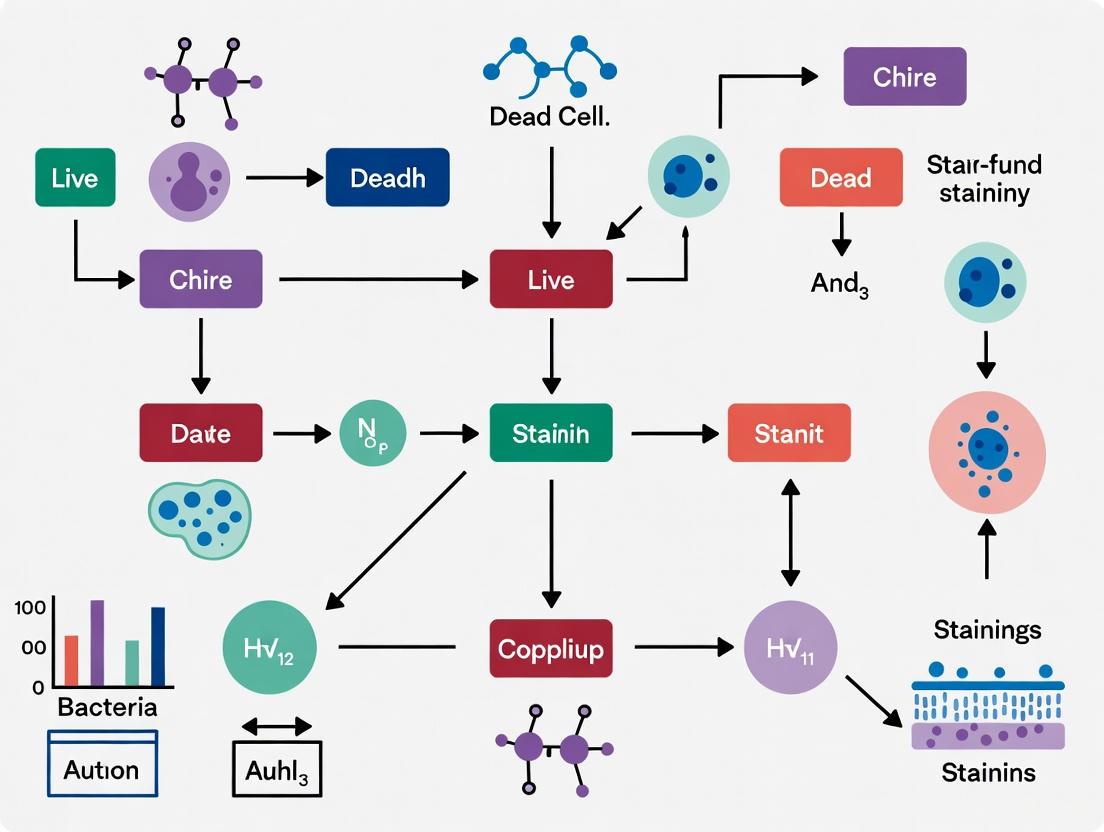
Live/dead viability assays based on membrane integrity utilize fluorescent dyes that differ in their ability to penetrate intact cell membranes. The workflow and decision pathway for selecting and applying these stains is summarized in the diagram below.
The two primary classes of dyes used in these assays are:
- Nucleic Acid-Binding Dyes: These dyes, such as propidium iodide (PI) and the SYTOX family, are normally non-fluorescent in aqueous solution but exhibit intense fluorescence upon binding to double-stranded DNA (dsDNA) or RNA [3]. They are excluded from live cells but readily stain the nuclei of dead cells.
- Amine-Reactive Viability Dyes: These dyes, such as the LIVE/DEAD Fixable Dead Cell Stains, covalently bind to free amine groups on intracellular and extracellular proteins [4]. In live cells, the dye only binds to surface amines, producing a dim signal. In dead cells, the dye penetrates the compromised membrane and binds to abundant intracellular amines, generating a bright fluorescent signal. This covalent binding allows the staining pattern to be preserved following fixation, making these dyes "fixable" [4] [3].
Key Staining Reagents and Tools
The following table summarizes the essential reagents and their functions for conducting membrane integrity-based viability assays.
Table 1: Key Research Reagent Solutions for Membrane Integrity Assays
| Reagent Name | Function / Mechanism | Key Characteristics |
|---|---|---|
| Propidium Iodide (PI) [3] | Cell-impermeant DNA-binding dye. Enters dead cells, fluoresces upon binding nucleic acids. | Classic, cost-effective. Excitation/Emisson max: ~535/617 nm. Often used with Annexin V for apoptosis. |
| SYTOX Dead Cell Stains [3] | Cell-impermeant dsDNA-binding dyes. Easy-to-use, minimal background. | Available in multiple colors (Blue, Green, Orange, Red). Non-fluorescent in aqueous media, no wash step required. |
| LIVE/DEAD Fixable Dead Cell Stains [4] | Amine-reactive dyes. Covalently bind to intracellular amines in dead cells. | Signal preserved after fixation. Multiple color options (Violet, Blue, Green, Far Red, etc.) for panel flexibility. |
| SYTO 9 [1] | Cell-permeant green fluorescent nucleic acid stain. Labels all cells. | Typically used in combination with PI in a two-component kit (e.g., FungaLight). Live cells show green fluorescence. |
| 7-AAD [3] | Cell-impermeant DNA-binding dye. Binds to GC regions. | Used for dead cell exclusion in flow cytometry and cell cycle analysis in fixed/permeabilized cells. |
| DAPI [5] | Cell-impermeant blue fluorescent DNA stain. Binds AT-rich regions. | Used for dead cell identification and general nuclear staining. Can stain live cells at high concentrations. |
Detailed Experimental Protocols
Optimized SYTO 9/Propidium Iodide Assay for Flow Cytometry
This protocol, optimized for yeast but adaptable to other cell types, uses the two-dye combination of SYTO 9 and PI to distinguish live, dead, and damaged cell populations with high resolution [1].
Materials:
- FungaLight Yeast LIVE/DEAD Kit (or separate SYTO 9 and PI stocks)
- Sterile 0.85% saline buffer
- Flow cytometer with 488 nm laser
- Synthetic Complete (SC) media or appropriate cell culture medium
Procedure:
- Cell Preparation and Staining:
- Harvest cells after experimental treatment by centrifugation (e.g., 3,000 × g for 5 min).
- Wash cells and resuspend in sterile 0.85% saline buffer (minimizes artifacts) to a standardized density (e.g., OD600 ~1) [1].
- Prepare a fresh working stock of SYTO 9 (e.g., 33.4 µM in water).
- Use a PI working stock (e.g., 0.2 mM in water; can be stored at 4°C for up to 6 months).
- Add the dyes to the cell suspension at the optimized concentration and incubate for 15–30 minutes in the dark [1].
- Flow Cytometry Analysis:
- Analyze samples on a flow cytometer equipped with a 488 nm laser.
- Use a ~525/40 nm bandpass filter (FITC/GFP channel) to detect SYTO 9 fluorescence.
- Use a ~610/20 nm bandpass filter (PI/PE-Texas Red channel) to detect PI fluorescence.
- Collect data for tens of thousands of cells to ensure statistical robustness.
- Cell Preparation and Staining:
Data Interpretation:
- SYTO 9+ / PI-: Live cells (green fluorescence).
- SYTO 9+ / PI+: Dead cells (red fluorescence). PI quenches SYTO 9 fluorescence via FRET.
- Intermediate Staining: May indicate damaged or dying cells.
The typical workflow and outcome of this assay is visualized below.
LIVE/DEAD Fixable Viability Staining for Flow Cytometry
This protocol is designed for use with amine-reactive fixable viability dyes, which allow for subsequent cell fixation without loss of the viability signal [4].
Materials:
- LIVE/DEAD Fixable Dead Cell Stain Kit (any color)
- Dimethyl sulfoxide (DMSO)
- Protein-free buffer (e.g., PBS)
- Flow cytometer
Procedure:
- Dye Preparation:
- Thaw the vial of dye and briefly centrifuge.
- Dilute the dye by adding 50 µL of anhydrous DMSO to the vial to create a stock solution [4].
- Cell Staining:
- Prepare cells in a protein-free buffer at a concentration of 1x10⁴ to 1x10⁶ cells per mL [4].
- Add 1 µL of the diluted stain per 1 mL of cell suspension.
- Mix thoroughly and incubate for 30 minutes at room temperature, protected from light.
- Post-Staining Processing:
- Wash cells to remove unbound dye (optional, but recommended).
- Resuspend cells in an appropriate buffer for flow cytometry analysis.
- Cells can now be fixed with formaldehyde if required for downstream applications, as the dye binding is covalent [4].
- Dye Preparation:
Live/Dead Assay Quantification Using Fluorescence Microscopy and Fiji
This protocol details the steps for quantifying viability from images of 2D or thin 3D cultures stained with calcein-AM (for live cells) and ethidium homodimer-1 (EthD-1, for dead cells) using Fiji/ImageJ software [6].
Materials:
- Fluorescent or confocal microscope
- Fiji (ImageJ) software
Procedure:
- Image Acquisition and Preparation:
- Acquire images containing both green (calcein, live) and red (EthD-1, dead) fluorescence channels.
- Open the image in Fiji. For Z-stacks, perform a Z-projection (e.g., "Max Intensity") to merge slices into a single image [6].
- Split Channels to create separate grayscale images for the green and red channels.
- Convert each channel image to 8-bit (Image > Type > 8-bit).
- Image Segmentation and Thresholding:
- For each channel, adjust the Threshold (Image > Adjust > Threshold) to selectively highlight the fluorescent cells against the background. Careful threshold selection is critical to avoid under- or over-counting [6].
- Apply the threshold to create a binary (black and white) image.
- Use the Watershed function (Process > Binary > Watershed) to separate any touching cells.
- Automated Cell Counting:
- Use the Analyze Particles tool (Analyze > Analyze Particles).
- Set appropriate size constraints (in pixels²) to exclude debris and aggregate artifacts. The "Add to Manager" option allows for visual verification of the detected cells [6].
- Execute the analysis for both the green (live) and red (dead) channels.
- Viability Calculation:
- The Result window will provide the count of particles (cells) for each channel.
- Calculate the percentage of live cells using the formula:
- % Live Cells = [Number of Green Cells / (Number of Green Cells + Number of Red Cells)] * 100 [6].
- Image Acquisition and Preparation:
Advanced Concepts and Comparison
Comparison of Viability Assay Methods
While membrane integrity is a key indicator, it is one of several methods for assessing viability. The table below compares major assay categories.
Table 2: Comparison of Cell Viability Assay Methodologies
| Assay Category | What It Measures | Example Methods | Advantages | Limitations |
|---|---|---|---|---|
| Membrane Integrity [1] [3] | Physical integrity of the plasma membrane. | Propidium Iodide, SYTOX, LIVE/DEAD Fixable stains, Trypan Blue. | Direct measure of a key death event. Fast (minutes). Works for various cell types. | Does not indicate early apoptosis or metabolic state. |
| Metabolic Activity [7] | Cellular metabolism (e.g., reductase activity). | MTT, MTS, XTT, Resazurin (Alamar Blue). | Simple, amenable to high-throughput screening. | Signal depends on metabolic rate, which can vary. Cytotoxic reagents make it an endpoint assay. |
| Protease Activity [7] | Presence of active proteases in live cells. | Fluorogenic protease substrates. | Homogeneous (no-wash) assays. Can be multiplexed. | May not detect all dead cell types. |
| Clonogenicity [1] | Ability of a cell to proliferate and form a colony. | Colony Forming Unit (CFU) Assay. | Gold standard for reproductive potential. | Very slow (days to weeks). Low throughput. |
| ATP Detection [7] | Presence of intracellular ATP. | Luminescent ATP assays. | Highly sensitive, linear dynamic range. Correlates with metabolically active cells. | Requires cell lysis. Does not distinguish between cell cycle stages. |
The Damaged Cell Population
A significant advantage of two-dye systems like SYTO 9/PI is their ability to reveal a subpopulation of damaged cells [1]. These cells may have partially compromised membranes, allowing some PI entry, but still retain some metabolic function. This population, which is missed by single-dye or metabolic assays, provides nuanced information on the effects of sublethal stress treatments and can predict subsequent cell fate.
Emerging Label-Free Technologies
Emerging technologies are challenging the paradigm that exogenous stains are always necessary. Quantitative Phase Imaging (QPI) is a label-free modality that measures the optical phase delay induced by cellular dry mass. When coupled with deep learning, QPI can be trained to predict cell viability with high accuracy (~95%) using fluorescent labels as ground truth [8]. This method is nondestructive, allows for long-term monitoring, and completely avoids the potential toxicity of staining reagents.
The principle that irreversible membrane integrity loss defines the "point of no return" in cell death remains a cornerstone of cell biology. This concept underpins a robust and versatile family of live/dead staining assays that are indispensable for research and drug development. The protocols and reagents detailed herein provide scientists with the tools to accurately quantify viability using flow cytometry and microscopy. As the field advances, the combination of classic staining methods with powerful computational approaches like deep learning promises to further refine our understanding of cell viability, death, and the delicate intermediate states that lie between them.
Within live/dead cell staining research, understanding the precise mechanisms of DNA-binding dyes is fundamental for accurate viability assessment. This technical guide provides an in-depth examination of three critical dyes—SYTO 9, propidium iodide (PI), and 7-Aminoactinomycin D (7-AAD)—focusing on their biochemical interactions, experimental applications, and practical considerations for research and drug development. These dyes function primarily on the principle of membrane integrity, serving as a key indicator of cellular viability [1] [9]. The proper use of these tools allows researchers to differentiate between live, dead, and often an intermediate "damaged" population of cells, providing a rapid and quantitative measure of cellular response to genetic, environmental, or drug-induced perturbations [1].
Core Mechanisms of Action
Biochemical Principles of DNA Binding
The dyes discussed herein operate through distinct yet complementary mechanisms centered on their interaction with nucleic acids and their differential ability to cross cellular membranes.
SYTO 9: This dye is a green-fluorescent cyanine stain that is permeant to both prokaryotic and eukaryotic cell membranes [10]. It exhibits a high affinity for nucleic acids, binding to both DNA and RNA, and experiences a significant enhancement in fluorescence upon binding, with an excitation maximum at 483 nm and an emission maximum at 503 nm [10] [9]. Because it enters all cells, it alone cannot distinguish viability.
Propidium Iodide (PI): PI is a red-fluorescent intercalating agent that binds to DNA by inserting itself between base pairs with little sequence preference [11]. A critical feature of PI is that it is membrane impermeant and is generally excluded from viable cells with intact plasma membranes [11] [9] [12]. It only enters cells with compromised membrane integrity, making it a classic dead cell stain. Its fluorescence enhances 20- to 30-fold upon binding DNA [11] [9].
7-Aminoactinomycin D (7-AAD): Similar to PI, 7-AAD is a membrane impermeant dye that is excluded from live cells [13]. It binds with high affinity to double-stranded DNA via intercalation into GC-rich regions [13] [14]. It is often used as an alternative to PI, offering the advantage of minimal spectral overlap with commonly used fluorophores like phycoerythrin (PE) and fluorescein isothiocyanate (FITC) [13].
The Competitive Binding and FRET Mechanism in LIVE/DEAD Staining
A particularly powerful application is the combined use of SYTO 9 and PI. In this dual-stain system, the dyes interact through a combination of competitive displacement and fluorescence resonance energy transfer (FRET).
When both dyes are present, PI exhibits a stronger affinity for nucleic acids than SYTO 9 (association constants of approximately 3.7 × 10⁵/M for PI vs. 1.8 × 10⁵/M for SYTO 9) [15]. Consequently, in dead cells with compromised membranes, PI enters and competitively displaces SYTO 9 from DNA binding sites [1] [15]. Furthermore, the emission spectrum of SYTO 9 overlaps with the excitation spectrum of PI, forming a FRET pair. When in close proximity, the energy from the excited SYTO 9 is transferred to PI, resulting in muted green fluorescence and strong red fluorescence in dead cells [1] [15]. In contrast, live cells with intact membranes only accumulate SYTO 9 and display bright green fluorescence [1]. This interplay provides a robust mechanism for distinguishing cell states.
Diagram 1: Mechanism of SYTO 9 and PI in live/dead staining, showing membrane permeability and competitive DNA binding.
Quantitative Comparison of Dye Properties
A clear comparison of the spectral and binding properties of these dyes is essential for experimental design, particularly in multiplexing scenarios.
Table 1: Spectral and Binding Properties of DNA Viability Dyes
| Property | SYTO 9 | Propidium Iodide (PI) | 7-AAD |
|---|---|---|---|
| Excitation Maximum | 483 nm [10] | 493 nm (solution), 535 nm (bound) [11] | 488 nm (argon laser) [13] [14] |
| Emission Maximum | 503 nm [10] | 636 nm (solution), 617 nm (bound) [11] | 647 nm [13] [14] |
| Membrane Permeability | Permeant (enters all cells) [10] | Impermeant (enters only dead cells) [11] [12] | Impermeant (enters only dead cells) [13] [14] |
| DNA Binding Mechanism | High affinity, minor groove binder [10] | Intercalates between base pairs [11] | Intercalates into GC-rich regions [13] |
| Binding Specificity | DNA & RNA [10] | DNA (can bind RNA, requires nuclease) [11] | Double-stranded DNA [13] |
| Primary Application | Counterstain in LIVE/DEAD kits [10] [1] | Viability & cell cycle analysis [11] [12] | Viability, especially with FITC/PE [13] [14] |
| Fluorescence Enhancement | Enhanced upon binding [10] [9] | 20-30 fold upon binding [11] [9] | Enhanced upon binding [13] |
Experimental Protocols and Methodologies
Optimized SYTO 9/PI Staining Protocol for Yeast
This protocol, adapted from PMC, details a standardized method for post-stress survival quantification in yeast using flow cytometry, which can be adapted for other cell types [1].
Materials:
- SYTO 9 stain (e.g., 33.4 μM working concentration in deionized water, prepared fresh)
- Propidium iodide (e.g., 0.2 mM working stock in deionized water, stable at 4°C for 6 months)
- Sterile 0.85% saline buffer (minimizes staining artifacts compared to water or growth media)
- Synthetic Complete (SC) media or appropriate cell culture media
- Hydrogen Peroxide (for stress induction) or other stressor
- 96-well deep-well plate
- Flow cytometer with 488 nm laser
Procedure:
- Application of Stress: Grow Candida glabrata (or target cells) to mid-log phase. Pellet cells and resuspend in stress media (e.g., containing hydrogen peroxide) or mock treatment media. Incubate for a biologically relevant time (e.g., 120 min at 30°C with shaking) [1].
- Cell Preparation: After treatment, pellet cells by centrifugation (3,000 × g for 5 min). Carefully aspirate the supernatant and resuspend the cell pellet in sterile 0.85% saline buffer to a standardized optical density (e.g., OD₆₀₀ = 1) [1].
- Staining: Add the freshly prepared SYTO 9 working stock and PI working stock to the cell suspension. The optimal final concentration should be determined empirically. Gently pipette to mix and incubate in the dark for 15-30 minutes [1].
- Flow Cytometry: Analyze the samples using a flow cytometer equipped with a 488 nm laser. SYTO 9 fluorescence is typically detected in the FITC/Green channel (e.g., 530/30 nm filter), and PI fluorescence is detected in the PI/Red channel (e.g., 617 nm filter) [1].
- Gating Strategy: Create a dot plot of Green (SYTO 9) vs. Red (PI) fluorescence. Live cells are SYTO 9 positive / PI negative; dead cells are SYTO 9 positive / PI positive, though with muted green signal due to FRET and displacement; an intermediate "damaged" population may also be visible [1].
Diagram 2: Workflow for SYTO 9/PI live/dead staining, from cell preparation to analysis.
Propidium Iodide Viability Protocol for Flow Cytometry
This protocol is optimized for direct viability assessment in a population of cells [12].
Materials:
- Propidium Iodide Staining Solution (10 μg/mL in PBS)
- Flow Cytometry Staining Buffer (with BSA and sodium azide)
- PBS (1X) or Hank’s Balanced Salt Solution (HBSS)
Procedure:
- Harvest and Wash: Harvest up to 1 x 10⁶ cells and wash twice with 2 mL PBS by centrifugation at 300 x g for 5 minutes [12].
- Resuspend: Resuspend the cell pellet in 100 μL of Flow Cytometry Staining Buffer [12].
- Stain and Analyze: Add 5-10 μL of PI staining solution to the cell suspension just prior to analysis. Mix gently and incubate for approximately 1 minute in the dark. Do not wash after adding PI. Acquire data immediately on the flow cytometer, using a dot plot of forward scatter versus PI fluorescence to gate viable (PI-negative) and non-viable (PI-positive) populations [12].
7-AAD Staining Protocol for Flow Cytometry
7-AAD serves as an excellent alternative to PI, especially in multicolor panels [14].
Materials:
- 7-AAD Staining Solution (1 mg/mL in PBS)
- Flow Cytometry Staining Buffer
- PBS or HBSS
Procedure:
- Harvest and Wash: As with the PI protocol, harvest and wash 1 x 10⁶ cells [14].
- Resuspend: Resuspend the cell pellet in 100 μL of Flow Cytometry Staining Buffer [14].
- Stain and Analyze: Add 5-10 μL of 7-AAD staining solution to the cell suspension. Mix gently and incubate for 30 minutes at 4°C in the dark. Do not wash after staining. Analyze on a flow cytometer. 7-AAD fluorescence is typically collected in the FL-3 channel when used in combination with FITC or PE [14].
Critical Considerations and Troubleshooting
Technical Pitfalls and Species-Specific Variability
Researchers must be aware of several critical factors to ensure data accuracy and reproducibility.
SYTO 9 Bleaching and Intensity Variability: SYTO 9 is prone to significant photobleaching, with reports of 4-8% signal loss every 5 minutes during measurement [9]. Furthermore, its staining intensity can vary dramatically between species and physiological states. For example, dead cells of Pseudomonas aeruginosa (Gram-negative) exhibit an 18-fold stronger SYTO 9 signal than live cells, whereas Staphylococcus aureus (Gram-positive) shows little difference [9] [16]. This is attributed to differences in dye permeability through Gram-negative outer membranes [9].
PI Signal Strength and Background: The absolute fluorescence intensity of bound PI is relatively low compared to SYTO 9, and unbound PI in solution produces a high background signal [9]. This necessitates careful background subtraction and the use of appropriate controls for reliable quantification.
Concentration and Binding Dynamics: The competitive displacement between SYTO 9 and PI is concentration-dependent. If PI is not in sufficient excess relative to nucleic acid content, it may not fully displace SYTO 9, leading to confusing results where dead cells display both green and red fluorescence [15]. The staining buffer composition also matters; 0.85% saline has been shown to produce fewer artifacts compared to deionized water or growth media [1].
The Scientist's Toolkit: Essential Reagents and Materials
Table 2: Key Research Reagent Solutions for Live/Dead Staining
| Reagent/Material | Function/Description | Example Usage |
|---|---|---|
| SYTO 9 Stain | Green-fluorescent, membrane-permeant nucleic acid stain. | Component of LIVE/DEAD kits; stains all cells in a population [10] [1]. |
| Propidium Iodide (PI) | Red-fluorescent, membrane-impermeant DNA intercalator. | Labels dead cells; used in viability and cell cycle analysis [11] [12]. |
| 7-AAD | Red-fluorescent, membrane-impermeant DNA intercalator (GC-specific). | Viability dye for multicolor flow cytometry; minimal spillover into FITC/PE channels [13] [14]. |
| Flow Cytometry Staining Buffer | Buffer containing BSA and often sodium azide. | Provides optimal suspension for antibodies and dyes, reduces non-specific binding [12] [14]. |
| 0.85% Saline Buffer | Isotonic solution for cell washing and resuspension. | Shown to minimize staining artifacts in yeast compared to water or media [1]. |
| Viability Assay Kit | Commercial pre-mixed reagent combinations. | Provides standardized, optimized dye ratios (e.g., LIVE/DEAD BacLight) [10] [1]. |
SYTO 9, propidium iodide, and 7-AAD are powerful tools for assessing cell viability based on membrane integrity. Their distinct mechanisms—ranging from universal permeability and competitive displacement (SYTO 9/PI) to selective impermeability (PI, 7-AAD)—provide a flexible framework for experimental design. A deep understanding of their spectral properties, binding kinetics, and potential pitfalls, such as species-specific staining variations and dye bleaching, is crucial for obtaining accurate, reproducible data. When employed with optimized protocols, these dyes offer researchers and drug development professionals a robust means to quantitatively evaluate cellular health and death in response to a wide array of stimuli.
How SYTO 9 and PI Work as a FRET Pair for Enhanced Resolution
This technical guide explores the mechanism of Förster Resonance Energy Transfer (FRET) between the fluorescent nucleic acid stains SYTO 9 and propidium iodide (PI). Commonly employed in LIVE/DEAD viability assays, this dye pair provides enhanced resolution for distinguishing cell populations based on membrane integrity. The FRET interaction between these dyes is not merely a supplementary phenomenon but a core mechanism that intensifies the fluorescent signal contrast between live and dead cells. Framed within research on live-dead cell staining mechanisms, this whitepel provides an in-depth analysis of the photophysical principles, detailed experimental protocols, and key applications of this FRET pair, serving the needs of researchers, scientists, and drug development professionals in microbiology and cytology.
Fluorescence Resonance Energy Transfer (FRET) is a powerful physical process used to monitor molecular proximity. It involves the non-radiative transfer of energy from an excited donor fluorophore to a nearby acceptor fluorophore. This transfer is highly dependent on the distance between the two fluorophores, typically occurring within a range of 1-10 nanometers, and requires a sufficient overlap between the emission spectrum of the donor and the excitation spectrum of the acceptor [17]. The efficiency of this energy transfer is inversely proportional to the sixth power of the distance between the donor and acceptor, making FRET an exceptionally sensitive ruler for measuring molecular interactions [17].
In the context of viability staining, the integrity of a cell's plasma membrane is a fundamental indicator of its live/dead status. The combination of SYTO 9 and PI leverages this principle: SYTO 9, a green-fluorescent stain, can permeate the membranes of all cells, while PI, a red-fluorescent stain, can only enter cells with compromised membranes. When used together, they form a FRET pair that provides superior resolution for differentiating between live, damaged, and dead cell populations in a sample [1]. This guide details the quantitative data, mechanisms, and methodologies that underpin this powerful technique.
Photophysical Properties of the FRET Pair
The effectiveness of SYTO 9 and PI as a FRET pair is rooted in their complementary spectral profiles and staining characteristics.
SYTO 9, the donor in this FRET pair, is a green-fluorescent cyanine dye that exhibits high affinity for nucleic acids. Upon binding to DNA or RNA, its fluorescence is significantly enhanced. It has an excitation maximum at 483 nm and an emission maximum at 503 nm [10]. A key characteristic of SYTO 9 is its ability to permeate both prokaryotic and eukaryotic cell membranes, making it suitable for staining live and dead cells alike [10].
Propidium Iodide (PI), the acceptor, is a red-fluorescent intercalating agent. It is membrane-impermeant and generally excluded from viable cells. PI has an excitation maximum at approximately 535 nm and an emission maximum at 617 nm [1]. Its entry into a cell indicates a compromised plasma membrane, a hallmark of cell death.
The table below summarizes the core photophysical properties of the two dyes.
Table 1: Photophysical Properties of SYTO 9 and Propidium Iodide
| Property | SYTO 9 (Donor) | Propidium Iodide (Acceptor) |
|---|---|---|
| Primary Function | Nucleic acid stain; labels all cells | Nucleic acid stain; labels only membrane-compromised cells |
| Membrane Permeability | Permeant to intact membranes [10] | Impermeant to intact membranes [1] |
| Excitation Maximum | 483 nm [10] | ~535 nm [1] |
| Emission Maximum | 503 nm [10] | ~617 nm [1] |
| Fluorescence upon Binding | Enhanced [10] | Enhanced |
| Typical Emission Color | Green | Red |
Spectral Overlap and Förster Radius
The foundation of FRET between SYTO 9 and PI is the significant spectral overlap between the emission spectrum of SYTO 9 and the excitation spectrum of PI. When SYTO 9 is excited (e.g., with a 488 nm laser), the energy it absorbs can be transferred non-radiatively to a nearby PI molecule if the two dyes are in close proximity. This energy transfer quenches the green fluorescence of SYTO 9 and sensitizes the red fluorescence of PI.
The efficiency of this energy transfer is quantified by the Förster radius (R₀), which is the distance at which FRET efficiency is 50%. For a FRET pair to be effective, the R₀ typically falls between 3 and 6 nm [17]. While the exact R₀ for the SYTO 9/PI pair is not explicitly stated in the search results, a similar coumarin-based donor paired with SYTO 9 was calculated to have a theoretical Förster radius of 52.5 Å (5.25 nm), which is within the effective range for FRET [18]. This proximity is achieved when both dyes are bound to the same nucleic acid polymer within a dead cell.
Mechanism of Enhanced Resolution via FRET
The combination of competitive binding and FRET between SYTO 9 and PI creates a powerful mechanism for enhancing the resolution between live and dead cells.
In a standard staining procedure:
- Live Cells: Possess intact plasma membranes. SYTO 9 enters and stains the nucleic acids, producing a bright green fluorescence. PI is excluded and no FRET occurs.
- Dead Cells: Have compromised membranes. Both SYTO 9 and PI enter and bind to nucleic acids. Due to its higher affinity for nucleic acids, PI competitively displaces SYTO 9 from the DNA [1]. Furthermore, when the dyes are co-localized on the DNA, the close proximity allows for FRET to occur. The excitation energy absorbed by SYTO 9 is transferred to PI, resulting in quenched SYTO 9 (green) emission and sensitized PI (red) emission [1].
This dual mechanism—competitive displacement and FRET—results in a dramatic increase in the contrast between the green fluorescence of live cells and the red fluorescence of dead cells. The FRET effect specifically "mutes" the green signal from dead cells that would otherwise be visible from SYTO 9 alone, thereby reducing background and cross-talk, and providing a clearer, more resolved distinction between the two populations.
The following diagram illustrates the staining and FRET mechanism at the cellular level.
Experimental Protocol for Flow Cytometry
The following is a detailed and optimized protocol for using the SYTO 9/PI FRET pair to quantify yeast survival after stress treatment using flow cytometry. This protocol has been adapted from a recent, standardized method [1].
Materials and Reagent Preparation
Table 2: Research Reagent Solutions and Essential Materials
| Item Name | Function / Role | Specifications / Comments |
|---|---|---|
| SYTO 9 Stain | Green-fluorescent nucleic acid donor dye for FRET. Labels all cells. | 3.34 mM stock solution. Prepare a fresh 33.4 µM working stock in deionized water for each experiment [1]. |
| Propidium Iodide (PI) | Red-fluorescent nucleic acid acceptor dye for FRET. Labels dead cells. | 20 mM stock solution. Prepare a 0.2 mM working stock in deionized water; can be stored at 4°C for up to 6 months [1]. |
| Staining Buffer | Medium for resuspending cells during staining to minimize artifacts. | Sterile 0.85% Saline Buffer. Preferred over water or growth media for reducing unstained and dead-like cells in controls [1]. |
| Flow Cytometer | Instrument for high-throughput, quantitative analysis of cell populations based on fluorescence. | Requires lasers and filters suitable for FITC (SYTO 9, ~503 nm emission) and PE/Texas Red (PI, ~617 nm emission) channels [1]. |
| Deep-Well Plate | Vessel for holding and processing multiple samples. | e.g., 96-well deep well plate for efficient handling [1]. |
| Centrifuge | Equipment for pelleting cells during washing and buffer exchange steps. | Capable of 3,000 × g [1]. |
Step-by-Step Procedure
Cell Preparation and Stress Treatment:
- Grow yeast cells (e.g., Candida glabrata) to mid-log phase (OD600 ~1) in appropriate media.
- Apply the desired stressor (e.g., hydrogen peroxide) by pelleting cells (3,000 × g for 5 min), removing the supernatant, and resuspending in stress media. Include a mock-treated control and a lethal dose control (e.g., 1 M H₂O₂).
- Incubate the plate for the required time (e.g., 120 min at 30°C with shaking) [1].
Post-Treatment Staining:
- Pellet the cells from the treatment plate and carefully aspirate the supernatant.
- Resuspend the cell pellet in sterile 0.85% saline buffer to standardize the density to OD600 = 1.
- Reserve 50 µL of each sample for unstained and single-stained controls (critical for flow cytometry setup).
- To the main sample, add the SYTO 9 and PI working stocks. The optimized staining volume for flow cytometry is 1 mL of cells at OD600 = 1, stained with 5 µL of the 33.4 µM SYTO 9 working stock and 2.5 µL of the 0.2 mM PI working stock [1].
- Mix the cells and stain gently, then incubate for 30 minutes at room temperature, protected from light [1].
Analysis via Flow Cytometry:
- Analyze the samples on a flow cytometer equipped with a 488 nm laser.
- Use the unstained and single-stained controls to set the photomultiplier tube (PMT) voltages and compensate for spectral bleed-through.
- Create a dot plot of Green Fluorescence (SYTO 9, FITC channel) vs. Red Fluorescence (PI, PE-Texas Red channel).
- Gate the populations as follows:
- Live cells: Green fluorescence (high), Red fluorescence (low).
- Dead cells: Green fluorescence (low), Red fluorescence (high). The low green signal is a direct result of FRET quenching and competitive displacement by PI.
- Damaged/Intermediate cells: May show intermediate levels of both green and red fluorescence.
The workflow from sample preparation to data analysis is summarized below.
Applications and Data Interpretation
The SYTO 9/PI FRET-based assay is extensively used for viability and survival quantification in microbiological research and industrial applications.
- Post-Stress Survival Quantification: This assay provides a fast and scalable alternative to Colony Forming Unit (CFU) assays. It evaluates viability at an earlier stage of the cell-death process by measuring membrane integrity. For example, after a sublethal hydrogen peroxide stress, the SYTO 9/PI assay may estimate a higher survival rate than a CFU assay, as it identifies cells that are initially viable (membrane intact) but have lost the ability to recover and reproduce [1].
- Identification of Damaged Cell Populations: A key advantage of this method is its ability to resolve an intermediate "damaged" population of cells that exhibit a staining pattern distinct from both live and dead cells. This provides more nuanced information on the effects of stress or drug treatments [1].
- High-Throughput Screening: The compatibility with flow cytometry and plate readers allows for the rapid processing of tens of thousands of cells in seconds, making it ideal for screening chemical libraries or genetic mutants for their effects on cell viability [1].
When interpreting data, researchers should note that the "dead" cell population, characterized by high red and low green fluorescence, is a direct readout of the FRET interaction. The quenching of SYTO 9 fluorescence confirms not just the presence of PI, but its close molecular proximity to SYTO 9 on the nucleic acid backbone, thereby enhancing the resolution and reliability of the viability count.
The SYTO 9 and propidium iodide dye pair functions as an effective FRET-based sensor system that provides enhanced resolution for live/dead cell analysis. The mechanism relies on the differential permeability of the dyes and their competitive binding to nucleic acids, culminating in a FRET interaction that selectively quenches donor emission and sensitizes acceptor emission in dead cells. This physical amplification mechanism creates a stark contrast between cell populations, which can be robustly quantified using standardized protocols like flow cytometry. For researchers focused on understanding cell death mechanisms or developing antimicrobial drugs, mastering the technical intricacies of this FRET pair is invaluable for generating accurate, high-quality viability data.
Principles of Amine-Reactive Fixable Viability Dyes and Their Advantages
Amine-reactive fixable viability dyes represent a critical advancement in flow cytometry and cell biology, enabling precise discrimination between live and dead cells in samples that require fixation and permeabilization. These dyes function by covalently binding to free amine groups within cells with compromised membranes, creating an irreversible stain that withstands subsequent processing steps. This technical guide explores the fundamental principles, mechanistic actions, and experimental applications of these dyes, framing their development within broader research on live-dead cell staining mechanisms. For researchers and drug development professionals, understanding these tools is essential for generating accurate, reproducible data in complex immunological and intracellular staining assays.
Accurate determination of cell viability is a cornerstone of experimental cell biology. The presence of dead cells in analyses can significantly skew results due to increased autofluorescence, non-specific antibody binding, and general cellular debris [19] [20]. In flow cytometry specifically, dead cells often exhibit nonspecific binding to antibodies, which can lead to false positive signals and misinterpretation of data [19]. The fundamental biological principle exploited by most viability dyes is the integrity of the plasma membrane. While live cells maintain an intact, selectively permeable membrane, the membranes of dead and dying cells become compromised, allowing impermeant dyes to enter and interact with intracellular components [20].
Traditional viability dyes, such as propidium iodide (PI) and 7-aminoactinomycin D (7-AAD), are DNA-binding agents that are excluded from live cells but penetrate dead cells. However, a significant limitation of these dyes is their inability to be used in experiments requiring cell fixation and permeabilization for intracellular staining, as these processes compromise all cellular membranes, allowing the dyes to diffuse out or access all cells, thereby eliminating the viability signal [19] [20]. Amine-reactive fixable viability dyes were developed to overcome this critical experimental limitation, providing a stable and reliable method for excluding dead cells from complex immunological analyses.
Core Principles of Amine-Reactive Fixable Viability Dyes
Mechanistic Basis of Staining
Amine-reactive fixable viability dyes operate on a sophisticated biochemical principle that differentiates cells based on membrane integrity and the availability of reactive targets. The core mechanism involves two sequential concepts: differential membrane permeability and covalent chemical bonding.
First, the dyes are cell membrane-impermeant. When added to a cell suspension, they cannot cross the intact plasma membrane of a live, healthy cell. Consequently, live cells are only exposed to the dye on their extracellular surface. In contrast, dead cells with compromised membrane integrity allow the dye to freely penetrate into the intracellular space [21].
Second, these dyes are amine-reactive, typically in the form of succinimidyl esters (NHS esters). They react with free amine groups (-NH₂) found on proteins and other biomolecules. The reaction forms a stable, covalent amide bond, permanently labeling the cellular constituents [22] [23]. The critical difference between live and dead cells lies in the abundance of available amine targets. In a live cell, only the limited number of amine groups on extracellular surface proteins are accessible for labeling. Inside a dead cell, the dye encounters the vast pool of intracellular amines, resulting in a much brighter fluorescent signal [22] [21]. This differential in staining intensity creates a clear separation between the dimly stained (or unstained) live cells and the brightly stained dead cells.
The Fixability Advantage
The "fixable" property is conferred by the covalent nature of the dye-amine bond. Because the dye is permanently attached to cellular proteins, the staining pattern is locked in place at the time of the reaction. When cells are subsequently fixed (often with formaldehyde) and permeabilized (e.g., with detergents for intracellular antibody staining), the dye remains bound and does not leak out or transfer between cells [22] [21]. This stability is the key advantage over non-fixable DNA dyes like PI, which simply intercalate into nucleic acids and wash away during permeabilization steps, losing all viability information [19] [20]. This fixability allows researchers to identify and gate out cells that were dead prior to fixation, which is crucial for accurate data analysis in intracellular staining protocols such as cytokine staining or transcription factor analysis.
The following diagram illustrates the complete experimental workflow and the underlying mechanism of amine-reactive dye staining.
Comparative Advantages Over Alternative Viability Dyes
Amine-reactive fixable viability dyes offer several distinct advantages that make them superior for many modern cytometric applications, especially those involving complex panel design and intracellular targets.
Table 1: Comparison of Viability Dye Technologies
| Dye Type | Mechanism of Action | Fixable? | Compatible with Intracellular Staining? | Key Advantages | Primary Limitations |
|---|---|---|---|---|---|
| Amine-Reactive (Fixable) | Covalent binding to free amines in cells with compromised membranes | Yes | Yes [22] [21] | Stable through fixation/permeabilization; wide color range for panel design; low background on live cells | Requires titration; reaction conditions must be protein-free [22] |
| DNA-Binding (Non-Fixable) | Intercalation into DNA of membrane-compromised cells | No | No (loses signal) [19] [20] | Inexpensive; simple protocol | Not suitable for intracellular staining protocols; can be toxic to live cells |
| Enzyme-Activated (Live Cell) | Conversion by intracellular esterases in live cells | No | No | Positively identifies live cells; can track proliferation and migration [19] [24] | Not useful for identifying dead cells; can leak out of cells over time |
Key Technical and Practical Advantages
- Experimental Flexibility for Intracellular Staining: Their resistance to fixation and permeabilization is their most significant advantage. This allows researchers to perform complex intracellular staining protocols, such as detecting cytokines, phosphorylated signaling proteins, or transcription factors, while still being able to accurately exclude the confounding effects of dead cells [22].
- Superior Panel Design Capabilities: These dyes are available in a vast spectrum of fluorescent colors, from UV to near-IR excitable [4] [21]. This allows researchers to select a dye that fits into a multicolor antibody panel without conflicting with other channels, a critical feature for high-parameter flow and spectral cytometry.
- Reduced Nonspecific Binding in Analysis: By enabling the precise gating-out of dead cells, which are prone to nonspecific antibody binding, these dyes significantly improve data quality and the accuracy of detecting low-abundance antigens or rare cell populations [20] [22].
- Stable Staining and Compensation Controls: The covalent bond ensures the staining pattern does not fade or transfer during sample processing or storage. Furthermore, the availability of amine-reactive compensation beads allows for the creation of stable and accurate compensation controls, which is essential for multicolor experimentation [22].
Experimental Protocols and Best Practices
Standard Staining Protocol
The following methodology outlines the core procedure for using amine-reactive viability dyes, based on established manufacturer protocols [22] [4].
- Preparation: Harvest cells and resuspend them in a protein-free buffer (e.g., PBS) at a concentration of 1x10^4 to 1x10^6 cells/mL. The absence of protein is critical, as any free amines in the buffer will compete with the cells for the dye, reducing staining efficiency.
- Dye Reconstitution: Thaw the provided anhydrous DMSO completely. Reconstitute the lyophilized dye vial with the recommended volume of DMSO to create a stock solution.
- Staining Reaction: Add the diluted dye to the cell suspension at the manufacturer's recommended concentration or the optimized concentration determined by titration (see section 4.2). A common working dilution is 1 µL of dye per 1 mL of cells [4].
- Incubation: Mix the cells and dye thoroughly, then incubate for 20-30 minutes at room temperature, protected from light.
- Washing: Wash the cells twice with a standard staining media (e.g., PBS containing 2-10% serum or BSA) to quench the reaction and remove any unbound dye.
- Fixation/Permeabilization (if required): Proceed with standard fixation and/or permeabilization protocols for surface or intracellular staining. The viability dye signal will remain stable.
- Flow Cytometric Analysis: Analyze the cells on a flow cytometer. The dead cell population will exhibit bright fluorescence in the appropriate detection channel, while live cells will be dim.
Critical Step: Titration of the Dye
Titration is an essential and required step to achieve optimal separation between live and dead cell populations. The goal is to find the dye concentration that provides the brightest signal for dead cells with the lowest possible background staining on live cells [22].
Table 2: Example Titration Scheme for an Amine-Reactive Dye
| Dilution | Stock Concentration (µg/mL) | Working Concentration (µg/mL) | Final Concentration in Staining (µg/mL) |
|---|---|---|---|
| 1 | 500 | 12.50 | 0.625 |
| 2 | 250 | 6.25 | 0.313 |
| 3 | 125 | 3.12 | 0.156 |
| 4 | 62.5 | 1.56 | 0.078 |
| 5 | 31.25 | 0.78 | 0.039 |
| 6 | 15.62 | 0.39 | 0.020 |
Titration Procedure:
- Create a series of dye stock dilutions in DMSO as outlined in Table 2.
- Further dilute each stock in distilled water to create working concentrations. Dilution in water is critical to prevent premature hydrolysis of the reactive ester.
- Add a fixed volume (e.g., 5 µL) of each working dilution to separate tubes containing a fixed number of cells (e.g., 95 µL in PBS). It is crucial to use a cell sample that contains a substantial number of dead cells, which can be obtained by heat-treatment or using thawed cryopreserved PBMCs.
- Complete the staining protocol as described above.
- Acquire data on a flow cytometer and plot the median fluorescence intensity (MFI) of the dead cell population against the dye concentration. The optimal concentration is the one just before the point of saturation, where the signal-to-noise ratio is highest and the background on live cells is minimal [22].
The Scientist's Toolkit: Essential Reagents and Materials
The successful implementation of amine-reactive viability dye staining requires specific reagents and controls. The following table details the key components of a complete workflow.
Table 3: Research Reagent Solutions for Viability Staining
| Reagent / Material | Function / Purpose | Key Considerations |
|---|---|---|
| Amine-Reactive Viability Dye | Covalently labels dead cells for exclusion during analysis. | Choose a color compatible with your laser lines and that fits in your antibody panel [24]. |
| Anhydrous DMSO | Solvent for reconstituting lyophilized dye. | Must be anhydrous to prevent hydrolysis of the reactive succinimidyl ester [22]. |
| Protein-Free Buffer (PBS) | Medium for the staining reaction. | Essential to prevent competition between cellular amines and free amines in the buffer (e.g., from serum or BSA) [22]. |
| Wash Buffer with Protein | Quenches the staining reaction and removes unbound dye. | Contains serum (e.g., FCS) or BSA to bind and neutralize any remaining unreacted dye. |
| Amine-Reactive Compensation Beads | Create a single-color control for flow cytometry compensation. | Beads bind the dye similarly to dead cells, providing a stable and reproducible compensation control [22]. |
| Viability Dye Sampler Kits | Allow testing of multiple dye colors for panel optimization. | Useful for spectral cytometry panel design, offering dyes that fill emission gaps between common fluorophores [21]. |
Amine-reactive fixable viability dyes are indispensable tools in the modern cell biology and immunology toolkit. Their principle of action—exploiting compromised membrane integrity to facilitate covalent, irreversible binding to intracellular amines—provides a robust and reliable method for identifying dead cells. The primary advantage of this technology is its stability through fixation and permeabilization, enabling high-fidelity analysis in complex intracellular staining workflows that are fundamental to immunophenotyping, cytokine detection, and signaling studies. As flow cytometry continues to advance into higher parameter spaces with spectral analyzers, the availability of these dyes in a wide array of colors ensures their continued relevance. For researchers committed to data accuracy and reproducibility, the incorporation of a properly titrated, fixable viability dye is not merely an option but a necessity for rigorous experimental design.
Within the broader investigation into live-dead cell staining mechanisms, this technical guide provides a comprehensive analysis of the core physicochemical properties that define the functionality of viability dyes. We examine the critical relationship between dye permeability—governed by staining mechanisms such as amine reactivity, DNA intercalation, and enzyme activation—and spectral profiles, which determine instrument compatibility. This work synthesizes data on a wide array of commercial stains, presenting structured comparisons of their excitation/emission spectra and detailing standardized protocols for their application in flow cytometry and fluorescence microscopy. The findings provide a framework for researchers to select optimal viability dyes based on experimental parameters, including the need for fixability, laser configuration, and multiplexing panel design, thereby enhancing data accuracy in fields ranging from basic immunophenotyping to drug development.
The accurate discrimination between live and dead cells is a cornerstone of reliable cellular analysis, fundamental to the valid interpretation of flow cytometry, high-content screening, and other single-cell assays. The core principle underpinning most viability staining is cellular membrane integrity, which is compromised during apoptosis and necrosis. Viability dyes are designed to exploit this physiological difference, and their permeability characteristics are the primary determinant of their mechanism of action [24]. These mechanisms can be broadly categorized into three classes: amine-reactive dyes, DNA-binding dyes, and enzyme-activated dyes. The second critical property, the excitation and emission spectrum of a dye, dictates its compatibility with specific laboratory instrumentation, such as the laser lines and filter sets of a flow cytometer or microscope. The interplay between a dye's permeability and its spectral signature is what allows researchers to precisely identify and exclude dead cells from analysis, preventing the confounding effects of autofluorescence, non-specific antibody binding, and cellular debris [24]. This guide delves into the properties of major dye classes, providing a side-by-side comparison of their spectra and detailed protocols to inform experimental design within the broader context of live-dead staining research.
Comparative Analysis of Viability Dye Properties
The following tables provide a consolidated overview of the key characteristics of commonly used viability dyes, organized by their staining mechanism. This data serves as a primary reference for dye selection.
Table 1: Amine-Reactive Fixable Viability Dyes These dyes covalently bind to intracellular and extracellular amines and are compatible with subsequent fixation and permeabilization protocols [4] [24].
| Dye Name | Excitation Max (nm) | Emission Max (nm) | Primary Laser Line (nm) | Permeability Mechanism |
|---|---|---|---|---|
| LIVE/DEAD Fixable Blue | 341 [25] | 440 [25] | UV (355) [25] | Amine-reactive, cell-impermeant |
| LIVE/DEAD Fixable Violet | 416 [4] | 451 [4] | 405 [4] | Amine-reactive, cell-impermeant |
| LIVE/DEAD Fixable Yellow | 400 [26] | 550 [26] | 405 [26] | Amine-reactive, cell-impermeant |
| LIVE/DEAD Fixable Green | 498 [27] | 526 [27] | 488 [27] | Amine-reactive, cell-impermeant |
Table 2: DNA-Binding and Other Viability Dyes This category includes membrane-impermeant DNA dyes and enzyme-activated substrates for assessing viability. [24] [28] [29]
| Dye Name | Excitation Max (nm) | Emission Max (nm) | Primary Laser Line (nm) | Permeability Mechanism |
|---|---|---|---|---|
| Green Live/Dead Stain (Antibodies Inc) | 495 [28] | 512 [28] | 488 [28] | Membrane-impermeant, DNA-binding |
| Propidium Iodide (PI) | Varies by source | Varies by source | 488 [24] | Membrane-impermeant, DNA-binding |
| NucSpot Live 488 | 500 [29] | 515 [29] | 488 | Cell-permeant nuclear stain |
| Calcein AM | 494 [29] | 517 [29] | 488 | Enzyme-activated, cell-permeant |
| NucSpot 550/570 | 559 [29] | 566 [29] | 561 | Dead-cell selective, DNA-binding |
| RedDot2 | 650 [29] | 675 [29] | 633/635 | Dead-cell selective, DNA-binding |
The Researcher's Toolkit: Essential Reagents for Viability Staining
A successful viability staining experiment requires more than just the dye itself. The following table lists key reagents and their functions.
Table 3: Essential Research Reagent Solutions for Viability Staining
| Reagent / Material | Function in the Protocol | Key Considerations |
|---|---|---|
| LIVE/DEAD Fixable Dead Cell Stain Kit | Amine-reactive dye for discriminating dead cells. | Choose color based on laser configuration and panel design [4]. |
| Protein-Free Buffer (e.g., PBS) | Resuspension medium for cells during staining. | Prevents unwanted quenching; protein concentration should be <1% [4]. |
| Dimethyl Sulfoxide (DMSO) | Solvent for reconstituting lyophilized dye stocks. | Ensure high purity for consistent dye solubility and performance. |
| Fc Receptor Blocking Solution | Reduces non-specific antibody binding. | Critical for high-parameter flow cytometry to improve specificity [30]. |
| Fluorescence-Activated Cell Sorter (Flow Cytometer) | Instrument for quantifying stained cells. | Must be equipped with lasers and filters matching the dye's spectra [4] [31]. |
| Formaldehyde Fixation Solution | Preserves cell structure and stabilizes the stain. | Required for amine-reactive dyes if intracellular staining is to follow [4]. |
Experimental Protocols for Viability Staining
This section outlines detailed, step-by-step methodologies for determining cell viability using different classes of dyes.
Basic Protocol: Amine-Reactive LIVE/DEAD Fixable Staining for Flow Cytometry
This protocol is adapted from the manufacturer's instructions and is designed for use with flow cytometry [4].
- Preparation: Thaw the vial of lyophilized dye. Dilute the LIVE/DEAD fixable dead cell stain by adding 50 µL of anhydrous DMSO to the vial to create a stock solution.
- Cell Harvesting and Washing: Harvest cells and wash them in a protein-free buffer (e.g., PBS). Resuspend the cell pellet to a concentration of 1x10^4 to 1x10^6 cells per mL in the same buffer [4].
- Staining: Add 1 µL of the diluted stock stain per 1 mL of cell suspension.
- Incubation: Mix the cells and stain thoroughly, then incubate the mixture for 30 minutes at room temperature, protected from light.
- Washing (Optional): Centrifuge the cell suspension and carefully remove the supernatant. Resuspend the cell pellet in an appropriate buffer. Note: Washing is optional but can help reduce background signal [4].
- Fixation (Optional): If required for biosafety or subsequent intracellular staining, fix the cells using a formaldehyde-based fixative. The amine-reactive staining pattern is preserved after fixation [4].
- Analysis: Resuspend the cells in a suitable buffer for flow cytometric analysis. Use the instrument's laser and filter settings that correspond to the spectral profile of the chosen dye (see Table 1).
Alternative Protocol: DNA-Binding Green Live/Dead Stain for Flow Cytometry
This protocol uses a membrane-impermeant DNA-binding dye, analogous to Propidium Iodide, for a rapid viability assessment [28].
- Preparation: Briefly centrifuge the thawed vial of Green Live/Dead Stain (500 µM concentrated stock) to collect any liquid in the cap.
- Working Solution: Prepare a 5000 nM working solution by performing a 1:100 dilution of the stock in PBS (e.g., 10 µL stock + 990 µL PBS). This working solution should be prepared fresh and used immediately.
- Staining: Add the working solution to your cell sample at a 1:100 dilution (e.g., add 5 µL of working solution to a 0.495 mL cell sample). The final recommended staining concentration is 50 nM [28].
- Incubation: Incubate the stained sample for approximately 10 minutes at room temperature, protected from light.
- Analysis: Analyze the cells using a flow cytometer equipped with a 488 nm blue laser and a standard FITC/GFP filter set (e.g., 530/30 nm).
Visualization of Staining Mechanisms and Workflows
The following diagrams, generated using DOT language, illustrate the core mechanistic principles and experimental workflows described in this guide.
Mechanism of Amine-Reactive Viability Dyes
Experimental Workflow for Fixable Viability Staining
The comparative data and protocols presented here underscore the critical importance of aligning dye selection with specific experimental goals. The choice between an amine-reactive dye and a traditional DNA-binding dye like propidium iodide is not merely spectral; it is fundamentally mechanistic. Amine-reactive, fixable dyes offer a significant advantage in complex immunophenotyping workflows that require intracellular staining, as their covalent bond withstands fixation and permeabilization [4] [24]. In contrast, DNA-binding dyes are typically incompatible with these steps but provide a rapid and cost-effective solution for simple viability checks. Furthermore, the emergence of enzyme-activated dyes like Calcein AM, which stain metabolically active live cells, provides a complementary approach for functional viability assessment and long-term cell tracking [24] [29].
In conclusion, a deep understanding of dye permeability and spectra is paramount for robust experimental design. The integration of a carefully selected viability dye acts as an essential control, safeguarding data integrity by eliminating the confounding effects of dead cells. As flow cytometry continues to evolve toward higher parameter panels, the demand for bright, stable, and spectrally unique fixable viability dyes will only grow. This guide provides a foundational resource for researchers navigating this critical aspect of cellular analysis, contributing to the broader thesis that meticulous optimization of live-dead staining mechanisms is a prerequisite for generating reliable and reproducible scientific data in drug development and basic research.
Optimized Staining Protocols for Flow Cytometry and Microscopy
Standardized SYTO 9/PI Protocol for Yeast and Bacterial Viability Assessment
SYTO 9 and propidium iodide (PI) constitute a widely adopted two-component fluorescent staining system for assessing microbial viability based on cell membrane integrity. This method provides a rapid, quantitative alternative to traditional culture-based techniques like colony forming unit (CFU) assays, with the significant advantage of distinguishing between live, damaged, and dead subpopulations at the single-cell level [1].
The fundamental mechanism relies on the differential permeability of these dyes through cellular membranes. SYTO 9, a cell-permeant dye, enters all cells regardless of viability, binding to nucleic acids and emitting green fluorescence (typically around 500 nm emission). In contrast, propidium iodide (PI) is only able to cross compromised or damaged plasma membranes. Once inside a cell with a damaged membrane, PI binds to nucleic acids with a higher affinity than SYTO 9 and competitively displaces it [1] [32]. Furthermore, the dyes form a Förster Resonance Energy Transfer (FRET) pair, where the emission from SYTO 9 is absorbed by PI. Consequently:
- Live cells with intact membranes fluoresce bright green.
- Dead cells with fully compromised membranes exhibit muted green and strong red fluorescence (around 635 nm emission) [1].
- Damaged cells may display intermediate staining, providing more nuanced information on the effects of stress treatments [1].
Experimental Workflow and Protocol
The following section details standardized methodologies for applying the SYTO 9/PI assay to yeast and bacterial cultures, emphasizing critical steps that ensure reproducibility and data quality.
Detailed Staining Protocol for Yeast
The protocol below is optimized for the opportunistic pathogen Candida glabrata but has been successfully applied to other yeast species [1].
Materials and Reagents
- Strains: Mid-log phase yeast culture (e.g., C. glabrata, S. cerevisiae).
- Growth Media: Appropriate liquid medium (e.g., Synthetic Complete (SC) media with 2% glucose).
- Staining Buffer: Sterile 0.85% saline buffer. This has been found to minimize staining artifacts compared to water or growth media [1].
- Dyes: LIVE/DEAD FungaLight Yeast Viability Kit (Thermo Fisher, L34952) containing SYTO 9 (3.34 mM) and PI (20 mM).
- Equipment: Flow cytometer with 488 nm laser and capable of detecting fluorescence at ~530 nm (FITC/SYTO 9) and >600 nm (PI) [1] [32].
Step-by-Step Procedure
Cell Preparation and Treatment:
- Grow yeast overnight to mid-log phase (OD600 ~1.0).
- Pellet 600 µL of culture by centrifugation at 3,000 × g for 5 min.
- Subject cells to experimental stress conditions (e.g., resuspend pellet in 600 µL of stressor like hydrogen peroxide in media) and incubate for the desired time [1].
Sample Staining:
- Post-treatment, pellet cells again and carefully aspirate the supernatant.
- Wash cells once by resuspending the pellet in sterile 0.85% saline buffer and adjust the cell density to OD600 = 1.
- Prepare fresh working stock solutions:
- SYTO 9 working solution: 33.4 µM in deionized water (prepare fresh for each experiment).
- PI working solution: 0.2 mM in deionized water (can be stored at 4°C for up to 6 months).
- Mix the cell suspension with the dye working solutions at the optimized ratio. Incubate in the dark for 15–30 min at room temperature [1].
Flow Cytometry Analysis:
- Analyze the stained samples on a flow cytometer within a short, consistent time frame.
- Use a 488 nm laser for excitation.
- Detect SYTO 9 fluorescence with a ~530/30 nm bandpass filter (FITC/Green channel).
- Detect PI fluorescence with a ~695/40 nm bandpass filter (Red channel).
- Collect data for at least 10,000 events per sample to ensure statistical robustness.
- Include unstained and single-stained controls for proper instrument compensation and gating [1].
The workflow can be visualized as follows:
Protocol for Bacterial Viability Assessment
The SYTO 9/PI staining principle is similar for bacteria, often using the LIVE/DEAD BacLight Bacterial Viability Kit (Thermo Fisher, L34856) [33].
Key Considerations for Bacteria
- Staining Buffer: Phosphate-buffered saline (PBS) or saline is commonly used.
- Sample Preparation: Bacteria are typically harvested from culture, washed, and resuspended in buffer. For biofilms, gentle harvesting may be required.
- Critical Note on Biofilms: Staining adherent bacterial cells in biofilms can lead to a significant overestimation of cell death. This is attributed to the presence of extracellular nucleic acids (eNA) in the biofilm matrix, which bind PI, creating a "false dead" signal. Results from biofilm samples should be validated with an alternative method, such as cultivation or a metabolic activity stain [34].
- Flow Cytometry: Settings are analogous to the yeast protocol, using a 488 nm laser and appropriate filter sets for green and red fluorescence [35].
Data Analysis and Interpretation
Gating Strategy and Population Identification
Flow cytometry data is typically displayed on a bivariate dot plot of green (SYTO 9) versus red (PI) fluorescence. This allows clear resolution of distinct populations [1] [32]:
- Population 1 (Q4, Green+ Red-): Live cells with intact membranes.
- Population 2 (Q2, Green+ Red+): Damaged or dying cells with partially compromised membranes. This intermediate population is a key advantage of the method, providing nuanced information beyond a simple live/dead dichotomy [1].
- Population 3 (Q1, Green- Red+): Dead cells with fully compromised membranes.
Quantitative Comparison with CFU Assays
The SYTO 9/PI assay provides viability estimates that are consistent with CFU assays for untreated (mock) and lethally treated samples. However, a key conceptual difference emerges with sublethal stresses, as the two methods measure different biological endpoints [1].
The table below summarizes a comparative study on yeast:
Table 1: Comparison of SYTO 9/PI Flow Cytometry and CFU Assay for Yeast Viability Assessment
| Treatment Condition | SYTO 9/PI (% Live) | CFU Assay (% Survival) | Interpretation |
|---|---|---|---|
| Mock (No stress) | ~100% | ~100% | Both methods agree on high viability of untreated cells [1] |
| Sublethal Stress (100 mM H₂O₂) | Higher % Live | Lower % Survival | SYTO 9/PI measures membrane integrity immediately post-stress; CFU measures regrowth potential [1] |
| Lethal Stress (1 M H₂O₂) | Very Low % Live | Very Low % Survival | Both methods agree on lethal effect of treatment [1] |
This discrepancy highlights that the SYTO 9/PI assay evaluates survival at an earlier stage of the cell death process—membrane integrity—while the CFU assay quantifies the ability to recover and reproduce [1]. Therefore, the two methods offer complementary information.
Advanced Analysis Methods for Bacterial Suspensions
For bacterial samples analyzed using spectroscopic methods, advanced analytical techniques can improve the accuracy of live/dead proportion calculations. Simple ratio methods (SYTO 9:PI intensity) can be unreliable, particularly above 60% live cells [35].
Table 2: Analysis Methods for Spectroscopic Data from SYTO 9/PI-Stained Bacteria
| Analysis Method | Principle | Performance & Notes |
|---|---|---|
| SYTO 9:PI Intensity Ratio | Simple ratio of peak fluorescence intensities. | Unreliable, especially above ~60% live cells; variable results [35] |
| Adjusted Fluorescence Ratio | Modified ratio calculation to account for baseline and bleed-through. | Improved reliability over simple ratio [35] |
| Support Vector Regression (SVR) | Machine learning model trained on spectral data to predict % live bacteria. | Multi-spectra SVR was the most reliable method, accurately predicting % live in samples from ~7% to 100% live [35] |
The Scientist's Toolkit: Essential Reagents and Materials
Table 3: Key Research Reagent Solutions for SYTO 9/PI Viability Assays
| Item | Function / Description | Example Product / Source |
|---|---|---|
| SYTO 9 & PI Kit (Yeast) | Optimized dye combination for distinguishing live/dead yeast based on membrane integrity. | LIVE/DEAD FungaLight Yeast Viability Kit (Thermo Fisher, Cat. No. L34952) [32] |
| SYTO 9 & PI Kit (Bacteria) | Optimized dye combination for bacterial viability staining and counting. | LIVE/DEAD BacLight Bacterial Viability and Counting Kit (Thermo Fisher, Cat. No. L34856) [35] [33] |
| Staining Buffer | Provides an optimal ionic environment for staining, minimizing artifacts. | Sterile 0.85% Saline [1] or Phosphate-Buffered Saline (PBS) |
| Metabolic Activity Stain | Provides complementary vitality data based on enzymatic activity. | FungaLight CFDA, AM/PI Vitality Kit (for yeast) [32] / Fluorescein Diacetate (FDA) (for bacteria) [34] |
| Flow Cytometer | Instrument for quantitative, high-throughput analysis of stained cell populations. | Requires 488 nm laser and filters for ~530 nm (SYTO 9) and >600 nm (PI) detection [1] |
Troubleshooting and Methodological Limitations
Even with a standardized protocol, researchers must be aware of potential pitfalls and limitations.
Common Technical Issues
- Excessive Bleed-Through: If too many cells appear in the intermediate (double-positive) region, it could be due to high dye concentration or inappropriate optical filters. Solution: Titrate dye concentrations and use narrow bandpass filters [33].
- High Background/Noise: This can be caused by electronic noise or dye precipitation. Solution: Use correct instrument threshold/PMT voltage settings and ensure dyes are properly solubilized [33].
- Uptake of PI by Live Cells: Extended incubation times with dyes can lead to PI engulfment by some live cells. Solution: Optimize and strictly adhere to the recommended incubation time [33].
Critical Limitations to Consider
- Overestimation of Death in Biofilms: As noted previously, PI binding to extracellular nucleic acids (eNA) in biofilms can drastically overestimate the dead population. Validation with culture-based methods is strongly recommended for biofilm studies [34].
- Viable But Non-Culturable (VBNC) State: The SYTO 9/PI assay may classify VBNC cells as live (due to membrane integrity), while they will not form colonies on a plate. This is a fundamental difference in what is being measured, not necessarily an error [35].
- Toxicity of Stains: The staining process itself can be toxic to cells, preventing long-term viability tracking. New label-free methods are being developed to circumvent this issue [36].
- False Positives with PI: Conventional staining methods using PI can generate a significant percentage of false positive events (up to 40% in one report). Careful protocol validation is essential [20].
The SYTO 9/PI viability staining protocol, when standardized and executed with careful attention to detail, provides a powerful, rapid, and quantitative tool for assessing the viability of yeast and bacterial populations. Its strength lies in its ability to provide immediate, high-throughput data on membrane integrity and to reveal intermediate "damaged" states. Researchers must, however, be cognizant of its limitations—particularly in complex systems like biofilms—and understand that its readout complements, rather than replaces, the information gained from culture-based methods like CFU assays.
Accurately distinguishing live cells from dead cells is a fundamental prerequisite for generating reliable flow cytometry data. Dead cells are problematic because they exhibit high levels of autofluorescence and bind antibodies and other reagents non-specifically, leading to inaccurate results and false positives [20] [37]. The integrity of the plasma membrane is a definitive indicator of cell health [37]. LIVE/DEAD Fixable Dead Cell Stains utilize this principle, providing a robust method to identify dead cells within a sample, even after the cells have been fixed with formaldehyde, a process required for many intracellular staining protocols or for pathogen inactivation [4] [37]. This guide provides an in-depth, step-by-step protocol for using these stains, framing the technique within the broader context of cell viability research and its critical importance in experimental and drug development workflows.
Mechanism of Action: How Fixable Viability Dyes Work
Unlike DNA-binding dyes like propidium iodide or 7-AAD, which are not retained after fixation, fixable viability dyes are amine-reactive dyes [20] [19]. These dyes react with cellular amine groups (-NH2) on both internal and external proteins.
The fundamental mechanism for distinguishing live from dead cells is based on the differential accessibility of these amines due to membrane integrity, as shown in the diagram below.
In a live cell with an intact membrane, the dye cannot penetrate the interior. It only reacts with the limited number of amine groups on the cell surface, resulting in dim fluorescence [37] [19]. In contrast, a dead cell has a compromised membrane, allowing the dye to freely enter and react with the vast pool of intracellular amines, resulting in a very bright fluorescent signal—often 50-fold brighter than that of live cells [37] [19]. This reaction is covalent, meaning the staining pattern is permanently fixed to the proteins. Therefore, even after subsequent steps that would permeabilize all cells (like fixation and permeabilization for intracellular staining), the dye remains bound, preserving the "live/dead" information from the time of staining [20] [38].
Materials and Equipment
The Scientist's Toolkit: Essential Research Reagents
The following table details the key materials required to perform this protocol successfully.
| Item | Function & Specification |
|---|---|
| LIVE/DEAD Fixable Stain | Amine-reactive fluorescent dye. Available in multiple colors (e.g., Violet, Aqua, Green, Red, Far Red) to fit different laser and filter configurations [4]. |
| Cells in Culture | Target sample. Concentration should be adjusted to 1x10^4 to 1x10^6 cells/mL in a protein-free buffer for staining [4]. |
| Dimethyl Sulfoxide (DMSO) | High-quality, anhydrous DMSO is used to reconstitute the lyophilized dye vial [4]. |
| Protein-Free Buffer | Staining buffer, such as PBS or 0.85% saline. Protein concentration should be <1% to prevent competitive consumption of the dye [4] [1]. |
| Flow Cytometer | Instrument for analysis. Must be equipped with lasers and filters compatible with the fluorescence of the chosen dye [4]. |
Step-by-Step Experimental Protocol
Sample and Reagent Preparation
- Thaw Dye: Remove a vial of the lyophilized LIVE/DEAD fixable dead cell stain from storage and allow it to warm to room temperature [4].
- Reconstitute Dye: Add 50 µL of anhydrous DMSO directly to the vial. Pipette up and down gently to ensure the powder is fully dissolved. This creates a concentrated stock solution [4].
- Prepare Cell Suspension: Harvest and wash your cells. Resuspend the cell pellet in a protein-free buffer (e.g., PBS) at a concentration between 1x10^4 and 1x10^6 cells/mL [4]. Transfer 1 mL of this cell suspension to a flow cytometry tube.
Staining Procedure
- Add Stain: Add 1 µL of the reconstituted dye stock to the 1 mL cell suspension in the flow cytometry tube [4].
- Mix: Gently vortex or pipette the tube to ensure the dye is evenly distributed throughout the cell suspension.
- Incubate: Protect the tube from light and incubate at room temperature for 30 minutes [4].
- Wash (Optional but Recommended): After incubation, add 2-3 mL of buffer to the tube and centrifuge to pellet the cells. Carefully aspirate the supernatant to remove any unbound dye. This wash step helps reduce background fluorescence. Note: The protocol indicates washing is optional, but it is good practice to remove excess reagent [4].
Fixation and Data Acquisition
- Fix (If Required): If your experimental design requires fixation for subsequent intracellular staining or safety, you may now fix the cells using formaldehyde-based fixatives. The covalent nature of the dye binding preserves the viability staining pattern through this process [37].
- Acquire Data: Resuspend the cell pellet in an appropriate volume of buffer and analyze the sample on a flow cytometer using instrument settings optimized for your chosen dye [4].
Optimization and Troubleshooting
Key Experimental Parameters
For a reproducible and successful experiment, pay close attention to the following parameters, which are summarized in the table below.
| Parameter | Optimal Condition | Rationale & Impact |
|---|---|---|
| Cell Concentration | 1x10^4 – 1x10^6 cells/mL | Ensures uniform staining; too high a concentration can lead to under-staining and cell clumping [4]. |
| Buffer Protein | <1% | Prevents serum proteins from consuming the dye, which would reduce staining efficiency and signal [4]. |
| Dye Concentration | As per manufacturer's protocol (e.g., 1 µL of stock per 1e6 cells) | Prevents over-staining, which can increase background in live cells, or under-staining of dead cells [4]. |
| Staining Time | 30 minutes | Standardized incubation ensures consistent results across experiments [4]. |
Troubleshooting Common Issues
- High Background in Live Cell Population: This is often caused by excessive dye concentration, the presence of protein in the staining buffer, or over-incubation. Ensure you are using a protein-free buffer and precisely following the recommended dye volumes [4].
- Poor Separation Between Live and Dead Populations: This can result from using old or improperly reconstituted dye, incorrect laser voltages on the cytometer, or a low proportion of dead cells. Creating a control sample with a known mix of live and heat-killed cells can help optimize voltages and confirm the stain is working [37].
- Low Signal in Dead Cells: This may indicate the dye was quenched or that the staining concentration was too low. Ensure the dye is fresh and protected from light.
Data Analysis and Interpretation
After data acquisition, the analysis workflow involves gating to sequentially isolate single cells and then identify them based on their viability status, as illustrated below.
- Gate on Intact Cells: Plot Forward Scatter-Area (FSC-A) against Side Scatter-Area (SSC-A). The main population of intact cells (both live and dead) will typically form a distinct cloud. Gate around this population to exclude small debris [20].
- Gate on Single Cells: Plot FSC-Height (FSC-H) against FSC-A. Cells that pass through the laser beam singly will fall on a diagonal line. Gate on this population to exclude cell doublets or clumps, which can distort fluorescence measurements [20].
- Identify Live/Dead Populations: Create a histogram or a dot plot showing the fluorescence intensity of the LIVE/DEAD stain.
- Dead cells will display high fluorescence intensity and appear as a bright population.
- Live cells will display low fluorescence intensity and appear as a dim or negative population [37].
- Gate on the live (negative/dim) cell population and use this gate for all subsequent immunophenotyping or functional analysis. This critical step excludes the dead cells that would otherwise contribute to non-specific binding and inaccurate data [37].
Comparison with Other Viability Assays
The choice of viability dye depends heavily on the experimental design. The table below compares LIVE/DEAD fixable stains with other common types of viability assays.
| Assay Type | Mechanism | Compatible with Fixation? | Primary Application |
|---|---|---|---|
| LIVE/DEAD Fixable Stains | Amine reactivity; covalent protein binding. | Yes | Intracellular staining, requires fixation, long-term sample storage [4] [37]. |
| DNA Binding Dyes (PI, 7-AAD) | Intercalates into DNA of membrane-compromised cells. | No | Quick viability check on live, unfixed samples; simple protocol [19] [38]. |
| Enzymatic Activity Dyes (Calcein AM) | Live cell esterase activity produces fluorescence. | No | Positive identification of live cells; often paired with PI in viability/cytotoxicity kits [19] [38]. |
| Annexin V Staining | Binds phosphatidylserine exposed on the outer membrane. | No (with Ca²⁺-dependent binding) | Detection of apoptosis, specifically early-stage apoptotic cells [38]. |
The use of LIVE/DEAD Fixable Dead Cell Stains provides a powerful and reliable method for identifying dead cells in flow cytometry experiments, especially those that require subsequent fixation and permeabilization. By following this optimized, step-by-step protocol and understanding the underlying mechanism, researchers can significantly improve the accuracy and reproducibility of their data, ensuring that biological conclusions are drawn from healthy cell populations. Integrating this technique as a standard practice in immunophenotyping, drug development, and cell function studies is essential for generating high-quality, publication-ready flow cytometry results.
Within the broader investigation of live-dead cell staining mechanisms, successful experimental outcomes hinge on the precise optimization of key technical parameters. Assays based on plasma membrane integrity, a well-established proxy for cell viability, are foundational to this research [39]. These methods leverage the fundamental biological principle that a compromised membrane is a marker of cell death, allowing dyes to selectively enter and stain non-viable cells. However, the reliability of this mechanism is profoundly influenced by the experimental conditions. This guide provides an in-depth examination of the three critical factors—buffer selection, dye concentration, and incubation time—that researchers must control to ensure accurate, reproducible, and meaningful viability data in diverse applications from basic biology to drug development.
Core Principles of Membrane Integrity-Based Viability Assays
Live-dead staining assays primarily operate on the principle of plasma membrane integrity. Viable cells maintain an intact membrane that acts as a selective barrier, excluding certain dyes. In contrast, dead cells or those with severely damaged membranes lose this barrier function, permitting the entry of dyes that then bind to intracellular components, such as nucleic acids [39]. This differential accessibility is the cornerstone of the most common viability assays.
A prominent and widely adopted methodology is the two-dye staining approach, which utilizes a combination of fluorescent dyes to provide a more nuanced assessment of cell population status. A common pair includes SYTO 9 and propidium iodide (PI). SYTO 9 is a green-fluorescent nucleic acid stain that can permeate all cells, labeling both live and dead populations. Propidium iodide (PI) is a red-fluorescent nucleic acid stain that is only able to enter cells with compromised membranes. Furthermore, when both dyes are present inside a cell, PI, due to its higher affinity for nucleic acids, can displace SYTO 9 [1]. This interaction, coupled with fluorescence resonance energy transfer (FRET), results in live cells exhibiting bright green fluorescence and dead cells exhibiting strong red fluorescence [1]. This clear distinction enables better differentiation between viable and non-viable cells and can even reveal an intermediate "damaged" cell population [40].
Figure 1: The core workflow for optimizing a live-dead staining assay, centered on three critical factors.
Critical Factor 1: Buffer Selection
The composition of the buffer used for resuspending and staining cells is a critical, yet often overlooked, factor that can significantly impact staining artifacts and data reproducibility. The buffer's osmolarity, pH, and the presence of fluorescent components must be considered.
Osmolarity and pH: The ideal buffer should be isotonic to maintain cell morphology and prevent osmotic stress that could artificially compromise membrane integrity. For yeast cells, a sterile 0.85% saline buffer has been demonstrated to produce minimal staining artifacts compared to deionized water or growth media [1]. The pH of the environment is also crucial, as cytotoxic effects of some materials, like bioactive glasses, are linked to pH increases that disrupt cellular homeostasis [41].
Protein Content: When using fixable viability dyes, the staining protocol should be performed in a protein-free buffer (protein concentration <1%) to prevent the dye from being quenched by reacting with free amines in the solution instead of those on the cells [4].
Autofluorescence: The buffer itself should be non-fluorescent to avoid background signal that can mask the specific staining signal. This is particularly important when using sensitive detection methods like flow cytometry or fluorescence spectroscopy [42].
Critical Factor 2: Dye Concentration & Combination
Selecting appropriate dyes and their concentrations is paramount for achieving clear discrimination between live and dead cells. Suboptimal concentrations can lead to high background, weak signal, or even dye-induced cytotoxicity.
Dye Concentration and Cytotoxicity
The concentration of DNA-binding dyes must be carefully optimized for each cell type and experimental setup. Using the vendor-recommended concentration as a starting point is advised, followed by empirical testing of a concentration range [39]. It is critical to confirm that the dyes themselves do not exert cytotoxic or cytostatic effects on the cells, especially in real-time assays where exposure is prolonged. Cytotoxic effects are dye- and cell-type-specific; some dyes can negatively impact cell viability after long-term exposure [39]. Table 1 summarizes optimized staining concentrations from recent studies.
Table 1: Optimized Dye Concentrations and Incubation Times from Experimental Protocols
| Dye / Assay | Cell Type | Optimized Concentration | Optimized Incubation Time | Key Consideration | Source |
|---|---|---|---|---|---|
| Propidium Iodide (PI) | Yeast (C. glabrata) | 0.2 mM working stock | 15-30 min (in dark) | Working stock stable at 4°C for 6 months | [1] |
| SYTO 9 | Yeast (C. glabrata) | 33.4 µM working stock | 15-30 min (in dark) | Prepare fresh for each experiment | [1] |
| SYTO 9 / PI (LIVE/DEAD) | Bacteria (E. coli) | Per kit instructions | Protocol-dependent | Pre-staining wash can be omitted in non-fluorescent media | [42] |
| LIVE/DEAD Fixable Viability Dyes | Mammalian cells | 1 µL of diluted stain/mL cells | 30 min (in dark) | Requires protein-free buffer (<1%) | [4] |
Dye Combinations and Spectral Compatibility
For multiplexed assays, the spectral profiles of the viability dye and other fluorophores used must be considered to avoid overlap and ensure accurate detection. The two-dye SYTO 9/PI system is a classic example that leverages spectral interactions (FRET) for superior population discrimination [1]. Furthermore, a range of fixable viability dyes are available in different fluorescent colors (e.g., Violet, Aqua, Green, Far Red), allowing them to be incorporated into multi-color flow cytometry panels without interfering with other markers [4].
Critical Factor 3: Incubation Time
The duration of dye exposure must be sufficient for optimal staining while minimizing the impact on cell viability.
Endpoint vs. Real-Time Assays: For endpoint assays, a defined incubation period (typically 15-30 minutes) is sufficient for dye uptake and binding [1] [4]. For real-time assays where cells are cultured in the presence of the dye for extended periods, it is crucial to validate that the dye does not inhibit cell growth or health over the course of the experiment [39].
Kinetics of Staining: Sufficient time must be allowed for the dye to penetrate cells with compromised membranes. The optimized protocol for yeast, for instance, specifies a staining time of 15–30 minutes to achieve consistent and reproducible results when coupled with flow cytometry [1] [40]. Prolonged incubation, however, should be avoided as it can negatively impact cell viability, even in live populations [42].
Figure 2: The mechanism of a two-dye LIVE/DEAD assay. Dye entry is governed by membrane integrity, leading to distinct fluorescent signals.
Integrated Experimental Protocols
Optimized Protocol for Yeast Viability Assessment with Flow Cytometry
This protocol, adapted from recent research, details the steps for a robust SYTO 9/PI viability assay in yeast [1] [40].
- Sample Preparation: Treat yeast cells (e.g., C. glabrata) with the stressor or compound of interest. Pellet cells by centrifugation (3,000 × g for 5 min) and resuspend in sterile 0.85% saline buffer to a standardized optical density (e.g., OD600 = 1).
- Dye Preparation: Prepare a working stock of PI at 0.2 mM in deionized water (can be stored at 4°C for up to 6 months). Prepare a fresh working stock of SYTO 9 at 33.4 µM in deionized water for each experiment.
- Staining: Mix the cell suspension with the SYTO 9 and PI working stocks. The final concentration should be optimized based on the system, but the provided concentrations are a validated starting point.
- Incubation: Incubate the stained cells for 15–30 minutes at room temperature in the dark.
- Analysis: Analyze the samples using a flow cytometer. Establish forward and side scatter gates to identify the cell population, and use fluorescence channels appropriate for SYTO 9 (e.g., ~500-510 nm emission) and PI (e.g., ~600-610 nm emission) to distinguish live (green), damaged (intermediate), and dead (red) populations.
Protocol for Mammalian Cells with Fixable Viability Dyes
This protocol is designed for flow cytometric analysis of mammalian cells and allows for subsequent cell fixation [4].
- Cell Preparation: Harvest cells and resuspend them in a protein-free buffer at a concentration of 1x10^4 to 1x10^6 cells per mL.
- Dye Preparation: Reconstitute the vial of LIVE/DEAD fixable dye by adding 50 µL of DMSO.
- Staining: Add 1 µL of the diluted stain per 1 mL of cell suspension. Mix thoroughly.
- Incubation: Incubate for 30 minutes on ice or at room temperature, protected from light.
- Wash and Analyze: Wash the cells to remove unbound dye (optional, but recommended). The cells can now be fixed or analyzed directly on a flow cytometer.
The Scientist's Toolkit: Essential Reagents and Materials
Table 2: Key Research Reagent Solutions for LIVE/DEAD Assays
| Item | Function / Description | Example Product / Component |
|---|---|---|
| Viability Dyes | Nucleic acid stains that differentiate cells based on membrane integrity. | SYTO 9, Propidium Iodide (PI), SYTOX Green, LIVE/DEAD Fixable Viability Stains [39] [4] |
| Staining Buffer | An isotonic, non-fluorescent solution to maintain cell health during staining and minimize artifacts. | 0.85% Saline Buffer, Phosphate Buffered Saline (PBS) [1] |
| Flow Cytometer | Instrument for high-throughput, quantitative analysis of fluorescently labeled single cells. | Attune NxT, BD Accuri C6 [1] [41] |
| Fixation/Permeabilization Buffers | Allows for intracellular staining while preserving viability staining pattern (for fixable dyes only). | Foxp3 Staining Buffer Set, Intracellular Fixation & Permeabilization Buffer Set [43] |
| Microplate Reader | Instrument for reading fluorescence intensity in plate-based assays. | Compatible with top-read fluorescence [39] |
The path to robust and reliable live-dead cell staining data is paved by the meticulous optimization of buffer selection, dye concentration, and incubation time. These parameters are not independent but form an interconnected system where each choice influences the others and the final outcome. As demonstrated in the cited protocols, a systematic approach to validating these factors for a specific cell type and experimental question is non-negotiable. By adhering to the principles and detailed methods outlined in this guide, researchers can enhance the accuracy and reproducibility of their viability data, thereby strengthening the foundation of their research on live-dead cell staining mechanisms and its applications in drug development and biomedical science.
The Importance of Single-Stain Controls and Instrument Setup
In live-dead cell staining research, the integrity of experimental data is paramount. Single-stain controls and precise instrument setup form the foundational framework that ensures accurate, reproducible, and biologically relevant results in flow cytometry. This technical guide details the methodologies and rationales behind these critical practices, providing researchers and drug development professionals with standardized protocols to enhance data quality, improve interlaboratory reproducibility, and support robust scientific conclusions within the broader context of viability staining mechanism research.
In flow cytometry-based viability assessment, controls are not merely supplementary; they are essential for ensuring data accuracy and reproducibility. The fundamental challenge in live-dead cell staining research lies in distinguishing true biological signals from technological artifacts. Single-stain controls specifically address spectral overlap between fluorophores, a phenomenon where emission from one dye spills into another's detection channel [44] [45]. Without proper correction, this spillover can lead to misinterpretation of cell viability status, particularly when using multi-component viability stains like SYTO 9 and propidium iodide (PI) where distinguishing live, damaged, and dead populations depends on precise fluorescence measurement [1].
The instrument setup process, including optimization of lasers, photomultiplier tubes (PMTs), and compensation settings, directly impacts the resolution between live and dead cell populations [46]. Proper setup maximizes signal-to-noise ratio, enabling detection of subtle changes in membrane integrity that are central to live-dead staining mechanisms. The integration of appropriate controls with optimized instrument configuration creates a robust framework for generating reliable viability data across diverse experimental conditions, from basic research to clinical applications [47].
The Critical Role of Single-Stain Controls
Scientific Basis for Single-Stain Controls
Single-stain controls serve as the cornerstone for accurate multiparametric flow cytometry analysis by enabling precise compensation calculations. Each control consists of a sample stained with a single fluorophore, revealing how much of that fluorophore's signal spills into other detection channels [45]. In live-dead staining applications, this is particularly crucial when using stains like SYTO 9 and PI that form a Förster Resonance Energy Transfer (FRET) pair, where emission from SYTO 9 can be absorbed by PI, complicating the fluorescence signal interpretation without proper compensation [1].
The process of compensation mathematically removes this spectral overlap from the data, ensuring that measurements in each detector originate only from its intended fluorophore [45]. For viability staining, this means accurately distinguishing cells exhibiting only SYTO 9 fluorescence (live cells) from those displaying both SYTO 9 and PI fluorescence (dead/damaged cells) [1]. Proper compensation requires bright, well-stained single-stain controls that match the fluorophore-antibody combination used in experimental samples, as poor-quality controls can lead to either under-compensation or over-compensation, both distorting population distributions and potentially leading to incorrect viability assessments [45].
Practical Implementation of Single-Stain Controls
Preparation Protocol
The following protocol details the preparation of single-stain controls for viability assays:
Source Material: Use the same cell type as experimental samples or anti-fluorophore capture beads (compensation beads). Beads provide consistency but lack biological variability [44] [45].
Staining Procedure:
Quality Assessment:
- Ensure control samples yield bright, unambiguous positive populations
- Verify that the positive signal is at least as bright as in experimental samples
- Collect sufficient events (≥10,000) for statistically robust compensation calculations [45]
Application in Compensation
Once acquired, single-stain controls are used to generate a compensation matrix:
- The flow cytometer's software measures the spillover of each fluorophore into other detectors
- A mathematical matrix is created to subtract this spillover from experimental data
- The compensation is applied to all experimental samples, ensuring fluorescence is accurately assigned to the correct channel [45]
Table 1: Essential Controls for Live-Dead Flow Cytometry Experiments
| Control Type | Purpose | Composition | Application in Viability Staining |
|---|---|---|---|
| Unstained | Determine background autofluorescence and set negative gates | Cells without any stains | Establish baseline fluorescence for live cell population [44] [45] |
| Single-Stain | Calculate compensation for spectral overlap | Cells or beads stained with single fluorophore | Correct for spillover between viability dye channels (e.g., SYTO 9 into PI channel) [44] [45] |
| Viability Dye Only | Define viability staining pattern | Cells stained with viability dye(s) only | Establish gating boundaries for live, damaged, and dead populations without antibody interference [1] |
| FMO (Fluorescence Minus One) | Set boundaries for positive/negative populations | All antibodies except one | Verify gating strategy in multicolor panels including viability markers [44] |
Comprehensive Instrument Setup Protocol
Instrument Optimization Workflow
Proper instrument setup is a prerequisite for reliable viability data. The optimization process ensures maximum resolution between live and dead populations while minimizing background noise.
Daily Startup and Quality Control
Perform Instrument Performance Tracking:
- Run quality control beads daily to monitor laser power, PMT sensitivity, and background
- Document key performance metrics (CVs, mean fluorescence intensities) to track instrument stability over time [46]
Optimize Photomultiplier Tube (PMT) Voltages:
- Begin with unstained cells to set baseline voltages
- Adjust voltages so negative population is on-scale in all detectors
- Use biological controls if available (cells with known expression patterns) [46]
Set Thresholds:
- Apply forward scatter (FSC) threshold to exclude small debris and noise
- Use side scatter (SSC) threshold for samples with abundant particulate matter
- Balance threshold setting to retain rare populations of interest [46]
Laser Optimization for Viability Staining
Laser configuration significantly impacts viability dye detection:
Laser Power Considerations:
- Higher power increases signal intensity but may accelerate photobleaching and damage cells
- Lower power reduces background noise but may yield weak signals for dim stains
- Optimize for balance between signal intensity and cell viability during analysis [46]
Wavelength Selection:
The following diagram illustrates the instrument setup workflow and its impact on data quality:
Application Settings for Live-Dead Assays
Specific instrument configurations optimize detection of common viability dyes:
SYTO 9 and Propidium Iodide Detection:
- SYTO 9: Typically detected in FITC/GFP channel (530/30nm bandpass)
- PI: Typically detected in PE-channel (575/26nm bandpass) or PerCP-channel (675/25nm bandpass)
- Voltage settings adjusted to place live cell population in first decade of logarithmic scale [1]
Laser Delay Calibration:
- Critical for time-of-flight systems to ensure accurate forward/side scatter measurements
- Affects gating accuracy based on morphological parameters [46]
Area Scaling Configuration:
- Use logarithmic scaling for most viability applications to visualize dim and bright populations
- Consider biexponential scaling for challenging samples with wide fluorescence distribution [46]
Table 2: Troubleshooting Guide for Instrument Setup Issues
| Problem | Potential Causes | Corrective Actions | Impact on Viability Data |
|---|---|---|---|
| Weak Viability Staining Signal | Low laser power, Suboptimal PMT voltage, Incorrect filter configuration | Increase laser power (cautiously), Optimize PMT voltages, Verify optical filters | Reduced resolution between live and dead populations [46] |
| High Background in Unstained Cells | Excessive PMT voltage, Contaminated sheath fluid, Old reagents | Reduce PMT voltages, Use fresh sheath fluid, Replace old buffers | False positive dead cell identification [44] [46] |
| Poor Compensation | Weak single-stain controls, Incorrect gating of controls, Drifted instrument settings | Prepare fresh single-stain controls, Verify control gating, Re-run QC beads | Inaccurate distinction between live, damaged, and dead cells [1] [45] |
| Population Shifting Between Runs | Laser power fluctuation, Temperature variation, PMT instability | Standardize warm-up time, Monitor laboratory temperature, Regular PMT calibration | Reduced reproducibility across experiments [47] [46] |
Integrated Workflow: From Controls to Data Interpretation
Complete Experimental Protocol
The following integrated protocol combines proper controls with optimized instrument setup for live-dead assays:
Sample Preparation:
Viability Staining:
Control Preparation:
- Prepare single-stain controls for each fluorophore in the panel
- Create FMO controls for complex panels to establish gating boundaries [44]
Instrument Setup Sequence:
The relationship between control usage and data interpretation in live-dead assays follows this logical pathway:
Data Analysis and Interpretation
Proper analysis of controlled experiments enables accurate population identification:
Gating Strategy:
Quantitative Analysis:
- Calculate percentage of live, damaged, and dead cells in each sample
- Compare with CFU assays where appropriate to assess recovery potential [1]
- Use statistical analysis to determine significance between treatment conditions
Quality Assessment:
Essential Research Reagent Solutions
The following table catalogues critical reagents and their functions in controlled live-dead staining experiments:
Table 3: Research Reagent Solutions for Live-Dead Staining and Controls
| Reagent Category | Specific Examples | Function in Live-Dead Research | Implementation Notes |
|---|---|---|---|
| Viability Dyes (DNA-binding) | Propidium Iodide (PI), 7-AAD, SYTOX dyes | Identify dead cells via membrane integrity compromise | Use before fixation; can yield false positives if timing incorrect [1] [20] |
| Viability Dyes (Amine-reactive) | LIVE/DEAD Fixable stains, Zombie dyes | Covalently bind to amines in compromised cells | Compatible with intracellular staining; fixable for later analysis [20] |
| Two-Component Viability Stains | SYTO 9/PI combination (FungaLight kit) | Differentiate live, damaged, and dead populations via FRET | Requires precise compensation; reveals intermediate states [1] |
| Compensation Beads | Anti-fluorophore capture beads | Consistent single-stain controls for compensation | Eliminates biological variability; useful for rare cell types [44] [45] |
| Fc Blocking Reagents | Human Fc Seroblock, Murine Fc Seroblock | Reduce non-specific antibody binding | Critical for immune cells with Fc receptors; improves signal-to-noise [44] [45] |
| Standardization Beads | Quantitative calibration beads (Quantibrite, Quantum) | Convert fluorescence to molecules equivalent | Enable quantitative comparison across instruments and time [47] |
Single-stain controls and meticulous instrument setup are not optional refinements but fundamental requirements for rigorous live-dead cell staining research. These practices directly address the primary sources of variability in flow cytometric viability assessment, enabling researchers to distinguish true biological phenomena from technical artifacts. The protocols and guidelines presented herein provide a standardized approach to ensure data accuracy, reproducibility, and biological relevance—essential qualities for both basic research and drug development applications. As viability staining methodologies continue to evolve, with increasing complexity in multicolor panels and new dye chemistries, the principles of proper controls and instrument optimization remain constant foundations supporting scientifically valid conclusions.
Adapting Protocols for Intracellular Staining and Fixed Samples
Table of Contents
- Core Principles of Viability Staining in Fixed Samples
- Quantitative Comparison of Viability Staining Methods
- Detailed Experimental Protocols
- Visualizing Staining Strategies and Workflows
- Research Reagent Solutions
Core Principles of Viability Staining in Fixed Samples
Accurately discriminating live from dead cells is fundamental to flow cytometry, especially for intracellular staining. The fixation and permeabilization steps required to access intracellular antigens can compromise cell membranes, making viability assessment challenging. Understanding the underlying mechanisms of different viability dyes is critical for selecting the appropriate tool and interpreting data correctly.
Viability dyes operate primarily on two principles: membrane integrity and enzyme activity. For fixed samples, membrane integrity dyes are most relevant, but their application timing is paramount. DNA-binding dyes like Propidium Iodide (PI) and 7-AAD cannot cross the intact membranes of live cells. However, if these non-fixable dyes are added after fixation and permeabilization, they will cross the compromised membranes of all cells, binding to DNA and creating false-positive dead signals [20]. In contrast, amine-reactive dyes (e.g., LIVE/DEAD Fixable stains, Zombie dyes) bind irreversibly to free amines within cells before the fixation step. Once bound and washed, the dye remains stably inside the dead cells during subsequent fixation and permeabilization, providing a durable and accurate viability marker [20].
The subcellular target of the intracellular antigen also influences protocol choice. Staining for cytoplasmic proteins (e.g., cytokines) often works best with mild saponin-based permeabilization buffers, which pore the membrane without dissolving it. In contrast, staining for nuclear antigens (e.g., transcription factors) may require stronger detergents like Triton X-100 to dissolve the nuclear membrane [49] [50]. Recent advancements, such as the "Dish Soap Protocol," introduce cost-effective and efficient alternatives using common dishwashing detergents to achieve a balance that allows simultaneous detection of transcription factors and fluorescent proteins, which was previously challenging [51].
Quantitative Comparison of Viability Staining Methods
Selecting the right viability stain and protocol depends on the experimental goals. The table below provides a quantitative comparison of common methods.
Table 1: Comparison of Cell Viability Staining Methods
| Method / Dye | Staining Principle | Optimal Application Time | Compatibility with Intracellular Staining | Key Advantages | Key Limitations |
|---|---|---|---|---|---|
| PI / 7-AAD [1] [20] | DNA intercalation (membrane integrity) | Before fixation | Low (must be added before fixation) | Inexpensive, widely available. | Cannot be used post-fixation; can generate false positives [20]. |
| SYTO 9 / PI [1] | Dual DNA staining (membrane integrity) | Before fixation | Low (must be added before fixation) | Distinguishes live, dead, and an intermediate "damaged" population. | Requires flow cytometer with FITC and TRITC filters. |
| Amine-Reactive Dyes (e.g., LIVE/DEAD, Zombie) [20] | Covalent binding to intracellular amines | Before fixation | High (designed for use with fixation/permeabilization) | Stable signal post-fixation; wide range of fluorophores. | Higher cost than DNA-binding dyes. |
| Label-Free QPI with PICS [36] | Computational prediction from phase images | No staining required | N/A (label-free) | Non-destructive, allows long-term tracking; no chemical toxicity. | Requires specialized microscope and trained AI models; ~95% accuracy. |
Table 2: Comparison of Intracellular Staining Buffer Systems
| Buffer System | Target Location | Fixative | Permeabilization Agent | Best For |
|---|---|---|---|---|
| Formaldehyde/Saponin [52] | Cytoplasm, secreted proteins | Formaldehyde | Saponin | Intracellular cytokines [49] [52]. |
| Transcription Factor Buffer Set [49] | Nucleus | Combined Fix/Perm solution | Strong detergents | Nuclear proteins like transcription factors and Foxp3 [49]. |
| Fixation/Methanol [49] | Phospho-proteins, some nuclear antigens | Formaldehyde | Methanol | Phosphorylated signaling proteins (e.g., MAPK, STAT) [49]. |
| Dish Soap Protocol [51] | Cytoplasm and Nucleus | Formaldehyde with Tween-20 & detergent | Dish soap (e.g., Fairy) | Simultaneous detection of transcription factors and fluorescent proteins. |
Detailed Experimental Protocols
Protocol A: Intracellular Cytokine Staining with Saponin
This is a standard two-step protocol for detecting cytoplasmic antigens [49] [52].
Materials:
- Staining Buffer (PBS with 1% FBS)
- Fixation Buffer (4% Paraformaldehyde in PBS)
- Permeabilization Buffer (PBS with 1% FBS, 0.1% Saponin, and 0.1% Azide)
- Fluorochrome-conjugated antibodies against surface markers and cytokines
Procedure:
- Surface Staining: Resuspend up to 1x10⁶ cells in 50 µL of staining buffer. Add fluorochrome-conjugated antibodies against surface antigens. Incubate for 30 minutes at 4°C. Wash with 2 mL of staining buffer and centrifuge at 400-600 x g for 5 minutes. Discard the supernatant [49] [52].
- Fixation: Resuspend the cell pellet thoroughly in 100-200 µL of Fixation Buffer. Incubate for 20 minutes at room temperature, protected from light [49].
- Permeabilization and Intracellular Staining: Wash cells with 2 mL of staining buffer. Centrifuge and discard supernatant. Resuspend the fixed cells in 100 µL of Permeabilization Buffer. Add the fluorochrome-conjugated anti-cytokine antibody. Incubate for 30 minutes at 4°C, protected from light [52].
- Final Wash and Analysis: Wash cells twice with 2 mL of Permeabilization Buffer. Resuspend the final pellet in an appropriate volume of Staining Buffer for flow cytometry analysis [49].
Protocol B: The Dish Soap Protocol for Combined Nuclear and Cytoplasmic Staining
This novel protocol uses dishwashing detergent to overcome the traditional trade-off between preserving fluorescent proteins and accessing nuclear antigens [51].
Materials:
- FACS Buffer (PBS with 2.5% FBS and 2 mM EDTA)
- Fixative (2% Formaldehyde, 0.05% Fairy dish soap, 0.5% Tween-20)
- Perm Buffer (PBS with 0.05% Fairy dish soap)
- Fairy dish soap (Note: Also sold as Dawn, Dreft)
Procedure:
- Surface Staining: Perform surface antigen staining as per standard protocol. Wash cells and centrifuge at 400-600 x g for 5 minutes. Discard the supernatant [51].
- Fixation: Resuspend the cell pellet in 200 µL of Fixative. Incubate for 30 minutes at room temperature in the dark (perform in a fume hood). Centrifuge and discard the supernatant appropriately [51].
- Permeabilization and Blocking: Resuspend the cell pellet in 100 µL of Perm Buffer. To this, add your Fc receptor block and incubate for 15-30 minutes at room temperature [51].
- Intracellular Staining: Without washing, add your directly conjugated antibodies against intracellular targets (e.g., transcription factors, cytokines) and incubate overnight at 4°C. This long incubation can enhance detection of difficult targets [51].
- Final Wash and Analysis: Wash the cells twice in FACS Buffer. Resuspend in an appropriate volume of FACS Buffer and acquire on a flow cytometer [51].
Visualizing Staining Strategies and Workflows
The following diagrams illustrate the logical workflow for selecting a viability dye and the key steps in a combined surface and intracellular staining protocol.
Diagram 1: Viability Dye Selection Logic
Diagram 2: Surface & Intracellular Staining Workflow
Research Reagent Solutions
A successful intracellular staining experiment relies on a toolkit of specialized reagents. The table below details essential materials and their functions.
Table 3: Essential Reagents for Intracellular Staining and Viability Assessment
| Reagent / Kit | Function | Specific Example |
|---|---|---|
| Fixation Buffer | Stabilizes cellular structures by crosslinking proteins, preserving cell morphology and antigenicity. | 4% Paraformaldehyde (PFA) [52]; IC Fixation Buffer [49]. |
| Permeabilization Buffer | Creates holes in lipid membranes to allow antibodies access to intracellular compartments. | Saponin-based buffers [49] [52]; Triton X-100 or Tween-20 [51] [50]. |
| Fc Receptor Block | Reduces non-specific antibody binding by blocking Fc receptors on immune cells, lowering background. | Normal serum (e.g., mouse, rat) [49]; Purified anti-CD16/32 antibodies. |
| Amine-Reactive Viability Dyes | Covalently labels dead cells before fixation, providing a stable viability marker post-permeabilization. | LIVE/DEAD Fixable stains [20]; Zombie dyes [20]. |
| DNA-Binding Viability Dyes | Labels cells with compromised membranes by intercalating into nucleic acids. | Propidium Iodide (PI) [1] [20]; 7-AAD [20]. |
| Protein Transport Inhibitors | Blocks protein secretion during stimulation, allowing cytokines to accumulate intracellularly. | Brefeldin A; Monensin [49]. |
| Foxp3/Transcription Factor Buffer Set | A combined fix/perm buffer optimized for staining nuclear proteins. | Foxp3/Transcription Factor Staining Buffer Set [49]. |
| Alternative Detergents | Cost-effective and effective permeabilization agents for challenging targets. | Fairy/Dawn dish soap [51]. |
Solving Common Problems: False Positives, Dye Leakage, and Protocol Pitfalls
Addressing False Positives in Propidium Iodide Staining
Propidium iodide (PI) staining is a cornerstone technique in cell biology for assessing viability based on plasma membrane integrity. This membrane-impermeant dye enters cells with compromised membranes, binds nucleic acids, and produces a red fluorescence signal, designating cells as "dead." While this method is widely used for its simplicity and speed, a critical challenge persists: the occurrence of false positives that can lead to a significant overestimation of cell death. Within the broader context of live-dead cell staining mechanisms, recognizing and mitigating these inaccuracies is paramount for generating reliable data in research and drug development. This guide details the sources of these false positives and provides validated strategies to address them.
Understanding the underlying mechanisms for false positive signals is the first step in mitigating their impact. The following diagram illustrates the primary pathways that lead to inaccurate PI staining results.
The sources of false positives are not merely theoretical; they have been quantitatively demonstrated across multiple experimental models, as shown in the table below.
Table 1: Documented Evidence of False Positives in PI Staining
| Source of False Positive | Experimental Context | Key Finding | Reference |
|---|---|---|---|
| Extracellular Nucleic Acids | 24-hour biofilms of S. epidermidis and E. coli | 76-96% of cells were PI-positive, but 68% were metabolically active (FDA stain) and >82% were cultivable. | [34] |
| Dye Affinity & Bleaching | S. aureus and P. aeruginosa viability staining | Dead P. aeruginosa cells had 18x stronger SYTO9 signal than live cells; SYTO9 signal bleached rapidly (4-8% loss every 5 min). | [9] |
| RNA Staining | Conventional apoptosis assays (Annexin V/PI) | PI staining of cytoplasmic RNA can generate a significant number of false positive events (>40%). | [53] [54] |
| Species-Specific Staining | Viability staining of Gram-negative vs. Gram-positive bacteria | Dead P. aeruginosa (Gram-negative) retained 2.7x higher SYTO9 signal after PI counterstaining compared to live cells. | [9] |
Experimental Strategies for Validation
Given the potential for false results, PI staining data should not stand alone. The following workflow outlines a multi-faceted approach to validate cell viability findings.
Metabolic Activity Assays
Assays that measure metabolic activity, such as with fluorescein diacetate (FDA), provide an independent measure of cell viability. FDA is a non-fluorescent, cell-permeant substrate that is cleaved by intracellular esterases in viable cells to produce green fluorescent fluorescein. In a definitive study on bacterial biofilms, researchers observed that while 96% of adherent E. coli cells stained PI-positive (appearing "dead"), 68% of the cells in the same biofilm were metabolically active with FDA [34]. This stark contrast highlights the critical need for validation.
Cultivation-Based Methods
The gold standard for viability remains the ability of a cell to divide and form a colony. Colony Forming Unit (CFU) assays provide a direct functional readout of clonogenicity. For instance, in the same biofilm study mentioned above, 89% of S. epidermidis and 82% of E. coli cells from biofilms that appeared predominantly PI-positive were able to form colonies upon cultivation [34]. It is important to note that CFU assays and membrane integrity staining can yield different but complementary information, as the latter may identify a "damaged" population that has not yet lost the capacity to recover [1].
Advanced Imaging Techniques
Confocal Laser Scanning Microscopy (CLSM) can reveal the spatial distribution of staining that is missed by standard epifluorescence microscopy or flow cytometry. When examining PI/SYTO9-stained biofilms, CLSM revealed a subpopulation of double-stained cells that had green interiors under a red coating layer, hinting that the PI was staining extracellular DNA (eDNA) outside of cells with intact membranes [34]. This visual evidence directly supports the mechanism of eNA-mediated false positives.
Detailed Methodologies and Protocols
Optimized PI Staining Protocol for Flow Cytometry
The following protocol is adapted for robustness and minimization of artifacts, suitable for mammalian cells [12] [55].
Table 2: Research Reagent Solutions for Flow Cytometry
| Reagent | Function / Explanation |
|---|---|
| Propidium Iodide (PI) Staining Solution (10 µg/mL in PBS) | Membrane-impermeant DNA dye; indicates loss of membrane integrity. Must be handled as a suspected carcinogen. |
| Flow Cytometry Staining Buffer (with BSA) | Maintains cell stability and reduces non-specific background during analysis. |
| Ribonuclease A (RNase) (100 µg/mL) | Critical: Degrades RNA to prevent false positive signals from PI-RNA binding. |
| Phosphate Buffered Saline (PBS) | Isotonic buffer for washing and diluting cells to maintain physiological conditions. |
| 70% Ethanol (in dH₂O, not PBS) | Fixative and permeabilizing agent for DNA content analysis; using PBS can cause precipitation. |
- Cell Harvesting and Washing: Harvest up to 1 x 10⁶ cells and wash them twice with 2 mL of PBS by centrifuging at 300 x g for 5 minutes. Decant the supernatant carefully after each wash.
- Fixation and Permeabilization (for DNA content analysis): Resuspend the cell pellet in cold 70% ethanol, adding it drop-wise while gently vortexing to prevent clumping. Fix for at least 30 minutes at 4°C. Cells can be stored in ethanol for several weeks at this stage.
- RNase Treatment: Wash the fixed cells twice with PBS to remove ethanol. Resuspend the pellet in 100 µL of staining buffer and add 50 µL of a 100 µg/mL RNase A stock solution. Incubate to digest RNA.
- PI Staining: Add 200 µL of a 50 µg/mL PI staining solution to the cells. Mix gently.
- Flow Cytometry Analysis: Analyze the cells on a flow cytometer equipped with a 488 nm laser. Collect PI fluorescence using a 617 nm bandpass filter (e.g., FL2 or FL3 channel). Use forward scatter (FSC) vs. side scatter (SSC) to gate on cells and pulse processing (e.g., FL3-Area vs. FL3-Width) to exclude doublets and aggregates [55].
Validation Protocol: Metabolic Activity Staining with FDA
This protocol can be run in parallel with PI staining to confirm results [34] [56].
- Sample Preparation: Prepare a cell suspension or use adherent cells on a surface. Ensure samples are rinsed with an appropriate buffer (e.g., PBS) to remove residual culture media.
- Staining Solution: Prepare a working solution of FDA in buffer (final concentration typically 0.5-10 µM).
- Staining and Incubation: Add the FDA solution to the sample and incubate for 5-20 minutes at the experimental temperature (e.g., 37°C for mammalian cells). Protect the sample from light during incubation.
- Analysis: For microscopy, observe immediately using a standard FITC filter set. Live, metabolically active cells will display green fluorescence. For flow cytometry, analyze the cells immediately after staining.
Addressing Biofilm-Specific False Positives
For adherent cells in biofilms, standard protocols require modification to account for eNA [34].
- In Situ Staining: Stain the biofilm directly on its growth surface without harvesting, which preserves the biofilm architecture and allows for spatial analysis of staining.
- CLSM Imaging: Use confocal microscopy to optically section through the biofilm. Look for the characteristic pattern of PI-stained eNA (diffuse red areas) overlaying SYTO9-positive (green) cells, which indicates a false dead signal.
- Correlation with Cultivability: Following imaging, harvest the biofilm, disaggregate the cells, and perform a CFU assay to determine the actual proportion of viable cells.
Propidium iodide staining is a powerful but imperfect tool. False positives arising from extracellular nucleic acids, RNA binding, and technical artifacts are a significant concern, particularly in complex systems like biofilms. A critical finding from recent research is that a majority of cells in a biofilm can stain PI-positive while simultaneously being metabolically active and cultivable [34]. Therefore, relying solely on PI for viability assessment is not sufficient. Robust experimental design must incorporate complementary methods, such as metabolic assays and gold-standard cultivation techniques, to confirm membrane integrity data. By understanding the sources of error and implementing the validation strategies and optimized protocols outlined in this guide, researchers can significantly improve the accuracy and reliability of their cell viability assessments.
Optimizing Cisplatin-Based Viability Staining and Preventing Leakage
Within the broader research on understanding live-dead cell staining mechanisms, the optimization of staining protocols is paramount for data accuracy. Viability staining based on cellular membrane integrity is a cornerstone technique for evaluating cell health in response to therapeutic agents, such as the chemotherapeutic drug cisplatin [1] [20]. Cisplatin, a platinum-based compound, is not only a chemotherapeutic agent but also serves as an effective viability dye. It enters cells with compromised membranes and forms platinum-DNA adducts, providing a detectable signal for dead cells [57] [58]. However, a significant challenge with cisplatin-based staining is the potential for leakage from dead cells and subsequent uptake by live cells, leading to false-positive results and an overestimation of cytotoxicity [57]. This technical guide provides an in-depth analysis of cisplatin-based viability staining and presents a novel, optimized protocol to enhance precision by effectively preventing dye leakage.
Core Mechanism and Challenges of Cisplatin Staining
The Principle of Viability Staining
Viability dyes function on the principle of membrane integrity. An intact cell membrane is a key characteristic of a live cell, while a compromised membrane is a hallmark of cell death [20]. DNA-binding dyes, such as cisplatin, are impermeant to live cells. However, they readily cross the disordered membranes of dead or dying cells and bind to intracellular nucleic acids, thereby labeling them [57] [20]. In mass cytometry, the platinum atoms from cisplatin can be directly detected, obviating the need for an antibody-conjugated label and making it an efficient viability probe [57].
The Critical Problem of Cisplatin Leakage
A major limitation in conventional cisplatin staining protocols is the phenomenon of cisplatin leakage. After a dead cell has been stained, the cisplatin can leak out over time, particularly during sample fixation, washing, or storage steps. This free cisplatin can then be taken up by otherwise viable cells, which are then misclassified as dead [57]. This re-staining creates a significant background signal and compromises the accuracy of the viability measurement, potentially leading to erroneous conclusions in drug efficacy studies.
Optimized Protocol: Cisplatin Pulse Quenching
To overcome the challenge of leakage, an advanced protocol termed Cisplatin Pulse Quenching has been developed. This method incorporates a precise pulse of cisplatin followed by a quenching step to inactivate any residual, unbound dye [57] [59].
Detailed Step-by-Step Methodology
The following workflow and diagram outline the optimized protocol for mass cytometry, validated on peripheral blood mononuclear cells (PBMCs) and fragile clinical samples like urinary cells [57].
Title: Cisplatin Pulse Quenching Workflow
Materials and Reagents:
- Cisplatin (cis-platinum (II)-diamine dichloride)
- DL-Methionine
- Imidazolidinyl Urea (IU)
- MOPS buffer
- Phosphate Buffered Saline (PBS) supplemented with 0.5% Bovine Serum Albumin (BSA)
Procedure:
- Cell Preparation: Harvest and wash the cells. For non-physiological samples like urine, resuspend the cell pellet in IUM buffer (Imidazolidinyl Urea in MOPS) [57].
- Cisplatin Pulse: Add cisplatin to the cell suspension at a final concentration of 5 µM and incubate for exactly one minute at room temperature. This short, precise pulse is critical for labeling dead cells without excessive background [57].
- Quenching: Immediately after the pulse, add DL-Methionine at a final concentration of 5 mM to the sample. DL-Methionine efficiently quenches the reactivity of any residual, unbound cisplatin, preventing it from staining live cells in subsequent steps [57].
- Fixation: Incubate the sample overnight at 4°C to allow the slow-release fixation from the IUM buffer to preserve cellular structures and antigen integrity [57].
- Wash and Storage: Wash the cells once with PBS/BSA. The samples can now be cryopreserved for batch analysis or proceed directly to antibody staining for mass cytometry [57].
The Scientist's Toolkit: Key Research Reagents
Table 1: Essential Reagents for the Cisplatin Pulse Quenching Protocol
| Reagent | Function | Key Specification |
|---|---|---|
| Cisplatin | Viability dye; enters dead cells and binds DNA for detection. | Final working concentration: 5 µM [57]. |
| DL-Methionine | Quenching agent; inactivates unbound cisplatin to prevent false positives. | Final working concentration: 5 mM [57]. |
| Imidazolidinyl Urea (IU) | Slow-release formaldehyde donor; gently fixes cells while maintaining epitope integrity. | Used in combination with MOPS buffer (IUM) [57]. |
| MOPS Buffer | Provides a stable chemical environment for the fixation process. | Used in combination with Imidazolidinyl Urea (IUM) [57]. |
Parameter Optimization for Enhanced Cisplatin Efficacy
The effectiveness of cisplatin, both as a chemotherapeutic and a staining agent, can be influenced by external parameters. Research on triple-negative breast cancer cells (MDA-MB-231) has shown that femtosecond laser (FSL) irradiation can significantly enhance cellular response to cisplatin.
Optimizing Femtosecond Laser Parameters
A study demonstrated that pre-treating cells with a specific FSL wavelength before cisplatin administration could enhance the drug's efficacy, potentially allowing for dose reduction [60].
Table 2: Optimization of FSL Parameters to Enhance Cisplatin Efficacy
| Parameter | Tested Range | Optimal Value | Impact on Cisplatin Efficacy |
|---|---|---|---|
| Laser Wavelength | 690, 750, 830, 888, 920 nm | 920 nm | Significantly reduced cell viability and enhanced cisplatin cytotoxicity [60]. |
| Exposure Time | 15, 30 minutes | 30 minutes | Longer exposure further improved efficacy compared to 15 minutes [60]. |
| Power Level | 200 mW | 200 mW | Effectively enhanced cisplatin activity without standalone toxicity at most wavelengths [60]. |
| Treatment Sequence | FSL before vs. after cisplatin | FSL before cisplatin | Pre-treatment with FSL was more effective in enhancing cisplatin's action [60]. |
The mechanism is believed to involve FSL-induced alterations in cellular responses, potentially promoting drug accumulation and reducing efflux, thereby overcoming resistance mechanisms [60]. The following diagram illustrates the interplay of these optimized parameters.
Title: FSL Parameter Optimization Logic
Accurate cell viability assessment is critical in biomedical research, particularly in evaluating the efficacy of treatments like cisplatin. The conventional use of cisplatin as a viability stain is hampered by the artifact of dye leakage, which can severely skew experimental results. The Cisplatin Pulse Quenching protocol detailed in this guide—featuring a controlled 5 µM cisplatin pulse followed by 5 mM DL-methionine quenching—provides a robust solution to this problem. By integrating this method with insights from adjunctive techniques like femtosecond laser treatment, researchers can achieve a more precise and reliable quantification of cell viability, thereby strengthening the foundation for research into live-dead cell staining mechanisms and therapeutic development.
The Impact of Washing Steps, Fixation, and Buffer Composition
In the realm of cellular analysis, the accuracy of live-dead cell staining is paramount for research and drug development. This technical guide delves into the critical, yet often overlooked, technical parameters—washing steps, fixation, and buffer composition—that fundamentally influence the outcome and reproducibility of viability assays. Within the broader thesis of understanding live-dead cell staining mechanisms, it is essential to recognize that these factors directly impact dye retention, membrane integrity assessment, and the minimization of background signal, thereby shaping experimental validity [1] [61]. This document provides a detailed examination of these elements, supported by structured data and protocols, to equip scientists with the knowledge to optimize their staining procedures.
Core Technical Parameters and Their Impact
The fidelity of live-dead staining is highly dependent on several controllable laboratory procedures. The following parameters are critical for ensuring that staining results accurately reflect cellular viability.
Washing Steps
Washing is a crucial step to remove unbound dye, which, if left in solution, can lead to high background fluorescence and false-positive signals. Inconsistent washing can introduce significant variability in flow cytometry data.
Table 1: Impact of Washing Protocol Variables
| Parameter | Typical Protocol | Impact of Deviation | Rationale |
|---|---|---|---|
| Centrifugation Speed & Time | 200–300 × g for 5 minutes [61] | Too high: Cell damage/lysis. Too low: Incomplete pellet, cell loss. | Gentle spinning preserves cell integrity while ensuring supernatant removal. |
| Number of Washes | 1-2 washes post-staining [4] [61] | Insufficient washes: High background. Excessive washes: Loss of weakly bound cells. | Balances signal-to-noise ratio with cell yield. |
| Post-Wash Supernatant Removal | Careful aspiration or decanting [1] | Disturbing pellet: Significant cell loss. Incomplete removal: Residual unbound dye. | Directly affects the concentration of free dye in the final sample. |
| Post-Fixation Washes | 2 washes with suspension buffer [61] | Inadequate washing: Residual fixative can interfere with subsequent steps or analysis. | Removes cross-linking agents that could impact antibody staining or scatter properties. |
Fixation
Fixation stabilizes cells and preserves the staining pattern at a specific timepoint, which is essential for batch analysis or when working with pathogens. However, the choice of fixative and protocol can dramatically affect viability dyes.
Table 2: Comparison of Common Fixation Methods for Viability Staining
| Fixative | Concentration | Incubation | Impact on Viability Staining | Best Use Cases |
|---|---|---|---|---|
| Paraformaldehyde (PFA) | 1-4% | 15-20 minutes on ice [61] | Compatible with fixable viability dyes; preserves membrane architecture for integrity-based assays [4] [62]. | Standard flow cytometry; preserving light scatter properties; intracellular staining follow-up. |
| Methanol | 90% | 10 minutes at -20°C [61] | Not recommended for membrane integrity dyes. Permeabilizes all cells, erasing live/dead distinction. Can quench fluorescent proteins [62]. | Staining of intracellular antigens not compatible with gentle detergents. |
| Acetone | 100% | 10-15 minutes on ice [61] | Similar to methanol; permeabilizes all cells. Not suitable for standard viability assays. | Staining of cytoskeletal and some nuclear antigens. |
A key distinction exists between conventional DNA-binding dyes (e.g., 7-AAD, DAPI) and amine-reactive fixable viability dyes. Conventional dyes cannot be used with fixed cells because fixation compromises all membranes, allowing the dye to enter every cell [61]. In contrast, fixable viability dyes (e.g., LIVE/DEAD Fixable stains) covalently bind to cellular amines before fixation. This covalent bond preserves the staining pattern even after the membrane is permeabilized by fixation, allowing dead cells to be distinguished in fixed samples [4].
Buffer Composition
The chemical environment during staining and washing is a primary determinant of staining specificity and intensity. Incompatible buffer composition is a major source of staining artifacts.
Table 3: Buffer Components and Their Effects on Staining
| Buffer Component | Recommended Concentration | Effect on Staining | Rationale & Evidence |
|---|---|---|---|
| Protein (e.g., FCS, BSA) | 5-10% Fetal Calf Serum (FCS) [61] | Reduces non-specific binding of dyes and antibodies. | Protein blocks sites of hydrophobic and ionic interactions on cells and tube walls. |
| Saline | 0.85% NaCl [1] | Minimizes staining artifacts compared to water or growth media. | Isotonic buffer maintains membrane integrity. A study found it superior for yeast viability staining with SYTO9/PI [1]. |
| Protein-Free Buffer | N/A | Required for some amine-reactive viability dyes during the staining step [4]. | Proteins compete with cellular amines for dye binding, reducing staining efficiency. |
| Permeabilization Detergent | 0.1-1% Triton X-100 or 0.2-0.5% Saponin [61] | Allows antibody access for intracellular staining after fixation. | Harsh detergents (Triton) dissolve nuclear membrane; mild detergents (Saponin) create pores without dissolving membranes [62]. |
Detailed Experimental Protocols
Protocol: Live-Dead Staining with Amine-Reactive Dyes for Flow Cytometry
This protocol is adapted for using LIVE/DEAD Fixable Dead Cell Stains, which are ideal for experiments that may require subsequent fixation and intracellular staining [4].
Materials:
- Cells in culture
- LIVE/DEAD Fixable Dead Cell Stain Kit (e.g., Thermo Fisher, Cat. No. L23101)
- Dimethyl Sulfoxide (DMSO)
- Protein-free buffer (e.g., PBS)
- Washing buffer (PBS with 5-10% FCS)
- Flow cytometer tubes
- Centrifuge
Method:
- Dye Preparation: Thaw the vial of dye and immediately dilute it by adding 50 µL of DMSO. Mix thoroughly [4].
- Cell Preparation: Harvest and wash cells. Resuspend the cell pellet in a protein-free buffer at a concentration of 1x10⁴ to 1x10⁶ cells per mL. Transfer 1 mL of this cell suspension to a flow cytometry tube [4].
- Staining: Add 1 µL of the diluted dye to the 1 mL cell suspension. Mix gently but thoroughly [4].
- Incubation: Incubate the tube for 30 minutes at room temperature, protected from light [4].
- Washing: Centrifuge the cells at 200-300 × g for 5 minutes. Carefully aspirate the supernatant without disturbing the pellet. Resuspend the pellet in washing buffer. This wash step is optional but recommended to remove any unbound dye [4].
- Fixation (Optional): If required, fix the cells using 1-4% PFA for 15 minutes on ice. Wash twice with suspension buffer after fixation [4] [61].
- Analysis: Resuspend the cells in an appropriate buffer and analyze immediately on a flow cytometer.
Protocol: Optimized SYTO9/Propidium Iodide (PI) Staining for Yeast
This standardized protocol for yeast provides enhanced resolution of live, damaged, and dead populations [1].
Materials:
- Yeast cells in mid-log phase (e.g., Candida glabrata)
- FungaLight Yeast LIVE/DEAD Kit (Thermo Fisher, L34952) or separate SYTO9 and PI stocks
- Sterile 0.85% saline buffer
- Synthetic Complete (SC) media
- 96-well deep-well plate
- Centrifuge with plate rotor
Method:
- Stress Treatment (Example): Pellet 600 µL of mid-log phase culture in a 96-deep well plate (3,000 × g, 5 min). Resuspend in mock or hydrogen peroxide stress media and incubate for 120 minutes at 30°C with shaking [1].
- Post-Treatment Wash: Pellet cells again. Carefully aspirate the supernatant and resuspend the cells in sterile 0.85% saline buffer, standardized to an OD₆₀₀ of 1.0 [1].
- Dye Working Solution Preparation:
- Prepare a fresh SYTO9 working stock at 33.4 µM in deionized water.
- Prepare a PI working stock at 0.2 mM in deionized water (can be stored at 4°C for up to 6 months) [1].
- Staining: Combine SYTO9 and PI with the cell suspension at the optimized concentrations. Incubate in the dark for 15-30 minutes [1].
- Analysis: Analyze by flow cytometry without a washing step. Live cells display bright green fluorescence (SYTO9 only), while dead cells show muted green and strong red fluorescence (PI dominates due to competitive binding and FRET) [1].
Workflow and Decision Pathway
The following diagram illustrates the key decision points and procedural steps in a viability staining experiment, highlighting how choices in buffer, dye, and fixation influence the pathway.
The Scientist's Toolkit: Essential Research Reagents
Table 4: Key Reagents for Live-Dead Cell Staining and Analysis
| Item | Function & Rationale | Example Products/Catalog Numbers |
|---|---|---|
| Fixable Viability Dyes | Amine-reactive dyes that covalently bind to cells, allowing staining pattern to be preserved after fixation. Essential for intracellular staining workflows. | LIVE/DEAD Fixable Dead Cell Stain Kits (e.g., Thermo Fisher, L23101) [4] |
| SYTO9/Propidium Iodide (PI) | A two-dye combination for membrane integrity. SYTO9 stains all cells, while PI enters only dead cells, quenching SYTO9 fluorescence via FRET. | FungaLight Yeast Viability Kit (Thermo Fisher, L34952) [1], BacLight Bacterial Viability Kits [63] |
| FcR Blocking Reagent | Reduces non-specific antibody binding by blocking Fc receptors on immune cells, crucial for improving signal-to-noise ratio. | Human IgG, Mouse anti-CD16/CD32, Goat serum [61] |
| Fixation/Permeabilization Kits | Optimized buffer systems for intracellular staining. They fix cells to preserve structure and permeabilize membranes to allow antibody entry. | BD Cytofix/Cytoperm Kit, Foxp3/Transcription Factor Staining Buffer Set [62] |
| Flow Cytometer | Instrument for multiparametric analysis of single cells in suspension, enabling quantification of live/dead populations among thousands to millions of cells. | Attune NxT (Thermo Fisher) [1] |
Within the critical field of cell viability research, the accuracy of live/dead staining is paramount for applications ranging from antimicrobial susceptibility testing to the evaluation of cancer treatments. A core, yet often underestimated, factor influencing this accuracy is the choice of staining milieu—specifically, the use of saline solutions versus growth media. Staining artifacts, which can lead to significant over- or underestimation of cell viability, are frequently traceable to improper medium selection [1] [64]. This guide frames the optimization of this fundamental parameter within the broader research objective of understanding live/dead cell staining mechanisms. It provides researchers and drug development professionals with a detailed, evidence-based analysis of how saline and growth media impact staining outcomes, supported by quantitative data, standardized protocols, and strategic recommendations to minimize artifacts and enhance data reproducibility.
Fundamental Mechanisms of Live/Dead Stains and Media Interference
Live/dead staining assays primarily function on the principle of membrane integrity, which is used as a proxy for cell viability [65] [64]. The most common assays utilize a combination of fluorescent dyes, such as SYTO 9 and propidium iodide (PI), which differ in their ability to penetrate cell membranes.
- SYTO 9: A green-fluorescent nucleic acid stain that is membrane-permeant and labels all cells in a population, both live and dead [64].
- Propidium Iodide (PI): A red-fluorescent nucleic acid stain that is membrane-impermeant. It can only enter cells with compromised cytoplasmic membranes and is generally excluded from viable cells [64]. When both dyes are present, PI exhibits a stronger affinity for nucleic acids than SYTO 9 and can displace it, leading to a spectral shift in fluorescence [65] [64].
The chemical composition of the staining environment is crucial because it can directly interfere with these dye mechanisms. Key interference pathways are illustrated in the following diagram:
As shown, growth media often contains fluorescent components, such as phenol red or proteins, that autofluoresce and create a high background signal. This background can obscure the specific signal from the viability dyes, reducing the signal-to-noise ratio and making it difficult to distinguish between live and dead populations [65]. Furthermore, media components can chemically interact with the dyes, potentially affecting their stability, binding affinity, and the efficiency of the displacement reaction between SYTO 9 and PI [66].
Saline buffers, being chemically simple and non-fluorescent, largely avoid these issues. However, an often-cited disadvantage is the requirement for a washing step to transfer cells from growth media to saline, which can be time-consuming and potentially stressful for cells [65]. Research indicates that for some bacterial cells, such as E. coli in minimal media, the washing step can be omitted without increasing artifacts, allowing staining to be performed directly in the growth media [65]. In yeast, however, 0.85% saline was found to produce minimal staining artifacts compared to deionized water or growth media [1]. This highlights that the optimal staining environment is organism- and context-dependent.
Quantitative Comparison of Staining Media
The choice between saline and growth media has a measurable impact on key experimental outcomes. The following table summarizes quantitative findings from recent studies comparing these staining milieus.
Table 1: Quantitative Comparison of Staining in Saline vs. Growth Media
| Staining Parameter | Saline Buffer | Growth Media | Experimental Context |
|---|---|---|---|
| Background Fluorescence | Low background signal [1] | High autofluorescence from components like phenol red and proteins [65] | Fluorescence measurement with E. coli and yeast [65] [1] |
| Staining Artifacts | Minimal artifacts (e.g., unstained and dead-like cells in controls) [1] | Can induce false positives/negatives; may require validation [64] | SYTO9/PI staining of C. glabrata and P. aeruginosa [1] [64] |
| Protocol Simplicity | Requires washing step to transfer cells from culture media [65] | No washing step needed if media is non-fluorescent; simplified workflow [65] | BacLight kit protocol optimization for E. coli MG1655 [65] |
| Dye Performance | Optimal for amine-reactive dyes and PI; PBS as solvent/rinsent provided best SNR for nuclear dyes [66] [22] | Components may compete with dye-nucleic acid binding or alter dye chemistry [66] | Assessment of nuclear dyes (DRAQ5, TO-PRO3) in fresh tissues [66] |
| Signal-to-Noise Ratio (SNR) | PBS/PBS solvent/rinsent combination yielded highest SNR for nuclear dyes [66] | Generally lower SNR due to high background fluorescence [65] | Structured illumination microscopy of fresh tissue stains [66] |
Beyond the direct comparison, the performance of dyes is also highly dependent on the specific solvent and rinsing solution (rinsent) used. A systematic study of nuclear dyes for ex vivo microscopy found that the combination of Phosphate-Buffered Saline (PBS) as both the solvent and rinsent consistently yielded the highest Signal-to-Noise Ratio (SNR) for dyes like DRAQ5, SYBR gold, and TO-PRO3 [66]. This performance is quantified in the table below.
Table 2: Impact of Solvent/Rinsent on Nuclear Dye Image Quality (SNR)
| Dye Name | Optimal Solvent/Rinsent | Suboptimal Solvent/Rinsent | Key Finding |
|---|---|---|---|
| DRAQ5 | PBS / PBS | Ethanol / Deionized Water | PBS as a solvent outperformed ethanol regardless of the rinsent [66]. |
| TO-PRO3 | PBS / PBS | Ethanol / Deionized Water | PBS/PBS outperformed all other combinations, followed by ethanol/PBS [66]. |
| SYBR Gold | PBS / PBS | PBS / Ethanol | Using the same solution for solvent and rinsent outperformed mixed combinations [66]. |
Optimized Experimental Protocols
Protocol 1: Viability Staining for Yeast with Saline Wash
This standardized protocol for the opportunistic yeast pathogen Candida glabrata highlights the critical use of saline buffer to minimize artifacts before flow cytometry [1].
Materials:
- FungaLight Yeast LIVE/DEAD Kit (SYTO 9 & PI) or equivalent
- Synthetic Complete (SC) media
- Sterile 0.85% (w/v) Sodium Chloride (NaCl) solution
- 96-well deep-well plate
- Centrifuge and microplate reader or flow cytometer
Procedure:
- Culture and Stress Treatment: Grow C. glabrata to mid-log phase (OD600 ~1.0) in SC media. Apply experimental stress (e.g., hydrogen peroxide) in a 96-deep-well plate for a designated time (e.g., 120 min) [1].
- Cell Harvesting: Pellet cells by centrifugation at 3,000 × g for 5 minutes at room temperature. Carefully aspirate the supernatant [1].
- Saline Wash: Resuspend the cell pellet in sterile 0.85% saline buffer adjusted to an OD600 of 1.0. This step replaces the growth media with a non-fluorescent, non-interfering solution [1].
- Dye Staining:
- Prepare a working stock of SYTO 9 (33.4 µM) fresh in deionized water.
- Use a PI working stock (0.2 mM) stored at 4°C.
- Combine the dyes with the cell suspension according to kit instructions or experimental titration.
- Incubation: Incubate the stained cells in the dark for 15-30 minutes at room temperature [1].
- Analysis: Acquire fluorescence measurements using a flow cytometer or microplate reader. For flow cytometry, use the following settings as a starting point:
- SYTO 9: Excitation ~488 nm, Emission ~500-550 nm (Green/FITC channel)
- Propidium Iodide: Excitation ~488 nm, Emission ~600-650 nm (Red/PE-Texas Red channel) [1].
The workflow for this saline-based protocol is outlined below:
Protocol 2: Direct Staining in Non-Fluorescent Minimal Media
For certain bacterial models, simplifying the protocol by eliminating the washing step is feasible and can reduce processing-induced stress, as demonstrated for E. coli [65].
Materials:
- LIVE/DEAD BacLight Bacterial Viability Kit
- Minimal A salts medium with 0.2% glucose (or other non-fluorescent growth media)
- Spectrofluorometer, microplate reader, or flow cytometer
Procedure:
- Culture in Minimal Media: Grow the bacterial cells directly in a defined, non-fluorescent minimal media that supports the required growth and experimental conditions [65].
- Direct Staining: Add the SYTO 9 and PI dyes directly to the culture in minimal media without any washing steps. The dye incubation time should be optimized and kept consistent, as prolonged exposure can negatively impact cell viability [65].
- Immediate Measurement: Measure fluorescence immediately after staining. The integration of emissions should be from 505–515 nm for SYTO 9 and 600–610 nm for PI. The proportion of live cells can be calculated using an adjusted dye ratio formula to account for spectral crosstalk [65].
- Validation: This method requires validation for each specific cell type and media combination to confirm that the media does not contribute to background fluorescence or dye interaction.
The Scientist's Toolkit: Essential Reagent Solutions
The following table catalogs key reagents critical for implementing the discussed protocols and minimizing staining artifacts.
Table 3: Essential Research Reagents for Live/Dead Staining
| Reagent | Function/Description | Key Consideration |
|---|---|---|
| SYTO 9 Stain | Green-fluorescent, membrane-permeant nucleic acid stain labels all cells. | Prone to photobleaching; prepare fresh working solutions; signal can vary between live/dead cells in some species [64]. |
| Propidium Iodide (PI) | Red-fluorescent, membrane-impermeant stain labels only dead cells. | High background if unbound; has stronger affinity for DNA than SYTO 9, displacing it in dead cells [64]. |
| 0.85% NaCl Solution | Isotonic saline buffer for washing cells and diluting dyes. | Minimizes staining artifacts compared to complex media or water; maintains osmotic balance [1]. |
| Phosphate Buffered Saline (PBS) | A balanced salt solution used as a solvent and rinsent. | Consistently provides the highest signal-to-noise ratio (SNR) for many nuclear dyes in ex vivo staining [66]. |
| Amine-Reactive Viability Dyes | Fixable dyes (e.g., LIVE/DEAD Aqua) that covalently bind to intracellular amines in dead cells. | Irreversible staining allows for cell fixation/permeabilization; essential for intracellular staining workflows; must be titrated for optimal use [20] [22]. |
| Minimal A Salts Media | A defined, non-fluorescent growth medium for bacteria. | Allows for direct staining without washing steps, simplifying the protocol and reducing processing stress [65]. |
The pursuit of accurate and reproducible live/dead staining data demands meticulous attention to fundamental protocols. The evidence clearly demonstrates that the choice between saline and growth media is not merely a matter of convenience but a critical determinant of data integrity. Saline buffers, particularly PBS and 0.85% NaCl, are the superior choice for minimizing background fluorescence and staining artifacts in most scenarios, especially for yeast and complex eukaryotic cells [1] [66]. However, research also shows that for specific bacterial models grown in non-fluorescent minimal media, direct staining without a saline wash is a valid and simplified alternative [65]. The optimal pathway depends on the organism, dye chemistry, and experimental goals. Researchers are urged to validate their staining system systematically, titrate dyes, and include appropriate controls. By rigorously optimizing the staining milieu, scientists can minimize artifacts, thereby strengthening the foundation of research in drug development, microbiology, and beyond.
Best Practices for Dye Storage, Aliquoting, and Handling
In live/dead cell staining mechanisms research, the integrity of experimental data is profoundly dependent on the quality and consistency of fluorescent viability dyes. Proper storage, aliquoting, and handling practices are not merely procedural formalities but fundamental requirements for ensuring dye stability, performance, and reproducibility. These dyes, which include amine-reactive fixable viability dyes, membrane-impermeant nucleic acid stains, and enzymatic substrates, serve as essential tools for distinguishing viable from non-viable cells in flow cytometry and microscopy applications. When compromised by improper handling, they yield unreliable viability assessments that can skew experimental outcomes and lead to erroneous conclusions. This technical guide establishes evidence-based best practices for maintaining dye integrity from storage to application, framed within the broader thesis that rigorous reagent management is a cornerstone of reliable live/dead staining research.
The critical nature of these practices stems from the inherent chemical sensitivity of viability dyes. Amine-reactive dyes, for instance, readily interact with free amines in the environment, leading to premature reaction and reduced staining efficiency [22]. Similarly, calcein AM esters and other substrates are susceptible to hydrolysis in aqueous environments, while light exposure can rapidly degrade the fluorescent properties of many dyes [67] [68]. By implementing the systematic approaches outlined in this guide, researchers can preserve dye functionality, minimize batch-to-batch variability, and ensure the highest data quality in drug development and basic research applications.
Viability Dye Classification and Stability Profiles
Chemical Properties and Mechanisms of Action
Viability dyes employed in life science research operate through distinct mechanisms that directly influence their storage and handling requirements. Understanding these mechanisms provides the foundational knowledge necessary for implementing appropriate handling procedures.
Table 1: Viability Dye Classification by Mechanism of Action
| Dye Category | Representative Dyes | Mechanism of Action | Compatibility with Intracellular Staining |
|---|---|---|---|
| Amine-Reactive Fixable Dyes | LIVE/DEAD Fixable Violet, Aqua, Green, etc. | Crosslink to intracellular and extracellular amines in dead cells; covalent binding preserves staining after fixation | Yes [67] [22] |
| Membrane-Impermeant DNA Stains | Propidium Iodide (PI), 7-AAD | Enter cells with compromised membranes and intercalate into DNA; excluded from live cells | No (must remain in buffer during acquisition) [67] |
| Esterase Substrates | Calcein AM, Calcein Violet AM, Calcein Blue AM | Converted by intracellular esterases in live cells to fluorescent products; not retained in dead cells | No [67] |
| Vital DNA Stains | DAPI, Hoechst | Bind DNA in all cells but with different permeability characteristics; concentration-dependent for live/dead discrimination | Varies by specific protocol |
The amine-reactive fixable viability dyes (FVDs) represent a particularly valuable category due to their compatibility with intracellular staining protocols. These dyes brightly stain cells with compromised membranes and covalently cross-link to cellular proteins, irreversibly labeling dead cells from all species [67]. This covalent binding allows samples undergoing cryopreservation, fixation, and permeabilization procedures to retain the dead cell staining pattern, ensuring that non-viable cells can be accurately excluded from subsequent analysis. The irreversible nature of this reaction underscores the importance of preventing premature dye activation through proper storage and handling.
Stability Characteristics and Susceptibility Factors
Different dye classes exhibit varying sensitivities to environmental factors that can degrade their performance. The primary destabilizing influences include moisture, temperature fluctuations, light exposure, and repeated freeze-thaw cycles.
Fixable Viability Dyes (FVDs) are supplied as pre-diluted solutions prepared in high-quality, anhydrous DMSO. They are particularly susceptible to moisture and should be protected from light and moisture at all times, with storage recommended at ≤–70°C with desiccant [67]. These dyes may be freeze-thawed up to 20 times, but minimizing cycles is advised to maintain optimal performance. Lyophilized dyes, such as those found in some amine-reactive dye kits, have exceptional shelf stability when stored desiccated, with some products maintaining stability for up to 60 months under proper conditions [22].
Calcein dyes and other esterase substrates are typically supplied in lyophilized form and must be reconstituted in anhydrous DMSO before use [67]. Reconstituted dye should be used within a short period after reconstitution, with storage at –20°C with desiccant for short-term preservation. Avoidance of repeated freeze-thaw cycles is critical for these reagents, as hydrolysis can progressively reduce their enzymatic conversion efficiency.
Comprehensive Storage Protocols by Dye Category
Temperature, Desiccation, and Light Protection Requirements
Systematic storage conditions form the first line of defense in maintaining dye integrity. The following protocols are distilled from manufacturer recommendations and empirical research observations.
Table 2: Optimal Storage Conditions by Dye Type
| Dye Type | Storage Temperature | Desiccation Required | Light Protection | Maximum Freeze-Thaw Cycles | Reconstitution Solvent |
|---|---|---|---|---|---|
| Fixable Viability Dyes (liquid) | ≤–70°C [67] | Yes [67] | Yes [67] | 20 [67] | Pre-diluted in DMSO - no reconstitution needed |
| Lyophilized Amine-Reactive Dyes | ≤–70°C (after reconstitution) [22] | Yes (before reconstitution) [22] | Yes [22] | Not specified | Anhydrous DMSO [22] |
| Calcein AM & Derivatives (lyophilized) | –20°C (after reconstitution) [67] | Yes [67] | Yes [67] | Avoid freeze-thaw cycles [67] | Anhydrous DMSO [67] |
| Propidium Iodide/7-AAD Solutions | 2–8°C [67] | No | Yes [67] | Not applicable | Aqueous buffer |
For all dye categories, protection from light is a universal requirement. Amber vials, foil wrapping, or storage in light-proof containers are essential to prevent photobleaching and dye degradation. The exceptional sensitivity of amine-reactive dyes to moisture necessitates the use of desiccant in their storage environments, regardless of temperature [67] [22]. Dyes reconstituted in DMSO should be equilibrated to room temperature before opening to prevent condensation and moisture introduction, which can hydrolyze critical functional groups.
Solvent Quality and Handling Precautions
The quality of solvents used in dye reconstitution and storage directly impacts dye stability and performance. For dyes requiring reconstitution, fresh, high-quality, anhydrous DMSO is critical. As explicitly noted in protocols, "make sure you are using fresh unopened DMSO (preferably small glass ampules)" because "oxidized/used/opened DMSO changes the chemistry and decrease the potency of the dye many folds" [69].
When working with DMSO-based dye stocks, researchers should allow vials to equilibrate to room temperature before opening to prevent condensation and subsequent moisture contamination [67]. For aqueous working solutions, proper pH and composition are essential. Fixable viability dyes achieve brightest staining when prepared in azide and protein-free PBS, as proteins and amines in standard buffers can compete with cellular amines for dye binding, reducing staining intensity [67]. Similar considerations apply to the dilution of lyophilized amine-reactive dyes, where "this dilution in dH2O is critical. Loss of fluorescence intensity will occur if this dye is prepared in other media sources containing amino acids" [22].
Systematic Aliquoting Strategies for Optimal Dye Performance
Aliquoting Rationale and Implementation
Strategic aliquoting represents the most effective practice for preserving dye potency and extending functional shelf life. By creating single-use or limited-use aliquots, researchers minimize repeated freeze-thaw cycles, reduce the risk of contamination, and prevent progressive exposure to detrimental environmental factors.
The aliquoting process should be performed immediately upon receipt or reconstitution of dyes. Based on experimental throughput estimates, researchers should create aliquots sufficient for a single experiment or a limited series of experiments conducted within a defined period. As explicitly recommended in protocols, "based on this value prepare aliquots, make sure one aliquot will be good enough for one whole experiment" [69]. This approach ensures consistency across experimental replicates and prevents inter-assay variability introduced by dye degradation.
For Fixable Viability Dyes, which tolerate approximately 20 freeze-thaw cycles, aliquoting remains valuable for maintaining batch consistency over extended periods [67]. For more sensitive dyes like calcein AM derivatives, where avoidance of freeze-thaw cycles is specifically recommended, aliquoting becomes essential [67]. Storage of aliquots at ≤–70°C with desiccant provides the highest stability, with –20°C acceptable for some dye categories as specified in Table 2.
Titration for Concentration Optimization
While not strictly a storage practice, titration represents a critical complementary procedure that maximizes the value of properly stored and aliquoted dyes. Titration determines the optimal dye concentration that provides clear separation between live and dead cell populations while minimizing background staining.
The titration process for amine-reactive dyes involves testing a range of concentrations above and below the manufacturer's recommended dilution using samples containing substantial numbers of dead cells [22]. As detailed in protocols, "the optimal concentration is defined as the concentration, which produces the highest signal (MFI) and the lowest background" [22]. For LIVE/DEAD fixable dyes, this typically involves creating serial dilutions in DMSO followed by further dilution in dH2O before addition to cells in PBS [22]. The optimal concentration is identified as the one that provides the best separation with the lowest background signal, not necessarily the brightest positive signal, which may come with increased background [22].
Diagram 1: Systematic workflow for viability dye aliquoting and quality control. The process ensures dye integrity from storage through experimental application.
Experimental Validation of Dye Performance
Staining Controls and Quality Assessment
Proper storage and handling practices require validation through appropriate experimental controls. These controls verify that dyes maintain their expected performance characteristics and confirm that staining protocols yield reliable live/dead discrimination.
For compensation in flow cytometry applications, it is recommended to use a sample of the cells of interest stained with the FVD only [67]. When dead cells are expected to be less than 5% of the population, a control sample can be prepared by taking a small aliquot of cells and heat-treating them at 65°C for 1 minute, then immediately placing on ice for 1 minute [67]. These heat-killed cells can then be combined 1:1 with live cells and stained with FVD to create a positive control population.
Microscopy-based validation provides additional confirmation of dye performance. Studies comparing flow cytometric and microscopic determination of cell viability using calcein AM and ethidium homodimer-1 have shown good agreement between methods, with average differences in viability measurements amounting to (2.7 ± 1.4)% for live staining and (1.7 ± 1.2)% for dead staining [70]. This concordance validates the fundamental staining mechanism when dyes are properly handled.
Troubleshooting Common Storage-Related Issues
Dye performance issues frequently trace to storage and handling deficiencies. Recognizing the symptoms of compromised dyes enables researchers to identify and rectify problems promptly.
Reduced staining intensity in fixable viability dyes often indicates moisture exposure, excessive freeze-thaw cycles, or use of compromised DMSO [69] [22]. Increased background staining across both live and dead populations may result from dye aggregation, exposure to amines in buffers, or degradation due to improper temperature storage [67]. Inconsistent staining between experiments often stems from variable freeze-thaw history or use of different dye aliquots with different storage histories.
For amine-reactive dyes, specific protocol modifications should be avoided if maximum staining intensity is desired. Staining in azide-free but protein-containing PBS may result in a small reduction in staining intensity of the dead cell population, while staining in azide- and protein-containing PBS may cause significant decrease in staining intensity and/or increased background staining of live cells [67]. Adding FVD to an antibody cocktail prior to cell staining may also reduce performance unless the cocktail uses azide-free, protein-containing buffer and the dye spends minimal time in the cocktail before staining [67].
Essential Research Reagent Solutions
Table 3: Key Reagents for Viability Dye Storage and Handling
| Reagent / Material | Function | Critical Specifications |
|---|---|---|
| Anhydrous DMSO | Reconstitution of lyophilized dyes; solvent for stock solutions | High purity, fresh/unopened containers, moisture-free [69] [22] |
| Protein-Free PBS | Diluent for dye working solutions; staining buffer | Azide-free, protein-free, sterile filtered [67] |
| Desiccant | Protection from moisture during storage | Indicating type preferred for monitoring absorption capacity |
| Light-Proof Containers | Protection from photodegradation | Amber vials or opaque storage boxes with secure closures |
| Compensation Beads | Flow cytometry compensation controls | Amine-modified beads for amine-reactive dyes [22] |
| Standard Staining Media | Washing and resuspension after staining | Protein-containing buffer to quench unreacted dye [22] |
The materials listed in Table 3 represent the essential toolkit for implementing proper dye storage and handling protocols. The critical role of anhydrous DMSO cannot be overstated, as compromised solvent quality directly diminishes dye potency and performance [69]. Similarly, the use of appropriate protein-free buffers during initial staining steps followed by protein-containing buffers for washing ensures optimal dye binding to cellular amines while preventing non-specific background staining.
The integration of systematic storage, strategic aliquoting, and meticulous handling practices establishes a foundation for reliable live/dead cell discrimination in research applications. When implemented as part of a comprehensive reagent management strategy, these protocols preserve dye functionality, ensure experimental consistency, and uphold data integrity across drug development and basic research applications. The fundamental principle uniting these practices is the recognition that viability dyes represent sensitive chemical reagents whose performance directly dictates experimental outcomes. By adopting these evidence-based guidelines, researchers can maintain reagent quality, optimize staining performance, and generate robust, reproducible viability data that advances our understanding of cellular mechanisms in health and disease.
Beyond Staining: Validating Results and Comparing Viability Assays
Correlating LIVE/DEAD Staining with Gold Standard CFU Assays
Quantifying cell viability is a cornerstone of biological research, with critical implications across fields from fundamental microbiology to industrial fermentation and drug development. Researchers have long relied on methods that balance speed, accuracy, and mechanistic insight. Among these, colony-forming unit (CFU) assays represent the historical gold standard for measuring clonogenic capacity. In parallel, fluorescence-based LIVE/DEAD staining, particularly when coupled with flow cytometry, has emerged as a powerful rapid alternative. This technical guide explores the correlation between these methods, examining their complementary strengths and limitations within the broader context of understanding live/dead cell staining mechanisms. For researchers and drug development professionals, a nuanced understanding of this relationship is essential for selecting appropriate assays and accurately interpreting viability data in experimental and preclinical settings.
Understanding the Assays: Fundamental Principles and Mechanisms
CFU Assay: The Clonogenic Gold Standard
The colony-forming unit (CFU) assay is a functional test that measures the clonogenic capacity of individual cells—their ability to proliferate and form a visible colony after stress or treatment [1]. This method quantitatively assesses whether a cell retains the metabolic and reproductive integrity to undergo multiple divisions, effectively measuring long-term reproductive success. The CFU assay is particularly powerful in hematopoietic research for functionally testing the lineage potential of individual stem and progenitor cells, allowing for the validation of cell populations isolated via techniques like fluorescence-activated cell sorting (FACS) [71]. The fundamental principle is that only truly viable cells with intact reproductive machinery can give rise to a colony, making this a stringent test of viability.
LIVE/DEAD Staining: A Membrane Integrity Snapshot
LIVE/DEAD staining assays provide an instantaneous measure of cell viability based primarily on plasma membrane integrity, which is considered the "point of no return" for cell death [1]. The most common approach utilizes a two-component fluorescent stain, typically combining SYTO 9 and propidium iodide (PI). SYTO 9, a green fluorescent nucleic acid stain, labels all cells regardless of viability. In contrast, PI, a red fluorescent stain, only penetrates cells with compromised plasma membranes. Due to PI's higher affinity for nucleic acids, it competitively excludes SYTO 9 in dead cells, and the dyes form a Förster Resonance Energy Transfer (FRET) pair where SYTO 9 emission is absorbed by PI. The result is that live cells exhibit bright green fluorescence, while dead cells show muted green and strong red fluorescence [1]. This differential staining allows for rapid quantification of live, dead, and often an intermediate "damaged" population.
Emerging Label-Free Technologies
Recent advances in label-free imaging techniques present a future direction for viability assessment. Methods like Phase Imaging with Computational Specificity (PICS) utilize quantitative phase imaging combined with deep learning to digitally stain viability markers without chemical reagents [36]. These nondestructive approaches allow for long-term investigation of cell dynamics without the toxicity introduced by stains, achieving approximately 95% accuracy in identifying live and dead cells [36]. While not yet widespread, these technologies represent an important evolution in viability assessment methodology.
Comparative Analysis: Quantitative Data Correlation
Direct comparison between LIVE/DEAD staining and CFU assays reveals both correlation and divergence depending on treatment conditions, providing crucial context for interpreting experimental results.
Table 1: Comparative Performance of LIVE/DEAD Staining vs. CFU Assays
| Treatment Condition | CFU Result | LIVE/DEAD (SYTO9/PI) Result | Interpretation & Correlation |
|---|---|---|---|
| Mock Treatment (Control) | High survival percentage | High live cell percentage | Strong correlation: Both methods identify predominantly viable cells [1] |
| Lethal Dose (1M H₂O₂) | Low survival percentage | Low live cell percentage | Strong correlation: Both methods identify extensive cell death [1] |
| Sublethal Dose (100mM H₂O₂) | Moderate survival percentage | Higher live cell percentage | Key difference: LIVE/DEAD measures immediate membrane integrity; CFU measures reproductive capacity after stress [1] |
The quantitative relationship between these methods was systematically investigated in a study on Candida glabrata after hydrogen peroxide treatment. While both methods showed consistent results for mock- and lethal dose-treated samples, a key difference emerged at sublethal doses (100 mM H₂O₂), where SYTO 9/PI estimated a higher survival rate than CFU [1]. This discrepancy highlights a fundamental distinction: the LIVE/DEAD assay evaluates cell survival immediately after stress based on membrane integrity, while CFU quantifies the percentage of cells able to recover and reproduce, measuring a later stage in the cell death process [1].
Table 2: Technical Characteristics of Viability Assessment Methods
| Parameter | CFU Assay | LIVE/DEAD Staining + Flow Cytometry | Label-Free PICS Method |
|---|---|---|---|
| What It Measures | Clonogenic capacity | Plasma membrane integrity | Biophysical properties via computational prediction |
| Time Required | 24-48 hours | 15-30 minutes staining + analysis | Instantaneous (after model training) |
| Throughput | Low to moderate | High (adaptable to 96-well plates) | High |
| Key Advantage | Measures reproductive potential | Rapid; distinguishes live, dead, damaged | Non-destructive; long-term tracking |
| Primary Limitation | Long incubation; subjective counting | Does not measure recovery potential | Requires initial fluorescent training data |
Experimental Protocols for Correlation Studies
Standardized LIVE/DEAD Staining Protocol for Flow Cytometry
A. Sample Preparation and Stress Treatment
- Grow yeast (e.g., Candida glabrata) to mid-log phase (OD600 ~1.0) in appropriate media (e.g., Synthetic Complete with 2% glucose) [1].
- Pellet 600 μL aliquots of culture by centrifugation at 3,000 × g for 5 minutes in a 96-deep well plate.
- Resuspend cells in 600 μL of mock or stress media (e.g., hydrogen peroxide diluted in SC media to sublethal (100 mM) or lethal (1 M) concentrations) [1].
- Incubate plate for 120 minutes at 30°C with shaking at 300 rpm (incubation time may vary based on biological question).
B. Staining Optimization
- Prepare sterile 0.85% saline buffer (minimizes staining artifacts compared to water or growth media) [1].
- Create PI working stock at 0.2 mM in deionized water (stable for up to 6 months at 4°C).
- Prepare fresh SYTO 9 working stock at 33.4 μM for each experiment.
- After treatment, pellet cells and resuspend in saline buffer to standardize density (OD600 = 1).
- Stain with SYTO 9/PI mixture according to optimized concentrations.
- Incubate in dark for 15-30 minutes before analysis.
C. Flow Cytometry Acquisition
- Use flow cytometer with plate reader capability for high-throughput processing.
- Establish instrument settings using CS&T beads or similar quality control standards [72].
- Create single-stain controls for proper compensation between fluorescence channels [72].
- Collect data for tens of thousands of cells per sample within seconds.
- Set appropriate gates to distinguish live (SYTO 9+ only), dead (PI+ with muted SYTO 9), and damaged (intermediate staining) populations.
Correlative CFU Assay Protocol
A. Sample Preparation and Plating
- From the same treated culture used for LIVE/DEAD staining, prepare serial dilutions in sterile saline or growth media.
- Plate appropriate dilutions onto agar plates containing complete growth media to yield 30-300 colonies per plate for statistically valid counting.
- Spread evenly and incubate plates at appropriate temperature (30°C for yeast) for 24-48 hours until colonies are visible.
B. Colony Enumeration and Analysis
- Count colonies manually or using automated systems like the STEMvision for standardization [73].
- For hematopoietic CFU assays, use improved cytokine combinations (G-CSF, M-CSF, GM-CSF, IL-3, IL-6, SCF, EPO, TPO) in collagen-based media to support multilineage differentiation [71] [74].
- Calculate CFU percentage relative to mock-treated controls: (CFU treatment / CFU mock) × 100%.
Advanced Correlation Methodologies
Immunofluorescence-Based Colony Typing For complex samples like hematopoietic progenitors, supplement traditional morphological assessment with immunofluorescence staining using lineage-specific markers (e.g., anti-CD66b for granulocytic, anti-CD14 for monocytic, anti-CD235a for erythroid, anti-CD41 for megakaryocytic cells) [71] [74]. This objective method reduces user variability in colony identification and provides more accurate correlation with LIVE/DEAD staining populations.
Longitudinal Tracking with Label-Free Methods For dynamic correlation studies, use label-free methods like Spatial Light Interference Microscopy (SLIM) to track the same population over time, then fix and process for CFU or correlate with endpoint LIVE/DEAD staining [36]. This approach reveals the progression from membrane damage to loss of reproductive capacity.
The Scientist's Toolkit: Essential Research Reagents
Table 3: Key Reagents for LIVE/DEAD and CFU Correlation Studies
| Reagent / Equipment | Function / Application | Examples & Comments |
|---|---|---|
| SYTO 9 & Propidium Iodide | Two-component LIVE/DEAD stain for membrane integrity assessment | FungaLight Yeast LIVE/DEAD Kit; components can be purchased separately [1] |
| Flow Cytometer with Plate Reader | High-throughput quantification of stained cell populations | Attune NxT with autosampler; enables rapid processing of 96-well samples [1] |
| Colony-Forming Assay Media | Semisolid media to support clonal growth and differentiation | Collagen-based MegaCult or methylcellulose-based media with optimized cytokine combinations [73] [74] |
| Lineage-Specific Antibodies | Objective identification of colony types in CFU assays | Anti-CD66b (granulocytic), anti-CD14 (monocytic), anti-CD235a (erythroid), anti-CD41 (megakaryocytic) [71] |
| Single-Stain Controls | Compensation controls for flow cytometry experiments | Critical for accurate multicolor flow cytometry; use beads or cells stained with single fluorochromes [72] |
| Spatial Light Interference Microscope (SLIM) | Label-free quantitative phase imaging for non-destructive viability assessment | CellVista SLIM Pro; enables long-term tracking of cell viability without staining [36] |
Experimental Workflow and Relationship Visualization
The relationship between LIVE/DEAD staining and CFU assays, along with their position in the broader context of viability assessment, can be visualized through the following experimental workflow:
This workflow illustrates how the same treated cell population can be processed in parallel through different assessment pathways, with the resulting data providing complementary insights into cell viability states. The LIVE/DEAD pathway offers rapid assessment of membrane integrity, the CFU pathway measures long-term reproductive potential, and emerging label-free methods provide non-destructive alternatives, with all approaches converging to form a comprehensive understanding of treatment effects on cell viability.
The correlation between LIVE/DEAD staining and CFU assays reveals a nuanced relationship that reflects different stages and definitions of cellular viability. LIVE/DEAD staining based on membrane integrity provides a rapid, high-throughput snapshot of immediate cellular status, while CFU assays measure the ultimate functional outcome—reproductive capacity. Rather than considering one method superior, researchers should recognize their complementary nature: LIVE/DEAD staining can identify early stages of damage and distinguish subpopulations with compromised membranes, while CFU assays confirm which cells retain long-term proliferative potential. This understanding is crucial for designing robust experiments in drug development, toxicology, and basic cell biology, where the choice of viability assay should align with the specific biological question and mechanism under investigation.
Within live/dead cell staining research, selecting the appropriate assay is critical for generating accurate and biologically relevant data. This technical guide provides an in-depth comparative analysis of two fundamental approaches: fluorescence staining assays, which often rely on membrane integrity, and Dehydrogenase Activity (DHA) assays, which measure metabolic function. While fluorescence methods provide direct visualization of viability states, DHA assays offer insights into cellular metabolic health, each with distinct advantages and limitations. Framed within the context of a broader thesis on live/dead cell staining mechanisms, this review equips researchers and drug development professionals with the data and protocols necessary to select the optimal method for their specific experimental needs, from basic cytocompatibility screening to advanced investigation of subtle cellular states such as growth arrest or early apoptosis.
Fundamental Principles and Mechanisms
Fluorescence Staining Assays
Fluorescence staining assays for cell viability primarily operate on the principle of membrane integrity. A healthy cell with an intact plasma membrane selectively regulates the passage of molecules. Viability dyes exploit this characteristic: cell-permeant dyes enter all cells but are processed into fluorescent products only in live cells, while cell-impermeant dyes are excluded from viable cells and only enter those with compromised membranes.
Common dye pairs include Calcein AM and Ethidium Homodimer-1 (EthD-1). Calcein AM is a non-fluorescent, cell-permeant compound. Once inside a live cell, intracellular esterases cleave the AM ester group, converting it to intensely green-fluorescent calcein, which is retained within the cell. Conversely, EthD-1 is a cell-impermeant dye that only enters dead cells, binding to nucleic acids and producing a bright red fluorescence upon binding [75]. Other widely used membrane-impermeant dyes include Propidium Iodide (PI) and DAPI, which similarly stain the DNA of membrane-compromised cells [76] [77]. Flow cytometry protocols also utilize fixable viability dyes that covalently bind to amines, both internal and external. In live cells, the dye only binds to exterior amines and is washed away, whereas in dead cells, it binds to internal amines, providing a permanent stain that survives cell fixation [4].
Dehydrogenase Activity (DHA) Assays
Dehydrogenase Activity (DHA) assays assess cell viability by measuring metabolic capacity. They are tetrazolium-based assays that detect the activity of intracellular dehydrogenase enzymes. These enzymes are active in metabolically competent cells and are typically localized in the mitochondria.
The fundamental mechanism involves the reduction of a tetrazolium salt (e.g., in MTT, XTT, or WST assays) to an insoluble, colored formazan product. Dehydrogenase enzymes in viable cells transfer electrons from substrates like NADH or NADPH to the tetrazolium compound. The amount of formazan produced is directly proportional to the number of metabolically active cells in the culture. Unlike fluorescence staining, which offers a snapshot of membrane status at a single time point, DHA assays provide a quantitative measure of the metabolic activity of a cell population over a specific incubation period [8].
Comparative Technical Performance
The choice between fluorescence staining and DHA assays significantly impacts data interpretation. The table below summarizes their core characteristics for direct comparison.
Table 1: Technical Comparison of Fluorescence Staining and DHA Assays
| Parameter | Fluorescence Staining Assays | Dehydrogenase Activity (DHA) Assays |
|---|---|---|
| Primary Principle | Physical membrane integrity [75] | Metabolic enzyme activity [8] |
| Key Measured Output | Fluorescence signal from DNA-binding or enzymatic conversion | Colorimetric absorbance of formazan product |
| Spatial Resolution | High (single-cell level via microscopy) [78] | Low (population average) |
| Temporal Resolution | Snapshot of viability at staining time | Cumulative activity over incubation period |
| Information on Cell Death Stage | Can distinguish apoptosis/necrosis with multiparametric staining [78] | No distinction of death mechanism |
| Impact on Cell Viability | Often cytotoxic; prevents long-term study [8] | Typically endpoint and destructive |
| Susceptibility to Artifact | Background autofluorescence, photobleaching [79] | Interference from test compounds |
Quantitative comparisons demonstrate context-dependent performance. A 2025 study comparing fluorescence microscopy (FM) and flow cytometry (FCM) for assessing Bioglass cytotoxicity found a strong correlation (r = 0.94, R² = 0.8879, p < 0.0001), but FCM showed superior precision under high cytotoxic stress. For instance, <38 µm particles at 100 mg/mL reduced viability to 9% (FM) versus 0.2% (FCM) at 3 hours, highlighting method-dependent quantification differences [78].
Advantages, Limitations, and Research Applications
Fluorescence Staining
- Key Advantages: Fluorescence staining provides single-cell resolution, allowing for the spatial visualization of viability within a sample, which is crucial for heterogeneous cultures or 3D scaffolds [75]. With multiparametric panels, it can differentiate between viability states, such as early apoptosis, late apoptosis, and necrosis, offering deeper mechanistic insights [78]. Furthermore, when combined with flow cytometry, it enables high-throughput, quantitative analysis of thousands of cells rapidly [78] [76].
- Inherent Limitations: A significant drawback is the potential for cytotoxicity, as the stains and exposure to light can kill cells, precluding long-term longitudinal studies on the same sample [8]. Results can be confounded by autofluorescence of biomaterials or cell components, and photobleaching can lead to signal loss [78] [79]. The requirement for staining and imaging also makes it relatively low-throughput compared to plate-reader-based assays.
DHA Assays
- Key Advantages: DHA assays are highly suited for high-throughput screening in drug discovery due to their format compatibility with multi-well plate readers. They provide a straightforward, quantitative measure of metabolic activity, which is often a relevant endpoint in toxicology studies. The protocol is generally simpler and more cost-effective than advanced fluorescence methods.
- Inherent Limitations: A major limitation is the lack of single-cell resolution, as the result is an average for the entire cell population, masking heterogeneity [8]. They are endpoint assays, meaning the cells are destroyed in the process, and cannot be used for time-course studies on the same sample. The results can also be misleading, as a change in metabolic activity (e.g., cytostasis) does not necessarily equate to cell death, and some compounds can directly interfere with the tetrazolium reduction chemistry.
Advanced and Emerging Techniques
Researchers are developing sophisticated methods to overcome the limitations of standard assays. For example, a trio-fluorophore assay was developed to identify growth-arrested Plasmodium falciparum parasites induced by artemisinin (DHA), which are morphologically similar to dead parasites. This assay uses a combination of cell-permeant and cell-impermeant DNA-binding fluorophores to distinguish viable, dead, and growth-arrested parasites based on differential membrane permeability, significantly improving the sensitivity of drug susceptibility testing [77].
Another frontier is label-free viability assessment. Quantitative Phase Imaging (QPI) techniques like Spatial Light Interference Microscopy (SLIM) measure the optical phase delay of cells, an intrinsic property related to dry mass. When combined with deep learning (a concept termed Phase Imaging with Computational Specificity), QPI data can be used to computationally predict cell viability with ~95% accuracy, entirely without fluorescent stains, thereby eliminating phototoxicity and enabling long-term observation [8].
Detailed Experimental Protocols
Protocol: Fluorescence Live/Dead Staining for Hydrogels
This protocol is adapted for cells encapsulated in 3D hydrogels, a common challenge in tissue engineering [75].
Table 2: Key Reagents for Fluorescence Staining
| Reagent/Material | Function/Explanation |
|---|---|
| Calcein AM | Cell-permeant live stain; converted to green fluorescent calcein by intracellular esterases. |
| Ethidium Homodimer-1 (EthD-1) | Cell-impermeant dead stain; binds nucleic acids in dead cells, producing red fluorescence. |
| Phosphate Buffered Saline (PBS) | Buffer for dye dilution and washing; protein-free to prevent nonspecific staining. |
| Fluorescent Microscope | Imaging system with FITC/GFP (for Calcein) and Texas Red/Rhodamine (for EthD-1) filter sets. |
Procedure:
- Preparation: Prepare test samples. Include controls: an unprocessed control (cells in a well) to establish baseline viability and a dead control (cells treated with 70% ethanol for 5 minutes) to confirm dead staining.
- Dye Solution Preparation: Thaw Calcein AM and EthD-1 stock solutions. Prepare a working solution in PBS at a concentration of 2 µM Calcein AM and 4 µM EthD-1. For the Invitrogen L3224 kit, this is 0.5 µL Calcein AM stock and 2.0 µL EthD-1 stock per 1 mL of PBS. Protect from light and use immediately.
- Staining: Add enough working solution to completely cover the hydrogel sample. Incubate for 30 minutes at room temperature, protected from light. For thick or dense hydrogels, extend the incubation time to ensure full dye penetration.
- Washing and Imaging: Carefully remove the staining solution. Rinse the sample once with PBS. Submerge the sample in fresh PBS for imaging. Acquire images using a fluorescent microscope, overlaying the live (green), dead (red), and phase contrast channels to visualize all cells and architecture.
Protocol: Flow Cytometry with Fixable Viability Dyes
This protocol is designed for high-throughput, quantitative viability analysis of cell suspensions [4].
Procedure:
- Cell Preparation: Create a single-cell suspension in a protein-free buffer at a concentration of 1x10⁴ to 1x10⁶ cells/mL.
- Dye Preparation: Reconstitute the vial of fixable viability dye (e.g., LIVE/DEAD Fixable Green Dead Cell Stain) by adding 50 µL of DMSO.
- Staining: Add 1 µL of the diluted dye stock to 1 mL of cells in a flow cytometry tube. Mix thoroughly and incubate for 30 minutes at room temperature, protected from light.
- Washing (Optional): Wash the cells to remove any unbound dye. This step is optional but recommended to reduce background signal.
- Analysis: Resuspend the cells in an appropriate buffer and analyze immediately on a flow cytometer. The dye's fluorescence is preserved if cells need to be fixed for subsequent intracellular staining.
Visualizing Workflows and Signaling Pathways
Experimental Workflow for Viability Assessment
The diagram below outlines the core decision-making pathway for selecting and applying viability assays.
Diagram 1: Viability Assay Selection
Signaling Pathways in Metabolite-Mediated Viability
DHA (Docosahexaenoic Acid) illustrates how metabolites influence cell survival via specific signaling pathways, separate from but related to dehydrogenase activity.
Diagram 2: DHA-Mediated Survival Pathway
The comparative analysis between fluorescence staining and Dehydrogenase Activity (DHA) assays reveals that the choice is not a matter of superiority but of strategic application. Fluorescence staining is indispensable for research requiring spatial information, single-cell analysis, and the differentiation of cell death mechanisms. In contrast, DHA assays are powerful tools for high-throughput, quantitative screening of metabolic activity. A profound understanding of their underlying principles—membrane integrity versus metabolic capacity—is essential for accurate data interpretation. Emerging technologies like label-free QPI with deep learning and sophisticated multi-fluorophore assays are pushing the boundaries, enabling researchers to detect nuanced cellular states like growth arrest and perform long-term studies without fluorescent labels. The future of viability assessment lies in selecting the right tool for the biological question and, increasingly, in integrating multiple complementary techniques to gain a holistic view of cell health and function.
The colony-forming unit (CFU) assay has long been considered a gold standard for assessing cell viability, measuring a cell's ultimate capacity to proliferate and form a colony [80]. This method is functionally linked to clonogenicity, the ability of a single cell to reproduce and form a visible clone. However, the central thesis of modern live-dead cell staining research posits that the universe of viable cells is far more diverse than what is captured by culturability alone. A cell can be viable yet non-culturable, or exist in a damaged, transitional state that the binary result of a CFU assay fails to capture [81] [80].
The inherent limitation of the CFU assay is its fundamental principle: it only detects cells that can divide under the specific growth conditions provided. This excludes several critical cell populations, including Viable But Not Culturable (VBNC) cells, which are metabolically active but have lost the ability to divide on standard media; sub-lethally damaged cells, which have impaired membranes or metabolic functions but may still be viable and contribute biologically; and dead cells with intact reproductive function at the time of stress, which may be counted as viable in CFU but are already committed to death [1] [81] [80]. Advanced staining methods that probe cellular functions beyond proliferation—such as membrane integrity, enzymatic activity, and metabolic state—are essential to illuminate this hidden landscape of cellular damage and death, providing a more nuanced understanding that is critical for drug development, toxicology, and fundamental biological research [82].
Mechanisms of Cell Death and Damage: A Primer for Staining Assays
To understand what CFU assays miss, one must first understand the progression of cell death. The "point of no return" in cell death is often considered the irreversible loss of plasma membrane integrity [1] [82]. Once the membrane is compromised, the cell cannot maintain homeostasis and dies. However, before this terminal event, cells can sustain significant damage.
A key biochemical event in the cell death pathway is the oxidative carbonylation of proteins. This irreversible damage to proteins occurs after various lethal stresses, such as oxidative stress, heat shock, and acidic stress [81]. Crucially, cells can accumulate carbonylated proteins and be functionally dead, yet maintain an intact membrane for a period, preventing the entry of standard membrane integrity dyes like propidium iodide. This population of dead cells is entirely invisible to assays relying solely on dyes like PI or SYTOX Green [81].
The following diagram illustrates the two primary detection pathways discussed in this review: the standard membrane integrity assay and the detection of dead cells via protein carbonylation.
Key Cell Populations Invisible to CFU Assays
The following table systematizes the critical cell populations that standard CFU assays fail to detect or accurately classify, comparing their characteristics with the more nuanced view provided by advanced staining methods.
Table 1: Cell Populations Not Detected or Misclassified by CFU Assays
| Cell Population | Description | CFU Assay Result | Detection by Advanced Staining | Biological & Research Significance |
|---|---|---|---|---|
| Viable But Not Culturable (VBNC) | Metabolically active cells that have lost the ability to divide on standard media due to stress (e.g., during fermentation, lyophilization) [80]. | Non-viable (No colony formed) | Viable (Detected by membrane potential dyes, enzymatic activity probes, or membrane integrity stains in AFU) [80]. | May resuscitate in a favorable environment (e.g., the gut); contributes to microbial diversity; leads to underestimation of viable dose in probiotics [80]. |
| Sub-Lethally Damaged / "Damaged" | Cells with compromised membranes that are not yet dead but have impaired metabolic function; an intermediate state between live and dead [1]. | Unpredictable (May or may not form a colony) | Distinct Population (Identified by intermediate staining, e.g., SYTO 9 and PI double-positive) [1]. | Reveals the intensity of stress treatment; population may recover or die; provides nuanced data for drug efficacy and toxicity studies [1]. |
| Dead Cells with Degraded Nucleic Acids | Cells that have passed the "point of no return" and have degraded their DNA/RNA, but may retain membrane integrity for some time [81]. | Non-viable (No colony formed) | Invisible to nucleic acid stains (e.g., PI, SG) but detected by protein-binding dyes (e.g., Alexa Fluor hydrazide) [81]. | Standard live/dead kits (PI/SYTOX) significantly underestimate dead cells in aged cultures; critical for accurate death quantification in biofilms and stationary phase [81]. |
| Dead Cells with Carbonylated Proteins | Cells that have incurred irreversible oxidative damage to proteins, marking them as dead, even with an intact membrane [81]. | Non-viable (No colony formed) | Detected by fluorescent hydrazides (e.g., AF633H) that bind to carbonylated proteins [81]. | Allows for precise quantification of dead cells despite metabolic state or nucleic acid integrity; correlates strongly with CFU after lethal stress [81]. |
Advanced Methodologies for Distinguishing Damaged and Dead Cells
Flow Cytometry with SYTO 9 and Propidium Iodide (PI)
This protocol leverages a two-dye system to classify cells into live, damaged, and dead based on plasma membrane integrity [1]. SYTO 9 is a green fluorescent nucleic acid stain that labels all cells. Propidium iodide (PI) is a red fluorescent nucleic acid stain that only enters cells with compromised membranes. Due to competitive binding and FRET, live cells appear green, dead cells appear red, and damaged cells with partially compromised membranes may show intermediate staining [1].
Experimental Protocol for Yeast (Candida glabrata) [1]:
Cell Preparation and Staining:
- Culture & Stress: Grow yeast to mid-log phase, treat with stressor (e.g., hydrogen peroxide), then pellet cells by centrifugation.
- Wash & Resuspend: Wash cell pellet and resuspend in 0.85% saline buffer (found to minimize staining artifacts compared to water or growth media) to a standardized OD600.
- Stain Working Solutions: Prepare a fresh 33.4 µM SYTO 9 working stock and a 0.2 mM PI working stock.
- Staining: Add dyes to the cell suspension and incubate in the dark for a defined period (e.g., 15-30 minutes).
Flow Cytometry Data Acquisition:
- Instrument Setup: Use a flow cytometer with a 488 nm laser.
- Detection: Detect SYTO 9 fluorescence through a ~525 nm (green/FL1) filter and PI fluorescence through a ~620 nm (red/FL3) filter.
- Gating Strategy: Create a density plot of Green (SYTO 9) vs. Red (PI) fluorescence. Distinct populations can be gated:
- Live cells: SYTO 9 high, PI low.
- Dead cells: SYTO 9 low, PI high (due to FRET and displacement).
- Damaged/Intermediate cells: SYTO 9 moderate, PI moderate.
Key Advantages and Validation:
- Quantitative & High-Throughput: Analyzes tens of thousands of cells in minutes and is adaptable to 96-well plates [1].
- Functional Distinction: Provides a proportion of live, damaged, and dead cells immediately after stress, unlike CFU which measures the ability to recover and reproduce [1]. A study on C. glabrata treated with a sublethal H₂O₂ dose showed SYTO 9/PI estimated a higher survival rate than CFU, highlighting this fundamental difference [1].
Detection of Dead Cells via Protein Carbonylation with Fluorescent Hydrazides
This method identifies dead cells based on the irreversible oxidative damage of proteins, a marker of cell death that is independent of membrane integrity and nucleic acid content [81]. It is particularly effective for detecting dead cells that are missed by nucleic acid stains like SG or PI, especially in aged cultures or those under specific stresses.
Experimental Protocol for E. coli [81]:
Cell Treatment and Staining:
- Apply lethal stress (e.g., heat treatment at 95°C for 10 min, or H₂O₂ exposure).
- Incubate cells with Alexa Fluor 633 Hydrazide (AF633H) or an equivalent fluorescent hydrazide dye.
- The dye covalently binds to carbonylated proteins within dead cells. For cells with intact membranes, the dye cannot enter, ensuring specificity.
Microscopy or Flow Cytometry Analysis:
- Microscopy: Use confocal laser scanning microscopy (CLSM) to monitor the kinetics of protein carbonylation in individual cells over time.
- Flow Cytometry: Analyze the population. Cells stained with AF633H are classified as dead.
Key Advantages and Validation:
- Detects Elusive Dead Cells: Accurately quantifies dead cells in stationary-phase cultures or old colonies where nucleic acid stains fail. In 15-day E. coli cultures, SG stained only 36% of heat-killed cells, while AF633H stained 99.9% [81].
- Correlates with CFU: In reconstruction experiments with mixed populations of live and heat-killed cells, the percentage of AF633H-stained cells matched the expected percentage of dead cells with high precision (Chi-square test result of 0.96) [81].
- Stable Staining: The staining remains stable after cell fixation with paraformaldehyde, allowing for later analysis [81].
The Scientist's Toolkit: Essential Reagents for Advanced Viability Assays
Table 2: Key Research Reagent Solutions for Different Viability Assessment Principles
| Reagent / Kit | Principle / Target | Function in Viability Assessment | Key Application Note |
|---|---|---|---|
| SYTO 9 & Propidium Iodide (e.g., LIVE/DEAD BacLight/FungaLight) [1] [83] | Membrane Integrity / Nucleic Acids | SYTO 9 stains all cells; PI stains only cells with compromised membranes. Allows differentiation of live, damaged, and dead populations. | Ideal for flow cytometry and microscopy. Use 0.85% saline buffer to minimize artifacts [1]. |
| Alexa Fluor Hydrazide (AFH) Dyes [81] | Protein Carbonylation | Binds irreversibly to carbonylated proteins in dead cells, even those with intact membranes and degraded DNA. | Critical for accurate dead cell counts in aged cultures, stationary phase, and biofilms where nucleic acid stains fail [81]. |
| 7-AAD & Propidium Iodide (Standalone) [67] | Membrane Integrity / Nucleic Acids | Impermeant DNA dyes used to exclude dead cells in surface staining protocols. Must be present in buffer during acquisition. | Not suitable for intracellular staining protocols. Use Fixable Viability Dyes (FVDs) if fixation is required [67]. |
| Fixable Viability Dyes (FVDs) [67] | Membrane Integrity / Cellular Amines | Dyes that covalently bind to proteins in dead cells, allowing sample fixation and permeabilization without loss of dead cell signal. | Essential for multicolor panels requiring intracellular staining. Available for various laser lines [67]. |
| Trypan Blue [84] | Membrane Integrity | Classical exclusion dye manually counted with a hemocytometer. Penetrates and stains dead cells blue. | More subjective and typically gives higher viability readings than fluorescent nuclear dyes like 7AAD [84]. |
The CFU assay, while a foundational tool in microbiology and cell biology, provides a binary and often simplistic view of a complex biological spectrum of cell viability, damage, and death. Its inability to detect VBNC cells, distinguish sub-lethally damaged cells, and accurately count dead cells with atypical physiology can lead to a significant misrepresentation of the true state of a cell population [81] [80].
Integrating advanced methodologies, particularly flow cytometry and fluorescent staining for membrane integrity, enzymatic activity, and specific markers of cell death like protein carbonylation, is no longer optional for rigorous research. These techniques, as detailed in this review, provide the resolution needed to deconvolute the intricate layers of cellular viability. They empower researchers in drug development and scientific discovery to make more accurate, data-driven decisions by understanding not just if cells are alive, but how they are living, dying, and surviving under stress.
Emerging Label-Free Viability Assessment Using Quantitative Phase Imaging and AI
Traditional cell viability assays often rely on chemical staining, which can be cytotoxic, labor-intensive, and incompatible with long-term live-cell studies. The integration of Quantitative Phase Imaging (QPI) and Artificial Intelligence (AI) represents a paradigm shift, enabling completely label-free, non-invasive, and quantitative assessment of cell physiology. This whitepaper details the core principles, experimental methodologies, and AI-driven analytical frameworks that allow researchers to extract rich viability data—such as dry mass, cellular dynamics, and morphological features—directly from the intrinsic optical properties of cells. Framed within the context of understanding live and dead cell staining mechanisms, this guide provides a technical foundation for implementing this cutting-edge approach in drug development and basic biological research.
Understanding the mechanisms of cell death is a cornerstone of biological research, with direct implications for drug discovery, toxicology, and cell therapy. For decades, the gold standard for this has involved live/dead cell staining. These methods rely on external chemical reagents—such as propidium iodide (which stains DNA in membrane-compromised dead cells) or Calcein-AM (hydrolyzed by esterases in live cells)—to provide contrast [20]. While informative, these assays are inherently endpoint or semi-endpoint, as the stains can be phototoxic or cytotoxic themselves, thereby altering the very cellular processes under investigation [36]. Furthermore, they provide only a snapshot in time, failing to capture the dynamic progression of cell viability.
Quantitative Phase Imaging (QPI) bypasses these limitations by using the cell's intrinsic property, the refractive index (RI), as a source of contrast. The RI of a cellular component is directly proportional to its protein and biomolecule concentration. QPI measures the phase shift of light as it passes through a cell, which is linearly related to the dry mass—the total mass of cellular contents excluding water—a fundamental biophysical property linked to cell growth, metabolism, and health [85] [86].
When combined with AI, QPI transitions from a purely descriptive tool to a powerful predictive platform. AI models, particularly deep learning networks, can be trained to recognize the subtle, complex changes in QPI data that are indicative of cell death, effectively performing "in silico staining" and enabling rapid, nondestructive, and long-term investigation of cell viability [87] [36].
Core Technical Principles of QPI
The Biophysical Basis: From Phase to Dry Mass
QPI techniques measure the optical path length difference (OPD) induced by a sample. The OPD is defined as the product of the geometric thickness and the difference in refractive index between the specimen and its surrounding medium. This OPD is directly measured as a phase shift.
The fundamental equation describing the phase shift, φ(x,y), is:
φ(x,y) = (2π / λ) * OPD(x,y) = (2π / λ) * ∫ [n(x,y,z) - n_medium] dz
Where λ is the wavelength of light, n(x,y,z) is the local cellular refractive index, and n_medium is the refractive index of the surrounding medium [85].
This measured phase shift can be directly converted into dry mass surface density, σ(x,y), using the specific refractive increment, α (typically ~1.8 × 10⁻⁴ m³/kg for proteins):
σ(x,y) = (λ / 2πα) * φ(x,y)
The total dry mass of a cell is then obtained by integrating the surface density over the projected area of the cell, A:
Dry Mass = ∫_A σ(x,y) dA [85]
This ability to quantitatively measure dry mass non-invasively is what makes QPI a powerful tool for monitoring cell viability and growth over time.
QPI Modalities and System Architecture
Several QPI techniques have been developed, differing in their optical design and image reconstruction algorithms. Key modalities include:
- Spatial Light Interference Microscopy (SLIM): An extremely sensitive method that attaches a module to a commercial phase-contrast microscope. It uses white light illumination in a common-path interferometry geometry, providing nanometric stability and avoiding laser speckle. It is well-suited for long-term live-cell imaging [36] [86].
- Tomographic Phase Microscopy (TPM): Extends QPI into three dimensions by acquiring multiple holograms from different illumination angles. It reconstructs the 3D refractive index tomogram of a cell, allowing for the identification and analysis of subcellular structures like the nucleus without labels [88].
- Gradient Light Interference Microscopy (GLIM): Another white-light, common-path method that provides excellent optical sectioning and is particularly effective for imaging thick samples, such as tissue slices and spheroids [86].
A typical QPI system, such as the CellVista SLIM shown below, integrates a specialized module (e.g., SLIM or GLIM) onto a commercial inverted microscope. The system often includes a motorized stage for time-lapse imaging, an environmental chamber for cell viability, and a digital camera for data acquisition [86].
Diagram 1: QPI System and AI Analysis Workflow
AI-Driven Analysis for Viability Assessment
The quantitative phase images produced by QPI are rich in information but complex to interpret manually. AI, particularly deep learning, is used to automate and enhance the analysis, transforming pixel-wise phase data into biologically meaningful viability assessments.
Feature-Based Machine Learning
One approach involves first extracting specific biophysical parameters from the QPI data and then using them to train machine learning classifiers. Key features include:
- Dry Mass and Dry Mass Density: Fundamental indicators of metabolic activity and biomass.
- Cell Area and Morphology: Changes in cell spread and shape often correlate with death (e.g., rounding, blebbing).
- Nuclear Area and Morphology: The nucleus often undergoes characteristic condensation or swelling during different death pathways.
- Textural Features: Heterogeneity within the phase image can report on subcellular changes.
For instance, one study used Long Short-Term Memory (LSTM) networks to analyze the temporal evolution of features like mass density and a "cell dynamic score" to classify the mode of cell death (apoptosis vs. necrosis) with 75.6% accuracy in DU-145 prostate cancer cells [89].
Deep Learning with Computational Specificity
A more direct and powerful method is Phase Imaging with Computational Specificity (PICS). This approach uses deep neural networks, typically based on an encoder-decoder architecture like U-Net, to directly transform a label-free QPI image into a viability map.
Experimental Workflow for PICS:
- Co-imaging for Ground Truth: A population of cells is simultaneously imaged using QPI (e.g., SLIM) and a standard fluorescent viability assay (e.g., using NucBlue for all nuclei and NucGreen for dead cells). This generates paired datasets where the QPI image is the input and the fluorescence-based viability map is the "ground truth" output [36].
- Network Training: A deep neural network (e.g., an EfficientNet-based U-Net) is trained on this dataset. The network learns the complex, non-linear relationship between the phase information and the viability state [36].
- Label-Free Prediction: Once trained, the network can accurately predict the viability of cells from a new, stain-free QPI image alone, effectively performing a digital viability stain. This method has been shown to achieve up to 95% accuracy in identifying live and dead HeLa and CHO cells [36].
Diagram 2: AI Training and Prediction for Viability
Statistical Inference for 3D Segmentation
For 3D QPI modalities like Tomographic Phase Microscopy (TPM), novel algorithms can identify organelles without AI training. The Computational Segmentation based on Statistical Inference (CSSI) method uses statistical tests (Wilcoxon-Mann-Whitney test) to identify voxels with similar RI distributions. Starting from a reference set of voxels (e.g., from the cell center), CSSI clusters statistically similar voxels to delineate the nucleus in suspended, flowing cells, a crucial step for label-free flow cytometry [88].
Experimental Protocols and Performance Data
Sample Protocol: Label-Free Viability Assay via PICS
The following protocol is adapted from studies demonstrating high-accuracy viability classification [36].
Cell Culture and Plating:
- Culture adherent cells (e.g., HeLa, CHO) in standard media.
- Plate cells onto glass-bottom dishes or multi-well plates at a desired density (e.g., 50-70% confluency for single-cell analysis).
QPI Time-Lapse Acquisition:
- Transfer the sample to a microscope equipped with a QPI module (e.g., SLIM) and an environmental chamber (37°C, 5% CO₂).
- Acquire time-lapse QPI images over the desired duration (e.g., every 10-30 minutes for 24-48 hours). For inducing cell death, environmental stress (e.g., room temperature, imbalanced pH) or chemical treatments (e.g., anticancer drugs like cisplatin) can be applied [87] [36].
Ground Truth Generation (For Model Training):
- At the end of the experiment, add a fluorescent viability assay reagent (e.g., NucBlue Live and NucGreen Dead).
- Incubate for 15-30 minutes.
- Acquire fluorescent images of the same fields of view for all channels (DAPI for "live", FITC for "dead").
Data Processing and AI Analysis:
- Generate semantic segmentation maps from the fluorescent images to label each pixel as live, dead, or background.
- Split the dataset (QPI images and corresponding viability maps) into training, validation, and testing sets.
- Train a deep learning model (e.g., U-Net with an EfficientNet encoder) using the training set.
- Validate the model's performance on the unseen testing set to report accuracy metrics.
Quantitative Performance of QPI-AI Viability Assays
The following table summarizes the performance of various QPI-AI approaches as reported in the literature.
Table 1: Performance Metrics of QPI-AI Viability Assays
| QPI Modality | AI Method | Cell Line / Type | Reported Accuracy / Performance | Key Advantage |
|---|---|---|---|---|
| Spatial Light Interference Microscopy (SLIM) [36] | EfficientNet U-Net (PICS) | HeLa, CHO | ~95% accuracy vs. fluorescence | High accuracy; non-invasive, long-term tracking |
| Holographic Microscopy [87] | VGG-16 CNN | Unspecified | Correlated with MTT assay | Integrated with Raman spectroscopy for validation |
| Holographic Microscopy (Q-Phase) [89] | LSTM Network | DU-145, LNCaP, PNT1A | 75.6% accuracy for death type (apoptosis vs. necrosis) | Classifies mode of cell death from dynamics |
| Tomographic Phase Microscopy (TPM) [88] | CSSI (Statistical Inference) | MCF-7, Neuroblastoma | Consistent with confocal fluorescence | Identifies nucleus in 3D without training data |
Comparative Analysis with Traditional Methods
QPI-AI offers distinct advantages and some challenges compared to traditional staining methods.
Table 2: Comparison with Traditional Viability Assessment Methods
| Parameter | QPI-AI | Fluorescence Staining | Metabolic Assays (e.g., MTT) |
|---|---|---|---|
| Labeling | Label-free, non-invasive | Requires fluorescent dyes / antibodies | Requires chemical reagents |
| Toxicity | Non-toxic, non-destructive | Potential phototoxicity and cytotoxicity | Often endpoint; can be cytotoxic |
| Temporal Resolution | Continuous, real-time monitoring | Limited by photobleaching and toxicity | Single time-point / endpoint |
| Information | Quantitative dry mass, morphology, dynamics | Qualitative / semi-quantitative fluorescence | Population-level metabolic activity |
| Cost & Complexity | High initial instrument cost; automated analysis | Lower instrument cost; reagent recurring cost | Low cost; low information content |
| Throughput | High (with automation) | Medium to High | High |
The Scientist's Toolkit: Essential Research Reagents and Materials
While the core of this technology is label-free, successful implementation relies on a suite of specialized instruments, software, and consumables.
Table 3: Essential Research Reagents and Solutions for QPI-AI Viability Assays
| Item | Function / Description | Example Products / Components |
|---|---|---|
| QPI Microscope System | Core imaging platform for acquiring quantitative phase data. | CellVista SLIM/GLIM (Phi Optics) attached to commercial microscopes (Zeiss, Nikon, Leica); Q-Phase microscope (Telight) [86] [89]. |
| Environmental Chamber | Maintains cell viability (37°C, 5% CO₂, humidity) during long-term live-cell imaging. | Customized chambers integrated with the microscope stage. |
| Glass-Bottom Culture Vessels | Provides optimal optical clarity for high-resolution QPI. | MatTek dishes, Ibidi μ-Slides. |
| Standard Cell Culture Reagents | For routine cell maintenance and preparation. | Cell lines (e.g., HeLa, CHO, MCF-7), culture media, sera, PBS, trypsin. |
| Viability Stains (For Ground Truth) | Used only during the training phase to generate labeled data for AI models. | ReadyProbes Cell Viability Imaging Kit (NucBlue, NucGreen); Propidium Iodide; 7-AAD [36] [20]. |
| AI/ML Software Platform | For developing, training, and deploying deep learning models for image analysis. | Python (with TensorFlow, PyTorch); SophiQ AI software (Telight); Aiforia Create [89]. |
| High-Performance Computer | Provides the computational power needed for training complex neural networks. | Workstation with powerful GPU (e.g., NVIDIA RTX series). |
The confluence of Quantitative Phase Imaging and Artificial Intelligence has given rise to a transformative methodology for assessing cell viability. This label-free paradigm addresses critical limitations of traditional staining methods by enabling non-invasive, quantitative, and dynamic monitoring of single cells over extended durations. The ability of AI to decode the biophysical information embedded in QPI data—predicting viability with high accuracy and even discerning subtleties like the mode of cell death—opens new avenues for basic research in cell death mechanisms and for applied fields like drug screening and cell therapy manufacturing. As QPI systems become more accessible and AI models more refined, this integrated approach is poised to become an indispensable tool in the life scientist's arsenal, driving a deeper understanding of cellular physiology in its most native state.
Within the broader context of live/dead cell staining mechanisms research, selecting the appropriate cell viability assay is a critical decision that directly impacts the reliability, relevance, and efficiency of experimental outcomes in biomedical research and drug development. Cell viability assays, which fundamentally assess the physiological state of cells, are indispensable tools for quantifying responses to chemical compounds, physical stimuli, genetic perturbations, and potential therapeutic agents [1] [78]. These assays are universally employed across diverse fields, from foundational biological research and industrial biotechnology to preclinical toxicity screening [1] [90].
The core principle underlying most live/dead assays is the detection of key physiological differences between viable and non-viable cells. The most common parameters measured include plasma membrane integrity, enzyme activity, and metabolic function [1] [90]. A firm grasp of these mechanisms is essential for selecting a method that accurately reflects the biological question at hand. For instance, the irreversible loss of plasma membrane integrity is widely considered a "point of no return" for cell death, making it a robust indicator for dead cells [1] [91]. This guide provides an in-depth technical comparison of modern viability assays, focusing on their operational speeds, analytical sensitivities, and specific applications to empower researchers in making evidence-based methodological choices.
Core Assay Technologies and Their Mechanisms
This section details the operational principles, standard methodologies, and key biomarkers of the primary viability assay technologies used in modern laboratories.
Membrane Integrity-Based Assays
These assays utilize the compromised plasma membrane of dead or dying cells as their primary discriminant.
- Dye Exclusion Principle: Viable cells with intact membranes exclude certain dyes, whereas dead cells with permeable membranes allow these dyes to enter and bind to intracellular components, typically nucleic acids [90]. Propidium iodide (PI) is a classic example; it is a membrane-impermeant DNA intercalator that fluoresces red upon entering dead cells [1] [20].
- Two-Component Staining (SYTO 9/PI): This enhanced approach uses a pair of dyes: SYTO 9, which labels all cells, and PI, which labels only cells with compromised membranes. Due to competitive binding and FRET (Förster Resonance Energy Transfer), live cells fluoresce green, while dead cells fluoresce red, allowing for clear differentiation [1] [91]. This method is scalable for flow cytometry and can identify an intermediate "damaged" cell population [91].
- Fixable Viability Dyes (Amine-Reactive Dyes): These dyes are amine-reactive and form covalent bonds with intracellular and surface amines. In live cells, only surface amines are labeled, but in dead cells, the dye penetrates to label all amines, resulting in more intense staining that survives cell fixation, hence the term "fixable" [20]. This is crucial for complex staining protocols involving intracellular targets.
Enzyme Activity and Metabolic-Based Assays
These assays identify live cells based on their biochemical activity.
- Esterase Activity: Live cells contain active intracellular esterases. Compounds like Calcein AM are non-fluorescent and cell-permeant. Once inside a live cell, esterases cleave the AM group, converting it into the fluorescent, cell-impermeant Calcein, which is trapped and emits green fluorescence [90].
- Metabolic Activity: Resazurin-based assays (e.g., MTT, XTT) measure the reducing potential of the cell. Metabolically active cells convert the blue, non-fluorescent resazurin into resorufin, a pink, highly fluorescent compound. The rate of this conversion is proportional to the number of viable cells [36] [90].
Clonogenicity-Based Assays
The Colony Forming Unit (CFU) assay is the gold standard for measuring viability, defined as the ability of a cell to survive, proliferate, and form a colony over multiple generations [1] [91]. Unlike other methods that provide an instantaneous snapshot of survival, CFU assesses long-term reproductive potential, which can sometimes yield different results from membrane integrity assays, especially for sublethally damaged cells [1].
Label-Free and Computational Assays
Emerging technologies aim to determine viability without exogenous labels, using intrinsic cellular properties. Quantitative Phase Imaging (QPI) measures the optical phase delay induced by a cell, which is linearly related to its dry mass and structure. Deep learning models, such as the E-U-Net based on EfficientNet, can be trained on QPI data using fluorescent viability markers as ground truth to computationally predict cell viability with high accuracy (~95%) [36]. This method is completely non-destructive, allowing for long-term kinetic studies without stain-induced toxicity.
Comparative Analysis: Quantitative Data and Applications
A critical step in assay selection is understanding the performance characteristics of each method. The table below summarizes key quantitative and qualitative metrics for the major assay types.
Table 1: Comprehensive Comparison of Live/Dead Assay Technologies
| Assay Type | Key Dyes/Markers | Typical Assay Time | Key Performance Metrics | Best-Suited Applications |
|---|---|---|---|---|
| Flow Cytometry | SYTO 9/PI [1], Fixable Viability Dyes [20], Hoechst (caution) [92] | ~15-30 min staining + analysis [1] | High sensitivity; Distinguishes early/late apoptosis [78]; Throughput: 10,000s of cells/sec [1] | High-throughput screening; Heterogeneous population analysis; Immunophenotyping [1] [78] |
| Fluorescence Microscopy | Calcein AM/PI [78] [90], SYTO 9/PI [1], Hoechst/DAPI [92] | ~15 min staining + image acquisition [36] | Direct visualization; Can be prone to sampling bias [78]; Lower throughput than FCM | Spatial context; Single-cell tracking in 2D/3D cultures; Adherent cell analysis [78] [90] |
| Label-Free (QPI + AI) | NucBlue/NucGreen (for training) [36] | Near real-time after model training [36] | ~95% accuracy vs. fluorescence [36]; Non-destructive; Long-term kinetics | Long-term live-cell studies; Tracking drug efficacy over time; Biopharmaceutical production [36] |
| Colony Forming Unit (CFU) | N/A | 24-48 hours incubation [1] [91] | Measures clonogenic viability; Considers recovery & proliferation [1] [91] | Gold standard for reproductive capacity; Assessing long-term damage recovery [1] |
The choice between these methods often involves a trade-off between speed and the depth of information required. For instance, a strong correlation (r = 0.94) has been demonstrated between flow cytometry and fluorescence microscopy data, validating both methods [78]. However, flow cytometry demonstrated superior precision and statistical power, particularly under conditions of high cytotoxic stress where it could detect viability levels as low as 0.2%, a scenario where microscopy might be less sensitive [78].
Table 2: Guidance for Matching Assay to Research Context
| Research Goal | Recommended Assay(s) | Rationale |
|---|---|---|
| High-Throughput Drug Screening | Flow Cytometry, Plate Reader (Metabolic) | High speed, excellent quantification, and ability to handle 96/384-well formats [1] [90] |
| Analysis of Rare Cell Populations | Flow Cytometry with Fixable Viability Dyes | High sensitivity and ability to combine viability staining with extensive immunophenotyping panels [93] [20] |
| Single-Cell Dynamics & Morphology | Fluorescence Microscopy, Label-Free QPI | Provides spatial information and allows for visual confirmation of cell state and morphology [78] [36] |
| Long-Term Kinetic Studies | Label-Free QPI with Computational Specificity | Non-destructive nature avoids stain toxicity, enabling continuous monitoring over days [36] |
| Definitive Measure of Reproductive Death | Colony Forming Unit (CFU) | The only method that confirms a cell can undergo multiple divisions, the ultimate proof of viability [1] [91] |
Detailed Experimental Protocols
To ensure reproducibility, this section outlines standardized protocols for key assays cited in this guide.
Optimized SYTO 9/PI Staining for Flow Cytometry
This protocol, optimized for yeast but adaptable to other cell types, highlights steps critical for minimizing artifacts [1] [91].
- Sample Preparation: Treat cells (e.g., C. glabrata) with stressor (e.g., H₂O₂) in a 96-deep well plate. Pellet cells by centrifugation (3,000 × g, 5 min, RT) and aspirate supernatant carefully.
- Buffer Resuspension: Resuspend cell pellet in 0.85% saline buffer. It was found that this buffer minimizes both "dead-like" staining artifacts and unstained cells compared to water or growth media [91].
- Dye Preparation:
- Prepare a fresh working stock of SYTO 9 (33.4 µM) in deionized water.
- Use a PI working stock (0.2 mM), which can be stored at 4°C for up to 6 months.
- Staining: Add dyes to the cell suspension in saline buffer. Incubate in the dark for 15-30 minutes.
- Flow Cytometry Analysis: Analyze using a 488 nm laser. Collect green fluorescence at 530/30 nm (SYTO 9) and red fluorescence with a 600 nm long-pass filter (PI). Live cells are SYTO 9⁺/PI⁻, dead cells are SYTO 9⁺/PI⁺ (with FRET-induced red dominance), and damaged cells may show intermediate staining [1] [91].
Live-Cell Imaging Cytotoxicity Assay
This sensitive microscopy-based assay is designed for functional validation of cytotoxic T cells (CTLs) but is applicable to other cytotoxicity models [93].
- Target Cell Labeling: Transiently label target cells with a red fluorescent cell tracker dye.
- Coculture: Seed target cells in an imaging-appropriate plate. Add effector cells (e.g., CTLs) at the desired effector-to-target (E:T) ratio.
- Apoptosis Staining: Add a green-fluorescent caspase 3/7 probe to the culture medium to label apoptotic cells.
- Live-Cell Imaging: Place the plate in a live-cell imaging system. Acquire images every 30-60 minutes over 10-48 hours.
- Image Analysis: Quantify the fraction of red-labeled target cells that become positive for the green caspase signal over time. This kinetic analysis allows for the detection of cytotoxicity mediated by rare effector populations (as low as 0.1%) [93].
The Scientist's Toolkit: Essential Reagents and Materials
Successful execution of viability assays requires high-quality reagents and appropriate instrumentation. The following table catalogs key solutions used in the featured protocols.
Table 3: Research Reagent Solutions for Live/Dead Assays
| Reagent / Material | Function | Key Considerations |
|---|---|---|
| SYTO 9 & Propidium Iodide (PI) [1] | Two-component nucleic acid stain for membrane integrity. SYTO 9 labels all cells; PI labels dead cells. | PI has higher DNA affinity, causing SYTO 9 displacement in dead cells. FRET pair enables clear separation [1]. |
| Fixable Viability Dyes (e.g., LIVE/DEAD Aqua) [20] | Amine-reactive dyes for dead cell exclusion in fixed samples. | Critical for intracellular staining protocols. Dye is washed away before fixation, preventing false positives in permeabilized live cells [20]. |
| Calcein AM [90] | Cell-permeant substrate for intracellular esterases; marks live cells (green). | Often paired with a dead cell marker like PI or EthD-1 for a complete live/dead assay [90]. |
| 0.85% Saline Buffer [91] | Resuspension buffer for dye staining. | Optimized to minimize staining artifacts (dead-like and unstained populations) compared to water or culture media [91]. |
| Spatial Light Interference Microscope (SLIM) [36] | Label-free quantitative phase imaging system. | Measures optical pathlength delay to compute dry mass and cell morphology without labels [36]. |
| NucBlue & NucGreen [36] | Fluorescent reagents for generating ground-truth data in label-free assay development. | NucBlue stains all nuclei; NucGreen stains nuclei of dead cells. Used to train AI models [36]. |
Workflow and Decision Pathways
The following diagram illustrates the logical decision process for selecting the optimal viability assay based on key experimental parameters, synthesizing the information presented in this guide.
Assay Selection Decision Tree
Selecting the optimal live/dead assay is not a one-size-fits-all process but a strategic decision rooted in a deep understanding of the underlying staining mechanisms and a clear alignment with experimental goals. As demonstrated, the choice involves balancing multiple factors: the definition of viability (instantaneous membrane integrity vs. long-term clonogenicity), required throughput, sensitivity, and the need for spatial or kinetic information. The emergence of label-free, computational methods further expands the toolbox, offering non-destructive solutions for long-term studies. By applying the comparative data, detailed protocols, and logical workflow outlined in this guide, researchers and drug development professionals can make informed, evidence-based decisions. This ensures that their chosen viability assay robustly supports the scientific inquiry, ultimately contributing to reliable and impactful research outcomes within the broader pursuit of understanding cell death mechanisms.
Conclusion
Live/dead cell staining remains an indispensable, rapid tool for quantifying cell viability, but its effective application requires a deep understanding of dye mechanisms and meticulous protocol optimization. While membrane integrity-based stains like SYTO 9/PI and fixable dyes offer high-throughput capabilities, researchers must be aware of their limitations and contextualize results with validation methods like CFU. The future of viability testing is evolving towards more integrated and non-destructive approaches. The emergence of label-free techniques powered by deep learning promises to enable long-term, non-invasive cell monitoring, providing deeper insights into dynamic cellular processes for advanced drug discovery and clinical research applications.
References
- 1. An Optimized LIVE/DEAD Assay Coupled with Flow ... [https://pmc.ncbi.nlm.nih.gov/articles/PMC12453624/]
- 2. CytoTox-ONE™ Homogeneous Membrane Integrity Assay ... [https://www.promega.com/resources/protocols/technical-bulletins/101/cytotox-one-homogeneous-membrane-integrity-assay-protocol/]
- 3. Cell Viability Assays [https://www.thermofisher.com/us/en/home/life-science/cell-analysis/cell-viability-and-regulation/cell-viability.html]
- 4. LIVE/DEAD Fixable Dead Cell Stains Protocol [https://www.thermofisher.com/us/en/home/references/protocols/cell-and-tissue-analysis/protocols/live-dead-fixable-dead-cell-stains.html]
- 5. Flexible Viability Dye for Flow Cytometry [https://www.akadeum.com/technology/flow-cytometry/flexible-viability-dye-for-flow-cytometry-how-does-live-dead-stain-work/?srsltid=AfmBOopKXIsuU0qfqkjIinGQk0TdkBUdyhJIc_1rIv1dqhAn-FHp5xsr]
- 6. Live/Dead Quantification Using Fiji - Step-by-Step Guide - Allevi [https://www.allevi3d.com/livedead-assay-quantification-fiji/]
- 7. Cell Viability Assays - Assay Guidance Manual - NCBI Bookshelf [https://www.ncbi.nlm.nih.gov/books/NBK144065/]
- 8. Live-dead assay on unlabeled cells using phase imaging with ... [https://pmc.ncbi.nlm.nih.gov/articles/PMC8821584/]
- 9. Critical aspects of using bacterial cell viability assays with the ... [https://pmc.ncbi.nlm.nih.gov/articles/PMC4337318/]
- 10. SYTO 9 Stain | Thermo Fisher Scientific - US [https://www.thermofisher.com/us/en/home/life-science/cell-analysis/fluorophores/syto-9.html]
- 11. Propidium iodide [https://en.wikipedia.org/wiki/Propidium_iodide]
- 12. Propidium Iodide Cell Viability Flow Cytometry Protocol [https://www.rndsystems.com/resources/protocols/flow-cytometry-protocol-analysis-cell-viability-using-propidium-iodide]
- 13. 7-Aminoactinomycin D (7-AAD) | DNA-Labeling Dye [https://www.stemcell.com/products/7-aad-7-aminoactinomycin-d.html]
- 14. 7-Amino Actinomycin D Flow Cytometry Protocol [https://www.rndsystems.com/resources/protocols/analysis-cell-viability-using-7-amino-actinomycin-d-7-aad]
- 15. Mechanism and use of the commercially available viability ... [https://pubmed.ncbi.nlm.nih.gov/15382024/]
- 16. Species Dependence of SYTO 9 Staining of Bacteria [https://www.frontiersin.org/journals/microbiology/articles/10.3389/fmicb.2020.545419/full]
- 17. Fluorescence resonance energy transfer (FRET ... [https://pmc.ncbi.nlm.nih.gov/articles/PMC2173363/]
- 18. Whole-cell FRET monitoring of transcription factor activities ... [https://pmc.ncbi.nlm.nih.gov/articles/PMC9396075/]
- 19. Viability dyes for Flow Cytometry | CST Blog [https://blog.cellsignal.com/why-use-viability-dyes-in-flow-cytometry-experiments]
- 20. Live Dead Measurement and Cell Viability - Blog [https://blog.td2inc.com/live-dead-measurement-and-cell-viability?hsLang=en]
- 21. Live-or-Dye™ Fixable Viability Stains [https://biotium.com/technology/flow-cytometry-reagents/live-dye-fixable-viability-stains-flow-cytometry/]
- 22. Amine-Reactive Dyes for Dead Cell Discrimination in Fixed ... [https://pmc.ncbi.nlm.nih.gov/articles/PMC2915540/]
- 23. Reactive Dyes & Biotin [https://biotium.com/technology/cf-dyes/reactive-dyes-biotin/]
- 24. Viability Dye Selection Guide [https://fluorofinder.com/guide-to-viability-dyes/]
- 25. Live/Dead Fix Blue Dye Profile [https://app.fluorofinder.com/dyes/386-live-dead-fix-blue-ex-max-341-nm-em-max-440-nm]
- 26. Live/Dead Fix Yellow Dye Profile [https://app.fluorofinder.com/dyes/317-live-dead-fix-yellow-ex-max-400-nm-em-max-550-nm]
- 27. Spectrum [LIVE/DEAD Fixable Green Dead Cell Stain] [https://www.aatbio.com/fluorescence-excitation-emission-spectrum-graph-viewer/live_dead_fixable_green_dead_cell_stain]
- 28. Green Live/Dead Stain | 6342 [https://www.antibodiesinc.com/products/green-live-dead-stain-6342?srsltid=AfmBOoojvUOtimtMb9uGHrXkHLA1qPwEC3f_9noHkDlez5fpccOyfOxK]
- 29. Cellular Stains Selection Guides [https://biotium.com/technology/cellular-stains/cellular-stains-comparison-guides/]
- 30. Optimization of the Blocking and Signal Preservation ... [https://pubmed.ncbi.nlm.nih.gov/40996492/]
- 31. Protocol for in-plate staining of clinical peripheral blood ... [https://www.sciencedirect.com/science/article/pii/S2666166725001819]
- 32. Yeast Viability and Vitality Assays for Flow Cytometry [https://www.thermofisher.com/us/en/home/life-science/cell-analysis/flow-cytometry/flow-cytometry-assays-reagents/flow-cytometry-microbiology-assays/flow-cytometry-yeast-viability-vitality-assays.html]
- 33. LIVE/DEAD™ BacLight™ Bacterial Viability and Counting ... [https://www.thermofisher.com/store/v3/products/faqs/L34856]
- 34. Propidium iodide staining underestimates viability of ... [https://www.nature.com/articles/s41598-019-42906-3]
- 35. Rapid and cost-effective evaluation of bacterial viability ... [https://pmc.ncbi.nlm.nih.gov/articles/PMC6571086/]
- 36. Live-dead assay on unlabeled cells using phase imaging ... [https://www.nature.com/articles/s41467-022-28214-x]
- 37. Dead Cell Identification in Flow Cytometry [https://www.thermofisher.com/us/en/home/references/newsletters-and-journals/bioprobes-journal-of-cell-biology-applications/bioprobes-issues-2011/bioprobes-64-april-2011/eliminate-dead-cells-for-increased-accuracy-april-2011.html]
- 38. To dye or not to dye? Understanding the different viability ... [https://www.ptglab.com/news/blog/to-dye-or-not-to-dye-understanding-the-different-viability-dyes-available-for-flow-cytometry/?srsltid=AfmBOooNrNxlQVW2DR01y-XrwYqm6cEL0Paa8nES7HF1wakr7F6MJkrg]
- 39. Cytotoxicity Assays: In Vitro Methods to Measure Dead Cells [https://www.ncbi.nlm.nih.gov/books/NBK540958/]
- 40. An Optimized LIVE/DEAD Assay Using Flow Cytometry to ... [https://pubmed.ncbi.nlm.nih.gov/40502067/]
- 41. Evaluating cell viability assessment techniques: a comparative ... [https://biomedical-engineering-online.biomedcentral.com/articles/10.1186/s12938-025-01452-y]
- 42. Optimisation of the Protocol for the LIVE/DEAD ® BacLight ... [https://www.frontiersin.org/journals/microbiology/articles/10.3389/fmicb.2019.00801/full]
- 43. Intracellular Staining Buffer Selection Guide [https://www.thermofisher.com/us/en/home/life-science/cell-analysis/cell-analysis-learning-center/cell-analysis-resource-library/ebioscience-resources/intracellular-staining-buffer-selection-guide.html]
- 44. Recommended controls for flow cytometry [https://www.abcam.com/en-us/technical-resources/guides/flow-cytometry-guide/recommended-controls-for-flow-cytometry]
- 45. Tips on Flow Cytometry Controls [https://www.abacusdx.com/life-science/tips-flow-cytometry-controls/]
- 46. Instrument Optimization | Cytometry [https://cytometry.mlsascp.com/instrument-optimization.html]
- 47. Quantitative Flow Cytometry: Applications & Benefits [https://kcasbio.com/blogs/understanding-quantitative-flow-cytometry/]
- 48. Flow Cytometry Protocols | Thermo Fisher Scientific - US [https://www.thermofisher.com/us/en/home/references/protocols/cell-and-tissue-analysis/flow-cytometry-protocol.html]
- 49. Staining Intracellular Antigens for Flow Cytometry [https://www.thermofisher.com/us/en/home/references/protocols/cell-and-tissue-analysis/protocols/staining-intracellular-antigens-flow-cytometry.html]
- 50. Intracellular Flow Cytometry Protocol Using Detergents [https://www.novusbio.com/support/support-by-application/flow-cytometry/protocol.html?srsltid=AfmBOoofehbo6SA7lhCvcqqiiydAA_Yg5eciJZyjbAwocGPDujGFyXlD]
- 51. Introducing the Dish Soap Protocol: A Unified Approach for ... [https://pmc.ncbi.nlm.nih.gov/articles/PMC12447862/]
- 52. Intracellular Cytokine Staining: Number 2 | Flow Cytometry [https://flowcytometry.medicine.uiowa.edu/intracellular-cytokine-staining-number-2]
- 53. Propidium Iodide Applications & Common Issues [https://www.aatbio.com/resources/application-notes/propidium-iodide-applications-common-issues]
- 54. Conventional apoptosis assays using propidium iodide ... [https://www.semanticscholar.org/paper/Conventional-apoptosis-assays-using-propidium-a-of-Rieger-Hall/bb2c97b6d405e17bee0db1eb56f629e122cf1485]
- 55. Cell cycle analysis with flow cytometry and propidium iodide [https://www.abcam.com/en-us/technical-resources/protocols/flow-cytometry-with-propidium-iodide-staining]
- 56. Limitations in the Use of Fluorescein Diacetate/Propidium ... [https://pmc.ncbi.nlm.nih.gov/articles/PMC2931281/]
- 57. Viability-Compatible Preservation for Mass Cytometry ... [https://www.medrxiv.org/content/10.1101/2025.08.08.25333023v1.full-text]
- 58. Cisplatin resistance in head and neck squamous cell ... [https://pmc.ncbi.nlm.nih.gov/articles/PMC12539214/]
- 59. Viability-Compatible Preservation for Mass Cytometry Using ... [https://sciety-discovery.elifesciences.org/articles/by?article_doi=10.1101/2025.08.08.25333023]
- 60. Optimizing femtosecond laser parameters to enhance ... [https://www.sciencedirect.com/science/article/pii/S1011134425002118]
- 61. Flow Cytometry Protocol | Abcam [https://www.abcam.com/en-us/technical-resources/protocols/flow-cytometry-for-intracellular-and-extracellular-targets]
- 62. Gateway to the Cellular Kingdom: Cell Fixation and ... [https://bitesizebio.com/27792/gateway-to-the-cellular-kingdom-cell-fixation-and-permeabilization-techniques/]
- 63. LIVE/DEAD Cell Viability Assays [https://www.thermofisher.com/us/en/home/life-science/cell-analysis/cell-viability-and-regulation/cell-viability/live-dead-cell-viability-assays.html]
- 64. Critical aspects of using bacterial cell viability assays with the ... [https://bmcmicrobiol.biomedcentral.com/articles/10.1186/s12866-015-0376-x]
- 65. Optimisation of the Protocol for the LIVE/DEAD ... [https://pmc.ncbi.nlm.nih.gov/articles/PMC6474257/]
- 66. Quantitative and comparative assessment of dyes and ... [https://www.nature.com/articles/s41598-024-72213-5]
- 67. BestProtocols: Viability Staining Protocol for Flow Cytometry [https://www.thermofisher.com/us/en/home/references/protocols/cell-and-tissue-analysis/protocols/viability-staining-flow-cytometry.html]
- 68. LIVE/DEAD Viability/Cytotoxicity Kit for mammalian cells [https://www.thermofisher.com/us/en/home/references/protocols/cell-and-tissue-analysis/protocols/live-dead-viability-cytotoxicity-kit-for-mammalian-cells.html]
- 69. Titration of LD Dye Protocol | Flow Cytometry Core | ECU [https://medicine.ecu.edu/flow-core/titration-of-ld-dye-protocol/]
- 70. Quantitative assessment of cell viability based on flow ... [https://pubmed.ncbi.nlm.nih.gov/23081720/]
- 71. Assay optimization for the objective quantification of human ... [https://www.sciencedirect.com/science/article/pii/S0301472X2300231X]
- 72. Flow Cytometry Controls - Tips for Better Data [https://www.bdbiosciences.com/en-eu/learn/science-thought-leadership/blogs/flow-cytometry-controls-tips-for-better-data]
- 73. Protocol Resources for Colony-Forming Assays [https://www.stemcell.com/technical-resources/methods-library/characterization-assays/protocols/colony-forming-assays.html]
- 74. 3109 – OPTIMIZING AND SIMPLIFYING READOUT OF ... [https://www.sciencedirect.com/science/article/pii/S0301472X2400290X]
- 75. A guide to live dead staining cells in hydrogels [https://labtoolsandtricks.wordpress.com/2023/12/05/a-guide-to-live-dead-staining-in-hydrogels/]
- 76. Flexible Viability Dye for Flow Cytometry [https://www.akadeum.com/technology/flow-cytometry/flexible-viability-dye-for-flow-cytometry-how-does-live-dead-stain-work/?srsltid=AfmBOorLs-47b1Df-qg6-eJeMqug2izgvXaZ-mf8SGJc2fcJZtPmxP-M]
- 77. Trio fluorophore-based phenotypic assay for the detection ... [https://www.nature.com/articles/s41598-024-52414-8]
- 78. Evaluating cell viability assessment techniques [https://pmc.ncbi.nlm.nih.gov/articles/PMC12492793/]
- 79. An update on recent advances in fluorescent materials for ... [https://pubs.rsc.org/en/content/articlehtml/2025/ra/d5ra03102h]
- 80. Why Flow Cytometry Could be the Probiotics Enumeration ... [https://www.microbiometimes.com/why-flow-cytometry-could-be-the-probiotics-enumeration-method-of-tomorrow/]
- 81. Reliable Detection of Dead Microbial Cells by Using ... [https://pmc.ncbi.nlm.nih.gov/articles/PMC2832359/]
- 82. An Overview of the Current State of Cell Viability ... [https://pmc.ncbi.nlm.nih.gov/articles/PMC11719996/]
- 83. Determination of Complement-Mediated Killing of Bacteria ... [https://pmc.ncbi.nlm.nih.gov/articles/PMC106075/]
- 84. Frequently Asked Questions on Performing the CFU Assay [https://www.stemcell.com/frequently-asked-questions-cfu-assay.html]
- 85. Quantitative Phase Imaging: Recent Advances and Expanding ... [https://pmc.ncbi.nlm.nih.gov/articles/PMC10112851/]
- 86. How It Works — What is QPI? (Quantitative Phase Imaging) [https://phioptics.com/how-it-works/]
- 87. Classifying cell viability using a label-free approach [https://www.sciencedirect.com/science/article/abs/pii/S0026265X25005132]
- 88. Stain-free identification of cell nuclei using tomographic ... [https://www.nature.com/articles/s41566-022-01096-7]
- 89. AI and Quantitative Phase Imaging [https://telight.eu/ai-and-quantitative-phase-imaging/]
- 90. Introduction to Live and Dead Assays [https://www.aracelibio.com/articles/introduction-to-live-and-dead-assays/]
- 91. An Optimized LIVE/DEAD Assay Using Flow Cytometry to ... [https://pmc.ncbi.nlm.nih.gov/articles/PMC12157429/]
- 92. Flexible Viability Dye for Flow Cytometry [https://www.akadeum.com/technology/flow-cytometry/flexible-viability-dye-for-flow-cytometry-how-does-live-dead-stain-work/?srsltid=AfmBOoodL4Ne0G6ZiiJkK5QzRNNdc_8H-fKyqXMtUgpuvLatawGBZSBi]
- 93. Highly sensitive live-cell imaging-based cytotoxicity assay ... [https://www.frontiersin.org/journals/immunology/articles/10.3389/fimmu.2025.1558620/full]