Membrane Integrity in Bacteria: A Foundational Guide to Viability, Assessment, and Clinical Implications
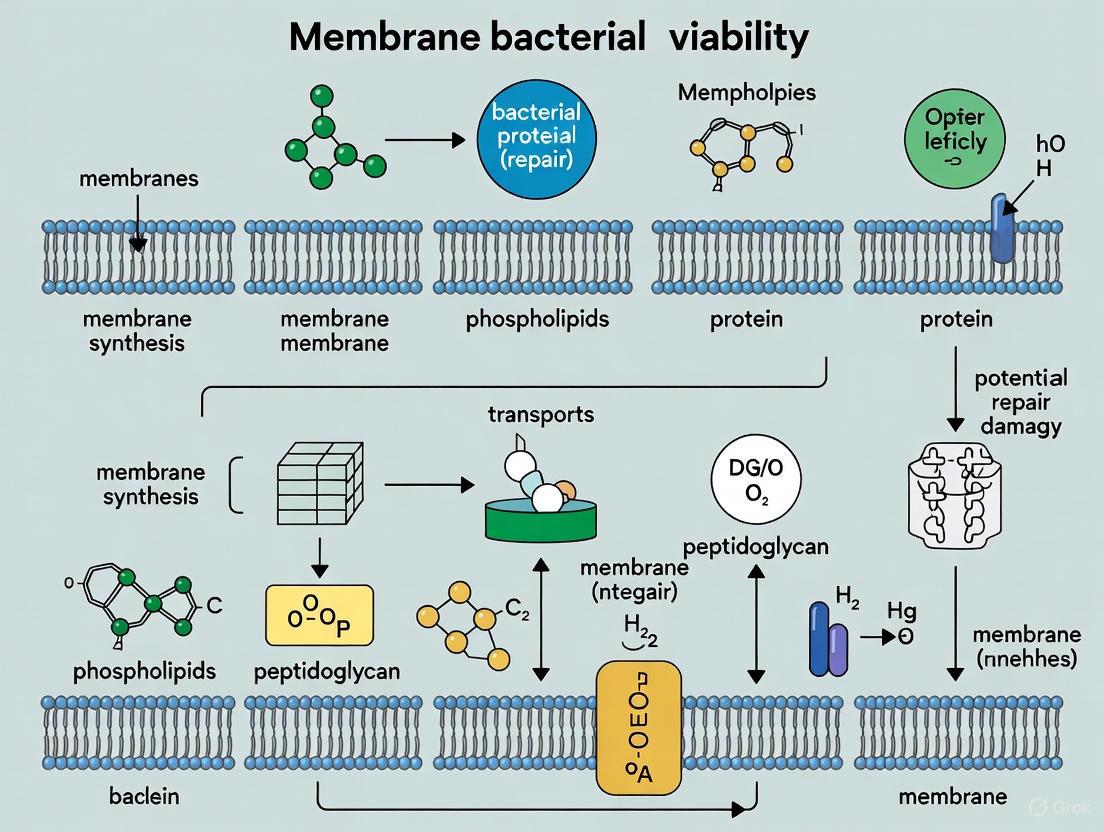
For researchers and drug development professionals, bacterial membrane integrity is a critical indicator of cell viability, serving as a cornerstone for infectious disease research, antibiotic development, and sterilization validation.
Membrane Integrity in Bacteria: A Foundational Guide to Viability, Assessment, and Clinical Implications
Abstract
For researchers and drug development professionals, bacterial membrane integrity is a critical indicator of cell viability, serving as a cornerstone for infectious disease research, antibiotic development, and sterilization validation. This article synthesizes foundational concepts, current methodologies, and emerging trends by exploring the structural role of the cell envelope, the consequences of membrane compromise, and the latest techniques for assessing integrity—from classic dye exclusion to advanced flow cytometry and fluorescence lifetime microscopy. It further addresses key challenges such as the viable but non-culturable (VBNC) state and provides a framework for validating and comparing methodological data, offering a comprehensive resource for advancing antimicrobial strategies and diagnostic tools.
The Bacterial Shield: Defining Membrane Integrity and Its Role in Cellular Viability
The bacterial cell envelope is the fundamental interface between the cell and its environment, serving as the primary barrier that maintains cellular integrity and enables survival in challenging conditions. For researchers investigating membrane integrity and bacterial viability, understanding the sophisticated architecture and functional coordination of the envelope layers is paramount. This multilayered structure, comprising membranes and supportive polymers, not only confers structural stability but also mediates critical interactions with antimicrobial agents, making it a focal point for drug development efforts.
The significance of the cell envelope as a barrier is exemplified by the fundamental classification of bacteria through the Gram stain, which distinguishes organisms based on structural differences in their envelope architecture [1]. This review provides an in-depth technical analysis of the cell envelope's structural and functional roles, with emphasis on experimental approaches for assessing its integrity, relevant for research in antibiotic discovery, bacterial pathogenesis, and microbial physiology.
Structural Organization of the Cell Envelope
The bacterial cell envelope demonstrates remarkable architectural diversity across species, with two primary organizational paradigms in Gram-positive and Gram-negative bacteria. Despite their differences, both types maintain a continuous, rigid peptidoglycan layer essential for withstanding internal turgor pressure and maintaining cell shape [1] [2].
The Gram-Positive Cell Envelope
Gram-positive bacteria possess a single cytoplasmic membrane surrounded by a thick, multilayered peptidoglycan sacrus that can be 30–100 nanometers thick [1]. This peptidoglycan meshwork is interwoven with anionic polymers called teichoic acids, which extend to the surface and contribute to the cell's negative charge [1] [2]. The cytoplasmic membrane is a phospholipid bilayer containing proteins that perform numerous functions including energy generation, protein secretion, and nutrient transport [2].
The Gram-Negative Cell Envelope
The Gram-negative cell envelope presents a more complex, multi-layered structure with three distinct components: an inner cytoplasmic membrane, a thin peptidoglycan cell wall located in the periplasmic space, and an asymmetric outer membrane [1]. This organization creates an additional cellular compartment—the periplasm—which contains a distinct set of proteins and serves as a buffer zone between the cell interior and external environment [1].
The outer membrane is a critical defensive barrier with unique characteristics. Unlike conventional biological membranes, its outer leaflet is composed primarily of lipopolysaccharide (LPS) rather than phospholipids [1]. LPS molecules bind avidly to each other, especially when stabilized by cations like Mg²⁺, forming a nonfluid continuum that is exceptionally effective at excluding hydrophobic molecules, including many antibiotics [1]. This outer membrane contains specialized transmembrane proteins called β-barrel proteins that form channels for selective nutrient uptake [1].
Table 1: Comparative Structural Features of Gram-Positive and Gram-Negative Cell Envelopes
| Structural Feature | Gram-Positive Bacteria | Gram-Negative Bacteria |
|---|---|---|
| Outer Membrane | Absent | Present (asymmetric with LPS in outer leaflet) |
| Peptidoglycan Layer | Thick (30-100 nm), multilayered | Thin (1-2 molecules deep) |
| Teichoic Acids | Present (woven through peptidoglycan) | Absent |
| Periplasmic Space | Absent | Present (between inner and outer membranes) |
| Lipopolysaccharide | Absent | Present (endotoxic) |
| Porin Proteins | Absent | Present (β-barrel proteins) |
Mycobacteria and Other Variations
Some bacteria, notably mycobacteria, possess unique envelope architectures that differ from both Gram-positive and Gram-negative paradigms. Mycobacteria lack an outer membrane but have a distinctive cell wall composed of arabinogalactan, peptidoglycan, and mycolic acid that forms an exceptionally robust external barrier [3] [4]. Other variations include bacteria without cell walls (e.g., Mycoplasma) and those with surface layers (S-layers) composed of protein or glycoprotein [1] [4].
Functional Roles of the Cell Envelope
Barrier Function and Homeostasis
The primary function of the cell envelope is to serve as a selective barrier that protects the cell from external threats while maintaining internal homeostasis. The outer membrane of Gram-negative bacteria is particularly effective in this role, providing impermeability to hydrophobic compounds, detergents, and many antibiotics [1] [2]. This barrier function is maintained through coordinated systems that preserve membrane asymmetry and remove mislocalized phospholipids, such as the Mla (maintenance of lipid asymmetry) pathway [5].
The following diagram illustrates the functional coordination between key envelope components in maintaining barrier integrity:
Shape Determination and Mechanical Strength
The peptidoglycan layer provides mechanical strength to withstand internal turgor pressure, which can be substantial due to the high concentration of macromolecules inside the cell [1] [3]. This rigid polymer forms a scaffold that determines cellular morphology—whether spherical (cocci), rod-shaped (bacilli), or spiral—and prevents osmotic lysis [3] [2]. Recent research has revealed that the LPS-enriched outer membrane also contributes significantly to cell shaping and reinforcement against turgor pressure [5].
Transport and Communication
While serving as a barrier, the envelope must also allow selective passage of nutrients and waste products. The cytoplasmic membrane regulates molecular traffic via transport proteins and serves as a respiratory membrane in prokaryotes, housing respiratory enzymes [3]. In Gram-negative bacteria, porins in the outer membrane (e.g., OmpF, OmpC) facilitate passive diffusion of small hydrophilic molecules, while specific channels (e.g., LamB, PhoE) enable transport of particular substrates [1].
Pathogenesis and Host Interaction
Surface components of the envelope play critical roles in pathogenesis. LPS (endotoxin) in Gram-negative bacteria can trigger septic shock in infected hosts [1]. Capsules, formed from polysaccharides in the glycocalyx, protect bacteria from phagocytosis and enhance virulence [3]. Adhesive structures such as pili and fimbriae facilitate attachment to host tissues and surface colonization, often leading to biofilm formation [3] [4].
Quantitative Assessment of Envelope Integrity and Bacterial Viability
Research on membrane integrity employs diverse methodologies to quantify bacterial viability and characterize envelope damage. Different methods measure distinct aspects of cell health, and results may not be directly comparable across techniques [6].
Table 2: Methods for Assessing Bacterial Viability and Envelope Integrity
| Method Category | Specific Methods | Measurand | Applications | Considerations |
|---|---|---|---|---|
| Culture-Based | Colony Forming Unit (CFU) | Culturable cells | Viability assessment, antimicrobial testing | Time-consuming, measures only culturable subpopulations [6] |
| Membrane Integrity | Fluorescence flow cytometry with viability dyes | Membrane integrity | Rapid viability assessment, cell health profiling | Requires fluorescent probes and method optimization [6] |
| Membrane Potential | Flow cytometry with membrane potential-sensitive dyes | Membrane polarization | Metabolic status assessment | Correlates with metabolic activity [7] |
| Molecular | PCR, genomic sequencing | Genetic material | Total cell quantification, community analysis | Does not distinguish live/dead cells without preprocessing [6] |
| Morphological | Field Emission Scanning Electron Microscopy (FE-SEM) | Structural changes | Visualization of envelope damage | Qualitative assessment of morphological alterations [7] |
Methodological Considerations for Quantitative Assessment
When selecting methods for envelope integrity assessment, researchers must consider the specific measurand (the quantity intended to be measured) as different techniques probe different cellular properties [6]. The ISO 20391-2:2019 standard provides a framework for evaluating cell counting method performance through quality metrics including proportionality, coefficient of variation, and R² value [6]. Proportionality is particularly important—dilutions of a sample by a given factor should result in corresponding reductions in measured values by the same factor for an ideal measurement process [6].
Experimental Approaches for Investigating Envelope Integrity
Protocol 1: Assessing Membrane Damage Using Fluorescence-Based Methods
Purpose: To quantify bacterial membrane damage and depolarization following exposure to antimicrobial agents or stressors.
Principle: Fluorescent dyes with different membrane permeability properties enable differentiation between cells with intact and compromised envelopes. Propidium iodide (PI) enters only cells with damaged membranes, while membrane potential-sensitive dyes (e.g., DiOC₂(3)) detect membrane depolarization [7] [6].
Procedure:
- Prepare bacterial suspensions in appropriate buffer (e.g., PBS) and expose to stressor (antimicrobial agent, acid, plasma, etc.) for predetermined durations.
- Stain with fluorescent dyes: Propidium iodide (≥94.0%) for membrane integrity assessment and/or DiOC₂(3) (98%) for membrane potential measurement.
- Incubate samples in dark according to dye-specific protocols (typically 15-30 minutes).
- Analyze by flow cytometry or fluorescence microscopy.
- For flow cytometry, collect a minimum of 10,000 events per sample and use unstained and single-stained controls to establish gating parameters.
- Quantify percentage of cells with compromised membranes (PI-positive) and/or depolarized membranes.
Applications: This method has been applied to study the effect of microwave plasma on Staphylococcus aureus and Salmonella abony, showing membrane impairment leading to leakage of intracellular contents and eventual cell death [7]. Similarly, it has been used to evaluate citric acid-induced membrane damage in Vibrio species, revealing greater membrane damage in stationary-phase cells compared to logarithmic-phase cells [8].
Protocol 2: Quantifying Intracellular Leakage and DNA Damage
Purpose: To assess envelope integrity by measuring leakage of intracellular components and genetic material damage.
Principle: Compromised envelope integrity results in leakage of proteins, lipids, and nucleic acids. UV absorbance at 260 nm can detect nucleic acid release, with hyperchromic effects indicating DNA damage [7].
Procedure:
- Treat bacterial cells with envelope-targeting agents and remove cells by centrifugation (e.g., 10,000 × g for 10 minutes).
- Collect supernatant and measure absorbance at 260 nm using a spectrophotometer.
- Compare with untreated controls to quantify nucleic acid release.
- For protein leakage assessment, use protein quantification assays (e.g., Bradford, BCA) on supernatant fractions.
- Correlate leakage with viability measures (e.g., CFU) to establish relationship between envelope damage and cell death.
Applications: This approach confirmed that microwave plasma treatment causes significant intracellular leakage and DNA damage in bacteria, contributing to irreversible loss of viability [7].
Protocol 3: Visualization of Morphological Changes via Electron Microscopy
Purpose: To directly visualize structural alterations in the cell envelope following treatments.
Principle: High-resolution microscopy reveals surface alterations, envelope disruption, and morphological changes indicative of compromised integrity.
Procedure:
- Fix bacterial cells with glutaraldehyde solution (25% in H₂O) followed by post-fixation with osmium tetroxide (≥99.8%).
- Dehydrate samples through a graded series of ethanol or acetone concentrations.
- Critical point dry or use chemical drying methods to preserve structure.
- Sputter-coat samples with conductive material (e.g., gold, platinum).
- Image using Field Emission Scanning Electron Microscopy (FE-SEM) at appropriate magnifications.
- Compare treated samples with untreated controls to identify envelope alterations.
Applications: FE-SEM has revealed that microwave plasma treatment causes significant morphological changes in both Gram-positive and Gram-negative bacteria, including cell surface shrinkage and rupture [7].
The following diagram illustrates the experimental workflow for a comprehensive assessment of envelope integrity:
The Scientist's Toolkit: Essential Research Reagents and Materials
Table 3: Key Research Reagents for Cell Envelope Integrity Studies
| Reagent/Material | Function/Application | Examples/Specifications |
|---|---|---|
| Propidium Iodide | Membrane integrity assessment; stains DNA in cells with compromised membranes | ≥94.0% purity; requires flow cytometry or fluorescence microscopy for detection [7] |
| DiOC₂(3) | Membrane potential sensing; detects membrane depolarization | 98% purity; used with fluorescence spectrofluorometry or flow cytometry [7] |
| Glutaraldehyde | Chemical fixation for electron microscopy | 25% solution in H₂O; preserves cellular structure for FE-SEM [7] |
| Osmium Tetroxide | Post-fixation for lipid retention in EM samples | ≥99.8% purity; enhances membrane contrast in electron microscopy [7] |
| Terephthalic Acid | Detection of hydroxyl radicals | 98% purity; used in reactive oxygen species (ROS) detection assays [7] |
| Phosphate Buffered Saline | Suspension medium for experimental treatments | pH 7.4; provides isotonic environment for bacterial cells during treatments [7] |
| Nutrient Agar/Broth | Culture media for bacterial propagation and CFU assays | Standard formulations (e.g., M001/M002 from HiMedia); supports bacterial growth [7] |
| Ultra-low Attachment Plates | Spheroid formation for 3D culture models | 96-well format; enables aggregate formation for specialized studies [9] |
Current Research and Emerging Insights
Recent investigations continue to reveal sophisticated molecular interplay between envelope components. Studies in Acinetobacter baumannii demonstrate that LD-transpeptidases (LDTs) such as LdtJ contribute not only to peptidoglycan remodeling but also influence broader regulatory networks, including the stringent response [5]. Genetic interactions between PG remodeling enzymes and the Mla lipid transport pathway reveal functional coordination between PG integrity and outer membrane lipid asymmetry [5].
Research on stress responses shows that bacteria deploy adaptive mechanisms to maintain envelope integrity under challenging conditions. For instance, Vibrio species exposed to citric acid exhibit activation of efflux pumps that facilitate recovery from membrane damage, with stationary-phase cells showing greater membrane damage than logarithmic-phase cells [8]. Such findings highlight the dynamic nature of the envelope barrier and its capacity for adaptation and repair.
Advanced imaging techniques continue to provide new insights into envelope organization. Magnetic resonance imaging (MRI) protocols now enable non-destructive, longitudinal assessment of cellular aggregates, allowing characterization of parameters like cell viability and tissue composition without structural disruption [9]. Such methodological advances offer powerful tools for investigating envelope function in physiologically relevant model systems.
The bacterial cell envelope represents a sophisticated, multifunctional barrier essential for cellular integrity and survival. Its complex architecture, comprising membranes and supportive polymers in various configurations, provides both structural stability and selective permeability. For researchers investigating bacterial viability and antimicrobial mechanisms, comprehensive assessment of envelope integrity requires integrated methodological approaches that probe different aspects of structure and function. Continuing advances in our understanding of envelope biology reveal an increasingly detailed picture of the molecular coordination between envelope components and their collective role in bacterial resilience. These insights provide valuable foundations for developing novel therapeutic strategies targeting this critical cellular structure.
The plasma membrane is a fundamental barrier that safeguards the specific intracellular milieu of a cell, and its integrity is utterly crucial for normal cell viability and function [10]. In bacterial cells, the peptidoglycan (PG) cell wall maintains the characteristic shape and protects against fluctuations in internal osmotic pressure [11]. The compromise of this cellular envelope, particularly through oxidative stress, initiates a cascade of events that can culminate in cell lysis and death. This pathway is not only a natural consequence of certain environmental stresses but also a critical mechanism exploited by antibiotics and the host immune response. Understanding the precise molecular journey from the initial oxidative insult to the physical disintegration of the cell is therefore paramount for fundamental bacterial viability research and the development of novel antimicrobial strategies.
The Initiation: Membrane Oxidation and Lipid Peroxidation
The Chemistry of Membrane Oxidation
Cellular membranes are primary targets of oxidation chemistry [12]. The process often begins with the generation of reactive oxygen species (ROS), such as singlet oxygen or free-radical ROS, which can directly modify membrane lipids and proteins [12]. A critical reaction is hydrogen abstraction from the bis-allylic methylene carbons present in polyunsaturated fatty acids (PUFAs), which are the main targets of membrane oxidation [12]. This single initiation event can trigger a chain reaction that propagates through the bilayer, leading to the formation of many lipid peroxides [12].
Subsequent chemical reactions, including cyclization, rearrangement, and cleavage, lead to a complex heterogeneous population of oxidized products [12]. A significant outcome is the formation of oxidatively truncated phospholipids and species containing aldehydes, which can further react with nearby proteins or lipids to form Schiff base adducts [12]. The extent of oxidation is influenced by factors such as the presence of lipophilic antioxidants (e.g., vitamin E), which limit propagation, and pro-oxidant factors like presence of metals and high oxygen levels [12].
Consequences of Lipid Peroxidation on Membrane Properties
The accumulation of oxidized lipid products fundamentally alters membrane properties. In vitro studies demonstrate that the inclusion of oxidized lipids into lipid bilayers induces a loss of permeability barrier function [12]. In vivo, oxidatively truncated phospholipids can enter cells, disrupt mitochondrial membrane function, and induce apoptosis [12]. Furthermore, the process of lipid peroxidation (LPO) is critically engaged in the killing of bacteria by antimicrobial peptides and human macrophages [12]. Recent evidence suggests that the "phase pale" microscopic appearance of lysing Bacillus subtilis cells, often associated with the leakage of cell contents, is closely linked to LPO, presumably due to the perturbation of membrane integrity [11].
Table 1: Key Reactive Oxygen Species and Their Roles in Membrane Oxidation
| Reactive Oxygen Species | Formation/Origin | Primary Membrane Target | Resulting Oxidation Product |
|---|---|---|---|
| Singlet Oxygen | Irradiation of photosensitizers (photosensitization) | Lipids, Proteins | Peroxides (e.g., Lipid Hydroperoxides) |
| Free-radical ROS (e.g., •OH) | Fenton reaction, metabolic processes | PUFAs (Bis-allylic carbons) | Lipid radicals (initiating chain reaction) |
| Lipid Radicals | Hydrogen abstraction by other ROS | Adjacent PUFAs | Lipid Peroxides (Propagation) |
The Pathway to Lysis: From Oxidative Damage to Membrane Failure
The journey from oxidative stress to cell lysis involves a defined sequence of molecular and cellular events. The following pathway delineates this progression, highlighting key stages and their interconnections.
Critical Role of Iron and Metabolic Dysregulation
A pivotal stage in the oxidative stress pathway is the engagement of redox-active iron [11]. Iron released from intracellular stores can participate in Fenton chemistry, amplifying lipid peroxidation and generating more ROS, thus creating a vicious cycle of oxidative damage [11]. This is demonstrated by the rescue of B. subtilis cell wall mutants by the iron-chelating compound mirubactin C (MC), which sequesters iron and prevents its pro-oxidant effects, thereby counteracting LPO and preventing lysis without correcting morphological abnormalities [11].
Concurrently, oxidative membrane damage leads to a cascade of internal failures. The loss of membrane permeability results in aberrant calcium influx, a key signal that can activate degradative enzymes and disrupt signaling [10]. There is also a critical loss of the electrochemical gradient, which is essential for energy generation and transport [13]. In bacteria, inhibition of cell wall synthesis by β-lactams has been shown to trigger metabolic imbalances, including an increase in glycolytic flux and perturbations in the TCA cycle, leading to accelerated ROS production from the respiratory chain—a process known as metabolic dysregulation that actively contributes to lethal outcomes [11].
Experimental Assessment: Methodologies for Quantifying Compromise
Direct Assessment of Membrane Integrity
Researchers employ a suite of techniques to detect and quantify membrane integrity breaches, ranging from small nanopores to full lysis.
Dye Exclusion Assays: These are standard for detecting significant membrane defects.
- Propidium Iodide (PI): A membrane-impermeant dye that enters cells with compromised membranes and fluoresces upon binding nucleic acids. It is a classic marker for dead cells and is suitable for detecting larger pores (>1-1.5 nm) [14].
- YO-PRO-1: A smaller dye molecule than propidium, allowing it to detect smaller pores. It was used to visualize plasma membrane permeabilization by ultrashort electric pulses (USEPs) where PI uptake was minimal [14].
- SYTOX, TO-PRO: Other examples of charged dyes used to stain cells with defective membranes [13].
Thallium (Tl+) Uptake Detection: A highly sensitive technique for detecting nanopores too small for conventional dyes. Cells are loaded with a Tl+-sensitive fluorophore (e.g., FluxOR). The entry of the small Tl+ cation (van der Waals diameter 0.392 nm) upon membrane disruption causes a surge in fluorescence, allowing real-time detection of nanopore formation and lifetime [14].
Patch-Clamp Measurements: This electrophysiological technique directly measures the ionic conductance across the plasma membrane. It can establish a profound, long-lasting increase in membrane conductance following insults like USEPs, indicating the formation of permeabilization pathways [14].
Pressure Decay Test (PDT): A direct integrity test used in industrial and biotechnological membrane applications. The membrane system is pressurized, and the decay rate is monitored; a faster decay indicates a breach in integrity [13].
Table 2: Comparison of Membrane Integrity Detection Methods
| Method | Detectable Pore Size | Key Advantage | Key Limitation | Common Application |
|---|---|---|---|---|
| Tl+ Uptake (FluxOR) | ~0.4 nm (Nanopores) | High sensitivity for smallest defects; real-time kinetics. | Requires specific loading and Tl+-containing buffer. | Fundamental research on nanoporation. |
| YO-PRO-1 Uptake | < ~1.5 nm | Smaller than PI, useful for intermediate pores. | Less sensitive than Tl+ for smallest nanopores. | Electroporation studies, cell death analysis. |
| Propidium Iodide (PI) Uptake | > ~1.5 nm | Simple, reliable, standard for cell death. | Cannot detect nanopores. | Viability/cytotoxicity assays. |
| Patch-Clamp | Ionic (Sub-nm) | Direct functional readout of ionic conductance. | Technically challenging; low-throughput. | Biophysical studies of membrane permeability. |
| Pressure Decay Test | Macroscopic defects | Direct, sensitive to system integrity. | Performed offline; for membrane filtration systems. | Industrial membrane quality control. |
Protocol: Fluorescent Detection of Tl+ Uptake to Assess Nanopore Formation
This protocol is adapted from studies on ultrashort electric pulses to detect nanopores impermeable to propidium iodide [14].
Objective: To detect and analyze the formation of small, transient nanopores in the plasma membrane of mammalian cells (e.g., CHO, GH3, NG108) using a Tl+-sensitive fluorescent dye.
Materials:
- Cells: Adherent mammalian cell line (e.g., CHO-K1).
- Fluorophore: FluxOR Thallium Detection Kit (Invitrogen).
- Buffers: Tl+ bath buffer (containing Tl+ and other ions, see reference for composition), control buffer (without Tl+) [14].
- Equipment: Inverted microscope equipped with a confocal laser scanning system and a fast perfusion system for buffer switching.
Procedure:
- Cell Preparation: Plate cells onto poly-L-lysine-treated glass coverslips and culture for 24-48 hours until desired confluency is reached.
- Dye Loading: Load cells with the FluxOR dye reagent according to the manufacturer's instructions. This typically involves incubating cells with the dye loading solution for a specified period (e.g., 60-90 minutes) followed by a wash and incubation in a dye-free buffer.
- Experimental Setup: Place the coverslip into a glass-bottomed chamber mounted on the microscope. Maintain temperature at 22-24°C.
- Baseline Acquisition: Initiate time-lapse fluorescent imaging in control buffer (without Tl+) to establish a baseline fluorescence.
- Application of Stimulus & Tl+ Buffer: Subject cells to the membrane-perturbing stimulus (e.g., USEP, antimicrobial peptide). Simultaneously or immediately after, switch the perfusion system to the Tl+-containing bath buffer.
- Image Acquisition: Continue time-lapse fluorescent imaging for several minutes post-stimulus to capture the kinetics of Tl+ uptake.
- Data Analysis: Quantify the fluorescence intensity over time in individual cells or regions of interest. A dose-dependent, immediate surge in fluorescence indicates Tl+ influx through formed nanopores.
Notes:
- The assay can be combined with other dyes (e.g., YO-PRO-1) for concurrent detection of larger pores.
- The longevity of nanopores can be tested by delaying the addition of the Tl+ buffer after the stimulus [14].
Table 3: Key Research Reagent Solutions for Membrane Integrity Studies
| Reagent / Resource | Function / Application | Specific Example |
|---|---|---|
| FluxOR Thallium Kit | Sensitive fluorescent detection of nanopore formation via Tl+ uptake. | Invitrogen [14] |
| Propidium Iodide (PI) | Membrane-impermeant viability dye for detecting large membrane defects. | Common supplier: Sigma-Aldrich [13] [14] |
| YO-PRO-1 Iodide | Cell-impermeant cyanine dye for detecting smaller pores than PI. | Common supplier: Thermo Fisher Scientific [13] [14] |
| Mirubactin C (MC) | Iron-chelating compound used to probe the role of iron in oxidative damage and lysis. | Purified from actinomycete cultures [11] |
| MOSAICS Software Suite | A comprehensive, high-performance software for analyzing lipid bilayer structure and dynamics from Molecular Dynamics (MD) trajectories. | https://github.com/MOSAICS-NIH/ [15] |
| Avizo Software | 3D visualization and analysis software for interpreting complex imaging data, including materials and biological structures. | Thermo Fisher Scientific [16] |
Bacterial viability assessment is a cornerstone of public health, pharmaceutical development, and fundamental microbiological research. While traditional methods have relied on culturability as the gold standard, modern science recognizes that bacterial viability is a complex concept requiring multiple assessment criteria. This technical guide examines the three principal viability criteria—culturability, metabolic activity, and membrane integrity—within the context of bacterial physiology and research applications. We provide a comprehensive comparison of these approaches, detailed experimental protocols, and an analysis of their respective strengths and limitations. The content emphasizes that membrane integrity has emerged as a crucial parameter for detecting viable but non-culturable (VBNC) cells and providing rapid, accurate viability assessments, particularly in drug development and environmental monitoring contexts.
Bacterial viability is fundamentally defined as the proportion of living, healthy cells within a given population [17]. However, operationalizing this definition presents significant challenges, as a cell's "aliveness" encompasses multiple functional attributes: the capacity for growth and reproduction, metabolic activity, and structural integrity. The complexity of bacterial physiology has led to the establishment of three widespread and accepted criteria for viability assessment: (1) culturability, based on reproductive capacity; (2) metabolic activity, based on biochemical processes; and (3) membrane integrity, based on cellular structure [18]. Each criterion probes different aspects of cellular function, and their correlation varies depending on bacterial species, environmental conditions, and physiological states.
The viable but non-culturable (VBNC) state represents a particular challenge in viability assessment. When bacterial pathogens encounter unfavorable conditions (low temperatures, nutrient deprivation, high antibiotic concentrations), they may enter this state where they maintain metabolic activity and membrane integrity but lose the ability to form colonies on standard media [19] [18]. VBNC cells remain potentially pathogenic and can resuscitate under favorable conditions, making their detection crucial for accurate risk assessment in clinical and food safety contexts.
Comparative Analysis of Viability Criteria
Fundamental Principles and Technical Approaches
The three main viability criteria target different aspects of bacterial physiology, each with distinct methodological approaches and limitations.
Table 1: Core Principles of Bacterial Viability Assessment Criteria
| Assessment Criterion | Fundamental Principle | Key Technical Methods | What is Actually Measured |
|---|---|---|---|
| Culturability | Capacity for growth and reproduction | Plate culture counting, automated colony counters | Visible colony formation on appropriate solid media |
| Metabolic Activity | Presence of ongoing biochemical processes | Tetrazolium reduction, fluorescein diacetate (FDA) hydrolysis, glucose uptake assays | Enzyme activity, substrate conversion, electron transport system function |
| Membrane Integrity | Structural completeness of cellular envelope | LIVE/DEAD staining (SYTO9/PI), PMA-qPCR/dPCR, lactate dehydrogenase (LDH) release | Dye exclusion/enrichment, DNA accessibility, enzyme leakage |
The following diagram illustrates the conceptual relationship between these viability criteria and their application in detecting different physiological states:
Comparative Performance Across Bacterial States
Table 2: Method Performance Across Bacterial Physiological States
| Assessment Method | Viable Culturable Cells | VBNC Cells | Dead/Non-Viable Cells | Key Limitations |
|---|---|---|---|---|
| Plate Culture | Positive detection | Fails to detect | No growth | 2-7 days for results; cannot detect VBNC state |
| Tetrazolium Salts (MET, XTT) | Positive detection | Variable detection | No signal | Toxicity to some bacteria; pH sensitivity |
| Fluorescein Diacetate (FDA) | Positive detection | Variable detection | No signal | Efflux from viable cells; pH sensitivity |
| LIVE/DEAD Staining (SYTO9/PI) | Green fluorescence | Green fluorescence (if membrane intact) | Red fluorescence | May stain damaged viable cells; background issues |
| PMA-qPCR/dPCR | DNA amplification | DNA amplification (if membrane intact) | DNA not amplified | Requires optimization of PMA conditions |
Membrane Integrity Assessment: Methodologies and Applications
Fundamental Mechanism of Membrane Integrity-Based Assays
Membrane integrity assays operate on the principle that viable cells maintain intact, selectively permeable membranes that exclude certain dyes, while compromised membranes in dead cells permit dye entry and binding. The intact plasma membrane of viable cells acts as a structural barrier, maintaining electrochemical gradients and preventing the leakage of cellular components while excluding external dyes [17] [18]. When membrane integrity is irreversibly lost—considered a definitive indicator of cell death [17]—this barrier function collapses, allowing dyes to penetrate and bind intracellular components.
Key Methodological Approaches
Fluorescent Staining Methods
Dye Exclusion Assays utilize membrane-impermeant dyes that are excluded by viable cells but penetrate and stain dead cells. Propidium iodide (PI) is a classic example that binds to DNA by intercalating between base pairs but is excluded from cells with intact membranes [17]. When the membrane is compromised, PI enters the cell and produces a red fluorescence signal.
Dye Conversion Assays employ lipophilic, non-fluorescent dyes that cross intact membranes and are converted by intracellular enzymes into fluorescent, membrane-impermeant products. Calcein AM is a common example that is hydrolyzed by intracellular esterases to produce green fluorescent calcein, which is retained only in viable cells [20].
Dual Staining Systems combine both principles for simultaneous assessment of viable and dead subpopulations. The LIVE/DEAD BacLight Bacterial Viability Kit exemplifies this approach, using SYTO 9 (green fluorescent nucleic acid stain that labels all cells) and propidium iodide (red fluorescent stain that labels only membrane-compromised cells) [20]. When both dyes are present, PI reduces SYTO 9 fluorescence when both dyes bind to nucleic acids, allowing differentiation: viable cells with intact membranes fluoresce green, while dead cells with compromised membranes fluoresce red.
Molecular Methods with Viability PCR
PMA (Propidium Monoazide) - qPCR/dPCR represents an advanced molecular approach that differentiates between viable and dead cells by selectively modifying DNA from membrane-compromised cells. PMA is a DNA-intercalating dye (similar to PI) with a photoinducible azide group that covalently cross-links to DNA upon exposure to bright light [21] [19]. This modification inhibits PCR amplification. The critical innovation is that PMA cannot penetrate intact membranes, so only DNA from dead cells (with compromised membranes) becomes cross-linked and fails to amplify [19]. This method is particularly valuable for detecting VBNC pathogens, as demonstrated in a recent study on Campylobacter jejuni, where PMA-dPCR successfully detected VBNC cells in chicken samples with sensitivity as low as 10² CFU/25g [19].
Experimental Protocols
Protocol 1: LIVE/DEAD BacLight Staining for Microscopy and Flow Cytometry
Principle: Simultaneous differentiation of live and dead bacterial populations based on membrane integrity using two nucleic acid binding dyes [20].
Reagents:
- LIVE/DEAD BacLight Bacterial Viability Kit (containing SYTO 9 and PI)
- Appropriate buffer (e.g., 0.85% NaCl, phosphate-buffered saline)
- Ethanol (70%) for positive control (dead cells)
Procedure:
- Prepare dye mixtures according to manufacturer's instructions (typically 1.5μL SYTO 9 and 1.5μL PI per 1mL buffer)
- Harvest bacterial culture and wash twice with buffer
- Resuspend bacterial pellet in dye mixture to approximately 10⁶-10⁷ cells/mL
- Incubate in darkness at room temperature for 15-30 minutes
- Analyze by fluorescence microscopy or flow cytometry:
- Fluorescence microscopy: Use FITC filter set for SYTO 9 (green, all cells) and TRITC filter set for PI (red, dead cells)
- Flow cytometry: Use 488nm excitation, collect green fluorescence at 500-550nm (SYTO 9) and red fluorescence at >600nm (PI)
Controls:
- Viable control: Untreated, log-phase cultures
- Dead control: Cells treated with 70% ethanol for 1 hour
- Autofluorescence control: Unstained cells
Protocol 2: PMA Treatment for Viability qPCR
Principle: Selective inhibition of PCR amplification from membrane-compromised cells using light-activated DNA cross-linking [19].
Reagents:
- PMA dye (e.g., PMAxx from Biotium)
- Light-emitting diode (LED) photolysis device
- DNA extraction kit
- qPCR reagents
Procedure:
- Prepare bacterial suspension in clear-bottom tubes
- Add PMA to final concentration of 10-50μM (optimize for specific bacterial species)
- Incubate in dark for 5-10 minutes with occasional mixing
- Expose to LED light (465-475nm) for 15-30 minutes on ice (to prevent heating)
- Centrifuge and proceed with DNA extraction according to kit instructions
- Perform qPCR with species-specific primers
- Include controls: untreated samples (total cells), heat-killed cells (dead cell control)
Optimization Notes:
- PMA concentration and light exposure time require empirical optimization
- Use long amplicon primers (e.g., 595bp for Campylobacter jejuni) to enhance differential detection [19]
- Consider digital PCR (dPCR) for improved quantification of low-abundance targets [19]
Research Applications and Current Advances
Antimicrobial Development and Testing
Membrane integrity assays provide crucial information in antimicrobial mechanism of action studies. Recent research on microwave plasma sterilization demonstrated that microbial inactivation correlated with membrane damage detected through PI uptake and flow cytometry [22]. The study revealed that 300 seconds of microwave plasma treatment achieved 6-log reduction in Staphylococcus aureus and Salmonella abony, with mechanisms involving reactive oxygen species (ROS) that caused membrane depolarization, loss of integrity, and eventual cellular leakage [22].
Food Safety and Environmental Monitoring
The detection of VBNC pathogens represents a significant advancement in food safety. The development of PMA-dPCR protocols for Campylobacter jejuni enables detection of VBNC cells that evade traditional culture methods, providing more accurate risk assessment [19]. This approach successfully detected as few as 100 VBNC cells per 25g of chicken meat, demonstrating superior sensitivity compared to culture methods [19].
Biofilm Research and Chronic Infections
Bacterial biofilms present significant challenges due to their inherent tolerance to antimicrobials. Membrane integrity assays help characterize subpopulations within biofilms with varying susceptibility. Research using electrochemical systems to study maintenance metabolism in Pseudomonas aeruginosa revealed that cells in attenuated metabolic states maintain membrane integrity despite reduced metabolic activity, contributing to antibiotic tolerance [23].
The Scientist's Toolkit: Essential Reagents and Technologies
Table 3: Key Research Reagents for Membrane Integrity Assessment
| Reagent/Technology | Function/Principle | Example Applications | Detection Platform |
|---|---|---|---|
| SYTO 9 | Green fluorescent nucleic acid stain penetrating all cells | LIVE/DEAD staining, total cell count | FM, FC, M |
| Propidium Iodide (PI) | Red fluorescent nucleic acid stain excluded by intact membranes | Dead cell detection in viability assays | FM, FC, M |
| PMA/PMAxx | DNA cross-linker excluded by intact membranes | Viability PCR for distinguishing live/dead cells | qPCR, dPCR |
| Calcein AM | Esterase substrate converted to green fluorescent calcein in viable cells | Live cell staining, viability assays | FM, FC, M |
| DiOC₂(3) | Membrane potential-sensitive dye for assessing membrane polarization | Detection of membrane depolarization in apoptosis/necrosis | FM, FC |
| Lactate Dehydrogenase (LDH) | Cytoplasmic enzyme released upon membrane damage | Cytotoxicity assays, membrane integrity assessment | Spectrophotometry |
Abbreviations: FM - Fluorescence Microscopy; FC - Flow Cytometry; M - Microplate Reader
Membrane integrity stands as a fundamental criterion for bacterial viability assessment, particularly valuable for its ability to detect VBNC cells and provide rapid results compared to culture-based methods. While each viability criterion—culturability, metabolic activity, and membrane integrity—provides unique insights, the integration of multiple approaches offers the most comprehensive assessment of bacterial viability.
Future directions in the field include:
- Development of novel membrane-sensitive dyes with improved specificity and signal-to-noise ratio
- Integration of membrane integrity assessment with microfluidic platforms for single-cell analysis
- Standardization of viability PCR methods across different bacterial species and sample matrices
- Advancement of rapid, point-of-care membrane integrity tests for clinical and environmental applications
As research continues to reveal the complexity of bacterial physiological states, particularly in biofilms and stress responses, membrane integrity assessment will remain an essential tool for accurate viability determination in research, clinical, and industrial contexts.
The integrity of the cellular membrane is a cornerstone of bacterial viability, acting as the primary interface between the cell and its environment. For researchers and drug development professionals, a deep understanding of membrane health is critical for developing antimicrobial strategies, assessing bacterial response to stressors, and ensuring public health safety. A healthy bacterial membrane is not defined by a single property but by the synergistic maintenance of three core indicators: a stable and negative membrane potential, selective impermeability to harmful substances, and the dynamic homeostasis that regulates these properties. This technical guide delves into the fundamental principles and assessment methodologies for each indicator, providing a structured framework for advanced bacterial viability research. The concepts are framed within the established criteria for viability assessment—culturability, metabolic activity, and membrane integrity—with a particular focus on the latter as the most definitive proof of cell viability [24] [13].
Membrane Potential: The Electrogenic Foundation
The bacterial membrane potential (MP) is an electrical potential difference across the cytoplasmic membrane, generated by the separation of charges. It is a key component of the proton motive force, essential for ATP synthesis, nutrient transport, and cellular signaling [25]. A healthy, metabolically active cell typically maintains a strongly negative internal membrane potential, often in the range of -65 mV to -127 mV, as quantified in Bacillus subtilis [26] [27]. This dynamic property is increasingly recognized not as a static homeostasis but as a responsive signal that reflects the cell's functional and metabolic state, adapting to stressors like antibiotics [25].
Quantitative Measurement of Membrane Potential
Traditional intensity-based fluorescent dyes are prone to artifacts from dye concentration, cell size, and photobleaching. Fluorescence lifetime imaging microscopy (FLIM) overcomes these limitations by measuring the nanosecond-scale decay of fluorescence, a parameter independent of dye concentration and highly sensitive to the local environment, including the membrane potential [28].
Experimental Protocol: Absolute MP Quantification via FLIM
This protocol, adapted from recent studies, details the steps for obtaining a single-cell-resolved distribution of MP in a bacterial population [26] [27].
Cell Preparation and Staining:
- Grow bacterial cultures (e.g., Bacillus subtilis) to the desired growth phase in an appropriate minimal medium (e.g., MSgg or M9).
- Harvest cells and incubate with a VoltageFluor (VF) dye, a unique optical transducer whose fluorescence lifetime varies as a function of MP via photoinduced electron transfer (PeT). The typical incubation is 30 minutes at room temperature, protected from light.
- Wash the cells to remove excess dye and resuspend in the appropriate buffer for imaging.
Calibration and Perturbation:
- To generate a cell-specific calibration curve, artificially modulate the potassium concentration gradient across the membrane using the potassium ionophore valinomycin. This creates a series of samples with known, defined MPs.
- Include a positive control for depolarization by treating a sample with a chemical depolarizing agent (e.g., CCCP).
Data Acquisition via FLIM:
- Mount the samples on a microscope equipped with a time-correlated single photon counting (TCSPC) system for lifetime measurement.
- Collect fluorescence lifetime images for both the calibrated samples and the experimental unknowns. Phasor-FLIM analysis is recommended for high-throughput, quantitative readout.
Data Analysis:
- Plot the measured fluorescence lifetime against the known MP for the calibrated samples to create a standard curve.
- Use this calibration to convert the lifetime values from the experimental samples into absolute MP values in millivolts (mV).
- Analyze the distribution of MP across the cell population to assess heterogeneity, which indicates a diversity of physiological states [26].
Flowchart of the FLIM-based Membrane Potential Measurement Protocol.
Membrane Impermeability: The Selective Barrier
A fundamental characteristic of a healthy cell is an intact membrane that acts as a selective permeability barrier. It must allow the influx of nutrients while effectively excluding noxious compounds, including many antibiotics [29]. In gram-negative bacteria, the asymmetric outer membrane bilayer, with its lipopolysaccharide (LPS) leaflet, is particularly effective at retarding the entry of lipophilic compounds [29]. Impermeability is often assessed using dye exclusion assays, which leverage the inability of certain charged dyes to cross an intact lipid bilayer [24] [13].
Assessing Impermeability via Dye Exclusion
Experimental Protocol: Membrane Integrity Staining
This method distinguishes between cells with intact and compromised membranes using nucleic acid-binding dyes that are normally impermeant [24] [13].
Sample Preparation:
- Prepare a bacterial suspension, ensuring an appropriate cell density for fluorescence microscopy or flow cytometry.
- For a multi-parameter analysis, a green fluorescent metabolic stain (e.g., fluorescein diacetate (FDA)) can be applied first to identify metabolically active cells.
Staining with Propidium Iodide (PI):
- Add PI to the bacterial suspension to a final concentration typically between 1-10 µg/mL.
- Incubate for 5-15 minutes at room temperature in the dark. PI is a red fluorescent dye that is excluded by cells with intact membranes. It only enters cells with damaged or compromised membranes, where it binds to nucleic acids and exhibits a strong red fluorescence.
Analysis and Interpretation:
- Analyze the sample using fluorescence microscopy or flow cytometry.
- Cells with intact membranes (viable): PI-negative (no red fluorescence). They may show green fluorescence if a metabolic stain was used.
- Cells with compromised membranes (non-viable): PI-positive (red fluorescence).
Table 1: Common Dyes for Assessing Membrane Impermeability and Metabolic Activity
| Dye Name | Mechanism of Action | Signal from Healthy Cells | Primary Application |
|---|---|---|---|
| Propidium Iodide (PI) | Dye exclusion; binds nucleic acids through compromised membranes. | No fluorescence (excluded) | Impermeability / Membrane Integrity [13] |
| SYTOX Stains | Dye exclusion; high-affinity nucleic acid stain impermeant to intact cells. | No fluorescence (excluded) | Impermeability / Membrane Integrity [13] |
| Fluorescein Diacetate (FDA) | Metabolic hydrolysis by esterases to fluorescent fluorescein. | Green fluorescence | Metabolic Activity [24] |
| 2-NBDG | Glucose analog taken up and metabolized by active cells. | Signal decreases upon metabolism | Metabolic Activity / Glucose Uptake [24] |
Membrane Homeostasis: The Dynamic Regulator
Homeostasis refers to the cell's ability to regulate its internal environment, including ion gradients, pH, and turgor pressure, in the face of external changes. The membrane is central to this regulation. Hyperosmotic stress, such as dehydration, directly targets the membrane, causing damage that manifests as changes in lipid order and phase transition behavior, ultimately leading to a loss of viability [30]. A key event in the loss of homeostasis is the mitochondrial permeability transition (mPT) in eukaryotes, a Ca²⁺-dependent formation of a non-selective pore in the inner mitochondrial membrane. While a direct equivalent in bacteria is less defined, the underlying principle—dysregulation of membrane permeability leading to collapse of gradients and energy metabolism—is a universal hallmark of cell death [31].
Investigating Homeostasis Under Stress
Experimental Protocol: Analyzing Membrane Response to Hyperosmotic Stress
This methodology uses Fourier-Transform Infrared (FTIR) spectroscopy to quantify structural and phase changes in the cell membrane under stress [30].
Stress Application:
- Hyperosmotic Shock: Rapidly expose bacterial cells (e.g., Geobacter sulfurreducens) to a high-osmolarity solution (e.g., containing high concentrations of carbohydrates).
- Slow Dehydration: Gradually dehydrate a bacterial sample under controlled conditions.
FTIR Spectroscopy Measurement:
- Collect FTIR spectra of the bacterial samples during and after stress application.
- Focus on the spectral regions corresponding to lipid acyl chains (around 2850-2920 cm⁻¹ for C-H stretches) to assess membrane lipid order and phase behavior.
Data Interpretation:
- Lipid Order: A shift in wave number indicates changes in the fluidity and packing of membrane lipids.
- Phase Transition Temperature: Monitor the temperature at which the membrane transitions from a gel to a fluid phase. Hyperosmotic stress can make this transition less cooperative [30].
- Correlation with Viability: Correlate the membrane structural data with viability counts (e.g., via plate culture) from parallel samples. Studies show that maximizing survival post-rehydration requires avoiding the lyotropic phase change of the membrane during dehydration [30].
Workflow for Analyzing Membrane Homeostasis Under Stress.
The Scientist's Toolkit: Research Reagent Solutions
Table 2: Essential Reagents for Membrane Integrity and Viability Research
| Reagent / Material | Function / Application | Key Considerations |
|---|---|---|
| VoltageFluor (VF) Dyes | Optical transducers for fluorescence lifetime-based measurement of absolute membrane potential. | Superior to intensity-based dyes; requires FLIM capability for optimal use [26] [27]. |
| Propidium Iodide (PI) | Nucleic acid stain for dye exclusion assays to assess membrane impermeability. | Standard for dead cell discrimination; use in multiparametric assays with metabolic markers [13]. |
| Fluorescein Diacetate (FDA) | Cell-permeant substrate for esterases; metabolic activity marker. | Hydrolysis product (fluorescein) is pH-sensitive and can leak out if membrane is compromised [24]. |
| Valinomycin | Potassium ionophore used for calibrating membrane potential measurements. | Allows creation of defined K⁺ diffusion potentials for generating a standard curve [26]. |
| Digitoxin / GDN / LMNG | Mild detergents for gentle extraction of intact membrane protein complexes (e.g., F-ATP synthase). | Essential for studying structurally delicate multi-subunit complexes [31]. |
| SYTOX Stains | High-affinity nucleic acid stains impermeant to intact membranes. | Alternative to PI for membrane integrity assays; high fluorescence enhancement upon binding [13]. |
The triad of membrane potential, impermeability, and homeostasis provides a robust framework for evaluating bacterial membrane health. Moving beyond traditional, slow culture-based methods, the techniques outlined here—FLIM for quantitative electrophysiology, dye exclusion for integrity assessment, and FTIR for stress response—offer powerful, quantitative tools for researchers. A comprehensive understanding of these interconnected indicators is paramount for advancing fundamental knowledge of bacterial physiology and for developing novel strategies to combat bacterial infections and control microbial contamination. Future research will continue to elucidate the complex signaling roles of membrane dynamics and their application in biotechnology and medicine.
The plasma membrane serves as the fundamental barrier that delineates the cell from its environment, making its integrity vital for bacterial survival, function, and viability [32]. In bacterial viability research, understanding the specific threats that compromise this barrier is paramount for developing antimicrobial strategies, assessing infectious risks, and elucidating bacterial survival mechanisms [24] [10]. The membrane's integrity is constantly challenged by a multitude of stressors present in both extracellular and intracellular environments [32]. This technical guide provides an in-depth analysis of these threats, categorizing them into chemical, mechanical, and biological stressors, and summarizes the experimental methodologies employed to study their effects. The content is framed within a broader thesis on the fundamentals of membrane integrity, serving as a critical resource for researchers, scientists, and drug development professionals working at the forefront of microbial control and bacterial pathogenesis.
Types of Membrane Damage and Stressors
Plasma membrane integrity can be compromised through two primary modes of damage: chemical disruptions and physical breaches [32]. These can be instigated by a diverse array of stressors, which are summarized in the table below and detailed in the subsequent sections.
Table 1: Categorization of Membrane Stressors
| Stressor Category | Specific Type | Mode of Action | Consequence on Membrane |
|---|---|---|---|
| Chemical | Reactive Oxygen Species (ROS) | Lipid peroxidation, oxidative damage [32] | Chemical disruption, loss of membrane function [32] |
| Amphiphilic Molecules (e.g., bile acids, alcohol, NSAIDs) [32] | Disruption of membrane fluidity [32] | Increased permeability, potentiation of oxidative damage [32] | |
| Enzymatic (e.g., phospholipases) [32] | Hydrolysis of membrane phospholipids [32] | Altered fluidity, predisposition to osmotic lysis [32] | |
| Mechanical | Physiological Force (e.g., muscle contraction, locomotion) [32] | Induction of nanoruptures and tears [32] | Physical breach, leakage of cellular contents [32] |
| Shear Stress (e.g., during circulation) [32] | Physical strain on the membrane [32] | Physical breach [32] | |
| Interaction with Nanoparticles or Protein Aggregates [32] | Pore formation or membrane tearing [32] | Physical breach, nanotoxicity [32] | |
| Biological | Pore-Forming Proteins (e.g., from immune cells or pathogens) [32] [10] | Protein oligomerization and pore insertion [32] | Physical breach (pores of 1-50 nm), ion imbalance [32] |
| Compromised Cell Wall Biosynthesis (e.g., LDT deletion) [5] | Disruption of molecular coordination with the outer membrane [5] | Overall envelope instability, morphological defects [5] |
Chemical Stressors
Chemical stressors induce damage by altering the biochemical properties of the membrane. A prominent mechanism is lipid peroxidation, accelerated by reactive oxygen species (ROS) such as the hydroxyl radical (·OH) and hydrogen peroxide (H₂O₂) [32]. This process damages polyunsaturated fatty acids, leading to the release of fragmented lipids and a loss of membrane integrity [32]. The effectiveness of this mechanism is demonstrated in antimicrobial applications; for instance, non-thermal microwave plasma generates ROS, causing oxidative stress that results in a 6-log reduction of Staphylococcus aureus and Salmonella abony within 300 seconds [7]. Other chemical stressors include amphiphilic molecules like drugs and alcohol, which disrupt membrane fluidity, and enzymes like phospholipases, which hydrolyze membrane components and make cells prone to lysis [32].
Mechanical Stressors
Mechanical stressors cause physical breaches in the plasma membrane. These can range from small nanoruptures (~1–10 nm) to larger tears, often resulting from physiological forces like muscle contraction or physical trauma [32]. Shear stress, experienced by cells during transit in circulation or migration through tissues, is another common source of mechanical damage [32] [10]. Furthermore, interactions with inert substances such as silica nanoparticles or protein aggregates can lead to pore formation or membrane tearing, a significant consideration in nanotoxicity [32].
Biological Stressors
Biological stressors often involve highly specialized mechanisms. Pore-forming proteins (PFPs) are prevalent in immunity and infectious disease [32]. These proteins recognize host surface receptors, oligomerize, and insert into the membrane to form pores of defined sizes ( ~1–50 nm) [32]. These pores disrupt ion gradients and can lead to cell death if not repaired. Another biological threat arises from the disruption of the cell envelope synthesis machinery. In Gram-negative bacteria, the outer membrane and the peptidoglycan (PG) layer are coordinately maintained. For example, in Acinetobacter baumannii, deletion of the LD-transpeptidase LdtJ—an enzyme involved in PG crosslinking—leads to severe morphological defects and growth deficiencies, highlighting how compromised cell wall integrity directly impacts overall envelope stability [5].
The following diagram illustrates how these diverse stressors lead to membrane damage and the cellular consequences.
Quantitative Analysis of Stressor Effects
The impact of various stressors can be quantified through specific experimental measures, providing critical data for evaluating antimicrobial efficacy or bacterial resilience.
Table 2: Quantitative Measures of Stressor Effects on Membrane Integrity
| Stressor | Experimental Model | Key Quantitative Metrics | Reported Findings |
|---|---|---|---|
| Microwave Plasma (ROS) | S. aureus and S. abony in PBS [7] | - Log Reduction: 6-log within 300 s [7]- ROS Increase: H₂O₂ (173-392%), ·OH (30-40%) [7]- Membrane-Depolarized Cells: 88-95% via flow cytometry [7] | Elevated ROS levels correlate directly with microbial inactivation and loss of membrane potential [7]. |
| Pore-Forming Proteins | Mammalian cells exposed to cytolysins [32] | - Pore Size: ~1-50 nm [32]- Persistence Time: Small pores can persist longer due to delayed repair [32] | Pore size and ion selectivity influence repair mechanism activation and cell fate [32]. |
| LdtJ Deletion (Cell Wall Stress) | Acinetobacter baumannii ΔldtJ mutant [5] | - Morphology: Shift from coccobacillary to coccoid shape [5]- Genetic Suppression: Full suppression of defects in ΔldtJ Δmla double mutant [5] | Reveals critical genetic interplay between peptidoglycan integrity and outer membrane lipid asymmetry [5]. |
Assessing Membrane Integrity: Key Methodologies
Determining bacterial viability and membrane integrity is a critical step in research, moving beyond traditional culture-based methods. The accepted criteria for viability are culturability, metabolic activity, and membrane integrity [24]. The following sections detail key experimental protocols for assessing membrane damage.
Membrane Integrity and Viability Assays
Table 3: Core Methodologies for Assessing Membrane Integrity and Viability
| Method Category | Specific Assay | Principle | Key Reagents & Tools |
|---|---|---|---|
| Culture-Based | Plate Culture [24] | Ability of viable cells to form colonies on solid media [24] | Nutrient Agar/Broth [24] |
| Membrane Integrity | Flow Cytometry with Vital Dyes [7] [24] | Dyes like Propidium Iodide (PI) enter only cells with compromised membranes, binding to DNA [24]. | Flow Cytometer, Propidium Iodide (PI) [7] |
| Fluorescence Lifetime Microscopy (FLIM) [28] | Measures decay time of a fluorescent membrane potential probe, which differs between viable and non-viable cells [28]. | Membrane Voltage Probes (e.g., anionic dyes), FLIM Microscope [28] | |
| Morphological Analysis | Field Emission Scanning Electron Microscopy (FE-SEM) [7] | High-resolution imaging to visualize morphological changes and physical breaches on the cell surface [7]. | Glutaraldehyde, Osmium Tetroxide (for fixation) [7] |
| DNA Damage Assessment | Spectrophotometry [7] | Detection of hyperchromic effect at 260 nm indicating DNA leakage and damage due to membrane impairment [7]. | UV-Vis Spectrophotometer [7] |
Detailed Experimental Protocols
Protocol: Bacterial Inactivation via Non-Thermal Microwave Plasma
This protocol is adapted from studies achieving a 6-log reduction of bacterial pathogens [7].
- Bacterial Preparation: Grow bacterial strains (e.g., Staphylococcus aureus NCIM 2079, Salmonella abony NCIM 2257) in nutrient broth. Harvest cells in mid-logarithmic phase, centrifuge, and wash twice with phosphate-buffered saline (PBS). Resuspend the bacterial pellet in PBS to a standardized concentration (e.g., ~10⁸ CFU/mL) [7].
- Plasma System Setup: Utilize a 2.45 GHz microwave magnetron system. Place the bacterial suspension (e.g., 10 mL) in a vacuum chamber. Evacuate the chamber to a sub-atmospheric pressure of 0.3–0.5 mbar using a rotary pump. Introduce an air-ozone mixture (0.8% ozone, 5 LPM flow rate) into the chamber [7].
- Plasma Exposure: Expose the bacterial suspension to the generated microwave plasma for varying durations (e.g., 0 s to 300 s). Maintain consistent power input and gas flow rates throughout the experiment. An untreated sample serves as the control [7].
- Post-Exposure Analysis:
- Viability Count: Serially dilute the treated and control suspensions, plate on nutrient agar, and incubate. Count colony-forming units (CFU) after 24-48 hours to determine log reduction [7].
- Membrane Integrity: Stain an aliquot of the bacterial suspension with Propidium Iodide (PI) and analyze via flow cytometry or confocal microscopy to quantify the population of cells with compromised membranes [7] [24].
- Morphology: Fix bacterial cells with glutaraldehyde (2.5%) and osmium tetroxide (1%), dehydrate with an ethanol series, and critically point dry. Image using FE-SEM to observe surface ultrastructural changes [7].
- ROS Quantification: Use fluorescent probes like 2',7'-Dichlorofluorescin diacetate (DCFH-DA) for general ROS or Terephthalic acid (TA) specifically for ·OH, detected via spectrofluorometry [7].
Protocol: Assessing Viability via Fluorescence Lifetime Microscopy (FLIM)
This method offers a quantitative measure of membrane potential, circumventing issues with intensity-based assays [28].
- Sample Preparation: Prepare bacterial suspensions (e.g., Streptococcus mutans) in an appropriate buffer. Include controls with viable (untreated) and non-viable (e.g., heat-killed) cells [28].
- Staining: Incubate the bacterial suspension with a membrane-potential-sensitive fluorescent dye (e.g., an anionic oxonol dye) according to manufacturer specifications [28].
- Image Acquisition: Place a drop of the stained suspension on a microscope slide. Using a FLIM system, acquire images. The system measures the fluorescence lifetime (in nanoseconds) of the dye within the bacterial membrane [28].
- Data Analysis: Analyze the FLIM data. Viable cells with a strong membrane potential will localize the dye differently, resulting in a distinct fluorescence lifetime compared to non-viable cells with a depolarized membrane. The lifetime value serves as a direct, quantitative benchmark for viability [28].
The workflow for a comprehensive assessment of membrane integrity, integrating multiple methods, is depicted below.
The Scientist's Toolkit: Essential Research Reagents
This section details key reagents and materials used in experimental research on bacterial membrane integrity.
Table 4: Essential Reagents and Materials for Membrane Integrity Research
| Reagent/Material | Function/Application | Specific Example |
|---|---|---|
| Propidium Iodide (PI) | Fluorescent vital dye that stains nucleic acids in cells with compromised membranes [24]. | Used in flow cytometry to quantify dead populations in a bacterial suspension after plasma exposure [7]. |
| 2',7'-Dichlorofluorescin diacetate (DCFH-DA) | Cell-permeable dye that is hydrolyzed by intracellular esterases and oxidized by ROS to a fluorescent compound, indicating oxidative stress [7]. | Detection of general ROS levels in bacteria treated with microwave plasma via spectrofluorometry [7]. |
| Fluorescein Diacetate (FDA) | Cell-permeable dye converted to fluorescent fluorescein by non-specific intracellular enzymes; indicates metabolic activity and membrane integrity [24]. | Viability assessment based on enzymatic activity; accumulation of fluorescein indicates an intact membrane [24]. |
| Glutaraldehyde & Osmium Tetroxide | Cross-linking and fixative agents used for preparing biological samples for electron microscopy [7]. | Fixation of bacterial cells for FE-SEM analysis to preserve ultrastructural morphology post-stressor exposure [7]. |
| Non-Thermal Microwave Plasma System | Source of chemical stressors (ROS, ozone) for studying microbial inactivation and oxidative membrane damage [7]. | 2.45 GHz magnetron system used to generate plasma under sub-atmospheric pressure for bacterial inactivation studies [7]. |
| Fluorescence Lifetime Microscope (FLIM) | Advanced imaging system that measures fluorescence decay time, used for quantitative viability assessment based on membrane potential [28]. | Differentiating viable and non-viable Streptococcus mutans using a membrane voltage probe [28]. |
Tools of the Trade: Current Methods for Assessing Bacterial Membrane Integrity
In bacterial viability research, cellular membrane integrity serves as a fundamental indicator of cell vitality. The dye exclusion assay, utilizing fluorophores like propidium iodide (PI) and SYTO stains, has become a cornerstone technique for assessing this parameter based on membrane permeability. Viable bacteria with intact membranes actively exclude certain dyes, whereas non-viable cells with compromised membranes permit dye entry and nucleic acid binding [24] [33]. This principle provides researchers with a rapid method to distinguish between live and dead bacterial populations.
The SYTO/PI dual-staining system offers significant advantages for modern microbiological research, including rapid procedure, quantitative analysis, and compatibility with high-throughput platforms like flow cytometry and microplate readers [33]. However, the technique involves complex molecular interactions that require careful optimization and interpretation. This technical guide examines the fundamental principles, standardized methodologies, and critical considerations for implementing these assays within the broader context of bacterial viability research.
Fundamental Principles of Dye Exclusion Assays
Molecular Mechanisms of Nucleic Acid Staining
Dye exclusion assays function through distinct molecular interactions with cellular components:
Propidium Iodide (PI): This membrane-impermeant dye (668.4 Da) intercalates into nucleic acids with no sequence preference, exhibiting a 20- to 30-fold fluorescence enhancement upon binding DNA [34] [33]. PI penetrates only cells with disrupted membranes, making it a standard marker for non-viable cells.
SYTO Stains: These membrane-permeant cyanine dyes enter both live and dead cells, exhibiting low intrinsic fluorescence until bound to nucleic acids [33]. From the search results, SYTO 9 is frequently employed in viability assays.
Competitive Binding Dynamics: When both dyes are present, PI demonstrates stronger affinity for nucleic acids (association constant: 3.7 × 10⁵/M) than SYTO 9 (association constant: 1.8 × 10⁵/M), displacing SYTO 9 in cells with compromised membranes [33].
Theoretical Framework for Viability Assessment
The conceptual foundation for viability staining centers on membrane integrity as an indicator of cellular viability. The diagram below illustrates the differential staining mechanism based on membrane status:
Figure 1: Differential Staining Mechanism Based on Membrane Integrity
Experimental Protocols and Methodologies
Optimized Staining Protocol for Bacterial Cells
The following protocol has been adapted from standardized methodologies for yeast [35] and bacterial systems [33], incorporating critical optimization steps:
Materials Required:
- SYTO 9 stock solution (3.34 mM in DMSO)
- Propidium iodide stock solution (20 mM in water)
- Sterile saline buffer (0.85% NaCl)
- Microcentrifuge tubes or 96-well plates
- Fluorescence measurement instrument (flow cytometer, microplate reader, or microscope)
Step-by-Step Procedure:
Sample Preparation:
- Harvest bacterial cells by gentle centrifugation (3,000 × g for 5 minutes)
- Resuspend cell pellet in sterile 0.85% saline buffer to approximately 10⁶–10⁷ cells/mL
- Note: Saline buffer produces minimal staining artifacts compared to growth media or water [35]
Staining Solution Preparation:
- Prepare working SYTO 9 solution at 33.4 μM in sterile deionized water (prepare fresh)
- Prepare working PI solution at 0.2 mM in sterile deionized water (stable at 4°C for 6 months)
- Alternatively, use commercial staining kits like FungaLight Yeast LIVE/DEAD Kit or BacLight Bacterial Viability Kit
Staining Procedure:
- Combine 100 μL cell suspension with 5 μL SYTO 9 working solution
- Incubate in darkness for 10-15 minutes at room temperature
- Add 5 μL PI working solution directly to the mixture
- Incubate in darkness for additional 5-15 minutes
- Note: Do not wash cells after staining to avoid dye distribution disruption
Analysis:
- Analyze samples within 30 minutes to minimize SYTO 9 bleaching effects
- Use appropriate controls: unstained cells, SYTO 9-only stained cells, and PI-only stained cells
Experimental Workflow Visualization
The complete experimental process, from sample preparation to data analysis, follows this standardized workflow:
Figure 2: Experimental Workflow for SYTO9/PI Staining
Quantitative Data and Technical Specifications
Dye Properties and Performance Characteristics
Table 1: Fluorescent Dye Properties and Staining Characteristics
| Parameter | SYTO 9 | Propidium Iodide (PI) |
|---|---|---|
| Molecular Weight | Not specified | 668.4 Da [34] |
| Excitation/Emission | 483/503 nm [33] | 535/617 nm [34] |
| Membrane Permeability | Permeable to all cells [33] | Impermeable to intact membranes [34] |
| Nucleic Acid Binding | Enhanced fluorescence when bound [33] | 20-30-fold enhancement when bound [33] |
| Association Constant | 1.8 × 10⁵/M [33] | 3.7 × 10⁵/M [33] |
| Staining Specificity | All cells | Membrane-compromised cells only |
| Critical Limitations | Strong bleaching (4-8% signal loss/5 min) [33] | Weak signal intensity compared to background [33] |
Species-Specific Staining Variations
Table 2: Bacterial Species-Specific Staining Responses
| Bacterial Species | SYTO 9 Staining Alone | SYTO 9 Signal After PI | Key Observations |
|---|---|---|---|
| Staphylococcus aureus (Gram-positive) | Equal intensity in live/dead cells [33] | 87% reduction in dead cells [33] | Reliable displacement by PI |
| Pseudomonas aeruginosa (Gram-negative) | 18x stronger in dead cells [33] | 85% reduction, but still 2.7x higher in dead cells [33] | Problematic interpretation |
| Escherichia coli (Gram-negative) | Stronger in dead cells [33] | Not specified | Similar to P. aeruginosa |
| Bacillus subtilis (Gram-positive) | No significant difference [33] | Not specified | Similar to S. aureus |
Critical Technical Considerations and Limitations
Methodological Challenges and Validation Requirements
The application of SYTO9/PI staining presents several critical considerations that necessitate method validation:
Gram-Stain Variability: Gram-negative bacteria frequently exhibit stronger SYTO9 signals in dead cells compared to live cells, a phenomenon not typically observed in Gram-positive species [33]. This fundamental difference significantly impacts viability interpretation across bacterial types.
SYTO 9 Photostability: SYTO9 demonstrates substantial bleaching effects, with 4-8% signal loss every 5 minutes depending on cell concentration and physiological state [33]. This necessitates standardized timing between staining and analysis.
PI Signal Strength: PI fluorescence intensity is relatively weak compared to background signals, with unbound PI producing high background (RFU ~700) and dead cells exhibiting RFU ~1200 after background subtraction [33]. This limitation affects assay sensitivity.
Biofilm Applications: PI staining may significantly underestimate viability in adherent bacterial cells and biofilms due to extracellular nucleic acids (eNA) in the matrix, creating false-positive dead signals [36]. One study showed 96% PI-positive E. coli cells in 24-hour biofilms despite 68% metabolic activity [36].
Cellular State Considerations: Membrane integrity does not always correlate with cultivability, particularly with viable but non-culturable (VBNC) cells that maintain membrane integrity but cannot divide [24] [36].
Troubleshooting Guide
Table 3: Troubleshooting Common Staining Issues
| Problem | Potential Causes | Solutions |
|---|---|---|
| High background fluorescence | Unbound dye, improper washing | Include dye-only controls; optimize dye:cell ratio |
| Weak PI signal | Low dead cell percentage, instrument settings | Increase laser power/voltage; verify dead cell controls |
| Inconsistent results between replicates | SYTO 9 bleaching, timing variations | Standardize analysis timing; minimize light exposure |
| Discrepancy with culturability | VBNC states, biofilm eNA | Validate with alternative method (e.g., metabolic assays) |
| Species-dependent staining patterns | Gram-specific differences | Perform species-specific validation |
The Scientist's Toolkit: Essential Research Reagents
Table 4: Essential Research Reagents for Dye Exclusion Assays
| Reagent/Equipment | Function/Purpose | Specifications/Examples |
|---|---|---|
| SYTO 9 stain | Membrane-permeable nucleic acid counterstain | 3.34 mM stock in DMSO; FungaLight Yeast LIVE/DEAD Kit |
| Propidium Iodide | Membrane-impermeable dead cell stain | 20 mM stock in water; store at 4°C in dark |
| Saline Buffer | Cell suspension and washing | 0.85% NaCl for minimal staining artifacts |
| Microplate Reader | High-throughput fluorescence measurement | Capable of 483/503 nm and 535/617 nm filters |
| Flow Cytometer | Single-cell analysis | Capable of detecting FITC and PE/Texas Red channels |
| Confocal Microscope | Spatial visualization of staining | CLSM with appropriate laser lines and objectives |
SYTO9/PI dye exclusion assays provide powerful methodology for bacterial viability assessment based on membrane integrity. However, the technique requires careful optimization and validation to account for species-specific responses, dye photostability limitations, and environmental factors like biofilm formation. When implemented with appropriate controls and understanding of its limitations, this approach delivers valuable insights into bacterial physiology and viability for pharmaceutical development, environmental monitoring, and basic microbiological research.
Flow Cytometry for Multiparametric Viability Analysis
Within the critical field of bacterial viability research, accurate assessment of cell life and death states is fundamental. Traditional culture-based methods, while useful, are limited as they fail to detect viable but non-culturable (VBNC) bacteria—a physiologically active state where cells cannot divide on standard media but retain metabolic activity and potential pathogenicity [37]. The emergence of this VBNC state in response to environmental stressors, such as antimicrobial treatments, poses a significant challenge for decontamination validation [37]. Flow cytometry emerges as a powerful solution, enabling high-throughput, multiparametric analysis of single cells. By simultaneously measuring multiple physiological parameters, this technique provides a robust framework for distinguishing between live, dead, and VBNC populations, thereby offering a more nuanced understanding of bacterial membrane integrity and viability that is essential for effective drug development and antimicrobial research [37].
Core Principles of Viability Analysis via Flow Cytometry
Flow cytometers analyze single cells in suspension as they pass in a fluid stream through a laser beam. The instrument measures light scatter and fluorescence emissions, providing data on both physical and chemical characteristics of each cell [38] [39].
- Light Scatter Signals: Forward scatter (FSC), measured in the same direction as the laser, is proportional to particle size. Side scatter (SSC), collected at approximately 90 degrees, provides information about the internal complexity or granularity of the cell [40] [37]. These two parameters allow for the initial gating and identification of a target bacterial population, excluding debris and other particles.
- Fluorescent Viability Staining: The core of multiparametric viability assessment lies in fluorescent dyes that report on cellular physiology. A quintessential method involves assessing membrane integrity using a combination of nucleic acid stains [37]. A green-fluorescent stain like SYTO9 permeates all cells, both live and dead. In contrast, a red-fluorescent stain like propidium iodide (PI) is a dye exclusion marker; it only penetrates cells with compromised cytoplasmic membranes. Furthermore, PI exhibits a greater affinity for nucleic acids than SYTO9, leading to the displacement of SYTO9 in dead cells and a resultant shift in their fluorescent signal [37]. This dual-staining approach allows for the clear discrimination of subpopulations within a heterogeneous sample.
A major challenge in multicolor analysis is spectral overlap, where the emitted light from one fluorophore is detected in the channel of another [38]. This must be corrected through a process called compensation to ensure accurate data interpretation [38]. Advanced instruments, known as spectral flow cytometers, address this by collecting the entire emission spectrum of each fluorophore and using algorithms to "unmix" the signals, facilitating the use of larger panels of dyes [38].
Essential Staining Protocols for Bacterial Viability
This section provides a detailed methodology for using flow cytometry to assess bacterial viability, with a focus on membrane integrity.
Sample Preparation and Staining
The following workflow outlines the critical steps for preparing bacterial samples for viability analysis using a live/dead stain [37] [39]. The diagram below visualizes this workflow and the subsequent logic for data-based interpretation.
Protocol: Bacterial Viability Staining with SYTO9 and PI
Materials Required:
- Bacterial cell suspension.
- Appropriate suspension buffer (e.g., PBS).
- SYTO9 nucleic acid stain.
- Propidium iodide (PI) stain.
- Centrifuge tubes and a refrigerated centrifuge.
Step-by-Step Procedure [37] [39]:
- Harvest and Wash: Harvest the bacterial culture and create a single-cell suspension. Centrifuge the suspension (e.g., 200 x g for 5 minutes at 4°C) to pellet the cells. Carefully remove the supernatant and resuspend the pellet in an ice-cold suspension buffer. A recommended cell concentration is 0.5–1 x 10^6 cells/mL [39].
- Stain with Viability Dyes: Add SYTO9 and PI to the cell suspension according to the manufacturer's instructions. A common commercial source for these dyes is the Live/Dead BacLight Bacterial Viability Kit [37].
- Incubate: Incubate the stained cells in the dark for the duration specified by the dye protocol (typically 15-30 minutes). Keeping the samples in the dark prevents photobleaching of the fluorophores [39].
- Acquire Data: Proceed to data acquisition on the flow cytometer without additional wash steps, to ensure accurate measurement of the staining.
Key Research Reagent Solutions
The following table details essential reagents and their functions for a successful flow cytometry viability experiment.
Table 1: Essential Reagents for Bacterial Viability Flow Cytometry
| Reagent Solution | Primary Function | Technical Considerations |
|---|---|---|
| SYTO9 Stain | Green-fluorescent nucleic acid stain that labels all bacterial cells regardless of viability [37]. | Permeates intact membranes. Signal is displaced by PI in dead cells. |
| Propidium Iodide (PI) | Red-fluorescent nucleic acid stain that only enters cells with compromised membranes [37]. | Serves as a marker for loss of membrane integrity. Has higher DNA affinity than SYTO9. |
| Fixation Solution | Preserves cell structure and halts biological processes (e.g., 1-4% Paraformaldehyde) [39]. | Not typically used prior to live/dead staining with SYTO9/PI, as it compromises all membranes. |
| FcR Blocking Buffer | Reduces non-specific antibody binding by blocking Fc receptors on immune cells [39]. | Crucial for specific staining in complex samples like whole blood. |
| Viability Dyes (e.g., 7-AAD, DAPI) | Distinguish live from dead cells by exploiting membrane integrity [39]. | Cannot be used with fixed cells. Choose a dye with minimal spectral overlap with other panel fluorophores. |
Data Interpretation and Gating Strategies
Interpreting flow cytometry data requires a systematic, step-wise gating strategy to isolate the bacterial population of interest and analyze the viability staining.
- Cell Population Identification: The first step is often to create a scatter plot of FSC-A versus SSC-A. On this plot, a gate (often referred to as "P1") is drawn around the population of interest to exclude small debris and large aggregates from the analysis [40].
- Viability Analysis via Scatter Plots: The gated events from P1 are then displayed on a two-color scatter plot of SYTO9 (e.g., FITC channel) versus PI (e.g., PE channel). This plot is divided into quadrants to separate distinct physiological states [40]:
- SYTO9+ / PI- (Bottom Right Quadrant): This population consists of live cells with intact membranes that exclude PI.
- SYTO9+ / PI+ (Top Right Quadrant): This population represents cells that have taken up both dyes, typically interpreted as dead cells with compromised membranes.
- SYTO9- / PI+ (Top Left Quadrant): This population may represent a subpopulation of dead cells with significantly compromised nucleic acids, or other staining artifacts, and is also classified as dead.
- SYTO9- / PI- (Bottom Left Quadrant): This population is generally considered debris or cells that are not stained.
This multiparametric approach was key in a study investigating Escherichia coli treated with Plasma-Activated Water (PAW). Researchers used SYTO9/PI staining to demonstrate a strong bactericidal effect, observing a significant increase in the PI-positive population. Furthermore, by comparing flow cytometry data with traditional Colony-Forming Unit (CFU) counts, they were able to confirm the absence of a VBNC state, as both techniques showed agreement [37]. This underscores the power of flow cytometry to provide a rapid and direct viability count that complements and validates culture-based methods.
Troubleshooting and Best Practices
Successful multiparametric viability analysis relies on adhering to several key best practices and being aware of common pitfalls.
- Appropriate Controls Are Critical: The use of isotype control antibodies to determine nonspecific binding is a common but often misinterpreted practice. A superior approach for setting gates for low-abundance antigens or in multicolor panels is to use Fluorescence Minus One (FMO) controls, which provide the most accurate assessment of background signal and spillover spreading error [38]. Unstained cells are also essential for determining autofluorescence levels.
- Titrate All Reagents: A common misunderstanding is that "the more fluorescent reagent is used, the better." In reality, both under- and over-staining can compromise data quality. Every antibody and fluorescent dye should be titrated on the target cells to find the concentration that provides the optimal stain index, balancing sensitivity and background [38].
- Understand Autofluorescence: All cells exhibit intrinsic autofluorescence, which can obscure weak signals. Rather than attempting to minimize it by reducing detector sensitivity—which can push the negative population into the noise floor—the goal should be to maximize the separation between specific fluorescence and the autofluorescent background. Detector sensitivity (PMT voltage) should be increased until the brightest fluorochrome in the panel is just within the linear range of detection [38].
Table 2: Quantitative Data from a Model Viability Study
This table summarizes hypothetical quantitative data, reflecting findings from studies like the PAW research, demonstrating how results from flow cytometry and CFU counting can be compared [37].
| Sample Treatment | Flow Cytometry (% Live Cells) | Flow Cytometry (% Dead Cells) | CFU Counting (Log Reduction) | VBNC State Indicated? |
|---|---|---|---|---|
| Control (Untreated) | 98.5 ± 0.5 | 1.5 ± 0.5 | 0.0 | No |
| Antimicrobial A | 15.2 ± 2.1 | 84.8 ± 2.1 | 2.5 ± 0.2 | No |
| Antimicrobial B | 65.3 ± 4.5 | 34.7 ± 4.5 | 2.8 ± 0.3 | Yes |
Flow cytometry stands as an indispensable tool for multiparametric viability analysis, moving beyond the binary limitations of traditional culture methods. By leveraging fluorescent dyes that report on fundamental physiological parameters like membrane integrity, it provides a high-resolution, single-cell view into heterogeneous bacterial populations. This technique is particularly crucial for identifying and ruling out the VBNC state, a critical task in validating the efficacy of novel antimicrobial agents and decontamination processes [37]. As the technology advances with spectral flow cytometry and increasingly sophisticated reagents, its capacity to dissect complex cellular states will only grow, solidifying its role in the fundamentals of membrane integrity research and the broader landscape of microbiological science and drug development.
Within the fundamental research on bacterial viability, assessing metabolic activity serves as a critical pillar alongside the evaluation of membrane integrity and culturability. Metabolic activity provides a direct measure of a cell's physiological state and energetic capabilities, offering insights that go beyond mere structural integrity. Among the various tools available, RedoxSensor Green (RSG) and 5-Cyano-2,3-ditolyl Tetrazolium Chloride (CTC) have emerged as prominent fluorescent probes for directly quantifying microbial metabolic activity. These assays function as vital proxies for cellular energy production, enabling researchers to distinguish between actively metabolizing cells and those that are dormant, stressed, or non-viable. Their application spans diverse fields, from environmental microbiology to drug development, where understanding bacterial response to antimicrobial agents is paramount.
The principle underlying these assays centers on detecting electron transport system (ETS) activity, a fundamental process in bacterial energy metabolism. While both assays target metabolic function, they operate through distinct mechanisms and offer complementary information about the physiological status of bacterial cells. This technical guide provides an in-depth examination of the RSG and CTC assays, detailing their methodologies, applications, and quantitative performance within the broader context of bacterial viability research.
Core Principles and Mechanisms of Action
RedoxSensor Green (RSG) Assay
The RedoxSensor Green assay utilizes a cell-permeant, non-fluorescent dye that becomes strongly fluorescent upon oxidation inside metabolically active cells. The mechanism involves the following key steps:
- Cellular Uptake: The diacetate form of RSG passively diffuses across the bacterial membrane.
- Enzymatic Conversion: Intracellular esterases cleave the acetate groups, trapping the dye within the cytoplasm.
- Oxidation and Fluorescence: The dye is oxidized by bacterial reductases and oxidases, particularly those in the electron transport chain, converting it to a fluorescent product.
- Signal Accumulation: The fluorescent product accumulates in direct proportion to the metabolic (oxidoreductase) activity of the cell, enabling quantification.
A significant advantage of RSG is its compatibility with downstream analyses, including flow cytometry and single-cell sorting, followed by genomic sequencing. Studies have confirmed that RSG fluorescence intensity correlates strongly with single-cell oxygen consumption rates (R² = 0.86), enabling its use as a quantitative proxy for respiration across diverse bacterial lineages [41]. This relationship allows researchers to convert fluorescence measurements into quantitative physiological data.
CTC (5-Cyano-2,3-ditolyl Tetrazolium Chloride) Assay
The CTC assay operates on a different principle, serving as an artificial terminal electron acceptor in the bacterial electron transport chain:
- Transport and Reduction: The water-soluble, colorless CTC molecule enters the cell and is reduced by electron transport system enzymes.
- Insoluble Precipitate Formation: Reduction converts CTC into an insoluble, red-fluorescent formazan precipitate.
- Intracellular Trapping: The formazan crystals accumulate intracellularly at sites of respiratory activity.
CTC functions as an alternative redox partner to the final electron acceptor, oxygen, making it a direct indicator of respiratory activity [42]. However, a key limitation is that the formation of insoluble crystals can be cytotoxic over extended periods and may physically disrupt cellular processes, potentially affecting viability and downstream analyses [42]. The method's effectiveness can also vary with bacterial physiological state, as starved or stressed cells may have insufficient reducing power to produce a detectable signal.
Quantitative Comparison of Assay Performance
The table below summarizes the key technical characteristics and performance metrics of the RSG and CTC assays, providing a direct comparison for methodological selection.
Table 1: Quantitative Comparison of RedoxSensor Green and CTC Assays
| Parameter | RedoxSensor Green (RSG) | CTC Assay |
|---|---|---|
| Core Principle | Detection of oxidoreductase activity | Reduction as terminal electron acceptor |
| Primary Measurement | Metabolic activity / Redox potential | Respiratory activity (Electron Transport System) |
| Signal Type | Soluble fluorescent product | Insoluble fluorescent formazan precipitate |
| Quantitative Correlation | Strong correlation with O₂ consumption (R² = 0.86) [41] | Correlates with CO₂ production and culturability in active growth phases [42] |
| Detection Limit (Cell Activity) | ~4 amol O₂/cell/h [41] | Varies with metabolic state; lower in starved cells [42] |
| Theoretical Community Detection Limit | ~4 pmol O₂/L/h [41] | Not explicitly quantified |
| Key Advantage | Non-destructive; compatible with cell sorting & genomics [41] | Direct indicator of respiration |
| Primary Limitation | Requires culture-based calibration for absolute quantification | Formazan crystals can be cytotoxic; may miss viable but stressed cells [42] |
Detailed Experimental Protocols
Protocol for RedoxSensor Green Assay
Materials:
- Bacterial culture or environmental sample
- RedoxSensor Green reagent (e.g., BacLight RedoxSensor Green Vitality Kit, Thermo Fisher B34954) [43]
- Appropriate buffer (e.g., PBS)
- Flow cytometer or fluorescence microscope
- Optional: Propidium Iodide for simultaneous membrane integrity assessment
Procedure:
- Sample Preparation: Harvest bacterial cells by gentle centrifugation and resuspend in an appropriate buffer to a consistent density. For environmental samples, minimal processing is recommended to preserve native physiological states.
- Staining: Add RedoxSensor Green reagent to the sample at a manufacturer-recommended concentration (e.g., 100 nM). Incubate in the dark for 15-30 minutes at the experimental temperature (e.g., 25-37°C) [44].
- Data Acquisition: Analyze the sample using flow cytometry or fluorescence microscopy. For flow cytometry, excite the dye at 488 nm and detect fluorescence emission at approximately 520 nm [43] [41].
- Data Analysis: Gate the bacterial population based on light scatter. The median or mean fluorescence intensity (MFI) of the population is proportional to the average metabolic activity. For absolute respiration rate quantification, apply a pre-established calibration curve relating RSG fluorescence to oxygen consumption rates [41].
- Viability Assessment (Dual Staining): To simultaneously assess membrane integrity, co-stain with propidium iodide (PI). Cells with compromised membranes will fluoresce red (PI-positive), while metabolically active cells with intact membranes will fluoresce green (RSG-positive) [43].
Protocol for CTC Assay
Materials:
- Bacterial sample
- CTC stock solution (e.g., 5-50 mM in PBS or deionized water)
- Nutrient solution (if substrate amendment is required)
- Dark, airtight incubation vessels
- Microscope with epifluorescence or flow cytometer
Procedure:
- Sample Preparation and Amendment: Prepare the bacterial suspension as for RSG. For environmental samples or starved cells, amending with a low-carbon substrate (e.g., 0.02% glucose) can enhance the signal by stimulating metabolic activity [42].
- Staining and Incubation: Add CTC from a stock solution to a final concentration typically between 2-10 mM. Incubate the samples in the dark for 60-180 minutes. The incubation must be airtight to prevent oxygen from outcompeting CTC as the terminal electron acceptor [42].
- Termination and Fixation: After incubation, the reaction can be stopped by adding a fixative like formaldehyde (2% final concentration) or by immediate analysis.
- Detection and Enumeration: Analyze samples via epifluorescence microscopy or flow cytometry. For microscopy, use a green excitation filter (e.g., 450-490 nm) and a long-pass red emission filter (>600 nm). CTC-positive cells appear as bright red spots due to intracellular formazan crystals. Flow cytometric detection uses a 488 nm laser with emission detection around 630 nm [42].
- Controls: Include a negative control (heat-killed cells) and a no-CTC control to account for autofluorescence.
The Scientist's Toolkit: Essential Research Reagents
Table 2: Key Reagent Solutions for Metabolic Activity Assessment
| Reagent / Kit | Function / Target | Key Features |
|---|---|---|
| BacLight RedoxSensor Green Vitality Kit [43] | Measures oxidoreductase activity (metabolic vitality) | Compatible with fixation; allows co-staining with PI for viability/vitality |
| LIVE/DEAD BacLight Bacterial Viability Kit [43] | Simultaneously assesses membrane integrity and metabolic activity | Uses SYTO9 (green, labels all cells) and PI (red, labels membrane-compromised cells) |
| CTC (5-Cyano-2,3-ditolyl Tetrazolium Chloride) | Artificial terminal electron acceptor for respiration | Requires prolonged, airtight incubation; signal indicates active ETS |
| Propidium Iodide (PI) | Membrane integrity stain (dead cell indicator) | Fluoresces red upon binding to DNA in cells with compromised membranes |
| SYTO 9 / SYTO 24 [43] | Nucleic acid stain (total cell count) | Green fluorescent stain that labels all bacterial cells regardless of physiological state |
Metabolic Activity Pathways and Workflows
The following diagram illustrates the fundamental mechanisms of the RedoxSensor Green and CTC assays within the context of bacterial cellular pathways, highlighting their distinct sites of action.
Mechanisms of RedoxSensor Green and CTC Assays
Integrated Workflow for Single-Cell Analysis
For complex samples, metabolic staining can be integrated with powerful downstream analyses, as demonstrated in advanced environmental studies. The following workflow outlines the steps for combining RSG staining with single-cell genomics to link metabolic function with phylogenetic identity.
Integrated Single-Cell Metabolic & Genomic Workflow
RedoxSensor Green and CTC assays provide powerful, complementary approaches for assessing bacterial metabolic activity, a core component of viability. RSG offers a robust, quantitative method for gauging general oxidoreductase activity with minimal cellular disruption, enabling direct correlation to respiration rates and compatibility with downstream single-cell analyses. In contrast, the CTC assay provides a direct, specific measure of respiratory chain activity, though its utility can be limited by cytotoxicity and reduced sensitivity in low-activity cells. The choice between these metabolic proxies depends critically on the research question—whether the goal is to quantify broad metabolic potential, specifically capture respiratory activity, or link function to genetic identity in complex microbial communities. When used within a structured experimental framework that includes appropriate controls and acknowledges their limitations, both assays significantly advance the fundamental understanding of bacterial physiology within the critical context of membrane integrity and cellular viability.
Measuring Membrane Potential with DiOC2(3) and FLIM
Within the fundamental study of bacterial viability research, membrane integrity is a cornerstone concept. A critical and active component of this integrity is the bacterial membrane potential (ΔΨ), an electrochemical gradient across the inner membrane that is essential for energy production, nutrient transport, and cell division [45]. Disruptions to ΔΨ are therefore a key indicator of physiological stress and a common mechanism of action for many antimicrobial compounds. While traditional viability assays determine if a cell is live or dead, measuring ΔΨ provides a deeper, functional insight into the cell's physiological state, often revealing stress long before cell death occurs. This technical guide details the methodology for quantitatively assessing bacterial membrane potential using the fluorescent dye 3,3'-Diethyloxacarbocyanine Iodide (DiOC2(3)) in conjunction with Fluorescence Lifetime Imaging Microscopy (FLIM), a powerful combination for advanced bacterial viability research.
DiOC2(3) as a Membrane Potential Sensor
Fundamental Mechanism of Action
DiOC2(3) is a cationic carbocyanine dye that accumulates within the bacterial cell in a membrane potential-dependent manner. The underlying principle is straightforward: as the interior of the cell becomes more negatively charged (a hyperpolarized state), the positively charged DiOC2(3) molecules are electrophoretically driven into the cell. At low intracellular concentrations, the dye monomers emit green fluorescence. However, as the concentration inside the cell increases—directly proportional to the magnitude of the membrane potential—the dye molecules form aggregates that exhibit a distinct redshift in their emission spectrum, resulting in red fluorescence [45] [46]. This concentration-dependent spectral shift provides a ratiometric readout, making DiOC2(3) a sensitive reporter of relative changes in ΔΨ.
Advantages for Bacterial Systems
The use of DiOC2(3) is particularly advantageous over classical electrophysiology techniques, which are ill-suited for bacteria due to their small size and the presence of a cell wall [45]. The ratiometric property of the dye allows researchers to move beyond simple intensity measurements, which can be affected by factors like dye concentration and cell thickness, toward a more robust measurement that is intrinsically normalized. While the dye works well in many Gram-positive bacteria, its application in Gram-negative species requires specific optimization to overcome the dye-excluding properties of the outer membrane [45].
Fluorescence Lifetime Imaging Microscopy (FLIM)
Principles of FLIM
Fluorescence Lifetime Imaging Microscopy (FLIM) is a powerful technique that maps the spatial distribution of fluorescence lifetimes within a sample. The fluorescence lifetime (τ) is the average time a molecule spends in the excited state before returning to the ground state and emitting a photon. Crucially, this lifetime is an intrinsic property of the fluorophore that is generally independent of its concentration, excitation light intensity, and photobleaching. However, it is highly sensitive to the fluorophore's molecular microenvironment, including factors like pH, viscosity, and the presence of energy transfer or quenching processes.
FLIM with DiOC2(3) for Membrane Potential
When applied to DiOC2(3), FLIM offers a superior method for quantifying membrane potential. The shift from green-emitting monomers to red-emitting aggregates is not just a color change; it is accompanied by a significant change in the fluorescence lifetime of the dye. The monomeric and aggregated states of DiOC2(3) possess distinct and measurable lifetime signatures. By measuring the lifetime at each pixel in an image, FLIM can quantitatively report on the relative proportions of these states, which directly reflect the dye concentration and, by extension, the membrane potential. This lifetime-based approach is more robust than intensity-based ratiometric measurements, as it is unaffected by light scattering or variations in dye loading.
Experimental Workflow: From Sample Preparation to FLIM Analysis
The following diagram illustrates the integrated experimental workflow for measuring bacterial membrane potential using DiOC2(3) and FLIM.
Detailed Protocols for Key Steps
Bacterial Culture and Sample Preparation
- Culture Conditions: Grow the bacterial strain of interest (e.g., E. coli, S. aureus) to mid-logarithmic phase (OD600 ~0.5) in an appropriate broth medium under standard conditions [45].
- Harvesting: Pellet 1-2 mL of bacterial culture by centrifugation (e.g., 5,000 × g for 5 minutes at room temperature).
- Washing: Gently resuspend the cell pellet in 1 mL of assay buffer (e.g., 5 mM HEPES, pH 7.2, or PBS). Repeat the centrifugation and washing step once to remove residual medium [45].
- Final Resuspension: Resuspend the final cell pellet in assay buffer to an OD600 of ~0.1 for FLIM analysis.
Critical Optimization for Gram-Negative Bacteria
For Gram-negative bacteria like E. coli, the outer membrane presents a significant barrier to DiOC2(3) uptake. This necessitates a pretreatment step to achieve a robust signal.
- EDTA Treatment: After the final resuspension, incubate the bacterial suspension with a low concentration of EDTA (e.g., 0.5 mM) for 5 minutes at room temperature [45]. EDTA chelates divalent cations that stabilize the lipopolysaccharide layer of the outer membrane, increasing its permeability and allowing the dye access to the inner membrane. This step has been shown to markedly increase dye uptake without significantly affecting cell viability in the short term [45].
Staining with DiOC2(3)
- Dye Preparation: Prepare a stock solution of DiOC2(3) in anhydrous DMSO (e.g., 1-10 mM). Protect from light and store as recommended [46].
- Staining: Add DiOC2(3) from the stock solution to the bacterial suspension to achieve a final concentration of 30 µM. The final concentration of DMSO should be kept low (e.g., ≤1.5%) to avoid cytotoxic effects [45].
- Incubation: Incubate the stained cells in the dark for 15-30 minutes at room temperature to allow for dye loading.
FLIM Data Acquisition and Analysis
- Microscope Setup: Use a confocal or multiphoton microscope equipped with a time-correlated single photon counting (TCSPC) module for FLIM.
- Excitation/Detection: DiOC2(3) is excited with a ~480 nm laser (e.g., a Ti:Sapphire laser for multiphoton excitation). Emission is typically collected using a bandpass filter around 500-550 nm for the monomer lifetime and above 600 nm for the aggregate lifetime.
- Lifetime Fitting: Acquire time-resolved fluorescence decay curves for each pixel in the image. Fit the decay curves to a multi-exponential model (e.g., a bi-exponential model to account for monomer and aggregate states). The average fluorescence lifetime (τ_avg) or the relative amplitudes of the short and long lifetime components can be used as the quantitative output.
- Data Interpretation: A hyperpolarized membrane potential leads to increased dye accumulation, promoting aggregation. This manifests as an increase in the amplitude of the long lifetime component. Conversely, membrane depolarization reduces accumulation, leading to a dominant short lifetime component from the monomers.
Quantitative Data and Validation
The DiOC2(3) assay, when optimized, can report on membrane potential with high accuracy and over a physiologically relevant range.
Table 1: Key Performance Metrics of the Optimized DiOC2(3) Assay
| Parameter | Value | Experimental Context |
|---|---|---|
| Dynamic Range | ~144 mV | Measured using valinomycin in varying KCl concentrations [45] |
| Assay Accuracy | ~12 mV | Compared to theoretical Nernst potential [45] |
| Signal-to-Noise | 6.1 (±0.9)-fold | Difference between DMSO-treated and CCCP-depolarized cells [45] |
| Assay Robustness (Z' factor) | 0.8 | Ideal for high-throughput screening (Z' > 0.5 is excellent) [45] |
Table 2: Effects of Membrane-Active Compounds on Bacterial Membrane Potential
| Compound | Mode of Action | Expected Effect on ΔΨ | Typical Working Concentration |
|---|---|---|---|
| Valinomycin | K+ ionophore | Depolarization (in low K+ buffer) | 1-20 µM [45] |
| CCCP | Proton ionophore (Uncoupler) | Depolarization | 5-50 µM [45] |
| Amlodipine | Ca2+ channel blocker (Eukaryotic), identified E. coli perturbant | Alters ΔΨ | Compound-dependent [45] |
| Antimycin | Electron transport chain inhibitor | Can alter ΔΨ | Compound-dependent [45] |
The Scientist's Toolkit: Essential Research Reagents
Table 3: Key Reagent Solutions for DiOC2(3) and FLIM Experiments
| Reagent/Material | Function/Description | Example/Note |
|---|---|---|
| DiOC2(3) | Cationic, potential-sensitive fluorescent dye. Exhibits green-to-red emission shift upon aggregation. | Solid soluble in DMSO; store at 4°C, protect from light [46]. |
| Valinomycin | K+ ionophore used for assay validation and calibration. | Apply in buffers with defined K+ to set specific membrane potentials [45]. |
| CCCP (Carbonyl cyanide m-chlorophenyl hydrazone) | Proton ionophore used as a positive control for complete membrane depolarization. | Validates assay response in depolarization direction [45]. |
| EDTA (Ethylenediaminetetraacetic acid) | Chelating agent that permeabilizes the outer membrane of Gram-negative bacteria. | Critical for achieving high signal-to-noise in E. coli and similar species [45]. |
| HEPES or PBS Buffer | Provides a stable, physiological ionic and pH environment for the assay. | Prevents pH fluctuations that could affect membrane potential. |
Application in Broader Research Context
Integrating DiOC2(3)-FLIM into a broader viability assessment framework provides a multi-faceted view of cellular health. Membrane potential is one of the earliest indicators of bacterial stress. As the diagram below shows, it can be correlated with other key viability metrics to create a comprehensive physiological profile.
This integrated approach reveals that a loss of membrane potential often precedes the loss of membrane integrity (as assessed by dyes like propidium iodide) [47] [7], which in turn precedes the loss of cultural viability measured by colony-forming units (CFUs) [47]. Furthermore, membrane potential is intrinsically linked to metabolic activity, as demonstrated by its correlation with the reduction of Prussian Blue to Prussian White by microbial electron transport [48]. Therefore, for researchers in drug development, this technique is invaluable for identifying the mechanism of action of novel antimicrobials, distinguishing between membrane-active compounds and those with other intracellular targets, and for conducting high-throughput synergy screens to re-sensitize resistant pathogens to conventional antibiotics [45] [49].
This technical guide details two pivotal methodologies in modern microbiological research: viability droplet digital PCR (v-ddPCR) for quantifying membrane-intact cells and the One Strain Many Compounds (OSMAC) approach for expanding microbial metabolite discovery. These techniques provide powerful, complementary tools for researchers investigating bacterial viability and the biosynthetic potential of microorganisms. The v-ddPCR method enables precise quantification of viable bacteria based on membrane integrity, a fundamental indicator of cellular viability, while OSMAC strategies activate silent biosynthetic gene clusters to unlock novel microbial metabolites for drug discovery applications. This guide provides comprehensive technical protocols, data analysis frameworks, and implementation guidelines to facilitate adoption of these advanced techniques within research and development pipelines.
Viability Droplet Digital PCR (v-ddPCR) for Membrane-Intact Cells
Principles and Mechanisms
Viability ddPCR represents an advanced molecular technique that enables absolute quantification of viable bacterial cells based on membrane integrity. The fundamental principle relies on the differential penetration of DNA-intercalating dyes into cells with compromised membranes versus those with intact membranes. Propidium monoazide (PMA) and ethidium monoazide (EMA) are photo-reactive dyes that selectively penetrate cells with damaged membranes and covalently bind to DNA upon light exposure, thereby inhibiting PCR amplification [50]. This process effectively discriminates DNA from membrane-compromised (non-viable) cells, allowing selective amplification and quantification of DNA exclusively from membrane-intact (viable) cells [28].
The discrimination mechanism operates through distinct pathways for each dye. PMA is excluded from living cells because it cannot pass through intact cell membranes, while EMA can pass through the cell membrane but is excluded from the cell by active efflux pump activity in viable cells [50]. When used in combination (termed PE51), these dyes provide enhanced specificity for viability assessment, as demonstrated in studies enumerating freeze-dried probiotic strains where good correlation with traditional plate counting methods was observed (bias = 7.63e+9, LOA = 4.38e+10 to 5.9e+10, r = 0.762) [50].
Experimental Protocol for v-ddPCR
Sample Preparation and Viability Dye Treatment:
- Prepare bacterial cell suspension in appropriate buffer (e.g., phosphate-buffered saline) at concentration ≤10^8 cells/mL.
- Add PMA/EMA dye to final concentration of 10-50 μM (typically 25 μM PMA and 5 μM EMA for PE51 combination).
- Incubate in the dark for 10 minutes with occasional mixing.
- Expose to high-intensity light source (e.g., PMA-Lite LED device) for 15 minutes with continuous agitation to activate dyes.
- Proceed to DNA extraction or store samples at -20°C for later analysis [50].
DNA Extraction and Purification:
- Extract genomic DNA using standardized kits (e.g., DNeasy PowerSoil Kit for complex matrices).
- Quantify DNA concentration using fluorometric methods.
- Adjust concentration to optimal range for ddPCR (typically 1-100 ng/μL for bacterial quantification).
Droplet Generation and PCR Amplification:
- Prepare ddPCR reaction mixture:
- 10 μL ddPCR Supermix for Probes (no dUTP)
- 1-2 μL primer-probe mix (final concentration 900 nM primers, 250 nM probe)
- 1-5 μL DNA template
- Nuclease-free water to 20 μL total volume
- Generate droplets using droplet generator (target: 20,000 droplets per sample).
- Transfer droplets to 96-well PCR plate and seal securely.
- Perform PCR amplification with optimized cycling conditions:
- Enzyme activation: 95°C for 10 minutes
- 40 cycles of: Denaturation at 94°C for 30 seconds, Annealing/Extension at 55-60°C for 60 seconds
- Enzyme deactivation: 98°C for 10 minutes
- Hold at 4°C [51].
Droplet Reading and Data Analysis:
- Place plate in droplet reader for simultaneous fluorescence measurement of all droplets.
- Analyze data using manufacturer's software to determine copies/μL of target DNA.
- Calculate viable cell concentration using formula: Viable cells/mL = (Copies/μL × Total Reaction Volume) / (DNA Volume Used × Sample Dilution Factor)
Research Reagent Solutions
Table 1: Essential Reagents for v-ddPCR Membrane Integrity Assays
| Reagent/Category | Specific Examples | Function & Application Notes |
|---|---|---|
| Viability Dyes | PMA (Propidium Monoazide), EMA (Ethidium Monoazide), PEMAX | Selective DNA labeling of membrane-compromised cells; PMA for integrity, EMA for efflux activity |
| ddPCR Master Mix | ddPCR Supermix for Probes, Evagreen ddPCR Master Mix | Provides enzymes, nucleotides, and buffer for partitioned PCR amplification |
| Primers/Probes | 16S rRNA targets (e.g., V5-V6 regions), species-specific genes | Target sequence amplification; double-strand DNA-binding dyes or hydrolysis probes (TaqMan) |
| Droplet Generation Oil | DG8 Cartridges for Droplet Generator | Creates stable water-in-oil emulsion for individual reaction partitions |
| DNA Extraction Kits | DNeasy PowerSoil Kit, Microbial DNA Isolation Kits | Efficient lysis of membrane-intact cells and purification of amplifiable DNA |
Applications and Validation
v-ddPCR has demonstrated particular utility in probiotics research, where it accurately enumerates viable cells in multi-strain formulations and provides insight into damage experienced during storage [50]. Compared to traditional plate counting, v-ddPCR offers improved specificity, precision, and the ability to enumerate cells in varying states of culturability or in complex matrices [50]. The method has shown excellent performance for quantifying low-abundance targets, with digital PCR methods demonstrating lower limits of detection and quantification compared to qPCR, particularly for samples with typically lower levels of target DNA [52].
For method validation, comparison with orthogonal viability assessment methods is recommended. Flow cytometry with membrane potential indicators, fluorescence lifetime microscopy (FLIM), and plate counting should be employed to establish correlation and identify potential limitations [28]. Culture conditions should be standardized to minimize variability in the number of genomes per cell when establishing absolute quantification methods [28].
OSMAC (One Strain Many Compounds) Approaches
Principles and Strategic Framework
The OSMAC approach is based on the fundamental principle that alterations in cultivation parameters can activate silent biosynthetic gene clusters (BGCs) in microorganisms, leading to the production of novel secondary metabolites [53]. Microbial genomes typically contain numerous BGCs dedicated to specialized metabolites, but many remain unexpressed under standard laboratory conditions [54]. By systematically varying cultivation parameters, researchers can simulate environmental triggers that induce the expression of these silent pathways, dramatically expanding the chemical diversity obtainable from a single microbial strain [53].
The strategic implementation of OSMAC involves the manipulation of both physical parameters (culture support, duration, temperature, aeration) and chemical parameters (medium composition, carbon/nitrogen sources, salinity, pH, elicitors) [54] [53]. This approach has successfully unlocked novel bioactive compounds across diverse microbial taxa, including actinobacteria, fungi, and marine-derived microorganisms [55] [56] [54]. For example, applying OSMAC to the marine strain Rhodococcus sp. I2R led to the identification of >30 new glycolipids with potent antiviral activity against herpes simplex virus and human coronaviruses, as well as high antiproliferative activity in PC3 prostate cancer cells [55].
Experimental Design and Protocol
Systematic Parameter Variation:
- Medium Composition Screening:
- Test multiple base media (e.g., Czapek-Dox, potato dextrose, malt extract, Wickerham, A1 medium)
- Vary carbon sources (glucose, glycerol, maltose, sucrose, complex carbohydrates)
- Modify nitrogen sources (peptone, yeast extract, sodium nitrate, ammonium sulfate)
- Adjust C/N ratio to influence metabolic flux
- Incorporate specific precursors or inducters [54] [53]
Culture Support and Duration:
- Compare solid vs. liquid culture supports
- Test different incubation times (7, 14, 21, 28 days)
- Evaluate static vs. agitated conditions
- Scale-up considerations for metabolite production [54]
Chemical Elicitors and Co-cultivation:
- Add enzyme inhibitors (histone deacetylase inhibitors, DNA methyltransferase inhibitors)
- Incorporate biosynthetic precursors (amino acids, acyl precursors)
- Implement co-cultivation with other microbial strains
- Add sub-inhibitory concentrations of antibiotics [53]
Fermentation and Metabolite Extraction:
- Inoculate pre-culture and incubate until mid-log phase.
- Transfer to production media with varied parameters (multiple replicates recommended).
- Incubate under specified conditions with monitoring of growth parameters.
- Harvest cultures at predetermined time points.
- Separate biomass and culture broth by filtration or centrifugation.
- Extract metabolites from biomass using appropriate solvents (e.g., methanol, ethyl acetate).
- Extract culture broth with immiscible organic solvents.
- Combine extracts and concentrate under reduced pressure.
- Document extraction yields for each condition [56] [54].
Metabolite Analysis and Compound Identification:
- Perform initial chemical profiling using TLC or HPLC with universal detection.
- Analyze extracts using UHPLC-HRMS-MS for comprehensive metabolomic data.
- Create Molecular Networks using GNPS or similar platforms to visualize chemical diversity.
- Annotate compounds using database comparison (NIST, AntiBase, custom libraries).
- Prioritize conditions based on chemical diversity and presence of novel compounds.
- Israte promising compounds using bioactivity-guided fractionation.
- Elucidate structures using NMR, X-ray crystallography, and other spectroscopic techniques [55] [54].
Research Reagent Solutions
Table 2: Essential Reagents for OSMAC Approaches
| Reagent/Category | Specific Examples | Function & Application Notes |
|---|---|---|
| Culture Media | Czapek-Dox, Potato Dextrose, Malt Extract, Wickerham, A1 Medium | Base nutrient source; significantly influences metabolic pathway expression |
| Carbon Sources | Glucose, Glycerol, Sucrose, Rice, Oats, Complex Substrates | Influences carbon flux through primary and secondary metabolic pathways |
| Nitrogen Sources | Peptone, Yeast Extract, NaNO3, (NH4)2SO4, Amino Acids | Regulates nitrogen-containing metabolite production and overall growth |
| Elicitors | Suberoylanilide hydroxamic acid, 5-Azacytidine, Host Plant Extract | Epigenetic modifiers that activate silent biosynthetic gene clusters |
| Extraction Solvents | Methanol, Ethyl Acetate, Dichloromethane, Butanol | Differential extraction of metabolites based on polarity; sequential extraction recommended |
Applications and Success Stories
The OSMAC approach has demonstrated remarkable success in expanding the chemical diversity of microbial metabolites. In one notable example, application of OSMAC to an endophytic fungus, Hypomontagnella monticulosa, led to the discovery of a novel briarane diterpene with remarkable anticancer activity (IC50 values below 0.1 µg/mL against HCT-116, NBT-T2, and Panc-1 cell lines) [56]. This compound represented the first report of a briarane diterpene from an endophytic fungus, highlighting the power of OSMAC in unlocking novel chemistries [56].
In another study, marine-derived actinobacteria (Salinispora arenicola and Micromonospora species) subjected to OSMAC cultivation showed dramatically altered metabolic profiles based on culture parameters [54]. For Micromonospora sp. SH-82, solid A1 medium culture over 21 days favored greater chemical diversity, with a corresponding increase in antiplasmodial activity (IC50 twice as low as for the 14-day culture) [54]. Similarly, Penicillium rubens P03MB2, when cultivated in oat medium following OSMAC principles, produced crude extracts with significant anti-HIV-1 activity, leading to the identification of diosgenin as a promising candidate with binding free energy of -34.59 kcal/mol against HIV-1 protease [57].
Integrated Workflows and Data Analysis
Complementary Technical Integration
The integration of v-ddPCR and OSMAC approaches creates a powerful synergistic workflow for microbial research. v-ddPCR provides quantitative assessment of viable cell populations under different OSMAC conditions, enabling optimization of cultivation parameters for maximum metabolite production from viable cells. Conversely, OSMAC approaches can be employed to enhance metabolite production from strains being evaluated using v-ddPCR, particularly for difficult-to-culture microorganisms where viability assessment is challenging.
The workflow begins with strain selection and cultivation under varied OSMAC conditions, with parallel monitoring of viability using v-ddPCR. Metabolic extraction and analysis follows, with correlation of viability data to metabolite production. This integrated approach ensures that metabolic profiling is interpreted in the context of population viability, providing more meaningful biological insights.
Data Interpretation and Quality Control
For v-ddPCR data analysis, the following quality control parameters should be implemented:
- Minimum of 10,000 droplets per sample for reliable quantification
- Clear separation between positive and negative droplet populations
- Poisson confidence intervals for absolute quantification
- Comparison to standard curves when available
For OSMAC experiments, comprehensive documentation of all cultivation parameters is essential for reproducibility. Multivariate statistical analysis of metabolomic data can identify correlations between specific parameters and metabolic outcomes. Molecular networking approaches facilitate rapid visualization of chemical diversity across different conditions and prioritization of novel compounds [55] [54].
Visualized Workflows
v-ddPCR Workflow for Membrane-Intact Cells
Viability ddPCR Workflow: This diagram illustrates the sequential steps for quantifying membrane-intact bacterial cells using viability droplet digital PCR, from sample preparation through final data analysis.
OSMAC Approach Implementation
OSMAC Implementation Workflow: This diagram outlines the systematic process for implementing an OSMAC approach, from strain selection through compound identification and characterization.
The integration of v-ddPCR for membrane-intact cell quantification and OSMAC approaches for metabolic diversity expansion represents a powerful combination in modern microbiological research. v-ddPCR provides researchers with a precise, DNA-based method for viability assessment that correlates well with traditional culture methods while offering advantages in speed, specificity, and ability to detect viable but non-culturable states. Simultaneously, OSMAC strategies offer a systematic framework for unlocking the vast silent metabolic potential of microorganisms, leading to the discovery of novel bioactive compounds with applications in pharmaceutical development, biotechnology, and fundamental research.
The protocols, reagents, and workflows detailed in this technical guide provide a foundation for implementing these advanced techniques in research and development settings. As these methodologies continue to evolve, they will undoubtedly contribute significantly to our understanding of microbial viability and the expanding repertoire of microbial natural products with therapeutic potential.
Navigating Pitfalls: Overcoming Challenges in Membrane Integrity Assays
The viable but non-culturable (VBNC) state is a dormant survival strategy employed by bacteria facing environmental stress. In this state, cells undergo a profound physiological transformation: they maintain metabolic activity and viability but lose the ability to form colonies on conventional culture media, the gold standard of microbiological detection [58]. This phenomenon presents a significant conundrum for public health, clinical microbiology, and drug development, as pathogens in the VBNC state evade detection while retaining virulence and the capacity to resuscitate when conditions improve [58] [59].
Bacteria enter the VBNC state as a response to various stressors commonly encountered in natural, clinical, and industrial environments. These include nutrient starvation, temperature extremes, exposure to UV radiation, altered osmotic pressure, and perhaps most critically, antibiotic treatment [59]. The entry into this state is not a random process but a genetically programmed response. It is characterized by several key physiological changes: a dramatic reduction in metabolic rate, changes in cell morphology (often a reduction in cell size), and enhanced resistance to antimicrobials and other environmental insults [58] [59]. From a membrane integrity perspective, the VBNC state involves a complex recalibration of cellular homeostasis. The structural integrity of the cell is maintained, but the composition of the cell wall is altered, with changes in peptidoglycan cross-linking and membrane lipid content that confer greater resistance to mechanical and chemical damage [59].
The public health implications of the VBNC state are substantial. More than 60 species of pathogenic bacteria, including significant organisms such as Vibrio cholerae, Mycobacterium tuberculosis, Helicobacter pylori, and Escherichia coli, are known to enter this dormant state [58] [59]. The VBNC state is implicated in the recurrence of chronic infections, as seen in implant-associated infections where Staphylococcus aureus within biofilms can enter the VBNC state and later resuscitate [59]. Furthermore, it plays a role in latent tuberculosis and can lead to false-negative results in routine microbiological testing of food, water, and pharmaceutical products, allowing contaminated items to reach consumers [59]. Understanding and detecting VBNC cells is therefore not merely an academic exercise but a critical necessity for accurate diagnosis, effective treatment, and robust safety testing.
The Detection Challenge and Methodological Paradigms
The core challenge in VBNC detection lies in the fundamental limitation of conventional culture-based methods. Techniques such as plate counting and most probable number (MPN) analysis, which rely on cellular replication to form visible colonies or turbidity, are incapable of detecting VBNC cells by definition [60] [59]. This inability creates a dangerous detection gap, as samples deemed "culture-negative" may still harbor viable, potentially pathogenic cells [61]. Consequently, research has pivoted towards advanced methodologies that bypass the need for cultivation, focusing instead on indicators of viability that persist in the VBNC state, such as membrane integrity, metabolic activity, and the presence of intact genetic material.
Modern detection strategies can be broadly categorized into two paradigms: viability staining and molecular-based detection. Viability staining employs fluorescent dyes that differentiate cells based on criteria like membrane integrity (e.g., exclusion of propidium iodide) or enzymatic activity. While useful, these methods can lack specificity and may be unreliable when VBNC cells are present in low numbers [59]. The molecular paradigm, which includes techniques like quantitative PCR (qPCR) and droplet digital PCR (ddPCR), has emerged as a more powerful and sensitive approach. These methods detect bacterial DNA but face the critical challenge of distinguishing between signals from viable cells and those from free DNA or dead cells. This distinction is achieved through sample pre-treatment with nucleic acid-binding dyes like propidium monoazide (PMA) or its improved derivative, PMAxx [60] [61].
The following table summarizes the key methodological approaches for studying the VBNC state, highlighting their principles, advantages, and limitations.
Table 1: Core Methodologies for VBNC State Research
| Method Category | Specific Technique | Underlying Principle | Key Advantages | Major Limitations |
|---|---|---|---|---|
| Culture-Based | Plate Counting / CFU | Ability of culturable cells to proliferate and form colonies on solid media. | Simple, inexpensive, established gold standard. | Cannot detect VBNC cells by definition. |
| Viability Staining | Fluorescence Microscopy / Flow Cytometry | Differential staining based on membrane integrity (e.g., PMA, PI) or metabolic activity. | Provides visual confirmation; can process many cells quickly (flow cytometry). | Can be operator-dependent; may give false positives/negatives; low sensitivity for rare cells. |
| Nucleic Acid-Based | PMA-/PMAxx-qPCR | Dye (PMA/PMAxx) penetrates only dead cells with compromised membranes, binding DNA and preventing its amplification in qPCR. | Selective detection of viable cells (with intact membranes); faster than culture. | Requires optimization of dye concentration and incubation; PCR inhibition from samples possible. |
| Nucleic Acid-Based | PMA-/PMAxx-ddPCR | Same principle as PMA-qPCR, but the PCR reaction is partitioned into thousands of nanodroplets for absolute quantification. | Absolute quantification without a standard curve; more robust to PCR inhibitors; high sensitivity. | Higher cost; requires specialized equipment; protocol optimization still needed. |
The selection of an appropriate method is thus crucial and must be guided by the specific research question, the target bacterium, and the sample matrix. The trend is moving towards molecular methods, particularly those incorporating viability dyes, as they offer the best combination of specificity, sensitivity, and the ability to provide quantitative data essential for understanding the dynamics of VBNC state formation and resuscitation.
Advanced Molecular Detection: PMA-ddPCR Workflow
Among the most advanced and reliable techniques for the absolute quantification of VBNC cells is PMA-droplet digital PCR (PMA-ddPCR). This method synergizes the selective detection of membrane-intact cells afforded by PMA treatment with the precise, absolute quantification capabilities of ddPCR, which does not require an external standard curve [61]. The workflow below details the optimized protocol for quantifying VBNC Klebsiella pneumoniae, as established by recent research, and serves as a template that can be adapted for other bacterial species [61].
Experimental Workflow for Absolute Quantification of VBNC Cells
The following diagram visualizes the key steps in the PMA-ddPCR protocol, from sample preparation to final analysis.
Detailed Protocol
VBNC State Induction and Confirmation: Resuspend the bacterial culture of interest (e.g., Klebsiella pneumoniae) in a stressful environment such as Artificial Seawater (ASW) and incubate at 4°C. Periodically plate aliquots onto rich media (e.g., LB agar). The VBNC state is considered achieved when no colonies form on plates after 48 hours of incubation at the optimal growth temperature [61].
Optimization of PMA Treatment Conditions: This is a critical step to ensure only DNA from membrane-compromised cells is suppressed.
- PMA Concentration: Test a range of final concentrations, typically from 5 µM to 200 µM, to find the optimal concentration that fully inhibits DNA amplification from dead cells without affecting signals from viable cells [61].
- Incubation Parameters: Incubate the sample with PMA in the dark for 20-30 minutes to allow the dye to penetrate dead cells. Subsequently, expose the tube to a high-intensity halogen light source (e.g., 650 W) for 15 minutes to cross-link the PMA to the DNA, rendering it unamplifiable [61].
Nucleic Acid Extraction and ddPCR Setup: Following PMA treatment and photo-activation, extract genomic DNA from the sample using a standard kit-based or direct lysis method. For the ddPCR reaction, target stable, single-copy genes (e.g., rpoB, adhE for K. pneumoniae) to ensure an accurate correlation between gene copy number and cell count [61]. The sample is then partitioned into approximately 20,000 nanodroplets.
PCR Amplification and Absolute Quantification: Perform a standard PCR amplification protocol within the droplets. After cycling, analyze each droplet individually in a droplet reader. Droplets containing the target DNA sequence will fluoresce positively. The system software applies a Poisson statistical model to the count of positive and negative droplets to provide an absolute quantification of the target DNA copies per microliter of the original PCR reaction, which can be converted to gene copies per milliliter of the original sample [61].
This PMA-ddPCR protocol directly quantifies the number of cells with intact membranes, providing a powerful tool to study VBNC state formation, resuscitation, and pathogen persistence in clinical and environmental samples without the need for culture.
The Scientist's Toolkit: Essential Reagents for VBNC Research
Successfully navigating the VBNC conundrum requires a specific set of research tools. The following table catalogs the essential reagents and their functions, with a focus on the molecular detection methods detailed in this guide.
Table 2: Key Research Reagent Solutions for VBNC Detection
| Reagent / Material | Function / Principle | Application Notes |
|---|---|---|
| Propidium Monoazide (PMA) | Viability dye; penetrates cells with damaged membranes, cross-links to DNA upon light exposure, inhibiting PCR amplification. | Distinguishes cells with intact (viable) vs. compromised (dead) membranes. Requires optimization of concentration and incubation time [60] [61]. |
| PMAxx | An enhanced version of PMA with improved efficiency in suppressing DNA amplification from membrane-compromised cells. | Provides superior discrimination between viable and dead cells compared to original PMA, leading to more accurate quantification [60]. |
| Single-Copy Gene Primers/Probes | Targets for qPCR/ddPCR amplification (e.g., rpoB, adhE). | Using an average of multiple single-copy gene targets is recommended for robust and accurate quantification of viable cell count [61]. |
| Droplet Digital PCR (ddPCR) Supermix | Specialized chemical mixture for generating stable water-in-oil droplets and supporting PCR amplification within them. | Essential for the partitioning step in ddPCR. Must be compatible with the dye chemistry (e.g., EvaGreen, TaqMan Probe) used for detection [61]. |
| Artificial Seawater (ASW) | A defined, nutrient-limited saline solution used to induce the VBNC state in many bacterial species under refrigeration. | A standard stressor for laboratory induction of the VBNC state, mimicking natural environmental conditions [61]. |
Membrane Integrity and Cell Envelope Adaptations in the VBNC State
The Gram-negative bacterial cell envelope is a complex, multi-layered structure comprising an inner membrane, a peptidoglycan (PG) cell wall, and an asymmetric outer membrane (OM). The integrity and coordination between these layers are paramount for withstanding internal turgor pressure and external stresses [5]. In the VBNC state, bacteria enact sophisticated adaptations to preserve this integrity and enter a protected, dormant state.
A key adaptation involves the remodeling of the peptidoglycan layer. While the classical 4-3 cross-links formed by penicillin-binding proteins (PBPs) dominate during active growth, the activity of LD-transpeptidases (LDTs) becomes increasingly important under stress. LDTs generate 3-3 cross-links in the PG, a modification that contributes to enhanced structural reinforcement and altered properties of the cell wall [5]. In pathogens like Acinetobacter baumannii, the loss of a specific LDT (LdtJ) leads to severe morphological defects and activation of the stringent stress response, underscoring the critical role of PG remodeling in maintaining envelope integrity during challenging conditions akin to the VBNC state [5].
Furthermore, a crucial molecular interplay exists between PG integrity and OM lipid asymmetry. The Mla (Maintenance of lipid asymmetry) pathway is responsible for removing mislocalized phospholipids from the outer leaflet of the OM, preserving its barrier function [5]. Remarkably, in A. baumannii, the growth and morphological defects caused by the deletion of the LDT ldtJ are fully suppressed by additionally disrupting the Mla pathway [5]. This genetic interaction reveals a profound functional link between PG remodeling and OM homeostasis, suggesting that alterations in one layer are sensed and compensated for by the other. This coordinated response is likely a fundamental mechanism for preserving overall envelope integrity as bacteria transition into the resilient VBNC state.
The VBNC state represents a significant and complex challenge in microbiology, with direct implications for clinical diagnostics, food safety, and antimicrobial drug development. Overcoming this "conundrum" requires a paradigm shift from traditional culture-based methods to advanced molecular techniques that target fundamental markers of viability, such as membrane integrity. The integration of viability dyes like PMAxx with powerful quantification platforms like ddPCR provides researchers with a robust toolkit to detect, quantify, and study these elusive dormant cells. A deeper understanding of the molecular adaptations underpinning the VBNC state—particularly the intricate remodeling of the cell envelope and the interplay between peptidoglycan structure and outer membrane homeostasis—is essential. This knowledge not only illuminates a fascinating bacterial survival strategy but also paves the way for novel therapeutic interventions designed to eradicate persistent, dormant pathogens and prevent the recurrent infections they cause.
In bacterial viability research, the cell membrane serves as a fundamental barrier, and its integrity is a primary indicator of cellular life and death. Dye-based assays that assess membrane integrity operate on a straightforward principle: viable cells with intact membranes exclude certain dyes, whereas dead or compromised cells with permeable membranes accumulate them, leading to visual detection [62] [24]. This principle underpins critical applications across drug development, toxicology, and food safety, where accurately differentiating between live and dead bacterial cells is paramount.
Despite their conceptual simplicity, these assays are prone to significant inaccuracies if not properly optimized. Key parameters such as dye concentration, incubation time, and the presence of interfering substances directly impact the assay's sensitivity, specificity, and reliability [62]. Furthermore, researchers must contend with physiological states like the viable but non-culturable (VBNC) state, where bacteria have an intact membrane and are alive but cannot be cultured on standard media, necessitating robust and well-characterized viability methods [24]. This guide provides a detailed technical framework for optimizing dye-based membrane integrity assays to generate accurate, reproducible, and biologically relevant data.
Core Principles of Membrane Integrity Dyes
Membrane integrity assays can be broadly categorized by their mechanism of action:
- Dye Exclusion Assays: These rely on the inability of membrane-impermeant dyes to enter live cells. Examples include Trypan Blue and Erythrosine B. Stained cells are counted as non-viable [62].
- Nucleic Acid-Binding Dyes: These dyes, such as Propidium Iodide (PI) and 7-AAD, penetrate only cells with compromised membranes and become fluorescent upon binding to nucleic acids, providing a more sensitive assessment of membrane damage [62] [7].
- Cytoplasmic Enzyme Leakage Assays: These assays, like the Lactate Dehydrogenase (LDH) release assay, detect the presence of intracellular enzymes in the extracellular environment, serving as a quantitative marker of membrane disruption and necrotic cell death [62].
The choice of assay must align with the specific research question, as each has unique strengths and limitations. No single assay can fully capture all aspects of cell viability, and orthogonal validation using a second method is often recommended [62].
Optimization Parameters for Dye-Based Assays
Optimal assay performance requires empirical determination of key parameters. The table below summarizes optimization targets for common dyes.
Table 1: Key Parameters for Optimizing Membrane Integrity Dyes
| Dye | Typical Working Concentration Range | Key Optimization Parameters | Common Interferences & Pitfalls |
|---|---|---|---|
| Propidium Iodide (PI) | 1-10 µg/mL [7] | Incubation time (15-30 min), temperature, light exposure (due to photosensitivity) [7] | Over-incubation can lead to false positives; background fluorescence from cell debris. |
| Trypan Blue | 0.04% - 0.4% (w/v) | Incubation time (<5-20 min), cell density, counting speed [62] | Subjective counting; inability to distinguish apoptotic from necrotic cells; false negatives from transient membrane pores [62]. |
| 7-AAD | As per manufacturer (often titrated) | Concentration, incubation time and temperature, compatibility with other fluorochromes in multiparametric panels. | Spectral overlap with other fluorophores in flow cytometry; concentration-dependent staining efficiency. |
| Fluorescein Diacetate (FDA) | 1-100 µM (highly variable) | Incubation time, intracellular pH, enzyme activity [24] | Efflux of fluorescein due to acidic intracellular pH; quenching at high concentrations; variable enzyme activity between species [24]. |
Optimizing Dye Concentration and Incubation Time
Systematic titration is the gold standard for determining the optimal dye concentration and incubation time. The goal is to find the condition that yields the strongest specific signal from non-viable cells with the lowest background and minimal false positives from viable cells.
Detailed Protocol: Dye Titration and Kinetics
- Prepare a Cell Suspension: Use a sample with a known ratio of live and dead cells (e.g., a heat-killed control) to validate the assay.
- Dye Dilution Series: Prepare a series of dye concentrations. For example, test PI across a range from 0.5 to 20 µg/mL.
- Incubation and Sampling: Aliquot the cell suspension, add the different dye concentrations, and incubate in the dark. For each concentration, analyze samples at multiple time points (e.g., 5, 15, 30, 60 minutes).
- Data Acquisition and Analysis: Analyze samples via flow cytometry or fluorescence microscopy. The optimal condition is the lowest concentration and shortest incubation time that results in clear, stable discrimination between the positive (dead) and negative (live) cell populations, with a negative control (live cells only) remaining unstained [62] [7].
As demonstrated in a recent study on microwave plasma, a 15-minute incubation with 5 µg/mL of PI was sufficient for clear differentiation of dead S. aureus and S. abony cells when analyzed via flow cytometry and confocal microscopy [7].
Assay accuracy can be compromised by various factors:
- Chemical Interference: Reducing agents (e.g., DTT, β-mercaptoethanol) and certain detergents can interfere with the staining reaction or directly quench fluorescence [62] [63]. Where possible, remove these substances by washing cells prior to staining.
- Biological Factors: The physiological state of cells can affect staining. For instance, the metabolic dye FDA is hydrolyzed by intracellular esterases, but its product, fluorescein, can leak out if the intracellular pH drops, leading to false negatives [24]. Autoclave-killed cells can have different staining properties than heat-killed cells, affecting control preparations.
- Instrumental and Data Acquisition Settings: For fluorescent dyes, proper calibration of flow cytometers or microscopes is critical. Photomultiplier tube (PMT) voltages and gating strategies must be established using appropriate controls to avoid misinterpretation.
A Practical Workflow for Assay Optimization and Validation
The following diagram outlines a systematic workflow for developing and validating a robust dye-based viability assay.
The Scientist's Toolkit: Essential Reagents and Materials
Successful execution of optimized dye-based assays requires specific reagents and instruments.
Table 2: Essential Research Reagent Solutions for Dye-Based Viability Assays
| Item | Function / Role in the Assay | Key Considerations |
|---|---|---|
| Membrane-Impermeant Dyes (e.g., PI, 7-AAD) | Selective staining of cells with compromised plasma membranes. | Spectra must match available lasers/filters; check for compatibility in multicolor panels [62] [7]. |
| Metabolic Dyes (e.g., FDA, 2-NBDG) | Assessment of cellular enzymatic activity or substrate uptake as a viability marker. | Activity can be species- and strain-dependent; signal may not correlate directly with membrane integrity [24]. |
| Viability Staining Buffer | A buffer (often PBS) for diluting dyes and resuspending cells during staining. | Must not contain calcium/magnesium if using Annexin V; should be free of interfering agents like azides [7]. |
| Control Cells (Live and Heat-Killed) | Essential controls for setting up instrumentation and validating staining protocol. | The method of killing (heat, alcohol, autoclave) can affect staining efficiency and should be chosen carefully. |
| Flow Cytometer or Fluorescence Microscope | Instrumentation for quantitative (flow cytometry) or qualitative (microscopy) analysis. | Requires proper calibration with controls. Flow cytometry allows for high-throughput, multiparametric analysis [62] [7]. |
Optimizing dye-based assays for bacterial viability is not a mere technical formality but a critical step in ensuring data integrity. By systematically addressing dye concentration, incubation time, and potential interferents, researchers can transform a basic staining procedure into a robust and reliable tool. This rigorous approach is indispensable for generating meaningful results in fundamental research, drug development, and safety testing, ultimately strengthening conclusions drawn about the physiological state of bacterial cells under investigation.
Dissecting the Impact of Membrane Potential on Protein Localization and Division
The integrity of the bacterial cell membrane, and the proton motive force (PMF) it sustains, are fundamental to cellular viability. This technical guide delineates the mechanistic role of the transmembrane potential in orchestrating protein localization and division in Gram-negative bacteria. Focusing on the TolQRA complex as a model system, we detail how this molecular motor harnesses PMF to coordinate cell envelope invagination at the division septum. The content provides a framework for understanding bacterial membrane integrity and presents advanced methodologies for probing these processes, offering critical insights for antimicrobial drug development.
In bacterial cells, the electrochemical gradient across the membrane, known as the proton motive force (PMF), is more than just a source of energy for ATP synthesis. It is a central regulatory signal that directly governs the spatial organization of proteins and the intricate process of cell division. The PMF, comprising a chemical gradient (ΔpH) and an electrical potential (ΔΨ), is essential for maintaining membrane integrity. Its dissipation leads to a loss of cellular homeostasis, impaired division, and ultimately, cell death. Consequently, the machinery that transduces PMF into mechanical work represents a promising frontier for antibiotic development. This guide examines the TolQRA complex, an inner membrane motor that couples PMF to the physical remodeling of the outer membrane during division, serving as a paradigm for understanding the broader relationship between membrane potential, protein localization, and bacterial viability.
The TolQRA Complex: A PMF-Driven Division Motor
The Tol-Pal system is indispensable for preserving outer membrane (OM) stability during the division of Gram-negative bacteria. Within this system, the inner membrane complex TolQRA functions as a sophisticated energy-transducing module [64].
Cryo-electron microscopy structures of the Escherichia coli TolQRA complex reveal a pentameric TolQ ring forming a central pore that encapsulates a dimer of TolR Figure 1 [64]. The complex exhibits rotary dynamics, with conformational changes driven by proton flux. TolA molecules are recruited to the complex via interactions with specific TolQ subunits (TolQ1, TolQ3, TolQ4), engaging through their transmembrane helices (TolAI). This interaction is stabilized by critical hydrogen bonds, including one between TolQS28 and TolAH22; disruption of this bond via mutagenesis (TolAH22A) impairs bacterial viability, underscoring its functional importance [64].
The Proton Conduction Pathway
The mechanism of action hinges on a defined proton channel within the TolQR sub-complex. A conserved aspartate residue in TolR (TolR_D23) acts as the putative proton acceptor Figure 1 [64]. This residue is situated within a leucine-rich dimerization motif (L21LDVLLVLLL30) of TolR's transmembrane helix. Mutagenesis of these leucines to alanine is lethal, confirming the motif's crucial role [64].
TolRD23 interacts with a ring of polar threonine residues (T145 and T178) from the TolQ pentamer. This structural feature, conserved in related motor proteins, facilitates proton conduction through the hydrophobic membrane environment. Molecular dynamics (MD) simulations show that a single-file water chain forms from the periplasm, guiding protons to the unprotonated TolRD23 Table 1 [64]. Site-directed mutagenesis of TolRD23A, TolQT145A, or TolQ_T178A results in cell death and a filamentous division phenotype, providing functional validation that these residues are essential for proton transduction and, by extension, cell division [64].
Table 1: Key Functional Residues in the TolQRA Proton Transduction Pathway
| Protein | Residue | Role/Function | Phenotype of Mutagenesis |
|---|---|---|---|
| TolR | D23 | Putative proton acceptor | Cell death, filamentous phenotype |
| TolR | L21, L22, L24, L25, L26, L27, L28, L30 | Dimerization of TolR transmembrane helices | Cell death |
| TolQ | T145 | Forms polar ring for proton conduction | Cell death, filamentous phenotype |
| TolQ | T178 | Forms polar ring for proton conduction | Cell death, filamentous phenotype |
| TolA | H22 | Interaction with TolQ_S28 | Impaired viability |
Figure 1: Proton-Driven Mechanism of the TolQRA Division Motor. The proton motive force (PMF) drives proton flux through a specialized channel in the TolQR complex, inducing conformational changes that recruit TolA and initiate a cascade of interactions culminating in outer membrane constriction. (PG: Peptidoglycan).
Quantitative Methodologies for Assessing Membrane Integrity and Protein Localization
Detecting Membrane Depolarization and Impairment
The dissipation of membrane potential (depolarization) is a key indicator of membrane integrity failure. Fluorescence-based assays provide a sensitive and quantitative means of detection:
- Principle: Cationic fluorescent dyes, such as 3,3'-Diethyloxacarbocyanine iodide (DiOC₂(3)), accumulate in polarized bacterial membranes, exhibiting a fluorescence shift. Membrane depolarization leads to dye redistribution and a quantifiable change in fluorescence [7].
- Protocol:
- Sample Preparation: Harvest bacterial cells (e.g., Staphylococcus aureus, Salmonella abony) from mid-logarithmic phase culture by centrifugation. Wash and resuspend in an appropriate buffer like phosphate-buffered saline (PBS) to an optical density (OD₆₀₀) of ~0.5 [7].
- Dye Loading: Incubate the cell suspension with DiOC₂(3) at a final concentration of 10-30 µM for 15-30 minutes in the dark at room temperature [7].
- Treatment: Expose the dye-loaded cells to the experimental condition (e.g., microwave plasma, antimicrobial agent). Include an untreated control.
- Measurement: Analyze fluorescence using a spectrofluorometer or flow cytometer. For spectrofluorometry, monitor emission wavelength shifts (e.g., green to red for DiOC₂(3)). For flow cytometry, the red/green fluorescence ratio is a direct metric of membrane potential [7].
- Validation: Correlate depolarization with viability loss (e.g., via colony-forming unit counts) and membrane integrity breaches (e.g., propidium iodide uptake) [7].
Advanced Techniques for Mapping Protein Localization
Understanding how membrane potential influences protein distribution requires high-resolution spatial proteomics and microscopy.
Dynamic Organellar Maps (Spatial Proteomics): This method globally maps protein translocation events by combining biochemical fractionation with high-accuracy mass spectrometry [65].
- Cell Lysis and Fractionation: Gently lyse cells (e.g., via hypo-osmotic swelling) to preserve organelles. Subject the post-nuclear supernatant to a series of differential centrifugation steps to generate fractions enriched in different organelles [65].
- Mass Spectrometry and Analysis: Quantify proteins in each fraction using SILAC (Stable Isotope Labeling with Amino acids in Cell culture) or label-free methods. Proteins from the same organelle will have similar abundance profiles across the fractions. Machine learning (e.g., Support Vector Machines) is then used to assign proteins to specific organelles with high accuracy (>92%) [65] [66].
Localization Microscopy (PALM/STORM): These super-resolution techniques break the diffraction limit of light, allowing protein localization with nanoscale precision [67] [68].
- Sample Preparation: Express a photoactivatable or photoswitchable fluorescent protein (e.g., PA-GFP, tandem dimer Eos) fused to the protein of interest in the target bacteria. Alternatively, use immuno-labeling with photoswitchable dyes (e.g., Cy3/Cy5 pairs) [68].
- Image Acquisition: Use a TIRF (Total Internal Reflection Fluorescence) microscope setup with activation (e.g., 405 nm) and readout (e.g., 561 nm) lasers. Stochastically activate a sparse subset of fluorophores in each frame, ensuring their point-spread-functions (PSFs) do not overlap [68].
- Data Analysis: Determine the precise center of each PSF by fitting the photon distribution to a 2D Gaussian function. The localization precision (σ) is given by the equation:
σ² ≈ (s² + a²/12)/N + (4πs⁴b²)/(a²N²), wheresis the standard deviation of the PSF,ais the pixel size,Nis the number of photons, andbis the background noise [68]. Merge all localized molecules to reconstruct a super-resolution image.
Figure 2: Integrated Workflow for Assessing Membrane Integrity and Protein Localization. A multi-pronged experimental approach to correlate membrane potential dissipation with functional, morphological, and spatial protein changes.
The Scientist's Toolkit: Essential Research Reagents and Materials
Table 2: Key Reagent Solutions for Membrane Potential and Localization Research
| Reagent/Method | Function/Application | Key Details |
|---|---|---|
| DiOC₂(3) | Fluorescent probe for membrane potential detection | Cationic dye; exhibits emission shift upon depolarization [7]. |
| Propidium Iodide (PI) | Fluorescent DNA stain for membrane integrity. | Impermeant to intact membranes; labels cells with compromised membranes [7]. |
| SILAC (Stable Isotope Labeling) | Quantitative mass spectrometry for spatial proteomics. | Metabolically incorporates "heavy" isotopes for precise protein quantification across fractions [65]. |
| Photoactivatable FPs (PA-GFP, tdEos) | Probes for super-resolution localization microscopy (PALM). | Enable stochastic activation of single molecules for nanoscale tracking [68]. |
| Cryo-EM | High-resolution structural biology. | Determines structures of membrane complexes like TolQRA in near-native states [64]. |
| Molecular Dynamics (MD) | Computational simulation of molecular processes. | Models proton pathways and conformational dynamics in motor complexes [64]. |
Discussion and Research Outlook
The precise spatiotemporal organization of bacterial cells is critically dependent on membrane integrity and the PMF. The TolQRA system exemplifies a fundamental biological principle: the transduction of electrochemical energy into mechanical work to drive essential processes like division. The experimental frameworks outlined here—from quantifying depolarization to mapping protein locations with ultra-high resolution—provide a roadmap for dissecting these mechanisms in greater depth.
Future research will focus on dynamically visualizing the conformational changes in complexes like TolQRA in real-time within living cells, and on further elucidating the role of other PMF-dependent systems in cellular organization. The integration of structural biology, quantitative proteomics, and super-resolution microscopy will continue to refine our understanding. From a translational perspective, the detailed mechanistic insights into essential complexes like TolQRA offer a robust foundation for structure-guided antibiotic discovery, paving the way for novel therapeutic strategies that specifically target the energetic and organizational heart of the bacterial cell.
Addressing False Positives and Negatives in Complex Samples
Accurately determining bacterial viability is fundamental to public health, pharmaceutical development, and food safety. Membrane integrity serves as a definitive marker for cell viability, as viable cells maintain intact membranes that control transport and generate electrochemical gradients, while dead cells exhibit compromised membranes [13] [18]. This technical guide examines methodologies for assessing bacterial viability in complex samples, focusing on membrane integrity-based approaches and strategies to mitigate false positives and negatives that compromise experimental validity.
False positives occur when non-viable cells are incorrectly classified as viable, often due to detection of residual DNA or metabolic activity from damaged cells. Conversely, false negatives fail to detect truly viable cells, particularly problematic with viable but nonculturable (VBNC) bacteria that remain metabolically active but non-culturable under standard conditions [18] [28]. These errors carry significant consequences across applications, from overestimating disinfection efficacy to underestimating infectious risks.
Core Methodologies for Viability Assessment
Bacterial viability assessment strategies fall into three primary categories based on established viability criteria: culturability, metabolic activity, and membrane integrity. The following sections detail these approaches, their mechanisms, and inherent limitations.
Culture-Based Methods
The traditional plate culture method has served as the gold standard for over a century. Viable bacteria form visible colonies on appropriate solid media after incubation, indicating cells capable of reproduction, metabolic activity, and membrane integrity [18].
- Limitations: The method requires 2-7 days for results and cannot detect VBNC bacteria that remain viable but enter a dormant, non-culturable state under stress conditions such as low temperatures, nutrient deprivation, or high antibiotic concentrations [18] [69]. Automated colony counting systems (e.g., Scan 500, Microstreak) improve efficiency but do not address the fundamental VBNC limitation [18].
Metabolic Activity-Based Methods
These methods detect physiological activity through substrate uptake and conversion, potentially detecting VBNC cells that retain metabolic function.
- Fluorescein Diacetate (FDA) Uptake: Non-fluorescent FDA passively crosses membranes and is hydrolyzed by intracellular esterases to fluorescent fluorescein, which accumulates in cells with intact membranes [18]. Limitations include signal quenching at high fluorescein concentrations and pH sensitivity that affects both enzymatic activity and fluorescein retention [18].
- Glucose Uptake Assays: Viable cells with active transport systems consume glucose. Detection uses either artificial fluorescent glucose analogs (2-NBDG) or enzymatic assays measuring glucose depletion [18]. A significant limitation is that not all bacterial species transport common fluorescent analogs like 2-NBDG [18].
- Fluorescence Lifetime Microscopy (FLIM): This advanced technique measures fluorophore lifetime changes in response to membrane potential, overcoming intensity-based measurement limitations like photobleaching and background fluorescence [28]. FLIM shows promise for differentiating viable and non-viable cells based on membrane potential, a more direct indicator of physiological status [28].
Membrane Integrity-Based Methods
These approaches directly assess plasma membrane integrity as the ultimate indicator of viability, as irreversible membrane damage defines cell death [13] [70].
- Dye Exclusion Assays: Membrane-impermeant dyes only enter cells with compromised membranes.
- Propidium Iodide (PI) and SYTOX: These nucleic acid stains are excluded from viable cells but penetrate and fluoresce brightly upon binding nucleic acids in membrane-compromised cells [17] [13]. False positives can occur if dyes penetrate intact membranes under stress conditions or during exponential growth [17].
- Trypan Blue: This dye selectively penetrates dead cells with damaged membranes [17]. Short incubation periods are critical, as prolonged exposure can lead to dye aggregate dissociation and staining of viable cells, potentially causing false positives [17].
- Enzyme Release Assays: Measure cytoplasmic enzyme leakage upon membrane rupture.
- Lactate Dehydrogenase (LDH) Release: Cytoplasmic LDH releases into supernatant when membranes damage [17]. High background in untreated samples and leakage from stressed but viable cells can cause false positives [17]. Other detectable enzymes include adenylate kinase (AK) and glyceraldehyde-3-phosphate dehydrogenase (G3PDH) [17].
- Viability PCR (vPCR): Combines DNA intercalating dyes with PCR to selectively amplify DNA from viable cells. Photoactive dyes like propidium monoazide (PMA) enter dead cells with compromised membranes, intercalate into DNA, and form covalent crosslinks upon light exposure, preventing PCR amplification [69]. This effectively excludes DNA from dead cells and free DNA, reducing false positives [69].
Advanced Techniques and Optimization Strategies
Viability PCR (vPCR) Optimization
Standard vPCR protocols often fail to completely suppress PCR signals from high concentrations of dead cells. Recent research demonstrates that optimized multi-factorial approaches can significantly reduce false positives.
An optimized protocol for Staphylococcus aureus achieved complete PCR signal suppression from 5.0 × 10^7 dead cells/ml in pure culture by combining double PMA treatment with low PMA concentration and tube change between final dark incubation and light exposure [69]. This method successfully detected approximately 2 CFU/ml of viable cells in artificially contaminated ground paprika, pork, and milk powder, even with ~4.8 × 10^6 dead cells/ml present [69].
The diagram below illustrates the optimized vPCR workflow for accurate viability detection.
Novel Monitoring Approaches
Emerging methodologies offer enhanced sensitivity for detecting membrane integrity breaches in complex systems.
- Natural Virus (NV) Monitoring for Membrane Integrity: This novel method quantifies natural virus concentrations via qPCR before and after ultrafiltration treatment. Demonstrated in hollow fiber membrane systems, this approach detects minute integrity breaches with greater sensitivity than turbidity measurements, identifying performance issues from even single fiber breaks that significantly reduce log reduction values (LRV) [71].
Quantitative Comparison of Viability Methods
The table below summarizes performance characteristics of major viability assessment methods, highlighting their relative susceptibility to false results.
Table 1: Performance Comparison of Bacterial Viability Assessment Methods
| Method | Principle | Detection Target | False Positive Risks | False Negative Risks | Time to Result |
|---|---|---|---|---|---|
| Plate Culture [18] | Culturability | Colony formation | Environmental contaminants | VBNC cells, stressed cells, antimicrobial agents in sample | 2-7 days |
| Dye Exclusion (PI/Trypan Blue) [17] [13] | Membrane integrity | Dye penetration into dead cells | Dye penetration into stressed cells; prolonged trypan blue incubation [17] | Cells with functional membranes but irreversible damage | Minutes to hours |
| Enzyme Release (LDH) [17] | Membrane integrity | Cytoplasmic enzyme leakage in supernatant | Enzyme release from stressed but viable cells; high background in complex samples [17] | Low enzyme levels or unstable enzymes | Hours |
| Metabolic Activity (FDA/2-NBDG) [18] | Metabolic activity | Enzymatic conversion of substrates | Signal from non-viable cells with residual activity | Dormant/VBNC cells with low metabolism; species unable to uptake substrate (2-NBDG) [18] | Hours |
| Viability PCR (vPCR) [69] | Membrane integrity + DNA detection | PCR amplification from intact cells | Incomplete signal suppression from dead cells in non-optimized protocols [69] | Viable cells with partially compromised membranes; PCR inhibitors | 3-6 hours |
| FLIM [28] | Membrane potential | Fluorophore lifetime | Non-specific binding | Cells with low membrane potential | Hours |
The Scientist's Toolkit: Essential Research Reagents
Table 2: Key Research Reagents for Membrane Integrity and Viability Assessment
| Reagent | Function/Principle | Primary Application | Considerations |
|---|---|---|---|
| Propidium Iodide (PI) [17] [13] | Membrane-impermeant nucleic acid stain; fluorescent upon DNA binding. | Flow cytometry, fluorescence microscopy for dead cell identification. | Potential false positives from membrane-weakened viable cells. |
| PMA (Propidium Monoazide) [69] | Photoactive DNA intercalating dye; penetrates compromised membranes and crosslinks DNA upon light exposure. | Viability PCR (vPCR) to suppress DNA amplification from dead cells. | Requires optimization of concentration, incubation, and light exposure; ineffective for UV-killed cells [69]. |
| Trypan Blue [17] | Diazo dye excluded by intact membranes; stains cytoplasm of dead cells blue. | Bright-field microscopy for simple viability counts. | Incubation time critical; potential false positives with prolonged exposure [17]. |
| Fluorescein Diacetate (FDA) [18] | Cell-permeant substrate hydrolyzed by intracellular esterases to fluorescent fluorescein. | Metabolic activity assessment in viable cells. | Signal pH-sensitive; potential efflux of fluorescein from viable cells. |
| 2-NBDG [18] | Fluorescent glucose analog transported into metabolically active cells. | Detection of glucose uptake as a measure of viability. | Not transported by all bacterial species (e.g., Vibrio mimicus, Bacillus cereus) [18]. |
| Annexin V [17] | Binds phosphatidylserine (PS) externalized on early apoptotic cells. | Flow cytometry for detecting early apoptosis. | Typically used with PI to distinguish early apoptotic (Annexin V+/PI-) from late apoptotic/necrotic (Annexin V+/PI+) cells. |
Accurate bacterial viability assessment in complex samples requires careful method selection and optimization to mitigate false results. Membrane integrity remains the most reliable viability criterion, with optimized vPCR and advanced techniques like FLIM offering promising avenues for improved accuracy. Researchers should implement orthogonal validation using multiple methods, carefully optimize protocols for specific sample matrices, and remain aware of limitations inherent in each technique. As the field advances, integration of these refined approaches will enhance reliability across microbiology, drug development, and public health applications.
Correlating Membrane Damage with Functional Loss in Antimicrobial Testing
The bacterial cell envelope is a critical interface with the environment, maintaining structural integrity and resisting turgor pressure. In Gram-negative species, this involves coordinated function of the outer membrane (OM), peptidoglycan (PG) layer, and inner membrane (IM) [5]. The membrane serves as a fundamental barrier, and its compromise is a lethal event for the cell. Antimicrobial peptides (AMPs) and other membrane-targeting agents combat microbes via mechanisms that disrupt this essential structure, offering a promising approach against multidrug-resistant pathogens as it is difficult for microbes to develop resistance [72]. This technical guide provides researchers with a framework for quantitatively correlating the physical disruption of bacterial membranes with the consequent loss of cellular viability, a cornerstone of antibacterial development and fundamental microbiological research.
Mechanisms of Membrane Disruption and Functional Consequences
Antimicrobial agents can compromise membrane integrity through diverse mechanisms, leading to irreversible functional loss.
Established Models of Membrane Permeabilization
The interaction between antimicrobial agents and bacterial membranes follows several well-characterized models [72]:
- Pore-forming models: Include the barrel-stave model, where peptides form transmembrane pores interacting with fatty acyl chains, and the toroidal model, where peptides only interact with lipid headgroups.
- Non-pore-forming models: Include the carpet model, where antimicrobials cover the membrane surface, and the detergent-like model, where lipids are dissolved and removed from the bilayer.
Advanced imaging techniques like cryo-electron tomography (cryo-ET) have revealed these mechanisms in native states. For example, the de novo-designed peptide pepD2M severely disrupts the E. coli membrane via a carpet/detergent-like mechanism, forming large pores and removing lipids to form extracellular lipid clusters [72]. In contrast, melittin, a well-known pore-forming peptide, creates numerous small pores and induces blister formation on the outer membrane [72].
From Membrane Damage to Cell Death
Membrane damage induces bacterial death through several interconnected pathways:
- Irreversible depolarization: Disruption of the membrane potential essential for cellular energy and transport.
- Leakage of vital intracellular contents: Loss of proteins, lipids, and nucleic acids.
- Oxidative stress: Elevated reactive oxygen species (ROS) inflicting damage to cellular components.
- DNA damage: Critical genetic material compromised after membrane breach.
At the single-cell level, a direct correlation exists between membrane damage and cell death. Studies with AMPs like magainin 2, lactoferricin B, and PGLa show that the fraction of cells with membrane damage (detected by SYTOX green entry) precisely matches the fraction of dead cells (confirmed by proliferation assays) after just minutes of exposure [73]. This relationship confirms that substantial, rapid membrane permeabilization is a lethal event.
Experimental Methodologies for Assessing Membrane Damage and Viability
A multi-faceted approach is essential for robust correlation of membrane damage with functional loss. The table below summarizes key methodologies and their applications.
Table 1: Methodologies for Assessing Membrane Damage and Bacterial Viability
| Method Category | Specific Technique | Measured Parameter | Key Application |
|---|---|---|---|
| Viability & Culturability | Colony Forming Unit (CFU) | Culturable cell count [6] | Gold standard for viability; measures reproductive capacity |
| Time-kill Assay | Reduction in viable cells over time | Bactericidal kinetics | |
| Membrane Integrity | Fluorescence Microscopy (SYTOX/PI) | Membrane permeability [73] | Visualize dye entry in single cells |
| Flow Cytometry | Population-level membrane damage [7] | Quantify subpopulations (live, dead, injured) | |
| Confocal Laser Scanning Microscopy | Spatial localization of damage [73] | High-resolution 3D imaging of membrane compromise | |
| Membrane Potential | Spectrofluorometry (DiOC₂(3)) | Membrane depolarization [7] | Measure loss of electrochemical gradient |
| Morphological Analysis | Field Emission Scanning Electron Microscopy (FE-SEM) | Surface ultrastructure [7] | Visualize topological damage |
| Cryo-Electron Tomography (cryo-ET) | Native-state 3D membrane architecture [72] | Resolve OM, PG, IM damage in frozen-hydrated state | |
| Content Leakage & Damage | UV-Vis Spectrophotometry (260 nm) | Nucleic acid leakage [7] | Detect hyperchromic effect indicating DNA/RNA release |
| Fluorescence Spectrofluorometry | Protein/lipid leakage | Quantify intracellular content release | |
| Oxidative Stress | ROS-Specific Probes (DCFH-DA, Terephthalic acid) | Reactive oxygen species (·OH, H₂O₂) [7] | Quantify oxidative stress induction |
Protocol: Integrated Membrane Damage and Viability Assessment
This protocol outlines a comprehensive procedure for treating bacterial cells and evaluating membrane integrity and viability through multiple, complementary techniques.
Key Reagents and Experimental Considerations
Table 2: Essential Research Reagent Solutions for Membrane Integrity Studies
| Reagent / Tool | Function / Role | Example Application |
|---|---|---|
| Propidium Iodide (PI) | Membrane-impermeable nucleic acid stain [7] | Enters cells with compromised membranes; quantifies dead cells via flow cytometry or fluorescence microscopy. |
| SYTOX Green | Membrane-impermeable DNA stain [73] | Labels nuclei of cells with permeabilized membranes; used in single-cell analysis of AMP-induced damage. |
| DiOC₂(3) | Fluorescent membrane potential sensor [7] | Detects membrane depolarization; shifts fluorescence from red to green as potential collapses. |
| DCFH-DA | Reactive oxygen species (ROS) probe [7] | Becomes fluorescent upon oxidation; detects intracellular ·OH and other ROS. |
| Terephthalic Acid | Specific ·OH radical scavenger [7] | Forms fluorescent 2-hydroxyterephthalate upon reaction with ·OH; quantifies hydroxyl radical production. |
| Calcein | Self-quenching fluorescent dye for vesicle leakage [74] | Entrapped in liposomes at high concentration; de-quenches upon release to measure membrane permeabilization. |
| PBS (Phosphate-Buffered Saline) | Physiological suspension buffer [7] | Maintains osmotic balance during antimicrobial treatment and analysis. |
Critical Experimental Considerations:
- Single-cell resolution: Techniques like flow cytometry and confocal microscopy reveal heterogeneity in population responses that bulk assays may average out [73] [6].
- Kinetics vs. endpoint: Membrane damage can occur rapidly. The interaction time required for AMPs to induce bactericidal activity can be as short as 3-5 minutes, necessitating high-time-resolution measurements [73].
- Correlative approach: No single assay fully captures the complexity of membrane damage. Combining viability (CFU), integrity (dye uptake), and morphology (FE-SEM, cryo-ET) provides a comprehensive picture [7] [72].
Quantitative Correlation: Integrating Data on Damage and Viability
Successful correlation requires integrating quantitative data from multiple assays to establish a direct relationship between the extent of membrane damage and the loss of cellular function.
Case Study: Non-Thermal Microwave Plasma Inactivation
Research on Staphylococcus aureus and Salmonella abony demonstrates a clear correlation between membrane damage and functional loss. The following table synthesizes key quantitative findings from a 300-second exposure to non-thermal microwave plasma [7].
Table 3: Quantitative Correlation of Membrane Damage and Viability Loss in S. aureus and S. abony
| Parameter Measured | Finding in S. aureus | Finding in S. abony | Interpretation & Correlation |
|---|---|---|---|
| Viability Loss (CFU) | 6-log reduction | 6-log reduction | Massive loss of reproductive capacity. |
| Membrane Integrity (Flow Cytometry) | 88% dead cells | 95% dead cells | High correlation between loss of membrane integrity and loss of culturability. |
| ROS Production: ·OH | Increased by 30.30% | Increased by 40.13% | Oxidative stress contributes to membrane and intracellular damage. |
| ROS Production: H₂O₂ | Increased by 173.27% | Increased by 391.84% | Significant peroxide stress, particularly in Gram-negative S. abony. |
| Membrane Depolarization | Detected via DiOC₂(3) | Detected via DiOC₂(3) | Collapse of transmembrane potential, disrupting energy metabolism. |
| Intracellular Leakage | Proteins, lipids, nucleic acids | Proteins, lipids, nucleic acids | Direct evidence of loss of membrane barrier function. |
| DNA Damage | Hyperchromic effect at 260 nm | Hyperchromic effect at 260 nm | Leaked nucleic acids are damaged, preventing replication. |
Inter-Cellular Coordination in Membrane Stress Response
The relationship between membrane damage and functional loss involves complex coordination between different cellular envelope systems. The following diagram illustrates the interplay between peptidoglycan integrity and outer membrane homeostasis, a critical pathway in the bacterial stress response.
This genetic interaction demonstrates that disrupting OM lipid asymmetry (via Mla deletion) compensates for the defects caused by disrupted peptidoglycan crosslinking (via LdtJ deletion), revealing a critical functional interplay between these two layers in maintaining overall envelope integrity and viability [5].
Correlating membrane damage with functional loss requires a multi-parametric approach that quantifies both physical compromise of the envelope and its biological consequences. The methodologies and data integration frameworks presented here provide a robust foundation for validating the mechanism of action of membrane-targeting antimicrobials, from basic research to drug development. As resistance to conventional antibiotics grows, understanding and exploiting these lethal correlations becomes increasingly critical for developing the next generation of antibacterial agents.
Data Confidence: Validating and Cross-Comparing Integrity Assays
Culture-based methods, despite their limitations, remain the fundamental reference point against which modern bacterial viability techniques are validated. This whitepaper examines the central role of culturability as the historical gold standard in microbiology and details the experimental protocols for correlating innovative membrane integrity and metabolic activity assays with this benchmark. Within the broader context of bacterial viability research fundamentals, we present a comprehensive framework for establishing methodological validity, enabling researchers and drug development professionals to make informed decisions about viability assessment strategies. The critical importance of correlation with culture-based methods persists even as technological advancements offer faster, more sophisticated analytical capabilities.
The Unchanging Benchmark: Culture-Based Methods as the Gold Standard
For over a century, the ability of a bacterial cell to proliferate and form a visible colony on a solid culture medium has defined viability in microbiological science [24]. This culture-based paradigm, established by Robert Koch in 1881, maintains its status as the gold standard because it provides the most definitive evidence that a bacterium possesses the complete suite of functional capabilities necessary for life: metabolic activity, membrane integrity, and reproducibility [75] [24]. A fundamental assumption underpins this method: a single viable bacterial cell, when provided with appropriate nutrients and environmental conditions, will undergo repeated divisions to form a macroscopic colony visible to the naked eye.
The technical execution of this benchmark method involves a pre-enrichment step where the sample is inoculated in a non-selective liquid medium, allowing for the proliferation of pathogens present in low numbers or those that are stressed or injured [75]. Subsequent plating on solid media and incubation under specific conditions enables colony formation. The resulting colony-forming unit (CFU) count provides a quantitative measure of viable bacteria in the original sample [76]. While automated systems for spreading samples and counting colonies have improved efficiency—reducing counting time to seconds per agar plate with minimal error—the process remains inherently slow, requiring 2-3 days for isolation and up to a week for definitive results [24].
The most significant limitation of culture-based methods is their inability to detect bacteria in the viable but nonculturable (VBNC) state [24]. Under stress from unfavorable conditions such as low temperatures, nutrient deprivation, or high antibiotic concentrations, bacteria can enter a dormant state where they remain metabolically active and possess intact membranes but lose the ability to form colonies on conventional media routinely used for their cultivation [24]. This limitation has driven the development of alternative viability assessment strategies that, despite their own advantages, must still be validated against the culturability benchmark to establish their credibility within the scientific community.
Membrane Integrity: A Foundational Pillar of Viability Assessment
The bacterial cell membrane represents a critical barrier between the internal cellular machinery and the external environment; its integrity is a non-negotiable requirement for sustained life. Membrane integrity assessment serves as a powerful correlate to culturability because it provides definitive proof of a fundamental physical characteristic of viable cells [13]. Cells with damaged or compromised membranes cannot maintain or generate the electrochemical gradients essential for energy production and transport processes; such cells are consistently classified as non-viable [13].
The conceptual relationship between membrane integrity, other viability indicators, and the culture-based gold standard is illustrated below.
Dye-Based Membrane Integrity Assays
The most common methodologies for evaluating membrane integrity utilize fluorescent dyes that differentiate between intact and compromised membranes through the principle of dye exclusion [13]. These protocols are widely employed due to their relative simplicity and compatibility with high-throughput analytical techniques like flow cytometry and fluorescence microscopy.
Table 1: Key Research Reagents for Membrane Integrity Assessment
| Reagent Name | Type | Function & Mechanism | Viable Cell Signal | Non-Viable Cell Signal |
|---|---|---|---|---|
| Propidium Iodide (PI) | Nucleic Acid Stain | Penetrates only cells with compromised membranes, intercalates into DNA/RNA [13] [76] | Excluded (No fluorescence) | Red Fluorescence |
| SYTOX Stains | Nucleic Acid Stain | High-affinity nucleic acid stains that are impermeant to intact membranes [13] | Excluded (No fluorescence) | Green/Orange Fluorescence (depends on variant) |
| SYTO9 | Nucleic Acid Stain | Membrane-permeable dye that labels all cells [76] | Green Fluorescence (Total cells) | Green Fluorescence (Used with PI for contrast) |
| TMA-DPH | Membrane Stain | Incorporates into outer leaflet of cell membranes regardless of viability [76] | Labels membrane structure | Labels membrane structure |
Experimental Protocol: SYTO9/PI Dual Staining for Flow Cytometry
This protocol represents the conventional membrane integrity assay and is a cornerstone technique for viability correlation studies [76].
- Sample Preparation: Harvest bacterial cells from culture via centrifugation (e.g., 5,000 x g for 10 minutes). Wash the pellet twice with an appropriate buffer, such as phosphate-buffered saline (PBS), to remove residual medium components.
- Staining Solution Preparation: Prepare a working solution containing both SYTO9 and PI in PBS. Optimal dye concentrations must be determined empirically for each bacterial strain; a common starting ratio is a 1:1 mixture from commercial stock solutions (e.g., 3.34 mM SYTO9 and 20 mM PI from the LIVE/DEAD BacLight kit).
- Staining Incubation: Resuspend the bacterial pellet in the staining solution. Incubate the suspension in the dark at room temperature for a defined period, typically 15-30 minutes, to allow for dye penetration and binding.
- Analysis by Flow Cytometry: Analyze the stained cell suspension using a flow cytometer. Establish instrument settings using single-stained and unstained controls. SYTO9 fluorescence is typically detected in the FITC/Green channel (∼488 nm excitation/∼500–550 nm emission), while PI fluorescence is detected in the PI/Red channel (∼535 nm excitation/∼617 nm emission).
- Data Correlation with CFU: In parallel, perform serial dilutions of the same bacterial suspension and plate on appropriate solid media for CFU counting after incubation. Correlate the percentage of cells in the flow cytometry population that are PI-negative (considered viable by membrane integrity) with the CFU/mL count obtained from plating.
Experimental Protocol: CAM/TMA-DPH Staining for Confocal Microscopy
Recent research highlights the limitations of SYTO9/PI, including non-specific staining and false positives, particularly in biofilms [76]. The CAM/TMA-DPH assay offers a promising alternative that combines metabolic activity with membrane labeling.
- Reagent Preparation: Prepare stock solutions of CAM (calcein acetoxymethyl) and TMA-DPH in dimethyl sulfoxide (DMSO) according to manufacturer specifications.
- Biofilm Fixation (Optional): For structural analysis, mature biofilms can be gently fixed with a low concentration of glutaraldehyde (e.g., 2.5% in buffer).
- Dye Incubation: Treat the biofilm (or planktonic cells) with a working solution containing both CAM and TMA-DPH. CAM, a non-fluorescent ester, is hydrolyzed by intracellular esterases in viable cells to produce fluorescent calcein (green fluorescence). TMA-DPH, a lipophilic dye, incorporates into the membranes of all cells, providing a structural context [76].
- Imaging and Analysis: Visualize the stained samples using Confocal Laser Scanning Microscopy (CLSM). Use appropriate filter sets for CAM (∼494 nm excitation/∼517 nm emission) and TMA-DPH (∼355 nm excitation/∼454 nm emission).
- Quantitative Correlation: Analyze CLSM images using image analysis software (e.g., ImageJ) to quantify the surface area covered by CAM-positive (viable) cells. Compare this quantitative image analysis with CFU counts obtained from parallel samples where biofilms are disaggregated by sonication/vortexing and plated on solid media [76].
Quantitative Correlation: Bridging Traditional and Modern Methods
Establishing a robust statistical correlation between novel methods and the culture-based gold standard is paramount for validation. The following table summarizes performance data from recent studies that have undertaken this critical correlation analysis.
Table 2: Correlation of Modern Viability Assays with Culture-Based CFU Counting
| Viability Assessment Method | Principle | Bacterial Species Tested | Correlation Coefficient (r) with CFU | Key Findings |
|---|---|---|---|---|
| CAM/TMA-DPH Staining [76] | Metabolic Activity (CAM) & Membrane Labeling (TMA-DPH) | P. aeruginosa, K. pneumoniae, S. aureus, E. faecium | 0.59 - 0.91 (Strong positive correlation across species) | Accurately reflected biofilm vitality; superior performance for K. pneumoniae. |
| SYTO9/PI Staining [76] | Membrane Integrity | P. aeruginosa, K. pneumoniae, S. aureus, E. faecium | -0.04 - 0.79 (Variable, from negative to positive) | Underestimated viability in untreated biofilms; poor correlation for K. pneumoniae (r = -0.04). |
| Flow Cytometry (PI Exclusion) [7] | Membrane Integrity | S. aureus, S. abony | Quantitative (88% and 95% dead cells post-treatment) | Used to quantify population death after microwave plasma treatment, corroborating 6-log CFU reduction. |
| WST-8 Colorimetric Assay [75] | Metabolic Activity (Reduction of tetrazolium salt) | E. coli, K. pneumoniae, B. cereus, S. aureus | Assumption: Metabolic activity ∝ Absorbance | Used for high-throughput antibacterial susceptibility screening. |
The workflow for designing a correlation study, from experimental setup to data analysis, can be visualized as a sequential process.
Advanced Methods and the Evolving Gold Standard
While membrane integrity assays provide a strong correlate to culturability, technological advancements are pushing the boundaries of viability assessment. Methods like viability PCR (vPCR) combine membrane integrity with molecular detection. This technique utilizes DNA intercalating dyes that only penetrate cells with compromised membranes, preventing amplification of DNA from dead cells while allowing PCR-based detection of viable cells [75]. Similarly, Molecular Viability Testing (MVT) exploits novel biomarkers like ribosomal RNA precursors (pre-rRNA), which are abundant in growing cells but absent in dead cells or free nucleic acids, offering a means to improve the sensitivity and specificity of PCR-based detection [75].
Furthermore, techniques such as optical microscopy-based nanomotion detection can monitor the susceptibility of bacteria to antibiotics in real-time by detecting tiny oscillations of bacterial cells, providing a rapid, culture-free functional assessment [75]. The comprehensive mechanism of action for an antibacterial agent, such as microwave plasma, which causes membrane damage, intracellular leakage, and eventual cell death measurable by both CFU and flow cytometry, demonstrates how multiple methods can converge to validate efficacy [7].
In the rigorous landscape of bacterial viability research and drug development, correlation with culture-based methods remains an indispensable step for validating new technologies. Membrane integrity assays, particularly dye-exclusion methods, provide a strong and definitive correlate to the gold standard of culturability. However, as the evidence demonstrates, not all membrane integrity assays perform equally across all bacterial species and states. The scientific community must therefore continue to employ a critical and correlation-driven approach. By systematically validating novel methods against the benchmark of CFU counting—using clear protocols and robust statistical analysis—researchers can ensure the accuracy and reliability of viability data, thereby advancing the development of effective antimicrobial therapies and accurate diagnostic tools.
Within bacterial viability research, accurately distinguishing living from dead cells is a fundamental challenge with direct implications for drug discovery, microbiology, and clinical diagnostics. Two predominant methodologies have emerged for this task: assays based on membrane integrity and those measuring metabolic activity [17]. Each technique operates on distinct biochemical principles, offering unique advantages and limitations. This analysis provides an in-depth technical comparison of these core methodologies, framing them within the essential context of foundational bacterial viability research. The objective is to equip researchers and drug development professionals with the knowledge to select the most appropriate assay for their specific experimental needs, thereby enhancing the reliability and interpretability of their data.
Core Principles and Biochemical Basis
Membrane Integrity Assays
Cellular and membrane integrity is a primary criterion for distinguishing viable from non-viable bacterial cells [33]. Viable cells maintain intact membranes that function as selective barriers, while dead cells have compromised membranes [17] [77]. This fundamental difference forms the basis of membrane integrity assays.
These assays typically employ fluorescent nucleic acid stains that are either excluded from or incorporated into cells based on membrane condition. The SYTO9/PI double staining method, a cornerstone of this approach, functions on the principle of fluorescent displacement and exclusion [33]. SYTO9, a green-fluorescent stain, penetrates all cells, both live and dead. In contrast, propidium iodide (PI), a red-fluorescent stain, is membrane-impermeable and only enters cells with damaged membranes. Furthermore, PI exhibits a stronger affinity for nucleic acids than SYTO9 and consequently displaces SYTO9 from the DNA of membrane-compromised cells, causing them to fluoresce red [33].
Other membrane integrity methods include:
- Live/Dead Staining with SYTO9 and PI: As described above, this is a widely used kit-based method [78] [79] [33].
- Enzyme Leakage Assays: These measure the release of cytoplasmic enzymes, such as lactate dehydrogenase (LDH), into the supernatant following membrane rupture [17] [77]. The amount of enzyme detected correlates with the number of dead or damaged cells.
- Trypan Blue Staining: This colorimetric method relies on the principle that the blue dye is excluded by viable cells but taken up by dead cells with permeable membranes [17] [77].
Metabolic Activity Assays
Metabolic activity assays determine cell viability by measuring the biochemical processes essential for life, particularly those involving key cofactors like NAD(P)H [80] [81]. A viable cell is metabolically active, whereas a dead cell is not.
Common metabolic assays include:
- Tetrazolium Salt Reduction (e.g., MTT, XTT, WST-8/CCK-8): These assays use yellow tetrazolium salts that are reduced by mitochondrial dehydrogenases in metabolically active cells to produce insoluble (MTT) or soluble (XTT, WST-8) colored formazan products. The absorbance of this product is proportional to the number of viable cells [80] [77].
- Resazurin Reduction Assay: The blue, non-fluorescent dye resazurin is reduced to pink, fluorescent resorufin in viable cells, providing both colorimetric and fluorometric readouts [81].
- ATP Measurement Assays: These assays quantify ATP content using luciferase, which generates light in the presence of ATP. The signal is proportional to the number of metabolically active cells [77].
The following diagram illustrates the core logical relationship and fundamental principles that differentiate these two major classes of viability assays.
Critical Comparative Analysis
Performance Characteristics and Limitations
The core principles of these assays lead to distinct performance characteristics, limitations, and potential for artifact generation, which researchers must critically evaluate.
Membrane Integrity Assays: A significant advantage of membrane integrity assays is their direct link to a definitive event in cell death—the irreversible loss of plasma membrane barrier function [17] [81]. However, a critical limitation is the potential for false positives and false negatives. Conditions that alter membrane permeability without causing cell death, such as changes in osmolarity, metabolism, or during fast exponential growth, can allow dyes like PI to enter otherwise viable cells [33]. Conversely, a transiently damaged membrane that subsequently reseals could lead to an underestimation of dead cells [17]. Furthermore, the staining behavior can vary significantly between bacterial species. For instance, dead cells of Pseudomonas aeruginosa (Gram-negative) exhibit an 18-fold stronger SYTO9 signal than live cells, a phenomenon not observed in Staphylococcus aureus (Gram-positive) [33]. This suggests differing binding affinities or access to nucleic acids, which can complicate data interpretation. Other practical limitations include the strong bleaching effect of SYTO9 and the high background signal from unbound PI, which requires careful control measurements [33].
Metabolic Activity Assays: A major strength of metabolic assays is their ability to report on the functional state of cells. However, they are susceptible to producing misleading viability data if the metabolic state of the cells changes independently of viability. For example, cells can be viable but metabolically inactive (dormant or senescent), leading to an underestimation of viability [77] [33]. More concerningly, some assays can actively perturb the cellular state they intend to measure. The CCK-8 assay (WST-8), widely considered non-toxic, has been shown to induce significant intracellular metabolic changes, including the substantial down-regulation of metabolites in the glycolysis and pentose phosphate pathways [80]. This depletion of NADPH can alter the cellular redox environment, decrease glutathione levels, and potentially impact subsequent experimental results if the same cells are used for further assays [80]. This demonstrates that an assay perceived as benign can still directly influence cell physiology.
Quantitative Data Comparison
The table below summarizes key quantitative findings and performance metrics from comparative studies, highlighting the practical differences between these assay types.
Table 1: Quantitative Comparison of Membrane Integrity and Metabolic Activity Assays
| Assay Parameter | Membrane Integrity Assays | Metabolic Activity Assays |
|---|---|---|
| Reproducibility (Coefficient of Variance) | Flow cytometry with SYTO9/PI: Mean 6.4% (range 0.2-18.2%) [82] | In vitro cultivation (CFU): Mean 30.3% (range 7.4-60.1%) [82] |
| Species-Specific Variation | P. aeruginosa: Dead cells show 18x stronger SYTO9 signal than live cells [33]. S. aureus: No such difference [33]. | CCK-8 impact varies: Fibroblast cell line more sensitive to NAD(P)H depletion than osteosarcoma line [80]. |
| Signal Strength & Background | PI signal of dead cells is relatively weak (~1200 RFU) with high unbound PI background (~700 RFU) [33]. | Tetrazolium assays (e.g., MTT, XTT) typically produce strong colorimetric signals with low background in optimized kits. |
| Dynamic Range | Linear increase in PI intensity with increasing dead cell numbers [33]. | Signal is proportional to the number of metabolically active cells over a wide dynamic range [77]. |
| Temporal Stability | SYTO9 signal bleaches rapidly (4-8% loss every 5 minutes) [33]. | Formazan products (e.g., from XTT, WST-8) are generally stable for hours. |
Experimental Protocols
Detailed Protocol: Membrane Integrity Assay with SYTO9/PI and Flow Cytometry
This protocol is adapted for assessing bacterial viability in complex samples like stool filtrate for Faecal Microbiota Transplantation (FMT), where it has demonstrated high reproducibility [82].
Reagents and Materials:
- LIVE/DEAD BacLight Bacterial Viability Kit (SYTO9 and Propidium Iodide) or individual dyes.
- Filter-sterilized dH₂O or 0.85% NaCl solution.
- Black, opaque 96-well microtiter plates (for plate reader) or appropriate tubes for flow cytometry.
- Fluorescence microplate reader or flow cytometer with capabilities for FITC (Ex/Em ~485/542 nm) and Texas Red/PI (Ex/Em ~485/610 nm) channels.
- Phosphate Buffered Saline (PBS) or suitable suspension buffer.
Procedure:
- Sample Preparation: Harvest bacterial cells by centrifugation (e.g., 10,000 × g for 10-15 minutes). Remove the supernatant and resuspend the pellet in 2 mL of 0.85% NaCl or PBS. Adjust the optical density at 600 nm to a standardized value (e.g., 0.5) if comparing across samples [78] [82].
- Stain Solution Preparation: Prepare a 2X working stain solution by mixing SYTO9 and PI at equal volumes in filter-sterilized dH₂O. The final concentration in the assay is typically 1X of each dye. Note: For flow cytometry, some protocols add 3 μL of each dye (from stock solutions) directly to 1 mL of sample [79]. Optimization may be required.
- Staining: Pipette 100 μL of the bacterial suspension into the wells of a black microplate. Add 100 μL of the 2X staining solution to each well and mix thoroughly. For flow cytometry, mix the sample and dye in a tube.
- Incubation: Incubate the plate or tubes at room temperature (25°C) in the dark for 15 minutes [78] [79].
- Measurement:
- Microplate Reader: Measure the fluorescence intensity with excitation/emission at 485/542 nm for SYTO9 and 485/610 nm for PI [78].
- Flow Cytometry: Analyze the samples using the appropriate laser and filter sets. Collect a sufficient number of events (e.g., 10,000-50,000) and plot green fluorescence (SYTO9) vs. red fluorescence (PI) to distinguish live (SYTO9-positive), dead (PI-positive), and injured/depolarized populations.
Detailed Protocol: Metabolic Activity Assay with CCK-8 (WST-8)
This protocol outlines the use of a common tetrazolium-based assay for measuring dehydrogenase activity.
Reagents and Materials:
- Cell Counting Kit-8 (CCK-8) containing WST-8 tetrazolium salt.
- 96-well cell culture plate (clear or opaque, depending on readout method).
- Microplate reader capable of measuring absorbance at 450 nm.
Procedure:
- Cell Seeding: Seed bacterial cells in the culture plate at the desired density in a total volume of 100 μL per well. Include a medium-only background control.
- Treatment: Apply the experimental treatments or compounds to the cells for the desired duration.
- Assay Solution Addition: Add 10 μL of the CCK-8 solution directly to each well. Mix gently but thoroughly to avoid introducing bubbles.
- Incubation: Incubate the plate at 37°C for 1-4 hours. The incubation time may need optimization based on cell metabolic activity.
- Measurement: Measure the absorbance at 450 nm using a microplate reader. Subtract the absorbance of the background control (medium + CCK-8) from all sample values.
Critical Note: Research indicates that CCK-8 treatment significantly alters cellular metabolism, down-regulating glycolysis and the pentose phosphate pathway, and depleting NADPH and glutathione [80]. Cells treated with CCK-8 should not be used for subsequent experiments, as their metabolic state is compromised.
The Scientist's Toolkit: Essential Research Reagents
Table 2: Key Reagent Solutions for Bacterial Viability Assays
| Reagent / Kit Name | Function / Assay Type | Key Features and Considerations |
|---|---|---|
| LIVE/DEAD BacLight (SYTO9 & PI) [78] [79] [33] | Membrane Integrity / Viability | Industry standard for fluorescence microscopy, plate reader, and flow cytometry. Critical: Staining can be species-specific; PI background signal is high. |
| Propidium Iodide (PI) [17] [77] [33] | Membrane Integrity / Viability | Impermeable dye for dead cell staining. Used alone or in kits. Strong affinity for DNA can displace other dyes like SYTO9. |
| Cell Counting Kit-8 (CCK-8) [80] | Metabolic Activity / Viability | Contains WST-8; yields a water-soluble formazan product. Considered non-toxic but shown to alter cellular metabolism and redox state. |
| Lactate Dehydrogenase (LDH) Assay Kits [17] [77] | Membrane Integrity / Cytotoxicity | Measures release of cytoplasmic LDH upon membrane damage. Can have high background in untreated samples and may underestimate cytotoxicity in co-cultures. |
| Adenylate Kinase (AK) Assay (e.g., ToxiLight) [17] | Membrane Integrity / Cytotoxicity | Alternative to LDH; measures release of adenylate kinase. Potentially lower background in some cell systems. |
| MTT / XTT Assay Kits [77] | Metabolic Activity / Viability | Classical tetrazolium reduction assays. MTT produces insoluble formazan (requires solubilization); XTT produces soluble formazan. |
| ATP Assay Kits [77] | Metabolic Activity / Viability | Highly sensitive luminescent assays quantifying ATP content. Directly correlates with metabolically active cell count. |
The choice between membrane integrity and metabolic activity assays is not a matter of selecting a universally superior technique, but rather of aligning the assay's principles with the specific research question and biological context. Membrane integrity assays provide a snapshot of structural compromise, closely aligned with a definitive marker of cell death. In contrast, metabolic assays report on the functional status and biochemical activity of cells. The most robust viability assessments in bacterial research often involve a complementary approach, using both types of assays to triangulate a more accurate and reliable conclusion. Furthermore, researchers must be acutely aware of the potential for assay-specific artifacts—such as species-dependent dye binding in membrane assays or profound metabolic perturbation caused by some tetrazolium salts. A critical understanding of these limitations, coupled with careful experimental design and appropriate controls, is fundamental to generating meaningful data on bacterial viability in drug development and basic research.
Orthogonal Validation Using Flow Cytometry, PCR, and Microscopy
In bacterial viability research, the concept of membrane integrity serves as a fundamental indicator of cell life and death. An intact plasma membrane represents the "point of no return" for cell death, making it a critical parameter for assessing bacterial viability across diverse fields from antimicrobial development to probiotic quality control [35] [28]. While traditional culture-based methods like colony forming unit (CFU) assays have long been the gold standard, they possess significant limitations, including the inability to detect viable but non-culturable (VBNC) cells—a dormant state where bacteria maintain metabolic activity and membrane integrity while losing cultivability [83] [84] [37].
Orthogonal validation—the convergence of multiple, independent analytical techniques—has emerged as an essential approach for comprehensive viability assessment. By integrating flow cytometry, polymerase chain reaction (PCR), and microscopy, researchers can overcome the limitations of individual methods, providing a multidimensional perspective on bacterial physiology that correlates structural integrity with functional capacity [37] [28]. This technical guide examines the principles, methodologies, and integrated applications of these three cornerstone techniques within the framework of membrane integrity fundamentals.
Fundamental Principles of Membrane Integrity Assessment
The Membrane Integrity Paradigm
The bacterial plasma membrane forms a selective barrier that maintains cellular homeostasis by regulating the passage of substances. Irreversible loss of membrane integrity is considered a definitive marker of cell death, as it leads to the uncontrolled leakage of cellular components and the failure of electrochemical gradients [35]. This principle underpins many viability assessment methods, including dye exclusion assays, which utilize membrane-impermeant fluorescent probes that can only enter and stain cells with compromised membranes [35] [37].
The relationship between membrane integrity and viability, however, is not always absolute. Some antibacterial agents may disrupt metabolic pathways or cause sublethal damage without immediate membrane rupture, while VBNC cells maintain membrane integrity despite losing replicative capacity [83] [28]. These nuances necessitate complementary approaches that probe different aspects of cellular physiology.
The Viable But Non-Culturable State
The VBNC state represents a survival strategy adopted by numerous bacterial species in response to environmental stressors, including nutrient deprivation, extreme temperatures, and exposure to antimicrobial agents [84] [37]. VBNC cells maintain membrane integrity and metabolic activity but cannot form colonies on conventional culture media, leading to significant underestimation of viable populations in standard plate counts [83] [84]. Critically, VBNC cells may retain pathogenicity and can resuscitate under favorable conditions, posing substantial risks in clinical and food safety contexts [84]. This phenomenon has driven the development of culture-independent methods that can detect viability beyond mere cultivability.
Core Techniques for Orthogonal Validation
Flow Cytometry: High-Throughput Single-Cell Analysis
Flow cytometry enables rapid, quantitative analysis of multiple cellular parameters across thousands of individual cells, providing statistical power unmatched by most other techniques. The fundamental principle involves passing a single-cell suspension through a laser beam while detecting light scattering and fluorescence emissions [37]. Forward-scattered light (FSC) correlates with cell size, while side-scattered light (SSC) indicates internal complexity [37]. When combined with fluorescent viability markers, these parameters allow detailed characterization of heterogeneous bacterial populations.
Key Applications and Protocols:
- Membrane Integrity Assessment: The LIVE/DEAD BacLight bacterial viability kit exemplifies a widely adopted two-color staining approach. The green-fluorescent nucleic acid stain SYTO 9 permeates all cells, while propidium iodide (PI) only enters cells with compromised membranes, where it binds DNA and exhibits red fluorescence while reducing SYTO 9 emission through competitive binding and FRET [35] [37]. This method can distinguish live, damaged, and dead subpopulations within a sample.
- Membrane Potential Measurement: The BacLight Bacterial Membrane Potential Kit utilizes diethyloxacarbocyanine (DiOC₂(3)), which exhibits a fluorescence emission shift from green to red as the dye aggregates in response to higher membrane potentials. The red-to-green fluorescence intensity ratio provides a quantitative measure of membrane energization, an indicator of metabolic activity [85].
- Protocol Considerations: Standardized protocols are critical for reproducibility. For yeast and bacteria, staining in 0.85% saline buffer rather than growth media or water minimizes artifacts [35]. Optimal dye concentrations (e.g., 33.4 μM SYTO 9 and 0.2 mM PI working stocks) and incubation times (typically 15-30 minutes in the dark) must be determined empirically for different microbial species [35].
Viability PCR: Molecular Specificity with Viability Discrimination
Viability PCR (vPCR) combines the specificity of PCR with the ability to distinguish between viable and dead cells based on membrane integrity. The method utilizes photoactive DNA-intercalating dyes like propidium monoazide (PMA) or ethidium monoazide (EMA), which penetrate compromised membranes of dead cells and form covalent bonds with DNA upon light exposure, rendering it unavailable for amplification [83] [86]. Subsequent PCR thus preferentially amplifies DNA from viable cells with intact membranes.
Key Applications and Protocols:
- Pathogen Detection in Complex Matrices: vPCR has been successfully applied to detect viable Staphylococcus aureus in food samples, overcoming limitations of culture-based methods that may be inhibited by antimicrobial components in spices or other ingredients [83]. Optimized protocols using double PMA treatment with tube changes between incubation and light exposure can completely suppress DNA signals from up to 5.0 × 10⁷ dead cells in pure culture [83].
- Probiotic Quality Control: vPCR enables strain-specific enumeration of viable probiotics in multi-strain products, addressing a critical limitation of plate counts that cannot distinguish between strains [86]. PMAxx treatment at 50 μM effectively inhibits DNA amplification from dead Bifidobacterium longum cells, allowing accurate stability monitoring during shelf life [86].
- Protocol Optimization: Critical factors include dye concentration, incubation conditions (temperature and time), light source characteristics, and amplicon length [83]. Complete suppression of dead cell signals, especially at high dead:live cell ratios, often requires protocol modifications such as double dye treatments or the use of reagent enhancers [83].
Microscopy: Spatial Resolution and Subcellular Localization
Advanced microscopy techniques provide unparalleled spatial resolution for visualizing membrane integrity and subcellular localization of damage. Super-resolution methods like structured illumination microscopy (SIM) can resolve nanoscale membrane dynamics beyond the diffraction limit of conventional light microscopy [87].
Key Applications and Protocols:
- Visualizing Membrane Damage Mechanisms: SIM imaging with dual-functional probes has revealed that photodynamic inactivation causes selective bacterial membrane rupture at specific sites (septum during division and poles in other growth phases), followed by membrane contraction and internalization [87]. This level of mechanistic insight is inaccessible to flow cytometry or PCR.
- Fluorescence Lifetime Imaging (FLIM): FLIM measures the nanosecond-scale decay rate of fluorescence, which is independent of fluorophore concentration and photobleaching, unlike intensity-based measurements [28]. This provides more reliable quantification of membrane potential and other physiological parameters, as the lifetime of membrane voltage probes differs between viable and non-viable cells [28].
- Protocol Considerations: For super-resolution imaging of membrane dynamics, probes must combine excellent photostability with precise targeting. The RDP probe, which integrates rhodamine B with fatty chains for membrane localization, enables simultaneous fluorescence imaging and photodynamic inactivation while allowing real-time visualization of membrane disruption processes [87].
Integrated Orthogonal Workflow
The complementary strengths of flow cytometry, viability PCR, and microscopy create a powerful triad for comprehensive viability assessment. The integrated workflow below illustrates how these techniques can be combined to provide different levels of analytical information, from population statistics to molecular mechanisms.
Comparative Analysis of Techniques
Table 1: Technical Comparison of Orthogonal Viability Assessment Methods
| Parameter | Flow Cytometry | Viability PCR (vPCR) | Advanced Microscopy |
|---|---|---|---|
| Key Principle | Light scattering & fluorescence of single cells | Selective DNA amplification from membrane-intact cells | High-resolution visualization of cellular structures |
| Viability Marker | Membrane integrity (PI/SYTO9), membrane potential (DiOC₂(3)) | Membrane integrity (PMA/PMAxx dye exclusion) | Membrane morphology, localization of damage |
| Throughput | High (10,000+ cells/sec) [88] | Medium to High (96-well format) [86] | Low (single fields of view) |
| Resolution | Population statistics | Genetic identification & quantification | Subcellular (nanometer with SIM) [87] |
| Time to Result | Minutes to hours after staining | 4-6 hours [86] | Hours to days |
| Detects VBNC? | Yes (membrane integrity) [37] | Yes (membrane integrity) [83] [84] | Yes (morphological changes) |
| Key Advantage | Quantitative population heterogeneity | Strain-specific viability detection | Visual evidence of damage mechanisms |
| Main Limitation | No genetic identification | Does not confirm cultivability | Low throughput, qualitative |
Table 2: Research Reagent Solutions for Membrane Integrity Assessment
| Reagent Category | Specific Examples | Function & Mechanism | Application Notes |
|---|---|---|---|
| Membrane Integrity Dyes | Propidium Iodide (PI) [35] [37] | Membrane-impermeant nucleic acid stain; enters only cells with compromised membranes | Use with SYTO9 for ratiometric analysis; higher affinity for DNA than SYTO9 [35] |
| SYTO 9 [35] [37] | Membrane-permeant nucleic acid stain; labels all cells | Green fluorescence reduced when displaced by PI in dead cells [35] | |
| Membrane Potential Probes | DiOC₂(3) [85] | Lipophilic carbocyanine dye; aggregates at higher potentials causing red shift | Red-to-green fluorescence ratio indicates membrane potential; use CCCP as negative control [85] |
| DNA-Binding Viability Dyes | PMA (PMAxx) [83] [86] | Photoactive DNA-intercalating dye; penetrates dead cells and covalently cross-links DNA upon light exposure | Optimized concentration is critical (e.g., 50 μM for probiotics [86]); requires photoactivation |
| Dual-Function Probes | RDP probe [87] | Rhodamine-fatty acid conjugate; targets membrane and generates ROS for photodynamic inactivation | Enables simultaneous membrane imaging and induction of damage; useful for mechanism studies [87] |
Orthogonal validation using flow cytometry, PCR, and microscopy represents the current paradigm for comprehensive bacterial viability assessment grounded in membrane integrity fundamentals. Each technique contributes unique and complementary data: flow cytometry provides quantitative population statistics, viability PCR adds molecular specificity and enumeration, and advanced microscopy reveals spatial organization and mechanistic details of membrane damage. This integrated approach is particularly crucial for detecting and characterizing VBNC cells and for validating novel antimicrobial therapies where membrane disruption is a key mechanism of action.
As technological advancements continue to enhance the resolution, throughput, and specificity of each method, their synergistic application will deepen our understanding of bacterial physiology and strengthen our ability to accurately assess microbial viability across research, clinical, and industrial contexts. The fundamental principle of membrane integrity remains central to these investigations, serving as both a reliable indicator of viability and a gateway to more sophisticated analyses of bacterial life and death.
Quantifying Assay Sensitivity and Specificity for Different Bacterial Species
Accurately quantifying the sensitivity and specificity of diagnostic assays is a cornerstone of effective bacterial viability research and clinical diagnostics. These parameters determine an assay's ability to correctly identify true positive cases (sensitivity) and true negative cases (specificity), which is particularly crucial when evaluating bacterial membrane integrity—a key indicator of cell viability. The selection of appropriate assays directly impacts research validity and clinical decision-making, especially in the context of antimicrobial drug development. This technical guide provides researchers with a comprehensive framework for evaluating assay performance across different bacterial species, with particular emphasis on methodologies relevant to membrane integrity assessment.
Core Concepts: Sensitivity and Specificity
In diagnostic test evaluation, sensitivity measures the proportion of actual positives correctly identified (e.g., truly detecting a bacterial infection), while specificity measures the proportion of actual negatives correctly identified (e.g., correctly ruling out an infection). These metrics are typically calculated as follows:
- Sensitivity = True Positives / (True Positives + False Negatives)
- Specificity = True Negatives / (True Negatives + False Positives)
High sensitivity is critical for ruling out diseases (high negative predictive value), while high specificity is crucial for confirming diseases (high positive predictive value). In bacterial viability research, these concepts apply directly to assays detecting live versus dead bacteria based on membrane integrity markers.
Quantitative Comparison of Diagnostic Assays
Molecular vs. Antigen-Based Detection for Streptococcus
A 2025 comparative study evaluated the analytical sensitivity of one molecular point-of-care assay and three lateral flow assays for Group A Streptococcus detection. The limit of detection (LoD) was defined as the last dilution yielding positive results for all three replicates.
Table 1: Limit of Detection Comparison for GAS Diagnostic Assays [89]
| Assay Name | Technology Type | LoD Range (CFU/mL) | Relative Sensitivity |
|---|---|---|---|
| ID NOW Strep A 2 | Molecular POC | 3.125 × 10³ to 2.5 × 10⁴ | Highest |
| Quidel Sofia | Lateral Flow (FIA) | 1 × 10⁶ to 1 × 10⁷ | Intermediate |
| BD Veritor | Lateral Flow | 1 × 10⁷ to 1.5 × 10⁷ | Low |
| Sekisui OSOM | Lateral Flow | 1 × 10⁷ | Low |
The molecular ID NOW Strep A 2 assay demonstrated significantly lower LoD (higher sensitivity) compared to antigen-based lateral flow assays, potentially enabling detection of samples with lower bacterial loads that might be missed by less sensitive tests [89].
Culture vs. PCR for Mastitis Pathogens
A 2024 study compared bacterial culture with PCR for detecting mastitis pathogens using Bayesian latent class analysis, which doesn't require a perfect reference standard.
Table 2: Sensitivity and Specificity of Bacterial Culture vs. PCR for Mastitis Pathogens [90]
| Pathogen | Method | Sensitivity (%) | Specificity (%) |
|---|---|---|---|
| E. coli | Bacterial Culture | 50.2 | 99.2 |
| PCR (Ct ≤ 37) | 93.7 | 95.1 | |
| S. uberis | Bacterial Culture | 50.4 | 99.2 |
| PCR (Ct ≤ 37) | 81.5 | 96.7 |
PCR demonstrated markedly higher sensitivity for both pathogens, while bacterial culture maintained slightly higher specificity. This trade-off highlights the importance of test selection based on clinical or research needs—where culture remains valuable for guiding antimicrobial treatment through subsequent susceptibility testing [90].
Novel Biomarker Combinations for Infection Differentiation
A 2025 study investigated a novel host-response approach combining three proteins (C-reactive protein, TRAIL, and IP-10) to differentiate bacterial from viral infections.
Table 3: Performance of Novel Biomarker Combination Test [91]
| Parameter | All Patients | Antibiotic-Naïve Patients |
|---|---|---|
| Sensitivity | 51% | 70% |
| Specificity | 91% | Not reported |
| Negative Predictive Value | Not reported | 60% |
| Error Rate | Not reported | 24% |
The test's performance significantly improved in antibiotic-naïve patients, highlighting how pre-analytical factors affect assay performance. The test also showed a significant score reduction after antibiotic therapy (mean decrease of 45.12 points within 4 days) in confirmed bacterial cases, demonstrating utility for monitoring treatment response [91].
Experimental Protocols for Viability Assessment
Flow Cytometry with Fixable Viability Dyes
Principle: Fixable viability dyes distinguish live and dead cells based on membrane integrity. These cell-impermeant, amine-reactive dyes bind only to surface proteins in live cells (dim fluorescence) but penetrate compromised membranes of dead cells to stain internal proteins (bright fluorescence) [92].
Protocol:
- Prepare single-cell suspension at 1×10⁶ to 1×10⁷ cells/mL
- Centrifuge and resuspend in PBS with 0.1-1% BSA
- Add viability dye at recommended concentration (typically 1:1000 dilution)
- Incubate for 20-30 minutes at 2-8°C in the dark
- Wash cells twice with PBS/BSA to remove unbound dye
- Fix cells if required for subsequent intracellular staining (using 1-4% formaldehyde)
- Analyze by flow cytometry within 24 hours (fixed samples stable up to 30 days)
Key Consideration: The fluorescence intensity difference between live and dead cell populations is typically greater than 50-fold, allowing clear discrimination [92].
Microwave Plasma Sterilization for Membrane Integrity Studies
Principle: Non-thermal microwave plasma inactivates bacteria through reactive oxygen species (ROS) generation, causing oxidative stress and membrane disruption [7].
Protocol:
- Grow bacterial cultures to mid-log phase (OD₆₀₀ ≈ 0.6)
- Harvest and wash cells twice with phosphate-buffered saline (PBS)
- Resuspend in PBS at approximately 10⁸ CFU/mL
- Place 1mL suspension in plasma sterilization chamber
- Evacuate chamber to sub-atmospheric pressure (0.3-0.5 mbar)
- Introduce air-ozone mixture (0.8% ozone, 99.2% air at 5 LPM)
- Apply 2.45 GHz microwave plasma for predetermined time (0-300 seconds)
- Sample at various time points for viability and membrane integrity assays
Validation Methods:
- CFU enumeration via standard plating
- Membrane depolarization using DiOC₂(3) dye
- Membrane permeability via propidium iodide uptake
- ROS production detection with DCFH-DA
- Morphological analysis by field emission scanning electron microscopy
- DNA damage assessment via hyperchromic effect at 260nm
- Flow cytometry with viability dyes for quantitative death assessment [7]
Research Reagent Solutions
Table 4: Essential Reagents for Bacterial Viability and Membrane Integrity Research [92] [93] [7]
| Reagent Category | Specific Examples | Function & Application |
|---|---|---|
| DNA-Binding Viability Dyes | Propidium iodide, 7-AAD, SYTOX | Bind nucleic acids in membrane-compromised cells; simple but not fixable [93] |
| Amine-Reactive Fixable Viability Dyes | LIVE/DEAD Fixable stains, Zombie dyes | Covalently bind cellular amines; retain staining after fixation; ideal for intracellular staining protocols [92] [93] |
| Membrane Potential Sensors | DiOC₂(3) | Detect membrane depolarization as early indicator of viability loss [7] |
| ROS Detection Probes | DCFH-DA, Terephthalic acid | Detect reactive oxygen species generation during bactericidal treatments [7] |
| Bacterial Culture Media | Nutrient broth, Nutrient agar | Standardized cultivation for consistent baseline viability [7] |
| Fixation Agents | Glutaraldehyde, Formaldehyde | Preserve cellular morphology and staining patterns for subsequent analysis [7] |
Conceptual Framework for Bacterial Viability Assessment
The following diagram illustrates the conceptual relationship between membrane integrity, assay selection, and outcome interpretation in bacterial viability research:
Method Selection Guidelines
Choosing appropriate assays for bacterial detection requires consideration of multiple factors:
- Required Sensitivity Level: Molecular methods (PCR, molecular POC) generally offer highest sensitivity for direct pathogen detection [89] [90]
- Speed vs. Accuracy Trade-offs: Rapid lateral flow tests provide quick results but may sacrifice sensitivity compared to molecular methods [89]
- Sample Type Considerations: Complex samples may require culture enrichment before molecular detection to overcome inhibition and detect viable organisms
- Resource Constraints: Equipment availability and technical expertise needed (flow cytometers, PCR machines, etc.)
- Information Needs: Whether qualitative detection, quantitative enumeration, or antibiotic susceptibility testing is required
For membrane integrity studies specifically, flow cytometry with fixable viability dyes provides robust, quantitative data that correlates well with traditional culture methods while offering additional insights into physiological states [92] [7].
Accurate quantification of assay sensitivity and specificity is fundamental to advancing bacterial viability research and clinical diagnostics. The data and methodologies presented demonstrate that assay selection must align with specific research questions and clinical scenarios, particularly when evaluating membrane integrity as a indicator of bacterial viability. Molecular methods generally offer superior sensitivity for pathogen detection, while emerging techniques—including novel biomarker combinations and advanced viability staining—provide powerful tools for differentiating bacterial states and monitoring treatment responses. As research continues to evolve, standardization of protocols and validation across diverse bacterial species will remain essential for generating comparable, reproducible data in both basic research and applied drug development contexts.
The rise of antimicrobial resistance necessitates the development of novel sterilization technologies that operate through non-traditional mechanisms. Non-thermal microwave (MW) plasma has emerged as a promising physical antimicrobial agent, capable of inactivating a broad spectrum of microorganisms without the use of heat or chemical antibiotics [94] [95]. Its efficacy stems from the generation of a complex mixture of reactive oxygen and nitrogen species (RONS), which impart a multi-targeted assault on microbial structures [96]. This case study frames the validation of microwave plasma's antimicrobial efficacy within a fundamental microbiological context: the preservation of membrane integrity as a cornerstone of bacterial viability [13] [10]. A compromised membrane is a definitive marker of cell death, as it leads to a catastrophic loss of homeostasis, cellular functions, and the ability to form progeny [13] [97]. We present a comprehensive technical guide, detailing the quantitative assessment, experimental protocols, and mechanistic insights into how microwave plasma treatment disrupts this critical barrier, ultimately leading to irreversible bacterial inactivation.
Core Findings and Quantitative Analysis
Microwave plasma treatment demonstrates potent, rapid bactericidal activity against both Gram-positive and Gram-negative strains. The following tables summarize the key quantitative outcomes and the experimental parameters that underpin these findings.
Table 1: Quantitative Bactericidal Efficacy of Microwave Plasma Treatment
| Bacterial Strain | Reduction (Log CFU) | Exposure Time | Key Inactivation Metrics |
|---|---|---|---|
| Staphylococcus aureus (Gram+) | 6-log [94] | 300 s [94] | 88% dead cells (flow cytometry) [94] |
| Salmonella abony (Gram-) | 6-log [94] | 300 s [94] | 95% dead cells (flow cytometry) [94] |
| Escherichia coli (Gram-) | 3-log [96] | 5 min [96] | MBC of NO3-: 662 ppm [96] |
| Bacillus cereus (Gram+) | 3-log [96] | 5 min [96] | 99.9% reduction (CFU) [96] |
| Pseudomonas aeruginosa (Gram-) | 3-log [96] | 5 min [96] | 99.9% reduction (CFU) [96] |
Table 2: System Parameters and Key Reactive Species Profile
| Parameter | Specification | Measured Reactive Species | Change vs. Control |
|---|---|---|---|
| Frequency | 2.45 GHz [94] | ·OH (Hydroxyl Radical) | Increase of 30.30% (S. aureus), 40.13% (S. abony) [94] |
| Pressure | 0.3–0.5 mbar [94] | H₂O₂ (Hydrogen Peroxide) | Increase of 173.27% (S. aureus), 391.84% (S. abony) [94] |
| Gas Mixture | Air-Ozone (0.8% O₃) [94] | NO₃⁻ (Nitrate) | >1000 ppm maintained for 7 months in PAW [96] |
| Power | 500 W - 1.2 kW [96] | pH of PAW | 2.45 ± 0.08 [96] |
Experimental Protocols for Efficacy Validation
A robust validation of antimicrobial efficacy requires a combination of viability assays, membrane integrity tests, and morphological analysis.
Plasma Treatment and Viability Assessment
- Bacterial Preparation: Cultivate target strains (e.g., S. aureus NCIM 2079, S. abony NCIM 2257) in nutrient broth. Harvest cells in mid-logarithmic phase, wash, and re-suspend in phosphate-buffered saline (PBS) to a standardized concentration (e.g., ~10⁸ CFU/mL) [94].
- Plasma Exposure: Place bacterial suspension in a vacuum chamber. Evacuate to a sub-atmospheric pressure (0.3–0.5 mbar) and introduce an air-ozone mixture. Expose to 2.45 GHz microwave plasma for a predetermined time (e.g., 0–300 seconds) [94].
- Viability Quantification: After exposure, perform serial dilutions of the bacterial suspension and plate on nutrient agar. Incubate and enumerate Colony Forming Units (CFU) to calculate log reduction [94].
Membrane Integrity and Depolarization Assays
- Membrane Depolarization (DiOC₂(3) Staining): Incubate control and plasma-treated bacteria with the fluorescent dye 3,3'-Diethyloxacarbocyanine iodide (DiOC₂(3)). This cationic dye exhibits a green fluorescence in all bacterial cells. In cells with a healthy membrane potential, it aggregates, shifting emission to red. Analyze via fluorescence spectrofluorometry or flow cytometry; a loss in red/green fluorescence ratio indicates membrane depolarization [94] [13].
- Membrane Permeability (Propidium Iodide Staining): Incubate cells with propidium iodide (PI), a membrane-impermeant dye that fluoresces upon binding to nucleic acids. Cells with intact membranes exclude PI, while those with compromised membranes are stained. Quantify the population of PI-positive (dead) cells using flow cytometry or confocal microscopy [94] [13] [97].
Analysis of Intracellular Damage
- Intracellular Leakage: After plasma treatment, centrifuge the bacterial suspension. Analyze the supernatant for the presence of intracellular components such as proteins (absorbance at 280 nm), nucleic acids (absorbance at 260 nm—a hyperchromic effect indicates DNA damage), and lipids to confirm plasma-induced permeabilization [94].
- Morphological Analysis (FE-SEM): Fix control and treated bacterial cells with glutaraldehyde (e.g., 2.5%) and post-fix with osmium tetroxide. Dehydrate using a graded series of ethanol or acetone, critical-point dry, and sputter-coat with a conductive material. Examine cell surface morphology and structural damage using Field Emission Scanning Electron Microscopy (FE-SEM) [94].
Mechanisms of Action and Signaling Pathways
The antibacterial effect of microwave plasma is not mediated by a single pathway but by a cascade of physical and biochemical events triggered by reactive species, with plasma membrane integrity as the primary target.
The Scientist's Toolkit: Research Reagent Solutions
A successful investigation into plasma-mediated bacterial inactivation relies on a specific set of reagents and tools designed to probe different aspects of cell viability and integrity.
Table 3: Essential Research Reagents for Membrane Integrity Studies
| Reagent / Material | Function / Application | Key Insight |
|---|---|---|
| Propidium Iodide (PI) | Membrane integrity dye. Enters cells with compromised membranes and binds nucleic acids, fluorescing red. Used in flow cytometry and microscopy [13] [97]. | A definitive marker for dead cells; correlates with loss of culturability in scenarios involving membrane-targeting agents [97]. |
| DiOC₂(3) | Fluorescent dye for monitoring membrane potential (depolarization). Shifts fluorescence from red to green as potential collapses [94] [13]. | Detects early functional disruption of the membrane before full permeability to PI occurs. |
| DCFH-DA | Cell-permeable probe for detecting intracellular reactive oxygen species (ROS). Converted to fluorescent DCF upon oxidation [94]. | Quantifies the oxidative stress burden imposed by plasma-generated RONS inside the bacterial cell. |
| Terephthalic Acid (TA) | A chemical probe used in spectrofluorometry to detect and quantify the generation of hydroxyl radicals (·OH) in the suspension [94]. | Provides direct evidence of a key reactive species responsible for oxidative damage. |
| Nutrient Agar/Broth | Standard media for bacterial cultivation and quantification of viable cells via the Colony Forming Unit (CFU) assay [94]. | The gold standard for assessing bacterial viability and calculating log-reduction values post-treatment. |
| Glutaraldehyde / Osmium Tetroxide | Fixative agents used for preparing bacterial samples for Field Emission Scanning Electron Microscopy (FE-SEM) [94]. | Preserves and reveals ultrastructural damage to the cell envelope, such as pore formation, shrinkage, or rupture. |
| Annexin V Assays | Detects phosphatidylserine externalization, an early marker of apoptosis in eukaryotic cells. Useful for related studies on plasma's effect on host cells [10]. | Highlights the differential targeting of plasma, which can be tuned to damage prokaryotic cells while being safe for mammalian cells [96]. |
This technical guide has detailed a multifaceted approach to validating the antimicrobial efficacy of microwave plasma treatment, firmly anchoring it within the fundamental principle of membrane integrity. The data and protocols demonstrate that microwave plasma achieves rapid, high-level inactivation of diverse bacteria through a multi-mechanistic process. The initial and critical event is the disruption of the plasma membrane, driven by a surge of reactive species, leading to depolarization, permeabilization, and leakage of vital intracellular components. This is followed by the infiltration of oxidative agents that inflict damage upon internal structures, including DNA, ensuring irreversible cell death. The consistency of findings across quantitative CFU counts, direct membrane integrity staining, and morphological evidence presents a compelling case. Microwave plasma technology, therefore, stands as a potent, sustainable, and promising alternative to conventional antimicrobial methods, with significant potential for applications in healthcare sterilization, food safety, and infection control.
Conclusion
Membrane integrity stands as a non-negotiable pillar of bacterial life and a decisive target for antimicrobial intervention. A holistic understanding that integrates foundational knowledge with sophisticated methodological applications is paramount for accurate viability assessment. The field is advancing towards higher-resolution, quantitative techniques like FLIM and ddPCR that overcome the limitations of traditional assays, particularly for VBNC and dormant populations. Future research must focus on elucidating the dynamic interplay between membrane integrity, metabolic regulation, and the stress response, as highlighted by the link between peptidoglycan remodeling and outer membrane homeostasis. For drug development, this knowledge directly translates into smarter antibiotic designs that target membrane stability and more reliable models for predicting clinical efficacy, ultimately strengthening the fight against resistant infections.
References
- 1. The Bacterial Cell Envelope - PMC - PubMed Central - NIH [https://pmc.ncbi.nlm.nih.gov/articles/PMC2857177/]
- 2. Bacteria - Cell Structure, Enzymes, Metabolism [https://www.britannica.com/science/bacteria/The-cell-envelope]
- 3. of Prokaryotic Cell , Types, Components, Envelope Cell Functions [https://www.pw.live/neet/exams/cell-envelope]
- 4. : Structure, Cell & Types Explained Envelope Functions [https://www.vedantu.com/biology/cell-envelope]
- 5. Molecular interplay between peptidoglycan integrity and ... [https://pmc.ncbi.nlm.nih.gov/articles/PMC12548408/]
- 6. Measurement quality metrics to improve absolute microbial ... [https://www.frontiersin.org/journals/microbiology/articles/10.3389/fmicb.2025.1631377/full]
- 7. Investigating the effects of microwave plasma on bacterial ... [https://www.nature.com/articles/s41598-025-02312-4]
- 8. Effect of Citric Acid on Viability, Membrane Damage, Efflux ... [https://www.sciencedirect.com/science/article/pii/S0362028X25000869]
- 9. Protocol for the quantitative characterization of cell ... [https://pmc.ncbi.nlm.nih.gov/articles/PMC12336826/]
- 10. Plasma membrane integrity in health and disease [https://www.nature.com/articles/s41421-020-00233-2]
- 11. On the mechanisms of lysis triggered by perturbations ... [https://www.nature.com/articles/s41467-023-39723-8]
- 12. Membrane oxidation in cell delivery and cell killing applications [https://pmc.ncbi.nlm.nih.gov/articles/PMC5905413/]
- 13. Membrane Integrity - an overview [https://www.sciencedirect.com/topics/engineering/membrane-integrity]
- 14. Analysis of Plasma Membrane Integrity by Fluorescent ... [https://pmc.ncbi.nlm.nih.gov/articles/PMC2922847/]
- 15. MOSAICS: A software suite for analysis of membrane ... [https://www.sciencedirect.com/science/article/pii/S0006349522009031]
- 16. Avizo Software for Materials Science Image Analysis [https://www.thermofisher.com/us/en/home/electron-microscopy/products/software-em-3d-vis/avizo-software.html]
- 17. An Overview of the Current State of Cell Viability ... [https://pmc.ncbi.nlm.nih.gov/articles/PMC11719996/]
- 18. Recent Methods for the Viability Assessment of Bacterial ... [https://www.mdpi.com/2076-0817/11/9/1057]
- 19. 基于PMA-dPCR技术突破空肠弯曲菌VBNC状态检测瓶颈 [https://www.ebiotrade.com/newsf/2025-9/202509190040529692.htm]
- 20. LIVE/DEAD染色试剂盒用于细胞活力检测 - 赛默飞 [https://www.thermofisher.cn/cn/zh/home/life-science/cell-analysis/cell-viability-and-regulation/cell-viability/live-dead-cell-viability-assays.html]
- 21. 细菌活性检测方法研究进展及其应用探讨 [https://www.jbjc.org/article/doi/10.3784/jbjc.202309220501]
- 22. 微波等离子体对细菌细胞结构、存活率及膜完整性的影响机制 ... [https://www.ebiotrade.com/newsf/2025-5/20250525070706267.htm]
- 23. Mechanistic study of a low-power bacterial maintenance ... [https://www.sciencedirect.com/science/article/abs/pii/S0092867424011425]
- 24. Recent Methods for the Viability Assessment of Bacterial ... [https://pmc.ncbi.nlm.nih.gov/articles/PMC9500772/]
- 25. The Microbiologist's Guide to Membrane Potential Dynamics [https://www.sciencedirect.com/science/article/pii/S0966842X19303233]
- 26. Towards measurements of absolute membrane potential in ... [https://pubmed.ncbi.nlm.nih.gov/39798601/]
- 27. Toward measurements of absolute membrane potential in ... [https://www.sciencedirect.com/science/article/pii/S2667074725000011]
- 28. Methods to Quantify Microbial Viability | NIST [https://www.nist.gov/programs-projects/methods-quantify-microbial-viability]
- 29. Molecular Basis of Bacterial Outer Membrane Permeability ... [https://pmc.ncbi.nlm.nih.gov/articles/PMC309051/]
- 30. Roles of membrane structure and phase transition on the ... [https://www.sciencedirect.com/science/article/pii/S0005273608001922]
- 31. Identity, structure, and function of the mitochondrial ... [https://www.nature.com/articles/s41418-023-01187-0]
- 32. Plasma membrane integrity: implications for health and disease [https://pmc.ncbi.nlm.nih.gov/articles/PMC8042475/]
- 33. Critical aspects of using bacterial cell viability assays with the ... [https://bmcmicrobiol.biomedcentral.com/articles/10.1186/s12866-015-0376-x]
- 34. | PPTX Propidium iodide exclusion assay [https://www.slideshare.net/slideshow/propidium-iodide-exclusion-assay/44108935]
- 35. An Optimized LIVE/DEAD Assay Coupled with Flow ... [https://pmc.ncbi.nlm.nih.gov/articles/PMC12453624/]
- 36. Propidium iodide staining underestimates viability of ... [https://www.nature.com/articles/s41598-019-42906-3]
- 37. Flow cytometry study of Escherichia coli treated with ... [https://www.frontiersin.org/journals/microbiology/articles/10.3389/fmicb.2025.1592471/full]
- 38. Principles of Advanced Flow Cytometry: A Practical Guide [https://pmc.ncbi.nlm.nih.gov/articles/PMC10802916/]
- 39. Flow Cytometry Protocol | Abcam [https://www.abcam.com/en-us/technical-resources/protocols/flow-cytometry-for-intracellular-and-extracellular-targets]
- 40. How to Interpret Flow Cytometry Data [https://www.fortislife.com/resources/antibody-resources/how-to-interpret-flow-cytometry-data]
- 41. Decoupling of respiration rates and abundance in marine ... [https://www.nature.com/articles/s41586-022-05505-3]
- 42. Direct estimate of active bacteria: CTC use and limitations [https://www.sciencedirect.com/science/article/abs/pii/S0167701202001288]
- 43. Bacterial Viability and Vitality Assays for Flow Cytometry [https://www.thermofisher.com/us/en/home/life-science/cell-analysis/flow-cytometry/flow-cytometry-assays-reagents/flow-cytometry-microbiology-assays/flow-cytometry-bacteria-viability-vitality-assays.html]
- 44. Real-time detection of actively metabolizing microbes by ... [https://www.nature.com/articles/ismej200832]
- 45. Use of a Fluorescence-Based Assay To Measure ... [https://pmc.ncbi.nlm.nih.gov/articles/PMC7449193/]
- 46. DiOC2(3) [https://biotium.com/product/dioc23-33-diethyloxacarbocyanine-iodide/]
- 47. Evaluating Bacterial Viability in Faecal Microbiota ... [https://pmc.ncbi.nlm.nih.gov/articles/PMC11520942/]
- 48. Detection of Bacterial Activity via Reduction of Prussian ... [https://pmc.ncbi.nlm.nih.gov/articles/PMC12489613/]
- 49. A Rapid Microtiter Plate Assay for Measuring the Effect of ... [https://pubmed.ncbi.nlm.nih.gov/20801170/]
- 50. Viability droplet digital polymerase chain reaction ... [https://www.frontiersin.org/journals/microbiology/articles/10.3389/fmicb.2022.966264/full]
- 51. Digital Droplet PCR (ddPCR) for Absolute Quantification of ... [https://pubmed.ncbi.nlm.nih.gov/41073868/]
- 52. Assessing reliability and accuracy of qPCR, dPCR ... [https://pubmed.ncbi.nlm.nih.gov/40231068/]
- 53. Exploring Structural Diversity of Microbe Secondary ... [https://www.frontiersin.org/journals/microbiology/articles/10.3389/fmicb.2019.00294/full]
- 54. OSMAC Method to Assess Impact of Culture Parameters on ... [https://www.mdpi.com/1660-3397/22/1/23]
- 55. Combining OSMAC Approach and Untargeted ... [https://pmc.ncbi.nlm.nih.gov/articles/PMC8396431/]
- 56. Chemical profiling of fungal metabolites via the OSMAC ... [https://pmc.ncbi.nlm.nih.gov/articles/PMC11550009/]
- 57. Combining an OSMAC approach and untargeted ... [https://www.nature.com/articles/s41598-025-08091-2]
- 58. Viable but non-cultivable state in oral microbiota [https://pubmed.ncbi.nlm.nih.gov/40171166/]
- 59. viable but non-culturable (VBNC) bacteria [https://microgendx.com/vbnc-viable-but-non-culturable-cells-dectection/]
- 60. Rapid Quantitative Real-time analysis and Visual Detection ... [https://www.sciencedirect.com/science/article/abs/pii/S0956713525005328]
- 61. Absolute quantification of VBNC state formation and ... [https://www.frontiersin.org/journals/cellular-and-infection-microbiology/articles/10.3389/fcimb.2025.1627943/full]
- 62. From dye exclusion to high-throughput screening: A review ... [https://www.sciencedirect.com/science/article/pii/S0734975025002502]
- 63. The Lowry Protein Assay : A Time -Tested Method for... - MetwareBio [https://www.metwarebio.com/lowry-protein-assay-guide/]
- 64. Deciphering the molecular mechanism of the bacterial ... [https://www.nature.com/articles/s41421-025-00841-w]
- 65. Global, quantitative and dynamic mapping of protein ... [https://pmc.ncbi.nlm.nih.gov/articles/PMC4959882/]
- 66. Localization of Organelle Proteins Using Data-Independent ... [https://www.sciencedirect.com/science/article/pii/S153594762500146X]
- 67. Fluorescence localization microscopy - PubMed Central - NIH [https://pmc.ncbi.nlm.nih.gov/articles/PMC3460839/]
- 68. Introduction to Photoactivated Localization Microscopy (PALM) [https://zeiss-campus.magnet.fsu.edu/articles/superresolution/palm/introduction.html]
- 69. Optimization of the viability PCR for accurate detection of ... [https://journals.plos.org/plosone/article?id=10.1371/journal.pone.0324819]
- 70. False Positive and False Negative in Statistics [https://365datascience.com/tutorials/statistics-tutorials/false-positive-vs-false-negative/]
- 71. Determining UF hollow fiber membrane integrity with novel ... [https://www.sciencedirect.com/science/article/abs/pii/S0376738825000389]
- 72. Visualizing the membrane disruption action of antimicrobial ... [https://www.nature.com/articles/s41467-023-41156-2]
- 73. Relationship between antimicrobial peptides-induced cell ... [https://pmc.ncbi.nlm.nih.gov/articles/PMC10754687/]
- 74. Correlating antimicrobial activity and model membrane ... [https://pubs.rsc.org/en/content/articlehtml/2015/sm/c5sm01521a]
- 75. Microbial Viability Testing [https://microbiosci.creative-biogene.com/microbial-viability-testing.html]
- 76. CAM/TMA-DPH as a promising alternative to SYTO9/PI for ... [https://pmc.ncbi.nlm.nih.gov/articles/PMC11790577/]
- 77. Overview of Cell Viability and Survival [https://www.cellsignal.com/science-resources/cell-viability-and-survival?srsltid=AfmBOooR_VQGBRh6K2nuKhQYonqWygelMv_TgiLAUHH-2r6WLZZ4es43]
- 78. Bacterial membrane integrity [https://bio-protocol.org/exchange/minidetail?id=2320693&type=30]
- 79. Cell Membrane Integrity [https://bio-protocol.org/exchange/minidetail?id=6336508&type=30]
- 80. Cell via Cell Viability Assay Changes Cellular Metabolic ... [https://pmc.ncbi.nlm.nih.gov/articles/PMC10880084/]
- 81. Metabolic Activity Assay - an overview [https://www.sciencedirect.com/topics/medicine-and-dentistry/metabolic-activity-assay]
- 82. Evaluating Bacterial in Faecal Microbiota Transplantation... Viability [https://pubmed.ncbi.nlm.nih.gov/39360586/]
- 83. Optimization of the viability PCR for accurate detection ... [https://pmc.ncbi.nlm.nih.gov/articles/PMC12101660/]
- 84. Rapid Detection and Fast Induction of Viable but ... [https://www.sciencedirect.com/science/article/pii/S0362028X25001759]
- 85. Analysis of bacterial membrane integrity and potential by ... [https://bio-protocol.org/exchange/minidetail?id=8186066&type=30]
- 86. Real-time PCR methods for identification and stability ... [https://www.frontiersin.org/journals/microbiology/articles/10.3389/fmicb.2024.1360241/full]
- 87. SIM imaging of bacterial membrane dynamics and lipid ... [https://pubs.rsc.org/en/content/articlehtml/2025/sc/d5sc00858a]
- 88. Spectral Flow Cytometry: The Current State and Future of ... [https://pmc.ncbi.nlm.nih.gov/articles/PMC12193525/]
- 89. Evaluation of the Analytical Sensitivity of a Molecular Point ... [https://pubmed.ncbi.nlm.nih.gov/40248900/]
- 90. Assessment of sensitivity and specificity of bacterial culture ... [https://www.sciencedirect.com/science/article/pii/S0167587724002447]
- 91. A new biomarker combination differentiates viral from ... [https://www.nature.com/articles/s41598-025-20208-1]
- 92. Fixable Viability Dyes for Flow Cytometry [https://www.thermofisher.com/us/en/home/life-science/cell-analysis/flow-cytometry/flow-cytometry-assays-reagents/cell-viability-assays-flow-cytometry/fixable-viability-dyes-flow-cytometry.html]
- 93. Viability Dye Selection Guide [https://fluorofinder.com/guide-to-viability-dyes/]
- 94. Investigating the effects of microwave plasma on bacterial cell ... [https://pmc.ncbi.nlm.nih.gov/articles/PMC12102320/]
- 95. Cold Plasma as a Revolutionary Antimicrobial Modality [https://www.mdpi.com/2079-6382/14/9/930]
- 96. Antimicrobial effects of microwave plasma-activated water ... [https://www.nature.com/articles/s41598-022-10009-1]
- 97. Dead or Alive: Molecular Assessment of Microbial Viability [https://pmc.ncbi.nlm.nih.gov/articles/PMC4178667/]