Metabolic Heterogeneity in Bacterial Persisters: Mechanisms, Analysis, and Therapeutic Targeting
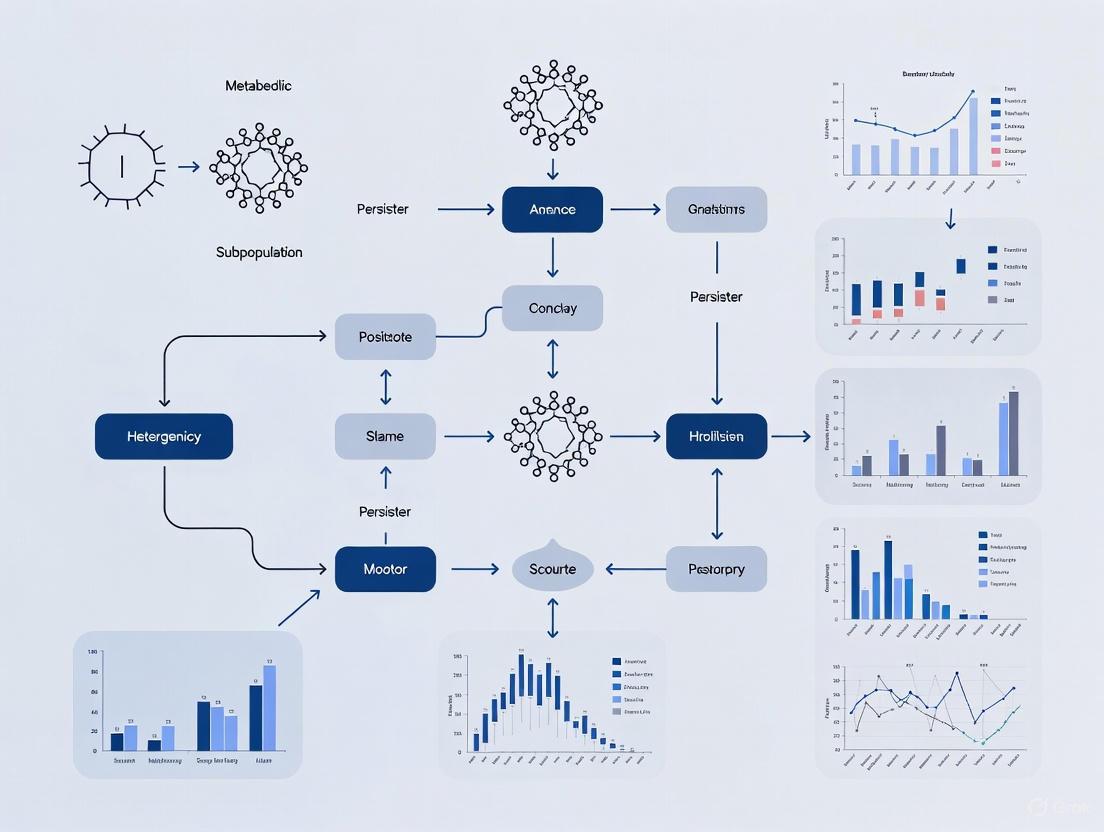
Bacterial persisters, a subpopulation of cells exhibiting transient antibiotic tolerance, are a major cause of relapsing and chronic infections.
Metabolic Heterogeneity in Bacterial Persisters: Mechanisms, Analysis, and Therapeutic Targeting
Abstract
Bacterial persisters, a subpopulation of cells exhibiting transient antibiotic tolerance, are a major cause of relapsing and chronic infections. This article synthesizes current research to explore the pivotal role of metabolic heterogeneity in the formation, survival, and resuscitation of these cells. We detail the molecular mechanisms—from toxin-antitoxin modules and (p)ppGpp signaling to stochastic gene expression and carbon source utilization—that drive metabolic diversity. The review further examines cutting-edge single-cell analytical tools, such as metabolite biosensors and NanoSIMS, that are revolutionizing our ability to probe this heterogeneity. Finally, we consolidate emerging anti-persister strategies, including metabolite-antibiotic combinations and membrane-targeting agents, providing a roadmap for researchers and drug development professionals aiming to translate these insights into effective therapies against persistent infections.
Unraveling the Origins and Mechanisms of Metabolic Heterogeneity
Bacterial persister cells, a subpopulation of phenotypic variants characterized by transient antibiotic tolerance, represent a significant challenge in treating recurrent and chronic infections. While traditionally defined by a state of metabolic dormancy and growth arrest, contemporary research reveals a complex landscape of metabolic heterogeneity underlying persistence. This whitepaper synthesizes current understanding of persister cell physiology, highlighting the spectrum of metabolic states from complete shutdown to targeted metabolic rewiring. We examine the experimental evidence demonstrating how carbon source utilization, energy metabolism, and transcriptional regulation contribute to survival strategies. For researchers and drug development professionals, this review integrates cutting-edge methodologies, quantitative datasets, and emerging therapeutic strategies targeting persister cell metabolism, providing a foundation for developing more effective treatments against persistent bacterial infections.
The phenomenon of bacterial persistence was first identified decades ago when researchers observed that a small fraction of bacterial populations survived exposure to lethal antibiotic concentrations without acquiring genetic resistance [1]. These surviving cells, termed "persisters," were classically characterized as dormant, metabolically inactive, and growth-arrested variants that could resume proliferation once antibiotic pressure was removed [2]. This dormancy model provided an elegant explanation for antibiotic tolerance, as conventional antibiotics primarily target active cellular processes like cell wall synthesis, DNA replication, and protein synthesis [2].
However, emerging evidence challenges this simplistic dormancy paradigm, revealing instead a remarkable metabolic heterogeneity among persister subpopulations. Far from being uniformly dormant, persisters exhibit a continuum of metabolic states, with recent studies demonstrating that some persister cells maintain specific metabolic activities essential for their survival and eventual resuscitation [3] [4]. This metabolic diversity enables flexible adaptation to different environmental conditions, antibiotic classes, and nutritional landscapes.
The implications of this refined understanding are profound for both basic research and therapeutic development. By recognizing that persistence represents a spectrum of metabolic states rather than a single dormant condition, researchers can develop more nuanced approaches to combat persistent infections. This whitepaper examines the evolving definition of persister cells through the lens of metabolic heterogeneity, synthesizing current evidence on the metabolic mechanisms underlying persistence and their therapeutic implications.
Historical Context and Definitional Evolution
The concept of bacterial persistence dates to 1944 when Joseph Bigger described a small subpopulation of Staphylococcus cells that survived penicillin exposure without genetic resistance [1]. He termed these survivors "persisters" and recognized their clinical significance in recurrent infections. For decades thereafter, persisters were largely viewed through the lens of dormancy—metabolically inactive cells that passively survived antibiotic treatment simply by not engaging the cellular processes that antibiotics target.
The dormancy model gained support from several observations: (1) persisters are typically non-growing or slow-growing; (2) they exhibit reduced anabolic activity; and (3) conditions that induce metabolic arrest (e.g., stationary phase) increase persister frequencies [5] [2]. This perspective dominated the field until technological advances enabled more sophisticated interrogation of persister physiology at single-cell and molecular levels.
A pivotal conceptual advancement came with the classification of persisters into Type I (triggered by environmental stress) and Type II (spontaneously arising) categories, acknowledging heterogeneity in persistence mechanisms [1]. However, even this classification proved insufficient to capture the full spectrum of persister metabolic states, leading to contemporary models that recognize a continuum of persistence depths and metabolic strategies [1] [4].
Table 1: Evolution of Persister Cell Definitions
| Historical Period | Primary Definition | Key Supporting Evidence | Limitations |
|---|---|---|---|
| Classical (1944-2000s) | Dormant, metabolically inactive cells | Stationary phase cells show higher persistence; Transcriptional/translational inhibitors induce persistence | Overlooks metabolic heterogeneity; Doesn't explain all persistence phenomena |
| Refined (2000s-2010s) | Type I (induced) vs Type II (spontaneous) persisters | Distinct genetic pathways for different persistence types; Microfluidic studies showing heterogeneous origins | Still categorical rather than continuous; Inadequate description of metabolic diversity |
| Contemporary (2010s-Present) | Metabolically heterogeneous population with spectrum of metabolic states | Metabolic tracer studies; Single-cell analyses; Variable energy levels in persisters | Complex picture requiring sophisticated analytical approaches |
Metabolic Heterogeneity in Persister Populations
The Metabolic Spectrum: From Shutdown to Rewiring
Current research reveals that persister cells occupy diverse metabolic states along a continuum from profound metabolic suppression to strategic metabolic rewiring. Stable isotope labeling studies using 13C-glucose and 13C-acetate have demonstrated that while persister cells generally exhibit reduced metabolic activity compared to normal cells, the extent and pattern of this reduction vary significantly depending on the carbon source and persistence inducer [5] [6]. When utilizing glucose as a sole carbon source, E. coli persisters induced by carbonyl cyanide m-chlorophenyl hydrazone (CCCP) showed generalized but reduced labeling in proteinogenic amino acids, indicating a uniform slowdown in protein synthesis rather than complete metabolic arrest [5].
In contrast, under acetate conditions, the same persister cells exhibited a more substantial metabolic shutdown, with markedly reduced labeling across nearly all pathway intermediates and amino acids [5] [6]. This differential response to carbon sources highlights the metabolic flexibility of persister cells and their ability to adapt their metabolic state to available nutrients. The more pronounced suppression under acetate conditions was attributed to substrate inhibition coupled with ATP demands required to activate acetate for central metabolism [6].
Further evidence against uniform dormancy comes from studies of late stationary phase E. coli persisters, which maintain active energy metabolism through the tricarboxylic acid (TCA) cycle, electron transport chain, and ATP synthase, despite reduced anabolic activity [4]. This metabolic configuration—downregulating biosynthesis while maintaining energy production—represents a strategic rewiring rather than blanket shutdown.
Central Metabolic Pathway Activities
The application of 13C metabolic flux analysis has provided unprecedented insights into specific pathway activities within persister cells. Key findings from isotopic labeling experiments include:
Table 2: Metabolic Pathway Activities in Persister Cells Based on 13C-Labeling Studies
| Metabolic Pathway | Activity in Persisters | Functional Implications | Experimental Evidence |
|---|---|---|---|
| Glycolysis | Reduced but detectable | Limited carbon processing capability | Delayed 13C-glucose incorporation in intermediates [5] |
| Pentose Phosphate Pathway | Delayed labeling dynamics | Reduced precursor generation for biosynthesis | Slowed 13C incorporation [5] |
| Tricarboxylic Acid Cycle | Carbon source dependent | Maintenance of energy production in certain conditions | Substantial reduction with acetate; moderate reduction with glucose [5] [4] |
| Amino Acid Synthesis | Generalized reduction | Limited protein synthesis capacity | Reduced labeling in proteinogenic amino acids [5] |
| Electron Transport Chain | Context-dependent activity | Variable energy production capacity | Essential for survival of stationary phase persisters [4] |
Regulatory Mechanisms Governing Metabolic States
The Crp/cAMP regulatory system emerges as a critical mediator of metabolic states in persister cells, particularly in stationary phase populations [4]. This global regulator redirects persister cell metabolism from anabolism to oxidative phosphorylation, maintaining energy metabolism while suppressing biosynthetic pathways. Disruption of this system reduces persister levels, underscoring its importance for survival.
Additional regulatory mechanisms include:
- Stringent response: Mediated by (p)ppGpp, this pathway modulates metabolic transitions in response to nutrient limitation.
- Toxin-antitoxin systems: Multiple systems contribute to metabolic suppression through targeted inhibition of essential cellular processes.
- Transcriptional reprogramming: Network analysis reveals major shifts in gene network activity at various time points of antibiotic exposure, indicating active transcriptional adaptation in persisters [3].
Diagram Title: Crp/cAMP Metabolic Regulation in Persistence
This regulatory diagram illustrates how the Crp/cAMP complex maintains an active state of energy metabolism while downregulating anabolic pathways in persister cells, particularly under carbon starvation conditions [4].
Methodological Approaches for Persister Metabolism Studies
Metabolic Tracing Techniques
Stable isotope labeling coupled with mass spectrometry has emerged as a powerful approach for investigating persister cell metabolism. Unlike indirect methods like transcriptomics or proteomics, 13C labeling of fast-turnover metabolites via LC-MS and GC-MS can rapidly delineate functional metabolic pathways, revealing the actual metabolic state of persister cells [5] [6].
Protocol: 13C-Labeling of Persister Cells for Metabolic Flux Analysis
Persister Induction: Grow E. coli BW25113 in M9 medium with 2 g/L glucose to OD600 of 0.5. Expose to 100 μg/mL CCCP for 15 minutes at 37°C with shaking at 200 rpm to induce persister formation [5] [6].
Cell Processing: Collect cells by centrifugation at 13,000 rpm for 3 minutes. Wash three times in M9 medium without carbon source to remove CCCP [5].
13C-Labeling: Resuspend control and persister cells to OD600 of 5 in 10 mL M9 medium. Add 2 g/L 1,2-13C2 glucose or 2-13C sodium acetate. Incubate at 37°C with shaking at 200 rpm [5] [6].
Time-Course Sampling: Collect samples at specific timepoints (0, 20 seconds, 5 minutes, 30 minutes, 2 hours). Immediately quench metabolic activity by rapid cooling in liquid nitrogen [6].
Metabolite Extraction: Lyophilize cell pellets. Add 0.5 mL extraction solution (80:20 methanol-water) and incubate at -20°C for 1 hour. Centrifuge at 10,000 × g for 10 minutes at 0°C. Filter supernatant through 0.2 μm filter for LC-MS analysis [6].
Proteinogenic Amino Acid Analysis: Treat remaining cell pellets with 1.5 mL 6N HCl at 100°C for 18 hours to hydrolyze proteins. Analyze hydrolyzed amino acids using the TBDMS method with GC-MS [5] [6].
Data Acquisition: Analyze extracted free metabolites using a Q-Exactive LC-MS system with an InfinityLab Poroshell 120 HILIC-Z column (2.1 × 100 mm, 2.7 μm) with m/z scan range of 40-900 [6].
Single-Cell Analysis Approaches
Microfluidic devices have enabled unprecedented resolution in studying persister cell heterogeneity. The membrane-covered microchamber array (MCMA) allows visualization of over one million individual cells, tracking their responses to antibiotics and correlating pre-exposure history with survival outcomes [7].
Key Methodological Considerations:
- Minimizing artifacts: CCCP induction prior to 13C-labeling avoids effects of dead cells/cell debris on metabolic flux measurements [5].
- Rapid quenching: Essential to capture true metabolic state, achieved by liquid nitrogen cooling within seconds [6].
- Multi-omics integration: Combining metabolomic, proteomic, and genomic data provides comprehensive view of persister physiology [4].
Diagram Title: Experimental Workflow for Persister Metabolic Analysis
Research Reagent Solutions for Persister Metabolism Studies
Table 3: Essential Research Reagents for Persister Cell Metabolism Investigations
| Reagent/Category | Specific Examples | Function/Application | Key References |
|---|---|---|---|
| Persister Inducers | CCCP (carbonyl cyanide m-chlorophenyl hydrazone) | Protonophore that disrupts proton gradients and ATP synthesis; induces persister formation without permanent damage | [5] [6] |
| Stable Isotope Tracers | 1,2-13C2 glucose; 2-13C sodium acetate | Metabolic flux analysis; tracing carbon fate through central metabolic pathways | [5] [6] |
| Analytical Instruments | LC-MS (Q-Exactive system); GC-MS | Detection and quantification of isotopic labeling in metabolites and proteinogenic amino acids | [5] [6] |
| Chromatography Columns | InfinityLab Poroshell 120 HILIC-Z (2.1 × 100 mm, 2.7 μm) | Separation of polar metabolites for LC-MS analysis | [6] |
| Bacterial Strains | E. coli BW25113; MG1655 | Model organisms for persistence studies with well-characterized genetics | [5] [7] |
| Microfluidic Systems | Membrane-covered microchamber array (MCMA) | Single-cell analysis of persister formation and resuscitation dynamics | [7] |
| Antibiotics for Selection | Ampicillin, Ciprofloxacin | Selection pressure for persister isolation and characterization | [7] [3] |
Therapeutic Implications and Future Directions
The reconceptualization of persister cells as metabolically heterogeneous rather than uniformly dormant has profound implications for therapeutic development. Traditional antibiotics typically fail against persisters because they target active growth processes [2]. Understanding the specific metabolic vulnerabilities of different persister subpopulations enables more strategic approaches to eradication.
Targeting Metabolic Dependencies
Several promising strategies have emerged:
Energy Metabolism Disruption: Stationary phase persisters dependent on TCA cycle and electron transport chain activity are vulnerable to disruption of these pathways [4]. The anti-tuberculosis drug pyrazinamide exemplifies this approach, targeting membrane energetics in Mycobacterium tuberculosis persisters [2].
Metabolic Reactivation: Inducing persister cells to resume metabolic activity can sensitize them to conventional antibiotics. This approach leverages the observation that certain carbon sources increase aminoglycoside uptake by enhancing proton motive force and ETC activity [4].
Membrane-Targeting Compounds: Growth-independent targeting of cell membranes represents a direct approach against persisters. Compounds such as XF-70, XF-73, and SA-558 disrupt membrane integrity, causing lysis regardless of metabolic state [2].
Research Priorities
Future research should prioritize:
- Single-cell metabolomics to resolve the full spectrum of persister metabolic states
- Dynamic tracking of metabolic transitions during persistence establishment and resuscitation
- Context-specific metabolic dependencies across different bacterial species, antibiotic classes, and environmental conditions
- Combination therapies that simultaneously target multiple metabolic vulnerabilities
The integration of metabolic insights with therapeutic development holds promise for effectively combating persistent bacterial infections, potentially addressing a critical limitation in modern antimicrobial therapy.
The definition of persister cells has evolved substantially from the classical dormancy model to a contemporary understanding of metabolic heterogeneity. Current evidence reveals a spectrum of metabolic states in persister populations, ranging from profound metabolic suppression to strategic metabolic rewiring, influenced by environmental conditions, carbon source availability, and regulatory networks. The Crp/cAMP system emerges as a key regulator directing metabolism toward energy production and away from biosynthesis in persistent states.
Methodological advances in metabolic tracing, single-cell analysis, and multi-omics integration have been instrumental in revealing this complexity. For researchers and drug development professionals, this refined understanding opens new avenues for therapeutic intervention targeting the specific metabolic vulnerabilities of persister subpopulations. As the field continues to elucidate the intricate metabolic landscape of persistence, these insights promise to inform more effective strategies for combating recalcitrant bacterial infections.
Bacterial persisters are a transient, phenotypically heterogeneous subpopulation of cells characterized by metabolic dormancy and enhanced tolerance to antibiotics. Unlike genetically resistant bacteria, persisters remain genetically susceptible to drugs but survive treatment by entering a slow-growing or non-growing state. A comprehensive understanding of the molecular mechanisms driving persister formation is critical for addressing the challenge of chronic and relapsing infections [1]. This whitepaper details three core molecular drivers—toxin-antitoxin (TA) modules, the stringent response, and the SOS pathway—that orchestrate the metabolic heterogeneity central to the persister phenotype. We will examine their mechanisms, interactions, and the experimental methodologies used to probe their functions, providing a resource for researchers and drug development professionals.
Toxin-Antitoxin Modules: Molecular Switches for Dormancy
Classification and General Mechanism
Toxin-antitoxin (TA) modules are genetic elements composed of a stable toxin protein and a labile antitoxin that counteracts the toxin's activity [8] [9]. These modules are abundant in bacterial genomes, particularly in pathogens; for instance, Mycobacterium tuberculosis carries up to 88 TA modules, while the non-pathogenic Mycobacterium smegmatis has only about 5 [9]. TA modules are classified into eight types (I-VIII) based on the nature and mode of action of the antitoxin [10] [9].
The core mechanism involves a shift in the antitoxin-toxin ratio. Under normal growth conditions, the antitoxin neutralizes the toxin. During stress, cellular proteases such as Lon and ClpP preferentially degrade the labile antitoxin, freeing the toxin to act on its cellular targets [11]. Toxins typically target essential processes, including mRNA stability, translation, DNA replication, and cell wall synthesis, leading to growth arrest and facilitating persister formation [9].
Key TA Modules and Their Targets in Persistence
The following table summarizes the primary mechanisms of prominent TA systems implicated in bacterial persistence.
Table 1: Key Toxin-Antitoxin Systems and Their Roles in Persistence
| TA System | Type | Toxin Target/Mechanism | Role in Persister Formation |
|---|---|---|---|
| HipBA [1] | II | HipA phosphorylates Glu-tRNA synthetase, inhibiting translation and inducing the stringent response [1]. | One of the first identified persister genes; mutation in hipA leads to high persistence [1]. |
| MazEF [9] [11] | II | MazF is an mRNA endoribonuclease that cleaves cellular mRNAs, halting protein synthesis [9]. | Ectopic overexpression directly triggers persister cell formation [11]. |
| RelBE [10] [11] | II | RelE is an mRNA endoribonuclease that inhibits translation during the stringent response [11]. | Upregulated in biofilms; associated with antibiotic tolerance in Pseudomonas aeruginosa [10]. |
| DinJ-YafQ [11] | II | YafQ is an mRNA-degrading toxin [11]. | Transcript levels increase under heat shock and other stress conditions [11]. |
| Hok-Sok [10] | I | Hok damages cell membrane integrity [10]. | Antitoxin (Sok RNA) degradation during phage infection leads to toxin activation and abortive infection [10]. |
Experimental Protocols for TA Module Analysis
Protocol 1: Quantifying TA Module Transcript Levels under Stress
- Objective: To measure the upregulation of TA module mRNAs in response to antibiotic or environmental stress.
- Methodology:
- Culture and Stress Exposure: Grow bacterial cultures (e.g., E. coli MG1655) to mid-exponential phase. Divide into aliquots and expose to sub-inhibitory concentrations of stressors (e.g., ampicillin, rifampicin, heat shock) for defined durations (e.g., 30 seconds to 30 minutes) [11].
- RNA Extraction and Sequencing: Rapidly harvest cells to preserve transcriptomic profiles. Extract total RNA and prepare sequencing libraries. Perform RNA-Seq analysis according to standard protocols (e.g., Illumina) [11].
- Data Analysis: Map sequence reads to the reference genome. Normalize transcript counts (e.g., using TPM or FPKM). Identify statistically significant changes in transcript levels for TA genes (e.g., mazF, relE, yafQ) compared to an untreated control [11].
Protocol 2: Inducing Persistence via Ectopic Toxin Overexpression
- Objective: To directly link TA module activation to persister formation.
- Methodology:
- Strain Construction: Clone the toxin gene (e.g., relE or mazF) into an inducible expression plasmid (e.g., pBAD under an arabinose-inducible promoter) [11].
- Toxin Induction and Persister Assay: Grow the recombinant strain to mid-exponential phase and induce toxin expression with the inducer (e.g., 0.2% arabinose). Monitor growth arrest via optical density.
- Viability Count: At various time points post-induction, plate serial dilutions on non-inducing media to quantify the number of viable, resuscitated persister cells that survive the toxin-induced dormancy [11].
The Stringent Response: A Metabolic Gatekeeper
Core Mechanism and Signaling
The stringent response is a global adaptation to nutrient starvation, primarily orchestrated by the signaling molecule (p)ppGpp (guanosine tetraphosphate or pentaphosphate). Upon amino acid or carbon starvation, RelA and SpoT synthases are activated, leading to a rapid accumulation of (p)ppGpp [1] [12]. This "alarmone" binds to RNA polymerase and dramatically reprograms cellular transcription, shifting resources away from growth and ribosome synthesis and toward amino acid biosynthesis and stress survival pathways [12].
Interplay with Persister Formation and TA Modules
Elevated (p)ppGpp levels are a hallmark of bacterial persisters [12]. By actively suppressing cellular metabolism and growth, the stringent response creates a state of antibiotic tolerance. Furthermore, it is a master regulator of TA modules. The (p)ppGpp-mediated stress response can trigger the activation of TA systems, creating a multi-layered survival strategy where the broad metabolic shutdown of the stringent response is reinforced by the targeted, toxic action of TA modules [12]. This interplay is a key node in generating metabolic heterogeneity.
The SOS Pathway: Genotoxic Stress and Survival
Pathway Activation and Key Players
The SOS pathway is a conserved DNA damage response system. Its core components are the transcriptional repressor LexA and the DNA damage sensor RecA. When DNA is damaged (e.g., by fluoroquinolone antibiotics), replication forks stall, generating single-stranded DNA (ssDNA). RecA nucleoprotein filaments form on this ssDNA, which activates its co-protease function. Activated RecA facilitates the auto-cleavage of LexA, derepressing the SOS regulon [1]. This leads to the expression of over 50 genes involved in DNA repair, mutagenesis, and cell division arrest.
Link to Persistence and Antibiotic Tolerance
The SOS response contributes to persistence in several ways. First, the induction of DNA repair genes promotes survival under antibiotic-induced stress. Second, the temporary arrest of cell division prevents the replication of damaged DNA, allowing time for repair. Critically, the SOS pathway has been directly linked to the up-regulation of TA modules and the formation of persister cells. For example, in E. coli, the SOS response can activate the TisB toxin, which depolarizes the membrane and induces a dormant, multidrug-tolerant state [1]. This provides a direct mechanistic link between DNA damage, pathway activation, and the emergence of a metabolically heterogeneous persister subpopulation.
Integrated Signaling and Metabolic Heterogeneity
The core molecular drivers do not operate in isolation. They form a complex, interconnected network that fine-tunes the metabolic state of the cell. The following diagram illustrates the integrated signaling pathways and their logical relationships in driving persister formation.
Diagram 1: Integrated signaling pathways in bacterial persistence. Environmental stressors activate core molecular drivers, which converge on metabolic shutdown, leading to a heterogenous persister subpopulation. Dashed lines represent regulatory interactions between pathways.
The Scientist's Toolkit: Research Reagent Solutions
The following table compiles essential materials and reagents used in experimental research on bacterial persistence.
Table 2: Key Research Reagents for Investigating Persistence Mechanisms
| Reagent / Tool | Function / Application | Specific Example(s) |
|---|---|---|
| Inducible Expression Plasmids | For controlled, ectopic overexpression of toxins or other genes to study their specific effects. | pBAD (arabinose-inducible) for toxin gene expression [11]. |
| Lon/ClpP Protease Mutants | To genetically dissect the role of specific proteases in antitoxin degradation and TA module activation. | E. coli Δlon or ΔclpP knockout strains [11]. |
| RNA-Seq Kits & Bioinformatic Pipelines | For transcriptomic profiling of persister cells and TA module expression under stress. | Standard Illumina library prep kits; TADB 3.0 database for TA module annotation [10]. |
| (p)ppGpp Analogs | To chemically induce the stringent response and study its downstream effects independently of starvation. | Synthetic (p)ppGpp (e.g., from Jena Bioscience) [12]. |
| DNA-Damaging Agents | To experimentally induce the SOS pathway and investigate its contribution to persistence. | Ciprofloxacin, Mitomycin C [1]. |
| Metabolite Adjuvants | To "reawaken" persisters by restoring metabolic activity and test "wake-and-kill" strategies. | Sugars (mannitol), pyruvate, nucleotides (adenosine) [12]. |
Quantitative Data Synthesis in Persistence Research
The field relies on quantitative measurements to characterize persister dynamics and molecular responses. The table below summarizes key types of data used for easy comparison.
Table 3: Key Quantitative Metrics in Bacterial Persistence Research
| Quantitative Metric | Description | Typical Value/Range |
|---|---|---|
| Persister Fraction | The proportion of cells surviving a high-dose, lethal antibiotic challenge. | Varies by species/strain; often 10⁻³ to 10⁻⁶ in laboratory cultures [1]. |
| Minimum Inhibitory Concentration (MIC) | The lowest concentration of an antibiotic that inhibits visible growth. | Used to confirm isolates are genetically susceptible, not resistant [12]. |
| Minimum Duration for Killing (MDK) | The time required for an antibiotic to kill a certain percentage (e.g., 99.9%) of the population. | Increased in tolerant populations/persisters [12]. |
| TA System Fold-Change | The increase in transcript levels of TA genes under stress conditions, measured via RNA-Seq. | Can range from 2-fold to over 50-fold (e.g., rnlBA during starvation) [11]. |
| Antitoxin Half-Life | The time required for 50% of an antitoxin protein to be degraded intracellularly. | Typically short, less than 15–20 minutes [11]. |
| Contrast Ratio (for Diagrams) | The luminance ratio between text/foreground and background colors for accessibility. | Minimum 4.5:1 for standard text (WCAG AA) [13] [14]. |
The metabolic heterogeneity of bacterial persister subpopulations is not a random occurrence but is systematically orchestrated by the integrated activity of toxin-antitoxin modules, the stringent response, and the SOS pathway. These core molecular drivers respond to diverse environmental stresses by shutting down growth processes and reducing metabolic activity, creating a dormant, tolerant state. Understanding the precise mechanisms and, more importantly, the extensive crosstalk between these pathways is fundamental for designing novel therapeutic strategies that can effectively eradicate persistent infections. Future research should focus on manipulating these switches—for instance, by preventing their activation or forcibly reawakening cells—to re-sensitize this resilient bacterial subpopulation to conventional antibiotics.
Metabolic heterogeneity is a cornerstone of bacterial survival, enabling subpopulations like persister cells to withstand antibiotic treatment. This variability arises not from genetic mutations but from non-genetic, stochastic fluctuations in molecular processes. This technical review explores the mechanisms through which molecular noise—originating from stochastic gene expression and post-translational regulation—generates metabolic diversity, with a specific focus on bacterial persister cells. We synthesize recent advances in single-cell measurement techniques, computational modeling, and mechanistic studies that elucidate how these fluctuations are harnessed to create phenotypically distinct, antibiotic-tolerant subpopulations. The findings presented herein offer a framework for targeting metabolic variability as a therapeutic strategy to combat persistent infections.
In isogenic bacterial populations, individual cells can exhibit significant phenotypic variation despite being genetically identical. This heterogeneity is particularly evident in the formation of bacterial persisters—a small, transient subpopulation of cells that exhibit exceptional tolerance to antibiotics without acquired resistance mutations [1]. The metabolic state of these persisters is not one of uniform dormancy but is characterized by a spectrum of activity levels, from deep quiescence to slow metabolic turnover [12] [1]. A primary source of this diversification is molecular stochasticity, or noise—the random fluctuations inherent in biochemical reactions involving small numbers of molecules, such as transcription and translation.
These fluctuations are propagated through the cell's regulatory and metabolic networks, leading to emergent, system-wide phenotypic variation. In the context of persistence, stochasticity drives a subset of cells into a transient, low-growth state that is less susceptible to antibiotics that target active cellular processes. Understanding the principles governing this noise-driven metabolic rewiring is critical for developing therapeutic strategies that can eradicate persistent infections.
Core Mechanisms: From Molecular Fluctuations to Metabolic Phenotypes
Stochastic Gene Expression and Enzyme Level Variability
The expression of genes, including those encoding metabolic enzymes, is a fundamentally stochastic process. The random timing of transcription and translation events can lead to substantial cell-to-cell variation in enzyme concentrations, even in a homogeneous environment [15]. In bacterial persisters, this variability directly impacts the flux through metabolic pathways.
- Toxin-Antitoxin (TA) Modules: Stochastic activation of TA systems, such as HipBA, can lead to a rapid, transient halt in cellular growth by inhibiting essential metabolic processes. This fluctuation can push a cell into a persistent state [1].
- Global Regulators: Fluctuations in the expression or activity of global regulators can rewire metabolism on a broad scale. For instance, stochastic activation of the stringent response, mediated by (p)ppGpp, downregulates anabolic pathways and ribosome synthesis, promoting a metabolic shutdown that confers tolerance [12].
Post-Translational Fluctuations in Metabolic Networks
Beyond gene expression, metabolic heterogeneity emerges from stochasticity in the metabolic network itself. These post-translational fluctuations occur on timescales of seconds to minutes and can generate dynamic, oscillatory behavior in metabolite levels.
- Allosteric Regulation: Key metabolic enzymes are controlled by allosteric effectors. The stochastic binding and release of these regulators can cause rapid, transient changes in pathway flux. For example, in E. coli glycolysis, a kinetic model predicts that the feedforward activation of pyruvate kinase (PYK) by fructose-1,6-bisphosphate (FBP), combined with negative feedback from phosphoenolpyruvate (PEP), can generate sustained oscillations in pyruvate concentration with periods of several minutes [16].
- Metabolic Network Structure: The high connectivity and nonlinearity of metabolic networks make them prone to generating and amplifying small fluctuations. Reactions around central nodes, like pyruvate, are particularly susceptible to exhibiting stochastic dynamics that propagate throughout the network [16].
Table 1: Key Sources of Stochasticity in Bacterial Metabolism
| Source of Noise | Impact on Metabolism | Role in Persister Formation |
|---|---|---|
| Stochastic Gene Expression | Cell-to-cell variability in enzyme concentrations | Generates a subpopulation with reduced metabolic flux |
| Toxin-Antitoxin Activation | Transient, stochastic inhibition of growth | Rapidly induces a dormant, tolerant state |
| Allosteric Regulation | Oscillations in metabolite concentrations (e.g., pyruvate) | Creates temporal heterogeneity in metabolic activity |
| Stringent Response | Global downshift in anabolism and energy expenditure | Promotes a sustained, low-energy persistent state |
Quantitative Profiling of Metabolic Fluctuations
Single-Cell Metabolite Sensing with FRET
Direct, time-resolved measurement of metabolite levels in individual bacterial cells has been achieved using Förster Resonance Energy Transfer (FRET)-based biosensors. A key study documented the dynamics of pyruvate in E. coli [16].
Experimental Protocol:
- Sensor Design: The FRET sensor was constructed using the pyruvate-binding domain of the E. coli repressor PdhR, flanked by CFP (donor) and YFP (acceptor) fluorescent proteins.
- Measurement Principle: Pyruvate binding induces a conformational change that reduces FRET efficiency, leading to an increase in the CFP/YFP emission ratio.
- Cell Preparation & Imaging: E. coli cells expressing the sensor were starved in M9 salts buffer and then mounted in a flow-through microscopy chamber. A step-like exposure to a glycolytic carbon source (e.g., glucose) was administered while continuously monitoring fluorescence.
- Data Acquisition: The FRET ratio (CFP/YFP) was tracked in real-time for individual cells, revealing large, periodic fluctuations in intracellular pyruvate upon glucose stimulation.
This methodology revealed that starved E. coli cells exposed to glucose exhibit large, periodic fluctuations in intracellular pyruvate levels with a timescale of approximately 100 seconds, providing direct empirical evidence for stochastic metabolic dynamics [16].
Spatial Analysis of Metabolic Heterogeneity
Optical Metabolic Imaging (OMI) leverages the autofluorescence of metabolic coenzymes NAD(P)H and FAD to quantify metabolic heterogeneity in 2D and 3D cultures without labels.
Experimental Protocol:
- Image Acquisition: Label-free images are acquired using two-photon fluorescence lifetime microscopy (FLIM) of NAD(P)H and FAD.
- Metabolic Clustering: Density-based clustering of the NAD(P)H mean fluorescence lifetime (τm) is used to identify metabolically distinct subpopulations of cells.
- Spatial Proximity Analysis: Computational tools quantify the spatial distribution and organization of these metabolic clusters, determining if they are randomly distributed, clustered, or dispersed.
- Multivariate Analysis: Spatial autocorrelation and principal components analysis (PCA) of all autofluorescence variables (intensity, lifetime) further separate cell sub-populations and reveal relationships between metabolic state and spatial location [17].
This approach has been applied to show that tumor cell populations, analogous to bacterial communities, contain metabolically distinct sub-populations with non-random spatial distributions that can influence drug response [17].
Table 2: Quantitative Single-Cell Metabolic Measurements
| Technique | Measured Parameter(s) | Temporal Resolution | Key Finding |
|---|---|---|---|
| FRET-Based Sensing [16] | Intracellular pyruvate concentration | Seconds | Periodic oscillations in pyruvate upon carbon source shift |
| Optical Metabolic Imaging (OMI) [17] | NAD(P)H & FAD fluorescence lifetime and intensity | Minutes to Hours | Distinct, spatially organized metabolic cell sub-populations exist |
| Stochastic Simulation (SSA-FBA) [15] | Metabolite and enzyme copy numbers, reaction fluxes | Simulated time | Intrinsic noise in enzyme expression propagates to create metabolic heterogeneity |
Computational Modeling of Stochastic Metabolism
The SSA-FBA Framework
To overcome the experimental intractability of comprehensively profiling single-cell metabolism, the Stochastic Simulation Algorithm with Flux-Balance Analysis (SSA-FBA) was developed. This computational framework integrates genome-scale metabolic models with stochastic dynamics of gene expression [15].
Modeling Protocol:
- Network Partitioning: Reactions are categorized into three groups:
- FBA-only reactions: Internal metabolic reactions interconverting metabolites (e.g., TCA cycle).
- SSA-only reactions: Expression-related reactions interconverting external species (e.g., enzyme synthesis/degradation).
- SSA-FBA reactions: Reactions linking internal and external species (e.g., metabolite transport catalyzed by enzymes).
- Simulation Engine: The SSA handles the stochastic dynamics of enzyme copy numbers. For each stochastic update, an embedded FBA problem is solved to determine the quasi-steady-state fluxes of the metabolic network, given the current enzyme levels.
- Output: The model generates time courses of metabolite concentrations, enzyme levels, and reaction fluxes for individual cells, illustrating how stochasticity in gene expression propagates to create metabolic heterogeneity [15].
This hybrid approach allows for systems-scale simulation of how fluctuations in enzyme expression, due to low copy numbers, give rise to emergent metabolic phenotypes at the single-cell level.
Metabolic Regulation in Bacterial Persisters
Contrary to the historical view of persisters as entirely dormant, recent evidence indicates their metabolic state involves active and regulated rewiring. In E. coli persisters from the late stationary phase, the global regulator Crp/cAMP plays a pivotal role by redirecting metabolism from anabolism to oxidative phosphorylation [4] [18].
While these persisters have a reduced metabolic rate compared to exponentially growing cells, their survival remains dependent on energy metabolism. Genomic analyses consistently highlight the critical role of the tricarboxylic acid (TCA) cycle, electron transport chain (ETC), and ATP synthase in maintaining persister levels [4] [18]. This active energy metabolism, particularly the membrane potential generated by the ETC, can be exploited therapeutically. The addition of specific metabolites can potentiate the uptake and efficacy of aminoglycoside antibiotics, forming the basis of a "wake-and-kill" strategy to eradicate persisters [12].
The following diagram illustrates the core regulatory pathway that shapes metabolic heterogeneity in persister cells.
The Scientist's Toolkit: Research Reagents and Solutions
Table 3: Essential Research Tools for Investigating Metabolic Heterogeneity
| Tool / Reagent | Function / Application | Key Feature |
|---|---|---|
| FRET-Based Metabolite Sensors (e.g., Pyruvate sensor PdhR-CFP-YFP) [16] | Real-time, dynamic measurement of specific metabolite levels in single living cells. | Enables quantification of metabolic fluctuations with second-scale resolution. |
| Genome-Scale Metabolic Models (e.g., for E. coli, M. pneumoniae) [15] | Constraint-based modeling of metabolic network capabilities. | Provides a scaffold for integrating omics data and simulating metabolic behavior. |
| SSA-FBA Software [15] | Stochastic simulation of single-cell metabolism by embedding FBA within a stochastic simulation algorithm. | Models the emergence of metabolic heterogeneity from noisy gene expression. |
| Two-Photon FLIM Microscope [17] | Label-free imaging of NAD(P)H and FAD fluorescence lifetimes and intensities in 2D and 3D cultures. | Quantifies metabolic heterogeneity and spatial organization in living samples. |
| cAMP & Crp Deletion Mutants (e.g., Δcrp, ΔcyaA) [4] [18] | Genetic tools to dissect the role of the Crp/cAMP global regulon in persister metabolism. | Critical for establishing causality in metabolic rewiring. |
The evidence is clear: stochastic molecular fluctuations are a fundamental driver of metabolic variability, underpinning the formation and survival of bacterial persister cells. The interplay between stochastic gene expression, post-translational regulatory dynamics, and the structure of metabolic networks creates a heterogeneous population, ensuring that a subset of cells is always prepared for stress. Advancements in single-cell technologies like FRET biosensors and OMI, coupled with powerful computational models like SSA-FBA, are now allowing researchers to move from observing this heterogeneity to understanding its precise mechanisms.
Future research must focus on integrating these multi-scale datasets to build predictive models of persistence. Furthermore, the identification of active metabolic pathways in persisters, such as the Crp/cAMP-dependent energy metabolism, reveals a vulnerability. Therapeutic strategies that target these pathways or exploit metabolite-driven "wake-and-kill" approaches hold significant promise for overcoming antibiotic tolerance and eradicating persistent infections.
The Role of Asymmetric Partitioning in Generating Metabolically Distinct Daughter Cells
Within isogenic bacterial populations, a remarkable phenomenon occurs where genetically identical cells can exhibit significant metabolic heterogeneity. This technical guide explores asymmetric partitioning—the unequal distribution of cellular components during cell division—as a fundamental mechanism generating metabolically distinct daughter cells. Framed within broader research on metabolic heterogeneity, this process is critically linked to the formation of bacterial persister subpopulations, which display exceptional antibiotic tolerance and contribute to chronic, relapsing infections [19] [1]. Understanding these mechanisms provides crucial insights for developing novel therapeutic strategies against persistent bacterial infections.
Fundamental Mechanisms of Asymmetric Partitioning
Asymmetric partitioning serves as a core biological strategy for generating phenotypic diversity from genetic uniformity. In bacterial populations, this process creates daughter cells with differing metabolic potentials and survival strategies.
Molecular and Cellular Origins
- Stochastic Expression Noise: Basic principles of noise in transcription and translation lead to variations in metabolic enzyme abundance. Metabolic genes often utilize noisier promoters, potentially enabling cells to explore greater enzymatic variation and resulting in significant metabolic heterogeneity [19].
- Asymmetric Segregation of Cellular Components: During division, low-copy-number cellular components with slow diffusion kinetics are prone to asymmetric distribution. This includes metabolic enzymes, large enzyme complexes, and transcription factors regulating metabolic pathways [19].
- Positive Feedback Loops: Multi-stable systems with positive feedback architectures can push cells toward distinct metabolic states. A well-studied example is the E. coli lac operon, where lactose inactivation of the LacI repressor increases permease production, creating a feedback loop that generates subpopulations with high and low intracellular lactose levels [19].
Consequences for Population Fitness
The metabolic heterogeneity generated through asymmetric partitioning provides populations with bet-hedging capabilities against environmental stresses. For example, Klebsiella oxytoca exhibits remarkable heterogeneity in nitrogen fixation under slightly limited ammonia conditions. Cells with high nitrogen fixation capability gain a significant growth advantage upon subsequent ammonia removal, demonstrating how pre-existing metabolic variation ensures population survival in changing environments [19].
Quantitative Evidence of Metabolic Differences
Research across biological systems has quantified the tangible metabolic differences arising from asymmetric partitioning.
Table 1: Metabolic Differences in Asymmetrically Partitioned Daughter Cells
| System | Partitioned Molecule | Metabolic Consequences | Functional Outcome |
|---|---|---|---|
| Activated CD8+ T Cells [20] [21] | Transcription factor c-Myc | Increased amino acid transport, enhanced mTORC1 activity, elevated glycolysis in c-Mychigh cells | c-Mychigh daughters differentiate into effector cells; c-Myclow daughters become memory-like cells |
| E. coli Cytoplasm [22] | Ribosomes (spatially organized) | Smaller newborn cells: higher ribosome concentration, faster growth | Size-dependent growth rate perturbations; compensatory regulation during cell cycle |
| Bacterial Persisters [12] [6] | Metabolic enzymes, energy molecules | Reduced metabolic activity, diminished TCA cycle flux, lower energy levels | Antibiotic tolerance, survival during treatment |
Table 2: Measurement Techniques for Metabolic Heterogeneity
| Technique | Application | Resolution | Key Insights |
|---|---|---|---|
| Genetically-encoded biosensors [19] | Metabolite quantification in living cells | Single-cell, dynamic | FRET-based sensors reveal rapid metabolite dynamics |
| Nanoscale SIMS (NanoSIMS) [19] | Elemental and isotopic analysis | Subcellular (~50 nm) | Heterogeneity in substrate utilization in environmental microbes |
| Stable Isotope Labeling (13C) [6] | Metabolic flux measurements | Population-level with single-cell implications | Persisters show reduced, but adaptable, central carbon metabolism |
Connection to Bacterial Persistence
The metabolic diversity generated through asymmetric partitioning directly facilitates the formation of bacterial persisters—dormant or slow-growing phenotypic variants that survive antibiotic exposure.
Metabolic Basis of Persister Formation
Persister cells exhibit metabolic dormancy as a key tolerance mechanism. Various cellular processes can induce this state:
- Toxin-Antitoxin (TA) Modules: Toxin activation inhibits essential metabolic processes, leading to growth arrest [12] [1].
- Stringent Response: (p)ppGpp accumulation triggers comprehensive metabolic reprogramming toward dormancy [12] [1].
- Reactive Oxygen Species (ROS) Stress: Antibiotic-induced ROS can damage cellular components, further reducing metabolic activity [12].
Metabolic Heterogeneity in Persister Subpopulations
Persisters are not a uniform group but represent a heterogeneous continuum of metabolic states:
- Type I vs. Type II Persisters: Type I (triggered by external stresses) exhibit metabolic quiescence, while Type II (spontaneously generated) maintain slow metabolism [1].
- Hierarchy of Persistence: A continuum exists from "shallow" to "deep" persistence levels, with varying metabolic activity and antibiotic tolerance [1].
- Energy State Variations: While traditionally viewed as dormant, persisters maintain varying degrees of metabolic activity, with some subpopulations relying on energy metabolism for survival [4].
Experimental Approaches and Methodologies
Investigating asymmetric partitioning and its metabolic consequences requires specialized methodologies capable of capturing single-cell heterogeneity.
Single-Cell Metabolic Analysis
- Metabolite Biosensors: Genetically encoded sensors couple metabolite concentrations to fluorescent outputs, enabling dynamic tracking via flow cytometry or live-cell imaging. Construction strategies include metabolite-responsive transcription factors, FRET-based biosensors, and RNA aptamer systems [19].
- Isotopic Tracing of Persister Metabolism: Stable isotope labeling (e.g., 13C-glucose, 13C-acetate) with LC-MS or GC-MS analysis reveals functional metabolic pathways. Protocol: Induce persisters with CCCP, wash cells, introduce 13C-labeled substrates, quench metabolism at precise timepoints, extract and analyze metabolites [6].
Asymmetric Division Analysis in T Cells
The experimental framework for studying asymmetric division in CD8+ T cells provides a sophisticated model for understanding metabolic partitioning:
Visualization Setup:
- Use T cells from c-Myc-GFP fusion knock-in mice
- Activate with anti-CD3, anti-CD28, and ICAM2 or antigen-pulsed dendritic cells
- Monitor first division using cell trace violet dilution
- Image via confocal microscopy to quantify asymmetric distribution of c-Myc and other components [21]
Functional Manipulation:
- Inhibit mTORC1 with rapamycin/torin2 to test necessity for c-Myc asymmetry
- Use TSC1−/− T cells for hyperactive mTORC1 signaling
- Modulate amino acid availability to assess impact on metabolic asymmetry [21]
Research Reagent Solutions
Table 3: Essential Research Tools for Studying Asymmetric Partitioning
| Reagent/Category | Specific Examples | Function/Application |
|---|---|---|
| Genetic Tools | c-Myc-GFP knock-in mice [21] | Visualizing asymmetric protein partitioning in real-time |
| FRET-based metabolite biosensors [19] | Dynamic quantification of specific metabolites in live cells | |
| Chemical Inhibitors/Modulators | Rapamycin, Torin2 [21] | mTORC1 inhibition to test signaling pathway necessity |
| JQ1 [21] | c-Myc expression inhibition to dissect feedback loops | |
| Carbonyl cyanide m-chlorophenyl hydrazone (CCCP) [6] | Inducing persister cells by disrupting proton gradients | |
| Analytical Tools | NanoSIMS [19] | High-resolution elemental and isotopic analysis at subcellular level |
| Stable isotopes (13C-glucose, 13C-acetate) [6] | Metabolic flux analysis in persister cells | |
| Cell Culture Models | OT-I transgenic T cells [21] | Studying asymmetric division in immune cells with defined antigen specificity |
| Bone marrow-derived dendritic cells (BMDCs) [21] | Antigen-presenting cells for T cell activation studies |
Visualization of Key Mechanisms
c-Myc Regulation in Asymmetric T Cell Division
Metabolic States Along Persistence Continuum
Therapeutic Implications and Future Directions
The mechanistic understanding of asymmetric partitioning in generating metabolic heterogeneity presents compelling therapeutic opportunities, particularly for combating persistent bacterial infections.
Metabolite-Driven "Wake-and-Kill" Strategies
Emerging approaches focus on metabolic reprogramming to reverse antibiotic tolerance in persister cells. Exogenous metabolites—including sugars, lipids, nucleic acid derivatives, and specific amino acids—can reactivate metabolic processes in dormant persisters, restoring their susceptibility to conventional antibiotics [12]. This "wake-and-kill" strategy leverages existing antibiotic arsenals while potentially delaying resistance development.
Targeting Metabolic Regulation Networks
Key regulatory systems such as the Crp/cAMP global metabolic regulator in E. coli represent promising targets. This system redirects persister metabolism from anabolism to oxidative phosphorylation, maintaining energy metabolism crucial for survival. Disrupting this rewiring could selectively eliminate persistent subpopulations [4].
Translational Challenges
Despite promising preclinical results, significant hurdles remain in clinical translation. Maintaining effective local metabolite concentrations at infection sites, managing potential off-target effects on host metabolism, and addressing the profound heterogeneity within persister populations represent substantial challenges requiring innovative delivery strategies and combination approaches [12].
Carbon Source Utilization as a Determinant of Metabolic State and Persistence Levels
Bacterial persistence, a phenomenon where a small subpopulation of cells tolerates antibiotic treatment, represents a significant challenge in treating recalcitrant infections. This technical guide explores the central role of carbon source utilization in determining the metabolic state that underpins bacterial persistence. Evidence synthesized from recent studies demonstrates that persister cells undergo profound metabolic rewiring, shifting from active growth to a dormant state characterized by reduced central metabolic pathway activity. The specific carbon sources available in the environment directly influence this metabolic restructuring, with preferential utilization of certain substrates driving distinct persistence mechanisms. Understanding these metabolic determinants provides critical insights for developing novel therapeutic strategies to target persistent bacterial populations.
Bacterial persistence is a phenomenon of significant clinical concern, representing a non-genetic, phenotypic variant within isogenic bacterial populations that exhibits high tolerance to antibiotic challenge [23]. Unlike antibiotic resistance, which is heritable and mechanism-based, persistence represents a transient, dormant state that enables bacterial survival during antibiotic exposure, with resumption of growth once the stress is alleviated [24] [5]. This subpopulation contributes substantially to recurrent and chronic infections, as conventional antibiotics primarily target actively growing cells.
The metabolic state of bacterial cells has emerged as a central determinant of persistence development and maintenance. Carbon source utilization serves as a critical regulatory node in this process, directly influencing cellular energy production, biosynthetic capacity, and ultimately, phenotypic heterogeneity [25]. Bacteria display remarkable metabolic plasticity, dynamically shifting their metabolic programs based on available nutrient sources, which in turn shapes their susceptibility to antimicrobial agents [26] [27].
This technical guide examines the mechanistic relationship between carbon source availability, metabolic pathway activity, and persistence development, providing researchers and drug development professionals with a comprehensive framework for understanding and targeting this clinically significant phenomenon.
Metabolic Heterogeneity in Bacterial Populations
Origins and Significance of Metabolic Heterogeneity
Even within isoclonal populations under controlled environmental conditions, bacteria display significant metabolic heterogeneity [25]. This phenotypic diversity arises from several interconnected mechanisms:
- Molecular noise in gene expression leads to fluctuations in metabolic enzyme levels
- Positive feedback loops in metabolic networks can amplify small initial differences
- Asymmetric partitioning of cellular components during cell division creates distinct daughter cells
This inherent heterogeneity serves as a bet-hedging strategy, ensuring that at least a subset of the population is prepared for sudden environmental changes, including antibiotic exposure [23]. From an applied perspective, understanding metabolic heterogeneity is crucial for both optimizing microbial production strains and combating persistent infections.
Metabolic Basis of Persister Formation
Persister cells represent a metabolically distinct subpopulation characterized by:
- Reduced metabolic activity across central carbon metabolic pathways [24] [5]
- Diminished energy status (ATP depletion) and biosynthetic capacity [23]
- Growth arrest or significantly slowed growth rates [5]
- Altered redox balance and stress response activation [28]
The transition to a persistent state is influenced by various environmental cues, with nutrient availability serving as a primary signal. Carbon catabolite repression mechanisms and specific carbon source utilization patterns directly impact the frequency and characteristics of persister subpopulations [29] [23].
Carbon Source Influences on Persistence Mechanisms
Differential Utilization Shapes Metabolic States
Bacteria strategically utilize available carbon sources based on hierarchical preference systems, which significantly influences their metabolic state and potential for persistence development. The following table summarizes key findings from investigations into carbon source-dependent persistence:
Table 1: Carbon Source Effects on Bacterial Persistence and Metabolism
| Carbon Source | Effect on Persistence/Metabolism | Organism Studied | Key Findings |
|---|---|---|---|
| Glucose | Strong carbon catabolite repression; varied effects on persistence | B. subtilis, E. coli | Reduces metabolism of secondary substrates via CCR; generates metabolic heterogeneity [29] [25] |
| Acetate | Substantial metabolic shutdown in persisters | E. coli, P. aeruginosa | Persisters show markedly reduced labeling across pathway intermediates and amino acids; increased ATP demand for activation [24] [26] |
| Glycerol | Supports oxidative metabolism; pathogen adaptation | P. aeruginosa | Engages EDEMP cycle for NADPH supply; important for alginate synthesis in CF isolates [26] |
| Benzoate | Supports high growth rates; refractive substrate utilization | Pseudomonas sp. | Represents refractory organic matter; predation resistance development [30] |
Molecular Mechanisms of Carbon Catabolite Repression
The hierarchical utilization of carbon sources is governed by carbon catabolite repression (CCR) mechanisms, which vary significantly between bacterial species:
In Bacillus subtilis, CCR is mediated by the global transcription regulator CcpA, whose activity is controlled by phosphorylated cofactors HPr(Ser46-P) and Crh(Ser46-P) [29]. The phosphorylation state of these proteins is regulated by the metabolite-sensitive kinase HPrK/P.
In Escherichia coli, CCR operates through a phosphotransferase system (PTS)-dependent mechanism involving the EIIAGlc domain of the glucose transporter, which controls cAMP levels and consequently catabolite gene expression [29].
Pseudomonas aeruginosa exhibits a more complex regulatory network, with glucose not being the preferred carbon source despite its availability, instead showing preference for substrates like glycerol and acetate in specific environments such as cystic fibrosis airways [26].
These CCR mechanisms directly influence persister formation by controlling the flux of carbon through central metabolic pathways, ultimately determining cellular energy status and growth rate.
Experimental Approaches and Methodologies
Isotopic Tracing of Persister Cell Metabolism
Stable isotope labeling represents a powerful approach for directly measuring metabolic fluxes in persister cells. The following experimental protocol has been successfully applied to investigate persister metabolism:
Table 2: Key Research Reagents for Persister Metabolic Studies
| Reagent/Cell Line | Specification | Function/Application |
|---|---|---|
| E. coli BW25113 | Defined deletion mutant strain | Model organism for persister studies [5] |
| CCCP (Carbonyl cyanide m-chlorophenyl hydrazone) | 100 μg/mL for 15 min exposure | Protonophore that induces persister formation by dissipating membrane potential [24] [5] |
| 1,2-13C2 glucose | 2 g/L in M9 medium | Tracer for glycolytic and PPP flux analysis [5] |
| 2-13C sodium acetate | 2 g/L in M9 medium | Tracer for TCA cycle and gluconeogenic flux [24] [5] |
| LC-MS/GC-MS | Analytical instrumentation | Measurement of labeling incorporation into metabolic intermediates and proteinogenic amino acids [24] |
Protocol: Metabolic Tracing in CCCP-Induced Persister Cells
Culture Conditions and Persister Induction:
- Grow E. coli BW25113 in M9 minimal medium with 2 g/L glucose at 37°C with shaking (200 rpm)
- At mid-exponential phase (OD600 = 0.5), expose cells to 100 μg/mL CCCP for 15 minutes
- Collect cells by centrifugation (13,000 rpm, 3 min) and wash three times with carbon-free M9 medium [5]
Isotope Labeling:
- Resuspend control and persister cells at high density (OD600 = 5) in 10 mL M9 medium
- Introduce 2 g/L 1,2-13C2 glucose or 2-13C sodium acetate
- Incubate at 37°C with shaking (200 rpm) [5]
Sampling and Quenching:
- Collect samples at multiple timepoints (0, 20 s, 5 min, 30 min, 2 h)
- Rapidly quench metabolism using liquid nitrogen
- Centrifuge at 4°C and 5,000 × g for 3 minutes
- Store cell pellets at -80°C until analysis [5]
Metabolite Extraction and Analysis:
- Lyophilize cell pellets
- Extract metabolites with 80:20 methanol:water at -20°C for 1 hour
- Centrifuge at 10,000 × g for 10 minutes at 0°C
- Filter supernatant through 0.2 μm filter for LC-MS analysis [5]
Proteinogenic Amino Acid Analysis:
- Hydrolyze remaining cell pellets with 6N HCl at 100°C for 18 hours
- Analyze hydrolyzed amino acids using TBDMS method with GC-MS [5]
Metabolic Phenotyping Arrays
High-throughput metabolic phenotyping using platforms such as Biolog Phenotype Microarray enables comprehensive assessment of carbon source utilization preferences:
- Experimental Approach: Incubate bacteria in 189 distinct carbon sources while monitoring metabolic rate through colorimetric or fluorescent indicators [27]
- Data Analysis: Compare maximum metabolic rates across different carbon sources to identify substrate preferences
- Application: Reveals species-specific nutritional preferences and how they correlate with persistence mechanisms [27]
Metabolic Pathways and Carbon Flux
The diagram below illustrates the fundamental relationship between carbon source utilization and persistence development, highlighting key metabolic checkpoints:
Figure 1: Metabolic Regulation of Bacterial Persistence via Carbon Source Utilization
This pathway illustrates how carbon source availability and utilization directly influence metabolic flux, ultimately determining the physiological state transition between active growth and persistence. Key regulatory nodes include:
- Carbon Catabolite Repression (CCR): Controls hierarchical substrate utilization, preferentially directing flux through energy-efficient pathways [29]
- Metabolic Flux Distribution: Balanced allocation of carbon skeletons to energy production, redox maintenance, and biosynthetic precursors
- Energy Status Sensing: ATP/ADP ratio and NADH/NAD+ balance inform cellular decision-making regarding growth versus dormancy
Research Implications and Therapeutic Applications
Targeting Persister Metabolism
The mechanistic understanding of carbon source utilization in persistence development opens several promising therapeutic avenues:
Metabolic Stimulation Approaches: Inducing persister cells to resume growth using specific carbon sources renders them susceptible to conventional antibiotics [23]. For instance, mannitol resuscitation of E. coli persisters improves aminoglycoside efficacy by restoring proton motive force.
Carbon Source Interference: Strategically limiting access to preferred carbon sources may prevent persister formation or maintenance. This approach leverages the competition for nutrients between host and pathogen [27].
Inhibitors of Metabolic Adaptation: Small molecules targeting key metabolic enzymes or regulators that facilitate the transition to persistence represent a promising drug development strategy.
Future Research Directions
Several emerging areas warrant further investigation to advance our understanding of carbon utilization in bacterial persistence:
In Vivo Validation: Most current knowledge derives from in vitro studies; validation in host-relevant environments is crucial [23]. Host-mimicking conditions with physiological carbon source mixtures may reveal more clinically relevant persistence mechanisms.
Single-Cell Metabolic Analysis: Advanced techniques such as Raman spectroscopy, mass spectrometry, and metabolic biosensors enable resolution of metabolic heterogeneity at the single-cell level [25].
Multi-Omics Integration: Combining fluxomics with transcriptomics, proteomics, and metabolomics provides comprehensive views of metabolic rewiring during persistence development [26].
Polymicrobial Interactions: Investigating how carbon source utilization and persistence are influenced by microbial community contexts, including competition and cross-feeding relationships.
Carbon source utilization serves as a fundamental determinant of metabolic state and persistence levels in bacterial populations. The hierarchical preference for specific carbon substrates, governed by carbon catabolite repression mechanisms, directly influences metabolic flux distributions and cellular energy status. Persister cells exhibit markedly reduced metabolic activity across central pathways, with the extent of shutdown varying with available carbon sources. Methodologies such as stable isotope tracing and metabolic phenotyping arrays provide powerful tools for investigating these relationships. Therapeutic strategies that exploit the metabolic vulnerabilities of persister cells represent a promising approach for combating persistent bacterial infections. Future research should focus on validating these mechanisms in host-relevant environments and developing interventions that specifically target persistence metabolism.
Bacterial persister cells, a subpopulation of genetically susceptible cells that exhibit transient antibiotic tolerance, have long been characterized as dormant with minimal metabolic activity. However, recent research reveals a paradoxical phenomenon: certain persister subpopulations maintain active tricarboxylic acid (TCA) cycle metabolism and electron transport chain (ETC) activity, which are critical for their survival. This whitepaper examines the energy metabolism paradox within the broader context of metabolic heterogeneity in bacterial persister populations. We synthesize emerging evidence that redefines persister metabolism from a state of uniform dormancy to a spectrum of metabolic states, wherein specific mechanisms like the Crp/cAMP regulatory system redirect metabolism toward oxidative phosphorylation while downregulating anabolism. Understanding this metabolic heterogeneity provides new avenues for targeting persistent infections through metabolic interventions.
The conventional characterization of bacterial persister cells as uniformly dormant, non-growing phenotypes requires substantial revision in light of recent metabolic evidence. While persisters exhibit reduced metabolic rates compared to rapidly growing exponential-phase cells, a growing body of research demonstrates that their survival paradoxically relies on specific energy metabolism pathways [18]. This apparent contradiction represents a fundamental shift in our understanding of bacterial persistence.
The metabolic heterogeneity observed in persister populations reflects an evolutionarily conserved strategy for surviving adverse conditions [19]. Within isogenic bacterial populations, significant cell-to-cell variation exists in metabolite levels and metabolic fluxes, creating a continuum of metabolic states from deeply dormant to moderately active [31]. This heterogeneity ensures that at least some subpopulations are pre-adapted to survive various stress conditions, including antibiotic exposure.
The TCA cycle and ETC occupy a central position in this metabolic paradox. Once considered irrelevant in dormant cells, these pathways are now recognized as potentially critical for maintaining persistence in specific bacterial subpopulations [18]. The TCA cycle serves as a metabolic hub, balancing both catabolic and anabolic functions, while the ETC generates the proton motive force essential for energy production and cellular homeostasis [32]. Their continued activity in persister cells represents an intriguing adaptation that challenges traditional persistence models.
Experimental Evidence: Key Findings and Methodologies
CRP/CAMP-Mediated Metabolic Rewiring in E. coli
Experimental Protocol: To investigate metabolic regulation in late-stationary phase E. coli persisters, researchers constructed Δcrp and ΔcyaA knockout strains and compared them to wild-type cells [18]. Intracellular cAMP concentrations were quantified using immunoassays, while persister cell levels were measured through antibiotic exposure assays. Metabolomic and proteomic profiles were generated using mass spectrometry-based techniques, and high-throughput screening of single-gene deletion strains identified genes essential for persister maintenance.
Key Findings: The Crp/cAMP complex was identified as a global regulator that redirects persister cell metabolism from anabolism to oxidative phosphorylation [18]. Disruption of this complex significantly reduced persister cell formation in late stationary phase. Despite having a reduced overall metabolic rate compared to exponential-phase cells, these persisters maintained TCA cycle, ETC, and ATP synthase activity, which proved indispensable for their survival.
Table 1: Metabolic Parameters in E. coli Persister Cells
| Metabolic Parameter | Exponential-Phase Cells | Late-Stationary Phase Persisters | Measurement Technique |
|---|---|---|---|
| Overall Metabolic Rate | High | Reduced by ~40-60% | Metabolic flux analysis |
| TCA Cycle Activity | High | Maintained at functional levels | Metabolomics (GC-MS) |
| ETC Activity | High | Active, coupled to proton motive force | Proteomics, antibiotic potentiation |
| ATP Levels | High | Moderate but sufficient for maintenance | Luciferase-based assay |
| Primary Regulation | Growth-oriented | Crp/cAMP-mediated switch to catabolism | Gene expression profiling |
Quercetin-Induced Metabolic Stress in S. aureus
Experimental Protocol: Staphylococcus aureus cultures were treated with varying concentrations of quercetin (1 mM and 10 mM) to assess its effects on bacterial metabolism and persistence [33]. Intracellular ATP levels were measured using luminometric assays. The effect on persister cell formation was evaluated through antibiotic exposure assays with oxacillin, ciprofloxacin, and tobramycin, employing both pre-treatment and co-treatment strategies.
Key Findings: Quercetin treatment induced significant, dose-dependent ATP depletion, reducing intracellular ATP by 22% and 36% at 1 mM and 10 mM concentrations, respectively [33]. This metabolic stress correlated with dramatically increased persister cell formation across all antibiotic classes, with the most pronounced effect observed in tobramycin treatments (217-fold increase). The timing of quercetin administration affected persistence outcomes, with pre-treatment yielding stronger effects than co-treatment.
Table 2: Quercetin-Induced Persister Formation in S. aureus
| Antibiotic Class | Mechanism of Action | Fold-Increase in Persisters with Quercetin | Proposed Mechanism of Enhanced Persistence |
|---|---|---|---|
| Oxacillin | Cell wall synthesis inhibitor | 63-fold | ATP depletion restricts cell wall remodeling |
| Ciprofloxacin | DNA replication inhibitor | 88-fold | Reduced energy for DNA replication machinery |
| Tobramycin | Protein synthesis inhibitor | 217-fold | Impaired proton motive force-dependent uptake |
Analytical Approaches for Metabolic Heterogeneity
Advanced single-cell analytical techniques have been instrumental in uncovering metabolic heterogeneity in persister populations:
Genetically Encoded Biosensors: Metabolite-responsive transcription factors coupled to fluorescent reporters enable real-time monitoring of metabolite dynamics in living cells [19]. FRET-based biosensors provide particularly rapid reporting kinetics through conformation-dependent fluorescence changes.
Mass Spectrometry Techniques: Nanoscale secondary ion mass spectrometry (NanoSIMS) offers exceptional subcellular resolution (~50 nm) for quantifying metabolic species while preserving spatial information [19]. This technique has revealed extensive heterogeneity in metabolic activities like nitrogen fixation and fatty acid biosynthesis.
Metabolomic and Proteomic Profiling: Integrated omics approaches have identified key regulatory nodes in persister cell metabolism, particularly highlighting the importance of the Crp/cAMP system in metabolic rewiring [18].
Metabolic Mechanisms and Signaling Pathways
The Central Role of the TCA Cycle
The TCA cycle functions as an amphibolic pathway, serving both catabolic and anabolic functions in bacterial metabolism [32]. In persister cells, this cycle maintains activity despite overall metabolic reduction, providing essential energy and metabolic intermediates:
Energy Production: Each turn of the TCA cycle generates three NADH and one FADH2 molecule, which feed electrons into the ETC to support oxidative phosphorylation [32]. This efficient ATP production mechanism appears crucial for persister maintenance, despite their reduced energy requirements.
Biosynthetic Precursors: TCA cycle intermediates serve as critical precursors for macromolecular synthesis. Citrate exports to the cytosol provide acetyl-CoA for lipid synthesis, while oxaloacetate and α-ketoglutarate support amino acid and nucleotide biosynthesis [34]. In persisters, the balance between these functions appears shifted toward energy production.
Regulatory Nodes: Multiple allosteric regulators control TCA cycle flux, including NADH (which inhibits regulatory enzymes), ATP (inhibiting PDH and IDH), and succinyl-CoA (inhibiting citrate synthase and α-ketoglutarate dehydrogenase) [32]. The persistence state likely involves modification of these regulatory interactions.
Diagram 1: TCA Cycle and ETC in Bacterial Persisters. The Crp/cAMP complex activates metabolic rewiring toward oxidative phosphorylation in persister cells.
Crp/cAMP Regulatory Network
The Crp/cAMP global regulatory system serves as a master controller of persister cell metabolism:
Nutrient Sensing: Depletion of preferred carbon sources activates adenylate cyclase (CyaA), increasing intracellular cAMP levels [18]. This signals nutrient limitation and triggers metabolic adaptation.
Gene Regulation: The cAMP-Crp complex activates catabolic genes for alternative carbon source utilization while repressing anabolic pathways [18]. This redirects metabolic flux toward energy generation rather than growth.
Persister Maintenance: In late-stationary phase persisters, Crp/cAMP activity maintains TCA cycle and ETC function, enabling continued energy production despite growth arrest [18]. Disruption of this system dramatically reduces persistence.
Heterogeneity in Metabolic States
The metabolic heterogeneity observed in persister populations arises from multiple sources:
Stochastic Gene Expression: Molecular noise in the expression of metabolic enzymes creates cell-to-cell variation in metabolic capabilities [19] [31]. This variability is amplified in stress conditions, generating diverse metabolic phenotypes.
Asymmetric Partitioning: During cell division, asymmetric distribution of cellular components like transcription factors, metabolic enzymes, and inclusion bodies creates daughter cells with different metabolic predispositions [19].
Multistability: Positive feedback loops in metabolic regulation can push cells into distinct stable states, creating subpopulations with different metabolic configurations [19]. The lac operon in E. coli represents a well-characterized example of this phenomenon.
Diagram 2: Metabolic Heterogeneity in Persister Populations. Antibiotic exposure selects for persister cells with varying metabolic states, including a subpopulation with active TCA/ETC maintained by Crp/cAMP signaling.
The Scientist's Toolkit: Research Reagent Solutions
Table 3: Essential Research Tools for Investigating Persister Metabolism
| Reagent/Tool | Application | Function/Mechanism | Example Use Case |
|---|---|---|---|
| cAMP Analogs | Crp/cAMP pathway activation | Bypasses endogenous cAMP production | Testing Crp/cAMP-dependent persistence [18] |
| Quercetin | Metabolic stress induction | Depletes intracellular ATP via ETC disruption | Studying ATP depletion-mediated persistence [33] |
| Gene Deletion Libraries | High-throughput screening | Identifies genes essential for persistence | Genome-wide persister gene discovery [18] |
| FRET-based Metabolite Biosensors | Single-cell metabolite quantification | Conformational change alters fluorescence | Real-time monitoring of metabolic heterogeneity [19] |
| NanoSIMS | Metabolic activity mapping | Tracks isotope incorporation at subcellular resolution | Spatial analysis of metabolic activity [19] |
| ATP Luciferase Assays | ATP quantification | Luciferase light emission proportional to ATP | Measuring metabolic activity in persisters [33] |
Discussion and Therapeutic Implications
The energy metabolism paradox in bacterial persisters—whereby supposedly dormant cells maintain active TCA cycle and ETC function—reflects the complex metabolic heterogeneity within bacterial populations. Rather than existing in a uniform state of metabolic shutdown, persisters occupy a spectrum of metabolic states, with a critical subpopulation utilizing oxidative phosphorylation for survival [18]. This revised understanding has profound implications for combating persistent infections.
The Crp/cAMP-mediated metabolic rewiring represents a promising therapeutic target. By disrupting this regulatory system, it may be possible to prevent the formation of metabolically active persisters without increasing selective pressure for resistance [18]. Similarly, the paradoxical effect of quercetin—which possesses both antimicrobial and persistence-enhancing properties—highlights the complex relationship between metabolic stress and antibiotic tolerance [33].
Future therapeutic strategies might include metabolic priming approaches that force persisters out of their tolerant state before antibiotic administration, or combination therapies that simultaneously target metabolic pathways and conventional antibiotic targets. The development of such approaches will require deeper characterization of persister metabolism across different bacterial species and infection contexts.
The paradigm of bacterial persistence is evolving from a model of uniform dormancy to one of metabolic heterogeneity, with active energy metabolism playing a crucial role in specific persister subpopulations. The TCA cycle and ETC, far being inactive in these tolerant cells, represent important hubs for metabolic adaptation to stress conditions. Understanding the nuanced regulation of these pathways through systems like Crp/cAMP provides not only fundamental insights into bacterial physiology but also promising avenues for therapeutic intervention against recalcitrant infections. As single-cell technologies continue to advance, our appreciation of the complex metabolic landscape within bacterial populations will undoubtedly yield new strategies for combating the challenge of antibiotic tolerance.
Harnessing Advanced Tools to Decipher Single-Cell Persister Metabolism
Bacterial persisters are a subpopulation of genetically susceptible, non-growing, or slow-growing cells that survive antibiotic exposure and other environmental stresses. These cells are a primary cause of chronic and relapse infections, posing a significant challenge in clinical settings [1]. A key feature of persister cells is their profound metabolic heterogeneity, which includes variations in metabolic quiescence, growth rates, and persistence levels [1]. This heterogeneity is driven by diverse biological processes and contributes to the difficulty in eradicating persistent infections. Understanding this variability requires analytical tools capable of capturing cellular processes at the single-cell level.
Single-cell analytics have become indispensable for dissecting this complexity, moving beyond bulk population measurements that mask critical subpopulation dynamics [35]. Among the most powerful techniques are genetically encoded biosensors—including those based on Förster Resonance Energy Transfer (FRET) and RNA aptamers—and sophisticated flow cytometry. These tools enable researchers to monitor metabolic states, enzyme activities, and gene expression in live, individual bacterial cells, providing unprecedented insights into the mechanisms of persistence and potential therapeutic vulnerabilities.
Genetically Encoded Biosensors: Principles and Applications
Genetically encoded biosensors are engineered constructs that can be introduced into cells to report on specific biochemical activities. They allow for long-term imaging and can be targeted to specific cellular compartments.
FRET-Based Biosensors
Principle: FRET is a distance-dependent, non-radiative energy transfer from an excited donor fluorophore to a nearby acceptor fluorophore. The efficiency of this transfer is highly sensitive to changes in the distance (typically 1-10 nm) or orientation between the two fluorophores [36]. This physical principle allows FRET to detect molecular interactions, conformational changes, and shifts in the cellular microenvironment.
Design and Advantages: In a typical FRET-based biosensor, donor and acceptor fluorescent proteins (FPs) are linked by a sensing domain that responds to a target analyte, such as a metabolite, ion, or enzyme activity. Upon binding or catalytic activity, a conformational change alters the distance/orientation between the FPs, resulting in a measurable change in the FRET signal [36] [37]. FRET biosensors are genetically encodable, can provide ratiometric readouts that are less sensitive to concentration fluctuations, and are highly specific and sensitive for detecting biomolecules without the need for direct labeling [36].
Application Example - Apta-FRET: A novel FRET system utilizes fluorescent RNA aptamers instead of proteins. In one development, the Spinach (or Broccoli) and Mango RNA aptamers, which bind and activate the fluorophores DFHBI-1T and YO3-biotin respectively, were positioned in close proximity on a single-stranded RNA origami scaffold [38]. This aptamer-based FRET (apta-FRET) system is also genetically encodable and can be used to create sensors that respond to conformational changes induced by small molecules, such as S-adenosylmethionine (SAM) [38].
Table 1: Key Components of the Apta-FRET System [38]
| Component | Description | Function in Biosensor |
|---|---|---|
| Spinach/Broccoli Aptamer | RNA aptamer | Binds the fluorophore DFHBI/DFHBI-1T, acting as the FRET donor. |
| Mango Aptamer | RNA aptamer | Binds the fluorophore TO3-biotin/YO3-biotin, acting as the FRET acceptor. |
| RNA Origami Scaffold | Rationally designed RNA nanostructure | Precisely positions the two aptamers in space to control initial FRET efficiency. |
| DFHBI-1T | Fluorophore (GFP chromophore analog) | Donor fluorophore; excited by ~448 nm light, emits at ~500 nm. |
| YO3-biotin | Fluorophore (Oxazole Yellow derivative) | Acceptor fluorophore; excitation ~510 nm, emission ~540 nm; improved spectral overlap with DFHBI-1T. |
RNA Aptamer-Based Biosensors
Principle: RNA aptamers are structured RNA molecules that bind specific small molecules with high affinity, analogous to antibody-antigen interactions. Fluorescent RNA aptamers, such as Spinach, Broccoli, and Mango, bind and activate otherwise non-fluorescent fluorophores, causing them to emit light, much like the Green Fluorescent Protein (GFP) [38] [37]. This creates a genetically encodable fluorescent tag for RNA, or a scaffold for biosensor design.
Application in Persister Research: These aptamers can be engineered into biosensors for metabolites. For instance, a Broccoli aptamer can be coupled to an aptamer for a small molecule like SAM; the binding of SAM induces a structural change that modulates the fluorescence of the Broccoli-DFHBI complex [38]. Furthermore, the strategy of "caging" the fluorophore with a protective group that is removed by a specific enzyme activity allows for the detection of proteins like nitroreductase (NTR) [37]. This is particularly relevant for studying bacterial metabolism, as NTR activity can be influenced by hypoxia, a condition often encountered in biofilm microenvironments.
Flow Cytometry in Single-Cell Analysis
Flow cytometry is a high-throughput technique that measures the physical and chemical characteristics of cells as they flow in a fluid stream past a laser. It is a cornerstone of single-cell analysis for its ability to rapidly profile thousands to millions of individual cells within a population.
Multicolor Panel Design for Complex Phenotyping
The power of modern flow cytometry lies in its ability to measure multiple parameters simultaneously. This requires careful panel design to accurately resolve different cell types and states, such as metabolically heterogeneous persister subpopulations.
Table 2: Key Considerations for Multicolor Flow Cytometry Panel Design [39]
| Consideration | Description | Guideline for Optimization |
|---|---|---|
| Instrument Configuration | Understand the lasers and detectors available. | Match fluorophore excitation to available lasers and emission to detector filters. |
| Antigen Density & Fluorophore Brightness | Balance the expression level of the target with the intensity of the fluorophore. | Use bright fluorophores (e.g., PE, APC) for low-abundance antigens or rare cell populations. Use dimmer fluorophores for highly expressed antigens. |
| Spectral Overlap | The emission spectrum of one fluorophore may spill into the detector of another. | Choose fluorophores with minimal emission spectrum overlap. Use fluorescence compensation to correct for unavoidable spillover. |
| Fluorescence Compensation | An electronic correction for spectral overlap. | Requires single-stained controls for each fluorophore. The positive control should be at least as bright as the experimental sample. |
Experimental Protocol: Fluorescence Compensation [39]
- Prepare Controls: For each fluorophore used in the panel, prepare a sample stained with that fluorophore-conjugated antibody only.
- Acquire Data: Run each single-stained control on the flow cytometer.
- Set Compensation: Using the instrument's software, adjust the compensation settings until the median fluorescence intensity of the positive population in the "spillover" channel is equal to the median of the negative population in that same channel. For example, for a FITC-stained control, adjust until FITC-positive cells show no false positive signal in the PE channel.
- Apply Settings: The calculated compensation matrix is then applied to the fully stained experimental samples during analysis.
Application to Metabolic Heterogeneity
Flow cytometry can be used to sort and analyze bacterial persisters based on various fluorescent reporters. For example, a FRET-based biosensor for a key metabolite (e.g., NADH) or an RNA aptamer reporting on a specific stress pathway could be expressed in a bacterial population. After antibiotic treatment, flow cytometry can identify and isolate the surviving persister fraction based on their distinct biosensor readout, allowing for downstream molecular analysis of this metabolically heterogeneous group [35].
An Integrated Workflow for Studying Persister Metabolism
The following diagram and description outline a potential integrated workflow for applying these tools to study metabolic heterogeneity in bacterial persisters.
Workflow for Persister Metabolic Analysis
This workflow integrates the core technologies:
- Biosensor Introduction & Stress: A bacterial population is engineered to express a biosensor (e.g., FRET-based or RNA aptamer-based) for a metabolic parameter of interest. The culture is then subjected to antibiotic stress to enrich for persisters [1].
- Single-Cell Analysis: The heterogeneous population is analyzed using flow cytometry and fluorescence microscopy.
- Subpopulation Identification & Sorting: Flow cytometry data, incorporating biosensor readouts and other markers, is used to identify distinct metabolic subpopulations within the persisters. These subpopulations can be physically isolated via fluorescence-activated cell sorting (FACS) [39].
- Downstream Analysis: Sorted subpopulations can be subjected to further analysis, such as single-cell RNA-seq to correlate metabolic state with transcriptional profiles [35], or cultured to study their regrowth dynamics and heritability of the persistent state.
The Scientist's Toolkit: Essential Research Reagents
Table 3: Key Reagent Solutions for Single-Cell Persister Studies
| Reagent / Material | Function and Application in Research |
|---|---|
| Fluorescent Protein (FP) Pairs (e.g., CFP/YFP) | Serve as donor/acceptor fluorophores in FRET biosensors to monitor conformational changes or molecular interactions in live cells [36]. |
| RNA Aptamers (e.g., Spinach, Broccoli, Mango) | Genetically encodable RNA tags that fluoresce upon binding small-molecule fluorophores (e.g., DFHBI); used as biosensors or to track RNA in vivo [38] [37]. |
| Fluorophore-Conjugated Antibodies | Enable detection of specific cell surface or intracellular antigens by flow cytometry or microscopy; crucial for immunophenotyping in complex panels [39]. |
| Compensation Beads | Uniform particles used to create single-stained controls for setting accurate fluorescence compensation in multicolor flow cytometry experiments [39]. |
| Specialized Fluorophores (e.g., DFHBI-1T, YO3-biotin) | Cell-permeable, low-toxicity dyes that become fluorescent upon binding their cognate RNA aptamers; essential for using Spinach/Broccoli/Mango systems [38]. |
| Microfluidic Devices | Used for single-cell capture and processing, enabling applications like scRNA-seq or monitoring the dynamics of individual persister cells [35]. |
The combination of genetically encoded biosensors and advanced flow cytometry provides a powerful, multi-faceted toolkit for dissecting the metabolic heterogeneity of bacterial persisters. FRET-based biosensors offer a dynamic window into conformational changes and metabolite fluxes, while RNA aptamers expand the repertoire of detectable analytes with high specificity. Flow cytometry enables the high-resolution, high-throughput dissection of complex populations into functionally distinct subpopulations. By applying these single-cell analytics, researchers can move from a population-level understanding of persistence to a precise, mechanistic dissection of the metabolic states that define and sustain this clinically recalcitrant bacterial subpopulation, ultimately informing the development of novel anti-persister therapeutic strategies.
Nanoscale Secondary Ion Mass Spectrometry (NanoSIMS) represents a cornerstone technology in the evolving field of spatial metabolomics, enabling researchers to quantify stable isotope incorporation at subcellular resolution with a lateral resolution of down to 50 nm [19] [40]. This capability is uniquely suited for investigating metabolic heterogeneity—the cell-to-cell variation in metabolic activity that occurs even within isogenic populations under identical environmental conditions [19]. In the context of bacterial persister subpopulations, this heterogeneity enables influential functions not possible or measurable at the ensemble scale, contributing to antibiotic tolerance and recurrent infections [19] [41]. Unlike bulk metabolomics approaches that average signals across entire populations, NanoSIMS preserves spatial context, allowing researchers to correlate metabolic activity with cellular and subcellular structures, and thereby identify rare persister cells based on their distinct metabolic signatures rather than mere genetic markers [40] [42].
The fundamental principle underlying NanoSIMS involves probing a sample surface with a high-energy primary ion beam, which causes the emission of secondary ions from the uppermost atomic layers. These secondary ions are then separated by a magnetic sector according to their mass-to-charge ratio and simultaneously detected by up to seven discrete detectors [40]. When equipped to detect isotopic variants of the same element, the instrument can quantify the incorporation of stable isotope tracers (e.g., ²H, ¹³C, ¹⁵N) by measuring increases in isotopic ratios above natural background levels [40]. This ability to track isotopically-labeled nutrients as they integrate into cellular biomass and pathways makes NanoSIMS particularly powerful for studying the dormant and reactivation states of bacterial persisters, whose metabolic adaptations remain poorly understood despite their clinical significance [41] [6].
Technical Principles of NanoSIMS Instrumentation
Core Components and Analytical Specifications
The analytical capabilities of NanoSIMS stem from its specific technical design. The instrument achieves high spatial resolution through a finely focused primary ion beam, typically consisting of oxygen (O⁻) or cesium (Cs⁺) ions [40]. When this primary beam bombards the sample surface, it liberates secondary ions from the top 1-5 nm of the material, making the technique highly surface-sensitive. The resulting secondary ions are extracted into a double-focusing mass spectrometer, which separates them based on their mass-to-charge ratio with high mass resolution [40].
A defining feature of the NanoSIMS instrument is its capacity for parallel detection of up to seven different ion species simultaneously [40]. This multiplexing capability enables researchers to track multiple isotopic labels in a single experiment—for instance, monitoring ¹³C and ¹⁵N incorporation together with elemental markers that delineate cellular structures. The combination of high sensitivity (detection limits in the parts-per-million range for many elements), high mass resolution (capable of separating isobaric interferences), and excellent spatial resolution (approximately 50 nm for biological samples) positions NanoSIMS as a uniquely powerful tool for correlating metabolic function with cellular ultrastructure [19] [40].
Table 1: Key Technical Specifications of NanoSIMS Instrumentation for Metabolic Imaging
| Parameter | Specification | Significance for Metabolic Studies |
|---|---|---|
| Spatial Resolution | ~50 nm [19] | Resolves subcellular organelles and bacterial compartments |
| Mass Resolution | >5,000 (Cameca) [40] | Separates isobaric interferences (e.g., ¹²C¹⁵N⁻ from ¹³C¹⁴N⁻) |
| Parallel Detection | Up to 7 ion species simultaneously [40] | Enables multiplexed tracing of multiple elemental labels |
| Isotope Precision | <1‰ for ¹³C/¹²C [40] | Detects small changes in isotopic enrichment above background |
| Primary Ion Sources | O⁻ (for electropositive elements), Cs⁺ (for electronegative) [40] | Optimized ionization for different elemental analyses |
MIMS-EM: Correlative Microscopy for Contextual Metabolic Imaging
Recent methodological advances have integrated NanoSIMS with complementary imaging approaches to create more comprehensive analytical pipelines. The MIMS-EM (Multi-Isotope Imaging Mass Spectrometry with Electron Microscopy) platform exemplifies this trend by correlating NanoSIMS isotope mapping with high-resolution scanning electron microscopy (SEM) [43] [44]. This correlative approach leverages the high spatial resolution of SEM for detailed structural characterization while using NanoSIMS to map isotopic enrichment patterns across the same cellular landscape [44].
In practice, MIMS-EM has revealed how glucose influx reorganizes hepatocyte organelle contact networks during glycogenesis, with isotope tracing showing that glycogenesis occurs near lipid droplets scaffolded within hepatocyte cells [43]. While this specific finding comes from eukaryotic systems, the methodology is equally applicable to bacterial studies, where it could illuminate subcellular compartmentalization of metabolic activity in persisters. Furthermore, machine learning algorithms (particularly 2D U-Nets) have been successfully applied to segment organelles and cellular features in MIMS-EM datasets, enabling automated analysis of complex biological structures and their associated metabolic patterns [43] [44].
Experimental Design for Bacterial Persister Studies
Stable Isotope Tracer Selection and Labeling Strategies
Effective NanoSIMS studies of bacterial persisters begin with careful selection of stable isotope tracers and labeling protocols. The most commonly employed isotopes in microbial studies include ¹³C for carbon metabolism, ¹⁵N for nitrogen assimilation, and ²H (deuterium) from heavy water (D₂O) to measure general metabolic activity and growth rates [19] [42]. For investigating central carbon metabolism in persister cells, ¹³C-glucose has been widely used, with studies demonstrating major differences in metabolic activities between normal and persister cells [6]. Persister cells exhibit reduced metabolism, with peripheral pathways including parts of the central pathway, the pentose phosphate pathway, and the tricarboxylic acid (TCA) cycle showing delayed labeling dynamics [6].
Alternative carbon sources like ¹³C-acetate can also reveal persister-specific metabolic traits. Under acetate conditions, persister cells exhibit a more substantial metabolic shutdown, with markedly reduced labeling across nearly all pathway intermediates and amino acids [6]. This reduction is likely due to substrate inhibition coupled with ATP demands required to activate acetate for central metabolism. The choice between glucose and acetate as tracer substrates can thus illuminate different aspects of persister metabolic adaptation.
Table 2: Stable Isotope Tracers for Bacterial Persister Metabolism Studies
| Tracer | Metabolic Pathways Probed | Application in Persister Studies |
|---|---|---|
| ¹³C-glucose | Glycolysis, PPP, TCA cycle, anaplerotic reactions | Reveals reduced flux through central carbon metabolism [6] |
| ¹³C-acetate | Acetyl-CoA metabolism, TCA cycle, gluconeogenesis | Demonstrates near-complete metabolic shutdown in E. coli persisters [6] |
| D₂O (²H) | Lipid biosynthesis, growth rate, general metabolic activity | Measures growth heterogeneity and identifies slow-growing subpopulations [42] |
| ¹⁵N-ammonium | Amino acid synthesis, nucleotide production | Quantifies nitrogen assimilation rates in dormant cells [42] |
| ¹³C-amino acids | Protein synthesis, specific amino acid utilization | Assesses translation activity in non-growing persisters [42] |
Persister Induction and Sample Preparation
Methodological consistency in persister induction is critical for reproducible NanoSIMS experiments. Several induction methods have been established, including:
- Chemical induction: Carbonyl cyanide m-chlorophenyl hydrazone (CCCP), a protonophore that disrupts proton gradients and ATP synthesis, induces persister formation without permanent damage to essential cellular processes. Treatment with 100 μg/mL CCCP for 15 minutes at 37°C effectively generates E. coli persisters for metabolic studies [6].
- Antibiotic selection: Antibiotic treatment (e.g., fluoroquinolones, aminoglycosides) kills susceptible cells while leaving persisters intact, enabling their isolation. However, this approach may alter metabolic states during the selection process [41].
- Stationary phase enrichment: Natural persister populations increase during stationary phase, providing an induction-free source of these cells, though with potential heterogeneity in dormancy depth [41].
Following isotope labeling and persister induction, sample preparation for NanoSIMS requires careful fixation, embedding, and sectioning. Bacterial cells are typically fixed with aldehydes (e.g., glutaraldehyde), dehydrated with ethanol or acetone, and embedded in resin before ultramicrotomy to produce 500-800 nm thick sections [19] [40]. These sections are then placed on conductive substrates and may be coated with a thin conductive layer (e.g., gold, carbon) to mitigate charging effects during analysis [40].
Data Analysis and Interpretation
Quantitative Isotope Ratio Analysis
NanoSIMS data analysis centers on quantifying isotope ratios (e.g., ¹²C¹⁵N⁻/¹²C¹⁴N⁻ for ¹⁵N enrichment; ¹²C²H⁻/¹²C¹H⁻ for ²H enrichment) at the single-cell level [40]. These ratios are calculated for each pixel in the image and compared to natural abundance backgrounds to determine isotopic enrichment. Regions of interest (ROIs) corresponding to individual cells or subcellular compartments are defined, and the ion counts from all pixels within each ROI are pooled to generate precise isotope ratio measurements [40]. This approach enables detection of metabolic heterogeneity both between and within bacterial populations.
In bacterial persister studies, differential isotope incorporation reveals metabolic stratification within populations. For example, normal cells may exhibit uniform ¹³C labeling while persister subpopulations show reduced or delayed incorporation [6]. In E. coli persisters induced by CCCP, proteinogenic amino acid profiling demonstrated generalized but reduced ¹³C labeling when using glucose as the sole carbon source, indicating a uniform slowdown in protein synthesis [6]. The extent of this metabolic reduction varies among persisters, creating a spectrum of dormancy depths that can be quantified through NanoSIMS measurements.
Correlation with Complementary Techniques
While NanoSIMS provides unparalleled spatial resolution for isotope tracing, its integration with complementary techniques strengthens experimental conclusions. Correlation with fluorescence microscopy allows combination of isotope tracing with specific cellular markers [19] [41]. For instance, metabolic activity measurements from NanoSIMS can be correlated with fluorescent viability stains, transcriptional reporters, or protein tags to create multimodal single-cell phenotypes [41].
Additionally, bulk analyses of isotope enrichment via LC-MS or GC-MS provide validation of NanoSIMS findings and enable absolute quantification of metabolic fluxes [6]. In E. coli persister studies, GC-MS analysis of proteinogenic amino acids from hydrolyzed biomass confirmed the reduced ¹³C labeling observed via NanoSIMS, demonstrating generalized metabolic suppression in these dormant cells [6]. This combined approach leverages the strengths of both techniques: spatial resolution from NanoSIMS and analytical precision from bulk MS.
Research Reagent Solutions for NanoSIMS Studies
Table 3: Essential Research Reagents for NanoSIMS Metabolic Tracing Experiments
| Reagent/Category | Specific Examples | Function in Experimental Pipeline |
|---|---|---|
| Stable Isotope Tracers | [U-¹³C₆]-glucose, ¹³C-acetate, D₂O, ¹⁵N-ammonium [42] [6] | Metabolic pathway labeling; carbon source utilization analysis |
| Persister Induction Agents | CCCP, antibiotics (fluoroquinolones, aminoglycosides) [41] [6] | Generate persister subpopulations for study |
| Fixation & Embedding | Glutaraldehyde, paraformaldehyde, ethanol, epoxy resins [40] | Structural preservation and sample preparation for NanoSIMS |
| Reference Materials | ¹³C-labeled yeast extracts, standardized isotope materials [45] | Instrument calibration and quantification standards |
| Cell Sorting Reagents | Fluorescent dyes, viability stains, antibody markers [41] | Isolation and identification of specific bacterial subpopulations |
Applications in Bacterial Persister Research
Elucidating Metabolic Heterogeneity in Persister Subpopulations
NanoSIMS has revealed fundamental aspects of metabolic heterogeneity in bacterial persisters that were inaccessible to bulk measurements. In Staphylococcus aureus and Pseudomonas aeruginosa populations from cystic fibrosis patients, NanoSIMS analysis of deuterium incorporation from heavy water demonstrated significant cell-to-cell heterogeneity in growth rates, with many cells growing at least two orders of magnitude slower than laboratory cultures [42]. This growth heterogeneity has important implications for antibiotic efficacy, as physiological state and growth rate dramatically alter bacterial susceptibility to antimicrobials [42] [41].
The technology has also challenged long-held assumptions about metabolic activity in dormant cells. For instance, extracellular Chlamydia (elementary bodies), once believed to exist in a spore-like dormant state, were shown via ¹³C-phenylalanine tracing and NanoSIMS to be capable of amino acid uptake and protein synthesis [42]. Similarly, in the parasite Leishmania mexicana, NanoSIMS revealed a mixed population of active and non-active cells within granulomas, plus a surprising number of metabolically quiescent cells in the surrounding mesothelium—potentially explaining how pathogens survive drug treatment [42].
Mapping Metabolic Adaptations During Persistence
NanoSIMS enables detailed mapping of metabolic pathway utilization in persister cells. In E. coli studies, ¹³C-glucose tracing revealed that persister cells exhibit reduced metabolism, with peripheral pathways including parts of the central pathway, the pentose phosphate pathway, and the TCA cycle showing delayed labeling dynamics [6]. Under acetate conditions, persister cells exhibited a more substantial metabolic shutdown, with markedly reduced labeling across nearly all pathway intermediates and amino acids [6].
These metabolic adaptations appear to be context-dependent and influenced by environmental factors. For example, in Bacillus subtilis degrading fungal hyphae within soil microcosms, NanoSIMS revealed that both hyphae-attached and planktonic bacteria are metabolically active under constant hydrated conditions, but attached bacteria are more metabolically active under wetting-drying cycles [42]. This indicates that surface attachment may be selected by fluctuating environmental conditions—a finding with potential relevance to biofilm-associated persisters.
Current Limitations and Future Perspectives
Despite its powerful capabilities, NanoSIMS has several limitations that researchers must consider. The technique is inherently destructive to samples, as the primary ion beam sputters away material during analysis. This prevents repeated measurements of the same region [40]. Additionally, NanoSIMS provides elemental and isotopic information but limited molecular specificity—it can detect ¹³C enrichment but cannot distinguish whether the label is incorporated into amino acids, nucleotides, or other metabolites without complementary techniques [40] [45]. Sample preparation remains challenging, particularly for hydrated biological specimens that require careful fixation and dehydration to preserve structure while maintaining isotopic integrity [40].
Future developments will likely focus on integrating NanoSIMS with other analytical modalities to overcome these limitations. Correlation with label-free metabolic imaging techniques like Raman microscopy and two-photon excited fluorescence imaging of NAD(P)H and FAD could provide complementary information about metabolic states without the need for isotope labeling [46]. Additionally, approaches using uniformly ¹³C-labeled yeast extracts as internal standards for quantitative spatial metabolomics show promise for improving quantification across diverse metabolite classes [45].
Machine learning and artificial intelligence are playing an increasingly important role in analyzing complex NanoSIMS datasets. For instance, heterogeneity-powered learning (HPL) approaches use single-cell metabolomics data to train deep neural networks that can predict metabolic behaviors and guide engineering strategies [47]. Similarly, machine learning algorithms like 2D U-Nets have been successfully applied to segment organelles and cellular features in MIMS-EM datasets, enabling automated analysis of complex biological structures [43] [44]. These computational advances will likely make NanoSIMS data analysis more accessible and reproducible.
As these technical and computational advances mature, NanoSIMS is poised to provide even deeper insights into the metabolic heterogeneity of bacterial persister subpopulations, potentially revealing new therapeutic targets for combating persistent infections. The ability to track metabolic fluxes at single-cell resolution across bacterial populations will continue to transform our understanding of microbial physiology in health and disease.
Metabolomic and Proteomic Profiling of Persister Subpopulations
Bacterial persisters represent a phenotypically tolerant subpopulation capable of surviving high-dose antibiotic treatment without genetic resistance. These cells are defined by their non-growing or slow-growing state and ability to resume growth after antibiotic removal, posing significant challenges in treating chronic and recurrent infections [1] [48]. The fundamental characteristic distinguishing persistence from resistance is that progeny of persisters remain fully susceptible to the same antibiotics, confirming their phenotype is non-heritable [49] [48]. Research over the past decade has revealed that persisters exhibit remarkable metabolic heterogeneity, with individual cells occupying varying metabolic states that influence their survival capacity and resuscitation potential [19] [1].
The clinical relevance of persister cells cannot be overstated. They contribute significantly to relapsing infections and complicate treatment of biofilm-associated conditions such as endocarditis, chronic urinary tract infections, and device-related infections [50] [1]. The ESKAPE pathogens (Enterococcus faecium, Staphylococcus aureus, Klebsiella pneumoniae, Acinetobacter baumannii, Pseudomonas aeruginosa, and Enterobacter species), which represent the most problematic drug-resistant organisms, have all demonstrated persister formation capabilities [50]. Understanding the metabolic and proteomic profiles of these subpopulations provides critical insights for developing novel therapeutic approaches that target persisters specifically.
A key advancement in persistence research has been the recognition of distinct persister types. Type I persisters are typically induced by environmental stresses and enter a non-growing state, while Type II persisters form stochastically during normal growth and exhibit slow metabolic activity [51] [1]. This classification underscores the metabolic diversity within persister populations and suggests multiple mechanisms may underlie the persistent phenotype. Recent evidence challenges the traditional view of persisters as completely dormant, revealing instead that they maintain metabolic activity necessary for survival and can dynamically adjust their physiological state in response to environmental cues [3].
Methodological Framework for Persister Isolation and Analysis
Persister Isolation Protocols
Antibiotic-Based Isolation
Traditional persister isolation relies on biphasic killing curves observed when bacterial cultures are exposed to bactericidal antibiotics. The protocol involves exposing cultures to antibiotics at 10-fold the minimum inhibitory concentration (MIC) for 24-48 hours, during which the majority of cells die, leaving a subpopulation of surviving persisters [50]. For example, in Enterococcus faecium, ciprofloxacin at 20 µg/mL (10× MIC) produces characteristic biphasic killing with an initial rapid reduction in viable counts (>2 log decrease) followed by a stable plateau of surviving persisters [50]. Similar approaches have been successfully applied to Escherichia coli, Staphylococcus aureus, and Pseudomonas aeruginosa using antibiotics including ampicillin, ofloxacin, and daptomycin [49] [51].
A significant limitation of antibiotic-based isolation is the potential for drug-induced persistence, where the antibiotic treatment itself triggers physiological changes that induce the persister state rather than simply selecting for pre-existing persisters [48]. Additionally, these protocols require extended incubation times (often >3 hours), during which persister cells may undergo physiological changes, potentially altering their native state before analysis [51].
Non-Antibiotic Lytic Isolation
To address limitations of antibiotic-based methods, a novel enzymatic-alkaline lysis protocol has been developed that rapidly isolates persisters without antibiotic exposure. This method utilizes a combination of alkaline lysis solution and lysozyme (45 mg/mL in TE buffer) to selectively target and kill non-persister cells based on differential susceptibility to membrane disruption [51]. The procedure involves:
- Harvesting 1 mL of bacterial culture at desired growth phase
- Adding 200 µL alkaline lysis solution (commercial miniprep solution)
- Vortexing for 10 seconds followed by 10-minute incubation at room temperature
- Adding 200 µL enzymatic lysis solution (lysozyme in TE buffer)
- Gentle homogenization and incubation for 15 minutes at 37°C with shaking
- Serial dilution and plating for persister quantification [51]
This method offers significant advantages, including rapid processing (<30 minutes versus hours for antibiotic methods), reduced induction of stress responses, and the ability to differentiate between Type I and Type II persisters by adjusting lysis solution volumes [51]. The protocol has been validated in both Gram-negative (E. coli, P. fluorescens) and Gram-positive (S. aureus) bacteria, demonstrating its broad applicability.
Methodological Considerations for Omics Studies
When designing metabolomic and proteomic studies of persisters, several critical methodological factors must be addressed:
- Minimal Processing Time: Rapid processing is essential to preserve the native persister state, as their metabolic profile can shift within minutes of isolation [51] [3].
- Separation Techniques: Methods like fluorescence-activated cell sorting (FACS) with unstable GFP variants or propidium iodide-coupled magnetic beads can help separate persisters from non-persisters or dead cells before analysis [49] [50].
- Growth Phase Considerations: Persister frequency varies significantly with growth phase, with stationary phase cultures typically containing higher persister levels than exponential phase cultures [49].
- Validation of Phenotype: Isolated persisters must demonstrate regrowth capability in antibiotic-free medium and maintain susceptibility profiles identical to the parent strain [50].
Table 1: Comparison of Persister Isolation Methods
| Method | Principle | Processing Time | Advantages | Limitations |
|---|---|---|---|---|
| Antibiotic Treatment | Differential killing by bactericidal antibiotics | 3-48 hours | Well-established; mimics therapeutic conditions | Potential induction of stress responses; alters native state |
| Enzymatic-Alkaline Lysis | Differential susceptibility to membrane disruption | <30 minutes | Rapid; minimal state alteration; distinguishes Type I/II persisters | May not perfectly correlate with antibiotic survival |
Analytical Platforms for Metabolomic and Proteomic Profiling
Metabolomic Profiling Techniques
Metabolomic analysis of persisters provides insights into the active biochemical pathways and metabolic fluxes that characterize the persistent state. Several advanced platforms have been employed successfully:
Isotopolog Profiling using 13C-labeled substrates enables tracing of metabolic fluxes through central carbon metabolism. This technique involves feeding persisters 13C-labeled carbohydrates (e.g., glucose) and analyzing label incorporation into metabolic intermediates via mass spectrometry to determine relative pathway activities [49]. In Staphylococcus aureus persisters, this approach revealed active glycolysis, TCA cycle, and pentose phosphate pathway despite antibiotic challenge, with particular elevation in TCA cycle activity based on Asp and Glu labeling patterns [49].
Ultra-High Performance Liquid Chromatography-High-Resolution Mass Spectrometry (UHPLC-HRMS) provides comprehensive, quantitative metabolomic profiling. This platform offers high sensitivity and resolution for identifying and quantifying hundreds of metabolites simultaneously. In comparative studies, UHPLC-HRMS has demonstrated 83-90% accuracy in classifying microbial metabolic states based on metabolite patterns, making it particularly valuable for distinguishing subtle metabolic differences between persister subpopulations [52].
Fourier Transform Infrared (FTIR) Spectroscopy serves as a rapid, high-throughput alternative for metabolic fingerprinting. While less specific than mass spectrometry-based techniques, FTIR excels in analyzing complex, unbalanced sample populations and requires minimal sample preparation. Its simplicity, speed, and cost-effectiveness make it ideal for initial screening of multiple persister isolates or time-course studies [52].
Nanoscale Secondary Ion Mass Spectrometry (NanoSIMS) provides exceptional subcellular resolution (~50 nm) for investigating metabolic heterogeneity at the single-cell level. This technique has revealed significant variations in metabolic activities like nitrogen fixation and oleic acid accumulation among individual bacterial cells, highlighting the metabolic diversity within isogenic populations [19].
Proteomic Profiling Techniques
Proteomic analysis complements metabolomic data by identifying protein expression changes associated with the persister state. Standard workflows include:
Liquid Chromatography-Mass Spectrometry (LC-MS/MS) enables large-scale protein identification and quantification. In studies of Enterococcus faecium persisters, this approach identified approximately 1,400 of the 2,826 predicted chromosomal proteins, with 56 showing significantly different abundance compared to non-persister cells [50]. Proteins are typically extracted from persisters after elimination of dead cells using propidium iodide-coupled magnetic beads to ensure analysis reflects the genuine persister proteome [50].
Fluorescence-Based Reporter Systems utilizing genetically encoded biosensors allow dynamic monitoring of specific metabolic enzymes or pathways in live cells. Translational fusions of metabolic enzymes with fluorescent proteins (e.g., mVenus) enable isolation of subpopulations with varying expression levels via fluorescence-activated cell sorting (FACS) [53]. For example, E. coli cells with low expression of Krebs cycle enzymes (Icd, GltA, SucA) demonstrated higher persister frequencies, linking metabolic downregulation to antibiotic tolerance [53].
Microfluidics-Time Lapse Microscopy combined with fluorescent ATP reporters enables real-time monitoring of metabolic activity in individual persister cells. This approach has revealed that a subpopulation with low intracellular ATP survives antibiotic treatment, supporting the "low-energy" model of persistence [53].
Table 2: Analytical Platforms for Persister Omics Profiling
| Platform | Application | Resolution | Throughput | Key Insights |
|---|---|---|---|---|
| 13C-Isotopolog Profiling | Metabolic flux analysis | Pathway activity | Medium | Active amino acid anabolism in S. aureus persisters [49] |
| UHPLC-HRMS | Metabolite identification and quantification | Molecular | High | Robust models for classifying metabolic states [52] |
| LC-MS/MS | Protein identification and quantification | Molecular | High | 56 differentially abundant proteins in E. faecium persisters [50] |
| NanoSIMS | Single-cell metabolite distribution | Subcellular (~50 nm) | Low | Heterogeneity in N2 and CO2 fixation in single cells [19] |
| Microfluidics-Time Lapse | Dynamic single-cell metabolism | Single-cell | Low | Low-ATP subpopulation survives antibiotic treatment [53] |
Metabolic Characteristics of Persister Subpopulations
Energy Metabolism and ATP Homeostasis
A defining feature of persister cells is their altered energy metabolism. Multiple studies converge on the finding that persisters exhibit reduced ATP levels and downregulated energy-generating pathways. In E. coli, subpopulations with low expression of Krebs cycle enzymes (isocitrate dehydrogenase, citrate synthase, α-ketoglutarate dehydrogenase) show significantly increased persistence, demonstrating a direct link between impaired energy metabolism and antibiotic tolerance [53]. Intracellular ATP measurements using fluorescent reporters confirmed that cells with low ATP survive ampicillin treatment, supporting a "low-energy" mechanism of persister formation [53].
The relationship between energy metabolism and persistence is complex, however, with some studies reporting seemingly contradictory results. While E. coli mutants lacking ubiquinone biosynthesis (ubiF) or TCA cycle enzymes (sucB) showed decreased persister levels [49], inhibition of ATP synthesis by CCCP increased persistence in other studies [49]. These apparent contradictions may reflect context-dependent effects or different mechanisms of action, highlighting the metabolic heterogeneity among persister subpopulations.
Central Carbon Metabolism
Persister cells exhibit distinct alterations in central carbon metabolic pathways, though the specific patterns vary by bacterial species and environmental conditions:
- Staphylococcus aureus persisters demonstrate active glycolysis, TCA cycle, and pentose phosphate pathway when analyzed by 13C-isotopolog profiling, with evidence of increased TCA cycle activity based on aspartate and glutamate labeling patterns [49].
- Burkholderia cenocepacia biofilm persisters show downregulation of TCA cycle and energy production genes when challenged with tobramycin, suggesting context-dependent metabolic remodeling [49].
- Enterococcus faecium persisters exhibit proteomic changes in proteins related to energetic metabolism, though the specific directional changes were not detailed [50].
These findings suggest that rather than complete metabolic shutdown, persisters undergo strategic reprogramming of central metabolism, potentially redirecting carbon fluxes to support survival functions rather than growth.
Stringent Response and Signaling Networks
The stringent response mediated by the alarmone (p)ppGpp plays a central role in coordinating the metabolic transition to persistence. ppGpp integrates signals from nutrient limitation and other stresses to globally reprogram cellular metabolism through interactions with RNA polymerase and other targets [49]. In Pseudomonas aeruginosa, nutrient limitation triggers a ppGpp-dependent mechanism that increases antibiotic tolerance, while in S. aureus, permanent ppGpp synthesis leads to growth inhibition and facilitates persistent infections [49].
The stringent response intersects with other signaling networks, including:
- Toxin-Antitoxin (TA) Systems: ppGpp influences TA system activity, which in turn affects cellular metabolism. For example, the HipA toxin phosphorylates glutamyl-tRNA synthetase, inhibiting tRNA charging and mimicking amino acid starvation, which triggers ppGpp synthesis [49].
- cAMP-CRP Regulation: Cyclic AMP (cAMP) and its receptor protein (CRP) form a complex that activates expression of relA (increasing ppGpp) and cspD (a cold shock protein that inhibits DNA replication), creating a regulatory network that links nutrient availability to persistence [49].
The following diagram illustrates the key signaling pathways and their interactions in persister formation:
Diagram 1: Signaling Pathways in Persister Formation. This diagram illustrates the complex interplay between environmental stresses, signaling networks, and metabolic changes leading to persister state.
Oxidative Stress Response
Persister cells typically exhibit enhanced expression of oxidative stress response proteins, likely as adaptation to increased reactive oxygen species (ROS) or general stress protection. In Enterococcus faecium persisters, proteomic analysis identified several stress proteins including CspA, PrsA, ClpX, and enzymes linked to oxidative stress response among the differentially abundant proteins [50]. This enhanced oxidative stress defense capacity may contribute to survival during antibiotic exposure, as some antibiotics induce bacterial killing through ROS-mediated mechanisms.
Proteomic Signatures of Persister Cells
Differential Protein Expression
Proteomic profiling has revealed consistent patterns of protein abundance changes in persister cells across bacterial species:
- Energy Metabolism Proteins: Downregulation of enzymes involved in ATP production and central carbon metabolism appears to be a common feature, aligning with the observed metabolic downshift in persisters [50].
- Stress Response Proteins: Upregulation of molecular chaperones, proteases (e.g., Clp family), and oxidative stress defense enzymes provides enhanced protein quality control and damage protection [50].
- Toxin-Antitoxin Systems: Increased abundance of toxin components relative to their cognate antitoxins may contribute to growth arrest and persistence [49] [1].
- Translation Machinery: Reduction in ribosomal proteins and translation factors correlates with decreased protein synthesis in persisters [49].
In Enterococcus faecium specifically, 56 proteins showed significantly different abundance in persisters compared to cells before antibiotic exposure, with the majority related to energetic metabolism and stress response [50].
Regulatory Proteins and Persistence
Beyond metabolic enzymes, proteomic studies have identified key regulatory proteins that influence persister formation:
- Transcription Factors: Fluctuations in low-abundance transcription factors that regulate metabolic pathways can generate metabolic heterogeneity through asymmetric partitioning during cell division [19].
- Replication Inhibitors: Proteins like CspD, which inhibits DNA replication during stationary phase and glucose starvation, are influenced by ppGpp and cAMP-CRP, connecting nutrient sensing to replication control and persistence [49].
- Protein Degradation Systems: Components of proteolytic systems such as Clp proteases and Lon protease show altered expression in persisters, contributing to protein homeostasis during growth arrest [50].
Experimental Workflow for Integrated Multi-Omics Analysis
A comprehensive metabolomic and proteomic profiling study of persister subpopulations requires an integrated workflow that ensures representative sampling, appropriate analytical techniques, and meaningful data integration. The following diagram outlines a recommended workflow:
Diagram 2: Integrated Multi-Omics Workflow. This diagram outlines the comprehensive experimental workflow for metabolomic and proteomic profiling of persister subpopulations, from isolation to data integration.
Sample Preparation Considerations
- Rapid Processing: Persister metabolism can change within minutes of isolation, requiring immediate quenching of metabolic activity using cold methanol or specialized quenching solutions.
- Minimum Biases: Use methods that minimize selective loss of specific persister subpopulations, such as gentle centrifugation or filtration.
- Validation Parallels: Always include controls for viability (CFU counts), regrowth capability, and antibiotic susceptibility to confirm persister phenotype.
- Biological Replicates: Given the inherent heterogeneity of persister populations, include sufficient biological replicates (typically ≥3) to ensure statistical power.
Data Integration and Analysis
Integrated analysis of metabolomic and proteomic data requires specialized bioinformatic approaches:
- Pathway Enrichment Analysis: Tools like KEGG and GO enrichment identify biological pathways significantly altered in persisters [54].
- Correlation Networks: Construct metabolite-protein correlation networks to identify key regulatory nodes using platforms like Cytoscape [54].
- Multi-Omics Integration: Partial Least Squares Discriminant Analysis (PLS-DA) and other multivariate methods help integrate different data types to identify combined signatures [54].
The Scientist's Toolkit: Essential Research Reagents and Platforms
Table 3: Essential Research Reagents and Platforms for Persister Omics Studies
| Category | Specific Reagents/Platforms | Application | Key Features |
|---|---|---|---|
| Persister Isolation | Ciprofloxacin (10× MIC); Ampicillin (100 µg/mL); Alkaline lysis solution; Lysozyme (45 mg/mL) | Selective killing of non-persisters | Validated protocols for multiple species [50] [51] |
| Metabolomic Analysis | 13C-labeled glucose; UHPLC-HRMS system; FTIR spectrometer | Metabolic flux analysis; metabolite profiling | Pathway activity assessment; high sensitivity [49] [52] |
| Proteomic Analysis | LC-MS/MS system; FACS instrumentation; Propidium iodide magnetic beads | Protein identification/quantification; cell sorting | High-throughput protein analysis; live cell separation [50] |
| Single-Cell Analysis | NanoSIMS; Microfluidics devices; Fluorescent ATP reporters (QueCKS) | Single-cell metabolism; dynamic monitoring | Subcellular resolution; real-time metabolic tracking [19] [53] |
| Data Analysis | KEGG database; Cytoscape; R package "mixOmics" | Pathway analysis; network visualization; multivariate statistics | Integrated pathway mapping; correlation networks [54] |
Metabolomic and proteomic profiling of persister subpopulations has transformed our understanding of bacterial antibiotic tolerance, revealing a landscape of metabolic heterogeneity and strategic physiological adaptation rather than simple dormancy. The integrated multi-omics approaches outlined in this technical guide provide powerful methodologies for deciphering the complex molecular mechanisms underlying persistence. As these techniques continue to evolve, particularly in single-cell analysis capabilities, they promise to uncover novel therapeutic targets for combating persistent infections, potentially leading to innovative anti-persister compounds that could dramatically improve outcomes for chronic bacterial infections. The field now recognizes that understanding and targeting the metabolic vulnerabilities of persister cells represents one of the most promising avenues for addressing the global crisis of antibiotic treatment failure.
Stable Isotope Labeling (13C-Glucose/Acetate) for Functional Flux Analysis
Bacterial persister cells constitute a dormant, heterogenous subpopulation that exhibits high tolerance to conventional antibiotics, posing a significant challenge in treating persistent infections. These cells are characterized by pronounced metabolic dormancy and reduced metabolic activity, which contributes directly to their antibiotic-tolerant phenotype [6] [55]. Understanding the metabolic fluxes within these subpopulations is crucial for developing targeted therapeutic strategies to overcome treatment failures. Stable isotope labeling with 13C-glucose and 13C-acetate, followed by metabolic flux analysis (MFA), provides a powerful analytical framework for quantifying the functional metabolic states of bacterial persisters at a systems level [6]. This technical guide outlines the core principles, methodologies, and applications of 13C-MFA, specifically framed within contemporary research on metabolic heterogeneity in bacterial persister subpopulations.
Core Principles of 13C Metabolic Flux Analysis
Theoretical Foundation
Metabolic flux analysis (MFA) quantitatively describes the in vivo conversion rates of metabolites through metabolic pathways, representing the functional endpoints of cellular physiology [56] [57]. Unlike metabolomics, which provides static snapshots of metabolite pool sizes, flux analysis reveals the dynamic flow of materials through metabolic networks, analogous to measuring traffic flow rather than just vehicle density [58]. The core principle of 13C-MFA involves introducing stable isotope-labeled substrates (e.g., 13C-glucose or 13C-acetate) into growing cells. As these labeled substrates are metabolized, enzymatic reactions rearrange carbon atoms, generating specific isotopic labeling patterns in downstream metabolites [59]. These patterns are measured using analytical techniques such as mass spectrometry (MS) or nuclear magnetic resonance (NMR) spectroscopy, and computational models are used to infer the intracellular fluxes that best explain the observed labeling distributions [56] [58].
Key Assumptions and Methodological Classes
13C-MFA methodologies are classified based on the metabolic and isotopic steady states of the system [56] [57]. The most established approach, Stationary State 13C-MFA (SS-MFA), assumes both metabolic steady state (metabolic fluxes are constant over time) and isotopic steady state (isotopic labeling patterns remain constant) [56]. This method is highly robust for systems that can reach these steady states. For systems where achieving isotopic steady state is impractical, such as slow-growing biofilms or mammalian cells with long labeling times, Isotopically Non-Stationary MFA (INST-MFA) is applied. INST-MFA monitors the transient incorporation of labels over time while assuming metabolic steady state, requiring more complex computational solutions of differential equations but providing faster results [56] [57]. A summary of flux analysis techniques is provided in Table 1.
Table 1: Classification of Metabolic Flux Analysis Techniques
| Method | Abbreviation | Labeled Tracers | Metabolic Steady State | Isotopic Steady State | Applicable Scene |
|---|---|---|---|---|---|
| Flux Balance Analysis | FBA | No | Yes | No | Predictive modeling with objective function |
| Metabolic Flux Analysis | MFA | No | Yes | No | Stoichiometric models without isotopes |
| 13C-Metabolic Flux Analysis | 13C-MFA | Yes | Yes | Yes | Systems where fluxes and labeling are constant |
| Isotopic Non-Stationary MFA | 13C-INST-MFA | Yes | Yes | No | Systems where labeling is dynamic |
| Dynamic Metabolic Flux Analysis | DMFA | Optional | No | No | Systems where fluxes and labeling are dynamic |
| COMPLETE-MFA | COMPLETE-MFA | Yes | Yes | Yes | Uses multiple singly-labeled substrates |
Experimental Design and Workflow
The following diagram illustrates the comprehensive workflow for a 13C-MFA study in the context of bacterial persister research.
Tracer Selection and Experimental Setup
The choice of isotopic tracer is critical for elucidating specific metabolic pathways. In persister cell research, 13C-glucose and 13C-acetate have proven particularly valuable for investigating central carbon metabolism [6]. For example, [1,2-13C]glucose allows researchers to trace the reversibility of upper glycolysis reactions and the activity of the pentose phosphate pathway through the specific labeling patterns it generates in metabolites like fructose bisphosphate [58]. Similarly, [2-13C]acetate provides insights into the tricarboxylic acid (TCA) cycle and gluconeogenic fluxes [6]. When designing tracer experiments for persister cells, which are often nutrient-starved and dormant, it is essential to use concentrated cell suspensions (e.g., OD600 of 5) to obtain sufficient biomass for analysis, as the natural abundance of persisters is typically extremely low [6].
Sample Preparation and Quenching
A detailed protocol for preparing bacterial persister cells for 13C-MFA is outlined below, based on established methodologies [6]:
- Persister Induction: Grow Escherichia coli BW25113 in M9 medium with 2 g/L glucose to mid-exponential phase (OD600 ~0.5). Induce persister formation by exposing cells to 100 μg/mL of the protonophore carbonyl cyanide m-chlorophenyl hydrazone (CCCP) for 15 minutes at 37°C with shaking. CCCP disrupts proton gradients and ATP synthesis, inducing a dormant state without permanent damage [6].
- Cell Washing: Collect cells by centrifugation (13,000 rpm, 3 minutes, room temperature) and wash three times with M9 medium lacking a carbon source to remove CCCP and metabolic by-products.
- Isotope Labeling: Resuspend the washed cell pellet (control and persister cells) in M9 medium to a concentrated OD600 of 5. Immediately introduce the labeling medium containing 2 g/L of the chosen tracer (e.g., 1,2-13C2 glucose or 2-13C sodium acetate). Incubate at 37°C with shaking.
- Time-Course Sampling: At specific time points (e.g., 0, 20 seconds, 5 minutes, 30 minutes, and 2 hours), rapidly quench metabolic activity by submerging samples in liquid nitrogen within seconds. This step is critical for capturing the metabolic state at the exact moment of sampling.
- Metabolite Extraction: Centrifuge the quenched samples (5,000 × g, 3 minutes, 4°C) and store the cell pellets at -80°C. For analysis, lyophilize the pellets and extract intracellular metabolites using 80:20 methanol-water solution at -20°C for 1 hour. After centrifugation, filter the supernatant through a 0.2 µm filter for LC-MS analysis [6].
Analytical Techniques and Data Acquisition
Measurement of Isotopic Labeling
The accurate measurement of isotopic incorporation into metabolites is a cornerstone of 13C-MFA. The primary analytical techniques are Mass Spectrometry (MS) and Nuclear Magnetic Resonance (NMR) spectroscopy, each with distinct advantages [56] [60]. MS-based methods, particularly Gas Chromatography-MS (GC-MS) and Liquid Chromatography-MS (LC-MS), offer high sensitivity and are widely used for high-throughput analysis of isotopic labeling in amino acids, organic acids, and other metabolites [6] [60]. NMR spectroscopy, while less sensitive, provides unparalleled structural information and direct quantification of isotopic labeling at specific atomic positions without requiring derivative preparation [56] [60]. In a standard workflow, extracted metabolites or proteinogenic amino acids (from hydrolyzed biomass) are analyzed by GC-MS or LC-MS to obtain Mass Isotopomer Distribution (MID) data, which represent the fractions of a metabolite with 0, 1, 2, etc., labeled carbon atoms (M0, M1, M2...) [6] [61].
Determination of External Fluxes
In addition to isotopic labeling data, 13C-MFA requires quantitative measurements of extracellular fluxes, including nutrient uptake rates (e.g., glucose, acetate) and product secretion rates (e.g., lactate, acetate, CO2) [59]. These external fluxes provide critical constraints for the computational model. For exponentially growing cells, the uptake/secretion rate ((ri)) of a metabolite (i) is calculated as follows, where (μ) is the growth rate, (V) is culture volume, (ΔCi) is the metabolite concentration change, and (ΔN_x) is the change in cell number [59]:
[ ri = 1000 \cdot \frac{{\mu \cdot V \cdot \Delta Ci}}{{\Delta N_x}} ]
Computational Modeling and Flux Estimation
Metabolic Network Reconstruction and Flux Calculation
The process of inferring fluxes from labeling data is formulated as a computational optimization problem. The core concept is that the measured isotopomer patterns of intracellular metabolites are a function of the network topology and the metabolic fluxes. Therefore, fluxes are estimated by iteratively adjusting them in a computational model until the simulated labeling patterns best match the experimental data [59] [57]. This process is greatly enhanced by the Elementary Metabolite Unit (EMU) framework, a modeling approach that dramatically reduces the computational complexity of simulating isotope labeling in large metabolic networks [56] [59]. The following diagram illustrates the core computational workflow for flux estimation.
Software Tools for 13C-MFA
Several specialized software packages have been developed to perform the complex computations required for 13C-MFA. These tools implement the EMU framework and provide user-friendly interfaces, making flux analysis accessible to a broader scientific audience [58] [59]. Key software packages include:
Table 2: Software Tools for 13C Metabolic Flux Analysis
| Software | Main Features | Data Source | Key Applications |
|---|---|---|---|
| INCA | Isotopically Nonstationary MFA (INST-MFA), comprehensive statistical analysis [58]. | MS, NMR | Cancer metabolism, bacterial fluxomics [58]. |
| Metran | Intuitive graphical interface, confidence interval calculation, integration with EMU framework [58] [62]. | MS | High-resolution flux analysis, microbial systems [62]. |
| 13CFLUX2 | Compatible with multi-platform data, scalable for large networks [58]. | MS, NMR | Metabolic engineering, systems biology [58]. |
| OpenFLUX | Open-source platform, steady-state 13C MFA, supports experimental design [56] [58]. | MS | Microbial and plant metabolism [58]. |
Applications in Bacterial Persister Cell Research
Quantifying Metabolic Dormancy
13C-MFA has been instrumental in quantitatively characterizing the metabolic shutdown associated with bacterial persistence. A recent study employing 13C-glucose and 13C-acetate tracing in E. coli persisters revealed major reductions in metabolic activities compared to normal cells [6]. Persister cells exhibited delayed labeling dynamics in peripheral pathways, including the pentose phosphate pathway and the TCA cycle. When 13C-acetate was used as the sole carbon source, persister cells showed a more profound metabolic shutdown, with markedly reduced labeling across nearly all pathway intermediates and proteinogenic amino acids, indicating a uniform slowdown in biosynthesis [6]. These quantitative flux measurements provide a mechanistic explanation for the antibiotic tolerance of persisters, as most antibiotics target active cellular processes.
Key Research Reagents and Materials
The following table catalogs essential reagents and materials required for performing 13C-MFA in bacterial persister studies.
Table 3: Research Reagent Solutions for 13C-MFA in Persister Studies
| Item | Function/Description | Example |
|---|---|---|
| 13C-Labeled Tracers | Carbon sources for tracing metabolic pathways; specifically reveal flux through different route [6]. | 1,2-13C2 Glucose, 2-13C Sodium Acetate [6]. |
| Persister Inducers | Chemical agents to induce a dormant, persistent state without killing cells for metabolic study [6]. | Carbonyl cyanide m-chlorophenyl hydrazone (CCCP) [6]. |
| Quenching Solution | Rapidly halts all metabolic activity at the time of sampling to preserve in vivo metabolic state [6]. | Cold methanol/chloroform or liquid nitrogen [6] [61]. |
| Metabolite Extraction Solvent | Extracts intracellular metabolites from quenched cell pellets for subsequent MS analysis [6]. | 80:20 Methanol-Water solution [6]. |
| Derivatization Reagent | Chemically modifies metabolites (e.g., amino acids) for volatile, GC-MS analysis [6]. | N-tert-butyldimethylsilyl-N-methyltrifluoroacetamide (TBDMS) [6]. |
| Analytical Instruments | Measures the mass isotopomer distribution (MID) of metabolites for flux calculation [6] [60]. | GC-MS, LC-MS (e.g., ThermoFisher Q-Exactive) [6] [60]. |
| MFA Software | Performs computational modeling, flux simulation, and parameter estimation from labeling data [58]. | INCA, Metran [58] [62]. |
Data Interpretation and Pathway Analysis
The final output of 13C-MFA is a quantitative flux map that visualizes the distribution of carbon through the central metabolic network. In persister cell research, interpreting this map involves identifying which pathways are downregulated or reconfigured during dormancy. Key findings include significant reductions in TCA cycle fluxes and glycolytic activity, alongside potential rerouting of carbon to maintain redox balance and energy homeostasis under stress [6] [55]. The flux map below represents a simplified, qualitative depiction of metabolic changes commonly observed in bacterial persisters.
Stable isotope labeling with 13C-glucose and 13C-acetate, integrated with metabolic flux analysis, provides a powerful quantitative framework for dissecting the functional metabolism of bacterial persister subpopulations. The methodology enables researchers to move beyond static molecular inventories to dynamic flux measurements, revealing the mechanistic basis of metabolic dormancy and heterogeneity. As these techniques continue to evolve with improvements in analytical sensitivity and computational modeling, they hold significant promise for identifying novel metabolic targets that can be exploited therapeutically. Future "wake-and-kill" strategies, designed to reactivate persister metabolism and sensitize them to conventional antibiotics, will heavily rely on the detailed, quantitative flux insights generated by 13C-MFA [6] [55].
The Crp/cAMP complex is a central global regulator in Escherichia coli that directs extensive metabolic rewiring, a process critically implicated in the formation and survival of antibiotic-tolerant bacterial persister cells. This guide synthesizes recent findings demonstrating that Crp/cAMP redirects metabolism from anabolism to oxidative phosphorylation in late stationary-phase persisters, underscoring a retained dependency on energy metabolism for survival despite a reduced metabolic rate. We provide a technical overview of the mechanisms, detailed experimental protocols for studying this phenomenon, key reagents, and data visualization tools to equip researchers in the systematic investigation of metabolic heterogeneity within bacterial subpopulations.
Bacterial persistence presents a significant challenge in clinical settings, underlying chronic and recurrent infections that are difficult to eradicate. Persisters are a small subpopulation of genetically drug-susceptible but transiently tolerant cells that can survive antibiotic exposure and other stresses [1]. While traditionally characterized as dormant, recent research challenges this simplistic view, revealing a complex landscape of metabolic heterogeneity and activity within persister populations [63] [18].
The cAMP receptor protein (CRP, also known as Catabolite Activator Protein, CAP) is a central global regulator in bacteria. In response to carbon source depletion, intracellular levels of cyclic AMP (cAMP) rise. cAMP binding causes a conformational change in CRP, enabling it to bind specific DNA sequences and regulate the transcription of over 100 genes, many involved in alternative carbon catabolism and energy metabolism [64]. This positions the Crp/cAMP complex as a prime model for investigating how global regulators orchestrate metabolic rewiring in response to environmental stress, a key process in the persister phenotype.
In the context of persistent infections, understanding these metabolic switches is critical. Research has shown that Crp/cAMP-mediated metabolic rewiring is essential for sustaining persister cells in the late stationary phase, shifting their metabolism towards the tricarboxylic acid (TCA) cycle, electron transport chain (ETC), and ATP synthase activities [63] [4]. This guide details the frameworks and methods for probing this system.
Molecular Mechanisms of CRP/cAMP-Mediated Metabolic Rewiring
The Crp/cAMP complex regulates gene expression through distinct promoter classes, allowing for nuanced control over cellular metabolism during stress.
Transcriptional Regulation by the Crp/cAMP Complex
CRP-cAMP activates transcription through direct protein-protein interactions with RNA polymerase (RNAP). The specific mechanism depends on the promoter class [64]:
- Class I Promoters: CRP binds to a target DNA site located upstream of the core promoter elements. Activation occurs primarily through an interaction between "Activating Region 1" (AR1) of CRP and the C-terminal domain of the RNAP alpha subunit (α-CTD).
- Class II Promoters: CRP binds to a DNA site that overlaps the promoter's -35 element. Here, activation is reinforced by two sets of interactions: (1) between AR1 of CRP and the α-CTD, and (2) between "Activating Region 2" (AR2) of CRP and the N-terminal domain of the RNAP alpha subunit.
- Class III Promoters: CRP functions in conjunction with one or more additional activator proteins.
At most promoters, CRP activates transcription primarily by a "recruitment" mechanism, where its interaction with RNA polymerase stabilizes the binding of RNAP to the promoter [64].
Metabolic Reprogramming in Persister Cells
In late stationary-phase E. coli persister cells, which are exceptionally resilient and often considered dormant, the Crp/cAMP complex acts as a master switch for metabolic rewiring [63] [18]. The current model, derived from multi-omics data, proposes:
- Nutrient Depletion: As primary carbon sources are exhausted in the stationary phase, adenylate cyclase (CyaA) is activated, leading to a surge in intracellular cAMP levels [4] [18].
- Complex Formation: cAMP binds to CRP, forming the active Crp/cAMP regulator complex.
- Gene Activation/Repression: The complex binds to target promoters, activating transcription of genes involved in catabolism of secondary carbon sources and oxidative phosphorylation (TCA cycle, ETC), while simultaneously repressing anabolic pathways.
- Metabolic Shift: This transcriptional reprogramming redirects cellular metabolism from biosynthesis (anabolism) to energy production via oxidative phosphorylation.
- Persister Survival: The sustained, albeit reduced, energy metabolism is critical for maintaining the viability of these antibiotic-tolerant persister cells. Disruption of the Crp/cAMP complex or key energy metabolism genes (e.g., in TCA cycle, ETC) drastically reduces persister levels [63].
Figure 1: CRP/cAMP-Mediated Metabolic Rewiring in Persister Cells. This diagram illustrates the sequence of molecular and metabolic events, from nutrient depletion to persister survival, driven by the Crp/cAMP complex.
Experimental Protocols for Investigating CRP/cAMP-Driven Persistence
To study the role of Crp/cAMP in persister cell formation and metabolic rewiring, a multipronged genomic-level approach is recommended. The following protocols outline key methodologies.
Generating and Validating crp/cyaA Knockout Strains
Objective: To create mutant strains with disrupted Crp/cAMP signaling for comparative studies.
- Strain Construction: Generate in-frame deletion mutants of
crpandcyaAin the target E. coli strain (e.g., BW25113) using a method like λ-Red recombinase-mediated homologous recombination. - cAMP Quantification: Validate the functional impact of deletions by measuring intracellular cAMP levels in wild-type and mutant strains during late stationary phase using a commercial cAMP ELISA or LC-MS/MS kit. The
ΔcyaAstrain should show notably reduced cAMP, whileΔcrpmay exhibit elevated levels due to loss of negative feedback oncyaAtranscription [18]. - Phenotypic Confirmation: Confirm the mutant phenotype by testing growth on minimal media with different carbon sources (e.g., lactose, glycerol) where growth of
ΔcrpandΔcyaAmutants is impaired.
High-Throughput Persister Screening with Single-Gene Deletion Mutants
Objective: To identify genes critical for persister formation on a genomic scale, with a focus on energy metabolism.
- Library Preparation: Utilize a comprehensive single-gene deletion library (e.g., the Keio collection).
- Persister Induction: Grow deletion mutants to late stationary phase (e.g., 24-48 hours) in a suitable rich medium like LB to enrich for type I persisters.
- Antibiotic Challenge: Treat the cultures with a high concentration of a bactericidal antibiotic (e.g., 100x MIC of ampicillin or ofloxacin) for a defined period (e.g., 5-24 hours) to kill non-persister cells.
- Viability Assessment: After antibiotic removal via washing or dilution, determine the number of surviving persister cells by plating on LB agar plates. Compare the survival frequency (CFU/mL after treatment / CFU/mL before treatment) of each mutant to the wild-type control.
- Hit Identification: Mutants with significantly reduced persister levels (e.g., in
crp,cyaA, TCA cycle, ETC, or ATP synthase genes) highlight genes essential for persistence [63].
Metabolomic and Proteomic Profiling of Persister Cells
Objective: To quantitatively map the metabolic state of persister cells and identify pathways regulated by Crp/cAMP.
Workflow for Persister Metabolomics:
Figure 2: Metabolomic Profiling Workflow for Persisters.
- Sample Preparation:
- Grow wild-type and
Δcrp/ΔcyaAstrains to late stationary phase. - Treat cultures with a high concentration of a bactericidal antibiotic (e.g., ampicillin) for a duration sufficient to kill non-persisters.
- Isolate persisters: Use fluorescence-activated cell sorting (FACS) if a reporter system is available, or a centrifugation-based method for enriched persister populations.
- Grow wild-type and
- Metabolite Extraction: Rapidly quench metabolism (e.g., using cold methanol/water) and extract intracellular metabolites from the persister-enriched pellets.
- LC-MS/MS Analysis: Analyze extracts using liquid chromatography coupled with tandem mass spectrometry (LC-MS/MS) to identify and quantify a broad range of metabolites.
- Data Integration: Identify metabolites with significantly altered levels in wild-type persisters versus mutants or exponential-phase cells. Pathway enrichment analysis (e.g., for TCA cycle, pentose phosphate pathway) will reveal the metabolic network state [63] [18].
A parallel proteomics workflow can be implemented using the same starting material, where proteins are extracted, digested, and analyzed by LC-MS/MS to quantify changes in the proteome, confirming the upregulation of Crp/cAMP-dependent catabolic and oxidative phosphorylation proteins.
Key Data and Reagent Solutions
This section consolidates quantitative findings and essential research tools for studying Crp/cAMP-mediated persistence.
Table 1: Key Metabolic and Genetic Findings in CRP/cAMP-Dependent Persistence
| Parameter Investigated | Key Finding | Experimental Method | Citation |
|---|---|---|---|
| Global Persister Dependency | Deletion of crp or cyaA genes leads to a notable reduction in persister cell levels in late stationary phase. |
High-throughput screening of single-gene deletion mutants | [63] [18] |
| Energy Metabolism Role | Genes of the TCA cycle, electron transport chain (ETC), and ATP synthase are critical for maintaining persister levels. | Genomic screening & validation | [63] |
| Metabolic State | Persisters exhibit a reduced metabolic rate compared to exponential-phase cells but maintain reliance on active energy metabolism. | Metabolomics & phenotypic assays | [63] [4] |
| Metabolic Shift | Crp/cAMP redirects metabolism from anabolic pathways towards oxidative phosphorylation. | Integrated metabolomics & proteomics | [63] [18] |
| Regulatory Scope | CRP can regulate the transcription of more than 100 genes in E. coli, primarily involved in energy metabolism. | Literature synthesis | [64] |
Table 2: Essential Research Reagent Solutions for CRP/cAMP-Persistence Studies
| Reagent / Tool | Function / Application | Example / Notes |
|---|---|---|
| Single-Gene Deletion Mutants | To assess the specific role of a gene in persister formation and metabolic rewiring. | Keio collection (E. coli BW25113); Δcrp, ΔcyaA are essential controls. |
| cAMP Quantification Kit | To measure intracellular cAMP levels and validate disruption of the Crp/cAMP complex. | Commercial ELISA or LC-MS/MS kits. |
| Antibiotics for Selection | For selecting genetic constructs and for challenging cultures to kill non-persister cells. | Ampicillin, kanamycin for selection; ofloxacin/ampicillin for persister assays. |
| LC-MS/MS System | For untargeted and targeted identification and quantification of metabolites and proteins. | Used for metabolomic and proteomic profiling of persister cells. |
| FACS Instrument | For isolating rare persister cell populations based on reporter systems or physical properties. | Enables -omics analysis of purified persisters. |
Discussion and Research Outlook
The model of Crp/cAMP as a global regulator of metabolic rewiring provides a robust framework for understanding the energetic basis of bacterial persistence. The evidence confirms that even in a state of low metabolic activity, persister cells are not dormant but are metabolically distinct, relying on a Crp/cAMP-driven program that prioritizes energy production over growth [63] [18]. This has critical implications for targeting persistent infections.
Future research should focus on:
- Single-Cell Analysis: Techniques like single-cell metabolomics and RNA-Seq can unravel the extent of metabolic heterogeneity within persister subpopulations, moving beyond population averages [65].
- In Vivo Validation: It is crucial to determine if Crp/cAMP-mediated metabolic rewiring is operative during actual infections in host environments.
- Therapeutic Targeting: The essential energy metabolism pathways in persisters (TCA, ETC, ATP synthase) represent promising targets for developing anti-persister compounds. Combining such agents with conventional antibiotics could potentially improve the treatment of chronic and biofilm-associated infections.
In conclusion, the Crp/cAMP system serves as a powerful model for deconstructing the complex metabolic networks that underpin bacterial persistence. The integrated experimental approaches outlined in this guide provide a pathway for discovering novel mechanisms and interventions against recalcitrant bacterial infections.
Linking Metabolic Phenotypes to Antibiotic Susceptibility and Treatment Outcomes
The escalating crisis of antimicrobial resistance (AMR) has underscored the critical need to understand the non-genetic factors influencing antibiotic treatment outcomes. Central to this challenge is the phenomenon of bacterial persistence, where a small subpopulation of bacteria enters a transient, slow-growing or metabolically dormant state, enabling survival under antibiotic pressure without acquired genetic resistance [1]. A growing body of evidence places metabolic heterogeneity at the heart of this persistence. Within an isogenic population, individual cells can exhibit significant variation in metabolic activity, which directly influences their susceptibility to antibiotics [19]. This metabolic diversity functions as a bet-hedging strategy, ensuring that some subpopulations are pre-adapted to survive sudden environmental stresses, including antibiotic exposure [19]. Consequently, linking specific metabolic phenotypes to antibiotic susceptibility is paramount for developing novel therapeutic strategies that can target and eradicate persistent bacterial subpopulations, thereby improving treatment outcomes for chronic and relapsing infections.
Core Concepts: Metabolism, Persistence, and Heterogeneity
The Bidirectional Relationship Between Metabolism and Antibiotics
The interaction between bacterial metabolism and antibiotics is complex and bidirectional. Antibiotics leverage cellular metabolism for their function, while the metabolic state of the cell profoundly impacts drug efficacy and the evolution of resistance [66].
- Antibiotics Impact Metabolism: Different classes of antibiotics disrupt metabolic homeostasis in distinct ways. Bactericidal antibiotics (e.g., fluoroquinolones, aminoglycosides, β-lactams) often induce dysregulation of core energy generation pathways, including the tricarboxylic acid (TCA) cycle, electron transport chain, and central carbon metabolism. This dysregulation can lead to toxic metabolic byproducts, such as reactive oxygen species (ROS), which contribute to cell death [66]. In contrast, bacteriostatic antibiotics (e.g., chloramphenicol, linezolid) typically suppress metabolic activity, leading to a build-up of energy metabolites and growth arrest [66].
- Metabolism Influences Antibiotic Efficacy: The metabolic state of a bacterium before and during antibiotic exposure is a key determinant of treatment success. Actively growing cells with high metabolic activity are generally more susceptible to antibiotics. Conversely, metabolically quiescent persister cells tolerate antibiotic treatment because many drugs target active cellular processes like cell wall synthesis, protein production, and DNA replication [66] [1].
Defining Persister Phenotypes and Metabolic Heterogeneity
Persisters are genetically drug-susceptible, quiescent bacteria that can survive environmental stress and regrow once the stress is removed [1]. Their formation is closely linked to metabolic heterogeneity, which can be categorized as follows:
- Type I Persisters: Non-growing, metabolically stagnant cells often induced by external environmental factors, such as entry into stationary phase [1].
- Type II Persisters: Slow-growing, slow-metabolizing cells that are spontaneously generated and can continue to divide at a reduced rate [1].
This heterogeneity arises from several mechanistic origins:
- Molecular Noise: Stochastic variation (noise) in the expression of metabolic enzymes and transcription factors can lead to significant cell-to-cell differences in metabolite levels [19].
- Positive Feedback Loops: Multi-stable systems with positive feedback, such as the lac operon in E. coli, can push cells into distinct metabolic states [19].
- Asymmetric Partitioning: During cell division, asymmetric segregation of cellular components like low-copy-number enzymes, transcription factors, or inclusion bodies can create metabolic differences between daughter cells [19].
Diagram 1: Metabolic Pathways to Persistence and Treatment Failure. This diagram illustrates the logical relationship wherein environmental stress triggers metabolic shifts. Underpinned by intrinsic heterogeneity, these shifts drive the formation of distinct persister phenotypes, leading to poor treatment outcomes like antibiotic tolerance and relapse.
Quantitative Data: Metabolic Features Linked to Antibiotic Susceptibility
The table below summarizes key metabolic alterations associated with antibiotic susceptibility and persistence, as identified in recent research.
Table 1: Metabolic Features and Pathways Linked to Antibiotic Susceptibility and Persistence
| Metabolic Feature/Pathway | Alteration in Persisters | Impact on Antibiotic Susceptibility | Experimental Evidence |
|---|---|---|---|
| ATP Levels | Variable; can be depleted or elevated depending on context. Depletion is a hallmark of deep persistence [66] [1]. | Low ATP correlates with high tolerance to most antibiotics. Increased ATP can sensitize cells to some drugs [66] [1]. | Measurement in Mycobacterium bovis shows ATP can increase up to 5-fold post-treatment; persister formation is associated with ATP depletion [66] [1]. |
| TCA Cycle Activity | Dysregulated; often increased by cidal drugs, leading to ROS generation under aerobic conditions [66]. | Hyperactive TCA can contribute to cidal antibiotic lethality. Downregulation promotes tolerance. | Single-cell RNA sequencing in E. coli exposed to ampicillin shows dysregulated TCA cycle gene expression [66]. |
| Stringent Response & (p)ppGpp | Activated in response to stress; a key trigger for persistence [66] [1]. | Significantly increases tolerance by downregulating growth and metabolic activity. | Genetic studies link high (p)ppGpp levels to increased persister frequency across multiple species [1]. |
| Reactive Oxygen Species (ROS) | Increased by bactericidal antibiotics under aerobic conditions [66]. | Contributes to the lethal action of bactericidal antibiotics. | Complementary measurements show increased oxygen consumption rates and ROS in diverse species post-treatment [66]. |
| Central Carbon Metabolites | Accumulation of glucose, pyruvate, and fructose biphosphate under certain conditions (e.g., anaerobic) [66] [19]. | Can lead to generation of reactive electrophilic species; imbalance can create metabolically heterogeneous subpopulations. | Metabolic profiling shows build-up of energy metabolites under bacteriostatic treatment; imbalance in glycolysis can cause ATP/Pi pool depletion in subpopulations [66] [19]. |
Experimental Protocols: Methodologies for Investigating Metabolic Phenotypes
To elucidate the links between metabolic phenotypes and antibiotic susceptibility, researchers employ a suite of advanced techniques. The following protocols detail key methodologies.
Protocol: Isolation and Characterization of Persister Cells
Objective: To isolate a metabolically heterogeneous persister subpopulation from a larger bacterial culture and characterize its basic metabolic state [1].
Culture and Antibiotic Selection:
- Grow the bacterial strain of interest to mid-exponential phase in appropriate liquid medium.
- Expose the culture to a high concentration of a bactericidal antibiotic (e.g., 10-100x MIC of ampicillin or ciprofloxacin) for a defined period (e.g., 3-5 hours).
- Note: The antibiotic concentration and exposure time must be optimized to kill the majority of the population while leaving a small, viable persister fraction.
Separation of Persisters:
- Wash the antibiotic-treated culture 2-3 times with fresh, pre-warmed sterile saline or buffer to remove the antibiotic completely.
- This washed cell suspension is enriched for persister cells.
Metabolic Characterization:
- ATP Assay: Use a commercially available bioluminescent ATP assay kit. Lyse equal numbers of persister-enriched cells and untreated control cells. Mix the lysate with the assay reagent and measure luminescence, which is proportional to ATP concentration. Persisters often show significantly reduced ATP levels [1].
- Membrane Potential Staining: Use a fluorescent dye, such as DiOC₂(3), that accumulates in cells with a maintained membrane potential. Stain the cells according to the manufacturer's protocol and analyze by flow cytometry. Persisters frequently display reduced fluorescence, indicating metabolic quiescence and a depolarized membrane.
Protocol: Single-Cell Metabolic Analysis Using Genetically Encoded Biosensors
Objective: To measure the dynamics and heterogeneity of specific metabolites in live, individual bacterial cells [19].
Biosensor Construction and Transformation:
- Select or engineer a genetically encoded biosensor for the metabolite of interest (e.g., a transcription factor-based reporter or a FRET-based biosensor).
- Clone the biosensor construct into an appropriate expression vector (e.g., a low-copy-number plasmid with an inducible or constitutive promoter).
- Transform the construct into the target bacterial strain.
Sample Preparation and Imaging/Flow Cytometry:
- Grow the biosensor-containing strain under the desired conditions (e.g., with or without sub-inhibitory antibiotic).
- For microscopy, immobilize cells on an agarose pad and image using a fluorescence microscope with the appropriate filter sets. For FRET sensors, calculate the emission ratio.
- For flow cytometry, dilute the culture in buffer and analyze thousands to millions of cells individually. Measure the fluorescence intensity of the biosensor's output.
Data Analysis:
- For microscopy, quantify fluorescence intensity or FRET ratios for individual cells using image analysis software (e.g., ImageJ/FIJI).
- For flow cytometry data, plot fluorescence distributions as histograms. A broad or multimodal distribution indicates significant metabolic heterogeneity for the measured metabolite [19].
Protocol: Functional Metabolomics and Pathway Analysis
Objective: To identify global metabolic changes associated with antibiotic treatment and persistence using mass spectrometry and functional analysis tools [67].
Metabolite Extraction:
- Culture bacteria and subject them to experimental conditions (e.g., antibiotic treatment vs. control).
- At defined time points, rapidly quench metabolism (e.g., using cold methanol) and extract intracellular metabolites.
- Clarify the extract by centrifugation and collect the supernatant for analysis.
LC-MS/MS Analysis:
- Separate metabolites using Liquid Chromatography (LC), typically reversed-phase or HILIC.
- Analyze the eluent with a high-resolution Tandem Mass Spectrometer (MS/MS) in both positive and negative ionization modes.
- Use authentic standards to confirm metabolite identities where possible.
Data Processing and Functional Analysis:
- Process raw MS data using software like MetaboAnalystR or MZmine to perform peak picking, alignment, and annotation [67].
- Import the annotated peak list or compound concentration table into the MetaboAnalyst web platform.
- Perform Metabolite Set Enrichment Analysis (MSEA) to identify biologically meaningful metabolite sets (e.g., pathways) that are significantly altered in persisters [67].
- Perform Pathway Analysis to visualize the affected metabolites within the context of known metabolic pathways (e.g., KEGG) and evaluate pathway-level impact [67].
Diagram 2: Workflow for Metabolic Phenotype Analysis. This experimental workflow outlines two complementary paths for investigating bacterial metabolic phenotypes: a bulk metabolomics approach for pathway-level insights, and a single-cell biosensor approach for resolving population heterogeneity.
Table 2: Essential Research Reagents and Tools for Metabolic Persistence Studies
| Reagent / Tool | Function / Application | Specific Examples / Notes |
|---|---|---|
| Bactericidal Antibiotics | To select for and enrich persister populations from a larger culture. | Ampicillin (β-lactam), Ciprofloxacin (fluoroquinolone), Gentamicin (aminoglycoside) [66]. |
| ATP Assay Kit | To quantify cellular ATP levels as a direct measure of metabolic activity and energy charge. | Commercial bioluminescent assays (e.g., BacTiter-Glo). Critical for confirming low metabolic state in persisters [1]. |
| Genetically Encoded Biosensors | To monitor dynamics and heterogeneity of specific metabolites (e.g., ATP, NADH, amino acids) in live, single cells. | FRET-based biosensors (e.g., ATeam for ATP); Transcription factor-based systems (e.g., LacI/YFP for lactose) [19]. |
| Metabolomics Analysis Software | To process, annotate, and perform statistical and functional analysis on raw mass spectrometry data. | MetaboAnalyst web platform (for pathway analysis, enrichment analysis); MZmine; XCMS [67]. |
| Fluorescent Dyes | To assess bacterial viability, membrane potential, and general metabolic activity via flow cytometry or microscopy. | DiOC₂(3) (membrane potential), SYTOX Green/Red (dead cell stain), CTC (respiratory activity) [1]. |
| Cationic Polymers / Metabolites | To experimentally reactivate dormant persisters, rendering them susceptible to antibiotics. | PS+(triEG-alt-octyl) polymer (activates ETC); Serine-conjugated nanodelivery system (FAlsBm) [68]. |
Concluding Perspectives
The intricate link between metabolic phenotypes and antibiotic susceptibility represents both a fundamental challenge and a promising therapeutic frontier. The metabolic heterogeneity inherent to bacterial populations, culminating in the formation of dormant persister cells, is a primary cause of treatment failure and relapse in chronic infections. Moving forward, overcoming this challenge will require the integrated application of the methodologies outlined in this guide—from single-cell analysis to functional metabolomics. Future therapeutic strategies may not rely solely on novel antibiotics but could focus on metabolic interference, such as using nanomaterials to directly disrupt persister metabolism [68] or employing "wake-and-kill" approaches that actively reverse the dormant state of persisters before delivering a lethal antibiotic strike [68]. A deep, mechanistic understanding of the metabolic pathways that underpin persistence will be indispensable for designing these next-generation antimicrobial therapies and effectively addressing the persistent threat of bacterial infections.
Navigating Experimental Challenges and Anti-Persister Drug Development
Overcoming the Low Abundance and Transient Nature of Persisters in Culture
Bacterial persisters represent a phenotypically heterogeneous subpopulation of cells that are metabolically dormant and can survive high-dose antibiotic treatment without being genetically resistant [1] [69]. These transient, low-abundance cells (typically constituting <1% of a population) pose a significant challenge for researchers because their defining characteristics—scarcity and phenotypic transience—create substantial technical barriers to their isolation, study, and eradication [70] [7] [69]. Critically, this persistence is deeply intertwined with bacterial metabolic heterogeneity, where isogenic populations display significant cell-to-cell variations in metabolic activity even under identical environmental conditions [19]. This metabolic heterogeneity functions as a form of "bet-hedging," ensuring that some subpopulations survive unforeseen stresses, and is driven by molecular noise in gene expression, positive feedback loops, and asymmetric partitioning of cellular components during division [19]. Understanding and overcoming the technical challenges of working with persisters is therefore not merely a methodological pursuit but a fundamental requirement for advancing our comprehension of this survival strategy and developing therapies against chronic and relapsing infections.
Fundamental Characteristics of Persisters Complicating Research
The table below summarizes the key characteristics of bacterial persisters that directly impact research feasibility and methodology.
Table 1: Key Challenging Characteristics of Bacterial Persisters
| Characteristic | Description | Direct Research Implication |
|---|---|---|
| Low Abundance | Typically represent 10⁻⁶ to 10⁻³ (0.0001% to 0.1%) of a population [7] [69]. | Requires processing of very large cell numbers to obtain sufficient yield for analysis. |
| Transient Phenotype | Non-heritable, reversible state; progeny are drug-sensitive [1] [71] [69]. | Phenotype is lost upon removal of stress, making it impossible to create stable cultures for study. |
| Metabolic Heterogeneity | Population comprises a spectrum of metabolic states, from quiescent to slow-growing [1] [19]. | No single metabolic marker identifies all persisters; requires single-cell resolution techniques. |
| Stochastic Formation | Arises spontaneously from phenotypic variation, even in ideal lab conditions [19] [72]. | Difficult to predict and synchronize, leading to experimental variability and reproducibility issues. |
| Diverse Survival Dynamics | Survival mechanisms are heterogeneous and depend on antibiotic type and pre-exposure history [70] [7]. | A universal "persister mechanism" is unlikely; research must be context-specific. |
The metabolic heterogeneity of persisters is particularly complex. The classical view dichotomizes persisters into type I (non-growing, triggered by external stress) and type II (slow-growing, arising spontaneously) [1] [72]. However, the reality is a continuum of "shallow" to "deep" persistence states, with varying metabolic activities and survival capabilities [1]. This heterogeneity means that a persister's metabolic state is not fixed but can change with environmental conditions, and critically, dormancy alone does not fully explain persistence [70] [69]. For instance, single-cell studies reveal that a significant proportion of persisters to certain antibiotics were actively growing before treatment, challenging the dogma that persistence is solely a pre-existing dormant state [7].
Strategic Framework for Enrichment and Isolation
A multi-pronged strategic approach is required to increase the concentration of persister cells from a bulk culture to a level amenable for study.
Physiological and Chemical Enrichment Methods
The most common enrichment strategies exploit the core physiological traits of persisters—their dormancy and tolerance to bactericidal antibiotics.
Table 2: Standard Methods for Persister Enrichment
| Method | Protocol Summary | Underlying Principle | Key Considerations |
|---|---|---|---|
| Stationary Phase Enrichment | Inoculate culture and incubate until growth reaches stationary phase (e.g., 24-48 hours) [1] [69]. | Nutrient limitation naturally increases the fraction of dormant, tolerant cells in a population. | The persister population is still heterogeneous and mixed with non-persister cells. |
| Antibiotic Killing & Washing | Treat a high-density culture (≥10⁸ CFU/mL) with a high concentration of a bactericidal antibiotic (e.g., 10-100x MIC of ampicillin or ciprofloxacin) for 3-6 hours. Pellet cells by centrifugation, wash with fresh medium, and resuspend to eliminate the antibiotic [7] [69]. | Kills the vast majority of growing, susceptible cells, leaving behind a highly enriched population of tolerant persisters. | The surviving population is a mix of persisters to the specific antibiotic used. Viability counts are essential to determine enrichment efficiency. |
| Biofilm-Derived Persisters | Grow biofilms on a solid surface (e.g., peg lid, glass) for 48-72 hours. Gently wash to remove planktonic cells, then treat the intact biofilm with an antibiotic or harvest and disaggregate the biofilm to isolate the intrinsically tolerant subpopulation within [1] [71]. | The biofilm microenvironment (e.g., nutrient and oxygen gradients) induces a high frequency of persistent cells. | Biofilm disaggregation must be gentle (e.g., via vortexing with beads or mild sonication) to maintain persister cell viability. |
Genetic and Model-Based Strategies
For more targeted research, genetic mutants and specialized models can be employed:
- High-Persistence (Hip) Mutants: Utilize laboratory-derived or clinical isolates with mutations in genes like
hipAormexTthat lead to a higher baseline frequency of persister formation, thereby providing a richer starting material for studies [1] [71]. - Toxin Overexpression: Induce the expression of toxins from toxin-antitoxin (TA) modules (e.g.,
hipA,tisB) to artificially induce growth arrest and a persistent state in a larger fraction of the population [1] [69]. This is often achieved using inducible promoters.
The following diagram illustrates the logical workflow for selecting and applying these different enrichment strategies based on experimental goals.
Advanced Single-Cell and Analytical Technologies
Overcoming the limitations of bulk population studies requires technologies that can isolate and analyze persisters at the single-cell level, thereby capturing their inherent metabolic heterogeneity.
Microfluidic Devices for Lineage Tracking
Microfluidics represents a transformative technology for persister research, allowing for the tracking of individual cell lineages before, during, and after antibiotic exposure [7].
- Protocol - Membrane-Covered Microchamber Array (MCMA):
- Device Fabrication: Utilize a microfluidic device featuring thousands of 0.8 µm-deep microchambers etched on a glass coverslip, sealed with a semi-permeable cellulose membrane.
- Cell Loading: Introduce a dilute bacterial suspension into the device, stochastically trapping single cells in the microchambers.
- Controlled Environment: Maintain a continuous flow of fresh medium or antibiotic solution above the membrane, allowing for rapid (within ~5 minutes) metabolite and drug diffusion to the cells.
- Time-Lapse Imaging: Monitor the entire chamber array over time using high-resolution microscopy (e.g., phase-contrast and fluorescence) to track cell growth, division, and morphological changes.
- Data Analysis: Identify persisters as cells that survive a lethal antibiotic challenge and subsequently resume growth. Correlate survival outcomes with pre-exposure growth behaviors and gene expression dynamics (if using fluorescent reporters) [7].
- Key Insight: This approach has directly revealed that a majority of persisters to ampicillin and ciprofloxacin from exponential-phase cultures were, in fact, growing cells before treatment, not pre-existing dormant cells, showcasing a level of heterogeneity invisible to bulk methods [7].
Molecular and Mass Spectrometry Tools
- Genetically Encoded Metabolite Biosensors: These allow dynamic, live-cell measurement of metabolite levels (e.g., ATP, amino acids) via fluorescence outputs (e.g., FRET-based sensors, transcription factor-based reporters). They are ideal for tracking metabolic heterogeneity but require genetic manipulation [19].
- Nanoscale Secondary Ion Mass Spectrometry (NanoSIMS): This technique provides subcellular (~50 nm) resolution for quantifying the incorporation of stable isotopes (e.g., ¹⁵N, ¹³C) from labeled precursors. It can measure multiple metabolic activities (e.g., nitrogen fixation, carbon fixation) simultaneously in non-cultivable cells, making it powerful for probing the metabolic state of persisters within a heterogeneous population [19].
The Scientist's Toolkit: Key Reagent Solutions
The table below catalogs essential reagents and tools critical for implementing the methodologies discussed in this guide.
Table 3: Research Reagent Solutions for Persister Studies
| Reagent / Tool | Function & Application | Specific Examples / Notes |
|---|---|---|
| Bactericidal Antibiotics | Selective killing of growing cells to enrich for tolerant persisters. | Ampicillin (10-100x MIC for β-lactams), Ciprofloxacin (for fluoroquinolones). Must be used at high concentrations [70] [7]. |
| Microfluidic Devices | Single-cell confinement and longitudinal tracking under controlled conditions. | Membrane-Covered Microchamber Array (MCMA); PDMS-based mother machine [7]. |
| Fluorescent Reporter Systems | Visualizing gene expression and protein localization in live cells. | RpoS-mCherry fusions (note: may be functionally impaired [7]), GFP under stress-responsive promoters. |
| Genetically Encoded Biosensors | Real-time monitoring of metabolite levels and dynamics in single cells. | FRET-based sensors for ATP, NADH; transcription factor-based reporters for specific metabolites [19]. |
| Inducible Expression Systems | Controlled overexpression of toxins to synchronously induce persistence. | Anhydrotetracycline-inducible tisB or hipA expression constructs [1] [69]. |
| Stable Isotope Labels | Tracing metabolic activity in persisters at single-cell resolution. | ¹³C-Glucose, ¹⁵N-Ammonia for subsequent NanoSIMS analysis [19]. |
| Biofilm Growth Surfaces | Providing a substrate for robust biofilm development. | Polystyrene peg lids, glass wool, or silicone surfaces in flow cells [1] [71]. |
Visualization of a Key Signaling Pathway in Persistence
The formation of persisters is regulated by a complex interplay of several key bacterial stress response pathways. The following diagram synthesizes the major molecular mechanisms and their interactions as discussed in the search results, particularly highlighting the role of (p)ppGpp, TA systems, and SOS response.
The effective study of bacterial persisters demands a paradigm shift from traditional bulk microbiology approaches to sophisticated strategies that account for their low abundance, transient phenotype, and profound metabolic heterogeneity. Success hinges on the strategic integration of enrichment protocols to concentrate these elusive cells, with advanced single-cell analysis technologies to dissect their biology without losing the critical context of their variability and history. The methodologies outlined here—from simple antibiotic killing and biofilm cultivation to cutting-edge microfluidics and biosensors—provide a robust toolkit for researchers to bridge the gap between the population-level observation of persistence and a mechanistic, molecular understanding of its foundations. As these tools become more accessible and are further refined, they pave the way for identifying novel vulnerabilities within the persister population, ultimately accelerating the development of therapies capable of eradicating persistent infections.
Within the field of bacterial persistence, a critical paradigm shift is underway, challenging the long-held equivalence between metabolic activity and cellular growth. Research into bacterial persister cells—non-growing or slow-growing subpopulations that exhibit remarkable antibiotic tolerance—reveals that metabolic activity can persist even in the absence of replication. This technical guide examines the fundamental conceptual distinctions between these processes and explores the advanced methodologies enabling their separation. Framed within the broader context of metabolic heterogeneity in persister subpopulations, this analysis addresses the significant technical challenges researchers face when measuring metabolic flux in non-growing cells. The insights gleaned from these investigations are not merely academic; they hold profound implications for developing novel therapeutic strategies to combat recalcitrant, persistent infections by targeting the active metabolic pathways that sustain persister cells during antibiotic treatment.
The study of bacterial persistence necessitates a fundamental reconceptualization of the relationship between metabolism and growth. Bacterial persisters are defined as genetically drug-susceptible, quiescent (non-growing or slow-growing) cells that survive exposure to stresses like antibiotics, only to resume growth once the stress is removed [1]. These cells are not genetic mutants but rather phenotypic variants that exist within isogenic populations, representing a key manifestation of metabolic heterogeneity [19]. For decades, the conventional scientific wisdom posited that persister cells were entirely metabolically dormant. However, emerging evidence compellingly demonstrates that metabolic activity can and does continue in the absence of cellular division [3]. This distinction is clinically paramount: most conventional antibiotics target active growth processes, allowing metabolically active but non-dividing persisters to survive treatment and cause relapsing infections [73] [1].
Understanding the mechanisms of persistence requires dissecting the complex interplay between various biological processes and persister formation. The metabolic heterogeneity observed in persister populations is not random; it follows predictable patterns driven by molecular noise in gene expression, positive feedback loops in metabolic pathways, asymmetric partitioning of cellular components during division, and responsive adaptation to environmental stresses [19]. This heterogeneity enables a "bet-hedging" strategy for bacterial populations, ensuring that some subpopulations survive unforeseen adverse conditions [19]. Within this framework, distinguishing between metabolic activity and growth is not merely semantic—it is fundamental to advancing both our basic understanding of bacterial physiology and our ability to eradicate persistent infections.
Conceptual Distinctions: Metabolism Versus Growth
Defining the Core Concepts
At its essence, metabolic activity encompasses the entire network of biochemical reactions within a cell that sustain life, including energy production (catabolism) and synthesis of cellular components (anabolism). Crucially, many of these activities can continue independently of cell division. In contrast, cellular growth refers specifically to the increase in cellular mass and size, culminating in division and population increase. The conceptual breakthrough in persister research recognizes that these processes, while often coupled, can be decoupled.
Persister cells exhibit a spectrum of metabolic states, ranging from deeply dormant to actively metabolizing but non-dividing [1]. This persister continuum includes both Type I persisters (induced by external environmental factors, metabolically stagnant) and Type II persisters (spontaneously generated, slow-metabolizing) [1]. However, even within these categories, significant heterogeneity exists. A landmark study challenging the dormancy paradigm demonstrated that E. coli persisters exposed to ampicillin remained metabolically active, showing major shifts in gene network activity and actively adapting their transcriptome to enhance survival [3]. This transcriptional activity is irreconcilable with complete metabolic shutdown, indicating targeted, active physiological responses to stress even in non-growing cells.
The Central Paradox: Active Metabolism Without Division
The persistence phenomenon hinges on a central paradox: how can cells maintain metabolic activity yet not grow? The resolution lies in understanding that persisters strategically reallocate energy resources away from growth-related processes toward maintenance and survival functions. Research using stable isotope labeling with 13C-glucose and 13C-acetate in E. coli persisters revealed that while peripheral metabolic pathways (including parts of the pentose phosphate pathway and TCA cycle) exhibit delayed labeling dynamics, they are not completely inactive [6]. This represents a uniform slowdown rather than a complete cessation of metabolic function.
Table 1: Key Characteristics of Metabolic Activity vs. Growth in Bacterial Persisters
| Feature | Metabolic Activity | Cellular Growth |
|---|---|---|
| Definition | Biochemical reactions for energy production and molecule synthesis | Increase in cellular mass and division |
| State in Persisters | Reduced but present; continuous | Arrested or significantly slowed |
| Essential Functions | Energy (ATP) production, transcriptome adaptation, maintenance of membrane potential | Protein synthesis, DNA replication, cell wall expansion |
| Key Measurement Approaches | Stable isotope tracing, transcriptomics, ATP levels | Cell counting, optical density, colony forming units |
| Response to Antibiotics | Can persist in the presence of drugs targeting growth | Halts when targeted by conventional antibiotics |
Technical Hurdles in Measurement and Interpretation
The Resolution Challenge: Bulk Versus Single-Cell Analyses
A significant technical hurdle in distinguishing metabolism from growth lies in the resolution limitations of traditional bulk measurement techniques. Conventional methods like optical density measurements for growth or oxygen consumption for metabolism provide population averages that mask critical subpopulation heterogeneity [19]. When persisters represent only a tiny fraction of the total population—often less than 1%—their distinctive metabolic signatures become diluted and undetectable in bulk analyses.
This limitation has driven the development and application of single-cell technologies that can resolve individual cellular behaviors within mixed populations. Techniques such as nanoscale secondary ion mass spectrometry (NanoSIMS) provide exceptional subcellular resolution (~50 nm) and enable measurement of multiple metabolic species simultaneously, even in non-cultivable bacteria [19]. Similarly, microfluidic microscopy combined with fluorescent biosensors allows tracking of metabolic parameters in individual cells over time, directly correlating metabolic states with growth outcomes. However, these advanced approaches present their own challenges, including technical complexity, potential for instrumentation-induced cellular stress, and difficulties in data interpretation arising from natural biological stochasticity.
The Functional Gap: Inferring Activity Versus Measuring Flux
Many common techniques measure cellular components rather than functional activity. For instance, transcriptomic analyses can identify RNA transcripts present in persister cells, but cannot distinguish whether these transcripts are being actively produced or are merely residual [3]. Similarly, detecting metabolic enzymes via proteomics does not guarantee they are catalytically active. This creates a functional gap between what we measure and what we seek to understand.
Bridging this gap requires methodologies that directly assess metabolic flux—the rate at which metabolites flow through biochemical pathways. Stable isotope tracing using 13C-labeled substrates (e.g., glucose, acetate) followed by LC-MS or GC-MS analysis provides this functional dimension by tracking the incorporation of labeled atoms into metabolic intermediates and proteinogenic amino acids [6]. This approach revealed that E. coli persisters induced by carbonyl cyanide m-chlorophenyl hydrazone (CCCP) exhibited markedly reduced but distinct labeling patterns across central metabolic pathways, with more substantial metabolic shutdown under acetate conditions compared to glucose [6]. However, these flux measurements face sensitivity challenges when applied to small persister populations and may disrupt native physiological states during sample processing.
Experimental Approaches: Dissecting Metabolism from Growth
Methodological Frameworks for Parallel Measurement
Robust experimental design in persistence research necessitates parallel measurement of both metabolic and growth parameters within the same biological system. The following integrated protocols exemplify this approach:
Protocol 1: Isotopic Tracing with Viability Assessment This method combines stable isotope tracing for metabolic flux analysis with colony forming unit (CFU) counts for viability assessment [6].
- Persister Induction: Grow E. coli BW25113 in M9 medium with 2 g/L glucose to mid-exponential phase (OD600 = 0.5). Induce persister formation by adding 100 μg/mL CCCP for 15 minutes at 37°C with shaking.
- Cell Processing: Collect cells by centrifugation (13,000 rpm, 3 minutes), wash three times with carbon-free M9 medium to remove CCCP.
- Isotopic Labeling: Resuspend cell pellet at high density (OD600 = 5) in M9 medium containing 2 g/L 13C-labeled substrate (e.g., 1,2-13C2 glucose or 2-13C sodium acetate).
- Time-Course Sampling: At specified intervals (0, 20 seconds, 5 minutes, 30 minutes, 2 hours), rapidly quench metabolism using liquid nitrogen.
- Parallel Viability Assessment: Before quenching, remove aliquots for serial dilution and CFU plating to determine viable cell counts.
- Metabolite Extraction: Lyophilize cell pellets, extract metabolites with 80:20 methanol-water, and analyze by LC-MS.
- Data Integration: Correlate 13C incorporation patterns (metabolic flux) with viability measurements (growth capacity) across time points.
Protocol 2: Transcriptomic Profiling with Growth Resumption Assay This approach couples gene expression analysis with direct measurement of regrowth potential [3].
- Persister Isolation: Treat exponential-phase E. coli culture with bactericidal ampicillin concentration to eliminate growing cells.
- Separation: Collect surviving persisters via centrifugation, with aliquots removed for CFU determination.
- RNA Sequencing: Extract RNA from persister populations at multiple time points during antibiotic exposure for transcriptomic analysis.
- Growth Resumption: Wash antibiotic-free persisters and monitor regrowth kinetics in fresh medium.
- Network Analysis: Identify differentially expressed genes and perform gene network analysis to uncover active biological processes.
The Scientist's Toolkit: Essential Research Reagents
Table 2: Key Research Reagent Solutions for Persister Metabolism Studies
| Reagent/Category | Specific Examples | Function/Application |
|---|---|---|
| Persister Inducers | CCCP (carbonyl cyanide m-chlorophenyl hydrazone), Rifampicin | Induce persister state without killing; CCCP dissipates proton motive force [6] |
| Isotopic Tracers | 1,2-13C2 glucose, 2-13C sodium acetate | Track metabolic flux through central carbon pathways [6] |
| Metabolic Reporters | JE2-lux bioluminescent strain, FRET-based biosensors | Probe intracellular bacterial metabolic activity and energy status [73] |
| Analytical Tools | LC-MS (Liquid Chromatography-Mass Spectrometry), GC-MS (Gas Chromatography-Mass Spectrometry) | Quantify metabolite levels and isotopic labeling patterns [6] |
| Single-Cell Platforms | NanoSIMS, Microfluidic devices, Flow cytometry | Resolve metabolic heterogeneity at individual cell level [19] |
Visualization Approaches: Mapping Experimental Workflows
Metabolic Tracing Workflow
Metabolic-Growth Decoupling in Persisters
Quantitative Insights: Data from Key Studies
Comparative Metabolic Flux Analysis
Table 3: Metabolic Flux Differences Between Normal and Persister E. coli Cells
| Metabolic Parameter | Normal Cells | Persister Cells (Glucose) | Persister Cells (Acetate) |
|---|---|---|---|
| Overall Metabolic Rate | High | Reduced | Substantially reduced |
| PPP/TCA Labeling Dynamics | Rapid | Delayed | Markedly delayed |
| Proteinogenic Amino Acid Labeling | Extensive | Generalized but reduced | Significantly reduced |
| ATP Generation Capacity | High | Lower | Minimal |
| Substrate Inhibition Impact | Minimal | Moderate | Severe |
| Therapeutic Implications | Antibiotic sensitive | Tolerant | Highly tolerant |
The data summarized in Table 3 derives from stable isotope tracing experiments that quantified 13C incorporation into metabolic intermediates and proteinogenic amino acids in E. coli persisters induced by CCCP treatment [6]. These findings demonstrate that persister cells implement a strategic metabolic downsizing rather than complete metabolic arrest, with the extent of reduction dependent on available carbon sources. The more substantial metabolic shutdown observed with acetate as a carbon source likely reflects the additional ATP demands required to activate acetate for central metabolism, which persister cells—already operating with reduced energy budgets—cannot readily meet [6].
Therapeutic Applications: Targeting Persister Metabolism
The recognition that persisters maintain metabolic activity has inspired innovative therapeutic approaches. One promising strategy involves metabolic resuscitation—stimulating persister cells to increase their metabolic activity, thereby sensitizing them to conventional antibiotics. A high-throughput screen identified compound KL1, which increases intracellular Staphylococcus aureus metabolic activity without causing bacterial outgrowth, subsequently sensitizing persister populations to rifampicin and moxifloxacin by up to 10-fold [73]. Mechanistic studies revealed that KL1 modulates host immune response genes and suppresses macrophage production of reactive oxygen and nitrogen species, alleviating a key inducer of antibiotic tolerance [73]. This host-directed approach demonstrates the therapeutic potential of targeting the metabolic state of persisters rather than attempting complete metabolic inhibition.
The distinction between metabolic activity and cellular growth represents both a fundamental biological principle and a practical framework for addressing the challenge of bacterial persistence. The conceptual and technical hurdles to separating these processes—including the resolution limitations of bulk assays, the functional gap between presence and activity of cellular components, and the dynamic heterogeneity within persister populations—are substantial but not insurmountable. Advanced methodologies like single-cell metabolic imaging, stable isotope tracing, and genetically encoded biosensors are progressively illuminating the active metabolic networks that sustain persister cells during antibiotic treatment.
Future research directions should focus on developing even more sensitive tools for monitoring metabolic flux in small cell populations, creating dynamic models that integrate metabolic and transcriptional data, and identifying critical metabolic vulnerabilities that could be therapeutically exploited. The emerging paradigm that persisters are not uniformly dormant but exist along a continuum of metabolic activity opens new possibilities for combinatorial treatments that simultaneously target multiple metabolic states. As our technical capabilities for distinguishing metabolism from growth continue to refine, so too will our capacity to develop more effective therapeutic strategies against the persistent infections that pose enduring challenges in clinical medicine.
Bacterial persisters constitute a phenotypically heterogeneous subpopulation of dormant or slow-growing cells that exhibit high tolerance to antibiotic exposure despite being genetically susceptible. These cells are a major contributor to the failure of clinical antibiotic therapies and the recurrence of chronic bacterial infections [12] [1]. Unlike antibiotic resistance, which involves genetic mutations that increase the minimum inhibitory concentration (MIC), persister tolerance is a transient, non-inheritable phenotype characterized by a reduced killing rate without MIC elevation [74] [1]. This tolerance is closely linked to metabolic dormancy, which renders antibiotics targeting active cellular processes largely ineffective [12].
The "wake and kill" strategy represents a paradigm shift in addressing this challenge. This approach aims to reverse metabolic dormancy in persister cells using specific metabolites, thereby re-sensitizing them to conventional antibiotics [12] [75]. This comprehensive technical review examines the mechanistic basis of this strategy, details experimental methodologies for its investigation, and discusses translational challenges and opportunities within the broader context of metabolic heterogeneity in bacterial populations.
Molecular Mechanisms of Persister Formation and Metabolic Dormancy
Key Biological Pathways in Persister Formation
Bacterial persistence is regulated by multiple interconnected biological systems that promote a metabolically dormant state:
- Toxin-antitoxin (TA) modules: These systems produce stable toxins that inhibit essential cellular processes such as translation and replication, and labile antitoxins that neutralize them. Under stress conditions, proteolytic degradation of antitoxins allows toxins to induce dormancy [12] [1].
- (p)ppGpp-mediated stringent response: Nutrient limitation triggers the accumulation of the alarmone (p)ppGpp, which dramatically reprograms cellular metabolism by downregulating ribosomal RNA synthesis and shifting resources from growth to maintenance [74] [1].
- Reduced metabolic activity and energy generation: Persisters exhibit sharply diminished ATP production through reduced glycolysis, TCA cycle activity, and electron transport chain function, which limits energy-dependent antibiotic uptake and activity [74] [76].
Metabolic Heterogeneity in Persister Subpopulations
Metabolic heterogeneity is a fundamental characteristic of bacterial populations that enables bet-hedging strategies. Even within isogenic populations under uniform conditions, bacteria display significant cell-to-cell variation in metabolite levels and metabolic fluxes [19]. This heterogeneity arises from:
- Stochastic expression of metabolic enzymes due to molecular noise in transcription and translation [19]
- Asymmetric partitioning of cellular components during cell division [19]
- Positive feedback loops in metabolic regulation that can create bimodal population distributions [19]
This background metabolic heterogeneity provides the substrate for the emergence of distinct persister subpopulations when environmental stresses occur.
Metabolite-Mediated Re-sensitization: Core Principles and Mechanisms
Fundamental Concept of the "Wake and Kill" Strategy
The "wake and kill" approach leverages the correlation between bacterial metabolic rate and efficacy of bactericidal antibiotics. By administering specific exogenous metabolites that reactivate central metabolic pathways in dormant persisters, this strategy restores the cellular processes targeted by antibiotics, thereby enabling their lethal activity [12]. This conceptual framework has parallels in other fields, such as the proposed "wake and kill" approach for malaria relapse prevention by activating dormant hypnozoites before drug treatment [75].
Mechanistic Basis of Metabolic Re-sensitization
Metabolites re-sensitize persisters through several interconnected mechanisms:
- Restoration of proton motive force (PMF) and ATP generation: Key metabolites such as pyruvate, succinate, and fructose can recharge the PMF by feeding electrons into the electron transport chain, thereby restoring ATP synthesis and energizing antibiotic uptake systems [12] [76].
- Stimulation of central carbon metabolism: Sugars like glucose and mannitol re-activate glycolysis and the pentose phosphate pathway, increasing metabolic flux and generating biosynthetic precursors [12] [77].
- Induction of reactive oxygen species (ROS): Metabolic stimulation increases electron transport chain activity, leading to enhanced ROS generation that augments antibiotic-induced oxidative damage [77].
- Reversal of stringency: Amino acids such as alanine and valine can inhibit (p)ppGpp synthesis, dampening the stringent response and re-activating ribosome biogenesis and protein synthesis [12].
Table 1: Metabolites with Demonstrated Efficacy in Re-sensitizing Persisters
| Metabolite Class | Specific Metabolites | Primary Metabolic Targets | Antibiotics Potentiated |
|---|---|---|---|
| Sugars & Sugar Alcohols | Glucose, Mannitol, Fructose | Glycolysis, PPP, PMF restoration | Aminoglycosides, Fluoroquinolones |
| Organic Acids | Pyruvate, Succinate, Fumarate | TCA cycle, Electron Transport Chain | Aminoglycosides |
| Amino Acids | L-Alanine, L-Valine, L-Serine | (p)ppGpp inhibition, Protein synthesis | Tetracyclines, Various bactericidal drugs |
| Nucleotides & Derivatives | Adenosine, Guanosine | Nucleotide metabolism | Tetracyclines |
Quantitative Data on Metabolite-Mediated Re-sensitization Efficacy
Research across multiple bacterial pathogens has demonstrated the significant impact of metabolite adjuvants on antibiotic efficacy against persister populations:
Table 2: Quantified Efficacy of Metabolite Adjuvants Against Bacterial Persisters
| Bacterial Species | Metabolite Adjuvant | Antibiotic | Reduction in Persister Survival | Key Mechanisms |
|---|---|---|---|---|
| Staphylococcus aureus | Glucose + Amino Acids | Delafloxacin | ~100-fold | Increased ROS generation, membrane potential [77] |
| Escherichia coli | Pyruvate | Gentamicin | >100-fold | PMF restoration, antibiotic uptake [12] |
| Vibrio alginolyticus | Pyruvate | Gentamicin | Significant enhancement | Promotion of gentamicin uptake [12] |
| Multiple Species | Adenosine/Guanosine | Tetracycline | Enhanced sensitivity | Metabolic rewiring [12] |
| E. coli (dormant) | Sugar (food source) | Polymyxin B | Complete killing after 15-minute delay | Outer membrane synthesis resumption [76] |
Experimental Protocols for Investigating Metabolite-Mediated Re-sensitization
Protocol 1: Assessment of Metabolite Effects on Antibiotic Killing of Stationary-Phase Persisters
This protocol evaluates metabolite enhancement of fluoroquinolone efficacy against Staphylococcus aureus persisters [77]:
- Culture Preparation: Grow S. aureus strain 43300 in rich defined medium (RDM) for 17 hours to reach stationary phase, confirming growth arrest by OD600 stabilization.
- Metabolite Stimulation: Add metabolite combinations (e.g., glucose + amino acids) to stationary-phase cultures. For S. aureus, 0.2% glucose with a mix of essential amino acids has demonstrated efficacy.
- Antibiotic Treatment: Immediately add antibiotics at appropriate concentrations (e.g., 5 µg/mL delafloxacin, 2,500× MIC) and incubate for 7 hours at 37°C with shaking.
- Viability Assessment: Serially dilute cultures in phosphate-buffered saline (PBS) and plate on non-selective agar. Count colony-forming units (CFUs) after 24-48 hours incubation.
- Control Experiments: Include untreated controls, metabolite-only controls, and antibiotic-only controls to distinguish specific effects.
Protocol 2: Evaluation of PMF-Dependent Antibiotic Uptake
This methodology assesses metabolite restoration of proton motive force and antibiotic uptake in Escherichia coli [12] [76]:
- Persister Generation: Culture E. coli to stationary phase or isolate persisters using antibiotic selection (e.g., ampicillin treatment followed by antibiotic washout).
- PMF Measurement: Load persister cells with the fluorescent PMF indicator DISC3(5) (1 µM) and monitor fluorescence changes after metabolite addition using a plate reader or fluorometer.
- Antibiotic Accumulation Assay: Use fluorescently tagged aminoglycosides (e.g., NBD-labeled gentamicin) or radiolabeled antibiotics to quantify uptake kinetics in the presence and absence of metabolites.
- Correlation with Killing: Parallel CFU enumeration to correlate PMF restoration and antibiotic accumulation with bactericidal efficacy.
Protocol 3: ROS Detection in Metabolite-Stimulated Persisters
This protocol measures metabolite-enhanced ROS production during antibiotic treatment [77]:
- Cell Staining: Incubate metabolite-stimulated and unstimulated persisters with the ROS-sensitive fluorescent dye H2DCFDA (5-10 µM) for 30 minutes.
- Antibiotic Exposure: Treat stained cells with fluoroquinolones or other antibiotics for predetermined intervals.
- Flow Cytometry: Analyze fluorescence intensity using flow cytometry to quantify population distributions of ROS production.
- Validation with Scavengers: Include experimental arms with ROS scavengers (e.g., thiourea) to confirm the contribution of oxidative damage to cell death.
Visualization of Metabolic Pathways and Experimental Workflows
Metabolic Pathways in Persister Re-sensitization
Experimental Workflow for Metabolite Screening
The Scientist's Toolkit: Essential Research Reagents and Materials
Table 3: Key Reagents for Investigating Metabolite-Mediated Re-sensitization
| Reagent Category | Specific Examples | Research Application | Technical Considerations |
|---|---|---|---|
| Metabolic Inducers | Glucose, Pyruvate, Mannitol, Amino Acid Mixes, Nucleotides | Reactivation of dormant metabolism in persisters | Concentration optimization critical; avoid excessive concentrations that may induce inhibitory effects |
| Metabolic Probes | DISC3(5) (PMF sensor), H2DCFDA (ROS sensor), NBD-labeled antibiotics | Quantification of metabolic activation and antibiotic uptake | Include proper controls for autofluorescence and non-specific staining |
| Metabolic Inhibitors | CCCP (PMF uncoupler), Thiourea (ROS scavenger), Specific pathway inhibitors | Mechanism validation through pathway blockade | Use at minimum effective concentrations to avoid non-specific effects |
| Bacterial Strains | S. aureus 43300 (MRSA), E. coli MG1655, P. aeruginosa PAO1, Clinical isolates with high persistence | Model systems for persistence studies | Include both laboratory strains and clinical isolates for translational relevance |
| Specialized Media | Rich Defined Medium (RDM), Minimal Media with specific nutrient limitations | Controlled manipulation of nutrient environment | Enable precise control over nutrient availability for mechanistic studies |
Translational Challenges and Future Perspectives
Barriers to Clinical Implementation
Despite promising laboratory results, several significant challenges impede clinical translation of metabolite-adjuvant therapy:
- Complex in vivo microenvironments: The nutrient conditions, pH gradients, and microbial community interactions in actual infection sites (e.g., biofilms, abscesses) are vastly more complex than laboratory culture systems, potentially altering metabolite efficacy [12].
- Pharmacokinetic synchronization: Achieving simultaneous optimal concentrations of both the metabolite adjuvant and antibiotic at the infection site presents substantial delivery challenges [12].
- Host toxicity concerns: While many metabolites have excellent safety profiles, their administration at therapeutic concentrations could potentially disrupt host metabolic homeostasis or exacerbate inflammatory responses [12] [78].
- Potential for resistance evolution: Interventions that stimulate bacterial metabolism might inadvertently accelerate the development of genetic resistance if persisters are not completely eradicated [74].
Emerging Research Directions and Opportunities
Several promising avenues are emerging to address these challenges and advance the field:
- Nanoparticle-based co-delivery systems: Engineered carriers that encapsulate both antibiotics and metabolites could ensure coordinated delivery to infection sites while protecting metabolites from premature metabolism [12].
- Metabolite profiling of infection sites: Comprehensive analysis of the metabolic environment in specific infections (e.g., abscesses, biofilms) could identify the most relevant metabolite adjuvants for particular clinical contexts [12] [77].
- Integration with anti-biofilm agents: Combining metabolite adjuvants with matrix-degrading enzymes (e.g., polysaccharide depolymerases) or biofilm-dispersing agents could improve penetration and efficacy [74].
- Exploitation of endogenous metabolites: Utilizing host metabolites or FDA-approved compounds with metabolite-like activity (e.g., lysozyme) could accelerate clinical translation by leveraging established safety profiles [78].
The "wake and kill" approach represents a promising frontier in addressing the significant clinical challenge of persistent bacterial infections. As our understanding of bacterial metabolic heterogeneity and persistence mechanisms deepens, rationally designed metabolite-adjuvant therapies offer the potential to transform the treatment of recalcitrant infections and restore the efficacy of our existing antibiotic arsenal.
The escalating global health crisis of antimicrobial resistance (AMR) demands a pivot from traditional antibiotic discovery toward innovative direct-killing strategies. Within a broader thesis investigating metabolic heterogeneity in bacterial persister subpopulations, this review focuses on two core therapeutic approaches: the direct physical disruption of bacterial membranes and the targeted induction of essential proteostasis network collapse. These strategies are particularly promising for their potential to overcome the limitations of conventional antibiotics, especially against dormant, non-growing bacterial subpopulations like persisters, which exhibit metabolic heterogeneity and are a major cause of chronic and relapsing infections [1]. By targeting fundamental, conserved cellular structures and processes, these approaches aim to bypass conventional resistance mechanisms and effectively eradicate resilient bacterial populations.
Membrane-Targeting Antimicrobials
Mechanism of Action: Disruption of Membrane Integrity
The bacterial cell membrane is an essential and fundamental structural component, making it an attractive target for antimicrobial agents. Membrane-targeting agents function by interacting with key phospholipids in the bacterial membrane, primarily the negatively charged cardiolipin and phosphatidylglycerol [79]. This interaction is electrostatically driven, as many antimicrobial peptides (AMPs) and chemokines possess cationic regions that are attracted to the anionic bacterial membrane surface. Upon binding, these molecules can integrate into the lipid bilayer, causing disruption of membrane integrity through the formation of pores or general disintegration, leading to increased permeability, leakage of cellular contents, and eventual cell death [79]. This physical mechanism of action makes it significantly more difficult for bacteria to develop resistance through traditional mutational pathways.
Key Experimental Findings and Host-Derived Molecules
Recent research has highlighted the potential of host-derived molecules, particularly chemokines, as potent antimicrobial agents. The NIH Intramural Research Program (IRP) demonstrated that specific chemokines can bind to and disrupt bacterial membranes without triggering antimicrobial resistance [79].
Table 1: Key Experimental Findings on Antimicrobial Chemokines
| Finding | Experimental Detail | Significance |
|---|---|---|
| Lipid Binding Specificity | Only chemokines binding negatively charged phospholipids (cardiolipin, phosphatidylglycerol) showed bactericidal activity [79]. | Identifies a crucial structural prerequisite for antimicrobial function. |
| Superior Potency | Chemokines CCL20 and CCL19 demonstrated better killing of E. coli than the specialized antimicrobial peptide beta-defensin 3 in vitro [79]. | Highlights the potency of certain chemokines as innate immune effectors. |
| Lack of Resistance Development | Serial passaging of bacteria with sub-lethal CCL20 doses did not increase the minimum killing concentration, unlike conventional antibiotics [79]. | Suggests a fundamentally different, and more robust, killing mechanism. |
The diagram below illustrates the mechanism by which antimicrobial chemokines selectively target and disrupt bacterial membranes.
Detailed Experimental Protocol: Assessing Membrane Disruption
Objective: To evaluate the in vitro bactericidal activity and membrane-binding specificity of a candidate antimicrobial peptide/chemokine.
Bacterial Strain Preparation:
- Grow target bacterial strains (e.g., E. coli) to mid-log phase in appropriate liquid medium (e.g., LB or M9). Standardize the bacterial concentration (e.g., OD600 = 0.5) and wash cells in a buffer such as phosphate-buffered saline (PBS) or a minimal medium without a carbon source [6].
Treatment and Killing Assay:
- Incubate the standardized bacterial suspension with a dilution series of the candidate antimicrobial peptide (e.g., CCL20) in a standard buffer. Include controls (e.g., buffer alone, a known antimicrobial peptide like beta-defensin 3).
- Incubate at 37°C with shaking for a defined period (e.g., 2-3 hours).
- Serially dilute the reaction mixtures and plate on solid agar to determine viable colony-forming units (CFUs). Calculate the percentage of killing relative to the control [79].
Liposome Competition Assay:
- Prepare liposomes composed of different phospholipids, including neutral lipids and negatively charged lipids like cardiolipin and phosphatidylglycerol.
- Pre-incubate the candidate antimicrobial peptide with these liposomes.
- Add the pre-incubated mixture to the standardized bacterial suspension and perform the killing assay as in Step 2. A reduction in killing activity after pre-incubation with anionic liposomes indicates specific binding to those phospholipids, sequestering the peptide from the bacteria [79].
Resistance Development Assay:
- Expose bacteria to a dose of the antimicrobial peptide or a conventional antibiotic that kills a significant but incomplete portion of the population (e.g., 90-99%).
- Allow the survivors to repopulate in fresh medium.
- Repeat the exposure over multiple cycles (e.g., 10-15 passages).
- Periodically determine the minimum inhibitory concentration (MIC) or minimum bactericidal concentration (MBC) for each passage. A stable MBC over passages indicates a low propensity for resistance development [79].
Targeting Essential Bacterial Proteostasis
Mechanism of Action: Inducing Protein Homeostasis Collapse
Protein homeostasis, or proteostasis, is the complex cellular network responsible for maintaining proteins in their correct conformation, concentration, and location. It is fundamental to cellular viability [80] [81]. Bacteria, with their high protein turnover rates and constant need to adapt to environmental stresses, are particularly vulnerable to disruptions in this network [80]. Targeting essential proteostasis involves deliberately inducing the widespread aggregation of essential bacterial proteins, leading to a lethal collapse of the protein-folding environment. This multi-target strategy attacks numerous essential proteins simultaneously, making it exceptionally difficult for bacteria to develop resistance through single mutations [80]. This approach is highly relevant for tackling persister cells, which already operate under proteostatic stress due to their altered metabolic state [1].
Strategic Advantages and Key Insights
Inducing protein aggregation as an antibacterial strategy exploits intrinsic vulnerabilities in the bacterial proteome.
Table 2: Advantages of Proteostasis-Targeting Antibacterials
| Advantage | Rationale | Contrast with Conventional Antibiotics |
|---|---|---|
| Multi-Target Nature | Aggregation-inducing peptides (e.g., Pept-ins) target hydrophobic regions common to multiple essential proteins, causing simultaneous inactivation [80]. | Single-target antibiotics require only one mutation for high-level resistance. |
| High Genetic Barrier to Resistance | Multiple, simultaneous mutations in several target genes are required for resistance, which is evolutionarily unlikely [80]. | Single-target resistance can emerge rapidly after marketing [80] [82]. |
| Targeting "Achilles' Heels" | Exploits aggregation-prone regions (APRs) that are genetically conserved because they are essential for protein folding and stability [80]. | Targets mutable active sites or specific enzymes. |
The following diagram outlines the mechanism by which proteostasis disruption leads to bacterial cell death, highlighting its multi-target nature.
Detailed Experimental Protocol: Inducing and Measuring Protein Aggregation
Objective: To assess the ability of a candidate compound to induce protein aggregation in bacterial cells and measure the subsequent biological impact.
Bacterial Treatment and Protein Isolation:
- Grow bacterial cultures to the desired phase (e.g., log phase). Treat with the candidate aggregation-inducing molecule (e.g., a Pept-in) and an inactive control peptide.
- Harvest cells by centrifugation and lyse them using a method such as sonication or French press in an appropriate lysis buffer.
- Separate the soluble and insoluble protein fractions by high-speed centrifugation (e.g., 15,000 x g for 20 minutes) [80].
Analysis of Protein Aggregation:
- SDS-PAGE and Western Blot: Re-suspend the insoluble pellet and analyze both soluble and insoluble fractions by SDS-PAGE. Probe for specific essential target proteins (e.g., metabolic enzymes, replication factors) via Western blot to confirm their recruitment into the insoluble aggregate fraction [80].
- Fluorescence Microscopy: Engineer bacterial strains to express essential proteins fused to a fluorescent tag (e.g., GFP). Treat these strains with the candidate molecule and visualize using fluorescence microscopy. The formation of bright, intracellular foci indicates protein aggregation, a hallmark of proteostasis collapse [80].
Assessment of Bacterial Viability and Killing:
- Perform standard CFU assays on treated cultures to correlate protein aggregation with loss of viability.
- Use growth curve analysis to monitor the bacteriostatic or bactericidal effect of the treatment over time.
Validation in Persister Cells:
- Generate a population of persister cells by treating a bacterial culture with a high concentration of a bacteriostatic antibiotic (e.g., rifampicin) or a membrane depolarizer like CCCP, followed by washing to remove the inducer [6] [1].
- Apply the proteostasis-targeting compound to this persister-enriched population and perform the aggregation and viability assays (Steps 1-3). This specifically tests efficacy against the hard-to-kill persister subpopulation.
The Scientist's Toolkit: Research Reagent Solutions
Table 3: Essential Reagents for Investigating Membrane and Proteostasis Targeting
| Research Reagent / Assay | Function / Utility | Key Consideration |
|---|---|---|
| Synthetic Liposomes | Model membranes to validate lipid-binding specificity and mechanism of action (e.g., competition assays) [79]. | Composition (e.g., cardiolipin vs. phosphatidylglycerol) is critical for specificity. |
| Fluorescent Membrane Dyes (e.g., SYTOX Green) | Measure membrane integrity and permeability in real-time; dead cells with compromised membranes fluoresce [79]. | Provides rapid, quantitative data on membrane disruption kinetics. |
| Recombinant Antimicrobial Chemokines (e.g., CCL20) | Tools for studying structure-activity relationships and host-derived antimicrobial mechanisms [79]. | Requires high-purity, endotoxin-free preparation for biological assays. |
| Aggregation-Prone Peptides (Pept-ins) | Prototype molecules designed to nucleate aggregation of multiple endogenous bacterial proteins [80]. | Sequence is derived from conserved, aggregation-prone regions of essential proteins. |
| Protein Solubility Fractionation | Biochemical separation of soluble and aggregated proteins to quantify proteostasis collapse [80]. | Key step for confirming on-target activity via Western blot. |
| 13C Isotopic Tracers (e.g., 13C-Glucose) | Used with LC-MS/GC-MS to track metabolic flux and functional pathway activity in normal vs. persister cells [6]. | Directly measures metabolic heterogeneity and functional metabolic state. |
| Carbonyl Cyanide m-chlorophenyl hydrazone (CCCP) | A protonophore used to induce a dormant, persister-like state by depleting ATP for metabolic and proteostasis studies [6]. | Provides a chemically induced model for studying persister cell biology. |
The direct killing strategies of membrane disruption and proteostasis collapse represent a paradigm shift in antimicrobial development, moving beyond traditional enzyme inhibition. Their particular strength lies in targeting fundamental, conserved cellular features—the anionic membrane and the essential protein-folding environment—which poses a high barrier to resistance. When viewed through the lens of metabolic heterogeneity in bacterial persisters, these approaches offer promising avenues to overcome the challenges posed by dormant, non-growing subpopulations. Future work will focus on optimizing the selectivity and pharmacokinetic properties of these agents, potentially through bioinspired delivery systems [83], and combining them to create powerful, resistance-resistant therapeutic regimens capable of clearing persistent and relapsing infections.
Antimicrobial resistance (AMR) is projected to cause 10 million deaths annually by 2050, representing one of the most severe threats to global health [84]. Beyond genetic resistance, bacterial persisters—metabolically dormant, genetically susceptible subpopulations—undermine antibiotic efficacy and contribute to chronic and relapsing infections [1] [2]. These phenotypically tolerant cells are critically enabled by metabolic heterogeneity, where isoclonal bacterial populations exhibit significant cell-to-cell variations in metabolite levels and metabolic fluxes, even under identical environmental conditions [19] [31]. This heterogeneity functions as a "bet-hedging" strategy, ensuring that some subpopulations survive unforeseen stresses [19].
Two key biological processes that influence persister formation and maintenance are hydrogen sulfide (H₂S) biogenesis and quorum sensing (QS). H₂S acts as a universal bacterial defense factor, protecting against antibiotic-induced oxidative stress, while QS is a cell-cell communication system that coordinates population-level behaviors, including stress responses [85] [2]. This whitepaper provides an in-depth technical guide on targeting these systems to inhibit persister formation, framed within the context of metabolic heterogeneity. It is intended to equip researchers and drug development professionals with the current mechanistic understanding, experimental methodologies, and emerging therapeutic strategies to overcome bacterial persistence.
Core Concepts: Persisters and Metabolic Heterogeneity
Defining Persister Cells and Their Clinical Significance
Persisters are non-growing or slow-growing bacterial cells that survive antibiotic exposure and other stresses without genetic mutation. Once the stress is removed, they can regrow and remain susceptible to the same antibiotic [1]. Their dormant nature renders them tolerant to most conventional antibiotics, which typically target active cellular processes like cell wall synthesis, DNA replication, and protein synthesis [2].
The clinical importance of persisters is profound. They are a primary cause of relapsing infections and treatment failures in conditions such as tuberculosis, recurrent urinary tract infections, and Lyme disease [1]. Furthermore, they are a major component of biofilm-associated infections, which are notoriously difficult to eradicate and are common in hospital settings on indwelling medical devices [1] [2]. Critically, the persister state is thought to provide a reservoir from which genetically resistant mutants can emerge, thereby linking phenotypic tolerance to genotypic resistance [86] [87].
Metabolic Heterogeneity in Bacterial Populations
Metabolic heterogeneity refers to the cell-to-cell variation in metabolite levels and metabolic fluxes within a clonal population [19] [31]. This heterogeneity arises from several interconnected mechanisms:
- Molecular Noise in Gene Expression: Stochastic transcription and translation lead to variations in the abundance of metabolic enzymes. Metabolic genes are often controlled by noisier promoters, inherently generating diversity [19].
- Positive Feedback Loops: These can create multi-stable systems where subpopulations stabilize in distinct metabolic states. A classic example is the E. coli lac operon, where a positive feedback loop involving lactose and the permease LacY can create bimodal population distributions [19].
- Asymmetric Partitioning: During cell division, asymmetric distribution of cellular components like low-copy-number enzymes, transcription factors, or inclusion bodies can lead to differential metabolic activity in daughter cells [19].
This intrinsic metabolic diversity ensures that a subpopulation of cells is always pre-adapted to survive a sudden stress, such as antibiotic exposure, by already being in a quiescent or slow-growing state [19].
Targeting Bacterial H₂S Biogenesis to Combat Persistence
H₂S as a Central Defense Factor and Its Role in Persistence
Bacteria-derived H₂S has been established as a multifunctional defense factor that protects against a broad range of bactericidal antibiotics [85] [88]. Its primary protective role is attributed to its antioxidant capacity, which counteracts antibiotic-induced oxidative stress [86] [87]. Pioneering work demonstrated that H₂S levels are significantly higher in persister cells compared to active cells, and the H₂S biogenesis pathway is a critical contributor to bacterial tolerance and biofilm formation [85] [86].
Most bacteria produce H₂S through enzymes orthologous to the mammalian system:
- Cystathionine-γ-lyase (CSE)
- Cystathionine-β-synthase (CBS)
- 3-mercaptopyruvate sulfurtransferase (3MST)
The primary enzymatic source varies by pathogen; for instance, Staphylococcus aureus and Pseudomonas aeruginosa primarily rely on CSE, while Escherichia coli utilizes 3MST [86] [87]. Genetic disruption of CSE in S. aureus and P. aeruginosa results in a major deficiency of H₂S production and sensitizes these pathogens to multiple classes of antibiotics, establishing CSE as a valid drug target [85].
Key Experimental Data and Inhibitor Efficacy
Table 1: Quantitative Data on H₂S-Targeted Compounds
| Compound / Approach | Target / Mechanism | Key Experimental Findings | Pathogens Tested |
|---|---|---|---|
| NL1, NL2, NL3 [85] | Bacterial CSE (bCSE) inhibitor | Potentiate bactericidal antibiotics; suppress tolerance; reduce persisters in vitro and in mouse models | S. aureus, P. aeruginosa |
| H₂S Scavenger 7a [86] [87] | Chemical H₂S scavenger (Nucleophilic aromatic substitution) | Complete H₂S depletion at 100 µM; half-life ~25 min; potentiates gentamicin, disrupts biofilms, effective in mouse pneumonia/skin wound models | S. aureus, P. aeruginosa, E. coli, MRSA |
| AOAA [85] | PLP-dependent enzyme inhibitor | Inhibits bCSE at high concentrations; forms external aldimine with PLP, preventing catalysis | S. aureus, P. aeruginosa |
Strategic Approaches: Enzyme Inhibition vs. Scavenging
Two primary pharmacological strategies have emerged to counteract H₂S-mediated protection:
- Enzyme Inhibition: This approach involves developing small-molecule inhibitors that directly target H₂S-synthesizing enzymes like CSE. The challenge lies in achieving specificity for bacterial over human enzymes due to structural similarities in the catalytic sites [85]. Structure-based virtual screening has identified allosteric binding sites (e.g., Area II, a crevice with an aromatic residue not found in mammalian CSE) to develop specific inhibitors like NL1, NL2, and NL3 [85].
- H₂S Scavenging: This alternative strategy bypasses the enzymes altogether by using small molecules to chemically react with and eliminate the end product, H₂S [86] [87]. This is a broad-spectrum approach effective regardless of the enzymatic source of H₂S and can even counteract non-enzymatic H₂S production. A leading scavenger, compound 7a, was identified through screening and optimization of the nitrobenzofurazan scaffold [86] [87].
Diagram 1: H2S biogenesis, function, and inhibition.
Disrupting Quorum Sensing to Prevent Persister Formation
Quorum Sensing as a Regulator of Population-Level Persistence
Quorum sensing (QS) is a bacterial cell-cell communication system where cells secrete and detect signaling molecules called autoinducers. As the cell density increases, the concentration of these autoinducers reaches a threshold, triggering coordinated changes in gene expression across the population [2]. This system regulates diverse behaviors, including virulence factor production, biofilm formation, and notably, persister formation.
QS signals can modulate the level of persistence within a population by inducing metabolic changes and stress responses. For example, in P. aeruginosa, the QS signals phenazine pyocyanin and N-(3-oxododecanoyl)-L-homoserine lactone have been shown to increase persister formation, likely by inducing oxidative stress and altering central metabolic pathways [2]. This illustrates how a social, population-level mechanism can influence the phenotypic heterogeneity essential for persistence.
Key Experimental Data on QS Inhibition
Table 2: QS-Targeted Strategies Against Persistence
| Compound / Agent | Target / Mechanism | Key Experimental Findings | Pathogens Tested |
|---|---|---|---|
| Benzamide-benzimidazole backbone compounds [2] | Binds to QS regulator MvfR | Inhibits MvfR regulon; reduces persister formation without affecting growth | P. aeruginosa |
| Brominated furanones [2] | QS inhibitor (likely mimics AHL) | Reduces persister formation | P. aeruginosa |
| Pheromone cCf10 [2] | Reduces (p)ppGpp alarmone accumulation | Inhibits persister formation by maintaining metabolic activity | Enterococcus faecalis |
Strategic Approach: QS Interference
The goal of this approach is to disrupt the chemical communication that primes a population for persistence. This can be achieved by:
- Using Signal Analogs/Antagonists: Molecules that structurally resemble native autoinducers but block their receptor binding (e.g., brominated furanones) can effectively quench QS [2].
- Directly Targeting QS Regulators: Small molecules can be designed to bind key transcriptional regulators of QS, such as MvfR in P. aeruginosa, preventing the expression of persistence-inducing genes [2].
Diagram 2: Quorum sensing-induced persistence and inhibition.
Essential Experimental Protocols
This section provides detailed methodologies for key experiments cited in this field, enabling researchers to validate and build upon existing findings.
Protocol: Evaluating H₂S Depletion Using a Lead Acetate Assay
Purpose: To qualitatively assess H₂S production by bacteria and the efficacy of H₂S biogenesis inhibitors or scavengers [86] [87].
Principle: H₂S reacts with lead acetate to form lead sulfide, a dark brown or black precipitate.
Materials:
- Bacterial cultures (e.g., S. aureus)
- Rich growth medium (e.g., LB)
- Test compounds (inhibitors/scavengers) and vehicle control (e.g., DMSO)
- Sterile lead acetate paper strips
- 15-mL or 50-mL conical tubes with airtight caps
Procedure:
- Culture Preparation: Grow bacterial cultures to the desired growth phase (typically mid-logarithmic phase).
- Compound Treatment: Aliquot 5 mL of culture into sterile tubes. Add the test compound at the desired concentration (e.g., 1-100 µM for scavenger 7a [86]). Include a vehicle control and a no-bacteria blank.
- H₂S Trapping: Suspend a lead acetate paper strip from the cap of each tube, ensuring it does not contact the liquid culture.
- Incubation: Seal tubes tightly and incubate with shaking at 37°C for 4-16 hours.
- Analysis: Visually compare the color development on the strips. Effective H₂S depletion is indicated by a lack of dark brown/black precipitate compared to the vehicle control.
Protocol: Structure-Based Virtual Screening for Allosteric bCSE Inhibitors
Purpose: To identify novel small-molecule inhibitors targeting potential allosteric sites on bacterial CSE [85].
Principle: Computational docking predicts how small molecules bind to a protein target, allowing for the prioritization of compounds for experimental testing.
Materials:
- High-resolution X-ray crystallographic structure of the target (e.g., SaCSE holoenzyme)
- Library of commercially available small molecules (e.g., ~3.2 million compounds)
- Molecular docking software (e.g., AutoDock Vina)
- High-performance computing cluster
Procedure:
- Structure Preparation: Prepare the protein structure by adding hydrogen atoms, assigning partial charges, and defining potential drug-binding areas (e.g., Area II, the allosteric crevice).
- Ligand Library Preparation: Convert the SMILES strings of the compound library into 3D structures and assign appropriate charges.
- Grid Box Definition: Define the search space in the docking software to encompass the allosteric site of interest.
- Virtual Screening: Run the docking simulation to score and rank compounds based on predicted binding affinity.
- Hit Selection and Analysis: Select top-rated hits and their close analogs for visual inspection of binding poses. Purchase or synthesize the most promising candidates (e.g., NL1, NL2, NL3) for downstream biochemical and functional assays.
Protocol: Assessing Anti-Persister Efficacy with Killing Curves
Purpose: To quantify the ability of a compound to kill persister cells or potentiate antibiotic killing against persisters [85] [86].
Principle: Persisters are characterized by surviving high doses of bactericidal antibiotics. This assay measures the loss of viability after co-treatment with an antibiotic and the test adjuvant.
Materials:
- High-titer persister population (e.g., from stationary phase culture or antibiotic enrichment)
- Bactericidal antibiotic (e.g., gentamicin, norfloxacin, ampicillin)
- Test compound (H₂S inhibitor/scavenger or QS inhibitor)
- Phosphate-buffered saline (PBS) or fresh medium
- Serial dilution materials and agar plates for colony-forming unit (CFU) counting
Procedure:
- Persister Isolation: Generate a persister-rich population. A standard method is to treat a stationary-phase culture with a high dose of a bactericidal antibiotic for 3-5 hours, then wash the cells with PBS to remove the antibiotic [1].
- Treatment Setup: Resuspend the persister cells in fresh medium or PBS. Divide into treatment groups:
- Antibiotic alone (at a concentration that kills growing cells)
- Test compound alone
- Antibiotic + test compound
- Vehicle control
- Incubation and Sampling: Incubate the treatment mixtures at 37°C. Take samples at time zero (T₀) and at regular intervals thereafter (e.g., 3h, 6h, 24h).
- Viability Quantification: Serially dilute each sample in PBS and spot or spread onto nutrient agar plates. Incubate plates until colonies form (this may take longer for recovering persisters). Count CFUs to determine the number of viable cells remaining.
- Data Analysis: Plot log₁₀(CFU/mL) versus time. A synergistic effect is demonstrated by a significantly steeper killing curve for the combination treatment compared to either agent alone.
The Scientist's Toolkit: Key Research Reagents
Table 3: Essential Reagents for Research on H₂S and Persisters
| Reagent / Tool | Function / Application | Key Characteristics / Examples |
|---|---|---|
| DL-Propargylglycine (PAG) [85] | Canonical inhibitor of mammalian CSE; baseline compound for specificity studies. | Covalently modifies active site residue; less effective on bCSE. |
| Aminooxyacetic Acid (AOAA) [85] | PLP-enzyme inhibitor; reference compound for bCSE inhibition. | Forms external aldimine with PLP; inhibits bCSE at high concentrations (~mM). |
| bCSE Inhibitors (NL1, NL2, NL3) [85] | Specific, drug-like inhibitors of bacterial CSE. | Identified via SBVS; potentiate antibiotics in vivo; IC₅₀ in low µM range. |
| H₂S Scavenger 7a & Analogs [86] [87] | Broad-spectrum elimination of bacterial H₂S. | Nitrobenzofurazan scaffold; reacts via nucleophilic aromatic substitution. |
| Lead Acetate Test Strips [85] [86] | Qualitative detection of H₂S gas production. | Simple, colorimetric; turns dark brown/black in presence of H₂S. |
| Methylene Blue (MB) Assay [86] [87] | Quantitative measurement of H₂S concentration in solution. | Spectrophotometric readout; used for kinetic scavenger studies. |
| Genetically Encoded FRET Biosensors [19] | Real-time, single-cell metabolite level quantification. | For metabolites like NADH, ATP; requires genetic manipulation. |
Targeting H₂S biogenesis and quorum sensing represents a promising, innovative frontier in the struggle against antibiotic-tolerant persister cells. These strategies directly address the underlying physiological state—driven by metabolic heterogeneity—that enables persistence. The development of specific bCSE inhibitors and broad-spectrum H₂S scavengers provides two distinct, complementary paths to disarm a key bacterial defense system. Simultaneously, disrupting quorum sensing offers a way to manipulate bacterial population dynamics to reduce the frequency of persister formation.
The transition of these strategies from promising research to clinical reality faces several challenges. For H₂S-targeted approaches, ensuring selectivity over human H₂S signaling pathways is paramount to minimizing off-target toxicity [85]. For QS inhibitors, the evolutionary stability of resistance needs careful evaluation. Future work should focus on deepening our understanding of the intricate connections between metabolic regulation, persistence, and intercellular signaling. Combining these novel adjuvants with existing antibiotics, and potentially with each other, may yield powerful new regimens to treat chronic and biofilm-associated infections, ultimately helping to overcome the global crisis of antimicrobial resistance.
The escalating crisis of antimicrobial resistance (AMR) necessitates innovative therapeutic strategies that extend beyond conventional antibiotic development. A significant challenge in treating persistent infections is the presence of bacterial persisters—metabolically heterogeneous, drug-tolerant subpopulations that evade antibiotic killing. This whitepaper delineates the scientific foundation and practical methodologies for employing metabolic modulators to potentiate conventional antibiotics. By exploiting the intricate relationship between bacterial metabolism and antibiotic efficacy, these synergistic combinations target the physiological adaptations of persister cells, offering a promising avenue for eradicating recalcitrant infections and combating the AMR crisis.
Bacterial persisters are defined as genetically drug-susceptible, quiescent (non-growing or slow-growing) cells that survive under stress conditions, including antibiotic exposure, and can regrow once the stress is removed [1]. These cells are a primary culprit underlying chronic and relapsing infections, such as tuberculosis, recurrent urinary tract infections, and biofilm-associated infections [1]. Critically, persistence is not mediated by genetic resistance mutations but by phenotypic heterogeneity, leading to a continuum of metabolic states within a bacterial population [1].
This metabolic heterogeneity is a key determinant of antibiotic tolerance. Type I persisters are non-growing, metabolically stagnant cells often induced by external environmental factors, while Type II persisters are slow-growing, slow-metabolizing cells that arise spontaneously [1]. This diversity in metabolic activity means that a single, metabolism-dependent antibiotic regimen is insufficient to clear all subpopulations. The bidirectional relationship between antibiotics and bacterial metabolism is central to this dynamic: antibiotics disrupt metabolic homeostasis, and the metabolic state of the cell, in turn, profoundly influences antibiotic efficacy and the evolution of resistance [66]. Targeting the metabolic pathways that underpin this tolerance represents a paradigm shift in overcoming persistent infections.
Mechanistic Foundations: Metabolism at the Interface of Antibiotic Efficacy
How Antibiotics Affect Bacterial Metabolism
Antibiotics induce complex and class-specific metabolic rearrangements. Broadly, bactericidal and bacteriostatic antibiotics exert opposing effects on core metabolic pathways.
- Bactericidal antibiotics (e.g., fluoroquinolones, aminoglycosides, β-lactams) typically upregulate central energy generation pathways. Treatment often leads to dysregulation of the tricarboxylic acid (TCA) cycle, the electron transport chain, and central carbon oxidation, resulting in increased ATP levels, oxygen consumption, and reactive oxygen species (ROS) generation [66]. This hyperactive metabolic state contributes to the lethal action of these drugs.
- Bacteriostatic antibiotics (e.g., chloramphenicol, linezolid) generally suppress metabolic activity, decreasing energy utilization, macromolecule biosynthesis, and protein translation. This leads to a build-up of energy metabolites and downregulation of pathways like glycolysis, gluconeogenesis, and the TCA cycle [66].
This metabolic dysregulation can, paradoxically, also contribute to survival strategies. Sublethal antibiotic exposure can trigger a protective metabolic rewiring—a reversible reorganization of core metabolic pathways that promotes tolerance and persistence, often preceding the acquisition of stable resistance mutations [89].
How Bacterial Metabolism Affects Antibiotics
The metabolic state of a bacterium directly influences its susceptibility to antibiotics through several mechanisms:
- Modulation of Drug Uptake: Changes in membrane potential and lipid composition can reduce the intracellular accumulation of antibiotics like aminoglycosides, which require an energized membrane for uptake [89].
- Reduction in Lethal Effectors: A downregulation of respiration and TCA cycle activity diminishes the production of ROS, which are involved in the killing mechanism of some bactericidal antibiotics [89].
- Growth-Physiology Mismatch: Antibiotics typically target active cellular processes. By entering a metabolically inactive or slowed state, persister cells create a mismatch between the drug's mechanism of action and the cell's physiology, thereby tolerating treatment [89] [1].
- Activation of Alternative Pathways: Bacteria can re-route carbon flux through secondary pathways like the glyoxylate shunt. This reduces ROS generation and oxidative damage induced by antibiotics, providing a transient survival advantage [89].
Table 1: Key Metabolic Adaptations Linked to Antibiotic Tolerance
| Antibiotic Class | Observed Metabolic Rewiring | Proposed Survival Benefit |
|---|---|---|
| β-Lactams | Increased peptidoglycan precursor synthesis; Activation of glyoxylate cycle; Downregulated TCA, increased fermentation [89]. | Supports cell wall repair; Reduces ROS production and growth rate, decoupling from drug action. |
| Aminoglycosides | Carbon flux redirected through glyoxylate cycle [89]. | Reduces ROS generation and associated oxidative damage. |
| Quinolones | Increased demand on purine biosynthesis; Alterations to TCA cycle and NADH depletion [66]. | May facilitate DNA damage repair; Aerobic conditions linked to oxidative damage. |
Strategic Targeting: Metabolic Modulators and Their Mechanisms
The following section details validated metabolic pathways and corresponding modulators that can be exploited to potentiate antibiotics.
Targeting Central Carbon and Energy Metabolism
Central carbon metabolism is a primary node for antibiotic-induced rewiring. Interventions here can reverse tolerance by forcing a metabolic state that increases antibiotic susceptibility.
- Glycolysis and TCA Cycle Stimulation: Boosting central carbon metabolism can sensitize persistent cells. For example, providing metabolites that feed into the TCA cycle can increase proton motive force and enhance the uptake of aminoglycoside antibiotics [66] [89].
- Inhibiting the Glyoxylate Shunt: The glyoxylate shunt serves as a bypass to the ROS-generating steps of the TCA cycle. Its activation is a documented response to antibiotic stress [89]. Inhibiting this shunt with specific small molecules could prevent this escape route, forcing bacteria to maintain a full TCA cycle and increasing their susceptibility to ROS-mediated killing.
Targeting Redox Homeostasis and Stress Responses
The cellular redox balance is intimately connected to antibiotic-induced killing and stress survival.
- Disrupting Redox Balance: Compounds that alter the NAD⁺/NADH ratio or deplete cellular glutathione can induce oxidative stress. When combined with antibiotics whose efficacy is linked to ROS, this can lead to synergistic killing [66] [89].
- Modulating Stringent and SOS Responses: The stringent response, mediated by (p)ppGpp, is a key regulator of bacterial persistence and stress survival [66] [1]. Inhibitors of (p)ppGpp synthesis or RelA/SpoT enzymes can prevent the downshift into a tolerant state, thereby sensitizing cells to a wide range of antibiotics.
Targeting Specific Persistence-Associated Pathways
Recent research has uncovered specific molecular mechanisms that maintain persistence.
- Rtc RNA Repair System: The Rtc system, comprising RtcA (RNA cyclase) and RtcB (RNA ligase), is induced in response to ribosome-targeting antibiotics. It repairs damaged rRNA and tRNA, allowing cells to recover translational activity and survive antibiotic assault. This system exhibits bistability, leading to heteroresistance within an isogenic population [90].
- Therapeutic Implication: Targeting RtcB (the ligase) or its transcriptional regulator RtcR effectively suppresses RNA repair and locks cells in a susceptible state, thereby potentiating ribosome-targeting antibiotics like tetracycline [90].
The logical relationship between metabolic modulation and antibiotic potentiation is summarized in the diagram below.
Experimental Protocols: Validating Synergistic Combinations
This section provides a detailed methodology for key experiments assessing the efficacy of antibiotic-metabolic modulator combinations.
Protocol: Metabolic Profiling of Persisters under Antibiotic Stress
Objective: To characterize the metabolic state of bacterial persisters following antibiotic exposure and identify potential targets for modulation.
- Culture and Treatment:
- Grow the bacterial strain of interest (e.g., E. coli, S. aureus) to mid-log phase in appropriate medium.
- Divide the culture and treat with a lethal concentration of a bactericidal antibiotic (e.g., ampicillin, ciprofloxacin) for a defined period (e.g., 3-5 hours). Use an untreated culture as control.
- Persister Isolation:
- After treatment, wash the cells twice with fresh, pre-warmed medium via gentle centrifugation to remove the antibiotic.
- To isolate persisters, plate serial dilutions on drug-free agar to determine the surviving Colony Forming Units (CFUs). The surviving population is highly enriched for persisters.
- Intracellular Metabolite Extraction:
- Rapidly filter the persister and control cells.
- Quench metabolism immediately by submerging the filter in cold (-40°C) methanol:water (60:40) solution.
- Perform metabolite extraction using a methanol:acetonitrile:water system with repeated freeze-thaw cycles or bead beating.
- Concentrate the extract and reconstitute in LC-MS compatible solvent.
- LC-MS Analysis and Data Processing:
- Analyze samples using a High-Resolution LC-MS system (e.g., Q-Exactive Orbitrap) in both positive and negative ionization modes.
- Use reversed-phase and HILIC chromatography to maximize metabolite coverage.
- Process raw data using software like XCMS or Progenesis QI for peak picking, alignment, and integration.
- Normalize data to cell count or protein content and perform statistical analysis (e.g., PCA, t-test) to identify metabolites with significantly altered abundance in persisters.
Protocol: Checkerboard Synergy Assay with Metabolic Modulators
Objective: To quantitatively determine the synergistic interaction between a conventional antibiotic and a metabolic modulator.
- Preparation of Stocks and Plates:
- Prepare stock solutions of the antibiotic and the metabolic modulator.
- Using a 96-well microtiter plate, prepare a two-dimensional dilution series. Serially dilute the antibiotic along the rows and the metabolic modulator along the columns, creating a matrix of all possible combinations.
- Inoculation and Incubation:
- Prepare a bacterial inoculum at ~5 × 10⁵ CFU/mL in fresh medium.
- Add the inoculum to each well of the plate.
- Incubate the plate under optimal growth conditions for 16-24 hours.
- Analysis and FIC Index Calculation:
- Measure bacterial growth by reading the optical density (OD₆₀₀).
- Determine the Minimum Inhibitory Concentration (MIC) of each agent alone and in combination. The combination MIC is the lowest concentration combination that inhibits visible growth.
- Calculate the Fractional Inhibitory Concentration (FIC) for each drug in the synergistic combination:
- FICAntibiotic = (MIC of Antibiotic in Combination) / (MIC of Antibiotic Alone)
- FICModulator = (MIC of Modulator in Combination) / (MIC of Modulator Alone)
- Calculate the FIC Index: ΣFIC = FICAntibiotic + FICModulator
- Interpretation: ΣFIC ≤ 0.5 indicates synergy; >0.5 to 4 indicates indifference; and >4 indicates antagonism.
Protocol: Time-Kill Kinetics Assay against Persister Populations
Objective: To evaluate the bactericidal activity of antibiotic-modulator combinations against a pre-formed persister population over time.
- Generation of Persister Population:
- As in Protocol 4.1, treat a mid-log phase culture with a high concentration of a bactericidal antibiotic for a sufficient time to kill the majority of the population (e.g., 99.9%).
- Wash the cells to remove the antibiotic, obtaining a persister-enriched sample.
- Treatment and Sampling:
- Resuspend the persister cells in fresh medium and divide into several treatment flasks:
- Untreated control (medium only)
- Antibiotic alone (at a clinically relevant concentration)
- Metabolic modulator alone
- Antibiotic + Metabolic modulator combination
- Incubate the flasks. At predetermined time points (e.g., 0, 2, 4, 6, 8, 24 hours), remove aliquots from each flask.
- Resuspend the persister cells in fresh medium and divide into several treatment flasks:
- Viability Assessment and Data Plotting:
- Serially dilute the aliquots and plate on drug-free agar for CFU enumeration.
- Plot the log₁₀ CFU/mL versus time for each treatment.
- A combination regimen that results in a ≥2-log₁₀ decrease in CFU/mL compared to the most active single agent at 24 hours is considered synergistic [1].
Table 2: Key Metrics for Evaluating Combination Therapies
| Assay | Key Readout | Interpretation of Synergy |
|---|---|---|
| Checkerboard | Fractional Inhibitory Concentration (FIC) Index | ΣFIC ≤ 0.5 |
| Time-Kill Kinetics | Change in Log₁₀(CFU/mL) over time | ≥2-log₁₀ kill vs. most active single agent |
| Persister Killing | Reduction in Persister CFU after treatment | Statistically significant reduction vs. antibiotic alone |
The Scientist's Toolkit: Essential Research Reagents
Table 3: Key Research Reagent Solutions for Metabolic Modulation Studies
| Reagent / Tool | Function / Application | Example Use Case |
|---|---|---|
| LC-MS/MS System | Untargeted and targeted metabolomic profiling. | Identifying metabolic alterations in persister cells (Protocol 4.1) [66] [89]. |
| ATP Assay Kits (e.g., luminescence-based) | Quantifying intracellular ATP levels as a measure of cellular energy status. | Monitoring metabolic activity shifts during antibiotic-modulator treatment [66]. |
| ROS Detection Probes (e.g., DCFH-DA, CellROX) | Fluorescent detection of reactive oxygen species. | Determining if a modulator enhances antibiotic-induced oxidative stress [66] [89]. |
| ΔpH/Δψ Sensitive Dyes (e.g., JC-1, DiOC₂(3)) | Measuring membrane potential via flow cytometry. | Assessing the impact of modulators on proton motive force, critical for aminoglycoside uptake [89]. |
| CRISPRi/dCas9 System | Targeted knockdown of gene expression without mutation. | Validating targets (e.g., rtcB, relA) by knock-down and assessing antibiotic susceptibility [90]. |
| Specialized Metabolite Libraries | Collections of metabolites or metabolic inhibitors. | Screening for potential external metabolites that sensitize or modulators that inhibit tolerance pathways. |
The experimental workflow for developing and validating a synergistic combination is multi-staged, as outlined below.
The strategic potentiation of conventional antibiotics with metabolic modulators represents a frontier in the battle against persistent bacterial infections. By targeting the metabolic underpinnings of tolerance and heterogeneity in persister subpopulations, this approach moves beyond the traditional paradigm of drug discovery. The experimental frameworks and tools detailed herein provide a roadmap for researchers to systematically identify and validate novel synergistic combinations. As our understanding of bacterial metabolic networks and their regulation in response to stress deepens, so too will the precision and efficacy of these therapies. The integration of metabolic modulators into antimicrobial treatment regimens holds the potential to drastically improve outcomes for chronic infections, reduce relapse rates, and extend the lifespan of our existing antibiotic arsenal. Future work must focus on translating these in vitro findings into clinically relevant models and ultimately, into personalized therapeutic strategies that account of the metabolic landscape of the infecting pathogen.
Validating Mechanisms and Comparing Metabolic States Across Models and Species
Bacterial persisters represent a transiently tolerant subpopulation capable of surviving lethal antibiotic exposure, posing a significant challenge in treating chronic and recurrent infections [1] [23]. These cells are not genetically resistant but exhibit phenotypic heterogeneity, primarily through metabolic dormancy and reduced growth rates [12] [19]. This technical guide examines the distinct metabolic profiles of two critical persister subpopulations: those derived from stationary-phase planktonic cultures and those embedded within biofilms. Understanding these metabolic distinctions is paramount for developing targeted therapeutic strategies against persistent infections.
The metabolic heterogeneity observed in bacterial populations, even under isogenic conditions, enables bet-hedging strategies where subpopulations pre-adapted to stress ensure community survival [19]. Within this framework, persisters can be conceptually categorized into Type I (induced by environmental stress) and Type II (spontaneously generated) variants [1], with stationary-phase and biofilm-derived persisters exhibiting fundamentally different metabolic adaptations shaped by their distinct microenvironments.
Metabolic Profiles of Persister Subpopulations
Stationary Phase Persisters
2.1.1 Central Energy Metabolism Stationary phase persisters emerge from nutrient-depleted, high-cell-density cultures and exhibit a global downregulation of metabolic genes [49]. Proteomic analyses indicate these cells maintain functionality in both glycolysis and the tricarboxylic acid (TCA) cycle, though at reduced fluxes compared to exponentially growing cells [91]. The stringent response alarmone ppGpp serves as a central regulator in this metabolic reconfiguration, simultaneously inhibiting ribosomal RNA synthesis and activating toxin-antitoxin (TA) modules [49] [92].
2.1.2 Energy Charge and Biosynthetic Capacity Intracellular ATP concentration represents a crucial determinant of antibiotic tolerance in stationary phase persisters [93]. While ATP synthesis is reduced compared to exponential phase, stationary phase cells retain sufficient energy metabolism to support limited biosynthetic processes. Isotopolog profiling studies with 13C-labeled substrates in Staphylococcus aureus have demonstrated active de novo biosynthesis of amino acids, indicating persistent, albeit reduced, metabolic activity in challenged stationary-phase cultures [49].
Biofilm-Derived Persisters
2.2.1 Metabolic Adaptations to Biofilm Microenvironments Biofilm-derived persisters exist within structured communities characterized by nutrient, oxygen, and metabolic activity gradients [12] [93]. Proteomic comparisons between biofilm and planktonic Staphylococcus epidermidis cells reveal profound metabolic differences, with biofilm cells showing enrichment of glycolytic enzymes but marked absence of TCA cycle proteins [91]. This suggests biofilm persisters predominantly rely on fermentation, catabolizing pyruvate to lactate, formate, and acetoin as terminal steps in energy production [91].
2.2.2 Spatial Heterogeneity and Metabolic Specialization The biofilm architecture creates distinct microniches that drive metabolic heterogeneity. Peripheral biofilm cells may exhibit near-normal metabolic activity, while cells in deeper layers experience severe nutrient limitation and acidification from accumulated waste products [12]. This spatial organization results in a spectrum of metabolic states within a single biofilm, with the most deeply dormant persisters typically located in the nutrient-poor core regions [93].
Table 1: Key Metabolic Differences Between Stationary Phase and Biofilm-Derived Persisters
| Metabolic Parameter | Stationary Phase Persisters | Biofilm-Derived Persisters |
|---|---|---|
| Primary Carbon Metabolism | Reduced but complete glycolysis and TCA cycle | Enhanced glycolysis with incomplete TCA cycle |
| Energy Production | Oxidative phosphorylation | Predominantly fermentative pathways |
| Terminal Metabolic Products | CO₂, H₂O | Lactate, formate, acetoin |
| Intracellular ATP Level | Moderate reduction | Severely depleted |
| Biosynthetic Capacity | Limited but detectable amino acid synthesis | Markedly reduced |
| Spatial Metabolic Variation | Relatively homogeneous population | High heterogeneity across biofilm layers |
Experimental Methodologies for Comparative Metabolomics
Persister Isolation and Enrichment Protocols
3.1.1 Stationary Phase Persister Isolation
- Culture Conditions: Grow bacterial cultures in appropriate medium for 48-72 hours to reach stationary phase [49].
- Antibiotic Selection: Treat culture with 5-10× MIC of bactericidal antibiotic (e.g., ciprofloxacin for Pseudomonas aeruginosa) for 3.5-24 hours to eliminate non-persister cells [94].
- Persister Collection: Wash antibiotic-treated cells 2-3 times with phosphate-buffered saline or fresh medium to remove antibiotic residues [94].
- Viability Assessment: Determine persister counts by plating serial dilutions on drug-free agar and enumerating colony-forming units after incubation [94].
3.1.2 Biofilm Persister Isolation
- Biofilm Establishment: Grow biofilms on relevant surfaces (polystyrene, glass, or medical-grade materials) for 5-7 days to ensure maturation [94] [95].
- Matrix Disruption and Antibiotic Treatment: Gently scrape biofilm biomass and treat with 5× MIC of selected antibiotics (e.g., ciprofloxacin or colistin for P. aeruginosa) for 3.5 hours with gentle agitation [94].
- Persister Recovery: Centrifuge treated biofilm suspension, wash to remove antibiotics, and homogenize gently to disaggregate clusters while maintaining cell viability [95].
- Confirmation: Verify persister phenotype by demonstrating regained antibiotic susceptibility upon subculture in fresh medium [93].
Metabolomic Profiling Techniques
3.2.1 Isotopolog Profiling with 13C-Labeled Substrates
- Principle: Track incorporation of 13C from labeled precursors (e.g., 13C-glucose, 13C-acetate) into metabolic intermediates to quantify pathway fluxes [49].
- Protocol:
- Incubate isolated persister populations with 13C-labeled substrates for defined periods.
- Quench metabolism rapidly using cold methanol (-40°C).
- Extract intracellular metabolites using methanol:water:chloroform system.
- Analyze extracts via LC-MS or GC-MS to determine 13C enrichment patterns in central metabolites.
- Calculate relative pathway activities using computational flux analysis tools [49].
3.2.2 ATP and Energy Charge Determination
- Intracellular ATP Measurement:
- Lysate persister cells with trichloroacetic acid or dimethyl sulfoxide.
- Quantify ATP concentration using luciferase-based bioluminescence assays.
- Normalize values to protein content or cell counts [93].
3.2.3 Single-Cell Metabolic Analysis
- NanoSIMS (Nanoscale Secondary Ion Mass Spectrometry):
- Provides subcellular resolution (~50 nm) for elemental and isotopic analysis.
- Enables tracking of nutrient incorporation at single-cell level within heterogeneous populations [19].
- Genetically Encoded Metabolite Biosensors:
- Employ FRET-based sensors or transcription factor-reporter systems to monitor metabolite levels in live cells.
- Enable dynamic tracking of metabolic changes in real-time [19].
Table 2: Analytical Approaches for Persister Metabolomics
| Technique | Key Applications | Spatial Resolution | Metabolic Coverage | Key Limitations |
|---|---|---|---|---|
| LC-MS/MS Proteomics | Protein abundance profiling, enzyme quantification | Population average | ~1000 proteins | Requires protein extraction, misses spatial heterogeneity |
| 13C-Isotopolog Profiling | Metabolic pathway fluxes, nutrient utilization | Population average | Central carbon metabolism | Complex data interpretation, requires specialized expertise |
| NanoSIMS | Single-cell nutrient incorporation, elemental analysis | ~50 nm | Specific labeled substrates | Requires fixation, limited to few elements/isotopes |
| FRET-Based Biosensors | Real-time metabolite dynamics in live cells | Single-cell | Specific metabolites (e.g., glucose, ATP) | Requires genetic manipulation, limited metabolite range |
| ATP Bioluminescence Assays | Cellular energy charge determination | Population average | ATP levels | Destructive sampling, single time point measurement |
Signaling Pathways Regulating Persister Metabolism
The formation and metabolic dormancy of persister cells are regulated by an interconnected network of signaling pathways that sense environmental stress and translate it into physiological changes.
Diagram 1: Metabolic Regulation in Persister Formation. This diagram illustrates the key signaling pathways that regulate metabolic dormancy in bacterial persisters, highlighting how stationary phase and biofilm environments lead to distinct metabolic outcomes through shared signaling mechanisms.
Therapeutic Implications and Anti-Persister Strategies
Metabolic Reactivation Approaches
The "wake-and-kill" strategy represents a promising therapeutic approach that targets persister metabolism by reactivating dormant cells to sensitize them to conventional antibiotics [12]. This approach exploits fundamental metabolic differences between persister subpopulations.
5.1.1 Metabolite-Based Adjuvants
- Sugar Metabolites: Mannitol and glucose have demonstrated efficacy in enhancing aminoglycoside uptake and killing against P. aeruginosa and S. aureus persisters by restoring proton motive force and stimulating metabolic activity [12] [93].
- Amino Acids and Intermediates: Exogenous L-valine and phenylalanine have shown potential in promoting phagocytic clearance and enhancing innate immune responses against multidrug-resistant pathogens [12].
- Nucleic Acid Precursors: Adenosine and guanosine can increase tetracycline sensitivity in persister cells by stimulating nucleotide metabolism and growth resumption [12].
5.1.2 Energy Metabolism Targeting
- ADEP4: This acyldepsipeptide antibiotic activates the ClpP protease in an ATP-independent manner, demonstrating efficacy against stationary phase cells, biofilms, and persisters [93].
- Cisplatin and Cis-2-Decenoic Acid: These compounds have shown anti-persister activity, potentially through disruption of energy metabolism or dormancy signaling pathways [93].
Table 3: Metabolic Reactivation Strategies for Different Persister Types
| Therapeutic Approach | Mechanism of Action | Efficacy Against Stationary Phase Persisters | Efficacy Against Biofilm Persisters | Development Status |
|---|---|---|---|---|
| Mannitol + Aminoglycosides | Restores PMF, enhances drug uptake | Moderate | High (particularly for P. aeruginosa) | Preclinical validation |
| Glucose + Daptomycin | Increases metabolic activity, enhances killing | High for S. aureus | Moderate | In vitro evidence |
| Pyruvate + Gentamicin | Stimulates metabolic reprogramming | Moderate | Moderate to high | Experimental |
| ADEP4 | Activates ClpP protease independently of ATP | High | High | Preclinical development |
| Fatty Acid Conjugates | Disrupts membrane integrity, targets biofilms | Low to moderate | High | Early research |
Clinical Translation Challenges
Despite promising preclinical results, metabolite-based adjuvant therapies face significant translational hurdles. Maintaining effective local metabolite concentrations in complex infection environments remains challenging due to rapid host metabolism and clearance [12]. Additionally, the potential for stimulating over-exuberant host immune responses or disrupting commensal microbiota requires careful evaluation [12]. Future therapeutic development should consider combination approaches that simultaneously target multiple metabolic vulnerabilities in persister subpopulations.
The Scientist's Toolkit: Essential Research Reagents
Table 4: Key Research Reagents for Persister Metabolomics Studies
| Reagent/Category | Specific Examples | Research Application | Technical Considerations |
|---|---|---|---|
| Antibiotics for Persister Selection | Ciprofloxacin, Colistin, Daptomycin | Isolation of persister subpopulations | Use at 5-10× MIC for 3.5-24 hours; validate killing kinetics |
| 13C-Labeled Substrates | 13C-Glucose, 13C-Acetate, 13C-Glutamine | Metabolic flux analysis | >99% isotope purity; optimize concentration and incubation time |
| Metabolite Adjuvants | Mannitol, Glucose, Pyruvate, L-valine | "Wake-and-kill" experiments | Dose-response essential; monitor potential osmolarity effects |
| ATP Assay Kits | Luciferase-based bioluminescence assays | Cellular energy charge determination | Rapid quenching critical; normalize to protein/cell count |
| Biosensor Plasmids | FRET-based metabolite sensors, Transcription factor-reporter fusions | Real-time metabolite monitoring | Require genetic manipulation; optimize expression levels |
| Biofilm Growth Surfaces | Polystyrene, Glass, Medical-grade materials | Biofilm persister models | Surface material significantly affects biofilm architecture |
Stationary phase and biofilm-derived persisters represent metabolically distinct subpopulations that employ different survival strategies despite sharing the common phenotype of antibiotic tolerance. Stationary phase persisters maintain a more complete, though reduced, central metabolism, while biofilm persisters shift toward fermentative pathways with a truncated TCA cycle. These metabolic differences have profound implications for designing targeted anti-persister therapies. Future research should focus on single-cell metabolomic techniques to better understand the heterogeneity within these subpopulations and develop combination strategies that exploit their specific metabolic vulnerabilities. The convergence of metabolic profiling and therapeutic development offers promising avenues for addressing the significant clinical challenge posed by persistent bacterial infections.
Bacterial persisters represent a non-genetic, phenotypic variant within an isogenic population that exhibits remarkable tolerance to high concentrations of conventional antibiotics. These dormant subpopulations were first identified by Joseph Bigger in 1944 when he observed that penicillin failed to completely sterilize Staphylococcus aureus cultures, leaving a small fraction of surviving cells [1] [69]. Unlike antibiotic-resistant bacteria, persisters do not possess genetic resistance mechanisms and exhibit minimum inhibitory concentrations (MICs) identical to their susceptible counterparts [69]. Instead, their survival stems from a transient, growth-arrested state that renders conventional antibiotics—which primarily target active cellular processes—ineffective [2].
The clinical significance of persister cells cannot be overstated. They are increasingly recognized as a primary cause of recalcitrant and recurring infections in conditions such as cystic fibrosis, tuberculosis, Lyme disease, and device-related infections [1] [23] [2]. After antibiotic treatment concludes, these dormant cells can resuscitate and repopulate, leading to relapsing infections that are extraordinarily difficult to eradicate [69]. Understanding the metabolic heterogeneity within persister populations, particularly the distinction between Type I and Type II phenotypes, provides critical insights for developing novel therapeutic strategies against persistent infections.
Characterizing Type I and Type II Persisters
The classification of persisters into Type I and Type II categories originated from seminal work by Balaban and colleagues, who proposed this distinction based on their formation triggers and metabolic characteristics [1]. This framework helps conceptualize the spectrum of metabolic dormancy observed in bacterial populations under stress.
Table 1: Fundamental Characteristics of Type I and Type II Persisters
| Characteristic | Type I Persisters | Type II Persisters |
|---|---|---|
| Formation Trigger | External environmental cues (e.g., nutrient starvation, stationary phase) [1] | Spontaneous, stochastic formation independent of external factors [1] |
| Metabolic State | Non-growing (metabolically stagnant) [1] | Slow-growing (slow-metabolizing) [1] |
| Persistence Level | Often deeper dormancy [1] | Often shallower dormancy [1] |
| Growth Resumption | Require longer resuscitation times after stress removal [1] | Continuously divide slowly and can readily return to normal growth [1] |
| Population Dynamics | Form in response to specific conditions, synchronized [1] | Constantly generated at low frequency in growing populations [1] |
This classification represents a continuum rather than discrete categories. Both types exhibit metabolic heterogeneity wherein individual persisters occupy varying depths of dormancy, creating what researchers have termed a "persister continuum" [1] [19]. The metabolic state of persisters is not fixed but dynamically changes in response to environmental conditions [1].
Molecular Mechanisms Governing Persister Formation
Key Signaling Pathways and Regulatory Systems
The formation of both Type I and Type II persisters is regulated by an intricate network of molecular mechanisms that control metabolic activity and growth arrest.
The diagram above illustrates the core signaling pathways that drive persister formation. The stringent response plays a pivotal role, particularly for Type I persisters induced by nutrient starvation [49] [69]. This response is mediated by the alarmone (p)ppGpp, which accumulates during amino acid or carbon source limitation [49]. Elevated (p)ppGpp levels inhibit fundamental processes including DNA replication (via Gyrase inhibition) and RNA polymerase activity, effectively slowing cellular metabolism [49].
Toxin-antitoxin (TA) systems represent another crucial regulatory mechanism. These modules typically consist of a stable toxin that disrupts essential cellular processes and a labile antitoxin that neutralizes the toxin [69]. Under stress conditions, antitoxins are degraded, allowing toxins to induce dormancy. The HipAB system in E. coli was among the first TA modules linked to persistence [69]. HipA, a serine-threonine kinase, phosphorylates the glutamyl-tRNA synthetase GltX, leading to accumulation of uncharged tRNA, which subsequently activates RelA and increases (p)ppGpp synthesis [69]. Other TA systems like TisB/IstR and HokB/SokB can disrupt the proton motive force (PMF), reducing ATP levels and inducing dormancy [69].
For Type II persisters, which form spontaneously without external triggers, stochastic fluctuations in gene expression (molecular noise) are believed to drive formation [19]. This noise arises from random variations in transcription and translation, leading to heterogeneous protein levels even in genetically identical populations [19]. When these fluctuations affect key persistence regulators like TA systems or metabolic enzymes, they can push individual cells into a dormant state.
Metabolic Basis of Persister Survival
The remarkable antibiotic tolerance of both Type I and Type II persisters fundamentally stems from their reduced metabolic activity, which diminishes the efficacy of conventional antibiotics that target active cellular processes [49] [2].
Table 2: Metabolic Features of Persister Cells
| Metabolic Parameter | Observations in Persister Cells | Experimental Evidence |
|---|---|---|
| Central Carbon Metabolism | Reduced but adaptable flux through glycolysis, PPP, and TCA depending on carbon source [6] | 13C-isotopolog profiling in E. coli showed delayed labeling in persisters [6] |
| ATP Levels | Significantly reduced; inhibition of ATP synthesis can increase persistence [49] [96] | CCCP treatment (uncoupler) increased persister levels in E. coli [49] |
| Proton Motive Force (PMF) | Diminished membrane potential; associated with increased tolerance [49] [97] | Membrane-depotentiating agents induce persistence; measured with fluorescent dyes [97] |
| Protein Synthesis | Markedly reduced translation rates; correlated with persistence depth [6] | Reduced 13C-labeling in proteinogenic amino acids in E. coli persisters [6] |
| Respiratory Activity | Required for Type I persister formation in stationary phase [96] | Inhibition of respiration during stationary phase reduced E. coli persisters by ~1000-fold [96] |
| Reactive Oxygen Species (ROS) | Reduced generation due to decreased metabolism; exogenous ROS can kill persisters [2] | Compounds that generate ROS (e.g., XF-73) show efficacy against persisters [2] |
Recent advances in stable isotope tracing (13C-glucose, 13C-acetate) have revealed that persister cells maintain metabolic flexibility rather than complete shutdown [6]. When E. coli persisters were induced with carbonyl cyanide m-chlorophenyl hydrazone (CCCP), they exhibited reduced but detectable metabolic activities, with patterns adapting to available carbon sources [6]. Under glucose conditions, persisters showed diminished but uniform labeling across central metabolic pathways, while acetate conditions resulted in a more substantial metabolic reduction [6].
The energy status of persister cells appears complex and context-dependent. While persisters generally maintain low ATP levels, studies indicate that stationary phase respiration is actually essential for Type I persister formation [96]. Inhibition of respiration during stationary phase impaired E. coli persister formation by up to 1,000-fold, suggesting that self-digestion of endogenous proteins and RNAs through respiratory activity generates cells capable of translation and replication upon antibiotic exposure [96].
Advanced Methodologies for Persister Research
Experimental Workflow for Persister Isolation and Characterization
Investigating persister metabolism requires specialized methodologies to isolate and analyze these rare subpopulations without altering their physiological state.
The workflow begins with persister induction. Type I persisters are typically obtained by culturing bacteria to stationary phase (24-48 hours), allowing nutrient limitation to trigger dormancy [1] [96]. Type II persisters can be studied either through their spontaneous formation in exponential phase cultures or induced chemically using protonophores like CCCP, which disrupts the proton motive force and induces a dormant state without permanent damage [6].
Following induction, antibiotic selection is employed to eliminate growing cells while preserving persisters. Common approaches include exposure to high concentrations of β-lactams (e.g., ampicillin) or fluoroquinolones (e.g., ofloxacin) for several hours [96]. This treatment produces the characteristic biphasic killing curve where the majority of cells die rapidly, followed by a plateau representing persisters [69].
For metabolic characterization, cell sorting techniques are invaluable. Fluorescence-activated cell sorting (FACS) using redox-sensitive dyes like Redox Sensor Green (RSG) allows separation of subpopulations based on metabolic activity [96]. Studies have demonstrated that Type I persisters are enriched in subpopulations with higher redox activity in stationary phase, contrasting with exponential phase where persisters exhibit lower redox activity [96].
The Scientist's Toolkit: Essential Research Reagents
Table 3: Key Reagents and Tools for Persister Metabolism Research
| Reagent/Tool | Function/Application | Specific Examples |
|---|---|---|
| Metabolic Inducers | Induce persister state by disrupting energy metabolism | CCCP (protonophore) [6]; Nuclease nuptake inhibitors [49] |
| Antibiotic Selection | Eliminate growing cells to isolate persisters | Ampicillin [96]; Ofloxacin [96]; Tobramycin [96] |
| Redox-Sensitive Dyes | Measure metabolic activity for cell sorting | Redox Sensor Green (RSG) [96]; Resazurin-based assays [49] |
| Stable Isotopes | Trace metabolic fluxes in central carbon metabolism | 13C-glucose [6]; 13C-acetate [6] |
| Mass Spectrometry | Analyze isotopic labeling in metabolites and proteins | LC-MS [6]; GC-MS [6]; NanoSIMS [19] |
| Genetic Tools | Manipulate and study persistence genes | hipA7 mutants (high persistence) [97]; TA system deletions [69] |
| Biosensors | Monitor metabolite levels in single cells | FRET-based metabolite sensors [19]; Transcription factor-based reporters [19] |
Analytical Approaches for Metabolic Flux Analysis
Stable isotope tracing has emerged as a powerful technique for investigating persister metabolism. The general protocol involves:
- Persister induction and isolation using methods described above [6]
- Pulse labeling with 13C-labeled substrates (e.g., 13C-glucose, 13C-acetate) in minimal media [6]
- Rapid sampling and quenching of metabolism at multiple time points (seconds to hours) using liquid nitrogen [6]
- Metabolite extraction using cold methanol-water mixtures [6]
- LC-MS or GC-MS analysis to determine isotopic labeling patterns in metabolic intermediates [6]
- Computational flux analysis to infer relative pathway activities [6]
This approach revealed that E. coli persisters induced by CCCP maintain functional glycolysis, pentose phosphate pathway, and TCA cycle, but with substantially reduced fluxes compared to normal cells [6]. The labeling dynamics were particularly delayed in peripheral pathways, indicating a preferential slowdown of certain metabolic routes in the persister state [6].
Therapeutic Implications and Future Perspectives
The metabolic differences between Type I and Type II persisters and their actively growing counterparts present unique therapeutic opportunities. Rather than targeting growth-related processes, effective anti-persister strategies must exploit the distinct physiological features of dormant cells.
Several promising approaches have emerged:
Direct killing strategies target growth-independent cellular structures. The tuberculosis drug pyrazinamide (PZA) exemplifies this approach, targeting membrane energetics and coenzyme A biosynthesis in Mycobacterium tuberculosis persisters [2]. Similarly, ADEP4 activates the ClpP protease, causing uncontrolled protein degradation in dormant cells [2]. Membrane-targeting compounds like synthetic retinoids (CD437, CD1530) and cationic peptides disrupt membrane integrity, inducing lysis independent of metabolic state [2].
Indirect approaches aim to prevent persister formation or force resuscitation into an antibiotic-sensitive state. Inhibitors of H2S biogenesis or quorum sensing interfere with signaling pathways that promote persistence [2]. Alternatively, metabolic stimulation can awaken persisters, rendering them susceptible to conventional antibiotics [97].
A rational approach to anti-persister drug discovery has recently been proposed, focusing on compounds with specific physicochemical properties that enhance accumulation in dormant cells [97]. This strategy identified several promising leads from an iminosugar-based library that effectively killed E. coli, P. aeruginosa, and uropathogenic E. coli (UPEC) persisters, including those in biofilms [97].
Future research should focus on delineating the precise metabolic vulnerabilities that distinguish Type I from Type II persisters, developing diagnostic tools to detect persister populations in clinical infections, and designing combination therapies that simultaneously target multiple points in the persistence continuum. As our understanding of persister metabolism deepens, so too will our ability to combat the chronic infections they underlie.
Bacterial persisters constitute a transiently antibiotic-tolerant subpopulation of cells that are genetically identical to their susceptible counterparts but have entered a state of metabolic dormancy or altered metabolic activity, allowing them to survive lethal antibiotic treatments [1]. These persister cells are increasingly recognized as a critical factor in the recalcitrance of chronic and recurring bacterial infections, presenting a formidable challenge in clinical management. Unlike genetic resistance, which raises the minimum inhibitory concentration (MIC), tolerance enables survival without changing the MIC, often through reduced metabolic activity and growth arrest [12] [1].
The emerging paradigm in persister biology reveals that metabolic heterogeneity—variations in metabolic states and pathways across different bacterial subpopulations—serves as a fundamental driver of persistence. This heterogeneity exists not only between species but also within clonal populations of the same species, creating a continuum of metabolic states from deeply dormant to slowly growing persisters [1]. Understanding these metabolic differences across key pathogens is essential for developing novel therapeutic strategies that target persister cells.
This review provides a comprehensive cross-species analysis of persister metabolism in four clinically significant bacterial pathogens: Escherichia coli, Staphylococcus aureus, Mycobacterium tuberculosis, and Pseudomonas aeruginosa. By examining the unique and shared metabolic adaptations that underlie antibiotic tolerance in these diverse species, we aim to provide researchers and drug development professionals with a technical foundation for targeting metabolic heterogeneity in persister subpopulations.
Comparative Metabolic Mechanisms of Persistence
Central Energy Metabolism and Bioenergetics
Bacterial persisters exhibit profound rewiring of central carbon metabolism and energy production pathways, though the specific adaptations vary significantly across species.
E. coli persisters from stationary phase maintain active oxidative phosphorylation directed by the Crp/cAMP global regulatory system, which shifts metabolism from anabolism to energy production [4]. The tricarboxylic acid (TCA) cycle, electron transport chain (ETC), and ATP synthase remain critical for persister survival, demonstrating that energy metabolism, while reduced compared to exponential-phase cells, is never fully inactive [4]. Stable isotope tracing with 13C-glucose and 13C-acetate reveals that E. coli persisters exhibit substantially reduced metabolic fluxes through central carbon pathways, with peripheral pathways including the pentose phosphate pathway and TCA cycle showing delayed labeling dynamics [6].
M. tuberculosis persisters employ distinct metabolic adaptations, including a trehalose catalytic shift mediated by trehalose synthase (TreS) that redirects free trehalose toward glycolysis and pentose phosphate pathway intermediates, providing alternative energy sources and antioxidants [98]. Drug-resistant M. tuberculosis clinical isolates demonstrate enhanced dependency on this TreS-centered pathway compared to drug-sensitive isolates [98]. Additionally, M. tuberculosis utilizes the methylcitrate cycle (prpC, prpD, prpR genes) and glyoxylate shunt to maintain energy production and carbon precursor supply during persistence [99] [100].
S. aureus persisters exhibit diminished energy levels and downregulation of TCA cycle enzymatic activities [6]. Intracellular S. aureus persisters within macrophages maintain low metabolic activity that can be resuscitated by compounds like KL1, which modulates host reactive species production and indirectly enhances bacterial metabolic activity [73].
P. aeruginosa biofilms in cystic fibrosis airways create metabolically heterogeneous microenvironments where nutrient and oxygen gradients drive differential metabolic states, with subpopulations experiencing hypoxia and nutrient limitation leading to reduced metabolic activity and enhanced antibiotic tolerance [101].
Regulatory Systems and Signaling Networks
Global regulatory networks and signaling systems coordinate the metabolic transitions into and out of the persister state across bacterial species.
In E. coli, the Crp/cAMP system serves as a master regulator of persister metabolism, redirecting carbon utilization toward oxidative phosphorylation and away from biosynthesis during stationary-phase persistence [4]. The stringent response via (p)ppGpp signaling also plays a conserved role across species by modulating metabolic activity in response to nutrient stress [12] [99].
M. tuberculosis integrates multiple regulatory inputs, including toxin-antitoxin (TA) modules, the stringent response, and redox stress sensors [1] [99]. The TreS-mediated trehalose catalytic shift is regulated in response to antibiotic and host-induced stresses, creating metabolic heterogeneity that drives persister formation [98].
S. aureus persistence within host cells is regulated in response to host-derived reactive oxygen and nitrogen species (ROS/RNS), which induce metabolic quiescence as a protective mechanism [73]. Compounds that modulate host ROS/RNS production can indirectly reverse S. aureus persistence by resuscitating bacterial metabolism.
P. aeruginosa employs complex quorum sensing systems that coordinate population-level metabolic adaptations in biofilms, where spatial organization creates distinct microniches with varying metabolic activities [101]. The second messenger c-di-GMP regulates the transition to biofilm-associated persistence, including alginate overproduction in cystic fibrosis isolates [101].
Table 1: Key Metabolic Pathways in Bacterial Persister Formation
| Pathway/System | E. coli | S. aureus | M. tuberculosis | P. aeruginosa |
|---|---|---|---|---|
| Crp/cAMP Regulation | Essential [4] | Not Reported | Not Reported | Not Reported |
| Trehalose Catalytic Shift | Not Reported | Not Reported | Essential [98] | Not Reported |
| TCA Cycle Activity | Reduced but active [4] [6] | Downregulated [6] | Rerouted [98] [100] | Variable in biofilms [101] |
| Stringent Response | Involved [12] | Involved [1] | Essential [99] | Involved [1] |
| Host ROS/RNS Induction | Indirect | Primary [73] | Primary [100] | Indirect |
| Biofilm-Associated Metabolism | Possible | Possible | Possible | Essential [101] |
Experimental Approaches and Methodologies
Persister Generation and Isolation Protocols
Carbonyl Cyanide m-Chlorophenyl Hydrazone (CCCP) Induction in E. coli [6]
- Procedure: Grow E. coli BW25113 in M9 minimal medium with 2 g/L glucose to OD600 of 0.5. Add CCCP to 100 μg/mL final concentration and incubate for 15 minutes at 37°C with shaking at 200 rpm. Collect cells by centrifugation (13,000 rpm, 3 minutes, room temperature) and wash three times with carbon-free M9 medium.
- Technical Notes: CCCP concentration and exposure time are critical; excessive treatment causes irreversible damage. Use fresh CCCP stocks in DMSO or ethanol. This method generates a synchronized persister population suitable for metabolic flux studies.
Stationary Phase Enrichment for Type I Persisters [4]
- Procedure: Grow bacterial cultures for extended periods (typically 24-48 hours) until reaching stationary phase. For E. coli, culture in LB or M9 medium with shaking at 37°C. Concentrate cells if necessary and treat with lethal antibiotic doses (e.g., 5-10× MIC of fluoroquinolones or aminoglycosides) for several hours to kill non-persisters.
- Technical Notes: Culture age significantly affects persister frequency and metabolic state. Remove antibiotics thoroughly before downstream applications through washing or enzymatic inactivation.
Macrophage Internalization Model for Intracellular Persisters [73]
- Procedure: Infect bone marrow-derived macrophages (BMDMs) or human THP-1-derived macrophages with bacteria at appropriate MOI (typically 1-10:1). Centrifuge plates (500 × g, 10 minutes) to synchronize infection. Incubate 30 minutes, remove extracellular bacteria with gentamicin (50-100 μg/mL, 1-2 hours), then maintain with lower gentamicin (10-20 μg/mL). Isplicate intracellular bacteria by lysing macrophages with detergent (e.g., 0.1% Triton X-100) at desired timepoints.
- Technical Notes: Include controls for antibiotic penetration and validate intracellular localization by microscopy. Cell type and activation state (M1 vs M2) dramatically affect persister formation.
Metabolic Flux Analysis Techniques
Stable Isotope Tracing in Persister Cells [6]
- Procedure: Induce and concentrate persister cells, resuspend in appropriate medium at high density (OD600 ~5). Introduce 13C-labeled substrates (e.g., 1,2-13C2 glucose or 2-13C sodium acetate at 2 g/L). Sample at multiple timepoints (seconds to hours). Immediately quench metabolism using liquid nitrogen. Extract metabolites with 80:20 methanol:water at -20°C for 1 hour. Analyze by LC-MS or GC-MS.
- Technical Notes: Rapid quenching is essential to capture true metabolic state. For persisters with low metabolic rates, longer labeling times may be necessary. Normalize to protein content or cell count.
Bioluminescence-Based Metabolic Activity Screening [73]
- Procedure: Utilize bacterial strains engineered with luxABCDE operon (e.g., S. aureus JE2-lux). Infect macrophages or other host cells in 384-well plates. Treat with compound libraries. Measure bioluminescence as proxy for metabolic activity using plate readers. Correlate with ATP levels and bacterial viability.
- Technical Notes: Lux activity requires reducing equivalents (NAD(P)H, FMNH2), oxygen, and ATP, providing integrated measure of energy metabolism. Normalize to bacterial counts to distinguish metabolic activity from proliferation.
Genetic Screening Approaches
Transposon Mutant Library Screening [99]
- Procedure: Generate or obtain saturated transposon mutant library. Challenge library with antibiotic stress at concentrations that kill majority population but spare persisters (typically 3-10× MIC). Recover surviving cells and quantify transposon insertion abundance by sequencing (Tn-seq). Compare to untreated control library to identify mutants with altered persistence frequency.
- Technical Notes: Antibiotic concentration and exposure time must be optimized to avoid complete eradication or insufficient selection. Include sampling throughout timecourse to distinguish tolerance, persistence, and resistance.
CRISPR Interference for Targeted Gene Silencing [98]
- Procedure: Construct strains expressing dCas9 and sgRNAs targeting genes of interest (e.g., treS in M. tuberculosis). Induce gene repression with appropriate inducer. Subject to antibiotic challenge and quantify persister frequency. Compare to non-targeting sgRNA controls.
- Technical Notes: Allows partial knockdowns that may better mimic physiological states than complete knockouts. Essential for studying genes where complete deletion is lethal.
Visualization of Metabolic Pathways and Experimental Workflows
Core Metabolic Adaptations in Bacterial Persisters
Diagram 1: Core metabolic adaptations in bacterial persisters. Host stressors trigger regulatory systems that drive metabolic rewiring, leading to heterogeneous subpopulations with varying metabolic states, including antibiotic-tolerant persisters.
Experimental Workflow for Persister Metabolism Studies
Diagram 2: Experimental workflow for persister metabolism studies. The approach integrates persister generation with metabolic labeling and analysis, complemented by genetic screening and therapeutic validation.
Therapeutic Targeting of Persister Metabolism
Metabolite-Based Adjuvant Strategies
The "wake-and-kill" approach represents a promising strategy for eradicating persisters by reactivating their metabolism to sensitize them to conventional antibiotics [12]. This metabolite-guided adjuvant therapy exploits the positive correlation between bacterial metabolic rate and bactericidal antibiotic efficacy.
Exogenous metabolites can reprogram persister metabolism by several mechanisms:
- Sugar metabolites (e.g., mannitol, fructose) stimulate glycolysis and increase proton motive force, enhancing uptake of aminoglycosides [12]
- Amino acids (e.g., L-valine, phenylalanine) promote metabolic activation and modulate immune responses against persistent pathogens [12]
- Nucleic acid precursors (e.g., adenosine, guanosine) sensitize persisters to tetracycline antibiotics by unknown mechanisms [12]
- Fatty acids and intermediates can disrupt membrane integrity or serve as energy sources that reactivate metabolism [12]
Host-directed therapies represent an alternative approach that modulates the host environment to reduce persistence-inducing stressors. Compound KL1, identified through high-throughput screening, suppresses host ROS/RNS production in macrophages, indirectly resuscitating intracellular S. aureus persisters and sensitizing them to antibiotics [73]. This approach demonstrates efficacy against multiple intracellular pathogens including S. aureus, Salmonella enterica Typhimurium, and M. tuberculosis [73].
Pathway-Specific Inhibitors
Targeting persister-specific metabolic dependencies offers another therapeutic avenue. In M. tuberculosis, validamycin A (ValA), a TreS-specific inhibitor, blocks the trehalose catalytic shift and reduces persister formation and multidrug resistance development [98]. This approach is particularly promising for drug-resistant TB strains that show enhanced dependency on trehalose metabolism.
Table 2: Experimental Therapeutic Approaches Targeting Persister Metabolism
| Therapeutic Approach | Target Pathway | Key Findings | Species Evaluated |
|---|---|---|---|
| Sugar Metabolites + Aminoglycosides | Glycolysis/PMF | Restores aminoglycoside uptake via increased PMF [12] | E. coli, P. aeruginosa |
| KL1 + Antibiotics | Host ROS/RNS | Reduces host reactive species, resuscitates intracellular persisters [73] | S. aureus, Salmonella, M. tuberculosis |
| Validamycin A | Trehalose catalytic shift | Reduces persister formation and MDR development [98] | M. tuberculosis |
| L-Valine | Immune modulation | Promotes phagocytic killing of MRSA [12] | S. aureus |
| Adenosine/Guanosine | Nucleotide metabolism | Enhances tetracycline sensitivity [12] | Multiple species |
| Fatty Acid-Lysine Conjugates | Membrane integrity | Disrupts biofilms with no resistance development [12] | MRSA |
The Scientist's Toolkit: Essential Research Reagents
Table 3: Key Research Reagents for Persister Metabolism Studies
| Reagent/Category | Function/Application | Specific Examples |
|---|---|---|
| Persister-Inducing Agents | Generate synchronized persister populations for study | CCCP (protonophore) [6], Rifampicin (transcription inhibitor) [6], Stationary phase culture [4] |
| Stable Isotopes | Metabolic flux analysis in persister cells | 1,2-13C2 Glucose [6], 2-13C Sodium Acetate [6], 13C-labeled tracers |
| Bioluminescent Reporters | Real-time monitoring of metabolic activity | luxABCDE operon (e.g., S. aureus JE2-lux) [73] |
| Genetic Tools | Manipulate and screen persistence-related genes | Transposon mutant libraries [99], CRISPR-dCas9 systems [98], Targeted knockouts |
| Host Cell Models | Study intracellular persistence mechanisms | Bone marrow-derived macrophages (BMDMs) [73], THP-1 human macrophages, Cell lines with phagocytic capability |
| Metabolic Inhibitors | Pathway-specific perturbation studies | Validamycin A (TreS inhibitor) [98], Pathway-specific small molecules |
| Analytical Platforms | Quantify metabolites and metabolic fluxes | LC-MS systems [6], GC-MS systems [6], ATP determination kits |
Metabolic heterogeneity in bacterial persister subpopulations represents a fundamental survival strategy across diverse bacterial pathogens. While the specific metabolic adaptations differ between species—from Crp/cAMP-directed oxidative phosphorylation in E. coli to TreS-mediated trehalose shifts in M. tuberculosis—the overarching principle remains that persisters employ metabolic plasticity to survive antibiotic exposure.
The translational potential of targeting persister metabolism is substantial, with several promising approaches emerging:
- Metabolite-adjuvant therapies that reactivate persister metabolism to sensitize them to existing antibiotics
- Host-directed therapies that modulate the host environment to reduce persistence-inducing stresses
- Pathway-specific inhibitors that target persister-specific metabolic dependencies
However, significant challenges remain in clinical translation, including maintaining effective local metabolite concentrations in complex infection sites, potential toxicity of combination therapies, and the heterogeneity of persister metabolic states both within and between infections [12].
Future research should focus on single-cell metabolic profiling to better understand persister heterogeneity, development of species-specific metabolic models, and clinical evaluation of the most promising metabolic adjuvant strategies. As our understanding of persister metabolism deepens, targeting these dormant cells through their metabolic vulnerabilities offers a promising path toward more effective treatments for persistent bacterial infections.
Bacterial persisters, a subpopulation of genetically drug-susceptible but phenotypically tolerant cells, constitute a significant challenge in treating chronic and recurrent infections. The metabolic state of these cells is a cornerstone of their ability to survive antibiotic treatment, yet a consensus on whether they are metabolically dormant or active remains elusive, framing a central paradigm conflict in microbiology research. This whitepaper delves into the contrasting evidence supporting both metabolic dormancy and metabolic activity within bacterial persister subpopulations. Framed within the broader context of metabolic heterogeneity, we synthesize current research, present quantitative data, and elucidate experimental methodologies to provide researchers and drug development professionals with a comprehensive technical guide. Understanding these divergent physiological states is critical for developing novel therapeutic strategies that target the metabolic adaptations underlying antibiotic tolerance.
The Duality of Persister Cell Metabolism
The persister phenotype is fundamentally characterized by its non-growing or slow-growing state and its transient, high-level tolerance to antibiotics. Unlike resistance, which is genetically inherited and affects the minimum inhibitory concentration (MIC), tolerance is a non-heritable phenotype that reduces the rate of antibiotic killing without altering the MIC [1]. The core of the scientific debate revolves around the degree of metabolic shutdown in these cells.
- The Dormancy Paradigm: The traditional view posits that persisters are metabolically dormant cells. This state of reduced or halted metabolic activity is a primary mechanism for surviving antibiotics that target active cellular processes like cell wall synthesis, transcription, and translation [12]. This dormancy is not a binary state but exists on a continuum, with some persisters in a state of "deep" persistence (metabolically stagnant) and others in a "shallow" persistence (slow-metabolizing) [1].
- The Metabolic Activity Paradigm: Emerging evidence challenges the notion of complete dormancy, suggesting that at least a subset of persister cells maintain a baseline level of metabolic activity necessary for survival, stress response, and preparation for resuscitation [3]. This activity may be directed toward specific pathways that ensure viability without supporting growth.
This heterogeneity suggests that the metabolic state of persisters is not uniform but is highly adaptable and influenced by the specific mechanism of induction and the environmental conditions.
Evidence for Metabolic Dormancy in Persisters
A substantial body of research supports the model of persisters as metabolically dormant cells whose shutdown state is the primary driver of antibiotic tolerance.
Key Mechanistic Drivers of Dormancy
Reduced metabolic activity in persisters is regulated by several key biological processes:
- Toxin-Antitoxin (TA) Modules: These systems consist of a stable toxin that can disrupt essential cellular processes (e.g., translation, replication) and a labile antitoxin that neutralizes the toxin. Under stress conditions, the antitoxin is degraded, allowing the toxin to induce a dormant state [12].
- The Stringent Response: This is a global stress response mediated by the alarmones (p)ppGpp. Accumulation of (p)ppGpp leads to downregulation of energy-intensive processes like rRNA and tRNA synthesis, effectively slowing down cellular metabolism and growth [102].
- Reduced Proton Motive Force (PMF) and ATP: The PMF, essential for energy generation and nutrient uptake, is often diminished in persisters. This leads to lower intracellular ATP levels, which is a common feature of dormant persisters as many bactericidal antibiotics require active metabolism and ATP for their lethal effects [12] [102].
Direct Metabolic Evidence from Isotope Tracing
Strong evidence for metabolic dormancy comes from direct measurements of metabolic flux using stable isotope tracing. A 2025 study utilized 13C-glucose and 13C-acetate to trace the metabolic pathways in E. coli persisters induced by the protonophore CCCP [6].
Table 1: Summary of Key Metabolic Findings from 13C-Labeling Study [6]
| Metabolic Parameter | Normal Cells (Control) | Persister Cells (13C-Glucose) | Persister Cells (13C-Acetate) |
|---|---|---|---|
| Overall Metabolic Rate | High | Reduced | Substantially reduced / shutdown |
| Labeling in Central Pathways | Rapid and robust | Delayed dynamics | Markedly reduced |
| (Pentose Phosphate Pathway, TCA cycle) | |||
| Proteinogenic Amino Acid Labeling | Generalized and fast | Generalized but reduced | Markedly reduced across nearly all amino acids |
| Interpretation | Active metabolism and protein synthesis | Uniform slowdown of biosynthesis | Substrate inhibition & inability to meet ATP demand for acetate activation |
The findings demonstrated "major differences in metabolic activities between normal and persister cells," with persisters exhibiting "reduced metabolism" and delayed labeling incorporation into central carbon pathways like the pentose phosphate pathway and the tricarboxylic acid (TCA) cycle [6]. This indicates a global slowdown of metabolic flux. Furthermore, under acetate conditions, persister cells exhibited a "more substantial metabolic shutdown," likely due to an inability to meet the high ATP demands required to activate acetate for central metabolism [6].
Diagram 1: Integrated pathways leading to metabolic dormancy in bacterial persisters. Key processes like cytoplasmic acidification, amplified by complex I mutations, act as a central hub inducing shutdown.
Evidence for Metabolic Activity in Persisters
In contrast to the dormancy model, a growing body of evidence indicates that persister cells are not entirely metabolically inactive but can exhibit targeted metabolic processes essential for survival and regrowth.
Transcriptomic and Gene Network Activity
A 2024 study directly challenged the dormant perspective by examining the transcriptome of E. coli persisters over time during exposure to ampicillin. The research concluded that "persisters are metabolically active, non-dividing cells," based on several key findings [3]:
- Consistent Gene Upregulation: Specific genes were consistently upregulated in persisters compared to untreated controls. This increase in RNA levels can only occur in cells capable of active transcription.
- Dynamic Network Shifts: Network analysis revealed "major shifts in gene network activity at various time points of antibiotic exposure," indicating an active and adaptive transcriptional response rather than a static, dormant state.
If persisters were entirely metabolically dormant, gene expression changes over time would be minimal. The observed dynamism suggests ongoing metabolic activity that allows the cell to remodel its physiology in response to stress.
Metabolic Reprogramming and "Wake-and-Kill" Strategies
The concept of persister cell metabolic activity forms the basis for therapeutic strategies. The "wake-and-kill" approach involves using metabolites to reactivate persister metabolism, thereby re-sensitizing them to conventional antibiotics [12].
Table 2: Exogenous Metabolites that Reprogram Persister Metabolism [12]
| Metabolite Category | Example Metabolites | Proposed Mechanism of Action | Effect on Antibiotic Efficacy |
|---|---|---|---|
| Sugars & Carbon Sources | Pyruvate, Mannitol | Restores proton motive force (PMF) and cellular energy (ATP) | Enhances uptake & efficacy of aminoglycosides |
| Amino Acids | L-Valine, Phenylalanine | Promotes phagocytosis; modulates immune response | Clears multidrug-resistant pathogens |
| Nucleic Acid Precursors | Adenosine, Guanosine | Alters nucleotide pool & energy charge | Enhances tetracycline sensitivity |
| Fatty Acids & Intermediates | Specific fatty acid conjugates | Disrupts bacterial membranes and biofilms | Anti-MRSA activity with no resistance development |
This table illustrates that various exogenous metabolites can stimulate respiration and energy metabolism in persisters. For instance, the pioneering study by Allison et al. demonstrated that metabolites like pyruvate could enhance aminoglycoside uptake and bactericidal activity by restoring the PMF, providing direct evidence that persisters retain a capacity for metabolic reactivation [12].
Diagram 2: The metabolite-driven "wake-and-kill" strategy. Exogenous metabolites reprogram persister metabolism, reactivating processes that facilitate antibiotic uptake and lethality.
Experimental Methodologies for Investigating Persister Metabolism
Resolving the paradox of persister metabolism requires sophisticated techniques that can directly measure functional metabolic states, often in small populations of cells.
Stable Isotope Labeling and Metabolomics
This approach is considered a gold standard for directly measuring metabolic flux, as used in the dormancy-focused study [6].
Detailed Protocol: 13C-Tracer Analysis in E. coli Persisters [6]
- Persister Induction: An overnight culture of E. coli is sub-cultured in M9 minimal medium with 2 g/L glucose. At mid-exponential phase (OD600 of 0.5), cells are exposed to 100 μg/mL of CCCP for 15 minutes to induce persister formation.
- Cell Harvesting and Washing: After induction, cells are collected by centrifugation and washed three times in M9 medium without a carbon source to remove CCCP and metabolic byproducts.
- 13C-Labeling: Control and induced persister cells are concentrated and resuspended in M9 medium containing a 13C-labeled carbon source (e.g., 2 g/L 1,2–13C2 glucose or 2–13C sodium acetate). Incubation proceeds at 37°C with shaking.
- Metabolic Quenching and Sampling: At specific timepoints (0, 20 s, 5 min, 30 min, 2 h), metabolism is rapidly halted by cooling samples in liquid nitrogen within seconds.
- Metabolite Extraction: The quenched cell pellets are lyophilized and then extracted with an 80:20 methanol-water solution at -20°C. The supernatant is filtered for LC-MS analysis.
- Proteinogenic Amino Acid Analysis: The remaining cell pellets are hydrolyzed with 6N HCl at 100°C for 18 hours to break down proteins into constituent amino acids, which are then analyzed for 13C incorporation.
- Mass Spectrometry Analysis: Extracted free metabolites are analyzed using a ThermoFisher Q-Exactive LC-MS system. Proteinogenic amino acids are analyzed by the TBDMS method via GC-MS.
Transcriptomic Analysis in Persisters
This method provides evidence for metabolic activity by measuring gene expression dynamics.
Detailed Protocol: Transcriptomic Analysis of E. coli Persisters [3]
- Persister Generation and Isolation: An isogenic population of E. coli is exposed to bactericidal concentrations of ampicillin. Surviving persister cells are isolated at multiple time points during antibiotic exposure.
- RNA Extraction: Total RNA is extracted from both the persister cells and untreated control cells.
- RNA Sequencing (RNA-Seq): The extracted RNA is prepared into libraries and sequenced using high-throughput sequencing platforms.
- Bioinformatic and Network Analysis: Sequencing reads are mapped to the reference genome to quantify gene expression levels. Differential gene expression analysis is performed to identify upregulated and downregulated genes in persisters versus controls. Network analysis tools are applied to identify shifts in gene network activity over time.
The Scientist's Toolkit: Key Research Reagents and Materials
Table 3: Essential Reagents for Investigating Persister Metabolism
| Reagent/Material | Function in Research | Example Use Case |
|---|---|---|
| CCCP (Carbonyl cyanide m-chlorophenyl hydrazone) | Protonophore that dissipates the proton motive force; induces persister formation reversibly. | Chemical induction of persisters in E. coli for metabolic tracing [6]. |
| 13C-labeled Substrates (e.g., 1,2-13C2 Glucose, 2-13C Acetate) | Tracers for following carbon fate through metabolic pathways via LC-MS/GC-MS. | Direct measurement of metabolic flux in central carbon pathways [6]. |
| M9 Minimal Medium | Defined chemical medium allowing precise control of carbon and nutrient sources. | Culture medium for tracer experiments to avoid complex background [6]. |
| Liquid Chromatography-Mass Spectrometry (LC-MS) | Analytical platform for separating and identifying labeled metabolites; quantifies isotopic enrichment. | Analysis of free metabolic intermediates from cell extracts [6]. |
| RNA Sequencing (RNA-Seq) Kits | High-throughput profiling of the entire transcriptome to assess global gene expression. | Determining gene network activity in persisters over time [3]. |
| LeGO-RGB Lentiviral Vectors | Multicolor genetic barcoding system for tracking clonal lineage and population dynamics. | Studying pre-existing vs. adaptive heterogeneity in glioma persisters [103]. |
The evidence for both metabolic dormancy and metabolic activity in bacterial persisters is not necessarily contradictory but rather highlights the profound metabolic heterogeneity within persister subpopulations. The physiological state of a persister is likely context-dependent, influenced by the inducing stressor, the bacterial species, the microenvironment, and the time elapsed since stress exposure. The paradigm is shifting from a binary view of "on" or "off" metabolism to a model of metabolic plasticity, where persisters can occupy various points along a spectrum of metabolic states. Future research, particularly single-cell metabolic and transcriptomic analyses, will be crucial to dissect this heterogeneity. For therapeutic development, this nuanced understanding implies that a multi-pronged approach is needed. Strategies could combine metabolites to awaken shallow persisters with antibiotics that effectively kill both active and deeply dormant populations, ultimately leading to more effective eradication of persistent infections.
Validating Therapeutic Targets Through Genetic Knockout and High-Throughput Screening
A significant challenge in treating bacterial infections is the presence of bacterial persisters—a subpopulation of genetically drug-susceptible cells that enter a transient, non-growing or slow-growing state, enabling them to survive antibiotic exposure and other environmental stresses [1]. These cells are not mutants but rather phenotypic variants characterized by metabolic heterogeneity, meaning individuals within an isogenic population display significant variations in metabolic activity even under identical conditions [19]. This heterogeneity is a fundamental feature that allows some subpopulations to survive future stresses, a strategy known as "bet hedging" [19]. When the antibiotic pressure is removed, persister cells can resume growth and repopulate the infection, leading to relapse and the establishment of chronic, persistent infections that are notoriously difficult to eradicate [1] [104]. Understanding and targeting the mechanisms that underpin this persistent state is therefore critical for developing more effective antibacterial therapies.
The metabolic state of a bacterial cell is a key determinant of its susceptibility to antibiotics. Most antibiotics target active cellular processes, such as cell wall synthesis, protein production, or DNA replication. Consequently, persister cells, which exhibit metabolic quiescence or reprogrammed metabolic activity, are able to avoid the lethal action of these drugs [104]. Research has revealed that persisters are not a uniform group but exist on a continuum of metabolic states, from deeply dormant, non-growing cells (often termed Type I persisters) to slow-growing, metabolically active variants (Type II persisters) [1]. This metabolic heterogeneity within bacterial populations powers the phenomenon of persistence, making it a complex target for therapeutic intervention [19] [47]. This technical guide will detail how the combination of genetic knockout studies and high-throughput screening can be used to validate the molecular targets that drive this heterogeneity and persistence.
Genetic-Driven Target Identification and Validation
The process of identifying and validating a novel therapeutic target begins with establishing a causal link between a gene, its function, and a disease phenotype. For bacterial persisters, this involves pinpointing genes whose expression or disruption directly influences the formation or survival of these drug-tolerant cells.
Key Genetic Workflow and Signaling Pathways
The following diagram illustrates the core workflow for identifying and validating therapeutic targets using human genetic data, a process that can be adapted for investigating bacterial persistence.
Genetic Knockout for Target Validation
A critical step in the validation pipeline is the use of gene knockout libraries, such as the Keio collection for E. coli, to systematically test the effect of deleting specific genes on the persister phenotype [105]. The process involves treating a library of knockout mutants with a high concentration of a bactericidal antibiotic. Mutants that show a significant reduction in survival compared to the wild-type strain identify genes that are important for persister cell formation or survival [105]. For instance, screening of the Keio collection revealed that deletion of genes like recA (involved in the SOS response to DNA damage), guaB (involved in purine biosynthesis and ppGpp synthesis), and waaG (a lipopolysaccharide glucosyltransferase) drastically reduced ofloxacin persistence in E. coli [105]. These genes become high-priority candidates for further investigation as potential therapeutic targets.
Detailed Experimental Protocol: Genetic Knockout Screening
- Culture Preparation: Grow the individual knockout mutants from the library (e.g., Keio collection) in 96-well plates to the mid-exponential phase (OD₆₀₀ ~0.5) in a suitable liquid medium like LB [105].
- Antibiotic Challenge: Treat the cultures with a high concentration of the target antibiotic. For example, use 5 µg/mL ofloxacin for a fluoroquinolone or 200 µg/mL ampicillin for a β-lactam. The concentration should be multiples of the MIC to ensure killing of non-persister cells [105].
- Viability Assessment: After a defined incubation period (e.g., 5 hours), wash the cells to remove the antibiotic. Serially dilute the cultures and spot them onto antibiotic-free solid medium to determine the number of colony-forming units (CFUs) that survived the treatment [105].
- Data Analysis: Calculate the persister frequency for each mutant as the ratio of CFUs after treatment to the CFUs before treatment. Compare this frequency to that of the wild-type strain. Mutants exhibiting a reduction in persister frequency by a pre-defined threshold (e.g., 10-fold or more) are considered hits [105] [1].
- Validation in Alternate Strains: To confirm the phenotype is due to the specific gene deletion and not a strain-specific artifact, delete the gene of interest in a different genetic background (e.g., delete
waaGin E. coli MG1655) and repeat the persistence assay [105].
Table 1: Example Genes Identified via Knockout Screening as Critical for Persistence in E. coli
| Gene | Function | Effect of Deletion on Persistence | Proposed Mechanism in Persistence |
|---|---|---|---|
waaG |
Lipopolysaccharide glucosyltransferase | >10-fold reduction in ofloxacin persistence [105] | Dissipates proton gradient (ΔpH), perturbs ATP production, reduces Type I persisters [105] |
guaA / guaB |
Enzymes for upstream ppGpp biosynthesis | >10-fold reduction in ofloxacin persistence [105] | Drastically perturbs the ppGpp regulon, a key global persistence signaling molecule [105] |
recA |
SOS response regulator, DNA repair | >10-fold reduction in ofloxacin persistence [105] | Essential for DNA damage repair and persister recovery after antibiotic removal [1] |
hipA |
Toxin of HipBA toxin-antitoxin system | Reduced persistence (in hipA mutant) [1] | Phosphorylates GltX, inhibits tRNA charging, induces ppGpp synthesis (stringent response) [104] |
High-Throughput Screening for Target Identification
While knockout screens identify genes necessary for persistence, high-throughput screening (HTS) of promoter activity or compound libraries can actively discover genes induced by stress or identify molecules that reverse the persistent state.
Screening Promoter Libraries for Antibiotic-Induced Genes
This approach uses a bacterial promoter library fused to a reporter gene (e.g., gfp) to identify which genes are upregulated in response to antibiotic stress, providing clues about the molecular mechanisms that cells activate to survive [105].
Detailed Experimental Protocol: Promoter Library Screening
- Library Construction and Culture: Employ a library such as the E. coli K-12 MG1655 promoter library with >1900 promoters fused to a fast-folding GFP on a low-copy-number plasmid. Grow the library strains in 96-well plates to early stationary phase to ensure high cell density and reliable GFP measurement [105].
- Antibiotic Treatment and Induction: Treat the cultures with different classes of antibiotics at defined concentrations (e.g., 200 µg/mL ampicillin, 5 µg/mL ofloxacin, 50 µg/mL gentamicin). Include untreated controls for each strain [105].
- Fluorescence Measurement: Measure GFP fluorescence intensity hourly for 5 hours using a plate reader. The increase in fluorescence in treated samples compared to the control indicates promoter induction [105].
- Hit Identification: Calculate the fold-change in GFP expression for each promoter-antibiotic combination. Promoters showing a consistent and significant induction (e.g., ≥2-fold) are considered hits. These hits can be validated at the single-cell level using flow cytometry [105].
- Functional Validation: The genes associated with the induced promoters become candidates for functional validation using knockout mutants, as described in Section 2.2, to confirm their role in persistence [105].
Table 2: Sample HTS Results from E. coli Promoter Library Screening Under Antibiotic Stress
| Antibiotic (Mechanism) | Example Induced Genes | Gene Function/Category | Fold Induction |
|---|---|---|---|
| Ampicillin (Cell wall synthesis inhibitor) | hslJ, ygdI |
Membrane lipoproteins | ≥2-fold [105] |
yiaT, yacH |
Outer membrane proteins | ≥2-fold [105] | |
fecA |
Outer membrane transporter | ≥2-fold [105] | |
| Ofloxacin (DNA damaging agent) | recA, recN, sulA |
SOS response and DNA repair | ≥2-fold [105] |
rpmE, rpsU |
Ribosomal subunits | ≥2-fold [105] | |
fis |
Transcription factor, nucleoid structuring | ≥2-fold [105] | |
| Gentamicin (Protein synthesis inhibitor) | (None identified) | No promoters showed ≥2-fold induction in the study [105] | N/A |
Integration of Heterogeneity-Powered Learning
Advanced screening techniques now allow for metabolic heterogeneity to be quantified and used as a powerful feature for machine learning. Methods like Optical Metabolic Imaging (OMI) can non-invasively monitor spatial and temporal changes in cellular metabolism in living 3D models by quantifying the fluorescence intensities and lifetimes of metabolic co-enzymes NAD(P)H and FAD [17]. The quantitative data on metabolic heterogeneity obtained from OMI or mass spectrometry-based methods like RespectM can be processed with deep neural networks. This "heterogeneity-powered learning (HPL)" trains models on the variation within a population, which can then predict optimal genetic interventions or chemical perturbations to achieve a desired phenotypic outcome, such as disrupting the persister state [47].
The Scientist's Toolkit: Research Reagent Solutions
The following table details key reagents and tools essential for conducting the experiments described in this guide.
Table 3: Essential Research Reagents for Target Validation in Persister Research
| Reagent / Tool | Function and Application | Specific Examples |
|---|---|---|
| Knockout Library | Systematic, genome-wide collection of single-gene deletion mutants for functional genomics screens. | E. coli Keio knockout collection (BW25113 background) [105] |
| Promoter Library | A set of strains with transcriptional fusions of native promoters to a reporter gene for monitoring gene expression. | E. coli K-12 MG1655 promoter-GFP library (>1900 promoters) [105] |
| Fluorescent Reporter | A gene encoding a fluorescent protein for quantifying promoter activity or tracking cells. | Fast-folding Green Fluorescent Protein (GFP) [105] |
| Time-Correlated Single Photon Counting (TCSPC) System | The gold-standard method for measuring fluorescence lifetimes in Optical Metabolic Imaging (OMI). | Becker & Hickl TCSPC systems used with two-photon microscopes [17] |
| Metabolic Biosensors | Genetically encoded tools that couple concentrations of a specific metabolite to a fluorescent output. | FRET-based biosensors, transcription factor-based reporters [19] |
Integrated Workflow and Concluding Remarks
The most powerful approach to validating therapeutic targets combines genetic and high-throughput screening data into an integrated workflow, as summarized below.
Validating therapeutic targets to combat bacterial persistence requires a multi-faceted strategy that leverages both systematic genetics and high-throughput screening. Genetic knockout studies provide direct evidence for a gene's essential role in the persister phenotype, while promoter library screens reveal the dynamic molecular response of bacteria to antibiotic stress. The integration of these datasets, increasingly powered by deep learning models trained on metabolic heterogeneity, creates a robust pipeline for target identification and validation. Overcoming the challenge of bacterial persistence is critical for improving the treatment of chronic and recurring infections. The methods outlined in this guide provide a roadmap for researchers to discover and validate the next generation of antibacterial targets aimed at eradicating these resilient bacterial subpopulations.
The successful translation of pyrazinamide (PZA) from laboratory discovery to clinical application represents a paradigm in antimicrobial development, particularly for its unique efficacy against metabolically heterogeneous bacterial persister populations. This whitepaper examines the mechanistic basis of PZA's anti-persister activity through its disruption of trans-translation via ribosomal protein S1 (RpsA) binding and energy metabolism interference. We synthesize quantitative evidence from preclinical models and clinical studies, detailing how PZA's distinctive properties enabled tuberculosis treatment shortening from 9-12 months to 6 months. The analysis further explores contemporary methodological frameworks—including quantitative benchmarking in animal models, hollow fiber systems, and pharmacokinetic/pharmacodynamic modeling—that can accelerate the development of next-generation persister-directed therapeutics. By integrating these perspectives, we provide a comprehensive roadmap for optimizing the bench-to-bedside pipeline for anti-persister agents.
Bacterial persistence represents a critical obstacle in infectious disease management, characterized by a subpopulation of genetically drug-susceptible cells that survive antibiotic exposure through non-heritable mechanisms such as metabolic slowdown and growth arrest [1] [106]. These phenotypically resistant bacteria underlie chronic and relapsing infections across numerous pathogens, but present particularly formidable challenges in tuberculosis (TB), where they necessitate prolonged multi-drug regimens [1] [107]. The metabolic heterogeneity of Mycobacterium tuberculosis populations within lesions creates diverse bacterial subpopulations with varying drug susceptibility, rendering conventional antibiotics ineffective against all subpopulations [19].
Within this therapeutic landscape, pyrazinamide occupies a unique position as a cornerstone of first-line TB therapy specifically valued for its ability to target non-replicating persister populations that other TB drugs cannot effectively eradicate [108]. The introduction of PZA enabled significant shortening of TB treatment duration from 9-12 months to the current 6-month standard, demonstrating the profound clinical impact achievable through targeted anti-persister strategies [108]. This whitepaper examines the mechanistic basis of PZA's efficacy, quantitative assessment methodologies, and translational frameworks that can inform the development of next-generation persister-directed therapeutics.
Pyrazinamide's Unique Mechanism of Action Against Bacterial Persisters
Molecular Targets and Persister-Specific Activity
Pyrazinamide exhibits distinctive pharmacological properties that enable its exceptional activity against persistent M. tuberculosis populations. As a prodrug, PZA requires conversion to its active form, pyrazinoic acid (POA), by the bacterial enzyme pyrazinamidase (encoded by pncA) [108]. This activation occurs most efficiently in acidic environments (pH 5.0-6.0), such as those found within phagosomal compartments where persisters often reside [108]. The primary mechanistic actions of POA include:
Inhibition of trans-translation: POA directly binds to ribosomal protein S1 (RpsA), disrupting trans-translation, a ribosome-rescue system essential for bacterial stress survival and pathogenesis [109]. This mechanism is particularly critical for non-replicating persisters, as trans-translation helps manage stalled ribosomes and damaged proteins during stressful conditions [108]. Clinical isolates with RpsA mutations exhibit PZA resistance without pncA mutations, confirming RpsA as a key therapeutic target [109].
Energy metabolism disruption: POA interferes with membrane energy metabolism by collapsing the proton motive force and inhibiting energy-generating pathways essential for bacterial persistence [108]. The subsequent depletion of cellular ATP levels creates a lethal energy crisis specifically in non-replicating bacilli whose energy requirements are finely balanced [108].
These complementary mechanisms explain PZA's unique ability to target metabolically heterogeneous persister populations that survive conventional antibiotics like isoniazid and rifampicin [1] [107].
Visualizing Pyrazinamide's Mechanism of Action
The following diagram illustrates the multifaceted anti-persister mechanism of pyrazinamide:
Quantitative Framework for Assessing Anti-Persister Efficacy
Preclinical Models and Efficacy Benchmarks
Establishing standardized quantitative frameworks is essential for evaluating anti-persister drug efficacy and enabling reliable bench-to-bedside translation. Recent approaches have developed dual-metric classification systems that combine quartile performance thresholds and Cohen's d effect size analysis to objectively compare therapeutic regimens [110]. This methodology enables robust benchmarking of treatment efficacy against established standards like rifampicin-based regimens in high-burden respiratory models.
The table below summarizes key efficacy data for pyrazinamide-containing regimens from preclinical studies:
Table 1: Efficacy Benchmarks for Pyrazinamide-Containing Regimens in Preclinical Models
| Regimen | Treatment Duration | Mean CFU Reduction (Log₁₀) | Cohen's d Effect Size | Performance Classification |
|---|---|---|---|---|
| RHZ (Rifampicin+Isoniazid+PZA) | 4 weeks | 3.0 ± 0.5 | >15 | High-performing benchmark |
| RHZ (Rifampicin+Isoniazid+PZA) | 8 weeks | 4.0 ± 0.4 | >15 | High-performing benchmark |
| RZ (Rifampicin+PZA) | 4 weeks | Intermediate reduction | Not specified | Intermediate performance |
| RZ (Rifampicin+PZA) | 8 weeks | Intermediate reduction | Not specified | Intermediate performance |
| R (Rifampicin monotherapy) | 4 weeks | Intermediate reduction | Not specified | Intermediate performance |
| R (Rifampicin monotherapy) | 8 weeks | Intermediate reduction | Not specified | Intermediate performance |
Data derived from high-burden aerosol BALB/c mouse model studies [110]
Notably, the RHZ combination demonstrated superior efficacy with bacterial clearance below detection limits in most mice after 8 weeks of treatment, establishing it as a benchmark regimen for comparative evaluations of novel anti-persister therapies [110]. This standardized framework facilitates more predictive translation of preclinical findings to clinical outcomes.
Methodological Protocols for Anti-Persister Drug Evaluation
Animal Model Protocol: High-Burden Respiratory TB Model
The BALB/c high-burden respiratory model provides a standardized platform for assessing anti-persister drug efficacy [110]:
- Animal Selection: Utilize 6-8 week old BALB/cJ mice, age-matched, with equal representation of male and female mice to assess potential sex-specific treatment responses
- Infection Protocol: Infect via aerosol using M. tuberculosis Erdman strain with inoculum prepared in 7H9-glycerol-ADC media with 0.05% Tween 80
- Verification: Confirm infection uptake by sacrificing nine mice at Day 1 post-infection and enumerating lung CFUs
- Dosing Protocol: Administer human-equivalent doses (10 mg/kg rifampicin, 10 mg/kg isoniazid, 150 mg/kg PZA) orally five days per week
- Tissue Collection: Euthanize animals at predetermined endpoints (4 weeks, 8 weeks) and collect lungs/spleens for CFU enumeration
- CFU Enumeration: Homogenize tissues in PBS-BSA, plate serial dilutions on 7H11-OADC with 0.4% activated charcoal, incubate at 37°C for 5 weeks
This protocol incorporates critical elements for persister-focused evaluation, including adequate treatment duration to assess sterilizing activity and precise bacterial load quantification to detect small differences in persister eradication [110].
In Vitro Dynamic Model: Hollow Fiber System for TB (HFS-TB)
The Hollow Fiber System enables precise pharmacokinetic/pharmacodynamic modeling of anti-persister activity [111]:
- System Setup: Utilize cartridges housing hollow fiber capillary tubes with pore sizes that retain bacteria while allowing drug and nutrient exchange
- PK Simulation: Program syringe pumps to mimic human pharmacokinetic profiles, including time-to-maximum concentration (Tmax) and elimination half-lives
- Bacterial Populations: Culture M. tuberculosis under conditions that generate metabolically diverse populations, including:
- Actively replicating bacilli
- Non-replicating persisters under acidic conditions
- Intracellular bacterial populations
- Dosing Regimens: Simulate mono, dual, and combination therapy exposures with programmable infusion pumps
- Assessment: Monitor bacterial kill kinetics and resistance emergence over extended durations (weeks to months)
- Sampling: Collect regular samples for CFU enumeration and drug concentration verification
The HFS-TB system uniquely permits investigation of drug efficacy against specific metabolic subpopulations and evaluation of resistance development during therapy, providing critical predictive data for clinical translation [111].
Translational Frameworks and Clinical Trial Perspectives
Pharmacokinetic/Pharmacodynamic Optimization
Effective translation of anti-persister compounds requires comprehensive PK/PD characterization across preclinical models and human studies [111]. Critical parameters include:
- Exposure Indices: Determine optimal fAUC/MIC (area under the unbound drug concentration-time curve over MIC), Cmax/MIC (maximum concentration over MIC), and %fT>MIC (time unbound drug concentration exceeds MIC) for persister eradication
- Metabolic Populations: Evaluate drug activity against diverse bacterial subpopulations in different metabolic states, as PZA demonstrates preferential activity against non-replicating persisters under acidic conditions
- Combination Synergy: Assess interactions with companion drugs, as PZA exhibits synergistic activity with bedaquiline and pretomanid through enhanced anti-persister effects [108]
The table below outlines essential research reagents and methodologies for anti-persister drug development:
Table 2: Research Reagent Solutions for Anti-Persister Therapeutic Development
| Reagent/Method | Specifications | Research Application |
|---|---|---|
| BACTEC MGIT 960 PZA DST | Critical concentration: 100 μg/mL at pH 5.9-6.0 | Phenotypic PZA susceptibility testing [108] |
| pncA Gene Sequencing | PCR amplification and DNA sequencing of full pncA gene | Detection of PZA resistance mutations [108] |
| Wayne's PZase Assay | Colorimetric method assessing PZase enzyme function | Functional assessment of PZA activation capability [108] |
| Hollow Fiber Infection Model | Programmable syringe pumps for PK simulation | Dynamic assessment of kill kinetics against persisters [111] |
| BALB/c High-Burden Model | Aerosol infection with M. tuberculosis Erdman | In vivo efficacy screening against persister populations [110] |
| Cohen's d Effect Size | Calculation: (Mean₁ - Mean₂)/Pooled SD | Standardized efficacy comparison across studies [110] |
Clinical Trial Design for Anti-Persister Therapeutics
The developmental pathway for persister-directed compounds requires specialized clinical trial considerations:
- Early Bactericidal Activity (EBA) Studies: Phase 2a trials should incorporate extended observation periods to capture activity against persister subpopulations that may not manifest in initial bacterial decline
- Combination Regimens: Evaluate new agents in combination with PZA and other persister-active drugs to assess potential synergistic effects
- Biomarker Development: Identify surrogate endpoints beyond conventional CFU reduction, such as molecular markers of bacterial metabolic state or host immune responses
- Persister-Focused Outcomes: Include time-to-culture-conversion and relapse rates as primary endpoints in Phase 3 trials, as these more accurately reflect persister eradication
The successful development of PZA provides instructive lessons for this pathway, particularly its demonstrated impact on treatment duration shortening through specific targeting of persister populations [108] [107].
Visualizing the Translational Pathway for Anti-Persister Drugs
The following diagram outlines the integrated developmental pathway from discovery to clinical implementation:
The bench-to-bedside translation of pyrazinamide exemplifies the profound therapeutic impact achievable through targeted anti-persister strategies. Its unique mechanism of action, disrupting trans-translation and energy metabolism in non-replicating bacilli, provides a template for developing next-generation persister-directed therapeutics. The quantitative frameworks, standardized methodologies, and clinical trial approaches outlined herein offer a roadmap for accelerating the development of such agents.
Future progress will require enhanced understanding of bacterial metabolic heterogeneity in human lesions, improved diagnostic tools to identify persister-dominated infections, and innovative clinical trial designs with endpoints specifically sensitive to persister eradication. By building upon the lessons from pyrazinamide and leveraging emerging technologies—including artificial intelligence-driven drug discovery and single-cell metabolic profiling—the field can overcome the persistent challenge of phenotypic resistance and shorten treatment durations across multiple infectious diseases.
Conclusion
The investigation of metabolic heterogeneity in bacterial persisters has moved beyond the simplistic model of total dormancy, revealing a complex landscape where diverse metabolic states coexist within a population. This continuum, driven by stochastic mechanisms, stringent response, and environmental cues, directly determines antibiotic tolerance and the potential for relapse. The development of sophisticated single-cell technologies has been instrumental in uncovering these nuances, providing a clearer picture of the active metabolic pathways that sustain persister cells. The most promising therapeutic strategies emerging from this research are those that exploit this metabolic vulnerability, either by reactivating persisters for eradication by conventional antibiotics or by directly targeting their unique energy requirements and membrane integrity. Future research must focus on mapping the full metabolic network of persisters in infection environments, developing robust biomarkers for different persister subtypes, and advancing combination therapies that simultaneously target multiple points in the persister lifecycle. Success in this endeavor will be critical for overcoming the formidable challenge of persistent bacterial infections and curbing the rise of antibiotic resistance.
References
- 1. Bacterial persisters: molecular mechanisms and ... [https://www.nature.com/articles/s41392-024-01866-5]
- 2. Mini review: Persister cell control strategies [https://www.frontiersin.org/journals/pharmacology/articles/10.3389/fphar.2025.1706115/full]
- 3. Antibiotic persisters are metabolically active, non-growing ... [https://www.sciencedirect.com/science/article/pii/S0924857924003029]
- 4. Unraveling CRP/cAMP-mediated metabolic regulation in ... [https://elifesciences.org/articles/99735]
- 5. Differential carbon source utilization drives metabolic state ... [https://www.frontiersin.org/journals/pharmacology/articles/10.3389/fphar.2025.1634627/full]
- 6. Differential carbon source utilization drives metabolic state ... [https://pmc.ncbi.nlm.nih.gov/articles/PMC12440864/]
- 7. Observation of persister cell histories reveals diverse ... [https://elifesciences.org/articles/79517]
- 8. An Overview of Toxin-Antitoxin Biology [https://www.sciencedirect.com/science/article/pii/S1097276518300030]
- 9. Bacterial toxin-antitoxin modules: classification, functions, and ... [https://pmc.ncbi.nlm.nih.gov/articles/PMC8610362/]
- 10. Insight into the environmental cues modulating ... [https://pmc.ncbi.nlm.nih.gov/articles/PMC11951105/]
- 11. Toxin-Antitoxin Modules Are Pliable Switches Activated by ... [https://www.mdpi.com/2072-6651/8/7/214]
- 12. Metabolite-driven reprogramming of bacterial persisters [https://www.sciencedirect.com/science/article/abs/pii/S1368764625001256]
- 13. Text has enhanced contrast | ACT Rule | WAI [https://www.w3.org/WAI/standards-guidelines/act/rules/09o5cg/]
- 14. Contrast requirements for WCAG 2.2 Level AA [https://www.makethingsaccessible.com/guides/contrast-requirements-for-wcag-2-2-level-aa/]
- 15. Simulating single-cell metabolism using a stochastic flux- ... [https://pmc.ncbi.nlm.nih.gov/articles/PMC8715178/]
- 16. Dynamic fluctuations in a bacterial metabolic network [https://www.nature.com/articles/s41467-023-37957-0]
- 17. Quantitative Spatial Analysis of Metabolic Heterogeneity ... [https://pmc.ncbi.nlm.nih.gov/articles/PMC6839277/]
- 18. Unraveling CRP/cAMP-mediated metabolic regulation in ... [https://pmc.ncbi.nlm.nih.gov/articles/PMC12237405/]
- 19. Bacterial Metabolic Heterogeneity: Origins and Applications in ... [https://pmc.ncbi.nlm.nih.gov/articles/PMC7485380/]
- 20. Metabolic control of asyMYCtric division | Cell Research [https://www.nature.com/articles/cr201660]
- 21. Metabolic Maintenance of Cell Asymmetry following ... [https://pmc.ncbi.nlm.nih.gov/articles/PMC4851250/]
- 22. Growth consequences of the inhomogeneous organization ... [https://elifesciences.org/reviewed-preprints/99996]
- 23. Antibiotic Persistence as a Metabolic Adaptation [https://pmc.ncbi.nlm.nih.gov/articles/PMC5874710/]
- 24. Differential carbon source utilization drives metabolic state ... [https://pubmed.ncbi.nlm.nih.gov/40969939/]
- 25. Bacterial metabolic heterogeneity: origins and applications ... [https://www.sciencedirect.com/science/article/pii/S0958166920300641]
- 26. Contextual Flexibility in Pseudomonas aeruginosa Central ... [https://pmc.ncbi.nlm.nih.gov/articles/PMC7078475/]
- 27. Metabolic profiling reveals nutrient preferences during ... [https://pmc.ncbi.nlm.nih.gov/articles/PMC8669014/]
- 28. Heterogeneity in Cancer Metabolism: New Concepts in an Old ... [https://pmc.ncbi.nlm.nih.gov/articles/PMC5359687/]
- 29. Carbon Catabolite Repression in Bacillus subtilis [https://pmc.ncbi.nlm.nih.gov/articles/PMC2580719/]
- 30. Pseudomonas ability to utilize different carbon substrates ... [https://www.sciencedirect.com/science/article/pii/S0013935123012239]
- 31. Metabolic heterogeneity in clonal microbial populations [https://www.sciencedirect.com/science/article/pii/S1369527417301935]
- 32. Regulation and function of the mammalian tricarboxylic acid ... [https://pmc.ncbi.nlm.nih.gov/articles/PMC9871338/]
- 33. Metabolic Stress Induced by Quercetin Enhances Dormancy ... [https://pmc.ncbi.nlm.nih.gov/articles/PMC12108273/]
- 34. Mitochondrial TCA cycle metabolites control physiology ... [https://www.nature.com/articles/s41467-019-13668-3]
- 35. Deciphering metabolic heterogeneity by single-cell analysis [https://pmc.ncbi.nlm.nih.gov/articles/PMC6922888/]
- 36. FRET Based Biosensor: Principle Applications Recent ... [https://pmc.ncbi.nlm.nih.gov/articles/PMC10136898/]
- 37. A genetically encoded fluorescent biosensor for detecting ... [https://www.sciencedirect.com/science/article/abs/pii/S0003267019310128]
- 38. Development of a genetically encodable FRET system ... [https://www.nature.com/articles/s41467-017-02435-x]
- 39. Designing a multicolor flow cytometry panel [https://www.abcam.co.jp/primary-antibodies/multicolor-flow-cytometry-panel-design]
- 40. Imaging Mass Spectrometry Reveals Tumor Metabolic ... [https://pmc.ncbi.nlm.nih.gov/articles/PMC7390776/]
- 41. Single-Cell Technologies to Study Phenotypic ... [https://www.mdpi.com/2076-2607/9/11/2277]
- 42. Single-cell stable isotope probing in microbial ecology [https://www.nature.com/articles/s43705-022-00142-3]
- 43. Spatial patterns of hepatocyte glucose flux revealed by ... [https://www.cameca.com/company/news/2025/august/vanderbilt-article-nanosims]
- 44. Spatial patterns of hepatocyte glucose flux revealed by ... [https://www.nature.com/articles/s41467-025-60994-w]
- 45. Spatial quantitative metabolomics enables identification of ... [https://www.nature.com/articles/s42255-025-01340-8]
- 46. Label-free metabolic imaging for sensitive and robust ... [https://pmc.ncbi.nlm.nih.gov/articles/PMC9472253/]
- 47. RespectM revealed metabolic heterogeneity powers deep ... [https://www.sciencedirect.com/science/article/pii/S258900422301146X]
- 48. Definitions and guidelines for research on antibiotic ... [https://www.nature.com/articles/s41579-019-0196-3]
- 49. Metabolic aspects of bacterial persisters - PMC [https://pmc.ncbi.nlm.nih.gov/articles/PMC4205924/]
- 50. Proteomic characterization of persisters in Enterococcus ... [https://pmc.ncbi.nlm.nih.gov/articles/PMC10765921/]
- 51. Novel Protocol for Persister Cells Isolation - PMC [https://pmc.ncbi.nlm.nih.gov/articles/PMC3931647/]
- 52. Comparison of two metabolomics-platforms to discover ... [https://www.sciencedirect.com/science/article/pii/S0010482524014781]
- 53. Bacterial persisters are a stochastically formed subpopulation ... [https://journals.plos.org/plosbiology/article?id=10.1371/journal.pbio.3001194]
- 54. Metabolomic and Proteomic Analyses of Persistent ... [https://pmc.ncbi.nlm.nih.gov/articles/PMC8669813/]
- 55. Metabolite-driven reprogramming of bacterial persisters [https://pubmed.ncbi.nlm.nih.gov/41202685/]
- 56. Metabolic flux : a comprehensive review on sample... analysis [https://pmc.ncbi.nlm.nih.gov/articles/PMC9449821/]
- 57. 13C metabolic flux analysis - PubMed Central - NIH [https://pmc.ncbi.nlm.nih.gov/articles/PMC9493264/]
- 58. Metabolic Flux Analysis—Linking Isotope Labeling and ... [https://pmc.ncbi.nlm.nih.gov/articles/PMC7694648/]
- 59. A guide to 13C metabolic flux analysis for the cancer biologist [https://www.nature.com/articles/s12276-018-0060-y]
- 60. Applications of Stable Isotope Labeling in Metabolic Flux ... [https://www.creative-proteomics.com/resource/applications-stable-isotope-labeling-flux-analysis.htm]
- 61. Bacterial Metabolism During Biofilm Growth Investigated by ... [https://pmc.ncbi.nlm.nih.gov/articles/PMC6255981/]
- 62. High-resolution 13 metabolic C | Nature Protocols flux analysis [https://www.nature.com/articles/s41596-019-0204-0?error=cookies_not_supported&code=da3f06f1-18c1-446e-be2e-05a9d6d6580e]
- 63. Unraveling CRP/cAMP-mediated metabolic regulation in ... [https://pubmed.ncbi.nlm.nih.gov/40627543/]
- 64. cAMP receptor protein [https://en.wikipedia.org/wiki/CAMP_receptor_protein]
- 65. The interplay between metabolic stochasticity and cAMP ... [https://www.sciencedirect.com/science/article/pii/S2211124723012962]
- 66. The role of bacterial metabolism in antimicrobial resistance [https://pmc.ncbi.nlm.nih.gov/articles/PMC12173792/]
- 67. MetaboAnalyst [https://www.metaboanalyst.ca/]
- 68. Antibacterial nanoagents: an emerging arsenal against ... [https://pmc.ncbi.nlm.nih.gov/articles/PMC12537890/]
- 69. Molecular mechanism and application of emerging ... [https://bmcmicrobiol.biomedcentral.com/articles/10.1186/s12866-024-03628-3]
- 70. Quantitative analysis of persister fractions suggests different ... [https://pmc.ncbi.nlm.nih.gov/articles/PMC3682893/]
- 71. Bacterial Persister Cells and Development of Antibiotic ... [https://pmc.ncbi.nlm.nih.gov/articles/PMC11335562/]
- 72. Population Dynamics of Bacterial Persistence - PMC [https://pmc.ncbi.nlm.nih.gov/articles/PMC3652822/]
- 73. A host-directed adjuvant sensitizes intracellular bacterial ... [https://www.nature.com/articles/s41564-025-02124-2]
- 74. New Strategies to Kill Metabolically-Dormant Cells Directly ... [https://pmc.ncbi.nlm.nih.gov/articles/PMC10295454/]
- 75. Malaria – “Wake and kill”: a new concept for the elimination ... [https://presse.inserm.fr/en/malaria-wake-and-kill-a-new-concept-for-the-elimination-of-relapse/53081/]
- 76. Stunning images reveal how antibiotics shatter bacterial ... [https://www.sciencedaily.com/releases/2025/09/250929054907.htm]
- 77. Metabolites augment oxidative stress to sensitize antibiotic ... [https://pmc.ncbi.nlm.nih.gov/articles/PMC11633220/]
- 78. A strategy to re-sensitise drug-resistant Gram-positive bacteria ... [https://pmc.ncbi.nlm.nih.gov/articles/PMC12446384/]
- 79. A Promising New Tool to Combat Antibiotic-Resistant ... [https://irp.nih.gov/blog/post/2025/08/a-promising-new-tool-to-combat-antibiotic-resistant-bacteria]
- 80. Bacterial Protein Homeostasis Disruption as a Therapeutic ... [https://pmc.ncbi.nlm.nih.gov/articles/PMC8206779/]
- 81. Navigating the landscape of protein folding and proteostasis [https://www.nature.com/articles/s41392-025-02439-w]
- 82. The Next Frontier: Unveiling Novel Approaches for ... [https://link.springer.com/article/10.1007/s11095-025-03871-x]
- 83. Bioinspired approaches to encapsulate and deliver ... [https://www.sciencedirect.com/science/article/pii/S0169409X25001486]
- 84. The Global Challenge of Antimicrobial Resistance [https://pmc.ncbi.nlm.nih.gov/articles/PMC12284435/]
- 85. Inhibitors of bacterial H2S biogenesis targeting antibiotic ... [https://pmc.ncbi.nlm.nih.gov/articles/PMC10723041/]
- 86. H2S scavenger as a broad-spectrum strategy to deplete ... [https://pmc.ncbi.nlm.nih.gov/articles/PMC11527999/]
- 87. H2S scavenger as a broad-spectrum strategy to deplete ... [https://www.nature.com/articles/s41467-024-53764-7]
- 88. Inhibitors of bacterial H2S biogenesis targeting antibiotic ... [https://pubmed.ncbi.nlm.nih.gov/34112687/]
- 89. Metabolic Rewiring of Bacterial Pathogens in Response to ... [https://pmc.ncbi.nlm.nih.gov/articles/PMC12193369/]
- 90. Heterogeneity in responses to ribosome-targeting ... [https://www.nature.com/articles/s41467-025-64759-3]
- 91. Proteomic comparison of biofilm vs. planktonic ... [https://www.sciencedirect.com/science/article/pii/S092325082030125X]
- 92. Molecular Mechanisms Underlying Bacterial Persisters [https://www.sciencedirect.com/science/article/pii/S0092867414002979]
- 93. Convergence of Staphylococcus aureus Persister and Biofilm ... [https://journals.plos.org/plospathogens/article?id=10.1371/journal.ppat.1006012]
- 94. Isolation of persister cells within the biofilm and relative ... [https://www.sciencedirect.com/science/article/pii/S2213716521002630]
- 95. Editorial: Bacterial persister cells in the food industry - PMC [https://pmc.ncbi.nlm.nih.gov/articles/PMC12399600/]
- 96. Inhibition of stationary phase respiration impairs persister ... [https://www.nature.com/articles/ncomms8983]
- 97. A rational approach to discovering new persister control ... [https://pmc.ncbi.nlm.nih.gov/articles/PMC12406675/]
- 98. Trehalose catalytic shift inherently enhances phenotypic ... [https://www.nature.com/articles/s41467-025-61703-3]
- 99. The identification Mycobacterium tuberculosis genes that ... [https://pmc.ncbi.nlm.nih.gov/articles/PMC12216072/]
- 100. Phenotypic adaptation of Mycobacterium tuberculosis to ... [https://www.frontiersin.org/journals/cellular-and-infection-microbiology/articles/10.3389/fcimb.2022.956607/full]
- 101. Biofilm Formation of Pseudomonas aeruginosa in Cystic ... [https://pmc.ncbi.nlm.nih.gov/articles/PMC12299273/]
- 102. Mutations in respiratory complex I promote antibiotic ... [https://www.nature.com/articles/s41467-022-28141-x]
- 103. Cellular Heterogeneity and Cooperativity in Glioma Persister ... [https://pmc.ncbi.nlm.nih.gov/articles/PMC9174429/]
- 104. Metabolic aspects of bacterial persisters [https://www.frontiersin.org/journals/cellular-and-infection-microbiology/articles/10.3389/fcimb.2014.00148/full]
- 105. High-Throughput Screening of a Promoter Library Reveals ... [https://pmc.ncbi.nlm.nih.gov/articles/PMC8865558/]
- 106. Phenotypic heterogeneity in persisters: a novel 'hunker' ... [https://pmc.ncbi.nlm.nih.gov/articles/PMC8767447/]
- 107. Are all antibiotic persisters created equal? [https://www.frontiersin.org/journals/cellular-and-infection-microbiology/articles/10.3389/fcimb.2022.933458/full]
- 108. A Global Perspective on Pyrazinamide Resistance: Systematic ... [https://journals.plos.org/plosone/article?id=10.1371/journal.pone.0133869]
- 109. Pyrazinamide Inhibits Trans-Translation in Mycobacterium ... [https://ui.adsabs.harvard.edu/abs/2011Sci...333.1630S/abstract]
- 110. Establishing translational performance standards for TB ... [https://pmc.ncbi.nlm.nih.gov/articles/PMC12308929/]
- 111. Pharmacokinetics and pharmacodynamics of anti-tuberculosis ... [https://pmc.ncbi.nlm.nih.gov/articles/PMC9780293/]