Microbial Synergism: A Key Mechanism for Environmental Stress Adaptation and Its Biomedical Applications
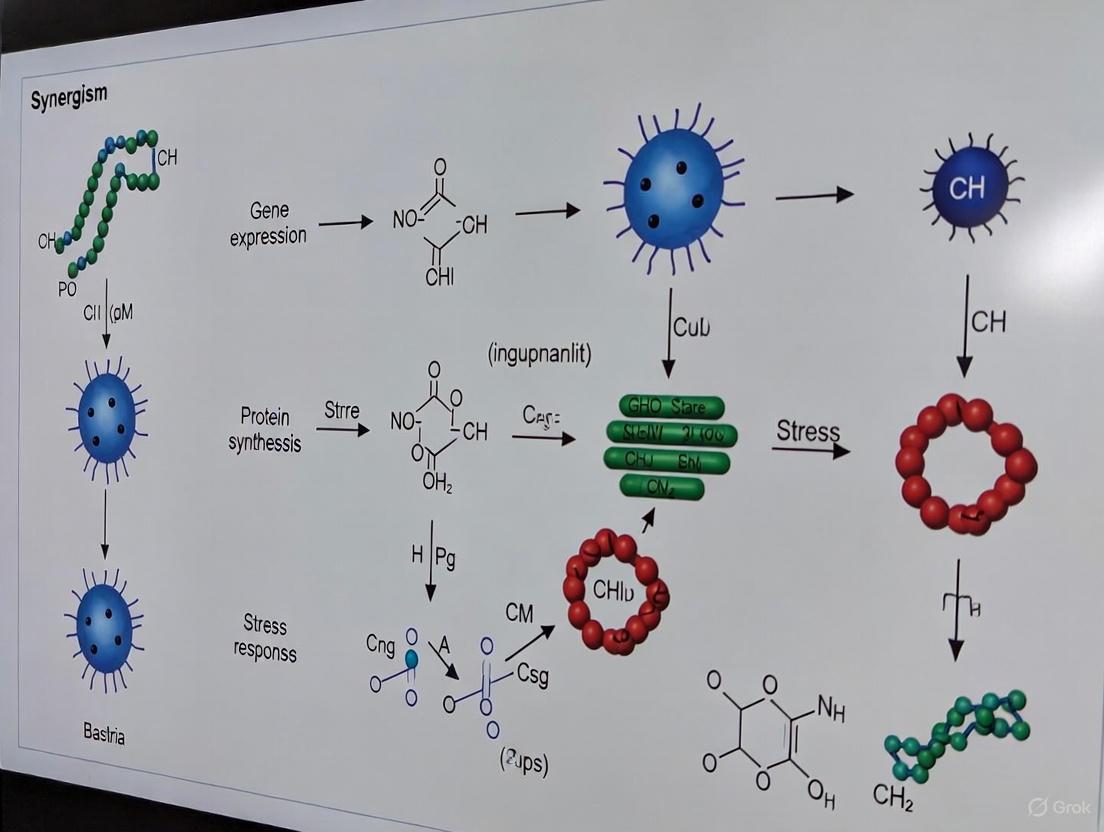
This article explores the critical role of microbial synergism in enabling environmental stress adaptation, a frontier area with significant implications for biotechnology and medicine.
Microbial Synergism: A Key Mechanism for Environmental Stress Adaptation and Its Biomedical Applications
Abstract
This article explores the critical role of microbial synergism in enabling environmental stress adaptation, a frontier area with significant implications for biotechnology and medicine. We first establish the foundational principles, defining microbial consortia and their cooperative mechanisms like cross-protection and redox balancing. The discussion then progresses to methodological approaches, detailing the application of these consortia in bioremediation and bioenergy, supported by advances in high-throughput screening and computational design. We address core challenges in troubleshooting consortium stability and predictability, presenting optimization strategies from systems biology and bioprocess engineering. Finally, we evaluate validation frameworks using mathematical modeling and comparative 'omics' analyses to assess consortium performance and resilience. This synthesis provides researchers and drug development professionals with a comprehensive roadmap for harnessing microbial teamwork to solve complex stress-related challenges.
Defining Microbial Teamwork: Core Concepts and Natural Mechanisms of Stress Resilience
What are Microbial Consortia? Defining Synergism in Dynamic Communities
A microbial consortium, also referred to as a microbial community, is defined as two or more bacterial or microbial groups living symbiotically [1]. These consortia represent fundamental biological units where diverse microorganisms form synergistic relationships, enabling functionalities unattainable by single species in isolation. Consortium relationships can be endosymbiotic (where one organism lives inside the other) or ectosymbiotic (where one organism lives on the other's surface), with some systems featuring both interaction types simultaneously [1]. The protist Mixotricha paradoxa, itself an endosymbiont of the Mastotermes darwiniensis termite, provides a classic example of a complex consortium, always found associated with at least one endosymbiotic coccus, multiple ectosymbiotic flagellate or ciliate bacteria, and helical Treponema bacteria that facilitate its locomotion [1].
These communities function as integrated metabolic networks where member organisms coordinate their biochemical activities through sophisticated communication systems. Microbial consortia are widely distributed across diverse habitats, from extreme environments like hot springs and seabeds to host-associated ecosystems including the human gut and plant rhizospheres [2]. Their collective metabolic capabilities enable them to perform complex biochemical transformations, making them essential players in global biogeochemical cycles, human health, and biotechnological applications [2]. The conceptual foundation for understanding consortia was established by Johannes Reinke in 1872, with the term "symbiosis" introduced later in 1877, fundamentally shaping our understanding of how microbial partnerships drove evolutionary transitions, such as the movement of algal communities from marine to terrestrial environments [1].
Mechanisms of Microbial Interactions
Microbial interactions within consortia are categorized based on their ecological outcomes, ranging from positive (cooperative) to negative (antagonistic) relationships. These interactions follow specific mechanisms that dictate community structure, function, and stability [3].
Classification of Social Interactions
Positive Interactions: These beneficial relationships include mutualism and commensalism. In mutualism, both interacting partners derive benefits, often through nutrient exchange, shared metabolic pathways, or protective functions. A documented example includes the beneficial metabolic exchange between the mycorrhizal fungus Laccaria bicolour and the bacterium Pseudomonas aeruginosa, where P. aeruginosa provides thiamine to support fungal growth while L. bicolour releases trehalose as a chemoattractant for the bacteria [3]. In commensalism, one partner benefits while the other remains unaffected, such as when one microbial population utilizes metabolic byproducts from another without impacting the producer [3].
Negative Interactions: These inhibitory relationships include competition, amensalism, and parasitism. Competition occurs when microorganisms vie for limited resources such as nutrients or space. Amensalism describes scenarios where one organism negatively affects another without receiving benefit or harm, exemplified by Saccharomyces cerevisiae producing ethanol during fermentation that inhibits Oenococcus oeni by interfering with genes encoding cell wall integrity and metabolite transport [3]. Parasitism involves one partner benefiting at the expense of the other, commonly observed in host-pathogen relationships within the gut microbiome [3].
Table 1: Classification of Microbial Interactions in Consortia
| Interaction Type | Effect on Partner A | Effect on Partner B | Mechanisms | Example |
|---|---|---|---|---|
| Mutualism | Benefits | Benefits | Metabolic exchange, cross-feeding, syntrophy | Laccaria bicolour fungus and Pseudomonas aeruginosa bacteria exchanging trehalose and thiamine [3] |
| Commensalism | Benefits | Neutral | Utilization of waste products, habitat modification | One species consuming metabolic byproducts of another without affecting the producer [3] |
| Competition | Harms | Harms | Resource limitation, niche overlap | Multiple species competing for limited nutrients or space [3] |
| Amensalism | Neutral | Harms | Production of inhibitory compounds | Saccharomyces cerevisiae producing ethanol that inhibits Oenococcus oeni [3] |
| Parasitism | Benefits | Harms | Direct exploitation, resource diversion | Gut parasites like Entamoeba histolytica degrading host mucins for invasion [3] |
Molecular Mechanisms of Interaction
Microbial consortia maintain their structural and functional integrity through various molecular mechanisms that facilitate inter-species communication and cooperation:
Metabolic Cross-Feeding: This represents a fundamental interaction where one species consumes metabolites excreted by another, creating nutritional interdependence. In syntrophic relationships, the breakdown of complex substrates requires coordinated metabolic activities across multiple species, such as in the conversion of lignocellulose to carboxylates by anaerobic consortia derived from termite guts [1].
Quorum Sensing: Many microbial consortia employ chemical signaling systems to coordinate population-wide behaviors. Bacteria release diffusible autoinducer molecules that accumulate as cell density increases, triggering coordinated gene expression when reaching threshold concentrations. This mechanism regulates diverse processes including biofilm formation, virulence factor production, and extracellular enzyme secretion [3].
Horizontal Gene Transfer: The sharing of genetic material between phylogenetically distinct organisms enables the rapid dissemination of adaptive traits throughout microbial communities. This process occurs via plasmid exchange, phage transduction, and natural transformation, facilitating the spread of antibiotic resistance, novel catabolic pathways, and other fitness-enhancing genes [2].
Endosymbiosis and Physical Association: Intimate physical associations, including endosymbiotic relationships where one organism resides within another, represent highly evolved forms of microbial cooperation. These arrangements minimize diffusion distances for metabolic exchange and create protected niches for specialized functions [1] [2].
Diagram 1: Microbial Interaction Mechanisms
Methodologies for Studying Microbial Consortia
Research into microbial consortia employs integrated approaches combining traditional microbiology with advanced omics technologies and computational modeling to unravel community structure, function, and dynamics.
Qualitative Assessment Methods
Co-culturing Experiments: Growing microbial species together in defined systems enables direct observation of cell-cell interactions, including directionality, mode of action, and spatiotemporal dynamics [3]. These experiments can be conducted in liquid media or on solid surfaces to simulate different environmental conditions. Advanced co-culturing systems incorporate host organisms or tissues to better mimic natural habitats and study host-microbe interactions under controlled conditions [3].
Microscopy and Visualization Techniques: Imaging technologies provide critical insights into spatial organization and physical associations within consortia. Scanning Electron Microscopy (SEM) and Transmission Electron Microscopy (TEM) reveal ultrastructural details of microbial interactions, while Confocal Laser Scanning Microscopy (CLSM) with fluorescence labeling enables three-dimensional visualization of living communities, particularly biofilms, over time [3]. Time-lapse imaging systems like MOCHA (MicrObial CHAmber) track morphological changes and movement dynamics in co-cultures [3].
Metabolomic Profiling: Analyzing the complete set of metabolites within a consortium provides functional readouts of microbial activities and interactions. Liquid chromatography-mass spectrometry (LC-MS) identifies and quantifies metabolites involved in cross-feeding, antibiotic production, and signaling molecules like quorum sensing autoinducers [3]. This approach has revealed how algal-associated bacterial and fungal endophytes produce metabolites that interfere with bacterial quorum sensing (quorum quenching) [3].
Quantitative and Computational Approaches
Network Analysis and Inference: Microbial association networks map potential interactions between community members based on abundance correlations across samples. These networks help identify keystone species, functional modules, and community assembly rules [4]. Inference methods distinguish between direct and indirect interactions, though results require validation through targeted experiments [4].
Mathematical Modeling: Dynamic models simulate population behaviors and predict consortium stability under changing conditions. The Lotka-Volterra model describes predator-prey dynamics and competition, while more sophisticated OptCom and d-OptCom frameworks integrate metabolic networks to simulate community metabolism [4]. These models incorporate metabolite exchange, diffusion limitations, and abiotic factors to predict spatiotemporal population dynamics [4].
Synthetic Consortium Construction: Building defined communities from isolated strains enables hypothesis testing about specific interactions. Two primary approaches exist: synthetic assembly combining known isolates, and environmental enrichment followed by simplification through techniques like dilution-to-extinction [1] [5]. This latter approach was successfully applied to develop simplified microbial consortia with keratinolytic activity comparable to the original complex community [5].
Table 2: Analytical Tools for Microbial Consortium Research
| Tool Category | Specific Technologies | Key Applications | Considerations |
|---|---|---|---|
| Sequencing | 16S/18S/ITS amplicon sequencing, Shotgun metagenomics | Taxonomic profiling, functional potential, community structure | Amplicon Sequence Variants (ASVs) provide higher resolution than Operational Taxonomic Units (OTUs) [4] |
| Spatial Mapping | Fluorescence in situ hybridization (FISH), Raman microspectroscopy | Spatial organization, substrate utilization, metabolite localization | Reveals physical interactions and functional niches within consortia [4] |
| Flow Cytometry | Fluorescence-activated cell sorting (FACS) | Population quantification, cell sorting based on metabolic activity | Enables separation of consortium members for individual analysis [4] |
| Metabolic Modeling | Flux Balance Analysis (FBA), Genome-scale metabolic models | Prediction of metabolic exchanges, nutrient flows, growth requirements | Requires validated genome-scale metabolic reconstructions [4] |
Experimental Workflow for Consortium Simplification
The dilution-to-extinction approach represents a powerful method for deriving simplified functional consortia from complex environmental communities. The workflow for obtaining simplified microbial consortia (SMC) with maintained functionality involves four key stages [5]:
Diagram 2: Consortium Simplification Workflow
Enrichment for Desired Traits: Complex microbial communities from environmental samples are cultivated under selective conditions to enrich for consortia with specific functional capabilities. For example, enrichment using keratin as the sole carbon source selects for keratinolytic communities. This process is monitored through functional assessments (cell density, enzyme activity, residual substrate ratio) and compositional analysis [5].
Serial Dilution: The enriched consortium undergoes serial dilution across a broad range (typically 10² to 10¹⁰) with multiple replicates at each dilution. This process reduces community complexity by progressively excluding less abundant members. Dissimilarity between dilutions is evaluated using Euclidean distance calculations based on functional assessment criteria [5].
Library Construction: An appropriate dilution factor is selected to construct a simplified microbial consortia (SMC) library. Optimal dilutions maintain functional capacity while maximizing compositional simplicity. In the Kang et al. study, dilution 10⁹ was selected as it provided optimal dissimilarity among replicates [5].
Selection of Promising SMCs: Library members are screened based on functional performance and taxonomic composition. Successful SMCs demonstrate equivalent functional efficiency to the original complex consortium despite reduced diversity, confirming that community simplification can be achieved without functional loss [5].
Applications in Environmental Stress Adaptation
Microbial consortia demonstrate remarkable resilience to environmental stressors, making them valuable for applications requiring adaptation to fluctuating or extreme conditions. Their collective stress tolerance emerges from functional redundancy, distributed metabolic pathways, and synergistic interactions that enhance community robustness [2] [6].
Multiple Stressor Responses
Research using mesocosm experiments simulating shallow freshwater lake ecosystems has revealed how microbial communities respond to combined environmental stressors. Studies exposing communities to temperature variations (continuous warming or multiple heatwaves), glyphosate herbicide, and eutrophication demonstrated that:
- Eutrophication significantly enhances microbial species richness congruence at the water-sediment interface and increases functional richness [5].
- Changes in beta-diversity in both water and sediment are primarily driven by temperature and eutrophication, with effects varying according to microbial habitat [5].
- The combined effects of temperature and eutrophication on beta-diversity frequently manifest as antagonistic interactions (less than additive) rather than additive effects (approximating cumulative impacts) [5].
- Glyphosate herbicide showed no significant influence on microbial congruence or diversity at the water-sediment interface, nor did it interact significantly with warming or eutrophication effects [5].
These findings highlight the complex responses of microbial consortia to multiple simultaneous stressors and have important implications for developing ecological monitoring strategies for freshwater systems facing global environmental change [5].
Agricultural Stress Mitigation
Microbial consortia play crucial roles in enhancing plant stress tolerance and promoting sustainable agriculture under challenging environmental conditions:
Rhizosphere Consortia: Plant roots host diverse microbial consortia that enhance stress resilience through multiple mechanisms. Beneficial rhizosphere consortia comprising plant-growth-promoting bacteria (PGPB), arbuscular mycorrhizal fungi (AMF), and Trichoderma fungi establish synergistic interactions that promote plant growth and development, enhance nutrient uptake, strengthen defense systems against pathogens, and improve tolerance to environmental stresses [1]. These multipartner consortia often produce additive or synergistic benefits exceeding those achieved by single microorganisms [1].
Salinity Stress Adaptation: Research on sorghum-peanut intercropping systems under salt stress conditions demonstrates how intercropping alters microbial community structure by influencing soil sugar metabolism. Under salt stress, sucrose and fructose levels significantly decrease as plants and microbes consume these compounds to mitigate stress. Salt-stressed intercropped conditions promote beneficial microbes such as Rhodanobacter and Rhizopus, with strong correlations between these microbial taxa and sugar metabolites indicating that shifts in metabolite profiles directly influence microbial composition and function [6].
Synthetic Consortia for Crop Improvement: Biofertilization using synthetic microbial consortia (SynCom) derived from plant-associated microbes offers a promising alternative to conventional fertilization. Studies comparing conventional fertilization with SynCom biofertilization revealed distinct shifts in soil microbiota, with biofertilization enhancing populations of beneficial microbes (Bacillus, Pantoea, and Serratia) while reducing potentially harmful taxa [6]. Drone-assisted delivery of synthetic consortia further promotes complex microbial networks, improving soil resilience and crop growth [6].
Table 3: Microbial Consortia Applications in Stress Adaptation
| Application Area | Consortium Type | Stress Mitigation Mechanism | Outcome/ Benefit |
|---|---|---|---|
| Agriculture | Rhizosphere consortia (PGPB, AMF, Trichoderma) | Enhanced nutrient uptake, phytohormone modulation, pathogen inhibition | Increased plant growth, biotic/abiotic stress tolerance, reduced fertilizer need [1] [6] |
| Bioremediation | Pollutant-degrading consortia | Distributed catabolic pathways, co-metabolism | Enhanced degradation of recalcitrant pollutants (e.g., diesel, polyurethane) [1] [7] |
| Waste Treatment | Lignocellulose-degrading consortia | Synergistic enzyme production, metabolic cross-feeding | Efficient transformation of plant biomass to carboxylates [1] [8] |
| Bioenergy | Algal-bacterial consortia | CO₂/O₂ exchange, vitamin exchange, growth enhancement | Improved algal growth and biofuel production [2] |
The Scientist's Toolkit: Essential Research Reagents and Materials
Studying microbial consortia requires specialized reagents, tools, and methodologies to unravel complex community interactions. The following table outlines essential materials for consortium research:
Table 4: Essential Research Reagents and Materials for Microbial Consortium Studies
| Category/Item | Specific Examples | Function/Application |
|---|---|---|
| Growth Media Components | ||
| Keratin medium | Raw wheat straw, keratin powder | Selective enrichment for keratinolytic consortia [1] [5] |
| Lignocellulose medium | Raw plant materials, cellulose | Enrichment for lignocellulose-degrading consortia [1] |
| Defined minimal media | Specific carbon/nitrogen sources | Studying metabolic interactions in simplified consortia [1] [5] |
| Molecular Biology Tools | ||
| Fluorescence labels | FISH probes, fluorescent proteins | Tracking spatial organization and cell-cell interactions [3] |
| DNA extraction kits | Metagenomic DNA isolation | Community genomic analysis [4] [3] |
| Sequencing reagents | 16S/18S/ITS primers, shotgun libraries | Taxonomic and functional profiling [4] |
| Analytical Instruments | ||
| Confocal microscope | CLSM systems | 3D visualization of biofilm structure and spatial organization [3] |
| LC-MS equipment | Liquid chromatography-mass spectrometry | Metabolite identification and quantification [3] |
| Flow cytometer | FACS instruments | Cell sorting and population analysis [4] |
| Computational Tools | ||
| Metabolic modeling | OptCom, d-OptCom frameworks | Predicting metabolic interactions and community dynamics [4] |
| Network analysis | Correlation networks, inference tools | Identifying potential microbial interactions [4] |
Future Directions and Challenges
The study and application of microbial consortia face several important frontiers that will shape future research directions and technological developments:
Integration of Multi-Omics Data: Combining metagenomics, metatranscriptomics, metaproteomics, and metabolomics datasets will provide comprehensive insights into consortium structure, function, and dynamics. Future research must develop improved bioinformatic frameworks for integrating these diverse data types to construct predictive models of community behavior [4] [6].
Interkingdom Consortia Engineering: Most current synthetic consortia focus on single-kingdom communities, but interkingdom consortia (combining bacteria, archaea, fungi, and microalgae) often demonstrate superior robustness and functionality. Future work should explore the unique interactions in interkingdom systems, including endosymbiosis and kingdom-specific cell-cell communication, which provide improved stress mitigation and metabolic capabilities [2].
Spatiotemporal Dynamics Analysis: Microbial communities exhibit complex spatial organization and temporal dynamics that significantly influence their function. Advanced imaging techniques, microfluidics, and spatial transcriptomics will enable better understanding of how physical structure and temporal patterns affect consortium stability and productivity [4].
Therapeutic Applications: Engineering microbial consortia for therapeutic interventions represents a promising frontier, particularly for managing human microbiome-associated disorders. Designed consortia could restore healthy microbial communities, deliver therapeutics, or modulate host physiological processes [4].
Standardization and Reproducibility: As consortium research advances, developing standardized protocols, reference communities, and data reporting standards will be essential for comparing results across studies and achieving reproducible engineering of synthetic communities [3] [5].
In conclusion, microbial consortia represent complex biological systems where synergistic interactions between member species create emergent properties that enhance environmental stress adaptation, expand metabolic capabilities, and improve ecosystem functioning. Understanding and harnessing these dynamic communities requires integrated approaches combining traditional microbiology, advanced omics technologies, computational modeling, and innovative engineering strategies. As research methodologies continue to advance, microbial consortia offer tremendous potential for addressing diverse challenges in agriculture, environmental remediation, bioenergy, and human health through their inherent capacities for cooperation, adaptation, and resilience.
Microbial communities are fundamental to ecosystem resilience, driving essential processes from nutrient cycling to bioremediation. Under environmental stress, the survival and function of these communities are governed by sophisticated adaptive mechanisms that extend far beyond the capabilities of individual species. This whitepaper explores the core principles of microbial adaptation, framing them within the critical context of microbial synergism. We delve into the molecular and ecological strategies—from cross-protection through shared public goods to the division of labor in substrate utilization—that enable microbial consortia to withstand and thrive under abiotic pressures. Understanding these mechanisms is paramount for advancing fields such as environmental bioremediation, drug development targeting microbial communities, and the design of synthetic consortia for industrial applications.
Molecular Foundations of Cross-Protection and Public Goods
A key mechanism for stress adaptation in microbial communities is cross-protection, where the cooperative exchange of metabolites enhances the collective tolerance of the consortium. This process transforms individual microbial cells into a coordinated, multi-cellular entity capable of resisting environmental perturbations.
Interspecies Cofactor Exchange
Recent research on a synthetic consortium for di-(2-ethylhexyl) phthalate (DEHP) biodegradation under hyperosmotic stress reveals a fascinating cross-protection mechanism. Multi-omics analysis and Genome-Scale Metabolic Model (GEM) simulations identified that the interspecies exchange of essential cofactors, specifically S-adenosyl-L-methionine (SAM) and riboflavin, was critical for enhancing hyperosmotic stress tolerance [9]. These cofactors are necessary for vitamin B12 biosynthesis, which in turn supports the methionine-folate cycle—a pathway implicated in stress response. This exchange promoted enhanced biofilm formation, a physical manifestation of a protected community state [9]. This illustrates how the sharing of "public goods" like cofactors can create a synergistic system where the whole consortium exhibits greater resilience than its individual components.
The Role of Biofilms and Quorum Sensing
The formation of biofilms is itself a primary adaptive strategy. Biofilms are matrix-stabilized microbial consortia that develop in heterogeneous micro-environments. They offer several advantages for stress tolerance, including improved nutrient acquisition by sorption, synergistic use and recycling of resources, retention of aqueous support, and enhanced cell-to-cell communication [10]. This communication, often mediated by quorum sensing, is a well-orchestrated action directed through differential gene expression regulated by molecular signals among bacteria. Quorum sensing not only affects biofilm formation but also coordinates behaviors such as virulence, pathogenicity, and spore formation, all of which can contribute to community-level stress tolerance [10].
Table 1: Key Metabolites and Molecules in Cross-Protection
| Molecule | Function in Cross-Protection | Experimental Context |
|---|---|---|
| S-adenosyl-L-methionine (SAM) | Cofactor for vitamin B12 biosynthesis; supports methionine-folate cycle [9]. | DEHP degradation under hyperosmotic stress [9]. |
| Riboflavin | Precursor for vitamin B12 biosynthesis; exchanged between species to enhance stress tolerance [9]. | DEHP degradation under hyperosmotic stress [9]. |
| Vitamin B12 | Enhances biofilm formation, a key structure for stress tolerance [9]. | DEHP degradation under hyperosmotic stress [9]. |
| Quorum Sensing Signals | Coordinate gene expression across community; regulate biofilm formation, virulence, sporulation [10]. | Bacterial community response to biocides and disinfectants [10]. |
Ecological Dynamics and Network Stability Under Stress
Environmental stress does not merely trigger individual microbial responses but reshapes the entire architecture and stability of microbial ecological networks.
Network Properties Indicating Stability
Analysis of soil microbiomes across 40 replicate stress gradients (related to elevation and water availability) has shown that stable microbial communities are characterized by specific network properties: high modularity and a high ratio of negative to positive cohesion [11].
- Modularity refers to the compartmentalization of a community into distinct groups of strongly interacting taxa. High modularity stabilizes communities by restricting the impact of a perturbation, such as the loss of a taxon, to its own module, preventing cascading failures throughout the network [11].
- Cohesion measures the strength and sign of associations within a community. Negative cohesion, driven by negative interactions (e.g., competition, antagonism), is thought to stabilize communities by preventing runaway positive feedback loops. In contrast, an overabundance of positive cohesion, stemming from positive interactions (e.g., mutualism, niche overlap), can destabilize communities, as the decline of one member can trigger the decline of its mutually dependent partners [11].
Stress-Driven Destabilization of Microbial Networks
A critical finding is that environmental stress systematically disrupts these hallmarks of stability. Research demonstrates that increasing stress leads to a clear decline in both modularity and the negative-to-positive cohesion ratio in prokaryotic and fungal communities [11]. This suggests that stress simplifies microbial networks, making them less compartmentalized and more dominated by positive associations. This shift is consistent with the Stress Gradient Hypothesis, which predicts that the frequency of facilitative interactions increases with stress. While facilitation can be beneficial in the short term, a network overly reliant on positive feedback may be inherently less stable [11]. This destabilization has profound implications for the ecosystem services provided by microbiomes.
Division of Labor for Substrate Utilization
A fundamental adaptive strategy for microbial consortia, especially when confronting complex substrates, is the division of labor (DOL). This evolutionary strategy allows a community to distribute the metabolic burden of a complex task across different members, thereby achieving what no single species can accomplish alone.
Principles and Strategies for Consortium Construction
In natural ecosystems, DOL allows microbial communities to efficiently utilize available resources [12]. This principle is harnessed in constructing artificial microbial consortia for bioremediation and bioproduction. There are two primary design approaches:
- Top-Down Approach: This method involves applying selective environmental pressures to an existing microbiome (natural or inoculated) to force it toward performing a desired function. While successful for applications like wastewater treatment, it often overlooks intricate interactions between consortium members [13].
- Bottom-Up Approach: Leveraging synthetic biology, this approach involves rationally designing a consortium from well-characterized members. Metabolic networks are reconstructed, and metabolic pathways are compartmentalized into different strains to reduce metabolic burden and cross-reactions [13].
A key consideration in bottom-up design is avoiding excessive segmentation of metabolic pathways, which can lead to confusion and reduced mass transfer efficiency. Furthermore, implementing an ordered spatiotemporal distribution of strains, for example through immobilization in hydrogels or using microfluidic devices, can mimic natural environments and significantly improve degradation efficiency by providing each strain with its optimal catalytic environment [13].
Substrate Utilization in Practice
The division of labor is particularly effective for degrading complex compounds like plastics, petroleum, and lignocellulosic biomass. For instance, a consortium can be designed where one strain breaks down a complex polymer into intermediate compounds, which are then utilized as carbon sources by other members of the community [13]. This sequential utilization pattern avoids substrate competition and removes feedback inhibition caused by toxic intermediates. Unlike linear production pathways, the material and energy flow in degradation consortia are often reticular, with metabolites being exchanged and consumed repeatedly, leading to a more stable and robust community structure [13].
Table 2: Quantitative Data on Consortium-Mediated Substrate Utilization
| Substrate | Consortium / Approach | Key Performance Metric | Result |
|---|---|---|---|
| Wheat Straw | ALE-evolved soil consortium [14] | True Protein Content | Increased from 2.74% to 10.42% |
| Corn Straw | Synthetic consortium with ammonium sulfate [13] | Protein Content | 1.05-fold increase |
| Corn Straw | Synthetic consortium with ammonium sulfate [13] | Straw Degradation | 42.08% degradation |
| Di-(2-ethylhexyl) phthalate (DEHP) | Rhodococcus ruber & Epilithonimonas zeae [9] | Key Adaptive Mechanism | Interspecies exchange of SAM and riboflavin |
Advanced Analytical and Experimental Methodologies
Understanding and harnessing microbial adaptation requires a sophisticated toolkit that spans from in silico modeling to high-resolution experimental techniques.
Genome-Scale Metabolic Modeling (GEM)
GEM is a computational approach that simulates the metabolic phenotype of bacteria and predicts metabolic exchanges in microbial communities. It has emerged as a powerful tool for investigating microbial interactions and identifying optimal microbial combinations for pollutant degradation [9]. For example, GEM simulations were pivotal in predicting the interspecies exchange of SAM and riboflavin in a DEHP-degrading consortium, a prediction later confirmed through in vitro experiments [9]. This highlights GEM's utility in moving from correlation to causation in understanding microbial synergism.
Dynamic Covariance Mapping (DCM)
A major challenge in microbial ecology is quantifying the interaction matrix—the pairwise effects of one species' abundance on another's growth—within complex, in-situ environments. Dynamic Covariance Mapping (DCM) is a novel, general approach to infer this community interaction matrix from high-resolution abundance time-series data [15]. The method is based on the covariance between the abundance of one member and the growth rate (time derivative of abundance) of another. By combining DCM with high-resolution chromosomal barcoding, researchers can quantify not only inter-species interactions but also intra-species clonal-level dynamics, revealing how ecological and evolutionary processes jointly shape microbiome structure over time [15].
Diagram 1: Dynamic Covariance Mapping (DCM) Workflow. This diagram illustrates the process of using high-resolution time-series data and covariance calculations to estimate the complex interaction matrix within a microbial community.
Adaptive Laboratory Evolution (ALE)
Adaptive Laboratory Evolution (ALE) is an innovative technique for enhancing the capabilities of microbial consortia. It involves subjecting a community to gradually increasing environmental stress over multiple generations and periodically selecting for high-performance evolved populations [14]. This process spontaneously accumulates beneficial mutations, enhancing traits like substrate utilization efficiency and stress tolerance without requiring a detailed prior understanding of the metabolic network. For example, a soil microbial consortium was evolved via ALE to tolerate a fivefold increase in non-protein nitrogen (NPN), which significantly improved its ability to convert wheat straw into protein-rich feed [14].
The Scientist's Toolkit: Research Reagent Solutions
Table 3: Essential Research Reagents and Materials for Studying Microbial Adaptation
| Item | Function/Application | Example from Literature |
|---|---|---|
| S-adenosyl-L-methionine (SAM) | Investigate role in cofactor exchange and vitamin B12 biosynthesis under osmotic stress [9]. | Used in in vitro validation experiments for DEHP degradation consortium [9]. |
| Riboflavin | Study as a exchanged public good and precursor in stress-responsive biosynthetic pathways [9]. | Used in in vitro validation experiments for DEHP degradation consortium [9]. |
| Chromosomal Barcoding Kit | Enable high-resolution lineage tracking for intra-species dynamics in complex communities [15]. | Used with Tn7 transposon machinery to track ~500,000 E. coli clones in mouse gut [15]. |
| Specialized Hydrogels | Immobilize consortium members for spatiotemporal organization and improved functional stability [13]. | Proposed as carriers for artificial consortia that preserve function and allow material exchange [13]. |
| Non-Protein Nitrogen (NPN) Sources | Selective pressure in ALE for enhancing nitrogen assimilation and protein synthesis in consortia [14]. | Ammonium sulfate, urea, ammonium chloride used to evolve a soil consortium on wheat straw [14]. |
| Evolution Media | Defined medium for ALE experiments; carbon and nitrogen sources can be tailored to research goals [14]. | Contained wheat straw as sole carbon source and NPN (e.g., ammonium sulfate) as sole nitrogen source [14]. |
The adaptive prowess of microbial communities in the face of environmental stress is a testament to the power of synergism. Mechanisms such as cross-protection through metabolite exchange, the stabilization and destabilization of ecological networks, and a sophisticated division of labor for substrate utilization, collectively enable functional resilience. Advanced methodologies like GEM, DCM, and ALE are providing researchers with an unprecedented ability to dissect, understand, and ultimately engineer these complex interactions. This knowledge is not merely academic; it is critical for addressing pressing global challenges, from designing effective bioremediation strategies for pollutants like PAEs and plastics to developing novel approaches in drug development that target microbial community dynamics. The future of environmental stress adaptation research lies in embracing the complexity and synergistic potential of the microbial world.
This case study explores the molecular mechanisms underpinning stress adaptation in the model microorganisms Saccharomyces cerevisiae and Escherichia coli. For S. cerevisiae, research demonstrates that overexpression of the SNF1 gene and its specific β-subunits significantly enhances multi-stress tolerance and glucose utilization under high glucose, ethanol, and heat stresses [16]. In E. coli, the response to oxidative stress involves a critical trade-off between resistance and tolerance, orchestrated by metabolic rerouting and regulatory systems [17]. Framed within the context of microbial synergism, this analysis reveals conserved and unique strategies, providing a foundation for developing robust microbial systems for industrial and therapeutic applications.
Microbial stress adaptation is a complex phenomenon, often conceptualized through the distinct properties of resistance (the ability to maintain proliferation during continuous stress) and tolerance (the ability to survive a transient stress without full adaptation) [17]. In natural environments, microbes seldom function in isolation; their adaptive capacities are frequently enhanced through synergistic interactions within complex communities. This principle of microbial synergism—where the combined action of multiple organisms or genetic elements produces a greater effect than the sum of their individual parts—is central to advanced environmental adaptation research.
This case study examines how key regulatory and metabolic modules in S. cerevisiae and E. coli contribute to stress resilience. By understanding these mechanisms, researchers can engineer synthetic microbial communities (SynComs) or single strains with enhanced, multi-faceted defensive capabilities, mirroring the cooperative strategies observed in plant rhizospheres where core and stress-specific microbiota collectively bolster plant health under drought, salinity, and disease [18].
Enhanced Multi-Stress Tolerance inSaccharomyces cerevisiae
The Role of the Snf1 Protein Kinase Complex
The Snf1 complex in S. cerevisiae is a central regulator of the response to nutrient and environmental stresses. It is functionally analogous to the AMP-activated protein kinase (AMPK) in mammals and consists of an α-catalytic subunit (Snf1), a γ-regulatory subunit (Snf4), and one of three alternative β-regulatory subunits (Sip1, Sip2, or Gal83) that determine subcellular localization and substrate specificity [16].
Experimental Protocol: Investigating Snf1 Overexpression
- Strain Construction: The SNF1, SIP1, SIP2, and GAL83 genes were individually overexpressed in the S. cerevisiae strain AY3α using standard molecular biology techniques (e.g., plasmid-based expression systems). A control strain carrying an empty vector (α+K) was also generated [16].
- Stress Tolerance Assays: Transformants and the parental strain were exposed to various stresses:
- High Osmotic Stress: 30% glucose
- Ethanol Stress: 8% ethanol
- Heat Shock: 53 °C
- Viability Measurement: Cell survival rates were determined by counting colony-forming units (CFUs) after stress exposure and comparing them to untreated controls [16].
- Glucose Consumption Analysis: The glucose concentration in the culture medium was monitored over time under different stress conditions (30% glucose, 8% ethanol, 42 °C) to calculate glucose utilization efficiency [16].
- Metabolite and Gene Expression Analysis: Intracellular levels of fatty acids and amino acids were quantified. The expression levels of genes involved in glucose transport and glycolysis were also analyzed [16].
Key Findings and Quantitative Data
Overexpression of SNF1 markedly improved both cell viability and glucose consumption under multiple stresses. The specific β-subunit present determined the effectiveness against different stressors, indicating functional specialization [16].
Table 1: Impact of SNF1 and β-Subunit Overexpression on Cell Survival in S. cerevisiae [16]
| Overexpressed Gene | Change in Survival Rate vs. Parental Strain |
|---|---|
| SNF1 (α+S) | 30% Glucose: +11% |
| 8% Ethanol: +39% | |
| 53°C Heat: +81% | |
| SIP1 (α+SI1) | 8% Ethanol: +21% |
| GAL83 (α+G83) | 30% Glucose: +49% |
| 53°C Heat: +24% |
Table 2: Impact on Glucose Utilization Efficiency in S. cerevisiae under Stress [16]
| Overexpressed Gene | Change in Glucose Utilization vs. Parental Strain |
|---|---|
| SNF1 (α+S) | 30% Glucose: +27% |
| 8% Ethanol: +13% | |
| 42°C Heat: +5% | |
| SIP1 (α+SI1) | 8% Ethanol: +21% |
| SIP2 (α+SI2) | 30% Glucose: +20% |
| 8% Ethanol: +27% | |
| GAL83 (α+G83) | 30% Glucose: +23% |
| 8% Ethanol: +26% |
The study concluded that overexpression of SNF1 is a valid strategy to improve multi-stress tolerance, with the functional outcome being finely tuned by the identity of the β-subunit in a stress-specific manner [16].
The Oxidative Stress Trade-Off inEscherichia coliandSaccharomyces cerevisiae
Resistance vs. Tolerance: A Fundamental Distinction
While S. cerevisiae employs the Snf1 complex for broad stress adaptation, a conserved trade-off between stress resistance and tolerance has been identified in the oxidative stress response of both S. cerevisiae and E. coli.
- Resistance: The ability of cells to maintain or restore proliferation during continuous stress exposure.
- Tolerance: The ability of cells to survive a transient physiological threat without necessarily adapting [17].
Experimental Protocol: Microfluidics-Based Single-Cell Analysis
- Strain and Culture Conditions: Wild-type and mutant strains (e.g., ∆zwf, ∆trr1) of S. cerevisiae and E. coli were used. Cells were cultured in minimal media, and oxidative stress was induced with hydrogen peroxide (H₂O₂) [17].
- Microfluidics and Live-Cell Imaging: Cells were loaded into a microfluidics device that allows for continuous media perfusion and stable H₂O₂ exposure. Time-lapse microscopy was used to track single-cell behaviors over multiple generations [17].
- Proliferation and Survival Assays:
- Resistance Assay: Cells were continuously exposed to a sub-lethal H₂O₂ concentration, and proliferation rates (division times) were quantified.
- Tolerance Assay: Cells were exposed to a short, high-concentration H₂O₂ pulse, and the survival rate was measured by assessing membrane integrity and regrowth capacity [17].
- Metabolic Analysis: Flux through the Pentose Phosphate Pathway (PPP) was monitored, and intracellular NADPH levels were tracked using genetically encoded biosensors [17].
Key Findings and Quantitative Data
Mutations in key metabolic genes forced a physiological choice between resistance and tolerance, underscoring a resource-based trade-off.
Table 3: Impact of Metabolic Mutations on H₂O₂ Stress in Yeast and E. coli [17]
| Organism | Genetic Modification | Effect on Stress Resistance | Effect on Stress Tolerance | Implicated Mechanism |
|---|---|---|---|---|
| S. cerevisiae | ∆zwf1 (Δ glucose-6-phosphate dehydrogenase) | Decreased | Increased | Reduced PPP flux, limiting NADPH for growth but promoting survival. |
| S. cerevisiae | ∆trr1 (Δ thioredoxin reductase) | Decreased | Increased | Disrupted redox homeostasis, favoring a protective, non-proliferative state. |
| E. coli | ∆zwf (Δ glucose-6-phosphate dehydrogenase) | Decreased | Increased | Conservation of the trade-off, highlighting its fundamental nature. |
The study demonstrated that the trade-off is orchestrated by the competition for cellular resources, particularly NADPH. Resistant cells divert NADPH to antioxidant systems like the thioredoxin pathway to support growth under stress. In contrast, tolerant cells, often with impaired NADPH production or utilization, enter a metabolically downregulated state that prioritizes survival over proliferation [17]. The Protein Kinase A (PKA) nutrient-sensing pathway was identified as a key regulator of this switch.
The Scientist's Toolkit: Key Research Reagents and Materials
Table 4: Essential Reagents for Microbial Stress Tolerance Research
| Reagent / Material | Function in Research | Example Application |
|---|---|---|
| Microfluidic Devices | Enables precise control of the cellular environment and continuous single-cell imaging under stable stress conditions. | Tracking proliferation and survival in real-time during H₂O₂ exposure [17]. |
| Genetically Encoded Biosensors | Reporters for real-time monitoring of metabolic fluxes and physiological states (e.g., NADPH/NADP⁺ ratio). | Quantifying redox dynamics in response to oxidative stress [17]. |
| Yeast Deletion Mutant Library | Collection of strains, each with a single gene deletion, for systematic functional genomics screens. | Identifying genes essential for stress resistance vs. tolerance (e.g., zwf1Δ, trr1Δ) [17]. |
| H₂O₂ | A direct-acting oxidative stressor used to induce and study the oxidative stress response. | Used in both pulse (tolerance) and continuous (resistance) assays [17]. |
| SNF1/SIP/GAL83 Overexpression Plasmids | Vectors for the targeted overexpression of specific subunits of the Snf1 complex. | Investigating the role of specific Snf1 isoforms in multi-stress tolerance [16]. |
| M9 Minimal Medium / Yeast Minimal Medium | Defined growth media that allows precise control of nutrient availability, essential for stress response studies. | Used as a base culture medium in both bacterial and yeast stress experiments [17]. |
Discussion: Synthesis and Implications for Microbial Synergism
The studies on S. cerevisiae and E. coli reveal both conserved principles and unique mechanisms in microbial stress adaptation. The Snf1 complex in yeast acts as a master regulatory switch, with its functional output precisely tuned by alternative β-subunits to handle diverse stressors like high glucose, ethanol, and heat [16]. Conversely, the research on oxidative stress uncovers a fundamental, conserved trade-off between resistance and tolerance, governed by metabolic resource allocation [17].
These findings have profound implications for the thesis on microbial synergism. One can envision engineering a synthetic microbial consortium where one member, equipped with an enhanced Snf1-like system, specializes in resisting a particular stress, while another, programmed for a high-tolerance state, ensures population survival against transient, lethal insults. This division of labor mirrors the cooperation observed in natural plant microbiomes between core and stress-specific microbiota [18]. The experimental protocols and reagents detailed herein provide the essential toolkit for testing such hypotheses, paving the way for designing robust microbial systems for bioremediation, bioproduction, and potentially, combating antibiotic-tolerant infections.
The Role of Epigenetic Modifications and Transcriptional Regulation in Short-Term Adaptation
Short-term adaptation to environmental stress is a critical survival mechanism for living organisms, from microbes to plants and animals. This rapid response is primarily orchestrated through dynamic epigenetic modifications and precise transcriptional regulation, which allow for swift changes in gene expression without altering the underlying DNA sequence. Within microbial communities and other biological systems, these mechanisms enable a synergistic response to environmental challenges, ensuring resilience and functional stability. This whitepaper explores the sophisticated interplay between reactive oxygen and nitrogen species (ROS/RNS) signaling, chromatin remodeling, and transcriptional network regulation that underlies short-term adaptive responses. By examining cutting-edge research technologies and experimental findings, we provide a comprehensive technical guide for researchers investigating how epigenetic and transcriptional programs drive rapid environmental adaptation in the context of microbial synergism.
Fundamental Mechanisms of Epigenetic Regulation in Stress Adaptation
Redox Signaling as a Primary Trigger for Epigenetic Reprogramming
Reactive oxygen and nitrogen species (ROS/RNS) serve as central signaling molecules that initiate epigenetic changes in response to environmental stressors. Under controlled concentrations, ROS (such as superoxide radicals, hydrogen peroxide, and hydroxyl radicals) and RNS (primarily nitric oxide and peroxynitrite) function as key secondary messengers in stress perception and signal transduction [19]. These molecules regulate redox homeostasis and interface directly with epigenetic machinery through several mechanisms:
Enzyme Modification: ROS and RNS influence the activity of DNA methyltransferases (DNMTs), histone acetyltransferases (HATs), histone deacetylases (HDACs), and components of small RNA biosynthesis pathways [19]. For instance, NO-mediated S-nitrosylation of epigenetic enzymes can directly influence DNA methylation dynamics and histone acetylation status.
Chromatin Remodeling: ROS can induce oxidative modifications that affect chromatin structure and transcription factor binding. The DNA demethylase ROS1, essential for stress adaptation, functions as a redox-sensitive Fe–S cluster enzyme whose activity depends on cellular redox status, directly linking ROS levels to active DNA demethylation and epigenetic homeostasis [19].
Transcriptional Reprogramming: Both ROS and RNS regulate small RNA pathways, thereby influencing post-transcriptional gene silencing mechanisms essential for stress adaptation. GCN5 plays a dual role in microRNA biogenesis, positively regulating stress-inducible MIRNA gene expression while indirectly repressing miRNA processing components via histone acetylation dynamics [19].
Chromatin Modifications and Their Functional Consequences
Chromatin dynamics represent a fundamental epigenetic layer in short-term adaptation, with specific modifications directly correlating with transcriptional outcomes:
Table 1: Key Chromatin Modifications in Short-Term Stress Adaptation
| Modification Type | Molecular Effect | Functional Outcome in Stress Response |
|---|---|---|
| H3K4me3 | Associated with transcriptional activation | Facilitates rapid induction of stress-responsive genes |
| H3K27me3 | Mediates gene silencing via Polycomb complexes | Represses growth-related genes during stress conditions |
| H3K9me2/3 | Promotes heterochromatin formation | Silences transposable elements and repetitive DNA |
| Histone Acetylation | Loosens chromatin structure | Increases accessibility of stress-responsive gene promoters |
| DNA Methylation | Typically represses transcription | Modulates hormone-responsive transcription networks |
These chromatin modifications demonstrate remarkable plasticity under stress conditions. In mouse embryonic stem cells, transiently induced H3K9me3 heterochromatin can be epigenetically inherited for a limited number of cell divisions independently of sequence-dependent recruitment, but becomes more stable upon differentiation [20]. This suggests a graduated mechanism for establishing both short-term and potentially longer-term epigenetic memory.
Transcriptional Regulation Networks
Explainable AI Approaches for Mapping Transcriptional Networks
Recent advances in explainable artificial intelligence (XAI) have revolutionized our understanding of complex transcriptional networks governing short-term adaptation. Deep learning models can predict RNA Polymerase II occupancy from chromatin-associated protein profiles with high precision (R² = 0.85-0.95) [21]. The SHAP (SHapley Additive exPlanations) approach quantifies the contribution of each input feature to model predictions, enabling researchers to:
- Identify functional relevance of specific protein occupancy features without costly experimental interventions
- Predict differential gene expression and the magnitude of transcriptional changes from unperturbed data
- Uncover novel regulatory contributions, such as ZC3H4's role at gene bodies in influencing transcription [21]
These computational approaches have revealed unexpected connections between regulatory complexes. For instance, cross-dataset validation has uncovered crosstalk between ZC3H4 (a component of the Restrictor complex) and INTS11 (part of the Integrator complex), mediated by H3K4me3 and the SET1/COMPASS complex in transcriptional regulation [21].
Context-Specific Transcriptional Control Mechanisms
Transcriptional regulation during short-term adaptation exhibits significant context specificity, with regulatory proteins operating differently across genomic regions:
Promoter vs. Gene Body Regulation: Chromatin-associated proteins demonstrate distinct functional effects at promoter regions compared to gene bodies, with gene body signals playing previously underappreciated regulatory roles [21].
Cooperative Complex Interactions: SET1A and ZC3H4 cooperate at promoters while also functioning independently along gene bodies, suggesting sophisticated division of transcriptional labor [21].
Rapid Response Systems: Degron-based perturbation experiments reveal that acute protein degradation produces immediate transcriptional changes, highlighting the dynamic nature of short-term adaptive responses [21].
Table 2: Experimental Approaches for Transcriptional Network Analysis
| Methodology | Key Application | Technical Considerations |
|---|---|---|
| ChIP-seq | Protein-DNA interaction mapping | Resolution limited by antibody quality |
| SHAP Analysis | Feature importance quantification | Requires specialized computational expertise |
| Degron Systems | Acute protein depletion | Enables study of direct transcriptional targets |
| TT-chem-seq | Nascent transcript quantification | Captures immediate transcriptional responses |
| Cross-dataset Validation | Confirmation of regulatory mechanisms | Mitigates technology-specific artifacts |
Microbial Synergism in Environmental Stress Adaptation
Quantitative Frameworks for Microbial Response Analysis
The Kinbiont framework represents a cutting-edge approach for translating microbial kinetics into quantitative responses and testable hypotheses under environmental stress [22]. This open-source tool integrates dynamic models with machine learning methods for data-driven discovery in microbiology, consisting of three sequential modules:
Data Preprocessing: Raw time-series data processing including background subtraction, replicate averaging, and smoothing
Model-Based Parameter Inference: Fits processed data to mathematical models to estimate microbial growth parameters (growth rates, lag-phase duration, total biomass production)
Glass-Box Machine Learning Analyses: Employ interpretable machine-learning techniques to identify mathematical relationships and graphical decision rules linking inferred parameters to experimental conditions [22]
Kinbiont reveals growth-phase-specific sensitivities to environmental stressors, demonstrating how microbial communities distribute adaptive functions across population subsets—a key aspect of microbial synergism [22].
Epigenetic Coordination in Microbial Communities
Microbial synergism in stress adaptation involves sophisticated epigenetic coordination between community members:
Cross-Species Signaling: ROS/RNS signaling can function as inter-organismal communication molecules, synchronizing epigenetic responses across microbial populations [19].
Metabolic Division of Labor: Epigenetic regulation enables specialized functional differentiation within microbial communities, optimizing resource utilization under stress conditions [22].
Collective Memory: Stress-induced epigenetic modifications in pioneer populations can prime entire microbial communities for subsequent challenges, enhancing collective resilience [23].
Experimental Approaches and Methodologies
High-Resolution Epigenomic Mapping Technologies
Advanced technologies enable precise mapping of stress-induced epigenetic changes at genome-wide scales:
Whole-Genome Bisulfite Sequencing (WGBS): Provides single-base resolution DNA methylation maps, revealing stress-induced methylation changes [19].
Chromatin Immunoprecipitation Sequencing (ChIP-seq): Identifies genome-wide localization of histone modifications and transcription factors, though it is increasingly supplemented by newer methods [19].
ATAC-seq (Assay for Transposase-Accessible Chromatin using sequencing): Investigates genome-wide changes in chromatin accessibility under stress conditions with minimal input requirements [19].
CUT&Tag (Cleavage Under Targets and Tagmentation): Advances histone modification profiling with higher resolution, reduced background noise, and lower input requirements compared to traditional ChIP-seq [19].
Protocol for Mapping Redox-Epigenetic Interactions
Objective: To characterize the temporal relationship between ROS/RNS signaling and epigenetic modifications during short-term stress adaptation.
Materials:
- Cell culture system (microbial or plant models)
- ROS/RNS detection probes (e.g., H2DCFDA for ROS, DAF-FM for NO)
- Epigenetic inhibitors (5-azacytidine for DNA methylation, trichostatin A for HDAC inhibition)
- Chromatin extraction kit
- Antibodies for specific histone modifications
- WGBS or ChIP-seq library preparation kit
Procedure:
- Stress Application: Apply controlled stressor (e.g., oxidative, nutrient, osmotic) to experimental system.
- Time-Course Sampling: Collect samples at multiple time points (0, 15, 30, 60, 120 mins) post-stress exposure.
- ROS/RNS Quantification: Measure spatial and temporal patterns of reactive species using appropriate probes.
- Chromatin Preparation: Extract chromatin and process for epigenetic analysis.
- Epigenomic Profiling: Perform WGBS or ChIP-seq for key histone modifications (H3K4me3, H3K27me3, H3K9me3).
- Transcriptional Analysis: Conduct RNA-seq to correlate epigenetic changes with gene expression.
- Data Integration: Map ROS/RNS dynamics onto epigenetic and transcriptional changes using computational tools.
Troubleshooting:
- For weak ChIP-seq signals, verify antibody specificity and optimize chromatin fragmentation.
- If ROS signals saturate too quickly, reduce probe concentration or exposure time.
- For inconsistent epigenetic patterns, ensure stress application is uniform across replicates.
Research Reagent Solutions
Table 3: Essential Research Reagents for Epigenetic-Transcriptional Studies
| Reagent/Category | Specific Examples | Research Application |
|---|---|---|
| Epigenetic Inhibitors | 5-azacytidine (DNA methylation inhibitor), Trichostatin A (HDAC inhibitor) | Functional assessment of specific epigenetic pathways |
| Chromatin Profiling Kits | CUT&Tag kits, ChIP-seq kits | Genome-wide mapping of histone modifications |
| ROS/RNS Detection | H2DCFDA, DAF-FM DA | Quantitative measurement of redox signaling molecules |
| Gene Editing Systems | CRISPR/dCas9-epigenetic effectors | Targeted epigenetic manipulation |
| Antibodies | Anti-H3K4me3, Anti-H3K27me3, Anti-5-methylcytosine | Detection and enrichment of specific epigenetic marks |
| Bioinformatic Tools | Kinbiont, SHAP analysis pipelines | Quantitative analysis of microbial kinetics and transcriptional networks |
Signaling Pathway Diagrams
Redox-Epigenetic Signaling Cascade
Transcriptional Regulation Workflow
Microbial Synergism in Stress Adaptation
The integration of epigenetic modifications and transcriptional regulation represents a sophisticated biological framework for short-term adaptation to environmental stress. Through redox signaling, chromatin remodeling, and complex transcriptional networks, organisms from microbes to plants demonstrate remarkable plasticity in responding to environmental challenges. The emerging understanding of microbial synergism highlights how these mechanisms operate not just at the individual level but across communities, creating resilient systems capable of rapid adaptation. Continued advances in high-resolution epigenomic technologies, explainable AI approaches, and quantitative microbial kinetics will further elucidate these complex regulatory networks, providing new avenues for therapeutic intervention and biotechnology applications aimed at enhancing stress resilience in various biological systems.
Harnessing Microbial Alliances: From Bioremediation to Drug Discovery Platforms
Microbial consortia represent a powerful paradigm in environmental biotechnology, leveraging synergistic interactions between species to achieve remediation efficiencies far surpassing those of individual strains. Within contaminated environments, microorganisms collaboratively adapt to abiotic stresses such as hyperosmolarity, heavy metal toxicity, and organic pollutant presence through complex metabolic exchanges and co-regulation of stress response pathways. This whitepaper synthesizes current research on the mechanisms and applications of designed bacterial consortia for degrading hazardous pollutants, framing these biological interactions within the broader context of microbial adaptation to environmental stress. The assembly of synthetic communities is guided by principles of cross-feeding, cofactor exchange, and division of labor, enabling the consortium to function as a unified, resilient metabolic network capable of mitigating multiple contaminants simultaneously under conditions that are inhibitory to individual species [9] [24].
Mechanisms of Synergistic Action in Microbial Consortia
Metabolic Cross-Feeding and Cofactor Exchange
A fundamental mechanism underpinning consortium efficiency is metabolic cross-feeding, where one species utilizes metabolic byproducts of another. In a model consortium for di-(2-ethylhexyl) phthalate (DEHP) degradation under hyperosmotic stress, interspecies exchange of essential cofactors was identified as a critical synergistic mechanism. Multi-omics analysis revealed that the vitamin B12-dependent methionine-folate cycle was central to hyperosmotic stress tolerance. Genome-scale metabolic model (GEM) simulations predicted, and in vitro experiments confirmed, the exchange of S-adenosyl-L-methionine (SAM) and riboflavin between Rhodococcus ruber ZM15 and Epilithonimonas zeae ZM18. This cofactor cross-feeding enhanced vitamin B12 biosynthesis, which in turn promoted biofilm formation—a key physical adaptation to osmotic stress [9]. This mechanism illustrates how cofactor sharing enables consortia to overcome environmental limitations that inhibit axenic cultures.
Enhanced Heavy Metal Sequestration and Transformation
Microbial consortia employ multiple synchronized mechanisms for heavy metal detoxification, including biosorption, bioaccumulation, enzymatic transformation, and biomineralization. A consortium of Pseudomonas putida and Pasteurella aerogenes demonstrated superior metal tolerance and reduction compared to individual strains, achieving remarkable removal efficiencies: 84.78% for copper, 91.27% for zinc, and 88.22% for nickel [25]. Scanning Electron Microscopy with Energy Dispersive X-ray (SEM-EDX) analysis revealed preferential sequestration, with copper exhibiting the highest weight percentage (3.7%) on bacterial surfaces, followed by nickel (0.5%), while zinc was undetectable, suggesting different sequestration mechanisms for different metals [25]. Consortia also facilitate microbially induced carbonate precipitation (MICP), where microbial metabolic activities increase local pH, leading to carbonate precipitation that immobilizes heavy metals into stable mineral matrices, reducing their bioavailability and mobility in the environment [25].
Stress-Induced Community Assembly and Biofilm Formation
Environmental stresses function as selective pressures that shape microbial community assembly. Under stress conditions such as drought, salinity, and disease, plants and microorganisms actively recruit beneficial microbial communities to enhance environmental adaptation. Research on poplar trees under drought, salt, and disease stress revealed that stress-specific microbiota are assembled through predominantly deterministic processes, whereas core microbiota assembly is governed by more stochastic processes [18]. These stress-specific microbial communities are functionally specialized for mitigating particular stresses, while core microbiota contribute significantly to maintaining overall network stability. Furthermore, consortia often enhance stress tolerance through promoted biofilm formation, which enables close-proximity metabolic exchange and provides physical protection against environmental insults [9]. The extracellular polymeric substances (EPS) in biofilms also contribute to metal biosorption through complexation, ion exchange, precipitation, and redox reactions [24].
Experimental Protocols for Consortium Development and Analysis
Consortium Construction and Synergy Assessment
Protocol: Isolation, Screening, and Consortium Assembly
- Sample Collection and Strain Isolation: Collect environmental samples (soil, water, sewage) from contaminated sites. For heavy metal-resistant bacteria, serially dilute samples in phosphate-buffered saline and streak onto nutrient agar supplemented with increasing concentrations of target heavy metals (e.g., 600–1200 mg/L) [26]. For hydrocarbon degraders, use minimal salt media with the target pollutant (e.g., 1000 mg/L DEHP) as the sole carbon source [9].
- High-Throughput Screening: Screen isolated colonies for desired traits (metal tolerance, pollutant degradation efficiency, plant growth-promoting properties) using selective media. Determine Minimum Inhibitory Concentrations (MICs) and Maximum Tolerable Concentrations (MTCs) for heavy metals using broth microdilution methods [25].
- Consortium Assembly: Combine complementary strains (e.g., a degradative strain with a stress-tolerant supporting strain) at optimal OD600 ratios (commonly 1:1). Assess interactions between potential consortium members using the cross-streak method on nutrient agar, observing for synergistic growth at intersections [25].
- Synergy Validation: Quantify consortium performance against axenic cultures in controlled biodegradation experiments. Measure pollutant removal efficiency (e.g., via HPLC, GC-MS, or ICP-OES), biomass production, and stress tolerance indicators (e.g., osmolyte production, antioxidant enzyme activities) [9] [25].
Multi-Omics and Metabolic Modeling for Mechanism Elucidation
Protocol: Integrated Multi-Omics Analysis
- Transcriptomic Profiling: Extract total RNA from consortium samples under stress and control conditions. Perform RNA sequencing to identify differentially expressed pathways. Key pathways to examine include vitamin B12-dependent cycles, folate metabolism, metal efflux systems, and oxidative stress responses [9].
- Metabolomic Analysis: Quench metabolic activity rapidly, extract intracellular and extracellular metabolites, and analyze using LC-MS/MS or GC-MS. Identify key exchanged metabolites such as SAM, riboflavin, siderophores, and organic acids [9].
- Genome-Scale Metabolic Modeling (GEM): Reconstruct species-specific GEMs from genome annotations. Simulate pairwise interactions to predict metabolic exchanges using constraint-based methods. Identify potential cross-fed metabolites by analyzing metabolic complementarity [9].
- Experimental Validation: Supplement axenic cultures with predicted cross-fed metabolites (e.g., SAM, riboflavin) and assess restoration of stress tolerance or degradation capacity [9].
In Situ Validation and Field Applications
Protocol: Pot and Field Trial Assessments
- Pot Experiments: Conduct greenhouse trials using contaminated soil. For metal-contaminated soil, plant metal-tolerant crops (e.g., Brassica napus) inoculated with the bacterial consortium. Monitor plant growth parameters (biomass, height, leaf number) and metal accumulation in plant tissues [26] [27].
- Soil Analysis: Periodically collect soil samples and analyze for residual pollutant concentrations. For heavy metals, use acid digestion followed by Atomic Absorption Spectrometry (AAS) or Inductively Coupled Plasma Optical Emission Spectrometry (ICP-OES) [27] [25].
- Pollution Index Calculation: Calculate comprehensive pollution indices such as the Nemerow pollution index to evaluate overall remediation effectiveness. A successful remediation should show a significant decrease in this index (e.g., from 4.5 to 1.0, indicating change from heavily polluted to mildly polluted) [27].
- Microbial Community Monitoring: Extract DNA from soil samples at different time points and perform 16S rRNA amplicon sequencing to track the persistence and abundance of inoculated strains and their impact on the native soil microbiome [18].
Quantitative Performance of Microbial Consortia
Table 1: Heavy Metal Removal Efficiency by Microbial Consortia
| Consortium Composition | Target Pollutant | Removal Efficiency | Experimental Conditions | Source |
|---|---|---|---|---|
| Pseudomonas putida + Pasteurella aerogenes | Copper (Cu) | 84.78% | Aqueous solution, 30°C | [25] |
| Pseudomonas putida + Pasteurella aerogenes | Zinc (Zn) | 91.27% | Aqueous solution, 30°C | [25] |
| Pseudomonas putida + Pasteurella aerogenes | Nickel (Ni) | 88.22% | Aqueous solution, 30°C | [25] |
| Bacillus spp. (exopolysaccharide producers) | Cadmium (Cd) & Lead (Pb) | Significant adsorption | Contaminated soils, enhanced plant growth | [24] |
| Cupriavidus metallidurans CH34 | Benzene + Cd/Hg | Efficient degradation with metal resistance | Metal-contaminated petroleum sites | [24] |
| Delftia lacustris LZ-C | Hydrocarbons + Cr/Hg/Cd/Pb | Significant degradation with metal resistance | Multi-metal polluted environments | [24] |
Table 2: Stress Tolerance and Operational Range of Consortia
| Consortium | Stress Type | Tolerance Threshold | Key Adaptive Mechanism | Source |
|---|---|---|---|---|
| Rhodococcus ruber ZM15 + Epilithonimonas zeae ZM18 | Hyperosmotic stress | Enhanced biofilm formation | Cofactor exchange (SAM, riboflavin) for vitamin B12 biosynthesis | [9] |
| Pseudomonas putida + Pasteurella aerogenes | pH variation | pH 2-11 | Robust growth across broad pH range | [25] |
| Pseudomonas putida + Pasteurella aerogenes | Salinity | Up to 4% NaCl | Osmolyte production and compatible solute accumulation | [25] |
| Pseudomonas putida + Pasteurella aerogenes | Temperature variation | 20-37°C | Flexible enzyme systems and membrane adaptations | [25] |
| Various isolated strains | Heavy metals (Cr, Cu, As, Cd, Pb) | 2100-3600 mg/L | Biosorption, efflux pumps, enzymatic transformation | [26] |
Visualization of Consortium Interactions and Workflows
Diagram 1: Mechanism of Stress-Induced Synergism in Microbial Consortia. This pathway illustrates how environmental stress triggers microbial responses that lead to cofactor exchange, enhanced biofilm formation, and ultimately improved pollutant degradation capacity.
Diagram 2: Experimental Workflow for Consortium Development and Validation. This workflow outlines the key steps from initial sample collection to field application, highlighting the integration of multi-omics and metabolic modeling for mechanism elucidation.
The Scientist's Toolkit: Essential Research Reagents and Materials
Table 3: Key Research Reagents and Experimental Materials
| Reagent/Material | Specific Function | Application Example | Source |
|---|---|---|---|
| Minimal Salt Medium (MSM) | Provides essential nutrients while forcing microorganisms to utilize target pollutants as carbon source | DEHP degradation assays; enrichment of pollutant-degrading consortia | [9] |
| Heavy Metal Salts (CuSO₄·5H₂O, ZnSO₄·7H₂O, NiN₂O₆·6H₂O) | Used for tolerance screening and resistance mechanism studies | Determination of Minimum Inhibitory Concentrations (MICs) | [25] |
| S-adenosyl-L-methionine (SAM) | Key methyl group donor in cellular metabolism; essential cofactor | Experimental validation of predicted metabolic exchanges in consortia | [9] |
| Riboflavin | Precursor in vitamin B12 biosynthesis; redox cofactor | Supplementation studies to confirm role in stress tolerance | [9] |
| Atomic Absorption Spectrometry (AAS) | Quantitative measurement of metal ion concentrations | Analysis of heavy metal removal efficiency in solutions and soil extracts | [27] [25] |
| ICP-OES | Multi-element analysis with high sensitivity | Precise quantification of metal reduction in consortium experiments | [25] |
| Scanning Electron Microscopy with EDX | Visualization of microbial morphology and elemental composition | Detection of heavy metals biosorbed on bacterial surfaces | [25] |
| BD Phoenix System | Automated microbial identification | Rapid identification of isolated bacterial strains | [25] |
| 16S rRNA Gene Primers | Amplification of conserved bacterial gene for identification and community analysis | Molecular identification of isolates; microbiome profiling | [26] [25] |
Microbial consortia represent a sophisticated biological platform for addressing complex environmental contamination scenarios, particularly where multiple stressors coexist. The synergistic mechanisms explored herein—including metabolic cross-feeding, cofactor exchange, coordinated stress response, and enhanced biofilm formation—provide a foundation for designing next-generation bioremediation strategies. Future research directions should focus on integrating synthetic biology tools to enhance consortium performance, including CRISPR-Cas9 for precise genetic modifications [24] and computational modeling for predicting optimal consortium composition for specific contamination profiles. The successful translation of laboratory-validated consortia to field applications will require deeper understanding of community assembly rules under real-world conditions and development of effective formulation and delivery systems that maintain community structure and function. As climate change intensifies environmental stresses, harnessing the innate adaptive capabilities of microbial communities through consortia-based approaches will become increasingly vital for sustainable environmental management and ecosystem restoration.
The rewiring of microbial metabolism for the production of biofuels and bioproducts often imposes a significant metabolic burden on host organisms. This burden is defined by the influence of genetic manipulation and environmental perturbations on the distribution of cellular resources [28]. When metabolic pathways are engineered for high-yield production, the resulting reallocation of energy and precursors can lead to adverse physiological effects, including impaired cell growth, reduced fitness, and suboptimal product yields [29] [28]. This challenge is particularly acute in industrial biotechnology, where microbes face complex and diverse substrates alongside harmful conditions that can severely limit production efficiency [30].
Addressing metabolic burden is therefore a critical frontier in the development of robust microbial cell factories. This guide explores advanced strategies for distributing and relieving this burden, with a specific focus on leveraging microbial synergism—the cooperative interactions between microorganisms—to enhance stress tolerance and overall bioproduction. By understanding and engineering these interactions, researchers can create more resilient and efficient systems for sustainable bioenergy and bioproduct generation, aligning with global efforts to develop a bioeconomy less dependent on fossil fuels [31].
Core Concepts: Metabolic Burden and Microbial Synergism
The Fundamentals of Metabolic Burden
Metabolic burden arises from the inherent limitations of a cell's biosynthetic capacity. Introducing and expressing heterologous pathways—such as those for biofuel synthesis or non-native substrate utilization—creates competition for the cell's fundamental resources: ATP, redox equivalents, and precursor metabolites. This competition forces the cell to divert resources away from growth and maintenance, leading to a fitness deficit that is often observed in engineered strains [28]. In bioenergy contexts, this burden is exacerbated by the presence of inhibitors in lignocellulosic hydrolysates (e.g., furfural, acetic acid, and phenolic compounds) and the stressful conditions of industrial fermentation [30].
Microbial Synergism as an Adaptive Strategy
Microbial synergism describes the coordinated, often mutually beneficial, interactions between different microbial species or strains. In natural environments, microbes rarely exist in isolation; they form complex consortia where metabolic tasks are distributed among community members. This division of labor is a powerful natural strategy for mitigating stress and overcoming metabolic limitations [5] [32].
This principle can be harnessed in bioprocessing. Instead of engineering a single super-strain to perform all desired tasks—which often leads to an unsustainable metabolic burden—a synthetic microbial consortium can be designed where specialized functions are distributed among different members [29] [31]. For instance, one member might be optimized for the breakdown of complex biomass, while another is engineered for the high-yield production of a target molecule. This separation of tasks prevents any single organism from being over-burdened, leading to a more robust and efficient system overall [31].
Table 1: Comparative Analysis of Metabolic Burden Engineering Strategies
| Strategy | Core Principle | Key Advantage | Example Application |
|---|---|---|---|
| Dynamic Metabolic Control | Decoupling growth from production phases using inducible genetic circuits. | Prevents burden during growth phase, maximizing yield in production phase [29]. | Use of metabolite-responsive promoters to trigger product synthesis after biomass accumulation. |
| Synthetic Microbial Consortia | Distributing metabolic tasks across specialized microbial strains [29]. | Mimics natural ecosystems; divides labor to avoid overloading a single strain [31]. | Co-culture of a cellulolytic strain with a solvent-producing strain for consolidated bioprocessing. |
| Physiological Engineering | Optimizing global cellular physiology and regulatory networks [29]. | Addresses burden systemically, not just pathway-specific; improves overall host robustness [30]. | Adaptive laboratory evolution (ALE) to enhance general stress tolerance before pathway engineering. |
| Genome-Scale Modeling | Using computational models (e.g., constraint-based) to predict resource allocation [29]. | Identifies bottle-necks and optimal gene expression levels in silico before costly experiments [28]. | Predicting how over-expression of a biofuel pathway impacts central carbon metabolism and energy charge. |
Engineering Strategies to Distribute Metabolic Burden
Dynamic Regulation and Two-Stage Fermentations
A primary method for relieving burden is the temporal separation of cell growth from product synthesis. This can be achieved through dynamic metabolic control, where engineered genetic circuits sense a specific trigger (e.g., depletion of a nutrient, accumulation of a metabolite, or an external signal) to activate the expression of production genes only after sufficient biomass has been established [29]. This approach prevents the diversion of essential resources during the critical growth phase. For example, a glucose-sensing promoter could be used to delay the production of a biofuel until the preferred carbon source is exhausted, thereby avoiding direct competition between biomass generation and product synthesis.
Designing Synthetic Microbial Consortia
The use of synthetic microbial consortia represents a paradigm shift from single-strain fermentation. This strategy involves co-cultivating two or more engineered strains that work together to achieve a common bioprocessing goal. The core benefit is functional specialization, where the total metabolic load is distributed [29] [31].
A classic example in bioenergy is the co-culture of a cellulolytic specialist (e.g., Caldicellulosiruptor bescii, which efficiently degrades lignocellulose at high temperatures) with a solventogenic specialist (e.g., Clostridium acetobutylicum, which produces biofuels like butanol) [31]. Individually, engineering either strain to perform both tasks efficiently would impose a heavy metabolic burden. Together, they form a synergistic partnership where the first strain provides fermentable sugars that the second converts into the final product. The U.S. Department of Energy's Genomic Science program actively supports research into such systems for the production of next-generation biofuels and bioproducts [31].
Adaptive Laboratory Evolution (ALE) for Robustness
Adaptive Laboratory Evolution (ALE) is a powerful technique to enhance the complex, multigenic traits associated with stress tolerance and metabolic efficiency. By subjecting an engineered microbial strain to prolonged growth under a selective pressure (e.g., the presence of inhibitors, high product titer, or a non-preferred substrate), the population accumulates beneficial mutations that enhance its fitness in that specific environment [30].
For instance, evolving S. cerevisiae in the presence of mixed inhibitors like furfural, acetic acid, and phenol (FAP) for 65 days resulted in adapted strains with an 80% higher ethanol yield compared to the parental strain. The adapted strains were also able to rapidly eliminate furfural from the medium [30]. This method enhances robustness by naturally selecting for mutations that rebalance cellular metabolism and alleviate the imposed burden, often in ways that are difficult to predict and engineer rationally.
Table 2: Summary of Adaptive Evolution Outcomes for Enhanced Microbial Performance
| Strain | Adaptation Condition | Adaptation Duration | Key Improved Phenotype | Reference |
|---|---|---|---|---|
| Saccharomyces cerevisiae | Mixed inhibitors (Furfural, Acetic acid, Phenol) [30] | 65 days | 80% higher ethanol yield; rapid furfural elimination [30]. | [30] |
| Saccharomyces cerevisiae | Acetic acid, low pH [30] | 1 year | ~1.5x increased growth rate in 3 g/L acetic acid [30]. | [30] |
| Escherichia coli | Formic acid [30] | Not Specified | Doubling time decreased from 70 to 8 hours [30]. | [30] |
| Eubacterium limosum | Carbon Monoxide (CO) [30] | 120 generations | 1.44x increased growth rate [30]. | [30] |
| Xylose-utilizing Yeast | Xylose media [30] | 60 days | More than 3x improved strain growth in xylose media [30]. | [30] |
Experimental Protocols and Methodologies
Protocol for Adaptive Laboratory Evolution (ALE)
Objective: To enhance microbial tolerance to hydrolysate-derived inhibitors (e.g., furfural) and improve product yield.
Materials:
- Basal Medium: Defined mineral or rich medium appropriate for the microbial strain.
- Inhibitor Stock: High-concentration stock solution of the target inhibitor (e.g., 100 g/L furfural in solvent).
- Bioreactor or Serial Transfer System: Controlled-environment shakers or multi-well plates for continuous growth.
Procedure:
- Inoculum Preparation: Start with a pre-culture of the engineered production strain in a minimal medium.
- Initial Stress Exposure: Inoculate the main culture at a low cell density (e.g., OD600 ~0.05) into the basal medium containing a sub-lethal concentration of the inhibitor (e.g., 0.5 g/L furfural).
- Serial Passaging: Maintain the culture in the exponential growth phase via batch or continuous culture.
- For batch culture, repeatedly transfer a small aliquot (e.g., 1% v/v) to fresh medium once the culture reaches mid- to late-exponential phase.
- Gradual Stress Increase: Incrementally increase the inhibitor concentration (e.g., by 10-20%) with each transfer once robust growth is re-established at the current stress level.
- Monitoring and Sampling: Regularly monitor growth (OD600) and product formation (via HPLC or GC). Archive samples (glycerol stocks) every 10-15 transfers to track evolutionary trajectory.
- Endpoint Analysis: After a target number of generations or fitness improvement, isolate single clones from the endpoint population. Characterize the evolved strains for improved tolerance, production yield, and genetic changes through whole-genome sequencing [30].
Protocol for Assembling and Testing a Synthetic Consortium
Objective: To construct a two-strain consortium for the synergistic conversion of a complex substrate (e.g., cellobiose) to a target product (e.g., ethanol).
Materials:
- Strain A: A specialist in substrate degradation (e.g., S. cerevisiae with a heterologous cellobiose pathway).
- Strain B: A high-yield production specialist (e.g., S. cerevisiae optimized for ethanol production from glucose).
- Selective Media: Media containing antibiotics or lacking specific nutrients to maintain and enumerate each strain.
Procedure:
- Strain Validation: Individually cultivate and characterize Strain A and Strain B for their specific functions (hydrolytic activity and product yield, respectively).
- Inoculum Ratio Optimization: Co-culture the two strains in a medium containing the complex substrate (e.g., 80 g/L cellobiose) at varying initial inoculation ratios (e.g., 1:1, 1:9, 9:1 of Strain A:Strain B).
- Consortium Performance: Monitor the co-culture over time for:
- Total Substrate Consumption: Measure the disappearance of the complex substrate.
- Product Titer, Yield, and Productivity: Quantify the final product concentration.
- Population Dynamics: Use selective plating or flow cytometry to track the abundance of each strain over time.
- System Robustness Testing: Challenge the optimized consortium with perturbations, such as pulse additions of inhibitors or shifts in temperature, to assess stability.
- Metabolite Profiling: Analyze intermediate metabolites (e.g., glucose in the case of cellobiose consumption) to ensure efficient cross-feeding and avoid accumulation that could cause inhibition [29] [30].
Essential Research Tools and Reagents
Table 3: Research Reagent Solutions for Metabolic Burden Engineering
| Reagent / Tool Category | Specific Example | Function in Research |
|---|---|---|
| Molecular Biology Tools | Inducible Promoters (e.g., Tet-On, metabolite-responsive); CRISPR-Cas9 systems [31]. | Enables precise dynamic control of gene expression and genomic edits for pathway engineering and burden modulation. |
| Omics Analysis Kits | RNA-Seq library prep kits; Metabolomics extraction kits. | Provides system-wide data to quantify burden (e.g., transcriptomic shifts) and identify bottlenecks. |
| Culture Media & Supplements | Defined minimal media; Lignocellulosic hydrolysate mimics; Stressor compounds (e.g., furfural, acetic acid). | Used in ALE and cultivation experiments to apply selective pressure and simulate industrial conditions [30]. |
| Analytical Standards | Biofuel standards (e.g., ethanol, butanol, isobutanol); Organic acid standards; Sugar standards. | Essential for accurate quantification of products and substrates via HPLC, GC, etc., to calculate yields and rates [30]. |
| Strain Engineering Resources | Plasmid libraries for heterologous pathway expression; Genome-scale metabolic models (GEMs) [31]. | Foundational resources for designing and building cell factories. GEMs predict metabolic fluxes and burden pre-experiment [29] [28]. |
The strategic distribution of metabolic burden is no longer a supplementary tactic but a central tenet in the design of next-generation microbial cell factories. Approaches such as dynamic regulation, synthetic consortia, and adaptive evolution move beyond traditional metabolic engineering by acknowledging and engineering the systemic physiological state of the cell. The integration of these strategies with multi-omics technologies and computational modeling is paving the way for predictive and rational design of highly efficient and robust bio-production systems [29] [31]. As research continues to unravel the complexities of microbial synergism, the potential for creating sustainable and economically viable processes for bioenergy and bioproducts will become increasingly attainable.
Visualizations: Pathways and Workflows
Metabolic Burden Engineering Strategy
Synthetic Consortium for Lignocellulose Conversion
High-Throughput Screening Platforms for Discovering Synergistic Interactions
The exploration of microbial synergism is pivotal for advancing our understanding of environmental stress adaptation. High-Throughput Screening (HTS) platforms provide the technological foundation for systematically discovering these cooperative interactions among microorganisms. In the context of environmental microbiology, synergistic interactions refer to the cooperative relationships between different microbial species where their combined effect is greater than the sum of their individual effects, leading to enhanced survival, functionality, or resilience under stress conditions. The shift from studying individual microbial strains to investigating community-level interactions represents a paradigm change in environmental microbiology, enabling researchers to decode the complex relationships that underpin ecosystem resilience [33].
Quantitative HTS (qHTS) represents a significant evolution beyond traditional screening methods by generating concentration-response data simultaneously for thousands of compounds or microbial combinations. This approach allows researchers to not only identify interactions but also quantify their strength and characterize their nature across multiple concentration levels, providing a more comprehensive understanding of synergistic potential [34]. Within environmental stress adaptation research, this capability is particularly valuable for identifying microbial partnerships that enhance tolerance to abiotic stresses such as drought, salinity, heavy metals, and pollution—critical challenges in ecosystem preservation and agricultural sustainability [35].
The application of HTS platforms to investigate microbial synergism is transforming our approach to environmental challenges. By enabling the rapid assessment of thousands of potential microbial interactions under controlled stress conditions, these platforms accelerate the discovery of consortia with enhanced functional capabilities, paving the way for innovative solutions in bioremediation, sustainable agriculture, and ecosystem restoration [33].
Core Concepts and Definitions
Fundamental Principles of Microbial Synergism
Microbial synergism in environmental contexts involves complementary functional relationships where different species exchange metabolites, signals, or services that collectively enhance community resilience. These interactions are governed by several fundamental principles. Metabolic cross-feeding represents a foundational mechanism, where one microbial species consumes metabolic byproducts of another, creating a mutually beneficial exchange system. This cross-feeding becomes particularly crucial under environmental stress conditions, where resource limitations amplify the advantages of cooperative strategies [9].
The stress-induced cooperation hypothesis suggests that abiotic stresses can serve as evolutionary drivers for positive interactions. Under stressful conditions, microorganisms that engage in cooperative relationships often exhibit enhanced survival and functionality compared to solitary organisms. This principle is clearly demonstrated in recent research on synthetic microbial communities, where cofactor exchange—specifically the sharing of S-adenosyl-L-methionine (SAM) and riboflavin between bacterial strains—significantly enhanced hyperosmotic stress tolerance through improved biofilm formation [9].
Another critical concept is functional redundancy, wherein multiple microbial taxa can perform similar ecological functions. This redundancy provides stability to microbial communities facing environmental fluctuations, as the loss of one species can be compensated by others with similar capabilities. However, true synergism often emerges when functionally distinct species complement each other's capacities, creating emergent properties that are not present in individual members [36]. Understanding these fundamental principles provides the theoretical foundation for designing effective HTS campaigns aimed at discovering synergistic interactions relevant to environmental stress adaptation.
Defining High-Throughput Screening in Microbial Ecology
In microbial ecology, High-Throughput Screening (HTS) refers to automated platforms that rapidly assess thousands of microbial combinations for desirable interactive phenotypes. The throughput capacity of these systems enables researchers to overcome the fundamental limitation of traditional microbiology—the inability to test complex combinations at ecologically relevant scales. Modern HTS platforms for microbial interaction studies typically utilize multi-well formats (96, 384, or 1536-well plates) where each well represents a unique microbial combination under defined environmental conditions [34].
Quantitative HTS (qHTS) represents a more advanced approach that tests microbial combinations across multiple concentration gradients, generating concentration-response curves that provide rich datasets for characterizing interaction dynamics. This method is particularly valuable for identifying context-dependent synergism, where cooperative effects manifest only within specific proportional ranges of the interacting partners [34]. The application of qHTS to microbial ecology has revealed that many synergistic interactions exhibit non-linear response patterns, where slight alterations in species ratios can dramatically shift the nature of their interaction from neutral or antagonistic to strongly synergistic.
The defining feature of HTS platforms in microbial ecology is their integration of automated liquid handling, miniaturized cultivation systems, and high-sensitivity detection technologies that collectively enable the parallel processing of thousands of microbial combination experiments. This technological triad allows researchers to address the fundamental complexity of microbial communities while maintaining statistical robustness and experimental control [33].
Platform Design and Methodological Approaches
Experimental Workflows for Synergism Screening
The discovery of synergistic microbial interactions through HTS follows structured experimental workflows that balance comprehensiveness with practical feasibility. A generalized workflow begins with microbial resource acquisition, where isolates are sourced from environmentally relevant habitats—particularly stress-exposed ecosystems that enrich for resilience-adapted communities. The rhizosphere of plants growing in contaminated soils, for example, often harbors microbial communities with enhanced heavy metal tolerance and degradation capabilities [35].
Following acquisition, isolates undergo functional characterization to establish baseline metabolic profiles and stress tolerance attributes. This step typically employs phenotypic microarrays that assess carbon source utilization patterns, nutrient scavenging capabilities, and stress resistance profiles. The resulting functional data inform the intelligent design of combination experiments by identifying potentially complementary metabolic capabilities [33].
The core screening phase involves systematic combination of microbial isolates in pairwise or higher-order mixtures using automated liquid handling systems. These combinations are cultivated under defined stress conditions relevant to the target environment, such as osmotic stress, temperature extremes, or pollutant exposure. Following an appropriate incubation period, high-throughput phenotyping quantifies interaction outcomes using various metrics including biomass production, respiration rates, stress tolerance markers, or specific functional outputs like pollutant degradation [36].
Table 1: Key Experimental Parameters in Synergism Screening Workflows
| Experimental Phase | Key Parameters | Measurement Techniques |
|---|---|---|
| Strain Isolation | Source environment, isolation media, purification protocols | Culture-based isolation, single-colony picking |
| Functional Characterization | Carbon source utilization, enzyme activities, stress tolerance | Phenotypic microarrays, enzyme assays, growth curves |
| Combination Screening | Inoculum ratios, media composition, stressor type and intensity | Automated liquid handling, robotic assembly |
| Phenotype Assessment | Biomass accumulation, metabolic activity, functional outputs | Optical density, fluorescence assays, respiration measurements |
| Data Acquisition | Signal detection, time interval, replicate number | Plate readers, mass spectrometry, microscopy |
Data analysis represents the final workflow stage, where interaction scores are calculated to quantify departures from expected additive effects. Advanced normalization procedures account for background effects and growth dynamics, while statistical frameworks identify significant synergistic interactions worthy of further investigation [34]. This comprehensive workflow transforms the vast combinatorial space of potential microbial interactions into a systematically navigable experimental landscape.
Detection Methods and Readout Technologies
Effective detection of synergistic interactions relies on sensitive readout technologies that capture microbial responses at appropriate resolution and scale. Optical density measurements remain a fundamental approach for monitoring microbial growth in HTS formats, providing robust data on biomass accumulation in interacting communities. However, more informative approaches include metabolic activity assays that utilize redox-sensitive dyes (e.g., resazurin) or tetrazolium salts to quantify physiological activity beyond mere biomass [34].
For stress adaptation studies, viability staining with fluorescent markers enables differentiation between live, dead, and dormant cells within microbial communities, providing insights into population dynamics during stress exposure. Additionally, substrate-specific probes can track particular metabolic functions, such as the degradation of environmental pollutants or the production of stress-mitigating compounds. These functional readouts are particularly valuable for connecting synergistic interactions to environmentally relevant processes [35] [9].
Advanced detection platforms incorporate multi-modal readouts that simultaneously capture different aspects of microbial responses. For example, combining growth measurements with enzyme activity assays or stress metabolite production provides a more comprehensive picture of interaction dynamics. The emergence of label-free technologies including impedance-based systems and infrared spectroscopy further expands the detection arsenal, allowing non-invasive monitoring of microbial interactions over time [36].
Table 2: Detection Methods for Synergistic Interactions in HTS Platforms
| Detection Method | Measured Parameter | Applications in Synergism Research |
|---|---|---|
| Optical Density | Biomass accumulation | Growth enhancement under stress |
| Fluorescence Spectroscopy | Metabolic activity, viability | Functional complementation |
| Luminescence Assays | ATP production, specific gene expression | Energy metabolism, stress response |
| Respiration Measurements | Oxygen consumption, CO2 production | Community metabolic activity |
| Mass Spectrometry | Metabolite production, pollutant degradation | Metabolic cross-feeding, bioremediation |
The selection of appropriate detection methods depends on the specific research questions and the nature of the anticipated synergistic effects. For environmental stress adaptation studies, combining growth-based readouts with stress-specific functional assays typically provides the most comprehensive assessment of synergistic potential [35] [36].
Data Analysis and Interpretation
Statistical Frameworks for Identifying Synergy
Robust statistical analysis is essential for distinguishing true synergistic interactions from additive effects or experimental noise in HTS data. The Hill equation model is frequently employed in qHTS to analyze concentration-response relationships, describing sigmoidal response curves using parameters that include baseline response (E₀), maximal response (E∞), half-maximal activity concentration (AC₅₀), and shape parameter (h) [34]. For interaction studies, modified versions of this model can quantify departures from expected additive effects.
The Bliss independence model provides a reference framework for identifying synergistic interactions by calculating the expected effect of combinations under the assumption of independent action. The Bliss score is calculated as EAB - (EA + EB - EA×EB), where EAB is the observed effect of the combination, and EA and EB are the effects of individual components. Significant positive deviations from Bliss independence indicate synergistic interactions, while negative deviations suggest antagonism [34].
For microbial communities under environmental stress, response surface methodology offers a more comprehensive approach to modeling interactions across multiple factor levels. This methodology characterizes how different proportions of microbial partners and stress intensities collectively influence the response variable, mapping interaction landscapes that reveal optimal combinations for stress mitigation [36]. These statistical frameworks transform raw screening data into quantitative interaction scores that enable prioritization of synergistic consortia for further development.
Quantitative Parameters and Their Interpretation
The analysis of HTS data for synergistic interactions generates several quantitative parameters that require careful biological interpretation. The interaction magnitude represents the strength of the synergistic effect, typically expressed as a fold-increase over the expected additive effect. This parameter helps prioritize interactions for further investigation, with higher magnitudes indicating more substantial synergism [34].
The interaction robustness quantifies the consistency of synergistic effects across replicate experiments and minor variations in experimental conditions. This parameter is particularly important for environmental applications, where field conditions inevitably introduce variability. High robustness indicates interactions that are likely to persist in real-world applications [36].
The functional effect size measures the practical significance of the synergistic interaction in terms of environmentally relevant outcomes. For stress adaptation studies, this might include metrics such as percentage survival increase under drought conditions, enhanced pollutant degradation rates, or improved nutrient acquisition in deficient soils [35]. This parameter connects statistical synergism to biological significance, ensuring that identified interactions have practical relevance for environmental applications.
Table 3: Key Quantitative Parameters in Synergism Analysis
| Parameter | Calculation Method | Interpretation in Environmental Context |
|---|---|---|
| Interaction Magnitude | (Observed effect - Expected additive effect) / Expected additive effect | Strength of cooperative effect between microbial partners |
| Interaction Robustness | Coefficient of variation across replicates | Likelihood of maintaining synergism under field conditions |
| Functional Effect Size | Absolute improvement in stress tolerance or function | Practical significance for environmental applications |
| Concentration Dependence | AC₅₀ values from concentration-response curves | Effective dosing ranges for application |
| Time Dynamics | Change in interaction strength over time | Stability and persistence of the synergistic effect |
Proper interpretation of these quantitative parameters requires consideration of the biological context and potential application scenarios. For example, a synergistic interaction with moderate magnitude but high robustness may be preferable for field applications compared to a high-magnitude but variable interaction [34] [36].
Applications in Environmental Stress Adaptation
Case Studies of Synergism Discovery
The application of HTS platforms to discover synergistic interactions for environmental stress adaptation has yielded several compelling case studies. In heavy metal stress mitigation, a study combining Rhodococcus ruber ZM15 and Epilithonimonas zeae ZM18 demonstrated remarkable synergism in di-(2-ethylhexyl) phthalate (DEHP) degradation under hyperosmotic stress conditions. HTS approaches revealed that this partnership involved metabolic cross-feeding of cofactors (S-adenosyl-L-methionine and riboflavin) that enhanced vitamin B12 biosynthesis, subsequently improving biofilm formation and stress tolerance [9].
In salinity stress management, HTS screening of freshwater microbial communities identified specific bacterial partnerships that maintained organic carbon metabolism under combined salinity and nutrient stress. While individual stressors altered taxonomic structure, the combination drove strong decreases in carbon metabolic rates that recovered only in communities containing specific synergistic pairs. These functional changes occurred without significant taxonomic restructuring, highlighting the importance of direct interaction screening beyond community composition analysis [36].
For drought stress adaptation, HTS platforms have identified synergistic partnerships between Bacillus amyloliquefaciens and mycorrhizal fungi that significantly improve drought resistance in rice plants. Screening of multiple combination ratios revealed optimal formulations that enhanced root morphology and water uptake efficiency under deficit irrigation regimes. The synergism manifested through complementary mechanisms—bacterial production of phytohormones and fungal extension of the root absorption zone—creating emergent drought tolerance properties beyond the capabilities of individual strains [35].
Implementation Protocols
Implementing HTS for discovering synergistic microbial interactions requires standardized protocols to ensure reproducibility and biological relevance. The following protocol outlines a generalized approach applicable to various environmental stress conditions:
Protocol: HTS for Microbial Synergism Under Abiotic Stress
Microbial Library Preparation:
- Source isolates from relevant stress-exposed environments (e.g., contaminated sites for pollution stress, arid soils for drought stress)
- Cultivate isolates in appropriate media and prepare standardized inocula (typically OD₆₀₀ = 0.5 in late exponential phase)
- Create glycerol stocks for long-term preservation at -80°C
Microplate Preparation and Inoculation:
- Dispense stressor-containing medium into 96-well or 384-well plates using automated liquid handlers
- Implement pairwise combination matrix using robotic systems, maintaining consistent total inoculum volume across wells
- Include appropriate controls: individual strains, media blanks, and reference compounds
Stress Application and Incubation:
- Apply defined stress intensity relevant to target environment (e.g., NaCl for salinity, PEG for drought, heavy metals for contamination)
- Incolate plates under controlled conditions (temperature, light) with continuous orbital shaking
- Monitor growth and activity over predetermined time course (typically 24-168 hours)
High-Throughput Phenotyping:
- Measure optical density (600 nm) at regular intervals for growth curves
- Add metabolic activity indicators (e.g., resazurin) at appropriate time points
- For specific functions, add substrate-specific probes or dyes
Data Processing and Analysis:
- Normalize raw data against control wells and blank measurements
- Calculate interaction scores using Bliss independence or similar model
- Apply statistical thresholds to identify significant synergistic interactions
- Prioritize hits based on interaction magnitude and functional relevance
This protocol provides a framework that can be adapted to specific stress conditions and microbial systems of interest. The miniaturized format enables testing of thousands of combinations while maintaining environmental relevance through appropriate stress simulation [35] [36] [9].
Essential Research Reagents and Tools
The Scientist's Toolkit for Synergism Screening
Successful implementation of HTS platforms for discovering synergistic interactions requires specific research reagents and tools optimized for high-throughput applications. The following table details essential components of the synergism screening toolkit:
Table 4: Essential Research Reagents and Tools for Synergism Screening
| Category | Specific Examples | Function in Screening Workflow |
|---|---|---|
| Growth Media | Minimal Salt Medium (MSM), Lysogeny Broth (LB), specific stressor additives | Provide controlled cultivation environment with defined stress conditions |
| Detection Reagents | Resazurin, tetrazolium salts, fluorescent viability stains, substrate analogs | Enable high-throughput phenotyping of microbial responses and interactions |
| Stressor Compounds | NaCl, polyethylene glycol (PEG), heavy metals, environmental pollutants | Simulate specific environmental stress conditions relevant to adaptation studies |
| Microplate Formats | 96-well, 384-well, 1536-well plates with optical bottoms | Enable miniaturized, parallel cultivation of microbial combinations |
| Reference Compounds | Known antimicrobials, stress protectants, metabolic inhibitors | Serve as controls for assay performance and data normalization |
Additional specialized tools include automated liquid handling systems for precise reagent distribution, multimode plate readers for detecting various signal types, and environmental control systems for maintaining consistent incubation conditions. For advanced functional characterization, omics sample preparation kits enable downstream molecular analysis of synergistic mechanisms [35] [9].
The selection of appropriate reagents and tools should align with the specific research objectives and environmental contexts. For field-relevant synergism discovery, reagents that simulate natural stress conditions (rather than laboratory proxies) typically yield more translatable results. Similarly, detection methods should align with the anticipated functional outcomes of the synergistic interactions being sought [33] [36].
Visualization of Workflows and Interactions
Experimental Design and Screening Workflow
Mechanisms of Microbial Synergism
Data Analysis Pipeline
Computational Enzyme Design and the Role of Synthetic Biology in Pathway Optimization
The escalating environmental crisis, characterized by pollution and abiotic stress, demands transformative biotechnological solutions [37]. Within this context, microbial synergism—the cooperative interactions between microorganisms and their plant hosts—plays a pivotal role in ecosystem resilience and crop adaptation to stressors like drought and salinity [38] [39]. Leveraging this potential requires advanced methods to reprogram biological systems. The integration of computational enzyme design and synthetic biology has emerged as a powerful paradigm for optimizing metabolic pathways, enabling the creation of microbial and plant systems with enhanced capabilities for environmental protection and stress adaptation [40] [37]. This whitepaper provides an in-depth technical examination of fully computational workflows for designing high-efficiency enzymes and the synthetic biology tools for their implementation in complex biological systems, framed within the urgent need to understand and engineer microbial synergism for environmental resilience.
Breakthroughs in Fully Computational Enzyme Design
Overcoming Historical Limitations in De Novo Design
Until recently, computationally designed enzymes exhibited significantly low catalytic rates and required intensive experimental optimization through iterative rounds of mutant-library screening to reach activity levels comparable to natural enzymes [41]. These limitations exposed critical gaps in fundamental understanding of biocatalysis and an inability to precisely control all protein degrees of freedom necessary for efficient catalysis [41]. Catalysis is exceptionally sensitive to molecular details, with shifts of the catalytic constellation by mere tenths of an Ångström or a few degrees from optimality potentially translating into orders of magnitude decreases in efficiency [41].
A Novel Workflow for High-Efficiency Kemp Eliminases
A groundbreaking fully computational workflow has demonstrated the design of Kemp elimination enzymes with catalytic parameters rivaling natural enzymes, without requiring experimental optimization [41] [42]. This workflow, implemented on the Rosetta platform, represents a significant methodological advance [42]:
- Backbone Generation: Thousands of stable backbones are generated using combinatorial assembly of fragments from homologous proteins within the TIM-barrel fold, one of nature's most prevalent enzyme folds [41].
- Global Stabilization: PROSS (Protein Repair One Stop Shop) design calculations are applied to stabilize the designed conformation throughout the protein structure [41].
- Active-Site Design: Geometric matching positions the transition state (theozyme) in each backbone, followed by Rosetta atomistic calculations to optimize all active-site residues [41].
- Active-Site Stabilization: The FuncLib method is applied to active-site positions, using atomistic energy as the sole optimization objective to generate stable, efficient catalytic constellations [41].
This pipeline emphasizes stability across the entire protein structure while capitalizing on backbone diversity in the active site, enabling the programming of stable, high-efficiency, new-to-nature enzymes through minimal experimental effort [41].
Quantitative Performance of Computationally Designed Enzymes
Table 1: Catalytic Parameters of Computationally Designed Kemp Eliminases
| Design Name | Catalytic Efficiency (kcat/KM M⁻¹s⁻¹) | Catalytic Rate (kcat s⁻¹) | Thermal Stability | Mutations from Natural Proteins |
|---|---|---|---|---|
| Previous Designs | 1–420 | 0.006–0.7 | Not specified | Not specified |
| Des27 | 130 | <1 | >85°C | >100 |
| Des61 | 210 | <1 | >85°C | >100 |
| Optimized Des61 | 3,600 | 0.85 | >85°C | >100 |
| Top Design | 12,700 | 2.8 | >85°C | >140 |
| Engineered Design | >100,000 | 30 | >85°C | >140 |
The most efficient design exhibits remarkable characteristics: it contains more than 140 mutations from any natural protein, incorporates a novel active site, demonstrates high thermal stability (>85°C), and achieves a catalytic efficiency of 12,700 M⁻¹s⁻¹ with a catalytic rate of 2.8 s⁻¹ [41]. Furthermore, designing a single residue considered essential in all previous Kemp eliminase designs boosted efficiency to >10⁵ M⁻¹s⁻¹ and the catalytic rate to 30 s⁻¹, achieving parameters directly comparable to natural enzymes and challenging fundamental biocatalytic assumptions [41] [42].
Experimental Protocols for Computational Enzyme Design
Workflow for TIM-Barrel Kemp Eliminase Design
Table 2: Key Research Reagents and Computational Tools for Enzyme Design
| Reagent/Tool Name | Type | Function in Workflow | Source/Reference |
|---|---|---|---|
| TIM-barrel scaffolds | Protein Fold | Provides stable structural framework for active site implantation | [41] |
| Rosetta software suite | Computational Platform | Performs atomistic design, energy calculations, and theozyme positioning | [41] [42] |
| PROSS (Protein Repair One Stop Shop) | Computational Method | Stabilizes designed protein conformations throughout the structure | [41] |
| FuncLib | Computational Method | Designs and optimizes active-site residues using phylogenetic and energy constraints | [41] |
| Combinatorial backbone assembly | Computational Method | Generates diverse backbone structures from natural protein fragments | [41] |
| Kemp elimination theozyme | Quantum Chemical Model | Defines optimal transition-state geometry for catalytic base design | [41] |
Protocol: Fully Computational Enzyme Design Pipeline
Theozyme Definition: Based on quantum-mechanical calculations, define the catalytic constellation. For Kemp elimination, this includes a nucleophile (Asp or Glu) for proton abstraction and an aromatic sidechain for π-stacking interactions with the substrate in the transition state [41].
Backbone Generation:
- Select a protein fold family (e.g., IGPS enzyme family in TIM-barrel fold) that can sterically accommodate your target substrate [41].
- Generate thousands of backbones using combinatorial assembly of fragments from homologous natural proteins [41].
- Apply PROSS design calculations to stabilize each generated backbone conformation [41].
Active-Site Implementation:
- For each stabilized backbone, use geometric matching algorithms to position the theozyme within the active-site pocket [41].
- Optimize the remainder of the active site using Rosetta atomistic calculations, effectively mutating all active-site positions including vestigial catalytic residues from the natural enzyme [41].
- Filter the resulting millions of designs using a 'fuzzy-logic' optimization objective function that balances potentially conflicting objectives like low system energy and high desolvation of the catalytic base [41].
Experimental Validation:
- Select top-ranking designs (typically several dozen) for experimental testing.
- Express designs in appropriate microbial hosts (e.g., E. coli) and assess soluble expression and cooperative thermal denaturation.
- Screen for catalytic activity using appropriate assays. For Kemp eliminases, monitor spectrophotometrically the formation of the reaction product [41].
Computational Optimization:
- Apply FuncLib to active-site positions of initially active designs, restricting mutations to those likely to appear in natural protein diversity or using atomistic energy as the sole optimization objective [41].
- Select low-energy variants (typically 6-12 designs) for experimental characterization.
- Validate enhanced designs for expression, stability, and improved catalytic parameters [41].
Diagram 1: Computational enzyme design workflow. This diagram illustrates the fully computational pipeline for designing high-efficiency enzymes from theozyme definition to final optimized designs.
Synthetic Biology Tools for Pathway Optimization
Engineering Metabolic Pathways for Environmental Applications
Synthetic biology provides the framework for integrating computationally designed enzymes into functional metabolic pathways within biological systems. The core approach combines modular biological "parts" to create higher-order devices and constructs biological "pipes" by optimizing microbial conversion of basic substrates to desired compounds [43]. This integrated approach expands the array of products tractable to biological production and enhances the capabilities of engineered systems for environmental protection and stress adaptation [40] [43].
Transcriptional and Translational Control Elements
Precise control of metabolic pathways requires standardized, characterized biological parts for regulating gene expression:
- Promoter Libraries: Collections of mutated or recombined native promoters of varying strengths for common industrial hosts (E. coli, S. cerevisiae, P. pastoris) enable tuning of transcription initiation rates [43].
- Ribosome Binding Site (RBS) Engineering: The RBS Calculator generates customized RBS sequences based on desired translation initiation rates, gene sequence, and host organism, allowing precise control of protein expression levels [43].
- RNA Degradation Control: Insertion of specific RNA hairpins (e.g., Rnt1p target sequences in S. cerevisiae) in untranslated regions (UTRs) allows quantitative control of steady-state mRNA levels through modulation of degradation rates [43].
- Dynamic Regulation Systems: Synthetic riboswitches and RNA regulators responsive to small-molecule ligands enable dynamic pathway control in response to intracellular metabolite levels, improving robustness in industrial-scale conditions [43].
Diagram 2: Synthetic biology pathway control. This diagram shows the multi-layered approach to metabolic pathway optimization using synthetic biology tools.
Applications in Environmental Stress Adaptation Research
Engineering Plant-Microbe Interactions for Abiotic Stress Resilience
The integration of computational enzyme design and synthetic biology enables sophisticated engineering of plant-microbe interactions to enhance environmental stress adaptation. Molecular biology approaches have identified key genes and pathways involved in plant responses to abiotic stress, including expansin proteins like ZmEXPB7 that promote deeper rooting and reduce water loss, and kinesin motor proteins that respond to drought and salinity [38]. Systems-level analyses of extremophile plants like the desert shrub Nitraria tangutorum have revealed coordinated activation of stress signaling pathways (abscisic acid signaling and MAPK cascades), metabolic adjustments, and transcription factor networks (AP2/ERF, WRKY, bHLH, NAC, MYB) that regulate drought-responsive genes [38].
Synthetic biology approaches are now being applied to engineer these complex systems through:
- Multi-gene Characterization and Engineering: Moving beyond single-gene manipulation to engineer multiple components of stress response pathways simultaneously [39].
- Synthetic Symbiosis Systems: Engineering beneficial plant-microbe interactions to enhance nutrient uptake, stress tolerance, and disease resistance [39].
- In Situ Microbiome Engineering: Directly manipulating microbial communities in agricultural settings to improve plant resilience to drought, heat, and salinity [39].
Data-Driven Synthetic Biology for Environmental Protection
The emerging paradigm of Data-Driven Synthetic Microbes (DDSM) integrates omics technologies, machine learning, and systems biology to design microbial systems for environmental applications [37]. This approach leverages:
- Multi-omics Integration: Combining genomics, transcriptomics, proteomics, and metabolomics datasets to reconstruct complete metabolic networks and identify key enzymes and pathways for pollutant degradation [37].
- Machine Learning and Predictive Modeling: Using tools like DeepARG and HMD-ARG to predict functional genes from metagenomic data, accelerating the discovery of novel catabolic enzymes for environmental contaminants [37].
- Design-Build-Test-Learn (DBTL) Cycles: Implementing iterative engineering cycles to rapidly optimize synthetic microbial systems for specific environmental applications, such as PFAS degradation or greenhouse gas mitigation [37].
The integration of computational enzyme design and synthetic biology represents a transformative approach for engineering biological systems with enhanced capabilities for environmental protection and stress adaptation. The development of fully computational workflows for designing high-efficiency enzymes, coupled with sophisticated synthetic biology tools for pathway optimization, enables the creation of novel biological systems that were previously impossible to engineer. These advances are particularly relevant for understanding and harnessing microbial synergism in environmental stress adaptation, offering promising pathways for developing climate-resilient crops and remediation systems.
Looking ahead, key priorities include understanding how plants and microbes respond to combined stresses, which often occur simultaneously in natural environments [38]. Integrated pan-omics approaches will be essential for unraveling the complexity of these stress responses [38]. Next-generation breeding technologies, artificial intelligence, and machine learning will accelerate the mining of large datasets to uncover gene-trait relationships [38]. Genome editing will enable gene stacking for broad-spectrum stress resilience, while genetic resources from wild relatives and extremophiles offer untapped potential for enhancing environmental hardiness [38]. Finally, synthetic biology, including programmable gene circuits, may allow intelligent reprogramming of stress responses in crops and environmental microbes [38]. Continued advancement along these interdisciplinary lines will drive the development of effective biotechnological solutions for environmental protection and sustainable agriculture in a changing world.
Navigating Complexities: Overcoming Stability, Scalability, and Predictive Modeling Challenges
The harnessing of microbial synergism for environmental stress adaptation represents a frontier in microbial ecology and biotechnology. A central challenge in this field, however, lies in ensuring the stability of introduced or managed microbial communities and achieving predictable functional outcomes across diverse environmental contexts. While microbial communities underpin critical ecosystem functions—from nutrient cycling in soils to pollutant degradation in wastewater—their responses to environmental stressors often exhibit a complex interplay between structural resistance and functional resilience [36]. This technical guide examines the core hurdles impeding our ability to guarantee community stability and functional predictability, synthesizing recent empirical evidence and proposing standardized methodological frameworks to advance the field.
The stability-predictability paradox emerges from fundamental ecological tensions: highly diverse communities may exhibit greater functional redundancy yet lower predictability due to complex interactions, while simplified communities might offer more predictable outcomes at the cost of reduced resilience. Understanding how microbial communities maintain stability under stress—and how this stability translates to predictable functioning—requires examining both taxonomic and functional dimensions of microbial responses across ecosystem types.
Fundamental Challenges in Predicting Microbial Responses to Stress
Disconnects Between Taxonomic and Functional Responses
A critical hurdle in predicting microbial community behavior lies in the frequent decoupling of taxonomic composition and ecosystem function. Research on freshwater benthic microbial communities exposed to combined nutrient enrichment and salinization stressors demonstrated that while taxonomic structure remained stable, metabolic functions underwent significant alterations [36]. These communities exhibited decreased maximum carbon metabolic rates and shifted carbon utilization profiles without corresponding changes in bacterial community composition, indicating that functional changes can occur independently of structural shifts.
This disconnect presents a substantial challenge for prediction efforts that rely solely on taxonomic markers. The underlying mechanisms include:
- Physiological plasticity: Individual taxa can adjust their metabolic activities without population-level changes in abundance [36]
- Functional redundancy: Multiple taxa perform similar functions, buffering ecosystem processes against compositional changes [44]
- Sublethal stress effects: Stressors may impair microbial metabolism without causing mortality or population shifts [36]
Context-Dependent Responses Across Environments
Microbial responses to similar stressors vary significantly across different environmental contexts, creating another layer of predictive complexity. A pan-European grassland study subjected soils from 30 sites to identical extreme climate events (drought, flood, freezing, heat) and found that while responses were highly consistent in direction, their magnitude depended strongly on local conditions [45]. Specifically, soils with no historical exposure to imposed extreme conditions showed greater vulnerability, particularly to heat stress [45].
This context-dependence manifests through several mechanisms:
- Historical legacy effects: Prior environmental exposure selects for communities with pre-adapted traits
- Soil properties mediation: Local physicochemical conditions filter microbial responses
- Phylogenetic conservation: Resistance to specific stressors (particularly heat and flooding) shows stronger phylogenetic conservation than resilience traits [45]
Experimental Approaches for Assessing Stability and Predictability
Standardized Disturbance Protocols
To systematically quantify community stability and functional responses, researchers have developed standardized disturbance protocols that simulate relevant environmental stressors across multiple scales. The table below summarizes key experimental designs from recent studies:
Table 1: Experimental approaches for assessing microbial community stability and functional responses
| Study Focus | Experimental Design | Disturbance Types | Key Measured Parameters |
|---|---|---|---|
| Grassland soil microbiomes [45] | 30 European grasslands; 4 extreme events; 600 microcosms | Drought (10% WHC), Flood (100% WHC), Freeze (-20°C), Heat (35°C) | Phylogenetic composition, resistance/resilience indices, functional gene abundance |
| Freshwater microbial communities [36] | 1000L open freshwater ponds (>10 years established); 90-day exposure | Nutrient enrichment (+10 mg/L N, +1 mg/L P), Salinization (+15 g/L NaCl) | Carbon metabolic profiling, community respiration, taxonomic structure |
| Plant stress-specific microbiota [18] | 13-week stress application; 312 soil samples | Drought, salt, disease stress on poplar trees | Core vs. stress-specific microbiota identification, co-occurrence networks, SynCom effectiveness |
| Land use conversion legacy [44] | 67 sites across 8 regions; 5 replicates per site | Grassland to exotic forest/horticulture; Forest to grassland | 16S rRNA sequencing, shotgun metagenomics, soil physicochemical properties |
Analytical Frameworks for Quantifying Stability Metrics
The resistance-resilience framework provides a quantitative approach for assessing community stability:
- Resistance: Calculated as the ability to withstand disturbance, measured by displacement in relative abundance at the end of the disturbance period [45]
- Resilience: Quantified as the ability to recover following disturbance, measured by the slope of change in community composition or function over the recovery period [45]
Advanced analytical approaches include:
- Co-occurrence network analysis: Reveals changes in microbial interactions under stress [18] [46]
- Phylogenetic conservatism assessment: Determines whether response traits are phylogenetically clustered [45]
- Null and neutral modeling: Distinguishes between stochastic and deterministic assembly processes [18]
Key Research Findings on Microbial Community Dynamics
Consistent Response Patterns to Environmental Stressors
Despite the challenges in prediction, meta-analyses have revealed consistent patterns in how microbial communities respond to environmental stressors:
Table 2: Microbial functional gene responses to extreme climatic events in grassland soils [45]
| Functional Category | Heat Response | Flood Response | Freeze Response | Drought Response |
|---|---|---|---|---|
| Dormancy & sporulation | ↑ 12% | ↑ 7% | ↑ 8% | - |
| Protein metabolism | ↓ 9% | - | - | - |
| Carbohydrate metabolism | ↓ 11% | - | - | - |
| Cell division & cycle | ↓ 15% | - | - | - |
| Nitrogen metabolism | - | - | - | - |
| Phosphorus metabolism | - | - | - | - |
The data reveal that heat stress produces the most pronounced functional shifts, enhancing dormancy and sporulation genes while decreasing metabolic versatility [45]. This suggests that microbial communities under heat stress adopt survival strategies at the expense of metabolic diversity.
Core versus Stress-Specific Microbiota
Research on plant-microbe interactions under stress has revealed two functionally distinct components of microbial communities:
- Core microbiota: Consistent members across conditions, with assembly governed predominantly by stochastic processes [18]
- Stress-specific microbiota: Taxa specifically enriched under particular stressors, with assembly driven by deterministic selection [18]
This distinction has practical implications for microbial management. Synthetic communities (SynComs) containing stress-specific microbes have been experimentally confirmed to assist plants in coping with environmental stresses more effectively than core communities alone [18]. The stress-specific microbiota showed functional specialization for mitigating particular stresses, while core microbiota contributed to maintaining general network stability under varying environmental conditions [18].
Methodological Toolkit for Stability and Predictability Research
Essential Research Reagent Solutions
Table 3: Key research reagents and methodologies for studying microbial community stability
| Research Tool | Specific Application | Function in Stability Research |
|---|---|---|
| 16S rRNA amplicon sequencing [45] [18] [44] | Taxonomic profiling | Tracking community composition changes under disturbance |
| Shotgun metagenomics [45] [44] | Functional gene analysis | Assessing functional potential shifts independent of taxonomy |
| Co-occurrence network analysis [18] [46] | Interaction mapping | Quantifying community complexity and species interactions |
| Phylogenetic conservatism analysis [45] | Trait evolutionary patterns | Determining if stress resistance is phylogenetically constrained |
| Neutral & null models [18] | Community assembly processes | Distinguishing stochastic vs. deterministic assembly |
| Synthetic Communities (SynComs) [18] | Functional validation | Testing causal relationships between composition and function |
Experimental Workflow for Stability Assessment
The following diagram illustrates a comprehensive experimental approach for evaluating microbial community stability and functional predictability:
Conceptual Framework for Community Assembly Under Stress
The diagram below illustrates the conceptual framework of microbial community assembly processes under environmental stress, integrating both deterministic and stochastic elements:
Overcoming the hurdles of ensuring community stability and functional predictability requires integrated approaches that account for both taxonomic and functional dimensions of microbial communities. Key pathways forward include:
- Multi-omics integration: Combining taxonomic, functional, and metabolic data to build more comprehensive predictive models [47] [48]
- Trait-based approaches: Shifting from taxonomy to trait-based frameworks for improved cross-system predictions [45]
- Historical context incorporation: Accounting for legacy effects and environmental history in predictive models [45] [44]
- Synthetic community validation: Using SynComs to test causal relationships between community composition and ecosystem functions [18]
Addressing these challenges will enable more effective harnessing of microbial synergism for environmental stress adaptation, with applications ranging from sustainable agriculture to ecosystem restoration. The continued development of standardized protocols, shared databases, and mechanistic models will be essential for advancing from pattern description to true predictive understanding of microbial community dynamics under stress.
Within environmental stress adaptation research, a paradigm shift is underway, moving from studying individual microbial isolates to understanding the complex synergistic interactions within microbial communities. These synergisms are fundamental mechanisms through which microbiomes confer resilience to their host plants or environmental systems against abiotic stresses like salinity, drought, and pollution [35]. To decode these mechanisms, mathematical modeling transitions from descriptive observation to predictive, mechanistic understanding. This technical guide delineates the integration of two powerful modeling frameworks—differential equation-based dynamics and constraint-based stoichiometric models. This integration is pivotal for bridging the critical gap between the taxonomic structure of microbial communities and their metabolic function, a relationship recently highlighted in multi-stressor environments where function can be impaired even when taxonomic profiles appear stable [36]. By synthesizing these approaches, we can quantitatively simulate the emergent outcomes of microbial synergism, providing a robust in silico platform for hypothesizing about environmental stress adaptation and informing intervention strategies.
Microbial Synergism and Environmental Stress: The Biological Foundation
Microbial communities, particularly plant growth-promoting microbes (PGPMs), employ a diverse arsenal of mechanisms to mitigate environmental stresses. These mechanisms operate through direct and indirect pathways, often in a synergistic manner [35].
- Direct Mechanisms: These include the modulation of phytohormones (e.g., IAA production), nutrient solubilization (e.g., phosphorus), production of siderophores, and the synthesis of 1-aminocyclopropane-1-carboxylic acid (ACC) deaminase, which reduces ethylene-induced stress in plants. Furthermore, microbes alter the osmotic state of cells and produce exopolysaccharides to combat drought and salinity [35].
- Indirect Mechanisms: These primarily involve the production of antimicrobial compounds (e.g., hydrogen cyanate, phenazine, 2,4-diacetyl phloroglucinol) that suppress phytopathogens, thereby providing a layer of biotic stress tolerance [35].
The functional consequence of these interactions is not always straightforward. Critical ecosystem functions, including organic carbon metabolism and nutrient cycling, can be severely impaired by multiple stressors (e.g., salinization and nutrient enrichment) even in the absence of significant changes to the community's taxonomic structure [36]. This dissociation between structure and function underscores the necessity for mathematical models that can directly capture and predict functional outcomes.
Mathematical Frameworks: A Dual Approach
Differential Equation-Based Models
Differential equation models simulate the dynamics of ecosystems over time. The Generalized Lotka-Volterra (gLV) model is a cornerstone of this approach, extending classic two-species competition models to complex communities [49].
- Core Methodology: The gLV model describes the rate of change in the abundance of each species (or taxon) in a community. For a community of
Nspecies, the change in abundance of speciesi,x_i, is given by:dx_i/dt = r_i * x_i + x_i * Σ_{j=1}^{N} (A_{ij} * x_j)wherer_iis the intrinsic growth rate of speciesi, andA_{ij}is the interaction coefficient representing the effect of speciesjon speciesi[49]. These equations are typically solved numerically. - Advanced Protocol: Incorporating Environmental Perturbations: A advanced extension for stress adaptation research involves adding a term for external perturbations (e.g., salt stress, antibiotic treatment [49]):
dx_i/dt = r_i * x_i + x_i * Σ_{j=1}^{N} (A_{ij} * x_j) + Σ_{k=1}^{M} (B_{ik} * u_k)Here,B_{ik}represents the susceptibility of speciesito environmental perturbationu_k(e.g., NaCl concentration). Parameters (r_i,A_{ij},B_{ik}) can be inferred from time-series metagenomic data using regularized linear regression [49]. - Strengths and Limitations: gLV models excel at capturing emergent dynamics like population oscillations and stability. However, their predictive power is limited by a reductive reliance on pairwise interactions and often fails to mechanistically link to underlying metabolic processes [49].
Constraint-Based Stoichiometric Models
Constraint-Based Models (CBMs), such as Flux Balance Analysis (FBA), focus on the metabolic network of an organism or community at a genome-scale, assuming steady-state conditions [49].
- Core Methodology: A metabolic network is reconstructed from genomic data and represented as a stoichiometric matrix
S, whereS_{ij}is the coefficient of metaboliteiin reactionj. The mass balance is described by:S • v = 0wherevis the vector of reaction fluxes. This system is constrained by lower and upper bounds (v_min,v_max) based on thermodynamics and nutrient uptake rates [49]. The solution space is a convex polyhedral cone, and an objective function (e.g., biomass maximization) is often used to find a unique flux distribution. - Advanced Protocol: Microbial Community Modeling (Computation): To model a community, the metabolic networks of individual microbes are combined into a single compartmentalized model. The exchange of metabolites between organisms and the environment is explicitly defined. FBA can then be applied to predict the community metabolic flux distribution under different nutrient conditions (stresses), simulating metabolic synergism like cross-feeding [49].
- Strengths and Limitations: CBMs provide a mechanistic, genome-scale view of metabolism without requiring kinetic parameters. Their primary limitation is the steady-state assumption, which precludes the direct simulation of dynamic temporal changes [49].
Model Integration: A Multi-Scale Framework
The true potential for modeling microbial synergism lies in integrating dynamic and stoichiometric approaches to overcome their individual limitations. Integrated models can capture how population dynamics drive, and are driven by, metabolic exchanges.
Workflow for Integrated Modeling: The following diagram visualizes the sequential, multi-scale workflow for integrating differential equation and constraint-based models to study microbial synergism under stress.
Key Integration Steps:
- Metabolic Network Reconstruction: Develop genome-scale metabolic models for key microbial taxa in the community from genomic data [49].
- Dynamic-Constraint Coupling: Use the gLV model to simulate the temporal dynamics of species abundances (
x_i(t)). The interaction coefficientsA_{ij}in the gLV model can be parameterized using outcomes from FBA simulations. For instance, the growth yield of one species on metabolites secreted by another, calculated via FBA, can inform the strength and sign of their pairwise interaction [49]. - Dynamic Flux Balance Analysis (dFBA): This is a canonical integration method. At each time step of the dynamic simulation, the current species abundances (
x_i(t)) from the gLV model are used to constrain the uptake rates in the community CBM. FBA is then solved to obtain the metabolic flux distribution for the entire community at that time point. This flux distribution can predict the secretion of stress-mitigating compounds (e.g., osmoprotectants, siderophores) [49]. - Environmental Stress Integration: The external perturbation term (
u_k) in the extended gLV equation represents quantitative stressor levels (e.g., NaCl concentration, heavy metals). These stressors directly influence the gLV dynamics and can also be incorporated as constraints in the FBA step (e.g., by inhibiting specific transport reactions or imposing an ATP maintenance cost for stress repair) [49] [36].
Quantitative Data and Experimental Protocols
The tables below synthesize critical quantitative data from recent research, informing model parameterization and validation.
Table 1: Quantitative Effects of Multiple Stressors on Microbial Community Function [36]
| Functional Metric | Ambient Conditions | Salinization (S) | Nutrient Enrichment (N) | Combined Stressors (SN) |
|---|---|---|---|---|
| Max Total Carbon Metabolic Rate | Baseline (100%) | Not Reported | Not Reported | Strong Decrease (vs. A, S, N) |
| Mean Total Carbon Metabolic Rate | Baseline (100%) | Not Reported | Not Reported | Strong Decrease (vs. A, S, N) |
| Community Respiration | Not Reported | Decreased | Increased | Antagonistic/Synergistic |
| Net Primary Productivity | Not Reported | Decreased | Increased | Antagonistic/Synergistic |
| Functional Recovery | N/A | Partial | Partial | No Recovery (through 90 days) |
Table 2: Key PGPMs and Their Stress Mitigation Functions [35]
| Microbial Genus/Species | Stress Target | Documented Mechanism | Experimental Context |
|---|---|---|---|
| Bacillus pumilus | Salt, Drought | ↑ Catalase/Peroxidase activity, ↑ Chlorophyll, ↑ Root biomass | Potato crop, Field trial |
| Pseudomonas spp. | Heavy Metals (Ni, Zn, Cu), Drought | Phosphate solubilization, IAA production | Laboratory & Field studies |
| Ochrobactrum sp. NBRISH6 | Heavy Metals | ↑ Maize yield, ↑ Soil dehydrogenase/phosphate activity | Maize, Contaminated soil |
| Jeotgalicoccus huakuii | Salinity | ↑ Root/shoot biomass, ↑ Chlorophyll stability index | Maize, Saline soil |
| Arsenite/Arsenate-tolerant consortium | Arsenic Toxicity | ↓ As accumulation in edible parts, ↑ Rice biomass | Rice, Field experiment |
Detailed Experimental Protocol for Model Validation
To parameterize and validate the integrated model, data from a controlled mesocosm experiment is ideal. The following protocol is adapted from contemporary research on multiple stressors [36].
- Objective: To quantify the structural and functional response of an established freshwater benthic microbial community to salinization and nutrient enrichment.
- System Setup:
- Mesocosms: Use 1000 L open freshwater ponds established for >10 years to ensure a mature, stable community.
- Experimental Design: A full-factorial design with four treatments (n≥3): Ambient, Elevated Salinity (+15 g/L NaCl), Elevated Nutrients (+10 mg/L N, +1 mg/L P), and their SN combination.
- Duration: 90 days, with sampling on Days 1, 30, and 90.
- Data Collection for Model Input/Validation:
- Abiotic Environment: Monitor conductivity, pH, dissolved oxygen, Chlorophyll a, NO₃⁻, PO₄³⁻ throughout the experiment [36].
- Community Taxonomic Structure (for gLV):
- DNA Extraction & Sequencing: Extract total genomic DNA from biofilm samples. Amplify the 16S rRNA gene (e.g., V3-V4 region) and sequence on an Illumina platform.
- Bioinformatics: Process sequences using QIIME2 or DADA2 to generate an Amplicon Sequence Variant (ASV) table. This table provides the time-series abundance data
x_i(t)for gLV model fitting [36].
- Community Metabolic Function (for CBM):
- Community-Level Physiological Profiling (CLPP): Use BIOLOG ECO plates or similar. Inoculate plates with a standardized microbial inoculum from each mesocosm. Measure the metabolic rates on a diverse array of carbon sources to obtain carbon utilization profiles and total metabolic activity [36].
- Ecosystem Function Metrics: Measure community respiration and gross primary productivity using light-dark bottle incubation with oxygen sensors.
- Model Integration: The time-series ASV data is used to fit the parameters (
r_i,A_{ij}) of the gLV model. The CLPP and respiration data serve as the critical validation set for the output of the integrated dFBA simulation, testing its prediction of community metabolic function under stress.
The Scientist's Toolkit: Essential Research Reagents and Materials
Table 3: Key Research Reagent Solutions for Integrated Modeling Studies
| Reagent / Material | Function / Application |
|---|---|
| Illumina MiSeq/NovaSeq Platform | High-throughput 16S rRNA gene amplicon sequencing for determining microbial community taxonomic structure (gLV input) [36]. |
| BIOLOG ECO Plates | Community-Level Physiological Profiling (CLPP) to quantify metabolic functional potential and patterns from environmental samples (CBM validation) [36]. |
| QIIME 2 (Bioinformatics Suite) | Open-source platform for processing and analyzing raw 16S rRNA sequencing data, from demultiplexing to generating ASV tables [36]. |
| KBase (Kit for Bioinformatic Analysis) | Integrated platform for reconstruction, analysis, and simulation of genome-scale metabolic models (CBM construction) [49]. |
| COBRA Toolbox (MATLAB) | Standard software suite for performing Constraint-Based Reconstruction and Analysis, including FBA and dFBA (CBM simulation) [49]. |
| NaCl, KNO₃, KH₂PO₄ | Reagents for preparing salinization and nutrient enrichment stressor treatments in experimental mesocosms [36]. |
The integration of differential equation and constraint-based stoichiometric models presents a powerful, multi-scale framework to advance the thesis of microbial synergism in environmental stress adaptation. This integrated approach allows researchers to move beyond correlative observations, enabling the in silico generation and testing of mechanistic hypotheses about how metabolic interactions at the microscopic level give rise to resilient ecosystem functions at the macroscopic level. By quantitatively linking community dynamics to metabolic fluxes, this modeling paradigm can identify key microbial players and interactions that could be harnessed through bioinoculants [35] or managed through environmental engineering to bolster ecosystem health against mounting environmental challenges.
Microbial communities form the bedrock of ecosystem resilience, leveraging synergistic interactions to survive and function under environmental duress. Within the context of environmental stress adaptation research, microbial synergism refers to the cooperative interactions between different microbial species that enable the community to perform functions and withstand conditions that would be insurmountable for individual species. This in-depth technical guide explores how the integrated frameworks of systems biology and bioprocess engineering can be harnessed to decode, optimize, and leverage these microbial interactions. The pressing challenges of climate change, soil salinization, and pollution have intensified the investigation of microbial communities as dynamic, adaptive systems. By applying a quantitative, design-oriented approach, researchers can transition from observing microbial stress adaptation to predictively engineering it for applications in bioremediation, sustainable agriculture, and pharmaceutical development. This guide details the core principles, methodologies, and reagent tools essential for advancing this interdisciplinary frontier.
Core Principles: Systems Biology of Microbial Communities
Systems biology provides a holistic framework for understanding complex microbial communities by moving beyond reductionist studies of individual components to model the system as a whole. An engineering-based approach to systems biology is characterized by its emphasis on predictive modeling and problem-solving design, contrasting with purely discovery-driven science [50]. This paradigm is essential for studying microbial synergism, where emergent properties arise from multi-species interactions.
Ecological Interactions as a Design Foundation
Microbial communities are governed by a network of ecological interactions that define their stability and function. Understanding these interactions is a prerequisite for their manipulation [51]. The major types of interactions include:
- Mutualism (+/+): Both species benefit from the interaction. This is a cornerstone of synergism, often manifesting as cross-feeding of metabolites.
- Commensalism (+/0): One species benefits while the other is unaffected.
- Amensalism (-/0): One species is inhibited while the other is unaffected.
- Competition (-/-): Both species are negatively impacted as they compete for the same limited resources.
- Parasitism/Predation (+/-): One species benefits at the expense of the other.
Engineering synthetic consortia often involves designing systems that favor mutualistic and commensal interactions to enhance community stability and desired functional output [51].
Functional Redundancy vs. Functional Shifts
A critical principle in microbial ecology is that changes in taxonomic structure do not always correlate with functional changes. A seminal study on benthic freshwater communities subjected to nutrient enrichment and salinization demonstrated that even when taxonomic structure remained stable, key metabolic functions such as carbon metabolism rates were significantly impaired [36]. This divergence underscores the necessity of moving beyond 16S rRNA-based community profiling to directly assay functional metrics when assessing stress adaptation.
Division of Labor
A key advantage of microbial consortia is the ability to distribute the metabolic burden of a complex biosynthetic pathway across different members. This division of labor reduces the metabolic stress that would be imposed on a single engineered strain, leading to improved growth rates and higher overall product yields [51]. For instance, the production of a complex biomolecule can be separated into an "upstream" module in one species and a "downstream" module in another, leveraging the unique enzymatic capabilities of each.
Systems Biology Approaches: Modeling and Analysis
Systems biology employs computational models to formalize understanding and generate testable predictions about microbial community behavior under stress.
Genome-Scale Metabolic Modeling (GEM)
Constraint-based reconstruction and analysis (COBRA) of GEMs is a powerful methodology for simulating the metabolic fluxes within and between microbial species. These models can predict how microbes exchange metabolites and how this exchange influences community productivity and resilience [51]. The workflow typically involves:
- Reconstruction: Building a stoichiometric model of the metabolic network for each organism.
- Integration: Combining individual models to create a community metabolic network.
- Simulation: Using algorithms like Flux Balance Analysis (FBA) to predict growth rates or metabolite production under different environmental conditions (e.g., stress).
Table 1: Key Quantitative Analysis Methods for Microbial Community Data
| Method | Description | Application in Stress Research |
|---|---|---|
| Cross-Tabulation | Analyzes relationships between two or more categorical variables [52]. | Identifying associations between specific microbial taxa and stress conditions (e.g., salinity, heat) [5]. |
| MaxDiff Analysis | A survey-based technique for identifying the most and least preferred items from a set [52]. | Ranking the severity of multiple stressors on microbial community function from experimental data. |
| Gap Analysis | Compares actual performance to potential or expected performance [52]. | Quantifying the disparity between observed community function (e.g., degradation rate) and a target performance metric. |
| Regression Analysis | Examines relationships between dependent and independent variables [52]. | Modeling how the degree of stress (e.g., pollutant concentration) predicts the abundance of a key microbial functional group. |
Experimental Workflow for Community Analysis
The following diagram outlines a standard integrated workflow for analyzing microbial community responses to environmental stress, combining systems biology and bioprocess engineering principles.
Diagram: Integrated workflow for analyzing and engineering microbial communities under stress.
Bioprocess Engineering: From Models to Application
Bioprocess engineering translates the insights gained from systems biology into scalable, efficient applications. The goal is to design and control processes that leverage microbial synergism for targeted outcomes.
Classification and Design of Microbial Consortia
For biotechnological applications, microbial communities can be systematically designed based on their origin and engineering [51]:
- Natural Consortia: Isolated directly from the environment. These can be "undefined" (members not characterized) or "defined" (members identified and cultured together). An example is the defined consortium EMSD5, used for consolidated bioprocessing of lignocellulose to produce isopropanol [51].
- Artificial Consortia: Comprising organisms that do not co-exist in nature but are paired based on process requirements, such as the ability to utilize specific substrates or produce desired metabolites.
- Synthetic Consortia: Involves genetically engineering members to improve performance, for instance, by engineering metabolite transporters to enhance cross-feeding [51].
Quantitative Functional Assessment
A critical step in bioprocess optimization is the quantitative evaluation of community function under stress. The following table summarizes key metabolic and physiological metrics that must be tracked.
Table 2: Key Quantitative Metrics for Microbial Community Stress Response
| Metric Category | Specific Measures | Measurement Technique | Insight Gained |
|---|---|---|---|
| Community Metabolism | Carbon source utilization rates [36], Community respiration [36] | Community-level physiological profiling (CLPP), Microrespirometry | Overall metabolic activity and functional diversity |
| Primary Production | Gross Primary Productivity (GPP), Net Primary Productivity (NPP) [36] | Light-dark bottle experiments, Oxygen probes | Energy input and carbon fixation by phototrophs |
| Biomass & Abundance | Biofilm biomass [36], Bacterial abundance (16S gene copy number) [36] | Fluorometry, qPCR | Total microbial load and structural development |
| Photosynthetic Health | Photosynthetic efficiency [36] (e.g., Fv/Fm) | PAM fluorometry | Stress impact on the phototrophic component |
Experimental Protocols: Methodologies for Stress Adaptation Research
Protocol: Community-Level Physiological Profiling (CLPP)
This protocol assesses the functional metabolic response of a microbial community to various carbon sources under stress conditions [36].
- Inoculum Preparation: Collect microbial samples (e.g., from water, sediment, or soil). Homogenize and standardize the suspension if necessary.
- Microplate Inoculation: Use Biolog EcoPlates or similar, which contain 31 different carbon sources and a tetrazolium dye. Pipette 150 µL of the standardized inoculum into each well.
- Stress Induction: Introduce the stressor of interest (e.g., NaCl for salinization, heavy metals) at desired concentrations directly into the wells or pre-condition the inoculum.
- Incubation and Measurement: Incubate the plates at a relevant temperature (e.g., 25°C). Measure the absorbance at 590 nm (for the reduced violet dye) at regular intervals (e.g., every 24 hours) for up to 7 days.
- Data Analysis: Calculate the average well-color development (AWCD) over time to assess overall metabolic activity. Use multivariate statistics (e.g., Principal Component Analysis) on the absorbance data to identify shifts in carbon source utilization profiles between stress and control conditions.
Protocol: Assessing Multiple Stressor Interactions
This methodology evaluates the synergistic or antagonistic effects of combined stressors on microbial communities [5] [36].
- Experimental Design: Establish a full-factorial design (e.g., using mesocosms). For example, test two stressors (e.g., Warming (W) and Eutrophication (E)) individually and in combination against a control (C). Use a minimum of 6 replicates per treatment.
- Application of Stressors: Apply stressors at environmentally relevant levels. For example:
- Sampling: Collect water and sediment samples at multiple time points (e.g., Day 1, 30, 90) to capture temporal dynamics.
- Analysis: Perform concurrent taxonomic analysis (16S rRNA amplicon sequencing) and functional analysis (e.g., CLPP, respiration rates, nutrient uptake assays).
- Statistical Modeling: Analyze the data using Linear Mixed Effects Models to test for significant main effects and interaction terms. An antagonistic interaction occurs when the combined effect is less than the sum of the individual effects, while a synergistic interaction is when it is greater [5] [36].
The Scientist's Toolkit: Research Reagent Solutions
Table 3: Essential Research Reagents and Materials for Microbial Stress Adaptation Studies
| Item | Function/Application | Example Use Case |
|---|---|---|
| Biolog EcoPlates | Contains 31 carbon sources to profile the metabolic fingerprint of a microbial community. | Assessing functional changes in soil microbial communities under drought stress [36]. |
| DNA/RNA Shield | A reagent that stabilizes nucleic acids at room temperature, preserving the in-situ taxonomic and transcriptional profile. | Field sampling for meta-transcriptomics of microbial communities in polluted sites. |
| 16S rRNA Primers (e.g., 515F/806R) | For amplifying hypervariable regions of the 16S rRNA gene for amplicon sequencing and taxonomic profiling. | Tracking shifts in bacterial community structure in response to salinization in freshwater ponds [36]. |
| PAM Fluorometer | Measures photosynthetic efficiency (e.g., Fv/Fm) in algal and cyanobacterial members of a community. | Quantifying the sub-lethal stress imposed by a pollutant on the phototrophic component of a biofilm [36]. |
| Tetrazolium Dyes (e.g., INT) | Used in microrespirometry to measure electron transport system activity as a proxy for microbial respiration. | Evaluating the inhibitory effect of a heavy metal on overall microbial metabolic activity in activated sludge. |
| Mesocosm Systems | Outdoor, semi-natural experimental tanks (e.g., 1000 L ponds) that bridge the gap between lab assays and full-field studies. | Investigating the long-term, combined effects of nutrient enrichment and salinization on established benthic communities [36]. |
Addressing Scalability from Laboratory to Industrial Environments
Scaling microbial processes from controlled laboratory settings to unpredictable industrial environments represents a pivotal challenge in biotechnology. Within environmental stress adaptation research, the transition from small-scale experiments to large-scale application is particularly complex. Microbial synergism—where consortia exhibit combined effects greater than the sum of their individual parts—is a critical mechanism for environmental adaptation. However, the very interactions that provide functional benefits at small scales are often destabilized during scale-up due to changing environmental gradients, population dynamics, and resource availability. Research demonstrates that microbial community responses to environmental stressors are often characterized more by functional changes than by taxonomic structural shifts, highlighting the importance of assessing functional resilience during scale-up [53]. This technical guide provides a structured framework for addressing these scalability challenges, leveraging recent advances in consortium design, monitoring, and control strategies to bridge the laboratory-industrial divide.
Fundamental Scaling Principles for Microbial Consortia
Key Challenges in Scale Transition
The transition from laboratory to industrial scale introduces fundamental changes that can disrupt carefully engineered microbial synergism. Laboratory reactors typically exhibit uniform conditions, perfect mixing, and controlled environments, whereas industrial-scale systems introduce gradients in dissolved oxygen, pH, temperature, and nutrient availability. These gradients can create niche environments that favor specific consortium members over others, destabilizing population balances essential for maintained function [51]. Furthermore, dwell time during processing—a factor often overlooked in laboratory studies—has been shown to significantly accelerate polymer degradation in industrial settings, indicating that pre-exposure history substantially impacts subsequent environmental behavior [54].
The stability of microbial consortia depends heavily on the ecological interactions programmed between members, including mutualism, commensalism, and competition. Research demonstrates that establishing multi-metabolite cross-feeding (MMCF) rather than single-metabolite dependencies significantly strengthens correlation between strains, creating intrinsically stable cocultures where population composition and product titer become insensitive to initial inoculation ratios [55]. This represents a significant advance over previous symbiotic relationships that often failed to maintain stability under scaled conditions.
Engineering Ecological Interactions for Stability
Engineering stable consortia requires deliberate programming of ecological interactions. Kong et al. demonstrated that all six fundamental pairwise ecological interactions—commensalism, amensalism, mutualism, competition, predation, and neutralism—can be systematically designed into synthetic microbial consortia [56]. These designed interactions enable predictable programming of more complex communities, provided that higher-order interactions are properly accounted for in computational models.
Table 1: Engineering Ecological Interactions for Stable Consortia
| Interaction Type | Engineering Mechanism | Stability Impact | Scale-Up Considerations |
|---|---|---|---|
| Mutualism | Multi-metabolite cross-feeding of essential metabolites (amino acids, TCA intermediates) | High intrinsic stability; population convergence | Ensure metabolite transfer efficiency in large-scale gradients |
| Commensalism | Unidirectional nutritional support (e.g., amino acid secretion) | Moderate stability; donor strain dominance | Monitor donor strain overload in nutrient-limited zones |
| Predator-Prey | Quorum sensing-regulated toxin-antitoxin systems | Oscillatory population dynamics | Susceptible to mixing heterogeneities; may require control systems |
| Negative Feedback | Synchronized lysis circuits for population control | Self-regulated stability | Requires homogenous inducer distribution; challenging at large scale |
| Competition Mitigation | Separate carbon source utilization | Reduced direct competition | Resource partitioning must be maintained despite cross-feeding |
Experimental Framework for Scalability Assessment
Quantifying Stressor Interactions in Complex Environments
A critical aspect of scaling microbial synergism for environmental adaptation is understanding how consortia respond to multiple simultaneous stressors. A comprehensive meta-analysis of chemical and parasitic stressor effects on arthropods established that synergistic interactions (where combined effects exceed predictions) were significantly more frequent than additive or antagonistic effects [57]. This highlights the non-linear nature of multiple stressor impacts, which become increasingly relevant in complex industrial environments where biological systems face combinations of chemical, thermal, and biological stresses.
The Multiplicative model serves as an appropriate null model for predicting joint stressor effects on binary endpoints like mortality, providing a statistical framework for identifying significant deviations (synergy or antagony) from expected effects [57]. Experimental setup significantly affected results, with studies reporting high control mortality (>10%) or using low stressor effects (<20%) being more likely to report synergism, emphasizing the need for standardized experimental designs in scalability research.
Methodologies for Functional and Structural Analysis
Assessing scalability requires parallel monitoring of both taxonomic structure and metabolic function, as these may respond differently to scale-transition stresses. Research on benthic microbial communities exposed to nutrient enrichment and salinization demonstrated that combined stressors drove strong decreases in maximum and mean total carbon metabolic rates without significant alterations in bacterial community taxonomic structure [53]. This divergence between structural and functional responses underscores the necessity of multi-modal assessment during scale-up.
Detailed Protocol: Functional-Structural Divergence Assessment
Community Establishment: Set up replicate microbial consortia in both laboratory bioreactors (1-10L) and pilot-scale systems (100-1000L) with identical inoculation ratios and medium composition [53] [55].
Stressor Application: Apply relevant environmental stressors (temperature fluctuations, nutrient pulses, osmotic stress) individually and in combination to both scales, mimicking industrial conditions.
Taxonomic Monitoring:
- Extract genomic DNA from temporal samples (days 0, 7, 14, 21, 30)
- Perform 16S rRNA amplicon sequencing using primers 341F/805R
- Analyze sequence data with QIIME2 and DADA2 for ASV identification
- Calculate diversity metrics (Shannon, Faith's PD) and conduct PERMANOVA on Bray-Curtis distances [53]
Functional Profiling:
- Conduct community-level physiological profiling using BIOLOG EcoPlates or similar systems
- Measure metabolic rates on diverse carbon sources (polymers, carbohydrates, carboxylic acids)
- Quantify community respiration rates using oxygen microsensors
- Assess primary productivity through chlorophyll a measurements and PAM fluorometry [53]
Data Integration:
- Compare structural versus functional trajectories using Procrustes analysis
- Identify conserved versus divergent responses to scaling
- Calculate integration index between structural and functional datasets
Scaling with Environmental Pre-Exposure History
Industrial applications differ fundamentally from laboratory studies in that products experience sequential environmental stresses before and during use. Research on biodegradable polymers demonstrated that UV pre-exposure before disintegration trials had a more significant effect on degradation than processing parameters alone [54]. This highlights that scalability assessments using virgin material in laboratory-scale settings only show theoretical behavior, while pre-weathered materials more accurately predict real-world environmental performance. For microbial consortia, this implies that gradual adaptation to sub-lethal stresses during scale-up may be essential for maintaining functionality in industrial environments.
Computational Modeling for Scale Translation
Metabolic Modeling of Consortium Interactions
Constraint-based modeling methods, particularly genome-scale metabolic models (GEMs), enable in silico prediction of consortium metabolic capabilities and interactions at different scales. These computational approaches allow researchers to: (1) characterize the metabolic capabilities of individual consortium members; (2) predict cross-feeding dynamics and resource competition; (3) identify potential metabolic bottlenecks under industrial conditions; and (4) propose optimal intervention strategies for maintaining stability [51].
The total metabolic capability of a community is often greater than the sum of its constituent members, particularly when members are phylogenetically neither too close nor too distant [51]. This enhanced metabolic capacity emerges under two key conditions: when organisms are initially introduced and when nutrients become exhausted, both highly relevant to industrial-scale processes. Metabolic modeling helps predict these emergent properties and guide consortium design for specific environmental conditions.
Diagram 1: Scalability challenges and solutions for microbial consortia, highlighting the transition from uniform laboratory conditions to heterogeneous industrial environments and corresponding engineering strategies.
Case Studies in Successful Scale Translation
Limnospira maxima Cultivation under Extreme Conditions
A successful example of microbial scale-up under environmentally challenging conditions comes from the cultivation of Limnospira maxima in Saudi Arabia. Researchers implemented a sequential scaling process from laboratory to large-scale open raceways, coupled with gradual adaptation to environmental stresses including high salinity (42 g/kg), intense light, temperature fluctuations, and pH variations [58]. This approach achieved remarkable biomass concentrations at harvest (1.122 g/L) and areal productivity (60.35 g/m²/day) during the harsh summer season, with protein content exceeding 40% of dry weight. The success of this scale-up relied on incremental stress exposure, allowing physiological adaptation that would be impossible in an abrupt transition.
Table 2: Quantitative Scaling Metrics for Limnospira maxima Cultivation
| Parameter | Laboratory Scale | Pilot Scale | Industrial Scale | Adaptation Strategy |
|---|---|---|---|---|
| Salinity | 25 g/kg | 35 g/kg | 42 g/kg | Step-wise increase over generations |
| Temperature Control | Precise (±0.5°C) | Moderate (±2°C) | Variable (±5°C) | Selection of thermo-tolerant variants |
| Light Exposure | Controlled LED | Partial shading | Full sunlight | Gradual intensity increase |
| Productivity | 45 g/m²/day | 52 g/m²/day | 60.35 g/m²/day | Process optimization at each scale |
| Biomass Concentration | 0.95 g/L | 1.05 g/L | 1.122 g/L | Media optimization with industrial-grade inputs |
Stable, Self-Regulated Cocultures for Chemical Synthesis
A groundbreaking approach to scalable consortium design involves creating multi-metabolite cross-feeding (MMCF) networks that establish robust correlation between strains. This strategy was successfully implemented in E. coli cocultures for chemical synthesis, where researchers engineered mutual dependence through amino acid anabolism and energy metabolism (TCA cycle) [55]. The resulting coculture exhibited exceptional stability, with population composition and product titer largely insensitive to initial inoculation ratios—a critical achievement for industrial reproducibility.
This static stability was further enhanced with dynamic self-regulation using intermediate-responsive biosensors that autonomously balanced population ratios to minimize intermediate accumulation [55]. This static-dynamic strategy was successfully extended to three-strain cocultures for de novo biosynthesis of silybin/isosilybin, demonstrating generalizability across consortium complexity. The combination of strong structural stability through MMCF with fine-tuned dynamic regulation represents a powerful framework for industrial implementation.
Practical Implementation Toolkit
Research Reagent Solutions for Scalability Research
Table 3: Essential Research Reagents for Microbial Consortium Scalability Studies
| Reagent/Category | Specific Examples | Function in Scalability Research |
|---|---|---|
| Biosensors | Caffeate-responsive biosensors [55] | Enable dynamic population regulation in response to metabolic intermediates |
| Selection Markers | Antibiotic resistance genes, nutrient auxotrophy complements [55] | Maintain plasmid stability and strain ratios under non-selective conditions |
| Quorum Sensing Systems | Orthogonal AHL-based systems (Lux, Las, Rhl) [56] | Program population-dependent behaviors and inter-strain communication |
| Metabolic Modules | Amino acid anabolism (glutamate node), TCA cycle genes [55] | Establish essential cross-feeding networks for consortium stability |
| Lysis Circuits | Synchronized lysis circuits (SLC) with CcdB/CcdA [56] | Implement population control through programmed cell death |
| Genetic Tools | CRISPRI knockdowns, plasmid systems with different copy numbers [56] [55] | Fine-tune gene expression and metabolic burden across strains |
Scale-Translation Experimental Workflow
Diagram 2: Integrated experimental workflow for scaling microbial consortia, emphasizing iterative refinement based on performance data across scales.
Successfully addressing scalability from laboratory to industrial environments requires a multi-faceted approach that integrates careful consortium design, appropriate ecological engineering, comprehensive functional monitoring, and iterative model refinement. The emerging paradigm emphasizes functional resilience over mere structural stability, recognizing that microbial synergism enables environmental stress adaptation precisely through distributed functionality and metabolic cooperation. Future research directions should focus on developing more sophisticated metabolite-responsive biosensors for dynamic regulation, improving cross-feeding efficiency through transporter engineering, and establishing standardized pre-exposure protocols that better simulate industrial conditions. By applying the principles and methodologies outlined in this technical guide, researchers can enhance the successful translation of synergistic microbial consortia from promising laboratory discoveries to robust industrial applications capable of functioning reliably under real-world environmental stresses.
Proving Efficacy: Validation Frameworks and Performance Benchmarking of Microbial Consortia
Microbial consortia, comprising diverse bacteria, fungi, and other microorganisms, exhibit complex synergisms that enable them to collectively adapt to environmental stresses that would be insurmountable to individual species. These adaptations are crucial for ecosystem resilience, bioremediation, and sustainable agricultural practices. Understanding the molecular mechanisms underlying these adaptations requires sophisticated profiling techniques that can capture the dynamic interactions within consortia. Genomic, metabolomic, and proteomic profiling provides a comprehensive, multi-layered view of the molecular networks and signaling pathways that orchestrate microbial responses to environmental pressures. This technical guide outlines the core validation techniques and methodologies for profiling microbial consortia, with a specific focus on their application in environmental stress adaptation research. By integrating these omics approaches, researchers can move beyond correlative observations to establish causal relationships in microbial synergism, ultimately enabling the rational design of consortia for biotechnological applications.
Core Profiling Technologies: Principles and Applications
The functional dynamics of microbial consortia can be deciphered through a layered analytical approach, with each omics level providing distinct yet complementary information. The table below summarizes the core principles, key outputs, and primary applications of each profiling technology.
Table 1: Core Profiling Technologies for Microbial Consortia Analysis
| Technology | Analytical Principle | Key Outputs | Primary Applications in Consortia Research |
|---|---|---|---|
| Genomic Profiling | High-throughput sequencing of DNA to identify genetic variation and functional potential. | Single-Nucleotide Polymorphisms (SNPs), Structural Variants (SVs), Gene Content, Population Structure [59] [60]. | Identifying adaptive genetic variants [59], assessing population vulnerability to climate change [59], tracing evolutionary history [60]. |
| Metabolomic Profiling | Mass spectrometry-based quantification of small-molecule metabolites. | Identification and levels of sugars, organic acids, amino acids, lipids, and other metabolites [61] [62]. | Revealing metabolic reprogramming under stress [61], identifying osmolytes and antioxidants [62], discovering biomarkers for stress tolerance [62]. |
| Proteomic Profiling | Liquid chromatography-tandem mass spectrometry (LC-MS/MS) for large-scale protein identification and quantification. | Protein identification, abundance changes, post-translational modifications, co-regulated protein modules [63] [64]. | Uncovering functional protein responses [63], identifying key players in stress response (e.g., HSPs) [64], mapping hub proteins in adaptation networks [63]. |
Experimental Protocols for Profiling Microbial Consortia
Genomic Profiling Protocols
Population Genomic Analysis for Local Adaptation This protocol is designed to identify genetic signatures of environmental adaptation in microbial or plant populations, as applied to Populus koreana [59].
- Sample Collection and DNA Extraction: Collect biological samples (e.g., microbial biomass, plant tissue) from multiple populations across environmental gradients. Extract high-quality, high-molecular-weight DNA using standardized kits. Quality control should involve spectrophotometry (e.g., NanoDrop) and fluorometry (e.g., Qubit) [60].
- Library Preparation and Sequencing: For whole-genome resequencing, fragment DNA and prepare sequencing libraries compatible with platforms such as Illumina. Alternatively, for de novo genome assembly, integrate long-read sequencing technologies (e.g., Nanopore, PacBio) with short-read Illumina data and Hi-C scaffolding to achieve chromosome-scale assemblies [59].
- Variant Calling and Filtering: Map the sequenced reads to a reference genome using aligners like BWA or Minimap2. Identify high-quality single-nucleotide polymorphisms (SNPs), insertions/deletions (indels), and structural variations (SVs) using variant callers such as GATK. Apply stringent filters for call rate, read depth, and genotype quality [59] [60].
- Population Genetic Analysis: Utilize software like ADMIXTURE and fineRADstructure to infer population structure. Calculate genetic differentiation (e.g., FST) in sliding windows across the genome to locate putative "signatures of selection." Estimate nucleotide diversity (π), Tajima's D, and linkage disequilibrium (LD) to infer demographic history and selection pressures [59] [60].
- Genotype-Environment Association (GEA): Integrate genetic data with environmental variables (e.g., temperature, precipitation, soil pH) using methods like Redundancy Analysis (RDA) or BayPass to identify genetic variants strongly associated with specific environmental drivers [59].
Metabolomic Profiling Protocols
GC-MS-Based Metabolite Profiling for Drought Stress Response This protocol details the steps for investigating the metabolic changes in plant-microbe systems under drought stress, as used in Brassica juncea [61].
- Experimental Design and Sample Collection: Establish controlled experiments with treatment and control groups. For drought stress studies, subject plants to well-watered and water-withheld conditions. Inoculate with a defined microbial consortium (e.g., Enterobacter hormaechei, Pantoea dispersa, Acinetobacter sp.) in a 1:1:1 ratio [61]. Collect leaf or root tissue at critical time points, immediately flash-freeze in liquid nitrogen, and store at -80°C.
- Metabolite Extraction: Homogenize approximately 150 mg of frozen tissue to a fine powder. Add 700 μL of pre-cooled methanol (-20°C) for extraction, which inactivates enzymes. Include an internal standard (e.g., 60 μL of ribitol at 0.4 mg/mL) for quantitative normalization. Centrifuge the mixture at 11,000× g for 15 min to pellet debris [61].
- Chemical Derivatization: Transfer the supernatant and dry it under a nitrogen stream. Derivatize the samples to increase volatility for GC-MS analysis. This typically involves a two-step process: methoximation (using methoxyamine hydrochloride) followed by silylation (using N-Methyl-N-(trimethylsilyl)trifluoroacetamide, MSTFA) [61] [62].
- GC-MS Analysis and Data Processing: Inject the derivatized samples into a GC system coupled to a mass spectrometer. Use a standard non-polar capillary column (e.g., DB-5MS). Acquire data in full-scan mode. Process the raw data using software (e.g., AMDIS, XCMS) for peak picking, deconvolution, and alignment. Identify metabolites by comparing mass spectra and retention indices to commercial libraries (e.g., NIST, Golm Metabolome Database) [61].
- Statistical and Pathway Analysis: Apply multivariate statistical methods like Partial Least Squares-Discriminant Analysis (PLS-DA) to identify metabolites that differentially accumulate between treatments. Perform hierarchical clustering to visualize patterns. Use pathway enrichment analysis (e.g., with MetaboAnalyst) to identify biochemical pathways significantly influenced by the treatment, such as starch and sucrose metabolism or amino acid biosynthesis [61] [62].
Proteomic Profiling Protocols
In-Depth Host Proteome Analysis Using Integrated S-Trap and Fractionation This protocol enables deep coverage of proteomes from complex samples, such as corals, and is applicable to microbial consortia [63].
- Sample Preparation and Protein Extraction: Grind frozen tissue to a fine powder in liquid nitrogen. Lyse the cells or tissue in a denaturing buffer (e.g., containing SDS) to effectively solubilize proteins. Add a reducing agent like DTT to break disulfide bonds [63] [64].
- Protein Digestion via S-Trap Micro Spin Columns: Acidify the lysate and load it onto an S-Trap column. The S-trap method efficiently captures proteins in a low-pH, SDS-containing buffer while removing contaminants through a series of washes. Digest the trapped proteins directly on the column by adding a trypsin solution (e.g., 1:100 enzyme-to-protein ratio) and incubating overnight at 37°C [63].
- High-pH Peptide Fractionation: To dramatically increase proteome depth, fractionate the resulting peptides offline using high-pH reverse-phase liquid chromatography. Pool the digested peptides and separate them over a C18 column with a gradient of increasing acetonitrile in a high-pH buffer (e.g., ammonium hydroxide). Collect fractions (e.g., 46 fractions per sample) across the elution profile, which are then pooled into a manageable number (e.g., 12-16) for analysis [63].
- LC-MS/MS Analysis: Reconstitute each fraction in an acidic aqueous solution and analyze via nano-liquid chromatography coupled to a tandem mass spectrometer (nanoLC-MS/MS). Use a data-dependent acquisition (DDA) mode, where the top N most intense ions from the MS1 scan are selected for fragmentation (MS2) [63] [64].
- Bioinformatic Processing and Protein Quantification: Search the resulting MS/MS spectra against a relevant protein sequence database using engines like MaxQuant or Proteome Discoverer. For label-free quantification (LFQ), use the peak areas of the precursor ions. Perform statistical analysis to identify proteins with significant abundance changes between conditions. Co-regulation analysis (e.g., weighted gene co-expression network analysis, WGCNA) can be used to identify modules of proteins responding to specific environmental drivers [63].
Integrated Workflows and Visualizations
Conceptual Workflow for Multi-Omics Integration
The following diagram illustrates the logical flow of an integrated multi-omics study, from sample collection to data integration, highlighting how the different data layers converge to provide a systems-level understanding.
Diagram 1: Integrated multi-omics workflow for studying microbial consortia adaptation to environmental stress.
Experimental Protocol for Deep Proteomic Profiling
This diagram details the specific experimental workflow for achieving deep proteome coverage, integrating S-trap digestion with high-pH fractionation.
Diagram 2: Experimental workflow for in-depth proteomic profiling.
The Scientist's Toolkit: Essential Research Reagents and Materials
The successful application of omics technologies relies on a suite of specialized reagents and tools. The following table catalogs essential items for profiling microbial consortia.
Table 2: Research Reagent Solutions for Omics Profiling
| Category / Item | Specific Example / Kit | Function in Experiment |
|---|---|---|
| Nucleic Acid Extraction | DNeasy Plant Mini Kit (QIAGEN) [60] | High-quality DNA extraction for genome sequencing. |
| Sequencing & Genotyping | GrapeReseq 20K SNP array (Illumina) [60], Whole-Genome Resequencing | High-density genotyping and variant discovery. |
| Protein Digestion & Cleanup | S-Trap Micro Spin Columns [63] | Efficient protein digestion and contaminant removal in SDS-containing lysates. |
| Chromatography | C18 Reverse-Phase Columns (for high-pH fractionation) [63] | Offline fractionation of peptides to increase proteome depth. |
| Mass Spectrometry | Q Exactive Plus Orbitrap (Thermo Fisher) [64], GC-MS Systems | High-resolution, accurate mass measurement for protein and metabolite identification. |
| Internal Standards | Ribitol [61] | Internal quantitative standard for GC-MS-based metabolomics. |
| Derivatization Reagents | MSTFA (N-Methyl-N-(trimethylsilyl)trifluoroacetamide) [61] | Silylation agent to increase metabolite volatility for GC-MS analysis. |
| Data Analysis Software | Plink [60], VCFtools [59] [60], MaxQuant [64], XCMS [61] | Population genetics analysis, proteomic data processing, and metabolomic peak analysis. |
The integration of genomic, metabolomic, and proteomic profiling provides an unparalleled, multi-dimensional view of the molecular mechanisms driving adaptation and synergism in microbial consortia. The detailed protocols and workflows outlined in this guide provide a robust framework for researchers to systematically investigate how consortia perceive and respond to environmental stresses. As these technologies continue to advance, becoming more sensitive and accessible, their application will be crucial for harnessing microbial synergism to address pressing challenges in environmental conservation, agriculture, and biotechnology. The future of this field lies in the continued refinement of integrated multi-omics approaches, enabling the transition from observational studies to the predictive modeling and engineering of microbial communities for enhanced environmental resilience.
Microbial consortia demonstrate consistently superior performance compared to single-species cultures across environmental biotechnology applications. Quantitative meta-analyses reveal consortium inoculation increases plant growth by 48% and pollution remediation by 80%, significantly outperforming single-species approaches (29% and 48% improvements, respectively) [65]. This enhanced efficacy stems from functional synergism, where division of labor, resource sharing, and stress resilience mechanisms create emergent properties not achievable by isolated strains. While implementation challenges persist, particularly in field stabilization, advanced engineering strategies and ecological principles are rapidly advancing consortium design for environmental stress adaptation.
Quantitative Performance Metrics
Table 1: Comparative Performance of Single-Species vs. Consortium Inoculation in Living Soil Systems [65]
| Performance Metric | Single-Species Inoculation | Consortium Inoculation | Relative Improvement |
|---|---|---|---|
| Plant Growth Enhancement | 29% increase vs. non-inoculated | 48% increase vs. non-inoculated | 65.5% greater effect |
| Pollution Remediation | 48% increase vs. non-inoculated | 80% increase vs. non-inoculated | 66.7% greater effect |
| Field Efficacy | Reduced vs. greenhouse conditions | More significant overall advantage under various conditions | Higher stability |
Table 2: Microbial Community Resilience Under Environmental Stressors [5]
| Environmental Stressor | Impact on Water Microbial Communities | Impact on Sediment Microbial Communities | Combined Effect Type |
|---|---|---|---|
| Eutrophication | Significant impact | Primary driver of beta diversity changes | Additive or antagonistic |
| Temperature Warming | Primary impact on communities | Lesser impact compared to water | Antagonistic interaction |
| Glyphosate Herbicide | No significant influence | No significant influence | No significant interaction |
Experimental Protocols for Consortium Assessment
Protocol: Comparative Copper Surface Efficacy Testing
This protocol evaluates antimicrobial surface efficacy against both single species and defined consortia, revealing the critical limitation of single-species testing [66] [67].
Experimental Workflow:
- Surface Preparation: Coat glass slides with full copper (100 at.% Cu) and copper-aluminum alloys with varying copper content (24 at.%, 53 at.%, 79 at.%)
- Strain Selection:
- Single species: Burkholderia lata DSM 23089T (gram-negative rod) and Staphylococcus capitis DSM 111179 (gram-positive coccus)
- Defined bacterial community: Reference community representing most abundant bacterial genera in public transport
- Inoculation & Exposure: Expose both single species and consortium to coated surfaces for standardized contact periods
- Assessment Methods:
- Viability quantification through selective plating using antibiotic markers (rifampicin for S. capitis, streptomycin for B. lata)
- Metabolic activity measurement via fluorescence-based assays
- Comparative survival rate calculation
Key Finding: Bacterial survival within communities was significantly higher than as single species, demonstrating protective effects of multi-species organization that single-species testing fails to capture [66].
Protocol: Stress-Specific Microbiota Recruitment Analysis
This approach identifies and validates microbial sub-communities that enhance plant stress adaptation [18].
Experimental Workflow:
- Stress Application: Establish control, drought, salt, and disease stress treatments in poplar model system over 13-week period
- Microbial Community Monitoring:
- 16S rRNA gene amplicon sequencing of 312 soil samples
- Generate 8347 bacterial ASVs distributed across 45 phyla and 120 classes
- Community Analysis:
- Differential abundance analysis to identify stress-enriched lineages
- Random Forest modeling to identify stress-discriminant biomarker taxa (22 most sensitive classes)
- Co-occurrence network analysis to construct dynamic change networks
- Functional Validation:
- Isolation of 781 bacterial strains via culturomics approach
- Construction of Synthetic Communities (SynComs) containing 9 selected strains
- Experimental confirmation of stress-specific SynCom efficacy
Key Finding: Stress-specific microbiota assembled through deterministic processes effectively assisted plants in coping with environmental stresses, while core microbiota maintained network stability through stochastic assembly [18].
Mechanisms of Microbial Synergism
Diagram 1: Mechanisms of microbial synergism in consortia enable enhanced environmental stress adaptation through multiple coordinated mechanisms that outperform single-species capabilities [65] [35] [51].
Division of Labor and Metabolic Specialization
Microbial consortia distribute metabolic tasks across specialized members, significantly reducing individual cellular burden and enabling complex functions impossible for single species [51] [56]. In bioremediation, consortia achieve comprehensive pollutant degradation through complementary enzymatic activities - Pseudomonas species degrade hydrocarbons via hydroxylases and dioxygenases, while Bacillus species contribute additional transformation capabilities [24]. For lignocellulosic biomass processing, consortia like the defined bacterial consortium EMSD5 successfully achieve consolidated bioprocessing where single strains fail due to substrate complexity [51]. This functional distribution explains the 48-80% performance enhancements observed in consortium applications [65].
Stress Resilience Through Community Interactions
Microbial consortia demonstrate dramatically enhanced stress tolerance through collective protection mechanisms. In copper surface testing, Staphylococcus capitis exhibited significantly higher survival within bacterial communities compared to its survival as single species [66]. This "community shielding effect" stems from multiple mechanisms: cross-protection where resistant species mitigate conditions for sensitive members, metabolic cooperation through shared stress-responsive molecules, and physical protection within multi-species biofilms [18] [56]. Plants actively recruit stress-specific microbiota under environmental challenges, enriching for Firmicutes and Actinobacteria under salt and drought stress, and Alpha- and Gamma-proteobacteria under disease pressure [18].
Engineering Microbial Consortia for Enhanced Performance
Diagram 2: Microbial consortium design strategies range from natural isolation to fully engineered systems, with increasing control and specialization for environmental applications [51] [56].
Ecological Interaction Programming
Advanced consortium engineering strategically implements specific ecological interaction types to stabilize communities and enhance functionality [56] [68]. Research has successfully programmed all six fundamental ecological interactions (mutualism, commensalism, amensalism, competition, predation, and neutralism) using synthetic biology approaches [56]. Mutualistic systems significantly improve metabolic engineering outcomes, as demonstrated by co-cultures of Eubacterium limosum and engineered E. coli that achieve enhanced CO consumption and biochemical production compared to monocultures [56]. Predator-prey dynamics create stable oscillatory populations that maintain community diversity, while competitive exclusion principles can be harnessed for population control through bacteriocin-mediated amensalism [68].
Stability Engineering Through Population Control
A primary challenge in consortium applications is maintaining population stability against competitive exclusion. Engineering negative feedback loops using synchronized lysis circuits enables stable co-culture maintenance by preventing overgrowth of faster-growing strains [56]. Single-strain control systems using bacteriocin expression allow tunable population ratios without requiring genetic modification of all consortium members [68]. These approaches demonstrate that programmed population control enables long-term consortium stability essential for field applications in bioremediation and stress protection [56] [68].
The Scientist's Toolkit: Research Reagent Solutions
Table 3: Essential Research Reagents for Consortium vs. Single-Species Investigations
| Reagent/Category | Function in Research | Example Applications |
|---|---|---|
| Defined Bacterial Communities | Simulates real-world microbiomes for antimicrobial testing | Public transport reference community for surface efficacy testing [66] |
| Selective Markers | Enables tracking and quantification of specific strains within consortia | Rifampicin resistance (S. capitis), streptomycin resistance (B. lata) for selective plating [67] |
| Copper-Aluminum Alloy Coatings | Standardized antimicrobial surfaces with variable copper content | 24 at.%, 53 at.%, 79 at.%, 100 at.% Cu coatings on glass substrates [66] |
| SynCom Construction Tools | Assembly of defined synthetic communities from isolated strains | Culturomics approach isolating 781 bacterial strains for 9-stress-specific SynComs [18] |
| Quorum Sensing Molecules | Engineering inter-strain communication and population control | 3OC6-HSL for tunable bacteriocin expression in population control systems [68] |
| Metabolic Pathway Inducers | Controls expression of degradation or production pathways | IPTG-inducible systems for coordinated metabolic engineering in divided labor consortia [56] |
Microbial consortia unequivocally outperform single-species cultures in environmental stress adaptation applications, demonstrating 65-67% greater efficacy in plant growth promotion and pollution remediation [65]. This performance advantage stems from fundamental ecological principles including division of labor, metabolic complementarity, and community-based stress resilience [35] [51]. While challenges in community stability and field application persist, emerging engineering strategies using programmed ecological interactions, population control systems, and synthetic community design are rapidly advancing the field [56] [68]. Future research directions should prioritize integration of computational modeling with experimental validation, development of generalizable consortium design rules, and translation from controlled laboratory environments to field conditions to fully harness microbial synergism for environmental stress adaptation.
Benchmarking Catalytic Efficiency and Stress Resilience in Engineered Systems
The pursuit of environmental sustainability is driving innovation in bioremediation and green chemistry, with engineered biological systems standing at the forefront of this transition. A paradigm shift is underway, moving from single-organism studies to a consortium-based approach that recognizes microbial synergism as a critical determinant of system performance under environmental duress. This technical guide provides a comprehensive framework for quantifying the functional output and robustness of these engineered systems. By integrating standardized benchmarking protocols with methodologies for assessing stress resilience, we equip researchers with the tools necessary to dissect the complex interactions that underpin microbial community functions, thereby accelerating the development of reliable biocatalytic solutions for environmental remediation.
Microbial Synergism and the Holobiont Concept in Stress Adaptation
The conceptual foundation for understanding stress resilience in complex biological systems has been redefined by the holobiont theory. This framework posits that a host organism and its resident microbial communities form a functionally integrated entity, or holobiont, which acts as a unit of selection and adaptation [69]. The evolutionary origins of this interdependence trace back to primordial microbial consortia, where metabolic cooperation enabled survival in hostile environments, a legacy preserved in modern holobionts [69].
In practical terms, microbial synergism within a holobiont confers resilience through several mechanistic pathways:
- Metabolic Cross-Feeding: Consortia exhibit enhanced functionality through the exchange of essential metabolites. A seminal study on a binary consortium for degrading di-(2-ethylhexyl) phthalate (DEHP) under hyperosmotic stress revealed interspecies exchange of cofactors, specifically S-adenosyl-L-methionine (SAM) and riboflavin, which are critical for vitamin B12 biosynthesis [9]. This exchange promoted enhanced biofilm formation, a key physical adaptation to stress.
- Complementary Gene Pools: The vast genetic repertoire of the microbiome provides the holobiont with a flexible toolkit for rapid environmental response. Microbial genes outnumber host genes by orders of magnitude, enabling swift metabolic adjustments via horizontal gene transfer and alternative regulatory mechanisms [69].
- Integrated Stress Signaling: Microbial metabolites, such as short-chain fatty acids (SCFAs) and volatile organic compounds (VOCs), function as universal signaling molecules that coordinate holobiont-wide responses to environmental change [69]. This signaling orchestrates systemic adaptations across the entire consortium.
The implications for engineering are profound. Framing adaptation as a collective trait of the holobiont, rather than the host alone, bridges evolutionary biology, microbiology, and ecology. It offers a unified perspective for designing systems where microbial partnerships are intentionally cultivated to optimize stress resilience [69]. This approach is being leveraged in agriculture, for instance, through the development of "EcoBiomes"—multi-species synthetic consortia inspired by natural desert microbiomes to enhance crop resilience to heat and drought [70].
Benchmarking Catalytic Efficiency: Frameworks and Quantitative Metrics
A rigorous, data-driven approach is essential for comparing and optimizing the performance of catalytic biological systems. Benchmarking transforms qualitative observations into quantifiable, comparable data, which is indispensable for the development of robust biocatalysts.
The Principle of Benchmarking
In catalysis research, a benchmark serves as an external standard against which new catalysts or processes are evaluated. A reliable benchmark allows researchers to contextualize their results, answering critical questions such as whether a newly synthesized consortium is more active than its predecessors or if a reported turnover rate is free from corrupting influences like diffusional limitations [71]. The establishment of such benchmarks requires:
- Well-Characterized Materials: The use of common, widely available catalyst materials or synthetic microbial consortia.
- Standardized Reaction Conditions: Agreement on a set of conditions under which catalytic activity is measured.
- Open-Access Data Repositories: Platforms for housing and validating performance data measured by independent researchers [71].
Catalytic Benchmarking in Practice: CatTestHub
The "CatTestHub" database exemplifies the implementation of these principles in heterogeneous chemical catalysis and provides a model for biological system benchmarking [71]. Its design is informed by the FAIR principles (Findability, Accessibility, Interoperability, and Reuse), ensuring long-term relevance and utility. The database architecture meticulously curates key information required for reproducibility, including reaction conditions, reactor configurations, and catalyst structural characterization [71].
For biological consortia, analogous benchmarking must be developed. Key quantitative metrics that must be captured for any engineered system are summarized in Table 1: Key Quantitative Metrics for Benchmarking Catalytic Efficiency.
Table 1: Key Quantitative Metrics for Benchmarking Catalytic Efficiency
| Metric Category | Specific Metric | Measurement Protocol | Exemplary Value from Literature |
|---|---|---|---|
| Degradation Performance | Contaminant Removal Rate | HPLC/MS analysis of supernatant at defined intervals [9] | >99% metal removal in AMD bioremediation [72] |
| Metabolic Intermediate Profile | HPLC-MS with reversed-phase C18 column [9] | Identification of DEHP degradation intermediates [9] | |
| Process Kinetics | Specific Growth Rate (μ) | Optical density (OD600) measurements over time [9] | Monitored for consortium members [9] |
| Turnover Frequency (TOF) | Moles of substrate converted per mole of catalytic site per unit time | (To be established as a community standard) | |
| System Stability | Operational Half-life | Duration of sustained catalytic activity under operational conditions | (To be established as a community standard) |
| Resilience Index | Time to return to baseline performance after a pulse stress | (To be established as a community standard) |
Methodologies for Assessing Stress Resilience
Evaluating how engineered systems maintain functionality under pressure is as crucial as benchmarking their baseline efficiency. The following experimental protocols provide a multi-faceted approach to quantifying stress resilience.
Protocol 1: Assessing Hyperosmotic Stress Tolerance in Bioremediation Consortia
This protocol is adapted from a study investigating a synergistic consortium for DEHP mineralization [9].
- Objective: To evaluate the role of microbial interactions in enhancing consortium tolerance to hyperosmotic stress and its linkage to catalytic function.
- Materials:
- Strains: A degrading strain (e.g., Rhodococcus ruber) and a non-degrading partner strain (e.g., Epilithonimonas zeae) [9].
- Media: Minimal Salt Medium (MSM) supplemented with the target pollutant (e.g., 1000 mg/L DEHP). Hyperosmotic stress is induced by adding salts like NaCl or KCl to achieve desired osmolarity [9].
- Equipment: Shaking incubator, HPLC-MS, spectrophotometer (for OD600).
- Procedure:
- Cultivate individual strains and the defined consortium (e.g., 1:1 OD600 ratio) in MSM under hyperosmotic and control conditions [9].
- Monitor growth kinetics (OD600) and substrate degradation (HPLC) over time (e.g., 12-72 hours) [9].
- Quantify biofilm formation using crystal violet staining or confocal microscopy.
- For mechanistic insight, integrate multi-omics analyses:
- Validate predictions of metabolic exchange, such as cofactor cross-feeding, through in vitro supplementation experiments [9].
Protocol 2: Bioremediation of Acid Mine Drainage (AMD) with Acidophilic Consortia
This protocol outlines the enrichment and application of acid-tolerant sulfate-reducing bacteria (SRB) for AMD treatment [72].
- Objective: To enrich and test native, acid-tolerant microbial consortia for the bioremediation of low-pH, metal-laden acid mine drainage.
- Materials:
- Inoculum: Sediments from an acidic environment, such as the confluence zone between an AMD stream and a treated sewage outflow [72].
- Enrichment Media: Postgate B medium, modified to a low pH (e.g., 2.0-6.0), with carbon sources like methanol, glycerol, or ethanol [72].
- Analytical Tools: pH meter, ICP-MS or AAS for metal quantification, DNA sequencer for 16S rRNA amplicon analysis.
- Procedure:
- Inoculate anaerobic media at various pH levels with the sediment sample. Incubate anaerobically.
- Monitor sulfate reduction (e.g., via sulfate test kits or ion chromatography) and metal precipitation.
- Select the most effective enrichment culture (e.g., methanol-fed cultures at pH 4.0 showed high sulfate reduction and were rich in Desulfosporosinus spp.) for bioremediation tests [72].
- In bioremediation experiments, mix the enriched consortium with actual AMD at different dilutions of nutrient medium (e.g., 20% Postgate B + 80% AMD) [72].
- Track metal removal (e.g., >99% for Al, Fe, Zn, Cu) and characterize the microbial community dynamics via 16S rRNA gene sequencing throughout the process [72].
Table 2: Research Reagent Solutions for Microbial Consortia Research
| Reagent/Material | Function in Experiment | Application Example |
|---|---|---|
| S-Adenosyl-L-Methionine (SAM) | Cofactor supplement to investigate metabolic cross-feeding | Validating role in vitamin B12 biosynthesis and hyperosmotic stress tolerance [9] |
| Riboflavin (RIBF) | Cofactor supplement for vitamin B12 biosynthesis pathway | Testing interspecies cooperation in synthetic consortia [9] |
| Postgate B Medium | Selective enrichment medium for sulfate-reducing bacteria (SRB) | Cultivating acid-tolerant SRB from environmental samples [72] |
| Methanol / Glycerol | Carbon source and electron donor for microbial metabolism | Enriching specific SRB consortia; methanol effective for acidophilic SRB [72] |
| Di-(2-ethylhexyl) Phthalate (DEHP) | Model pollutant substrate for degradation assays | Benchmarking catalytic efficiency of biodegrading consortia [9] |
Visualization of Experimental Workflows and Metabolic Pathways
The following diagrams, generated using Graphviz DOT language, illustrate core concepts and experimental workflows discussed in this guide.
Diagram 1: Stress Resilience Research Workflow
This diagram outlines the integrated multi-omics and modeling approach for deconstructing microbial synergism in engineered systems.
Diagram 2: Cofactor Cross-Feeding for Stress Tolerance
This diagram depicts the specific mechanism of interspecies cofactor exchange that enhances hyperosmotic stress tolerance, as revealed by multi-omics analysis.
The path to effective environmental bioremediation and sustainable catalysis lies in harnessing the inherent power of microbial communities. This guide has articulated a comprehensive framework for benchmarking catalytic efficiency and quantifying stress resilience in these engineered systems, firmly grounded in the principles of microbial synergism and the holobiont concept. The integration of standardized catalytic metrics with multi-omics methodologies and metabolic modeling provides an unprecedented ability to deconstruct and understand the complex interactions that define consortium function. By adopting these rigorous, data-driven approaches, the scientific community can transition from observing emergent phenotypes to rationally designing and optimizing robust, next-generation biocatalytic systems capable of functioning reliably in the face of environmental uncertainty.
Evaluating Ecological Impact and Long-Term Functional Stability
Microbial synergism, the cooperative interactions between different microorganisms, is a fundamental driver of ecosystem resilience. Within environmental stress adaptation research, these synergistic relationships enable microbial communities to maintain functional stability and mitigate ecological impacts under challenging conditions. This whitepaper examines how microbial consortia, through complex interactions, enhance ecosystem resilience and maintain long-term functional stability despite exposure to multiple environmental stressors. The conceptual framework presented herein bridges microbial ecology with applied environmental science, offering researchers a comprehensive guide for evaluating ecological impact through the lens of microbial community dynamics. Understanding these mechanisms is critical for predicting ecosystem responses to anthropogenic pressures and developing effective bio-remediation and ecosystem management strategies.
Conceptual Foundations of Microbial Stability
Defining Functional Stability in Microbial Ecosystems
Functional stability in microbial ecosystems refers to the maintenance of metabolic processes and ecosystem services despite taxonomic shifts or environmental perturbations. This stability arises not from taxonomic constancy but from functional redundancy within microbial communities and the synergistic interactions between community members [36]. Critical ecosystem processes—including nutrient cycling, organic matter decomposition, and pollutant degradation—persist through these mechanisms even when community composition changes.
The decoupling of structure and function represents a fundamental principle in microbial ecology. Research on freshwater benthic microbial communities demonstrates that strong functional changes can occur without significant alterations in bacterial community taxonomic structure [36]. Under combined nutrient and salinity stress, these communities maintained stable taxonomic profiles while experiencing significant declines in carbon metabolic rates, indicating that functional measures provide crucial insights not captured by taxonomic analysis alone.
Microbial Synergism Mechanisms Under Stress
Microbial communities employ multiple synergistic mechanisms to withstand environmental stress:
Cross-feeding networks: Metabolic interdependence allows community survival under nutrient limitation. For instance, Aggregatibacter actinomycetemcomitans utilizes L-lactate produced by Streptococcus gordonii, though this interaction can paradoxically increase antibiotic susceptibility under certain conditions [73].
Public goods production: Shared resources enhance community resilience. Pseudomonas strains produce siderophores that sequester iron, limiting pathogen growth while benefiting the broader community [74].
Information exchange: Quorum sensing and other signaling mechanisms coordinate community responses to stressors, enabling unified adaptation strategies across taxonomic groups.
Barrier formation: Collective protection through biofilm matrices or other physical structures creates refugia against environmental stressors [73] [75].
Methodological Framework for Assessment
Experimental Design for Long-Term Functional Monitoring
Robust assessment of ecological impact requires integrated experimental approaches that capture both structural and functional dimensions across appropriate temporal scales. The following table summarizes key methodological considerations:
Table 1: Methodological Approaches for Assessing Microbial Functional Stability
| Assessment Dimension | Key Methodologies | Data Outputs | Temporal Considerations |
|---|---|---|---|
| Community Structure | 16S rRNA amplicon sequencing [18], Metagenomics [76], Snowflake visualization [77] | Taxonomic profiles, Alpha-diversity indices, Beta-diversity metrics | Weekly sampling over 13+ weeks captures dynamic responses [18] |
| Functional Potential | Shotgun metagenomics [76], Genome-resolved metagenomics | Gene catalogs, Pathway analyses, Pangenome dynamics | Single timepoint sufficient for potential; multiple for trajectory |
| Functional Activity | Metatranscriptomics [76], Metaproteomics, Metabolomics | RNA expression profiles, Protein abundance, Metabolic footprints | High-frequency sampling (days) captures rapid responses |
| Process Rates | Community-level physiological profiling [36], Isotopic tracing, Enzyme assays | Carbon utilization rates, Nutrient transformation kinetics, Respiration measurements | Seasonal sampling across multiple years for long-term trends |
Long-term studies utilizing established field systems provide particularly valuable insights. Research using freshwater ponds established for over a decade revealed that functional responses to multiple stressors persisted without recovery, even as structural metrics remained stable [36]. Such extended timeframes are essential for accurately evaluating long-term functional stability.
Analyzing Multiple Stressor Interactions
Environmental stressors rarely occur in isolation, necessitating experimental designs that capture their interactive effects. Statistical frameworks for evaluating these interactions should differentiate between:
- Additive effects: The combined impact approximates the sum of individual stressor effects
- Antagonistic effects: The combined impact is less than the additive prediction [5]
- Synergistic effects: The combined impact exceeds the additive prediction
Research on aquatic microbial communities has demonstrated that temperature and eutrophication effects on beta-diversity frequently display antagonistic interactions, where the combined effect is less severe than predicted from individual stressors [5]. These complex interactions underscore the necessity of multi-factorial experimental designs that can detect non-additive responses critical for accurate ecological impact assessment.
Key Experimental Protocols
Protocol 1: Assessing Community-Level Functional Stability
Purpose: To quantify functional changes in microbial communities under single and multiple stressors while monitoring taxonomic composition.
Materials:
- Freshwater mesocosms or soil microcosms with established microbial communities (>1 year succession preferred) [36]
- Stressor treatments: Salinization (15 g/L NaCl), nutrient enrichment (+10 mg/L N, +1 mg/L P) [36]
- Biolog EcoPlates for community-level physiological profiling
- DNA/RNA extraction kits
- Sequencing supplies for 16S rRNA amplicon sequencing
Procedure:
- Establish 48 mesocosms with randomized treatment assignment [5]
- Apply stressors individually and in combination for 90 days
- Sample at days 1, 30, and 90 for:
- Community respiration rates using oxygen electrodes
- Carbon metabolic profiles using Biolog EcoPlates
- Taxonomic composition via 16S rRNA amplicon sequencing
- Metabolite profiles via LC-MS where applicable
- Analyze data for:
- Dissimilarity in taxonomic composition (Bray-Curtis)
- Carbon utilization rates and profiles
- Correlation between structural and functional changes
Analysis: Compare temporal trajectories of structural versus functional metrics. Calculate effect sizes for each stressor individually and in combination, testing for additive versus non-additive interactions.
Protocol 2: Core vs. Stress-Specific Microbiota Identification
Purpose: To distinguish between core microbiota (persistent under multiple conditions) and stress-specific microbiota (enriched under particular stresses) and assess their contributions to functional stability.
Materials:
- Plant growth systems (e.g., Populus model system) [18]
- Stress treatments: drought, salinity, pathogen infection
- DNA extraction kits
- High-throughput sequencing capabilities
- Culturomics materials for bacterial isolation
Procedure:
- Subject plants to control, drought, salt, and disease treatments over 13 weeks [18]
- Sample rhizosphere soil weekly for:
- 16S rRNA amplicon sequencing
- Metagenomic sequencing for functional potential
- Construct co-occurrence networks for each treatment
- Isplicate bacterial strains using culturomics approach (781 strains in reference study) [18]
- Define:
- Core microbiota: ASVs shared across all treatments
- Stress-specific microbiota: ASVs uniquely enriched under each stress
- Construct Synthetic Communities (SynComs) containing:
- Core microbiota only
- Stress-specific microbiota only
- Combined communities
- Test SynCom performance in enhancing plant stress resistance
Analysis: Use random forest models to identify biomarker taxa discriminatory for stress types. Quantify network robustness through simulated species extinction. Evaluate contribution of different SynComs to plant stress tolerance.
Quantitative Data Synthesis
Functional and Structural Responses to Multiple Stressors
Table 2: Documented Microbial Responses to Environmental Stressors
| Stressor Type | Impact on Taxonomic Structure | Impact on Community Function | Time to Recovery | Synergistic Interactions |
|---|---|---|---|---|
| Salinization (15 g/L NaCl) | Beta-diversity shifts; enhanced congruence at water-sediment interface [5] | Decreased maximum carbon metabolic rates; reduced organic carbon decomposition [36] | No recovery observed within 90 days [36] | Antagonistic with eutrophication (beta-diversity) [5] |
| Nutrient Enrichment | Homogenization; favoritism toward copiotrophic taxa [36] | Increased metabolic rates; enhanced extracellular enzyme production [36] | Partial recovery (30 days) | Additive with warming (carbon metabolism) [5] |
| Combined Stressors | Less change than expected (antagonistic) [5] | Greater decline than expected (synergistic negative) [36] | No functional recovery [36] | Antagonistic for structure, synergistic for function |
| Drought (Plant system) | Enrichment of Actinobacteria (8.11%) and Firmicutes (3.04%) [18] | Persistent decline in Shannon diversity; altered exometabolite profiles | Not reported | Recruitment of stress-specific microbiota |
Core Versus Stress-Specific Microbiota Contributions
Research on poplar systems under drought, salt, and disease stress revealed distinct patterns in microbial community assembly and function:
Core microbiota (taxa persistent across all conditions):
- Governed by stochastic assembly processes
- Comprised 5,546 ASVs shared across all treatments [18]
- Critical for network stability and functional redundancy
Stress-specific microbiota:
- Driven by deterministic selection under stress
- Drought: 95 unique ASVs
- Salt: 116 unique ASVs
- Disease: 195 unique ASVs [18]
- Specific functional adaptations (e.g., osmolyte production in drought)
Functional attributes:
- Core microbiota enhance multi-stress resistance
- Stress-specific microbiota specialize in particular stress mitigation
- SynComs containing stress-specific microbes improved plant stress tolerance by 15-35% [18]
Research Reagent Solutions
Table 3: Essential Research Reagents for Microbial Stability Assessment
| Reagent/Kit | Primary Function | Application Context | Key Considerations |
|---|---|---|---|
| Biolog EcoPlates | Community-level physiological profiling | Metabolic functional assessment of microbial communities [36] | Measures carbon source utilization patterns; indicates functional diversity |
| DADA2 (R package) | 16S rRNA amplicon sequence processing | Taxonomic profiling from amplicon data [77] | Provides high-resolution amplicon sequence variants (ASVs) |
| Snowflake (R package) | Visualization of microbiome composition | Displaying all OTUs/ASVs without aggregation [77] | Preserves rare taxa information; reveals core vs. unique taxa |
| Shotgun metagenomics kits | Assessing functional gene potential | Community DNA sequencing for metabolic pathway analysis [76] | Requires higher sequencing depth than 16S amplicon sequencing |
| Metatranscriptomic kits | RNA extraction and sequencing from communities | Assessing actively expressed genes [76] | Requires rapid stabilization of RNA to reflect in situ activity |
| SynCom construction materials | Synthetic community assembly | Testing causative effects of specific microbial combinations [18] | Enables transition from correlation to causation in microbiome studies |
Visualizing Experimental Workflows and Relationships
Microbial Community Stress Response Assessment
Core vs. Stress-Specific Microbiota Dynamics
The evaluation of ecological impact and long-term functional stability requires a paradigm shift from taxonomy-centric to function-centric approaches. As demonstrated throughout this technical guide, microbial communities frequently maintain critical ecosystem functions despite structural shifts, with core microbiota providing stability and stress-specific microbiota enabling adaptation. The methodological framework presented—integrating multi-omics technologies, time-series sampling, and advanced visualization—empowers researchers to accurately assess ecosystem health and predict responses to environmental change.
Future research directions should prioritize: (1) developing standardized functional stability metrics applicable across ecosystems, (2) elucidating the genetic basis of synergistic interactions within microbial consortia, and (3) translating fundamental knowledge into effective bio-management strategies. By embracing this integrated approach, scientists can advance our capacity to monitor, preserve, and enhance ecosystem resilience in an era of unprecedented environmental change.
Conclusion
The study of microbial synergism reveals it as a fundamental, powerful strategy for environmental stress adaptation. The integration of foundational knowledge, advanced methodological applications, robust troubleshooting frameworks, and rigorous validation techniques creates a cohesive pipeline for translating microbial teamwork into practical solutions. Future directions point toward the integration of artificial intelligence and CRISPR-based technologies for designing robust consortia, alongside the development of more sophisticated multi-scale mathematical models. For biomedical and clinical research, these principles open avenues for combating antibiotic resistance through novel drug discovery platforms, understanding microbiome-host interactions under stress, and engineering therapeutic microbial communities. The collaborative power of microorganisms, once fully harnessed, is poised to revolutionize our approach to some of the most pressing challenges in environmental and health sciences.
References
- 1. Microbial consortium [https://en.wikipedia.org/wiki/Microbial_consortium]
- 2. Interkingdom microbial consortia mechanisms to guide ... [https://pmc.ncbi.nlm.nih.gov/articles/PMC6116752/]
- 3. Methods and Tools for Studying Microbial Interactions - PMC [https://pmc.ncbi.nlm.nih.gov/articles/PMC11001700/]
- 4. Quantitative and analytical tools to analyze the ... [https://www.sciencedirect.com/science/article/abs/pii/S095816692200088X]
- 5. Microbial community structure and congruence responses ... [https://www.sciencedirect.com/science/article/pii/S2772735125000708]
- 6. Editorial: Microbial stress mitigation and crop improvement ... [https://pmc.ncbi.nlm.nih.gov/articles/PMC12504876/]
- 7. Color contrast - Accessibility - MDN Web Docs - Mozilla [https://developer.mozilla.org/en-US/docs/Web/Accessibility/Guides/Understanding_WCAG/Perceivable/Color_contrast]
- 8. Customizing Lines | Charts [https://developers.google.com/chart/interactive/docs/lines]
- 9. Interspecies synergistic interactions mediated by cofactor ... [https://pmc.ncbi.nlm.nih.gov/articles/PMC11406921/]
- 10. Mechanisms of stress adaptation by bacterial communities [https://www.sciencedirect.com/science/article/abs/pii/B9780323999007000134]
- 11. Environmental stress destabilizes microbial networks - PMC [https://pmc.ncbi.nlm.nih.gov/articles/PMC8163744/]
- 12. Division of labor for substrate utilization in natural and ... [https://www.sciencedirect.com/science/article/pii/S0958166922000337]
- 13. Construction of microbial consortia for microbial degradation ... [https://pmc.ncbi.nlm.nih.gov/articles/PMC9763274/]
- 14. Adaptive Laboratory Evolution of a Microbial Consortium ... [https://pmc.ncbi.nlm.nih.gov/articles/PMC12195778/]
- 15. Quantifying the intra- and inter-species ... [https://www.nature.com/articles/s41467-025-61368-y]
- 16. Enhanced multi-stress tolerance and glucose utilization of ... [https://pmc.ncbi.nlm.nih.gov/articles/PMC7310068/]
- 17. A trade-off between stress resistance and tolerance ... [https://www.sciencedirect.com/science/article/abs/pii/S240547122500153X]
- 18. Microbe-mediated stress resistance in plants: the roles played ... [https://microbiomejournal.biomedcentral.com/articles/10.1186/s40168-025-02103-z]
- 19. Redox-Epigenetic Crosstalk in Plant Stress Responses [https://pmc.ncbi.nlm.nih.gov/articles/PMC12345703/]
- 20. Requirements for establishment and epigenetic stability of ... [https://www.sciencedirect.com/science/article/pii/S1097276525007105]
- 21. Modelling transcription with explainable AI uncovers context ... [https://pmc.ncbi.nlm.nih.gov/articles/PMC12604806/]
- 22. Translating microbial kinetics into quantitative responses ... [https://www.nature.com/articles/s41467-025-61592-6]
- 23. Epigenetic Regulation of Growth, Hormonal Balance, and ... [https://www.mdpi.com/1467-3045/47/6/404]
- 24. Harnessing bacterial consortia for effective bioremediation ... [https://enveurope.springeropen.com/articles/10.1186/s12302-025-01103-y]
- 25. Synergistic enhancement of heavy metal tolerance and ... [https://www.nature.com/articles/s41598-025-99238-8]
- 26. Molecular characterization of heavy metal-tolerant bacteria ... [https://pmc.ncbi.nlm.nih.gov/articles/PMC12370754/]
- 27. Current state of the heavy metal pollution, microbial diversity ... [https://pubs.rsc.org/en/content/articlehtml/2025/ra/d4ra07920e]
- 28. Relieving metabolic burden to improve robustness and ... [https://pubmed.ncbi.nlm.nih.gov/38944217/]
- 29. Relieving metabolic burden to improve robustness and ... [https://www.sciencedirect.com/science/article/pii/S0734975024000958]
- 30. Microbial Adaptation to Enhance Stress Tolerance - PMC [https://pmc.ncbi.nlm.nih.gov/articles/PMC9093737/]
- 31. Systems Biology of Bioenergy-Relevant Microbes to Enable ... [https://www.genomicscience.energy.gov/microbial-conversion-2021-awards/]
- 32. Changes in the assembly and functional adaptation of ... [https://www.nature.com/articles/s42003-025-08196-4]
- 33. Plant-microbiome engineering: synergistic microbial ... [https://link.springer.com/article/10.1007/s10725-025-01385-5]
- 34. Quantitative high-throughput screening data analysis [https://pmc.ncbi.nlm.nih.gov/articles/PMC4375054/]
- 35. Exploring Microbial Ecosystem Services for Environmental ... [https://pmc.ncbi.nlm.nih.gov/articles/PMC12111249/]
- 36. Multiple stressors affect function rather than taxonomic ... [https://www.nature.com/articles/s41522-025-00700-2]
- 37. Data-driven synthetic microbes for sustainable future [https://www.nature.com/articles/s41540-025-00556-4]
- 38. Editorial: Responses and Adaptation of Plants to Abiotic ... [https://www.frontiersin.org/journals/genetics/articles/10.3389/fgene.2025.1729869/full]
- 39. Yang et al. 2025 BioDesign Research - Plant-Microbe Interfaces [https://pmiweb.ornl.gov/portfolio/yang-et-al-2025-biodesign-research/]
- 40. Synthetic biology tools for environmental protection [https://www.sciencedirect.com/science/article/pii/S0734975023001465]
- 41. Complete computational design of high-efficiency Kemp ... [https://www.nature.com/articles/s41586-025-09136-2]
- 42. Complete computational design of high-efficiency Kemp ... [https://rosettacommons.org/2025/08/29/complete-computational-design-of-high-efficiency-kemp-elimination-enzymes/]
- 43. Parts plus pipes: synthetic biology approaches to metabolic ... [https://pmc.ncbi.nlm.nih.gov/articles/PMC3293987/]
- 44. Land use modification causes slow, but predictable, change in ... [https://environmentalmicrobiome.biomedcentral.com/articles/10.1186/s40793-023-00485-x]
- 45. Soil microbiomes show consistent and predictable ... [https://www.nature.com/articles/s41586-024-08185-3]
- 46. 干旱胁迫记忆对大豆土壤−植物连续体微生物群落结构的影响 [https://www.plantnutrifert.org/article/doi/10.11674/zwyf.2024621?viewType=HTML]
- 47. Advancing environmental sustainability through microbial ... [https://www.sciencedirect.com/science/article/pii/S2667064X23001501]
- 48. 微生物调控植物应对盐胁迫的作用机制 [https://www.ecoagri.ac.cn/article/doi/10.12357/cjea.20250413]
- 49. Review and perspective on mathematical modeling of ... [https://pmc.ncbi.nlm.nih.gov/articles/PMC5906705/]
- 50. An engineering design approach to systems biology - PMC [https://pmc.ncbi.nlm.nih.gov/articles/PMC6534349/]
- 51. Modelling microbial communities: Harnessing consortia for ... [https://pmc.ncbi.nlm.nih.gov/articles/PMC8441623/]
- 52. Top 6 Visualizations for Quantitative Data Analysis Methods [https://chartexpo.com/blog/quantitative-data-analysis-methods]
- 53. Multiple stressors affect function rather than taxonomic ... [https://pmc.ncbi.nlm.nih.gov/articles/PMC12008304/]
- 54. A Comparison of Laboratory and Industrial Processes ... [https://www.mdpi.com/2073-4360/16/12/1650]
- 55. Design of stable and self-regulated microbial consortia for ... [https://www.nature.com/articles/s41467-022-29215-6]
- 56. Engineered microbial consortia: strategies and applications [https://microbialcellfactories.biomedcentral.com/articles/10.1186/s12934-021-01699-9]
- 57. Quantifying synergistic interactions: a meta-analysis of joint ... [https://www.nature.com/articles/s41598-023-40847-6]
- 58. Salinity adaptation and scaling-up from laboratory culture ... [https://pubmed.ncbi.nlm.nih.gov/38986884/]
- 59. Genomic insights into local adaptation and future climate ... [https://pmc.ncbi.nlm.nih.gov/articles/PMC9626627/]
- 60. Genomic signatures of different adaptations to ... [https://www.nature.com/articles/s41438-018-0041-2]
- 61. Metabolomic Profiling Reveals PGPR-Driven Drought ... [https://pmc.ncbi.nlm.nih.gov/articles/PMC12195340/]
- 62. Integrating metabolomics and high-throughput phenotyping to ... [https://bmcplantbiol.biomedcentral.com/articles/10.1186/s12870-025-06914-y]
- 63. Proteomic insights into the environmental adaptation of the ... [https://pmc.ncbi.nlm.nih.gov/articles/PMC12005889/]
- 64. Proteomic profiling of Arabidopsis nuclei reveals distinct ... [https://www.nature.com/articles/s41598-024-65558-4]
- 65. Inoculated microbial consortia perform better than single ... [https://www.sciencedirect.com/science/article/pii/S0929139323002093]
- 66. Comparison of single bacteria and a bacterial reference ... [https://www.frontiersin.org/journals/microbiology/articles/10.3389/fmicb.2025.1659828/full]
- 67. Comparison of single bacteria and a bacterial reference ... [https://pmc.ncbi.nlm.nih.gov/articles/PMC12417388/]
- 68. Single strain control of microbial consortia [https://www.nature.com/articles/s41467-021-22240-x]
- 69. The Integrative Roles of Holobionts in Stress Biology - PMC [https://pmc.ncbi.nlm.nih.gov/articles/PMC12466951/]
- 70. The design and development of EcoBiomes: Multi-species ... [https://www.sciencedirect.com/science/article/pii/S2405844024125790]
- 71. CatTestHub: A benchmarking database of experimental ... [https://www.sciencedirect.com/science/article/abs/pii/S0021951724006158]
- 72. Acid mine drainage bioremediation using bacteria ... [https://link.springer.com/article/10.1007/s13762-024-06160-z]
- 73. Microbial interactions impact stress tolerance in a model oral ... [https://pubmed.ncbi.nlm.nih.gov/39269155/]
- 74. Harnessing microbial communities for enhanced plant ... [https://pmc.ncbi.nlm.nih.gov/articles/PMC12021816/]
- 75. Opportunities and Challenges to Microbial Symbiosis ... [https://pmc.ncbi.nlm.nih.gov/articles/PMC7308722/]
- 76. Experimental design and quantitative analysis of microbial ... [https://genomebiology.biomedcentral.com/articles/10.1186/s13059-017-1359-z]
- 77. Snowflake: visualizing microbiome abundance tables as ... [https://pmc.ncbi.nlm.nih.gov/articles/PMC10875061/]