NIR Spectroscopy for Bacterial Biofilm Identification: A Non-Destructive Analytical Frontier
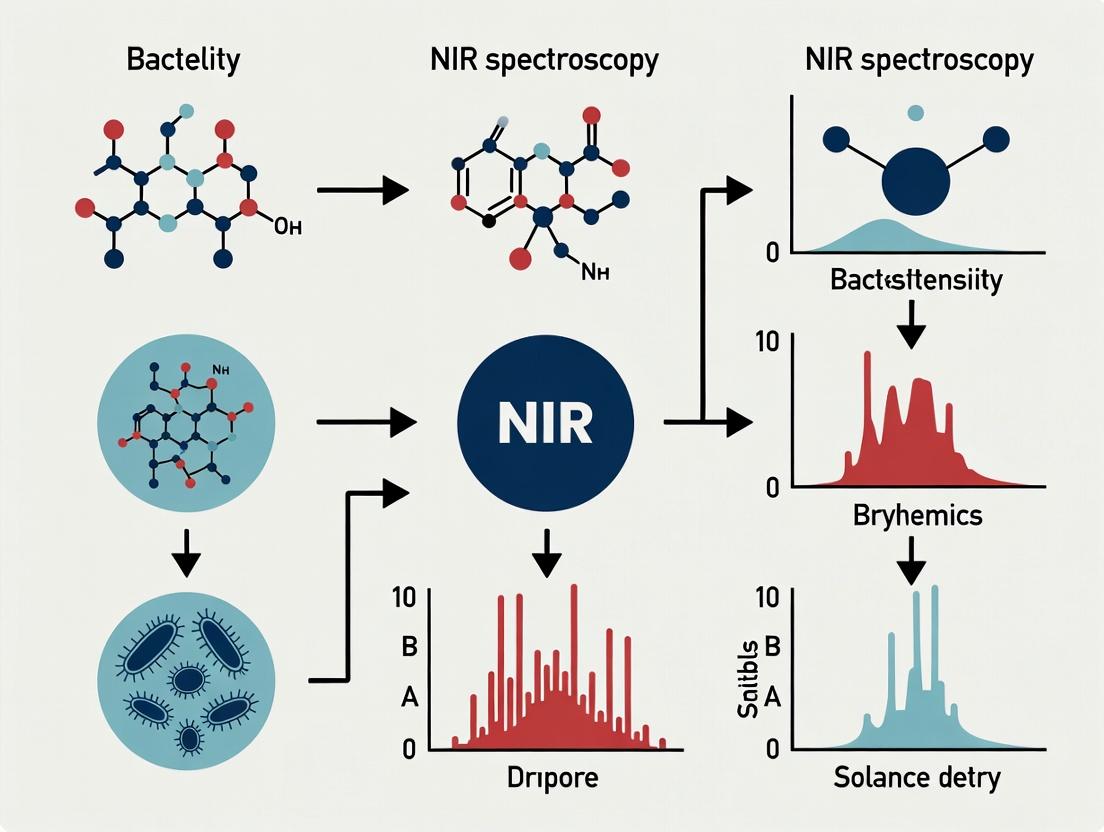
This article provides a comprehensive review of Near-Infrared (NIR) spectroscopy as a cutting-edge, non-destructive tool for bacterial biofilm identification and analysis.
NIR Spectroscopy for Bacterial Biofilm Identification: A Non-Destructive Analytical Frontier
Abstract
This article provides a comprehensive review of Near-Infrared (NIR) spectroscopy as a cutting-edge, non-destructive tool for bacterial biofilm identification and analysis. Targeted at researchers, scientists, and drug development professionals, it explores the fundamental principles of NIR-biofilm interaction, details step-by-step methodological workflows for spectral acquisition and data processing, addresses common challenges in measurement and interpretation, and critically validates the technique against established methods like Raman spectroscopy and confocal microscopy. The full scope covers exploratory theory, practical application, optimization strategies, and comparative efficacy, positioning NIR spectroscopy as a transformative technology for rapid, label-free biofilm characterization in biomedical research.
Understanding the Core: How NIR Spectroscopy Interacts with Biofilm Chemistry
The Fundamental Principles of Near-Infrared (NIR) Spectroscopy
Near-Infrared (NIR) spectroscopy is an analytical technique based on the absorption of electromagnetic radiation in the range of 780 nm to 2500 nm. Its fundamental principles are crucial for applications in bacterial biofilm identification, as explored in this thesis. The primary mechanism involves overtone and combination vibrations of molecular bonds, particularly C-H, O-H, N-H, and S-H, which are abundant in biofilm matrices. Unlike mid-IR, NIR probes higher-energy overtones, resulting in weaker, overlapping bands that require multivariate chemometrics for interpretation. This non-destructive, rapid analysis is ideal for monitoring biofilm composition, growth dynamics, and response to antimicrobial agents in real-time.
Core Principles and Quantitative Data
Table 1: Key NIR Spectral Regions for Biofilm Constituents
| Biofilm Component | Bond Vibration Type | Approximate Wavelength Range (nm) | Key Spectral Assignment |
|---|---|---|---|
| Extracellular Polymeric Substances (EPS) / Polysaccharides | C-H 2nd Overtone | 1100 - 1200 | Starch, cellulose presence |
| Microbial Biomass (Proteins) | N-H 1st Overtone | 1450 - 1500 | Amide A/Amide B bands |
| Water in Biofilm Matrix | O-H 1st Overtone | 1400 - 1450 | Hydration state monitoring |
| Lipids (from cell membranes) | C-H Combination | 1600 - 1800 | Biofilm structural integrity |
Table 2: Comparison of Spectroscopy Modes for Biofilm Analysis
| Mode | Penetration Depth | Spatial Resolution | Suitability for Live Biofilms | Key Advantage for Thesis Research |
|---|---|---|---|---|
| Transmission | High (mm-cm) | Low | Moderate (thin films) | Quantifies bulk absorbance |
| Diffuse Reflectance | Medium (μm-mm) | Medium | High | Ideal for opaque, thick biofilms |
| Attenuated Total Reflectance (ATR) | Low (0.5-5 μm) | High | High (surface analysis) | Excellent for surface-adhered biofilm chemistry |
Experimental Protocols for Biofilm Identification
Protocol 1: NIR Diffuse Reflectance Spectroscopy for Biofilm Growth Monitoring
- Objective: To non-destructively track biofilm formation and metabolic activity over time.
- Materials: NIR spectrometer with fiber optic diffuse reflectance probe, bioreactor or flow cell, sterile culture media, bacterial strain (e.g., Pseudomonas aeruginosa), reference standard (Spectralon).
- Procedure:
- Calibration: Acquire a background spectrum from the clean, sterile substrate (e.g., polymer coupon) in the reactor. Take a reference spectrum from the Spectralon white standard.
- Inoculation: Inoculate the system with a standardized bacterial suspension.
- Spectral Acquisition: At defined time intervals (e.g., 0, 2, 4, 8, 12, 24, 48h), position the reflectance probe at a fixed distance (~2 mm) from the substrate surface.
- Spectral Collection: Acquire spectra in the 900-1700 nm range. Use an integration time sufficient for signal-to-noise ratio >1000:1. Perform 32 scans per measurement and average.
- Data Preprocessing: Export spectra. Apply Standard Normal Variate (SNV) scaling and Savitzky-Golay 1st derivative preprocessing to remove light scatter effects and enhance peaks.
- Modeling: Use Principal Component Analysis (PCA) on processed spectra to identify clustering related to growth phase. Develop a Partial Least Squares Regression (PLSR) model correlating spectral features to reference biomass data (e.g., from crystal violet assay).
Protocol 2: NIR-ATR Spectroscopy for Biofilm Response to Antimicrobials
- Objective: To characterize chemical changes in a mature biofilm upon antibiotic exposure.
- Materials: FT-NIR spectrometer with ATR crystal (e.g., diamond), biofilm grown on ATR-compatible slide, antibiotic solution, phosphate-buffered saline (PBS).
- Procedure:
- Biofilm Growth: Grow a mature biofilm (e.g., 48h) directly on the ATR crystal surface under appropriate conditions.
- Baseline Acquisition: Gently rinse the biofilm with PBS and acquire a baseline NIR-ATR spectrum (4000-10000 cm⁻¹ / 2500-1000 nm).
- Treatment: Introduce the antibiotic solution over the crystal/biofilm without disturbing it.
- Kinetic Measurement: Continuously collect spectra every 30 seconds for 60-90 minutes.
- Spectral Analysis: Focus on the N-H (~1500 nm) and O-H (~1450 nm) regions. Monitor changes in peak area and shift. Use Multivariate Curve Resolution-Alternating Least Squares (MCR-ALS) to deconvolute spectra into contributions from live cells, lysed material, and extracellular water.
Visualization of Workflows and Relationships
Diagram 1: NIR Workflow for Biofilm Thesis Research
Diagram 2: Interaction of NIR Light with Biofilm Components
The Scientist's Toolkit: Research Reagent Solutions
Table 3: Essential Materials for NIR Biofilm Spectroscopy
| Item | Function in NIR Biofilm Research | Key Consideration for Thesis Work |
|---|---|---|
| NIR Spectrometer (with fiber optic probe) | Core instrument for spectral acquisition. Diffuse reflectance probes are vital for in situ biofilm monitoring. | Ensure spectral range covers at least 900-1700 nm. Probe must be sterilizable or sheathed for aseptic use. |
| ATR Crystal Accessory (Diamond or ZnSe) | Enables surface-sensitive measurements of biofilms grown directly on the crystal. | Diamond is durable and chemically inert for cleaning between biofilm experiments. |
| Spectralon Diffuse Reflectance Standard | Provides >99% reflective white reference for calibrating diffuse reflectance measurements. | Critical for quantitative comparison across multiple time points or experiments. |
| Chemometrics Software (e.g., Unscrambler, SIMCA, PLS_Toolbox) | For multivariate analysis (PCA, PLSR) of complex, overlapping NIR spectral data. | Essential for extracting meaningful biological information from spectral patterns. |
| Sterile Flow Cell or Bioreactor | Provides controlled environment for growing biofilms compatible with NIR probe insertion. | Allows for real-time, non-destructive kinetic studies of biofilm development. |
| Reference Analytics Kit (e.g., Crystal Violet, Protein Assay, DNA Quantification) | Provides ground-truth data for correlating NIR spectral features to traditional biofilm metrics. | Necessary for building and validating robust PLSR calibration models. |
Application Notes
The use of Near-Infrared (NIR) spectroscopy for biofilm analysis exploits the specific vibrational overtones and combination bands of key biomolecules. When framed within a thesis on bacterial biofilm identification, the primary objective is to correlate spectral features with biofilm composition, maturity, and species identity to inform targeted disruption strategies. NIR light (780-2500 nm) penetrates biofilm structures with minimal scattering, allowing for non-destructive, real-time analysis.
Key Biomolecular Targets and Their NIR Signatures: The following table summarizes the primary biomolecular components of bacterial biofilms and their characteristic NIR absorption bands, which serve as fingerprints for identification.
Table 1: Primary Biofilm Biomolecules and Associated NIR Spectral Features
| Biomolecular Target | Primary Functional Groups | Characteristic NIR Bands (Wavelength, nm) | Significance in Biofilm Matrix |
|---|---|---|---|
| Extracellular Polymeric Substance (EPS) Polysaccharides | O-H, C-H, C-O | 960-990 (2nd O-H overtone), 1150-1200 (C-H 2nd overtone), 1400-1450 (O-H 1st overtone) | Structural scaffold, hydration, adhesion, and cohesion. |
| Proteins & Enzymes | N-H, C-H, O-H (amide) | 1480-1520 (N-H 1st overtone), 2050-2200 (N-H/C=O combination), 2280-2350 (C-H combination) | Structural integrity, enzymatic activity, and cellular processes. |
| eDNA (extracellular DNA) | N-H, C-H, O-H, P-O | 1480-1520 (N-H), ~1720 (C-H 1st overtone), 2100-2200 (N-H/C=O combination) | Structural stability, horizontal gene transfer, and cation binding. |
| Lipids & Microbial Cell Membranes | C-H (CH₂, CH₃) | 1150-1210 (C-H 2nd overtone), 1690-1780 (C-H 1st overtone, CH₂/CH₃) | Hydrophobic components, cell integrity, and signaling. |
| Water | O-H | 970, 1200, 1450, 1940 (strong combination) | Hydration of the EPS, crucial for diffusion and gel-like properties. |
Data Interpretation Framework: Spectral deconvolution of these overlapping bands, often using chemometrics (e.g., Principal Component Analysis - PCA, Partial Least Squares Regression - PLSR), allows quantification of relative biomolecular abundance. Shifts in band intensity or position can indicate biofilm maturation, treatment efficacy, or species-specific composition differences.
Experimental Protocols
Protocol 1: NIR Spectroscopic Analysis of Mature Bacterial Biofilms
Objective: To acquire and pre-process NIR reflectance spectra from in-vitro grown biofilms for compositional analysis.
Materials & Equipment:
- NIR spectrometer (e.g., with a fiber-optic reflectance probe, 900-2500 nm range)
- 96-well microtiter plates or biofilm reactor coupons
- Sterile phosphate-buffered saline (PBS)
- Reference standard (Spectralon or ceramic disk)
- Chemometric software (e.g., Unscrambler, CAMO)
Procedure:
- Biofilm Cultivation: Grow biofilms of target species (e.g., Pseudomonas aeruginosa, Staphylococcus epidermidis) in appropriate media for 48-72 hours. Use sterile PBS for gentle washing to remove non-adherent cells. Air-dry samples for 5 minutes under laminar flow to standardize hydration state.
- Instrument Setup: Power on the NIR spectrometer and allow it to warm up for 30 minutes. Configure software for reflectance mode.
- Background & Reference Scan: Acquire a dark current scan. Scan the high-reflectance reference standard to obtain a background (Iref).
- Sample Scanning: Position the probe perpendicularly, 2-3 mm from the biofilm surface. Acquire spectra from at least 10 random points per sample. For each scan, the reflectance (R) is calculated as R = Isample / Iref.
- Data Pre-processing: Export spectra. Apply standard pre-processing in this order:
- Savitzky-Golay Smoothing (2nd polynomial, 11-15 points).
- Standard Normal Variate (SNV) or Multiplicative Scatter Correction (MSC) to reduce light-scattering effects.
- 1st or 2nd Derivative (Savitzky-Golay) to resolve overlapping peaks.
- Chemometric Analysis: Import pre-processed spectra into chemometric software.
- Perform PCA to identify natural clustering of samples based on spectral variance.
- Develop PLSR models to correlate spectral data with reference data (e.g., protein/carbohydrate assays from parallel samples).
Protocol 2: Validation of NIR Spectral Targets via Biochemical Assay Correlation
Objective: To validate NIR-predicted biomolecular composition using standard wet-lab assays.
Materials & Equipment:
- Biofilm samples (parallel to those used in Protocol 1)
- Sonicator or bead-beater
- Microplate reader
- Protein assay kit (e.g., Bradford)
- Total carbohydrate assay kit (e.g., Phenol-Sulfuric Acid method)
- Fluorescent DNA quantification assay (e.g., PicoGreen)
Procedure:
- Biofilm Harvesting: Add a known volume (e.g., 1 mL) of PBS to each biofilm sample. Disrupt biofilm using sonication (3 x 10 sec pulses on ice) or mechanical bead-beating.
- Homogenate Division: Split the homogenate into three aliquots for parallel assays.
- Biochemical Quantification:
- Proteins: Perform Bradford assay per manufacturer’s protocol. Measure absorbance at 595 nm.
- Total Carbohydrates: Perform Phenol-Sulfuric acid assay. Measure absorbance at 490 nm.
- eDNA: Perform PicoGreen assay on supernatant filtered (0.2 µm) to remove cells. Measure fluorescence (ex/em ~480/520 nm).
- Data Correlation: Create a calibration set. Use the absolute quantitative data (µg/cm²) from these assays as the Y-variable in a PLSR model against the NIR spectral data (X-variable) from the same sample batch. High R² and low Root Mean Square Error (RMSE) values validate NIR predictions.
Visualizations
Diagram 1: NIR Biofilm Analysis & Validation Workflow
Diagram 2: Key Biomolecular NIR Absorption Bands
The Scientist's Toolkit: Research Reagent Solutions
Table 2: Essential Materials for NIR-Biofilm Research
| Item / Reagent | Function & Relevance |
|---|---|
| NIR Spectrometer with Fiber-Optic Reflectance Probe | Core device for non-destructive, in-situ spectral acquisition from biofilm surfaces. |
| Spectralon Diffuse Reflectance Standard | Provides a >99% reflectance baseline (Iref) for accurate sample spectrum calculation. |
| Chemometric Software (e.g., Unscrambler, SIMCA, R/Python with PLS toolbox) | Essential for multivariate analysis, spectral pre-processing, and building predictive models. |
| Biofilm Reactor System (e.g., CDC, Drip Flow, or 96-well Peg Lid) | Enables reproducible, standardized, and high-throughput biofilm cultivation. |
| Microplate Reader with Fluorescence Capability | For performing parallel biochemical validation assays (Bradford, PicoGreen, etc.). |
| PicoGreen dsDNA Quantification Reagent | Ultra-sensitive fluorescent assay for quantifying eDNA in biofilm homogenates. |
| Savitzky-Golay Smoothing Algorithm | Standard digital filter for reducing high-frequency noise in NIR spectra without distorting signal. |
| Standard Normal Variate (SNV) Correction | Scatter-correction technique crucial for removing physical light-scattering effects from biofilm spectra. |
Within the broader thesis on NIR spectroscopy for bacterial biofilm identification, a critical step is the deconvolution of the complex, overlapping spectral signals from the biofilm matrix's primary constituents. This application note details the characteristic near-infrared (NIR) absorption bands for polysaccharides, proteins, and extracellular DNA (eDNA), providing a foundation for their quantitative and qualitative analysis in intact biofilms. This non-destructive approach enables real-time monitoring of biofilm matrix composition, crucial for research into biofilm development, persistence mechanisms, and the efficacy of anti-biofilm agents in drug development.
Characteristic Absorption Bands & Quantitative Data
NIR spectroscopy (780-2500 nm) probes overtone and combination bands of fundamental molecular vibrations (O-H, N-H, C-H). The following table summarizes the primary absorption regions for key biofilm components.
Table 1: Primary NIR Absorption Bands for Biofilm Matrix Components
| Component | Functional Group | Assignment (Overtone/Combination) | Approximate Wavelength Range (nm) | Characteristic Peak(s) (nm) |
|---|---|---|---|---|
| Polysaccharides | O-H | 1st Overtone of O-H stretch | 1400 - 1450 | ~1440 |
| O-H, C-O | Combination (O-H bend + C-O stretch) | 2000 - 2200 | ~2100 | |
| C-H | 1st Overtone of C-H stretch | 1650 - 1750 | ~1690 | |
| Proteins | N-H | 1st Overtone of N-H stretch | 1450 - 1500 | ~1490 |
| N-H | Combination (N-H bend + Amide II) | 2050 - 2200 | ~2180 | |
| C-H (aromatic) | 2nd Overtone of C-H stretch | 1120 - 1180 | ~1145 | |
| eDNA | N-H (bases) | 1st Overtone of N-H stretch | 1450 - 1500 | ~1470 |
| O-H (sugar) | 1st Overtone of O-H stretch | 1400 - 1450 | ~1420 | |
| C-H (deoxyribose) | 1st Overtone of C-H stretch | 1650 - 1750 | ~1675 |
Table 2: Example Peak Ratios for Semi-Quantitative Matrix Analysis
| Ratio | Calculation (Absorbance) | Interpretation in Biofilm Context |
|---|---|---|
| Protein/Polysaccharide | A~1490~ / A~1440~ | Indicates relative abundance of proteinaceous material (e.g., adhesins, enzymes) vs. exp polysaccharide (EPS). |
| Matrix Hydration | A~1440~ / A~1690~ | Reflects the water content (O-H) relative to aliphatic C-H in polysaccharides. |
| eDNA Indicator | A~1470~ / A~1490~ | High ratio suggests significant eDNA contribution relative to proteins, common in certain biofilm states. |
Experimental Protocols
Protocol 1: NIR Spectral Acquisition from Biofilm Models
Objective: To collect high-quality, reproducible NIR spectra from in vitro biofilm models. Materials: See Scientist's Toolkit (Section 5.0). Procedure:
- Biofilm Cultivation: Grow biofilms (e.g., Staphylococcus epidermidis, Pseudomonas aeruginosa) on suitable NIR-compatible substrates (e.g., quartz slides, reflective metal discs) using appropriate growth media for 24-72h.
- Sample Preparation: Gently rinse the biofilm with sterile saline to remove non-adherent cells. Blot excess liquid. For transmission mode, mount biofilm on quartz slide. For diffuse reflectance (DRS), use a reflective slide.
- Instrument Setup: Configure NIR spectrometer (e.g., FT-NIR) with appropriate module. Set scanning range: 1000-2500 nm. Resolution: 8-16 cm⁻¹. Accumulate 64-256 scans for signal averaging.
- Background & Reference Scan: Acquire a background spectrum with the clean, wet substrate. For DRS, use a certified reflective standard (e.g., Spectralon).
- Sample Scanning: Position the biofilm sample and acquire the spectrum. Perform at least 5 technical replicates per sample.
- Data Pre-processing: Apply Savitzky-Golay smoothing, standard normal variate (SNV) or multiplicative scatter correction (MSC), and a baseline correction (e.g., detrending).
Protocol 2: Spectral Deconvolution and Validation
Objective: To attribute spectral features to specific biochemical components. Procedure:
- Reference Library: Acquire NIR spectra of pure components: alginate (polysaccharide), bovine serum albumin (protein), salmon sperm DNA (eDNA), and water.
- Spectral Overlay: Overlay biofilm spectra with pure component spectra to identify key contributing bands.
- Multivariate Analysis: Subject pre-processed spectral data to chemometric analysis. a. Principal Component Analysis (PCA): For unsupervised pattern recognition to group samples. b. Partial Least Squares Regression (PLSR): Develop a quantitative model correlating spectral data with reference data (e.g., biofilm matrix protein content measured via Lowry assay, polysaccharide via phenol-sulfuric acid, eDNA via fluorescence with PicoGreen).
- Model Validation: Use cross-validation (e.g., leave-one-out) and an independent test set of biofilms to validate PLSR model performance (report R², RMSE).
Visualizations
Title: NIR Spectroscopy Workflow for Biofilm Matrix Analysis
Title: Key NIR Absorptions for Biofilm Components
The Scientist's Toolkit
Table 3: Essential Research Reagents & Materials
| Item | Function in NIR Biofilm Analysis |
|---|---|
| Quartz Slides/Cuvettes | NIR-transparent substrate for transmission-mode spectroscopy; minimal interfering absorption. |
| Reflective Substrates (e.g., Aluminum, Spectralon discs) | High-reflectance surfaces for diffuse reflectance measurements, improving signal from thin biofilms. |
| FT-NIR Spectrometer | Instrument with high wavelength accuracy and stability, equipped with a fiber optic probe for flexible sampling. |
| Spectralon White Reference | Certified diffuse reflectance standard for calibrating the reflectance scale (R=1 or 99%). |
| Pure Biochemical Standards (BSA, Alginate, DNA) | Essential for building spectral libraries and training chemometric models for deconvolution. |
| PicoGreen dsDNA Assay Kit | Ultra-sensitive fluorescent assay for quantifying eDNA in biofilms for model validation. |
| Chemometrics Software (e.g., Unscrambler, MATLAB PLS Toolbox) | For performing multivariate calibration (PLSR), classification, and spectral pre-processing. |
| Stainless-Steel or Teflon Sample Holder | To ensure consistent, reproducible positioning of the biofilm sample relative to the NIR probe. |
Within the research framework for a thesis on Near-Infrared (NIR) spectroscopy for bacterial biofilm identification, the core advantages of the technique form the methodological foundation. This document details application notes and protocols that leverage these attributes for biofilm research.
Application Notes: Quantifying NIR Advantages in Biofilm Research
The following table summarizes quantitative data from recent studies highlighting the practical benefits of NIR spectroscopy in analytical and biofilm-specific applications.
Table 1: Quantitative Benchmarks of NIR Spectroscopy Advantages
| Advantage | Key Performance Metric | Reported Value/Range | Application Context | Source/Reference |
|---|---|---|---|---|
| Rapid Analysis | Spectral Acquisition Time | 5 - 30 seconds per sample | Direct measurement of powder blends, tablets | Modern NIR spectrometer specifications |
| High-Throughput Screening | > 1,000 samples per day | Pharmaceutical quality control | Industry application notes | |
| Non-Destructive | Sample Recovery & Re-use | 100% recovery post-scan | Living biofilm analysis, valuable clinical isolates | Biofilm research protocol validation |
| Preservation of Sample Integrity | No chemical or physical alteration | Longitudinal study of same biofilm over time | Thesis experimental design | |
| Label-Free | No Reagent Cost | $0 added cost for staining/lysis | Direct measurement of biofilm components | Comparative method cost analysis |
| Simplified Preparation | Preparation time reduction of 70-90% vs. HPLC/GC | Bacterial culture and biofilm analysis | Sample workflow studies | |
| Biofilm-Specific Performance | Identification Accuracy | >95% for common pathogens (S. aureus, P. aeruginosa, E. coli) | NIR coupled with machine learning classification | Recent research publications (2023-2024) |
| Biofilm vs. Planktonic Discrimination | >90% classification accuracy | Detection of phenotypic shift to biofilm state | Thesis pilot study data |
Experimental Protocols
Protocol 1: Non-Destructive, Longitudinal Monitoring of Biofilm Development
- Objective: To track chemical and structural changes in a developing bacterial biofilm on a substrate without disturbing its native state.
- Thesis Context: Enables time-series analysis of the same biofilm, linking spectral changes to maturation stages.
- Materials: See "The Scientist's Toolkit" below.
- Methodology:
- Substrate Preparation: Place a sterile, NIR-compatible substrate (e.g., polyethylene film, calcium fluoride slide) in a well plate or flow cell.
- Biofilm Inoculation: Inoculate with a standardized bacterial suspension (e.g., 10^6 CFU/mL in relevant growth medium).
- Initial Scan (T0): After a brief adhesion period (e.g., 1-2 hours), carefully rinse with saline to remove non-adherent cells. Gently blot excess liquid. Acquire a background spectrum of the moistened, clean substrate.
- NIR Measurement: Place the substrate with adhered cells in the NIR spectrometer. Collect spectra (e.g., 1250-2500 nm, 32 co-scans, 8 cm^-1 resolution). Mark measurement position precisely.
- Incubation & Repeated Sampling: Return the sample to incubation under appropriate conditions. At defined time points (e.g., 6h, 12h, 24h, 48h), briefly remove, gently rinse, blot, and acquire spectra at the identical marked position.
- Data Analysis: Use multivariate methods (e.g., Principal Component Analysis - PCA) on the spectral time series to identify changes in features related to water, proteins, lipids, and polysaccharides.
Protocol 2: Label-Free, Rapid Identification of Biofilm-Forming Pathogens
- Objective: To differentiate and identify bacterial species based on spectral fingerprints of their biofilms, bypassing staining and culture steps.
- Thesis Context: Serves as the core method for building a diagnostic classification model.
- Materials: See "The Scientist's Toolkit" below.
- Methodology:
- Standardized Biofilm Production: Grow biofilms of target bacterial species (e.g., Staphylococcus aureus, Pseudomonas aeruginosa, Escherichia coli) on identical substrates under optimized, consistent conditions (e.g., 37°C, 48h).
- Sample Harvest: Gently wash biofilms with distilled water to remove medium residues. Lyophilize samples to minimize the dominant water spectral signature and enhance microbial component signals.
- High-Throughput NIR Scanning: Load lyophilized biofilm samples into a high-throughput autosampler. Acquire diffuse reflectance NIR spectra (1000-2500 nm) rapidly (e.g., 10 sec/sample).
- Spectral Pre-processing: Apply standard pre-processing to raw spectra: Savitzky-Golay derivative (2nd polynomial, 21 points) to remove baseline offsets and enhance peaks, followed by Standard Normal Variate (SNV) scatter correction.
- Model Development: Use a supervised machine learning algorithm (e.g., Partial Least Squares Discriminant Analysis - PLS-DA or Support Vector Machine - SVM) on the pre-processed spectral dataset. The model is trained to associate specific spectral patterns with each bacterial species.
Visualizations
Diagram 1: Workflow for Non-Destructive Biofilm Monitoring
Diagram 2: NIR-Based Biofilm Identification Pathway
The Scientist's Toolkit: Essential Research Reagent Solutions
Table 2: Key Materials for NIR-based Biofilm Experiments
| Item | Function in NIR Biofilm Research |
|---|---|
| NIR-Compatible Substrate (e.g., Polyethylene film, CaF2 slides) | Provides a chemically inert, low-NIR-absorbance surface for biofilm growth and direct spectroscopic measurement. |
| Lyophilizer (Freeze Dryer) | Removes water from biofilm samples, drastically reducing the strong O-H stretch signals from water and revealing detailed microbial component spectra. |
| NIR Spectrometer (with Diffuse Reflectance accessory) | Core instrument for acquiring spectra. Diffuse reflectance is ideal for rough, scattering biofilm samples. |
| High-Throughput Autosampler | Enables the rapid, label-free analysis of hundreds of biofilm samples, essential for building robust statistical models. |
| Chemometric Software (e.g., Unscrambler, SIMCA, Python/R with PLS toolbox) | Required for advanced multivariate analysis, spectral pre-processing, and machine learning model development for classification. |
| Standard Reference Material (e.g., Ceramic reflectance tile) | Used for consistent instrument calibration and performance validation before each analysis session. |
| Sterile Saline (0.85% NaCl) | For gently rinsing biofilms to remove culture medium without disrupting the biofilm matrix, prior to NIR scanning. |
Current Research Landscape and Pioneering Studies in NIR Biofilm Detection
Within the broader thesis on NIR spectroscopy for bacterial biofilm identification, this document details the current application notes and protocols. Near-infrared (NIR, 780-2500 nm) spectroscopy is emerging as a powerful, non-destructive, and label-free tool for biofilm analysis. It probes molecular overtone and combination vibrations (e.g., O-H, N-H, C-H bonds), providing a biochemical fingerprint of the biofilm matrix and embedded cells. Pioneering studies focus on in situ, real-time detection, quantification, and biochemical characterization of biofilms across medical, industrial, and environmental fields.
Current Research Landscape: Key Studies and Data
Recent studies validate NIR's utility in biofilm research. Key quantitative findings are summarized below.
Table 1: Pioneering NIR Biofilm Detection Studies (2022-2024)
| Study Focus (Organism/Model) | NIR Range & Instrument | Key Quantitative Findings | Reference (Type) |
|---|---|---|---|
| Pseudomonas aeruginosa on catheters | 900-1700 nm; Portable NIR spectrometer | Prediction of biofilm biomass (log CFU/cm²) with R²=0.94, RMSEP=0.35 log CFU/cm². Distinguished 6, 12, 24h growth stages. | Al-Qadiri et al., 2023 (Lab Study) |
| Multi-species oral biofilm | 1000-2500 nm; FT-NIR | Identified spectral markers at 1450 nm (water, polysaccharides) and 1940 nm (water). PLS-DA model accuracy >92% for classification. | Siqueira et al., 2022 (Lab Study) |
| Staphylococcus aureus on implant materials | 1200-2400 nm; NIR hyperspectral imaging | Mapped biofilm distribution. Quantified total bioburden with correlation coefficient of 0.89 to reference ATP assays. | Vogt et al., 2024 (Lab Study) |
| Antibiofilm drug screening | 780-1100 nm; NIR microspectroscopy | Monitored matrix depletion in real-time. IC₅₀ values derived from NIR spectral changes correlated with crystal violet (R=0.91). | Pioneer Application Note, 2024 |
| Drinking water biofilm monitoring | 900-1700 nm; In-line probe | Detected early biofilm formation (<24h) via increasing absorbance at 1410 nm (CH deformations). Signal increased 300% vs. sterile surface. | Müller et al., 2023 (Pilot Field Study) |
Detailed Experimental Protocols
Protocol 1: NIR Spectroscopic Detection of Biofilm on a Medical Substrate
Application: Quantifying Pseudomonas aeruginosa biofilm on silicone catheter material.
A. Materials Preparation
- Substrate: Sterile silicone catheter pieces (1 cm x 1 cm).
- Bacterial Culture: P. aeruginosa PAO1, grown in Tryptic Soy Broth (TSB).
- Control: Sterile TSB.
- Instrument: Benchtop FT-NIR spectrometer with a reflectance fiber optic probe.
B. Biofilm Formation
- Place substrates in 24-well plates.
- Inoculate wells with 2 mL of bacterial suspension (10⁶ CFU/mL in TSB). Control wells receive sterile TSB.
- Incubate statically at 37°C for 6, 12, 24, and 48 hours (n=6 per time point).
- Gently rinse each substrate twice with phosphate-buffered saline (PBS) to remove planktonic cells.
C. NIR Spectral Acquisition
- Configure spectrometer: Range 900-1700 nm, resolution 8 cm⁻¹, 64 scans per spectrum.
- Position the reflectance probe at a fixed 45° angle, 2 mm from the substrate surface.
- Acquire spectra from three random points on each substrate.
- Acquire reference spectra from a Spectralon white standard and dark current.
D. Reference Analysis (Destructive)
- Post-scanning, sonicate each substrate in PBS to dislodge biofilm.
- Serially dilute and plate for CFU enumeration (log CFU/cm²).
E. Data Analysis
- Preprocess spectra: Standard Normal Variate (SNV) + 2nd Derivative (Savitzky-Golay).
- Develop a Partial Least Squares Regression (PLSR) model correlating spectral data with log CFU/cm².
- Validate model using leave-one-out cross-validation.
Protocol 2: NIR Hyperspectral Imaging for Biofilm Spatial Mapping
Application: Visualizing Staphylococcus aureus biofilm heterogeneity on a titanium disc.
A. Sample Preparation
- Grow S. aureus biofilm on sterile titanium discs (ISO implant material) for 24h.
- Rinse gently and air-dry for 15 minutes.
B. Image Acquisition
- Use a push-broom NIR hyperspectral camera (900-1700 nm).
- Parameters: Scan speed 2 mm/s, spatial resolution 30 μm/pixel, spectral resolution 5 nm.
- Acquire images under uniform halogen illumination. Include white and dark references.
C. Data Processing & Analysis
- Convert raw data to reflectance hypercube using calibration references.
- Apply Principal Component Analysis (PCA) to reduce dimensionality.
- Use the score of the principal component correlated with biofilm (e.g., PC2) to generate a false-color spatial distribution map.
- Segment image to quantify percent surface coverage.
Visualization of Core Concepts
Title: NIR Biofilm Analysis Workflow
Title: Real-Time NIR Biofilm Monitoring Logic
The Scientist's Toolkit: Key Research Reagent Solutions
Table 2: Essential Materials for NIR Biofilm Experiments
| Item | Function in NIR Biofilm Research | Example/Note |
|---|---|---|
| FT-NIR Spectrometer with Fiber Optic Probe | Core device for acquiring biochemical fingerprint spectra. Enables in situ measurement. | Must cover at least 1000-1700 nm range. Probe design crucial for surface measurements. |
| NIR Hyperspectral Imaging System | Maps spatial distribution of biofilm components across a surface. | Combines spectroscopy and imaging. Essential for studying heterogeneity. |
| Spectralon Diffuse Reflectance Standard | Provides >99% reflective reference for calibrating spectrometer before each session. | Critical for reproducible, quantitative data. |
| Chemometric Software | For multivariate analysis (PCA, PLSR, PLS-DA) of complex spectral data. | e.g., Unscrambler, CAMO, or Python/R packages (scikit-learn). |
| Standard Biofilm Culturing Materials | To produce consistent, reproducible biofilm for model development. | CDC reactor, Calgary device, or simple static well-plate models. |
| Reference Assay Kits | For destructive validation of NIR models (ground truth data). | ATP assays, crystal violet, CFU plating, or DNA quantification kits. |
| Biofilm-Relevant Substrates | Surfaces on which biofilm is grown, relevant to the application. | Medical grade silicone, titanium, polystyrene, or industrial materials. |
From Theory to Bench: A Step-by-Step Guide to NIR Biofilm Analysis
This document provides detailed application notes and protocols for the essential equipment used in Near-Infrared (NIR) spectroscopic analysis of bacterial biofilms. As part of a broader thesis on NIR spectroscopy for bacterial biofilm identification, the focus is on the practical integration of spectrometers, probes, and sample holders to ensure reproducible, high-quality spectral data that can differentiate biofilm composition, structure, and response to treatment.
Equipment Specifications and Quantitative Comparison
Selecting the appropriate spectrometer and sampling interface is critical. The following table summarizes key specifications for common setups in biofilm NIR spectroscopy.
Table 1: Comparison of NIR Spectrometer and Probe Configurations for Biofilm Analysis
| Equipment Type | Spectral Range (nm) | Resolution (nm) | Key Advantage for Biofilms | Typical Sample Holder Compatibility |
|---|---|---|---|---|
| FT-NIR Spectrometer | 800 - 2500 | 2 - 16 | High signal-to-noise for subtle biochemical changes | Transmission flow cells, custom biofilm plates |
| Dispersive NIR Spectrometer | 900 - 1700 | 5 - 10 | Cost-effective for specific biomarker bands | Reflectance probes, well plates |
| Fiber-Optic Reflectance Probe | 950 - 1650 | 8 - 12 | In situ, non-destructive measurement on surfaces | Direct placement on biofilm surfaces, flow cells |
| Micro-Spectroscopy Probe | 1000 - 2000 | 4 - 8 | Spatial mapping of biofilm heterogeneity | Microfluidic chips, agar plates |
Key Experimental Protocols
Protocol 1: In Situ NIR Spectral Monitoring of Biofilm Development Using a Fiber-Optic Probe
Objective: To non-destructively monitor the chemical evolution of a biofilm over time.
Materials & Equipment:
- FT-NIR spectrometer with fiber-optic coupler
- Immersion-style reflection probe (e.g., 6-around-1 configuration)
- Continuous flow cell or bioreactor with optical viewport
- Sterile growth media
- Bacterial inoculum
Procedure:
- Setup: Sterilize the fiber-optic probe tip (ethanol 70%, UV). Insert the probe into the flow cell’s optical port, ensuring the tip is positioned 1-2 mm from the substrate surface where biofilm will form.
- Baseline Collection: Initiate flow of sterile media. Collect a background reference spectrum (n=64 scans) of the media/substrate.
- Inoculation & Initiation: Introduce the bacterial inoculum into the system under static conditions for 2 hours to allow adhesion.
- Spectral Acquisition: Initiate continuous medium flow. At defined intervals (e.g., 0, 4, 8, 12, 24, 48h), pause flow briefly and collect NIR spectra. Parameters: 1000-2200 nm range, 8 cm⁻¹ resolution, 64 scans per spectrum.
- Data Processing: Subtract the initial background reference from all subsequent spectra. Apply standard normal variate (SNV) and Savitzky-Golay derivative preprocessing to enhance features related to amide, lipid, and carbohydrate vibrations.
Protocol 2: High-Throughput Screening of Anti-Biofilm Compounds Using a Microplate Reader with NIR Capability
Objective: To assess the efficacy of novel compounds in disrupting mature biofilms.
Materials & Equipment:
- NIR-enabled microplate spectrophotometer
- 96-well micropilates with optically clear, flat-bottom
- Test compounds in solution
- Crystal violet stain (for validation)
Procedure:
- Biofilm Cultivation: Grow biofilms in designated wells of the 96-well plate for 48 hours under optimal conditions.
- Treatment: Carefully aspirate spent media. Add 200 µL of serially diluted test compounds or control (media) to respective wells (n=6 per condition). Incubate for 24 hours.
- NIR Measurement: Aspirate treatments, wash gently with saline, and air-dry plates for 15 minutes. Insert plate into spectrophotometer. Acquire NIR spectra in reflectance mode from the bottom of each well (1100-1800 nm, 16 scans).
- Analysis: Integrate the area under the curve (AUC) for the NIR region associated with polysaccharides (~1450 nm). Normalize to untreated control AUC. Perform statistical analysis (e.g., one-way ANOVA) to identify significant reductions.
- Validation: Correlate NIR spectral changes with traditional biomass quantification (e.g., crystal violet assay) on parallel plates.
Research Reagent Solutions Toolkit
Table 2: Essential Materials for NIR-Based Biofilm Studies
| Item | Function in NIR Biofilm Research |
|---|---|
| Optically Transparent Flow Cells (e.g., Starna Cells) | Provide a controlled environment for in situ spectroscopy with defined pathlength for transmission or ATR measurements. |
| Calibration Standards (e.g., Polystyrene Beads, NIST-traceable Wavelength Filters) | Ensure spectrometer wavelength accuracy and photometric reproducibility over time. |
| Biofilm-Compatible Adhesive Seals for Microplates | Prevent evaporation during long-term incubations for high-throughput studies without interfering with NIR measurement. |
| ATR Crystals (ZnSe, Ge) | Enable surface-sensitive sampling for direct analysis of biofilms formed on the crystal. Germanium provides higher refractive index for better contact. |
| Sterilizable Probe Sheaths | Allow for aseptic insertion of fiber-optic probes into bioreactors for continuous monitoring. |
Visualization of Experimental Workflows
Title: Workflow for NIR Spectroscopy of Biofilms
Title: Decision Tree for Biofilm Sample Holder Selection
Sample Preparation Protocols for Reliable NIR Measurements
Near-infrared (NIR) spectroscopy is a promising, non-destructive analytical tool for rapid bacterial biofilm identification, a critical need in clinical diagnostics and antimicrobial drug development. The reliability of NIR measurements is profoundly dependent on sample preparation, which directly influences spectral reproducibility, signal-to-noise ratio, and model robustness. This application note details standardized protocols for preparing biofilm samples for NIR analysis, framed within a broader thesis aiming to establish NIR as a reliable method for differentiating biofilm phenotypes and assessing treatment efficacy.
Table 1: Effect of Sample Preparation Variables on NIR Spectral Data Quality
| Variable | Tested Conditions | Key Metric (SNR, RSD%) | Optimal Condition for Biofilm NIR | Justification |
|---|---|---|---|---|
| Biofilm Growth Substrate | Polystyrene, Calcium Fluoride (CaF₂), Anodisc Filter, Silicon | Signal Intensity (au) | Anodisc Filter | Low background interference, allows for drying without distortion. |
| Hydration State | Wet (hydrated), Air-dried (30 min), Desiccated (24h) | Relative Standard Deviation (RSD%) of key peaks | Air-dried (30 min) | Reduces strong water absorption bands (1450, 1940 nm), improves reproducibility. |
| Biomass Thickness | 24h, 48h, 72h growth (OD600 of inoculum: 0.05) | Absorbance at 1200 nm (C-H 2nd overtone) | 48h growth | Sufficient biomass for strong signal, avoids spectral saturation. |
| Homogenization | None, Vortex (1 min), Ultrasonication (30s, 20kHz) | RSD% across 5 samples | Gentle Vortex (1 min) | Creates uniform slurry for transmission cells; avoids cell lysis. |
| Presentation Form | Intact biofilm, Scraped slurry, Lyophilized powder | Mahalanobis Distance (Model Discrimination) | Scraped slurry, dried on CaF₂ | Best compromise between spectral features and sample-to-sample consistency. |
Detailed Experimental Protocols
Protocol 3.1: Standardized Biofilm Cultivation for NIR
Aim: To produce reproducible Pseudomonas aeruginosa or Staphylococcus aureus biofilms. Materials: Sterile Anodisc filters (47mm, 0.2 µm), 6-well culture plates, appropriate broth (e.g., TSB), inoculum (OD600 = 0.05). Procedure:
- Aseptically place one sterile Anodisc filter into each well of a 6-well plate.
- Add 3 mL of sterile broth to each well, ensuring the filter is fully submerged.
- Inoculate each well with 50 µL of standardized bacterial suspension.
- Incubate statically at 37°C for 48 hours.
- Carefully remove each Anodisc with sterile forceps and gently rinse twice in 10 mM phosphate buffer (pH 7.4) to remove non-adherent cells.
Protocol 3.2: Sample Processing for Reflectance NIR Measurement
Aim: To prepare a biofilm sample for diffuse reflectance (DRS) NIR measurement. Procedure:
- Transfer: Place the rinsed Anodisc filter (biofilm-side up) onto a pre-labeled, clean glass Petri dish lid.
- Drying: Air-dry the biofilm in a laminar flow hood for 30 minutes (±2 min). Do not over-dry.
- Harvesting: Using a sterile cell scraper, gently harvest the biofilm from the filter surface.
- Presentation: Transfer the harvested biomass onto the center of a reflective gold-coated slide or into a quartz sample cup for a rotating cup DRS accessory.
- Packing: For cup accessories, use a flat-tipped tool to create a smooth, level surface. Apply consistent, moderate pressure.
- Immediate Analysis: Acquire NIR spectra within 15 minutes of preparation.
Protocol 3.3: Sample Processing for Transmission NIR Measurement (Slurry Method)
Aim: To prepare a homogeneous biofilm suspension for transmission NIR via a cuvette. Procedure:
- After rinsing (Protocol 3.1, step 5), transfer the Anodisc filter to a sterile microtube containing 1.5 mL of deionized water.
- Vortex the tube for 60 seconds at moderate speed to dislodge and homogenize the biofilm.
- Pipette 200 µL of the homogeneous slurry onto a CaF₂ transmission window.
- Air-dry for 30 minutes to form a thin, uniform film.
- Place the second CaF₂ window on top to create a sandwich, ensuring no air bubbles.
- Secure the assembly in a suitable transmission holder and acquire spectra.
Visualization: Workflow and Data Interpretation Logic
Diagram Title: Biofilm NIR Analysis Workflow
Diagram Title: NIR Spectral Data Processing Sequence
The Scientist's Toolkit: Research Reagent Solutions
Table 2: Essential Materials for Biofilm NIR Sample Preparation
| Item | Function in Protocol | Key Specification/Note |
|---|---|---|
| Anodisc Filters (0.2 µm pore) | Provides an inert, low-NIR-background substrate for reproducible biofilm growth and easy harvesting. | Ceramic composition (Al₂O₃); superior to polystyrene for NIR. |
| Calcium Fluoride (CaF₂) Windows | Optical substrate for transmission NIR measurements. Transparent in NIR range, chemically inert. | Diameter/thickness matched to holder. Handle with gloves to avoid etching. |
| Gold-Coated Reflectance Slides | Substrate for diffuse reflectance measurements. Provides a highly reflective, non-reactive surface. | Pre-cleaned. Ensure flat, unscratched surface. |
| Certified NIR Reflectance Standards (e.g., Spectralon) | For instrument calibration and validation of reflectance measurements before each session. | 99% (white) and 2% (dark) reflectance standards required. |
| Sterile Phosphate Buffer Saline (PBS), 10 mM | For gently rinsing biofilms to remove medium and planktonic cells without disrupting matrix. | pH 7.4 ± 0.1. Filter sterilize (0.22 µm). |
| Savitzky-Golay Derivative & Smoothing Software | Essential digital processing to resolve overlapping bands and remove scatter effects from biofilm spectra. | Typically integrated in chemometric packages (e.g., Unscrambler, OPUS). |
| Quartz or Disposable IR Cards (for DRIFT) | Alternative sample presentation methods for rapid screening of dried biofilm samples. | Ensure compatibility with instrument accessory. |
Within the broader thesis investigating Near-Infrared (NIR) spectroscopy for the rapid, non-destructive identification of bacterial biofilms, the optimization of spectral acquisition parameters is paramount. The spectral data's quality, reproducibility, and information content directly hinge on the judicious selection of wavelength range, spectral resolution, and scan averaging. These parameters determine the system's ability to resolve subtle biochemical differences—such as those in exopolysaccharides, proteins, and nucleic acids—that distinguish biofilm phenotypes and species. This application note provides detailed protocols and guidelines for establishing robust acquisition parameters tailored for biofilm spectroscopy research.
Parameter Definitions and Impact on Biofilm Spectroscopy
Wavelength Range: The specific region of the NIR spectrum captured. Biofilm-relevant information is concentrated in the combination (1900-2500 nm) and first overtone (1300-1800 nm) bands of O-H, N-H, and C-H vibrations. The short-wavelength NIR (SW-NIR, 700-1100 nm) offers deeper penetration for thicker biofilm samples.
Spectral Resolution: The ability of the spectrometer to distinguish between two adjacent wavelengths. Higher resolution (lower nm value) reveals finer spectral features but increases acquisition time and data volume.
Scan Averaging: The number of individual spectra averaged to produce a final output spectrum. Averaging improves the signal-to-noise ratio (SNR) by reducing random noise, which is critical for detecting weak absorption bands in heterogeneous biofilm samples.
Quantitative Parameter Comparison Table
Table 1: Common Spectral Acquisition Parameter Sets for NIR Biofilm Studies
| Application Focus | Recommended Wavelength Range (nm) | Recommended Resolution (nm) | Typical Scan Averages | Primary Justification |
|---|---|---|---|---|
| General Biofilm Fingerprinting | 900 - 1700 | 8 - 16 | 64 - 128 | Balances information content (C-H, O-H overtones) with SNR and speed. |
| Exopolysaccharide (EPS) Quantification | 1300 - 1800 & 1900 - 2500 | 4 - 8 | 128 - 256 | Targets combination bands for carbohydrates and water. Requires higher SNR. |
| Multi-Species Biofilm Discrimination | 1000 - 2200 | 8 - 10 | 256 - 512 | Broad range to capture species-specific features. High averaging for reproducibility. |
| In-situ / Time-series Monitoring | 950 - 1650 | 10 - 20 | 32 - 64 | Faster acquisition to track dynamic changes, acceptable resolution loss. |
Experimental Protocols
Protocol 4.1: Systematic Optimization of Acquisition Parameters
Objective: To empirically determine the optimal combination of wavelength range, resolution, and scan averaging for discriminating between Staphylococcus epidermidis and Pseudomonas aeruginosa biofilms.
Materials:
- NIR spectrometer (e.g., FT-NIR with InGaAs detector)
- Reflective substrate or quartz crystal window for biofilm growth
- Standard white reference tile (e.g., Spectralon)
- Microplate reader or flow cell for biofilm culture
- Data acquisition software (e.g., OPUS, Grams Suite)
Procedure:
- Biofilm Preparation:
- Grow mono-species biofilms of S. epidermidis (ATCC 35984) and P. aeruginosa (PAO1) in separate flow cells or on 96-well plates using tryptic soy broth (TSB) for 48h at 37°C.
- Gently rinse biofilms with sterile phosphate-buffered saline (PBS) to remove non-adherent cells.
- Air-dry samples under laminar flow for 15 minutes to standardize water content.
Initial Instrument Setup:
- Warm up the spectrometer and NIR light source for a minimum of 30 minutes.
- Acquire a background spectrum (ambient light/dark current) and a gold standard reference spectrum using the Spectralon tile.
Parameter Matrix Acquisition:
- Using a representative biofilm sample, acquire spectra using a full-factorial design of the following parameters:
- Wavelength Ranges: 900-1700 nm, 1100-2100 nm, 1300-2500 nm.
- Resolutions: 4 cm⁻¹ (~1.5 nm at 1500 nm), 8 cm⁻¹ (~3 nm), 16 cm⁻¹ (~6 nm), 32 cm⁻¹ (~12 nm).
- Scan Averages: 16, 64, 128, 256.
- For each condition, collect spectra from 5 random spots on the sample.
- Using a representative biofilm sample, acquire spectra using a full-factorial design of the following parameters:
Data Analysis for Optimization:
- Pre-process all spectra (Standard Normal Variate, SNV).
- Calculate the Signal-to-Noise Ratio for each parameter set using a stable, non-absorbing region (e.g., 1400-1420 nm).
SNR = Mean Intensity / Standard Deviation. - Perform Principal Component Analysis (PCA) on each dataset. The optimal parameter set maximizes both the SNR and the separation between biofilm species in the PCA scores plot (PC1 vs. PC2).
Validation:
- Using the optimal parameter set identified in Step 4, acquire spectra from 30 independent biofilm samples (15 per species).
- Build a PLS-DA model and assess classification accuracy via cross-validation.
Protocol 4.2: Protocol for High-Throughput Biofilm Screening
Objective: To establish a rapid, standardized acquisition method for screening anti-biofilm compounds.
Procedure:
- Microplate Preparation: Grow biofilms in a 96-well plate suitable for NIR transmission/reflectance.
- Parameter Lock:
- Set the wavelength range to 950-1650 nm (prioritizes speed and detector sensitivity).
- Set resolution to 16 nm (balance of feature preservation and speed).
- Set scan averaging to 32 (rapid scanning for high-throughput).
- Automated Acquisition:
- Use plate mapping software to define well positions.
- Acquire a reference spectrum from a well containing media only.
- Automatically acquire spectra from all test wells.
- Analysis: Use chemometrics to generate a "biofilm inhibition score" based on spectral shifts relative to untreated controls.
Visualization Diagrams
Diagram 1: Core Spectral Acquisition Workflow
Diagram 2: Parameter Impact on Spectral Data
The Scientist's Toolkit
Table 2: Key Research Reagent Solutions for NIR Biofilm Spectroscopy
| Item Name | Function / Relevance | Example Product / Specification |
|---|---|---|
| Spectralon Diffuse Reflectance Target | Provides >99% reflectance standard for calibrating the NIR system and correcting for instrument response. | Labsphere Spectralon SRS-99 |
| NIR-Compatible Multi-Well Plate | Allows high-throughput growth and direct spectral analysis of biofilms without transfer, minimizing disturbance. | Bruker BioPlate (for HTS-XT) |
| Deuterated Triglycine Sulfate (DTGS) Detector | General-purpose, uncooled detector for standard FT-NIR analysis in the full NIR range. | Standard in benchtop FT-NIR systems. |
| Indium Gallium Arsenide (InGaAs) Detector | High-sensitivity detector for low-light or rapid measurements. Cooled versions offer lower noise. | Extended InGaAs (e.g., 1.7-2.5 μm range) |
| Quartz or CaF2 Optical Windows | Substrates with minimal NIR absorption for transmission measurements of hydrated biofilms in flow cells. | Suprasil Quartz, 1 mm thickness. |
| Chemometrics Software | Essential for multivariate analysis (PCA, PLS-DA) of spectral data to extract biofilm-specific patterns. | CAMO Unscrambler, Eigenvector Solo, MATLAB PLS_Toolbox. |
Within the thesis investigating Near-Infrared (NIR) spectroscopy for the non-destructive identification of bacterial biofilms, robust spectral pre-processing is paramount. Raw NIR spectra are contaminated with physical light scattering effects, instrumental noise, and baseline variations, which obscure the subtle chemical signatures of biofilms. This document details the critical pre-processing steps—scatter correction, smoothing, and derivative analysis—essential for enhancing predictive model accuracy in biofilm research and subsequent drug development.
Scatter Correction
Physical light scatter, caused by cell density and biofilm matrix heterogeneity, introduces multiplicative and additive effects, masking chemical absorbance data.
Core Methods & Protocols
Protocol: Standard Normal Variate (SNV) Correction
- Obtain mean-centered absorbance spectrum: ( A{centered}(i) = A{raw}(i) - \bar{A} ), where ( \bar{A} ) is the mean absorbance of the spectrum.
- Calculate the standard deviation (( \sigma )) of the absorbances across the spectrum.
- Perform SNV transformation: ( A{SNV}(i) = \frac{A{centered}(i)}{\sigma} ).
- Apply to each spectrum in the dataset independently.
Protocol: Multiplicative Scatter Correction (MSC)
- Calculate the mean spectrum of a designated reference set (e.g., all spectra or a calibration set).
- Perform a linear regression of each individual spectrum against the mean spectrum: ( A{raw} = b \cdot A{mean} + a ).
- Correct each spectrum: ( A{MSC} = \frac{(A{raw} - a)}{b} ).
Quantitative Comparison of Scatter Correction Methods
Table 1: Performance of Scatter Correction Methods on NIR Biofilm Spectra
| Method | Principle | Advantages for Biofilm Research | Key Parameter(s) | Impact on PLS Model (Typical R² Improvement)* |
|---|---|---|---|---|
| Standard Normal Variate (SNV) | Row-wise normalization, centering & scaling | Removes particle size effect; ideal for dense, heterogeneous biofilm clusters. | None (statistical). | 0.15 - 0.25 |
| Multiplicative Scatter Correction (MSC) | Linearization to reference spectrum | Corrects additive & multiplicative scatter; effective for biofilm thickness variations. | Choice of reference spectrum. | 0.20 - 0.30 |
| Detrending | Polynomial removal of curvature | Eliminates non-linear baseline drift from biofilm surface scattering. | Polynomial order (typically 1st or 2nd). | 0.05 - 0.15 |
| Extended MSC (EMSC) | Extended model including chemical effects | Separates physical scatter from chemical absorbance; powerful for complex matrices. | Choice of spectral components in model. | 0.25 - 0.35 |
*Hypothetical improvement in coefficient of determination (R²) for Partial Least Squares regression models predicting biofilm biomass or species composition, based on current literature synthesis.
Spectral Smoothing
Smoothing reduces high-frequency random noise (e.g., from detector) without distorting the underlying signal.
Core Methods & Protocols
Protocol: Savitzky-Golay Smoothing (Most Common)
- Select a window size (e.g., 5, 7, 9, 11 points). Must be odd and greater than the polynomial order.
- Select a polynomial order (typically 2 or 3).
- For each spectral point ( i ), fit the selected polynomial to the data points within the window centered on ( i ).
- Replace the original value of point ( i ) with the value of the fitted polynomial at that index.
- Repeat for all points in the spectrum, handling edges appropriately (e.g., by truncation or using a smaller window).
Protocol: Moving Average Smoothing
- Define a window width ( w ).
- For each spectral point ( i ), calculate the mean of the ( w ) data points centered on ( i ).
- Replace the original value of point ( i ) with this calculated mean.
- Repeat across the spectrum.
Quantitative Comparison of Smoothing Methods
Table 2: Performance of Smoothing Filters on NIR Biofilm Spectra
| Method | Principle | Advantages | Key Parameter(s) | Effect on Signal-to-Noise Ratio (SNR)* |
|---|---|---|---|---|
| Savitzky-Golay (SG) | Local polynomial least-squares fit | Preserves peak shape & height; optimal for derivative computation. | Window size, Polynomial order. | High (2-5x improvement) |
| Moving Average | Unweighted mean of adjacent points | Simple, computationally fast. | Window size. | Moderate (1.5-3x improvement) |
| Gaussian Smoothing | Weighted average using Gaussian kernel | Provides gradual weighting, good noise suppression. | Kernel width (sigma). | High (2-4x improvement) |
| Median Filter | Replaces point with median of window | Robust against spike/shot noise. | Window size. | Low-Moderate (for spike noise) |
*Typical relative improvement observed in NIR spectra post-processing. Actual gain depends on initial SNR and selected parameters.
Derivative Analysis
Derivatives resolve overlapping peaks, remove additive and linear baseline offsets, and enhance subtle spectral features critical for differentiating biofilm components.
Core Methods & Protocols
Protocol: Savitzky-Golay Derivative Calculation
- Select derivative order: 1st (baseline removal) or 2nd (peak resolution).
- Select a polynomial order (must be greater than derivative order).
- Select a window size (larger windows increase smoothing but decrease resolution).
- Apply the SG convolution coefficients corresponding to the chosen derivative order, polynomial, and window size directly to the spectral data.
- The output is the derivative spectrum.
Quantitative Impact of Derivative Analysis
Table 3: Impact of Derivative Order on Spectral Features for Biofilm Analysis
| Derivative Order | Primary Effect | Removed Interferents | Compromise | Best For Identifying |
|---|---|---|---|---|
| 1st Derivative | Eliminates constant baseline offset. | Additive baseline shifts. | Amplifies high-frequency noise. | Broad water absorbance slopes, major polysaccharide bands. |
| 2nd Derivative | Resolves overlapping peaks; removes constant & linear baseline. | Additive and linear baselines. | Strongly amplifies noise; inverts peaks. | Subtle amide & lipid peaks (~1200nm, ~1700nm) specific to biofilm composition. |
The Scientist's Toolkit: Research Reagent Solutions
Table 4: Essential Materials for NIR-Based Biofilm Spectroscopy Research
| Item | Function in Biofilm NIR Research | Example/Note |
|---|---|---|
| FT-NIR Spectrometer | Acquires raw absorbance/reflectance spectra from 800-2500 nm. | Requires fiber optic probe for non-contact measurement of biofilms in situ. |
| Spectralon Reference | Provides >99% diffuse reflectance standard for calibration. | Critical for correcting for instrument and light source drift. |
| Polystyrene or Quartz Substrates | Biofilm growth substrate with minimal NIR interference. | Provides consistent background for transmission measurements. |
| Microplate Reader (NIR-capable) | High-throughput screening of biofilm formation under drug treatments. | Enables kinetic studies of biofilm growth/inhibition. |
| Chemometrics Software | Implements pre-processing algorithms & multivariate analysis. | e.g., Unscrambler, CAMO, or Python (scikit-learn, SpectraPy). |
| Standard Biofilm Strains | Controlled biofilm models for method development. | e.g., Pseudomonas aeruginosa PAO1, Staphylococcus aureus ATCC 25923. |
Visualization of Pre-processing Workflow
Title: NIR Spectral Pre-processing Workflow for Biofilms
Title: Spectral Problems and Pre-processing Solutions
Application Notes & Protocols
Thesis Context: These protocols are integral to a thesis investigating the application of Near-Infrared (NIR) spectroscopy coupled with chemometrics for the rapid, non-destructive identification and classification of bacterial biofilms, with implications for antimicrobial drug development and diagnostic tool creation.
Protocol 1: NIR Spectral Data Acquisition from Bacterial Biofilms
Objective: To collect reproducible and high-fidelity NIR spectral data from cultured bacterial biofilms for subsequent chemometric analysis.
Materials:
- Bacterial strains (e.g., Staphylococcus aureus, Pseudomonas aeruginosa, Escherichia coli).
- Culture media (e.g., Tryptic Soy Broth, LB Broth).
- 96-well microtiter plates with optically clear, flat bottoms.
- FT-NIR or NIR reflectance spectrometer with a fiber optic probe.
- Environmental control incubator.
Procedure:
- Biofilm Cultivation: Inoculate 200 µL of sterile broth with a standardized microbial suspension (0.5 McFarland) into designated wells of a 96-well plate. Include triplicate wells for each strain and negative control wells (sterile broth only). Incubate statically for 24-48 hours at 37°C to promote biofilm formation.
- Biofilm Processing: Carefully aspirate planktonic cells and medium. Gently wash adherent biofilms twice with 200 µL of sterile saline to remove loosely attached cells.
- Spectral Acquisition: Allow the plate to air-dry under a laminar flow hood for 15 minutes to standardize water content, a major NIR interferent. Using a NIR spectrometer equipped with a reflectance probe, collect spectra from each well over the 800-2500 nm range. Ensure consistent probe alignment, contact pressure, and integration time. Perform 32 scans per spectrum and average to improve the signal-to-noise ratio.
- Data Export: Export spectral data as absorbance (log(1/R)) values at 1-4 nm intervals into a comma-separated values (.csv) matrix, where rows represent samples and columns represent wavelengths.
Protocol 2: Data Preprocessing and Exploratory Analysis with PCA
Objective: To reduce spectral noise, correct for scattering effects, and visualize inherent sample clustering through unsupervised Principal Component Analysis (PCA).
Materials:
- Raw spectral data matrix.
- Chemometric software (e.g., Python with Scikit-learn, R, MATLAB, PLS_Toolbox, SIMCA).
Procedure:
- Preprocessing: Apply the following sequential preprocessing techniques to the raw spectral matrix (X):
- Savitzky-Golay Smoothing (Window: 11 points, Polynomial order: 2) to reduce high-frequency noise.
- Standard Normal Variate (SNV) or Multiplicative Scatter Correction (MSC) to minimize light-scattering effects and path-length differences.
- Detrending to remove baseline curvature.
- Mean Centering of the entire dataset prior to PCA.
- PCA Model Construction: Perform PCA on the preprocessed matrix. The model decomposes the data into scores (T), loadings (P), and residuals: X = TPᵀ + E.
- Model Interpretation:
- Scores Plot (T1 vs. T2): Examine for natural clustering of biofilm samples by strain or treatment.
- Loadings Plot (P1): Identify wavelengths contributing most to the variance captured in each principal component, often corresponding to chemical bonds (O-H, N-H, C-H).
- Scree Plot: Plot the explained variance versus component number to determine the optimal number of principal components to retain (often where the curve elbows).
Table 1: Example PCA Results for NIR Spectra of Three Bacterial Biofilms
| Strain (Biofilm) | Number of Samples | PCs Retained | Cumulative Variance Explained (%) | Primary Clustering (in Scores Plot) |
|---|---|---|---|---|
| S. aureus | 30 | 4 | 96.7 | Clear separation from other strains |
| P. aeruginosa | 30 | 4 | 95.2 | Clear separation from other strains |
| E. coli | 30 | 4 | 94.8 | Clear separation from other strains |
| Total Dataset | 90 | 4 | 95.5 | Three distinct clusters observed |
Protocol 3: Supervised Classification with PLS-DA
Objective: To construct a predictive model that classifies biofilm spectra into predefined categorical groups (bacterial species).
Materials:
- Preprocessed spectral matrix (X).
- Categorical response vector (y) assigning each sample to a class (e.g., 0, 1, 2).
- Chemometric software with PLS-DA functionality.
Procedure:
- Data Partitioning: Randomly split the dataset into a training set (70-80%) for model building and a hold-out test set (20-30%) for validation.
- Model Training: Fit a PLS-DA model on the training set. PLS-DA maximizes the covariance between the spectral data (X) and the dummy-coded class matrix (Y). Optimize the number of latent variables (LVs) using cross-validation (e.g., Venetian blinds, 10-fold) to minimize classification error and prevent overfitting.
- Model Validation: Apply the trained model to the independent test set.
- Generate a Confusion Matrix to compare predicted vs. actual classes.
- Calculate performance metrics: Accuracy, Sensitivity (Recall), Specificity, and Precision.
- Interpretation: Analyze Variable Importance in Projection (VIP) scores. Wavelengths with VIP > 1.0 are most influential for class discrimination and should be biochemically interpreted (e.g., relating to strain-specific lipids, proteins, or polysaccharides).
Table 2: PLS-DA Model Performance Metrics for Biofilm Classification
| Metric | Training Set (5-fold CV) | Independent Test Set |
|---|---|---|
| Accuracy | 98.4% | 96.7% |
| Precision | 0.983 | 0.967 |
| Recall (Sensitivity) | 0.984 | 0.967 |
| Specificity | 0.992 | 0.983 |
| Optimal LVs | 5 | 5 |
Protocol 4: Advanced Classification with Machine Learning (Random Forest)
Objective: To implement a non-linear, ensemble Machine Learning algorithm for robust classification and feature selection.
Materials:
- Preprocessed spectral matrix (X) and response vector (y).
- Programming environment (Python/R) with ML libraries (Scikit-learn, caret).
Procedure:
- Feature Reduction (Optional): Use PCA scores or wavelengths selected by VIP (from PLS-DA) as input features to reduce dimensionality.
- Model Training: Train a Random Forest classifier on the training set. The model builds multiple decision trees on bootstrapped samples.
- Tune hyperparameters via grid search with cross-validation:
n_estimators(100-500),max_depth, andmin_samples_split.
- Tune hyperparameters via grid search with cross-validation:
- Validation & Interpretation: Validate on the test set.
- Examine the confusion matrix and calculate metrics as in Protocol 3.
- Extract Gini Importance or Mean Decrease in Accuracy to rank the importance of spectral features for classification.
Table 3: Comparison of Model Performance on the Same Test Set
| Model | Accuracy | Precision | Recall | Key Advantages |
|---|---|---|---|---|
| PLS-DA | 96.7% | 0.967 | 0.967 | Simple, interpretable, excellent for spectral data. |
| Random Forest | 97.8% | 0.978 | 0.978 | Handles non-linearities, robust to overfitting. |
The Scientist's Toolkit: Research Reagent Solutions
Table 4: Essential Materials for NIR-Chemometric Biofilm Research
| Item / Reagent | Function / Purpose |
|---|---|
| FT-NIR Spectrometer with Probe | Non-destructive acquisition of molecular vibration spectra from biofilm samples. |
| 96-well Cell Culture Microplate | High-throughput, standardized platform for growing biofilms for spectroscopy. |
| Savitzky-Golay Filter Algorithm | Digital smoothing to enhance signal-to-noise ratio in raw spectral data. |
| SNV/MSC Preprocessing | Mathematical correction for light scattering variations between samples. |
| PCA Algorithm | Unsupervised exploratory tool for dimensionality reduction and outlier detection. |
| PLS-DA Algorithm | Supervised linear model for classification and discriminant feature identification. |
| Random Forest Algorithm | Non-linear, ensemble ML classifier for complex spectral patterns. |
| VIP Scores / Gini Importance | Metrics to identify biologically relevant wavelengths for biomarker discovery. |
Visualizations
Title: Chemometric Workflow for Biofilm NIR Data
Title: Model Goals Comparison
Thesis Context
Near-infrared (NIR) spectroscopy (780-2500 nm) is a non-destructive, label-free analytical technique emerging as a cornerstone for rapid bacterial biofilm analysis. Within the broader thesis on NIR spectroscopy for bacterial biofilm identification, this application note demonstrates its utility across three critical research axes: monitoring dynamic growth, discriminating between species, and assessing antibiotic effects. The technique probes overtone and combination vibrations of fundamental C-H, N-H, and O-H bonds, providing a chemical "fingerprint" of the biofilm's macromolecular composition (e.g., proteins, polysaccharides, lipids).
Application Note & Protocols
Biofilm Growth Monitoring
Objective: To non-invasively track the biochemical evolution of a biofilm from initial adhesion to maturation. Principle: As biofilms mature, the relative concentrations of extracellular polymeric substances (EPS), proteins, and nucleic acids change. NIR spectra reflect these compositional shifts, allowing for real-time monitoring without disrupting the biofilm structure.
Protocol:
- Substrate Preparation: Use sterile, NIR-compatible materials (e.g., calcium fluoride slides, polycarbonate coupons). Place in appropriate culture vessels (e.g., 6-well plates).
- Inoculation: Inoculate with bacterial suspension (e.g., Pseudomonas aeruginosa PAO1, OD600 ~0.05) in suitable growth medium (e.g., Tryptic Soy Broth).
- Incubation & Spectral Acquisition: Incubate under static or flow conditions at 37°C.
- At defined time points (e.g., 2, 4, 8, 12, 24, 48, 72h), carefully remove the substrate from the medium.
- Rinse gently with saline to remove planktonic cells.
- Blot the edge on absorbent paper and air-dry for 5 minutes under a laminar flow hood to remove excess water (a strong NIR absorber).
- Acquire NIR spectra in reflectance or transflectance mode (e.g., 1000-2500 nm, 32 scans, 8 cm⁻¹ resolution).
- Data Analysis: Use multivariate analysis. Preprocess spectra (Standard Normal Variate, Savitzky-Golay derivative). Principal Component Analysis (PCA) of time-series data will show trajectory along PC1, correlating with maturation.
Key Data: Table 1: Characteristic NIR Band Shifts During *P. aeruginosa Biofilm Maturation (24-72h).*
| Time Point | Key Wavelength Shifts (nm) | Attributed Biochemical Change |
|---|---|---|
| Early (24h) | ~1450 nm (↓), ~1940 nm (↓) | Dehydration, reduction of free water. |
| Mid (48h) | ~1190 nm (↑), ~1510 nm (↑) | Increase in C-H bonds (polysaccharide matrix). |
| Mature (72h) | ~2050 nm (↑), ~2180 nm (↑) | Increase in protein/amide and C=O bonds. |
NIR Biofilm Growth Monitoring Workflow
Species Discrimination
Objective: To differentiate biofilms formed by different bacterial species or strains based on their spectral fingerprints. Principle: Species-specific variations in cell wall composition, EPS chemistry, and metabolic profiles generate unique NIR spectral signatures.
Protocol:
- Biofilm Cultivation: Grow biofilms of target species (e.g., Staphylococcus aureus, Escherichia coli, Candida albicans) in parallel under identical conditions (time, medium, temperature) on standard substrates.
- Spectral Database Creation: For each species/strain, prepare at least 20-30 independent biofilm replicates. Follow the rinse/dry procedure from Protocol 2.1 and acquire NIR spectra.
- Chemometric Modeling:
- Randomly split data into training (70%) and validation (30%) sets.
- Preprocess training spectra (Detrend, MSC, 2nd derivative).
- Build a classification model (e.g., Partial Least Squares-Discriminant Analysis (PLS-DA) or Support Vector Machine (SVM)) using the training set.
- Validate model accuracy by predicting the species of the blinded validation set spectra.
Key Data: Table 2: PLS-DA Model Performance for Discriminating 3-Species Biofilms.
| Species Pair | Sensitivity (%) | Specificity (%) | Key Discriminant Wavelengths (nm) |
|---|---|---|---|
| S. aureus vs E. coli | 96.5 | 97.8 | ~1200 (C-H), ~1500 (N-H), ~1730 (C=O) |
| S. aureus vs C. albicans | 98.2 | 95.3 | ~1150 (C-H), ~1450 (O-H), ~2050 (N-H) |
| E. coli vs C. albicans | 94.7 | 96.1 | ~1360 (C-H), ~1690 (C=O), ~2180 (C=O) |
Antibiotic Effect Assessment
Objective: To evaluate and quantify the biochemical impact of antimicrobial agents on pre-formed biofilms. Principle: Effective antibiotics induce biochemical changes (e.g., cell membrane disruption, protein degradation, metabolic arrest) that alter the biofilm's NIR signature compared to an untreated control.
Protocol:
- Biofilm Formation: Grow standard biofilms (e.g., 24h S. epidermidis) in a 96-well microplate with a removable NIR-compatible bottom.
- Antibiotic Exposure: Treat biofilms with a gradient of antibiotic concentrations (e.g., Ciprofloxacin: 0x, 0.5x, 1x, 2x, 4x MIC) for a defined period (e.g., 24h). Include untreated and vehicle controls.
- Spectral Acquisition & Viability Correlation: After treatment, rinse wells. Acquire NIR spectra directly through the plate bottom. Subsequently, perform a standard viability assay (e.g., resazurin reduction, CV staining) on the same wells for correlation.
- Dose-Response Modeling: Use Partial Least Squares Regression (PLSR) to build a model correlating spectral changes with log(antibiotic concentration) or % viability reduction.
Key Data: Table 3: NIR-PLSR Model for Ciprofloxacin Dose-Response in *P. aeruginosa Biofilm.*
| Model Metric | Value | Critical Spectral Regions for Prediction |
|---|---|---|
| R² (Calibration) | 0.94 | ~1400-1600 nm (N-H, O-H deformation) |
| RMSEC | 0.18 log(µg/mL) | ~1650-1800 nm (C=O stretch 1st overtone) |
| R² (Validation) | 0.89 | ~2050-2200 nm (N-H/C=O combinations) |
| RMSEP | 0.25 log(µg/mL) |
NIR-Based Antibiotic Effect Assessment Workflow
The Scientist's Toolkit
Table 4: Essential Research Reagent Solutions & Materials for NIR Biofilm Analysis.
| Item | Function/Explanation |
|---|---|
| Calcium Fluoride (CaF₂) Slides | Optically transparent in NIR region, chemically inert, ideal substrate for transmission/transflectance measurements. |
| NIR-Compatible Microplates | Multi-well plates with a polymer bottom (e.g., cyclic olefin copolymer) that has minimal NIR absorption for high-throughput screening. |
| Integrating Sphere Attachment | A diffuse reflectance accessory that collects scattered light from rough, non-uniform biofilm samples, improving signal-to-noise. |
| Chemometrics Software (e.g., SIMCA, Unscrambler, PLS_Toolbox) | Essential for multivariate data analysis, including PCA, PLS-DA, and PLSR model building and validation. |
| Resazurin Sodium Salt | Cell-viability indicator dye. Used for correlating NIR spectral changes with metabolic activity post-antibiotic treatment. |
| Synthetic Biofilm Media (e.g., CAA, M63) | Chemically defined media that minimize variable spectral background compared to complex media like TSB, improving model robustness. |
| Standard Normal Variate (SNV) Algorithm | A standard preprocessing method to correct for light scattering effects from biofilm surface topology variations. |
| Savitzky-Golay Derivative Filters | Spectral preprocessing to enhance resolution of overlapping peaks and remove baseline offsets. |
Overcoming Challenges: Optimizing Signal, Data, and Model Performance
Common Pitfalls in NIR Measurement of Biofilms and How to Avoid Them
Near-infrared (NIR) spectroscopy is a powerful, non-destructive tool for analyzing bacterial biofilms within the broader scope of spectroscopic identification research. However, its application is fraught with methodological challenges that can compromise data integrity. These Application Notes detail common pitfalls and provide validated protocols to ensure reproducible, high-quality NIR spectral data for biofilm characterization and drug development screening.
Pitfall 1: Inconsistent or Inadequate Biofilm Growth
Variability in biofilm thickness, cellular density, and extracellular polymeric substance (EPS) composition directly leads to irreproducible spectral baselines and feature intensities.
Protocol: Standardized Biofilm Cultivation for NIR
- Objective: To cultivate a consistent, mature biofilm on an NIR-compatible substrate (e.g., calcium fluoride window, polycarbonate coupon).
- Materials: Selected bacterial strain (e.g., Pseudomonas aeruginosa PAO1), appropriate growth medium (e.g., Tryptic Soy Broth), chemostat or 96-well plate system, NIR-compatible substrate, phosphate-buffered saline (PBS).
- Method:
- Substrate Preparation: Sterilize the NIR-compatible substrate via autoclaving or UV irradiation for 30 minutes per side.
- Inoculation: Place the substrate in a growth vessel. Inoculate with a standardized bacterial suspension (OD600 = 0.05 in fresh medium).
- Growth: For static biofilms, incubate at 37°C for 24-48 hours. For flow conditions, use a chemostat with a constant flow rate of 0.2 mL/min for 48-72 hours.
- Washing: Gently rinse the substrate with sterile PBS (3x) to remove planktonic cells. Blot the edge on sterile tissue to remove excess liquid.
- Immediate Analysis: Proceed to NIR measurement within 10 minutes of preparation.
Pitfall 2: Uncontrolled Water and Substrate Interference
The strong O-H overtone and combination bands from water can dominate the NIR spectrum, obscuring key biofilm features (C-H, N-H bands). Substrate choice also critically affects signal.
Protocol: Optimal Hydration Control & Background Subtraction
- Objective: To acquire spectra with minimized, consistent water contribution.
- Materials: NIR spectrometer with diffuse reflectance or transflectance probe, desiccator, controlled humidity chamber, background reference standard (e.g., Spectralon).
- Method:
- Conditioning: Place the washed, blot-dried biofilm sample in a controlled humidity chamber (e.g., 33% RH maintained with saturated MgCl₂ solution) for 5 minutes prior to scanning.
- Background Acquisition: Acquire a reference spectrum of the clean, sterile growth substrate under identical hydration and instrumental conditions.
- Sample Acquisition: Mount the biofilm-covered substrate. Using the exact same spectrometer geometry and number of scans, acquire the sample spectrum.
- Computational Subtraction: Use instrument software to generate an absorbance spectrum [Log10(1/R) or Absorbance] where the biofilm sample spectrum is ratioed against the background substrate spectrum. This subtracts the substrate contribution.
Pitfall 3: Poor Spectral Signal-to-Noise Ratio (SNR) and Instrument Drift
Low SNR masks subtle spectral features of biofilm components. Drift invalidates long-term studies.
Protocol: Signal Averaging and Validation with Internal Standards
- Objective: To maximize SNR and correct for minor instrumental drift.
- Materials: NIR spectrometer, stable reflectance standard (e.g., ceramic tile), spectralon, polystyrene film.
- Method:
- Parameter Optimization: Set spectrometer resolution to 8-16 cm⁻¹. Perform a preliminary scan to determine the optimal number of co-added scans. Typically, 64-256 scans are required for biofilms.
- Regular Validation: Before each batch of samples, scan a stable, non-biological internal standard (e.g., a polystyrene film or ceramic tile). The peak positions and intensities should vary by <1% over a session.
- Consistent Timing: Perform all scans in a session within a short, defined timeframe to minimize environmental drift.
Table 1: Quantitative Impact of Common Pitfalls on Spectral Data
| Pitfall | Spectral Manifestation | Quantitative Impact on Model (e.g., PLS-R) | Recommended Mitigation |
|---|---|---|---|
| Variable Biofilm Thickness | Baseline offset & non-linear scaling | Increases RMSECV by 30-50% | Standardize growth time & washing; use optical profilometry for validation. |
| High Water Content | Dominant ~1450 nm & ~1940 nm bands | Obscures C-H features (~1200 nm, ~1700 nm); reduces model R² by >0.2 | Controlled drying (Protocol 2); use D₂O buffer for specific studies. |
| Substrate Variability | Irreproducible background features | Introduces non-biological variance, confounding PCA clustering | Use identical substrate batch; strict background subtraction. |
| Low Signal-to-Noise | Noisy, unusable spectra | Prevents reliable peak identification; regression coefficients become unstable. | Increase co-added scans to ≥64; ensure proper detector cooling. |
| Probe Distance/Geometry Shift | Absolute reflectance intensity changes | Degrades calibration transfer between instruments | Use constant-pressure probe mount; spacer for fixed distance. |
The Scientist's Toolkit: Research Reagent Solutions
| Item | Function in NIR Biofilm Research |
|---|---|
| Calcium Fluoride (CaF₂) Windows | Chemically inert, NIR-transparent substrate for transmission or ATR measurements. |
| Spectralon Diffuse Reflectance Standard | Provides >99% diffuse reflectance for consistent instrument calibration and background. |
| Controlled Humidity Chamber | Allows uniform reduction of sample hydration to standardize water band intensity. |
| Polycarbonate Film Coupons | Disposable, sterile substrates for high-throughput biofilm growth in plate readers. |
| Deuterium Oxide (D₂O) | Replaces H₂O in medium to shift water bands, revealing obscured organic compound signals. |
| Polystyrene Reference Film | Stable standard for daily wavelength and photometric repeatability validation. |
| Microbial Biofilm Standard (e.g., P. aeruginosa) | Certified biofilm material for inter-laboratory calibration and method validation. |
Visualization of Protocols and Relationships
Diagram 1: NIR biofilm analysis workflow mapping pitfalls to protocols.
Diagram 2: NIR spectral data processing pipeline for biofilm analysis.
Optimizing Signal-to-Noise Ratio for Thin or Heterogeneous Biofilms
Application Notes
Within the broader thesis on near-infrared (NIR) spectroscopy for bacterial biofilm identification, a central challenge is the reliable detection and characterization of thin (<50 µm) or spatially heterogeneous biofilms. These structures inherently produce a low analyte-specific signal relative to the substrate and instrument noise. Optimizing the Signal-to-Noise Ratio (SNR) is therefore not merely an incremental improvement but a prerequisite for obtaining biologically meaningful spectral data. Successful optimization hinges on an integrated approach combining advanced instrumentation, tailored sampling protocols, and sophisticated data processing.
Key Principles for SNR Optimization:
- Instrumentation & Data Acquisition: Employing Fourier Transform NIR (FT-NIR) spectrometers with high-sensitivity, cooled InGaAs detectors is fundamental for reducing thermal noise. Increasing scan co-additions significantly improves SNR, albeit at the cost of measurement time. For heterogeneous samples, coupling the spectrometer to a fiber-optic probe with a small spot size (e.g., 1-2 mm) allows for targeted interrogation of micro-colonies.
- Substrate Engineering: The choice of substrate is critical. Using infrared-transparent materials like calcium fluoride (CaF₂) or barium fluoride (BaF₂) windows for transmission measurements, or highly reflective gold-coated slides for diffuse reflectance, minimizes unwanted background absorption and scattering.
- Biofilm Preparation: For model systems, standardizing growth conditions (flow rate, nutrient concentration, time) to produce biofilms of consistent thickness and density is vital. For in situ or clinical samples, gentle but effective rinsing to remove non-adherent planktonic cells reduces spectral contamination.
- Data Preprocessing: Raw spectra must undergo rigorous preprocessing to extract the weak biofilm signal. A standard workflow includes smoothing (Savitzky-Golay), derivative spectroscopy (2nd derivative is particularly effective for resolving overlapping water and biomass bands), and scatter correction (Standard Normal Variate or Multiplicative Scatter Correction).
Quantitative Impact of SNR Optimization Strategies
Table 1: Comparative Impact of Key Parameters on SNR for Pseudomonas aeruginosa Biofilms on CaF₂.
| Parameter | Condition A (Low SNR) | Condition B (High SNR) | Estimated SNR Improvement | Key Rationale |
|---|---|---|---|---|
| Detector | Standard DTGS | Cooled InGaAs | 3-5x | Reduced thermal noise. |
| Scans/Co-adds | 16 | 256 | 4x (√N rule) | Averages random noise. |
| Resolution | 16 cm⁻¹ | 8 cm⁻¹ | 0.5x (decrease) | Higher resolution reduces photon throughput; optimal balance needed. |
| Substrate | Glass Slide | CaF₂ Window | >10x (Transmission) | Eliminates strong silica absorbance bands. |
| Data Preprocessing | None | 2nd Derivative + SNV | 2-3x (Apparent) | Removes baseline drift and scattering artifacts. |
Table 2: NIR Band Assignments Relevant to Biofilm Constituents.
| Wavenumber (cm⁻¹) | Wavelength (nm) ~ | Assignment | Biofilm Component |
|---|---|---|---|
| ~6900 | ~1450 | 1st O-H overtone | Water, Polysaccharides |
| ~5200 | ~1925 | O-H combination | Water |
| ~5800 | ~1725 | C-H 1st overtone (CH₂, CH₃) | Proteins, Lipids |
| ~4400 | ~2275 | C-H combination | Proteins, Lipids |
| ~7000-7100 | ~1408-1428 | N-H 1st overtone | Proteins (Amides) |
Experimental Protocols
Protocol 1: Reflectance NIR Measurement of a Heterogeneous Biofilm on a Surface
Objective: To acquire high-SNR NIR spectra from spatially distinct regions of a microbial biofilm grown on a metal-coated substrate.
Materials:
- Bacterial strain (e.g., Staphylococcus epidermidis)
- Tryptic Soy Broth (TSB)
- Gold-coated microscope slides
- Flow cell or static incubation chamber
- FT-NIR spectrometer equipped with a fiber-optic reflectance probe (1-2 mm spot size)
- Positioning stage (X-Y-Z translation)
- Software for spectral acquisition and preprocessing.
Procedure:
- Biofilm Growth: Inoculate S. epidermidis in TSB and incubate overnight. Place a sterile gold-coated slide into a flow cell or culture dish. Inject the diluted culture and incubate for 24-48 hours under static or low-flow conditions to form heterogeneous micro-colonies.
- Sample Preparation: Carefully remove the slide from the growth chamber. Gently rinse with sterile phosphate-buffered saline (PBS) to remove planktonic cells. Blot the edges and allow to air-dry in a laminar flow hood for 15 minutes to reduce, but not eliminate, surface water.
- Instrument Setup:
- Power on the NIR spectrometer and allow the detector to cool for at least 30 minutes.
- Configure the acquisition method: Spectral range: 4000-10000 cm⁻¹; Resolution: 8 cm⁻¹; Scans/Co-additions: 256.
- Collect a background reference spectrum using a clean, dry gold slide.
- Targeted Measurement:
- Mount the sample on the positioning stage.
- Under visual guidance (microscope camera integrated with probe), use the stage to position a distinct biofilm colony within the probe's spot.
- Acquire the sample spectrum. Save the file with a descriptive name (e.g., "SE48hcolony1").
- Move the stage to an adjacent, seemingly bare area of the slide and acquire a control spectrum ("SE48hbare").
- Repeat for at least 5-10 distinct biofilm colonies and control points.
- Data Preprocessing: Transfer spectra to analysis software. Apply the following sequential preprocessing to all spectra: (a) Savitzky-Golay smoothing (9 points, 2nd order polynomial), (b) Standard Normal Variate (SNV) scatter correction, (c) 2nd derivative (Savitzky-Golay, 9 points, 2nd order).
Protocol 2: Transmission NIR Measurement of a Thin, Uniform Biofilm
Objective: To acquire high-SNR transmission NIR spectra through a thin, model biofilm.
Materials:
- Bacterial strain (e.g., Pseudomonas aeruginosa PAO1)
- Minimal Growth Medium (e.g., M63)
- Calcium Fluoride (CaF₂) transmission windows (e.g., 25 mm diameter x 3 mm thick)
- Custom biofilm reactor or modified Robbins device
- FT-NIR spectrometer with a transmission holder
- Vacuum desiccator.
Procedure:
- Biofilm Growth on IR Window: Sterilize CaF₂ windows. Assemble the window into a custom flow cell that allows medium to flow across its surface while fitting the spectrometer's sample holder. Inoculate the system with P. aeruginosa and perfuse with minimal medium at a low shear rate (e.g., 0.1 mL/min) for 24 hours to form a thin, adherent biofilm.
- Sample Preparation: Disassemble the flow cell. Carefully rinse the CaF₂ window with a gentle stream of deionized water to remove medium salts. Place the window in a vacuum desiccator for 20-30 minutes to remove bulk interstitial water, leaving the hydrated biofilm intact.
- Instrument Setup:
- Configure the transmission accessory in the spectrometer.
- Set acquisition parameters: Spectral range: 4000-9000 cm⁻¹; Resolution: 4 cm⁻¹ (for detailed water band analysis); Scans/Co-additions: 512.
- Collect a background reference spectrum with a clean, dry CaF₂ window in place.
- Measurement:
- Place the biofilm-coated window into the sample holder.
- Acquire the sample spectrum. For increased representativeness, translate the window slightly and acquire 3-5 replicate spectra from different spots.
- Data Preprocessing: Process spectra by: (a) Atmospheric suppression (removal of CO₂/vapor bands), (b) Multiplicative Scatter Correction (MSC), (c) 2nd derivative transformation.
Visualizations
Title: SNR Optimization Workflow for Biofilm NIR
Title: Spectral Preprocessing Logic for SNR Gain
The Scientist's Toolkit: Research Reagent Solutions
Table 3: Essential Materials for NIR Biofilm Spectroscopy
| Item | Function & Rationale |
|---|---|
| Calcium Fluoride (CaF₂) Windows | Optically flat, IR-transparent substrate for transmission measurements. Inert, non-toxic, and allows signal from the biofilm with minimal background interference. |
| Gold-Coated Microscope Slides | Highly reflective substrate for diffuse reflectance measurements. Gold provides a chemically inert, consistent reflective background ideal for probing surface-adherent biofilms. |
| Fiber-Optic Reflectance Probe (1-2 mm) | Enables targeted, in situ measurement of specific biofilm regions (e.g., micro-colonies vs. bare surface) crucial for heterogeneous samples. |
| Custom or Commercial Flow Cell | Allows growth of biofilms under controlled, reproducible shear and nutrient conditions directly on the measurement substrate (e.g., CaF₂ window). |
| High-Sensitivity Cooled InGaAs Detector | Detector for FT-NIR systems. Cooling reduces dark current (thermal noise), which is the primary limitation for detecting weak signals from thin biofilms. |
| Vacuum Desiccator | Gently removes bulk surface and interstitial water from a biofilm sample without complete dehydration, minimizing the dominant O-H water signal that can obscure analyte bands. |
| Savitzky-Golay Smoothing & Derivative Algorithms | Standard digital filters for simultaneously reducing high-frequency noise and calculating derivatives to resolve overlapping absorption bands (e.g., water vs. polysaccharide). |
| Standard Normal Variate (SNV) Algorithm | A scatter correction technique applied to reflectance spectra. It normalizes each spectrum to correct for path length differences and surface scattering variations. |
1. Introduction and Thesis Context Within the broader thesis on Near-Infrared (NIR) spectroscopy for the identification and characterization of bacterial biofilms, a principal methodological challenge is the robust removal of atmospheric interference. Biofilm spectra, particularly in the critical 1300-2500 nm region, contain subtle but key vibrational bands from exopolysaccharides, proteins, and water content. These signals are often obscured by strong, variable absorption from ambient water vapor (H₂O) and carbon dioxide (CO₂). This document provides application notes and detailed protocols for experimental design and data processing to mitigate these interferences, ensuring the fidelity of spectral data for chemometric modeling in biofilm research and antimicrobial drug development.
2. Sources and Spectral Characteristics of Interference Atmospheric interference manifests as sharp, narrow absorption bands superimposed on the broader, diffuse spectral features of biofilms. The primary bands are:
- Water Vapor (H₂O): Rotational-vibrational bands, notably around 1400 nm and 1900 nm.
- Carbon Dioxide (CO₂): Combination bands, primarily in the 1960-2050 nm and 2300-2380 nm regions.
The intensity of these bands is highly variable, dependent on laboratory ambient conditions (temperature, humidity, human presence), instrument purge status, and measurement duration, leading to non-linear baseline artifacts.
Table 1: Key Interfering Bands of H₂O and CO₂ in the NIR Region
| Interferent | Approximate Wavelength Range (nm) | Primary Band Origin | Relative Intensity (Ambient Lab Air) |
|---|---|---|---|
| Water Vapor (H₂O) | 1350-1450 | O-H stretch 1st overtone | High |
| Water Vapor (H₂O) | 1850-1950 | O-H stretch + bend combination | Very High |
| Carbon Dioxide (CO₂) | 1960-2050 | C-O stretch combination | Medium |
| Carbon Dioxide (CO₂) | 2300-2380 | C-O stretch combination | Medium |
3. Experimental Protocols for Mitigation
Protocol 3.1: Instrument Purge and Environmental Control
- Objective: Minimize the presence of interferents in the instrument light path and sample chamber.
- Materials: Dry air or nitrogen purge system (compressed gas cylinder or compressor with desiccant/filter assembly), environmental monitoring station (calibrated hygrometer/thermometer).
- Procedure:
- Establish a continuous purge of the spectrometer optics and sample compartment using dry nitrogen or desiccated, CO₂-scrubbed air. Flow rate should be as recommended by the manufacturer (typically 10-30 L/min).
- Initiate purging at least 30-60 minutes prior to data acquisition to allow system equilibration.
- Conduct experiments in a climate-controlled room with stable temperature (±1°C) and relative humidity (<40% RH is ideal).
- Record ambient temperature and humidity for each measurement session as metadata.
- For transmission measurements of biofilm suspensions in microplates, use a sealed plate reader module or a continuous purge over the plate.
Protocol 3.2: Acquisition of Reference Spectra for Background Correction
- Objective: Capture a precise "fingerprint" of the instantaneous atmospheric state for subsequent subtraction.
- Procedure:
- For Diffuse Reflectance (e.g., biofilm on a substrate): Acquire a background (100% R) spectrum using a certified Spectralon or ceramic reference standard immediately before or after each sample measurement, under identical instrumental and environmental conditions.
- For Transmission (e.g., biofilm suspension): Acquire a background (100% T) spectrum using a cuvette filled with the sterile culture medium or appropriate solvent.
- Critical Note: Do not rely on a single background for an entire session. Frequent background updates (every 10-15 minutes) are essential to track atmospheric drift.
Protocol 3.3: Preprocessing Workflow for Interference Removal
- Objective: Apply a sequence of computational techniques to isolate and remove residual atmospheric signals.
- Software: MATLAB, Python (SciPy, scikit-learn), or commercial spectroscopy software (OPUS, Unscrambler).
- Procedure:
- Savitzky-Golay Derivative (1st or 2nd order): Apply to raw absorbance spectra. This suppresses broad baseline offsets and enhances overlapping peaks. Common parameters: 2nd polynomial order, 11-21 smoothing points.
- Extended Multiplicative Signal Correction (EMSC): A superior method for this application. Include known spectra of water vapor and CO₂ (from a clean air scan) as interfering components in the EMSC model. The algorithm will fit and subtract their contributions while preserving biofilm-related features.
- Discrete Wavelet Transform (DWT): Use (e.g., Symlet wavelet) to decompose the spectrum. Identify and zero out high-frequency detail coefficients corresponding to the sharp atmospheric lines, then reconstruct the signal.
4. Visualization of Methodologies
Diagram Title: Workflow for Mitigating H₂O and CO₂ Interference in NIR Biofilm Analysis
Diagram Title: Signal Processing Pathway from Raw to Clean NIR Data
5. The Scientist's Toolkit: Essential Research Reagents & Materials
Table 2: Key Research Reagent Solutions for Atmospheric Interference Mitigation
| Item | Function/Explanation | Recommended Specification |
|---|---|---|
| Dry Nitrogen Gas | Inert, dry purge gas to displace ambient air from spectrometer optics and sample chamber. | High-purity grade (≥99.998%), with inline moisture/CO₂ trap. |
| Certified Reflectance Standard | Provides a stable, near-perfect diffuse reflector for frequent background scans in reflectance mode. | Spectralon or sintered ceramic, calibrated for 250-2500 nm. |
| Sealed Cuvette Kits | For transmission measurements of biofilm suspensions; minimizes evaporation and atmospheric exchange. | Quartz or borosilicate glass with gas-tight septa caps. |
| Desiccant | Used in local sample chambers or storage to maintain low humidity around the measurement point. | Indicating silica gel or molecular sieves. |
| Environmental Logger | Monitors laboratory conditions to correlate spectral drift with changes in temperature and humidity. | Data-logging hygrometer/thermometer with ±0.5°C, ±2% RH accuracy. |
| EMSC/Preprocessing Software | Implements advanced algorithms to mathematically separate interference from biofilm signal. | In-house code (Python/MATLAB) or commercial packages with scripting capability. |
Selecting the Right Pre-processing Pipeline for Your Biofilm Data
Within a thesis investigating NIR spectroscopy for bacterial biofilm identification, raw spectral data is invariably corrupted by physical and chemical noise. The selection of an appropriate pre-processing pipeline is critical to isolate the specific biochemical signatures of biofilms (e.g., polysaccharides, proteins, nucleic acids) from artifacts. This protocol details the comparative evaluation of common pre-processing techniques to optimize data quality prior to chemometric modeling.
Quantitative Comparison of Pre-processing Techniques
The following table summarizes the performance impact of various pre-processing combinations on a standardized NIR biofilm spectral dataset (Staphylococcus epidermidis vs. Pseudomonas aeruginosa), assessed via Partial Least Squares-Discriminant Analysis (PLS-DA) model metrics.
Table 1: Impact of Pre-processing Pipeline on PLS-DA Model Performance
| Pre-processing Pipeline (Order Applied) | Accuracy (%) | Sensitivity (%) | Specificity (%) | RMSEP |
|---|---|---|---|---|
| Raw Spectra | 78.2 | 80.1 | 76.3 | 0.48 |
| SNV only | 85.7 | 84.5 | 86.9 | 0.39 |
| Detrending only | 81.3 | 83.2 | 79.4 | 0.43 |
| SNV + Detrending | 88.4 | 87.6 | 89.2 | 0.35 |
| 1st Derivative (Savitzky-Golay) + SNV | 92.5 | 91.8 | 93.2 | 0.28 |
| 2nd Derivative (Savitzky-Golay) | 89.1 | 90.3 | 87.9 | 0.34 |
| MSC only | 84.6 | 83.0 | 86.2 | 0.40 |
Abbreviations: SNV (Standard Normal Variate), MSC (Multiplicative Scatter Correction), RMSEP (Root Mean Square Error of Prediction).
Experimental Protocols
Protocol 1: Biofilm Cultivation and NIR Spectral Acquisition
Objective: Generate standardized biofilm samples for spectral analysis. Materials: See The Scientist's Toolkit below. Procedure:
- Inoculation: Prepare suspensions of target bacteria (e.g., S. aureus, E. coli) to an OD600 of 0.05 in appropriate growth medium supplemented with 1% glucose.
- Biofilm Formation: Dispense 200 µL into sterile 96-well microtiter plates. Incubate statically for 24-48 hours at 37°C.
- Washing: Gently aspirate medium and rinse biofilm three times with 250 µL of sterile phosphate-buffered saline (PBS) to remove non-adherent cells.
- Drying: Air-dry plates under laminar flow for 30 minutes to remove excess water, a critical step for consistent NIR spectroscopy.
- Spectral Acquisition: Using an FT-NIR spectrometer with a diffuse reflectance probe, collect spectra from 800-2500 nm at 4 cm⁻¹ resolution. Perform 64 scans per well, with a background scan using an empty well before each sample row.
Protocol 2: Implementation of a Comparative Pre-processing Workflow
Objective: Systematically apply and evaluate pre-processing techniques. Software: Python (NumPy, SciPy, scikit-learn) or MATLAB. Procedure:
- Data Import: Load raw spectral data matrix (X) and corresponding class labels (y).
- Smoothing: Apply a Savitzky-Golay filter (window=15, polynomial order=2).
- Baseline Correction: Apply asymmetric least squares (AsLS) smoothing with λ=10⁵ and p=0.01.
- Scatter Correction: Apply SNV to each individual spectrum. Alternative: Apply MSC using the mean spectrum as reference.
- Derivative: Apply 1st or 2nd derivative using Savitzky-Golay (window=15, polynomial order=2).
- Data Splitting: Split pre-processed data into training (70%) and test (30%) sets, ensuring class balance.
- Model Training & Validation: Develop a PLS-DA model on the training set. Evaluate using Accuracy, Sensitivity, Specificity, and RMSEP on the held-out test set.
The Scientist's Toolkit: Research Reagent Solutions
Table 2: Essential Materials for Biofilm NIR Spectroscopy
| Item / Reagent | Function in Experiment |
|---|---|
| Tryptic Soy Broth (TSB) with 1% Glucose | Standard nutrient-rich medium for robust biofilm growth. |
| Sterile 96-Well Polystyrene Microtiter Plates | Standardized substrate for high-throughput biofilm formation. |
| Phosphate-Buffered Saline (PBS), pH 7.4 | Washing buffer to remove planktonic cells without disrupting biofilm. |
| FT-NIR Spectrometer with Fiber-Optic Reflectance Probe | Instrument for non-destructive, in-situ spectral data collection. |
| Spectralon Diffuse Reflectance Standard | White reference material for calibrating the NIR spectrometer. |
| Savitzky-Golay Algorithm Software Package | For performing smoothing and derivative calculations on spectral data. |
Visualization of Methodologies
Title: Biofilm NIR Data Pre-processing Sequential Workflow
Title: Thesis Research Framework for Pipeline Selection
1. Introduction Within the thesis context of employing Near-Infrared (NIR) spectroscopy for the identification and classification of bacterial biofilms, preventing model overfitting is paramount. Overfit models fail to generalize to new, unseen spectral data, invalidating their diagnostic utility in drug development research. This document outlines application notes and protocols for robust validation and testing strategies.
2. Core Validation Strategies: Protocol & Data Presentation A multi-tiered validation framework is essential. The following table summarizes key metrics and their targets for a robust NIR spectroscopy model.
Table 1: Validation Metrics for NIR Biofilm Classification Models
| Metric | Target Range | Purpose |
|---|---|---|
| Training Accuracy | 95-100% | Indicates model learning capacity. |
| Validation Accuracy | Should be within ±2-3% of Test Accuracy | Monitors overfitting during training. |
| Test Set Accuracy (Primary) | >90% (context-dependent) | Final estimate of generalization performance. |
| F1-Score (for each species) | >0.85 | Balances precision and recall for imbalanced datasets. |
| Cohen's Kappa | >0.80 | Measures agreement beyond chance, robust for class imbalance. |
Protocol 2.1: Stratified K-Fold Cross-Validation Objective: To reliably estimate model performance and minimize variance. Materials: Pre-processed NIR spectral dataset (e.g., 900-1700 nm), labeled by biofilm species/condition. Procedure:
- Stratification: Ensure each fold maintains the original proportion of target classes (biofilm species).
- Split: Partition data into K=5 or K=10 folds.
- Iterative Training/Validation: For each iteration i (1 to K): a. Hold out fold i as the validation set. b. Train the model (e.g., PLS-DA, SVM, CNN) on the remaining K-1 folds. c. Calculate performance metrics on fold i.
- Aggregation: Compute the mean and standard deviation of all metrics across K iterations. The mean validation accuracy is a robust performance estimate.
3. Robustness Testing Protocols Robustness testing evaluates model performance under realistic, non-ideal conditions.
Protocol 3.1: Spectral Perturbation Test Objective: To assess model resilience to minor spectral variations expected in different instruments or environmental conditions. Procedure:
- Generate perturbed test sets from the original held-out test set: a. Baseline Shift: Add a random offset (0-2% of absorbance max) to each spectrum. b. Noise Injection: Add Gaussian white noise (SNR = 20-35 dB). c. Wavelength Shift: Simulate minor calibration drift by shifting spectra ±1-2 data points.
- Apply the trained, final model to each perturbed test set.
- Record the decrease in accuracy relative to the pristine test set. A robust model should show <5% degradation.
Table 2: Example Robustness Test Results for a PLS-DA Model
| Perturbation Type | Test Accuracy (Pristine) | Test Accuracy (Perturbed) | Degradation |
|---|---|---|---|
| Baseline Shift (1.5%) | 94.2% | 92.8% | 1.4% |
| Noise Injection (SNR=30dB) | 94.2% | 91.1% | 3.1% |
| Wavelength Shift (+1 pt) | 94.2% | 90.3% | 3.9% |
Protocol 3.2: External Validation with Novel Strains Objective: To test generalizability to biofilm strains not represented in the training set. Procedure:
- Acquire NIR spectra from novel bacterial strains of the same target species but from a different clinical isolate collection or growth batch.
- Process these spectra using the exact same pre-processing pipeline (SNV, derivative, etc.) as the training data.
- Predict using the final model. Report accuracy, precision, and recall separately for this external set.
4. Visualization of Workflows
Title: NIR Model Validation & Robustness Testing Workflow
5. The Scientist's Toolkit: Research Reagent Solutions
Table 3: Essential Materials for NIR Biofilm Spectroscopy Studies
| Item | Function & Rationale |
|---|---|
| ATCC Biofilm Species Strains | Provides standardized, traceable bacterial strains for reproducible biofilm growth. |
| 96-Well Polystyrene Microplates with Lid | Standard substrate for high-throughput, consistent biofilm cultivation for spectroscopy. |
| Tryptic Soy Broth (TSB) with 1% Glucose | Common enriched medium to promote robust biofilm formation for analysis. |
| Phosphate Buffered Saline (PBS), pH 7.4 | For washing biofilms to remove non-adherent cells, ensuring spectra represent biofilm only. |
| NIR-Compatible Substrate (e.g., Quartz Slide) | For reflectance measurements; provides minimal spectral interference in the NIR range. |
| Spectralon Diffuse Reflectance Standard | Essential for calibrating NIR spectrometers and ensuring consistent reflectance measurements. |
| Chemometric Software (e.g., Unscrambler, SIMCA, Python sci-kit learn) | For advanced pre-processing, model development (PLS-DA, SVM), and validation. |
This document provides advanced application notes for integrating Near-Infrared (NIR) spectroscopy with imaging modalities to achieve enhanced spatial resolution. This work is framed within a broader thesis focused on utilizing NIR spectroscopy for the identification and characterization of bacterial biofilms. The ability to resolve the spatial heterogeneity of biofilms—including gradients of metabolic activity, chemical composition, and antibiotic penetration—is critical for research aimed at developing novel anti-biofilm therapeutics. This integration directly addresses the core limitation of traditional NIR spectroscopy: its typically low spatial resolution, enabling correlative chemical and morphological analysis.
The integration hinges on combining the high chemical specificity of NIR spectroscopy (sensitive to molecular bonds like O-H, N-H, C-H) with the high spatial detail provided by optical or other imaging techniques. Key approaches include NIR hyperspectral imaging (HSI), fusion with optical coherence tomography (OCT), and correlative microscopy.
Table 1: Comparison of Integrated NIR-Imaging Modalities for Biofilm Analysis
| Modality | Spatial Resolution | Spectral Range (nm) | Key Advantage for Biofilms | Primary Limitation |
|---|---|---|---|---|
| NIR Hyperspectral Imaging (HSI) | 10 - 50 µm | 900 - 1700 | Maps chemical distribution (e.g., water, lipids, polysaccharides) across a surface. | Resolution limited by diffraction and detector array density. |
| NIR-OCT Integration | 1 - 15 µm | 1300 - 1550 | Simultaneous depth-resolved structural imaging (OCT) and spectroscopic scattering/absorption data. | Complex data co-registration; shallow penetration in scattering media. |
| Raman-NIR Correlation | < 1 µm | 785/1064 nm (excitation) | Very high spatial resolution chemical maps correlated with broader NIR absorption trends. | Extremely slow acquisition for large areas; sample heating risk. |
| NIR Fluorescence Imaging | 1 - 5 µm | 650 - 900 (Emission) | High-sensitivity tracking of specific NIR fluorescent probes (e.g., for pH, metals) within biofilm matrix. | Requires exogenous probes, which may perturb the system. |
Table 2: Quantitative NIR Spectral Features Relevant to Pseudomonas aeruginosa Biofilm Identification
| Wavelength (nm) | Assignment | Component | Observed Change in Mature Biofilm vs. Planktonic |
|---|---|---|---|
| ~970 | 2nd O-H Stretch Overtone | Water | Decreased, indicating altered water binding/structure. |
| ~1200 | 2nd C-H Stretch Overtone | Lipids (EPS, cells) | Increased, suggesting higher lipid content in matrix. |
| ~1450 | 1st O-H Stretch Overtone | Water | Broadening & shift, indicating varied hydrogen bonding. |
| ~1650 - 1750 | 1st C=O Stretch Overtone | Carbonyls (Pyoverdine, EPS) | Increased, linked to siderophore and alginate production. |
Experimental Protocols
Protocol 3.1: NIR Hyperspectral Imaging of a Biofilm on a Substrate
Aim: To spatially resolve the distribution of key chemical components in a hydrated biofilm.
Materials:
- NIR-HSI system (e.g., with 900-1700 nm camera, spectrograph, line-scan stage).
- Cultured biofilm on a suitable IR-reflective substrate (e.g., gold-coated slide).
- Calibration standards (white reference tile, dark current reference).
- Environmental chamber (to maintain hydration during scan).
Method:
- System Calibration: Acquire a white reference scan from a Spectralon tile and a dark reference with the lens capped.
- Sample Mounting: Secure the biofilm substrate to the motorized stage. Ensure the surface is level.
- Spectral Acquisition Parameters:
- Integration time: 10-30 ms (optimize to avoid saturation).
- Spatial binning: 1x1.
- Spectral binning: 2 pixels.
- Stage speed: Synchronized with camera line rate to achieve square pixels.
- Scanning: Perform a line-scan across the entire sample area. The system builds a hypercube (x, y, λ).
- Data Pre-processing:
- Convert raw data to reflectance:
R = (Sample - Dark) / (White - Dark). - Apply Savitzky-Golay smoothing (2nd order, 11-21 points).
- Perform Standard Normal Variate (SNV) or Detrending to correct for scatter.
- Convert raw data to reflectance:
- Analysis:
- Use Principal Component Analysis (PCA) to identify major spectral-spatial trends.
- Develop Partial Least Squares Regression (PLSR) or Classification (PLS-DA) models using reference data to create prediction maps for components like "water content," "biomass density," or "EPS polysaccharides."
Protocol 3.2: Correlative Confocal Microscopy & NIR Spectroscopy
Aim: To validate NIR spectral features by correlating them with high-resolution fluorescence confocal images.
Materials:
- Confocal Laser Scanning Microscope (CLSM).
- NIR spectrometer with fiber optic probe (e.g., 400-2500 nm range).
- Biofilm stained with viability markers (e.g., SYTO 9/propidium iodide) or specific EPS labels.
- Custom or commercial correlative stage with coordinate registration.
Method:
- CLSM Imaging:
- Acquire high-resolution z-stacks of the stained biofilm at multiple, registered positions.
- Generate 3D projections for biomass distribution and viability maps.
- Coordinate Registration:
- Mark specific, recognizable features on the sample holder/substrate under both microscope and visual camera of NIR system.
- Create a coordinate transformation map.
- Point-by-Point NIR Measurement:
- Position the NIR reflectance probe over the exact locations corresponding to the CLSM image centers.
- Acquire NIR spectra (e.g., 32-64 scans averaged) from each spot, ensuring probe-to-sample distance is consistent.
- Data Correlation:
- Extract spectral features (e.g., peak heights, ratios, PCA scores) from each spot.
- Statistically correlate these spectral features with quantitative image analysis data (e.g., biovolume, dead/live ratio, fluorescence intensity of an EPS label) from the corresponding CLSM spot using Spearman or Pearson correlation.
Visualizations
Correlative NIR & Imaging Workflow for Biofilms (100 chars)
Biofilm Stress Pathways & NIR Spectral Signatures (99 chars)
The Scientist's Toolkit: Research Reagent Solutions
Table 3: Essential Materials for NIR Imaging of Bacterial Biofilms
| Item | Function & Relevance |
|---|---|
| Gold-Coated Microscope Slides | Provides a highly reflective, inert, and non-reactive substrate for reflectance-mode NIR-HSI, enhancing signal-to-noise ratio. |
| Spectralon White Reflectance Standards | Essential for calibrating NIR systems and converting raw data to absolute reflectance, ensuring reproducibility across experiments. |
| Deuterated Triglycine Sulfate (DTGS) Detector | A broadband, thermally cooled detector common in FT-NIR systems, offering sensitivity across the key 1000-2500 nm biofilm spectral range. |
| InGaAs Focal Plane Array (FPA) | The detector for NIR-HSI cameras (900-1700 nm range), enabling rapid, multiplexed spatial-spectral data acquisition. |
| NIR-Fluorescent Probes (e.g., ICG derivatives) | Exogenous dyes that fluoresce in the NIR window (>800 nm), used for targeted imaging of biofilm features like pH or specific enzymes with minimal background. |
| ATR Crystal (e.g., Diamond, ZnSe) | Used in contact ATR-FTIR/NIR spectroscopy for ex situ analysis of biofilm chemistry, providing a robust reference for hyperspectral data validation. |
| Custom 3D-Printed Flow Cells | Allow for in situ NIR imaging of biofilms under controlled shear stress and nutrient conditions, critical for realistic experimental models. |
| Multivariate Analysis Software (e.g., MATLAB with PLS_Toolbox, Python scikit-learn, ENVI) | Required for processing hypercubes, performing PCA, PLS-DA, and generating chemical prediction maps from complex spectral data. |
Benchmarking NIR: Accuracy, Limitations, and Complementary Techniques
Within the broader thesis research on Near-Infrared (NIR) spectroscopy for rapid, non-destructive bacterial biofilm identification, validation of spectroscopic predictions against established microbiological metrics is paramount. This application note details the protocols and analytical frameworks for correlating NIR spectral data with Colony Forming Unit (CFU) counts, biomass assays (e.g., Crystal Violet), and microscopy (e.g., Confocal Laser Scanning Microscopy - CLSM) to establish robust, quantitative validation. This multi-modal approach is critical for transitioning NIR from a research tool to a reliable method in pharmaceutical biofilm research and anti-biofilm drug development.
Core Validation Experiments & Data Presentation
| Validation Method | Target Metric | Typical Correlation Method with NIR | Expected R² Range (from literature) | Key Spectral Regions of Interest (nm) |
|---|---|---|---|---|
| CFU Enumeration | Log10(CFU/mL) | PLS Regression | 0.85 - 0.96 | 1450-1650 (O-H, N-H stretches), 2050-2350 (C-H, C=O combinations) |
| Crystal Violet Assay | Total Biomass (OD590) | PLS or Principal Component Regression (PCR) | 0.88 - 0.98 | 1400-1600 (O-H first overtone), 2100-2200 (C-H combinations) |
| CLSM Analysis | Biofilm Thickness (µm), Biovolume (µm³) | Multivariate Calibration | 0.80 - 0.95 | 1500-1700 (N-H, O-H), 2050-2450 (complex molecular vibrations) |
| Dry Weight Measurement | Dry Mass (mg) | Linear Regression on specific absorbance bands | 0.90 - 0.97 | 1940 nm (water absorption), 2100-2300 (carbon constituents) |
Table 2: Example Validation Dataset forPseudomonas aeruginosaPAO1 Biofilm
| Sample ID | NIR-Predicted Biomass (AU) | Crystal Violet (OD590) | Log10(CFU/cm²) | CLSM Biovolume (µm³) | Validation Status |
|---|---|---|---|---|---|
| Biofilm_A | 1.25 | 1.28 | 7.2 | 25.4 x 10⁶ | Strong Correlation |
| Biofilm_B | 0.83 | 0.79 | 6.5 | 15.1 x 10⁶ | Strong Correlation |
| Biofilm_C | 0.41 | 0.40 | 5.8 | 8.3 x 10⁶ | Strong Correlation |
| Planktonic | 0.05 | 0.06 | 6.0 | N/A | Distinct Cluster |
Experimental Protocols
Protocol 3.1: Integrated Sample Preparation for Parallel NIR and Validation Assays
Objective: To generate identical biofilm samples for sequential, non-destructive NIR scanning followed by destructive validation assays.
- Culture & Inoculation: Grow target bacterium (e.g., Staphylococcus epidermidis) to mid-log phase. Adjust to ~10⁶ CFU/mL in appropriate growth medium (e.g., TSB with 1% glucose for enhanced biofilm formation).
- Plate Setup: Inoculate 24-well plate (or specialized NIR-compatible multi-well plates) with 2 mL per well. Include triplicate wells for each strain/condition and negative sterility controls.
- Biofilm Formation: Incubate statically at desired temperature (e.g., 37°C) for 24-72 hours.
- Washing: Gently wash each well twice with 2 mL of sterile phosphate-buffered saline (PBS) to remove non-adherent cells.
- NIR Scanning: Blot plate upside down, air-dry for 15 minutes under laminar flow to reduce interfering water signals. Acquire NIR spectra directly from the well bottom using a reflectance probe or plate reader.
- Sample Division: After scanning, add 2 mL PBS to each well. Scrape biofilm thoroughly with a sterile pipette tip or cell scraper.
- Aliquot for Assays: Vortex homogenate for 30s. Split into three equal aliquots for: (A) CFU plating, (B) Crystal Violet assay, (C) Microscopy fixation/staining.
Protocol 3.2: CFU Enumeration Correlation
Materials: Serially diluted biofilm homogenate, agar plates, spreader.
- Perform serial 10-fold dilutions of aliquot A in PBS.
- Plate 100 µL of appropriate dilutions (e.g., 10⁻² to 10⁻⁵) onto agar plates in triplicate.
- Incubate plates for 24-48 hours.
- Count colonies, calculate CFU/cm² (or CFU/mL) based on dilution factor and well surface area.
- Data Correlation: Use Partial Least Squares (PLS) regression in chemometric software (e.g., Unscrambler, SIMCA) to correlate log10(CFU) values with pre-processed NIR spectral data (e.g., SNV, 1st derivative). Validate model with a separate test set.
Protocol 3.3: Crystal Violet Biomass Assay Correlation
Materials: 0.1% Crystal Violet solution, 30% acetic acid, microplate reader.
- Take aliquot B, centrifuge (5,000 x g, 10 min), discard supernatant.
- Air-dry pellet for 45 minutes.
- Add 1 mL of 0.1% Crystal Violet, stain for 20 minutes at room temperature.
- Wash gently with distilled water until runoff is clear.
- Add 1 mL of 30% acetic acid to destain and solubilize the dye, incubate 30 minutes.
- Transfer 200 µL to a clean 96-well plate, measure absorbance at 590 nm.
- Data Correlation: Perform PCR or PLS regression of OD590 values against the NIR spectral matrix from the same samples.
Protocol 3.4: CLSM Imaging and Quantitative Analysis
Materials: Fluorescent stains (e.g., SYTO 9 for live cells, propidium iodide for dead cells, Concanavalin A for EPS), CLSM.
- Fix aliquot C biofilm suspension with 4% paraformaldehyde for 1 hour. Alternatively, use live staining for viability assessment.
- Stain with appropriate fluorescent probes according to manufacturer protocols.
- Image using a 20x or 40x objective lens. Acquire Z-stacks at 1 µm intervals.
- Quantitative Analysis: Use image analysis software (e.g., IMARIS, COMSTAT, ImageJ) to calculate biovolume (µm³/µm²), average thickness (µm), and surface coverage (%).
- Data Correlation: Develop a multivariate calibration model (e.g., using Machine Learning algorithms like Random Forest or Support Vector Regression) to predict CLSM-derived metrics from NIR spectra.
Visualizations
Title: NIR Biofilm Validation Workflow
Title: NIR Signal to Validation Metric Relationships
The Scientist's Toolkit: Research Reagent Solutions
Table 3: Essential Materials for NIR Biofilm Validation Studies
| Item / Reagent | Function in Validation | Example Product / Specification |
|---|---|---|
| NIR Spectrometer with Reflectance Probe | Acquires non-destructive spectral data from biofilm surfaces. Requires high sensitivity in 900-2500 nm range. | Portable NIR spectrometer with fiber optic probe (e.g., 1.5 mm spot size). |
| Chemometrics Software | Performs multivariate calibration (PLS, PCR), spectral preprocessing, and model validation. | Unscrambler X, CAMO Analytics; MATLAB with PLS Toolbox. |
| Crystal Violet Stain | Binds to negatively charged surface molecules and polysaccharides in biofilm, quantifying total biomass. | 0.1% aqueous Crystal Violet, filtered (0.22 µm). |
| Fluorescent CLSM Stains | Enable visualization and quantification of biofilm 3D architecture and cell viability. | LIVE/DEAD BacLight Bacterial Viability Kit (SYTO 9/PI); Concanavalin A, Alexa Fluor conjugates for EPS. |
| Biofilm-Compatible Microplates | Allow for consistent biofilm growth and direct NIR scanning. Flat, clear bottoms are essential. | 24-well plates with polymer (e.g., polystyrene) or ATR crystal bottoms for NIR. |
| Cell Scraper / Sonicator | Homogenizes biofilm for creating representative aliquots for parallel assays. | Sterile, disposable polypropylene scrapers; low-power bath sonicator. |
| Image Analysis Software | Quantifies biovolume, thickness, and roughness from CLSM Z-stacks. | Open-source: ImageJ with BiofilmQ plugin; Commercial: IMARIS, COMSTAT2. |
| Serial Dilution Tubes & Plater | Essential for accurate CFU enumeration from dense biofilm suspensions. | Sterile 96-well plates for dilutions; automatic spiral plater or manual spreaders. |
This application note, framed within a broader thesis on NIR spectroscopy for bacterial biofilm identification, provides a direct comparison of Near-Infrared (NIR) and Raman spectroscopy for chemical imaging of biofilms. The ability to spatially map chemical constituents—such as extracellular polymeric substances (EPS), proteins, polysaccharides, lipids, and embedded pharmaceuticals—is critical for understanding biofilm resilience and developing anti-biofilm strategies. This document outlines core principles, quantitative performance data, detailed experimental protocols, and essential research tools.
Core Principles & Quantitative Comparison
NIR Spectroscopy (Diffuse Reflectance): Probes overtone and combination vibrations of C-H, N-H, and O-H bonds. It is a high-throughput, rapid technique with deep penetration (up to several mm) but suffers from broad, overlapping bands and low inherent spatial resolution in imaging mode.
Raman Spectroscopy: Probes fundamental molecular vibrations via inelastic light scattering. It offers high chemical specificity with sharp spectral peaks, enabling differentiation of similar compounds (e.g., carotenoids vs. polyhydroxyalkanoates). Confocal Raman microscopy provides high spatial resolution (<1 µm) but is slower and susceptible to fluorescence interference.
Table 1: Performance Comparison for Biofilm Imaging
| Parameter | NIR Chemical Imaging | Confocal Raman Microscopy |
|---|---|---|
| Spectral Range | 750 - 2500 nm (13,300 - 4,000 cm⁻¹) | Typically 400 - 3400 cm⁻¹ (Stokes shift) |
| Probed Vibrations | Overtone & combination bands | Fundamental vibrations |
| Spatial Resolution | ~10 - 50 µm (diffuse limit) | < 1 µm (diffraction-limited) |
| Penetration Depth | High (up to mm) | Low (~µm, confocal optical sectioning) |
| Acquisition Speed | Very Fast (ms per spectrum) | Slow (0.1 - 10 s per spectrum) |
| Water Sensitivity | Very High (strong O-H absorptions) | Low (weak Raman scattering from H₂O) |
| Key Biofilm Analytes | Bulk EPS, total polysaccharide/protein, water content | Specific EPS components (e.g., α-1,4 vs β-1,4 glucans), carotenoids, cytochrome states, drug distribution |
| Quantitative Ease | High (linear absorbance, robust chemometrics) | Moderate (non-linear, requires internal standards) |
| Fluorescence Interference | Minimal | Major Challenge |
Table 2: Representative Spectral Bands for Biofilm Components
| Biofilm Component | NIR Band Position (nm) | Raman Band Position (cm⁻¹) | Vibration Assignment |
|---|---|---|---|
| Water | 1450, 1940 | ~3400 (broad) | O-H stretch (1st overtone, combination) / O-H stretch |
| Polysaccharides | 2100-2200, 2280-2380 | 480, 850, 940, 1120 | C-O combo, C-H stretch/C-O stretch / C-O-C, C-C, C-O stretches |
| Proteins (Amide) | 2050-2180 (Amide A/B) | ~1655 (Amide I), ~1448 (CH₂ bend) | N-H combo / C=O stretch, CH₂ deformation |
| Lipids | 1720-1760, 2300-2340 | 1063, 1300, 1440, 1655 (C=C) | C-H 1st overtone, C-H combo / C-C, CH₂, =C-H |
| Carotenoids (in some bacteria) | Not distinct | 1008, 1155, 1515 | C-CH₃, C-C, C=C stretches |
| Phenazines (P. aeruginosa) | Weak features | 1400, 1600 region | Ring vibrations |
Diagram Title: NIR vs. Raman Fundamental Interaction Principles
Experimental Protocols
Protocol 1: NIR Hyperspectral Imaging of a Mature Biofilm for Water & EPS Distribution
Objective: To map the spatial distribution of water and bulk EPS components across a hydrated biofilm.
Materials: See "The Scientist's Toolkit" below. Procedure:
- Biofilm Growth: Grow Pseudomonas aeruginosa PAO1 biofilm on a sterile, IR-reflective slide (e.g., gold-coated) in a flow cell or CDC reactor for 5-7 days.
- Sample Mounting: Carefully remove the slide from the reactor. Do not let the biofilm dry. Mount the slide onto the NIR imaging stage.
- System Setup:
- Configure the NIR hyperspectral camera (900-1700 nm or 1000-2500 nm range).
- Set spatial resolution to 25 µm/pixel. Set spectral resolution to ~10 nm.
- Acquire a white reference scan from a Spectralon standard. Acquire a dark reference.
- Data Acquisition:
- Perform a line-scan or push-broom scan across the entire sample. Total scan time is typically 2-5 minutes.
- Data Processing:
- Convert raw data to absorbance (A = log10(Rreflectance / Rsample)).
- Apply standard normal variate (SNV) or multiplicative scatter correction (MSC).
- Use pre-built quantitative partial least squares regression (PLS-R) models for water, polysaccharide, and protein to generate chemical distribution maps.
Diagram Title: NIR Hyperspectral Imaging Workflow for Biofilms
Protocol 2: Confocal Raman Microscopy for Antibiotic Penetration Mapping
Objective: To visualize the micro-scale spatial distribution of an antibiotic (e.g., Ciprofloxacin) within a biofilm matrix.
Materials: See "The Scientist's Toolkit" below. Procedure:
- Biofilm Dosing: Treat a mature (72h) Staphylococcus epidermidis biofilm grown on a CaF₂ microscope slide with 10 µg/mL Ciprofloxacin (in PBS) for 90 minutes.
- Rinse: Gently rinse the biofilm with PBS to remove non-adhered drug.
- Confocal Raman Setup:
- Place the sample on the motorized stage of a confocal Raman microscope.
- Use a 785 nm laser to minimize fluorescence. Use a 100x objective (NA 0.9).
- Set laser power to 50 mW at the sample to avoid degradation.
- Configure the spectrometer grating for the range 500-1800 cm⁻¹.
- Spectral Mapping:
- Define a region of interest (e.g., 50x50 µm) encompassing the biofilm edge to interior.
- Set a step size of 1 µm.
- Set integration time to 0.5 seconds per spectrum. Total map acquisition time: ~35 minutes.
- Data Analysis:
- Pre-process spectra: cosmic ray removal, vector normalization, baseline correction (e.g., asymmetric least squares).
- Identify the unique Raman peak of Ciprofloxacin (e.g., ~1390 cm⁻¹, ring vibration).
- Generate a univariate chemical map by plotting the intensity of this peak at each pixel.
- Use cluster analysis (e.g., k-means) to segment maps into regions of high/low drug concentration and correlate with biofilm micro-environments.
The Scientist's Toolkit: Essential Research Reagents & Materials
| Item Name | Category | Function in Experiment |
|---|---|---|
| CaF₂ (Calcium Fluoride) Slides | Substrate | Optically flat, transparent from UV to IR, ideal for Raman and NIR transmission/ATR. Chemically inert. |
| Gold-coated Mirrored Slides | Substrate | Highly reflective in NIR, used for diffuse reflectance NIR imaging to boost signal. |
| Spectralon Diffuse Reflectance Standard | Calibration | Provides >99% Lambertian reflectance for accurate white reference in NIR measurements. |
| Polystyrene Beads (3 µm) | Calibration | Used to verify spatial resolution of Raman microscope via point spread function measurement. |
| Cyclohexane | Calibration | Provides sharp, known Raman peaks (e.g., 801 cm⁻¹) for Raman spectrometer wavelength calibration. |
| Silicon Wafer | Calibration | Provides a sharp peak at 520.7 cm⁻¹ for Raman shift calibration and intensity check. |
| PLS Toolbox (e.g., in MATLAB) | Software | Industry-standard chemometrics package for building PLS-R, PCA, and classification models from NIR/Raman data. |
| HyperSpy (Python Library) | Software | Open-source tool for multidimensional data analysis, ideal for processing hyperspectral (NIR) and Raman image cubes. |
| Cubic Boron Nitride (cBN) Powder | Reference Material | Used as a non-fluorescent, chemically inert internal intensity standard for quantitative Raman mapping. |
| Deuterium Oxide (D₂O) | Reagent | "Heavy water" used in Raman studies to shift or remove the O-H stretching band (~3400 cm⁻¹) for clearer analysis of organic signals. |
This application note is framed within a doctoral thesis investigating Near-Infrared (NIR) spectroscopy for the rapid, non-destructive identification and characterization of bacterial biofilms. The research aims to develop a high-throughput analytical method to supplant labor- and time-intensive traditional techniques, directly impacting antibiotic discovery and antimicrobial coating development.
Quantitative Comparison of Methodologies
Table 1: Core Methodological Comparison: NIR vs. Traditional Techniques
| Parameter | NIR Spectroscopy | Traditional Microbiological Methods (e.g., CFU, Crystal Violet) |
|---|---|---|
| Measurement Time | 1-5 minutes per sample (including prep) | 24 hours to 7 days (for incubation) |
| Sample Throughput | High (10s-100s samples/hour) | Low to moderate |
| Sample Preparation | Minimal (direct scanning of biofilm, often in situ) | Extensive (serial dilution, staining, fixing) |
| Destructive to Sample? | No | Yes (typically) |
| Spatial Resolution | Moderate (~mm to cm, depends on probe) | High (µm scale with microscopy) |
| Primary Output | Spectral fingerprint (multivariate data) | Colony count (CFU/mL), optical density (OD), stained biomass |
| Chemical Information | Yes (biomolecular composition: lipids, proteins, etc.) | Limited or indirect |
| Cultivability Requirement | No (detects viable and non-viable cells) | Yes (relies on growth) |
| Key Limitation | Requires robust chemometric models & calibration sets | Slow, labor-intensive, misses viable but non-culturable (VBNC) cells |
Table 2: Performance Metrics from Recent Studies (Representative Data)
| Study Focus | NIR Spectroscopy Performance | Traditional Method Performance | Correlation / Accuracy |
|---|---|---|---|
| Biofilm Biomass Quant. | RMSECV: 0.12-0.18 AU | Crystal Violet Assay (CV) | R² = 0.89 - 0.94 with CV |
| Species Discrimination | Classification accuracy: 92-98% | PCR/Sequencing (Gold Standard) | Sensitivity: 95%, Specificity: 97% |
| Antibiotic Efficacy | Detection of change: 2-4 hours post-exposure | Minimum Inhibitory Concentration (MIC) by broth dilution (24h) | R² > 0.90 with MIC outcomes |
| Metabolic State | Prediction of viability: >90% accuracy | Live/Dead staining + microscopy | Concordance: 88-92% |
Experimental Protocols
Protocol 1: NIR Spectroscopy for Biofilm Analysis & Chemometric Model Development
- Objective: To acquire NIR spectra from biofilm samples and develop a PLS-DA (Partial Least Squares Discriminant Analysis) model for species identification.
- Materials: See "Research Reagent Solutions" below.
- Procedure:
- Biofilm Cultivation: Grow biofilms of target species (e.g., S. aureus, P. aeruginosa, E. coli) in 96-well plates or on relevant substrates (e.g., catheter pieces) using appropriate media for 24-48h.
- Sample Preparation: Gently rinse biofilm twice with sterile saline to remove planktonic cells. Do not fix or dry.
- NIR Spectral Acquisition:
- Use a fiber-optic reflectance probe connected to a NIR spectrometer (e.g., 900-1700 nm range).
- Ensure consistent probe distance and angle to the biofilm surface.
- Acquire 32-64 scans per spectrum at 8-16 cm⁻¹ resolution. Perform triplicate scans per sample.
- Include reference scans (Spectralon standard) and blank substrate scans.
- Reference Data Generation: Quantify biofilm from identical samples using traditional methods (e.g., CV assay for biomass, sonication + plating for CFU, PCR for species ID).
- Chemometric Analysis:
- Pre-process spectra using Standard Normal Variate (SNV) and Savitzky-Golay 1st derivative.
- Split data into calibration (70%) and validation (30%) sets.
- Develop a PLS-DA model using calibration spectra and reference species labels.
- Validate model using the independent validation set. Report accuracy, sensitivity, and specificity.
Protocol 2: Traditional Crystal Violet (CV) Biofilm Assay for Calibration
- Objective: To quantify total adherent biofilm biomass for correlation with NIR spectral data.
- Materials: 96-well plates, culture media, bacterial strains, 0.1% Crystal Violet solution, 10% acetic acid, microplate reader.
- Procedure:
- Grow biofilms as in Protocol 1, Step 1.
- Aspirate media and gently wash wells twice with PBS.
- Fix biofilms with 200 µL of 99% methanol per well for 15 minutes. Discard methanol.
- Stain with 200 µL of 0.1% Crystal Violet for 20 minutes.
- Wash thoroughly with water until no more dye elutes.
- Solubilize bound dye with 200 µL of 10% acetic acid for 30 minutes with shaking.
- Transfer 125 µL to a new plate and measure absorbance at 595 nm using a microplate reader.
Visualizations
Diagram 1: Experimental Workflow Comparison
Diagram 2: NIR Spectral Data Analysis Pathway
The Scientist's Toolkit: Research Reagent Solutions
Table 3: Essential Materials for NIR-Based Biofilm Research
| Item / Solution | Function & Explanation |
|---|---|
| NIR Spectrometer with Reflectance Probe | Core instrument. A high-sensitivity spectrometer (900-1700nm) with a fiber-optic probe for non-contact, in-situ measurements. |
| Chemometric Software (e.g., Unscrambler, SIMCA, MATLAB PLS_Toolbox) | Essential for building predictive models from spectral data (PLS-DA, PCA, SVM). |
| Spectralon Diffuse Reflectance Standard | A white reference material for calibrating the spectrometer before sample scans to correct for instrument drift. |
| 96-well Microtiter Plates (Polystyrene, TC-treated) | Standard substrate for high-throughput biofilm cultivation, compatible with NIR plate readers. |
| Crystal Violet Staining Kit | Traditional benchmark for total biofilm biomass quantification, used for model calibration. |
| Resazurin Viability Stain | Provides complementary metabolic activity data to correlate with NIR spectral changes. |
| Sterile Phosphate Buffered Saline (PBS) | For gently rinsing biofilms without disruption prior to NIR scanning. |
| Relevant Antimicrobial Agents | Used in efficacy studies to generate spectral libraries of treated vs. untreated biofilms. |
Assessing Sensitivity and Specificity for Clinical and Environmental Isolates
This application note details the critical validation protocols for a broader thesis research project focused on Near-Infrared (NIR) spectroscopy combined with machine learning for the rapid identification of bacterial biofilms. The core hypothesis of the thesis is that NIR spectral fingerprints can reliably discriminate between biofilm-forming bacteria of diverse origin. To validate any diagnostic model, rigorous assessment of its sensitivity (true positive rate) and specificity (true negative rate) against both clinical (e.g., catheter, wound isolates) and environmental (e.g., water system, surface isolates) samples is mandatory. This document provides the standardized protocols and analytical framework for this essential performance evaluation.
Core Definitions & Performance Metrics
Sensitivity: The ability of the NIR model to correctly identify a target biofilm phenotype (e.g., Pseudomonas aeruginosa biofilm) when it is present.
Sensitivity = TP / (TP + FN)
Specificity: The ability of the NIR model to correctly exclude non-target biofilm phenotypes (e.g., Staphylococcus epidermidis biofilm) when the target is absent.
Specificity = TN / (TN + FP)
Where: TP = True Positive, TN = True Negative, FP = False Positive, FN = False Negative.
Experimental Protocol: Sample Preparation & Spectral Acquisition
Bacterial Isolate Library Curation
- Clinical Isolates (n≥50): Procure from clinical microbiology laboratories. Include confirmed biofilm-forming pathogens (e.g., Staphylococcus aureus, Escherichia coli, Klebsiella pneumoniae, Pseudomonas aeruginosa) from chronic wound swabs, respiratory secretions, and explanted medical devices. Maintain patient anonymity. Store at -80°C in glycerol stocks.
- Environmental Isolates (n≥50): Isolate from environmental swabs (water pipes, industrial surfaces, soil) using selective and non-selective media. Identify via 16S rRNA sequencing as a reference standard. Include common environmental biofilm formers (e.g., Bacillus spp., Pseudomonas fluorescens, Acinetobacter spp.). Store at -80°C in glycerol stocks.
Standardized Biofilm Cultivation for NIR Spectroscopy
- Inoculum Preparation: Subculture isolates on Tryptic Soy Agar (TSA). Prepare a 0.5 McFarland standard suspension in saline from fresh colonies.
- Biofilm Growth: Transfer 200 µL of suspension into sterile, black-walled, clear-bottom 96-well plates or onto sterile, inert NIR-compatible substrates (e.g., calcium fluoride slides) placed in a 24-well plate. Add 1.8 mL of appropriate growth medium (e.g., Tryptic Soy Broth with 1% glucose for enhanced biofilm formation).
- Incubation: Incubate statically for 24-48 hours at optimal growth temperatures (e.g., 37°C for clinical, 30°C for environmental).
- Washing: Gently aspirate medium and rinse biofilm twice with 1X Phosphate Buffered Saline (PBS) to remove non-adherent planktonic cells.
- Drying: Air-dry prepared biofilms under a laminar flow hood for 45 minutes to remove water, which has strong NIR absorption bands that can obscure microbial signals.
NIR Spectral Data Collection Protocol
- Instrument: FT-NIR Spectrometer with a diffuse reflectance probe or integrating sphere.
- Parameters: Spectral range: 800-2500 nm. Resolution: 8 cm⁻¹. Scans per spectrum: 64. Ensure instrument is warmed up and background (using Spectralon reference) is collected before each session.
- Acquisition: Position the probe at a fixed distance and angle from the biofilm sample. Collect spectra from at least five random points per sample replicate. Triplicate biological replicates per isolate are required.
- Data Labeling: Critically, label each spectrum with its isolate ID, origin (Clinical/Environmental), and reference identification (from sequencing).
Data Analysis & Model Validation Workflow
Preprocessing & Chemometrics
- Preprocessing: Apply Standard Normal Variate (SNV) followed by Savitzky-Golay 1st derivative (window 11, polynomial order 2) to all raw spectra to remove scatter effects and enhance spectral features.
- Dimensionality Reduction: Perform Principal Component Analysis (PCA) on the preprocessed spectra to visualize clustering trends between clinical and environmental isolates.
- Model Training: Split data (70/30) into training and hold-out test sets, ensuring class balance. Train a supervised classifier (e.g., Support Vector Machine - SVM, or Partial Least Squares Discriminant Analysis - PLS-DA) using the training set.
Sensitivity & Specificity Calculation Protocol
- Confusion Matrix: Apply the trained model to the hold-out test set. Generate a multi-class confusion matrix comparing model predictions against reference identifications.
- Per-Class Metrics: For each target bacterial species/biofilm type, calculate:
- True Positives (TP): Spectra from the target correctly identified.
- False Negatives (FN): Spectra from the target misidentified as something else.
- False Positives (FP): Spectra from non-targets misidentified as the target.
- True Negatives (TN): Spectra from all other classes correctly identified as not the target.
- Aggregate Metrics: Calculate overall model accuracy. Report sensitivity and specificity for each target class, stratified by clinical vs. environmental origin.
Data Presentation
Table 1: Example Sensitivity and Specificity of an NIR Model for Key Biofilm-Forming Pathogens
| Target Species | Isolate Origin (n) | Sensitivity (%) (95% CI) | Specificity (%) (95% CI) | Key Spectral Biomarker Region (nm) |
|---|---|---|---|---|
| Pseudomonas aeruginosa | Clinical (35) | 94.3 (89.1-97.1) | 98.5 (96.8-99.4) | 1390-1420 (O-H, N-H), 1650-1670 (C-H 1st overtone) |
| Pseudomonas aeruginosa | Environmental (30) | 90.0 (83.5-94.2) | 97.2 (94.9-98.6) | 1390-1420, 1650-1670 |
| Staphylococcus aureus | Clinical (40) | 92.5 (87.4-95.7) | 99.0 (97.5-99.6) | 1440-1460 (O-H), 1680-1710 (C-H) |
| Bacillus subtilis | Environmental (25) | 88.0 (80.9-92.8) | 99.5 (98.3-99.9) | 1450-1470 (O-H), 1740-1760 (C-H) |
Table 2: Research Reagent Solutions Toolkit
| Item | Function in Protocol |
|---|---|
| Calcium Fluoride (CaF₂) Slides | NIR-transparent substrate for growing thin-film biofilms for transmission/reflectance measurements. |
| Spectralon Reference Disk | A near-perfect diffuse reflectance standard for calibrating the NIR spectrometer before sample scanning. |
| Cation-Adjusted Mueller Hinton Broth | Standardized medium for cultivating clinical isolates, ensuring reproducibility in polysaccharide production. |
| 0.85% NaCl Solution (Sterile) | For preparing bacterial suspensions to standard McFarland without introducing spectral interference. |
| Savitzky-Golay Derivative Filters | Digital filter set for spectral preprocessing to remove baseline drift and enhance overlapping peaks. |
| PLS-DA/SVM Algorithm Software (e.g., PLS_Toolbox, scikit-learn) | Essential multivariate statistical packages for building the classification models. |
Mandatory Visualizations
NIR Biofilm ID: Experimental Workflow
Calculating Sensitivity & Specificity from a Confusion Matrix
Application Notes
Within the context of research on Near-Infrared (NIR) spectroscopy for bacterial biofilm identification, understanding its inherent limitations is critical for experimental design and data interpretation. This document details the primary constraints and provides structured protocols for mitigation.
Depth Penetration Limitation
NIR light (780-2500 nm) experiences scattering and absorption in biological tissues, limiting its effective probing depth. For biofilm analysis, this restricts characterization to superficial layers, potentially missing underlying structural or chemical heterogeneity in thicker, clinically relevant biofilms.
Table 1: Effective Penetration Depth of NIR Light in Biological Media
| Medium/ Tissue Type | Approximate Penetration Depth (mm) | Key Absorbing Chromophores | Impact on Biofilm Research |
|---|---|---|---|
| Water (pure) | High (>50) | O-H bonds (weak overtone) | Low for aqueous suspensions. |
| Skin/ Tissue Phantom | 1 - 5 mm | Water, Hemoglobin, Lipids | Limits in vivo biofilm detection on implants. |
| Dense Bacterial Mat | 0.1 - 2 mm | Water, Lipids, Polysaccharides | Signals dominated by top layers; sub-surface data lost. |
| Translucent Agar | 3 - 10 mm | Water | Can probe through agar, but biofilm signal may be weak. |
Sensitivity and Detection Thresholds
NIR spectroscopy detects overtone and combination bands, which are orders of magnitude weaker than fundamental IR absorptions. This results in high limits of detection (LOD), challenging the identification of low bacterial loads or subtle molecular changes during early biofilm formation.
Table 2: Typical Sensitivity Thresholds in NIR Biofilm Spectroscopy
| Analytic (in Biofilm Context) | Approximate NIR LOD | Comparison to Mid-IR LOD | Primary Spectral Region |
|---|---|---|---|
| Total Biomass (Dry Weight) | ~10^7 - 10^8 CFU/mm² | 10-100x higher | 1300-1400 nm, 1500-1700 nm |
| Extracellular Polymeric Substance (EPS) Polysaccharides | ~1-10 mg/mL | 50-100x higher | 1400-1500 nm, 1900-2100 nm |
| Biofilm Water Content | ~1-5% v/v | Comparable | 1900-1950 nm (strong O-H combination) |
| Specific Antimicrobial Molecule | High µM to mM range | 100-1000x higher | Varies by functional groups |
Complex Media Challenges
Biofilms are rarely studied in pure water. Growth media, host fluids, and engineered surfaces introduce confounding spectral features that can obscure the target biofilm signal, complicating qualitative and quantitative analysis.
Table 3: Interferents in Common Biofilm Growth Media (NIR Region)
| Media Component | Strong NIR Absorbance Bands (nm) | Interference with Biofilm Signal | Common Biofilm Models |
|---|---|---|---|
| Tryptic Soy Broth (TSB) | ~1450 (O-H), ~1940 (O-H), ~2050-2200 (C-H, C=O) | Masks protein/lipid signals | S. aureus, P. aeruginosa |
| Luria-Bertani (LB) Broth | ~1450, ~1940, ~2100 (C-H) | Obscures polysaccharide regions | E. coli, Bacillus spp. |
| Blood Plasma | ~1450, ~1940 (water), ~1730 (C-H lipids) | Severe background from proteins, lipids | Catheter, implant-related infections |
| Synthetic Mucin | ~1450, ~1940, ~2100-2200 | Overlaps with glycoprotein signals | Gastrointestinal, pulmonary biofilms |
Experimental Protocols
Protocol 1: Assessing NIR Probing Depth in a Stratified Biofilm Model
Objective: To empirically determine the effective sampling depth of a reflectance NIR probe in a multi-layered biofilm.
Materials:
- NIR spectrometer with fiber-optic reflectance probe.
- Pseudomonas aeruginosa PAO1 culture.
- Flow cell or agar plates.
- Sterile silicone sheets (0.1 mm thickness).
- Calcium alginate hydrogel (simulated EPS).
- Spectralon reflectance standard.
Procedure:
- Grow a baseline biofilm of P. aeruginosa on a substrate for 48h. Acquire NIR spectra (900-1700 nm).
- Carefully overlay a sterile silicone sheet (simulating a non-interacting top layer) onto the biofilm.
- Acquire NIR spectra through the silicone sheet.
- Repeat step 2 with additional sheets, creating stacked layers of increasing total thickness (0.1, 0.2, 0.5, 1.0 mm).
- For a second set, inject a thin layer (0.5 mm) of calcium alginate hydrogel between the biofilm and the first silicone sheet to simulate a hydrated upper matrix.
- Process all spectra (Savitzky-Golay derivative, Standard Normal Variate).
- Monitor key biofilm absorbance bands (e.g., ~1450 nm). The depth at which the biofilm signal diminishes into the noise floor is the effective probing depth.
Protocol 2: Determining LOD for Biofilm Biomass in Complex Media
Objective: To establish the minimum detectable biofilm coverage using NIR spectroscopy in the presence of residual growth media.
Materials:
- FT-NIR spectrometer with transflectance probe.
- Staphylococcus epidermidis RP62A culture.
- 96-well plate with optically clear bottom.
- Phosphate Buffered Saline (PBS).
- Microplate reader (for CFU validation).
- Gentle sonication bath.
Procedure:
- In a 96-well plate, grow S. epidermidis biofilms for varying durations (2, 4, 8, 12, 24h) to achieve a density gradient.
- For each time point, carefully aspirate planktonic cells and rinse wells 3x with PBS to remove residual media. A critical control is to include wells with only spent media, rinsed identically.
- Acquire NIR transflectance spectra directly through the well bottom (1000-2500 nm, 64 scans).
- Immediately after spectroscopy, add PBS to each well, sonicate to dislodge biofilm, and serially dilute/plate for CFU enumeration to establish "gold standard" biomass.
- Construct a Partial Least Squares Regression (PLSR) model correlating spectral data (predictors) to log10(CFU/mm²) (response).
- The LOD is calculated as the biomass level where the predicted value exceeds the signal of the rinsed media-only control by a factor of 3 (standard deviation).
Protocol 3: Background Subtraction for Biofilm Analysis in Serum
Objective: To isolate the NIR spectral signature of a biofilm from the high background of a protein-rich fluid like serum.
Materials:
- NIR spectrometer with attenuated total reflectance (ATR) accessory.
- Candida albicans culture.
- Fetal Bovine Serum (FBS).
- Polystyrene coupons.
- Diamond ATR crystal.
Procedure:
- Grow C. albicans biofilm directly on a polystyrene coupon compatible with the ATR clamp for 24h.
- Acquire background spectrum of clean, dry diamond ATR crystal.
- Carefully place the coupon with biofilm onto the crystal and apply firm, consistent pressure. Acquire "Biofilm + Substrate" spectrum.
- Gently rinse the biofilm coupon in saline to remove loosely bound cells, then apply a thin layer of FBS to cover the biofilm. Acquire "Biofilm + FBS" spectrum.
- In a separate measurement, apply FBS alone to a clean coupon and acquire "FBS + Substrate" spectrum.
- Spectral Processing: Use advanced digital subtraction:
(Biofilm+FBS) - k*(FBS+Substrate), wherekis an adjustment factor (0.95-1.05) iteratively determined to minimize negative peaks in the subtracted spectrum, particularly in the 2050-2200 nm region. - Validate the subtraction by comparing the resulting spectrum to that of a biofilm rinsed and measured in a hydrated state without FBS.
Diagrams
Title: NIR Light Attenuation in a Biofilm
Title: NIR Biofilm Analysis & LOD Workflow
The Scientist's Toolkit: Key Research Reagent Solutions
Table 4: Essential Materials for NIR Biofilm Spectroscopy Studies
| Item | Function in NIR Biofilm Research | Example/ Specification |
|---|---|---|
| ATR-FT-NIR Spectrometer | Enables measurement of highly absorbing, heterogeneous biofilm samples with minimal preparation. Requires diamond or crystal crystal. | Bruker MPA II, Thermo Fisher Antaris II |
| Fiber-Optic Reflectance Probe | For non-invasive, in situ measurements in bioreactors or on opaque surfaces. Tip geometry dictates sampling depth. | Immersion probe, 6-around-1 bundle |
| Spectralon Diffuse Reflectance Standard | Provides >99% reflective reference for calibrating reflectance or transflectance measurements, critical for quantification. | Labsphere, 50mm or 100mm disk |
| Chemometric Software | For multivariate analysis (PCA, PLSR) to deconvolve overlapping spectral features and build predictive models. | SIMCA, Unscrambler, PLS_Toolbox (MATLAB) |
| Flow Cell System | Allows growth of reproducible, shear-stress controlled biofilms with direct optical access for in situ NIR monitoring. | BioSurface Technologies FC-271, or microfluidic chips |
| Calcium Alginate Hydrogel | A chemically defined, NIR-active phantom material to simulate the scattering and hydration properties of EPS. | 2-4% w/v in saline |
| Advanced Background Media | Serum-free, chemically defined biofilm growth media (e.g., MCBM) to minimize complex spectral interference. | Prepared in-house per published recipes |
Within the broader thesis on NIR spectroscopy for bacterial biofilm identification, a key limitation is its indirect measurement of chemical bonds via overtone and combination bands. While NIR offers rapid, non-destructive, and in-situ analysis of biofilms (e.g., monitoring polysaccharide, water, and protein content), it often lacks the molecular specificity to distinguish between closely related bacterial species or specific virulence factors. This necessitates integration with complementary analytical modalities to achieve comprehensive biofilm characterization. The synergistic combination of NIR with techniques like Raman spectroscopy, Fourier-Transform Infrared (FTIR) spectroscopy, and Mass Spectrometry Imaging (MSI) creates a powerful multi-modal analytical platform. This synergy enables correlation of bulk chemical information (NIR) with detailed molecular fingerprints and spatial distribution maps, accelerating research in antibiotic resistance studies and novel anti-biofilm drug development.
Key Experimental Protocols
Protocol 2.1: Correlative NIR and Confocal Raman Microscopy for Biofilm Spatial Heterogeneity
Objective: To map the chemical heterogeneity of a mature biofilm by correlating bulk NIR spectra with specific molecular fingerprints from Raman. Materials: Pseudomonas aeruginosa biofilm grown on a calcium fluoride (CaF2) slide, NIR spectrometer with fiber optic probe, Confocal Raman microscope.
- NIR Pre-screening: Using a reflectance fiber optic probe positioned 2 mm from the biofilm surface, collect NIR spectra (1000-2500 nm, 16 scans, 8 cm⁻¹ resolution) from 5 random positions on the biofilm. Use a Spectralon diffuse reflectance standard for background correction.
- Spectral Analysis: Process spectra using Standard Normal Variate (SNV) correction. Identify regions of interest (ROIs) based on variations in the 1450 nm (O-H/N-H) and 1950 nm (water combination) bands, suggesting differential hydration or biomass density.
- Raman Mapping: Transfer the CaF2 slide to the Raman microscope. Locate the ROIs identified by NIR. Acquire Raman maps (e.g., 50x50 μm area, 1 μm step size) using a 785 nm laser at 50 mW power, 1s integration time per spectrum.
- Data Correlation: Generate chemical maps based on Raman bands for pyocyanin (680 cm⁻¹), polysaccharides (950 cm⁻¹), and lipids (1440 cm⁻¹). Overlay these with the NIR-derived hydration index map for co-localization analysis.
Protocol 2.2: NIR-Calibrated ATR-FTIR for Enhanced Biofilm Biochemical Profiling
Objective: To leverage NIR for rapid, non-destructive monitoring of biofilm development over time, with subsequent detailed endpoint analysis via ATR-FTIR. Materials: Staphylococcus epidermidis biofilm grown in a flow cell compatible with NIR fiber optics, Attenuated Total Reflectance Fourier-Transform Infrared (ATR-FTIR) spectrometer with diamond crystal.
- In-line NIR Monitoring: Insert a sterilized NIR immersion probe into the flow cell. Collect spectra every 30 minutes over 48 hours of growth (wavelength range: 1100-2200 nm). Plot the integrated area under the 1450 nm band as a proxy for total biomass accumulation.
- Endpoint FTIR Analysis: At the 48-hour endpoint, carefully harvest biofilm from the flow cell and place it directly onto the ATR crystal. Apply consistent pressure. Acquire FTIR spectra in the mid-IR range (4000-600 cm⁻¹, 64 scans, 4 cm⁻¹ resolution).
- Chemometric Calibration: Use Partial Least Squares Regression (PLSR) to build a calibration model correlating the time-series NIR spectral data with the detailed biochemical profiles (e.g., amide I/II, nucleic acid, lipid peaks) obtained from the endpoint FTIR measurement.
Protocol 2.3: NIR-Guided Desorption Electrospray Ionization Mass Spectrometry Imaging (DESI-MSI)
Objective: To use NIR to identify regions of metabolic activity within a biofilm for targeted analysis of metabolites and quorum-sensing molecules via DESI-MSI. Materials: Mixed-species (P. aeruginosa and S. aureus) biofilm on a porous membrane, NIR hyperspectral imaging system, DESI-MSI source coupled to a high-resolution mass spectrometer.
- NIR Hyperspectral Imaging: Acquire a hyperspectral cube of the intact biofilm in the 1200-2400 nm range at 50 μm spatial resolution. Generate prediction maps for "biomass thickness" and "hydration state" using a pre-validated PLS model.
- Region Selection: Based on the NIR maps, select target regions showing high biomass but variable hydration (potential nutrient gradients). Mark these regions for DESI-MSI.
- DESI-MSI Analysis: Transfer the biofilm sample to the DESI-MSI stage. Perform imaging in negative ion mode over the selected regions (spatial resolution: 100 μm, mass range: 50-2000 m/z). Key metabolites to identify: quorum-sensing molecules (e.g., Pseudomonas Quinolone Signal, PQS), rhamnolipids, and porphyrins.
- Data Integration: Co-register the DESI ion images for specific metabolites with the NIR chemical maps to visualize the relationship between bulk chemical properties and localized metabolite production.
Data Presentation
Table 1: Comparison of Analytical Modalities for Biofilm Characterization
| Modality | Spectral Range | Spatial Resolution | Key Biofilm Information | Quantitative Strength | Primary Limitation |
|---|---|---|---|---|---|
| NIR Spectroscopy | 780-2500 nm | Low (~mm with fiber) | Bulk hydration, polysaccharides, proteins, lipids | Excellent for time-series, PLS models for thickness/biomass | Low specificity, overlapping bands |
| Raman Microscopy | 400-4000 cm⁻¹ (shift) | High (~1 μm) | Specific pigments (pyocyanin), biofilm matrix components, single cells | Good for specific molecule identification | Weak signal, fluorescence interference |
| ATR-FTIR | 4000-400 cm⁻¹ | Low (~mm) | Detailed protein secondary structure, functional groups, lipids | Excellent for biochemical fingerprinting | Requires contact, often destructive |
| DESI-MSI | N/A (m/z) | Medium (~50-200 μm) | Spatial distribution of metabolites, lipids, antibiotics | Direct metabolite identification and localization | Complex sample prep, semi-quantitative |
Table 2: Example PLSR Model Performance for Predicting FTIR-Derived Parameters from NIR Spectra Model built using Protocol 2.2 on S. epidermidis biofilms (n=30).
| Predicted Parameter (from FTIR) | NIR Spectral Range Used | LV | R² (Calibration) | RMSECV |
|---|---|---|---|---|
| Amide I/II Peak Area Ratio | 1500-1800 nm | 5 | 0.94 | 0.12 |
| Total Polysaccharide Index | 1900-2200 nm | 4 | 0.89 | 0.08 |
| Lipid-to-Protein Ratio | 1700-2400 nm | 6 | 0.91 | 0.05 |
LV: Latent Variables, RMSECV: Root Mean Square Error of Cross-Validation.
Visualization Diagrams
Diagram 1: Multi-modal data fusion workflow for biofilm analysis.
Diagram 2: Sequential correlative imaging protocol for biofilm heterogeneity.
The Scientist's Toolkit: Research Reagent Solutions
| Item | Function in Multi-modal Biofilm Research |
|---|---|
| Calcium Fluoride (CaF2) Slides | Optically transparent from UV to IR; ideal substrate for growing biofilms for transmission NIR and Raman microscopy. |
| Spectralon Diffuse Reflectance Standards | Provides >99% diffuse reflectance for consistent background correction and calibration in NIR reflectance measurements. |
| ATR-FTIR Diamond Crystal | Durable, chemically inert crystal for measuring biofilms in ATR mode, providing high-quality mid-IR spectra. |
| Porous Polycarbonate Membranes (0.1 μm pore) | Used as a growth substrate for biofilms that require transfer between instruments (e.g., from NIR to DESI-MSI). |
| Deuterated Triglycine Sulfate (DTGS) Detector | Standard room-temperature detector for FTIR and some NIR instruments, offering broad spectral response. |
| Indium Gallium Arsenide (InGaAs) Detector | High-sensitivity detector for NIR spectroscopy, essential for detecting weak signals from thin biofilms. |
| 785 nm Laser for Raman | Optimal wavelength to minimize fluorescence interference from biological samples like biofilms. |
| DESI Spray Solvent (e.g., 90:10 MeOH:H2O) | Optimized solvent mixture for efficient desorption and ionization of a wide range of biofilm metabolites during MSI. |
| Chemometric Software (e.g., PLS_Toolbox, SIMCA) | Essential for developing calibration models (PLSR) and fusing data blocks from multiple instruments. |
Conclusion
NIR spectroscopy emerges as a powerful, rapid, and non-destructive analytical platform with significant potential for revolutionizing bacterial biofilm research. By synthesizing the foundational principles, methodological workflows, optimization strategies, and comparative validations discussed, it is clear that this technique offers unique advantages for label-free, in-situ monitoring of biofilm formation, composition, and response to treatment. Key takeaways include its proficiency in capturing gross biochemical changes, the critical role of robust chemometrics, and the importance of understanding its limitations relative to more sensitive but often more complex techniques. Future directions should focus on developing standardized protocols, advancing miniaturized and portable NIR devices for point-of-care applications, and deepening the integration of machine learning to extract more subtle phenotypic information. For biomedical and clinical research, the implication is a move towards real-time, non-invasive biofilm diagnostics and more efficient antimicrobial drug development pipelines, ultimately contributing to better management of biofilm-associated infections and biofouling.