Overcoming Efflux Pump Mediated Biofilm Antibiotic Resistance: Novel Strategies and Therapeutic Approaches
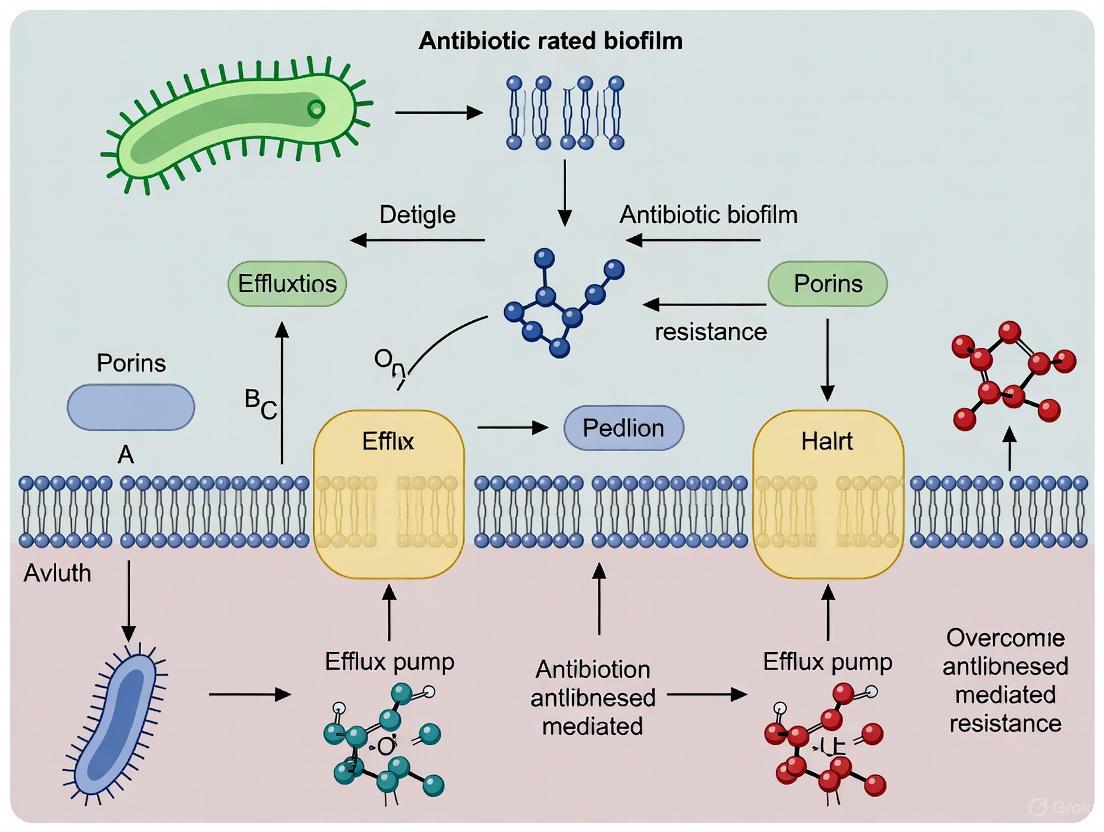
This article comprehensively examines the critical interplay between bacterial efflux pumps and biofilm-mediated antibiotic resistance, a major challenge in treating persistent infections.
Overcoming Efflux Pump Mediated Biofilm Antibiotic Resistance: Novel Strategies and Therapeutic Approaches
Abstract
This article comprehensively examines the critical interplay between bacterial efflux pumps and biofilm-mediated antibiotic resistance, a major challenge in treating persistent infections. Aimed at researchers, scientists, and drug development professionals, it synthesizes foundational knowledge on resistance mechanisms with current methodological advances in efflux pump inhibition (EPI) and biofilm disruption. It explores the dual role of efflux pumps in biofilm physiology, details the development of natural and synthetic EPIs, troubleshoots challenges in inhibitor design and delivery, and validates strategies through comparative analysis of combination therapies and in vitro models. The review concludes by outlining future directions for translating these innovative anti-biofilm strategies into clinical practice to combat multidrug-resistant infections.
The Biofilm Barrier: Unraveling Efflux Pump Mechanisms in Intrinsic Antibiotic Resistance
For researchers combating antimicrobial resistance (AMR), biofilms represent a critical frontier. These structured communities of microbial cells, encased in a self-produced extracellular polymeric substance (EPS), are a primary mode of growth for bacteria in nature and during infection [1]. The biofilm lifecycle transforms free-floating planktonic cells into complex, surface-associated aggregates that demonstrate dramatically increased tolerance to antimicrobial agents—in some cases requiring antibiotic concentrations 100 to 1,500 times higher than those needed to eliminate their planktonic counterparts [2] [3]. This intrinsic resistance is multifactorial, involving physical diffusion barriers, metabolic heterogeneity, and the active function of efflux pumps, which are a major focus of modern antibacterial drug development. This guide provides technical support for scientists investigating these mechanisms and developing strategies to overcome them.
Troubleshooting Common Biofilm Research Experiments
Table 1: Troubleshooting Guide for Biofilm Experiments
| Problem | Potential Causes | Solutions & Considerations |
|---|---|---|
| High Variability in Biofilm Assays | Inconsistent inoculation (single cells vs. aggregates); fluctuating environmental conditions (shear force, temperature) [4]. | Standardize initial cell state; use continuous-flow systems (e.g., flow cells) for consistent shear force; control temperature and nutrient availability [5]. |
| Unexpectedly Low Antibiotic Tolerance | Use of inappropriate antibiotic concentrations; disruption of the mature biofilm structure; inadequate growth time [2]. | Validate Minimum Inhibitory Concentration (MIC) for biofilm models (can be 100-800x planktonic MIC) [2]; ensure biofilm reaches maturation (typically 48-72 hours) [5]. |
| Poor Efflux Pump Inhibition | Efflux Pump Inhibitor (EPI) instability or degradation; substrate redundancy among multiple efflux pump systems [6] [7]. | Test EPI stability in assay conditions; consider combination therapies to target multiple pump families; use genetically modified strains with pump deletions as controls [7]. |
| Ineffective Biofilm Dispersal | Targeting a single dispersal signal; incomplete matrix degradation [4] [3]. | Employ a multimodal approach: combine enzymatic matrix disruption (e.g., DNase, glycoside hydrolases) with physical methods like pressurized wound cleansing [3] [5]. |
Frequently Asked Questions (FAQs) for Researchers
Q1: How does the biofilm lifecycle differ from the classic 5-step model in clinically relevant contexts? The influential 5-step model of attachment, microcolony formation, maturation, and dispersion was largely derived from in vitro studies of P. aeruginosa on abiotic surfaces [4]. However, in clinical, industrial, and environmental settings, biofilms are frequently observed as non-surface attached aggregates. For chronic infections—such as those in cystic fibrosis lungs or diabetic wounds—bacteria often form self-contained aggregates within mucus or tissue, not attached to a substratum [4] [5]. These aggregates share key phenotypic characteristics, such as high antibiotic tolerance, with surface-attached biofilms. A more flexible developmental model that includes these aggregates is therefore essential for research aimed at addressing real-world infections [4].
Q2: What are the primary mechanisms of antibiotic resistance in biofilms, and which are most relevant to efflux pump research? Biofilm antibiotic resistance is multifactorial. Key mechanisms include:
- Physical Barrier: The EPS matrix can hinder antibiotic penetration through binding or enzymatic inactivation [2] [5].
- Metabolic Heterogeneity: Nutrient and oxygen gradients create zones of slow-growing or dormant persister cells that are highly tolerant to antibiotics [2] [5].
- Efflux Pumps: These transport proteins actively extrude a wide range of antibiotics from the cell, often working alongside other resistance mechanisms. In biofilms, efflux pumps are not only crucial for antibiotic resistance but also play roles in stress response, virulence, and the biofilm lifecycle itself [6] [7]. Their expression can be heterogeneous within a biofilm, with upregulation noted in specific regions [2].
Q3: What are the most promising emerging strategies for targeting biofilms and their efflux systems? Emerging strategies focus on combination therapies and novel targets:
- Efflux Pump Inhibitors (EPIs): Developing broad-spectrum EPIs to rejuvenate existing antibiotics is a major research focus. Machine learning and chemoinformatics are being leveraged to discover novel EPIs [6].
- Matrix-Targeting Therapies: Using enzymes (e.g., DNase, glycoside hydrolases) to disrupt the EPS barrier, thereby improving antibiotic penetration [5].
- Quorum Sensing Interference: Disrupting cell-to-cell communication can prevent biofilm maturation and virulence expression [8].
- Multimodal Physical/Chemical Approaches: Techniques like pressurized wound cleansing with hypochlorous acid solutions mechanically remove biofilms and prevent reformation [3].
Quantitative Data on Biofilm Antimicrobial Resistance
Table 2: Comparative Antibiotic Efficacy Against Planktonic vs. Biofilm Cells
| Parameter | Planktonic Cells | Biofilm Cells | Experimental Notes |
|---|---|---|---|
| Typical Minimum Inhibitory Concentration (MIC) | 1X (Baseline) | 100 - 800X Higher [2] | Varies by bacterial species, antibiotic class, and biofilm model. |
| Resistance Level | Baseline | Up to 1,500X more resistant [3] | Attributed to combined mechanisms: matrix, persistence, efflux. |
| EPS Matrix Contribution to Dry Mass | Not Applicable | >90% [2] | Composed of polysaccharides, proteins, eDNA, and lipids [5]. |
| Impact of Efflux Pump Inhibitors (EPIs) | Moderate | Can completely abolish biofilm formation in some cases [2] | Efficacy is strain and pump-type dependent. |
Standard Experimental Protocols
Protocol 1: Assessing Efflux Pump Activity in a Biofilm Model
This protocol is used to evaluate the contribution of efflux pumps to antibiotic resistance in mature biofilms.
- Biofilm Cultivation: Grow biofilms in a suitable system (e.g., Calgary Biofilm Device, flow cells) for 48-72 hours to ensure maturity [5].
- Antibiotic Exposure: Treat biofilms with a relevant antibiotic at the pre-determined biofilm MIC, both with and without a candidate Efflux Pump Inhibitor (EPI) [7].
- Viability Assessment: Following exposure, disaggregate the biofilm via sonication and vortexing, then plate serial dilutions to determine Colony Forming Units (CFU). Compare CFU counts between antibiotic-only and antibiotic+EPI groups [5].
- Controls: Include an untreated biofilm control and validate EPI activity using a strain with a characterized efflux pump deletion.
Protocol 2: Evaluating Biofilm Dispersal Agents
This methodology tests the efficacy of chemical or enzymatic agents in disrupting the biofilm matrix.
- Establish Biofilms: Grow standardized biofilms in a 96-well plate or similar platform.
- Agent Application: Apply the test agent (e.g., glycoside hydrolase, DNase, hypochlorous acid) to mature biofilms [3] [5].
- Quantification:
- Crystal Violet Staining: For total biomass quantification.
- ATP Assays: To measure metabolically active cells remaining after dispersal.
- Microscopy: Use Confocal Laser Scanning Microscopy (CLSM) to visually confirm structural disruption of the 3D architecture [5].
Research Reagent Solutions
Table 3: Essential Reagents for Biofilm and Efflux Pump Research
| Reagent / Material | Function in Research | Specific Examples / Notes |
|---|---|---|
| Efflux Pump Inhibitors (EPIs) | To block antibiotic extrusion and study pump function; potential therapeutic adjuvants. | PAβN (Phe-Arg β-naphthylamide); natural product-derived inhibitors; novel compounds identified via machine learning [6]. |
| Matrix-Degrading Enzymes | To disrupt EPS, improving antibiotic penetration and enabling dispersal studies. | DNase I (targets eDNA); glycoside hydrolases (target exopolysaccharides); dispersin B [5]. |
| Quorum Sensing Inhibitors | To interfere with cell-cell communication, preventing virulence expression and biofilm maturation. | Synthetic acyl-homoserine lactone analogs; natural compounds that degrade autoinducers [8]. |
| Fluorescent Dyes & Reporters | For visualizing biofilm structure, viability, and gene expression in real-time. | SYTO dyes for total cells; propidium iodide for dead cells; GFP reporters for efflux pump promoter activity [5]. |
| Hypochlorous Acid (HOCl) Solutions | As a topical antimicrobial and biofilm-disrupting agent in wound models. | Mechanically removes biofilms and penetrates the protein matrix; often used with pressurized delivery [3]. |
Visualizing Mechanisms and Workflows
Biofilm Lifecycle and Resistance Mechanisms
Experimental Workflow for EPI Evaluation
Frequently Asked Questions (FAQs)
FAQ 1: What are the primary functions of efflux pumps in bacteria, beyond antibiotic resistance? While clinically recognized for their role in multidrug resistance, efflux pumps are fundamental to bacterial physiology. They function in the expulsion of toxic metabolites, bile salts, organic solvents, and heavy metal ions [6] [9]. Furthermore, they are involved in bacterial virulence, pathogenicity, quorum sensing, and biofilm formation [6] [9]. For instance, they export virulence factors like toxins and adhesins, which are crucial for host cell colonization [9].
FAQ 2: How do efflux pumps contribute to antibiotic resistance in biofilms? Efflux pumps work synergistically with the biofilm lifestyle to enhance antibiotic tolerance. Biofilms provide a protective environment where gradients of nutrient and oxygen create heterogeneous bacterial subpopulations, including dormant cells [5]. Efflux pumps can be upregulated in this context, actively extruding antibiotics and creating local antibiotic gradients within the biofilm structure [10]. This interplay between physical protection and active efflux significantly complicates treatment and fosters the evolution of higher-level resistance [10].
FAQ 3: Why is the RND family considered the most clinically significant efflux pump in Gram-negative bacteria? The Resistance Nodulation Division (RND) family is particularly concerning because its members form tripartite complexes that span both the inner and outer membranes of Gram-negative bacteria [11] [12]. This architecture allows them to expel substrates directly from the cell interior or the periplasm into the external environment, efficiently reducing intracellular antibiotic concentrations [11] [6]. They have a remarkably broad substrate range, encompassing multiple major classes of antibiotics, and their overexpression is a common feature in multi-drug resistant clinical isolates [11] [13].
FAQ 4: What are the key challenges in developing clinically effective Efflux Pump Inhibitors (EPIs)? Despite being an active area of research, no EPI has yet reached the clinic. Major challenges include the structural complexity and substrate promiscuity of efflux pumps, particularly the RND type [12] [13]. Toxicity at the concentrations required for inhibition has been a major hurdle for many candidate molecules [13]. Additionally, there are pharmacokinetic challenges, such as ensuring the EPI reaches its target in effective concentrations and is compatible with the co-administered antibiotic [12].
FAQ 5: Are there any promising natural sources for Efflux Pump Inhibitors? Yes, plant-derived compounds represent a promising source of EPIs. Studies have identified several plant compounds with efflux pump inhibitory activity. For example, berberine, palmatine, and curcumin have been shown to inhibit efflux pumps and alter bacterial growth dynamics and cluster formation [14]. These natural products are being investigated not only for their antimicrobial properties but also as Sortase A inhibitors, which could provide a dual-action therapeutic strategy [14].
Troubleshooting Common Experimental Challenges
Challenge 1: Determining the Contribution of Efflux to an Observed Resistance Phenotype
| Symptom | Possible Cause | Solution (Experimental Protocol) |
|---|---|---|
| High Minimum Inhibitory Concentration (MIC) for multiple, structurally unrelated antibiotics. | Overexpression of a broad-spectrum efflux pump. | Protocol: Efflux Pump Inhibition Assay1. Grow Bacteria: Culture the test strain to mid-log phase.2. Prepare Antibiotic Series: Prepare a 2-fold serial dilution of the antibiotic of interest in a suitable broth medium.3. Add EPI: Include sub-inhibitory concentrations of a known EPI (e.g., Phe-Arg β-naphthylamide for RND pumps) to one set of dilutions. A control set without EPI is essential.4. Inoculate and Incubate: Inoculate each dilution with a standardized bacterial inoculum and incubate.5. Interpret Results: A ≥4-fold decrease in the MIC in the presence of the EPI is a strong indicator of efflux-mediated resistance. Confirm results with a quantitative assay like an ethidium bromide accumulation assay [13]. |
Challenge 2: Differentiating Between Efflux Pump Families in a New Bacterial Isolate
| Symptom | Possible Cause | Solution (Experimental Protocol) |
|---|---|---|
| A positive efflux phenotype is confirmed, but the pump family is unknown. | The bacterium may possess one or more types of efflux pumps (e.g., RND, MFS, MATE). | Protocol: Genetic Analysis and Energy Poisoning1. Bioinformatic Analysis: Use the bacterium's genome sequence to identify genes encoding transporters from the RND, MFS, MATE, SMR, ABC, and PACE families [11] [15].2. Gene Expression: Quantify the expression levels of identified pump genes via RT-qPCR in the resistant isolate compared to a susceptible control.3. Energy Inhibition: Perform an accumulation assay (e.g., using ethidium bromide) in the presence of energy poisons. Protocol: a. Suspend cells in buffer with a fluorescent substrate. b. Treat one sample with a proton motive force uncoupler like CCCP. c. Monitor fluorescence over time. Interpretation: A significant increase in fluorescence with CCCP indicates the pump is proton-driven (e.g., RND, MFS, MATE). No change suggests an ATP-driven pump (ABC family) [6] [9]. |
Challenge 3: Investigating the Role of a Specific Efflux Pump in Biofilm Formation and Tolerance
| Symptom | Possible Cause | Solution (Experimental Protocol) |
|---|---|---|
| Biofilms show high tolerance to antibiotics, but the mechanism is unclear. | Efflux pumps may be contributing to tolerance by actively extruding antibiotics from biofilm-embedded cells. | Protocol: Assessing Efflux in Biofilms1. Generate Mutant: Create a knockout mutant of the specific efflux pump gene in your model strain.2. Form Biofilms: Grow biofilms of the wild-type and mutant strains in standardized conditions (e.g., in microtiter plates or flow cells).3. Treat with Antibiotic: Expose mature biofilms to a relevant antibiotic and assess viability using colony-forming unit (CFU) counts or a viability stain.4. Compare Tolerance: Reduced biofilm tolerance in the mutant strain compared to the wild-type indicates the pump contributes to antibiotic survival within the biofilm [10] [5]. Complementary gene expression analysis can confirm pump upregulation in biofilm cells. |
Table 1: Key Characteristics of Major Bacterial Efflux Pump Superfamilies
| Superfamily | Energy Source | Typical Topology | Key Substrates (Antibiotics) | Clinical Significance / Notes |
|---|---|---|---|---|
| ABC (ATP-Binding Cassette) | ATP hydrolysis [6] [9] | Single component (Gram+) or tripartite (Gram-) [12] | Macrolides, aminoglycosides, polymyxins, polypeptides [9] | Also involved in virulence, oxidative stress response, and export of LPS components [6] [9]. |
| RND (Resistance-Nodulation-Division) | Proton Motive Force [11] [6] | Tripartite complex (inner membrane transporter, periplasmic adapter, outer membrane channel) [11] [12] | Broad spectrum: β-lactams, fluoroquinolones, tetracyclines, chloramphenicol, aminoglycosides [11] | Primary multidrug resistance mechanism in Gram-negative bacteria (e.g., AcrAB-TolC in E. coli, AdeABC in A. baumannii) [11] [12]. |
| MFS (Major Facilitator Superfamily) | Proton Motive Force [6] [9] | 12 or 14 transmembrane segments [9] | Fluoroquinolones, macrolides, tetracyclines [9] | Largest superfamily of transporters; also impacts host immune response and bacterial motility/virulence (e.g., Tet38 in S. aureus) [9]. |
| MATE (Multidrug and Toxic Compound Extrusion) | Proton or Sodium Ion Gradient [6] [9] | 12 transmembrane regions [9] | Fluoroquinolones, quaternary ammonium compounds [9] | Contributes to oxidative stress relief by extruding intracellular reactive oxygen species [9]. |
| SMR (Small Multidrug Resistance) | Proton Motive Force [6] [15] | Small size; 4 transmembrane segments [15] | Disinfectants, quaternary ammonium compounds, some dyes [15] | Mainly found in Gram-positive bacteria; confers resistance to antiseptics and biocides [15]. |
| PACE (Proteobacterial Antimicrobial Compound Efflux) | Proton Motive Force [11] [9] | --- | Chlorhexidine, acriflavine [9] | A recently discovered family; associated with intrinsic resistance to antiseptics in Gram-negatives like A. baumannii [11] [9]. |
The Scientist's Toolkit: Essential Research Reagents
Table 2: Key Reagents for Studying Efflux Pumps and Biofilm Resistance
| Reagent / Material | Function in Experimental Design | Example Application |
|---|---|---|
| Phe-Arg β-naphthylamide (PAβN) | A broad-spectrum efflux pump inhibitor, primarily targeting RND pumps [13]. | Used in MIC reduction assays to confirm efflux-mediated resistance in Gram-negative bacteria [13]. |
| Carbonyl Cyanide m-Chlorophenylhydrazone (CCCP) | A proton motive force uncoupler [12]. | Used in fluorescent substrate accumulation assays to determine if an efflux pump is energy-dependent and proton-driven [6] [12]. |
| Ethidium Bromide | A fluorescent substrate for many efflux pumps [11]. | Serves as a probe in real-time accumulation and efflux assays to directly measure pump activity [11]. |
| Plant-Derived EPIs (e.g., Berberine, Curcumin) | Natural compounds with efflux pump inhibitory activity [14]. | Used to investigate alternative inhibition strategies and their effects on bacterial growth curves and cluster formation [14]. |
| Microtiter Plates & Crystal Violet | Tools for static biofilm formation and quantification [16]. | Standard method for high-throughput assessment of biofilm biomass in wild-type vs. efflux pump mutant strains [16]. |
| Flow Cell Systems & Confocal Microscopy | Tools for dynamic biofilm cultivation and 3D visualization [5]. | Allows for real-time analysis of biofilm architecture and the spatial localization of efflux activity within microcolonies [5]. |
Experimental Workflow: From Resistance Phenotype to Mechanism
The following diagram outlines a logical workflow for troubleshooting and investigating efflux pump-mediated resistance, integrating the FAQs and troubleshooting guides above.
Investigation Workflow for Efflux-Mediated Resistance
Efflux and Biofilms: A Synergistic Resistance Model
The interplay between efflux pumps and biofilms is complex. The following diagram illustrates how these mechanisms converge to create a highly tolerant bacterial population, which is central to the thesis of overcoming this form of resistance.
Synergistic Resistance in Biofilms
Frequently Asked Questions (FAQs)
FAQ 1: What are the primary mechanisms that make biofilms resistant to antibiotics? Biofilms exhibit heightened antibiotic resistance through a multi-layered shield comprising several integrated mechanisms:
- Physical Barrier: The extracellular polymeric substance (EPS) matrix limits antibiotic diffusion and can bind to antimicrobial agents, reducing their effective concentration [17] [5].
- Efflux Pump Activity: Multidrug resistance (MDR) efflux pumps actively export antibiotics from bacterial cells, significantly decreasing intracellular drug accumulation [17] [18].
- Metabolic Heterogeneity: Biofilms contain subpopulations of slow-growing or dormant cells (persisters) that are less susceptible to antibiotics which target active cellular processes [17] [19].
- Quorum Sensing Regulation: Cell-to-cell communication systems coordinate biofilm development and the expression of virulence and resistance factors [17] [20].
FAQ 2: How do efflux pumps contribute specifically to biofilm-mediated resistance? Efflux pumps provide a crucial defense layer in biofilms through several functions:
- They actively transport a wide spectrum of antibiotics out of bacterial cells, directly reducing drug efficacy [17] [18].
- In biofilms, efflux pumps demonstrate heterogeneous expression patterns, with higher activity in specific subpopulations (e.g., cells located at the substratum) [17].
- They regulate internal biofilm environments by removing metabolic waste products and are implicated in quorum sensing by transporting signaling molecules [17] [21].
- Certain efflux pumps, such as MexAB-OprM in Pseudomonas aeruginosa and AcrAB-TolC in Escherichia coli, show increased expression or activity in biofilm populations compared to planktonic cells [17].
FAQ 3: What is the connection between Quorum Sensing (QS) and biofilm resistance? Quorum Sensing serves as the regulatory backbone for biofilm formation and function:
- QS systems control the expression of virulence factors and coordinate the transition from planktonic to biofilm lifestyles [17] [22].
- In Gram-negative bacteria, QS using acyl homoserine lactones (AHLs) regulates EPS production and biofilm architecture [19] [21].
- Efflux pumps interact with QS by transporting signaling molecules (e.g., 3OC12-HSL in P. aeruginosa), creating an interlinked system where efflux activity can modulate QS and vice versa [17].
- Disruption of QS can lead to impaired biofilm formation and increased antimicrobial susceptibility [22] [20].
FAQ 4: Which bacterial pathogens are prime examples of this synergistic defense?
- Pseudomonas aeruginosa: Utilizes multiple RND efflux pumps (e.g., MexAB-OprM, MexCD-OprJ) that contribute to biofilm resistance against macrolides, fluoroquinolones, and β-lactams [17].
- Escherichia coli: The AcrAB-TolC efflux system is overexpressed in clinical isolates and biofilms, exporting diverse antibiotics including chloramphenicol and fluoroquinolones [17].
- Staphylococcus aureus: Employs NorA efflux pumps (MFS family) and distinct biofilm archetypes (polysaccharide, protein/eDNA, fibrin, amyloid) that contribute to resistance [18] [5].
FAQ 5: What novel strategies are emerging to overcome this multi-layered resistance? Innovative approaches focus on disrupting the synergistic relationship between biofilm components:
- Efflux Pump Inhibitors (EPIs): Compounds like DPM, DPE, and BPA with diphenylmethane scaffolds can block efflux pumps, increasing intracellular antibiotic accumulation [18].
- Quorum Sensing Inhibitors: Natural and synthetic compounds that interfere with QS signaling can prevent biofilm maturation and virulence expression [22] [20].
- Matrix-Degrading Enzymes: Enzymes such as glycoside hydrolases disrupt EPS components, improving antibiotic penetration [5].
- Combination Therapies: Plant metabolites (e.g., phenols, terpenes, flavonoids) show synergistic effects with conventional antibiotics against biofilms [22].
- Advanced Detection Methods: Automated confocal microscopy analysis (Biofilm Viability Checker) provides more accurate quantification of biofilm viability and architecture [23] [24].
Troubleshooting Common Experimental Challenges
Challenge 1: Inconsistent Biofilm Formation in Laboratory Models Problem: Difficulty in obtaining reproducible, mature biofilms for antimicrobial testing. Solution: Implement standardized protocols with environmental control:
- Surface preconditioning: Use relevant biological coatings (e.g., plasma proteins for medical device models) to mimic in vivo conditions, as surface properties significantly impact attachment [5].
- Growth medium optimization: Carbon source selection critically influences biofilm architecture (e.g., P. aeruginosa forms different structures with glucose vs. citrate) [5].
- Flow system implementation: Consider continuous flow systems over static models, as shear forces significantly impact biofilm development and structure [17] [5].
- Monitoring maturation: Use standardized time points (typically 48-72 hours for maturation) and verify with microscopy before testing [17] [23].
Challenge 2: Differentiating Between Resistance Mechanisms in Biofilms Problem: Determining whether observed resistance stems from efflux activity, matrix limitation, or other factors. Solution: Implement a sequential diagnostic approach:
- Step 1 - Penetration assay: Use fluorescent antibiotic analogs or diffusion markers with confocal microscopy to visualize compound penetration through the biofilm matrix [23] [5].
- Step 2 - Efflux pump inhibition: Employ EPIs like PAβN or novel diphenylmethane derivatives (DPE, BPA) in combination with antibiotics; restored susceptibility indicates efflux contribution [18].
- Step 3 - Metabolic profiling: Compare susceptibility patterns between biofilm and planktonic cells to metabolic inhibitors versus cell wall-active agents [17] [19].
- Step 4 - Genetic validation: Construct efflux pump knockout mutants and compare biofilm vs. planktonic resistance profiles [17].
Challenge 3: Quantifying Biofilm Viability Accurately After Treatment Problem: Traditional CFU counting provides limited information on spatial distribution of viability within biofilms. Solution: Adopt advanced imaging and analysis techniques:
- Standardized live/dead staining: Use SYTO 9 and propidium iodide with controlled imaging parameters [23] [24].
- Automated image analysis: Implement open-source tools like Biofilm Viability Checker for Fiji/ImageJ to eliminate subjective manual counting and improve reproducibility [23] [24].
- 3D architecture analysis: Utilize confocal microscopy z-stacks to assess viability gradients through different biofilm layers, as efflux activity often varies spatially [17] [23].
- Complementary methods: Combine imaging with ATP-bioluminescence or resazurin reduction assays for metabolic activity correlation [23].
Experimental Protocols for Evaluating Efflux Pump Function in Biofilms
Protocol 1: Efflux Pump Inhibition Assay Using Modulators
Purpose: To determine the contribution of efflux pumps to biofilm antibiotic resistance.
Materials:
- Mature biofilms (48-72 hour cultures)
- Appropriate antibiotics for tested strain
- Efflux Pump Inhibitors: PAβN (positive control), test compounds (e.g., DPE, BPA)
- Microtiter plates or flow cell systems
- Viability staining (SYTO 9/propidium iodide) or CFU counting materials
Procedure:
- Grow biofilms to maturation under optimized conditions [17] [5].
- Prepare treatment groups:
- Antibiotic alone at sub-MIC concentrations
- EPI alone at non-bactericidal concentration
- Antibiotic + EPI combination
- Untreated control
- Treat biofilms for predetermined exposure time (typically 4-24 hours).
- Assess viability using:
- Calculate percentage viability reduction for each treatment compared to control.
- Significant enhancement of killing in combination treatment indicates efflux-mediated resistance.
Interpretation: A ≥2-fold increase in killing with combination therapy suggests substantial efflux pump contribution to resistance.
Protocol 2: Intracellular Dye Accumulation Assay
Purpose: To directly visualize and quantify efflux pump activity in biofilm populations.
Materials:
- Ethidium bromide or other fluorescent efflux substrates
- Test EPIs (e.g., DPE, BPA, PAβN)
- Confocal microscopy system with appropriate filters
- Image analysis software (e.g., Fiji/ImageJ with Biofilm Viability Checker)
Procedure:
- Grow biofilms on suitable surfaces for microscopy [23].
- Pre-treat with EPI or control solution for 30-60 minutes.
- Add ethidium bromide (final concentration 1-5 μg/mL) and incubate 10-30 minutes.
- Acquire z-stack images using standardized settings across all samples [23] [24].
- Process images using automated analysis to quantify fluorescence intensity:
- Separate channels for optimal quantification
- Apply consistent thresholding
- Measure intensity per biomass or per cell [23]
- Compare mean fluorescence intensities between EPI-treated and untreated groups.
Interpretation: Significant increase in intracellular dye accumulation with EPI treatment indicates successful efflux pump inhibition.
Research Reagent Solutions
Table 1: Essential Reagents for Biofilm Efflux Pump Research
| Reagent/Category | Specific Examples | Research Application | Key Considerations |
|---|---|---|---|
| Efflux Pump Inhibitors | PAβN, D13-9001, Diphenylmethane derivatives (DPE, BPA) [18] | Block antibiotic extrusion; identify efflux-mediated resistance | Cytotoxicity screening essential; solubility limitations common |
| Fluorescent Substrates | Ethidium bromide, SYTO 9, Propidium iodide [23] | Visualize efflux activity; quantify viability | Channel separation critical to avoid bleed-through; standardized imaging parameters needed |
| Matrix Components | Alginate lyase, DNase I, glycoside hydrolases [5] | Disrupt EPS to improve antibiotic penetration | Enzyme specificity varies; optimal concentration requires empirical determination |
| Quorum Sensing Modulators | AHL analogs, furanones, natural compounds (e.g., flavonoids) [22] | Disrupt cell signaling and biofilm coordination | Species-specific effects; potential impact on virulence factor expression |
| Standardized Strains | P. aeruginosa PAO1 (Mex pumps), E. coli Kam3-AcrB [17] [18] | Controlled comparison across laboratories | Efflux pump expression levels should be verified regularly |
Visualizing the Multi-layered Defense System
Biofilm Multi-layered Defense Mechanism
Table 2: Quantitative Evidence for Efflux Pump Contribution to Biofilm Resistance
| Bacterial Species | Efflux System | Experimental Findings | Significance |
|---|---|---|---|
| Pseudomonas aeruginosa | MexAB-OprM | Contributes to resistance against aztreonam, gentamicin, tetracycline, tobramycin in biofilms [17] | Key player in intrinsic biofilm resistance |
| Pseudomonas aeruginosa | PA1874-1877 | Higher expression in biofilm vs. planktonic cells; involved in resistance to ciprofloxacin, gentamicin, tobramycin [17] | Biofilm-specific efflux system |
| Escherichia coli | AcrAB-TolC | Overexpressed in clinical isolates; exports chloramphenicol, fluoroquinolones [17] [18] | Primary MDR mechanism in Enterobacteriaceae |
| Various Gram-negative | RND family | Major clinically relevant systems; tripartite structure spans cell envelope [17] | Fundamental architectural advantage |
EPI Identification and Validation Workflow
{/* The content is exclusively based on the search results provided. */}
The Persister Cell Phenomenon: Dormancy and Recalcitrance in Biofilms
Frequently Asked Questions (FAQs)
Q1: What is the fundamental difference between antibiotic resistance and the tolerance seen in persister cells? Persister cells exhibit antibiotic tolerance, a non-inherited, reversible state where metabolically dormant cells survive antibiotic treatment without genetic change. In contrast, classic antibiotic resistance is a heritable trait that allows bacteria to grow in the presence of antibiotics due to genetic mutations [25] [26].
Q2: Why are biofilms so difficult to eradicate with standard antibiotic treatments? Biofilms are recalcitrant due to a combination of factors, including the physical barrier of the Extracellular Polymeric Substance (EPS) that can bind to and retard antibiotic diffusion, the presence of metabolically dormant persister cells, and active efflux pumps that expel antimicrobials [25] [27]. It is estimated that over 65% of all infections are associated with biofilms [25].
Q3: How do efflux pumps contribute to biofilm resistance, and are they always active throughout the biofilm? Efflux pumps, such as those from the Resistance Nodulation Division (RND) family, actively export a wide range of antibiotics from bacterial cells. In biofilms, their expression is often heterogeneous and can be upregulated in specific subpopulations, such as cells near the substrate or in response to antimicrobial exposure [28] [6]. Their function is crucial for full biofilm formation and tolerance.
Q4: What are some emerging strategies to target persister cells and biofilms? Innovative strategies focus on circumventing traditional resistance mechanisms. These include:
- Anti-persister compounds: Such as halogenated indoles (e.g., 5-iodoindole) that eradicate persisters and inhibit biofilm formation without inducing further persistence [26].
- Efflux Pump Inhibitors (EPIs): Compounds like phenylalanine-arginine β-naphthylamide that inhibit pump function and re-sensitize bacteria to antibiotics [28] [6].
- Nanoparticle-based drug delivery: Using synthetic nanoparticles to encapsulate and deliver antibiotics directly into the biofilm, enhancing penetration and efficacy [29].
- Enzymatic matrix disruption: Using enzymes like glycoside hydrolases to break down the EPS, facilitating biofilm dispersal and allowing antimicrobials to reach embedded cells [27].
Troubleshooting Common Experimental Challenges
Challenge 1: Low In-Vivo Translocation of In-Vitro Results
Problem: Biofilms grown in static well plates do not mimic the physiological shear flow conditions found in the body, leading to poor translation of drug efficacy data to animal models.
Solution: Utilize shear flow systems to grow biofilms under more biologically relevant conditions.
- Recommended Protocol: Employ a microfluidic shear flow system (e.g., BioFlux) [29].
- Inoculate: Seed bacterial cells into the microfluidic channels of an SBS-standard plate.
- Establish Flow: Use the system's software to apply a precise, continuous flow of growth media to mimic bodily fluid movement. This improves nutrient distribution and mimics natural shear forces.
- Treat & Image: Introduce antimicrobial compounds directly through the flow system. Image live biofilms in real-time using an inverted microscope without disturbing the biofilm structure [29].
- Key Advantage: This method prevents the "fluid bursts" common with peristaltic DIY setups that can detach biofilms, and allows for high-resolution imaging of non-deformed structures [29].
Challenge 2: Inconsistent Persister Cell Isolation and Quantification
Problem: The yield and reliability of obtaining a pure population of persister cells for downstream analysis are low.
Solution: Implement a robust antibiotic killing and washing protocol to isolate non-growing, tolerant cells.
- Recommended Protocol: Persister cell killing assay [26].
- Culture & Induce: Grow an overnight culture of your bacterial strain. Dilute it and grow to the desired phase (exponential or stationary). Induce persister formation by treating the culture with a high concentration of a bactericidal antibiotic (e.g., 100 µg/mL ampicillin) for a set period (e.g., 30-60 minutes).
- Wash & Harvest: Centrifuge the antibiotic-treated culture (e.g., 4000 rpm for 14 minutes) and wash the pellet thoroughly with fresh, antibiotic-free medium to remove the drug.
- Treat & Enumerate: Resuspend the washed cell pellet and treat it with the compound of interest (e.g., a potential anti-persister molecule) or a control (e.g., DMSO). After incubation, determine cell viability through serial dilution and plating for colony-forming unit counts. The surviving population after the initial antibiotic kill step represents the persister cells [26].
Challenge 3: Differentiating Between Efflux Pump-Mediated and Other Resistance Mechanisms
Problem: It is challenging to confirm whether reduced antibiotic susceptibility in a biofilm is specifically due to efflux pump activity.
Solution: Use efflux pump inhibitors (EPIs) as a functional tool in combination assays.
- Recommended Protocol: EPI potentiation assay [28] [6].
- Grow Biofilms: Form biofilms in the presence of sub-inhibitory concentrations of a known EPI (e.g., PaβN, CCCP, or 1-(1-naphthylmethyl)-piperazine) or a control.
- Challenge with Antibiotic: Expose the biofilms to a range of concentrations of the antibiotic whose efficacy you are testing.
- Quantify Tolerance: Use metrics like Minimum Biofilm Eradication Concentration or viable cell counts to measure cell death.
- Interpretation: A significant increase in antibiotic sensitivity (e.g., a lower concentration required to kill the biofilm) in the presence of the EPI compared to the control is strong evidence for the involvement of active efflux in the observed resistance [28].
Table 1: Efficacy of Selected Halogenated Indoles Against Bacterial Persisters and Biofilms [26]
| Compound | Target Organisms | Effect on Persister Formation | Effect on Biofilm Formation (Crystal Violet Assay) | Key Additional Effects |
|---|---|---|---|---|
| 5-Iodoindole | E. coli, S. aureus | Erraticated persister formation | Most potent inhibitor | Did not induce persister formation; inhibited virulence factor (staphyloxanthin) production in S. aureus |
| 4-Fluoroindole | E. coli, S. aureus | Erraticated persister formation | Inhibited | Data not specified |
| 7-Chloroindole | E. coli, S. aureus | Erraticated persister formation | Inhibited | Data not specified |
| 7-Bromoindole | E. coli, S. aureus | Erraticated persister formation | Inhibited | Data not specified |
Table 2: Common Efflux Pump Inhibitors and Their Application in Biofilm Research [28] [6] [30]
| Inhibitor Name | Example Target Pumps | Typical Working Concentration | Key Utility & Notes |
|---|---|---|---|
| Phenylalanine-arginine β-naphthylamide (PaβN) | RND family pumps | Varies by organism & setup | Broad-spectrum EPI; used to demonstrate efflux role in biofilm-specific resistance in E. coli and Salmonella [28] |
| 1-(1-Naphthylmethyl)-piperazine (NMP) | RND family pumps | Varies by organism & setup | Synthetic EPI; shown to inhibit biofilm formation and increase tetracycline efficacy [28] |
| Carbonyl cyanide m-chlorophenyl hydrazone (CCCP) | Proton motive force disruptor | Varies by organism & setup | Uncoupling agent; depletes energy for secondary active transporters. Used to confirm energy-dependent efflux [28]. |
| Bac-EPIC Web Interface | AcrAB-TolC system (E. coli) | N/A (In-silico prediction tool) | Publicly accessible server for predicting novel Efflux Pump Inhibitors by screening chemical structures for similarity to known EPIs [30] |
Signaling Pathways and Experimental Workflows
The Scientist's Toolkit: Research Reagent Solutions
Table 3: Essential Reagents and Resources for Investigating Persister Cells and Biofilm Resistance
| Item | Function/Application in Research | Key Notes |
|---|---|---|
| Microfluidic Shear Flow System (e.g., BioFlux) | Culturing biofilms under physiologically relevant shear stress conditions. | Provides superior in-vitro to in-vivo translation compared to static cultures; enables real-time, high-resolution imaging [29]. |
| Efflux Pump Inhibitors (EPIs) | Tool compounds to identify and validate efflux-mediated resistance mechanisms in biofilms. | PaβN, NMP, and CCCP are widely used. Their ability to potentiate antibiotic efficacy confirms efflux involvement [28] [6]. |
| Halogenated Indoles (e.g., 5-Iodoindole) | Novel anti-persister and anti-biofilm compounds for testing therapeutic strategies. | Eradicates persister cells and inhibits biofilm formation without inducing further tolerance, offering a non-antibiotic strategy [26]. |
| Matrix-Degrading Enzymes (e.g., Glycoside Hydrolases) | Disrupting the biofilm EPS matrix to enhance antibiotic penetration. | Used in combination therapies to disperse biofilms and sensitize embedded cells to antimicrobials [27]. |
| Bac-EPIC Web Server | In-silico prediction of novel Efflux Pump Inhibitors targeting the AcrAB-TolC system. | Aids in the rational design of EPIs by screening chemical structures before costly wet-lab experiments [30]. |
FAQs: Core Concepts and Mechanisms
FAQ 1: What is the fundamental connection between quorum sensing (QS) and efflux pump expression? QS is a bacterial cell-cell communication process that uses extracellular signal molecules called autoinducers to coordinate gene expression based on population density [31] [32]. Efflux pumps are transporter proteins that expel toxic substances, including antibiotics, from the bacterial cell [17] [32]. The fundamental connection is twofold:
- Efflux Pumps Transport QS Signals: Efflux pumps, particularly those from the Resistance Nodulation Division (RND) family, are involved in the active transport of QS signaling molecules (autoinducers) across the cell membrane. For instance, in Pseudomonas aeruginosa, the MexAB-OprM efflux pump helps in the extrusion of the QS precursor HHQ, thereby influencing the Pseudomonas Quinolone Signal (PQS) system [32] [33].
- QS Regulates Efflux Pump Genes: QS systems can directly or indirectly control the transcriptional regulation of efflux pump genes. In Salmonella pullorum, the LuxS/AI-2 QS system directly upregulates the expression of the AcrAB-TolC efflux pump, leading to enhanced antimicrobial resistance [34].
FAQ 2: How does this interplay contribute to increased antibiotic resistance? The QS-efflux pump interplay creates a synergistic mechanism for enhanced resistance:
- Biofilm Formation: QS is a master regulator of biofilm development [17]. Biofilms are structured communities of bacteria encased in a matrix that are inherently more resistant to antibiotics. Efflux pumps are often overexpressed in biofilm cells compared to their planktonic (free-swimming) counterparts [17]. The coordinated activity ensured by QS leads to a more robust, resistant community.
- Enhanced Drug Efflux: The upregulation of efflux pumps via QS signals means that bacteria can more efficiently pump out a wider range of antibiotics, reducing the intracellular drug concentration to sub-lethal levels [32] [34]. This can be observed experimentally as a significant decrease in the Minimum Inhibitory Concentration (MIC) of antibiotics when efflux pumps are inhibited [31].
FAQ 3: We observe high efflux pump gene expression in our biofilm models, but the genetic regulators are unknown. What is a potential QS-linked pathway? A key regulatory link involves the transcriptional regulator BrlR in P. aeruginosa. This MerR-type regulator is activated in response to high levels of the second messenger c-di-GMP in biofilms. BrlR then binds directly to the promoter regions of efflux pump operons like mexAB-oprM and mexEF-oprN, activating their transcription and contributing to the biofilm-specific antibiotic resistance phenotype [32].
FAQ 4: Can efflux pump inactivation ever increase virulence, and how is this related to QS? Yes, paradoxically, the loss of certain efflux pumps can increase virulence by altering QS. Recent research on P. aeruginosa shows that inactivating mutations in the mexEF-oprN efflux pump operon lead to increased production of QS-controlled virulence factors, such as elastase and rhamnolipids. This is because the pump is involved in expelling specific QS signal precursors; its inactivation causes an accumulation of these precursors inside the cell, leading to hyper-activation of the QS network and consequently, enhanced virulence in infection models [33].
Troubleshooting Guides: Common Experimental Challenges
Problem 1: Inconsistent Efflux Pump Inhibition Results in Biofilm Assays
- Potential Cause: Heterogeneous expression of efflux pumps within the biofilm structure. Cells in different layers of the biofilm experience varying microenvironments (e.g., oxygen and nutrient gradients), leading to non-uniform pump expression [17] [32]. For example, in P. aeruginosa biofilms, MexAB-OprM expression is highest in cells located near the substratum [32].
- Solution:
- Spatial Analysis: Use techniques like reporter gene fusions (e.g., GFP) under the control of an efflux pump promoter to visualize and quantify gene expression in different regions of the biofilm (e.g., via confocal microscopy).
- Combine with Viability Stains: Correlate efflux pump activity with cell viability stains to identify if resistance is localized to specific, metabolically inactive subpopulations.
- Standardize Growth Conditions: Carefully control and report the age and growth conditions of the biofilms used, as resistance peaks in mature biofilms [17].
Problem 2: Difficulty in Disentangling Direct vs. Indirect Effects of QS on Efflux Pump Expression
- Potential Cause: QS is a global regulator that controls hundreds of genes. An observed change in efflux pump expression in a QS mutant (e.g., lasR) could be a secondary effect of broader physiological changes, not a direct regulatory link.
- Solution:
- Direct Binding Assays: Perform electrophoretic mobility shift assays (EMSAs) to test if the purified QS regulator protein (e.g., LasR, RhIR) binds directly to the promoter region of the target efflux pump operon [34].
- Promoter-reporter Fusion: Clone the promoter of the efflux pump gene (e.g., acrAB) upstream of a reporter gene (e.g., lacZ) and measure its activity in a QS mutant background versus a wild-type, both with and without exogenous autoinducer supplementation.
- Use Specific Efflux Pump Inhibitors (EPIs): Employ EPIs like Phe-Arg-β-naphthylamide (PAβN) to functionally validate the role of specific pumps. If an EPI restores antibiotic susceptibility in a QS-deficient strain, it suggests the QS effect is mediated through that pump [31].
Problem 3: Our EPI (e.g., PAβN) Shows Excellent Potency In Vitro but Fails in an In Vivo Infection Model
- Potential Cause 1: Toxicity and stability issues. PAβN can be cytotoxic to mammalian cells at effective concentrations and may be rapidly metabolized or cleared in a live host.
- Solution: Explore novel, more specific EPIs with better pharmacological properties. Investigate combination therapies where a lower, non-toxic dose of the EPI is used alongside a conventional antibiotic [35].
- Potential Cause 2: The in vivo environment may induce alternative resistance mechanisms that compensate for efflux pump inhibition, such as upregulation of other pumps or changes in membrane permeability.
- Solution: Conduct transcriptomic analysis (RNA-seq) of bacteria harvested from the in vivo model after EPI treatment to identify compensatory resistance pathways that could be targeted simultaneously [33].
The table below consolidates key quantitative findings from recent studies on the QS-Efflux Pump interplay.
Table 1: Quantitative Data on Efflux Pump and Quorum Sensing Gene Prevalence and Expression
| Organism | Gene/System | Function | Quantitative Finding | Experimental Context | Citation |
|---|---|---|---|---|---|
| Acinetobacter baumannii | adeA | Efflux Pump (RND) | 100% prevalence (53/53 isolates) | Multidrug-resistant blood culture isolates | [36] |
| Acinetobacter baumannii | adeB | Efflux Pump (RND) | 96.2% prevalence (51/53 isolates) | Multidrug-resistant blood culture isolates | [36] |
| Acinetobacter baumannii | luxI | Quorum Sensing | 41.5% prevalence (22/53 isolates) | Multidrug-resistant blood culture isolates | [36] |
| Acinetobacter baumannii | luxR | Quorum Sensing | 47.2% prevalence (25/53 isolates) | Multidrug-resistant blood culture isolates | [36] |
| Salmonella Typhimurium | EP Activity + PAβN | Efflux Pump Inhibition | MIC of Erythromycin reduced from 256 μg/mL to 2 μg/mL | In vitro susceptibility testing with EPI | [31] |
| P. aeruginosa (Clinical Isolates) | mexEF-oprN | Efflux Pump Inactivation | 40.8% of CF isolates (22/164) had inactivating mutations | Genomic analysis of chronic infection isolates | [33] |
Table 2: Key Research Reagent Solutions for Investigating QS and Efflux Pumps
| Reagent / Tool | Category | Primary Function in Research | Example Application |
|---|---|---|---|
| Phe-Arg-β-naphthylamide (PAβN) | Efflux Pump Inhibitor (EPI) | Broad-spectrum inhibitor of RND-type pumps; competes with antibiotics for extrusion. | Demonstrating efflux-mediated resistance by showing reduced MIC of antibiotics in its presence [31]. |
| Autoinducer Analogs (e.g., C4-HSL, 3-oxo-C12-HSL) | Quorum Sensing Signal | Used to supplement growth media to exogenously activate or complement QS systems. | Rescuing QS phenotypes in mutant strains or studying hyperactivation of QS-regulated genes [32]. |
| Reporter Plasmids (e.g., GFP, lux, lacZ) | Molecular Tool | Fused to promoters of interest to provide a visual or quantifiable readout of gene expression. | Monitoring spatial and temporal expression of efflux pump or QS genes in biofilms [32]. |
| BrlR-specific Antibody | Protein Detection | Used in Chromatin Immunoprecipitation (ChIP) assays to identify direct transcriptional targets. | Confirming direct binding of the biofilm regulator BrlR to efflux pump operon promoters [32]. |
Detailed Experimental Protocols
Protocol 1: Assessing the Contribution of Efflux Pumps to Antibiotic Resistance Using an EPI
This protocol is used to determine if active efflux is a significant component of a bacterium's resistance profile [31].
- Broth Microdilution MIC Assay:
- Prepare a dilution series of the antibiotic of interest in a 96-well microtiter plate using cation-adjusted Mueller-Hinton broth.
- In one set of wells, include a sub-inhibitory concentration of the EPI PAβN (typically 20-50 μg/mL). A control with PAβN alone must be included to ensure it does not inhibit growth.
- Standardize the bacterial inoculum to ~5 × 10^5 CFU/mL and add to each well.
- Incubate the plate at 35±2°C for 16-20 hours.
- Data Interpretation:
- The MIC is defined as the lowest concentration of antibiotic that completely inhibits visible growth.
- A ≥4-fold decrease in the MIC of the antibiotic in the presence of PAβN is considered indicative of significant efflux pump activity contributing to resistance [31].
Protocol 2: Genetic Validation of Efflux Pump and QS Linkage via Gene Deletion and Complementation
This gold-standard protocol establishes a causal relationship.
- Mutant Construction:
- Create an in-frame deletion mutant of the key QS regulator gene (e.g., lasR) or the efflux pump gene (e.g., acrB) in your target organism using allelic exchange or CRISPR-based methods.
- Phenotypic Characterization:
- MIC Assay: Compare the antibiotic susceptibility of the wild-type, mutant, and complemented strain (where the deleted gene is reintroduced on a plasmid).
- Gene Expression: Using qRT-PCR, measure the mRNA expression levels of the target efflux pump genes (e.g., acrAB) in the wild-type and QS mutant backgrounds.
- Expected Outcome:
- If the QS system positively regulates the pump, the lasR mutant will show increased antibiotic susceptibility and decreased acrAB expression. This phenotype should be restored to wild-type levels in the complemented strain [34].
Signaling Pathway and Experimental Workflow Diagrams
Diagram Title: Core Regulatory Pathway of LuxS/AI-2 Mediated Efflux Pump Activation
Diagram Title: Workflow for Validating a QS-Efflux Pump Regulatory Link
Therapeutic Arsenal: Developing Efflux Pump Inhibitors and Biofilm Disruption Strategies
What are the core challenges in overcoming efflux pump-mediated biofilm resistance that this technical center addresses? Biofilms are complex communities of microorganisms embedded in a protective matrix, which are associated with over 80% of human infectious diseases [37]. The primary challenges in treating these infections are twofold. First, efflux pumps are membrane transporter proteins that actively expel a wide range of antibiotics from bacterial cells, significantly reducing intracellular drug concentration and therapeutic efficacy [38] [39]. Second, the biofilm matrix itself acts as a physical and chemical barrier, impairing antibiotic penetration and fostering a tolerant bacterial population [40] [41]. This technical support center provides protocols and troubleshooting guides for researching natural products that can inhibit these resistance mechanisms.
How do Natural Product Efflux Pump Inhibitors (EPIs) function as a strategy to overcome resistance? Natural product EPIs are compounds derived from plants and other natural sources that block the function of multidrug efflux pumps. They do not necessarily kill the bacteria themselves but work synergistically with conventional antibiotics. By blocking the pump, they allow the antibiotic to accumulate inside the bacterial cell, thereby restoring its efficacy. This approach is particularly promising for tackling multidrug-resistant infections, especially those involving biofilms, as it can reverse resistance and breathe new life into existing antibiotics [38] [37] [39].
Troubleshooting Guides & FAQs
FAQ: My synergy experiments between a natural product EPI and an antibiotic are not showing a significant effect. What could be going wrong?
Answer: A lack of observed synergy can stem from several experimental factors. Below is a troubleshooting guide to help you identify and correct the most common issues.
| Problem Area | Potential Cause | Suggested Solution |
|---|---|---|
| Compound Preparation | Poor solubility of the natural product (e.g., Curcumin) leading to inaccurate concentrations [40]. | Use a suitable solvent like DMSO to create a stock solution, and then dilute in the test medium. Ensure the final DMSO concentration does not affect bacterial growth (typically ≤1%). |
| Concentration Selection | Using a concentration of the EPI that is too high (may have its own strong antibacterial effect) or too low (sub-inhibitory) [40] [38]. | Determine the precise Minimum Inhibitory Concentration (MIC) for the EPI and antibiotic alone first. For synergy tests, use a sub-inhibitory concentration of the EPI (e.g., 32 mg/L for Curcumin) [40]. |
| Bacterial Strain & Model | Using a bacterial strain that does not highly express the target efflux pump, or testing against planktonic cells instead of a mature biofilm [41]. | Select clinically relevant, multidrug-resistant strains with known efflux pump overexpression. For biofilm studies, use established biofilm models (e.g., Congo Red agar, microtiter plate assays) instead of planktonic culture tests [40] [38]. |
| Detection Method | Relying solely on one method (e.g., disc diffusion) without confirmation using a more quantitative method [40]. | Combine qualitative (disc diffusion) and quantitative (checkerboard broth microdilution for FIC Index calculation) methods to confirm synergy. |
FAQ: How do I confirm that the observed reversal of resistance is specifically due to efflux pump inhibition and not another mechanism?
Answer: Distinguishing efflux pump inhibition (EPI) from other mechanisms requires a combination of phenotypic and genotypic assays. The workflow below outlines a multi-step validation strategy.
Detailed Protocols for Key Validation Steps:
1. Checkerboard Broth Microdilution for Synergy
- Objective: To quantitatively determine the Fractional Inhibitory Concentration (FIC) Index and assess synergy.
- Procedure:
- Prepare a dilution series of the antibiotic (e.g., Ciprofloxacin) in a 96-well microtiter plate, typically along the rows.
- Prepare a dilution series of the natural product EPI (e.g., Berberine) along the columns.
- Inoculate each well with a standardized bacterial suspension (~5 x 10^5 CFU/mL).
- Incubate the plate at 37°C for 18-24 hours.
- Determine the MIC of the antibiotic and the EPI alone and in combination.
- Calculate the FIC Index: FIC = (MIC of antibiotic in combination / MIC of antibiotic alone) + (MIC of EPI in combination / MIC of EPI alone). An FIC Index of ≤0.5 is generally considered synergistic [38].
2. Efflux Pump Gene Detection via PCR
- Objective: To confirm the presence of specific efflux pump genes in the test strain.
- Procedure:
- Extract genomic DNA from your bacterial isolate (e.g., Pseudomonas aeruginosa).
- Design or use published specific primers for key RND-family efflux pump genes (e.g., mexB, mexD, mexF, mexY for P. aeruginosa) [38].
- Perform PCR amplification using standard protocols.
- Analyze the PCR products using agarose gel electrophoresis. The presence of amplicons of the expected size confirms the genetic potential for efflux-mediated resistance [38].
3. Efflux Pump Functional Validation using Knockout Mutants
- Objective: To provide direct evidence that the EPI's activity is dependent on a specific efflux pump.
- Procedure:
- Obtain or create a mutant strain lacking the specific efflux pump gene(s) (e.g., ΔmexXY).
- Determine the MIC of the antibiotic against both the wild-type (with functional pump) and the knockout mutant.
- Repeat the MIC determination in the presence of the EPI.
- Expected Result: If Berberine is a specific MexXY inhibitor, it will significantly lower the antibiotic MIC in the wild-type strain but will have little to no additional effect on the MIC in the ΔmexXY mutant, which is already susceptible due to the missing pump [39].
The efficacy of natural product EPIs is demonstrated by their ability to lower the MIC of co-administered antibiotics. The following table summarizes key quantitative findings from the literature.
Table 1: Synergistic Effects of Natural Product EPIs with Antibiotics
| Natural Product | Target Bacteria / Model | Key Antibiotic Synergized With | Key Quantitative Result | Reference |
|---|---|---|---|---|
| Berberine | Pseudomonas aeruginosa (Multidrug-resistant clinical isolates) | Amikacin, Cefepime, Erythromycin | Reduced Amikacin MIC in a MexXY-dependent manner; enhanced synergistic effect with Piperacillin [39]. | [39] |
| Berberine & Palmatine | Pseudomonas aeruginosa (Burn infection isolates) | Ciprofloxacin | Lowered the MIC and MBC of Ciprofloxacin [38]. | [38] |
| Curcumin | Biofilm-producing clinical isolates (e.g., E. coli, S. aureus) | Ciprofloxacin (Gram+), Amikacin, Gentamicin, Cefepime (Gram-) | At sub-inhibitory conc. (32 mg/L), increased zone of inhibition in disc diffusion and changed resistance interpretation to sensitive for multiple isolates [40]. | [40] |
| Piperine | Candida albicans (Mechanism studied in Caco-2 cells) | (P-glycoprotein substrate drugs) | Inhibited P-gp mediated transport of Digoxin and Cyclosporine with IC50 of 15.5 μM and 74.1 μM, respectively [42]. | [42] |
Research Reagent Solutions
This section provides a list of essential materials and their functions for setting up experiments on natural product EPIs.
Table 2: Essential Reagents for Efflux Pump Inhibition Research
| Reagent / Material | Function / Explanation | Example from Literature |
|---|---|---|
| Standard Bacterial Strains | Quality control for antibiotic susceptibility testing and genetic background reference. | S. aureus ATCC 25923, E. coli ATCC 25922, P. aeruginosa ATCC 27853 [40] [38]. |
| Clinical Isolates with Characterized Resistance | To test EPI efficacy on relevant, multidrug-resistant pathogens. | MexXY-overexpressing P. aeruginosa isolates from burn infections [38] [39]. |
| Defined Efflux Pump Knockout Mutants | Essential for validating the specific target and mechanism of action of an EPI. | P. aeruginosa ΔmexXY strains [39]. |
| Congo Red Agar | A selective medium for the phenotypic identification of biofilm-producing bacterial isolates [40]. | Used to screen and select biofilm-producing clinical isolates for Curcumin testing [40]. |
| Mueller-Hinton Agar/Broth | The standard, well-defined medium for antimicrobial susceptibility testing (AST) as per CLSI guidelines [40] [38]. | Used for disk diffusion AST and agar dilution MIC determination for Curcumin and Berberine [40] [38]. |
| PCR Reagents & Specific Primers | To detect and confirm the presence of specific efflux pump genes in test isolates. | Primers for mexA, mexB, mexC, mexD, mexE, mexF, mexX for P. aeruginosa [38]. |
Visualizing Key Mechanisms and Workflows
Understanding the mechanistic action of natural EPIs is crucial for experimental design. The following diagram illustrates how Berberine, a well-studied example, inhibits efflux pumps to potentiate antibiotics.
Diagram Title: Mechanism of Berberine as an Efflux Pump Inhibitor
Description: This figure illustrates how Berberine reverses antibiotic resistance. The antibiotic (1) enters the cell. In resistant bacteria, the efflux pump (e.g., MexXY) (2) actively exports the antibiotic, reducing its intracellular concentration. When Berberine is present (3), it inhibits the efflux pump, preventing antibiotic extrusion. This allows the antibiotic to (4) accumulate inside the cell and reach its target, leading to bacterial cell death [39].
FAQs and Troubleshooting Guides
FAQ 1: What are the primary efflux pump families targeted in synthetic EPI design for biofilm-related resistance?
Efflux pumps are classified into families based on their structure and energy source. In the context of combating biofilm-mediated resistance in pathogens like Pseudomonas aeruginosa, several families are of critical importance [43] [44] [45].
- Resistance Nodulation Division (RND): This is the most significant family for Gram-negative bacteria like P. aeruginosa. RND pumps, such as the MexAB-OprM system, can transport a wide range of different antibiotic classes and are a key contributor to multidrug resistance (MDR) and extensive drug resistance (XDR). They form three-component complexes that span the inner and outer membranes [43].
- Major Facilitator Superfamily (MFS): These are secondary transporters that utilize the proton motive force. While also involved in MDR, they are a prominent target in other pathogens, such as the NorA pump in Staphylococcus aureus [45].
- ATP-Binding Cassette (ABC): These pumps use energy from ATP hydrolysis. They are also associated with MDR in cancer cells, which is a consideration for designing selective bacterial EPIs [46] [45].
- Multidrug and Toxic Compound Extrusion (MATE): These are cation antiporter pumps [45].
- Small Multidrug Resistance (SMR): These are smaller transporters that confer resistance to a range of disinfectants and lipophilic cations [45].
Troubleshooting Tip: If your EPI candidate shows no activity against a clinical isolate, confirm the primary efflux pump families expressed by the strain. A lack of effect could indicate that the primary resistance mechanism is not efflux, or that your compound does not inhibit the specific pump type overexpressed.
FAQ 2: How does the biofilm microenvironment influence EPI efficacy and how can this be addressed?
Biofilms confer up to 1000-fold increased tolerance to antibiotics compared to planktonic cells. This is not due to a single mechanism but a combination of factors that can also impact EPI performance [44] [47].
- Diffusion Barrier: The extracellular polymeric substance (EPS) matrix of a biofilm can physically hinder the penetration of both the antibiotic and the EPI. The matrix components, such as alginate in P. aeruginosa, can trap and chemically inactivate antimicrobial agents [44] [47].
- Metabolic Heterogeneity: Biofilms contain gradients of nutrients and oxygen, leading to zones of slow or non-growing bacteria known as "persisters." These cells are less susceptible to most antibiotics, which typically target active cellular processes. EPIs that require active metabolism for uptake or function may be less effective in these zones [44] [47].
- Altered Microenvironment: The biofilm matrix can create conditions that degrade or modify compounds, such as areas of low pH [44].
Troubleshooting Guide: Addressing EPI Failure in Biofilm Assays
| Symptom | Possible Cause | Experimental Verification & Solution |
|---|---|---|
| No reduction in biofilm Minimum Inhibitory Concentration (MIC) | EPI cannot penetrate biofilm matrix | - Use matrix-degrading enzymes (e.g., DNase, alginate lyase) in combination with EPI.- Test EPI penetration using fluorescently labeled analogs and confocal microscopy. |
| EPI works on planktonic but not biofilm cells | Metabolic dormancy in biofilm subpopulations | - Combine EPI with antibiotics that kill dormant cells (e.g., colistin).- Use a longer exposure time in the assay to allow for EPI diffusion. |
| Inconsistent results between replicates | Biofilm heterogeneity | - Standardize biofilm growth conditions (surface, medium, time).- Increase the number of biological replicates (n ≥ 6). |
FAQ 3: What are the core Structure-Activity Relationship (SAR) principles for EPI design?
SAR studies help identify which parts of a molecule are critical for its efflux pump inhibitory activity. While specific SAR varies by chemotype and target pump, some general principles are emerging [48] [45].
- The Hydrophobic Pharmacophore: Many effective EPIs contain aromatic rings and hydrophobic domains. These regions are thought to interact with the hydrophobic substrate-binding pockets within the efflux pump transporters [45].
- The Importance of Hydrogen Bonding: The presence and position of hydrogen bond donors and acceptors (e.g., hydroxyl, amine, carbonyl groups) are often crucial for potency. For example, in EGCG analogs, a decrease in the number of OH groups on the B-ring led to decreased proteasome-inhibitory potency, highlighting the role of H-bonding in target interaction [49].
- Basic Ionizable Groups: A common feature in many synthetic EPIs is a basic nitrogen atom that can be protonated. This is believed to mimic the natural substrates of many pumps and may interact with acidic residues in the pump's binding pocket [45].
- Molecular Rigidity and Size: Planar, rigid structures are often associated with better activity, potentially due to pre-organization for binding. The molecular size must also be compatible with the pump's binding cavity [45].
Troubleshooting Tip: If your lead compound has good in vitro pump inhibition but poor antibacterial synergy, investigate its physicochemical properties. It may be too hydrophobic, leading to poor aqueous solubility or non-specific binding to membranes and proteins. Introduce polar functional groups to improve the solubility and pharmacokinetic profile.
FAQ 4: What quantitative methods are used to characterize EPI activity and potential toxicity?
Characterizing an EPI requires a combination of assays to confirm its mechanism and rule out intrinsic bacterial toxicity, which can be mistaken for synergy [50] [46].
Table: Key Quantitative Assays for EPI Characterization
| Assay Type | Method & Measurement | Key Outcome Parameters | Interpretation |
|---|---|---|---|
| Synergy Checkerboard | Microdilution of antibiotic + EPI in combination [46]. | Fractional Inhibitory Concentration Index (FICI): ΣFIC = FICA + FICB where FICA = MIC of drug A in combo/MIC of drug A alone. | FICI ≤ 0.5: Synergy0.5 < FICI ≤ 4: No interactionFICI > 4: Antagonism |
| Ethidium Bromide Accumulation | Fluorometric measurement of EtBr uptake in cells with/without EPI [50]. | Fold-increase in fluorescence intensity. | Increased fluorescence indicates efflux pump inhibition. |
| Gene Expression (qPCR) | Quantifies mRNA levels of efflux pump genes (e.g., mexB, mexY) with/without EPI exposure [50]. | Fold-change in gene expression (2–ΔΔCT method). | Downregulation suggests EPI may affect gene regulation; upregulation is a bacterial stress response. |
| Cytotoxicity Assay | Exposure of mammalian cell lines (e.g., HEK-293) to EPI; measures cell viability (e.g., MTT assay) [48]. | Half-maximal cytotoxic concentration (CC50). | Determines selective toxicity. A high CC50 and a low minimum effective concentration are ideal. |
Troubleshooting Tip: A low FICI can sometimes be a false positive if the EPI has standalone antibacterial activity. Always run a growth control with the EPI alone to determine its own MIC and ensure it is at a sub-inhibitory concentration in the synergy assay.
Experimental Protocols
Protocol 1: Standardized Broth Microdilution for Synergy Testing (FICI Determination)
This protocol is used to quantitatively measure the synergy between an antibiotic and an EPI candidate [46].
Research Reagent Solutions
| Item | Function in the Experiment |
|---|---|
| Cation-adjusted Mueller Hinton Broth (CAMHB) | Standardized growth medium for antibiotic susceptibility testing. |
| Test antibiotic (e.g., Levofloxacin) | Substrate efflux pump extruded; its potentiation is measured. |
| EPI candidate stock solution | The investigational efflux pump inhibitor. |
| Dimethyl sulfoxide (DMSO) | Common solvent for hydrophobic EPIs; final concentration should be ≤1%. |
| Sterile 96-well microtiter plates | Platform for conducting high-throughput dilution assays. |
| Bacterial inoculum (e.g., P. aeruginosa PAO1) | Standardized bacterial suspension (∼5 × 10⁵ CFU/mL). |
Methodology:
- Preparation of Stock Solutions: Prepare stock solutions of the antibiotic and the EPI in appropriate solvents (e.g., water or DMSO).
- Plate Setup: In a 96-well plate, create a two-dimensional checkerboard pattern. Serially dilute the antibiotic along the rows and the EPI along the columns.
- Inoculation: Add the standardized bacterial inoculum to each well. Include growth controls (bacteria only), sterility controls (medium only), and solvent controls.
- Incubation: Incubate the plate at 37°C for 18-24 hours.
- Data Analysis: Determine the MIC of the antibiotic alone and the EPI alone. Determine the MIC of each drug in combination. Calculate the FICI using the formula: FICI = (MICantibiotic in combo / MICantibiotic alone) + (MICEPI in combo / MICEPI alone).
Protocol 2: Ethidium Bromide Accumulation Assay for Direct Efflux Pump Inhibition
This fluorometric assay directly measures the inhibition of efflux pump activity by tracking the intracellular accumulation of a fluorescent pump substrate [50].
Methodology:
- Cell Preparation: Grow the bacterial strain to mid-log phase. Wash and resuspend the cells in a buffer (e.g., phosphate-buffered saline) with or without an energy inhibitor (e.g., Carbonyl cyanide m-chlorophenyl hydrazone (CCCP)) as a positive control.
- EPI Exposure: Divide the cell suspension into aliquots. Pre-incubate with the EPI candidate (at a sub-inhibitory concentration) or a control (buffer) for 10 minutes.
- Dye Addition: Add Ethidium Bromide (EtBr) to each aliquot.
- Fluorescence Measurement: Immediately transfer the mixtures to a black-walled microtiter plate and measure the fluorescence (excitation ~530 nm, emission ~585 nm) kinetically every 2-5 minutes for at least 30 minutes using a plate reader.
- Data Analysis: The initial rate of fluorescence increase or the total fluorescence at an endpoint (e.g., 30 minutes) is compared between the EPI-treated sample and the untreated control. A statistically significant increase in fluorescence in the EPI-treated group indicates efflux pump inhibition.
Diagrams and Workflows
EPI Screening Workflow
Efflux Pump Inhibition in Biofilms
FAQ & Troubleshooting Guide
This technical support resource addresses common challenges in researching Efflux Pump Inhibitor (EPI) adjunct therapy, a promising strategy to overcome multidrug resistance in biofilm-associated infections.
Frequently Asked Questions
Q1: What is the primary rationale behind combining Efflux Pump Inhibitors (EPIs) with conventional antibiotics?
The combination aims to restore the efficacy of existing antibiotics against multidrug-resistant (MDR) pathogens. Efflux pumps are transmembrane proteins that bacteria use to actively expel antibiotics, reducing intracellular drug concentration and leading to resistance [51] [52]. EPIs co-administered with antibiotics inhibit these pumps, preventing antibiotic extrusion and allowing the drug to accumulate to effective levels inside the bacterial cell [51] [53]. This synergistic approach can lower the minimum inhibitory concentration (MIC) of the antibiotic, making previously resistant bacteria susceptible again [51].
Q2: In a checkerboard synergy assay, my combination shows no synergy. What could be wrong?
A lack of observed synergy can stem from several experimental factors:
- Insufficient EPI Potency or Concentration: The EPI may not be effective against the specific efflux pump in your bacterial strain, or the concentration used may be sub-inhibitory. Verify the EPI's activity and perform a dose-response curve [53].
- Compound Solubility and Stability: The EPI or antibiotic may have poor solubility in your assay buffer, or may degrade during the experiment. Check the chemical stability and solubility of all compounds under your experimental conditions.
- Incorrect Inoculum Size: An improperly standardized bacterial inoculum can significantly affect MIC readings. Ensure the inoculum is prepared accurately, typically (1 \times 10^5) to (5 \times 10^5 ) CFU/mL for standard broth microdilution [52].
- Incompatible Pharmacodynamic Properties: The antibiotic and EPI may have mismatched rates of uptake or different cellular targets, preventing a synergistic interaction in your specific test isolate.
Q3: I observe good in vitro activity, but my EPI lacks efficacy in an in vivo biofilm model. What are the potential causes?
This common hurdle in translation often relates to pharmacokinetic (PK) and pharmacodynamic (PD) factors:
- Poor Bioavailability: The EPI may have low oral bioavailability or be rapidly metabolized and cleared in the animal model, failing to achieve effective concentrations at the infection site [53].
- Inadequate Tissue/Biofilm Penetration: The physicochemical properties of the EPI might prevent it from penetrating the dense extracellular polymeric substance of the biofilm or reaching the target tissue in sufficient concentration [54] [17].
- Protein Binding: High serum protein binding can reduce the fraction of free, active EPI available to act on bacteria.
- Toxicity at Effective Doses: The concentration required for efficacy in vivo might approach or exceed the toxic threshold, limiting the usable dose [52].
Q4: How does the biofilm microenvironment influence the effectiveness of EPI-antibiotic combinations?
Biofilms create unique conditions that can enhance resistance by several orders of magnitude compared to planktonic cells [54] [17]. Key factors include:
- Physical Barrier: The extracellular polymeric substance (EPS) matrix can hinder the penetration of both the antibiotic and the EPI [17].
- Metabolic Heterogeneity: Biofilms contain subpopulations of metabolically dormant or slow-growing persister cells, which are highly tolerant to antibiotics that target active cellular processes [17].
- Induced Efflux Pump Expression: The biofilm microenvironment can upregulate the expression of efflux pumps, further increasing resistance [55] [17]. This is why EPIs are a critical component of anti-biofilm strategies.
- Facilitated Horizontal Gene Transfer: The high cell density in biofilms promotes the exchange of resistance genes, including those encoding efflux pumps [54].
Troubleshooting Common Experimental Issues
Problem: No assay window in initial susceptibility testing.
- Recommendation: The most common reason is incorrect instrument setup or filter configuration for fluorescence-based assays. Confirm that your microplate reader's filters match the assay requirements exactly [56]. Always run controls with known inhibitors to validate the assay system before testing novel compounds.
Problem: High variability in IC₅₀ values for the same EPI between replicate experiments.
- Recommendation: The primary reason for differences in IC₅₀ values is often variation in stock solution preparation [56]. Ensure consistent DMSO stock concentration, accurate serial dilution procedures, and proper storage of compounds to avoid degradation. Using an internal control compound in every run can help monitor assay performance.
Problem: The test compound shows activity in a cell-free assay but not in a whole-cell bacterial assay.
- Recommendation: This suggests the compound may be unable to cross the bacterial cell membrane or is being actively pumped out by efflux pumps itself [56]. This result actually highlights the need for EPIs and warrants further investigation into the compound's physicochemical properties and potential as an efflux substrate.
Standard Experimental Protocols
Checkerboard Synergy Assay
This protocol determines the synergistic interaction between an EPI and a conventional antibiotic.
- Objective: To calculate the Fractional Inhibitory Concentration (FIC) index and assess synergy.
- Materials:
- Cation-adjusted Mueller-Hinton Broth (CAMHB)
- 96-well sterile microtiter plates
- Test antibiotic and EPI stock solutions
- Adjusted bacterial inoculum ((1 \times 10^5) to (5 \times 10^5 ) CFU/mL)
- Method:
- Prepare a 2D serial dilution of the antibiotic along one axis of the plate and the EPI along the other.
- Add the standardized bacterial inoculum to all wells.
- Incubate the plate at 35±2°C for 16-20 hours.
- Record the MIC of the antibiotic and the EPI alone and in combination.
- Calculate the FIC index for each combination well: FIC = (MICantibiotic in combination/MICantibiotic alone) + (MICEPI in combination/MICEPI alone).
- Interpretation: FIC index ≤0.5 indicates synergy; >0.5 to 4.0 indicates indifference; and >4.0 indicates antagonism [52].
Time-Kill Assay
This protocol evaluates the bactericidal activity of the combination over time.
- Objective: To determine the rate and extent of killing by an EPI-antibiotic combination over 24 hours.
- Materials:
- CAMHB
- Test compounds
- Bacterial culture in mid-log phase
- Method:
- In test tubes, combine the bacterial suspension ((~5 \times 10^5) CFU/mL) with the antibiotic and EPI at predetermined concentrations (e.g., 1x MIC).
- Incubate at 35±2°C with shaking.
- Withdraw samples at 0, 2, 4, 8, and 24 hours, serially dilute, and plate on agar for colony counting.
- Plot the log10 CFU/mL versus time for the combination and each agent alone.
- Interpretation: A ≥2 log10 CFU/mL decrease by the combination compared to the most active single agent at 24 hours demonstrates synergistic killing [53].
Minimum Biofilm Eradication Concentration (MBEC) Assay
This protocol assesses the activity of combinations against pre-formed biofilms.
- Objective: To determine the minimum concentration required to eradicate a bacterial biofilm.
- Materials:
- MBEC assay device (e.g., peg lid)
- Appropriate growth medium
- Recovery media and microtiter plates
- Method:
- Grow biofilms on the peg lid by incubating it in a plate containing the bacterial inoculum for 24-48 hours.
- Gently rinse the peg lid to remove planktonic cells.
- Transfer the peg lid to a new "challenge plate" containing serial dilutions of the antibiotic and EPI, alone and in combination.
- Incubate for 24 hours to allow the compounds to act on the biofilm.
- Rinse the peg lid and transfer it to a "recovery plate" containing fresh medium. Sonicate or vortex to disaggregate biofilm cells from the pegs.
- Incubate the recovery plate and measure the turbidity or perform colony counts to determine the MBEC.
- Interpretation: The MBEC is the lowest concentration that prevents recoverable bacterial growth from the biofilm. A significantly lower MBEC for the combination indicates enhanced biofilm eradication [57] [58].
Research Reagent Solutions
Essential materials and their functions for EPI adjunct therapy research.
| Reagent/Material | Function in Research |
|---|---|
| Efflux Pump Inhibitors (e.g., PABN, novel scaffolds) | The investigational adjuvant; inhibits Resistance-Nodulation-Division (RND) family efflux pumps to increase intracellular antibiotic concentration [52] [53]. |
| Substrate Antibiotics (e.g., Fluoroquinolones, β-lactams, Macrolides) | Efflux pump substrates; their efficacy is monitored when combined with an EPI [51] [17]. |
| Cation-Adjusted Mueller-Hinton Broth (CAMHB) | Standardized medium for antibiotic susceptibility testing, ensuring consistent cation levels for accurate results. |
| 96-well & 384-well Microtiter Plates | Platform for high-throughput screening of compound libraries and performing checkerboard synergy assays. |
| MBEC Assay Devices (Peg Lids) | Used to form uniform biofilms for evaluating the efficacy of EPI-antibiotic combinations against biofilm-embedded bacteria [57]. |
| Clinical MDR Isolates (e.g., P. aeruginosa, E. coli, A. baumannii) | Relevant biological models for testing the restorative potential of EPIs against clinically prevalent resistant pathogens [51] [52]. |
Experimental Workflows and Pathways
EPI-Antibiotic Synergy Workflow
Efflux Pump Inhibition Mechanism
Biofilm-Mediated Resistance Mechanisms
Frequently Asked Questions (FAQs)
1. What is the primary advantage of using enzymes over conventional antibiotics to combat biofilms? Enzymes function extracellularly by degrading the structural components of the biofilm's extracellular polymeric substance (EPS). This dispersal strategy does not exert direct lethal pressure on the bacterial cells, making the development of classical antibiotic resistance less likely. Once dispersed into the planktonic state, the bacteria become significantly more susceptible to conventional antibiotics and the host's immune system [59].
2. My enzymatic treatment isn't dispersing a mature biofilm effectively. What could be wrong? The composition of the EPS matrix varies significantly between bacterial species and even strains. Using a single enzyme might be ineffective if it does not target the predominant polymer in your specific biofilm. For instance, a protease will not disperse a biofilm primarily held together by exopolysaccharides. Furthermore, the EPS matrix can chemically modify its components, such as through the O-succinylation of PNAG or acetylation of alginate, which can protect these polymers from enzymatic degradation. We recommend conducting a matrix composition analysis and using a cocktail of glycoside hydrolases, proteases, and DNases for broad-spectrum activity [59] [5].
3. Why do I need to combine biofilm-dispersing enzymes with antibiotics in my in vivo experiment? Enzymatic dispersal is a strategy to sensitize the biofilm, not necessarily to kill the bacteria. While enzymes break down the physical barrier, they may leave viable, now-planktonic cells. Combining enzymes with a conventional antibiotic ensures that these dispersed cells are eradicated, leading to a more effective clearance of the infection and preventing relapse from persister cells that may have been released from the biofilm [59] [5].
4. Which enzyme should I use for a biofilm formed by an ESKAPE pathogen like Staphylococcus aureus or Pseudomonas aeruginosa? The choice of enzyme is pathogen-dependent:
- For Staphylococcus aureus: A glycoside hydrolase, such as dispersin B, which targets poly-β-(1,6)-N-acetyl-D-glucosamine (dPNAG), is often effective [59].
- For Pseudomonas aeruginosa: The key exopolysaccharide is alginate. Alginate lyase is the primary enzyme used to disrupt the matrix of mucoid P. aeruginosa biofilms, particularly those found in cystic fibrosis lung infections [59].
For both, a combination therapy involving DNase (to target extracellular DNA) and a protease may yield superior dispersal as the EPS is a complex mixture of polymers [60] [59].
5. How does enzymatic dispersal fit into the broader context of overcoming efflux pump-mediated antibiotic resistance? Efflux pumps are a major resistance mechanism in biofilms. The biofilm matrix acts as a physical barrier that can slow antibiotic penetration, giving bacterial cells more time to activate efflux systems. By breaking down the EPS, enzymatic dispersal enhances antibiotic penetration, allowing the drug to reach its intracellular target more quickly and at a higher concentration. This can overwhelm the efflux pump capacity, making the antibiotic effective again [5].
Troubleshooting Guides
Table 1: Common Issues with Enzymatic Biofilm Dispersal
| Issue | Possible Cause | Suggested Solution |
|---|---|---|
| Low Dispersal Efficacy | Incorrect enzyme for EPS type; Inadequate enzyme concentration or activity; Enzyme inhibition by matrix components. | Analyze EPS composition; Perform enzyme dose-response curve; Use a cocktail of glycosidase, protease, and DNase [60] [59]. |
| Inconsistent Results Between Replicates | Heterogeneous biofilm structure and maturity; Fluctuations in environmental conditions (flow, temperature). | Standardize biofilm growth time and conditions; Use established biofilm models (e.g., flow cell, Calgary device); Include internal controls [16] [5]. |
| Dispersed Cells Show High Viability but Low Antibiotic Susceptibility | Presence of persister cells within the biofilm; Inappropriate antibiotic choice or concentration. | Check antibiotic efficacy on planktonic cells; Consider using a different class of antibiotic in combination; Extend antibiotic treatment time post-dispersion [59] [5]. |
| Enzyme Loses Activity in Assay Buffer | Suboptimal pH or temperature; Presence of proteases or inhibitory ions. | Check enzyme manufacturer's specifications for optimal pH and storage conditions; Use fresh enzyme aliquots; Include a positive control enzyme activity assay [60]. |
Table 2: Key Biofilm-Dispersing Enzymes and Their Targets
| Enzyme Class | Specific Example | Target Substrate in EPS | Common Target Pathogens | Key Considerations |
|---|---|---|---|---|
| Glycoside Hydrolases | Dispersin B | poly-β-(1,6)-N-acetyl-D-glucosamine (dPNAG) | Staphylococcus aureus, Escherichia coli, Klebsiella pneumoniae [59] | Effective against many Gram-positive and Gram-negative biofilms; PNAG may be deacetylated, affecting enzyme binding [59]. |
| Alginate Lyase | Alginate | Pseudomonas aeruginosa [59] | Critical for treating mucoid biofilms in cystic fibrosis; Alginate acetylation can influence efficacy [59]. | |
| Proteases | Proteinase K | Extracellular proteins | Broad-spectrum (varies by biofilm) [59] | Non-specific degradation of proteinaceous matrix components and adhesins; may damage host tissues if used in vivo [59]. |
| Deoxyribonucleases (DNases) | DNase I | Extracellular DNA (eDNA) | Pseudomonas aeruginosa, Staphylococcus aureus [59] [5] | eDNA is a key scaffold in many biofilms; Host and bacterial eDNA can both contribute to barrier function [5]. |
Experimental Protocols
Protocol 1: Assessing Biofilm Dispersal Using a Microtiter Plate Assay
This protocol is adapted for a standard 96-well plate format to quantitatively measure enzymatic dispersal of pre-formed biofilms [60] [59].
Workflow Diagram
Materials Needed
- 96-well flat-bottom cell culture plate
- Test enzyme (e.g., Dispersin B, Alginate Lyase, DNase I) in suitable buffer
- Negative control (buffer only)
- Positive control (e.g., 1% Sodium Dodecyl Sulfate - SDS)
- Phosphate Buffered Saline (PBS)
- Crystal violet solution (0.1% w/v)
- Acetic acid (30% v/v)
- Tryptic Soy Broth (TSB) or other suitable growth medium
- Colony counting equipment
Step-by-Step Methodology
- Biofilm Growth: Inoculate wells with a standardized bacterial suspension in fresh growth medium. Incubate under static conditions for 24-48 hours to allow for mature biofilm formation.
- Washing: Carefully aspirate the medium from each well and gently wash the biofilm twice with PBS to remove non-adherent planktonic cells.
- Enzyme Treatment: Prepare serial dilutions of your test enzyme in the appropriate buffer. Add 100 µL of each enzyme solution or control to the respective wells. Incubate the plate for 1-4 hours at the optimal temperature for enzyme activity with gentle agitation.
- Dispersal Quantification:
- Viable Count Method: Carefully collect the supernatant from each well, which contains dispersed cells. Perform serial dilution and plate on agar to determine Colony Forming Units (CFU). Compare to controls.
- Biomass Staining Method: After collecting the supernatant, fix the residual biofilm with methanol and stain with 0.1% crystal violet for 15 minutes. Wash, then solubilize the bound dye with 30% acetic acid. Measure the absorbance at 595 nm. A decrease in absorbance compared to the buffer control indicates successful dispersal.
- Data Analysis: Express dispersal as a percentage reduction in residual biofilm biomass or as the log reduction in CFU compared to the negative control.
Protocol 2: Evaluating Antibiotic Potentiation Post-Dispersal
This protocol tests the hypothesis that enzymatic dispersal will re-sensitize biofilm cells to a specific antibiotic, potentially one compromised by efflux pump activity.
Workflow Diagram
Materials Needed
- Pre-formed biofilms in a suitable assay platform (e.g., 96-well plate, Calgary biofilm device)
- Test enzyme and antibiotic (e.g., a fluoroquinolone known to be affected by efflux pumps)
- Cell viability assay kit (e.g., resazurin)
Step-by-Step Methodology
- Biofilm Preparation: Grow and wash biofilms as described in Protocol 1.
- Treatment Groups: Set up the following treatment groups in replicates:
- Group 1: Buffer only (Biofilm control)
- Group 2: Enzyme only (Dispersal control)
- Group 3: Antibiotic only (Antibiotic efficacy control)
- Group 4: Enzyme + Antibiotic (Test for potentiation)
- Incubation and Exposure: First, add the enzyme or buffer and incubate for the predetermined dispersal time. Then, add the antibiotic to Groups 3 and 4 at a relevant concentration (e.g., sub-inhibitory or clinical breakpoint). Incubate further.
- Viability Assessment: After incubation, quantify viable cells using a metabolic assay like resazurin or by performing CFU counts.
- Data Analysis: Compare the viability in Group 4 (Enzyme + AB) to all other groups. A significant reduction in Group 4 indicates successful dispersal and subsequent antibiotic killing. Synergy can be calculated using models like the Bliss Independence or Checkerboard assay.
The Scientist's Toolkit: Research Reagent Solutions
Table 3: Essential Reagents for Enzymatic Biofilm Dispersal Research
| Reagent | Function/Description | Example Application in Research |
|---|---|---|
| Dispersin B | A glycoside hydrolase that cleaves the β-1,6-glycosidic linkages in dPNAG/PNAG [59]. | Dispersal of biofilms formed by S. aureus, E. coli, and other dPNAG-producing pathogens; often used in combination with antibiotics [59]. |
| Alginate Lyase | An enzyme that degrades alginate via a β-elimination mechanism, breaking the polymer chain [59]. | Breakdown of the characteristic mucoid matrix of P. aeruginosa biofilms from cystic fibrosis patients; improves antibiotic penetration [59]. |
| DNase I | An endonuclease that cleaves phosphodiester bonds in extracellular DNA (eDNA) [59] [5]. | Disruption of biofilms where eDNA is a primary structural component (e.g., some strains of S. aureus and P. aeruginosa); reduces antimicrobial binding to eDNA [5]. |
| Proteinase K | A broad-spectrum serine protease that hydrolyzes peptide bonds [59]. | General degradation of proteinaceous components of the EPS; useful for analyzing protein's role in biofilm integrity. |
| Calgary Biofilm Device | A high-throughput platform for growing multiple, equivalent biofilms in a 96-well format [59]. | Standardized screening of antibiofilm agents, including enzymes, and for determining Minimum Biofilm Eradication Concentrations (MBEC). |
| Polystyrene Microplates | The most common substrate for growing biofilms in a static, high-throughput manner. | Used in crystal violet staining assays and other colorimetric/fluorimetric biofilm quantification methods. |
| Crystal Violet | A dye that binds to negatively charged surface molecules and polysaccharides in the EPS [59]. | Standard staining method for the semi-quantitative assessment of total biofilm biomass. |
Frequently Asked Questions (FAQs)
Q1: What is the fundamental rationale behind developing dual-action efflux pump inhibitors?
The development of dual-action inhibitors is grounded in the shared resistance mechanisms between bacterial and cancer cells, particularly the overexpression of efflux pumps from the same transporter families, such as the ATP-binding cassette (ABC) superfamily. These pumps recognize and extrude a wide range of structurally unrelated drugs, decreasing intracellular concentration and obviating cytotoxic effects. A single compound that inhibits efflux pumps in both bacterial and cancer cells offers a promising strategy to simultaneously combat antibacterial and cancer multidrug resistance (MDR) [61] [62].
Q2: Which bacterial efflux pumps are most commonly associated with biofilm-mediated antibiotic resistance?
In Gram-negative bacteria, Resistance-Nodulation-Division (RND) family pumps are clinically most significant. Key pumps include:
- AdeABC in Acinetobacter baumannii: Confers resistance to aminoglycosides, fluoroquinolones, β-lactams, tetracyclines, and tigecycline [11].
- MexAB-OprM in Pseudomonas aeruginosa: Contributes to biofilm resistance against aztreonam, gentamicin, tetracycline, and tobramycin [17]. In Gram-positive bacteria like Staphylococcus aureus, the NorA pump (Major Facilitator Superfamily) extrudes fluoroquinolones and other compounds, and its inhibition has been shown to reduce biofilm formation [63].
Q3: How do efflux pumps contribute to resistance beyond simply extruding antibiotics?
Efflux pumps play multifaceted physiological roles that extend beyond antibiotic resistance. They are involved in:
- Quorum Sensing (QS) Regulation: By transporting QS signal molecules, efflux pumps influence cell-to-cell communication, biofilm differentiation, and virulence factor production [17] [64].
- Stress Response and Pathogenicity: They help bacteria relieve oxidative and nitrosative stress, export toxins, and regulate virulence. For instance, the MacAB system in Salmonella contributes directly to bacterial pathogenicity in mouse models [62].
- Biofilm Architecture: The spatial heterogeneity of efflux pump expression within a biofilm (e.g., higher expression in substratum cells) creates specialized zones of high resistance [17].
Q4: What are the primary mechanisms of biofilm-associated antibiotic resistance?
Biofilm resistance is multifactorial, with major mechanisms including:
- Reduced Penetration: The extracellular polymeric substance (EPS) matrix can act as a barrier, slowing or trapping antibiotics [2] [65].
- Metabolic Heterogeneity: Nutrient and oxygen gradients create slow-growing or dormant persister cells in deeper biofilm layers that are highly tolerant to antibiotics [2] [17].
- Efflux Pump Overexpression: Active efflux is a key mechanism, with some pumps specifically upregulated in biofilm populations compared to planktonic cells [17] [64].
Q5: What are the current challenges in developing clinically viable efflux pump inhibitors (EPIs)?
Despite their potential, developing EPIs faces several hurdles:
- Selectivity and Toxicity: Many inhibitors also target human efflux pumps like P-glycoprotein (P-gp), which can disrupt physiological drug metabolism, distribution, and elimination, leading to potential adverse effects [61] [63].
- Lack of Translational Models: Traditional static in vitro biofilm models often yield results that do not transfer to in vivo conditions. There is a growing need for shear flow systems that better mimic the physiological environment where biofilms form [29].
- Complex Pump Regulation: Efflux pumps are often regulated by complex systems (e.g., AdeRS for AdeABC), and their overexpression in clinical isolates due to mutations complicates inhibitor design [11].
Troubleshooting Common Experimental Issues
Issue 1: Inconsistent Efflux Pump Inhibition Assay Results
Problem: Variable results in assays measuring intracellular antibiotic accumulation or minimum inhibitory concentration (MIC) reduction in the presence of an EPI.
Solution:
- Confirm Pump Functionality: Use a known fluorescent substrate like ethidium bromide in an accumulation and efflux assay. A functional positive control (e.g., a strain with a constitutively overexpressed pump) and a negative control (e.g., a pump-knockout mutant) are essential for validating the assay system [63].
- Standardize EPI Concentration: Use sub-inhibitory concentrations of the EPI (e.g., 0.25x MIC) to avoid confounding antibacterial effects. Checkerboard broth microdilution is a standard method to assess synergy and define Fractional Inhibitory Concentration (FIC) indices [63].
- Control for Membrane Integrity: Ensure that increased intracellular accumulation is not due to non-specific membrane damage by the inhibitor. Use cytotoxicity assays or check for leakage of other intracellular components [64].
Issue 2: Poor Biofilm Penetration of Candidate Inhibitors
Problem: The test compound fails to effectively penetrate mature biofilms, leading to poor efficacy.
Solution:
- Utilize Nanoparticle Delivery Systems: Encapsulate the EPI or antibiotic in synthetic nanoparticles. Their small size (1-100 nm) allows for better uptake by biofilm-harboring cells, enabling targeted drug release directly to the microbial community [29].
- Combine with Matrix-Disrupting Agents: Co-administer enzymes such as DNase I (to degrade extracellular DNA), dispersin B (to target polysaccharides), or other non-enzymatic molecules that can disrupt the EPS structure, thereby improving penetrance [65] [64].
- Employ Physiologically Relevant Biofilm Models: Transition from static well plates to shear flow systems (e.g., BioFlux systems or parallel plate flow chambers). These systems provide constant nutrient replenishment and shear stress, which promotes the formation of more native, robust biofilms that are better predictors of in vivo efficacy [29].
Issue 3: Differentiating Efflux-Mediated Resistance from Other Mechanisms
Problem: Difficulty in ascertaining whether observed resistance is primarily due to efflux pump activity versus other mechanisms like target modification or enzyme production.
Solution:
- Use EPIs as a Diagnostic Tool: Compare the MIC of an antibiotic in the absence and presence of a broad-spectrum EPI (e.g., Phe-Arg-β-naphthylamide for RND pumps) or a specific inhibitor (e.g., reserpine for NorA). A significant reduction (e.g., ≥4-fold) in MIC upon addition of the EPI is a strong indicator of efflux-mediated resistance [17] [64].
- Genotypic Confirmation: Quantify the expression levels of specific efflux pump genes (e.g., adeB, mexB, norA) in the test strain versus a reference strain using real-time PCR (RT-PCR). Overexpression correlates with efflux activity [64].
- Phenotypic Microarrays: Employ high-throughput multiplexed phenotype microarrays to rapidly characterize the substrate profile of putative efflux systems and their response to inhibitors [64].
Key Experimental Protocols
Protocol 1: Evaluating Dual Inhibition of Bacterial and Mammalian Efflux Pumps
This protocol assesses a compound's ability to inhibit both a bacterial efflux pump (e.g., NorA in S. aureus) and a human efflux pump (P-glycoprotein).
Materials:
- Bacterial Strains: NorA-overexpressing S. aureus (e.g., SA-1199B), wild-type (SA-1199), and NorA-knockout (SA-K1758) [63].
- Mammalian Cell Line: P-gp overexpressing cell line, such as LS-180 (colon adenocarcinoma) [63].
- Test Compounds: Candidate inhibitor, known substrates (e.g., ciprofloxacin for NorA; fluorescent compounds like rhodamine 123 for P-gp), and control inhibitors (e.g., reserpine for NorA, verapamil for P-gp).
- Equipment: Microplate reader, fluorometer, cell culture facility.
Procedure: Part A: Bacterial Efflux Pump Inhibition
- MIC Reduction Assay: Perform a checkerboard broth microdilution with the antibiotic (ciprofloxacin) and the candidate inhibitor against all three bacterial strains. A significant MIC reduction specifically in the NorA-overexpressing strain indicates targeted inhibition [63].
- Ethidium Bromide (EtBr) Accumulation/Efflux Assay:
- Accumulation: Incubate bacterial cells with EtBr and the candidate inhibitor. Measure fluorescence over time. An increase in fluorescence compared to the untreated control indicates inhibited efflux and greater intracellular accumulation [63].
- Efflux: Load cells with EtBr, energize with glucose, and then monitor fluorescence decrease over time. Slower fluorescence decay in inhibitor-treated cells confirms efflux blockade [63].
Part B: Mammalian P-gp Inhibition
- Cellular Accumulation Assay: Incubate P-gp overexpressing cells with a fluorescent P-gp substrate (e.g., rhodamine 123) in the presence or absence of the candidate inhibitor.
- Analysis: Measure intracellular fluorescence via flow cytometry or a fluorometer. Increased fluorescence in treated cells indicates P-gp inhibition. Calculate the half-maximal inhibitory concentration (IC50) of the candidate inhibitor [63].
Protocol 2: Assessing the Impact of EPIs on Biofilm Formation and Viability
This protocol evaluates how an EPI affects the formation and antibiotic susceptibility of bacterial biofilms under physiologically relevant shear flow conditions.
Materials:
- Biofilm System: BioFlux microfluidic plate system or a custom parallel plate flow chamber [29].
- Bacterial Strain: Relevant biofilm-forming pathogen (e.g., P. aeruginosa, A. baumannii).
- Media and Reagents: Growth medium, antibiotic, candidate EPI, LIVE/DEAD BacLight Bacterial Viability Kit (or similar).
- Equipment: Inverted fluorescence microscope, peristaltic pump (for DIY systems), software for image analysis (e.g., ImageJ).
Procedure:
- Biofilm Setup and Growth: Seed bacterial cells into the microfluidic channels of the BioFlux plate. Initiate a low, defined shear flow to allow for initial attachment and subsequent biofilm maturation over 24-48 hours [29].
- Treatment under Flow: After mature biofilms are formed, switch the inlet reservoir to a medium containing the antibiotic alone, the EPI alone, or the antibiotic-EPI combination. Maintain the same shear flow during treatment for a specified period (e.g., 4-24 hours).
- Viability Staining and Imaging: Introduce a LIVE/DEAD stain into the system. Using an inverted fluorescence microscope, capture high-resolution z-stack images from multiple channels or wells.
- Quantitative Analysis: Analyze the images to determine biofilm biomass, thickness, and the ratio of live-to-dead cells. A significant reduction in biomass and viability in the combination treatment group demonstrates the efficacy of the EPI in sensitizing the biofilm to antibiotics [29].
Research Reagent Solutions
The table below lists key reagents and their applications in efflux pump and biofilm research.
| Reagent / Tool | Function / Application | Key Considerations |
|---|---|---|
| Boeravinone B | A natural compound acting as a dual inhibitor of NorA (S. aureus) and human P-gp [63]. | Demonstrates synergy with ciprofloxacin; also reduces biofilm formation and bacterial invasion of macrophages. |
| Reserpine | A known inhibitor for MFS family efflux pumps like NorA in S. aureus [63]. | Often used as a positive control in efflux inhibition assays; can have toxicity issues. |
| Phe-Arg-β-naphthylamide (PAβN) | A broad-spectrum EPI targeting RND-type efflux pumps in Gram-negative bacteria [11] [64]. | Useful for diagnosing RND-mediated resistance; can be cytotoxic at higher concentrations. |
| Ethidium Bromide | A fluorescent substrate for many multidrug efflux pumps [64] [63]. | Used in accumulation and efflux assays to directly visualize and quantify pump activity. |
| BioFlux System | A microfluidic shear flow system for growing, assaying, and imaging biofilms under physiologically relevant flow conditions [29]. | Overcomes limitations of static biofilm models; enables high-resolution, real-time imaging. |
| DNase I | An enzyme that degrades extracellular DNA (eDNA) in the biofilm matrix [65] [64]. | Used as a matrix-disrupting agent to enhance antibiotic and EPI penetration into biofilms. |
Table 1: Major Efflux Pump Families and Their Characteristics
| Family | Energy Source | Key Examples (Bacteria) | Key Examples (Mammals) | Clinically Relevant Substrates |
|---|---|---|---|---|
| ABC | ATP hydrolysis | MacAB (Salmonella), BmrA | P-glycoprotein (P-gp/MDR1) | Macrolides, various chemotherapeutics [62] |
| RND | Proton Motive Force | AdeABC (A. baumannii), MexAB-OprM (P. aeruginosa), AcrAB-TolC (E. coli) | - | Aminoglycosides, β-lactams, fluoroquinolones, tetracyclines, chloramphenicol [11] [62] |
| MFS | Proton Motive Force | NorA (S. aureus) | - | Fluoroquinolones, quaternary ammonium compounds [63] |
| MATE | H+ or Na+ ion gradient | NorM (V. parahaemolyticus) | - | Fluoroquinolones, aminoglycosides [62] |
| SMR | Proton Motive Force | EmrE (E. coli) | - | Quaternary ammonium compounds, dyes [62] |
Table 2: Documented Dual-Action and Selective Efflux Pump Inhibitors
| Compound / Agent | Source | Target Efflux Pumps | Demonstrated Effect | Reference |
|---|---|---|---|---|
| Boeravinone B | Plant (Boerhavia diffusa) | NorA (S. aureus), Human P-gp | Potentiates ciprofloxacin; reduces biofilm formation; inhibits P-gp [63]. | [63] |
| Piperine, Reserpine, Capsaicin | Plant | Various bacterial and mammalian MDR pumps | Act as dual inhibitors; enhance bioavailability of co-administered drugs [63]. | [63] |
| Lanatoside C, Daidzein | Plant | Efflux pumps in E. coli, P. aeruginosa | Show efflux pump inhibitor (EPI) activity in phenotypic assays [64]. | [64] |
| Laurentixanthone B, Plumbagin | Plant | MDR pumps in bacteria | Show increased activity against MDR bacteria when combined with antibiotics [64]. | [64] |
| Zinc Oxide Nanoparticles | Synthetic | RND pumps (e.g., in P. aeruginosa) | Impede biofilm formation and virulence factor synthesis; can potentiate antibiotic activity [64]. | [64] |
Signaling Pathways and Experimental Workflows
Dual-Action Inhibitor Logic Model
Efflux Pump Families & Inhibitors
Navigating Hurdles: Toxicity, Delivery, and Resistance in Anti-Biofilm Development
Efflux pumps are membrane proteins that actively export antibiotics, contributing significantly to antimicrobial resistance in bacterial biofilms [17] [66]. A major challenge in combating these biofilm-mediated infections lies in developing compounds that effectively target bacterial mechanisms while exhibiting minimal cytotoxicity to mammalian cells [67]. This technical support guide addresses the critical challenge of improving selectivity—the ability of a therapeutic compound to preferentially target bacterial cells over host mammalian cells. High selectivity indices are crucial for developing viable treatments, as non-selective antibacterial agents can cause substantial damage to human cells, leading to undesirable side effects and treatment limitations [67] [68]. Within the context of efflux pump-mediated biofilm antibiotic resistance research, overcoming cytotoxicity requires a multifaceted approach that encompasses understanding efflux pump roles in biofilm physiology, implementing robust cytotoxicity assessment methods, and applying strategies to enhance therapeutic selectivity against bacterial targets.
Frequently Asked Questions (FAQs)
FAQ 1: Why is overcoming cytotoxicity particularly challenging in efflux pump-targeting anti-biofilm research?
Efflux pumps in bacteria and mammalian cells share functional similarities, leading to potential off-target effects. Bacterial efflux pumps like MexAB-OprM in Pseudomonas aeruginosa and AcrAB-TolC in Escherichia coli contribute to biofilm-associated antibiotic resistance [17] [66]. However, mammalian cells also express analogous transport systems that can be unintentionally affected by broad-spectrum efflux pump inhibitors (EPIs), resulting in cytotoxic effects [66]. Furthermore, the biofilm matrix itself reduces antibiotic penetration, often requiring higher compound concentrations that can exacerbate cytotoxicity concerns [17] [69].
FAQ 2: What key factors should researchers consider when designing selective anti-efflux pump compounds?
When designing selective compounds, prioritize structural features that target bacterial-specific efflux pump components, such as the unique protein sequences of Resistance-Nodulation-Division (RND) family pumps in Gram-negative bacteria [17] [66]. Consider the compound's physicochemical properties to enhance penetration through the biofilm matrix while avoiding disruption of mammalian cell membranes [67]. Additionally, incorporate assessment of the Selectivity Index (S.I.) early in development, which is calculated as IC₅₀ (mammalian cells) / MIC (bacterial cells) [67]. A higher S.I. indicates greater selectivity for bacterial targets.
FAQ 3: What are the most common cytotoxicity issues encountered in biofilm eradication studies?
A primary issue is the high spontaneous control absorbance in cytotoxicity assays, often caused by excessive cell density or forceful pipetting during cell seeding [70]. Additionally, researchers frequently observe high variability between replicate wells, potentially due to air bubbles introduced during liquid handling [70]. Another common challenge is the interference of serum components in cell culture media with test compounds, which can either reduce apparent cytotoxicity by binding to compounds or increase it through serum-mediated toxic metabolite formation [67].
FAQ 4: How do efflux pumps in biofilms contribute to the cytotoxicity-selectivity dilemma?
Efflux pumps in bacterial biofilms exhibit heterogeneous expression patterns across different biofilm subpopulations [17]. For instance, in P. aeruginosa biofilms, MexAB-OprM expression is highest in cells located near the substratum [17]. This heterogeneity necessitates broader-spectrum or higher-dose treatments to eradicate all bacterial subpopulations, potentially increasing collateral damage to mammalian cells. Additionally, some efflux pumps transport quorum-sensing molecules like acyl-homoserine lactones, meaning that inhibiting these pumps may disrupt biofilm formation but also interfere with bacterial communication networks in unpredictable ways [66].
Troubleshooting Guides
Cytotoxicity Assay Troubleshooting
Table 1: Troubleshooting Common Cytotoxicity Assay Problems
| Problem | Potential Causes | Solutions |
|---|---|---|
| Low absorbance values | Insufficient cell density during seeding | Optimize cell counting and seeding density; confirm cell viability >90% before assay [70] |
| High spontaneous control absorbance | Excessive cell density; aggressive pipetting | Determine optimal cell count for assay; handle cell suspension gently during plate setup [70] |
| High medium control absorbance | High concentration of interfering substances in culture medium | Test medium components and reduce concentrations if possible; include appropriate blank controls [70] |
| High well-to-well variability | Air bubbles in wells; uneven cell distribution | Carefully remove bubbles with syringe needle; ensure homogeneous cell suspension during seeding [70] |
| Inconsistent results between replicates | Inconsistent compound solubility; temperature fluctuations | Include positive and negative controls on each plate; verify compound solubility in vehicle [67] [70] |
Strategies for Improving Selectivity in Anti-Efflux Pump Research
Problem: Promising anti-efflux pump compounds show unacceptably high mammalian cell cytotoxicity.
Solution Approach:
- Implement Selective Toxicity Assessment: Conduct parallel assessments of antibacterial efficacy (Minimum Inhibitory Concentration - MIC) and mammalian cell cytotoxicity (IC₅₀) early in compound development. Calculate the Selectivity Index (S.I. = IC₅₀/MIC) to quantitatively evaluate compound safety margins. Prioritize compounds with higher S.I. values for further development [67].
- Utilize Relevant Cell Models: Assess cytotoxicity using cell lines relevant to the intended application. For orthopedic implant-related research, use human osteoblast-like cells (MG63), mesenchymal stem cells (hMSCs), and murine fibroblastoid cells (L929) to comprehensively evaluate bone and tissue compatibility [67].
- Evaluate Serum Effects: Test compounds in both serum-free and serum-containing conditions. Serum proteins can bind to compounds, potentially reducing their effective concentration and cytotoxicity. As noted in research on antimicrobial peptides, "in medium containing serum, all AMPs exhibited minimal to no cytotoxicity, with IC₅₀ values exceeding 100 µg/mL" [67].
- Employ Efflux Pump Inhibitors (EPIs) Strategically: Instead of developing broadly cytotoxic compounds, consider combination therapies where sub-inhibitory concentrations of EPIs are paired with conventional antibiotics. This approach can restore antibiotic susceptibility while potentially reducing overall treatment toxicity [66].
Experimental Protocols & Data Presentation
Standardized Cytotoxicity Assessment Protocol
Objective: To quantitatively evaluate compound cytotoxicity and calculate selectivity indices for anti-efflux pump agents.
Materials:
- Mammalian cell lines relevant to infection site (e.g., MG63, L929, hMSCs)
- Cell culture medium with and without fetal bovine serum
- ATP bioluminescence assay kit or similar viability assay
- 96-well microplate reader
- Test compounds and appropriate vehicle controls
Procedure:
- Cell Preparation: Harvest exponentially growing cells, count, and prepare suspension in assay buffer. Dilute to optimal density (typically 1-5×10⁴ cells/well for 96-well format) in complete medium. Add equal volumes to assay plates and incubate 24 hours for adherence [67] [70].
- Compound Treatment: Prepare serial dilutions of test compounds (recommended range: 450-0.22 µg/mL). Add equal volumes to assay wells, including vehicle controls and blank wells. Incubate for predetermined exposure time (typically 24-72 hours) [67].
- Viability Assessment: Add ATP-based luminescence reagent according to manufacturer instructions. Measure luminescence using microplate reader. Calculate percentage viability relative to untreated controls [67] [70].
- Data Analysis: Generate dose-response curves and calculate IC₅₀ values using appropriate statistical software. Calculate Selectivity Index (S.I.) using formula: S.I. = IC₅₀ (mammalian cells) / MIC (bacterial cells) [67].
Quantitative Data on Selective Anti-Biofilm Agents
Table 2: Cytotoxicity and Selectivity Profiles of Representative Anti-Biofilm Compounds
| Compound | Target Efflux Pump | IC₅₀ Mammalian Cells (µg/mL) | MIC Bacteria (µg/mL) | Selectivity Index (S.I.) | Key Findings |
|---|---|---|---|---|---|
| KSL | Not specified | >100 (with serum) [67] | Varies by bacterial strain [67] | High selectivity reported [67] | Demonstrated highest selectivity among tested AMPs; significant antibacterial activity against clinical orthopedic infection isolates [67] |
| KSL-W | Not specified | >100 (with serum) [67] | Varies by bacterial strain [67] | Lower than KSL [67] | Exhibited the highest proteolytic stability; maintained activity in serum-containing conditions [67] |
| Dadapin-1 | Not specified | >100 (with serum) [67] | Varies by bacterial strain [67] | Moderate selectivity [67] | Showed the lowest cytotoxicity among tested peptides; suitable for further development [67] |
| PAβN (EPI) | RND-type pumps [66] | Data not fully characterized | Not applicable (restores antibiotic sensitivity) | Under investigation | Significantly diminished biofilm formation in A. baumannii; demonstrates potential as adjuvant therapy [66] |
Research Reagent Solutions
Table 3: Essential Research Tools for Selectivity Optimization Studies
| Reagent/Cell Line | Application | Key Features |
|---|---|---|
| MG63 Cells (Human osteoblast-like) | Cytotoxicity testing for orthopedic applications | Model for bone cell response; relevant for implant-associated biofilm research [67] |
| L929 Cells (Murine fibroblast) | Standardized cytotoxicity assessment | Well-characterized fibroblast model; recommended for biocompatibility testing [67] |
| hMSCs (Human mesenchymal stem cells) | Specialized cytotoxicity evaluation | Model for tissue regeneration capacity; predicts impact on healing processes [67] |
| ATP Bioluminescence Assay | Cell viability quantification | Sensitive measurement of metabolic activity; correlates with cell health [67] [70] |
| Bovine Serum | Serum stability assessment | Identifies serum-mediated cytotoxicity protection; predicts in vivo behavior [67] |
Visualization of Key Concepts
Efflux Pump Role in Biofilm Resistance
Efflux Pumps in Biofilm Resistance
This diagram illustrates the central role of efflux pumps in biofilm-mediated antibiotic resistance and the cytotoxicity challenge. Biofilms promote efflux pump overexpression, which directly mediates antibiotic resistance [17] [66]. However, inhibiting these pumps can cause unintended cytotoxicity, creating the fundamental research challenge addressed in this guide [66].
Selectivity Optimization Workflow
Selectivity Optimization Workflow
This workflow outlines the essential process for developing selective anti-biofilm compounds. The approach requires parallel testing of antibacterial efficacy and mammalian cell cytotoxicity, calculation of quantitative Selectivity Indices (S.I.), and prioritization of compounds with favorable S.I. values for further optimization [67].
Bacterial biofilms are complex, structured communities of microorganisms embedded in a self-produced extracellular polymeric substance (EPS) matrix that anchors them to biotic or abiotic surfaces [17]. This mode of growth presents a formidable challenge in clinical settings, as biofilms can exhibit resistance to antimicrobial agents at concentrations 10 to 1000 times higher than those required to kill their planktonic counterparts [17] [71]. This enhanced resistance is particularly problematic in medical device-related infections and chronic wounds, where biofilms are implicated in approximately 80% of all bacterial infections [17] [66].
The resilience of biofilms stems from a multifactorial resistance mechanism that includes: (1) poor antibiotic diffusion through the EPS matrix; (2) reduced bacterial growth rates and metabolic heterogeneity; (3) activation of adaptive stress responses; and (4) the presence of specialized persister cells that survive antibiotic exposure [17]. Compounding this intrinsic physical protection, biofilm-resident bacteria frequently overexpress efflux pumps—membrane transporter proteins that actively extrude antibiotics from bacterial cells, further reducing intracellular drug accumulation [17] [66]. These pumps, particularly those belonging to the Resistance-Nodulation-Division (RND) superfamily in Gram-negative bacteria, recognize and export a broad spectrum of structurally diverse compounds, contributing significantly to multidrug resistance phenotypes [17] [72] [12].
Conventional antibiotic therapies often fail to eradicate biofilm-based infections, necessitating innovative strategies to enhance drug delivery and penetration. This technical resource center provides troubleshooting guidance and detailed methodologies for researchers developing nanocarrier-based delivery systems designed to overcome efflux-mediated biofilm resistance.
Frequently Asked Questions (FAQs)
Q1: What are the primary physiological barriers that nanocarriers must overcome to effectively target biofilm-resident bacteria?
Nanocarriers must sequentially overcome at least four critical barriers: (1) Penetration through the dense, negatively charged EPS matrix, which can trap or hinder the diffusion of conventional antibiotics; (2) Evasion or inhibition of multidrug efflux pumps (e.g., RND pumps like MexAB-OprM in Pseudomonas aeruginosa or AcrAB-TolC in Escherichia coli) that expel antibiotics from bacterial cells [17] [72] [12]; (3) Targeting of metabolically heterogeneous bacterial subpopulations, including dormant persister cells; (4) For systemic administration, stability in the bloodstream and accumulation at the infection site [73] [71].
Q2: Why are efflux pumps a particularly significant target in biofilm research?
Efflux pumps are central to biofilm biology for several reasons. First, their expression is often significantly upregulated in biofilm cells compared to planktonic cells [17] [66]. Beyond their role in antibiotic extrusion, many efflux pumps are integral to fundamental biofilm processes, including quorum sensing (QS) by transporting signaling molecules like acyl-homoserine lactones, bacterial communication, virulence, and the production of biofilm matrix components [17] [72] [66]. This dual function makes them a high-value target for disrupting both biofilm integrity and antibiotic resistance.
Q3: A common issue in my experiments is the lack of significant killing effect despite good nanocarrier penetration. What could be the cause?
This problem frequently originates from the failure to address efflux pump activity and metabolic dormancy. Your nanocarrier may successfully deliver antibiotics into the biofilm interior, but if the encapsulated antibiotic is a substrate for overexpressed RND-type efflux pumps (e.g., β-lactams, fluoroquinolones), it will be rapidly extruded, preventing target engagement [17] [72]. Furthermore, antibiotics that require active bacterial metabolism (e.g., aminoglycosides, β-lactams) are less effective against the slow-growing or dormant persister cells found in deep biofilm layers [17]. Consider strategies that combine efflux pump inhibitors (EPIs) or target the less susceptible persister cells with alternative agents.
Q4: What methods can be used to validate the role of efflux pumps in the resistance observed in my biofilm models?
Several experimental approaches can be employed:
- Gene Expression Analysis: Quantify the transcription levels of key efflux pump genes (e.g., mexB, acrB) in biofilm vs. planktonic cells using RT-qPCR [17] [66].
- Efflux Pump Inhibition Assays: Use known EPIs like Phe-Arg β-naphthylamide (PAβN) in combination with your antibiotic. A significant (e.g., ≥4-fold) reduction in the minimum inhibitory concentration (MIC) or minimum biofilm eradication concentration (MBEC) in the presence of the EPI strongly suggests efflux-mediated resistance [66].
- Mutant Studies: Compare the susceptibility of a wild-type strain to an isogenic mutant with a deletion in a specific efflux pump gene (e.g., ΔacrB in E. coli) [66].
Troubleshooting Guide for Common Experimental Challenges
Table 1: Common Experimental Challenges and Potential Solutions
| Challenge | Potential Causes | Recommended Solutions |
|---|---|---|
| Poor Biofilm Penetration | Nanocarrier size too large; Strong interaction with EPS matrix. | Reduce nanoparticle size to <100 nm; Modify surface with PEG (pegylation) or use cationic surfaces to enhance diffusion [73] [71]. |
| Low Antibiotic Efficacy Despite Good Penetration | Efflux pump activity; Inefficient intracellular drug release; Dormant persister cells. | Co-deliver efflux pump inhibitors (EPIs); Use stimuli-responsive release (pH, enzymes); Combine with anti-persister agents (e.g., colistin) [17] [72] [71]. |
| Inconsistent Results Between Model Systems | Differences in hydrodynamic conditions; Variations in biofilm maturity and composition. | Standardize biofilm growth conditions (e.g., using CDC biofilm reactor); Characterize model biofilm thickness and EPS composition; Use multiple, complementary models [17]. |
| High Cytotoxicity of Formulation | Cationic surface charges; Use of cytotoxic materials or solvents. | Optimize surface charge to near-neutral; Use biodegradable and biocompatible materials (e.g., PLGA); Perform thorough in vitro cytotoxicity screening [73]. |
| Lack of Specificity for Bacterial Cells | Non-specific interactions with mammalian cells. | Functionalize with targeting ligands (e.g., lectins for EPS, bacteriophage tails for bacteria) to enhance biofilm-specific accumulation [73]. |
Featured Experimental Protocol: Ultrasound-Enhanced Nanobubble Delivery for Biofilm Eradication
This protocol details a methodology, adapted from a recent study, that uses ultrasound-activated nanobubbles to physically disrupt biofilms and deliver antibiotics with high efficiency, effectively addressing both penetration and efflux challenges [71].
Principle
Perfluorocarbon-loaded nanoparticles (nanobubbles) are co-loaded with a selected antibiotic and an optional Efflux Pump Inhibitor (EPI). When exposed to focused ultrasound at the target site, the nanobubbles vaporize, a process known as acoustic droplet vaporization. This generates localized mechanical forces that physically disrupt the biofilm matrix and bacterial membranes, simultaneously releasing the encapsulated payload directly into the biofilm and bacterial cells. This direct delivery helps bypass efflux pumps [71].
Materials and Reagents
Table 2: Key Research Reagent Solutions
| Reagent/Material | Function/Description | Example/Catalog Consideration |
|---|---|---|
| PLGA or PLGA-PEG Polymers | Biodegradable and biocompatible shell material for nanoparticle formation. | A core material for constructing drug delivery nanocarriers. |
| Perfluoropentane (PFP) | Core payload for nanobubbles; provides phase-change capability under ultrasound. | The component that enables ultrasound-triggered disruption. |
| Target Antibiotic | The primary therapeutic agent (e.g., Ciprofloxacin, Tobramycin). | Select based on the target bacterium's susceptibility profile. |
| Efflux Pump Inhibitor (EPI) | Optional additive to potentiate antibiotic action (e.g., PAβN, MC-04, INF55). | Used to investigate or overcome efflux-mediated resistance. |
| Clinical Bacterial Isolate | Relevant, characterized biofilm-forming strain (e.g., P. aeruginosa, MRSA). | Ensures experimental relevance; strain choice is critical. |
| In Vitro Biofilm Model | System for growing standardized biofilms (e.g., Calgary device, flow cell). | Provides a controlled and reproducible biofilm platform. |
| Therapeutic Ultrasound System | Equipment to provide focused ultrasound energy at specified parameters. | The trigger for activating the nanobubbles. |
Step-by-Step Procedure
Nanoparticle Formulation:
- Prepare antibiotic-loaded nanobubbles using a double emulsion-solvent evaporation technique.
- Briefly, dissolve the polymer (e.g., PLGA-PEG, 50 mg) in dichloromethane. Add the antibiotic and EPI (if used) in an aqueous solution to form a primary water-in-oil (W/O) emulsion via sonication.
- This primary emulsion is then added to a larger volume of an aqueous surfactant solution (e.g., polyvinyl alcohol) and emulsified again to form a water-in-oil-in-water (W/O/W) double emulsion.
- Incorporate PFP into the oil phase during the primary emulsion step.
- Stir the final emulsion overnight to evaporate the organic solvent and harden the nanoparticles.
- Purify the nanoparticles by centrifugation and resuspend in PBS or water for characterization and use.
Nanoparticle Characterization:
- Size and Zeta Potential: Determine the hydrodynamic diameter and surface charge (ζ-potential) using dynamic light scattering (DLS). Aim for a size of <200 nm for optimal penetration.
- Drug Loading and Encapsulation Efficiency: Quantify using HPLC after dissolving a known amount of nanoparticles in acetonitrile.
- Ultrasound Responsiveness: Confirm vaporization and drug release profile using an in vitro setup with a therapeutic ultrasound transducer.
In Vitro Biofilm Assay:
- Grow biofilms of the target bacterium in a 96-well plate or on relevant coupons (e.g., silicone, titanium) for 24-48 hours to establish mature biofilms.
- Treat mature biofilms with: (a) Free antibiotic, (b) Antibiotic-loaded nanobubbles, (c) Antibiotic-loaded nanobubbles + Ultrasound.
- Ultrasound Parameters (Example): Apply focused ultrasound at a frequency of 1-3 MHz, with a mechanical index of ~0.4-0.8, for a duration of 1-5 minutes.
- Incubate the plates post-treatment for an additional 12-24 hours.
Assessment of Efficacy:
- Quantify biofilm viability using a metabolic assay (e.g., resazurin/Alamar Blue) or by determining the number of colony-forming units (CFU/mL) after disrupting and plating the biofilm.
- Assess biofilm biomass using crystal violet staining.
- Data Analysis: The most effective treatment (Nanobubbles + Ultrasound) should show a >2-log reduction in CFU compared to free antibiotic and achieve eradication at antibiotic concentrations significantly lower (e.g., >40-fold) than conventional treatment [71].
The following workflow diagram illustrates the complete experimental process:
Key Signaling Pathways and Experimental Workflows
The interplay between nanocarriers, biofilm disruption, and efflux pump inhibition can be complex. The following diagram synthesizes the primary logical relationships and mechanisms of action discussed in this guide, illustrating how engineered delivery systems target the core mechanisms of biofilm resistance.
FAQ: Troubleshooting Common Experimental Challenges
Q1: Why does deleting a single efflux pump gene in my bacterial model sometimes fail to increase antimicrobial susceptibility, or even increase biofilm formation?
This occurs due to efflux pump redundancy and compensatory regulatory mechanisms. Bacteria possess multiple, often overlapping, efflux systems [11] [62]. Inhibiting or deleting one pump can lead to the upregulation of alternative pumps [74]. Furthermore, some efflux pumps have physiological roles in biofilm formation and virulence; their inactivation can unexpectedly alter bacterial behavior, sometimes increasing virulence as seen with P. aeruginosa mexEF-oprN mutants [33] [66].
Q2: What are the primary mechanisms by which efflux pumps contribute to biofilm-associated antibiotic resistance?
Efflux pumps enhance biofilm resistance through several interconnected mechanisms:
- Direct Antibiotic Extrusion: Actively expel antimicrobials from cells within the biofilm, reducing intracellular concentration [11] [17].
- Transport of Signaling Molecules: Efflux pumps like MexAB-OprM and MexEF-OprN can transport quorum sensing (QS) autoinducers (e.g., AHLs), thereby influencing QS-mediated biofilm development and virulence factor production [17] [33] [66].
- Metabolite Efflux: Export metabolic waste products or environmental toxins, supporting bacterial survival in the dense biofilm environment [11] [66].
- Phenotypic Heterogeneity: Contribute to varied pump expression across the biofilm structure, creating subpopulations with different resistance profiles [10].
Q3: How can I experimentally determine if multiple efflux systems are functioning redundantly in my bacterial isolate?
A combination of genotypic and phenotypic approaches is required:
- Genomic Analysis: Use whole-genome sequencing to identify all genes encoding efflux pumps from major families (RND, MFS, MATE, etc.) [11] [62].
- Gene Expression Profiling: Perform RT-qPCR or RNA-seq on biofilm cells to quantify the expression levels of identified pump genes under antimicrobial stress.
- Phenotypic Confirmation: Use specific efflux pump inhibitors (EPIs) or construct targeted gene knockout mutants (single, double, or triple knockouts) and assess changes in antimicrobial susceptibility and biofilm formation [74] [66].
Q4: What controls are essential when using Efflux Pump Inhibitors (EPIs) to validate pump function in biofilms?
Critical controls include:
- Vehicle Control: The solvent used to dissolve the EPI (e.g., DMSO) must be tested at the same concentration.
- Checkerboard Assay: Combine the EPI with relevant antibiotics in a checkerboard microdilution format to confirm synergy and rule out intrinsic antimicrobial activity of the EPI itself [74].
- Cytotoxicity Control: Assess the EPI's cytotoxicity against eukaryotic cells, especially for studies with in vivo or host-cell interaction models [74].
- Efflux-Pump-Deficient Mutant: Use a strain with a non-functional efflux pump as a negative control to confirm the EPI's effect is pump-specific.
Key Experimental Protocols & Workflows
Protocol: Profiling Efflux Pump Expression in Biofilms
Objective: To quantify the transcript levels of multiple efflux pump genes in mature biofilms compared to planktonic cells.
Materials:
- Target bacterial strain(s)
- Appropriate biofilm growth model (e.g., Calgary Biofilm Device, flow cell, microtiter plate)
- RNAprotect Bacteria Reagent (Qiagen)
- RNA extraction kit with DNase treatment
- cDNA synthesis kit
- RT-qPCR system and gene-specific primers for target efflux pumps (e.g., adeB, adeJ, mexB, acrB) and housekeeping genes.
Method:
- Biofilm Cultivation: Grow biofilms for a defined period to reach maturity (e.g., 24-48h).
- Harvesting: Gently wash biofilms to remove non-adherent cells. Dislodge biofilm cells into a suspension using scraping or sonication.
- RNA Stabilization & Extraction: Immediately stabilize harvested cells in RNAprotect Reagent. Extract total RNA following the manufacturer's protocol, including a rigorous DNase digestion step.
- cDNA Synthesis: Synthesize cDNA from a standardized amount of RNA (e.g., 1 µg).
- RT-qPCR: Perform qPCR reactions in triplicate for each efflux pump gene and housekeeping gene. Include a standard curve for efficiency calculation.
- Data Analysis: Use the comparative Ct (2^–ΔΔCt) method to calculate the relative fold-change in gene expression in biofilm cells versus planktonic cells.
Protocol: Assessing Functional Redundancy Using EPIs
Objective: To determine the functional contribution of specific efflux pumps to antimicrobial resistance in biofilms using selective and broad-spectrum EPIs.
Materials:
- Bacterial strain
- Cation-adjusted Mueller-Hinton Broth (CAMHB)
- Ǣ-lactam antibiotics (e.g., aztreonam, meropenem)
- EPIs: PAβN (broad-spectrum), specific EPIs if available
- Ǣ-lactamase inhibitor (e.g., clavulanic acid) to isolate efflux-mediated resistance
Method:
- Prepare Checkerboard Assay: In a 96-well plate, serially dilute the antibiotic along one axis and the EPI along the other.
- Inoculate Biofilms: Use the Minimum Biofilm Eradication Concentration (MBEC) assay device. Grow biofilms on the peg lid for 24h.
- Challenge Biofilms: Transfer the peg lid to the checkerboard plate containing antibiotic/EPI combinations.
- Incubate & Determine MBEC: Incubate for 24h. Determine the MBEC as the lowest antibiotic concentration that eradicates the biofilm, with and without EPIs.
- Data Interpretation: A significant (e.g., ≥4-fold) decrease in MBEC in the presence of an EPI indicates a major role for efflux pumps. Synergy between a specific EPI and an antibiotic pinpoints the contribution of that specific pump system.
The workflow below outlines the key decision points for diagnosing and overcoming efflux pump redundancy in experimental settings.
Research Reagent Solutions
Table 1: Essential Reagents for Investigating Efflux Pump Redundancy and Regulation.
| Reagent/Category | Example(s) | Primary Function in Research | Key Considerations |
|---|---|---|---|
| Broad-Spectrum EPIs | Phe-Arg β-naphthylamide (PAβN), Carbonyl Cyanide m-Chlorophenylhydrazone (CCCP) | Initial screening to confirm efflux pump activity; used in checkerboard assays to potentiate antibiotic efficacy [74] [66] | May have non-specific effects on membrane potential (e.g., CCCP); can exhibit intrinsic antibacterial activity at high concentrations. |
| Selective EPIs | (Under development) D13-9001 (inhibits MexAB-OprM), MBX2319 (inhibits AcrB) [75] | Target specific RND pumps to dissect individual contributions within a network. | Limited commercial availability; often used as research tools in mechanistic studies. |
| Gene Expression Analysis | RT-qPCR kits, RNA-seq services, primers for RND (e.g., adeB, adeJ, mexB), MFS, MATE pumps [11] [33] | Quantify transcriptional upregulation of efflux pump genes in response to stress or in knockout backgrounds. | Crucial to use multiple, stable housekeeping genes for normalization in biofilms. |
| Genetic Manipulation Tools | CRISPR-Cas9 systems, suicide vectors for gene knockout, complementation plasmids [33] | Construction of isogenic single and multi-pump knockout mutants to study redundancy and compensatory mechanisms. | Essential for confirming genotype-phenotype links and ruling off-target effects of EPIs. |
| Biomolecular Crystallography | Purified efflux pump proteins (e.g., AcrB, MexB), detergents for membrane protein stabilization [75] [62] | Elucidate inhibitor binding sites and mechanisms of action at atomic resolution to guide rational EPI design. | Technically challenging; requires specialized equipment and expertise. |
Efflux Pump Regulation and Signaling Pathways
Understanding the complex regulatory networks controlling efflux pump expression is critical to anticipating and bypassing compensatory upregulation. The following diagram integrates key regulatory pathways, particularly from P. aeruginosa and A. baumannii, highlighting points for potential intervention.
The rise of antimicrobial resistance (AMR) represents a critical global health challenge, with bacterial biofilms playing a significant role in treatment failures. Biofilms are complex, surface-attached microbial communities encased in an extracellular polymeric substance that provides formidable physical and biological protection [16]. Within these structures, efflux pumps—membrane proteins that expel antibiotics from bacterial cells—are a key mechanism of resistance [17]. Efflux pump inhibitors (EPIs) offer a promising strategy to rejuvenate existing antibiotics by blocking these pumps, thereby increasing intracellular antibiotic concentrations [66]. However, the pharmacokinetic (PK) optimization of EPI-antibiotic combinations presents substantial scientific and clinical challenges. This technical support guide addresses these complexities, providing troubleshooting guidance and methodological frameworks for researchers and drug development professionals working to overcome efflux pump-mediated biofilm resistance.
Understanding the Challenge: PK/PD Principles in EPI-Antibiotic Combinations
Core Pharmacokinetic/Pharmacodynamic (PK/PD) Challenges
Optimizing EPI-antibiotic therapy requires simultaneous achievement of effective drug concentrations for both agents at the infection site, aligned with their pharmacodynamic (PD) targets. The central PK challenge lies in coordinating the time-dependent exposure of two drugs with potentially divergent physicochemical and PK properties to ensure the EPI is present at sufficient concentrations to inhibit the efflux pump at the precise time the antibiotic needs to be effective [76] [77]. This coordination becomes critically complex in biofilm-associated infections, where the physical structure of the biofilm and heterogeneous bacterial metabolism within it (e.g., dormant cells in deeper layers) create unique PK/PD scenarios not observed with planktonic cells [17] [16].
Table 1: Key PK/PD Challenges in EPI-Antibiotic Dosing in Biofilm Contexts
| Challenge Category | Specific Issue | Impact on PK/PD |
|---|---|---|
| Physiological Alterations | Increased Volume of Distribution (Vd) from fluid resuscitation [78] | Lower than expected plasma & tissue concentrations for both EPI and antibiotic |
| Augmented Renal Clearance (ARC) in critically ill patients [78] | Subtherapeutic exposure due to unexpectedly high drug clearance | |
| Hypoalbuminemia [78] | Increased free fraction of highly protein-bound drugs, altering Vd and clearance | |
| Biofilm-Related Barriers | Poor antibiotic penetration through EPS matrix [17] [16] | Creates concentration gradients, shielding inner cells |
| Metabolic heterogeneity in biofilm zones [17] | Variable antibiotic susceptibility complicates PD target attainment | |
| Drug-Drug Interactions | Competition for clearance pathways | May alter the PK of either the antibiotic or EPI, leading to toxicity or underdosing |
| EPI toxicity limiting achievable dose | Constrains the therapeutic window for the combination |
The Role of Efflux Pumps in Biofilm Resistance
Efflux pumps contribute to biofilm resistance through multiple mechanisms beyond simple antibiotic extrusion. They are involved in the transport of quorum-sensing (QS) signal molecules, such as acyl-homoserine lactones (AHLs) in Gram-negative bacteria, which are crucial for coordinating biofilm development and maturation [17] [66]. Furthermore, efflux pumps can expel metabolic waste products and toxins, helping to maintain biofilm homeostasis. This dual function means that EPIs can not only increase antibiotic susceptibility but also potentially disrupt the biofilm architecture and virulence itself [66]. The most clinically relevant efflux systems in Gram-negative bacteria (e.g., Pseudomonas aeruginosa, Acinetobacter baumannii, Escherichia coli) often belong to the Resistance-Nodulation-Division (RND) superfamily, such as the Mex and Ade systems [17] [66]. The expression of these pumps is often heightened in biofilm populations compared to their planktonic counterparts, making them a high-value target.
Diagram 1: EPI-Antibiotic Mechanism. This diagram illustrates the mechanism where EPIs block efflux pumps, preventing antibiotic expulsion and leading to bacterial cell death.
Troubleshooting Guide: Frequently Asked Questions (FAQs)
FAQ 1: In our in vitro model, the EPI-antibiotic combination shows excellent initial killing but regrowth occurs after 24-48 hours. What are the potential causes?
Possible Cause 1: Inadequate Dosing Intensity. The selected dosing regimen may not maintain EPI and antibiotic concentrations above the required threshold for a long enough period to eradicate all subpopulations, especially slow-growing or dormant "persister" cells within the biofilm.
- Troubleshooting Steps:
- PK/PD Analysis: Conduct full time-kill curve studies (e.g., every 2-4 hours initially). Model the data to determine if the %fT>MIC (for beta-lactams) or fAUC/MIC (for concentration-dependent antibiotics) targets are being met for the antibiotic in the presence of the EPI [76] [77].
- Check EPI Exposure: Verify that EPI concentrations remain above the effective concentration for 90% of the dosing interval (fT>EC90). The EC90 for efflux pump inhibition may differ from its MIC.
- Consider Continuous Infusion: For time-dependent antibiotics, switching from intermittent bolus to prolonged or continuous infusion can help maintain concentrations above the critical threshold [78] [79].
- Troubleshooting Steps:
Possible Cause 2: Emergence of Resistance. The regrowth may consist of bacterial mutants resistant to either the antibiotic or the EPI.
- Troubleshooting Steps:
- Population Analysis Profile (PAP): Perform PAP on the regrown cells to determine their susceptibility profile compared to the original isolate.
- Resistance Mechanism Investigation: Use genetic techniques (e.g., PCR, sequencing) to check for upregulation or mutations in the target efflux pump genes or the emergence of alternative resistance pathways [17] [66].
- Troubleshooting Steps:
FAQ 2: The combination therapy is highly effective in the static in vitro model but fails in the dynamic hollow-fiber infection model (HFIM). Why does this happen?
- Possible Cause: PK/PD Mismatch in a Dynamic System. Static models maintain constant drug levels, while HFIM simulates human PK with fluctuating concentrations and drug clearance. The failure likely indicates that the time of concurrent effective exposure is insufficient.
- Troubleshooting Steps:
- Audit Simulated PK: Double-check the half-lives, clearance rates, and dosing intervals programmed into the HFIM against the intended human PK profile. Ensure the protein binding (fu) is accounted for in the system [79].
- Optimize Dosing Schedule: The timing of EPI administration relative to the antibiotic is critical. Administer the EPI slightly before or simultaneously with the antibiotic to ensure the pump is inhibited when the antibiotic arrives. Experiment with different sequencing in the HFIM [79].
- Measure Actual Drug Concentrations: Validate the HFIM system by taking samples from the central reservoir at multiple time points and measuring actual drug concentrations via HPLC-MS/MS. Compare these to the predicted profile.
- Troubleshooting Steps:
FAQ 3: We observe significant toxicity with the EPI at concentrations required for efflux pump inhibition in biofilm models. How can we proceed?
- Possible Cause: The therapeutic index of the EPI is too narrow.
- Troubleshooting Steps:
- Localized Delivery Strategies: Investigate formulations for local delivery (e.g., inhalational for lung biofilms, catheter lock solutions for device-related infections, implant coatings). This can achieve high local concentrations while minimizing systemic exposure and toxicity [80] [16].
- Synergy with Lower Doses: Re-test the combination using a lower, non-toxic concentration of the EPI. It might still provide sufficient synergy to be therapeutically beneficial, especially if combined with a higher but safe dose of the antibiotic [81].
- Explore Alternative EPIs: Screen other EPI candidates with the same target but potentially better safety profiles. Natural products are a rich source of such compounds [81] [66].
- Troubleshooting Steps:
Essential Experimental Protocols & Workflows
Protocol: Hollow-Fiber Infection Model (HFIM) for PK/PD Analysis
This protocol is adapted from studies optimizing polymyxin B and meropenem combinations and is ideal for simulating human PK for EPI-antibiotic combinations against biofilms [79].
Objective: To characterize the PK/PD of an EPI-antibiotic combination against a biofilm-forming bacterial isolate under dynamically changing, human-relevant drug concentrations.
Key Research Reagent Solutions:
- Hollow-Fiber Cartridge: Cellulosic cartridges (e.g., C3008 from FiberCell Systems Inc.) [79].
- Growth Medium: Cation-adjusted Mueller-Hinton Broth (CAMHB) is standard.
- Drug Stocks: High-purity powders of the antibiotic and EPI.
- Syringe Pumps: For maintaining central reservoir volume and administering drugs.
- Peristaltic Pump: For circulating medium through the fiber cartridge.
Methodology:
- System Priming: Circulate antibiotic-free, pre-warmed medium through the entire HFIM system to establish baseline conditions.
- Inoculation: Inject a high-density bacterial inoculum (e.g., ~10^8 CFU/mL) directly into the hollow-fiber cartridge's extracapillary space.
- Biofilm Formation: Allow the system to circulate without antibiotics for 24 hours to facilitate initial biofilm formation on the fibers.
- Dosing Regimen Simulation: Implement the pre-programmed PK profiles for the EPI and antibiotic into the HFIM software. This typically involves:
- Loading Doses: To rapidly achieve target concentrations.
- Maintenance Doses: Administered as intermittent boluses or continuous infusions to simulate human half-lives and clearance.
- Sampling:
- Pharmacokinetics: Collect samples from the central reservoir at predetermined time points (e.g., 0.5, 1, 2, 4, 8, 12, 24h post-dose) for drug concentration analysis (e.g., by LC-MS/MS).
- Pharmacodynamics: Sample from the extracapillary space to monitor bacterial load (total and biofilm-specific counts) over time, typically for up to 7-14 days to detect regrowth.
- Data Modeling: Fit the resulting PK and CFU data to a mechanism-based mathematical model (MBM) to quantify killing and synergy [79] [76].
Diagram 2: HFIM PK/PD Workflow. The experimental workflow for using a Hollow-Fiber Infection Model to simulate human pharmacokinetics and evaluate combination therapy efficacy.
Protocol: Quantifying Efflux Pump Inhibition in Biofilms
Objective: To directly measure the reduction in efflux pump activity within a mature biofilm upon EPI treatment.
Key Research Reagent Solutions:
- Fluorescent Efflux Pump Substrate: e.g., Ethidium Bromide (EtBr), Hoechst 33342.
- Efflux Pump Inhibitor (Positive Control): e.g., Carbonyl cyanide m-chlorophenyl hydrazone (CCCP), Phe-Arg β-naphthylamide (PAβN) for RND pumps [66].
- Microplate Reader or Confocal Microscope: For fluorescence quantification/visualization.
- 96-well Polystyrene Plates: For standardized biofilm growth.
Methodology:
- Biofilm Cultivation: Grow biofilms in 96-well plates for 24-48 hours to establish mature structures.
- EPI Pre-treatment: Gently wash the biofilms and treat with the experimental EPI, a positive control (e.g., PAβN), and a negative control (buffer only) for a defined period (e.g., 30-60 minutes).
- Substrate Accumulation Assay:
- Add a fluorescent substrate (e.g., EtBr) to all wells.
- Incubate and measure fluorescence intensity (e.g., Ex/Em ~500/600 nm for EtBr) in real-time using a microplate reader.
- Interpretation: Increased fluorescence accumulation in the EPI-treated wells compared to the untreated control indicates successful inhibition of efflux pump activity.
- Validation via Confocal Microscopy (Optional): For spatial analysis, grow biofilms on coverslips, repeat the assay, and visualize using confocal microscopy to see if inhibition is uniform throughout the biofilm depth.
The Scientist's Toolkit: Essential Research Reagents & Models
Table 2: Key Research Reagent Solutions for EPI-Antibiotic Studies
| Reagent / Model Category | Specific Examples | Function & Application |
|---|---|---|
| In Vitro Biofilm Models | Static 96-well plate (Crystal Violet) assay [17] | Basic, high-throughput assessment of biofilm biomass. |
| Calgary Biofilm Device (CBD) [16] | Generates multiple, equivalent biofilms for MIC testing (MBEC). | |
| Hollow-Fiber Infection Model (HFIM) [79] | Gold standard for simulating human PK against biofilms over days. | |
| Efflux Pump Inhibitors (Research Tools) | Phe-Arg β-naphthylamide (PAβN) [66] | Broad-spectrum EPI for RND pumps in Gram-negative bacteria; useful as a positive control. |
| Carbonyl cyanide m-chlorophenyl hydrazone (CCCP) | Proton motive force uncoupler; inhibits energy-dependent efflux. | |
| Natural-derived EPIs (e.g., caprylic acid, berberine) [80] [81] | Potential novel EPIs with multiple attack pathways. | |
| Analytical & Modeling Tools | Liquid Chromatography-Tandem Mass Spectrometry (LC-MS/MS) | Essential for accurate, simultaneous quantification of EPI and antibiotic concentrations in PK studies. |
| Mechanism-Based Mathematical Modeling (MBM) [79] [76] | Quantifies bacterial killing, regrowth, and synergy to identify optimal regimen parameters. | |
| Genetic Algorithms (GA) [79] | Computational tool for optimizing complex combination dosing regimens beyond traditional indices. |
Overcoming the PK/PD challenges of EPI-antibiotic combinations is a multifaceted endeavor requiring a deep understanding of both the pathogen's biology (biofilm physiology, efflux pump dynamics) and the drugs' behavior in the body. Success hinges on the systematic use of advanced, dynamic in vitro models like the HFIM, rigorous PK/PD analysis, and a methodical troubleshooting approach. By leveraging the protocols and frameworks outlined in this guide, researchers can de-risk the development path for these promising therapeutic strategies, bringing us closer to effectively combating the formidable challenge of biofilm-mediated antimicrobial resistance.
Antimicrobial resistance (AMR) is a silent pandemic, representing one of the most critical threats to global public health in the 21st century [43]. A major contributor to this crisis is the ability of pathogenic bacteria to form biofilms—structured communities of microbial cells embedded in a self-produced extracellular polymeric substance (EPS) matrix [17] [82]. Biofilms are responsible for up to 80% of all chronic and recurrent bacterial infections, and bacteria within biofilms can be up to 1,000 times more resistant to antibiotics than their free-floating (planktonic) counterparts [83] [84]. A key mechanism driving this enhanced resistance is the activity of multidrug efflux pumps—membrane transporter proteins that actively expel a wide spectrum of antibiotics from the bacterial cell, reducing intracellular drug accumulation and diminishing treatment efficacy [17] [43] [85].
Efflux pumps are not merely antibiotic extrusion machines; they are intricately involved in multiple stages of biofilm development, including initial adhesion, quorum sensing (QS) mediated communication, and the expression of biofilm-associated genes [17] [66]. However, the role and regulation of these efflux systems are highly species-specific. The ESKAPE pathogens (Enterococcus faecium, Staphylococcus aureus, Klebsiella pneumoniae, Acinetobacter baumannii, Pseudomonas aeruginosa, and Enterobacter species) exemplify this challenge, with each organism employing distinct efflux pumps and regulatory networks to survive antimicrobial pressure [43] [82].
This technical resource provides a targeted guide for researchers and drug development professionals working to overcome efflux pump-mediated biofilm resistance. By framing the problem through a species-specific lens—focusing on the high-priority pathogens P. aeruginosa, A. baumannii, and S. aureus—we aim to equip scientists with the troubleshooting knowledge and methodological frameworks necessary to design effective experimental and therapeutic strategies.
Species-Specific Efflux Pump Profiles
The table below summarizes the primary efflux pumps, their regulation, and specific roles in biofilm formation for P. aeruginosa, A. baumannii, and S. aureus.
Table 1: Key Efflux Pumps in Priority Pathogens and Their Roles in Biofilm-Mediated Resistance
| Species | Primary Efflux Pumps (Family) | Key Regulators | Substrate Profile | Documented Role in Biofilm |
|---|---|---|---|---|
| Pseudomonas aeruginosa | MexAB-OprM (RND) | BrlR [86] | β-lactams, fluoroquinolones, chloramphenicol, tetracycline, macrolides [17] [43] | Critical for resistance in substratum biofilm cells; exports QS molecules [17] [86] |
| MexCD-OprJ (RND) | NfxB [43] | Fluoroquinolones, tetracycline, chloramphenicol, macrolides [43] | Induced in active subpopulation under colistin exposure; contributes to azithromycin resistance [17] [86] | |
| MexXY-OprM (RND) | PA5471 [43] | Aminoglycosides, fluoroquinolones, tetracycline [43] | Upregulated in response to oxidative stress in biofilms [86] | |
| MexEF-OprN (RND) | MexT [43] | Fluoroquinolones, chloramphenicol, trimethoprim [43] | Expression linked to BrlR in biofilms [86] | |
| Acinetobacter baumannii | AdeABC (RND) | AdeRS [87] | Aminoglycosides, tetracyclines (incl. tigecycline), β-lactams, chloramphenicol [87] | Deletion of adeB reduces biofilm formation; linked to twitching motility [66] |
| AdeIJK (RND) | AdeN [87] | β-lactams, fluoroquinolones, tetracycline, chloramphenicol [87] | Overexpression can impact membrane composition, potentially affecting adhesion [87] | |
| AdeFGH (RND) | AdeL [87] | Chloramphenicol, fluoroquinolones, trimethoprim [87] | Role in biofilm is less defined; may contribute to general antimicrobial tolerance [87] | |
| Staphylococcus aureus | NorA (MFS) | MgrA, NorG [85] | Hydrophilic fluoroquinolones (e.g., ciprofloxacin), biocides [85] | Predominant pump in MRSA; overexpression linked to increased biofilm resistance [85] [88] |
| NorB (MFS) | MgrA, NorG [85] | Fluoroquinolones, tetracycline, vancomycin, biocides [85] | Contributes to biofilm resistance and virulence [85] | |
| MepA (MATE) | MepR [85] | Fluoroquinolones, biocides, tigecycline [85] | Overexpression increases resistance of biofilm cells [85] | |
| QacA/B (MFS) | QacR [85] | Biocides (e.g., chlorhexidine), disinfectants, dyes [85] | Plasmid-encoded; common in clinical isolates; provides protection in biofilm environments [88] |
Troubleshooting Common Experimental Challenges
FAQ: Pseudomonas aeruginosa
Q1: Why are my P. aeruginosa biofilm killing assays with tobramycin showing high survival in deeper layers, even with efflux pump inhibitors (EPIs)?
A: This is likely due to the combined effects of oxygen and nutrient gradients within the mature biofilm. The inner layers of the biofilm contain metabolically inactive or slow-growing cells [86]. Aminoglycosides like tobramycin require aerobic, active metabolism for optimal uptake and efficacy. Furthermore, the biofilm matrix components like alginate and eDNA can bind to and retard the diffusion of cationic antibiotics like tobramycin [86].
- Solution: Consider a combination therapy approach.
- Use EPIs (e.g., PaβN) in conjunction with a membrane-targeting agent like colistin, which remains effective under anaerobic conditions and can penetrate deeper layers [86]. The BrlR regulator, which upregulates Mex pumps, also represses phoPQ, increasing colistin susceptibility, making this a rational combination [86].
- Quantify the metabolic heterogeneity of your biofilm using fluorescent probes (e.g., CTC for active respiration, propidium iodide for dead cells) to correlate bacterial activity with spatial antibiotic killing.
Q2: Our gene expression data shows upregulation of multiple RND pumps (MexAB-OprM, MexXY) in biofilms, but genetic knockout of individual systems does not fully restore susceptibility. Why?
A: The RND efflux systems in P. aeruginosa exhibit significant functional redundancy and can be co-regulated under biofilm conditions. The transcriptional activator BrlR, which is highly expressed in biofilms, can simultaneously upregulate mexAB-oprM and mexEF-oprN [86]. Furthermore, sub-populations within the biofilm may differentially express specific pumps (e.g., MexAB-OprM in substratum cells, MexCD-OprJ in surface cells under colistin stress) [17] [86].
- Solution:
- Develop multiplex knockout strains to target several RND systems simultaneously.
- Employ pan-specific EPIs that target a broad range of RND pumps, and validate their efficacy using minimum biofilm eradication concentration (MBEC) assays compared to minimum inhibitory concentration (MIC) assays.
- Use transcriptomic analysis (RNA-seq) on biofilm sub-populations collected via laser capture microdissection or FACS sorting to build a comprehensive picture of the co-expressed resistance mechanisms.
FAQ: Acinetobacter baumannii
Q1: We observe a weak correlation between AdeABC efflux pump gene expression levels and biofilm formation capacity across our clinical isolates. What factors could explain this inconsistency?
A: The relationship between AdeABC and biofilm formation in A. baumannii is complex and can be strain-dependent. While knockout studies confirm that AdeABC contributes to mature biofilm formation, its expression in clinical isolates is influenced by environmental cues and genetic background [66]. Furthermore, biofilm formation is a multifactorial process, and other virulence factors (e.g., outer membrane protein A - OmpA, Csu pilus) can play a more dominant role, masking the contribution of AdeABC in some strains [83].
- Solution:
- Do not rely solely on adeB expression as a biofilm predictor. Include functional assays.
- Use the EPI PaβN in a microtiter plate biofilm assay. A significant reduction in biofilm formation in the presence of PaβN suggests that active efflux (potentially via AdeABC or other pumps) is involved in your specific strain, regardless of baseline adeB mRNA levels [66].
- Correlate pump expression with specific biofilm stages (attachment vs. maturation) rather than just endpoint biomass.
Q2: How can we effectively model the high-level disinfectant resistance seen in A. baumannii biofilms on medical devices?
A: A. baumannii biofilms formed on abiotic surfaces are highly resistant to biocides like chlorhexidine, partly due to efflux pumps like AdeABC and Qac systems [87]. Standard planktonic MIC tests are insufficient.
- Solution: Establish a biofilm-specific disinfectant efficacy model.
- Method: Grow biofilms on relevant material coupons (e.g., silicone, polyurethane) in a CDC biofilm reactor or via a static assay for 24-48 hours to ensure maturity.
- Treat the biofilm-covered coupons with biocides at in-use concentrations for specified contact times.
- Determine the log reduction in viable counts (CFU/cm²) by sonicating the coupons to disaggregate the biofilm and performing viable counts. Compare this to the log reduction achieved against planktonic cells.
- Include EPIs in the treatment to quantify the contribution of efflux to biocide tolerance.
FAQ: Staphylococcus aureus
Q1: When testing a novel compound against MRSA biofilms, what is the best way to determine if its efficacy is compromised by efflux activity?
A: The most straightforward method is to perform a chequerboard assay using your novel compound in combination with a known EPI and measure synergy.
- Protocol: MBEC Assay with EPI:
- Grow a standard S. aureus biofilm in a 96-well peg lid plate for 24 hours [84].
- Prepare a dilution series of your novel compound in a microtiter plate. Then, add a sub-inhibitory concentration of an EPI (e.g., 10-20 mg/L PaβN for MFS pumps; reserpine can also be used for some NorA substrates) to every well of the dilution series.
- Transfer the biofilm-covered pegs into the antibiotic/EPI plate and incubate for 24 hours.
- Measure the MBEC by sonicating the pegs in fresh media and spotting for viability. A ≥4-fold decrease in the MBEC of your compound in the presence of the EPI indicates that efflux is a significant resistance mechanism [82] [88].
Q2: Our transcriptomic data shows upregulation of norA and norB in biofilms, but we see variable responses to EPIs between strong and weak biofilm-forming strains. Why?
A: The regulation of efflux pumps like NorA and NorB in S. aureus is controlled by global regulators like MgrA and NorG [85]. The genetic background of your strains can lead to differential regulation. Additionally, the physical and physiological state of the biofilm is critical. Weak biofilm formers may have a more dispersed structure, allowing better EPI and antibiotic penetration. Studies have shown that weak biofilm formers can have a significantly different surface electrostatic charge (zeta-potential) compared to strong formers, which could affect the interaction with cationic antimicrobials and other compounds [84].
- Solution:
- Characterize the zeta-potential of your biofilm-forming strains to understand surface charge differences [84].
- Perform kinetic killing assays over 24-48 hours, as the effect of EPIs may be time-dependent and more pronounced in mature biofilms.
- Check for the presence of other resistance mechanisms (e.g., mecA, modified antibiotic targets) that may be co-occurring and overshadowing the effect of EPI-mediated potentiation.
Essential Experimental Protocols & Workflows
Standardized Biofilm Cultivation for Efflux Pump Studies
Consistent biofilm formation is critical for reproducible results. The following protocol is adapted from methods used in clinical biofilm research [84].
Table 2: Reagent Solutions for Standardized Biofilm Cultivation
| Reagent/Solution | Composition / Specification | Function in Protocol |
|---|---|---|
| Cation-Adjusted Mueller Hinton Broth (CA-MHB) | MHB supplemented with 12.5 mg/L Mg²⁺ and 25-50 mg/L Ca²⁺ | Standardized growth medium for antimicrobial testing; calcium is critical for daptomycin activity [84]. |
| Tryptic Soy Broth with 1% Glucose (TSBG) | TSB supplemented with 1% w/v D-Glucose | Enhances polysaccharide production and promotes robust biofilm formation in staphylococci and other species [84]. |
| Phosphate Buffered Saline (PBS), pH 7.4 | 137 mM NaCl, 2.7 mM KCl, 10 mM Na₂HPO₄, 1.8 mM KH₂PO₄ | Washing buffer to remove non-adherent planktonic cells. |
| Crystal Violet Solution (0.1%) | 0.1% w/v Crystal Violet in distilled water or ethanol | Stains adherent biomass for basic, colorimetric quantification of biofilm [84]. |
| Acetic Acid (33%) | 33% v/v Glacial Acetic Acid in water | Solubilizes crystal violet stain from biofilm for absorbance reading. |
| 96-Well Polystyrene Microtiter Plates | Tissue-culture treated, flat-bottomed plates | Provides a standardized surface for static biofilm formation. |
Workflow: Microtiter Plate Biofilm Assay
- Inoculum Preparation: Adjust a log-phase bacterial suspension to ~1 x 10⁶ CFU/mL in the appropriate pre-warmed broth (e.g., TSBG for S. aureus, LB for P. aeruginosa).
- Inoculation: Dispense 200 µL of the standardized inoculum into designated wells of the microtiter plate. Include negative control wells (broth only).
- Incubation for Adhesion: Incubate the plate for 1-2 hours at 37°C under static conditions to allow for initial cell adhesion.
- Growth and Maturation: Carefully remove the planktonic inoculum by pipetting, wash the wells gently with 200 µL PBS, and refill with fresh, pre-warmed growth medium. Incubate for a further 22 hours (total 24h) at 37°C to allow for mature biofilm development.
- Biofilm Quantification (Crystal Violet):
- Wash the biofilm twice with PBS to remove loose cells.
- Air-dry the plate for 45-60 minutes.
- Add 200 µL of 0.1% crystal violet to each well and stain for 15 minutes.
- Rinse thoroughly under running tap water to remove excess stain.
- Destain with 200 µL of 33% acetic acid for 15 minutes with shaking.
- Transfer 125 µL of the solubilized dye to a new plate and measure the absorbance at 570 nm.
Diagram 1: Biofilm Cultivation and Analysis Workflow
Determining Minimum Biofilm Eradication Concentration (MBEC)
The MBEC is the minimum concentration of an antimicrobial required to kill a biofilm and is a more clinically relevant metric than MIC for biofilm-associated infections [84].
Protocol:
- Biofilm Growth: Grow biofilms on a removable surface, such as a 96-peg lid, using the standardized protocol above.
- Antimicrobial Challenge: Transfer the peg lid to a new "challenge plate" containing a two-fold dilution series of the antimicrobial agent in CA-MHB. The positive control peg lid is transferred to a plate containing broth only.
- Incubation: Incubate the challenge plate for 20-24 hours at 37°C.
- Biofilm Recovery and Viability Assessment:
- Wash the pegs twice in PBS to remove the antimicrobial.
- Transfer the peg lid to a "recovery plate" containing a suitable broth medium. Sonicate or vortex the plate to disaggregate the biofilm from the pegs into the recovery broth.
- Determine the MBEC by measuring viability, either by: a) Spot Plating: Serially dilute the recovery broth and spot plate to determine the lowest antibiotic concentration that results in no growth (≥99.9% killing). b) Optical Density: Incubate the recovery plate and determine the lowest antibiotic concentration that prevents turbidity.
The Scientist's Toolkit: Key Research Reagents
Table 3: Essential Reagents for Efflux Pump and Biofilm Research
| Reagent / Material | Function / Application | Example Use-Case | Key Considerations |
|---|---|---|---|
| Phe-Arg-β-naphthylamide (PAβN) | Broad-spectrum EPI for RND pumps in Gram-negative bacteria [82]. | Potentiating fluoroquinolone activity against P. aeruginosa and A. baumannii biofilms. | Has standalone antibacterial activity at high concentrations; optimize concentration for each strain [82]. |
| 1-(1-Naphthylmethyl)-piperazine (NMP) | EPI for RND and MFS pumps [82]. | Restoring susceptibility to norfloxacin in NorA-overexpressing S. aureus. | Generally less toxic than PAβN but may have lower potency [82]. |
| Reserpine | EPI for MFS pumps in Gram-positive bacteria [88]. | Inhibiting NorA-mediated fluoroquinolone efflux in S. aureus. | Low solubility and cytotoxicity can limit its application [88]. |
| Carbonyl cyanide m-chlorophenyl hydrazone (CCCP) | Protonophore that dissipates the proton motive force [88]. | Used as a control EPI to confirm energy-dependent efflux; inhibits pumps that use H+ gradient (MFS, RND, SMR). | Highly toxic to cells; used for mechanistic studies, not therapeutic development. |
| 96-Peg Lid Assay Plates | High-throughput platform for growing and testing biofilms against multiple antibiotic concentrations simultaneously. | Determining the MBEC for novel compounds [84]. | Allows for direct comparison of planktonic MIC and biofilm MBEC from the same culture. |
| Crystal Violet | A basic dye that binds to negatively charged surface molecules and polysaccharides in the biofilm matrix. | Simple, colorimetric quantification of total adhered biofilm biomass [84]. | Does not distinguish between live and dead cells; can be less correlated with viability in some cases. |
| CTC (5-Cyano-2,3-Ditolyl Tetrazolium Chloride) | Fluorescent redox dye used to measure microbial metabolic activity/respiration. | Differentiating metabolically active and inactive sub-populations within a biofilm [86]. | Requires careful interpretation under anaerobic conditions or with electron transport chain inhibitors. |
Proof of Concept: Model Systems and Comparative Efficacy for Clinical Translation
Frequently Asked Questions (FAQs)
FAQ 1: Why do conventional antimicrobial susceptibility testing (AST) methods often fail to predict antibiotic efficacy against biofilm infections?
Conventional AST is performed on planktonic (free-floating) bacteria, which are phenotypically very different from biofilm-grown cells. The minimum inhibitory concentration (MIC) for a biofilm can be 100 to 800 times greater than the MIC for planktonic cells [89]. Biofilms exhibit multiple mechanisms of reduced susceptibility, including physical barriers from the extracellular matrix, heterogeneous metabolic states leading to dormant persister cells, and the overexpression of efflux pumps [90] [89]. These critical resistance mechanisms are not captured in standard planktonic AST.
FAQ 2: What is the role of efflux pumps in biofilm-mediated antibiotic resistance?
Efflux pumps are membrane proteins that expel a wide range of toxic compounds, including antibiotics, from bacterial cells [17] [66]. In biofilms, their role is multifaceted:
- Intrinsic Resistance: The physiological heterogeneity in biofilms leads to specific subpopulations, often in upper layers or under hypoxia, that show upregulated efflux pump activity [17] [89]. This actively reduces intracellular antibiotic accumulation.
- Biofilm Development: Certain efflux pumps, such as the AdeABC system in Acinetobacter baumannii and Mex systems in Pseudomonas aeruginosa, are involved in critical biofilm processes like adherence, quorum sensing, and the production of the extracellular matrix [66]. Inhibiting these pumps can lead to attenuated biofilm formation [66].
FAQ 3: What are the key limitations of traditional in vitro biofilm models like the Calgary Biofilm Device or static pegged-lid models?
Traditional models that grow biofilms at the air-liquid interface on plastic or peg lids have significant limitations:
- Poor Physiological Relevance: They often rely on liquid cultures and grow biofilms on abiotic surfaces, which poorly reflect the structural, diffusional, and nutrient conditions of tissue-associated infections [91].
- Limited Microenvironment: They fail to incorporate relevant host factors, such as mammalian cells, simulated tissue fluids, or hypoxia, which are known to dramatically influence bacterial physiology and antibiotic susceptibility [92] [90].
FAQ 4: How can I evaluate the specific contribution of efflux pumps to antibiotic resistance in my biofilm model?
The most common strategy is to use Efflux Pump Inhibitors (EPIs) in combination with antibiotics. A significant reduction in the Minimum Biofilm Eradication Concentration (MBEC) in the presence of an EPI, such as Phe-Arg β-naphthylamide (PAβN), indicates efflux-mediated resistance [66] [89]. Additionally, you can construct isogenic mutant strains lacking specific efflux pump genes and compare their biofilm susceptibility profiles to the wild-type strain [66].
Troubleshooting Guides
Issue 1: High Variability in Biofilm Viability Assays
- Problem: Large standard deviations in CFU counts or metabolic activity readings (e.g., via resazurin assays) between technical replicates.
- Potential Causes and Solutions:
- Cause: Inconsistent biofilm growth due to temperature fluctuations or drafts during static incubation.
- Solution: Use a temperature-stable incubator in a vibration-free location and ensure a humidified environment to prevent evaporation of medium in peripheral wells [93].
- Cause: Inefficient or disruptive disruption of the biofilm prior to viable counting.
- Solution: Standardize the disaggregation protocol. Use a combination of vigorous vortexing and sonication (e.g., in a water bath sonicator for 5-15 minutes), and validate the efficiency microscopically or by comparing CFU counts after different sonication durations.
Issue 2: Failure to Eradicate Biofilm with Antibiotics Despite Positive Planktonic AST
- Problem: An antibiotic that is effective against planktonic cells shows little to no activity against the same strain grown as a biofilm.
- Potential Causes and Solutions:
- Cause: The antibiotic is unable to penetrate the biofilm matrix effectively.
- Solution: Consider using a semi-solid model like the Modified Crone's Model (MCM), which introduces diffusional constraints more akin to tissue, or supplement your assay with matrix-disrupting agents (e.g., DNase, dispersin B) to test this hypothesis [91].
- Cause: Presence of a high frequency of persister cells or efflux pump upregulation.
- Solution: Perform a viability assay after antibiotic removal and re-growth to check for regrowth from persisters. Incorporate an EPI like PAβN into your susceptibility testing to determine if efflux is a major contributing factor [89].
Issue 3: Inconsistent Biofilm Formation Across a Multi-Well Plate
- Problem: Biofilm formation is robust in the edge wells but poor in the center wells of a 96-well plate.
- Potential Causes and Solutions:
- Cause: The "edge effect," caused by evaporation and temperature gradients across the plate.
- Solution: Use plate sealers during incubation or fill the perimeter wells with sterile water or PBS only. For critical experiments, use only the inner 60 wells of the plate for test samples.
Standardized Experimental Protocols
Protocol 1: Determination of Minimum Biofilm Eradication Concentration (MBEC) using a Static Pegged-Lid Assay
This protocol adapts the classic MBEC assay to include efflux pump investigation [93].
1. Pre-formed Biofilm Preparation:
- Dilute an overnight culture of your bacterium in a suitable growth broth (e.g., TSB, BHI) to a final concentration of ~1 x 10^5 CFU/mL [93].
- Dispense 150 µL of the bacterial suspension into each well of a 96-well flat-bottom plate.
- Carefully place a sterilized peg lid into the plate, ensuring each peg is submerged in the inoculum.
- Incubate the assembly statically for 24-48 hours at the appropriate temperature (e.g., 37°C) in a humidified environment to allow biofilm formation on the pegs.
2. Biofilm Challenge with Antimicrobials:
- Prepare two-fold serial dilutions of the test antibiotic(s) in fresh broth in a new 96-well "challenge" plate. Include wells with broth alone (growth control) and broth containing a known EPI (e.g., 50 µg/mL PAβN) with and without antibiotic [66].
- After incubation, gently remove the peg lid from the growth plate and rinse it briefly in a wash bath containing phosphate-buffered saline (PBS) to remove non-adherent planktonic cells.
- Transfer the peg lid to the challenge plate, immersing each peg in the antibiotic solution.
- Incubate the challenge plate for 18-24 hours at the appropriate temperature.
3. Biofilm Viability Assessment:
- After exposure, remove the peg lid and rinse again with PBS.
- To disaggregate the biofilm, place the peg lid into a "recovery" plate containing a suitable recovery broth (e.g., MHB). Vortex the plate vigorously or sonicate in a water bath sonicator to disperse the biofilm cells from the pegs into the broth.
- Determine the MBEC by either:
- Measuring Metabolic Activity: Add a resazurin solution to the recovery plate, incubate for 1-4 hours, and measure fluorescence. The MBEC is the lowest antibiotic concentration that results in ≥90% reduction in signal compared to the growth control.
- Viable Counting: Serially dilute the broth from the recovery plate, spot-plate on agar, and count CFUs after incubation. The MBEC is the lowest antibiotic concentration that results in a ≥3-log reduction in CFU/peg compared to the growth control.
Protocol 2: Biofilm Susceptibility Testing in a Semi-Solid Model (Modified Crone's Model)
This protocol uses a soft-tissue-like agar matrix to better mimic in vivo conditions [91].
1. Preparation of Biofilm in Agar Matrix:
- Prepare a solution of 1-2% agar in your chosen growth broth and maintain it at 40-45°C in a water bath to keep it molten.
- Mix an overnight bacterial culture (adjusted to ~1 x 10^6 CFU/mL) with the molten agar at a 1:9 ratio to achieve a final agar concentration of 0.1-0.2% and a bacterial density of ~1 x 10^5 CFU/mL.
- Quickly dispense 100 µL of the bacteria-agar mixture into each well of a 96-well plate. Allow it to solidify at room temperature, creating a semi-solid, tissue-like environment with embedded bacteria.
- Overlay each well with 50-100 µL of sterile broth to prevent drying.
- Incubate the plate statically for 24-48 hours to allow biofilm development within the matrix.
2. Antibiotic Exposure and Assessment:
- Prepare serial dilutions of the test antibiotic in broth.
- Carefully aspirate the overlay broth from the biofilm-agar plugs and replace it with the antibiotic solutions.
- Incubate for 18-24 hours.
- To assess viability, add a resazurin solution directly to the well. After incubation, measure fluorescence. Alternatively, entire agar plugs can be removed, homogenized in PBS, serially diluted, and plated for viable counts.
Research Reagent Solutions
Table 1: Essential Reagents for Biofilm and Efflux Pump Research
| Reagent / Material | Function / Application | Example Use in Protocol |
|---|---|---|
| Phe-Arg β-naphthylamide (PAβN) | A broad-spectrum efflux pump inhibitor (EPI) primarily against RND pumps in Gram-negative bacteria. | Used in the MBEC assay at 20-50 µg/mL to probe the contribution of efflux to antibiotic resistance [66]. |
| Resazurin Sodium Salt | A metabolic dye used for quantifying viable cells. Live cells reduce blue, non-fluorescent resazurin to pink, fluorescent resorufin. | Used for endpoint viability measurement in both peg-lid and semi-solid biofilm models, allowing for high-throughput screening [90]. |
| Cation-Adjusted Mueller Hinton Broth (CAMHB) | The standard medium for antimicrobial susceptibility testing, ensuring consistent ion concentrations. | Recommended as the base medium for preparing antibiotic dilutions in the challenge phase of AST [93]. |
| DNase I | An enzyme that degrades extracellular DNA (eDNA), a key component of the biofilm matrix. | Used to study the role of the matrix in hindering antibiotic penetration. Can be added to the challenge medium [89]. |
| 96-Well Polystyrene Plates with Peg Lids | The core hardware for high-throughput biofilm assays (e.g., Calgary Biofilm Device). | Used in Protocol 1 for standardized, reproducible biofilm growth and simultaneous testing of multiple antibiotic concentrations [93]. |
| Tryptic Soy Broth (TSB) / Brain Heart Infusion (BHI) | Nutrient-rich general-purpose growth media that support robust biofilm formation for many species. | Often used for the initial biofilm growth phase to promote strong biomass accumulation [93]. |
Signaling Pathways and Experimental Workflows
Biofilm Susceptibility Testing Workflow
Efflux Pump Role in Biofilm Resistance
Technical Support Center: Troubleshooting Guides and FAQs
This technical support center is designed for researchers investigating efflux pump-mediated antibiotic resistance in bacterial biofilms. It provides practical solutions for common microscopy challenges to ensure accurate architectural and ultrastructural assessment.
Troubleshooting Guide: Addressing Common Microscopy Challenges
Here are solutions to frequent issues encountered when visualizing biofilms, particularly in the context of antimicrobial resistance studies.
Problem 1: Inadequate Contrast in Live-Cell Imaging of Thin Biofilms
- Question: When using light microscopy to observe unstained, live biofilms for dynamic efflux pump activity, my images lack contrast and detail is poor. What are my options?
- Answer: Unstained biological specimens are primarily "phase objects"; they are transparent as they do not absorb light but change its phase. The human eye and standard brightfield detectors cannot perceive these phase differences, leading to low contrast [94] [95]. Closing the condenser iris diaphragm is a common but incorrect approach, as it severely compromises resolution and introduces diffraction artifacts [95]. Instead, use specialized contrast-enhancement techniques.
- Solution:
- Phase-Contrast Microscopy: Ideal for observing live, thin biofilms and cellular details like cell division. It converts phase shifts in light passing through the specimen into brightness changes [95]. Ensure the correct condenser annulus (Ph1, Ph2, Ph3) is aligned with the corresponding phase-contrast objective [96].
- Differential Interference Contrast (DIC): Provides a pseudo-3D image with high resolution and optical sectioning capabilities, excellent for visualizing surface topography of microcolonies [95].
- Fluorescence Microscopy/CLSM: If applicable, use fluorescent dyes or reporter strains. CLSM is superior for optical sectioning and 3D reconstruction of thicker biofilms [97].
Problem 2: Biofilm Shrinkage and Artifacts in SEM Preparation
- Question: My SEM images show collapsed biofilm structures that don't represent their native state. How can I improve structural preservation?
- Answer: Conventional SEM requires sample dehydration, which can cause the collapse of the hydrated extracellular polymeric substance (EPS) matrix, leading to significant shrinkage and artifacts [97]. This distorts the true architecture that efflux pumps operate within.
- Solution: Implement customized sample preparation protocols designed to preserve the EPS.
- Chemical Fixation & Staining: Use a combination of fixatives (e.g., glutaraldehyde and formaldehyde) and en bloc stains like ruthenium red (RR) or tannic acid (TA) during processing. These stains help stabilize and contrast the polysaccharide components of the matrix [97].
- Variable Pressure/Environmental SEM (VP-SEM/ESEM): These techniques allow for the examination of samples without extensive dehydration and metal coating, significantly reducing shrinkage and providing a more authentic representation of the biofilm's 3D architecture [97].
- Cryo-SEM: This is the gold standard for preservation. Samples are rapidly frozen (e.g., by high-pressure freezing) and examined while frozen. This approach maintains the biofilm's native hydrated state with minimal artifacts, though it requires specialized equipment [97] [98].
Problem 3: Difficulty Visualizing Intracellular Ultrastructure and Efflux Pump Localization
- Question: I need to observe ultrastructural changes in bacterial cells within a biofilm after antibiotic treatment, and potentially localize efflux pump components. Which method should I use?
- Answer: While SEM excels at visualizing surface topology, it cannot provide information on internal cellular compartments [98]. Transmission Electron Microscopy (TEM) is required for this.
- Solution:
- Standard TEM Protocol: For ultrastructural analysis (e.g., cell wall thickness, membrane integrity), grow biofilms directly on a plastic film (e.g., Aclar) to preserve cell-cell interactions [98]. Fix with glutaraldehyde/formaldehyde, post-fix with osmium tetroxide, and process through dehydration and resin embedding before sectioning. This reveals the internal architecture of cells within an intact biofilm community [98].
- Immunogold Labeling for TEM: To localize specific efflux pump proteins (e.g., MexB in P. aeruginosa), perform immunogold labeling on thin sections of resin-embedded biofilms using antibodies against the target protein. This allows for direct visualization of protein distribution within the cellular environment [98].
Problem 4: Low Resolution and Magnification in Light Microscopy
- Question: My light microscopy images lack the resolution to see individual bacterial cells and fine matrix details within a mature biofilm.
- Answer: Light microscopy has a fundamental limit in resolution (typically around 200 nm) and is unsuitable for resolving ultrastructural details [97]. This is insufficient for detailed architectural analysis.
- Solution: Transition to electron microscopy. SEM provides high-resolution images (from 50 to 100 nm) at high magnifications (20x to 30,000x), allowing you to clearly visualize individual cells, the texture of the EPS matrix, and the complex 3D organization of the biofilm [97]. For internal ultrastructure, TEM is necessary.
Quantitative Comparison of Microscopy Techniques
The table below summarizes the performance characteristics of key microscopy methods used in biofilm research.
Table 1: Biofilm Imaging Techniques at a Glance
| Technique | Typical Resolution | Key Advantages | Primary Limitations | Best for Evaluating... |
|---|---|---|---|---|
| Light Microscopy [97] | ~200 nm | Simple, cheap, large investigation area, good for biomass quantification. | Low resolution and magnification; cannot see fine details. | Initial biofilm screening and gross biomass assessment. |
| Phase Contrast [94] [95] | ~200 nm | Visualizes live, unstained cells; high temporal resolution. | Produces "halo" artifacts; limited detail in thick biofilms. | Dynamic growth and cell division in live, thin biofilms. |
| CLSM [97] | ~200 nm (lateral) | 3D reconstruction, live/dead staining, real-time 4D imaging. | Fluorophore limitations; signal can be masked by biofilm autofluorescence. | 3D architecture, spatial distribution of live/dead cells, matrix components. |
| SEM [97] | 50 - 100 nm | High magnification & resolution, excellent depth of field, detailed surface topology. | Requires extensive sample preparation; risk of dehydration artifacts. | Surface topography, EPS structure, and overall 3D architecture at high detail. |
| TEM [98] | < 1 nm | Unparalleled ultrastructural detail; can be combined with immunogold labeling. | Complex sample preparation; very thin sections required; small field of view. | Intracellular changes, cell wall integrity, and protein localization via immunogold. |
Detailed Experimental Protocol: TEM for Ultrastructural Analysis in Biofilms
This protocol is adapted for studying biofilm architecture and is suitable for subsequent immunogold labeling to investigate efflux pump components [98].
Objective: To preserve and observe the ultrastructure of an intact bacterial biofilm using Transmission Electron Microscopy.
Key Resources:
- Strain: Relevant bacterial biofilm-forming strain (e.g., Pseudomonas aeruginosa).
- Growth Medium: Suitable for robust biofilm formation (e.g., RPMI 1640 [98]).
- Substrate: Aclar embedding film, cut into 1x1 cm squares [98].
- Fixative: PHEM buffer (60 mM PIPES, 50 mM HEPES, 10 mM EGTA, 2 mM MgCl₂, pH 7.2) containing 2% formaldehyde and 0.2% glutaraldehyde [98].
- Other Reagents: Poly-L-lysine solution, osmium tetroxide, ethanol, acetone, resin (e.g., Lowicryl HM20), uranyl acetate, lead citrate.
Procedure:
- Substrate Preparation: Sterilize Aclar film squares under UV light. Immerse them in 0.1% poly-L-lysine for 30 minutes at 37°C to enhance cell adhesion. Rinse with distilled water [98].
- Biofilm Growth: Place the treated Aclar squares in a culture plate. Inoculate with your bacterial strain and incubate in growth medium under conditions that promote biofilm maturation (e.g., 37°C for 48 hours) [98].
- Primary Fixation: Carefully transfer the Aclar film with the mature biofilm into the primary fixative (PHEM with aldehydes). Fix for 1 hour at room temperature [98].
- Washing: Rise the biofilm gently with a buffer (e.g., PHEM or cacodylate buffer) to remove excess fixative.
- Post-Fixation: Post-fix with 1-2% osmium tetroxide in buffer for 1-2 hours on ice. This step stabilizes lipids and adds electron density.
- Dehydration: Dehydrate the sample through a graded series of ethanol (e.g., 30%, 50%, 70%, 90%, 100%), followed by a transition solvent like acetone or propylene oxide.
- Resin Infiltration and Embedding: Infiltrate the biofilm with a resin (e.g., Spurr's, Epon, or Lowicryl) gradually, starting with a 1:1 mixture of resin and transition solvent, followed by pure resin. Embed the biofilm on the Aclar film in fresh resin and polymerize in an oven (e.g., 60°C for 48 hours).
- Sectioning and Staining: Detach the hardened resin block from the Aclar film. Trim the block and cut ultrathin sections (60-90 nm) using an ultramicrotome. Collect sections on grids and stain with uranyl acetate and lead citrate to enhance contrast.
- Imaging: Observe the sections under a TEM operating at 80-120 kV.
Research Reagent Solutions
Table 2: Essential Materials for Biofilm Electron Microscopy
| Reagent | Function | Application Note |
|---|---|---|
| Glutaraldehyde [98] | Primary fixative that cross-links proteins, stabilizing structure. | Used in combination with formaldehyde for superior fixation. Essential for preserving ultrastructure. |
| Osmium Tetroxide (OsO₄) [97] | Secondary fixative that stabilizes lipids and adds electron density. | Critical for visualizing membranes. A key component in customized SEM/TEM protocols. |
| Ruthenium Red (RR) [97] | En bloc stain that binds to acidic polysaccharides in the biofilm matrix. | Dramatically improves the visualization and preservation of the EPS in both SEM and TEM. |
| Tannic Acid (TA) [97] | A mordant that enhances the contrast of membranes and fine structures. | Often used in tandem with OsO₄ and RR to further stabilize and stain the matrix. |
| Aclar Film [98] | A chemically inert, flat plastic surface for growing biofilms. | Allows the entire biofilm community to be processed and embedded as a single unit, preserving cell-cell contacts. |
| Lowicryl HM20 Resin [98] | A low-viscosity, hydrophilic acrylic embedding resin. | Suitable for immunogold labeling studies due to its low polymerization temperature and antigen preservation. |
Visual Workflows for Biofilm Analysis
Decision Workflow for Biofilm Microscopy
Cryo-Preservation TEM Workflow
Efflux pumps are membrane proteins that actively export a wide range of substances, including antibiotics, from bacterial cells, contributing significantly to antimicrobial resistance. When bacteria form biofilms—structured communities encased in a protective matrix—this resistance can be dramatically enhanced. Efflux Pump Inhibitors (EPIs) are compounds that can block these pumps, potentially restoring the efficacy of existing antibiotics. This technical support center provides methodologies, troubleshooting guides, and FAQs to support researchers profiling EPIs to overcome efflux pump-mediated biofilm resistance.
Core Concepts: Efflux Pumps and Biofilms
What are the primary mechanisms of antibiotic resistance in bacterial biofilms? Biofilms demonstrate intrinsic resistance to antimicrobial agents through several combined mechanisms [17] [5]:
- Reduced Penetration: The extracellular polymeric substance (EPS) matrix can act as a barrier, slowing or preventing antibiotic diffusion into the biofilm depth [65] [89].
- Altered Microenvironments: Physiological heterogeneity exists within biofilms, leading to zones of slow-growing or dormant cells that are less susceptible to antibiotics [17] [89].
- Persister Cells: A subpopulation of metabolically inactive cells that exhibit high tolerance to antibiotic treatment [17].
- Overexpression of Efflux Pumps: The expression and activity of multidrug efflux pumps are often heightened in biofilm cells compared to their planktonic counterparts [66] [89].
How do efflux pumps influence biofilm formation and development? Efflux pumps play a complex, double-edged sword role in biofilm formation [66]. Their functions extend beyond antibiotic extrusion to include:
- Mediating Initial Adherence: Several efflux pumps are crucial for the initial attachment of bacteria to surfaces, the first step in biofilm formation [66].
- Transporting Signaling Molecules: They are involved in the export and intrusion of quorum sensing (QS) autoinducers, which regulate biofilm maturation and dispersal [17] [66].
- Extruding Metabolites and Toxins: By removing waste products and harmful substances, efflux pumps help maintain a conducive environment for biofilm growth [66].
Experimental Protocols for EPI Profiling
Protocol 1: Ethidium Bromide-Agar Cartwheel Method for Efflux Activity Screening
This is a simple, instrument-free, agar-based method to rapidly screen bacterial strains for over-expressed efflux pump activity [99].
Key Materials:
- Trypticase Soy Agar (TSA) plates
- Ethidium Bromide (EtBr) stock solution
- McFarland Standard
- U.V. transilluminator or gel-documentation system
Detailed Methodology:
- Preparation of EtBr-Agar Plates: Prepare two sets of TSA plates containing increasing concentrations of EtBr (e.g., 0.0, 0.5, 1.0, 1.5, 2.0, 2.5 mg/L). Protect plates from light.
- Bacterial Inoculum Standardization: Grow overnight cultures of test and reference control strains. Adjust the turbidity of the cultures to match a 0.5 McFarland standard.
- Inoculation of Plates: Using a sterile swab, inoculate each adjusted bacterial culture onto the EtBr-TSA plates in a cartwheel pattern (approximately 12 sectors per plate).
- Incubation and Visualization: Incubate plates at 37°C for 16 hours. After incubation, examine the plates under a U.V. transilluminator.
- Interpretation of Results: The Minimum Fluorescent Concentration (MFC) of EtBr is recorded. A higher MFC indicates a greater efflux capacity, as the bacterium can expel more EtBr, preventing its intracellular accumulation and fluorescence [99].
EtBr Cartwheel Method Workflow
Protocol 2: Assessing EPI Efficacy in Biofilm Assays
This protocol evaluates the potential of EPIs to inhibit biofilm formation or disrupt pre-formed biofilms.
Key Materials:
- 96-well polystyrene microtiter plates
- Appropriate growth medium (e.g., Trypticase Soy Broth)
- Test EPIs (e.g., Phe-Arg β-naphthylamide - PAβN, Carbonyl cyanide m-chlorophenyl hydrazone - CCCP)
- Crystal violet stain or viability stains (e.g., resazurin)
- Minimum Inhibitory Concentration (MIC) panels of antibiotics
Detailed Methodology: A. Biofilm Formation Inhibition Assay:
- In a 96-well plate, prepare serial dilutions of the test EPI in growth medium.
- Add a standardized inoculum of the test bacterium to each well.
- Incubate under static conditions at the appropriate temperature (e.g., 37°C) for 24-48 hours to allow biofilm formation.
- Quantify biofilm biomass using a standard method like crystal violet staining, or assess metabolic activity using a resazurin assay [66].
B. Biofilm Disruption Assay (on Pre-formed Biofilms):
- Allow biofilms to form in a 96-well plate for 24-48 hours without any treatment.
- Carefully aspirate the planktonic cells and medium.
- Add fresh medium containing the EPI, with or without sub-MIC levels of antibiotics.
- Incubate for an additional 24 hours.
- Quantify the remaining biofilm biomass or viability [89].
Interpretation of Results:
- A significant reduction in biofilm in EPI-treated wells compared to untreated controls indicates the EPI's anti-biofilm efficacy.
- Synergy with antibiotics can be confirmed if the combination of EPI and antibiotic results in significantly greater biofilm disruption than either agent alone.
Quantitative EPI Profiling Data
Table 1: Documented Effects of Specific Efflux Pumps on Biofilm Formation
| Efflux Pump (Family) | Bacterial Species | Effect on Biofilm | Proposed Mechanism |
|---|---|---|---|
| MexAB-OprM (RND) | Pseudomonas aeruginosa | Confers resistance in biofilms to aztreonam, gentamicin, tetracycline, tobramycin [17] | Active extrusion of antibiotics from sub-populations within the biofilm structure [17] |
| AdeABC (RND) | Acinetobacter baumannii | Positive regulator; deletion of adeB decreased mature biofilm formation [66] |
Downregulation of type IV pilus genes, affecting twitching motility and biofilm establishment [66] |
| AcrAB-TolC (RND) | Escherichia coli | Overexpression observed in clinical biofilm isolates; contributes to MDR [17] [30] | Extrudes broad-spectrum antibiotics (e.g., chloramphenicol, fluoroquinolones) [17] |
| MdtJ (SMR) | Escherichia coli | No definitive impact observed [66] | Deletion mutation did not alter intracellular spermidine or biofilm formation [66] |
Table 2: Characterized Efflux Pump Inhibitors (EPIs) and Their Activity
| EPI Name | Target Pump Family | Reported Anti-Biofilm Activity | Notes / Caveats |
|---|---|---|---|
| Phe-Arg β-naphthylamide (PAβN) | RND | Significantly diminished biofilm formation in A. baumannii clinical isolates [66] | Broad-spectrum EPI; can have off-target effects on membrane integrity [66] |
| Carbonyl cyanide m-chlorophenyl hydrazone (CCCP) | Proton Motive Force-dependent Pumps | Used to confirm efflux activity by inhibiting proton motive force [99] | An uncoupler; toxic for therapeutic use but valuable for in vitro assays [99] |
| N/A (Bac-EPIC predicted compounds) | RND (AcrAB-TolC) | Potential to enhance antibiotic efficacy against biofilms [30] | In silico-predicted inhibitors; requires experimental validation [30] |
The Scientist's Toolkit: Research Reagent Solutions
Table 3: Essential Reagents for EPI and Biofilm Research
| Reagent / Material | Function / Application |
|---|---|
| Ethidium Bromide (EtBr) | Fluorescent substrate for many efflux pumps; used in qualitative (agar cartwheel) and quantitative (fluorometric) efflux assays [99]. |
| Phe-Arg β-naphthylamide (PAβN) | A broad-spectrum EPI that competes with antibiotics for binding sites on RND-type efflux pumps; used as a positive control in EPI studies [66]. |
| Crystal Violet | A dye that stains polysaccharides and proteins in the biofilm matrix; used for basic, high-throughput quantification of total biofilm biomass. |
| 96-well Polystyrene Microtiter Plates | The standard platform for static, high-throughput biofilm cultivation and anti-biofilm efficacy testing. |
| Bac-EPIC Web Interface | An in silico tool to predict novel EPI compounds targeting the AcrAB-TolC pump in E. coli and other Gram-negative bacteria [30]. |
Troubleshooting Guides and FAQs
FAQ: Our EPI shows excellent potentiation of antibiotics in planktonic cell assays but fails against biofilms. Why? This is a common challenge. The biofilm matrix can restrict the penetration of both the EPI and the antibiotic, preventing them from reaching effective concentrations at their target site [65] [5]. Furthermore, the physiological heterogeneity of biofilms means that sub-populations of dormant persister cells may be unaffected.
- Solution: Consider pre-treating biofilms with matrix-disrupting agents (e.g., DNase I to degrade eDNA, or dispersin B to target polysaccharides) prior to EPI/antibiotic treatment to enhance penetration [65] [5]. Also, verify the EPI's activity under the specific environmental conditions (e.g., hypoxia, nutrient limitation) present in your biofilm model [89].
FAQ: How can we confirm that the observed anti-biofilm effect is specifically due to efflux pump inhibition and not general toxicity? It is crucial to distinguish between specific inhibition and bactericidal/bacteriostatic effects.
- Solution: Perform the following control experiments:
- Checkerboard MIC Assay: Determine the MIC of an antibiotic in the presence and absence of a sub-inhibitory concentration of the EPI against planktonic cells. Synergy (a significant reduction in the MIC of the antibiotic) indicates specific efflux pump inhibition [99].
- Efflux Activity Assay: Use a fluorometric assay with a probe like EtBr. A specific EPI will cause increased intracellular accumulation of the dye in efflux-proficient strains, demonstrated by a rise in fluorescence, without affecting the viability of the cells over the short term [99].
FAQ: The efflux pump we are studying seems to have contradictory roles in biofilm formation across different papers. How should we interpret this? The role of efflux pumps in biofilms is highly context-dependent and can be species-specific and even strain-specific [66]. A single pump can have both positive and negative regulatory roles by transporting different substrates (e.g., QS signals, metabolites, antibiotics).
- Solution: Always characterize the function of an efflux pump within your specific experimental system (strain, growth medium, surface material). Genetic knockout mutants of the efflux pump gene are the gold standard for defining its precise role in your model [66].
EPI Biofilm Failure Troubleshooting
Within the critical mission to overcome efflux pump-mediated biofilm antibiotic resistance, combination therapy presents a promising strategy. Efflux pumps, which are membrane proteins that expel antibiotics from bacterial cells, contribute significantly to multidrug resistance and are implicated in multiple stages of biofilm development [17] [6] [66]. Efflux Pump Inhibitors (EPIs) are compounds designed to block these pumps, thereby potentially restoring the efficacy of existing antibiotics [6]. Quantifying the interactive effects between EPIs and antibiotics is therefore a fundamental step in therapeutic development. This technical support center outlines the core methodologies—checkerboard assays and time-kill curves—used to accurately score these interactions, providing researchers with standardized protocols and troubleshooting guidance.
Core Methodologies for Synergy Scoring
The Checkerboard Assay: A Static Interaction Snapshot
The checkerboard assay is a high-throughput method used to determine the impact on potency of a combination of compounds (e.g., an EPI and an antibiotic) in comparison to their individual activities [100].
Detailed Experimental Protocol
- Preparation: Determine the Minimum Inhibitory Concentration (MIC) for the antibiotic and the EPI individually using standard broth microdilution methods [101].
- Plate Setup: Prepare a 96-well microtiter plate. Serially dilute the antibiotic along the x-axis and the EPI along the y-axis, typically in a 2-fold dilution series covering a range from below to above their respective MICs [100] [101]. A growth control well (medium only) and an inoculum control well are essential.
- Inoculation: Inoculate each well with a standardized bacterial suspension, resulting in a final concentration of approximately 5 x 10⁵ CFU/mL [102] [101].
- Incubation: Incubate the plate at 35-37°C for 16-24 hours under appropriate atmospheric conditions [102].
- Analysis: Assess bacterial growth in each well, typically by visual inspection of turbidity or using a spectrophotometer. The Fractional Inhibitory Concentration (FIC) index is then calculated to quantify the interaction.
Synergy Scoring via FIC Index
The FIC index is calculated using the formula below, where A and B are the MICs of each drug in combination, and MICA and MICB are the MICs of each drug alone [102] [100].
FIC Index (FICI) = (MIC of Drug A in combination / MIC of Drug A alone) + (MIC of Drug B in combination / MIC of Drug B alone)
The resulting FIC index is interpreted as follows [100]:
- Synergy: FIC Index ≤ 0.5
- Additive/Indifference: 0.5 < FIC Index ≤ 4
- Antagonism: FIC Index > 4
The following diagram illustrates the workflow of the checkerboard assay and its integration with the time-kill assay for synergy confirmation.
Time-Kill Assay: A Dynamic Kinetic Profile
While the checkerboard assay provides a snapshot of interaction, the time-kill assay characterizes the rate and extent of bactericidal killing over time, offering a more pharmacodynamically relevant assessment [102] [101].
Detailed Experimental Protocol
- Culture Setup: Prepare flasks containing broth with the following:
- Antibiotic alone (at 1x MIC or a sub-MIC concentration)
- EPI alone (at a sub-inhibitory concentration)
- Antibiotic + EPI combination
- Growth control (broth and inoculum only) [101]
- Inoculation and Incubation: Inoculate each flask to a density of approximately 10⁶ CFU/mL. Incubate at 35-37°C with constant shaking [102] [101].
- Sampling: Remove aliquots (e.g., 100 μL) from each flask at predetermined time intervals (e.g., 0, 4, 8, 16, and 24 hours) [101].
- Viable Count: Serially dilute the samples in saline, plate them on appropriate agar media, and incubate overnight. Count the resulting colonies to determine the viable bacterial density (CFU/mL) [102].
- Analysis and Synergy Scoring: Plot the data as log₁₀ CFU/mL versus time. The interaction is interpreted as follows [101]:
- Synergy: A ≥2-log₁₀ decrease in CFU/mL by the combination compared to the most active single agent at the 24-hour time point.
- Bactericidal Activity: A ≥3-log₁₀ decrease in CFU/mL compared to the initial inoculum count.
- Antagonism: A ≥2-log₁₀ increase in CFU/mL by the combination compared to the most active single agent.
Troubleshooting Common Experimental Issues
FAQ 1: In my checkerboard assay, the FIC index indicates "additive," but the combination appears highly effective in killing biofilms. Why is there a discrepancy?
- Answer: This is a common and important observation. The checkerboard assay primarily measures the impact on the inhibitory concentration (MIC) after a single cycle of 24-hour incubation. It may not fully capture enhanced bactericidal activity or efficacy against slow-growing or persistent cells within a biofilm [17]. The time-kill assay, which measures the rate and extent of killing, is a more appropriate method for confirming bactericidal synergy. A combination showing an additive FIC index can still demonstrate strong synergistic killing in a time-kill assay, making the latter essential for evaluating biofilm eradication potential [102] [101].
FAQ 2: I observe significant regrowth in my time-kill assay after 24 hours when testing an EPI-antibiotic combination. What could be causing this?
- Answer: Regrowth (defined as a >3-log decrease followed by a >2-log increase in CFU/mL) can occur for several reasons [102]:
- Chemical Instability: The antibiotic or EPI may degrade over the 24-hour incubation period, losing its activity.
- Adaptive Resistance: The bacterial population may upregulate alternative resistance mechanisms, such as other efflux pumps or drug-modifying enzymes, in response to the selective pressure [17] [6].
- Outgrowth of Persisters: A small sub-population of dormant, tolerant cells (persisters) may survive the initial killing and resume growth once the drug concentration falls [17]. Troubleshooting should include checking the stability of your compounds and considering using a higher starting inoculum or longer duration to see if the effect is consistent. Testing for the emergence of resistance is also advised.
FAQ 3: How do I select appropriate concentrations for the EPI in the time-kill assay, especially since it may have no MIC on its own?
- Answer: The EPI concentration is critical. It should be sub-inhibitory, meaning it does not affect bacterial growth on its own. A common approach is to use a concentration just below the MIC for the EPI. If the EPI has no detectable MIC, use a concentration that has been previously established in the literature to inhibit efflux without causing bacterial growth inhibition. Furthermore, cytotoxicity assays on mammalian cells can provide an upper safety limit for in vitro EPI concentration selection [6].
The Scientist's Toolkit: Essential Research Reagents and Materials
The table below lists key reagents and materials essential for conducting robust synergy studies in efflux pump and biofilm research.
Table 1: Key Research Reagent Solutions for EPI-Antibiotic Synergy Studies
| Reagent / Material | Function / Application | Key Considerations |
|---|---|---|
| Cation-Adjusted Mueller-Hinton Broth (CAMHB) | Standard medium for broth microdilution (checkerboard) and time-kill assays. | Ensures consistent cation concentrations (Ca²⁺, Mg²⁺), which is critical for antibiotic activity, particularly aminoglycosides and tetracyclines. |
| 96-Well Microtiter Plates | Platform for checkerboard synergy assays. | Use plates that are not tissue-culture treated to facilitate bacterial adhesion for subsequent staining if needed [103]. |
| General Efflux Pump Inhibitors (e.g., PAβN) | Broad-spectrum positive control for efflux pump inhibition studies. | Useful for validating your assay system. Note that PAβN is a research tool and not suitable for clinical use. Its effect can be pump- and species-specific [66]. |
| Crystal Violet Stain (0.1%) | Semiquantitative staining of adherent biomass in biofilm assays. | Used to assess biofilm formation after synergy treatment. The stained dye can be solubilized with acetic acid or ethanol for optical density measurement [103]. |
| Inoculum Density Standard (0.5 McFarland) | Standardization of bacterial suspension for both checkerboard and time-kill assays. | A 0.5 McFarland standard corresponds to ~1.5 x 10⁸ CFU/mL, which is diluted to achieve the target inoculum of ~5 x 10⁵ CFU/mL in broth microdilution [101]. |
Data Interpretation and Integration with Biofilm Models
Successfully scoring synergy in planktonic cells is only the first step. Translating these findings to the more clinically relevant biofilm state requires careful integration.
Correlating Planktonic Synergy with Biofilm Eradication A combination that shows synergy against planktonic cells may not necessarily eradicate biofilms. Biofilms exhibit heightened tolerance due to factors like reduced metabolic activity, persister cells, and physical barriers that limit antibiotic penetration [17] [66]. Therefore, synergistic combinations identified through checkerboard and time-kill assays should be validated using established biofilm models.
Static Biofilm Models for Validation
- Microtiter Plate Biofilm Assay: This is a high-throughput method where biofilms are grown on the walls of a 96-well plate. After treatment with the EPI-antibiotic combination, biofilms are washed, stained (e.g., with crystal violet), and quantified to assess the reduction in biofilm biomass [103].
- Advanced Analysis: For a more detailed analysis, combinations can be tested in colony biofilm systems or using the Kadouri system, which serves as a bridge between static and continuous-flow models, allowing for the formation of more mature biofilms [103].
Integrating data from all three platforms—checkerboard, time-kill, and biofilm assays—provides a comprehensive picture of a combination's potential, from initial interaction and killing kinetics to efficacy against complex, surface-attached communities. This multi-faceted approach is crucial for advancing viable therapeutic strategies against efflux pump-mediated biofilm resistance.
This technical support center provides targeted troubleshooting guides and FAQs to assist researchers in overcoming common experimental challenges in the study of efflux pump-mediated biofilm antibiotic resistance, framed within the thesis context of "From Bench to Bedside: Preclinical Models for Medical Device-Associated Biofilm Infections."
Frequently Asked Questions & Troubleshooting Guides
Q1: Why do my negative controls consistently show high biofilm formation in microtiter plate assays? A: This typically indicates contamination or insufficient washing.
- Troubleshooting Steps:
- Check Reagent Purity: Ensure all media and reagents are sterile. Filter-sterilize any natural compounds or D-amino acid solutions after preparation [104].
- Optimize Washing Protocol: After incubation, remove planktonic cells by inverting the plate over an absorbent paper towel. Rinse the adhered biofilm gently but thoroughly with distilled water twice to remove all non-adherent cells before drying and staining [104].
- Include a Media-Only Control: Always include wells containing only sterile growth medium (MHB) to confirm the medium itself is not contributing to the signal [104].
Q2: My established biofilms are not dispersing with the efflux pump inhibitor (EPI) I am testing. What could be wrong? A: Biofilm recalcitrance is multifactorial. Efflux pumps are just one contributor.
- Troubleshooting Steps:
- Verify EPI Activity: Confirm your EPI is active against the target efflux pump in a planktonic cell susceptibility assay first. A non-functional EPI will not disrupt the biofilm.
- Check for Persister Cells: Biofilms contain a subpopulation of metabolically dormant persister cells, which are highly tolerant to antimicrobials and EPIs. Consider combining your EPI with an antibiotic that targets cell wall synthesis to affect the matrix, or use a longer treatment duration [105].
- Confirm Efflux Pump Expression: Use genetic techniques (e.g., RT-qPCR) to verify that the efflux pump you are targeting is actually expressed in your biofilm model. Expression can differ between planktonic and biofilm states [6] [72].
Q3: When testing a novel compound, how do I distinguish between inhibited biofilm formation and general antibacterial activity? A: You must differentiate between biofilm-specific inhibition and a reduction in biofilm due to bacterial death.
- Troubleshooting Steps:
- Measure Planktonic Growth: In your biofilm formation inhibition assay, measure the optical density (OD600) of the supernatant before discarding it to stain the biofilm. This indicates the overall bacterial growth in the well [104].
- Compare Data: A compound that shows strong biofilm inhibition but little effect on planktonic growth (OD600) indicates a specific anti-biofilm effect. A compound that reduces both biofilm and planktonic OD600 is likely a general biocide [104].
- Use Viability Staining: Employ confocal laser scanning microscopy (CLSM) with live/dead stains (e.g., SYTO 9/propidium iodide) to visualize the proportion of live versus dead cells within the biofilm structure after treatment [104].
- Troubleshooting Steps:
- Use Selective Media: After the biofilm dispersal assay, vortex the well with PBS to dislodge cells. Serially dilute the suspension and plate it on selective media that allows growth of only one species in the consortium [104].
- Apply Fluorescent Tagging: Tag different bacterial species with distinct fluorescent proteins (e.g., GFP, RFP). After treatment, you can use fluorescence microscopy or flow cytometry to quantify the abundance of each species within the dispersed or remaining biofilm [104].
Experimental Protocols for Key Assays
Protocol 1: Biofilm Formation Inhibition Assay (Adapted from [104]) This protocol assesses a compound's ability to prevent biofilm formation.
- Workflow Summary:
Prepare bacterial inoculum → Add sub-MIC concentrations of test compound → Incubate under static conditions → Quantify biofilm - Detailed Methodology:
- Culture Preparation: Grow your bacterial strain (e.g., Campylobacter jejuni or a relevant pathogen like Pseudomonas aeruginosa) to mid-logarithmic phase (OD600 ~ 0.05, ~10⁷ CFU/mL) in appropriate broth [104].
- Inoculation and Treatment: Dispense 180 µL of the bacterial suspension into wells of a 96-well plate. Add 20 µL of the test compound (e.g., a potential EPI or natural compound) at various sub-inhibitory concentrations. Include a negative control (sterile broth) and a positive control (bacteria with vehicle only) [104].
- Incubation: Incubate the plate under static conditions at the optimal temperature for your strain (e.g., 42°C for C. jejuni under microaerophilic conditions) for 24-48 hours [104].
- Biofilm Quantification:
- Carefully remove the planktonic cells and media.
- Wash the adhered biofilm twice gently with distilled water and air-dry.
- Stain the biofilm with 125 µL of 0.1% crystal violet solution for 10 minutes.
- Remove unbound dye and wash.
- Solubilize the bound crystal violet in 200 µL of a modified biofilm dissolving solution (e.g., 10% SDS in 80% ethanol).
- Transfer 125 µL of the solubilized solution to a new flat-bottom plate and measure the OD at 570-600 nm [104].
Protocol 2: Biofilm Dispersal Assay (Adapted from [104]) This protocol evaluates a compound's ability to disrupt a pre-formed biofilm.
- Workflow Summary:
Grow established biofilm → Treat with test compound → Measure dispersal → Quantify remaining biofilm - Detailed Methodology:
- Biofilm Formation: First, establish a biofilm by incubating bacteria in a 96-well plate for the desired time (e.g., 48 hours) without any treatment, as described in Protocol 1, steps 1-3 (omitting the test compound) [104].
- Treatment: Gently remove the supernatant and rinse the mature biofilm. Add 200 µL of fresh media containing your test compound (e.g., EPI) at the desired concentration. A PBS-only control should be included to measure natural dispersal [104].
- Incubation and Measurement: Incubate the plate again for an additional 24 hours. The supernatant can be measured for OD600 to assess dispersed planktonic cells [104].
- Quantification of Residual Biofilm: Quantify the biofilm that remains attached to the well using the crystal violet staining method described in Protocol 1, step 4 [104].
Research Reagent Solutions
The table below lists essential materials for the featured experiments.
| Item | Function/Explanation | Example & Citation |
|---|---|---|
| Mueller-Hinton Broth (MHB) | Standardized growth medium for antimicrobial and biofilm susceptibility testing. | Thermo Fisher Scientific, CM0337 [104]. |
| 96-well Clear Flat-Bottom Plates | Standard platform for high-throughput biofilm cultivation and spectrophotometric quantification. | Geiner Bio-One, 655101 [104]. |
| Crystal Violet (0.1% Solution) | A simple stain that binds to biomass, enabling basic quantification of total adhered biofilm. | Sigma-Aldrich, 548-62-9 [104]. |
| Modified Biofilm Dissolving Solution (MBDS) | Solubilizes crystal violet stain bound to the biofilm for spectrophotometric reading. | 10% Sodium Dodecyl Sulfate (SDS) in 80% Ethanol [104]. |
| D-Serine | An example of a natural D-amino acid that can inhibit biofilm formation and disperse established biofilms in some species. | Sigma-Aldrich, S4250 [104]. |
| Efflux Pump Inhibitors (EPIs) | Investigational compounds that block efflux pumps, potentially rejuvenating antibiotic efficacy and reducing biofilm tolerance. | No clinical EPIs available; research compounds like PAβN (Phe-Arg β-naphthylamide) are used pre-clinically [6] [72]. |
| Live/Dead Cell Viability Stains | Fluorescent stains (e.g., SYTO 9/PI) used with Confocal Laser Scanning Microscopy (CLSM) to assess cell viability within a biofilm architecture. | Included in kits like the BacLight Bacterial Viability Kit [104]. |
Table 1: Clinical Impact of Medical Device-Associated Biofilm Infections
| Medical Device | Associated Infection | Key Statistic | Citation |
|---|---|---|---|
| Central Venous Catheters (CVCs) | Bloodstream Infections (BSIs) | 80,000 CVC-BSIs occur annually in ICUs with a mortality rate of 12-25%. | [105] |
| All Venous Catheters | Biofilm Colonization | 81% of vascular catheters in place for 1-14 days are colonized by bacteria in biofilm. | [105] |
| Urinary Catheters | Urinary Tract Infections (UTIs) | CA-UTIs represent up to 40% of all nosocomial infections. | [105] |
| All Medical Devices | Link to Nosocomial Infections | 60-70% of nosocomial infections are linked to biofilms on medical devices. | [105] |
Table 2: Efflux Pump Families and Their Roles in Biofilm Physiology & Resistance
| Efflux Pump Family | Energy Source | Key Roles in Physiology & Resistance | Citation |
|---|---|---|---|
| Resistance Nodulation Division (RND) | Proton Motive Force | Major role in multidrug resistance in Gram-negatives; also involved in quorum sensing, biofilm formation, and virulence. Critical for resistance to new BL/BLI combinations. | [6] [72] |
| ATP-Binding Cassette (ABC) | ATP Hydrolysis | Exports diverse substrates; involved in virulence, heavy metal resistance, and glycoconjugate biosynthesis. | [6] |
| Major Facilitator Superfamily (MFS) | Proton Motive Force | Large superfamily of transporters involved in exporting various antimicrobial compounds. | [6] |
� Experimental Workflows and Pathways
Biofilm Inhibition Assay Workflow: This diagram outlines the key steps for testing a compound's ability to prevent biofilm formation, from culture preparation to spectrophotometric quantification [104].
Efflux-Mediated Biofilm Resistance: This diagram illustrates the cyclical relationship where efflux pumps expel antibiotics, leading to low-level stress in biofilms and promoting tolerance and chronic infection [105] [6] [72].
Conclusion
The fight against efflux pump-mediated biofilm resistance requires an integrated, multi-pronged strategy that targets both the physiological barrier of the biofilm and the molecular machinery of drug extrusion. Foundational research has illuminated the complex interplay between efflux pumps and biofilm maturation, while methodological advances have yielded promising EPI candidates from both natural and synthetic sources. Despite challenges in toxicity and delivery, innovative approaches such as combination therapies, nanoparticle delivery systems, and dual-target inhibitors offer promising paths forward. Future success hinges on collaborative efforts to validate these strategies in clinically relevant models, optimize pharmacokinetic properties, and advance the most promising candidates into clinical trials, ultimately restoring the efficacy of existing antibiotics and turning the tide against multidrug-resistant infections.
References
- 1. Biofilm basics: Section 1 [https://www.biofilm.montana.edu/biofilm-basics/what_are_biofilms.html]
- 2. Strategies for combating antibiotic resistance in bacterial ... [https://pmc.ncbi.nlm.nih.gov/articles/PMC10846525/]
- 3. Answering 4 Big Questions on Biofilms - Biomiq [https://biomiq.health/blogs/blog/answering-4-big-questions-on-biofilms?srsltid=AfmBOor68AVbldb5S5fXbJkz5SdNbDaigyLduuZIphKAfyZSPJLA3seO]
- 4. The biofilm life cycle– expanding the conceptual model of ... [https://pmc.ncbi.nlm.nih.gov/articles/PMC9841534/]
- 5. Mechanisms of antimicrobial resistance in biofilms [https://www.nature.com/articles/s44259-024-00046-3]
- 6. Role of bacterial efflux pumps in antibiotic resistance ... [https://pmc.ncbi.nlm.nih.gov/articles/PMC10268834/]
- 7. Types and Mechanisms of Efflux Pump Systems and the ... [https://www.mdpi.com/2076-0817/13/3/197]
- 8. Biofilm and Antimicrobial Resistance: Mechanisms, ... [https://www.mdpi.com/2036-7481/16/8/183]
- 9. Bacterial Multidrug Efflux Pumps at the Frontline of ... [https://pmc.ncbi.nlm.nih.gov/articles/PMC9032748/]
- 10. Antimicrobial efflux and biofilms: an interplay leading to ... [https://pubmed.ncbi.nlm.nih.gov/40410028/]
- 11. Types and Mechanisms of Efflux Pump Systems and the ... [https://pmc.ncbi.nlm.nih.gov/articles/PMC10974122/]
- 12. Efflux-Mediated Resistance in Enterobacteriaceae [https://www.mdpi.com/2079-6382/14/8/778]
- 13. Current Advances in Developing Inhibitors of Bacterial ... [https://pmc.ncbi.nlm.nih.gov/articles/PMC5425656/]
- 14. Efflux pump inhibitors from plant compounds: A new ... [https://www.sciencedirect.com/science/article/pii/S0926669025009240]
- 15. Multidrug resistance pump [https://en.wikipedia.org/wiki/Multidrug_resistance_pump]
- 16. Biofilms: structure, resistance mechanism, emerging ... [https://pubs.rsc.org/en/content/articlehtml/2025/pm/d5pm00094g]
- 17. Role of efflux in the pumps of bacteria... antibiotic resistance [https://pmc.ncbi.nlm.nih.gov/articles/PMC3711980/]
- 18. Screening and Evaluation of Potential Efflux Pump ... [https://pmc.ncbi.nlm.nih.gov/articles/PMC11274134/]
- 19. Challenges of antibiotic resistance biofilms and potential ... [https://pmc.ncbi.nlm.nih.gov/articles/PMC7966653/]
- 20. Biofilm, resistance, and quorum sensing: The triple threat in ... [https://www.sciencedirect.com/science/article/pii/S2950194625003462]
- 21. Bacterial exo-polysaccharides in biofilms : role in antimicrobial... [https://jgeb.springeropen.com/articles/10.1186/s43141-021-00242-y]
- 22. Synergistic Effect of Plant Compounds in Combination with ... [https://pmc.ncbi.nlm.nih.gov/articles/PMC10675371/]
- 23. Biofilm viability checker: An open-source tool for automated ... [https://www.nature.com/articles/s41522-021-00214-7]
- 24. An open-source tool for automated biofilm viability analysis ... [https://pubmed.ncbi.nlm.nih.gov/33990612/]
- 25. Bacterial Persister and Development of Cells ... Antibiotic Resistance [https://pmc.ncbi.nlm.nih.gov/articles/PMC11335562/]
- 26. Halogenated indoles eradicate bacterial persister and cells biofilms [https://amb-express.springeropen.com/articles/10.1186/s13568-016-0297-6]
- 27. of antimicrobial Mechanisms in resistance biofilms [https://www.nature.com/articles/s44259-024-00046-3?error=cookies_not_supported&code=b6660f1c-06ae-4a86-904a-0ff6968e4bd9]
- 28. The Role of Efflux and Physiological Adaptation in Biofilm ... [https://pmc.ncbi.nlm.nih.gov/articles/PMC4933474/]
- 29. How the experts are overcoming obstacles in biofilm ... [https://cellmicrosystems.com/blog/experts-overcoming-obstacles-in-biofilms/]
- 30. Bac-EPIC: A web interface for developing novel efflux ... [https://www.sciencedirect.com/science/article/pii/S2590098623000143]
- 31. Role of Efflux Pump-Mediated Antibiotic Resistance in ... [https://pmc.ncbi.nlm.nih.gov/articles/PMC8877114/]
- 32. The Effect of Quorum-Sensing and Efflux Pumps ... [https://pmc.ncbi.nlm.nih.gov/articles/PMC6378363/]
- 33. Evolutionary loss of an antibiotic efflux pump increases ... [https://www.nature.com/articles/s41467-025-63284-7]
- 34. Unveiling the Hidden Mechanism: How LuxS/AI-2 quorum ... [https://www.sciencedirect.com/science/article/pii/S0032579125002111]
- 35. Combating Antimicrobial Resistance: Innovative Strategies ... [https://pmc.ncbi.nlm.nih.gov/articles/PMC12389514/]
- 36. Klimik Dergisi – Klimik Journal [https://www.klimikdergisi.org/en/2025/09/27/investigation-of-efflux-pump-and-quorum-sensing-genes-in-acinetobacter-baumannii-isolates/]
- 37. 细菌生物膜及其耐药机制:天然药物治疗的简要观察。 [https://suppr.wilddata.cn/browses/detail/pubmed/35286577]
- 38. The Effects of Berberine and Palmatine on Efflux Pumps ... [https://pmc.ncbi.nlm.nih.gov/articles/PMC5219818/]
- 39. Berberine Is a Novel Type Efflux Inhibitor Which Attenuates the MexXY-Mediated Aminoglycoside Resistance in Pseudomonas aeruginosa - PMC [https://www.ncbi.nlm.nih.gov/pmc/articles/PMC4975076/]
- 40. Antibacterial synergy of curcumin with antibiotics against ... [https://pmc.ncbi.nlm.nih.gov/articles/PMC4910474/]
- 41. 细菌生物膜形成、耐药性及创新防治策略的全面解析与展望 [https://www.forwardpathway.com/270820]
- 42. Piperine, a major constituent of black pepper, inhibits ... [https://pubmed.ncbi.nlm.nih.gov/12130727/]
- 43. Role of Efflux Pumps on Antimicrobial Resistance in ... [https://pmc.ncbi.nlm.nih.gov/articles/PMC9779380/]
- 44. An Explorative Review on Advanced Approaches to ... [https://pmc.ncbi.nlm.nih.gov/articles/PMC9830422/]
- 45. Small-molecule strategies to combat antibiotic resistance [https://pubs.rsc.org/en/content/articlehtml/2025/ra/d5ra04047g?page=search]
- 46. Identification of Compounds With Potential Dual Inhibitory ... [https://www.researchprotocols.org/2025/1/e66197]
- 47. How biofilm resistance compares with the COVID-19 ... [https://www.nature.com/articles/d44151-021-00068-0]
- 48. Structure–Activity Relationship Studies Using Natural and ... [https://www.mdpi.com/1660-3397/14/11/207]
- 49. Structure-activity study of epi-gallocatechin gallate (EGCG) ... [https://pubmed.ncbi.nlm.nih.gov/15727870/]
- 50. Synergistic effects of antibiotics and efflux pump inhibitors ... [https://pubmed.ncbi.nlm.nih.gov/40613831/]
- 51. Antibiotic adjuvants: synergistic tool to combat multi-drug ... [https://pmc.ncbi.nlm.nih.gov/articles/PMC10765517/]
- 52. What Approaches to Thwart Bacterial Efflux Pumps-Mediated ... [https://pmc.ncbi.nlm.nih.gov/articles/PMC9598416/]
- 53. EFFlux pump inhibitors to Overcome antibiotic ResisTance [https://anr.fr/Project-ANR-19-AMRB-0007]
- 54. Biofilms as potential reservoirs of antimicrobial resistance ... [https://www.frontiersin.org/journals/public-health/articles/10.3389/fpubh.2025.1568463/full]
- 55. Antimicrobial efflux and biofilms: an interplay leading to ... [https://www.sciencedirect.com/science/article/pii/S0966842X25001234]
- 56. Drug Discovery Assays Support—Troubleshooting [https://www.thermofisher.com/us/en/home/technical-resources/technical-reference-library/drug-discovery-development-support-center/drug-discovery-assays-support/drug-discovery-assays-support-troubleshooting.html]
- 57. Antibiotics with antibiofilm activity – rifampicin and beyond [https://www.frontiersin.org/journals/microbiology/articles/10.3389/fmicb.2024.1435720/full]
- 58. Comparative analysis of antibiotic resistance and biofilm ... [https://pubmed.ncbi.nlm.nih.gov/40370517/]
- 59. Strategy to combat biofilms: a focus on biofilm dispersal ... [https://www.nature.com/articles/s41522-023-00427-y]
- 60. Enzymatic dispersion of biofilms: An emerging biocatalytic ... [https://pmc.ncbi.nlm.nih.gov/articles/PMC9478923/]
- 61. Identification of Compounds With Potential Dual Inhibitory ... [https://pmc.ncbi.nlm.nih.gov/articles/PMC12179561/]
- 62. Function and Inhibitory Mechanisms of Multidrug Efflux ... [https://www.frontiersin.org/journals/microbiology/articles/10.3389/fmicb.2021.737288/full]
- 63. Boeravinone B, A Novel Dual Inhibitor of NorA Bacterial ... [https://www.frontiersin.org/journals/microbiology/articles/10.3389/fmicb.2017.01868/full]
- 64. Understanding the role of drug efflux pumps in biofilms and ... [https://www.sciencedirect.com/science/article/abs/pii/S0924857925001396]
- 65. Innovative Strategies to Overcome Biofilm Resistance - PMC [https://pmc.ncbi.nlm.nih.gov/articles/PMC3591221/]
- 66. Efflux pumps as potential targets for biofilm inhibition [https://www.frontiersin.org/journals/microbiology/articles/10.3389/fmicb.2024.1315238/full]
- 67. Assessing Cytotoxicity, Proteolytic Stability, and Selectivity of ... [https://pmc.ncbi.nlm.nih.gov/articles/PMC11678430/]
- 68. Antibiotic Resistance: What Is It, Complications & Treatment [https://my.clevelandclinic.org/health/articles/21655-antibiotic-resistance]
- 69. Efficacy Test Methods, Test Criteria, and Labeling ... [https://www.epa.gov/pesticide-analytical-methods/efficacy-test-methods-test-criteria-and-labeling-guidance]
- 70. Cytotoxicity Assay Protocol & Troubleshooting - Creative Biolabs [https://www.creativebiolabs.net/cytotoxicity-assay.htm]
- 71. New ultrasound drug delivery system found to be highly ... [https://www.ox.ac.uk/news/2025-04-22-new-ultrasound-drug-delivery-system-found-be-highly-effective-against-bacterial]
- 72. Efflux pump-mediated resistance to new beta lactam ... [https://www.nature.com/articles/s43856-024-00591-y]
- 73. Antimicrobial nanoparticles: a new horizon to combat ... [https://www.frontiersin.org/journals/nanotechnology/articles/10.3389/fnano.2025.1611126/full]
- 74. Microbial Efflux Pump Inhibition: Tactics and Strategies - PMC [https://pmc.ncbi.nlm.nih.gov/articles/PMC3717411/]
- 75. Bacterial multidrug efflux pumps: Mechanisms, physiology ... [https://www.sciencedirect.com/science/article/pii/S0006291X14009711]
- 76. Pharmacokinetic/pharmacodynamic models for time ... [https://www.sciencedirect.com/science/article/pii/S0924857922001285]
- 77. Optimizing antimicrobial pharmacodynamics: a guide for ... [https://www.sciencedirect.com/science/article/pii/S0716864016300876]
- 78. Optimizing Pharmacokinetics-Pharmacodynamics of ... [https://pmc.ncbi.nlm.nih.gov/articles/PMC7372216/]
- 79. Using machine learning to optimise antibiotic combinations [https://pmc.ncbi.nlm.nih.gov/articles/PMC7587610/]
- 80. Caprylic acid and glyceryl trinitrate combination for ... [https://pubmed.ncbi.nlm.nih.gov/25534725/]
- 81. Mechanism, Efficacy, and Safety of Natural Antibiotics - PMC [https://pmc.ncbi.nlm.nih.gov/articles/PMC12561696/]
- 82. Effectiveness of Efflux Pump Inhibitors as Biofilm Disruptors ... [https://pmc.ncbi.nlm.nih.gov/articles/PMC6963839/]
- 83. Acinetobacter baumannii Biofilm Formation and Its Role in ... [https://pmc.ncbi.nlm.nih.gov/articles/PMC8439624/]
- 84. Staphylococcus biofilm dynamics and antibiotic resistance [https://pmc.ncbi.nlm.nih.gov/articles/PMC12054104/]
- 85. Efflux pumps: gatekeepers of antibiotic resistance in ... [https://pmc.ncbi.nlm.nih.gov/articles/PMC11576857/]
- 86. Mechanisms of antibiotic resistance in Pseudomonas ... [https://pmc.ncbi.nlm.nih.gov/articles/PMC10189392/]
- 87. Acinetobacter baumannii Efflux Pumps and Antibiotic ... [https://pmc.ncbi.nlm.nih.gov/articles/PMC7024869/]
- 88. Efflux Pump Mediated Antimicrobial Resistance by ... [https://pmc.ncbi.nlm.nih.gov/articles/PMC8698293/]
- 89. Strategies for combating antibiotic resistance in bacterial ... [https://www.frontiersin.org/journals/cellular-and-infection-microbiology/articles/10.3389/fcimb.2024.1352273/full]
- 90. Biofilm antimicrobial susceptibility testing: where are we ... [https://pmc.ncbi.nlm.nih.gov/articles/PMC10732061/]
- 91. A Semi-Solid In Vitro Biofilm Model for Evaluating ... [https://www.sciencedirect.com/science/article/pii/S2590207525000760]
- 92. Current Status of In Vitro Models and Assays for ... [https://pmc.ncbi.nlm.nih.gov/articles/PMC6630351/]
- 93. Susceptibility testing of biofilm [https://bio-protocol.org/exchange/minidetail?id=17777284&type=30]
- 94. Theory of contrast control in the microscope, by Jeremy ... [https://www.quekett.org/resources/understanding/theory-contrast-control]
- 95. Contrast in Optical Microscopy - Molecular Expressions [https://micro.magnet.fsu.edu/primer/techniques/contrast.html]
- 96. Phase Contrast Microscope Configuration [https://www.microscopyu.com/techniques/phase-contrast/phase-contrast-microscope-configuration]
- 97. Microscopy Methods for Biofilm Imaging: Focus on SEM ... [https://pmc.ncbi.nlm.nih.gov/articles/PMC7828176/]
- 98. A protocol for ultrastructural study of Candida albicans ... [https://pmc.ncbi.nlm.nih.gov/articles/PMC9256947/]
- 99. A Simple Method for Assessment of MDR Bacteria for Over- ... [https://pmc.ncbi.nlm.nih.gov/articles/PMC3624690/]
- 100. Antimicrobial Synergy Study – Checkerboard Testing [https://emerypharma.com/solutions/cell-microbiology-services/antimicrobial-synergy-study-checkerboard-testing/]
- 101. In vitro Synergistic Activity of Antimicrobial Combinations ... [https://www.frontiersin.org/journals/microbiology/articles/10.3389/fmicb.2020.533209/full]
- 102. Correlation of Checkerboard Synergy Testing with Time ... [https://pmc.ncbi.nlm.nih.gov/articles/PMC5075101/]
- 103. Growing and Analyzing Static Biofilms - PMC [https://pmc.ncbi.nlm.nih.gov/articles/PMC4568995/]
- 104. A Guideline for Assessment and Characterization of ... [https://pmc.ncbi.nlm.nih.gov/articles/PMC10632153/]
- 105. Medical Device-Associated Biofilm Infections and Multidrug ... [https://pmc.ncbi.nlm.nih.gov/articles/PMC11124157/]