Overcoming PCR Inhibition in Complex Samples: A Comprehensive Guide for Reliable Nucleic Acid Detection
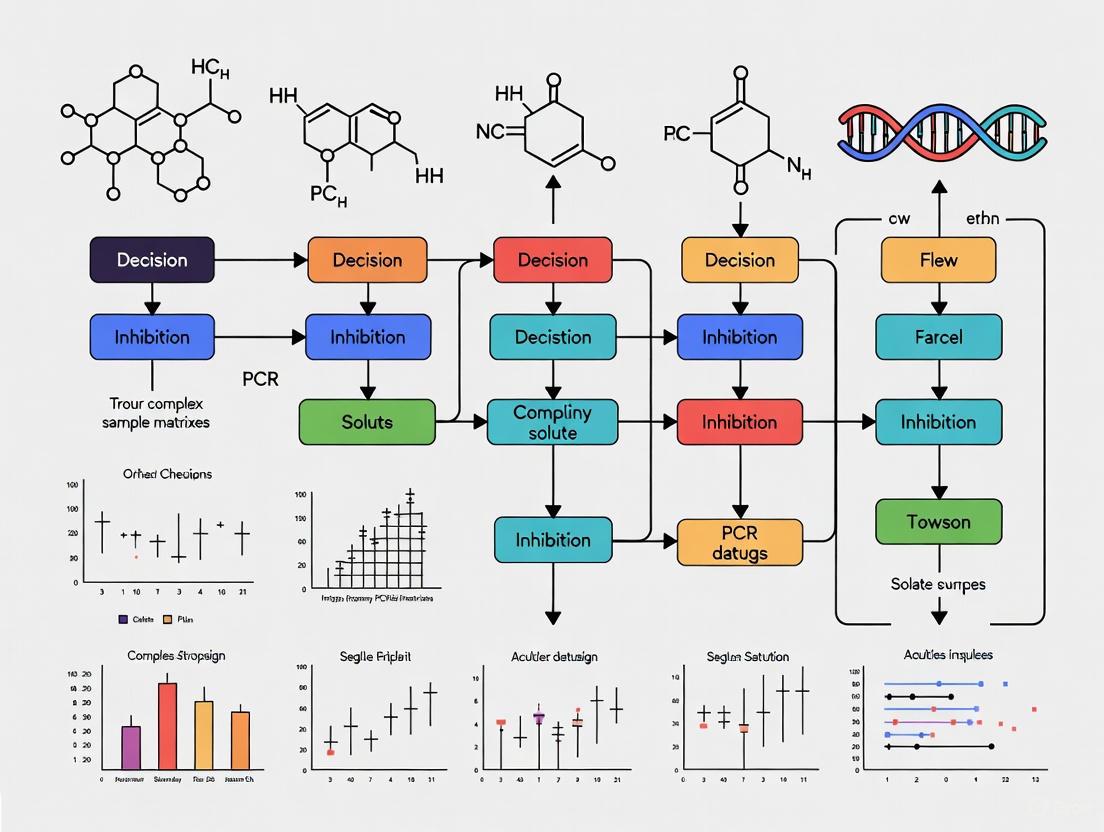
This article provides a systematic framework for researchers and drug development professionals to overcome the pervasive challenge of PCR inhibition in complex sample matrices.
Overcoming PCR Inhibition in Complex Samples: A Comprehensive Guide for Reliable Nucleic Acid Detection
Abstract
This article provides a systematic framework for researchers and drug development professionals to overcome the pervasive challenge of PCR inhibition in complex sample matrices. It covers the foundational science of inhibitory mechanisms, presents optimized DNA extraction and purification methodologies, details advanced troubleshooting and reaction enhancement techniques, and validates solutions through comparative analysis of PCR platforms. By integrating proven strategies from environmental, clinical, and forensic science, this guide enables reliable nucleic acid detection in the most challenging samples, from wastewater and tissues to liquid biopsies, ensuring data integrity across research and diagnostic applications.
Understanding PCR Inhibition: Mechanisms and Sources in Complex Matrices
Defining PCR Inhibition and Its Impact on Amplification Efficiency and Sensitivity
What is PCR Inhibition and How Does It Affect My Results?
PCR inhibition is a phenomenon where certain substances, known as inhibitors, prevent or reduce the amplification of nucleic acids through the polymerase chain reaction (PCR). It is the most common cause of amplification failure when sufficient copies of DNA are present [1].
Inhibitors interfere with PCR through several key mechanisms:
- Interaction with the DNA Polymerase Enzyme: Many inhibitors bind directly to the DNA polymerase, degrading it (e.g., via proteases) or blocking its active site, which prevents DNA strand elongation [1] [2].
- Cofactor Depletion: Substances like EDTA or tannins chelate magnesium ions (Mg²⁺), a crucial cofactor for DNA polymerase activity. This renders the enzyme less effective or completely inactive [1] [3].
- Binding to Nucleic Acids: Inhibitors such as humic acids or melanin can bind directly to single or double-stranded DNA. This can prevent strand separation during denaturation or block primer annealing [1] [2].
- Interference in Real-Time PCR: In qPCR, some inhibitors can quench fluorescence or increase background noise, interfering with the accurate detection of the amplification signal [2].
The impact on your results can be severe. Inhibition can lead to:
- Reduced Sensitivity: A decrease in amplification efficiency causes an increase in the quantification cycle (Cq) value, leading to an underestimation of the target's initial concentration [4] [3].
- False Negatives: In severe cases, amplification can fail completely, resulting in a false negative result even when the target sequence is present [3].
- Inaccurate Quantification: Any deviation from 100% PCR efficiency compromises the accuracy of quantitative results, whether using the standard curve or the ΔΔCq method [4].
Where Do PCR Inhibitors Come From?
PCR inhibitors originate from two primary sources: the original sample and the sample processing procedures.
Inhibitors from the Original Sample [1] [2]:
| Sample Type | Common Inhibitors |
|---|---|
| Blood & Tissues | Hematin, hemoglobin, immunoglobulin G (IgG), collagen, lactoferrin [2]. |
| Feces | Bile salts, complex polysaccharides, bilirubin [5]. |
| Plants | Polyphenolics, polysaccharides (e.g., dextran sulphate, xylan), tannins [3] [2]. |
| Soil & Wastewater | Humic acids, fulvic acids, heavy metals, fats, proteins [6] [2]. |
| Food & Milk | Calcium ions, enzymes like plasmin, proteins, fats [2]. |
| Urine | Urea, metabolites [5]. |
Inhibitors Introduced During Sample Processing [1] [2]:
- Extraction Reagents: Phenol, ethanol, isopropanol, ionic detergents (SDS, sarkosyl), EDTA, and salts (KCl, NaCl) can be carried over from the purification process [1] [2].
- Collection Materials: Components of swabs, viral transport media, heparin, formalin, or charcoal can be potent inhibitors [5].
How Can I Detect PCR Inhibition in My Samples?
Detecting inhibition is crucial for validating your results. Here are common methods:
1. Dilution Test [3]: This is the simplest way to check for inhibition. Dilute your sample (e.g., 1:10) and re-run the PCR. If the diluted sample shows a lower Cq value than the undiluted one, inhibitors are likely present. In an uninhibited reaction, dilution should result in a predictable increase in Cq (e.g., a ~3.3 cycle shift for a 10-fold dilution) [3].
2. Internal Inhibition Control [5]: Spike a known amount of a control template (e.g., a non-competitive plasmid or whole organism) into your sample reaction mixture prior to extraction. Compare its amplification to a control reaction without the sample matrix. A significant delay (increase in Cq) for the spiked control indicates the presence of inhibitors in the sample [1] [5].
3. Assessing Amplification Efficiency via Standard Curve [4]: Run a standard curve with your assay. A slope of -3.32 represents 100% efficiency. Slopes steeper than -3.32 indicate lower efficiency, potentially due to inhibition. However, this method is prone to errors from pipetting and dilution inaccuracies [4].
4. Visual Assessment of Amplification Curves [4]: Compare the geometric (log-linear) phase of your sample's amplification plot to that of a known, uninhibited control. Non-parallel slopes indicate differences in amplification efficiency, which can be a sign of inhibition.
The following diagram illustrates the logical workflow for detecting and confirming PCR inhibition in a sample.
What Are the Best Methods to Prevent or Overcome PCR Inhibition?
A multi-pronged approach is often most effective. Strategies can be applied at the sample collection, purification, and amplification stages.
Sample Collection and DNA Purification
- Refined Sample Collection: Choose collection methods that minimize inhibitor co-purification. For example, swab-transfer of blood from fabric can avoid inhibitors in the fabric itself [1].
- High-Quality Nucleic Acid Extraction: Use purification kits specifically designed for your sample type (e.g., soil, feces, blood). Many commercial kits incorporate technologies to remove common inhibitors like polyphenolics and humic acids [3].
- Inhibitor Removal Kits: Post-extraction, use spin-column based kits designed to bind and remove specific inhibitors without significant nucleic acid loss [3].
- Organic Extraction & Precipitation: Traditional methods like phenol-chloroform extraction followed by ethanol precipitation can effectively remove many inhibitors, though they can be time-consuming and may lead to nucleic acid loss [7] [2].
PCR Reaction Components and Enhancers
- Polymerase Selection: Some DNA polymerases are more resistant to inhibitors than others. If using a common Taq polymerase proves problematic, consider switching to a polymerase engineered for higher inhibitor tolerance [1] [2].
- Increasing Polymerase Concentration: Raising the amount of DNA polymerase in the reaction can sometimes overcome inhibition by outcompeting the inhibitor [1].
- PCR Enhancers (Additives): Adding specific compounds to the PCR mix can counteract inhibitors. The table below summarizes effective enhancers and their mechanisms [6] [2].
| Enhancer | Recommended Concentration | Mechanism of Action | Effective Against |
|---|---|---|---|
| Bovine Serum Albumin (BSA) | 0.1 - 0.5 μg/μL | Binds to inhibitors like phenolics, humic acids, and bile salts, preventing them from interacting with the polymerase [1] [2]. | Blood, feces, soil, plant compounds [6]. |
| T4 Gene 32 Protein (gp32) | 0.1 - 1 nM | A single-stranded DNA binding protein that can stabilize DNA and may protect the polymerase [7] [2]. | Fecal samples, complex samples [6]. |
| Dimethyl Sulfoxide (DMSO) | 1 - 5% | Lowers DNA melting temperature, helping to denature GC-rich templates and secondary structures [6] [2]. | GC-rich templates, secondary structures. |
| Tween-20 | 0.1 - 1% | Non-ionic detergent that stimulates Taq polymerase activity and can counteract inhibitors [6] [2]. | Fats, proteins, various environmental inhibitors [6]. |
| Betaine | 0.5 - 1.5 M | Reduces the formation of secondary structures and equalizes the melting temperatures of DNA [2]. | GC-rich templates. |
| Glycerol | 1 - 10% | Enhances enzyme stability and lowers DNA strand separation temperature [6] [2]. | Various inhibitors, improves polymerase longevity. |
- Sample Dilution: Diluting the extracted nucleic acid is a simple and effective way to dilute inhibitors to a non-inhibitory concentration. The downside is that the target template is also diluted, which can reduce assay sensitivity [3] [2].
Are All PCR Reactions Equally Susceptible to Inhibition?
No. A critical finding from the literature is that different PCR reactions, even within the same sample, can suffer from different inhibition effects to different extents [8].
One study testing DNA extracts from urine samples found that one PCR reaction (mtLSUrRNA) appeared to be inhibited, while another (SPUD) running on the same sample was not [8]. When the same experiment was repeated with six different PCR reactions and unextracted urine as an inhibitor, each reaction displayed a unique degree of susceptibility to inhibition. For instance, 10% urine completely inhibited the mtLSUrRNA reaction but had no inhibitory effect on the IS1081 reaction [8].
This has serious implications for:
- Multiplex PCR: The different targets in a multiplex assay may be disproportionately affected, leading to skewed results [1] [8].
- Gene Expression Studies (qPCR): Using a reference gene for normalization assumes that the inhibitor affects the target and reference genes equally. This assumption can be false, leading to incorrect conclusions [8].
- Molecular Diagnostics: A false negative is possible if the assay for a specific pathogen is highly susceptible to an inhibitor present in the patient sample.
The Scientist's Toolkit: Key Reagent Solutions
| Reagent / Kit | Primary Function | Example Use Case |
|---|---|---|
| Inhibitor-Tolerant DNA Polymerase | Polymerase enzymes engineered for resistance to common inhibitors found in blood, soil, and feces [9] [2]. | Amplifying DNA directly from complex matrices without extensive pre-purification. |
| OneStep PCR Inhibitor Removal Kit | Spin-column based removal of polyphenolics (humic/fulvic acids, tannins) from purified DNA/RNA [3]. | Cleaning up nucleic acids from plant, soil, or fecal samples prior to PCR. |
| Phenol-Chloroform Extraction | Organic separation and removal of proteins, lipids, and other organic inhibitors [7] [2]. | Traditional method for purifying nucleic acids from highly complex and contaminated samples. |
| BSA (Bovine Serum Albumin) | Additive that binds to a wide range of inhibitors, neutralizing their effect [1] [6]. | Added to the PCR mix when working with inhibitory samples like blood or soil extracts. |
| DMSO | Additive that assists in denaturing complex DNA templates [6] [2]. | Added to the PCR mix when amplifying GC-rich regions or templates with strong secondary structures. |
Frequently Asked Questions (FAQs)
Q1: My PCR works with a control plasmid but fails with my sample DNA. Is this inhibition? Yes, this is a classic sign of PCR inhibition. The successful amplification of the control plasmid confirms that your PCR reagents and thermal cycler conditions are working correctly. The failure with your sample DNA, assuming it is of sufficient quantity and quality, strongly indicates the presence of co-purified inhibitors [10].
Q2: I am using a commercial DNA extraction kit. Why am I still seeing inhibition? While commercial kits are highly effective, they are not infallible. Some sample types, such as feces, soil, or plant material, contain very high levels of inhibitors that may not be completely removed by a standard kit protocol. Furthermore, overloading the column with too much starting material can exceed the kit's binding capacity and lead to inhibitor carryover [3].
Q3: What is the most effective method for removing humic acids from soil DNA? Kits that incorporate a specific inhibitor removal step, such as those with a column matrix designed to bind polyphenolics (humic/fulvic acids), are highly effective [3]. Alternatively, methods like gel purification or size-exclusion chromatography can be used to separate inhibitors from nucleic acids.
Q4: How does inhibition affect the ΔΔCq method for gene expression analysis? The standard ΔΔCq method assumes that both your target and reference gene assays are 100% efficient. Inhibition causes a drop in efficiency, violating this assumption and leading to inaccurate fold-change calculations. If inhibition is suspected and cannot be removed, a modified ΔΔCq equation that incorporates the actual, measured efficiency of each assay must be used [4]. The best practice, however, is to remove the inhibition or re-design the assay.
Polymerase Chain Reaction (PCR) is a cornerstone technique in molecular biology, yet its efficacy is often compromised by inhibitory substances present in complex sample matrices. These inhibitors can lead to reduced amplification efficiency, false negatives, and inaccurate quantification, presenting significant challenges in fields from forensic science to clinical diagnostics and environmental monitoring [11] [12]. This guide provides a systematic, evidence-based approach to identifying and overcoming the effects of common inhibitors—humic acids, hemoglobin, polysaccharides, and urea—ensuring reliable and reproducible PCR results.
FAQs: A Troubleshooting Guide to Common PCR Inhibitors
1. My PCR from soil or wastewater samples fails. I suspect humic acids are the cause. What are my options?
Humic acids are a major inhibitor in environmental samples and can act through multiple mechanisms: inhibiting DNA polymerase, binding to nucleic acid templates, and quenching fluorescence in qPCR assays [11] [13].
Primary Solutions:
- Use Inhibitor-Tolerant Polymerases: Select polymerases with high processivity and proven tolerance to inhibitors from soil and plant tissues [9]. Blended polymerase systems have also demonstrated superior performance in overcoming humic acid inhibition [11].
- Improve Sample Purification: Employ specialized DNA cleanup kits designed to remove humic substances. The PowerClean DNA Clean-Up Kit and DNA IQ System have been shown to effectively remove humic acids, resulting in more complete STR profiles [14].
- Employ PCR Enhancers: Add Bovine Serum Albumin (BSA) or T4 gene 32 protein (gp32) to the reaction. These proteins can bind to humic acids, preventing them from interfering with the polymerase [6].
Advanced/Alternative Strategies:
- Sample Dilution: Diluting the DNA extract can reduce the concentration of humic acids to a sub-inhibitory level. However, this also dilutes the target DNA and may not be suitable for low-copy-number samples [6].
- Fluorescence Correction (for qPCR): Recent research indicates that the primary mechanism of humic acid interference in qPCR may be fluorescence damping. Mathematical corrections based on end-point fluorescence reduction can improve quantification accuracy [13] [15].
- Switch to dPCR: Digital PCR (dPCR) is less susceptible to the effects of humic acids and other inhibitors due to its endpoint detection and partitioning process, making it a robust alternative for quantitative analysis of inhibited samples [6].
2. I am amplifying DNA from blood samples without extraction, and my yield is low. How can I counteract hemoglobin inhibition?
Hemoglobin and its component heme are potent PCR inhibitors commonly encountered in blood samples. Heme can release iron ions that affect reaction pH and disrupt polymerase activity [12].
Primary Solutions:
- Optimize Sample Preparation: For direct PCR from blood, a simple heat treatment and dilution method can be effective. Dilute whole blood with distilled water (e.g., 1:5 or 1:10), incubate at 95°C for 20 minutes to lyse cells and denature proteins, then centrifuge to use the clear supernatant as a PCR template [16].
- Use PCR Enhancers: The addition of BSA is highly effective. BSA binds to inhibitors like heme, preventing them from interacting with the DNA polymerase [12]. Other facilitators include non-ionic detergents like Tween-20 [6].
- Apply Hot-Start Polymerases: Using a hot-start enzyme can prevent non-specific amplification and improve efficiency in the presence of mild inhibitors [9].
Advanced/Alternative Strategies:
- Increase Polymerase Concentration: Raising the amount of DNA polymerase in the reaction can sometimes overcome inhibition [9].
- Use Commercial Direct PCR Kits: Several kits are available that contain specialized buffers formulated to neutralize inhibitors in crude samples like blood.
3. My PCR from plant or food samples shows smeared bands and low yield. Could polysaccharides be the problem?
Complex polysaccharides are frequent inhibitors in plant and food-derived samples. They can co-precipitate with DNA during extraction and inhibit polymerase activity by disrupting the reaction mixture's viscosity [6].
- Primary Solutions:
- Refine DNA Extraction: Use extraction protocols specifically designed for polysaccharide-rich tissues. CTAB-based methods are often effective in removing polysaccharides.
- Employ PCR Enhancers: BSA is again a strong choice, as it can bind to a variety of organic inhibitors. PEG and dextran are other polymers that can facilitate amplification [12].
- Use Additives: Dimethyl sulfoxide (DMSO) can help by destabilizing secondary structures and improving amplification efficiency [6].
4. My PCR from urine or soil samples is inconsistent. Is urea a concern, and how do I remove it?
Urea is a common inhibitor in urine, soil, and other biological samples. It can denature enzymes and interfere with the polymerase activity [14].
- Primary Solutions:
- Thorough DNA Purification: Efficient DNA cleanup is critical. Silica-based purification methods (e.g., QIAamp kits) and the PowerClean DNA Clean-Up Kit have been demonstrated to successfully remove urea and other inhibitors from forensic samples [14].
- Dilution: As with other inhibitors, diluting the sample can reduce urea concentration below an inhibitory threshold.
- Use Inhibitor-Tolerant Polymerase Blends: Polymerase blends or engineered enzymes often have higher resilience to a broad spectrum of inhibitors, including urea [11].
Experimental Protocols for Inhibitor Removal and Validation
Protocol 1: Evaluating Inhibitor Removal Using the PowerClean DNA Clean-Up Kit
This protocol is adapted from a comparative study of inhibitor removal methods [14].
- Sample Preparation: Create mock inhibitor-containing samples by mixing purified DNA (e.g., K562 DNA) with a known concentration of the inhibitor (humic acid, urea, etc.).
- Clean-Up: Process the mock sample using the PowerClean DNA Clean-Up kit according to the manufacturer's instructions.
- Amplification: Perform PCR/STR amplification on both the cleaned-up sample and a raw, untreated sample as a control.
- Analysis: Compare the results. Successful inhibitor removal is indicated by a more complete STR profile or a lower Cq value in the cleaned-up sample compared to the control [14].
Protocol 2: A Simple Direct PCR Method from Whole Blood (GG-RT PCR)
This protocol enables real-time PCR from whole blood without DNA extraction, effectively mitigating inhibition from hemoglobin and other blood components [16].
- Lysate Preparation:
- Mix 400 µL of EDTA-treated whole blood with 1600 µL of distilled water (a 1:5 final dilution).
- Incubate the mixture at 95°C for 20 minutes, vortexing 2-3 times during incubation.
- Centrifuge at 14,000 rpm for 5 minutes.
- PCR Setup:
- Use the resulting clear supernatant (lysate) as the template in a real-time PCR reaction. The recommended template volume is 2.5 µL of a 1:10 or 1:5 dilution of the lysate.
- Use standard SYBR Green master mix and primers.
- Thermal Cycling:
- Perform amplification with an annealing temperature of 60–61°C for 30 seconds.
- The study successfully amplified various genes from 100 bp to 268 bp in length using this method [16].
The following workflow outlines the systematic approach to troubleshooting PCR inhibition detailed in this guide:
Research Reagent Solutions
The following table summarizes key reagents and their roles in overcoming PCR inhibition.
| Reagent | Function / Mechanism | Example Applications |
|---|---|---|
| BSA (Bovine Serum Albumin) | Binds to inhibitors (e.g., humic acid, heme, phenols), preventing them from interacting with the DNA polymerase [12] [6]. | Blood, soil, plant, and forensic samples. |
| Tween-20 | A non-ionic detergent that counteracts inhibitory effects on Taq DNA polymerase, particularly in fecal samples [6]. | Wastewater, feces, plant tissues. |
| DMSO (Dimethyl Sulfoxide) | Lowers the melting temperature (Tm) of DNA and destabilizes secondary structures, enhancing PCR efficiency [6]. | GC-rich templates, complex samples. |
| PowerClean DNA Clean-Up Kit | A silica-based kit specifically designed to remove a wide range of PCR inhibitors including humic acids, polyphenols, and dyes [14]. | Soil, sediment, and forensic samples. |
| Inhibitor-Tolerant Polymerase | Engineered or selected polymerases that remain active in the presence of common inhibitors [9] [11]. | All inhibitor-prone sample types. |
| Betaine | A biologically compatible solute that can reduce the effects of inhibition and stabilize polymerase [12]. | GC-rich templates, direct PCR from blood. |
The polymerase chain reaction (PCR) is a cornerstone technique in molecular biology, enabling the precise detection and analysis of amplified DNA [17]. However, its extreme sensitivity also makes it vulnerable to inhibition by substances present in complex sample matrices. PCR inhibitors are compounds that interfere with the amplification process, leading to reduced sensitivity, false-negative results, or complete amplification failure [18] [19]. Understanding their mechanisms of action is crucial for developing effective countermeasures, particularly in fields like clinical diagnostics, forensics, and environmental microbiology where samples often contain inherent interfering substances [19] [6].
Mechanisms of PCR Inhibition
PCR inhibitors disrupt the amplification process through several distinct mechanisms, primarily targeting the DNA polymerase enzyme, the template nucleic acids, or the fluorescent detection systems used in real-time PCR [19].
DNA Polymerase Inhibition
This represents the most common inhibition mechanism, where inhibitors directly interfere with DNA polymerase activity:
Competitive Binding: Some inhibitors bind directly to the DNA polymerase active site, competing with nucleotides or preventing proper enzyme conformation [20] [21]. Studies on human DNA polymerase beta demonstrate that binding affinities vary significantly based on DNA substrate structure, with mismatches near the 3'-end of primers reducing binding affinity 8-58-fold [20].
Enzyme Degradation or Denaturation: Proteinase K can inhibit PCR by degrading DNA polymerase and other essential proteins if not adequately removed during sample preparation [17]. Certain compounds may also cause enzyme denaturation or structural changes that impair catalytic function.
Metal Cofactor Interference: Many inhibitors function by chelating magnesium ions (Mg²⁺), which are essential cofactors for DNA polymerase activity [17] [18]. EDTA explicitly inhibits PCR through this mechanism by binding magnesium, while calcium and other metal ions may compete with magnesium [18].
The following diagram illustrates the primary mechanisms through which inhibitors disrupt PCR amplification:
Template Nucleic Acid Integrity Disruption
Inhibitors can prevent amplification by directly interacting with the template DNA or primers:
Nucleic Acid Degradation: RNases and DNases present in samples can degrade target nucleic acids before amplification occurs [6].
Binding Interference: Compounds such as polysaccharides and glycolipids mimic nucleic acid structures, interfering with primer binding to the template [18]. Humic acids interact with both template DNA and polymerase, preventing the enzymatic reaction even at low concentrations [18] [19].
Template Sequestration: Melanin and collagen form reversible complexes with DNA, making the template unavailable for amplification [18] [19].
Fluorescence Inhibition
In real-time PCR applications, certain inhibitors can quench fluorescent signals or prevent fluorescent probe binding, leading to inaccurate quantification even when amplification occurs [19].
The following table categorizes common PCR inhibitors, their sources, and primary mechanisms of action:
Table 1: Common PCR Inhibitors and Their Mechanisms
| Inhibitor Category | Specific Inhibitors | Sample Sources | Primary Mechanism |
|---|---|---|---|
| Blood Components | Hemoglobin, lactoferrin, IgG, heparin | Blood, serum, plasma | Binds to DNA polymerase; heparin chelates Mg²⁺ [18] [19] |
| Organic Compounds | Humic acids, phenols, tannins | Soil, plants, wastewater | Interact with template DNA and polymerase; prevent enzymatic reaction [18] [19] |
| Detergents & Solvents | SDS, ionic detergents, phenol | Laboratory reagents | Denature DNA polymerase; disrupt enzyme structure [17] [18] |
| Biological Molecules | Melanin, collagen, polysaccharides | Tissues, plants, microbes | Form complexes with DNA; mimic nucleic acid structures [18] [19] |
| Metal Chelators | EDTA, EGTA | Laboratory reagents, preservatives | Chelate Mg²⁺ ions essential for polymerase activity [17] [18] |
| Metabolites & Others | Urea, bile salts, spermidine | Urine, fecal samples, tissues | Degrade polymerase; compete with nucleotides [18] |
Frequently Asked Questions (FAQs) on PCR Inhibition
Q1: Why do I get no amplification products even when my PCR setup appears correct?
- PCR inhibitors in the template sample: Dilute template or purify using specialized kits [18]
- Suboptimal reaction conditions: Lower annealing temperature in 2°C increments, increase extension time, or increase template amount [18]
- Poor primer design or specificity: Verify primer sequences and redesign if necessary [18] [9]
- Insufficient DNA polymerase activity: Use polymerases with higher tolerance to impurities [18] [22]
Q2: How can I distinguish between PCR inhibition and other amplification failures?
- Include a positive control with purified DNA to verify reaction components are functional [18]
- Perform serial dilutions of your template - if amplification appears only in diluted samples, inhibition is likely [18] [6]
- Use internal controls that are amplified simultaneously with your target [19]
Q3: What are the most effective strategies to overcome PCR inhibition?
- Sample dilution: Simple 10-fold dilution can reduce inhibitor concentration [6]
- Improved DNA purification: Use purification methods specifically designed for your sample type [18] [19]
- Inhibitor-tolerant polymerases: Select enzymes engineered for resistance to inhibitors [18] [22]
- PCR facilitators: Add compounds like BSA, T4 gene 32 protein, or DMSO to reactions [6]
Q4: How does inhibitor tolerance differ between conventional PCR and real-time PCR? Real-time PCR is generally more susceptible to inhibition due to additional interference with fluorescent detection systems [17] [19]. Digital PCR (dPCR) shows higher tolerance to inhibitors as partitioning reduces their local concentration in reaction droplets [6].
Q5: What specific steps can I take to prevent contamination during PCR?
- Establish physically separated pre-PCR and post-PCR areas [18]
- Use dedicated equipment, pipettes with aerosol filters, and separate reagents for each area [17] [18]
- Include negative controls (no template) in every run [18]
- Decontaminate workstations with 10% bleach and UV irradiation [18]
Experimental Protocols for Investigating PCR Inhibition
Protocol for Evaluating PCR Enhancers
Objective: Systematically evaluate different compounds for their ability to relieve PCR inhibition in complex samples [6].
Materials:
- Inhibitor-containing sample (e.g., wastewater extract, blood, plant material)
- Standard PCR reagents: buffer, dNTPs, primers, DNA polymerase, template DNA
- Tested enhancers: BSA (0.1-1 μg/μL), T4 gp32 (10-100 ng/μL), DMSO (1-5%), formamide (1-3%), Tween-20 (0.1-1%), glycerol (1-5%) [6]
- Real-time PCR instrument
Procedure:
- Prepare a master mix containing all standard PCR components except enhancers
- Aliquot equal volumes of master mix into separate reaction tubes
- Add different enhancers at various concentrations to individual tubes
- Include control reactions without enhancers and with 10-fold diluted template
- Run real-time PCR with optimized cycling conditions
- Compare quantification cycle (Cq) values and amplification efficiency between conditions
Expected Results: Effective enhancers will lower Cq values and improve amplification efficiency compared to untreated controls [6].
Protocol for Testing Polymerase Inhibitor Resistance
Objective: Compare different DNA polymerases for resistance to specific inhibitors [22].
Materials:
- Multiple DNA polymerases (standard and inhibitor-resistant)
- Inhibitor stocks (humic acid, blood extract, etc.)
- Standard PCR components
- Serial dilutions of inhibitor stocks
Procedure:
- Prepare PCR reactions with each polymerase type
- Add increasing amounts of inhibitors to separate reactions
- Run amplification with identical templates and cycling conditions
- Analyze results by gel electrophoresis or real-time monitoring
- Compare the maximum inhibitor concentration allowing successful amplification
Expected Results: Inhibitor-resistant polymerases will maintain activity at higher inhibitor concentrations [22].
The Scientist's Toolkit: Research Reagent Solutions
Table 2: Essential Reagents for Overcoming PCR Inhibition
| Reagent Category | Specific Examples | Mechanism of Action | Application Notes |
|---|---|---|---|
| Polymerase Enhancers | BSA (0.1-1 μg/μL), T4 gp32 (10-100 ng/μL) | Binds inhibitory compounds; stabilizes reaction components | Effective against humic acids, polyphenols; improves amplification from soil/plant samples [6] |
| Solvent Additives | DMSO (1-5%), formamide (1-3%), glycerol (1-5%) | Lowers DNA melting temperature; destabilizes secondary structures | Enhances amplification of GC-rich templates; improves primer annealing [6] |
| Detergent Additives | Tween-20 (0.1-1%), Brij-58 | Counteracts inhibitory effects on Taq DNA polymerase | Particularly effective for fecal samples and food matrices [6] [22] |
| Inhibitor-Resistant Enzymes | Engineered Taq variants (e.g., OmniTaq, Terra PCR Direct) | Structural modifications reduce inhibitor binding | Maintain activity in blood, soil, plant extracts without purification [18] [22] |
| Purification Kits | Silica-based columns, magnetic beads | Physically separate inhibitors from nucleic acids | Essential for highly inhibitory samples; some kits specifically target humic acids, tannins [6] |
Advanced Methodologies: Live Culture PCR Screening
Recent advances in directed evolution have enabled the development of novel screening methodologies for identifying inhibitor-resistant polymerase variants. The Live Culture PCR (LC-PCR) workflow allows direct screening of mutagenized DNA polymerase libraries without enzyme purification [22]:
This innovative approach has yielded polymerase variants with superior resistance to diverse PCR inhibitors, including those found in blood, chocolate, black pepper, and humic acid [22]. Structural analysis suggests these mutations enhance nucleotide binding or stabilize the polymerase-DNA complex, reducing susceptibility to inhibitor interference [22] [21].
Understanding the mechanisms by which inhibitors disrupt DNA polymerase and nucleic acid integrity is fundamental to successful PCR-based research and diagnostics. Through systematic investigation of inhibition pathways, implementation of appropriate countermeasures, and utilization of advanced tools like inhibitor-resistant polymerases and PCR enhancers, researchers can overcome the challenges posed by complex sample matrices. The protocols and troubleshooting guides provided here offer practical approaches for identifying and mitigating PCR inhibition, enabling more reliable and robust molecular analyses across diverse applications.
Polymersse Chain Reaction (PCR) is a cornerstone technique in molecular biology, yet its accuracy and efficiency are frequently compromised by inhibitory substances present in complex biological and environmental samples. These inhibitors, which vary widely across different sample types, can co-purify with nucleic acids and interfere with the DNA polymerase, leading to reduced amplification efficiency, false-negative results, and significant underestimation of target concentrations. Understanding the specific inhibitors associated with matrices such as soil, blood, plants, wastewater, and tissues is fundamental to developing effective countermeasures. This guide provides a systematic, evidence-based approach to troubleshooting PCR inhibition, ensuring reliable results for researchers, scientists, and drug development professionals.
Frequently Asked Questions (FAQs) on PCR Inhibition
1. What are the most common sources of PCR inhibition? Inhibition can originate from the sample itself or from reagents used during processing. Common inorganic inhibitors include calcium and other metal ions that compete with the magnesium cofactor, and EDTA which chelates magnesium. Organic inhibitors are more diverse and include polysaccharides and glycolipids (from plants and feces), humic and fulvic acids (from soil and water), hemoglobin, lactoferrin, and IgG (from blood), collagen (from tissues), urea, and phenolic compounds. Reagents like phenol, SDS, ethanol, and guanidinium from extraction kits can also persist and cause inhibition [23] [24].
2. How can I quickly check if my sample is inhibiting PCR? The most straightforward method is to dilute your template nucleic acid. A significant decrease in Cycle threshold (Cq) or increase in PCR product yield with dilution is a strong indicator of inhibition. Alternatively, you can spike a known quantity of a control DNA or RNA (e.g., from a different species not present in your sample) into your PCR reaction. A delayed Cq for the control in the presence of the sample compared to a no-template control indicates the sample contains inhibitors [24] [23].
3. My PCR from a soil sample failed. What should I do? Soil is notoriously challenging due to humic substances. Consider these steps:
- Use inhibitor-resistant polymerases: Several engineered DNA polymerase variants (e.g., OmniTaq, Taq C-66) show superior resistance to humic acids and plant-derived inhibitors [22].
- Employ polymeric adsorbents: Treating samples with Supelite DAX-8 resin (5% w/v) can permanently remove humic acids, significantly improving PCR accuracy [24].
- Add PCR enhancers: Bovine Serum Albumin (BSA) or T4 gene 32 protein (gp32) can bind to inhibitors, relieving the suppression of DNA polymerase activity [6] [24].
4. How can I improve PCR success with blood samples? Even small volumes of blood can be inhibitory.
- Dilute the template: A 10- to 100-fold dilution of the extracted DNA can often dilute inhibitors sufficiently [23].
- Use BSA: Adding 0.4-4 mg/ml of BSA to the PCR reaction is a well-established method to counteract inhibition from heme and immunoglobulins [25] [26].
- Select a robust polymerase: Hot-start, inhibitor-tolerant DNA polymerases are specifically designed for such challenging applications [9] [22].
5. What strategies work for wastewater and environmental water samples? Wastewater is highly heterogeneous and contains a complex mix of inhibitors.
- Sample Dilution: A 10-fold dilution is commonly used, though it may reduce sensitivity [6].
- PCR Enhancers: BSA, gp32, DMSO, and glycerol have been evaluated for wastewater, with BSA and gp32 often providing the most consistent relief from inhibition [6].
- Digital PCR (dPCR): Consider switching to droplet digital PCR (ddPCR). Its partitioning step dilutes inhibitors within the thousands of droplets, often making it more tolerant than quantitative PCR (qPCR) [6].
Troubleshooting Guide: A Systematic Workflow
The following diagram outlines a logical, step-by-step workflow for diagnosing and resolving PCR inhibition.
Quantitative Data on Inhibitor Removal Efficiency
The following table summarizes the performance of various PCR inhibition mitigation strategies as reported in recent studies, particularly in the context of wastewater and environmental samples.
Table 1: Efficiency of Different PCR Inhibition Mitigation Strategies
| Strategy | Reported Effect / Efficiency | Key Considerations | Sample Matrix Evaluated |
|---|---|---|---|
| Sample Dilution (10-fold) | Common first step; can reverse inhibition but reduces sensitivity [6]. | May lead to misleading underestimation of viral load at high dilutions [6]. | Wastewater [6] |
| Bovine Serum Albumin (BSA) | Significantly improved robustness; lowered PCR failure rate to 0.1% in a high-throughput study [26]. | Effective against a wide range of inhibitors; well-established, low-cost additive. | Buccal swabs, Wastewater [6] [26] |
| T4 gene 32 Protein (gp32) | Effective at counteracting various PCR inhibitors; binds to humic acids [6] [24]. | More expensive than BSA, but highly effective. | Wastewater [6] |
| Polymeric Adsorbent (DAX-8) | Application of 5% DAX-8 led to an increase in viral qPCR concentrations; can permanently eliminate humic acids [24]. | Requires an additional centrifugation step; potential for virus adsorption needs evaluation [24]. | Environmental Water [24] |
| Inhibitor-Tolerant Polymerase | Novel variants (e.g., Taq C-66) showed superior resistance to blood, humic acid, and plant extracts vs. wild-type [22]. | Intrinsic enzymatic tolerance persists after purification. | Blood, Soil, Plant extracts [22] |
| Droplet Digital PCR (ddPCR) | Emerged as an alternative to qPCR with higher tolerance to interfering substances [6]. | Higher cost and longer processing time than qPCR [6]. | Wastewater [6] |
Detailed Experimental Protocols
Protocol 1: Relief of Inhibition Using Protein Additives
This protocol is adapted from studies on wastewater and buccal swab samples [6] [26] [25].
Objective: To overcome PCR inhibition in complex samples by adding Bovine Serum Albumin (BSA) or T4 gene 32 protein (gp32) to the reaction mix.
Materials:
- PCR reagents (polymerase, buffer, dNTPs, primers, template)
- Molecular grade water
- Bovine Serum Albumin (BSA), molecular biology grade
- T4 gene 32 protein (gp32) (optional)
Method:
- Prepare a stock solution of BSA at a concentration of 10-20 mg/mL in molecular grade water. Aliquot and store at -20°C.
- When setting up your PCR master mix, add the BSA stock solution to achieve a final concentration in the reaction between 0.4 and 4 mg/mL [25] [26]. A common starting point is 0.5 mg/mL.
- Alternatively, or in addition, T4 gp32 can be used. Follow the manufacturer's instructions for the recommended final concentration.
- Proceed with the PCR amplification using your standard thermal cycling conditions.
- Note: The addition of BSA can cause slight foaming during automated liquid handling, but this does not typically affect PCR performance [26].
Protocol 2: Treatment of Environmental Samples with DAX-8 Resin
This protocol is based on a study focused on removing humic substances from environmental water samples [24].
Objective: To remove PCR inhibitors, specifically humic acids, from concentrated environmental water samples using Supelite DAX-8 resin.
Materials:
- Concentrated water sample (e.g., from PEG precipitation)
- Supelite DAX-8 resin (Sigma-Aldrich)
- Centrifuge and tubes
- PBS (Phosphate Buffered Saline)
Method:
- After the sample re-concentration step, add DAX-8 resin to the concentrate at a final concentration of 5% (w/v).
- Mix the sample and resin thoroughly for 15 minutes at room temperature to allow adsorption of inhibitors.
- Since DAX-8 is insoluble, separate it from the sample by centrifugation at 8000 rpm for 5 minutes at 4°C.
- Carefully transfer the supernatant (the treated sample) to a new tube. This supernatant can now be used for nucleic acid extraction using your preferred kit.
- Critical Control: To investigate potential loss of target (e.g., viruses) due to adsorption to the resin, spike a known quantity of a control (e.g., murine norovirus) into a clean sample and process it alongside the experimental samples [24].
The Scientist's Toolkit: Key Research Reagent Solutions
Table 2: Essential Reagents for Overcoming PCR Inhibition
| Reagent / Kit | Function / Purpose | Example Use Case |
|---|---|---|
| Inhibitor-Tolerant DNA Polymerase | Engineered enzymes with intrinsic resistance to a broad spectrum of inhibitors found in blood, soil, and plants. | Amplification from blood or soil samples without extensive purification [22]. |
| Bovine Serum Albumin (BSA) | Binds to a wide variety of PCR inhibitors, preventing them from interfering with the DNA polymerase. | A universal, low-cost additive for relieving sporadic inhibition in buccal swabs, feces, and plant tissues [26] [25]. |
| T4 gene 32 Protein (gp32) | A single-stranded DNA binding protein that stabilizes DNA and counters inhibition, particularly from humic acids. | Enhancing detection of pathogens in wastewater and complex environmental concentrates [6] [24]. |
| Supelite DAX-8 Resin | A polymeric adsorbent that permanently removes humic acids and other polyphenolic compounds from sample extracts. | Pre-treatment of nucleic acid extracts from soil or river water to remove persistent humic substances [24]. |
| PCR Additives (DMSO, Glycerol) | Co-solvents that can lower DNA melting temperature and help destabilize secondary structures. | Amplification of GC-rich targets or templates with complex secondary structures [9] [6]. |
| Inhibitor Removal Kits | Spin-column based kits containing matrices designed to bind common inhibitors during nucleic acid purification. | Cleaning up nucleic acid extracts that are suspected to contain residual inhibitors after initial purification. |
| Digital PCR (ddPCR) | A technology that partitions a single reaction into thousands of nanoreactions, effectively diluting inhibitors and using endpoint detection. | Absolute quantification of targets in highly inhibitory samples like wastewater where qPCR fails [6]. |
FAQ: Identifying and Confirming PCR Inhibition
What are the primary signs that my PCR reaction is inhibited?
The key indicators of PCR inhibition can be grouped into three categories: amplification failure, abnormal quantification cycle (Cq) values in quantitative PCR (qPCR), and reduced amplification efficiency. In endpoint PCR, you may observe a complete lack of product, a significantly reduced yield, or smeared bands on a gel [9] [27]. In qPCR, the most telling signs are an increase in Cq values (indicating less target was amplified) or a complete absence of a Cq value (amplification failure) [28] [29]. Furthermore, if you perform a standard curve dilution series, a slope more negative than -3.6 (e.g., -3.9 to -4.3) indicates poor PCR efficiency, which is a definitive sign of inhibition [29].
How can I be sure that my sample contains PCR inhibitors and that my reagents have not failed?
Always include the appropriate controls in your experiment. A positive control with a known, inhibitor-free template and primers will confirm that your PCR reagents are functioning properly. If the positive control amplifies successfully but your sample does not, the problem likely lies with the sample itself [27]. Additionally, a no-template control (NTC) is essential to rule out contamination. If your sample shows signs of inhibition, you can perform a "spike-in" experiment: add a known quantity of the target to your sample DNA. If the Cq value for the spike-in target is higher in the sample than in a clean background, it confirms the presence of inhibitors [29].
My qPCR results have high Cq values. Does this always mean my sample has a low target concentration?
Not necessarily. While a high Cq value generally corresponds to a low amount of target nucleic acid, it can also be caused by the presence of PCR inhibitors in the sample [28] [30]. Inhibitors can reduce the efficiency of the reaction, meaning it takes more cycles to generate a detectable signal. Other factors like poor sample storage, degradation of the nucleic acids, or issues with the master mix can also lead to high Cq values [28]. Therefore, it is critical to investigate these possibilities before concluding that the target concentration is low.
Key Signs of PCR Inhibition
The table below summarizes the critical signs of PCR inhibition across different PCR methods.
| PCR Method | Primary Sign of Inhibition | Additional Indicators |
|---|---|---|
| Endpoint PCR | No amplification product or a drastic reduction in yield on a gel [27]. | Smearing of bands on the gel [27]. |
| Quantitative PCR (qPCR) | Significant increase in Cq value or amplification failure (no Cq) [28] [29]. | High variability between replicate Cq values; inconsistent results from a dilution series [29]. |
| qPCR with Standard Curve | Slope of the standard curve is more negative than -3.6 (e.g., -3.9), indicating poor efficiency [29]. | The R² value of the standard curve may be below 0.99 [29]. |
Systematic Troubleshooting Workflow for PCR Inhibition
The following diagram outlines a logical, step-by-step process to identify and resolve PCR inhibition.
Experimental Protocol: Confirming Inhibition via Sample Spiking and Standard Curve Analysis
This protocol provides a definitive method to confirm the presence of PCR inhibitors in your sample.
Principle: By adding a known quantity of a control target to both your sample and a clean solution, you can compare the Cq values. A statistically significant increase in the Cq value from the sample indicates that inhibitors are impairing the PCR efficiency [29].
Materials:
- Test sample (e.g., extracted DNA/RNA suspected of containing inhibitors).
- Inhibitor-free buffer (e.g., TE buffer, molecular-grade water).
- Known control target (a well-characterized plasmid or synthetic oligonucleotide at a known concentration).
- qPCR master mix and primers specific to the control target.
Procedure:
- Prepare two qPCR reactions.
- Reaction A (Test): Combine the qPCR master mix, primers, and a volume of your test sample. Then, "spike-in" a known, small volume of the control target.
- Reaction B (Control): Combine the same qPCR master mix and primers with an equivalent volume of inhibitor-free buffer instead of the sample. Spike-in the same volume of the control target.
- Run both reactions in the qPCR instrument using your standard cycling conditions. Use at least three replicates for each reaction.
- Record and compare the mean Cq values for the control target between Reaction A and Reaction B.
Interpretation: If the Cq value in Reaction A (with sample) is significantly higher (e.g., > 1 cycle) than in Reaction B (clean buffer), it confirms the presence of PCR inhibitors in your sample [29].
Generating a Standard Curve for Efficiency Calculation:
- Create a 10-fold serial dilution of your control target (e.g., 1:10, 1:100, 1:1000) in both a clean buffer and your sample matrix.
- Amplify each dilution in triplicate using qPCR.
- In the qPCR software, generate a standard curve by plotting the Cq values against the logarithm of the concentration.
- The software will calculate the slope of the curve. Use the formula Efficiency = [10^(-1/slope)] - 1 to calculate PCR efficiency.
- Interpretation: An ideal reaction has 100% efficiency (slope = -3.32). PCR efficiency between 90-100% (slope between -3.6 and -3.3) is generally acceptable. A slope more negative than -3.6 indicates poor efficiency, often due to inhibition [29].
The Scientist's Toolkit: Key Reagents for Overcoming PCR Inhibition
The table below lists essential reagents and materials used to mitigate the effects of PCR inhibition.
| Reagent / Material | Function / Mechanism of Action |
|---|---|
| Bovine Serum Albumin (BSA) | Binds to and neutralizes a range of inhibitors commonly found in biological samples (e.g., from blood, plants, buccal swabs), preventing them from interfering with the DNA polymerase [6] [31]. |
| Inhibitor-Tolerant Polymerase | Specially engineered DNA polymerases that maintain activity in the presence of common inhibitors carried over from complex matrices like soil, blood, and plant tissues [9]. |
| PCR Enhancers (DMSO, Formamide) | These co-solvents help denature DNA with strong secondary structures (e.g., GC-rich regions) by lowering the melting temperature (Tm), making the template more accessible to the polymerase [9] [6]. |
| Detergents (e.g., Tween-20) | Can counteract inhibitory effects on the DNA polymerase, though the precise mechanism may vary [6]. |
| Polymerase with High Processivity | These enzymes have a high affinity for the DNA template and are less likely to dissociate, making them more robust for amplifying difficult targets or in suboptimal conditions [9]. |
| Hot-Start DNA Polymerase | Reduces nonspecific amplification and primer-dimer formation by remaining inactive until a high-temperature activation step, which improves specificity and yield in challenged reactions [9]. |
Optimized Sample Preparation and DNA Extraction for Challenging Matrices
The Role of Mechanical Homogenization and Chemical Lysis in Maximizing DNA Yield
Within the context of troubleshooting PCR inhibition in complex sample matrices, the initial DNA extraction method is a critical determinant of success. The choice between mechanical homogenization and chemical lysis directly impacts DNA yield, quality, and its subsequent amplifiability in sensitive downstream applications like PCR. This guide provides detailed, evidence-based troubleshooting to help researchers navigate these challenges and maximize DNA recovery from complex samples.
FAQs: Core Concepts for Practitioners
1. What is the primary mechanical advantage of homogenization over enzymatic lysis for difficult samples?
Mechanical homogenization utilizes physical force to disrupt tough cellular and tissue structures. This is particularly advantageous for samples with robust cell walls (e.g., Gram-positive bacteria, plant tissues, fungal spores) or complex matrices (e.g., bone, soil, stool) that are resistant to enzymatic digestion alone. A comparative study on clinical biopsy samples found that the homogenization method provided higher microbial DNA content and higher read counts than enzymatic lysis, making it superior for low-microbial abundance samples [32].
2. How can chemical lysis be optimized to handle specific PCR inhibitors co-extracted from samples?
Chemical lysis can be tailored to inactivate or dissociate common inhibitors. For example:
- Humic acids (from soil/fecal samples): Use buffers containing additives like bovine serum albumin (BSA), which can bind to these inhibitors and prevent them from interfering with the DNA polymerase [2].
- Hemoglobin (from blood): Optimize Proteinase K digestion time; for some species with high hemoglobin content, reducing lysis time from 5 to 3 minutes can prevent the formation of insoluble hemoglobin complexes that clog purification membranes and inhibit PCR [33] [34].
- Polysaccharides and phenolics (from plants): Incorporate specific inhibitor removal steps using specialized column matrices designed to bind these compounds without significant DNA loss [3].
3. In what scenarios is a combined mechanical and chemical approach most beneficial?
A combined approach is often the most effective strategy for the most challenging samples. Mechanical homogenization ensures complete physical disruption, while a subsequent optimized chemical lysis step effectively digests cellular components and inactivates nucleases. This is crucial for samples like bone, which require a "combo power punch" of chemical demineralization (e.g., with EDTA) and powerful mechanical homogenization to access the DNA, while carefully managing the concentration of EDTA to avoid introducing a potent PCR inhibitor [35].
Troubleshooting Guide: Low DNA Yield
| Problem & Possible Cause | Signs & Symptoms | Recommended Solution |
|---|---|---|
| Incomplete Cell Lysis | Low DNA yield across all sample types; visible tissue pieces post-lysis. | Mechanical: Use a more aggressive lysing matrix (e.g., ceramic or stainless-steel beads) and optimize homogenization speed/time [35] [34]. Chemical: Increase lysis incubation time; ensure tissue is cut into the smallest possible pieces before lysis [33]. |
| PCR Inhibitor Carryover | DNA quantifies well but PCR fails or has poor efficiency; qPCR shows abnormal amplification curves. | Add a dedicated inhibitor removal step to your protocol [3]. Use inhibitor-tolerant DNA polymerases [36] [2]. Increase the amount of DNA polymerase in the reaction [9]. Dilute the DNA template to dilute inhibitors, noting this reduces sensitivity [3]. |
| Sample-Specific Degradation | DNA appears smeared on a gel; yield is lower than expected. | Tissues high in DNases (e.g., liver, spleen): Keep samples frozen on ice during preparation; flash-freeze with liquid nitrogen and store at -80°C [33] [35]. Blood: Add frozen blood directly to lysis buffer; do not thaw first. Use fresh (unfrozen) blood within a week [33] [34]. |
| Suboptimal Lysis Method Selection | Bias against certain bacteria in microbiome studies; low yield from Gram-positive organisms. | For complex communities (e.g., gut microbiome), use a method that includes mechanical lysis. Studies show mechanical lysis provides stable and high DNA yields, particularly for Gram-positive bacteria, whereas chemical/enzymatic methods show lower efficiency [37]. |
Experimental Protocol: Comparing Lysis Methods for Complex Samples
Objective: To empirically determine the optimal DNA extraction method (Mechanical Homogenization vs. Enzymatic Lysis) for a specific complex sample matrix in your research.
Materials:
- Sample: Aliquots of your target complex matrix (e.g., soil, stool, tough tissue).
- Homogenization Equipment: Bead beater or rotor-stator homogenizer (e.g., Bead Ruptor Elite) [35].
- Lysing Matrix: Ceramic or silica beads [35] [34].
- Enzymatic Lysis Reagents: Lysozyme, Proteinase K, and appropriate digestion buffers.
- DNA Purification Kit: Silica-column based kit for consistent purification post-lysis.
- QC Instruments: Spectrophotometer/Nanodrop, fluorometer (Qubit), and agarose gel electrophoresis system.
Method:
- Sample Preparation: Divide the homogenized sample into three equal-weight aliquots.
- Mechanical Lysis: Process one aliquot using the bead beater with optimized speed and time settings. Follow the manufacturer's protocol for your sample type.
- Enzymatic Lysis: Incubate the second aliquot with a tailored enzymatic cocktail (e.g., lysozyme for bacterial cells, followed by Proteinase K for general proteolysis) at the recommended temperature and duration.
- Combined Lysis: Subject the third aliquot to mechanical homogenization first, then add enzymes to the resulting lysate and incubate as in Step 3.
- DNA Purification: Purify the DNA from all three lysates using the same silica-column kit to isolate the variable to the lysis method.
- Quality Control & Downstream Analysis:
- Quantify DNA yield using a fluorometer for accuracy.
- Assess purity with a spectrophotometer (A260/A280 and A260/A230 ratios).
- Evaluate DNA integrity via agarose gel electrophoresis.
- Test functionality with a downstream qPCR assay, comparing Cycle threshold (Cq) values and amplification efficiency [9] [3].
Experimental Workflow
Research Reagent Solutions
| Item | Function & Mechanism | Application Note |
|---|---|---|
| Inhibitor-Tolerant DNA Polymerases | Enzyme blends engineered for high processivity and resistance to common inhibitors (e.g., humic acid, hematin, IgG) by maintaining activity in impure samples [36] [2]. | Essential for direct PCR from crude lysates or samples where inhibitor carryover is suspected. |
| Bovine Serum Albumin (BSA) | Acts as an amplification facilitator by binding to and neutralizing various PCR inhibitors, including phenolics, humic acids, and tannic acid [38] [2]. | A common, cost-effective additive to the PCR master mix to relieve inhibition. |
| Dimethyl Sulfoxide (DMSO) | An organic solvent that helps denature GC-rich DNA and sequences with secondary structures, facilitating primer binding and increasing reaction specificity [9] [38]. | Use at 1-10% final concentration for GC-rich templates. |
| One-Step Inhibitor Removal Columns | Specialized column matrices that bind common polyphenolic inhibitors (e.g., humic/fulvic acids, tannins) during purification, allowing pure DNA to pass through [3]. | Integrated into many modern kits for soil, fecal, and plant samples. |
| Lysing Matrix Tubes | Pre-filled tubes containing a mix of ceramic, silica, or other beads of different sizes. Optimized for efficient mechanical disruption of a wide range of sample types [35] [34]. | Critical for standardizing and maximizing cell breakage in tough samples. |
Lysis Method Selection Guide
In the context of troubleshooting PCR inhibition in complex sample matrices, effective buffer optimization is a critical frontline defense. The integrity of nucleic acids throughout storage, extraction, and amplification is paramount for reliable data. This guide addresses common challenges related to pH and metal ions, providing targeted troubleshooting and methodologies to protect your DNA and RNA in complex samples, from clinical specimens to environmental isolates.
Troubleshooting Guides
Problem 1: DNA Degradation During Tissue Storage
Observed Symptom:
- Smearing of DNA bands on an agarose gel, indicating fragmentation, or a failure to recover high molecular weight (HMW) DNA after long-term storage of tissues.
Potential Causes & Solutions:
| Potential Cause | Recommended Solution | Key Experimental Parameters |
|---|---|---|
| Inadequate chelation of divalent cations, which are cofactors for nucleases (e.g., DNase I) that degrade DNA [39] [40]. | Use EDTA-containing preservatives and optimize the pH. The chelating capacity of EDTA increases with pH as more of its carboxyl groups become deprotonated [39]. | - Preserve tissues in 0.25 M EDTA at pH 9-10 for superior long-term DNA integrity compared to pH 8 or 95% ethanol [39]. |
| Ineffective preservative solution for the sample type. | Consider alternative or additive preservatives based on the sample matrix and storage conditions. | - For room temperature storage of aquatic species tissues, EDTA pH 10 outperformed 95% ethanol [39]. |
Problem 2: PCR Inhibition from Co-purified Contaminants
Observed Symptom:
- PCR failure (no product) or suboptimal amplification (weak bands, smearing) despite a successful DNA quantification.
Potential Causes & Solutions:
| Potential Cause | Recommended Solution | Key Experimental Parameters |
|---|---|---|
| Residual metal ions from complex samples (e.g., soil, tailings, blood) interfering with polymerase activity [41] [42]. | Implement a pre-extraction chelation step for metal-rich samples. | - Pre-treat samples with EDTA at 4–13 µg/µL (with 9 µg/µL often optimal for tailings) prior to DNA extraction [41]. |
| Incomplete removal of EDTA from the extracted DNA, which can chelate the Mg2+ required for PCR [9] [41]. | - Repurify the DNA to remove excess EDTA.- Adjust the Mg2+ concentration in the PCR reaction to compensate. | - The presence of EDTA in the template DNA may require a higher Mg2+ concentration in the PCR master mix [9]. |
| Carryover of other inhibitors like phenol, proteins, or salts from the sample matrix or extraction process [9] [42]. | - Re-purify the DNA template.- Use polymerases with high inhibitor tolerance.- Precipitate DNA with 70% ethanol to remove salts [9]. | - Alcohol precipitation or drop dialysis can effectively remove salts and other small molecule inhibitors [42]. |
Frequently Asked Questions (FAQs)
Q1: Why is the standard Tris-EDTA (TE) buffer pH 8.0 commonly used for DNA storage, and when might a different pH be beneficial? The pH of TE buffer (typically 8.0) helps to minimize DNA depurination and denaturation [40]. The EDTA chelates divalent cations, inactivating nucleases [40]. However, for long-term storage of raw tissues (not purified DNA), using a preservative solution with a higher EDTA pH (9 or 10) can be far more effective. The chelating capacity of EDTA increases exponentially between pH 8 and 10, leading to significantly better recovery of high molecular weight DNA after extended storage [39].
Q2: How does EDTA improve DNA recovery from metal-rich environmental samples like mine tailings? Metal ions (e.g., Mg2+, Ca2+) in these samples can act as cofactors for nucleases that degrade DNA during extraction [41]. A pre-treatment with EDTA chelates these excess metal ions, preventing nuclease activity and improving both DNA yield and quality for downstream applications like PCR and sequencing [41].
Q3: I eluted my DNA in TE buffer and now my PCR is failing. Could the EDTA be the problem? Yes. The EDTA in the TE buffer is essential for long-term storage but will chelate the Mg2+ ions that are crucial cofactors for your DNA polymerase [9] [40]. To resolve this, you can either:
- Repurify and re-elute your DNA in nuclease-free water or Tris buffer.
- Dilute the DNA sample in water to reduce the EDTA concentration in the PCR reaction.
- Increase the Mg2+ concentration in your PCR master mix to overcome the chelation [9].
Q4: What is the best way to elute DNA if I plan to use it in various enzymatic reactions immediately? For immediate use in enzymatic workflows, nuclease-free water or Tris buffer (without EDTA) is recommended [40]. This avoids any inhibition from EDTA. Be aware that for long-term storage, especially at 4°C or room temperature, these solutions offer less protection against nuclease degradation compared to TE buffer [40].
The Scientist's Toolkit: Research Reagent Solutions
| Reagent | Function in Buffer Optimization |
|---|---|
| EDTA (Ethylenediaminetetraacetic acid) | A chelating agent that binds divalent cations (Mg2+, Ca2+), inactivating metal-dependent nucleases and protecting DNA from degradation [39] [40]. |
| Tris-HCl Buffer | Maintains a stable pH (typically 8.0) for DNA solutions, preventing acid-catalyzed depurination and denaturation [40]. |
| Mg2+ (Magnesium Chloride or Sulfate) | An essential cofactor for DNA polymerases in PCR. Its concentration must be carefully optimized and balanced against the presence of chelators like EDTA [9] [42] [43]. |
| PCR Additives (e.g., DMSO, BSA, Betaine) | Enhancers that can improve amplification efficiency by reducing secondary structures in the DNA template, neutralizing PCR inhibitors, or stabilizing the polymerase [43]. |
Experimental Protocols
Protocol 1: Evaluating pH-Dependent EDTA Efficacy for Tissue Preservation
This methodology is adapted from research investigating DNA preservation in aquatic species [39].
Key Reagents:
- 0.5 M EDTA stock solutions, adjusted to pH 8, 9, and 10 with sodium hydroxide.
- 50 mM Tris buffer, adjusted to matching pH values.
- 95% Ethanol (for comparison).
- Fresh tissue samples.
Procedure:
- Preparation of Preservation Solutions: Combine 125 mL of 0.5 M EDTA (at each pH) with 50 mL of 50 mM Tris (at the same pH). Bring the final volume to 250 mL with pure water to create 0.25 M EDTA, 10 mM Tris working solutions. Verify the pH of each solution [39].
- Tissue Preservation: For each specimen, place multiple tissue samples of consistent mass into cryotubes containing 1 mL of the respective preservation solution (EDTA pH 8, 9, 10, and 95% ethanol). Ensure an adequate number of biological replicates.
- Storage and Sampling: Store all tubes at room temperature. For this experiment, tissues were stored for 12 months before analysis [39].
- DNA Extraction and Analysis: After the storage period, extract DNA from all samples using a standardized kit protocol.
- Assessment: Analyze DNA integrity and yield using agarose gel electrophoresis (to visualize high molecular weight DNA) and a quantification method like TapeStation or Qubit [39].
Protocol 2: Chelation Pre-treatment for DNA Extraction from Metal-Rich Samples
This protocol is designed to optimize DNA recovery from challenging environmental samples like mine tailings [41].
Key Reagents:
- EDTA solution (e.g., 0.5 M, pH 8.0).
- Complex sample (e.g., soil, tailings).
- Appropriate DNA extraction kit.
Procedure:
- Sample Preparation: Weigh out identical masses of your sample into multiple microcentrifuge tubes.
- EDTA Pre-treatment: To each tube, add a volume of EDTA solution to achieve a final concentration range of 4–13 µg/µL in the suspension. A concentration of 9 µg/µL is a recommended starting point for optimization [41]. Include a negative control with no EDTA or water instead.
- Incubation: Mix thoroughly and incubate the samples at room temperature or 4°C for a suitable period (e.g., 30 minutes) to allow chelation.
- DNA Extraction: Proceed with your standard DNA extraction protocol from this point. Note that the sample is now in an EDTA-rich buffer.
- Downstream Processing: Following extraction, it is critical to include a purification step (e.g., wash steps in a kit protocol, or ethanol precipitation) to remove the excess EDTA, which would otherwise inhibit PCR [41].
- Analysis: Quantify DNA yield and purity, and perform a test PCR to compare success rates between pre-treated and untreated samples.
Workflow and Relationship Diagrams
Diagram 1: A strategic workflow for protecting DNA integrity from sample collection to PCR, highlighting critical decision points for buffer optimization.
For researchers troubleshooting PCR inhibition in complex sample matrices, the journey to credible data begins long before the thermal cycler starts. The choice between flash freezing and chemical stabilization is a critical first step that directly impacts nucleic acid integrity and the prevalence of inhibitors in your downstream applications. This guide provides targeted, practical support to navigate these preservation methods, ensuring your samples are a solid foundation for your research.
Comparison of Preservation Techniques
The table below summarizes the core characteristics of flash freezing and chemical stabilization to guide your initial selection.
| Feature | Flash Freezing | Chemical Stabilization (e.g., RNALater) |
|---|---|---|
| Primary Mechanism | Rapid temperature drop to halt enzymatic activity [44] | Chemical solution that penetrates tissue to stabilize and protect nucleic acids [45] |
| Best For | Long-term storage; preserving native molecular states (DNA, RNA, proteins) | Handling multiple samples; situations where immediate freezing is impractical [45] |
| Impact on PCR Inhibition | Lower risk of introducing exogenous inhibitors [44] | Risk of introducing inhibitory chemicals if not properly removed during extraction [2] |
| Key Downstream Consideration | Requires optimized thawing protocols to maintain RNA integrity [45] | May require a washing step or optimized lysis to avoid carryover of inhibitory salts [2] |
| Typical Workflow Speed | Must be performed immediately after tissue collection [44] | Tissue can be collected and stored in solution for later processing [45] |
Detailed Methodologies & Protocols
Protocol 1: Flash Freezing with a Benchtop Freezing Unit
This protocol utilizes a modern, closed-system benchtop freezer (e.g., FlashFREEZE unit) to minimize the use of hazardous coolants like isopentane [44].
Workflow Diagram: Flash Freezing with a Benchtop Unit
Materials:
- FlashFREEZE unit (e.g., from Milestone Medical): Benchtop device designed for standardized tissue freezing [44].
- Coolant: Novec 7000: A non-combustible, low-toxicity cooling liquid with low global warming potential [44].
- Cryovials
Procedure:
- Preparation: Cool the FlashFREEZE unit for approximately 2 hours. Fill its liquid container with up to 400 mL of Novec 7000 coolant. Allow the system to equilibrate for an additional 15 minutes [44].
- Sample Loading: Immediately after excision, place the tissue sample into a cryovial [44].
- Freezing: Individually place the cryovial into the tank containing the pre-cooled coolant for exactly 2 minutes [44].
- Storage: After freezing, transfer the vial directly to a -80°C freezer for long-term storage [44].
Protocol 2: Chemical Stabilization with RNALater for Archival Tissues
This protocol is particularly valuable for rescuing RNA quality from archival frozen tissues originally stored without preservatives [45].
Workflow Diagram: Chemical Stabilization for Archival Tissue
Materials:
- RNALater Stabilization Solution: Effectively maintains high-quality RNA (RIN ≥ 8) in small tissue aliquots [45].
- RL Lysis Buffer: Can also be used as a preservative, particularly for compatible extraction kits [45].
- TRIzol Reagent: A monophasic solution of phenol and guanidine isothiocyanate effective for RNA preservation [45].
Procedure:
- Preparation: Add 1.5 mL of RNALater stabilization solution to a sterile 2 mL microcentrifuge tube and keep it on ice [45].
- Thawing: Select a thawing protocol based on tissue aliquot size:
- Incubation: After overnight thawing, incubate the sample on ice for an additional 30 minutes [45].
- Processing: Carefully remove the RNALater. Aseptically excise a 10-30 mg portion using RNase-free instruments for immediate RNA extraction [45].
The Scientist's Toolkit: Essential Research Reagents & Equipment
| Item | Function | Key Consideration |
|---|---|---|
| FlashFREEZE Unit | Standardizes snap-freezing without liquid nitrogen or isopentane [44]. | Uses safer coolants (Novec 7000 or ethanol); suitable for various sample formats [44]. |
| RNALater | Chemical preservative that penetrates tissue to stabilize RNA [45]. | Performs best when added during thawing of frozen tissues; optimal for small aliquots [45]. |
| Bead Ruptor Elite | Mechanical homogenizer for efficient cell lysis in tough samples [35]. | Precise control over speed and cycles minimizes DNA shearing; cryo cooling available for sensitive samples [35]. |
| Inhibitor-Tolerant DNA Polymerase | Enzyme resistant to common PCR inhibitors found in complex matrices [36]. | Crucial for direct PCR protocols; more resistant than standard Taq to blood and humic substances [36]. |
| BSA (Bovine Serum Albumin) | Amplification facilitator added to PCR mixes [2]. | Binds to inhibitory compounds like phenolics, humic acid, and tannic acid, relieving amplification inhibition [2]. |
Frequently Asked Questions (FAQs)
We see inconsistent PCR results from our flash-frozen tissues. What could be wrong?
Inconsistent results often stem from the thawing process or hidden inhibitors. Key points to check:
- Thawing Protocol: Always thaw small tissue aliquots (≤100 mg) on ice, not at room temperature. Thawing at room temperature can significantly compromise RNA integrity [45].
- Sample Homogeneity: Ensure tissue pieces are small and uniform before freezing. Large, irregular chunks freeze and thaw unevenly, leading to variable nucleic acid quality.
- Inhibitor Check: Even flash-frozen tissues can contain intrinsic PCR inhibitors (e.g., heparin from blood, melanin). Consider diluting your DNA template or using an inhibitor-tolerant DNA polymerase blend [36] [46].
Our RNA from tissues stored in RNALater shows good purity but fails in RT-PCR. Why?
Good purity (A260/280) but failed amplification suggests carryover of the preservation solution itself, which can inhibit enzymatic reactions. To resolve this:
- Ensure Proper Removal: After immersion in RNALater, ensure the solution is thoroughly removed before extraction. A brief rinse with a compatible buffer might be necessary, following the manufacturer's instructions.
- Check for EDTA: Some preservation solutions contain EDTA, which is a potent PCR inhibitor as it chelates magnesium ions essential for polymerase activity. If your protocol involves EDTA, ensure it is completely removed in subsequent wash steps [2].
- RNA Integrity Number (RIN): Purity is not the same as integrity. Check the RIN value on a Bioanalyzer or similar instrument. A RIN ≥ 8 is generally recommended for reliable RT-PCR results [45].
How many times can I thaw and re-freeze a flash-frozen sample before the DNA/RNA is unusable?
Minimize freeze-thaw cycles as much as possible. Each cycle degrades nucleic acids.
- Critical Threshold: Significant variability in RNA Integrity Number (RIN) is observed after 3-5 freeze-thaw cycles, particularly in larger tissue aliquots [45].
- Best Practice: Aliquot, aliquot, aliquot! Divide your original sample into single-use portions immediately after collection or upon first thaw. This practice preserves the integrity of your main stock [45].
What is the single most important factor for preserving RNA in tissue samples for PCR?
Speed and temperature. Regardless of the method chosen, the time between tissue excision and stabilization (either by rapid freezing or immersion in preservative) is the most critical factor. Minimizing this delay at room temperature is paramount to preserving high-quality RNA and preventing degradation by endogenous RNases [44] [45].
Polymerase Chain Reaction (PCR) inhibition remains a significant challenge in molecular diagnostics and research, particularly when working with complex sample matrices. Inhibitory substances co-purified with nucleic acids can severely compromise amplification efficiency, leading to reduced sensitivity, false negatives, and unreliable results. Post-extraction purification methods represent a critical line of defense against these inhibitors, enabling successful PCR amplification even from challenging sample types. This technical support center focuses on three principal purification technologies—silica membranes, magnetic beads, and alcohol precipitation—providing researchers with practical troubleshooting guidance and methodological protocols to overcome PCR inhibition in their experimental workflows.
Performance Comparison of Purification Methods
The selection of an appropriate purification method depends on multiple factors, including sample type, inhibitor profile, and downstream application requirements. The table below summarizes key performance characteristics of the three primary purification methods based on published studies.
Table 1: Performance comparison of post-extraction purification methods
| Purification Method | Inhibition Reduction | Sample Types Validated | Key Advantages | Limitations |
|---|---|---|---|---|
| Silica Membranes | From 12.5% to 1.1% overall (82/655 to 7/655 samples) [47] | Respiratory specimens, non-respiratory specimens, lymph nodes, gastric fluid, CSF [47] | Effective against diverse inhibitors; compatible with various sample matrices; high recovery efficiency | Membrane clogging with particulate matter; requires centrifugation steps |
| Magnetic Beads | From 0% (0/12) to 93% (28/30) positive PCR results in inhibitory air samples [48] | Outdoor air samples, environmental samples with humic acids, clay, organics [48] | No centrifugation required; amenable to automation; effective for large-volume samples | Bead aggregation; sensitivity to salt concentrations; potential bead loss |
| Alcohol Precipitation | Not quantitatively specified in results | General use for removing salts, organics, and other soluble inhibitors [49] | Low cost; no specialized equipment; effective for salt removal | Less effective for macromolecular inhibitors; time-consuming; potential for coprecipitating inhibitors |
Experimental Protocols for Purification Methods
Silica Membrane-Based Purification (QIAamp DNA Mini Kit)
Background: Silica membrane technology exploits the nucleic acid-binding capacity of silica surfaces in the presence of chaotropic salts, effectively removing a wide spectrum of PCR inhibitors through a series of wash steps before eluting purified DNA [47].
Protocol:
- Preparation: Add 100 µl of pre-amplification sample solution to the silica membrane column [47].
- Binding: Add appropriate binding buffer (provided in kit) and incubate for 5 minutes at room temperature.
- Centrifugation: Centrifuge at 6000 × g for 1 minute to bind DNA to the membrane.
- Washing: Apply wash buffers (typically AW1 and AW2) with centrifugation steps after each wash to remove contaminants.
- Elution: Elute purified DNA in 50 µl of elution buffer or molecular-grade water [47].
- Re-amplification: Use 25 µl of the purified sample in subsequent PCR reactions [47].
Technical Notes:
- Ensure ethanol is added to wash buffers as specified if provided separately.
- For optimal DNA recovery, pre-heat elution buffer to 65°C and let it stand on the membrane for 5 minutes before centrifugation [50].
- Complete removal of wash buffers is critical to prevent carryover of inhibitors.
Magnetic Bead Capture with Streptavidin-Coated Dynabeads
Background: Magnetic bead technology utilizes biotinylated pathogen-specific oligonucleotides that hybridize to target sequences, followed by capture using streptavidin-coated magnetic beads, effectively separating target DNA from inhibitory substances [48].
Protocol:
- DNA Preparation: Extract and precipitate DNA as per standard protocols. Resuspend crude DNA preparations in 100 µl of DNA binding buffer (100 mM Tris-HCl [pH 7.5], 100 mM NaCl) [48].
- Biotinylated Primer Addition: Add biotinylated primer to a final concentration of 25 nM in the DNA solution [48].
- Hybridization: Heat mixture to 95°C for 3 minutes for denaturation, then cool to 35°C to allow specific hybridization [48].
- Bead Capture: Add 100 µg of pre-equilibrated streptavidin-coated magnetic beads (Dynabeads M-280 Streptavidin). Incubate at room temperature overnight with gentle mixing [48].
- Washing: Wash beads four times with 1 ml of DNA binding buffer per wash, using magnetic separation between washes [48].
- Elution: Resuspend beads in 10 µl of distilled water. Heat at 80°C for 2 minutes to elute captured DNA. Use 5 µl of eluted DNA directly in PCR [48].
Technical Notes:
- For samples with bead aggregation issues, add Tween 20 to a final concentration of 0.05-0.1% to binding and/or washing buffers [50].
- Maintain high pH and low salt concentration to preserve negative charge on both nucleic acids and beads, reducing nonspecific binding [50].
- Use siliconized tubes to minimize bead loss due to electrostatic interactions with tube walls [50].
Alcohol Precipitation Protocol
Background: Alcohol precipitation effectively removes soluble inhibitors, salts, and organic compounds by exploiting the reduced solubility of nucleic acids in alcohol solutions, while many inhibitors remain soluble.
Protocol:
- Sample Preparation: Transfer DNA sample to a sterile microcentrifuge tube.
- Salt Adjustment: Add 0.1 volumes of 3M sodium acetate (pH 5.2) or 0.5 volumes of 7.5M ammonium acetate to the DNA solution.
- Precipitation: Add 2-2.5 volumes of ice-cold 100% ethanol or isopropanol. Mix thoroughly by inversion.
- Incubation: Incubate at -20°C for 30 minutes to overnight (longer incubation increases recovery).
- Pellet Formation: Centrifuge at >12,000 × g for 15-30 minutes at 4°C.
- Washing: Carefully remove supernatant. Wash pellet with 500 µl of 70% ethanol to remove residual salts.
- Resuspension: Air-dry pellet for 5-10 minutes (do not over-dry). Resuspend in molecular-grade water or TE buffer.
Technical Notes:
- Use molecular-grade alcohols to prevent introduction of new inhibitors [50].
- For difficult samples, consider adding carrier molecules like glycogen to improve precipitation efficiency (except for downstream applications sensitive to additives).
- When using TE buffer for resuspension, be aware that EDTA can chelate Mg²⁺ and inhibit PCR; use minimal concentrations or store in water [49].
Troubleshooting FAQs
Q1: Our silica membrane purifications consistently yield low DNA amounts. What could be the cause?
A: Low yield in silica membrane-based purification can result from several factors:
- Incomplete binding: Ensure correct pH and chaotropic salt concentration in the binding buffer. Verify that the sample is not exceeding the membrane's binding capacity.
- Incomplete elution: Pre-heat elution buffer to 65°C and ensure proper incubation time (≥5 minutes) before centrifugation [50].
- Membrane clogging: Particulate matter can clog the membrane. For tissue samples, centrifuge lysate at maximum speed for 3 minutes before loading onto the membrane [51].
- Inadequate washing: Ensure wash buffers contain the recommended ethanol concentrations and that flow-through is clear before proceeding to elution.
Q2: How can we prevent magnetic bead aggregation during purification?
A: Magnetic bead aggregation is commonly caused by protein-protein interactions or electrostatic interactions:
- Add Tween 20 to a final concentration of up to 0.1% to the beads, followed by resuspension and washing in buffer without detergent [50].
- Use siliconized tubes to reduce electrostatic interactions between beads and tube walls [50].
- Increase separation time by leaving the tube on the magnet for 2-5 minutes to ensure complete pelleting before washing [50].
- For viscous samples, add DNase I to the lysate (~0.01 mg/mL) to reduce viscosity [50].
Q3: What are the common PCR inhibitors and how are they best removed?
A: Common inhibitors vary by sample type:
- Blood samples: Heparin, hemoglobin, immunoglobulins. Remove with silica membranes or magnetic beads; add BSA to PCR reactions to neutralize immunoglobulins [49].
- Tissues: Collagen, proteases, nucleases. Use optimized lysis conditions with sufficient Proteinase K digestion time [51].
- Environmental samples: Humic acids, clays, organics. Magnetic bead capture effectively removes these [48].
- Fecal samples: Bile salts, urea, polysaccharides. Silica membranes show good results; additives like Tween-20 or DMSO can help [49].
- Carryover reagents: Phenol, ethanol, salts, EDTA. Alcohol precipitation effectively removes these; ensure complete drying of pellets after 70% ethanol wash [49].
Q4: How can we verify that our purification method has successfully removed inhibitors?
A: Several verification approaches are available:
- Internal controls: Include an internal positive control in your PCR reaction to detect inhibition [47] [49].
- Spectrophotometric analysis: Check A260/A230 and A260/A280 ratios. A low A260/A230 ratio indicates carbohydrate, guanidine, phenol, or glycogen contamination [49].
- Spike-and-recovery experiments: Spike a known amount of target DNA into the sample after purification and measure recovery efficiency.
- Comparative amplification: Test purified DNA at multiple dilutions; improved amplification at higher dilutions suggests residual inhibition.
Research Reagent Solutions
Table 2: Essential reagents for post-extraction purification methods
| Reagent/Method | Function | Application Notes |
|---|---|---|
| QIAamp DNA Mini Kit (Silica Membrane) | Binds DNA in presence of chaotropic salts; removes inhibitors through wash steps | Effective for diverse clinical samples; reduces inhibition from 12.5% to 1.1% [47] |
| Dynabeads M-280 Streptavidin | Magnetic beads for capture of biotinylated DNA hybrids | Effective for environmental samples; restores PCR sensitivity in inhibitory samples [48] |
| Proteinase K | Digests proteins and nucleases | Critical for tissue lysis; prevents DNA degradation; use 3-10 µl depending on tissue type [51] |
| Tween 20 | Nonionic detergent reduces nonspecific binding | Prevents bead aggregation; use at 0.05-0.1% concentration [50] |
| BSA (Bovine Serum Albumin) | Additive that neutralizes PCR inhibitors | Particularly effective against immunoglobulin inhibitors in blood samples [49] |
| GC Enhancer | Additive for difficult templates | Improves amplification of GC-rich targets after purification [9] |
| Hot-Start DNA Polymerases | Polymerases activated only at high temperatures | Increases specificity and yield when trace inhibitors remain [9] |
Workflow Visualization
Diagram 1: Post-extraction purification workflow for different sample types
Diagram 2: PCR inhibition mechanisms and corresponding purification countermeasures
Strategic Troubleshooting and Reaction Enhancement Techniques
For researchers in drug development and biomedical science, the polymerase chain reaction (PCR) is an indispensable tool for everything from pathogen detection to gene expression analysis. However, the accuracy and reliability of these assays are frequently compromised when working with complex sample matrices. PCR inhibitors—substances that interfere with enzyme activity, primer binding, or fluorescent signal detection—can originate from biological samples, environmental contaminants, or laboratory reagents, leading to inaccurate quantification, poor amplification efficiency, or complete reaction failure [36] [52].
Unlike endpoint PCR, quantitative PCR (qPCR) provides real-time amplification data, allowing early detection of inhibition through delayed quantification cycle (Cq) values, poor efficiency, or abnormal amplification curves [52]. Identifying and mitigating these inhibitors is particularly critical for applications requiring precise quantification, such as viral load testing in clinical diagnostics or measuring gene expression in preclinical drug studies. This guide provides a systematic approach to diagnose PCR failure and implement evidence-based solutions, with particular emphasis on challenges posed by complex samples.
Recognizing PCR Failure: A Diagnostic FAQ
What are the visual indicators of PCR failure on an agarose gel? PCR failures typically manifest as: (1) No products at all; (2) Non-specific DNA products of varying sizes that appear as a ladder or smear; or (3) Primer-dimers rather than the desired amplicon [43].
What are the specific signs of inhibition in qPCR? Key indicators of qPCR inhibition include: (1) Delayed Cq Values across all samples, including controls; (2) Poor Amplification Efficiency outside the optimal 90–110% range (standard curve slope between -3.1 and -3.6); and (3) Abnormal Amplification Curves that are flattened, lack exponential growth, or fail to cross the detection threshold [52].
Why do some samples from complex matrices consistently fail? Complex matrices like blood, soil, plant tissues, and forensic samples contain inherent PCR inhibitors. Blood contains hemoglobin, immunoglobulin G, and anticoagulants like EDTA and heparin [36] [52]. Soil and environmental samples contain humic substances—degradation products of lignin decomposition that include humic acid and fulvic acid [36]. These compounds can interfere with the DNA polymerase, interact with nucleic acids, or quench fluorescence signals [36].
A Systematic Troubleshooting Workflow
The following diagram outlines a step-by-step diagnostic approach to systematically identify and resolve PCR failures, particularly those related to inhibition in complex matrices:
Common PCR Inhibitors and Their Mechanisms of Action
Table 1: Common PCR Inhibitors Found in Complex Sample Matrices
| Inhibitor Source | Specific Examples | Mechanism of Interference |
|---|---|---|
| Biological Samples | Hemoglobin (blood), lactoferrin, immunoglobulin G [36] [52] | Polymerase inhibition, co-factor chelation [52] |
| Clinical Additives | Heparin, EDTA, proteinase K [36] [9] | Polymerase inhibition, magnesium chelation [9] |
| Environmental Samples | Humic acids, fulvic acid (soil) [36] | DNA degradation, fluorescence interference [36] [52] |
| Plant & Food Samples | Polysaccharides, tannins, polyphenols [52] | Polymerase inhibition, template precipitation [52] |
| Laboratory Reagents | Phenol, ethanol, SDS, salts [9] [53] | Template precipitation, primer binding disruption [9] [52] |
Research Reagent Solutions for Inhibition Challenges
Table 2: Essential Reagents for Overcoming PCR Inhibition
| Reagent Category | Specific Examples | Function & Application |
|---|---|---|
| Inhibitor-Tolerant Polymerases | GoTaq Endure, Phusion Flash, OneTaq DNA Polymerase [36] [54] [52] | Engineered enzymes with enhanced resistance to inhibitors in blood, soil, and plant-derived samples [36] [52] |
| PCR Enhancers/Additives | BSA (10-100 μg/ml), betaine (0.5 M to 2.5 M), DMSO (1-10%), formamide (1.25-10%) [43] [55] | Stabilize enzymes, reduce secondary structure in GC-rich templates, counteract inhibitors [43] |
| Magnesium Salts | MgCl₂, MgSO₄ (0.5 to 5.0 mM final concentration) [43] [9] | Essential co-factor for DNA polymerase; concentration optimization critical for reaction efficiency [43] |
| Specialized Purification Kits | Silica-based columns (e.g., PowerSoil DNA Isolation Kit), magnetic ionic liquids (MILs) [53] [56] | Selective DNA extraction while removing inhibitors from complex matrices [53] [56] |
| Hot-Start Enzymes | Hot-start Taq, Q5 Hot-Start High-Fidelity DNA Polymerase [9] [54] | Prevent non-specific amplification and primer-dimer formation by remaining inactive until high temperatures [9] |
Optimizing Experimental Protocols for Challenging Samples
Enhanced Sample Purification Protocol for Inhibitor-Rich Matrices
For samples with known inhibitors (soil, blood, plant material), standard DNA extraction may be insufficient. The following protocol enhancements are recommended:
- Mechanical Disruption: For soil or plant tissues, include a bead-beating step (5-10 minutes at high speed) to ensure complete cell lysis [56].
- Specialized Extraction Chemistry: Use extraction kits specifically designed for difficult matrices. The PowerSoil DNA Isolation Kit has demonstrated efficacy for environmental samples [56].
- Alternative Extraction Technologies: Consider emerging technologies like magnetic ionic liquids (MILs), which enable rapid DNA isolation with minimal inhibitor carryover. MILs composed of trihexyl(tetradecyl)phosphonium cations with transition metal chelated anions have successfully extracted DNA from milk, plant tissues, and liquid eggs [53].
- Post-Extraction Purification: If inhibition persists, implement additional clean-up steps such as ethanol precipitation or column-based purification to remove residual inhibitors [9] [52].
Direct PCR Amplification with Inhibitor-Tolerant Master Mixes
When sample purification is not feasible or leads to significant DNA loss, direct PCR approaches may be appropriate:
- Master Mix Selection: Use master mixes specifically formulated for inhibitor tolerance, such as GoTaq Endure qPCR Master Mix, which delivers consistent amplification even with challenging samples [52].
- Template Dilution: Prepare serial dilutions of the sample (1:5, 1:10, 1:20) to dilute inhibitors while maintaining detectable target levels [54] [52].
- Reaction Optimization: Increase bovine serum albumin (BSA) to 100 μg/ml final concentration to stabilize the enzyme against residual inhibitors [43] [52].
- Cycle Adjustment: Increase amplification cycles to 40-45 when working with low template concentrations [9] [56].
Advanced Troubleshooting: Digital PCR for Problematic Samples
For applications requiring absolute quantification despite inhibitory substances, digital PCR (dPCR) offers advantages over conventional qPCR:
Mechanisms of Enhanced Inhibitor Tolerance
- Sample Partitioning: Dividing the reaction into thousands of nanodroplets or chambers reduces the effective concentration of inhibitors in each reaction unit [36] [56].
- Endpoint Detection: Unlike qPCR, which relies on amplification kinetics (Cq values), dPCR uses endpoint detection, making it less susceptible to inhibition-induced amplification delays [36].
- Binary Readout: Each partition is scored as positive or negative, bypassing issues with amplification efficiency that plague qPCR quantification in inhibited samples [36].
Implementation Considerations While dPCR demonstrates greater resilience to inhibitors, complete inhibition can still occur at high inhibitor concentrations [36]. Additionally, environmental samples may exhibit "rain" – droplets with intermediate fluorescence – which complicates data interpretation [56]. Using environmental positive and negative controls alongside organismal controls is essential for establishing appropriate thresholds [56].
Successful PCR amplification from complex sample matrices requires both preventive strategies and systematic troubleshooting. Researchers should (1) select extraction methods appropriate for their specific sample type, (2) incorporate inhibitor-tolerant reagents when working with challenging matrices, and (3) implement rigorous controls to detect inhibition early. When failures occur, a methodical approach—assessing template quality, primer design, reaction conditions, and potential inhibition—will efficiently identify the root cause and guide appropriate corrective actions. As PCR continues to be fundamental to biomedical research and diagnostic applications, mastering these troubleshooting principles ensures reliable results even with the most challenging samples.
FAQs and Troubleshooting Guides
FAQ 1: How does Mg²⁺ concentration influence PCR efficiency and specificity?
Answer: Magnesium chloride (MgCl₂) is a critical cofactor for DNA polymerase activity and influences the thermodynamics of DNA denaturation and annealing [57]. Its concentration directly affects reaction efficiency, product specificity, and fidelity.
- Role of Mg²⁺: It acts as an essential cofactor for DNA polymerase and influences DNA strand separation dynamics [57]. The Mg²⁺ ions facilitate the binding of the polymerase to the DNA template and stabilize the double-stranded DNA structure.
- Optimal Concentration Range: A typical starting concentration is 1.5–2.0 mM for standard Taq DNA Polymerase [58]. However, the optimal concentration must be determined empirically as it depends on the concentration of dNTPs, which can chelate Mg²⁺ ions [58] [9].
- Concentration Effects: Too low a concentration will result in no PCR product, while too high a concentration can promote the formation of non-specific products and increase error rates due to reduced polymerase fidelity [58] [59].
Table 1: Effects and Optimization of Mg²⁺ Concentration
| Mg²⁺ Status | Observed Effect | Recommended Action |
|---|---|---|
| Too Low | No PCR product or significantly reduced yield [58]. | Supplement concentration in 0.5 mM increments up to 4 mM [58]. |
| Too High | Non-specific amplification (extra bands), smearing on gels, and increased misincorporation errors [58] [9] [59]. | Reduce concentration in 0.5 mM increments. |
| Optimization Method | Varies by template; requires empirical testing. | Use a gradient cycler to test a range (e.g., 1.0 - 4.0 mM) in 0.5 mM increments. |
FAQ 2: What strategies can mitigate PCR inhibition in complex sample matrices like wastewater?
Answer: Complex samples like wastewater contain inhibitors such as humic acids, polysaccharides, and metal ions that can bind to DNA or inhibit the polymerase, leading to false negatives or underestimated target concentrations [6]. Several strategies can overcome this:
- Sample Dilution: A 10-fold dilution of the sample or extracted nucleic acid is a common first step to dilute inhibitors, though it also dilutes the target and can reduce sensitivity [6].
- Use of PCR Enhancers: Adding specific compounds to the reaction mix can counteract inhibitors:
- BSA (Bovine Serum Albumin): Binds to inhibitors like humic acids, preventing them from interfering with the polymerase [6] [60].
- T4 gene 32 protein (gp32): Binds to single-stranded DNA, improving amplification of difficult templates and relieving inhibition [6].
- DMSO, Formamide, Glycerol: Destabilize DNA secondary structures and lower melting temperature, which is helpful for GC-rich templates [6] [60].
- Tween-20: A detergent that can relieve inhibition in complex matrices like feces [6].
- Polymerase Selection: Use inhibitor-tolerant DNA polymerases. Polymerases with high processivity are more suitable for challenging samples as they display higher affinity for templates and greater tolerance to common inhibitors [9].
- Inhibitor Removal Kits: Employ commercial kits designed with column matrices to efficiently remove polyphenolic compounds, humic acids, and tannins [6].
FAQ 3: How do unbalanced dNTP concentrations affect PCR fidelity and yield?
Answer: Deoxynucleotides (dNTPs) are the building blocks for new DNA strands. Their concentration and balance are crucial for efficient and accurate amplification.
- Optimal Concentration: A typical balanced working concentration is 200 μM of each dNTP (dATP, dCTP, dGTP, dTTP) [58] [43].
- Effects of Imbalance: Unbalanced dNTP concentrations increase the PCR error rate, leading to misincorporation of bases and a heterogeneous population of PCR products [9] [59]. If one dNTP is at a significantly higher concentration than the others, it can cause mismatching at the 3' end of the primer [60].
- Yield vs. Fidelity: Lower dNTP concentrations (50–100 μM) can enhance fidelity but may reduce yields, particularly for long amplicons. Higher concentrations can increase yields but may reduce fidelity and promote misincorporation [58] [59].
- dNTP-Mg²⁺ Relationship: dNTPs chelate Mg²⁺ ions. Therefore, the Mg²⁺ concentration must always be higher than the total dNTP concentration. Any change in dNTP concentration necessitates re-optimization of Mg²⁺ [59].
Table 2: dNTP Optimization Guide for Various PCR Applications
| Application Goal | Recommended dNTP Concentration | Rationale |
|---|---|---|
| Standard PCR | 200 μM of each dNTP [58] | Provides a balance between high yield and good fidelity. |
| High-Fidelity PCR | 50 - 100 μM of each dNTP [58] | Reduces misincorporation by the polymerase, enhancing accuracy. |
| Long PCR (>5 kb) | May require higher concentrations (e.g., >200 μM) [58] | Ensures an adequate supply of substrates for extensive strand synthesis. |
Experimental Protocols for Key Optimization Experiments
Protocol 1: Systematic Optimization of Mg²⁺ Concentration
Objective: To empirically determine the optimal MgCl₂ concentration for a specific primer-template system.
Materials:
- 10X PCR Buffer (without MgCl₂)
- 25 mM MgCl₂ stock solution
- Template DNA
- Forward and Reverse Primers
- dNTP Mix (e.g., 10 mM)
- DNA Polymerase (e.g., Taq)
- Sterile distilled water
Methodology:
- Prepare a Master Mix for n+1 reactions, excluding MgCl₂ and template DNA. The master mix should contain:
- 1X PCR Buffer
- 200 μM of each dNTP
- 0.1–0.5 μM of each primer
- 0.5–2.5 units of DNA polymerase
- Sterile water to adjust the final volume.
- Aliquot the master mix into 8 PCR tubes.
- Supplement Mg²⁺: Add MgCl₂ to each tube to create a concentration gradient (e.g., 1.0, 1.5, 2.0, 2.5, 3.0, 3.5, 4.0, 4.5 mM).
- Add Template DNA to each tube.
- Run PCR using the standard thermal cycling parameters for your target.
- Analyze Results: Separate the PCR products on an agarose gel. The condition that produces the strongest, most specific band with the least background smearing indicates the optimal Mg²⁺ concentration.
Protocol 2: Evaluating PCR Enhancers for Inhibitory Samples
Objective: To test the efficacy of various enhancer compounds in relieving PCR inhibition.
Materials:
- Inhibited sample (e.g., extracted wastewater DNA)
- Positive control (inhibition-free sample with known target)
- PCR reagents (as in Protocol 1)
- Stock solutions of enhancers:
- BSA (10 μg/μL)
- T4 gp32 protein (provided by manufacturer)
- DMSO (100%)
- Formamide (100%)
- Tween-20 (10%)
Methodology:
- Prepare a Master Mix as in Protocol 1, including the pre-optimized Mg²⁺ concentration.
- Aliquot the master mix into separate tubes for each enhancer and a no-enhancer control.
- Add Enhancers to their respective tubes at different concentrations [6]:
- Add the inhibited sample to all tubes.
- Perform PCR amplification.
- Compare the Cq values and endpoint yields (e.g., via gel electrophoresis) to the no-enhancer control and positive control. The enhancer that restores the Cq value closest to the positive control and provides a robust yield is the most effective.
Workflow and Relationship Diagrams
The Scientist's Toolkit: Research Reagent Solutions
Table 3: Essential Reagents for Troubleshooting PCR Inhibition
| Reagent / Kit | Function / Purpose | Example Use Case |
|---|---|---|
| Inhibitor-Tolerant DNA Polymerase | Polymerases with high processivity and tolerance to common inhibitors found in blood, soil, and plant tissues [9]. | Amplifying targets directly from crude samples without extensive purification. |
| PCR Enhancers (BSA, DMSO, Betaine) | BSA binds inhibitors; DMSO and Betaine help denature GC-rich templates and destabilize secondary structures [6] [60]. | Relieving inhibition in complex matrices (wastewater, plant extracts) or amplifying difficult templates. |
| Inhibitor Removal Kit | Column-based purification specifically designed to remove humic acids, polyphenols, and other PCR inhibitors [6]. | Cleaning up heavily inhibited DNA extracts prior to PCR setup. |
| dNTP Mix (High-Purity) | Ultra-pure, balanced dNTPs to ensure high fidelity and efficient amplification, reducing misincorporation errors [61]. | All applications, especially critical for high-fidelity PCR, cloning, and sequencing. |
| MgCl₂ Solution | A separately titratable source of magnesium ions for fine-tuning reaction conditions [58]. | Empirically optimizing Mg²⁺ concentration for a new primer set or template type. |
Polymerase chain reaction (PCR) amplification can be adversely affected by substances known as PCR inhibitors, which are often encountered in complex sample matrices such as blood, soil, plant material, and feces [36]. These inhibitors can prevent amplification by interfering with the DNA polymerase, chelating essential co-factors like Mg2+, or by binding to the nucleic acids themselves, thereby preventing primer annealing [49]. This can lead to reduced sensitivity, false negatives, or complete amplification failure.
To overcome these challenges, researchers routinely employ PCR enhancers and additives. These are chemical compounds that, when added to the PCR mixture, can help to neutralize inhibitors, stabilize the polymerase, or alter the melting properties of the DNA template to facilitate more efficient and specific amplification [62]. The selection of an appropriate enhancer is highly dependent on the nature of the inhibition and the characteristics of the DNA target.
Guide to Common PCR Enhancers and Additives
The following table summarizes the most commonly used PCR enhancers, their mechanisms of action, and recommended applications.
Table 1: Characteristics and Applications of Common PCR Enhancers and Additives
| Additive | Common Working Concentration | Primary Mechanism of Action | Ideal Use Cases |
|---|---|---|---|
| BSA (Bovine Serum Albumin) | 10–100 μg/μL [43] | Binds to and neutralizes common inhibitors [63]; stabilizes reaction components. | Samples with inhibitors like phenols, humic acids (from soil/plants), or heparin (from blood) [63] [49]. |
| DMSO (Dimethyl Sulfoxide) | 1–10% [43] | Disrupts secondary DNA structures by reducing DNA melting temperature; improves strand separation. | GC-rich templates; long amplicons; templates with strong secondary structures [62] [63]. |
| Formamide | 1.25–10% [63] [43] | Lowers DNA melting temperature; helps denature stable DNA templates. | GC-rich templates; often used in combination with other additives like BSA [63]. |
| Betaine | 0.5 M – 2.5 M [43] | Equalizes the contribution of GC and AT base pairs to DNA stability; prevents secondary structure formation. | Extremely GC-rich templates (>60% GC); difficult long-range PCR [62]. |
| Glycerol | 5–15% (v/v) | Stabilizes DNA polymerases; lowers DNA melting temperature. | Standardizing PCR efficiency; stabilizing enzyme activity during long runs [62]. |
Frequently Asked Questions (FAQs)
Q1: My PCR from soil samples consistently fails. Which additive should I try first? Soil is a major source of PCR inhibitors, particularly humic substances [36]. Bovine Serum Albumin (BSA) is highly recommended as a first choice. BSA acts as a "molecular sponge," binding to inhibitors like humic and fulvic acids, thereby preventing them from interfering with the DNA polymerase [63] [49]. A concentration of 10–100 μg/μL is a good starting point for optimization [43].
Q2: I am trying to amplify a GC-rich region (>70% GC) with no success. What is the best strategy? GC-rich sequences form stable secondary structures that are difficult for the polymerase to denature. A combination of additives is often most effective. A powerful strategy is to use betaine at a final concentration of 0.5 M to 2.5 M, as it equalizes the stability of GC and AT base pairs [62]. This can be combined with DMSO (at 2.5–5%) to further assist in denaturing the stable DNA duplex [62] [63]. Using a DNA polymerase engineered for high GC content is also advisable.
Q3: Can I use multiple additives together in a single PCR reaction? Yes, using additive "cocktails" is a common and effective practice, especially for challenging templates [62]. For instance, research has demonstrated that using BSA in combination with DMSO or formamide produces a synergistic effect, significantly enhancing the yield of GC-rich amplicons across a broad size range compared to using either additive alone [63]. However, it is crucial to note that some additives can affect primer annealing temperature, so optimization is required.
Q4: Why did my PCR yield decrease when I added too much DMSO? While DMSO is a powerful enhancer, it can also inhibit Taq DNA polymerase at high concentrations (typically >10%) [63]. Furthermore, excessive DMSO can reduce the specificity of the reaction, leading to non-specific amplification or primer-dimer formation [63]. It is essential to titrate the concentration of DMSO (and all additives) to find the optimal level for your specific reaction.
Troubleshooting Guide for PCR Inhibition
Table 2: Troubleshooting Common PCR Problems Related to Inhibition
| Observation | Potential Cause | Corrective Action |
|---|---|---|
| No product or very faint band | Presence of potent inhibitors (e.g., from blood, soil). | • Further purify the DNA template [9] [64].• Add BSA (10-100 μg/μL) to the reaction [63] [43].• Dilute the template DNA to dilute the inhibitor [9] [49]. |
| Smearing or multiple non-specific bands | Suboptimal annealing stringency; co-purified contaminants. | • Increase annealing temperature [9] [64].• Use a hot-start DNA polymerase [9] [65].• Titrate down the concentration of Mg2+ [64].• Include DMSO or formamide to increase specificity [62] [63]. |
| Failure with GC-rich templates | Stable secondary structures preventing denaturation. | • Include betaine (0.5-2.5 M) and/or DMSO (1-5%) [62] [43].• Use a specialized polymerase blend for GC-rich targets [64].• Increase denaturation temperature or time [9]. |
| Reduced yield in long-range PCR | Polymerase stalling on complex templates. | • Use a polymerase mixture with proofreading activity [65].• Add enhancers like DMSO or glycerol [62].• Increase extension time [9]. |
Experimental Workflow and Protocols
Workflow for Systematic Troubleshooting
The following diagram outlines a logical, step-by-step workflow for diagnosing and addressing PCR inhibition using enhancers.
Protocol: Using BSA as a Co-Enhancer with Organic Solvents
This protocol is adapted from studies showing that BSA significantly boosts PCR yields when used with solvents like DMSO for difficult templates, especially in the initial cycles [63].
Materials:
- PCR reagents: template DNA, primers, dNTPs, PCR buffer, MgCl2, DNA polymerase.
- Additives: Molecular biology grade BSA, DMSO.
- Equipment: Thermal cycler, microcentrifuge tubes, pipettes.
Method:
- Prepare a master mix on ice for all reactions, calculating for one extra sample to account for pipetting error.
- To a 50 μL final reaction volume, add the following components:
- 1X PCR Buffer
- 200 μM of each dNTP
- 1.5 - 2.5 mM MgCl₂ (optimize as needed)
- 0.1 - 1 μM of each primer
- 1 - 2.5 units of DNA polymerase
- 5% DMSO (v/v)
- 10 μg/μL BSA
- Template DNA (1 pg - 1 μg, depending on complexity)
- Nuclease-free water to 50 μL.
- Gently mix the reaction by pipetting and briefly centrifuge.
- Transfer tubes to a thermal cycler and run with the appropriate cycling program. For particularly challenging amplifications, pausing the cycler after 10 cycles to add a fresh aliquot of BSA has been shown to further enhance yields, as BSA can denature over many cycles [63].
- Analyze the PCR products using agarose gel electrophoresis.
The Scientist's Toolkit: Research Reagent Solutions
Table 3: Essential Reagents for Overcoming PCR Inhibition
| Reagent / Solution | Function / Purpose |
|---|---|
| BSA (Bovine Serum Albumin) | A nonspecific protein that binds to and neutralizes a wide range of PCR inhibitors commonly found in biological samples [63] [49]. |
| Organic Solvents (DMSO, Formamide) | Act as duplex-destabilizing agents, reducing the melting temperature (Tm) of DNA and helping to denature GC-rich sequences and secondary structures [62] [63]. |
| Compatible Solute (Betaine) | Equalizes the thermal stability of GC and AT base pairs, preventing the formation of secondary structures in GC-rich regions and promoting efficient amplification [62]. |
| Polymerase-Stabilizer (Glycerol) | Stabilizes DNA polymerases, prolonging their activity during thermal cycling. Also helps lower DNA melting temperature [62]. |
| Hot-Start DNA Polymerase | An engineered polymerase that is inactive at room temperature, preventing nonspecific priming and primer-dimer formation during reaction setup, thereby improving specificity and yield [9] [65]. |
| Mg2+ Solution | An essential cofactor for DNA polymerase activity. Its concentration is critical and must be optimized, as it can be chelated by inhibitors like EDTA [66] [9]. |
| PCR Purification Kit | Kits (e.g., silica-membrane based) are essential for removing salts, proteins, and other inhibitors from DNA templates prior to PCR setup [9] [64]. |
Mechanisms of Action Diagram
Understanding how different enhancers work at a molecular level helps in selecting the right combination. The following diagram illustrates the primary mechanisms of the key additives discussed.
FAQs and Troubleshooting Guides
Why is annealing temperature optimization critical for preventing PCR inhibition in complex samples?
Optimizing the annealing temperature is a fundamental step to ensure reaction specificity, which is especially important when dealing with PCR inhibitors that may be co-extracted from complex sample matrices. An accurately optimized annealing temperature enhances the discrimination power of your assay, allowing it to function even in the presence of partial inhibitors.
- Specificity and Yield: An annealing temperature that is too low leads to mispriming and nonspecific amplification, while a temperature that is too high results in poor primer binding and low yield. The optimal annealing temperature is typically 3–5°C below the calculated melting temperature (Tm) of the primers [9] [67].
- Stringency for Complex Samples: Using a "stringent" annealing temperature, particularly in the first few cycles, can significantly increase specificity by reducing the mis-extension of non-targets. This helps to ensure that the DNA polymerase is efficiently used on the correct target, making the reaction more robust against inhibitors [68].
- Impact of Additives: If your protocol requires additives like DMSO to amplify difficult templates (e.g., GC-rich regions), remember that these can lower the effective Tm of the primers. The annealing temperature should be adjusted downward accordingly to maintain specificity [9] [67].
How does Touchdown PCR improve assay robustness in the presence of inhibitors?
Touchdown PCR enhances specificity and sensitivity by systematically reducing the annealing temperature during the cycling process. This technique gives a competitive advantage to the correct amplicon, whose primers have perfect complementarity, over non-specific products. This is crucial for complex samples, as a highly specific reaction is less likely to be perturbed by low levels of PCR inhibitors.
- Principle of Operation: The protocol starts with an annealing temperature 10°C above the primer's calculated Tm. The temperature is then decreased by 1°C every subsequent cycle until the optimal, or "touchdown," temperature is reached. The initial high temperatures favor the accumulation of the most specific products, which then outcompete non-targets in later cycles [69] [70].
- Bracketing the Tm: This method minimizes the need for extensive optimization of annealing temperature or buffer conditions and reliably produces a single, strong target amplicon, making your workflow more efficient and robust [69].
What are the common symptoms of suboptimal thermal cycling, and how are they resolved?
The table below summarizes common issues, their causes, and recommended solutions.
| Symptom | Possible Cause | Recommended Solution |
|---|---|---|
| Nonspecific amplification (e.g., multiple bands on a gel) | Low annealing temperature [9]; Excessive enzyme activity at setup [9] | Increase annealing temperature in 1–2°C increments [9]; Use a hot-start DNA polymerase [67] |
| Low or no yield | High annealing temperature [9]; Insufficient number of cycles [68]; Excessive denaturation conditions [71] | Lower annealing temperature to 3–5°C below Tm [9]; Increase cycle number to 25–40 [68] [9]; Shorten denaturation time at high temperatures [71] |
| Smear of products | Excess DNA template [9]; Too many cycles [68] | Reduce the amount of input DNA [9]; Reduce the number of cycles (typically 25-35 is sufficient) [68] [9] |
| Poor amplification of long targets | Suboptimal extension time/temperature [9]; DNA template depurination [71] | Prolong extension time; Reduce extension temperature to 68°C [9] [71]; Minimize denaturation time to limit depurination [71] |
| Inefficient amplification of GC-rich templates | Incomplete denaturation of template [9]; Secondary structures [67] | Increase denaturation temperature to 98°C [71] [67]; Use a PCR additive like DMSO (2.5-5%) [71] [67]; Use polymerases optimized for GC-rich templates [71] |
Can you provide a detailed protocol for implementing Touchdown PCR?
The following is a generalized protocol for Touchdown PCR, which can be adapted based on your specific primer and template combination [70].
Materials:
- Template DNA: 10 pg–500 ng, depending on complexity [71].
- Primers: Resuspended and aliquoted to prevent degradation [9].
- Hot-Start DNA Polymerase: Recommended for superior specificity [67] [70].
- PCR Buffer: With or without Mg²⁺, as required by your polymerase.
- dNTPs: Equimolar mixture.
- Nuclease-Free Water.
Protocol Steps:
- Reaction Setup:
- Keep all reagents on ice during setup to prevent non-specific activity [70].
- Assemble a standard PCR master mix. A common 25 µL reaction might contain:
- 1X PCR Buffer
- 0.2 mM each dNTP
- 0.1–1 µM each primer (optimize concentration)
- 0.5–2.5 U of Hot-Start DNA Polymerase
- Template DNA
- Nuclease-free water to volume.
- Thermal Cycling:
- Use the following program as a starting point, based on a primer Tm of 57°C [70]:
| Step | Temperature | Time | Stage & Cycles |
|---|---|---|---|
| Initial Denaturation | 95°C | 3 min | 1 cycle |
| Denaturation | 95°C | 30 sec | Stage 1: Touchdown (10-15 cycles) |
| Annealing | 67°C (Tm +10°C) | 45 sec | Temperature decreases by 1°C per cycle |
| Extension | 72°C | 45 sec | |
| Denaturation | 95°C | 30 sec | Stage 2: Amplification (20-25 cycles) |
| Annealing | 57°C (Final Tm) | 45 sec | |
| Extension | 72°C | 45 sec | |
| Final Extension | 72°C | 5–15 min | 1 cycle |
| Hold | 4°C | ∞ |
Troubleshooting the Protocol:
- If non-specific products persist: Consider increasing the starting annealing temperature, reducing the number of cycles in Stage 2, or incorporating PCR additives like DMSO [70].
- If yield is low: Ensure the final annealing temperature is not too high. You can set it 1–2°C below the calculated Tm. Also, verify the integrity and quantity of your template DNA [70].
How do I choose between a two-step and a three-step PCR protocol?
The choice depends on the properties of your primers and the length of your amplicon.
- Three-Step PCR (Denature, Anneal, Extend): This is the standard protocol. Use it when the primers' Tm is significantly lower (e.g., < 68°C) than the optimal extension temperature for the polymerase (typically 68–72°C) [71].
- Two-Step PCR (Denature, combined Anneal/Extend): This protocol is recommended if the primers have a high Tm that is close to or just a few degrees below the extension temperature. It combines the annealing and extension steps into one, typically performed at 68–72°C. This can simplify the protocol and reduce total run time, and it is often preferred for amplifying longer targets (>4 kb) as it can improve yields [71].
Experimental Workflow and Logical Diagrams
Touchdown PCR Logical Flow
Annealing Temperature Optimization Strategy
The Scientist's Toolkit: Research Reagent Solutions
The following table details key reagents and their roles in optimizing thermal cycling protocols for challenging PCR applications.
| Reagent | Function in Optimization | Application Notes |
|---|---|---|
| Hot-Start DNA Polymerase | Inhibits polymerase activity at room temperature, dramatically reducing non-specific amplification and primer-dimer formation during reaction setup [67]. | Essential for multiplex PCR and touchdown protocols. Increases yield of desired product [9]. |
| Magnesium Salts (MgCl₂/MgSO₄) | Acts as an essential cofactor for DNA polymerase. Concentration directly affects enzyme activity, fidelity, and primer annealingstring. | Optimize concentration (e.g., 1-4 mM); excess Mg²⁺ can reduce fidelity and increase nonspecific binding [9] [71]. |
| PCR Additives (DMSO, GC Enhancers) | Aid in denaturing complex DNA secondary structures by disrupting base pairing. This is critical for amplifying GC-rich templates (>65% GC) [71] [67]. | Use at recommended concentrations (e.g., 2.5-5% DMSO). Note: Additives often lower primer Tm, requiring annealing temperature adjustment [71] [67]. |
| Optimized Buffer Systems | Provide optimal pH, salt concentration (e.g., KCl), and stabilizing agents for the polymerase. Salt concentration can preferentially affect denaturation of short vs. long DNA molecules [71]. | Specific polymerases often have dedicated buffers. For example, high KCl (70-100 mM) can improve short amplicon yield, while lower salt aids long PCR [71]. |
| Blocking Oligonucleotides | Competitively bind to a DNA template site, programmably delaying the amplification of a specific amplicon. Used in advanced multiplexing techniques like CCMA [72]. | Allows for sophisticated experimental designs by rationally attenuating PCR amplification to create distinct fluorescent signatures [72]. |
Frequently Asked Questions
FAQ 1: Our lab uses UV irradiation in the laminar flow hood to sterilize plasticware and prevent amplicon contamination. However, we are experiencing sudden and severe PCR failure. What could be the cause? PCR failure can occur if plastic reaction tubes are exposed to ultraviolet (UV) light for extended periods. Research has demonstrated that UV-irradiated tubes can profoundly inhibit the PCR reaction. One study found that tubes exposed for 3 weeks at 0.1 meters from a UV source completely eliminated assay product, while an 8-week exposure at 0.7 meters reduced products by 60-67% [73]. The inhibition primarily affects the PCR step itself and is not assay-specific [73]. Solution: Avoid exposing plastic reaction tubes intended for PCR to UV light. Sterilize tubes via alternative methods and use UV irradiation only for surface decontamination of workstations and pipettes, not for consumables that will contact the reaction mix [73] [74].
FAQ 2: How can we effectively use UV irradiation as a decontamination tool without inhibiting our assays? UV irradiation is effective for damaging residual DNA on laboratory equipment and in workstations [74]. Its efficacy depends on the size and sequence of the contaminating DNA [75]. To use it effectively:
- Application: Use UV to decontaminate pipettes and workstations in a laminar flow cabinet, typically by leaving them under the UV lamp overnight [74].
- Limitation: Be aware that UV is less effective against short ( * Alternative Methods: For comprehensive amplicon inactivation, consider enzymatic methods like Uracil-N-Glycosylase (UNG) as a more reliable and integrated approach [76].
FAQ 3: We process complex sample matrices (e.g., blood, plant, soil) and suspect PCR inhibitors are causing false negatives. How can we confirm and address this? Inhibition from complex samples is a common challenge. Key indicators in qPCR include delayed quantification cycle (Cq) values, poor amplification efficiency (outside 90-110%), and abnormal amplification curves [52].
- Detection: Include an internal positive control (IPC). If the IPC is also delayed, inhibition is likely [52].
- Solutions:
- Enhance Sample Purification: Use high-quality extraction kits designed for your sample type and perform additional clean-up steps like ethanol precipitation [52].
- Dilute the Template: Dilution can reduce inhibitor concentration, but be cautious as it may also dilute the target [52] [74].
- Use Inhibitor-Resistant Reagents: Choose a master mix formulated for high tolerance to inhibitors commonly found in blood, plants, or soil [52].
- Add Stabilizers: Include additives like Bovine Serum Albumin (BSA) to stabilize the enzyme and counteract inhibitors [38].
FAQ 4: What is the most robust strategy to prevent carryover contamination from previous PCR amplifications? The most robust strategy is a multi-pronged approach that combines physical, enzymatic, and procedural controls.
- Physical Barriers: Establish physically separated pre- and post-PCR areas. Never bring reagents or equipment from the post-PCR area back to the pre-PCR area [74].
- UNG Treatment: This is a highly effective enzymatic method. Use a master mix containing dUTP and Uracil-N-Glycosylase (UNG). UNG degrades any uracil-containing amplicons from previous reactions before the new PCR begins, preventing their amplification [76].
- Rigorous Workflow: Always include a No-Template Control (NTC) to monitor for contamination. Use dedicated lab coats, pipettes, and aerosol-filter tips in each area [76] [74].
Troubleshooting Guide
The following table summarizes common contamination and inhibition issues, their causes, and recommended solutions.
| Problem | Possible Cause | Recommended Solutions |
|---|---|---|
| False Positives / Carryover Contamination | Aerosolized amplicons from previous PCRs contaminating new reactions [76]. | 1. Physical Separation: Strictly segregated pre- and post-PCR work zones [74].2. UNG Treatment: Incorporate dUTP/UNG into the master mix to degrade previous amplicons [76].3. Decontaminate: Use 10% bleach and UV light on work surfaces and equipment [74]. |
| PCR Inhibition from Complex Samples | Presence of inhibitors (e.g., hemoglobin, polysaccharides, humic acids) co-purified with nucleic acids [52] [74]. | 1. Improve Purification: Use specialized kits, additional clean-up steps, or template dilution [52] [74].2. Robust Reagents: Use inhibitor-resistant polymerases or master mixes [52].3. Additives: Include BSA or other additives to neutralize inhibitors [38]. |
| PCR Failure After UV Sterilization | UV-induced damage to plastic reaction tubes, creating PCR inhibitors [73]. | Do not UV-irradiate plastic consumables (tubes, tips) that will contact the PCR reaction. Use alternative sterilization methods or new, non-irradiated consumables [73]. |
| Non-specific Amplification (Smearing/Multiple Bands) | Contamination with non-target DNA, non-specific primer binding, or insufficiently stringent PCR conditions [9] [74]. | 1. Optimize Conditions: Increase annealing temperature, use touchdown PCR, reduce cycle number [74].2. Hot-Start Polymerase: Use to prevent activity at room temperature and improve specificity [9] [38].3. Redesign Primers: Check specificity and avoid complementary regions [74]. |
Experimental Protocols & Data
Quantitative Data on UV Inhibition
Systematic studies highlight the severe impact of UV-irradiated plasticware on PCR efficiency [73]:
| Exposure Condition | Distance from UV Source | Impact on PCR Product |
|---|---|---|
| 3 weeks | 0.1 meters | Complete inhibition (no peaks detected) |
| 8 weeks | 0.7 meters | ~60-67% reduction in sum of peak heights |
Protocol: Implementing a UNG Decontamination System
Integrating a UNG decontamination step into your qPCR protocol is straightforward and highly effective.
- Reagent Selection: Use a master mix where dUTP is substituted for dTTP, and which contains the UNG enzyme [76].
- Reaction Assembly: Prepare your reactions as usual, including the dUTP-containing master mix, primers, probe, and template.
- Incubation Step: Include a single, initial incubation step in the thermal cycler protocol, typically 50°C for 2–5 minutes before the initial denaturation. During this step, UNG is active and hydrolyzes any uracil-containing contaminating DNA from previous runs, rendering it non-amplifiable.
- Enzyme Inactivation: The subsequent high-temperature denaturation step (e.g., 95°C) permanently inactivates the UNG enzyme, preventing it from degrading the newly synthesized dUTP-containing amplicons during the current PCR.
Comparison of Amplicon Inactivation Methods
| Method | Mode of Action | Advantages | Disadvantages |
|---|---|---|---|
| UNG (Enzymatic) | Hydrolyzes uracil-containing DNA [76]. | Easy to incorporate into protocol; highly effective against carryover. | Added cost; may require optimization. |
| UV Irradiation | Forms thymidine dimers in DNA [75]. | Inexpensive; requires no protocol changes for surface decontamination. | Ineffective on short or GC-rich amplicons; can inhibit PCR if used on plasticware [73] [76]. |
| Psoralen / Isopsoralen | Forms cyclobutane adducts with DNA [76]. | Relatively inexpensive. | Carcinogenic; can be inhibitory to PCR itself. |
The Scientist's Toolkit: Essential Reagents for Contamination Control
| Reagent / Material | Function | Application Notes |
|---|---|---|
| UNG/dUTP System | Enzymatic degradation of carryover contamination from previous PCRs [76]. | Core component of a robust contamination control strategy; requires substitution of dTTP with dUTP in all reactions. |
| Hot-Start DNA Polymerase | Polymerase is inactive at room temperature, preventing non-specific amplification and primer-dimer formation during reaction setup [9] [38]. | Improves assay specificity and yield; essential for sensitive multiplex assays. |
| Inhibitor-Resistant Master Mix | Specially formulated buffers and enzymes to maintain activity in the presence of common PCR inhibitors [52]. | Critical for reliable analysis of complex samples (blood, soil, plant tissues). |
| Bovine Serum Albumin (BSA) | Additive that binds to and neutralizes certain inhibitors present in biological samples [38]. | A simple and effective addition to reactions when inhibition is suspected. |
| Aerosol-Barrier Pipette Tips | Prevent the carryover of aerosolized particles into pipette shafts, cross-contaminating samples [74]. | A basic but crucial physical barrier for maintaining reagent integrity. |
Integrated Contamination Control Workflow
The following diagram illustrates the logical workflow for implementing the combined contamination control strategies discussed in this guide, from sample to detection.
Method Validation and Platform Comparison for Inhibited Samples
Core Concepts in PCR QC Metrics
What are the fundamental QC parameters I need to monitor for robust PCR? Three fundamental quality control parameters are essential for robust PCR, particularly when working with complex sample matrices: the Limit of Detection (LoD), PCR Efficiency, and Inhibition Thresholds. These metrics provide a framework to validate that your assays are sensitive, accurate, and resilient to interferents commonly found in challenging samples.
- Limit of Detection (LoD) is the lowest concentration of an analyte that can be reliably distinguished from a blank sample [77] [78]. It is a statistical concept that accounts for the risk of both false positives and false negatives.
- PCR Efficiency describes the performance of the amplification reaction itself. An ideal reaction doubles the DNA product in each cycle, resulting in 100% efficiency. Deviations from this ideal indicate potential issues with reaction components or conditions [79].
- Inhibition Thresholds are the predetermined levels of signal suppression or cycle threshold (Ct) delay that indicate the presence of PCR inhibitors in the sample. Monitoring for inhibition is critical for accurate quantification, as inhibitors can lead to false negatives or significant underestimation of target levels [36] [6] [79].
The relationship between these core concepts and the subsequent troubleshooting actions forms a critical workflow for any diagnostic or research laboratory.
Diagram 1: A workflow for troubleshooting PCR assays based on the evaluation of three core QC metrics: Limit of Detection (LOD), PCR Efficiency, and Inhibition Thresholds.
Determining the Limit of Detection (LOD)
How do I experimentally determine the LoD for my assay? The LoD is not a single value but is derived through a structured experimental and statistical process. The Clinical and Laboratory Standards Institute (CLSI) guideline EP17 provides a standard method for this determination [77]. The process involves defining two key levels: the Limit of Blank (LoB) and the Limit of Detection (LoD) itself.
- Experimental Protocol for LoB and LoD Determination:
- Define Samples: Prepare a blank sample (containing no analyte, e.g., nuclease-free water) and a low-concentration sample (containing the analyte near the expected detection limit). These samples should be in a matrix commutable with your real specimens [77].
- Perform Replicate Measurements: Analyze a minimum of 20 replicate measurements for each sample (blank and low-concentration) to verify a manufacturer's claim, while 60 are recommended for establishing the parameter initially [77] [78].
- Calculate LoB and LoD: Use the following formulas, which account for a 5% false-positive rate (α=0.05) and a 5% false-negative rate (β=0.05) [77]:
- LoB = meanblank + 1.645(SDblank)
- LoD = LoB + 1.645(SD_low concentration sample)
- Verification: Confirm the LoD by testing multiple replicates at the calculated LoD concentration. No more than 5% of the results should fall below the LoB [77].
Table 1: Key Definitions and Formulas for LOD Determination
| Parameter | Definition | Sample Type | Key Formula |
|---|---|---|---|
| Limit of Blank (LoB) | The highest apparent analyte concentration expected from a blank sample [77]. | Sample containing no analyte (e.g., zero calibrator). | LoB = meanblank + 1.645(SDblank) |
| Limit of Detection (LoD) | The lowest analyte concentration reliably distinguished from the LoB [77]. | Sample with low, known analyte concentration. | LoD = LoB + 1.645(SD_low concentration sample) |
| Limit of Quantitation (LoQ) | The lowest concentration at which the analyte can be quantified with defined precision and bias [77]. | Sample at or above the LoD concentration. | LoQ ≥ LoD |
Calculating and Interpreting PCR Efficiency
How is PCR efficiency calculated, and what does the value indicate? PCR efficiency (E) is calculated from a standard curve generated by performing qPCR on a serial dilution of a known template. The slope of the plot of the quantification cycle (Cq) values against the logarithm of the template concentrations is used to determine the efficiency of the reaction [79].
- Experimental Protocol for Efficiency Determination:
- Create a Standard Curve: Prepare at least a 5-point, 10-fold serial dilution of a control DNA template. A 6-point dilution series is often recommended for a more reliable estimate [79].
- Run qPCR: Perform qPCR on each dilution in the series.
- Calculate Efficiency: Plot the Cq values against the logarithm of the known concentrations. The efficiency is calculated from the slope of the linear regression fit to this data [79].
- Efficiency (E) = [10^(-1/slope) - 1] × 100%
- Interpretation: An ideal doubling of product every cycle corresponds to a slope of -3.32 and 100% efficiency. In practice, an efficiency between 90% and 110% (slope between -3.58 and -3.10) is generally considered acceptable for reliable quantification [79].
Table 2: Troubleshooting PCR Efficiency Problems
| Observation | Potential Cause | Recommended Solution |
|---|---|---|
| Low Efficiency (<90%) | - Poor primer design [9] [80]- Suboptimal Mg2+ concentration [9] [81]- Presence of PCR inhibitors [36] [6]- Inaccurate sample dilution/pipetting [79] | - Redesign primers; check for secondary structures [80] [81].- Optimize Mg2+ concentration in 0.2-1 mM increments [81].- Purify template DNA; use inhibitor-tolerant polymerases [9] [36]. |
| High Efficiency (>110%) | - Presence of primer-dimers or non-specific amplification [79]- Poor standard curve linearity at low concentrations [79] | - Increase annealing temperature [9] [81].- Use a hot-start DNA polymerase [9] [81].- Redesign the standard curve, avoiding extreme dilutions [79]. |
| Variable Efficiency | - Pipetting errors across dilution series [79]- Non-robust assay design | - Use larger transfer volumes (≥5 µL) for dilutions [79].- Perform a single, highly precise estimation of efficiency to use for all calculations [79]. |
Detecting and Overcoming PCR Inhibition
How can I detect and mitigate the effects of PCR inhibitors in my samples? PCR inhibition occurs when substances in the sample interfere with the polymerization or fluorescence detection process, leading to reduced sensitivity, inaccurate quantification, or false-negative results [36] [79]. Detection can be achieved through several control strategies, and mitigation involves both sample purification and reaction enhancement.
Experimental Protocol 1: Using an Internal Amplification Control (IAC)
- Spike-in Control: Introduce a known amount of a non-target DNA sequence (the IAC) into the test sample during reaction setup [79].
- Co-amplification: Amplify the IAC and the target sequence simultaneously in the same tube. The IAC should use a different primer set (non-competitive) to avoid competition with the target [79].
- Interpretation: Compare the Cq value of the IAC spiked into the test sample with the Cq of the same amount of IAC run in a clean matrix (e.g., water). A significant delay (increase) in the IAC's Cq in the test sample indicates the presence of PCR inhibitors [79].
Experimental Protocol 2: Assessing Amplification Kinetics (KOD) The Kinetic Outlier Detection (KOD) method compares the amplification efficiency of a test sample to the efficiencies derived from a validated standard curve. A test sample's efficiency that is a statistical outlier from the reference set indicates non-optimal conditions, potentially due to inhibition [79].
Strategies to Overcome Inhibition:
- Sample Purification/Dilution: Further purify nucleic acid extracts using kits designed to remove inhibitors (e.g., humic acids from soil) [36] [6]. Alternatively, dilute the sample to reduce inhibitor concentration, acknowledging that this also dilutes the target [6].
- Use Inhibitor-Tolerant Polymerases: Select DNA polymerases, either single enzymes or proprietary blends, that are engineered for high processivity and tolerance to common inhibitors found in blood, soil, or plant tissues [9] [36].
- Add PCR Enhancers: Include specific additives in the reaction mix that can counteract inhibitors. The effectiveness of these enhancers is matrix-dependent and requires optimization [9] [6].
Table 3: Common PCR Enhancers and Their Proposed Mechanisms of Action
| Enhancer | Proposed Mechanism / Use Case | Considerations |
|---|---|---|
| BSA (Bovine Serum Albumin) | Binds to inhibitors such as humic acids, preventing them from interfering with the DNA polymerase [6]. | A common and effective additive for environmental samples. |
| DMSO | Destabilizes DNA secondary structure and can lower the melting temperature (Tm), helpful for GC-rich templates [9] [80] [6]. | High concentrations can inhibit the polymerase; optimization is required [9]. |
| Tween-20 | A detergent that can counteract inhibitory effects on Taq DNA polymerase, particularly in fecal samples [6]. | Concentration must be optimized. |
| Formamide & Glycerol | Act as co-solvents to help denature GC-rich DNA and stabilize enzymes, respectively [9] [6]. | Can weaken primer binding; may require adjustment of annealing temperature [9]. |
| GC Enhancer | Specially formulated solutions (e.g., from Invitrogen) to aid in amplifying difficult, GC-rich targets [9]. | Often optimized for use with a specific company's polymerase system. |
The Scientist's Toolkit: Key Reagent Solutions
What key reagents are essential for establishing robust QC metrics? A well-curated toolkit is vital for developing and troubleshooting PCR assays for complex samples. The following table lists essential research reagent solutions.
Table 4: Essential Research Reagent Solutions for PCR QC
| Reagent / Material | Function in QC & Troubleshooting |
|---|---|
| High-Fidelity DNA Polymerase (e.g., Q5, Phusion) | Provides high accuracy for sequencing and cloning by reducing misincorporation errors [81]. |
| Hot-Start DNA Polymerase | Minimizes non-specific amplification and primer-dimer formation by requiring thermal activation, improving assay specificity and yield [9] [81]. |
| Inhibitor-Tolerant Polymerase Blends | Essential for amplifying targets from impure samples (e.g., soil, blood, plants) by withstanding common PCR inhibitors [9] [36]. |
| PCR Enhancers (BSA, DMSO, etc.) | Additives used to overcome amplification challenges posed by complex templates (GC-rich, secondary structures) or sample-derived inhibitors [9] [6]. |
| dNTP Mix | Balanced equimolar concentrations of dATP, dCTP, dGTP, and dTTP are critical to maintain high fidelity and prevent increased error rates [9]. |
| Magnesium Salt Solutions (MgCl₂, MgSO₄) | Cofactor for DNA polymerase; its concentration is a critical optimization parameter that profoundly affects specificity, yield, and fidelity [9] [81]. |
| Internal Amplification Control (IAC) | A non-target DNA sequence used to distinguish true target absence from PCR failure due to inhibition, crucial for diagnostic assays [79]. |
Why is digital PCR considered more tolerant to PCR inhibitors than quantitative PCR?
The increased tolerance of digital PCR (dPCR) to PCR inhibitors stems from its fundamental working principle: sample partitioning. In dPCR, the reaction mixture is divided into thousands or millions of individual nano-reactions [82]. This partitioning effectively dilutes the inhibitor molecules across these compartments [83]. Consequently, in a partially inhibited sample, some partitions may contain template DNA without any inhibitor molecules, allowing amplification to proceed to its endpoint unaffected. The quantification is based on the simple count of positive (fluorescent) versus negative (non-fluorescent) partitions at the end of the amplification process, which is less skewed by delayed amplification kinetics caused by inhibitors [36] [84].
In contrast, quantitative PCR (qPCR) is a "bulk" reaction where amplification is monitored in real-time during the exponential phase. The presence of inhibitors reduces the efficiency of the polymerase throughout the entire reaction volume. This leads to a delay in the amplification curve, resulting in a higher quantification cycle (Cq) value and consequently, an underestimation of the target concentration [85] [86]. Since qPCR quantification relies on the assumption of consistent and high amplification efficiency, any deviation caused by inhibitors directly and negatively impacts accuracy [87].
Diagram: Core Mechanism of dPCR's Superior Inhibitor Tolerance. The key difference lies in reaction partitioning and end-point analysis in dPCR, which mitigates the impact of inhibitors present in the sample.
What quantitative evidence supports the superior inhibition tolerance of dPCR?
Experimental data from inhibitor-spiking studies consistently demonstrates that dPCR maintains accurate quantification at higher concentrations of common inhibitors compared to qPCR. The following table summarizes key findings from such studies, using the half maximal inhibitory concentration (IC50) as a key metric.
Table 1: Comparative IC50 Values for Common PCR Inhibitors (qPCR vs. dPCR)
| Inhibitor | Source/Matrix | qPCR IC50 | dPCR IC50 | Absolute Log Difference in IC50 | Reference / Assay |
|---|---|---|---|---|---|
| SDS | Laboratory-spiked | Reference Value | >0.5 log higher | 0.554 - 0.628 | CMV assay [83] |
| Heparin | Blood / Anticoagulant | Reference Value | >0.5 log higher | 0.655 - 0.855 | CMV assay [83] |
| Humic Acid | Soil / Environmental | Reference Value | Significantly higher | Not specified | Crystal Digital PCR [86] |
| EDTA | Blood / Anticoagulant | Reference Value | No significant difference | ~0.02 - 0.12 | CMV assay [83] |
The data shows that the advantage of dPCR is inhibitor-specific. While it offers significantly better tolerance against SDS, heparin, and humic acids, its performance against EDTA is comparable to qPCR. This is likely due to different inhibition mechanisms; EDTA acts as a chelator of magnesium ions essential for polymerase activity, affecting reactions regardless of partitioning [83] [36].
Table 2: Impact of Humic Acid on Multi-Target Quantification in dPCR
| Target Gene | Inhibition at ~40 ng/mL Humic Acid | Inhibition at ~80 ng/mL Humic Acid |
|---|---|---|
| ALB | ~15% | ~40% |
| EGFR | ~5% | ~25% |
| BRAF | ~20% | ~50% |
Source: Adapted from Stillatechnologies [86]. This table highlights that inhibition can affect different targets within the same sample to varying degrees, underscoring the importance of multi-target or internal controls in complex matrices.
What are the specific mechanisms by which different inhibitors affect PCR?
PCR inhibitors interfere with the amplification process through distinct molecular mechanisms. Understanding these helps in selecting the most effective countermeasure.
Table 3: Mechanisms of Common PCR Inhibitors
| Inhibitor | Common Sample Source | Primary Mechanism of Inhibition |
|---|---|---|
| Humic Acid | Soil, sediment, plants | Binds to DNA polymerase, blocking enzyme activity; can also interact with nucleic acids [36]. |
| Hemoglobin / Heparin | Blood, blood stains | Acts on the DNA polymerase enzyme, reducing its activity [83] [36]. |
| SDS (Sodium Dodecyl Sulfate) | Laboratory reagent (lysis) | Denatures and inactivates DNA polymerase [83]. |
| EDTA | Blood (anticoagulant) | Chelates Mg²⁺ ions, which are essential co-factors for DNA polymerase activity [83]. |
| IgG (Immunoglobulin G) | Blood, serum | Interferes with the polymerase activity [36]. |
| Collagen | Tissues | Not fully specified, but known to co-purify with DNA and inhibit polymerization [36]. |
The mechanism dictates the solution. For example, adding excess Mg²⁺ might partially rescue EDTA inhibition, but it would be ineffective against inhibitors like humic acid that directly bind the polymerase [88].
What experimental protocols can I use to assess inhibition in my samples?
Protocol A: Side-by-Side Quantification with qPCR and dPCR
This protocol is ideal for directly comparing the performance of both platforms and identifying the presence of inhibitors in your sample extracts.
- Sample Preparation: Extract DNA from your complex matrix (e.g., soil, stool, blood) using your standard protocol [36].
- Assay Setup:
- Perform qPCR analysis on the extracted DNA using a validated assay.
- Using the same DNA extract and the same primer/probe set, perform dPCR analysis. Ensure the master mix is compatible with the dPCR system [84].
- Data Analysis:
- qPCR: Quantify the target based on a standard curve.
- dPCR: Obtain absolute quantification directly from the system software using Poisson statistics [89].
- Interpretation: A significant discrepancy in the calculated concentrations (e.g., a lower concentration reported by qPCR compared to dPCR) is a strong indicator of PCR inhibition in the sample. The dPCR result is likely closer to the true value [86].
Protocol B: Using an Internal Control or Spike-In
This method is used to detect the presence of inhibitors in a sample without a direct comparison to dPCR.
- Spike-In: Add a known, low copy number of a non-interfering control DNA (e.g., a synthetic oligonucleotide or DNA from a species not present in the sample) to your PCR reaction [36].
- Amplification: Run the qPCR assay with primers/probes specific to your target and to the spike-in control.
- Analysis: Monitor the Cq shift for the spike-in control. A delay in the Cq of the spike-in compared to its expected value in a clean background indicates the presence of inhibitors in the sample that are affecting reaction efficiency.
Protocol C: Assessing Inhibition via Amplification Efficiency
This protocol leverages the properties of dPCR to evaluate inhibition levels.
- dPCR Run: Analyze the sample of interest using a dPCR system.
- Amplitude Plot Analysis: Examine the 1D-amplitude or 2D scatter plot of the results. In an uninhibited reaction, positive and negative clusters will be well-separated. In a partially inhibited reaction, you will observe a "broad" positive cluster or a shift in the fluorescence amplitude of the positive droplets, indicating reduced amplification efficiency [83].
- Threshold Adjustment: For accurate quantification in partially inhibited samples, adjust the analysis threshold to incorporate all positive droplets with reduced fluorescence, as the system's default threshold might misclassify them [83].
What are the key reagent solutions for overcoming PCR inhibition?
Table 4: Research Reagent Solutions for Mitigating PCR Inhibition
| Solution / Reagent | Function / Mechanism | Application Notes |
|---|---|---|
| Inhibitor-Tolerant DNA Polymerase Blends | Specially formulated enzyme mixes that are resistant to a wide range of inhibitors (e.g., humic acid, hemoglobin). | A straightforward solution that can be used in both qPCR and dPCR without changing extraction protocols [36]. |
| BSA (Bovine Serum Albumin) | Acts as a competitor for binding sites on the polymerase, "absorbing" the inhibitory effect of certain compounds. | A common and inexpensive additive that can improve amplification in inhibited samples [36]. |
| Direct PCR Kits | Enable amplification from minimal sample preparation, avoiding DNA loss but carrying inhibitors into the reaction. | Requires a highly robust, inhibitor-tolerant polymerase. Ideal for high-DNA samples where purification is a bottleneck [36]. |
| Magnetic Bead-Based Purification | Efficiently removes inhibitors like humic substances and heme during nucleic acid extraction. | Can lead to DNA loss, which is a critical consideration for low-template samples [36]. |
| Sample Dilution | Reduces the concentration of the inhibitor in the reaction. | The simplest troubleshooting step. Effective if the target DNA concentration is high enough to withstand dilution. In qPCR, dilution can also change the apparent reaction efficiency [36]. |
| dPCR Platform | Partitions the reaction to mitigate the effects of inhibitors, providing more robust quantification. | The platform itself is a "reagent solution." It is the preferred method for absolute quantification in inhibition-prone samples like stool, sputum, and soil [83]. |
Frequently Asked Questions (FAQs)
Q: If my sample is inhibition-prone, should I always choose dPCR over qPCR? A: Not necessarily. The choice depends on your application and resources. dPCR is superior for absolute quantification of low-abundance targets in inhibited samples [84] [89]. However, qPCR remains a powerful, high-throughput, and cost-effective tool for routine testing where extreme sensitivity is not required, or if the inhibitors are known to be effectively removed during extraction [85] [87].
Q: Can I use my existing qPCR assay on a dPCR platform? A: Generally, yes. Most dPCR systems allow you to use the same primers and probes. However, you may need to re-optimize the reaction conditions, including probe fluorescence dyes, as master mixes are often platform-specific [85] [84]. Always consult your dPCR system's guidelines.
Q: Why did EDTA inhibit both qPCR and dPCR equally in some studies? A: EDTA acts by chelating magnesium ions (Mg²⁺) in the reaction mix. Since Mg²⁺ is a essential cofactor for the DNA polymerase distributed throughout all partitions in dPCR, its chelation affects the amplification in every partition, similar to the bulk reaction in qPCR. This makes the inhibition mechanism less amenable to mitigation by partitioning alone [83].
Q: How does the size of the DNA target influence inhibition? A: Larger amplicons are generally more difficult to amplify in the presence of inhibitors than smaller ones [36] [88]. Inhibitors that interact with nucleic acids or reduce processivity can more easily prevent the successful amplification of a long fragment. Designing assays with shorter amplicons can improve robustness in the face of inhibition.
Q: Are there any visual signs of inhibition in dPCR results? A: Yes. Instead of tight, well-defined clusters of positive and negative droplets, a partially inhibited reaction may show a broad spread of positive droplets with intermediate fluorescence or a noticeable shift in the fluorescence amplitude of the positive cluster [83]. This visual feedback is a unique troubleshooting feature of dPCR.
Frequently Asked Questions
Q1: What is ISO 15189 and why is it critical for diagnostic laboratories? ISO 15189 is an international standard specifying requirements for quality and competence in medical laboratories. Its core objective is to promote patient welfare and satisfaction by ensuring accurate, reliable, and timely laboratory results, thereby directly enhancing patient safety and diagnostic credibility [90] [91]. Accreditation to this standard provides a framework for laboratories to demonstrate their technical competence and the reliability of their operational processes, from sample handling to result reporting [92]. For diagnostic applications, particularly those involving complex techniques like PCR, it ensures that methods are properly validated, personnel are competent, and potential risks to result accuracy are managed.
Q2: My PCR assays from complex matrices (e.g., soil, wastewater) show erratic results. How can I determine if PCR inhibitors are the cause? Signs of PCR inhibition can vary. In quantitative PCR (qPCR), common indicators include [93]:
- A noticeable increase in quantification cycle (Cq) values compared to controls.
- A change in the morphology of the amplification curve (e.g., flattened appearance).
- A smaller-than-expected shift in Cq values in a serial dilution test. At 100% amplification efficiency, a tenfold dilution should cause a Cq shift of approximately 3.3 cycles. A smaller shift suggests inhibition. The most robust method to confirm inhibition is to use an Internal PCR Control (IPC). An IPC is a known template and primer set added to your sample reactions. A substantial delay in the IPC's Cq value in the test sample compared to a control sample confirms the presence of an inhibitor [93].
Q3: What practical strategies can I employ to overcome PCR inhibition in my experiments? Overcoming PCR inhibition requires a multi-faceted approach. Strategies can be applied at various stages of the workflow [9] [94] [6]:
- Sample Preparation: Use robust nucleic acid extraction kits designed for your sample type, many of which incorporate inhibitor removal technology (e.g., for humic acids in soil) [94].
- Sample Dilution: A simple 10-fold dilution of the DNA extract can often dilute inhibitors below a critical concentration, though this may reduce sensitivity [94] [6].
- PCR Enhancers: Adding compounds like Bovine Serum Albumin (BSA) or T4 gene 32 protein (gp32) can bind to inhibitors. Other enhancers like DMSO can help denature complex DNA templates [6].
- Inhibitor-Tolerant Enzymes: Select DNA polymerases or pre-formulated master mixes that are specifically engineered for high tolerance to PCR inhibitors found in blood, soil, or plant materials [9] [36] [94].
- Alternative Platforms: Consider using digital PCR (dPCR). Due to sample partitioning into thousands of individual reactions, dPCR is generally more tolerant to inhibitors than traditional qPCR [36] [6] [56].
Q4: According to ISO 15189, what are the key requirements for validating examination procedures like PCR? ISO 15189:2022 emphasizes verification and validation of examination procedures to ensure they are fit for their intended clinical purpose. Key requirements in Clause 7 include [90]:
- Verification: For established, standardized methods (like many PCR assays), the laboratory must verify that it can achieve the performance claims for precision, trueness, and reportable range.
- Validation: For laboratory-developed tests or modified standard methods, a full validation is required. This process must demonstrate the method's analytical performance, including parameters such as measurement uncertainty, accuracy, precision, analytical sensitivity, and specificity [90] [92].
- Quality Assurance: The laboratory must implement both internal quality control (IQC) and participate in external quality assessment (EQA) or proficiency testing (PT) schemes to continuously monitor performance [90] [92].
Q5: Our lab is transitioning to ISO 15189:2022. What are the most significant updates we should focus on? The 2022 revision introduces several critical updates [90] [91]:
- Integrated Risk Management: There is a strengthened focus on a risk-based approach throughout all laboratory activities. The standard requires laboratories to plan and implement actions to address risks and opportunities, with patient safety as the central ethos.
- Point-of-Care Testing (POCT): Requirements for POCT, previously covered in a separate standard (ISO 22870), are now incorporated directly into ISO 15189.
- Restructured Clauses: The management system requirements have been moved to the end of the document (Clause 8), aligning the structure more closely with ISO/IEC 17025:2017. Laboratories have a three-year transition period, until the end of 2025, to update their systems [91].
Troubleshooting Guide: PCR Inhibition in Complex Sample Matrices
Problem Identification and Verification
The first step is to confirm that PCR inhibition is the source of your problem.
- Observed Symptoms:
- qPCR/qRT-PCR: Increased Cq values, abnormal amplification curve shapes, reduced amplification efficiency, or complete amplification failure [93].
- Digital PCR: Increased "rain" (droplets with intermediate fluorescence), making it difficult to distinguish positive and negative populations, leading to poor resolution and inaccurate quantification [56].
- Verification Experiment: Internal PCR Control (IPC) Assay
- Principle: A known amount of a non-interfering control template and its primers is spiked into every sample reaction. Inhibition is indicated if the IPC Cq in the test sample is significantly delayed compared to its Cq in a no-inhibitor control [93].
- Protocol:
- Select or design an IPC system (e.g., a synthetic gene fragment with a unique primer set) that does not cross-react with your target.
- Optimize the IPC concentration to not compete with the primary target.
- Run your qPCR assay including the IPC in all samples and a positive control (nuclease-free water with IPC).
- Interpretation: A ΔCq (sample IPC - control IPC) of > 1 cycle is a strong indicator of inhibition.
Strategic Solutions and Experimental Protocols
Once inhibition is confirmed, employ the following strategies.
A. Optimize Nucleic Acid Extraction and Purification
- Principle: Remove inhibitors at the source by using specialized kits.
- Protocol: For soil or plant samples, use DNA extraction kits with built-in Inhibitor Removal Technology (IRT) or those involving paramagnetic beads or silica-based filters for more efficient purification [94]. For wastewater, consider a post-extraction cleanup using commercial inhibitor removal kits or paramagnetic beads like AMPure XP [94] [6].
B. Utilize PCR Enhancers and Additives
- Principle: Certain compounds can counteract inhibitors by binding to them or by stabilizing the PCR reaction.
- Protocol: Titrate the following additives into your PCR master mix. It is critical to test different concentrations as they can also inhibit PCR if used in excess [6].
Table 1: Common PCR Enhancers and Their Applications
| Enhancer | Mechanism of Action | Recommended Starting Concentration | Sample Matrices |
|---|---|---|---|
| Bovine Serum Albumin (BSA) | Binds to inhibitors like humic acids, polyphenols, and proteases [6]. | 0.1 - 1.0 μg/μL | Soil, plant, feces [94] [6]. |
| T4 Gene 32 Protein (gp32) | Binds to single-stranded DNA, preventing secondary structure, and can also bind inhibitors [6]. | 50 - 200 ng/μL | Wastewater, complex biological samples [6]. |
| Dimethyl Sulfoxide (DMSO) | Destabilizes DNA double helix, aiding in denaturation of GC-rich templates [9] [6]. | 1 - 5% (v/v) | GC-rich targets, wastewater [6]. |
| Skim Milk | Binds to PCR inhibitors, similar to BSA [94]. | 0.1 - 1% (w/v) | Plant, soil materials [94]. |
| TWEEN 20 | A detergent that counteracts inhibitory effects on DNA polymerase [6]. | 0.1 - 1% (v/v) | Feces, wastewater [6]. |
C. Select Inhibitor-Tolerant Polymerase Formulations
- Principle: Some DNA polymerases are naturally more resistant to common inhibitors, or are supplied in master mixes containing proprietary enhancers.
- Protocol: Replace your standard polymerase with one specifically designed for challenging samples. For example, "Environmental Master Mix 2.0" or "TaqMan Fast Virus 1-Step Master Mix" are formulated for high inhibitor tolerance [94]. "Phusion Flash" is another example noted for high tolerance in direct PCR applications [36].
D. Consider Digital PCR (dPCR) for Quantification
- Principle: Partitioning the sample into thousands of nanoliter droplets can isolate inhibitor molecules, preventing them from affecting all reactions. This makes dPCR less susceptible to inhibition than qPCR, providing more accurate quantification in contaminated samples [36] [6] [56].
- Protocol Note: When using dPCR with environmental samples, expect and account for "rain" (intermediate fluorescence). Optimization of annealing temperature and cycle number can help reduce this effect [56].
Diagram 1: A logical workflow for troubleshooting and mitigating PCR inhibition.
The Scientist's Toolkit: Essential Reagents and Materials
Table 2: Key Research Reagent Solutions for Managing PCR Inhibition
| Item | Function & Rationale |
|---|---|
| Inhibitor-Tolerant DNA Polymerase | Engineered enzymes or proprietary blends that maintain activity in the presence of common inhibitors from blood, soil, and plants [9] [36]. |
| Nucleic Acid Extraction Kits with IRT | Kits (e.g., various Qiagen soil kits) containing specialized chemistry to remove humic acids, polyphenols, and other inhibitors during purification [94]. |
| Bovine Serum Albumin (BSA) | A protein that binds to and neutralizes a wide range of PCR inhibitors, effectively "soaking them up" [94] [6]. |
| Paramagnetic Beads (e.g., AMPure XP) | Used for post-extraction clean-up to selectively bind nucleic acids and remove salts, proteins, and other contaminants [94]. |
| dPCR/Qiagen Kits | Digital PCR systems are inherently more tolerant to inhibitors. Specialized extraction kits are vital for obtaining inhibitor-free DNA from complex matrices like soil [94] [56]. |
| PCR Enhancers (DMSO, Formamide) | Additives that assist in denaturing difficult DNA templates with high GC-content or secondary structures, which can be problematic even without external inhibitors [9] [6]. |
| Internal PCR Control (IPC) | A critical quality control reagent to distinguish true target absence from PCR failure due to inhibition [93]. |
Diagram 2: Key clauses of ISO 15189:2022 relevant to diagnostic PCR validation.
Wastewater-based epidemiology (WBE) has proven to be a valuable tool for monitoring SARS-CoV-2 community transmission, serving as an early warning system that detects both symptomatic and asymptomatic infections [6] [95] [96]. However, generating accurate and reproducible data from the highly heterogeneous wastewater matrix remains challenging due to the presence of PCR inhibitors that significantly impact detection sensitivity and reliability [6]. These inhibitors include complex polysaccharides, lipids, proteins, metal ions, RNases, humic substances, and various other compounds that interfere with molecular detection methods through multiple mechanisms [6] [97].
The complex composition of wastewater means these inhibitory substances can affect PCR amplification completely or partially by: inhibiting DNA polymerase activity, degrading or sequestering target nucleic acids, chelating essential metal ions, or interfering with fluorescent signaling [6] [97]. The presence of these inhibitors continues to be a fundamental challenge for wastewater monitoring, as they often affect PCR efficiency and lead to false negative results and underestimation of target molecules, particularly at low concentrations [6]. This technical challenge forms the core focus of this case study, which provides practical solutions for researchers facing these issues in their SARS-CoV-2 surveillance programs.
Frequently Asked Questions (FAQs)
Q1: What are the most common sources of PCR inhibition in wastewater samples? PCR inhibition in wastewater originates from multiple sources. The complex matrix contains fecal waste, pharmaceuticals, industrial effluents, metals, and various products from daily human use [6]. Specific inhibitory compounds include humic acids, fulvic acids, tannins, complex polysaccharides, lipids, proteins, and metal ions [6] [97]. These substances can interfere with downstream analysis and hinder molecular-based detection methods through various mechanisms including inhibition of DNA polymerase activity, interaction with templates, or chelation of essential metal ions [6].
Q2: How can I quickly determine if my wastewater sample contains PCR inhibitors? Two main approaches are recommended for assessing PCR inhibition during routine analysis. The internal amplification control (IAC) method involves adding a non-target DNA fragment that is co-amplified with the target, providing a well-established and highly recommended approach in diagnostics [97]. Alternatively, kinetic outlier detection (KOD) may serve as a complement to IAC, though it is not yet broadly introduced [97]. Significant delays in amplification curves or complete failure of amplification in positive controls typically indicate the presence of inhibitors affecting your reaction.
Q3: What is the simplest first step to overcome PCR inhibition in wastewater analysis? The most widely used initial approach is sample dilution, which reduces inhibitor concentration in the reaction [6]. A 10-fold dilution is commonly employed to relieve inhibition, as more minor dilutions often fail to adequately reverse inhibitory effects [6]. However, this approach must be used judiciously as excessive dilution can lead to decreased sensitivity and misleading estimation of viral load, particularly in samples with low target concentrations [6].
Q4: Are there more advanced molecular methods that are inherently more resistant to inhibition? Yes, digital PCR (dPCR) platforms, particularly droplet digital PCR (ddPCR), have demonstrated superior tolerance to interfering substances compared to traditional qPCR [6]. This enhanced resistance is explained by the partitioning of a single reaction into thousands of individual PCR reactions and the different method of signal acquisition [6]. However, this approach involves higher costs for platform and associated consumables, and requires more time for experiment preparation and processing, which can increase contamination risk and prolong experimental time [6].
Q5: How does sample storage affect PCR inhibition and results? Sample storage conditions significantly impact results. One comprehensive study demonstrated that freezing wastewater samples diminished measured SARS-CoV-2 RNA levels significantly, whereas short-term sample storage at +4°C gave consistent results [96]. This highlights the importance of proper sample handling protocols in the pre-analytical phase to maintain sample integrity and avoid exacerbating inhibition issues.
Troubleshooting Guides
Comprehensive PCR Inhibition Troubleshooting Framework
Decision Framework for Addressing PCR Inhibition in Wastewater Samples
Quantitative Comparison of PCR Enhancement Strategies
Table 1: Performance Comparison of PCR Enhancers for Wastewater Samples
| Enhancer | Mechanism of Action | Optimal Concentration | Effectiveness | Key Considerations |
|---|---|---|---|---|
| BSA | Binds inhibitory compounds like humic acids | 0.1-1 μg/μL | Moderate to High | Cost-effective, widely available |
| T4 gp32 Protein | Binds humic acids and prevents polymerase inhibition | 50-100 nM | Moderate to High | More expensive than BSA |
| DMSO | Lowers DNA melting temperature, destabilizes secondary structures | 1-5% | Variable | Concentration-dependent effects |
| Formamide | Destabilizes DNA helix, reduces melting temperature | 1-5% | Variable | Similar mechanism to DMSO |
| Tween-20 | Counteracts inhibitory effects on Taq polymerase | 0.1-1% | Moderate | Detergent properties |
| Glycerol | Protects enzymes from degradation | 5-10% | Moderate | Improves enzyme stability |
| Commercial Inhibitor Removal Kits | Specifically designed to remove polyphenolic compounds, humic acids, tannins | Kit-dependent | High | Additional cost, processing time |
Method Comparison and Selection Guide
Table 2: Comparison of Wastewater Surveillance Workflows and Method Performance
| Parameter | Affinity Column Workflow | Ultrafiltration Workflow |
|---|---|---|
| Basis of Method | Direct extraction using "4S" method [96] | Physical concentration of viral particles [96] |
| Sample Volume | Smaller volumes required | Typically requires larger volumes |
| Processing Time | Generally faster | Additional concentration step increases time |
| Inhibitor Removal | Varies with matrix | Can concentrate inhibitors along with targets |
| Correlation with Clinical Cases | Strong (r=0.81-0.97 in long-term studies) [98] | Strong (r=0.81-0.97 in long-term studies) [98] |
| Normalization Consistency | Inconsistent PMMoV normalization between workflows [96] | Inconsistent PMMoV normalization between workflows [96] |
| Sample Storage Impact | Affected by freezing; better consistency at +4°C [96] | Diminished SARS-CoV-2 levels with freezing [96] |
Experimental Protocols
Standardized Wastewater Processing and Inhibition Control Protocol
Materials Required:
- Raw wastewater samples (24-hour composite samples recommended)
- Centrifuge and appropriate tubes
- PCR enhancers (BSA, Tween-20, etc.)
- Inhibitor-tolerant DNA polymerase
- RT-qPCR or ddPCR reagents
- Internal amplification controls
Procedure:
Sample Collection and Storage
- Collect 24-hour composite flow-proportional raw wastewater samples using automated samplers [6] [96]
- Process samples immediately or store at +4°C for short-term storage; avoid freezing as it diminishes SARS-CoV-2 RNA levels [96]
- For school or building-level surveillance, ensure plumbing systems are amenable to comprehensive monitoring [95]
Sample Processing and Nucleic Acid Extraction
- Choose between affinity column-based methods (e.g., "4S" direct extraction) or ultrafiltration-based concentration methods [96]
- Include appropriate internal amplification controls to monitor inhibition during extraction and amplification [97]
- Consider using commercial inhibitor removal kits specifically designed for efficient removal of polyphenolic compounds, humic acids, tannins and other inhibitory compounds [6]
PCR Setup with Enhancement Strategies
- Prepare master mix containing inhibitor-tolerant DNA polymerase and appropriate buffer system [6] [97]
- Add selected PCR enhancers at optimal concentrations (refer to Table 1)
- Include no-template controls and positive controls in each run
- For severely inhibited samples, consider 10-fold dilution of the extracted nucleic acid [6]
Amplification and Data Analysis
- Run amplification using appropriate cycling conditions
- For qPCR, monitor amplification curves for abnormal kinetics indicating inhibition
- Normalize data using appropriate reference targets (e.g., PMMoV), though note that normalization strategies may require adjustment for different wastewater processing protocols [96]
- Apply statistical analysis methods to correlate wastewater data with clinical cases [99]
Thermal Pretreatment Protocol for Inhibition Reduction
Based on research demonstrating that prolonged heating reduces the inhibitory power of complex matrices like saliva, this approach can be adapted for wastewater analysis [100]:
Sample Pretreatment
- Aliquot wastewater sample or nucleic acid extract
- Apply thermal pretreatment at 95°C for 15-20 minutes
- Avoid shorter heating times (5-10 minutes) as they show significantly less effectiveness [100]
Mechanism and Benefits
The Scientist's Toolkit: Research Reagent Solutions
Table 3: Essential Reagents for Overcoming PCR Inhibition in Wastewater Surveillance
| Reagent Category | Specific Examples | Function | Application Notes |
|---|---|---|---|
| Polymerase Systems | Inhibitor-tolerant DNA polymerases | Enhanced resistance to common wastewater inhibitors | Select polymerases developed through mutagenesis or fusion strategies [97] |
| PCR Enhancers | BSA, T4 gp32 protein, DMSO, formamide, Tween-20, glycerol | Counteract specific inhibition mechanisms | Use combinations for synergistic effects; optimize concentrations [6] |
| Sample Processing | Commercial inhibitor removal kits | Remove polyphenolic compounds, humic acids, tannins | Follow manufacturer protocols; validate recovery rates [6] |
| Internal Controls | Non-target DNA/RNA fragments | Monitor inhibition throughout the process | Essential for quality assurance in diagnostic applications [97] |
| Normalization Standards | PMMoV, other fecal indicators | Account for variable fecal content and processing efficiency | Normalization consistency varies between workflows [96] |
| Alternative Detection Platforms | ddPCR reagents and consumables | Partition reactions to overcome inhibition | Higher cost but superior inhibitor tolerance [6] |
Data Analysis and Interpretation Framework
Wastewater Viral Activity Level (WVAL) Calculation
The CDC's Wastewater Viral Activity Level (WVAL) metric provides a standardized approach for data interpretation and comparison across sites [101]:
WVAL Calculation Workflow for Standardized Data Interpretation
Correlation with Clinical Data
Long-term studies demonstrate that wastewater surveillance maintains strong correlation with clinical cases when properly implemented:
- Overall correlation: Spearman r=0.81 for entire periods of record [98]
- Variant-specific analysis: Stronger correlations (0.80 < r < 0.97) when analyzed by variant waves rather than multi-year timeframes [98]
- Geographic factors: Counties with greater population size (P<0.001) and higher urbanicity (P<0.001) show stronger concordance between wastewater data and COVID-19 cases [99]
- Workflow consistency: Different workflows (affinity columns vs. ultrafiltration) both effectively monitor SARS-CoV-2 trends when consistently applied [96]
Successful SARS-CoV-2 wastewater surveillance in the presence of environmental inhibitors requires a systematic approach to method selection, validation, and consistent application. Based on current research, the following best practices are recommended:
- Implement rigorous inhibition monitoring using internal amplification controls in every reaction [97]
- Select and consistently apply a single workflow to maintain data comparability over time, as different workflows can deliver similarly effective surveillance when applied consistently [96]
- Employ appropriate normalization strategies while recognizing that normalization approaches may require adjustment for different processing protocols [96]
- Utilize PCR enhancers strategically based on the specific inhibition challenges in your sample matrix [6]
- Maintain proper sample handling protocols, preferring short-term storage at +4°C over freezing [96]
- Apply standardized data interpretation frameworks like the WVAL to enable cross-site comparisons [101]
Through the systematic implementation of these troubleshooting strategies, researchers can overcome the challenges of PCR inhibition in complex wastewater matrices and generate reliable, actionable data for public health decision-making.
Evaluating Commercial Kits and Inhibitor-Tolerant Polymerases for Specific Applications
Frequently Asked Questions
What are the most common indicators of PCR inhibition in my reactions? PCR inhibition can manifest in several ways, depending on the detection method. In quantitative PCR (qPCR), key indicators include delayed quantification cycle (Cq) values, poor amplification efficiency (with standard curve slope outside the ideal range of -3.1 to -3.6), and abnormal amplification curves such as flattened or inconsistent growth curves [52]. In endpoint PCR, you may observe low yield or complete absence of the desired product on a gel [102] [103] [104].
Which samples are most prone to containing PCR inhibitors? Complex sample matrices often contain innate PCR inhibitors. Common challenging samples include:
- Blood, serum, or plasma: Contain hemoglobin, lactoferrin, immunoglobulin G (IgG), and anticoagulants like heparin or EDTA [36] [52] [104].
- Plant tissues: Contain polysaccharides, polyphenols, pectin, and xylane [104].
- Soil and wastewater: Contain humic acids, fulvic acids, and metals [36] [6].
- Tissues and stools: Contain complex polysaccharides, lipids, proteins, and bile salts [36] [105].
What is the most straightforward first step to overcome suspected inhibition? A simple and effective first step is to dilute your template DNA. This dilutes the inhibitor concentration while potentially retaining enough target for amplification [52] [104]. If dilution does not work, more extensive purification or the use of inhibitor-tolerant enzymes is recommended [102] [9].
Besides purification, what can I add to my PCR to reduce inhibition? You can enhance your reaction mix with various additives that counteract inhibitors. The table below summarizes effective compounds and their mechanisms.
| Enhancer | Mechanism of Action | Application Notes |
|---|---|---|
| Bovine Serum Albumin (BSA) | Binds to inhibitors like humic acids, preventing them from interfering with the polymerase [6]. | Commonly used at concentrations of 0.1-0.5 μg/μL [52]. |
| T4 Gene 32 Protein (gp32) | Binds to single-stranded DNA, stabilizing it and preventing the action of inhibitors [6]. | Effective in complex samples like feces and wastewater [6]. |
| Tween 20 | A detergent that counteracts inhibitory effects on Taq DNA polymerase [6]. | Use at low concentrations (e.g., 0.1-1%) to avoid destabilizing the reaction [6]. |
| Dimethyl Sulfoxide (DMSO) | Lowers the melting temperature (Tm) of DNA and destabilizes secondary structures [9] [6]. | Particularly useful for GC-rich templates; typically used at 1-10% [9]. |
| Glycerol | Improves enzyme efficiency and specificity by protecting enzymes from degradation [6]. | Can enhance PCR performance in suboptimal conditions. |
Troubleshooting Guide: A Systematic Approach to PCR Inhibition
Step 1: Identify and Confirm Inhibition
Before investing in new kits or enzymes, confirm that inhibition is the true culprit.
- Run a Spike Test: Perform your PCR with a known, control template spiked into your sample DNA. A delay or failure in the control amplification compared to a clean template confirms the presence of inhibitors [52].
- Use an Internal Control: Incorporate an internal PCR control (IPC) into your qPCR assay. If the IPC is also delayed, inhibition is likely [52].
Step 2: Optimize Sample Preparation and Purification
The goal is to remove inhibitors while maximizing the recovery of your target nucleic acid.
- Choose Specialized Kits: Select nucleic acid extraction kits designed for your specific sample type (e.g., soil, blood, plants) to maximize inhibitor removal [9] [52].
- Perform Additional Clean-up: If inhibition persists after initial extraction, perform an additional purification step using column-based clean-up kits or ethanol precipitation [102] [52].
- Consider Direct PCR: For some applications, "direct PCR" approaches bypass extraction by using specialized, inhibitor-tolerant polymerases. This avoids DNA loss but requires an enzyme highly resistant to the specific inhibitors in your sample [36] [105].
Step 3: Select Inhibitor-Tolerant Polymerases and Master Mixes
Not all DNA polymerases are equally susceptible to inhibition. Selecting the right enzyme is critical. The following table compares general polymerase families and their suitability for challenging samples.
| Polymerase / Master Mix | Key Features | Recommended for Inhibitors In |
|---|---|---|
| Engineered Chimeric B-family (e.g., KUpF) | High fidelity, high processivity, fused with flap endonuclease for probe-based assays, exceptional thermal stability and inhibitor tolerance [105]. | Blood, tissue, stool - enabling extraction-free direct qPCR [105]. |
| Inhibitor-Tolerant Blends (e.g., GoTaq Endure) | Specifically formulated master mixes designed for robust amplification in the presence of inhibitors [52]. | Blood, soil, plant-derived nucleic acids [52]. |
| Hot-Start Polymerases | Reduce non-specific amplification and primer-dimer formation at room temperature, improving specificity and yield in suboptimal samples [102] [9]. | Various complex samples; a good general practice. |
| High-Processivity Polymerases (e.g., Q5, OneTaq) | High affinity for templates, better able to amplify through regions with secondary structures or in the presence of mild inhibitors [102] [9]. | GC-rich templates, long amplicons, complex genomic DNA [102]. |
Step 4: Optimize Reaction Conditions
Fine-tuning your PCR protocol can often mitigate the effects of mild inhibition.
- Adjust Mg²⁺ Concentration: Optimize Mg²⁺ concentration in 0.2-1 mM increments. Chelators like EDTA in the sample can reduce free Mg²⁺, while excess Mg²⁺ can reduce fidelity [102] [9] [103].
- Use a Touchdown PCR Protocol: This technique starts with a high annealing temperature and gradually decreases it, favoring the accumulation of specific products and reducing mispriming [104].
- Increase Cycle Number: For samples with low target copy number that are also mildly inhibited, increasing the number of PCR cycles (e.g., up to 40 cycles) can help generate a detectable product [102] [104].
Featured Experiment: Evaluating PCR Enhancers for Wastewater Samples
This protocol is adapted from a 2024 study evaluating cost-effective strategies to reduce inhibition in wastewater samples for viral load measurement [6].
Objective: To compare the efficacy of different PCR enhancers in restoring amplification efficiency in inhibited RT-qPCR reactions.
Materials:
- Inhibited nucleic acid extracts (e.g., from wastewater)
- Standard RT-qPCR master mix
- Primers and probes for target pathogen (e.g., SARS-CoV-2)
- PCR enhancers: BSA, T4 gp32 protein, DMSO, Formamide, Tween-20, Glycerol
- Nuclease-free water
- Real-time PCR instrument
Methodology:
- Prepare Reaction Mixes: Create separate master mixes containing the standard RT-qPCR components. To each, add one of the PCR enhancers at varying concentrations (e.g., low, medium, high). Include a no-enhancer control.
- Run RT-qPCR: Aliquot the mixes into a PCR plate, add the inhibited template, and run the RT-qPCR using the standard cycling conditions.
- Analyze Results: Compare the Cq values and amplification curves of the enhanced reactions against the control. A significant decrease in Cq value and a steeper, cleaner amplification curve indicate successful inhibition relief.
Expected Outcome: The study found that BSA and gp32 were the most effective enhancers for wastewater samples, significantly lowering Cq values and improving detection rates without the need for sample dilution [6].
The Scientist's Toolkit: Essential Research Reagent Solutions
| Item | Function | Example Use-Case |
|---|---|---|
| Inhibitor-Tolerant Master Mix | A ready-to-use solution containing a robust DNA polymerase, optimized buffer, and dNTPs designed for challenging samples. | GoTaq Endure qPCR Master Mix for reliable quantification from blood or soil [52]. |
| PCR Enhancers (BSA, DMSO) | Additives that counteract specific inhibitors or improve polymerase processivity. | Adding 0.1-0.5 μg/μL BSA to reactions amplifying from plant extracts [6]. |
| Nucleic Acid Clean-up Kit | Kits for post-extraction purification to remove residual salts, organics, or other contaminants. | Using a column-based clean-up kit to remove humic acids from soil DNA extracts [102] [52]. |
| Hot-Start High-Fidelity Polymerase | Engineered enzymes that minimize non-specific amplification and offer high replication accuracy. | Q5 High-Fidelity DNA Polymerase for cloning applications from complex genomic DNA [102]. |
| Direct PCR Polymerase | Specialized enzyme blends that allow amplification without prior DNA extraction. | Terra PCR Direct Polymerase for amplifying directly from crude samples [104]. |
Workflow for Troubleshooting PCR Inhibition
The following diagram illustrates a systematic decision pathway for diagnosing and addressing PCR inhibition in complex samples.
Experimental Protocol: Testing Polymerase Tolerance to Inhibitors
This protocol provides a methodology to empirically compare the inhibitor tolerance of different commercial polymerases, a key experiment for selecting the right enzyme for your specific sample matrix.
Objective: To evaluate and compare the performance of multiple DNA polymerases in the presence of a defined inhibitor.
Materials:
- DNA polymerases or master mixes to be tested (e.g., standard Taq, inhibitor-tolerant blends, chimeric B-family enzymes)
- Clean, inhibitor-free control DNA template
- Specific primer set for the control template
- Purified inhibitor stock (e.g., Humic Acid, Hemoglobin, or Heparin)
- PCR-grade water and standard PCR reagents
Methodology:
- Prepare Inhibitor Dilutions: Create a series of inhibitor concentrations in PCR-grade water (e.g., 0, 0.1, 1, 10 μg/μL for humic acid).
- Set Up Reactions: For each polymerase under test, prepare a series of PCR reactions where the inhibitor is spiked in at the different concentrations. Keep the concentration of template and primers constant across all reactions.
- Run PCR: Amplify the samples using the manufacturers' recommended cycling conditions for each enzyme.
- Analyze Results:
- Gel Electrophoresis: Score the presence/absence and intensity of the correct band.
- qPCR Analysis: Compare Cq values and amplification efficiency across the inhibitor gradient.
Expected Outcome: Inhibitor-tolerant polymerases will produce strong, specific amplification bands and maintain low Cq values at higher inhibitor concentrations, whereas standard polymerases will show signal reduction or complete failure [105]. This data allows for an evidence-based selection of the optimal polymerase for your application.
Conclusion
Successfully navigating PCR inhibition in complex samples requires a holistic strategy that integrates robust sample preparation, strategic reaction optimization, and rigorous validation. The move towards inhibitor-tolerant DNA polymerases, standardized enhancer cocktails, and the adoption of digital PCR for absolute quantification represents a significant advancement for fields reliant on challenging samples, from environmental monitoring to liquid biopsy diagnostics. Future progress hinges on developing universal inhibition control standards, creating specialized polymerases with enhanced resistance profiles, and fully leveraging microfluidic technologies for automated, contamination-free workflows. By implementing these evidence-based approaches, researchers can transform previously unreliable samples into robust, reproducible data sources, accelerating discovery and diagnostic innovation across biomedical science.
References
- 1. Polymerase chain reaction inhibitors [https://en.wikipedia.org/wiki/Polymerase_chain_reaction_inhibitors]
- 2. Inhibit inhibition: PCR inhibition and how to prevent it [https://www.bioecho.com/blog/inhibit-inhibition-pcr-inhibition-and-how-to-prevent-it]
- 3. What Are PCR Inhibitors? [https://www.zymoresearch.de/blogs/blog/what-are-pcr-inhibitors]
- 4. Efficiency of Real-Time PCR [https://www.thermofisher.com/us/en/home/life-science/pcr/real-time-pcr/real-time-pcr-learning-center/real-time-pcr-basics/efficiency-real-time-pcr-qpcr.html]
- 5. Inhibition Controls for Qualitative Real-Time PCR Assays [https://pmc.ncbi.nlm.nih.gov/articles/PMC4042775/]
- 6. Evaluation of PCR-enhancing approaches to reduce ... [https://www.sciencedirect.com/science/article/abs/pii/S0048969724069250]
- 7. PCR inhibition by reverse transcriptase leads to an ... [https://pmc.ncbi.nlm.nih.gov/articles/PMC1298932/]
- 8. Differential susceptibility of PCR reactions to inhibitors [https://pmc.ncbi.nlm.nih.gov/articles/PMC2564953/]
- 9. PCR Troubleshooting Guide | Thermo Fisher Scientific - US [https://www.thermofisher.com/us/en/home/life-science/cloning/cloning-learning-center/invitrogen-school-of-molecular-biology/pcr-education/pcr-reagents-enzymes/pcr-troubleshooting.html]
- 10. PCR Troubleshooting Guide [https://www.neb.com/en-us/tools-and-resources/troubleshooting-guides/pcr-troubleshooting-guide?srsltid=AfmBOoqvGFIidt5z0JWLL-UCX5I1b8HfliXoDZYbuS2jaTIp3f9btScz]
- 11. Overcoming Humic Acid Inhibition Using Combined STR & ... [https://www.mdpi.com/2073-4425/16/11/1326]
- 12. Reducing PCR Inhibition in Forensic Science [https://www.news-medical.net/life-sciences/Reducing-PCR-Inhibition-in-Forensic-Science.aspx]
- 13. Fluorescence damping as primary interference mechanism ... [https://www.sciencedirect.com/science/article/abs/pii/S0304389425011987]
- 14. A comparison of four methods for PCR inhibitor removal [https://www.sciencedirect.com/science/article/abs/pii/S1872497314002762]
- 15. Fluorescence damping as primary interference mechanism ... [https://pubmed.ncbi.nlm.nih.gov/40250276/]
- 16. A simple and cost-effective real-time PCR method using ... [https://www.nature.com/articles/s41598-024-78802-8]
- 17. Polymerase Chain Reaction (PCR) - StatPearls - NCBI - NIH [https://www.ncbi.nlm.nih.gov/books/NBK589663/]
- 18. Troubleshooting your PCR [https://www.takarabio.com/learning-centers/pcr/faq/troubleshooting?srsltid=AfmBOoo0ugnfEAgOIL3CppNCaCrHpujxgy6kqH7F7bbEB0cdxRw-cxMH]
- 19. PCR inhibitors and facilitators – Their role in forensic DNA ... [https://www.sciencedirect.com/science/article/abs/pii/S0379073823002232]
- 20. Kinetic study of various binding modes between human ... [https://pmc.ncbi.nlm.nih.gov/articles/PMC1222311/]
- 21. Structural understanding of non-nucleoside inhibition in an ... [https://www.nature.com/articles/s41467-021-23312-8]
- 22. Live culture-based qPCR screening of Taq DNA ... [https://www.frontiersin.org/journals/bioengineering-and-biotechnology/articles/10.3389/fbioe.2025.1624735/full]
- 23. Troubleshooting your PCR [https://www.takarabio.com/learning-centers/pcr/faq/troubleshooting?srsltid=AfmBOorDD07-4biPtL9VAurUEtIrkuF8m-eaEcQb6BS3RrfJnXuQSuqQ]
- 24. Assessment of PCR Inhibitor Removal Methods to Monitor ... [https://link.springer.com/article/10.1007/s11270-023-06821-8]
- 25. What troubleshooting is recommended if the reaction is ... [https://pcrbio.com/resources/faqs/qpcrbio-probe-blue-mix/what-troubleshooting-is-recommended-if-the-reaction-is-being-inhibited-2/]
- 26. PCR optimization for buccal swab-derived samples [https://bmcgenomics.biomedcentral.com/articles/10.1186/s12864-025-12350-x]
- 27. Troubleshooting your PCR [https://www.takarabio.com/learning-centers/pcr/faq/troubleshooting?srsltid=AfmBOooT6bzCCM3lI_exadh-fKd9TnaN6g3ZnvlYBZdc_piluVjOvA6_]
- 28. Understanding Cq values in PCR [https://www.idtdna.com/page/support-and-education/decoded-plus/understanding-cq-values-in-pcr/]
- 29. Poor PCR Efficiency [https://www.thermofisher.com/us/en/home/life-science/pcr/real-time-pcr/real-time-pcr-learning-center/real-time-pcr-basics/real-time-pcr-troubleshooting-tool/gene-expression-quantitation-troubleshooting/poor-pcr-efficiency.html]
- 30. Use and Misuse of Cq in qPCR Data Analysis and Reporting [https://pmc.ncbi.nlm.nih.gov/articles/PMC8229287/]
- 31. PCR optimization for buccal swab-derived samples [https://pubmed.ncbi.nlm.nih.gov/41272443/]
- 32. A Comparison of Homogenization vs. Enzymatic Lysis for ... [https://www.frontiersin.org/journals/microbiology/articles/10.3389/fmicb.2018.03246/full]
- 33. Troubleshooting Guide for Genomic DNA Extraction & ... [https://www.neb.com/en-us/tools-and-resources/troubleshooting-guides/troubleshooting-guide-for-t3010?srsltid=AfmBOoqTGQOSEEaGtl_mJkzdOZWGXfxwA_Oks_hAyKkJ0hHmaAymIMsB]
- 34. Troubleshooting DNA Extraction from Blood [https://www.mpbio.com/troubleshooting-dna-extraction-from-blood?srsltid=AfmBOoqVfWvZjhHXHMRO1F9oMt-yJ1zTNRvtLIEXlshRERlH_qqx-NdC]
- 35. How to Work with Challenging or Limited Genomic ... [https://blog.omni-inc.com/blog/how-to-work-with-challenging-or-limited-genomic-samples-updated-for-2025]
- 36. PCR inhibition in qPCR, dPCR and MPS—mechanisms and ... [https://pmc.ncbi.nlm.nih.gov/articles/PMC7072044/]
- 37. Comparative Evaluation of DNA Extraction Methods from ... [https://link.springer.com/10.1134/S0026893325700517]
- 38. Optimizing PCR: Proven Tips and Troubleshooting Tricks [https://www.the-scientist.com/optimizing-pcr-proven-tips-and-troubleshooting-tricks-71660]
- 39. Greater than pH 8: The pH dependence of EDTA as a ... [https://pmc.ncbi.nlm.nih.gov/articles/PMC9870144/]
- 40. What's the Best Way to Elute and Store Your Plasmid DNA? [https://blog.addgene.org/ways-to-elute-and-store-plasmid-dna]
- 41. Applying EDTA in Chelating Excess Metal Ions to Improve ... [https://www.mdpi.com/2309-608X/8/5/419]
- 42. PCR Troubleshooting Guide [https://www.neb.com/en-us/tools-and-resources/troubleshooting-guides/pcr-troubleshooting-guide?srsltid=AfmBOorf7jqq5BK2XSsDQ6Ke-Cf_Y5d1O4w9i1i4TRPl3Yl1p1LIDGLs]
- 43. Polymerase Chain Reaction: Basic Protocol Plus ... [https://pmc.ncbi.nlm.nih.gov/articles/PMC4846334/]
- 44. Test of the FlashFREEZE unit in tissue samples freezing for ... [https://pmc.ncbi.nlm.nih.gov/articles/PMC10209260/]
- 45. Optimizing RNA quality in cryopreserved tissues without ... [https://pmc.ncbi.nlm.nih.gov/articles/PMC12584263/]
- 46. PCR Troubleshooting Guide [https://www.neb.com/en-us/tools-and-resources/troubleshooting-guides/pcr-troubleshooting-guide?srsltid=AfmBOormPRKQmU532f0kAvi83mE24v14_1Ti4ojPG2-wB1PQY3UM7gS-]
- 47. Removal of PCR Inhibitors by Silica Membranes [https://pmc.ncbi.nlm.nih.gov/articles/PMC88425/]
- 48. Magnetic Bead Capture Eliminates PCR Inhibitors ... [https://pmc.ncbi.nlm.nih.gov/articles/PMC92598/]
- 49. The Inhibitors Haunting Your PCR [https://bitesizebio.com/35727/inhibitors-haunting-pcr/]
- 50. Dynabeads Nucleic Acid Purification Support ... [https://www.thermofisher.com/us/en/home/technical-resources/technical-reference-library/nucleic-acid-purification-analysis-support-center/dynabeads-nucleic-acid-purification-support/dynabeads-nucleic-acid-purification-support-troubleshooting.html]
- 51. Troubleshooting Guide for Genomic DNA Extraction & ... [https://www.neb.com/en-us/tools-and-resources/troubleshooting-guides/troubleshooting-guide-for-t3010?srsltid=AfmBOoqIibtZVq9tSa2lLReQAVin8QAYlteKDCFrkKo0OI71UQx8ta-t]
- 52. Overcoming qPCR Inhibitors: Strategies for Reliable ... [https://www.promegaconnections.com/overcoming-qpcr-inhibitors-strategies-for-reliable-quantification/]
- 53. DNA extraction from complex matrices using magnetic ... [https://www.sciencedirect.com/science/article/abs/pii/S0003267025010256]
- 54. PCR Troubleshooting Guide [https://www.neb.com/en-us/tools-and-resources/troubleshooting-guides/pcr-troubleshooting-guide?srsltid=AfmBOoqGr1s23oCxkxG2zYVRXAFWWhdobs-s6eWJM1phIcO0AdBhaqVw]
- 55. Troubleshooting PCR Steps - Biology Stack Exchange [https://biology.stackexchange.com/questions/38619/troubleshooting-pcr-steps]
- 56. Challenges Using Droplet Digital PCR for Environmental ... [https://www.mdpi.com/2673-8007/1/1/7]
- 57. Investigating concentration effects on reaction efficiency ... [https://www.sciencedirect.com/science/article/abs/pii/S0003269725001472]
- 58. Guidelines for PCR Optimization with Taq DNA Polymerase [https://www.neb.com/en-us/tools-and-resources/usage-guidelines/guidelines-for-pcr-optimization-with-taq-dna-polymerase?srsltid=AfmBOoq4f4xnYxGJzJuOthd7LLKMemExNENXuWGol089d1qvP6try0xZ]
- 59. Troubleshooting your PCR [https://www.takarabio.com/learning-centers/pcr/faq/troubleshooting?srsltid=AfmBOorI7kSB6TD1HLLJPz6G4UqErHT8eBu1iMM_V_rmHIJq-cH7o9u6]
- 60. dNTPs and Primers in PCR [https://www.bocsci.com/resources/dntps-and-primers-in-pcr.html?srsltid=AfmBOoouy0fFgf-G6f_TJAH55UISFfP7Aob5QKI3QAg8p9H8Iq4sbnVK]
- 61. Optimizing dNTP Concentration in PCR Reactions for Effi... [https://www.sbsgenetech.com/blog/dntp-concentration-in-pcr-reaction?srsltid=AfmBOoqPITbQIEGhjAJ_ETCXJJXNH5WK588AH32uucSdNoCCnsdWPBRw]
- 62. Types, mechanisms, and applications in long-range PCR [https://www.sciencedirect.com/science/article/abs/pii/S0300908422000499]
- 63. Bovine serum albumin further enhances the effects of organic ... [https://pmc.ncbi.nlm.nih.gov/articles/PMC3466135/]
- 64. PCR Troubleshooting Guide [https://www.neb.com/en-us/tools-and-resources/troubleshooting-guides/pcr-troubleshooting-guide?srsltid=AfmBOopQXRXreN1XY-LrOiymbVM8jT-AlPTJP2APMxm2n9Ijh9lsS1W3]
- 65. PCR Amplification | An Introduction to PCR Methods [https://www.promega.com/resources/guides/nucleic-acid-analysis/pcr-amplification/]
- 66. PCR Setup—Six Critical Components to Consider [https://www.thermofisher.com/us/en/home/life-science/cloning/cloning-learning-center/invitrogen-school-of-molecular-biology/pcr-education/pcr-reagents-enzymes/pcr-component-considerations.html]
- 67. PCR Methods - Top Ten Strategies [https://www.thermofisher.com/us/en/home/life-science/cloning/cloning-learning-center/invitrogen-school-of-molecular-biology/pcr-education/pcr-reagents-enzymes/pcr-methods.html]
- 68. | AAT Bioquest Thermal Cycling Optimization [https://www.aatbio.com/resources/application-notes/thermal-cycling-optimization]
- 69. High and low annealing increase both specificity and... temperatures [https://pubmed.ncbi.nlm.nih.gov/8679209/]
- 70. Touchdown PCR: Easy Intro Plus 5 Expert Tips [https://bitesizebio.com/2203/touchdown-pcr-a-primer-and-some-tips/]
- 71. Optimizing your PCR [https://www.takarabio.com/learning-centers/pcr/faq/optimization?srsltid=AfmBOoqd9MZKB8s5exqlfiC410ybrjDBH9L6VpE-YIs5KeobOGEOk2KY]
- 72. Advancing quantitative PCR with color cycle multiplex ... [https://pmc.ncbi.nlm.nih.gov/articles/PMC11417387/]
- 73. Profound Inhibition of the PCR Step of CF V3 Multiplex ... [https://pubmed.ncbi.nlm.nih.gov/17525684/]
- 74. Troubleshooting your PCR [https://www.takarabio.com/learning-centers/pcr/faq/troubleshooting?srsltid=AfmBOooyS0stn0_X3g29NTV2FY52YiNRlrZ6vQ0vjctG1Khj7pkpAmnn]
- 75. Use of UV irradiation to reduce false positivity in ... [https://www.semanticscholar.org/paper/Use-of-UV-irradiation-to-reduce-false-positivity-in-Ou-Moore/36060e66210443eee94d309d4aa19af823b7474d]
- 76. Controlling for contamination in qPCR testing - LGC [https://blog.biosearchtech.com/how-to-control-for-contamination-in-qpcr-testing]
- 77. Limit of Blank, Limit of Detection and Limit of Quantitation [https://pmc.ncbi.nlm.nih.gov/articles/PMC2556583/]
- 78. The Limit of Detection [https://www.chromatographyonline.com/view/limit-detection]
- 79. Low input or inhibition? Quantitative approaches to detect ... [https://www.bioecho.com/blog/low-input-or-inhibition-quantitative-approaches-to-detect-qpcr-inhibitors]
- 80. Four Tips for Optimizing Your PCR Amplification [https://www.genscript.com/synthetic-biology-news/four-tips-for-optimizing-your-pcr-amplification.html]
- 81. PCR Troubleshooting Guide [https://www.neb.com/en-us/tools-and-resources/troubleshooting-guides/pcr-troubleshooting-guide?srsltid=AfmBOoorAzST_iYcG3cjWN6de-0xHB5C1P5NDzwvZulUDpufLHDQ5_PD]
- 82. Digital PCR: from early developments to its future application ... [https://pmc.ncbi.nlm.nih.gov/articles/PMC12278255/]
- 83. Tolerance of droplet-digital PCR versus real-time ... [https://pmc.ncbi.nlm.nih.gov/articles/PMC4247175/]
- 84. dPCR vs qPCR [https://www.qiagen.com/us/applications/digital-pcr/beginners/dpcr-vs-qpcr]
- 85. When to Choose Quantitative PCR vs Digital PCR [https://kcasbio.com/blogs/quantitative-pcr-vs-digital-pcr-choosing-the-right-platform-for-bioanalysis/]
- 86. Effect of Inhibitors - Crystal Digital PCR™ vs qPCR [https://www.stillatechnologies.com/digital-pcr/naica-application-notes/effect-of-inhibitors-crystal-digital-pcr-vs-qpcr/]
- 87. Quantitative or digital PCR? A comparative analysis for ... [https://www.sciencedirect.com/science/article/abs/pii/S0165993624001584]
- 88. A Study of PCR Inhibition Mechanisms Using Real Time PCR [https://nij.ojp.gov/library/publications/study-pcr-inhibition-mechanisms-using-real-time-pcr-0]
- 89. Entering the Digital Age for Quantitative PCR Analysis [https://bitesizebio.com/27227/entering-the-digital-age-for-quantitative-pcr-analysis-digital-pcr/]
- 90. ISO 15189: Definition, Requirements, Implementation, and ... [https://simplerqms.com/iso-15189/]
- 91. Insights on updated accreditation guidelines ISO 15189:2022 [https://diagnostics.roche.com/global/en/article-listing/lab-leaders/article/iso-15189-updated-accreditation-guidelines.html]
- 92. ISO 15189 Accreditation: Navigation Between Quality ... [https://pmc.ncbi.nlm.nih.gov/articles/PMC6287216/]
- 93. Dealing with PCR Inhibitors [https://www.promegaconnections.com/dealing-with-pcr-inhibitors/]
- 94. Tips for coping with PCR inhibitors [https://www.npdn.org/newsletter/2020/12/article/3]
- 95. Performance and suitability of wastewater based- ... [https://www.nature.com/articles/s41598-025-16995-2]
- 96. Consistent trends from different methods for monitoring SARS ... [https://pmc.ncbi.nlm.nih.gov/articles/PMC12226558/]
- 97. Strategies for Overcoming PCR Inhibition in Diagnostic ... [https://www.amerigoscientific.com/resource-strategies-for-overcoming-pcr-inhibition-in-diagnostic-analysis.html?srsltid=AfmBOoqg5y4ytR04FL_RyG1h-1Cn_G5yGD63RCfg0rl1hE3PST416iCs]
- 98. Long Term Assessment of SARS-CoV-2 in Wastewater and ... [https://pmc.ncbi.nlm.nih.gov/articles/PMC12490206/]
- 99. Statistical Relationship Between Wastewater Data and Case ... [https://publichealth.jmir.org/2025/1/e68213]
- 100. Impact of Thermal Pretreatment of Saliva on the RT-PCR ... [https://pmc.ncbi.nlm.nih.gov/articles/PMC9177321/]
- 101. CDC's Wastewater Surveillance Data Methodology [https://www.cdc.gov/nwss/data-methods.html]
- 102. PCR Troubleshooting Guide [https://www.neb.com/en-us/tools-and-resources/troubleshooting-guides/pcr-troubleshooting-guide?srsltid=AfmBOop2bRlAibtzkjOb9UvaihK5N6Jzq2_uy5J-BHxGsyOcmh_6M54U]
- 103. PCR Basic Troubleshooting Guide [https://www.creative-biogene.com/blog/pcr-basic-troubleshooting-guide]
- 104. Troubleshooting your PCR [https://www.takarabio.com/learning-centers/pcr/faq/troubleshooting?srsltid=AfmBOoqQ92mao1qcbkIacQ7Q-ryGdKTwVbJ49ocGnaBtP3FQlqm8AoB8]
- 105. A high-inhibitor tolerance extract-free probe-based qPCR ... [https://www.sciencedirect.com/science/article/abs/pii/S0026265X25000323]