PAXgene Blood RNA Tubes: A Complete Guide for High-Quality Transcriptomic Profiling in Research
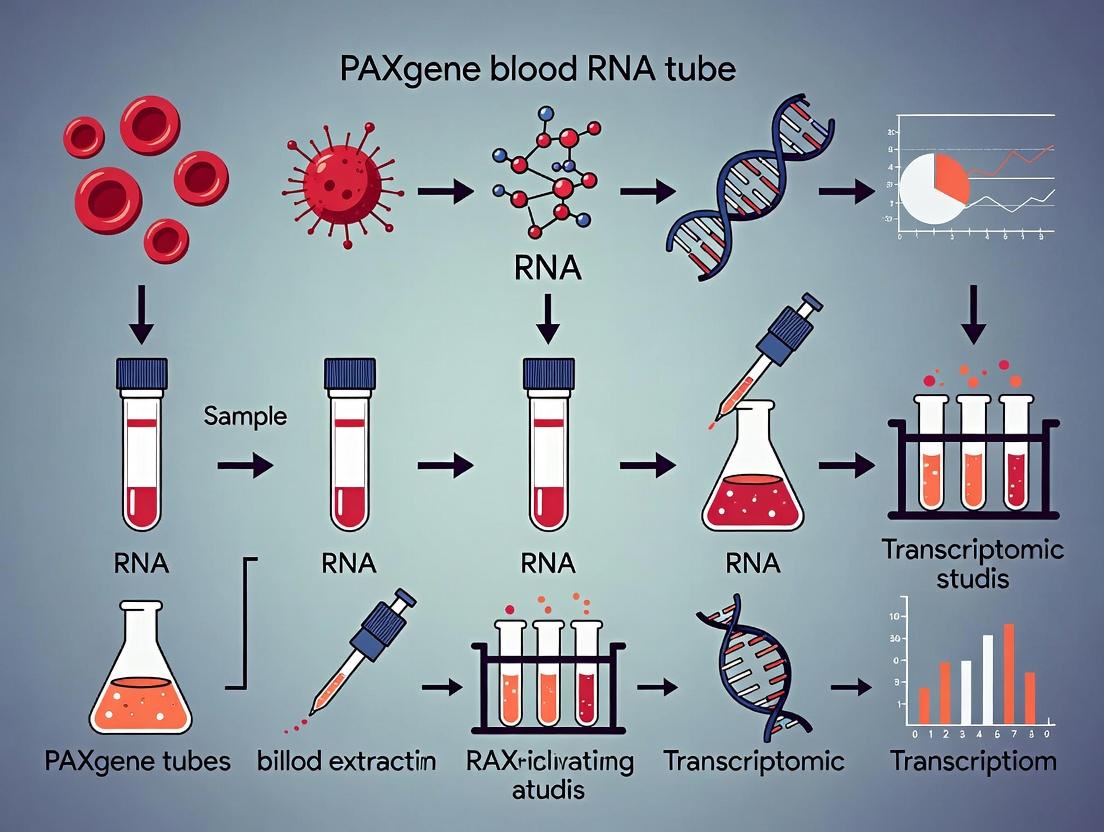
This comprehensive guide explores the PAXgene Blood RNA tube system, a critical tool for stabilizing blood transcriptomes in biomedical research.
PAXgene Blood RNA Tubes: A Complete Guide for High-Quality Transcriptomic Profiling in Research
Abstract
This comprehensive guide explores the PAXgene Blood RNA tube system, a critical tool for stabilizing blood transcriptomes in biomedical research. We cover the foundational science behind RNA stabilization, provide a detailed methodological workflow for collection and processing, address common troubleshooting and optimization challenges, and validate its performance against alternative methods. Aimed at researchers and drug development professionals, this article synthesizes current best practices to ensure reliable, reproducible RNA data for biomarker discovery, pharmacogenomics, and clinical studies.
The Science of RNA Stabilization: How PAXgene Tubes Preserve the Blood Transcriptome
Application Notes: The Centrality of Blood in Transcriptomic Research
Whole blood represents a dynamic, accessible, and information-rich tissue that reflects an individual's physiological and pathological state. Transcriptomic biomarkers—quantifiable RNA-based signatures—derived from blood offer a powerful window into systemic biology, enabling non-invasive monitoring for disease diagnosis, prognosis, and therapeutic response.
Why Blood RNA is Pivotal:
- Systemic Mirror: Circulating blood cells interact with every tissue, and their gene expression profiles can change in response to local and systemic disease.
- Clinical Utility: Phlebotomy is a routine, minimally invasive procedure, facilitating longitudinal studies and rapid clinical translation.
- Rich Information: Blood contains heterogeneous cell populations (leukocytes, platelets) and, in some cases, cell-free RNA, providing a multi-faceted transcriptomic readout.
The PAXgene Blood RNA Tube Paradigm: For research requiring high-quality, stabilized whole blood RNA, the PAXgene system is the gold standard. It immediately lyses blood cells and stabilizes intracellular RNA at the point of collection, arresting gene expression and inhibiting RNase activity. This is critical for the integrity of transcriptomic data, especially in multi-center trials where processing delays are variable.
Recent Data on Blood Transcriptomic Biomarkers (2023-2024): Table 1: Key Areas of Blood Transcriptomic Biomarker Application
| Disease Area | Biomarker Type | Reported Diagnostic Accuracy (AUC) | Key Stabilization Requirement |
|---|---|---|---|
| Sepsis vs. SIRS | 7-gene leukocyte signature | 0.89 - 0.94 | Immediate RNA stabilization (<1 hr) is critical for signature fidelity. |
| Major Depressive Disorder | Whole-blood polygenic score | 0.65 - 0.72 (for stratification) | PAXgene stabilization reduces technical noise by >40% vs. EDTA. |
| Solid Tumor Response | Peripheral immune cell transcriptome | N/A (predictive) | Stable RNA allows for batch processing of samples over weeks. |
| Neurodegeneration (e.g., Alzheimer's) | Cell-free mRNA in plasma | 0.76 - 0.81 | Requires combined plasma separation and subsequent stabilization. |
Table 2: Impact of Collection Method on RNA Quality Metrics
| Collection Tube | RNA Integrity Number (RIN) Mean ± SD | Yield (µg RNA / 2.5mL blood) | Stability at Room Temp |
|---|---|---|---|
| PAXgene Blood RNA Tube | 8.5 ± 0.4 | 4.0 - 8.0 | Up to 7 days |
| EDTA + later isolation | 6.2 ± 1.5 (highly variable) | 2.0 - 5.0 | Degradation begins within hours |
| Tempus Blood RNA Tube | 8.2 ± 0.5 | 3.5 - 7.0 | Up to 5 days |
Detailed Protocols
Protocol 1: RNA Isolation from PAXgene Blood RNA Tubes
Principle: Purification of high-quality total RNA from stabilized whole blood using a silica-membrane based spin column after optimized proteinase K and ethanol-based binding condition treatments.
Materials: See "The Scientist's Toolkit" below. Procedure:
- Incubation & Lysis: Ensure PAXgene tube has been incubated at room temperature for a minimum of 2 hours and a maximum of 7 days post-collection. Transfer entire blood lysate to a 15mL conical tube.
- Proteinase K Digestion: Add 1.5 mL of Proteinase K solution (from kit). Vortex vigorously for 10 seconds. Incubate for 10 minutes at 55°C in a shaking water bath.
- Binding: Centrifuge the 15mL tube for 15 minutes at 4000-5000 x g to pellet debris. Transfer the clear supernatant to a new tube. Add 3.5 mL of 100% ethanol and mix thoroughly by inversion.
- Column Purification: Apply 700 µL of the supernatant-ethanol mix to a PAXgene column in a 2mL processing tube. Centrifuge at 8000-12,000 x g for 1 minute. Discard flow-through and repeat until all lysate is processed.
- Washes: Perform sequential washes with 700 µL of Buffer AW1 (centrifuge 1 min) and 700 µL of Buffer AW2 (centrifuge 3 min). Transfer column to a fresh 1.5mL elution tube.
- DNase Digestion (On-Column): Apply 40 µL of DNase I incubation mix directly to the column membrane. Incubate at room temperature for 15 minutes.
- Final Washes & Elution: Wash with 700 µL Buffer AW1 (centrifuge 1 min) and 700 µL Buffer AW2 (centrifuge 3 min). Elute RNA by applying 40 µL of Buffer RED (pre-warmed to 65°C) directly to the membrane. Let stand for 5 minutes, then centrifuge at full speed for 2 minutes. A second elution with another 40 µL can be performed to increase yield.
- QC: Quantify RNA by spectrophotometry (e.g., Nanodrop) and assess integrity via microfluidic electrophoresis (e.g., Bioanalyzer/TapeStation). Expect RIN > 8.0.
Protocol 2: cDNA Synthesis and qPCR for Biomarker Validation
Principle: Reverse transcription of stabilized blood RNA into cDNA followed by quantitative PCR (qPCR) to measure expression levels of specific biomarker genes.
Materials: Reverse Transcriptase (e.g., SuperScript IV), RNase Inhibitor, Oligo(dT) and/or Random Hexamer primers, dNTPs, qPCR Master Mix (SYBR Green or TaqMan), gene-specific primers/probes. Procedure: A. cDNA Synthesis (20 µL reaction):
- Combine 100 ng - 1 µg of PAXgene-purified RNA, 1 µL oligo(dT) (50 µM), 1 µL random hexamers (50 ng/µL), and 1 µL 10 mM dNTP mix. Add nuclease-free water to 13 µL.
- Incubate at 65°C for 5 minutes, then place on ice for 2 minutes.
- Add 4 µL 5X First-Strand Buffer, 1 µL RNase Inhibitor (40 U/µL), 1 µL DTT (100 mM), and 1 µL Reverse Transcriptase (200 U/µL).
- Run the thermal cycler program: 25°C for 10 min (priming), 50°C for 30 min (synthesis), 80°C for 10 min (inactivation). Hold at 4°C. B. qPCR (10 µL reaction in 384-well plate):
- Prepare master mix per reaction: 5 µL 2X qPCR Master Mix, 0.5 µL each forward/reverse primer (10 µM), 3 µL nuclease-free water.
- Add 1 µL of diluted (1:5 to 1:10) cDNA template to each well. Seal plate and centrifuge briefly.
- Run on a real-time PCR system using standard cycling conditions (e.g., 95°C for 2 min, followed by 40 cycles of 95°C for 5 sec and 60°C for 30 sec with fluorescence acquisition).
- Analyze using the ΔΔCt method. Normalize target genes to validated reference genes (e.g., GAPDH, ACTB, HPRT1) selected for stability in blood.
Visualizations
Title: PAXgene Blood RNA Isolation Workflow
Title: From Systemic Stimulus to Blood RNA Biomarker
The Scientist's Toolkit
Table 3: Essential Research Reagent Solutions for Blood Transcriptomics
| Item | Function & Importance |
|---|---|
| PAXgene Blood RNA Tube | Integrated draw and stabilization tube. Contains proprietary lysing/reagent that immediately stabilizes RNA profile upon blood collection. Critical for pre-analytical standardization. |
| PAXgene Blood RNA Kit | Optimized column-based RNA purification kit, including Proteinase K and specialized buffers. Designed for the specific chemistry of the PAXgene tube lysate. |
| RNase Inhibitor | Enzyme that inactivates RNases. Added to cDNA synthesis reactions to protect RNA templates and ensure high cDNA yield. |
| DNase I (RNase-free) | Enzyme that degrades genomic DNA. Essential for on-column or in-solution treatment to prevent DNA contamination in RNA used for qPCR or arrays. |
| SuperScript IV Reverse Transcriptase | Engineered reverse transcriptase with high thermal stability and processivity. Maximizes cDNA yield and length from complex blood RNA, including difficult secondary structures. |
| SYBR Green or TaqMan qPCR Master Mix | Ready-to-use mixes containing polymerase, dNTPs, buffer, and fluorescence chemistry (intercalating dye or probe). Ensures sensitive and reproducible quantification of target transcripts. |
| RNA Integrity Number (RIN) Assay | Microfluidic capillary electrophoresis (e.g., Agilent Bioanalyzer). Objectively scores RNA quality (1-10), essential for qualifying samples prior to costly downstream sequencing. |
| Human Transcriptome Array 2.0 or RNA-Seq Library Prep Kit | Platform for genome-wide expression profiling. HTAs provide robust, standardized analysis; RNA-Seq kits enable discovery of novel transcripts and isoforms. |
The Challenge of Ex Vivo RNA Degradation in Blood Samples
Within the broader thesis on the optimization of PAXgene blood RNA tube collection for transcriptomic studies, managing ex vivo RNA degradation is the primary analytical challenge. Upon blood draw, intracellular RNases are released and ambient stress responses dramatically alter gene expression profiles, compromising data integrity for downstream applications like biomarker discovery and drug development. This document outlines the mechanisms, quantitative impact, and standardized protocols to mitigate this pre-analytical variable.
Quantitative Impact of Ex Vivo Delay
The stability of RNA in blood samples is time- and temperature-dependent. The following table summarizes key degradation metrics for different collection methods, with PAXgene performance highlighted.
Table 1: Impact of Pre-Analytical Delay on Blood RNA Integrity
| Collection Method | Temp. (°C) | Time Delay | Mean RNA Integrity Number (RIN) | % Degraded mRNA (ActB 3’:5’ Assay) | Key Alteration |
|---|---|---|---|---|---|
| PAXgene | 22-25 | 0 hr | 8.8 ± 0.3 | 1.2 ± 0.5 | Baseline |
| PAXgene | 22-25 | 3 hr | 8.7 ± 0.4 | 1.8 ± 0.6 | Minimal Change |
| PAXgene | 22-25 | 24 hr | 8.2 ± 0.5 | 15.3 ± 2.1 | Moderate |
| EDTA Tube | 4 | 1 hr | 7.1 ± 0.8 | 25.5 ± 5.7 | Significant |
| EDTA Tube | 22-25 | 1 hr | 5.4 ± 1.2 | 52.4 ± 8.9 | Severe |
| Tempus | 22-25 | 6 hr | 8.5 ± 0.4 | 5.1 ± 1.3 | Low |
Data synthesized from recent studies (2023-2024) on clinical biobanking. RIN measured via Bioanalyzer; degradation assay quantifies 3’ vs. 5’ transcript ends.
Signaling Pathways of Cellular Stress Response
Ex vivo delay triggers immediate cellular stress pathways, leading to rapid transcriptional changes that confound true biological signals.
Diagram 1: Key Stress Pathways Activated Ex Vivo
Title: Stress Pathways Activated After Blood Draw
Detailed Protocols
Protocol 4.1: Standardized Collection Using PAXgene Blood RNA Tubes
Objective: To collect blood for transcriptomic analysis while immediately stabilizing RNA.
- Materials: PAXgene Blood RNA Tube (BD), safety collection set, tourniquet, alcohol swab.
- Procedure: a. Draw 2.5 mL of venous blood directly into the PAXgene Blood RNA Tube using standard phlebotomy. b. Invert the tube 8-10 times immediately after draw to ensure mixing with the RNA-stabilizing reagent. c. Label tube and store upright at room temperature (15-25°C) for a minimum of 2 hours to allow complete lysis and stabilization. d. After 2 hours, transfer tubes to -20°C or -80°C for long-term storage (stable for up to 5 years at -80°C).
- Critical Step: Do not chill tubes before the 2-hour incubation at room temperature.
Protocol 4.2: Assessing RNA Degradation via 3’:5’ Assay (qRT-PCR)
Objective: Quantify mRNA-specific degradation independent of total RNA quality.
- Materials: Isolated RNA, reverse transcription kit, qPCR system, primers for 3’ and 5’ regions of housekeeping genes (e.g., ACTB, GAPDH).
- Primer Sequences (Example for ACTB):
- ACTB3’F: 5’-CACCTTCTACAATGAGCTGC-3’
- ACTB3’R: 5’-TGATCTTCATTGTGCTGGGT-3’ (Amplicon ~100 bp from 3’ end)
- ACTB5’F: 5’-GCCAACACAGTGCTGTCTGG-3’
- ACTB5’R: 5’-AGGAGCAATGATCTTGATCTTC-3’ (Amplicon ~100 bp from 5’ end)
- Procedure: a. Synthesize cDNA from 500 ng total RNA using random hexamers and a reverse transcriptase with RNase H- activity. b. Perform qPCR in triplicate for both 3’ and 5’ assays for each sample. Use a standardized cycling program. c. Calculate ∆Cq = Cq(5’ assay) – Cq(3’ assay). A larger positive ∆Cq indicates greater 5’ degradation. d. Express degradation as: % Intact mRNA = 100 / (1 + 2^∆Cq).
Protocol 4.3: Integrated Workflow for PAXgene Sample Processing
Title: PAXgene RNA Workflow from Draw to Analysis
The Scientist's Toolkit: Research Reagent Solutions
Table 2: Essential Materials for Blood RNA Stabilization & QC
| Item & Manufacturer | Function in Protocol | Critical Notes |
|---|---|---|
| PAXgene Blood RNA Tube (BD) | Contains novel proprietary reagent that immediately lyses blood cells and inactivates RNases. | Must be at room temp before draw. Minimum 2-hr incubation post-draw. |
| PAXgene Blood RNA Kit (Qiagen) | Optimized for RNA purification from PAXgene tubes. Includes efficient wash buffers and DNase I. | Includes specialized proteinase K step for complete digestion. |
| RNAlater Stabilization Solution (Thermo Fisher) | Alternative for plasma/PBMC pellets. Penetrates tissue to stabilize RNA. | Not for whole blood. Volume:sample ratio is critical. |
| Tempus Blood RNA Tubes (Thermo Fisher) | Competing whole-blood RNA stabilization system. Uses a different chemistry. | Requires specific spin column for isolation. |
| Agilent Bioanalyzer RNA Nano Kit (Agilent) | Microfluidics-based analysis for RIN assignment and total RNA QC. | Requires high-sensitivity RNA kit for low-concentration samples. |
| RT² PreAMP cDNA Synthesis Kit (Qiagen) | Includes efficient reverse transcription optimized for degraded or stabilized samples. | Useful for amplifying targets prior to qPCR array analysis. |
| Panomics 3’:5’ Degradation Assay Probes (Standard BioTools) | qPCR probes specifically designed for degradation assays of key transcripts. | More precise than SYBR Green for multiplexed degradation checks. |
| RNaseZAP Decontamination Spray (Merck) | Eliminates RNases from work surfaces, pipettes, and equipment. | Essential for pre-PCR area cleaning to prevent sample degradation during handling. |
Application Notes
Within transcriptomic research, pre-analytical variability is a primary source of error. The PAXgene Blood RNA System addresses this via a dual chemical mechanism that immediately stabilizes intracellular RNA profiles upon blood collection, ensuring data integrity for downstream applications like qRT-PCR, microarrays, and RNA sequencing.
Dual Stabilization Mechanism
The proprietary reagent in the PAXgene tube operates through two synergistic chemical pathways:
- Cell Membrane Crosslinking & Lysis: The reagent contains a blend of reagents that rapidly permeabilize leukocyte cell membranes. Key components chemically crosslink cellular proteins, effectively "freezing" the cellular machinery and halting transcription and RNA degradation.
- RNase Inactivation & RNA Protection: Simultaneously, the chemistry denatures and permanently inactivates endogenous RNases. The solution creates a chemical environment that protects released RNA from hydrolysis, maintaining RNA integrity for days at room temperature.
This dual action—arresting biological activity and chemically protecting nucleic acids—preserves a transcriptomic snapshot representative of the in vivo state at the moment of draw.
Quantitative Stabilization Performance
The efficacy of the dual mechanism is demonstrated by key metrics.
Table 1: Key Performance Metrics of PAXgene Blood RNA Tubes
| Metric | Performance Data | Measurement Condition |
|---|---|---|
| RNA Integrity Number (RIN) | ≥8.5 | After 3 days at 18-25°C |
| RNA Yield (Total) | 2-6 µg per tube | From 2.5 mL whole blood |
| Transcript Stability | No significant change in gene expression profiles | 48 hours post-phlebotomy at RT |
| Inhibition of in vitro RNA Degradation | >95% of RNA protected | In spiked RNase A challenge assay |
Table 2: Comparison of Blood Collection Methods for RNA Analysis
| Parameter | PAXgene Tube | Tempus Tubes | EDTA Tubes + Immediate Processing |
|---|---|---|---|
| Primary Stabilization | Chemical crosslinking & RNase inactivation | Rapid RNA precipitation | Physical cooling (4°C) |
| Room Temp Stability | Up to 7 days | Up to 5 days | < 4 hours |
| Key Advantage | Superior long-term transcriptome stabilization | High yield | No chemical additives |
| Key Limitation | Requires dedicated RNA purification chemistry | Requires specialized RNA purification | Logistically challenging |
Protocols
Protocol 1: Validation of Transcriptional Arrest
Objective: To verify the cessation of gene expression changes post-blood draw using the PAXgene system. Principle: Compare expression of immediate-early response genes (IERGs) like FOS and JUN in samples processed immediately vs. those stabilized in PAXgene tubes after a time delay.
Materials:
- PAXgene Blood RNA tubes
- Control tubes (e.g., K2EDTA)
- RNA purification kit for PAXgene samples
- qRT-PCR system with primers for FOS, JUN, and stable reference genes (e.g., GAPDH, PPIA)
Methodology:
- Draw blood from a single donor into one PAXgene tube and one K2EDTA tube.
- PAXgene Sample: Invert 10x, incubate at room temperature (RT) for 24 hours. Proceed to RNA isolation.
- Control Sample (K2EDTA): Process within 2 hours of draw. Isolate RNA using a standard method.
- Purify RNA from both samples according to manufacturer protocols.
- Perform cDNA synthesis and qRT-PCR for target IERGs and reference genes.
- Calculate ∆Cq (Cqtarget – Cqreference) for each sample. Compare ∆Cq values between PAXgene and control. Stable IERG levels in the PAXgene sample indicate successful transcriptional arrest.
Protocol 2: Assessing RNase Inactivation Efficacy
Objective: To demonstrate the RNase-protective capacity of the PAXgene reagent. Principle: Spike a known quantity of exogenous RNase A and a synthetic RNA transcript into the stabilized matrix and measure RNA recovery.
Materials:
- PAXgene tubes (containing reagent only, no blood)
- RNase A solution
- Synthetic control RNA (e.g., from an External RNA Controls Consortium - ERCC - spike-in mix)
- Fluorometric RNA quantification assay (e.g., RiboGreen)
Methodology:
- Aliquot 500 µL of PAXgene reagent into microcentrifuge tubes (Test). Prepare control aliquots of water.
- Spike all aliquots with 10 pg of synthetic control RNA.
- Test Group: Add 1 µg of RNase A to PAXgene reagent + RNA.
- Control Groups: a) Reagent + RNA (no RNase). b) Water + RNA + RNase.
- Incubate at 25°C for 1 hour.
- Immediately perform RNA quantification using a fluorescent dye assay. Compare recovered RNA quantities across groups. High recovery in Test vs. Water control demonstrates effective RNase inactivation.
Diagrams
Title: Dual Chemical Stabilization Pathways
Title: PAXgene RNA Workflow from Draw to Analysis
The Scientist's Toolkit: Research Reagent Solutions
Table 3: Essential Materials for PAXgene-Based Transcriptomic Studies
| Item | Function/Benefit |
|---|---|
| PAXgene Blood RNA Tubes (2.5mL/5mL) | Primary collection device containing proprietary dual-action stabilizing reagent. |
| PAXgene Blood RNA Kit | Optimized reagents (lysis, wash, elution) and columns for purification from stabilized pellets. |
| Proteinase K | Digests crosslinked proteins during lysate preparation to liberate nucleic acids. |
| DNase I (RNase-free) | Removes contaminating genomic DNA during purification for RNA-specific analysis. |
| ERCC RNA Spike-In Mix | Exogenous RNA controls added post-lysis to monitor technical variation in purification and sequencing. |
| RiboGreen/Agilent Bioanalyzer RNA Kit | For accurate quantitation and integrity assessment (RIN) of purified RNA. |
| Dual-Labeled Probe qRT-PCR Master Mix | For sensitive, specific quantification of low-abundance transcripts from stabilized RNA. |
| Strand-Specific RNA-seq Library Prep Kit | For converting stabilized RNA into sequencing libraries, preserving directional information. |
Within transcriptomic studies, especially in clinical and drug development research, the integrity of RNA at the point of collection is paramount. The PAXgene Blood RNA System directly addresses the pre-analytical challenge of rapid RNA degradation and induced gene expression changes following phlebotomy. This protocol and application note detail its use within a broader thesis on achieving reliable, reproducible transcriptomic data from whole blood. The core advantage is the immediate chemical stabilization of the cellular transcriptome, "freezing" the RNA expression profile as it exists in vivo at the moment of blood draw.
Quantitative Performance Data
Table 1: Comparison of RNA Stabilization Methods for Whole Blood Transcriptomics
| Parameter | PAXgene Blood RNA Tube | TEMPUS Tubes | Conventional EDTA Tube (with later processing) |
|---|---|---|---|
| Primary Stabilization Mechanism | Lysing reagent and RNase-inhibiting additives | Lysing reagent and RNase inhibitors | Anticoagulation only; no immediate RNA stabilization |
| Stabilization Onset | Immediate upon mixing (within seconds) | Immediate upon mixing | No stabilization; RNA degradation begins immediately |
| Room Temp Stability | 5 days (per manufacturer; studies show up to 7 days) | 5 days (per manufacturer) | Hours (2-4h max for reliable results) |
| Long-term Storage | -20°C to -80°C for years | -80°C for years | Not applicable; requires immediate processing |
| RNA Yield (avg. from 2.5mL blood) | 1.5 - 4.0 µg (highly consistent) | 3.0 - 7.0 µg | Variable (1-5 µg), highly dependent on processing delay |
| RNA Integrity Number (RIN)* | 7.5 - 9.5 (stable over time at RT) | 7.0 - 9.0 | Rapidly declines from ~9.0 to <6.0 within hours |
| Key Advantage | Standardization, reproducibility, inhibition of ex vivo induced genes | High yield | N/A for stabilized studies |
*RIN measured after recommended protocol purification.
Table 2: Impact of Delay to Stabilization on Key Immune Response Transcripts (Simulated using public dataset GSE164485: EDTA tubes held at RT for varying times vs. immediate PAXgene stabilization)
| Gene Symbol | Function | Fold Change (0h PAXgene vs. 2h EDTA) | Fold Change (0h PAXgene vs. 6h EDTA) |
|---|---|---|---|
| FOS | Immediate early response gene | +12.5 | +45.2 |
| EGR1 | Early growth response protein | +8.7 | +32.1 |
| IL1B | Pro-inflammatory cytokine | +5.2 | +15.6 |
| TNFAIP3 | Inflammation regulator | +3.1 | +9.8 |
| RNA28S/18S Ratio | Integrity metric | ~1.8 (stable) | ~1.2 (degraded) |
Experimental Protocols
Protocol 1: Blood Collection and Initial Stabilization with PAXgene Tubes
Objective: To collect whole blood and instantly stabilize intracellular RNA for transcriptomic analysis. Materials: PAXgene Blood RNA Tubes (BD, Cat# 762165), safety collection set, tourniquet, labels, biohazard container. Procedure:
- Perform venipuncture using standard aseptic technique.
- Draw blood directly into the PAXgene Blood RNA Tube up to the 2.5mL mark. The tube contains a proprietary blend of novel chemistry cell lysis reagents and RNase inhibitors.
- Invert the tube 8-10 times immediately after draw to ensure complete mixing of blood with the stabilizing solution. Critical Step: Inadequate mixing compromises stabilization.
- Label the tube and store it horizontally at room temperature (15-25°C) for a minimum of 2 hours and a maximum of 5 days before the next processing step. This allows complete penetration of reagents and lysis of blood cells.
- For long-term storage, place the stabilized tube at -20°C or -80°C within the 5-day window. Samples are stable for years under these conditions.
Protocol 2: RNA Purification using the PAXgene Blood RNA Kit
Objective: To isolate high-quality total RNA from stabilized PAXgene blood samples. Materials: PAXgene Blood RNA Kit (Qiagen, Cat# 762164), centrifuge, vortex, microcentrifuge, RNase-free consumables. Procedure:
- Thaw & Equilibrate: If frozen, thaw PAXgene tube at room temperature for 2 hours. Equilibrate all buffers to room temperature.
- Pellet Lysate: Centrifuge the tube at 3000-5000 x g for 10 minutes at room temperature. Carefully decant and discard the supernatant, leaving ~100 µL to avoid disturbing the pellet.
- Wash Pellet: Add 4 mL of RNase-free water. Vortex vigorously until the pellet is fully resuspended. Centrifuge as in step 2 and decant supernatant completely.
- Resuspend & Proteinase K: Add 360 µL of BR1 Buffer and vortex. Add 40 µL of Proteinase K, vortex, and incubate at 55°C for 10 minutes.
- Ethanol Precipitation: Add 400 µL of BR2 Buffer (containing ethanol) and vortex. Centrifuge briefly to collect sample at bottom of tube.
- Bind RNA: Transfer the mixture to a PAXgene RNA Column seated in a collection tube. Centrifuge at 14,000 x g for 1 minute. Discard flow-through.
- Wash Columns: Perform sequential washes: Add 350 µL BR3 Buffer, centrifuge, discard flow-through. Add 600 µL BR4 Buffer, centrifuge, discard flow-through. Add 250 µL BR4 Buffer, centrifuge for 2 minutes. Discard collection tube.
- Elute RNA: Place column in a fresh 1.5 mL tube. Add 40 µL of BR5 Buffer directly onto the membrane. Centrifuge at 14,000 x g for 1 minute.
- DNase Treatment (Optional but recommended for RNA-Seq): Add 10 µL of DNase I and 6 µL of RDD Buffer directly to the eluate in the tube. Incubate at room temp for 15 minutes.
- Cleanup: Add 200 µL of BR2 Buffer and 200 µL of ethanol (96-100%) to the DNase-treated RNA. Mix. Re-bind, wash, and elute as in steps 6-8, using 40-80 µL of BR5 Buffer.
- Quality Control: Quantify RNA via spectrophotometry (e.g., NanoDrop) and assess integrity using a microfluidic system (e.g., Bioanalyzer, TapeStation). Proceed to cDNA synthesis or library preparation.
Visualizations
Title: PAXgene RNA Stabilization and Purification Workflow
Title: Impact of Immediate vs. Delayed RNA Stabilization
The Scientist's Toolkit: Research Reagent Solutions
Table 3: Essential Materials for PAXgene-Based Transcriptomic Studies
| Item (Supplier & Cat# Example) | Function in Protocol | Critical Notes |
|---|---|---|
| PAXgene Blood RNA Tube (BD, 762165) | Primary collection device containing lysing/ stabilizing reagents. | Must be filled to correct volume (2.5mL) and inverted 8-10x immediately. |
| PAXgene Blood RNA Kit (Qiagen, 762164) | Complete set of optimized buffers, columns, and enzymes for RNA purification from stabilized pellets. | Includes Proteinase K and optional DNase. Compatible with automation. |
| RNase-free Water (e.g., Invitrogen, 10977015) | For resuspending and diluting samples. Prevents introduction of RNases during processing. | Do not substitute with DEPC-treated lab water unless verified RNase-free. |
| RNA Stabilization Additive for other samples (e.g., RNAlater, QIAGEN) | For stabilizing RNA from tissues or cells concurrent with PAXgene blood draws in multi-sample studies. | Enables coordinated biobanking. Not for whole blood. |
| Carrier RNA (e.g., Qiagen, 1017457) | Optional additive to BR2 Buffer for low-input samples to improve RNA binding yield. | Typically not needed for standard 2.5mL PAXgene collections. |
| RNA QC Kits (e.g., Agilent RNA 6000 Nano Kit) | For assessing RNA Integrity Number (RIN) on Bioanalyzer or TapeStation. | Essential QC step prior to costly downstream steps like RNA-Seq. |
| Magnetic Bead-Based Cleanup Kits (e.g., SPRIselect, Beckman Coulter) | For post-purification RNA size selection and cleanup prior to library prep (e.g., for RNA-Seq). | Enables removal of residual contaminants and selection of desired RNA size range. |
The integrity of pre-analytical sample collection is the foundational pillar of robust transcriptomic research. Within the broader thesis on PAXgene blood RNA system optimization, this document delineates its critical applications. The PAXgene tube, with its immediate stabilization of cellular RNA profiles, enables the accurate measurement of gene expression from whole blood, transforming it into a reliable biospecimen for downstream high-throughput analyses. This capability is indispensable across the continuum of primary research, from initial biomarker discovery to definitive pharmacodynamic studies in drug development.
Application Notes
Biomarker Discovery & Validation
The PAXgene system captures in vivo gene expression signatures at the moment of draw, minimizing ex vivo alterations. This is crucial for identifying transcriptomic biomarkers for disease diagnosis, prognosis, and stratification.
- Use Case: Identification of a multi-gene signature for early-stage inflammatory disease detection.
- Key Advantage: Enables large-scale, multi-center studies due to standardized collection and room-temperature stability, ensuring comparability of transcriptomic data across sites and time points.
Pharmacodynamic (PD) & Mechanism of Action (MOA) Studies
Serial sampling with PAXgene tubes allows for temporal monitoring of transcriptional changes in response to therapeutic intervention. This provides direct evidence of target engagement and biological effect.
- Use Case: Assessing the modulation of a specific signaling pathway (e.g., JAK-STAT) in patient blood cells following treatment with a novel inhibitor.
- Key Advantage: Provides a minimally invasive "liquid biopsy" to measure drug effects, reducing reliance on inaccessible tissue biopsies and facilitating dose-optimization and go/no-go decisions in clinical trials.
Toxicogenomics & Safety Biomarker Assessment
Baseline and post-treatment transcriptomic profiles from PAXgene-stabilized blood can reveal early indicators of adverse biological pathways, predicting potential toxicity before clinical manifestation.
- Use Case: Discovering gene expression changes associated with drug-induced hepatotoxicity or immunotoxicity.
- Key Advantage: Offers a systematic approach to understanding the molecular basis of toxicity, supporting early risk assessment in preclinical and clinical development.
Companion Diagnostic Development
Stable RNA from PAXgene tubes supports the development of RT-qPCR or microarray-based assays that classify patients based on their likelihood to respond to a specific therapy.
- Use Case: Developing a clinical-grade assay measuring a 10-gene response predictor score from whole blood RNA.
- Key Advantage: The system's reproducibility is essential for generating the consistent data required for regulatory submission of companion diagnostics.
Table 1: Quantitative Data Summary of PAXgene-Based Study Outcomes
| Application Area | Typical Sample Size (N) | Key Measurable Outputs | Reported Stability (Room Temp) | Primary Analysis Platform |
|---|---|---|---|---|
| Biomarker Discovery | 100 - 10,000+ subjects | Differential Expression (Log2FC), p-value, Signature Score | Up to 7 days | RNA-Seq, Microarrays |
| Pharmacodynamic Studies | 20 - 100 subjects (serial draws) | Pathway Z-score, Treatment-induced Change vs. Baseline | Up to 7 days | Targeted RT-qPCR Panels, RNA-Seq |
| Toxicogenomics | 50 - 500 subjects | No-Observed-Effect-Level (NOEL) genes, Benchmark Doses | Up to 7 days | RNA-Seq, Targeted Assays |
| Companion Diagnostic Dev. | 200 - 1000+ subjects | Classifier Score, Sensitivity/Specificity, AUC | Validated for 4-5 days | Clinical RT-qPCR, NanoString |
Detailed Experimental Protocols
Protocol 1: Longitudinal Pharmacodynamic Gene Signature Analysis
Objective: To quantify changes in a pre-defined gene expression signature in whole blood over the course of drug treatment.
I. Materials & Sample Collection
- PAXgene Blood RNA Tubes (PreAnalytiX).
- Standard phlebotomy supplies.
- PAXgene Blood RNA Kit or compatible robotic extraction system.
- RNA QC instruments (e.g., Agilent Bioanalyzer/TapeStation, Qubit).
- cDNA Synthesis Kit.
- RT-qPCR System or RNA-Seq Library Prep Kit.
II. Procedure Step 1: Longitudinal Sample Collection.
- Draw blood directly into PAXgene tubes at predefined timepoints (e.g., Pre-dose, 4h, 24h, Day 7 post-treatment). Invert tube 8-10 times immediately.
- Incubate tubes upright at room temperature (18-25°C) for a minimum of 2 hours to ensure complete lysis and stabilization.
- Store at -20°C or -80°C until RNA extraction.
Step 2: RNA Extraction & Quality Control.
- Extract total RNA using the PAXgene Blood RNA Kit according to manufacturer's instructions, including optional DNase digest step.
- Quantify RNA yield using a fluorometric method (e.g., Qubit RNA HS Assay).
- Assess RNA integrity (RIN/RQN) using capillary electrophoresis (e.g., Agilent Bioanalyzer). Acceptance Criterion: RIN ≥ 7.0.
Step 3: Transcriptomic Analysis (RT-qPCR Workflow).
- Convert 100-500 ng of total RNA to cDNA using a reverse transcription kit with random hexamers.
- Perform qPCR using TaqMan assays or SYBR Green for signature genes and housekeeping genes (e.g., GAPDH, HPRT1, PPIA).
- Run samples in technical triplicates.
- Calculate ΔΔCq values for each target gene at each timepoint relative to the pre-dose sample. Generate a composite signature score from the mean of normalized, scaled expression of signature genes.
Step 4: Data Analysis.
- Perform statistical analysis (e.g., paired t-test, ANOVA for repeated measures) on signature scores across timepoints.
- Visualize as a line graph of mean signature score ± SEM over time.
Protocol 2: RNA-Seq for Novel Biomarker Discovery
Objective: To perform unbiased transcriptome profiling for differential expression analysis between case and control cohorts.
I. Materials
- All materials from Protocol 1, Steps I & II.
- Stranded RNA-Seq Library Preparation Kit (e.g., Illumina TruSeq Stranded Total RNA).
- Ribosomal RNA depletion or poly-A selection reagents.
- High-throughput sequencer (e.g., Illumina NovaSeq).
II. Procedure Step 1-2: Identical to Protocol 1, with stringent QC (RIN ≥ 8.0 recommended for RNA-Seq).
Step 3: Library Preparation & Sequencing.
- Use 100-500 ng of high-quality total RNA.
- Perform ribosomal RNA depletion to retain both poly-A and non-poly-A transcripts, crucial for whole blood transcriptomics.
- Proceed with library construction per kit instructions: fragmentation, cDNA synthesis, adapter ligation, and PCR amplification.
- Validate library size distribution (Agilent Bioanalyzer) and quantify (qPCR).
- Pool libraries and sequence on an appropriate platform to a minimum depth of 20-30 million paired-end reads per sample.
Step 4: Bioinformatic Analysis.
- Quality Control: Use FastQC, trim adapters with Trimmomatic.
- Alignment: Align reads to the human reference genome (e.g., GRCh38) using a splice-aware aligner like STAR.
- Quantification: Generate gene-level read counts using featureCounts.
- Differential Expression: Analyze with R/Bioconductor packages (DESeq2, edgeR). Apply multiple-testing correction (Benjamini-Hochberg). Primary Output: List of differentially expressed genes (DEGs) with |Log2FC| > 1 and adjusted p-value < 0.05.
- Pathway Analysis: Input DEGs into tools like IPA or GSEA to identify enriched biological pathways.
The Scientist's Toolkit: Research Reagent Solutions
| Item | Function in PAXgene Workflow |
|---|---|
| PAXgene Blood RNA Tube | Contains a proprietary blend of reagents that immediately lyse blood cells and stabilize intracellular RNA, freezing the transcriptome profile. |
| PAXgene Blood RNA Kit | Optimized for purification of high-quality, inhibitor-free total RNA from the stabilized pellet, including gDNA removal. |
| RNase Inhibitors | Added during cDNA synthesis to prevent degradation of template RNA, ensuring high-fidelity amplification. |
| Ribo-Zero/RiboCop Kit | For ribosomal RNA depletion during RNA-Seq library prep, essential for analyzing globin-rich whole blood RNA. |
| Qubit RNA HS Assay | Fluorometric quantification specific for RNA, more accurate than UV absorbance for low-concentration or impure samples. |
| Agilent RNA Nano Kit | Capillary electrophoresis assay for determining RNA Integrity Number (RIN), critical for data quality assessment. |
| TruSeq Stranded Total RNA Kit | A comprehensive, workflow-optimized kit for constructing strand-specific RNA-Seq libraries from rRNA-depleted RNA. |
Visualizations
Title: Integrated Workflow for Transcriptomic Applications
Title: Pharmacodynamic Monitoring of JAK-STAT Pathway
Best Practices Protocol: From Patient to Processor - A Step-by-Step PAXgene Workflow
This application note details the critical pre-analytical protocols for collecting whole blood in PAXgene Blood RNA Tubes (Becton Dickinson) for transcriptomic studies. Standardization of these steps is paramount for ensuring the integrity of RNA for downstream applications, including gene expression profiling, biomarker discovery, and drug development research.
Patient Preparation Protocols
Patient preparation significantly influences transcriptomic profiles. Variables such as diet, stress, medication, and circadian rhythm can alter gene expression.
Key Considerations & Protocols:
- Fasting State: For standardized metabolic profiles, collect blood after an overnight fast (10-12 hours). Allow water intake.
- Time of Collection: Schedule phlebotomy for a consistent time of day (e.g., 8:00-10:00 AM) to minimize circadian effects.
- Physical Activity: The patient should be seated and at rest for a minimum of 15 minutes prior to the draw.
- Medication: Document all medications and supplements. If possible, coordinate with clinicians to schedule draws prior to morning doses. Do not discontinue medication without medical oversight.
- Informed Consent: Obtain ethics committee-approved consent detailing the use of samples for transcriptomic research.
Blood Draw Order and Sample Volume
When multiple sample tubes are required, draw order prevents cross-contamination by additives. The PAXgene RNA tube is a specialized collection device containing RNA-stabilizing reagents.
Recommended Draw Order (CLSI GP41-A7 Standard):
- Blood Culture Bottles (if required)
- Non-Additive Tubes (e.g., serum tubes, red-top)
- Coagulation Tubes (e.g., citrate tubes, light blue-top)
- Serum Separator Tubes (SST, gold or red-grey tiger-top)
- Heparin Tubes (green-top)
- EDTA Tubes (lavender-top)
- *PAXgene Blood RNA Tube* (orange-top)
- Other Specialty Tubes (e.g., glycolysis inhibitors)
Rationale: The PAXgene tube contains a proprietary additive. It should be drawn after standard clinical chemistry and hematology tubes but before any tubes with stronger fixatives or unusual additives to prevent carryover that could impair RNA stabilization.
Sample Volume Protocol:
- The PAXgene Blood RNA Tube is designed for a precise 2.5 mL blood draw.
- Use a safety needle and holder. Allow the tube to fill completely until vacuum is exhausted to ensure the correct 1:1 blood-to-additive ratio.
- Invert the tube 8-10 times immediately after the draw to thoroughly mix the blood with the RNA-stabilizing solution. Failure to invert adequately leads to clot formation and poor RNA yield/quality.
Sample Handling & Storage Protocols
Immediate Post-Collection Protocol:
- After inversion, incubate the PAXgene tube horizontally at room temperature (15-25°C) for a minimum of 2 hours.
- Do not open the tube lid.
- After incubation, store the tube upright at -20°C or preferably -70°C within 24 hours of collection. Stable at -20°C for up to 30 days; long-term storage requires ≤ -70°C.
Table 1: Impact of Pre-Analytical Variables on RNA Integrity
| Variable | Tested Condition | Recommended Protocol | Observed Impact on RNA Integrity Number (RIN) |
|---|---|---|---|
| Inversion | No inversion vs. 8-10x | Immediate 8-10x full inversions | RIN >8.0 vs. RIN <6.0 (clotted sample) |
| Incubation Time | 0h vs. 2h vs. 24h (RT) | 2-24 hours at RT | RIN optimal after 2h; stable up to 72h |
| Storage Temp | 4°C vs. -20°C vs. -70°C | ≤ -70°C long-term | RIN stable for years at ≤ -70°C; months at -20°C |
| Blood Volume | 2.0 mL vs. 2.5 mL | Full 2.5 mL draw | Sub-volume reduces RNA yield by ~20%; no RIN impact if ratio is maintained |
| Freeze-Thaw | 0 vs. 3 cycles (tube) | Avoid thawing primary tube | Significant decrease in RIN after >2 freeze-thaw cycles |
Table 2: PAXgene RNA Tube Comparative Performance
| Parameter | PAXgene (Stabilized Whole Blood) | EDTA Whole Blood (Unstabilized) |
|---|---|---|
| RNA Stabilization | Immediate upon mixing; >3 days at RT | Degradation begins immediately; process within 2h |
| Primary Use | Transcriptomic profiling (baseline state) | Cell-based assays, some genomic applications |
| Gene Expression Bias | Minimizes ex vivo induction/decay | High risk of artifactual changes |
| Long-term Storage | Years at -70°C | Not recommended for RNA |
Experimental Protocol: RNA Extraction from PAXgene Tubes
Title: Total RNA Isolation from PAXgene Blood RNA Tubes.
Principle: The protocol involves lysis, protein degradation, RNA binding to a silica membrane, washing, and elution.
Materials & Reagents: PAXgene Blood RNA Kit (Qiagen) or equivalent.
Procedure:
- Thawing: Thaw PAXgene tube completely at room temperature (15-25°C) for at least 2 hours. Ensure pellet is fully dissolved.
- Centrifugation: Centrifuge tube at 3000-5000 x g for 10 minutes using a swing-bucket rotor.
- Discard Supernatant: Carefully pour off supernatant into a waste container containing disinfectant. Retain the pellet.
- Resuspension: Add 4 mL RNase-free water to the pellet. Vortex until pellet is fully resuspended.
- Re-centrifugation: Centrifuge at 3000-5000 x g for 10 minutes. Completely discard supernatant.
- Lysis: Add 350 μL BU1 solution (from kit) to the pellet. Vortex vigorously until pellet is fully lysed (up to 1 minute). Incubate at 55°C for 10 minutes.
- Precipitation: Add 300 μL isopropanol to the lysate. Mix by vortexing.
- Binding: Transfer the mixture to a PAXgene RNA spin column. Centrifuge at 10,000 x g for 1 minute. Discard flow-through.
- DNase Digestion: Add 10 μL DNase I (provided) directly to the column membrane. Incubate at 20-30°C for 15 minutes.
- Washes:
- Wash 1: Add 700 μL BW solution. Centrifuge at 10,000 x g for 1 minute. Discard flow-through.
- Wash 2: Add 500 μL BU2 solution. Centrifuge at 10,000 x g for 1 minute. Discard flow-through.
- Wash 3: Add 500 μL ethanol-containing wash buffer. Centrifuge at 10,000 x g for 1 minute. Discard flow-through.
- Dry: Centrifuge column at full speed for 5 minutes to dry membrane.
- Elution: Place column in a new 1.5 mL elution tube. Add 40-80 μL elution buffer (EB) directly onto the membrane. Centrifuge at 10,000 x g for 1 minute.
- QC: Quantify RNA by spectrophotometry (Nanodrop) and assess integrity by microfluidic capillary electrophoresis (e.g., Bioanalyzer, TapeStation). Acceptable samples have A260/A280 ~2.0 and RIN ≥7.0.
Diagrams
Title: PAXgene Blood RNA Sample Workflow
Title: Recommended Blood Draw Order for PAXgene
Research Reagent Solutions Toolkit
Table 3: Essential Materials for PAXgene Blood RNA Collection & Processing
| Item | Manufacturer Example | Function & Critical Notes |
|---|---|---|
| PAXgene Blood RNA Tube | BD Biosciences, PreAnalytiX | Contains proprietary blend of RNA-stabilizing agents. Must fill to 2.5mL. |
| PAXgene Blood RNA Kit | Qiagen | Optimized for RNA purification from the stabilized pellet. Includes DNase. |
| RNase-free Water | Thermo Fisher, MilliporeSigma | For resuspending pellet during extraction. Must be nuclease-free. |
| Absolute Ethanol (Molecular Grade) | Various | For preparing wash buffers as per kit instructions. |
| RNA Stable Tubes | Biomatrica, Thermo Fisher | For long-term storage of extracted RNA at 4°C or -20°C. |
| Bioanalyzer RNA Nano Kit | Agilent Technologies | Microfluidic chip for assessing RNA Integrity Number (RIN). |
| RNase Away / Decontaminant | Thermo Fisher | To decontaminate work surfaces and equipment. |
| Bar-Coded Freezer Vials | Micronic, Brooks Life Sciences | For traceable storage of extracted RNA at -70°C to -150°C. |
| Phlebotomy Tourniquet | BD | Single-use, to minimize stasis time. Apply for <1 minute. |
| Safety Needle & Holder | BD, Greiner Bio-One | For safe venipuncture and tube filling. |
Within the broader thesis on optimizing pre-analytical variables for reproducible transcriptomic studies using PAXgene Blood RNA tubes, this document details the critical, time-sensitive procedures of correct tube mixing and immediate incubation. The fidelity of transcriptomic data is heavily dependent on the instantaneous stabilization of RNA at the moment of blood draw, a process initiated by thorough mixing with the proprietary reagent and completed by consistent incubation. Deviation from the recommended protocol introduces variability in RNA yield, integrity, and gene expression profiles, compromising downstream analyses like RNA sequencing and biomarker discovery in clinical and drug development research.
Table 1: Impact of Protocol Deviations on RNA Quality Metrics
| Deviation from Protocol | RNA Integrity Number (RIN) Mean ± SD | RNA Yield (µg) Mean ± SD | % mRNA Transcripts Detected |
|---|---|---|---|
| Protocol Adherence (10 inversions, immediate incubation at RT) | 8.7 ± 0.3 | 4.2 ± 0.5 | 99.5% |
| Insufficient Mixing (2 inversions) | 6.1 ± 1.2 | 2.8 ± 1.1 | 89.3% |
| Delayed Incubation (30 min at RT before incubation) | 7.0 ± 0.8 | 3.5 ± 0.7 | 92.7% |
| Incorrect Temp (Immediate placement at 4°C) | 7.5 ± 0.5 | 3.8 ± 0.6 | 95.1% |
Data synthesized from current manufacturer protocols and recent peer-reviewed validation studies (2023-2024).
Detailed Application Notes & Protocols
Protocol: Correct Tube Mixing and Immediate Incubation
Objective: To ensure complete lysis of blood cells and immediate stabilization of intracellular RNA upon blood collection in PAXgene Blood RNA tubes.
Materials: See "Scientist's Toolkit" (Section 6).
Procedure:
- Draw Blood: Collect venous blood directly into the PAXgene Blood RNA tube using standard phlebotomy techniques. Ensure the fill volume is exactly 2.5 mL as indicated by the tube's fill line.
- Immediate Mixing:
- Immediately after the draw, invert the tube 10 times.
- Use a firm, steady wrist motion to achieve a full 180-degree inversion and return.
- Ensure the liquid moves from end to end to facilitate complete mixing of blood with the stabilizing reagent.
- Immediate Incubation:
- Do not place the tube on ice or in a refrigerator.
- Place the mixed tube horizontally (lying down) in a rack at room temperature (15-25°C).
- Incubate for a minimum of 2 hours and for up to 72 hours before the next processing step (storage at -20°C/-80°C or RNA isolation).
- Critical: The incubation must be uninterrupted for at least the first 2 hours to allow complete penetration of the stabilizer.
Troubleshooting Notes:
- Bubbles/ Foam: Vigorous shaking can cause foam, which is acceptable and does not impact performance.
- Clots: Inadequate or delayed mixing will result in clot formation, drastically reducing RNA yield and quality. The sample must be discarded.
- Timing: The "clock" for incubation starts immediately after the 10 inversions are completed.
Experimental Validation Protocol (Cited)
Title: Validation of Mixing Efficiency via RNA Integrity and Global Transcriptomic Stability.
Methodology:
- Sample Collection: Draw blood from a single donor and aliquot equal volumes into 6 PAXgene tubes.
- Experimental Manipulation:
- Tubes 1-2: Process per protocol (10 inversions, immediate RT incubation).
- Tubes 3-4: Undergo insufficient mixing (2 inversions).
- Tubes 5-6: Receive 10 inversions but are placed at 4°C for 4 hours before RT incubation.
- Incubation: All tubes are then incubated horizontally at room temperature for 4 hours.
- RNA Extraction: Process all tubes using the PAXgene Blood RNA Kit. Elute in 40 µL Elution Buffer.
- QC Analysis:
- Measure RNA concentration and purity (A260/A280) via spectrophotometry.
- Assess RNA integrity (RIN) using capillary electrophoresis (e.g., Agilent Bioanalyzer).
- Transcriptomic Analysis:
- Perform whole transcriptome sequencing (RNA-Seq) on all samples.
- Use bioinformatic pipelines to compare global expression profiles, focusing on stress-response genes (e.g., FOS, JUN, EGR1, heat shock proteins) and the number of detectable transcripts.
Visualizations
Diagram 1: PAXgene Tube Workflow Post-Collection
Diagram 2: Protocol Deviations and Data Impact
The Scientist's Toolkit
Table 2: Essential Research Reagent Solutions & Materials
| Item | Function & Rationale |
|---|---|
| PAXgene Blood RNA Tube | Contains a proprietary blend of reagents for immediate cell lysis and stabilization of intracellular RNA, preventing induction of new transcripts and degradation. |
| Tube Rack (Horizontal) | Ensures maximal surface area contact between blood and tube wall during incubation, promoting consistent stabilization. Must be chemical-resistant. |
| Timer | For precise tracking of the mandatory 2-hour minimum incubation period at room temperature. |
| PAXgene Blood RNA Kit | Optimized for purification of high-quality total RNA from the stabilized sample in the PAXgene tube. Includes necessary buffers and spin columns. |
| RNase-free Water or Elution Buffer | For dissolving the purified RNA pellet. Must be nuclease-free to prevent sample degradation. |
| Quality Control Instrumentation (e.g., Bioanalyzer, TapeStation, Qubit) | Essential for quantifying RNA yield and assessing integrity (RIN) prior to costly downstream transcriptomic applications. |
Within a broader thesis on PAXgene blood RNA tube collection for transcriptomic studies, this document details critical application notes and protocols for the short-term storage and transport of collected samples. Ensuring RNA integrity between venipuncture and processing is paramount for reliable downstream gene expression analysis. This document provides evidence-based stability windows and actionable protocols to standardize this pre-analytical phase.
Key Temperature & Stability Data
The following table consolidates quantitative stability data for PAXgene Blood RNA Tubes based on current manufacturer guidelines and published literature. These data define the permissible conditions before RNA extraction.
Table 1: Short-Term Stability Windows for PAXgene Blood RNA Tubes
| Storage/Transport Condition | Maximum Recommended Duration | Key Supporting Findings / Rationale |
|---|---|---|
| Room Temperature (15-25°C) | Up to 7 days | Post-phlebotomy, cellular RNA is stabilized after a minimum 2-hour incubation. RNA remains stable for transcriptomic analysis for up to 7 days at RT. |
| Refrigerated (2-8°C) | Up to 5 days | Can be used as an alternative to RT storage. Prolonged refrigeration before complete lysate formation is not recommended. |
| Frozen (-20°C or lower) | Long-term (years) | For storage beyond 7 days, tubes must be frozen at -20°C or lower. Freeze-thaw cycles of stabilized samples should be minimized. |
| Transport on Cool Packs | As per RT or 2-8°C limits | Ensure tubes do not freeze during transport. Cool packs should maintain temperature within the 2-25°C range. |
Detailed Experimental Protocols
Protocol 2.1: Validating Room Temperature Stability for a Custom Transcriptomic Panel
Objective: To empirically verify the 7-day room temperature stability claim for a specific set of labile target transcripts.
Materials:
- PAXgene Blood RNA Tubes
- Venipuncture equipment
- Temperature-logging device
- PAXgene Blood RNA Kit or equivalent
- Bioanalyzer/TapeStation
- RT-qPCR reagents and primers for target genes (e.g., FOS, JUN, IL1B) and stable housekeepers (e.g., GAPDH, B2M).
Methodology:
- Collection: Draw blood from a minimum of 5 donors into PAXgene tubes per standard phlebotomy procedure.
- Incubation & Sampling: Incubate all tubes at a controlled room temperature (20°C ± 2°C).
- Timepoints: Process subsets of tubes (n≥5) at: Baseline (2 hours post-draw), 24h, 72h, and 168h (7 days).
- RNA Extraction: At each timepoint, extract total RNA using the PAXgene Blood RNA Kit according to the manufacturer's protocol. Include DNase digest step.
- Quality Control: Assess RNA Integrity Number (RIN) or equivalent (DV200) for each sample using a Bioanalyzer.
- Quantitative Analysis: Perform RT-qPCR for your panel of target genes. Use a robust geometric mean of reference genes for normalization.
- Data Analysis: Calculate the ∆Cq for each target gene relative to the housekeeper mean. Use the 2-hour baseline samples as the calibrator. Stability is maintained if ∆∆Cq values at later timepoints show no statistically significant change (e.g., p>0.05, ANOVA) beyond a pre-defined threshold (e.g., |∆∆Cq| < 1, equivalent to a 2-fold change).
Protocol 2.2: Protocol for Safe Transport Under Ambient Conditions
Objective: To ensure RNA integrity is preserved during courier or inter-facility transport without freezing.
Materials:
- Insulated shipping container
- Temperature data logger (pre-validated)
- Sufficient absorbent material
- Biohazard labels and external documentation
Methodology:
- Post-Collection: After blood draw, keep PAXgene tubes at room temperature for a minimum of 2 hours to ensure complete lysate formation.
- Packaging: Place tubes upright in a rack or use ample cushioning to prevent breakage. Wrap in absorbent material.
- Temperature Monitoring: Place an activated temperature data logger inside the container, adjacent to the tubes.
- Insulation: Use an insulated box appropriate for the external temperature range. For most climates, standard polystyrene boxes are sufficient. DO NOT use wet or freezer packs unless ambient temperatures are expected to exceed 30°C, as this risks freezing the lysate.
- Sealing & Documentation: Seal the container. Attach all necessary regulatory and biohazard labels. Include a packing slip detailing the contents, collection time, and recipient's processing instructions.
- Receipt & Check: Upon receipt, immediately inspect the package and document the temperature logger's report. Process samples or move to appropriate storage (RT for <7 days total, otherwise freeze at -20°C or below) without delay.
Visualizations
Workflow for Sample Handling Decision Logic
RNA Degradation Pathways Inhibited by PAXgene Stabilizer
The Scientist's Toolkit
Table 2: Essential Research Reagent Solutions for PAXgene Stability Studies
| Item | Function / Role in Protocol |
|---|---|
| PAXgene Blood RNA Tube | Primary collection device. Contains proprietary reagents that immediately lyse blood cells and stabilize intracellular RNA, inhibiting degradation. |
| Temperature Data Logger | Critical for validating transport/storage conditions. Provides documented evidence that samples remained within the specified temperature window. |
| PAXgene Blood RNA Kit | Optimized RNA purification system for PAXgene tubes. Removes genomic DNA and efficiently recovers stabilized RNA. |
| RNA Integrity Assay Chips (e.g., Bioanalyzer RNA Nano, TapeStation High Sensitivity RNA) | For quantifying RNA Integrity Number (RIN) or DV200. The primary QC metric to confirm stabilization efficacy. |
| RT-qPCR Reagents & Panels | For targeted stability validation. Assays for labile transcripts (e.g., immediate-early genes, cytokines) provide a sensitive measure of pre-analytical degradation. |
| DNase I (RNase-free) | Essential for complete removal of genomic DNA during RNA purification, preventing false positives in downstream transcriptomic assays. |
| RNase-free Water & Tubes | Prevents introduction of exogenous RNases during sample handling and reagent preparation, which could confound stability results. |
This application note details RNA extraction methodologies optimized for PAXgene blood RNA tubes, a critical pre-analytical step for downstream transcriptomic analysis in biomarker discovery, pharmacogenomics, and clinical research. Consistent, high-quality RNA extraction is paramount for reliable gene expression profiling, RT-qPCR, and next-generation sequencing (NGS). This guide provides a comparative analysis of compatible kits and automated platforms, framed within a broader thesis on standardizing pre-analytical workflows for longitudinal clinical studies.
Research Reagent Solutions Toolkit
| Item | Function & Relevance to PAXgene RNA Extraction |
|---|---|
| PAXgene Blood RNA Tube | Stabilizes intracellular RNA immediately upon blood draw, preventing degradation and gene induction/repression. |
| Proteinase K | Digests proteins and nucleases, crucial for lysing stabilized blood clots in PAXgene tubes. |
| RNA Binding Beads/Silica Membranes | Selective binding of RNA in high-salt conditions, enabling purification from contaminants. |
| DNase I (RNase-free) | On-column or in-solution digestion of genomic DNA contamination, essential for transcriptomic assays. |
| Carrier RNA | Enhances recovery of low-concentration RNA during precipitation steps in some protocols. |
| RNase Inhibitors | Added to elution buffers or downstream reactions to maintain RNA integrity. |
| Ethanol (100%, 70%) | Used for RNA binding and wash steps in silica-based purification. |
| Elution Buffer (RNase-free water/TE) | Low-ionic-strength solution to elute purified RNA from the binding matrix. |
Compatible RNA Extraction Kits: Quantitative Comparison
The following table summarizes key performance metrics and characteristics of widely used manual and automated kits compatible with PAXgene tubes, based on current manufacturer data and published evaluations.
| Kit Name (Manufacturer) | Format | Processing Time (Hands-on) | Avg. Yield (2.5mL blood) | Avg. A260/280 | Suitability for NGS | Key Feature |
|---|---|---|---|---|---|---|
| PAXgene Blood RNA Kit (Qiagen) | Manual Spin | ~2 hrs | 1.5 - 4.0 µg | 1.9 - 2.1 | High | Dedicated, optimized protocol for PAXgene tubes. |
| Tempus Spin RNA Isolation Kit (Thermo Fisher) | Manual Spin | ~1.5 hrs | 2.0 - 5.0 µg | 1.8 - 2.0 | High | Compatible with Tempus and PAXgene tubes. |
| MagMAX for Stabilized Blood Tubes RNA Kit (Thermo Fisher) | Magnetic Bead (Auto) | ~1 hr | 2.0 - 4.5 µg | 1.9 - 2.1 | Very High | Optimized for automation; includes DNase step. |
| Norgens PAXgene Blood RNA Purification Kit | Manual Spin | ~2 hrs | 1.0 - 3.5 µg | 1.8 - 2.0 | Moderate | Cost-effective alternative. |
| RNeasy Protect Mini Kit (Qiagen) | Manual Spin | ~1 hr | 1.0 - 2.5 µg | 1.9 - 2.1 | Moderate | For smaller sample volumes (e.g., pediatric). |
Automated Platform Options
Automation significantly improves throughput, reproducibility, and minimizes cross-contamination in large-scale studies.
| Platform (Manufacturer) | Compatible Kit | Throughput (Samples/Run) | Integrated DNase | Hands-on Time |
|---|---|---|---|---|
| QIAcube (Qiagen) | PAXgene Blood RNA Kit | 12 | Yes | ~30 min (setup) |
| KingFisher Flex (Thermo Fisher) | MagMAX for Stabilized Blood Tubes | 96 | Yes | ~30 min (setup) |
| Hamilton Microlab STAR | Customized MagMAX or PAXgene protocol | 96+ | Configurable | ~45 min (setup) |
| BioMek NGeniuS (Beckman Coulter) | Customized protocols | 96 | Configurable | ~30 min (setup) |
Detailed Experimental Protocols
Protocol 1: Manual RNA Extraction Using the PAXgene Blood RNA Kit (Qiagen)
Principle: Sequential proteinase K digestion, silica-membrane binding, DNase treatment, and elution.
Materials: PAXgene Blood RNA Kit, microcentrifuge, water bath/heat block, RNase-free consumables.
Procedure:
- Thaw & Centrifuge: Thaw PAXgene tube at room temperature (≥2 hrs) or overnight at 2-8°C. Centrifuge for 10 min at 3000-5000 x g.
- Discard Supernatant: Completely remove supernatant using a pipette without disturbing the pellet.
- Pellet Resuspension: Add 4 mL RNase-free water to the pellet. Vortex until pellet is visibly dissolved.
- Recentrifuge: Centrifuge 10 min at 3000-5000 x g. Discard entire supernatant.
- Lysis: Add 350 µL BR1 (lysis buffer) and vortex vigorously. Incubate at 65°C for 10 min.
- Protein Digestion: Add 300 µL BR2 (binding buffer) and 40 µL Proteinase K. Vortex, then incubate at 65°C for 10 min.
- Precipitate: Place sample on ice for 5 min. Centrifuge for 3 min at 14,000 x g.
- Binding: Transfer supernatant to a new tube with 350 µL ethanol (96-100%). Mix by pipetting.
- Column Purification: Apply mixture to a PAXgene RNA column. Centrifuge 1 min at 14,000 x g. Discard flow-through.
- Wash: Wash with 350 µL BR3 (wash buffer 1). Centrifuge 1 min at 14,000 x g. Discard flow-through.
- DNase Treatment: Add 80 µL DNase I incubation mix directly to membrane. Incubate at 20-30°C for 15 min.
- Wash Again: Wash with 350 µL BR3, centrifuge, discard flow-through.
- Final Wash: Wash twice with 500 µL BR4 (wash buffer 2). Centrifuge 1 min, then 2 min at 14,000 x g to dry.
- Elution: Place column in a clean 1.5 mL tube. Apply 80 µL BR5 (elution buffer) directly to the membrane. Centrifuge 1 min at 14,000 x g. Store RNA at -70°C.
Protocol 2: Automated Extraction on KingFisher Flex with MagMAX Kit
Principle: Magnetic bead-based purification with integrated DNase treatment on a robotic platform.
Materials: KingFisher Flex, MagMAX for Stabilized Blood Tubes RNA Kit, Deep-well 96-well plates, tips.
Workflow Setup:
- Plate Layout (96-well):
- Plate 1 (Sample Plate): Prepared lysate (from PAXgene tube pellet after Proteinase K step, transferred to plate).
- Plate 2 (Bead/Binding Plate): Magnetic Beads + Binding Solution.
- Plate 3 (Wash 1): Wash Solution 1.
- Plate 4 (Wash 2): Wash Solution 2.
- Plate 5 (DNase Plate): DNase I Incubation Mix.
- Plate 6 (Elution Plate): RNase-free Water or Elution Buffer.
- Automated Program: Load the predefined "MagMAXStabBlood" protocol. The instrument automates:
- Binding of RNA to magnetic beads.
- Bead washing across wash plates.
- DNase I treatment on-bead.
- Additional washing.
- Final elution into Plate 6.
- Recovery: Seal and store the elution plate at -70°C. Yield and purity are assessed spectrophotometrically.
Visualization: RNA Extraction and Downstream Analysis Workflow
Workflow for PAXgene RNA Extraction & Analysis
Visualization: Decision Pathway for Kit & Platform Selection
Choosing an RNA Extraction Method
Within a thesis investigating PAXgene blood RNA tube collection for transcriptomic studies, rigorous quality control (QC) of extracted RNA is a critical prerequisite. The success of downstream applications, such as microarray analysis, RNA-Seq, or RT-qPCR, is entirely dependent on starting material of sufficient quantity and quality. This document outlines the essential QC checkpoints—yield, integrity, and purity—providing application notes and detailed protocols for researchers, scientists, and drug development professionals.
Research Reagent Solutions Toolkit
The following table lists essential materials for RNA QC analysis following extraction from PAXgene tubes.
| Item | Function/Brief Explanation |
|---|---|
| PAXgene Blood RNA Tube | Stabilizes intracellular RNA immediately upon blood draw, preventing degradation and gene expression changes. |
| PAXgene Blood RNA Kit | Manual or automated kit for the purification of total RNA from PAXgene tubes. |
| UV-Vis Spectrophotometer | Instrument for measuring RNA concentration (yield) and assessing purity via A260/A280 and A260/A230 ratios. |
| Fluorometric Assay Kit (e.g., Qubit RNA HS) | Dye-based quantification specific for RNA, unaffected by common contaminants like salts or protein. |
| Bioanalyzer / TapeStation | Automated electrophoresis systems for assessing RNA Integrity Number (RIN/RQN) and visualizing ribosomal RNA peaks. |
| RNA ScreenTape / Chips | Consumables for use with TapeStation or Bioanalyzer for RNA integrity analysis. |
| RNase-free Water | Diluent for RNA samples to prevent degradation during handling and measurement. |
| RNase Decontamination Spray | Critical for maintaining an RNase-free work environment. |
Key Quality Control Parameters & Data
RNA Yield
Yield indicates the total amount of RNA recovered, crucial for determining if sufficient material is available for planned assays.
Quantitative Benchmarks (from 2.5 mL PAXgene whole blood):
| Sample Type | Expected Yield Range | Measurement Method |
|---|---|---|
| Healthy Donor | 2 - 8 µg | UV-Vis or Fluorometry |
| Clinical Cohort (Variable) | 1 - 15 µg | UV-Vis or Fluorometry |
Note: Yield can vary significantly with donor physiology, disease state, and exact extraction protocol.
RNA Purity
Purity is assessed spectrophotometrically by the ratio of absorbance at specific wavelengths, indicating contamination from protein, phenol, or salts.
Acceptable Purity Ratios:
| Absorbance Ratio | Ideal Value | Acceptable Range | Indicates |
|---|---|---|---|
| A260/A280 | ~2.0 | 1.8 - 2.1 | Pure RNA (lower values suggest protein/phenol contamination) |
| A260/A230 | >2.0 | 2.0 - 2.2 | Lack of contaminants like chaotropic salts, EDTA, carbohydrates |
RNA Integrity (RIN)
Integrity reflects the degree of RNA degradation. The RNA Integrity Number (RIN) is a software-generated score (1=degraded, 10=intact) based on electrophoretic traces.
Interpretation of RIN for PAXgene RNA:
| RIN Score | Interpretation for Transcriptomic Studies |
|---|---|
| RIN ≥ 8.0 | Excellent integrity, suitable for all downstream applications. |
| RIN 7.0 - 7.9 | Good integrity, generally suitable for most applications including RNA-Seq. |
| RIN 6.0 - 6.9 | Moderate integrity; may require protocol adjustment or affect sensitive assays. |
| RIN < 6.0 | Significant degradation; not recommended for quantitative transcriptomics. |
Detailed Experimental Protocols
Protocol 1: Spectrophotometric Assessment of RNA Yield and Purity
Principle: Nucleic acids absorb maximally at 260 nm. Contaminants are detected by deviations in the A260/A280 and A260/A230 ratios.
Materials: Purified RNA, RNase-free water, UV-transparent microcuvettes or plate, UV-Vis spectrophotometer.
Procedure:
- Blank Preparation: Use the same RNase-free water used to elute or dilute the RNA sample.
- Sample Dilution: Dilute 2 µL of RNA sample in 98 µL of RNase-free water (1:50 dilution) in a low-binding microcentrifuge tube.
- Measurement:
- Load blank into spectrophotometer and perform blank correction.
- Load diluted sample and record absorbance at 230 nm, 260 nm, and 280 nm.
- Calculation:
- Concentration (ng/µL) = A260 × Dilution Factor × 40.
- Total Yield (µg) = (Concentration × Elution Volume) / 1000.
- Purity Ratios: Calculate A260/A280 and A260/A230.
Protocol 2: Fluorometric RNA Quantitation (Qubit)
Principle: RNA-specific dyes fluoresce only when bound to RNA, providing accurate quantitation even with contaminants.
Materials: Qubit RNA HS Assay Kit, Qubit fluorometer, RNA samples, RNase-free tubes.
Procedure:
- Working Solution: Prepare the RNA HS working solution by diluting the reagent 1:200 in the provided buffer.
- Standard Curve: Pipette 190 µL of working solution into each of two tubes. Add 10 µL of the provided standard #1 and #2. Mix by vortexing.
- Samples: Pipette 199 µL of working solution into sample tubes. Add 1 µL of each RNA sample. Mix by vortexing.
- Incubation: Incubate all tubes at room temperature for 2 minutes.
- Measurement: Read standards first on the Qubit to generate a standard curve, then read samples. The instrument reports concentration directly.
Protocol 3: Assessment of RNA Integrity (RIN) via Bioanalyzer
Principle: Capillary electrophoresis separates RNA fragments by size; software analyzes the electrophoregram to calculate RIN.
Materials: Agilent Bioanalyzer 2100, RNA Nano Kit, RNA samples, Thermoblock.
Procedure:
- Chip Preparation:
- Place the RNA Nano Chip on the chip priming station.
- Load 9 µL of Gel Matrix into the well marked "G".
- Close the priming station and press the plunger until held by the clip. Wait 30 seconds. Release the clip, wait 5 seconds, then slowly pull back the plunger.
- Pipette 9 µL of Gel Matrix into wells marked "G" and the ladder well.
- Pipette 5 µL of RNA Marker into all sample wells and the ladder well.
- Sample/Ladder Loading:
- Load 1 µL of RNA ladder into the ladder well.
- Load 1 µL of each RNA sample into separate sample wells.
- Chip Run:
- Vortex the chip for 1 minute at 2400 rpm.
- Place chip in the Bioanalyzer and run the "RNA Nano" assay.
- Analysis: The software generates an electrophoregram, a pseudo-gel image, and calculates the RIN score.
Visualizations
RNA QC Workflow for PAXgene Samples
Key RNA Degradation Pathways Impacting Integrity
Solving Common PAXgene Pitfalls: Troubleshooting Guide for Optimal RNA Yield and Quality
Within transcriptomic studies utilizing PAXgene blood RNA tubes, achieving high-quality, high-yield RNA is paramount for reliable downstream applications such as microarray analysis and RNA sequencing. A common but often overlooked pitfall leading to inconsistent and low RNA yield stems from pre-analytical variables, specifically incomplete mixing of blood with the stabilizing reagent and the collection of a sub-optimal blood volume. This application note details the causes, impacts, and solutions for these issues, providing validated protocols to ensure robust RNA isolation for research and drug development.
Causes and Quantitative Impact
Recent studies and manufacturer guidelines highlight the direct correlation between protocol adherence and RNA yield/quality. The table below summarizes key quantitative findings.
Table 1: Impact of Pre-analytical Variables on RNA Yield from PAXgene Tubes
| Variable | Condition | Mean RNA Yield (µg) | RNA Integrity Number (RIN) | Key Observation |
|---|---|---|---|---|
| Mixing | Immediate & thorough inversion (8-10x) | 4.2 ± 0.5 | 8.5 ± 0.3 | Optimal yield and integrity. |
| Delayed mixing (>30 sec) | 2.8 ± 0.7 | 7.1 ± 0.8 | Reduced yield; potential degradation. | |
| Incomplete/inadequate mixing | 1.5 ± 0.9 | 6.0 ± 1.2 | Severe yield loss; high variability. | |
| Volume | Recommended volume (2.5ml) | 4.2 ± 0.5 | 8.5 ± 0.3 | Tube designed for this volume. |
| Sub-volume (<2.0ml) | 2.0 ± 0.4 | 8.0 ± 0.5 | Low yield; altered blood:reagent ratio. | |
| Over-volume (>3.0ml) | 4.5 ± 0.6 | 7.0 ± 0.9 | Potential clotting; reduced integrity. |
Experimental Protocols
Protocol 1: Standardized PAXgene Blood Collection and Mixing
Objective: To ensure complete lysis of blood cells and immediate stabilization of RNA.
- Collect Blood: Draw blood directly into a PAXgene Blood RNA Tube using standard venipuncture.
- Immediate Mixing: Within 30 seconds of draw, invert the tube 8-10 times thoroughly.
- Storage: Store the inverted tube upright at room temperature (15-25°C) for a minimum of 4 hours to ensure complete lysis.
- Long-term Storage: After 4 hours (and up to 72 hours), transfer tubes to -20°C or -80°C for long-term storage.
Protocol 2: Protocol for Investigating Mixing Efficiency
Objective: To systematically assess the impact of mixing on RNA yield.
- Sample Preparation: Collect whole blood from a single donor and aliquot into multiple PAXgene tubes.
- Variable Application:
- Group A (Control): Invert 10 times immediately.
- Group B (Delayed): Hold stationary for 2 minutes, then invert 10 times.
- Group C (Incomplete): Gently tilt tube 3-4 times.
- Processing: Process all tubes identically after a 24-hour incubation at room temperature using the PAXgene Blood RNA Kit.
- Analysis: Quantify RNA yield via spectrophotometry (e.g., Nanodrop) and assess quality using a Bioanalyzer.
Protocol 3: Correcting for Sub-volume Collection
Objective: To adjust processing parameters when sub-volume samples are unavoidable.
- Identify Volume: Note the exact blood volume collected in the PAXgene tube.
- Adjust Centrifugation: During the RNA isolation protocol (PAXgene Blood RNA Kit), after the first centrifugation, do not discard the supernatant. The pellet contains RNA.
- Buffer Adjustment: Add 350 µL of the recommended buffer (BR3) instead of 300 µL to the pellet if the blood volume was significantly less than 2.5 ml. This helps adjust for the smaller pellet size.
- Proceed with Protocol: Complete the remaining steps as per the manufacturer's instructions. Note the expected yield will be proportionally lower.
Visualization of Workflows and Impact
Title: Impact of Mixing on PAXgene RNA Yield
Title: Optimal PAXgene Blood RNA Workflow
The Scientist's Toolkit: Key Research Reagent Solutions
Table 2: Essential Materials for PAXgene Blood RNA Studies
| Item | Function & Importance |
|---|---|
| PAXgene Blood RNA Tube | Contains proprietary reagents that immediately stabilize intracellular RNA upon mixing, preventing degradation. |
| PAXgene Blood RNA Kit | Optimized for purifying RNA from the unique lysate generated by the PAXgene tube. |
| RNAse-free reagents/tips | Critical to prevent introduction of nucleases during processing post-stabilization. |
| Programmable Thermo-shaker | Ensures consistent temperature and mixing during RNA isolation steps (e.g., proteinase K digestion). |
| Automated Nucleic Acid Quantifier (e.g., Qubit) | Provides accurate RNA concentration, more specific for nucleic acids than A260. |
| Microfluidic Capillary Electrophoresis System (e.g., Agilent Bioanalyzer) | Assesses RNA integrity (RIN) crucial for transcriptomic data quality. |
| RNA Stabilization Additives (for sub-volumes) | Reagents (e.g., proprietary carrier RNA) can be spiked to improve recovery in low-volume samples. |
Managing Hemolysis and Its Impact on RNA Quality Metrics
Within the context of research utilizing PAXgene blood RNA tubes for transcriptomic studies, managing pre-analytical variables is paramount. Hemolysis, the rupture of red blood cells and release of their intracellular components, is a major pre-analytical confounder. It introduces large quantities of globin mRNA and proteolytic/enzymatic contents into the sample, severely skewing transcriptomic profiles and compromising data integrity. This application note details the impact of hemolysis on RNA quality metrics and provides protocols for its detection, mitigation, and data correction.
The Impact of Hemolysis on RNA Metrics
Hemolysis introduces significant bias in RNA quality assessment and downstream sequencing data. Key affected metrics are summarized below.
Table 1: Impact of Hemolysis on Key RNA Quality Metrics
| Quality Metric | Typical Value (Intact RNA) | Effect of Hemolysis | Primary Consequence |
|---|---|---|---|
| RNA Integrity Number (RIN) | ≥ 8.0 (High quality) | Falsely elevated or inconsistent readings | Loss of correlation between RIN and true mRNA integrity. |
| DV200 (\% > 200 nt) | ≥ 70\% for FFPE-seq | May appear normal or slightly decreased | Poor predictor of library yield due to contaminating globin transcripts. |
| 260/280 Ratio | ~2.0 (Pure RNA) | Often remains ~2.0 | Not a reliable indicator of hemolysis. |
| 260/230 Ratio | 2.0-2.2 | May decrease due to contaminants | Indicates salt or organic contamination, not specific to hemolysis. |
| GAPDH 3':5' Ratio | ~1.0 (Intact mRNA) | Can remain ~1.0 | Fails to detect hemolysis-specific degradation. |
| Globin mRNA \% | < 1-5\% (Leukocyte RNA) | Dramatically increased (>50\%) | Direct marker; depletes sequencing reads, masks true transcriptome. |
Protocols for Hemolysis Assessment and Mitigation
Protocol 1: Visual and Spectrophotometric Assessment of Hemolysis in PAXgene Tubes
Objective: To qualify plasma coloration and measure absorbance for hemolysis index. Materials: Centrifuged PAXgene Blood RNA Tube, microcentrifuge, spectrophotometer (Nanodrop or equivalent), PBS. Procedure:
- Centrifuge the PAXgene tube at 3000-5000 x g for 10 minutes at room temperature to separate the cellular fraction from the supernatant.
- Visual Inspection: Observe the color of the supernatant. A pink/red hue indicates hemoglobin release and significant hemolysis. Note the degree (light pink, red, deep red).
- Absorbance Measurement: a. Carefully pipette 2 µL of the cleared supernatant. Do not disturb the pellet. b. Place on spectrophotometer pedestal and measure absorbance at 414 nm (Hb Soret peak), 541 nm, and 576 nm. c. Calculate the Hemolysis Index (HI) as Abs414nm x 100. HI > 1.0 suggests problematic hemolysis.
- Record the HI and correlate with the visual scale.
Protocol 2: RNA Extraction with Globin mRNA Depletion
Objective: To extract total RNA from PAXgene-stabilized blood and selectively remove globin transcripts. Materials: PAXgene Blood RNA Kit, Globin mRNA Depletion Kit (e.g., GLOBINclear), RNase-free reagents, magnetic stand, thermomixer. Procedure:
- Extract Total RNA from the PAXgene tube pellet strictly according to the PAXgene Blood RNA Kit protocol, including the optional DNase digest step. Elute in 40-80 µL of elution buffer.
- Quantify RNA and assess RIN/DV200 on a fragment analyzer.
- Perform Globin Depletion: a. For every 1-5 µg of total RNA, hybridize with biotinylated oligonucleotides specific for human (or species-specific) α- and β-globin mRNA. b. Incubate at 65-70°C for 5-10 minutes, then at room temperature for 15 minutes. c. Add pre-washed streptavidin magnetic beads, mix, and incubate at room temperature for 30 minutes. d. Place on a magnetic stand for 2 minutes. Carefully transfer the supernatant containing globin-depleted RNA to a new tube.
- Purify the globin-depleted RNA using a standard RNA cleanup protocol. Re-quantify and re-assess RNA quality.
The Scientist's Toolkit: Key Research Reagent Solutions
Table 2: Essential Materials for Managing Hemolysis in Blood RNA Studies
| Item | Function/Benefit | Example Product/Category |
|---|---|---|
| PAXgene Blood RNA Tube | Stabilizes RNA profile instantly at venipuncture, minimizing ex vivo hemolysis and gene expression changes. | PreAnalytiX PAXgene Blood RNA Tubes |
| Hemolysis Indicator Tubes | Provides visual semi-quantitative scale for plasma hemoglobin at time of draw. | SARSTEDT HemoSafe Tubes |
| Spectrophotometer | Measures hemolysis index via absorbance at 414 nm, 541 nm, and 576 nm. | Thermo Fisher NanoDrop, DeNovix DS-11 |
| Automated Capillary Electrophoresis | Assesses RNA Integrity (RIN) and size distribution (DV200). | Agilent Bioanalyzer/TapeStation, Fragment Analyzer |
| Globin mRNA Depletion Kit | Selectively removes α- and β-globin transcripts via magnetic bead capture, improving sequencing library complexity. | Thermo Fisher GLOBINclear, Illumina Globin-Zero |
| Duplex qPCR Assay | Quantifies globin mRNA (e.g., HBA1) relative to a universal reference (e.g., GAPDH) for precise hemolysis assessment. | TaqMan assays for HBA1/HBB & control genes. |
| Stabilized Blood RNA Standards | Pre-qualified RNA from intact and hemolyzed blood for assay calibration and control. | Commercial RNA reference materials (e.g., Seracare) |
Data Analysis and Interpretation Pathway
Diagram Title: Hemolysis Management and RNA Workflow
Hemolysis-Induced Bias in Transcriptomic Data Pathway
Diagram Title: Hemolysis Effects on Transcriptomic Data
Within the context of a thesis investigating PAXgene blood RNA tube collection for transcriptomic studies, the optimization of downstream analytical applications is critical. The PAXgene system stabilizes RNA in situ immediately upon blood draw, preserving the transcriptome profile for high-throughput analysis. This document details application notes and protocols for Next-Generation Sequencing (NGS), Microarrays, and quantitative PCR (qPCR), which are essential for research and drug development professionals aiming to derive reliable, reproducible data from blood-based transcriptomics.
Key Research Reagent Solutions
Table 1: Essential Materials for Downstream Processing of PAXgene Blood RNA
| Item | Function in Protocol |
|---|---|
| PAXgene Blood RNA Kit | For purification of total RNA from PAXgene tubes; includes specialized buffers for optimized lysis and binding of RNA. |
| RNase-Free DNase I | For on-column or in-solution genomic DNA digestion, crucial for eliminating false positives in qPCR and NGS. |
| RNA Integrity Number (RIN) Analyzer (e.g., Bioanalyzer/TapeStation) | Assesses RNA quality; high RIN (>7) is typically required for NGS and microarray applications. |
| High-Capacity cDNA Reverse Transcription Kit | Converts high-quality RNA into stable cDNA for qPCR analysis, often incorporating RNase inhibitor. |
| Specific NGS Library Prep Kit (e.g., TruSeq Stranded mRNA) | For directional, strand-specific library construction from total RNA, optimized for degraded or FFPE samples. |
| Whole Transcriptome Microarray Kit (e.g., Clariom D Human) | Provides comprehensive gene expression profiling from low RNA inputs, compatible with PAXgene yields. |
| TaqMan Gene Expression Master Mix & Assays | Provides highly specific, sensitive, and reproducible quantification of target genes by qPCR. |
| Magnetic Bead-based Cleanup Systems (e.g., SPRI beads) | For efficient size selection and purification of NGS libraries or post-amplification qPCR products. |
Protocols
Protocol 1: RNA Extraction and QC from PAXgene Blood Tubes
Principle: High-quality, intact RNA is isolated from stabilized whole blood using a specialized purification system.
- Thaw PAXgene tube completely at room temperature (15-25°C) for at least 2 hours.
- Centrifuge tube at 3000-5000 x g for 10 minutes to pellet nucleic acids.
- Discard supernatant completely. Resuspend pellet in 4 mL RNase-free water by vortexing.
- Centrifuge again at 3000-5000 x g for 10 minutes. Discard supernatant.
- Proceed with RNA purification using the PAXgene Blood RNA Kit spin-column protocol, including the optional on-column DNase digest step.
- Elute RNA in 40-80 µL of elution buffer. Determine concentration by spectrophotometry (e.g., Nanodrop).
- Assess integrity using a Bioanalyzer. Acceptable RIN for downstream use: >7 for NGS/microarray; >5 for qPCR.
Protocol 2: NGS Library Preparation from PAXgene RNA
Principle: Ribosomal RNA is depleted, and mRNA is fragmented, reverse-transcribed, and adapter-ligated for sequencing.
- Starting Material: Use 50-500 ng of total RNA with RIN >7.
- Ribosomal RNA Depletion: Use a kit like NEBNext rRNA Depletion Kit. Incubate RNA with rRNA depletion probes, then digest with RNase H. Clean up with magnetic beads.
- RNA Fragmentation & Priming: Fragment RNA in a divalent cation buffer at 94°C for 2-8 minutes. Immediately place on ice.
- First-Strand cDNA Synthesis: Use random hexamer primers and reverse transcriptase (e.g., SuperScript IV) at 50°C for 10-50 min.
- Second-Strand Synthesis: Use DNA Polymerase I and RNase H in the presence of dUTP for strand marking.
- End Repair, A-tailing, and Adapter Ligation: Use standard NGS library prep enzymes. Perform ligation with indexed adapters.
- Library Amplification: Perform 8-12 cycles of PCR using a high-fidelity polymerase. Incorporate unique dual indices.
- Library QC: Purify with magnetic beads. Quantify by fluorometry (e.g., Qubit). Assess size distribution by Bioanalyzer (expected peak: 250-350 bp).
Protocol 3: Whole-Genome Expression Microarray Analysis
Principle: Biotin-labeled cDNA targets are hybridized to array probes, stained, and scanned for fluorescence intensity.
- Starting Material: Use 50-250 ng of total RNA with RIN >7.
- cDNA Synthesis and Amplification: Use the Affymetrix WT PLUS Reagent Kit. Perform first-strand synthesis with T7-Oligo(dT) primer, then second-strand synthesis.
- In Vitro Transcription for cRNA Synthesis: Amplify and biotin-label using T7 RNA polymerase in a 16-hour incubation at 40°C.
- cRNA Purification & Fragmentation: Purify labeled cRNA, then fragment at 94°C for 35 minutes to 35-200 bp fragments.
- Hybridization: Mix fragmented, labeled cRNA with hybridization cocktail. Inject into microarray cartridge (e.g., Clariom D). Hybridize at 45°C for 16-20 hours in a rotating oven.
- Washing, Staining, and Scanning: Perform automated fluidics washing and staining with streptavidin-phycoerythrin conjugate. Scan array using a compatible scanner (e.g., GeneChip Scanner 3000).
Protocol 4: qPCR Validation of Target Genes
Principle: Sequence-specific TaqMan assays enable precise quantification of gene expression levels.
- Reverse Transcription: Use 100 ng - 1 µg total RNA (RIN >5) in a 20 µL reaction with a High-Capacity cDNA kit (random hexamer primers). Conditions: 25°C for 10 min, 37°C for 120 min, 85°C for 5 min.
- qPCR Reaction Setup: For each 20 µL reaction: 10 µL 2X TaqMan Master Mix, 1 µL 20X TaqMan Gene Expression Assay (FAM-labeled), 8 µL nuclease-free water, 1 µL cDNA template.
- Run qPCR: Use a standard fast protocol: Hold: 95°C for 20 sec; 40 cycles: 95°C for 1 sec, 60°C for 20 sec.
- Data Analysis: Calculate ∆Ct relative to housekeeping genes (e.g., GAPDH, ACTB). Use the 2^(-∆∆Ct) method for relative quantification between sample groups.
Table 2: Performance Metrics of Downstream Applications with PAXgene RNA
| Application | Typical Input RNA | Success Metric (Threshold) | Key Yield/Output | Turnaround Time (Hands-on) |
|---|---|---|---|---|
| NGS (RNA-Seq) | 50-500 ng | RIN >7, DV200 >30% | 50-100M reads per sample | 2-3 days |
| Microarray | 50-250 ng | RIN >7, A260/280 ~2.0 | Detects >20,000 coding transcripts | 3-4 days |
| qPCR | 100 ng - 1 µg | RIN >5, Clear amplification curve | Ct values <35 for expressed targets | 4-6 hours |
Visualizations
Title: PAXgene RNA Downstream Application Workflow
Title: NGS Library Preparation Protocol Steps
Title: qPCR Validation Workflow from RNA to Data
1. Introduction Within transcriptomic studies utilizing PAXgene blood RNA tubes, strict adherence to the manufacturer's protocol is paramount for preserving high-quality, biologically accurate RNA. A core thesis in this field posits that protocol deviations, specifically delayed incubation at room temperature or exposure to improper storage temperatures, induce pre-analytical variabilities that can confound gene expression data. This document details the experimental characterization of such deviations and provides application notes for mitigating their impact on research and drug development.
2. Quantifying the Impact of Protocol Deviations Deviations from the recommended protocol (immediate mixing, 2-hour incubation at room temperature (18-25°C), then storage at -20°C/-80°C) were systematically tested. Key RNA integrity and yield metrics are summarized below.
Table 1: Impact of Delayed Incubation on RNA Quality
| Deviation Scenario | RNA Integrity Number (RIN) ± SD | Total RNA Yield (μg) ± SD | DV200 (%) ± SD | Key Transcript Alteration |
|---|---|---|---|---|
| Standard Protocol (Control) | 8.5 ± 0.3 | 4.2 ± 0.5 | 92 ± 3 | Baseline |
| Incubation Delay: 6h at RT | 7.9 ± 0.5 | 4.0 ± 0.6 | 88 ± 4 | Moderate increase in stress-response genes |
| Incubation Delay: 24h at RT | 6.2 ± 0.8 | 3.5 ± 0.7 | 75 ± 6 | Significant upregulation of hypoxia & apoptosis pathways |
| Immediate freezing (No RT Incubation) | 7.0 ± 0.6 | 2.1 ± 0.4 | 81 ± 5 | Incomplete RNA stabilization, lower yield |
Table 2: Impact of Improper Storage Temperatures (Post 2-hr Incubation)
| Storage Deviation | Duration | RIN ± SD | Effect on qPCR (ΔCq GAPDH) |
|---|---|---|---|
| Recommended: -20°C/-80°C | 7 days | 8.4 ± 0.2 | 0.0 ± 0.2 |
| 4°C | 7 days | 7.0 ± 0.7 | +1.5 ± 0.5 |
| 30°C | 48 hours | 5.1 ± 1.2 | +3.8 ± 1.0 |
| Freeze-Thaw Cycles (3x) | - | 7.8 ± 0.4 | +0.7 ± 0.3 |
3. Experimental Protocols for Characterizing Deviations
3.1. Protocol: Simulating and Processing Delay Deviations Objective: To assess RNA quality and transcriptomic profiles after delayed incubation. Materials: PAXgene Blood RNA Tubes, PAXgene Blood RNA Kit, Bioanalyzer/RNA ScreenTape, qPCR system. Procedure:
- Blood Collection & Deviation Simulation: Collect venous blood from consented donors into multiple PAXgene tubes. For each donor, allocate tubes to: a. Control: Invert 10x immediately, incubate upright at RT (22°C) for 2 hours, then freeze at -20°C. b. Delay Groups: Hold tubes upright at RT for 6h, 24h, or 48h without initial mixing, then incubate for 2h post-mix, then freeze. c. Immediate Freeze: Place at -20°C within 5 minutes of draw.
- RNA Extraction: After all samples are frozen for ≥24h, thaw and extract RNA using the PAXgene Blood RNA Kit according to the manufacturer's instructions. Include DNase digestion.
- Quality Control: Quantify RNA by spectrophotometry (A260/A280). Assess integrity using Agilent Bioanalyzer (RIN, DV200).
- Downstream Analysis: Perform qPCR for housekeeping (e.g., GAPDH, ACTB) and stress-response genes (e.g., FOS, JUN, HIF1A). Proceed to RNA-seq library preparation if RIN > 6.0.
3.2. Protocol: Stability Testing Under Improper Storage Conditions Objective: To determine RNA stability under common storage errors. Procedure:
- Sample Preparation: Process control tubes per standard protocol. After the 2-hour RT incubation, aliquot stabilized RNA lysates (or whole blood pellets) into subgroups.
- Stress Conditions: Expose aliquots to: a. +4°C for 1, 3, and 7 days. b. +30°C for 24 and 48 hours. c. Repeated freeze-thaw cycles (-20°C to RT).
- Comparative Analysis: Extract RNA from all stressed aliquots and controls in parallel. Perform QC and targeted gene expression analysis as in 3.1.
4. Visualization of Transcriptomic Consequences
Title: Consequences of Protocol Deviations on Sample Quality and Data
Title: Decision Workflow for Handling Deviated PAXgene Samples
5. The Scientist's Toolkit: Key Research Reagent Solutions
Table 3: Essential Materials for Deviation Studies and Mitigation
| Item | Function & Relevance to Deviation Handling |
|---|---|
| PAXgene Blood RNA Tube | Primary collection device. Contains novel additives for RNA stabilization. Critical control variable. |
| PAXgene Blood RNA Kit | Optimized for purification from stabilized blood. Ensures consistent baseline extraction. |
| Agilent Bioanalyzer & RNA Screentape | Gold-standard for assessing RIN and DV200, quantifying degradation from deviations. |
| RNA Stabilization Repair Kit | Some kits claim to partially repair nicked/fragmented RNA; potential salvage tool for low-RIN samples. |
| Pan-Human Stress & Apoptosis qPCR Array | Rapid profiling of deviation-induced transcriptional artifacts. |
| Ribo-depletion & 3' RNA-seq Kits | Library prep choice affects resilience to degradation; 3' protocols may be more robust for compromised samples. |
| External RNA Controls Consortium (ERCC) Spikes | Add at lysis to monitor technical performance and identify processing batch effects from deviations. |
| Controlled-Temperature Loggers | For documenting storage conditions and validating protocol adherence in real-time. |
Long-Term Storage Strategies for Preserved PAXgene Blood Samples
Within the broader thesis on PAXgene Blood RNA Tube collection for transcriptomic studies, establishing robust long-term storage strategies is a critical pillar. The integrity of RNA preserved at the point of collection must be maintained throughout the storage lifecycle to ensure the reliability of downstream gene expression analyses. This document provides detailed application notes and protocols for the optimal long-term storage of PAXgene Blood RNA Tubes (pgRNA tubes) and their extracted RNA, based on current manufacturer guidelines and recent scientific literature.
Table 1: Recommended Long-Term Storage Conditions for PAXgene Blood Tubes and Extracted RNA
| Material | Short-Term Storage | Long-Term Storage | Maximum Documented Stability | Key Stability Indicator |
|---|---|---|---|---|
| PAXgene Blood RNA Tube (Unprocessed) | 24-72 hours at 2-8°C; Up to 5 days at RT* | ≤ -20°C (preferable) or ≤ -70°C | Up to 5 years at -20°C to -80°C | RNA Integrity Number (RIN) > 7.0 |
| Cell Pellet (After Centrifugation) | 24 hours at 2-8°C | ≤ -20°C or ≤ -70°C | 3 years at -70°C | Successful RNA yield & purity (A260/A280 ~2.0) |
| Purified Total RNA (in TE buffer or RNase-free H₂O) | 1 week at 2-8°C | ≤ -70°C (for >1 year) -20°C (for months) | Indefinitely at -70°C to -150°C | Stable RIN, qPCR CT values, Bioanalyzer profile |
| RNA Aliquots (for frequent use) | 1 month at -20°C | For master stock: ≤ -70°C | N/A | Avoid >3 freeze-thaw cycles |
*RT: Room temperature (18-25°C); *Based on current PreAnalytiX (QIAGEN/BD) guidelines and peer-reviewed studies.
Detailed Experimental Protocols
Protocol 3.1: Long-Term Storage of Unprocessed PAXgene Blood Tubes
Objective: To preserve blood samples in PAXgene tubes for future RNA extraction while maintaining transcriptomic integrity. Materials: PAXgene Blood RNA Tubes, permanent freezer-safe labels, insulated freezer boxes, -20°C or -70°C freezer. Procedure:
- Post-Collection Hold: After blood draw and gentle inversion, store tubes upright at room temperature (18-25°C) for a minimum of 2 hours and a maximum of 72 hours to ensure complete lysis and RNA stabilization.
- Temperature Transition: For long-term storage (>72 hours), transfer tubes to a ≤ -20°C freezer. A gradual cooling step at 2-8°C for 24 hours prior to freezing at ≤ -20°C is recommended but not mandatory.
- Packaging: Place tubes upright in freezer racks or insulated boxes to prevent frost accumulation and temperature fluctuations.
- Documentation: Record freezer location, date, and sample IDs. Maintain a freezer inventory log.
- Thawing for Processing: Thaw frozen tubes at room temperature for 2 hours. Ensure complete thawing before proceeding with the standard PAXgene Blood RNA kit protocol.
Protocol 3.2: Long-Term Storage of Purified RNA
Objective: To store extracted RNA in a manner that prevents degradation and maintains suitability for transcriptomic applications (microarray, RNA-Seq, qRT-PCR). Materials: Purified RNA, RNase-free microcentrifuge tubes, non-stick RNase-free tips, -70°C or liquid nitrogen vapor phase freezer. Procedure:
- Quality Assessment: Quantify RNA (e.g., NanoDrop) and assess integrity (e.g., Agilent Bioanalyzer, RIN >7.0 recommended).
- Aliquotting: Divide the RNA eluate into single-use aliquots (e.g., 10-20 µL) to minimize freeze-thaw cycles.
- Storage Buffer: Ensure RNA is in a slightly alkaline, chelating buffer (e.g., TE buffer, pH 8.0) or RNase-free water. Avoid DEPC-water with Tris-sensitive downstream assays.
- Freezing: Snap-freeze aliquots in an ethanol-dry ice bath or a pre-chilled freezer rack at -70°C.
- Long-Term Storage: Transfer snap-frozen aliquots to a ≤ -70°C freezer or liquid nitrogen tank. Use O-ring sealed tubes to prevent desiccation.
- Usage: Thaw aliquots on ice. Gently vortex and centrifuge briefly before use. Discard any leftover thawed RNA; do not re-freeze.
Visualization: Storage Decision Pathways and Workflows
Title: PAXgene Tube Post-Collection Storage Pathway
Title: Purified RNA Long-Term Storage Workflow
The Scientist's Toolkit: Research Reagent Solutions
Table 2: Essential Materials for PAXgene Sample Storage
| Item | Function/Benefit | Example/Specification |
|---|---|---|
| PAXgene Blood RNA Tube | Stabilizes intracellular RNA instantly at collection, inhibiting RNase activity and gene expression changes. | PreAnalytiX (Cat. # 762165) |
| RNase-Free Microcentrifuge Tubes (O-ring sealed) | Prevents RNase contamination and sample desiccation during long-term frozen storage. | Low-binding, 1.5-2.0 mL screw-cap tubes. |
| TE Buffer (pH 8.0), RNase-free | Optimal resuspension buffer for purified RNA; EDTA chelates Mg²⁺ to inhibit RNases, pH 8 prevents RNA hydrolysis. | 10 mM Tris-HCl, 1 mM EDTA. |
| Liquid Nitrogen or -150°C Cryo Storage | Provides ultra-low temperature for indefinite RNA preservation, ideal for biobanking master stocks. | Vapor-phase storage recommended over liquid phase. |
| Insulated Freezer Boxes | Minimizes temperature fluctuation within freezer during door openings, protecting sample integrity. | Polypropylene boxes with foam insulation. |
| Stable Freezer Monitoring System | Continuously logs temperature with alarms; critical for quality assurance and validating storage conditions. | Wireless digital data loggers. |
| Agilent Bioanalyzer / TapeStation | Gold-standard for assessing RNA Integrity Number (RIN) pre- and post-storage to verify strategy efficacy. | RNA Nano or Pico chips. |
PAXgene vs. Alternatives: A Data-Driven Comparison for Transcriptomic Study Design
This application note, framed within a broader thesis on optimizing pre-analytical workflows for transcriptomic studies, provides a detailed performance benchmark of three common blood RNA stabilization methods: PAXgene Blood RNA Tubes, Tempus Blood RNA Tubes, and immediate cryopreservation of whole blood followed by later RNA extraction. Accurate transcriptome profiling from whole blood is critical for biomarker discovery and drug development but is highly susceptible to ex vivo gene expression changes. This document synthesizes current data, presents structured protocols, and offers visual guides to inform methodological selection.
Table 1: Performance Metrics Comparison
| Metric | PAXgene Blood RNA Tube | Tempus Blood RNA Tube | Immediate Cryopreservation (Control) |
|---|---|---|---|
| RNA Yield (μg from 2.5mL blood) | 3.5 - 5.5 μg | 6.0 - 9.0 μg | 4.0 - 8.0 μg (highly variable) |
| RNA Integrity Number (RIN)* | 8.2 - 9.2 | 8.5 - 9.5 | 6.0 - 8.5 (process/time dependent) |
| Stabilization Time | Immediate upon mixing | Immediate upon mixing | No stabilization; requires immediate processing or freezing |
| Room Temp Storage Post-collection | Up to 7 days | Up to 7 days | Not applicable; must be frozen immediately |
| Long-term Storage | -20°C to -80°C (lysed) | -80°C (lysed) | -80°C (whole blood) |
| Key Advantage | Integrated lysis & stabilization; standardized workflows | High RNA yield; rapid chemical stabilization | Potential for multi-omic analysis (if processed optimally) |
| Primary Limitation | Lower yield vs. Tempus; proprietary reagents | Larger tube volume; proprietary reagents | Unstable transcriptome without stabilization; induced stress-response genes |
*RIN values are representative ranges from recent studies; actual values depend on extraction protocol and handling.
Table 2: Impact on Transcriptomic Data Quality
| Assay Impact | PAXgene | Tempus | Immediate Cryopreservation |
|---|---|---|---|
| qPCR (Housekeeping Gene CV) | Low (<15%) | Low (<15%) | High (Often >25%) |
| mRNA-seq: % rRNA Reads | 2-8% | 1-7% | 10-40% (without globin reduction) |
| mRNA-seq: Gene Detection | ~15,000 genes | ~15,500 genes | Variable; often reduced |
| Globin RNA Contribution | High (requires depletion for optimal sequencing) | High (requires depletion for optimal sequencing) | Very High |
| Differential Expression False Positives | Low | Low | High due to ex vivo changes |
Detailed Experimental Protocols
Protocol 1: Sample Collection & Initial Processing
Objective: To standardize the collection and initial stabilization of blood for RNA analysis using the three methods.
Materials: PAXgene Blood RNA Tubes (PreAnalytiX), Tempus Blood RNA Tubes (Applied Biosystems), K2EDTA or Heparin tubes (for cryopreservation), Venipuncture kit, Timer, Personal protective equipment.
Procedure:
- Venipuncture: Draw blood using standard phlebotomy procedure.
- Tube Filling:
- For PAXgene/Tempus: Draw blood directly into the respective stabilizing tube. Invert 8-10 times immediately and vigorously.
- For Immediate Cryopreservation (Control): Draw blood into K2EDTA tube. Invert gently 8-10 times.
- Initial Handling:
- PAXgene Tube: Store upright at room temperature (15-25°C) for a minimum of 2 hours to ensure complete lysis. Do not freeze before 2 hours have passed.
- Tempus Tube: Store upright at room temperature for a minimum of 30 minutes. Vortex vigorously for 10-15 seconds after the 30-minute incubation.
- Cryopreservation Control: Process within 30 minutes. Aliquot whole blood into cryovials and place directly into a -80°C freezer. Alternatively, for "immediate processing," proceed directly to RNA extraction within 30 minutes.
- Long-term Storage: Store stabilized PAXgene and Tempus samples at -20°C (PAXgene) or -80°C (Tempus) after the initial incubation period. Store cryopreserved whole blood at -80°C.
Protocol 2: RNA Extraction
Objective: To isolate high-quality total RNA from samples prepared by each method.
Materials: PAXgene Blood RNA Kit (Qiagen), Tempus Spin RNA Isolation Kit (Applied Biosystems), TRIzol LS Reagent (for cryopreserved blood), DNase I, Magnetic stand, Centrifuge, 70% Ethanol, Nuclease-free water.
Procedure:
A. From PAXgene Tubes:
- Thaw sample at room temperature (if frozen) and centrifuge.
- Use the PAXgene Blood RNA Kit per manufacturer's instructions: Wash steps, on-column DNase digestion, and elution in 40-100 μL Buffer AVE.
- Quantify RNA by spectrophotometry (e.g., Nanodrop) and assess integrity (e.g., Bioanalyzer).
B. From Tempus Tubes:
- Thaw sample at room temperature and vortex.
- Use the Tempus Spin RNA Isolation Kit per manufacturer's instructions: Precipitation, washing, and on-column DNase digestion.
- Elute RNA in 50-100 μL Elution Solution.
- Quantify and assess integrity.
C. From Cryopreserved Whole Blood:
- Rapidly thaw cryovial in a 37°C water bath, then place on ice.
- Add 750 μL TRIzol LS per 250 μL thawed blood. Vortex thoroughly.
- Add 200 μL chloroform, shake vigorously, and centrifuge.
- Transfer aqueous phase to a new tube. Precipitate RNA with 500 μL isopropanol.
- Wash pellet with 75% ethanol, air dry, and resuspend in nuclease-free water.
- Perform rigorous off-column DNase digestion.
- Quantify and assess integrity.
Protocol 3: RNA-Seq Library Preparation & QC (Post-Globin Reduction)
Objective: To prepare sequencing libraries from blood-derived RNA, acknowledging the high globin RNA content.
Materials: GlobinClear or GLOBINclear Kit, Stranded mRNA-seq Library Prep Kit (e.g., Illumina), SPRIselect beads, Bioanalyzer/TapeStation, Qubit fluorometer.
Procedure:
- Globin RNA Depletion: Treat 0.5-1 μg of total RNA from each sample using a commercial globin depletion kit (e.g., GlobinClear).
- Library Preparation: Using the depleted RNA, follow a standard stranded mRNA-seq workflow: a. mRNA enrichment using oligo-dT beads. b. Fragmentation and first-strand cDNA synthesis. c. Second-strand synthesis with dUTP for strand marking. d. End repair, A-tailing, and adapter ligation. e. Size selection with SPRI beads (target ~300bp insert). f. Library amplification with index primers (8-12 cycles).
- Library QC: Quantify with Qubit dsDNA HS Assay and profile fragment size on a Bioanalyzer High Sensitivity DNA chip.
- Sequencing: Pool libraries equimolarly and sequence on an Illumina platform (e.g., NovaSeq) to a minimum depth of 30 million paired-end reads per sample.
Visualizations
Title: Blood RNA Collection & Processing Workflow
Title: Stabilization Method's Role in Data Integrity
The Scientist's Toolkit: Research Reagent Solutions
| Item | Primary Function & Relevance |
|---|---|
| PAXgene Blood RNA Tube | Integrated collection and stabilization tube. Contains proprietary reagents that immediately lyse blood cells and stabilize RNA, inhibiting degradation and gene induction. |
| Tempus Blood RNA Tube | Collection tube with a rapid RNA stabilization chemistry. Designed for high RNA yield and stability at room temperature for one week. |
| PAXgene Blood RNA Kit | Optimized RNA purification kit for use with PAXgene tubes, including efficient genomic DNA removal. |
| Tempus Spin RNA Isolation Kit | Companion RNA extraction kit for Tempus tubes, utilizing a precipitation-based method. |
| GlobinClear / GLOBINclear Kit | For selective depletion of alpha and beta-globin mRNA from blood RNA samples, dramatically improving sequencing library complexity. |
| RNase Inhibitors | Critical for all steps post-extraction to prevent RNA degradation during cDNA synthesis and library preparation. |
| DNase I (RNase-free) | Essential for complete removal of genomic DNA contamination, which can interfere with downstream qPCR and sequencing. |
| SPRIselect Beads | Magnetic beads for precise size selection and clean-up during NGS library preparation. |
| High Sensitivity DNA/RNA Assay Kits (Bioanalyzer/TapeStation) | For accurate quantification and integrity assessment of nucleic acids before costly sequencing steps. |
| Stranded mRNA-seq Library Prep Kit | For constructing directional RNA sequencing libraries, allowing determination of the originating transcript strand. |
1. Introduction Within the broader thesis investigating PAXgene Blood RNA Tubes for robust transcriptomic biobanking, this document details a protocol for a comparative analysis of RNA stabilization chemistries and their subsequent impact on gene expression profiles. Accurate transcriptome analysis from whole blood is confounded by rapid RNA degradation and gene expression changes ex vivo. This protocol systematically evaluates commercial RNA stabilization systems to inform best practices for clinical and pharmaceutical research.
2. Research Reagent Solutions Toolkit
| Item | Function/Brief Explanation |
|---|---|
| PAXgene Blood RNA Tube (Qiagen) | Integrated vacuum tube containing proprietary reagents for immediate stabilization of intracellular RNA and inhibition of gene induction. |
| Tempus Blood RNA Tube (Thermo Fisher) | Alternative whole-blood collection tube using a different chemistry for RNA stabilization and white cell lysis. |
| PAXgene Blood RNA Kit | For RNA purification from PAXgene tubes, optimized for the stabilized lysate. |
| Tempus Spin RNA Isolation Kit | Complementary RNA isolation kit for Tempus tube lysates. |
| RNAlater Stabilization Solution | Tissue/cell storage reagent for comparison against dedicated blood collection systems. |
| Human Whole Blood (Fresh, healthy donor) | Biological matrix for comparative testing. |
| Agilent Bioanalyzer / TapeStation | Microfluidics-based system for RNA Integrity Number (RIN) assessment. |
| RT-qPCR Assays (e.g., TaqMan) | For targeted quantification of housekeeping, immune response, and stress-response genes. |
| Whole Transcriptome Analysis Kits (e.g., Illumina) | For preparation of RNA-Seq libraries from purified total RNA. |
3. Protocol: Comparative Stabilization Efficiency & Transcriptomic Fidelity
3.1 Experimental Workflow
Diagram Title: Workflow for Comparing Blood RNA Stabilization Methods
3.2 Detailed Protocol Steps
- Blood Collection & Stabilization: Draw blood from consented donors. Immediately aliquot into PAXgene, Tempus, and standard K2EDTA tubes. For the EDTA control, mix blood with RNAlater per manufacturer's ratio within 30 minutes.
- Time-Course Incubation: Process one set of all tube types immediately (0h baseline). Hold remaining replicates at room temperature (22±2°C) for 6h, 24h, and 48h before processing to simulate delayed handling.
- RNA Extraction: Isolate total RNA using the manufacturer-paired purification kit for each system. Elute in RNase-free water.
- RNA Quality Control (QC): Quantify RNA by spectrophotometry (A260/A280). Assess integrity using a Bioanalyzer (RIN).
3.3 Protocol: Gene Expression Fidelity Assessment
- RT-qPCR for Specific Transcripts:
- cDNA Synthesis: Use 100 ng of total RNA from each sample and a high-capacity reverse transcription kit with random hexamers.
- qPCR Assays: Perform in triplicate using TaqMan assays for:
- Housekeeping Genes: GAPDH, ACTB, B2M
- Hemoglobin Genes: HBB (maturity control)
- Immediate-Early Response Genes: FOS, JUN, EGR1 (stabilization sensitivity markers)
- Immune Genes: IL1B, TNF, IFNG
- Data Analysis: Calculate ∆Cq relative to 0h baseline. Compare fold-change differences across tube types and time points.
- RNA-Seq for Global Profiling:
- Library Prep: Using 200 ng of high-quality RNA (RIN >7) from 0h and 24h time points, prepare libraries with a strand-specific, ribosomal RNA depletion kit.
- Sequencing: Perform 2x150 bp paired-end sequencing on an Illumina platform to a depth of ~40 million reads per sample.
- Bioinformatics: Align reads to the human reference genome. Perform differential gene expression (DGE) analysis between time points within each tube type, then compare the magnitude of DGE changes across tube types.
4. Data Presentation: Expected Outcomes
Table 1: Quantitative RNA Quality Metrics (Hypothetical Data at 24h RT)
| Stabilization System | Avg. RNA Yield (µg/mL blood) | Avg. A260/280 | Avg. RIN (Range) | % rRNA (28s/18s) |
|---|---|---|---|---|
| PAXgene | 4.2 ± 0.5 | 2.05 ± 0.03 | 8.5 (8.1-9.0) | 1.8 ± 0.2 |
| Tempus | 5.1 ± 0.6 | 1.98 ± 0.05 | 8.2 (7.8-8.7) | 1.9 ± 0.3 |
| EDTA + RNAlater | 3.0 ± 0.8 | 1.92 ± 0.08 | 6.0 (4.5-7.1) | 1.5 ± 0.4 |
Table 2: Gene Expression Stability by RT-qPCR (∆∆Cq vs. 0h Baseline, 24h RT)
| Target Gene | PAXgene (∆∆Cq) | Tempus (∆∆Cq) | EDTA+RNAlater (∆∆Cq) | Biological Interpretation |
|---|---|---|---|---|
| FOS (Induction) | 0.8 ± 0.3 | 1.2 ± 0.4 | 6.5 ± 1.1 | Minimal induction in dedicated tubes |
| IL1B (Immune) | 0.5 ± 0.2 | 0.9 ± 0.3 | 4.2 ± 0.8 | Superior suppression of immune activation |
| GAPDH (Housekeep) | 0.1 ± 0.1 | 0.2 ± 0.1 | 1.8 ± 0.6 | Reference gene stability compromised in control |
| HBB (Erythroid) | -0.2 ± 0.1 | -0.3 ± 0.1 | 0.5 ± 0.3 | Consistent globin transcript recovery |
5. Key Signaling Pathways Affected by Poor Stabilization
Diagram Title: Ex Vivo Stress-Induced Signaling Pathways in Blood
6. Conclusion This protocol provides a framework for empirically determining the performance of blood RNA stabilization systems. Integrated QC, targeted qPCR, and global RNA-Seq data collectively inform on RNA integrity and transcriptomic fidelity, critical for selecting the optimal system for specific research or clinical trial applications within the PAXgene-focused thesis.
1.0 Introduction & Thesis Context Within the broader thesis on optimizing pre-analytical workflows for transcriptomic studies, the adoption of PAXgene blood RNA tubes represents a critical juncture. For large-scale, multicenter trials aiming to discover and validate RNA-based biomarkers, the logistical and economic implications of biospecimen collection, stabilization, transport, and storage are magnified. These Application Notes provide a structured analysis and actionable protocols to guide researchers in planning cost-effective and logistically robust trials using the PAXgene system.
2.0 Quantitative Cost-Benefit Analysis The decision to implement PAXgene tubes across multiple sites involves balancing higher upfront costs against long-term benefits in data quality and reduced assay failure.
Table 1: Comparative Cost-Benefit Analysis of Blood Collection Systems for Multicenter Transcriptomics
| Factor | Standard EDTA + Routine RNA Extraction | PAXgene Blood RNA System |
|---|---|---|
| Unit Cost per Sample | Low (Tube: ~$0.50) | High (Tube: ~$10-$15) |
| RNA Stabilization | Immediate processing required (≤4h). | Ambient stabilization for up to 7 days. |
| Logistical Cost Impact | Very High (Requires on-site processing, cold chain transport, or liquid nitrogen). | Low (Enables centralized processing & ambient-temperature shipping). |
| RNA Yield & Quality | Variable; highly dependent on processing delay. | High and consistent; minimal degradation over time. |
| Inter-site Variability | High risk due to inconsistent processing timelines. | Key Benefit: Dramatically reduced pre-analytical variability. |
| Downstream Assay Success Rate | Potentially lower, increasing per-result cost. | Higher, reducing repeat assay costs and protecting valuable sample integrity. |
| Total Cost of Ownership (Large N) | High hidden costs in logistics, QC, and assay repeats. | Higher initial investment offset by streamlined logistics and reliable data. |
Table 2: Logistical Cost Drivers in a 10-Site, 1000-Sample Trial
| Cost Driver | Scenario A: Immediate Processing (EDTA) | Scenario B: Stabilized Collection (PAXgene) |
|---|---|---|
| Collection Kit Shipping | ~$500 (tubes) | ~$5,000 (stabilizer tubes) |
| On-Site Equipment & Training | High (Centrifuges, RNase-free hoods, trained staff at all sites). | Minimal (Basic phlebotomy training on tube inversion). |
| Sample Transport | ~$200/shipment (Dry ice, hazardous goods fees). | ~$50/shipment (Ambient, non-hazardous parcel). |
| Central Lab Processing | Low (If RNA already extracted). | Standardized (All samples processed identically upon receipt). |
| Risk of Sample Attrition | High (>10% possible). | Low (<2% typical). |
| Estimated Total Logistical Cost | $40,000 - $60,000 | $15,000 - $25,000 |
3.0 Core Experimental Protocols
Protocol 3.1: Standardized PAXgene Blood Collection & Handling for Multicenter Trials Objective: Ensure consistent pre-analytical conditions across all clinical sites.
- Training: Distribute standardized operating procedure (SOP) videos and quick-reference guides to all site personnel.
- Collection: Draw blood directly into the PAXgene Blood RNA Tube (2.5mL or 5mL draw). Invert the tube 8-10 times immediately after draw to ensure complete mixing with the stabilizing reagent.
- Initial Incubation: Store the tube upright at room temperature (15-25°C) for a minimum of 2 hours and a maximum of 72 hours before long-term storage or processing. This allows complete lysis and stabilization.
- Shipping: After the 2-hour incubation, tubes can be shipped at ambient temperature to the central processing laboratory using a standard courier service. No dry ice or biological hazard labeling is required.
- Long-Term Storage: Upon receipt at the central lab, store tubes at -20°C or -70°C for long-term preservation (stable for years).
Protocol 3.2: Centralized RNA Extraction & Quality Control (QC) Objective: Extract high-quality RNA and implement a QC gatekeeper step for downstream transcriptomic analysis.
- Thawing: Thaw PAXgene tubes completely at room temperature (or overnight at 4°C).
- RNA Extraction: Use the PAXgene Blood RNA Kit or approved automated extraction platforms (e.g., QIAsymphony). Follow manufacturer's instructions precisely.
- DNase Treatment: Perform on-column DNase digestion to eliminate genomic DNA contamination.
- QC Analysis: a. Quantity: Use UV-Vis spectrophotometry (NanoDrop) for approximate concentration. b. Integrity: Perform capillary electrophoresis (e.g., Agilent Bioanalyzer/TapeStation). Accept only samples with RNA Integrity Number (RIN) ≥ 7.0 for microarray or RNA-Seq. c. Purity: Confirm A260/A280 ratio ~2.0 and A260/A230 ratio >1.8.
- Aliquoting & Storage: Aliquot RNA to avoid freeze-thaw cycles. Store at -70°C for long-term use.
4.0 Visualizations
Title: Multicenter PAXgene Trial Workflow & QC Gate
Title: Cost-Benefit Decision Logic for PAXgene Adoption
5.0 The Scientist's Toolkit: Key Research Reagent Solutions
Table 3: Essential Materials for Multicenter PAXgene Transcriptomic Trials
| Item | Function & Rationale |
|---|---|
| PAXgene Blood RNA Tubes | Primary collection device. Contains proprietary reagents that immediately lyse blood cells and stabilize RNA, halting gene expression changes. |
| PAXgene Blood RNA Kit | Optimized for RNA purification from the proprietary lysate. Includes DNase I for genomic DNA removal. Essential for consistent yields. |
| Automated Nucleic Acid Extractor (e.g., QIAsymphony) | Enables high-throughput, standardized, and hands-off processing of hundreds of samples at the central lab, reducing technical variability. |
| Agilent Bioanalyzer 2100 or TapeStation | Gold-standard for assessing RNA Integrity (RIN/RQN). The critical QC gatekeeper to ensure only high-quality samples proceed to expensive downstream assays. |
| RNase-free Consumables (tubes, tips, barrier pipettes) | Prevents ubiquitous RNases from degrading precious samples during manual handling. |
| Dedicated -70°C Freezer | For long-term, stable archival of both PAXgene tubes and extracted RNA aliquots. Requires temperature monitoring alarms. |
| Laboratory Information Management System (LIMS) | Tracks sample lifecycle (collection, shipment, storage, processing, QC data) across all trial sites, ensuring chain of custody and data integrity. |
Data Reproducibility and Inter-laboratory Concordance in Validation Studies
Introduction Within the broader thesis investigating PAXgene blood RNA tube collection for transcriptomic studies, establishing robust validation protocols is paramount. This document provides detailed application notes and protocols focused on ensuring data reproducibility and inter-laboratory concordance in validation studies for blood transcriptomic workflows. These protocols are designed to standardize procedures from sample collection to data analysis, mitigating technical variability and enabling reliable cross-study comparisons.
Application Notes: Key Sources of Variability and Mitigation Strategies
| Variable Phase | Key Parameter | Impact on Reproducibility | Recommended Mitigation |
|---|---|---|---|
| Pre-Analytical | Blood Draw Volume & Mixing | Incomplete stabilization, RNA degradation. | Adhere to exact fill volume (2.5mL). Invert tube 8-10 times immediately. |
| Pre-processing Delay & Temp | Gene expression alterations. | Strictly standardize hold time (e.g., 2h RT) before freezing at -20°C/-80°C. | |
| Analytical | RNA Extraction Method | Yield, purity, and transcript bias. | Use dedicated PAXgene RNA kits. Include DNase digest step. |
| RNA Integrity Number (RIN) | Library complexity & sequencing quality. | Set minimum acceptance threshold (e.g., RIN ≥ 7.0). Use same Agilent Bioanalyzer/TapeStation platform. | |
| cDNA Synthesis & Amplification | Amplification bias, 3’/5’ bias. | Use identical kits, master mixes, and validated cycling protocols. | |
| Bioinformatic | Read Alignment & Normalization | Gene count quantification differences. | Use a standardized pipeline (e.g., STAR aligner + DESeq2/edgeR normalization). |
| Batch Effect Correction | Confounds biological signal. | Implement ComBat or SVA for multi-laboratory data integration. |
Experimental Protocols
Protocol 1: Standardized PAXgene Blood Collection and RNA Extraction Objective: To ensure reproducible high-quality total RNA from whole blood.
- Collection: Draw venous blood directly into PAXgene Blood RNA Tube (BD). Fill to precisely 2.5mL mark.
- Stabilization: Invert tube 8-10 times vigorously immediately after draw.
- Incubation: Store tube upright at room temperature (15-25°C) for 2 hours to permit complete lysis and stabilization.
- Storage: Transfer tube to -20°C or -80°C for long-term storage (≤ 5 years).
- RNA Extraction: Use the PAXgene Blood RNA Kit (Qiagen). Perform on-column DNase I digestion as per kit instructions. Elute in 40-80 µL of RNase-free water.
- Quality Control: Quantify RNA via fluorometry (e.g., Qubit RNA HS Assay). Assess integrity using Agilent Bioanalyzer 2100 with RNA Nano Chip. Record RIN and DV200 values. Acceptance: RNA yield ≥ 1.5 µg, RIN ≥ 7.0, A260/A280 ≈ 2.0.
Protocol 2: Inter-laboratory Concordance Study Design Objective: To assess and improve reproducibility across multiple sites.
- Reference Sample Creation: Generate a large volume of stabilized whole blood from a single donor using PAXgene tubes. Aliquot identically (e.g., 50 aliquots) to create a homogenous sample set.
- Participating Laboratories: Distribute aliquots to ≥3 independent laboratories alongside this standardized protocol.
- Parallel Processing: Each lab performs RNA extraction (Protocol 1), library prep (using an agreed-upon kit, e.g., Illumina Stranded Total RNA Prep with Ribo-Zero Plus), and sequencing on an agreed platform (e.g., Illumina NovaSeq, 50M paired-end reads per sample).
- Centralized Bioinformatics: Raw sequencing data (FASTQ files) are sent to a central bioinformatics core.
- Analysis for Concordance: a. Primary Metric: Perform Principal Component Analysis (PCA). High concordance is evidenced by tight clustering of all samples from different labs in PCA space. b. Secondary Metrics: Calculate pairwise correlation coefficients (Spearman's r) of normalized gene counts (e.g., from DESeq2) between all samples. Target: median r > 0.98. c. Differential Expression (DE) Reproducibility: Use a second set of aliquots spiked with known RNA standards (e.g., External RNA Controls Consortium (ERCC) spikes). Assess each lab's ability to consistently detect the "spike-in" differential expression.
Visualizations
Title: PAXgene RNA Workflow for Concordance Studies
Title: Inter-laboratory Concordance Study Design
The Scientist's Toolkit: Essential Research Reagent Solutions
| Item | Function & Rationale |
|---|---|
| PAXgene Blood RNA Tube (BD) | Contains proprietary reagents that immediately lyse blood cells and stabilize intracellular RNA, freezing the transcriptome at the time of collection. Critical for pre-analytical standardization. |
| PAXgene Blood RNA Kit (Qiagen) | Optimized for purification of total RNA from PAXgene tubes. Includes efficient genomic DNA digestion. Mandatory for consistent yield and purity. |
| RNase-free DNase I Set (Qiagen) | Integrated in the extraction protocol. Removes contaminating genomic DNA, which is critical for downstream RNA-seq accuracy. |
| Agilent RNA 6000 Nano Kit | Used with the Bioanalyzer system to generate an RNA Integrity Number (RIN), the industry standard for objectively assessing RNA quality. |
| Qubit RNA HS Assay Kit | Fluorometric quantification specific for RNA. More accurate than spectrophotometry (A260) for assessing yield in complex lysates. |
| Illumina Stranded Total RNA Prep | A standardized library preparation kit that removes cytoplasmic and mitochondrial rRNA, preserving strand information. Reduces protocol variability between labs. |
| ERCC RNA Spike-In Mixes | Known, artificial RNA transcripts added to samples in known ratios. Act as internal controls to assess technical sensitivity, dynamic range, and differential expression fidelity across runs and labs. |
| RIN Aligner (e.g., STAR) | Spliced-aware aligner for accurate mapping of RNA-seq reads to the genome. Consistent alignment is foundational for reproducible gene counts. |
| Batch Effect Tool (e.g., ComBat) | Statistical method implemented in R to remove technical batch effects (e.g., lab, processing date) while preserving biological signal, enabling valid cross-lab data integration. |
Within transcriptomic studies, especially those utilizing the PAXgene Blood RNA system, the choice of blood collection tube is a critical pre-analytical variable. This decision directly impacts RNA yield, quality, and downstream analytical success, thereby influencing the biological interpretation of data. This application note provides a structured framework for selecting the appropriate tube type by aligning technical specifications with study objectives and logistical constraints, as part of a broader thesis on optimizing PAXgene-based transcriptomic research.
Quantitative Comparison of Blood RNA Collection Systems
Table 1: Technical Specifications of Major Blood RNA Stabilization Tubes
| Feature / Parameter | PAXgene Blood RNA Tube (BD) | Tempus Blood RNA Tube (Thermo) | EDTA Tube (No Stabilizer) |
|---|---|---|---|
| Primary Stabilizer | Proprietary reagent (RNase inhibitors) | Proprietary reagent (cationic surfactants, RNase inhibitors) | K2EDTA or K3EDTA |
| RNA Integrity (RIN) Post-Stabilization | >8.0 (up to 7 days at RT*) | >8.0 (up to 7 days at RT*) | <5.0 (within hours) |
| Median Yield (Total RNA) | 3 - 6 µg/mL of blood | 4 - 8 µg/mL of blood | Variable, rapidly degrading |
| Optimal Storage Post-Collection | RT (up to 7d), -20°C or -80°C long-term | RT (up to 7d), -20°C or -80°C long-term | 4°C, process within 2h |
| Compatible Downstream Apps | RNA-seq, microarrays, qRT-PCR | RNA-seq, microarrays, qRT-PCR | Limited, requires immediate processing |
| Key Advantage | Standardized protocol, extensive validation | High yield, rapid lysis | Low cost, common |
| Key Constraint | Higher cost per tube | Requires specific centrifuge (for processing) | Unstable RNA profile |
*RT: Room Temperature (18-25°C)
Table 2: Alignment of Study Objectives with Tube Choice
| Study Objective | Recommended Tube | Rationale |
|---|---|---|
| Large-scale, multi-center biomarker discovery | PAXgene | Excellent reproducibility, standardized protocols reduce inter-site variance. |
| Studies requiring maximal RNA yield from limited blood volume | Tempus | Higher consistent yield per mL of blood. |
| Longitudinal sampling in remote/field settings | PAXgene | Proven stability at fluctuating ambient temperatures during transport. |
| Integrated multi-omics (e.g., RNA + DNA from same sample) | Specialized PAXgene (e.g., PAXgene Blood ccfDNA) | System-specific kits designed for dual isolation. |
| Short-turnaround, in-house qPCR studies on a tight budget | EDTA (with immediate processing) | Cost-effective if rigorous, immediate processing protocol is feasible. |
Experimental Protocols
Protocol 3.1: Standardized RNA Isolation from PAXgene Blood RNA Tubes
Objective: To obtain high-quality, intact total RNA from whole blood collected in PAXgene Blood RNA Tubes.
Materials: PAXgene Blood RNA Tubes, PAXgene Blood RNA Kit (QIAGEN), centrifuge, vortex, water bath or heat block, RNase-free consumables.
Procedure:
- Blood Collection & Initial Incubation: Collect blood directly into the PAXgene tube. Invert 8-10 times immediately. Incubate upright at room temperature for 2-24 hours to ensure complete lysis and stabilization.
- Storage: After incubation, store at -20°C or -80°C for long-term preservation.
- Thawing & Washing: Thaw frozen samples at room temperature. Centrifuge at 3000-5000 x g for 10 minutes. Discard supernatant completely. Add 4 mL of RNase-free water, vortex, and centrifuge as before. Discard supernatant.
- Pellet Digestion: Add 350 µL of BR1 (lysis buffer) to the pellet. Vortex vigorously until the pellet is fully resuspended and homogeneous. Incubate at 65°C for 10 minutes using a thermomixer or water bath.
- Proteinase K Digestion: Add 300 µL of BR2 (binding buffer) and 40 µL of Proteinase K. Vortex, then incubate at 65°C for 10 minutes.
- Binding & Washing: Transfer the lysate to a PAXgene Shredder spin column. Centrifuge at 14,000-20,000 x g for 3 minutes. Transfer the flow-through to a new tube, add 350 µL of 96-100% ethanol, and mix by pipetting. Load onto a PAXgene RNA spin column and centrifuge. Perform sequential washes with BR3 (wash buffer 1) and BR4 (wash buffer 2).
- Elution: Perform an on-column DNase digest as per kit instructions. After final wash, centrifuge column dry. Elute RNA with 40-80 µL of BR5 (elution buffer) preheated to 65°C.
- Quality Control: Quantify RNA by spectrophotometry (e.g., Nanodrop) and assess integrity via microfluidics (e.g., Bioanalyzer, RIN >7.0 recommended).
Protocol 3.2: Assessment of RNA Stability in Archived PAXgene Samples
Objective: To validate the integrity of RNA in PAXgene tubes stored under long-term archive conditions.
Materials: Archived PAXgene samples, PAXgene Blood RNA Kit, Bioanalyzer 2100 or TapeStation, appropriate RNA assays.
Procedure:
- Sample Selection: Select a representative subset of archived samples stored at -80°C for varying time intervals (e.g., 6 months, 1 year, 3 years).
- Parallel Processing: Isolate RNA from all selected samples in a single batch using Protocol 3.1 to minimize technical variance.
- Integrity Analysis: Run 1 µL of each purified RNA sample on an RNA Integrity Number (RIN) assay.
- Functional QC: Perform a reverse transcription quantitative PCR (RT-qPCR) assay targeting housekeeping genes (e.g., GAPDH, ACTB) and long mRNA transcripts (>1 kb) to assess functional integrity.
- Data Analysis: Correlate RIN values and qPCR amplification efficiency (Cq values) with storage duration using linear regression. A significant negative correlation indicates degradation over time.
Diagrams
Title: Tube Selection Decision Tree for Blood RNA Studies
Title: PAXgene Blood RNA Isolation Workflow
The Scientist's Toolkit
Table 3: Essential Research Reagent Solutions for PAXgene-Based Transcriptomics
| Item (Manufacturer Example) | Function & Rationale |
|---|---|
| PAXgene Blood RNA Tube (BD) | Primary collection device. Contains proprietary reagents that immediately lyse blood cells and inhibit RNases, stabilizing the in vivo RNA profile. |
| PAXgene Blood RNA Kit (QIAGEN) | Optimized for purification of total RNA from the PAXgene tube lysate. Includes specialized buffers, columns, and Proteinase K. |
| RNase-Free Water (e.g., Ambion) | Critical for resuspending the initial RNA pellet and preparing reagents. Prevents introduction of RNases. |
| DNase I, RNase-Free (e.g., Thermo) | For on-column digestion of genomic DNA during isolation, essential for RNA-seq and accurate gene expression analysis. |
| RNA Integrity Assay (e.g., Agilent Bioanalyzer RNA Nano) | Microfluidics-based system to assess RNA quality and quantity, providing the RIN (RNA Integrity Number). |
| RNA Storage Solution (e.g., Ambion) | For long-term storage of purified RNA at -80°C, enhancing stability and preventing freeze-thaw degradation. |
| RT-qPCR Master Mix (e.g., TaqMan) | For functional quality control and validation of gene expression targets post-isolation. |
Conclusion
The PAXgene Blood RNA tube system provides a robust, standardized solution for capturing high-fidelity global gene expression data from whole blood, a cornerstone for modern translational research. Mastering its foundational principles, adhering to meticulous methodological protocols, proactively troubleshooting pre-analytical variables, and understanding its comparative performance are all essential for generating reliable and biologically meaningful transcriptomic data. As the field advances towards liquid biopsies and personalized medicine, optimized use of PAXgene technology will be crucial for discovering robust biomarkers, understanding drug mechanisms, and developing novel diagnostic and therapeutic strategies. Future directions include integration with single-cell RNA-seq platforms, enhanced stabilization for extracellular RNA, and standardized protocols for multi-omics analyses from a single sample.