Phenotypic vs. Genotypic Bacterial Identification: A Critical Review of Accuracy, Applications, and Future Directions
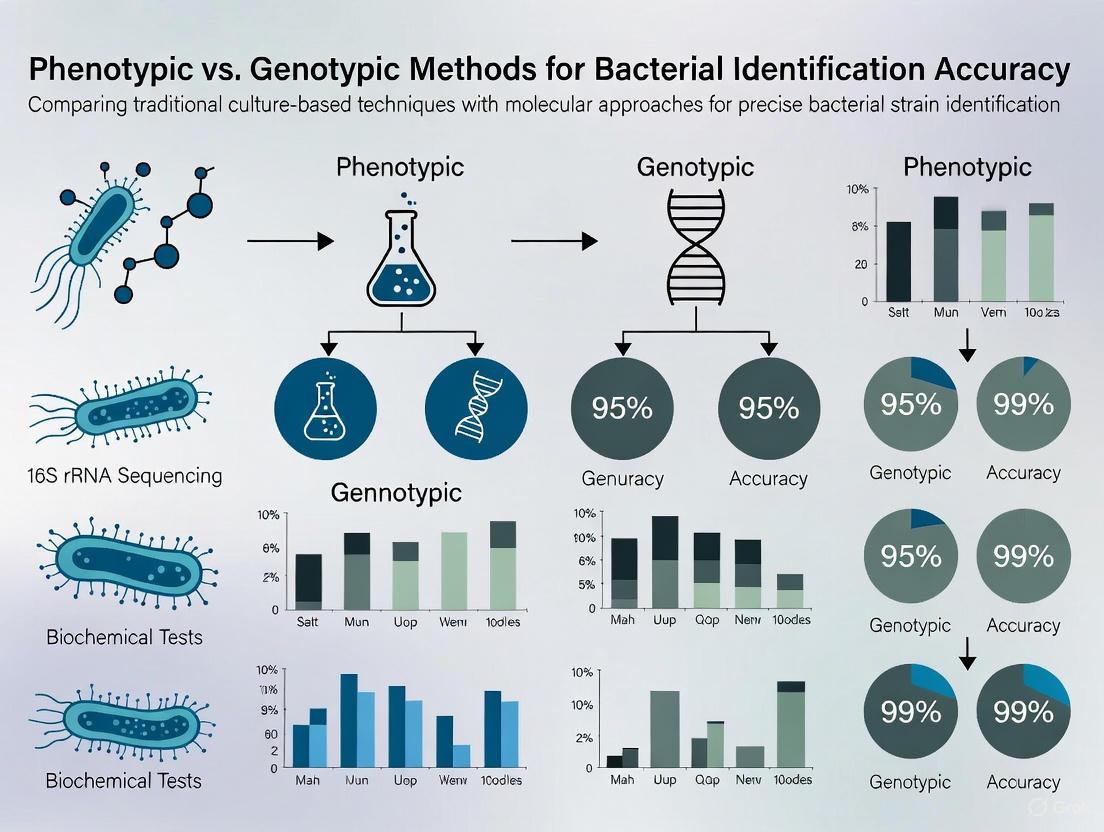
This article provides a comprehensive analysis for researchers, scientists, and drug development professionals on the accuracy of phenotypic versus genotypic bacterial identification methods.
Phenotypic vs. Genotypic Bacterial Identification: A Critical Review of Accuracy, Applications, and Future Directions
Abstract
This article provides a comprehensive analysis for researchers, scientists, and drug development professionals on the accuracy of phenotypic versus genotypic bacterial identification methods. It explores the foundational principles of both approaches, detailing their methodological applications in clinical and industrial settings. The content addresses key challenges in identification and offers optimization strategies, supported by comparative data on sensitivity, specificity, and diagnostic efficiency. By synthesizing evidence from current research, this review aims to guide the selection and integration of these methods to enhance diagnostic precision, accelerate drug development, and improve patient outcomes in the face of rising antimicrobial resistance.
Core Principles: Unraveling the Basis of Phenotypic and Genotypic Identification
Phenotypic methods form a foundational pillar in clinical microbiology and bacterial identification, relying on the direct observation of microbial characteristics and behaviors. These techniques identify microorganisms based on their morphological features, biochemical reactions, and growth patterns under specific conditions, providing a direct window into their functional capabilities [1]. For decades, these observable traits have served as the primary tool for microbial taxonomy and diagnostics, enabling scientists to classify and characterize pathogens without directly interrogating their genetic material. The persistence of these methods in modern laboratories, even as genotypic techniques have advanced, underscores their enduring value in providing practical, functional insights into microbial behavior.
This guide objectively compares the performance of traditional phenotypic methods against emerging genotypic techniques within the broader research context of bacterial identification accuracy. By examining experimental data and detailed methodologies, we aim to provide researchers, scientists, and drug development professionals with a clear understanding of the appropriate applications, limitations, and complementary value of both approaches in contemporary microbiology practice. The legacy of phenotypic methods continues to inform modern diagnostic strategies, particularly when functional insights into metabolic capabilities or antibiotic susceptibility are required for clinical decision-making or biotechnological applications [1].
Core Principles of Phenotypic Identification
Phenotypic identification systems operate through a systematic analysis of observable microbial characteristics, which can be categorized into three primary domains: morphological observations, biochemical profiling, and growth pattern analysis. Morphological assessment begins with fundamental characteristics such as cell shape (cocci, bacilli, spiral), size, arrangement (clusters, chains, pairs), and structural features observable through staining techniques like Gram staining, which differentiates bacteria based on cell wall composition [1]. Colonial morphology on specific culture media—including form, elevation, margin, color, and texture—provides additional discriminatory information for preliminary classification.
Biochemical profiling constitutes the most sophisticated aspect of phenotypic identification, analyzing microbial metabolism through assays that detect specific enzymes, fermentation patterns, and metabolic capabilities [1]. Common tests include carbohydrate fermentation profiles (e.g., Triple Sugar Iron agar), enzyme production assays (catalase, oxidase, coagulase), and substrate utilization patterns. These biochemical signatures create unique metabolic fingerprints that correlate with specific bacterial taxa at the species and sometimes strain level. Commercial automated systems like VITEK and API strips standardize these biochemical panels for rapid, reproducible identification [1].
The third component, growth pattern analysis, examines microbial behavior under specific environmental conditions, including temperature optima, oxygen requirements (obligate aerobe, facultative anaerobe, obligate anaerobe), tolerance to salinity, and antibiotic susceptibility profiles. These growth characteristics provide additional layers of discrimination that complement morphological and biochemical data to deliver a comprehensive phenotypic profile for bacterial identification.
Experimental Comparison: Phenotypic vs. Genotypic Performance
Methodologies for Comparative Studies
Rigorous comparative studies between phenotypic and genotypic identification methods typically follow standardized experimental protocols. In one representative study, researchers evaluated 72 unusual aerobic gram-negative bacilli isolated from clinical specimens using three commercial identification systems alongside conventional phenotypic methods as the evaluation standard [2]. The phenotypic systems included the Sherlock system (MIDI, Inc.) based on cellular fatty acid profiles and the Microlog system (Biolog, Inc.) based on carbon source utilization patterns. These were compared against the genotypic MicroSeq system (Perkin-Elmer Applied Biosystems) utilizing 16S rRNA gene sequencing [2].
The experimental protocol involved several critical steps. First, clinical isolates were screened using the computer-assisted replica plating (CARP) system, which identifies gram-negative bacilli based on citrate utilization, decarboxylase reactions, urease production, DNase activity, antibiotic susceptibility, and carbohydrate fermentation patterns [2]. Isolates unidentifiable by CARP (approximately 10-15% of all isolates) were classified as "unusual" and selected for comparative analysis. Conventional phenotypic identification was performed using biochemical panels for glucose fermenters and nonfermenters based on classification criteria from the Centers for Disease Control and Prevention [2].
For the phenotypic identification arms, the Sherlock system required 24-48 hours of bacterial growth on specific media followed by saponification, methylation, and analysis of cellular fatty acids by capillary gas-liquid chromatography [2]. The Microlog system involved creating bacterial suspensions adjusted to specific transmittance levels, inoculating them into microplates containing 95 different carbon sources, and measuring tetrazolium dye reduction after 24 hours of incubation [2]. The genotypic MicroSeq system employed DNA extraction via Chelex solution, PCR amplification of the full 16S rRNA gene using proprietary primers, purification of PCR products, cycle sequencing with 12 sequencing primers, and electrophoresis on an ABI PRISM 377 DNA sequencer [2].
Quantitative Performance Data
The comparative performance data from these experiments revealed significant differences in identification capabilities between methodological approaches. When evaluated against conventional phenotypic standards, the three commercial systems demonstrated varying success rates for genus and species-level identification of unusual aerobic gram-negative bacilli [2].
Table 1: Identification Performance of Phenotypic vs. Genotypic Methods for Unusual Clinical Isolates
| Identification Method | Basis of Identification | Genus-Level Identification Rate | Species-Level Identification Rate | Statistical Significance |
|---|---|---|---|---|
| Sherlock (Phenotypic) | Cellular fatty acid profiles | 56/72 (77.8%) | 44/65 (67.7%) | P = 0.002 |
| Microlog (Phenotypic) | Carbon source utilization | 63/72 (87.5%) | 55/65 (84.6%) | P = 0.005 |
| MicroSeq (Genotypic) | 16S rRNA gene sequencing | 70/72 (97.2%) | 58/65 (89.2%) | Reference standard |
| Conventional Phenotypic | Biochemical profiles | 72/72 (100%) | 65/65 (100%) | Evaluation standard |
The 16S rRNA gene sequencing approach demonstrated superior identification capabilities, particularly for challenging isolates. Notably, the MicroSeq system successfully identified four Acinetobacter and three Bordetella isolates that could not be identified to species level by conventional phenotypic methods [2]. The research also determined that sequencing just the first 527 bp of the 16S rRNA gene provided identical genus information for all isolates and identical species information for 67 (93.1%) isolates compared to full-length sequencing, suggesting a path toward more rapid genotypic identification [2].
Table 2: Performance Characteristics Across Methodological Categories
| Performance Characteristic | Phenotypic Methods | Genotypic Methods |
|---|---|---|
| Turnaround Time | 24+ hours to weeks (requires incubation) | Can be rapid (hours) but may involve complex workflows [1] |
| Resolution Level | Species, sometimes strain-level (with serotyping) | Species or strain-level (with sequencing or PCR-based assays) [1] |
| Capital Investment | Generally lower initial costs | Higher initial investment for specialized equipment [1] |
| Functional Insight | Provides direct metabolic and functional data | Limited functional prediction without additional assays [1] |
| Fastidious Organisms | Challenging for slow-growing or difficult-to-culture pathogens | Effective for fastidious or non-culturable organisms [1] |
Advanced Techniques and Emerging Applications
Novel Phenotypic Technologies
While traditional biochemical profiling remains widely used, advanced phenotypic technologies are expanding the capabilities of observable characteristic analysis. Raman spectroscopy has emerged as a powerful phenotypic tool that provides rapid, non-destructive biochemical fingerprinting of microorganisms at the single-cell level [3]. This technique measures the energy shift of scattered photons caused by molecular vibrations, generating unique spectral signatures that reflect the overall biochemical composition of a cell, including nucleic acids, proteins, lipids, and carbohydrates [3].
The experimental workflow for Raman-based microbial identification involves several critical steps. Sample preparation may include filtration, centrifugation, immunocapture, or advanced techniques like microfluidics and optical trapping for single-cell analysis [3]. Spectral acquisition occurs through Raman microscopy, which can be enhanced by surface-enhanced Raman spectroscopy (SERS) to improve sensitivity. The resulting spectral data undergoes preprocessing—including filtering, baseline correction, and normalization—before pattern recognition analysis using machine learning algorithms such as principal component analysis (PCA), hierarchical clustering, or convolutional neural networks (CNNs) for classification [3]. When combined with artificial intelligence, Raman spectroscopy can achieve species-level identification of bacteria, fungi, and viruses with accuracy exceeding 95% in controlled studies, while simultaneously providing insights into antibiotic susceptibility phenotypes [4].
Phenotypic- Genotypic Integration in Research
The integration of phenotypic and genotypic data represents a powerful approach for comprehensive microbial characterization, particularly in functional genomics and gene annotation research. Computational methods now systematically analyze experimental phenotype data to infer gene functions through knowledge-based approaches [5]. This methodology operates on the principle that if a gene mutation produces a specific phenotypic abnormality in a biological process, the gene must be involved in that process, either directly or indirectly [5].
The experimental framework for linking phenotypes to gene functions utilizes formal ontological definitions from phenotype ontologies based on the PATO (Phenotype And Trait Ontology) framework. In this approach, phenotype statements are decomposed into entities (E) and qualities (Q)—where entities often correspond to Gene Ontology (GO) terms representing biological processes, molecular functions, or cellular components [5]. When a phenotypic abnormality is observed in a mutant organism, the entity from the phenotype statement is assigned as a function to the mutated gene. For example, if a mouse knockout model exhibits a "lactation failure" phenotype (decomposed to the entity "lactation" [GO:0007595] and quality "lacking processual parts" [PATO:0001558]), the mutated gene is inferred to participate in lactation [5]. This systematic approach to functional annotation has been successfully applied to multiple model organisms, including yeast, nematodes, zebrafish, fruit flies, and mice, demonstrating how phenotypic observations can directly illuminate gene functions at scale [5].
Methodological Workflows: A Visual Comparison
The fundamental differences between phenotypic and genotypic identification approaches are reflected in their respective workflows. The following diagram illustrates the contrasting procedural pathways, highlighting the direct observation basis of phenotypic methods versus the genetic analysis foundation of genotypic methods:
Diagram Title: Phenotypic vs Genotypic Identification Workflows
Essential Research Reagents and Materials
The experimental protocols for phenotypic and genotypic identification require specific research reagents and materials that enable accurate and reproducible results. The following table details key solutions and their functions in standard identification workflows:
Table 3: Essential Research Reagent Solutions for Microbial Identification
| Reagent/Material | Application Context | Function and Purpose |
|---|---|---|
| Selective Culture Media (e.g., TSI agar, CHROMagar) | Phenotypic Identification | Supports microbial growth while revealing metabolic characteristics through color changes and differential reactions [1] |
| Staining Reagents (Gram stain, fluorescent dyes) | Phenotypic Identification | Differentiates cellular structures and characteristics for morphological classification [1] |
| Biochemical Substrates (API strips, Biolog panels) | Phenotypic Identification | Tests metabolic capabilities through enzymatic reactions and carbon source utilization [1] |
| DNA Extraction Solutions (Chelex solution, commercial kits) | Genotypic Identification | Liberates and purifies nucleic acids from microbial cells for downstream analysis [2] |
| PCR Master Mixes (Primers, nucleotides, polymerase) | Genotypic Identification | Amplifies target genetic sequences (e.g., 16S rRNA gene) for subsequent sequencing [2] |
| Sequencing Reagents (Dye terminators, buffers) | Genotypic Identification | Enables determination of nucleotide sequences for genetic comparison and identification [2] |
| Raman Spectroscopy Substrates (SERS substrates) | Advanced Phenotypic Identification | Enhances spectral signals for sensitive biochemical fingerprinting of single cells [3] |
Phenotypic methods maintain a crucial position in modern microbiology despite the rise of genotypic approaches, particularly when functional insights into microbial metabolism, antibiotic susceptibility, or growth characteristics are required. The legacy of observable characteristics and biochemical profiling continues to provide valuable, often complementary, data to genetic information, enabling a more comprehensive understanding of microbial behavior and function.
The comparative performance data clearly demonstrates that while genotypic methods generally offer superior identification rates for unusual or difficult-to-identify pathogens—with 16S rRNA sequencing achieving 97.2% genus-level identification versus 77.8-87.5% for phenotypic systems [2]—phenotypic approaches retain important advantages in accessibility, cost-effectiveness, and functional characterization [1]. The optimal identification strategy often integrates both methodological families, leveraging their complementary strengths to achieve accurate, comprehensive microbial characterization.
As technological advances like AI-powered Raman spectroscopy and automated phenotypic microarrays evolve [4] [3], the throughput, precision, and applications of phenotypic methods continue to expand. These innovations ensure that the legacy of observable characteristics and biochemical profiling will remain relevant in the future landscape of microbial identification, particularly for drug development, clinical diagnostics, and fundamental research where understanding functional capabilities is paramount.
In clinical microbiology and biomedical research, the accurate identification of bacterial pathogens is a fundamental task that directly influences diagnosis, treatment, and patient outcomes. Traditionally, this has been accomplished through phenotypic methods—techniques that rely on observable characteristics such as cell morphology, biochemical reactions, and growth patterns in response to various stimuli. While these methods have been the cornerstone of microbiology for decades, they possess inherent limitations, including prolonged turnaround times and subjective interpretation of results [1]. The emergence of genotypic methods represents a paradigm shift in microbial identification. These techniques focus on analyzing the genetic makeup of microorganisms through DNA and RNA sequence analysis, offering unprecedented precision, specificity, and speed [2] [6]. This guide provides a comprehensive comparison of these approaches, detailing how genotypic methods leverage genetic sequence analysis to transform bacterial identification in both research and clinical settings.
Core Principles: Genotypic Versus Phenotypic Methods
Genotypic and phenotypic methods operate on fundamentally different principles for microbial identification. Phenotypic methods identify microorganisms based on their expressed traits, including morphological characteristics (e.g., cell shape, Gram stain reaction), metabolic capabilities (e.g., sugar fermentation patterns, enzyme production), and growth requirements [1]. These approaches essentially interpret the observable outputs of genetic information. In clinical practice, phenotypic resistance is determined through assays like minimum inhibitory concentration (MIC) tests, which measure the lowest antibiotic concentration required to inhibit bacterial growth [6].
In contrast, genotypic methods bypass expressed characteristics to examine the genetic blueprint directly. These techniques identify microorganisms by analyzing specific DNA or RNA sequences unique to each species or strain [1]. Genotypic resistance, for instance, is identified by detecting specific genetic markers such as mutations in target genes or acquired resistance genes (e.g., β-lactamase enzymes) that confer resistance to particular antibiotics [6]. The critical distinction lies in what each approach reveals: genotypic testing identifies the potential for resistance encoded in the genetic material, while phenotypic testing directly measures the observable resistance to antimicrobial agents [6].
Table 1: Fundamental Differences Between Phenotypic and Genotypic Methods
| Aspect | Phenotypic Methods | Genotypic Methods |
|---|---|---|
| Basis of Identification | Observable traits (morphology, biochemistry) | Genetic makeup (DNA/RNA sequences) |
| Turnaround Time | Often 24+ hours to weeks | Can be rapid (hours) |
| Resolution | Species, sometimes strain-level | Species or strain-level |
| Information Provided | Functional, expressed characteristics | Genetic potential, phylogenetic relationships |
| Key Advantage | Reveals actual metabolic/antibiotic resistance profile | High specificity; detects non-culturable organisms |
The Technology Landscape: Genotypic Sequencing Platforms
Genotypic identification relies on sophisticated sequencing technologies that have evolved dramatically. Next-Generation Sequencing (NGS) technologies, also termed Massively Parallel Sequencing (MPS), have revolutionized the field by enabling simultaneous sequencing of millions to billions of DNA fragments [7] [8] [9]. These platforms can be broadly categorized into second-generation and third-generation technologies, each with distinct advantages and applications.
Second-generation NGS platforms, including those developed by Illumina and Thermo Fisher Scientific, are characterized by short-read sequencing (typically 200-600 bases) and require a DNA amplification step before sequencing [8] [9]. These platforms utilize different amplification approaches: emulsion PCR (Ion Torrent), bridge amplification (Illumina), or DNA nanoball generation (BGI) [9]. Despite producing shorter reads, second-generation NGS remains widely used due to its high accuracy and relatively low cost [9].
Third-generation NGS technologies, pioneered by Pacific Biosciences (PacBio) and Oxford Nanopore Technologies (ONT), have transformed sequencing through long-read capabilities that can span thousands to tens of thousands of base pairs [8] [9]. PacBio's Single-Molecule Real-Time (SMRT) sequencing and ONT's nanopore technology sequence individual DNA molecules without prior amplification, enabling real-time analysis and detection of epigenetic modifications [8] [9]. These platforms are particularly valuable for resolving complex genomic regions, identifying structural variations, and performing de novo genome assembly [9].
Table 2: Comparison of Major DNA Sequencing Platforms for Genotypic Analysis
| Platform | Technology Generation | Read Length | Key Applications | Strengths | Limitations |
|---|---|---|---|---|---|
| Illumina | Second-generation | 36-300 bp [8] | Whole-genome sequencing, targeted sequencing [8] | High accuracy, cost-effective [9] | Short reads, amplification biases [9] |
| Ion Torrent | Second-generation | 200-400 bp [8] | Targeted sequencing, infectious disease [9] | Rapid turnaround, semiconductor detection [8] | Homopolymer errors [8] |
| PacBio SMRT | Third-generation | 10,000-25,000 bp average [8] | Structural variant detection, genome finishing [9] | Long reads, epigenetic modification detection [8] [9] | Higher cost per sample [8] |
| Oxford Nanopore | Third-generation | 10,000-30,000 bp average [8] | Real-time sequencing, metagenomics [9] | Ultra-long reads, portable options [8] [9] | Higher error rate compared to other methods [8] |
Experimental Evidence: Precision and Performance Comparison
Rigorous comparative studies have quantified the performance advantages of genotypic methods over traditional phenotypic approaches. A landmark 1998 study published in the Journal of Clinical Microbiology directly compared phenotypic identification systems (cellular fatty acid analysis and carbon source utilization) with genotypic identification (16S rRNA gene sequencing) for 72 unusual aerobic gram-negative bacilli [2]. The results demonstrated the superior accuracy of genotypic methods: 16S rRNA sequencing identified 97.2% of isolates to the genus level compared to 87.5% for carbon source utilization and 77.8% for fatty acid analysis (p = 0.002) [2]. At the species level, genotypic identification achieved 89.2% accuracy versus 84.6% and 67.7% for the phenotypic methods, respectively [2].
More recent research on detecting carbapenemase-producing Gram-negative bacilli further illustrates the precision of genotypic methods. A 2022 study evaluating various phenotypic tests against polymerase chain reaction (PCR) as the genotypic gold standard found that phenotypic methods showed variable sensitivity ranging from 55.22% to 89.55%, while PCR provided unambiguous detection of carbapenemase-encoding genes regardless of bacterial genus or carbapenemase type [10]. This study highlighted how the performance of phenotypic tests varies depending on the bacterial genera and carbapenemase type, while genotypic methods maintain consistent accuracy [10].
The following experimental workflow diagram illustrates the 16S rRNA gene sequencing process used in the comparative study:
Diagram 1: 16S rRNA Gene Sequencing Workflow
Research Reagent Solutions for Genotypic Analysis
Implementing genotypic identification methods requires specific reagents and tools. The following table details essential components for establishing these protocols in research and clinical settings:
Table 3: Essential Research Reagents for Genotypic Analysis Methods
| Reagent/Tool | Function | Example Application |
|---|---|---|
| Chelex Solution | DNA preparation and extraction | DNA purification from bacterial cells for PCR amplification [2] |
| MicroSeq 16S rDNA Kit | PCR amplification and sequencing of 16S rRNA gene | Bacterial identification through phylogenetic analysis [2] |
| Broad-Range PCR Primers | Amplification of conserved genetic regions | Target conserved sequences in 16S rRNA gene with variable regions for differentiation [2] |
| DNA Polymerase/Ligase | Enzyme for DNA amplification/synthesis | Critical component for PCR amplification and sequencing-by-synthesis platforms [9] |
| Fluorescent Dye Terminators | Labeling nucleotides for detection | Enable detection of nucleotide incorporation in sequencing-by-synthesis [9] |
| Bioinformatics Databases | Reference sequences for comparison | Identify unknown bacteria by comparing sequences to validated 16S rDNA libraries [2] |
Integration of AI and Advanced Computational Tools
The field of genotypic analysis is being transformed by artificial intelligence (AI) and machine learning, which are essential for interpreting the massive datasets generated by modern sequencing technologies [7] [11]. AI algorithms excel at identifying complex patterns in genomic data that may elude traditional analytical methods [7]. Tools like Google's DeepVariant utilize deep learning to identify genetic variants with greater accuracy than conventional methods, demonstrating how AI enhances the precision of genotypic analysis [7]. These computational approaches are particularly valuable for tasks such as variant calling, disease risk prediction using polygenic risk scores, and identifying novel drug targets [7].
The integration of multi-omics approaches represents another significant advancement, combining genomic data with other molecular information layers such as transcriptomics, proteomics, and epigenomics [7]. This holistic perspective provides researchers with a more comprehensive understanding of biological systems, linking genetic variations with functional consequences and phenotypic outcomes [7]. The following diagram illustrates how these computational tools integrate with laboratory processes:
Diagram 2: AI-Enhanced Genomic Analysis Pipeline
Genotypic methods for bacterial identification represent a significant advancement over traditional phenotypic approaches, offering superior precision, resolution, and speed. The direct analysis of DNA and RNA sequences enables unambiguous microbial identification at the species and strain level, detection of antibiotic resistance genes, and tracing of transmission pathways during outbreaks [2] [1]. While phenotypic methods remain valuable for understanding expressed characteristics and metabolic capabilities, genotypic approaches provide the genetic context necessary for comprehensive pathogen characterization [6] [1].
The future of genotypic analysis will be shaped by emerging technologies including long-read sequencing improvements, spatial-omics that contextualize genetic information within tissue architecture, and AI-powered analytical tools that extract deeper insights from complex genomic datasets [7] [12] [9]. As these technologies become more accessible and cost-effective, they will further establish genotypic methods as the gold standard for precise microbial identification in research, clinical diagnostics, and public health surveillance.
The identification of bacterial pathogens is a cornerstone of clinical microbiology, directly influencing diagnosis, treatment, and patient outcomes. For decades, the field relied almost exclusively on phenotypic methods—observable characteristics such as morphology, biochemical reactions, and growth patterns. The latter part of the 20th century witnessed a molecular revolution, with genotypic techniques based on genetic analysis emerging as powerful alternatives. This guide objectively compares the performance of these two paradigms, framing the analysis within the broader thesis of their relative accuracy for bacterial identification. This shift mirrors a larger trend in life sciences: moving from observing external traits to decoding fundamental genetic blueprints, thereby achieving greater precision and objectivity. The transition from traditional biochemistry to molecular tools has redefined the capabilities of clinical laboratories, especially when dealing with slow-growing, fastidious, or unculturable organisms [2] [1].
A Tale of Two Approaches: Core Principles and Technologies
Phenotypic Methods: The Traditional Toolkit
Phenotypic methods identify microorganisms based on their expressed traits. These techniques are built upon a century of microbiological practice and include:
- Morphological Observations: This is the most basic form of identification, involving microscopic examination (e.g., Gram staining) and assessment of colony appearance (shape, size, color, elevation) on culture media [1].
- Biochemical and Metabolic Tests: These tests profile an organism's metabolic capabilities. They assess the fermentation of sugars, enzyme production (e.g., catalase, oxidase), and utilization of specific substrates. Common examples include API strips, the VITEK system, and the Biolog MicroStation, which uses carbon source utilization panels [2] [1].
- Serotyping: This method uses antibodies to detect specific antigenic structures on the surface of bacteria, allowing for the differentiation of serotypes within a species, such as in Salmonella or E. coli [1].
Genotypic Methods: The Molecular Toolkit
Genotypic methods identify microorganisms by analyzing their genetic material, most commonly DNA. These techniques offer a direct look at the organism's fundamental identity:
- 16S rRNA Gene Sequencing: This is a gold-standard genotypic method. The 16S rRNA gene contains highly conserved regions useful for broad categorization and variable regions that provide species-specific signatures. Sequencing and comparing this gene allows for precise identification [2] [13].
- Polymerase Chain Reaction (PCR) and Its Variants: PCR amplifies specific DNA targets, enabling rapid detection. Variations like real-time PCR (qPCR) allow for quantification, while reverse transcription PCR (RT-PCR) can target RNA viruses [10] [1].
- Sequencing of Other Housekeeping Genes: For some bacteria, the 16S rRNA gene lacks sufficient discriminatory power. Genes such as tuf (elongation factor Tu) and sodA (manganese-dependent superoxide dismutase) can provide higher resolution for distinguishing closely related species [13].
- Whole-Genome Sequencing (WGS): As a comprehensive approach, WGS provides the ultimate level of detail, enabling strain-level identification, outbreak tracing, and the detection of antibiotic resistance genes [1] [14].
Quantitative Performance Comparison: Experimental Data
Rigorous comparative studies have quantified the performance differences between phenotypic and genotypic identification methods.
Table 1: Comparison of Identification Methods for Unusual Aerobic Gram-Negative Bacilli [2]
| Method | Basis of Identification | Genus-Level Identification (n=72) | Species-Level Identification (n=65) |
|---|---|---|---|
| Sherlock (Phenotypic) | Cellular Fatty Acid Profiles | 56/72 (77.8%) | 44/65 (67.7%) |
| Microlog (Phenotypic) | Carbon Source Utilization | 63/72 (87.5%) | 55/65 (84.6%) |
| MicroSeq (Genotypic) | 16S rRNA Gene Sequencing | 70/72 (97.2%) | 58/65 (89.2%) |
The superior accuracy of the genotypic method (16S rRNA sequencing) is statistically significant (P = 0.002 for genus-level, P = 0.005 for species-level) [2]. Furthermore, the MicroSeq system was able to identify several Acinetobacter and Bordetella isolates that could not be speciated by conventional phenotypic methods [2].
Table 2: Performance of Phenotypic Tests for Carbapenemase Detection vs. Genotypic PCR [10]
| Phenotypic Test | Overall Sensitivity/Specificity | Sensitivity for Enterobacterales | Sensitivity for Non-Glucose Fermenters |
|---|---|---|---|
| Modified Hodge Test (MHT) | 65.62% / 100% | 74.00% / 100% | 62.16% / 100% |
| mCIM | 68.65% / 100% | 51.72% / 100% | 81.57% / 100% |
| Combined Disk Test (CDT) | 55.22% / 100% | 62.07% / 100% | 50.00% / 100% |
| Blue-Carba Test (BCT) | 89.55% / 75% | 82.75% / 100% | 94.74% / 66.66% |
This 2022 study highlights that while some phenotypic tests like BCT offer high sensitivity, their performance can vary significantly depending on the bacterial type and the specific carbapenemase enzyme present. Genotypic PCR remains the definitive gold standard for detecting carbapenemase-encoding genes [10].
Similar results are seen in studies on Gram-positive bacteria. For example, in identifying coagulase-negative staphylococci (CONS), partial 16S rRNA gene sequencing correctly identified species, whereas the API Staph ID 20 phenotypic system matched only 76.0% of the results. Another study concluded that tuf gene sequencing was the best method, though the API Staph ID test was a "reasonably reliable phenotypic alternative." [13] [15].
Detailed Experimental Protocols
To ensure reproducibility and provide a clear understanding of the methodologies, this section details two key experimental protocols from the cited literature.
Protocol 1: 16S rRNA Gene Sequencing for Bacterial Identification
This protocol is adapted from the MicroSeq system evaluation [2].
- Principle: Genomic DNA is extracted from a bacterial isolate, and the nearly full-length 16S rRNA gene is amplified via PCR. The PCR product is sequenced, and the resulting sequence is compared to a validated database for identification.
- Workflow:
- DNA Preparation: A loopful of bacterial cells is washed and incubated in a Chelex solution at 56°C for 15 minutes. The suspension is vortexed, heated to 100°C for 8 minutes, and centrifuged. The supernatant containing the DNA is used for PCR.
- PCR Amplification: A master mix containing primers 0005F and 1540R is combined with the DNA extract. Thermal cycling includes an initial denaturation at 95°C for 10 min; 30 cycles of 95°C for 30 s, 60°C for 30 s, and 72°C for 45 s; and a final extension at 72°C for 10 min.
- PCR Product Purification: The amplified DNA is purified using a microconcentrator column to remove excess primers and nucleotides.
- Cycle Sequencing: The purified PCR product is aliquoted into tubes containing a dye terminator sequencing mix and one of twelve sequencing primers targeting different regions of the 16S rRNA gene. A "touchdown" cycle sequencing profile is used.
- Electrophoresis: Sequences are determined by electrophoresis on a instrument such as an ABI PRISM 377 DNA sequencer.
- Sequence Analysis: Software assembles the sequence reads into a consensus. This consensus sequence is compared against a proprietary database of over 1,100 validated full 16S rDNA sequences for identification.
Protocol 2: The Blue-Carba Test (BCT) for Carbapenemase Detection
This is a rapid phenotypic test evaluated in a 2022 study [10].
- Principle: This colorimetric test detects the hydrolysis of a carbapenem antibiotic (imipenem) by a carbapenemase enzyme. The hydrolysis causes a pH change, which is indicated by a color shift in the bromothymol blue indicator.
- Workflow:
- Sample Preparation: Several colonies of the test isolate are picked and emulsified in a tube with 100 μL of distilled water to create a heavy suspension.
- Reagent Addition: A single 10 μg meropenem disk is crushed and added to the bacterial suspension. Then, 100 μL of a bromothymol blue indicator solution is added, and the tube is vortexed thoroughly.
- Incubation and Interpretation: The tube is incubated at 37°C for up to 2 hours, and the color is observed every 30 minutes.
- Positive Result: A color change from blue or blue-green to yellow or greenish-yellow indicates carbapenemase production.
- Negative Result: The solution remains blue or blue-green.
Visualizing the Workflows
The following diagrams illustrate the logical relationships and key steps in the two primary identification pathways.
The Scientist's Toolkit: Essential Research Reagents and Materials
Table 3: Key Research Reagents for Phenotypic and Genotypic Identification
| Category | Item | Function / Application |
|---|---|---|
| General Culture | Trypticase Soy Broth Agar / Blood Agar | Standard media for cultivating bacterial isolates prior to testing. [2] |
| Phenotypic ID | API Staph ID 20 / API 20E Strips | Commercial miniaturized biochemical test panels for species identification. [13] [1] |
| Phenotypic ID | Biolog GN MicroPlate | Microplate with 95 carbon sources to create a metabolic fingerprint for identification. [2] |
| Phenotypic ID | Bromothymol Blue | pH indicator used in colorimetric tests like the Blue-Carba Test. [10] |
| Genotypic ID | DNeasy Tissue Kit / Chelex 100 | For extracting and purifying genomic DNA from bacterial cells. [2] [13] |
| Genotypic ID | Taq DNA Polymerase | Enzyme for PCR amplification of target genes (e.g., 16S rRNA, tuf). [2] [13] |
| Genotypic ID | Species-Specific PCR Primers | Oligonucleotides designed to amplify unique sequences for a given species or gene. [10] [13] |
| Genotypic ID | BigDye Terminator Kit | Reagents for cycle sequencing of PCR amplicons. [2] [13] |
| Data Analysis | MicroSeq / BLAST Database | Curated sequence libraries for comparing unknown sequences to known standards. [2] |
The historical journey from traditional biochemistry to the molecular revolution is marked by a clear trend: genotypic methods generally provide superior accuracy, resolution, and speed for bacterial identification, particularly for unusual, slow-growing, or fastidious organisms [2] [1]. The data show that 16S rRNA sequencing achieves significantly higher identification rates than phenotypic methods like carbon utilization or fatty acid analysis [2].
However, this does not render phenotypic methods obsolete. They offer cost-effectiveness, functional insights into metabolic capabilities, and remain invaluable in resource-limited settings or for initial screening [10] [1]. The future of microbial identification lies not in the supremacy of one approach over the other, but in their strategic, complementary use. Phenotypic tests can provide rapid initial characterization, while genotypic assays offer definitive confirmation and high-resolution strain typing, together providing a comprehensive toolkit for researchers and clinicians tackling infectious diseases and drug development.
Key Strengths and Inherent Limitations of Each Foundational Approach
The accurate identification of bacterial pathogens is fundamental to clinical microbiology, influencing critical decisions in disease diagnosis, treatment selection, and infection control. For decades, the field has relied on two foundational approaches with distinct philosophical underpinnings: phenotypic methods, which interpret observable characteristics of microorganisms, and genotypic methods, which analyze genetic material directly [1]. The ongoing scholarly debate centers on their comparative accuracy, applicability, and reliability in diverse diagnostic contexts.
This guide provides an objective comparison of these methodologies, synthesizing experimental data to elucidate their performance characteristics. Within the broader thesis of bacterial identification accuracy research, we examine how each approach contends with the biological complexity of microorganisms—whether through their expressed traits or genetic blueprints—and evaluate their respective positions in the modern laboratory workflow.
Core Conceptual Frameworks and Comparative Analysis
Foundational Principles and Key Differentiators
Phenotypic methods constitute the traditional cornerstone of microbiology. They identify microorganisms based on their expressed morphological, biochemical, and physiological properties. These include colony morphology on specific media, Gram-staining characteristics, enzymatic activities, and carbohydrate fermentation patterns [1] [16]. Techniques range from manual biochemical test strips (e.g., API strips) and automated systems (e.g., VITEK, BD Phoenix) to newer technologies like MALDI-TOF MS, which identifies organisms based on unique protein mass spectral fingerprints [16].
Genotypic methods, in contrast, utilize molecular biology techniques to identify organisms based on their genetic sequences. These methods bypass the need for expressed characteristics and instead target conserved or unique genetic regions. Common techniques include polymerase chain reaction (PCR), 16S rRNA gene sequencing, whole-genome sequencing (WGS), and DNA-DNA hybridization [1] [17]. They fundamentally rely on detecting the presence of specific genes or comparing genetic sequences to established databases.
Table 1: Core Conceptual Differences Between Phenotypic and Genotypic Identification Methods
| Aspect | Phenotypic Methods | Genotypic Methods |
|---|---|---|
| Basis of Identification | Observable traits (morphology, biochemistry, serology) [1] | Genetic makeup (DNA/RNA analysis) [1] |
| Typical Turnaround Time | 24 hours to several days [1] [18] | A few hours to days (depending on method) [1] |
| Resolution | Species level; sometimes strain-level (e.g., with serotyping) [1] | Species or strain-level (with sequencing, PCR-based assays) [1] |
| Key Advantage | Provides functional, metabolic insights; lower initial cost [1] | High specificity and sensitivity; identifies fastidious organisms [1] |
| Primary Limitation | Dependent on bacterial growth and expression of traits [1] | May detect non-viable organism DNA; higher initial investment [1] |
Performance Evaluation: Quantitative Data from Comparative Studies
Experimental data consistently highlights a trade-off between the functional relevance of phenotyping and the precision of genotyping. Performance varies significantly based on the bacterial group studied and the specific techniques being compared.
A 2005 study comparing methods for identifying coagulase-negative staphylococci (CoNS) found that sequence-based methods were superior, but also noted limitations in public sequence databases. The API Staph ID test, a phenotypic method, showed reasonable reliability, whereas the BD Phoenix Automated Microbiology System performed poorly [13]. Crucially, this study proposed partial tuf gene sequencing as a more accurate and reproducible genotypic method than 16S rRNA sequencing for distinguishing closely related species [13].
In the critical area of detecting carbapenemase-producing Gram-negative bacilli, a 2022 study provided clear performance metrics for four phenotypic tests when compared to PCR (the genotypic gold standard) [10]. The Blue-Carba Test (BCT) demonstrated the highest sensitivity (89.55%), though with lower specificity (75%), while other tests like the modified Hodge test (MHT) and modified carbapenem inactivation method (mCIM) showed perfect specificity (100%) but lower sensitivity [10].
Table 2: Experimental Performance Data for Phenotypic vs. Genotypic Methods in Specific Applications
| Study Focus / Method | Sensitivity (%) | Specificity (%) | Key Finding / Limitation |
|---|---|---|---|
| Carbapenemase Detection (2022) [10] | Genotypic reference: PCR for blaKPC, blaNDM, blaVIM, blaOXA-48-like | ||
| Blue-Carba Test (BCT) | 89.55 | 75.00 | High sensitivity; recommended for resource-limited settings. |
| Modified Hodge Test (MHT) | 65.62 | 100.00 | Archived by CLSI; specificity remains high. |
| mCIM | 68.65 | 100.00 | High specificity but variable sensitivity. |
| CDT (EDTA) | 55.22 | 100.00 | Low sensitivity limits standalone use. |
| CoNS Identification (2005) [13] | Genotypic reference: tuf and sodA gene sequencing |
||
| API Staph ID (Phenotypic) | N/A | N/A | A "reasonably reliable phenotypic alternative." |
| BD Phoenix (Phenotypic) | N/A | N/A | Performance for identification of CoNS was "poor." |
| S. pneumoniae vs. Viridans Group (2004) [19] | Highlights limitations of both approaches with atypical strains | ||
| Bile Solubility (Phenotypic) | >98 | 100 | Considered more specific than the optochin test. |
| AccuProbe Test (Genotypic) | Variable | Variable | Cannot discriminate S. pneumoniae from the novel S. pseudopneumoniae. |
The differentiation of Streptococcus pneumoniae from other viridans group streptococci exemplifies the challenges both approaches can face. Phenotypic tests like optochin susceptibility can yield ambiguous results, as incubation in CO₂ can reduce zone sizes, leading to misidentification [19]. Furthermore, while the bile solubility test demonstrates high specificity and sensitivity, bile-insoluble strains of S. pneumoniae have been reported [19]. Genotypic methods also show limitations; for instance, the AccuProbe DNA probe hybridization test and PCR assays targeting the ply or lytA genes cannot reliably discriminate S. pneumoniae from the closely related Streptococcus pseudopneumoniae [19]. This underscores that genetic markers are sometimes shared among closely related species, reducing the discriminatory power of some genotypic assays.
Detailed Experimental Protocols and Methodologies
Protocol 1: Phenotypic Carbapenemase Detection via Blue-Carba Test
The Blue-Carba Test is a colorimetric hydrolysis method that provides rapid results, making it suitable for laboratories without immediate access to molecular techniques [10].
Principle: The test detects the hydrolysis of the β-lactam ring in carbapenems (e.g., meropenem). Bacterial enzymes (carbapenemases) hydrolyze the substrate, causing a pH change that shifts the color of a pH indicator from red to yellow/green [10].
Materials and Reagents:
- Meropenem Powder: The carbapenem substrate.
- Phenol Red Solution: A pH indicator (red at pH ≥ 8, yellow at pH ≤ 6.8).
- Zinc Sulfate Solution: Ensures optimal activity of metallo-β-lactamases (MBLs).
- Sterile Water or Tris-HCl Buffer: For preparing the reaction solution.
- 1.5 mL Microcentrifuge Tubes: For the reaction.
- Bacterial Isolate: Several colonies from an overnight pure culture.
Procedure:
- Solution Preparation: Prepare a working solution by dissolving meropenem in water/buffer with phenol red.
- Inoculation: Emulsify several bacterial colonies directly into the solution in the microcentrifuge tube to create a dense suspension.
- Incubation: Incubate the tube at 35±2°C and observe for color change at 30 minutes and 2 hours.
- Interpretation: A color change from red to yellow/green is interpreted as a positive result, indicating carbapenemase production. A result is considered negative if the solution remains red.
Protocol 2: Genotypic Identification viatufGene Sequencing for CoNS
This protocol, adapted from a 2005 study, uses sequencing of the tuf gene (encoding elongation factor Tu) for highly accurate identification of coagulase-negative staphylococci (CoNS) [13].
Principle: The tuf gene is a housekeeping gene with sufficient sequence variation to discriminate between closely related staphylococcal species, offering better resolution than 16S rRNA sequencing [13].
Materials and Reagents:
- DNA Extraction Kit: (e.g., DNeasy Tissue Kit, QIAGEN) for genomic DNA isolation.
- PCR Reagents: Taq DNA polymerase, PCR buffer, dNTPs, and specific primers (
tuf-F: 5′-GCCAGTTGAGGACGTATTCT-3′,tuf-R: 5′-CCATTTCAGTACCTTCTGGTAA-3′) [13]. - Thermal Cycler: For DNA amplification.
- Agarose Gel Electrophoresis System: To confirm PCR product size (412 bp).
- PCR Purification Kit: (e.g., QIAquick PCR Purification Kit) to clean the amplicon.
- DNA Sequencer: For Sanger sequencing.
- BigDye Terminator Cycle Sequencing Kit: For sequencing reactions.
Procedure:
- DNA Extraction: Extract genomic DNA from a pure bacterial culture.
- PCR Amplification: Amplify the
tufgene fragment using the specified primers and standard PCR conditions (initial denaturation at 95°C for 5 min, followed by 30 cycles of 95°C for 1 min, 55°C for 1 min, and 72°C for 1 min, with a final extension at 72°C for 10 min) [13]. - Amplicon Verification: Analyze the PCR product on a 1.2% agarose gel to confirm the expected 412 bp amplicon.
- PCR Purification: Purify the amplified DNA to remove excess primers and dNTPs.
- DNA Sequencing: Perform sequencing reactions in both forward and reverse directions using the same primers as for PCR.
- Sequence Analysis: Purify sequencing reactions and run on a sequencer. Compare the obtained sequence to a curated database of
tufgene sequences from type strains for definitive identification.
Visualizing Methodological Workflows and Relationships
Bacterial Identification Decision Pathway
Performance Comparison of Key Phenotypic Tests
The Scientist's Toolkit: Essential Research Reagents and Materials
Table 3: Key Research Reagent Solutions for Phenotypic and Genotypic Studies
| Reagent / Material | Function / Application | Example Use Case |
|---|---|---|
| API Strips / Automated Systems | Standardized biochemical profiling for phenotypic identification [1] [16]. | Identification of Enterobacterales and other common clinical pathogens. |
| MALDI-TOF MS Reagents | Protein-based identification using mass spectrometry fingerprinting [16]. | Rapid species-level identification from pure colonies. |
| Carbapenem Antibiotics (e.g., Meropenem) | Substrate for phenotypic carbapenemase detection tests [10]. | Used in Blue-Carba Test, mCIM, and other hydrolysis assays. |
| DNA Extraction Kits | Isolation of high-quality genomic DNA from bacterial cultures [13]. | Essential first step for any genotypic identification method (PCR, sequencing). |
tuf & sodA Gene Primers |
Target-specific amplification for sequencing-based identification [13]. | Discriminating closely related species (e.g., CoNS, viridans streptococci). |
| PCR Master Mix & Enzymes | Amplification of specific genetic targets from bacterial DNA [13] [17]. | Detecting antibiotic resistance genes (e.g., blaKPC, mecA) or species-specific markers. |
| BigDye Terminator Kit | Fluorescent dye-terminator cycle sequencing [13]. | Sanger sequencing of amplified gene targets for definitive identification. |
The evidence demonstrates that neither phenotypic nor genotypic methods hold universal superiority; rather, they offer complementary strengths. Phenotypic methods provide cost-effective, functional insights but can be slow and may fail with fastidious organisms or atypical strains [19] [1]. Genotypic methods provide rapid, highly specific identification but face challenges with the discriminatory power of certain genetic targets and may detect non-viable organisms [19] [13].
The prevailing "polyphasic taxonomy" approach, which integrates both phenotypic and genotypic data, is the most robust strategy for accurate bacterial identification [17]. The choice between methods—or the decision to use them in concert—must be guided by the clinical context, available resources, the required turnaround time, and the specific microbial taxa involved. Future advancements will likely focus on integrating these approaches seamlessly into laboratory workflows, improving database curation for genotypic methods, and developing faster, more accessible phenotypic tests to keep pace with the evolving challenges of clinical microbiology.
From Theory to Practice: Implementing Identification Methods in Real-World Scenarios
Accurate microbial identification is a cornerstone of clinical microbiology, directly influencing patient diagnosis, treatment, and outcome. For decades, phenotypic methods—which rely on observable characteristics of microorganisms—have been the workhorses of diagnostic laboratories. These methods include biochemical profiling, serotyping, and, more recently, Matrix-Assisted Laser Desorption Ionization-Time of Flight Mass Spectrometry (MALDI-TOF MS). The emergence of genotypic techniques, such as 16S rRNA gene sequencing, has provided a powerful comparator, often regarded as a reference standard due to its high resolution and reproducibility [2] [1]. This guide objectively compares the performance of the major phenotypic platforms against each other and genotypic methods, providing researchers and scientists with experimental data to inform their diagnostic and research strategies. The core distinction lies in what is being measured: phenotypic methods identify organisms based on their expressed traits (e.g., protein spectra, metabolic reactions), while genotypic methods identify them based on their genetic code [1] [6].
Comparative Performance Data of Phenotypic and Genotypic Methods
Extensive studies have evaluated the accuracy of various identification systems. The tables below summarize key performance metrics from recent research, providing a quantitative basis for comparison.
Table 1: Overall Identification Performance of Different Systems Across Diverse Bacterial Isolates
| Identification System | Correct to Genus Level (%) | Correct to Species Level (%) | Turnaround Time | Study Details |
|---|---|---|---|---|
| VITEK MS (MALDI-TOF MS) | 99.8% | 99.0% | < 20 minutes | 806 clinical isolates [20] |
| Bruker Microflex MS (MALDI-TOF MS) | 97.3% | 93.2% | < 20 minutes | 806 clinical isolates [20] |
| VITEK 2 (Phenotypic/Biochemical) | 98.6% | 96.4% | 24-48 hours | 806 clinical isolates [20] |
| MicroSeq 500 16S rDNA (Genotypic) | 97.2% | 89.2% | Several hours | 72 unusual aerobic GNBs [2] |
| Biolog Microlog (Carbon Source Utilization) | 87.5% | 84.6% | 24-48 hours | 72 unusual aerobic GNBs [2] |
| Sherlock (Cellular Fatty Acid) | 77.8% | 67.7% | 24-48 hours | 72 unusual aerobic GNBs [2] |
Table 2: Performance Breakdown by Bacterial Type for VITEK MS and Biochemical Systems
| Organism Group | VITEK 2 (Phenotypic) | VITEK MS (MALDI-TOF MS) | Notes |
|---|---|---|---|
| Gram-negative bacilli | 100% (165/165) [21] | 100% (165/165) [21] | Performance is excellent for common organisms. |
| Yeasts | 100% (15/15) [21] | 100% (15/15) [21] | |
| Gram-positive cocci | 92.6% (199/215) [21] | High performance, but can struggle with some streptococci [22] [20] | VITEK MS generally outperforms phenotypic systems for GPC. |
| Gram-positive bacilli | 0% (0/5) [21] | Variable performance; database-dependent [23] | Phenotypic methods are particularly poor for GPB. |
| Anaerobic Bacteria (e.g., Clostridium) | Poor (e.g., 2/18 for VITEK2) [24] | Excellent (e.g., 17/18 for MALDI-TOF) [24] | MALDI-TOF MS is significantly more accurate for anaerobes. |
Detailed Experimental Protocols and Methodologies
To ensure reproducibility and critical evaluation of the data, this section outlines the standard experimental protocols used in the cited studies for the key technologies compared.
MALDI-TOF MS Protocol (VITEK MS and Bruker Microflex)
The following workflow details the standard procedure for bacterial identification using MALDI-TOF MS.
1. Sample Preparation:
- Direct Deposit Method: A single bacterial colony is smeared directly onto a spot on a disposable target plate [25] [22] [20]. This method is sufficient for most common, easily-lysed bacteria.
- Formic Acid Extraction Method: For more robust organisms (e.g., some Gram-positive bacilli, yeasts), a portion of a colony is suspended in an extraction solvent, typically formic acid and acetonitrile. The mixture is centrifuged, and the supernatant is applied to the target plate [23] [22]. This extraction step improves protein recovery and spectral quality.
2. Matrix Application and Crystallization:
- The sample spot on the target plate is overlaid with 1 µL of matrix solution, typically α-cyano-4-hydroxycinnamic acid (CHCA) [25] [22] [20].
- The plate is air-dried at room temperature for 1-2 minutes to allow co-crystallization of the matrix with the microbial proteins.
3. Mass Spectrometry Analysis:
- The loaded target plate is placed into the mass spectrometer.
- The instrument is calibrated using a known standard, such as Escherichia coli ATCC 8739, included on each target plate [25] [22].
- A nitrogen laser (337 nm) fires at the crystallized spot, desorbing and ionizing the proteins.
- The time-of-flight of the ionized proteins is measured, generating a unique mass spectral fingerprint (typically in the 2,000-20,000 Da range) [25].
4. Data Interpretation and Identification:
- The acquired mass spectrum is compared against a database of reference spectra using proprietary algorithms (e.g., the Advanced Spectrum Classifier for VITEK MS) [25].
- The system provides an identification with a confidence score.
- VITEK MS: A probability score of 60-99.9% indicates reliable identification; ≥90% is often used as a cutoff for species-level identification [25] [20].
- Bruker Microflex: A log score of ≥2.0 indicates species-level identification; a score between 1.7-1.99 indicates genus-level identification [22] [20].
Automated Biochemical Panel Protocol (VITEK 2)
1. Inoculum Preparation:
- Several isolated colonies of the pure culture are emulsified in saline (0.45-0.50% NaCl) to a standardized turbidity, typically equivalent to a 0.5 McFarland standard [21].
2. Card Inoculation and Sealing:
- The bacterial suspension is automatically drawn into a specialized test card (e.g., GN for Gram-negative bacilli, GP for Gram-positive cocci) by the VITEK 2 instrument [21].
- The card contains multiple wells, each with substrates for biochemical reactions.
3. Incubation and Reading:
- The inoculated card is incubated at 35°C inside the instrument for 24-48 hours [20] [21].
- The instrument's optical system reads the colorimetric and fluorimetric changes in each well at regular intervals (e.g., every 15 minutes).
4. Data Interpretation and Identification:
- The pattern of biochemical reactions is analyzed by the system's software and compared to a database.
- An identification is provided with a percentage confidence value. A result with >90% confidence is typically considered acceptable [21].
16S rRNA Gene Sequencing Protocol (Reference Genotypic Method)
1. DNA Extraction:
- Genomic DNA is extracted from pure bacterial colonies using commercial kits, which may involve mechanical or enzymatic (e.g., lysozyme, proteinase K) lysis steps [2] [20] [21].
2. PCR Amplification:
- The 16S rRNA gene is amplified using universal bacterial primers targeting conserved regions (e.g., 0005F: 5'-AGAGTTTGATCCTGGCTCAG-3' and 1540R: 5'-TACGGCTACCTTGTTACGACTT-3') [25] [2].
- A typical PCR protocol involves an initial denaturation (e.g., 95°C for 10 min), followed by 30 cycles of denaturation, annealing, and extension, with a final extension step [2].
3. Sequencing and Analysis:
- The PCR product is purified and sequenced using Sanger sequencing technology [2].
- The resulting sequence (typically the first ~500 bp or the full ~1500 bp) is compared to large public (e.g., GenBank) or curated proprietary (e.g., MicroSeq) databases using tools like BLAST [2] [20]. A ≥99% sequence similarity to a known species is commonly used as the criterion for species-level identification [25] [2].
The Scientist's Toolkit: Essential Research Reagents and Materials
The following table lists key reagents and materials required for the experiments described in this guide.
Table 3: Essential Research Reagents and Materials for Bacterial Identification
| Item | Function/Application | Example/Description |
|---|---|---|
| VITEK MS CHCA Matrix | Energy-absorbing molecule for MALDI-TOF MS; co-crystallizes with sample to enable ionization. | α-cyano-4-hydroxycinnamic acid in a ready-to-use solution [25] [22]. |
| FlexiMass Target Plate | Disposable plate for sample deposition in VITEK MS system. | A 48-well microscope slide format target [25]. |
| Formic Acid & Acetonitrile | Solvents for on-target protein extraction for difficult-to-lyse organisms in MALDI-TOF MS. | Used to break down cell walls and improve protein spectrum quality [23] [22]. |
| VITEK 2 Identification Cards | Microcards containing substrates for biochemical reactions. | Cards are specific for microbial groups (e.g., GN, GP, YST, NH) [21]. |
| 0.45% Saline Solution | Diluent for preparing standardized inoculum for VITEK 2 and other phenotypic systems. | Used to achieve a 0.5 McFarland standard [21]. |
| Lysozyme & Proteinase K | Enzymes for bacterial cell lysis during DNA extraction for genotypic methods. | Used to degrade cell walls and proteins to release DNA [2] [21]. |
| 16S rRNA Universal Primers | Oligonucleotides for PCR amplification of the 16S rRNA gene. | e.g., 0005F (AGAGTTTGATCCTGGCTCAG) and 1540R (TACGGCTACCTTGTTACGACTT) [25] [2]. |
| Reference Strains | Quality control for instrument calibration and protocol validation. | e.g., E. coli ATCC 8739 for MALDI-TOF MS calibration [25] [22]. |
Analysis and Discussion
Strengths, Limitations, and Ideal Use Cases
The data reveals a clear hierarchy in performance. MALDI-TOF MS has largely superseded traditional biochemical panels as the first-line identification method due to its superior speed, accuracy, and lower operational cost. However, the choice of method depends heavily on the context.
- MALDI-TOF MS is the premier tool for high-throughput, routine identification of commonly encountered bacteria and yeasts that are well-represented in its databases. Its primary limitation is database dependency. A 2025 study on rare gram-positive organisms found that approximately 13% of aerobic gram-positive bacilli and 5.3% of gram-positive cocci could not be accurately identified by VITEK MS due to the absence of reference spectra in the database [23]. This makes continuous database updating critical.
- Biochemical Panels (e.g., VITEK 2, API) remain valuable for providing functional insights into microbial metabolism, which can sometimes inform beyond mere identification. However, they are slower and less accurate for fastidious, slow-growing, or phenotypically inert organisms [1] [21]. Their use is now often reserved for situations where MALDI-TOF fails or to provide supplementary biochemical data.
- Serotyping is a highly specific phenotypic method not extensively covered in the provided studies but remains irreplaceable for subspecies-level classification of certain pathogens (e.g., Salmonella, E. coli) for epidemiological tracking and outbreak investigation [1].
- 16S rRNA Gene Sequencing is the reference method for resolving discrepancies and identifying novel, rare, or highly unusual isolates that challenge phenotypic and proteomic methods [23] [2]. It is also indispensable for organisms that are difficult to culture. Its drawbacks include higher cost, longer turnaround time than MALDI-TOF MS, and the need for specialized expertise.
The Integrated Laboratory Workflow
The relationship between these methods is increasingly synergistic rather than competitive. A modern, efficient laboratory workflow often employs a tiered approach:
This workflow maximizes efficiency by using the fastest and most cost-effective method first, while having a robust genotypic reference method to ensure ultimate accuracy for difficult cases [23].
The evolution of phenotypic identification has been remarkable, culminating in the widespread adoption of MALDI-TOF MS as a transformative technology. While biochemical panels and serotyping retain specific roles, MALDI-TOF MS offers an unparalleled combination of speed, accuracy, and cost-effectiveness for routine identification. Nevertheless, the data confirms that genotypic methods, particularly 16S rRNA gene sequencing, remain the gold standard for resolving complex identifications and discovering novel pathogens. The most effective laboratory strategy is not to rely on a single technology but to implement an integrated workflow that leverages the strengths of both phenotypic workhorses and genotypic arbiters to achieve the highest standard of microbial identification.
The accurate and timely identification of bacterial pathogens is a cornerstone of effective infectious disease treatment and drug development. Historically, phenotypic drug discovery (PDD)—which focuses on observing therapeutic effects in whole-cell or whole-organism systems without a pre-specified molecular target—was the primary method for discovering first-in-class drugs [26]. However, the late 20th century saw a major shift toward target-based drug discovery (TDD), driven by advances in molecular biology [27]. This target-based approach often relies on genotypic identification methods, which detect specific genetic sequences to classify microorganisms. Despite the rise of TDD, phenotypic strategies have seen a resurgence, as they account for the complex physiology of diseases and have produced a disproportionate number of first-in-class medicines [26] [27]. This comparison guide objectively evaluates the performance of three key genotypic technologies—PCR, 16S rRNA Sanger Sequencing, and 16S rRNA Next-Generation Sequencing (NGS)—framed within the broader research context of phenotypic versus genotypic bacterial identification accuracy.
Technology Performance Comparison
The following tables summarize the experimental data and diagnostic performance of these genotypic technologies as reported in recent clinical and mock community studies.
Table 1: Comparative Diagnostic Accuracy of Genotypic Technologies from Clinical Studies
| Technology | Sensitivity (Range or Pooled) | Specificity (Range or Pooled) | Key Strengths | Primary Limitations | Sample Types (Evidence) |
|---|---|---|---|---|---|
| 16S rDNA PCR | 80.0% (75.4–84.3%) [28] | 94.0% (91–96%) [28] | High specificity; established protocol. | Lower sensitivity vs. NGS; limited polymicrobial detection. | Periprosthetic joint fluids & tissues [28]. |
| Multiplex PCR (mPCR) | 62.2% (52.5–70.9%) [28] | 96.2% (93.2–97.9%) [28] | High specificity; rapid; targeted pathogen detection. | Lower overall sensitivity. | Periprosthetic joint fluids & tissues [28]. |
| 16S rRNA Sanger Sequencing | Used as a reference in multiple studies [29] [30] | Used as a reference in multiple studies [29] [30] | Reliable for monomicrobial infections. | Fails with polymicrobial samples; cannot differentiate some closely related species [29] [30]. | Heart valves, fluids, tissues [30]. |
| 16S rRNA NGS | 88.6% (83.3–92.4%) [28] | 93.2% (89.5–95.6%) [28] | Superior sensitivity; excellent for polymicrobial and culture-negative cases; works post-antibiotic therapy [29] [31]. | Higher cost; bioinformatics complexity; contamination risk [31]. | Drainage fluids, blood, bone, heart valves [31] [28]. |
| Metagenomic NGS (mNGS) | 68.69% (58.59–77.64%) [31] | 87.50% (67.64–97.34%) [31] | Culture-independent; comprehensive pathogen detection. | Even higher cost and computational burden than 16S NGS. | Various clinical specimens [31]. |
Table 2: Performance in Detecting Polymicrobial Infections
| Technology | Ability to Resolve Polymicrobial Infections | Evidence from Clinical Studies |
|---|---|---|
| Culture (Reference) | Limited | 4 out of 36 culture-positive samples were polymicrobial (11.11%) [31]. |
| 16S rRNA Sanger Sequencing | Very Poor | Produces uninterpretable chromatograms in polymicrobial samples [29]. |
| 16S rRNA NGS | Excellent | 33 out of 71 NGS-positive samples were polymicrobial (46.47%) [31]. A study of 101 samples found ONT NGS detected 13 polymicrobial samples vs. 5 by Sanger [29]. |
Experimental Protocols and Methodologies
16S rRNA Gene Amplification and Sequencing (Illumina MiSeq vs. Ion Torrent PGM)
A foundational study directly compared two common "benchtop" sequencers, Illumina MiSeq and Ion Torrent Personal Genome Machine (PGM), for bacterial community profiling using the 16S rRNA V1-V2 hypervariable region [32].
- Sample Preparation: The study used a 20-organism mock bacterial community (BEI Resources) and primary human specimens. DNA was extracted using a High Pure PCR template preparation kit [32].
- Library Preparation: PCR amplification was performed with primers incorporating platform-specific adapters. For Illumina MiSeq, a single reaction used a forward primer and a barcoded reverse primer. For Ion Torrent PGM, DNA was amplified in two separate reactions (forward-barcoded and reverse-barcoded) to enable bidirectional sequencing of the amplicon [32].
- Sequencing:
- Data Analysis: Reads were processed by run-length encoding to optimize alignment in homopolymer-rich regions. Primer sequences were trimmed, and taxonomic classification was performed [32].
A Diagnostic Algorithm for Pneumonia Pathogens Using 16S rRNA
A 2025 study developed a high-accuracy diagnostic method for community-acquired pneumonia using 16S rRNA sequencing [33].
- Primer and Database Design: Specific primers were designed to target the 16S rRNA gene. A local database was built using 20,309 copies of 16S rRNA from 41 bacterial species, including consensus sequences for 37 pneumonia-causing bacteria and 4 α-hemolytic streptococci to enable differentiation of Streptococcus pneumoniae from commensals [33].
- Bioinformatic Analysis: A custom BLAST wrapper program, Cheryblast + ob, was developed. This program incorporates a novel algorithm to classify sequencing reads against the local database, accounting for intra-species variation in the 16S rRNA gene [33].
- Validation: The algorithm's performance was tested with:
- In silico simulations introducing mutations to test robustness against sequencing errors, achieving sensitivity >0.996 and specificity of 1.000 [33].
- Artificial mixtures of genomic DNA from 10 bacterial species and human DNA. The species with the highest copy number was correctly identified in 8 out of 11 samples, and the top two species were identified in all 11 samples [33].
Diagram 1: 16S rRNA Sequencing Workflow
Critical Experimental Factors and Reagent Solutions
The reliability of genotypic identification is highly dependent on several technical factors. The choice of 16S rRNA hypervariable region significantly impacts taxonomic resolution. A 2023 study on respiratory samples found the V1-V2 combination had the highest resolving power (AUC=0.736) for accurately identifying bacterial taxa, outperforming V3-V4, V5-V7, and V7-V9 [34]. Furthermore, the sequencing platform itself introduces bias. The Ion Torrent platform has been associated with higher error rates, particularly in homopolymer regions, and a pattern of premature sequence truncation that can cause organism-specific biases in community profiles [32].
Table 3: Research Reagent Solutions for 16S rRNA Sequencing
| Reagent / Tool | Function / Purpose | Example Use-Case & Evidence |
|---|---|---|
| ZymoBIOMICS Microbial Community Standard | Mock community control for validating sequencing accuracy and bioinformatic pipelines. | Used as a standard control to benchmark the performance of different 16S rRNA hypervariable regions [34]. |
| Hypervariable Region-Specific Primers (e.g., V1-V2) | PCR amplification of the most informative region for the sample type. | V1-V2 primers provided the highest sensitivity and specificity for taxonomic identification in sputum samples [34]. |
| Custom Bioinformatics Database | A curated, local database for precise alignment and classification of sequencing reads. | A custom database of 41 pneumonia-causing bacteria enabled an algorithm to achieve >99.6% sensitivity [33]. |
| Optimized Flow Order (Ion Torrent) | Mitigates platform-specific sequencing artifacts like premature read truncation. | Using an alternative flow order on the Ion Torrent PGM minimized sequencing artifacts in 16S rRNA amplicon sequencing [32]. |
| Deblur Algorithm | Identifies amplicon sequence variants (ASVs) for higher-resolution diversity detection. | Used to identify ASVs at the genus level for comparing hypervariable regions, providing stronger detection than OTU clustering [34]. |
Diagram 2: Platform-Specific Performance Factors
Genotypic technologies for bacterial identification offer a powerful, culture-independent toolkit that is particularly invaluable for diagnosing difficult-to-culture pathogens and polymicrobial infections. The data demonstrate that 16S rRNA NGS provides superior sensitivity compared to traditional 16S rDNA PCR, multiplex PCR, and Sanger sequencing, especially in patients who have already received antibiotic therapy [29] [31] [28]. However, the choice of technology must be guided by the clinical or research question. While PDD continues to fuel the discovery of first-in-class drugs with novel mechanisms of action, advanced genotypic methods are becoming indispensable for precise pathogen identification, thereby enabling targeted antimicrobial therapies and supporting the goals of modern antimicrobial stewardship programs [31] [26]. Future advancements will likely focus on standardizing protocols, reducing costs and turnaround times, and improving bioinformatic tools to fully integrate these genotypic technologies into routine diagnostic and drug development pipelines.
Accurate and timely identification of pathogens and determination of their antimicrobial susceptibility are fundamental to effective treatment of infectious diseases, guiding appropriate antibiotic therapy, and combating the global threat of antimicrobial resistance (AMR). The core of modern clinical diagnostics is framed by a comparison of two methodological approaches: phenotypic methods, which are based on the observable characteristics and growth patterns of microorganisms, and genotypic methods, which are based on the detection of specific genetic markers of the pathogen. Phenotypic methods, including culture-based techniques and biochemical assays, have been the cornerstone of microbiology for over a century. In contrast, genotypic methods, leveraging polymerase chain reaction (PCR), sequencing, and other molecular technologies, have emerged as powerful tools that offer rapidity and high specificity. This guide provides a objective comparison of these approaches, focusing on their application in pathogen identification and Antimicrobial Susceptibility Testing (AST), underpinned by experimental data and a detailed analysis of their respective performances.
Comparative Analysis of Methodologies
The following tables summarize the core characteristics, performance data, and advantages and limitations of phenotypic and genotypic methods used in clinical diagnostics.
Table 1: Comparison of Phenotypic and Genotypic Identification Methods for Pathogens
| Feature | Phenotypic Methods | Genotypic Methods |
|---|---|---|
| Basis of Identification | Observable traits (morphology, biochemistry, growth) [1] | Genetic makeup (DNA/RNA sequences) [1] |
| Example Techniques | Biochemical panels (e.g., API, VITEK), Cellular fatty acid analysis (e.g., Sherlock), Carbon source utilization (e.g., Microlog) [2] | 16S rRNA sequencing (e.g., MicroSeq), Broad-range PCR, Peptide Nucleic Acid Fluorescence In Situ Hybridization (PNA FISH), Microarrays (e.g., Verigene) [2] [35] [36] |
| Typical Turnaround Time | 24–48 hours to several days [37] [1] | 1.5 to 5 hours (post-culture) [36] |
| Resolution | Species level, sometimes strain-level (e.g., with serotyping) [1] | Species and strain-level; can detect specific resistance genes [36] [1] |
| Key Advantage | Provides functional insights into metabolic capabilities; does not require prior genetic knowledge [1] | High specificity and speed; ideal for fastidious or slow-growing organisms [2] [1] |
| Key Limitation | Relies on viable and cultivable organisms; slower turnaround [35] [1] | May detect non-viable DNA; can miss novel resistance mechanisms not targeted by probes [38] |
Table 2: Performance Comparison of Identification Methods from a Controlled Study
A pivotal study directly compared three commercial systems for identifying 72 unusual aerobic gram-negative bacilli against conventional methods [2]. The results demonstrate the superior identification capability of genotypic methods.
| Identification Method | Basis of Technology | Genus-Level Identification (n=72) | Species-Level Identification (n=65) |
|---|---|---|---|
| Sherlock (Phenotypic) | Cellular fatty acid profiles | 56 (77.8%) | 44 (67.7%) |
| Microlog (Phenotypic) | Carbon source utilization | 63 (87.5%) | 55 (84.6%) |
| MicroSeq (Genotypic) | 16S rRNA gene sequencing | 70 (97.2%) | 58 (89.2%) |
Table 3: Comparison of Antimicrobial Susceptibility Testing (AST) Methods
| Feature | Phenotypic AST | Genotypic AST |
|---|---|---|
| Basis of Test | Direct measurement of microbial growth inhibition in the presence of antibiotics [37] | Detection of known genetic markers associated with resistance (e.g., mecA, vanA, KPC, CTX-M) [38] [36] |
| Example Output | Minimum Inhibitory Concentration (MIC), Zone of inhibition [37] [39] | Presence or absence of a resistance gene [36] |
| Turnaround Time | 18-24 hours after isolation (or longer) [37] | Approximately 1-6 hours [37] |
| Key Advantage | Functional, direct measure of susceptibility phenotype; can detect novel resistance mechanisms [37] | Rapid; provides early guidance for targeted therapy [36] |
| Key Limitation | Slow, requires viable and cultivable isolates [37] | Does not provide MIC; can yield false positives if resistance gene is not expressed; cannot detect novel, untargeted mechanisms [37] [38] |
Experimental Protocols and Methodologies
Protocol 1: Phenotypic Identification using Biochemical Profiling and 16S rRNA Sequencing
This protocol outlines a standard methodology for comparative identification, as used in studies evaluating system performance [2].
1. Sample Preparation and Cultivation:
- Clinical isolates are subcultured on appropriate solid media (e.g., Trypticase soy broth agar or 5% sheep blood agar).
- Plates are incubated at optimal temperatures (e.g., 28°C or 35°C) for 24-48 hours to obtain pure, viable colonies.
2. Phenotypic Identification via Biochemical Profiling (e.g., Microlog):
- A homogenous bacterial suspension is prepared in saline to a standardized turbidity (e.g., 55-60% transmittance).
- The suspension is dispensed into a GN MicroPlate containing 95 different carbon sources.
- The microplate is incubated for 24 hours at 35°C.
- Tetrazolium violet is used as a redox indicator; its reduction to a purple formazan indicates utilization of a carbon source.
- The metabolic profile is read spectrophotometrically at 590 nm and compared against a database for identification [2].
3. Genotypic Identification via 16S rRNA Gene Sequencing (e.g., MicroSeq):
- DNA Extraction: Bacterial cells are lysed thermally or chemically (e.g., with a 5% Chelex solution). The supernatant containing DNA is used for PCR [2].
- PCR Amplification: The nearly full-length 16S rRNA gene (~1500 bp) is amplified using broad-range primers (e.g., 0005F and 1540R). A typical PCR protocol includes an initial denaturation (95°C for 10 min), followed by 30 cycles of denaturation (95°C for 30 s), annealing (60°C for 30 s), and extension (72°C for 45 s), with a final extension (72°C for 10 min) [2].
- Sequencing and Analysis: The PCR product is purified and sequenced using cycle sequencing with dye terminators. The resulting sequence is assembled and compared to a curated database of 16S rDNA sequences for identification [2].
Protocol 2: Rapid Molecular Identification and Resistance Gene Detection from Blood Cultures
This protocol describes the workflow for modern multiplex molecular panels, which significantly reduce turnaround time [36].
1. Sample Input and Nucleic Acid Extraction:
- A sample is taken from a blood culture bottle that has signaled positive for microbial growth.
- Automated systems extract nucleic acids (DNA and/or RNA) from the broth.
2. Multiplex PCR Amplification:
- The extracted nucleic acids are added to a master mix containing primers designed to target a broad panel of common bloodstream pathogens (e.g., S. aureus, E. coli, Candida spp.) and antibiotic resistance genes (e.g., mecA, vanA/B, KPC).
- Amplification is performed under optimized thermal cycling conditions.
3. Pathogen and Resistance Gene Detection:
- Microarray Hybridization (e.g., Verigene): Amplified products are hybridized to a microarray coated with pathogen-specific and resistance-gene-specific probes. Detection is based on light-scattering from gold nanoparticle tags [36].
- Endpoint Detection (e.g., FilmArray): Amplification products are detected in a nested PCR within a single pouch, with melting curve analysis to distinguish targets [36].
- Results, including the detection of specific resistance markers, are automatically generated by the system's software, typically within 1-2.5 hours [36].
Emerging Protocol: Amplification-Free CRISPR-CasΦ Detection (TCC)
A novel, ultra-sensitive method demonstrates the evolution of genotypic diagnostics by eliminating the need for target amplification [40].
1. Pathogen Lysis and DNA Release:
- The clinical sample (e.g., serum) is thermally lysed to release microbial genomic DNA.
2. One-Pot CRISPR-CasΦ Reaction:
- The lysate is added to a reaction mixture containing:
- CasΦ protein: A compact, type V CRISPR-associated protein with collateral cleavage activity.
- Guide RNAs (gRNA1 and gRNA2): gRNA1 is designed to be complementary to the target pathogen's DNA. gRNA2 is designed to be complementary to a product from the DNA amplifier.
- TCC Amplifier: A custom-synthesized single-stranded DNA that folds into a dual stem-loop structure, serving as a signal amplifier.
- Fluorescent Reporter: A single-stranded DNA oligonucleotide with a fluophore and a quencher at opposite ends.
3. Signal Amplification and Detection:
- The target DNA binds to the RNP1 complex (CasΦ + gRNA1), activating its collateral cleavage activity.
- The activated RNP1 cleaves the TCC amplifier, which in turn activates the RNP2 complex (CasΦ + gRNA2) through a toehold-mediated strand displacement.
- This cascade leads to exponential cleavage of the fluorescent reporter, generating a detectable signal that can be measured in real-time. This method can detect pathogen loads as low as 1.2 CFU/mL in serum within 40 minutes without pre-amplification [40].
Visualizing Diagnostic Pathways and Workflows
The Scientist's Toolkit: Key Research Reagent Solutions
Table 4: Essential Reagents and Materials for Pathogen Identification and AST Research
| Reagent/Material | Function/Application | Examples / Key Characteristics |
|---|---|---|
| Selective & Enrichment Media | Promotes growth of target pathogens while inhibiting contaminants; essential for phenotypic culture. | Blood agar, MacConkey agar, Chromogenic media [39]. |
| Biochemical Substrate Panels | Profiling microbial metabolism for phenotypic identification. | API strips, Microlog plates (95 carbon sources) [2] [1]. |
| Antimicrobial Agents for AST | Determining minimum inhibitory concentration (MIC) and susceptibility categories. | Cation-adjusted Mueller-Hinton broth, Pre-dosed microdilution panels, Etest strips [37] [39]. |
| Broad-Range PCR Primers | Amplifying conserved genetic regions for genotypic identification from a wide range of bacteria. | Primers targeting the 16S rRNA gene (e.g., 0005F, 1540R) [2] [35]. |
| Nucleic Acid Extraction Kits | Isolating high-quality DNA/RNA from clinical samples or bacterial colonies for molecular assays. | Kits utilizing magnetic beads or spin columns; must efficiently remove PCR inhibitors. |
| Multiplex PCR Master Mix | Simultaneous amplification of multiple targets (pathogens and resistance genes) in a single reaction. | Optimized mixes for syndromic panels (e.g., BioFire Blood Culture Identification Panel) [36]. |
| CRISPR-Cas System Components | For novel, amplification-free detection platforms. | CasΦ protein, target-specific gRNAs, custom DNA amplifiers (e.g., TCC amplifier), fluorescent reporter probes [40]. |
| Reference Bacterial Strains | Quality control and validation of both phenotypic and genotypic assays. | Strains with well-characterized identity and susceptibility profiles from repositories like the CDC's AR Isolate Bank [39]. |
The comparative analysis presented in this guide underscores a clear trend in clinical diagnostics: while phenotypic methods provide the indispensable, functional gold standard for AST and remain widely accessible, genotypic methods offer unmatched speed and precision for pathogen identification. Data shows 16S rRNA sequencing provides superior genus-level identification (97.2%) compared to phenotypic profiling (77.8-87.5%) [2]. The integration of these approaches—using rapid genotypic tests for early, targeted therapy and phenotypic confirmation for complex cases—represents the most effective strategy for modern microbiology laboratories. Emerging technologies like amplification-free CRISPR diagnostics promise to further revolutionize the field by drastically reducing turnaround times to under an hour while maintaining high sensitivity [40]. This evolution is critical in the ongoing fight against antimicrobial resistance, ensuring that patients receive effective treatments faster and preserving the efficacy of existing antibiotics.
In pharmaceutical and biomanufacturing, accurate bacterial identification is a cornerstone of sterility assurance and quality control. Contaminated products pose significant risks to patient safety, making robust microbiological monitoring essential for regulatory compliance and public health protection. The central challenge lies in choosing the most effective method for identifying microbial contaminants, which fundamentally divides into two methodological approaches: phenotypic and genotypic techniques. Phenotypic methods rely on observable characteristics such as growth patterns, biochemical reactions, and morphological features, while genotypic methods identify microorganisms based on their genetic signatures. This guide provides an objective comparison of these approaches, framed within ongoing research into their accuracy, to inform selection for sterility testing and quality control applications. Understanding the performance characteristics, limitations, and appropriate contexts for each method enables scientists to implement optimal strategies for ensuring product safety across manufacturing processes for traditional pharmaceuticals, advanced biologics, and sterile injectables [41] [42].
Methodological Comparison: Phenotypic vs. Genotypic Approaches
Core Principles and Technologies
Phenotypic methods form the traditional foundation of microbial identification in quality control laboratories. These methods include conventional techniques such as culture on solid media (e.g., Löwenstein-Jensen medium), broth-based systems, and biochemical test panels. They operate by detecting expressed characteristics of microorganisms, including metabolic activity, enzyme production, and growth response to inhibitory substances. Commonly used phenotypic systems include the API Staph ID test and automated platforms like the BD Phoenix System, which streamline incubation and result interpretation [41] [13]. The critical parameter for antimicrobial susceptibility testing (AST) derived from phenotypic methods is the Minimum Inhibitory Concentration (MIC), defined as the lowest antibiotic concentration that prevents visible microbial growth [43].
Genotypic methods utilize molecular biology techniques to identify microorganisms based on their genetic material, offering a fundamental shift from observable characteristics to genetic blueprint analysis. These technologies include DNA sequencing (16S rRNA, tuf, and sodA gene targets), real-time PCR, line probe assays (e.g., LiPA), CRISPR-based diagnostics, and next-generation sequencing (NGS) platforms such as Oxford Nanopore Technology (ONT) MinION [41] [43] [44]. These methods target conserved or species-specific genetic regions, enabling precise identification through sequence analysis and comparison with extensive genomic databases. Unlike phenotypic methods requiring viable organisms, some genotypic approaches can detect non-viable or unculturable microorganisms directly from clinical or environmental samples, expanding diagnostic capabilities [44].
Comparative Performance Data
Multiple studies have systematically compared the accuracy, sensitivity, and specificity of phenotypic versus genotypic identification methods. The following table summarizes key performance metrics from published comparative analyses:
Table 1: Performance Comparison of Bacterial Identification Methods
| Method Category | Specific Method | Target Organism/Resistance | Sensitivity (%) | Specificity (%) | Time to Result | Reference |
|---|---|---|---|---|---|---|
| Genotypic | GeneXpert Carba-R | Carbapenem-resistant K. pneumoniae | 97.65 | 100.00 | ~2 hours | [45] |
| Genotypic | Colloidal Gold | Carbapenem-resistant K. pneumoniae | 96.47 | 100.00 | ~30 minutes | [45] |
| Genotypic | tuf gene sequencing | Coagulase-negative Staphylococci | ~100 | ~100 | 6-24 hours | [13] |
| Phenotypic | API Staph ID test | Coagulase-negative Staphylococci | Moderate | Moderate | 18-48 hours | [13] |
| Phenotypic | BD Phoenix System | Coagulase-negative Staphylococci | Poor | Poor | 18-48 hours | [13] |
| Phenotypic | mCIM/eCIM | Carbapenem-resistant K. pneumoniae | 85-90 | 90-95 | 18-24 hours | [45] |
| Genotypic | mNGS | Various pathogens from clinical samples | 50 (identification rate) | Variable | 24-48 hours | [44] |
The superior discriminatory power of genotypic methods is particularly evident for closely related species. Research on coagulase-negative staphylococci demonstrates that 16S rRNA sequencing has limited resolving power for closely related species, whereas tuf gene sequencing provides reliable and reproducible identification, outperforming phenotypic systems [13]. Similarly, for detecting carbapenem resistance mechanisms, molecular methods like GeneXpert Carba-R and colloidal gold immunoassays demonstrate excellent sensitivity and specificity (>96%) with significantly faster turnaround times compared to phenotypic modified carbapenem inactivation methods (mCIM/eCIM) [45].
Experimental Protocols for Method Validation
Protocol for Phenotypic Identification using Biochemical Testing
The API Staph ID test exemplifies standardized phenotypic identification procedures suitable for quality control laboratories:
- Sample Preparation: Select isolated colonies from pure cultures grown on blood agar plates following 18-24 hours of incubation at 37°C.
- Bacterial Suspension: Prepare a bacterial suspension in sterile saline, adjusting to the turbidity standard specified by the manufacturer (typically 0.5 McFarland standard).
- Test Strip Inoculation: Carefully inoculate each microtube on the API Staph ID test strip with the bacterial suspension, ensuring proper filling without introducing air bubbles.
- Incubation: Place the inoculated strip in a humidified chamber and incubate at 36±2°C for 18-24 hours.
- Reagent Addition: Following incubation, add specified reagents to appropriate microtubes as required by the test protocol.
- Result Interpretation: Read color reactions developed in each microtube and identify the species using the API LAB ID software or identification database [13].
Protocol for Genotypic Identification via tuf Gene Sequencing
This molecular protocol offers high accuracy for distinguishing closely related bacterial species:
- DNA Extraction: Extract genomic DNA from pure bacterial colonies using a commercial DNA extraction kit (e.g., QIAGEN DNeasy Tissue Kit). Validate DNA quality and concentration through spectrophotometry.
- PCR Amplification: Prepare PCR mixture containing:
- 10 μL PCR buffer (10X concentration)
- 8 μL deoxynucleoside triphosphates (200 μM each)
- 2 μL genomic DNA (120 ng/μL)
- 0.2 μL Taq DNA polymerase (0.2 U)
- 2.5 μL each of primers tuf-F (5′-GCCAGTTGAGGACGTATTCT-3′) and tuf-R (5′-CCATTTCAGTACCTTCTGGTAA-3′) (20 μM)
- Nuclease-free water to 100 μL final volume
- Thermal Cycling: Perform amplification with these parameters:
- Initial denaturation: 95°C for 5 minutes
- 30 cycles of: 95°C for 1 minute, 55°C for 1 minute, 72°C for 1 minute
- Final extension: 72°C for 10 minutes
- PCR Product Purification: Clean amplified products using a PCR purification kit (e.g., QIAquick PCR Purification Kit) to remove enzymes, primers, and salts.
- DNA Sequencing: Perform bidirectional sequencing of the 412-bp tuf gene fragment using BigDye Terminator chemistry and analyze sequences against validated genomic databases [13].
Workflow Visualization: Method Selection and Application
The following diagram illustrates the logical decision pathway for selecting appropriate identification methods based on testing requirements, resource availability, and required resolution:
Diagram 1: Method selection workflow for bacterial identification (Max Width: 760px)
Essential Research Reagent Solutions
Implementation of these identification methods requires specific research reagents and platforms. The following table catalogues essential solutions for establishing capability in both phenotypic and genotypic bacterial identification:
Table 2: Essential Research Reagents for Bacterial Identification
| Reagent/Material | Function/Application | Example Products/Platforms |
|---|---|---|
| Culture Media | Supports microbial growth for phenotypic characterization | Löwenstein-Jensen medium, Middlebrook 7H9, Mueller-Hinton Agar [41] |
| Biochemical Test Strips | Standardized panels for metabolic profiling | API Staph ID test, API 20E [13] |
| Automated ID/AST Systems | Streamlines incubation, reading, and interpretation | BD Phoenix, Vitek-2 [45] [13] |
| DNA Extraction Kits | Nucleic acid purification from bacterial isolates | QIAGEN DNeasy Tissue Kit [13] |
| PCR Master Mixes | Amplification of target genetic sequences | Taq DNA polymerase, dNTPs, reaction buffers [13] |
| Species-Specific Primers | Targeted amplification of diagnostic gene regions | 16S rRNA, tuf, sodA gene primers [44] [13] |
| Sequencing Reagents | Cycle sequencing for genetic analysis | BigDye Terminator kits [13] |
| Rapid Diagnostic Kits | Simple, equipment-free resistance detection | Colloidal gold immunoassays [45] |
| Automated Molecular Platforms | Integrated nucleic acid testing | GeneXpert systems [41] [45] |
Analytical Perspective: Strategic Implementation in Biomanufacturing
The comparative data demonstrates that neither phenotypic nor genotypic methods universally outperform the other; rather, they serve complementary roles in pharmaceutical quality systems. Phenotypic methods retain value for broad-spectrum detection of viable microorganisms and providing clinically actionable antimicrobial susceptibility data through MIC determination. Their cost-effectiveness and established regulatory acceptance make them appropriate for routine quality control monitoring. However, limitations in discrimination power for closely related species and extended turnaround times (typically 1-7 days) constrain their utility for time-sensitive investigations [41] [13].
Genotypic methods offer superior accuracy for species-level identification, particularly for fastidious or slow-growing organisms, with significantly reduced detection times (hours versus days). Technologies like tuf gene sequencing resolve taxonomic ambiguities that phenotypic systems cannot discriminate, while rapid platforms like GeneXpert and colloidal gold assays enable same-day resistance detection for critical pathogens like carbapenem-resistant Klebsiella pneumoniae [45] [13]. Emerging methodologies such as metagenomic NGS (mNGS) can identify pathogens directly from samples without culture, resolving previously undefined contaminants in sterile products [44].
Strategic implementation in biomanufacturing should consider a tiered approach: phenotypic methods for routine environmental monitoring and quality control, with rapid genotypic methods deployed for deviation investigations and sterility failure root cause analysis. For sensitive combination products and advanced therapies, where terminal sterilization is not feasible, genotypic methods provide essential precision for identifying contaminants in aseptic processing environments [42]. Future directions will likely see increased adoption of rapid microbiological methods, automation, and artificial intelligence to enhance detection accuracy, reduce human error, and expedite product release while maintaining the highest sterility assurance standards [46] [47].
Navigating Challenges and Enhancing Identification Accuracy
Accurate bacterial identification is a cornerstone of clinical microbiology, public health, and drug development. However, a significant challenge persists in the misidentification of fastidious, slow-growing, and environmental bacterial isolates. These organisms are often difficult to culture and identify using traditional phenotypic methods due to their specific growth requirements, slow replication rates, and heightened sensitivity to environmental stress [48]. Within the broader research context comparing phenotypic versus genotypic identification accuracy, genotypic methods, particularly those based on 16S rRNA gene sequencing, have demonstrated a clear and superior ability to provide rapid, unambiguous identification of these challenging isolates [2]. This guide objectively compares the performance of different identification systems and details the experimental protocols that generate the supporting data, providing researchers and drug development professionals with a clear framework for selecting appropriate identification methodologies.
Performance Comparison of Identification Systems
A critical study directly compared three commercial identification systems for their ability to identify 72 unusual aerobic gram-negative bacilli isolated from clinical specimens [2]. The results, summarized in the table below, highlight significant differences in performance.
Table 1: Comparison of Identification System Performance for Unusual Aerobic Gram-Negative Bacilli
| Identification System | Underlying Technology | Genus-Level Identification Rate (n=72) | Species-Level Identification Rate (n=65) |
|---|---|---|---|
| Sherlock | Cellular Fatty Acid Profiles (Phenotypic) | 56/72 (77.8%) | 44/65 (67.7%) |
| Microlog | Carbon Source Utilization (Phenotypic) | 63/72 (87.5%) | 55/65 (84.6%) |
| MicroSeq | 16S rRNA Gene Sequencing (Genotypic) | 70/72 (97.2%) | 58/65 (89.2%) |
The statistical analysis revealed that the differences in genus-level identification rates were significant (P = 0.002) [2]. The genotypic MicroSeq system demonstrated the highest identification rate, and it was notably able to identify several Acinetobacter and Bordetella isolates that could not be speciated by conventional phenotypic methods [2].
For slow-growing bacteria specifically, the very act of cultivation presents an initial pitfall. Standard laboratory practices can inadvertently inhibit growth; for instance, autoclaving phosphate and agar together (PT medium) generates hydrogen peroxide, which adversely affects the culturability of environmental microorganisms, particularly slow-growing ones vulnerable to oxidative stress [48]. A simple modification—autoclaving phosphate and agar separately (PS medium)—significantly improved the recovery of slow-growing colonies and enhanced the isolation of phylogenetically novel bacteria from forest soil and pond sediment samples [48]. This demonstrates that the limitations of phenotypic methods begin even before identification tests are conducted.
Detailed Experimental Protocols
Protocol for Improving Cultivation of Slow-Growing Bacteria
Objective: To isolate slow-growing and phylogenetically novel bacteria from environmental samples by mitigating oxidative stress during medium preparation [48].
Medium Preparation (PS Method):
- Prepare the basal nutrient medium (e.g., PYG medium containing peptone, yeast extract, and glucose).
- Separately sterilize the phosphate buffer and the agar by autoclaving.
- After sterilization, allow both components to cool, then combine them to prepare solid agar plates.
- For comparison, prepare control plates (PT medium) by autoclaving the phosphate and agar together.
Inoculation and Incubation:
- Inoculate plates with samples (e.g., forest soil or pond sediment suspensions).
- Incubate plates for an extended period, up to 3 weeks, to allow slow-growing colonies to emerge.
- Monitor colony formation over time. Colonies appearing after more than 7 days are defined as slow growers.
Isolation and Analysis:
- Purify slow-growing colonies on fresh PS agar medium.
- Perform DNA extraction and 16S rRNA gene sequencing for phylogenetic analysis.
- Compare the diversity and phylogenetic novelty of isolates obtained on PS versus PT media.
Protocol for Comparative Identification of Bacterial Isolates
Objective: To evaluate the identification efficacy of phenotypic and genotypic systems against conventional methods for unusual bacterial isolates [2].
Bacterial Isolates:
- Collect clinical consecutive isolates of unusual aerobic gram-negative bacilli that are unidentifiable by routine biochemical screening panels (e.g., the Mayo Clinic's CARP system).
Conventional Phenotypic Methods (Evaluation Standard):
- Test isolates with standardized biochemical panels for glucose fermenters and nonfermenters.
- Classify isolates based on established criteria (e.g., from the CDC) to establish the reference identification.
Cellular Fatty Acid Analysis (Sherlock):
- Grow bacteria on standardized media (Trypticase soy broth agar or blood agar) for 24-48 hours.
- Saponify bacterial cells, methylate liberated fatty acids, and analyze by capillary gas-liquid chromatography.
- Compare the resulting fatty acid methyl ester (FAME) profile to the system's database. A similarity index between 0.5 and 0.9 is considered reliable for species identification.
Carbon Source Utilization (Microlog):
- Create a homogenous bacterial suspension adjusted to a specific transmittance (55-60% at 590 nm).
- Dispense the inoculum into each well of a GN microplate containing different carbon sources.
- Incubate the microplate for 24 hours at 35°C and read the metabolic profile with a microplate reader at 590 nm.
- Compare the metabolic profile automatically with the system's database.
16S rRNA Gene Sequencing (MicroSeq):
- DNA Preparation: Extract genomic DNA using a chelating resin (Chelex) and heat treatment.
- PCR Amplification: Amplify the nearly full-length 16S rRNA gene using a proprietary master mix and primers (0005F and 1540R). Use thermal cycling parameters: 95°C for 10 min; 30 cycles of 95°C for 30s, 60°C for 30s, 72°C for 45s; final extension at 72°C for 10 min.
- Sequencing: Purify the PCR product and perform cycle sequencing with multiple 16S rRNA gene-specific primers.
- Sequence Analysis: Electrophorese sequencing reactions on a DNA sequencer. Assemble the consensus sequence and compare it to a curated database of over 1,100 validated 16S rDNA sequences for identification.
Workflow Visualization
Cultivation and Identification Pathways
This workflow illustrates the parallel pathways for bacterial identification. The dashed boxes separate the phenotypic methods (red) from the genotypic method (blue), which begins with DNA extraction from the cultured isolate. The superior performance of the genotypic pathway is supported by the experimental data in Table 1 [2].
Impact of Medium Preparation on Cultivation
This diagram visualizes the logical relationship between medium preparation and the successful cultivation of slow-growers. Autoclaving phosphate and agar together (PT) generates hydrogen peroxide, creating oxidative stress that leads to poor culturability [48]. The separate sterilization method (PS) minimizes this stress, resulting in a higher recovery of colonies, including phylogenetically novel slow-growing bacteria [48].
The Scientist's Toolkit: Key Research Reagents & Materials
The following table details essential materials and their functions for the experiments cited in this guide.
Table 2: Essential Research Reagents and Materials for Bacterial Identification Studies
| Item | Function / Application | Relevant Protocol / System |
|---|---|---|
| PYG Medium | Basal nutrient medium containing Peptone, Yeast extract, and Glucose for cultivating diverse bacteria. | Cultivation of Slow-Growers [48] |
| Separately Autoclaved Phosphate & Agar | Prevents generation of hydrogen peroxide during sterilization, improving recovery of oxidative-stress-sensitive bacteria. | PS Medium Preparation [48] |
| Chelex 100 Resin | Chelating resin used for rapid preparation of genomic DNA from bacterial cells for PCR. | DNA Preparation for MicroSeq [2] |
| MicroSeq 16S rDNA PCR Master Mix | Proprietary mix containing primers (0005F, 1540R) and reagents for amplification of the 16S rRNA gene. | PCR Amplification [2] |
| Sherlock/MIDI Clinical Aerobe Database | Reference database of cellular fatty acid profiles for identification of aerobic bacteria. | Fatty Acid Analysis [2] |
| GN Microlog Microplate | Microplate containing 95 different carbon sources to create a metabolic fingerprint for identification. | Carbon Source Utilization [2] |
| ABI PRISM DNA Sequencer | Instrument for performing high-throughput capillary electrophoresis to determine DNA sequence. | 16S rRNA Gene Sequencing [2] |
The experimental data and protocols presented in this guide provide clear evidence that genotypic identification methods, specifically 16S rRNA gene sequencing, offer a more reliable solution for identifying fastidious, slow-growing, or environmental isolates compared to traditional phenotypic systems. The performance advantage is quantifiable, with the MicroSeq system achieving a 97.2% genus-level identification rate against 77.8% and 87.5% for phenotypic systems [2]. Furthermore, researchers must be aware that pitfalls in basic cultivation techniques, such as medium preparation, can preclude the very growth of these organisms, making them unavailable for any subsequent identification [48]. For researchers and drug development professionals where accurate identification is critical, integrating improved cultivation practices with robust genotypic identification represents the most effective strategy to overcome the challenge of misidentification.
The accurate identification of microorganisms is a cornerstone of fields ranging from clinical diagnostics to biotechnology and pharmaceutical manufacturing. For decades, this landscape has been characterized by the coexistence of two fundamental approaches: phenotypic methods, which assess observable traits and biochemical capabilities of microorganisms, and genotypic methods, which analyze genetic material directly [49] [1]. Phenotypic methods, rooted in the traditional art of microbiology, include techniques such as Gram staining, culture on selective media, and biochemical profiling through systems like API strips and VITEK 2 [1] [50]. These methods provide functional insights into microbial behavior but have historically been limited by longer turnaround times and sometimes ambiguous results for closely related species [49] [13].
Genotypic methods, often called the "gold standard," leverage DNA sequencing—such as of the 16S rRNA gene for bacteria—to offer precise, sequence-based identification that can bypass the need for culturing and provide greater discriminatory power [49] [50]. However, a significant body of research challenges the simplistic narrative of genotypic superiority, revealing that each approach has distinct strengths, limitations, and appropriate applications. This comparison guide objectively examines the performance of modern phenotypic systems against genotypic alternatives, focusing on how standardization and database expansion are closing historical performance gaps. We present supporting experimental data and detailed methodologies to provide researchers, scientists, and drug development professionals with a clear evidence base for method selection within the broader context of bacterial identification accuracy research.
Performance Comparison: Quantitative Data Analysis
Accuracy and Error Rates Across Methods
The performance of identification methods is most critically judged by their accuracy and reliability. The following table summarizes key performance metrics from comparative studies, highlighting the relative strengths and weaknesses of phenotypic and genotypic systems.
Table 1: Performance Metrics of Phenotypic vs. Genotypic Identification Systems
| Method | Reported Accuracy (%) | Major Error (ME) Rate | Very Major Error (VME) Rate | Study/Context |
|---|---|---|---|---|
| API Staph ID (Phenotypic) | High (Reasonably reliable for CONS) | Not Specified | Not Specified | Heikens et al. (2005) [13] |
| BD Phoenix (Phenotypic) | Poor (for CONS identification) | Not Specified | Not Specified | Heikens et al. (2005) [13] |
| VITEK 2 (Phenotypic) | Not explicitly stated | 0.7% (GPC), 0.9% (GNR) | 1.0% (GPC), 0.5% (GNR) | Pancholi et al. (2018) [51] |
| Accelerate Pheno (Phenotypic) | 97.9% (GPC), 94.3% (GNR) | 1.3% (GPC), 4.8% (GNR) | 1.0% (GPC), 0.5% (GNR) | Pancholi et al. (2018) [51] |
| ASTar BC G-Kit (Phenotypic) | 95.6% - 97.6% | 2.0% - 2.4% | 2.4% | Esse et al. (2023); Göransson et al. (2023) [51] |
| tuf Gene Sequencing (Genotypic) | Best method for CONS | Not Specified | Not Specified | Heikens et al. (2005) [13] |
| 16S rRNA Sequencing (Genotypic) | Limited discriminating power for closely related species | Not Specified | Not Specified | Heikens et al. (2005) [13] |
The data reveals a nuanced reality. While genotypic methods like tuf gene sequencing demonstrate superior performance for specific tasks like identifying coagulase-negative staphylococci (CONS), they are not infallible [13]. The study by Heikens et al. (2005) notes that 16S rRNA sequencing suffers from a lack of high-quality deposited sequences in public databases and has "limited discriminating power for closely related Staphylococcus species" [13]. Conversely, modern automated phenotypic systems like the Accelerate Pheno and ASTar can achieve high overall categorical agreement (CA), often exceeding 94% for gram-negative rods and 97% for gram-positive cocci [51]. However, they can exhibit higher major error (ME) rates, which are false-resistant results, underscoring the continued need for careful result interpretation [51].
Operational and Practical Characteristics
Beyond raw accuracy, practical considerations such as turnaround time, cost, and scope of identification are critical for laboratory workflow and resource allocation. The following table provides a comparative overview of these key characteristics.
Table 2: Operational Comparison of Microbial Identification Methods
| Characteristic | Phenotypic Methods (e.g., API, VITEK 2) | Genotypic Methods (e.g., 16S, tuf sequencing) | Proteotypic Methods (MALDI-TOF) |
|---|---|---|---|
| Basis of Identification | Observable traits (biochemistry, metabolism) [1] | Genetic makeup (DNA/RNA analysis) [1] | Protein mass fingerprint [50] |
| Typical Turnaround Time | 24+ hours to weeks (requires incubation) [1] | A few hours to days (bypasses culture) [1] [50] | Under 1 hour [50] |
| Cost and Equipment | Lower initial cost; widely accessible [1] | Higher initial investment; specialized equipment [1] | High equipment cost [50] |
| Resolution | Species, sometimes strain-level (e.g., serotyping) [1] | Species or strain-level [1] | Species-level [50] |
| Database Limitations | Limited to proprietary database strains [50] | Public databases can have quality issues [13] | Tailored to clinical isolates; may misidentify environmental strains [50] |
| Key Applications | Routine lab work, functional metabolic analysis [1] | High-precision diagnostics, fastidious organisms, outbreak tracing [1] | High-throughput clinical identification [50] |
The comparison highlights a classic trade-off: phenotypic methods offer functional insights and are more accessible but are slower and have a limited identification scope [1] [50]. Genotypic methods are fastidious-organism-friendly and highly specific but require significant investment and expertise, with their accuracy being dependent on database quality [1] [13]. MALDI-TOF mass spectrometry occupies a middle ground, offering proteotypic identification that is extremely fast and cost-effective for high-throughput labs, though its performance can be affected by sample preparation and its databases are often optimized for clinical, not environmental, isolates [50].
Experimental Protocols and Methodologies
Protocol for Phenotypic Identification Using Biochemical Panels
The API Staph ID test represents a standardized protocol for the phenotypic identification of staphylococci. The following workflow details the key steps as used in comparative studies [13].
Diagram 1: Phenotypic API Test Workflow
Detailed Methodology [13]:
- Bacterial Isolation and Preparation: Inoculate the unknown pure bacterial isolate onto a blood agar plate and incubate overnight at 37°C. From this fresh culture, prepare a bacterial suspension in sterile saline, adjusted to a 0.5 McFarland standard to ensure a consistent inoculum density.
- Strip Inoculation: Using a pipette, rehydrate the dehydrated substrates in the microtubes of the API Staph ID strip with the bacterial suspension. Some tubes require an overlay of sterile mineral oil to create anaerobic conditions.
- Incubation: Place the inoculated strip in a humidified chamber and incubate for 24 to 48 hours at 37°C to allow for metabolic reactions and bacterial growth.
- Result Interpretation: After incubation, record positive or negative results based on observable color changes in the microtubes, which indicate pH changes or substrate utilization. Some reactions require the addition of specific reagents before reading. The pattern of positive and negative reactions is converted into a numerical profile code.
- Database Query: The numerical profile is entered into the API LAB ID computer software, which compares it against a proprietary database to suggest a species-level identification.
Protocol for Genotypic Identification by 16S rRNA Gene Sequencing
Sequencing of the 16S ribosomal RNA gene is a widely used genotypic benchmark. The protocol below outlines the core steps for reliable identification [13].
Diagram 2: Genotypic 16S Sequencing Workflow
Detailed Methodology [13]:
- DNA Extraction: Extract high-quality genomic DNA from a pure bacterial culture using a commercial kit (e.g., QIAGEN Dneasy Tissue Kit), following the manufacturer's instructions. The DNA lysate is stored at -70°C until used.
- PCR Amplification: Perform a polymerase chain reaction (PCR) using universal primers targeting a ~1500 bp region of the 16S rRNA gene. A typical reaction mix includes PCR buffer, dNTPs, forward and reverse primers, Taq DNA polymerase, and the extracted DNA template. Thermal cycling conditions include an initial denaturation at 95°C for 5 minutes, followed by 30 cycles of denaturation (95°C for 1 min), annealing (55°C for 1 min), and extension (72°C for 1 min), with a final extension at 72°C for 10 minutes.
- Amplicon Purification: Confirm successful amplification by analyzing 10 µL of the PCR product on a 1.2% agarose gel. Purify the remaining PCR product to remove excess primers and dNTPs using a commercial purification kit (e.g., QIAquick PCR Purification Kit).
- DNA Sequencing and Analysis: Subject the purified amplicon to a cycle sequencing reaction using BigDye Terminator chemistry with both forward and reverse primers. Purify the sequencing products and run them on a capillary electrophoresis sequencer. Assemble the forward and reverse sequences, trim low-quality ends, and compare the resulting high-quality consensus sequence against validated databases (e.g., MicroSEQ) and public repositories (e.g., European Nucleotide Archive). Identification is based on the highest percentage of sequence similarity.
The Scientist's Toolkit: Essential Research Reagents and Solutions
Successful implementation of the described protocols relies on a suite of specific reagents and tools. The following table catalogs the essential components for the experiments cited in this guide.
Table 3: Research Reagent Solutions for Identification Protocols
| Item Name | Function/Application | Specific Example (from cited studies) |
|---|---|---|
| API Staph ID Strip | Biochemical profiling of Staphylococci; contains dehydrated substrates for enzymatic and assimilation tests. | BioMérieux API Staph ID test strip [13]. |
| Selective Culture Media | Isolation and presumptive identification based on colonial morphology and growth characteristics. | Blood Agar Plates [13], Chromogenic Media [49]. |
| DNA Extraction Kit | Purification of high-quality, PCR-ready genomic DNA from bacterial cultures. | QIAGEN Dneasy Tissue Kit [13]. |
| Taq DNA Polymerase | Enzyme for PCR amplification of target genes (e.g., 16S rRNA, tuf, sodA). | Standard Taq polymerase used in PCR mixtures [13]. |
| Gene-Specific Primers | Oligonucleotides designed to bind and amplify conserved regions of target genes. | Primers for 16S (Epsilon F/1510R), tuf (tuf-F/tuf-R), and sodA (sodA-F/sodA-R) genes [13]. |
| BigDye Terminator Kit | Ready reaction mix for Sanger sequencing, containing dyes, enzymes, and buffers. | BigDye Terminator v1.1 Cycle Sequencing Kit (QIAGEN) [13]. |
| Curated Sequence Database | Reference database for comparing obtained sequences to achieve species-level identification. | Validated MicroSEQ database; public ENA database from EMBL-EBI [50] [13]. |
Discussion: Optimization Through Standardization and Database Expansion
The experimental data demonstrates that the performance gap between phenotypic and genotypic methods is not absolute but contextual. The key to optimizing phenotypic methods lies in addressing their core limitations: protocol standardization and database scope.
Modern automated systems like the VITEK 2 and Accelerate Pheno represent a significant step towards standardization. By miniaturizing biochemical tests into cards or cassettes and automating the inoculation, incubation, and reading processes, these systems drastically reduce human error and inter-operator variability inherent in manual methods like API strips [51] [50]. The Accelerate Pheno system's use of morphokinetic cellular analysis (MCA) with machine learning algorithms to track bacterial morphological changes is a prime example of how advanced standardization and data analysis can improve both the speed (reporting results in ~7 hours) and objectivity of phenotypic identification [51].
Furthermore, the expansion and refinement of databases are critical. Phenotypic systems are often limited by their proprietary databases [50]. A promising solution is the "polyphasic" approach, which integrates classical phenotypic data with molecular techniques to create richer, more comprehensive taxonomic references [49]. Meanwhile, the reliability of genotypic methods is also heavily dependent on database quality, as highlighted by the issues with poorly curated 16S rRNA sequences in public repositories [13]. The development of expanded, high-quality, and validated databases, such as the VFDB 2.0 for virulence factors, showcases the power of curated data resources [52].
Looking forward, machine learning (ML) models are emerging as a powerful tool for bridging the genotype-phenotype gap. By leveraging large, standardized datasets, such as those in the BacDive database, ML can predict phenotypic traits from genomic features like protein family (Pfam) annotations [53]. This approach can generate new, high-confidence phenotypic data points for thousands of strains, effectively expanding existing resources and mitigating the historical scarcity of phenotypic data compared to genomic data [53]. This fusion of biology-first phenotypic screening with modern computational power and data-rich omics layers is poised to redefine identification and functional analysis in microbiology [54].
Leveraging Genotypic Advantages for Difficult-to-Culture and Novel Pathogens
The accurate and timely identification of pathogens is a cornerstone of effective clinical diagnostics, antimicrobial stewardship, and drug development. For decades, phenotypic identification methods, based on observable characteristics such as morphology, biochemical reactions, and growth patterns, have been the mainstay of clinical microbiology laboratories [1]. These methods include techniques like disk diffusion for antimicrobial susceptibility testing (AST) and biochemical profiling systems (e.g., API strips, VITEK) [55] [1]. While cost-effective and providing functional insights into microbial behavior, phenotypic methods fundamentally rely on the ability to culture microorganisms, a process that can require 24 hours to several weeks and often fails for fastidious, slow-growing, or novel pathogens [2] [1].
In contrast, genotypic methods leverage molecular techniques to analyze the genetic makeup of microbes, bypassing the need for culture. These methods, including Polymerase Chain Reaction (PCR), DNA sequencing (e.g., 16S rRNA gene sequencing, whole-genome sequencing), and microarray-based technologies, offer a powerful alternative for identifying pathogens that are difficult or impossible to culture [55] [2] [1]. The core advantage of genotypic techniques lies in their high specificity, sensitivity, and rapid turnaround time—often delivering results within hours—making them particularly suited for diagnosing infections caused by fastidious organisms, during outbreak investigations, and for detecting novel pathogens [1]. This article objectively compares the performance of phenotypic and genotypic identification methods, focusing on their application to difficult-to-culture and novel pathogens, and explores emerging technologies that integrate genotypic data with machine learning to predict antimicrobial resistance.
Performance Comparison: Quantitative Data Analysis
The following tables summarize key performance metrics from published studies comparing phenotypic and genotypic identification and antimicrobial susceptibility testing methods.
Table 1: Comparative Accuracy of Microbial Identification Methods Across Bacterial Groups
| Identification Method | Genus-Level Identification Rate (%) | Species-Level Identification Rate (%) | Study Details |
|---|---|---|---|
| Cellular Fatty Acid Analysis (Sherlock) | 77.8 (56/72) | 67.7 (44/65) | 72 unusual aerobic Gram-negative bacilli [2] |
| Carbon Utilization (Microlog) | 87.5 (63/72) | 84.6 (55/65) | 72 unusual aerobic Gram-negative bacilli [2] |
| 16S rRNA Gene Sequencing (MicroSeq) | 97.2 (70/72) | 89.2 (58/65) | 72 unusual aerobic Gram-negative bacilli [2] |
tuf Gene Sequencing |
Superior to phenotypic methods | Superior to phenotypic methods | 47 clinical coagulase-negative staphylococci isolates [13] |
Table 2: Performance of Emerging Genotypic Antimicrobial Susceptibility Testing (AST)
| AST Method | Overall Accuracy | Overall PPV | Overall NPV | Pathogens Tested |
|---|---|---|---|---|
| Machine Learning Model on mNGS Data | 93.84% | 95.03% | 85.71% | ESKAPEE bacteria (AB, KP, EC, PA, SA) [56] |
| Model Performance by Bacterium | Accuracy | |||
| - Acinetobacter baumannii (AB) | 94.09% | [56] | ||
| - Klebsiella pneumoniae (KP) | 95.87% | [56] | ||
| - Pseudomonas aeruginosa (PA) | 84.38% | [56] | ||
| - Escherichia coli (EC) | 91.67% | [56] | ||
| - Staphylococcus aureus (SA) | 92.96% | [56] |
Table 3: Turnaround Time Comparison of Diagnostic Methods
| Method Category | Typical Turnaround Time | Key Influencing Factors |
|---|---|---|
| Traditional Phenotypic (Culture & AST) | 24 hours to several weeks | Pathogen growth rate, biochemical reaction incubation [55] [1] |
| Rapid Identification (e.g., MALDI-TOF) | Within a single work shift | Requires pure culture, instrument availability [55] |
| Genotypic (Syndromic PCR Panels) | 1–3 hours | Hands-on time, instrument throughput [55] |
| Genotypic (mNGS-based AST) | Shorter than culture-based AST | Sequencing runtime, bioinformatics pipeline efficiency [56] |
Experimental Protocols for Genotypic Method Evaluation
To ensure the reliability of the data presented in the previous section, the cited studies adhered to rigorous experimental protocols. The following details are provided for researchers seeking to replicate or evaluate these methods.
Protocol 1: 16S rRNA Gene Sequencing for Identification of Unusual Pathogens
This protocol is adapted from the study that generated the data in Table 1 [2].
- DNA Preparation: A loopful of bacterial cells is washed with distilled water and incubated with 200 μL of a 5% Chelex solution at 56°C for 15 minutes. The suspension is then vortexed, heated at 100°C for 8 minutes, and centrifuged. The supernatant is used for PCR.
- PCR Amplification: The nearly full-length 16S rRNA gene (~1500 bp) is amplified using universal primers. The PCR mixture includes genomic DNA extract and a master mix containing primers 0005F and 1540R. Thermal cycling parameters include an initial denaturation at 95°C for 10 min; 30 cycles of 95°C for 30 s, 60°C for 30 s, and 72°C for 45 s; and a final extension at 72°C for 10 min.
- Sequencing and Analysis: The PCR product is purified and sequenced using a set of 12 internal sequencing primers to ensure complete coverage of the gene. The resulting sequence is assembled and compared against a validated database of over 1,100 16S rDNA sequences for identification.
Protocol 2: mNGS-based Machine Learning for AST Prediction
This protocol is adapted from the study that generated the data in Table 2 [56].
- Sample Processing and Sequencing: Clinical samples (e.g., blood, respiratory) are collected and subjected to DNA extraction. Libraries are prepared and sequenced on a platform such as the MGISEQ-200. Host-derived sequences are bioinformatically removed.
- Machine Learning Model Application: The sequenced reads are input into a pre-trained model (e.g., based on LASSO regression). The model was originally trained using whole-genome sequencing (WGS) data and corresponding culture-based AST results to identify genetic features (e.g., resistance genes, mutations) associated with resistance.
- Result Interpretation: For a given bacterium-antibiotic pair, the model scans the mNGS data for the presence of these key genetic features. If resistance features are detected, it reports "R-predicted"; if not, and the model's performance (AUC) is high enough (>0.9), it reports "S-predicted". The result is compared to a gold standard culture-based AST.
Visualization of Methodologies and Workflows
16S rRNA Gene Sequencing and Identification Workflow
mNGS-based AST Prediction Workflow
The Scientist's Toolkit: Essential Research Reagents and Solutions
The following table lists key reagents, kits, and platforms essential for implementing the genotypic methods discussed in this guide.
Table 4: Key Research Reagent Solutions for Genotypic Pathogen Identification
| Item Name | Function/Application | Specific Example(s) |
|---|---|---|
| Chelex 100 Resin | Rapid preparation of genomic DNA from bacterial colonies for PCR. | DNA extraction for 16S rRNA PCR [2]. |
| 16S rRNA PCR Master Mix | Amplification of the bacterial 16S rRNA gene for sequencing-based identification. | MicroSeq 16S rRNA Gene Kit [2]. |
| Species-Specific Primer Pairs | PCR amplification of highly discriminative genetic targets for precise identification. | Primers for tuf or sodA genes for staphylococcal speciation [13]. |
| BigDye Terminator Kit | Cycle sequencing of purified PCR amplicons for Sanger sequencing. | Generating sequence data for phylogenetic analysis [13]. |
| Next-Generation Sequencer | High-throughput sequencing of clinical samples for pathogen detection and resistance gene profiling. | MGISEQ-200 for clinical mNGS [56]. |
| Bioinformatics Software | Analysis of sequencing data; includes host sequence removal, pathogen classification, and resistance feature detection. | Custom pipelines for mNGS-based AST [56]. |
Discussion and Future Directions
The quantitative data and protocols presented herein demonstrate the clear advantages of genotypic methods in managing difficult-to-culture and novel pathogens. The speed and accuracy of techniques like 16S rRNA and tuf gene sequencing resolve the prolonged turnaround times and ambiguities associated with phenotypic identification of fastidious organisms [2] [13]. The emerging field of mNGS, especially when coupled with machine learning models, represents a paradigm shift. It moves beyond simple identification towards predictive AST, providing a comprehensive solution that can guide therapy long before traditional culture results are available [56].
A "polyphasic taxonomy" approach, which integrates both genotypic and phenotypic data, is increasingly recognized as the gold standard for definitive microbial characterization [17]. While genotypic methods excel in identification speed and precision, phenotypic testing remains crucial for understanding expressed characteristics and confirming resistance profiles, especially for complex or novel resistance mechanisms [55] [57]. The future of microbial diagnostics lies in the intelligent integration of these complementary approaches, leveraging the speed of genotyping for initial diagnosis and therapy guidance, and the functional insights of phenotyping for confirmation and nuanced therapeutic decision-making.
The Role of Machine Learning and AI in Predicting Phenotypes from Genomic Data
The rapid advancement of genome sequencing technologies has created a profound imbalance in microbiology: while genomic data accumulates at an unprecedented rate, phenotypic data—the observable traits that govern microbial functionality and adaptability—remains scarce and costly to obtain [58]. This gap severely limits our ability to understand microbial contributions to biogeochemical cycles, develop biotechnological applications, and combat pathogenic infections. The emergence of machine learning (ML) and artificial intelligence (AI) offers powerful solutions to this challenge by enabling accurate prediction of phenotypic traits directly from genomic sequences [59] [58]. Within the context of ongoing research comparing phenotypic versus genotypic bacterial identification accuracy, ML approaches are demonstrating remarkable potential to transform microbial diagnostics and functional characterization. This review objectively compares the performance of different ML approaches for predicting bacterial phenotypes from genomic data, providing experimental validation data and methodological details to guide researchers in selecting appropriate computational strategies for their specific applications.
Comparative Performance of ML Approaches for Phenotype Prediction
Multiple studies have demonstrated the effectiveness of machine learning for predicting diverse bacterial phenotypes, though performance varies significantly depending on the target trait, genomic features used, and algorithm selection. The table below summarizes quantitative performance metrics from recent key studies.
Table 1: Performance Comparison of ML Approaches for Bacterial Phenotype Prediction
| Study & Predicted Trait | ML Algorithm | Genomic Features | Dataset Size | Key Performance Metrics |
|---|---|---|---|---|
| Bacterial Optimal Growth Temperature [59] | Random Forest | Protein domain frequencies (Pfam) | 1,498 bacterial genomes | R²=0.853 on test data; 82.4% of predictions within ±10°C error |
| Multiple Physiological Traits [58] | Random Forest | Protein family inventories (Pfam) | >3,000 strains per trait | High confidence values (specific metrics not provided) |
| Antibiotic Resistance Gene Transfer [60] | AI Model (unspecified) | Whole genome sequences | ~1 million bacterial genomes | 80% accuracy in predicting resistance gene transfer |
| Oxygen Requirement [58] | Multi-label Classification | Protein family annotations | Not specified | Performance varied with trait state distribution |
The data reveals that Random Forest algorithms consistently deliver strong performance across multiple phenotypic prediction tasks, particularly when using protein domain frequencies as input features [59] [58]. The high performance (R²=0.853) for predicting optimal growth temperature demonstrates the ability of ML models to capture biologically meaningful relationships between genomic composition and physiological traits [59]. For antibiotic resistance prediction, models trained on extremely large datasets (~1 million genomes) achieve clinically relevant accuracy (80%) in predicting resistance gene transfer between bacteria [60].
Table 2: Advantages and Limitations of Different Genomic Feature Sets for Phenotype Prediction
| Feature Type | Representative Study | Advantages | Limitations |
|---|---|---|---|
| Protein Domain Frequencies (Pfam) | [59] [58] | High annotation coverage (80%); Clear biological interpretability; Balanced granularity | May miss regulatory elements; Dependent on annotation quality |
| Whole Genome k-mer Distributions | [59] | No annotation required; Captures intergenic regions | High-dimensional feature space; Lower interpretability |
| Gene Presence/Absence | [61] | Captures accessory genome contributions; Intuitive | Misses SNP-level effects; Dependent on gene clustering |
| SNP and Variant Calls | [61] | High resolution for closely related strains | Computationally intensive; Limited application across diverse taxa |
The choice of genomic features significantly impacts model performance and interpretability. Protein domain frequencies provide an optimal balance between granularity and biological interpretability, enabling researchers to both make accurate predictions and identify potential molecular mechanisms underlying the phenotypes [58]. This approach has demonstrated superior performance compared to methods relying on gene annotation alone, which can be incomplete (averaging only 44.8-57.4% annotation coverage even in well-studied phyla) [58].
Experimental Protocols and Methodological Frameworks
Protein Domain-Based Prediction of Optimal Growth Temperature
A comprehensive study on predicting bacterial optimal growth temperature (OGT) established a rigorous experimental protocol that can serve as a template for similar phenotype prediction tasks [59]. The methodology encompasses several critical phases:
Genome Data Acquisition and Processing: Researchers selected 1,498 bacterial samples with known OGTs (ranging from 1°C to 83°C) from the NCBI RefSeq database. Protein sequences from these genomes were annotated for domain content using pfam_scan.pl against the Pfam-A hidden Markov model database (version 33.0). The frequency of each annotated protein domain was quantified per genome to construct a protein domain frequency matrix that served as the feature dataset [59].
Machine Learning Model Training and Selection: The dataset was partitioned into training (75%) and testing (25%) sets. To select the optimal algorithm, researchers evaluated a suite of models including XGBoost, Support Vector Machines (SVM), K-Nearest Neighbors (KKNN), Relevance Vector Machines (RVM), Conditional Inference Trees (CTREE), Cubist, Elastic Net (CV.GLMNET), Recursive Partitioning (RPART), and Random Forest. These models were trained and evaluated on the training set using 10-fold cross-validation. Based on superior performance, Random Forest was selected for the final model with key hyperparameters set to 1000 trees (ntree=1000) to ensure model stability while maintaining computational tractability [59].
Model Evaluation and Validation: The predictive performance of the final trained model was assessed on the independent, held-out test set using Pearson's correlation coefficient, coefficient of determination (R²), and the percentage of test set samples with predicted temperatures within ±10°C of actual temperatures. To evaluate the model's ability to predict variations among different strains of the same species, researchers compiled an additional test set of strains with differing reported optimal growth temperatures for targeted prediction assessment [59].
The following workflow diagram illustrates this experimental process:
High-Quality Dataset Curation for Multiple Phenotypic Traits
Another significant study emphasized the critical importance of data quality and standardization for reliable phenotype prediction [58]. Their methodology focused on:
Strain Selection and Data Standardization: Researchers utilized the BacDive database, the world's largest open database of strain-level phenotypic data, selecting traits with available data for more than 3,000 strains to ensure robust model training. This careful curation addressed the significant variation in data availability across different traits and taxa [58].
Annotation Method Evaluation and Selection: The team systematically benchmarked Pfam annotations against alternative annotation tools including eggNOG, SMART, PRINTS, SUPERFAMILY, and CDD. Pfam was selected due to its optimal balance between granularity and interpretability, with higher mean annotation coverage (80%) compared to alternatives like Prokka (52%) [58].
Multi-State Trait Prediction Framework: For phenotypic traits with non-binary states (e.g., oxygen tolerance categories: anaerobes, facultative anaerobes, aerobes, aerotolerant, microaerophilic), researchers developed specialized approaches to handle the uneven distribution of data points among different trait states, assessing the effects on prediction quality using multiple metrics [58].
Biological Interpretation and Molecular Mechanisms
Beyond prediction accuracy, a significant advantage of ML approaches using protein domain features is their ability to provide biological insights into the molecular basis of phenotypic traits. In the OGT prediction study, analysis of the Random Forest model identified key protein domain signatures associated with thermal adaptation [59]:
- High-Temperature Adaptation: Enrichment of domains related to polyamine metabolism, the tRNA methyltransferase family, and CRISPR-Cas systems was positively correlated with higher OGTs, providing genomic evidence for their roles in thermotolerance.
- Low-Temperature Adaptation: Domains involved in redox homeostasis, transport, and nucleic acid binding were more abundant at lower temperatures.
These findings demonstrate how ML models can simultaneously serve as predictive tools and discovery engines for identifying molecular strategies bacteria employ to thrive across diverse environmental conditions [59].
For antibiotic resistance prediction, ML models have revealed that resistance gene transfer occurs more frequently between genetically similar bacteria and mainly in specific environments like wastewater treatment plants and inside the human body [60]. This insight has significant implications for public health interventions aimed at limiting the spread of antimicrobial resistance.
Table 3: Key Research Reagent Solutions for Genomic Phenotype Prediction
| Resource | Type | Primary Function | Application Example |
|---|---|---|---|
| Pfam Database [59] [58] | Protein Family Database | Protein domain annotation using HMM profiles | Identifying domain-frequency features for OGT prediction |
| BacDive Database [58] | Phenotypic Database | Source of standardized phenotypic data for model training | Curating high-quality datasets for multiple physiological traits |
| Tempura Database [59] | Specialized Database | Curated bacterial optimal growth temperatures | Ground truth data for thermal adaptation studies |
| ResFinder [62] | Bioinformatics Tool | Detection of antibiotic resistance genes from WGS data | Genotypic AMR profiling for comparison with phenotypes |
| MicroSeq System [2] | Commercial Platform | 16S rRNA gene sequencing for bacterial identification | Reference method for evaluating identification accuracy |
| Random Forest [59] [58] | Machine Learning Algorithm | Ensemble learning for classification and regression | Predicting continuous phenotypic variables like growth temperature |
Comparative Analysis: Phenotypic vs. Genotypic Identification Accuracy
The integration of ML-based genotypic methods has significantly advanced the debate surrounding phenotypic versus genotypic identification accuracy. Traditional phenotypic methods face several limitations: they are time-consuming (often requiring 24-48 hours for culture-based tests), labor-intensive, and involve substantial subjective judgment in test result interpretation [2] [10]. Studies comparing identification systems based on cellular fatty acid profiles (Sherlock), carbon source utilization (Microlog), and 16S rRNA gene sequence (MicroSeq) found that genotypic methods provided superior performance, with MicroSeq identifying 97.2% of unusual aerobic gram-negative bacilli to the genus level compared to 77.8% for phenotypic fatty acid analysis and 87.5% for carbon utilization [2].
For antibiotic susceptibility testing, comprehensive comparisons reveal a complex landscape. A landmark study comparing standard phenotypic antimicrobial susceptibility testing (AST) with whole-genome sequencing (WGS) predictions across 488 randomly selected clinical isolates found an overall concordance of 91.7% [62]. However, discordant results revealed important patterns: most discrepancies (6.2% of all isolate-antimicrobial combinations) occurred when phenotypically susceptible isolates harbored genetic AMR determinants, while fewer cases (2.1%) involved phenotypically resistant isolates without any known genetic resistance mechanism [62].
The following diagram illustrates the relationship between different identification approaches and their typical performance characteristics:
For carbapenemase detection in Gram-negative bacilli, phenotypic tests show variable performance depending on the bacterial genera and carbapenemase type. The Blue-Carba Test (BCT) demonstrated the highest sensitivity (89.55%) among phenotypic methods, though with lower specificity (75%) compared to other phenotypic tests which achieved 100% specificity despite lower sensitivity [10]. This highlights the continuing importance of phenotypic confirmation for certain applications, even as genotypic methods advance.
Machine learning and AI have fundamentally enhanced our ability to predict bacterial phenotypes from genomic data, with modern approaches achieving impressive accuracy (R²=0.853 for growth temperature prediction, 80% for antibiotic resistance transfer prediction, and 91.7% concordance for antimicrobial susceptibility) [59] [60] [62]. The integration of high-quality, curated datasets with robust ML algorithms like Random Forest has demonstrated particular success, especially when using protein domain frequencies as biologically informative features [59] [58].
While genotypic methods increasingly rival or surpass phenotypic approaches in identification accuracy [2], the most effective diagnostic frameworks will likely combine both methodologies to leverage their complementary strengths. Future developments in AI-powered bacterial diagnostics are expected to focus on improving turnaround times, reducing costs, and enhancing accessibility—particularly for resource-limited settings [63]. As ML models continue to evolve and incorporate larger, more diverse datasets, their potential to transform microbial ecology, clinical microbiology, and biotechnology will only expand, ultimately bridging the genotype-phenotype gap that has long constrained our understanding of the microbial world.
Benchmarking Performance: A Data-Driven Comparison of Diagnostic Accuracy
The accurate and timely identification of bacterial pathogens is a cornerstone of effective clinical diagnostics and drug development. For decades, the gold standard has relied on phenotypic techniques—methods that identify microbes based on their observable characteristics, such as metabolic profiles or morphological features. The emergence of genotypic techniques, which identify pathogens based on genetic sequences, promises a paradigm shift towards more rapid and precise diagnostics [64]. This guide provides a systematic, data-driven comparison of these two approaches, focusing on their sensitivity, specificity, and turnaround time within the broader research context of phenotypic versus genotypic bacterial identification accuracy. The objective is to furnish researchers, scientists, and drug development professionals with a clear evidence base for selecting the most appropriate methodology for their specific applications.
Comparative Performance Metrics at a Glance
Direct comparisons of phenotypic and genotypic methods across multiple studies reveal distinct performance profiles. The table below summarizes key quantitative findings from clinical evaluations.
Table 1: Direct Comparison of Identification Method Performance
| Method Type | Specific Technique | Identification Rate (Genus/Species) | Typical Turnaround Time (from positive culture) | Key Advantages |
|---|---|---|---|---|
| Genotypic | 16S rRNA Gene Sequencing (MicroSeq) | 97.2% (Genus) / 89.2% (Species) [65] | Several hours [65] | High accuracy for unusual pathogens; unambiguous results. |
| Genotypic | FilmArray BCID2 Panel (Multiplex PCR) | ~87-90% concordance with conventional methods [66] [67] | ~1.9-3.8 hours [66] [67] | Rapid; detects key resistance genes directly from blood culture. |
| Phenotypic | Cellular Fatty Acid Analysis (Sherlock) | 77.8% (Genus) / 67.7% (Species) [65] | 24-48 hours (includes culture) [65] [64] | Well-established; provides functional metabolic data. |
| Phenotypic | Carbon Source Utilization (Microlog) | 87.5% (Genus) / 84.6% (Species) [65] | 24-48 hours (includes culture) [65] [64] | Extensive substrate databases. |
| Phenotypic | MALDI-TOF MS (SepsiTyper kit) | High species-level accuracy in monomicrobial samples [66] | ~1 day faster than conventional methods [66] | Rapid and cost-effective for common organisms. |
The data demonstrates a clear trend: genotypic methods generally offer superior speed and a higher identification rate for a wider range of pathogens, particularly those that are slow-growing or fastidious. Phenotypic methods, while often slower, remain valuable for their ability to provide functional insights into microbial metabolism.
Detailed Experimental Protocols and Data
To critically assess the data, it is essential to understand the experimental designs from which these performance metrics were derived.
Protocol 1: Identification of Unusual Aerobic Pathogenic Gram-Negative Bacilli
A foundational comparative study evaluated 72 unusual clinical isolates of aerobic gram-negative bacilli against lengthy conventional methods [65].
- Methodologies:
- Phenotypic 1: Cellular fatty acid analysis using the Sherlock system (MIDI, Inc.).
- Phenotypic 2: Carbon source utilization profiling using the Microlog system (Biolog, Inc.).
- Genotypic: Full and partial 16S rRNA gene sequence analysis using the MicroSeq system (Perkin-Elmer).
- Key Findings: The genotypic method (MicroSeq) significantly outperformed both phenotypic techniques. It identified 97.2% of isolates to the genus level, compared to 87.5% for Microlog and 77.8% for Sherlock. At the species level, MicroSeq identified 89.2%, versus 84.6% for Microlog and 67.7% for Sherlock [65]. Notably, the study confirmed that sequencing just the first 527 bp of the 16S rRNA gene provided identical genus-level identification as the full sequence for all isolates, highlighting the efficiency of the genotypic approach [65].
Protocol 2: Rapid Diagnostics for Bloodstream Infections in a Non-24/7 Laboratory
A 2025 study of 236 positive blood culture bottles compared the feasibility and performance of rapid diagnostics in a setting with limited operating hours [66].
- Methodologies:
- Genotypic Identification: FilmArray Blood Culture Identification 2 (BCID2) panel, a multiplex PCR that targets 11 Gram-positive bacteria, 15 Gram-negative bacteria, and 7 yeasts, along with several antimicrobial resistance genes.
- Phenotypic Identification: SepsiTyper kit for MALDI-TOF MS, which involves lysing blood culture broth to create a bacterial pellet for mass spectrometry.
- Key Findings: Both methods significantly reduced the turnaround time by approximately one day compared to conventional culture. The FilmArray BCID2 demonstrated superior performance in polymicrobial samples, while the SepsiTyper (MALDI-TOF MS) showed higher species-level accuracy in monomicrobial samples [66]. This underscores the importance of sample type in method selection.
Protocol 3: A Three-Period Observational Study on Early Antibiotic Therapy
A 2023 clinical study compared three testing protocols to evaluate their impact on the time to appropriate antibiotic therapy [67].
- Methodologies: The study was conducted over three consecutive periods:
- Multiplex PCR Period: Testing with GenMark ePlex panels.
- Multitest Period: A combination of rapid phenotypic tests (β-Lacta, oxidase) and a targeted genotypic test (MRSA/SA PCR).
- Reference Period: Conventional identification and susceptibility testing only.
- Key Findings: The time from blood culture positivity to initial results was shortest in the Multitest period (2.6 hours), followed by the Multiplex PCR period (3.8 hours) and the Reference period (3.7 hours). Most importantly, the proportion of patients receiving appropriate antibiotic therapy within 48 hours was significantly higher in both the multiplex PCR (90%) and multitest (88%) periods compared to the reference period (71%) [67]. This provides strong evidence that rapid diagnostics, both genotypic and phenotypic, directly improve clinical outcomes.
Visualization of Method Workflows
The following diagram illustrates the general workflows and decision points for the primary phenotypic and genotypic identification methods discussed in this guide.
The Scientist's Toolkit: Key Research Reagent Solutions
Successful implementation of these identification methods relies on specific reagents and platforms. The following table details essential solutions for setting up these experiments.
Table 2: Essential Research Reagents and Platforms for Bacterial ID
| Item Name | Function/Description | Application Context |
|---|---|---|
| MicroSeq 500 16S rDNA Kit | Provides reagents for PCR amplification and sequencing of the 500 bp 5' region of the 16S rRNA gene. | Genotypic identification of a broad range of bacterial pathogens, especially unusual or fastidious species [65]. |
| FilmArray BCID2 Panel | A pre-loaded, closed pouch for nested multiplex PCR that detects pathogens and resistance genes directly from positive blood culture. | Rapid, automated genotypic syndromic testing for bloodstream infections [66] [67]. |
| SepsiTyper Kit (Bruker) | A sample preparation kit for lysing blood culture broth and purifying bacterial pellets for direct analysis by MALDI-TOF MS. | Rapid phenotypic identification from positive blood cultures, bridging culture-based and mass spectrometry methods [66]. |
| Sepsityper Kit | Similar to the SepsiTyper, it processes blood culture broth to enable direct identification via MALDI-TOF MS without the need for subculture. | Accelerating phenotypic identification, reducing turnaround time by about one day [66]. |
| β-Lacta Test (Bio-Rad) | A rapid chromogenic test that detects enzymatic activity (β-lactamase) in Gram-negative bacteria, a key phenotypic resistance marker. | Rapid, low-cost phenotypic detection of ampicillin and cephalosporin resistance [67]. |
The head-to-head comparison of phenotypic and genotypic identification methods reveals a nuanced landscape. Genotypic techniques consistently demonstrate superior speed and higher accuracy for genus-level identification of a wide spectrum of pathogens, including challenging isolates. Their ability to detect resistance genes directly from samples significantly accelerates therapeutic decisions, which is critical in sepsis management [65] [67]. Conversely, phenotypic techniques remain highly valuable, offering robust identification of common pathogens and providing crucial functional data on metabolism and inducible resistance that is not always apparent from genetic sequence alone [64].
For researchers and clinicians, the choice of method is not a simple binary. The decision should be guided by the specific application: genotypic methods are optimal for speed and breadth of identification, while phenotypic methods are indispensable for functional characterization and antimicrobial susceptibility profiling. The most advanced clinical laboratories are increasingly adopting an integrated approach, leveraging the strengths of both paradigms to achieve the most accurate, comprehensive, and clinically actionable diagnostic results.
Carbapenem-resistant organisms (CROs) represent a critical public health threat, associated with high mortality rates and limited treatment options [68] [69]. The accurate and timely detection of carbapenemase-producing bacteria is therefore paramount for effective patient management, antimicrobial stewardship, and infection control in healthcare settings. This case study objectively compares the performance of established phenotypic tests against the genotypic reference standard of polymerase chain reaction (PCR) for detecting carbapenem resistance. Framed within the broader research on phenotypic versus genotypic bacterial identification accuracy, this analysis provides evidence-based insights to guide method selection for researchers, scientists, and drug development professionals.
Performance Comparison of Detection Methods
Multiple recent studies have directly compared the diagnostic efficacy of various phenotypic methods against PCR. The table below summarizes key performance metrics from contemporary clinical evaluations.
Table 1: Diagnostic performance of phenotypic tests versus PCR for carbapenemase detection
| Detection Method | Type | Sensitivity (%) | Specificity (%) | Kappa Value | Reference Standard | Study/Organism Focus |
|---|---|---|---|---|---|---|
| GeneXpert Carba-R | Genotypic | 97.65 | 100.00 | 0.945 | PCR Sequencing | [45] CRKP |
| Colloidal Gold (LFA) | Phenotypic | 96.47 | 100.00 | 0.923 | PCR Sequencing | [45] CRKP |
| Carbapenem Inactivation Method (CIM) | Phenotypic | 100.00 | 100.00 | - | Multiplex PCR | [70] CRE |
| RESIST-5 (Rapid Test) | Phenotypic | 100.00 | - | - | Multiplex PCR | [70] CRE |
| Modified CIM (mCIM) - 20h | Phenotypic | 94.89 | 86.36 | - | Multiplex PCR | [70] CRE |
| CarbaNP Test | Phenotypic | 97.95 | - | - | PCR | [71] P. aeruginosa |
| Flow Cytometry (NDM-type) | Phenotypic | 100.00 | 100.00 | - | Multiplex PCR | [72] K. pneumoniae |
| Flow Cytometry (KPC-type) | Phenotypic | 53.40 | 86.70 | - | Multiplex PCR | [72] K. pneumoniae |
| NG CARBA-5 (LFA) | Phenotypic | 63.20 | - | - | Allplex Entero-DR assay | [73] Gram-negative |
Abbreviations: LFA: Lateral Flow Immunochromatographic Assay; CRKP: Carbapenem-Resistant Klebsiella pneumoniae; CRE: Carbapenem-Resistant Enterobacterales.
The data reveal that while some phenotypic methods like CIM and the RESIST-5 rapid test achieve perfect sensitivity, others exhibit variable performance. The colloidal gold method demonstrates excellent agreement with PCR, while flow cytometry shows inconsistent results that are highly dependent on the carbapenemase class [45] [72].
Experimental Protocols and Workflows
Phenotypic Methodologies
3.1.1 Modified Carbapenem Inactivation Method (mCIM) and EDTA-modified CIM (eCIM)
The mCIM and eCIM protocols adhere to Clinical and Laboratory Standards Institute (CLSI) guidelines [45] [68]. For mCIM, a 1 µL loopful of the test isolate from an overnight culture is suspended in 2 mL of Tryptic Soy Broth (TSB) and vortexed. A 10 µg meropenem disk is immersed in the suspension and incubated at 35°C ± 2°C for 4 hours. Subsequently, the disk is removed and placed on a Mueller-Hinton Agar (MHA) plate seeded with a meropenem-susceptible E. coli indicator strain (ATCC 25922). After 18-24 hours of incubation, a zone diameter of 6-15 mm or the presence of a pinpoint colony indicates a positive result, while a zone diameter of ≥19 mm indicates a negative result [45].
The eCIM test is performed concurrently to differentiate metallo-β-lactamases (MBLs). It involves setting up a separate tube with 2 mL TSB and 20 µL of 0.5 M EDTA. The test isolate is introduced, and the procedure follows the mCIM steps. An increase in the zone diameter of ≥5 mm compared to the mCIM result indicates the presence of an MBL [68].
3.1.2 CarbaNP Test
The CarbaNP test detects carbapenemase activity through a pH-based color change [71]. Briefly, 100 µL of a bacterial reagent is aliquoted into two microtubes. A 1 µL inoculum of the test bacterium from an overnight blood agar plate is added to each tube. Then, 100 µL of solution A (containing phenol red and imipenem) is added to the first tube, and 100 µL of solution B (control without imipenem) is added to the second. The tubes are vortexed and incubated at 37°C for up to 2 hours. A color change from red to yellow or orange-yellow in the tube with solution A indicates carbapenemase production [71].
3.1.3 Combination Disk Test (CDT) for Carbapenemase Typing
The Combination Disk Test (CDT) uses inhibitors to phenotypically classify carbapenemases [68]. Meropenem disks are used alone and in combination with specific inhibitors: phenylboronic acid (PBA) for Class A enzymes, EDTA for Class B (MBLs), and cloxacillin for AmpC enzymes. Temocillin resistance is used as an indicator for Class D (OXA-48-like) enzymes. The test isolate is inoculated onto an MHA plate according to the standard disk diffusion method. The inhibition zones around the meropenem disk and the inhibitor-combination disks are measured after overnight incubation. An increase of ≥4 mm with PBA suggests a Class A (KPC) enzyme, an increase of ≥5 mm with EDTA suggests a Class B (MBL) enzyme, and temocillin resistance (zone diameter <11 mm) without synergy with other inhibitors suggests a Class D enzyme [68].
Genotypic Reference Standard: PCR
PCR serves as the genotypic gold standard, directly detecting the presence of carbapenemase genes [45] [69]. The standard protocol involves:
- DNA Extraction: Genomic DNA is extracted from pure bacterial cultures using commercial kits [45] or a boiling method where colonies are suspended in sterile distilled water, boiled, and centrifuged to pellet debris [71].
- PCR Amplification: The extracted DNA is added to a PCR master mix containing specific primers targeting key carbapenemase genes (e.g., blaKPC (Class A), blaNDM, blaVIM, blaIMP (Class B), and blaOXA-48 (Class D)) [45] [69]. The mixture undergoes thermal cycling for DNA amplification.
- Analysis: PCR products are typically analyzed by agarose gel electrophoresis and visualized under UV light [45]. For greater precision and quantification, real-time PCR (qPCR) using systems like the ABI PRISM 7900HT with SYBR Green can be employed [69]. Positive PCR products are often confirmed by sequencing [45].
The following workflow diagram illustrates the key steps for detecting carbapenem resistance using both phenotypic and genotypic methods:
The Scientist's Toolkit: Essential Research Reagents
Successful experimentation in carbapenem resistance detection relies on a suite of specific reagents and materials. The following table details key solutions required for the core methods discussed.
Table 2: Key research reagent solutions for carbapenem resistance detection
| Reagent/Material | Function/Application | Example Specifications/Notes |
|---|---|---|
| Selective Culture Media | Isolation and presumptive identification of target organisms. | Mueller-Hinton Agar (MHA) for AST; Blood Agar for pure cultures [71]. |
| Carbapenem Disks | Core reagent for phenotypic tests (mCIM, eCIM, CDT). | 10 µg meropenem disks are standard for mCIM/eCIM [45] [68]. |
| Inhibitors for CDT | Phenotypic classification of carbapenemase classes. | Phenylboronic acid (PBA) for Class A; EDTA for Class B (MBLs) [68]. |
| PCR Master Mix | Amplification of target carbapenemase genes. | Contains Taq polymerase, dNTPs, buffers; SYBR Green for qPCR [69]. |
| Specific Primer Pairs | Genotypic detection of specific carbapenemase genes. | Targets: blaKPC, blaNDM, blaVIM, blaIMP, blaOXA-48 [45] [69]. |
| DNA Extraction Kits | Isolation of high-quality genomic DNA for PCR. | Magnetic bead-based kits (e.g., Truescreen) or column-based kits [73] [69]. |
| Lateral Flow Assays | Rapid, immunochromatographic detection of carbapenemases. | e.g., NG CARBA-5 test; detects KPC, NDM, VIM, IMP, OXA-48-like [73]. |
| Quality Control Strains | Validation of test performance and reagents. | e.g., E. coli ATCC 25922; K. pneumoniae ATCC BAA-1705 (positive control) [45] [71]. |
The empirical data demonstrate that no single method is universally superior; rather, the choice depends on the specific context of the laboratory and clinical needs. Genotypic methods like PCR and GeneXpert Carba-R offer high sensitivity and specificity, providing definitive results and are crucial for epidemiological surveillance [45] [69]. However, they require significant capital investment and technical expertise [1].
Phenotypic methods remain the backbone of routine detection in many settings. The CIM test and its variants (mCIM, eCIM) are highly reliable and cost-effective, with the added advantage of classifying MBLs via the eCIM [45] [70]. Rapid lateral flow assays, such as the colloidal gold test, bridge the gap between convenience and accuracy, offering results in minutes with performance characteristics approaching those of PCR [45] [70]. They are particularly valuable for rapid screening and in resource-limited settings.
In conclusion, a holistic approach that leverages the strengths of both phenotypic and genotypic methods is most effective. Phenotypic tests provide a accessible first line of defense and functional confirmation of resistance, while genotypic methods deliver definitive, high-precision identification essential for guiding targeted therapy and containing outbreaks. The continued development and validation of rapid, accurate, and accessible diagnostic solutions are imperative in the global fight against antimicrobial resistance.
Accurate bacterial identification is a cornerstone of effective clinical microbiology, directly influencing patient outcomes, antimicrobial stewardship, and healthcare costs. Rapid and precise identification of pathogens enables clinicians to initiate appropriate targeted therapy sooner, which can significantly reduce mortality, decrease hospital stays, and lower treatment costs [74]. The ongoing methodological debate in clinical laboratories centers on balancing the superior accuracy of genotypic techniques against the practical affordability and established workflows of phenotypic systems. This comparison guide objectively evaluates the performance and financial implications of phenotypic versus genotypic bacterial identification methods within the context of modern diagnostic constraints. As healthcare systems worldwide face increasing pressure to optimize resources while maintaining quality care, understanding the precise cost-benefit relationship between these technological approaches becomes essential for laboratory directors, researchers, and healthcare administrators making strategic equipment and protocol decisions.
Methodological Approaches: Phenotypic versus Genotypic Identification
Fundamental Principles and Differences
Bacterial identification methods fundamentally diverge into two philosophical approaches: phenotypic methods that assess observable characteristics of microorganisms, and genotypic methods that analyze genetic makeup [1].
Phenotypic methods rely on expressing physical and biochemical traits, including:
- Morphological characteristics: Cell shape, size, and colonial appearance observed through microscopic examination and growth on specific media
- Biochemical profiles: Metabolic capabilities such as sugar fermentation patterns, enzyme production (e.g., catalase, oxidase), and substrate utilization
- Growth requirements: Optimal temperature, atmosphere, and nutritional needs
- Serological properties: Antigen-antibody reactions used for strain differentiation
Genotypic methods utilize molecular techniques to examine genetic material:
- DNA sequencing: Analysis of specific genetic markers (e.g., 16S rRNA gene) or entire genomes
- Polymerase Chain Reaction (PCR): Amplification of target DNA sequences for detection and identification
- Ribotyping and RFLP: Pattern-based differentiation using ribosomal RNA genes or restriction enzyme profiles
Table 1: Core Methodological Differences Between Phenotypic and Genotypic Identification
| Aspect | Phenotypic Methods | Genotypic Methods |
|---|---|---|
| Basis of Identification | Observable traits (morphology, biochemistry) | Genetic makeup (DNA/RNA analysis) |
| Turnaround Time | 24+ hours to weeks (requires culture) | Hours to days (may bypass culture) |
| Resolution Power | Species level, sometimes strain-level | Species or strain-level precision |
| Culture Requirement | Mandatory | Optional (can detect directly from specimens) |
| Initial Setup Costs | Generally lower | Higher initial investment |
| Operational Expertise | Standard microbiological training | Specialized molecular biology skills |
Commercial Systems for Routine Identification
Clinical laboratories employ various commercial systems implementing these methodological approaches:
Phenotypic Systems:
- VITEK 2 (bioMérieux): Automated system using biochemical cards for identification and antimicrobial susceptibility testing [21]
- Biolog MicroStation: Utilizes carbon source utilization patterns across 95 biochemical tests [2]
- Sherlock Microbial Identification System (MIDI): Analyzes cellular fatty acid profiles through gas chromatography [2]
Genotypic Systems:
- MicroSeq Microbial Identification (Perkin-Elmer): Employs 16S rRNA gene sequencing and comparison to a proprietary database [2]
- PCR-based platforms: Various systems amplifying and detecting species-specific genetic targets
Comparative Performance Analysis: Experimental Data
Identification Accuracy Across Bacterial Groups
Multiple studies have systematically compared the performance of phenotypic and genotypic identification systems against conventional reference methods. A comprehensive evaluation of 72 unusual aerobic gram-negative bacilli isolated from clinical specimens revealed significant differences in identification capabilities [2].
Table 2: Identification Accuracy of Different Methodologies for Unusual Aerobic Gram-Negative Bacilli
| Methodology | Principle | Genus-Level Identification | Species-Level Identification |
|---|---|---|---|
| Conventional Phenotypic | Biochemical profiling | 72/72 (100%) | 65/65 (100%) - reference standard |
| Sherlock (MIDI) | Cellular fatty acid analysis | 56/72 (77.8%) | 44/65 (67.7%) |
| Microlog (Biolog) | Carbon source utilization | 63/72 (87.5%) | 55/65 (84.6%) |
| MicroSeq (PE-ABD) | 16S rRNA gene sequencing | 70/72 (97.2%) | 58/65 (89.2%) |
Statistical analysis showed these differences in genus-level identification were significant (P = 0.002), as were the species-level identification rates (P = 0.005) [2]. The genotypic MicroSeq system demonstrated particular advantage with four Acinetobacter and three Bordetella isolates that could not be identified to species level by conventional methods.
Performance in Bloodstream Infection Isolates
A separate evaluation of 400 microorganisms isolated from blood cultures further demonstrated method-dependent variation identification accuracy [21]:
Table 3: VITEK 2 System Performance for Blood Culture Isolates
| Microorganism Category | Identification Card | Correct Identification Rate |
|---|---|---|
| Gram-negative bacilli | GN | 165/165 (100%) |
| Yeasts | YST | 15/15 (100%) |
| Gram-positive cocci | GP | 199/215 (92.6%) |
| Gram-positive bacilli | ANC | 0/5 (0%) |
The VITEK 2 system correctly identified 94.7% (379/400) of isolates overall, demonstrating excellent performance for most routine pathogens but significant limitations with certain bacterial groups [21]. This highlights how methodological approaches may perform differently depending on the microbial population being tested.
Experimental Protocols and Methodologies
16S rRNA Gene Sequencing Protocol (MicroSeq)
The genotypic identification protocol employed in comparative studies follows a systematic workflow [2]:
Detailed Methodology:
DNA Preparation: Bacterial cells are washed with distilled water and incubated with 5% Chelex solution at 56°C for 15 minutes. The suspension is vortexed, heated at 100°C for 8 minutes, and centrifuged. The supernatant is diluted 10-fold for PCR [2].
PCR Amplification: Using the MicroSeq 16S rRNA gene PCR master mix with primers 0005F and 1540R, targeting the full 16S rRNA gene (~1500 bp). Thermal cycling parameters: initial denaturation at 95°C for 10 minutes; 30 cycles of 95°C for 30s, 60°C for 30s, and 72°C for 45s; final extension at 72°C for 10 minutes [2].
Product Purification: PCR products are purified using Microcon-100 microconcentrator columns to remove unincorporated nucleotides and primers.
Cycle Sequencing: Purified PCR product is aliquoted into 12 tubes containing dye terminator sequencing mix with one of 12 specific 16S sequencing primers. Cycle sequencing uses a touchdown protocol: 96°C denaturation for 10s followed by anneal/extension starting at 65°C and decreasing 1°C every six cycles until 55°C is reached (total 66 cycles) [2].
Electrophoresis and Analysis: Sequences are determined by electrophoresis with ABI PRISM 377 DNA sequencer. Sequence sample files are assembled into consensus sequences and compared against validated 16S rDNA sequences in the MicroSeq database library [2].
Automated Phenotypic Identification Protocol (VITEK 2)
The phenotypic identification workflow employs standardized biochemical profiling [21]:
Detailed Methodology:
Sample Preparation: Positive blood culture samples are subcultured on blood and MacConkey agar. After 24-hour incubation, isolated colonies are selected for testing [21].
Inoculum Standardization: Colonies are emulsified in saline (0.9% NaCl) to achieve a 0.5 McFarland standard, ensuring appropriate microbial density [21].
Card Inoculation: The standardized suspension is used to inoculate appropriate identification cards based on Gram stain morphology:
- Gram-positive cocci (GP card)
- Gram-negative bacilli (GN card)
- Gram-positive bacilli (ANC card)
- Yeasts (YST card) [21]
Automated Incubation and Reading: Cards are loaded into the VITEK 2 instrument which automatically incubates them and measures biochemical reactions at regular intervals through colorimetric or turbidimetric methods [21].
Data Analysis: The system compares the biochemical profile against its database to determine identification. Probability calculations determine the most likely species assignment [21].
The Scientist's Toolkit: Essential Research Reagents and Materials
Table 4: Key Reagent Solutions for Bacterial Identification Methods
| Reagent/Material | Application | Function | Example Source |
|---|---|---|---|
| Chelex Solution | DNA extraction | Chelating resin that binds divalent cations, protecting DNA from nucleases | Perkin-Elmer Applied Biosystems [2] |
| MicroSeq PCR Master Mix | 16S rRNA amplification | Pre-mixed solution containing primers, nucleotides, and optimized buffer for 16S gene amplification | Perkin-Elmer Applied Biosystems [2] |
| Dye Terminator Sequencing Mix | DNA sequencing | Contains fluorescently labeled dideoxynucleotides for cycle sequencing | Perkin-Elmer Applied Biosystems [2] |
| VITEK Identification Cards | Phenotypic testing | Substrate-loaded cards for biochemical profiling of specific microorganism groups | bioMérieux [21] |
| Biolog GN MicroPlates | Carbon utilization profiling | 95-well plates containing different carbon sources for metabolic fingerprinting | Biolog, Inc. [2] |
| Sherlock Extraction Reagents | Fatty acid analysis | Saponification, methylation, and extraction reagents for FAME preparation | MIDI, Inc. [2] |
Cost-Benefit Considerations in Diagnostic Selection
Clinical Outcomes and Economic Impact
The selection between phenotypic and genotypic identification methods has demonstrable effects on patient care and healthcare costs. A historical cohort analysis examining rapid versus normal reporting of identification and antimicrobial susceptibility testing results revealed significant benefits from faster turnaround times [74].
When verification of results was performed on the evening shift (Rapid AST - RAST) rather than waiting until the next morning (Normal AST - NAST), the average turnaround time decreased by 5.2 hours (44.4 hours to 39.2 hours, P = 0.001) [74]. This acceleration translated to:
- Earlier appropriate therapy: Physicians initiated appropriate antimicrobial therapy sooner for patients in the RAST group (P = 0.006)
- Reduced hospital stays: Average length of stay decreased from 12.6 days to 10.7 days (2.0 days less, P = 0.006)
- Lower variable costs: Average variable cost per patient reduced by $1,750 ($6,677 to $4,927, P = 0.001)
- Institutional savings: Projected annual savings exceeding $4 million for a 500-bed hospital [74]
These findings demonstrate that methodological approaches that accelerate appropriate therapy can generate substantial financial benefits while improving patient outcomes.
Strategic Implementation Considerations
Laboratories must consider multiple factors when selecting identification approaches:
Technical Considerations:
- Sample volume: High-throughput laboratories may benefit from automated phenotypic systems
- Organism diversity: Laboratories handling diverse or unusual isolates may require genotypic methods for comprehensive identification
- Staff expertise: Molecular techniques require specialized training and quality control procedures
Financial Considerations:
- Initial investment: Genotypic systems typically require higher capital expenditure
- Reagent costs: Per-test costs vary significantly between methods
- Labor costs: Automated systems may reduce technical time per identification
Clinical Considerations:
- Turnaround time requirements: Critical care settings may prioritize speed over cost
- Therapeutic impact: For organisms with predictable susceptibility patterns, genus-level identification may suffice
- Antimicrobial stewardship: Precise identification supports targeted therapy and resistance monitoring
A balanced approach often employs phenotypic methods for routine isolates while reserving genotypic methods for difficult, unusual, or clinically critical isolates [1]. This tiered strategy optimizes resource allocation while maintaining diagnostic accuracy where it matters most.
The comparative analysis of phenotypic and genotypic identification methods reveals a complex trade-off between financial constraints and diagnostic needs. Phenotypic systems like VITEK 2 and Biolog provide cost-effective, reliable identification for most routine clinical isolates, with particular strengths in identifying Gram-negative bacilli and yeasts [21]. Genotypic methods, particularly 16S rRNA gene sequencing, demonstrate superior accuracy for unusual, fastidious, or slow-growing organisms that challenge conventional phenotypic methods [2].
The strategic implementation of either approach significantly impacts clinical outcomes and healthcare costs. Rapid reporting of identification results enables earlier appropriate therapy, reducing hospital stays by approximately 2 days and variable costs by $1,750 per patient [74]. These benefits must be weighed against the substantially higher initial and per-test costs of genotypic methods.
Future directions in clinical microbiology will likely see increased integration of both approaches, leveraging their complementary strengths. As healthcare systems continue to face financial pressures while striving to improve patient outcomes, the careful cost-benefit analysis of diagnostic methodologies becomes increasingly essential. Laboratories must consider their specific patient population, testing volumes, technical expertise, and financial resources when selecting identification strategies that optimally balance diagnostic accuracy with economic sustainability.
In the evolving landscape of microbial identification, the historical dichotomy between phenotypic and genotypic methods is increasingly giving way to an integrated approach that leverages the complementary strengths of both methodologies. Phenotypic methods, which characterize microorganisms based on observable traits such as metabolic activity, growth requirements, and morphological characteristics, provide a functional readout of microbial behavior under specific conditions [1] [75]. In contrast, genotypic techniques analyze the genetic makeup of microbes through DNA sequencing, PCR, and other molecular methods to pinpoint identity at the species or strain level [2] [1]. While genotypic methods have demonstrated remarkable precision in identification, with 16S rRNA gene sequencing correctly identifying 97.2% of unusual aerobic gram-negative bacilli to the genus level compared to 77.8% for phenotypic methods in one study [2], phenotypic analysis remains indispensable for understanding functional characteristics like antibiotic susceptibility and metabolic capabilities.
The integration of these approaches creates a powerful confirmatory testing framework that compensates for the limitations inherent in each method when used in isolation. This synergistic paradigm is particularly valuable in clinical diagnostics, epidemiological investigations, and pharmaceutical development where accurate microbial identification directly impacts patient outcomes, public health interventions, and research validity. By examining the technical foundations, performance characteristics, and practical applications of both methodological families, this guide provides researchers and drug development professionals with an evidence-based framework for implementing a combined identification strategy that maximizes accuracy and informational yield.
Methodological Foundations: Core Principles and Techniques
Phenotypic Methodologies: From Traditional Biochemistry to Automated Systems
Phenotypic identification encompasses a spectrum of techniques ranging from basic morphological observations to sophisticated automated platforms. Conventional methods begin with Gram staining and microscopic examination to determine cellular morphology, followed by culture-based characterization of growth patterns and colony morphology on selective and differential media [75]. Biochemical profiling represents a more advanced phenotypic approach, utilizing systems such as API strips or automated platforms including VITEK (bioMérieux), Biolog, and Sensititre (Thermo Fisher) to assess metabolic capabilities through substrate utilization patterns [76] [2] [1]. These systems generate metabolic fingerprints that are compared against extensive databases for identification.
Serological methods such as agglutination tests and ELISA-based assays detect microbe-specific antigens, providing subspecies differentiation through serotyping [1]. Antimicrobial susceptibility testing (AST), a critical phenotypic assessment, is typically performed using disk diffusion or broth microdilution methods to determine minimum inhibitory concentrations (MICs) [76] [77]. The interpretation of these phenotypic profiles requires careful consideration of growth conditions, as environmental factors can significantly influence gene expression and, consequently, observable characteristics.
Genotypic Technologies: From Targeted Amplification to Whole-Genome Analysis
Genotypic identification methods leverage nucleic acid analysis to achieve unprecedented specificity and resolution. Targeted gene sequencing, particularly of the 16S rRNA gene for bacteria, provides a universal framework for phylogenetic classification and has demonstrated superior accuracy compared to phenotypic systems for challenging isolates [2]. The MicroSeq 16S rRNA gene kit, for instance, enabled correct genus and species identification for 97.2% and 89.2% of gram-negative bacilli, respectively, outperforming both biochemical (87.5% genus, 84.6% species) and cellular fatty acid analysis (77.8% genus, 67.7% species) in a comparative evaluation [2].
Polymerase chain reaction (PCR) and its variants, including real-time PCR (qPCR) and multiplex PCR, allow rapid detection and differentiation of specific pathogens or resistance markers through targeted amplification [1] [75]. Whole-genome sequencing (WGS) represents the most comprehensive genotypic approach, enabling not only precise identification but also detection of resistance genes, virulence factors, and phylogenetic relationships [76] [77]. The adoption of next-generation sequencing (NGS) platforms has further expanded applications to metagenomics and population-level analyses. Matrix-assisted laser desorption/ionization time-of-flight mass spectrometry (MALDI-TOF MS), while not strictly genotypic, analyzes protein profiles that closely reflect genetic makeup and has become widely adopted for rapid identification in clinical laboratories [76] [78].
Comparative Performance Analysis: Accuracy, Limitations, and Complementarity
Methodological Comparison and Performance Metrics
The performance characteristics of phenotypic and genotypic methods vary significantly across different applications and microbial taxa. The table below summarizes their key attributes based on comparative studies:
Table 1: Key Characteristics of Phenotypic and Genotypic Identification Methods
| Aspect | Phenotypic Methods | Genotypic Methods |
|---|---|---|
| Basis of Identification | Observable traits (morphology, biochemistry, serology) [1] | Genetic makeup (DNA/RNA analysis) [1] |
| Turnaround Time | Often requires incubation (24+ hours to weeks) [1] | Can be rapid (a few hours) but may involve complex instrumentation [1] |
| Resolution | Species, sometimes strain-level (serotyping) [1] | Species or strain-level (sequencing, PCR-based assays) [1] |
| Cost and Equipment | Generally lower initial costs; widely accessible [1] | Higher initial investment; specialized equipment and expertise [1] |
| Applications | Routine lab work, functional assays, initial screening [1] | High-precision diagnostics, outbreak tracing, fastidious organisms [1] |
| Challenges | May miss nonviable or slow-growing organisms [1] | Over-detection of non-viable DNA; requires robust validation [1] |
Recent studies directly comparing phenotypic and genotypic approaches demonstrate context-dependent performance. In veterinary bacteriology, WGS-based genotypic prediction of antimicrobial resistance in Salmonella isolates exhibited 93.4% sensitivity and 99.8% specificity relative to phenotypic AST [76]. Similarly, investigations of Pasteurella multocida isolates revealed strong correlations between genotypic resistance markers and phenotypic susceptibility for phenicols, tetracyclines, and fluoroquinolones, though discrepancies were noted for sulfamethoxazole, β-lactams, and macrolides, indicating unidentified resistance mechanisms [77].
Table 2: Performance Comparison in Bacterial Identification and AST
| Organism | Phenotypic Method | Genotypic Method | Concordance | Notes | Source |
|---|---|---|---|---|---|
| Salmonella isolates (n=97) | Broth microdilution (Sensititre) | WGS with GalaxyTrakr | 93.4% sensitivity, 99.8% specificity | 15 instances of phenotypic resistance/genotypic susceptibility; 1 instance of opposite discrepancy | [76] |
| Pasteurella multocida (n=80) | Disk diffusion & broth microdilution | WGS (BV-BRC, CARD) | Strong correlation for phenicols, tetracyclines, fluoroquinolones | MIC values showed stronger correlation with genotypic results than disk diffusion | [77] |
| Aerobic gram-negative bacilli (n=72) | Biochemical (Microlog) & fatty acid analysis (Sherlock) | 16S rRNA sequencing (MicroSeq) | 97.2% genus ID vs 77.8% (phenotypic) | Genotypic methods particularly valuable for slow-growing, fastidious organisms | [2] |
| CRKP (n=95) | Carbapenemase phenotypic detection | PCR for resistance genes | Varied by enzyme type | Highlighted discordance requiring both methods for accurate resistance profiling | [78] |
Both methodological families present characteristic limitations that can impact identification accuracy. Phenotypic methods are inherently dependent on microbial growth and expression of characteristic traits, which can be influenced by regulatory mutations, environmental conditions, or technical factors such as media composition and incubation parameters [79]. This dependence renders them ineffective for uncultivable organisms and potentially misleading for strains with atypical expression patterns. Additionally, phenotypic methods generally offer limited resolution for closely related species and may require additional testing for definitive identification.
Genotypic methods, while powerful, face challenges including the potential detection of non-viable organisms, requirement for robust reference databases, and inability to distinguish between expressed resistance potential and actual phenotypic resistance [1] [77]. The presence of silent resistance genes or previously uncharacterized resistance mechanisms can lead to discrepancies between genotypic predictions and phenotypic expressions, as demonstrated by the discovery of a previously unknown gentamicin resistance gene (grdA) in Salmonella isolates that were phenotypically resistant but initially genotypically susceptible [76]. Furthermore, the technical complexity and cost of advanced genotypic platforms may limit accessibility for some laboratories.
Integrated Workflows and Experimental Design
Synergistic Workflow for Confirmatory Testing
The complementary strengths of phenotypic and genotypic methods can be leveraged through structured integrated workflows that maximize diagnostic accuracy while providing functional insights. The following diagram illustrates a recommended confirmatory testing pathway:
This workflow emphasizes parallel phenotypic and genotypic characterization with deliberate reconciliation points to address discrepancies. Initial isolation and morphological assessment provides fundamental phenotypic data, while concurrent genotypic identification establishes a molecular framework. At each comparison node, concordant results validate the identification pathway, while discordant findings trigger additional investigation using alternative methods or more extensive characterization. This integrated approach is particularly valuable for antimicrobial resistance profiling, where phenotypic AST confirms expressed resistance patterns while genotypic analysis identifies specific resistance mechanisms and potential resistance genes that may not be phenotypically expressed under testing conditions.
Experimental Protocols for Method Comparison
For researchers designing comparative studies of phenotypic and genotypic methods, the following experimental protocols drawn from recent literature provide robust frameworks:
Protocol 1: Correlation of Genotypic and Phenotypic Antimicrobial Resistance Profiling Based on Salmonella enterica study methodology [76]
- Bacterial Isolates: Obtain archived isolates (e.g., 97 Salmonella isolates from chicken and turkey diagnostic samples) with clinical relevance.
- Phenotypic AST: Conduct broth microdilution using standardized systems (e.g., Sensititre AVIAN1F plate) according to CLSI guidelines. Test relevant antimicrobial classes (e.g., aminoglycosides, beta-lactams, phenicols, tetracyclines).
- Breakpoint Application: Use established clinical breakpoints (CLSI, NARMS, or EUCAST) to categorize isolates as susceptible, intermediate, or resistant.
- Whole-Genome Sequencing: Extract genomic DNA using commercial kits (e.g., DNeasy blood & tissue kit). Prepare libraries (e.g., Illumina DNA Prep kit) and sequence on appropriate platforms (e.g., Illumina iSeq or MiSeq).
- Bioinformatic Analysis: Utilize specialized platforms (e.g., GalaxyTrakr server) for quality control, assembly, and AMR gene identification. Supplement with database searches (e.g., ResFinder) for comprehensive resistance gene detection.
- Concordance Assessment: Define isolates as genotypically resistant when carrying ≥1 corresponding resistance gene. Calculate sensitivity, specificity, and discrepancy rates.
Protocol 2: Integrated Bacterial Identification for Fastidious Organisms Adapted from Citrobacter freundii complex study [78]
- Sample Collection: Collect clinical isolates (e.g., 150 Cfc isolates from clinical specimens) previously identified by MALDI-TOF MS.
- Reference Standard Establishment: Perform whole-genome sequencing and conduct average nucleotide identity (ANI) analysis with reference genomes to establish "gold standard" identification.
- Phenotypic Evaluation: Conduct comprehensive biochemical profiling using automated systems (e.g., VITEK) and manual biochemical tests.
- Genotypic Comparison: Perform 16S rRNA sequencing, multi-locus sequence analysis (MLSA), and ribosome multilocus sequence typing (rMLST).
- Mass Spectrometry Analysis: Acquire protein spectra using MALDI-TOF MS in research use only (RUO) mode. Analyze spectral patterns for discriminatory peaks.
- Method Performance Assessment: Calculate identification accuracy for each method relative to ANI standard. Evaluate cost, turnaround time, and technical requirements.
Essential Research Reagents and Platforms
Implementation of integrated phenotypic-genotypic approaches requires access to specialized reagents, instrumentation, and bioinformatic resources. The following table summarizes key solutions employed in contemporary studies:
Table 3: Essential Research Reagents and Platforms for Integrated Microbial Identification
| Category | Specific Solution | Function/Application | Example Use in Literature |
|---|---|---|---|
| Phenotypic Identification | API Strips (bioMérieux) | Biochemical profiling based on substrate utilization | Conventional phenotypic identification [1] |
| MALDI-TOF MS (Bruker) | Protein profile-based identification using mass spectrometry | Initial screening of Cfc isolates [78] | |
| Biolog MicroStation | Carbon source utilization patterning for identification | Identification of unusual gram-negative bacilli [2] | |
| VITEK Systems | Automated biochemical profiling and AST | Routine identification in clinical labs [1] | |
| Genotypic Analysis | MicroSeq 500 System (Applied Biosystems) | 16S rRNA gene sequencing and analysis | Gold standard genotypic identification [2] |
| Illumina Sequencing Platforms | Whole-genome sequencing for comprehensive genotypic analysis | AMR gene detection in Salmonella [76] | |
| Qiagen DNeasy Kits | Microbial DNA extraction and purification | Nucleic acid isolation for WGS [76] | |
| GalaxyTrakr | Bioinformatic platform for WGS data analysis | AMR gene detection from sequencing data [76] | |
| Antimicrobial Susceptibility | Sensititre Plates (Thermo Fisher) | Broth microdilution for MIC determination | Phenotypic AST in Salmonella isolates [76] |
| EUCAST/CLSI Guidelines | Breakpoint standards for resistance categorization | Interpretation of AST results [76] [77] | |
| CARD/BV-BRC | Databases for resistance gene identification | Genotypic resistance prediction [77] |
The evolving landscape of microbial identification increasingly favors integrated approaches that strategically leverage both phenotypic and genotypic methodologies. Rather than positioning these techniques as mutually exclusive alternatives, contemporary diagnostic and research paradigms recognize their complementary value in delivering comprehensive microbial characterization. Phenotypic methods provide essential functional insights into metabolic capabilities and expressed resistance patterns, while genotypic approaches offer unparalleled specificity, speed for fastidious organisms, and predictive capacity for resistance mechanisms.
For researchers and drug development professionals, the implementation of a combined confirmatory testing framework requires careful consideration of application context, available resources, and required information depth. In clinical settings with common pathogens, phenotypic methods may suffice for routine identification, with genotypic confirmation reserved for discordant or unexpected results. Conversely, for outbreak investigations or resistance surveillance, initial genotypic screening followed by phenotypic validation of resistance expression may provide optimal efficiency. Pharmaceutical applications addressing novel antimicrobial agents may require full characterization using both approaches to understand mechanisms of action and resistance.
The continuing evolution of both methodological families promises enhanced integration in the future. Advances in whole-genome sequencing efficiency and bioinformatic analysis are progressively reducing the cost and turnaround time for genotypic methods, while improvements in phenotypic automation and database expansion maintain their relevance in functional characterization. Ultimately, the strategic synergy of phenotypic and genotypic approaches represents the most robust pathway toward accurate, comprehensive microbial identification that meets the evolving challenges of clinical diagnostics, public health surveillance, and antimicrobial drug development.
Conclusion
The choice between phenotypic and genotypic identification is not a binary one but a strategic decision based on context. Phenotypic methods offer cost-effective, functional insights for routine applications, while genotypic techniques provide unparalleled speed and specificity for complex cases. The future of bacterial identification lies in integrated, complementary strategies that leverage the strengths of both approaches. Driven by advances in sequencing, big data analytics, and artificial intelligence, these synergistic workflows will be crucial for rapid diagnostics, combating antimicrobial resistance, and accelerating therapeutic development. Embracing this holistic view is essential for advancing biomedical research and improving clinical outcomes.
References
- 1. Breaking Down the Basics of Microbial Identification [https://contractlaboratory.com/breaking-down-the-basics-of-microbial-identification-phenotypic-vs-genotypic-methods/]
- 2. Comparison of Phenotypic and Genotypic Techniques for ... [https://pmc.ncbi.nlm.nih.gov/articles/PMC105261/]
- 3. 拉曼光谱检测微生物的研究方法和进展 [https://actamicro.ijournals.cn/html/actamicrocn/2023/5/20230512.htm]
- 4. 转载]hLife | AI赋能拉曼光谱技术推进医学微生物学研究2.0时代 [https://wap.sciencenet.cn/blog-3552961-1493177.html?mobile=1]
- 5. Systematic Analysis of Experimental Phenotype Data Reveals ... [https://journals.plos.org/plosone/article?id=10.1371/journal.pone.0060847]
- 6. What Is The Difference Between Phenotypic Versus ... [https://www.idstewardship.com/difference-phenotypic-versus-genotypic-resistance/]
- 7. 2025 and Beyond: The Future of Genomic Data Analysis ... [https://blog.crownbio.com/2025-and-beyond-the-future-of-genomic-data-analysis-and-innovations-in-genomics-services]
- 8. Next-Generation Sequencing Technology: Current Trends ... [https://pmc.ncbi.nlm.nih.gov/articles/PMC10376292/]
- 9. DNA Sequencing: How to Choose the Right Technology [https://frontlinegenomics.com/dna-sequencing-how-to-choose-the-right-technology/]
- 10. Insights on the performance of phenotypic tests versus ... [https://bmcmicrobiol.biomedcentral.com/articles/10.1186/s12866-022-02660-5]
- 11. a comprehensive review of DNA sequence analysis task ... [https://www.frontiersin.org/journals/medicine/articles/10.3389/fmed.2025.1503229/full]
- 12. Our top picks of ASHG 2025 [https://www.biotechniques.com/molecular-biology/our-top-picks-of-ashg-2025/]
- 13. Comparison of Genotypic and Phenotypic Methods for ... - PMC [https://pmc.ncbi.nlm.nih.gov/articles/PMC1153770/]
- 14. Experimental design and quantitative analysis of microbial ... [https://genomebiology.biomedcentral.com/articles/10.1186/s13059-017-1359-z]
- 15. Comparison of phenotypic and genotypic methods for the ... [https://www.sciencedirect.com/science/article/pii/S0378113510003226]
- 16. Methods for Microbial Detection and Identification [https://www.cd-genomics.com/microbioseq/methods-for-microbial-detection-and-identification.html]
- 17. Phenotyping and genotyping are both essential to identify ... [https://pmc.ncbi.nlm.nih.gov/articles/PMC3758930/]
- 18. Rapid Phenotypic and Genotypic Antimicrobial ... [https://www.mdpi.com/2079-6382/13/8/786]
- 19. Accuracy of Phenotypic and Genotypic Testing for ... [https://pmc.ncbi.nlm.nih.gov/articles/PMC522306/]
- 20. Real-time comparative evaluation of bioMerieux VITEK MS ... [https://bmcmicrobiol.biomedcentral.com/articles/10.1186/s12866-014-0289-0]
- 21. Comparison of methods for the identification of ... [https://ann-clinmicrob.biomedcentral.com/articles/10.1186/s12941-016-0158-9]
- 22. Head-to-head comparison of Microflex LT and Vitek MS ... [https://journals.plos.org/plosone/article?id=10.1371/journal.pone.0177929]
- 23. Multi-year comparison of VITEK MS performance for ... [https://pmc.ncbi.nlm.nih.gov/articles/PMC12131779/]
- 24. MALDI-TOF MS is more accurate than VITEK II ANC card ... [https://pubmed.ncbi.nlm.nih.gov/27296834/]
- 25. Performance of mass spectrometric identification ... [https://pmc.ncbi.nlm.nih.gov/articles/PMC4015010/]
- 26. Phenotypic Drug Discovery: Recent successes, lessons ... [https://pmc.ncbi.nlm.nih.gov/articles/PMC9708951/]
- 27. Opportunities and challenges in phenotypic drug discovery [https://www.nature.com/articles/nrd.2017.111]
- 28. Diagnostic accuracy of 16S rDNA PCR, multiplex PCR and ... [https://www.sciencedirect.com/science/article/pii/S1198743X25000837]
- 29. Next Generation Sequencing Improves Diagnostic 16S ... [https://pmc.ncbi.nlm.nih.gov/articles/PMC12418051/]
- 30. A Comparison of Three Different Bioinformatics Analyses ... [https://www.frontiersin.org/journals/microbiology/articles/10.3389/fmicb.2019.00620/full]
- 31. Performance of 16S rRNA Gene Next-Generation ... [https://pmc.ncbi.nlm.nih.gov/articles/PMC11240331/]
- 32. of Illumina and Ion Torrent... Performance Comparison [https://pmc.ncbi.nlm.nih.gov/articles/PMC4249215/]
- 33. A systematic algorithm using 16S ribosomal RNA for ... [https://www.nature.com/articles/s41598-025-14841-z]
- 34. Determining the most accurate 16S rRNA hypervariable ... [https://www.nature.com/articles/s41598-023-30764-z]
- 35. Pathogen Discovery, Detection, and Diagnostics - NCBI - NIH [https://www.ncbi.nlm.nih.gov/books/NBK221492/]
- 36. Current Laboratory Methods for Rapid Pathogen ... [https://pmc.ncbi.nlm.nih.gov/articles/PMC4690501/]
- 37. Antimicrobial Susceptibility Testing: A Comprehensive Review ... [https://pmc.ncbi.nlm.nih.gov/articles/PMC9024665/]
- 38. Rapid Methods for Antimicrobial Resistance Diagnostics - PMC [https://pmc.ncbi.nlm.nih.gov/articles/PMC7924329/]
- 39. Antimicrobial Resistance and Medical Devices [https://www.fda.gov/medical-devices/products-and-medical-procedures/antimicrobial-resistance-and-medical-devices]
- 40. Ultrasensitive detection of clinical pathogens through a ... [https://www.nature.com/articles/s41467-025-59219-x]
- 41. Mycobacterium tuberculosis, Drug resistance, MDR-TB, ... [https://ijmm.ir/browse.php?a_id=1022&slc_lang=en&sid=1&ftxt=1&html=1]
- 42. Sterility Assurance Across-Sectors—New Paradigms and Tools [https://pmc.ncbi.nlm.nih.gov/articles/PMC8757895/]
- 43. Detection of antimicrobial resistance via state-of-the-art ... [https://pmc.ncbi.nlm.nih.gov/articles/PMC11893576/]
- 44. Bacterial identification and antimicrobial resistance ... [https://www.sciencedirect.com/science/article/pii/S1201971224005770]
- 45. Methodology Comparison of Multiple Phenotypic and ... [https://brieflands.com/journals/jjm/articles/153574]
- 46. Sterile Drug Product Testing Market Report 2025–2034: [https://www.globenewswire.com/news-release/2025/11/04/3180528/0/en/Sterile-Drug-Product-Testing-Market-Report-2025-2034-Comprehensive-Insights-by-Towards-Healthcare.html]
- 47. Sterile Drug Product Testing Market 2025 Driven by Rapid ... [https://www.towardshealthcare.com/insights/sterile-drug-product-testing-market-sizing]
- 48. Isolation of Previously Uncultured Slow-Growing Bacteria by ... [https://pmc.ncbi.nlm.nih.gov/articles/PMC6146985/]
- 49. Advances in Chemical and Biological Methods to Identify ... [https://pmc.ncbi.nlm.nih.gov/articles/PMC6560418/]
- 50. Identification Methods for Bacteria and Fungi [https://www.ncimb.com/microbial-identification/identification-methods-for-bacteria-and-fungi/]
- 51. Emerging technologies for rapid phenotypic antimicrobial ... [https://pmc.ncbi.nlm.nih.gov/articles/PMC12607566/]
- 52. An expanded database and analytical toolkit for identifying ... [https://www.nature.com/articles/s41467-024-51864-y]
- 53. Predicting bacterial phenotypic traits through improved ... [https://pmc.ncbi.nlm.nih.gov/articles/PMC12145430/]
- 54. The Future of Drug Discovery: Integrating Phenotypic Data ... [https://ardigen.com/the-future-of-drug-discovery-integrating-phenotypic-data-with-omics-and-ai/]
- 55. Why Can't We Just Use PCR? The Role of Genotypic versus ... [https://pmc.ncbi.nlm.nih.gov/articles/PMC7132721/]
- 56. 基于mNGS 的机器学习模型预测5 种ESKAPEE 细菌药敏 ... [https://www.ebiotrade.com/newsf/2025-4/20250418154910912.htm]
- 57. Microbiological methodologies: Comparative evaluation of ... [https://www.sciencedirect.com/science/article/pii/S0717345825000053]
- 58. Predicting bacterial phenotypic traits through improved ... [https://www.nature.com/articles/s42003-025-08313-3]
- 59. Machine learning prediction of bacterial optimal growth ... [https://pmc.ncbi.nlm.nih.gov/articles/PMC12553261/]
- 60. Multi-resistance in bacteria predicted by AI model [https://www.sciencedaily.com/releases/2025/04/250402122851.htm]
- 61. Predicting natural variation in the yeast phenotypic ... [https://pubmed.ncbi.nlm.nih.gov/40890427/]
- 62. One Day in Denmark: Comparison of Phenotypic and ... [https://www.frontiersin.org/journals/microbiology/articles/10.3389/fmicb.2022.804627/full]
- 63. Artificial intelligence in bacterial diagnostics and ... [https://www.sciencedirect.com/science/article/abs/pii/S0956566325002738]
- 64. Advances in Rapid Identification and Susceptibility Testing ... [https://pmc.ncbi.nlm.nih.gov/articles/PMC5391540/]
- 65. of Comparison and phenotypic techniques for... genotypic [https://pubmed.ncbi.nlm.nih.gov/9817894/]
- 66. Comparative Assessment of Rapid Identification and ... [https://pmc.ncbi.nlm.nih.gov/articles/PMC12113830/]
- 67. comparative observational study of three early blood ... [https://www.frontiersin.org/journals/cellular-and-infection-microbiology/articles/10.3389/fcimb.2023.1192002/full]
- 68. Phenotypic characterisation and prevalence of ... [https://pmc.ncbi.nlm.nih.gov/articles/PMC12381196/]
- 69. Prevalence and molecular insights into carbapenem ... [https://www.frontiersin.org/journals/medicine/articles/10.3389/fmed.2025.1571231/full]
- 70. Comparison of Different Methods for Detecting ... [https://www.sciencedirect.com/science/article/pii/S2213716524002406]
- 71. Comparison of Different Phenotypic Tests versus PCR in ... [https://pmc.ncbi.nlm.nih.gov/articles/PMC8313346/]
- 72. Rapid Detection of Carbapenem Resistance in Klebsiella ... [https://www.sciencedirect.com/science/article/abs/pii/S0732889325004882]
- 73. Rapid detection of carbapenemases in multiresistant Gram ... [https://pmc.ncbi.nlm.nih.gov/articles/PMC12502678/]
- 74. Clinical and Financial Benefits of Rapid Bacterial ... [https://pmc.ncbi.nlm.nih.gov/articles/PMC84789/]
- 75. 8.3: Introduction to Bacterial Identification using Genotypic ... [https://bio.libretexts.org/Courses/North_Carolina_State_University/MB352_General_Microbiology_Laboratory_2021_(Lee)/08%3A_Bacterial_Identification/8.03%3A_Introduction_to_Bacterial_Identification_using_Genotypic_methods]
- 76. Comparison of genotypic and phenotypic antimicrobial ... [https://pmc.ncbi.nlm.nih.gov/articles/PMC11185115/]
- 77. Comparative Analysis of Phenotypic and Genotypic ... [https://www.mdpi.com/2079-6382/14/9/906]
- 78. 中华医院感染学杂志 [https://zhyy.chinajournal.net.cn/WKB/WebPublication/wkTextContent.aspx?colType=4&yt=2025&st=09]
- 79. Predicting phenotype from genotype: Improving accuracy ... [https://pmc.ncbi.nlm.nih.gov/articles/PMC5516182/]