Precision Strike: How CRISPR-Cas9 is Revolutionizing the Fight Against Biofilm-Mediated Antibiotic Resistance
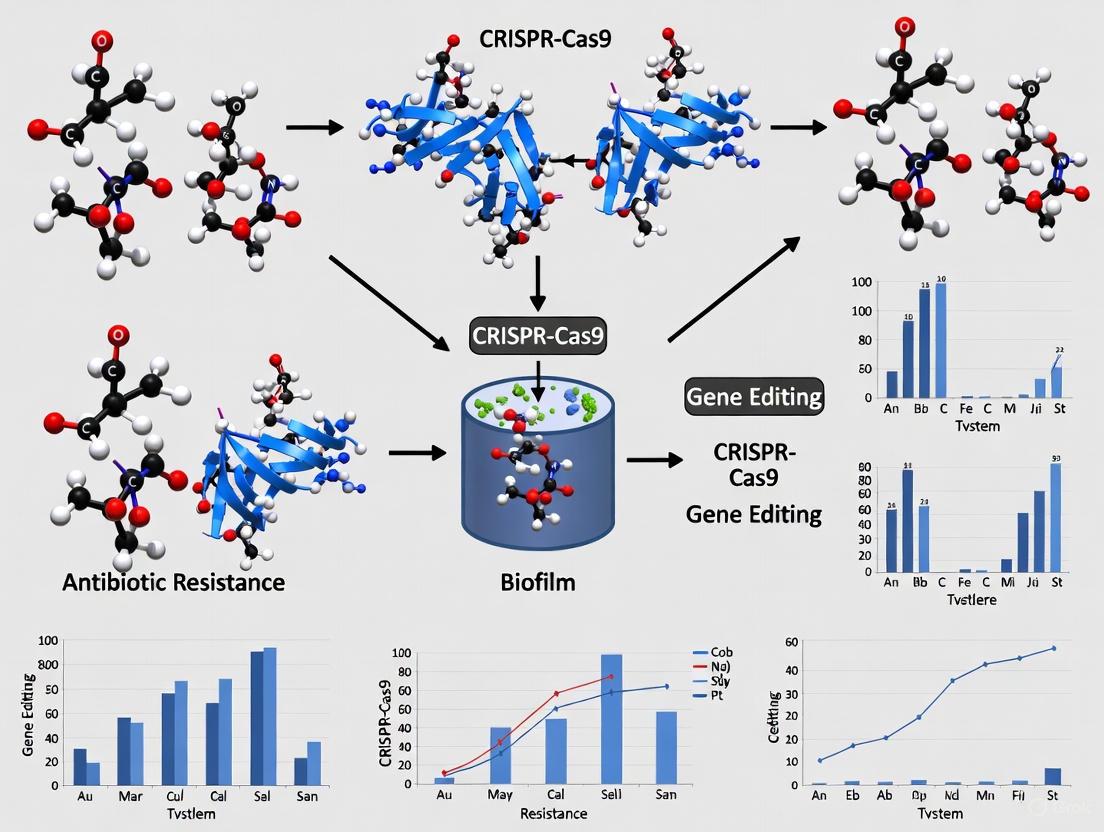
The escalating crisis of antibiotic-resistant biofilm infections demands innovative therapeutic strategies beyond conventional antibiotics.
Precision Strike: How CRISPR-Cas9 is Revolutionizing the Fight Against Biofilm-Mediated Antibiotic Resistance
Abstract
The escalating crisis of antibiotic-resistant biofilm infections demands innovative therapeutic strategies beyond conventional antibiotics. This review synthesizes the latest advances in employing CRISPR-Cas9 systems as precision antimicrobials to combat biofilm-driven resistance. We explore the foundational mechanisms of biofilm-mediated tolerance and the transformative potential of CRISPR-Cas9 for targeted disruption of resistance genes, quorum sensing pathways, and biofilm structural integrity. The article critically evaluates advanced delivery platforms—including engineered nanoparticles, bacteriophages, and conjugative plasmids—for enhancing CRISPR component efficacy within complex biofilm matrices. We further analyze current challenges in delivery optimization, off-target effects, and clinical translation, while presenting validated preclinical successes and comparative assessments against traditional therapies. This comprehensive analysis aims to equip researchers and drug development professionals with a forward-looking perspective on integrating gene-editing technologies into the next generation of anti-biofilm therapeutics.
The Biofilm Barrier and Genetic Resistance: Deconstructing the Fortress
Biofilms, structured communities of microorganisms encased in a self-produced extracellular matrix, represent a dominant mode of bacterial life in both natural and clinical environments [1] [2]. This architectural complexity is not merely a physical aggregate; it is a functional, organized system that confers a remarkable capacity to withstand antimicrobial insults. Infections with a biofilm component are notoriously chronic and recalcitrant to therapy, directly impacting patient outcomes in conditions such as cystic fibrosis, chronic wounds, and medical device-related infections [1] [3]. The intrinsic resistance demonstrated by biofilm-dwelling bacteria can be 10 to 1000-fold greater than that of their planktonic (free-swimming) counterparts [4] [5]. Understanding the structural and functional basis of this multi-faceted resistance is paramount. This review deconstructs biofilm architecture to elucidate its role as the cornerstone of antibiotic tolerance and resistance, framing this knowledge within the emerging paradigm of targeted genetic interventions, particularly the CRISPR-Cas9 system.
Architectural Blueprint: The Composition and Structure of Biofilms
The robust nature of biofilms stems from their heterogeneous composition and complex three-dimensional organization. The biofilm is primarily composed of microbial cells (10-25%) and a self-produced extracellular polymeric substance (EPS) matrix (75-90%), with water constituting up to 97% of the biofilm's volume [2].
Table 1: Core Components of the Biofilm Extracellular Polymeric Substance (EPS) Matrix
| Component | Primary Functions | Examples |
|---|---|---|
| Polysaccharides | Structural scaffolding, adhesion, cohesion, protective barrier [2] | Pel, Psl, and alginate in Pseudomonas aeruginosa [2] |
| Extracellular DNA (eDNA) | Structural integrity, cell-to-cell and cell-to-surface adhesion, cation chelation [1] [5] | Released via cell lysis; prominent in many bacterial biofilms [5] |
| Proteins | Matrix stabilization, enzymatic activity, surface colonization, structural support [2] | Curli fimbriae in E. coli; Bap proteins in staphylococci [5] |
| Lipids & Surfactants | Hydrophobicity modulation, structure maintenance [5] | Phenol-soluble modulins in staphylococcal biofilms [2] |
The lifecycle of a biofilm is a staged process that results in its characteristic architecture, as shown in the diagram below.
This lifecycle creates a structured community with interstitial voids and water channels that facilitate nutrient distribution and waste removal, separating distinct microcolonies [2] [6]. The resulting architecture is not uniform; it creates a mosaic of microenvironments with gradients of nutrients, oxygen, and metabolic waste, which is a fundamental driver of heterogeneity and resistance [3] [6].
Deconstructing Resistance: Mechanisms Fortified by Architecture
The protective capacity of biofilms is not attributable to a single mechanism but is an emergent property of its consolidated architecture, which enables multiple, synergistic strategies for survival.
The Matrix as a Physical and Chemical Barrier
The EPS matrix acts as a formidable first line of defense. It significantly hinders the penetration of antimicrobial agents through several mechanisms, including binding and inactivating antibiotics. For instance, positively charged aminoglycosides can bind to negatively charged eDNA in the matrix, preventing them from reaching their cellular targets [1] [4]. The dense, anionic nature of the matrix also slows diffusion, allowing time for extracellular enzymes to degrade or inactivate the trapped antibiotics before they achieve a lethal concentration in the biofilm's interior [1] [3].
Physiological Heterogeneity and Metabolic Dormancy
The architectural gradients within biofilms give rise to cells in vastly different physiological states. Cells in the outer, nutrient-rich layers may be metabolically active, while those in the deeper, nutrient-depleted core enter a slow-growing or dormant state [3] [7]. Since most conventional antibiotics target active cellular processes like cell wall synthesis or protein translation, these dormant cells are inherently tolerant. This subpopulation of persister cells can survive high-dose antibiotic exposure and, upon cessation of treatment, repopulate the biofilm, leading to recurrent infections [3] [4].
Enhanced Genetic Exchange and Adaptive Evolution
The close proximity of cells within the structured biofilm, facilitated by the matrix, creates a hotbed for horizontal gene transfer (HGT). The matrix often contains abundant eDNA, which can include functional antibiotic resistance genes. This environment efficiently promotes the exchange of genetic material via transformation, conjugation, and transduction, accelerating the spread of resistance genes across the bacterial population [1] [5]. Furthermore, the stressful microenvironment within biofilms can increase mutation rates, fostering the de novo evolution of resistance mechanisms [5].
Table 2: Summary of Multi-Faceted Resistance Mechanisms in Biofilms
| Resistance Mechanism | Functional Basis | Impact on Antibiotic Efficacy |
|---|---|---|
| Limited Penetration | EPS matrix binds/retards drug diffusion; enzymatic inactivation [1] [3] | Prevents accumulation of bactericidal concentrations at target sites [4] |
| Metabolic Heterogeneity | Nutrient/O₂ gradients create dormant subpopulations (persisters) [3] [7] | Renders drugs targeting active processes (e.g., β-lactams) ineffective [4] |
| Efflux Pump Activity | Upregulated in biofilm subzones; expels antibiotics [3] | Reduces intracellular drug concentration across multiple classes [3] |
| Horizontal Gene Transfer | Close cell proximity and eDNA facilitate resistance gene spread [1] [5] | Leads to the dissemination and stable acquisition of genetic resistance [5] |
The CRISPR-Cas9 Toolkit: A Precision Strike Against Biofilm Resistance
The conventional broad-spectrum approach to treating biofilm infections is failing, necessitating precision strategies. The CRISPR-Cas9 system, an adaptive immune system in prokaryotes, has been repurposed as a powerful genetic scissor to target the very foundations of biofilm resistance [8] [6].
System Fundamentals and Delivery Mechanisms
The Type II CRISPR-Cas9 system consists of two key components: the Cas9 nuclease, which creates double-strand breaks in DNA, and a guide RNA (gRNA), which directs Cas9 to a specific genomic sequence with high precision [8] [6]. The critical challenge for clinical application is the efficient delivery of these components into bacterial cells within a biofilm. Nanoparticles (NPs) have emerged as a promising solution. They protect the genetic material from degradation and enhance penetration through the biofilm matrix [6]. For instance, liposomal Cas9 formulations have been shown to reduce P. aeruginosa biofilm biomass by over 90% in vitro, while gold nanoparticle carriers can enhance editing efficiency by up to 3.5-fold compared to non-carrier systems [6].
Strategic Applications for Biofilm Eradication
CRISPR-Cas9 can be programmed to disrupt key pillars of biofilm integrity and resistance through several targeted approaches, as shown in the workflow below.
- Targeting Antibiotic Resistance Genes (ARGs): gRNAs can be designed to cleave and inactivate specific ARGs (e.g., bla genes encoding β-lactamases, mecA conferring methicillin resistance). This approach directly resensitizes bacteria to conventional antibiotics. Studies have demonstrated successful resensitization of ESBL-producing E. coli and carbapenem-resistant Enterobacteriaceae using this strategy [9] [6].
- Disrupting Quorum Sensing (QS) and Biofilm Regulation: By targeting genes responsible for the production or reception of autoinducer molecules, CRISPR-Cas9 can disrupt bacterial communication. This impedes the coordinated gene expression required for biofilm maturation and virulence, effectively "blindfolding" the bacterial community and preventing its consolidation [6].
- Interfering with EPS Matrix Production: Targeting genes essential for the synthesis of key matrix components (e.g., pel or psl polysaccharides in P. aeruginosa) can weaken the biofilm's structural integrity. A less robust matrix is more permeable to antimicrobials and the host immune response, making the community vulnerable [6].
- Prophylactic Protection of Probiotics: Engineered probiotics, such as E. coli Nissle 1917, can be armed with CRISPR-Cas9 systems targeting common ARGs. This protects the beneficial bacteria from acquiring resistance via HGT within the gut microbiome, preventing their transformation into "superbugs" and offering a novel prophylactic strategy [9].
The Scientist's Toolkit: Essential Reagents and Methodologies
Translating the theoretical potential of CRISPR-Cas9 into tangible biofilm research requires a specific toolkit. The table below details key reagents and their functions based on cited experimental approaches.
Table 3: Research Reagent Solutions for CRISPR-Cas9 Biofilm Studies
| Reagent / Tool | Function / Description | Experimental Application |
|---|---|---|
| Cas9 Nuclease | Engineered variant from S. pyogenes; creates DSBs in DNA adjacent to PAM site (5'-NGG) [8] [6] | The core effector enzyme for targeted DNA cleavage. |
| Guide RNA (gRNA) | Chimeric RNA combining crRNA and tracrRNA; dictates target specificity via 20-nt guide sequence [8] [9] | Can be designed to target ARGs (e.g., blaₜₑₘ, ndm-1), QS genes (e.g., lasI), or EPS genes (e.g., pelA). |
| Lipid Nanoparticles (LNPs) | Spherical vesicles for encapsulating CRISPR components; enhance biofilm penetration and cellular uptake [6] | Used for in vitro delivery of Cas9/gRNA ribonucleoproteins (RNPs) into bacterial biofilms. |
| Gold Nanoparticles (AuNPs) | Inorganic carriers; can be conjugated with CRISPR components; provide high stability and editing efficiency [6] | Serve as a non-viral delivery platform, showing a 3.5-fold increase in editing efficiency in some studies [6]. |
| CRISPR-Protected Probiotic | E. coli Nissle 1917 engineered with a plasmid-borne CRISPR-Cas9 system targeting specific ARGs [9] | Used in co-culture assays to demonstrate protection against HGT via conjugation/transformation. |
Detailed Experimental Protocol: Assessing CRISPR-Cas9 Efficacy Against a Pre-Formed Biofilm
The following protocol provides a standardized methodology for evaluating CRISPR-Cas9-based treatments in a laboratory setting.
A. Biofilm Cultivation:
- Inoculation: Grow the target bacterial strain (e.g., P. aeruginosa PAO1) to mid-log phase. Dilute the culture to an OD₆₀₀ of 0.1 in fresh medium.
- Formation: Transfer 200 µL of the diluted culture into multiple wells of a 96-well polystyrene plate. Include negative control wells (medium only).
- Incubation: Incubate the plate under static conditions at the optimal growth temperature (e.g., 37°C) for 24-48 hours to allow for mature biofilm formation.
B. CRISPR-Cas9 RNP Complex Preparation and Delivery:
- Complex Formation: In vitro, assemble the RNP complex by incubating recombinant Cas9 protein with synthesized target-specific gRNA (e.g., targeting lasI or pelA) at a molar ratio of 1:2 for 15 minutes at 25°C.
- Nanoparticle Loading: Load the assembled RNP complexes into your chosen nanoparticle system (e.g., LNPs) according to manufacturer protocols.
- Treatment: Carefully aspirate the planktonic culture and spent medium from the pre-formed biofilms. Gently wash the biofilms twice with sterile saline or PBS to remove loosely attached cells.
- Application: Add 200 µL of the LNP-encapsulated RNP suspension to the biofilm. Include controls: untreated biofilm, biofilm treated with "empty" NPs, and biofilm treated with NPs containing a non-targeting gRNA.
- Incubation: Incubate the plate for a defined period (e.g., 4-6 hours) to allow for delivery and gene editing.
C. Post-Treatment Analysis:
- Biofilm Biomass Quantification: Perform a crystal violet (CV) assay. Fix the biofilms with methanol, stain with 0.1% CV, solubilize the bound dye with acetic acid, and measure the absorbance at 595 nm. Compare to controls to determine percentage reduction in biomass [6].
- Viability Assessment: Use a metabolic assay like the MTT or resazurin assay on treated biofilms to quantify the number of viable, metabolically active cells post-treatment.
- Genetic Confirmation: Extract genomic DNA from treated and control biofilms. Use PCR to amplify the target gene region and perform T7 Endonuclease I assay or Sanger sequencing to confirm the presence of indels (insertions/deletions) and successful gene editing.
- Antibiotic Resensitization Test: Treat the CRISPR-edited biofilms with a relevant antibiotic. Compare the minimum biofilm eradication concentration (MBEC) before and after CRISPR treatment to demonstrate restored susceptibility [9] [6].
The intricate architecture of biofilms is the fundamental driver of their multi-faceted resistance, creating a formidable challenge in modern medicine. Deconstructing this architecture—from the barrier function of the EPS to the physiological heterogeneity it fosters—reveals a suite of targetable vulnerabilities. The advent of the CRISPR-Cas9 system, especially when enhanced by advanced nanoparticle delivery platforms, marks a pivotal shift from broad-spectrum bombardment to precision genetic warfare. By strategically targeting antibiotic resistance genes, quorum sensing circuitry, and structural matrix components, this technology holds the promise of dismantling biofilm defenses and resensitizing persistent infections to conventional therapies. While challenges in delivery efficiency and safety remain, the integration of genetic precision with a deep understanding of biofilm structural biology heralds a new frontier in the fight against antimicrobial resistance.
Biofilm-associated infections represent a significant challenge in clinical settings due to their inherent enhanced tolerance to antimicrobial treatments. This tolerance is not mediated by genetic mutations in the traditional sense but rather by a multifaceted array of physical, physiological, and adaptive mechanisms that enable bacterial survival under hostile conditions [6]. Within the context of developing novel interventions like CRISPR-Cas9 systems, a thorough understanding of these mechanisms is paramount for designing effective strategies that can disrupt biofilm integrity and resensitize embedded bacteria to antibiotics [10]. This review delineates the core mechanisms underpinning biofilm tolerance, framing them as critical targets for next-generation antimicrobials.
Physical and Structural Barriers to Antimicrobial Penetration
The extracellular polymeric substance (EPS) matrix forms the primary physical barrier of biofilms, significantly impeding the penetration of antimicrobial agents [6] [10].
Composition and Function of the EPS Matrix
The biofilm matrix is a complex, hydrated network of biopolymers that encases bacterial cells. Its composition is highly heterogeneous, but typically includes polysaccharides, proteins, lipids, and extracellular DNA (eDNA) [6] [10]. This matrix is not merely a static scaffold; it is a dynamic functional component that contributes to biofilm architecture, stability, and resilience.
- Polysaccharides: Provide the structural backbone of the matrix and contribute to surface adhesion and cohesion.
- Proteins: Including adhesive proteins for surface attachment and structural proteins that reinforce the matrix.
- Extracellular DNA (eDNA): Contributes to biofilm stability, cell-to-cell adhesion, and can bind antimicrobial molecules, effectively neutralizing them [10].
- Water: Comprises up to 97% of the biofilm matrix, creating channels that facilitate the distribution of nutrients and removal of waste, but also presents a diffusive barrier for antimicrobials [10].
The heterogeneous architecture of biofilms, characterized by microcolonies interspersed with water channels, creates a tortuous path that antimicrobial molecules must navigate. This structure significantly slows down and can even completely prevent the diffusion of antibiotics to the innermost layers of the biofilm [6]. The matrix components can also directly interact with and sequester antimicrobial agents, effectively reducing the concentration that reaches the bacterial cells [10].
Quantitative Impact of the EPS on Antimicrobial Efficacy
Table 1: EPS Components and Their Roles in Antimicrobial Tolerance
| EPS Component | Primary Function in Tolerance | Impact on Antimicrobial Efficacy |
|---|---|---|
| Polysaccharides | Structural integrity; molecular sieve | Limits diffusion of large antimicrobial molecules; binds specific antibiotics |
| Proteins | Adhesion; structural support | Can enzymatically degrade or sequester certain antimicrobials |
| Extracellular DNA (eDNA) | Biofilm stability; cation chelation | Binds cationic antimicrobial peptides (e.g., polymyxins); protects from aminoglycosides |
| Water Channels | Nutrient/waste transport | Creates oxygen/nutrient gradients, driving metabolic heterogeneity |
The physical barrier effect is so potent that bacteria within biofilms can exhibit up to 1000-fold greater tolerance to antibiotics compared to their planktonic (free-floating) counterparts [6]. This stark difference underscores the critical role of the EPS matrix as a first line of defense.
Physiological Heterogeneity and Metabolic Adaptations
Beyond the physical barrier, the biofilm microenvironment fosters physiological heterogeneity among the constituent bacterial cells, leading to another key tolerance mechanism: reduced metabolic activity.
Microenvironment Gradients and Bacterial Stratification
As the biofilm matures, consumption of nutrients and oxygen by cells in the outer layers creates pronounced gradients within the biofilm structure. This results in the establishment of distinct microniches [6] [10]. Cells in the outer layers remain metabolically active, while those in the deeper, inner layers experience nutrient limitation and hypoxia [10]. This gradient-driven heterogeneity is a fundamental driver of biofilm tolerance.
The Persister Cell Phenomenon
A direct consequence of this metabolic stratification is the formation of persister cells. These are a subpopulation of bacterial cells that enter a dormant or slow-growing state without undergoing genetic mutation [6]. Most conventional antibiotics, such as β-lactams and fluoroquinolones, target active cellular processes like cell wall synthesis, protein production, and DNA replication. Because persister cells are metabolically dormant, these antibiotics become ineffective against them [6] [10]. Persisters are not mutants; they are phenotypic variants that can resurge and repopulate the biofilm once the antibiotic pressure is removed, leading to recurrent infections.
Table 2: Mechanisms of Biofilm-Associated Antibiotic Tolerance
| Mechanism Category | Specific Process | Effect on Antibiotic Action |
|---|---|---|
| Physical Barrier | Extracellular Polymeric Substance (EPS) matrix | Diffusional limitation; sequestration of antimicrobials |
| Physiological Adaptation | Gradients of nutrients/oxygen | Reduced metabolic activity; target inaccessibility |
| Phenotypic Adaptation | Persister cell formation | Dormancy bypassing antibiotic targets |
| Genetic Adaptation | Horizontal Gene Transfer (HGT) | Dissemination of antibiotic resistance genes within the biofilm community |
Molecular Mechanisms and Horizontal Gene Transfer
Biofilms are hotbeds for genetic exchange, facilitating the dissemination of formal antibiotic resistance genes, which is distinct from the phenotypic tolerance mechanisms described above.
Enhanced Horizontal Gene Transfer (HGT)
The dense, structured nature of biofilms and the presence of eDNA create an ideal environment for Horizontal Gene Transfer (HGT) [6] [10]. The close physical proximity of cells allows for efficient conjugation (plasmid transfer). Furthermore, the abundance of eDNA can be taken up by competent bacteria via transformation, allowing them to acquire new genetic traits, including antibiotic resistance genes (e.g., bla for β-lactam resistance, mecA for methicillin resistance) [6] [11]. This process converts transient tolerance into heritable, genetic resistance within the bacterial population.
Quorum Sensing and Coordinated Behavior
Biofilm cells communicate via Quorum Sensing (QS), a cell-density-dependent signaling system using small autoinducer molecules [6]. QS regulates various biofilm behaviors, including the production of the EPS matrix, virulence factor secretion, and potentially stress responses [12]. Disrupting QS can attenuate biofilm formation and virulence, making it an attractive target for anti-biofilm strategies.
Experimental Methodologies for Investigating Biofilm Tolerance
To dissect these complex tolerance mechanisms, researchers employ a suite of sophisticated technical protocols.
Protocol for Assessing Biofilm Architecture and Antimicrobial Penetration
Aim: To visualize the 3D structure of biofilms and quantify the penetration efficiency of antimicrobial agents.
- Biofilm Cultivation: Grow biofilms under conditions of interest (e.g., on glass, plastic, or catheter surfaces) using representative strains (e.g., Pseudomonas aeruginosa, Staphylococcus aureus) in flow cells or on multi-well plates [6].
- Fluorescent Labeling: Stain the biofilm with a general nucleic acid stain (e.g., SYTO 9) to visualize total biomass. Concurrently, label the antimicrobial agent of interest with a compatible fluorescent tag (e.g., FITC conjugation) [6].
- Confocal Laser Scanning Microscopy (CLSM): Image the biofilm using a CLSM. Acquire Z-stacks at sequential depths to reconstruct the 3D architecture [6].
- Image Analysis: Use software (e.g., ImageJ, COMSTAT) to analyze:
- Biomass Volume: Total biovolume (µm³/µm²).
- Penetration Profile: Intensity of the antimicrobial fluorescence at different depths relative to the biomass.
- Surface Coverage: Percentage of the surface area covered by the biofilm.
Protocol for Evaluating Metabolic Heterogeneity and Persister Cells
Aim: To identify and quantify the persister cell subpopulation within a biofilm.
- Biofilm Treatment: Expose mature biofilms to a high concentration of a bactericidal antibiotic (e.g., ciprofloxacin at 10x MIC) for a defined period (e.g., 4-24 hours) to kill metabolically active cells [10].
- Viable Cell Count: Gently wash the biofilm to remove the antibiotic and non-adherent cells. Disrupt the biofilm via sonication or vortexing with beads to create a homogeneous cell suspension [10].
- Plating and Enumeration: Serially dilute the suspension and plate on non-selective agar plates. The colonies that form after incubation represent the persister cells that survived the antibiotic challenge [10].
- Flow Cytometry (Alternative): After antibiotic treatment, stain the biofilm cells with a viability stain (e.g., propidium iodide for dead cells, SYTO 9 for live cells) and analyze using flow cytometry to rapidly quantify the live/dead ratio.
Diagram: Integrated Mechanisms of Biofilm Tolerance
The following diagram synthesizes the core mechanisms of biofilm tolerance into a single, coherent visual model, illustrating the multi-layered nature of bacterial defense.
The Scientist's Toolkit: Key Research Reagents and Materials
Investigating biofilm tolerance and developing countermeasures like CRISPR-Cas9 requires a specific set of research tools.
Table 3: Essential Research Reagents for Biofilm and CRISPR-Cas9 Studies
| Reagent/Material | Function/Application | Example Use Case |
|---|---|---|
| Flow Cell Systems | Culturing biofilms under shear stress for uniform, reproducible architecture. | Studying real-time antibiotic penetration via CLSM [6]. |
| Confocal Laser Scanning Microscope (CLSM) | High-resolution 3D imaging of biofilm structure and component localization. | Visualizing spatial distribution of EPS components and fluorescently-tagged antibiotics [6]. |
| SYTO 9 / Propidium Iodide | Fluorescent nucleic acid stains for live/dead cell viability assessment. | Differentiating between live, dead, and injured cells after antimicrobial treatment [10]. |
| CRISPR-Cas9 System (Type II) | Programmable nuclease for targeted gene editing. | Disrupting biofilm-regulating genes (e.g., quorum sensing) or antibiotic resistance genes (e.g., mecA, ndm-1) [6] [11]. |
| Nanoparticle Carriers (e.g., Gold, Liposomal) | Delivery vehicles for CRISPR components; enhance stability and uptake. | Efficiently delivering Cas9/gRNA complexes through the EPS barrier to target bacterial cells [6]. |
| Guide RNA (gRNA) | Molecular guide that directs Cas nuclease to specific DNA sequences. | Targeting Cas9 to specific genes involved in antibiotic resistance or biofilm formation [6] [11]. |
| Conjugative Plasmids | DNA vectors capable of transferring between bacterial cells. | Delivering CRISPR-Cas systems to recipient bacterial populations to spread antimicrobial effect [11]. |
The enhanced tolerance of biofilms to antimicrobials is a multifactorial phenomenon, orchestrated through an interplay of physical barriers, physiological adaptations, and genetic exchange. The EPS matrix acts as a formidable defensive shield, while internal metabolic gradients foster a protected population of persister cells. Concurrently, the biofilm environment accelerates the acquisition and dissemination of permanent resistance genes. The strategic disruption of these interconnected mechanisms—for instance, using nanoparticle-delivered CRISPR-Cas9 to degrade the EPS matrix, target quorum sensing genes, and selectively eliminate antibiotic resistance genes—represents a promising, precision approach to overcoming one of the most persistent challenges in modern medicine.
Antimicrobial resistance (AMR) represents one of the most pressing global health threats of the modern era, with biofilm-associated infections playing a particularly recalcitrant role in this crisis [13]. Biofilms, which are structured communities of microorganisms embedded in a self-produced extracellular polymeric matrix, provide an ideal environment for the acceleration and dissemination of antibiotic resistance [10] [14]. The protective extracellular matrix not only limits antibiotic penetration but actively facilitates genetic exchange between bacterial cells through horizontal gene transfer (HGT) mechanisms [15]. This review explores how HGT in biofilms drives resistance spread and examines the promising application of CRISPR-Cas9 technology as a precision tool to combat this phenomenon within the broader context of antibiofilm research.
The inherent resilience of biofilms is demonstrated by their ability to exhibit up to 1000-fold greater tolerance to antibiotics compared to their planktonic counterparts [13]. This enhanced resistance is both phenotypic, driven by the protective extracellular polymeric substance matrix and reduced metabolic activity of persister cells, and genetic, through the acquisition and stable maintenance of resistance determinants via HGT [13]. Understanding the interplay between biofilm architecture and HGT mechanisms is therefore critical for developing effective strategies to disrupt the cycle of resistance amplification.
Biofilm Architecture and the Horizontal Gene Transfer Nexus
Structural Foundations for Genetic Exchange
The architecture of bacterial biofilms creates a meticulously organized environment that actively promotes genetic exchange. Biofilms are dynamic three-dimensional structures characterized by microbial cells encased within an extracellular matrix consisting of polysaccharides, proteins, and extracellular DNA (eDNA) [13] [10]. This matrix is not merely a physical barrier but a functional component that facilitates bacterial survival and communication.
The structural organization of biofilms displays remarkable heterogeneity, with microcolonies interspersed with water channels that facilitate nutrient distribution and waste removal [13]. This complex architecture creates varied microenvironments with gradients of nutrients, oxygen, pH, and metabolic products, which in turn influence bacterial behavior and gene expression [13]. The basal layer consists of densely packed cells forming strong adhesions via adhesins and pili, while the upper layers are less densely packed but contain phenotypically heterogeneous cells, including persister cells that contribute significantly to antibiotic tolerance [13].
Horizontal Gene Transfer Mechanisms in Biofilms
Three primary mechanisms of HGT operate within biofilms, each exploiting the unique biofilm environment to enhance genetic exchange:
Conjugation: This direct cell-to-cell contact mechanism of DNA transfer is significantly more efficient in biofilms than in planktonic cultures. The close proximity of cells within the biofilm matrix facilitates stable mating pairs, while the extracellular matrix protects conjugative elements from environmental degradation. Conjugative plasmids can spread rapidly through biofilm populations, carrying resistance genes across strain and species boundaries [13].
Transformation: The abundance of eDNA within the biofilm matrix provides a readily available reservoir of genetic material for uptake by competent cells. This eDNA originates from lysed cells and is protected from nucleases by the matrix structure. Bacterial cells within biofilms often exhibit enhanced natural competence, allowing them to actively take up and incorporate this eDNA, including antibiotic resistance genes [10] [14].
Transduction: Bacteriophages (bacterial viruses) can package bacterial DNA, including resistance genes, during their replication cycle and transfer it to subsequent bacterial hosts. The high density of bacterial cells and the protective nature of the biofilm matrix enhance the probability of successful transduction events, making biofilms efficient hotspots for phage-mediated genetic exchange [16].
Table 1: Horizontal Gene Transfer Mechanisms in Biofilms
| Mechanism | Genetic Material Transferred | Key Features in Biofilms |
|---|---|---|
| Conjugation | Plasmids, transposons | Enhanced by close cell proximity; protected by matrix; can cross species boundaries |
| Transformation | Free DNA (eDNA) | Abundant eDNA in matrix; enhanced natural competence; protected from nucleases |
| Transduction | Bacterial DNA via bacteriophages | High cell density increases infection rates; matrix provides protection for phages |
Quantitative Impact of HGT on Resistance Spread
The role of HGT in amplifying antibiotic resistance within biofilms is not merely theoretical but demonstrates measurable impacts on treatment outcomes. The concentration of resistant bacteria within biofilm environments can increase dramatically through the acquisition and dissemination of resistance genes. This genetic exchange creates a resilient reservoir of resistance that can rapidly regenerate even after antibiotic challenge.
Recent advances in experimental models have allowed researchers to quantify the efficiency of HGT within biofilms. Studies tracking the transfer of specific resistance markers have demonstrated that biofilms can enhance conjugation efficiency by up to 1000-fold compared to planktonic cultures [13]. Similarly, the transformation frequency in biofilms is significantly elevated due to the constant availability of eDNA within the matrix, with some models showing stable integration of resistance genes in over 10% of the population under selective pressure [10].
Table 2: Experimentally Measured HGT Efficiency in Biofilms vs. Planktonic Cultures
| HGT Mechanism | Transfer Efficiency in Biofilms | Transfer Efficiency in Planktonic Cultures | Experimental Model |
|---|---|---|---|
| Conjugation | Up to 1000-fold enhancement | Baseline | P. aeruginosa biofilm model tracking plasmid RP4 transfer |
| Transformation | Stable integration in >10% population under selection | <0.1% population | S. pneumoniae competence model with eDNA |
| Transduction | 10-100x higher infection rates | Baseline | S. aureus biofilm phage transduction model |
The clinical implications of this enhanced gene transfer are profound. Biofilm-associated infections on medical devices such as catheters, implants, and ventilators become not only protected sanctuaries for persistent infection but also breeding grounds for the evolution and dissemination of multidrug resistance. This creates a significant challenge in healthcare settings, where biofilm-related infections are estimated to contribute to over 65% of all microbial infections [10].
CRISPR-Cas9 as a Precision Tool Against Biofilm-Mediated Resistance
Fundamental Mechanisms of CRISPR-Cas9
The CRISPR-Cas9 system represents a revolutionary gene-editing technology derived from the adaptive immune system of bacteria and archaea [17]. The system consists of two key components: the Cas9 nuclease, which introduces double-strand breaks in DNA, and a guide RNA (gRNA) that directs Cas9 to specific genomic sequences through complementary base pairing [15] [13]. This precision targeting allows for the selective disruption of specific genetic elements, including antibiotic resistance genes carried on plasmids or chromosomal elements.
The mechanism of CRISPR-Cas9 action involves recognition of a protospacer adjacent motif (PAM) sequence adjacent to the target site, followed by local unwinding of the DNA duplex and hybridization of the gRNA to the complementary target sequence [17]. Upon successful binding, the Cas9 nuclease introduces a clean double-strand break, which can lead to permanent disruption of the target gene through error-prone non-homologous end joining (NHEJ) repair or precise editing if a donor template is provided [17].
Targeting HGT Elements with CRISPR-Cas9
CRISPR-Cas9 can be strategically deployed to disrupt the cycle of HGT-mediated resistance spread in biofilms through several targeted approaches:
Plasmid Curing: By designing gRNAs to target essential replication genes or antibiotic resistance determinants on plasmids, CRISPR-Cas9 can selectively eliminate these mobile genetic elements from bacterial populations, effectively reversing acquired resistance and restoring antibiotic susceptibility [16].
Chromosomal Resistance Gene Disruption: For resistance genes integrated into the chromosome, CRISPR-Cas9 can introduce disabling mutations that abrogate resistance while minimizing impact on bacterial viability, thus reducing selective pressure for CRISPR-resistant mutants [18].
Quorum Sensing Interference: An alternative strategy involves targeting quorum sensing genes that regulate biofilm formation and HGT competence, thereby disrupting the social behavior that facilitates genetic exchange without directly targeting resistance genes themselves [15] [10].
CRISPR-Cas9 Targeting HGT-Mediated Resistance
Experimental Implementation and Workflows
Delivery Strategies for Biofilm Environments
The effective deployment of CRISPR-Cas9 against biofilm-embedded bacteria requires sophisticated delivery strategies to overcome the physical and biological barriers presented by the biofilm matrix. Several advanced delivery platforms have shown promise in experimental models:
Nanoparticle-Mediated Delivery: Nanoparticles, particularly lipid-based and gold nanoparticles, can encapsulate CRISPR-Cas9 components, protecting them from degradation and enhancing penetration through the biofilm matrix [15] [13]. Functionalized nanoparticles can be engineered with surface modifications that target specific bacterial species or biofilm components.
Bacteriophage Delivery Systems: Engineered bacteriophages offer a natural delivery mechanism for CRISPR-Cas9 components, leveraging the inherent ability of phages to inject genetic material into specific bacterial hosts [16]. Lytic phages modified to carry CRISPR payloads can achieve species-specific targeting with high efficiency.
Conjugative Plasmid Vectors: Self-transmissible plasmids can facilitate the spread of CRISPR-Cas9 systems throughout biofilm populations via the same conjugation mechanisms that normally spread resistance genes, effectively turning the bacterial mating apparatus against itself [16].
Table 3: Research Reagent Solutions for CRISPR-Biofilm Experiments
| Reagent Category | Specific Examples | Function & Application |
|---|---|---|
| CRISPR-Cas Systems | SpCas9, Cas12a (Cpf1), Cas13a | DNA/RNA targeting nucleases with varying PAM requirements and cleavage mechanisms |
| Delivery Nanoparticles | Liposomal Cas9 formulations, Gold nanoparticles | Enhance cellular uptake, protect nucleic acids, improve biofilm penetration |
| Guide RNA Design Tools | CRISPOR, CHOPCHOP | Bioinformatics platforms for optimal gRNA selection and off-target prediction |
| Biofilm Models | Flow cell systems, Calgary biofilm device | Standardized platforms for studying biofilms under controlled conditions |
| Reporting Systems | Fluorescent protein markers, LacZ reporter assays | Quantify editing efficiency and biofilm metabolic activity |
Representative Experimental Protocol
A standardized methodology for assessing CRISPR-Cas9 efficacy against biofilm-mediated resistance transfer involves the following key steps:
Phase 1: gRNA Design and Vector Construction
- Identify specific target sequences within resistance genes of interest (e.g., blaNDM-1, mecA, vanA)
- Design 3-5 gRNAs per target using bioinformatic tools to maximize on-target efficiency and minimize off-target effects
- Clone selected gRNAs into appropriate CRISPR delivery vectors (plasmid, phagemid, or conjugative plasmid)
- Validate constructs through sequencing and in vitro cleavage assays
Phase 2: Delivery System Preparation
- For nanoparticle delivery: Encapsulate CRISPR constructs in lipid nanoparticles (LNPs) or conjugate to gold nanoparticles at optimal mass ratios (typically 10:1 nanoparticle:DNA ratio)
- For phage delivery: Package CRISPR constructs into engineered bacteriophage capsids using in vitro packaging systems or bacterial packaging cell lines
- Quantify delivery efficiency using fluorescent reporter systems and determine optimal multiplicity of infection (MOI) or nanoparticle concentration
Phase 3: Biofilm Establishment and Treatment
- Cultivate biofilms of target pathogens (e.g., ESKAPE pathogens) in relevant biofilm models (flow cells, peg lids, or microtiter plates) for 48-72 hours to achieve maturation
- Apply CRISPR delivery systems to established biofilms at predetermined concentrations
- Include appropriate controls (empty vector, non-targeting gRNA, delivery vehicle only)
- Incubate for 24-48 hours to allow for gene editing to occur
Phase 4: Assessment and Analysis
- Quantify editing efficiency through DNA sequencing of target loci and digital droplet PCR
- Assess biofilm biomass reduction using crystal violet staining or confocal microscopy
- Measure changes in antibiotic susceptibility profiles through minimum inhibitory concentration (MIC) assays
- Evaluate impact on HGT frequency through conjugation/transformation assays with recipient strains
Experimental Workflow for CRISPR-Biofilm Studies
Quantitative Outcomes and Efficacy Metrics
Experimental implementation of CRISPR-Cas9 against biofilm-mediated resistance has yielded promising quantitative results across multiple model systems:
Efficiency of Resistance Reversal: Studies targeting carbapenem resistance genes in P. aeruginosa biofilms have demonstrated successful resensitization to imipenem, with MIC reductions from >32 μg/mL to <4 μg/mL in over 85% of treated biofilm populations [15]. Similar approaches against MRSA biofilms targeting the mecA gene restored oxacillin susceptibility in approximately 78% of biofilm cells [18].
Biofilm Disruption Metrics: Liposomal CRISPR-Cas9 formulations have demonstrated particularly impressive results, reducing P. aeruginosa biofilm biomass by over 90% in vitro compared to untreated controls [15] [13]. Gold nanoparticle delivery systems enhanced editing efficiency approximately 3.5-fold compared to non-carrier delivery methods [15].
HGT Inhibition: CRISPR-Cas9 systems designed to target conjugative plasmid elements have achieved substantial reduction in conjugation frequency, with some studies reporting decreases of up to 10,000-fold in plasmid transfer between biofilm-embedded bacteria [16]. This dramatic reduction in HGT potential represents a crucial strategy for containing resistance spread within infectious reservoirs.
Table 4: Quantitative Efficacy of CRISPR-Based Approaches Against Biofilm Resistance
| Target Pathogen | Resistance Gene Targeted | Editing Efficiency | Biofilm Reduction | Resistance Reversal |
|---|---|---|---|---|
| P. aeruginosa | blaNDM-1, blaVIM | 85-92% | 90-95% | MIC reduced from >32 μg/mL to <4 μg/mL |
| S. aureus (MRSA) | mecA | 75-80% | 70-85% | 78% population resensitized to oxacillin |
| K. pneumoniae | blaKPC, blaCTX-M | 80-88% | 82-90% | Carbapenem susceptibility restored in 85% cells |
| A. baumannii | blaOXA-23 | 70-78% | 65-80% | Colistin synergy restored |
Horizontal gene transfer within biofilms represents a powerful engine driving the evolution and dissemination of antibiotic resistance in clinical and environmental settings. The structured environment of biofilms actively promotes genetic exchange through multiple mechanisms, creating resilient reservoirs of resistance that defy conventional antibiotic treatments. CRISPR-Cas9 technology offers a promising precision approach to disrupt this cycle by directly targeting the genetic elements that confer resistance and facilitate their spread.
While significant challenges remain in delivery optimization, resistance evasion, and safety assessment, the integration of CRISPR-Cas9 with advanced nanoparticle systems and biological delivery vectors continues to show remarkable progress in experimental models. As research advances, the strategic combination of CRISPR-based precision targeting with conventional antimicrobials may provide the multifaceted approach needed to address the complex challenge of biofilm-mediated resistance spread. The ability to selectively eliminate resistance genes while preserving the commensal microbiota represents a paradigm shift in our approach to antimicrobial therapy and resistance management.
The escalating crisis of antimicrobial resistance (AMR) represents one of the most pressing challenges to global public health, with biofilm-associated infections playing a pivotal role in exacerbating this threat. Biofilms are structured microbial communities encased within a self-produced matrix of extracellular polymeric substances (EPS) that confer inherent resistance to conventional antibiotic therapies [6] [14]. Within these complex architectures, bacteria employ multiple defensive strategies, including restricted antimicrobial penetration, altered metabolic activity in deeper layers, and enhanced horizontal gene transfer of resistance determinants [6]. The inherent tolerance of biofilm-resident bacteria can be up to 1000-fold greater than their planktonic counterparts, rendering many conventional therapeutics ineffective and contributing significantly to persistent chronic infections [6].
The CRISPR-Cas9 system, derived from bacterial adaptive immune mechanisms, has emerged as a revolutionary precision tool in the fight against antibiotic resistance [19]. This technology utilizes a Cas9 nuclease guided by a programmable RNA molecule to target and modify specific genetic sequences with exceptional accuracy [20]. Within the context of biofilm-mediated resistance, CRISPR-Cas9 offers unprecedented opportunities for targeted genetic intervention against three fundamental categories of determinants: acquired antibiotic resistance genes, quorum sensing (QS) pathways that regulate biofilm development, and essential virulence factors that facilitate infection establishment and maintenance [15] [10]. This technical guide provides a comprehensive overview of these key genetic targets, experimental approaches for their disruption, and quantitative assessments of intervention outcomes, framed within the broader thesis of deploying CRISPR-Cas9 systems against biofilm-associated antibiotic resistance.
Antibiotic Resistance Genes
Mechanisms and Key Targets
Antibiotic resistance in bacterial biofilms arises through both genetic acquisition and phenotypic adaptation mechanisms [6] [14]. Heritable genetic resistance occurs through the acquisition of resistance genes via horizontal gene transfer (HGT) or chromosomal mutations, enabling bacteria to neutralize antimicrobial compounds through enzymatic degradation, target site modification, efflux pump enhancement, or reduced membrane permeability [6]. The biofilm environment significantly facilitates HGT, allowing resistance determinants to rapidly disseminate throughout the microbial community [14].
Key resistance genes targeted by CRISPR-Cas9 include those encoding extended-spectrum β-lactamases (e.g., blaCTX-M, blaNDM-1), carbapenemases, vancomycin resistance genes (vanA), and methicillin resistance determinants (mecA) [6]. Additionally, genes encoding efflux pump components (e.g., mexAB-oprM in Pseudomonas aeruginosa) and ribosomal protection proteins constitute valuable targets for resensitizing bacteria to conventional antibiotics [6].
Table 1: Key Antibiotic Resistance Gene Targets for CRISPR-Cas9 Intervention
| Gene Category | Specific Targets | Resistance Mechanism | CRISPR Intervention Strategy |
|---|---|---|---|
| Enzymatic Inactivation | blaCTX-M, blaNDM-1, mecA | β-lactam antibiotic degradation | Precise disruption of catalytic sites or promoter regions |
| Efflux Systems | mexB, acrB, adeB | Antibiotic extrusion from cell | Knockout of transporter components |
| Target Modification | vanA, rpoB mutations | Alteration of antibiotic binding sites | Gene correction or disruption |
| Membrane Permeability | oprD, porins | Reduced antibiotic uptake | Restoration of permeability |
Experimental Approaches and Outcomes
The strategic deployment of CRISPR-Cas9 against resistance genes involves the design of guide RNAs (gRNAs) complementary to essential regions of target genes, enabling Cas9-induced double-strand breaks that lead to gene disruption through non-homologous end joining (NHEJ) or precise modification via homology-directed repair (HDR) [20]. Delivery platforms for CRISPR components include conjugative plasmids, bacteriophages, and nanoparticle-based systems, each offering distinct advantages for different bacterial species and infection contexts [6].
Recent studies demonstrate compelling efficacy of this approach. Liposomal CRISPR-Cas9 formulations targeting the blaNDM-1 gene in carbapenem-resistant Enterobacteriaceae have achieved >95% reduction in bacterial viability in vitro and restored meropenem susceptibility in murine infection models [6]. Similarly, gold nanoparticle-mediated delivery of Cas9-gRNA complexes against the mecA gene in methicillin-resistant Staphylococcus aureus (MRSA) biofilms resulted in 3.5-fold enhanced editing efficiency compared to non-carrier systems and significantly improved outcomes with β-lactam antibiotics [6].
Quorum Sensing Networks
Regulatory Circuits and Biofilm Development
Quorum sensing (QS) represents a cell-density dependent communication system that coordinates collective behaviors in bacterial populations, including biofilm formation, virulence factor production, and antibiotic tolerance [21]. QS relies on the production, detection, and response to small signaling molecules called autoinducers that accumulate proportionally to cell density [21]. Upon reaching a critical threshold, these signals trigger population-wide transcriptional reprogramming that initiates biofilm development and maturation [10].
Major QS systems targeted by CRISPR-Cas9 include the luxS/AI-2 system in Escherichia coli, the lasI/lasR and rhlI/rhlR systems in Pseudomonas aeruginosa, and the agr system in Staphylococcus aureus [21]. Each system comprises signature autoinducer synthases (e.g., luxS, lasI) and receptor/transcription factors (e.g., luxR, lasR) that collectively regulate the expression of hundreds of genes involved in biofilm matrix production and virulence [21].
Diagram 1: CRISPR-Cas9 targeting of quorum sensing pathways disrupts the regulatory circuit that initiates biofilm formation, preventing the expression of genes essential for biofilm development.
Intervention Strategies and Efficacy
CRISPR-based approaches against QS networks employ multiple strategic angles: direct disruption of autoinducer synthase genes to prevent signal generation, knockout of receptor genes to create signal-blind populations, and targeting of downstream regulatory nodes to abrogate the transcriptional response [21]. The selection of optimal targets depends on the specific bacterial pathogen and the hierarchical organization of its QS circuitry.
Experimental protocols for QS disruption typically involve the design of multiple gRNAs against conserved domains of essential QS components, delivery via broad-host-range plasmids or phage vectors, and assessment of biofilm inhibition using standardized assays like crystal violet staining, confocal microscopy, and quantification of EPS components [21]. A notable study applying CRISPR/Cas9-HDR to disrupt luxS and fimH in uropathogenic E. coli demonstrated a 67-72% reduction in biofilm formation on urinary catheters, with simultaneous impairment of both initial adhesion (via fimH knockout) and mature biofilm development (via luxS disruption) [21].
Table 2: Quantitative Outcomes of CRISPR-Cas9 Targeting of Quorum Sensing Systems
| Bacterial Species | QS Target | Intervention Approach | Biofilm Reduction | Additional Effects |
|---|---|---|---|---|
| Escherichia coli | luxS, fimH | CRISPR/Cas9-HDR knockout | 67-72% | Reduced adhesion and EPS production |
| Pseudomonas aeruginosa | lasI, rhlI | Multiplexed gRNA delivery | 74-89% | Attenuated virulence factor production |
| Staphylococcus aureus | agrA | CRISPR interference (dCas9) | 81% | Restored antibiotic susceptibility |
Virulence Factors
Essential Pathogenicity Determinants
Virulence factors comprise a diverse array of bacterial molecules that facilitate host colonization, tissue damage, and immune evasion [10]. In the context of biofilm-associated infections, key virulence determinants include adhesion proteins that mediate surface attachment (e.g., fimbriae, pili), secretion systems that deliver effector molecules (e.g., Type III secretion systems), toxins that damage host tissues, and immune evasion molecules that neutralize host defenses [10]. These factors collectively enable bacterial persistence within hostile host environments and contribute significantly to infection pathogenesis.
Adhesion molecules represent particularly attractive targets for CRISPR intervention, as they are often essential for the initial stages of biofilm development but dispensable for bacterial viability, minimizing selective pressure for escape mutants [21]. The fimH gene encoding type 1 fimbrial adhesion in E. coli has been successfully targeted, resulting in significantly impaired biofilm formation on abiotic surfaces and urinary catheters [21]. Similarly, genes encoding the type III secretion system (T3SS) in P. aeruginosa and the sortase enzyme that anchors surface proteins in Gram-positive bacteria constitute valuable targets for attenuating bacterial pathogenicity without directly inducing bacterial death [10].
CRISPR Implementation and Therapeutic Outcomes
The deployment of CRISPR-Cas9 against virulence factors employs both complete gene knockout strategies for structural components and more nuanced approaches like CRISPR interference (CRISPRi) using catalytically dead Cas9 (dCas9) fused to repressive domains for regulated targets [12]. The latter approach enables temporary suppression of virulence gene expression without permanent genetic alteration, potentially reducing the emergence of resistant clones.
Experimental methodologies require comprehensive in vitro and in vivo validation. Initial screening involves assessing adhesion capacity to relevant surfaces, quantification of toxin production, and evaluation of survival in models of phagocytosis [10]. Animal infection models then provide critical data on how virulence attenuation translates to improved infection outcomes. Studies targeting the papG adhesion gene in uropathogenic E. coli have demonstrated not only reduced biofilm burden on implanted devices but also significant decreases in systemic inflammatory responses and host tissue damage, highlighting the dual benefit of this approach [21].
The Scientist's Toolkit: Research Reagent Solutions
The implementation of CRISPR-Cas9 approaches against biofilm resistance determinants requires specialized reagents and delivery systems optimized for bacterial targets. The following toolkit summarizes essential components for designing and executing these experimental strategies.
Table 3: Essential Research Reagents for CRISPR-Cas9 Anti-Biofilm Studies
| Reagent Category | Specific Examples | Function/Application | Considerations |
|---|---|---|---|
| CRISPR-Cas9 Systems | SpyCas9, NmeCas9, CjCas9 | DNA targeting and cleavage | Varies in size, PAM requirements, editing efficiency |
| Delivery Platforms | Liposomal nanoparticles, gold nanoparticles, bacteriophages, conjugative plasmids | Transport of CRISPR components into bacterial cells | Efficiency differs by bacterial species and growth state |
| gRNA Design Tools | Benchling, CHOPCHOP, CRISPOR | Design of optimal guide RNA sequences | Specificity and efficiency predictions essential |
| Biofilm Assessment | Crystal violet, confocal microscopy with LIVE/DEAD staining, EPS component assays | Quantification of biofilm biomass and viability | Multiple complementary methods recommended |
| Animal Models | Murine catheter infection, tissue cage, lung infection models | In vivo validation of anti-biofilm efficacy | Should mimic human infection context |
Integrated Experimental Workflow
A comprehensive approach to targeting biofilm resistance mechanisms requires a systematic workflow that integrates target selection, CRISPR construct design, delivery optimization, and multi-faceted efficacy assessment. The following diagram outlines this integrated experimental pipeline.
Diagram 2: Integrated experimental workflow for developing CRISPR-Cas9 interventions against biofilm resistance mechanisms, illustrating the systematic progression from target identification to safety evaluation.
This workflow initiates with comprehensive genomic and transcriptomic analysis to identify optimal targets within resistance genes, QS networks, and virulence factors [22]. Subsequent gRNA design must incorporate PAM requirements of the selected Cas9 ortholog and minimize potential off-target effects through careful specificity analysis [22]. Delivery system selection is critical and must be tailored to the specific bacterial pathogen and biofilm context, with nanoparticle-based approaches showing particular promise for enhanced penetration of the EPS matrix [6]. Iterative optimization throughout this pipeline enables refinement of intervention strategies based on quantitative outcomes from both in vitro and in vivo assessment models.
The precision targeting afforded by CRISPR-Cas9 technology represents a paradigm shift in our approach to combating biofilm-associated antibiotic resistance. By specifically targeting resistance genes, quorum sensing networks, and virulence factors, this powerful genetic tool offers opportunities to resensitize resistant pathogens to conventional antibiotics, disrupt the coordinated behaviors that enable biofilm formation, and attenuate bacterial pathogenicity without directly inducing lethal pressure that might select for escape mutants. While challenges remain in delivery efficiency, specificity optimization, and translational implementation, the strategic targeting approaches outlined in this technical guide provide a robust framework for researchers developing next-generation anti-biofilm therapeutics. The integration of CRISPR-Cas9 with emerging technologies like nanoparticle-mediated delivery and synthetic biology holds exceptional promise for overcoming the persistent clinical challenge of biofilm-associated infections and extending the utility of our current antibiotic arsenal.
CRISPR-Cas9 has emerged as one of the most transformative technologies in modern molecular biology, revolutionizing fields from basic research to therapeutic development. This revolutionary system originated not in human laboratories but in prokaryotes, where it evolved as an adaptive immune system to defend against viral pathogens [23] [24]. The journey from this bacterial defense mechanism to a precision gene-editing tool represents a remarkable convergence of basic science and technological innovation. Within the specific context of antimicrobial research, CRISPR-Cas9 offers unprecedented opportunities for addressing the growing crisis of antibiotic resistance, particularly against resilient biofilm-associated infections [6] [18]. This technical guide examines the fundamental principles of CRISPR-Cas9 systems, from their natural biological function to their engineered applications as programmable antimicrobials, providing researchers with the conceptual framework and methodological details necessary to advance this promising field.
Natural Origins: The CRISPR-Cas System as Bacterial Adaptive Immunity
The Phage Threat and Bacterial Defense Landscape
In natural environments, bacteria face constant predation from bacteriophages (phages), viruses that infect bacterial cells by injecting their genetic material and hijacking the host's replication machinery [24]. An infected bacterium can produce hundreds of new phage particles before lysing (bursting), releasing the new phages to infect neighboring cells in an exponential chain reaction [24]. To counter this existential threat, bacteria have evolved multiple defense strategies spanning innate and adaptive immunity:
- Innate defenses: Include restriction-modification systems (DNA-cutting enzymes that target unmethylated phage DNA), receptor modification (preventing phage attachment), and blocking cytoplasmic entry [24].
- Adaptive immunity: CRISPR-Cas systems provide sequence-specific protection against previously encountered genetic elements, functioning as a molecular memory system [24].
Approximately half of all sequenced bacterial species and nearly all archaea possess CRISPR-Cas systems, highlighting their evolutionary success as defense mechanisms [24].
Molecular Architecture of CRISPR-Cas Systems
The CRISPR-Cas system consists of two core components: the CRISPR array and CRISPR-associated (cas) genes [25] [24].
The CRISPR array is composed of:
- Repeats: Short, conserved DNA sequences (typically 20-50 base pairs) that form palindromic structures and are identical throughout the array.
- Spacers: Variable DNA sequences of similar length that are interspersed between repeats. These sequences are derived from previous encounters with foreign genetic elements and serve as molecular "memories" [24].
Adjacent to the CRISPR array lies the leader sequence, an A-T-rich region containing promoters that drive transcription of the array [25]. The cas genes encode the Cas proteins that execute all functional stages of the immune response, from spacer acquisition to target interference [25].
Functional Classification of CRISPR-Cas Systems
CRISPR-Cas systems are broadly categorized into two classes based on their effector complex architecture:
- Class 1 (Types I, III, IV): Utilize multi-protein effector complexes for nucleic acid targeting and interference [26].
- Class 2 (Types II, V, VI): Employ single-protein effectors (such as Cas9, Cas12, and Cas13) for target recognition and cleavage [26].
The relatively simple architecture of Class 2 systems, particularly Type II with its single Cas9 protein, has made them particularly amenable to adaptation as gene-editing tools [23].
The Molecular Mechanism of CRISPR-Cas9 Function
The Three Stages of CRISPR-Cas9 Immunity
The CRISPR-Cas9 immune response operates through three functionally linked stages:
Adaptation (Spacer Acquisition)
Upon initial phage infection, the Cas1-Cas2 protein complex recognizes and cleaves protospacer sequences from the invading DNA [24]. This complex then facilitates the integration of these sequences as new spacers into the CRISPR array, positioned between repeats adjacent to the leader sequence [25] [24]. This process creates a heritable molecular record of the infection, vaccinating the bacterial population against future encounters with identical genetic elements.
crRNA Biogenesis
When the same phage attacks again, the CRISPR array is transcribed as a long precursor CRISPR RNA (pre-crRNA) [25] [24]. Cas proteins (including Cas9 and RNase III in Type II systems) process this pre-crRNA into mature CRISPR RNAs (crRNAs), each containing a single spacer sequence and partial repeat elements [25]. In Type II systems, a trans-activating crRNA (tracrRNA) with complementarity to the repeat sequences facilitates this processing step [25].
Interference
The mature crRNA assembles with Cas proteins into an effector complex that surveils the cell for foreign nucleic acids [25] [24]. When the crRNA spacer sequence identifies complementary DNA (the protospacer) through Watson-Crick base pairing, the Cas9 protein is activated for DNA cleavage [25]. Critical to self/non-self discrimination is the requirement for a specific protospacer adjacent motif (PAM), typically a short (2-6 bp) sequence adjacent to the target protospacer [25]. Cas9 cleaves both DNA strands using its two distinct nuclease domains: the HNH domain cuts the crRNA-complementary strand, while the RuvC domain cuts the non-complementary strand [25]. This coordinated cleavage generates a double-strand break that effectively neutralizes the invading genetic element.
From Bacterial Immunity to Programmable Gene Editing
The transformation of CRISPR-Cas9 from a bacterial immune system to a programmable gene-editing tool was enabled by a crucial insight: the system could be simplified by fusing the crRNA and tracrRNA into a single guide RNA (sgRNA) [23]. This engineered sgRNA retains the ability to complex with Cas9 and direct it to any DNA sequence complementary to its 20-nucleotide spacer, provided the target is adjacent to a PAM sequence (5'-NGG-3' for Streptococcus pyogenes Cas9) [23]. This programmability means that researchers can redirect Cas9 to virtually any genomic locus simply by modifying the sgRNA spacer sequence, creating a versatile platform for precision genome engineering.
CRISPR-Cas9 as a Programmable Antimicrobial Tool
The Antibiotic Resistance Crisis and Biofilm Challenges
The relentless spread of antimicrobial resistance (AMR) represents one of the most pressing global health threats, causing an estimated 700,000 deaths annually [6]. This crisis is particularly acute in biofilm-associated infections, where structured bacterial communities encased in an extracellular polymeric substance (EPS) matrix demonstrate dramatically enhanced antibiotic tolerance—up to 1000-fold greater than their planktonic counterparts [6]. Biofilms facilitate horizontal gene transfer (HGT), accelerating the dissemination of antibiotic resistance genes (ARGs) [6] [25]. The protective EPS matrix limits antibiotic penetration while harboring bacterial subpopulations with heterogeneous metabolic states, including dormant persister cells that survive antibiotic exposure [6] [10].
CRISPR-Cas9 Antimicrobial Strategies
CRISPR-Cas9 systems can be repurposed as precision antimicrobials through several strategic approaches:
Resistance Gene Targeting
CRISPR-Cas9 can be programmed to specifically cleave and eliminate antibiotic resistance genes carried on plasmids or chromosomes [25]. This approach resensitizes bacteria to conventional antibiotics—for example, CRISPR systems targeting the mobile colistin resistance gene (mcr-1) have successfully restored antibiotic sensitivity in Escherichia coli [25]. Similarly, engineered pCasCure systems have eliminated carbapenemase resistance genes (blaNDM, blaKPC) from carbapenem-resistant Enterobacteriaceae [25].
Biofilm Disruption
Beyond targeting resistance genes, CRISPR-Cas9 can disrupt genes essential for biofilm formation and maintenance, including those encoding:
- Quorum-sensing pathways that coordinate community behaviors [6]
- EPS matrix production and structural components [18] [10]
- Adhesion factors required for surface attachment [10]
- Regulatory systems controlling the transition from planktonic to biofilm lifestyles [18]
Bacterial Elimination
For particularly dangerous pathogens, CRISPR-Cas9 can be programmed to target essential bacterial genes or multiple loci simultaneously, inducing lethal DNA damage and selective bacterial killing [6] [18]. This targeted bactericidal approach minimizes collateral damage to commensal microbiota, a significant advantage over broad-spectrum antibiotics.
Delivery Strategies for Antimicrobial CRISPR-Cas9
Efficient intracellular delivery remains the primary challenge for therapeutic application of CRISPR-Cas9 systems. Current delivery platforms each offer distinct advantages and limitations:
Table 1: Delivery Strategies for Antimicrobial CRISPR-Cas9 Systems
| Delivery Method | Mechanism | Applications | Efficiency | Limitations |
|---|---|---|---|---|
| Phage Delivery | Engineering of temperate phages to carry CRISPR-Cas9 constructs | Targeting specific bacterial pathogens | High host specificity | Limited host range, potential immune responses |
| Conjugative Plasmids | Bacterial mating to transfer CRISPR-encoding plasmids | Broad-host-range delivery in mixed communities | Self-transmissible, sustained expression | Conjugation efficiency variable between species |
| Nanoparticles | Lipid or polymer-based encapsulation for protection and delivery | Biofilm penetration, combinatorial therapy | Liposomal Cas9 reduced P. aeruginosa biofilm by >90% [6] | Optimization required for different bacterial species |
| Natural Transformation | Uptake of free DNA from environment | Engineering of naturally competent species | No special equipment required | Limited to naturally transformable bacteria |
Nanoparticle-based delivery systems have shown particular promise for biofilm applications. Gold nanoparticles increased editing efficiency approximately 3.5-fold compared to non-carrier systems, while lipid nanoparticles (LNPs) demonstrated excellent biofilm-penetrating capabilities [6]. These nano-platforms can also facilitate co-delivery of CRISPR components with conventional antibiotics or antimicrobial peptides, creating synergistic combinations that enhance therapeutic efficacy [6].
Experimental Protocols and Research Applications
Representative Protocol: CRISPR-Cas9-Mediated Biofilm Disruption
The following detailed methodology outlines a representative approach for applying CRISPR-Cas9 to disrupt biofilms of antibiotic-resistant bacteria:
Guide RNA Design and Vector Construction
- Target Selection: Identify essential genes in biofilm formation (e.g., quorum-sensing regulators, adhesion proteins, EPS biosynthesis genes) or antibiotic resistance genes (e.g., blaNDM, mecA) using genomic databases and literature mining [6] [18].
- sgRNA Design: Design 20-nucleotide spacer sequences complementary to your target gene, ensuring presence of an adjacent PAM (5'-NGG-3' for SpCas9). Utilize computational tools (such as CRISPRscan) to minimize potential off-target effects [25].
- Vector Assembly: Clone sgRNA expression cassette into an appropriate delivery vector (phage, conjugative plasmid, or expression plasmid compatible with nanoparticle packaging). For conjugative transfer, use broad-host-range origins of replication (e.g., RP4, pBBR1) [25].
Delivery System Preparation
- Bacterial Conjugation: For plasmid-based delivery, introduce the CRISPR construct into a donor strain (e.g., E. coli S17-1 with conjugative capability). Mix donor and recipient strains at appropriate ratios (typically 1:1 to 1:10 donor:recipient) on solid media, incubate to allow mating (6-24 hours), then select transconjugants using recipient-specific counters election and plasmid-selective antibiotics [25].
- Nanoparticle Formulation: For LNP-based delivery, encapsulate CRISPR plasmids or ribonucleoprotein (RNP) complexes using microfluidic mixing. Combine cationic lipids, phospholipids, cholesterol, and PEG-lipids at optimized ratios (typically 50:10:38.5:1.5 molar ratio) with nucleic acids in aqueous buffer [6] [27]. Purify using dialysis or tangential flow filtration, and characterize size (typically 70-100 nm) and encapsulation efficiency (>90% target) [6].
Biofilm Treatment and Assessment
- Biofilm Cultivation: Grow biofilms in relevant models (96-well plates, flow cells, or catheter segments) for 24-72 hours to establish mature structures [6] [10].
- CRISPR-Cas9 Treatment: Apply CRISPR delivery systems at optimized concentrations. For nanoparticle delivery, use concentrations of 0.1-1 mg/mL total lipid; for conjugative delivery, use donor strains at 10^7-10^8 CFU/mL [6] [25].
- Efficacy Assessment:
- Biomass Quantification: Use crystal violet staining to measure total biofilm biomass [10].
- Viability Assessment: Determine colony-forming units (CFUs) after biofilm disruption and plating [18].
- Confocal Microscopy: Evaluate biofilm architecture and live/dead cell distributions using fluorescent stains (SYTO9/propidium iodide) [6].
- Gene Editing Efficiency: Assess target gene modification using T7E1 assay, restriction fragment length polymorphism, or sequencing [25].
The Scientist's Toolkit: Essential Research Reagents
Table 2: Essential Reagents for CRISPR-Cas9 Antimicrobial Research
| Reagent Category | Specific Examples | Function and Application |
|---|---|---|
| CRISPR-Cas9 Components | Cas9 expression plasmids (pCas9), sgRNA cloning vectors (pSGK), recombinant Cas9 protein | Core editing machinery; protein for RNP complex formation |
| Delivery Vehicles | Liposomal nanoparticles (DOTAP, DOPE mixtures), gold nanoparticles, engineered phages (λ, T7), conjugative plasmids (RP4, pMBL) | Enable intracellular delivery of CRISPR components |
| Bacterial Strains | Clinical isolates with defined resistance profiles, laboratory strains with conjugation capability (E. coli S17-1) | Targets for intervention and delivery system propagation |
| Selection Markers | Antibiotic resistance genes (kanamycin, chloramphenicol), fluorescent proteins (GFP, mCherry) | Track delivery efficiency and editing outcomes |
| Biofilm Assay Reagents | Crystal violet, SYTO9/propidium iodide (Live/Dead staining), Calgary biofilm device | Quantify biofilm formation and treatment efficacy |
Current Research Landscape and Clinical Outlook
Advancements in Clinical Translation
The CRISPR-Cas9 therapeutic landscape has progressed rapidly from concept to clinical reality. The first CRISPR-based medicine, Casgevy (exagamglogene autotemcel), received regulatory approval in late 2023 for sickle cell disease and transfusion-dependent beta thalassemia, establishing an important precedent for clinical application of CRISPR technology [27]. As of February 2025, approximately 250 clinical trials involving gene-editing therapeutic candidates are underway, with more than 150 trials currently active [28]. These investigations span diverse therapeutic areas including hemoglobinopathies, cancers, viral diseases, and metabolic disorders [28].
Notably, the field has seen significant advances in delivery methodologies, particularly lipid nanoparticle (LNP) platforms that enable in vivo CRISPR-Cas9 administration [27]. LNPs have demonstrated particular efficacy for liver-targeted therapies, accumulating preferentially in hepatic tissue after systemic administration [27]. This tropism has been leveraged for programs targeting cardiovascular and metabolic diseases, such as CTX310 (targeting ANGPTL3 for hypercholesterolemia) and CTX320 (targeting LPA for elevated lipoprotein(a)) [29].
Emerging Applications for Bacterial Infections
While most current clinical trials focus on human genetic diseases, several pioneering programs are exploring CRISPR-Cas9 applications for bacterial diseases:
- E. coli infections: SNIPR Biome has clinical trials (NCT05277350, NCT06938867) investigating CRISPR-based approaches for targeting E. coli [28].
- Urinary Tract Infections: Locus Biosciences is conducting trials (NCT04191148, NCT05488340) for CRISPR-based treatments of urinary tract infections [28].
- Phage Therapy Integration: Companies are testing phages engineered with CRISPR-Cas proteins to treat dangerous and/or chronic infections, with positive preliminary results [27].
These approaches often utilize bacteriophages as delivery vectors, capitalizing on the natural predator-prey relationship between phages and bacteria to achieve species-specific targeting [27].
Technical Challenges and Future Directions
Despite substantial progress, significant challenges remain in optimizing CRISPR-Cas9 antimicrobials:
- Delivery Efficiency: Achieving sufficient intracellular concentrations of CRISPR components in target bacterial populations, particularly within dense biofilm matrices [6] [25].
- Specificity: Minimizing off-target effects while maintaining robust on-target activity [6].
- Resistance Evolution: Bacteria can develop mutations in target sequences or PAM sites that evade CRISPR recognition [18].
- Regulatory Hurdles: Establishing appropriate regulatory pathways for these novel antimicrobial modalities [27].
Future developments will likely focus on creating more sophisticated delivery platforms with enhanced biofilm-penetrating capabilities, expanding the repertoire of CRISPR systems with novel properties (such as smaller Cas proteins or alternative PAM requirements), and developing combination strategies that integrate CRISPR with conventional antibiotics or other antimicrobial approaches [6] [18]. As these technologies mature, CRISPR-Cas9-based antimicrobials hold exceptional promise for addressing the escalating crisis of antibiotic resistance, potentially ushering in a new era of precision antibacterial therapy.
CRISPR Arsenal and Smart Delivery: From Lab to Biofilm
The escalating crisis of antimicrobial resistance (AMR) represents one of the most severe threats to global public health, with biofilm-associated infections playing a pivotal role in this challenge. Biofilms are structured communities of microorganisms encapsulated within a self-produced extracellular polymeric substance (EPS) matrix that confers inherent resistance to conventional antibiotics [6] [30]. This matrix creates a physical barrier that limits antibiotic penetration, establishes heterogeneous microenvironments with metabolic gradients, and facilitates horizontal gene transfer of resistance determinants [6] [31]. Within biofilms, bacteria can exhibit up to 1000-fold greater tolerance to antimicrobial agents compared to their planktonic counterparts [6].
The Clustered Regularly Interspaced Short Palindromic Repeats (CRISPR) and CRISPR-associated (Cas) systems have emerged as revolutionary tools in the fight against AMR. Originally discovered as an adaptive immune system in prokaryotes, CRISPR-Cas systems have been repurposed as programmable gene-editing platforms that enable precise manipulation of bacterial genomes and resistance genes [32] [19]. This technical guide provides a comprehensive overview of CRISPR tool selection—focusing on Cas9 nucleases, base editors, and CRISPR interference/activation (CRISPRi/a) systems—within the context of combating biofilm-driven antibiotic resistance, with specific consideration for researchers, scientists, and drug development professionals working in this field.
CRISPR-Cas Systems: Core Mechanisms and Components
The CRISPR-Cas system functions as a programmable defense mechanism in prokaryotes, comprising three principal stages: adaptation, expression, and interference [33] [19]. During adaptation, Cas1 and Cas2 proteins facilitate the integration of short fragments of foreign DNA (protospacers) into the CRISPR array as spacers. In the expression stage, the CRISPR array is transcribed and processed into short CRISPR RNA (crRNA) molecules. Finally, during interference, the crRNA guides Cas proteins to recognize and cleave complementary foreign DNA sequences [19].
All CRISPR-Cas systems require two fundamental components: the Cas nuclease, which performs the catalytic function, and a guide RNA (gRNA) that confers sequence specificity. The gRNA is typically composed of CRISPR RNA (crRNA) containing the target-specific spacer sequence and trans-activating CRISPR RNA (tracrRNA), which can be fused into a single-guide RNA (sgRNA) for simplified applications [19]. Target recognition requires the presence of a protospacer adjacent motif (PAM), a short DNA sequence adjacent to the target site that varies depending on the specific Cas protein employed [19].
CRISPR-Cas systems are broadly classified into two main classes. Class 1 systems (types I, III, and IV) utilize multi-protein complexes for target recognition and cleavage, while Class 2 systems (types II, V, and VI) employ single effector proteins, making them particularly suitable for genetic engineering applications [32] [19]. The most widely used systems in biomedical research, including Cas9 nucleases, base editors, and CRISPRi/a platforms, belong to the Class 2 category.
Figure 1: CRISPR System Classification. Class 1 systems utilize multi-protein complexes, while Class 2 systems employ single effector proteins, making Class 2 particularly suitable for genetic engineering applications including those against biofilms.
CRISPR Tool Selection for Anti-Biofilm Applications
Cas9 Nucleases
The CRISPR-Cas9 system, derived from Streptococcus pyogenes, represents the most extensively characterized and widely adopted CRISPR platform. This system utilizes the Cas9 endonuclease, which introduces double-strand breaks (DSBs) in DNA at sites specified by the gRNA and adjacent to a 5'-NGG-3' PAM sequence [19]. In the context of biofilm-associated AMR, Cas9 nucleases can be programmed to target and disrupt essential antibiotic resistance genes—such as those encoding beta-lactamases, efflux pumps, or ribosomal protection proteins—thereby resensitizing resistant bacteria to conventional antibiotics [6] [33].
The therapeutic application of Cas9 against biofilms has demonstrated remarkable efficacy in experimental settings. For instance, liposomal CRISPR-Cas9 formulations have achieved reduction of Pseudomonas aeruginosa biofilm biomass by over 90% in vitro [6]. Similarly, conjugative CRISPR-Cas9 systems targeting mobile colistin resistance (mcr-1) and tigecycline resistance (tet[X4]) genes successfully resensitized Escherichia coli to colistin and tigecycline, reducing resistant bacterial populations to less than 1% [33].
Base Editors
CRISPR-based base editors represent a more precise genetic modification tool that enables direct conversion of one DNA base pair to another without inducing DSBs. These systems combine a catalytically impaired Cas nuclease (such as nickase Cas9) with a deaminase enzyme, enabling targeted point mutations [32]. Cytosine base editors (CBEs) facilitate C•G to T•A conversions, while adenine base editors (ABEs) promote A•T to G•C transitions.
For biofilm-related AMR research, base editors offer unique advantages in dissecting resistance mechanisms and bacterial physiology. They can be employed to introduce premature stop codons into essential resistance genes, create targeted missense mutations to study resistance determinants, or modify regulatory elements controlling biofilm formation pathways. The absence of DSBs makes base editors particularly valuable for studying essential genes where complete disruption would be lethal, allowing for fine modulation of gene function rather than complete knockout.
CRISPR Interference and Activation (CRISPRi/a)
CRISPR interference (CRISPRi) and CRISPR activation (CRISPRa) represent powerful orthogonal approaches for programmable gene regulation without altering the underlying DNA sequence. CRISPRi utilizes a catalytically dead Cas9 (dCas9) fused to repressive domains to block transcription initiation or elongation, while CRISPRa employs dCas9 fused to transcriptional activators to enhance gene expression [32].
In combating biofilm-mediated resistance, CRISPRi/a systems enable multiplexed targeting of resistance networks and virulence pathways. Key applications include simultaneous knockdown of multiple efflux pump components, suppression of quorum-sensing signaling networks that coordinate biofilm development, repression of adhesins and extracellular matrix biosynthesis genes, and activation of pro-sensitization pathways or biofilm dispersal mechanisms [6] [30]. The ability to simultaneously target multiple genetic pathways makes CRISPRi/a particularly valuable against the multifactorial nature of biofilm resistance.
Table 1: Comparative Analysis of CRISPR Platforms for Anti-Biofilm Applications
| Platform | Mechanism of Action | Key Applications in Biofilm/AMR Research | Advantages | Limitations |
|---|---|---|---|---|
| Cas9 Nucleases | Creates double-strand breaks in DNA [19] | Elimination of resistance genes (bla, mecA, ndm-1) [6] [33]; Disruption of biofilm regulation genes [6] | Complete gene knockout; High efficiency; Well-characterized system [19] | Off-target effects; DNA damage response; Requires PAM sequence [33] |
| Base Editors | Direct chemical conversion of base pairs without DSBs [32] | Point mutation introduction; Study of resistance mechanisms; Fine-tuning gene function [32] | High precision; No DSB formation; Low indel rates [32] | Restricted editing window; Limited to specific base changes; Off-target editing [32] |
| CRISPRi/a | Programmable gene repression/activation using dCas9 [32] | Multiplexed knockdown of efflux pumps; Quorum-sensing disruption; Virulence factor modulation [6] [30] | Reversible effects; Multiplexing capability; No DNA damage [32] | Tunable but not complete knockdown; Potential incomplete repression; Requires sustained delivery [32] |
Experimental Workflows and Methodologies
CRISPR Tool Delivery Strategies for Biofilm Penetration
Efficient delivery of CRISPR components to bacterial cells within biofilms represents a significant technical challenge due to the protective extracellular matrix. Nanoparticle-based delivery systems have emerged as particularly promising solutions, as they can enhance cellular uptake, improve stability, and provide controlled release of CRISPR payloads [6]. Gold nanoparticles have demonstrated remarkable efficacy, enhancing editing efficiency up to 3.5-fold compared to non-carrier systems [6]. Similarly, lipid-based nanoparticles can be engineered to fuse with bacterial membranes, facilitating direct delivery of ribonucleoprotein (RNP) complexes into bacterial cells [6].
Bacteriophage-mediated delivery offers another powerful approach, leveraging the natural specificity of phages for bacterial receptors. Engineered phages can be designed to package CRISPR cassettes targeting antibiotic resistance genes, enabling highly specific delivery to pathogen populations within complex microbial communities [33]. Conjugative plasmids represent a third delivery mechanism, exploiting bacterial mating apparatus to transfer CRISPR systems between cells, particularly valuable for targeting multi-species biofilms [33].
Figure 2: Experimental Workflow for CRISPR Anti-Biofilm Research. The process begins with CRISPR tool selection, proceeds through delivery method optimization, and concludes with comprehensive assessment of editing efficiency and phenotypic outcomes.
Protocol: Nanoparticle-Mediated CRISPR Delivery to Biofilms
Materials Required:
- CRISPR-Cas9 components (purified Cas9 protein and synthetic sgRNA, or plasmid DNA)
- Gold nanoparticles (15-20 nm) or lipid nanoparticles
- Target bacterial strain and appropriate growth medium
- 96-well polystyrene plates for biofilm formation
- Confocal laser scanning microscopy (CLSM) equipment
- Quantitative PCR (qPCR) system
- Antibiotics for susceptibility testing
Methodology:
sgRNA Design and Preparation: Design sgRNAs targeting specific antibiotic resistance genes (e.g., blaNDM-1, mecA) or biofilm regulatory genes (e.g., lasI, rhlI in Pseudomonas). Synthesize sgRNAs using in vitro transcription or commercial synthesis [6] [33].
RNP Complex Formation: Combine purified Cas9 protein with sgRNA at a 1:2 molar ratio in nuclease-free buffer. Incubate at 25°C for 15 minutes to form RNP complexes [6].
Nanoparticle Loading: For gold nanoparticles, exploit electrostatic interactions by mixing cationic gold nanoparticles with negatively charged RNP complexes. For lipid nanoparticles, utilize microfluidics-based approaches to encapsulate CRISPR components [6].
Biofilm Cultivation: Grow target bacterial strains in 96-well plates using appropriate media for 24-48 hours to establish mature biofilms. Monitor biofilm formation via crystal violet staining or CLSM [6] [30].
CRISPR Treatment: Apply nanoparticle-loaded CRISPR complexes to pre-formed biofilms at optimized concentrations. Include appropriate controls (non-targeting sgRNA, nanoparticles only) [6].
Efficiency Assessment:
- Gene Editing Efficiency: Extract genomic DNA from treated biofilms and assess mutation rates using T7E1 assay or sequencing (3-5 days post-treatment) [6] [33].
- Biofilm Biomass Quantification: Measure reduction in biofilm biomass using crystal violet staining or CLSM image analysis (1-2 days post-treatment) [6].
- Antibiotic Susceptibility Testing: Perform minimum inhibitory concentration (MIC) assays following CRISPR treatment to evaluate resensitization to relevant antibiotics (2-3 days post-treatment) [33].
Data Analysis: Compare experimental groups to controls using appropriate statistical tests (e.g., Student's t-test, ANOVA with post-hoc analysis) [6].
Research Reagent Solutions
Table 2: Essential Research Reagents for CRISPR Anti-Biofilm Studies
| Reagent Category | Specific Examples | Key Functions | Application Notes |
|---|---|---|---|
| CRISPR Nucleases | Wild-type Cas9, Cas12a; Nickase Cas9 (nCas9); Catalytically dead Cas9 (dCas9) [32] [19] | DNA cleavage; Base editing; Gene regulation [32] [19] | Select based on PAM requirements and editing goals; dCas9 for CRISPRi/a applications |
| Delivery Systems | Gold nanoparticles; Lipid nanoparticles; Engineered bacteriophages; Conjugative plasmids [6] [33] | Enhance cellular uptake; Protect CRISPR components; Enable targeted delivery [6] [33] | Gold nanoparticles show 3.5x efficiency boost; Phages offer species-specific targeting |
| Biofilm Assessment Tools | Crystal violet staining; Confocal laser scanning microscopy (CLSM); Scanning electron microscopy (SEM) [6] [30] | Quantify biofilm biomass; Visualize 3D biofilm structure; Examine ultrastructural details [6] [30] | CLSM enables live imaging of biofilm disruption dynamics |
| Efficiency Validation | T7 endonuclease I (T7E1) assay; Next-generation sequencing; RT-qPCR; Antibiotic susceptibility testing [6] [33] | Detect indels; Quantify mutation rates; Measure gene expression; Assess resensitization [6] [33] | Combine multiple methods for comprehensive efficiency assessment |
The strategic selection of CRISPR tools is paramount for developing effective interventions against biofilm-mediated antibiotic resistance. Cas9 nucleases offer potent elimination of resistance genes, base editors provide precise genetic modifications, and CRISPRi/a systems enable sophisticated multiplexed regulation of resistance pathways. The integration of advanced delivery platforms, particularly nanoparticle-based systems, has dramatically enhanced the efficacy of CRISPR approaches against entrenched biofilm communities.
As this field advances, the convergence of CRISPR technologies with other disruptive modalities—including phage therapy, antimicrobial peptides, and quorum-sensing inhibitors—promises to deliver transformative solutions to the escalating crisis of antimicrobial resistance. Researchers must carefully consider the specific experimental requirements, target organisms, and desired outcomes when selecting the appropriate CRISPR platform for their anti-biofilm applications.
Guide RNA Design Strategies for Precision Targeting of Biofilm Genes
The escalating global health crisis of antimicrobial resistance is profoundly driven by biofilm-associated infections, which can exhibit up to 1000-fold greater tolerance to antibiotics compared to their planktonic counterparts [13]. Within these structured microbial communities, the extracellular polymeric substance (EPS) matrix limits antibiotic penetration while enhancing horizontal gene transfer of resistance determinants [13]. The CRISPR-Cas9 system has emerged as a revolutionary, programmable tool to combat this threat by enabling precise disruption of genes essential for biofilm formation, maintenance, and antibiotic resistance [13] [10]. At the heart of this precision lies the guide RNA (gRNA), a short nucleic acid sequence that directs the Cas9 nuclease to its specific genomic target. The design of these gRNAs is therefore not merely a technical preliminary step but a critical determinant of therapeutic efficacy, specificity, and success in resensitizing resistant pathogens. This technical guide details evidence-based strategies for designing gRNAs that precisely target biofilm-forming genes, providing a foundational toolkit for researchers developing next-generation antimicrobials against biofilm-driven infections.
Bioinformatics and Mechanistic Foundations for gRNA Design
Core Principles of gRNA Design
The foundational step in gRNA design involves the in silico selection of a 20-nucleotide spacer sequence that is complementary to the target genomic locus. This process must balance two primary objectives: maximizing on-target efficiency and minimizing off-target effects [34]. The spacer sequence is cloned into the single-guide RNA (sgRNA) scaffold, which complexes with the Cas9 nuclease to form the functional ribonucleoprotein that surveys the bacterial genome.
- Protospacer Adjacent Motif (PAM) Requirement: The most widely used Cas9 from Streptococcus pyogenes (SpCas9) requires a 5'-NGG-3' PAM sequence immediately downstream of the 3' end of the target DNA strand [35] [36]. The PAM is an absolute requirement for Cas9 activation and cleavage.
- Target Specificity and Uniqueness: The selected 20-nucleotide spacer must be unique within the target genome to avoid unintended cleavage at homologous sites, a particular concern in bacteria where horizontal gene transfer can create genomic redundancies [13] [36].
- Sequence Composition: gRNAs with a guanine (G) at the first position of the spacer and a low density of thymine (T) residues throughout tend to exhibit higher stability and efficiency. Self-complementary sequences that form secondary structures should be avoided as they can interfere with Cas9 binding [35].
Utilizing Bioinformatics Tools for gRNA Selection
Advanced computational tools are indispensable for translating these core principles into specific, effective gRNA candidates.
Table: Key Bioinformatics Tools for gRNA Design and Analysis
| Tool Name | Primary Function | Application in Biofilm Gene Targeting |
|---|---|---|
| CHOPCHOP [35] | Identifies potential gRNA target sites with high efficiency and low off-target scores. | Used to design sgRNAs for targeting the smpB gene in Acinetobacter baumannii [35]. |
| CRISPRi Design Tools | Designs gRNAs for CRISPR interference (CRISPRi) using catalytically dead Cas9 (dCas9). | Applied to downregulate ispG in E. coli to study metabolite-mediated biofilm inhibition [37]. |
| BLAST Analysis | Verifies the uniqueness of the spacer sequence within the target bacterial genome. | Essential for ensuring specificity, preventing off-target effects on core genomic genes in pathogens like P. aeruginosa [13]. |
The following diagram illustrates the complete workflow from target gene identification to final experimental validation of a designed gRNA.
Targeting Strategies for Biofilm-Associated Genes
A rational gRNA design strategy requires the selection of appropriate genetic targets critical to the biofilm lifecycle. The table below categorizes high-value targets and their mechanistic roles.
Table: Strategic gRNA Targets for Biofilm Disruption
| Target Category | Example Genes | Mechanism of Action and Effect of Disruption | Experimental Outcome |
|---|---|---|---|
| Antibiotic Resistance Genes | bla (β-lactamases), mecA, ndm-1 [13] | gRNA directs Cas9 to introduce double-strand breaks in resistance genes, permanently disrupting them and resensitizing bacteria to antibiotics. | Restored susceptibility to previously ineffective antibiotics [13] [34]. |
| Quorum Sensing (QS) Systems | lasI/R, rhlI/R [13] [38] | Disruption of QS genes impairs bacterial cell-to-cell communication, reducing EPS production and biofilm maturation. | Significant reduction in biofilm biomass and increased antibiotic penetration [13]. |
| Biofilm Structural & Regulatory Genes | smpB [35], fimE [37], algD | Targeting regulators of adhesion and matrix production directly undermines biofilm integrity and architecture. | Up to ~90% reduction in biofilm biomass; impaired twitching motility [35] [37]. |
| Global Stress Response Regulators | dnaK, groEL, recA [35] | Mutagenesis of stress adaptation genes weakens bacterial defense, enhancing vulnerability to host immune responses and antimicrobials. | Reduced virulence in infection models (e.g., Galleria mellonella) [35]. |
The diagram below maps the logical relationship between a selected genetic target, the designed gRNA, and the subsequent cellular and phenotypic outcomes.
Experimental Protocol: From gRNA Design to Functional Validation
This section provides a detailed, actionable protocol for designing and validating gRNAs against a biofilm-related gene, based on a study that successfully mutated the smpB gene in Acinetobacter baumannii [35].
gRNA Design and Cloning
- Target Selection and gRNA Design: Select a target within your gene of interest (e.g., the smpB coding sequence). Use CHOPCHOP to identify a 20-nucleotide target sequence directly upstream of a 5'-NGG-3' PAM [35].
- Oligonucleotide Synthesis: Synthesize two complementary oligonucleotides corresponding to the target sequence.
- Phosphorylation and Annealing:
- Treat the oligonucleotides with T4 Polynucleotide Kinase to phosphorylate the 5' ends, facilitating subsequent ligation.
- Anneal the oligonucleotides in a thermal cycler using a step-down protocol to form the double-stranded sgRNA insert.
- Golden Gate Cloning:
- Clone the annealed insert into a CRISPR plasmid (e.g., pBECAb-apr) using a Golden Gate assembly reaction. The reaction mix should include the plasmid, the annealed insert, BsaI-HFv2 restriction enzyme, T4 DNA Ligase, and appropriate buffer.
- Program the thermocycler: 25 cycles of (37°C for 3 minutes + 16°C for 4 minutes), followed by 50°C for 5 minutes and 80°C for 10 minutes [35].
- Transformation and Verification:
- Transform the ligation product into competent E. coli DH5α cells via heat shock and plate onto LB agar with a selective antibiotic (e.g., apramycin).
- Screen colonies by direct colony PCR using primers specific to the vector backbone and insert. Verify successful cloning by Sanger sequencing of the plasmid.
Delivery and Validation
- Delivery into Target Pathogen: Introduce the verified CRISPR-Cas9 plasmid into the target bacterial strain (e.g., A. baumannii) via conjugation or electroporation.
- Functional Validation of Gene Editing:
- Sequencing: Confirm the introduction of the desired mutation (e.g., C212T substitution in smpB) by Sanger sequencing of the target genomic locus [35].
- Phenotypic Assays:
- Biofilm Quantification: Use crystal violet staining to quantify biofilm biomass. Successful disruption of smpB led to a statistically significant (p=0.0079) reduction in biofilm [35].
- Motility Assays: Assess twitching, swimming, and swarming motility on appropriate agar plates. The smpB mutant showed impaired twitching motility [35].
- Antibiotic Susceptibility Testing: Perform disk diffusion or broth microdilution assays. The mutant showed altered susceptibility to antibiotics like ceftizoxime and gentamicin [35].
- Proteomic Analysis: Utilize techniques like LC-MS/MS to analyze global changes in protein expression (e.g., downregulation of GroEL, DnaK) following gene disruption, confirming the target's role in stress response pathways [35].
Advanced Delivery and Therapeutic Considerations
The clinical translation of CRISPR-based antibiofilm strategies hinges on efficient delivery. Nanoparticles and engineered phages represent the most promising vehicles.
- Nanoparticle-Mediated Delivery: Nanoparticles can overcome the dual barriers of the bacterial envelope and the dense EPS matrix of biofilms. Liposomal Cas9 formulations have demonstrated over 90% reduction in Pseudomonas aeruginosa biofilm biomass in vitro, while gold nanoparticle carriers can enhance gene-editing efficiency by up to 3.5-fold compared to non-carrier systems [13] [15]. These platforms can be engineered for co-delivery of CRISPR components and antibiotics, producing synergistic antibacterial effects [13].
- Bacteriophage and Conjugative Plasmid Delivery: Engineered bacteriophages offer exceptional species specificity for delivering CRISPR payloads [34]. Similarly, conjugative plasmids can facilitate the transfer of CRISPR machinery between bacteria, enabling the selective eradication of resistant strains within a mixed population [34].
The Scientist's Toolkit: Essential Research Reagents
Table: Key Reagents for gRNA Design and Anti-Biofilm CRISPR Experiments
| Reagent / Tool | Function and Application | Specific Example(s) |
|---|---|---|
| CRISPR Plasmid Backbone | Vector for expressing Cas9 and the custom gRNA. | pBECAb-apr (for A. baumannii) [35]. |
| Restriction Enzymes & Ligase | Enzymes for cloning the gRNA insert into the plasmid. | BsaI-HFv2, T4 DNA Ligase [35]. |
| Competent Cells | For plasmid propagation and amplification. | E. coli DH5α [35]. |
| Delivery Vehicle | To introduce CRISPR constructs into the target pathogen. | Liposomal nanoparticles [13], Gold nanoparticles [15], Engineered bacteriophages [34]. |
| Biofilm Quantification Kit | To validate the phenotypic effect of gene editing. | Crystal Violet Staining Assay [35]. |
| Antibiotic Susceptibility Test | To assess resensitization post-treatment. | Disk Diffusion or MIC Test Strips [35]. |
The precision offered by rationally designed gRNAs is fundamental to leveraging CRISPR-Cas9 as a powerful weapon against biofilm-mediated antibiotic resistance. By strategically targeting essential biofilm and resistance genes, and employing advanced delivery systems like nanoparticles, researchers can move beyond broad-spectrum inhibition to achieve targeted genetic disruption. This approach promises to resensitize persistent infections to conventional antibiotics, potentially revolutionizing the treatment of chronic infections. Future advancements will rely on the integration of artificial intelligence for predictive gRNA design, improved in vivo delivery platforms, and a deeper understanding of bacterial genomic context to fully realize the potential of precision antimicrobial therapy.
The escalating crisis of antimicrobial resistance (AMR), particularly from biofilm-associated infections, represents one of the most pressing challenges in modern healthcare. Biofilms, structured communities of microorganisms embedded in a self-produced extracellular polymeric matrix, can exhibit up to 1000-fold greater tolerance to antibiotics compared to their planktonic counterparts [6]. This formidable resistance stems from multiple factors, including reduced antibiotic penetration, altered microbial metabolism, and the presence of persistent cells [6] [10]. Conventional antimicrobial therapies often prove insufficient against these resilient structures, necessitating the development of innovative therapeutic strategies.
The CRISPR-Cas9 gene-editing system has emerged as a revolutionary tool in the fight against antibiotic resistance. This technology enables precise targeting and disruption of specific genetic elements responsible for resistance, including antibiotic resistance genes, quorum-sensing pathways, and biofilm-regulating factors [6] [16]. However, the clinical translation of CRISPR-based antimicrobials faces significant delivery challenges, including cellular uptake efficiency, nucleic acid stability, and target specificity [39].
Nanoparticle-based delivery systems present an innovative solution to these challenges, serving as effective carriers for CRISPR-Cas9 components while often exhibiting intrinsic antibacterial properties [6]. These nanoplatforms can enhance therapeutic delivery by improving cellular uptake, increasing target specificity, protecting genetic material from degradation, and ensuring controlled release within complex biofilm environments [6] [40]. The integration of CRISPR-Cas9 with advanced nanoparticle technologies represents a paradigm shift in antimicrobial therapy, offering a powerful synergistic approach to combat biofilm-driven infections.
Liposomal Nanoparticle Systems
Structural Composition and Mechanism
Liposomal nanoparticles are spherical vesicles composed of phospholipid bilayers that mimic biological membranes, enabling efficient encapsulation and delivery of therapeutic agents [40]. These nanostructures typically range from 50 to 200 nanometers in diameter and can encapsulate both hydrophilic and hydrophobic compounds within their aqueous core or lipid membranes, respectively [40]. The biocompatibility and biodegradability of liposomal systems make them particularly attractive for biomedical applications, including drug and gene delivery.
The mechanism of liposomal delivery involves several key steps: (1) cellular attachment through electrostatic interactions or receptor-ligand binding, (2) internalization via endocytosis, (3) endosomal escape facilitated by pH-sensitive phospholipids or fusogenic peptides, and (4) release of payload into the cytoplasm [40]. For biofilm penetration, liposomes can be engineered with surface modifications that enhance interaction with extracellular polymeric substances (EPS), allowing deeper penetration into the biofilm matrix [6].
Applications in CRISPR Delivery and Biofilm Eradication
Liposomal nanoparticles have demonstrated remarkable efficacy in delivering CRISPR-Cas9 components for antimicrobial applications. Recent advances have shown that liposomal Cas9 formulations can reduce Pseudomonas aeruginosa biofilm biomass by over 90% in vitro [6]. This impressive efficacy stems from the ability of liposomes to co-deliver Cas9 ribonucleoproteins (RNPs) with guide RNAs specifically targeting antibiotic resistance genes or biofilm formation pathways.
The preparation of CRISPR-loaded liposomes typically involves microfluidic mixing techniques that ensure precise control over particle size and encapsulation efficiency [41]. This method allows for the reproducible production of monodisperse liposomal suspensions with high nucleic acid loading capacity. Additionally, surface functionalization with targeting ligands such as antibodies or peptides can further enhance bacterial specificity while minimizing off-target effects [40].
Table 1: Efficacy Metrics of Liposomal Nanoparticles for CRISPR Delivery
| Parameter | Performance Metric | Experimental Conditions |
|---|---|---|
| Biofilm Reduction | >90% reduction in biomass | P. aeruginosa biofilm in vitro |
| Encapsulation Efficiency | 70-85% for nucleic acids | Microfluidic preparation method |
| Size Distribution | 80-150 nm | Dynamic light scattering measurement |
| Zeta Potential | -10 to +30 mV | Varies with lipid composition |
| Release Profile | Sustained over 24-72 hours | pH-dependent release kinetics |
Experimental Protocol: Liposomal CRISPR Formulation
Materials:
- 1,2-dioleoyl-sn-glycero-3-phosphocholine (DOPC)
- Cholesterol
- Cationic lipid (e.g., DOTAP)
- CRISPR-Cas9 ribonucleoprotein (RNP) complex
- PBS buffer (pH 7.4)
- Microfluidic mixer
Methodology:
- Prepare lipid solution by dissolving DOPC, cholesterol, and DOTAP in ethanol at molar ratio 55:40:5
- Prepare aqueous phase containing CRISPR-Cas9 RNP complex in PBS buffer
- Utilize microfluidic mixer to combine lipid and aqueous phases at 3:1 flow rate ratio
- Dialyze resulting liposomal suspension against PBS to remove ethanol
- Characterize particle size using dynamic light scattering (target: 100±20 nm)
- Determine encapsulation efficiency via ultracentrifugation and fluorescence measurement
- Assess biofilm penetration using confocal microscopy with fluorescently labeled liposomes
- Evaluate antimicrobial efficacy against established biofilms in 96-well plate assays [6]
Gold Nanoparticle Systems
Unique Properties and Functionalization
Gold nanoparticles (AuNPs) possess exceptional physicochemical properties that make them ideal carriers for CRISPR-Cas9 delivery, including precise size tunability, excellent biocompatibility, and straightforward surface functionalization [6]. These nanoparticles typically range from 5 to 100 nm and can be synthesized with remarkable monodispersity. Their surface plasmon resonance properties not only enable precise tracking but also facilitate photothermal therapeutic applications.
The functionalization of gold nanoparticles occurs through gold-thiol chemistry, allowing stable conjugation of various biomolecules, including CRISPR components, targeting ligands, and protective polymers [6]. This modular approach enables the creation of multifunctional delivery platforms capable of targeted gene editing with minimal off-target effects. The high surface-area-to-volume ratio of AuNPs permits high payload capacity while maintaining nanoscale dimensions favorable for biofilm penetration.
Enhanced Editing Efficiency and Synergistic Effects
Gold nanoparticle-based delivery systems have demonstrated remarkable capabilities in enhancing CRISPR-Cas9 editing efficiency. Recent studies report that CRISPR-gold nanoparticle hybrids can enhance gene-editing efficiency by up to 3.5-fold compared to non-carrier delivery systems [6]. This enhancement stems from the ability of AuNPs to protect CRISPR components from degradation, facilitate endosomal escape, and promote nuclear localization.
Furthermore, gold nanoparticles enable synergistic combination therapies by co-delivering CRISPR-Cas9 with conventional antibiotics or antimicrobial peptides [6]. This multi-mechanistic approach simultaneously targets genetic resistance elements while applying direct antimicrobial pressure, effectively resensitizing resistant bacterial strains. The unique photothermal properties of AuNPs can also be leveraged for enhanced biofilm disruption when combined with near-infrared irradiation.
Table 2: Performance Characteristics of Gold Nanoparticle Systems
| Characteristic | Gold Nanoparticle Advantage | Functional Benefit |
|---|---|---|
| Editing Efficiency | 3.5-fold increase vs. non-carrier | Higher target gene disruption |
| Payload Capacity | High surface-area-to-volume ratio | Multiple gRNAs or combination payloads |
| Cellular Uptake | Tunable surface charge | Enhanced bacterial internalization |
| Biofilm Penetration | Small size with precise control | Improved matrix diffusion |
| Synergistic Therapy | Photothermal properties | Combined genetic and physical antimicrobial action |
Experimental Protocol: Gold-CRISPR Conjugate Preparation
Materials:
- Chloroauric acid (HAuCl₄)
- Trisodium citrate
- Thiolated polyethylene glycol (SH-PEG)
- CRISPR-Cas9 RNP complex
- Maleimide functionalization reagents
- Phosphate buffer (pH 8.0)
Methodology:
- Synthesize gold nanoparticles (15-20 nm) via citrate reduction method
- Functionalize AuNP surface with SH-PEG-maleimide using ligand exchange
- Conjugate CRISPR-Cas9 RNP to maleimide-functionalized AuNPs via thiol-maleimide chemistry
- Purify conjugates using centrifugal filtration
- Characterize conjugation efficiency using UV-Vis spectroscopy and gel electrophoresis
- Validate CRISPR activity using plasmid cleavage assay
- Assess biofilm penetration capability using SEM and confocal microscopy
- Evaluate combinatorial efficacy with antibiotics via checkerboard assay [6]
Polymeric Nanoparticle Systems
Material Diversity and Controlled Release
Polymeric nanoparticles offer exceptional versatility as delivery vehicles due to the wide range of available biomaterials with tunable properties. The most extensively studied polymers for CRISPR delivery include poly(lactic-co-glycolic acid) (PLGA), chitosan, and polyethyleneimine (PEI), each providing distinct advantages for specific applications [39] [40]. These materials enable precise control over critical parameters such as particle size, surface charge, degradation kinetics, and drug release profiles.
The primary mechanism of polymeric nanoparticles involves controlled release kinetics, which can be engineered to respond to specific environmental stimuli such as pH, enzymes, or redox conditions [40]. This capability is particularly valuable in the context of biofilm infections, where the microenvironment often exhibits distinct biochemical signatures that can trigger targeted payload release. Furthermore, the surface of polymeric nanoparticles can be readily modified with targeting moieties to enhance bacterial specificity.
CRISPR Delivery Strategies and Applications
Polymeric nanoparticles can deliver CRISPR-Cas9 components using three primary strategies: (1) plasmid DNA encoding both Cas9 and gRNA, (2) Cas9 mRNA with separate gRNA, or (3) preassembled Cas9 ribonucleoprotein complexes [39]. The RNP delivery approach offers significant advantages, including rapid activity, reduced off-target effects, and transient editing without genomic integration.
For antimicrobial applications, PLGA-based nanoparticles have demonstrated particular promise due to their excellent biocompatibility and FDA approval for various drug delivery applications [39]. These nanoparticles can be engineered to encapsulate CRISPR components through multiple emulsion methods, protecting them from degradation while facilitating controlled release. Recent advances have enabled the development of pathogen-specific targeting systems through surface functionalization with antibodies or aptamers, significantly improving therapeutic specificity.
Experimental Protocol: Polymeric Nanoparticle Formulation
Materials:
- PLGA (50:50 lactide:glycolide)
- Polyvinyl alcohol (PVA)
- Dichloromethane (DCM)
- CRISPR-Cas9 payload (plasmid, mRNA, or RNP)
- Phosphate buffered saline (PBS)
- Coumarin-6 (for tracking studies)
Methodology:
- Prepare primary emulsion by sonicating PLGA in DCM with CRISPR payload
- Add primary emulsion to PVA solution and homogenize to form double emulsion
- Evaporate organic solvent under reduced pressure with continuous stirring
- Collect nanoparticles by ultracentrifugation and wash to remove excess PVA
- Lyophilize with cryoprotectant for long-term storage
- Characterize particle size, polydispersity index, and zeta potential
- Determine encapsulation efficiency using fluorescence measurement
- Evaluate release kinetics in simulated biofilm conditions (pH 6.5, presence of enzymes)
- Assess antimicrobial efficacy against ESKAPE pathogens in biofilm models [39]
Comparative Analysis and Technical Considerations
Performance Metrics Across Nanoparticle Platforms
The selection of an appropriate nanoparticle platform for CRISPR delivery requires careful consideration of multiple performance parameters, including encapsulation efficiency, editing efficacy, safety profile, and manufacturing scalability. Each platform offers distinct advantages that may be preferentially suited to specific applications or target pathogens.
Table 3: Comparative Analysis of Nanoparticle Delivery Systems
| Parameter | Liposomal | Gold Nanoparticles | Polymeric (PLGA) |
|---|---|---|---|
| Encapsulation Efficiency | 70-85% | 80-95% (conjugation) | 50-75% |
| Editing Efficiency | High (>90% biofilm reduction) | Very High (3.5x enhancement) | Moderate to High |
| Payload Flexibility | High (hydrophilic/hydrophobic) | Moderate (surface conjugation) | High (multiple encapsulation methods) |
| Manufacturing Scalability | Established (clinical use) | Moderate (GMP challenges) | Established (clinical use) |
| Safety Profile | Excellent (biocompatible lipids) | Good (long-term clearance concerns) | Excellent (biodegradable polymers) |
| Regulatory Status | Multiple FDA-approved products | Limited clinical approval | Multiple FDA-approved products |
| Cost Considerations | Moderate | High | Low to Moderate |
Pathway for CRISPR-Nanoparticle Biofilm Targeting
The following diagram illustrates the coordinated mechanism by which CRISPR-loaded nanoparticles target and disrupt antibiotic-resistant biofilms:
Diagram Title: Nanoparticle-Mediated CRISPR Delivery to Biofilms
The Scientist's Toolkit: Essential Research Reagents
Successful implementation of nanoparticle-based CRISPR delivery systems requires access to specialized reagents and materials. The following table outlines essential components for developing and evaluating these advanced antimicrobial platforms.
Table 4: Essential Research Reagents for Nanoparticle-CRISPR Development
| Reagent Category | Specific Examples | Function and Application |
|---|---|---|
| Lipid Components | DOPC, DOTAP, Cholesterol | Liposome formation and nucleic acid complexation |
| Polymeric Materials | PLGA, Chitosan, PEI | Nanoparticle matrix for encapsulation |
| Metallic Nanoparticles | Citrate-capped AuNPs, functionalized AuNPs | Core delivery platform for conjugation |
| CRISPR Components | Cas9 protein, gRNA, RNP complexes | Active gene-editing machinery |
| Surface Modifiers | PEG derivatives, targeting peptides/antibodies | Enhanced stability and targeted delivery |
| Characterization Tools | Dynamic light scattering, TEM/SEM supplies | Nanoparticle physicochemical analysis |
| Biofilm Assay Materials | Crystal violet, LIVE/DEAD staining, microtiter plates | Evaluation of anti-biofilm efficacy |
| Cell Culture Models | ESKAPE pathogen strains, mammalian cell lines | Safety and efficacy assessment |
The integration of CRISPR-Cas9 technology with advanced nanoparticle delivery systems represents a transformative approach to combat biofilm-mediated antibiotic resistance. Each platform—liposomal, gold, and polymeric nanoparticles—offers unique advantages that can be leveraged for specific therapeutic scenarios. Liposomal systems provide exceptional biocompatibility and clinical translatability, gold nanoparticles offer precise engineering and enhanced editing efficiency, while polymeric platforms enable controlled release and material versatility.
Future developments in this field will likely focus on intelligent nanoparticle designs that respond to specific biofilm microenvironments, multifunctional systems that combine genetic editing with conventional antimicrobials, and personalized approaches tailored to individual pathogen profiles. Additionally, addressing manufacturing challenges and regulatory considerations will be crucial for clinical translation. As research advances, these innovative nanoplatforms hold immense potential to revolutionize antimicrobial therapy and address the growing threat of antibiotic resistance.
The global health crisis of antibiotic resistance is exacerbated by biofilm-associated infections, which can exhibit up to 1000-fold greater tolerance to antibiotics compared to their planktonic counterparts [6]. Within this challenging landscape, the CRISPR-Cas9 system has emerged as a revolutionary tool for precision targeting of bacterial pathogens, offering sequence-specific elimination of antibiotic resistance genes, virulence factors, and biofilm-regulating elements [6] [10]. However, the clinical translation of CRISPR-based antimicrobials faces a critical delivery challenge—efficiently transporting functional CRISPR components across protective biofilm matrices and bacterial cell membranes.
Biological vectors, specifically engineered bacteriophages and conjugative plasmids, represent sophisticated solutions to this delivery problem. These systems leverage natural biological processes—viral infection and bacterial conjugation—to achieve targeted delivery of CRISPR payloads. Engineered bacteriophages can be designed with modified host ranges and armed with CRISPR-Cas machinery to selectively eliminate pathogens [42], while conjugative plasmids exploit the natural ability of bacteria to transfer genetic material between cells [43] [44]. This technical guide examines the mechanisms, applications, and experimental protocols for these two complementary vector systems within the broader context of combating biofilm-mediated antibiotic resistance.
Engineered Bacteriophages as CRISPR Delivery Vectors
Design Principles and Engineering Strategies
Bacteriophages (phages) are viruses that specifically infect bacteria, making them ideal vectors for targeted antimicrobial delivery. Contemporary phage engineering involves systematic optimization through multiple approaches:
Tail Fiber Engineering expands phage host range and prevents resistance. This process involves modifying the phage tail fibers, which determine bacterial receptor recognition. For example, researchers have successfully engineered an α15 phage by incorporating a Tsx-binding adhesin from phage α17, creating a modified phage (α15.2) capable of utilizing both lipopolysaccharide (LPS) and Tsx nucleoside transporter receptors [42]. This dual-receptor affinity substantially reduces the emergence of phage-tolerant bacterial survivors compared to the wild-type phage [42].
CRISPR-Cas Arming enhances bacterial killing precision through targeted genome editing. Selected lytic phages are engineered to carry CRISPR-Cas systems specifically designed to target essential bacterial genes. The type I-E CRISPR-Cas system from E. coli has been successfully deployed for this purpose, containing cas3 and a cascade gene complex (casA, casB, casC, casD, casE) along with a CRISPR array targeting the bacterial genome [42].
Promoter Optimization ensures functional CRISPR activity under biofilm conditions. Studies comparing bacterial promoters have demonstrated that the PbolA promoter shows superior performance in biofilms compared to alternative promoters like PrelB, making it particularly suitable for anti-biofilm applications [42].
Experimental Workflow for Phage Engineering and Validation
Phase 1: Phage Screening and Selection
- Source a diverse phage library (e.g., 162 wild-type phages from wastewater, phage banks, commercial cocktails) [42]
- Assess host range and potency using stringent in vitro growth kinetics assays against phylogenetically diverse bacterial panels (e.g., 429 E. coli strains)
- Select candidate phages based on complementary binding to bacterial surface receptors, broad coverage, and engineerability to carry inserted cargo
- Characterize receptor usage through efficiency of plating (EoP) assays on wild-type and receptor knockout mutants (e.g., Tsx, LamB, OmpC, OmpA, TolC, OmpF)
Phase 2: CRISPR-Cas System Engineering
- Engineer the type I-E CRISPR-Cas system by cloning cas3 and cascade genes (casA-E) with a CRISPR array targeting the bacterial genome
- Select optimal promoters (e.g., PbolA for biofilm applications) through comparative assays of metabolic activity reduction in biofilm vs. planktonic conditions
- Clone CRISPR systems into selected phage genomes
Phase 3: Efficacy Validation
- Perform lawn kill assays to quantify reduction in bacterial survivors compared to wild-type phages
- Test phage stability and cargo retention through serial passage experiments
- Evaluate biofilm penetration and disruption using confocal laser scanning microscopy and biomass quantification (e.g., crystal violet staining)
Phase 4: In Vivo Assessment
- Evaluate tolerability in animal models (e.g., mice, minipigs)
- Measure bacterial load reduction in target organs or gut models
- Assess cocktail efficacy (e.g., SNIPR001, a 4-phage combination) for broad-spectrum coverage [42]
Quantitative Data on Engineered Phage Performance
Table 1: Efficacy Metrics of CRISPR-Armed Bacteriophages (CAPs)
| Parameter | Wild-Type Phage Performance | CRISPR-Armed Phage Performance | Experimental Context |
|---|---|---|---|
| Bacterial Killing Efficiency | Variable, strain-dependent | 3.5 log10 CFU/mL reduction | Conjugative delivery of CGV-EcCas to E. coli [42] |
| Biofilm Reduction | Limited penetration | Significant reduction in metabolic activity with PbolA promoter | E. coli biofilms grown on peg lids [42] |
| Resistant Mutant Selection | Substantial survivors in lawn assays | Substantially reduced number of survivors | Clinical E. coli strains b1460, b1475, b1813 [42] |
| Host Range | Defined by natural receptor affinity | Expanded through tail fiber engineering | α15.2 phage with dual LPS/Tsx affinity [42] |
Conjugative Plasmids as CRISPR Delivery Vectors
Engineering Self-Transmissible CRISPR Delivery Systems
Conjugative plasmids exploit the natural bacterial mating processes to deliver CRISPR-Cas9 systems with high efficiency. Two primary configurations have been developed:
Cis-Acting Conjugative Systems integrate the CRISPR-Cas9 machinery directly into the conjugative plasmid backbone, enabling exponential spread through bacterial populations. The IncP RK2 plasmid system has been successfully engineered to encode both conjugation machinery and the TevSpCas9 nuclease, achieving dramatically higher conjugation frequencies compared to trans systems [44]. This configuration creates a self-amplifying delivery system where each new transconjugant becomes a potential donor for subsequent conjugation rounds.
Trans-Acting Systems separate the conjugation machinery and CRISPR payload onto different plasmids. While easier to engineer, this approach results in significantly lower conjugation efficiency (up to 1000-fold less than cis-acting systems) and limited propagation through bacterial populations [44].
Broad-Host-Range Applications leverage conjugative plasmids with natural promiscuity across bacterial species. Plasmids like pRK24 (IncP-1) and pBP136 can transfer CRISPR systems across species boundaries, enabling targeting of diverse pathogens including E. coli, Salmonella enterica, and other members of the Enterobacteriaceae family [43].
Experimental Protocol for Conjugative Plasmid Engineering and Deployment
Stage 1: Plasmid Engineering
- Select broad-host-range conjugative plasmid backbone (e.g., pRK24, pBP136)
- Clone Cas9 with native S. pyogenes promoter into the conjugative plasmid
- Design and synthesize gRNA arrays targeting conserved sequences:
- Virulence factors (e.g., eae intimin gene in EHEC/EPEC)
- Essential genes (e.g., ssaN type III secretion ATPase in Salmonella)
- Antibiotic resistance genes (e.g., blaCMY-2)
- Apply multiplexed gRNA design for simultaneous targeting of multiple pathogens or resistance mechanisms [43]
Stage 2: Conjugation Optimization
- Apply filter-mating assays with varying donor:recipient ratios (1:1 to 50:1)
- Optimize environmental conditions:
- Low-salt LB media (0.25% NaCl w/v)
- Mild agitation (60 RPM)
- Solid surfaces (0.5mm glass beads) to enhance cell-to-cell contact
- Monitor conjugation frequency over time (0-72 hours)
Stage 3: Killing Efficiency Assessment
- Measure bacterial reduction by comparing colony counts under induced vs. non-induced conditions
- Assess target specificity using isogenic mutant strains as controls
- Quantify plasmid curing efficiency for antibiotic resistance targets
Stage 4: In Vivo Evaluation
- Utilize murine infection models (e.g., neonate EPEC infection model)
- Introduce conjugative system via murine-derived E. coli donor strains
- Measure pathogen reduction in intestinal contents or target tissues
Quantitative Efficacy of Conjugative CRISPR Delivery
Table 2: Performance Metrics of Conjugative CRISPR-Cas9 Delivery Systems
| Parameter | Cis-Acting System | Trans-Acting System | Experimental Conditions |
|---|---|---|---|
| Conjugation Frequency | Up to 100% | 10⁻⁸ to 10⁻⁴ | Liquid culture with glass beads, 10:1 donor:recipient ratio [44] |
| Bacterial Killing | 3-log reduction at 6 hours | Not reported | Targeting eae gene in EHEC O157 [43] |
| Plasmid Curing Efficiency | 53% for blaCMY-2 plasmids | Not reported | pTF18 targeting pAR06302 [43] |
| Multiplexed Targeting | Simultaneous eae + ssaN + blaCMY-2 | Not applicable | pTF16 and pTF18 plasmids [43] |
| In Vivo Efficacy | Significant EPEC reduction in mouse intestine (p<0.05) | Not tested | Murine neonate EPEC infection model [43] |
Comparative Analysis: Bacteriophages vs. Conjugative Plasmids for Anti-Biofilm Applications
Performance in Biofilm Environments
Both vector systems face the significant challenge of penetrating the protective extracellular polymeric substance (EPS) matrix of biofilms, which limits antibiotic penetration and enhances horizontal gene transfer [6]. Recent advances demonstrate promising anti-biofilm capabilities:
Bacteriophage-based systems exhibit intrinsic biofilm penetration abilities. Natural phage enzymes can degrade EPS components, and engineered phages with CRISPR payloads can target biofilm-regulating genes. The PbolA promoter has been specifically optimized to maintain CRISPR activity under the restricted growth conditions found in biofilms [42].
Conjugative plasmids benefit from the natural propensity of conjugative systems to promote biofilm formation, as enhanced cell-to-cell contact increases conjugation rates [44]. Studies using glass beads to simulate surface attachment have demonstrated conjugation frequencies approaching 100% in conditions that mimic biofilm environments [44].
Research Reagent Solutions Toolkit
Table 3: Essential Research Reagents for Biological Vector Development
| Reagent Category | Specific Examples | Function & Application |
|---|---|---|
| Conjugative Plasmid Backbones | pRK24 (IncP-1), pBP136 | Broad-host-range delivery of CRISPR payloads [43] |
| Phage Engineering Tools | T3/T4 phage tail fiber modules, Tevenvirinae phages | Host range modification through receptor binding site engineering [42] |
| CRISPR Systems | Type I-E (EcCas3), Type II (SpCas9), TevSpCas9 | Sequence-specific bacterial killing through chromosomal cleavage [42] [43] |
| Promoters for Biofilm Application | PbolA, PrelB | Drive CRISPR expression under biofilm conditions [42] |
| Bacterial Strain Panels | 429 phylogenetically diverse E. coli strains | Assess host range and coverage of engineered vectors [42] |
| Biofilm Growth Systems | Peg lids in 96-well plates, glass beads in liquid culture | Simulate biofilm conditions for efficacy testing [42] [44] |
| Animal Models | Murine neonate infection model, Galleria mellonella | Evaluate in vivo efficacy and safety [43] [35] |
Engineered bacteriophages and conjugative plasmids represent two powerful biological vector systems for precision delivery of CRISPR-based antimicrobials against biofilm-associated infections. While phage-based systems offer exceptional targeting specificity and natural biofilm penetration capabilities, conjugative plasmids provide broad host range and the potential for exponential spread through bacterial populations. The choice between these systems depends on the specific therapeutic context, target pathogen, and biofilm environment.
Both platforms face translational challenges, including optimizing delivery efficiency, minimizing off-target effects, and ensuring safety in clinical applications. However, the continued refinement of these biological vectors, combined with advances in CRISPR technology and biofilm biology, holds significant promise for addressing the critical challenge of antibiotic-resistant biofilm infections. Future directions will likely focus on combinatorial approaches that leverage the strengths of both vector systems while incorporating complementary strategies such as nanoparticle delivery and conventional antibiotics for enhanced efficacy against complex biofilm communities.
The escalating crisis of antimicrobial resistance (AMR), particularly within biofilm-associated infections, demands innovative therapeutic strategies that extend beyond conventional antibiotics. The co-delivery of CRISPR-based gene-editing systems with traditional antibiotics represents a paradigm shift in antimicrobial therapy, leveraging synergistic mechanisms to overcome biofilm-mediated resistance. This approach combines the precision of CRISPR to disarm bacterial defense mechanisms with the potent bactericidal activity of antibiotics, creating a powerful combinatorial treatment. This whitepaper provides an in-depth technical examination of the molecular mechanisms, delivery platforms, experimental methodologies, and quantitative outcomes underlying this synergistic strategy, offering a comprehensive resource for researchers and drug development professionals working at the forefront of anti-infective development.
Biofilms are structured microbial communities encased in an extracellular polymeric substance (EPS) that constitute a major contributor to persistent infections and therapeutic failures. The biofilm matrix imposes a dual resistance challenge: it acts as a physical barrier that limits antibiotic penetration while fostering a heterogeneous environment where bacterial cells exhibit reduced metabolic activity and enhanced tolerance [6] [10]. Conventional antibiotic monotherapies are frequently ineffective, as biofilms can exhibit up to 1000-fold greater tolerance to antibiotics compared to their planktonic counterparts [6].
The synergistic approach of co-delivering CRISPR and antibiotics addresses this challenge through complementary mechanisms. The CRISPR system performs precise genetic surgery, selectively inactivating key bacterial genes responsible for antibiotic resistance, virulence, or biofilm integrity. This genetic disruption resensitizes the bacterial population, allowing the co-delivered antibiotic to effectively clear the infection [15] [16]. This strategy aligns with the broader thesis that overcoming complex biofilm-mediated resistance requires multi-targeted interventions that attack both the genetic basis of resistance and the phenotypic tolerance afforded by the biofilm lifestyle.
Molecular Mechanisms of Synergy
CRISPR-Mediated Disruption of Bacterial Defenses
The CRISPR-Cas system, functioning as a programmable bacterial immune system, can be repurposed to target specific genetic elements that underpin antibiotic resistance and biofilm resilience. The primary mechanisms of action include:
Inactivation of Chromosomal Resistance Genes: The Cas nuclease (e.g., Cas9) introduces double-strand breaks in chromosomal genes encoding for resistance mechanisms, such as the
mecAgene (conferring methicillin resistance in Staphylococcus aureus) or genes encoding for antibiotic-inactivating enzymes [11] [16]. The cell's error-prone non-homologous end joining (NHEJ) repair mechanism often results in disruptive mutations that abolish gene function.Plasmid Curing: Many critical resistance genes (e.g.,
blaNDM-1for carbapenem resistance,mcr-1for colistin resistance) are harbored on plasmids. CRISPR-Cas systems can be programmed to target and cleave these plasmids, leading to their degradation and loss from the bacterial population, effectively resensitizing the bacteria to the corresponding antibiotic [11] [16].Targeting Biofilm Regulation: Beyond direct resistance genes, CRISPR can disrupt the regulatory architecture of biofilms by targeting quorum-sensing (QS) genes (e.g.,
lasI,rhlIin Pseudomonas aeruginosa) and genes critical for EPS production and biofilm maturation [6] [18]. This weakens the biofilm structure, enhancing antibiotic penetration.
Synergy with Conventional Antibiotics
The co-delivered antibiotic capitalizes on the genetic disruption caused by CRISPR. For instance, once the mecA gene is disrupted in MRSA, the bacterium becomes susceptible to beta-lactam antibiotics. Similarly, the cleavage of a plasmid carrying a blaNDM gene restores sensitivity to carbapenems. The synergy is not merely sequential but can be pharmacokinetically coordinated when both agents are delivered simultaneously via a single nanocarrier, ensuring they reach the same bacterial subpopulation within the biofilm [6] [15].
The following diagram illustrates the core conceptual workflow of this synergistic approach.
Quantitative Evidence of Efficacy
Recent in vitro studies provide compelling quantitative data demonstrating the superior efficacy of the co-delivery strategy compared to monotherapies. The table below summarizes key experimental findings.
Table 1: Quantitative Outcomes of Co-delivery Strategies from Select In Vitro Studies
| Pathogen | CRISPR Target | Co-delivered Antibiotic/Antimicrobial | Delivery System | Key Quantitative Results | Citation |
|---|---|---|---|---|---|
| Pseudomonas aeruginosa | Biofilm-regulating & resistance genes | Not specified (therapeutic agent) | Liposomal nanoparticles | >90% reduction in biofilm biomass | [6] |
| Pseudomonas aeruginosa | Not specified | Antibiotic | Gold nanoparticle hybrids | 3.5-fold increase in gene-editing efficiency & synergistic biofilm disruption | [6] [15] |
| Escherichia coli | Colistin resistance gene (mcr-1) |
Colistin | Conjugative plasmid | Reduction of resistant bacteria to <1% | [16] |
| Klebsiella pneumoniae | Resistance genes on plasmid | Not specified | Native CRISPR-Cas3 system & bacteriophage | ~100% elimination of resistance plasmids in vivo | [16] |
Delivery Platforms for Co-delivery
Efficient intracellular delivery of the large CRISPR-Cas machinery is the critical bottleneck for its therapeutic application. The following delivery platforms have shown significant promise for co-delivery strategies.
Nanoparticle-Based Systems
Nanoparticles (NPs) are highly versatile carriers that can be engineered to co-encapsulate CRISPR-Cas components (as plasmid DNA, mRNA, or ribonucleoprotein complexes) and hydrophobic or hydrophilic antibiotic molecules [6] [15].
- Liposomal Nanoparticles: These lipid bilayers can encapsulate hydrophilic CRISPR components in their aqueous core and integrate hydrophobic antibiotics within the lipid membrane. They offer excellent biocompatibility and can be functionalized with targeting ligands (e.g., peptides that bind to bacterial surface receptors) to enhance specificity [6].
- Gold Nanoparticles (AuNPs): AuNPs can be surface-functionalized with CRISPR-Cas ribonucleoproteins (RNPs) via covalent thiol linkages. Antibiotics can be concurrently adsorbed onto the surface or co-delivered in the surrounding matrix. AuNPs provide a robust, inert platform that protects its cargo from degradation [6] [11].
- Polymeric Nanoparticles: Biodegradable polymers like PLGA (poly(lactic-co-glycolic acid)) allow for controlled release kinetics, enabling temporal coordination between genetic editing and antibiotic action. Both CRISPR components and antibiotics can be embedded within the polymer matrix [11].
Bacteriophage and Engineered Vectors
Bacteriophages are natural bacterial viruses that have evolved to efficiently inject genetic material into bacteria, making them ideal vectors for CRISPR-Cas DNA [11] [16].
- Lytic Phages: Engineered lytic phages can package CRISPR-Cas encoding DNA into their capsids. Upon infection, the DNA is delivered into the bacterium, where the CRISPR machinery is expressed. The antibiotic is typically administered separately, though phage-antibiotic synergy (PAS) is a well-documented phenomenon [16].
- Phagemids: These are plasmid vectors that carry a phage packaging signal. They can be packaged into phage capsids but lack most phage genes, making them safer as they cannot lead to new phage production and lytic spread. They are well-suited for delivering CRISPR-Cas systems [11].
- Conjugative Plasmids: These are plasmids capable of horizontal transfer between bacteria via conjugation. They can be engineered to carry CRISPR-Cas systems, enabling the spread of the antimicrobial agent through a bacterial population, potentially targeting both primary pathogens and reservoir species [11] [16].
Table 2: Comparison of Primary Co-delivery Platforms
| Delivery Platform | Mechanism of Delivery | Advantages | Challenges/Limitations |
|---|---|---|---|
| Liposomal Nanoparticles | Membrane fusion and endocytosis | High cargo flexibility (hydrophilic/hydrophobic), good biocompatibility, scalable production | Potential stability issues, can be sequestered by the immune system |
| Metallic Nanoparticles (e.g., Au) | Endocytosis | High stability, precise surface functionalization, intrinsic antibacterial properties for some metals | Long-term toxicity concerns, potential for bioaccumulation |
| Polymeric Nanoparticles (e.g., PLGA) | Endocytosis and degradation-controlled release | Tunable release kinetics, proven track record in drug delivery, biodegradable | Loading efficiency for large RNP complexes can be low |
| Bacteriophages | Natural injection mechanism | High specificity and efficiency, self-replicating at the target site, can penetrate biofilms | Limited cargo capacity, host immune response against phage, narrow host range |
| Conjugative Plasmids | Bacterial conjugation | Self-propagation through bacterial population, potential for broad targeting within a community | Slower action, dependent on conjugation efficiency, ecological impact concerns |
Experimental Protocols and Workflows
This section outlines a generalized protocol for developing, testing, and validating a nanoparticle-based co-delivery system against a biofilm-forming, antibiotic-resistant pathogen.
Protocol: Evaluating Co-delivery Using CRISPR-Loaded Nanoparticles
Objective: To synthesize and evaluate the efficacy of a lipid-polymer hybrid nanoparticle co-loaded with CRISPR-Cas9 components (targeting the mecA gene) and the antibiotic vancomycin against a methicillin-resistant Staphylococcus aureus (MRSA) biofilm.
I. Material Preparation
- Bacterial Strain: MRSA (e.g., ATCC 43300).
- gRNA Design: Design and synthesize a gRNA with high specificity for the
mecAgene. - CRISPR-Cas9 Payload: Use a high-purity Cas9 protein to form ribonucleoprotein (RNP) complexes with the gRNA. Alternatively, a plasmid encoding both Cas9 and the gRNA can be used.
- Antibiotic: Vancomycin hydrochloride.
- Nanoparticle Synthesis: Prepare lipid-polymer hybrid nanoparticles using a double emulsion solvent evaporation method. The polymer core (e.g., PLGA) encapsulates the RNP (or plasmid), while the lipid shell (e.g., DSPC, cholesterol) incorporates vancomycin and surface-functionalizing ligands (e.g., a peptide targeting S. aureus).
II. Synthesis and Characterization of Co-loaded Nanoparticles
- Formulation: Prepare the nanoparticle using standardized protocols. For the double emulsion method, this involves creating a primary water-in-oil emulsion (CRISPR payload in aqueous solution dispersed in PLGA-dichloromethane), followed by a secondary emulsion in an external aqueous phase containing the lipid surfactants and vancomycin.
- Characterization:
- Size and Zeta Potential: Determine the hydrodynamic diameter and polydispersity index (PDI) via Dynamic Light Scattering (DLS). Measure zeta potential using electrophoretic light scattering.
- Loading Efficiency: Centrifuge the nanoparticle suspension to separate free cargo. Quantify the encapsulation efficiency (EE%) for vancomycin using HPLC and for the CRISPR payload using a fluorescence-based quantitation assay (if fluorescently labeled) or a picogreen assay for plasmid DNA.
- Release Kinetics: Incubate nanoparticles in PBS (pH 7.4) at 37°C under gentle agitation. Collect samples at predetermined time points, separate the nanoparticles, and quantify the released vancomycin and CRISPR payload in the supernatant.
III. In Vitro Biofilm Assay
- Biofilm Formation: Grow MRSA biofilms in 96-well polystyrene plates or on relevant substrates (e.g., catheter pieces) for 24-48 hours.
- Treatment Groups: Include the following groups:
- Untreated biofilm (control)
- Empty nanoparticles
- Free vancomycin
- Nanoparticles with CRISPR only
- Nanoparticles with vancomycin only
- Co-loaded nanoparticles (CRISPR + vancomycin)
- Incubation: Treat the pre-formed biofilms with the respective formulations for a set period (e.g., 24h).
- Efficacy Assessment:
- Biomass Quantification: Use crystal violet staining to measure total biofilm biomass.
- Viability Assessment: Perform colony-forming unit (CFU) counts after disrupting the biofilm to quantify the number of viable bacteria.
- Resistance Gene Disruption: Extract genomic DNA from treated biofilms and perform a T7 Endonuclease I assay or Sanger sequencing to verify indel mutations at the
mecAlocus. - Confocal Microscopy: Use Live/Dead staining (SYTO9/propidium iodide) on treated biofilms and image with confocal laser scanning microscopy (CLSM) to visualize live vs. dead bacteria and biofilm architecture in 3D.
The following workflow diagram maps out this comprehensive experimental process.
The Scientist's Toolkit: Essential Research Reagents
Table 3: Key Reagents and Materials for Co-delivery Research
| Reagent/Material | Function/Application | Examples & Notes |
|---|---|---|
| Cas Nucleases | Executes targeted DNA/RNA cleavage. | Cas9 (SpCas9, SaCas9), Cas12a (Cpf1), Cas13a. Choice depends on PAM requirement, size, and DNA vs. RNA targeting. |
| Guide RNA (gRNA) | Confers target specificity to the Cas nuclease. | Designed in silico against target gene (e.g., mecA, ndm-1). Critically requires specificity validation to minimize off-target effects. |
| Nanocarrier Components | Forms the delivery vehicle for co-encapsulation. | Lipids (DOTAP, DSPC), polymers (PLGA), inorganic particles (Gold NPs). Selection impacts loading, release, and toxicity. |
| Conjugative Plasmids / Phagemids | Biological delivery vectors for CRISPR DNA. | Engineered plasmids with oriT for conjugation; Phagemids for phage capsid packaging. Enable spread within bacterial populations. |
| Surface Functionalization Ligands | Enhances target specificity and biofilm penetration. | Peptides, antibodies, or carbohydrates that bind species-specific bacterial surface receptors. |
| Analytical & Validation Tools | Characterizes NPs and assesses therapeutic efficacy. | DLS/Zeta potential analyzers, HPLC, CFU counting, CLSM, T7 Endonuclease I assay, PCR/sequencing. |
The co-delivery of CRISPR systems and conventional antibiotics embodies a powerful and sophisticated strategy to combat biofilm-associated antimicrobial resistance. By integrating the precision of genetic editing with the established potency of antibiotics, this approach effectively dismantles the multifaceted defenses of resistant bacterial pathogens. While challenges in delivery efficiency, safety, and regulatory approval remain, the experimental evidence and versatile toolkit outlined in this whitepaper provide a robust foundation for ongoing research and development. This synergistic paradigm holds significant promise for evolving into a next-generation therapeutic modality, potentially restoring the efficacy of our existing antibiotic arsenal against some of the most tenacious infections.
In Vitro and In Vivo Models for Assessing Anti-Biofilm Efficacy
The global health crisis of antibiotic resistance is profoundly exacerbated by bacterial biofilms. These structured communities of microorganisms, encased in a self-produced extracellular polymeric substance (EPS), are a major survival strategy for pathogens [45]. It is estimated that 65–80% of human bacterial infections are biofilm-related, contributing significantly to patient morbidity, mortality, and healthcare costs [46] [47]. Biofilms demonstrate recalcitrance to conventional antimicrobial therapies, with bacteria in biofilms exhibiting tolerance to antibiotic concentrations 10 to 1000-fold higher than their planktonic counterparts [48]. This resistance stems from multiple mechanisms, including the physical barrier posed by the EPS, reduced metabolic activity of embedded cells, and the presence of persister cells [6].
The review of innovative strategies like the CRISPR-Cas9 system for combating biofilm-related antibiotic resistance is therefore critically dependent on robust and predictive models for assessing anti-biofilm efficacy. This technical guide provides an in-depth analysis of the primary in vitro and in vivo models used for this purpose, detailing their principles, applications, and methodologies to aid researchers in selecting and implementing the most appropriate systems for evaluating novel therapeutic agents.
In Vitro Biofilm Models
In vitro models are indispensable for initial screening and mechanistic studies due to their cost-effectiveness, reproducibility, and ease of use. They are broadly classified into static and dynamic systems [45].
Static Models
Static models are characterized by a lack of continuous nutrient supply and fluid flow, making them suitable for high-throughput screening and early-stage biofilm formation studies [45] [46].
Microtiter Plate Assay
The microtiter plate assay is one of the most widely used static methods due to its simplicity and scalability [45] [46].
- Principle: Bacterial suspensions are incubated in the wells of a microtiter plate, allowing biofilms to form on the walls and bottom. After incubation, non-adherent cells are rinsed away, and the adherent biofilm is quantified, typically using colorimetric or fluorometric stains [45].
- Protocol:
- Inoculation: Prepare a bacterial suspension and transfer a standardized volume (e.g., 100–200 µL) into each well of a 96-well plate.
- Incubation: Incubate under optimal conditions for biofilm formation (e.g., 37°C for 24–48 hours).
- Washing: Gently rinse the wells with phosphate-buffered saline (PBS) to remove planktonic cells.
- Fixation: Air-dry or use a fixative like methanol.
- Staining: Add a staining solution such as 0.1% crystal violet (CV) for 15–20 minutes.
- Destaining/Washing: Rinse again to remove unbound dye.
- Elution & Quantification: Dissolve the bound CV in an ethanol-acetone mixture (e.g., 80:20) or acetic acid, and measure the optical density (OD) with a spectrophotometer (570 nm) [45].
- Applications: This assay is ideal for screening the biofilm-forming capacity of different bacterial strains, evaluating the effects of environmental parameters (pH, temperature, nutrients), and initial assessment of anti-biofilm compounds [45].
Calgary Biofilm Device (CBD)
The CBD, or MBEC Assay System, is a high-throughput platform that generates multiple identical biofilms under controlled shear force [46].
- Principle: The device consists of a lid with 96 pegs that fit into a standard microtiter plate. The plate is incubated on a rocking platform, creating gentle shear forces across the pegs, which leads to the formation of uniform biofilms on each peg [46].
- Protocol:
- Inoculation: Fill the wells of the trough with a standardized bacterial inoculum.
- Assembly & Incubation: Attach the lid with pegs and incubate on a rocking platform for desired time.
- Harvesting: The peg lid can be transferred to a new microtiter plate containing recovery medium or antiseptic/antibiotic solutions for challenge assays.
- Quantification: Biofilms on pegs are typically quantified by sonication or vortexing to dislodge cells, followed by viable cell counting or CV staining [46].
- Applications: The CBD is extensively used for determining the minimum biofilm eradication concentration (MBEC) of antimicrobials and for studying biofilm development over time [46].
BioFilm Ring Test (BRT)
The BRT is a rapid method that measures early-stage biofilm formation and adhesion strength [48].
- Principle: The test is based on the immobilization of magnetic beads by the growing biofilm matrix. In the absence of biofilm, the beads can be mobilized by a magnet to form a spot. As the biofilm forms and entraps the beads, this mobilization is inhibited [48].
- Protocol (Clinical BRT - cBRT):
- Preparation: A bacterial suspension is mixed with magnetic beads and media in a tube.
- Incubation: Incubate for a short period (e.g., 5 hours).
- Magnet Application: Apply a magnet to the tube for a set duration.
- Image Analysis: An automated image analysis system quantifies the spot formation, providing a BioFilm Formation (BF) index. A low BF index indicates strong biofilm formation [48].
- Applications: The BRT is valuable for rapid profiling of biofilm-growing clinical isolates and can be completed in as little as 5 hours, offering advantages for clinical microbiology settings [48].
Dynamic Models
Dynamic models incorporate fluid flow, providing continuous nutrient supply and shear forces that promote the development of mature, structurally complex biofilms more representative of in vivo conditions [46].
Flow Cell Systems
Flow cells are flat-walled chambers irrigated with fresh medium, allowing for real-time, non-destructive observation of biofilm development [46].
- Principle: A peristaltic pump continuously delivers fresh medium through a transparent chamber, often containing a cover slip for biofilm growth. This setup allows for direct microscopic observation throughout the experiment [46].
- Protocol:
- Inoculation: The system is inoculated with a bacterial suspension, which is allowed to attach without flow for a period.
- Medium Flow: Initiate a continuous, controlled flow of fresh medium.
- Monitoring & Analysis: Biofilm architecture and development can be monitored in real-time using techniques like Confocal Laser Scanning Microscopy (CLSM). Post-experiment, the cover slips can be removed for further analysis (e.g., biomass quantification, viability staining) [46].
- Applications: Flow cells are the gold standard for studying biofilm architecture, 3D structure, and real-time dynamics in response to antimicrobials or genetic modifications [46].
CDC Biofilm Reactor
This model is designed to generate a large, reproducible biomass for robust quantitative analysis [46].
- Principle: The reactor consists of a vessel containing multiple coupons (small discs of various materials) suspended from the lid. A magnetic stir bar provides constant, low-speed agitation to create uniform shear force across the coupons [46].
- Protocol:
- Setup & Inoculation: Place coupons in the reactor holders, add culture medium, and inoculate with bacteria.
- Batch Phase: Incubate with stirring for an initial attachment period (e.g., 24 hours).
- Continuous Flow Phase: Replace the batch medium with a continuous flow of fresh medium for several days to promote mature biofilm formation.
- Sampling: Coupons can be aseptically removed at different time points for analysis, such as viable cell counting, CV staining, or microscopy [46].
- Applications: The CDC reactor is excellent for evaluating disinfectant efficacy, studying biofilm formation on different materials, and generating sufficient biomass for 'omics' analyses [46].
Table 1: Comparison of Key In Vitro Biofilm Models
| Model | System Type | Key Principle | Throughput | Key Advantages | Primary Applications |
|---|---|---|---|---|---|
| Microtiter Plate | Static | Adhesion to well surface | High | Simple, inexpensive, high-throughput | Screening strains, compound efficacy, parameter optimization [45] |
| Calgary Biofilm Device | Static (with shear) | Biofilm formation on pegs under rocking | High | Generates multiple identical biofilms, commercially available | MBEC assays, antibiotic tolerance testing [46] |
| BioFilm Ring Test | Static | Immobilization of magnetic beads | High | Rapid (e.g., 5h), automated, minimal handling | Early adhesion assessment, rapid clinical profiling [48] |
| Flow Cell | Dynamic | Continuous medium flow under microscope | Low | Real-time, non-destructive imaging of 3D structure | Studying biofilm architecture and dynamics [46] |
| CDC Biofilm Reactor | Dynamic | Biofilms grown on coupons under stirring | Medium | Large, reproducible biomass; easy sampling | Disinfectant testing, material studies, mature biofilms [46] |
In Vivo Biofilm Models
While in vitro models are essential for screening, in vivo models are critical for understanding the complex host-pathogen interactions and for validating therapeutic efficacy in a physiologically relevant context [46] [49]. These models generally fall into two categories: foreign-body infection models and tissue infection models [49].
Foreign-Body Infection Models
These models simulate infections associated with medical implants, such as catheters, pacemakers, and prosthetic joints [47].
- Principle: A sterile foreign body (e.g., catheter segment, pin, or pre-coated implant) is surgically implanted into an animal, such as a mouse or rat. The material is either pre-colonized with bacteria in vitro or the animal is systemically challenged with bacteria after implantation [49].
- Protocol (Subcutaneous Catheter Model in Rodents):
- Catheter Preparation: A small segment of catheter material is sterilized.
- Implantation: The catheter is surgically implanted into a subcutaneous pocket on the animal's back.
- Inoculation: A bacterial suspension is injected directly into the catheter lumen or the surrounding pocket.
- Monitoring: Animals are monitored for signs of infection. The foreign body and surrounding tissue are typically explanted after a set period for analysis.
- Analysis:
- Viable Cell Count: The explanted catheter is sonicated or vortexed in PBS to dislodge biofilms, and the suspension is plated for colony-forming unit (CFU) counts.
- Imaging: The biofilm on the explanted device or in surrounding tissue can be visualized using scanning electron microscopy (SEM) or CLSM [49].
Tissue Infection Models
These models are designed to mimic chronic wound infections, pneumonia, or otitis media, where biofilms form directly on host tissues [49].
- Principle: Bacteria are introduced directly into a tissue site, often with a minor compromise to the local immune response to facilitate establishment of a chronic, biofilm-based infection. Examples include a burn wound model or a pulmonary infection model [49].
- Protocol (Chronic Wound Model):
- Wound Creation: A full-thickness burn or excision wound is created on the animal's skin.
- Inoculation: The wound is topically inoculated with a bacterial suspension.
- Progression: The wound is covered to prevent drying and allowed to progress for several days to a week, enabling biofilm formation.
- Analysis:
- Bacterial Load: Homogenized tissue is plated for CFU counts.
- Histopathology: Tissue sections are stained (e.g., with Hematoxylin and Eosin) to visualize host inflammation and tissue damage, and often with specific bacterial stains (e.g., Gram stain) to identify aggregates.
- CLSM: Tissue sections can be examined using fluorescent probes to reveal the 3D structure of bacterial aggregates within the host tissue [49].
Table 2: Common In Vivo Biofilm Models and Their Analysis Techniques
| Model Type | Exemplar Model | Typical Pathogens | Key Analysis Techniques | Relevance to Human Disease |
|---|---|---|---|---|
| Foreign-Body | Subcutaneous Catheter | Staphylococcus epidermidis, S. aureus | CFU count from explanted device, SEM | Catheter-related bloodstream infections [47] [49] |
| Foreign-Body | Tibial Implant | S. aureus | CFU count from bone/joint, micro-CT, histology | Osteomyelitis, prosthetic joint infections [49] |
| Tissue Infection | Burn Wound | P. aeruginosa, S. aureus | CFU count from tissue, histology, CLSM | Chronic wound infections [49] |
| Tissue Infection | Pulmonary (e.g., in mice) | P. aeruginosa | Lung CFU count, cytokine analysis, histology | Cystic fibrosis pneumonia [46] [49] |
| Tissue Infection | Otitis Media (e.g., in chinchillas) | Haemophilus influenzae, Streptococcus pneumoniae | Mucosal CFU count, middle ear effusion culture, histology | Chronic middle ear infections [49] |
The Scientist's Toolkit: Essential Reagents and Materials
Table 3: Key Research Reagent Solutions for Biofilm Studies
| Item | Function/Application | Example Use Case |
|---|---|---|
| Crystal Violet (CV) | A basic dye that binds negatively charged surface molecules and polysaccharides in the biofilm matrix, allowing total biomass quantification. | Staining and quantifying biofilms in microtiter plate assays [45]. |
| Resazurin | A cell-permeant blue dye that is reduced to pink, fluorescent resorufin in metabolically active cells; measures cell viability. | Assessing the viability of biofilm cells after antimicrobial treatment as an alternative to CV [45]. |
| SYTO 9 & Propidium Iodide (PI) | Nucleic acid stains for live/dead discrimination. SYTO 9 labels all cells, while PI penetrates only membrane-compromised cells. | Confocal microscopy to visualize the spatial distribution of live and dead cells within a biofilm structure [45]. |
| Extracellular Polymeric Substance (EPS) Isolation Kits | Commercial kits for the extraction and purification of EPS components (e.g., polysaccharides, eDNA, proteins) from biofilms. | Studying biofilm matrix composition and its role in resistance [6]. |
| CRISPR-Cas9 Plasmid Systems | Engineered plasmids carrying genes for Cas9 and guide RNA (gRNA) for targeted gene editing in bacteria. | Disrupting antibiotic resistance genes (e.g., blaNDM, mcr-1) or quorum-sensing genes in biofilm-forming pathogens [25]. |
| Magnetic Beads (for BRT) | Micron-sized beads whose mobility is inhibited by the forming biofilm matrix. | Rapid, automated assessment of early biofilm formation in the BioFilm Ring Test [48]. |
| Peg Lid for Calgary Biofilm Device | A specialized lid with pegs that fits a microtiter plate base, for growing multiple uniform biofilms under shear. | High-throughput screening of antibiotic efficacy against biofilms (MBEC determination) [46]. |
Integration with CRISPR-Cas9 Anti-Biofilm Research
The models described above form the foundational toolkit for validating the efficacy of novel anti-biofilm strategies, including the CRISPR-Cas9 system. The workflow for this research is a cyclical process of in vitro screening, in vivo validation, and refinement. The following diagram illustrates how these models integrate into a CRISPR-Cas9 research pipeline.
CRISPR-Cas9 Anti-Biofilm Research Workflow
The application of these models in CRISPR-Cas9 research is twofold. First, in vitro models like the microtiter plate and Calgary Biofilm Device are used for high-throughput screening to confirm that CRISPR-Cas9 delivery successfully disrupts target genes (e.g., antibiotic resistance genes like blaNDM or mcr-1), leading to resensitization to antibiotics and reduced biofilm viability [25]. Second, more complex models like flow cells and in vivo systems are employed to validate that this gene-editing activity translates to efficacy in a structured, mature biofilm and within the context of a host immune system [6] [49]. For instance, a CRISPR-Cas9 system targeting the lasR quorum-sensing gene of P. aeruginosa would first be tested for its ability to inhibit biofilm formation in a microtiter plate, then its effect on the 3D architecture of a mature biofilm in a flow cell would be assessed, and finally, its ability to clear a catheter-associated infection in a mouse model would be evaluated [6].
A comprehensive understanding of both in vitro and in vivo biofilm models is paramount for advancing the fight against biofilm-mediated antibiotic resistance. While in vitro systems offer unparalleled control and throughput for initial discovery and mechanistic studies, in vivo models provide the indispensable physiological context necessary for translational research. The strategic selection and implementation of these models, from simple static assays to complex animal infections, form the backbone of rigorous preclinical research. As innovative strategies like CRISPR-Cas9 and nanoparticle-based delivery systems continue to evolve, these robust and standardized models for assessing anti-biofilm efficacy will be critical in translating laboratory breakthroughs into effective clinical therapies.
Overcoming Hurdles: Navigating the Path to Clinical Translation
The extracellular polymeric substance (EPS) matrix is a fundamental pillar of biofilm architecture and a major contributor to the recalcitrance of biofilm-associated infections to conventional antimicrobial therapies [6] [1]. This self-produced matrix, composed of a complex agglomeration of polysaccharides, proteins, lipids, and extracellular DNA (eDNA), forms a protective barrier that significantly limits the penetration of therapeutic agents, creating a formidable obstacle for effective treatment [6] [10]. The pursuit of advanced strategies to overcome this barrier is therefore a critical focus in modern antimicrobial research. The advent of the CRISPR-Cas9 gene-editing system has introduced a revolutionary tool for the precise targeting of bacterial virulence and resistance genes [6] [15]. However, the clinical translation of CRISPR-based antibacterials is critically dependent on the development of sophisticated delivery systems capable of traversing the EPS and reaching their bacterial targets [6]. This whitepaper provides an in-depth technical guide on the current strategies and emerging solutions for optimizing the delivery of CRISPR-Cas9 components through the biofilm matrix, a key challenge within the broader thesis of applying gene-editing technologies to combat antibiotic resistance in biofilms.
The EPS Matrix: A Protective Barrier and Delivery Challenge
The biofilm EPS matrix is not a simple, inert scaffold but a dynamic, functional component of the microbial community. Its composition and structure are highly heterogeneous, varying significantly between bacterial species and environmental conditions [1]. This matrix creates a multifaceted defense system that protects encased cells.
- Physical Barrier: The dense, gel-like nature of the EPS presents a physical diffusion barrier that hinders the penetration of antimicrobial molecules, including CRISPR-Cas9 complexes [1]. The matrix can trap or filter out therapeutic agents before they reach the deeper layers of the biofilm.
- Chemical Interactions: Various components of the EPS can interact chemically with therapeutic agents. For instance, positively charged aminoglycoside antibiotics can bind to negatively charged polymers like eDNA within the matrix, effectively neutralizing them and preventing further penetration [1]. Enzymes present in the EPS may also degrade foreign nucleic acids or protein-based therapeutics.
- Physiological Gradients: As the biofilm matures, gradients of nutrients, oxygen, and waste products develop. This leads to the formation of heterogeneous microenvironments, including zones of metabolically dormant or slow-growing persister cells that are highly tolerant to antibiotics that target active cellular processes [6] [1].
Understanding these mechanisms is the first step in designing delivery systems that can circumvent them. The following sections detail the nanoparticle-based platforms engineered to address these specific challenges.
Nanoparticle Platforms for Enhanced EPS Penetration
Nanoparticles (NPs) have emerged as a leading solution for delivering CRISPR-Cas9 machinery through the EPS, owing to their tunable physicochemical properties [6]. They can be engineered to protect genetic cargo, enhance penetration, and facilitate targeted delivery. The table below summarizes the key characteristics of major NP classes investigated for this purpose.
Table 1: Nanoparticle Platforms for CRISPR-Cas9 Delivery Against Biofilms
| Nanoparticle Type | Key Material Examples | Mechanism of EPS Penetration & Delivery | Reported Efficacy |
|---|---|---|---|
| Lipid-Based NPs | Cationic liposomes [6] | Fuse with bacterial membranes; enhance cellular uptake of cargo; can be engineered with PEG coatings for "stealth" properties. | Liposomal Cas9 formulations reduced Pseudomonas aeruginosa biofilm biomass by >90% in vitro [6]. |
| Metallic NPs | Gold nanoparticles (AuNPs) [6] | Exhibit intrinsic biofilm-disrupting properties; surface functionalization (e.g., with cationic polymers) promotes interaction with negatively charged EPS and bacterial surfaces. | AuNP carriers enhanced CRISPR-Cas9 editing efficiency up to 3.5-fold compared to non-carrier systems [6]. |
| Polymeric NPs | Chitosan, Polylactic-co-glycolic acid (PLGA) [12] | Biodegradable and biocompatible; allow for controlled release of cargo; cationic polymers (e.g., chitosan) can disrupt EPS integrity. | Enables sustained release of antimicrobial peptides or CRISPR components within the biofilm [12]. |
| Hybrid/Functionalized NPs | Liposome-Polymer hybrids, Peptide-conjugated NPs [12] | Combine advantages of multiple materials; surface ligands (e.g., peptides, antibodies) can target specific bacterial species or EPS components. | Facilitates co-delivery of CRISPR-Cas9 with antibiotics, producing synergistic antibacterial effects [6] [12]. |
These platforms can be strategically functionalized to optimize their performance. Key optimization strategies include:
- Surface Charge Engineering: Cationic surface modifications promote interaction with the negatively charged EPS components like eDNA and polysaccharides, improving adhesion and penetration [12].
- Size Optimization: Nanoparticles in the range of 20-200 nm are generally considered optimal for balancing deep biofilm penetration and efficient cellular uptake [6].
- Stimuli-Responsive Release: NPs can be designed to release their payload in response to specific biofilm microenvironment cues, such as acidic pH, enzymes, or low oxygen levels, ensuring targeted action [12].
Quantitative Analysis of Delivery Efficacy
Evaluating the success of delivery optimization requires a suite of quantitative assays. The data from such experiments provide critical insights for comparing different delivery platforms and guiding further development.
Table 2: Key Methodologies for Quantifying Delivery and Anti-Biofilm Efficacy
| Experimental Assay | Protocol Summary | Measurable Outputs & Significance |
|---|---|---|
| Biofilm Biomass Quantification (Crystal Violet Staining) | 1. Grow biofilms in 96-well plates.2. Fix with methanol and stain with 0.1% crystal violet.3. Dissolve bound dye in acetic acid/ethanol.4. Measure absorbance at 570-600 nm [50]. | Output: Total adherent biofilm biomass.Significance: Standard, high-throughput method to assess overall biofilm disruption efficacy of a treatment [50]. |
| Minimum Biofilm Eradication Concentration (MBEC) Assay | 1. Form biofilms in a specialized MBEC device.2. Expose biofilms to serial dilutions of antimicrobials (e.g., antibiotics + CRISPR-NP).3. Dislodge and plate biofilm cells to determine viability [50]. | Output: Lowest concentration required to eradicate a biofilm.Significance: Directly measures the enhancement of antimicrobial activity facilitated by the delivery system [50]. |
| Gene Editing Efficiency Measurement | 1. Treat biofilm with CRISPR-Cas9 nanoparticles.2. Extract genomic DNA from biofilm cells.3. Use sequencing (e.g., NGS) or T7E1 assay to quantify mutation rates at the target locus. | Output: Percentage of target alleles successfully modified.Significance: Directly confirms functional delivery and activity of the CRISPR machinery within the biofilm [35]. |
| Confocal Laser Scanning Microscopy (CLSM) | 1. Grow biofilms on coverslips and treat with fluorescently labelled NPs.2. Stain with LIVE/DEAD BacLight or similar viability dyes.3. Image using z-stacking to create 3D reconstructions [1]. | Output: Spatial distribution of NPs, biofilm thickness, and live/dead cell ratios in 3D.Significance: Visualizes NP penetration depth and correlating bacterial killing throughout the biofilm architecture [1]. |
A Workflow for CRISPR-NP Delivery and Validation
The following diagram illustrates the integrated experimental workflow, from nanoparticle preparation to final validation, for developing and testing a CRISPR-nanoparticle delivery system against biofilms.
The Scientist's Toolkit: Essential Research Reagents
Translating the conceptual workflow into laboratory practice requires a specific set of high-quality reagents and tools. The following table catalogs essential components for conducting experiments on CRISPR-NP delivery against biofilms.
Table 3: Research Reagent Solutions for CRISPR-NP Biofilm Studies
| Reagent / Material | Function and Application in Research |
|---|---|
| Cationic Liposomes (e.g., Lipofectamine) | A standard transfection reagent used as a foundational lipid NP system to encapsulate and deliver CRISPR-Cas9 plasmid DNA or ribonucleoprotein (RNP) complexes into bacterial cells within a biofilm [6]. |
| Gold Nanoparticles (AuNPs) | Used as a metallic NP platform for CRISPR delivery. Their surface can be functionalized with thiol-modified gRNAs and cationic polymers, and they exhibit intrinsic properties that enhance biofilm penetration and editing efficiency [6]. |
| CRISPR-Cas9 Plasmid or RNP | The core functional unit. The plasmid contains genes for Cas9 and gRNA, while the RNP is a pre-complex of purified Cas9 protein and gRNA. RNPs offer faster action and reduced off-target effects [6] [35]. |
| Crystal Violet Stain | A fundamental dye used for the high-throughput quantification of total biofilm biomass in microtiter plate assays, enabling initial screening of anti-biofilm efficacy [50]. |
| LIVE/DEAD BacLight Bacterial Viability Kit | A two-color fluorescence staining kit (typically containing SYTO 9 and propidium iodide) used in conjunction with CLSM to distinguish between live (green) and dead (red) cells in a biofilm after treatment [1]. |
| 96-Well Polystyrene Microtiter Plates | The standard platform for growing biofilms in a reproducible, high-throughput format for screening assays like crystal violet staining and MBEC [50]. |
| ApaI Restriction Enzyme | Used in molecular typing methods like PFGE to digest bacterial genomic DNA, allowing researchers to track the genetic relatedness of isolates and confirm the specificity of CRISPR-based targeting [50]. |
The strategic optimization of delivery systems to penetrate the EPS matrix represents a pivotal frontier in the battle against biofilm-mediated antibiotic resistance. The integration of CRISPR-Cas9's precision with the enhanced delivery capabilities of engineered nanoparticles creates a powerful synergistic platform, moving beyond the limitations of conventional antibiotics [6]. While significant challenges remain—including the optimization of delivery efficiency in complex, multispecies biofilms, the meticulous assessment of long-term safety, and the scaling up of manufacturing processes—the progress in this field is undeniable. The continued development of smart, responsive nanoparticles, combined with a deeper understanding of biofilm biology and more sophisticated in vivo models, will pave the way for the clinical translation of these novel therapeutic strategies. The ultimate goal is to usher in a new era of precision antimicrobials capable of dismantling the most resilient biofilm fortresses and restoring the efficacy of our antimicrobial arsenal.
The application of CRISPR-Cas9 technology to combat antibiotic-resistant biofilms represents a paradigm shift in antimicrobial therapy. However, the transition from laboratory research to clinical application hinges on addressing a critical challenge: the potential for off-target effects. These unintended genetic modifications occur when the CRISPR-Cas9 complex cleaves DNA at sites other than the intended target, raising substantial safety concerns for therapeutic development [51]. Within the specific context of targeting bacterial biofilm formation and antibiotic resistance genes, the precision of CRISPR systems must be meticulously optimized and validated to ensure they selectively disrupt pathogenic mechanisms without compromising genetic integrity [13] [18]. This technical guide provides a comprehensive overview of current methodologies for assessing, mitigating, and profiling the specificity of CRISPR-Cas9 systems, with particular emphasis on applications against biofilm-associated antibiotic resistance.
Mechanisms of Off-Target Effects in CRISPR-Cas9 Systems
The fundamental mechanism of CRISPR-Cas9 activity involves the formation of a ribonucleoprotein complex where the guide RNA (gRNA) directs the Cas9 nuclease to a specific genomic locus complementary to the gRNA spacer sequence, adjacent to a Protospacer Adjacent Motif (PAM) [19]. Off-target effects primarily arise from toleration of mismatches, particularly in the PAM-distal region of the gRNA:target DNA heteroduplex, and from non-canonical DNA interactions such as bulges or DNA/RNA gaps [51].
Notably, the intrinsic single-turnover kinetics of wild-type Streptococcus pyogenes Cas9 (SpCas9) contribute to the challenge, as the enzyme remains stably associated with the cleaved DNA product, blocking access to repair machinery and potentially increasing the window for erroneous activity [52]. This prolonged residence time, combined with partial complementarity between gRNA and genomic DNA, creates opportunities for off-target cleavage. In bacterial biofilms, where multiple species may coexist and share genetic material through horizontal gene transfer, off-target effects could inadvertently disrupt non-pathogenic commensals or potentially spread resistance elements if not properly contained [53].
Comprehensive Methods for Genome-Wide Off-Target Detection
Robust identification of off-target effects requires complementary methodological approaches, each with distinct strengths and limitations. The table below summarizes the primary techniques currently employed for genome-wide off-target detection.
Table 1: Methods for Genome-Wide Identification of CRISPR-Cas Nuclease Off-Target Sites
| Category | Detection Method | Key Strengths | Key Weaknesses |
|---|---|---|---|
| In silico | Cas-OFFinder, CasOT, CCTOP, CRISPRitz [51] | High throughput, computationally efficient | High false positive rate, relies on sequence homology alone |
| In vitro | Digenome-seq, CIRCLE-seq, SITE-seq [51] | High sensitivity, controlled experimental conditions | Does not account for cellular context (e.g., chromatin state) |
| In cellulo | GUIDE-seq, DISCOVER-seq, BLISS [51] | Captures off-targets in relevant cellular environment | May miss low-frequency events; delivery efficiency can vary |
Experimental Protocols for Key Detection Methods
GUIDE-seq (Genome-wide, Unbiased Identification of DSBs Enabled by Sequencing) Protocol
- Principle: Captures double-strand breaks (DSBs) by integrating double-stranded oligodeoxynucleotides (dsODNs) into break sites, which then serve as tags for amplification and sequencing [51].
- Procedure:
- Transfection: Co-deliver CRISPR-Cas9 components (as plasmid, mRNA, or ribonucleoprotein complex) with dsODN tags into target cells.
- Incubation: Allow 48-72 hours for DSB formation and tag integration via cellular repair mechanisms.
- Genomic DNA Extraction: Harvest genomic DNA using standard molecular biology techniques.
- Library Preparation & Sequencing: Fragment DNA, enrich for tag-containing fragments via PCR, and perform high-throughput sequencing.
- Bioinformatic Analysis: Map sequencing reads to the reference genome to identify dsODN integration sites, which correspond to both on-target and off-target DSBs.
- Considerations: Requires efficient delivery of dsODNs into cells, which can be challenging in certain primary cell types [51].
Digenome-seq (In vitro Digested Genome Sequencing) Protocol
- Principle: Utilizes purified genomic DNA digested in vitro with CRISPR-Cas9 ribonucleoprotein (RNP) complexes. Cleavage sites are identified as genomic positions where multiple sequencing reads begin [51].
- Procedure:
- Genomic DNA Isolation: Extract high-quality, high-molecular-weight genomic DNA from target cells or tissues.
- In vitro Digestion: Incubate the genomic DNA with pre-assembled Cas9-gRNA RNP complexes under optimal reaction conditions.
- Whole-Genome Sequencing: Sequence the digested DNA library to high coverage using next-generation sequencing platforms.
- Computational Analysis: Identify cleavage sites bioinformatically by detecting clusters of sequence read starts with identical 5' ends.
- Considerations: Highly sensitive and unbiased by cellular context, but may identify potential off-target sites that are not accessible in chromatinized DNA in vivo [51].
Figure 1: A comprehensive workflow for identifying and validating CRISPR-Cas9 off-target effects, integrating in silico, in vitro, and in cellulo methods to build a high-confidence off-target profile.
Strategic Enhancement of CRISPR-Cas9 Specificity
Multiple strategies have been developed to significantly improve the specificity of CRISPR-Cas9 systems by reducing off-target cleavage while maintaining robust on-target activity.
Table 2: Strategies for Enhancing CRISPR-Cas9 Specificity
| Strategy | Mechanism of Action | Key Advantage | Considerations |
|---|---|---|---|
| High-Fidelity Cas9 Variants (e.g., eSpCas9, SpCas9-HF1) [51] | Engineered mutations reduce non-specific interactions with the DNA backbone, enforcing stricter reliance on guide RNA:DNA complementarity. | Significant reduction in off-target events (up to 100-fold) with minimal impact on on-target efficiency. | Specific performance can vary depending on gRNA and target locus. |
| Modified Guide RNA Designs | Truncated or extended sgRNAs with mismatches alter the energy landscape of RNA:DNA hybridization, favoring perfect complements [52]. | Can promote multi-turnover kinetics and faster product release, reducing residence time and off-target potential [52]. | Requires empirical optimization for each target; may reduce on-target efficiency. |
| RiboNucleoProtein (RNP) Delivery | Delivery of pre-formed Cas9-gRNA complexes, as opposed to plasmid DNA, reduces temporal exposure and limits non-specific activity [51]. | Rapid activity and degradation minimizes window for off-target cleavage; considered the gold standard for therapeutic delivery. | Optimization required for delivery efficiency, especially in primary cells. |
| Anti-CRISPR Proteins | Natural inhibitors (Acrs) that bacteriophages evolved to counteract bacterial CRISPR systems can be harnessed to fine-tune Cas9 activity timing [53]. | Provides a controllable "off-switch" to limit prolonged Cas9 activity, a key factor in off-target effects. | Timing and dosage require precise optimization to not interfere with on-target editing. |
Protocol: Employing Truncated Guide RNAs for Enhanced Specificity
The use of truncated guide RNAs (tru-gRNAs) is a practical method to enhance specificity by reducing the length of the guide:target heteroduplex, which destabilizes off-target binding [52].
- Design Principle: Shorten the spacer length of the sgRNA from the standard 20 nucleotides to 17-15 nucleotides at the 5' end (PAM-distal region). Research indicates that adding terminal mismatches (e.g., a 15-nt guide with two additional mismatched nucleotides at positions +16 and +17, termed "2 mm sgRNA") can rescue cleavage efficiency while promoting multi-turnover kinetics [52].
- Procedure:
- sgRNA Design: Design a series of sgRNAs with spacers truncated to 17-nt, 16-nt, and 15-nt. For the 15-nt guide, also design a "2 mm" version with two mismatched nucleotides extending the length to 17-nt but without complementarity.
- In vitro Transcription or Synthesis: Synthesize the truncated and matched sgRNAs.
- Efficiency Validation: Test the cleavage efficiency of each tru-gRNA compared to the full-length guide on the target plasmid DNA in vitro. Assess using a cleavage assay (e.g., gel electrophoresis).
- Specificity Assessment: Employ an off-target detection method (e.g., GUIDE-seq or Digenome-seq) with the most efficient tru-gRNA to quantify the reduction in off-target sites compared to the full-length guide.
- Expected Outcome: Truncated guides, particularly the 2-mm design, should demonstrate multi-turnover kinetics and a significant reduction in off-target editing while maintaining sufficient on-target activity for the desired application [52].
The Scientist's Toolkit: Essential Reagents for Specificity Research
Table 3: Key Research Reagent Solutions for CRISPR-Cas9 Specificity Profiling
| Reagent / Tool | Function | Example Use Case |
|---|---|---|
| High-Fidelity Cas9 Variants | Engineered nucleases with reduced off-target activity [51]. | The primary nuclease for therapeutic editing to ensure safety. |
| Chemically Modified sgRNAs | sgRNAs with phosphorothioate bonds and 2'-O-methyl analogs improve stability and can reduce off-target effects. | Enhancing RNP complex stability for delivery and editing. |
| Anti-CRISPR Proteins (e.g., AcrIIA4) | Natural inhibitors that block Cas9 activity [53]. | Used as a controllable "off-switch" to limit Cas9 activity duration. |
| dsODN Tag (for GUIDE-seq) | Double-stranded oligodeoxynucleotide that integrates into DSBs for genome-wide off-target identification [51]. | The key reagent for performing the GUIDE-seq assay. |
| Cas9 Nuclease (wild-type) | The standard nuclease for benchmarking and comparison studies. | Serves as a control to quantify the improvement of high-fidelity variants. |
Figure 2: Logical relationship between the major challenges in CRISPR-Cas9 specificity and the primary strategic approaches developed to mitigate them.
The path to clinical deployment of CRISPR-Cas9 against biofilm-mediated antibiotic resistance is inextricably linked to the resolution of off-target concerns. The integrated use of sensitive detection methodologies, coupled with strategic enhancements such as high-fidelity Cas variants, engineered guide RNAs, and controlled delivery of RNP complexes, provides a robust framework for achieving the requisite specificity. As the field progresses, continuous refinement of these tools and protocols will be paramount. Future directions will likely involve the development of even more specific Cas orthologs, sophisticated computational prediction models that incorporate 3D genomic architecture, and dynamic control systems to precisely regulate Cas9 activity in space and time, thereby ensuring that CRISPR-based anti-biofilm therapies are both potent and safe for clinical application.
The Clustered Regularly Interspaced Short Palindromic Repeats (CRISPR) and CRISPR-associated (Cas) system has emerged as a revolutionary tool for combating antibiotic-resistant biofilm infections. However, the clinical application of CRISPR-based antimicrobials faces a significant challenge: the evolution of bacterial escape mechanisms [11]. Resistance against CRISPR-Cas9 gene drive (CGD) approaches evolves almost inevitably in most natural populations unless specific countermeasures are implemented [54]. This technical guide examines the molecular basis of these escape mechanisms and outlines evidence-based strategies to counter bacterial resistance, providing researchers with a framework for developing robust CRISPR-based antimicrobial therapies.
Bacterial biofilms play a crucial role in this resistance dynamic, as their protective extracellular polymeric substance (EPS) matrix limits antimicrobial penetration and creates microenvironments where resistant subpopulations can thrive [13]. Biofilm-associated bacteria can exhibit up to 1000-fold greater tolerance to conventional antibiotics compared to their planktonic counterparts [13]. Within the context of CRISPR-Cas9 therapy against biofilms, understanding and preempting resistance evolution is paramount for translational success.
Molecular Mechanisms of Bacterial Escape
Bacteria deploy multiple molecular strategies to evade CRISPR-Cas9 activity. Understanding these mechanisms is essential for designing effective countermeasures.
Genetic Mutations and Modification
The most direct resistance mechanism involves genetic changes that prevent CRISPR-Cas9 recognition or cleavage:
Target Site Mutations: Single nucleotide polymorphisms (SNPs) in the protospacer adjacent motif (PAM) sequence or guide RNA target site can abolish Cas9 binding and cleavage efficiency [54] [55]. The PAM sequence is particularly critical, as a single nucleotide mutation in this 3-bp motif typically suffices to create a resistance allele [54].
Indel Formation: Small insertions or deletions (indels) within the target sequence, frequently generated through non-homologous end joining (NHEJ) repair, can create resistant alleles that escape future targeting [54].
Defense System Activation
Bacteria utilize innate defense mechanisms against foreign genetic elements:
Restriction-Modification Systems: Bacterial enzymes that recognize and cleave specific DNA sequences can degrade CRISPR-Cas9 components before they reach their intended targets [11].
CRISPR-Cas System Interference: Some bacteria possess their own functional CRISPR-Cas systems that may target and degrade therapeutic CRISPR constructs [11].
Abortive Infection Systems: These programmed cell death pathways activate when bacteria detect phage infection or genetic manipulation, sacrificing individual cells to protect the population [11].
Biofilm-Associated Adaptive Resistance
The biofilm microenvironment facilitates unique resistance mechanisms:
Reduced Metabolic Activity: Bacterial persister cells in biofilms exhibit dramatically reduced metabolic states, limiting the activity of CRISPR-Cas systems that require bacterial transcription and translation machinery [13] [10].
Horizontal Gene Transfer: The dense, structured nature of biofilms enhances conjugative plasmid transfer, allowing resistance genes to spread rapidly through microbial communities [13] [11].
Matrix-Mediated Inhibition: The extracellular polymeric substance (EPS) can bind to and inhibit the delivery vectors carrying CRISPR components, reducing transformation efficiency [13] [12].
Table 1: Major Bacterial Escape Mechanisms and Their Characteristics
| Escape Mechanism | Molecular Basis | Frequency | Impact on CRISPR Efficacy |
|---|---|---|---|
| PAM Site Mutation | Single nucleotide change in PAM sequence | High | Complete resistance to specific guide RNA |
| Target Site Indels | NHEJ-mediated insertions/deletions | Very High | Prevents guide RNA recognition |
| Bacterial CRISPR Interference | Host CRISPR system targets therapeutic constructs | Variable | Degrades CRISPR components before action |
| Restriction Enzymes | Cleavage of foreign DNA | Common in clinical isolates | Destroys plasmid-based delivery systems |
| Reduced Uptake | Modifications to surface receptors | Moderate | Limits delivery vector entry |
| Biofilm Matrix Barrier | EPS binding of nanoparticles/vectors | High in biofilms | Reduces delivery efficiency |
Quantitative Assessment of Resistance Evolution
The probability that resistance evolves is primarily determined by the overall rate at which resistance alleles arise at the population level through mutation or NHEJ [54]. Modeling suggests that resistance against standard CGD approaches should evolve almost inevitably in most natural populations unless repair of CGD-induced cleavage via NHEJ can be effectively suppressed, or resistance costs are on par with those of the driver [54].
Experimental studies demonstrate that the intrinsic resistance generation rate through NHEJ is substantial, with estimates suggesting that a significant proportion of Cas9-induced double-strand breaks are repaired via error-prone NHEJ pathways, creating resistant variants [54]. The fitness costs associated with these resistance alleles determine their subsequent population dynamics, with low-cost resistance variants rapidly outcompeting CRISPR-targeted populations.
Table 2: Resistance Generation Rates and Parameters Across Experimental Systems
| Experimental System | NHEJ Rate | De Novo Mutation Rate | Key Influencing Factors | Reference |
|---|---|---|---|---|
| Pseudomonas aeruginosa Biofilm | Not reported | Not reported | Liposomal Cas9 formulations reduced biofilm biomass by >90% | [13] |
| Gold Nanoparticle Delivery | Not reported | Not reported | 3.5x increase in editing efficiency vs. non-carrier systems | [13] |
| Theoretical Population Model | 10⁻⁶ (assumed) | Not specified | Driver fitness cost, conversion efficiency, population size | [54] |
| E. coli Conjugative Plasmid | Not reported | Not reported | Successful re-sensitization to colistin and tigecycline | [16] |
Strategic Framework to Counter Resistance Evolution
Multiplexed Targeting Approaches
Employing multiple guide RNAs (gRNAs) against essential genetic targets significantly reduces the probability of resistance evolution:
Essential Gene Targeting: Designing gRNAs against conserved essential genes (e.g., those involved in cellular viability, antibiotic resistance, or virulence) increases the fitness cost of escape mutations [54] [11]. Simultaneous targeting of multiple essential genes creates a genetic bottleneck that resistant mutants must overcome through multiple simultaneous mutations, a statistically improbable event.
Dual gRNA Systems: Implementing two or more gRNAs targeting different sequences within the same essential gene or targeting multiple genes in the same pathway dramatically reduces escape frequency. Research demonstrates that dual gRNA systems can reduce escape rates by up to 100-fold compared to single gRNA approaches [11].
Advanced Delivery System Engineering
Optimizing delivery vehicles enhances CRISPR component stability and penetration while reducing resistance triggers:
Nanoparticle-Mediated Delivery: Inorganic and organic nanoparticles protect CRISPR components from degradation and improve biofilm penetration. Gold nanoparticles have demonstrated a 3.5-fold increase in gene-editing efficiency compared to non-carrier systems, while liposomal Cas9 formulations reduced Pseudomonas aeruginosa biofilm biomass by over 90% in vitro [13].
Bacteriophage Vectors: Engineered phages provide species-specific targeting and efficient intracellular delivery. Phage vehicles can be designed to target bacterial surface receptors less prone to mutation, and can carry multiplexed CRISPR systems to attack multiple genetic targets simultaneously [16] [11].
Conjugative Plasmids: Self-transmissible plasmids enable broad dissemination of CRISPR machinery throughout bacterial populations. These systems can be engineered with multiple gRNA expression cassettes and stability elements to maintain selective pressure against resistance emergence [16] [11].
Resistance Cost Amplification
Strategically designing CRISPR systems that generate resistance alleles with high fitness costs:
Essential Sequence Targeting: Selecting target sites within essential genomic regions ensures that functional mutations are unlikely to occur without severe fitness consequences. Mutations that disrupt Cas9 recognition often simultaneously disrupt gene function when targeted to critical domains [54].
Multi-Gene Pathway Disruption: Targeting multiple genes in the same essential pathway creates a situation where resistance mutations in one gene component still leave the bacterium vulnerable through other targeted components [11].
Combination Therapy Regimens
Integrating CRISPR-Cas9 approaches with conventional antimicrobial strategies:
Antibiotic Resensitization: Using CRISPR to target and eliminate specific antibiotic resistance genes (e.g., blaNDM-1, mecA, mcr-1) restores efficacy of conventional antibiotics [16] [11]. This approach has demonstrated success in resensitizing multidrug-resistant Enterobacteriaceae to carbapenems and E. coli to colistin [16].
Anti-Biofilm Synergy: Combining CRISPR-mediated disruption of biofilm formation genes (e.g., quorum sensing, EPS production) with biofilm-penetrating nanoparticles enhances overall anti-biofilm efficacy [13] [12]. Studies show that nanoparticle-mediated co-delivery of CRISPR components and antibiotics produces synergistic antibacterial effects and superior biofilm disruption [13].
Experimental Protocols for Resistance Monitoring
In Vitro Resistance Evolution Assay
Purpose: To quantify and characterize resistance emergence in bacterial populations under CRISPR-Cas9 selective pressure.
Materials:
- Bacterial strain(s) of interest
- CRISPR-Cas9 delivery system (nanoparticle, phage, or conjugative plasmid)
- Appropriate growth media and antibiotics
- PCR reagents and sequencing primers
- Flow cytometry equipment (optional)
Methodology:
- Prepare triplicate cultures of target bacteria and introduce CRISPR-Cas9 constructs at varying multiplicities of infection (MOI) or concentrations.
- Passage cultures daily, transferring a portion to fresh media every 24 hours.
- Monitor bacterial density (OD600) and plate for colony-forming units (CFUs) at each passage.
- Isolate individual colonies from later passages and subject to genomic DNA extraction.
- Amplify target regions by PCR and sequence to identify resistance mutations.
- Calculate resistance frequency as (number of resistant colonies)/(total viable count).
Expected Outcomes: This protocol typically reveals resistance frequencies ranging from 10⁻⁶ to 10⁻⁸ depending on target selection and delivery efficiency. Sequencing identifies common escape mutations informing gRNA redesign strategies [54].
Biofilm Resistance Penetration Assay
Purpose: To evaluate CRISPR-Cas9 efficacy against biofilm-embedded bacteria and assess penetration barriers.
Materials:
- Flow cell biofilm system or 96-well biofilm plates
- Confocal laser scanning microscopy (CLSM) equipment
- Fluorescent reporter strains or staining dyes (SYTO9, propidium iodide)
- CRISPR delivery vectors with fluorescent tags
Methodology:
- Establish mature biofilms (48-72 hours) under appropriate flow or static conditions.
- Introduce fluorescently tagged CRISPR-Cas9 components at clinically relevant concentrations.
- Monitor spatial distribution of CRISPR components throughout the biofilm matrix using CLSM at predetermined time points.
- Quantify bacterial killing via viability staining and image analysis.
- Assess biofilm architectural changes and dispersal effects.
Expected Outcomes: Effective delivery systems should demonstrate uniform distribution throughout the biofilm depth within 2-4 hours and significant reduction in viable biofilm biomass (>90% for optimal systems) within 24 hours [13].
Research Reagent Solutions Toolkit
Table 3: Essential Research Reagents for CRISPR-Cas9 Resistance Studies
| Reagent Category | Specific Examples | Function/Application | Key Considerations |
|---|---|---|---|
| CRISPR Delivery Systems | Liposomal nanoparticles, Gold nanoparticles, Engineered bacteriophages, Conjugative plasmids | Deliver CRISPR components to target bacteria | Varying payload capacity, specificity, and immunogenicity profiles |
| gRNA Design Tools | CRISPick, CHOPCHOP, Benchling | Design optimal guide RNA sequences with minimal off-target effects | Must account for PAM requirements and target accessibility |
| Resistance Detection | PCR primers for target amplification, NGS libraries, Allele-specific assays | Identify and quantify resistance mutations | Sensitivity limits determine detection threshold for rare variants |
| Biofilm Models | Flow cell systems, Calgary biofilm devices, Microtiter plates | Simulate in vivo biofilm environments for testing | Architectural complexity influences penetration efficacy |
| Reporter Systems | Fluorescent protein tags, Lux operon, LacZ | Visualize delivery efficiency and bacterial response | May impact bacterial fitness and experimental outcomes |
The evolution of bacterial resistance presents a significant but surmountable challenge for CRISPR-Cas9-based antimicrobial therapies. The strategic integration of multiplexed gRNA targeting, advanced delivery systems, and combinatorial approaches with conventional antibiotics creates a multi-layered defense against resistance evolution. Future research directions should focus on optimizing delivery vehicles for enhanced biofilm penetration, developing real-time resistance monitoring systems, and exploring CRISPR-Cas system diversity beyond Cas9 for more robust antimicrobial applications. As the field advances, these resistance-countering strategies will be crucial for translating CRISPR-based antimicrobials from laboratory promise to clinical reality in the ongoing battle against antibiotic-resistant biofilm infections.
Stability and Controlled Release in Complex Biofilm Microenvironments
The efficacy of conventional antimicrobials, and of novel therapeutic modalities like the CRISPR-Cas9 system, is severely compromised by the unique physicochemical properties of microbial biofilms. Biofilms are structured communities of microorganisms embedded in a self-produced matrix of Extracellular Polymeric Substances (EPS), which creates a critical barrier to treatment [56] [1]. This EPS matrix, composed of polysaccharides, proteins, extracellular DNA (eDNA), and lipids, acts as a protective shield, significantly contributing to antimicrobial tolerance that can be up to 1000 times greater than that of their free-floating (planktonic) counterparts [6] [57]. The biofilm mode of growth is a principal virulence factor in a majority of chronic human infections, making their effective treatment a paramount challenge in modern medicine [56] [58].
The problem extends beyond a simple physical barrier. Biofilm microenvironments are characterized by profound chemical and physiological heterogeneity. The metabolic activity of cells within the biofilm consumes nutrients and oxygen, creating gradients that result in areas of slow growth or dormancy, particularly in the biofilm's interior [56] [1]. Many antibiotics, however, target actively growing cells, rendering these dormant persister cells largely unaffected [58] [1]. Furthermore, components of the EPS, such as negatively charged eDNA, can bind to and neutralize positively charged antibiotics like aminoglycosides, further reducing the effective drug concentration that reaches the bacterial cells [1].
These challenges necessitate a paradigm shift from traditional antimicrobial administration to sophisticated controlled-release strategies. The goal of such strategies is to ensure that therapeutic agents, including CRISPR-Cas9 machinery, can (i) penetrate the dense EPS barrier, (ii) remain stable and active long enough to exert their effect, and (iii) be released in a manner that targets both metabolically active and dormant cell populations. Nanoparticle (NP)-based delivery systems have emerged as a promising solution to address these requirements, offering the potential for targeted, sustained, and stimuli-responsive release within the complex biofilm milieu [6] [15].
The Biofilm Microenvironment: A Barrier to Conventional Delivery
The journey of a therapeutic agent through a biofilm is fraught with obstacles. Understanding the structure and physiology of biofilms is essential for designing delivery systems capable of overcoming them.
Structural and Compositional Barriers
The biofilm EPS matrix is not merely a passive, inert scaffold. It is a dynamic, highly hydrated, and functionally active component of the biofilm that constitutes over 90% of its dry mass [1]. Its composition varies between species and growth conditions, but its core constituents present specific delivery challenges:
- Exopolysaccharides (e.g., dPNAG, Alginate, Psl, Pel): These sugar-based polymers form a dense, cross-linked network that severely limits the diffusion and penetration of therapeutics [58]. For instance, alginate produced by Pseudomonas aeruginosa creates a viscous gel that is particularly effective at hindering antibiotic penetration in the lungs of cystic fibrosis patients [58].
- Extracellular DNA (eDNA): This component, derived from lysed bacterial cells, contributes to the structural integrity of the biofilm and introduces a strong negative charge [1]. This can lead to electrostatic interactions with and sequestration of cationic antimicrobial molecules and carriers.
- Proteins: Various structural and enzymatic proteins within the matrix can actively degrade certain therapeutic agents, further reducing their bioavailability [58].
The spatial organization of a mature biofilm into complex, heterogeneous structures like "mushrooms" or "towers," interspersed with fluid channels, creates a tortuous path that any delivered therapeutic must navigate [56]. This architecture, combined with the EPS, results in a significantly restricted penetration of antimicrobials, preventing them from reaching lethal concentrations in the deeper layers of the biofilm [1].
Physiological and Genetic Barriers
Beyond the physical barrier, the physiological state of biofilm cells presents a second major hurdle.
- Metabolic Heterogeneity and Persister Cells: Nutrient and oxygen consumption by surface-layer cells creates gradients, leading to zones of slow growth or metabolic dormancy in the interior [56] [1]. Antibiotics that require active cellular processes (e.g., cell wall synthesis, protein translation) are ineffective against these dormant persister cells. While not genetically resistant, these cells exhibit extreme phenotypic tolerance and can repopulate the biofilm once antibiotic pressure is removed [58] [1].
- Enhanced Horizontal Gene Transfer: The close proximity of cells within the biofilm matrix facilitates the efficient exchange of genetic material, including antibiotic resistance genes, through horizontal gene transfer [1]. This allows for the rapid dissemination of resistance determinants throughout the microbial community, compounding the problem of treatment failure.
Table 1: Key Barriers in the Biofilm Microenvironment and Their Impact on Therapeutics
| Barrier Type | Specific Component/Feature | Impact on Therapeutic Delivery |
|---|---|---|
| Structural/Physical | Exopolysaccharide Matrix (e.g., Alginate, PNAG) | Limits diffusion; creates a physical sieve. |
| Extracellular DNA (eDNA) | Binds and neutralizes cationic antimicrobials. | |
| Architectural Heterogeneity | Creates tortuous paths; limits access to interior. | |
| Physiological | Metabolic Gradients & Dormancy | Renders antibiotics targeting growth ineffective. |
| Persister Cell Subpopulations | Survives antimicrobial treatment; causes relapse. | |
| Genetic | Enhanced Horizontal Gene Transfer | Spreads antibiotic resistance genes within the community. |
Nanocarrier Systems for Controlled Release in Biofilms
Nanoparticles (NPs) are engineered structures typically between 1-100 nanometers in size. Their tunable physicochemical properties make them ideal candidates for overcoming biofilm-related delivery challenges. They can be designed to enhance penetration, protect payloads, and provide controlled, stimulus-responsive release.
Nanoparticle Types and Functional Properties
Different NP compositions offer distinct advantages for biofilm delivery:
- Lipid-Based Nanoparticles (e.g., Liposomes): These spherical vesicles consist of one or more phospholipid bilayers enclosing an aqueous core. They are highly versatile, capable of encapsulating both hydrophilic (in the core) and hydrophobic (within the bilayer) cargo. Their surface can be easily modified with polymers (e.g., PEG) to improve stability and with targeting ligands (e.g., antibodies, peptides) for specific binding to biofilm components [6] [15].
- Polymeric Nanoparticles (e.g., PLGA, Chitosan): These are solid colloidal particles made from biodegradable polymers. They offer excellent control over release kinetics, as the payload is released through diffusion and/or polymer degradation. Chitosan, a natural polysaccharide, possesses intrinsic mucoadhesive and antimicrobial properties, which can be beneficial for biofilm applications [57].
- Inorganic Nanoparticles (e.g., Gold, Mesoporous Silica): Gold NPs are prized for their biocompatibility, ease of surface functionalization, and unique optical properties. Mesoporous silica nanoparticles have a high surface area and tunable pore size, allowing for high loading capacity of therapeutic agents [6].
Mechanisms for Enhanced Biofilm Penetration and Targeting
NPs can be engineered to actively overcome biofilm barriers through several mechanisms:
- Facilitated Diffusion: The small size of NPs allows them to navigate the porous structure of the EPS more effectively than large, free-drug molecules.
- Surface Charge Engineering: Cationic NPs (e.g., those made from chitosan or coated with polyethyleneimine - BPEI) can interact electrostatically with the negatively charged components of the EPS, such as eDNA, potentially disrupting the matrix and enhancing penetration [6] [59].
- Enzyme Functionalization: NPs can be coated with or co-deliver biofilm-degrading enzymes, such as DNase I (targets eDNA), dispersin B (targets PNAG), or proteinase K (targets proteins) [57] [58]. These enzymes locally degrade the EPS, creating paths for deeper NP penetration and releasing embedded bacterial cells into a more vulnerable, planktonic state.
- Stimuli-Responsive Release: "Smart" NPs can be designed to release their payload in response to specific stimuli unique to the biofilm microenvironment, ensuring a localized therapeutic burst. Common triggers include:
- pH: The acidic pH found in certain areas of biofilms or within phagolyso-somes after uptake by bacteria.
- Enzymes: The presence of biofilm-specific enzymes like lipases or proteases that can degrade the NP shell.
- Redox Potential: The high redox potential difference between the intracellular (reducing) and extracellular (oxidizing) environments.
Diagram 1: NP mechanisms for biofilm penetration and release.
Integrating CRISPR-Cas9 with Nanoparticle Delivery Systems
The CRISPR (Clustered Regularly Interspaced Short Palindromic Repeats)-Cas9 system has emerged as a revolutionary tool for precision antimicrobial therapy. It can be programmed to target and disrupt specific bacterial genes, including those responsible for antibiotic resistance, virulence, and biofilm regulation [6] [18] [10]. However, the efficient delivery of the CRISPR-Cas9 machinery—which typically consists of the large Cas9 protein and a guide RNA (gRNA)—into bacterial cells within a biofilm is a formidable challenge. Nanoparticles provide a compelling solution to this delivery problem.
The Delivery Challenge for CRISPR-Cas9
The CRISPR-Cas9 system requires entry into the bacterial cytoplasm to function. The key obstacles include:
- Macromolecular Size: The Cas9 nuclease is a large protein, making cellular uptake difficult.
- Enzymatic Degradation: The gRNA is highly susceptible to degradation by nucleases present in the environment and the biofilm matrix.
- Negative Charge: Both the protein and RNA components are negatively charged, repelling them from the similarly charged bacterial cell envelope.
Nanoparticles can overcome these hurdles by encapsulating and protecting the CRISPR-Cas9 components, facilitating cellular uptake, and ensuring co-delivery of the Cas9 protein and its gRNA to the same target cell [6] [15].
Nanoparticle Platforms for CRISPR-Cas9 Delivery
Recent research has demonstrated the success of several NP platforms for CRISPR delivery against biofilms:
- Liposomal Nanoparticles: These have been successfully used to deliver CRISPR-Cas9 constructs targeting biofilm-related genes in Pseudomonas aeruginosa. In one study, a liposomal Cas9 formulation reduced P. aeruginosa biofilm biomass by over 90% in vitro [6] [15]. The lipid bilayer fuses with bacterial membranes, facilitating efficient intracellular delivery.
- Gold Nanoparticles (AuNPs): Gold nanoparticles are non-toxic and can be easily conjugated with CRISPR components via thiol chemistry. CRISPR-AuNP hybrids have demonstrated a 3.5-fold increase in gene-editing efficiency compared to non-carrier systems [6]. Their small size and tunable surface chemistry promote excellent penetration into biofilm structures.
- Polymeric Nanoparticles: Cationic polymers like branched polyethyleneimine (BPEI) can electrostatically complex with negatively charged CRISPR RNAs or proteins to form stable polyplexes that promote cellular uptake [59].
These NP systems can be further engineered to simultaneously deliver CRISPR-Cas9 and traditional antibiotics, producing a powerful synergistic effect. The CRISPR system can resensitize the bacteria by knocking out a resistance gene, while the antibiotic effectively clears the infection [6] [15].
Table 2: Quantitative Efficacy of NP-Delivered CRISPR-Cas9 Against Biofilms
| Nanoparticle Platform | Target Bacterium | Key Outcome | Reference Context |
|---|---|---|---|
| Liposomal NP | Pseudomonas aeruginosa | >90% reduction in biofilm biomass in vitro. | [6] [15] |
| Gold Nanoparticle (AuNP) | Model Bacterial Systems | 3.5-fold increase in gene-editing efficiency vs. non-carrier systems. | [6] |
| CRISPR-NP + Antibiotic | Antibiotic-Resistant Pathogens | Synergistic effect, superior biofilm disruption compared to either agent alone. | [6] [15] |
Experimental Protocols for Evaluating Stability and Release
To develop and validate effective NP-based delivery systems for biofilm applications, robust experimental protocols are required to assess their stability, release profile, and efficacy.
Protocol: Simulated Biofilm Medium Release Kinetics
This protocol evaluates how the biofilm microenvironment influences the release of a payload from NPs.
- NP Preparation: Load the NP system with a model payload (e.g., a fluorescent dye like FITC-dextran, a small molecule drug, or CRISPR-RNP complexes).
- Release Medium Preparation:
- Test Medium: Prepare a simulated biofilm medium. This can be an artificial sputum medium for lung biofilms or a standard broth supplemented with key biofilm EPS components (e.g., 0.1-0.5% alginate, 10-50 µg/mL salmon sperm DNA to mimic eDNA, 0.1-1.0 mg/mL mucin).
- Control Medium: Use a standard buffer (e.g., PBS, pH 7.4).
- Incubation: Place a known quantity of loaded NPs into dialysis bags or centrifugal filter devices. Immerse these in the Test and Control media under gentle agitation at 37°C.
- Sampling: At predetermined time points (e.g., 0, 1, 2, 4, 8, 12, 24, 48 hours), withdraw a sample of the release medium.
- Analysis: Quantify the amount of payload released using appropriate methods:
- Spectrofluorometry for fluorescent dyes.
- High-Performance Liquid Chromatography (HPLC) for small molecule drugs.
- Gel electrophoresis or other bioassays for CRISPR functionality.
- Kinetic Modeling: Fit the cumulative release data to mathematical models (e.g., zero-order, first-order, Higuchi, Korsmeyer-Peppas) to determine the underlying release mechanism.
Protocol: Penetration and Efficacy in an In Vitro Biofilm Model
This protocol assesses the ability of NPs to penetrate a pre-formed biofilm and exert a biological effect.
- Biofilm Cultivation: Grow a standardized biofilm of the target pathogen (e.g., Staphylococcus aureus or Pseudomonas aeruginosa) in a flow cell or on a 96-well peg lid for 24-48 hours.
- NP Treatment: Treat the mature biofilm with the NP formulation (e.g., CRISPR-NP), a free payload control, and a blank NP control for a specified period (e.g., 4-24 hours).
- Analysis of Penetration (if NPs are fluorescently labeled):
- Confocal Laser Scanning Microscopy (CLSM): Use Z-stack imaging to visualize the depth of NP penetration into the biofilm. Calculate the biovolume and distribution of fluorescence.
- Image Analysis: Utilize software like ImageJ or COMSTAT to quantify the penetration profile.
- Analysis of Efficacy:
- Biomass Reduction: Use crystal violet staining to quantify total remaining biofilm biomass after treatment.
- Viability Assessment: Perform colony-forming unit (CFU) counts after dispersing the biofilm to determine bacterial killing.
- Gene Editing Efficiency: For CRISPR-NPs, extract genomic DNA from treated biofilms and use T7 Endonuclease I assay or Sanger sequencing to quantify the frequency of indels (insertions/deletions) at the target locus.
Diagram 2: Workflow for evaluating NP efficacy in biofilms.
The Scientist's Toolkit: Key Research Reagents and Materials
The following table details essential materials and reagents used in the development and testing of controlled-release systems for biofilm applications, as cited in recent literature.
Table 3: Research Reagent Solutions for Biofilm Delivery Studies
| Reagent/Material | Function in Experimental Workflow | Specific Example & Citation Context |
|---|---|---|
| Liposomal Formulations | Carrier for encapsulating and delivering hydrophobic/hydrophilic cargo (antibiotics, CRISPR-RNP). Used in release kinetics and efficacy studies. | Liposomal Cas9 reduced P. aeruginosa biofilm by >90% [6] [15]. |
| Gold Nanoparticles (AuNPs) | Inorganic carrier for conjugating biomolecules via thiol chemistry; enhances editing efficiency and stability. | CRISPR-AuNP hybrids showed 3.5x higher editing efficiency [6]. |
| Branched Polyethyleneimine (BPEI) | Cationic polymer for complexing nucleic acids/proteins; forms polyplexes that promote cellular uptake. | Used as a polymeric carrier for CRISPR components [59]. |
| DNase I | Enzyme that degrades eDNA in the EPS; used to functionalize NPs or as adjuvant to disrupt biofilm matrix. | Key enzyme for dispersing biofilms by targeting eDNA [57] [58]. |
| Dispersin B | Glycoside hydrolase that specifically degrades PNAG polysaccharide; targets a key EPS component in many bacteria. | Targets dPNAG exopolysaccharide in staphylococci and other pathogens [58]. |
| Artificial Sputum Medium | Chemically defined culture medium that simulates the viscous environment of cystic fibrosis lung biofilms. | Used for in vitro biofilm growth under clinically relevant conditions [57]. |
| Alginate (from seaweed) | Model exopolysaccharide used to supplement media for simulating P. aeruginosa biofilm matrix in release studies. | Major EPS component in P. aeruginosa biofilms [58]. |
The integration of controlled-release nanocarriers with precision therapeutic agents like CRISPR-Cas9 represents a paradigm shift in the battle against biofilm-associated infections. By addressing the fundamental challenges of penetration, stability, and targeted release within the complex biofilm microenvironment, these advanced systems offer a path to overcoming the profound antimicrobial tolerance that characterizes these communities. The quantitative success of early-stage systems, such as liposomal and gold nanoparticle-based CRISPR delivery, underscores the immense potential of this approach.
Future progress in this field hinges on several key developments. There is a critical need to transition from simple in vitro monospecies biofilm models to more physiologically relevant complex polymicrobial and ex vivo infection models [56] [57]. This will provide a more realistic assessment of therapeutic efficacy. Furthermore, the design of multi-stimuli responsive NPs that can sequentially degrade the EPS and then release their antimicrobial payload in response to multiple biofilm-specific signals will enhance both precision and efficacy. Finally, as with any novel therapeutic, thorough investigation into the long-term safety, biocompatibility, and potential for off-target effects of these NP-CRISPR hybrid systems is essential before their translation into clinical practice [6] [12]. The convergence of nanotechnology and molecular biology holds the promise of finally turning the tide against some of the most recalcitrant infections in modern medicine.
The transition from laboratory research to clinical application represents one of the most significant challenges in modern biopharmaceutical development. While scientific discovery frequently captures attention, the manufacturing scale-up process serves as the critical bridge connecting innovative research to tangible patient therapies. This challenge is particularly acute for novel modalities targeting antibiotic-resistant biofilm infections, where CRISPR-Cas9 systems offer revolutionary potential but present substantial manufacturing hurdles. Effective scale-up is not merely about increasing production volume; it is about transforming a promising laboratory formulation into a consistent, reliable, and compliant process capable of producing clinical-grade material under Good Manufacturing Practices (GMP) [60]. The significance of this process is evident in complex biological formulations, including lipid nanoparticles (LNPs), polymeric drug delivery systems, and nucleic acid-based therapies, all of which require meticulous control over physicochemical properties and process parameters to ensure functional, safe, and stable products at commercial scales [60].
Within the context of combating biofilm-associated antibiotic resistance, the manufacturing challenge extends beyond production efficiency to therapeutic efficacy. Biofilms, which are structured communities of microorganisms embedded in a self-produced extracellular polymeric substance (EPS), demonstrate antibiotic tolerance up to 1000-fold greater than their planktonic counterparts [6]. The integration of CRISPR-Cas9 technology with nanoparticle delivery systems has emerged as a promising strategy to disrupt biofilm integrity and resensitize resistant pathogens [6] [18]. However, the clinical translation of these sophisticated systems depends entirely on overcoming scale-up obstacles that preserve the precision and activity of these complex biological entities while meeting rigorous regulatory standards for human administration.
Foundational Principles of Biopharmaceutical Scale-Up
Defining the Scale-Up Spectrum
The journey from concept to commercial product follows a defined pathway of increasing scale and complexity. Laboratory-scale batches are produced during research and early development stages, typically at volumes 100–1000 times smaller than production scale. These batches support formulation development, preclinical studies, and early clinical evaluation while helping define critical quality attributes (CQAs) [61]. Pilot-scale batches represent the crucial process development and optimization stage, supporting later-stage clinical evaluation and formal stability studies. According to regulatory guidelines, a pilot-batch size should generally correspond to at least 10% of the production-scale batch or 100,000 units for oral solid-dosage forms, though flexibility may be required for orphan drugs [61]. Finally, production-scale batches represent the target volume for routine manufacturing and commercial supply, requiring fully validated processes and consistent quality [61].
Critical Quality Attributes and Process Parameters
Successful scale-up requires meticulous attention to Critical Quality Attributes (CQAs) – physical, chemical, biological, or microbiological properties that must remain within appropriate limits to ensure desired product quality [61]. For CRISPR-based antimicrobial formulations, key CQAs might include particle size distribution, encapsulation efficiency, biological activity, and sterility. Equally important are Critical Process Parameters (CPPs) – variables known to affect CQAs that must be monitored and controlled throughout manufacturing [61]. Identifying the relationship between CPPs and CQAs enables the establishment of a design space – a range of process parameters within which product quality is consistently assured [61].
Table 1: Key Aspects Requiring Consistency During Scale-Up
| Aspect Category | Specific Considerations | Impact on Final Product |
|---|---|---|
| Product Quality | Purity, potency, particle size distribution | Therapeutic efficacy, biological activity |
| Reproducibility | Batch-to-batch consistency | Treatment reliability, predictable patient outcomes |
| Stability | Processing, storage, and transport resilience | Shelf life, distribution logistics |
| Regulatory Compliance | Adherence to safety and regulatory standards | Approval viability, clinical translation timeline |
Specific Scale-Up Challenges for CRISPR-Based Antimicrobial Formulations
CRISPR-Cas9 System Production and Purification
The manufacturing of CRISPR-Cas9 components presents distinct challenges at scale. The Cas9 nuclease, guide RNA (gRNA), and associated genetic elements require precise production and purification to maintain functionality. Microbial cell factories, including bacteria, yeasts, and filamentous fungi, offer promising production platforms but require maintenance of ideal growth conditions and metabolic efficiency across scales [62]. Factors such as pH, temperature, dissolved oxygen levels, nutrient availability, and waste product accumulation significantly influence microbial growth and productivity [62]. Process analytical technology and advanced process control strategies become essential tools for monitoring and controlling these production processes to ensure consistent yield and quality of CRISPR components [62].
Nanoparticle Delivery System Manufacturing
Effective delivery of CRISPR components to bacterial biofilms requires sophisticated nanoparticle carriers that can be particularly challenging to manufacture at scale. Nanoparticles facilitate targeted delivery, improve cellular uptake, and protect genetic material from degradation [6]. Various platforms, including lipid-based nanoparticles, polymeric nanoparticles, and metallic nanoparticles, have demonstrated promise in laboratory settings, with liposomal Cas9 formulations reducing Pseudomonas aeruginosa biofilm biomass by over 90% in vitro [6]. However, scaling these systems introduces challenges related to equipment translation, where larger mixers, pumps, or reactors behave differently than their bench-top counterparts, altering flow rates, shear forces, and temperature gradients [60]. These changes can critically impact nanoparticle characteristics such as size, polydispersity, and encapsulation efficiency – all essential CQAs for therapeutic efficacy.
Maintaining Product Stability and Sterility
The stability of complex biological formulations during scaling presents another significant hurdle. CRISPR-Cas9 components are susceptible to degradation, while nanoparticle systems may aggregate or change characteristics during processing, storage, or transport [60]. Furthermore, these products typically require sterility, necessitating closed-system operations and aseptic processing that become increasingly challenging at larger scales. As demonstrated in the scale-up of saponin/MPLA nanoparticles (SMNP) for vaccine applications, techniques such as tangential flow filtration (TFF) with appropriate molecular weight cut-offs and controlled transmembrane pressures can enable a 100-fold scale increase while maintaining sterility and process efficiency [63]. Similarly, stability studies conducted according to ICH guidelines are essential for demonstrating chemical and colloidal integrity during storage [63].
Table 2: Common Scale-Up Challenges and Potential Mitigation Strategies
| Challenge Category | Specific Examples | Potential Mitigation Approaches |
|---|---|---|
| Equipment Translation | Altered flow rates, shear forces, temperature gradients in larger equipment | Computational modeling, engineering studies, parameter adjustment |
| Raw Material Variability | Supplier changes, non-GMP grade materials, formulation inconsistencies | Supplier qualification, raw material testing, formulation adjustment |
| Process Parameter Sensitivity | Mixing speed, order of ingredient addition, filtration techniques | Design of Experiments (DoE), Proven Acceptable Ranges (PARs), process validation |
| Product Characterization | Particle aggregation, encapsulation efficiency decline, potency variation | Advanced analytical techniques, in-process controls, quality by Design (QbD) |
Methodological Approaches to Process Optimization
Quality by Design (QbD) and Systematic Experimentation
An enhanced Quality by Design (QbD) approach to product development provides a structured framework for addressing scale-up challenges systematically. This methodology moves beyond empirical one-factor-at-a-time experimentation to include identification of material attributes and process parameters that impact CQAs through prior knowledge, experimentation, and risk assessment [61]. The QbD process typically begins with cause and effect analysis using tools such as Ishikawa (fishbone) diagrams to map all potential parameters in a manufacturing process. One cited project identified 79 parameters potentially influencing final tablet quality [61]. This extensive list is then refined through risk-assessment approaches that prioritize parameters based on their potential impact on product attributes, with higher-risk parameters selected for further investigation.
Design of Experiments (DoE) in Scale-Up
For CRISPR-nanoparticle formulations targeting biofilms, a systematic approach to process optimization is essential. The project team uses scientific knowledge and the target product profile to establish CQAs and subsequently identify CPPs [61]. A ranking system that applies greater weighting to parameters with significant impact on product attributes helps focus experimentation on the most critical variables. Following parameter identification, Design of Experiments (DoE) methodologies enable efficient exploration of multiple factors and their interactions, mapping the relationship between process parameters and product CQAs. This approach creates a comprehensive understanding of the product and process, defining what is critical and establishing proven acceptable ranges around specific process parameters [61]. The resulting process understanding informs the control strategy, potentially including design spaces that provide operational flexibility while ensuring product quality.
Diagram 1: Process Optimization Workflow. This systematic approach to process development begins with quality attribute definition and progresses through parameter identification, risk assessment, experimental design, and control strategy implementation.
Analytical Characterization and Quality Control
Particle Characterization Techniques
Robust analytical characterization is fundamental to successful scale-up, ensuring that CQAs remain consistent across batch sizes. For nanoparticle-based CRISPR delivery systems, dynamic light scattering (DLS) provides essential data on particle size and polydispersity index (PdI), critical parameters for bioavailability and targeting efficiency [63]. Reversed-phase high-performance liquid chromatography (RP-HPLC) with detection methods such as charged aerosol detection (CAD) enables quantification of key components, including lipids, saponins, and other excipients [63]. In the SMNP adjuvant system, HPLC methods were developed for identification and quantification of QS-21, MPLA, DPPC, and cholesterol, with specific acceptance criteria for retention time deviations (±0.5 minutes for QS-21 and ±0.2 minutes for lipids) [63]. These methods must be validated to demonstrate precision, accuracy, and linearity over the calibrated range.
Functional and Stability Testing
Beyond physicochemical characterization, functional assays are essential for confirming biological activity of CRISPR-based antimicrobials. These may include encapsulation efficiency measurements, in vitro biofilm penetration studies, and gene editing efficacy assessments. Additionally, comprehensive stability studies conducted according to ICH guidelines demonstrate chemical and colloidal integrity under recommended storage conditions while identifying potential degradation risks at stressed conditions [63]. For critical formulations, hemolysis testing may be incorporated to validate safety by assessing activity related to specific components such as QS-21 saponin [63]. The integration of these analytical methods into a comprehensive quality control strategy provides the data necessary to make informed decisions during scale-up and ensure consistent product quality.
The Scientist's Toolkit: Essential Research Reagents and Materials
The development and scale-up of CRISPR-based formulations require specialized materials and reagents with strict quality standards. The following table details key components essential for this advanced therapeutic field.
Table 3: Essential Research Reagents for CRISPR-Nanoparticle Formulations
| Reagent Category | Specific Examples | Function and Importance |
|---|---|---|
| CRISPR Components | Cas9 nuclease, guide RNA (gRNA) | Precision targeting of antibiotic resistance genes, virulence factors, or biofilm regulatory genes [11] [6] |
| Lipid Excipients | 1,2-Dipalmitoyl-sn-Glycero-3-Phosphocholine (DPPC), Cholesterol, MPLA | Form nanoparticle structure, enhance stability, provide immunostimulatory properties [63] |
| Saponin Adjuvants | QS-21 | Enhance immune responses in vaccine applications, form ISCOM-like nanostructures [63] |
| Polymeric Carriers | Branched Polyethyleneimine (BPEI), PLGA | Complex with nucleic acids, provide controlled release, improve cellular uptake [6] |
| Purification Materials | Tangential Flow Filtration (TFF) membranes, Chromatography resins | Concentrate and purify nanoparticles, remove impurities, exchange buffers [63] |
| Analytical Standards | QS-21 reference standard, MPLA congeners A and B | Method validation, compound identification and quantification, quality control [63] |
Process Workflow: From Laboratory to Clinical Scale
Translating a CRISPR-based antimicrobial formulation from laboratory discovery to clinical-scale production requires a coordinated sequence of activities with appropriate analytical controls at each stage. The process begins with laboratory-scale development working with milligram quantities to establish proof-of-concept and initial formulation parameters. This stage progresses to pilot-scale batches at liter volumes for process validation and initial safety assessments, before culminating in GMP-scale production for clinical trial material [60]. Throughout this progression, specific unit operations must be optimized and controlled, including mixing conditions, filtration parameters, and filling procedures. The SMNP adjuvant scale-up successfully employed closed-system dilution and diafiltration to achieve a 100-fold scale increase while maintaining sterility and process efficiency [63]. Similar approaches can be adapted for CRISPR-nanoparticle complexes targeting biofilms.
Diagram 2: Scale-Up Progression Pathway. The transition from laboratory to clinical scale involves sequential stages of technology transfer, process optimization, and validation to ensure consistent product quality at increasing production volumes.
The manufacturing scale-up of clinical-grade formulations represents a multifaceted challenge that demands interdisciplinary expertise and careful planning. For CRISPR-based antimicrobials targeting biofilm-associated antibiotic resistance, success requires not only scientific innovation but also manufacturing excellence. By applying systematic approaches such as Quality by Design, implementing robust analytical characterization, and understanding the complex interplay between process parameters and product quality, developers can navigate the difficult path from laboratory discovery to clinical application. Strategic partnerships with experienced contract development and manufacturing organizations can provide essential infrastructure and regulatory knowledge to accelerate this transition [60]. Ultimately, overcoming these scale-up challenges is essential for realizing the transformative potential of CRISPR-based therapies in addressing the global crisis of antibiotic resistance.
Regulatory and Ethical Considerations for Genetically-Based Antimicrobials
The escalating global antimicrobial resistance (AMR) crisis necessitates the development of novel therapeutic strategies. Genetically-based antimicrobials, particularly those utilizing the CRISPR-Cas9 system, represent a paradigm shift in targeting biofilm-associated infections and antibiotic resistance genes with precision. These advanced therapeutic products (ATPs), however, operate within a complex and evolving regulatory and ethical landscape. This technical guide examines the current framework for researchers and drug development professionals, focusing on the unique challenges posed by these living medicines and gene-editing technologies within the context of CRISPR-Cas9 applications against antibiotic resistance in biofilms.
Regulatory Frameworks and Approval Pathways
The regulatory landscape for genetically-based antimicrobials is characterized by a cautious, adaptation-based approach from major agencies like the U.S. Food and Drug Administration (FDA) and the European Medicines Agency (EMA). These entities classify CRISPR-based antimicrobials as Advanced Therapeutic Medicinal Products (ATMPs), subject to rigorous, multi-phase evaluation pathways.
Clinical Trial Requirements and Safety Assessment
Regulatory approval requires demonstration of safety and efficacy through phased clinical trials. Phase I trials primarily assess safety and dosage, while Phase II and III trials evaluate efficacy and gather comprehensive data for regulatory submission [27]. A critical regulatory requirement is the comprehensive assessment of both on-target and off-target effects. Agencies mandate thorough evaluation of structural genomic integrity to ensure safety, as unintended large-scale genomic alterations could pose significant risks [64].
The following table summarizes the core quantitative data requirements for regulatory submissions of CRISPR-based antimicrobials:
Table 1: Key Quantitative Data Requirements for Regulatory Submissions
| Data Category | Specific Requirements | Recommended Assays/Methods |
|---|---|---|
| Editing Efficiency | Percentage reduction in target biofilm biomass; fold-increase in editing efficiency versus control systems. | Biomass quantification (e.g., crystal violet), CFU counts, qPCR [6]. |
| Off-Target Activity | Comprehensive genomic analysis for large structural variations (SVs), including kilobase- to megabase-scale deletions and chromosomal translocations. | Genome-wide methods (e.g., CAST-Seq, LAM-HTGTS); short- and long-read sequencing [64]. |
| Delivery Efficacy | Metrics on cellular uptake and controlled release within biofilm environments. | Confocal microscopy, flow cytometry with tagged carriers [6]. |
| Therapeutic Outcome | Reduction in disease-related protein levels; percentage of attack-free patients (for specific indications). | Blood tests for protein biomarkers, clinical symptom diaries [27]. |
Analytical and Control Strategies
Regulatory guidance emphasizes the need for robust analytical methods. Short-read amplicon sequencing alone is insufficient, as it can fail to detect large-scale deletions that delete primer-binding sites, leading to an overestimation of desired editing outcomes [64]. Developers must implement orthogonal methods capable of detecting a wide spectrum of genetic alterations, from single-nucleotide variants to large SVs.
Ethical Considerations in Development and Deployment
The deployment of genetic technologies against AMR introduces significant ethical dimensions that must be proactively addressed throughout the research and development lifecycle.
Environmental Impact and Genetic Containment
A primary ethical concern is the potential for horizontal gene transfer (HGT) of engineered genetic elements to environmental or commensal bacteria, which could inadvertently spread resistance traits or disrupt microbiomes [25] [65]. Ethical research practice requires the development of stringent biocontainment strategies. These include designing self-limiting circuits that prevent survival of genetically modified bacteria outside the host, and using delivery vectors (e.g., phages with narrow host ranges, biodegradable nanoparticles) that minimize environmental persistence [25] [66].
Access and Equity
The high development costs associated with personalized, CRISPR-based therapies raise ethical questions regarding global accessibility and equity [27]. The first approved CRISPR therapy, Casgevy, faced significant reimbursement challenges despite its effectiveness, highlighting the systemic barriers to access. Ethical drug development must therefore consider not only efficacy but also sustainable pricing models and plans for broad availability to ensure these breakthrough therapies do not exacerbate existing health disparities.
Dual-Use Research Concerns
Research involving the manipulation of pathogenic genomes is inherently dual-use, carrying the potential for misuse in developing biological weapons. The scientific community has an ethical imperative to conduct this research under rigorous biosafety and biosecurity protocols, fostering a culture of responsible science while advancing legitimate therapeutic goals [66].
Technical Specifications & Experimental Protocols
This section provides detailed methodologies for key experiments cited in the regulatory and research context, forming a toolkit for R&D professionals.
Research Reagent Solutions
The table below details essential materials and their functions for developing CRISPR-based antimicrobials targeting biofilms.
Table 2: Essential Research Reagents for CRISPR-Based Anti-Biofilm Development
| Reagent/Material | Function & Application | Key Considerations |
|---|---|---|
| Lipid Nanoparticles (LNPs) | Delivery vehicle for in vivo CRISPR-Cas9 components; favors accumulation in the liver. | Enables redosing; does not trigger immune responses like viral vectors [27]. |
| CRISPR-Cas9 System | Gene-editing machinery for targeted disruption of antibiotic resistance genes, quorum sensing pathways, and biofilm-regulating factors [6]. | Requires PAM sequence adjacent to target; specificity is determined by gRNA design [67]. |
| Guide RNA (gRNA) | RNA molecule that directs Cas9 to a specific genomic sequence for cleavage. | Design is critical for minimizing off-target effects; bioinformatics tools are essential for selection [6] [64]. |
| Gold Nanoparticles | Alternative delivery carrier for CRISPR components; can enhance editing efficiency. | Demonstrated to enhance editing efficiency up to 3.5-fold compared to non-carrier systems [6]. |
| DNA-PKcs Inhibitors (e.g., AZD7648) | Small molecule used to inhibit NHEJ and promote Homology-Directed Repair (HDR). | Use requires extreme caution due to association with exacerbated genomic aberrations, including megabase-scale deletions [64]. |
Protocol: Assessing On-Target Genomic Aberrations
Objective: To accurately detect large structural variations (SVs) and deletions at the on-target site following CRISPR-Cas9 editing, a critical step for safety assessment.
Materials:
- Edited cell populations (e.g., Hematopoietic Stem Cells - HSCs).
- DNA extraction kit.
- Primers flanking the intended CRISPR target site (located several kilobases away).
- Equipment for long-range PCR and next-generation sequencing (e.g., PacBio, Oxford Nanopore).
Methodology:
- Cell Editing: Perform CRISPR-Cas9 editing on the target cell population using your chosen delivery method (e.g., LNP, nanoparticle).
- DNA Extraction: Harvest cells and extract high-molecular-weight genomic DNA 72 hours post-edition.
- Long-Range PCR: Amplify the target region using primers designed to be hundreds of kilobases from the cleavage site to ensure they lie outside potential large deletions.
- Sequencing and Analysis: Subject the PCR products to next-generation sequencing, preferably using long-read technologies. Analyze the data for the presence of deletion products and map the breakpoints to determine the exact size and nature of any SVs [64].
Regulatory Note: This protocol addresses the limitation of standard short-read amplicon sequencing, which can miss large deletions and thus overestimate the true HDR efficiency [64].
Protocol: Biofilm Disruption Assay with Liposomal CRISPR-Cas9
Objective: To quantify the efficacy of a nanoparticle-delivered CRISPR system in reducing established bacterial biofilms in vitro.
Materials:
- Mature bacterial biofilm (e.g., Pseudomonas aeruginosa).
- Liposomal CRISPR-Cas9 formulation targeting a biofilm integrity gene (e.g., quorum-sensing gene).
- Confocal Laser Scanning Microscopy (CLSM) equipment.
- Crystal violet stain or equivalent.
Methodology:
- Biofilm Formation: Grow mature biofilms in flow cells or microtiter plates for 48-72 hours.
- Treatment: Apply the liposomal CRISPR-Cas9 formulation to established biofilms. Include controls (e.g., untreated, empty liposomes).
- Incubation: Incubate for 24 hours under conditions supporting bacterial growth.
- Analysis:
- Biomass Quantification: Use crystal violet staining to measure total adhered biomass. Compare treatment groups to controls.
- Viability Assessment: Perform colony-forming unit (CFU) counts after disaggregating the biofilm.
- Structural Analysis: Use CLSM to visualize the 3D architecture of the biofilm and assess matrix disruption [6] [14].
Expected Outcome: Effective formulations, as reported in recent studies, can reduce biofilm biomass by over 90% in vitro [6].
Risk Mitigation and Safety Engineering
Proactive risk mitigation is fundamental to the responsible development of genetically-based antimicrobials. Key strategies include:
- Advanced Delivery Systems: Utilizing transient delivery vectors such as lipid nanoparticles (LNPs) or engineered phages that do not integrate into the host genome, thereby reducing the risk of long-term unintended genetic consequences [27].
- High-Fidelity Editing Systems: Employing engineered Cas variants with enhanced specificity (e.g., HiFi Cas9) to minimize off-target effects, while remaining vigilant that these do not eliminate the risk of on-target structural variations [64].
- Robust Genotoxicity Screening: Implementing a battery of sensitive assays (e.g., CAST-Seq) as a standard part of the safety pharmacopeia to detect chromosomal translocations and other SVs early in development [64].
The path to translating CRISPR-based antimicrobials from a powerful laboratory concept to a clinically deployed therapy is paved with significant regulatory and ethical complexities. Success depends on a multidisciplinary approach that integrates sophisticated technical protocols, rigorous safety engineering, and proactive ethical stewardship. As the field progresses with therapies moving into clinical trials, maintaining a balanced perspective that embraces the transformative potential of these technologies while diligently addressing their risks will be essential. Researchers and developers must collaborate closely with regulators, ethicists, and public stakeholders to build a robust framework that ensures the safe, effective, and equitable application of genetically-based antimicrobials in the urgent fight against antibiotic resistance.
Proof of Concept and Competitive Analysis: Weighing the Evidence
Within the burgeoning field of CRISPR-Cas9 research aimed at combating antibiotic-resistant biofilms, quantifying the efficacy of interventions is paramount. A "broader thesis on review of CRISPR-Cas9 against antibiotic resistance" requires a rigorous framework for evaluating experimental success. This guide provides an in-depth technical overview of the core metrics and methodologies used to quantify reductions in biofilm biomass and bacterial viability, serving as a critical resource for researchers and drug development professionals developing precision antimicrobials. Accurate quantification is essential for validating the potency of CRISPR-Cas9 systems, whether they are used to directly kill resistant bacteria, re-sensitize them to conventional antibiotics, or disrupt the structural integrity of the biofilm itself [6] [16].
Core Quantification Metrics for Biofilm Analysis
The evaluation of anti-biofilm strategies typically relies on a combination of metrics that assess the total biomass and the metabolic activity or viability of the biofilm-embedded cells. These methods range from simple, high-throughput assays to high-resolution imaging techniques. The table below summarizes the key quantification metrics and their applications in CRISPR-Cas9 biofilm research.
Table 1: Core Methodologies for Quantifying Biofilm Biomass and Viability
| Metric Category | Methodology | Primary Output | Key Advantages | Application in CRISPR-Cas9 Studies |
|---|---|---|---|---|
| Total Biomass | Crystal Violet Staining | Absorbance (OD~570nm~-OD~600nm~) quantifying adhered biomass [68] [35] [69]. | Inexpensive, high-throughput, excellent for initial screening. | Measuring disruption of biofilm structure following gene editing [68] [70]. |
| Cell Viability & Metabolic Activity | MTT/XTT Assays | Absorbance (OD~490nm~-OD~650nm~) proportional to metabolic activity of live cells. | Assesses viability, not just presence. | Confirming bactericidal effect of CRISPR-Cas9 targeting essential genes [6]. |
| Colony Forming Units (CFU) | Serial Dilution & Plating | Log~10~ CFU/mL, a direct measure of cultivable bacteria. | Gold standard for quantifying viable bacterial counts. | Determining the log reduction in viable cells post-treatment [16]. |
| Architectural Analysis | Confocal Laser Scanning Microscopy (CLSM) | 3D images, biovolume (µm³), thickness (µm), porosity [70]. | Reveals biofilm ultrastructure and spatial organization of live/dead cells. | Visualizing matrix disruption and cellular damage from CRISPR-nanoparticle conjugates [6] [70]. |
Detailed Experimental Protocols
This section outlines standardized protocols for key experiments cited in contemporary CRISPR-Cas9 biofilm research.
Crystal Violet Staining for Biofilm Biomass
The Crystal Violet (CV) staining assay is a cornerstone method for quantifying total adhered biofilm biomass, widely used to screen mutants or treatments that affect biofilm formation [68] [35] [70].
Protocol:
- Biofilm Growth: Grow biofilms in a standardized microtiter plate format (e.g., 96-well plates) under optimal conditions for the bacterial strain (e.g., 37°C for 24-48 hours).
- Washing: Gently remove the planktonic culture and wash the adhered biofilms twice with phosphate-buffered saline (PBS) to remove non-adherent cells.
- Fixation: Fix the biofilms by adding 100-200 µL of methanol or 99% ethanol per well for 15 minutes. Discard the fixative and allow the plates to air dry completely.
- Staining: Add 100-200 µL of a 0.1% (w/v) crystal violet solution to each well and incubate for 15-20 minutes at room temperature.
- Destaining/Washing: Carefully remove the stain and rinse the plates under running tap water until the runoff is clear. Invert and blot the plates on paper towels to dry.
- Solubilization: Add 100-200 µL of 33% (v/v) glacial acetic acid or 95-100% ethanol to each well to solubilize the bound dye. Incubate for 10-15 minutes with shaking.
- Quantification: Measure the absorbance of the solubilized dye at 570 nm using a microplate reader. The absorbance value is directly correlated with the total biofilm biomass [68] [35].
Colony Forming Unit (CFU) Enumeration for Viability
CFU enumeration provides a direct and unambiguous measure of viable, cultivable bacteria within a biofilm after CRISPR-Cas9 treatment [16].
Protocol:
- Biofilm Harvesting: Grow biofilms in a suitable vessel (e.g., 24-well plate). After treatment, gently wash the biofilm twice with PBS. To harvest, add a known volume of PBS and disrupt the biofilm by vigorous pipetting or scraping with a sterile tip. Vortex the suspension for 1-2 minutes to homogenize.
- Serial Dilution: Perform a 10-fold serial dilution of the homogenized biofilm suspension in sterile PBS or saline solution.
- Plating: Spot or spread plate 10-100 µL of each dilution onto appropriate nutrient agar plates. Ensure replicates for statistical accuracy.
- Incubation and Counting: Incubate the plates at the optimal temperature for the bacterium until colonies appear (typically 18-48 hours). Count the colonies on plates containing 30-300 colonies.
- Calculation: Calculate the CFU per mL of the original biofilm suspension using the formula: ( \text{CFU/mL} = (\text{Number of colonies}) \times (\text{Dilution factor}) / (\text{Volume plated in mL}) ). Results are often reported as log~10~ CFU/mL for statistical analysis.
Advanced Visualization and Analysis
Advanced microscopy techniques are critical for validating the findings of bulk assays and providing insights into the structural consequences of CRISPR-Cas9-mediated gene editing.
Confocal Laser Scanning Microscopy (CLSM) for 3D Architecture
CLSM allows for non-invasive optical sectioning of live biofilms, providing high-resolution data on their 3D structure and the spatial distribution of live and dead cells [70].
Protocol:
- Staining: Use vital fluorescent stains such as SYTO9 (which labels all cells green) and propidium iodide (PI, which labels cells with compromised membranes red) to distinguish live and dead populations.
- Image Acquisition: Place the stained biofilm on a glass-bottom dish and image using a CLSM system with appropriate laser lines and emission filters. Collect Z-stacks at regular intervals (e.g., 1 µm) through the entire biofilm depth.
- Image Analysis: Use specialized biofilm analysis software (e.g., IMARIS, COMSTAT, or ImageJ plugins) to quantify key architectural parameters from the Z-stacks:
- Biovolume (µm³/µm²): The total volume of the biofilm biomass per unit area.
- Average Thickness (µm): The mean height of the biofilm.
- Surface Area to Biovolume Ratio: An indicator of biofilm compactness; higher ratios indicate more open, porous structures.
- Roughness Coefficient: Reflects the heterogeneity of the biofilm surface.
The following diagram illustrates the integrated experimental workflow from CRISPR-Cas9 delivery to quantitative biofilm analysis, as applied in recent studies.
The Scientist's Toolkit: Essential Research Reagents
Successful quantification in CRISPR-Cas9 biofilm studies relies on a suite of specialized reagents and materials. The following table details key solutions and their functions.
Table 2: Essential Research Reagents for Biofilm Quantification Experiments
| Reagent / Material | Function / Application | Example Use-Case |
|---|---|---|
| Crystal Violet (0.1% w/v) | A basic dye that binds nonspecifically to proteins and polysaccharides in the biofilm matrix, enabling total biomass quantification [68] [70]. | Differentiating biofilm formation capacity between wild-type and smpB mutant A. baumannii [68] [35]. |
| SYTO9 / Propidium Iodide | A fluorescent nucleic acid stain pair for live/dead viability analysis in CLSM. SYTO9 penetrates all cells; PI penetrates only damaged membranes, quenching SYTO9 [70]. | Visualizing the bactericidal effect of CRISPR-nanoparticle conjugates within the biofilm architecture [6]. |
| pBECAb-apr Plasmid | A CRISPR-Cas9 editing plasmid designed for Acinetobacter baumannii, containing an apramycin resistance marker [35] [69]. | Introducing targeted mutations (e.g., in the smpB gene) to study its role in biofilm formation [35]. |
| Liposomal Nanoparticles | Lipid-based nanocarriers that encapsulate and protect CRISPR-Cas9 components (Cas9 protein and sgRNA), enhancing delivery and stability within biofilms [6]. | Achieving >90% reduction in P. aeruginosa biofilm biomass in vitro [6]. |
| Homogenization Beads (e.g., glass/ceramic) | Used with vortexing to physically disrupt the tough EPS matrix of biofilms for harvesting, ensuring a representative sample for CFU analysis [16]. | Preparing a homogeneous bacterial suspension from treated and control biofilms for accurate serial dilution and plating. |
The fight against antibiotic-resistant biofilm infections using CRISPR-Cas9 technology demands robust, quantitative evidence of success. The methodologies detailed here—from the high-throughput crystal violet assay to the gold-standard CFU count and the high-resolution CLSM—provide a comprehensive toolkit for researchers to rigorously quantify reductions in biofilm biomass and viability. By standardizing these protocols and understanding the function of key reagents, the scientific community can more accurately validate the efficacy of novel CRISPR-based antimicrobials, compare results across studies, and accelerate the development of these promising therapies from the laboratory to the clinic.
The escalating crisis of antimicrobial resistance (AMR) represents one of the most severe threats to global public health. Biofilm-associated infections are particularly recalcitrant to treatment, accounting for a significant proportion of persistent clinical cases. Pseudomonas aeruginosa and Staphylococcus aureus are two priority pathogens frequently implicated in chronic biofilm-mediated infections. The Clustered Regularly Interspaced Short Palindromic Repeats (CRISPR) and CRISPR-associated protein 9 (Cas9) system has emerged as a transformative technology for precisely targeting antibiotic resistance mechanisms in these pathogens. This whitepaper synthesizes current preclinical advances in CRISPR-Cas9 applications against P. aeruginosa and S. aureus biofilms, providing researchers and drug development professionals with a technical overview of experimental approaches, outcomes, and critical considerations.
The Biofilm Challenge and CRISPR-Cas9 Mechanism
Biofilm-Mediated Resistance Mechanisms
Bacterial biofilms are structured communities of microorganisms embedded in a self-produced extracellular polymeric substance (EPS) matrix. This matrix creates a physical barrier that limits antibiotic penetration and establishes heterogeneous microenvironments [13] [10]. Within biofilms, bacterial cells can exhibit up to 1000-fold greater tolerance to antibiotics compared to their planktonic counterparts [13]. Key mechanisms contributing to biofilm-associated resistance include:
- Reduced antimicrobial penetration: The EPS matrix acts as a diffusion barrier, limiting antibiotic access to deeper cell layers [13] [30]
- Metabolic heterogeneity: Gradients of nutrients, oxygen, and waste products create distinct metabolic zones, including dormant persister cells that survive antibiotic exposure [13] [30]
- Enhanced horizontal gene transfer: The dense, structured environment facilitates the exchange of resistance genes between bacteria [13] [10]
- Altered microenvironment: Changes in pH and oxygen tension within biofilms can reduce antibiotic efficacy [13]
CRISPR-Cas9 System Fundamentals
The CRISPR-Cas9 system, originally identified as an adaptive immune system in bacteria and archaea, has been repurposed as a precise genome-editing tool [71] [34]. The system comprises two key components:
- Cas9 nuclease: An enzyme that introduces double-strand breaks in DNA
- Guide RNA (gRNA): A synthetic RNA molecule that combines CRISPR RNA (crRNA) and trans-activating crRNA (tracrRNA), directing Cas9 to specific genomic sequences [71]
The mechanism involves recognition of a protospacer adjacent motif (PAM) sequence adjacent to the target DNA, followed by Cas9-mediated cleavage [71]. This enables precise disruption of antibiotic resistance genes, virulence factors, and biofilm-regulatory elements in bacterial pathogens.
Table: Core Components of the CRISPR-Cas9 System for Antimicrobial Applications
| Component | Function | Considerations for Bacterial Targeting |
|---|---|---|
| Cas9 Nuclease | Introduces double-strand breaks in DNA | Must be delivered to bacterial cells; requires specific PAM sequences |
| Guide RNA (gRNA) | Directs Cas9 to specific genomic targets | Designed to complement resistance genes or essential bacterial genes |
| Delivery Vehicle | Facilitates cellular entry of CRISPR components | Nanoparticles, bacteriophages, or conjugative plasmids commonly used |
| Antibiotic Sensitizer | Conventional antibiotic restored to efficacy | Used in combination with CRISPR to eliminate sensitized bacteria |
Preclinical Case Study: Targeting Pseudomonas aeruginosa Biofilms
Experimental Design and Therapeutic Approach
A prominent preclinical study investigated nanoparticle-mediated delivery of CRISPR-Cas9 components to combat P. aeruginosa biofilms [13] [15]. The experimental workflow involved:
Bacterial Strains and Culture Conditions:
- P. aeruginosa laboratory strains and clinical isolates with documented biofilm-forming capability
- Biofilms cultured in flow cells or on abiotic surfaces for specified maturation periods
CRISPR-Cas9 Construct Design:
- gRNAs designed to target essential biofilm-related genes including:
- Quorum-sensing regulators (lasI, rhlI)
- Alginate biosynthesis genes
- Antibiotic resistance determinants (e.g., β-lactamase genes)
- Cas9 nuclease from Streptococcus pyogenes
Nanoparticle Formulation:
- Liposomal nanoparticles: Cationic lipid formulations complexed with CRISPR plasmids
- Gold nanoparticles (AuNPs): Conjugated with Cas9 protein and gRNA ribonucleoprotein complexes
- Surface functionalization with targeting ligands for enhanced bacterial uptake
Key Methodological Protocols
Biofilm Assay Protocol:
- Culture biofilms for 48-72 hours in suitable growth media
- Treat with CRISPR-nanoparticle formulations at varying concentrations
- Include controls: untreated biofilms, empty nanoparticles, scrambled gRNA
- Assess biofilm biomass via crystal violet staining or confocal microscopy
- Quantify viable cells through colony-forming unit (CFU) enumeration after disruption
Gene Editing Efficiency Assessment:
- Extract genomic DNA from treated and control biofilms
- Amplify target regions via PCR followed by sequencing
- Utilize T7E1 assay or tracking of indels by decomposition (TIDE) analysis to quantify mutation rates
- Assess gene expression changes via RT-qPCR for downstream targets
Quantitative Results and Efficacy Outcomes
Table: Efficacy Metrics of CRISPR-Nanoparticle Formulations Against P. aeruginosa Biofilms
| Formulation Type | Target Gene | Biofilm Reduction | Editing Efficiency | Synergy with Antibiotics |
|---|---|---|---|---|
| Liposomal CRISPR-Cas9 | Quorum-sensing regulators | >90% biomass reduction [13] | 65-80% | Restored susceptibility to piperacillin-tazobactam |
| Gold Nanoparticle-CRISPR | β-lactamase resistance | 85-92% biomass reduction [13] | 3.5-fold increase vs. non-carrier [13] | 16-64× reduction in MIC of β-lactams |
| Polymeric Nanoparticle-CRISPR | Alginate biosynthesis | 70-80% biomass reduction | 45-60% | Enhanced tobramycin penetration |
Visualization of Experimental Workflow
Preclinical Case Study: Targeting Staphylococcus aureus Biofilms
Bacteriophage-Delivered CRISPR-Cas9 System
A groundbreaking preclinical study demonstrated the efficacy of CRISPR-Cas9-modified bacteriophages against S. aureus-induced osteomyelitis and soft tissue infection [72]. The experimental design included:
Bacteriophage Engineering:
- Temperate bacteriophage modified using CRISPR-Cas9 to enhance host range and bactericidal activity
- Tail fiber protein genetically engineered to improve bacterial recognition and binding
- Removal of staphylococcal cytotoxin and enterotoxin genes for enhanced safety
In Vivo Model Development:
- Rat model of osteomyelitis and soft tissue infection using GFP-integrated S. aureus strain (ATCC 6538-GFP)
- Infection progression monitored longitudinally using IVIS Lumina XRMS II imaging system
- Alginate hydrogel delivery vehicle for sustained release of phage and antibiotics
Methodological Details
Bacteriophage Modification Protocol:
- Identify and isolate temperate bacteriophage with native activity against S. aureus
- Design gRNAs targeting phage tail fiber protein genes
- Transferd phage with CRISPR-Cas9 constructs to introduce modifications
- Screen for enhanced host range through plaque assay against diverse S. aureus strains
- Validate removal of virulence genes via PCR and sequencing
In Vivo Assessment Methodology:
- Surgically implant S. aureus (1×10^8 CFU) into rat femurs to establish osteomyelitis
- Administer treatments via alginate hydrogel:
- CRISPR-Cas9 phage alone
- Fosfomycin antibiotic alone
- Dual phage-antibiotic combination
- Assess infection burden at endpoint through:
- Bacterial load quantification (CFU/g tissue)
- Histopathological analysis of bone and soft tissues
- Scanning electron microscopy of bone morphology
Key Findings and Efficacy Results
Table: Therapeutic Efficacy of CRISPR-Modified Phage Against S. aureus Infection
| Treatment Group | Soft Tissue Infection Reduction | Bone Infection Reduction | Biofilm Penetration Efficacy | Notable Observations |
|---|---|---|---|---|
| CRISPR-Cas9 Phage Only | Significant reduction (~3 log CFU/g) [72] | Limited efficacy | Superior to vancomycin in vitro [72] | Equal to high-dose fosfomycin in soft tissue |
| Fosfomycin Only | Significant reduction (~3 log CFU/g) [72] | Moderate reduction | Limited penetration of mature biofilm | Standard antibiotic control |
| Dual Phage + Fosfomycin | Maximum reduction (~4 log CFU/g) [72] | Enhanced vs. monotherapies | Synergistic disruption of biofilm matrix | Combined mechanical and chemical action |
Visualization of Bacteriophage Engineering Approach
The Scientist's Toolkit: Essential Research Reagents and Materials
Table: Key Research Reagent Solutions for CRISPR-Cas9 Anti-Biofilm Studies
| Reagent Category | Specific Examples | Function/Application | Technical Considerations |
|---|---|---|---|
| CRISPR Components | Cas9 nuclease (SpCas9), sgRNA scaffolds, crRNA-tracrRNA complexes | Precision targeting of bacterial resistance genes | PAM specificity (SpCas9: NGG); gRNA design critical for efficiency and specificity |
| Nanoparticle Systems | Cationic liposomes, gold nanoparticles (AuNPs), polymeric NPs (PLGA) | Protect and deliver CRISPR payload; enhance biofilm penetration | Surface functionalization (e.g., PEGylation) improves stability and targeting |
| Bacteriophage Vectors | Engineered lytic phages, phage tails, phage-plasmid hybrids | Natural bacterial targeting; high specificity | Host range limitations; potential immune responses in vivo |
| Biofilm Assay Tools | Calgary biofilm device, crystal violet, confocal microscopy stains (SYTO9, PI) | Quantify biofilm formation and treatment efficacy | Multiple assessment methods recommended for comprehensive analysis |
| Bacterial Strains | PAO1 (P. aeruginosa), ATCC 6538 (S. aureus), clinical isolates with known resistance profiles | Representative models for proof-of-concept and translational studies | Include both reference strains and clinical isolates for robustness |
| Delivery Formulations | Alginate hydrogels, thermosensitive gels, lipid nanoparticles | Sustained release at infection site; compatibility with biological tissues | Injection capability important for in vivo models |
Comparative Analysis and Future Directions
The preclinical case studies against P. aeruginosa and S. aureus demonstrate both shared principles and pathogen-specific considerations for CRISPR-Cas9 antimicrobial applications. Nanoparticle delivery systems show particular promise for P. aeruginosa, achieving remarkable >90% biofilm reduction, while bacteriophage-mediated delivery offers precision targeting of S. aureus in complex infection environments [13] [72].
Critical challenges remain in optimizing delivery efficiency, minimizing potential off-target effects, and addressing safety concerns for clinical translation. Future research directions should prioritize:
- Advanced delivery platforms that combine the precision of phage therapy with the robustness of nanoparticle systems
- Multiplexed targeting strategies to simultaneously address multiple resistance mechanisms and prevent compensatory evolution
- Integration with conventional antibiotics to leverage synergistic effects and reduce resistance selection pressure
- Adaptation to biofilm heterogeneity through combination approaches that target both structural and genetic components of biofilm resistance
The expanding CRISPR toolkit, including base editors and Cas13 variants, offers additional avenues for precision antimicrobial development without introducing double-strand breaks [34]. As these technologies mature, CRISPR-based approaches hold transformative potential for addressing the persistent challenge of biofilm-associated infections caused by priority pathogens like P. aeruginosa and S. aureus.
The escalating crisis of antimicrobial resistance (AMR), driven significantly by biofilm-associated infections, necessitates a paradigm shift beyond conventional therapeutic and disinfection strategies. Biofilms, structured microbial communities encased in an extracellular polymeric matrix, can exhibit up to 1,000-fold greater tolerance to antimicrobials than their planktonic counterparts. This whitepaper provides a comparative analysis of traditional antibiotics and disinfectants against the emerging, precision-based CRISPR-Cas9 gene-editing technology. We detail the mechanisms of action, quantitative efficacy, and inherent limitations of each approach, underscoring how CRISPR-Cas9, particularly when integrated with nanoparticle delivery systems, targets the genetic underpinnings of resistance and biofilm integrity. Recent advances demonstrate that liposomal CRISPR-Cas9 formulations can reduce Pseudomonas aeruginosa biofilm biomass by over 90% in vitro, while gold nanoparticle carriers enhance editing efficiency by 3.5-fold. This review synthesizes experimental data and protocols to inform researchers and drug development professionals about the potential of CRISPR-based technologies to overcome the formidable challenge of biofilm-mediated resistance.
Biofilms are immobile microbial communities that colonize both biotic and abiotic surfaces, such as medical implants (e.g., catheters, heart valves) and host tissues (e.g., in cystic fibrosis lungs or chronic wounds). These communities are embedded in a self-produced, complex matrix of extracellular polymeric substances (EPS), which includes exopolysaccharides, proteins, and extracellular DNA (eDNA) [73] [10]. This architectural complexity is not merely a physical barrier; it creates heterogeneous microenvironments with gradients of nutrients, oxygen, and metabolic activity, leading to the emergence of dormant persister cells that are highly tolerant to antimicrobials [6].
The global health burden of biofilm-associated infections is profound, accounting for approximately 80% of all chronic and recurrent microbial infections in humans [73]. The protective nature of the biofilm matrix, combined with the phenotypic heterogeneity of its resident cells, renders conventional antimicrobial therapies largely ineffective. This inefficacy is a primary driver of the AMR crisis, which is projected to cause 10 million deaths annually by 2050 if left unaddressed [74]. Understanding the distinct mechanisms of action employed by conventional agents versus the targeted approach of CRISPR-Cas9 is critical for developing next-generation antibacterial strategies.
Mechanisms of Action: A Comparative Analysis
Conventional Antibiotics and Disinfectants
Conventional agents primarily target essential bacterial cellular processes and structures. Their efficacy is often severely limited against biofilms due to a combination of physical, physiological, and genetic barriers.
- Physical Barrier Function: The dense EPS matrix acts as a diffusion barrier, physically impeding the penetration of antimicrobial agents. This leads to slow or incomplete penetration, preventing a lethal dose from reaching all cells within the biofilm [6] [73].
- Altered Metabolic Activity: Bacteria in the deeper layers of a biofilm often exist in a slow-growing or dormant state. Since many antibiotics (e.g., β-lactams, aminoglycosides) are most effective against rapidly dividing cells, these dormant populations survive treatment [6] [73].
- Enhanced Horizontal Gene Transfer (HGT): The biofilm environment facilitates the close proximity of cells, promoting HGT via plasmids and transposons. This accelerates the spread of antibiotic resistance genes (ARGs), such as bla (beta-lactamase) and mecA (methicillin resistance), among the community [6] [74].
- Induction of Resistance in Biofilms: Exposure to sub-lethal concentrations of disinfectants like chlorine can paradoxically enhance antibiotic resistance. Studies show chlorination can enrich ARG abundance and promote the horizontal transfer of multidrug resistance genes. This is partly due to the overexpression of efflux pumps under oxidative stress, which can expel a wide range of antibiotics [74].
The CRISPR-Cas9 Precision Platform
The CRISPR-Cas9 system functions as a programmable, sequence-specific nuclease, offering a fundamentally different strategy: directly targeting and inactivating the genetic determinants of resistance and biofilm formation.
- Targeting Antibiotic Resistance Genes: The system can be programmed with guide RNAs (gRNAs) to introduce double-strand breaks in specific chromosomal ARGs (e.g., ndm-1 for carbapenem resistance) or in plasmids carrying these genes. This disrupts the gene, effectively resensitizing the bacterium to conventional antibiotics [6] [59].
- Disrupting Biofilm Regulation: Beyond ARGs, CRISPR-Cas9 can target and disrupt genes critical for biofilm formation and maintenance. Key targets include:
- Quorum Sensing (QS) Genes: QS is a cell-density-dependent communication system that regulates biofilm maturation and virulence factor production. Disrupting QS pathways (e.g., lasI/R in P. aeruginosa) can prevent biofilm formation and render existing biofilms more susceptible [6] [10].
- Biofilm Matrix Components: Genes responsible for producing EPS components, such as polysaccharide synthesis loci, can be targeted to weaken the structural integrity of the biofilm [10].
- Overcoming Delivery Challenges with Nanoparticles: The clinical application of CRISPR-Cas9 against bacterial biofilms hinges on efficient delivery. Nanoparticles (NPs) provide an innovative solution:
- Lipid Nanoparticles (LNPs) and other nanocarriers protect CRISPR components from degradation and facilitate their penetration through the EPS matrix [6] [27].
- These carriers can be engineered for targeted delivery to bacterial cells and enable the co-delivery of CRISPR-Cas9 with antibiotics or antimicrobial peptides, creating a powerful synergistic effect [6].
The following diagram illustrates the core mechanistic differences between these approaches in combating a bacterial biofilm.
Quantitative Efficacy Data
The theoretical advantages of CRISPR-Cas9 are substantiated by a growing body of experimental data demonstrating its superior efficacy in disrupting biofilms and resensitizing resistant pathogens compared to conventional treatments.
Table 1: Comparative Efficacy Against Biofilm-Associated Bacteria
| Therapeutic Approach | Target Organism | Key Efficacy Metric | Reported Result | Context & Limitations |
|---|---|---|---|---|
| CRISPR-Cas9 (Liposomal) | Pseudomonas aeruginosa | Reduction in biofilm biomass | >90% reduction in vitro [6] | Demonstrates potent disruption of mature biofilms. |
| CRISPR-Cas9 (Gold NP) | Model Bacterial Systems | Gene-editing efficiency | 3.5-fold increase vs. non-carrier systems [6] | Highlights role of advanced delivery in enhancing potency. |
| Conventional Antibiotics | General Biofilm Communities | Increase in Minimum Inhibitory Concentration (MIC) | Up to 1,000-fold higher than for planktonic cells [6] | Illustrates profound phenotypic tolerance conferred by biofilm state. |
| Chlorine Disinfection | Drinking Water Biofilms / ARB | Effect on Antibiotic Resistant Bacteria (ARB) & Genes (ARGs) | Enriched relative abundance of specific ARGs by 1.5 to 4.1-fold [74] | Sub-lethal disinfection can exacerbate resistance problem. |
Table 2: Efficacy Against Specific Resistance Mechanisms
| Therapeutic Approach | Targeted Resistance | Mechanism of Action | Outcome |
|---|---|---|---|
| CRISPR-Cas9 | Plasmid-borne β-lactamase (e.g., blaNDM-1) | Precise cleavage of resistance gene on plasmid or chromosome | Re-sensitization to β-lactam antibiotics [6] [59] |
| CRISPR-Cas9 | Methicillin Resistance (mecA gene) | Disruption of mecA gene in MRSA chromosome | Restoration of susceptibility to methicillin and related drugs [59] |
| High-Dose Antibiotics | Enzymatic Degradation (e.g., by β-lactamase) | Administration at concentrations intended to overwhelm enzyme kinetics | Risk of toxicity and further selection pressure for resistance [6] |
Experimental Protocols and Methodologies
To facilitate replication and further development, this section outlines detailed methodologies for key experiments cited in this review, focusing on the implementation of CRISPR-Cas9 and the evaluation of conventional disinfectants.
Protocol: Assessing CRISPR-Cas9 Anti-Biofilm Efficacy with Nanoparticle Delivery
This protocol is adapted from recent studies demonstrating high-efficacy biofilm disruption [6].
gRNA Design and Complex Formation:
- Design: Select a target gene essential for biofilm integrity or antibiotic resistance (e.g., lasI for quorum sensing in P. aeruginosa). Design a specific gRNA sequence complementary to the target region, ensuring the presence of a PAM (Protospacer Adjacent Motif) sequence adjacent to the target site.
- Complex Preparation: Formulate the CRISPR-Cas9 ribonucleoprotein (RNP) complex by combining purified Cas9 nuclease with the synthesized gRNA. Incubate to allow complex formation.
Nanoparticle Encapsulation:
- Lipid Nanoparticles (LNPs): Use a microfluidic device to mix the RNP complex with lipid mixtures (e.g., ionizable cationic lipids, DSPC, cholesterol, PEG-lipid) in an aqueous buffer against an ethanol stream. This forms LNPs encapsulating the RNP.
- Gold Nanoparticles (AuNPs): Conjugate the RNP complex to the surface of functionalized AuNPs using covalent linkage or electrostatic adsorption.
Biofilm Cultivation and Treatment:
- Culture: Grow a standardized biofilm of the target bacterium (e.g., P. aeruginosa PAO1) in a 96-well peg lid plate or a continuous-flow cell system for 24-48 hours to allow mature biofilm formation.
- Treatment: Expose the established biofilm to the CRISPR-NP formulation. Include control groups: untreated biofilm, biofilm treated with naked RNP (no NP), and biofilm treated with blank NPs.
Efficacy Assessment:
- Biomass Quantification: Use the Crystal Violet (CV) staining method. Fix biofilm with methanol, stain with CV, solubilize with acetic acid, and measure absorbance at 595nm. Calculate percentage reduction relative to untreated control.
- Viability Assessment: Perform colony-forming unit (CFU) counting. Dissociate biofilm from pegs by sonication, serially dilute, and plate on agar. Incubate and count colonies to determine log reduction in viable cells.
- Gene Editing Confirmation: Extract genomic DNA from treated and control biofilms. Use a T7 Endonuclease I assay or Sanger sequencing of the target locus to confirm the presence of indels and disruption of the target gene.
The workflow for this protocol is summarized below.
Protocol: Evaluating Disinfectant-Induced Resistance in Biofilms
This protocol is based on studies investigating the impact of chlorine on antibiotic resistance in drinking water biofilms [74].
Multi-Species Biofilm Reactor Setup:
- Establish a simulated drinking water distribution system using reactors with surfaces for biofilm attachment (e.g., pipe wall coupons). Use tap water or a defined synthetic medium as the influent.
- Experimental Groups: Set up multiple reactors. Continuously dose one set with a sub-inhibitory concentration of a target antibiotic (e.g., sulfadiazine). Dose another set with a chlorine-based disinfectant at a concentration typical for drinking water treatment. Maintain a control reactor without additives.
Biofilm Sampling and Disinfection Challenge:
- After a stable biofilm has formed (e.g., over several weeks), sample biofilm coupons from each reactor.
- Subject the harvested biofilm to a higher, lethal concentration of chlorine in a batch disinfection test. Sample at regular time intervals.
Analysis of Resistance:
- Microbial Community Analysis: Extract total DNA from biofilm samples pre- and post-disinfection. Perform metagenomic sequencing or 16S rRNA amplicon sequencing to analyze shifts in bacterial diversity and abundance.
- Quantification of ARGs: Using the extracted DNA, perform real-time quantitative PCR (qPCR) with primers specific to relevant antibiotic resistance genes (e.g., vanA, blaTEM). Quantify the absolute or relative abundance of ARGs across different treatment conditions.
- Culture-Based Assessment: Plate biofilm homogenates on agar plates containing sub-inhibitory concentrations of antibiotics to enumerate and isolate antibiotic-resistant bacteria (ARB).
The Scientist's Toolkit: Essential Research Reagents
The following table catalogues key reagents and materials critical for conducting research in the comparative evaluation of CRISPR-Cas9 and conventional anti-biofilm strategies.
Table 3: Essential Research Reagents and Materials
| Reagent / Material | Function / Application | Specific Examples / Notes |
|---|---|---|
| Purified Cas9 Nuclease | The core enzyme for CRISPR-mediated DNA cleavage. | Recombinantly expressed S. pyogenes Cas9 is most common; required for RNP complex formation. |
| Synthetic Guide RNA (gRNA) | Provides targeting specificity for the Cas9 nuclease. | Chemically synthesized as a single guide RNA (sgRNA); must be designed for each specific gene target (e.g., lasI, mecA). |
| Lipid Nanoparticles (LNPs) | Encapsulation and delivery of CRISPR components; enhances biofilm penetration and cellular uptake. | Compositions often include ionizable cationic lipids, DSPC, cholesterol, and PEG-lipids [6] [27]. |
| Gold Nanoparticles (AuNPs) | Alternative carrier for CRISPR RNP conjugation; provides a stable, biocompatible delivery platform. | Can be surface-functionalized with thiol-linked DNA or peptides for RNP attachment [6]. |
| Continuous-Flow Cell System | For growing standardized, reproducible biofilms under shear stress. | Allows for real-time, non-destructive imaging (e.g., with CLSM) of biofilm development and treatment. |
| 96-well Peg Lid Plates | High-throughput cultivation and treatment of biofilms for assays like CV staining and CFU counting. | Enables statistical analysis of treatment efficacy across multiple replicates. |
| Crystal Violet (CV) Stain | A simple dye for quantifying total adhered biofilm biomass. | Measures both living and dead biomass; a standard first-pass assessment of biofilm disruption. |
| T7 Endonuclease I Assay | Detects insertions/deletions (indels) caused by CRISPR-Cas9 non-homologous end joining (NHEJ) repair. | A quick, gel-based method to confirm gene editing efficiency before resorting to sequencing. |
| qPCR Reagents & Primers | Quantifies the abundance of specific antibiotic resistance genes (ARGs) in a biofilm community. | Critical for assessing the impact of both disinfectants and CRISPR therapies on the resistance gene pool [74]. |
The comparative analysis presented in this whitepaper elucidates a clear technological evolution. Conventional antibiotics and disinfectants, while foundational to modern medicine and public health, are increasingly thwarted by the sophisticated, collective defenses of bacterial biofilms. Their non-specific mode of action, combined with the ability of biofilms to limit penetration, induce dormancy, and even harness these agents to promote resistance, underscores their diminishing returns in the fight against AMR.
In contrast, the CRISPR-Cas9 system represents a paradigm shift towards precision antimicrobial therapy. Its ability to directly target and disrupt the genetic blueprint of resistance and biofilm regulation offers a fundamentally more powerful and strategic approach. The integration of this technology with advanced nanoparticle delivery platforms, evidenced by the >90% biofilm reduction in model systems, successfully addresses the critical challenge of delivering the tool to its target. This combination facilitates a synergistic "seek-and-destroy" strategy that can resensitize pathogens and collapse biofilm structures.
Future research must focus on translating these potent in vitro results into safe and effective in vivo applications. Key challenges include optimizing the specificity of delivery to pathogen over host cells, minimizing potential off-target effects, and navigating the regulatory pathway for genetically-based antimicrobials. The recent success of LNPs in clinical trials for liver-directed diseases [27] provides a promising delivery blueprint. The path forward lies in interdisciplinary collaboration to refine these platforms, ultimately ushering in a new era of precision medicine capable of overcoming the formidable challenge of biofilm-driven antibiotic resistance.
The escalating crisis of antimicrobial resistance (AMR), driven largely by biofilm-associated infections, necessitates a paradigm shift from broad-spectrum antibiotic therapies toward precision antimicrobial strategies [13] [10]. Conventional antibiotics exhibit non-discriminatory bactericidal activity, which devastates commensal microbiota, facilitates secondary infections, and exerts potent selective pressure that accelerates the emergence of resistant strains [16]. The CRISPR-Cas9 gene-editing system represents a revolutionary approach that fundamentally addresses these limitations through its unparalleled precision. This technology enables the targeted disruption of specific antibiotic resistance genes, virulence factors, and biofilm-regulating elements within pathogenic bacteria while preserving beneficial commensal organisms [13] [16]. This whitepaper elucidates the molecular mechanisms, experimental methodologies, and therapeutic applications underpinning CRISPR-Cas9's precision advantages in combating biofilm-driven resistance, providing researchers and drug development professionals with a technical framework for advancing next-generation antimicrobials.
Molecular Mechanisms of Precision Targeting
Discriminatory Power of gRNA-DNA Recognition
The precision of CRISPR-Cas9 stems from the guide RNA (gRNA) system, which directs Cas9 nuclease activity to specific genomic loci through Watson-Crick base pairing [55]. The 20-nucleotide spacer sequence within the gRNA binds complementary DNA sequences adjacent to a Protospacer Adjacent Motif (PAM), typically 5'-NGG-3' for Streptococcus pyogenes Cas9 (SpCas9) [55]. This mechanism allows for single-nucleotide discrimination, enabling selective targeting of resistance genes in pathogens while avoiding genetically similar commensals [16]. High-fidelity Cas9 variants further enhance specificity through engineered mutations that reduce off-target effects while maintaining robust on-target activity [75] [55].
Table 1: Key CRISPR-Cas9 Components and Precision Functions
| Component | Structure/Type | Precision Function | Specificity Determinants |
|---|---|---|---|
| Cas9 Nuclease | HNH & RuvC nuclease domains | Creates DSBs at target sites | PAM recognition, DNA unwinding |
| Guide RNA (gRNA) | crRNA:tracrRNA complex or sgRNA | Targets Cas9 to specific loci | 20-nt spacer complementarity |
| Protospacer Adjacent Motif (PAM) | Short, conserved sequence (e.g., NGG) | Self vs. non-self discrimination | Prevents host genome cleavage |
| High-Fidelity Cas Variants | eSpCas9, SpCas9-HF1 | Reduced off-target editing | Engineered DNA binding domains |
| Base Editors | dCas9 fused to deaminase | Single-base conversions without DSBs | Narrow editing window (4-5 bp) |
Targeting Biofilm-Specific Resistance Mechanisms
Biofilms confer antibiotic resistance through multiple mechanisms that CRISPR-Cas9 can precisely target, including:
- Horizontal Gene Transfer (HGT) Disruption: CRISPR-Cas9 systems can be programmed to target and cleave conjugative plasmids and transposons carrying resistance genes (e.g., blaNDM-1, mecA), effectively halting their dissemination within biofilm communities [13] [16].
- Quorum Sensing Interference: Guide RNAs designed against quorum-sensing genes (e.g., lasI, rhlI in P. aeruginosa) disrupt cell-to-cell communication essential for biofilm maturation and virulence factor production without affecting bacterial viability [13] [10].
- Biofilm Matrix Disruption: Targeting genes encoding extracellular polymeric substance (EPS) components (e.g., psl, pel, alg in P. aeruginosa) compromises biofilm structural integrity, enhancing antibiotic penetration and immune clearance [13] [35].
Quantitative Assessment of Precision and Efficacy
Comparative Performance: CRISPR vs. Conventional Antibiotics
Table 2: Quantitative Comparison of Antimicrobial Approaches
| Parameter | Broad-Spectrum Antibiotics | CRISPR-Cas9 Antimicrobials | Experimental Evidence |
|---|---|---|---|
| Resistance Selection Pressure | High (non-selective) | Low (sequence-specific) | 1000-fold reduction in plasmid-borne mcr-1 resistance [16] |
| Commensal Microbiota Impact | Significant collateral damage | Minimal off-target effects | >95% pathogen-specific killing in polymicrobial communities [13] |
| Biofilm Elimination Efficiency | Variable (often poor penetration) | High (matrix disruption) | 90% reduction in P. aeruginosa biofilm biomass [13] [15] |
| Gene Editing Efficiency | Not applicable | 3.5-fold enhancement with nanoparticle delivery [13] [15] | Gold nanoparticle carriers vs. non-carrier systems [13] |
| Resistance Gene Removal | Indirect selection | Direct cleavage | ~100% elimination of resistance plasmids in K. pneumoniae [16] |
Nanoparticle-Enhanced Delivery Specificity
Nanoparticle delivery systems further augment CRISPR-Cas9 precision through targeted biodistribution and controlled release:
Table 3: Nanoparticle Platforms for Precision CRISPR Delivery
| Nanoparticle Type | CRISPR Payload | Targeting Mechanism | Efficiency Enhancement |
|---|---|---|---|
| Liposomal Nanoparticles | Cas9-sgRNA RNP complexes | Surface functionalization with biofilm-penetrating peptides | >90% biofilm reduction in P. aeruginosa [13] |
| Gold Nanoparticles | Plasmid DNA or RNP | EPS matrix penetration and controlled release | 3.5-fold increase in editing efficiency [13] [15] |
| Polymeric Nanoparticles | mRNA encoding Cas9 | pH-responsive release in biofilm microenvironment | Sustained payload release (48-72 hours) [16] |
| Biomimetic Nanovehicles | Cas9 ribonucleoproteins | Bacterial membrane coating for enhanced uptake | 2.8-fold improved biofilm penetration [55] |
Experimental Protocols for Precision Targeting
CRISPR-Cas9 Design and Validation Workflow
Detailed Methodology for Targeting Biofilm-Associated Resistance
Protocol: CRISPR-Cas9-Mediated Disruption of Beta-Lactam Resistance in Acinetobacter baumannii Biofilms
Materials Required:
- pBECAb-apr plasmid or similar CRISPR-Cas9 expression vector [35]
- Chemically competent E. coli DH5α for plasmid propagation [35]
- Custom sgRNA oligonucleotides targeting resistance genes (e.g., blaOXA-23)
- Liposomal or gold nanoparticle transfection reagents [13]
- Crystal violet staining solution for biofilm quantification [35]
- Antibiotic susceptibility test strips (e.g., ceftazidime, imipenem)
Procedure:
sgRNA Design and Cloning
- Identify 20-nucleotide target sequences adjacent to NGG PAM sites within beta-lactamase genes using computational tools (e.g., CHOPCHOP) [35].
- Synthesize complementary oligonucleotides with BsaI-compatible overhangs:
- Forward: 5'-tagt[N]20-3'
- Reverse: 5'-aaac[N]20-3'
- Phosphorylate and anneal oligonucleotides using T4 Polynucleotide Kinase [35].
- Clone into BsaI-digested pBECAb-apr vector using Golden Gate assembly (25 cycles: 37°C for 3 min, 16°C for 4 min) [35].
- Transform into E. coli DH5α and select on apramycin-containing plates (50 μg/mL) [35].
- Verify constructs by colony PCR and Sanger sequencing.
Nanoparticle Encapsulation
- Complex Cas9-sgRNA ribonucleoproteins (RNPs) with cationic liposomal nanoparticles at 2:1 weight ratio [13].
- Incubate for 30 minutes at room temperature for stable complex formation.
- Purify complexes using size exclusion chromatography.
- Characterize nanoparticle size (100-150 nm optimal) and zeta potential using dynamic light scattering [13].
Biofilm Treatment and Assessment
- Grow A. baumannii biofilms in flow cells or 96-well plates for 48 hours [35].
- Treat with CRISPR-nanoparticle complexes at optimized concentrations (typically 100-500 nM RNP).
- Incubate for 24-48 hours under conditions mimicking infection environment.
- Quantify biofilm biomass using crystal violet staining (measure OD590) [35].
- Assess antibiotic susceptibility restoration via disk diffusion or MIC determination [35].
- Evaluate off-target effects through whole-genome sequencing of treated vs. control cells [75].
The Scientist's Toolkit: Essential Research Reagents
Table 4: Key Research Reagent Solutions for CRISPR-Cas9 Anti-Biofilm Research
| Reagent Category | Specific Examples | Function/Application | Key Considerations |
|---|---|---|---|
| CRISPR Delivery Vectors | pBECAb-apr, pCas9-GFP | Plasmid-based Cas9 and gRNA expression | Apramycin resistance, Gram-negative host range [35] |
| Nanoparticle Systems | Cationic liposomes, gold nanoparticles | Enhance delivery efficiency and biofilm penetration | Size (<200 nm), surface charge, loading capacity [13] |
| Biofilm Assessment Tools | Crystal violet, confocal microscopy kits | Quantify biofilm formation and structure | Live/dead staining, EPS matrix visualization [35] |
| Specificity Validation Tools | BreakTag, GUIDE-seq, T7E1 assay | Detect on-target and off-target editing activity | Genome-wide coverage, sensitivity, cost [75] |
| gRNA Design Platforms | CHOPCHOP, CRISPOR, Benchling | Design high-specificity guide RNAs | Off-target prediction, efficiency scoring [35] |
| Commensal Culture Systems | Polymicrobial culture models, gut microbiome simulators | Assess impact on non-target bacteria | Physiological relevance, complexity [16] |
The precision targeting capabilities of CRISPR-Cas9 systems represent a transformative approach to addressing the dual challenges of biofilm-associated antibiotic resistance and commensal microbiota preservation. By leveraging sequence-specific recognition mechanisms, researchers can develop therapeutic strategies that selectively eliminate resistance genes and virulence factors while sparing beneficial microorganisms—a critical advantage over conventional broad-spectrum antibiotics. The integration of nanoparticle delivery platforms further enhances this precision by improving biofilm penetration and cellular uptake. As research advances, optimizing delivery vectors, minimizing potential off-target effects, and developing resistance-resistant CRISPR approaches will be crucial for clinical translation. This precision antimicrobial paradigm promises not only more effective treatments for persistent biofilm infections but also a sustainable approach to combating antimicrobial resistance while maintaining protective human microbiomes.
CRISPR-based Biosensors for Pathogen Detection
The global health crisis of antibiotic-resistant infections is profoundly exacerbated by the formation of bacterial biofilms, which are structured communities of microorganisms embedded in a protective extracellular matrix. Biofilms can exhibit up to 1000-fold greater tolerance to antibiotics compared to their planktonic counterparts, creating sanctuaries for persistent infections and facilitating the horizontal gene transfer of resistance determinants [6]. Within the broader context of CRISPR-Cas9 research against antibiotic resistance, diagnostics play a pivotal role. Precision detection of pathogens at early stages is a critical frontline defense, enabling targeted therapeutic interventions before biofilms mature and resistance genes disseminate. CRISPR-based biosensors represent a revolutionary advancement in this diagnostic arena, offering the rapidity, sensitivity, and specificity required to outpace evolving bacterial threats [76] [77].
Traditional pathogen detection methods, including culture-based techniques and polymerase chain reaction (PCR), are often hampered by prolonged turnaround times, requirements for sophisticated laboratory equipment, and limited applicability in point-of-care settings [76] [78]. The World Health Organization has outlined ideal diagnostic criteria—Affordable, Sensitive, Specific, User-friendly, Rapid, Equipment-free, and Deliverable (ASSURED)—standards that CRISPR-based technologies are uniquely positioned to meet [77]. This technical guide delves into the core mechanisms, experimental protocols, and cutting-edge applications of CRISPR-based biosensors, framing them as an indispensable tool for researchers and drug development professionals working to dismantle the defense mechanisms of treatment-resistant pathogens.
Core Mechanisms: CRISPR-Cas Systems for Diagnostic Biosensing
The diagnostic application of CRISPR technology leverages the programmable nature of Cas nucleases guided by specific RNA sequences to recognize pathogen-derived nucleic acids. Unlike therapeutic approaches that use CRISPR for gene editing to directly disrupt resistance genes in biofilms [6] [16], biosensing exploits the collateral cleavage activity of certain Cas proteins to generate a detectable signal upon target recognition [78] [77].
Molecular Mechanisms of Key Cas Proteins
- Cas9: Functions as a programmable DNA-binding complex guided by a single-guide RNA (sgRNA). For diagnostic purposes, its primary function is specific target identification, often coupled with signal generation through other means, as it lacks robust trans-cleavage activity [78].
- Cas12: Upon recognition and cis-cleavage of its target double-stranded DNA (guided by a crRNA and a T-rich PAM sequence), it exhibits non-specific trans-cleavage activity, indiscriminately degrading single-stranded DNA (ssDNA) reporters. This collateral cleavage is harnessed for signal amplification [77].
- Cas13: Similar to Cas12, but targets RNA. After binding to its target RNA sequence (without a PAM requirement), it activates non-specific trans-cleavage of surrounding single-stranded RNA (ssRNA) molecules, which can be linked to a reporter signal [77].
The following diagram illustrates the fundamental mechanism of Cas12 and Cas13, highlighting the collateral cleavage effect used for signal generation in biosensors.
Comparative Analysis of CRISPR-Cas Systems for Diagnostics
Table 1: Performance Characteristics of Major CRISPR-Cas Systems Used in Biosensing
| CRISPR System | Target Nucleic Acid | PAM Requirement | Collateral Activity | Key Advantage | Reported Detection Sensitivity |
|---|---|---|---|---|---|
| Cas9 | dsDNA | Yes (varies) | No | High-fidelity binding; useful for pre-amplification enrichment [77] | Varies with pre-amplification |
| Cas12 (e.g., Cas12a) | dsDNA | Yes (T-rich) | ssDNA cleavage | Ideal for DNA virus and bacterial detection; compatible with fluorescence/lateral flow [76] [77] | aM (attomolar) levels [77] |
| Cas13 (e.g., Cas13a) | RNA | No | ssRNA cleavage | Superior for RNA virus detection (e.g., SARS-CoV-2); flexible reporter design [78] [77] | aM (attomolar) levels [77] |
Experimental Protocols: Building a CRISPR-Based Biosensor
The development of a robust CRISPR-based biosensor involves a multi-step process, from sample preparation to signal readout. The following section outlines a generalized protocol that can be adapted for specific pathogens.
Workflow for Pathogen Detection Using Cas12
This protocol details the detection of a bacterial pathogen, such as Salmonella or E. coli, from a sample matrix, utilizing recombinase polymerase amplification (RPA) and Cas12-mediated detection.
Principle: Target DNA from the pathogen is first amplified isothermally. The amplified product is then recognized by the Cas12-crRNA complex, triggering collateral cleavage of a fluorescent ssDNA reporter, resulting in a measurable signal increase [76] [77].
Materials and Reagents:
- Sample: Spiked food homogenate or clinical specimen (e.g., sputum, urine).
- Nucleic Acid Extraction Kit: For DNA extraction (e.g., commercial spin-column kits).
- Isothermal Amplification Reagents: RPA kit ( TwistAmp Basic kit) containing rehydration buffer, magnesium acetate, and primers.
- CRISPR Reagents:
- Purified Cas12a protein.
- Synthetic crRNA designed to target a conserved genomic region of the pathogen (e.g., the invA gene in Salmonella).
- Fluorescent-quenched ssDNA reporter (e.g., FAM-TTATT-BHQ1).
- Buffer: NEBuffer 2.1 or equivalent.
- Equipment: Fluorometer, real-time PCR machine, or lateral flow strip reader; heating block or water bath at 37°C.
Step-by-Step Procedure:
- Nucleic Acid Extraction: Extract total DNA from the sample using the commercial kit according to the manufacturer's instructions. Elute the DNA in nuclease-free water.
- Isothermal Amplification (RPA):
- Prepare a 50 µL RPA reaction according to the kit protocol, adding 2 µL of the extracted DNA template and pathogen-specific forward and reverse primers.
- Incubate the reaction at 37–42°C for 15–20 minutes.
- CRISPR Detection Assay:
- Prepare a 20 µL CRISPR reaction mix containing:
- 1x NEBuffer 2.1
- 50 nM Cas12a protein
- 50 nM specific crRNA
- 500 nM fluorescent ssDNA reporter
- 2 µL of the RPA amplification product.
- Incubate the CRISPR reaction at 37°C for 10–30 minutes.
- Prepare a 20 µL CRISPR reaction mix containing:
- Signal Detection and Analysis:
- Fluorescence Measurement: Measure the fluorescence signal (e.g., FAM channel) in real-time or at the endpoint using a fluorometer or real-time PCR machine. A positive sample will show a significant increase in fluorescence over time compared to a no-template control.
- Lateral Flow Readout (Alternative): For a visual readout, the ssDNA reporter can be designed with FAM and biotin labels. After the CRISPR reaction, apply the mix to a lateral flow strip. The cleavage product produces a test line, the intensity of which can be quantified with a handheld reader [76] [77].
The Scientist's Toolkit: Essential Research Reagents
Table 2: Key Reagents for Developing CRISPR-Cas12 Biosensors
| Reagent / Solution | Function / Role in the Experiment | Example Product / Specification |
|---|---|---|
| Cas12a Protein | The core effector enzyme; performs targeted cis-cleavage and non-specific trans-cleavage. | Purified Lachnospiraceae bacterium Cas12a (LbCas12a), >95% purity, suspended in storage buffer. |
| crRNA | Guides the Cas protein to the specific target DNA sequence; confers detection specificity. | Synthetic, chemically modified crRNA targeting a conserved bacterial gene (e.g., 16S rRNA, mecA). |
| ssDNA Reporter | The substrate for collateral cleavage; its degradation generates the detectable signal. | Fluorescent-quenched oligonucleotide (e.g., 5'-6-FAM-TTATTATT-3'IABkFQ). |
| Isothermal Amplification Mix | Pre-amplifies the target sequence to enhance detection sensitivity to clinically relevant levels. | Commercial RPA or LAMP kit (e.g., TwistAmp kits, Loopamp kits). |
| Nuclease-Free Buffers | Provides optimal ionic and pH conditions for Cas protein activity and stability. | 1x NEBuffer 2.1 (or similar, containing Tris-HCl, NaCl, MgCl₂, DTT). |
Integration with Broader Anti-Biofilm Strategies
The power of CRISPR-based diagnostics is fully realized when integrated into a cohesive strategy to combat biofilm-associated antibiotic resistance. Rapid identification of the causative pathogen and its resistance profile directly informs subsequent precision treatments.
One promising therapeutic approach involves using CRISPR-Cas9 delivered via nanoparticles to disrupt biofilm integrity and resensitize bacteria to antibiotics. For instance, liposomal CRISPR-Cas9 formulations have been shown to reduce Pseudomonas aeruginosa biofilm biomass by over 90% in vitro by targeting quorum-sensing or antibiotic resistance genes [6] [15]. The diagnostic and therapeutic applications thus form a synergistic loop: the biosensor identifies the specific pathogen and resistance markers present in a biofilm, enabling the rational design and targeted delivery of a CRISPR-based "anti-resistance" therapy to eliminate the threat precisely [16].
Challenges and Future Perspectives
Despite their transformative potential, the translation of CRISPR-based biosensors from the laboratory to clinical and field settings faces several hurdles. Sample inhibition from complex matrices like food, blood, or sputum can interfere with nucleic acid amplification and Cas protein activity, potentially leading to false negatives [76] [77]. Off-target effects, though less common in diagnostics than in therapeutic editing, remain a concern for specificity [79]. Furthermore, achieving true point-of-care applicability requires streamlining the entire "sample-to-answer" process into affordable, portable, and user-friendly devices [77].
Future research is focused on developing amplification-free detection methods to simplify workflows and reduce contamination risks, creating multiplexed platforms capable of simultaneously detecting multiple pathogens and resistance genes, and integrating artificial intelligence for data analysis and interpretation [77]. The ultimate goal is to create a new paradigm in infectious disease management, where CRISPR-driven diagnostics provide the critical intelligence needed to deploy targeted therapies effectively, thereby preserving the efficacy of our existing antimicrobial arsenal and safeguarding public health.
Economic and Practical Viability for Clinical and Industrial Settings
The global health crisis of antimicrobial resistance (AMR) demands innovative solutions, particularly for treating biofilm-associated infections which can exhibit up to 1000-fold greater tolerance to antibiotics than their planktonic counterparts [6]. The CRISPR-Cas9 system has emerged as a revolutionary tool for precision genome modification, offering targeted disruption of antibiotic resistance genes, quorum sensing pathways, and biofilm-regulating factors [6] [10]. However, the clinical and industrial translation of this technology faces significant challenges in delivery efficiency, manufacturing, and economic feasibility. This review examines the economic and practical viability of implementing CRISPR-Cas9 technologies against biofilm-driven antibiotic resistance, providing a technical assessment of current platforms, delivery systems, and manufacturing considerations for research and drug development professionals working in this field.
Technical Foundations of CRISPR-Cas9 Anti-Biofilm Platforms
CRISPR System Selection and Editing Efficiency
Different CRISPR systems offer varying advantages for eliminating antibiotic resistance genes, a critical strategy for resensitizing biofilm-embedded bacteria. Recent comparative studies have quantified the eradication efficiency of three major CRISPR systems against carbapenem resistance genes KPC-2 and IMP-4, providing critical data for platform selection [80].
Table 1: Comparison of CRISPR System Efficiencies Against Antibiotic Resistance Genes
| CRISPR System | Target Genes | Eradication Efficiency | Key Advantages | Limitations |
|---|---|---|---|---|
| CRISPR-Cas9 | KPC-2, IMP-4 | 100% elimination [80] | Well-characterized, widely adopted | Large size, potential off-target effects |
| CRISPR-Cas12f1 | KPC-2, IMP-4 | 100% elimination [80] | Compact size (half of Cas9), easier delivery | Lower eradication efficiency than Cas3 |
| CRISPR-Cas3 | KPC-2, IMP-4 | 100% elimination, highest efficiency [80] | Processive degradation, creates large deletions | Less precise editing, larger deletions |
The selection of an appropriate CRISPR system must balance efficiency, payload size, and precision requirements. While all three systems demonstrated complete elimination of resistance genes in model systems, quantitative PCR analysis revealed CRISPR-Cas3 exhibited the highest eradication efficiency, making it particularly suitable for applications requiring robust elimination of resistance determinants [80].
Nanoparticle Delivery Platforms
Efficient delivery of CRISPR components remains a primary challenge for clinical translation. Nanoparticles present an innovative solution, serving as effective carriers while exhibiting intrinsic antibacterial properties [6]. Recent advances in nanocarrier systems have demonstrated significant improvements in biofilm penetration and editing efficiency.
Table 2: Nanoparticle Delivery Systems for CRISPR Anti-Biofilm Applications
| Nanoparticle Type | Editing Efficiency | Biofilm Reduction | Key Features | Therapeutic Payload |
|---|---|---|---|---|
| Liposomal Formulations | N/A | >90% reduction in P. aeruginosa biofilm biomass [6] | Enhanced cellular uptake, biocompatibility | CRISPR-Cas9 + antibiotics |
| Gold Nanoparticles | 3.5× increase compared to non-carrier systems [6] | Significant disruption | Target specificity, controlled release | CRISPR-Cas9 components |
| Polymeric Nanoparticles | Varies by polymer | Enhanced penetration | Tunable properties, functionalization | sgRNA, Cas protein, antibiotics |
The co-delivery capability of nanoparticle systems represents a significant advantage for clinical applications. These hybrid platforms enable simultaneous delivery of CRISPR components with antibiotics or antimicrobial peptides, producing synergistic antibacterial effects and superior biofilm disruption compared to mono-therapeutic approaches [6].
Experimental Protocols for CRISPR Anti-Biofilm Applications
CRISPR Plasmid Construction for Resistance Gene Elimination
The eradication of carbapenem resistance genes KPC-2 and IMP-4 follows a standardized protocol with system-specific modifications [80]:
Target Design: Design target spacers according to the PAM requirements of each CRISPR system:
- CRISPR-Cas9: Select a 30-nucleotide sequence upstream of the NGG PAM motif
- CRISPR-Cas12f1: Select a 20-nucleotide sequence upstream of the TTTN PAM motif
- CRISPR-Cas3: Select the antisense strand of a 34-nucleotide sequence upstream of the GAA PAM motif
Oligonucleotide Synthesis: Synthesize oligonucleotides with appropriate sticky ends for each system:
- For pCas9: Add sticky end AAAC or G to forward oligonucleotide
- For pCas12f1: Add sticky end GAAC to forward oligonucleotide
- For pCas3: Add sticky end GAAAC or G to forward oligonucleotide
Plasmid Assembly: Digest recipient plasmids (pCas9, pCas12f1, or pCas3) with BsaI restriction enzyme and ligate with annealed oligonucleotide fragments using rapid ligation kit
Transformation: Transform recombinant CRISPR plasmids into E. coli DH5α competent cells carrying the target resistance genes (pKPC-2 or pIMP-4)
Efficacy Validation: Verify gene eradication through colony PCR and antibiotic sensitivity testing, with quantitative assessment via qPCR [80]
Liposomal CRISPR-Cas9 Formulation for Biofilm Eradication
The protocol for developing liposomal CRISPR-Cas9 formulations with demonstrated efficacy against Pseudomonas aeruginosa biofilms involves [6]:
Component Preparation: Formulate CRISPR-Cas9 as plasmid DNA, mRNA, or ribonucleoprotein (RNP) complex based on stability and efficiency requirements
Liposome Synthesis: Prepare lipid nanoparticles using biocompatible phospholipids (e.g., DOTAP, DOPE) through thin-film hydration or microfluidics methods
CRISPR Encapsulation: Incorporate CRISPR components into liposomes using electroporation or passive loading techniques
Surface Functionalization: Modify liposome surface with biofilm-penetrating peptides or target-specific ligands to enhance delivery efficiency
Co-delivery Loading: Load additional antimicrobial agents (antibiotics or antimicrobial peptides) for synergistic effects
In Vitro Validation: Assess biofilm penetration using confocal microscopy and quantify biomass reduction through crystal violet staining or LIVE/DEAD assays
Implementation Workflow and Technical Pathways
The following diagram illustrates the complete workflow from target identification to clinical application for CRISPR-based anti-biofilm therapies:
The Scientist's Toolkit: Essential Research Reagents
Successful implementation of CRISPR-based anti-biofilm strategies requires specific reagent systems optimized for both gene editing and biofilm penetration.
Table 3: Essential Research Reagents for CRISPR Anti-Biofilm Applications
| Reagent Category | Specific Examples | Function | Considerations |
|---|---|---|---|
| CRISPR Plasmids | pCas9, pCas12f1, pCas3 [80] | Express Cas nucleases and sgRNA | Select based on target PAM requirements and efficiency needs |
| Nanocarrier Systems | Liposomal formulations, gold nanoparticles [6] | Protect and deliver CRISPR components | Balance loading capacity, stability, and biofilm penetration |
| Resistance Model Plasmids | pKPC-2, pIMP-4 [80] | Validate eradication efficacy in model systems | Ensure clinical relevance of resistance mechanisms |
| Biofilm Assay Kits | Crystal violet, LIVE/DEAD staining, EPS detection | Quantify biofilm biomass and viability | Standardize across experiments for comparable results |
| GMP-Grade Editing Components | Clinical-grade Cas9, synthetic sgRNA [81] | Support transition to clinical applications | Ensure compliance with regulatory standards |
Economic Considerations for Clinical Translation
The transition from research to clinical application necessitates careful economic planning, particularly regarding Good Manufacturing Practice (GMP) compliance. GMP guidelines describe the minimum quality standards that must be followed to ensure products are consistently produced and controlled, which is mandatory for all products intended for clinical trials and commercial markets [81].
Advanced Therapy Medicinal Products (ATMPs) based on CRISPR technology require sophisticated manufacturing processes that substantially impact production costs. While GMP compliance introduces significant upfront investment, it minimizes long-term risks through robust quality control systems. The framework does not constrain technological development but ensures quality, safety, efficacy, and traceability – all critical factors for regulatory approval and reimbursement [81].
Process development represents a crucial cost factor, with the main goal being to establish robust manufacturing processes with high efficiency, cost containment, and maintained quality standards. Several preclinical studies have developed processes ready for clinical translation, focusing on ex vivo strategies where gene editing is performed in cells subsequently reinfused into patients [81]. This approach potentially offers better cost control compared to in vivo delivery systems.
The integration of CRISPR-Cas9 systems with nanoparticle delivery platforms represents a technically viable approach for combating biofilm-mediated antibiotic resistance in clinical and industrial settings. Quantitative data demonstrates promising efficacy, with liposomal formulations reducing biofilm biomass by over 90% and gold nanoparticles enhancing editing efficiency 3.5-fold compared to non-carrier systems. The systematic comparison of CRISPR variants provides researchers with clear selection criteria based on efficiency, size, and application requirements.
While significant challenges remain in manufacturing, safety assessment, and regulatory compliance, the establishment of GMP-compatible manufacturing processes creates a framework for clinical translation. Continued research focusing on delivery optimization, reduction of off-target effects, and development of cost-effective production methods will further enhance the economic viability of these approaches. As the field advances, CRISPR-based anti-biofilm therapies hold substantial promise for addressing the growing crisis of antibiotic resistance through precision targeting of resistance mechanisms within biofilm environments.
Conclusion
The integration of CRISPR-Cas9 technology represents a paradigm shift in confronting biofilm-associated antibiotic resistance, moving from broad-spectrum inhibition to precision genetic targeting. This review has established that by selectively disrupting resistance genes, quorum-sensing networks, and biofilm integrity, CRISPR-based strategies offer a powerful and specific alternative to conventional antibiotics. While significant challenges in delivery efficiency, safety profiling, and clinical translation remain, the remarkable progress in nanoparticle and phage-based delivery systems provides a robust foundation for future development. The convergence of CRISPR with AI-driven target discovery, advanced biomaterials, and rapid diagnostics promises to accelerate the creation of next-generation anti-biofilm therapeutics. As research advances, the primary focus must be on overcoming delivery barriers and establishing regulatory pathways to translate these promising preclinical successes into clinical solutions that address the urgent global threat of untreatable biofilm infections.
References
- 1. Mechanisms of antimicrobial resistance in biofilms [https://www.nature.com/articles/s44259-024-00046-3]
- 2. Microbial biofilm: formation, architecture, antibiotic resistance ... [https://pmc.ncbi.nlm.nih.gov/articles/PMC8578483/]
- 3. Strategies for combating antibiotic resistance in bacterial ... [https://pmc.ncbi.nlm.nih.gov/articles/PMC10846525/]
- 4. The Role of Bacterial Biofilms in Antimicrobial Resistance [https://asm.org/articles/2023/march/the-role-of-bacterial-biofilms-in-antimicrobial-re]
- 5. Biofilms as Promoters of Bacterial Antibiotic Resistance ... [https://pmc.ncbi.nlm.nih.gov/articles/PMC7822488/]
- 6. integrating CRISPR/Cas9 and nanoparticles against biofilm ... [https://bmcmedicine.biomedcentral.com/articles/10.1186/s12916-025-04323-4]
- 7. Strategies for combating antibiotic resistance in bacterial ... [https://www.frontiersin.org/journals/cellular-and-infection-microbiology/articles/10.3389/fcimb.2024.1352273/full]
- 8. CRISPR-Cas9 System: A Prospective Pathway toward ... [https://pmc.ncbi.nlm.nih.gov/articles/PMC10295005/]
- 9. A CRISPR-Cas9 system protecting E. coli against ... [https://www.nature.com/articles/s41598-025-85334-2]
- 10. Beyond antibiotics: CRISPR/Cas9 triumph over biofilm- ... [https://www.frontiersin.org/journals/cellular-and-infection-microbiology/articles/10.3389/fcimb.2024.1408569/full]
- 11. CRISPR-Cas-Based Antimicrobials: Design, Challenges, ... [https://pmc.ncbi.nlm.nih.gov/articles/PMC10353011/]
- 12. CRISPR–Cas systems as emerging tools for precision ... [https://www.sciencedirect.com/science/article/abs/pii/S0963996925021416]
- 13. integrating CRISPR/Cas9 and nanoparticles against biofilm ... [https://pmc.ncbi.nlm.nih.gov/articles/PMC12366227/]
- 14. Beyond antibiotics: CRISPR/Cas9 triumph over biofilm ... - PMC [https://pmc.ncbi.nlm.nih.gov/articles/PMC11257871/]
- 15. Innovative approaches to combat antibiotic : integrating... resistance [https://pubmed.ncbi.nlm.nih.gov/40830872/]
- 16. CRISPR-Cas mediated targeting of resistance genes for ... [https://www.sciencedirect.com/science/article/pii/S0141813025097375]
- 17. Advances in CRISPR-Cas technology and its applications [https://pmc.ncbi.nlm.nih.gov/articles/PMC11669675/]
- 18. CRISPR/Cas9 triumph over biofilm-associated antibiotic ... [https://pubmed.ncbi.nlm.nih.gov/39035353/]
- 19. Harnessing bacterial immunity: CRISPR-Cas system as a ... [https://www.frontiersin.org/journals/cellular-and-infection-microbiology/articles/10.3389/fcimb.2025.1588446/full]
- 20. CRISPR-CAS9 Against Antibiotic Resistance-A Review [https://pubmed.ncbi.nlm.nih.gov/38702575/]
- 21. Reduction of biofilm formation of Escherichia coli by ... [https://www.sciencedirect.com/science/article/pii/S1876034123001818]
- 22. A catalogue of biochemically diverse CRISPR-Cas9 ... [https://www.nature.com/articles/s41467-020-19344-1]
- 23. CRISPR-Cas9: A fascinating journey from bacterial ... [https://pubmed.ncbi.nlm.nih.gov/33685600/]
- 24. CRISPR in Nature [https://innovativegenomics.org/crisprpedia/crispr-in-nature/]
- 25. The Application of the CRISPR-Cas System in Antibiotic ... [https://pmc.ncbi.nlm.nih.gov/articles/PMC9356603/]
- 26. The CRISPR-Cas Mechanism for Adaptive Immunity and ... [https://www.frontiersin.org/journals/cellular-and-infection-microbiology/articles/10.3389/fcimb.2020.619763/full]
- 27. CRISPR Clinical Trials: A 2025 Update [https://innovativegenomics.org/news/crispr-clinical-trials-2025/]
- 28. Overview CRISPR Clinical Trials 2025 - Learn | Innovate [https://crisprmedicinenews.com/clinical-trials/]
- 29. Press Release [https://ir.crisprtx.com/news-releases/news-release-details/crispr-therapeutics-present-late-breaking-data-american-heart]
- 30. Biofilms and multidrug resistance: an emerging crisis ... [https://www.frontiersin.org/journals/bioengineering-and-biotechnology/articles/10.3389/fbioe.2025.1625356/full]
- 31. Biofilms and multidrug resistance: an emerging crisis and the ... [https://pmc.ncbi.nlm.nih.gov/articles/PMC12237878/]
- 32. Current Knowledge on CRISPR Strategies Against ... [https://pmc.ncbi.nlm.nih.gov/articles/PMC11672446/]
- 33. CRISPR-Cas mediated targeting of resistance genes for ... [https://www.sciencedirect.com/science/article/abs/pii/S0141813025097375]
- 34. CRISPR-Cas Systems: Transformative Precision Tools to ... [https://www.genesispub.org/crispr-cas-systems-transformative-precision-tools-to-combat-antimicrobial-resistance-in-multidrug-resistant-gram-negative-pathogens]
- 35. CRISPR/Cas9-targeted smpB mutation revealing roles in ... [https://journals.plos.org/plosone/article?id=10.1371/journal.pone.0329638]
- 36. Precision targeting of food biofilm-forming genes by ... [https://www.frontiersin.org/journals/microbiology/articles/10.3389/fmicb.2022.964848/full]
- 37. An evolutionarily conserved metabolite inhibits biofilm ... [https://www.nature.com/articles/s41467-024-54501-w]
- 38. Biofilm, resistance, and quorum sensing: The triple threat in ... [https://www.sciencedirect.com/science/article/pii/S2950194625003462]
- 39. A CRISPR/Cas9 based polymeric nanoparticles to treat ... [https://www.sciencedirect.com/science/article/abs/pii/S1084952118301290]
- 40. Nano based drug delivery systems: recent developments and ... [https://jnanobiotechnology.biomedcentral.com/articles/10.1186/s12951-018-0392-8]
- 41. Engineering precision nanoparticles for drug delivery [https://www.nature.com/articles/s41573-020-0090-8]
- 42. Engineered phage with antibacterial CRISPR–Cas ... [https://www.nature.com/articles/s41587-023-01759-y]
- 43. Engineering conjugative CRISPR-Cas9 systems for the ... [https://pmc.ncbi.nlm.nih.gov/articles/PMC10497133/]
- 44. Efficient inter-species conjugative transfer of a CRISPR ... [https://www.nature.com/articles/s41467-019-12448-3]
- 45. An overview of various methods for in vitro biofilm formation [https://pmc.ncbi.nlm.nih.gov/articles/PMC10533769/]
- 46. From in vitro to in vivo Models of Bacterial Biofilm-Related ... [https://pmc.ncbi.nlm.nih.gov/articles/PMC4235718/]
- 47. In vitro and ex vivo systems at the forefront of infection ... [https://pmc.ncbi.nlm.nih.gov/articles/PMC7172914/]
- 48. Development of an in vitro Assay, Based on the BioFilm ... [https://www.frontiersin.org/journals/microbiology/articles/10.3389/fmicb.2016.01429/full]
- 49. Microbial Primer: In vivo biofilm - PMC [https://pmc.ncbi.nlm.nih.gov/articles/PMC10765038/]
- 50. Relationship between Antibiotic Resistance, Biofilm ... [https://www.frontiersin.org/journals/microbiology/articles/10.3389/fmicb.2016.00483/full]
- 51. Assessing and advancing the safety of CRISPR-Cas tools [https://pmc.ncbi.nlm.nih.gov/articles/PMC9838544/]
- 52. Visualization of a multi-turnover Cas9 after product release [https://www.nature.com/articles/s41467-025-60668-7]
- 53. Role of CRISPR-Cas systems and anti-CRISPR proteins in ... [https://www.sciencedirect.com/science/article/pii/S2405844024107232]
- 54. Evolution of Resistance Against CRISPR/Cas9 Gene Drive [https://pmc.ncbi.nlm.nih.gov/articles/PMC5289854/]
- 55. CRISPR/Cas9 therapeutics: progress and prospects [https://www.nature.com/articles/s41392-023-01309-7]
- 56. Targeting microbial biofilms: current and prospective ... [https://pmc.ncbi.nlm.nih.gov/articles/PMC5685531/]
- 57. Biofilm Resilience: Molecular Mechanisms Driving Antibiotic ... [https://pmc.ncbi.nlm.nih.gov/articles/PMC11852148/]
- 58. Strategy to combat biofilms: a focus on biofilm dispersal ... [https://www.nature.com/articles/s41522-023-00427-y]
- 59. CRISPR-Cas9 system: A potent tool to fight antibiotic ... [https://www.sciencedirect.com/science/article/pii/S2950194624001511]
- 60. Why Scale-Up Is the Key to Success in Biopharma [https://blog.curapath.com/scale-up-in-genetherapy]
- 61. Strategic Approaches to Process Optimization and Scale-up [https://www.pharmtech.com/view/strategic-approaches-process-optimization-and-scale]
- 62. Scaling up microbial drug production: strategies to ... [https://www.sciencedirect.com/science/article/pii/B978044333032200006X]
- 63. Scale-up and cGMP Manufacturing of Next-Generation ... - PMC [https://pmc.ncbi.nlm.nih.gov/articles/PMC12352820/]
- 64. The hidden risks of CRISPR/Cas: structural variations and ... [https://www.nature.com/articles/s41467-025-62606-z]
- 65. Precision targeting of food biofilm-forming genes by microbial ... [https://pmc.ncbi.nlm.nih.gov/articles/PMC9396135/]
- 66. Addressing antimicrobial resistance with Cas9, Cas12, ... [https://www.sciencedirect.com/science/article/pii/S2405844025003937]
- 67. Advancing CRISPR genome editing into gene therapy clinical ... [https://pmc.ncbi.nlm.nih.gov/articles/PMC12094669/]
- 68. CRISPR/Cas9-targeted smpB mutation revealing roles in ... [https://pubmed.ncbi.nlm.nih.gov/40758696/]
- 69. CRISPR/Cas9-targeted smpB mutation revealing roles in ... [https://pmc.ncbi.nlm.nih.gov/articles/PMC12321068/]
- 70. Cas3 of type I-Fa CRISPR-Cas system upregulates ... [https://www.nature.com/articles/s42003-025-08124-6]
- 71. CRISPR/Cas9 gene editing: a novel strategy for fighting drug ... [https://biosignaling.biomedcentral.com/articles/10.1186/s12964-024-01713-8]
- 72. CRISPR-Cas9 modified bacteriophage for treatment of ... [https://journals.plos.org/plosone/article?id=10.1371/journal.pone.0220421]
- 73. Antibiotics versus biofilm: an emerging battleground in ... [https://pmc.ncbi.nlm.nih.gov/articles/PMC6524306/]
- 74. Impacts of antibiotics on biofilm bacterial ... [https://www.sciencedirect.com/science/article/abs/pii/S026974912101318X]
- 75. Linking CRISPR–Cas9 double-strand break profiles to ... [https://www.nature.com/articles/s41587-024-02238-8]
- 76. CRISPR revolution: Unleashing precision pathogen ... [https://www.sciencedirect.com/science/article/pii/S104620232500115X]
- 77. CRISPR‐driven diagnostics: Molecular mechanisms, clinical ... [https://pmc.ncbi.nlm.nih.gov/articles/PMC12464570/]
- 78. CRISPR-based Biosensors for Human Health: A Novel ... [https://pmc.ncbi.nlm.nih.gov/articles/PMC10571337/]
- 79. Hybridization Kinetics Explains CRISPR-Cas Off-Targeting ... [https://www.sciencedirect.com/science/article/pii/S2211124718300779]
- 80. Comparison of CRISPR-Cas9, CRISPR-Cas12f1, and ... [https://pmc.ncbi.nlm.nih.gov/articles/PMC12131857/]
- 81. GMP-manufactured CRISPR/Cas9 technology as an ... [https://jeccr.biomedcentral.com/articles/10.1186/s13046-024-02993-1]