qPCR vs. NGS for Biofilm Gene Detection: A Strategic Guide for Researchers and Developers
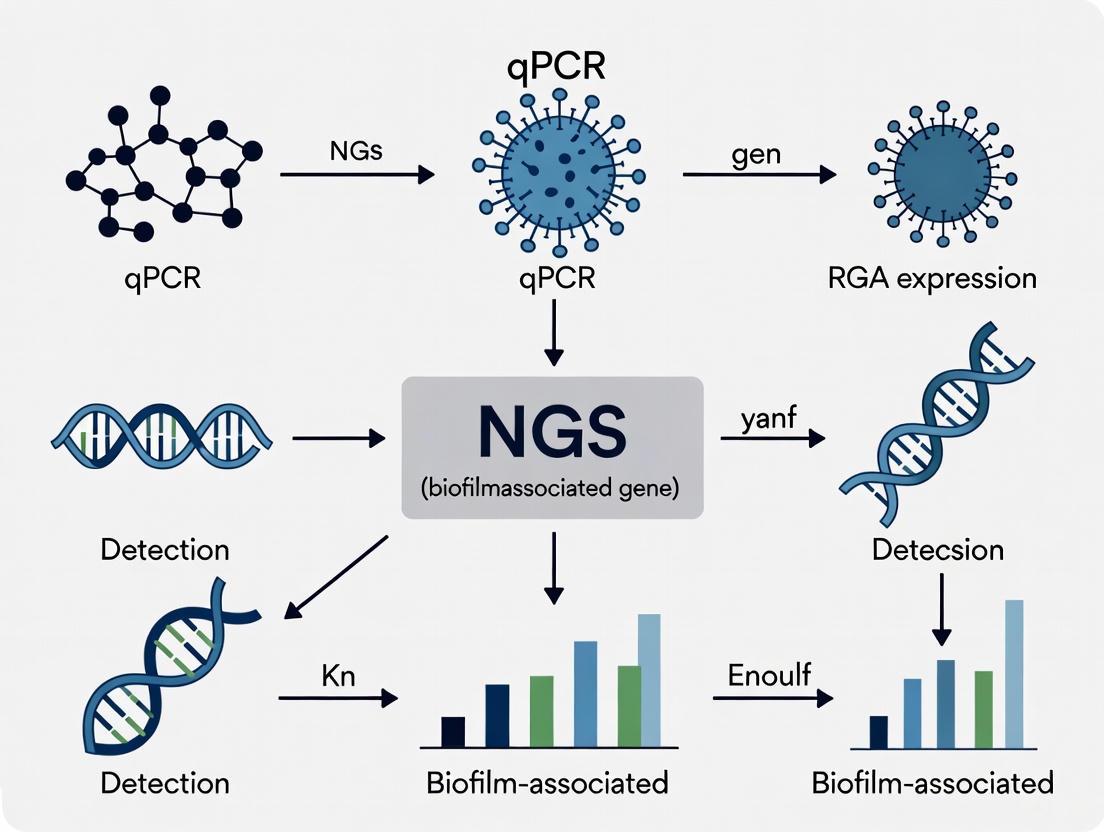
This article provides a comprehensive comparison of quantitative Polymerase Chain Reaction (qPCR) and Next-Generation Sequencing (NGS) for detecting and analyzing genes associated with microbial biofilms.
qPCR vs. NGS for Biofilm Gene Detection: A Strategic Guide for Researchers and Developers
Abstract
This article provides a comprehensive comparison of quantitative Polymerase Chain Reaction (qPCR) and Next-Generation Sequencing (NGS) for detecting and analyzing genes associated with microbial biofilms. Aimed at researchers, scientists, and drug development professionals, it explores the foundational principles of biofilm genetics, details the methodological workflows for both techniques, and addresses key troubleshooting and optimization challenges. By synthesizing current research and validation studies, it offers a strategic framework for selecting the appropriate method based on research goals, from targeted gene quantification to untargeted microbial community profiling, ultimately guiding more effective study design in antimicrobial development and biofilm research.
Understanding Biofilm Genetics and the Role of Modern Detection Tools
Biofilms represent the predominant mode of bacterial life in nature, constituting structured microbial communities encased in a self-produced matrix of extracellular polymeric substances (EPS) and attached to biotic or abiotic surfaces [1] [2]. This multicellular lifestyle provides significant survival advantages, including enhanced resistance to antimicrobial agents and environmental stresses [3]. The biofilm architecture is a remarkable example of microbial engineering, comprising bacterial cells (10-30% of volume) embedded within an EPS matrix (70-90% of volume) that is primarily composed of water (97%) [2]. This complex three-dimensional structure follows a defined developmental sequence involving attachment, microcolony formation, maturation, and dispersal phases [1] [3].
The genetic regulation of biofilm development involves sophisticated coordination systems, with quorum sensing (QS) serving as a critical cell-cell communication mechanism that enables bacteria to coordinate gene expression based on population density [1] [4]. Understanding the intricate relationship between biofilm architecture, its genetic regulation, and the resultant phenotypic characteristics requires advanced molecular detection technologies. This guide provides a comprehensive comparison of quantitative PCR (qPCR) and next-generation sequencing (NGS) for investigating biofilm-associated genetic targets, from EPS biosynthesis genes to QS regulatory networks.
Biofilm Architectural Components and Genetic Regulation
Extracellular Polymeric Substance (EPS) Matrix Composition
The EPS matrix forms the architectural backbone of biofilms, providing structural integrity and protection for inhabiting cells. This matrix comprises a complex mixture of biopolymers including exopolysaccharides, proteins, lipids, and extracellular DNA (eDNA) [1] [3]. The composition varies significantly between bacterial species and in response to environmental conditions, but typically includes three functional classes of EPS components:
- Architectural EPS: Provides structural framework and regulates biofilm formation (e.g., colanic acid, cellulose)
- Protective EPS: Offers defense against host immune mechanisms and environmental stresses (e.g., alginate, capsular polysaccharides)
- Aggregative EPS: Mediates surface adhesion and cellular aggregation (e.g., polysaccharide intercellular adhesion - PIA) [1]
Table 1: Major EPS Components and Their Functional Roles in Biofilm Architecture
| EPS Class | Representative Components | Genetic Determinants | Primary Functions |
|---|---|---|---|
| Architectural | Colanic acid, Cellulose | wca cluster, bcs/cel genes | Structural support, surface binding, biofilm biodiversity |
| Protective | Alginate, Capsular PS, Levan | algD-A, wyz-dependent, sacB-sacC | Resistance to antimicrobials, desiccation protection, oxidative stress scavenging |
| Aggregative | PIA, Curli fibers | icaADBC, csg genes | Cell-cell interaction, bacterial aggregation, surface adhesion |
Quorum Sensing Regulatory Networks
Quorum sensing represents the communication circuitry that coordinates biofilm development and function. This cell-density dependent signaling system enables bacterial populations to synchronize gene expression collectively, including virulence factor production and EPS matrix synthesis [1] [4]. Three primary QS systems have been identified:
- LuxI/LuxR-type: Utilized by Gram-negative bacteria, employing acyl-homoserine lactonases (AHL) as signal molecules
- Oligopeptide-based: Employed by Gram-positive bacteria, using small peptides as signaling molecules
- Autoinducer-2 (AI-2) system: Utilized by both Gram-negative and Gram-positive bacteria, employing LuxS-encoded AI-2 [1]
The regulatory connection between QS and EPS production has been mathematically modeled, demonstrating that QS-induced EPS production enables biofilms to switch behavioral modes from colonization (optimized growth) to protection (enhanced matrix production) [4]. This strategic adaptation underscores the importance of QS genetic networks as key targets for biofilm research and therapeutic intervention.
Figure 1: Genetic Regulation of Biofilm Development. Quorum sensing (QS) systems induce extracellular polymeric substance (EPS) production, which stabilizes mature biofilm architecture. Both QS and EPS components are encoded by specific genetic determinants that serve as key detection targets.
Methodological Comparison: qPCR versus NGS for Biofilm Genetic Analysis
Technology Fundamentals and Workflow
The selection between qPCR and NGS technologies requires understanding their fundamental operational principles and experimental workflows. qPCR operates through enzymatic amplification of specific target sequences with fluorescence-based quantification in real-time, providing absolute or relative quantification of predefined genetic targets [5]. In contrast, NGS employs massively parallel sequencing of fragmented DNA libraries, enabling comprehensive analysis of genetic material without prior target selection [6].
Figure 2: Comparative Workflows of qPCR and NGS Technologies. qPCR employs targeted amplification and real-time quantification, while NGS uses library preparation and massively parallel sequencing for comprehensive genetic analysis.
Performance Metrics and Technical Specifications
Table 2: Technical Comparison of qPCR and NGS for Biofilm Genetic Analysis
| Parameter | qPCR/qRT-PCR | NGS |
|---|---|---|
| Detection Scope | Targeted analysis of known genes (EPS, QS, virulence) | Comprehensive, untargeted discovery of genetic content |
| Sensitivity | High (can detect <10 gene copies) | Variable (depends on sequencing depth) |
| Quantification | Absolute or relative quantification | Relative abundance, requires normalization |
| Throughput | Low to medium (dozens of targets per run) | Very high (millions of sequences per run) |
| Turnaround Time | Rapid (hours to 1 day) | Extended (days to weeks) |
| Cost per Sample | Low to moderate | High |
| Multiplexing Capacity | Limited without optimization | Extensive (entire transcriptomes/genomes) |
| Data Complexity | Low to moderate | High (requires bioinformatics expertise) |
| Viable Cell Assessment | Possible with RNA-based approaches (rRNA/mRNA) [5] | Limited (DNA-based detects viable and non-viable) |
Experimental Design Considerations for Biofilm Applications
The complex architecture and heterogeneous nature of biofilms present unique challenges for genetic analysis that influence technology selection. Key considerations include:
- Sampling challenges: Biofilm heterogeneity requires robust sampling strategies to ensure representative analysis
- Matrix interference: EPS components can inhibit enzymatic reactions in both qPCR and NGS workflows
- Gene expression dynamics: Biofilm development stages exhibit distinct transcriptional profiles requiring temporal resolution [7]
- Low-abundance targets: Key regulatory genes may be expressed at low levels demanding high sensitivity
- Polymicrobial communities: Multi-species biofilms require techniques with species discrimination capability [5]
RNA-based qPCR approaches offer particular advantages for viability assessment and gene expression analysis in biofilms, as RNA degrades rapidly after cell death, providing a snapshot of metabolically active communities [5]. The incorporation of exogenous mRNA controls (e.g., luciferase mRNA) enables normalization of extraction efficiency variations, significantly improving quantification accuracy in complex biofilm samples [5].
Application-Specific Workflows and Experimental Protocols
qPCR Workflow for Biofilm Gene Expression Analysis
The quantification of gene expression in biofilms requires specialized protocols to address unique matrix challenges and physiological heterogeneity. The following workflow has been optimized for biofilm analysis:
Sample Preparation and RNA Extraction:
- Grow biofilms under controlled conditions (surface, flow rate, nutrient availability)
- Harvest biofilm cells mechanically (scraping, sonication) or enzymatically (dispersin B, DNase)
- Extract total RNA using commercial kits with modifications for EPS disruption
- Spike with exogenous control mRNA (e.g., luciferase) immediately after cell lysis to normalize extraction efficiency [5]
- Treat with DNase to eliminate genomic DNA contamination
- Verify RNA quality and integrity (RNA Integrity Number >7.0)
Reverse Transcription and qPCR Amplification:
- Synthesize cDNA using reverse transcriptase with random hexamers and/or gene-specific primers
- Design primers with stringent specificity (amplicon size 70-150 bp)
- Include no-reverse transcriptase and no-template controls
- Perform amplification with SYBR Green or probe-based chemistry
- Use validated reference genes (e.g., rpoD, gyrA, recA) normalized to exogenous control [5]
Data Analysis:
- Calculate quantification cycle (Cq) values
- Determine extraction efficiency using exogenous control recovery
- Apply absolute quantification with standard curves or relative quantification (ΔΔCq method)
- Perform statistical analysis accounting for biofilm-to-biofilm variability
NGS Workflow for Comprehensive Biofilm Genetic Characterization
NGS approaches provide unparalleled capability for discovering novel genetic determinants in biofilm communities:
Library Preparation and Sequencing:
- Extract high-quality DNA/RNA from biofilm samples
- For metagenomics: Fragment DNA, ligate adapters, and amplify
- For metatranscriptomics: Deplete rRNA, enrich mRNA, and prepare cDNA libraries
- Select appropriate sequencing platform (Illumina, Oxford Nanopore, PacBio)
- Sequence with sufficient depth (typically 10-50 million reads per sample)
Bioinformatic Analysis:
- Perform quality control (FastQC) and adapter trimming
- Align sequences to reference genomes or perform de novo assembly
- Annotate genes using databases (KEGG, COG, Pfam)
- Quantify gene abundance (counts/fragments per kilobase million - FPKM)
- Conduct differential expression/abundance analysis (DESeq2, EdgeR)
- Perform functional enrichment and pathway analysis
Comparative Experimental Data: qPCR versus NGS Performance
Detection Sensitivity and Quantitative Accuracy
Table 3: Comparative Performance Metrics from Experimental Studies
| Performance Measure | qPCR/qRT-PCR | NGS | Experimental Context |
|---|---|---|---|
| Detection Rate | 40.0% (16/40 samples) [6] | 35.0% (14/40 samples) [6] | H. pylori detection in pediatric biopsies |
| Quantification Range | 5-6 log range with exogenous control [5] | 4-5 log range with spike-in controls | Bacterial load quantification |
| Measurement Variability | Coefficient of variation: 0.23-0.66 without control [5] | Technical variation <15% with sufficient depth | Inter-assay reproducibility |
| Limit of Detection | ~10 gene copies/reaction | ~0.01-0.1% relative abundance | Low-abundance target detection |
| Dynamic Range | 8-9 orders of magnitude | 4-5 orders of magnitude | Linear quantification range |
Application-Specific Performance in Biofilm Studies
- Gene Expression Profiling: qPCR demonstrated 2.5-15-fold higher expression of adhesion genes (fnbA, clfA, icaA) in mature S. aureus biofilms compared to planktonic cells [8], while NGS identified 347 differentially expressed genes in P. aeruginosa biofilms versus planktonic cultures
- Polymicrobial Biofilms: RNA-based qPCR accurately quantified P. aeruginosa and S. aureus populations in dual-species biofilms, revealing 2-6 log differences not detected by culture methods [5]
- Resistance Gene Detection: qPCR identified significant association (p=0.0357) between mrkA biofilm gene presence and elevated blaSHV expression in K. pneumoniae [9], while NGS characterized the complete resistome within multispecies biofilms
The Scientist's Toolkit: Essential Research Reagents and Materials
Table 4: Essential Research Reagents for Biofilm Genetic Analysis
| Reagent Category | Specific Products | Application Purpose | Technical Considerations |
|---|---|---|---|
| Nucleic Acid Extraction | Commercial kits (e.g., GeneProof PathogenFree) with mechanical lysis | Isolation of DNA/RNA from complex EPS matrix | Incorporate enzymatic pre-treatment (trypsin) for improved yield [6] |
| Exogenous Controls | Luciferase mRNA, synthetic DNA/RNA spikes | Normalization of extraction and amplification efficiency | Add before cell lysis; optimize concentration to avoid competition [5] |
| Reverse Transcriptase | Moloney murine leukemia virus (M-MLV), avian myeloblastosis virus (AMV) | cDNA synthesis for gene expression analysis | Include no-RT controls to detect genomic DNA contamination |
| Amplification Chemistry | SYBR Green, TaqMan probes, digital PCR reagents | Target amplification and detection | SYBR Green requires post-amplification melting curve analysis |
| Library Preparation | Illumina Nextera, NEBNext Ultra II | NGS library construction | Incorporate unique dual indexes for sample multiplexing |
| Bioinformatic Tools | FastQC, Trimmomatic, DESeq2, QIIME2, SPAdes | Data quality control, assembly, and analysis | Requires computational resources and specialized expertise |
Strategic Technology Selection Guide
The choice between qPCR and NGS technologies depends on multiple factors, including research objectives, sample characteristics, and resource availability. The following decision framework supports appropriate technology selection:
Select qPCR when:
- Research targets are well-defined and limited in number
- High-precision quantification of specific genes is required
- Sample throughput is prioritized with limited budget
- Rapid results are essential for time-course experiments
- Infrastructure for bioinformatic analysis is limited
Select NGS when:
- Discovery of novel genetic elements or pathways is needed
- Comprehensive analysis of complex communities is required
- Sufficient budget and bioinformatics expertise are available
- Hypothesis-generating rather than hypothesis-testing is the goal
- Structural variants or unknown modifications need identification
For comprehensive biofilm research programs, integrated approaches leveraging both technologies often provide optimal insights, using NGS for discovery phases and qPCR for validation and high-throughput screening.
The architectural complexity of biofilms, from their EPS structural matrix to QS regulatory networks, presents both challenges and opportunities for genetic analysis. qPCR and NGS offer complementary capabilities for investigating these sophisticated microbial communities. qPCR provides sensitive, quantitative, and accessible analysis of predefined genetic targets, while NGS delivers comprehensive, discovery-oriented characterization of genetic content. The selection between these technologies should be guided by specific research questions, experimental requirements, and available resources. As both technologies continue to evolve, their strategic application will undoubtedly yield deeper understanding of biofilm architecture and novel approaches for targeting problematic biofilm-associated infections.
Biofilms are structured communities of microbial cells embedded in a self-produced matrix of extracellular polymeric substances (EPS) that adhere to biological or abiotic surfaces [3]. This mode of growth represents a significant public health challenge due to its association with chronic infections and intrinsic resistance to antimicrobial treatments [10] [11]. The genetic underpinnings of biofilm resilience are multifaceted, involving complex mechanisms such as efflux pumps, persister cell formation, and horizontal gene transfer (HGT) [12] [3]. Understanding these mechanisms is crucial for developing effective therapeutic strategies against biofilm-associated infections.
The study of these resistance genes requires sophisticated molecular detection technologies. Quantitative polymerase chain reaction (qPCR) and next-generation sequencing (NGS) have emerged as powerful tools for identifying and characterizing the genetic determinants of biofilm resistance [13] [6] [14]. This article objectively compares the performance of these two technologies in the context of biofilm-associated gene detection research, providing experimental data and protocols to guide researchers in selecting appropriate methodologies for their investigative needs.
Molecular Mechanisms of Biofilm-Associated Resistance
Efflux Pump Systems
Efflux pumps are membrane-bound transporter proteins that actively extrude toxic substances, including antibiotics, from bacterial cells [12]. These systems contribute significantly to multidrug resistance (MDR) in biofilms by reducing intracellular antibiotic concentrations to sub-lethal levels [12]. In Gram-negative bacteria, resistance-nodulation-division (RND) superfamily efflux pumps such as the AcrAB-TolC system in Escherichia coli and MexAB-OprM in Pseudomonas aeruginosa demonstrate broad substrate specificity, enabling expulsion of diverse antibiotic classes [12]. These pumps are not only involved in antibiotic resistance but also play physiological roles in bacterial adaptation to stress, toxin removal, biofilm formation, and quorum sensing [12].
Table 1: Major Efflux Pump Families in Bacteria
| Efflux Pump Family | Energy Source | Examples | Representative Organisms |
|---|---|---|---|
| ATP-Binding Cassette (ABC) | ATP hydrolysis | MsbA | Escherichia coli |
| Major Facilitator Superfamily (MFS) | Proton motive force | EmrD | Escherichia coli |
| Resistance-Nodulation-Division (RND) | Proton motive force | AcrAB-TolC, MexAB-OprM | Escherichia coli, Pseudomonas aeruginosa |
| Small Multidrug Resistance (SMR) | Proton motive force | EmrE | Escherichia coli |
| Multidrug and Toxic Compound Extrusion (MATE) | Sodium ion or proton gradient | NorM | Vibrio cholerae |
Persister Cell Formation
Persister cells represent a subpopulation of genetically susceptible, metabolically dormant bacteria that survive antibiotic exposure by entering a non-growing or slow-growing state [10] [15]. These cells are not antibiotic-resistant mutants but rather phenotypic variants that exhibit tolerance through physiological dormancy [15]. Upon antibiotic removal, persisters can resume growth and regenerate the population, leading to chronic and relapsing infections [10]. In biofilms, persisters are highly concentrated and demonstrate significantly enhanced tolerance to antimicrobials compared to their planktonic counterparts [10] [3]. The formation of these cells is controlled by bacterial stress response pathways, toxin-antitoxin systems, and environmental factors such as nutrient limitation [10].
Horizontal Gene Transfer
Biofilms provide an ideal environment for horizontal gene transfer (HGT), facilitating the dissemination of antibiotic resistance genes among bacterial populations [12] [3]. The close proximity of cells within the biofilm matrix, combined with the presence of extracellular DNA (eDNA) as a structural component, enhances the efficiency of conjugative transfer, transformation, and transduction [3]. This genetic exchange accelerates the development of multidrug-resistant strains, as resistance genes can spread across different bacterial species within the biofilm community [12]. The EPS matrix also protects the internal bacteria from environmental stressors, further stabilizing the conditions for successful genetic exchange [10].
Diagram 1: Biofilm resistance mechanisms and their clinical impacts. The three primary mechanisms work in concert to create formidable barriers to effective antimicrobial treatment.
Detection Technologies: qPCR vs. NGS
Quantitative PCR (qPCR) is a targeted molecular technique that amplifies and quantifies specific DNA sequences in real-time using fluorescence detection [13]. It provides highly sensitive and specific detection of known resistance genes and is widely used for gene expression studies through reverse transcription qPCR (RT-qPCR) [9]. Next-Generation Sequencing (NGS) represents a high-throughput, untargeted approach that enables parallel sequencing of millions of DNA fragments, allowing for comprehensive detection of known and novel genetic determinants without prior target selection [6] [14].
Performance Comparison in Biofilm Gene Detection
Table 2: Comparative Performance of qPCR and NGS for Biofilm Gene Detection
| Parameter | qPCR/RT-qPCR | NGS |
|---|---|---|
| Sensitivity | High (detects low abundance targets) [6] | Variable (depends on sequencing depth) [6] |
| Specificity | High (primers designed for specific targets) [9] | Broad (can detect unexpected targets) [14] |
| Throughput | Limited to pre-selected targets [13] | High (capable of detecting entire resistomes) [14] |
| Quantification | Excellent (precise quantification of target genes) [9] | Relative (based on read counts) [6] |
| Turnaround Time | 2-4 hours (rapid results for known targets) [13] | ~24 hours (faster than culture) [14] |
| Cost per Sample | Lower (economical for targeted studies) [13] | Higher (comprehensive but more expensive) [6] |
| Novel Gene Discovery | Not applicable (requires prior knowledge) [13] | Excellent (detection of previously uncharacterized genes) [14] |
Recent studies directly comparing these technologies demonstrate their complementary strengths. In a comparative study of Helicobacter pylori detection, both real-time PCR and NGS showed similar detection rates, with PCR identifying H. pylori in 40.0% of samples and NGS detecting it in 35.0% of the same sample set [6]. The two PCR-positive samples that were NGS-negative had high quantification cycle (Cq) values (29.21 and 32.21), suggesting low bacterial load may impact NGS detection sensitivity in some cases [6]. Conversely, in a study on central nervous system infections, NGS identified pathogens in 63.3% of samples compared to 45.6% with culture, demonstrating superior detection capability for complex clinical samples [14].
Diagram 2: Comparative workflows for qPCR and NGS in biofilm resistance gene detection. The technologies follow distinct pathways from sample to result, with qPCR focusing on predefined targets and NGS enabling comprehensive discovery.
Experimental Protocols for Biofilm Resistance Gene Detection
Sample Collection and DNA Extraction
Subgingival Biofilm Sampling Protocol [13]:
- Isolate teeth with cotton rolls and gently dry supragingival surfaces with an air syringe to avoid contamination
- Insert sterile paper points (VDW Dental, 29 mm, size 50) into periodontal pockets for 15 seconds
- Transfer paper points to sterile 1.5 mL tubes and rapidly freeze in liquid nitrogen
- Store samples at -80°C until DNA extraction
DNA Extraction Methodology [13]:
- Use commercial kits such as DNeasy Blood and Tissue Kit (QIAGEN), NucleoSpin Tissue Mini (MACHEREY-NAGEL), or ZymoBIOMICS DNA Miniprep (ZYMO RESEARCH)
- For paper points, employ mechanical lysis methods including bead beating with ultra-high density BashingBeads
- Vortex on maximum speed for 1 minute, followed by a 5-minute pause, repeated five times
- Elute DNA in 50-100 μL elution buffer appropriate for the kit
- Validate DNA quality and quantity using fluorometric measurements (e.g., Qubit fluorometer) and UV spectrophotometry (e.g., NanoDrop)
qPCR/RT-qPCR for Resistance Gene Expression
Gene Expression Analysis in Klebsiella pneumoniae Biofilms [9]:
- Extract total RNA from biofilm samples using commercial kits with DNase treatment
- Synthesize cDNA using reverse transcriptase with random hexamers or gene-specific primers
- Prepare qPCR reactions with universal 16S rRNA primers for bacterial DNA quantification:
- Forward: 5′-TCCTACGGGAGGCAGCAGT-3′
- Reverse: 5′-GGACTACCAGGGTATCTAATCCTGTT-3′ [13]
- Design specific primers for target resistance genes (e.g., mrkA, blaSHV, blaTEM)
- Perform amplification with thermal cycling conditions:
- Initial denaturation: 95°C for 5 minutes
- 40 cycles of: 95°C for 30 seconds, 55-60°C for 30 seconds, 72°C for 30 seconds
- Analyze data using the comparative Cq (ΔΔCq) method for relative quantification
- Include appropriate controls: no-template controls, positive controls, and reference genes for normalization
NGS for Comprehensive Resistome Analysis
Metagenomic Sequencing Protocol [6] [14]:
- Fragment extracted DNA to appropriate size (200-500 bp) using mechanical or enzymatic methods
- Prepare sequencing libraries with platform-specific adapters and barcodes for multiplexing
- Perform quality control using Bioanalyzer or similar systems to validate library integrity
- Sequence on appropriate platforms (e.g., Illumina MiSeq i100 Plus) with sufficient depth (minimum 10 million reads per sample for complex biofilms)
- Process raw data through bioinformatic pipeline:
- Quality filtering and adapter trimming (Trimmomatic, Cutadapt)
- Alignment to reference genomes or resistance databases (CARD, ARDB)
- De novo assembly for novel gene discovery (SPAdes, MEGAHIT)
- Taxonomic classification (Kraken2, MetaPhlAn)
- Resistance gene identification and quantification
- Validate findings with complementary methods when novel resistance mechanisms are proposed
Research Reagent Solutions
Table 3: Essential Research Reagents for Biofilm Resistance Studies
| Reagent/Category | Specific Examples | Function/Application |
|---|---|---|
| DNA Extraction Kits | DNeasy Blood & Tissue Kit (QIAGEN), NucleoSpin Tissue Mini (MACHEREY-NAGEL), ZymoBIOMICS DNA Miniprep (Zymo Research) [13] | Efficient microbial DNA isolation from biofilm matrices; critical for downstream molecular applications |
| qPCR Master Mixes | AmpliSens Helicobacter pylori-FRT PCR Kit [6], SYBR Green, TaqMan assays | Sensitive detection and quantification of specific resistance genes and expression patterns |
| NGS Library Prep Kits | Illumina DNA Prep, Nextera XT | Preparation of sequencing libraries compatible with major NGS platforms |
| Bioinformatic Tools | CARD (Comprehensive Antibiotic Resistance Database), ARDB (Antibiotic Resistance Genes Database), Trimmomatic, SPAdes | Data analysis, resistance gene identification, and novel gene discovery from NGS data |
| Reference Materials | ATCC biofilm strains, synthetic microbial communities | Method validation and standardization across experiments |
The genetic basis of biofilm resistance involves a complex interplay of efflux pumps, persister cell formation, and horizontal gene transfer, creating formidable challenges in clinical management of persistent infections [10] [12] [3]. Both qPCR and NGS technologies offer distinct advantages for detecting and characterizing these resistance mechanisms, with the choice of methodology dependent on research objectives, resources, and required throughput [13] [6] [14].
qPCR provides superior sensitivity and quantification for targeted studies of known resistance genes, making it ideal for hypothesis-driven research with defined targets [13] [9]. In contrast, NGS offers untargeted discovery capability, enabling comprehensive resistome analysis and identification of novel genetic determinants without prior knowledge of potential resistance mechanisms [6] [14]. The integration of both technologies in a complementary workflow represents the most powerful approach, leveraging the sensitivity of qPCR for validation and the breadth of NGS for discovery [14].
As biofilm-related infections continue to pose significant clinical challenges, advanced molecular detection methods will play an increasingly critical role in understanding resistance mechanisms and developing effective therapeutic interventions. The continued refinement of both qPCR and NGS technologies promises to enhance our ability to decipher the complex genetic architecture underlying biofilm-mediated antibiotic resistance.
In the persistent battle against biofilm-associated infections, understanding the genetic blueprint that dictates bacterial behavior is paramount. Biofilms, structured communities of bacteria encased in a protective matrix, are a primary factor in the chronicity and treatment failure of many infections, from periprosthetic joint infections to cystic fibrosis lung disease [16] [5]. The path from a bacterial genotype to a resistant phenotype is complex, and accurately mapping this path depends on the gene detection technologies researchers employ. This guide provides an objective comparison of the two foremost technologies in this field: quantitative PCR (qPCR) and Next-Generation Sequencing (NGS), detailing their performance, protocols, and applications to inform your research decisions.
The Critical Role of Genotype in Biofilm Phenotypes
Biofilms confer up to a 1000-fold increase in antimicrobial resistance compared to their free-floating (planktonic) counterparts [9]. This resilience is not merely physical; it is genetically encoded. Key genes govern every stage of biofilm life, from initial adhesion to maturation and the expression of resistance mechanisms.
For instance, in Klebsiella pneumoniae, the mrkA gene is critical for encoding the fimbriae that initiate surface attachment [9]. Furthermore, a statistically significant association (p = 0.0357) has been demonstrated between the presence of mrkA and elevated expression of the beta-lactamase gene blaSHV, providing a direct molecular link between the biofilm-forming genotype and the antibiotic-resistant phenotype [9]. This interplay of genes creates a formidable defense system for the bacterial community.
Detecting and quantifying these genes is the first step in developing targeted therapies to disrupt biofilm integrity and overcome treatment failures.
qPCR vs. NGS: A Technical Showdown for Biofilm Research
The choice between qPCR and NGS hinges on the research question—whether the goal is targeted, quantitative analysis of known genes or a broad, discovery-based exploration of the entire genetic landscape.
Performance Comparison: qPCR vs. NGS
The table below summarizes the core capabilities of each technology, highlighting their distinct advantages for different aspects of biofilm research.
| Feature | Quantitative PCR (qPCR) | Next-Generation Sequencing (NGS) |
|---|---|---|
| Discovery Power | Limited to known, pre-defined targets [17]. | Hypothesis-free; detects novel genes, SNPs, and unknown sequences without prior knowledge [18] [17]. |
| Throughput & Multiplexing | Low to medium; effective for a low number of targets (e.g., 1-5 per reaction) [19]. | Very High; capable of profiling from one to over 10,000 targets in a single assay [17] [19]. |
| Quantification | Excellent; provides quantitative data (Ct values) on gene expression or abundance [19] [5]. | Yes; quantifies based on read counts, enabling absolute or relative quantification [17]. |
| Taxonomic Resolution | Species-specific, limited by primer design. | High; can achieve species- and even strain-level resolution [18]. |
| Turnaround Time | Fast (1-3 hours) [19]. | Slower; library prep and sequencing require hours to days [19]. |
| Cost per Sample | Low [19]. | Moderate to high [19]. |
Diagnostic and Quantitative Performance in Infection Models
When applied to clinical and research samples, the two methods demonstrate complementary performance characteristics, as shown in the following data from infection studies.
| Application / Metric | qPCR / Real-time PCR | NGS (Metagenomic) | Context & Notes |
|---|---|---|---|
| Sensitivity in PJI Diagnosis | -- | 89% (0.84-0.93) [20] | Meta-analysis of periprosthetic joint infection (PJI) diagnosis. |
| Specificity in PJI Diagnosis | -- | 92% (0.89-0.95) [20] | Meta-analysis of periprosthetic joint infection (PJI) diagnosis. |
| Sensitivity in Joint Infection | 25.5% [21] | 68.1% [21] | Detection in synovial fluid from patients with prior antibiotic exposure. |
| Detection in Pediatric Biopsies | 40.0% (16/40 samples) [6] | 35.0% (14/40 samples) [6] | Helicobacter pylori detection; PCR identified 2 additional samples. |
| Quantification of Live Cells | Superior with RNA-based qPCR [5]. | Limited; DNA-based cannot differentiate live/dead cells [5]. | RNA-qPCR characterizes the viable, transcriptionally active population. |
Essential Research Reagent Solutions
The following table outlines key reagents and their critical functions in preparing and analyzing samples for biofilm gene detection.
| Research Reagent / Kit | Function in Biofilm Gene Detection |
|---|---|
| PowerSoil DNA Isolation Kit | Efficiently extracts genomic DNA from complex biofilm samples, including wastewater, crucial for downstream NGS or qPCR [22]. |
| TIANamp Micro DNA Kit | Used for extracting DNA from synovial fluid and other clinical samples for mNGS library preparation [21]. |
| InstaGene Matrix | A standardized method for bacterial DNA extraction used in PCR-based detection of pathogens in periprosthetic infections [16]. |
| Luciferase mRNA | An exogenous mRNA spike-in control for RNA-based qPCR, normalizing for extraction efficiency variability and improving quantification accuracy in biofilm samples [5]. |
| PMA (Propidium Monoazide) Dye | A chemical reagent that penetrates compromised membranes of dead cells, binding their DNA and preventing its amplification, thus improving the specificity of qPCR for viable cells [5]. |
| Trypsin-EDTA Solution | Used for pre-digestion of tissue biopsy samples to increase the efficiency of DNA isolation for subsequent PCR or NGS [6]. |
Experimental Workflows: From Sample to Answer
The journey from a biofilm sample to genetic data involves distinct pathways for qPCR and NGS. The following diagram illustrates the key steps and decision points in each workflow.
Making the Right Choice for Your Research
Selecting between qPCR and NGS is not about finding a superior technology, but about aligning tools with objectives.
Choose qPCR when: Your research requires highly sensitive quantification of a predefined set of known genes (e.g.,
mrkA,blaSHV), when you need to differentiate viable cells via RNA analysis, when budget is a constraint, or when you need rapid results [19] [5]. Its limitations are its inability to discover novel genes and its lower throughput [17].Choose NGS when: Your goal is hypothesis-free discovery, such as identifying unknown pathogens, detecting novel resistance genes, or comprehensively characterizing the entire resistome and microbiome of a biofilm [18] [22]. It is also the preferred method for projects requiring high multiplexing across thousands of targets or when strain-level resolution is critical [17]. The trade-offs include higher cost, longer turnaround time, and more complex data analysis [19].
For the most complex research questions, a combined approach is often the most powerful strategy. Using NGS for broad discovery followed by targeted qPCR assays for validation and high-throughput quantification leverages the strengths of both technologies [22]. As the field advances, this synergistic use of qPCR and NGS will be instrumental in fully unraveling the genotype-to-phenotype link in biofilm-associated infections, paving the way for next-generation antimicrobial therapies.
In the study of complex biological systems like biofilm formation, selecting the appropriate molecular tool is paramount. Quantitative Polymerase Chain Reaction (qPCR) and Next-Generation Sequencing (NGS) represent two foundational technologies in the researcher's arsenal. While both are used to analyze genetic material, they differ fundamentally in scope and application. qPCR is a targeted method that amplifies and quantifies specific, known DNA sequences with high sensitivity. In contrast, NGS is a comprehensive approach that enables the parallel sequencing of millions of DNA fragments, allowing for the discovery of both known and novel genetic variants without prior knowledge of the sequence [17] [23].
The choice between these technologies is particularly crucial in biofilm research. Biofilms—structured communities of microorganisms encased in a protective matrix—are a major cause of persistent infections in medical devices and chronic wounds [24] [25]. Their complexity necessitates tools that can either precisely monitor known genes or uncover entirely new pathways. qPCR is often the tool for rapid, sensitive detection of specific, pre-identified genetic markers. NGS, however, provides the unbiased discovery power needed to map the entire transcriptomic profile of a biofilm, identifying novel genes and pathways involved in its formation and resistance [26] [27].
Technology Comparison: qPCR vs. NGS
The decision to use qPCR or NGS hinges on the research objective: targeted quantification versus broad discovery. The table below summarizes the core characteristics of each technology.
Table 1: Key characteristics of qPCR and NGS
| Feature | qPCR | NGS |
|---|---|---|
| Fundamental Principle | Amplification and real-time quantification of specific DNA sequences using fluorescent probes or dyes. | Massively parallel sequencing of millions of DNA fragments simultaneously. |
| Discovery Power | Limited to detection of known, pre-defined targets. | Hypothesis-free; capable of detecting novel genes, transcripts, and variants [17]. |
| Throughput & Scalability | Effective for a low number of targets (e.g., ≤ 20); workflow becomes cumbersome for multiple targets [17]. | High-throughput; preferable for studies with many targets or samples [17]. |
| Sensitivity | Highly sensitive for detecting low abundance of known sequences. | High sequencing depth enables high sensitivity for variant detection (down to 1%) [17]. |
| Typical Applications in Biofilm Research | Quantifying expression of specific biofilm-associated genes (e.g., luxS, rbsB) [27]; detecting pathogen-specific DNA [6]. | Profiling global transcriptomic changes [26]; identifying novel biofilm-related pathways and genes [27]. |
| Mutation Resolution | Limited; typically detects specific, known mutations. | High; can identify variants from large chromosomal rearrangements down to single nucleotide changes [17]. |
| Data Output | Cycle threshold (Cq) values for relative or absolute quantification. | Sequence reads and counts for absolute quantification and variant identification [17]. |
Experimental Data in Biofilm Research
Direct comparisons in research settings highlight the performance differences between these technologies. A study on Helicobacter pylori detection in pediatric biopsies found that while both real-time PCR and NGS showed comparable detection rates, the PCR-based methods identified the bacterium in two additional samples, suggesting potentially higher sensitivity for this specific, targeted application [6].
In biofilm transcriptomics, NGS shines in its ability to generate comprehensive datasets. For instance, a study on Staphylococcus aureus from leprosy foot ulcers used NGS to compare mature biofilm and planktonic cells. Out of 2,842 genes expressed, the analysis identified 45 differentially expressed genes, with 32 upregulated and 13 downregulated in the biofilm state [26]. This depth of analysis is a key advantage of NGS.
Table 2: Comparison of qPCR and NGS performance from selected experimental studies
| Study Context | qPCR Findings | NGS Findings | Citation |
|---|---|---|---|
| H. pylori detection in 40 pediatric biopsies | Detected H. pylori DNA in 16 samples (40.0%); Cq values 17.51-32.21. | Detected H. pylori DNA in 14 samples (35.0%); read counts 7,768-42,924. | [6] |
| S. aureus biofilm transcriptome profile | (Not the primary method used) | 45 differentially expressed genes identified between biofilm and planktonic cells. | [26] |
| Bifidobacterium biofilm gene expression | Used for RT-qPCR to validate expression of key genes (e.g., luxS, rbsB) during biofilm formation. | Used for gene-trait matching analysis to identify putative genes involved in biofilm formation. | [27] |
Experimental Workflows and Protocols
The practical application of qPCR and NGS involves distinct, multi-step workflows. Understanding these protocols is essential for designing robust biofilm experiments.
Workflow: qPCR for Gene Expression Analysis
The following diagram illustrates the standard workflow for quantifying gene expression using qPCR, from sample collection to data analysis.
A typical qPCR protocol for analyzing biofilm-associated gene expression involves the following steps [26] [27]:
- Sample Collection and RNA Extraction: Biofilm cells are harvested. Total RNA is extracted using a commercial kit, such as the HiPurA Bacterial RNA Purification Kit. The extracted RNA is assessed for quality and concentration using systems like the Agilent 4150 Tapestation and Qubit Fluorometer. An RNA Integrity Number (RIN) greater than 7 is often required for reliable results [26].
- cDNA Synthesis: High-quality RNA is reverse transcribed into complementary DNA (cDNA) using a reverse transcriptase enzyme and primers.
- qPCR Reaction Setup: The cDNA is combined with a reaction mix containing:
- Master Mix: Includes DNA polymerase, dNTPs, and buffer salts. Some formulations are "Lyo-Ready" for ambient-temperature stability [23].
- Sequence-Specific Primers: Designed to amplify the target biofilm gene of interest (e.g., luxS for quorum sensing [27]).
- Fluorescent Probe or DNA-Binding Dye: To monitor amplification in real-time.
- Amplification and Quantification: The reaction is run in a real-time PCR cycler. The instrument measures the fluorescence at the end of each cycle. The cycle at which the fluorescence crosses a defined threshold (Quantification Cycle, Cq) is recorded and used for relative or absolute quantification of the starting target amount.
Workflow: RNA-Seq for Transcriptomic Profiling
The following diagram outlines the core steps for an NGS-based RNA sequencing (RNA-Seq) experiment to profile a biofilm transcriptome.
A detailed protocol for an NGS-based transcriptome study, as used in biofilm research, includes [26]:
- Sample Preparation and RNA Extraction: This initial step is similar to qPCR, requiring high-quality RNA from biofilm and control (e.g., planktonic) cells. The RNA is quality-controlled using tools like the RNA ScreenTape System.
- Library Preparation: The enriched transcriptome is chemically fragmented. The fragments are then reverse-transcribed into double-stranded cDNA. Using a kit like the NEBNext Ultra II RNA Library Prep Kit, the cDNA fragments undergo end repair, adenylation, and have platform-specific adapters ligated to them. The adapter-ligated fragments are then amplified via PCR (e.g., 12 cycles) to create the final sequencing library. Size selection is performed (e.g., using AMPure beads) to aim for a library size of 400–600 bp.
- Library Quantification and Sequencing: The final DNA library is quantified using Qubit Fluorometry and its quality is assessed (e.g., with an Agilent 2100 Bioanalyzer). Libraries that pass QC are sequenced on a platform such as the Illumina HiSeq or MiSeq, generating millions of paired-end reads.
- Bioinformatic Analysis:
- Quality Control: Raw sequence reads are processed using tools like FastQC and fastp to remove adapter sequences and low-quality bases [26].
- Alignment: Processed reads are mapped to a reference genome (e.g., S. aureus) using an aligner like Bowtie2 [26].
- Differential Expression: Read counts are normalized, and differential expression analysis is performed using software packages such as DESeq2 to identify genes with significant expression changes between biofilm and planktonic conditions [26].
- Pathway Analysis: Enrichment analysis for biological processes and pathways (e.g., KEGG) is performed using tools like DAVID [26].
The Scientist's Toolkit: Essential Research Reagents
Successful implementation of qPCR and NGS workflows relies on a suite of specialized reagents and kits. The following table details key solutions used in the experiments cited herein.
Table 3: Key research reagent solutions for qPCR and NGS workflows
| Reagent / Kit Name | Technology | Primary Function | Example Use Case |
|---|---|---|---|
| HiPurA Bacterial RNA Purification Kit | Both | Purification of high-quality total RNA from bacterial samples. | RNA extraction from S. aureus biofilm and planktonic cells for transcriptome study [26]. |
| NEBNext Ultra II RNA Library Prep Kit | NGS | Preparation of sequencing-ready RNA libraries from fragmented cDNA. | Library construction for transcriptome profiling of biofilms [26]. |
| AmpliSens Helicobacter pylori-FRT PCR Kit | qPCR | IVD-certified kit for detection of H. pylori DNA via real-time PCR. | Detection and quantification of H. pylori in pediatric biopsy samples [6]. |
| Lyo-Ready Master Mixes | qPCR | qPCR reagents formulated for lyophilization, enabling ambient-temperature stable assays. | Creating stable assays for high-throughput settings or resource-limited environments [23]. |
| dUTP Master Mix | qPCR | Contains dUTP and Uracil-DNA Glycosylase (UDG) to prevent carryover contamination from previous PCR products. | Essential for high-sensitivity applications and when reusing equipment to avoid false positives [23]. |
| AMPure XP Beads | NGS | Magnetic beads for size selection and purification of DNA fragments, such as in NGS library cleanup. | Size selection of cDNA libraries aiming for 400-600bp fragments [26]. |
qPCR and NGS are not mutually exclusive technologies but rather complementary tools in biofilm research. qPCR remains the gold standard for rapid, sensitive, and cost-effective quantification of a predefined set of genes, making it ideal for validation studies and routine monitoring [17] [23]. In contrast, NGS offers an unbiased, hypothesis-generating approach that is indispensable for discovering novel biofilm-related genes, splice variants, and complex global regulatory networks [17] [26] [27].
The choice between them should be guided by the research question. For focused analysis of known targets, qPCR is exceptionally efficient. For exploratory studies aiming to unravel the full genetic complexity of biofilms, NGS provides unparalleled depth and discovery power. As the field advances, a hybrid approach—using NGS for comprehensive discovery and qPCR for rapid validation and high-throughput screening—is increasingly becoming the most powerful strategy for advancing our understanding and treatment of persistent biofilm-associated infections [23].
Methodological Deep Dive: From qPCR Workflows to NGS Pipelines
Quantitative PCR (qPCR) remains a cornerstone technique in molecular microbiology for detecting and quantifying specific genetic targets. In the study of biofilm-associated infections, qPCR provides a rapid and sensitive method for quantifying genes related to virulence and antibiotic resistance. This guide details the workflow for primer design, amplification, and absolute quantification of target genes, framing this within the broader context of methodological choices for biofilm research, particularly in comparison to Next-Generation Sequencing (NGS). Biofilms, which are complex communities of microorganisms encased in an extracellular polymeric substance, pose a significant challenge in healthcare, contributing to persistent infections and antimicrobial resistance (AMR) [28] [11]. Specifically, pathogens like Klebsiella pneumoniae utilize biofilms as a physical barrier and may regulate the expression of antibiotic resistance genes (ARGs) within them [9]. Accurate molecular techniques are essential for understanding these mechanisms. While NGS offers powerful, untargeted discovery of microbial communities and resistance markers, qPCR delivers highly sensitive, targeted quantification of specific genes of interest, making it ideal for focused hypothesis testing and rapid diagnostics [6].
Primer Design and Validation
Design Principles and Guidelines
Primers are the most critical component of any PCR assay, as their properties dictate the specificity and sensitivity of the entire reaction [29]. Poor design can lead to reduced precision and false results. Adherence to established design principles is fundamental for a robust qPCR assay.
Key design parameters include [30] [31]:
- Length: Optimal primer length is 18–30 bases.
- Melting Temperature (Tm): Primers should have a Tm between 60–64°C, with an ideal of 62°C. The Tm values for the forward and reverse primer should not differ by more than 2°C.
- GC Content: Aim for 35–65%, with 50% being ideal. Avoid stretches of four or more consecutive G residues.
- Specificity: Primers must be unique to the target sequence. Tools like NCBI Primer-BLAST should be used to check for unintended binding sites and ensure a single, specific amplicon [30].
- Secondary Structures: Primers and probes must be screened for self-dimers, heterodimers, and hairpins. The ΔG value for any such structures should be weaker (more positive) than -9.0 kcal/mol [31].
- Amplicon Characteristics: The amplicon size should ideally be between 75–150 bp, and up to a maximum of 250 bp, to ensure efficient amplification [30] [31]. When working with RNA, designing assays to span an exon-exon junction can help avoid amplification of genomic DNA [31].
Experimental Validation of Primers
Before use in quantitative experiments, primer sets must be empirically validated. The following protocol outlines a standard validation workflow [30]:
- Specificity Check via Melt Curve Analysis: Following qPCR amplification, perform a melt curve analysis. A single, sharp peak in the melt curve indicates amplification of a single, specific product.
- Gel Electrophoresis: Analyze the PCR product on a 1.5% agarose gel. A single band of the expected size confirms primer specificity.
- Determination of PCR Efficiency: Prepare a serial dilution (e.g., 5-point, 10-fold dilution) of a template containing the target sequence. Amplify each dilution in duplicate or triplicate and plot the Log10 of the initial template quantity against the Cq value. The slope of the standard curve is used to calculate efficiency (E) using the formula: E = 10-1/slope - 1. An efficiency between 90–105% is generally considered acceptable [30].
The following diagram illustrates the complete primer design and validation workflow.
Absolute Quantification Methodologies
Absolute quantification in qPCR determines the exact number of target DNA copies in a sample, expressed as copies/µL or copies/µg of nucleic acid. This is distinct from relative quantification, which measures fold-changes in expression between samples [32] [33]. Two primary methods are used.
Standard Curve Method
This approach requires a standard curve created from samples of known concentration [32].
- Standard Preparation: Known standards can be plasmid DNA, in vitro transcribed RNA, or genomic DNA. The concentration of the stock must be accurately determined spectrophotometrically (e.g., via A260) and then converted to copy number/µL based on its molecular weight [32]. The stock is then serially diluted (e.g., 10-fold dilutions over 6–8 orders of magnitude) to create the standard curve [32].
- Critical Guidelines:
- Quantification: Unknown samples are run simultaneously with the standard curve. The Cq values of the unknowns are interpolated from the standard curve to determine the absolute starting quantity.
Digital PCR (dPCR) Method
dPCR is a newer method that provides absolute quantification without a standard curve [32].
- Workflow: The sample is partitioned into thousands of individual reactions so that some contain the target molecule and others do not. After PCR amplification, the fraction of negative reactions is used in a Poisson statistical model to calculate the absolute count of target molecules in the original sample [32].
- Advantages: This method is highly tolerant to PCR inhibitors and does not rely on external standards or endogenous controls, eliminating inaccuracies from imperfect standard curves [32].
Table 1: Comparison of Absolute Quantification Methods in qPCR
| Feature | Standard Curve Method | Digital PCR (dPCR) Method |
|---|---|---|
| Principle | Interpolation from a standard curve of known concentrations [32] | Poisson statistics based on limiting dilution and partitioning [32] |
| Requires Standards | Yes, critical for accuracy [32] [34] | No [32] |
| Key Advantage | Widely accessible, standard qPCR equipment sufficient [32] | No standard curve needed, high precision, resistant to inhibitors [32] |
| Key Challenge | Accuracy depends on pure, stable, and accurately quantified standards [32] [34] | Requires specialized instrumentation, optimization of partitioning [32] |
| Ideal For | Quantifying viral loads, specific gene copy number in a genome [32] | Detecting rare alleles, quantifying small fold-changes, analyzing complex mixtures [32] |
The choice between these quantification approaches depends on the research goals and available resources, as summarized below.
Application: Quantifying Biofilm-Associated Genes inK. pneumoniae
The following experimental data and protocols illustrate the application of qPCR absolute quantification in biofilm research.
Experimental Protocol: Gene Quantification in Biofilms
A representative protocol for quantifying biofilm-associated and antibiotic resistance genes, based on a recent study, is outlined below [9]:
- Sample Collection and Bacterial Isolation: Collect clinical isolates (e.g., from hospitals) and purify by culturing on selective media like MacConkey agar.
- DNA Extraction: Extract genomic DNA from bacterial pellets using a commercial DNA isolation kit.
- PCR Amplification for Gene Detection: Perform conventional PCR to confirm the presence of target genes (e.g., mrkA for biofilm formation; blaSHV, blaTEM for antibiotic resistance) using gene-specific primers.
- qPCR Absolute Quantification:
- Standard Curve Creation: Use a plasmid containing the target gene sequence. Determine its concentration and calculate the copy number. Prepare a 10-fold serial dilution series (e.g., from 107 to 101 copies/µL).
- qPCR Run: Amplify the standard dilutions and unknown samples in the same qPCR run using a master mix containing SYBR Green dye.
- Data Analysis: The qPCR software generates a standard curve (Cq vs. Log10 copy number). The copy number in unknown samples is determined by interpolating their Cq values from this curve.
Experimental Data and Comparison to NGS
A recent study on Helicobacter pylori detection in pediatric biopsies provides a direct comparison of qPCR and NGS performance, which is highly relevant for biofilm gene detection [6].
Table 2: Performance Comparison of qPCR and NGS in Pathogen Detection
| Parameter | Real-Time PCR (IVD Kit) | Next-Generation Sequencing (NGS) |
|---|---|---|
| Detection Rate | 40.0% (16/40 samples) [6] | 35.0% (14/40 samples) [6] |
| Quantification | Direct (Cq values) and absolute copy number possible [32] | Relative abundance based on read counts [6] |
| Sensitivity | High, detected 2 additional samples missed by NGS [6] | Slightly lower in direct comparison, but capable of detecting low bacterial load [6] |
| Throughput | High for targeted genes | Massive, for entire communities |
| Cost | Lower, cost-effective for routine targeted detection [6] | Higher, limited by cost and complexity [6] |
| Primary Application | Targeted quantification of specific genes/pathogens [6] [9] | Untargeted discovery, community analysis, and detection of multiple pathogens [6] |
Furthermore, a study on K. pneumoniae utilized RT-qPCR to demonstrate that strains harboring the biofilm gene mrkA showed significantly higher expression of the beta-lactamase resistance gene blaSHV, particularly under neutral pH conditions [9]. This provides a concrete example of how absolute quantification via qPCR can reveal critical regulatory relationships between biofilm formation and antibiotic resistance.
The Scientist's Toolkit: Essential Reagents and Materials
Table 3: Key Research Reagent Solutions for qPCR Workflow
| Reagent/Material | Function | Example & Notes |
|---|---|---|
| qPCR Master Mix | Contains DNA polymerase, dNTPs, buffer, and fluorescent dye (e.g., SYBR Green) for amplification and detection [30] | Commercial mixes (e.g., from Thermo Fisher, Qiagen, Bio-Rad). Choose based on compatibility with instrument and dye chemistry. |
| Specific Primers | Binds specifically to the target gene to initiate amplification [29] | Designed in-house per guidelines [31] or sourced from validated databases [30]. |
| Nuclease-Free Water | Solvent for preparing reaction mixes; free of RNases and DNases to prevent sample degradation. | Essential for maintaining sample integrity. |
| DNA Standards | Used to generate the standard curve for absolute quantification [32] [34] | Purified plasmid DNA or PCR amplicons of the target gene. Must be accurately quantified and pure [32]. |
| DNA Extraction Kit | Isols high-quality, inhibitor-free genomic DNA from samples (e.g., bacterial cultures, biofilms) [6] [9] | Kits from companies like GeneProof, QIAGEN, or Zymo Research. |
| Low-Binding Tubes/Tips | Minimizes adhesion of DNA to plastic surfaces, crucial for accurate dilution and handling of low-concentration standards and samples [32] | Particularly critical for digital PCR workflows [32]. |
The qPCR workflow for absolute quantification, from meticulous primer design to rigorous amplification and analysis, provides a powerful, sensitive, and quantitative tool for targeted genetic analysis. In biofilm research, this enables precise measurement of key genes, such as those involved in adhesion and antibiotic resistance, offering insights into the molecular mechanisms driving persistent infections. While NGS excels as a discovery tool for broad microbial profiling, qPCR remains the method of choice for high-throughput, cost-effective, and absolute quantification of specific genetic targets. The choice between them should be guided by the research question: NGS for "what is there?" and qPCR for "how much of this specific target is there?". A combined approach, using NGS for discovery and qPCR for validation and longitudinal quantification, is often the most effective strategy for advancing our understanding of complex biofilm-associated infections.
Methicillin-resistant Staphylococcus aureus (MRSA) biofilm-associated infections represent a significant challenge in clinical settings due to their inherent resistance to conventional antibiotics and host immune responses. The formation of biofilms is a genetically coordinated process involving the initial attachment of bacterial cells to surfaces, proliferation, maturation, and eventual dispersal. Understanding the molecular mechanisms governing this process requires precise analytical tools capable of detecting and quantifying the expression of key virulence genes. Among these tools, quantitative polymerase chain reaction (qPCR) has emerged as a fundamental technology for profiling gene expression in biofilm research, though it now faces competition from next-generation sequencing (NGS) approaches. This case study provides a comprehensive comparison of qPCR and NGS methodologies for investigating adhesion and matrix gene expression in MRSA biofilms, evaluating their respective performance characteristics, applications, and limitations within the context of contemporary biofilm research.
The genetic architecture of MRSA biofilms involves coordinated expression of multiple gene families, including microbial surface components recognizing adhesive matrix molecules (MSCRAMMs) such as clumping factors A and B (clfA, clfB), fibronectin-binding proteins A and B (fnbA, fnbB), and elastin-binding protein (ebpS), which mediate initial surface attachment [35] [36]. Additionally, the icaADBC operon encodes proteins necessary for the synthesis of polysaccharide intercellular adhesin (PIA), a primary component of the staphylococcal biofilm matrix [36]. Research has demonstrated that MRSA biofilms exhibit distinct transcriptional profiles compared to their planktonic counterparts, with significant upregulation of clfA observed across multiple pandemic clones during early biofilm development [37]. The expression dynamics of these virulence factors vary considerably throughout biofilm maturation, necessitating temporal analysis to fully understand regulatory mechanisms [36] [37].
Methodological Comparison: qPCR versus NGS for Biofilm Gene Analysis
Technical Foundations and Workflow Applications
qPCR Methodology: Quantitative PCR operates through cyclic amplification of specific target genes using sequence-specific primers, with fluorescence-based detection enabling real-time quantification of amplification products. The quantification cycle (Cq) value, representing the PCR cycle at which fluorescence exceeds a background threshold, correlates inversely with the initial template concentration [6]. In biofilm research, qPCR applications include: (1) absolute quantification of specific gene copy numbers; (2) relative quantification of gene expression between experimental conditions using reference genes for normalization; and (3) high-resolution melting (HRM) analysis for detecting genetic variations [6]. The technique's exceptional sensitivity allows detection of low-abundance transcripts, with typical detection limits reaching down to a few copies per reaction.
NGS Methodology: Next-generation sequencing employs massively parallel sequencing of millions of DNA fragments simultaneously, providing a comprehensive profile of the entire transcriptome without requiring prior knowledge of specific targets [6] [14]. For biofilm studies, RNA-seq (a specific NGS application) involves converting RNA to cDNA, preparing sequencing libraries, massive parallel sequencing, and bioinformatic analysis to map reads to a reference genome and quantify transcript abundance [38] [37]. This approach enables hypothesis-free discovery of novel regulatory networks and pathways involved in biofilm development and maintenance.
Table 1: Core Technical Specifications of qPCR and NGS for Biofilm Gene Analysis
| Parameter | qPCR | NGS |
|---|---|---|
| Throughput | Limited to predefined targets | Comprehensive, entire transcriptome |
| Sensitivity | High (can detect <10 copies) | Variable (depends on sequencing depth) |
| Turnaround Time | 2-4 hours (after cDNA synthesis) | 24-72 hours [14] |
| Sample Requirement | 1-100 ng RNA | 10-1000 ng RNA |
| Data Complexity | Low (requires specific primers) | High (requires bioinformatics expertise) |
| Cost per Sample | Low | Moderate to High |
| Quantitative Accuracy | Excellent for known targets | Good, but dependent on normalization |
| Dynamic Range | >7-log range | 4-5 log range (limited by sequencing depth) |
Performance Comparison in Pathogen Detection
Direct comparative studies provide valuable insights into the relative performance of these technologies. A 2025 study comparing NGS, real-time PCR, and HRM-PCR for Helicobacter pylori detection in pediatric biopsies demonstrated that both PCR-based methods identified H. pylori DNA in 16 of 40 samples (40.0%), while NGS detected the pathogen in 14 samples (35.0%) [6]. The two additional samples detected by PCR but not NGS suggest potentially superior sensitivity of PCR-based methods for low-abundance targets in complex samples. The Cq values for positive samples in the IVD-certified real-time PCR assay ranged from 17.51 to 32.21, indicating a wide dynamic range of bacterial load detection [6].
In neurological infections, metagenomic NGS achieved an overall sensitivity of 77% and specificity of 96%, with a diagnostic accuracy of 91% in pooled analyses of central nervous system infections [14]. This performance substantially surpassed traditional culture methods, which identified potential pathogens in only 17.5% of cerebrospinal fluid samples, compared to nearly 60% with molecular testing [14]. For MRSA biofilm research specifically, each technology offers distinct advantages: qPCR provides exceptional sensitivity and precision for quantifying known virulence genes, while NGS enables discovery of novel regulatory networks and pathways.
Experimental Design: qPCR Workflow for MRSA Biofilm Gene Profiling
Biofilm Cultivation and Sample Preparation
MRSA Strain Selection and Culture Conditions: Select clinically relevant MRSA strains representing prevalent pandemic clones (e.g., USA300, EMRSA-15, ST239) with documented biofilm-forming capabilities [37]. Culture isolates in brain heart infusion (BHI) broth supplemented with 0.1% D-glucose to enhance biofilm formation [37]. Incubate cultures with appropriate antibiotics if maintaining selection pressure for resistance markers.
Static Biofilm Model Establishment: Inoculate 1-2 × 10^6 CFU/mL into polystyrene or polyvinyl chloride microtiter plates [36] [39]. Incubate statically at 37°C for specific time points corresponding to key biofilm developmental stages: early attachment (6-12 hours), maturation (24-48 hours), and dispersal (72+ hours) [36] [37]. Include appropriate controls: blank media, planktonic cultures, and non-biofilm forming strains.
Biofilm Harvest and RNA Preservation: Carefully aspirate planktonic cells and media, then wash adherent biofilms gently with phosphate-buffered saline to remove non-adherent cells. Recover biofilm cells by mechanical disruption (e.g., scraping) or enzymatic treatment. Immediately stabilize RNA using RNase inhibitors or commercial RNA stabilization reagents to preserve accurate transcriptional profiles.
RNA Extraction and qPCR Analysis
RNA Extraction and Quality Control: Extract total RNA using mechanical lysis (e.g., bead beating) followed by purification with commercial kits specifically validated for bacterial RNA [6]. Include DNase treatment to eliminate genomic DNA contamination. Assess RNA quality and quantity using spectrophotometry (A260/A280 ratio ~2.0) and microfluidics-based analysis (RIN > 8.0 for prokaryotic RNA).
cDNA Synthesis: Convert 100-1000 ng of high-quality total RNA to cDNA using reverse transcriptase with random hexamers and/or gene-specific primers. Include controls without reverse transcriptase (-RT) to assess genomic DNA contamination.
qPCR Assay Design and Validation: Design primers targeting key MRSA biofilm-associated genes (Table 2) with amplicon sizes of 80-150 bp for optimal qPCR efficiency. Validate primer specificity using melting curve analysis and gel electrophoresis. Determine amplification efficiency (90-110%) using standard curves with serial dilutions of control cDNA.
Table 2: Essential Target Genes for MRSA Biofilm Profiling
| Gene Category | Specific Genes | Function in Biofilm |
|---|---|---|
| Adhesion (MSCRAMMs) | clfA, clfB, fnbA, fnbB, ebpS, eno | Initial attachment to surfaces and host matrix proteins [35] [36] |
| Matrix Synthesis | icaA, icaD, icaB, icaC | Production of polysaccharide intercellular adhesin (PIA) [36] |
| Regulatory | agrA, sarA, sigB | Quorum sensing and global regulation of biofilm development [38] |
| Antibiotic Resistance | mecA, femA | Methicillin resistance and cell wall synthesis [35] [36] |
| Reference Genes | gyrB, rpoB, hu | Constitutive expression for normalization |
qPCR Amplification and Data Analysis: Perform reactions in technical triplicates using SYBR Green or probe-based chemistry on a calibrated real-time PCR instrument. Use thermocycling conditions optimized for primer-template systems: initial denaturation (95°C, 2-5 min), followed by 40 cycles of denaturation (95°C, 15-30 s), and combined annealing/extension (60°C, 30-60 s). Include no-template controls (NTC) to detect contamination. Calculate relative expression using the 2^(-ΔΔCq) method with normalization to validated reference genes [36].
Comparative Data Analysis: qPCR versus NGS Performance Metrics
Detection Sensitivity and Quantitative Accuracy
Direct comparisons of qPCR and NGS reveal method-specific advantages for biofilm gene expression analysis. In a study examining Helicobacter pylori detection, real-time PCR methods demonstrated marginally superior sensitivity (40.0% detection rate) compared to NGS (35.0% detection rate) in pediatric gastric biopsies [6]. The Cq values for positive PCR samples ranged from 17.51 to 32.21, demonstrating the technique's capacity to detect both high- and low-abundance targets [6]. For NGS, positive samples showed read counts between 7,768 and 42,924, reflecting the quantitative nature of this approach despite its different measurement principle [6].
For low-abundance transcripts characteristic of regulatory genes in biofilm subpopulations, qPCR typically offers superior detection sensitivity. The technique can reliably detect fewer than 10 copies of a target gene, whereas NGS requires substantial sequencing depth to identify rare transcripts, making it less suitable for quantifying low-expression genes without targeted enrichment approaches [6].
Table 3: Comparison of Experimental Outcomes Between qPCR and NGS
| Analysis Type | qPCR Performance | NGS Performance |
|---|---|---|
| Detection of Known Virulence Genes | Excellent sensitivity and precision for predefined targets | Good detection, but dependent on expression level |
| Discovery of Novel Regulators | Not applicable without prior knowledge | Excellent capability for hypothesis-free discovery |
| Multiplexing Capacity | Limited (typically 4-6 targets per reaction) | Virtually unlimited (entire transcriptome) |
| Strain-to-Strain Variation Assessment | Requires separate assays for each target | Comprehensive profiling across all genes |
| Temporal Expression Analysis | Excellent for focused time-course studies | Comprehensive but cost-prohibitive for dense time series |
| Differentiation of Closely Related Sequences | Requires optimized primer design and HRM | Excellent with sufficient read depth and mapping stringency |
Technical Considerations for Research Applications
Sample Requirements and Throughput: qPCR requires significantly less input material (1-100 ng total RNA) compared to NGS (10-1000 ng), making it more suitable for samples with limited biomass, such as microdissected biofilm regions [6]. However, NGS provides substantially more information per sample, with the capacity to profile the entire transcriptome simultaneously rather than being limited to predefined targets.
Cost Considerations and Accessibility: The reagent and instrumentation costs for qPCR are substantially lower than for NGS, making it more accessible for laboratories with limited resources. A typical qPCR experiment costs $10-50 per sample for focused gene expression analysis, whereas NGS RNA-seq experiments range from $100-1000 per sample depending on sequencing depth and multiplexing strategies. Additionally, qPCR data analysis requires minimal bioinformatics expertise compared to the specialized computational resources needed for NGS data processing.
Temporal Resolution and Dynamic Range: qPCR offers exceptional temporal resolution for time-course studies of biofilm development, allowing precise quantification of rapid transcriptional changes [36]. The technology's wide dynamic range (>7 logs) enables simultaneous quantification of both highly abundant structural genes and rare regulatory transcripts within the same sample. While NGS also provides quantitative data, its effective dynamic range is typically limited to 4-5 orders of magnitude due to sequencing depth constraints.
Research Reagent Solutions for MRSA Biofilm Gene Analysis
Table 4: Essential Research Reagents and Platforms
| Reagent Category | Specific Examples | Application Notes |
|---|---|---|
| Nucleic Acid Isolation | GeneProof PathogenFree DNA Isolation Kit [6] | Efficient recovery of microbial nucleic acids from complex matrices |
| Reverse Transcription | High-capacity cDNA reverse transcription kits | Include DNase treatment step to eliminate genomic DNA contamination |
| qPCR Master Mixes | SYBR Green or TaqMan probe-based chemistries | SYBR Green is cost-effective; TaqMan offers superior specificity for homologous genes |
| Primer Design Tools | Primer-BLAST, Beacon Designer | Ensure specificity for target genes across relevant MRSA strains |
| qPCR Instruments | Applied Biosystems QuantStudio, Bio-Rad CFX | Multi-channel capability for high-throughput applications |
| NGS Platforms | Illumina MiSeq i100 Plus [14] | Rapid turnaround (24 hours) with high accuracy |
| Bioinformatic Tools | CLC Genomics Workbench, Geneious | Essential for NGS data analysis and interpretation |
Integrated Workflow Diagram for MRSA Biofilm Gene Expression Analysis
The choice between qPCR and NGS for MRSA biofilm gene profiling depends heavily on research objectives, resources, and required throughput. qPCR remains the gold standard for focused, quantitative analysis of predefined virulence and matrix genes with exceptional sensitivity, precision, and cost-effectiveness. Its well-established protocols, rapid turnaround time, and minimal bioinformatics requirements make it ideal for hypothesis-driven research examining specific genetic pathways. In contrast, NGS provides unparalleled comprehensive profiling capability, enabling discovery of novel regulatory mechanisms and global transcriptional responses during biofilm development. While more resource-intensive, NGS offers hypothesis-free exploration of the entire transcriptome, making it invaluable for characterizing complex genetic networks.
For optimal experimental design, researchers should consider a tiered approach: using NGS for initial discovery phases to identify key regulatory pathways, followed by targeted qPCR validation across larger sample sets and multiple time points. This integrated methodology leverages the respective strengths of both technologies while mitigating their individual limitations. As sequencing costs continue to decrease and analytical workflows become more accessible, NGS will likely assume an increasingly prominent role in biofilm research. However, qPCR will remain indispensable for validation studies, clinical applications, and research settings requiring maximum sensitivity for low-abundance transcripts or operating with limited resources.
Metagenomic next-generation sequencing (mNGS) has revolutionized the study of complex microbial communities, enabling comprehensive analysis of microbiomes in environmental, clinical, and industrial settings. This powerful approach allows researchers to investigate microbial populations without the need for cultivation, providing unprecedented insights into taxonomic composition and functional potential [40]. The reliability of mNGS results, however, is highly dependent on multiple technical factors throughout the workflow, from sample preparation to data analysis.
The choice between qPCR and NGS for biofilm-associated gene detection represents a significant methodological consideration in microbial research. While qPCR offers targeted, sensitive, and rapid detection of specific genes or microorganisms, NGS provides a hypothesis-free, comprehensive view of entire microbial communities, including unculturable organisms and their functional genes [40] [41]. This comparison guide objectively evaluates the performance of different NGS workflow components based on recent experimental data, providing researchers with evidence-based recommendations for optimizing metagenomic studies of biofilm-associated genes.
DNA Extraction Method Comparisons
The DNA extraction step is critical for successful metagenomic sequencing, as different lysis methods can significantly impact DNA yield, quality, and microbial community representation. Variations in cell wall structures among different microorganisms require optimized extraction protocols to ensure unbiased DNA recovery.
Lysis Method Performance
Table 1: Comparison of DNA Extraction and Lysis Methods
| Method Category | Specific Method/Kit | Key Performance Findings | Study Context |
|---|---|---|---|
| Enzymatic Lysis | MetaPolyzyme-based protocol | Increased average read length (2.1-fold median increase); provided fully consistent diagnosis with clinical culture; more representative microbial profiles [42]. | Urine samples, Nanopore sequencing [42] |
| Mechanical Lysis | Bead beating | Resulted in excessive DNA fragmentation, reducing advantages of long-read sequencing techniques [42]. | Urine samples, Nanopore sequencing [42] |
| Trypsin Treatment | Trypsin digestion | Reduced human DNA contamination (82.63% eukaryotic DNA vs. 89.11% with mechanical lysis) [43]. | Breast tissue and fecal samples [43] |
| Saponin Treatment | Saponin treatment | Most effective at reducing host DNA (80.53% eukaryotic DNA) [43]. | Breast tissue and fecal samples [43] |
| Kit-Based (Zymo) | Quick-DNA HMW MagBead Kit | Most effective for high-quality microbial diversity analysis; most consistent results with minimal concentration variation [44]. | Canine stool samples, multi-platform [44] |
| Kit-Based (Macherey-Nagel) | MN kit | Highest DNA yield; suitable quality for long-read sequencing [44]. | Canine stool samples [44] |
| Kit-Based (Invitrogen) | I kit | Moderate DNA yield; highest variance among replicates [44]. | Canine stool samples [44] |
| Kit-Based (Qiagen) | Q kit | Most degraded DNA; lowest yield; significantly higher host DNA ratio [44]. | Canine stool samples [44] |
Experimental Protocols for DNA Extraction
Enzymatic Lysis Protocol (for Long-Read Sequencing)
This protocol, adapted from Frontiers in Cellular and Infection Microbiology research, optimizes DNA integrity for long-read sequencing platforms [42]:
- Sample Preparation: Centrifuge 1ml of urine sample at 20,000 × g for 5 minutes. Discard 800μl of supernatant and resuspend the pellet in the residual 200μl by gentle vortexing.
- Enzymatic Lysis: Add 5μl of lytic enzyme solution and 10μl of MetaPolyzyme (reconstituted in 750μl of PBS) to the 200μl sample. Mix by gentle pipetting.
- Incubation: Incubate mixed samples at 37°C in a shaker for 1 hour to lyse microbial cells.
- DNA Purification: Extract DNA from post-lysed samples using the IndiSpin Pathogen Kit according to manufacturer instructions:
- Add 20μl Proteinase K to 200μl sample
- Add 100μl Buffer VXL with 1μg Carrier RNA, incubate 15 minutes at 20-25°C
- Add 350μl Buffer ACB, mix thoroughly by pulse vortex
- Transfer to Mini column, centrifuge at 6,000 × g for 1 minute
- Wash with 600μl Buffer AW1, then 600μl Buffer AW2
- Centrifuge at 20,000 × g for 2 minutes to dry membrane
- Elute DNA with 100μl Buffer AVE
- Quantification: Measure DNA concentrations using Qubit 4.0 fluorometer with dsDNA HS Assay kit.
Trypsin/Saponin Pre-treatment Protocol (for Host DNA Depletion)
This method, optimized for tissue samples with high host DNA contamination, enhances microbial DNA recovery [43]:
- Tissue Processing: Subject tissue samples to mechanical lysis for 1 minute using a manual homogenizer.
- Enzymatic Pre-treatment: Digest samples in 200 microliters of trypsin solution (5 mg/mL) at 37°C for 30 minutes to increase DNA isolation efficiency.
- Alternative Chemical Pre-treatment: For saponin method, incubate samples with saponin solution instead of trypsin.
- DNA Extraction: Perform subsequent DNA extraction steps using the GeneProof PathogenFree DNA Isolation Kit according to manufacturer's instructions.
- Storage: Store isolated DNA samples at -20°C until further analysis.
Library Preparation and Sequencing Comparisons
Library preparation methods and sequencing platform selection significantly influence taxonomic resolution, functional profiling capability, and overall data quality in metagenomic studies.
Library Preparation and Sequencing Performance
Table 2: Comparison of Library Prep and Sequencing Methods
| Method Category | Specific Platform/Method | Key Performance Findings | Study Context |
|---|---|---|---|
| Automated Library Prep | Bravo Automated Liquid Handling Platform | Minor reduction in read/contig lengths; slightly higher taxonomic classification rate and alpha diversity; more rare taxa detected; minimal impact on community structure [45]. | Soil samples, Nanopore sequencing [45] |
| Manual Library Prep | ONT Ligation Sequencing Kit | Significantly longer read lengths (mean difference 756bp); longer assembly contigs; more medium-quality MAGs [45]. | Soil samples, Nanopore sequencing [45] |
| Illumina Short-Read | Illumina platforms | Cost-effective; high-throughput; suitable for dominant taxa detection; may under-represent rare species [46]. | River biofilm samples [46] |
| PacBio Long-Read | PacBio Sequel II | Higher taxonomic resolution; species-level identification; improved resolution of complex genomic regions [46]. | River biofilm samples, 16S rRNA gene [46] |
| 16S rRNA Amplicon | V1-V9 region sequencing | Enables classification of taxa unassigned in short-read datasets; provides higher taxonomic resolution [46]. | River biofilm samples [46] |
| Shotgun Metagenomic | Illumina DNA Prep | Avoids primer bias; allows identification of functional genes and pathways; cross-kingdom detection [40] [44]. | Multi-platform comparison [44] |
Experimental Protocols for Library Preparation and Sequencing
Automated Library Preparation Protocol
This protocol, validated for Oxford Nanopore sequencing, enables high-throughput metagenomic library preparation with improved reproducibility [45]:
- DNA Input Normalization: Normalize DNA input to 1μg across all samples.
- Automated Setup: Use Bravo Automated Liquid Handling Platform with 96-channel pipetting head for simultaneous execution of liquid handling steps across a 96-well plate.
- Library Preparation Kit: Employ Ligation Sequencing Kit (SQK-LSK114) and PCR Barcoding Expansion 96 (EXP-PBC096).
- PCR Barcoding: Input between 15-45ng DNA into PCR barcoding reactions.
- Library Pooling: Conclude with normalized pools of barcoded libraries, which are subsequently pooled together.
- Sequencing: Load pooled libraries on R10.4.1 PromethION flowcell for sequencing.
Note: The automated protocol differs from manual preparation primarily in purification steps - simultaneous temperature control and shaking is not possible on the Bravo, potentially reducing long DNA fragment elution efficiency [45].
16S rRNA Gene Amplification Protocol for Long-Read Sequencing
This protocol enables full-length 16S rRNA gene sequencing for high taxonomic resolution [46]:
- Target Region: Amplify the V1-V9 region of the 16S rRNA gene (~1500bp).
- Platform: Utilize PacBio Sequel II system with Kinnex protocol for amplification.
- Quality Control: Detect PCR products of barcoded V1-V9 amplicons by agarose gel electrophoresis prior to sequencing.
- Sequencing: Process on PacBio Sequel II sequencing platform.
NGS Workflow Visualization
Comprehensive NGS Workflow Diagram
Method Selection Decision Pathway
The Scientist's Toolkit: Essential Research Reagents and Materials
Table 3: Key Research Reagent Solutions for Metagenomic Workflows
| Category | Product/Kit | Manufacturer | Primary Function | Performance Notes |
|---|---|---|---|---|
| DNA Extraction | Quick-DNA HMW MagBead Kit | Zymo Research | High-quality DNA extraction for long-read sequencing | Most consistent results; suitable for HMW DNA [44] |
| DNA Extraction | DNeasy PowerSoil Pro Kit | Qiagen | DNA extraction from soil and complex samples | Effective for inhibitor removal; used in automated workflows [45] |
| Enzymatic Lysis | MetaPolyzyme | Sigma Aldrich | Enzymatic cell wall degradation | Increases read length and diagnostic consistency [42] |
| Host DNA Depletion | Trypsin Solution | Sigma Aldrich | Digestion of host cells in tissue samples | Reduces eukaryotic DNA contamination [43] |
| Library Preparation | Ligation Sequencing Kit | Oxford Nanopore | Library prep for Nanopore sequencing | Compatible with automated platforms [45] |
| Library Preparation | Illumina DNA Prep | Illumina | Library prep for shotgun metagenomics | Most effective for microbial diversity analysis [44] |
| Automation | Bravo Automated Platform | Agilent Technologies | Automated liquid handling | Increases throughput and reproducibility [45] |
| Preservation | DNA/RNA Shield | Zymo Research | Nucleic acid preservation at room temperature | Maintains integrity during sample transport [40] |
The optimization of NGS workflows for metagenomic analysis requires careful consideration of each step in the process, from sample collection through data analysis. Based on current comparative studies, enzymatic lysis methods provide superior performance for long-read sequencing applications, while mechanical lysis remains effective for standard applications. For samples with high host DNA contamination, trypsin or saponin pre-treatment significantly improves microbial DNA recovery.
In the context of qPCR versus NGS for biofilm-associated gene detection, NGS offers distinct advantages for comprehensive community analysis and functional gene discovery, while qPCR remains valuable for targeted, quantitative assessment of specific genes of interest. The choice between these approaches should be guided by research objectives, with NGS providing hypothesis-free exploration and qPCR enabling sensitive, specific quantification.
Library preparation automation enhances reproducibility and throughput with minimal impact on community composition representation. For sequencing platform selection, long-read technologies provide superior taxonomic resolution, while short-read platforms offer cost-effective solutions for large-scale studies. As metagenomic technologies continue to evolve, standardized workflows and cross-method validation will be essential for advancing microbiome research and its applications in biofilm studies.
The persistent nature of chronic wound infections poses a significant challenge in clinical management, primarily due to the formation of polymicrobial biofilms. These structured communities of microorganisms encased in an extracellular polymeric substance (EPS) exhibit enhanced tolerance to antimicrobial treatments and host immune responses [28] [47]. Traditional culture-based diagnostics often fail to accurately represent the true microbial diversity within these complex communities, leaving an estimated 60% of pathogens undetected and complicating treatment decisions [14] [47].
The emergence of molecular diagnostics, particularly next-generation sequencing (NGS), has revolutionized microbial community analysis by enabling comprehensive, culture-free identification of pathogens. This case study objectively compares the performance of quantitative PCR (qPCR) and NGS-based approaches for detecting biofilm-associated genes and organisms in polymicrobial wound communities, providing experimental data to guide researchers in selecting appropriate methodologies for their specific applications.
Technical Comparison: qPCR vs. NGS for Biofilm Analysis
Fundamental Principles and Workflows
qPCR-based approaches rely on the amplification of specific target sequences using predefined primers, allowing for precise quantification of known microorganisms or resistance genes through cycle threshold (Cq) values [6] [5]. This method can be adapted to target conserved regions like the 16S rRNA gene for bacterial identification or specific virulence and resistance genes.
In contrast, NGS technologies employ massively parallel sequencing to generate thousands to millions of DNA sequences simultaneously without requiring prior knowledge of the microbial composition [14] [48]. Two primary approaches are used in clinical diagnostics: metagenomic NGS (mNGS) for unbiased sequencing of all DNA in a sample, and targeted NGS (tNGS) which uses multiplex PCR to amplify specific genomic regions of interest before sequencing [48].
Table 1: Core Methodological Differences Between qPCR and NGS Approaches
| Parameter | qPCR | Targeted NGS (tNGS) | Metagenomic NGS (mNGS) |
|---|---|---|---|
| Principle | Target amplification with fluorescent probes | Multiplex PCR amplification followed by sequencing | Untargeted shotgun sequencing of all DNA |
| Throughput | Low (single to few targets) | Moderate (hundreds of targets) | High (ent microbiome) |
| Pathogen Detection | Limited to pre-specified targets | Broad within predefined panel | Comprehensive, including unknown organisms |
| Turnaround Time | 2-6 hours | ~14.5 hours [48] | ~28 hours [48] |
| Cost per Sample | Low | ~$150 [48] | ~$260 [48] |
| Resistance Detection | Requires separate assays for each gene | Can include resistance gene panels | Limited by sequencing depth and host DNA |
Experimental Workflows
The experimental workflow differs significantly between these approaches, impacting their application in research settings.
Figure 1: Experimental workflows for qPCR and NGS-based detection of biofilm-associated pathogens. PMA treatment can be incorporated for viability assessment in both approaches [49] [50].
Case Study: Comparative Performance in Clinical Diagnostics
Diagnostic Accuracy in Complex Infections
Recent clinical studies directly comparing these methodologies demonstrate distinct performance characteristics. In periprosthetic joint infection (PJI) diagnostics, tNGS demonstrated 88.37% sensitivity and 95.24% specificity, outperforming culture (74.41% sensitivity) and matching mNGS performance (93.02% sensitivity) while providing faster turnaround times and lower costs [48].
For neurologic infections, one comparative study found that while culture identified potential pathogens in only 17.5% of cerebrospinal fluid samples, molecular methods detected pathogens in nearly 60% of cases [14]. This diagnostic gap is particularly pronounced for fastidious and anaerobic organisms such as Prevotella, Bacteroides, and Cutibacterium acnes,--common causes of brain abscesses and shunt infections that frequently fail to grow in culture due to their slow growth and anaerobic requirements [14].
Table 2: Diagnostic Performance Comparison Across Infection Types
| Infection Type | Method | Sensitivity | Specificity | Key Advantages |
|---|---|---|---|---|
| Periprosthetic Joint [48] | Culture | 74.41% | 90.48% | Gold standard, provides isolates |
| tNGS | 88.37% | 95.24% | Balanced performance, cost-effective | |
| mNGS | 93.02% | 95.24% | Highest sensitivity, comprehensive | |
| Neurologic Infections [14] | Culture | 17.5-45.6% | N/R | Limited utility for fastidious organisms |
| NGS + qPCR | 77% | 96% | Broad detection, identifies anaerobes | |
| Polymicrobial Biofilms [47] | Culture | Highly variable | N/R | Limited by VBNC states and auxotrophy |
| Molecular | Significantly improved | N/R | Detects VBNC and unculturable organisms |
Technical Limitations and Biases
Both qPCR and NGS approaches present methodological challenges that researchers must consider:
qPCR Limitations:
- Viability assessment challenges: While PMA dye exclusion methods can theoretically differentiate between live and dead cells, efficiency varies significantly based on biofilm matrix composition, potentially leading to false positives [50] [5].
- Primer bias: Target sequence variations can reduce detection efficiency for certain strains [14].
- Limited multiplexing capacity: Difficult to scale for complex polymicrobial communities [6].
NGS Limitations:
- Host DNA contamination: Human genomic material can dominate sequencing libraries, reducing microbial sequence recovery [48].
- Bioinformatic complexity: Requires specialized computational tools and reference databases [51].
- RNA stability concerns: Metatranscriptomic approaches face challenges with RNA degradation in biofilm samples [51] [5].
Advanced Applications: From Detection to Functional Analysis
Metabolic Pathway Analysis in Biofilms
Integrated microbiome and metatranscriptome analyses provide insights beyond mere taxonomic identification, revealing functional activities within biofilm communities. In peri-implantitis biofilms, metatranscriptomics has identified key enzymatic activities associated with disease states, including urocanate hydratase, tripeptide aminopeptidase, and NADH:ubiquinone reductase [51].
These functional analyses reveal that pathogenic biofilms exhibit distinct metabolic profiles, particularly in amino acid metabolism, which influences growth, survival, and production of pro-inflammatory metabolites that contribute to tissue damage [51]. Understanding these functional signatures enables more targeted therapeutic interventions.
Resistance Gene Detection
The capacity to detect antimicrobial resistance genes varies significantly between methodologies:
tNGS panels can be designed to include comprehensive resistance gene databases, with one study incorporating 86 drug resistance genes covering 13 resistance phenotypes, detecting resistance markers in 37.5% of culture-positive PJIs [48].
mNGS theoretically can identify any resistance gene present in reference databases but may lack sufficient sequencing depth for reliable detection without appropriate enrichment methods [48].
qPCR approaches remain the gold standard for specific resistance gene quantification but require prior knowledge of target genes and separate reactions for each target [6].
The Scientist's Toolkit: Essential Research Reagents
Table 3: Key Research Reagents for Biofilm Molecular Analysis
| Reagent/Category | Function | Application Notes |
|---|---|---|
| PMA (Propidium monoazide) | Viability dye; penetrates compromised membranes and inhibits DNA amplification from dead cells [49] [50] | Optimal concentration must be determined for specific biofilm matrices; typically 4-100 μM [49] |
| DNA Extraction Kits | Isolation of high-quality microbial DNA from complex biofilm matrices | Mechanical lysis often required for efficient extraction from EPS [6] |
| 16S rRNA Primers | Amplification of conserved bacterial regions for community profiling | Choice of variable region (V1-V9) impacts taxonomic resolution [51] |
| Targeted NGS Panels | Multiplex PCR amplification of pathogen-specific targets | Custom panels can include 300+ pathogens and resistance genes [48] |
| Exogenous mRNA Controls | Normalization of extraction and amplification efficiency | Luciferase mRNA commonly used as spike-in control for RNA-based methods [5] |
| Bioinformatic Databases | Taxonomic classification of sequencing reads | Curated databases essential for accurate identification (e.g., RefSeq, SILVA) [51] |
The comparative analysis of qPCR and NGS technologies for polymicrobial biofilm characterization reveals a clear trade-off between precision and comprehensiveness. qPCR approaches provide excellent sensitivity and quantification for targeted analyses of known pathogens or specific resistance genes, with faster turnaround times and lower costs making them suitable for routine monitoring and validation.
Conversely, NGS technologies offer superior capability for discovering novel interactions in complex microbial communities, identifying unculturable organisms, and detecting unexpected pathogens without prior knowledge. The integration of taxonomic (DNA-based) and functional (RNA-based) analyses through metatranscriptomics further enhances our understanding of biofilm pathophysiology and microbial interactions [51].
For researchers investigating wound biofilms, the optimal approach depends on specific experimental goals: targeted qPCR for focused hypothesis testing, tNGS for balanced performance in clinical diagnostics, and mNGS for discovery-phase research exploring complex community dynamics. As sequencing costs continue to decline and bioinformatic tools become more accessible, NGS-based approaches are increasingly becoming the preferred method for comprehensive analysis of polymicrobial biofilms in both research and clinical diagnostics.
The study of biofilm-associated genes represents a significant challenge in clinical and research microbiology. Biofilms are complex, surface-delimited microbial communities encased in an extracellular polymeric substance (EPS) matrix, which confers enhanced resistance to antimicrobial agents and complicates detection and treatment [28]. Traditional culture-based methods, long considered the gold standard, are often inadequate as they can only grow an estimated 2% of bacterial species and are particularly ineffective for detecting slow-growing, anaerobic, or viable but non-culturable (VBNC) pathogens commonly found in biofilms [14] [28]. Within the context of this broader thesis comparing qPCR and next-generation sequencing (NGS) for biofilm research, this guide examines how hybrid approaches and advanced technological platforms are overcoming these limitations to provide more accurate, comprehensive diagnostic solutions.
The inherent limitations of single-method approaches have prompted the development of integrated strategies. Quantitative PCR (qPCR) offers rapid, sensitive detection of specific pathogens and resistance genes but is constrained by primer bias and limited target range [52]. In contrast, NGS provides unbiased, comprehensive pathogen identification but traditionally suffers from longer turnaround times and higher costs [6] [53]. Emerging hybrid methodologies that combine these technologies, along with innovative high-throughput platforms, are creating new paradigms for detecting and characterizing biofilm-associated infections with unprecedented accuracy and efficiency.
Performance Comparison of Diagnostic Approaches
The table below summarizes the key performance characteristics of established and emerging diagnostic methods for pathogen detection, particularly in complex biofilm-associated infections.
Table 1: Performance comparison of diagnostic methodologies for pathogen detection
| Methodology | Sensitivity | Specificity | Turnaround Time | Key Advantages | Primary Limitations |
|---|---|---|---|---|---|
| Conventional Culture | 68.4% [54] | 95.0% [54] | 3-14 days [14] [54] | Provides antibiotic susceptibility data | Limited sensitivity; cannot detect viable but non-culturable organisms |
| qPCR Alone | High for targeted pathogens [6] | High for targeted pathogens [6] | 24-48 hours [52] | Rapid; detects specific pathogens and resistance genes | Limited panel; target bias; may miss up to 60% of dominant species [52] |
| NGS Alone | 63.2-77% [14] [54] | 80-96% [14] [54] | ~3 days (now next-day with advanced platforms) [14] | Unbiased detection; comprehensive pathogen identification | Higher cost; complex data interpretation |
| Integrated qPCR+NGS | 99.7% (bacterial), 99.8% (fungal) [14] | 100% (bacterial and fungal) [14] | 24 hours (after sample receipt) [14] | Combines speed with comprehensiveness; includes resistance gene detection | Requires specialized expertise and infrastructure |
| High-Throughput Gene Chip | 71.4% [55] | 100% [55] | Rapid (specific timeframe not provided) | Cost-effective; rapid turnaround; focused pathogen panel | Limited to pre-defined targets; less comprehensive than NGS |
Experimental Protocols and Workflows
Integrated qPCR and NGS Workflow for Biofilm Detection
The integrated qPCR+NGS approach represents a significant advancement for detecting pathogens in biofilm-associated infections. One validated protocol processes samples through parallel molecular pathways [52] [14]:
Sample Processing and DNA Extraction: Clinical samples (tissue, synovial fluid, bronchoalveolar lavage) undergo mechanical disruption to break apart the biofilm matrix. For tissue samples, this involves grinding and homogenization, followed by enzymatic digestion with proteinase K to release microbial DNA [6] [54]. DNA extraction is performed using commercial kits such as the TIANamp Maxi DNA Kit, ensuring removal of inhibitors that might interfere with downstream applications [55] [54].
Parallel Molecular Analysis: The extracted DNA is simultaneously processed for qPCR and NGS:
- qPCR Pathway: DNA is amplified using targeted primers for specific pathogens and antimicrobial resistance genes. Quantification cycle (Cq) values are calculated, with lower values indicating higher pathogen load [6]. This pathway provides rapid, sensitive detection of predefined targets.
- NGS Pathway: DNA is fragmented, adaptor-ligated, and prepared for sequencing using platforms such as Illumina MiSeq or DNBSEQ-T7 [14] [56]. Library preparation employs kits like the MGIEasy UDB Universal Library Prep Set, followed by massive parallel sequencing [56].
Bioinformatic Analysis and Integration: Sequencing reads are filtered to remove low-quality sequences and host DNA, then aligned against comprehensive microbial databases containing thousands of bacterial, fungal, and viral genomes [14] [54]. Results from both pathways are integrated into a unified report detailing pathogen identification, abundance, and antimicrobial resistance markers [52].
The following diagram illustrates this integrated workflow:
High-Throughput Gene Chip Array Methodology
High-throughput (HT) gene chip technology offers a middle ground between targeted qPCR and comprehensive NGS, focusing on clinically relevant pathogens with enhanced efficiency [55]:
Multiplex Target Amplification: Purified DNA is amplified using predefined primer sets targeting 40 pathogens (including 23 bacteria, 8 fungi, and 7 viruses) via multiplex PCR. The VAHTSTM AmpSeq Multi-PCR Module is typically employed for this simultaneous amplification of multiple targets [55].
Fragmentation and Hybridization: PCR products are fragmented using DNase I to create optimal fragment sizes for hybridization. The fragmented samples are then hybridized overnight to the gene chip array (e.g., Summit gene chip) under controlled conditions (45°C) [55].
Detection and Analysis: Hybridized chips are scanned, and fluorescence patterns are analyzed to identify present pathogens. The focused nature of this approach allows for simplified data interpretation compared to comprehensive NGS while maintaining higher throughput than conventional qPCR [55].
Essential Research Reagent Solutions
The following table catalogues key reagents and kits essential for implementing the described hybrid and advanced diagnostic approaches for biofilm research.
Table 2: Essential research reagents and kits for advanced biofilm detection methodologies
| Reagent/Kits | Primary Function | Application Context |
|---|---|---|
| TIANamp DNA Kits (DP316, DP710) | Extraction of high-quality genomic DNA from diverse sample types | Used in both mNGS and HT gene chip protocols for efficient DNA isolation from biofilm samples [55] [54] |
| MGIEasy UDB Library Prep Set | Construction of sequencing libraries with unique dual indexes | Enables preparation of NGS libraries from extracted DNA, compatible with DNBSEQ platforms [56] |
| UltraClean Universal Plus DNA Library Prep Kit | Library construction for Illumina platforms | Used in mNGS studies for preparing sequencing libraries from clinical samples [55] |
| VAHTSTM AmpSeq Multi-PCR Module | Multiplex PCR amplification of targeted pathogen sequences | Essential for HT gene chip workflow to simultaneously amplify multiple targets from extracted DNA [55] |
| Proteinase K | Enzymatic digestion of proteins to release nucleic acids | Used in sample preprocessing to break down biofilm matrix and improve DNA yield [55] [54] |
| Hypotonic Disruption Solution (HDS) | Selective lysis of host cells while preserving microbial integrity | Enhances pathogen detection sensitivity by reducing host DNA background in mNGS [55] |
Discussion: Clinical Applications and Performance Considerations
Diagnostic Performance in Clinical Settings
The integrated qPCR+NGS approach has demonstrated remarkable performance in clinical validations. One study reported 99.7% sensitivity and 100% specificity for bacterial detection, with similarly high accuracy for fungal pathogens (99.8% sensitivity, 100% specificity) [14]. This integrated methodology proved particularly valuable for neurologic infections, where it identified pathogens in 63.3% of brain and cerebellar abscess samples compared to 45.6% with culture alone [14]. The approach excels at detecting slow-growing anaerobes like Cutibacterium acnes and Bacteroides species, which are frequently missed by culture due to their fastidious growth requirements and biofilm-associated behavior [14] [28].
High-throughput gene chip arrays have shown more variable but still promising performance, with one study reporting 71.4% sensitivity and 100% specificity for bone and joint infections [55]. While less comprehensive than NGS, these platforms offer exceptional positive predictive value (100% in the same study), making them particularly valuable for confirming infections when positive [55]. Their focused nature provides a balanced solution for clinical settings where comprehensive NGS may be cost-prohibitive or computationally overwhelming.
Advantages for Biofilm-Associated Infections
Biofilm-associated infections present unique challenges that these advanced methodologies are particularly well-suited to address. The EPS matrix of biofilms acts as a physical barrier that limits antibiotic penetration and protects embedded microorganisms [28]. This environment promotes bacterial dormancy and heterogeneous metabolic activity, creating subpopulations with dramatically different phenotypic characteristics that complicate detection and treatment [28].
The combination of qPCR and NGS effectively addresses these challenges through multiple mechanisms. qPCR rapidly identifies known pathogens and resistance genes, enabling initial treatment guidance, while NGS detects unexpected, fastidious, or mixed pathogens that would escape targeted approaches [52]. This comprehensive analysis is further enhanced by the ability to identify antimicrobial resistance genes directly from the sample, providing crucial guidance for antimicrobial selection before traditional susceptibility results are available [52] [14].
The following diagram illustrates the complementary strengths of these technologies:
The integration of qPCR with NGS and the development of high-throughput gene chip arrays represent significant advancements in diagnostic capabilities for biofilm-associated infections. While each technology has distinct strengths and limitations, their strategic combination enables researchers and clinicians to overcome the unique challenges posed by biofilm-embedded pathogens. The qPCR+NGS hybrid approach offers both speed and comprehensiveness, making it particularly valuable for complex clinical cases, while HT gene chips provide a balanced solution for targeted surveillance and routine diagnostics.
For researchers and drug development professionals, these advanced methodologies enable more accurate characterization of biofilm composition, resistance mechanisms, and microbial interactions. This enhanced understanding supports the development of more effective anti-biofilm strategies and targeted therapeutic interventions. As these technologies continue to evolve and become more accessible, they are poised to transform both clinical management of biofilm-associated infections and fundamental research into biofilm biology.
Navigating Technical Challenges and Optimizing Your Assay
Accurate differentiation between live and dead bacterial cells is a fundamental challenge in molecular microbiology, particularly in the study of complex structures like biofilms. Traditional polymerase chain reaction (PCR) methods amplify DNA from both viable and membrane-compromised dead cells, leading to potential overestimation of viable pathogen load and false-positive results [57] [58]. This limitation is especially critical in biofilm-associated gene detection and when evaluating antimicrobial efficacy, where distinguishing active infection from residual DNA is essential for correct interpretation.
Viability PCR (v-PCR) has emerged as a powerful solution, using cell membrane integrity as a viability criterion. This guide compares the performance of propidium monoazide (PMA)-based viability PCR with other technological approaches, providing researchers with a framework for selecting appropriate methods for their specific applications in biofilm research.
The Mechanism of PMA and Its Workflow
PMA is a photoreactive, cell membrane-impermeant dye that selectively enters dead cells with compromised membranes. Once inside, it intercalates into DNA and forms covalent bonds upon exposure to intense visible light, thereby inhibiting PCR amplification [57] [59]. This selective inhibition allows for preferential amplification of DNA from viable cells with intact membranes.
The standard PMA-qPCR workflow involves: (1) sample addition, (2) PMA dye incubation, (3) photoactivation using a dedicated light device, (4) DNA extraction, and (5) quantitative PCR [59]. This process effectively filters out signals from dead cells, providing a more accurate assessment of viable cell count.
PMA-qPCR vs. Alternative Viability Detection Methods
Comparative Analysis of Key Technologies
The table below summarizes the primary methods for differentiating viable cells in biofilm and pathogen detection research.
| Method | Mechanism of Action | Discrimination Efficiency | Time Required | Key Applications | Major Limitations |
|---|---|---|---|---|---|
| PMA-qPCR | Selective DNA intercalation in membrane-compromised cells; light-activated covalent modification [57] [59] | ~1-1.6 log10 reduction for disinfectant-treated biofilms; improved with surfactants [58] | 3-4 hours (excluding culture) | Food safety testing, biofilm disinfection studies, microbial viability in complex samples [57] [58] | May not completely eliminate dead-cell signals; requires optimization for different sample matrices [58] |
| PMAxx-qPCR | Enhanced version of PMA with improved DNA modification efficiency [59] | Superior to PMA for complete elimination of dead-cell DNA amplification [59] | Similar to PMA-qPCR | Same as PMA, but preferred when highest specificity is required [59] | Higher cost than traditional PMA |
| Palladium Compound-qPCR (Pd-qPCR) | Metal compounds bind DNA in dead cells without photoactivation requirement [60] | ~2.5 log10 difference (Cq difference 7.9-8.5); reported superior to PMA for Mycobacterium spp. [60] | ~2 hours (excluding culture) | Detection of viable mycobacterial cells, environmental samples [60] | Less established protocol; limited validation across diverse bacterial species |
| Culture Methods | Growth of viable cells on selective media [58] | Gold standard but misses viable but non-culturable (VBNC) cells [58] | 2-4 days (fast growers) to 12+ weeks (e.g., Mycobacterium) [60] | Clinical diagnostics, food safety assessment | Time-consuming; cannot detect VBNC states; affected by contaminating flora |
| Next-Generation Sequencing (NGS) | High-throughput sequencing of all extracted DNA [6] | No inherent viability discrimination; requires pre-treatment with PMA/PMAxx (PMA-NGS) [6] | 1-3 days (including library prep and sequencing) | Comprehensive pathogen detection, microbiome studies, ambiguous cases [6] | High cost; complex data analysis; without viability treatment, cannot distinguish live/dead cells |
Performance Comparison: Key Experimental Findings
Direct methodological comparisons in research settings provide valuable insights for protocol selection:
PMA vs. Pd compounds for Mycobacteria: In detection of Mycobacterium avium subsp. paratuberculosis, Pd-qPCR demonstrated superior live/dead discrimination compared to PMA-qPCR, with Cq differences of 8.5 and 7.9 for two Pd compounds versus approximately 5 for PMA [60].
Surfactant Enhancement for Gram-Positive Bacteria: PMA penetration through the thick peptidoglycan layer of Gram-positive bacteria like Staphylococcus aureus can be improved with surfactants. Treatment with 0.5% Triton X-100 significantly enhanced PMA's efficiency in differentiating viable S. aureus cells without affecting viability [57].
Disinfectant Efficacy Testing: In five-species oral biofilms, PMA-qPCR showed a 1 to 1.6 log10 reduction in PCR counts after chlorhexidine treatment, closely matching culture results for most species. However, with sodium hypochlorite treatment, PMA did not completely prevent PCR amplification despite no viable cells detected by culture [58].
NGS vs. qPCR for H. pylori Detection: In pediatric gastric biopsies, both IVD-certified qPCR and HRM-PCR detected H. pylori in 40% of samples, while NGS detected it in 35%. The two additional samples detected by PCR but not NGS suggest slightly higher sensitivity of PCR variants for routine detection [6].
Detailed Experimental Protocols
Standardized PMA-qPCR Protocol for Biofilm Cells
Reagents Needed:
- PMA or PMAxx dye (Biotium, 20 mM in H2O)
- PMA Enhancer for Gram-negative bacteria (if applicable)
- Photoactivation device (e.g., PMA-Lite 2.0)
- DNA extraction kit
- qPCR master mix
- Species-specific primers/probes [59]
Sample Preparation:
- Resuspend biofilm samples in PBS or ultrapure water
- Homogenize by vortexing with zirconia/silica beads for disrupted biofilm architecture
- Centrifuge at 100 × g for 30 seconds to remove large aggregates [60]
PMA Treatment:
- Add PMA to sample to achieve final concentration of 10-50 µM (optimize for specific sample type)
- Incubate in dark for 5-10 minutes with occasional mixing
- Place samples on ice and photoactivate for 15-30 minutes using dedicated PMA light device [59] [60]
DNA Extraction and qPCR:
- Extract DNA using commercial kit according to manufacturer's instructions
- Perform qPCR with species-specific primers/probes
- Include controls: untreated sample (total DNA), heat-killed cells (dead cell control), and viable cells (live cell control) [57]
Surfactant-Assisted PMA Treatment for Gram-Positive Bacteria
For challenging Gram-positive bacteria like S. aureus in biofilm matrices:
- Prepare bacterial suspension in PBS
- Add Triton X-100 to final concentration of 0.5%
- Incubate at 37°C for 20 minutes
- Add PMA to final concentration of 50 µM
- Complete with standard PMA treatment protocol as above [57]
The Scientist's Toolkit: Essential Research Reagents
| Item | Function | Example Application | Considerations |
|---|---|---|---|
| PMAxx Dye | Viability dye with superior dead-cell DNA suppression [59] | Detection of viable pathogens in complex samples | Preferred over PMA for enhanced performance |
| PMA Enhancer | Improves live/dead discrimination in Gram-negative bacteria [59] | Food safety testing for E. coli, Salmonella | Specific for Gram-negative strains |
| Triton X-100 | Surfactant to improve PMA penetration through cell walls [57] | Gram-positive bacteria like S. aureus in biofilms | 0.5% concentration showed minimal effect on viability [57] |
| Photoactivation Device | Provides uniform light exposure for PMA activation [59] | All PMA-based viability assays | Essential for consistent results; dedicated devices preferred |
| Species-Specific Primers/Probes | qPCR detection of target pathogens | Strain-specific viability detection | Must target single-copy genes for optimal quantification [58] |
Application in qPCR vs. NGS for Biofilm Research
The integration of viability markers with molecular detection methods is particularly relevant in biofilm research, where the presence of extracellular DNA (eDNA) in the biofilm matrix can severely compromise interpretation of molecular data [41].
qPCR with Viability Staining offers a targeted approach for specific pathogen detection with rapid turnaround, making it ideal for:
- Antimicrobial efficacy testing against biofilm-forming pathogens
- Food safety and environmental monitoring where specific pathogens are of interest
- Routine diagnostic applications with defined targets [6]
NGS with Viability Staining (PMA-NGS) provides a comprehensive solution for:
- Complex biofilm communities with multiple unknown pathogens
- Discovery-based research on biofilm composition and dynamics
- Cases where conventional methods yield ambiguous results [6]
Recent research demonstrates that NGS could complement PCR in diagnosing difficult cases, enabling simultaneous detection of multiple pathogens while maintaining viability discrimination through PMA pretreatment [6].
PMA-based viability PCR provides a robust methodology for overcoming the fundamental challenge of differentiating between live and dead cells in molecular microbiology. While PMA-qPCR offers an optimal balance of specificity, cost-effectiveness, and throughput for most routine applications, PMAxx provides enhanced performance where maximum dead-cell suppression is required. For specialized applications involving mycobacteria or other challenging organisms, Pd compounds represent a promising alternative without the light-activation requirements.
In the context of biofilm research, viability pretreatment becomes indispensable for both qPCR and NGS approaches, preventing misinterpretation from matrix-associated eDNA and providing accurate assessment of treatment efficacy. The choice between qPCR and NGS with viability staining should be guided by research objectives—with qPCR preferred for targeted detection and NGS for comprehensive community analysis—ensuring reliable data in the critical field of biofilm-associated gene detection.
Quantitative PCR (qPCR) has long been a cornerstone technique in molecular microbiology, prized for its sensitivity and speed in detecting specific genetic targets. However, when applied to the complex matrix of biofilm-associated gene detection, researchers frequently encounter significant technical challenges that can compromise data integrity. Primer specificity, PCR inhibition, and inherent throughput limitations represent three critical pitfalls that can skew results and lead to inaccurate conclusions. This guide objectively compares qPCR's performance against next-generation sequencing (NGS) alternatives, providing supporting experimental data to help researchers select the optimal methodology for their biofilm research. As we will demonstrate through comparative studies, while qPCR remains a powerful tool for targeted analysis, NGS offers compelling advantages for comprehensive biofilm characterization, particularly in scenarios involving unknown or polymicrobial compositions.
Technical Pitfalls of qPCR: Mechanisms and Experimental Evidence
Primer Specificity and Design Constraints
The foundation of any successful qPCR assay is specific primer binding, but this becomes particularly challenging when targeting conserved genes across mixed microbial communities common in biofilms. Non-specific amplification can generate false-positive signals and overestimate target abundance.
- Specificity Verification Requirements: High-resolution melt (HRM) curve analysis is essential for verifying amplicon specificity. Dissociation curves should yield a single sharp peak at the melting temperature (Tm) of the specific amplicon. Multiple peaks indicate non-specific products or primer-dimer formation that compromise quantification accuracy [61].
- Conserved Region Challenges: In biofilm research targeting universal genes like 16S rRNA, designing primers that distinguish between closely related species is difficult. Molecular beacons with hairpin structures can improve specificity by distinguishing targets differing by single nucleotides, but increase assay complexity and cost [62].
- Experimental Impact: In a comparative study of Helicobacter pylori detection, real-time PCR methods demonstrated slightly higher sensitivity than NGS, identifying the pathogen in two additional samples. However, this advantage is contingent upon optimal primer specificity, which cannot be guaranteed for novel or unexpected organisms in complex biofilms [6].
PCR Inhibition and Template Quality Issues
Biofilm samples present unique challenges for nucleic acid extraction and amplification due to copurified inhibitors that can dramatically reduce reaction efficiency.
- Inhibition Mechanisms: Common inhibitors in biofilm matrices include polysaccharides from extracellular polymeric substances (EPS), heme compounds from blood (in clinical samples), humic acids, and various culture media components. These substances can inhibit polymerase activity, with some reports indicating as little as 1% (v/v) blood can completely inhibit Taq polymerase [63].
- Inhibition Detection: Running a no-template control (NTC) and no-amplification control (NAC) is critical to rule out contamination and gDNA amplification. Spiking samples with an exogenous control (e.g., plant or artificial amplicons) can help identify inhibition by comparing threshold cycle (Ct) values with benchmark values [63] [61].
- Template Quality Considerations: RNA quality directly impacts reverse transcription efficiency for gene expression studies in biofilms. Degraded RNA produces unreliable quantification, with recommendations for rigorous quality assessment using tools like Agilent's Bioanalyzer rather than traditional gel electrophoresis [63].
Table 1: Common qPCR Inhibitors in Biofilm Samples and Mitigation Strategies
| Inhibitor Source | Impact on qPCR | Detection Method | Mitigation Approach |
|---|---|---|---|
| Polysaccharides (EPS) | Reduce polymerase processivity | Standard curve deviation | Dilution, enhanced purification |
| Heme compounds | Bind Mg²⁺ cofactors | Increased Ct in spiked controls | Chelating agents, column purification |
| Humic acids | Compete with primers for binding | PCR efficiency testing | Gel extraction, inhibitor removal kits |
| High nucleic acid concentrations | Master mix component limitation | Linear dynamic range assessment | Template dilution, optimization |
Throughput and Multiplexing Limitations
The fundamental architecture of qPCR presents inherent throughput constraints that limit its application in comprehensive biofilm profiling.
- Multiplexing Capacity: Traditional qPCR detection is limited by the number of optical channels available in real-time instruments, typically 4-6 colors. While color-coded molecular beacons utilizing dual-fluorophore combinations can expand this capacity (15 targets with 6 colors), assay optimization becomes exponentially more complex [62].
- Target Predefinition Requirement: qPCR requires a priori knowledge of targets, making it unsuitable for discovering novel organisms or unexpected community members in biofilms. This "target bias" means clinically relevant pathogens may escape detection if not included in the panel [14].
- Data Point Limitations: Each qPCR reaction generates essentially a single data point (Ct value) for one target, whereas NGS generates millions of reads, providing both identification and relative abundance data simultaneously [6] [14].
NGS as a Complementary Technology: Comparative Experimental Data
Next-generation sequencing technologies offer distinct advantages for biofilm research, particularly in situations where qPCR limitations prove constraining. The following experimental data compares their performance characteristics.
Detection Sensitivity and Diagnostic Accuracy
Multiple studies have directly compared the detection capabilities of qPCR and NGS across various sample types, providing quantitative performance assessments.
Table 2: Comparative Detection Performance of qPCR Versus NGS
| Study Context | Sample Type | qPCR Sensitivity | NGS Sensitivity | Key Findings | Citation |
|---|---|---|---|---|---|
| H. pylori detection | Pediatric gastric biopsies | 40.0% (16/40 samples) | 35.0% (14/40 samples) | qPCR identified 2 additional positive samples; NGS detected in samples with bacterial load 7,768-42,924 reads | [6] |
| Orthopedic biofilm infections | Sonication fluid, periprosthetic tissue | 70-96% (varied by study) | 71-95.5% (varied by study) | NGS identified pathogens in 44% of culture-negative PJIs | [64] |
| Neurologic infections | Cerebrospinal fluid, brain abscess | Reference standard | 77% sensitivity, 96% specificity | NGS diagnostic accuracy of 91% far surpassed culture | [14] |
| Central nervous system infections | Brain/cerebellar abscess | Not reported | 63.3% (7/11 samples) | NGS identified more pathogens (63.3%) than culture (45.6%) with faster turnaround | [14] |
Workflow and Application Advantages
The experimental workflow differences between these technologies translate to distinct practical advantages in biofilm research applications.
Comprehensive Pathogen Detection in Complex Samples
The unbiased nature of NGS makes it particularly valuable for analyzing complex biofilm samples where multiple organisms may be present.
- Polymicrobial Biofilm Characterization: In orthopedic biofilm infections, metagenomic NGS (mNGS) demonstrated 88% species-level sensitivity when applied to sonication fluid, with the ability to identify new potential pathogens in 44% of culture-negative periprosthetic joint infections [64].
- Slow-Growing and Fastidious Organisms: For slow-growing anaerobes like Cutibacterium acnes (common in neurosurgical infections and CSF shunt infections), NGS provides results within 24 hours compared to 5+ days for culture, enabling earlier targeted therapy [14].
- Case Study Evidence: In a analysis of brain and cerebellar abscesses, NGS identified pathogens in 63.3% of samples compared to 45.6% with culture, including detection of Streptococcus intermedius in four samples versus only two with culture [14].
Research Reagent Solutions: Essential Materials for qPCR and NGS Workflows
Successful implementation of either qPCR or NGS for biofilm research requires specific reagent systems optimized for challenging sample types.
Table 3: Essential Research Reagents for qPCR and NGS Applications
| Reagent Category | Specific Product Examples | Function & Application | Technical Considerations |
|---|---|---|---|
| Nucleic Acid Extraction Kits | GeneProof PathogenFree DNA Isolation Kit | Efficient DNA extraction from biofilm matrices; used in H. pylori biopsy studies [6] | Mechanical lysis (e.g., manual homogenizer) often needed for biofilm disruption |
| Reverse Transcription Kits | SuperScript VILO Master Mix | High-efficiency cDNA synthesis for gene expression studies in biofilms | Includes built-in controls for enzyme inactivation; maximizes cDNA yield [65] |
| qPCR Master Mixes | SYBR Green, TaqMan assays | Target amplification with fluorescent detection | SYBR Green more economical but less specific; TaqMan offers superior specificity with probe-based detection [63] [65] |
| Inhibition Test Controls | Exogenous plant or artificial amplicons | Identify PCR inhibitors in sample preparations | Added to master mix to compare Ct values with benchmark; more reliable than reference genes for inhibition detection [63] |
| NGS Library Prep Kits | Illumina DNA Prep | Fragment DNA and add adapters for sequencing | Critical for maximizing sequencing efficiency and reducing bias in microbial community analysis |
| Bioinformatic Tools | mfold, OligoAnalyzer | Primer/probe design and secondary structure prediction | Essential for optimizing qPCR assays and analyzing NGS data [62] |
The comparative data presented in this guide demonstrates that both qPCR and NGS have distinct but complementary roles in biofilm-associated gene detection research. qPCR remains the superior choice for rapid, cost-effective quantification of predefined targets, particularly when monitoring specific pathogens or resistance genes in large sample sets. However, researchers must diligently address its pitfalls through rigorous optimization of primer specificity, comprehensive inhibition testing, and acknowledgement of its inherent throughput limitations.
For discovery-oriented research, complex polymicrobial biofilms, or cases where conventional methods yield negative results despite strong clinical evidence of infection, NGS provides a powerful alternative. Its culture-independent, hypothesis-free approach offers unparalleled capacity for comprehensive pathogen detection, including uncultivable, fastidious, or novel organisms. The declining costs and accelerating turnaround times of NGS, with some platforms now delivering results within 24 hours, further enhance its practical utility for contemporary biofilm research [14].
The optimal approach often involves strategic integration of both technologies—using NGS for broad pathogen discovery followed by targeted qPCR assays for quantitative validation and longitudinal monitoring. This combined methodology leverages the respective strengths of each platform while mitigating their individual limitations, ultimately providing the most comprehensive insights into the complex architecture and function of biofilm-associated genes.
The choice between next-generation sequencing (NGS) and quantitative PCR (qPCR) is pivotal in molecular research, particularly in advancing fields like biofilm-associated gene detection. While qPCR has been the gold standard for targeted, rapid quantification of known sequences, NGS offers unparalleled discovery power for profiling complex genetic landscapes without prior sequence knowledge [23] [17]. However, the superior throughput and hypothesis-free nature of NGS come with significant technical challenges that can hinder its widespread adoption. This guide objectively compares the performance of NGS and qPCR, focusing on three major hurdles for NGS: host DNA contamination, bioinformatics complexity, and cost. We will provide supporting experimental data and detailed methodologies to help researchers and drug development professionals navigate these technologies.
NGS vs. qPCR: A Fundamental Comparison
The core difference between these technologies lies in their scope and application. qPCR is a targeted technique ideal for quantifying the expression of a few known genes, while NGS is a comprehensive discovery tool capable of detecting novel variants and profiling entire transcriptomes [17].
The table below summarizes the key characteristics of each technology:
| Feature | qPCR | Targeted NGS |
|---|---|---|
| Discovery Power | Limited to known, pre-defined targets; no novel variant discovery [17] [66] | High; capable of identifying novel transcripts, genes, and variants without prior knowledge [23] [17] |
| Throughput & Scalability | Effective for a low number of targets (e.g., ≤ 20); workflow becomes cumbersome for multiple targets [17] | High-throughput; can profile hundreds to thousands of genes across multiple samples simultaneously [17] [66] |
| Sensitivity | High sensitivity for detecting specific, known markers [23] [67] | High sequencing depth enables high sensitivity (down to 1% or lower for rare variants) [17] [67] |
| Typical Limit of Detection | Not explicitly quantified in results, but highly sensitive for targeted detection. | Can detect variants at ~0.5% variant allele frequency (VAF) with standard panels; requires ultra-deep sequencing for lower frequencies [68] |
| Best Suited For | Rapid screening, quantification of known biomarkers, validation studies [23] | Comprehensive genomic profiling, discovery of novel variants, analysis of complex microbial communities [23] [69] |
Tackling Key NGS Hurdles: Experimental Data and Protocols
Hurdle 1: Host DNA Contamination and Low Target Abundance
A primary challenge in NGS, especially in applications like liquid biopsy for cancer or biofilm samples, is the low abundance of target genetic material against a high background of host DNA. This contamination can severely impact the detection of rare variants.
- Experimental Context: In circulating tumor DNA (ctDNA) analysis, the low abundance of tumor-derived DNA fragments is a major obstacle. The variant allele frequency (VAF) for clinically relevant alterations can frequently fall below 1%, making detection exceptionally difficult [68].
Quantitative Data: The relationship between sequencing depth and detection probability is critical. To achieve a 99% probability of detecting a variant, the required depth of coverage increases dramatically as the VAF decreases [68]:
- VAF of 1% requires a depth of coverage of approximately 1,000x.
- VAF of 0.1% requires a depth of coverage of approximately 10,000x.
Proposed Solution - Unique Molecular Identifiers (UMIs): A key methodological improvement is the incorporation of UMIs during library preparation. UMIs are short random nucleotide sequences added to each original DNA fragment prior to amplification. This allows bioinformatics pipelines to accurately identify and group reads that originate from the same original molecule, effectively distinguishing true variants from PCR or sequencing errors [68].
- Comparison to qPCR: qPCR is less affected by host DNA in targeted applications because it uses specific primers and probes to amplify only the sequence of interest. However, it cannot identify unknown or novel contaminants.
The following diagram illustrates the experimental workflow for an NGS assay utilizing UMIs to manage sequencing errors and improve accuracy in low-abundance variant detection.
Hurdle 2: Bioinformatics Complexity
The massive volume of data generated by NGS requires sophisticated computational tools and expertise for processing, analysis, and interpretation. This "bioinformatics bottleneck" is a significant barrier for many labs.
- Experimental Context: In a clinical study using metagenomic NGS (mNGS) for pathogen detection in formalin-fixed paraffin-embedded (FFPE) tissue samples, a customized bioinformatics pipeline was essential for success [69]. The researchers used the CLC Genomics Workbench on data from a Thermo Fisher Ion Torrent platform.
- Experimental Protocol - Bioinformatics Workflow:
- Sequencing: 623 FFPE tissue samples were sequenced using a low-depth mNGS workflow designed for DNA pathogen detection [69].
- Data Processing: The raw sequencing data was processed through the CLC Genomics Workbench pipeline [69].
- Validation: Results were confirmed using orthogonal methods like species-specific PCR and immunohistochemistry [69].
- Outcome: The mNGS assay, supported by this pipeline, improved diagnostic yield compared to conventional PCR and expanded the range of detectable pathogens, proving robust even with challenging low-quality FFPE samples [69].
- Comparison to qPCR: qPCR data analysis is relatively straightforward, involving the interpretation of amplification curves and cycle threshold (Ct) values to determine the presence and quantity of a specific target. It requires minimal bioinformatics expertise.
Hurdle 3: Cost and Accessibility
The overall cost of NGS encompasses not only the sequencing run itself but also library preparation reagents, specialized equipment, and bioinformatics resources. While per-base costs have dropped, the total investment remains substantial.
- Quantitative Data - Cost of Sensitivity: Achieving the high sequencing depths needed for detecting ultra-rare variants is a primary cost driver. Commercial liquid biopsy panels like Guardant360 CDx or FoundationOne Liquid CDx achieve a limit of detection (LoD) of approximately 0.5% VAF with a raw coverage of ~15,000x, which translates to an effective depth of ~2,000x after bioinformatic deduplication [68]. Pushing the LoD lower to 0.1% would require even greater coverage, significantly increasing sequencing costs [68].
- Experimental Context - Cost-Effective Hybrid Workflow: A practical approach to managing costs is a tiered testing strategy that combines the strengths of qPCR and NGS [23].
- Experimental Protocol - Hybrid qPCR/NGS Workflow:
- Initial Screening with qPCR: Use qPCR as a first-pass tool for rapid, cost-effective screening of a few known, high-priority mutations or pathogens [23]. For example, in biofilm research, qPCR can quantify the expression of key genes like bap in A. baumannii [70].
- Comprehensive Analysis with NGS: If qPCR results are inconclusive, negative, or suggest a more complex profile, follow up with targeted NGS. This step can explore broader genomic regions, uncover novel resistance genes, or profile the entire microbial community in a biofilm [23] [67].
- Outcome: This hybrid model offers flexibility and scalability, allowing laboratories to use cost-effective qPCR for routine questions and reserve the more powerful (and expensive) NGS for complex diagnostic challenges [23].
Case Study: Biofilm-Associated Gene Detection
Research on biofilms, particularly in multidrug-resistant pathogens, exemplifies the application of these technologies.
- qPCR in Biofilm Research: A 2025 study on Acinetobacter baumannii effectively used RT-qPCR to quantify the expression of the biofilm-associated protein (bap) gene. Researchers treated clinical isolates with a compound (1,3,4-oxadiazole) and used RT-qPCR to measure a significant downregulation of bap expression (log₂-fold change of 0.24–4.13), which was directly correlated with reduced biofilm formation [70]. This is a classic example of qPCR's utility in targeted gene expression analysis.
- NGS's Potential in Biofilm Research: While the above study used qPCR, an NGS-based approach like RNA-Seq could be applied to the same problem. This would provide a hypothesis-free analysis, potentially identifying all genes and pathways affected by the treatment—not just the known bap gene. This could reveal novel mechanisms of action and off-target effects [17].
The Scientist's Toolkit: Essential Research Reagents and Materials
The table below lists key reagents and materials used in the featured experiments and the broader field of NGS and qPCR for genetic analysis.
| Item | Function/Brief Explanation |
|---|---|
| Unique Molecular Identifiers (UMIs) | Short nucleotide tags added to DNA fragments during library prep to track original molecules, reducing errors and improving accuracy for variant calling [68]. |
| Silica-based Nucleic Acid Extraction Kits | For solid-phase extraction (SPE) and purification of DNA/RNA from complex samples (e.g., tissue, food), removing inhibitors and yielding high-quality input material [71]. |
| Targeted Enrichment Panels | Pre-designed sets of probes (e.g., for specific genes or pathogens) used to capture and enrich regions of interest from a complex DNA library prior to NGS [23] [66]. |
| dUTP Master Mixes | qPCR reagent formulations containing dUTP and uracil-N-glycosylase (UNG) to prevent carryover contamination between reactions by degrading PCR products from previous runs [23]. |
| Lyo-Ready Master Mixes | qPCR or NGS enzyme mixes formulated for lyophilization, enabling the creation of ambient-temperature stable assays for improved portability and shelf-life [23]. |
| Bioinformatics Pipelines (e.g., CLC Workbench, DRAGEN) | Software suites for the secondary analysis of NGS data, including tasks like read alignment, deduplication, variant calling, and expression quantification [68] [69]. |
The choice between NGS and qPCR is not a matter of one technology being superior to the other, but rather of selecting the right tool for the specific research question.
- qPCR remains the most efficient and cost-effective choice for the quantification of a predefined set of known targets, such as monitoring the expression of specific biofilm-associated genes in response to a treatment [70].
- NGS is indispensable for discovery-oriented research, offering the power to uncover novel variants, profile entire transcriptomes, and analyze complex microbial communities without bias [23] [17] [69].
The major hurdles of NGS—host DNA contamination, bioinformatics complexity, and cost—are being actively addressed through methodological improvements like UMIs, more accessible bioinformatics pipelines, and strategic hybrid workflows that leverage the speed of qPCR and the comprehensiveness of NGS. By understanding the strengths, limitations, and practical requirements of each technology, researchers can better design their studies to advance our understanding of complex biological systems like biofilms.
The choice between quantitative PCR (qPCR) and next-generation sequencing (NGS) is pivotal in molecular research, especially when studying complex matrices like sewage, clinical specimens, and biofilm-associated genes. While qPCR is renowned for its sensitivity and specificity in quantifying known targets, NGS offers unparalleled discovery power for identifying novel sequences and genetic variants [17]. This guide objectively compares the performance of these two methodologies, providing a detailed examination of their applications, supported by experimental data and protocols from recent studies. The focus is placed on their utility in detecting and analyzing biofilm-associated genes and antibiotic resistance genes (ARGs) within challenging sample types, framing the discussion within the broader thesis of understanding microbial communities in complex environments.
Performance Comparison: qPCR vs. NGS
The selection between qPCR and NGS often depends on the specific research goals, whether they are targeted quantification or broad-scale discovery. The tables below summarize the core characteristics and performance metrics of each method, drawing from direct comparative studies.
Table 1: Fundamental Characteristics of qPCR and NGS
| Feature | qPCR | NGS (e.g., RNA-Seq, Targeted Sequencing) |
|---|---|---|
| Primary Strength | High sensitivity and specificity for known sequences [17] | Hypothesis-free discovery of novel and known sequences [17] |
| Throughput | Effective for low numbers of targets (e.g., ≤ 20); workflow becomes cumbersome for multiple targets [17] | High; can profile thousands of genes or target regions across multiple samples simultaneously [17] |
| Quantification | Relative or absolute quantification of targeted DNA/RNA | Absolute quantification via read counts; can detect expression changes as subtle as 10% [17] |
| Data Output | Cycle threshold (Cq) values for predefined targets | Millions of sequencing reads providing single-base resolution across the target [17] |
| Best Suited For | Routine monitoring, screening, and rapid quantification of a few known targets [17] | Discovery of novel variants, comprehensive profiling, and detailed genomic characterization [17] |
Table 2: Experimental Performance Data from Comparative Studies
| Study Context | qPCR Performance | NGS Performance | Key Comparative Finding |
|---|---|---|---|
| Wastewater ARG Surveillance [22] | Detected ARGs conferring resistance to 11 antibiotic classes via HT-qPCR (384-plex). Strong correlation with NGS for most antibiotic classes. | Detected same ARG classes via whole-metagenome sequencing. Identified mutations and provided gene coverage information. | Strong correlation was observed between the methods for relative ARG abundance. qPCR yielded false negatives from mutated primer sites, while NGS missed low-coverage genes [22]. |
| Cheese Microbiota Analysis [72] | HT-qPCR simultaneously quantified 15 bacterial species/groups. High throughput and targeted. | 16S rRNA amplicon sequencing provided non-targeted microbial composition. | Considerable agreement in microbial composition was found. NGS showed bias for certain species due to primer mismatches and variations in 16S rRNA gene copy numbers [72]. |
| Helicobacter pylori Detection [6] | Real-time PCR detected H. pylori in 40.0% (16/40) of pediatric gastric biopsies. | NGS detected H. pylori in 35.0% (14/40) of the same samples. | Both PCR variants were slightly more sensitive, identifying two additional samples missed by NGS. NGS is promising but limited by cost and complexity for routine single-pathogen detection [6]. |
| SARS-CoV-2 in Wastewater [73] | qPCR is the gold standard for quantitative virus detection in wastewater-based epidemiology (WBE). | Targeted amplicon sequencing can distinguish variants at very low concentrations (1–50 genome copies/µl). | NGS enables detailed genomic analysis and variant tracking, moving beyond simple quantification to provide public health insights on variant spread [73]. |
Experimental Protocols for Complex Matrices
The reliability of both qPCR and NGS is fundamentally dependent on optimized sample preparation. The following protocols are derived from studies on sewage and clinical biofilm specimens.
This protocol is designed for the robust extraction of genomic DNA (gDNA) from wastewater for downstream qPCR or NGS analysis of antibiotic resistance genes.
- Sample Collection and Transport: Collect composite wastewater samples over a 24-hour period using an auto-sampler. Transfer samples to sterile polypropylene bottles on ice and process within 24 hours of collection.
- Bacterial Pellet Formation: Centrifuge conical tubes containing 50 mL of wastewater at 5,000 x g for 15 minutes to obtain bacterial cell pellets.
- Cell Lysis: Resuspend the pellet in PowerBead buffer tubes from the PowerSoil DNA Isolation kit. This step is critical for mechanical lysis of tough bacterial cells.
- DNA Purification: Follow the manufacturer's instructions for the remainder of the DNA extraction process.
- DNA Quality Control: Determine the concentration and purity of the extracted gDNA using a spectrophotometer (e.g., NanoDrop 2000). Store gDNA at -20°C until use.
This protocol details the process from bacterial isolation to the detection and quantification of biofilm-associated and antibiotic resistance genes using qPCR and conventional PCR.
- Sample Collection and Purification: Collect clinical isolates (e.g., from hospitals) and transport under sterile conditions. Culture on MacConkey agar and incubate at 37°C for 24 hours to ensure purity.
- DNA Extraction: Extract genomic DNA from pure cultures of K. pneumoniae using a commercial DNA extraction kit.
- PCR Detection (Conventional):
- Primer Design: Use specific primers for target genes (e.g., mrkA for biofilm formation; blaSHV, blaTEM for beta-lactam resistance).
- Amplification: Perform PCR in a 50 µL reaction volume. Use the following thermocycler conditions:
- Initial Denaturation: 95°C for 5 minutes.
- 30 Cycles of:
- Denaturation: 95°C for 30 seconds.
- Annealing: 55°C for 30 seconds.
- Extension: 72°C for 30 seconds.
- Final Extension: 72°C for 5 minutes.
- Analysis: Resolve PCR products on a 1.5% agarose gel and visualize under UV light.
- Gene Expression Quantification (RT-qPCR):
- cDNA Synthesis: Reverse transcribe RNA extracted from bacterial cultures to cDNA.
- Quantitative PCR: Perform qPCR using gene-specific primers and a SYBR Green or TaqMan system.
- Data Analysis: Normalize the expression of target genes to a housekeeping gene (e.g., 16S rRNA) using the comparative Cq (2^–ΔΔCq) method.
This protocol uses probe-based enrichment to enable NGS of viruses, such as SARS-CoV-2, in the complex wastewater matrix.
- Viral Concentration: Centrifuge sewage samples (e.g., 70 ml) to remove debris. Concentrate viral particles from the supernatant using centrifugal ultrafiltration (e.g., with a Centricon Plus-70 device, 30 kDa).
- Nucleic Acid Extraction and Library Construction:
- Extract total nucleic acid using a viral RNA kit.
- Retrotranscribe RNA to cDNA and synthesize double-stranded DNA.
- Amplify the tagged dsDNA via PCR (e.g., 25 cycles) to generate sufficient material for library preparation.
- Prepare sequencing libraries using a kit (e.g., KAPA HyperPrep Kit).
- Target Enrichment: Hybridize the libraries with probes designed to capture sequences from viral pathogens of interest (e.g., using the VirCapSeq Enrichment Kit).
- Sequencing and Analysis: Sequence the enriched libraries on a platform such as Illumina MiSeq (2x300 bp). Analyze raw reads using bioinformatic tools for quality trimming, assembly, and taxonomic classification.
Method Selection and Workflow
The decision to use qPCR or NGS depends on the research question, sample type, and resources. The following diagram visualizes the key decision points and general workflows for applying these methods to complex samples.
Research Reagent Solutions
Successful analysis of complex matrices requires specific laboratory reagents and tools. The following table details essential items for experiments in this field.
Table 3: Key Research Reagents and Materials
| Item | Function/Application | Example Use Case |
|---|---|---|
| PowerSoil DNA Isolation Kit | DNA extraction from environmental samples with inhibitory substances. | Efficiently extracts gDNA from wastewater for ARG analysis [22]. |
| EZ1 DNA Tissue Kit / BioRobot EZ1 | Automated nucleic acid extraction from complex biological samples. | Used for genomic DNA extraction from cheese samples for microbiota studies [72]. |
| VirCapSeq Enrichment Kit | Probe-based capture to enrich viral sequences from complex backgrounds. | Enables detection of human coronaviruses and SARS-CoV-2 in sewage [74]. |
| SmartChip Real-time PCR System | High-throughput qPCR (HT-qPCR) for simultaneous analysis of hundreds of targets. | Quantifying 384 ARG and MGE targets in wastewater DNA [22]. |
| KAPA HyperPrep Kit | Library preparation for next-generation sequencing. | Used in constructing sequencing libraries from wastewater cDNA [74]. |
| Dynamic Array IFC (Fluidigm) | Microfluidic chip for high-throughput qPCR in nanoliter reactions. | Simultaneously detecting prevalent bacterial species in cheese DNA [72]. |
| Congo Red Agar (CRA) | Selective medium for initial identification of biofilm-forming strains. | Qualitative detection of biofilm-forming K. pneumoniae isolates [9]. |
Both qPCR and NGS are powerful yet distinct tools for analyzing complex matrices. qPCR remains the method of choice for sensitive, cost-effective, and rapid quantification of a limited number of predefined targets, making it ideal for routine surveillance and validation. In contrast, NGS provides a comprehensive, discovery-oriented approach, capable of identifying novel genes, variants, and complex microbial community structures without prior target knowledge. As the comparative data shows, these methods are not mutually exclusive but are highly complementary. Using them in concert, or selecting based on the specific research phase—discovery (NGS) versus targeted quantification (qPCR)—provides the most robust strategy for advancing research in biofilm-associated genes, antibiotic resistance, and public health surveillance.
Reproducibility forms the cornerstone of reliable scientific research, particularly in molecular techniques used for studying biofilm-associated genes. The choice between quantitative PCR (qPCR) and Next-Generation Sequencing (NGS) involves critical considerations of validation metrics, standards, and controls that ensure data reliability across experiments and laboratories. While qPCR offers targeted quantification with established validation frameworks, NGS provides comprehensive profiling with evolving standardization protocols. This guide objectively compares the performance of these technologies in biofilm research contexts, drawing from recent experimental studies to inform researchers, scientists, and drug development professionals about their complementary strengths and limitations. Understanding the reproducibility frameworks for both methods enables more informed experimental design and data interpretation in microbial biofilm studies.
Performance Comparison: qPCR versus NGS
The selection between qPCR and NGS involves trade-offs between sensitivity, throughput, cost, and analytical depth. The tables below summarize key performance metrics and characteristics based on recent comparative studies.
Table 1: Quantitative Performance Metrics for qPCR and NGS
| Performance Metric | qPCR/HT-qPCR | NGS (Targeted Panels) |
|---|---|---|
| Sensitivity for Detection | 84% sensitivity for bacterial load localization in wounds [24] | 35% detection rate for H. pylori in pediatric biopsies (vs. 40% for PCR) [6] |
| Limit of Detection (LOD) | Varies with primer specificity and target abundance | ~3% Variant Allele Frequency (VAF) for SNVs and INDELs [75] |
| Sensitivity for Variant Types | High for known targets with optimized primers | 98.23% sensitivity for unique variants [75] |
| Specificity | 64% for biofilm blotting assay [24] | 99.99% for targeted oncology panels [75] |
| Reproducibility | Strong correlation with NGS for relative abundance of most ARG classes [76] | 99.98% inter-run reproducibility for targeted panels [75] |
| Repeatability | High for standardized primer sets | 99.99% intra-run repeatability [75] |
Table 2: Method Characteristics and Applications
| Characteristic | qPCR/HT-qPCR | NGS (Targeted Panels) |
|---|---|---|
| Primary Application | Targeted quantification of known sequences | Comprehensive detection of known and novel variants |
| Throughput | Moderate to high (HT-qPCR) | High |
| Cost per Sample | Lower | Higher |
| Turnaround Time | Shorter (hours to 1 day) | Longer (4 days for validated in-house panels [75]) |
| Data Output | Quantitative (absolute or relative abundance) | Quantitative (relative abundance) and qualitative (variant identification) |
| Multiplexing Capacity | Limited in standard qPCR, higher in HT-qPCR | Highly multiplexed |
| Biofilm Research Applications | Quantification of specific virulence genes (e.g., gtfB, gtfC in S. mutans) [77] | Microbial community profiling in corrosion biofilms [78], detection of antibiotic resistance genes [76] |
Experimental Protocols for Method Validation
Validation Framework for Targeted NGS Panels
Clinical implementation of NGS requires rigorous validation to ensure reliable performance. The Association of Molecular Pathology (AMP) and College of American Pathologists (CAP) have established best practice guidelines for analytical validation of NGS gene panel testing [79].
Sample Preparation and Quality Control:
- Input DNA: ≥50 ng is required for reliable detection of variants with ≥3% VAF [75]
- Tumor content: Microscopic review by a certified pathologist for solid tumors to ensure sufficient non-necrotic tumor material [79]
- Nucleic acid quality: Assess purity via spectrophotometry (OD260/280 >1.8) and integrity via automated systems [80]
Library Preparation and Sequencing:
- Two major approaches: Hybrid capture-based and amplification-based enrichment [79]
- Hybrid capture methods: Use sequence-specific biotinylated oligonucleotide probes; tolerate several mismatches without allele dropout [79]
- Amplification-based methods: PCR-amplify target regions; more susceptible to allele dropout due to primer mismatches [79]
Analytical Performance Establishment:
- Sensitivity and specificity: Determine for each variant type using reference materials
- Accuracy: >99.99% reported for validated oncology panels [75]
- Precision: Assess both intra-run (repeatability) and inter-run (reproducibility) consistency [75]
qPCR and HT-qPCR Validation Protocol
qPCR validation requires careful optimization of reaction conditions and analytical parameters.
Primer and Probe Validation:
- Specificity: Verify against sequence databases and test with positive and negative controls
- Efficiency: Establish through standard curves with serial dilutions (90-110% efficiency acceptable)
Assay Performance Establishment:
- Dynamic range: Determine through serial dilutions of target templates
- Limit of detection (LOD): Identify the lowest concentration detected in ≥95% of replicates
- Limit of quantification (LOQ): Establish the lowest concentration quantified with acceptable precision
HT-qPCR Implementation:
- Microfluidic platforms: Enable simultaneous analysis of multiple samples and targets [81]
- Standard curves: Generated using synthetic DNA fragments (e.g., gBlock Gene Fragments) for absolute quantification [81]
- Data normalization: Utilize reference genes (e.g., 16S rRNA) to account for variations in input material [81]
Workflow Visualization: qPCR versus NGS
The diagram below illustrates the comparative workflows for qPCR and NGS methods, highlighting key stages where reproducibility measures are implemented.
Research Reagent Solutions for Biofilm Gene Detection
The table below details essential materials and their functions for implementing qPCR and NGS methods in biofilm research.
Table 3: Essential Research Reagents for Biofilm Gene Detection Studies
| Reagent/Material | Function | Example Applications |
|---|---|---|
| PowerSoil DNA Isolation Kit | Efficient nucleic acid extraction from complex matrices | Wastewater biofilm DNA extraction for ARG quantification [76] |
| Reference DNA Standards | Absolute quantification and standard curve generation | gBlock Gene Fragments for HT-qPCR standardization [81] |
| Targeted NGS Panels | Simultaneous interrogation of multiple genetic targets | AmpliSeq Childhood Cancer Panel for leukemia genomics [80] |
| Hybrid Capture Probes | Target enrichment in hybridization-based NGS | TTSH-oncopanel for solid tumor mutation profiling [75] |
| Validated Primer/Probe Sets | Specific detection of target sequences in qPCR | Resistomap HT-qPCR for antibiotic resistance genes [76] |
| Positive Control Materials | Assay performance verification and quality control | SeraSeq Tumor Mutation DNA Mix for NGS validation [80] |
Ensuring reproducibility in biofilm-associated gene detection requires meticulous attention to validation metrics, appropriate controls, and standardized protocols across both qPCR and NGS platforms. While qPCR remains the gold standard for targeted quantification of known sequences with established validation frameworks, NGS offers unparalleled comprehensive profiling capabilities with increasingly standardized validation approaches. The experimental data presented demonstrates that these methods show considerable agreement when properly validated [81], though each exhibits unique strengths—qPCR in quantification accuracy and NGS in discovery potential. Researchers should select methods based on their specific experimental questions, recognizing that a combined approach often provides the most robust solution for comprehensive biofilm gene analysis. As both technologies continue to evolve, ongoing refinement of reproducibility standards will further enhance their reliability in biofilm research and therapeutic development.
Head-to-Head Comparison and Validation in Research Contexts
The accurate detection of biofilm-associated genes is crucial for understanding bacterial pathogenesis, antimicrobial resistance (AMR), and developing effective treatments for persistent infections. Biofilms, which are structured communities of microorganisms embedded in an extracellular polymeric substance, confer significant protection to bacteria against antibiotics and host immune responses [82] [41]. Within clinical microbiology and drug development, two powerful molecular techniques have emerged as primary tools for detecting these genes: quantitative polymerase chain reaction (qPCR) and next-generation sequencing (NGS). This guide provides an objective comparison of these technologies, focusing on their sensitivity, specificity, and practical application in biofilm gene detection to inform researchers, scientists, and drug development professionals.
The fundamental difference between these technologies lies in their approach to genetic analysis. While qPCR is a targeted, quantitative method ideal for detecting known sequences, NGS offers a hypothesis-free, comprehensive approach that can identify both known and novel genetic elements [17]. This distinction becomes particularly significant in biofilm research, where the complex interplay between biofilm formation and antimicrobial resistance genes continues to be elucidated [9] [83]. Studies have demonstrated that biofilm-forming bacteria can be up to 1,000 times more resistant to antibiotics than their planktonic counterparts, underscoring the importance of precise detection methods [9].
Methodology Comparison: qPCR versus NGS Workflows
qPCR Experimental Protocol for Biofilm Gene Detection
The qPCR process for detecting biofilm-associated genes involves a targeted, amplification-based approach that requires prior knowledge of the sequences of interest [17]. A typical protocol for analyzing genes such as mrkA (critical for biofilm formation in Klebsiella pneumoniae) or bap (in Acinetobacter baumannii) follows these steps:
DNA Extraction: Microbial DNA is isolated from biofilm samples using commercial kits. For biofilm samples, an initial step to disrupt the extracellular polymeric matrix may be necessary to efficiently lyse cells [9] [84].
Primer Design and Validation: Specific primer pairs are designed to target known biofilm-associated genes (mrkA, bap, csuE, ompA, etc.) or antimicrobial resistance genes (blaSHV, blaTEM, etc.). These primers must be validated for specificity and efficiency before use [9].
Amplification Reaction: The reaction mixture typically includes:
- Template DNA (2-5 µL)
- Forward and reverse primers (0.5-1 µM each)
- SYBR Green or TaqMan master mix
- Nuclease-free water to total volume (usually 20-25 µL)
Thermal Cycling Protocol:
- Initial denaturation: 95°C for 5 minutes
- 35-45 cycles of:
- Denaturation: 95°C for 30 seconds
- Annealing: 55-60°C (primer-specific) for 30 seconds
- Extension: 72°C for 30 seconds
- Final extension: 72°C for 5 minutes [9]
Data Analysis: Quantification is achieved by monitoring fluorescence in real-time. The cycle threshold (Ct) values are used to calculate relative expression changes or absolute copy numbers through standard curves [9] [83].
This targeted approach makes qPCR particularly useful for validating specific genetic targets in biofilm studies, especially when investigating the relationship between biofilm formation and antibiotic resistance genes [9].
NGS Experimental Protocol for Comprehensive Biofilm Gene Analysis
NGS offers an untargeted approach to biofilm genetic analysis, capable of detecting both known and novel genes without prior sequence knowledge [14] [17]. A typical workflow for targeted NGS (such as using Illumina's MiSeq system) includes:
DNA Extraction: Microbial DNA is isolated from clinical or environmental biofilm samples. This step efficiently separates genetic material from proteins and host DNA, which is crucial for downstream analysis [14].
Library Preparation: DNA fragments are processed through:
Sequencing: The library is loaded onto a sequencing platform (e.g., MiSeq i100 Plus). The process involves:
- Cluster generation on a flow cell
- Parallel sequencing by synthesis
- Fluorescent signal detection for base calling [14]
Bioinformatic Analysis:
- Raw data quality control and filtering
- Alignment to reference databases containing over 60,000 bacterial and fungal species
- Identification of biofilm-associated and antimicrobial resistance genes
- Quantification of relative abundance of detected microbes [14]
Integration with qPCR: Some advanced workflows (like MicroGenDX's approach) simultaneously perform qPCR to detect specific pathogens and antibiotic resistance genes, combining both technologies in a complementary fashion [14].
This comprehensive approach enables researchers to discover novel biofilm-associated genes and analyze complex microbial communities without the target limitations of qPCR [14] [17].
Performance Comparison: Sensitivity, Specificity, and Detection Capabilities
Quantitative Comparison of Detection Performance
The table below summarizes key performance metrics for qPCR and NGS in detecting biofilm-associated and antimicrobial resistance genes, based on recent comparative studies:
Table 1: Performance metrics of qPCR versus NGS for gene detection
| Parameter | qPCR | NGS |
|---|---|---|
| Sensitivity | 99.7% (bacterial), 99.8% (fungal) [14] | 77% (overall for CNS infections) [14] |
| Specificity | 100% (bacterial & fungal) [14] | 96% (overall for CNS infections) [14] |
| Detection Capability | Known sequences only [17] | Known and novel genes [17] |
| Dynamic Range | 7-8 log orders of magnitude [17] | Wider dynamic range without signal saturation [17] |
| Expression Change Detection | Limited resolution for subtle changes [17] | Detects changes as small as 10% [17] |
| Pathogen Identification Rate | N/A (target-dependent) | 63.3% vs. 45.6% for culture (neurologic infections) [14] |
Application-Specific Performance in Biofilm Research
In practical biofilm research applications, each technology demonstrates distinct strengths:
qPCR Excellence:
- Detection of specific, known biofilm genes (e.g., mrkA found in 78% of K. pneumoniae isolates) [9]
- Quantification of gene expression changes under different conditions (e.g., acidic vs. neutral pH) [9]
- High-throughput screening for established genetic markers across numerous samples
NGS Advantages:
- Identification of novel biofilm-associated genes and pathways without prior knowledge [17]
- Comprehensive analysis of complex polymicrobial biofilms in chronic wounds (detected in 62.5% of cases) [24]
- Simultaneous detection of diverse antimicrobial resistance genes alongside biofilm genes [83]
Table 2: Workflow comparison for biofilm gene detection studies
| Characteristic | qPCR | NGS |
|---|---|---|
| Throughput | Low to medium (≤ 20 targets recommended) [17] | High (1000+ targets in single assay) [17] |
| Turnaround Time | Several hours [14] | ~24 hours after sample receipt [14] |
| Cost per Sample | Lower for limited targets | Higher, but more information per sample |
| Data Complexity | Simple quantification | Requires advanced bioinformatics |
| Ideal Use Case | Targeted screening/validation of known genes | Discovery-based research, complex communities |
Technical Workflow Visualization
Diagram Title: Comparative Workflows for Biofilm Gene Detection Technologies
Essential Research Reagent Solutions
The table below outlines key reagents and materials essential for implementing qPCR and NGS workflows in biofilm gene detection research:
Table 3: Essential research reagents for biofilm gene detection studies
| Reagent/Material | Function | Technology |
|---|---|---|
| Commercial DNA Extraction Kits | Isolate microbial DNA from biofilm matrix; crucial for efficient lysis of sessile cells | qPCR & NGS [14] [9] |
| Sequence-Specific Primers & Probes | Target known biofilm-associated genes (e.g., mrkA, bap, csuE, ompA) during amplification | qPCR [9] [84] |
| SYBR Green or TaqMan Master Mix | Enable real-time fluorescence detection and quantification of amplified DNA | qPCR [9] |
| Library Preparation Kits | Fragment DNA, add adapters, and prepare samples for sequencing | NGS [14] [17] |
| Targeted Enrichment Panels | Capture specific gene regions of interest from complex samples | NGS [17] |
| Bioinformatic Databases | Reference databases for alignment and identification of biofilm-associated genes | NGS [14] |
The choice between qPCR and NGS for detecting biofilm-associated genes depends primarily on the research objectives, target knowledge, and resource considerations. qPCR offers exceptional sensitivity and specificity for quantifying known genes, making it ideal for targeted studies investigating specific genetic markers in biofilm formation and their relationship to antibiotic resistance [9]. Conversely, NGS provides unparalleled discovery power for identifying novel genes and analyzing complex microbial communities, albeit with higher computational demands and cost [14] [17].
For comprehensive biofilm research, the most effective strategy often involves integrating both technologies—using NGS for initial discovery and characterization of genetic elements, followed by qPCR for high-throughput validation and quantification across sample sets. This combined approach leverages the respective strengths of each method to provide a more complete understanding of biofilm genetics and their clinical implications in antimicrobial resistance.
For researchers studying biofilm-associated genes, choosing between quantitative PCR (qPCR) and Next-Generation Sequencing (NGS) hinges on a fundamental trade-off: the high-throughput, targeted precision of qPCR versus the broad, untargeted discovery power of NGS. This guide objectively compares these technologies to inform your experimental strategy.
Core Technology Comparison: qPCR vs. NGS
The following table summarizes the fundamental differences between qPCR and NGS in the context of detecting biofilm-associated genes and pathogens.
| Feature | Targeted Approach (qPCR) | Untargeted Approach (NGS) |
|---|---|---|
| Core Principle | Amplifies and detects known, predefined DNA sequences using specific primers and probes [17]. | Sequences all DNA fragments in a sample in a massively parallel, hypothesis-free manner [17]. |
| Discovery Power | Limited to detection of known targets; cannot identify novel genes or organisms [17]. | High; enables discovery of novel genes, transcripts, and microbial species [17]. |
| Throughput | Effective for low numbers of targets; becomes cumbersome for hundreds of targets [17]. | High; capable of profiling thousands of genes or genomic regions across multiple samples simultaneously [17]. |
| Quantification | Quantitative, providing absolute or relative copy numbers with a wide dynamic range [85]. | Quantitative, based on read counts; can quantify individual sequence reads to produce absolute values [17]. |
| Sensitivity | High, capable of detecting low-abundance targets in complex samples [85]. | High sequencing depth enables high sensitivity, potentially down to 1% for rare variants [17]. |
| Best Application in Biofilm Research | Validating and quantifying a predefined set of virulence or antibiotic resistance genes [6] [22]. | Uncovering the complete microbial community structure, novel resistance mechanisms, and gene expression profiles within biofilms [86]. |
Experimental Data and Performance Comparison
Direct comparisons in clinical and environmental studies highlight the practical performance differences between these methods.
Table 2: Experimental Comparison from Clinical & Environmental Studies
| Study Context | qPCR Performance | NGS Performance | Key Finding |
|---|---|---|---|
| Helicobacter pylori Detection (Pediatric Biopsies) [6] | Detected H. pylori in 16/40 (40.0%) samples. Cq values: 17.51 to 32.21 [6]. | Detected H. pylori in 14/40 (35.0%) samples. Read counts: 7,768 to 42,924 [6]. | qPCR was slightly more sensitive for detection, but NGS could be valuable for ambiguous cases or when multiple pathogens are suspected [6]. |
| Antibiotic Resistance Genes (Wastewater) [22] | HT-qPCR identified ARGs conferring resistance to 11 antibiotic classes. Strong correlation with NGS for most classes [22]. | Metagenomic sequencing also identified ARGs in all 11 classes. Enabled analysis of mutations and new variants [22]. | Strong correlation was observed, but qPCR can yield false negatives from primer mismatches, while NGS can miss low-coverage genes [22]. |
| Microbial Composition (Cheese) [72] | HT-qPCR enabled absolute quantification of 15 bacterial species/groups. | 16S rRNA amplicon sequencing provided relative abundance data. | Results showed considerable agreement, with biases in NGS due to primer mismatches and variations in 16S rRNA gene copy numbers [72]. |
Detailed Experimental Protocols
To ensure reproducible results, below are detailed methodologies for both approaches as applied in biofilm research.
Protocol: Targeted qPCR for Biofilm-Associated Gene Detection
This protocol is adapted from studies detecting specific virulence genes in complex samples [6] [85].
Step 1: Sample Collection and DNA Isolation
- Biofilm Sampling: Resuspend biofilm pellets from implants, industrial surfaces, or clinical specimens in a sterile transport medium [6] [25].
- Mechanical Lysis: Homogenize samples using a manual homogenizer or bead ruptor to break down the tough extracellular polymeric substance (EPS) matrix [6] [72].
- DNA Extraction: Use a commercial DNA isolation kit (e.g., GeneProof PathogenFree DNA Isolation Kit, PowerSoil DNA Isolation Kit). Optional digestion with trypsin may increase DNA yield [6] [22]. Quantify DNA using a spectrophotometer.
Step 2: qPCR Assay Design and Setup
- Primer/Probe Design: Design primers and TaqMan probes to target conserved regions of specific biofilm-associated genes (e.g., antibiotic resistance or virulence genes). A typical TaqMan probe uses a 5' 6-FAM fluorophore and a 3' BHQ1 quencher [85].
- Reaction Setup: Prepare a reaction mix containing fluorescent quantitative PCR probe master mix, optimized primers, probe, and template DNA [85].
- HT-qPCR Platform: For high-throughput analysis of hundreds of targets, use a system like the SmartChip Real-time PCR system, which performs reactions in 100 nL wells [72] [22].
Step 3: Amplification and Data Analysis
- Thermocycling: Run the qPCR with a standard thermal cycling protocol.
- Quantification: Determine the quantification cycle (Cq). The detection limit is often set at Cq < 27 [22]. Quantify gene abundance using a standard curve of known copy numbers (e.g., gBlock Gene Fragments) or via the relative 2-ΔΔCq method normalized to a reference gene [72] [85].
Protocol: Untargeted NGS for Biofilm Metagenomics
This protocol outlines shotgun metagenomic sequencing for comprehensive biofilm community analysis [22] [86].
Step 1: Metagenomic DNA Extraction and Quality Control
- Extraction: Follow the DNA extraction protocol in Step 3.1. The key is to maximize lysis efficiency to represent all microorganisms within the biofilm [22] [86].
- Quality Control: Assess DNA purity and integrity using a spectrophotometer and agarose gel electrophoresis. High-quality, high-molecular-weight DNA is crucial for library preparation.
Step 2: Library Preparation and Sequencing
- Library Prep: For metagenomic analysis, use a PCR-free library preparation kit (e.g., TruSeq DNA PCR-Free) to avoid amplification bias. This involves fragmenting DNA, end-repair, adapter ligation, and size selection [22].
- Sequencing Platform: Sequence the libraries on an appropriate Illumina platform (e.g., MiSeq System for smaller panels, NextSeq 1000/2000 Systems for larger studies) [17].
Step 3: Bioinformatic Analysis
- Quality Trimming: Use tools like Trimmomatic or FastQC to remove low-quality reads and adapters.
- Read Classification: Two primary methods are used:
- Read-based alignment: Directly align reads to reference databases (e.g., CARD for antibiotic resistance genes) using tools like Diamond BLAST or Kraken2 [87] [22].
- Assembly-based analysis: De novo assemble reads into longer contigs, then identify genes and their genomic context (plasmids, chromosomes) using tools like VirSorter2 or geNomad [87].
- Quantification: Calculate the abundance of detected genes based on normalized read counts or fragments per kilobase million (FPKM).
The following diagram illustrates the core workflow difference between the targeted and untargeted approaches.
Research Reagent Solutions
The table below lists essential materials and kits used in the featured experiments for detecting biofilm-associated genes.
Table 4: Essential Research Reagents and Kits
| Item | Function / Application | Example Product / Source |
|---|---|---|
| DNA Extraction Kit | Isolates microbial genomic DNA from complex biofilm samples. | PowerSoil DNA Isolation Kit [22], GeneProof PathogenFree DNA Isolation Kit [6] |
| qPCR Master Mix | Contains enzymes, dNTPs, and buffer for efficient, specific amplification in qPCR. | Fluorescent quantitative PCR probe master mix [85] |
| High-Throughput qPCR Chip | Allows simultaneous qPCR detection of hundreds of targets (e.g., ARGs) from a single sample. | SmartChip Real-time PCR system (WaferGen) [22] |
| NGS Library Prep Kit | Prepares DNA for sequencing by fragmenting, end-repairing, and adding adapters. | TruSeq DNA PCR-Free Library Prep Kit [22] |
| Synthetic DNA Standards | Provides absolute quantification standards for qPCR assay development and calibration. | gBlock Gene Fragments [72] |
| Bioinformatics Tools | For analyzing NGS data: classifying reads, identifying genes, and quantifying abundance. | Diamond BLAST, Kraken2, VirSorter2, geNomad [87] [22] |
In the study of complex microbial communities such as biofilms, how researchers measure abundance fundamentally shapes their scientific conclusions. The distinction between absolute and relative abundance quantification represents a critical methodological divide with profound implications for data interpretation in research comparing quantitative PCR (qPCR) and next-generation sequencing (NGS). Absolute abundance refers to the actual number of a specific microorganism present in a sample, typically quantified as "number of microbial cells per gram/milliliter of sample" [88]. In contrast, relative abundance describes the proportion of a specific microorganism within the entire microbial community, normalized to 100% [88]. This distinction is not merely technical; it determines whether a researcher understands the true quantity of a biofilm-associated gene or merely its prevalence relative to other genes in the community.
The choice between qPCR and NGS technologies for biofilm-associated gene detection research hinges on understanding this quantification divide. While both offer highly sensitive and reliable variant detection, qPCR is generally preferred for absolute quantification of known sequences, whereas NGS provides superior discovery power for identifying novel genes and variants without prior sequence knowledge [17]. For researchers investigating antibiotic resistance genes in biofilms, virulence factors, or microbial community dynamics, selecting the appropriate quantification approach is paramount for generating biologically meaningful results rather than methodological artifacts.
Key Differences Between Absolute and Relative Abundance
The fundamental difference between these quantification approaches lies in what they measure. Consider a biofilm community containing two microbial species: if absolute measurements show Taxon A increasing from 1 million to 2 million cells while Taxon B remains constant at 1 million cells, the relative abundance would shift from 50:50 to 67:33 [89]. However, if both taxa increase equally in absolute terms, their relative abundances remain unchanged despite the substantial biological change in the community [88].
This distinction creates significant interpretive challenges. An increase in the ratio between Taxon A and Taxon B could indicate: (i) Taxon A increased, (ii) Taxon B decreased, (iii) a combination of both, (iv) both increased but Taxon A increased more, or (v) both decreased but Taxon B decreased more [89]. Relative abundance data alone cannot distinguish between these scenarios, potentially leading to flawed conclusions about which taxa are positively or negatively associated with experimental conditions or phenotypes.
Table 1: Fundamental Differences Between Absolute and Relative Abundance
| Characteristic | Absolute Abundance | Relative Abundance |
|---|---|---|
| Definition | Actual number of microorganisms in a sample | Proportion of a microorganism within the entire community |
| Measurement Unit | Cells/gram or cells/milliliter | Percentage or proportion (sums to 100%) |
| Reflects True Quantity | Yes | No |
| Impact of Total Microbial Load | Independent | Highly dependent |
| Primary Methodologies | qPCR, digital PCR, flow cytometry | 16S rRNA amplicon sequencing, metagenomic sequencing |
| Data Interpretation | Direct quantification of microbial load | Proportional relationships within community |
Methodological Comparison: qPCR versus NGS
qPCR and NGS offer fundamentally different approaches to microbial quantification. qPCR provides targeted analysis of particular variants at specific locations with a familiar workflow and accessible equipment available in most labs [17]. Its strength lies in quantifying known sequences with high sensitivity, but it offers limited throughput and mutation resolution. In contrast, targeted NGS simultaneously sequences several hundreds to thousands of genes, providing higher discovery power, higher mutation resolution, and the ability to detect gene expression changes down to 10% [17]. The massively parallel sequencing capability of NGS enables high-throughput workflows and large datasets that are impractical with qPCR.
The detection capabilities differ substantially between these platforms. In a direct comparison for detecting Helicobacter pylori in pediatric biopsies, real-time PCR-based methods identified the pathogen in 40% of samples, while NGS detected it in 35% of samples [6]. Both PCR variants were slightly more sensitive, identifying H. pylori in two additional samples not detected by NGS [6]. This suggests that while NGS provides broader discovery power, qPCR may offer slight advantages for detecting specific target organisms in some experimental contexts.
Quantitative Performance and Accuracy
When evaluating quantitative performance, studies reveal important methodological differences. In wastewater surveillance for antibiotic resistance genes (ARGs), both qPCR and metagenomic shotgun sequencing showed strong correlation of relative ARG abundance for most antibiotic classes [22]. However, each method displayed distinct limitations: false negatives were more likely to occur in qPCR due to mutated primer target sites, whereas ARGs with incomplete or low coverage were not detected by the sequencing method due to parameters set in the bioinformatics pipeline [22].
For absolute quantification, digital PCR (dPCR) has demonstrated superior accuracy compared to traditional qPCR. In copy number variation (CNV) enumeration, dPCR showed 95% concordance with pulsed field gel electrophoresis (considered a gold standard), while qPCR results were only 60% concordant [90]. dPCR copy numbers differed by just 5% on average from the reference method, while qPCR results differed by an average of 22% [90]. This highlights the evolving landscape of quantification technologies and their varying performance characteristics.
Table 2: Performance Comparison of qPCR and NGS for Microbial Detection
| Parameter | qPCR/dPCR | NGS |
|---|---|---|
| Detection Type | Targeted | Untargeted/Hypothesis-free |
| Quantification Output | Absolute (qPCR/dPCR) | Primarily Relative |
| Sensitivity | High (especially dPCR) | High (depth-dependent) |
| Throughput | Low to moderate | High |
| Dynamic Range | Wide (up to 10-log for dPCR) | Limited by sequencing depth |
| Ability to Detect Novel Variants | Limited | Excellent |
| Multiplexing Capacity | Limited (typically 4-6 targets) | Extensive (1000+ targets) |
| Cost per Sample | Lower for small target numbers | Higher, but cost-effective for multiple targets |
| Technical Expertise Required | Moderate | High (especially bioinformatics) |
Experimental Approaches and Protocols
qPCR Workflow for Absolute Quantification
The typical qPCR workflow for absolute quantification of biofilm-associated genes begins with sample preservation and DNA extraction. For biofilm samples, mechanical disruption using bead beating or similar methods is often necessary to efficiently lyse bacterial cells [6]. Following DNA extraction, quantitative analysis requires careful primer design and validation.
A study on methicillin-resistant Staphylococcus aureus (MRSA) biofilm formation exemplifies a standard qPCR approach [8]. Researchers selected 12 target genes involved in biofilm formation, including adhesion molecules and the icaADBC operon responsible for polysaccharide intercellular adhesion synthesis. The protocol involved: (1) bacterial culture under biofilm-forming conditions; (2) RNA extraction and cDNA synthesis; (3) qPCR amplification with gene-specific primers; and (4) quantification using standard curves generated from serial dilutions of known DNA concentrations [8]. This approach enabled precise measurement of gene expression dynamics during different stages of biofilm development.
For enhanced quantification accuracy, digital PCR (dPCR) protocols partition the PCR reaction into thousands of nanoliter-scale reactions, allowing absolute quantification without standard curves [89]. This method is particularly valuable for samples with low microbial biomass or when detecting rare variants, as it provides superior precision and resistance to PCR inhibitors compared to traditional qPCR.
NGS Workflow for Microbial Community Analysis
The NGS workflow for biofilm analysis typically begins with similar sample collection and DNA extraction steps as qPCR, but diverges significantly in library preparation and data analysis. For 16S rRNA gene amplicon sequencing, DNA extracts are amplified using primers targeting conserved regions of the 16S rRNA gene, followed by sequencing on platforms such as Illumina MiSeq [72].
A comprehensive quantitative sequencing framework for absolute abundance measurements combines the precision of digital PCR with the high-throughput nature of 16S rRNA gene amplicon sequencing [89]. This approach involves: (1) efficient DNA extraction across varying microbial loads; (2) dPCR quantification of total 16S rRNA gene copies; (3) 16S rRNA gene amplicon sequencing with careful control of amplification cycles; and (4) integration of dPCR and sequencing data to calculate absolute abundances [89]. This hybrid methodology overcomes the limitations of purely relative abundance data while maintaining the comprehensive community profiling capability of NGS.
For functional gene analysis in biofilms, shotgun metagenomic sequencing provides superior resolution by sequencing all genomic DNA in a sample without amplification bias from specific primer sets. This enables detection of antibiotic resistance genes, virulence factors, and metabolic pathways across the entire microbial community [22].
Conversion Between Absolute and Relative Abundance
Converting between absolute and relative abundance requires additional quantitative data. To convert absolute abundance to relative abundance, divide the absolute abundance of each species by the total absolute abundance of all species in the sample [88]. The formula for this conversion is:
Relative Abundance = Absolute Abundance of Species / Total Absolute Abundance of All Species
The reverse conversion from relative to absolute abundance requires knowledge of the total microbial abundance in the sample, obtained through methods such as qPCR, flow cytometry, or spike-in controls [88]. The formula for this conversion is:
Absolute Abundance = Relative Abundance × Total Microbial Abundance
Implementing these conversions in bioinformatics pipelines enhances data utility. For example, in R, converting absolute abundance to relative abundance involves:
Similarly, converting relative abundance to absolute abundance when total microbial loads are known:
It is crucial to recognize that sequence reads from alignment cannot be directly equated to absolute abundance due to factors including sequencing depth, PCR amplification bias, and variation in genome size across microbial taxa [88].
Research Reagent Solutions for Quantitative Biofilm Studies
Table 3: Essential Research Reagents and Materials for Quantitative Biofilm Studies
| Reagent/Material | Function | Application Notes |
|---|---|---|
| PowerSoil DNA Isolation Kit | DNA extraction from complex matrices | Effective for Gram-positive and negative bacteria; includes inhibitors removal [22] |
| GeneProof PathogenFree DNA Isolation Kit | DNA extraction from tissue samples | Used in pediatric biopsy studies; requires mechanical lysis step [6] |
| Propidium monoazide (PMA/PMAxx) | Viability staining | Discriminates between live/dead cells; penetrates damaged membranes [91] |
| gBlock Gene Fragments | Standard curves for qPCR | Synthetic DNA standards for absolute quantification [72] |
| Fluidigm Dynamic Array IFC | High-throughput qPCR | Enables simultaneous detection of multiple targets [72] |
| Illumina MiSeq System | Targeted NGS | Suitable for smaller panels and microbial community sequencing [17] |
| Universal 16S rRNA Primers | Amplicon sequencing | Targets hypervariable regions; selection affects taxonomic resolution [91] |
| Digital PCR Reagents | Absolute quantification | Partitioning reagents and probes for ddPCR applications [90] |
The choice between absolute and relative abundance measurements, and between qPCR and NGS technologies, should be guided by specific research questions and experimental constraints. For targeted analysis of predefined biofilm-associated genes where absolute quantification is essential, qPCR or dPCR provide superior accuracy, precision, and sensitivity [90]. When exploring complex microbial communities without prior knowledge of composition or when detecting novel genes and variants, NGS offers unparalleled discovery power [17].
Increasingly, integrated approaches that combine both methodologies provide the most comprehensive understanding of biofilm systems. Using qPCR to validate NGS results or to provide absolute quantification anchors for relative abundance data generates robust, biologically meaningful conclusions [22] [89]. As biofilm research continues to advance, recognizing the strengths and limitations of each quantification approach will enable researchers to design more informative experiments and draw more accurate conclusions about microbial community dynamics in biofilm-associated research.
The study of biofilm-associated genes is pivotal for understanding microbial persistence, antibiotic resistance, and pathogenicity in chronic infections and industrial biofouling. The selection of an appropriate detection method hinges on a detailed cost-benefit analysis of instrumentation, reagents, and time investments. Next-generation sequencing (NGS) and quantitative polymerase chain reaction (qPCR) represent two foundational technologies for this application [86]. While qPCR is renowned for its speed, low cost, and simplicity in quantifying known targets, NGS offers unparalleled discovery power to detect both known and novel genes without prior sequence knowledge [17] [23]. This guide provides an objective comparison of these technologies, framed within a broader thesis on their application for biofilm-associated gene detection, to assist researchers, scientists, and drug development professionals in making evidence-based decisions for their experimental designs and resource allocation.
Technical Comparison: qPCR versus NGS
Core Technological Differences and Applications
The fundamental difference between these technologies lies in their scope and discovery power. qPCR operates as a targeted, hypothesis-driven method that uses specific primers and probes to detect and quantify known sequences. It is highly effective for validating predefined targets but cannot identify novel genes [17] [23]. In contrast, NGS is a hypothesis-free approach that enables comprehensive profiling of entire transcriptomes or targeted gene panels without requiring prior knowledge of sequence information [17]. This allows NGS to detect novel transcripts, alternatively spliced isoforms, and rare variants that would escape qPCR detection entirely.
For biofilm research specifically, this technological distinction translates into different application strengths. qPCR excels in rapid screening for known antibiotic resistance genes or virulence factors in established biofilm models [22]. NGS proves superior for discovering novel resistance mechanisms, characterizing complex microbial communities within biofilms, and identifying differentially expressed genes under various biofilm-forming conditions [86].
Performance Characteristics and Limitations
Table 1: Performance Comparison of qPCR and NGS for Gene Detection
| Parameter | qPCR | NGS |
|---|---|---|
| Discovery Power | Detects only known, predefined sequences [17] | Identifies both known and novel variants/transcripts [17] |
| Throughput | Effective for low target numbers (≤20); becomes cumbersome for multiple targets [17] | Preferred for studies with many targets or samples; profiles >1000 target regions in single assay [17] |
| Sensitivity | High sensitivity for detecting specific targets [17] | Can detect variants at frequencies as low as 1%; identifies gene expression changes down to 10% [17] |
| Mutation Resolution | Limited to detecting predefined mutations | Identifies variations from large chromosomal rearrangements down to single nucleotide variants [17] |
| Dynamic Range | Up to 7-8 logs | Wider dynamic range without signal saturation [17] |
| Best Application Context | Ideal when number of target regions is low (≤20 targets) and aims are limited to screening/identification of known variants [17] | Suitable when testing exceeds 10 biomarkers; enables detection of novel variants and comprehensive profiling [17] [92] |
Experimental Workflows
The experimental workflows for qPCR and NGS differ significantly in complexity, time investment, and manual handling requirements. The schematic below illustrates the key steps in each process:
Figure 1: Comparative Workflows of qPCR and NGS Methods. The qPCR pathway (blue) requires fewer steps and is generally faster, while the NGS pathway (red) involves more complex library preparation and bioinformatics analysis.
Investment Analysis: Costs, Time, and Labor
Financial Investment Breakdown
Table 2: Cost and Time Investment Comparison
| Investment Category | qPCR | NGS |
|---|---|---|
| Instrument Cost | Lower initial investment; systems widely available in most labs [17] | Higher initial investment for sequencing platforms; often requires institutional-level funding |
| Per-sample Reagent Cost | Significantly lower for limited targets; cost increases linearly with additional targets | Higher per-sample cost; more cost-effective when multiple targets (>10) require testing [92] |
| Laboratory Personnel Time | 1-3 days for typical experiments (20 samples, 10 targets) [93] | Several days from sample prep to data analysis; extended if outsourcing to core facilities [93] |
| Hand-on Time | High manual pipetting requirements create bottlenecks [94] | Variable hands-on time; largely dependent on automation level in library preparation |
| Automation Potential | Liquid handlers can increase throughput and reduce errors [94] | Often requires specialized automation for library preparation to maintain consistency |
| Tipping Point for Cost Efficiency | Consistently cost-effective for ≤10 biomarkers [92] | Becomes cost-effective when testing exceeds 10 biomarkers [92] |
| Data Analysis Investment | Minimal; standardized quantification methods | Significant; requires bioinformatics expertise and computational resources |
Time and Labor Considerations
Manual qPCR workflows involve numerous low-volume liquid handling steps that are time-consuming and prone to errors, creating significant bottlenecks [94]. A typical qPCR experiment involving 20 samples and 10 targets can be completed in 1-3 days if reagents are readily available [93]. However, the repetitive nature of these manual workflows often requires highly trained scientists to perform low-skill activities, representing an inefficient use of resources [94].
NGS workflows typically require longer turnaround times, extending from several days to weeks when factoring in library preparation, sequencing, and bioinformatics analysis [93]. The data analysis phase for NGS represents a particularly significant investment, often requiring specialized bioinformatics expertise that may not be available in all research settings.
Cost-Benefit Tipping Points
Research comparing testing strategies for non-small cell lung cancer (NSCLC) provides insightful economic data relevant to biofilm research. Studies demonstrated that the mean per-patient costs decreased for NGS relative to single-gene testing over time, with NGS costs 26% lower in current practice scenarios [92]. The standardized model in this multinational study identified a tipping point of 10-12 biomarkers for NGS to become cost-saving compared to sequential single-gene testing [92]. This economic evidence suggests that for biofilm studies requiring analysis of multiple resistance genes, virulence factors, or expression markers, NGS may offer both scientific and economic advantages.
Experimental Protocols and Validation
Representative Methodologies from Recent Studies
Protocol 1: qPCR Detection of Antibiotic Resistance Genes in Wastewater Biofilms This protocol is adapted from a 2024 study comparing qPCR and metagenomic sequencing for ARG detection [22]:
- Sample Collection: Collect composite wastewater samples using an autosampler over a 24-hour period. Transfer 250 mL to sterile polypropylene bottles on ice.
- gDNA Extraction: Use the PowerSoil DNA Isolation kit with modifications. Centrifuge 50 mL wastewater samples (5,000 ×g, 15 min) to pellet bacterial cells. Suspend pellet in PowerBead buffer, then follow manufacturer's protocol.
- Quality Assessment: Determine DNA concentration and purity using spectrophotometry (e.g., NanoDrop2000).
- High-Throughput qPCR: Utilize SmartChip Real-time PCR system with 384 primer sets targeting major antibiotic resistance classes. Performance parameters: Detection limit at threshold cycle (CT) of 27, PCR efficiency values between 1.60-2.35.
- Data Analysis: Calculate relative abundance of detected genes normalized to 16S rRNA genes using the 2^(-ΔCT) method where ΔCT = CTdetectedgene - CT16SrRNAgene.
Protocol 2: NGS Detection of Helicobacter pylori in Pediatric Biopsy Samples This protocol is adapted from a 2025 study comparing NGS with PCR-based methods [6]:
- Sample Preparation: Preserve gastric biopsy samples in transport medium (BD BBL Port-A-Cul systems) immediately after collection.
- Mechanical and Enzymatic Lysis: Subject tissue samples to mechanical lysis for 1 minute using a manual homogenizer. Digest samples in 200 μL trypsin solution (5 mg/mL) for 30 minutes at 37°C to increase DNA isolation efficiency.
- DNA Extraction: Perform DNA extraction using the GeneProof PathogenFree DNA Isolation Kit according to manufacturer's instructions.
- Library Preparation and Sequencing: Prepare sequencing libraries using TruSeq DNA library preparation kit. Sequence on an Illumina platform to generate minimum 2GB data per sample.
- Bioinformatic Analysis: Process raw sequencing data through quality control (FastQC), alignment to reference genomes, and taxonomic profiling using appropriate databases.
Validation Frameworks and Quality Control
The relationship between qPCR and NGS is increasingly complementary rather than competitive. In many advanced research workflows, qPCR is used both upstream and downstream of NGS. Upstream applications include checking cDNA integrity prior to NGS, while downstream applications focus on verification of NGS results [93]. This integrated approach leverages the strengths of both technologies, using qPCR for rapid, sensitive validation of key findings from NGS discovery efforts.
A comprehensive 2021 analysis specifically addressed whether RNA-seq results require qPCR validation, finding that approximately 1.8% of genes showed severe non-concordance between the methods, typically among lower expressed and shorter genes [95]. This suggests that while NGS methods are generally reliable, qPCR validation remains valuable when research conclusions hinge on expression changes in a small number of genes, particularly those with low expression levels or small fold changes [95].
Essential Research Reagent Solutions
Table 3: Key Reagents and Materials for qPCR and NGS Workflows
| Reagent/Material | Function | Technology |
|---|---|---|
| PowerSoil DNA Isolation Kit | DNA extraction from complex samples including wastewater biofilms [22] | qPCR & NGS |
| GeneProof PathogenFree DNA Isolation Kit | DNA extraction from tissue samples for microbial detection [6] | qPCR & NGS |
| TaqMan Gene Expression Assays | Sequence-specific detection and quantification of known transcripts [93] | qPCR |
| SmartChip HT-qPCR Assay | High-throughput qPCR with 384 primer sets for comprehensive resistance gene profiling [22] | qPCR |
| TruSeq DNA Library Preparation Kit | Library preparation for whole genome or metagenome sequencing [22] | NGS |
| AmpliSeq for Illumina Panels | Targeted RNA or DNA sequencing panels for focused gene sets [17] | NGS |
| dUTP Master Mixes | Prevents carryover contamination in high-throughput qPCR applications [23] | qPCR |
| Lyo-Ready Master Mixes | Enables creation of ambient-temperature stable assays for resource-limited settings [23] | qPCR & NGS |
The choice between qPCR and NGS for biofilm-associated gene detection research depends on multiple factors including study objectives, target number, budget constraints, and available expertise. The following decision framework integrates the cost-benefit findings from this analysis:
Select qPCR when:
- Research questions focus on known, predefined genetic targets (≤10 biomarkers) [92]
- Rapid turnaround time is essential for screening or diagnostic purposes [23]
- Budget constraints preclude significant instrumentation or bioinformatics investments
- Experimental design requires high sensitivity for specific, characterized targets
Select NGS when:
- Research aims include discovery of novel genes, transcripts, or variants [17]
- Multiple biomarkers (>10) require simultaneous analysis [92]
- Comprehensive profiling of complex microbial communities is needed [86]
- Sufficient budget exists for both sequencing and bioinformatics analysis
Hybrid Approach: Increasingly, sophisticated research programs employ both technologies in complementary workflows, using qPCR for rapid screening and validation while leveraging NGS for discovery and comprehensive profiling [23]. This approach maximizes the respective strengths of each technology while providing built-in validation mechanisms.
In conclusion, the cost-benefit analysis reveals that qPCR maintains advantages in speed, cost-efficiency, and accessibility for targeted gene expression studies, while NGS offers superior discovery power and comprehensive profiling capabilities for complex research questions. The economic tipping point of approximately 10 biomarkers provides a practical guideline for technology selection in biofilm research. As both technologies continue to evolve, with automation reducing bottlenecks in qPCR and decreasing costs making NGS more accessible, their complementary integration promises to accelerate discoveries in biofilm-associated gene research.
The study of complex microbial systems, particularly biofilms, relies heavily on advanced molecular detection technologies. Next-generation sequencing (NGS) and quantitative polymerase chain reaction (qPCR) have emerged as fundamental tools for detecting and analyzing biofilm-associated genes, each offering distinct advantages and limitations. While qPCR provides highly sensitive, targeted quantification of specific genetic markers, NGS enables comprehensive, untargeted profiling of entire microbial communities without prior knowledge of their composition [41]. This technological dichotomy presents researchers with critical methodological choices that significantly impact data interpretation in biofilm research.
The detection and analysis of biofilm-associated genes present unique challenges that influence technology selection. Biofilms are highly structured communities of microorganisms embedded within a self-produced extracellular polymeric substance (EPS) matrix that can include polysaccharides, proteins, extracellular DNA (eDNA), and lipids [41]. This complex matrix not only provides structural integrity but also contributes to biofilm resistance mechanisms through limited antibiotic penetration, metabolic quiescence in deeper layers, and increased horizontal gene transfer [41]. These factors complicate nucleic acid extraction and subsequent molecular analysis, making the choice between qPCR and NGS particularly significant for obtaining accurate, biologically relevant data.
Technical Performance Comparison: qPCR versus NGS
Direct comparative studies provide valuable insights into the relative performance of qPCR and NGS for microbial detection. A 2025 study examining Helicobacter pylori detection in pediatric biopsies offers compelling experimental data, comparing an IVD-certified qPCR kit, an established high-resolution melting (HRM) qPCR method, and NGS [6].
Table 1: Experimental Performance Comparison for H. pylori Detection
| Method | Detection Rate | Quantification Metrics | Sensitivity | Specificity |
|---|---|---|---|---|
| IVD-certified qPCR | 16/40 samples (40.0%) | Cq values: 17.51 - 32.21 | High | High |
| HRM-qPCR | 16/40 samples (40.0%) | Cq values: 17.51 - 32.21 | High | High |
| NGS | 14/40 samples (35.0%) | Read counts: 7,768 - 42,924 | Slightly lower | High |
This research demonstrated that while all three methods showed similar detection capabilities, both qPCR variants were slightly more sensitive, identifying H. pylori in two additional samples not detected by NGS [6]. The qPCR methods provided quantification cycle (Cq) values ranging from 17.51 to 32.21 for the IVD-certified kit, while NGS generated read counts between 7,768 and 42,924 for positive samples [6]. This highlights a fundamental distinction in output metrics: qPCR provides amplification-based quantification (Cq), while NGS generates sequence-based counting data (reads).
For neurologic infections, comparative analyses have revealed similar patterns. One study of brain and cerebellar abscess specimens found NGS identified pathogens in 63.3% of samples compared to 45.6% with culture methods, demonstrating NGS's superior capability for detecting slow-growing and fastidious organisms [14]. The integration of qPCR with NGS creates a powerful diagnostic approach, combining qPCR's rapid sensitivity for specific pathogens and antibiotic resistance genes with NGS's broad, unbiased microbial profiling [14].
Interpreting Quantification Metrics: From Cq Values to Read Counts
qPCR Quantification Cycle (Cq) Interpretation
The quantification cycle (Cq) represents the PCR cycle at which the fluorescence signal exceeds the background threshold, providing a quantitative relationship with the initial target concentration. Lower Cq values indicate higher initial target concentrations, with each 3.3 reduction in Cq value typically corresponding to an approximate ten-fold increase in starting template [6]. In the H. pylori study, Cq values ranging from 17.51 to 32.21 reflected varying bacterial loads across samples, with values below 25 indicating high target abundance and values above 30 suggesting lower target concentrations [6].
Several factors influence Cq values and must be considered during interpretation. The efficiency of DNA extraction protocols significantly impacts yield and quality, with mechanical lysis and enzymatic digestion often required for complex samples like biofilms [6]. PCR inhibition from sample matrix components can elevate Cq values, potentially leading to false negatives. Additionally, primer-probe specificity and amplification efficiency must be optimized and validated for accurate quantification, particularly when studying biofilm-associated genes that may have sequence variations [96].
NGS Read Count Interpretation
NGS read counts represent the number of sequencing reads mapped to a specific taxonomic group or genetic target, providing a digital counting-based quantification method. Unlike the logarithmic relationship of Cq values to concentration, read counts typically show a more direct linear relationship with target abundance, though this can be influenced by sequencing depth and GC bias [97]. In the H. pylori study, read counts for positive samples ranged from 7,768 to 42,924, reflecting relative abundance differences across samples [6].
Critical considerations for interpreting NGS read counts include sequencing depth, which must be sufficient to detect low-abundance targets; library preparation biases that may underrepresent certain genomic regions; and bioinformatic filtering thresholds that impact sensitivity and specificity [44]. The limit of detection for NGS is influenced by multiple factors, including sequencing depth, host DNA contamination, and the efficiency of bioinformatic classification algorithms [14]. For biofilms, which often contain diverse microbial communities with varying abundance, careful consideration of these factors is essential for accurate interpretation.
Diagram 1: Comparative Workflows of qPCR and NGS Technologies. The diagram illustrates the parallel processes from sample collection to result interpretation, highlighting the divergent paths for targeted quantification versus comprehensive profiling.
Methodological Considerations for Biofilm-Associated Gene Detection
DNA Extraction Challenges from Biofilm Matrices
The complex composition of biofilms presents unique challenges for nucleic acid extraction that impact downstream molecular analyses. The extracellular polymeric substance (EPS) matrix, consisting of polysaccharides, proteins, extracellular DNA, and lipids, can inhibit both enzymatic reactions during PCR and library preparation for NGS [41]. Efficient mechanical and enzymatic lysis is crucial for accessing microbial cells embedded within this matrix. Studies comparing DNA extraction methods have identified significant variations in yield, quality, and microbial representation depending on the extraction technology used [44].
The selection of DNA extraction methodology significantly influences downstream results. Research comparing four commercial DNA isolation kits found substantial differences in DNA quantity, quality, and reproducibility [44]. The Zymo Research Quick-DNA HMW MagBead Kit demonstrated the most consistent results with minimal variation among replicates, while other kits showed either lower yields or higher variance [44]. For biofilm samples, which often contain difficult-to-lyse Gram-positive bacteria, methods incorporating rigorous bead-beating generally provide more comprehensive community representation [44].
qPCR Methodologies for Biofilm Research
qPCR applications in biofilm research extend beyond mere detection to include quantification of specific biofilm-associated genes, resistance determinants, and metabolic markers. High-resolution melting (HRM) qPCR has emerged as a valuable technique that enables simultaneous detection of genetic sequences and identification of sequence variations, such as mutations, polymorphisms, or structural changes [6]. HRM analysis measures the melting temperature (Tm) and curve shape of amplified DNA fragments, with high-resolution fluorescence monitoring detecting minor sequence differences [6]. This capability is particularly valuable for studying genetic variations in biofilm-associated genes that may influence biofilm formation, persistence, or antimicrobial resistance.
Advanced qPCR applications in biofilm research include the detection of quorum sensing genes, which regulate coordinated microbial behavior in biofilms through chemical signaling molecules [41]. qPCR assays can target genes involved in the production and detection of autoinducers like acyl-homoserine lactones in Gram-negative bacteria and autoinducing peptides in Gram-positive bacteria [41]. The ability to quantitatively monitor these regulatory networks provides insights into biofilm development and potential intervention points for biofilm control.
NGS Methodologies for Comprehensive Biofilm Analysis
NGS technologies provide powerful tools for exploring the complexity of biofilm communities without prior target selection. Metagenomic sequencing enables comprehensive profiling of taxonomic composition, while meta transcriptomic approaches reveal gene expression patterns within biofilms [41]. The selection of sequencing platform significantly influences the resulting data, with short-read technologies (Illumina) providing high accuracy for single-nucleotide resolution and long-read technologies (PacBio, Oxford Nanopore) enabling better resolution of complex genomic regions and structural variations [97].
Table 2: NGS Platform Comparison for Microbial Community Analysis
| Platform | Technology | Read Length | Advantages | Limitations |
|---|---|---|---|---|
| Illumina | Sequencing by synthesis | 36-300 bp | High accuracy, low error rate | Short reads limit assembly |
| PacBio SMRT | Single-molecule real-time | 10,000-25,000 bp | Long reads, epigenetic detection | Higher cost, lower throughput |
| Oxford Nanopore | Nanopore sensing | 10,000-30,000 bp | Ultra-long reads, real-time | Higher error rate (~15%) |
Bioinformatic analysis represents a critical component of NGS workflows for biofilm research. Tools like Kraken2, sourmash, and MEGAN are commonly used for taxonomic classification, while specialized algorithms address challenges such as host DNA depletion and strain-level resolution [44]. The recently developed minitax software provides consistent results across multiple platforms and methodologies, reducing variability in bioinformatics workflows [44]. For antibiotic resistance gene detection in biofilms, customized databases focusing on biofilm-specific resistance mechanisms enhance the biological relevance of NGS findings [98].
Integrated Approaches for Biofilm Research
Validation Strategies: Combining qPCR and NGS
The complementary strengths of qPCR and NGS create powerful synergistic applications when integrated into comprehensive research strategies. qPCR validation of NGS results remains critical for ensuring data accuracy, resolving technical limitations, and meeting publication or clinical standards [96]. This orthogonal verification approach is particularly valuable for confirming low-abundance targets, validating differentially expressed genes, and resolving discrepancies resulting from NGS alignment biases or reference genome limitations [96].
Best practices for qPCR validation of NGS data include careful assay design using TaqMan probes or FRET-based systems with appropriate in silico and in vitro validation to ensure primer specificity [96]. Proper data normalization addressing NGS assumptions, such as uniform mRNA levels across samples, requires validation of appropriate housekeeping genes via qPCR [96]. Following established guidelines from organizations like the Association of Molecular Pathology (AMP) ensures analytical validation, including appropriate reference materials and error-based quality controls [96].
Quantitative Framework for Cross-Method Comparison
Establishing correlation between qPCR Cq values and NGS read counts enables more integrated data interpretation across experimental platforms. While direct numerical conversion is challenging due to fundamental methodological differences, relative abundance comparisons provide valuable biological insights. The quantitative relationship can be approximated using statistical models that account for technical variations, with strong correlations (R² > 0.99) demonstrated in controlled validation studies [99].
Diagram 2: Decision Framework for Selecting Appropriate Detection Methods. This flowchart guides researchers in selecting the most appropriate technology based on their specific research questions, target knowledge, and quantification requirements.
Research Reagent Solutions for Biofilm Gene Detection
Table 3: Essential Research Reagents for qPCR and NGS Workflows
| Reagent Category | Specific Examples | Function & Application |
|---|---|---|
| DNA Extraction Kits | Zymo Research Quick-DNA HMW MagBead Kit; GeneProof PathogenFree DNA Isolation Kit | Efficient lysis and inhibitor removal for complex biofilm matrices |
| qPCR Master Mixes | IVD-certified kits; HRM-capable reagents | Reliable amplification with minimal inhibition for accurate Cq values |
| Library Prep Kits | Illumina DNA Prep; SMART-Seq v4 Ultra Low Input RNA Kit | Convert extracted DNA into sequencing-ready libraries |
| Quantification Standards | Digital PCR reagents; synthetic control constructs | Absolute quantification reference for both qPCR and NGS |
| Bioinformatic Tools | Kraken2; minitax; sourmash; MEGAN | Taxonomic classification and resistance gene annotation |
The selection of appropriate research reagents significantly influences experimental outcomes in biofilm gene detection studies. For DNA extraction, the Zymo Research Quick-DNA HMW MagBead Kit has demonstrated superior performance for microbial community analysis from complex samples, providing high yields with minimal bias [44]. For qPCR applications, IVD-certified kits provide validated performance for clinical samples, while HRM-capable reagents enable detection of sequence variations in biofilm-associated genes [6]. Library preparation methodologies significantly impact NGS results, with the Illumina DNA Prep method identified as particularly effective for high-quality microbial diversity analysis [44].
qPCR and NGS offer complementary approaches for detecting and analyzing biofilm-associated genes, each with distinct strengths and limitations. qPCR provides sensitive, targeted quantification with rapid turnaround times, making it ideal for hypothesis-driven research focusing on specific genetic targets. NGS enables comprehensive, untargeted discovery of microbial community composition and genetic potential, making it invaluable for exploratory studies and detecting unexpected organisms or resistance mechanisms. The integration of both technologies, leveraging qPCR for validation of NGS findings, creates a powerful framework for robust biofilm research with applications across clinical diagnostics, pharmaceutical development, and public health surveillance.
Understanding the relationship between qPCR Cq values and NGS read counts, along with their appropriate interpretation contexts, enables researchers to select optimal methodological approaches for their specific biofilm research questions. As both technologies continue to evolve, with developments in digital PCR, single-cell sequencing, and long-read technologies, their applications in biofilm research will expand, providing increasingly sophisticated tools for understanding and addressing the challenges posed by microbial biofilms in clinical and industrial settings.
Conclusion
The choice between qPCR and NGS is not a matter of superiority but of strategic alignment with research objectives. qPCR remains the gold standard for sensitive, absolute quantification of a predefined set of genes, such as those involved in adhesion or antibiotic resistance, making it ideal for hypothesis-driven studies. In contrast, NGS offers a powerful, unbiased discovery tool for profiling entire microbial communities and their functional potential without prior knowledge of targets, which is crucial for understanding complex, polymicrobial biofilms. Future directions point toward integrated workflows that leverage the quantitative strengths of qPCR with the comprehensive scope of NGS, alongside emerging technologies like high-throughput qPCR chips and improved viability staining. For biomedical and clinical research, adopting these nuanced approaches is key to developing more effective, targeted anti-biofilm strategies and diagnostics, ultimately translating into better patient outcomes.
References
- 1. Biofilms: Architecture, Resistance, Quorum Sensing and ... [https://pmc.ncbi.nlm.nih.gov/articles/PMC6328408/]
- 2. biofilms, quorum sensing, formation and prevention [https://pmc.ncbi.nlm.nih.gov/articles/PMC7086079/]
- 3. Mechanisms of antimicrobial resistance in biofilms [https://www.nature.com/articles/s44259-024-00046-3]
- 4. A mathematical model of quorum sensing regulated EPS ... [https://tbiomed.biomedcentral.com/articles/10.1186/1742-4682-8-8]
- 5. RNA-based qPCR as a tool to quantify and to characterize ... [https://www.nature.com/articles/s41598-019-50094-3]
- 6. Comparison of Next-Generation Sequencing, Real-Time ... [https://www.mdpi.com/2076-2607/13/10/2344]
- 7. Comparing Gene Expression Between Planktonic and ... [https://pubmed.ncbi.nlm.nih.gov/39235742/]
- 8. Quantitative PCR analysis of genes expressed during ... [https://www.sciencedirect.com/science/article/abs/pii/S1567134813001871]
- 9. Exploring the Relationship Between Biofilm Formation and ... [https://pmc.ncbi.nlm.nih.gov/articles/PMC12549196/]
- 10. Bacterial Persister Cells and Development of Antibiotic ... - PMC [https://pmc.ncbi.nlm.nih.gov/articles/PMC11335562/]
- 11. A comprehensive review on biofilm-associated infections [https://www.sciencedirect.com/science/article/pii/S2950194625002043]
- 12. Exploring molecular mechanisms of drug resistance in ... [https://pmc.ncbi.nlm.nih.gov/articles/PMC11883354/]
- 13. Comparative pilot study of three commercial kits ... [https://pmc.ncbi.nlm.nih.gov/articles/PMC12372513/]
- 14. Faster Diagnostic Insights for Neurologic Infections [https://microgendx.com/faster-diagnostic-insights-for-neurologic-infections/]
- 15. Bacterial persisters: molecular mechanisms and ... [https://www.nature.com/articles/s41392-024-01866-5]
- 16. Detection of Bacteria Bearing Resistant Biofilm Forms ... [https://pmc.ncbi.nlm.nih.gov/articles/PMC4291888/]
- 17. NGS vs qPCR [https://www.illumina.com/science/technology/next-generation-sequencing/beginners/advantages/ngs-vs-qpcr.html]
- 18. Next-generation sequencing: insights to advance clinical ... [https://pmc.ncbi.nlm.nih.gov/articles/PMC8970668/]
- 19. NGS, qPCR, or Sanger Sequencing: An Assay Selection ... [https://blog.genewiz.com/ngs-qpcr-or-sanger-sequencing-an-assay-selection-guide]
- 20. Comparative Diagnostic Accuracy of Metagenomic Next ... [https://www.sciencedirect.com/science/article/pii/S0163445325002610]
- 21. Metagenomic next-generation sequencing promotes ... [https://www.frontiersin.org/journals/cellular-and-infection-microbiology/articles/10.3389/fcimb.2024.1388765/full]
- 22. Comparison of qPCR and metagenomic sequencing methods ... [https://pmc.ncbi.nlm.nih.gov/articles/PMC10997137/]
- 23. The Growing Demand for Personalized... | Meridian Bioscience [https://www.meridianbioscience.com/lifescience-blog/the-growing-demand-for-personalized-diagnostics-navigating-the-benefits-and-limits-of-qpcr-vs-ngs/]
- 24. Exploring Reliable Accessible Biofilm Detection Methods - PMC [https://pmc.ncbi.nlm.nih.gov/articles/PMC11475494/]
- 25. Modern Microbiological Methods to Detect Biofilm ... [https://pmc.ncbi.nlm.nih.gov/articles/PMC11205407/]
- 26. Insights into global transcriptomic profile of biofilm ... [https://pmc.ncbi.nlm.nih.gov/articles/PMC12053402/]
- 27. Gene-trait matching analysis reveals putative ... [https://www.sciencedirect.com/science/article/abs/pii/S0378111922002682]
- 28. Biofilms: structure, resistance mechanism, emerging control ... [https://pubs.rsc.org/en/content/articlehtml/2025/pm/d5pm00094g]
- 29. qPCR primer design revisited [https://www.sciencedirect.com/science/article/pii/S221475351730181X]
- 30. Real-Time Quantitative PCR: Primer Design, Reference ... [https://pmc.ncbi.nlm.nih.gov/articles/PMC10384377/]
- 31. Rules and Tips for PCR & qPCR Primer Design | IDT [https://www.idtdna.com/page/support-and-education/decoded-plus/how-to-design-primers-and-probes-for-pcr-and-qpcr/]
- 32. Absolute vs. Relative Quantification for qPCR [https://www.thermofisher.com/us/en/home/life-science/pcr/real-time-pcr/real-time-pcr-learning-center/real-time-pcr-basics/absolute-vs-relative-quantification-real-time-pcr.html]
- 33. What is the difference between Absolute Quantification and ... [https://www.qiagen.com/us/resources/faq/2692]
- 34. Comparison of different standards for real-time PCR-based ... [https://pubmed.ncbi.nlm.nih.gov/20109462/]
- 35. Detection of Genes Encoding Microbial Surface ... [https://pmc.ncbi.nlm.nih.gov/articles/PMC10137381/]
- 36. Expression of the Biofilm-Associated Genes in Methicillin ... [https://pmc.ncbi.nlm.nih.gov/articles/PMC6274806/]
- 37. The dynamic transcriptome during maturation of biofilms ... [https://www.frontiersin.org/journals/microbiology/articles/10.3389/fmicb.2022.882346/full]
- 38. Transcriptome analysis of the biofilm formed by methicillin ... [https://www.nature.com/articles/srep11997]
- 39. Modeling the effects of seawater pH and temperature on ... [https://www.frontiersin.org/journals/marine-science/articles/10.3389/fmars.2025.1691225/full]
- 40. Key Metagenomics Techniques & Their Uses - Cmbio [https://insights.cmbio.io/key-metagenomics-techniques-their-uses]
- 41. New Methodologies as Opportunities in the Study of Bacterial ... [https://pmc.ncbi.nlm.nih.gov/articles/PMC12114119/]
- 42. Comparison Analysis of Different DNA Extraction Methods ... [https://www.frontiersin.org/journals/cellular-and-infection-microbiology/articles/10.3389/fcimb.2022.919903/full]
- 43. Comparison of Three DNA Isolation Methods and Two ... [https://www.mdpi.com/2075-1729/15/4/599]
- 44. Cross-comparison of gut metagenomic profiling strategies [https://www.nature.com/articles/s42003-024-07158-6]
- 45. Automated environmental metagenomics using Oxford ... [https://pmc.ncbi.nlm.nih.gov/articles/PMC12465296/]
- 46. Unlocking River Biofilm Microbial Diversity: A Comparative ... [https://pmc.ncbi.nlm.nih.gov/articles/PMC12627904/]
- 47. Options and Limitations in Clinical Investigation of Bacterial ... [https://pmc.ncbi.nlm.nih.gov/articles/PMC6056845/]
- 48. Multiplex PCR-based next generation sequencing as a ... [https://pmc.ncbi.nlm.nih.gov/articles/PMC10232910/]
- 49. PMC - PubMed Central [https://pmc.ncbi.nlm.nih.gov/articles/PMC11356008/]
- 50. Limitations of Using Propidium Monoazide with qPCR to ... [https://pmc.ncbi.nlm.nih.gov/articles/PMC4167484/]
- 51. Integrative microbiome- and metatranscriptome-based ... [https://www.nature.com/articles/s41522-025-00807-6]
- 52. qPCR + NGS for ENT [https://microgendx.com/ent-the-qpcr-ngs-solution/]
- 53. Review Targeted next-generation sequencing (tNGS): an ... [https://www.sciencedirect.com/science/article/pii/S1876034125002850]
- 54. A Prospective Clinical Study - PMC - PubMed Central [https://pmc.ncbi.nlm.nih.gov/articles/PMC12413820/]
- 55. Evaluation of High-Throughput Gene Chip Array ... [https://pmc.ncbi.nlm.nih.gov/articles/PMC12435508/]
- 56. Performance comparison of four exome capture platforms on ... [https://bmcgenomics.biomedcentral.com/articles/10.1186/s12864-025-12104-9]
- 57. An improved assay for rapid detection of viable Staphylococcus aureus cells by incorporating surfactant and PMA treatments in qPCR - PMC [https://www.ncbi.nlm.nih.gov/pmc/articles/PMC6182795/]
- 58. PMA-qPCR to quantify viable cells in multispecies oral biofilm after disinfectant treatments - PMC [https://pmc.ncbi.nlm.nih.gov/articles/PMC12051517/]
- 59. Viability PCR - Biotium [https://biotium.com/technology/pma-for-viability-pcr/]
- 60. A viability assay combining palladium compound treatment with quantitative PCR to detect viable Mycobacterium avium subsp. paratuberculosis cells | Scientific Reports [https://www.nature.com/articles/s41598-022-08634-x]
- 61. Top Ten Most Common Real-Time qRT-PCR Pitfalls [https://www.thermofisher.com/us/en/home/references/ambion-tech-support/rtpcr-analysis/general-articles/ten-most-common-real-time-qrt-pcr-pitfalls.html]
- 62. Color-coded molecular beacons for multiplex PCR ... [https://pmc.ncbi.nlm.nih.gov/articles/PMC6422326/]
- 63. Pitfalls of Quantitative Real-Time Reverse-Transcription ... [https://pmc.ncbi.nlm.nih.gov/articles/PMC2291693/]
- 64. Precision Medicine in the Diagnosis and Management of ... [https://pmc.ncbi.nlm.nih.gov/articles/PMC7683765/]
- 65. Real-Time PCR Basics Support—Troubleshooting [https://www.thermofisher.com/us/en/home/technical-resources/technical-reference-library/real-time-digital-PCR-applications-support-center/real-time-pcr-basics-support/real-time-pcr-basics-support-troubleshooting.html]
- 66. Understand the basics of next generation sequencing ( NGS ), from... [https://www.idtdna.com/pages/technology/next-generation-sequencing]
- 67. MICROBIOLOGY | Diagnostic Technology | MicroGen Diagnostics [https://microgendx.com/ngs-diagnostic-compared/]
- 68. Real-World Technical Hurdles of ctDNA NGS Analysis [https://pmc.ncbi.nlm.nih.gov/articles/PMC12564474/]
- 69. Unbiased DNA pathogen detection in tissues: Real-world ... [https://www.sciencedirect.com/science/article/pii/S0023683725001643]
- 70. Effect of 1,3,4-oxadiazoles on expression of biofilm- ... [https://www.nature.com/articles/s41598-025-23260-z]
- 71. Next-generation sequencing applications in food science [https://www.frontiersin.org/journals/bioengineering-and-biotechnology/articles/10.3389/fbioe.2025.1638957/full]
- 72. High-throughput qPCR and 16S rRNA gene amplicon ... [https://pmc.ncbi.nlm.nih.gov/articles/PMC8819918/]
- 73. Harnessing the Power of Next-Generation Sequencing in ... [https://link.springer.com/article/10.1007/s12560-024-09616-0]
- 74. Exploring the diversity of coronavirus in sewage during COVID ... [https://pmc.ncbi.nlm.nih.gov/articles/PMC8349739/]
- 75. A targeted next-generation sequencing panel for ... [https://www.nature.com/articles/s41598-025-08039-6]
- 76. Comparison of qPCR and metagenomic sequencing methods ... [https://journals.plos.org/plosone/article?id=10.1371/journal.pone.0298325]
- 77. Key virulence genes associated with Streptococcus mutans ... [https://www.frontiersin.org/journals/oral-health/articles/10.3389/froh.2025.1654428/full]
- 78. Temporal succession of microfouling communities in ... [https://www.nature.com/articles/s41529-025-00687-3]
- 79. Guidelines for Validation of Next-Generation Sequencing– ... [https://pmc.ncbi.nlm.nih.gov/articles/PMC6941185/]
- 80. Technical Validation and Clinical Utility of an NGS ... [https://www.frontiersin.org/journals/molecular-biosciences/articles/10.3389/fmolb.2022.854098/full]
- 81. High-throughput qPCR and 16S rRNA gene amplicon ... [https://bmcmicrobiol.biomedcentral.com/articles/10.1186/s12866-022-02451-y]
- 82. Comparative analysis of biofilm detection methods and ... [https://pmc.ncbi.nlm.nih.gov/articles/PMC12625357/]
- 83. The interplay between antimicrobial resistance genes and ... [https://annalsmicrobiology.biomedcentral.com/articles/10.1186/s13213-025-01814-w]
- 84. Characterization of carbapenem-resistant biofilm forming ... [https://www.nature.com/articles/s41598-025-09530-w]
- 85. A TaqMan qPCR for precise detection and quantification of ... [https://www.nature.com/articles/s41598-025-96960-1]
- 86. Investigating Biofilms: Advanced Methods for ... [https://www.imrpress.com/journal/FBL/29/4/10.31083/j.fbl2904133/htm]
- 87. In-depth comparison of untargeted and targeted ... [https://pubmed.ncbi.nlm.nih.gov/40373374/]
- 88. Absolute Abundance vs Relative Abundance in the ... [https://www.cd-genomics.com/resource-absolute-abundance-relative-abundance.html]
- 89. A quantitative sequencing framework for absolute ... [https://www.nature.com/articles/s41467-020-16224-6]
- 90. Digital droplet PCR is an accurate and precise method to ... [https://www.nature.com/articles/s41598-025-20944-4]
- 91. Absolute quantification of viable bacteria abundances in ... [https://pmc.ncbi.nlm.nih.gov/articles/PMC9860258/]
- 92. Costs of biomarker testing in advanced non‐small cell lung ... [https://pmc.ncbi.nlm.nih.gov/articles/PMC11886603/]
- 93. Real-Time PCR (qPCR) and Whole-Transcriptome NGS [https://www.thermofisher.com/us/en/home/life-science/pcr/real-time-pcr/ngs-comparison.html]
- 94. Investing in qPCR Automation: Time & Money Saved is ... [https://dispendix.com/blog/investing-in-qpcr-automation-time-money-saved-is-research-gained]
- 95. Do results obtained with RNA-sequencing require ... [https://pmc.ncbi.nlm.nih.gov/articles/PMC7823214/]
- 96. qPCR validation of NGS results: a cost effective solution [https://arqgenetics.com/blog/qpcr-validation-of-ngs-results-a-cost-effective-solution/]
- 97. Next-Generation Sequencing Technology: Current Trends ... [https://pmc.ncbi.nlm.nih.gov/articles/PMC10376292/]
- 98. Detection of antimicrobial resistance via state-of-the-art ... [https://www.frontiersin.org/journals/microbiology/articles/10.3389/fmicb.2025.1549044/full]
- 99. Comparison of DNA Quantification Methods for Next ... [https://www.nature.com/articles/srep24067]