Reactivation Strategies for Dormant and Persistent Cells: From Mechanisms to Therapeutic Applications
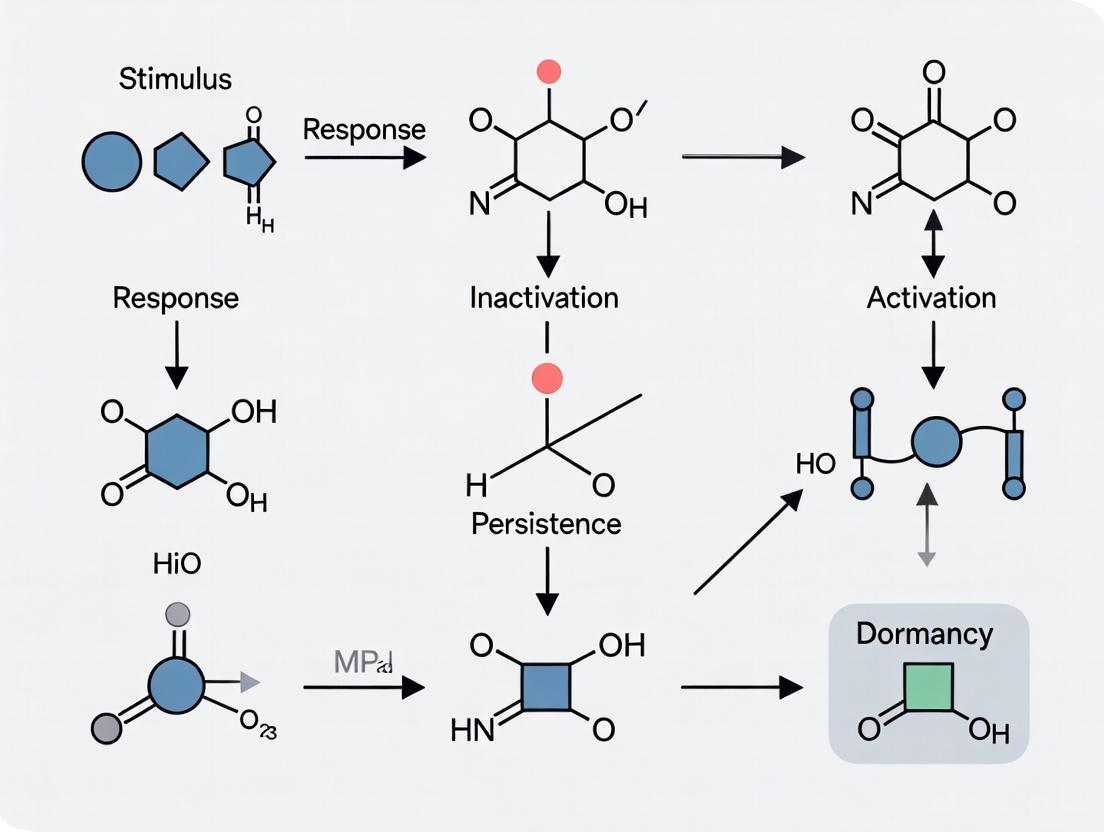
This article provides a comprehensive examination of resuscitation stimuli for persistent cells and dormant states across biological systems, including bacterial persisters, cancer drug-tolerant persister (DTP) cells, and stem cells.
Reactivation Strategies for Dormant and Persistent Cells: From Mechanisms to Therapeutic Applications
Abstract
This article provides a comprehensive examination of resuscitation stimuli for persistent cells and dormant states across biological systems, including bacterial persisters, cancer drug-tolerant persister (DTP) cells, and stem cells. It explores the fundamental mechanisms underlying dormancy, advanced methodologies for detecting and reactivating dormant cells, strategies for optimizing intervention efficacy, and comparative analyses of reactivation approaches. Designed for researchers, scientists, and drug development professionals, this review synthesizes current knowledge to inform the development of novel therapeutic strategies against recalcitrant infections, cancer recurrence, and regenerative medicine applications.
Understanding Cellular Dormancy: Defining Persistent States Across Biological Kingdoms
Definitions & Core Concepts
What are bacterial persisters? Bacterial persisters are a small subpopulation of bacterial cells that exhibit transient, non-heritable tolerance to high concentrations of bactericidal antibiotics. They are not genetically resistant mutants but phenotypic variants capable of surviving antibiotic treatment by entering a state of reduced metabolic activity or growth arrest. Upon antibiotic removal, these cells can resuscitate and regrow into a population with the same antibiotic susceptibility profile as the original parent strain [1] [2] [3].
FAQ: How do persisters differ from antibiotic-resistant and antibiotic-tolerant cells? The key distinctions lie in the genetic basis, population heterogeneity, and the effect on Minimum Inhibitory Concentration (MIC).
Table: Distinguishing Persisters, Resistant, and Tolerant Cells
| Feature | Susceptible Cells | Resistant Cells | Tolerant Cells (Population) | Persister Cells (Subpopulation) |
|---|---|---|---|---|
| Genetic Basis | No resistance genes/mutations | Heritable genetic changes | Non-heritable, phenotypic | Non-heritable, phenotypic |
| MIC | Low | Increased | Unchanged | Unchanged |
| Killing Kinetics | Rapid death | Can grow at high antibiotic concentrations | Uniformly slower death across population | Biphasic killing curve |
| Population Structure | Homogeneous | Homogeneous | Homogeneous | Heterogeneous |
FAQ: Are persisters always metabolically dormant? While traditionally described as dormant, recent research challenges this view. Evidence indicates that persisters can exhibit metabolic activity, actively adapt their transcriptome, and produce RNA to enhance survival during antibiotic stress, even in a non-dividing state [4].
FAQ: What is the clinical significance of persister cells? Persisters are a major culprit in chronic, relapsing infections and treatment failures. They are linked to persistent infections such as tuberculosis, recurrent urinary tract infections, and cystic fibrosis lung infections. Their survival following antibiotic therapy allows for disease recurrence and can provide a reservoir from which genetically resistant mutants may emerge [1] [5] [3].
Molecular Mechanisms & Signaling Pathways
The formation of persister cells is influenced by a complex network of interconnected bacterial stress responses and signaling pathways.
Figure 1: Key Signaling Pathways in Persister Formation. This diagram illustrates how environmental stresses trigger core cellular responses like the stringent response and Toxin-Antitoxin systems, leading to a dormant, tolerant state.
FAQ: What is the role of Toxin-Antitoxin (TA) modules in persistence? TA systems are genetic loci encoding a stable "toxin" and a labile "antitoxin." Under stress, antitoxins are degraded, allowing toxins to disrupt essential cellular processes like translation (e.g., MqsR cleaves mRNA) and energy production (e.g., TisB reduces proton motive force), thereby inducing dormancy [6] [3]. For example, the HipA toxin in the HipAB system phosphorylates a glutamyl-tRNA synthetase, triggering the stringent response and dormancy [6] [3].
FAQ: How does the stringent response contribute to persistence? The stringent response is activated by nutrient starvation and other stresses, leading to accumulation of the alarmone (p)ppGpp. This molecule acts as a central regulator of persistence by reprogramming cellular metabolism away from growth and promoting a dormant state. It can also directly activate TA systems [6] [7].
Experimental Protocols & Workflows
A standard methodology for isolating and studying persisters involves treating a culture with a high concentration of a bactericidal antibiotic and quantifying the surviving cells over time.
Figure 2: Standard Workflow for Persister Isolation. This protocol outlines the key steps for enriching and quantifying persister cells from a bacterial population through antibiotic killing and regrowth.
Protocol: Isolation and Quantification of Persisters via Biphasic Killing Assay
- Culture Preparation: Grow the bacterial strain of interest to the desired growth phase (e.g., mid-exponential or stationary phase) in appropriate liquid medium. Note: Persister frequency is typically higher in stationary phase and biofilms [6].
- Antibiotic Challenge: Expose the culture to a high concentration (typically 10-100x MIC) of a bactericidal antibiotic (e.g., ampicillin for cell-wall synthesis, ciprofloxacin for DNA replication). Ensure proper controls (no antibiotic) are included.
- Time-Course Sampling: At predetermined time points (e.g., 0, 1, 2, 3, 4, 5 hours), remove aliquots from the culture.
- Washing and Dilution: Wash the samples thoroughly with phosphate-buffered saline (PBS) or fresh medium to remove the antibiotic. Perform serial dilutions.
- Viability Plating: Plate the diluted samples onto antibiotic-free solid agar media.
- Colony Counting and Analysis: After incubation, count the Colony Forming Units (CFUs). Plot the log(CFU/mL) versus time. A biphasic killing curve, characterized by an initial rapid decline in viability followed by a much slower decline, indicates the presence of a persister subpopulation [2] [3].
Table: Essential Research Reagents for Persister Studies
| Reagent / Material | Function / Application | Example |
|---|---|---|
| Bactericidal Antibiotics | To kill growing cells and enrich for the non-growing, tolerant persister subpopulation. | Ampicillin, Ciprofloxacin, Ofloxacin |
| Fluorescence-Activated Cell Sorter (FACS) | To isolate dormant cells based on low metabolic activity or reporter gene expression (e.g., GFP under a ribosomal promoter) [6]. | BD FACSAria |
| Microfluidic Devices | For single-cell analysis and tracking of persister formation and resuscitation in real-time, minimizing external perturbations [7]. | CellASIC ONIX2 |
| ATP Assay Kits | To measure intracellular ATP levels, which are often significantly lower in dormant persisters, as a proxy for metabolic activity. | BacTiter-Glo |
| RNA Sequencing Kits | To analyze transcriptomic changes and identify gene expression signatures associated with the persister state, even in non-growing cells [4]. | Illumina Stranded Total RNA Prep |
Troubleshooting Common Experimental Issues
Problem: No biphasic killing curve is observed; killing is monophasic.
- Potential Cause 1: The antibiotic concentration is too low or the treatment duration is insufficient. The initial killing phase may not have been completed.
- Solution: Confirm the MIC for your strain. Increase the antibiotic concentration to 50-100x MIC and extend the sampling time course.
- Potential Cause 2: The starting culture is too homogeneous (e.g., entirely composed of actively growing cells), resulting in a low persister frequency.
- Solution: Use a stationary phase culture or pre-treat the culture with a mild stressor (e.g., nutrient shift, sub-inhibitory antibiotic) to increase phenotypic heterogeneity [6].
Problem: High variability in persister counts between replicates.
- Potential Cause: The stochastic nature of persister formation and the small population sizes being quantified make results susceptible to random fluctuations.
- Solution: Increase the number of biological replicates (n ≥ 5 is often recommended). Use large culture volumes for sampling to ensure a representative population is assayed. When handling small population sizes, consider stochastic modelling to interpret results [8].
Problem: Inability to resuscitate persister cells after antibiotic removal.
- Potential Cause 1: The antibiotic was not effectively removed or neutralized, preventing regrowth.
- Solution: Ensure thorough washing, for example, with multiple cycles of centrifugation and resuspension in fresh medium. For some antibiotics, specific inactivation methods may be required.
- Potential Cause 2: The cells may have entered a deeply dormant state or a Viable But Non-Culturable (VBNC)-like condition, requiring specific resuscitation signals.
- Solution: Supplement the recovery medium with metabolites known to stimulate regrowth, such as pyruvate, glutamate, or specific carbon sources. Extend the incubation time for colony appearance [3].
Therapeutic Strategies & Research Tools
FAQ: What are the current strategies to target persister cells? Overcoming persister-mediated tolerance is a major focus of therapeutic development. Strategies can be broadly categorized as follows:
- Direct Elimination: Using compounds that physically disrupt essential bacterial structures even in dormant cells. Examples include antimicrobial peptides, cationic polymers, and nanoagents that generate reactive oxygen species (ROS) or perforate membranes [9].
- Metabolic Reactivation ("Wake-and-Kill"): Awakening persisters from dormancy using metabolites (e.g., sugars, amino acids like serine) or stimuli that reactivate metabolism (e.g., stimulating the electron transport chain), thereby re-sensitizing them to conventional antibiotics [9].
- Prevention of Formation: Targeting the molecular mechanisms that induce persistence, such as inhibiting TA system function, (p)ppGpp synthesis, or biofilm formation [1] [3].
Table: Emerging Anti-Persister Nanoagents and Their Mechanisms
| Agent | Proposed Mechanism of Action | Model Tested | Ref |
|---|---|---|---|
| Caffeine-functionalized Gold Nanoparticles (Caff-AuNPs) | Direct physical disruption of bacterial membranes and biofilms. | In vitro, against planktonic and biofilm-associated persisters. | [9] |
| ATP-functionalized Gold Nanoclusters (AuNC@ATP) | Enhances membrane permeability and disrupts outer membrane protein folding. | In vitro, against planktonic persisters. | [9] |
| ROS-generating Hydrogel Microspheres (MPDA/FeOOH-GOx@CaP) | Generates hydroxyl radicals via a Fenton-like reaction, causing oxidative damage. | Prosthetic joint infection model (S. aureus & S. epidermidis). | [9] |
| Cationic Polymer PS+(triEG-alt-octyl) | "Wake-and-Kill": Reactivates persisters via electron transport chain stimulation, then disrupts membranes. | In vitro, against biofilm-associated persisters. | [9] |
| Poly-amino acid nanodelivery system (FAlsBm) | "Wake-and-Kill": Uses serine to reactivate metabolic activity in dormant cells. | S. aureus persister-induced peritonitis model. | [9] |
What are Drug-Tolerant Persister (DTP) cells and why are they significant in cancer therapy resistance?
Drug-Tolerant Persister (DTP) cells are a subpopulation of cancer cells that survive therapeutic stress through reversible, non-genetic adaptations rather than permanent genetic mutations [10]. They contribute to minimal residual disease and eventual tumor relapse after initial successful treatment [10]. Their clinical significance is broad, with implications in non-small cell lung cancer (NSCLC), melanoma, colorectal cancer, and breast cancer [10].
How does the reversible nature of DTP cells create a therapeutic opportunity?
The reversible nature of the DTP state allows these cells to re-enter active proliferation and re-establish drug-sensitive populations upon treatment withdrawal [10]. This biological vulnerability presents a promising therapeutic opportunity to prevent permanent resistance by targeting DTP cells during their reversible stage [10].
What is the relationship between bacterial persistence models and cancer DTP cells?
The concept originates from bacterial populations that survive antibiotic exposure through reversible tolerance without acquiring permanent genetic mutations [10]. Similarly, cancer DTP cells exhibit analogous adaptive survival mechanisms through phenotypic changes rather than genetic alterations [10] [11].
Quantitative Characterization of DTP Cells
Table 1: Key Characteristics and Detection Markers of DTP Cells
| Characteristic | Description | Detection/Marker |
|---|---|---|
| Cell Cycle Status | Quiescent or slow-cycling state [11] | Cell-cycle restriction markers [11] |
| Metabolic State | Shift from glycolysis to OXPHOS & FAO [10] | Elevated OXPHOS, ALDH, GPX4 [10] |
| Epigenetic State | Reversible chromatin remodeling [10] | KDM5A upregulation, H3K4me demethylation [10] |
| Transcriptional Profile | Activation of survival pathways [10] | AXL, IGF-1R, YAP/TEAD, Wnt/β-catenin [10] |
| Origin Models | Pre-existing selection & drug-induced transformation [10] [11] | Mex3a detection [11] |
Table 2: DTP Cell Prevalence Across Cancer Types
| Cancer Type | Therapy | DTP Features | Clinical Outcome |
|---|---|---|---|
| Non-Small Cell Lung Cancer (NSCLC) | EGFR inhibitors (e.g., osimertinib) [10] | KDM5A upregulation [10] | Tumor recurrence despite initial response [10] |
| Melanoma | BRAF/MEK inhibitors [10] | Increased calcium signaling via P2X7 [10] | Adaptive resistance & relapse [10] |
| Colorectal Cancer | 5-Fluorouracil (5-FU) [10] [11] | Diapause-like G0/G1 arrest, metabolic rewiring [10] | Survival under cytotoxic stress [10] |
| Breast Cancer | Chemotherapy or targeted therapies [10] | Not specified in search results | Contributes to resistance [10] |
Core Experimental Protocols for DTP Research
Protocol 1: Inducing and Analyzing DTP Cell States
Purpose: To generate and characterize DTP cells in vitro.
- Cell Culture & Treatment: Culture cancer cells (e.g., EGFR-mutant NSCLC lines for osimertinib treatment) and expose to relevant anticancer drugs at clinically relevant concentrations [10] [11].
- Persistence Monitoring: Maintain drug exposure for extended periods (weeks), monitoring for viable, non-proliferating cells using viability assays (e.g., Trypan blue exclusion) and proliferation markers (e.g., Ki-67 staining) [10] [11].
- Reversibility Assessment: Withdraw the drug and monitor for regrowth of drug-sensitive populations to confirm the reversible DTP state [10].
Protocol 2: Assessing Metabolic Rewiring in DTP Cells
Purpose: To evaluate shifts in energy metabolism.
- Metabolic Profiling: Measure oxygen consumption rate (OCR) for OXPHOS and extracellular acidification rate (ECAR) for glycolysis using Seahorse Analyzer [10].
- Pathway Inhibition: Treat DTP cells with OXPHOS inhibitors (e.g., IACS-010759) or FAO inhibitors to assess dependency and vulnerability [10].
- Viability Assessment: Measure cell viability post-inhibition to determine essentiality of rewired metabolic pathways [10].
Protocol 3: Targeting Epigenetic Regulation in DTP Cells
Purpose: To disrupt epigenetic maintenance of drug tolerance.
- Combination Therapy: Co-treat with primary anticancer drug (e.g., EGFR TKI) and epigenetic inhibitors (e.g., HDAC inhibitors like entinostat or KDM5A inhibitors) [10].
- Persistence Quantification: Compare DTP cell populations in combination therapy vs. monotherapy groups using long-term viability assays [10].
- Mechanistic Validation: Analyze changes in histone modification (e.g., H3K4me3 levels) via chromatin immunoprecipitation (ChIP) or Western blot [10].
Troubleshooting Common DTP Research Challenges
How can I effectively isolate and quantify DTP cells given their transient nature?
Challenge: DTP cells are rare, transient, and lack universal surface markers, making isolation and quantification difficult. Solution:
- Utilize functional assays that exploit DTP characteristics, such as drug-pulse experiments followed by prolonged culture in drug-free media to assess regrowth potential [10].
- Employ label-retention assays (e.g., CFSE staining) to identify slow-cycling cells [11].
- For quantification in complex samples (e.g., fecal samples in microbial studies), techniques like PMA-ddPCR can absolutely quantify viable but non-culturable cells without standard curves, a method adaptable to cancer DTP research [12].
Why do my DTP cells not revert to a drug-sensitive state upon treatment withdrawal?
Challenge: Inconsistent reversion of DTP cells to drug-sensitive proliferative states. Solution:
- Ensure complete removal of the selective drug pressure by performing multiple washes and using fresh media [10].
- Monitor cells over an extended timeframe, as resuscitation may not be immediate [10] [13].
- Check for acquired genetic mutations that might have stabilized the resistant phenotype; perform genomic sequencing to rule this out [11].
What could cause high background cell death in my DTP targeting experiments?
Challenge: Excessive cell death when testing agents against DTP cells. Solution:
- Titrate inhibitor concentrations carefully, especially when combining epigenetic or metabolic disruptors with primary therapies [10].
- Distinguish between primary drug toxicity and specific DTP cell targeting by including appropriate controls (e.g., drug-sensitive parent cells treated with the same inhibitor combinations) [10].
- Assess mode of cell death (apoptosis, ferroptosis) to understand the mechanism, as DTP cells can be vulnerable to ferroptosis due to altered redox balance [10].
The Scientist's Toolkit: Research Reagent Solutions
Table 3: Essential Reagents for DTP Cell Research
| Reagent Category | Specific Examples | Primary Function in DTP Research |
|---|---|---|
| Epigenetic Inhibitors | HDAC inhibitors (Entinostat), KDM5A inhibitors [10] | Reverse repressive chromatin states maintaining drug tolerance [10] |
| Metabolic Inhibitors | IACS-010759 (OXPHOS inhibitor), FAO inhibitors [10] | Target metabolic dependencies (OXPHOS, fatty acid oxidation) of DTP cells [10] |
| Signaling Pathway Inhibitors | AXL inhibitors, YAP/TEAD inhibitors, STAT3 inhibitors [10] | Block activated survival pathways critical for DTP persistence [10] |
| Viability & Staining Assays | CFSE, Ki-67 antibodies, 7-AAD [14] | Identify and isolate quiescent/slow-cycling cell populations [14] |
| Molecular Analysis Kits | ChIP kits, RNA-seq kits, Western blot reagents [14] | Analyze epigenetic, transcriptional, and protein-level changes in DTP cells [14] |
Conceptual Diagrams of DTP Mechanisms
Diagram 1: DTP Cell Lifecycle and Resuscitation
Diagram 2: Molecular Mechanisms Driving DTP Formation
Troubleshooting Guide: Experimental Challenges in Dormant HSC Research
FAQ: Addressing Common Experimental Problems
1. Problem: How can I confirm I am studying a dormant HSC population and not just quiescent cells?
- Answer: Dormant HSCs are a deeply quiescent subpopulation. They can be identified and studied using label retention assays. In this method, cells are pulsed with a DNA-labeling agent like 5-bromo-2'-deoxyuridine (BrdU) or a histone 2B-GFP (H2B-GFP) fusion protein, followed by a long chase period. Frequently cycling cells dilute the label, while dormant HSCs retain it over many months, allowing for their identification and purification [15]. Functional confirmation comes from serial transplantation assays, where these label-retaining cells (LRCs) demonstrate superior long-term repopulation potential compared to more active HSCs [15].
2. Problem: My dormant HSC cultures are spontaneously activating without a defined stimulus, skewing my results.
- Answer: Spontaneous activation is a common challenge. To minimize this:
- Mimic the Niche: Ensure your culture conditions accurately replicate the bone marrow niche signals that maintain quiescence, such as TGF-β and angiopoietin-1 [16] [15].
- Avoid Stressors: Be aware that common experimental procedures can inadvertently activate dormant HSCs. Administration of BrdU, granulocyte colony-stimulating factor (G-CSF), or cytotoxic agents like 5-fluorouracil are known to trigger their proliferation [15]. Use these agents with caution and include appropriate controls.
- Validate Quiescence: Regularly check markers of cell cycle activity (e.g., Ki67 negativity, low RNA content) to confirm the dormant state of your cultures before applying experimental stimuli [17].
- Answer: Successful resuscitation requires specific activation signals.
- Known Activators: Several factors have been proven to efficiently awaken dormant HSCs. These include granulocyte colony-stimulating factor (G-CSF), interferon-α (IFN-α), and arsenic trioxide [16].
- Experimental Workflow: A proposed two-step strategy involves first "priming" or activating the dormant pool with one of these molecules, followed by a second intervention, such as chemotherapy [16]. This approach can be used to study the reactivation process or to target resistant cells.
- Pathway Targeting: Resuscitation is driven by complex molecular networks. Targeting key pathways like Akt-mTOR, p38MAPK, and mitochondrial metabolism may also promote the transition from quiescence to activation [17].
4. Problem: My HSC cultures are showing poor viability or differentiating after thawing.
- Answer: This is often related to cryopreservation and handling techniques.
- Fast Thawing: Thaw cells quickly (do not exceed 2 minutes at 37°C) to minimize damage [18].
- Gentle Handling: After thawing, transfer cells to a pre-rinsed tube and add pre-warmed medium drop-wise while swirling the tube. Do not add the full volume of medium at once, as this causes osmotic shock [18].
- Correct Seeding: Use the recommended seeding density and ensure your culture plates are properly coated with the appropriate extracellular matrix (e.g., Geltrex, fibronectin) to support cell survival and prevent unintended differentiation [18] [19].
The Scientist's Toolkit: Key Reagents for Dormant HSC Research
Table 1: Essential research reagents and their applications in dormant HSC studies.
| Reagent / Tool | Primary Function in Research | Key Experimental Applications |
|---|---|---|
| H2B-GFP Reporter Mice [15] | Visualize and isolate label-retaining cells (LRCs). | Identify and purify dormant HSCs via pulse-chase experiments. |
| BrdU [15] | DNA label for tracking cell division history. | Identify slow-cycling or quiescent cells in fixed samples. |
| Granulocyte Colony-Stimulating Factor (G-CSF) [16] | Activator of dormant HSCs. | Experimentally awaken dormant HSCs in vivo or in vitro. |
| Interferon-α (IFN-α) [16] | Potent activator of dormant HSCs. | Study HSC response to inflammatory signals and emergency hematopoiesis. |
| TGF-β [15] | Key niche-derived cytokine. | Maintain HSC quiescence in culture systems. |
Quantitative Data: Dormant HSC Characteristics & Responses
Table 2: Key quantitative data on dormant hematopoietic stem cells.
| Parameter | Dormant HSC Value | Comparative Value (Active HSC) | Context & Notes |
|---|---|---|---|
| Division Frequency [15] | Approx. every 145 days | More frequent divisions | In C57/BL6 mice; equals ~5 divisions per mouse lifetime. |
| Population Size [15] | ~15% of the LT-HSC pool | ~85% of the LT-HSC pool | Subpopulation of Lin-, Sca+, cKit+, CD150+, CD48-, CD34- cells. |
| Response to G-CSF [16] | Activated/Proliferates | Activated | Breaks dormancy and can mobilize HSCs from the niche. |
| Long-term Repopulation Potential [15] | High | Lower | Confirmed by serial transplantation assays; dormant HSCs show superior engraftment. |
Experimental Protocol: Resuscitating Dormant HSCs
Objective: To experimentally awaken dormant Hematopoietic Stem Cells using a defined cytokine stimulus for subsequent functional analysis or to break their resistance to anti-proliferative agents.
Background: Dormant HSCs can be resistant to conventional chemotherapeutics that target cycling cells. This protocol uses Granulocyte Colony-Stimulating Factor (G-CSF) to activate these cells, based on strategies that prime resistant cells for eradication [16].
Materials:
- Purified dormant HSCs (e.g., H2B-GFP label-retaining cells from mouse bone marrow).
- Recombinant murine G-CSF.
- Appropriate HSC culture medium.
- Control vehicle (e.g., PBS).
Method:
- Cell Isolation: Isolate and purify the dormant HSC population from your source (e.g., bone marrow of H2B-GFP pulse-chased mice) using fluorescence-activated cell sorting (FACS) based on established surface markers (Lin-, Sca-1+, c-Kit+, CD150+, CD48-) and GFP retention [15].
- Stimulus Application: Resuspend the purified dormant HSCs in culture medium. Add G-CSF to the experimental group at a determined concentration (e.g., 100 ng/mL). The control group should receive an equal volume of vehicle.
- Incubation: Culture the cells under standard conditions (37°C, 5% CO2) for 24-48 hours.
- Downstream Analysis: After the incubation period, the cells can be assessed for:
- Activation Markers: Analyze by flow cytometry for cell cycle entry (Ki67, Pyronin Y staining) or downregulation of quiescence-associated genes.
- Functional Assays: Proceed with colony-forming unit (CFU) assays or transplantation into recipient mice to test repopulation capacity.
- Therapeutic Targeting: In a two-step strategy, treat the activated cells with a chemotherapeutic agent like 5-fluorouracil or imatinib (for CML models) to assess breaking of therapeutic resistance [16].
Pathway & Workflow Visualizations
Dormant HSC Activation Pathway
FAQs: Core Concepts and Significance for Research
What exactly defines the VBNC state, and how is it different from bacterial cell death?
A bacterium in the VBNC state is viable but has lost its ability to form colonies on routine solid media that would normally support its growth [20] [21] [22]. Key distinguishing features from dead cells include:
- Metabolic Activity: Maintained, albeit at a reduced level [21] [23].
- Membrane Integrity: An intact cell membrane, often with a high membrane potential [21] [23].
- Genetic Integrity: Retention of chromosomal and plasmid DNA [21].
- Gene Expression: Continued transcription and translation, including the potential expression of virulence genes [21] [23].
- Resuscitation Potential: The capacity to return to a culturable state under appropriate conditions [24] [22]. Dead cells lack all these characteristics.
Why is the VBNC state a significant concern in pathogenesis and drug development?
VBNC cells represent a "hidden" reservoir of pathogens that evades standard diagnostic methods, which rely on culturability [25] [23]. This poses major risks:
- Diagnostic Escape: Clinical and environmental samples can test negative by culture despite harboring viable, potentially infectious VBNC pathogens [23] [26].
- Retained Virulence: Pathogens like E. coli O157:H7 and Vibrio cholerae can retain or rapidly regain virulence upon resuscitation, leading to disease outbreaks [24] [23].
- Therapeutic Failure: VBNC cells exhibit markedly increased tolerance to antibiotics and biocides, complicating treatment and sterilization protocols [21] [25]. They can contribute to chronic and recurrent infections [23] [26].
How does the VBNC state differ from bacterial sporulation and persistence?
The VBNC state is a distinct survival strategy.
- vs. Sporulation: Sporulation is a complex, genetically programmed differentiation into a highly resistant, metabolically dormant structure. The VBNC state is a more direct response to environmental stress without such a dramatic morphological change [25].
- vs. Persister Cells: Persisters are a small, slow-growing or non-growing subpopulation within a culturable population that are tolerant to antibiotics. In contrast, the entire VBNC population is non-culturable under standard conditions, and this state is typically induced by broader environmental stresses [21] [22]. The distinction remains an active area of research and debate [22].
Troubleshooting Guides for VBNC Experiments
A core challenge is proving that a return to culturability is due to the resuscitation of VBNC cells and not merely the growth of a few remaining culturable cells.
Solution: Implement a combination of the following methodological controls to confirm true resuscitation [24]:
- Serial Dilution: Serially dilute the VBNC suspension before resuscitation to a point where any original culturable cells are statistically eliminated.
- Antibiotic Addition: Add antibiotics like ampicillin to the resuscitation medium to inhibit the growth of any residual culturable cells without affecting the metabolically distinct VBNC cells.
- H₂O₂ Scavengers: Supplement the medium with sodium pyruvate or catalase to degrade hydrogen peroxide present in media, which VBNC cells (e.g., V. vulnificus) are particularly sensitive to [24].
Experimental Workflow for Resuscitation Confirmation
The following diagram outlines the logical steps and controls required to conclusively demonstrate resuscitation.
Challenge: Failure to Induce the VBNC State Consistently
Inconsistent VBNC induction can stem from poorly defined stress conditions or insufficient monitoring.
Solution:
- Standardize Stressors: Use well-documented, controlled induction conditions. Common methods are listed in Table 1 below.
- Monitor Comprehensively: Track the population using both culture-based (CFU) and viability-based methods (e.g., fluorescence microscopy with LIVE/DEAD staining, ATP assays) in parallel. Successful induction is confirmed when CFU drops to zero while viability remains high [22].
- Consider the "Resuscitation Window": Be aware that the ability to resuscitate may decline over time if VBNC cells are held under stress for too long [24].
Challenge: Difficulty in Detecting and Quantifying VBNC Cells
Since VBNC cells do not form colonies, alternative, growth-independent methods are required.
Solution: Employ a combination of direct and molecular techniques.
- Direct Viability Assessment:
- Molecular Detection:
- qPCR/ddPCR with Viability Dyes: Techniques like PMA-qPCR and PMA-ddPCR use propidium monoazide (PMA), which selectively penetrates dead cells with compromised membranes and binds their DNA, preventing its amplification. This allows quantification of DNA from only viable (membrane-intact) cells, providing a powerful culture-independent count of VBNC cells [28].
- Reverse Transcription qPCR (RT-qPCR): Detects messenger RNA (mRNA), indicating active gene expression and confirming viability beyond mere membrane integrity [21] [26].
Essential Research Reagent Solutions
The following table catalogues key reagents and their applications in VBNC research.
| Reagent / Material | Primary Function in VBNC Research | Example Application |
|---|---|---|
| Propidium Monoazide (PMA) | DNA binding dye; selectively enters dead cells with compromised membranes, allowing differentiation from viable cells in molecular assays. | Used in PMA-qPCR and PMA-ddPCR to accurately quantify viable (VBNC) cell numbers without culture [28]. |
| BacLight LIVE/DEAD Kit | Fluorescent staining; simultaneously stains all cells (SYTO9, green) and cells with damaged membranes (PI, red) for microscopy and flow cytometry. | Standard method to visually confirm a VBNC population: high green fluorescence, low red fluorescence, and zero CFU [21] [27]. |
| Resuscitation Promoting Factor (Rpf) | Bacterial cytokine; a lysozyme-like enzyme that hydrolyzes peptidoglycan, stimulating cell division and resuscitation from dormancy. | Added to resuscitation media to promote recovery of VBNC cells in species like Micrococcus and Mycobacterium [24]. |
| Sodium Pyruvate / Catalase | Hydrogen peroxide (H₂O₂) scavengers; degrade residual H₂O₂ present in culture media that can inhibit the growth of stressed VBNC cells. | Crucial supplement in resuscitation media for sensitive species like Vibrio vulnificus to prevent false-negative resuscitation results [24]. |
| 5-Cyano-2,3-Ditolyl Tetrazolium Chloride (CTC) | Tetrazolium salt; converted to an insoluble fluorescent formazan precipitate by active electron transport chains, indicating respiratory activity. | Used to detect metabolic activity in VBNC cells via microscopy or flow cytometry [27]. |
Experimental Protocols for Key Investigations
This protocol outlines a method to confirm true resuscitation, excluding the regrowth of residual culturable cells [24] [29].
Materials:
- Induced VBNC suspension of E. coli O157:H7 (CFU = 0).
- Fresh, pre-warmed Tryptic Soy Broth (TSB).
- Ampicillin stock solution.
- Tryptic Soy Agar (TSA) plates.
- Phosphate Buffered Saline (PBS).
Procedure:
- Prepare Treated Samples:
- Test Group: Add VBNC suspension to TSB containing a sub-lethal concentration of ampicillin (e.g., 2 µg/mL).
- Control Group 1: Add VBNC suspension to TSB without antibiotics.
- Control Group 2: Serially dilute the VBNC suspension in PBS (e.g., 10⁻⁶) and then add to TSB.
- Incubate and Monitor: Incubate all samples at the optimal growth temperature (e.g., 37°C) with shaking. Monitor culture turbidity (OD₆₀₀) for 24-48 hours.
- Plate for Culturability: At regular intervals, plate aliquots from each sample onto TSA plates to check for the return of culturability.
- Interpret Results:
- True Resuscitation is Indicated if: Growth and culturability return in the Test Group (with ampicillin) and the diluted Control Group 2. The antibiotic inhibits any potentially remaining culturable cells, and the high dilution makes their presence statistically unlikely. The return of growth must therefore be from resuscitated VBNC cells.
Protocol: Quantifying VBNC Cells using PMA-ddPCR
This advanced protocol allows for absolute quantification of VBNC cells without the need for a standard curve, as demonstrated for Klebsiella pneumoniae [28].
Materials:
- Bacterial sample containing VBNC cells.
- Propidium Monoazide (PMA) dye.
- LED photolysis device.
- DNA extraction kit.
- Droplet Digital PCR (ddPCR) system with supermix and reagents for target genes (e.g., rpoB).
Procedure:
- PMA Treatment: Mix the sample with a final concentration of 5-50 µM PMA. Incubate in the dark for 10 minutes.
- Photoactivation: Expose the tube to a high-intensity LED light source for 15 minutes to cross-link PMA with DNA from dead cells.
- DNA Extraction: Centrifuge the sample and extract total genomic DNA from the pellet according to the kit's protocol.
- Droplet Generation and PCR: Prepare the ddPCR reaction mix with the extracted DNA, supermix, and primers/probe for your target gene. Generate droplets using the droplet generator.
- PCR Amplification: Run the PCR in a thermal cycler with optimized cycling conditions.
- Quantification: Read the plate in the droplet reader. The system will directly provide the absolute concentration (copies/µL) of viable (PMA-unaffected) target DNA in the original sample, corresponding to the VBNC cell count.
The following table summarizes resuscitation stimuli for various bacterial species, providing a reference for experimental design.
| Bacterial Species | VBNC Induction Condition | Successful Resuscitation Condition | Key Findings / Significance |
|---|---|---|---|
| Escherichia coli O157:H7 | Low temperature; Food processing techniques [24]. | Temperature up-shift; Passage through a host (e.g., mouse intestine) [24]. | Retains toxin genes and pathogenicity; can resuscitate in host organisms, posing a food safety risk [24]. |
| Vibrio vulnificus | Low temperature in microcosms [24]. | Temperature up-shift; addition of H₂O₂ scavengers (catalase/pyruvate) to medium [24]. | A model organism for VBNC studies; resuscitation can be enabled by neutralizing media-based oxidative stress [24]. |
| Salmonella spp. | Starvation; low pH [24]. | Addition of nutrients; adjustment to optimal pH [24]. | A foodborne pathogen capable of resuscitating in food products during storage, leading to outbreaks [24] [23]. |
| Enterococcus faecalis | Starvation [24]. | Addition of nutrients; inhibited by penicillin [24]. | Demonstrates the requirement for new peptidoglycan synthesis during resuscitation [24]. |
| Listeria monocytogenes | Starvation [24]. | Addition of nutrients [24]. | A major concern in ready-to-eat foods; can resuscitate from the VBNC state and cause infection [24] [23]. |
Emerging research is elucidating the molecular mechanisms driving resuscitation. A key study on E. coli O157:H7 revealed a pathway where intracellular ATP levels are critical for jump-starting metabolism via NAD+ synthesis [29].
Diagram: Proposed ATP-Mediated Resuscitation Pathway in E. coli O157:H7
This diagram illustrates the mechanism by which available ATP pools are funneled into NAD+ synthesis to reactivate cellular metabolism during resuscitation.
Frequently Asked Questions (FAQs)
Q1: What are the core functional relationships between metabolic downregulation, cell-cycle arrest, and stress response? These three processes form an integrated survival network. Stress responses, triggered by various insults, initiate signaling cascades that actively downregulate cellular metabolism. This metabolic reduction helps conserve energy and maintain homeostasis, often leading to or facilitating cell-cycle arrest. This coordinated response allows cells to enter a protected, dormant state to withstand adverse conditions [30] [31] [32].
Q2: In the context of dormancy and persistence, is cell-cycle arrest a single, well-defined state? No. Recent high-resolution mapping reveals that cell-cycle arrest is not a single state but a complex architecture of multiple molecular states. Cells can exit the proliferative cycle at different points (e.g., from G1 or G2) in response to different stressors (e.g., hypomitogenic, replicative, or oxidative stress) and enter distinct arrest trajectories, including reversible quiescence and irreversible senescence [33].
Q3: How does metabolic downregulation confer protection or tolerance, such as against antibiotics? Metabolic downregulation leads to a dormant phenotype with drastically reduced metabolic activity. Many antibiotics rely on corrupting active synthesis processes (e.g., cell wall, protein, or DNA synthesis) to kill bacteria. In a deeply dormant state with low energy production and biosynthesis, these cellular targets are no longer actively maintained, rendering the antibiotics ineffective despite no genetic resistance mechanism being present [31].
Q4: What are the key molecular switches that initiate a general stress response in cells? Two critical systems mediate the core stress response:
- The Sympathetic-Adreno-Medullar (SAM) Axis: Provides a fast response, leading to the secretion of epinephrine and norepinephrine, which increase heart rate, blood pressure, and energy availability [34].
- The Hypothalamic-Pituitary-Adrenal (HPA) Axis: Provides a slower, sustained response. It involves the release of corticotropin-releasing hormone (CRH) and ultimately cortisol, a key stress hormone that mobilizes energy and modulates immune function [34]. In bacteria, a key switch is the stringent response alarmone (p)ppGpp, which reprograms transcription and promotes dormancy [31].
Q5: Can "irreversible" cell-cycle arrest, like senescence, ever be reversed? Under certain circumstances, yes. While senescence is typically considered a stable, irreversible arrest, studies have shown that cells can escape this state. For instance, upregulation of G1 cyclins can reverse the senescence arrest state, allowing cells to re-enter the cell cycle. This has been observed in tumor cells and during reprogramming into induced pluripotent stem cells [33] [32].
Troubleshooting Experimental Guides
Problem 1: Inconsistent Induction of Dormancy or Persister Cell States
Background: Generating a homogeneous population of dormant or persister cells is challenging due to the complexity of underlying triggers.
Investigation & Solution Protocol:
Step 1: Verify Stressor Application.
- Action: For chemical stressors (e.g., H₂O₂ for oxidative stress, etoposide for replication stress, or specific antibiotics), confirm concentration, stability, and exposure time via dose-response curves. For nutrient starvation, ensure complete depletion of the target nutrient from the medium [33] [31].
- Rationale: Subtle variations in stressor intensity are a major source of heterogeneity in arrest states.
Step 2: Quantify Metabolic Downregulation.
- Action: Use established assays to confirm metabolic quiescence in your population.
- Recommended Assays:
- ATP Assays: Measure intracellular ATP levels; a significant decrease is expected [31].
- Seahorse Analyzer: Directly measure Oxygen Consumption Rate (OCR, for OXPHOS) and Extracellular Acidification Rate (ECAR, for glycolysis) [30] [35].
- Fluorescent Metabolic Dyes: Use dyes like CTFR or similar that report on metabolic activity [31].
Step 3: Confirm Cell-Cycle Arrest.
- Action: Use markers beyond just DNA content.
- Recommended Methodologies (from [33]):
- Hyperplexed Imaging: Map the expression and phosphorylation status of multiple cell-cycle effectors (e.g., cyclins D1, A, B1; CDKs; phosphorylated RB).
- Key Arrest Markers: Detect upregulation of CDK inhibitors p21 (often p53-mediated) and p16 (a senescence marker) via western blot or immunofluorescence [32].
- Table: Key Metrics for Dormancy Confirmation
Metric Assay/Method Expected Outcome in Dormant Cells Metabolic Activity ATP assay, OCR/ECAR >50% reduction [30] [31] Protein Synthesis GFP reporter under constitutive promoter, puromycin incorporation Drastically reduced fluorescence/signal [31] Cell-Cycle Status Phospho-RB flow cytometry, p21/p16 staining Low pRB, high p21/p16 [33] [32] Membrane Integrity Propidium Iodide staining Remains intact (distinguishes dormancy from death)
Problem 2: Difficulty in Resuscitating Dormant Cells
Background: Successfully reviving dormant cells is crucial for studying exit mechanisms but can be inefficient.
Investigation & Solution Protocol:
Step 1: Identify the Correct Resuscitation Signal.
- Action: The signal must be specific to the stress that induced arrest.
- Examples:
Step 2: Monitor Early Resuscitation Events.
- Action: Don't just measure final colony counts; track early molecular and metabolic changes.
- Recommended Methodologies:
- Rationale: Resuscitation is a stepwise process; identifying the blocked step requires early-stage data.
Step 3: Check for Irreversible Arrest.
- Action: If cells fail to resuscitate, they may have entered a deep, non-viable, or senescent state.
- Assays:
- Senescence-Associated β-Galactosidase (SA-β-Gal) Staining: A positive stain indicates senescence, which is difficult to reverse [32].
- Long-Term Viability Tracking: Use live-cell imaging to track single cells over days to distinguish death from prolonged arrest.
Signaling Pathway Diagrams
Diagram 1: Core Mammalian Cell Cycle Arrest & Stress Signaling
This diagram integrates the key regulators of stress-induced cell-cycle arrest in mammalian cells, connecting DNA damage and other stresses to the core cell-cycle machinery.
This flowchart outlines the key steps in the formation of and recovery from the bacterial persister state, highlighting the role of toxin/antitoxin systems and alarmones.
The Scientist's Toolkit: Research Reagent Solutions
Table: Essential Reagents for Studying Dormancy Hallmarks
| Research Reagent | Primary Function / Target | Application Context | Key Experimental Readout |
|---|---|---|---|
| Etoposide | Induces DNA double-strand breaks (Topoisomerase II inhibitor) | Trigger replication stress to force cell-cycle arrest in eukaryotic cells [33] | Activation of p53/p21; G2/M arrest; induction of senescence [33] [32] |
| Carbonyl cyanide m-chlorophenyl hydrazone (CCCP) | Mitochondrial uncoupler (disrupts proton gradient) | Induce global metabolic downregulation and energy (ATP) depletion [31] | Reduced OCR (Seahorse); loss of membrane potential (JC-1 dye); potentiation of antibiotic tolerance [31] |
| Ribonucleoside Antioxidants (e.g., N-Acetylcysteine) | Scavenges Reactive Oxygen Species (ROS) | Modulate oxidative stress pathways; test if oxidative stress is the primary inducer of arrest [33] [35] | Attenuation of oxidative stress-induced arrest; reduced ROS levels (DCFDA assay); restored proliferation [33] |
| p21 & p16 Antibodies | Detect CDK inhibitors by WB, IF, IHC | Quantify and visualize activation of key cell-cycle arrest pathways [33] [32] | Increased nuclear staining/intensity; confirms senescence (p16) or p53-mediated arrest (p21) [32] |
| Phospho-RB (Ser780/807/811) Antibodies | Detect inactive (hyperphosphorylated) RB | Monitor cell-cycle exit; low pRB indicates G0/G1 arrest [33] | Loss of signal by flow cytometry or WB distinguishes arrested from cycling cells [33] |
| CRISPR/dCas9-KRAB System | Targeted gene repression (knockdown) | Silencing specific genes (e.g., p53, hipA, toxin/antitoxin modules) to test necessity in dormancy [31] | Altered frequency of persister formation or efficiency of resuscitation after stress |
Experimental Protocol: Mapping Cell-Cycle Arrest States with Hyperplexed Imaging
This protocol is adapted from methodologies used to deconstruct the molecular architecture of cell-cycle arrest [33].
Objective: To identify the precise points of cell-cycle exit and the molecular signatures of different arrest states induced by various stressors.
Materials:
- Asynchronous cell population (e.g., RPE cells)
- Stress inducers: Serum-free medium (hypomitogenic), Etoposide (replicative stress), H₂O₂ (oxidative stress)
- Fixative (e.g., paraformaldehyde)
- Antibody panel (≥47 cell-cycle effectors, e.g., Cyclins D1, E, A, B1; CDKs; phospho-RB, p21, p16; Ki-67)
- Equipment for iterative indirect immunofluorescence imaging (4i)
- High-content microscope and image analysis software (e.g., CellProfiler)
- Manifold learning software (e.g., PHATE)
Step-by-Step Method:
- Stress Application & Fixation:
- Split an asynchronous population into four batches: Control, Hypomitogenic (serum-free, 1-7 days), Replicative Stress (etoposide, IC50, 24h), Oxidative Stress (H₂O₂, calibrated dose, 24h).
- At endpoint, wash cells and fix with 4% PFA.
Hyperplexed Immunofluorescence (4i) Staining:
- Perform iterative rounds of staining, imaging, and fluorophore inactivation. In each round, incubate cells with a subset of antibodies conjugated to different fluorophores.
- Acquire high-resolution images for each staining round. Precisely align images from all cycles.
Single-Cell Feature Extraction:
- Use image analysis software to segment individual cells and identify subcellular compartments (nucleus, cytosol, membrane).
- For each of the 47 proteins, extract quantitative features (e.g., mean intensity, texture) from each compartment. Also extract morphological features (e.g., cell size, shape). This generates thousands of features per cell.
Manifold Learning & Dimensionality Reduction:
- Perform feature selection to retain features that vary in a cell-cycle-dependent manner.
- Input the high-dimensional data into the PHATE algorithm to generate a 2-dimensional map (embedding) where cells with similar molecular signatures are positioned close together.
Trajectory Inference & State Annotation:
- Use a trajectory inference method like Diffusion Pseudotime on the PHATE embedding to order cells along the proliferative cycle and identify branching points into arrest.
- Annotate cell-cycle phases (G1, S, G2, M) and arrest states (G0) using established markers (e.g., DNA content, phospho-RB, cyclin expression).
Key Analysis & Interpretation:
- Identify Exit Points: Observe where stressor-treated cells branch off the main proliferative trajectory on the PHATE map. For example, serum-starved cells were found to diverge during G2 [33].
- Define Arrest Signatures: Compare the molecular profiles (protein levels, phosphorylation) of cells in different arrest branches to define stress-specific signatures.
- Validate Mechanisms: Use live-cell imaging of fluorescent biosensors (e.g., CDK2 activity, cyclin D1) to dynamically validate the inferred exit mechanisms in living cells.
Frequently Asked Questions (FAQs)
FAQ 1: What are the fundamental differences between dormancy in bacterial persister cells and cancer cells? While both represent a reversible, slow- or non-proliferative state that confers tolerance to therapy, the key differences lie in their context and some specific mechanisms. Bacterial persistence is a survival strategy against environmental stresses and antibiotics, often controlled by toxin-antitoxin systems and the alarmone (p)ppGpp [31] [36]. Cancer cell dormancy, often involving quiescence (G0/G1 arrest), is a major cause of metastasis and relapse, regulated by complex interactions with the tumor microenvironment (TME), including immune cells and hypoxia [37] [38].
FAQ 2: Can dormancy be a stochastic event, or is it always a response to an external trigger? Evidence supports both mechanisms, and they are not mutually exclusive. Dormancy can be triggered by external pressures like antibiotic pressure [39] [36] or chemotherapeutic agents [37] [38]. However, it can also arise stochastically (randomly) within a population as a bet-hedging strategy, ensuring that a subset of cells survives a sudden, unpredictable environmental challenge [40] [36]. In bacteria, these are sometimes classified as Type II (stochastic) persisters [36].
FAQ 3: What are the common experimental challenges in distinguishing between dormant and dead cells? A primary challenge is that dormant cells are viable but non- or slowly-dividing, making them invisible to standard culture-based methods. Key techniques to overcome this include:
- Viability Stains: Using dyes that distinguish live cells (e.g., based on membrane integrity or enzymatic activity).
- DiO Retention: Dilution of a fluorescent dye like DiO can indicate a lack of cell division, a hallmark of dormancy [39].
- Detection of Metabolic Markers: Assessing ratios of signaling proteins like phospho-p38 to phospho-p42/44 can indicate a dormant state in cancer cells [39].
- Molecular Methods: PCR to detect bacterial DNA can help identify culture-negative cases of infection involving dormant cells [41].
FAQ 4: How does the "Seed Bank" concept apply to dormancy across different biological systems? The "Seed Bank" is a powerful unifying concept from ecology. It refers to a reservoir of inactive individuals (dormant seeds, bacterial persisters, dormant cancer cells) that can resuscitate when conditions improve. This reservoir preserves population-level genetic and phenotypic diversity, buffers against extinction, and allows for re-population after a stressor is removed. This concept is applicable from prebiotic chemistry to modern bacteria, plants, and cancer [40] [42].
Troubleshooting Common Experimental Issues
Problem: Inability to Induce a Dormant State Consistently in Bacterial Cultures.
- Potential Cause: Inconsistent environmental conditions or cell culture phase.
- Solution:
- Standardize the Growth Phase: Type I persisters are enriched in the stationary phase, while Type II can form stochastically during exponential growth. Ensure you are harvesting cells from the correct, consistent growth phase [36].
- Control Stressor Application: Precisely define and control the trigger, such as antibiotic concentration and duration of exposure, or the specific nutrient being limited [31] [36].
- Consider Population Heterogeneity: Use high-inoculum cultures, as persisters are a small subpopulation (typically 0.001% to 1%) [36].
Problem: Failure to Reactivate Dormant Cancer Cells After Chemotherapy Treatment.
- Potential Cause: The tumor microenvironment (TME) or the resuscitation signal is not adequately replicated.
- Solution:
- Model the TME: Incorporate stromal cells, immune cells, and a relevant extracellular matrix (ECM) into your in vitro models, as these elements provide critical cues for both entry into and exit from dormancy [37] [38].
- Investigate Specific Chemokines: Chemokines like CXCL12, CXCL16, and CX3CL1 have been shown to delay both entry into and exit from temozolomide-promoted dormancy in glioblastoma cells. Their presence or absence can significantly impact resuscitation [39].
- Monitor Dormancy Markers: Use established markers for dormancy exit, such as the downregulation of
CCL2andSAA2or the upregulation ofTHSD4,FSTL3, andVEGFC[39].
The table below summarizes key triggers for dormancy entry across different biological systems.
Table 1: Comparative Overview of Dormancy Triggers
| System | Trigger Category | Specific Triggers | Key Molecular Mediators / Pathways |
|---|---|---|---|
| Bacteria | Environmental Stress | Nutrient starvation, Extreme pH, Temperature shift [36] | (p)ppGpp Stringent Response, Toxin-Antitoxin (TA) Systems (e.g., HipA, mRNases) [31] [36] |
| Bacteria | Antibiotic Pressure | Exposure to bactericidal antibiotics (e.g., β-lactams, fluoroquinolones) [31] [36] | Activation of TA systems, Reduced ATP levels, Ribosome hibernation (RMF, HPF, RaiA) [31] |
| Cancer | Chemotherapeutic Agents | Temozolomide (GBM), Low-dose Paclitaxel, Doxorubicin [39] [38] | Cell cycle arrest (G0/G1), p38/ERK signaling imbalance, Unfolded Protein Response (UPR) [39] [38] |
| Cancer | Tumor Microenvironment | Hypoxia, Immune pressure (e.g., CD8+ T cells), ECM interactions [37] [38] | Hypoxia-Inducible Factors (HIFs), Integrin signaling, DREAM complex [37] [38] |
| General Biology | Predictive / Consequential | Shortening day length (plants), Seasonal temperature change (hibernators) [43] | Hormonal changes (e.g., abscisic acid in seeds), Metabolic rate reduction [43] |
Detailed Experimental Protocols
Protocol 1: Generating and Isecting Bacterial Persister Cells via Antibiotic Selection
- Principle: Actively growing cells are killed by a high concentration of a bactericidal antibiotic, leaving behind the tolerant persister subpopulation [31] [36].
- Materials:
- Late exponential or early stationary phase culture of bacteria (e.g., E. coli).
- Appropriate rich broth medium.
- Bactericidal antibiotic (e.g., ampicillin, ofloxacin at 5-10x MIC).
- Phosphate Buffered Saline (PBS) or fresh medium for washing.
- Centrifuge.
- Procedure:
- Grow the bacterial culture to the desired optical density (e.g., OD600 ~0.5 to 0.8 for exponential phase, or overnight for stationary phase).
- Optional: Wash the cell pellet once with PBS or fresh medium to remove metabolic waste.
- Resuspend the cells in fresh medium containing the bactericidal antibiotic.
- Incubate for a defined period (e.g., 3-5 hours) to kill the non-persister cells.
- Centrifuge the culture to pellet the cells and carefully remove the supernatant containing the antibiotic.
- Wash the pellet at least twice with PBS or fresh medium to thoroughly remove the antibiotic.
- Resuspend the final pellet in fresh, antibiotic-free medium to allow for resuscitation and outgrowth, or plate for colony-forming unit (CFU) counts to quantify persister levels.
- Troubleshooting Note: The "tail" in the killing curve, where the rate of cell death slows significantly, is characteristic of persister survival [36]. Ensure antibiotic concentration is sufficiently high to ensure rapid killing of non-persisters.
Protocol 2: Investigating Chemokine Influence on Chemotherapy-Promoted Cancer Cell Dormancy
- Principle: This protocol assesses how chemokines in the microenvironment modulate the entry into and exit from a chemotherapeutically-induced dormant state [39].
- Materials:
- Relevant cancer cell line (e.g., LN229 glioblastoma cells).
- Standard cell culture medium and reagents.
- Chemotherapeutic agent (e.g., Temozolomide/TMZ).
- Chemokine cocktail (e.g., recombinant CXCL12, CXCL16, CX3CL1).
- Antibodies for detection by flow cytometry or immunofluorescence: DiO dye, anti-Ki-67, anti-phospho-p38, anti-phospho-p42/44.
- RT-PCR reagents for gene expression analysis (e.g.,
CCL2,SAA2,FSTL3,VEGFC).
- Procedure:
- Dormancy Entry Phase: Plate cells and treat with a defined concentration of TMZ (or DMSO vehicle control) for an extended period (e.g., 10 days). Include a parallel set of wells treated with TMZ + chemokine cocktail.
- Analysis at Entry: Harvest cells after the treatment phase.
- Proliferation: Perform Ki-67 staining or DiO retention assay via flow cytometry. Dormant cells are Ki-67 negative and DiO positive.
- Signaling: Analyze the phospho-p38 / phospho-p42/44 ratio by flow cytometry or western blot. A higher ratio is associated with dormancy.
- Gene Expression: Analyze mRNA levels of dormancy-entry genes like
CCL2andSAA2via RT-PCR.
- Dormancy Exit Phase: After the initial treatment, wash the remaining wells thoroughly to remove TMZ. Add fresh medium without TMZ and with or without the chemokine cocktail. Incubate for a recovery period (e.g., 15 days).
- Analysis at Exit: Harvest cells and repeat the analyses from step 2. Monitor the appearance of DiO-negative (dividing) cells and analyze dormancy-exit genes like
FSTL3andVEGFC[39].
Signaling Pathways and Experimental Workflows
Diagram 1: Key pathways for dormancy entry and exit.
The Scientist's Toolkit: Essential Research Reagents
Table 2: Key Reagents for Dormancy Research
| Reagent / Tool | Function / Application | Example Use Case |
|---|---|---|
| Temozolomide (TMZ) | A chemotherapeutic alkylating agent. | Inducing cellular dormancy in glioblastoma (GBM) cell lines like LN229 [39]. |
| Recombinant Chemokines (CXCL12, CXCL16, CX3CL1) | Soluble signaling proteins that modulate cell communication. | Studying the impact of the tumor microenvironment on the timing of dormancy entry and exit [39]. |
| DiO (DiOC₁₈(3)) | A lipophilic fluorescent dye that dilutes with each cell division. | Identifying and isolating non-dividing, dormant cells via dye retention assays using flow cytometry [39]. |
| Phospho-Specific Antibodies (p-p38, p-ERK/p-p42/44) | Antibodies that detect activated (phosphorylated) forms of signaling proteins. | Monitoring signaling pathway activity associated with dormancy (high p38/p-ERK ratio) [39] [38]. |
| HipA7 Mutant Strains | Bacterial strains with a mutation leading to high persistence. | Studying Type I persister formation and the role of the HipBA toxin-antitoxin system in E. coli [31] [36]. |
| Viability Stains (e.g., Propidium Iodide, SYTOX) | Dyes that penetrate cells with compromised membranes (dead cells). | Distinguishing between viable dormant cells and dead cells in a population after stressor application [41]. |
Detection and Reactivation: Advanced Methodologies for Targeting Dormant Cells
The viable but non-culturable (VBNC) state is a dormant survival strategy adopted by many bacteria when faced with environmental stress such as starvation, extreme temperatures, or antibiotic pressure [21]. In this state, cells are metabolically active and possess an intact cell membrane but cannot form colonies on routine culture media, the gold standard for detecting viable bacteria [21] [44]. This poses a significant threat to public health, particularly when pathogenic bacteria like Vibrio cholerae, Escherichia coli O157:H7, and Klebsiella pneumoniae enter this state, as they escape conventional detection methods while retaining their potential for virulence and resuscitation [45] [44] [12].
Accurately distinguishing and quantifying these viable cells from dead cells, which have compromised membranes, is crucial for risk assessment in food safety, clinical microbiology, and environmental monitoring [45] [44]. This technical guide focuses on two advanced molecular methods that address this challenge: propidium monoazide combined with quantitative PCR (PMA-qPCR) and propidium monoazide combined with droplet digital PCR (PMA-ddPCR).
Technical Comparison: PMA-qPCR vs. PMA-ddPCR
How PMA Dye Works
Both methods rely on the same initial principle: the use of the propidium monoazide (PMA) dye. PMA is a membrane-impermeant DNA intercalating dye. It selectively penetrates the compromised membranes of dead cells and covalently cross-links to their DNA upon light exposure, thereby inhibiting its amplification in subsequent PCR reactions [44]. In contrast, the intact membranes of viable (including VBNC) cells prevent PMA from entering, allowing their DNA to be amplified and detected [44] [12]. This core mechanism enables both techniques to differentiate viable cells from dead ones.
Key Technical Differences and Performance Data
While PMA-qPCR and PMA-ddPCR share the initial PMA treatment step, their underlying PCR quantification technologies differ significantly, leading to distinct performance characteristics. The table below summarizes a direct comparison based on experimental data.
Table 1: Technical Comparison between PMA-qPCR and PMA-ddPCR
| Feature | PMA-qPCR | PMA-ddPCR |
|---|---|---|
| Principle of Quantification | Relative quantification based on cycle threshold (Ct); requires a standard curve [44] | Absolute quantification by counting positive and negative droplets; no standard curve needed [45] [44] |
| Key Advantage | Widely available, familiar technology | High tolerance to PCR inhibitors in complex samples [44] |
| Limit of Detection (Copies/μL) | ~5-7.8 [45] [44] | ~3.3-3.6 [45] |
| Linearity | Good (R² ≥ 0.992) with a defined dynamic range [45] [46] | Excellent (R² ≥ 0.992) and more reliable at low target concentrations [45] [46] |
| Sensitivity in Food Samples | Can be affected by inhibitory substances [44] | More sensitive and accurate for low-level detection in food matrices (e.g., prawn, squid, lettuce) [44] [46] |
| Best Suited For | Routine quantification where target concentration is not limiting | Accurate absolute quantification, especially for low-abundance targets and in inhibitory samples [45] [44] |
The following workflow diagram illustrates the shared initial steps and the divergent paths for the two quantification technologies.
Detailed Experimental Protocols
Protocol 1: PMA Treatment and Sample Preparation
This is a critical first step common to both PMA-qPCR and PMA-ddPCR.
- PMA Solution Preparation: Prepare a fresh 1-20 mM stock solution of PMA in water [12]. Protect from light by using amber tubes or wrapping in aluminum foil.
- Sample and PMA Incubation: Add PMA to the bacterial sample to a final concentration of 50-100 μM [44] [12]. Mix thoroughly and incubate in the dark for 5-10 minutes to allow dye penetration into dead cells.
- Photoactivation: Place the sample tube on ice and expose to a 650-W halogen light source (or equivalent high-intensity light) for 15 minutes at a distance of 20 cm. This step cross-links PMA to DNA in dead cells.
- DNA Extraction: After light exposure, centrifuge the sample to pellet cells. Extract genomic DNA using a commercial kit according to the manufacturer's instructions. The DNA is now ready for either qPCR or ddPCR analysis.
Protocol 2: Direct Oil-Enveloped Bacterial ddPCR (Without DNA Extraction)
This streamlined method, demonstrated for V. cholerae, bypasses DNA extraction, improving speed and accuracy [45] [47].
- Bacterial Lysis in Droplets: Following PMA treatment, directly mix the bacterial cell suspension with the ddPCR reaction mix (EvaGreen Supermix) [45].
- Droplet Generation: Load the mixture into a droplet generator to create thousands of nanoliter-sized, oil-enveloped droplets.
- PCR Amplification: Run the PCR with a lysis step at 95°C. This breaks open the bacterial cells within the droplets, releasing chromosomal DNA for amplification. Each droplet acts as an individual reactor.
- Absolute Quantification: After amplification, count the positive and negative droplets. Since one bacterial cell contains one copy of the chromosome, enumerating a single-copy gene (e.g., rpoB) provides a direct cell count [45] [12].
The Scientist's Toolkit: Essential Research Reagents
Table 2: Key Reagents and Their Functions in VBNC Detection
| Reagent / Equipment | Function / Description |
|---|---|
| Propidium Monoazide (PMA) | DNA intercalating dye that selectively enters dead cells with compromised membranes, inhibiting DNA amplification [44] [12]. |
| Halogen Light Source | Used for photoactivation of PMA after incubation, cross-linking the dye to DNA [12]. |
| Single-Copy Gene Primers/Probes | Target chromosomal genes (e.g., rpoB, adhE) present once per cell, enabling direct correlation between gene copies and cell number [45] [12]. |
| Droplet Digital PCR System | Platform (e.g., Bio-Rad QX200) that partitions samples into droplets for absolute quantification without a standard curve [45] [44]. |
| TaqMan Probes / EvaGreen Dye | Detection chemistry. TaqMan probes offer high specificity for qPCR/ddPCR, while EvaGreen is used for direct oil-enveloped bacterial ddPCR [45] [46]. |
Troubleshooting FAQs
Q1: My PMA treatment is inefficient, and I'm getting high signals from dead cells. What could be wrong?
- PMA Concentration & Incubation: Ensure the final PMA concentration is optimized (test between 5-100 μM). Too low a concentration may not fully suppress all dead cell DNA [12].
- Light Exposure: Verify that the light source is powerful enough and the exposure time is sufficient. Incomplete photoactivation will leave dead cell DNA amplifiable.
- Sample Turbidity: Very turbid samples can shield cells from the light. Consider diluting the sample or ensuring thorough mixing during light exposure.
Q2: Why is the ddPCR result for my pure bacterial culture lower than the plate count?
- VBNC State Induction: This is an expected and significant finding. The culture likely contains a subpopulation that has entered the VBNC state. These cells are viable and detected by PMA-ddPCR but cannot form colonies on plates [45] [48]. Your plate count only measures culturable cells, while PMA-ddPCR quantifies total viable cells.
Q3: My ddPCR shows a high number of negative droplets and low copy number, suggesting poor efficiency.
- Inhibitors in Sample: While ddPCR is more tolerant to inhibitors than qPCR, strong inhibitors can still affect the reaction. Dilute the DNA sample or use a DNA clean-up kit.
- Droplet Quality: Check the droplet generator. Poor droplet formation (e.g., many merged droplets) will compromise the Poisson statistics and quantification accuracy.
- Primer/Probe Concentration: Re-optimize primer and probe concentrations for the ddPCR environment, as they may differ from optimal qPCR conditions.
Q4: How do I choose between single-copy and multi-copy genes as targets?
- For absolute cell quantification, always target a chromosomal single-copy gene (e.g., rpoB). This provides a direct 1:1 relationship between gene copy number and cell count, which is critical for methods like the oil-enveloped bacterial ddPCR [45] [12]. Targeting multi-copy genes (e.g., 16S rRNA) will overestimate the actual number of cells.
The ability to accurately quantify VBNC cells is indispensable for a comprehensive understanding of bacterial persistence and resuscitation. PMA-qPCR remains a robust and accessible tool for many applications. However, for scenarios demanding the highest sensitivity, absolute quantification without standards, and reliable performance in complex sample matrices, PMA-ddPCR emerges as the superior technique. The development of streamlined protocols, such as the direct oil-enveloped bacterial method, further solidifies its value as a powerful tool for researchers tackling the challenges of microbial dormancy and viability.
Frequently Asked Questions (FAQs)
Q1: What are the primary strategic advantages of using nanomaterials against persistent cells compared to conventional antibiotics?
Nanomaterials offer distinct advantages for targeting persistent bacterial cells, which are metabolically dormant and tolerant to conventional antibiotics. Their benefits include enhanced biofilm penetration due to their nanoscale size, allowing them to cross the dense extracellular polymeric substance (EPS) to reach dormant cells. They also employ multimodal mechanisms of action, such as physical membrane disruption, chemical reactive oxygen species (ROS) generation, and targeted drug delivery, which collectively reduce the likelihood of resistance development. Furthermore, their surfaces can be functionalized to degrade the biofilm matrix, disrupt bacterial communication (quorum sensing), and enable targeted, sustained drug release [9].
Q2: In a 'reactivation and eradication' strategy, what are common stimuli used to resuscitate dormant bacteria, and how are they delivered?
Common resuscitation stimuli include specific metabolites and nutrients that reactivate bacterial metabolism. Maltodextrin and other oligosaccharides can be absorbed by dormant Staphylococcus aureus, reviving them and restoring their sensitivity to antibiotics like rifampicin. Another approach involves stimulating the electron transport chain to wake up dormant cells. These stimuli are often delivered via responsive nanoparticle systems. For instance, maltodextrin can be conjugated into nanoparticles that release their payload in response to the high reactive oxygen species (ROS) environment found within host cells harboring bacteria [9] [49].
Q3: What are the critical safety considerations when handling engineered nanomaterials in the laboratory?
Working with engineered nanomaterials requires a precautionary approach. Key considerations include:
- Inhalation Risk: Nanoparticles can deposit deep in the respiratory tract; handling of dry, dispersible nanopowders should occur within ventilated enclosures like fume hoods or glove boxes.
- Dermal Exposure: Nanoparticles may penetrate intact skin; wear appropriate personal protective equipment (PPE) such as nitrile gloves and lab coats.
- Engineering Controls: Use local exhaust ventilation and HEPA filters to contain aerosols. Avoid dry sweeping for spill cleanup; use wet methods or HEPA vacuums instead.
- Waste Disposal: Manage nanoparticle waste as hazardous chemical waste and clearly label containers to indicate nanomaterial content [50] [51].
Q4: How can I troubleshoot low efficacy in my nanomaterial-mediated reactivation strategy?
Low efficacy can stem from several factors. First, verify that your nanocarrier is localizing to the correct subcellular compartment; for intracellular bacteria, this is often the phagolysosome. Second, ensure the release kinetics of the resuscitating agent (e.g., maltodextrin) are appropriately triggered by the intracellular environment (e.g., high ROS). Third, confirm that the concentration of the subsequent antibiotic is sufficient to kill the now-metabolically active cells, as the window of vulnerability may be brief. Finally, check the stability and loading efficiency of your nanoparticle formulation to ensure an adequate payload is delivered [9] [49].
Troubleshooting Guides
Poor Penetration of Nanomaterials into Biofilms
| Symptom | Possible Cause | Solution |
|---|---|---|
| Low observed nanomaterial concentration within the biofilm core. | Nanomaterial size or surface charge prevents diffusion through the EPS. | Functionalize nanoparticles with EPS-degrading enzymes (e.g., DNase, dispersin B) to loosen the matrix [9]. |
| Nanomaterials agglomerate outside the biofilm. | Lack of surface stability or anti-fouling properties. | Coat nanoparticles with hydrophilic polymers like polyethylene glycol (PEG) to reduce aggregation and improve diffusion [9]. |
Ineffective Reactivation of Dormant Persisters
| Symptom | Possible Cause | Solution |
|---|---|---|
| Persisters remain dormant after treatment with reactivation nanoagents. | The resuscitating stimulus is not being released at the target site. | Use an environmentally-responsive nanoparticle (e.g., ROS-responsive or pH-sensitive) to ensure stimulus release specifically in the bacterial niche [49]. |
| Bacteria are reactivated but not eradicated by the co-administered antibiotic. | The timing of antibiotic administration does not align with the window of susceptibility. | Design a sequential or co-delivery system where the antibiotic is released after a controlled delay, following the reactivation signal [9]. |
Experimental Protocols
This protocol details the creation of nanoparticles that release maltodextrin in response to reactive oxygen species to revive dormant bacteria.
1. Synthesis of MDNP
- Step 1: Synthesize the ROS-responsive prodrug. Covalently conjugate maltodextrin (MD) to 4-(hydroxymethyl) phenylboronic acid pinacol ester (PBAP) to form MD-PBAP.
- Step 2: Formulate nanoparticles. Use a nanoprecipitation and self-assembly method. Dissolve the MD-PBAP prodrug in a water-miscible organic solvent (e.g., DMSO). Then, add this solution dropwise into a large volume of aqueous solution under vigorous stirring. The nanoparticles will self-assemble as the organic solvent diffuses into the water.
- Step 3: Purify and characterize. Purify the formed nanoparticles (MDNP) via dialysis or centrifugation. Characterize them for size, polydispersity index (PDI), and zeta potential using dynamic light scattering (DLS). Confirm morphology using transmission electron microscopy (TEM).
2. In Vitro Validation of Reactivation and Resensitization
- Step 1: Generate dormant S. aureus persisters. Treat a mid-logarithmic phase culture of S. aureus with a high concentration of a bactericidal antibiotic (e.g., fluoroquinolone) or with hydrogen peroxide (H₂O₂) to induce a dormant state. Confirm dormancy by showing that the surviving cells do not grow on fresh plates but are viable.
- Step 2: Test reactivation and resensitization.
- Group 1: Dormant bacteria + culture media (control)
- Group 2: Dormant bacteria + rifampicin (Rif)
- Group 3: Dormant bacteria + MDNP
- Group 4: Dormant bacteria + MDNP + Rif
- Incubate the groups and monitor bacterial viability using colony-forming unit (CFU) counts.
- Expected Outcome: Group 4 should show a significant, several-log reduction in viable bacteria compared to all other groups, demonstrating successful reactivation and eradication.
Figure 1: Experimental workflow for synthesizing and testing MDNP.
This protocol evaluates nanoparticles designed to first reactivate persisters by stimulating the electron transport chain and then kill them by disrupting bacterial membranes.
1. Preparation of PS+(triEG-alt-octyl)PDA Nanoparticles
- Step 1: Synthesize the cationic polymer. Synthesize the polymer PS+(triEG-alt-octyl), where "triEG" refers to a triethylene glycol segment.
- Step 2: Load polymer onto photothermal nanoparticles. Incubate the polymer with polydopamine (PDA) nanoparticles to allow adsorption. PDA nanoparticles serve as a photothermal core and a delivery vehicle.
- Step 3: Characterize the final construct. Determine the loading efficiency of the polymer onto the PDA nanoparticles and characterize the size and surface charge of the resulting PS+(triEG-alt-octyl)PDA nanoparticles.
2. "Wake-and-Kill" Assay in a Biofilm Model
- Step 1: Grow mature biofilms. Grow a biofilm of the target bacterium (e.g., P. aeruginosa or S. aureus) in a suitable flow cell or static system for 48-72 hours.
- Step 2: Treat biofilm with nanoparticles. Add PS+(triEG-alt-octyl)PDA nanoparticles to the established biofilm and allow them to incubate.
- Step 3: Apply photothermal trigger. Irradiate the biofilm with near-infrared (NIR) light. The PDA core will convert light to heat, triggering the release of the cationic polymer.
- Step 4: Assess biofilm viability. Use a viability stain (e.g., LIVE/DEAD BacLight kit) or perform CFU counts from homogenized biofilm to quantify the reduction in viable persister cells after the combined wake-and-kill treatment.
Table 1: Selected Nanomaterial-Based Agents for Targeting Bacterial Persisters
| Material Name | Core Mechanism of Action | Target Pathogen/Infection Model | Key Efficacy Metric | Reference |
|---|---|---|---|---|
| Caff-AuNPs (Caffeine-functionalized Gold Nanoparticles) | Direct elimination; physical disruption of membranes and biofilms. | Planktonic and biofilm-associated persisters (in vitro) | Potent bactericidal activity against both Gram-positive and Gram-negative persisters. | [9] |
| AuNC@ATP (ATP-functionalized Gold Nanoclusters) | Direct elimination; enhances bacterial membrane permeability and disrupts outer membrane protein folding. | Planktonic persisters (in vitro) | ~7-log reduction in persister populations at 2.2 μM concentration. | [9] |
| MPDA/FeOOH-GOx@CaP (Composite Hydrogel Microspheres) | Direct elimination via ROS generation (Fenton-like reaction and glucose oxidase catalysis). | S. aureus and S. epidermidis persisters in prosthetic joint infections. | Effective eradication of persisters in an acidic infection microenvironment. | [9] |
| PS+(triEG-alt-octyl)PDA (Cationic Polymer on Polydopamine NPs) | Reactivation (via electron transport chain stimulation) followed by killing (membrane disruption). | Biofilm-associated persisters (in vitro). | Potent antibiofilm activity, clearing persistent biofilms upon NIR light trigger. | [9] |
| MDNP (Maltodextrin Nanoparticles) | Reactivation by providing a nutrient source (maltodextrin) to dormant bacteria. | Intracellular dormant S. aureus in macrophage and whole-body infection models. | Restored sensitivity to rifampicin, reducing intracellular bacterial load. | [49] |
Signaling Pathways and Conceptual Diagrams
Figure 2: Core strategic pathways for nanomaterial-based targeting of persisters.
The Scientist's Toolkit: Research Reagent Solutions
Table 2: Essential Reagents and Materials for Nanomaterial-Based Persister Research
| Item | Function in Research | Example Application / Note |
|---|---|---|
| Gold Salt Precursors (e.g., Chloroauric Acid) | Synthesis of gold nanoparticles (AuNPs) and nanoclusters (AuNCs). | Core material for creating Caff-AuNPs and AuNC@ATP [9]. |
| Polydopamine (PDA) Nanoparticles | Serves as a versatile, photothermal-responsive nanocarrier. | Used as a core for loading and light-triggered release of cationic polymers [9]. |
| Maltodextrin (MD) | A carbohydrate source that acts as a resuscitating stimulus for dormant bacteria. | The active ingredient in MDNP; covalently conjugated to form a responsive prodrug [49]. |
| ROS-Responsive Linker (e.g., PBAP) | Enables targeted release of payload in high-ROS environments. | Used to tether maltodextrin, forming the prodrug that self-assembles into MDNP [49]. |
| Cationic Polymers | Function as antimicrobial agents that disrupt bacterial membranes. | Key component in "wake-and-kill" strategies; e.g., PS+(triEG-alt-octyl) polymer [9]. |
| Glucose Oxidase (GOx) | Enzyme that catalyzes glucose to produce H₂O₂ in situ. | Integrated into ROS-generating systems like MPDA/FeOOH-GOx@CaP for Fenton catalysis [9]. |
| FeOOH Nanocatalysts | Catalyzes the conversion of H₂O₂ to highly cytotoxic hydroxyl radicals. | A Fenton-like catalyst used in ROS-generating nanotherapeutics [9]. |
Q1: What are bacterial persister cells and why are they a problem in treating infections? Bacterial persisters are a small subpopulation of genetically drug-susceptible bacteria that enter a dormant, non-growing or slow-growing state, enabling them to survive high concentrations of antibiotics and other environmental stresses [52] [1]. Unlike resistant bacteria, persisters do not possess heritable genetic resistance; upon regrowth, the new population remains sensitive to the same antibiotic [52] [31]. They are a major clinical problem because they underlie chronic, relapsing, and biofilm-associated infections, leading to significant treatment failures and morbidity [52] [1].
Q2: What is the proposed role of metabolism and the electron transport chain in the persister state? A state of strongly reduced metabolic activity is a hallmark of persister cells [31]. This dormancy involves a downregulation of essential metabolic processes, including energy production and central metabolism [52] [53]. It is postulated that this leads to a critical reduction in cellular ATP levels, which is a key event in the induction of the persistent state [31]. Therefore, reversing this metabolic shutdown—specifically by reactivating core processes like the electron transport chain (ETC) to restore energy (ATP) production—is a hypothesized strategy to resuscitate persisters and re-sensitize them to antibiotics [53].
Q3: What are the primary molecular mechanisms known to trigger persister formation? Several interconnected mechanisms and stress responses are associated with persister formation [1] [53]:
- Toxin-Antitoxin (TA) Modules: Systems like HipBA in E. coli lead to the release of toxins that inhibit essential cellular processes like translation, inducing dormancy [52] [31].
- Stringent Response: This is a key global stress response mediated by the alarmone (p)ppGpp. It redirects cellular resources away from growth and promotes a shutdown of metabolic activity, contributing to persistence [31] [53].
- Reduced ATP Levels: A drop in cellular ATP is a common consequence of various stress responses and is strongly linked to the entry into the persister state [31].
Q4: How can persister cells be resuscitated from their dormant state? The resuscitation of persisters is initiated when favorable conditions are sensed. A crucial mechanism involves the sensing of nutrient availability via chemotaxis systems [31]. This leads to a reduction in the levels of secondary messenger molecules, which allows for the resuscitation of inactivated ribosomes by factors like HflX. The reinstatement of protein synthesis enables the cell to exit dormancy, resume growth, and re-populate [31].
Guide 1: Low Persister Cell Yield in Pre-Culture
| Symptom | Possible Cause | Solution |
|---|---|---|
| Low number of surviving cells after antibiotic exposure. | Incorrect growth phase of pre-culture; persister levels can vary. | Use stationary-phase cultures for Type I persister enrichment. For Type II persisters, use mid-exponential phase cultures and confirm growth phase by measuring OD600 [1]. |
| Inconsistent persister counts between replicates. | Stochastic nature of persister formation. | Ensure large, well-mixed starter cultures for inoculum. Use antibiotics at a concentration 10x the MIC and confirm killing kinetics show a biphasic pattern, which is characteristic of a persister subpopulation [1] [53]. |
Guide 2: Failure to Resuscitate with Metabolic Stimulants
| Symptom | Possible Cause | Solution |
|---|---|---|
| No regrowth observed after adding metabolite supplements or electron donors. | Cells may be in a deeply dormant or VBNC (viable but non-culturable) state. | Combine metabolic stimulants with mild physical stimuli (e.g., heat shock at 40-45°C for 30 min). Use viability stains (e.g., LIVE/DEAD BacLight) to distinguish live from dead cells, as culturability may be temporarily lost [53]. |
| Resuscitation is successful, but cells remain tolerant to antibiotics. | Incomplete reversal of dormancy; core metabolic pathways (like ETC) not fully reactivated. | Titrate the concentration and duration of exposure to the metabolic stimulant (e.g., succinate, pyruvate). Measure intracellular ATP levels as a biomarker for metabolic reactivation using a luminescent ATP assay [31] [53]. |
Guide 3: High Background Killing During Antibiotic Treatment
| Symptom | Possible Cause | Solution |
|---|---|---|
| No biphasic killing curve; most cells die rapidly. | Antibiotic concentration is too low or the drug is degraded. | Verify the Minimum Inhibitory Concentration (MIC) for your bacterial strain. Use fresh antibiotic stocks and confirm stability in your buffer/medium during the treatment period [1]. |
| Cell lysis during antibiotic treatment interferes with downstream resuscitation assays. | Using a lytic antibiotic (e.g., β-lactam). | Consider using a non-lytic bactericidal antibiotic like a fluoroquinolone (e.g., ciprofloxacin) or an aminoglycoside for the initial persister enrichment step [31]. |
Table 1: Efficacy of Different Metabolic Stimuli in Reversing Bacterial Persistence
| Stimulus Type | Example Compound/Condition | Target Pathway/Process | Reported Resuscitation Efficiency* | Key Experimental Findings |
|---|---|---|---|---|
| Carbon Sources | Succinate, Pyruvate | TCA Cycle, Electron Transport Chain | Up to 1000-fold increase in CFU/mL post-antibiotic [53] | Provides substrates to fuel energy production, reversing the ATP depletion associated with dormancy [53]. |
| Stringent Response Modulation | Amino Acid Supplementation | (p)ppGpp Synthesis, Stringent Response | Varies by bacterial species and strain [31] | Alleviates nutrient starvation signal, downregulating the stringent response and promoting a return to growth [31]. |
| Microbial Signaling Molecules | Autoinducer-2 (AI-2) | Quorum Sensing, Microbial Communication | Enhanced resuscitation in mixed-species biofilms [52] | May signal a favorable environment for population regrowth, coordinating the exit from dormancy [52]. |
| Stress Relief | Heat Shock | Protein Aggregation, Chaperone Systems | Up to 100-fold increase in culturability [53] | Can help refold proteins denatured during stress, facilitating a return to metabolic activity [53]. |
Note: Resuscitation efficiency is highly dependent on the bacterial species, the method of persister generation, and the depth of dormancy. CFU = Colony Forming Unit.
Experimental Protocol: Reactivation of E. coli Persisters via Succinate-Mediated Metabolic Stimulation
Principle: This protocol uses the TCA cycle intermediate succinate to stimulate the electron transport chain and replenish cellular ATP pools, thereby resuscitating antibiotic-generated persister cells and restoring their susceptibility to subsequent antibiotic treatment [53].
Materials:
- Strain: Wild-type E. coli (e.g., MG1655)
- Media: LB Broth, M9 Minimal Salts
- Antibiotics: Ciprofloxacin (or another bactericidal antibiotic)
- Chemicals: Sodium Succinate, ATP Assay Kit (Luminescence-based), Phosphate Buffered Saline (PBS)
- Equipment: Spectrophotometer, Microplate Luminometer, Centrifuge, Colony Counter
Step-by-Step Procedure:
Persister Cell Generation:
- Grow an overnight culture of E. coli in LB at 37°C with shaking.
- Dilute the culture 1:100 in fresh LB and grow to mid-exponential phase (OD600 ≈ 0.5).
- Treat the culture with ciprofloxacin at 10x MIC for 3-4 hours.
- Centrifuge the cells (5,000 x g, 10 min), wash twice with PBS to remove the antibiotic, and resuspend in M9 minimal medium without a carbon source. This is your persister cell stock. Determine the baseline CFU/mL by serial dilution and plating.
Metabolic Stimulation and Resuscitation:
- Divide the persister cell suspension into two aliquots.
- Test Condition: Add sodium succinate to a final concentration of 20 mM.
- Control Condition: Add an equal volume of PBS.
- Incubate both aliquots at 37°C with shaking.
- Monitor CFU/mL every hour for 4-6 hours by serial dilution and plating.
ATP Level Measurement (Parallel Assay):
- At defined time points (e.g., 0, 1, 2 hours post-succinate addition), take 1 mL samples from both test and control conditions.
- Lyse the cells according to the manufacturer's instructions of the ATP assay kit.
- Measure the luminescent signal, which is proportional to the ATP concentration. Plot the relative light units (RLU) over time to correlate metabolic activation with resuscitation.
Re-sensitization Test:
- After 3 hours of resuscitation with succinate, take a sample from the test condition.
- Challenge these cells with the same antibiotic (ciprofloxacin at 1x MIC) and monitor killing over 2 hours.
- Compare the killing kinetics to a non-resuscitated persister control to confirm the restoration of antibiotic sensitivity.
Diagram: Persister Cell Lifecycle Pathway
The Scientist's Toolkit: Research Reagent Solutions
Table 2: Essential Reagents for Studying Bacterial Persistence and Resuscitation
| Item | Function/Application in Research | Example Use Case |
|---|---|---|
| Ciprofloxacin | Fluoroquinolone antibiotic; inhibits DNA gyrase. Used for generating persister cells due to its bactericidal, non-lytic action. | Enrichment of persister populations from mid-exponential phase cultures at 5-10x MIC [31]. |
| Sodium Succinate | TCA cycle intermediate. Serves as a metabolic stimulant to re-activate the electron transport chain and boost ATP production. | Used at 20-50 mM in minimal medium to resuscitate dormant persisters in proof-of-concept experiments [53]. |
| LIVE/DEAD BacLight Bacterial Viability Kit | Fluorescent staining kit using SYTO 9 and propidium iodide to distinguish viable (green) from dead (red) cells. | Quantifying the ratio of live-to-dead cells in a persister population, especially when culturability is low (e.g., VBNC states) [53]. |
| ATP Assay Kit (Luminescent) | Quantifies intracellular ATP levels, a direct indicator of metabolic activity and cellular energy status. | Measuring the success of metabolic reactivation protocols by tracking ATP increase upon addition of stimulants like succinate [31]. |
| M9 Minimal Salts | Defined minimal medium. Allows for precise control over nutrient availability, essential for metabolic studies. | Base medium for carbon source supplementation experiments during resuscitation assays [53]. |
Troubleshooting Guides & FAQs
Q1: Why is my recombinant Rpf protein failing to resuscitate VBNC Rhodococcus cells? The resuscitation activity of Rpf is highly concentration-dependent. A common error is using a non-optimal concentration. At 1 picomolar (pM), recombinant RpfB from Rhodococcus sp. (GX12401) successfully resuscitated VBNC cells, increasing culturability by 18%. However, at a higher concentration of 1,000 pM, resuscitation was inhibited [54]. Always perform a dose-response curve when working with a new Rpf batch. Furthermore, verify the protein's enzymatic activity using a lysozyme activity assay with 4-methylumbelliferyl-β-D-N,N′,N″-triacetylchitotrioside as a substrate, as muralytic activity is essential for its function [54].
Q2: What could explain the low yield of culturable cells after Rpf addition to an environmental sample? The efficacy of Resuscitation-Promoting Factors (Rpfs) can be influenced by the ionic composition of the environment. For instance, the lysozyme activity of RpfB from Rhodococcus sp. (GX12401) was significantly increased in the presence of Mg²⁺, Na⁺, and Al³⁺ ions [54]. If your sample is in a low-ionic-strength buffer or distilled water, the resuscitation potential of Rpf may be suboptimal. Ensure your resuscitation medium contains a balanced salt solution to enhance Rpf activity and bacterial recovery.
Q3: My bacterial culture enters the VBNC state unpredictably during experiments. How can I induce it consistently for my research? A reliable method to induce the Viable But Non-Culturable (VBNC) state in the lab is through exposure to specific stressors. One documented protocol involves using the antibiotic ciprofloxacin to induce the VBNC state in Rhodococcus sp. (GX12401) [54]. The exact concentration and exposure time should be determined empirically for your specific bacterial strain. Other common induction methods include nutrient starvation, oxidative stress, or temperature shifts.
Q4: Beyond Rpf, what other factors can trigger the resuscitation of dormant bacterial cells? While Rpf is a key factor, bacterial resuscitation is a complex process. Other proteins, such as YeaZ in Vibrio parahaemolyticus and Escherichia coli, have been shown to promote the recovery of VBNC cells [55]. Additionally, for persister cells (a different type of dormancy), nutrient availability is a primary signal. Chemotaxis systems sense nutrients, leading to a reduction in secondary messenger molecules like cAMP, which allows for the resuscitation of ribosomes and the reinstatement of protein synthesis and growth [31].
Table 1: Concentration-Dependent Effects of RpfB from Rhodococcus sp. (GX12401)
| Concentration | Effect on VBNC Cells | Notes |
|---|---|---|
| 1 picomolar (pM) | 18% increase in culturability compared to control | Optimal resuscitation concentration [54] |
| 1,000 picomolar (pM) | Inhibition of cell resuscitation | Demonstrates critical concentration dependence [54] |
Table 2: Ion Effects on Recombinant RpfB Lysozyme Activity
| Ion / Compound | Effect on RpfB Lysozyme Activity |
|---|---|
| Mg²⁺ | Significant increase [54] |
| Na⁺ | Significant increase [54] |
| Al³⁺ | Significant increase [54] |
| DMSO | Significant increase [54] |
Experimental Protocols
Principle: This protocol details the use of purified recombinant Rpf protein to resuscitate bacteria from the VBNC state, mimicking the natural "bacterial cytokine" function that reverses dormancy [55] [54].
Materials:
- Recombinant Rpf protein (e.g., RpfB from Rhodococcus sp.)
- Suspension of VBNC target cells (e.g., induced by ciprofloxacin)
- Appropriate culture medium (e.g., LB medium)
- Sterile centrifuge tubes and pipettes
- Incubator
Procedure:
- Preparation: Pre-warm the appropriate culture medium to the optimal growth temperature for the target bacterium (e.g., 28°C for Rhodococcus sp.) [54].
- Rpf Dilution: Dilute the recombinant Rpf protein in the pre-warmed medium to a final concentration of 1 pM. Note that activity is concentration-dependent, and this value may require optimization for different Rpf proteins or species [54].
- Cell Treatment: Add the suspension of VBNC cells to the Rpf-containing medium.
- Incubation: Incubate the culture under optimal conditions for the target bacterium.
- Monitoring: Monitor culturability by plating on solid media at regular intervals (e.g., 24, 48, 72 hours) and comparing colony-forming units (CFUs) to a control without Rpf.
- Analysis: Calculate the percentage increase in culturability to quantify the resuscitation efficiency [54].
Protocol 2: Assessing Rpf Muralytic (Lysozyme) Activity
Principle: This assay quantifies the peptidoglycan hydrolase activity of Rpf, which is fundamental to its resuscitation and growth-promoting functions [55] [54].
Materials:
- Purified Rpf protein
- Fluorogenic substrate: 4-methylumbelliferyl-β-D-N,N′,N″-triacetylchitotrioside (4-MUF-3-NAG)
- Reaction buffer (e.g., phosphate buffer)
- Fluorescence spectrophotometer
- Microcentrifuge tubes
Procedure:
- Setup: Prepare a reaction mixture containing the reaction buffer and the 4-MUF-3-NAG substrate.
- Initiation: Start the enzymatic reaction by adding the purified Rpf protein to the mixture.
- Incubation: Incubate at the optimal temperature for the enzyme (e.g., 37°C) for a set period.
- Measurement: Measure the fluorescence generated by the cleavage of the substrate at excitation/emission wavelengths of approximately 365/450 nm.
- Calculation: One unit (U) of enzyme activity can be defined as the amount of enzyme required to produce 1 μmol of 4-methylumbelliferone per minute under the assay conditions. The specific activity of the recombinant RpfB from Rhodococcus sp. was reported as 4.74 U [54].
- Ion Effects (Optional): To test the effect of ions, repeat the assay with the addition of Mg²⁺, Na⁺, or Al³⁺ to the reaction buffer and compare the activity [54].
Signaling Pathways and Experimental Workflows
The Scientist's Toolkit: Research Reagent Solutions
Table 3: Essential Reagents for Rpf and Dormancy Research
| Reagent / Material | Function / Application |
|---|---|
| Recombinant Rpf Protein | The core reagent used to stimulate the resuscitation of and promote growth in dormant VBNC cells [55] [54]. |
| 4-methylumbelliferyl-β-D-N,N′,N″-triacetylchitotrioside | A fluorogenic substrate used to measure the essential muralytic (lysozyme) activity of Rpf proteins [54]. |
| Ciprofloxacin | An antibiotic used in laboratory protocols to induce the VBNC state in bacterial cultures for resuscitation studies [54]. |
| Ni–Sepharose Affinity Resin | Used for the purification of His-tagged recombinant Rpf proteins after expression in a host like E. coli [54]. |
| pET-30a(+) Expression Vector | A common plasmid for cloning rpf genes and expressing recombinant protein in E. coli BL21 strains [54]. |
| DMSO (Dimethyl Sulfoxide) | A cryoprotectant for freezing bacterial stocks; also noted to enhance RpfB lysozyme activity in assays [54] [56]. |
Frequently Asked Questions (FAQs)
Q1: How does photothermal therapy (PTT) effectively penetrate and eradicate bacterial biofilms compared to traditional antibiotics?
PTT combats biofilms through a multi-faceted physical mechanism that overcomes key limitations of traditional antibiotics.
- Physical Disruption of Biofilm Matrix: The localized heat generated by photothermal agents (PTAs) upon near-infrared (NIR) light irradiation can degrade the extracellular polymeric substances (EPS), the protective matrix that hinders antibiotic penetration [57].
- Direct Bacterial Membrane Damage: Hyperthermia causes the denaturation of bacterial proteins and phospholipids, leading to the disruption of cell membrane integrity. This increases membrane permeability and results in the leakage of intracellular components, ultimately causing bacterial death [58] [57].
- Circumvention of Drug Resistance: Since PTT's antibacterial action is primarily physical and broad-spectrum, it has a low likelihood of inducing drug resistance and remains effective against multidrug-resistant bacteria and dormant persister cells sheltered within biofilms [57].
- Enhanced Drug Delivery: The photothermal effect can increase the permeability of the biofilm and bacterial membranes, facilitating the penetration and efficacy of co-delivered antimicrobial agents, a strategy known as synergistic chemo-photothermal therapy [59].
Q2: What are "stimuli-activatable" or "smart" photothermal agents and why are they important for biofilm treatment?
Stimuli-activatable photothermal agents are designed to remain inactive until they encounter the specific microenvironment of an infection site, which enhances treatment precision and safety [58].
These agents are crucial because they help minimize damage to surrounding healthy tissues, a key concern with conventional PTT. They achieve this by responding to endogenous stimuli unique to the biofilm microenvironment [58]:
- Acidic pH: The anaerobic metabolism within biofilms often creates an acidic environment. PTAs can be engineered to activate or enhance their photothermal conversion efficiency in response to this low pH [58].
- Overexpressed Enzymes: Biofilms secrete various enzymes (e.g., lipases, hyaluronidases). PTAs can be constructed from materials that are degraded or structurally altered by these specific enzymes, leading to activation at the infection site [58].
- Elevated Redox Levels: The infection microenvironment often has elevated levels of reactive molecules like hydrogen peroxide (H₂O₂) or glutathione (GSH). PTAs can be designed to respond to these redox triggers [58].
This targeted activation strategy ensures that the photothermal antibacterial effect is focused on the pathogenic niche, improving therapeutic specificity and biosafety [58].
Q3: What factors should I consider when selecting a near-infrared (NIR) laser for my anti-biofilm experiments?
Selecting the appropriate NIR laser is critical for experimental success. The following table summarizes key parameters to optimize.
Table 1: Key Parameters for NIR Laser Selection in Anti-Biofilm PTT
| Parameter | Considerations | Typical Range/Examples |
|---|---|---|
| Wavelength | Determines tissue penetration depth and should match the absorption peak of the PTA. | 808 nm, 980 nm [60]; NIR-II window (1000-1350 nm) for deeper penetration [58]. |
| Power Density | Influences the rate of temperature increase. Must be calibrated to achieve effective yet mild hyperthermia without causing collateral damage. | 0.75 W cm⁻² (640 nm) to 2.6 W cm⁻² (808 nm) have been used in combination therapy [60]. |
| Irradiation Time | Directly affects the total heat dose delivered. Requires optimization with power density. | 5-20 minutes, depending on the target temperature and PTA efficacy [60] [59]. |
| Beam Profile | Ensures uniform illumination of the treatment area for consistent results. | A top-hat profile is often preferred over a Gaussian profile for uniform exposure. |
Q4: My PTT treatment isn't achieving complete biofilm eradication. What could be going wrong and how can I troubleshoot this?
Incomplete biofilm eradication is a common challenge. The troubleshooting guide below outlines potential issues and solutions.
Table 2: Troubleshooting Guide for Incomplete Biofilm Eradication
| Problem | Potential Causes | Proposed Solutions |
|---|---|---|
| Insufficient Heating | Laser power density or irradiation time is too low; PTA concentration is insufficient; PTA has low photothermal conversion efficiency. | Calibrate laser parameters to ensure the target temperature (e.g., >50°C for ablation) is reached; optimize PTA dosage; characterize PTA's photothermal properties [60] [59]. |
| Inadequate PTA Penetration | The biofilm matrix is preventing PTAs from reaching embedded bacteria. | Use smaller nanoparticles; employ PTAs with biofilm-matrix-degrading enzymes; utilize the self-propelling motion of micro/nanomotors to enhance penetration [61] [62]. |
| Biofilm Recalcitrance | Heterogeneous structure of biofilm creates thermal shadows; presence of highly tolerant persistent cells. | Combine PTT with other modalities like Photodynamic Therapy (PDT) or chemotherapy for a synergistic effect [60] [59]. |
| Suboptimal Experimental Setup | Non-uniform light exposure; inaccurate temperature monitoring. | Ensure a uniform laser beam profile; use a thermal camera to monitor temperature in real-time across the entire biofilm. |
Experimental Protocols
Protocol 1: Evaluating Synergistic PTT/Chemotherapy on Titanium Implant Biofilms
This protocol is adapted from a study that successfully ablated Staphylococcus aureus biofilms on titanium alloy surfaces using a combination of conjugated polymer nanoparticles and the antibiotic daptomycin [59].
1. Materials
- Nanoparticles: Conjugated polymer (e.g., PAMQE), heat-sensitive liposomes, and the antibiotic Daptomycin (DAT), formulated into a synergistic nanoplatform [59].
- Substrate: Titanium alloy (Ti) discs or coupons.
- Bacteria: Staphylococcus aureus (e.g., ATCC 25923).
- Laser System: 808 nm NIR laser with a calibrated power density.
- Culture Media: Tryptic Soy Broth (TSB) or similar for biofilm growth.
- Staining Kit: Live/Dead BacLight bacterial viability kit.
2. Methodology
- Biofilm Formation: Grow S. aureus biofilms on Ti discs in 24-well plates for 3-5 days to form mature biofilms. Refresh the medium every 24 hours.
- Treatment Application: Incubate the mature biofilms with the PTA-DAT nanoplatform for a predetermined period (e.g., 2-4 hours) to allow for biofilm penetration.
- Laser Irradiation: Irradiate the treated biofilms with an 808 nm laser at a mild power density (e.g., 1.0 W cm⁻²) for 10 minutes. The photothermal heat should be sufficient to trigger the release of DAT from the heat-sensitive liposomes (aim for ~42-45°C).
- Viability Assessment: Following treatment, stain the biofilms with the Live/Dead kit. Viable bacteria with intact membranes will stain green (SYTO 9), while bacteria with compromised membranes will stain red (propidium iodide). Quantify the results using confocal laser scanning microscopy (CLSM) and image analysis software (e.g., ImageJ).
- Analysis: Compare the viability in the following groups:
- Control (no treatment)
- Laser only
- Nanoparticles only
- Daptomycin only
- PTT only (Nanoparticles + Laser)
- Synergistic therapy (Nanoparticles + Daptomycin + Laser)
The following workflow diagram illustrates the experimental and mechanistic process:
Protocol 2: Combined Photothermal and Photodynamic Therapy (PTT/PDT) for Planktonic and Biofilm Cells
This protocol details the use of aminolevulinic acid (ALA)-loaded iron oxide nanoparticles for combined therapy against Pseudomonas aeruginosa and Staphylococcus epidermidis [60] [63].
1. Materials
- Photothermal Agent: Polyacrylic acid-coated superparamagnetic iron oxide nanoparticles (PAA-SPIONs).
- Photosensitizer Prodrug: 5-Aminolevulinic acid hydrochloride (ALA).
- Composite Agent: ALA-loaded PAA-SPIONs (ALA/PAA-SPIONs).
- Bacteria: P. aeruginosa and S. epidermidis.
- Laser Systems: 640 nm laser for PDT and 808 nm laser for PTT.
- Equipment: UV-Vis-NIR spectrophotometer with an integrating sphere, plate reader.
2. Methodology
- Synthesis and Characterization:
- Synthesize PAA-SPIONs via the co-precipitation method [63].
- Load ALA onto the nanoparticles to form ALA/PAA-SPIONs.
- Characterize the nanoparticles for size, zeta potential, and optical absorption. Measure photothermal conversion efficiency and heating curves under 808 nm laser irradiation.
- Therapy on Planktonic Bacteria:
- Incubate bacteria with free ALA, PAA-SPIONs, or ALA/PAA-SPIONs at varying Fe (150, 600 μg/mL) and ALA (0.5, 2 mM) concentrations.
- Apply laser irradiation for 10 minutes in the following groups: 640 nm (0.75 W cm⁻²), 808 nm (2.6 W cm⁻²), and combined 640 + 808 nm.
- Plate the suspensions on agar to determine colony-forming units (CFU) and calculate log reduction.
- Therapy on Pre-formed Biofilms:
- Grow biofilms in 96-well plates for 24-48 hours.
- Apply the nanoparticles and lasers as described for planktonic cells.
- Assess biofilm viability using metabolic assays (e.g., MTT) or by CFU count after disrupting the biofilm.
3. Expected Results The combined 640 + 808 nm laser irradiation of ALA/PAA-SPIONs should yield the highest efficacy. For example, one study reported complete growth inhibition of P. aeruginosa and up to a 13-log reduction in biofilm viability under combined treatment [60].
The tables below consolidate key quantitative findings from recent studies to aid in experimental design and benchmarking.
Table 3: Quantitative Efficacy of Combined PTT/PDT and PTT/Chemotherapy
| Therapeutic Platform | Bacteria / Biofilm Model | Laser Parameters | Key Quantitative Outcome | Source |
|---|---|---|---|---|
| ALA/PAA-SPIONs (PTT/PDT) | P. aeruginosa (Planktonic) | 640 + 808 nm, 20 min | Complete growth inhibition | [60] |
| ALA/PAA-SPIONs (PTT/PDT) | P. aeruginosa (Biofilm) | 808 nm, 10 min | 13-log reduction | [60] |
| PAA-SPIONs (PTT) | P. aeruginosa (Biofilm) | 808 nm, 10 min | 11-log reduction | [60] |
| PTA-DAT Nanoplatform (PTT/Chemo) | S. aureus (Biofilm on Ti) | 808 nm, 10 min | Effective inhibition of biofilm growth for 5 days | [59] |
Table 4: Temperature Ranges and Their Biological Effects in Anti-Biofilm PTT
| Temperature Range | Categorization | Primary Biological Effects | Considerations |
|---|---|---|---|
| 40°C - 45°C | Mild PTT | Induces host immunomodulation (e.g., M1 to M2 macrophage polarization); can promote angiogenesis and osteogenesis; enhances permeability for drug delivery. | [57] [59] |
| >50°C | Ablative PTT | Causes irreversible damage to bacterial proteins and membranes; leads to rapid bacterial death and biofilm matrix disruption. | High potential for collateral tissue damage if not precisely targeted [57]. |
The Scientist's Toolkit: Research Reagent Solutions
Table 5: Essential Reagents and Materials for Anti-Biofilm Photothermal Therapy Research
| Item | Function / Application | Examples / Notes |
|---|---|---|
| Gold Nanoparticles (AuNPs) | High photothermal conversion due to Localized Surface Plasmon Resonance; biocompatible. | Spherical, rod-shaped, or shell structures; tunable absorption in NIR region [64]. |
| Superparamagnetic Iron Oxide Nanoparticles (SPIONs) | Photothermal agent; can be combined with photosensitizers for PTT/PDT. | PAA-coated SPIONs; often biocompatible with several FDA-approved compositions [60] [63]. |
| Conjugated Polymers (CPs) | Organic photothermal agents with high photostability and tunable absorption. | PAMQE; donor-acceptor backbone for NIR absorption [59]. |
| Aminolevulinic Acid (ALA) | Prodrug that is converted intracellularly to the photosensitizer Protoporphyrin IX (PpIX). | Used for PDT; produces ROS upon 640 nm irradiation [60]. |
| Heat-Sensitive Liposomes | Nanocarriers that release encapsulated drugs (e.g., antibiotics) upon photothermal heating. | Key component for synergistic PTT/chemotherapy platforms [59]. |
| Live/Dead Bacterial Viability Kits | Fluorescent staining to distinguish live vs. dead cells in a biofilm after treatment. | Essential for quantifying treatment efficacy via confocal microscopy [59]. |
| 808 nm NIR Laser Diode | Standard light source for activating NIR-absorbing PTAs, offering good tissue penetration. | Power density must be carefully calibrated and reported (e.g., 0.5 - 2.5 W cm⁻²) [64] [60]. |
Frequently Asked Questions (FAQs)
Q1: What is the fundamental difference between cellular quiescence and dormancy? While the terms are sometimes used interchangeably, a key distinction often lies in the depth and duration of the cell cycle arrest. Quiescence is generally a reversible, transient G0 state from which cells can be activated by routine homeostatic signals. Dormancy often refers to a deeper, more long-lasting state of quiescence; for example, dormant hematopoietic stem cells (LT-HSCs) may divide only about five times during a mouse's lifetime. Dormant cells require stronger or specific inflammatory signals to reactivate [65] [66].
Q2: Which immune cells and cytokines are crucial for inducing and awakening dormant states? Recent research has identified a clear dichotomy in cytokine functions. Interferon-gamma (IFNγ), produced by CD8+ T cells, can directly induce a dormant state in disseminated cancer cells [67]. Conversely, Interleukin-17A (IL-17A), derived from CD4+ T cells, acts as an essential "wake-up" signal for dormant cells in metastatic niches like the lungs [67]. This indicates the immune system has roles in both suppressing and promoting cellular awakening.
Q3: Why are dormant stem cells and cancer cells resistant to conventional therapies? Dormant cells are naturally resistant because most conventional chemotherapies and radiotherapies target actively proliferating cells. Additionally, dormant cells often exhibit:
- Upregulation of drug-efflux pumps: Expression of ABC transporters (e.g., ABCG2, P-gp) actively pumps chemotherapeutic agents out of the cell [68].
- Metabolic adaptations: A shift in their metabolic state enhances survival under stress [65] [69].
- Low immunogenic profile: They evade detection and elimination by the immune system [65].
Q4: How can I experimentally identify and isolate dormant cell populations? A common and powerful method is the label retention assay.
- Principle: Cells are pulsed with a DNA label (e.g., BrdU or H2B-GFP). Actively proliferating cells dilute the label over time, while quiescent or dormant cells retain it.
- Modern Technique: Using transgenic mice expressing a Tet-regulated H2B-GFP allows for uniform initial labeling and subsequent chase. After a long chase period, dormant Label-Retaining Cells (LRCs) can be identified and isolated via flow cytometry for further characterization [65] [66].
Troubleshooting Guides
Issue 1: Failure to Induce Dormancy In Vitro
| Symptom | Possible Cause | Solution |
|---|---|---|
| No cell cycle arrest observed after cytokine treatment. | Ineffective cytokine concentration or duration. | Titrate the concentration of dormancy-inducing cytokines like IFNγ or TGF-β. Extend the treatment duration, as dormancy induction may require sustained exposure [67] [70]. |
| Incorrect cellular model. | Ensure your cell line or primary cells are capable of entering a quiescent state. Validate using label retention or cell cycle analysis assays [66]. | |
| Overly pro-proliferative culture conditions. | Review growth factor concentrations in your media; consider reducing serum levels or using specialized quiescence-supporting media [65]. |
Issue 2: Inconsistent Reactivation of Dormant Cells
| Symptom | Possible Cause | Solution |
|---|---|---|
| Low yield of reactivated cells upon stimulation. | Dormant population is too deep in quiescence. | Consider pre-priming cells or using a combination of awakening signals (e.g., IL-17A with other pro-inflammatory cytokines like TNF-α) [67] [71]. |
| Inadequate or degraded reactivation stimulus. | Freshly prepare cytokine aliquots and confirm activity. Use a matrix (e.g., Matrigel) to provide a more physiologically relevant 3D environment for reactivation [70]. | |
| High cell death during reactivation. | Check for apoptosis markers. Dormant cells may be vulnerable upon cell cycle re-entry; consider adding survival factors temporarily [65]. |
Issue 3: Failure to Detect Expected Dormancy/Awakening Signaling Pathways
| Symptom | Possible Cause | Solution |
|---|---|---|
| Expected pathway activation (e.g., STAT, ERK) not detected via Western blot. | Analysis performed at wrong time point. | Pathway activation can be transient. Perform a time-course experiment post-stimulation (e.g., 15 min to 24 hours) to capture peak activity [68] [71]. |
| Heterogeneous cell population masking response. | Isolate a pure dormant population prior to analysis using cell surface markers (e.g., CD44+/CD24− for some BCSCs) or label retention [68] [66]. | |
| Engagement of alternative, unexpected pathways. | Use unbiased approaches like RNA-seq or phospho-proteomics to identify which pathways are actually being modulated in your specific model [65]. |
Experimental Protocols
Protocol 1: Inducing and Validating Dormancy in Breast Cancer Stem Cells via IFNγ
Principle: This protocol uses IFNγ to simulate T-cell-mediated induction of dormancy in cancer stem cells (CSCs), a key mechanism in metastatic latency [67].
Methodology:
- Cell Culture: Use a validated breast cancer stem cell model (e.g., CD44+/CD24− sorted cells or mammospheres).
- Dormancy Induction:
- Treat cells with recombinant human IFNγ at a concentration range of 10-50 ng/mL for a period of 5-7 days.
- Include a vehicle control (PBS) in parallel.
- Validation: Confirm dormancy induction using the following assays:
- Cell Cycle Analysis: Fix and stain cells with Propidium Iodide (PI). Analyze by flow cytometry. An increase in the G0/G1 population (typically >80%) indicates successful cell cycle arrest.
- EdU Incorporation Assay: Treat cells with EdU. The percentage of EdU-negative (non-proliferating) cells should significantly increase in the IFNγ-treated group.
- Stemness Marker Analysis: Check for maintenance or upregulation of stemness markers like ALDH1 activity or Oct4/SOX2 via flow cytometry or qPCR [68].
Protocol 2: Reactivating Dormant Neural Stem Cells via Metabolic Modulation
Principle: This protocol leverages the finding that inhibiting the Mitochondrial Pyruvate Carrier (MPC) alters intracellular metabolism, triggering the activation of dormant neural stem/progenitor cells (NSPCs) [69].
Methodology:
- Isolation of Quiescent NSPCs: Isolate NSPCs from the subventricular zone (SVZ) of adult mice and maintain them in a growth factor-defined medium to preserve quiescence.
- Metabolic Inhibition:
- Treat quiescent NSPCs with a pharmacological MPC inhibitor (e.g., UK5099 at 1-10 µM) or use genetic deletion (Mpc1-knockout).
- Treatment duration is typically 24-72 hours.
- Assessment of Activation:
- Immunofluorescence: Stain for activation markers like Ki-67 or MCM2 to quantify the proportion of cells exiting quiescence.
- Differentiation Assay: After MPC inhibition, culture cells in differentiation medium. An increase in the generation of Tuj1-positive neurons and GFAP-positive astrocytes indicates successful reactivation and retained multipotency [69].
- Single-Cell RNA Sequencing: To comprehensively assess the metabolic and transcriptional changes driving reactivation.
The Scientist's Toolkit: Key Research Reagent Solutions
| Item | Function/Brief Explanation | Example Use Case |
|---|---|---|
| Recombinant Cytokines (IFNγ, IL-17A) | Key soluble mediators for inducing (IFNγ) or breaking (IL-17A) dormancy in experimental models [67]. | Modulating dormant states in disseminated cancer cell or stem cell cultures. |
| H2B-GFP Label-Retaining System | Gold-standard transgenic system for identifying and isolating rare, dormant cell populations based on their slow-cycling nature [65] [66]. | Precisely isolating dormant hematopoietic or neural stem cells for downstream omics analysis. |
| MPC Inhibitors (e.g., UK5099) | Small molecule inhibitors that block pyruvate import into mitochondria, disrupting metabolic state and forcing exit from deep quiescence [69]. | Reactivating dormant neural stem cells to enhance neurogenesis in vitro or in vivo. |
| ABC Transporter Inhibitors | Block drug-efflux pumps (e.g., P-gp) that confer chemoresistance to dormant cells, making them susceptible to therapy [68]. | Sensitizing persister cancer stem cells to chemotherapeutic agents in combination therapy studies. |
| Phospho-STAT3/ERK Antibodies | Essential tools for detecting activation of key signaling pathways (JAK/STAT, MAPK) involved in dormancy regulation [68] [71]. | Validating downstream signaling of cytokine receptors during dormancy induction or escape. |
Signaling Pathways and Experimental Workflows
Diagram 1: Cytokine Signaling in Dormancy and Awakening
Diagram 2: Workflow for Dormancy Reactivation Studies
Overcoming Intervention Challenges: Barriers and Optimization Strategies
Frequently Asked Questions (FAQs)
Q1: My target dormant cell population is so rare that I cannot acquire enough events for statistically significant analysis. What can I do?
A1: Detecting populations with a frequency of 0.01% or lower requires careful experimental strategy. To maintain a coefficient of variation (CV) below 5%, you need to acquire a sufficient number of events. For a population representing 0.01%, you should aim to acquire approximately 4 million events [72].
Strategy Checklist:
- Increase Acquisition Volume: Process larger sample volumes to increase the total number of cells analyzed.
- Optimize Flow Rate: Use a high-speed flow cytometer and adjust the flow rate to minimize coincidence (the instrument recording two cells as a single event) while maintaining a practical acquisition time [72].
- Statistical Validation: If the required event count is unattainable, rigorously compare your experimental samples against a full set of negative controls using standard statistical tools to confirm "positivity" [72].
Q2: How can I distinguish between truly dormant, viable cells and dead cells or debris in my samples?
A2: This is a central challenge in dormancy research. A combination of viability staining and metabolic activity assessment is key.
- Membrane Integrity: Use viability dyes (e.g., propidium iodide) that are excluded by cells with intact membranes. However, many dormant cells maintain membrane integrity, so this alone is not sufficient [24].
- Metabolic Activity: Employ fluorescent dyes that measure residual metabolic activity, such as those tracking membrane potential or enzymatic function. This helps identify the "viable but nonculturable" (VBNC) state [24].
- Morphological Gating: Use flow cytometry forward scatter (FSC) and side scatter (SSC) to gate out cellular debris, which typically has lower FSC and SSC signals [73].
Q3: What are the essential controls to confirm that bacterial regrowth is due to resuscitation from a dormant state and not the outgrowth of a few remaining culturable cells?
A3: Skepticism regarding resuscitation is common, and several control strategies are employed to confirm it [24]:
- Serial Dilution: Serially dilute the induced VBNC-state bacterial suspension to minimize the possible existence of culturable cells before attempting resuscitation. Revival after dilution to extinction confirms resuscitation [24].
- Antibiotic Addition: Add antibiotics like ampicillin to the resuscitation medium to inhibit the proliferation of any remaining culturable cells. Actively growing cells under these conditions are confirmed to be resuscitated from the VBNC state [24].
- H₂O₂ Scavengers: Include H₂O₂ scavengers (e.g., sodium pyruvate, catalase) in the medium to exclude the possibility that regrowth is from H₂O₂-sensitive culturable cells [24].
Q4: What are the primary molecular stimuli that trigger the resuscitation of dormant persister cells?
A4: Research indicates that persister cells resuscitate primarily by sensing specific nutrients in their environment, rather than waking spontaneously. The mechanism involves [74]:
- Membrane Sensors: Nutrient sensing is mediated by chemotaxis sensors and phosphotransferase system (PTS) membrane proteins.
- cAMP Signaling: Nutrient transport through these systems reduces intracellular levels of the secondary messenger cAMP.
- Ribosome Revival: The reduction in cAMP levels leads to the resuscitation of stalled or hibernating ribosomes, allowing protein synthesis and recovery to resume.
Technical Troubleshooting Guides
Issue: Low Signal or High Background in Flow Cytometry
| Problem | Possible Cause | Recommended Solution |
|---|---|---|
| Low Signal | Low antigen abundance | Use a brighter fluorophore; confirm fixation/permeabilization for intracellular targets [73]. |
| Suboptimal antibody | Titrate antibody; check validation for sample type and fixation method [73]. | |
| Fluorophore handling | Protect fluorophores from light to prevent photobleaching [73]. | |
| High Background | Non-specific antibody binding | Optimize blocking step (e.g., use different solution, increase time); include Fc receptor blocking step [73]. |
| Autofluorescence | Use fluorophores emitting in the red channel; minimize dead cells with viability dye; avoid over-fixing [73]. | |
| Inadequate washing | Increase number of wash steps; add low concentration of detergent to wash buffers [73]. |
| Challenge | Underlying Reason | Technical Workaround |
|---|---|---|
| Distinguishing resuscitation from regrowth | Potential for a few culturable cells to outgrow | Use serial dilution to extinction or add antibiotics to the resuscitation medium to suppress growth of culturable cells [24]. |
| Loss of resuscitability | Prolonged VBNC state or overly harsh induction conditions | Work within the "resuscitation window"; optimize induction conditions to avoid irreversible dormancy [24]. |
| Variable resuscitation efficiency | Dependence on specific resuscitation factors | Test a range of factors: temperature up-shift, nutrient addition, removal of inducing stress, or supplementation with resuscitation-promoting factors (Rpfs) [24]. |
Experimental Protocols & Workflows
Protocol 1: Detection of Rare Dormant Cells by Flow Cytometry
This protocol outlines a strategy for detecting rare dormant cell populations, such as invariant Natural Killer T (iNKT) cells or persister cells, which can represent 0.1-0.001% of the total population [72].
Sample Preparation:
- Isolate peripheral blood mononuclear cells (PBMC) using Ficoll-Paque or isolate bacterial cells from culture.
- For deep phenotyping, start with a large volume of blood (e.g., 30 mL) or a concentrated bacterial culture to ensure sufficient cell numbers [72].
Viability and Surface Staining:
- Resuspend cells in a suitable buffer (e.g., PBS with 1% BSA).
- Viability Staining: Incubate cells with a viability dye (e.g., propidium iodide) to exclude dead cells and reduce background.
- Surface Staining: Incubate with titrated, fluorophore-conjugated antibodies against markers specific to your target population and a "dump channel" to exclude unwanted cell types.
- Wash cells to remove unbound antibody.
Flow Cytometry Acquisition:
- Resuspend cells at an optimal concentration to minimize coincidence and ensure a stable flow rate.
- Acquire a high number of events. For a 0.01% population, acquire at least 4 million events to achieve a CV <5% [72].
- Use a flow cytometer capable of high-speed acquisition to reduce analysis time.
Data Analysis:
- Gate sequentially: exclude debris (FSC vs. SSC), then select single cells (FSC-H vs. FSC-A), then viability dye-negative cells, and finally, the positive population based on your specific markers.
This protocol confirms the resuscitation of VBNC cells while controlling for the outgrowth of residual culturable cells [24].
Induction of VBNC State:
- Induce the VBNC state in a bacterial culture using a specific stressor (e.g., nutrient starvation, low temperature, high NaCl).
Confirmation of VBNC:
- Verify the population is nonculturable by plating on routine culture media.
- Confirm viability and metabolic activity using stains like CTC (5-cyano-2,3-ditolyl tetrazolium chloride) or LIVE/DEAD staining.
Resuscitation with Controls:
- Serial Dilution: Perform serial dilutions of the VBNC suspension to minimize the probability of culturable cells being present [24].
- Antibiotic Control: Add a bacteriostatic antibiotic (e.g., ampicillin) to the resuscitation medium in a parallel experiment [24].
- Resuscitation Trigger: Inoculate the treated VBNC suspension into fresh, optimal medium supplemented with known resuscitation factors (e.g., specific nutrients, Rpfs, or catalase to degrade residual H₂O₂) [24].
Monitoring and Validation:
- Monitor culture turbidity or plate counts over time.
- Regrowth in the diluted or antibiotic-treated samples confirms true resuscitation from the VBNC state, not the outgrowth of culturable contaminants.
Signaling Pathways & Molecular Mechanisms
The following diagram illustrates the molecular pathway through which nutrient sensing revives dormant persister cells, based on findings in E. coli [74].
This workflow outlines the key steps for rigorously confirming the resuscitation of VBNC cells [24].
The Scientist's Toolkit: Research Reagent Solutions
| Item | Function & Application |
|---|---|
| Viability Dyes | To distinguish cells with intact membranes (viable) from those with compromised membranes (dead). Essential for gating live dormant populations in flow cytometry [73]. |
| Metabolic Activity Probes | e.g., CTC, ATP assays. Used to confirm the "viable" status of nonculturable cells by measuring low-level metabolic activity in VBNC states [24]. |
| Resuscitation-Promoting Factors (Rpfs) | Bacterial cytokines that stimulate the resuscitation of VBNC cells. Added to culture medium to induce recovery from dormancy for further study [24]. |
| Chemotaxis & PTS System Analogs | Specific nutrients (e.g., sugars, amino acids) that act as ligands for membrane sensors. Used to trigger the cAMP-mediated resuscitation pathway in persister cells [74]. |
| cAMP Analogs/Inhibitors | Pharmacological tools to manipulate intracellular cAMP levels. Used to experimentally validate the role of the cAMP pathway in ribosome revival and dormancy exit [74]. |
| Fluorophore-Conjugated Antibodies | Antibodies tagged with fluorescent dyes for detecting specific cell surface or intracellular markers via flow cytometry. Critical for identifying and isolating rare cell subpopulations [72] [73]. |
FAQs: Overcoming Therapeutic Resistance
Q1: What is cancer cell plasticity and how does it contribute to therapeutic resistance? Cancer cell plasticity refers to the biological flexibility of malignant cells to adapt and tolerate drug treatments. This adaptability is a key driver of therapeutic resistance, allowing slow-cycling, drug-resistant cells to achieve permanent resistance or temporarily resist treatment. The mechanisms involve alterations in cellular signaling, interactions with the tumor microenvironment, and genetic and epigenetic changes. Targeting this plasticity through specific biological pathways and combination therapies is an effective strategy to improve treatment outcomes [75].
Q2: Why are combination therapies particularly effective against resistant cancers? Combination therapies launch a multifaceted assault on cancer cells, making it more difficult for them to develop resistance. They can reduce the number of drugs needed for tumor regression while combating therapeutic resistance and preventing recurrence. Over twenty anticancer combination therapies have received FDA approval. For example, in triple-negative breast cancer, combining a PARP inhibitor with an aryl hydrocarbon receptor (AhR) antagonist was shown to synergistically enhance therapeutic efficacy by upregulating interferon-1 production [76].
Q3: How can the "viable but nonculturable" (VBNC) state in bacteria inform cancer persistence research? The VBNC state is a survival strategy where bacteria remain metabolically active but cannot grow on routine culture media until favorable conditions trigger resuscitation. This phenomenon mirrors the behavior of persistent cancer cells, such as dormant, therapy-resistant cells. Studying the resuscitation mechanisms of VBNC cells—such as the role of specific ion channels in bacterial spores—provides a model for understanding how persistent cancer cells might be reactivated and then targeted, offering strategies to either force their eradication or permanently lock them in a dormant state [24] [77].
Q4: What are some key signaling pathways targeted by novel combination therapies? Recent research has identified several promising pathways for combination therapy, including DNA damage response, immune checkpoint, and metabolic pathways. Key findings are summarized in the table below [76].
Table 1: Key Signaling Pathways in Therapeutic Resistance and Combination Strategies
| Cancer Type | Resistance Mechanism | Proposed Combination Therapy | Key Molecular Targets |
|---|---|---|---|
| Ovarian Cancer (with BRCA2 mutations) | Enhanced DNA Repair | PARP Inhibitor + ATR/CHK1 Inhibitor | PARP, ATR, CHK1 [76] |
| Non-Small Cell Lung Cancer (NSCLC) | EGFR T790M mutation; Glucosylceramide signaling | Osimertinib + PDMP (glucosylceramide inhibitor) | EGFR, Glucosylceramide [76] |
| Triple-Negative Breast Cancer (TNBC) | AhR upregulation, STING/IFN-1 downregulation | PARP Inhibitor + AhR Antagonist | PARP, Aryl Hydrocarbon Receptor (AhR), STING [76] |
| Solid Tumors (e.g., Lung Cancer) | Mitochondrial RNA upregulation & increased metabolism | Hypomethylating Agent (HMA) + IMT-1 (mtRNA polymerase inhibitor) | DNA Methyltransferase, mitochondrial RNA Polymerase [76] |
| Various (Immunotherapy-resistant) | Dual LAG-3 and TIGIT checkpoint expression | ZGGS15 (bispecific anti-LAG-3/TIGIT) + Anti-PD-1 | LAG-3, TIGIT, PD-1 [76] |
Troubleshooting Common Experimental Challenges
Challenge 1: Differentiating True Resuscitation from Regrowth of a Few Culturable Cells A major challenge in studying the reversal of dormancy is proving that growth comes from truly dormant cells and not a small number of remaining culturable cells [24].
- Solution: Implement the following validated protocols:
- Serial Dilution: Serially dilute the induced dormant cell suspension to a point where culturable cells are statistically unlikely to be present before attempting resuscitation [24].
- Antibiotic Treatment: Add antibiotics like ampicillin to the resuscitation medium to inhibit the proliferation of any remaining culturable cells. Growth under these conditions confirms resuscitation [24].
- H₂O₂ Scavengers: Add sodium pyruvate or catalase to the medium to exclude the possibility of regrowth from hydrogen peroxide-sensitive culturable cells [24].
Challenge 2: Inconsistent Resuscitation Efficiency in Dormant Cell Models The ability of cells to resuscitate can diminish over time or with increased stress intensity [24].
- Solution:
- Define the "Resuscitation Window": Determine the time frame during which your specific dormant cell population retains the ability to resuscitate. Prolonged dormancy may lead to a permanent loss of this capability [24].
- Optimize Resuscitation Stimuli: Ensure you are using the appropriate stimulus for your model system. This can be the simple removal of the initial stress, supplementation with specific factors like resuscitation-promoting factors (Rpfs), or co-culture with host cells [24].
Challenge 3: Overcoming Intrinsic and Acquired Resistance in Preclinical Cancer Models Tumors often develop resistance to targeted monotherapies through diverse and redundant mechanisms [76].
- Solution:
- Target Complementary Pathways: Use combination therapies that attack the cancer simultaneously through different mechanisms. For example, in BRCA-deficient cancers, combine PARP inhibitors with agents that block backup DNA repair pathways like ATR or CHK1 [76].
- Leverage Multi-specific Antibodies: Utilize bispecific antibodies (e.g., ZGGS15 targeting LAG-3 and TIGIT) to simultaneously block multiple immune checkpoints, which can show greater efficacy than targeting either alone and can synergize with existing anti-PD-1 therapies [76].
The Scientist's Toolkit: Research Reagent Solutions
Table 2: Essential Reagents for Studying Persistence and Resuscitation
| Reagent / Material | Function / Application | Example Use Case |
|---|---|---|
| Ceralasertib (ATR Inhibitor) | Pharmacologically inhibits ATR kinase, a key player in DNA damage repair. | Sensitizes BRCA-mutated ovarian cancer cells to PARP inhibitors like Olaparib [76]. |
| PDMP | Inhibits glucosylceramide synthase, blocking ceramide signaling. | Re-sensitizes osimertinib-resistant NSCLC models to the drug in preclinical studies [76]. |
| BAY (AhR Antagonist) | Blocks the aryl hydrocarbon receptor pathway. | Combined with PARP inhibitors to synergistically enhance therapeutic efficacy in TNBC by upregulating STING/IFN-1 [76]. |
| ZGGS15 | A novel bispecific antibody targeting both LAG-3 and TIGIT immune checkpoints. | Enhances T-cell responses and inhibits tumor growth, particularly when combined with anti-PD-1 therapy [76]. |
| IMT-1 | Small-molecule inhibitor of mitochondrial RNA polymerase. | Co-treatment with hypomethylating agents (e.g., azacytidine) to reduce mtRNA levels and ATP production in solid tumors [76]. |
| Resuscitation-Promoting Factors (Rpfs) | Bacterial cytokines that stimulate the resuscitation of cells from a VBNC state. | Used to experimentally revive dormant bacteria, providing a model system for studying cellular reactivation [24]. |
| Sodium Pyruvate / Catalase | Acts as an H₂O₂ scavenger in culture media. | Used in resuscitation experiments to rule out the regrowth of H₂O₂-sensitive culturable cells, confirming true VBNC resuscitation [24]. |
Experimental Protocols for Key Research Areas
Protocol 1: Resuscitation of Viable But Nonculturable (VBNC) Cells Adapted from established microbiological methods for application in cancer dormancy studies [24].
- Induction of Dormancy: Subject cells to a specific environmental stress (e.g., nutrient starvation, low temperature, antibiotic/chemotherapeutic treatment) until they enter a nonculturable state on routine media.
- Elimination of Residual Culturable Cells:
- Perform serial dilution of the cell suspension.
- Treat with a relevant antibiotic (e.g., ampicillin) that only affects growing cells.
- Add H₂O₂ scavengers like sodium pyruvate (0.05-0.1% w/v) to the medium.
- Resuscitation:
- Transfer treated cells to a nutrient-rich resuscitation medium. This can be the original growth medium from which the stressor has been removed.
- Optionally, add known resuscitation factors (e.g., Rpfs for bacteria, specific growth factors for eukaryotic cells).
- Incubate under optimal growth conditions and monitor for culturability (e.g., via plate counts or turbidity) over time.
Protocol 2: Assessing Synergy in Combination Therapy In Vitro
- Monotherapy Dose-Response:
- Plate cancer cells in a 96-well plate.
- Treat with a range of concentrations of Drug A and Drug B individually for 72 hours.
- Measure cell viability using an assay like MTT or CellTiter-Glo.
- Calculate the IC₅₀ for each drug.
- Combination Matrix Assay:
- Treat cells with a matrix of concentrations combining both Drug A and Drug B (e.g., 0.25x, 0.5x, 1x, 2x IC₅₀ of each).
- Measure cell viability after 72 hours.
- Synergy Analysis:
- Analyze data using software like CompuSyn or the R package "BIGL" to calculate combination indices (CI).
- A CI < 1 indicates synergy, CI = 1 indicates additivity, and CI > 1 indicates antagonism.
Key Signaling Pathways and Experimental Workflows
Biofilms are structured communities of microorganisms encapsulated within a self-produced extracellular polymeric substance (EPS) matrix. This matrix acts as a formidable shield, making bacteria within biofilms up to 1,000 times more resistant to antibiotics and host immune responses compared to their free-floating, planktonic counterparts [78] [79]. A significant challenge in treating biofilm-associated infections is the presence of persister cells—dormant, metabolically reduced bacterial cells that exhibit extreme tolerance to antimicrobial agents [31]. These persister cells can resuscitate and repopulate the biofilm once antibiotic pressure is removed, leading to recurrent infections [74].
Nanotechnology has emerged as a transformative approach to overcoming these barriers. Nanoparticles (NPs) possess unique physicochemical properties that allow them to penetrate the biofilm matrix, target persister cells, and enhance the delivery of antimicrobial agents [78] [80]. This technical support guide addresses key challenges and solutions in utilizing nanomaterials for enhanced diffusion through biofilms and tissues.
Frequently Asked Questions (FAQs)
FAQ 1: What are the primary properties of nanoparticles that enable biofilm penetration? The small size, high surface-to-volume ratio, and customizable surface chemistry of nanoparticles are critical for biofilm penetration. Their nanoscale dimensions allow them to navigate the porous structures of the EPS, while surface functionalization can help them avoid entrapment by matrix components like eDNA and polysaccharides [78] [81] [80].
FAQ 2: Why are conventional antibiotics often ineffective against biofilms, and how do nanoparticles help? Conventional antibiotics struggle due to three main reasons: 1) The EPS matrix physically hinders antibiotic diffusion; 2) The biofilm environment harbors metabolic heterogeneity, including dormant persister cells that antibiotics cannot kill; and 3) The matrix can actively deactivate certain drugs, for example, by sequestering cationic antibiotics or housing neutralizing enzymes like β-lactamases [31] [80]. Nanoparticles combat this by protecting their payload from degradation, penetrating deeper into the biofilm, and targeting multiple mechanisms simultaneously, such as generating reactive oxygen species (ROS) to disrupt the matrix and kill dormant cells [78] [80].
FAQ 3: How can I design an experiment to test the efficacy of nanoparticles against persister cells? A robust protocol should involve:
- Generating Persister Cells: Treat a stationary-phase culture or a mature biofilm with a high concentration of a bactericidal antibiotic (e.g., a fluoroquinolone like ciprofloxacin) for several hours. This will kill the growing cells and enrich for the tolerant persister population [31].
- Purification: Wash the cells thoroughly to remove the antibiotic.
- NP Treatment: Incubate the purified persisters with your nanoparticle formulation. Include controls like free antibiotic and untreated persisters.
- Viability Assessment: Use colony-forming unit (CFU) counts after disrupting the nanoparticles (if applicable) to measure the reduction in viable persister cells. Resuscitation can be monitored by tracking the regrowth of the treated population in fresh media [31] [74].
FAQ 4: My nanoparticles are aggregating within the biofilm matrix. What could be the cause? Aggregation is often due to non-specific interactions with biofilm components. The EPS is rich in negatively charged molecules like eDNA. If your nanoparticles have a strong positive surface charge, they may bind indiscriminately to these elements, preventing further penetration. Consider modifying the surface charge to be more neutral or hydrophilic, or using PEGylation (coating with polyethylene glycol) to create a "stealth" effect that reduces non-specific binding [81] [80].
FAQ 5: What are the key signaling pathways involved in persister cell formation and resuscitation that I should consider when designing active targeting strategies? The primary pathways involve:
- Formation: The stringent response, mediated by the alarmone (p)ppGpp, is a key driver of persistence. It is often triggered by toxin/antitoxin (TA) systems (e.g., HipA, MazF) that, upon activation, halt bacterial growth by disrupting essential processes like translation [31].
- Resuscitation: Persister cells wake by sensing nutrients through membrane sensors (e.g., chemotaxis receptors, phosphotransferase systems). This sensing leads to a reduction in intracellular cAMP levels, which in turn promotes the revival of hibernating ribosomes and the resumption of growth [74]. Nanoparticles could be functionalized with ligands that mimic or block these interactions.
Troubleshooting Guides
Problem 1: Poor Nanoparticle Penetration into Mature Biofilms
Potential Causes and Solutions:
- Cause: Size Exclusion. Nanoparticles are too large for the biofilm's pore network.
- Solution: Optimize nanoparticle size. Studies indicate that particles below 100 nm, particularly in the 20-50 nm range, generally show better penetration. Use dynamic light scattering (DLS) to characterize the hydrodynamic diameter of your NPs [81].
- Cause: Electrostatic Entrapment. Positively charged NPs get trapped by negatively charged eDNA in the EPS.
- Solution: Modify surface charge. Employ coating strategies using PEG or other non-ionic surfactants to create a neutral surface charge that minimizes ionic interactions with the matrix [80].
- Cause: High Biofilm Density. The compact nature of the biofilm is physically impermeable.
Problem 2: Ineffective Eradication of Persister Cells
Potential Causes and Solutions:
- Cause: Dormant Metabolism. Standard antimicrobials loaded into NPs require active bacterial metabolism to be effective, which persisters lack.
- Cause: Failure to Disrupt Dormancy. The NPs do not interfere with the resuscitation pathway.
- Solution: Integrate resuscitation triggers. Incorporate metabolites or chemicals that actively stimulate persister cells to exit dormancy (e.g., specific carbon sources), thereby re-sensitizing them to co-delivered conventional antibiotics. The diagram below illustrates this strategic approach [74].
Problem 3: Inconsistent Results Between In Vitro and In Vivo Models
Potential Causes and Solutions:
- Cause: Over-simplified In Vitro Models. Standard microtiter plate biofilms do not replicate the complexity of host tissues and in vivo biofilms.
- Solution: Use advanced biofilm models. Transition to more physiologically relevant models such as 3D collagen-embedded biofilms, biofilms grown under flow (e.g., in a microfluidic device), or ex vivo tissue models before moving to in vivo studies [82].
- Cause: Opsonization and Immune Clearance. In vivo, NPs are rapidly coated by serum proteins and cleared by the immune system, reducing their bioavailability.
Experimental Protocols & Data Analysis
Protocol 1: Standardized Biofilm Penetration Assay
Objective: To quantitatively assess the depth and distribution of nanoparticles within a mature biofilm.
Materials:
- Pseudomonas aeruginosa or Staphylococcus aureus biofilm grown in a flow cell or on a confocal dish.
- Fluorescently labeled nanoparticles.
- Confocal Laser Scanning Microscope (CLSM).
- Image analysis software (e.g., ImageJ, COMSTAT).
Method:
- Biofilm Growth: Grow a mature biofilm (e.g., for 72-96 hours) under relevant conditions (static or flow).
- NP Incubation: Introduce the fluorescent NP suspension to the biofilm and incubate for a predetermined time (e.g., 2-24 hours).
- Washing: Gently wash the biofilm with buffer to remove non-adherent or non-penetrated NPs.
- Imaging: Use CLSM to capture Z-stack images through the entire biofilm depth.
- Analysis: Calculate the penetration efficiency by measuring the fluorescence intensity as a function of biofilm depth. The coefficient of penetration (CP) can be determined by fitting the intensity profile to Fick's law of diffusion or by simply reporting the depth at which fluorescence intensity drops to 50% of its maximum value.
Protocol 2: Evaluating Efficacy Against Persister Cells
Objective: To determine the ability of nanoparticle formulations to kill or prevent the resuscitation of bacterial persister cells.
Materials:
- Stationary phase bacterial culture.
- High-concentration antibiotic (e.g., 100x MIC of Ciprofloxacin).
- Nanoparticle formulation.
- Phosphate Buffered Saline (PBS).
- Fresh growth media.
Method:
- Persister Isolation: Incubate a stationary phase culture with a high concentration of antibiotic for 3-5 hours. Centrifuge, and wash the cell pellet 2-3 times with PBS to remove the antibiotic.
- Treatment: Resuspend the persister-enriched population in PBS or a minimal medium and divide into aliquots for treatment:
- Control 1: No treatment (viability baseline).
- Control 2: Free antibiotic (confirming tolerance).
- Test: Nanoparticle formulation.
- (Optional) Test 2: Empty nanoparticles + free antibiotic.
- Incubation: Incubate for a set period (e.g., 4-24 hours).
- Viability Count: Serially dilute and plate on nutrient agar for CFU counts. To count only resuscitated cells, first plate the samples and count colonies after 24-48 hours of incubation.
The following tables summarize key data on nanoparticle efficacy and properties relevant to biofilm penetration.
Table 1: Anti-Biofilm Efficacy of Different Nanoparticle Types
| Nanoparticle Type | Key Mechanism of Action | Efficacy Against Planktonic Cells | Efficacy Against Biofilms | Effect on Persister Cells |
|---|---|---|---|---|
| Metal/Metal Oxide (e.g., Ag, ZnO) | ROS generation, metal ion release [78] | High | Moderate to High | Moderate (via ROS) |
| Lipid-Based (e.g., Liposomes) | Enhanced antibiotic encapsulation and delivery [78] [81] | Variable (depends on drug) | High (improved penetration) | Low to Moderate (requires active targeting) |
| Polymeric (e.g., PLGA) | Controlled drug release, surface functionalization [78] [81] | Variable (depends on drug) | High (sustained release) | Moderate (if combined with resuscitants) |
| Hybrid/Multifunctional | Combined mechanisms (e.g., penetration + ROS) [80] [83] | High | Very High | High |
Table 2: Impact of Nanoparticle Properties on Biofilm Penetration
| Physicochemical Property | Optimal Range for Penetration | Rationale | Key Analytical Technique |
|---|---|---|---|
| Size | 20 - 100 nm [81] | Small enough to navigate EPS pores, large enough to avoid rapid clearance. | Dynamic Light Scattering (DLS) |
| Surface Charge (Zeta Potential) | Near-neutral or slightly negative [80] | Minimizes electrostatic interaction with negatively charged EPS components (e.g., eDNA). | Zeta Potential Analyzer |
| Surface Hydrophilicity | Hydrophilic | Reduces hydrophobic interactions with matrix polymers and proteins. | Contact Angle Measurement |
| Shape | Spherical | Generally offers least resistance to diffusion through a porous medium. | Transmission Electron Microscopy (TEM) |
The Scientist's Toolkit: Research Reagent Solutions
Table 3: Essential Reagents for Nanomaterial-Enhanced Biofilm Penetration Research
| Reagent / Material | Function | Example Application |
|---|---|---|
| DNase I | Enzyme that degrades extracellular DNA (eDNA) in the biofilm matrix. | Used as a pre-treatment to loosen the biofilm structure and enhance nanoparticle penetration [80]. |
| Dispersin B | Enzyme that hydrolyzes poly-N-acetylglucosamine (PNAG), a common polysaccharide in biofilms. | Co-delivered with nanoparticles to degrade the polysaccharide component of the EPS [78]. |
| PEG (Polyethylene Glycol) | A polymer used for "PEGylation" of nanoparticles. | Coated on NP surfaces to reduce protein adsorption (opsonization) and non-specific binding, improving penetration and circulation time [81]. |
| Reactive Oxygen Species (ROS) Probes | Fluorescent dyes (e.g., DCFH-DA) that detect intracellular ROS. | Used to measure the ROS-generating activity of metal/metal oxide nanoparticles within bacterial cells in a biofilm [78] [80]. |
| Ciprofloxacin | A broad-spectrum fluoroquinolone antibiotic. | Used at high doses (e.g., 100x MIC) to generate a population of persister cells from a stationary-phase culture for tolerance studies [31]. |
Visualization of Key Mechanisms
The following diagram illustrates the multi-faceted defense mechanisms of biofilms and the corresponding nanoparticle strategies to overcome them.
FAQs: Core Concepts and Mechanisms
Q1: What are the key signaling pathways that regulate cancer cell dormancy and reactivation? The balance between cellular dormancy and proliferation is primarily governed by the dynamic interplay of specific signaling pathways. A crucial regulator is the ratio of extracellular signal-regulating kinases (ERK) to p38 mitogen-activated protein kinase (MAPK). A lower ERK/p38 expression ratio is a key indicator of the dormant state, where p38 phosphorylation induces cellular quiescence [84]. Other critical pathways include:
- TGF-β and BMP-7: Signals derived from the bone microenvironment, such as TGF-β2 and Bone Morphogenetic Protein 7 (BMP-7), cooperate to promote cellular dormancy by upregulating cell cycle inhibitors like p21 and p27 [84].
- PI3K/AKT: Inhibition of the PI3K/AKT pathway can push cells into dormancy, especially under stress conditions like hypoxia [84].
- Immune Signaling: The immune system's response to external triggers, such as a viral infection, can reactivate dormant cells. For instance, influenza and COVID-19 infections have been linked to the reactivation of dormant breast cancer cells in the lung, driven by the immune response to the virus [85].
Q2: What external stimuli can trigger the reactivation of dormant cells, and what is the typical timing? Dormant cells can be reactivated by various internal and external stimuli. Recent research highlights that systemic inflammatory responses to infections are a significant trigger.
- Viral Infections: Studies in mice and epidemiological data have shown that respiratory infections like influenza and COVID-19 can reactivate dormant breast cancer cells, potentially leading to lung metastases. The reactivation is linked to the immune response rather than the virus itself [85].
- Microenvironmental Changes: Interactions with surrounding cells, such as adipose-derived stem cells, can trigger the production of molecules like tenascin, which heightens cancer invasiveness and can contribute to reactivation [84].
- Timing: The dormant state can persist for years or even decades before reactivation occurs [84] [86]. However, the specific timing from trigger to full-blown recurrence is highly variable and depends on the cell type, the nature of the stimulus, and the overall organismal environment.
Q3: What are the primary toxicity concerns when attempting to target or reactivate dormant cell populations? The main toxicity concerns stem from the lack of selectivity in current approaches.
- On-Target, Off-Cell Toxicity: Strategies aimed at broadly reactivating cells to make them susceptible to chemotherapy could inadvertently affect normal, non-cancerous quiescent cells (e.g., stem cells), causing significant tissue damage [84].
- Therapy-Induced Resistance: Dormant cancer cells are often linked to enhanced stemness and increased resistance to conventional therapies. Treatments that are not fully effective can leave behind resistant cells that eventually trigger a relapse [84].
- Inflammatory Damage: Leveraging inflammatory signals (like those from an infection) to reactivate cells carries the risk of causing uncontrolled or damaging inflammatory responses in healthy tissues [85].
Troubleshooting Guides: Common Experimental Challenges
Q4: How can I accurately distinguish and quantify dormant cells in my in vitro assays? A major challenge is correctly identifying and isolating the small population of dormant cells. Flow cytometry is a powerful tool for this purpose.
- Problem: Low viability or high background noise in flow cytometry data obscures the dormant cell population.
- Solution: Integrate cell viability assays into your workflow. Using cell-impermeant viability dyes helps accurately distinguish live and dead cell populations. These dyes bind to compromised membranes of dead cells, preventing false positives from nonspecific binding and allowing for a cleaner analysis of the live, dormant population [87]. It is critical to choose a dye compatible with your instrument's lasers and other fluorophores in your panel.
- Protocol Outline:
- Harvest cells from your culture or tissue sample.
- Incubate the cell suspension with a fluorescent, cell-impermeant viability dye (e.g., propidium iodide or a fixable viability dye) for 15-30 minutes on ice.
- Wash cells to remove unbound dye.
- Proceed with cell staining for other markers of interest (e.g., cell cycle or dormancy markers).
- Analyze by flow cytometry. The viable (dormant and proliferating) cells will exclude the viability dye.
Q5: When modeling reactivation in vivo, how do I control the dosage and timing of a pro-inflammatory trigger? Using a viral infection as a reactivation stimulus requires careful control to separate direct viral effects from immune-mediated effects.
- Problem: Uncontrolled infection severity leads to high mortality, confounding cancer recurrence data.
- Solution: Utilize a defined, titratable model such as a sublethal dose of influenza A virus or SARS-CoV-2.
- Protocol Outline (Mouse Model):
- Dormancy Establishment: Establish a model of dormant cancer cells (e.g., via intra-cardiac or tail-vein injection of dormant-like cancer cells).
- Verification: Confirm the establishment of a dormant state after a suitable period (e.g., 4-8 weeks) using in vivo imaging or endpoint histology.
- Trigger Administration:
- Dosage: Use a pre-determined sublethal infectious dose (e.g., 10^3-10^4 PFU for influenza) in a small volume (e.g., 30-50 µL) delivered via intranasal instillation under anesthesia [85].
- Timing: The trigger is administered after the dormant niche is firmly established. Monitoring for signs of infection (e.g., weight loss, lethargy) is essential post-trigger.
- Monitoring Reactivation: Monitor for metastatic relapse via in vivo imaging (e.g., bioluminescence) weekly for several weeks post-infection.
The table below summarizes key quantitative information for reagents and stimuli used in dormancy and reactivation research.
Table 1: Reagent and Stimulus Dosage for Dormancy Research
| Reagent / Stimulus | Typical Model | Dosage / Concentration | Key Parameters & Timing | Primary Function |
|---|---|---|---|---|
| BMP-7 [84] | In vitro (Prostate Cancer) | Varies by system (e.g., 50-100 ng/mL) | Induces dormancy via p38/NDRG1 pathway; treatment duration 24-72 hrs. | Dormancy Induction |
| TGF-β2 [84] | In vitro (Breast Cancer) | Varies by system (e.g., 2-10 ng/mL) | Cooperates with atRA; upregulates p15, p21, p27. | Dormancy Maintenance |
| Sublethal Viral Infection (e.g., Influenza) [85] | In vivo (Mouse) | 10^3 - 10^4 PFU intranasally | Reactivation trigger; metastases monitored weeks post-infection. | Dormancy Reactivation |
| Intravenous Lipid Emulsion (ILE) [88] | In vivo (LAST rodent model) | Bolus: 1.5 mL/kg over 1 minInfusion: 0.25 mL/kg/min | For toxicity rescue; max dose ~10-12 mL/kg. | Toxicity Mitigation |
| Fixable Viability Dye [87] | In vitro / Cell suspension | As per manufacturer's protocol (e.g., 1:1000 dilution) | Incubate 15-30 min on ice before staining and flow cytometry. | Viability Staining |
The Scientist's Toolkit: Essential Research Reagents
Table 2: Key Research Reagent Solutions for Dormancy Studies
| Item | Function in Dormancy Research |
|---|---|
| Cell Viability Assays [87] | Accurately distinguish live/dead cells in flow cytometry, critical for isolating rare dormant populations and ensuring assay precision. |
| p38 MAPK & ERK Phosphorylation Antibodies | Essential for detecting and quantifying the ERK/p38 ratio, a central biomarker for the dormant state, via Western blot or flow cytometry [84]. |
| Cytokine Panels (TGF-β, BMP-7, IL-6) | Used to measure levels of key dormancy-inducing (TGF-β, BMP-7) and reactivating (IL-6) factors in cell culture supernatants or serum [84]. |
| Intravenous Lipid Emulsion (ILE) | A rescue agent used in preclinical models to mitigate systemic toxicity caused by overdose of fat-soluble drugs (e.g., local anesthetics), informing safety studies [88]. |
| Fixable Viability Dyes [87] | Amine-reactive dyes that covalently label proteins in dead cells; they remain stable after cell fixation, allowing for intracellular staining workflows. |
Signaling Pathway and Experimental Workflow Diagrams
This diagram illustrates the core signaling pathways that regulate the balance between dormancy and proliferation, and how external triggers can disrupt this balance.
This workflow outlines the key steps for designing an experiment to study the reactivation of dormant cells, from model establishment to final analysis.
Technical Support Center
Frequently Asked Questions (FAQs)
Q1: What are the primary cytokines and chemokines I should monitor to assess systemic inflammation after resuscitation? A: Based on murine models of hemorrhagic shock, you should prioritize measuring MIP-1α, IL-6, IL-10, macrophage-derived chemokine (MDC), KC, and granulocyte macrophage colony stimulating factor (GMCSF). Studies show these markers are significantly elevated in crystalloid-resuscitated mice compared to those receiving fresh whole blood, indicating a pronounced inflammatory response [89].
Q2: My in vitro persister cell cultures show inconsistent resuscitation rates. What could be causing this variability? A: Inconsistent resuscitation in bacterial persister cells can be influenced by two key factors:
- Carbon Source: The metabolic state and resuscitation efficiency are highly dependent on the available carbon source. For example, E. coli persisters exhibit a more substantial metabolic shutdown on acetate compared to glucose, leading to markedly reduced labeling across pathway intermediates and amino acids [90] [91].
- Ecological Interactions: In microbial communities, the success of pathogen resuscitation can be strongly influenced by microbe-microbe interactions and stochastic (random) population fluctuations, especially when the surviving population size is small [92].
Q3: Why might my T cell activation assays be yielding a weak response? A: A weak assay response can stem from several issues related to your sample or protocol [93]:
- Sample Concentration: Optimize the concentration range of your test sample.
- Incubation Time: The incubation time for the assay may be insufficient. Optimization in the range of 3-24 hours is recommended.
- Antibody Activity: Ensure your antibody reagents (e.g., CD3, CD28) have high activity. Check storage conditions and consider increasing the concentration or amount of antibody appropriately.
Q4: What are the advantages of using fresh whole blood over crystalloids for resuscitation in mitigating inflammation? A: Research in murine hemorrhagic shock models demonstrates that resuscitation with fresh whole blood (FWB), as opposed to lactated Ringer's solution (LR), offers key advantages [89]:
- Attenuated Inflammation: FWB resuscitation results in significantly lower serum levels of pro-inflammatory cytokines (MIP-1α, IL-6, KC, GMCSF) and the anti-inflammatory cytokine IL-10.
- Reduced Organ Injury: Mice resuscitated with FWB showed decreased lung injury and lower pulmonary capillary permeability compared to the LR group.
- Lower Resuscitation Volume: FWB requires nearly twice less fluid volume to achieve the target systolic blood pressure, potentially reducing fluid overload-related complications.
Troubleshooting Guides
Potential Causes and Solutions:
- Cause 1: Resuscitation Fluid Type. The choice of resuscitation fluid itself can be a major driver of inflammation [89].
- Solution: Consider using fresh whole blood or blood product-based resuscitation strategies instead of large-volume crystalloid solutions, if applicable to your model.
- Cause 2: Uncontrolled Ischemia-Reperfusion Injury. The restoration of blood flow triggers a complex inflammatory cascade [94] [95].
- Solution: Implement therapeutic strategies targeting the post-resuscitation syndrome, such as temperature control (therapeutic hypothermia). Explore potential immunomodulatory agents that can be administered early in the post-resuscitation course to provide broad cytoprotection.
Issue: Low or Variable Measurement in Cellular Activation Assays
Potential Causes and Solutions:
- Cause 1: Instrument Limitations. Using an instrument not designed for the specific detection method [93].
- Solution: Use an instrument designed for plate reading luminescence detection; avoid using a photometer for relative values.
- Cause 2: Insufficient Cell Number. An inadequate number of cells per well will result in a low signal [93].
- Solution: Adhere strictly to cell culture guidelines to ensure accurate and consistent cell seeding densities. Always confirm cell counts and viability.
- Cause 3: Inconsistent Cell Handling. Cells not grown under controlled and consistent conditions can lead to variable assay performance [93].
- Solution: Follow cell culture guidelines meticulously. Maintain consistent seeding densities, culture volumes, and regularly monitor cell growth.
The table below summarizes key quantitative findings from a study investigating the inflammatory impact of different resuscitation fluids in a murine model of hemorrhagic shock [89].
Table 1: Serum Cytokine Levels and Physiological Parameters After Resuscitation with Lactated Ringer's (LR) vs. Fresh Whole Blood (FWB)
| Parameter | Sham Group | LR Resuscitation | FWB Resuscitation | Significance (LR vs. FWB) |
|---|---|---|---|---|
| MIP-1α | Baseline | 456.7 ± 53.9 pg/mL | Levels approaching sham | Increased in LR [89] |
| IL-6 | Baseline | Significantly Elevated | Levels approaching sham | Increased in LR [89] |
| KC | Baseline | 632.2 ± 47.3 pg/mL | Levels approaching sham | Increased in LR [89] |
| GMCSF | Baseline | 283.9 ± 42.8 pg/mL | Levels approaching sham | Increased in LR [89] |
| Resuscitation Fluid Volume | Not Applicable | ~2x Higher | Baseline Volume Required | LR required more fluid [89] |
| Lung Injury / Vascular Permeability | Low | Increased | Attenuated | Increased in LR [89] |
Detailed Experimental Protocol
Protocol: Investigating Inflammatory Responses in a Murine Hemorrhagic Shock and Resuscitation Model
This protocol is adapted from studies investigating the inflammatory response post-resuscitation [89].
1. Animal Model Preparation:
- Animals: Use male C57/BL6 mice (e.g., 21-30g).
- Anesthesia: Anesthetize with intraperitoneal pentobarbital (0.1 mg/gram body weight).
- Cannulation: Perform femoral artery cannulation using tapered polyethylene catheters connected to pressure transducers for continuous hemodynamic monitoring.
- Temperature Control: Place mice on a circulating water blanket (maintained at 41°C) to prevent hypothermia.
2. Hemorrhagic Shock Induction:
- After a 10-minute equilibration period, withdraw blood via the femoral catheter over 3 minutes until a target systolic blood pressure (SBP) of 25 mm Hg is achieved.
- Maintain the SBP at 25 ± 5 mm Hg for 60 minutes by withdrawing or infusing small volumes of shed blood as needed.
3. Resuscitation Phase:
- Resuscitate mice to a target SBP of 80 ± 5 mm Hg using either:
- Experimental Group: Fresh whole blood (FWB) collected via cardiac puncture from donor mice.
- Control Group: A crystalloid solution such as Lactated Ringer's (LR).
- Monitor for 15 minutes post-resuscitation to ensure hemodynamic stability.
4. Sample Collection and Analysis:
- Serum for Cytokine Analysis: At designated intervals, collect blood via cardiac puncture. Allow samples to clot, centrifuge to separate serum, and analyze using multiplex enzyme-linked immunosorbent assay (ELISA) for cytokines (MIP-1α, IL-6, IL-10, MDC, KC, GMCSF) [89].
- Tissue for Histology: For lung injury assessment, harvest lungs (e.g., 4 hours post-resuscitation), flush with formalin for fixation, and process for paraffin embedding. Section and stain with hematoxylin and eosin (H&E) for evaluation under light microscopy.
- Vascular Permeability Study: After resuscitation, inject Evans Blue dye (20 mg/kg) via the femoral line. After 30 minutes of circulation, perfuse the animal with heparinized PBS. Harvest the lung and measure Evans Blue extravasation using a spectrophotometer to quantify capillary leakage [89].
The Scientist's Toolkit
Table 2: Key Research Reagent Solutions for Post-Resuscitation Immunology Studies
| Reagent / Material | Function / Application | Example Context |
|---|---|---|
| CD3 and CD28 Antibodies | In vitro stimulation and activation of T cells for functional assays [93]. | T cell activation assays to study adaptive immune responses post-resuscitation. |
| Multiplex ELISA Kits | Simultaneous measurement of multiple cytokine and chemokine profiles from serum or plasma samples [89] [96]. | Quantifying systemic inflammatory response (e.g., IL-6, IL-10, MIP-1α). |
| Evans Blue Dye | A classic tracer used to assess vascular permeability and integrity [89]. | Evaluating lung injury and capillary leak following resuscitation. |
| 13C-labeled Substrates (e.g., Glucose, Acetate) | Tracer compounds for stable isotope labeling to investigate metabolic fluxes and states in cells [90] [91]. | Studying metabolic shifts in persister cells during dormancy and resuscitation. |
| Flow Cytometry Panel (Antibodies for immune cell surface markers) | Phenotypic characterization and quantification of different immune cell populations (e.g., monocyte subsets, neutrophils, T cells) [96] [97]. | Profiling innate and adaptive immune cell activation and dynamics. |
Signaling Pathways and Experimental Workflows
The diagram below illustrates the key inflammatory pathways and organ injury mechanisms activated following resuscitation, based on findings from post-cardiac arrest and hemorrhagic shock research [89] [94] [95].
Post-Resuscitation Inflammatory Cascade
The following diagram outlines a general experimental workflow for studying metabolic states in bacterial persister cells during resuscitation, incorporating insights from isotopic tracing studies [90] [91] [92].
Persister Cell Resuscitation Workflow
FAQs & Troubleshooting Guides
Frequently Asked Questions
Q1: What are the main physiological barriers that hinder drug delivery to persistent cancer cells or dormant disseminated tumor cells (DTCs)?
The primary barrier for many niches is the blood-brain barrier (BBB), which prevents over 98% of small-molecule drugs and all macromolecular therapeutics from entering the brain [98]. For targeting dormant cells and DTCs specifically, additional barriers include their quiescent, slow-cycling nature and their survival in protective microenvironmental niches [99]. These cells often exhibit therapy-induced adaptations that make them resilient to standard treatments.
Q2: Our drug shows efficacy in vitro but fails in vivo against persistent cells. What could be the issue?
This is a common challenge. The discrepancy often arises because in vitro models cannot fully replicate the physiological complexity of in vivo niches, such as the fully functional BBB, the specific cellular crosstalk in a DTC niche, or the systemic influences of the host [99]. Furthermore, your drug may not be effectively reaching its target. We recommend:
- Utilizing advanced models: Incorporate patient-derived organoids (PDOs) or xenografts that better mimic the in vivo microenvironment and cellular dormancy states [99] [100].
- Re-evaluating your delivery system: Consider if your drug is being effluxed by pumps like P-glycoprotein (P-gp) on the BBB [101] [98] or if it cannot penetrate the protective niche of dormant cells.
Q3: We are using a brain-targeted nanoparticle. How can we experimentally confirm it is successfully crossing the BBB and targeting persistent cells?
Confirmation requires a multi-faceted approach:
- In vitro BBB models: Use transwell assays with brain endothelial cells to assess permeability.
- Analytical chemistry: Techniques like HPLC-ICP-MS can monitor the formation efficiency and stability of nanoparticle-drug delivery systems, though method optimization can be challenging [102].
- Imaging: Post-treatment, use techniques like confocal microscopy or in vivo imaging to visualize the distribution of fluorescently tagged nanoparticles in brain tissue or metastatic niches.
- Functional assays: The most critical test is to correlate nanoparticle presence with a biological effect, such as a reduction in the persister cell population using the T-cell activation assays described below [103].
Troubleshooting Common Experimental Issues
The table below outlines specific problems, their causes, and solutions you can implement in your lab.
Table 1: Troubleshooting Guide for Persister Cell and Drug Delivery Experiments
| Problem | Possible Causes | Recommendations |
|---|---|---|
| Weak or no signal in flow cytometry when analyzing dormant/persister cell populations. [104] | Inadequate fixation/permeabilization; low target expression; dim fluorochrome. | For intracellular targets (e.g., Ki-67, γH2AX), ensure proper ice-cold methanol permeabilization. Use brightest fluorochrome (e.g., PE) for low-density targets. Include full controls (unstained, isotype, positive). |
| High background in flow cytometry. [104] | Non-specific antibody binding; dead cells; high autofluorescence. | Block Fc receptors before staining. Use a viability dye to gate out dead cells. Use fluorochromes emitting in red-shifted channels (e.g., APC) to minimize autofluorescence. |
| Nanoparticle-drug delivery system shows low drug loading or premature release. [102] | Inefficient conjugation chemistry; poor stability of the final complex. | Use analytical tools (e.g., HPLC-ICP-MS, capillary electrophoresis) to rigorously monitor synthesis efficiency and optimize conjugation conditions. Characterize system stability in physiological buffers. |
| Inconsistent results in drug tolerance/persistence assays. [99] [100] | Model does not reflect clinical complexity; variable timing of tolerance-to-persistence shift. | Move beyond basic cell lines to more physiological models like PDOs. Perform detailed time-kill curve assays (from 16-120 hours) to define the tolerance window for your specific model and therapy. |
Quantitative Data & Strategies for Targeted Delivery
Delivery Strategies to Overcome the Blood-Brain Barrier
The BBB is a major barrier for targeting persistent cells in the CNS. The table below summarizes key targeting strategies and their applications, as identified in recent literature.
Table 2: Key BBB-Targeting Strategies for Drug Delivery [101]
| BBB-Targeting Strategy | Mechanism of Action | Delivery System Example | Therapeutic Drug / Cargo | Disease Model |
|---|---|---|---|---|
| Receptor-Mediated Transport | Exploits natural transport pathways (TfR, LfR) via ligand conjugation. | Transferrin-modified liposomes | Temozolomide, Osthole, Cisplatin | Glioblastoma, Alzheimer's |
| Cell-Mediated Transport | Uses natural carriers like exosomes for biocompatible delivery. | Folate-coupled exosomes | Temozolomide | Glioblastoma |
| Physical Disruption | Temporarily opens tight junctions using external energy. | Focused Ultrasound with Microbubbles | Various drugs | Under Investigation |
| Natural Product Modulation | Uses compounds like borneol to modulate TJ proteins & inhibit efflux pumps. | Borneol-modified liposomes | Various drugs | Brain tumors |
Characteristics of Resilient Cell Populations
Understanding the target cell state is crucial. The table below compares key features of different resilient cell types relevant to therapy failure.
Table 3: Comparison of Therapy-Resilient Cancer Cell States [99]
| Feature | Drug-Tolerant Persister (DTP) Cells | Dormant Disseminated Tumour Cells (DTCs) | Cancer Stem Cells (CSCs) |
|---|---|---|---|
| Cell Fraction | Rare subset | Single cell or small subset | Subset (context-dependent) |
| Growth State | Slow-cycling or quiescent | Quiescent, Ki67 negative | Self-renewing |
| Trigger | Induced by lethal therapy | No treatment required | No treatment required |
| Reversibility | Yes, upon drug removal | Yes | Yes |
| Niche Dependency | Low | High | High |
The following diagram illustrates the typical transition of cancer cells in response to therapy and the associated mechanisms, integrating concepts from the research.
Diagram 1: Transition from drug tolerance to persistence.
Detailed Experimental Protocols
Protocol 1: Multiplex T-Cell Stimulation Assay for Antigen Screening
This protocol is vital for identifying antigens recognized by T-cells, which can be engineered to target persistent cell populations [103].
1. Principle: A murine T-cell hybridoma line (5KC α-β-) is engineered to express a human TCR of interest and an NFAT-driven fluorescent reporter (ZsGreen1). Upon activation by its cognate antigen presented by antigen-presenting cells (APCs), the NFAT pathway is activated, inducing ZsGreen1 expression, which is detectable by flow cytometry.
2. Key Materials & Reagents:
- Cell lines: 5KC α-β- (T-cell line), Phoenix-ECO (packaging line), K562 or 293FT (for APC generation).
- Vectors: 8xNFAT-ZsG-hCD8 (reporter), pMSCV vectors for TCR α/β chains, fluorescent protein identifiers (BFP, tdTomato, etc.).
- Critical:
- Up to 8 unique TCR-expressing T-cell lines can be created, each transduced with a different fluorescent protein marker (e.g., pMSCV-BFP, pMSCV-tdTomato).
- This allows for multiplexing—pooling up to 8 cell lines in a single stimulation well—dramatically increasing screening throughput.
3. Step-by-Step Workflow:
Diagram 2: Multiplex T-cell activation assay workflow.
- Step 1: Generate Stable T-cell Reporter Lines.
- Co-transfect 5KC α-β- cells with the NFAT-ZsGreen-hCD8 reporter vector and the vectors containing the TCR α and β chains of interest.
- Also introduce a single fluorescent protein identifier (e.g., BFP) for that specific T-cell line. Create multiple lines with different identifiers.
- Culture and expand stable pools under appropriate selection.
- Step 2: Prepare Antigen-Presenting Cells (APCs).
- Culture K562 or 293FT cells expressing the required MHC molecules.
- Pulse APCs with the pool of candidate antigen peptides.
- Step 3: Multiplexed Stimulation Assay.
- Pool the 8 distinct, fluorescently tagged T-cell lines together.
- Co-culture the T-cell pool with the peptide-pulsed APCs in a well of a 96-well plate.
- Incubate for 16-24 hours.
- Step 4: Flow Cytometry Analysis.
- Analyze cells on a flow cytometer.
- Gate on each fluorescent identifier (BFP+, tdTomato+, etc.) to analyze the individual T-cell lines.
- Within each gate, measure ZsGreen1 fluorescence. A positive ZsGreen1 signal indicates successful T-cell activation by an antigen in the pool.
4. Troubleshooting Tip: If you get a high background signal (ZsGreen1 in unstimulated controls), ensure your APCs are healthy and that you have included all necessary controls (unstained, single-stained for compensation). Titrate the peptide concentration to find the optimal signal-to-noise ratio [104].
Protocol 2: Analyzing Drug-Tolerant Persister (DTP) Cell Formation
This protocol outlines the methodology for characterizing the early tolerant and late persistent responses in cancer cells exposed to therapy, as described in recent pioneering work [100].
1. Principle: Exposing cancer cells to standard-of-care chemotherapies induces a biphasic survival response. An initial drug-tolerant state (where most of the population survives via transient adaptations) is followed by the emergence of a persistent state (a small sub-population survives long-term). This is quantified using time-kill curves.
2. Key Materials & Reagents:
- Cell Models: Patient-derived organoids (PDOs) or established cancer cell lines (e.g., HCT116, MDA-MB-231).
- Therapeutics: Clinically relevant drugs (e.g., FOLFOX for CRC, Cisplatin for Breast Cancer).
- Assay Kits: Antibodies for γH2AX (DNA damage), phospho-CHK1/CHK2, and apoptosis markers (Annexin V) for flow cytometry.
- Inhibitors: Small-molecule inhibitors for pathway validation (e.g., ULK1 inhibitor SBI-0206965 to block autophagy).
3. Step-by-Step Workflow:
- Step 1: Time-Kill Curve Assay.
- Treat cancer cells/PDOs with chemotherapeutic agents at various concentrations (from IC₅₀ to 50x IC₅₀).
- At multiple early time points (e.g., 16, 24, 48, 72, 120 hours), collect cells and assess cell viability using assays like CellTiter-Glo.
- Plot the survival fraction over time. A monophasic decay that plateaus suggests tolerance. A biphasic decay (rapid killing followed by a stable plateau) suggests the emergence of persistence.
- Step 2: Mechanistic Analysis via Flow Cytometry.
- At key time points (e.g., 8h and 16h post-treatment), harvest cells.
- Fix, permeabilize, and stain for intracellular markers:
- γH2AX & pCHK1/pCHK2: To quantify DNA damage and repair activation.
- Annexin V / PI: To distinguish live, apoptotic, and dead cells.
- Key Analysis: Gate on the non-apoptotic (Annexin V-negative) cell population. A decrease in γH2AX signal from 8h to 16h despite continuous drug exposure indicates active DNA repair, a hallmark of the early tolerant state.
- Step 3: Transcriptomic Analysis.
- Perform RNA-seq on treated vs. untreated cells at early time points (e.g., 8h and 16h).
- Conduct gene set enrichment analysis (GSEA) to identify upregulated pathways, such as DNA Damage Repair (DDR) and Autophagy.
4. Troubleshooting Tip: If you do not observe a tolerant/persister population, ensure you are using a model known to exhibit this behavior (e.g., some cell lines like NCI-H23 may not) [100]. Also, verify drug activity and optimize the treatment duration, as the transition from tolerance to persistence is time-dependent.
The Scientist's Toolkit: Research Reagent Solutions
Table 4: Essential Reagents for Targeted Delivery and Persister Cell Research [101] [103] [100]
| Research Goal | Key Reagent / Tool | Function & Application |
|---|---|---|
| BBB & Targeted Delivery | Transferrin / Lactoferrin | Ligands conjugated to nanocarriers (liposomes) to exploit receptor-mediated transcytosis (TfR/LfR) across the BBB. |
| Borneol / Menthol | Natural products used to modulate BBB tight junctions and inhibit efflux pumps, enhancing brain drug distribution. | |
| Persister Cell Biology | ULK1 Inhibitor (e.g., SBI-0206965) | Tool compound to inhibit autophagy initiation; used to validate the role of autophagy in the drug-tolerant state. |
| Antibodies: γH2AX, p-CHK1, p-CHK2 | Critical for measuring DNA damage response and repair activation in persister cells via flow cytometry or Western blot. | |
| T-Cell & Antigen Screening | 5KC α-β- Cell Line | Murine T-cell hybridoma lacking endogenous TCR, used as an "avatar" to express human TCRs for antigen screening. |
| NFAT-ZsGreen Reporter Vector | Engineered construct where T-cell activation induces ZsGreen1 fluorescence, allowing detection of antigen-specific activation. | |
| Fluorescent Protein Identifiers (BFP, tdTomato, mCherry) | Used to create multiplexed T-cell lines, enabling multiple TCRs to be screened simultaneously in a single assay. |
Efficacy Assessment and Cross-Disciplinary Comparisons of Resuscitation Strategies
Key Concepts: Dormancy and Reactivation
What is the fundamental difference between quiescent and senescent dormant cells in the context of reactivation? Quiescent and senescent cells represent two distinct types of cellular dormancy with critical differences for reactivation studies. Quiescence is a reversible growth arrest where cells enter the G0 phase but retain the capacity to re-enter the cell cycle upon receiving appropriate stimuli. These cells demonstrate reduced metabolic activity and are characterized by elevated CDK inhibitors like p27 [105] [106]. In contrast, senescence is largely considered an irreversibly arrested state, though senescent cells may contribute to tumor reactivation through paracrine signaling mechanisms that affect the surrounding microenvironment [106].
What types of dormancy should researchers consider when designing reactivation models? Dormancy manifests in three primary forms that may require different experimental approaches:
- Cellular Dormancy: Individual cells enter a reversible quiescent state, often arrested in G0/G1 phase with reduced proliferation and metabolic activity [105].
- Angiogenic Dormancy: Tumor growth is restricted due to insufficient blood supply, limiting tumors to 1-2mm in diameter until vascularization occurs [105].
- Immunological Dormancy: The immune system actively suppresses tumor growth, with specific immune populations like natural killer cells and alveolar macrophages maintaining dormancy through direct contact and signaling molecules [107].
In Vitro Experimental Models
What are the key methodological considerations for establishing platinum-resistant dormant cell models? The platinum-resistant colorectal cancer cell model (HCT116) provides a robust platform for studying dormancy and reactivation. The protocol involves:
- Cell Lines: HCT116 human colorectal carcinoma cells, with platinum-resistant variants (HCT116 cspl-R and HCT116 oxpl-R) maintained without continuous platinum exposure [108].
- Treatment Conditions: Exposure to 25-50 μM cisplatin or 50-150 μM oxaliplatin for 6 or 24 hours [108].
- Dormancy Induction: Platinum-resistant cells treated with high-dose platinum drugs enriches for quiescent cells arrested in G0/G1 phase within 30-40 days post-exposure [108].
- Model Validation: Successful dormancy is confirmed through cell cycle analysis (G0/G1 arrest), increased autophagy, elevated stem cell markers (OCT4, SOX2, NANOG), reduced ROS levels, and chemotherapy resistance [108].
Table 1: Molecular Characterization of Dormant Cells in Platinum-Resistant Models
| Parameter | Detection Method | Key Markers/Functions |
|---|---|---|
| Cell Cycle Arrest | FUCCI cell cycle indicators | G0/G1 phase arrest [108] |
| Stemness | qPCR, Western Blot | OCT4, SOX2, NANOG elevation [108] |
| Autophagy | qPCR, protein analysis | Beclin, LC3 elevation [108] |
| Metabolic Adaptation | ROS detection, metabolic assays | Reduced ROS levels [108] |
| Chemoresistance | Viability assays post-treatment | Increased survival after chemotherapy [108] |
How can researchers induce drug resistance in vitro to model clinical relapse scenarios? Two primary approaches exist for inducing therapeutic resistance in experimental models:
Drug-Induced Resistance Models: Created by exposing cancer cells to therapeutic agents through continuous exposure to increasing concentrations, pulsed treatment, or one-off high-concentration exposure. These models can reveal novel resistance mechanisms but may require significant time to develop and produce variable results [109].
Engineered Resistance Models: Generated using genetic editing techniques like CRISPR to introduce specific resistance-associated mutations. These provide consistent, well-characterized models but may not capture the complexity of clinically emergent resistance [109].
Table 2: Comparison of Resistance Modeling Approaches
| Characteristic | Drug-Induced Models | Engineered Models |
|---|---|---|
| Development Time | Variable, can be lengthy | Relatively rapid |
| Mechanistic Complexity | Can reveal novel, complex mechanisms | Focused on specific, known mechanisms |
| Clinical Relevance | Mimics aspects of clinical resistance development | May behave differently than clinical resistance |
| Experimental Consistency | Results can vary between experiments | High consistency and reproducibility |
| Best Applications | Discovering new resistance mechanisms, combination therapy screening | Validating specific genetic mechanisms, high-throughput screening |
In Vivo Considerations and Integration
What critical factors should be considered when transitioning from in vitro to in vivo dormancy models? In vivo models introduce complexity that must be carefully addressed in experimental design:
Immune Competent Systems: Earlier mouse models lacked functional immune systems, limiting their utility for dormancy studies. Modern models with intact immunity are essential for studying immune-mediated dormancy control, as demonstrated by studies showing natural killer cells and alveolar macrophages maintaining dormancy in bone marrow and lung microenvironments respectively [107].
Microenvironmental Interactions: The maintenance and break of dormancy represents "a tango between the cells and cues from the microenvironment" [107]. Models must account for stromal cells, extracellular matrix components, and location-specific factors that influence dormancy-reactivation dynamics.
Temporal Considerations: Dormancy periods can extend significantly in vivo, with some models showing maintenance for the equivalent of 20 human years. Experimental timelines must accommodate these potentially extended latency periods [107].
What strategies are emerging for therapeutic intervention against dormant cells? Two primary strategic approaches show promise for addressing the threat of dormant cells:
Dormancy Maintenance Therapies: Rather than eliminating dormant cells, this approach aims to prevent their reactivation indefinitely. Research has identified signaling pathways like TGF-β2 from alveolar macrophages that maintain dormancy, suggesting opportunities for therapeutic reinforcement of these natural mechanisms [107].
Reactivation-Targeted Elimination: This strategy involves sensitizing dormant cells to elimination, often by the immune system. STING pathway agonists have shown promise in making dormant cells vulnerable to natural killer cell attack while also suppressing progression to metastatic tumors [107].
Troubleshooting Guide
What are common challenges in dormancy modeling and how can they be addressed?
Table 3: Troubleshooting Experimental Challenges in Dormancy Research
| Challenge | Potential Causes | Solutions |
|---|---|---|
| Low dormancy induction | Insufficient drug pressure; Incorrect cell model | Optimize drug concentration and exposure duration; Validate resistance markers; Use confirmed resistant lines [108] [109] |
| Inconsistent reactivation | Microenvironmental variations; Insufficient reactivation stimuli | Standardize microenvironmental conditions; Incorporate physiological reactivation triggers (inflammatory signals, ECM changes) [105] [107] |
| Poor in vitro-in vivo correlation | Lack of immune component; Oversimplified microenvironment | Incorporate immune components in vitro; Use organoid or 3D culture systems; Employ integrated model workflows [109] [107] |
| Inadequate dormancy validation | Reliance on single markers; Proliferation assays only | Implement multi-parameter validation (cell cycle, stem markers, autophagy, metabolism); Use complementary detection methods [108] |
How can researchers validate successful dormancy establishment in their models? Comprehensive validation should assess multiple hallmarks of dormancy:
- Cell Cycle Analysis: Use FUCCI reporters or flow cytometry to confirm G0/G1 arrest [108].
- Stemness Characterization: Evaluate expression of OCT4, SOX2, and NANOG via qPCR or Western blot [108].
- Metabolic Profiling: Assess reduction in ROS levels and metabolic adaptation [108].
- Functional Confirmation: Demonstrate increased resistance to chemotherapeutics and reduced proliferative capacity [108] [106].
The Scientist's Toolkit
Table 4: Essential Research Reagents for Dormancy and Reactivation Studies
| Reagent/Cell Line | Function/Application | Example Usage |
|---|---|---|
| HCT116 platinum-resistant variants | In vitro dormancy modeling | Establishing platinum-induced dormancy models [108] |
| FUCCI cell cycle indicators | Real-time cell cycle monitoring | Tracking G0/G1 arrest and reactivation dynamics [108] |
| CDK inhibitors (p21, p27) | Dormancy marker validation | Confirming quiescent state through Western blot or qPCR [108] [105] |
| Stemness markers (OCT4, SOX2, NANOG) | Cancer stem cell identification | Evaluating stem-like properties of dormant populations [108] |
| Autophagy markers (Beclin, LC3) | Autophagy flux assessment | Detecting metabolic adaptation in dormant cells [108] |
| Cytokine panels (TGF-β2, IL-6) | Microenvironmental signaling study | Investigating dormancy maintenance and reactivation triggers [105] [107] |
| STING pathway agonists | Immune-mediated elimination | Testing therapeutic vulnerability of dormant cells [107] |
Frequently Asked Questions
How long should dormancy periods typically last in valid experimental models? Dormancy duration varies by model system but typically spans 25-40 days in optimized in vitro systems [108]. In vivo models may demonstrate significantly extended dormancy periods, with some studies reporting maintenance for half the mouse lifespan (equivalent to ~20 human years) [107]. The critical validation is demonstrating reversible growth arrest rather than achieving an arbitrary timeframe.
What are the most reliable markers for confirming cellular dormancy? A multi-parameter approach is essential, combining cell cycle arrest markers (G0/G1 phase via FUCCI or Ki-67 negativity), elevated CDK inhibitors (p21, p27), increased stemness markers (OCT4, SOX2, NANOG), autophagy induction (Beclin, LC3), and metabolic adaptation (reduced ROS) [108] [105] [106]. No single marker is sufficient for comprehensive validation.
How can researchers model the complex tumor microenvironment in vitro? Advanced approaches include 3D organoid cultures that preserve tumor morphology and heterogeneity, co-culture systems with stromal and immune components, and ECM-rich matrices that better mimic in vivo conditions [109]. These systems more accurately replicate the signaling environment that maintains dormancy in physiological contexts.
What are the emerging therapeutic strategies for targeting dormant cells? Promising approaches include STING pathway agonists to sensitize dormant cells to immune attack, TGF-β signaling modulation to maintain dormancy, autophagy inhibitors to target dormant cell metabolism, and MEK/ERK pathway inhibitors to prevent reactivation [105] [107]. The experimental models discussed here provide platforms for evaluating these strategies.
Frequently Asked Questions (FAQs)
Q1: What is the fundamental difference between persistent cells and resistant cells? A1: Persistent cells are a phenotypically dormant, non-growing subpopulation of bacteria that survive antibiotic treatment due to metabolic inactivity but remain genetically susceptible. In contrast, resistant cells possess genetic mutations or acquired genes that allow them to grow in the presence of antibiotics by mechanisms such as drug inactivation or efflux pumps [110] [1]. The minimum inhibitory concentration (MIC) is unchanged for persisters but elevated for resistant cells [110].
Q2: In a biofilm context, which strategy is generally more effective? A2: Direct elimination strategies are often favored for biofilms. The biofilm matrix acts as a physical barrier that can hinder antibiotic penetration and creates microenvironments conducive to dormancy [110] [111]. Agents that directly target the cell envelope, such as cell wall hydrolases, or those that disrupt the biofilm matrix, like polysaccharide depolymerases, can be particularly effective as their action is less dependent on the metabolic state of the cells [110].
Q3: What is a major challenge when employing the "Reactivation-and-Kill" strategy? A3: A significant challenge is ensuring a sufficiently high "kill" efficacy after reactivation. Simply reactivating dormant cells may not be enough to eliminate them, especially if the host's immune system is compromised or if the resuscitated cells are not efficiently cleared by the co-administered antibiotic [112] [113]. Furthermore, the resuscitation process itself can be heterogeneous, with some "deep" persisters resuscitating much slower than others, making them difficult to target simultaneously [110].
Q4: Can persistent cells lead to genuine genetic resistance? A4: Yes, evidence suggests that bacterial persistence can promote the evolution of antimicrobial resistance [110] [111]. By surviving antibiotic exposure, persister cells provide a reservoir of viable cells that can subsequently acquire resistance mutations, especially during intermittent antibiotic treatments [110] [1]. This is a key reason why developing strategies to eradicate persisters is critical.
Troubleshooting Common Experimental Issues
Problem: Low rate of persistence reversal in a "Reactivation-and-Kill" assay.
- Potential Cause 1: Inadequate resuscitation stimulus. The chosen agent may not effectively trigger the exit from dormancy for the specific type of persister in your model.
- Solution: Screen multiple classes of resuscitation stimuli (e.g., specific carbon sources, quorum-sensing molecules, or metabolic intermediates like specific amino acids). Quantify resuscitation by tracking a marker like GFP under a ribosomal promoter [31].
- Potential Cause 2: The presence of "deep" persisters with a significantly extended lag time before regrowth [110].
- Solution: Extend the observation window after the application of the reactivating agent. Consider using a membrane-permeable fluorescent dye that stains metabolically active cells to monitor resuscitation kinetically without relying on cell division.
Problem: High background killing during direct elimination of persisters, affecting the viability of non-dormant cells.
- Potential Cause: Lack of specificity of the anti-persister compound for dormant cells or their unique structural features.
- Solution: Titrate the concentration of the direct-killing agent carefully. Combine the agent with a conventional antibiotic that is only effective against growing cells; this can help spare the majority of the population while selectively targeting the persisters that are killed by the direct-acting agent [110].
Problem: Inconsistent persister cell counts in planktonic cultures.
- Potential Cause: Changes in culture medium or dilution during sample processing for sorting or plating, which can inadvertently promote resuscitation [31].
- Solution: Standardize the handling protocol. When using buffers for dilution or cell sorting, ensure they are non-nutritive and maintain the cells in a dormant state. Process controls in parallel to account for any resuscitation that occurs during the experiment.
Table 1: Efficacy Metrics of Direct Elimination and Reactivation-and-Kill Strategies
| Strategy | Model System | Agent/Treatment | Key Efficacy Outcome | Reported Reduction | Citation |
|---|---|---|---|---|---|
| Direct Elimination | E. coli & S. aureus Biofilms | Antimicrobial Peptides (AMPs) & Cell Wall Hydrolases | Direct killing of metabolically dormant cells; synergy with standard antibiotics. | Significant reduction in biofilm viability (specific % varies by agent). | [110] |
| Direct Elimination | P. aeruginosa Biofilm (Cystic Fibrosis model) | Anti-biofilm matrix agents (e.g., Depolymerases) | Destruction of biofilm structure, exposing embedded persisters. | Enables subsequent killing by antibiotics. | [110] [111] |
| Reactivation-and-Kill ("Kick and Kill") | HIV Latency (J-Lat cell line & primary CD4+ T cells) | HDAC inhibitor (Vorinostat) + PARP inhibitor (e.g., Talazoparib) | Synergistic reactivation of latent virus; enhanced reservoir reduction. | ~3-fold increased latency reversal vs. Vorinostat alone; 67% reservoir size reduction. | [112] |
| Reactivation-and-Kill | HIV Latency (primary CD4+ T cells from PLWH) | mRNA-LNP delivering HIV Tat protein | Potent, specific reactivation of transcription in latent HIV reservoirs. | Enhanced HIV transcription measured by RNA output. | [113] |
| Reactivation | E. coli Persisters | Ribosome Resuscitation (via HflX factor) | Reinstatement of protein synthesis and growth. | Resuscitation rate linked to pre-existing ribosome content. | [31] |
Table 2: Key Characteristics of Bacterial Persister Types
| Persister Type | Formation Trigger | Growth Status Before Stress | Key Regulatory Factors/Systems |
|---|---|---|---|
| Type I (Triggered) | Environmental stress (starvation, stationary phase) [36]. | Non-growing [36]. | Stringent Response, (p)ppGpp, Toxin-Antitoxin (TA) Modules [110] [31]. |
| Type II (Stochastic) | Stochastic fluctuations during exponential growth [36]. | Slow-growing [36]. | Stochastic variation in Krebs cycle enzymes/ATP levels [110]. |
| Type III (Specialized) | Antibiotic-specific stress [36]. | Not necessarily slow-growing [36]. | Low levels of drug-activating enzymes (e.g., catalase-peroxidase in Mycobacteria) [36]. |
Core Experimental Protocols
Protocol 1: Generating and Isulating Bacterial Persisters for Assays
- Culture and Stress Induction: Grow the bacterial culture to the desired phase (mid-exponential for Type II, stationary for Type I). To enrich for persisters, expose the culture to a high concentration of a bactericidal antibiotic (e.g., a fluoroquinolone or β-lactam) at 5-10x MIC for 3-5 hours [110] [1].
- Washing and Collection: Centrifuge the antibiotic-treated culture and wash the pellet twice with a non-nutritive buffer (e.g., PBS) to remove the antibiotic completely.
- Viability Counting: Resuspend the pellet and perform serial dilutions in buffer. Plate on fresh, antibiotic-free nutrient agar. The colonies that form after incubation are the persister population that survived the initial antibiotic kill [1].
Protocol 2: Assessing "Reactivation-and-Kill" Efficacy in Bacterial Models
- Persister Preparation: Generate persisters as described in Protocol 1.
- Reactivation Phase: Resuspend the purified persisters in a fresh, nutrient-rich medium containing the chosen reactivation stimulus (e.g., a specific carbon source, a metabolic intermediate, or a quorum-sensing molecule). Incubate for a predetermined time to allow resuscitation.
- Kill Phase: Add a high concentration of a conventional bactericidal antibiotic to the resuscitating culture.
- Quantification: At regular intervals, take samples, perform serial dilutions, and plate to determine the viable cell count. Compare the killing curve to controls that either do not receive the reactivation stimulus or do not receive the second antibiotic [31].
Protocol 3: Evaluating Direct Elimination Agents Against Biofilms
- Biofilm Growth: Grow a mature biofilm in a suitable model system (e.g., Calgary biofilm device, flow cell, or on a peg lid) for 24-48 hours.
- Treatment: Expose the biofilm to the test agent (e.g., antimicrobial peptide, hydrolase, or depolymerase) alone or in combination with a standard antibiotic. Include controls with buffer and antibiotic alone.
- Viability Assessment:
- CV Staining: Use crystal violet (CV) staining to quantify total biofilm biomass.
- Viability Staining: Use a viability stain (e.g., SYTO9/propidium iodide in a LIVE/DEAD assay) and confocal microscopy to visualize live/dead cells within the biofilm structure.
- CFU Enumeration: Dislodge the biofilm by sonication/vortexing with beads, then perform serial dilution and plating to determine the number of viable cells [110].
Signaling Pathways and Mechanisms
Diagram 1: Mechanisms of Persister Cell Control. This diagram illustrates the core pathways involved in bacterial persister cell formation, reactivation for a "Kick and Kill" approach, and direct elimination. Formation is driven by stress via the stringent response and toxin-antitoxin systems. Reactivation reverses these processes, making cells susceptible again. Direct elimination bypasses metabolic state by targeting structural components.
Diagram 2: HDAC & PARP Inhibitor Synergy in HIV "Kick and Kill". This diagram details a molecular mechanism for combination "Kick and Kill" in HIV. PARP inhibition stabilizes AMOT, sequestering YAP in the cytoplasm and blocking its pro-survival transcriptional activity. This synergizes with HDAC inhibitor-driven chromatin remodeling to enhance latent virus reactivation [112].
The Scientist's Toolkit: Research Reagent Solutions
Table 3: Essential Reagents for Persister Cell Research
| Reagent / Material | Function / Application | Example Use Case |
|---|---|---|
| Fluorescent Protein Reporters (e.g., GFP under ribosomal promoter) | Tracking metabolic activity and resuscitation in real-time at single-cell level. | Distinguishing dormant (faint/no fluorescence) from active cells in persister isolation protocols [31]. |
| Viability Stains (e.g., SYTO9/Propidium iodide) | Differentiating live/dead cells in a population, particularly useful for biofilms. | Evaluating the efficacy of direct-killing agents against persisters within a biofilm structure using confocal microscopy [110]. |
| Histone Deacetylase (HDAC) Inhibitors (e.g., Vorinostat) | Latency reversal agents (LRAs) that remodel chromatin to activate transcription. | "Kicking" latent HIV in the "Kick and Kill" strategy; used in combination with other agents [112]. |
| PARP Inhibitors (e.g., Talazoparib, Olaparib) | Inhibit tankyrase, modulating Hippo/Wnt signaling pathways; can enhance HDACi efficacy. | Synergistic combination with HDAC inhibitors for enhanced HIV latency reversal and reservoir reduction [112]. |
| mRNA-Lipid Nanoparticles (LNPs) | Delivery platform for nucleic acids (mRNA, CRISPR machinery) to hard-to-transfect cells. | Delivering mRNA encoding HIV Tat protein or CRISPRa machinery to resting CD4+ T cells to reverse HIV latency [113]. |
| Antimicrobial Peptides (AMPs) & Cell Wall Hydrolases | Directly target and disrupt bacterial cell envelopes; activity is often metabolism-independent. | Direct elimination of metabolically dormant bacterial persisters, both planktonic and in biofilms [110]. |
| Polysaccharide Depolymerases | Enzymatically degrade exopolysaccharides (EPS) in the biofilm matrix. | Dispersing biofilms to expose embedded persister cells, making them vulnerable to antimicrobials [110]. |
Frequently Asked Questions (FAQs)
Q1: What is the core definition of a Drug-Tolerant Persister (DTP) cell, and how does it differ from resistant cells? A1: DTP cells are a subpopulation that survives lethal drug exposure through reversible, non-genetic adaptations rather than stable genetic mutations. Unlike resistant cells, which can proliferate in the drug's presence, DTPs often enter a slow- or non-proliferating state to tolerate the treatment temporarily. The DTP phenotype is reversible upon drug withdrawal [114] [115].
Q2: Are the mechanisms behind DTP formation conserved between bacteria and cancer? A2: Yes, high-level strategies are conserved. Both bacterial and cancer DTPs leverage phenotypic plasticity to adapt. Key shared mechanisms include:
- Quiescence or slowed proliferation: A common strategy to survive drugs that target active cellular processes [115] [116].
- Metabolic reprogramming: Both shift their metabolic states; for example, towards fatty acid oxidation (FAO) or reduced metabolic activity [115].
- Stress-induced responses: Exposure to drug stress triggers adaptive programs, such as the SOS response in bacteria and transcriptional rewiring in cancer [117] [115]. However, the specific molecular players differ. For instance, bacteria often employ toxin-antitoxin systems, while cancer cells heavily utilize epigenetic reprogramming (e.g., via KDM5A, EZH2) [118] [115].
Q3: What is the clinical significance of DTP cells in cancer? A3: Cancer DTP cells are a primary cause of Minimal Residual Disease (MRD) and are strongly implicated in tumor relapse. After initial therapy wipes out the bulk of the tumor, DTPs persist and can later resuscitate, leading to disease recurrence. They also act as a reservoir for acquiring permanent genetic resistance [114] [118] [115].
Q4: How do resuscitation stimuli differ between bacterial and cancer DTPs? A4: Resuscitation is a key area of distinction.
- Bacteria: Often require specific molecular signals. For example, Resuscitation-Promoting Factors (Rpfs) are peptidoglycan-hydrolyzing enzymes that kickstart the revival of dormant Mycobacterium tuberculosis [13]. Other stimuli include simple nutrients like glucose or fructose [119].
- Cancer: Resuscitation is typically triggered by the removal of the therapeutic drug. This suggests that the primary resuscitation signal is the cessation of the stressor that induced the dormant state [118] [115]. The tumor microenvironment (e.g., growth factors from stromal cells) can also facilitate this process [118].
Troubleshooting Guide: Common Experimental Challenges in DTP Research
Problem 1: Inability to isolate or identify a pure DTP population.
- Potential Cause: The transient and heterogeneous nature of DTPs means they often lack universal, stable surface markers.
- Solution:
- Functional Assay: Rely on the defining functional characteristic—survival after high-dose drug exposure. Use a biphasic killing curve as a hallmark for DTP emergence. Treat a parental cell population and observe for an initial rapid kill followed by a stable plateau of surviving cells [115].
- Lineage Tracing: Employ DNA barcoding or other lineage-tracing methods to confirm that DTPs originate from the original sensitive population and to track their fate [114].
Problem 2: DTP cells fail to resuscitate after drug withdrawal.
- Potential Cause 1: The drug exposure was permanently lethal, or the "DTP" state was actually a pre-death cytostasis. Not all arrested cells are true, viable persisters [114].
- Solution: Confirm viability using non-culture-based methods. For bacteria, techniques like PMA-ddPCR (which detects DNA from membrane-intact cells) can quantify viable-but-non-culturable (VBNC) cells without requiring immediate growth [12].
- Potential Cause 2: The culture conditions post-drug removal are not optimal for resuscitation.
- Solution: Provide fresh, nutrient-rich media. For specific bacterial species, add known resuscitation stimuli like Rpfs or specific sugars [13] [119].
Problem 3: High background noise when quantifying viable bacterial persisters.
- Potential Cause: Standard qPCR amplifies DNA from both live and dead cells, overestimating the viable count.
- Solution: Implement propidium monoazide (PMA) treatment combined with droplet digital PCR (ddPCR). PMA selectively penetrates dead cells with compromised membranes and cross-links to their DNA, preventing its amplification. This allows for the absolute quantification of only viable cells via ddPCR [12].
Comparative Analysis: Bacterial vs. Cancer DTP Cells
Table 1: Core Characteristics of DTP Cells Across Kingdoms
| Feature | Bacterial DTP Cells | Cancer DTP Cells |
|---|---|---|
| Defining Trait | Reversible, non-genetic tolerance [115] | Reversible, non-genetic tolerance [114] [115] |
| Proliferation State | Non-growing or slow-growing [115] [119] | Quiescent, slow-cycling, or arrested [114] [117] |
| Primary Induction | Stochastic or triggered by stress (e.g., antibiotics, starvation) [115] [119] | Drug-induced by therapy (e.g., chemotherapy, targeted therapy) [114] [117] |
| Key Mechanisms | Toxin-antitoxin modules, (p)ppGpp signaling, reduced metabolism [115] | Epigenetic reprogramming (KDM5A, EZH2), transcriptional plasticity, metabolic rewiring (OXPHOS/FAO) [114] [118] |
| Resuscitation Signal | Resuscitation-promoting factors (Rpfs), specific nutrients [13] [119] | Removal of therapeutic drug, signals from tumor microenvironment [118] [115] |
| Role in Disease | Chronic/recurrent infections (e.g., Tuberculosis) [13] | Minimal Residual Disease (MRD) and tumor relapse [114] [115] |
| Impact on Genetics | Serve as a reservoir for acquiring resistance mutations [115] | Serve as a reservoir for acquiring resistance mutations [115] |
Table 2: Key Analytical and Research Tools
| Tool / Reagent | Function in DTP Research | Example Use Case |
|---|---|---|
| PMA (Propidium Monoazide) | A dye that enters dead cells and binds DNA, inhibiting its PCR amplification. Critical for distinguishing viable cells [12]. | Quantifying VBNC Klebsiella pneumoniae in fecal samples without culture [12]. |
| Droplet Digital PCR (ddPCR) | Provides absolute quantification of DNA targets without a standard curve. Offers high precision for low-abundance targets [12]. | Absolute quantification of viable bacterial load via PMA-ddPCR [12]. |
| Lineage Tracing (DNA Barcoding) | Tracks the origin and fate of individual cells and their progeny over time. | Confirming that DTPs can emerge from genetically identical cancer cells [114]. |
| HDAC Inhibitors (e.g., Entinostat) | Compounds that inhibit histone deacetylases, reversing epigenetic adaptations that maintain the DTP state. | Clinical trials in combination with EGFR inhibitors to overcome DTP-mediated tolerance in NSCLC [118]. |
| KDM5A Inhibitors | Target the histone demethylase KDM5A, a key epigenetic regulator identified in early cancer DTP models [118]. | Preclinical studies to prevent the establishment of the drug-tolerant state [118]. |
Essential Experimental Protocols
Protocol 1: Inducing and Isulating Cancer DTP CellsIn Vitro
This protocol is adapted from foundational studies in non-small cell lung cancer (NSCLC) and other models [114] [115].
- Seeding: Plate drug-sensitive cancer cells (e.g., EGFR-mutant PC9 line for EGFR inhibitor studies) at an appropriate density.
- Treatment: Once cells adhere, treat with a high concentration (typically 100x IC50) of the anticancer drug (e.g., Erlotinib for EGFR).
- Maintenance: Maintain continuous drug exposure. Replace the drug-containing media every 2-3 days to ensure constant pressure.
- Monitoring: Monitor cell death daily. A biphasic killing curve should be observed: an initial rapid decrease in cell viability followed by a stabilization phase where the population plateaus. This plateau represents the DTP population.
- Validation: After ~2-3 weeks, gently harvest the surviving cells. To confirm the DTP phenotype, re-challenge a portion with the same drug. DTPs should show significantly higher viability than the naive parental population. The remainder can be propagated in drug-free media to demonstrate reversibility [115].
Protocol 2: Absolute Quantification of Viable Bacterial Persisters using PMA-ddPCR
This protocol is optimized for quantifying VBNC Klebsiella pneumoniae [12].
- VBNC Induction: Suspend bacteria in a stress-inducing environment (e.g., artificial seawater at 4°C). Monitor culturability by plating on LB agar every 5 days. The state is reached when no colonies form after 48 hours of incubation [12].
- PMA Treatment:
- Optimization: Test PMA concentrations (5-200 μM) and incubation times (5-30 min in the dark) to find the ideal conditions that suppress 99.9% of signal from dead cells.
- Treatment: Add optimized PMA concentration to the sample, incubate in the dark, then expose to a halogen light source for 15 minutes to photo-activate the dye [12].
- DNA Extraction: Extract genomic DNA from the PMA-treated sample.
- Droplet Digital PCR (ddPCR):
- Prepare the ddPCR reaction mix using probes for stable, single-copy genes (e.g., rpoB, gyrB). Using an average of three genes is recommended for robust quantification.
- Generate droplets and run the PCR.
- Quantify the target DNA concentration as copies/μL. The ddPCR software provides an absolute count without the need for a standard curve [12].
Signaling Pathway and Experimental Workflow Diagrams
What does "Functional Recovery" mean in the context of cellular resuscitation? In cellular resuscitation research, functional recovery refers to the restoration of normal metabolic activity, reproductive capability (cultivability), and pathogen-specific functions in previously dormant bacterial populations. Unlike simple viability metrics that might indicate the presence of living cells, functional recovery confirms that the cells can not only metabolize but also perform essential functions such as division and toxin production. For example, resuscitated Staphylococcus aureus persisters regain metabolic activity detectable by bioluminescence and become susceptible again to antibiotic killing, demonstrating a return to a functional state [120].
How is this analogous to functional recovery in medical resuscitation? The principle is directly analogous to medical resuscitation, where success is measured not just by the return of spontaneous circulation (ROSC), but by the patient's long-term neurological and functional outcome. Research on out-of-hospital cardiac arrest (OHCA) shows that a key measure of success is "12-month survival with good functional recovery," assessed using tools like the Extended Glasgow Outcome Scale (GOSE) [121] [122]. Similarly, in cellular studies, a successfully resuscitated bacterial population is one that has moved from a dormant, non-functional state back to a fully active and measurable physiological one.
Troubleshooting Guides & FAQs
FAQ: Our team is investigating a compound that appears to resuscitate bacterial persisters. How can we confirm it is stimulating true functional recovery and not just increasing general metabolic activity?
- Answer: A comprehensive assessment should include multiple endpoints. First, use a metabolic reporter like a bioluminescent (Lux) system to confirm an increase in activity, which is tightly coupled to cellular energy status [120]. Crucially, you must also demonstrate that this increased metabolism translates to the recovery of two key functions:
- Cultivability: Plate counts on conventional media before and after treatment will show if the cells have regained the ability to reproduce and form colonies [12].
- Pathogen-specific Function: For a pathogen like high-alcohol-producing K. pneumoniae (HiAlc Kpn), you would measure the restoration of its signature function—ethanol production—using an ethanol assay kit post-resuscitation [12].
FAQ: We are unable to accurately quantify the number of viable cells in a mixed population of dormant and active bacteria. Traditional plating is ineffective. What are our options?
- Answer: When culturability is lost, you should employ viability-PCR methods. The most robust approach is Propidium Monoazide (PMA) treatment coupled with droplet digital PCR (ddPCR).
- PMA: This dye penetrates only cells with damaged membranes (dead cells), binds to their DNA, and prevents its amplification. This ensures your PCR signal comes only from cells with intact membranes, which are considered viable [12].
- ddPCR: This method provides an absolute quantification of DNA copy numbers without needing a standard curve. By targeting three single-copy genes (e.g., KP, rpoB, and adhE for HiAlc Kpn), you can achieve a highly accurate and reliable count of viable cells, even in complex samples like feces [12].
- Optimization is Key: You must optimize PMA concentration (typically 5-200 μM) and incubation time (5-30 minutes) for your specific bacterial strain and sample matrix to avoid false positives or negatives [12].
Troubleshooting Guide: Our resuscitation assay results are inconsistent. What are the common sources of error and how can we avoid them?
| Problem | Potential Cause | Solution |
|---|---|---|
| High background signal in viability PCR. | Incomplete suppression of DNA from dead cells; incorrect PMA concentration or light exposure. | Re-optimize PMA concentration and incubation time. Ensure complete darkness during photoactivation and use a halogen light source at the correct distance (e.g., 20 cm) [12]. |
| Compound shows adjuvant activity in vitro but not in macrophage infection models. | The compound may not penetrate host cells effectively; the host environment induces a stronger tolerance. | Use a high-throughput screen designed for intracellular bacteria. A compound like KL1 was identified for its ability to modulate the host environment (e.g., reducing ROS/RNS in macrophages) to resuscitate intracellular S. aureus [120]. |
| Inability to distinguish between primary and secondary apnea in cellular dormancy. | Misinterpretation of the metabolic state; prolonged stimulation without progress to next step. | Recognize that if initial stimulation (e.g., nutrient addition) does not reverse dormancy, the cells may be in a deeper, "secondary" state requiring more direct intervention (e.g., removal of a stressor like antibiotics). Avoid prolonged, unproductive stimulation [123]. |
Experimental Protocols for Key Assays
Protocol 1: Absolute Quantification of Viable Cells using PMA-ddPCR
This protocol is adapted from methods used to quantify Viable But Non-Culturable (VBNC) Klebsiella pneumoniae [12].
1. Sample Preparation:
- Induce the VBNC state in your bacterial strain (e.g., HiAlc Kpn) by storing cells in Artificial Seawater (ASW) at 4°C.
- Confirm entry into the VBNC state when no colonies form on LB agar plates after 48 hours of incubation.
2. PMA Treatment:
- Prepare a stock solution of PMA in ultrapure water.
- Add PMA to the sample to a final concentration within the optimized range (e.g., 5-200 μM).
- Incubate in the dark for the optimized time (e.g., 5-30 minutes).
- Place the sample on ice and expose it to a 650W halogen light source at a 20 cm distance for 15 minutes to photo-activate the PMA.
3. DNA Extraction and Digital PCR:
- Extract genomic DNA from the PMA-treated samples.
- Set up the ddPCR reaction mix targeting at least three single-copy genes (e.g., rpoB, adhE) for robust quantification.
- Generate droplets and run the PCR according to the manufacturer's instructions.
- Quantify the absolute copy number/mL of the target genes using the droplet reader's software, which applies Poisson statistics.
This protocol is based on the screening method used to identify the host-directed adjuvant KL1 [120].
1. Reporter Strain and Host Cell Preparation:
- Use a bioluminescent bacterial reporter strain (e.g., MRSA JE2-lux) where the Lux signal correlates with metabolic activity (ATP levels).
- Culture and infect bone marrow-derived macrophages (BMDMs) with the reporter strain at a suitable Multiplicity of Infection (MOI).
- Remove extracellular bacteria by washing and treating with gentamicin-containing media.
2. Compound Screening:
- Dispense infected macrophages into 384-well plates containing the compound library.
- Incubate for a set period (e.g., 4 hours).
- Measure bioluminescence (bacterial metabolic activity) and a host cell viability dye (e.g., Alamar Blue, MTT) simultaneously.
3. Hit Validation:
- Primary hits are compounds that increase bioluminescence >1.5-fold without cytotoxicity.
- Validate hits by testing their ability to sensitize intracellular bacteria to a penetrating antibiotic (e.g., rifampicin). A true adjuvant will enhance bacterial killing by the antibiotic without causing outgrowth when used alone.
The Scientist's Toolkit: Essential Research Reagents
| Research Reagent | Function in Resuscitation Studies |
|---|---|
| Propidium Monoazide (PMA) | A viability dye that selectively inhibits PCR amplification of DNA from dead cells with compromised membranes, allowing for quantification of intact, viable cells [12]. |
| Droplet Digital PCR (ddPCR) | A microfluidic-based PCR method that provides absolute quantification of target gene copies without a standard curve, ideal for precise measurement of viable cell numbers in complex samples [12]. |
| Lux Bioluminescence Reporter | A genetic construct that produces light dependent on cellular ATP and reducing equivalents (NAD(P)H, FMNH2). Serves as a real-time, non-destructive proxy for bacterial metabolic activity [120]. |
| KL1 Compound | A host-directed adjuvant identified via high-throughput screening. It resuscitates intracellular bacterial persisters by modulating the host immune response, specifically by suppressing macrophage production of reactive oxygen/nitrogen species (ROS/RNS) [120]. |
| Artificial Seawater (ASW) | A defined, nutrient-limited medium used to induce starvation and trigger entry into the VBNC state in bacterial cultures for experimental study [12]. |
| Ethanol Assay Kit | A commercial kit used to measure ethanol concentration in culture supernatant, serving as a functional output metric for resuscitated high-alcohol-producing bacteria like HiAlc Kpn [12]. |
Signaling Pathways and Experimental Workflows
Title: High-Throughput Resuscitation Screen
Title: KL1 Adjuvant Mechanism of Action
Diagram 3: Viability Assessment by PMA-ddPCR
Title: Viable Cell Quantification Workflow
Frequently Asked Questions (FAQs)
FAQ 1: What are the primary sources of error in gene expression profiling and how can they be mitigated? A key challenge is normalization, where many conventional methods operate under the assumption that most genes are not differentially expressed. This can lead to reproducibility issues and the misidentification of truly variable genes. To mitigate this, use normalization methods like Median Condition-Decomposition (MedianCD) or Standard-Vector Condition-Decomposition (SVCD) that do not rely on this assumption and can more accurately detect differential expression [124]. Furthermore, measurement errors inherent to high-throughput experiments can increase false discoveries; employing gene selection methods that account for these errors using generalized linear measurement error models can provide more stable results and reduce false positives [125].
FAQ 2: How can we accurately measure metabolic activity and metabolite levels in cell populations, such as persister cells? Metabolite levels are highly dynamic and can change rapidly upon perturbation. For accurate measurement, it is critical to use a fast and effective quenching method to instantly halt metabolic activity during sampling. Research recommends using cold acidic acetonitrile:methanol:water (with formic acid) for quenching, which effectively denatures enzymes and prevents metabolite interconversion, followed by neutralization to avoid acid-catalyzed degradation [126]. Furthermore, for dormant cells like persisters, inferring metabolic activity can be challenging. Frameworks like iMetAct, which integrate gene expression data with information on post-translational modifications, can be used to infer enzyme activity as a proxy for metabolic flux, providing a systematic inference of metabolic preference [127].
FAQ 3: Our metabolic measurements for glucose and lactate are often inconsistent. What pre-analytical factors should we check? The most common pre-analytical errors for labile metabolites like glucose and lactate relate to sample handling. Glycolysis continues in vitro after blood sampling, consuming glucose and producing lactate. To avoid deviating results:
- Minimize Storage Time: Analyze samples immediately (within 15 minutes) if possible.
- Control Storage Temperature: Store samples at 4°C (34 °F) to slow glycolysis. The rate of lactate increase can be over 0.5 mmol/L per hour at room temperature but is significantly reduced when cooled [128].
- Note Cell Count: Abnormal cell counts, particularly leukocytosis, can drastically increase the glycolytic rate. In such cases, immediate analysis is paramount [128].
Troubleshooting Guides
Troubleshooting Gene Expression Profiling
A guide to diagnosing common issues in gene expression data generation and analysis.
| Symptom | Potential Cause | Corrective Action |
|---|---|---|
| Poor reproducibility between technical replicates or assays. | 1. Improper normalization method.2. High measurement error inherent to the technology. | 1. Re-normalize data using a method that does not assume a lack of variation (e.g., MedianCD, SVCD) [124].2. Apply a gene selection method that explicitly models measurement errors to reduce false positives [125]. |
| Identification of a high number of likely false-positive differentially expressed genes. | Gene selection process is not accounting for the technical noise in the data. | Implement a gene selection method that uses generalized linear measurement error models to filter out genes whose apparent variation is likely due to measurement error [125]. |
| Large, unexplained variation between sample groups after normalization. | The normalization method itself may be removing real biological signal by assuming most genes are not variable. | Apply a variation-preserving normalization method (e.g., SVCD) that is designed to uncover true biological variation rather than suppress it [124]. |
Troubleshooting Metabolic Activity Measurements
A guide to diagnosing issues with metabolite quantification, particularly in the context of dynamic or dormant cell systems.
| Symptom | Potential Cause | Corrective Action |
|---|---|---|
| Rapid decline in glucose and increase in lactate in whole-blood samples before analysis. | In vitro glycolysis due to delayed processing or improper storage [128]. | 1. Reduce storage time: Process samples within 15 minutes.2. Cool samples: Store at 4°C immediately after drawing to slow metabolic activity.3. Note hematocrit/cell count: Be aware that high cell counts accelerate metabolite degradation. |
| Inconsistent metabolite levels between replicates; suspected degradation during sample processing. | Incomplete or slow quenching of metabolism, leading to metabolite interconversion (e.g., ATP to ADP) [126]. | Optimize the quenching protocol. Use a cold, acidic organic solvent (e.g., acidic acetonitrile:methanol:water) for rapid and complete enzyme denaturation. Always validate quenching efficiency by spiking in labeled standards [126]. |
| Difficulty correlating gene expression of metabolic enzymes with actual metabolic flux or activity. | Gene expression may not reflect post-translational regulation or allosteric control of enzyme activity. | Use an integrated inference framework like iMetAct to estimate enzyme activity from gene expression data by incorporating knowledge of regulatory networks and post-translational modifications [127]. |
Experimental Protocols
Protocol 1: Accurate Metabolite Extraction from Cellular Samples
This protocol is designed to rapidly quench metabolism and extract water-soluble primary metabolites for accurate LC-MS or GC-MS analysis, suitable for studying active and dormant cell states [126].
Key Research Reagent Solutions:
- Quenching Solvent: Cold (-40°C) acetonitrile:methanol:water (40:40:20 v/v) with 0.1 M formic acid.
- Neutralization Solution: 0.5 M ammonium bicarbonate (NH₄HCO₃).
- PBS (if washing is necessary): Warm (37°C) phosphate-buffered saline.
Methodology:
- Quenching: For suspension cells, rapidly separate cells from media using fast filtration and immediately submerge the filter in cold quenching solvent. For adherent cells, aspirate media and directly add cold quenching solvent.
- Extraction: Scrape adherent cells (if applicable) and transfer the solvent-cell mixture to a cold tube. Vortex thoroughly and shake for 15 minutes at 4°C.
- Neutralization: Add a pre-calculated volume of ammonium bicarbonate to neutralize the acid.
- Clarification: Centrifuge the extract at >15,000 x g for 10 minutes at 4°C to pellet insoluble material.
- Storage: Transfer the clarified supernatant to a new tube. Dry under a nitrogen stream or by vacuum centrifugation. Store the dried extract at -80°C until analysis.
- Analysis: Reconstitute the extract in an appropriate solvent for LC-MS or GC-MS analysis. Use internal isotopic standards for absolute quantitation where possible.
Protocol 2: Normalization of Gene Expression Data Without Assuming Lack of Variation
This protocol outlines the use of SVCD normalization for microarray or RNA-Seq data to preserve true biological variation [124].
Methodology:
- Within-Condition Normalization: For each experimental condition (e.g., control vs. resuscitated persisters), normalize the replicate samples separately. The SVCD method standardizes expression vectors for each gene across the replicates within a condition, making their distribution invariant to sample permutations.
- Identify No-Variation Genes: Using the within-condition normalized data, perform a statistical test (e.g., F-test) to identify genes that show no significant evidence of differential expression across all conditions. These are designated "no-variation genes."
- Between-Condition Normalization: Normalize the average expression levels from each experimental condition to each other using only the no-variation genes identified in the previous step. This final step sets a common scale across conditions without distorting the signal of truly differentially expressed genes.
Visualized Workflows and Pathways
This diagram illustrates the signaling and metabolic pathway through which dormant bacterial persister cells resuscitate in response to nutrient stimuli, a core concept in dormant states research [31] [74].
Experimental Workflow for Integrated Metabolic Activity Assessment
This workflow outlines a process for inferring metabolic activity by integrating gene expression data, which is particularly useful when direct metabolite measurement is challenging [127].
The Scientist's Toolkit
Table: Essential Reagents and Materials for Metabolic and Gene Expression Studies
| Item | Function/Brief Explanation | Key Consideration |
|---|---|---|
| Acidic Acetonitrile:MeOH:H₂O | Effective quenching solvent for rapid metabolic arrest; acid denatures enzymes [126]. | Must be cold; requires subsequent neutralization to protect acid-labile metabolites. |
| Isotopic Internal Standards (e.g., ¹³C-labeled metabolites) | Allows for absolute quantitation of metabolites by mass spectrometry, correcting for matrix effects and losses [126]. | Not available for all metabolites; as an alternative, cells can be fed with a labeled nutrient (e.g., ¹³C₆-glucose). |
| iMetAct Computational Framework | Infers metabolic enzyme activity from gene expression data by accounting for post-translational regulation [127]. | Useful when direct metabolite conversion rates are difficult to measure; requires gene expression input. |
| Fast-Filtration Apparatus | Enables rapid separation of microbial cells from nutrient media for accurate metabolic snapshots [126]. | Prevents metabolic perturbations that occur with slower methods like centrifugation. |
| No-Variation Gene Set | A set of genes identified from data as stable across conditions, used for robust between-condition normalization [124]. | Crucial for variation-preserving normalization methods like SVCD to avoid distorting true biological signals. |
FAQs & Troubleshooting Guides
Frequently Asked Questions
What is the key difference between a VBNC state and bacterial persistence? Both states represent antibiotic tolerance, but a key difference lies in culturability. Persister cells are a transient, dormant sub-population that can resume growth on standard culture media once the antibiotic is removed [129]. In contrast, VBNC cells are metabolically active but cannot form colonies on conventional media and require specific resuscitation stimuli to return to a culturable state [12].
My PMA-treated samples show no DNA amplification. What could be wrong? This is a common issue. First, verify the viability of your bacterial culture before inducing the VBNC state. Then, systematically check your PMA treatment protocol [12]:
- PMA Concentration: Re-titrate your PMA concentration. Using excessively high concentrations (e.g., 200 μM) can penetrate viable cells and inhibit PCR [12].
- Incubation Time: Optimize the dark incubation time before photoactivation; 5-30 minutes are common ranges to test [12].
- Photoactivation: Ensure the light source is functional and at the correct distance (e.g., 20 cm) [12].
I am observing high background signal in my viability staining. How can I improve it? High background often stems from non-specific staining or reagent issues [130] [14].
- Controls: Always include a positive control (a known viable sample) and a negative control (a non-viable sample) to confirm the specificity of your staining [130].
- Reagent Check: Ensure your fluorescent antibodies or dyes have been stored correctly and have not degraded. Visually inspect solutions for precipitates or cloudiness [130].
- Blocking and Washes: Increase blocking time to minimize non-specific binding and optimize the number and duration of wash steps after antibody incubation [130].
My PCR results for VBNC cells are inconsistent. What should I do? Inconsistent amplification can have several causes [131].
- Template Quality: Check the quality and concentration of your DNA template using a spectrophotometer. For VBNC cells with potentially low DNA content, this is critical [131].
- Primer Design: Ensure your primers are designed for a single-copy gene and do not have self-complementary sequences. For absolute quantification, using an average of three single-copy genes (e.g., rpoB, KP, adhE) is recommended [12].
- Inhibitors: Fecal samples can contain PCR inhibitors. Diluting the template or using inhibitor removal kits can help [12].
Troubleshooting Common Experimental Problems
| Problem | Possible Cause | Suggested Solution |
|---|---|---|
| No bacterial resuscitation | Lack of specific resuscitation signal; residual antibiotic pressure. | Remove antibiotics thoroughly via washing; use fresh, nutrient-rich media; confirm resuscitation with positive control; consider adding known resuscitation-promoting factors (Rpfs) [12] [13]. |
| Low PCR/Digital PCR yield | Suboptimal primer design; inefficient PMA treatment; low template concentration. | Redesign primers to target single-copy genes; titrate PMA concentration and incubation time [12]; increase template concentration or number of PCR cycles [131]. |
| High variability between technical replicates | Pipetting errors; improper sample homogenization. | Calibrate pipettes; ensure samples (e.g., fecal homogenates) are thoroughly mixed before aliquoting [131]. |
| Unexpected bacterial morphology in TEM | Incomplete VBNC state induction; general stress response. | Confirm entry into VBNC state via plate counts; compare morphology to a positive control; ensure fixation process is optimized [12]. |
| Weak fluorescence signal in microscopy | Low expression of fluorescent reporter; photobleaching; incorrect microscope settings. | Check reporter plasmid for loss; minimize light exposure; use fresh staining reagents; optimize microscope settings (e.g., light intensity, exposure time) [130]. |
Detailed Experimental Protocols
Absolute Quantification of VBNC Cells using PMA-ddPCR
This protocol allows for the direct, absolute quantification of viable Klebsiella pneumoniae cells in the VBNC state without requiring a standard curve [12].
VBNC State Induction:
- Culture high alcohol-producing K. pneumoniae (HiAlc Kpn) in LB broth to an OD₆₀₀ of 1.0.
- Centrifuge and resuspend the bacterial pellet in Artificial Seawater (ASW) to a final concentration of ~1x10⁸ CFU/mL.
- Incubate the suspension in ASW at 4°C.
- Every 5 days, plate 10 μL of the suspension onto LB agar plates to enumerate culturable cells.
- The population is considered to have entered the VBNC state when no colonies form on solid media after 48 hours of incubation at 37°C. This typically occurs after several weeks [12].
Optimal PMA Treatment:
- Test a range of PMA final concentrations (e.g., 5, 20, 50, 100, and 200 μM) to find the optimal one that suppresses DNA from dead cells without inhibiting amplification from viable cells.
- Add PMA to the sample and incubate in the dark for 5-30 minutes (optimize time).
- Photoactivate the PMA by exposing the tube to a 650W halogen light source for 15 minutes at a distance of 20 cm [12].
Droplet Digital PCR (ddPCR) Setup:
- Extract genomic DNA from PMA-treated and untreated control samples.
- Design primers and probes for three stable, single-copy genes (e.g., rpoB, KP, and adhE for HiAlc Kpn).
- Prepare the ddPCR reaction mix according to the manufacturer's instructions.
- Generate droplets, perform PCR amplification, and read the droplets on a droplet reader.
- The ddPCR software will provide an absolute count of gene copies per microliter, allowing for direct quantification of viable cell equivalents [12].
This live microscopy-based protocol enables tracking of persister cell birth, survival, and resuscitation while monitoring key physiological parameters [129].
Bacterial Strain and Reporter Construction:
- Use an E. coli strain with a temperature-sensitive valS allele (valSts) to induce (p)ppGpp synthesis via impaired tRNA charging at semi-permissive temperatures (e.g., 36.6°C–37°C).
- Introduce fluorescent reporter fusions:
- RpoS-mCherry: Reports on (p)ppGpp levels.
- Precarious YFP under relB promoter: Reports on toxin-antitoxin (TA) system activation.
- QUEEN-7µ: A fluorescent sensor for monitoring intracellular ATP concentrations [129].
Microscopy and Persister Tracking:
- Grow the reporter strain under permissive conditions (30°C), then load cells into a microscopy chamber.
- Shift to semi-permissive conditions to induce (p)ppGpp and persister formation. Allow microcolonies to develop from single cells.
- Treat the entire chamber with a high dose of ampicillin (e.g., 100 µg/mL) for several hours to kill non-persister cells.
- Wash out the antibiotic and replace with fresh, pre-warmed medium to allow for resuscitation of persister cells.
- Image the cells continuously or at regular intervals throughout the process to track growth, fluorescence signals, and the fate of individual cells [129].
Data Analysis:
- Correlate the history of (p)ppGpp levels, TA activity, and ATP concentrations in cells that survive antibiotic treatment (persisters) with their non-persister siblings.
- Analyze the stochasticity of persister formation and identify physiological pre-markers of the persister state [129].
Research Reagent Solutions
Essential materials and reagents for studying bacterial persistence and the VBNC state.
| Reagent | Function/Brief Explanation | Example Application |
|---|---|---|
| Propidium Monoazide (PMA) | DNA-binding dye that penetrates only membrane-compromised (dead) cells; inhibits PCR amplification, enabling selective detection of viable cells [12]. | Differentiating between viable VBNC cells and dead cells in qPCR/ddPCR assays [12]. |
| Droplet Digital PCR (ddPCR) | Microdroplet-based PCR technology that provides absolute quantification of DNA targets without a standard curve; highly precise for low-abundance targets [12]. | Absolute quantification of VBNC cell numbers in complex samples like feces [12]. |
| Artificial Seawater (ASW) | A defined, nutrient-limited medium used to induce starvation stress, leading to the VBNC state in various bacterial species [12]. | Induction of the VBNC state in Klebsiella pneumoniae [12]. |
| Ciprofloxacin | A fluoroquinolone antibiotic; used experimentally to inhibit the resuscitation of VBNC cells without necessarily killing them [12]. | Studying the mechanisms of resuscitation and its inhibition [12]. |
| RpoS-mCherry Reporter | A fluorescent reporter fusion where the stable RpoS protein is fused to mCherry; serves as a proxy for high (p)ppGpp levels in single cells [129]. | Monitoring the stringent response and correlating it with persister formation in live E. coli cells [129]. |
| QUEEN-7µ Sensor | A genetically-encoded fluorescent protein sensor that changes fluorescence based on intracellular ATP concentration [129]. | Measuring ATP dynamics in single bacterial cells to assess metabolic activity during persistence [129]. |
| Resuscitation-Promoting Factors (Rpfs) | Bacterial enzymes (peptidoglycan hydrolases) that can stimulate the resuscitation of dormant cells, including VBNC cells [13]. | Reactivating dormant Mycobacterium tuberculosis in vitro and in vivo models [13]. |
Experimental Workflow Diagrams
Conclusion
The strategic reactivation of dormant cells represents a paradigm shift in addressing persistent infections, cancer recurrence, and regenerative medicine. Key takeaways include the conserved nature of dormancy mechanisms across biological systems, the critical importance of advanced detection methodologies, and the promising therapeutic potential of targeted reactivation strategies. Future research must focus on developing more precise spatiotemporal control over resuscitation stimuli, creating standardized validation frameworks across model systems, and advancing combination therapies that simultaneously target multiple persistence mechanisms. The translation of these approaches into clinical applications holds significant promise for overcoming some of the most challenging obstacles in modern medicine, from multidrug-resistant infections to minimal residual disease in oncology.
References
- 1. Bacterial persisters: molecular mechanisms and ... [https://www.nature.com/articles/s41392-024-01866-5]
- 2. Definitions and guidelines for research on antibiotic ... [https://pmc.ncbi.nlm.nih.gov/articles/PMC7136161/]
- 3. Molecular mechanism and application of emerging ... [https://bmcmicrobiol.biomedcentral.com/articles/10.1186/s12866-024-03628-3]
- 4. Antibiotic persisters are metabolically active, non-growing ... [https://www.sciencedirect.com/science/article/pii/S0924857924003029]
- 5. Bacterial Persister Cells and Development of Antibiotic ... - PMC [https://pmc.ncbi.nlm.nih.gov/articles/PMC11335562/]
- 6. Bacterial Persister Cell Formation and Dormancy - PMC [https://pmc.ncbi.nlm.nih.gov/articles/PMC3837759/]
- 7. Molecular Mechanisms Underlying Bacterial Persisters [https://www.sciencedirect.com/science/article/pii/S0092867414002979]
- 8. An ecological and stochastic perspective on persisters ... [https://pmc.ncbi.nlm.nih.gov/articles/PMC11697298/]
- 9. Antibacterial nanoagents: an emerging arsenal against ... [https://pmc.ncbi.nlm.nih.gov/articles/PMC12537890/]
- 10. Frontiers | Drug - Tolerant ( Persister ) DTP in Cell : Reversibility... Cancer [https://www.frontiersin.org/journals/pharmacology/articles/10.3389/fphar.2025.1612089/abstract]
- 11. plasticity in Drug : a revolutionary... tolerant persister cell cancer [https://www.nature.com/articles/s41392-024-01891-4?error=cookies_not_supported&code=5b323a49-211e-46d4-9fe7-629c44d167fc]
- 12. Absolute quantification of VBNC state formation and ... [https://www.frontiersin.org/journals/cellular-and-infection-microbiology/articles/10.3389/fcimb.2025.1627943/full]
- 13. Exploring the multifaceted roles of resuscitation-promoting ... [https://www.sciencedirect.com/science/article/pii/S2215017X2500013X]
- 14. Protocols & Troubleshooting Guides [https://www.rndsystems.com/resources/protocols-troubleshooting-guides]
- 15. in the Dormancy | stem Research & Therapy cell niche Stem Cell [https://stemcellres.biomedcentral.com/articles/10.1186/scrt101]
- 16. Awakening dormant haematopoietic stem cells [https://www.nature.com/articles/nri2726?error=cookies_not_supported&code=dcf7aab3-8b47-4537-b0d8-b8374b129ceb]
- 17. Molecular regulation of hematopoietic stem cell quiescence [https://pubmed.ncbi.nlm.nih.gov/35357574/]
- 18. Stem Cell Culture Support—Troubleshooting [https://www.thermofisher.com/us/en/home/technical-resources/technical-reference-library/cell-culture-support-center/stem-cell-culture-support/stem-cell-culture-support-troubleshooting.html]
- 19. Troubleshooting Guide for hPSC Culture [https://www.stemcell.com/troubleshooting-tips-for-hpsc-culture.html]
- 20. Viable but nonculturable [https://en.wikipedia.org/wiki/Viable_but_nonculturable]
- 21. The importance of the viable but non-culturable state in ... [https://pmc.ncbi.nlm.nih.gov/articles/PMC4040921/]
- 22. Viable but nonculturable (VBNC) state, an underestimated ... [https://www.sciencedirect.com/science/article/abs/pii/S0966842X23001476]
- 23. Viable but Nonculturable Bacteria: Food Safety and Public ... [https://pmc.ncbi.nlm.nih.gov/articles/PMC3804398/]
- 24. Wake Up! Resuscitation of Viable but Nonculturable Bacteria [https://pmc.ncbi.nlm.nih.gov/articles/PMC9818539/]
- 25. How to Evaluate Non-Growing Cells—Current Strategies ... [https://pmc.ncbi.nlm.nih.gov/articles/PMC7912045/]
- 26. viable but non-culturable (VBNC) bacteria [https://microgendx.com/vbnc-viable-but-non-culturable-cells-dectection/]
- 27. Viable but Nonculturable - an overview [https://www.sciencedirect.com/topics/immunology-and-microbiology/viable-but-nonculturable]
- 28. Absolute quantification of VBNC state formation and ... [https://pubmed.ncbi.nlm.nih.gov/41122686/]
- 29. Resuscitation of viable but nonculturable bacteria ... [https://www.sciencedirect.com/science/article/pii/S2090123223002060]
- 30. Metabolic Downregulation: A Key to Successful ... [https://pmc.ncbi.nlm.nih.gov/articles/PMC2597567/]
- 31. Persister cells : formation, resuscitation and combative therapies - PMC [https://pmc.ncbi.nlm.nih.gov/articles/PMC8590677/]
- 32. Cell Cycle Arrest - an overview [https://www.sciencedirect.com/topics/medicine-and-dentistry/cell-cycle-arrest]
- 33. The molecular architecture of cell cycle arrest - PubMed Central [https://pmc.ncbi.nlm.nih.gov/articles/PMC9511499/]
- 34. Physiology, Stress Reaction - StatPearls - NCBI Bookshelf [https://www.ncbi.nlm.nih.gov/books/NBK541120/]
- 35. Metabolic regulation of the immune system in health and ... [https://www.nature.com/articles/s41392-024-01954-6]
- 36. From Dormancy to Eradication: Strategies for Controlling ... [https://www.mdpi.com/2304-8158/14/6/1075]
- 37. Towards understanding cancer dormancy over strategic ... [https://molecular-cancer.biomedcentral.com/articles/10.1186/s12943-025-02250-9]
- 38. Cancer Cell Dormancy and Chemotherapy Resistance [https://www.jcancer.org/v17p0059.htm]
- 39. Entry and exit of chemotherapeutically-promoted cellular ... [https://pmc.ncbi.nlm.nih.gov/articles/PMC7253351/]
- 40. Dormancy in the origin, evolution and persistence of life on ... [https://pmc.ncbi.nlm.nih.gov/articles/PMC11706647/]
- 41. Bridging the gap between viable but non-culturable and ... [https://www.sciencedirect.com/science/article/abs/pii/S0966842X14001954]
- 42. The Normalcy of Dormancy - PMC - PubMed Central [https://pmc.ncbi.nlm.nih.gov/articles/PMC3743100/]
- 43. Dormancy [https://en.wikipedia.org/wiki/Dormancy]
- 44. Quantitative detection of viable but nonculturable state ... [https://www.sciencedirect.com/science/article/abs/pii/S0956713520300566]
- 45. Absolute Quantification of Viable but Nonculturable Vibrio ... [https://pmc.ncbi.nlm.nih.gov/articles/PMC9430983/]
- 46. Comparison of Real-Time PCR and Droplet Digital PCR for ... [https://www.mdpi.com/2304-8158/11/9/1331]
- 47. Absolute Quantification of Viable but Nonculturable Vibrio ... [https://pubmed.ncbi.nlm.nih.gov/35762749/]
- 48. A subpopulation of viable but non-culturable cells ... [https://journals.plos.org/plospathogens/article?id=10.1371/journal.ppat.1009194%20]
- 49. Maltodextrin-derived nanoparticles resensitize intracellular ... [https://www.sciencedirect.com/science/article/abs/pii/S0144861724010695]
- 50. Nanotechnology Safety Resources [https://www.acs.org/about/governance/committees/chemical-safety/publications-resources/nanotechnology-safety-resources.html]
- 51. Nanomaterials - Stanford Environmental Health & Safety [https://ehs.stanford.edu/topic/hazardous-materials/nanomaterials]
- 52. Antibiotic Persistence as a Metabolic Adaptation [https://pmc.ncbi.nlm.nih.gov/articles/PMC5874710/]
- 53. Persistence of Intracellular Bacterial Pathogens—With a ... [https://www.frontiersin.org/journals/cellular-and-infection-microbiology/articles/10.3389/fcimb.2020.615450/full]
- 54. Enzymatic properties and biological activity of resuscitation ... [https://www.frontiersin.org/journals/microbiology/articles/10.3389/fmicb.2022.965843/full]
- 55. Resuscitation Promotion Factor: A Pronounced Bacterial ... [https://pmc.ncbi.nlm.nih.gov/articles/PMC11356341/]
- 56. Technical Principles and Procedures for Cell ... [https://www.procellsystem.com/resources/cell-culture-academy/technical-principles-and-procedures-for-cell-cryopreservation-and-resuscitation-1878]
- 57. Advances in Photothermal Strategies for Oral Infections [https://www.frontiersin.org/journals/bioengineering-and-biotechnology/articles/10.3389/fbioe.2025.1637941/abstract]
- 58. Endogenous stimuli-activatable photothermal therapy for ... [https://www.sciencedirect.com/science/article/abs/pii/S1742706125005550]
- 59. Biofilm ablation on titanium alloy surface by photothermal ... [https://www.sciencedirect.com/science/article/abs/pii/S1005030224005449]
- 60. Rational control of combined photothermal and photodynamic ... [https://pubs.rsc.org/en/content/articlehtml/2025/nr/d4nr03798g]
- 61. Micro/Nanomotors for Biofilm Remediation [https://www.sciencedirect.com/science/article/abs/pii/S0142961225006349]
- 62. Nanomaterial-enabled anti-biofilm strategies - RSC Publishing [https://pubs.rsc.org/en/content/articlehtml/2025/nr/d4nr04774e]
- 63. Rational control of combined photothermal and ... [https://pmc.ncbi.nlm.nih.gov/articles/PMC12118452/]
- 64. Towards a Less Invasive Treatment for Head and Neck ... [https://pmc.ncbi.nlm.nih.gov/articles/PMC12566750/]
- 65. Stem cell quiescence: the challenging path to activation [https://pmc.ncbi.nlm.nih.gov/articles/PMC7888710/]
- 66. Dormancy in the stem cell niche - PMC - PubMed Central - NIH [https://pmc.ncbi.nlm.nih.gov/articles/PMC3392770/]
- 67. Inflammatory cytokines mediate the induction of and ... [https://pubmed.ncbi.nlm.nih.gov/40023846/]
- 68. Modulation of Immune Components on Stem Cell and ... [https://pmc.ncbi.nlm.nih.gov/articles/PMC8616319/]
- 69. Researchers Discover the Key to Awakening Dormant ... [https://frontlinegenomics.com/researchers-discover-the-key-to-awakening-dormant-neural-stem-cells/]
- 70. Dormancy and awakening of cancer cells: the extracellular ... [https://www.frontiersin.org/journals/immunology/articles/10.3389/fimmu.2024.1441914/full]
- 71. Targeting cytokine and chemokine signaling pathways for ... [https://www.nature.com/articles/s41392-024-01868-3]
- 72. Flow Cytometry Rare Cell Detection and Analysis Guide [https://www.thermofisher.com/us/en/home/life-science/cell-analysis/flow-cytometry/flow-cytometry-learning-center/flow-cytometry-resource-library/flow-cytometry-methods/flow-cytometry-rare-cell-analysis.html]
- 73. Flow Cytometry Troubleshooting Guide [https://fluorofinder.com/flow-cytometry-troubleshooting/]
- 74. Persister Cells Resuscitate Using Membrane Sensors that ... [https://www.sciencedirect.com/science/article/pii/S2589004219305371]
- 75. Cancer cell plasticity and therapeutic resistance [https://pubmed.ncbi.nlm.nih.gov/41013839/]
- 76. Therapeutic resistance and combination therapy for cancer [https://www.nature.com/articles/s41598-025-12725-w]
- 77. Science:揭示休眠的细菌孢子萌发新机制- 华人研究专区 [https://news.bioon.com/article/438ce70565a1.html]
- 78. Nanoparticles targeting biofilms: A new era in combating ... [https://www.sciencedirect.com/science/article/pii/S2590097825000370]
- 79. New briefing: Towards biofilm innovation: how can we ... [https://microbiologysociety.org/news/society-news/new-briefing-towards-biofilm-innovation-how-can-we-tackle-challenges-and-unlock-their-potential.html]
- 80. Mechanistic insights and therapeutic innovations in ... [https://pmc.ncbi.nlm.nih.gov/articles/PMC12230804/]
- 81. Nanomaterials in Drug Delivery: Strengths and Opportunities ... [https://pmc.ncbi.nlm.nih.gov/articles/PMC11173789/]
- 82. Translational challenges and opportunities in biofilm science [https://www.nature.com/articles/s41522-022-00327-7]
- 83. Nanoparticles in cancer therapy: Strategies to penetrate ... [https://www.sciencedirect.com/science/article/pii/S2590183425000225]
- 84. Cancer cell dormancy: An update to 2025 [https://bmrat.org/index.php/BMRAT/article/view/994]
- 85. Flu, Covid-19 may awaken dormant cancer cells, study says [https://www.statnews.com/2025/07/30/flu-covid-breast-cancer-metastasis-new-study-in-journal-nature/]
- 86. Unraveling the Mystery of Breast Cancer Dormancy [https://pmc.ncbi.nlm.nih.gov/articles/PMC12443823/]
- 87. Cell Viability Assays for Flow Cytometry [https://www.thermofisher.com/us/en/home/life-science/cell-analysis/flow-cytometry/flow-cytometry-assays-reagents/cell-viability-assays-flow-cytometry.html]
- 88. Mechanisms and Efficacy of Intravenous Lipid Emulsion ... [https://www.frontiersin.org/journals/medicine/articles/10.3389/fmed.2021.756866/full]
- 89. Resuscitation With Fresh Whole Blood Ameliorates the ... [https://pmc.ncbi.nlm.nih.gov/articles/PMC4607053/]
- 90. Differential carbon source utilization drives metabolic state ... [https://pubmed.ncbi.nlm.nih.gov/40969939/]
- 91. Differential carbon source utilization drives metabolic state ... [https://www.frontiersin.org/journals/pharmacology/articles/10.3389/fphar.2025.1634627/full]
- 92. An ecological and stochastic perspective on persisters ... [https://www.sciencedirect.com/science/article/pii/S2001037024004240]
- 93. Activation Assay Protocol & Troubleshooting - Creative Biolabs [https://www.creativebiolabs.net/activation-assay.htm]
- 94. The immunology of the post-cardiac arrest syndrome [https://www.sciencedirect.com/science/article/abs/pii/S0300957222006487]
- 95. Inflammatory responses involved in post-cardiac arrest ... [https://www.explorationpub.com/Journals/en/Article/100614]
- 96. Innate Immune Response After Cardiac Arrest (INNATUS) [https://pmc.ncbi.nlm.nih.gov/articles/PMC12236270/]
- 97. Experimental approaches for the investigation of innate ... [https://pmc.ncbi.nlm.nih.gov/articles/PMC5861483/]
- 98. The blood–brain barrier: Structure, regulation and drug ... [https://www.nature.com/articles/s41392-023-01481-w]
- 99. Drug-tolerant persister cells in cancer: bridging the gaps ... [https://pmc.ncbi.nlm.nih.gov/articles/PMC12623778/]
- 100. Early tolerance and late persistence as alternative drug ... [https://www.nature.com/articles/s41467-024-54728-7]
- 101. Advances in brain-targeted delivery strategies and natural ... [https://pmc.ncbi.nlm.nih.gov/articles/PMC12107825/]
- 102. Drawbacks in the efficient monitoring of gold nanoparticle- ... [https://pubmed.ncbi.nlm.nih.gov/36631296/]
- 103. Multiplex T-cell Stimulation Assay Utilizing a T-cell Activation ... [https://pmc.ncbi.nlm.nih.gov/articles/PMC7953253/]
- 104. Flow Cytometry Troubleshooting Guide [https://www.cellsignal.com/learn-and-support/troubleshooting/flow-cytometry-troubleshooting-guide?srsltid=AfmBOooAQ5Qyb5dmCnN6wx57nbdMWOs98MfVsASzVUkOlmhIiMi5iQTJ]
- 105. Tumor dormancy and relapse: understanding the molecular ... [https://pmc.ncbi.nlm.nih.gov/articles/PMC11812268/]
- 106. When dormancy fuels tumour relapse [https://www.nature.com/articles/s42003-021-02257-0]
- 107. How Do Dormant Cancer Cells Become Metastases? - NCI [https://www.cancer.gov/news-events/cancer-currents-blog/2025/metastasis-dormant-cancer-cells-immune-system]
- 108. An in vitro tumor recurrence model based on platinum- ... [https://pmc.ncbi.nlm.nih.gov/articles/PMC12507233/]
- 109. How to use in vitro models to study and overcome drug ... [https://blog.crownbio.com/how-to-use-in-vitro-models-to-study-and-overcome-drug-resistance-in-oncology]
- 110. New Strategies to Kill Metabolically-Dormant Cells Directly ... [https://pmc.ncbi.nlm.nih.gov/articles/PMC10295454/]
- 111. Bacterial Persister Cells and Development of Antibiotic ... [https://www.frontierspartnerships.org/journals/british-journal-of-biomedical-science/articles/10.3389/bjbs.2024.12958/full]
- 112. Targeting Latent HIV Reservoirs: Effectiveness of Combination ... [https://pmc.ncbi.nlm.nih.gov/articles/PMC11945899/]
- 113. Efficient mRNA delivery to resting T cells to reverse HIV ... [https://www.nature.com/articles/s41467-025-60001-2]
- 114. Drug-tolerant persister cells in cancer: bridging the gaps ... [https://www.nature.com/articles/s41467-025-66376-6]
- 115. Cancer drug-tolerant persister cells: from biological questions ... [https://pmc.ncbi.nlm.nih.gov/articles/PMC12622869/]
- 116. Targeting Drug-Tolerant Persister Cancer Cells [https://www.mdpi.com/1999-4923/17/11/1428]
- 117. Drug tolerant persister cell plasticity in cancer [https://www.nature.com/articles/s41392-024-01891-4]
- 118. Drug-tolerant persister cell in cancer - PubMed Central - NIH [https://pmc.ncbi.nlm.nih.gov/articles/PMC12391116/]
- 119. Editorial: Bacterial persister cells in the food industry - PMC [https://pmc.ncbi.nlm.nih.gov/articles/PMC12399600/]
- 120. A host-directed adjuvant sensitizes intracellular bacterial ... [https://www.nature.com/articles/s41564-025-02124-2]
- 121. Comparison of out -of-hospital cardiac arrest occurring before and after... [https://pubmed.ncbi.nlm.nih.gov/25619442/]
- 122. Comparison of out -of-hospital cardiac arrest occurring before and after... [https://research.monash.edu/en/publications/comparison-of-out-of-hospital-cardiac-arrest-occurring-before-and/]
- 123. Tactile Stimulation During Newborn Resuscitation [https://pmc.ncbi.nlm.nih.gov/articles/PMC5798804/]
- 124. Variation-preserving normalization unveils blind spots in ... [https://www.nature.com/articles/srep42460]
- 125. A Gene Selection Method Considering Measurement Errors [https://pubmed.ncbi.nlm.nih.gov/38010511/]
- 126. Metabolite Measurement: Pitfalls to Avoid and Practices to ... [https://pmc.ncbi.nlm.nih.gov/articles/PMC5734093/]
- 127. iMetAct: An integrated systematic inference of metabolic ... [https://www.sciencedirect.com/science/article/pii/S2211124725001469]
- 128. Useful tips to avoid preanalytical errors in blood gas testing [https://acutecaretesting.org/en/articles/useful-tips-to-avoid-preanalytical-errors-in-blood-gas-testing-metabolites]
- 129. Birth and Resuscitation of (p)ppGpp Induced Antibiotic ... [https://www.nature.com/articles/s41598-019-42403-7]
- 130. Troubleshooting Protocols - Biological Sciences: Summer ... [https://guides.library.cmu.edu/biologicalsciencesSRI/troubleshooting]
- 131. PCR Troubleshooting Guide & Solutions [https://www.bosterbio.com/protocol-and-troubleshooting/pcr-troubleshooting?srsltid=AfmBOooM3Yw38PD3WxuAPLkgC-hJHAjsbbL3U-0jsIqoSImW8TvQznYW]