The Shape-Shifting Molecules Revolutionizing Antibiotic Medicine
How positional isomerism is creating smarter antibiotics to combat drug-resistant bacteria
Article Navigation
Introduction
In the hidden world of microscopic warfare, a relentless battle rages between humanity and bacteria. For nearly a century, antibiotics gave us the upper hand, but our advantage is slipping away. The rise of antimicrobial resistance claims nearly 1.3 million lives annually worldwide, with some projections suggesting this number could reach 10 million by 2050 if no action is taken 1 .
The World Health Organization has declared antimicrobial resistance one of the top ten global public health threats facing humanity.
But amidst this crisis, a new hope emerges from an unexpected place: the subtle art of molecular geometry. Scientists have discovered that simply rearranging atoms in space—without changing the chemical formula—can create powerful antibiotics that bypass bacterial resistance while minimizing harm to our own cells.

Figure 1: Molecular models showing different spatial arrangements of atoms in isomers.
The Challenge: Why We Need Smarter Antibiotics
Traditional antibiotics work like specific keys designed to fit particular locks within bacterial cells. This evolutionary arms race has led to the emergence of superbugs like MRSA and VRSA that defy multiple antibiotics 2 .
- Bacteria evolve new locks through genetic mutations
- Biofilms make bacteria 1000x more resistant 3
- Dormant bacteria avoid antibiotics targeting active processes
Scientists created peptidomimetics—synthetic molecules that mimic natural antimicrobial peptides but are more stable. The challenge has been balancing:
- Hydrophobicity: Water-repelling characteristics
- Cationic charge: Positive charges that attract to bacterial surfaces 3
Early versions struggled with selectivity between bacterial and human cells.
Positional Isomerism: The Molecular Dance of Atoms
What is Positional Isomerism?
In chemistry, isomers are molecules with the same chemical formula but different arrangements of atoms. Positional isomers are a specific type where functional groups attach to different positions on the same carbon skeleton.
Though subtle, these positional differences can dramatically alter how molecules interact with biological systems.
Interactive demo showing positional isomerism (conceptual)
The Isoamphipathic Design Breakthrough
A team pioneered a novel approach by creating isoamphipathic antibacterial molecules (IAMs) that exploit positional isomerism 2 . These clever molecules feature:
- Phenylalanine residues for hydrophobicity
- Two cationic charges
- Confined alkyl spacers
- Non-peptide amide linkages
- Pendant ester functionalities
- A central aromatic diol for isomerism
The critical innovation came from incorporating aromatic diols—specifically catechol (ortho), resorcinol (meta), and hydroquinone (para)—as the central structural element 3 .
A Closer Look at the Key Experiment
Molecular Design and Synthesis
The research team designed three positional isomers—IAM-1 (ortho), IAM-2 (meta), and IAM-3 (para)—through an elegant four-step synthesis process 3 :
Initial Coupling
Aromatic diols reacted with dibromohexane
Amination
Treated with dimethylamine
Esterification
L-phenylalanine esterification
Quaternization
Final assembly of molecules
Testing Antibacterial Activity and Toxicity
The researchers evaluated antibacterial potency against various bacteria, including drug-resistant strains like MRSA and VRSA. They also assessed toxicity toward human red blood cells 3 .
| Isomer | Position | MIC Range (μg mL⁻¹) | HC₅₀ (μg mL⁻¹) | Selectivity Index (HC₅₀/MIC) |
|---|---|---|---|---|
| IAM-1 | Ortho | 1-32 | 650 | 20.3-650 |
| IAM-2 | Meta | 1-16 | 98 | 6.1-98 |
| IAM-3 | Para | 1-16 | 160 | 10-160 |
Table 1: Antibacterial Activity and Hemolytic Toxicity of IAM Isomers 3 . MIC = Minimum Inhibitory Concentration (lower values indicate greater potency). HC₅₀ = Hemolytic Concentration 50% (higher values indicate lower toxicity).
The ortho isomer (IAM-1) demonstrated remarkable selectivity—it was significantly less toxic to human cells while maintaining potent antibacterial activity 3 .
Mechanistic Insights
To understand why the ortho isomer performed so much better, the team turned to molecular dynamics simulations—computer models that predict how molecules behave in biological environments 3 .
These simulations revealed that all three isomers were extremely flexible in water, but their structural differences led to distinct membrane interaction patterns.
The ortho isomer's two hexyl groups remained closer together on average, creating a more compact structure that preferentially interacted with bacterial membranes over mammalian ones.
This selective interaction stems from differences in membrane composition—bacterial membranes contain more negatively charged lipids, while mammalian membranes are predominantly zwitterionic 3 .
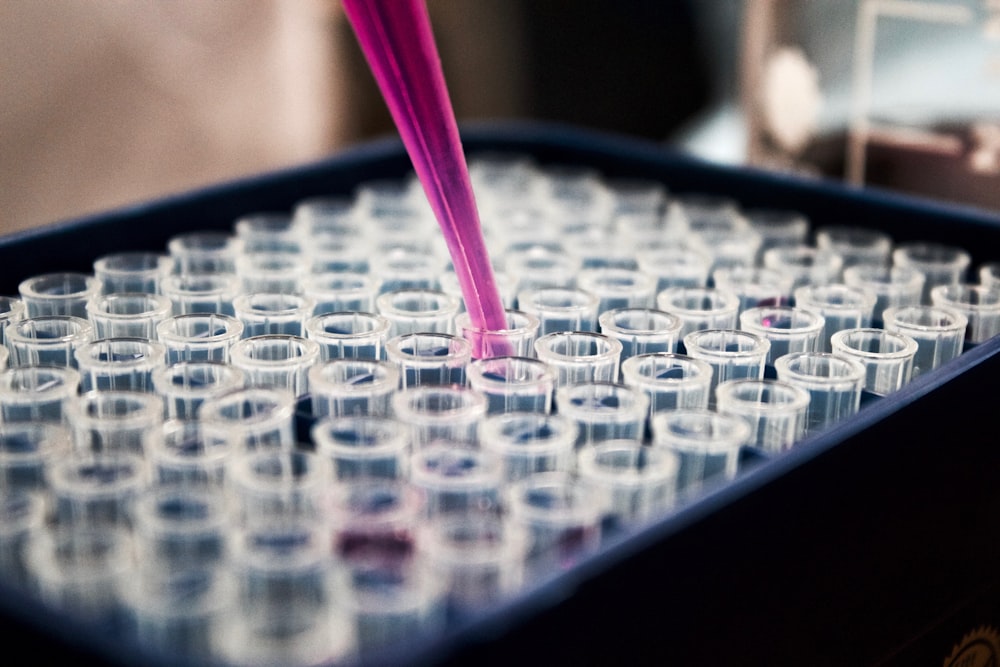
Figure 2: Simulation showing molecular interaction with bacterial membrane.
Beyond Traditional Antibiotics: Fighting Biofilms and Dormant Bacteria
Perhaps most exciting was IAM-1's performance against challenging bacterial populations that conventional antibiotics struggle to eliminate.
Biofilms represent a major therapeutic challenge, responsible for approximately 80% of persistent bacterial infections in humans.
The researchers tested IAM-1 against mature biofilms of Staphylococcus aureus and found it significantly disrupted these protective communities at concentrations just 4-8 times higher than its MIC value 3 .
Dormant or "persister" bacteria represent another difficult-to-treat population. These cells temporarily shut down their metabolic activity.
IAM-1 proved exceptionally effective against stationary-phase S. aureus, reducing bacterial counts by 99.99% within 6 hours at 4× MIC 3 .
In a mouse model of MRSA wound infection, IAM-1 demonstrated moderate in vivo activity with no detectable dermal toxicity—a crucial finding that suggests therapeutic potential for topical applications 3 .
No dermal toxicity detected
Effective in vivo results
Promising for topical applications
The Scientist's Toolkit: Key Research Reagents
Studying isoamphipathic antibacterial molecules requires specialized reagents and techniques. Here are some essential components of the research toolkit 3 :
| Reagent/Technique | Function/Application |
|---|---|
| Aromatic diols | Provide the structural basis for positional isomerism (catechol, resorcinol, hydroquinone) |
| Dibromohexane | Creates confined alkyl spacers between positively charged centers |
| Dimethylamine | Introduces cationic charges through quaternization |
| L-Phenylalanine | Provides hydrophobic character through its benzyl side chain |
| Bromoacetyl bromide | Creates activated ester derivatives for quaternization reactions |
| Human red blood cells | Model system for assessing hemolytic toxicity toward mammalian cells |
| Molecular dynamics simulations | Computational method for studying molecule-membrane interactions |
| Fluorescence spectroscopy | Technique for monitoring membrane leakage and disruption mechanisms |
Future Directions and Therapeutic Potential
The discovery that positional isomerism can fine-tune antibacterial selectivity opens exciting new avenues for drug development. Unlike traditional antibiotic optimization, this approach prioritizes therapeutic index—the balance between efficacy and safety.
"The positional isomerism approach represents a paradigm shift in antibiotic design—one that acknowledges the importance of molecular shape rather than just chemical composition."
The researchers suggest several promising directions for further development:
Structural Diversification
Exploring different aromatic cores beyond diols to expand the structural-activity relationship library.
Delivery Optimization
Formulating these molecules for enhanced tissue penetration and stability in biological environments.
Combination Therapies
Pairing membrane-targeting IAMs with conventional antibiotics to create synergistic effects.
Diagnostic Applications
Leveraging the selective binding properties for bacterial detection and imaging.
While more research is needed before these molecules can reach patients, the positional isomerism approach represents a significant advance in antibiotic design.
Conclusion: A New Chapter in Antibiotic Medicine
The story of isoamphipathic antibacterial molecules illustrates how subtle molecular changes can have dramatic biological consequences. By rearranging hydroxyl groups on an aromatic core, scientists created molecules that selectively target bacteria while sparing human cells—addressing the fundamental challenge of antibiotic toxicity.
This research also highlights the growing importance of computational chemistry in drug discovery. Molecular dynamics simulations provided crucial insights into why the ortho isomer outperformed its meta and para counterparts, guiding rational design rather than relying on trial and error.
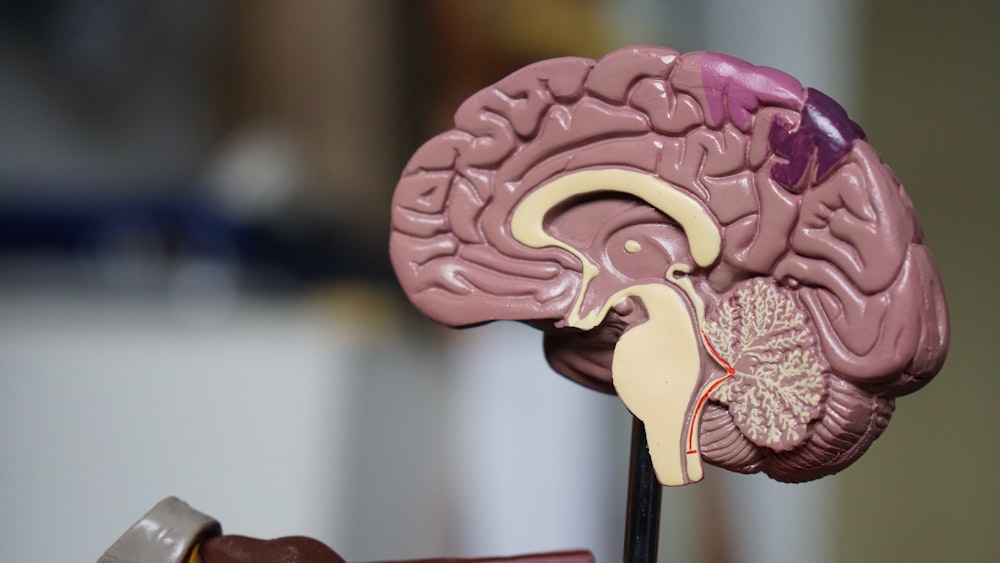
Figure 3: Computational chemistry guiding laboratory research.
As the threat of antibiotic resistance continues to grow, innovative approaches like positional isomerism offer hope for staying ahead of evolving pathogens.
By learning to sculpt molecules with greater precision, we may eventually render the term "superbug" obsolete—replacing it with a new era of smarter antibiotics designed to outmaneuver bacterial resistance through molecular geometry.
The continuing battle against antibiotic-resistant bacteria will require our best scientific creativity—and sometimes, the solution lies not in finding new materials, but in arranging familiar ones in more clever patterns.