Therapeutic Strategies for Disrupting Toxin-Antitoxin Module Function: From Mechanism to Novel Antimicrobials
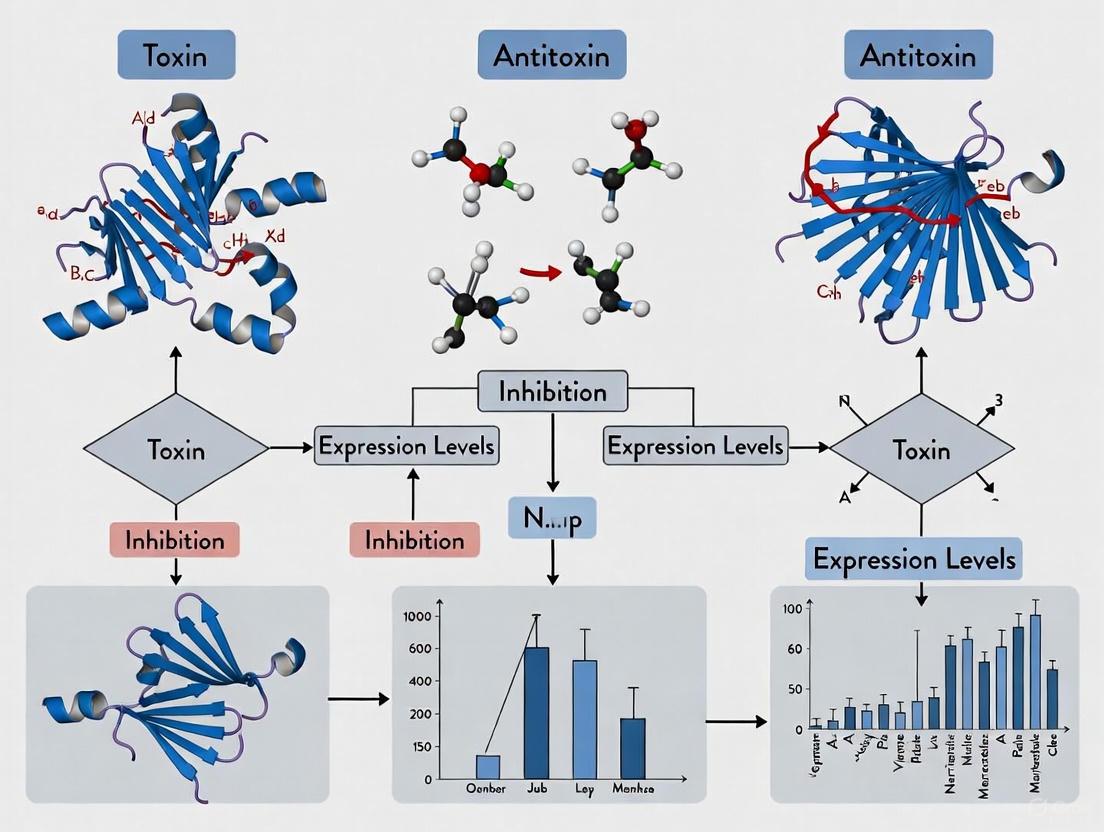
Toxin-antitoxin (TA) systems are ubiquitous genetic modules in pathogenic bacteria, crucial for stress response, persistence, and biofilm formation, making them promising targets for novel antimicrobial strategies.
Therapeutic Strategies for Disrupting Toxin-Antitoxin Module Function: From Mechanism to Novel Antimicrobials
Abstract
Toxin-antitoxin (TA) systems are ubiquitous genetic modules in pathogenic bacteria, crucial for stress response, persistence, and biofilm formation, making them promising targets for novel antimicrobial strategies. This article provides a comprehensive analysis for researchers and drug development professionals, covering the foundational biology of TA systems, direct and indirect methodological approaches for their disruption, troubleshooting for challenges like persister cell induction, and validation techniques through computational and comparative studies. By synthesizing current research, this review aims to guide the rational design of therapeutics that artificially activate TA toxins to eliminate bacterial pathogens, offering a potential solution to the growing crisis of antibiotic resistance.
Understanding the Target: The Biology and Regulation of Toxin-Antitoxin Systems
TA Systems FAQs
What is a Toxin-Antitoxin (TA) system? A Toxin-Antitoxin system is a set of two genes found in bacteria and archaea. One gene encodes a toxin that disrupts essential cellular processes, and the other encodes an antitoxin that neutralizes the toxin under normal growth conditions [1] [2].
What are the primary functions of TA systems? TA systems help bacteria survive stressful conditions, such as nutrient deprivation, antibiotic exposure, or viral attack. When activated, the toxin can slow or stop bacterial growth, inducing a dormant "persister" state that helps the bacterium evade threats [2]. They also play roles in plasmid maintenance, phage defense, biofilm formation, and regulating bacterial virulence [1] [3] [2].
How are TA systems classified? TA systems are currently classified into eight types (I to VIII) based on the nature of the antitoxin and its mechanism of inhibiting the toxin [3] [2]. The table below summarizes the key characteristics of each type.
Table 1: Classification of Toxin-Antitoxin Systems
| Type | Antitoxin Nature | Mechanism of Antitoxin Action |
|---|---|---|
| I | RNA (sRNA) | Binds toxin mRNA to inhibit its translation or promote its degradation [3]. |
| II | Protein | Binds directly to the toxin protein to form a neutralized complex [3]. |
| III | RNA (sRNA) | Binds directly to the toxin protein to sequester it [4] [3]. |
| IV | Protein | Protects the toxin's cellular target instead of binding the toxin itself [3]. |
| V | Protein | Acts as an RNase that specifically degrades the toxin's mRNA [3]. |
| VI | Protein | Targets its cognate toxin for degradation by ATP-dependent proteases [3]. |
| VII | Protein | Is inactivated by post-translational modifications to the toxin [3]. |
| VIII | RNA | Inhibits the transcription of the RNA toxin or recruits Cas proteins as repressors [3]. |
What makes Type II systems the most extensively studied? Type II systems are the most abundant and well-characterized. Both the toxin and antitoxin are proteins, and the antitoxin often has a dual function: it not only neutralizes the toxin but also binds the TA operon's DNA to repress its own transcription [3].
Troubleshooting Guide: Common Experimental Challenges
This section addresses specific issues researchers might face when working with bacterial strains harboring TA systems, particularly during cloning and transformation experiments.
Table 2: Troubleshooting Common TA System Experimental Problems
| Problem | Potential Cause | Recommended Solution |
|---|---|---|
| No colonies after transformation [5] [6] | The DNA insert is toxic to the host cells. | - Incubate transformation plates at a lower temperature (25–30°C) to slow growth and reduce toxicity [5] [6]. - Use a specialized strain with tighter transcriptional control (e.g., NEB-5-alpha F´ Iq) [5]. - Use a strain carrying a lacIq repressor (e.g., TOP10F') without IPTG induction to suppress expression from the lac promoter [6]. |
| Few or no transformants [5] | The constructed plasmid is too large. | - Select a competent cell strain designed for large constructs (e.g., NEB 10-beta for ≥ 10 kb) [5]. - Use electroporation for very large constructs (> 10 kb) [5]. |
| Few or no transformants [5] | The insert originates from mammalian/plant DNA with methylated cytosines. | - Use an E. coli strain deficient in methylated DNA restriction systems (McrA, McrBC, Mrr), such as NEB 10-beta [5]. |
| Only blue colonies in blue-white screening [6] | The insert is small (<500 bp) and does not fully disrupt lacZ, or 3' A-overhangs are missing. | - Analyze light blue colonies, as they may contain the insert [6]. - If a proofreading polymerase was used, perform a post-PCR treatment with Taq polymerase to add 3' A-overhangs [6]. |
| Cloning only in one orientation [6] | The insert is toxic when expressed from one direction. | - Incubate cells at 25–30°C [6]. - Use a repressor strain (e.g., TOP10F') without IPTG [6]. |
Core Mechanisms of Type II TA Systems
Type II systems are a key model for understanding TA function. The antitoxin is typically degraded faster than the stable toxin during stress, leading to toxin activation [3].
Table 3: Targets and Mechanisms of Action for Type II Toxins
| Toxin Superfamily | Primary Target | Mechanism of Action |
|---|---|---|
| CcdB | DNA Gyrase | Inhibits DNA rejoining, causing double-strand breaks and SOS response activation [3]. |
| MazF | mRNA / rRNA | Degrades free RNA with limited sequence specificity, inhibiting protein synthesis [3]. |
| VapC | tRNA / rRNA | Cleaves the anticodon stem-loop of tRNAs or the sarcin-ricin loop of 23S rRNA [3]. |
| HipA | Glu-tRNA Synthetase | Phosphorylates aminoacyl-tRNA synthetase, preventing tRNA binding to amino acids [3]. |
| Doc | Elongation Factor Tu (EF-Tu) | Phosphorylates and inactivates EF-Tu, inhibiting tRNA delivery to the ribosome [3]. |
| MbcT | NAD+ | Hydrolyzes NAD+, depleting this essential electron carrier and disrupting redox reactions [3]. |
| ζ (Zeta) | UDP-sugars | Phosphorylates and depletes UDP-sugars, inhibiting cell wall synthesis [3]. |
The Scientist's Toolkit: Key Research Reagents
Table 4: Essential Research Reagents for TA System Experiments
| Reagent / Material | Function / Application | Example Use Case |
|---|---|---|
| High-Efficiency Competent Cells | Ensures successful transformation of TA system constructs. | NEB 10-beta for large constructs or methylated DNA; NEB 5-alpha (Rec A-) for unstable constructs [5]. |
| Specialized Expression Strains | Controls expression of toxic genes. | TOP10F' cells with lacIq repressor for cloning toxic inserts without IPTG induction [6]. |
| Cloning & Ligation Kits | Facilitates efficient assembly of TA modules. | Quick Ligation Kit or concentrated T4 DNA Ligase for challenging ligations [5]. |
| Electrocompetent Cells | Increases transformation efficiency. | Recommended for large constructs; requires clean DNA to prevent arcing [5]. |
| Protease Inhibitors | Studies antitoxin degradation dynamics. | Investigating Lon/Clp protease-mediated antitoxin degradation under stress [3]. |
FAQs: Understanding Stoichiometry in Toxin-Antitoxin Systems
Q1: What does "stoichiometry" refer to in the context of toxin-antitoxin (TA) modules?
Stoichiometry describes the specific ratio in which toxin and antitoxin molecules must bind to form a complex and achieve neutralization. This ratio is critical because the antitoxin is labile (short-lived), while the toxin is stable. An imbalance, often triggered by cellular stress that leads to antitoxin degradation, results in free toxin inhibiting essential cellular processes [7] [8].
Q2: Why is the labile nature of the antitoxin fundamental to TA system function?
The antitoxin's lability is the core regulatory mechanism. Under normal conditions, continuous antitoxin synthesis counteracts its rapid degradation and neutralizes the stable toxin. During stress, conditions change (e.g., protease expression increases), leading to accelerated antitoxin degradation. This shifts the stoichiometric balance in favor of the toxin, allowing it to exert its toxic effect and induce growth arrest [7].
Q3: How does the stoichiometry of neutralization vary among different Type II TA systems?
The binding ratio is not universal and depends on the specific TA pair and their protein structures. The table below summarizes the neutralization stoichiometry for several characterized systems.
| TA System | Toxin | Antitoxin | Neutralization Stoichiometry | Notes |
|---|---|---|---|---|
| RelBE, HigBA, HicAB | Monomer | Monomer | 1 toxin : 1 antitoxin | One antitoxin molecule fully inhibits a single toxin molecule [8] |
| CcdAB, MazEF | Stable Dimer | Monomer | 1 toxin dimer : 1 antitoxin | A single antitoxin can inhibit a toxin dimer, often via allosteric effects [8] |
| VapD (from H. influenzae) | Dimer | Monomer | 2 toxin : 1 antitoxin (VapD₂-VapX heterotrimer) | A single VapX antitoxin interacts with and inhibits both monomers of the VapD dimer [8] |
| AtaRT | Dimer | Monomer | 1 toxin : 1 antitoxin | The antitoxin (AtaR) prevents the toxic dimer from forming [8] |
Troubleshooting Guides
Problem 1: Inconsistent TA Complex Purification
Potential Cause: The expression ratio of toxin to antitoxin in your system does not match the natural stoichiometry required for stable complex formation. Overexpression of the toxin without sufficient antitoxin can lead to protein aggregation or toxicity in the host cells.
Solutions:
- Co-express genes in an operon: Clone the toxin and antitoxin genes into a single plasmid in their natural operon structure (antitoxin gene first) to ensure coordinated expression [8].
- Titrate expression: If using inducible systems, empirically determine the optimal induction level and timing that allows for complex formation without triggering toxicity. Use a lower induction strength or a slower induction process.
- Use a specialized vector: Employ expression systems designed for toxic proteins, which often have tighter repression.
Problem 2: Failure to Activate Toxin in Vivo
Potential Cause: The experimental trigger (e.g., antibiotic stress) does not effectively tilt the stoichiometric balance. The residual level of antitoxin may still be sufficient to neutralize the toxin.
Solutions:
- Target antitoxin degradation: Use strains with inducible proteases (e.g., Lon protease) to artificially accelerate antitoxin degradation [8].
- Inhibit transcription/translation: Apply sub-lethal concentrations of transcription or translation inhibitors to prevent synthesis of new, labile antitoxins, allowing pre-existing toxins to become active [7].
- Verify stress cue: Ensure the chosen environmental cue (e.g., nutrient starvation, DNA damage) is a known trigger for your specific TA system.
Problem 3: No Phenotype Observed Upon TA Gene Deletion
Potential Cause: Functional redundancy from multiple, homologous TA systems in the bacterial chromosome can compensate for the loss of a single system [9] [7].
Solutions:
- Create multiple knockouts: Generate mutant strains lacking several TA loci suspected of functional overlap.
- Overexpress the toxin: Introduce a plasmid with the toxin gene under a tightly regulated, inducible promoter. This bypasses natural regulation and can help reveal its cellular target and physiological effect.
Experimental Protocols
Protocol 1: Determining Stoichiometry via Size-Exclusion Chromatography with Multi-Angle Light Scattering (SEC-MALS)
Objective: To empirically determine the molecular weight and thus the binding ratio of a purified TA complex.
Materials:
- Purified toxin and antitoxin proteins.
- Size-exclusion chromatography column.
- MALS detector.
- Suitable buffer for the TA complex.
Methodology:
- Purify the Complex: Co-express and co-purify the toxin-antitoxin complex. Alternatively, purify the components individually and reconstitute the complex in vitro by mixing them at a range of ratios and incubating.
- Chromatography: Inject the purified, reconstituted complex onto the SEC column connected to the MALS detector.
- Data Analysis: The MALS detector directly measures the absolute molecular weight of the eluting complex. This measured weight will indicate the oligomeric state (e.g., A₂T₂, AT, A₂T) and confirm the binding stoichiometry.
Protocol 2: Measuring Antitoxin Lability with a Pulse-Chase Experiment
Objective: To quantify the half-life of a labile antitoxin protein in vivo.
Materials:
- Bacterial strain expressing a tagged version of the antitoxin.
- Radioactive amino acids (e.g., ^35S-Methionine) or a stable isotope label.
- Antibiotics that inhibit protein synthesis (e.g., chloramphenicol).
- Immunoprecipitation reagents.
Methodology:
- Pulse: Grow the bacterial culture to mid-log phase. Briefly expose the cells to the radioactive or isotope-labeled amino acids. This "pulses" newly synthesized proteins with a label.
- Chase: Quickly remove the pulse label and add an excess of unlabeled amino acids along with a protein synthesis inhibitor. This "chases" the label into existing proteins and prevents new synthesis.
- Time-Course Sampling: Take samples at regular time intervals after the chase begins.
- Immunoprecipitation and Analysis: For each time point, immunoprecipitate the tagged antitoxin. Measure the amount of remaining labeled antitoxin over time using a phosphorimager or mass spectrometry. The decay rate will reveal the half-life of the antitoxin.
Research Reagent Solutions
Essential materials for investigating TA module stoichiometry and function.
| Reagent / Tool | Function |
|---|---|
| Tightly Regulated Inducible Promoters | Enables controlled, separate expression of toxin and antitoxin genes for in vitro reconstitution and functional assays. |
| Protease-Deficient Bacterial Strains | Aids in the co-purification of intact TA complexes by reducing the degradation of the labile antitoxin during protein extraction. |
| Affinity Tags (His-tag, GST-tag) | Facilitates the purification of individual toxin and antitoxin proteins and their complexes via affinity chromatography. |
| Surface Plasmon Resonance (SPR) | Used to measure the binding affinity (K_D) and kinetics (on/off rates) between the toxin and antitoxin, providing quantitative data on their interaction. |
TA System Stoichiometry and Disruption Pathways
Diagram 1: TA module regulation and disruption pathways. Under normal conditions, continuous synthesis of the labile antitoxin neutralizes the stable toxin. Stress triggers antitoxin degradation, freeing the toxin to act on its target.
Toxin-Antitoxin System Classification and Mechanisms
Diagram 2: TA system classification by antitoxin type and inhibition mechanism. The three main types are defined by how the antitoxin (protein or RNA) neutralizes the protein toxin [9].
Toxin-antitoxin (TA) systems are ubiquitous genetic elements found in bacteria and archaea, composed of a toxin that inhibits bacterial growth and an antitoxin that neutralizes it. These systems have attracted significant scientific interest for their potential roles in bacterial stress response, persistence, and biofilm formation. This technical resource provides a comprehensive troubleshooting guide for researchers investigating how environmental cues, particularly stress, modulate the activation and function of these systems. The content is framed within the broader objective of developing strategies to disrupt TA module function, a promising avenue for novel antimicrobial therapies.
FAQs: Core Concepts of TA Systems and Stress
Q1: What are the primary environmental cues that trigger TA system transcription? Numerous stress conditions can lead to a substantial increase in TA system transcription. Experimental data on E. coli have demonstrated that the following stressors induce transcription, often by more than 10 to 50-fold for some systems [10]:
- Amino-acid starvation (e.g., induced by serine hydroxamate/SHX)
- Translation inhibition (e.g., chloramphenicol)
- DNA synthesis inhibition (e.g., trimethoprim)
- Oxidative stress (e.g., hydrogen peroxide)
- Acid shock (shift to low pH)
- Heat shock (temperature upshift)
- Proteotoxic stress (e.g., ΔdnaK strain)
- Cell-wall synthesis inhibition (e.g., carbenicillin; note this was less effective) [10]
Q2: Does transcriptional induction of a TA system automatically lead to toxin activation and bacterial growth arrest? No. This is a critical and common point of confusion. Increased transcription is not a reliable marker of toxin activity [10] [11] [12]. Research shows that while diverse stresses strongly induce TA transcription, the toxin itself is often not liberated or activated. The growth of an E. coli strain lacking ten TA systems was not affected after exposure to stresses that trigger robust TA transcription, indicating that these stresses do not activate the toxins to a degree that impacts growth recovery [10] [12].
Q3: What is the actual mechanism behind stress-induced TA transcription? The prevailing model is that stress leads to an increase in the cellular degradation of the antitoxin, which is often intrinsically unstable and a target for proteases like Lon [10]. Since most TA operons are transcriptionally autoregulated by the antitoxin (alone or in complex with the toxin), a decrease in free antitoxin concentration relieves repression of the TA promoter. This leads to a surge in transcription as the cell attempts to synthesize more antitoxin to re-establish balance [10] [11].
Q4: If toxin isn't activated during stress, what prevents it? The key is the stability of the toxin-antitoxin (TA) complex. While free antitoxin is readily degraded, the antitoxin that is bound to its cognate toxin in a protein complex is protected from proteolysis [10] [12]. This mechanism ensures that under stress conditions, even with heightened transcription and antitoxin turnover, the pre-existing pool of toxin remains neutralized, preventing widespread growth inhibition.
Q5: How can TA systems lead to persister cell formation if stress doesn't activate them? The formation of persister cells (dormant, antibiotic-tolerant cells) is thought to be linked to stochastic fluctuations in cellular components rather than a direct, stress-induced activation. Mathematical models suggest that rare, random spikes in the free toxin level can occur due to the inherent noise in gene expression, pushing individual cells into a dormant state. This phenomenon may be facilitated by the regulatory principle of "conditional cooperativity" [13].
Troubleshooting Guide: Common Experimental Challenges
Problem 1: No Phenotype Observed in TA Deletion Strain After Stress
Challenge: You have exposed your ΔTA mutant to a stressor known to induce TA transcription, but observe no growth difference compared to the wild-type strain.
| Potential Cause | Solution |
|---|---|
| Toxin is not liberated during the stress applied [10] [12]. | Verify toxin activation directly (e.g., use RNA-seq to check for mRNA cleavage patterns characteristic of the toxin's activity) [10]. |
| Functional redundancy from other TA systems in the genome. | Construct a strain lacking multiple TA systems (e.g., Δ10TA) [10]. |
| Insufficient stress severity or duration. | Perform a stress kinetics experiment to titrate the stress level and measure TA transcription over time via qRT-PCR [10]. |
Problem 2: Inconsistent or Weak Transcriptional Induction
Challenge: The expected upregulation of TA genes during stress is not detected or is highly variable.
| Potential Cause | Solution |
|---|---|
| Strain-specific differences in TA system regulation or protease activity. | Use a well-characterized lab strain (e.g., E. coli MG1655) and confirm the genetic background. |
| Inadequate control of stress conditions. | Use a positive control stressor like serine hydroxamate (SHX) for amino acid starvation [10]. |
| Issues with transcriptional reporter or qPCR assay. | Use a promoter-yfp fusion to confirm induction at the single-cell level and rule out population averaging effects [10]. |
Problem 3: Difficulty in Differentiating Between Transcription and Toxin Activation
Challenge: You measure strong TA transcription but cannot confirm if the toxin is functionally active.
| Potential Cause | Solution |
|---|---|
| Lack of a direct, quantitative assay for toxin activity. | Assay 1: mRNA Cleavage Profile. Use RNA sequencing to look for global, specific mRNA cleavage patterns indicative of endoribonuclease toxin activity [10]. Assay 2: Pulse-Chase for Antitoxin Stability. Perform a pulse-chase experiment in the native context to directly measure antitoxin degradation rates and confirm the protection offered by toxin binding [10] [12]. |
Experimental Protocols for Key TA System Assays
Protocol 1: Quantifying Stress-Induced Transcriptional Induction
This protocol uses qRT-PCR to measure changes in TA mRNA levels following stress [10].
- Grow bacteria to mid-log phase (OD600 ~0.5) in appropriate medium.
- Apply stress. Divide the culture into stress and control aliquots.
- Example Stressors:
- Amino Acid Starvation: Add 0.5 mg/mL Serine Hydroxamate (SHX).
- Heat Shock: Shift culture from 30°C to 45°C.
- Oxidative Stress: Add 1-2 mM Hydrogen Peroxide.
- Example Stressors:
- Incubate. Continue incubation for a defined period (e.g., 15-30 minutes).
- RNA extraction & cDNA synthesis. Collect samples, immediately stabilize RNA, and extract. Synthesize cDNA.
- qRT-PCR. Perform qPCR using primers specific to the antitoxin gene of your TA system. Use a housekeeping gene (e.g., rpoD) for normalization.
- Data analysis. Calculate fold-change in transcription using the ΔΔCt method.
Protocol 2: Pulse-Chase Assay to Measure Antitoxin Degradation In Vivo
This methodology directly assesses antitoxin stability, which is crucial for TA system regulation [10] [12].
- Generate a tagged construct. Create a chromosomal, native-promoter-driven copy of the antitoxin gene with a C-terminal epitope tag (e.g., FLAG, HA).
- Pulse labeling. Grow the engineered strain to mid-log phase. Treat with a stressor (e.g., heat shock). Briefly pulse with a labeled amino acid (e.g., ^35^S-Methionine) to label newly synthesized proteins.
- Chase. Add an excess of unlabeled amino acid (e.g., Methionine) to stop incorporation of the label. This marks the start time (t=0).
- Sample collection. Take samples at multiple time points after the chase (e.g., 0, 5, 15, 30, 60 minutes).
- Immunoprecipitation. At each time point, lyse cells and immunoprecipitate the tagged antitoxin.
- Visualization and quantification. Separate proteins via SDS-PAGE. Visualize and quantify the labeled antitoxin band using a phosphorimager or autoradiography. The decay curve will reveal the half-life of the antitoxin under stress conditions.
The following diagram illustrates the core regulatory mechanism that governs TA system response to stress, based on the findings from these protocols.
Protocol 3: RNA Sequencing to Detect Endoribonuclease Toxin Activity
This protocol tests whether a stressor leads to the activation of ribonuclease toxins [10].
- Stress treatment. Subject wild-type and ΔTA mutant strains to the stress condition of interest. Include an unstressed control.
- RNA extraction. Collect samples and perform high-quality total RNA extraction.
- Library prep and sequencing. Prepare strand-specific RNA-seq libraries and sequence on an appropriate platform.
- Bioinformatic analysis.
- Map reads to the reference genome.
- Look for global changes in mRNA abundance and the accumulation of specific mRNA fragments.
- Identify cleavage sites by searching for truncated reads with 5'-monophosphate ends, which are hallmarks of endoribonuclease activity.
- Compare the patterns in the stressed wild-type strain to the ΔTA mutant and unstressed control. Toxin-specific mRNA cleavage will be absent in the ΔTA strain.
The Scientist's Toolkit: Key Research Reagents
The table below lists essential materials and their applications for studying TA system dynamics.
| Research Reagent | Function in TA System Research |
|---|---|
| Serine Hydroxamate (SHX) | Induces amino acid starvation, triggering the stringent response and robust TA transcription [10]. |
| Lon Protease Mutant Strain | Used to investigate the role of proteolytic degradation in antitoxin stability and system regulation [10]. |
| Promoter-Fluorescent Protein Fusions (e.g., P~mqsRA~-yfp) | Enable real-time, single-cell monitoring of TA transcriptional induction in response to stress [10]. |
| Epitope-Tagged Antitoxin Strains | Allow for tracking antitoxin protein levels, localization, and degradation rates via immunoblotting or pulse-chase assays [10] [12]. |
| Multiple TA Deletion Strain (e.g., Δ10TA) | Crucial for probing the function of chromosomal TA systems by overcoming functional redundancy [10]. |
The following workflow integrates these reagents into a coherent strategy for troubleshooting TA system activation.
The table below synthesizes quantitative data on the transcriptional response of various E. coli TA systems to different stressors, demonstrating the diversity of environmental cues [10].
| TA System | Amino Acid Starvation (SHX) | Translation Inhibition (Chloramphenicol) | Heat Shock | Oxidative Stress (H~2~O~2~) | Acid Shock (pH 4) |
|---|---|---|---|---|---|
| mqsRA | >6-fold increase | >6-fold increase | >10-fold increase | Responsive | Responsive |
| relBE | >6-fold increase | >6-fold increase | Responsive | Responsive | Responsive |
| yefM-yoeB | >6-fold increase | >6-fold increase | Responsive | >10-fold increase | Responsive |
| Other 7 E. coli TA systems | Varying responses (2 to >50-fold) | Varying responses | Varying responses | Varying responses | Varying responses |
Note: "Responsive" indicates a statistically significant increase was observed, though the specific fold-change may vary. Data adapted from LeRoux et al. (2020) [10].
Toxin-antitoxin (TA) systems are small genetic modules ubiquitous in bacteria and archaea, composed of a stable toxin protein and its corresponding labile antitoxin [7] [14]. These systems function as sophisticated stress-response mechanisms in bacterial cells. Under normal growth conditions, the antitoxin neutralizes its cognate toxin. However, during stress (such as nutrient starvation or antibiotic treatment), the antitoxin is rapidly degraded, allowing the toxin to act on its specific cellular target [7]. This targeted activity leads to growth arrest or cell death, which can promote the survival of a bacterial population under adverse conditions.
TA systems are classified into eight types (I-VIII) based on the nature of the antitoxin and its mechanism of toxin neutralization [14]. In types II, IV, V, VI, and VII, both components are proteins, whereas in types I and III, the antitoxin is an RNA molecule. The recently discovered type VIII system features both an RNA toxin and an RNA antitoxin [14]. This technical guide focuses primarily on type II systems, which are the most extensively studied and are promising targets for novel antibacterial strategies [15].
Troubleshooting Guide: Common Experimental Challenges
Q1: Why is my toxin overexpression not producing the expected growth inhibition phenotype?
- Potential Cause 1: The antitoxin is still present and functional, effectively neutralizing the toxin.
- Troubleshooting Steps:
- Ensure your expression system tightly regulates toxin induction. Use an inducible promoter with minimal leaky expression.
- Check for potential co-expression of the antitoxin from the same operon or from another genomic location.
- Verify the stability of your toxin protein via Western blot after induction.
- Potential Cause 2: The toxin's target pathway is not essential under your experimental conditions.
- Troubleshooting Steps:
- Re-evaluate the essentiality of the toxin's target (e.g., DNA gyrase, translation machinery) in your specific bacterial strain and growth medium.
- Test for growth inhibition in different growth phases (exponential vs. stationary) and using different media.
Q2: How can I confirm the specific molecular target of a newly identified TA toxin?
- Potential Cause: The observed growth arrest phenotype is ambiguous and could be linked to multiple cellular processes.
- Troubleshooting Steps:
- Perform Macromolecular Synthesis Assays: Measure the incorporation of radiolabeled precursors into DNA, RNA, and proteins immediately after toxin induction. A rapid shutdown of one specific synthesis pathway points to the primary target [16].
- Conduct In Vitro Reconstitution: Purify the toxin and apply it to defined in vitro systems (e.g., a transcription-translation system, DNA replication assay). Inhibition of the system confirms the target.
- Use Genetic Suppressors: Isolate and sequence spontaneous mutant strains resistant to toxin activity. Mutations in the toxin's direct target or related pathways often confer resistance.
Q3: My TA system deletion mutant shows no observable phenotype. Does this mean the system is non-functional?
- Potential Cause: Functional redundancy within the TA network is masking the phenotype.
- Troubleshooting Steps:
- Perform a genomic analysis to identify all TA systems present in your strain. It is common for pathogens like Mycobacterium tuberculosis to harbor dozens of TA modules [7] [15].
- Create multiple deletion mutants, removing several TA systems simultaneously.
- Test the mutant under a wider range of stress conditions (e.g., nutrient limitation, oxidative stress, antibiotic treatment) that may trigger the specific TA system's activity.
Q4: I suspect my TA system is involved in persister cell formation, but my results are inconsistent with the literature.
- Potential Cause: The role of TA systems in persistence is highly context-dependent and has been a subject of debate [16].
- Troubleshooting Steps:
- Critically assess your bacterial strain background. Some widely used E. coli strains deleted for multiple TAs were later found to be contaminated with prophages, which confounded persistence measurements [16].
- Ensure your persistence assays are highly reproducible and use appropriate controls. Use lethal doses of different antibiotic classes (e.g., ampicillin, fluoroquinolones).
- Consider that other mechanisms, such as the stringent response (ppGpp), may be the primary drivers of persistence in your system.
Classification and Mechanisms of TA Systems
The following table summarizes the eight known types of TA systems based on the nature and mode of action of the antitoxin.
Table 1: Classification of Toxin-Antitoxin Systems
| Type | Toxin | Antitoxin | Mechanism of Antitoxin Action | Example |
|---|---|---|---|---|
| I | Protein | RNA | Antisense RNA binds toxin mRNA, inhibiting translation [14]. | Hok/Sok [14] |
| II | Protein | Protein | Protein antitoxin directly binds and neutralizes the toxin protein [7] [14]. | CcdB/CcdA [14] |
| III | Protein | RNA | RNA antitoxin directly binds and inhibits the toxin protein [14]. | ToxN/ToxI [14] |
| IV | Protein | Protein | Antitoxin binds to the toxin's target, stabilizing it, rather than binding the toxin itself [14]. | CbtA/CbeA [14] |
| V | Protein | Protein | Antitoxin is an RNase that specifically cleaves the toxin's mRNA [14]. | GhoT/GhoS [14] |
| VI | Protein | Protein | Antitoxin acts as a proteolytic adapter, promoting the degradation of the toxin [14]. | SocB/SocA [14] |
| VII | Protein | Protein | Antitoxin enzymatically modifies the toxin (e.g., via adenylylation) to neutralize it [14]. | HepT/MntA [14] |
| VIII | RNA | RNA | RNA antitoxin, resembling crRNA, guides Cas proteins to transcriptionally inhibit the RNA toxin [14]. | CreT/CreA [14] |
The diagram below illustrates the functional relationships and regulatory logic between a generic toxin and its antitoxin, which underpin the classification in Table 1.
TA toxins disrupt essential cellular processes to induce growth arrest or cell death. The table below categorizes well-characterized toxins by their primary molecular target and mechanism of action.
Table 2: Cellular Targets and Mechanisms of Action of Selected TA Toxins
| Toxin (TA System) | TA Type | Primary Target / Mechanism | Organism | Cellular Process Disrupted |
|---|---|---|---|---|
| CcdB | II | DNA gyrase (topoisomerase II poison) [14] | E. coli | DNA replication [14] |
| ParE | II | Inhibition of DNA gyrase [14] | E. coli, V. cholerae | DNA replication [14] |
| RelE | II | Ribosome-dependent mRNA cleavage [14] [16] | E. coli | Translation [14] |
| MazF | II | Ribosome-independent mRNA cleavage (sequence-specific) [14] [16] | E. coli | Translation [14] |
| HipA | II | Phosphorylation of glutamyl-tRNA synthetase [14] | E. coli | Translation [14] |
| VapC | II | Cleavage of initiator tRNA [14] | S. flexneri, M. tuberculosis | Translation [14] |
| TacT | II | Acetylation of aminoacyl-tRNA [14] | S. enterica | Translation [14] |
| SymE | I | mRNA cleavage [14] | E. coli | Translation [14] |
| HepT | VII | mRNA cleavage [14] | S. oneidensis | Translation [14] |
| FicT | II | Adenylylation of DNA gyrase and topoisomerase IV [14] | B. schoenbuchensis | DNA replication [14] |
The following diagram maps the specific inhibition points of different toxin families onto the central dogma of molecular biology, providing a visual summary of the data in Table 2.
Experimental Protocols for Key Assays
Protocol 1: Macromolecular Synthesis Assay to Identify Toxin Targets
Purpose: To determine whether a toxin primarily inhibits DNA replication, RNA transcription, or protein translation.
Principle: This assay measures the incorporation of radiolabeled precursors into DNA, RNA, and proteins in bacterial cultures following toxin induction. A specific and rapid decline in the incorporation of one precursor indicates the toxin's primary target.
Materials:
- Bacterial culture expressing the toxin from an inducible promoter.
- Radiolabeled precursors: [methyl-³H]thymidine (DNA), [5,6-³H]uracil (RNA), L-[3,4,5-³H]leucine (protein).
- Trichloroacetic acid (TCA).
- Glass fiber filters and vacuum filtration apparatus.
- Scintillation counter.
Procedure:
- Grow the bacterial culture to mid-exponential phase.
- Divide the culture into four aliquots:
- Control: No induction + all three labeled precursors.
- Test samples: Induce toxin expression and immediately add a single type of labeled precursor to each aliquot ([³H]thymidine, [³H]uracil, or [³H]leucine).
- Take 100 µL samples from each aliquot at regular time intervals (e.g., 0, 15, 30, 60 minutes post-induction).
- Precipitate the macromolecules by adding the samples to 5 mL of ice-cold 10% TCA. Incubate on ice for 30 minutes.
- Collect the precipitated material on glass fiber filters by vacuum filtration. Wash the filters twice with ice-cold 5% TCA and once with 70% ethanol.
- Dry the filters and measure the incorporated radioactivity using a scintillation counter.
- Data Analysis: Plot the incorporated radioactivity (CPM) against time for each precursor. A sharp drop in the incorporation rate in the induced sample for a specific precursor identifies the pathway targeted by the toxin.
Protocol 2: In Vitro Transcription-Translation Assay
Purpose: To confirm a toxin's activity on translation and characterize its mechanism in a controlled, cell-free environment.
Principle: A purified toxin is added to a commercial E. coli-based coupled transcription-translation system. Inhibition of protein synthesis, measured by a reporter protein (e.g., luciferase or GFP), confirms the toxin targets the gene expression machinery.
Materials:
- Purified toxin protein.
- Commercial cell-free protein expression system (e.g., E. coli T7 S30 Extract System).
- DNA template encoding a reporter gene (e.g., luciferase, GFP) under a T7 promoter.
- Amino acid mixture.
- Reaction buffer.
- Luminometer or fluorometer (depending on the reporter).
Procedure:
- Prepare the in vitro reaction mixture according to the manufacturer's instructions, including the extract, buffer, amino acids, and DNA template.
- Divide the mixture into two parts:
- Control: Add storage buffer without toxin.
- Test: Add purified toxin protein.
- Incubate the reactions at 37°C for 1-2 hours.
- At regular intervals, take small aliquots from each reaction to measure reporter protein activity (e.g., luminescence for luciferase).
- Data Analysis: Compare the kinetics and final yield of reporter protein production between the control and toxin-treated reactions. A significant reduction confirms the toxin's inhibitory effect on transcription and/or translation.
The Scientist's Toolkit: Research Reagent Solutions
Table 3: Essential Reagents and Resources for TA System Research
| Reagent / Resource | Function / Description | Example Use Case |
|---|---|---|
| Toxin-Antitoxin Database (TADB 2.0) | A curated database providing comprehensive information on predicted and validated TA loci in bacterial and archaeal genomes [15]. | Identifying all putative TA systems in a newly sequenced pathogenic strain. |
| TASmania Database | A "discovery-oriented" database using a flexible pipeline to identify candidate TA loci, useful for finding novel TA families [15]. | Discovering new, uncharacterized TA systems in large genomic datasets. |
| Tightly Regulated Expression Vectors | Plasmids with inducible promoters (e.g., pBAD/arabINOSE, pET/T7) for controlled, high-level expression of toxic genes [16]. | Cloning and expressing toxin genes without causing basal toxicity. |
| Cell-Free Protein Expression System | A coupled transcription-translation extract from E. coli for in vitro protein synthesis. | Testing toxin activity and specificity in a controlled, cellular context. |
| E. coli Δ10 TA Strain | An E. coli K-12 strain with deletions of 10 chromosomal TA systems, useful for studying TA functions without network redundancy [16]. | Characterizing the phenotype of a single, heterologously expressed TA system. |
| Commercial Macromolecular Synthesis Kits | Kits providing optimized protocols and reagents (including non-radioactive alternatives) for measuring DNA, RNA, and protein synthesis rates. | Performing initial screening of a toxin's cellular target. |
Troubleshooting Guides & FAQs
Why is my TA system deletion not producing a biofilm phenotype?
This is a common issue where the expected effect on biofilm formation is not observed after genetically disrupting a Toxin-Antitoxin (TA) system. The table below outlines potential causes and solutions.
| Potential Cause | Explanation & Diagnostic Approach | Recommended Solution |
|---|---|---|
| Functional Redundancy [17] | Other TA systems (of the same or different type) compensate for the loss. | Perform a BLAST search for TA homologs in your strain and create multiple knockout mutants. |
| Incorrect Growth Conditions [18] [19] | Biofilm formation is highly dependent on medium, surface material, and flow conditions. | Systematically vary growth conditions (e.g., use different media, microaerophilic vs. aerobic, static vs. flow-cell). |
| Strain-Specific Effects [17] | The TA system's role may not be conserved across all genetic backgrounds of a species. | Verify the phenotype in multiple, genetically distinct wild-type isolates of your bacterial species. |
| Phase Variation | Some TA systems are subject to phase variation and may not be expressed in your culture. | Sequence the TA locus from your working stock to confirm the system is intact and check expression via RT-PCR. |
How can I confirm the neutralization of a toxSAS toxin in my assays?
Neutralization is key to studying TA system function. Recent structural work on toxSAS systems reveals precise mechanisms [20].
- Problem: Inconsistencies in toxin inhibition assays, making it difficult to confirm effective neutralization by an antitoxin.
- Root Cause: The neutralization mechanism is directly coupled to the toxin's substrate specificity. Using the wrong assay will not detect successful inhibition [20].
- Solution: Select your neutralization assay based on the toxin's known activity:
- For tRNA-targeting toxSAS (e.g., FaRel2): The antitoxin (e.g., ATfaRel2) typically blocks the ATP-binding (pyrophosphate donor) site. Monitor ATP consumption or tRNA pyrophosphorylation [20].
- For (pp)pApp-synthesizing toxSAS (e.g., FaRel): The antitoxin (e.g., Tis1) typically blocks the acceptor substrate site. Monitor (pp)pApp production or cellular ATP depletion [20].
My biofilm dispersal agent isn't working. What could be wrong?
| Potential Cause | Explanation & Diagnostic Approach | Recommended Solution |
|---|---|---|
| High Antibiotic Tolerance [19] [21] | Biofilms can be up to 5,000x more resistant to antimicrobials than planktonic cells. | Check the Minimum Biofilm Eradication Concentration (MBEC) of your agent; increase concentration or pre-treat with EPS-disrupting enzymes (e.g., DNase, dispersin B). |
| Persister Cell Enrichment [18] | TA systems can induce a dormant state, making cells tolerant to antimicrobials that target active processes. | Combine your dispersal agent with an antibiotic effective against persisters (e.g., mitomycin C) or use a compound that "wakens" cells from dormancy. |
| Insufficient Penetration | The extracellular polymeric substance (EPS) matrix physically blocks the agent from reaching all cells [19]. | Use a fluorescently tagged version of your agent and confocal microscopy to visually confirm penetration and binding within the biofilm. |
Essential Experimental Protocols
Protocol 1: Validating TA System Function via Conditional Toxin Expression
This protocol is a foundational experiment to confirm your TA system's activity before investigating its role in biofilm formation.
1. Principle Clone the toxin gene under an inducible promoter (e.g., arabinose, anhydrotetracycline) in a plasmid. Upon induction, a functional toxin will inhibit bacterial growth, which can be rescued by co-expression of its cognate antitoxin [20].
2. Materials
- Bacterial Strains: Your wild-type and mutant strains.
- Plasmids:
- pTOX: Cloning vector with inducible promoter and multiple cloning site (MCS).
- pANTI: Compatible plasmid with constitutive promoter and MCS for the antitoxin.
- Media: LB broth and agar plates with appropriate antibiotics and inducers.
3. Workflow
- Step 1: Amplify the toxin gene and clone it into pTOX, creating pTOX-[YourToxin].
- Step 2: Amplify the antitoxin gene and clone it into pANTI, creating pANTI-[YourAntitoxin].
- Step 3: Co-transform the plasmids into your bacterial strain. Key combinations are:
- Control 1: pTOX (empty) + pANTI (empty)
- Control 2: pTOX-[YourToxin] + pANTI (empty)
- Test Group: pTOX-[YourToxin] + pANTI-[YourAntitoxin]
- Step 4: Perform spot assays or growth curves with and without inducer. Expect growth inhibition only in the "Test Group" when the antitoxin is not present and the toxin is induced.
4. Diagram: TA System Validation Workflow
Protocol 2: Quantifying Biofilm Formation using a Static Microtiter Plate Assay
This is a standard, high-throughput method to quantify biofilm formation in different genetic mutants [19].
1. Principle Bacteria are grown in a nutrient-rich medium in polystyrene microtiter plates. Adherent biofilms are stained with crystal violet, which is then solubilized and measured spectrophotometrically.
2. Materials
- 96-well flat-bottom polystyrene microtiter plates
- Appropriate bacterial growth medium
- Phosphate Buffered Saline (PBS)
- 0.1% Crystal Violet (aq) solution
- 33% Glacial Acetic Acid
- Microplate reader
3. Workflow
- Step 1: Grow bacterial cultures to mid-log phase and dilute.
- Step 2: Inoculate 200 µL per well in multiple replicate wells. Include wells with sterile medium as blanks.
- Step 3: Incubate statically for 24-48 hours at the appropriate temperature.
- Step 4: Carefully remove planktonic cells by inverting and shaking the plate. Wash wells twice with 200 µL PBS.
- Step 5: Air-dry the plate for 45-60 minutes.
- Step 6: Stain adherent cells with 200 µL 0.1% crystal violet for 15 minutes.
- Step 7: Wash twice with PBS and air-dry.
- Step 8: Solubilize the bound dye with 200 µL of 33% acetic acid for 15 minutes.
- Step 9: Measure the absorbance at 570-595 nm.
4. Diagram: Biofilm Assay Steps
Research Reagent Solutions
This table lists key materials and their applications for researching TA systems in pathogenesis.
| Item | Function/Application in Research |
|---|---|
| pTOX/pANTI Plasmid Pair | Vectors with compatible origins of replication and different antibiotic resistance markers for conditional expression and rescue experiments [20]. |
| Crystal Violet | A basic dye used to stain and quantitatively measure adherent bacterial biomass in biofilm assays [19]. |
| DNase I | An enzyme that degrades extracellular DNA (eDNA) in the biofilm matrix, used to study the role of eDNA in biofilm integrity and antimicrobial tolerance [19]. |
| Anti-(pp)pApp Antibodies | Tools for detecting and quantifying the toxic alarmone (pp)pApp produced by certain toxSAS enzymes, used to confirm toxin activity in vivo [20]. |
| Shewanella oneidensis MR-1 | A model organism for studying TA systems, as its CP4So prophage contains a well-characterized type II TA system essential for prophage maintenance [17]. |
TA System Types and Their Associations
The table below summarizes the different types of TA systems, their mechanisms, and their common genetic contexts, which is crucial for understanding their potential roles in mobile genetic element (MGE) stability and biofilm formation [17].
| TA Type | Toxin Activity | Antitoxin Type | Common MGE Association[sitation:1] |
|---|---|---|---|
| I | Membrane depolarization, ATP loss | Antisense RNA | Prophages, Plasmids |
| II | RNase; inhibits cell wall synthesis | Protein (sequesters toxin) | Plasmids, Genomic Islands |
| III | Degrades mRNA | RNA (pseudoknot) | Plasmids, ICEs |
| IV | DNA damage, metabolic stress | Protein (protects target) | Genomic Islands, Prophages |
| V | Damages membranes | Protein (degrades toxin mRNA) | Genomic Islands |
| VI | Inhibits DNA replication | Protein (targets toxin for degradation) | Prophages |
| VII | Disrupts tRNA function | Protein (post-translational modification) | Insertion Sequence Clusters |
| VIII | Sequesters tRNAs, growth arrest | RNA (represses expression) | Prophages |
Direct and Indirect Strategies for Artificial TA System Activation
Frequently Asked Questions
FAQ 1: What are the primary molecular strategies for disrupting Type II TA complexes? The core strategies focus on interfering with the tight binding between the toxin and antitoxin proteins. The most common approaches include:
- Accelerated Antitoxin Degradation: Exploiting the inherent lability of the antitoxin by activating host proteases, such as Lon protease, to selectively degrade the antitoxin and release the toxin [22] [8].
- Inhibition of Protein-Protein Interaction: Using synthetic peptides or small molecules that mimic the antitoxin's binding interface to competitively inhibit the toxin-antitoxin interaction, or that allosterically disrupt the complex's formation [8].
- Transcriptional/Translational Repression: Employing antisense oligonucleotides or CRISPR-based methods to block the expression of the antitoxin gene, preventing new antitoxin synthesis [22].
- Post-Translational Modification: Introducing modifications, such as phosphorylation, to the toxin or antitoxin to destabilize their interaction. For instance, phosphorylation of the RelK toxin by the PknK kinase in Mycobacterium tuberculosis compromises its binding to the RelJ antitoxin [23].
FAQ 2: My experiment successfully overexpresses the toxin, but I do not observe growth inhibition. What could be wrong? This is a common issue with several potential causes:
- Co-expression of the Antitoxin: Verify that your genetic construct for toxin overexpression does not accidentally include the antitoxin promoter or gene. The antitoxin gene often precedes the toxin gene in an operon, and its promoter can be weak and easily overlooked [7] [9].
- Insufficient Toxin Activity: Confirm the biochemical activity of your toxin. Use an in vitro assay to check if the purified toxin protein has the expected enzymatic activity (e.g., ribonuclease activity for toxins like MazF or VapC) [7] [24].
- Inadequate Experimental Conditions: Ensure that the stress conditions intended to trigger toxin activation (e.g., antibiotic treatment, nutrient starvation) are properly calibrated for your bacterial strain. The timing and concentration are critical [7] [25].
FAQ 3: I am trying to identify small molecules that disrupt a TA complex. My in vitro binding assays show disruption, but the molecules have no effect in bacterial culture. Why? This discrepancy often points to issues with compound delivery or stability in vivo:
- Cell Permeability: The small molecule may not be effectively crossing the bacterial cell membrane. Consider the physicochemical properties of your compounds and explore methods to enhance permeability [22].
- Intracellular Degradation or Modification: The compound might be metabolized or exported by the bacterial cells before it can reach its target. Check the stability of the compound in culture medium and in cell lysates [8].
- Off-Target Effects: The compound could have other, stronger effects on essential bacterial processes, masking its specific action on the TA system. Conduct cytotoxicity and transcriptomic profiling to identify off-target effects [8].
Troubleshooting Guides
Problem: Inconsistent Persister Cell Formation When Inducing TA Systems
- Potential Cause 1: Stochastic and Heterogeneous Expression. TA module activation and persister formation is an inherently stochastic process. A uniform induction across a cell population may not trigger the same response in all cells [25].
- Solution: Use single-cell analysis techniques (e.g., time-lapse microscopy with fluorescent reporter fusions) to monitor toxin and antitoxin expression dynamics in individual cells over time. Do not rely solely on population-level measurements.
- Potential Cause 2: Inadequate Degradation of the Antitoxin.
Problem: High Background Toxicity in Control Groups During TA Disruption Experiments
- Potential Cause 1: Leaky Expression of the Toxin Gene.
- Solution: Optimize your expression system. Use tightly regulated promoters (e.g., anhydrotetracycline-inducible) with low basal activity. Ensure that the antitoxin is expressed in sufficient quantities to neutralize any background toxin production before induction [25].
- Potential Cause 2: Non-Specific Effects of Your Disruption Agent.
- Solution: Include multiple control groups. For small-molecule screens, include a strain where the TA locus has been deleted. For genetic approaches, use a scrambled RNA or an inactive mutant version of your effector molecule to distinguish specific from non-specific toxicity [22].
Problem: Unclear Readout for Successful TA Complex Disruption
- Potential Cause: Lack of a Direct, Quantitative Assay for Complex Formation.
- Solution: Implement a combination of in vitro and in vivo assays to monitor disruption.
- In vitro: Use Surface Plasmon Resonance (SPR) or Isothermal Titration Calorimetry (ITC) to directly measure the binding affinity between toxin and antitoxin in the presence and absence of your disruptive agent [8].
- In vivo: Use a Bacterial Adenylate Cyclase Two-Hybrid (BACTH) system to visualize protein-protein interactions within the cell. A decrease in interaction signal upon treatment indicates successful disruption [23].
- Solution: Implement a combination of in vitro and in vivo assays to monitor disruption.
Experimental Data & Protocols
Table 1: Molecular Docking Analysis of Wild-type vs. Mutant VapBC3 Complex Stability
This table summarizes quantitative data from computational docking simulations, demonstrating how a mutation can impact the stability of a TA complex. A lower HADDOCK score indicates a more stable complex [24].
| Parameter | M. tuberculosis VapBC3 (Wild-type) | M. bovis VapBC3 (Mutant/Truncated) | Implications |
|---|---|---|---|
| HADDOCK Score | 73.9 ± 11.0 | 20.4 ± 5.4 | Mutant complex is significantly more stable. |
| Van der Waals Energy (kcal/mol) | -86.2 ± 10.1 | -77.2 ± 3.3 | Similar close-range packing in both complexes. |
| Electrostatic Energy (kcal/mol) | -200.6 ± 34.5 | -188.2 ± 54.3 | Strong electrostatic contributions in both. |
| Buried Surface Area (Ų) | 3446.2 ± 119.4 | 3197.4 ± 175.2 | Larger interface in the wild-type complex. |
| RMSD from lowest-energy structure | 16.2 ± 0.3 | 3.3 ± 0.4 | Mutant complex has a more defined binding pose. |
Table 2: Key Research Reagent Solutions for TA Disruption Studies
| Reagent / Tool | Function in Experiment | Example Application |
|---|---|---|
| Lon Protease | A key ATP-dependent protease that selectively degrades antitoxin proteins under stress conditions [8]. | Artificially overexpress Lon to trigger degradation of a specific antitoxin and activate the toxin [22]. |
| Antisense Peptide Nucleic Acids (PNAs) | Synthetic oligonucleotides that bind to mRNA and block translation [22]. | Target the antitoxin's mRNA to prevent new antitoxin synthesis, tilting the balance toward the stable toxin [22]. |
| Ser/Thr Protein Kinase (e.g., PknK) | Enzyme that phosphorylates proteins, which can alter their structure and binding affinity [23]. | Phosphorylate the RelK toxin to disrupt its interaction with the RelJ antitoxin, as demonstrated in M. tuberculosis [23]. |
| Molecular Docking Software (e.g., HADDOCK) | Computational tool for predicting the structure and binding affinity of protein complexes [24]. | Model the TA interaction interface to identify key residues for mutagenesis or to screen for small-molecule inhibitors in silico [24]. |
Protocol 1: Assessing TA Disruption via Phosphorylation Mimicry This protocol is based on research showing that phosphorylation can regulate TA interactions [23].
- Site Identification: Perform an in silico analysis to identify potential phosphorylation sites on your toxin or antitoxin of interest.
- Mutant Generation: Use site-directed mutagenesis to create phosphorylation-mimetic (e.g., glutamate, Asp) and phosphorylation-deficient (e.g., alanine) mutants at the identified site(s).
- Binding Affinity Measurement: Purify the wild-type and mutant proteins. Use Isothermal Titration Calorimetry (ITC) to measure and compare the binding affinity (KD) between the toxin and antitoxin variants.
- Functional Assay: Co-express the wild-type antitoxin with the mutant toxins in a bacterial host (e.g., E. coli). Measure the growth curve and determine the minimum inhibitory concentration (MIC) of a relevant antibiotic to assess the in vivo functional impact of the disrupted interaction.
Protocol 2: High-Throughput Screen for Small-Molecule Disruptors Using a BACTH System
- Strain Construction: Fuse your toxin and antitoxin genes to the complementary fragments of the adenylate cyclase enzyme in the BACTH system.
- Validation: Confirm that the interaction between your toxin and antitoxin reconstructs a functional adenylate cyclase, leading to cAMP production and expression of a reporter gene (e.g., β-galactosidase) on a special medium.
- Screening: Grow the reporter strain in 96-well plates and treat with compounds from a small-molecule library.
- Detection: A decrease in reporter signal (e.g., colorimetric assay for β-galactosidase) in treated wells compared to control wells indicates a successful disruption of the TA complex by the compound.
Signaling Pathways and Workflows
Diagram 1: General Pathway of Stress-Induced TA Activation.
Diagram 2: TA Disruption via Post-Translational Modification.
Toxin-antitoxin (TA) modules are small genetic elements ubiquitous in bacteria and archaea. These systems consist of a stable toxin that inhibits essential cellular processes and a labile antitoxin that neutralizes the toxin. Under normal conditions, the antitoxin counteracts the toxin; however, during cellular stress, antitoxins are selectively degraded by proteases, freeing the toxin to induce growth arrest or persister cell formation.
Regulated proteolysis offers a powerful mechanism for controlling protein levels with high speed and irreversibility, providing distinct advantages for cellular regulation. This technical resource explores experimental strategies for exploiting bacterial proteolytic machinery to degrade antitoxins, a key approach in disrupting TA module function.
Core Concepts: Proteolytic Systems and Their Targets
Key Proteases in Bacterial Proteolysis
Table 1: Major Bacterial Proteases Involved in Antitoxin Degradation
| Protease | Type | Primary Targets | Energy Source | Cellular Role |
|---|---|---|---|---|
| ClpXP | ATP-dependent protease complex | MqsA, other antitoxins | ATP hydrolysis | Stress response, protein turnover |
| Lon | ATP-dependent protease | Multiple antitoxins | ATP hydrolysis | Stress response, regulation |
| FtsH | Membrane-bound ATP-dependent protease | σH, membrane proteins | ATP hydrolysis | Stress response, quality control |
| ClpAP | ATP-dependent protease complex | Regulatory proteins | ATP hydrolysis | Protein turnover |
| HslUV (ClpYQ) | ATP-dependent protease | Misfolded proteins | ATP hydrolysis | Protein quality control |
Bacterial cells employ several ATP-dependent proteases for regulated proteolysis. These sophisticated proteolytic machines consist of chaperone components (AAA+ proteins) that recognize, unfold, and translocate substrate proteins into associated proteolytic chambers. The ClpXP system, for instance, comprises hexamers of ClpX that recognize substrates and unfold them using ATP hydrolysis, feeding the unfolded polypeptide into the ClpP proteolytic chamber for degradation [26] [27].
Molecular Recognition Principles
Proteases recognize specific degradation signals (degrons) in substrate proteins. For antitoxins, these degrons are often exposed under stress conditions. Key recognition principles include:
- N-domain recognition: ClpX uses its N-domain to directly recognize specific sequences in substrates like MqsA antitoxin [26]
- Adaptor proteins: Specialized proteins (e.g., RssB, MecA) can target specific substrates to proteases
- Conditional exposure: Degrons may be cryptic and only exposed when antitoxins are not bound to toxins or cofactors [26]
Technical Guide: Experimental Approaches
In Vitro Degradation Assay for MqsA by ClpXP
Purpose: To reconstitute and analyze ClpXP-mediated degradation of MqsA antitoxin under controlled conditions.
Materials:
- Purified E. coli ClpX and ClpP proteins
- MqsA (full-length and metal-free forms)
- MqsR toxin
- ATP regeneration system (ATP, creatine phosphate, creatine kinase)
- Reaction buffer (50 mM HEPES-KOH pH 7.5, 100 mM KCl, 20 mM MgCl₂, 10% glycerol, 1 mM DTT)
- SDS-PAGE equipment
Protocol:
- Reconstitute ClpXP: Mix ClpX and ClpP in 1:2 molar ratio in reaction buffer, incubate 10 minutes on ice
- Prepare substrate: Pre-incubate MqsA (2 μM) in reaction buffer with or without zinc or MqsR toxin
- Initiate reaction: Add ATP regeneration system (5 mM ATP, 10 mM creatine phosphate, 0.1 mg/mL creatine kinase)
- Incubate: Maintain at 30°C with aliquots removed at 0, 5, 10, 20, 40, and 60 minutes
- Terminate reaction: Mix aliquots with SDS-PAGE loading buffer and heat immediately to 95°C
- Analyze: Run SDS-PAGE, stain with Coomassie blue, and quantify band intensity
Expected Results: Metal-free MqsA degrades rapidly (most degradation within 20 minutes), while zinc-bound MqsA and MqsA-MqsR complexes show significant protection from degradation [26].
Identifying Critical Degradation Motifs
Purpose: To map protease recognition sequences in antitoxins using NMR and mutagenesis.
Materials:
- 15N-labeled antitoxin protein
- Purified protease N-domain (e.g., ClpX N-domain)
- NMR equipment and analysis software
- Site-directed mutagenesis kit
Protocol:
- Express and purify 15N-labeled antitoxin using standard protein expression methods
- Collect 2D 1H-15N HSQC NMR spectra of antitoxin alone and with increasing concentrations of ClpX N-domain
- Analyze chemical shift perturbations to identify binding interfaces
- Generate point mutations in identified recognition sequences
- Test degradation susceptibility of mutants using in vitro degradation assays
Key Findings: Research on MqsA identified a cryptic N-domain recognition sequence that becomes accessible only in the absence of zinc and MqsR toxin binding. This sequence is transplantable and can target fusion proteins for degradation [26].
Troubleshooting Guide: Common Experimental Challenges
Table 2: Troubleshooting Antitoxin Degradation Experiments
| Problem | Potential Causes | Solutions |
|---|---|---|
| No degradation observed | Protease inactivity, missing cofactors, protected antitoxin | Verify protease activity with control substrate (e.g., GFP-ssrA), ensure ATP regeneration system is fresh, test metal-free antitoxin form |
| Incomplete degradation | Suboptimal conditions, protease saturation | Titrate protease:substrate ratio (start with 1:2), verify pH and salt conditions, extend incubation time |
| Inconsistent results between replicates | ATP depletion, protein instability | Include ATP monitoring system, use fresh protein preparations, standardize reaction conditions |
| Unable to detect recognition motif | Stable folding, masking by cofactors | Test denatured or truncated antitoxin, use competitive binding assays, employ crosslinking approaches |
Research Reagent Solutions
Table 3: Essential Reagents for Antitoxin Degradation Studies
| Reagent | Function | Application Examples | Key Features |
|---|---|---|---|
| ClpXP protease system | ATP-dependent proteolysis | In vitro degradation assays | Reconstitutable from separate components, ATP-dependent |
| Lon protease | ATP-dependent proteolysis | Cellular persistence studies | Key protease for multiple antitoxins |
| Zinc chelators (EDTA, TPEN) | Metal depletion | Exposing cryptic degrons | Creates metal-free antitoxin forms |
| ATP regeneration system | Maintain ATP levels | Sustained proteolysis activity | Prevents ATP depletion in extended assays |
| Protease inhibitors (AEBSF, MG132) | Protease inhibition | Control experiments | Validates protease-specific effects |
| 15N-labeled amino acids | NMR spectroscopy | Mapping interaction interfaces | Enables chemical shift perturbation studies |
Signaling Pathways and Experimental Workflows
Proteolytic Cascade in TA Module Activation
Cellular Pathway of Antitoxin Degradation
Experimental Workflow for Degradation Analysis
Experimental Workflow for Degradation Analysis
Frequently Asked Questions
Q1: Why might my antitoxin not be degraded by ClpXP in vitro? A: The most common issue is antitoxin folding state. Many antitoxins, like MqsA, contain stabilizing metals or require toxin binding for proper folding. These factors can mask degradation signals. Prepare metal-free antitoxin versions and verify that your protease is active using control substrates like GFP-ssrA.
Q2: How can I determine which protease targets my antitoxin of interest? A: Begin with genetic approaches: delete candidate proteases (Lon, ClpXP, FtsH) and monitor antitoxin stability in vivo. Follow with in vitro reconstitution using purified components. Protease profiling with specific inhibitors can provide additional evidence.
Q3: What controls are essential for degradation assays? A: Always include: (1) protease-only control, (2) substrate-only control, (3) ATP-depleted control, (4) known substrate positive control, and (5) protease inhibitor control. These validate that degradation is protease- and ATP-dependent.
Q4: How do cellular stress conditions link to antitoxin degradation? A: Stress conditions (oxidation, nutrient starvation) modulate protease activity and antitoxin susceptibility. For example, oxidative stress can disrupt zinc binding in MqsA, exposing its degron to ClpXP. Stress also regulates adaptor proteins that target specific antitoxins to proteases.
Q5: Can I engineer proteases to target specific antitoxins? A: Yes, this is an emerging strategy. Modifying protease recognition domains or engineering adaptor proteins with specific binding domains can redirect proteolytic activity. This approach has promise for targeting TA modules in bacterial pathogens.
Frequently Asked Questions (FAQs)
1. What is the core principle behind a protease-activatable toxin switch? These switches are engineered systems where a genetically encoded toxin is kept in an inactive state by a bound antitoxin. The key to activation is the introduction of a specific protease that selectively degrades the labile antitoxin. Once the antitoxin is degraded, the stable toxin is released to exert its toxic effect on the bacterial cell, such as inhibiting growth or leading to cell death [28] [7].
2. Why is the Lon protease frequently implicated in the activation of native toxin-antitoxin (TA) systems? The ATP-dependent Lon protease is a central cellular protease that recognizes and degrades antitoxin proteins under stress conditions. This degradation disrupts the delicate antitoxin-toxin ratio, leading to toxin-mediated growth arrest or cell death. Engineering synthetic switches often involves designing antitoxins that are optimal substrates for a specific, exogenous protease to create an orthogonal activation system [28].
3. What are the common causes of low killing efficiency in a constructed switch? Low efficiency can stem from several factors:
- Insufficient Protease Activity: The chosen protease may not be expressed at high enough levels or may not efficiently recognize and degrade the engineered antitoxin substrate.
- Inadequate Toxin Expression: The toxin may not be expressed to a level that is lethal to the cell upon antitoxin degradation.
- Genetic Instability (Escape Mutants): Strong selective pressure can lead to mutations that inactivate the toxin, protease, or regulatory elements of the circuit [29].
4. How can I improve the genetic stability of my toxin switch to prevent escape mutants? A primary strategy is to incorporate functional redundancy. This involves integrating multiple, identical copies of critical genes (e.g., the toxin gene) into the genome at different neutral sites. This dramatically reduces the probability that a single mutation will inactivate the entire system. Other strategies include using antibiotic-free plasmid maintenance systems and knocking out genes involved in the SOS response to reduce mutation rates [29].
5. My toxin switch shows high background killing even without protease induction. What could be wrong? This "leakiness" often indicates that the antitoxin is not fully neutralizing the toxin in the "off" state. This can be due to:
- Antitoxin Instability: The antitoxin may be inherently too unstable and degraded even without the targeted protease, leading to premature toxin activation.
- Insufficient Expression: The antitoxin may not be expressed at a high enough level to complex with all toxin molecules.
- Weak Toxin-Antitoxin Interaction: The binding affinity between your engineered toxin and antitoxin may be too weak, allowing free toxin to accumulate [28] [13].
Troubleshooting Guide
| Problem | Potential Causes | Recommended Solutions |
|---|---|---|
| Low Killing Efficiency | Inefficient antitoxin degradation; Low toxin potency; Genetic instability [28] [29] | Optimize protease expression level; Use a more potent toxin; Implement functional redundancy (e.g., multiple genomic toxin copies) [29]. |
| System "Leakiness" (Background Killing) | Unstable antitoxin; Weak toxin-antitoxin binding; Stochastic spike in free toxin [28] [13] | Screen for more stable antitoxin variants; Engineer antitoxin with higher binding affinity; Ensure strong, constitutive antitoxin expression in the "off" state. |
| High Rate of Escape Mutants | Strong selective pressure on a single genetic element [29] | Employ functional redundancy for critical components; Use a toxin that targets multiple essential genes (e.g., multi-copy gRNAs with Cas9) [29]. |
| Inconsistent Activation | Variable protease expression; Stochastic cell-to-cell variation [13] | Use a high-inducibility promoter for the protease; Consider the impact of bacterial growth phase on system components. |
Experimental Protocols & Data
Protocol: Testing Protease-Induced Killing Efficiency
This protocol measures the fraction of cells killed upon protease induction.
- Culture Setup: Inoculate two flasks of the appropriate growth medium with your engineered bacteria harboring the protease-activatable toxin switch.
- Induction: Add the protease inducer (e.g., aTc, IPTG) to one flask (test condition). The other flask remains uninduced (control condition).
- Growth and Sampling: Grow the cultures for a predetermined period (e.g., 4-6 hours). Sample the cultures at various time points.
- Viability Plating: Serially dilute the samples and plate them on solid medium without the inducer to allow all viable cells to form colonies.
- Calculation: After incubation, count the colony-forming units (CFUs).
Quantitative Data from Engineered Systems
The table below summarizes performance data from published, engineered toxin-based biocontainment systems, which can serve as a benchmark.
| Engineered System | Activation Trigger | Key Mechanism | Reported Killing Efficiency (Fraction Viable) | Reference |
|---|---|---|---|---|
| CRISPRks (single-input) | Chemical (aTc) | aTc-induced Cas9 + gRNAs targeting genomic sites | ~10⁻⁵ | [29] |
| CRISPRks (two-input) | Chemical (aTc) & Temperature | aTc/thermo-induced Cas9 + gRNAs | Near-total eradication (< limit of detection) | [29] |
| Temperature-sensitive Switch | Temperature (< 37°C) | PcspA promoter driving CcdB toxin expression | ~10⁻⁵ (5-log reduction) | [29] |
Signaling Pathways & Workflows
Protease-Activated Toxin Switch Mechanism
The following diagram illustrates the core molecular mechanism of a synthetic protease-activated toxin switch, from gene expression to cell fate decision.
Troubleshooting Experimental Workflow
This workflow provides a logical sequence for diagnosing and resolving common issues with protease-activatable toxin switches.
The Scientist's Toolkit: Research Reagent Solutions
| Reagent / Component | Function in Protease-Activatable Switches | Example & Notes |
|---|---|---|
| Toxin Proteins | Inhibits essential cellular processes upon activation. | CcdB (targets gyrase, used in [29]), Cas9 (creates DNA double-strand breaks, used in [29]), MazF (RNAse). Choose based on desired killing mechanism and potency. |
| Protease-Targeted Antitoxins | Neutralizes the toxin; engineered to be degraded by a specific protease. | Can be derived from native antitoxins (e.g., CcdA) but modified with degradation tags (e.g., SsrA tag for ClpXP/Lon) to enhance controlled degradation [28] [29]. |
| Specific Proteases | The executioner; degrades the antitoxin upon command. | Lon protease (used in native systems [28]), TEV protease, or other viral proteases. The protease should be orthogonal to the host's system to prevent unintended activation. |
| Inducible Promoters | Provides temporal control over protease expression. | Ptet (induced by aTc, used in [29]), PLlacO1 (induced by IPTG). Leakiness should be minimized. |
| Genomic Integration Sites | For stable, copy-number controlled expression of circuit components. | Neutral "safe-haven" sites in the host genome. Used to integrate multiple copies of toxins (functional redundancy) to prevent genetic instability [29]. |
| gRNA Arrays (for CRISPRks) | Directs a nuclease (e.g., Cas9) to multiple genomic targets for lethal DNA damage. | gRNAs targeting multi-copy essential genes (e.g., rrs [ribosomal RNA] genes) can enhance killing and reduce escape frequency [29]. |
Toxin-antitoxin (TA) modules are small genetic operons ubiquitous in bacteria and archaea, encoding a stable toxin protein that disrupt essential cellular processes and a labile antitoxin that neutralizes the toxin [8] [7]. These systems are classified into eight types (I-VIII) based on the nature and mode of action of the antitoxin, with Type II systems being the most extensively studied [7] [30]. In Type II TA systems, both components are proteins, and the antitoxin typically binds directly to the toxin to inhibit its activity [8].
The transcription of TA operons is typically autoregulated by the toxin-antitoxin (TA) complex itself, which binds to operator sites in the promoter region and represses transcription [31]. This intricate regulatory circuit makes transcription an attractive target for disrupting TA system function. When researchers interfere with TA operon transcription, they aim to disrupt the precise balance between toxin and antitoxin production, which can lead to either toxin activation (potentially killing bacterial cells or inducing persistence) or complete system silencing [8] [31].
Targeting TA transcription holds particular promise for addressing the role of these systems in bacterial persistence and biofilm formation [7] [30]. Mycobacterium tuberculosis, for instance, harbors at least 30 functional TA operons, contributing to its ability to enter dormant, antibiotic-tolerant states [7] [30]. By developing strategies to manipulate TA transcription, scientists aim to create novel antibacterial agents that could resensitize persistent bacteria to conventional antibiotics [7].
Key Research Reagent Solutions
The table below summarizes essential reagents used in experiments targeting TA operon transcription:
Table 1: Key Research Reagents for TA Operon Transcription Studies
| Reagent Category | Specific Examples | Function/Application | Experimental Context |
|---|---|---|---|
| Expression Vectors | pBAD (Arabinose-inducible), pET (IPTG-inducible) | Controlled expression of toxin or antitoxin genes; titration of protein components | Study of stoichiometry and toxicity [8] [32] |
| Fluorescent Reporters | GFP, RFP, LacZ | Fused to TA promoters to quantify transcriptional activity in real-time | Promoter activity assays under stress conditions [31] |
| Protease Inhibitors | Lon protease inhibitors | Prevent antitoxin degradation; stabilize TA complexes | Investigating protease-mediated TA activation [30] [31] |
| ATP Assay Kits | Commercial luminescent ATP assays | Quantify cellular ATP levels as indicator of metabolic activity | Assessment of toxin-induced metabolic disruption [32] |
| Membrane Potential Dyes | DiBAC₄(3) | Detect changes in membrane potential as indicator of cellular stress | Monitoring toxin-induced membrane damage [32] |
| qPCR Reagents | SYBR Green, TaqMan probes, specific primers | Quantify TA gene expression levels under different conditions | Transcriptional analysis of TA operon activation [32] |
Frequently Asked Questions (FAQs): Technical Troubleshooting
Q1: Why do I observe high background toxin activity even without induction in my TA system overexpression model?
This common issue typically stems from imperfect repression of the TA operon promoter, leading to leaky expression. The stable nature of toxin proteins means even low-level expression can accumulate over time [8] [30]. To address this:
- Verify the integrity of your expression vector's repression system; ensure adequate antitoxin is being co-expressed
- Consider using a tighter inducible promoter system (e.g., pBAD with glucose repression instead of pLac)
- Include additional negative controls with antitoxin-only expression
- Monitor culture growth continuously, as excessive toxin activity will cause growth retardation before cell death [8]
Q2: My transcriptional reporter assays show unexpected activation patterns for a TA operon under stress conditions. What could explain this?
TA operon transcription is regulated by complex mechanisms that can vary between systems:
- The TA complex itself autoregulates transcription, with different stoichiometries (TAr vs. TAn) having varying binding affinities for the operator [31]
- Some TA systems exhibit "conditional cooperativity," where the operator binding affinity changes with the TA ratio [8]
- Certain stresses may activate specific proteases (e.g., Lon) that preferentially degrade antitoxins, indirectly affecting transcription [30] [31]
- Validate your reporter construct by comparing with direct mRNA quantification (RT-qPCR)
- Check for potential involvement of global regulators like ppGpp or polyphosphate that might influence your specific TA system [31]
Q3: How can I effectively measure the transcription dynamics of a TA operon with rapid response to stress?
Implementation considerations:
- Use a dual-reporter system (e.g., GFP for antitoxin promoter, RFP for toxin promoter) to monitor both components simultaneously
- Employ microfluidic systems coupled with time-lapse microscopy for single-cell resolution
- Sample at high frequency immediately after stress application (first 15-60 minutes is critical)
- Include controls for post-transcriptional regulation, as some antitoxins are degraded rapidly during stress [31]
- For the Bro-Xre system in Weissella cibaria, transcription peaks within 1 hour of tetracycline exposure [32]
Q4: What methods are most reliable for quantifying persister cell populations in TA transcription studies?
Persister quantification presents technical challenges:
- Use standardized antibiotic exposure protocols (e.g., 10-100× MIC for 3-24 hours) followed by viable counting on drug-free media
- Employ fluorescence-activated cell sorting (FACS) with metabolic dyes like CFSE to detect dormant cells
- For TA systems affecting membrane potential, DiBAC₄(3) staining can indicate metabolic downregulation [32]
- Remember that persistence is often multi-factorial; depleting a single TA system may only partially reduce persister numbers [7] [30]
Experimental Protocols & Data Analysis
Protocol: Transcriptional Activation Analysis of TA Operons Under Antibiotic Stress
This protocol is adapted from methodologies used to study the Bro-Xre system in Weissella cibaria under tetracycline stress [32]:
- Culture Preparation: Grow bacterial culture to mid-log phase (OD₆₀₀ ≈ 0.5-0.6) in appropriate medium.
- Stress Application: Add sub-inhibitory concentration of antibiotic (e.g., 16 μg/mL tetracycline for W. cibaria, equivalent to ½ MIC).
- Sampling: Collect samples at 0, 1, 3, 5, and 7 hours post-treatment for comprehensive time-course analysis.
- RNA Extraction: Use a commercial RNA extraction kit with DNase I treatment to remove genomic DNA contamination.
- Reverse Transcription: Convert 1 μg total RNA to cDNA using random hexamers and reverse transcriptase.
- qPCR Analysis: Perform quantitative PCR with TA system-specific primers (e.g., for Bro and Xre genes) and reference gene (e.g., 16S rRNA).
- Data Analysis: Calculate relative expression using the 2^(-ΔΔCt) method.
Table 2: Sample Quantitative Data from Bro-Xre TA System Analysis Under Tetracycline Stress
| Time Post-Treatment (hours) | Bro Toxin Expression (Fold Change) | Xre Antitoxin Expression (Fold Change) | ATP Content Reduction (%) | Membrane Potential Change (% of control) |
|---|---|---|---|---|
| 0 | 1.0 | 1.0 | 0 | 100 |
| 1 | 4.8 | 3.2 | 18 | 87 |
| 3 | 7.3 | 4.1 | 42 | 65 |
| 5 | 9.5 | 5.3 | 67 | 44 |
| 7 | 8.7 | 6.2 | 72 | 39 |
Protocol: Assessing Toxin-Induced Metabolic Disruption
This protocol measures downstream effects of TA system activation [32]:
- Toxin Induction: Express toxin gene using inducible system (e.g., 2.0 g/L arabinose for pBAD).
- ATP Quantification:
- Harvest cells by centrifugation at specified time points
- Lyse cells using ultrasonic disruption (200W power, 2s ultrasound/1s intervals for 1min)
- Remove proteins and other contaminants by chloroform extraction
- Measure ATP content using luciferase-based ATP assay kit
- Calculate ATP concentration against standard curve
- Membrane Potential Assessment:
- Incubate cells with 10 μg/mL DiBAC₄(3) fluorescent dye for 15 minutes
- Measure fluorescence intensity at 490nm excitation/540nm emission
- Compare with untreated controls to determine depolarization percentage
Signaling Pathways and Regulatory Mechanisms
The following diagrams illustrate key regulatory pathways in Type II TA systems:
TA System Regulatory Network
Translation-Responsive TA Regulation
Targeting TA operon transcription represents a promising strategy for disrupting TA module function in bacterial pathogens. The protocols and troubleshooting guides provided here address common technical challenges in this emerging research area. As our understanding of TA system diversity and regulation deepens, more precise transcriptional interference approaches will likely emerge.
Future directions include developing small molecules that specifically disrupt TA complex binding to operator sequences, engineered transcription factors that selectively repress TA operons, and CRISPR-based technologies to manipulate TA expression [33]. The continued integration of transcriptional profiling, single-cell analysis, and structural studies of TA-DNA interactions will further enhance our ability to target these systems for therapeutic applications.
FAQs: Understanding TA System Cross-Activation
Q1: What is cross-activation in toxin-antitoxin systems, and why is it significant for research?
Cross-activation occurs when a toxin from one TA system activates the transcription of a non-cognate TA operon (one that it is not naturally paired with) [34]. This is significant because it reveals that TA systems do not function in isolation but can form complex inter-connected networks within the bacterial cell [34]. For researchers aiming to disrupt TA function, this means that targeting a single, key toxin could have a cascading effect, triggering a wider stress response and potentially leading to more effective bacterial cell death or growth inhibition [35] [34].
Q2: What are the primary experimental challenges when studying non-cognate TA interactions?
The main challenges include:
- Specificity and Verification: Distinguishing true molecular cross-talk from indirect effects is complex. Controls must be meticulously designed to ensure observed activation is due to direct toxin action and not general stress [35] [34].
- Functional Redundancy: Bacterial genomes often contain multiple, homologous TA systems, which can mask phenotypes in knockout studies and make it difficult to attribute an effect to a single pair [35] [34].
- Unpredictable Outcomes: Due to the evolutionary "mix and match" of toxin and antitoxin domains, predicting which non-cognate pairs will interact is challenging. Cross-interactions are not universal and appear to be the exception rather than the rule [35].
Q3: Which toxins have been experimentally shown to participate in cross-activation?
Research in Escherichia coli has demonstrated that the ectopic expression of several toxins can transcriptionally activate the relBEF operon. Specifically, the toxins MazF, MqsR, HicA, and HipA have been shown to induce this cross-activation [34]. Conversely, production of the RelE toxin was shown to activate transcription of several other TA operons, creating a potential positive feedback loop [34].
Q4: How can I experimentally induce and measure cross-activation in my bacterial cultures?
A standard protocol involves the ectopic expression of a candidate toxin and subsequent measurement of target operon transcription [34]:
- Strain Construction: Clone the toxin gene under an inducible promoter (e.g., arabinose- or anhydrotetracycline-inducible) in a plasmid vector. Use a strain with a chromosomal copy of the target TA operon (e.g., relBEF).
- Toxin Induction: Grow a log-phase culture of the constructed strain and induce toxin expression with the appropriate agent.
- RNA Isolation and Analysis: Collect samples for RNA isolation before induction and at timed intervals post-induction (e.g., 15, 60, 120 minutes). Analyze mRNA levels of the target TA operon using northern hybridization or quantitative RT-PCR (qRT-PCR) [34].
- Control Experiments: Always include a control with an empty vector to account for background transcriptional changes. Monitor culture density to confirm growth inhibition by the toxin.
Troubleshooting Guides
Issue: No Cross-Activation Detected in qRT-PCR/Northern Blot
| Possible Cause | Solution |
|---|---|
| Insufficient Toxin Activity | Confirm toxin functionality by checking for growth arrest upon induction. Use a viability stain (e.g., propidium iodide) to check for cell death [34]. |
| Inefficient mRNA Detection | For ribonuclease toxins (e.g., MazF, MqsR), the target mRNA may be cleaved. Use multiple probes targeting different regions of the operon (e.g., antitoxin-encoding and toxin-encoding parts) to detect full-length and cleaved fragments [34]. |
| Strain-Specific Effects | Verify the genomic presence and integrity of the target TA operon in your strain. Consider testing in multiple genetic backgrounds. |
Issue: High Background Activation in Control Samples
| Possible Cause | Solution |
|---|---|
| Unintended Stress Response | Ensure that the induction agent itself does not cause a stress response. Use a tightly regulated expression system and include a control with the induction agent but no toxin gene [34]. |
| Culture Entering Stationary Phase | Sample cultures during mid-log phase growth. At later time points, control cultures approaching stationary phase may naturally induce some TA systems, which can be mistaken for cross-activation [34]. |
Issue: Inconsistent Results Between Replicates
| Possible Cause | Solution |
|---|---|
| Stochastic Persister Formation | TA systems are linked to bacterial persistence, which is an inherently heterogeneous phenomenon. Ensure cultures are well-aerated and grown to a consistent optical density before induction to minimize population heterogeneity [36]. |
| Protease-Mediated Degradation | The unstable nature of protein antitoxins means their levels can fluctuate. Consider performing experiments in protease-deficient strains (e.g., lacking Lon or ClpP) to stabilize the initial conditions, though this may also affect the cross-activation pathway itself [8] [34]. |
Research Reagent Solutions
The following table details key materials and their applications for studying TA cross-activation.
| Research Reagent | Function in Experiment | Example Application |
|---|---|---|
| Inducible Expression Plasmid | Allows for controlled, high-level expression of the toxin gene of interest. | pBAD (arabinose-inducible) or pET (IPTG-inducible) vectors can be used to express MazF or RelE [34]. |
| Protease-Deficient Bacterial Strains | Stabilizes labile protein antitoxins, simplifying the initial system state. | Using lon or clpP mutant strains can help investigate the role of proteolytic degradation in the cross-activation cascade [34]. |
| DNA Oligonucleotide Probes | Enable specific detection of full-length and cleaved TA mRNAs. | Northern hybridization with probes for relB (antitoxin) and relE (toxin) reveals transcript cleavage and fragment accumulation [34]. |
| Antibiotics for Selection | Maintains plasmids during culture and experimental procedures. | Ampicillin or kanamycin are commonly used to maintain plasmids carrying the toxin gene and selectable marker [34]. |
Experimental Pathways & Workflows
The following diagram illustrates the core molecular mechanism of transcriptional cross-activation between non-cognate TA systems, as revealed by key experiments.
Cross-Activation Mechanism
Summary of Key Experimental Findings:
- Toxin Release is Key: The cascade begins when a toxin (e.g., MazF) is freed from its cognate antitoxin, often via proteolytic degradation of the unstable antitoxin [8] [34].
- Transcriptional Derepression: The free toxin can disrupt the repression of non-cognate TA operons. For instance, excess RelE toxin promotes the formation of a RelB2-RelE2 complex that cannot bind DNA, leading to de-repression of the relBE promoter [34].
- mRNA Cleavage and Feedback: Many cross-activating toxins are endoribonucleases. They cleave the newly transcribed mRNA of the target TA operon. This leads to the degradation of the antitoxin-encoding portion of the mRNA and the selective accumulation and translation of the toxin-encoding fragment, creating a positive feedback loop that amplifies the toxic response [34]. This mechanism provides a plausible explanation for how a single trigger can lead to a broad, cascading impact on bacterial physiology.
Navigating Challenges: Persister Cells, Biofilms, and Off-Target Effects
Technical Support Center
Frequently Asked Questions (FAQs)
Q1: What are the primary functions of Toxin-Antitoxin (TA) systems in bacteria? TA systems are small genetic elements composed of a stable toxin and a labile antitoxin. Their primary functions include:
- Plasmid Maintenance: Enhancing the stability of plasmids in bacterial populations through post-segregational killing.
- Stress Response: Acting as stress-responsive elements that help bacteria survive in hostile environments, such as nutrient starvation or antibiotic exposure.
- Phage Defense: Serving as an abortive infection mechanism to protect bacterial populations from phage replication.
- Persister Cell Formation: Contributing to a subpopulation of dormant, antibiotic-tolerant cells that can lead to chronic and relapsing infections [37] [38] [39].
Q2: How does the newly described ResTA system promote persister formation against aminoglycosides? Recent structural and functional analyses of the STM145441-STM145442 TA pair, reannotated as the ResTA system, suggest a two-pronged mechanism in Salmonella Typhimurium:
- Inhibition of Membrane Hyperpolarization: The toxin (STM14_5441) impedes the activity of F1Fo ATP synthase.
- Enhanced Post-Stress Recovery: The system facilitates ATP storage and increases protein synthesis capacity, allowing cells to recover after the antibiotic stress is removed. A key mechanism is the toxin's ribosome-binding property, and loss of this binding increases bacterial susceptibility to antibiotics [40].
Q3: What environmental cues can trigger the activation of TA systems? TA system expression is regulated by various environmental stresses, including:
- Antibiotic Exposure: A primary trigger for activating systems linked to persistence.
- Nutrient Starvation: Can lead to the downregulation of antitoxin expression.
- Phage Infection: Triggers antitoxin degradation and toxin activation as a defense mechanism.
- Microbial Community Interactions: Events like natural competence and quorum-sensing can transcriptionally upregulate certain TA systems [38].
Q4: What is the difference between bacterial persistence and antibiotic resistance?
- Persistence is a phenomenon of phenotypic tolerance (or phenotypic heterogeneity) where a small subpopulation of genetically susceptible cells enters a slow- or non-growing state, surviving antibiotic treatment. After antibiotic removal, these persister cells can regrow and remain susceptible to the drug [39].
- Antibiotic Resistance is a genotypic trait where bacteria acquire genetic mutations or elements that allow them to grow in the presence of an antibiotic, typically characterized by a higher Minimum Inhibitory Concentration (MIC) [39].
Troubleshooting Common Experimental Challenges
Challenge 1: Low Persister Cell Yields in Induction Experiments
- Potential Cause: Inconsistent stressor concentration or duration.
- Solution: Standardize the concentration and exposure time of the inducing agent (e.g., the specific aminoglycoside). Use mid-log phase cultures for consistent results, as the physiological state significantly impacts persistence levels. Ensure the TA system is functional in your bacterial strain by confirming genetic integrity.
Challenge 2: Inconsistent Results in Toxin Overexpression Assays
- Potential Cause: Unstable antitoxin degradation or variable plasmid copy numbers.
- Solution: Use tightly regulated expression vectors (e.g., anhydrotetracycline-inducible) to ensure precise control of toxin expression. Monitor the antitoxin-toxin ratio via Western blotting. For type II systems, remember that the antitoxin is typically more labile and rapidly degraded by proteases like Lon or Clp [37].
Challenge 3: Difficulty in Differentiating Between Deep and Shallow Persisters
- Potential Cause: Using a single, short-duration antibiotic kill curve.
- Solution: Employ a multi-time-point kill curve assay. Sample at various intervals (e.g., 0, 3, 6, 24, 48 hours) during antibiotic exposure. "Shallow" persisters die at earlier time points, while "deep" persisters survive longer durations, allowing for a hierarchical assessment of the persister population [39].
Key Experimental Protocols
Protocol 1: Assessing Persister Cell Formation via Kill Curve Assay
- Culture Preparation: Grow the bacterial strain to mid-log phase (OD600 ~0.5) in appropriate medium.
- Antibiotic Exposure: Add a bactericidal antibiotic (e.g., ampicillin or kanamycin) at a concentration 5-10 times the MIC. Maintain the culture with shaking.
- Viable Count Sampling: At predetermined time points (e.g., 0, 2, 4, 6, 24 hours), remove aliquots.
- Washing and Plating: Wash the samples to remove the antibiotic, perform serial dilutions in saline or PBS, and plate on antibiotic-free solid medium.
- Colony Counting: After incubation, count the colony-forming units (CFU). The subpopulation that survives prolonged exposure but remains genetically susceptible represents persister cells [39].
Protocol 2: Intracellular ATP Measurement Under Aminoglycoside Stress
- Cell Lysis: Culture bacteria and subject them to aminoglycoside stress. Induce the toxin gene as required. Collect cells and lyse them using a commercial bacterial lysis reagent.
- ATP Reaction: Mix the lysate with a luciferase-based ATP assay reagent. The enzyme luciferase produces light in proportion to the ATP concentration.
- Luminescence Detection: Measure the luminescence signal using a luminometer or plate reader.
- Data Analysis: Compare the relative light units (RLU) to an ATP standard curve to determine the intracellular ATP concentration in different experimental groups [40].
Protocol 3: RNA-seq Analysis Following Toxin Induction
- RNA Isolation: Induce the toxin gene in the bacterial culture. At specific post-induction time points, stabilize the culture and extract total RNA using a commercial kit, ensuring removal of genomic DNA.
- Library Preparation and Sequencing: Assess RNA quality (e.g., RIN > 8.0). Prepare cDNA libraries and sequence them on a high-throughput platform (e.g., Illumina).
- Bioinformatic Analysis: Map the sequenced reads to a reference genome. Perform differential gene expression analysis to identify genes that are significantly upregulated or downregulated following toxin induction. This can reveal genes and pathways involved in the persister formation mechanism [40].
Research Reagent Solutions
The table below lists essential materials for studying TA systems and persister cell formation.
Table: Essential Research Reagents for TA System and Persister Cell Studies
| Reagent/Material | Function/Application | Key Characteristics |
|---|---|---|
| Tightly Regulated Expression Vectors (e.g., pBAD, pTet) | Controlled overexpression of toxin or antitoxin genes. | Allows precise, inducible gene expression to study toxin effects without permanent activation [37]. |
| Bactericidal Antibiotics (e.g., Ampicillin, Kanamycin) | Selection pressure for kill curve assays to isolate and quantify persister cells. | Used at concentrations significantly above the MIC to kill growing cells while leaving non-/slow-growing persisters viable [39]. |
| ATP Assay Kits (Luciferase-based) | Quantification of intracellular ATP levels as a measure of cellular energy status. | Sensitive and quantitative; crucial for studying metabolic mechanisms in persistence (e.g., ResTA system) [40]. |
| RNA Sequencing Kits & Services | Genome-wide transcriptome analysis to identify gene expression changes. | Reveals differentially expressed genes under toxin induction or antibiotic stress, uncovering involved pathways [40]. |
| Protease Inhibitors (e.g., targeting Lon protease) | Inhibition of specific proteases to study antitoxin stability. | Useful for probing the regulation of type II TA systems, where labile protein antitoxins are degraded by proteases [37]. |
Signaling Pathways and Experimental Workflows
The following diagrams illustrate the molecular mechanism of the ResTA system and a generalized experimental workflow for persister cell research.
Foundational Concepts: Metabolic Quiescence and TA Modules
What is the fundamental relationship between metabolic quiescence and bacterial persistence?
Metabolic quiescence describes a state of dramatically reduced metabolic activity and cellular division that enables bacterial survival during antibiotic exposure or other environmental stresses [39]. These dormant persister cells are genetically drug-susceptible but phenotypically tolerant because their quiescent state prevents antibiotics from engaging active cellular targets [39]. Quiescent cells share characteristics across biological systems, including reduced translation rates, condensed chromosomes, and activation of survival pathways like autophagy [41] [42]. In bacterial contexts, Toxin-Antitoxin (TA) systems are crucial molecular regulators that can induce this protective quiescent state.
How do TA systems functionally connect to metabolic quiescence?
TA systems are genetic modules typically comprising a stable toxin protein and its corresponding labile antitoxin (protein or RNA) [35] [9]. Under stress, degradation of the antitoxin unleashes the toxin, which then targets vital cellular processes. The resulting bacteriostatic effect—through mechanisms like mRNA cleavage [9] [37] or translation inhibition—creates a transiently quiescent subpopulation [43]. This TA-mediated phenotypic heterogeneity allows a bacterial population to hedge its bets, ensuring some cells survive the stress [43].
Troubleshooting Guide: Common Experimental Challenges
FAQ 1: We consistently fail to isolate a sufficient persister population for our TA disruption assays. What are we missing?
The fundamental challenge is that persisters are a small, transient subpopulation. Key strategies include:
- Use validated induction methods: Treat mid-log phase cultures with high concentrations of bactericidal antibiotics (e.g., 10x MIC of a fluoroquinolone or aminoglycoside) for 3-5 hours, then wash thoroughly to remove antibiotics [39]. This enriches for type II (slow-growing) persisters.
- Confirm metabolic quiescence: Use a fluorescence-based cell viability stain (e.g., SYTOX Green) in combination with a metabolic activity probe (e.g., Alamar Blue). True persisters will have intact membranes but low metabolic activity [39].
- Avoid common pitfalls: Do not use stationary phase cultures alone as a persister model, as this represents a heterogeneous mix of stress responses rather than a pure persister population [39]. Ensure culture media and growth conditions are optimized for your specific bacterial strain.
FAQ 2: Our TA system knockouts show no persistence phenotype. How can we explain this result?
This common frustration stems from the extensive redundancy in TA systems and their context-dependent effects:
- Functional redundancy: Most bacterial genomes encode multiple TA systems with overlapping functions [35] [37]. Single knockouts may not show phenotypes due to compensation by homologous systems.
- Experimental solution: Implement multiple-gene knockout strategies targeting entire TA families (e.g., all VapBC family members in mycobacteria) [37]. Alternatively, use toxin overexpression complemented with antitoxin expression from an inducible promoter to confirm the specific TA system's function in your model [37].
FAQ 3: When testing anti-TA compounds, we observe high toxicity in mammalian cell controls. How can we improve specificity?
This critical problem requires strategic compound design and screening:
- Target essential interfaces: Focus on disrupting the specific toxin-antitoxin protein-protein interaction interface rather than the toxin's active site, as these interfaces are often unique to bacterial systems [43].
- Leverage structural knowledge: Use available crystal structures of TA complexes (e.g., from the Protein Data Bank) to design peptides or small molecules that specifically block complex formation without affecting mammalian homologs [37].
- Implement counter-screens early: Test compound libraries against both bacterial TA systems and mammalian protein-protein interaction models in parallel screening to eliminate non-specific binders early in development [43].
Core Experimental Protocols
Protocol 1: Assessing TA System Activation During Quiescence
Purpose: To quantitatively measure transcription and translation of specific TA systems during antibiotic-induced persistence.
Procedure:
- Induce persistence in 50mL mid-log phase culture using 10x MIC ciprofloxacin for 4 hours.
- Collect samples at T=0 (pre-treatment), T=4h (post-antibiotic), and T=24h (after antibiotic washout).
- Extract RNA using mechanical lysis (bead beating) and DNase treatment.
- Perform RT-qPCR for toxin and antitoxin transcripts using housekeeping gene normalization.
- Analyze protein levels by Western blot with specific antibodies against toxin and antitoxin proteins.
- Calculate toxin:antitoxin ratio - a increasing ratio indicates system activation [37].
Troubleshooting Note: The short half-life of antitoxin RNAs/proteins requires rapid processing and protease/RNase inhibition during extraction [37].
Protocol 2: High-Throughput Screening for TA System Inhibitors
Purpose: To identify small molecules that disrupt TA complex formation without bacterial growth inhibition.
Procedure:
- Clone TA system into bacterial two-hybrid vectors with toxin fused to T25 fragment and antitoxin to T18 fragment.
- Transform into reporter E. coli strain deficient in adenylate cyclase.
- Screen compound libraries (1,000-10,000 compounds) at 10-50μM in 384-well format.
- Measure β-galactosidase activity as reporter for TA interaction strength.
- Counter-screen hits for general antimicrobial activity and mammalian cell toxicity.
- Validate top candidates using electrophoretic mobility shift assays with purified TA components [37] [43].
Critical Controls: Include empty vector controls and known interaction disruptors as validation benchmarks.
Research Reagent Solutions
Table: Essential Reagents for TA System and Metabolic Quiescence Research
| Reagent/Category | Specific Examples | Research Application | Key Considerations |
|---|---|---|---|
| TA Expression Plasmids | pBAD-TOPO-TOX/ANT systems, Two-hybrid vectors | Controlled toxin/antitoxin expression | Use tightly regulated promoters; include epitope tags for detection [37] |
| Metabolic Probes | Alamar Blue, Resazurin, SYTOX Green | Distinguish viable, metabolically active cells | Combine membrane integrity + metabolic activity probes for persister identification [39] |
| Antibiotic Stocks | Ciprofloxacin, Amikacin, Penicillin | Persister induction and eradication studies | Verify MIC values for each strain; use fresh preparations [39] |
| Structural Biology Tools | Crystallization screens, SAXS reagents | TA complex structure determination | Focus on protein-RNA complexes for type I/III systems [37] |
| Specialized Bacterial Strains | hipA7 mutants, Δ10TA E. coli | Studying persistence in reduced redundancy backgrounds | Verify genetic backgrounds; use appropriate complementation [39] [37] |
Advanced Therapeutic Strategies
What are the most promising approaches to target TA systems and eradicate persistent infections?
The most advanced strategies focus on combination therapies that simultaneously disrupt protective quiescence and deliver conventional antibiotics:
Table: Anti-Persister Therapeutic Strategies Targeting Metabolic Quiescence
| Therapeutic Strategy | Molecular Target | Mechanism of Action | Development Status |
|---|---|---|---|
| TA System Interference | Toxin-Antitoxin interaction interfaces | Disrupts complex formation, prevents toxin-induced stasis | Preclinical (in vitro validation) [37] [43] |
| Metabolic Stimulation | Bacterial electron transport chain, ATP synthases | "Wakes up" persisters by restoring metabolic activity | Early clinical candidates (e.g., with pyrazinamide) [39] |
| Stringent Response Inhibition | (p)ppGpp synthetases (RelA/SpoT) | Blocks alarmone signaling that triggers dormancy | Target identification and validation [39] |
| Membrane Potential Disruptors | Bacterial membrane energetics | Collapses proton motive force essential for persistence | Preclinical (e.g., bedaquiline for tuberculosis) [39] |
Technical Support Center
Troubleshooting Guide: Common Experimental Challenges
Problem 1: Inconsistent Biofilm Formation in Static Models
- Symptoms: Low or highly variable biofilm biomass in microtiter plate assays.
- Root Cause: Inoculum size inconsistency, inadequate nutrient availability, or surface properties of the well plate.
- Solution: Standardize the inoculum preparation to a specific optical density (e.g., OD600 = 0.1). Use plates with a surface coating relevant to your research (e.g., hydroxyapatite for dental models) and ensure consistent medium refreshment intervals [44].
Problem 2: Failure to Induce Persister Cell Formation
- Symptoms: Complete bacterial eradication upon antibiotic exposure, with no surviving sub-population.
- Root Cause: Incorrect antibiotic concentration or exposure time; use of an antibiotic that is ineffective against the stationary phase.
- Solution: Determine the minimum inhibitory concentration (MIC) for planktonic cells first. For biofilm eradication, use concentrations significantly above the MIC (100-800x for some species) and consider drugs that target non-growing cells [45] [46].
Problem 3: High Background in Biofilm Visualization
- Symptoms: Excessive non-specific staining when using fluorescent dyes for confocal microscopy.
- Root Cause: Inadequate washing steps to remove non-adherent or loosely attached cells.
- Solution: Implement a standardized washing protocol using a buffer like phosphate-buffered saline (PBS) after fixation. Optimize dye concentration and incubation time to reduce background [44].
Problem 4: TA Module Toxin Expression is Lethal to Production Host
- Symptoms: Inability to clone toxin genes or unstable plasmids in expression strains.
- Root Cause: Leaky expression from the promoter controlling the toxin gene.
- Solution: Use a tightly regulated expression system (e.g., arabinose- or rhamnose-inducible). Co-express the antitoxin from a separate, constitutive promoter to neutralize basal toxin levels before induction [7] [47].
Frequently Asked Questions (FAQs)
Q1: Why are biofilm-associated bacteria significantly more resistant to antibiotics than their planktonic counterparts? Biofilms confer resistance through multiple, overlapping mechanisms [45] [46]:
- Physical Barrier: The extracellular polymeric substance (EPS) matrix can reduce the penetration of antimicrobial agents [45].
- Metabolic Heterogeneity: Gradients of nutrients and oxygen within the biofilm create microenvironments with slow-growing or dormant cells (persisters) that are tolerant to antibiotics [45] [46].
- Altered Microenvironment: Conditions like hypoxia can upregulate efflux pumps and other stress responses [45].
- Expression of Resistance Genes: Biofilms can exhibit increased mutation rates and horizontal gene transfer [46].
Q2: What is the role of Toxin-Antitoxin (TA) modules in biofilm biology and antibiotic persistence? TA modules are genetic elements where a stable toxin is neutralized by a labile antitoxin. Under stress conditions (e.g., antibiotic exposure), the antitoxin is degraded, allowing the toxin to act. Toxins typically inhibit vital processes like translation or replication, inducing a dormant, persistent state [7] [47]. This dormancy is a key mechanism of antibiotic tolerance in a sub-population of biofilm cells. Furthermore, certain TA modules have been shown to directly promote and stabilize biofilm formation [7].
Q3: What are the best in vitro models for studying mature biofilms? The choice of model depends on your research question [44]:
- Static Models (e.g., microtiter plates): Best for high-throughput screening of anti-biofilm compounds. Simple and cheap but may not form complex structures [44].
- Dynamic Models (e.g., flow cells, bioreactors): Provide a constant nutrient supply and shear forces, promoting the development of mature, complex biofilms that closely resemble in vivo structures. Ideal for detailed structural analysis using microscopy [44].
Q4: What are the primary strategies for combating biofilms by disrupting TA module function? Research strategies focus on artificially activating TA modules to induce bacterial cell death or dormancy [7]:
- Artificial Activation: Using small molecules to disrupt the toxin-antitoxin interaction, leading to uncontrolled toxin activity and cell growth arrest [7].
- Antitoxin Degradation: Employing compounds that promote the specific degradation of the antitoxin, thus freeing the toxin [7].
- Inhibition of TA Transcription/Translation: Targeting the expression of the TA module itself to prevent its persistence-inducing effects.
Quantitative Data on Biofilm Resistance
Table 1: Key Quantitative Factors in Biofilm Antimicrobial Resistance
| Factor | Description | Quantitative Impact | Reference |
|---|---|---|---|
| Minimum Inhibitory Concentration (MIC) | The minimum drug concentration required to inhibit growth. | MIC for biofilms can be 100-800x greater than for planktonic cells. | [45] |
| Metabolic Heterogeneity | Presence of nutrient gradients and dormant cells. | Leads to a 10 to 1000-fold increase in tolerance to antimicrobials. | [46] |
| Mutation Rate | Rate of genetic change within the biofilm. | Biofilm cells can undergo a ~10-fold higher mutation rate than planktonic cells. | [46] |
| Clinical Prevalence | Association of biofilms with human infections. | Implicated in 65% of all bacterial infections and nearly 80% of chronic wounds. | [45] |
Detailed Experimental Protocols
Protocol 1: Microtiter Plate Biofilm Assay with Anti-biofilm Compound Screening
- Purpose: To quantify biofilm formation and test the efficacy of compounds or genetic modifications (e.g., TA module knockouts) on biofilm inhibition or eradication.
- Materials: 96-well flat-bottom polystyrene plate, sterile growth medium, bacterial inoculum, test compounds, crystal violet stain, 30% acetic acid, microplate reader.
- Method:
- Grow bacteria to mid-log phase and dilute in fresh medium to ~10^6 CFU/mL.
- Dispense 200 µL per well into the microtiter plate. Include medium-only wells as negative controls.
- For inhibition: Add compounds simultaneously with the inoculum.
- For eradication: Allow biofilms to form for 24h, then carefully replace medium with medium containing compounds.
- Incubate under static conditions for 24-48h at 37°C.
- Carefully remove planktonic cells and rinse wells with PBS twice.
- Fix biofilms with 150 µL of 99% methanol for 15 minutes, then air dry.
- Stain with 150 µL of 0.1% crystal violet for 15 minutes.
- Rinse thoroughly with water to remove excess stain and air dry.
- Solubilize the bound stain with 150 µL of 30% acetic acid for 15 minutes.
- Measure the optical density at 595 nm using a plate reader [44].
Protocol 2: Flow Cell Biofilm Cultivation for Confocal Microscopy
- Purpose: To grow mature, three-dimensional biofilms for structural analysis and compound penetration studies.
- Materials: Flow cell system (e.g., Stovall style), peristaltic pump, tubing, bubble trap, growth medium, fluorescent stains (e.g., SYTO 9, propidium iodide), confocal laser scanning microscope.
- Method:
- Sterilize the entire flow cell system by pumping through 70% ethanol, followed by sterile water.
- Dilute an overnight bacterial culture to an OD600 of ~0.05 in medium and inject into the flow cell chambers.
- Stop the flow and allow cells to attach for 1-2 hours (initial attachment phase).
- Start the medium flow at a constant rate (e.g., 3 mL/h) using a peristaltic pump to provide fresh nutrients and create shear force.
- Grow the biofilm for 3-7 days, depending on the species and desired maturity.
- To stain, stop the flow and inject a fluorescent dye solution appropriate for live/dead staining or matrix components.
- Incubate in the dark for 15-30 minutes, then restart the flow to wash out excess dye.
- Image the biofilm immediately using a confocal microscope, taking Z-stacks to capture the 3D structure [44].
Signaling Pathways and Experimental Workflows
Experimental Workflow for Biofilm and TA Module Research
TA Module Activation Under Stress
The Scientist's Toolkit: Research Reagent Solutions
Table 2: Essential Materials for Biofilm and TA Module Research
| Reagent / Material | Function / Application | Examples / Notes |
|---|---|---|
| Microtiter Plates | High-throughput static biofilm cultivation. | Use polystyrene or plates with specialized hydroxyapatite coatings for specific adhesion studies. |
| Flow Cell Systems | Cultivation of mature, 3D biofilms under hydrodynamic conditions. | Ideal for confocal microscopy and studying structural effects of TA module disruption. |
| Crystal Violet | Basic staining for total biofilm biomass quantification. | Simple but effective; does not distinguish between live and dead cells. |
| SYTO 9 / Propidium Iodide | Fluorescent live/dead staining for viability assessment within biofilms. | Used in conjunction with confocal microscopy to evaluate antimicrobial efficacy. |
| Specific TA Module Inducers | Small molecules for the artificial activation of toxin function. | Used to probe TA system biology and validate it as a drug target. Examples are research-grade. |
| Anti-sigma Factor Inhibitors | Compounds that trigger the stringent response and persistence. | Can be used to induce a persister state in combination with TA module studies. |
| qPCR Assays | Quantifying expression levels of TA module genes and other virulence factors. | Design primers specific to the toxin and antitoxin genes of interest. |
Core Concepts: TA Systems and Eukaryotic Toxicity
What are Toxin-Antitoxin (TA) Systems and Why Do They Concern Eukaryotic Researchers?
Toxin-antitoxin (TA) systems are small genetic modules, originally discovered in bacteria, that encode a stable toxic protein and its cognate unstable antitoxin [48]. The antitoxin, which can be either RNA or a protein, neutralizes the toxin under normal conditions. However, under stress conditions, the antitoxin is degraded, allowing the toxin to disrupt essential bacterial cellular processes and inhibit growth [49]. While these systems are primarily studied in bacterial contexts, research aimed at disrupting their function—for example, to develop novel antimicrobial strategies—often requires the use of eukaryotic host systems for molecular cloning, protein expression, and functional assays. A primary challenge in this research is that the very bacterial toxins under study can exhibit cytotoxic effects when expressed in the eukaryotic host cells used for experimentation [50].
What are the Primary Mechanisms by Which Studied Bacterial Toxins Can Harm My Eukaryotic Cell Cultures?
Bacterial toxins from TA systems employ diverse mechanisms that can inadvertently damage eukaryotic experimental hosts. Understanding these mechanisms is the first step in diagnosing and preventing toxicity.
- Enzymatic Activity: Many toxins are enzymes that target fundamental cellular components. When expressed in eukaryotic cells, they can hijack these same processes.
- tRNA Pyrophosphorylation: Toxins like FaRel2 and CapRelSJ46 belong to the toxic small alarmone synthetase (toxSAS) family. They pyrophosphorylate the 3' CCA end of transfer RNAs (tRNAs), rendering them incapable of being charged with amino acids. This directly inhibits protein synthesis, leading to rapid eukaryotic cell death [20].
- (pp)pApp Synthesis and ATP Depletion: Other toxSAS enzymes, such as FaRel and Tas1, synthesize the toxic alarmone adenosine pentaphosphate ((pp)pApp). This molecule is a potent inhibitor of purine biosynthesis, which depletes the cellular ATP pool and abrogates energy-dependent processes in the cell [20].
- DNase Activity: The CdtB subunit of the Cytolethal Distending Toxin (CDT) family functions as a genotoxin. It causes DNA double-strand breaks, which triggers the eukaryotic DNA damage response and leads to G2/M cell cycle arrest and characteristic cellular distension [51].
- Disruption of Essential Physiology: Even if the specific molecular target is bacterial, the overexpression of foreign proteins can overwhelm eukaryotic protein folding machinery, induce stress responses, or sequester critical host factors, leading to non-specific toxicity and cell death [50].
Troubleshooting Guide: Common Scenarios and Solutions
FAQ: My Eukaryotic Expression Hosts Die When I Clone TA System Genes. How Can I Stabilize My Constructs?
Problem: The bacterial toxin gene is expressed at low levels in the cloning host (e.g., E. coli), preventing the generation of plasmid DNA for downstream eukaryotic experiments.
Solution: Utilize tightly regulated expression systems and specialized cloning strains.
- Use Repressible Promoters: Clone your TA system under the control of tightly repressed promoters (e.g., T7/lac, pBAD arabinose) in your bacterial cloning vectors to ensure minimal basal expression during plasmid propagation.
- Employ Antitoxin Co-expression: If cloning the toxin gene alone, co-express the cognate antitoxin from a compatible plasmid or in the same operon to neutralize the toxin during the cloning phase [48] [20].
- Choose Specialized E. coli Strains: Use E. coli strains designed for toxic gene cloning, which may contain additional repressors or have mutations that enhance plasmid stability.
FAQ: I Observe High Non-Specific Cytotoxicity in My Eukaryotic Assays. How Can I Confirm the Effect is Target-Specific?
Problem: Cell death or growth inhibition occurs, but it's unclear if it's due to the specific action of the toxin or general stress from the experimental conditions (e.g., transfection reagents).
Solution: Implement rigorous controls and orthogonal validation assays.
- Critical Controls:
- Catalytic Mutant: Generate a point mutation in the catalytic site of the toxin (e.g., a key residue in the active site for pyrophosphorylation or DNase activity). This mutant should lack toxicity while preserving protein structure [51].
- Antitoxin Rescue: Co-express the antitoxin with the toxin in your eukaryotic cells. Successful rescue of the cytotoxic phenotype confirms the effect is specific to the TA pair [20].
- Validation Assays:
- For tRNA-targeting toxins, monitor tRNA charging status or global translation rates.
- For genotoxins like CdtB, assess phospho-H2AX levels (a marker for DNA double-strand breaks) or perform cell cycle analysis to confirm G2/M arrest [51].
- For ATP-depleting toxins, directly measure intracellular ATP levels.
FAQ: My Transfection Efficiency is Low, Making It Hard to Assess Toxicity. What Are My Options?
Problem: Standard transfection methods (e.g., lipofection) yield low efficiency, leading to a small population of cells expressing the toxin and high background noise.
Solution: Optimize delivery methods and consider alternative expression systems.
- Evaluate Different Transfection Reagents: Cationic polymer-based transfection reagents can offer high efficiency and low toxicity for certain cell types, as they facilitate endosomal escape via the "proton sponge" effect [52].
- Use Physical Transfection Methods: For hard-to-transfect cells, consider electroporation, which uses electrical pulses to create temporary pores in the cell membrane. This method can be highly efficient but requires optimization of voltage and pulse duration to minimize cell death [52].
- Switch to a Cell-Free System: For protein production and biochemical studies, a wheat germ embryo cell-free system is ideal. It completely bypasses the use of living eukaryotic cells, eliminating concerns about toxicity and allowing for the synthesis of proteins that seriously interfere with cell physiology [50].
Quantitative Data & Method Selection
The table below summarizes the primary methods for handling toxic TA system components in a research setting, comparing their key parameters to guide your experimental design.
Table 1: Comparison of Methods for Managing Toxin Expression in Research
| Method | Principle | Best For | Throughput | Key Advantage | Major Limitation |
|---|---|---|---|---|---|
| Regulated Expression in Bacteria | Using repressible promoters to control toxin gene transcription. | Plasmid DNA amplification and cloning. | High | Allows for generation of genetic material. | Risk of low-level basal expression killing hosts. |
| Stable Cell Lines with Inducible Promoters | Integrating the toxin gene under a eukaryotic inducible promoter (e.g., Tet-On) into the host genome. | Long-term, dose-functional studies in eukaryotic cells. | Medium | Provides a homogeneous, reproducible cell population. | Time-consuming to generate; potential for background expression. |
| Viral Transduction | Using lentiviral or other viral vectors to deliver genes into a high percentage of target cells. | Efficient gene delivery to hard-to-transfect cells. | Medium | Very high transduction efficiency. | Biosafety concerns; complex workflow. |
| Cell-Free Protein Synthesis | Using purified cellular machinery (ribosomes, tRNAs) from wheat germ or E. coli to produce proteins in vitro. | Protein production for structural/biochemical analysis. | Medium to High | Completely avoids host cell toxicity. | Not suitable for functional cellular assays. |
Experimental Protocols
Protocol: Validating Specificity of a Putative ToxSAS Toxin in Eukaryotic Cells
This protocol outlines a standard workflow to confirm that observed cytotoxicity is due to the specific enzymatic activity of a toxSAS toxin under investigation.
Principle: By co-expressing the toxin with its antitoxin and a catalytically inactive toxin mutant, one can distinguish specific toxicity from non-specific effects.
Workflow Diagram:
Procedure:
- Molecular Cloning:
- Clone the wild-type toxin gene into a mammalian expression vector.
- Generate Catalytic Mutant: Use site-directed mutagenesis to alter key residues in the active site (e.g., residues involved in ATP coordination or substrate binding) [20].
- Clone the antitoxin gene into a compatible vector (e.g., with a different antibiotic resistance marker).
Cell Transfection:
- Plate mammalian cells (e.g., HEK293) in a 24-well plate.
- Transfert the cells in four distinct groups:
- Group 1: Wild-type toxin plasmid.
- Group 2: Catalytic mutant toxin plasmid.
- Group 3: Wild-type toxin plasmid + antitoxin plasmid.
- Group 4: Empty vector (negative control).
- Use a consistent, high-efficiency transfection method (e.g., PEI-based transfection) [52].
Viability Assay (48-72 hours post-transfection):
- Perform an MTT or CellTiter-Glo ATP assay according to the manufacturer's instructions.
- Measure absorbance/luminescence and normalize values to the empty vector control (Group 4).
Interpretation:
- Specific Toxicity is confirmed if Group 1 shows significantly reduced viability compared to Groups 2, 3, and 4.
- If Group 2 shows similar toxicity to Group 1, the effect is likely non-specific (e.g., due to protein overexpression).
- The rescue in Group 3 confirms the functional TA pair.
Protocol: Expressing a Toxic Protein Using a Wheat Germ Cell-Free System
This protocol is for producing functional toxin proteins for in vitro assays without using live eukaryotic cells.
Principle: The wheat germ extract contains all the necessary translational machinery. Adding template RNA and energy sources allows for protein synthesis in a test tube, bypassing cellular toxicity [50].
Workflow Diagram:
Procedure:
- Template Preparation:
- Clone the toxin gene into a plasmid vector containing a promoter for T7 or SP6 RNA polymerase, flanked by 5' and 3' UTRs that are optimal for the wheat germ system.
- Use this plasmid as a template for in vitro transcription to produce a high-yield, capped mRNA transcript.
Protein Synthesis Reaction:
- Use a commercial wheat germ cell-free protein synthesis kit or prepare the components as described [50].
- In a microtube, combine:
- Wheat germ extract
- Prepared mRNA template (0.1-0.5 µg/µL)
- A mixture of all 20 amino acids
- An energy regeneration system (ATP, GTP, creatine phosphate, and creatine kinase)
- Buffer (HEPES-KOH, pH 7.8, Mg²⁺, K⁺, DTT)
- Mix gently and incubate the reaction for 2-24 hours at 15-20°C.
Product Analysis:
- Analyze a small aliquot of the reaction mixture by SDS-PAGE and Coomassie blue staining to confirm protein synthesis. A distinct band at the expected molecular weight should be visible.
- Purify the synthesized toxin protein using affinity chromatography (if a tag was incorporated) for downstream biochemical assays.
The Scientist's Toolkit: Key Research Reagents
Table 2: Essential Reagents for TA System Research with Eukaryotic Hosts
| Reagent / Material | Function in Research | Key Consideration |
|---|---|---|
| Tightly Regulated Cloning Vectors (e.g., pBAD, pET with T7/lac) | Safe amplification of toxin-encoding plasmids in bacterial hosts. | Prevents basal expression; allows controlled induction. |
| Mammalian Inducible Expression Systems (e.g., Tet-On) | Controlled expression of the toxin in eukaryotic cells for functional studies. | Enables time- and dose-dependent studies of toxicity. |
| Cationic Polymer Transfection Reagents (e.g., PEI) | Delivery of nucleic acids into eukaryotic cells; facilitates endosomal escape via "proton sponge" effect [52]. | Can be optimized for high efficiency and low cytotoxicity in various cell lines. |
| Wheat Germ Cell-Free Protein Synthesis System | Production of toxic proteins without using live cells for biochemical or structural analysis [50]. | Bypasses all cellular toxicity; ideal for producing proteins that interfere with physiology. |
| Cell Viability Assay Kits (e.g., MTT, CellTiter-Glo) | Quantifying the cytotoxic effects of toxin expression. | CellTiter-Glo is preferred for toxins that deplete ATP. |
| Antibodies for Damage Markers (e.g., anti-phospho-H2AX) | Detecting specific toxin activities, such as DNA damage induced by CdtB-like toxins [51]. | Validates the mechanism of action in eukaryotic cells. |
Welcome to the TA Research Technical Support Center
This resource is designed to assist researchers and drug development professionals in navigating the technical challenges of developing therapies that disrupt toxin-antitoxin (TA) modules, particularly in combination with conventional antibiotics. The guides below address frequent experimental hurdles and provide detailed protocols based on current research.
Frequently Asked Questions & Troubleshooting Guides
FAQ 1: Why are Gram-negative bacteria particularly resistant to many antibiotic treatments, and how can TA disruptors help?
Answer: Gram-negative bacteria possess a formidable outer membrane (OM) that acts as a permeability barrier, effectively excluding many antibiotics [53]. The OM contains lipopolysaccharide (LPS) in its outer leaflet, and strong lateral interactions between LPS molecules prevent many drugs from penetrating the cell [53].
- Troubleshooting Guide: If your conventional antibiotic is ineffective against a Gram-negative strain in initial assays, consider the following:
- Theory of Probable Cause: The OM barrier may be preventing the antibiotic from reaching its intracellular target.
- Plan of Action: Integrate a TA disruptor that targets OM integrity. For instance, a compound that inhibits the SurA chaperone can impair the biogenesis of LptD, a protein essential for LPS transport. This disruption compromises OM integrity, sensitizing the cell to antibiotics that were previously excluded [53].
- Verify Functionality: Test the antibiotic's efficacy again in the presence of the TA disruptor and check for a synergistic reduction in bacterial viability.
FAQ 2: My experimental compound successfully disrupts a Type II TA system in vitro, but shows no effect in vivo. What could be the issue?
Answer: This is a common problem often related to compound penetration and stability. The compound may be degraded by bacterial enzymes, effluxed by pump systems, or simply unable to cross the bacterial cell envelopes, especially in Gram-negative bacteria [53] [54].
- Troubleshooting Guide:
- Identify the Problem: Confirm the compound's activity in a cell-free system (e.g., inhibiting toxin activity in a biochemical assay) versus its inactivity in a live-cell assay.
- Theory of Probable Cause: The most likely causes are poor membrane permeability or active efflux.
- Test the Theory:
- Use strains with genetically disabled major efflux pumps to see if efficacy improves.
- Perform compound accumulation assays inside the bacterial cells to measure penetration directly.
- Consult the literature for structural features that promote penetration; the design of G0775, a novel antibiotic that can penetrate the OM, serves as an instructive example [53].
- Plan of Action: Chemically modify the compound to improve its permeability or stability, guided by the above tests.
FAQ 3: How can I confirm that my candidate drug's antibacterial effect is specifically due to the artificial activation of a TA module and not a general cytotoxic effect?
Answer: Specificity is a key challenge. You need to demonstrate that the cell death or growth arrest is directly linked to the activation of a specific toxin.
- Troubleshooting Guide:
- Establish a Plan of Action:
- Genetic Control: Construct a bacterial strain where the antitoxin gene for your target TA system is under an inducible promoter. Your candidate drug should have no effect when the antitoxin is overexpressed.
- Biochemical Assay: Show in a purified system that your candidate drug leads to the dissociation of the toxin-antitoxin complex or prevents its formation.
- Phenotypic Rescue: Demonstrate that the toxic effect (e.g., inhibition of translation or DNA replication) can be replicated by genetic deletion of the antitoxin and that this phenotype is mirrored by your drug treatment [7].
- Document Findings: Clearly link the drug's mechanism to a known TA toxin function, such as pyrophosphorylation of tRNA (e.g., FaRel2 toxin) or synthesis of the toxic alarmone (p)ppApp (e.g., FaRel toxin) [20].
- Establish a Plan of Action:
Quantitative Data on TA Modules and Resistance
Table 1: Prevalence of TA Modules in Select Bacterial Pathogens
| Bacterial Pathogen | Number of TA Modules | Associated Role in Pathogenicity |
|---|---|---|
| Mycobacterium tuberculosis | 88 | Linked to multidrug tolerance and persistence [7]. |
| Xenorhabdus nematophila | 39 | Aids survival in insects by forming non-replicating persisters [7]. |
| Mycobacterium smegmatis (non-pathogenic) | 5 | Highlights correlation between TA abundance and pathogenicity [7]. |
Table 2: Antibiotic Resistance Impact (CDC Data)
| Metric | Statistical Data |
|---|---|
| Annual antibiotic-resistant infections in the U.S. | 2.8 million [54] |
| Annual deaths from these infections in the U.S. | 35,000+ [54] |
| Economic burden of six multidrug-resistant bacteria in the U.S. | $4.6 billion [54] |
Detailed Experimental Protocol: TA Disruption & Synergy Testing
Protocol: Assessing Synergy Between a TA System Disruptor and a Conventional Antibiotic
1. Objective: To determine if a candidate TA disruptor compound can lower the minimum inhibitory concentration (MIC) of a conventional antibiotic against a Gram-negative pathogen, indicating a synergistic effect.
2. Research Reagent Solutions:
| Reagent / Material | Function in the Experiment |
|---|---|
| Mueller-Hinton Broth (MHB) | Standardized growth medium for antibiotic susceptibility testing. |
| 96-well Microtiter Plate | Platform for performing broth microdilution assays. |
| Candidate TA Disruptor Compound | The agent intended to artificially activate a TA module or disrupt OM integrity. |
| Conventional Antibiotic | The drug whose efficacy is being tested for enhancement. |
| Bacterial Suspension | Target Gram-negative strain (e.g., E. coli, P. aeruginosa), adjusted to ~10^5 CFU/mL. |
| Plate Reader (Spectrophotometer) | To measure bacterial growth (optical density at 600nm). |
3. Methodology: * Step 1: Prepare Compound Dilutions. In a 96-well plate, create a two-dimensional checkerboard of serial dilutions. Vary the concentration of the conventional antibiotic along one axis and the concentration of the TA disruptor along the other. * Step 2: Inoculate. Add the standardized bacterial suspension to each well. * Step 3: Incubate. Incubate the plate at 37°C for 16-20 hours. * Step 4: Measure and Calculate. Read the optical density (OD) to determine growth. The MIC for each drug alone and in combination is defined as the lowest concentration that prevents visible growth. * Step 5: Determine the FIC Index. Calculate the Fractional Inhibitory Concentration (FIC) index to interpret synergy. * FIC Index = (MIC of antibiotic in combination / MIC of antibiotic alone) + (MIC of disruptor in combination / MIC of disruptor alone) * Interpretation: Synergy is typically defined as an FIC Index ≤ 0.5.
4. Workflow Visualization:
Mechanism of Action: Structural Basis of toxSAS Neutralization
Recent structural biology studies have elucidated how antitoxins neutralize their cognate toxins, providing high-value targets for drug design. Below is a diagram summarizing the key mechanisms for two types of toxSAS enzymes.
Key Mechanisms of toxSAS Neutralization [20]
Interpretation of the Diagram:
- For tRNA-targeting toxins like FaRel2: The antitoxin (e.g., ATfaRel2) uses a conserved YXXY motif to occlude the ATP-binding (pyrophosphate donor) site of the toxin's synthetic domain (ToxSYNTH). This prevents the reaction that would pyrophosphorylate tRNA, thereby halting translation. The tRNA itself can still bind, but the reaction cannot proceed [20].
- For (pp)pApp-producing toxins like FaRel: A different antitoxin (e.g., Tis1) neutralizes the toxin by blocking the binding site for the pyrophosphate acceptor nucleotide (ATP/ADP/AMP). This prevents the synthesis of the toxic alarmone (pp)pApp, which would otherwise deplete cellular ATP pools [20].
This structural understanding is critical for designing small molecules that can mimic the antitoxin's disruptive action, artificially activating the toxin and leading to bacterial cell death or stasis.
Assessing Efficacy: From In Silico Models to Species-Specific Validation
Frequently Asked Questions
What are the most critical parameters to check first when my docking results show poor binding affinity? Initial checks should focus on protein and ligand preparation. Ensure the protein structure is optimized (correct protonation states, added hydrogens) and that the ligand's 3D conformation is energetically minimized. Incorrectly prepared structures are a primary cause of unrealistic docking results [55].
How can I distinguish between a true binding pose and a computational artifact? A true pose typically has favorable interaction energies (van der Waals, electrostatic) and a reasonable binding footprint that aligns with known molecular interactions. Artifacts often have strained geometries, high-energy conformations, or poses buried in non-specific regions of the protein. Running control docks with known binders can help calibrate expectations [55].
My virtual screen of a large library is taking too long. What optimizations can I make? Large-scale docking can be made efficient by pre-generating the scoring grid and carefully defining the docking box to encompass only the relevant binding site. This reduces the computational space that needs to be searched for each compound. Using a cluster or high-performance computing (HPC) environment is almost essential for large libraries [55].
After a successful docking run, what are the essential next steps for experimental validation? Docking predictions must be followed by experimental validation. Key steps include:
- In vitro assays: Testing top-ranked compounds for efficacy in disrupting the TA complex's function (e.g., ribonuclease activity assays for VapBC3 systems) [24].
- Binding affinity measurement: Using techniques like Surface Plasmon Resonance (SPR) or Isothermal Titration Calorimetry (ITC) to quantitatively measure the binding predicted by docking.
- Functional studies: Assessing the biological impact of disruptors, such as their effect on bacterial growth cessation or persistence [24] [56].
Troubleshooting Guide
| Problem Area | Specific Issue | Potential Cause | Solution |
|---|---|---|---|
| Structure Preparation | Program cannot open protein file. | Incorrect file format (e.g., using PDB instead of mol2). | Convert structure to required format (e.g., PDBQT for AutoDock Vina) using tools like UCSF Chimera [57]. |
| Ligand is placed in an illogical, solvent-exposed pose. | Incomplete protein preparation; key crystallographic waters or cofactors not removed from the binding site. | Isolate the protein by deleting heteroatoms (waters, original ligands) that are not part of the binding site definition [57]. | |
| Grid & Docking Setup | All compounds dock in the same spot, but not in the binding pocket. | Docking grid is centered incorrectly. | Visually inspect the grid box in a molecular viewer (e.g., Chimera) and re-center it on the known or predicted binding site [55]. |
| Docking scores are consistently nonsensical. | The scoring grid may not be generated correctly for the specific receptor file. | Regenerate the grid using the prepared receptor file, ensuring all file paths in the parameter file are absolute paths [57]. | |
| Results & Analysis | Known native ligand does not re-dock to its crystallographic pose. | The docking parameters (e.g., search algorithm, flexibility) may not be suitable for the system. | Perform a control "re-docking" experiment to validate your protocol. Adjust parameters like exhaustiveness and algorithm if the native pose is not reproduced [55]. |
| A compound with an excellent docking score shows no activity in the lab. | The static model may not account for protein flexibility or solvation effects. The score may be a false positive. | Use more advanced techniques like molecular dynamics (MD) simulations to assess binding stability post-docking, or proceed with flexible docking protocols [55]. |
Experimental Protocols
Protocol 1: Preparing a Protein Structure from the PDB for Docking This protocol outlines the critical steps for isolating and preparing a protein receptor from the RCSB Protein Data Bank (PDB), using PDB ID 1O86 as an example [57].
- Download the PDB File: Navigate to the RCSB PDB (rcsb.org) and download the structure file in "Legacy PDB Format" [57].
- Open and Isolate the Protein:
- Open the file in a molecular viewer like UCSF Chimera.
- Visually identify and select non-essential molecules in the structure, such as:
- Save the Prepared Structure: Save the isolated protein in the format required by your docking software (e.g., .pdb).
Protocol 2: Running a Control Docking Calculation This procedure validates your docking setup by attempting to re-dock a known ligand into its original binding site [55].
- Extract the Native Ligand: From the original PDB file, separate the coordinates of the native ligand into its own file.
- Prepare the Ligand: Ensure the ligand is in a suitable 3D format and has been energy-minimized.
- Generate a Docking Grid: Create a scoring grid centered on the binding site where the native ligand was found.
- Perform Docking: Run the docking calculation with the native ligand as the input molecule.
- Analyze Results: The success of the control is measured by the Root-Mean-Square Deviation (RMSD) between the top docking pose and the ligand's original crystallographic pose. An RMSD of < 2.0 Å generally indicates a well-validated protocol [55].
Protocol 3: Analyzing a Docking Pose for a TA System Disruptor This methodology focuses on interpreting docking results in the context of disrupting the VapBC3 toxin-antitoxin complex [24].
- Identify Key Residues: Based on the biological target (e.g., the VapB3 antitoxin or the VapC3 toxin interface), identify critical amino acids from literature or sequence analysis.
- Visualize the Pose: Load the protein-ligand complex into a molecular viewer. Critically assess:
- Proximity: Is the compound bound at the intended protein-protein interface?
- Intermolecular Interactions: Does it form hydrogen bonds, salt bridges, or hydrophobic contacts with key residues?
- Evaluate the Footprint: Analyze if the bound compound would sterically or allosterically hinder the reassociation of the toxin and antitoxin, based on the known structure of the complex [24].
The Scientist's Toolkit: Research Reagent Solutions
| Item | Function in TA System Research |
|---|---|
| UCSF Chimera | An open-source molecular visualization and manipulation suite used for protein preparation, visualization of docking results, and analysis of binding poses [57]. |
| DOCK3.7 / DOCK6 | A widely used software suite for structure-based docking screens. It allows for rigid and flexible docking, and is capable of screening ultra-large chemical libraries [55]. |
| HADDOCK 2.4 | A docking program particularly suited for modeling protein-protein and protein-ligand interactions, especially when experimental data (e.g., NMR, mutagenesis) can be incorporated as restraints. It was used to analyze the stability of the VapBC3 complex in M. bovis vs. M. tuberculosis [24]. |
| AlphaFold | An AI system that predicts a protein's 3D structure from its amino acid sequence. It is invaluable for obtaining structural models of TA system components whose crystal structures are not available [24]. |
| Seawulf HPC Cluster | An example of a High-Performance Computing (HPC) cluster. Running large-scale docking simulations requires significant computational resources, which are typically provided by an HPC environment [57]. |
TA System Disruption Workflow
Mechanism of Toxin Activation
Core Concepts: Toxin-Antitoxin Modules and In Vitro Analysis
FAQ: What are Toxin-Antitoxin (TA) modules and why are they targeted for antibacterial development?
Toxin-Antitoxin (TA) modules are small genetic elements ubiquitous in bacterial pathogens. They consist of a stable toxin protein that disrupts essential cellular processes (e.g., translation, DNA replication) and a labile antitoxin (a protein or RNA) that neutralizes the toxin under normal growth conditions [58] [7]. Under stress, the antitoxin is degraded, freeing the toxin to exert its bactericidal or bacteriostatic effect.
Targeting these systems represents a novel antibacterial strategy because artificial activation of the toxin can lead to bacterial cell death [58] [15]. Since TA systems have no human homologs and are prevalent in multi-drug resistant pathogens, they are promising targets for novel therapeutics aimed at disrupting their function [58] [15].
FAQ: What are the primary readouts for successful toxin activation in vitro?
Successful toxin activation in an experimental setting is typically measured by a decrease in cell viability or metabolic activity. The table below summarizes common techniques and their applications.
Table 1: Core In Vitro Assays for Measuring Toxin-Mediated Bacterial Killing
| Assay Type | Measured Parameter | Typical Application | Key Advantages |
|---|---|---|---|
| Cell Viability (MTS) [59] | Metabolic activity (reduction of a tetrazolium compound) | Quantifying toxin-mediated cytotoxicity in mammalian cell lines. | Homogeneous format; suitable for high-throughput screening. |
| Crystal Violet Staining [59] | Adherent cell density | Assessing loss of monolayer integrity due to toxin activity. | Simple, cost-effective; provides a visual endpoint. |
| Colony Forming Units (CFU) [60] | Viable, cultivable bacteria | Determining bactericidal effect of an activated toxin. | Direct measure of bacterial viability. |
| Optical Density (OD) [60] | Bacterial culture turbidity | Monitoring bacterial growth inhibition (bacteriostatic effect). | Fast and simple; easy to track over time. |
| Minimum Inhibitory Concentration (MIC) [60] | Lowest concentration to inhibit visible growth | Quantifying the potency of a toxin-activating compound. | Standardized, clinically relevant metric. |
Experimental Protocols: Key Methodologies
Protocol: Cell-Based Assay for Toxin-Mediated Cytotoxicity
This protocol, adapted from research on Clostridium perfringens β-toxin, details a method to quantify toxin activity using a mammalian cell line as a biosensor [59].
Application: Ideal for testing pore-forming toxins or other toxins that directly kill immune or endothelial cells.
Workflow Diagram: Cell-Based Viability Assay
Step-by-Step Procedure:
- Cell Preparation: Culture a toxin-sensitive cell line (e.g., THP-1 monocytic cells or A10 endothelial cells) under standard conditions (37°C, 5% CO₂) [59].
- Cell Seeding: Seed cells into a 96-well plate at a density of 3-5 x 10⁴ cells per well in a complete growth medium.
- Toxin Exposure: Serially dilute the toxin or the bacterial supernatant containing the active toxin. Replace the medium in the test wells with the diluted toxin preparations. Include a negative control (medium only) and a positive killing control (e.g., Triton-X-100) [59].
- Incubation: Incubate the plate for 16-24 hours.
- Viability Measurement: Add a cell viability reagent like MTS (3-(4,5-dimethylthiazol-2-yl)-5-(3-carboxymethoxyphenyl)-2-(4-sulfophenyl)-2H-tetrazolium). Incubate for 1-4 hours to allow color development [59].
- Data Acquisition: Measure the absorbance at 490 nm using a microplate reader.
- Analysis: Calculate the percentage of cell viability using the formula:
(Absorbance of treated well - Absorbance of background) / (Absorbance of untreated control - Absorbance of background) * 100.
Protocol: Assessing Direct Antibacterial Activity via Broth Microdilution
This gold-standard method is used to determine the Minimum Inhibitory Concentration (MIC) of a toxin or a toxin-activating compound against a bacterial pathogen [60].
Application: Directly measuring the growth-inhibitory effects of an activated toxin on its native or a surrogate bacterial strain.
Step-by-Step Procedure:
- Preparation: Prepare a concentrated solution of the toxin or the compound that artificially activates a TA system toxin (e.g., a small molecule that disrupts the toxin-antitoxin complex) [58] [15].
- Dilution: Perform two-fold serial dilutions of the compound in a suitable broth medium (e.g., Mueller-Hinton Broth) in a 96-well microtiter plate.
- Inoculation: Standardize a mid-log phase bacterial culture to approximately 5 x 10⁵ CFU/mL and add it to each well.
- Incubation: Incubate the plate under optimal growth conditions for the bacterium (typically 16-20 hours at 37°C).
- Visual Readout: The MIC is identified as the lowest concentration of the compound that completely prevents visible turbidity (bacterial growth) [60].
- Validation (Viability Counting): For a bactericidal confirmation, plate out the content from clear wells onto solid agar media to determine the minimum bactericidal concentration (MBC), which is the concentration that kills ≥99.9% of the initial inoculum.
The Scientist's Toolkit: Research Reagent Solutions
Table 2: Essential Reagents and Materials for TA Module In Vitro Studies
| Item | Function/Description | Example Use Case |
|---|---|---|
| THP-1 Cell Line [59] | A human monocytic cell line highly sensitive to certain pore-forming toxins. | Biosensor for β-toxin activity from C. perfringens. |
| Vero Cell Line [59] | A kidney epithelial cell line from African green monkeys; sensitivity varies by toxin. | Used in established assays for C. septicum toxin. |
| MTS Reagent [59] | A tetrazolium compound reduced by metabolically active cells to a colored formazan product. | Colorimetric readout for cell viability and cytotoxicity assays. |
| Crystal Violet [59] | A dye that stains adherent cells; loss of staining indicates cell death/detachment. | Stain and quantify remaining adherent cells after toxin challenge. |
| Neutralizing Antibodies [59] | Antibodies that specifically bind and inhibit a toxin's activity. | Confirm assay specificity by blocking toxin-mediated effects. |
| Lon/Clp Protease Activators [58] | Compounds that enhance the degradation of proteinaceous antitoxins. | Indirectly activate Type II TA systems by promoting antitoxin decay. |
Troubleshooting Guides
FAQ: My cell-based assay shows high background cell death in the negative control. What could be the cause?
High background death can stem from several sources. First, check the passage number and health of your cell line; over-confluent or stressed cells are more prone to non-specific death. Second, ensure the toxin preparation or formulation buffer is compatible with your cells; for example, high salt or improper pH can be cytotoxic. Third, confirm that any solvents (e.g., DMSO) used to dissolve small-molecule activators are at a non-toxic concentration (typically <0.1-1.0%). Finally, rule out microbial contamination in your cell culture or reagent stocks.
FAQ: I am testing a compound designed to activate a TA toxin, but I see no antibacterial effect in the broth microdilution assay. Why?
Lack of observed activity requires a systematic investigation:
- Compound Integrity: Verify the stability and activity of your compound under the assay conditions.
- Cellular Uptake: Confirm the compound can enter the bacterial cell. For Gram-negative bacteria, the outer membrane may be a significant barrier. Consider using strains with increased membrane permeability (e.g., E. coli ML-35p) in parallel experiments.
- TA System Expression: Ensure the target TA system is present and expressed in the bacterial strain you are using. Not all clinical isolates carry the same repertoire of TA systems [58].
- Mechanism Bypass: The bacterium might possess redundant pathways or efflux pumps that expel the compound.
- Assay Readout: Remember that TA activation can lead to a bacteriostatic (growth arrest) rather than a bactericidal (killing) effect. Use sub-culturing from clear wells to distinguish between static and cidal effects.
FAQ: How can I confirm that observed bacterial killing is specifically due to the activation of the intended TA system?
Specificity is critical for validating your approach. The following diagram and strategies can be employed:
Specificity Confirmation Workflow
- Genetic Knockout: Test the activator compound in an isogenic bacterial strain where the target toxin gene has been deleted. Abolishment of the killing effect strongly indicates specificity [61].
- Antitoxin Rescue: Co-express the cognate antitoxin in the bacterial cell. If the antitoxin neutralizes the toxin, it should protect the cell from the killing induced by your activator compound [58] [62].
- Neutralization: In cell-based assays where the toxin is applied exogenously, pre-incubating the toxin with a specific neutralizing antibody should block the cytotoxic effect [59].
FAQs: Core Concepts and Experimental Design
Q1: What is a Toxin-Antitoxin (TA) system and why is it a target for novel antibacterial strategies? A Toxin-Antitoxin (TA) system is a genetic module ubiquitous in bacteria, consisting of a stable toxin that inhibits vital cellular processes and a labile antitoxin that neutralizes it [7]. Under stress, the antitoxin is degraded, freeing the toxin to induce growth arrest or dormancy. This state is linked to antibiotic persistence and biofilm formation, making TA systems promising targets for novel drugs aimed at combating multidrug-resistant bacterial infections [63] [7].
Q2: How can comparative genomics identify conserved TA systems in bacterial pathogens? Comparative genomics identifies conserved TA systems by using sequence similarity search tools (like BLAST) and specialized databases (like TASmania) to find homologous toxin and antitoxin genes across multiple genomes [64] [63] [65]. For instance, a conserved CptBA-like system was identified in Acinetobacter baumannii by analyzing its presence and syntenic order in 4,732 strains [65]. This approach reveals systems that are crucial for core survival functions and are potential broad-spectrum therapeutic targets.
Q3: What defines a "TA signature" in a bacterial community or plasmid population? A "TA signature" refers to the unique and predictable combination of TA systems found in a specific horizontal gene transfer (HGT) community or group of plasmids [64]. These signatures arise from plasmid competition and can signal the degree of interaction between plasmids, hosts, and phage. Analyzing these signatures helps predict plasmid membership in a community and can guide strategies for manipulating bacterial populations through TA compatibility [64].
Troubleshooting Guides
Problem 1: Difficulty in Identifying Novel or Divergent TA Systems
Challenge: Standard homology searches (e.g., BLASTp) fail to identify TA systems with low sequence similarity but conserved functions.
Solution:
- Use Profile Hidden Markov Models (HMMs): Employ tools like HMMsearch with models from specialized databases (e.g., TASmania) for more sensitive, distant homology detection [64].
- Analyze Genomic Context: Look for pairs of small, adjacent genes that are co-located and often in an operonic structure, a hallmark of many TA systems [66].
- Leverage Synteny Conservation: For well-conserved systems like cptBA in A. baumannii, confirm identification by checking for conserved gene order and orientation across numerous strains [65].
Preventive Measures:
- Regularly update your HMM profiles and databases as new TA families are discovered.
- Combine multiple bioinformatic approaches (sequence similarity, genomic context, synteny) for a comprehensive analysis [66].
Problem 2: Heterogeneous Distribution of TA Systems Complicates Analysis
Challenge: TA systems are not conserved uniformly, even within the same species, due to extensive horizontal gene transfer, making it difficult to draw functional conclusions across strains [64].
Solution:
- Conduct Large-Scale Comparative Analysis: Do not extrapolate TA content from a single reference genome. Analyze a large number of genomes from the same species to understand the "pan-TA" repertoire [64] [67].
- Focus on HGT Communities: Map TA systems within plasmid or mobile genetic element networks, as their distribution is often more predictable within these HGT communities [64].
- Prioritize Conserved Systems: In your target pathogen, identify TA systems that are present in a vast majority of clinical isolates (e.g., >95%) for their potential as robust drug targets [63].
Preventive Measures:
- During strain selection, pre-screen your clinical isolates for the presence of the TA systems you are studying via PCR or whole-genome sequencing.
Problem 3: Functional Validation of Predicted TA Systems Fails
Challenge: Upon cloning and expressing a predicted toxin gene in a model system (e.g., E. coli), no growth inhibition phenotype is observed.
Solution:
- Verify Toxin Expression: Confirm protein expression using SDS-PAGE or Western blot.
- Check Antitoxin Co-expression: The predicted antitoxin may be constitutively expressed in your experimental setup, neutralizing the toxin. Use inducible systems with tight regulation to express the toxin gene alone [65].
- Test Different Growth Conditions: Toxicity might be condition-specific. Induce toxin expression under various stress conditions (e.g., nutrient starvation, antibiotic treatment).
- Mutate Catalytic Residues: If structural data is available, mutate key catalytic residues (e.g., the YXXY motif in toxSAS antitoxins) [20]. A loss of toxicity upon mutation confirms functional identification.
Preventive Measures:
- Clone the toxin gene under a strong, inducible promoter on a separate vector from the antitoxin to allow for independent expression control [65].
Reference Data Tables
Table 1: Classification and Mechanisms of Major TA System Types
| Type | Antitoxin Nature | Toxin Mechanism | Key Example(s) |
|---|---|---|---|
| I | Antisense RNA | Membrane disruption, inhibits translation | Not specified in search results |
| II | Protein | mRNA cleavage (RelE, MazF), DNA gyrase inhibition (CcdB, ParE), kinase activity (HipA) | RelBE, MazEF, CcdAB, ParDE, HipBA [7] [66] [13] |
| III | RNA | Enzyme inhibition | Not specified in search results |
| IV | Protein | Protein-protein interference, cytoskeleton formation | CptBA [65] |
| V | Protein | mRNA cleavage | Not specified in search results |
| VI | Protein | Not specified in search results | Not specified in search results |
| VII | Protein | Not specified in search results | Not specified in search results |
| VIII | RNA | Not specified in search results | Not specified in search results |
Table 2: Experimentally Validated TA Systems in Model Pathogens
| Pathogen | TA System | Type | Function & Phenotype |
|---|---|---|---|
| Pseudomonas aeruginosa | ParDE | II | Persister formation under meropenem/cephalosporin; DNA gyrase inhibition [63] |
| PA1030/PA1029 | II | Persister formation; critical for intracellular survival [63] | |
| HigBA | II | Persister formation under ciprofloxacin; upregulates T3SS genes [63] | |
| Acinetobacter baumannii | CptBA | IV | Confers tolerance to oxidative and antibiotic stress [65] |
| Legionella pneumophila | GndRX (RES-Xre) | II | Non-canonical; causes NAD+ depletion and cell death under genotoxic stress [67] |
Experimental Protocols & Workflows
Protocol 1: In Silico Identification of TA Systems in a Bacterial Genome
Objective: To computationally identify and classify putative TA systems from genomic data.
Materials:
- Hardware: Computer with internet access.
- Software/Web Tools: BLAST suite, HMMER software, TASmania database.
- Input Data: Genomic sequences (FASTA format), annotated genome files (GFF/GBK format).
Procedure:
- Sequence Retrieval: Obtain the complete genomic sequence of the target pathogen from databases like NCBI RefSeq or Pseudomonas Genome Database [63].
- Homology Search:
- Perform a BLASTp search using known toxin and antitoxin protein sequences as queries against the target genome.
- Run HMMsearch (e.g., from the TASmania database) using curated HMM profiles for TA families with an e-value cutoff of <0.001 [64].
- Genomic Context Analysis: For each significant hit, examine the surrounding genomic region for a small, adjacent gene pair that could form a TA operon [66].
- Synteny Check: Verify if the identified gene pair is conserved in order and orientation across multiple strains of the pathogen [65].
- Classification: Compare the identified protein sequences to known TA families to classify the system by type.
Protocol 2: Functional Validation of a Predicted TA System
Objective: To experimentally confirm the toxicity of a predicted toxin and the neutralizing ability of its cognate antitoxin.
Materials:
- Strains: E. coli BL21(DE3) or similar expression strain.
- Plasmids: Cloning vector with inducible promoters (e.g., pRSFDuet-1) [63].
- Reagents: IPTG, antibiotics, growth media (LB).
Procedure:
- Cloning: Clone the predicted toxin gene under an inducible promoter (e.g., T7 promoter 1 in pRSFDuet-1). Clone the predicted antitoxin gene under a separate inducible promoter on the same or a compatible plasmid [63] [65].
- Toxicity Assay:
- Transform the toxin-bearing plasmid into the expression host.
- Grow cultures to mid-log phase, then induce toxin expression with IPTG.
- Monitor bacterial growth (OD600) over time and spot serial dilutions on IPTG-containing plates. Growth inhibition confirms toxicity [65].
- Neutralization Assay:
- Co-transform the toxin and antitoxin plasmids.
- Induce both genes and monitor growth. Restoration of growth indicates successful neutralization by the antitoxin, confirming the TA pair [65].
The Scientist's Toolkit
Table 3: Essential Research Reagents and Resources
| Reagent / Resource | Function in TA System Research |
|---|---|
| pRSFDuet-1 Vector | Allows co-expression of toxin and antitoxin genes from separate multiple cloning sites, ideal for functional validation [63]. |
| TASmania Database | Provides curated HMM profiles for the systematic annotation of toxin and antitoxin genes across genomes [64]. |
| MOBscan & PlasmidFinder | Tools for typing plasmid relaxases and incompatibility groups, helping to link TA systems to mobile genetic elements [64]. |
| Lon/ClpXP Proteases | Key housekeeping proteases responsible for stress-induced antitoxin degradation; used in in vitro degradation assays [7]. |
| Site-Directed Mutagenesis Kits | For generating point mutations in key catalytic residues of toxins (e.g., Y54 in ATfaRel2) or antitoxins to study structure-function relationships [20]. |
Visualizing Workflows and Concepts
Diagram 1: A comprehensive workflow for the identification, validation, and study of TA systems for therapeutic disruption.
Diagram 2: Structural mechanisms of toxin neutralization by antitoxins, highlighting different blockage strategies.
Toxin-Antitoxin (TA) systems are genetic modules ubiquitous in prokaryotes, and the VapBC family is the most abundant type II TA system in the Mycobacterium tuberculosis complex ( [68] [69]). These systems consist of a stable, toxic VapC protein and a labile, neutralizing VapB antitoxin protein ( [68] [8]). Under normal conditions, the antitoxin tightly binds and inhibits the toxin. Under stress, the antitoxin is degraded, freeing the VapC toxin to exert its bacteriostatic effect, typically through sequence-specific cleavage of essential RNAs ( [68] [69] [70]).
The expansion of VapBC systems in M. tuberculosis—with over 50 identified modules—has been strongly linked to bacterial fitness, stress adaptation, and pathogenicity ( [68] [69] [70]). Their role in promoting bacterial survival under adverse conditions, such as antibiotic exposure or immune system attack, makes them promising targets for novel anti-tuberculosis therapeutics. Disrupting the delicate balance between VapC toxins and VapB antitoxins can potentially compromise the bacterium's ability to persist in the host. This case study explores the practical strategies and methodologies for disrupting VapBC function, framed as a technical support resource for researchers in the field.
FAQ: Addressing Key Research Challenges
FAQ 1: What are the primary strategic approaches for disrupting VapBC function? Researchers can primarily disrupt VapBC function by either inhibiting the VapC toxin's activity or by preventing the VapB antitoxin from neutralizing its cognate toxin. A third, emerging strategy involves exploiting cross-interactions between non-cognate TA pairs within the complex cellular network ( [69] [8]). The following diagram illustrates the core functional logic of the VapBC system and the points where these disruption strategies intervene.
FAQ 2: A major challenge in my research is the functional redundancy of the numerous VapBC pairs. How can I address this? Functional redundancy is a significant hurdle, as deleting a single VapBC module often produces no obvious phenotype due to compensation by other TA systems ( [70]). To address this:
- Target Multiple Systems Simultaneously: Develop combination strategies that inhibit several VapBC pairs at once, as simultaneous deletion of multiple TA systems has been shown to impair mycobacteriophage infection and survival under nutrient limitation ( [70]).
- Identify and Target Hub Systems: Focus on systems that act as hubs in the cross-interaction network. For example, VapC35 from M. tuberculosis has been shown to interact with its non-cognate antitoxin, VapB3, indicating a potential for broader network disruption ( [69]).
- Target Essential Nodes: Prioritize systems like VapBC3, VapBC4, and VapBC11, whose individual deletion has been demonstrated to impair the ability of M. tuberculosis to establish disease in guinea pigs, suggesting a non-redundant role in pathogenesis ( [70]).
FAQ 3: How can I validate the specificity of a potential VapBC disruptor to avoid off-target effects?
- Use Reporter Assays: Employ bacterial two-hybrid systems or fluorescence resonance energy transfer (FRET) assays to directly measure the disruption of the VapB-VapC protein-protein interaction in the presence of the candidate molecule.
- Profile RNA Targets: Since many VapC toxins cleave specific tRNAs or rRNAs ( [69] [70]), use RNA sequencing or specialized RNA protection assays to confirm that the disruptor induces the specific RNA cleavage profile associated with the target VapC toxin, without activating other nucleases.
- Genetic Complementation: Demonstrate that the antibacterial effect of the disruptor is rescued by overexpression of the target antitoxin, confirming the on-target mechanism of action.
FAQ 4: What are the key methodological steps for establishing an in vitro ribonuclease assay for VapC toxin activity? This assay is crucial for confirming toxin function and screening for inhibitors.
- Protein Purification: Express and purify the recombinant VapC toxin, typically with an affinity tag (e.g., 6X-His) from a model organism like E. coli or M. smegmatis ( [69]).
- Reaction Setup: Incubate the purified VapC toxin with a substrate RNA (e.g., total bacterial RNA, MS2 RNA, or synthetic target tRNA) in an appropriate reaction buffer.
- Control for Metal Dependence: Include a reaction condition with a chelating agent like EDTA, as VapC toxins are typically metal-dependent ribonucleases and their activity should be abrogated by EDTA ( [69]).
- Analysis: Analyze the reaction products by denaturing gel electrophoresis (e.g., urea-PAGE) or using an instrument like a Bioanalyzer to visualize RNA fragmentation. Cleavage products indicate successful toxin activity.
FAQ 5: We have identified a promising peptide mimic that disrupts VapB-VapC binding. What is the next step to confirm its mechanism? Peptide mimics designed to replicate the helical structure of the TA interface are a promising strategy ( [68]).
- Biophysical Validation: Use techniques like Surface Plasmon Resonance (SPR) or Isothermal Titration Calorimetry (ITC) to quantitatively measure the binding affinity between your peptide and the VapC toxin. This confirms direct competition with the native VapB antitoxin.
- Determine Stoichiometry and Oligomeric State: Employ Analytical Size Exclusion Chromatography (SEC) or Multi-Angle Light Scattering (MALS) to characterize the oligomeric state of the VapC toxin alone and in complex with your peptide. VapBC complexes can form heterodimers, tetramers, or octamers, and disruption may alter this state ( [69]).
- In Vivo Efficacy and Toxicity: Test the peptide in a bacterial viability assay. Co-express the VapC toxin and your peptide mimic in a system like M. smegmatis and measure growth inhibition. The peptide should mimic toxin activation by causing growth arrest, which can be rescued by co-expression of the full-length VapB antitoxin ( [68] [69]).
The Scientist's Toolkit: Essential Research Reagents
Table 1: Key Research Reagents for Disrupting VapBC Systems
| Reagent / Material | Function / Application | Key Considerations |
|---|---|---|
| Heterologous Expression Systems (M. smegmatis, E. coli) | Functional characterization of toxins/antitoxins via inducible expression; screening for disruptors. | M. smegmatis is preferred for its closer phylogenetic relation to M. tuberculosis and faster growth ( [69] [70]). |
| Inducible Expression Vectors (e.g., with anhydrotetracycline/Atc, IPTG promoters) | Controlled overexpression of VapC toxins to study growth inhibition and RNA targets. | Allows for tight regulation of toxic gene expression. Co-expression with antitoxin should reverse inhibition ( [69]). |
| Recombinant Proteins (His-tagged VapC and VapB) | In vitro assays including ribonuclease activity, molecular docking, and binding affinity studies. | Ensure toxins are purified with intact ribonuclease activity, typically metal-ion dependent ( [69]). |
| Peptide Mimics (e.g., helical peptides from antitoxin interface) | Competitively disrupt the native VapB-VapC protein-protein interaction to "free" the toxin ( [68]). | Must be designed to replicate the specific helical structure of the VapB antitoxin that contacts VapC. |
| Molecular Docking Software (e.g., HADDOCK) | Computational prediction of binding stability and interaction interfaces between VapB, VapC, and potential disruptors. | Can identify species-specific differences; e.g., predicted higher stability of VapBC3 in M. bovis vs M. tuberculosis ( [24]). |
Experimental Protocols for Key Assays
Protocol: Growth Inhibition Assay for Toxin Activation
Purpose: To confirm the bacteriostatic effect of VapC toxin activation and validate the rescue by its cognate antitoxin, a key principle for disruption strategies.
- Strain Construction: Clone the gene for the VapC toxin into an inducible expression vector (e.g., pTetR). Construct a second vector for co-expression of the VapB antitoxin.
- Transformation: Transform the constructs into M. smegmatis.
- Culture and Induction: Grow recombinant strains to mid-log phase and induce toxin expression with the appropriate agent (e.g., 100 ng/mL anhydrotetracycline).
- Monitoring: Monitor bacterial growth by measuring optical density at 600 nm (OD₆₀₀) over 24-48 hours post-induction.
- Plating: Plate cultures for bacterial counts (CFU/mL) at key time points (e.g., 9h and 24h post-induction) to quantify the bactericidal vs. bacteriostatic effect. Expected Outcome: Induced expression of VapC alone causes significant growth inhibition and reduction in CFUs. This inhibition is reversed when VapB is co-expressed, confirming the specificity of the system ( [69]).
Protocol: Isothermal Titration Calorimetry (ITC) for Binding Affinity
Purpose: To quantitatively measure the binding affinity between a VapC toxin and a potential disruptor molecule or peptide.
- Sample Preparation: Dialyze both the purified VapC toxin and the disruptor molecule into an identical buffer (e.g., PBS, pH 7.4) to avoid heat effects from buffer mismatch.
- Instrument Setup: Load the VapC solution into the sample cell and the disruptor molecule into the syringe. Set the reference cell with dialysis buffer.
- Titration: Program the instrument to perform a series of injections of the disruptor into the toxin cell at a constant temperature.
- Data Analysis: Fit the raw heat data to a suitable binding model (e.g., one-set-of-sites) using the instrument's software to derive the binding stoichiometry (N), equilibrium dissociation constant (KD), enthalpy (ΔH), and entropy (ΔS). Application: This protocol can be used to demonstrate that a peptide mimic successfully competes with the native antitoxin by showing it binds to VapC with high affinity ( [8]).
Data Presentation: Quantitative Insights
Table 2: Comparative Molecular Docking Analysis of VapBC3 from M. tuberculosis and M. bovis This table illustrates how computational tools can reveal species-specific differences in TA system stability, which could be exploited for targeted disruptor design ( [24]).
| Parameter | M. tuberculosis VapBC3 | M. bovis VapBC3 | Biological Implication |
|---|---|---|---|
| HADDOCK Score | 73.9 ± 11.0 | 20.4 ± 5.4 | Lower score indicates a more stable protein complex in M. bovis. |
| RMSD from lowest-energy structure (Å) | 16.2 ± 0.3 | 3.3 ± 0.4 | Suggests a more stable and rigid docking conformation in M. bovis. |
| Van der Waals Energy (kcal/mol) | -86.2 ± 10.1 | -77.2 ± 3.3 | Contributes to complex stability. |
| Electrostatic Energy (kcal/mol) | -200.6 ± 34.5 | -188.2 ± 54.3 | Major contributor to the binding affinity in both species. |
| Desolvation Energy (kcal/mol) | -28.1 ± 7.7 | -19.8 ± 1.1 | Suggests a stronger solvation effect in M. tuberculosis. |
| Buried Surface Area (Ų) | 3446.2 ± 119.4 | 3197.4 ± 175.2 | Larger interface in M. tuberculosis complex. |
The following workflow diagram integrates these protocols and strategies into a coherent research pathway, from initial gene characterization to the final validation of a disruption candidate.
Frequently Asked Questions (FAQs)
Q1: What are the primary criteria a lead compound must meet before advancing to pre-clinical testing? A lead compound suitable for pre-clinical testing must satisfy a multi-faceted set of criteria. These include high-affinity and selective binding to its intended target, the ability to elicit the desired functional response in disease models, and adequate pharmacokinetic properties (bioavailability, half-life, biodistribution) to reach the target site in vivo. Most critically, it must demonstrate a satisfactory safety profile in preliminary toxicity evaluations [71]. These properties are often refined during the lead optimization phase, which focuses on improving drug-like characteristics and mitigating deficiencies identified in the initial lead [72].
Q2: How do the "Rule of Five" guidelines influence lead compound selection? The "Rule of Five" is a pivotal guideline used to evaluate the drug-likeness of a molecule. It stipulates that a compound is more likely to have poor absorption or permeability if it violates more than one of the following criteria [71]:
- Molecular weight less than 500 g/mol
- Partition coefficient (logP) less than 5
- No more than 5 hydrogen bond donors
- No more than 10 hydrogen bond acceptors Most successful oral drugs adhere to these rules, making them a standard benchmark during lead optimization to prioritize compounds with a higher probability of success [71].
Q3: What role do Toxin-Antitoxin (TA) systems play as targets in antibacterial drug discovery? TA systems are genetic modules where a stable toxin protein is neutralized by an unstable antitoxin. In pathogenic bacteria, they are linked to antibiotic persistence, biofilm formation, and virulence [73] [74] [3]. Artificially activating the toxin by disrupting the TA complex offers a novel antibacterial strategy [74] [22]. Therefore, a lead compound aimed at disrupting a TA system must effectively trigger this toxic activity, for example, by blocking the toxin-antitoxin protein-protein interaction [74].
Q4: What are common reasons for the failure of lead compounds, and how can they be mitigated? Lead compounds often fail due to insufficient efficacy in animal models or unacceptable toxicity [75]. Mitigation involves a rigorous lead optimization process that includes [71] [72]:
- Comprehensive counter-screening to ensure selectivity and avoid off-target effects.
- Early assessment of cardiovascular toxicity (e.g., hERG channel binding) and cytochrome P450 interactions.
- Exploratory toxicity studies in animal models to identify issues before initiating formal, costly toxicology studies.
Q5: Which in vivo models are valuable during the lead optimization phase? Beyond traditional rodent models, alternative models like zebrafish are increasingly valuable in lead optimization. Zebrafish offer high genetic homology to humans, transparency for real-time observation of drug effects, and are cost-effective. They are used for toxicity testing and phenotypic screening in a high-content format, providing early insights into a compound's in vivo behavior before progressing to more extensive mammalian studies [72].
Troubleshooting Guides
Issue 1: Lead Compound Lacks Sufficient In Vivo Efficacy
| Potential Cause | Diagnostic Experiments | Proposed Solution |
|---|---|---|
| Poor Bioavailability | - Administer compound intravenously to bypass absorption barriers.- Determine plasma concentration vs. time profile via LC-MS/MS. Calculate oral bioavailability. | Modify chemical structure to improve solubility/permeability. Utilize prodrug strategies. |
| Inadequate Metabolic Stability | - Incubate with liver microsomes or hepatocytes.- Identify metabolic soft spots using mass spectrometry. | Synthesize analogs that block sites of rapid metabolism. Introduce stabilizing functional groups. |
| Insufficient Target Engagement | - Use techniques like PET imaging or bioluminescence resonance energy transfer (BRET) to confirm target binding in vivo. | Re-optimize structure-activity relationship (SAR) to improve binding affinity and potency. |
Issue 2: Lead Compound Shows Toxicity in Early Animal Studies
| Potential Cause | Diagnostic Experiments | Proposed Solution |
|---|---|---|
| Off-Target Binding | - Screen against a panel of unrelated targets (GPCRs, kinases, ion channels).- Perform hERG binding assay early. | Use structural biology and medicinal chemistry to enhance selectivity for the primary target. |
| Cytotoxicity | - Conduct cell viability assays on multiple cell lines (e.g., HEK293, HepG2). | Evaluate the therapeutic index. Explore chemical analogs to separate efficacy from cytotoxicity. |
| Mechanism-Based Toxicity | - Review literature on target biology in normal physiology.- Use transgenic animal models to isolate target effects. | May require re-evaluation of the therapeutic target if toxicity is on-target. |
Issue 3: Inefficient Disruption of a Type II TA System
- Problem: The compound designed to disrupt the Toxin-Antitoxin (TA) protein-protein interaction fails to activate toxin activity in bacterial cells.
- Step-by-Step Debugging:
- Confirm Compound Integrity: Verify the compound is stable under assay conditions and has not degraded.
- Validate Target Binding: Use a technique like Surface Plasmon Resonance (SPR) or Isothermal Titration Calorimetry (ITC) to confirm the compound binds the TA complex with expected affinity.
- Check Cellular Uptake: Ensure the compound can penetrate the bacterial cell wall. Use engineered strains with increased permeability (e.g., E. coli ML35) as a control.
- Monitor Toxin Activation: Use a reporter system where toxin activity induces a measurable signal (e.g., bacteriostasis, degradation of a fluorescent reporter mRNA). If no activation is seen, the compound may not effectively dissociate the complex in the cellular environment.
- Test in a Persistence Model: If active in vitro, assess the compound's ability to reduce bacterial persistence in combination with traditional antibiotics.
Experimental Protocols & Workflows
Protocol 1: A Standard Workflow for Lead Optimization
This workflow outlines the key iterative stages of transforming a hit into a pre-clinical candidate [71] [72] [75].
Protocol 2: Assessing a Compound's Ability to Disrupt a Type II TA System
This protocol is specific for evaluating lead compounds targeting bacterial TA systems for antibacterial development [74] [22].
Title: Cell-Based Assay for TA System Disruption Objective: To determine if a candidate compound can induce toxin-mediated growth arrest by disrupting a Type II TA complex in bacteria. Materials:
- Bacterial strain expressing the TA system of interest.
- Candidate compounds and a negative control (DMSO).
- LB broth and agar plates.
- Spectrophotometer or plate reader for measuring optical density (OD600).
Procedure:
- Culture Preparation: Inoculate the bacterial strain and grow overnight. Dilute the culture to a standard OD600 in fresh medium.
- Compound Exposure: Aliquot the diluted culture into flasks or a 96-well plate. Add the candidate compound at various concentrations. Include a DMSO-only control.
- Growth Monitoring: Incubate the cultures with shaking and measure the OD600 every hour for a defined period (e.g., 8-16 hours).
- Data Analysis: Plot growth curves for each condition. A successful TA-disrupting compound will show a significant reduction in growth rate or cell density compared to the control, indicating toxin activation.
Troubleshooting Notes:
- No Growth Inhibition: The compound may not be effective or may not penetrate the cells. Re-evaluate the chemical series or use a bacterial strain with compromised permeability as a control.
- Non-Specific Killing: Confirm that the effect is due to TA disruption by using a mutant strain lacking the toxin gene. If growth inhibition persists, the compound may have general bactericidal properties.
Data Presentation Tables
| Category | Specific Parameter | Target Profile |
|---|---|---|
| Chemical Properties | Molecular Weight | < 500 g/mol |
| Partition Coefficient (logP) | < 5 | |
| Synthetic Complexity | Scalable, non-problematic synthesis | |
| Pharmacological Properties | Target Binding Affinity (Ki/IC50) | Low nanomolar or picomolar range |
| Functional Potency (EC50/IC50) | Low nanomolar range | |
| Selectivity | >100-fold vs. related targets | |
| Pharmacokinetics (PK) | Oral Bioavailability (Rat/Mouse) | >20% (projected for humans) |
| Plasma Half-Life | Compatible with intended dosing regimen | |
| Tissue Distribution | Adequate exposure at target site | |
| Safety & Toxicity | hERG Inhibition (IC50) | >10-30x above expected plasma concentration |
| Cytochrome P450 Inhibition | No strong inhibition of major isoforms (e.g., 3A4, 2D6) | |
| In Vivo Tolerability (Exploratory) | No overt signs of toxicity at efficacious doses |
Table 2: Research Reagent Solutions for TA System and Antibacterial Research
| Reagent / Tool | Function / Application | Example in Context |
|---|---|---|
| Lon Protease | A key protease that degrades type II protein antitoxins, leading to toxin activation. Used in vitro to study TA complex stability [37]. | Artificially activating Lon can be a strategy to induce toxin-mediated growth arrest in bacteria [74]. |
| Antisense RNA Oligonucleotides | Used to inhibit the translation of antitoxin mRNA, particularly for validating the function of type I TA systems [37] [75]. | Validating the essential role of a toxin by knocking down its cognate antitoxin. |
| Conditional Expression Plasmids | Plasmids (e.g., with inducible promoters) that allow controlled, separate expression of toxin and antitoxin genes [37]. | Used to confirm toxin activity and its neutralization by the antitoxin in a controlled manner. |
| Zebrafish Infection Model | A vertebrate model with high genetic homology to humans, used for high-content in vivo toxicity and efficacy screening during lead optimization [72]. | Evaluating the efficacy of a TA-disrupting compound in a whole-animal infection model in a HCS format. |
| Surface Plasmon Resonance (SPR) | A label-free technique to analyze the kinetics of biomolecular interactions, such as toxin-antitoxin or compound-TA complex binding [74]. | Measuring the binding affinity of a lead compound to its TA target and assessing if it disrupts the TA interaction. |
| Toxin Superfamily | Primary Mechanism of Action | Cellular Effect |
|---|---|---|
| MazF / HicA | Cleaves mRNA and/or rRNA in a ribosome-independent manner. | Global inhibition of protein synthesis. |
| RelE / ParE | Cleaves mRNA in a ribosome-dependent manner (RelE). Targets DNA gyrase (ParE). | Inhibition of translation (RelE). DNA damage and blocked replication (ParE). |
| HipA | Phosphorylates aminoacyl-tRNA synthetases. | Disrupts tRNA aminoacylation, halting protein synthesis. |
| Zeta (PezT) | Phosphorylates peptidoglycan precursors (UDP-N-acetylglucosamine). | Inhibits cell wall synthesis, leading to lysis. |
| VapC | Cleaves specific tRNA molecules at the anticodon stem-loop. | Inhibits translation by depleving functional tRNAs. |
| Doc | Phosphorylates and inactivates elongation factor Tu (EF-Tu). | Blocks tRNA delivery to the ribosome, stopping translation. |
Conclusion
The strategic disruption of toxin-antitoxin systems represents a paradigm shift in antimicrobial development, moving beyond traditional growth inhibition to target bacterial stress response and survival pathways. The key takeaway is that a multi-pronged approach—combining direct molecular disruption with an understanding of TA regulation and potential resistance mechanisms—is essential for success. Future directions must focus on translating in silico and in vitro findings into in vivo models, refining the specificity of TA-targeting compounds to avoid deleterious effects, and exploring the synergy of these novel agents with existing antibiotics. The wealth of TA systems in critical pathogens like Mycobacterium tuberculosis provides a vast landscape for exploration, holding significant promise for delivering the next generation of antibacterial therapeutics to combat multidrug-resistant infections.
References
- 1. Type II Toxin-Antitoxin Systems in Escherichia coli [https://pubmed.ncbi.nlm.nih.gov/40027916/]
- 2. Toxin-antitoxin systems as survival tools for bacteria [https://fems-microbiology.org/femsmicroblog-toxin-antitoxin-systems-as-survival-tools-for-bacteria/]
- 3. Type II Toxin-Antitoxin Systems in Escherichia coli - PMC [https://pmc.ncbi.nlm.nih.gov/articles/PMC11869752/]
- 4. Bioinformatic exploration reveals features of tenpIN family ... [https://www.nature.com/articles/s41598-025-04853-0]
- 5. Troubleshooting Transformation Reactions [https://www.neb.com/en-us/tools-and-resources/troubleshooting-guides/troubleshooting-transformation-reactions?srsltid=AfmBOoqUlp6_d2JOa0MCxq7Emc4OItz9t6fZkbCRnB8GP5lxtnizNmRa]
- 6. PCR Cloning Support - Troubleshooting [https://www.thermofisher.com/us/en/home/technical-resources/technical-reference-library/cloning-technical-support-center/pcr-cloning/pcr-cloning-troubleshooting.html]
- 7. Bacterial toxin-antitoxin modules: classification, functions, and ... [https://pmc.ncbi.nlm.nih.gov/articles/PMC8610362/]
- 8. Prokaryote toxin–antitoxin modules: Complex regulation of ... [https://pmc.ncbi.nlm.nih.gov/articles/PMC8138530/]
- 9. Toxin-antitoxin system [https://en.wikipedia.org/wiki/Toxin-antitoxin_system]
- 10. Stress can induce the transcription of toxin-antitoxin systems ... [https://pmc.ncbi.nlm.nih.gov/articles/PMC7368831/]
- 11. Stress Can Induce Transcription of Toxin-Antitoxin Systems ... [https://www.sciencedirect.com/science/article/pii/S1097276520303488]
- 12. Stress Can Induce Transcription of Toxin-Antitoxin Systems ... [https://pubmed.ncbi.nlm.nih.gov/32533919/]
- 13. A General Model for Toxin-Antitoxin Module Dynamics Can ... [https://journals.plos.org/ploscompbiol/article?id=10.1371/journal.pcbi.1003190]
- 14. Applications of toxin-antitoxin systems in synthetic biology [https://pmc.ncbi.nlm.nih.gov/articles/PMC11610964/]
- 15. Targeting Type II Toxin–Antitoxin Systems as Antibacterial ... [https://www.mdpi.com/2072-6651/12/9/568]
- 16. The Variety in the Common Theme of Translation Inhibition ... [https://www.frontiersin.org/journals/genetics/articles/10.3389/fgene.2020.00262/full]
- 17. Beyond plasmid addiction: the role of toxin–antitoxin ... [https://pmc.ncbi.nlm.nih.gov/articles/PMC12548467/]
- 18. Toxin-Antitoxin systems: their role in persistence, biofilm ... [https://pubmed.ncbi.nlm.nih.gov/24478112/]
- 19. Understanding bacterial biofilms: From definition to treatment ... [https://pmc.ncbi.nlm.nih.gov/articles/PMC10117668/]
- 20. Mechanisms of neutralization of toxSAS from toxin ... [https://www.nature.com/articles/s41589-024-01630-4]
- 21. How Do Biofilms Form and the Problems They Can Cause? [https://biodtex.com/case-study/how-do-biofilms-form-and-the-problems-they-can-cause/]
- 22. Characterization of toxin-antitoxin systems from public ... [https://www.frontiersin.org/journals/microbiology/articles/10.3389/fmicb.2022.951774/full]
- 23. Ser/Thr phosphorylation of Mycobacterium tuberculosis ... [https://pubmed.ncbi.nlm.nih.gov/40525867/]
- 24. Comparative in silico analysis of vapBC3 toxin-antitoxin ... [https://www.nature.com/articles/s41598-025-24448-z]
- 25. A minimal model for gene expression dynamics of bacterial ... [https://www.nature.com/articles/s41598-021-98570-z]
- 26. Degradation of the E. coli antitoxin MqsA by the proteolytic ... [https://pmc.ncbi.nlm.nih.gov/articles/PMC8808172/]
- 27. Regulated proteolysis in bacterial development - PMC [https://pmc.ncbi.nlm.nih.gov/articles/PMC4002673/]
- 28. Toxin-Antitoxin Modules Are Pliable Switches Activated by ... [https://pmc.ncbi.nlm.nih.gov/articles/PMC4963847/]
- 29. Genetically stable CRISPR-based kill switches for ... [https://www.nature.com/articles/s41467-022-28163-5]
- 30. Structure, Biology, and Therapeutic Application of Toxin ... [https://pmc.ncbi.nlm.nih.gov/articles/PMC5086665/]
- 31. Regulation of Type II Toxin-Antitoxin Systems [https://www.frontiersin.org/journals/microbiology/articles/10.3389/fmicb.2020.00895/full]
- 32. The Bro-Xre toxin-antitoxin modules in Weissella cibaria [https://www.frontiersin.org/journals/microbiology/articles/10.3389/fmicb.2024.1505841/full]
- 33. CRISPR interference [https://en.wikipedia.org/wiki/CRISPR_interference]
- 34. Transcriptional cross-activation between toxin-antitoxin ... [https://bmcmicrobiol.biomedcentral.com/articles/10.1186/1471-2180-13-45]
- 35. Bacterial Toxin-Antitoxin Systems' Cross-Interactions— ... [https://pmc.ncbi.nlm.nih.gov/articles/PMC10305079/]
- 36. A Systematic Overview of Type II and III Toxin-Antitoxin ... [https://pmc.ncbi.nlm.nih.gov/articles/PMC6315513/]
- 37. Toxin–antitoxin systems: Biology, identification, and application [https://pmc.ncbi.nlm.nih.gov/articles/PMC3827094/]
- 38. Insight into the environmental cues modulating the expression of... [https://pmc.ncbi.nlm.nih.gov/articles/PMC11951105/]
- 39. Bacterial persisters: molecular mechanisms and ... [https://www.nature.com/articles/s41392-024-01866-5]
- 40. A potential mechanism for persister formation against ... [https://pubmed.ncbi.nlm.nih.gov/39908597/?utm_source=FeedFetcher&utm_medium=rss&utm_campaign=None&utm_content=1bspEKKhDbksaMig72qpSLGC4aT9xP1OsTj2EZ0w_PErJO4YJ_&fc=None&ff=20251108142334&v=2.18.0.post22+67771e2]
- 41. Staying alive: Metabolic adaptations to quiescence - PMC [https://pmc.ncbi.nlm.nih.gov/articles/PMC3372394/]
- 42. The role of metabolism in cellular quiescence - PubMed Central [https://pmc.ncbi.nlm.nih.gov/articles/PMC10445740/]
- 43. Bacterial toxin-antitoxin systems: Novel insights on ... [https://www.sciencedirect.com/science/article/pii/S2666517423000251]
- 44. How to study biofilms: technological advancements in ... [https://www.frontiersin.org/journals/cellular-and-infection-microbiology/articles/10.3389/fcimb.2023.1335389/full]
- 45. Strategies for combating antibiotic resistance in bacterial ... [https://pmc.ncbi.nlm.nih.gov/articles/PMC10846525/]
- 46. Strategies for combating bacterial biofilms: A focus on anti ... [https://pmc.ncbi.nlm.nih.gov/articles/PMC5955472/]
- 47. An Overview of Toxin-Antitoxin Biology [https://www.sciencedirect.com/science/article/pii/S1097276518300030]
- 48. Special Issue : Toxin-Antitoxin System [https://www.mdpi.com/journal/toxins/special_issues/toxin-antitoxin]
- 49. Insight into the environmental cues modulating ... [https://pubmed.ncbi.nlm.nih.gov/40052347/]
- 50. Cell-free expression systems for eukaryotic protein ... [https://www.sciencedirect.com/science/article/abs/pii/S0958166906000930]
- 51. Bacterial toxin modulation of the eukaryotic cell cycle [https://www.frontiersin.org/journals/cellular-and-infection-microbiology/articles/10.3389/fcimb.2012.00124/full]
- 52. An Overview of Methods and Tools for Transfection ... [https://pmc.ncbi.nlm.nih.gov/articles/PMC8330802/]
- 53. Countering Gram-Negative Antibiotic Resistance: Recent ... [https://www.mdpi.com/2079-6382/8/4/163]
- 54. Beyond antibiotics: exploring multifaceted approaches to ... [https://pmc.ncbi.nlm.nih.gov/articles/PMC11962305/]
- 55. A practical guide to large-scale docking [https://www.nature.com/articles/s41596-021-00597-z]
- 56. Conformational change as a mechanism for toxin activation in ... [https://pmc.ncbi.nlm.nih.gov/articles/PMC11575165/]
- 57. 2025 DOCK tutorial 1 with PDBID 1O86 [https://ringo.ams.stonybrook.edu/index.php/2025_DOCK_tutorial_1_with_PDBID_1O86]
- 58. Artificial activation of toxin-antitoxin systems as an ... [https://pmc.ncbi.nlm.nih.gov/articles/PMC3952271/]
- 59. An in vitro assay for toxicity testing of Clostridium ... [https://www.frontiersin.org/journals/immunology/articles/10.3389/fimmu.2024.1373411/full]
- 60. In vitro antimicrobial susceptibility testing methods: agar ... [https://pmc.ncbi.nlm.nih.gov/articles/PMC5780537/]
- 61. Distinct type I and type II toxin-antitoxin modules control ... [https://www.nature.com/articles/srep09374]
- 62. Direct activation of a bacterial innate immune system by a ... [https://www.nature.com/articles/s41586-022-05444-z]
- 63. Comparative analysis of five type II TA systems identified in ... [https://pmc.ncbi.nlm.nih.gov/articles/PMC9948252/]
- 64. Toxin-Antitoxin Systems Reflect Community Interactions ... [https://pmc.ncbi.nlm.nih.gov/articles/PMC11523183/]
- 65. Genomics-guided identification of a conserved CptBA-like ... [https://www.sciencedirect.com/science/article/pii/S2090123220302332]
- 66. Comprehensive comparative-genomic analysis of Type 2 toxin ... [https://biologydirect.biomedcentral.com/articles/10.1186/1745-6150-4-19]
- 67. A bacterial toxin-antitoxin system involved in an unusual ... [https://pmc.ncbi.nlm.nih.gov/articles/PMC12457610/]
- 68. Focused Overview of Mycobacterium tuberculosis VapBC ... [https://pmc.ncbi.nlm.nih.gov/articles/PMC10526153/]
- 69. Understanding the physiological role and cross-interaction ... [https://pmc.ncbi.nlm.nih.gov/articles/PMC11868609/]
- 70. Deciphering the role of VapBC13 and VapBC26 toxin ... [https://www.nature.com/articles/s42003-024-06998-6]
- 71. Requirements for a lead compound to become a clinical ... [https://pmc.ncbi.nlm.nih.gov/articles/PMC2604885/]
- 72. The Role of Lead Optimization in Drug Discovery [https://biobide.com/lead-optimization-in-drug-discovery]
- 73. Bacterial toxin-antitoxin modules: classification, functions, ... [https://www.sciencedirect.com/science/article/pii/S2666517421000286]
- 74. Structure, Biology, and Therapeutic Application of Toxin– ... [https://www.mdpi.com/2072-6651/8/10/305]
- 75. Principles of early drug discovery - PMC - PubMed Central [https://pmc.ncbi.nlm.nih.gov/articles/PMC3058157/]