Waking the Foe: Novel Protocols to Resuscitate and Target Dormant Bacterial Persisters
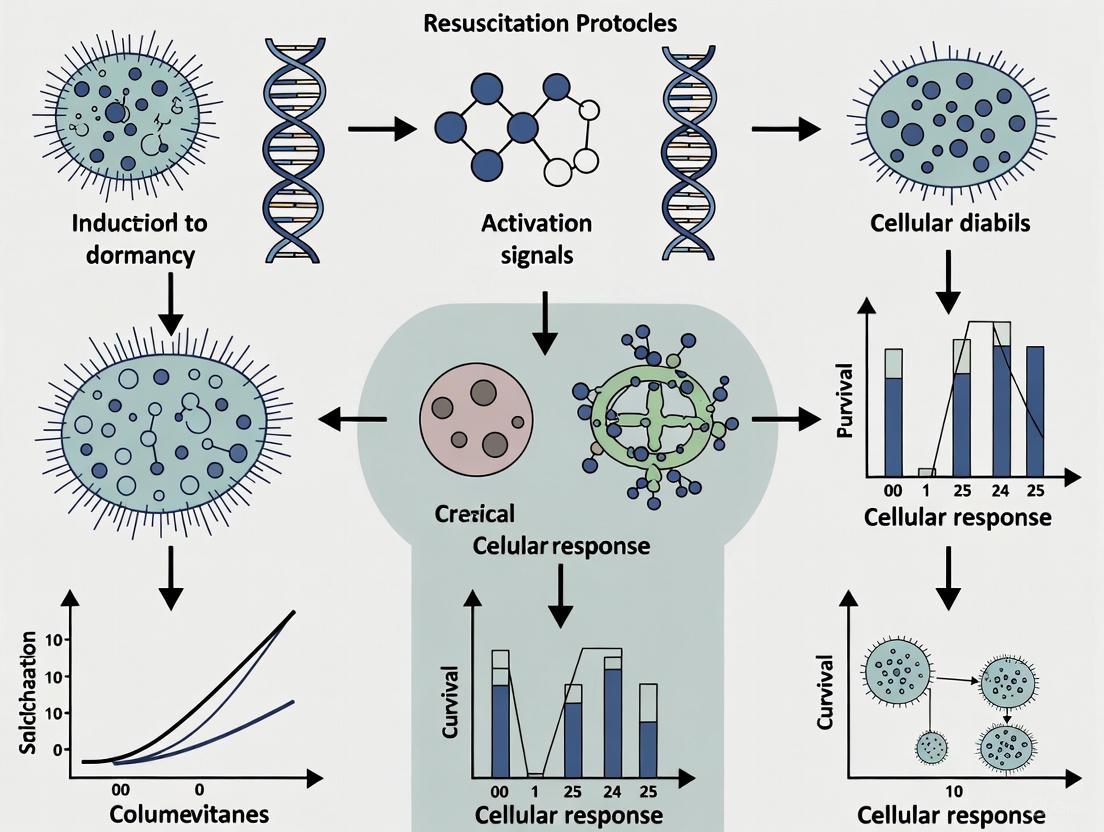
This article provides a comprehensive overview of the mechanisms and therapeutic strategies related to bacterial persister cell resuscitation.
Waking the Foe: Novel Protocols to Resuscitate and Target Dormant Bacterial Persisters
Abstract
This article provides a comprehensive overview of the mechanisms and therapeutic strategies related to bacterial persister cell resuscitation. Aimed at researchers and drug development professionals, it synthesizes foundational knowledge on the metabolic and physiological states of dormant cells, explores advanced methodologies for their detection and study, analyzes current challenges in inducing and controlling resuscitation, and evaluates emerging anti-persister compounds and treatment combinations. The goal is to inform the development of more effective protocols to eradicate persistent bacterial infections by targeting the resuscitation process.
Deconstructing Dormancy: The Metabolic and Physiological State of Bacterial Persisters
Bacterial persisters are a subpopulation of growth-arrested cells characterized by their non-heritable, phenotypic tolerance to conventional antibiotics [1] [2]. These metabolically dormant variants exist within a spectrum of dormancy depths, from shallow persisters that can resuscitate quickly to deep persisters that require extended recovery periods [3] [2]. This heterogeneity poses a significant challenge in treating persistent infections, as standard antibiotics predominantly target actively growing cells and consistently fail against dormant populations [1] [4]. The clinical importance of persisters is well-established in chronic conditions such as cystic fibrosis-related lung infections, medical device-associated infections, and Lyme disease, where they contribute to relapse and treatment failure [1] [3].
The Yin-Yang model provides a valuable framework for understanding persister dynamics, depicting a bacterial population as a heterogeneous continuum of growing (Yang) and non-growing (Yin) cells that can interconvert in response to environmental conditions [2]. Within this model, the persister population (Yin) itself is not uniform but consists of subpopulations with varying metabolic states and resuscitation capabilities [2]. This spectrum of dormancy has critical implications for developing effective therapeutic strategies, as different depths of persistence may require distinct approaches for eradication [3] [2].
Characterizing the Dormancy Spectrum
Metabolic and Physiological Heterogeneity
The depth of bacterial dormancy exists along a continuum, with persisters exhibiting varying metabolic activities and resuscitation timelines. Shallow persisters maintain some basal metabolic activity and can quickly resume growth when favorable conditions return, typically within hours. In contrast, deep persisters enter a state of profound metabolic shutdown and may require days or even weeks to resuscitate [3] [4]. This hierarchy of persistence levels creates significant challenges for treatment, as a therapy effective against one subpopulation may completely miss another [3].
At the molecular level, these differences in dormancy depth correlate with specific physiological states. Deep dormancy involves the nearly complete cessation of translation, transcription, and DNA repair mechanisms. Shallower dormancy states maintain low levels of transcription and translation while reducing production of ribosomal proteins and proteins involved in carbon metabolism and oxidative phosphorylation [4] [2]. Recent research has revealed that tolerant and persistent cells enter different levels of dormancy, with tolerant populations tending toward deeper dormancy states [2].
Table 1: Characteristics of Shallow vs. Deep Persister Cells
| Characteristic | Shallow Persisters | Deep Persisters |
|---|---|---|
| Metabolic Activity | Moderately reduced | Severely reduced or undetectable |
| Resuscitation Time | Hours | Days to weeks |
| Transcriptional Activity | Low but detectable | Nearly absent |
| Translational Activity | Reduced | Minimal to absent |
| Protein Synthesis | Limited ribosomal production | Aggresome formation |
| ATP Levels | Moderately reduced | Severely depleted |
| Therapeutic Vulnerability | More susceptible to metabolic activation strategies | Require membrane-targeting or protein-degrading approaches |
Molecular Mechanisms Governing Dormancy Depth
Multiple interconnected molecular pathways regulate entry into and exit from different dormancy states. The stringent response mediated by (p)ppGpp plays a central role in initiating dormancy by reprogramming cellular metabolism during nutrient starvation and other stresses [4]. This alarmone inhibits transcription and translation while activating stress response genes, effectively coordinating the metabolic slowdown characteristic of persister cells [4].
Toxin-Antitoxin (TA) systems contribute to persistence heterogeneity through their stochastic activation within bacterial populations. In the well-characterized HipAB system, the HipA toxin phosphorylates glutamyl-tRNA synthetase (GltX), leading to amino acid starvation and activation of the stringent response [4] [5]. The threshold of free HipA toxin required to trigger dormancy varies between individual cells, creating a mixture of susceptible and persistent subpopulations [4]. Mutations affecting toxin-antitoxin affinity, such as in the hipA7 mutant, can increase the percentage of persistent cells by altering this threshold [4].
ATP depletion represents a key driver of deep dormancy, leading to the formation of protein aggregates known as aggresomes [4]. These aggregates sequester proteins essential for replication, transcription, and translation, effectively locking cells in a deeply dormant state. Resuscitation from this state requires ATP-dependent disaggregases like ClpB and chaperones like DnaK to disassemble these aggregates and restore protein functionality [4] [3].
Experimental Protocols for Dormancy Spectrum Analysis
Protocol: Metabolic Profiling of Persister Subpopulations
Objective: To characterize the metabolic heterogeneity of persister cells and distinguish shallow from deep dormancy states.
Materials and Reagents:
- Bioluminescent reporter strains (e.g., JE2-lux): For real-time monitoring of bacterial metabolic activity via lux operon requiring NAD(P)H, FMNH2, and ATP [6]
- ATP detection reagents: Luciferase-based assay systems for quantitative ATP measurement
- Flow cytometry equipment: For single-cell analysis with appropriate fluorescent dyes
- Carbon source supplements: Specific nutrients to test resuscitation capabilities
- Antibiotics: Various classes for persister induction and selection
Methodology:
- Induction of Persistence: Culture bacterial populations to late stationary phase (48-72 hours) or treat with sub-inhibitory concentrations of antibiotics (e.g., 0.5× MIC fluoroquinolones) for 2-4 hours to induce persister formation [1] [2].
- Persister Isolation: Treat cultures with high concentrations of bactericidal antibiotics (e.g., 10-100× MIC of fluoroquinolones or aminoglycosides) for 3-5 hours, then wash to remove antibiotics [3] [4].
- Metabolic Activity Assessment:
- Measure bioluminescence in reporter strains as an indicator of energy status [6]
- Quantify intracellular ATP levels using luciferase-based assays
- Analyze membrane potential using fluorescent dyes (e.g., DiOC₂(3))
- Assess membrane integrity with propidium iodide exclusion
- Resuscitation Kinetics: Monitor regrowth in fresh media using both colony-forming unit (CFU) counts and optical density measurements at 600 nm (OD₆₀₀) over 24-72 hours [2].
- Single-Cell Analysis: Use flow cytometry to correlate metabolic activity with resuscitation potential at the single-cell level.
Expected Outcomes: This protocol will identify distinct subpopulations based on metabolic activity and resuscitation timelines, allowing classification along the shallow-to-deep persistence spectrum.
Diagram 1: Dormancy spectrum and resuscitation pathways. Bacterial populations respond heterogeneously to stress, forming persisters with varying depths of dormancy and resuscitation requirements.
Protocol: Single-Cell Analysis of Persister Heterogeneity
Objective: To investigate persister heterogeneity at the single-cell level and identify distinct subpopulations based on protein aggregation and metabolic status.
Materials and Reagents:
- Fluorescent protein tags: For visualization of protein aggregation (e.g., Hsp100-GFP)
- Proteostats: Aggresome detection dyes (e.g., Proteostat aggresome detection kit)
- Tetrazolium salts: XTT or MTT for metabolic activity assessment
- Microfluidic culture devices: For long-term single-cell observation
- Time-lapse microscopy equipment: With environmental control for oxygenation and temperature
Methodology:
- Sample Preparation:
- Label bacterial cultures with aggresome-specific fluorescent dyes (5-10 μM, 30-minute incubation)
- Transform with fluorescent reporter constructs for protein aggregation (e.g., Hsp100-GFP)
- Induce persistence as described in Protocol 3.1
- Single-Cell Sorting:
- Use fluorescence-activated cell sorting (FACS) to isolate subpopulations based on aggregation status
- Sort into 96-well plates containing fresh media for resuscitation monitoring
- Time-Lapse Imaging:
- Load sorted cells into microfluidic culture devices
- Image every 30-60 minutes for 24-72 hours using automated microscopy
- Monitor aggregation status, cell division, and morphological changes
- Data Analysis:
- Quantify aggregation intensity and distribution using image analysis software
- Correlate aggregation status with resuscitation time
- Identify molecular markers specific to different dormancy depths
Expected Outcomes: This protocol will establish direct correlations between protein aggregation states and dormancy depth, providing a classification system for persister subpopulations.
Research Reagent Solutions for Dormancy Studies
Table 2: Essential Research Reagents for Dormancy Spectrum Analysis
| Reagent Category | Specific Examples | Research Application | Key Features |
|---|---|---|---|
| Metabolic Reporters | JE2-lux bioluminescent strain [6] | Real-time metabolic activity monitoring | Reports energy status via lux operon requiring ATP, NAD(P)H |
| ATP Detection Assays | Luciferase-based ATP kits | Quantifying cellular energy charge | Sensitive detection of ATP levels correlating with dormancy depth |
| Membrane Integrity Probes | Propidium iodide, SYTOX Green | Distinguishing live/dead cells based on membrane permeability | Impermeant to intact membranes, fluorescent upon DNA binding |
| Membrane Potential Sensors | DiOC₂(3), JC-1, Rhodamine 123 | Monitoring bacterial energization | Fluorescence changes with membrane potential |
| Protein Aggregation Dyes | Proteostat aggresome detection kit [4] | Identifying deep persisters with protein aggregation | Selective detection of protein aggregates in dormant cells |
| TA System Reporters | HipA-GFP fusions, RelE transcriptional reporters | Monitoring toxin-antitoxin system activation | Visualizes stochastic expression of persistence-inducing toxins |
| Resuscitation Promoters | KL1 compound [6], pyocyanin, nutrient mixes | Reactivating dormant cells for eradication | Modulates host pathways to stimulate bacterial metabolism |
Signaling Pathways in Dormancy Depth Regulation
Diagram 2: Signaling pathways regulating dormancy depth. Environmental stressors trigger cascades leading to varying persistence states, with shallow dormancy involving TA systems and stringent response, while deep dormancy features ATP depletion and protein aggregation.
Therapeutic Implications and Future Directions
The recognition of persister heterogeneity along the shallow-to-deep spectrum necessitates tailored therapeutic approaches. Shallow persisters may be effectively targeted by compounds that disrupt membrane integrity or potentiate conventional antibiotics, as these cells maintain sufficient metabolic activity for certain antibiotic classes to remain effective when combined with adjuvants [1]. Compounds like KL1 that modulate host pathways to stimulate bacterial metabolism show promise against these subpopulations by forcing resuscitation and thereby sensitizing cells to conventional antibiotics [6].
In contrast, deep persisters with extensive protein aggregation and minimal metabolic activity require alternative strategies. Membrane-targeting agents like XF-73 and synthetic cation transporters such as SA-558 demonstrate effectiveness against dormant cells by attacking structural components independent of metabolic state [1]. Similarly, protein degradation enhancers like ADEP4 activate ClpP protease, causing uncontrolled protein breakdown in dormant cells [1]. Pyrazinamide, a key anti-tuberculosis drug, targets deep persisters by disrupting membrane energetics and coenzyme A biosynthesis [1].
Future research should focus on developing combination therapies that simultaneously target multiple points along the persistence spectrum. The ideal therapeutic regimen would include agents that: (1) prevent persister formation through inhibition of stringent response or TA systems; (2) actively kill shallow persisters through metabolic potentiation combined with conventional antibiotics; and (3) eradicate deep persisters via membrane disruption or targeted protein degradation [1] [2]. Such multi-pronged approaches acknowledge the reality of persister heterogeneity and offer the best hope for complete eradication of persistent bacterial populations.
Metabolic shutdown is a hallmark of dormant bacterial cells, a state associated with significant tolerance to antibiotics and a major contributor to persistent, recurrent infections [7]. Understanding the metabolic pathways that are deactivated during dormancy and subsequently reactivated during resuscitation is therefore critical for developing therapies against persistent bacterial populations. 13C isotope tracing has emerged as a powerful technique for investigating these metabolic states, allowing researchers to move beyond static metabolite measurements to dynamic tracking of metabolic flux [8] [9]. This Application Note details how 13C metabolic flux analysis (13C-MFA) can be applied within resuscitation protocols for dormant bacterial cells, providing researchers with standardized methodologies to quantify metabolic reactivation in central carbon pathways.
Key Concepts and Definitions
Table 1: Fundamental Concepts in 13C Isotope Tracing for Metabolic State Analysis
| Concept | Definition | Importance in Dormancy Research |
|---|---|---|
| Metabolic Steady State | A condition where intracellular metabolite levels and metabolic fluxes are constant [8]. | Provides a reference state against which the shutdown in dormant cells can be measured. |
| Isotopic Steady State | The point at which the 13C enrichment in metabolites becomes stable over time [8]. | Essential for simplified interpretation of labeling data; time to reach it reveals pool sizes and flux rates. |
| Mass Isotopomer Distribution (MID) | The relative abundances of different mass isotopologues (e.g., M+0, M+1, M+2) for a given metabolite [8]. | The primary quantitative data used for calculating metabolic fluxes. |
| Isotopomer | Molecules that share the same isotopic composition but differ in the position of the isotope within the molecule [8]. | Provides additional positional labeling information for greater flux resolution. |
| Metabolic Flux | The rate at which metabolites are converted in a metabolic pathway (nmol/10^6 cells/h) [9]. | The ultimate output of 13C-MFA, quantifying pathway activity during resuscitation. |
Table 2: Interpreting 13C Labeling Data in the Context of Bacterial Dormancy and Resuscitation
| Experimental Observation | Potential Metabolic Interpretation | Relevance to Dormancy |
|---|---|---|
| Slow incorporation of 13C label into TCA cycle intermediates | Reduced flux through central carbon metabolism, potentially indicating a shutdown of energy-generating pathways [10]. | Characteristic of a deep dormancy state with low ATP production [7]. |
| Rapid labeling of glycolytic intermediates upon resuscitation | Quick reactivation of core carbon catabolism to generate energy and building blocks [10]. | Marks the initial phase of metabolic awakening. |
| Upregulation of lipid and mycolic acid biosynthesis genes prior to division (e.g., in M. tuberculosis) [10]. | Activation of anabolic pathways for cell wall repair and biogenesis is a prerequisite for cell division. | Suggests a staged resuscitation process where repair precedes replication. |
Experimental Protocols
Protocol 1: Culturing and Generation of Dormant "Non-Culturable" Cells
This protocol is adapted from established models for generating dormant Mycobacterium tuberculosis with a non-culturable (NC) phenotype [10].
Preparation of Starter Culture:
- Inoculate the bacterial strain (e.g., M. tuberculosis H37Rv) from a frozen stock into a standard culture medium (e.g., Sauton medium supplemented with ADC and 0.05% Tween 80).
- Incubate at 37°C with agitation (200 rpm) for 10-14 days until robust growth is achieved [10].
Induction of Dormancy:
- Inoculate the starter culture into a K+-deficient Sauton medium (a key stressor) at a density of approximately 5 × 10^5 cells/mL [10].
- Incubate the culture at 37°C with agitation for 14-15 days. Monitor the culture until the Colony Forming Units (CFU) begin to decrease.
- To eliminate any remaining culturable bacteria and obtain a pure NC population, add rifampicin (5 µg/mL) to the culture [10]. Verify the "zero-CFU" phenotype by plating on solid media.
Cell Harvesting for Tracer Experiments:
- Harvest the dormant NC cells by centrifugation (e.g., 20 min at 5,000 × g).
- Wash the cell pellet twice with a fresh, tracer-free resuscitation medium to remove antibiotics and metabolic waste products [10].
Initiation of Resuscitation and Tracer Addition:
- Resuspend the washed dormant cells in "resuscitation media." This is typically a nutrient-rich standard medium (e.g., Sauton medium with 0.6% glycerol, ADC, and Tween-80) that may be supplemented with a portion (e.g., 50% v/v) of used culture supernatant, which can contain factors promoting resuscitation [10].
- Immediately introduce the chosen 13C-labeled tracer. Common choices for central carbon metabolism include:
- [U-13C]-Glucose: To trace glycolysis, pentose phosphate pathway, and TCA cycle anaplerosis.
- [U-13C]-Glutamate/Glutamine: To focus on TCA cycle and nitrogen metabolism.
- The recommended initial concentration for glucose or glutamine is 2-5 mM, but this should be optimized for the specific bacterial system.
Sampling and Quenching:
- Time Points: Collect samples at multiple time points post-resuscitation to capture dynamic flux changes (e.g., 0 h, 2 h, 6 h, 12 h, 24 h, 48 h). The early time points (first 24 hours) are critical for capturing the initial metabolic response [10].
- Sampling Volume: Rapidly withdraw a culture volume containing ~10-20 million cells (if possible) for metabolite analysis.
- Quenching: Immediately quench metabolism by injecting the sample into a pre-chilled (-40°C) solution of 40:40:20 methanol:acetonitrile:water to freeze metabolic activity instantly [11]. Keep samples on dry ice or at -80°C until extraction.
Protocol 3: Metabolite Extraction and LC-MS Analysis for Isotopomers
Metabolite Extraction:
- Perform three freeze-thaw cycles (liquid nitrogen and a 37°C water bath) to lyse the cells thoroughly.
- Centrifuge the extracts at high speed (e.g., 16,000 × g for 15 min at 4°C) to remove protein and cell debris.
- Transfer the supernatant to a new vial and dry it completely using a centrifugal vacuum concentrator.
- Reconstitute the dried metabolite pellet in a solvent compatible with the subsequent LC-MS analysis (e.g., water or a starting mobile phase) [11].
LC-MS Analysis and Data Processing:
- Chromatography: Utilize multiple LC methods to cover the diverse physicochemical properties of central carbon metabolites.
- Mass Spectrometry: Use a high-resolution mass spectrometer (e.g., Q-TOF or Orbitrap) to resolve the small mass differences between isotopologues.
- Isotopologue Data Extraction: Use specialized software (e.g., Metran, INCA, or MetTracer) to extract the mass isotopomer distributions (MIDs) for each metabolite of interest [9] [12]. Correct the raw MIDs for natural abundance of 13C and other isotopes using established algorithms [8].
Protocol 4: Data Analysis and 13C Metabolic Flux Analysis (13C-MFA)
Quantification of External Rates:
- Measure the cell growth rate during resuscitation by monitoring optical density (OD600) or cell counts.
- Quantify nutrient uptake (e.g., glucose, glutamine) and secretion rates (e.g., lactate, acetate) by analyzing concentration changes in the media over time using the following equation for proliferating cells [9]:
r_i = 1000 · (μ · V · ΔC_i) / ΔN_xwherer_iis the external rate (nmol/10^6 cells/h),μis the growth rate (1/h),Vis culture volume (mL),ΔC_iis metabolite concentration change (mmol/L), andΔN_xis the change in cell number (10^6 cells).
Flux Estimation:
- Use 13C-MFA software (e.g., INCA or Metran) to integrate the measured MIDs and external rates into a stoichiometric metabolic model [9].
- The software will perform a non-linear regression to find the set of intracellular fluxes that best simulates the experimentally observed labeling patterns.
- Assess the goodness of fit and determine confidence intervals for the estimated fluxes.
The Scientist's Toolkit
Table 3: Essential Research Reagent Solutions for 13C Tracer Experiments
| Reagent/Material | Function/Application | Example & Notes |
|---|---|---|
| 13C-Labeled Tracers | Serve as the metabolic probes to track carbon fate. | [U-13C]-Glucose: Traces overall carbon flow. [1,2-13C]-Glucose: Resolves PPP vs. glycolysis. Vendor: Cambridge Isotope Laboratories. |
| Quenching Solution | Instantly halts all metabolic activity to capture a snapshot of the metabolic state. | 40:40:20 Methanol:Acetonitrile:Water (pre-chilled to -40°C) [11]. |
| Isotope Dilution Standards | Enable absolute quantification of metabolite concentrations and correct for MS ionization variability. | U-13C-labeled cellular extract (e.g., from fully labeled S. cerevisiae) spiked into samples immediately upon quenching [11]. |
| Chromatography Columns | Separate metabolites for non-interfered MS detection. | HILIC column (e.g., ZIC-pHILIC) for polar central carbon metabolites [11]. |
| 13C-MFA Software | Computationally converts labeling data into quantitative metabolic fluxes. | INCA (Isotopomer Network Compartmental Analysis) or Metran; both use the EMU framework for efficient flux calculation [9]. |
| Resuscitation Promoter | Aids in the recovery of dormant cells, increasing the signal in tracer experiments. | Spent culture supernatant from a growing culture, added at 50% v/v to the fresh resuscitation medium [10]. |
The Role of Toxin-Antitoxin Systems and the Stringent Response in Entry and Maintenance of Dormancy
Bacterial dormancy is a fundamental survival strategy in which cells enter a reversible state of low metabolic activity to withstand hostile conditions, including antibiotic exposure and nutrient starvation. This state is a primary driver of chronic and recurrent infections, posing a significant challenge in clinical treatment and drug development. Two key bacterial systems governing the entry into and maintenance of dormancy are Toxin-Antitoxin (TA) systems and the Stringent Response. TA systems are genetic modules that produce a stable toxin and a labile antitoxin; under stress, the antitoxin is degraded, allowing the toxin to arrest cell growth [13] [14]. The Stringent Response is a global regulatory network mediated by the alarmone (p)ppGpp, which reprograms gene expression and metabolism in response to nutrient limitation [15] [16]. Within the context of developing resuscitation protocols for dormant bacterial cells, a detailed understanding of these mechanisms is essential. This application note provides a structured overview of their functions, supported by quantitative data, detailed experimental protocols for their study, and visualizations of the core regulatory pathways.
Molecular Mechanisms and Functional Interplay
Toxin-Antitoxin Systems: Guardians of Bacterial Stasis
TA systems are classified into six types (I-VI) based on the nature and mode of action of the antitoxin [13] [14] [17]. The following table summarizes the key characteristics of the primary types.
Table 1: Classification and Mechanisms of Major Toxin-Antitoxin System Types
| Type | Toxin Nature | Antitoxin Nature | Mechanism of Neutralization | Example Systems |
|---|---|---|---|---|
| Type I | Protein (small, hydrophobic) | Non-coding RNA | Antisense RNA binds toxin mRNA, inhibiting translation and promoting its degradation [13]. | hok/sok, tisB/istR-1 [13] [14] |
| Type II | Protein | Protein | Labile protein antitoxin binds directly to and inhibits the stable toxin protein [13] [14]. | ccdAB, mazEF, relBE [13] [14] |
| Type III | Protein (endoribonuclease) | Non-coding RNA | Structured RNA antitoxin binds directly to the toxin protein, occluding its active site [17]. | ToxIN, CptIN [17] |
| Type IV | Protein | Protein | Antitoxin does not bind toxin directly, but instead protects the toxin's cellular target [14]. | - |
| Type V | Protein | Protein (RNase) | Antitoxin is an RNase that specifically cleaves the toxin's mRNA [14]. | - |
The regulation of type II systems often involves conditional cooperativity, where the toxin-antitoxin complex autoregulates its own transcription. The specific complex formed (e.g., antitoxin-only vs. toxin-antitoxin complex) determines the strength of promoter repression, allowing fine-tuned expression in response to cellular stress [13].
TA systems promote dormancy through the toxin's activity. When activated, toxins target essential cellular processes. For example, mRNA degradation is a common mechanism, as seen with the MazF and RelE toxins of type II systems [14]. This halts protein synthesis, leading to growth arrest and a dormant state. This bacteriostatic activity is crucial for the formation of persister cells—a sub-population of dormant, antibiotic-tolerant bacteria [18] [3].
The Stringent Response: A Metabolic Gatekeeper
The Stringent Response is a critical adaptive mechanism triggered by various nutrient stresses, including amino acid, carbon, and fatty acid starvation. Its central signaling molecules are guanosine tetraphosphate (ppGpp) and guanosine pentaphosphate (pppGpp), collectively known as (p)ppGpp or "alarmone" [15] [16].
The synthesis and degradation of (p)ppGpp are controlled by enzymes of the RelA/SpoT homolog (RSH) family. In E. coli, RelA is primarily activated by uncharged tRNAs during amino acid starvation, while SpoT synthesizes (p)ppGpp in response to other stresses like carbon limitation and also possesses (p)ppGpp hydrolase activity [16]. The accumulation of (p)ppGpp profoundly alters cellular physiology by binding to RNA polymerase, often with the cofactor DksA. This interaction leads to:
- Downregulation of genes for translation and growth, such as those for ribosomal RNA and proteins.
- Upregulation of stress response genes and biosynthetic pathways for amino acids and other metabolites [15] [16].
This large-scale reprogramming, termed proteome resource re-allocation, shifts the cell's investment from growth machinery to stress survival systems, directly promoting a dormant state. Quantitative proteomics has confirmed that increased (p)ppGpp levels lead to a decrease in ribosome synthesis and an increase in amino acid biosynthesis [15].
Integrated Pathway to Dormancy
TA systems and the Stringent Response are functionally interconnected. (p)ppGpp can directly stimulate the transcription of certain TA operons [18]. Furthermore, some TA toxins can indirectly induce the Stringent Response; for instance, the HipA toxin phosphorylates glutamyl-tRNA synthetase, leading to amino acid starvation and subsequent (p)ppGpp accumulation [18] [3]. This creates a reinforcing loop that drives and stabilizes the dormant state.
Diagram 1: Integrated pathway to dormancy
Quantitative Data and Experimental Evidence
The roles of TA systems and the Stringent Response have been validated through key experiments quantifying their impact on bacterial growth and survival under stress.
Table 2: Key Quantitative Findings on Dormancy Mechanisms
| Experimental System / Parameter | Key Finding | Biological Implication |
|---|---|---|
| Growth lag after Amino Acid Downshift [15] | Wild-type E. coli: ~50 min; relA-deficient strain: ~6 hours |
The Stringent Response is crucial for timely adaptation to nutrient starvation, drastically reducing recovery time. |
| Proteome Resource Re-allocation [15] | (p)ppGpp overproduction increases amino acid biosynthesis proteins and decreases ribosomal proteins. | The Stringent Response redirects the proteome from growth to maintenance and biosynthesis, promoting dormancy. |
| Persistence & TA Systems [18] [3] | A small subpopulation (<0.1%) survives antibiotic treatment (biphasic killing) without a change in MIC. | TA system-mediated heterogeneity generates dormant, antibiotic-tolerant persister cells. |
relA-deficient Strain during Carbon Downshift [15] |
Disrupted transcription-translation coordination, impairing expression of catabolic operons. | (p)ppGpp ensures metabolic flexibility by coordinating gene expression for utilizing alternative carbon sources. |
Detailed Experimental Protocols
Protocol 1: Inducing and Quantifying Dormancy via Nutrient Downshift
This protocol is used to investigate the role of the Stringent Response in adaptation to nutrient starvation [15].
Application Notes: This method is ideal for studying the initial entry into dormancy and the metabolic remodeling orchestrated by (p)ppGpp.
Workflow Diagram:
Materials:
- Bacterial Strains: Wild-type and isogenic
relAknockout mutant (e.g., E. coli K-12 NCM3722). - Media:
- Pre-shift medium: Glucose Casamino Acids (cAA) medium.
- Post-shift medium: Glucose minimal medium (lacking amino acids).
- Equipment: Sterile vacuum filtration system (0.22 µm pore size), spectrophotometer (OD600), shaking incubator.
Procedure:
- Pre-culture: Inoculate bacteria from a single colony into 5 mL of pre-shift medium and grow overnight (12-16 hrs) at 37°C with shaking.
- Main Culture: Dilute the pre-culture 1:100 into a fresh flask of pre-shift medium.
- Pre-shift Growth: Incubate at 37°C with shaking until the culture reaches mid-exponential phase (OD600 ≈ 0.3-0.5).
- Nutrient Downshift (T0): a. Rapidly harvest a known volume of culture via vacuum filtration. b. Immediately wash the cells on the filter with pre-warmed post-shift medium. c. Resuspend the filter-captured cells in a known volume of fresh, pre-warmed post-shift medium to initiate the post-shift phase.
- Growth Monitoring: Transfer the resuspended culture to a flask and continue incubation with shaking. Measure OD600 every 15-30 minutes for 6-12 hours.
- Data Analysis: Plot OD600 versus time. The lag time is defined as the period from T0 until the OD600 demonstrates the first doubling.
Additional Application: For proteomic analysis, collect cell samples by centrifugation immediately before (T0) and at specific time points after the downshift. Process these samples for quantitative mass spectrometry to quantify changes in protein abundance, particularly in ribosomal and amino acid biosynthetic proteins [15].
Protocol 2: Assessing TA System Function via Toxin Overexpression
This protocol tests the function of a specific TA system by artificially inducing toxin expression and observing growth arrest [13].
Application Notes: This is a direct method to validate a TA system's functionality and its capacity to induce dormancy.
Materials:
- Plasmids: Plasmid with the toxin gene under an inducible promoter (e.g., pBAD with arabinose induction or pET with IPTG induction). Use an empty vector as a control.
- Strains: Suitable bacterial expression strain (e.g., E. coli BL21).
- Media: LB broth supplemented with the appropriate antibiotic for plasmid maintenance.
- Inducer: 1M Isopropyl β-d-1-thiogalactopyranoside (IPTG) or 20% Arabinose solution.
Procedure:
- Transformation: Transform the toxin-expression plasmid and the empty control vector into the expression strain.
- Pre-culture: Grow overnight cultures of both strains in LB with antibiotic.
- Main Culture: Dilute overnight cultures 1:100 into fresh, pre-warmed LB with antibiotic.
- Induction of Toxicity: Grow cultures to mid-exponential phase (OD600 ≈ 0.4-0.5). Add the inducer (e.g., 0.1-1 mM IPTG) to the experimental culture. Add an equal volume of sterile water to the control culture.
- Growth Monitoring: Continue incubation and monitor OD600 every 30 minutes for at least 4-6 hours.
- Viability Assay (Plating): Just before induction and at 1-hour intervals after induction, serially dilute cultures and spot them onto LB agar plates without inducer. Count colonies after overnight incubation at 37°C to determine CFU/mL.
Expected Results: Successful toxin induction will cause a rapid plateau or decrease in OD600 in the experimental culture, while the control continues growing. The viability assay (plating without inducer) should show stable or slowly declining CFU/mL, indicating bacteriostatic growth arrest (dormancy) rather than cell death.
The Scientist's Toolkit: Essential Research Reagents
Table 3: Key Reagents for Investigating Bacterial Dormancy
| Reagent / Tool | Function / Mechanism | Example Use Case |
|---|---|---|
relA Knockout Mutant |
Deficient in (p)ppGpp synthesis during amino acid starvation; used to delineate Stringent Response-specific phenotypes [15] [16]. | Comparing growth lag during nutrient downshift against wild-type [15]. |
| Constitutively Active RelA* (e.g., pALS13 plasmid) | Overproduces (p)ppGpp upon induction, mimicking constant stringent response [15]. | Studying the effects of chronically elevated (p)ppGpp on proteome allocation and antibiotic tolerance. |
| Inducible Toxin Expression Plasmid | Allows controlled, high-level expression of a TA toxin to directly induce growth arrest [13]. | Validating the function of a putative TA system and studying its specific cellular targets. |
| MS-Compatible Fixative (e.g., 8M Urea) | Denatures and stabilizes the proteome for accurate quantification by mass spectrometry [15]. | Preparing cell pellets for quantitative proteomic analysis of dormant vs. growing cells. |
| Serine Hydroxamate (SHX) | An inhibitor of seryl-tRNA synthetase; artificially induces amino acid starvation and the Stringent Response. | A chemical tool to synchronously trigger (p)ppGpp accumulation in a population. |
Visualization of the Stringent Response Mechanism
Diagram 2: The Stringent Response pathway
Bacterial dormancy, exemplified by persister cells and the viable but nonculturable (VBNC) state, is a critical survival strategy that contributes significantly to antibiotic treatment failure and recurrent infections. Unlike genetic resistance, these phenotypes represent non-heritable, transient tolerance to lethal antibiotics, primarily by entering a non-growing, dormant state [1] [19]. Understanding the molecular drivers of this state is paramount for developing novel therapeutic strategies. Mounting evidence now identifies progressive protein aggregation and the consequent cellular energy (ATP) depletion as key interconnected processes that induce, regulate, and deepen bacterial dormancy [20] [21] [22]. This Application Note delineates the role of these drivers and provides detailed protocols for researchers investigating resuscitation of dormant bacterial cells.
Key Findings: Linking Aggregation and Energy to Dormancy
Protein Aggregation Directly Drives Dormancy Development
Protein aggregation is not merely a symptom but a causal factor in dormancy development. During nutrient starvation, proteins progressively assemble into aggregates, which sequester essential proteins involved in central metabolism and energy production [20]. This sequestration leads to a functional shutdown of vital pathways.
- Aggregate Maturation is a Gradual Process: Aggregates undergo a liquid-to-solid phase transition over time [20]. Early-stage aggregates are liquid-like condensates detectable by the chaperone IbpA (IbpA-msfGFP foci), while late-stage aggregates mature into dense, phase-bright (Ph) foci [20] [21].
- Aggregate Structure Dictates Resuscitation Potential: The physical state of the aggregate determines the cell's ability to exit dormancy. The solidification of aggregates over time impedes their dissolution, thereby preventing cellular regrowth and marking the transition from the revivable persister state to the more deeply dormant VBNC state [20].
Energy Depletion is a Consequence and a Regulator
The sequestration of proteins involved in energy production directly leads to ATP depletion, a hallmark of dormant cells [20] [21] [22].
- ATP Levels Correlate with Dormancy Depth: Persister cells, which are shallowly dormant, have low but detectable ATP levels. VBNC cells, representing a deeper dormancy, exhibit significantly lower ATP levels [21] [22].
- ATP is Crucial for Resuscitation: Resuscitation from the VBNC state requires energy. Studies show that VBNC cells with higher residual ATP levels resuscitate more efficiently. This ATP is consumed during the lag phase to reactivate critical metabolic pathways, such as the synthesis of NAD+, to restore redox balance and metabolic activity [22].
Table 1: Characteristics of Dormant Bacterial States in Relation to Protein Aggregation and ATP
| Dormant State | Protein Aggregate Stage | Typical ATP Level | Resuscitation Potential |
|---|---|---|---|
| Persister | Early-stage, liquid-like (IbpA-positive) [20] [21] | Low [21] | High; can resume growth upon stress removal [20] [19] |
| VBNC | Late-stage, solid (Phase-bright foci) [20] [21] | Very Low/Depleted [21] [22] | Low; requires specific resuscitation signals [19] [22] |
Table 2: Key Proteins and Molecules in Dormancy and Resuscitation
| Molecule | Function | Role in Dormancy/Resuscitation |
|---|---|---|
| IbpA | Small chaperone [21] | Biomarker for early-stage protein aggregates [20] [21] |
| DnaK & ClpB | Chaperones [22] | Form a bichaperone system for disaggregating proteins; critical for resuscitation [22] |
| ObgE | GTPase [20] [21] | Overexpression accelerates protein aggregation and dormancy development [20] [21] |
| ATP | Cellular energy currency [22] | Depletion induces dormancy; residual level determines resuscitation efficiency [20] [22] |
| RfaL | O-antigen ligase [22] | Mutation increases ATP levels in VBNC cells, promoting resuscitation [22] |
The following diagram illustrates the proposed pathway through which energy depletion and protein aggregation drive the transition into and out of dormant states.
Application Notes & Experimental Protocols
Protocol 1: Detecting and Quantifying Protein Aggregates During Dormancy
This protocol allows for the monitoring of protein aggregation dynamics in E. coli, distinguishing between early and late-stage aggregates [20] [21].
Key Research Reagent Solutions:
- IbpA-msfGFP Biosensor: A functional fluorescent fusion protein expressed in target bacteria to label early-stage aggregates [21]. It does not trigger aggregation itself and provides high-sensitivity detection.
- Luria-Bertani (LB) Medium: Standard nutrient-rich medium for bacterial culture. For solid media, add 1.5% agar [23] [22].
- Antibiotics: Use as required for plasmid selection (e.g., Ampicillin at 100 µg/mL) [23].
Methodology:
- Strain Preparation: Construct an E. coli strain expressing the ibpA-msfGFP fusion gene, ideally integrated into the chromosome or on a plasmid with controlled, low expression [21] [24].
- Culture and Stress Induction:
- Inoculate the reporter strain into liquid LB with appropriate antibiotics and grow overnight in a shaking incubator at 37°C [23].
- To induce dormancy and aggregation, allow the culture to transition into stationary phase by continuing the incubation for up to 72 hours. Sample at regular intervals (e.g., every 4-8 hours) [21].
- Microscopy and Quantification:
- For each time point, take a culture sample and immobilize on an agarose pad for live-cell imaging.
- Dual-Channel Imaging:
- Fluorescence Channel: Image msfGFP fluorescence to identify all aggregates (IbpA-positive).
- Phase-Contrast Channel: Image the same field to identify dense, phase-bright foci (Ph aggregates).
- Analysis: Using image analysis software (e.g., ImageJ), count the percentage of cells in the population containing at least one IbpA-positive focus and/or one phase-bright focus. A cell is considered to have a late-stage aggregate only if a phase-bright focus co-localizes with IbpA-msfGFP fluorescence [20] [21].
Protocol 2: Measuring ATP Levels in Dormant and Resuscitating Cells
This protocol quantifies intracellular ATP, correlating energy status with dormancy depth and resuscitation potential [22].
Methodology:
- Generation of VBNC Cells:
- Grow E. coli O157:H7 to exponential phase (OD600 ~0.8) in LB broth [22].
- Induce the VBNC state using a High-Pressure Carbon Dioxide (HPCD) system (e.g., 5 MPa for 40 min at 25°C) or other stressors like acidic shock (pH 3.0 for 5 h) [22].
- Confirm the VBNC state by plate counting (0 CFU on LB agar) and staining with a viability dye like SYTOX green (VBNC cells remain unstained) [21] [22].
- ATP Extraction and Measurement:
- Centrifuge bacterial samples (e.g., 1 mL) from pre-stress, VBNC, and resuscitating cultures.
- Lyse the cell pellet using a commercial ATP extraction reagent (e.g., BacTiter-Glo or similar based on luciferase activity).
- Measure ATP levels using a luminescence plate reader, correlating luminescent intensity with ATP concentration against a standard curve. Normalize values to total protein content or cell count [22].
- Correlation with Resuscitation:
- To resuscitate VBNC cells, pellet the HPCD-treated cells, resuspend in fresh LB medium, and incubate at 37°C in a microplate reader, monitoring OD600 every 15 min to generate a resuscitation curve [22].
- Compare the initial ATP levels of different VBNC populations (e.g., wild-type vs. ΔrfaL mutant) with their respective lag phases before regrowth. Higher initial ATP correlates with a shorter lag phase and more efficient resuscitation [22].
Protocol 3: Assessing the Role of Chaperones in Protein Disaggregation
This protocol investigates the role of the DnaK-ClpB bichaperone system in resolving aggregates to facilitate resuscitation [22].
Methodology:
- Genetic Manipulation: Create knockout or knockdown mutants of dnaK or clpB in the aggregation-reporter strain (from Protocol 1).
- Aggregation/Disaggregation Assay:
- Induce protein aggregation in both wild-type and mutant strains by starvation.
- Induce resuscitation by replenishing fresh, nutrient-rich medium.
- Sample cells at intervals during the resuscitation process.
- Analysis:
- Microscopy: Quantify the percentage of cells with IbpA-msfGFP and phase-bright aggregates over time post-resuscitation. Mutants with impaired chaperone function will show delayed or absent aggregate clearance [20] [21].
- Viability Assessment: Compare the resuscitation efficiency (CFU count after resuscitation) between wild-type and chaperone-deficient mutants. Impaired disaggregation will result in significantly lower CFU recovery [22].
The Scientist's Toolkit
Table 3: Essential Research Reagents and Materials
| Item | Function/Application | Example/Specification |
|---|---|---|
| IbpA-msfGFP Fusion | Biosensor for labeling early-stage protein aggregates in live cells [20] [21] | Functional fusion protein expressed from plasmid or chromosome [21] |
| LB Broth/Agar | Standard culture medium for growing E. coli [23] [22] | 10 g Tryptone, 5 g Yeast Extract, 10 g NaCl per liter; for agar, add 15 g/L [23] |
| ATP Assay Kit | Quantitative measurement of intracellular ATP levels [22] | Luciferase-based luminescent assay (e.g., BacTiter-Glo) |
| SYTOX Green Stain | Membrane-impermeable dye to distinguish viable (unstained) from dead (stained) cells [21] | Used in flow cytometry or fluorescence microscopy for viability counts [21] |
| Microplate Reader | High-throughput monitoring of bacterial growth (OD600) and bioluminescence/ATP assays [22] | Instrument capable of maintaining 37°C and taking periodic measurements |
| Anaerobic Chamber/HPCD System | For applying controlled, reproducible stress to induce the VBNC state [22] | Batch HPCD system at 5 MPa, 25°C for 40 min for E. coli O157:H7 [22] |
| HaloTag System | Self-labeling tag for low-density labeling of proteins for single-molecule tracking [24] | POI-HaloTag fusion expressed from chromosome; labeled with fluorescent ligand [24] |
Bacterial persistence presents a significant challenge in the treatment of chronic and recurrent infections. This phenomenon is characterized by a small subpopulation of genetically susceptible cells that enter a transient, dormant state, enabling them to survive antibiotic exposure and subsequently repopulate once treatment ceases [3] [25]. The heterogeneity within persister populations is now recognized as a critical factor influencing treatment outcomes and resuscitation dynamics. Research has demonstrated that persisters are not a uniform group but rather exist in a continuum of metabolic states with varying depths of dormancy, often categorized as "shallow" or "deep" persisters [3] [26]. This metabolic diversity directly impacts their resuscitation behavior and susceptibility to eradication strategies.
The classical classification system divides persisters into two main types based on their formation mechanisms. Type I persisters are triggered by environmental stresses such as nutrient starvation, stationary phase conditions, or other external factors, while Type II persisters are stochastically generated throughout the exponential growth phase without requiring external triggers [3] [27]. A potential third category, Type III or "specialized persisters," has also been described, exhibiting persistence mechanisms specific to particular antibiotics without necessarily being slow-growing prior to antibiotic exposure [27]. Understanding the distinct characteristics and resuscitation behaviors of these persister types is essential for developing effective therapeutic strategies against persistent infections.
Comparative Analysis of Persister Types
Characteristics and Formation Mechanisms
The formation of Type I and Type II persisters follows distinct mechanistic pathways, resulting in populations with different physiological properties and resuscitation dynamics. Type I persisters emerge in response to environmental triggers such as nutrient starvation, oxidative stress, or entry into stationary phase [3] [27]. These cells are typically pre-existing, non-growing cells generated during stressful conditions, following a "bet-hedging" strategy that maximizes population survival when unfavorable conditions arise [27]. In contrast, Type II persisters are spontaneously generated during active growth through stochastic fluctuations in gene expression and cellular components, resulting in a subpopulation that grows continuously but at significantly slower rates than normal cells [3] [27].
Recent single-cell analyses have revealed that this classical dichotomy may not fully capture the complexity of persister heterogeneity. Studies tracking over one million individual E. coli cells found that when exponentially growing populations were treated with ampicillin or ciprofloxacin, most persisters were actually growing before antibiotic treatment, exhibiting heterogeneous survival dynamics including continuous growth with L-form-like morphologies, responsive growth arrest, or post-exposure filamentation [28]. This challenges the simplistic view that all persisters are pre-existing dormant cells and highlights the spectrum of physiological states that can lead to antibiotic tolerance.
Table 1: Comparative Characteristics of Type I and Type II Persister Cells
| Characteristic | Type I Persisters | Type II Persisters |
|---|---|---|
| Formation trigger | Environmental stress (e.g., starvation, stationary phase) | Stochastic generation during growth |
| Growth status before antibiotic exposure | Non-growing | Slow-growing |
| Metabolic state | Dormant, metabolically quiescent | Reduced metabolic activity |
| Prevalence in population | Increases during stationary phase | Consistent low frequency during exponential phase |
| Resuscitation dynamics | Dependent on stress removal and environmental conditions | More predictable resuscitation |
| Key regulatory mechanisms | Stringent response, toxin-antitoxin systems | Stochastic fluctuations in cellular components |
Metabolic Heterogeneity in Persister Populations
Metabolic diversity represents a fundamental aspect of persister heterogeneity, with significant implications for their survival and resuscitation capabilities. Stable isotope labeling studies using 13C-glucose and 13C-acetate have demonstrated major differences in metabolic activities between normal cells and persister cells induced by carbonyl cyanide m-chlorophenyl hydrazone (CCCP) [29]. Compared to normal cells, persister cells exhibit substantially reduced metabolic activity, with peripheral pathways including parts of the central carbon metabolism, pentose phosphate pathway, and tricarboxylic acid (TCA) cycle showing delayed labeling dynamics [29].
The metabolic heterogeneity among persisters is influenced by both their type and environmental conditions. Under glucose conditions, persister cells exhibited generalized but reduced labeling in proteinogenic amino acids, indicating a uniform slowdown in protein synthesis. However, under acetate conditions, persister cells showed a more substantial metabolic shutdown, with markedly reduced labeling across nearly all pathway intermediates and amino acids [29]. This substrate-dependent metabolic flexibility enables persisters to adapt to varying nutrient conditions in their environment, contributing to their survival under stress.
The depth of metabolic dormancy varies considerably among persister cells, creating a continuum from "shallow" to "deep" persisters [3] [26]. This metabolic gradient directly influences resuscitation rates, with shallow persisters waking up and becoming susceptible to antibiotics much earlier than deep persisters [26]. In extreme cases, deeply dormant persisters may transition into a viable but non-culturable (VBNC) state, where they remain metabolically active but cannot be cultured on standard media [3] [26]. The removal of protein aggregates by molecular chaperones DnaK-ClpB has been identified as a prerequisite for resuscitation from deep dormancy, highlighting the molecular mechanisms underlying metabolic heterogeneity in persister populations [26].
Table 2: Metabolic Parameters in Normal and Persister Cells
| Metabolic Parameter | Normal Cells | Persister Cells |
|---|---|---|
| Central carbon metabolism activity | High | Significantly reduced |
| TCA cycle activity | High | Delayed/diminished |
| Pentose phosphate pathway activity | High | Delayed/diminished |
| Protein synthesis rate | High | Uniformly reduced |
| ATP levels | High | Depleted |
| Metabolic flexibility | Adaptive to carbon sources | Limited, substrate-dependent |
Experimental Protocols for Persister Analysis
Protocol 1: Metabolic Tracing in Persister Cells Using Stable Isotopes
Principle: This protocol utilizes 13C-labeled carbon sources to trace functional metabolic pathways in persister cells, providing direct measurements of metabolic fluxes rather than indirect inferences from transcriptomic or proteomic data [29].
Materials:
- E. coli BW25113 or target bacterial strain
- M9 minimal medium
- 13C-labeled substrates: 1,2-13C2 glucose and 2-13C sodium acetate
- Carbonyl cyanide m-chlorophenyl hydrazone (CCCP) for persister induction
- LC-MS and GC-MS systems for analysis
- Quenching solution: 80:20 methanol-water
- Hydrolysis solution: 6 N HCl
Procedure:
- Culture E. coli BW25113 in M9 medium containing 2 g/L glucose overnight.
- Sub-culture in fresh M9 medium with a starting OD600 of 0.05 and incubate at 37°C with shaking at 200 rpm.
- When the culture reaches OD600 of 0.5, expose cells to 100 μg/mL of CCCP for 15 minutes at 37°C with shaking to induce persister formation.
- Collect cells by centrifugation at 13,000 rpm for 3 minutes at room temperature and wash three times with M9 medium without carbon source.
- Resuspend control and CCCP-induced persister cells to OD600 of 5 in 10 mL of M9 medium.
- Immediately add 2 g/L of 1,2-13C2 glucose or 2-13C sodium acetate to initiate labeling.
- Incubate at 37°C with shaking at 200 rpm and collect samples at specific timepoints (0, 20 seconds, 5 minutes, 30 minutes, and 2 hours).
- Rapidly cool samples using liquid nitrogen to stop metabolic activities within seconds.
- Centrifuge quenched samples at 4°C and 5,000 × g for 3 minutes.
- Store cell pellets at -80°C until analysis.
- For metabolite analysis, lyophilize cell pellets and add 0.5 mL extraction solution (80:20 methanol-water).
- Incubate at -20°C for 1 hour, then centrifuge at 10,000 × g for 10 minutes at 0°C.
- Filter supernatant through 0.2 µm filter and analyze using LC-MS system.
- For proteinogenic amino acid analysis, treat remaining cell pellets with 1.5 mL 6 N HCl at 100°C for 18 hours to hydrolyze proteins.
- Analyze hydrolyzed amino acids using the TBDMS method with GC-MS.
Applications: This protocol enables precise quantification of metabolic fluxes in persister cells, revealing pathway-specific alterations in central carbon metabolism under different conditions. It is particularly valuable for identifying metabolic vulnerabilities that can be targeted to eradicate persistent cells [29].
Principle: This approach integrates flow cytometry, fluorescent protein expression systems, and antibiotic-mediated cell lysing to monitor persister resuscitation at the single-cell level, allowing simultaneous quantification of persister, VBNC, and dead cell subpopulations [30].
Materials:
- E. coli strain with chromosomally integrated IPTG-inducible mCherry expression cassette
- Ampicillin for selective lysis of growing cells
- LB broth medium
- IPTG inducer
- Flow cytometer with appropriate filters for mCherry detection
- Phosphate-buffered saline (PBS) for washing steps
Procedure:
- Induce mCherry expression in overnight pre-culture by adding IPTG.
- Inoculate mCherry-positive cells into fresh medium without inducer to monitor protein dilution through division.
- Treat mid-exponential-phase cells (OD600 = 0.25) with ampicillin to lyse growing cells while leaving persisters intact.
- Continue antibiotic treatment for 3 hours to ensure complete lysis of antibiotic-sensitive cells.
- Wash cells to remove antibiotic and IPTG, then transfer to fresh LB broth to stimulate persister resuscitation.
- Monitor resuscitating cells by tracking single-cell mCherry levels using flow cytometry at regular intervals.
- Identify resuscitating cells by decreasing mCherry fluorescence due to protein dilution through cell division.
- Distinguish VBNC cells by their constant high fluorescence due to lack of division.
- Calculate doubling time of resuscitating persisters from fluorescence decay kinetics.
- Estimate initial number of resuscitating persisters using exponential growth equations based on flow cytometry counts.
Applications: This protocol enables real-time monitoring of persister resuscitation dynamics, quantification of different subpopulations, and analysis of heterogeneity in wake-up times. Studies using this approach have revealed that ampicillin persisters typically begin resuscitating within 1 hour after transfer to fresh media, with doubling times similar to normal cells (~23 minutes) [30].
Visualization of Experimental Workflows and Signaling Pathways
Metabolic Tracing Workflow for Persister Characterization
Diagram 1: Metabolic Tracing Workflow for Persister Characterization
Diagram 2: Single-Cell Resuscitation Monitoring Workflow
Diagram 3: Molecular Mechanisms of Persister Formation and Resuscitation
The Scientist's Toolkit: Essential Research Reagents
Table 3: Key Research Reagents for Persister Studies
| Reagent/Category | Specific Examples | Function/Application |
|---|---|---|
| Persister Inducers | CCCP, Arsenate, Nalidixic acid | Induce persister formation by disrupting energy metabolism or causing DNA damage |
| Isotopic Tracers | 1,2-13C2 glucose, 2-13C sodium acetate | Trace metabolic fluxes in persister cells |
| Antibiotics for Selection | Ampicillin, Ciprofloxacin, Ofloxacin | Selectively eliminate growing cells while sparing persisters |
| Fluorescent Proteins/Reporters | mCherry, GFP, RpoS-mCherry fusions | Track cell division and resuscitation at single-cell level |
| Analytical Instruments | LC-MS, GC-MS, Flow cytometer | Quantify metabolites, analyze proteinogenic amino acids, monitor cell populations |
| Metabolic Inhibitors | CCCP, Arsenate, Rifampicin | Modulate metabolic activity and persister formation |
| Specialized Growth Media | M9 minimal medium, LB broth | Support bacterial growth under controlled conditions |
| Microfluidic Systems | Membrane-covered microchamber arrays | Enable single-cell analysis under controlled environmental conditions |
The heterogeneity in persister populations, particularly the distinctions between Type I and Type II persisters and their metabolic diversity, represents a critical frontier in understanding bacterial persistence and developing effective eradication strategies. The experimental approaches outlined here—from metabolic tracing to single-cell resuscitation monitoring—provide powerful tools for deciphering the complex physiology of these recalcitrant cells. The integration of these methodologies with emerging technologies such as microfluidics and high-resolution metabolomics will further enhance our ability to characterize persister heterogeneity and identify novel therapeutic targets. As research in this field advances, the development of strategies that account for the diverse nature of persister populations will be essential for overcoming the challenges posed by chronic and recurrent bacterial infections.
Tools and Techniques: Probing Persister Resuscitation Dynamics in the Lab
Single-cell time-lapse fluorescence microscopy has revolutionized the study of dynamic biological processes, enabling researchers to investigate cellular events with high molecular specificity, spatial resolution, and temporal sampling in living cells [31]. This technology is particularly valuable for studying heterogeneous processes such as the resuscitation of dormant bacterial cells, where population-averaging assays can mask critical single-cell behaviors [31] [32]. The ability to track individual cells over time provides unique mechanistic insights into resuscitation kinetics that cannot be resolved using traditional bulk assays [31]. This Application Note details the methodology for applying single-cell time-lapse microscopy to investigate the resuscitation kinetics of dormant bacterial cells, with particular emphasis on experimental protocols, quantitative analysis, and visualization techniques relevant to researchers studying bacterial persistence and spore revival.
The fundamental advantage of this approach lies in its capacity to overcome the limitations of conventional techniques such as western blots, flow cytometry, and PCR, which lack either spatial resolution, temporal sampling, or the ability to sequentially sample the same cell over time [31]. By employing genetically encoded fluorescent proteins and computational image analysis, researchers can now monitor the resuscitation of individual bacterial cells at effectively arbitrary resolution, capturing critical transitional phases that define the exit from dormancy [31] [32].
Revealing the Ripening Period in Spore Revival
Single-cell time-lapse microscopy has been instrumental in identifying and characterizing a distinct morphological phase during bacterial spore revival called the "ripening period" [32]. This transitional phase occurs between the loss of phase-brightness (germination) and the beginning of cell elongation (outgrowth), during which no morphological changes are evident but critical molecular reorganization occurs [32]. The discovery of this period highlights the power of single-cell analysis, as this phase would be impossible to detect using population-averaged measurements.
The duration of the ripening period varies according to the spore's molecular content, which is influenced by spore age and incubation temperature [32]. Research on Bacillus subtilis spores has demonstrated that the length of the ripening period correlates strongly with initial spore rRNA content and the kinetics of rRNA accumulation upon exiting dormancy [32]. Additionally, the synthesis of ribosomal proteins and degradation of spore-specific proteins during this period are closely tied to its duration, suggesting this phase is crucial for molecular preparation toward elongation and cell division [32].
Table 1: Key Events in Bacterial Spore Revival Captured via Single-Cell Time-Lapse Microscopy
| Revival Stage | Morphological Features | Key Molecular Events | Typical Duration |
|---|---|---|---|
| Dormant Spore | Phase-bright appearance | High levels of spore-specific proteins (Ssp), low metabolic activity | Variable (days-years) |
| Germination | Loss of phase-brightness | Spore rehydration, cortex hydrolysis, coat disassembly | Minutes |
| Ripening Period | No morphological changes | rRNA accumulation, ribosomal protein synthesis, SspA degradation | Variable (minutes-hours) |
| Outgrowth | Cell elongation | Macromolecular synthesis, metabolic activation | Hours |
| Cell Division | First vegetative division | DNA replication, septum formation | Hours |
Beyond spore-forming bacteria, single-cell time-lapse microscopy has proven invaluable for studying persister cells – non-growing or slow-growing bacterial subpopulations that survive antibiotic exposure and other stresses [3]. These cells can resume growth after stress removal and contribute significantly to chronic and relapsing infections [3]. The technology enables researchers to track the heterogeneous resuscitation kinetics of persister cells at single-cell resolution, revealing substantial cell-to-cell variability in resuscitation timing and success rates.
Persisters exhibit metabolic diversity, with variations in persistence levels ranging from "shallow" to "deep" persistence states [3]. Single-cell analysis has revealed that this heterogeneity extends to resuscitation kinetics, with individual cells displaying different lag times before resuming growth after antibiotic removal. Understanding these patterns is clinically relevant, as persisters are implicated in numerous persistent infections including tuberculosis, recurrent urinary tract infections, and biofilm-associated infections [3].
Experimental Protocols
Sample Preparation and Imaging
A. Bacterial Strain and Spore Preparation
- Induce sporulation in Bacillus subtilis strain PY79 (or other relevant strains) in DSM medium for 24 hours at 37°C [32].
- Transfer spores to appropriate temperatures for aging (e.g., 4°C, 37°C, or 50°C) for varying durations (days 1, 2, and 6) to study the effect of spore age and storage conditions on resuscitation kinetics [32].
- Purify spores using Histodenz density gradients according to established protocols [32].
B. Microfluidic Device Preparation
- Use the "mother machine" microfluidic device or similar platforms for long-term single-cell imaging [33].
- Design trench dimensions appropriate for bacterial size (approximately 1.2 μm height × 1.3 μm width × 20 μm length for E. coli; adjust for other species) [33].
- Ensure proper spacing between trenches to minimize fluorescence cross-talk while maintaining sufficient throughput [33].
- Fabricate devices using standard photolithography techniques with polydimethylsiloxane (PDMS) bonded to glass coverslips [33].
C. Cell Loading and Environmental Control
- Load bacterial spores/cells into the microfluidic device by flowing spore suspension through the main channel [33].
- Induce germination and revival using appropriate media (e.g., S7 minimal medium supplemented with AGFK and alanine for B. subtilis spores) [32].
- Maintain constant environmental conditions using stage-top environmental chambers at 37°C with ~80% humidity and 5% CO₂ where appropriate [34] [33].
- Use syringe pumps to maintain continuous media flow (typically 0.5-5 μL/min depending on device design) [33].
Time-Lapse Microscopy Data Acquisition
A. Microscope Setup
- Use an automated inverted microscope equipped with high-resolution cameras (e.g., CoolSnap HQII) [34].
- Select appropriate objectives (20X 0.7 NA or higher magnification with suitable numerical aperture) [34].
- For fluorescence imaging, use metal halide or LED light sources to minimize phototoxicity during long-term imaging [34].
B. Image Acquisition Parameters
- Acquire phase-contrast and fluorescence images at regular intervals (typically 3-10 minute intervals depending on the process being studied) [32] [34].
- For tracking the ripening period, capture images frequently enough to precisely determine the transition from phase-dark to elongation onset [32].
- Adjust exposure times to maximize signal-to-noise ratio while minimizing photobleaching and phototoxicity [34].
- For multi-day experiments, implement automated focus maintenance systems to compensate for drift [34].
C. Fluorescence Marker Selection
- Utilize appropriate fluorescent markers to track specific cellular processes:
- Membrane potential-sensitive dyes (e.g., TMRM) to monitor metabolic activation [35]
- RNA stains to track rRNA accumulation during the ripening period [32]
- Fluorescent protein fusions to ribosomal proteins (e.g., RplA) to monitor protein synthesis [32]
- Viability markers to distinguish live from dead cells [35]
Data Analysis and Visualization
Image Processing and Single-Cell Analysis
Modern analysis of single-cell time-lapse microscopy data relies on computational image analysis to process large datasets in an unbiased manner [31]. The general workflow involves segmenting images into regions based on the intensities of adjacent pixel groups, classifying these regions based on multiple criteria (intensity, shape, size, velocity, etc.), and tracking regions of interest over time [31].
A. Cell Segmentation and Tracking
- Implement automated segmentation algorithms to identify individual cells in each frame [36] [37].
- Use tracking algorithms to follow individual cells through subsequent frames, accounting for cell division and movement [36] [37].
- Employ deep-learning models such as DeepSea for improved segmentation and tracking accuracy, particularly for cells that change shape, divide, or show unpredictable movements [36].
- Validate automated tracking with manual inspection to correct errors, especially in dense populations [37].
B. Fluorescence Quantification
- Define cell boundaries using phase-contrast images and quantify average fluorescence intensity for each cell [32].
- Calculate background fluorescence from cell-free regions and subtract from cellular measurements [32].
- For time-lapse traces, normalize fluorescence intensities to account for photobleaching and other technical artifacts [35].
C. Event Time Determination
- Analyze fluorescence time traces to determine the timing of key cellular events [35].
- Use mathematical functions to model characteristic fluorescence changes and extract event times [35].
- For resuscitation studies, key events include germination (loss of phase-brightness), ripening period onset and duration, and onset of elongation [32].
Table 2: Research Reagent Solutions for Single-Cell Resuscitation Studies
| Reagent Category | Specific Examples | Function/Application | Considerations |
|---|---|---|---|
| Germination Inducers | L-asparagine, d-glucose, d-fructose, alanine | Trigger spore germination and revival | Concentration-dependent effects; use in combination (AGFK) |
| Viability Markers | Propidium iodide, Toto-3 Iodide | Identify membrane-compromised cells | Cannot penetrate intact membranes; use for dead cell identification |
| Metabolic Activity Probes | Tetramethylrhodamine methyl ester (TMRM) | Monitor mitochondrial membrane potential | Indicator of metabolic activation during resuscitation |
| Lysosomal Markers | LysoTracker | Track lysosomal membrane permeabilization | Useful for studying cell death pathways during revival |
| ROS Detection | CellROX | Detect reactive oxygen species production | Indicator of oxidative stress during resuscitation |
| Gene Expression Reporters | Fluorescent protein fusions (GFP, YFP) | Monitor expression of specific genes | Enables tracking of ribosomal protein genes during ripening period |
| Microfluidic Materials | PDMS, photoresists (SU-8) | Device fabrication for single-cell imaging | Biocompatible; gas-permeable for long-term cell culture |
Visualization and Analytics Tools
Advanced visualization tools are essential for interpreting the complex datasets generated by single-cell time-lapse microscopy. Specialized software platforms such as ViSCAR (Visualization and Single-Cell Analytics using R) enable researchers to explore and correlate single-cell attributes across different levels of microbial community organization [37].
A. Lineage Tree Construction
- Represent cell lineages as trees to track genealogical relationships [37].
- Analyze attribute inheritance across generations to identify epigenetic patterns [37].
- Correlate resuscitation kinetics with genealogical history to determine if revival potential is heritable [37].
B. Kymograph Generation
- Create kymographs to visualize spatial and temporal patterns of fluorescence markers [33].
- Use kymographs to quickly identify phase transitions during resuscitation [33].
C. Event Time Correlation Analysis
- Generate two-dimensional event-time scatter plots to identify correlations between different cellular events [35].
- Perform cluster analysis on scatter plots to identify subpopulations with distinct resuscitation pathways [35].
Technical Considerations and Troubleshooting
Optimizing Imaging Conditions
Long-term time-lapse microscopy requires careful optimization to maintain cell viability while obtaining high-quality data. Key considerations include minimizing phototoxicity by using low illumination intensities, appropriate filters, and sensitive cameras [34]. Environmental control is critical, as small fluctuations in temperature or CO₂ can significantly impact bacterial growth and resuscitation kinetics [34] [33]. For microfluidic devices, ensure adequate nutrient delivery to all cells, particularly those deep in trenches, by optimizing flow rates and trench dimensions [33].
Addressing Single-Cell Variability
The inherent stochasticity in bacterial resuscitation necessitates imaging sufficient numbers of cells to capture the full spectrum of behaviors [37]. Researchers should aim to track hundreds to thousands of individual cells to obtain statistically meaningful results about subpopulation behaviors [37]. When studying rare events (e.g., persister cell resuscitation), consider enrichment strategies or high-throughput imaging platforms to capture enough events for quantitative analysis [3] [35].
Diagram 1: Bacterial Spore Resuscitation Pathway. The process involves sequential transitions from dormancy through germination, a molecular reorganization phase (ripening period), and eventual outgrowth and division. Critical molecular events during the ripening period include rRNA accumulation, ribosomal protein synthesis, and degradation of spore-specific proteins.
Diagram 2: Experimental Workflow for Single-Cell Resuscitation Kinetics. The methodology combines specialized sample preparation, microfluidic containment, time-lapse imaging, and computational analysis to track individual cells throughout the revival process.
Single-cell time-lapse microscopy provides unprecedented insights into the resuscitation kinetics of dormant bacterial cells, revealing heterogeneous behaviors and transitional phases that are obscured in population-averaged measurements. The methodology outlined in this Application Note enables researchers to quantitatively track the revival process at single-cell resolution, from the initial germination trigger through the critical ripening period and eventual transition to vegetative growth. By implementing these protocols and analytical approaches, researchers can uncover novel mechanisms governing bacterial persistence and resuscitation, ultimately contributing to improved therapeutic strategies for persistent bacterial infections.
Applying Stable Isotope Labeling (13C-Glucose/Acetate) with LC-MS/GC-MS for Metabolic Flux Analysis
Stable isotope labeling, particularly with ¹³C-glucose and ¹³C-acetate, coupled with Liquid Chromatography-Mass Spectrometry (LC-MS) and Gas Chromatography-Mass Spectrometry (GC-MS), has emerged as a powerful methodological platform for Metabolic Flux Analysis (MFA). This application note details the protocols and applications of these techniques, specifically framed within an investigation of the metabolic state of dormant bacterial cells and the metabolic shifts that occur during their resuscitation. A comprehensive understanding of persister cell metabolism is crucial for identifying novel therapeutic targets to combat chronic and recurrent bacterial infections [38] [29].
Bacterial persister cells are a subpopulation of dormant, metabolically recalcitrant cells that exhibit high tolerance to antibiotics without genetic resistance [38]. Their ability to resume growth post-treatment is a significant clinical challenge. Research indicates that persister cells undergo major metabolic adaptations, including a global reduction in central metabolic pathway activities [29]. By applying ¹³C-MFA, researchers can move beyond indirect measurements (e.g., transcriptomics) to directly quantify the functional activity of metabolic pathways, thereby elucidating the metabolic basis of dormancy and revival [29] [39].
Theoretical Background
Principles of 13C-Metabolic Flux Analysis (13C-MFA)
13C-MFA is a powerful technique for quantifying intracellular metabolic fluxes, which are the rates at which metabolites are converted in biochemical pathways. The core principle involves feeding cells a ¹³C-labeled substrate (e.g., ¹³C-glucose). As the substrate is metabolized, the ¹³C-label is incorporated into downstream metabolites, creating specific isotopic labeling patterns [9]. These patterns are determined by the activities of the enzymatic reactions in the network. Mass spectrometry techniques like LC-MS and GC-MS are used to measure the distribution of isotopic labels (isotopologs) in intracellular metabolites. Computational models are then used to calculate the metabolic fluxes that best reproduce the experimentally measured labeling patterns [39] [40].
MFA in the Context of Bacterial Persistence
The metabolic state of bacterial persister cells has been a subject of debate. A prevailing model is that these cells are dormant, with significantly slowed or halted metabolic processes, which allows them to evade antibiotics that typically target active cellular functions [38]. Recent ¹³C-tracing studies on Escherichia coli persisters have provided direct evidence for this model, showing reduced labeling dynamics in central carbon metabolism pathways, including the pentose phosphate pathway and the tricarboxylic acid (TCA) cycle, compared to normal cells [29]. This protocol is designed to capture these metabolic differences and investigate the flux changes that occur when persister cells resuscitate.
Materials and Reagents
Essential Research Reagent Solutions
The following table lists key reagents and materials required for performing stable isotope labeling and metabolic flux analysis in bacterial systems.
Table 1: Key Research Reagents and Materials for 13C-MFA
| Reagent/Material | Function/Application | Examples & Notes |
|---|---|---|
| ¹³C-Labeled Substrates | Carbon source for tracing metabolic fluxes. | [1,2-¹³C] glucose, [U-¹³C] glucose, ¹³C-acetate (Cambridge Isotope Labs, MilliporeSigma) [41] [29]. |
| Culture Medium | Supports bacterial growth in controlled conditions. | M9 minimal medium is recommended for tracer experiments [29]. |
| Inducing Agent | Chemically induces persister state. | Carbonyl cyanide m-chlorophenyl hydrazone (CCCP), a protonophore that disrupts energy metabolism [29]. |
| Extraction Solvents | Quench metabolism and extract intracellular metabolites. | 80% methanol-water (v/v), kept at -20°C [41] [29]. |
| Chromatography Solvents | Mobile phases for LC-MS analysis. | LC-MS grade water and acetonitrile [41]. |
| Analytical Columns | Separation of polar metabolites prior to MS detection. | HILIC (Hydrophilic Interaction Liquid Chromatography) columns, e.g., Agilent InfinityLab Poroshell 120 HILIC-Z [41] [29]. |
Equipment
- Liquid Chromatograph-Mass Spectrometer (LC-MS): A high-resolution system, such as a ThermoFisher Q-Exactive, is suitable for analyzing extracted free metabolites [29].
- Gas Chromatograph-Mass Spectrometer (GC-MS): Used for the analysis of proteinogenic amino acids derived from hydrolyzed cell pellets [29].
- Centrifuge and Lyophilizer: For processing and storing cell pellets.
- Software for 13C-MFA: Tools such as INCA, Metran, or 13CFLUX2 are used for computational modeling and flux estimation [42] [9] [40].
Experimental Protocols
The following diagram outlines the complete workflow for a ¹³C-tracing experiment in bacterial persister cells, from culture to data analysis.
Diagram 1: Experimental workflow for 13C-MFA in bacterial persisters.
Detailed Step-by-Step Procedures
Culture and Persister Cell Induction
- Culture Setup: Grow E. coli BW25113 overnight in M9 minimal medium supplemented with 2 g/L of unlabeled glucose [29].
- Sub-culture: Dilute the overnight culture to an OD₆₀₀ of 0.05 in fresh M9 glucose medium and incubate at 37°C with shaking (200 rpm).
- Induction: When the culture reaches mid-exponential phase (OD₆₀₀ ~0.5), induce persister formation by adding CCCP to a final concentration of 100 µg/mL. Incubate for 15 minutes at 37°C with shaking [29].
- Harvesting and Washing: Collect cells by centrifugation (e.g., 13,000 rpm for 3 min at room temperature). Wash the cell pellet three times with M9 medium that does not contain a carbon source to remove CCCP and residual metabolites.
Stable Isotope Labeling and Metabolite Extraction
- Labeling: Resuspend the washed cell pellet (control and CCCP-induced) in M9 medium to a high density (OD₆₀₀ of 5). Immediately initiate labeling by adding the ¹³C-tracer (e.g., 2 g/L [1,2-¹³C] glucose or [²-¹³C] acetate) [29].
- Time-Course Sampling: Incubate at 37°C with shaking and collect samples at critical time points (e.g., 0, 20 seconds, 5 minutes, 30 minutes, and 2 hours) to capture isotopic non-stationary dynamics.
- Rapid Quenching: At each time point, rapidly quench metabolic activity by submerging the sample in liquid nitrogen within seconds.
- Centrifugation: Centrifuge the quenched samples at 4°C and 5,000 × g for 3 minutes. Store the resulting cell pellets at -80°C.
- Metabolite Extraction:
- Lyophilize the cell pellets.
- Add 0.5 mL of cold 80:20 (v/v) methanol-water extraction solution and incubate at -20°C for 1 hour.
- Centrifuge at 10,000 × g for 10 minutes at 0°C.
- Filter the supernatant through a 0.2 µm filter and transfer to autosampler vials for LC-MS analysis [29].
LC-MS/GC-MS Analysis
- LC-MS for Free Metabolites:
- System: Use a high-resolution LC-MS system, such as a ThermoFisher Q-Exactive.
- Chromatography: Employ a HILIC column (e.g., Agilent Poroshell 120 HILIC-Z, 2.1 × 100 mm, 2.7 µm) for the separation of polar metabolites.
- Mass Spectrometry: Acquire data in a negative or positive ion mode with an appropriate mass scan range (e.g., m/z 40-900) [41] [29].
- GC-MS for Proteinogenic Amino Acids:
- Protein Hydrolysis: Hydrolyze the remaining cell pellet with 6 N HCl at 100°C for 18 hours to release proteinogenic amino acids.
- Derivatization and Analysis: Derivatize the amino acids using the TBDMS method and analyze them via GC-MS [29].
Data Analysis and Flux Estimation
Data Processing Workflow
The path from raw mass spectrometry data to a quantitative flux map involves several computational steps, which can be implemented using specialized MFA software.
Diagram 2: Data processing and flux estimation workflow.
Key Quantitative Findings in Persister Cell Research
Application of the above protocol to study E. coli persisters has yielded critical quantitative insights into their metabolic state. The table below summarizes key observations from a recent study using ¹³C-glucose and ¹³C-acetate tracers [29].
Table 2: Observed Metabolic Differences in E. coli Persister Cells vs. Normal Cells
| Metabolic Parameter | Observation in Persister Cells | Biological Implication |
|---|---|---|
| Overall Metabolic Activity | Substantially reduced | Supports a dormant, low-activity state. |
| 13C-Labeling Dynamics | Delayed incorporation into TCA cycle and PPP intermediates | Peripheral pathways are slowed down. |
| Proteinogenic Amino Acid Labeling (from 13C-Glucose) | Generalized but reduced labeling | Uniform slowdown in protein synthesis and precursor metabolism. |
| Metabolic Activity (on 13C-Acetate) | More substantial shutdown vs. glucose | Acetate activation (requiring ATP) is hindered in the low-energy persister state. |
Anticipated Results and Applications
Expected Outcomes
Researchers applying this protocol can expect to generate quantitative flux maps comparing central carbon metabolism in normal and persister bacterial cells. The results will robustly demonstrate reduced flux through glycolysis, the pentose phosphate pathway, and the TCA cycle in persister cells induced by CCCP [29]. Furthermore, analysis of proteinogenic amino acid labeling will provide insights into the long-term metabolic activity and the turnover of proteins during dormancy. The use of different carbon sources (e.g., glucose vs. acetate) will reveal the flexibility and constraints of persister cell metabolism.
Understanding the metabolic fluxes that are essential for maintaining the persister state and that are reactivated during resuscitation is a critical step toward designing novel therapeutic interventions. The metabolic bottlenecks identified through ¹³C-MFA can reveal potential drug targets for combination therapies. For instance, drugs that disrupt the already weakened energy metabolism of persisters or that force metabolic activation could be used alongside conventional antibiotics to kill persister cells and prevent the relapse of chronic infections [29] [43]. This approach moves beyond traditional antibiotic discovery to target the unique physiological state of persistent pathogens.
Bacterial persisters are dormant, growth-arrested cells that exhibit high tolerance to conventional antibiotics, contributing significantly to chronic and recurrent infections. A critical phase in the persistence lifecycle is resuscitation, the process by which these dormant cells revert to a metabolically active, antibiotic-susceptible state [1]. For decades, the prevailing model described resuscitation as a stochastic process, where individual cells "wake up" randomly and independently of external cues. However, recent single-cell studies have revolutionized this understanding, revealing that resuscitation follows exponential dynamics that are responsive to treatment history and environmental factors [44]. This Application Note examines this paradigm shift and its implications for developing novel anti-persister therapies, providing experimental protocols and resources to advance research in this emerging field.
Quantitative Model Comparison
The following table summarizes the core differences between the stochastic and exponential models of persister resuscitation, highlighting the key parameters and implications of each approach.
Table 1: Comparison of Stochastic vs. Exponential Resuscitation Models
| Feature | Stochastic Model | Exponential Model |
|---|---|---|
| Governing Equation | (\frac{dP}{dt} = -kP) [44] | (\frac{dP}{dt} = -\alpha e^{\beta t}P) [44] |
| Solution | (P(t) = e^{-kt}) [44] | (P(t) = e^{(\alpha/\beta)(e^{\beta t}-1)}) [44] |
| Resuscitation Rate | Constant ((k)) [44] | Exponentially accelerating ((\alpha e^{\beta t})) [44] |
| Key Parameters | Single rate constant (k) [44] | (\alpha) (initial rate scaling), (\beta) (acceleration factor) [44] |
| Dependence on Antibiotic | Drug-independent process [44] | Drug-responsive; maps to treatment concentration [44] |
| Primary Evidence | Bulk population data, colony appearance times [44] | Single-cell time-lapse microscopy [44] |
Experimental Protocols
This protocol details the methodology for directly observing and quantifying the resuscitation dynamics of individual bacterial persisters, as used to distinguish exponential from stochastic behavior [44].
Materials and Reagents
- Bacterial strain (e.g., Escherichia coli or Salmonella enterica)
- Appropriate growth medium (e.g., LB broth, M9 minimal medium)
- Antibiotic for persister induction (e.g., ampicillin)
- Phosphate Buffered Saline (PBS) for washing
- Agarose pads for microscopy (1.5% - 2% in PBS or medium)
- Glass slides and coverslips
- Time-lapse fluorescence microscope with environmental chamber (e.g., for temperature control at 37°C)
Procedure
Persister Generation:
- Grow a bacterial culture to stationary phase (e.g., 24-48 hours) to enrich for persisters.
- Alternatively, treat a mid-logarithmic phase culture with a high concentration of a bactericidal antibiotic (e.g., 10x MIC of ampicillin for 3-5 hours).
- Centrifuge the culture and wash the cell pellet twice with PBS to remove the antibiotic thoroughly.
Microscopy Setup:
- Prepare agarose pads on glass slides. The pads should contain fresh, antibiotic-free medium to support resuscitation and growth.
- Concentrate the washed persister cell suspension and spot a small volume (5-10 µL) onto the center of the agarose pad.
- Carefully place a coverslip over the sample, avoiding air bubbles.
Image Acquisition:
- Transfer the slide to a pre-warmed microscope stage.
- Program the microscope to capture images of multiple fields of view at regular intervals (e.g., every 30 minutes) for 24-48 hours.
- Ensure focus stability is maintained throughout the experiment.
Data Analysis:
- Use image analysis software (e.g., ImageJ, CellProfiler) to track individual cells and their progeny.
- For each persister-derived microcolony, record the Resuscitation Time ((t_R)), defined as the time of the first cell division.
- Measure the Doubling Time ((δ)) of the progeny after resuscitation.
- For high-throughput analysis, the resuscitation time can be imputed from microcolony size using the formula: (tR = t - δ \times \log2(Nt)), where (Nt) is the number of cells in the microcolony at time (t) [44].
- Plot the fraction of persisters yet to resuscitate, (P(t)), against time and fit both the stochastic and exponential models to the data.
This protocol describes a cell-based screening approach to identify host-directed compounds that stimulate persister metabolism and sensitize them to antibiotics [6].
Materials and Reagents
- Mammalian macrophages (e.g., J774A.1 cell line or primary Bone Marrow-Derived Macrophages (BMDMs))
- Bioluminescent bacterial reporter strain (e.g., Staphylococcus aureus JE2-lux, which requires ATP and reducing equivalents for light emission) [6]
- Cell culture medium and reagents
- Gentamicin (to kill extracellular bacteria)
- Library of drug-like compounds for screening
- Antibiotics for downstream killing (e.g., rifampicin, moxifloxacin)
- White, clear-bottom 384-well assay plates
- Plate reader capable of measuring bioluminescence and fluorescence (for cell viability assays)
Procedure
Macrophage Infection:
- Seed macrophages into 384-well plates and allow them to adhere.
- Infect macrophages with the bioluminescent bacterial reporter at a pre-optimized Multiplicity of Infection (MOI).
- Centrifuge plates briefly to synchronize infection.
- Incubate to allow for bacterial internalization (e.g., 30-60 minutes).
Elimination of Extracellular Bacteria:
- Wash cells gently with PBS.
- Add cell culture medium containing a high concentration of gentamicin (e.g., 50-100 µg/mL) to kill all extracellular bacteria.
- Incubate for a defined period (e.g., 1-2 hours).
Compound Screening:
- Replace the medium with a gentamicin-containing medium supplemented with the test compounds (e.g., at 10 µM) and a sub-lethal concentration of an antibiotic (e.g., 2 ng/mL rifampicin).
- Incubate for a defined treatment period (e.g., 4-24 hours).
Dual-Parameter Readout:
- Bacterial Metabolic Activity: Measure bioluminescence from the intracellular bacteria.
- Host Cell Viability: Perform a cell viability assay (e.g., resazurin reduction or Calcein-AM staining) and measure fluorescence.
Hit Validation:
- Identify primary hits that increase bacterial bioluminescence without causing host cytotoxicity.
- Confirm the adjuvant activity of hits by performing CFU assays to quantify the reduction in intracellular bacterial survival after co-treatment with the compound and antibiotic compared to antibiotic alone.
Visualization Diagrams
Conceptual Model Transition
Figure 1: Conceptual comparison of the stochastic versus exponential resuscitation models, highlighting the key difference in the nature of the transition rate and its newly identified dependencies.
Experimental Workflow
Figure 2: A simplified workflow for the single-cell tracking protocol used to elucidate persister resuscitation dynamics [44].
The Scientist's Toolkit: Research Reagent Solutions
The following table lists key reagents and their applications in contemporary persister and resuscitation research, as cited in the literature.
Table 2: Key Research Reagents for Persister and Resuscitation Studies
| Reagent / Tool | Function / Description | Application in Research |
|---|---|---|
| Bioluminescent Reporters (e.g., JE2-lux) | Emits light dependent on cellular ATP and metabolic co-factors [6]. | Real-time, non-destructive probing of intracellular bacterial metabolic activity in high-throughput screens [6]. |
| Fluorescent Reporter Strains | Constitutively expresses fluorescent proteins (e.g., GFP) [44]. | Automated image analysis and tracking of single-cell resuscitation events and microcolony formation [44]. |
| Cation Transporter SA-558 | Synthetic molecule that disrupts bacterial membrane homeostasis [1]. | Direct killing of persister cells by targeting the membrane, a growth-independent structure [1]. |
| Acyldepsipeptide (ADEP4) | Activates ClpP protease, causing uncontrolled protein degradation [1]. | Killing persisters by forcing the ATP-independent degradation of enzymes essential for resuscitation [1]. |
| Host-Directed Adjuvant KL1 | Modulates host immune response, suppressing ROS/RNS production in macrophages [6]. | Resuscitates intracellular persisters by alleviating host-induced stress, sensitizing them to conventional antibiotics [6]. |
| Cystathionine γ-lyase (CSE) Inhibitors | Blocks bacterial H₂S biogenesis, a cytoprotectant under stress [1]. | Reduces persister formation and biofilm development; potentiates antibiotic action [1]. |
Discussion and Future Directions
The shift from a stochastic to an exponential model for bacterial persister resuscitation represents a fundamental change in how this phenotype is perceived. It reframes persistence from a purely probabilistic "bet-hedging" strategy to a drug-responsive physiological state with defined, measurable parameters [44]. This new paradigm opens several promising avenues for therapeutic intervention. First, the identified control parameters—antibiotic concentration during treatment and efflux activity during resuscitation—provide direct molecular targets [44]. Second, the discovery of persister partitioning, where a damaged mother cell divides to produce one healthy daughter and one non-viable daughter, reveals a novel bacterial survival strategy that could be exploited [44]. Finally, host-directed adjuvants like KL1 demonstrate the potential to modulate the host environment to force resuscitation of intracellular reservoirs, making them vulnerable to clearance [6].
Integrating these findings into robust, dynamic models will be crucial for predicting treatment outcomes in complex in vivo environments. Future work should focus on quantifying the parameters α and β across different bacterial species and antibiotic classes, and on combining resuscitation-stimulating adjuvants with conventional antibiotics in advanced infection models.
Bacterial persisters are a subpopulation of growth-arrested, phenotypically variant cells that exhibit high tolerance to antibiotic treatments without acquiring genetic resistance [1] [3]. These dormant cells form through both spontaneous stochastic processes and in response to environmental stressors, playing a significant role in chronic and recurrent infections by enabling population survival during antibiotic exposure [1] [45]. The study of persister cells requires robust and reproducible induction protocols to model the phenotypic heterogeneity observed in clinical settings. This application note provides detailed methodologies for two primary induction approaches: chemical induction using natural compounds and direct antibiotic induction. These protocols are designed specifically for the context of subsequent resuscitation studies, which aim to understand the dynamics of how these dormant cells revert to active growth—a critical phase for developing therapies that eradicate persistent infections [44].
Persister Induction Mechanisms and Principles
Core Principles of Persistence
Persister cells are characterized by their non-growing or slow-growing state and reduced metabolic activity, which protects them from the lethal effects of conventional antibiotics that typically target active cellular processes [1] [3]. This dormancy can be triggered by various stress response pathways. The stringent response, mediated by the alarmone (p)ppGpp, represents a key mechanism where nutrient limitation or specific chemical stressors signal bacteria to downregulate energy-intensive processes [46]. Additionally, toxin-antitoxin (TA) systems contribute to persistence by enabling a subpopulation of cells to enter a dormant state through the action of stable toxin proteins that inhibit essential cellular functions [47] [3].
The diagram below illustrates the primary signaling pathways involved in persister cell formation through different induction methods:
Selecting an appropriate induction method is crucial for resuscitation dynamics research. Chemical induction using compounds like isothiocyanates creates a relatively homogeneous persister population through synchronized metabolic manipulation, making it ideal for studying core resuscitation pathways without the confounding effects of extensive cellular damage [46]. In contrast, antibiotic induction with bactericidal drugs like ampicillin generates persisters under more clinically relevant conditions but results in heterogeneous populations with varying degrees of cellular damage that can significantly influence resuscitation patterns, including the recently described "persister partitioning" phenomenon where damaged persisters unevenly distribute cellular components during division [44]. The latter approach better models the complex resuscitation dynamics observed in clinical infections, where persisters survive antibiotic treatment and subsequently revive to prolong infections.
Chemical Induction Protocol Using Isothiocyanates
Background and Applications
Aliphatic isothiocyanates (ITCs), such as sulforaphane and iberin, are plant-derived antimicrobial compounds that induce persister formation through activation of the stringent response [46]. These compounds trigger amino acid starvation signals, leading to RelA-mediated accumulation of (p)ppGpp alarmones that reprogram cellular metabolism toward dormancy. This method produces a synchronized persister population with minimal cellular damage, making it particularly suitable for fundamental studies of persistence mechanisms and resuscitation pathways.
Required Materials and Reagents
Table 1: Research Reagent Solutions for Chemical Induction
| Item | Specifications | Function/Purpose |
|---|---|---|
| Aliphatic Isothiocyanates | Sulforaphane (LKT Laboratories), Iberin, Iberverin, Alyssin | Primary inducing agents targeting amino acid metabolism |
| Bacterial Strains | E. coli MG1655 (or relevant clinical isolates) | Model organisms for persistence studies |
| Growth Media | Mueller-Hinton (MH) broth or M9 minimal medium | Supports standardized bacterial growth |
| Amino Acid Solutions | 20 mM glycine and other individual amino acids | Reversal agents to confirm mechanism |
| Equipment | 96-well microdilution plates, spectrophotometer | MIC determination and growth monitoring |
Step-by-Step Experimental Procedure
Inoculum Preparation
- Grow bacterial strains overnight in appropriate medium (MH broth recommended for standardized susceptibility testing).
- Dilute fresh overnight culture 1:100 in fresh MH broth and incubate at 37°C with aeration until mid-log phase (OD₆₀₀ ≈ 0.3-0.5).
Minimum Inhibitory Concentration (MIC) Determination
- Prepare twofold serial dilutions of the selected isothiocyanate in 96-well plates, with concentrations typically ranging from 0.032 to 32 mM.
- Add bacterial inoculum (5 × 10⁵ CFU/mL final concentration) to each well.
- Incubate plates at 37°C for 16-20 hours without agitation.
- Determine MIC as the lowest concentration that completely inhibits visible growth.
Persister Induction Protocol
- Expose mid-log phase cultures (approximately 10⁸ CFU/mL) to the selected isothiocyanate at 2-4× MIC in appropriate medium.
- Incubate the culture with aeration at 37°C for 3-6 hours.
- Monitor bacterial density by spectrophotometry to confirm growth arrest.
- Collect samples for persister enumeration by centrifugation and washing to remove the inducing agent.
Mechanism Confirmation (Optional)
- To confirm stringent response mediation, repeat induction in M9 minimal medium supplemented with 20 mM glycine or other specific amino acids, which should reverse the antimicrobial effect [46].
- For relA-deficient mutant strains, significantly reduced persister formation should be observed.
The following workflow summarizes the key steps in the chemical induction protocol:
Antibiotic Induction Protocol Using β-Lactams
Background and Applications
β-lactam antibiotics such as ampicillin induce persister formation by targeting cell wall synthesis in actively growing bacteria [44] [48]. This approach generates persisters through a different mechanism than chemical inducers, creating a subpopulation with heterogeneous damage that more closely mimics clinical scenarios where persisters survive antibiotic therapy. This method is particularly relevant for studying resuscitation dynamics in the context of treatment failure and recurrent infections.
Required Materials and Reagents
Table 2: Research Reagent Solutions for Antibiotic Induction
| Item | Specifications | Function/Purpose |
|---|---|---|
| β-lactam Antibiotics | Ampicillin, concentration-specific | Primary inducing agent targeting cell wall synthesis |
| Bacterial Strains | E. coli, S. enterica, P. aeruginosa | Model organisms for antibiotic persistence |
| Growth Media | LB broth or appropriate rich medium | Supports robust bacterial growth |
| Antibiotic Neutralizers | β-lactamase solutions or specific inhibitors | Emergency deactivation for precise timing |
| Equipment | Centrifuge, microfluidic chambers (optional) | Cell processing and single-cell analysis |
Step-by-Step Experimental Procedure
Culture Preparation and Antibiotic Exposure
- Grow bacterial strains to stationary phase (approximately 16-18 hours) in LB broth at 37°C with aeration.
- Add fresh medium to stationary phase cultures at a 1:100 dilution and incubate until the culture reaches the desired growth phase (typically mid-log phase).
- Add ampicillin at concentrations ranging from 10-100× MIC (varies by strain), with typical working concentrations of 50-100 µg/mL for E. coli [44].
Treatment Incubation and Monitoring
- Incubate the antibiotic-treated culture for 3-5 hours at 37°C with aeration.
- Monitor culture density by spectrophotometry to confirm massive cell death (typically 2-3 log reduction in viable counts).
- Extend incubation until the killing curve plateaus, indicating that the remaining population consists predominantly of persister cells.
Persister Collection and Processing
- Thoroughly wash cells by centrifugation (≥3,000 × g for 10 minutes) to remove all traces of antibiotic.
- Resuspend the pellet in fresh, pre-warmed medium without antibiotic.
- For single-cell resuscitation studies, concentrate the persister population by appropriate dilution based on initial killing levels.
Method Validation
- Plate serial dilutions on antibiotic-free agar to determine the persister frequency, which typically ranges from 0.001% to 1% of the original population depending on the bacterial strain and growth conditions.
- Confirm phenotypic tolerance by demonstrating that the surviving cells remain susceptible to the same antibiotic upon re-exposure after regrowth.
Quantitative Comparison of Induction Methods
Table 3: Comparative Analysis of Persister Induction Methods
| Parameter | Chemical Induction (ITCs) | Antibiotic Induction (β-lactams) |
|---|---|---|
| Primary Mechanism | Stringent response via (p)ppGpp accumulation [46] | Target corruption with collateral damage [44] |
| Typical Persister Yield | 0.1-10% of initial population | 0.001-1% of initial population [44] |
| Induction Time | 3-6 hours | 3-5 hours [44] |
| Cellular Damage Level | Low to moderate | High, heterogeneous [44] |
| Population Synchrony | High | Low to moderate |
| Key Advantages | Mechanistically clear, minimal cellular damage | Clinically relevant, models treatment survival |
| Limitations | Compound-specific effects may complicate interpretation | Significant cellular damage affects resuscitation dynamics |
| Optimal Applications | Fundamental mechanism studies, resuscitation pathway analysis | Treatment failure modeling, persister partitioning studies [44] |
Troubleshooting and Quality Control
Common Technical Issues
- Low Persister Yields: Optimize growth phase—stationary phase cultures typically yield higher persister frequencies than exponential phase cultures [3]. For antibiotic induction, ensure adequate antibiotic concentrations and verify drug activity.
- Incomplete Induction: For chemical induction, verify MIC values regularly as compound activity may vary between batches. For antibiotic induction, confirm proper antibiotic storage and avoid using degraded antibiotics.
- Residual Inducer Effects: Ensure thorough washing steps—inadequate removal of inducers can inhibit subsequent resuscitation in recovery assays.
Validation Measures
- Phenotypic Confirmation: Demonstrate that the induced persisters remain susceptible to the same stressor upon regrowth, confirming the phenotype is tolerance rather than resistance [3].
- Metabolic Status: Verify reduced metabolic activity using ATP assays or membrane potential dyes to confirm the dormant state of the induced population [6].
- Resuscitation Competence: Confirm that the induced persisters can resume growth upon inducer removal, with typical resuscitation times ranging from hours to days depending on the induction method and bacterial species [44].
The induction protocols described herein serve as critical foundation steps for subsequent resuscitation studies, which aim to understand the dynamics of how persister cells revert to active growth. Single-cell tracking of resuscitating persisters has revealed that this process often follows exponential rather than stochastic kinetics, with resuscitation rates influenced by treatment history and cellular damage levels [44]. Furthermore, antibiotic-induced persisters frequently exhibit partitioning phenomena during resuscitation, where damaged components are unevenly distributed to daughter cells, creating heterogeneous progeny with different survival capacities [44]. These findings highlight the importance of selection between induction methods based on specific research questions—chemical induction for studying fundamental resuscitation pathways with minimal confounding damage, versus antibiotic induction for modeling clinically relevant resuscitation scenarios with inherent cellular damage.
Resuscitation Time (tR) and Doubling Time (δ) are critical quantitative parameters in the study of bacterial persistence. Within the context of resuscitation protocols for dormant bacterial cells, tR measures the latency period preceding the resumption of growth, while δ quantifies the exponential growth rate upon returning to an active state. Accurately analyzing these metrics is fundamental for evaluating the efficacy of anti-persister compounds and understanding the biology of dormancy exit. This protocol provides detailed methodologies for their experimental determination and analysis, framing them within the strategic goal of eradicating recalcitrant, persistent infections.
Theoretical Background and Key Parameters
Resuscitation-promoting factors (Rpfs) are bacterial cytokines and lytic enzymes that terminate dormancy in Actinomycetota by hydrolyzing β-(1,4) glycosidic bonds in peptidoglycan [49]. This muralytic activity remodels the dormant cell wall and releases muropeptides that can act as signaling molecules to awaken neighboring cells, a process aligned with the "scout hypothesis" of stochastic resuscitation [49]. The efficacy of Rpf is concentration-dependent, with a documented half-saturation constant (Ks) of 2.1 µM for Micrococcus KBS0714, and requires a conserved catalytic glutamic acid residue (E54) for full activity [49]. The diagram below illustrates this core resuscitation pathway and its key components.
- Resuscitation Time (tR): This parameter measures the lag period from the application of a resuscitation trigger (e.g., Rpf, fresh nutrients) until the dormant population demonstrates a detectable and sustained increase in biomass or cell count. A shortened tR indicates a more potent resuscitating agent or favorable conditions. For instance, the addition of recombinant Rpf to dormant Micrococcus KBS0714 cultures reduced the lag time by 37%, from 476 ± 27.1 hours to 298 ± 3.4 hours [49].
- Doubling Time (δ): Once active growth resumes, δ measures the time required for the population to double in number during the exponential phase. It is a direct indicator of metabolic recovery and reproductive fitness post-resuscitation. The relationship between the intrinsic growth rate (r) and δ is classically defined for exponential growth by the formula δ = ln(2)/r [50]. It is critical to note that for infectious diseases, this ecological formula requires modification to account for the cumulative number of cases from a specific starting time [51].
Experimental Protocols
This protocol uses optical density to track the resuscitation of a dormant population upon stimulation.
1.1 Preparation of Dormant Cells
- Induction: Grow the target bacterial strain (e.g., Escherichia coli BW25113) to mid-exponential phase (OD600 ~0.5). Induce dormancy by adding a persistence-inducing agent such as 100 µg/mL carbonyl cyanide m-chlorophenyl hydrazone (CCCP) for 15 minutes at 37°C with shaking [29].
- Washing: Pellet cells by centrifugation (13,000 rpm for 3 min) and wash three times with a fresh, carbon-free medium (e.g., M9 minimal medium) to remove the inducer and residual nutrients [29].
- Validation: Confirm dormancy by plating on rich medium; a significant reduction in colony-forming units (CFUs) compared to total cell count indicates successful persister formation.
1.2 Resuscitation and Data Acquisition
- Stimulation: Resuspend the washed, dormant cell pellet in fresh, pre-warmed medium containing the resuscitating agent under investigation (e.g., recombinant Rpf at 2 µM) to an OD600 of 5.0 [49] [29]. Include a negative control (medium only).
- Incubation & Monitoring: Incubate the culture at the optimal growth temperature with shaking. Monitor OD600 at frequent intervals (e.g., every 30-60 minutes initially) until a sustained increase is observed.
- Data Analysis: Plot OD600 versus time. The Resuscitation Time (tR) is calculated as the time interval between the introduction of the resuscitant and the point where the OD600 curve shows a sustained upward inflection, deviating clearly from the baseline.
Protocol 2: Calculating Doubling Time (δ) from Growth Curves
This protocol details how to derive the doubling time from post-resuscitation growth data.
2.1 Data Collection
- Continue the experiment from Protocol 1.1, taking frequent OD600 measurements throughout the exponential growth phase.
- Convert OD600 readings to estimated cell counts (N) using a pre-established calibration curve.
2.2 Calculation of Doubling Time
- Manual Method: Identify two time points, t₁ and t₂, within the linear range of the exponential phase on a semi-log plot (log(N) vs. time). The doubling time (δ) is calculated as: δ = (t₂ - t₁) × ln(2) / ln(N₂ / N₁) [50].
- Software-Assisted Fitting: Input the time and cell count data into growth curve analysis software (e.g., R package
growthratesor Pythonscipy). Fit the data to an exponential model (N(t) = N₀ × e^(r×t)) to extract the growth rate r. Then calculate doubling time as δ = ln(2) / r [50].
This advanced protocol uses stable isotopes to probe the metabolic state of resuscitating cells, providing functional insight alongside tR and δ.
3.1 Tracer Experiment
- Prepare dormant cells as in Protocol 1.1.
- Resuscitate cells in M9 minimal medium containing a 13C-labeled carbon source (e.g., 2 g/L 1,2-13C2 glucose or 2-13C sodium acetate) [29].
- At specific timepoints (e.g., 20 s, 5 min, 30 min, 2 h), rapidly quench metabolism by submerging sample aliquots in liquid nitrogen.
3.2 Metabolite Analysis
- Extraction: Lyophilize the quenched cell pellets and extract metabolites using an 80:20 methanol-water solution [29].
- Analysis: Analyze the extracts via Liquid Chromatography-Mass Spectrometry (LC-MS) to determine the incorporation of 13C into central metabolic pathway intermediates (e.g., TCA cycle, pentose phosphate pathway) [29].
- Interpretation: Delayed or reduced 13C labeling in key metabolites in persister-derived cells compared to normal cells indicates a slower metabolic reactivation, which can correlate with a longer tR [29]. The workflow for this protocol is summarized below.
Data Presentation and Analysis
The following table summarizes key quantitative data from recent studies on bacterial resuscitation and growth.
Table 1: Experimental Parameters for Resuscitation and Growth Analysis
| Parameter / Parameter | Organism / Condition | Reported Value / Formula | Biological Significance / Application |
|---|---|---|---|
| Rpf Half-Saturation (Ks) | Micrococcus KBS0714 | 2.1 µM [49] | Measures enzyme affinity; lower Ks indicates high potency for triggering resuscitation. |
| Resuscitation Time (tR) | Micrococcus KBS0714 (+Rpf) | 298 ± 3.4 h [49] | Quantifies the lag phase; a shorter tR indicates faster wake-up from dormancy. |
| Classical Doubling Time (δ) | General Exponential Growth | δ = ln(2) / r [50] | Standard formula for calculating population doubling time from growth rate. |
| Modified Doubling Time (δ) | Infectious Disease Epidemiology | Td = τ × log2[ (exp(rτ) - exp(-r)) / r ] [51] | More accurate for epidemics, accounting for start time and observation period. |
The Scientist's Toolkit: Essential Reagents and Materials
A curated list of key reagents is essential for conducting robust resuscitation experiments.
Table 2: Key Research Reagent Solutions for Resuscitation Studies
| Reagent / Material | Function / Application | Example Usage & Notes |
|---|---|---|
| Recombinant Rpf | A lytic enzyme that hydrolyzes peptidoglycan to terminate bacterial dormancy. | Used at µM concentrations to stimulate resuscitation in Actinomycetota; activity depends on conserved catalytic residues [49]. |
| 13C-labeled Substrates | Tracers for metabolic flux analysis during resuscitation. | 1,2-13C2 glucose or 2-13C acetate are used to map functional activity in central carbon metabolism via LC-MS [29]. |
| Persistence Inducers | Chemical agents to induce a dormant, persister state. | CCCP (a protonophore) at 100 µg/mL is used to generate E. coli persisters by depleting ATP [29]. |
| Quorum Sensing Inhibitors | Compounds to probe cell-cell signaling in resuscitation. | Brominated furanones or benzamide-benzimidazole compounds can block QS and reduce persister formation, indirectly affecting resuscitation dynamics [52]. |
| Membrane-Active Compounds | Agents that increase membrane permeability to potentiate antibiotics. | Used in synergy with antibiotics (e.g., gentamicin) to kill resuscitating persisters by enhancing drug uptake [52]. |
Concluding Remarks
The precise measurement of Resuscitation Time (tR) and Doubling Time (δ) provides an indispensable framework for evaluating interventions against persistent bacterial infections. These parameters allow for the quantitative assessment of both the exit from dormancy and the subsequent recovery of metabolic vigor. Integrating these protocols with metabolic flux analysis and ecological modeling offers a powerful, multi-faceted approach to understanding and ultimately controlling bacterial persistence, directly informing the development of novel therapeutic strategies that target the resilient persister cell subpopulation.
Overcoming Hurdles: Challenges and Strategies in Controlling Resuscitation
Bacterial persisters are dormant, non-growing phenotypic variants that survive antibiotic treatment without genetic resistance and can lead to recurrent infections by resuscitating once the treatment ceases [52] [53]. A seminal 2023 study revealed a previously unknown survival mechanism termed "persister partitioning," where damaged persister cells undergoing resuscitation asymmetrically divide to produce both healthy daughter cells and defective, often non-viable, progeny [54] [55]. This application note details the experimental protocols and analytical frameworks for investigating this phenomenon, providing a standardized methodology for researchers in antimicrobial development and bacterial pathogenesis.
Key Principles of Persister Partitioning
Persister partitioning is a strategic survival mechanism observed in a range of bacterial pathogens, including Escherichia coli, Salmonella enterica, Klebsiella pneumoniae, and Pseudomonas aeruginosa [55]. Following antibiotic treatment, a significant proportion of persisters sustain cellular damage. During resuscitation, these damaged cells do not follow a stochastic "wake-up" model but instead undergo exponential resuscitation characterized by an accelerating rate of recovery [54] [55]. The division of these damaged persisters is fundamentally asymmetric; the parental cell unevenly distributes antibiotic-induced damage into one daughter cell, which often fails to propagate, while the other daughter cell is healthy and continues to proliferate, thereby ensuring the survival of the bacterial lineage [55] [43].
Experimental Protocols
Objective: To monitor the resuscitation dynamics of individual persister cells and characterize their partitioning behavior.
Materials:
- Bacterial strains (e.g., E. coli MG1655 expressing constitutive GFP)
- Antibiotics: Ampicillin, Ciprofloxacin
- Fresh LB media and M9 minimal salts
- Agarose
- Glass-bottom microscopy dishes
- Time-lapse fluorescence microscope equipped with an environmental chamber (maintained at 37°C)
Procedure:
- Culture and Treatment:
- Grow bacterial culture to stationary phase (e.g., 48 hours in LB).
- Dilute 1:100 into fresh media and treat with a lethal dose of ampicillin (e.g., 100 µg/mL) for 3 hours to eliminate growing cells.
- Wash cells three times with fresh media to thoroughly remove the antibiotic.
Microscopy Setup:
- Resuspend the antibiotic-surviving cells in a small volume of fresh media.
- Mix 1 µL of cell suspension with 9 µL of molten, low-melting-point agarose (1.5% in LB) and immediately pipette onto a glass-bottom dish to create a thin pad.
- Allow the agarose to solidify completely.
Image Acquisition:
- Place the dish in the pre-warmed environmental chamber of the microscope.
- Program the microscope to capture phase-contrast and fluorescence images every 30 minutes for 24 hours.
- Ensure multiple fields of view are tracked.
Data Analysis:
- Manually or computationally track individual cells across all time points.
- Record the resuscitation time (tR), defined as the time of the first cell division after antibiotic removal.
- Measure the doubling time (δ) of the progeny after the first division.
- Categorize cell fates into trajectories: healthy (consistent growth), damaged (delayed or aberrant division), or failed (no division) [55].
Objective: To quantify persister, VBNC (Viable But Non-Culturable), and dead cell subpopulations at a single-cell level.
Materials:
- Bacterial strain with an IPTG-inducible fluorescent protein (e.g., mCherry)
- Flow cytometer with appropriate lasers and filters
- Ampicillin
- IPTG
Procedure:
- Cell Preparation and Labeling:
- Grow an overnight culture in LB with IPTG to induce mCherry expression.
- Dilute the culture into fresh media with IPTG and grow to mid-exponential phase (OD600 ~0.25).
Antibiotic Treatment and Staining:
- Treat the culture with ampicillin (100 µg/mL) for 3 hours.
- Wash cells to remove antibiotic and IPTG.
Resuscitation and Measurement:
- Resuspend cells in fresh LB and incubate.
- Collect samples at regular intervals (e.g., every 30 minutes for 4 hours).
- Analyze samples by flow cytometry to detect mCherry fluorescence and forward scatter (FSC).
Data Interpretation:
- Resuscitating persisters: Cells showing a decrease in mCherry fluorescence (due to dilution from cell division) and an increase in FSC.
- VBNC cells: Cells retaining high mCherry fluorescence (no division) but stained as live.
- The doubling time of resuscitating persisters can be estimated from the rate of fluorescence decay [30].
Quantitative Data and Analysis
The following table summarizes key quantitative findings from the foundational study on persister partitioning.
Table 1: Key Quantitative Parameters of Persister Partitioning
| Parameter | Description | Value/Observation | Experimental Context |
|---|---|---|---|
| Resuscitation Dynamics | Model fitting for persister wake-up | Exponential model strongly preferred over stochastic model (P-value: 2.6 × 10⁻⁷) [55] | E. coli after ampicillin treatment |
| Resuscitation Time (tR) | Time to first cell division after antibiotic removal | Varied; used to model dynamics [55] | Single-cell tracking of 228 lineages |
| Doubling Time (δ) | Growth rate of persister progeny after first division | ~23-24 minutes; uncorrelated with tR [55] [30] | E. coli in fresh LB media |
| Key Control Parameters | Factors mapped to govern resuscitation | 1. Antibiotic concentration during treatment2. Efflux capacity during resuscitation [55] | Experimental validation |
| Phenomenon Generality | Observation of partitioning across species | Confirmed in E. coli, S. enterica, K. pneumoniae, P. aeruginosa, and a UTI clinical isolate [55] [43] | Standard persister assay & in situ UTI sample |
Visualization of Experimental Workflow and Partitioning
The following diagram illustrates the core experimental workflow for studying persister partitioning.
Figure 1: Experimental workflow for single-cell tracking of persister resuscitation.
The mechanistic diagram below outlines the fate decisions and partitioning process of a damaged persister cell.
Figure 2: Cell fate trajectories during persister resuscitation, culminating in partitioning.
The Scientist's Toolkit: Research Reagent Solutions
Table 2: Essential Reagents and Materials for Persister Partitioning Studies
| Item | Function/Application | Key Characteristics |
|---|---|---|
| Ampicillin | β-lactam antibiotic for persister enrichment | Kills growing cells; allows isolation of dormant, intact persisters [55] [30] |
| Constitutive GFP/mCherry Strains | Fluorescent labeling for cell tracking | Enables automated image processing and lineage tracing [55] [30] |
| Agarose Slides | Mounting medium for microscopy | Provides support for long-term imaging while allowing nutrient diffusion [55] |
| Time-Lapse Fluorescence Microscope | Imaging resuscitating persisters | Must have environmental control (37°C) and automated stage [55] |
| Flow Cytometer | Quantifying subpopulations (Persister, VBNC, Dead) | Allows high-throughput, single-cell analysis of resuscitation status [30] |
| Efflux Pump Inhibitors | Investigating mechanism of resuscitation | Used to validate the role of efflux in recovery dynamics [55] |
Bacterial persistence presents a significant challenge in clinical medicine, leading to chronic and recurrent infections that are difficult to eradicate. Persisters are defined as genetically drug-susceptible, quiescent bacterial cells that survive antibiotic exposure and other stress conditions, only to resume growth once the stress is removed [3]. Unlike resistant bacteria, which possess genetic mechanisms to proliferate in inhibitory antibiotic concentrations, persisters survive antibiotic treatment through phenotypic tolerance without changes in Minimum Inhibitory Concentration (MIC) [18].
The resuscitation of these dormant cells after antibiotic treatment cessation is a critical phase that often determines treatment success or failure. Recent research has revealed that antibiotic-induced damage significantly impacts this resuscitation process, affecting both its dynamics and outcomes [44]. Understanding these relationships is paramount for developing more effective therapeutic strategies against persistent infections.
This application note explores the complex interplay between antibiotic-induced damage and resuscitation efficiency, providing researchers with structured experimental data, detailed protocols, and analytical frameworks to advance the study of bacterial persistence and resuscitation dynamics.
Mechanisms of Antibiotic-Induced Damage and Persister Formation
Key Concepts and Definitions
The field of bacterial persistence research utilizes specific terminology that requires precise understanding:
- Recalcitrance: An umbrella term encompassing both tolerance and persistence, referring to the increased survival of bacteria in the presence of antimicrobial agents without genetic resistance [18].
- Tolerance: The ability of an entire bacterial population to survive prolonged antibiotic treatment due to homogeneous phenotypic changes, characterized by an unchanged MIC but increased MDK99 (minimum duration for killing 99% of the population) [18].
- Persistence: A heterogeneous phenomenon where only a bacterial subpopulation (typically <0.1%) survives antibiotic treatment, exhibiting a biphasic killing curve [18].
- Dormancy: A non-growing state characterized by highly reduced metabolic activity, which underlies both tolerance and persistence phenomena [18].
Molecular Mechanisms of Damage and Survival
Antibiotics induce various types of cellular damage that trigger dormancy entry and affect resuscitation potential:
Metabolic Downregulation: Persister cells exhibit major reductions in metabolic activities, including decreased ATP production, replication, transcription, and translation [18]. This metabolic shutdown is mediated through mechanisms like the stringent response triggered by (p)ppGpp signaling [18] [3].
Protein Aggregation: Dormancy is partially induced by depletion of intracellular ATP, leading to the formation of protein aggregates called aggresomes. These aggregates block essential cellular processes, and their disintegration via DnaK and ClpB proteins is critical for resuscitation [18].
Toxin-Antitoxin Systems: These systems contribute to persistence by enabling a subpopulation of cells to enter dormancy when antimicrobial stress inactivates antitoxins, allowing toxins to block metabolic processes [18]. The HipAB system, for instance, inhibits glutamyl tRNA synthetase, leading to amino acid starvation and stringent response activation [18].
Oxidative Stress and DNA Damage: Antibiotic treatment can generate reactive oxygen species that cause DNA damage, further contributing to cellular damage and potentially affecting resuscitation capacity [18].
Table 1: Key Characteristics of Bacterial Survival States
| Characteristic | Resistance | Tolerance | Persistence |
|---|---|---|---|
| MIC Change | Increased | Unchanged | Unchanged |
| Population Heterogeneity | Homogeneous | Homogeneous | Heterogeneous |
| Genetic Basis | Mutations or acquired genes | Phenotypic adaptation | Phenotypic heterogeneity |
| Mechanism | Drug inactivation, target modification | Reduced metabolism, dormancy | Subpopulation dormancy |
| Impact on Treatment | Drug failure at standard concentrations | Population survival during treatment | Relapse after treatment |
Single-cell tracking studies have revolutionized our understanding of persister resuscitation dynamics. Research by [44] demonstrated that resuscitation follows exponential dynamics rather than stochastic patterns, with the resuscitation rate accelerating over time according to the equation:
[ \frac{dP}{dt} = \alpha e^{\beta t} P ]
where P represents the number of persisters, and α and β are parameters mapping to antibiotic concentration during treatment and efflux activity during resuscitation, respectively [44].
A remarkable finding is the phenomenon of persister partitioning, where damaged persisters undergoing cell division produce both healthy daughter cells and nonviable ones. This damage segregation represents a survival strategy that ensures propagation despite antibiotic-induced damage [44].
Table 2: Impact of Antibiotic Class on Resuscitation Parameters
| Antibiotic Class | Primary Mechanism | Resuscitation Lag Time | Partitioning Observed | Key Metabolic Alterations |
|---|---|---|---|---|
| β-lactams (Ampicillin) | Cell wall synthesis inhibition | Prolonged (hours) | Yes | Membrane damage, structural defects |
| Quinolones | DNA replication inhibition | Moderate to prolonged | Yes | DNA damage, SOS response activation |
| Aminoglycosides | Protein synthesis inhibition | Variable | Not documented | Reduced energy metabolism |
| CCCP (Model Inducer) | Membrane depolarization | Dependent on carbon source | Not studied | Major TCA cycle reduction, pathway-specific shutdown |
The metabolic state of persisters significantly influences their resuscitation capacity. Stable isotope tracing with 13C-glucose and 13C-acetate has revealed that:
Carbon Source Dependency: Persister cells exhibit differential metabolic flexibility based on available carbon sources. Under glucose conditions, persisters show reduced but uniform labeling across proteinogenic amino acids, while acetate conditions result in a more substantial metabolic shutdown [56].
Pathway-Specific Reductions: Peripheral metabolic pathways, including parts of the pentose phosphate pathway and tricarboxylic acid (TCA) cycle, exhibit delayed labeling dynamics in persister cells compared to normal cells [56].
Induction Method Matters: Persisters induced by membrane depotentiator CCCP show distinct metabolic patterns compared to those induced by traditional antibiotics, highlighting the importance of induction methodology in resuscitation studies [56].
This protocol enables quantitative assessment of resuscitation dynamics at single-cell resolution, adapted from [44].
Materials and Reagents
- Bacterial strain of interest (e.g., E. coli BW25113)
- Appropriate culture medium (e.g., LB or M9 with carbon source)
- Antibiotic for persister induction (e.g., ampicillin, ciprofloxacin)
- Agarose pads for microscopy
- Time-lapse microscopy system with environmental control
- Image analysis software (e.g., ImageJ, Matlab)
Procedure
Persister Induction and Isolation:
- Grow bacterial culture to stationary phase (OD600 ≈ 0.5)
- Treat with appropriate antibiotic (e.g., 100μg/mL ampicillin) for 3 hours
- Wash cells 3x with fresh medium to remove antibiotic
- Concentrate cells if necessary for microscopy
Microscopy Setup:
- Prepare 1-2% agarose pads in appropriate culture medium
- Apply 5-10μL of washed cell suspension to agarose pad
- Cover with coverslip and seal to prevent evaporation
- Mount on pre-warmed microscope stage (37°C)
Time-Lapse Imaging:
- Acquire images every 30 minutes for 24-48 hours
- Maintain temperature at 37°C throughout imaging
- Include phase contrast and fluorescence if using reporter strains
Data Analysis:
- Track individual cells and their progeny using tracking software
- Record time of first division (resuscitation time, tR) for each persister
- Calculate doubling times (δ) of resuscitated cells
- Categorize cell fates: healthy growth, damaged, or failed resuscitation
Technical Notes
- Include appropriate controls (untreated cells, viability stains)
- Optimize cell density to facilitate tracking while avoiding overcrowding
- For partitioning analysis, monitor multiple generations to track damage segregation
Protocol: Metabolic Tracing in Resuscitating Persisters
This protocol assesses metabolic activity during resuscitation using stable isotope tracing, adapted from [56].
Materials and Reagents
- 13C-labeled substrates (e.g., 1,2-13C2 glucose, 2-13C sodium acetate)
- CCCP (carbonyl cyanide m-chlorophenyl hydrazone) for persister induction
- Quenching solution (80:20 methanol:water at -20°C)
- LC-MS or GC-MS system for metabolite analysis
- Standard M9 culture medium
Procedure
Persister Induction with CCCP:
- Grow E. coli BW25113 in M9 medium with 2g/L glucose to OD600 ≈ 0.5
- Expose to 100μg/mL CCCP for 15 minutes at 37°C with shaking
- Collect cells by centrifugation (13,000 rpm, 3 minutes)
- Wash three times with M9 medium without carbon source
Tracer Experiments:
- Resuspend control and persister cells at OD600 ≈ 5 in 10mL M9 medium
- Add 13C-labeled substrate (2g/L final concentration)
- Incubate at 37°C with shaking (200 rpm)
- Collect samples at multiple timepoints (0, 20s, 5min, 30min, 2h)
Metabolite Extraction:
- Rapidly quench metabolism by cooling in liquid nitrogen
- Centrifuge at 5,000 × g for 3 minutes at 4°C
- Lyophilize cell pellets
- Add 0.5mL extraction solution (80:20 methanol:water)
- Incubate at -20°C for 1 hour
- Centrifuge at 10,000 × g for 10 minutes at 0°C
- Filter supernatant through 0.2µm filter for LC-MS analysis
Data Analysis:
- Calculate isotopic enrichment in metabolic intermediates
- Compare labeling patterns between normal and persister cells
- Assess metabolic flux through different pathways
Visualization of Mechanisms and Workflows
Diagram 1: Impact of Antibiotic-Induced Damage on Resuscitation Pathways. This workflow illustrates how varying levels of cellular damage influence resuscitation outcomes, including the partitioning phenomenon where damaged persisters produce both healthy and nonviable daughter cells.
Diagram 2: Experimental Workflow for Resuscitation Studies. This protocol outlines parallel approaches for investigating resuscitation dynamics and metabolic reactivation in persister cells following antibiotic treatment.
The Scientist's Toolkit: Essential Research Reagents
Table 3: Key Research Reagent Solutions for Resuscitation Studies
| Reagent/Category | Specific Examples | Function/Application | Considerations |
|---|---|---|---|
| Persister Inducers | CCCP, Ampiciilin, Ciprofloxacin | Induce persister formation through various mechanisms | CCCP causes membrane depolarization; antibiotics mimic clinical scenarios |
| Metabolic Tracers | 1,2-13C2 glucose, 2-13C sodium acetate | Trace metabolic flux during resuscitation | Different carbon sources reveal pathway-specific activities |
| Viability Stains | Trypan blue, SYTOX stains, Live/Dead kits | Differentiate viable and non-viable cells | Trypan blue exclusion indicates membrane integrity |
| Detection Antibodies | Anti-oxidative damage markers, Anti-protein carbonylation | Detect specific damage markers | Validated for bacterial systems required |
| Culture Media | M9 minimal medium, LB rich medium | Support resuscitation under defined conditions | Minimal media enable metabolic control; rich media enhance recovery |
| Analytical Tools | LC-MS, GC-MS, Time-lapse microscopy | Quantify metabolites and cellular dynamics | Single-cell vs population level resolution |
The investigation of antibiotic-induced damage on resuscitation efficiency reveals critical insights for addressing persistent bacterial infections. The phenomenon of persister partitioning, where cellular damage is unequally distributed to daughter cells during resuscitation, represents a sophisticated bacterial survival strategy with significant implications for treatment outcomes [44].
Future research directions should focus on:
- Developing therapeutic approaches that exploit the vulnerabilities of damaged persisters during resuscitation
- Investigating combination therapies that enhance antibiotic-induced damage beyond repairable thresholds
- Exploring metabolic interventions that prevent successful resuscitation or redirect persisters toward lethal outcomes
- Translating single-cell dynamics understanding to population-level treatment strategies
The protocols and analytical frameworks presented here provide researchers with robust methodologies to advance our understanding of resuscitation biology and develop novel interventions against persistent infections. By targeting the critical resuscitation phase and exploiting antibiotic-induced damage, new therapeutic strategies may emerge to address the significant challenge of bacterial persistence in clinical settings.
Application Notes
This application note demonstrates that the choice of carbon source is a critical determinant for the successful resuscitation of dormant bacterial cells. Research consistently shows that dormant cells, such as bacterial persisters and viable but non-culturable (VBNC) cells, exhibit differential metabolic capabilities and resuscitation efficiencies depending on whether they are introduced to glucose or acetate. Understanding these substrate-specific pathways is essential for developing robust protocols in microbial physiology research and for designing novel therapeutic strategies to eradicate persistent bacterial infections.
The tables below summarize key quantitative findings from research investigating the metabolic and resuscitative behaviors of bacterial cells in response to glucose and acetate.
Table 1: Metabolic Activity of E. coli Persister Cells Induced by CCCP (Carbonyl cyanide m-chlorophenyl hydrazone) [29].
| Metabolic Parameter | Normal Cells (Glucose) | Persister Cells (Glucose) | Persister Cells (Acetate) |
|---|---|---|---|
| Overall Metabolism | High | Reduced, delayed labeling dynamics | Substantial shutdown, markedly reduced labeling |
| Central Pathway & TCA Cycle | Active | Delayed labeling dynamics | Not specified |
| Proteinogenic Amino Acid Labeling | Generalized, high | Generalized but reduced | Markedly reduced across nearly all amino acids |
| Inferred Protein Synthesis | Active | Uniform slowdown | Severe reduction |
Table 2: Resuscitation Outcomes in Different Bacterial Species Based on Carbon Source
| Organism | Context | Key Finding on Glucose | Key Finding on Acetate/Alternative Source |
|---|---|---|---|
| Acetobacter senegalensis | High-temperature fermentation; VBNC state formation | Long-term oxidation coincided with entry into VBNC state | Supplementing with ethanol (alternative carbon source) enabled resuscitation of ~48% of VBNC cells [57] |
| Eubacterium callanderi KIST612 | Syngas fermentation to acetate | Not the primary substrate | Process optimization to maintain high cell viability achieved the highest reported acetate titer of 34.4 g L⁻¹ [58] |
Key Findings and Mechanistic Insights
- Metabolic Shutdown in Persisters: E. coli persister cells undergo a widespread reduction in metabolic activity. This shutdown is significantly more pronounced when acetate is the sole carbon source compared to glucose, likely due to the additional ATP demands required to activate acetate for central metabolism [29].
- Carbon Source Switching for Resuscitation: For A. senegalensis stressed by high-temperature fermentation and glucose oxidation, entry into the VBNC state was inevitable. However, a strategic switch to a more favorable carbon source like ethanol, especially when combined with a reduction in incubation temperature, successfully resuscitated a significant proportion of cells [57].
- Viability-Driven Productivity: In bioprocessing, operational strategies that prioritize maintaining high cell viability directly correlate with improved product titers and total carbon conversion rates, as demonstrated in acetate production from syngas fermentation [58].
Experimental Protocols
This protocol is adapted from studies on Acetobacter senegalensis and provides a framework for resuscitating VBNC cells by replacing a stress-inducing carbon source with a favorable one [57].
Materials
- Bacterial Culture: Stressed population of bacteria (e.g., after high-temperature fermentation).
- Basal Culture Medium: Appropriate for the target bacterium, without a carbon source.
- Carbon Sources:
- Primary Stressor: 95 g L⁻¹ Glucose (sterile filtered).
- Resuscitation Substrate: 0.5-1.0% v/v Ethanol (or other favorable carbon source like acetate).
- Physiological Saline: 0.85% NaCl solution.
- Equipment: Centrifuge, incubator/shaker, spectrophotometer (for OD measurements), colony counter or flow cytometer for viability assessment.
Procedure
Induction of VBNC State:
- Grow the bacterial culture in basal medium with a high concentration of glucose (e.g., 95 g L⁻¹) under stressful conditions (e.g., 38°C) until the stationary phase is reached and a decline in culturability is observed.
Cell Harvest and Washing:
- Aseptically harvest the cells by centrifugation (e.g., 5,000 × g for 10 min).
- Gently wash the cell pellet twice with physiological saline to remove residual glucose and metabolic by-products.
Resuscitation Culture Setup:
- Resuspend the washed cell pellet in fresh basal medium supplemented with the alternative carbon source (e.g., 0.5-1.0% ethanol).
- Optionally, reduce the incubation temperature to a less stressful level (e.g., from 38°C to 30°C).
- Incubate the culture under optimal aerobic/anaerobic conditions with shaking.
Monitoring and Analysis:
- Monitor culturability periodically by serially diluting the culture and plating on solid medium. Count Colony Forming Units (CFUs) after incubation.
- Assess dehydrogenase activity as a marker of metabolic activity using a assay like CTC (5-cyano-2,3-ditolyl tetrazolium chloride) reduction.
- Monitor cell envelope integrity using fluorescent stains (e.g., propidium iodide) and flow cytometry.
Protocol 2: Metabolic Flux Analysis in Persister Cells Using Stable Isotope Tracing
This protocol, based on work with E. coli persisters, details how to use 13C-labeled carbon sources to investigate functional metabolic pathways in dormant cells [29].
Materials
- Bacterial Strain: E. coli BW25113 or relevant strain.
- Culture Medium: M9 minimal medium.
- Persister Induction Agent: 100 μg/mL CCCP (Carbonyl cyanide m-chlorophenyl hydrazone) in DMSO.
- 13C-Labeled Carbon Sources:
- 2 g/L 1,2–13C2 glucose
- 2 g/L 2–13C sodium acetate
- Quenching Solution: Liquid nitrogen.
- Extraction Solution: 80:20 (v/v) methanol-water, pre-chilled to -20°C.
- Equipment: LC-MS (Liquid Chromatography-Mass Spectrometry) or GC-MS (Gas Chromatography-Mass Spectrometry) system, centrifuge, lyophilizer.
Procedure
Culture and Persister Induction:
- Grow E. coli in M9 medium with 2 g/L glucose to mid-exponential phase (OD600 ≈ 0.5).
- Expose the culture to 100 μg/mL CCCP for 15 minutes at 37°C with shaking.
- Collect cells by centrifugation (13,000 rpm for 3 min) and wash three times with carbon-free M9 medium.
Stable Isotope Labeling:
- Resuspend control and persister cell pellets in M9 medium at a high density (OD600 ≈ 5).
- Initiate labeling by adding either 13C-glucose or 13C-acetate.
- Incubate at 37°C and collect samples at critical timepoints (e.g., 0, 20 s, 5 min, 30 min, 2 h).
Metabolic Quenching and Metabolite Extraction:
- At each timepoint, rapidly quench metabolic activity by submerging samples in liquid nitrogen.
- Centrifuge the quenched samples at 4°C and 5,000 × g for 3 min.
- Lyophilize the cell pellets.
- Add 0.5 mL of cold 80:20 methanol-water extraction solution and incubate at -20°C for 1 hour.
- Centrifuge at 10,000 × g for 10 min at 0°C. Filter the supernatant (0.2 µm) for LC-MS analysis.
Data Acquisition and Analysis:
- Analyze the extracted free metabolites using a targeted LC-MS method to determine 13C incorporation into central metabolic pathway intermediates.
- For proteinogenic amino acids, hydrolyze the remaining cell pellet with 6N HCl at 100°C for 18 hours and analyze via the TBDMS method using GC-MS.
Visualizations
Experimental Workflow for Metabolic Analysis
The Scientist's Toolkit
Table 3: Essential Research Reagent Solutions for Resuscitation and Metabolic Studies
| Reagent / Material | Function / Application |
|---|---|
| 13C-labeled Substrates (e.g., 1,2-13C2 Glucose, 2-13C Acetate) | Tracer for investigating functional metabolic pathways and fluxes via LC-MS/GC-MS in persister and resuscitating cells [29]. |
| CCCP (Carbonyl cyanide m-chlorophenyl hydrazone) | Protonophore used to chemically induce a persister state by disrupting the proton motive force and ATP synthesis without causing permanent damage [29]. |
| Viability Stains (e.g., Propidium Iodide, CTC, SYTO dyes) | Used in conjunction with flow cytometry to differentiate between live, dead, and VBNC cells based on membrane integrity and enzymatic activity [59] [58]. |
| Resuscitation-Promoting Factors (RPF) | Soluble factors, often found in culture filtrates, that stimulate the regrowth of dormant cells. Used to supplement media in MPN assays [60]. |
| Specialized Growth Media (e.g., M9 Minimal Medium, 7H9 Broth) | Defined media essential for controlling carbon source availability during persistence induction and resuscitation experiments [29] [60]. |
| Tyloxapol | A non-ionic surfactant used in mycobacterial cultures to prevent cell clumping, ensuring homogeneous suspensions for accurate CFU and MPN counts [60]. |
Within the broader scope of developing resuscitation protocols for dormant bacterial cells, understanding the molecular mechanisms that govern bacterial survival and regrowth is paramount. Efflux pumps, traditionally recognized for their role in antibiotic resistance, are now understood to be critical components of bacterial physiology, involved in stress response, virulence, and biofilm formation [61] [62] [63]. This application note details how these transporters, along with other molecular determinants, function as key mediators in the resuscitation of dormant bacterial populations. We provide a structured summary of quantitative data, detailed experimental protocols for assessing efflux activity during recovery, and essential visualizations and reagents to facilitate research in this field. Targeting these mechanisms offers a promising strategy for inducing bacterial resuscitation, which is crucial for eradicating persistent cells and combating chronic infections.
Table 1 summarizes key quantitative findings on the role of specific efflux pumps, highlighting their significant upregulation under conditions relevant to dormancy and resuscitation.
Table 1: Quantitative Findings on Efflux Pumps in Bacterial Physiology and Stress Response
| Efflux Pump / System | Organism | Inducing Condition | Measured Effect | Functional Role in Stress Survival |
|---|---|---|---|---|
| MdtEF (RND family) | Escherichia coli | Anaerobic growth [64] | >20-fold upregulation [64] | Protection from nitrosative damage during anaerobic respiration [64] |
| MdtEF | Escherichia coli | Anaerobic respiration of nitrate [64] | Significant decrease in survival of ΔmdtEF mutants [64] | Expulsion of toxic nitrosyl indole derivatives [64] |
| CprABC (MFS-type) | Chryseobacterium sp. | Polymyxin B exposure [65] | MIC of PMB: 96 mg/L; MIC of CST: 128 mg/L [65] | Confers resistance to polymyxins via tripartite efflux [65] |
| MexAB-OprM (RND family) | Pseudomonas aeruginosa | Clinical isolate from hospital samples [66] | Detected in 91-92% of biofilm-forming isolates [66] | Intrinsic resistance to β-lactams, quinolones, etc.; linked to biofilm formation [66] |
This protocol is adapted from studies on the MdtEF pump in E. coli and is designed to measure efflux pump expression and function as bacteria resuscitate from an anaerobic, dormant state to active growth [64].
1. Principle: Upon a shift from anaerobic to aerobic conditions or during anaerobic respiration with alternative electron acceptors, bacteria experience significant metabolic and nitrosative stress. Efflux pumps like MdtEF are upregulated to expel toxic metabolic by-products, facilitating successful resuscitation and growth.
2. Reagents and Equipment:
- Bacterial strains: Wild-type and isogenic Δefflux pump mutant (e.g., ΔmdtEF for E. coli).
- Anaerobic chamber or sealed screw-capped Pyrex tubes.
- M9 minimal medium or LB broth.
- Electron acceptors: Potassium nitrate (KNO₃) or fumarate.
- RNA isolation kit.
- Reverse Transcription Quantitative PCR (RT-qPCR) reagents.
- Western blot reagents (optional, for protein detection).
- Drug substrates for efflux assays (e.g., ethidium bromide, antibiotics).
3. Procedure:
- Step 1: Anaerobic Pre-culture and Induction.
- Inoculate a small number of cells (~10³ cells/ml) into M9 or LB medium in a screw-capped tube filled to the brim to create an anaerobic environment.
- For anaerobic respiration, supplement the medium with a terminal electron acceptor like 0.1% KNO₃. Use fumarate as a control.
- Incubate at 37°C until the culture reaches mid-log phase (OD₆₀₀ ~0.3-0.5).
Step 2: Resuscitation Trigger.
- To initiate resuscitation, transfer the anaerobic cultures to aerobic conditions by exposing them to ambient air with shaking. Alternatively, continue anaerobic incubation while monitoring growth.
Step 3: Monitoring Expression.
- RNA Extraction and RT-qPCR: At timed intervals during resuscitation (e.g., 30, 60, 120 minutes), collect cell pellets.
- Extract total RNA.
- Perform RT-qPCR using primers specific to the efflux pump gene of interest (e.g., mdtE). Use a housekeeping gene (e.g., rrsA) for normalization.
- Calculate the fold-change in expression relative to the pre-resuscitation state or the mutant strain [64].
- Western Blot (Optional): To confirm protein-level upregulation, prepare cell extracts from samples collected during resuscitation. Use a FLAG-tagged strain of the efflux pump if available and detect using anti-FLAG antibodies [64].
- RNA Extraction and RT-qPCR: At timed intervals during resuscitation (e.g., 30, 60, 120 minutes), collect cell pellets.
Step 4: Functional Efflux Assay.
- Using the same growth conditions, grow wild-type and mutant strains to mid-log phase.
- Harvest cells, wash, and resuspend in assay buffer.
- Use a fluorescent substrate like ethidium bromide (EtBr). Measure the accumulation of EtBr in the cells fluorometrically in the presence and absence of an energy inhibitor (e.g., carbonyl cyanide m-chlorophenyl hydrazone, CCCP).
- Increased fluorescence in the mutant or in the presence of an inhibitor indicates reduced efflux activity [64].
4. Data Interpretation:
- Successful resuscitation is indicated by a resumption of growth and a concomitant sharp increase in efflux pump gene expression.
- The Δefflux pump mutant is expected to show delayed growth resumption, increased accumulation of toxic metabolites, and higher susceptibility to antibiotics during the resuscitation phase.
This protocol is adapted from research on P. aeruginosa and is useful for evaluating the interplay between biofilm formation, a common state for persistent cells, and efflux pump activity [66].
1. Principle: Biofilms provide a protective environment for dormant bacteria. Efflux pumps are often overexpressed in biofilm-associated cells, contributing to antibiotic tolerance and potentially aiding in resuscitation when conditions improve. This protocol phenotypically and genotypically characterizes these traits.
2. Reagents and Equipment:
- Clinical or laboratory bacterial isolates.
- Mueller-Hinton Agar (MHA) and Brain Heart Infusion (BHI) broth.
- 96-well flat-bottom polystyrene microtiter plates.
- Crystal violet solution (0.1% w/v), glacial acetic acid (33% v/v).
- Ethidium bromide (EtBr) stock solution.
- PCR reagents and primers for efflux pump genes (e.g., mexA, mexB, oprM) and biofilm genes (e.g., pslA, pslD).
3. Procedure:
- Step 1: Biofilm Formation Assay (TCP Method).
- Grow isolates in BHI broth supplemented with 2% sucrose overnight.
- Dilute the culture and aliquot 200 µL into wells of a 96-well microtiter plate. Include a sterile broth well as a negative control.
- Incubate for 24 hours at 37°C.
- Carefully remove the planktonic cells and wash the wells with deionized water.
- Air-dry the plates and stain adhered biofilms with 0.1% crystal violet for 45 minutes.
- Wash off excess dye, solubilize the bound dye with 33% glacial acetic acid, and measure the optical density at 650 nm (OD₆₅₀) [66].
- Classification: OD < 0.083 = weak; 0.083 ≤ OD ≤ 0.108 = moderate; OD ≥ 0.108 = strong biofilm former.
Step 2: Phenotypic Efflux Pump Activity (EtBr Cartwheel Method).
- Prepare MHA plates containing increasing concentrations of EtBr (e.g., 0 mg/L, 0.5 mg/L, 1.0 mg/L, 1.5 mg/L).
- Streak bacterial isolates onto these plates in a cartwheel pattern.
- Incubate plates at 37°C for 24 hours.
- Observe the plates under a UV transilluminator. Isolates that do not fluoresce at lower EtBr concentrations possess active efflux pumps that expel the dye [66].
Step 3: Genotypic Confirmation by PCR.
- Extract genomic DNA from all isolates by boiling cell suspension and using the supernatant.
- Perform PCR with primers specific for efflux pump genes (e.g., mexA, mexB, oprM) and biofilm-associated genes (e.g., pslA, pslD) [66].
4. Data Interpretation:
- Isolates that are strong biofilm formers and exhibit high efflux pump activity (both phenotypically and genotypically) are likely to have a higher capacity for survival and resuscitation under antibiotic pressure.
Signaling Pathways and Experimental Workflows
The following diagram illustrates the signaling pathway and the role of efflux pumps in protecting bacteria during resuscitation from anaerobic dormancy, integrating findings from E. coli studies [64].
This diagram outlines the core experimental workflow for profiling efflux pump and biofilm activity in the context of bacterial resuscitation.
The Scientist's Toolkit: Research Reagent Solutions
Table 2 lists key reagents and their applications for studying the role of efflux pumps in bacterial resuscitation.
Table 2: Essential Research Reagents for Efflux and Resuscitation Studies
| Reagent / Material | Function / Application | Example Use in Protocol |
|---|---|---|
| M9 Minimal Medium | Defined medium for controlled growth and stress studies. | Culturing bacteria under anaerobic conditions for efflux gene induction [64]. |
| Terminal Electron Acceptors (e.g., KNO₃, Fumarate) | Drives anaerobic respiration, inducing specific stress responses. | Used to create nitrosative stress, triggering MdtEF upregulation [64]. |
| Ethidium Bromide (EtBr) | Fluorescent substrate for phenotyping active efflux pumps. | EtBr-agar cartwheel method to identify isolates with high efflux activity [66]. |
| 96-well Polystyrene Microtiter Plates | Substrate for bacterial attachment and biofilm growth. | Tissue Culture Plate (TCP) method for quantifying biofilm formation [66]. |
| Crystal Violet Stain | Dye that binds to biomass, enabling biofilm quantification. | Staining adhered cells in the TCP method after incubation and washing [66]. |
| Gene-Specific PCR Primers (e.g., for mexA, pslA) | Genotypic detection of efflux and biofilm genes. | Confirming the presence of target genes in clinical or laboratory isolates [66]. |
| RT-qPCR Reagents and Primers | Quantifying gene expression changes during resuscitation. | Measuring fold-increase in efflux pump mRNA levels after a stress trigger [64]. |
Resuscitation assays for dormant bacterial cells represent a critical methodological frontier in microbial ecology and drug development. These assays are inherently challenged by stochastic processes and population size effects, particularly because small, resuscitating populations are highly susceptible to random demographic fluctuations rather than following predictable, deterministic dynamics [67]. Understanding these factors is paramount for accurately quantifying the resuscitation capacity and regrowth potential of a microbial community post-stress. This Application Note provides a detailed framework for designing and interpreting resuscitation assays that explicitly account for these elements, enabling researchers to achieve more reproducible and ecologically relevant results.
Theoretical Foundation: Stochasticity and Population Dynamics
In large microbial populations, dynamics can often be modeled deterministically. However, when population sizes become small, as is typical with the small number of surviving cells after antibiotic treatment or desiccation stress, random fluctuations in cell death, division, and metabolic activity begin to dominate population outcomes [67]. This stochasticity can lead to dramatically different resuscitation outcomes between technically identical replicates, complicating data interpretation.
Furthermore, ecological interactions within a mixed community significantly influence the mode, tempo, and success of persister cell resuscitation [67]. The presence of other microbial members can provide cross-protection or competitive inhibition, altering the resuscitation trajectory of a target pathogen. Therefore, a holistic assay design must consider both the intrinsic stochasticity of small populations and the extrinsic context provided by the microbial community.
Key quantitative studies, particularly in environmentally relevant systems, provide essential baselines for expected resuscitation metrics. The following table summarizes critical data from a study on desert biocrust communities, which exemplify a system adapted to extreme dormancy and resuscitation cycles [68].
Table 1: Quantitative Resuscitation and Growth Metrics from a Model System
| Parameter | Metric | Notes |
|---|---|---|
| Resuscitation Onset | Within minutes of rehydration | Observed via genome-resolved metatranscriptomics; nearly all populations resuscitated simultaneously [68]. |
| Anabolic Activity (3h) | 68.4% of single cells | Percentage of significantly deuterium-enriched cells; rose to 94.6% after 24h [68]. |
| Median Replication Time | 5.6 to 18.7 days | Range depends on assumed metabolism (heterotrophic vs. chemoautotrophic) [68]. |
| Replication Time Range | 7 hours to 471 days | Highlights vast heterogeneity in growth rates within a community post-resuscitation [68]. |
| Key Post-Resuscitation Activities | Repair & Energy Generation | Dominant transcriptional activity immediately following rehydration [68]. |
Experimental Protocols
This section outlines a detailed protocol, inspired by cutting-edge environmental microbiology studies, for conducting a resuscitation assay that incorporates population size monitoring and accounts for stochasticity.
Protocol: Heavy Water Stable Isotope Probing (SIP) with NanoSIMS Detection
This protocol is designed to quantify the proportion of anabolically active cells and their individual growth rates at the single-cell level, providing high-resolution data to navigate stochasticity [68].
I. Pre-Treatment and Sample Preparation
- Sample Acquisition: Obtain the microbial community of interest (e.g., soil, biofilm, or in vitro culture).
- Stress Induction: Subject the community to a defined stressor (e.g., antibiotic treatment, nutrient starvation, desiccation) to induce a dormant state.
- Population Size Estimation: Use flow cytometry or live/dead staining to estimate the initial size of the surviving population before resuscitation. This is a critical baseline for stochasticity assessments [67].
II. Resuscitation with Isotopic Tracer
- Resuscitation Medium: Initiate resuscitation by adding a pre-warmed resuscitation medium.
- Isotope Labeling: Supplement the medium with 30% (v/v) deuterated water (²H₂O). This isotopic tracer will be incorporated into new biomass during anabolic activity [68].
- Incubation: Incubate under appropriate conditions (e.g., 26% water content for soil simulants) for defined time points (e.g., 3h, 12h, 24h) to capture resuscitation dynamics.
III. Sample Harvesting and Processing
- Fixation: At each time point, preserve cells with a suitable fixative (e.g., 2% paraformaldehyde).
- Cell Separation and Concentration: Gently separate cells from the matrix and concentrate them via density gradient centrifugation. This step is crucial for obtaining clean samples for NanoSIMS analysis [68].
IV. Single-Cell Analysis via NanoSIMS
- Sample Mounting: Apply the concentrated cell suspension to a sterile silicon wafer.
- NanoSIMS Analysis: Analyze individual cells using nano-scale secondary ion mass spectrometry (NanoSIMS) to measure the ²H/¹H ratio.
- Data Correction: Apply a correction factor to account for the dilution of the isotopic label during sample preparation [68].
- Activity Threshold: Classify cells with a significant ²H enrichment above a defined threshold (p < 0.001) as "anabolically active" [68].
V. Growth Rate Calculation
- Model Selection: Calculate biomass generation rates for individual cells. For heterotrophic metabolisms, assume H atoms originate from organic compounds. For autotrophic metabolisms, assume H originates from water.
- Replication Time: Convert biomass generation rates into cellular replication times. This will reveal the wide distribution of growth rates, from hours to hundreds of days, within the resuscitating community [68].
This protocol captures the transcriptional activity of all community members immediately upon resuscitation, identifying key pathways and interactions.
I. High-Frequency Sampling
- Rapid Sampling: After initiating rehydration, collect samples at high frequency (e.g., 15 min, 30 min, 3h, 6h, 12h) and after a subsequent desiccation period.
- Flash-Freeze: Immediately flash-freeze samples in liquid nitrogen to preserve the transcriptional profile.
II. RNA Sequencing and Analysis
- RNA Extraction and Sequencing: Extract total RNA and prepare metatranscriptomic libraries for sequencing.
- Mapping to MAGs: Map the resulting sequence reads to a database of Metagenome-Assembled Genomes (MAGs) from the same community.
- Transcriptional Clustering: Analyze the relative transcript abundances to identify clusters of gene expression that correspond to different hydration phases and resuscitation states [68].
Visualizing Workflows and Signaling Pathways
The following diagrams, created using DOT language, illustrate the core experimental and conceptual frameworks.
The Scientist's Toolkit: Research Reagent Solutions
Table 2: Essential Reagents and Materials for Resuscitation Assays
| Item | Function/Application | Critical Notes |
|---|---|---|
| Deuterated Water (²H₂O), 30% v/v | Stable Isotope Probing (SIP) tracer for detecting anabolic activity. | Incorporated into C-H bonds during lipid synthesis; enables calculation of biomass generation rates [68]. |
| NanoSIMS Instrument | Single-cell measurement of ²H/¹H isotope ratios. | Provides data on isotopic enrichment at the level of individual cells, revealing population heterogeneity [68]. |
| Metagenome-Assembled Genomes (MAGs) | Reference database for genome-resolved metatranscriptomics. | Allows mapping of transcriptional activity to specific microbial populations within a community [68]. |
| Flash Freezing Setup (Liquid N₂) | Immediate preservation of RNA for transcriptomic studies. | Captures the rapid transcriptional changes occurring within minutes of resuscitation [68]. |
| Density Gradient Media | Separation and concentration of microbial cells from complex matrices. | Critical step for preparing clean samples for single-cell analysis techniques [68]. |
Bench to Bedside: Validating and Comparing Anti-Persister Therapeutic Strategies
Evaluating Membrane-Targeting Compounds and Other Metabolism-Independent Antibacterials
The rise of persistent bacterial infections, often driven by dormant or slow-growing bacterial subpopulations, represents a significant challenge in antimicrobial therapy. Traditional antibiotics, which predominantly target active biosynthetic processes, are largely ineffective against these dormant cells, necessitating prolonged and often unsuccessful treatment regimens [69]. This application note details the evaluation of metabolism-independent antibacterials, a class defined by their ability to disrupt fundamental cellular structures and functions that remain active even in bacterial persistence. Framed within the context of developing resuscitation protocols, this document provides standardized protocols and analytical tools for assessing compounds that target the bacterial membrane and its associated energy metabolism—two vulnerabilities that are maintained in dormant cells [69] [70].
Table 1: Metabolism-Dependent versus Metabolism-Independent Antibacterials
Table comparing different classes of antibiotics based on their dependence on bacterial metabolic activity.
| Antibiotic Class / Agent | Primary Target or Mode of Action | Dependence on Metabolism | Efficacy Against Dormant Cells | Development Status |
|---|---|---|---|---|
| Ampicillin, Ciprofloxacin | Cell wall synthesis, DNA replication | Strongly Dependent (SDM) [71] | Low [71] | Approved |
| Gentamicin, Kanamycin | Protein synthesis | Strongly Dependent (SDM) [69] [71] | Low [69] | Approved |
| Daptomycin | Membrane permeabilization & depolarization [69] | Weakly Dependent (WDM) | High [69] | Approved (2003) |
| Telavancin | Peptidoglycan & membrane disruption [69] | Weakly Dependent (WDM) | High (incl. biofilms) [69] | Approved (2009) |
| TMC207 (Bedaquiline) | Membrane-bound ATP synthase inhibition [69] | Weakly Dependent (WDM) | High (e.g., M. tuberculosis) [69] | Phase II/Approved |
| Valinomycin | Ionophore causing membrane depolarization [70] | Weakly Dependent (WDM) | High (dormant B. subtilis) [70] | Research Tool |
| Halicin, Mitomycin C | Multiple/DNA crosslinking | Weakly Dependent (WDM) [71] | High [71] | Approved/Research |
Table 2: Key Parameters in Bacterial Membrane Permeability Studies
Table summarizing critical factors and methods for evaluating antibiotic penetration and accumulation in bacteria.
| Parameter | Description | Relevance to Antibiotic Design | Example Experimental Method |
|---|---|---|---|
| Membrane Permeability | Rate of compound diffusion across cell envelope | Major barrier, especially in Gram-negative and Mycobacterial species [72] | LC-MS/MS accumulation assays [72] [73] |
| Efflux Pump Susceptibility | Compound extrusion by transporters (e.g., AcrAB-TolC) | Contributes to intrinsic resistance; reduces intracellular concentration [72] [73] | "Real Time Efflux" assays; use of efflux inhibitors (e.g., PAβN) [72] [73] |
| Molecular Weight & Size | Physical dimensions of the molecule | Impacts diffusion through porin channels [72] | Principal Component Analysis (PCA) of physicochemical properties [72] |
| Hydrophobicity (LogD) | Partition coefficient at relevant pH | Influences pathway of uptake (passive diffusion vs. porin-mediated) [72] | Pearson correlations with accumulation data [72] |
| Resident Time Concentration Close to Target (RTC2T) | Real-time drug concentration near the intracellular target | Determines bactericidal/bacteriostatic outcome [73] | Early-time kinetic killing assays; fluorescent reporter systems [73] |
Experimental Protocols
Protocol: Assessing Lethality of Membrane Depolarization in Dormant Cells
This protocol evaluates the efficacy of membrane-depolarizing compounds against dormant bacterial populations, using valinomycin as a model agent [70].
Key Materials:
- Bacterial Strain: Sporulation-deficient Bacillus subtilis ∆spoIIE (to preclude spore-related resistance).
- Test Compound: Valinomycin stock solution (e.g., 10 mM in DMSO).
- Media: Lysogeny Broth (LB), Phosphate Buffered Saline (PBS).
- Specialized Buffers: Depolarization buffer (LB supplemented with 300 mM KCl and 50 mM HEPES, pH 7.4) to enable valinomycin ionophoric activity [70].
- Equipment: Colony forming unit (CFU) plating facilities, fluorescent microscope for membrane potential stains (if applicable).
Procedure:
- Culture Dormant Cells: Grow B. subtilis ∆spoIIE in LB for 18 hours to stationary phase. Confirm metabolic dormancy and antibiotic tolerance.
- Prepare Treatment: Pellet the dormant culture and resuspend in pre-warmed depolarization buffer. Divide into treatment and control groups.
- Apply Compound: Add valinomycin (e.g., 100 µM) to the treatment group. Add an equivalent volume of solvent (DMSO) to the vehicle control.
- Incubate and Sample: Incubate at 37°C with aeration. Take samples at regular intervals (e.g., 0, 2, 4, 6, 8, 10 hours).
- Determine Viability: Serially dilute samples in PBS and plate on LB agar for CFU enumeration after overnight incubation.
- Assess ROS Production (Optional): Use fluorescent probes (e.g., H₂DCFDA for general ROS, MitoSOX Red for superoxide) to quantify ROS generation in parallel samples via flow cytometry or fluorimetry [70].
- Analyze DNA Damage (Optional): Perform a comet assay on samples to detect DNA strand breaks as an indicator of ROS-mediated lethality [70].
Protocol: Quantifying Intracellular Antibiotic Accumulation Using LC-MS/MS
This methodology precisely measures the concentration of an antibiotic that accumulates inside bacterial cells, a critical parameter for understanding permeability and efflux [72].
Key Materials:
- Analytes: Antibiotics of interest and a suitable internal standard (e.g., a structurally similar analogue or stable isotope-labeled version).
- Bacterial Strains: Target bacterial species, optionally including strains with efflux pump deletions or overexpressions.
- Equipment: LC-MS/MS system, centrifuge capable of rapid pelleting of bacteria.
Procedure:
- Prepare Calibration Curves: Prepare a series of known concentrations of the analyte in a matrix matching the lysed cell contents (e.g., PBS). Include a fixed concentration of the internal standard.
- Treat Bacterial Culture: Grow bacteria to the desired growth phase (exponential or stationary). Incubate with the antibiotic at a specified concentration (e.g., 100 µM) for a set time (e.g., 30 minutes).
- Separate Cells from Medium: Rapidly pellet a known volume of the culture (e.g., 1 mL) by centrifugation. Carefully remove and save the supernatant for external concentration analysis.
- Wash and Lyse Cells: Wash the cell pellet with cold PBS to remove extracellular antibiotic. Lyse the cells using a suitable method (e.g., bead beating, sonication, or lytic enzymes).
- Quantify Intracellular Concentration: Analyze the cell lysate and saved supernatant using the calibrated LC-MS/MS method. The intracellular concentration is calculated from the lysate measurement, normalized using the internal standard and related to the cell count or volume determined from the original sample [72].
- Assess Efflux Impact (Optional): Repeat the accumulation experiment after pre-treating cells with an efflux pump inhibitor (e.g., PAβN). An increase in accumulation indicates the antibiotic is an efflux substrate [72].
Visualizing Pathways and Workflows
Membrane Depolarization ROS Pathway
Antibiotic Accumulation Workflow
The Scientist's Toolkit: Research Reagent Solutions
Table 3: Essential Reagents for Metabolism-Independent Antibacterial Research
Compilation of key compounds, tools, and assays used in the evaluation of membrane-targeting and metabolism-independent antibiotics.
| Reagent / Tool | Function / Target | Application in Research |
|---|---|---|
| Valinomycin | K⁺ ionophore; dissipates membrane potential (ΔΨ) [70] | Inducing controlled membrane depolarization in mechanistic studies against dormant cells. |
| Daptomycin | Lipopeptide; inserts into and permeabilizes the membrane [69] | Positive control for membrane-disrupting activity in susceptibility and killing assays. |
| Phenylalanine-arginine β-naphthylamide (PAβN) | Inhibitor of RND-type efflux pumps (e.g., AcrAB-TolC) [72] | To determine the contribution of efflux to intrinsic resistance in accumulation assays. |
| H₂DCFDA / MitoSOX Red | Fluorescent probes for general ROS and superoxide, respectively [70] | Quantifying ROS production in cells treated with membrane-targeting agents. |
| Comet Assay Kit | Electrophoretic method for detecting DNA strand breaks [70] | Confirming ROS-mediated DNA damage as a secondary lethal mechanism. |
| LC-MS/MS Platform | Highly sensitive mass spectrometry for absolute quantitation [72] [73] | Measuring precise intracellular concentrations of antibiotics and metabolites. |
| BW25113 ΔnhaA E. coli | Strain lacking sodium-proton antiporter; model for metabolically suppressed, SDM-tolerant cells [71] | Testing for cross-efficacy of WDM antibiotics against a tolerant phenotype. |
| Resazurin Reduction Assay | Metabolic dye indicating bacterial viability and influx [73] | High-throughput assessment of compound uptake and early bactericidal activity. |
Comparative Efficacy of Drug Combinations against Tolerant vs. Resistant Populations
Application Notes and Protocols
Within the broader scope of developing resuscitation protocols for dormant bacterial cells, a critical challenge lies in distinguishing between and effectively treating two distinct survival phenotypes: antibiotic resistance and antibiotic tolerance [3]. Resistance is characterized by an increase in the Minimum Inhibitory Concentration (MIC) and is often genetically encoded, allowing bacteria to grow in the presence of an antibiotic. In contrast, tolerance, a hallmark of persister cells and dormant populations, is a non-hereditary, phenotypic state of reduced metabolic activity or growth arrest. Tolerant bacteria do not exhibit an elevated MIC but survive lethal antibiotic concentrations by evading the drug's killing mechanism, only to resume growth post-treatment, leading to chronic and relapsing infections [74] [3]. This document outlines the comparative efficacy of drug combination strategies designed to target these divergent populations, providing a framework for their evaluation in the context of resuscitating dormant cells.
Table 1: Key Definitions of Bacterial Survival Phenotypes
| Term | Definition | Key Characteristic | Clinical Impact |
|---|---|---|---|
| Antibiotic Resistance | Heritable ability to grow at high antibiotic concentrations. | Elevated Minimum Inhibitory Concentration (MIC). | Treatment failure; requires higher drug doses or different classes. |
| Antibiotic Tolerance | Non-heritable, phenotypic ability to survive bactericidal antibiotic exposure without growth. | Normal MIC, but reduced killing rate; linked to dormancy. | Chronic, relapsing infections (e.g., TB, UTI, biofilm infections). |
| Persister Cells | A subpopulation of tolerant, dormant cells that survive antibiotic treatment and can regrow after its removal. | Genetically susceptible but phenotypically tolerant. | Primary cause of relapse and persistent infections. |
| Collateral Sensitivity | A phenomenon where a mutation conferring resistance to one drug increases susceptibility to a second, unrelated drug. | An evolutionary trade-off that can be exploited therapeutically. | Can be leveraged in drug cycling or combination to suppress resistance. |
Comparative Efficacy of Combination Strategies
The strategic rationale for employing drug combinations differs fundamentally when targeting tolerant versus resistant populations. The following section summarizes the primary approaches and their efficacy.
Table 2: Drug Combination Strategies Against Resistant vs. Tolerant Populations
| Target Population | Combination Strategy | Mechanistic Basis | Reported Efficacy & Examples |
|---|---|---|---|
| Resistant Populations | Exploiting Collateral Sensitivity | Uses evolutionary trade-offs where resistance to drug A increases sensitivity to drug B [75]. | Constrains resistance evolution; effective in P. aeruginosa and E. coli [75]. |
| Potency/Efficacy Synergy | Uses combinations that are synergistic (super-additive) in inhibiting growth or killing resistant strains. | Quantified via isobolographic analysis; allows for lower doses of each drug to achieve effect [76]. | |
| Tolerant (Persister) Populations | Metabolic Reprogramming ("Wake and Kill") | Metabolites (e.g., mannitol, pyruvate) reactivate persister metabolism, restoring susceptibility to conventional antibiotics [74]. | Mannitol enhanced ofloxacin efficacy in P. aeruginosa biofilms; exogenous metabolites re-sensitize persisters to aminoglycosides [74]. |
| Rational Persister-Control Agents | Uses compounds with specific physicochemical properties (amphiphilic, positively charged) to penetrate dormant cells and bind strongly to intracellular targets [77]. | Five new leads from a targeted screen showed >85% killing of E. coli HM22 persisters; also effective against P. aeruginosa and UPEC biofilms [77]. | |
| Resuscitation-Promoting Factors (Rpfs) | Spent culture supernatant containing Rpfs resuscitates dormant cells, shortening lag phase and restoring culturability. | Spent medium increased growth >600-fold in dormant S. aureus; a specific, proteinaceous factor is implicated [78]. |
Diagram 1: Strategic decision pathway for targeting resistant versus tolerant bacterial populations.
Experimental Protocols
Protocol: Checkerboard Assay for Synergism Against Resistant Populations
This protocol quantitatively measures drug interaction (synergy, additivity, antagonism) against growing, resistant bacterial strains using the checkerboard microdilution method and isobolographic analysis [76].
Workflow:
- Prepare Drug Stocks: Prepare serial two-fold dilutions of Drug A and Drug B in the appropriate broth medium, typically spanning concentrations from 1/8x to 2x the MIC of each drug.
- Setup Microtiter Plate: In a 96-well microtiter plate, add constant volumes of the dilutions of Drug A along the rows and Drug B along the columns, creating a matrix (checkerboard) of all possible combinations.
- Inoculate Bacteria: Add a standardized inoculum of the bacterial test strain (~5 x 10^5 CFU/mL) to each well. Include growth control (no antibiotic) and sterility control (no bacteria) wells.
- Incubate and Measure: Incubate the plate at the optimal temperature for 16-24 hours. Measure the optical density (OD600) or use an indicator like resazurin to assess growth inhibition.
- Data Analysis - Fractional Inhibitory Concentration (FIC):
- Determine the MIC of Drug A alone (MICA) and Drug B alone (MICB).
- For each combination well that shows no growth, calculate:
- FICA = (MIC of A in combination) / (MICA alone)
- FICB = (MIC of B in combination) / (MICB alone)
- Calculate the FIC Index (FICI) = FICA + FICB.
- Interpretation: FICI ≤ 0.5 = Synergy; 0.5 < FICI ≤ 4 = Additivity; FICI > 4 = Antagonism [76].
- Isobologram Generation: Plot the MIC of Drug A alone and in combination with Drug B on a Cartesian graph. The line connecting the two individual MICs is the line of additivity. Combination points that fall below this line indicate synergy [76].
Protocol: "Wake and Kill" Assay Against Tolerant Persisters
This protocol evaluates the efficacy of metabolite-antibiotic combinations in eradicating antibiotic-tolerant persister cells [74].
Workflow:
- Generate Persister Cells:
- Stationary Phase Enrichment: Grow the bacterial culture to stationary phase (e.g., 24-48 hours) to enrich for Type I persisters.
- Antibiotic Selection: Treat a mid-log phase culture with a high concentration of a bactericidal antibiotic (e.g., ciprofloxacin for gram-negatives) for 3-5 hours. This kills the growing cells, leaving behind the tolerant persister subpopulation.
- Wash: Centrifuge the culture and wash the cell pellet 2-3 times with fresh phosphate-buffered saline (PBS) or medium to remove the antibiotic thoroughly.
- "Wake and Kill" Treatment:
- Resuspend the purified persister cells in fresh medium containing:
- Group 1: Medium only (viability control).
- Group 2: Metabolite adjuvant only (e.g., 10-20 mM mannitol, pyruvate, or L-valine) [74].
- Group 3: Antibiotic only.
- Group 4: Combination of metabolite adjuvant + antibiotic.
- Incubate the treatment groups for a specified period (e.g., 4-24 hours).
- Resuspend the purified persister cells in fresh medium containing:
- Quantify Killing Efficacy:
- After treatment, perform serial dilutions and plate on antibiotic-free agar plates to determine Colony Forming Units (CFU/mL).
- Compare the log reduction in CFU/mL between the antibiotic-only group and the combination group. A significantly greater reduction in the combination group indicates successful metabolic resensitization and killing.
Diagram 2: Experimental workflow for a "Wake and Kill" assay against bacterial persisters.
The Scientist's Toolkit: Research Reagent Solutions
Table 3: Essential Reagents and Materials for Persister and Combination Studies
| Research Reagent / Material | Function / Application | Key Considerations |
|---|---|---|
| Checkerboard Microtiter Plates | High-throughput screening of all possible two-drug combination concentrations. | Use sterile, non-binding surface plates to prevent drug adsorption. |
| Resazurin Dye (AlamarBlue) | Metabolic indicator for bacterial growth and viability in microdilution assays. | More sensitive than OD for slow-growing or dormant populations; fluorescent/colorimetric readout. |
| Metabolite Adjuvants (Mannitol, Pyruvate) | Reprogram persister cell metabolism, restore proton motive force, and re-sensitize to antibiotics. | Concentration and timing are critical; efficacy is pathogen and antibiotic-specific [74]. |
| Spent Culture Supernatant | Source of native resuscitation-promoting factors (Rpfs) for resuscitating dormant cells. | Must be filter-sterilized (0.22 µm) after removing cells from a late-log/stationary phase culture [78]. |
| Defined Minimal Medium | For studying metabolic effects and for assays measuring lag phase reduction by Rpfs. | Eliminates confounding variables from rich media; allows precise control of nutrient availability [78]. |
| Iminosugar-based Compound Library | A chemical library for screening rational persister-control agents with specific physicochemical properties. | Compounds are often amphiphilic and positively charged, aiding penetration into dormant cells [77]. |
Resuscitation-Poting Factors (Rpfs) constitute a family of bacterial cytokines that play a pivotal role in reactivating dormant bacterial cells from a non-replicating, persistent state back to active metabolism and division. Initially discovered in Micrococcus luteus, Rpf was identified as a secretory protein capable of resuscitating dormant cells at remarkable picomolar concentrations [79]. Mycobacterium tuberculosis, the causative agent of tuberculosis, possesses five Rpf homologues (RpfA-E) that exhibit functional redundancy yet demonstrate hierarchical potency in their resuscitation capabilities [80] [81]. These proteins have gained significant attention in tuberculosis research due to their implications in latent infection, disease reactivation, and potential as therapeutic targets [82] [83].
The biological significance of Rpfs extends beyond basic microbial physiology to clinical importance in persistent infections. Tuberculosis remains a major global health challenge, with approximately one-third of the world's population infected with M. tuberculosis, primarily in a latent state [84] [83]. These latent infections represent a substantial reservoir for disease reactivation, particularly in immunocompromised individuals. Rpfs have been experimentally demonstrated to promote the resuscitation of dormant bacilli, making them critical factors in the transition from latency to active disease [83]. Understanding their mechanisms and validating approaches to modulate their activity thus represents a promising frontier in combating persistent bacterial infections.
Quantitative Analysis of Rpf Mutant Phenotypes
Comprehensive genetic studies involving sequential deletion of rpf genes in M. tuberculosis have revealed crucial insights into their functional relationships and relative importance. The table below summarizes the key phenotypic characteristics observed in various multiple rpf deletion mutants:
Table 1: Phenotypic Characterization of M. tuberculosis Rpf Mutants
| Mutant Strain | Genotype | Growth in Broth | Resuscitation from "Non-culturable" State | Colony Formation on Solid Media | Virulence in Mice |
|---|---|---|---|---|---|
| Wild-type H37Rv | All rpf genes intact | Normal | Efficient | Normal timing (18 days) | Fully virulent |
| ΔACBE | Retains only rpfD | Normal | Defective | Delayed (34 days) | Highly attenuated |
| ΔACBED | Quintuple mutant (no rpfs) | Normal | Defective | Delayed (34 days) | Not tested directly |
| Mutants retaining only rpfE | Varies | Normal | Less defective than ΔACBE | Normal timing | Attenuated, but persists better than rpfD-only |
| Mutants retaining only rpfB | Varies | Normal | Less defective than ΔACBE | Normal timing | Least attenuated |
The collective data from these mutational analyses demonstrate that while the five rpf genes are collectively dispensable for in vitro growth under optimal conditions, they exhibit a clear functional hierarchy with RpfB and RpfE ranking above RpfD in terms of potency [80] [81]. This hierarchy manifests distinctly in various physiological contexts including resuscitation efficiency, colony formation kinetics, and virulence attenuation patterns. The observation that mutants retaining only rpfD display delayed colony formation and hypersensitivity to detergents underscores the functional differentiation within this protein family [80].
Further quantitative analysis of gene expression patterns in multiple mutants reveals compensatory mechanisms and regulatory adaptations:
Table 2: Expression Changes of Remaining rpf Genes in Multiple Mutants Relative to Wild-Type
| Mutant Strain | rpfB Expression | rpfD Expression | rpfE Expression |
|---|---|---|---|
| ΔAC (double mutant) | 1.53±0.23* | 1.42±0.43 | 2.17±0.79 |
| ΔACB (triple mutant) | - | 1.02±0.33 | 2.01±0.53 |
| ΔACBE (quadruple mutant) | - | 0.55±0.26* | - |
| ΔACBD (quadruple mutant) | - | - | 0.6±0.18 |
(*P < 0.1, P < 0.05, *P < 0.01) [80]
The expression data demonstrate an important trend: while double and triple mutants often show upregulation of remaining rpf genes, this compensatory response is lost in quadruple mutants, which exhibit reduced expression of the sole remaining rpf gene [80]. This pattern suggests the existence of a complex regulatory network that becomes progressively disrupted as more rpf genes are deleted, ultimately compromising the cell's ability to maintain normal Rpf-mediated functions.
Experimental Protocols
Principle: This protocol evaluates the ability of Rpfs or Rpf-producing strains to resuscitate dormant, non-culturable M. tuberculosis cells through co-culture with wild-type filtrate or genetic complementation.
Materials:
- Dormant M. tuberculosis cultures induced by starvation under anoxia
- Middlebrook 7H9 broth and 7H11 agar media
- Culture filtrate from wild-type M. tuberculosis
- Genetically complemented mutant strains
- Anaerobic chamber
- Incubator at 37°C
Procedure:
- Induction of Dormancy: Grow M. tuberculosis wild-type and mutant strains to mid-log phase in Middlebrook 7H9 broth with 0.05% Tween 80 and 10% ADC supplement. Transfer to anaerobic conditions and maintain under starvation for 4-8 weeks until cultures become non-culturable on solid media [80] [84].
Resuscitation Setup: Divide non-culturable cultures into three treatment groups:
- Group A: Supplement with 10% (v/v) culture filtrate from wild-type M. tuberculosis
- Group B: Inoculate with genetically complemented mutant strains
- Group C: No supplementation (negative control)
Monitoring and Assessment: Incubate cultures at 37°C with mild agitation. Monitor culturability by plating serial dilutions onto Middlebrook 7H11 agar at weekly intervals. Count colony-forming units (CFUs) after 21-28 days of incubation [80].
Data Analysis: Calculate resuscitation efficiency as the ratio of CFUs in treated groups versus untreated control. Significant increase in CFU counts in Groups A and B compared to Group C indicates Rpf-dependent resuscitation.
Technical Notes: The non-culturable state should be confirmed by absence of growth on solid media prior to resuscitation attempts. Culture filtrate from wild-type strains should be filter-sterilized (0.22 μm) to remove viable bacteria while retaining secretory proteins including Rpfs.
Protocol 2: Intraperitoneal Mouse Model for Chronic Infection and Reactivation
Principle: This protocol utilizes intraperitoneal infection in mice followed by immunosuppression to model chronic tuberculosis infection and study the role of Rpfs in bacterial dissemination and reactivation.
Materials:
- C57BL/6 female mice (6-8 weeks old)
- M. tuberculosis wild-type and rpf mutant strains
- Aminoguanidine carbonate (AG)
- Anti-TNFα antibodies
- Middlebrook 7H11 agar plates
- Physiological saline
- CO₂ chamber for euthanasia
Procedure:
- Bacterial Preparation: Grow M. tuberculosis strains to mid-log phase in Middlebrook 7H9 media with 0.05% Tween 80 and 10% ADC supplement. Aliquot and freeze at -70°C until use. Determine titer by plating serial dilutions on 7H11 agar [84].
Mouse Infection: Thaw bacterial aliquots and dilute in PBS to approximately 5×10³ CFU/mL. Infect mice intraperitoneally with 0.2 mL containing ~10³ CFUs. Maintain mice under Animal Biosafety Level 3 conditions throughout the study [84].
Chronic Infection Phase: Monitor bacterial loads in organs at various time points post-infection (e.g., 10, 30, 50, 90 days). Euthanize mice with CO₂, homogenize portions of lungs and spleen in PBS with 0.05% Tween 80, plate serial dilutions on 7H11 agar, and enumerate CFUs after 21 days at 37°C [84].
Reactivation Phase: At 90 days post-infection, administer immunosuppressive agents:
- Group 1: Administer aminoguanidine (1% wt/vol in water) daily for 14 days using a stomach pump
- Group 2: Administer anti-TNFα antibodies (100 μg in 0.2 mL physiological saline) intraperitoneally daily for 10 days
- Group 3: No treatment (chronic infection control)
Assessment of Reactivation: Monitor bacterial loads in organs during and after immunosuppression (e.g., days 95, 100, 110, 130 post-infection). Process organs as described in step 3 [84].
Histopathological Analysis: Fix lungs in 10% formalin, embed in paraffin, section, and stain with hematoxylin/eosin for examination of granulomatous responses [84].
Technical Notes: For early time points with low bacterial counts, homogenates from multiple mice may be pooled to decrease the limit of detection. The expected outcome is transient increase in CFUs (up to 2 log units) following immunosuppression in wild-type strains, with attenuated responses in rpf mutants.
Signaling Pathways and Molecular Mechanisms
Rpfs function as muralytic enzymes that hydrolyze bacterial peptidoglycan, facilitating the remodeling of the cell wall necessary for resuscitation from dormancy. All Rpf proteins share a conserved domain of approximately 70 amino acids that bears structural similarity to c-type lysozymes and soluble lytic transglycosylases [79] [83]. This domain contains a predicted active site glutamic acid residue essential for enzymatic activity, and mutation of this residue significantly reduces both peptidoglycan hydrolysis and resuscitation-promoting activities [80]. The structural analysis indicates that Rpf domains possess a lysozyme-like fold capable of cleaving the glycosidic bonds between N-acetylglucosamine and N-acetylmuramic acid in peptidoglycan [83].
The mechanism of Rpf action involves complex interactions with partnering proteins and exhibits specificity within the Rpf family. Recent research has revealed that RpfB interacts with a putative mycobacterial endopeptidase designated as Rpf-interacting protein A (RipA), with the complex localizing to the septa of dividing cells [80]. This interaction suggests a role for the RipA-RpfB complex in peptidoglycan hydrolysis during cell division. Notably, RipA also interacts with RpfE but not with RpfA, RpfC, or RpfD, indicating that different Rpfs may act via distinct mechanisms and/or on different peptidoglycan substrates, possibly in conjunction with different RipA-like proteins [80].
The following diagram illustrates the functional relationships and hierarchical organization of the Rpf family in M. tuberculosis:
Figure 1: Functional Hierarchy and Molecular Interactions of M. tuberculosis Rpf Family
The diagram illustrates the superior potency of RpfB and RpfE compared to other family members, their specific interactions with RipA, and the collective role in peptidoglycan hydrolysis that enables resuscitation from dormancy and bacterial division.
The Scientist's Toolkit: Essential Research Reagents
Successful investigation of Rpf biology and anti-virulence approaches requires specific reagents and methodological tools. The following table compiles essential research solutions for studying Rpfs:
Table 3: Essential Research Reagents for Rpf Investigations
| Reagent/Material | Specifications | Research Application | Key References |
|---|---|---|---|
| Rpf Mutant Strains | Unmarked, in-frame deletions of rpf genes in various combinations (e.g., ΔACBD, ΔACBE, ΔACBED) | Functional redundancy studies, virulence attenuation assessment | [80] |
| Culture Filtrate from Wild-Type M. tuberculosis | Filter-sterilized (0.22 μm) supernatant from logarithmic-phase cultures | Source of native Rpfs for resuscitation assays | [80] |
| Recombinant Rpf Proteins | E. coli-expressed RpfA-E with conserved catalytic domains | Biochemical characterization, structural studies, resuscitation assays | [79] [83] |
| Middlebrook Media | 7H9 broth with 0.05% Tween 80 and 10% ADC supplement; 7H11 agar | Standard mycobacterial culture conditions | [80] [84] |
| C57BL/6 Mouse Model | 6-8 week old female mice, intraperitoneal infection with ~10³ CFUs | In vivo assessment of dissemination and reactivation | [84] |
| Immunosuppressive Agents | Aminoguanidine carbonate (1% wt/vol); anti-TNFα antibodies (100 μg/dose) | Inducing reactivation in chronic infection models | [84] |
| Nitrophenylthiocyanates (NPT) | Low molecular weight inhibitors of Rpf muralytic activity | Anti-Rpf compound screening and validation | [83] |
The reagents listed in Table 3 represent core components for establishing a comprehensive research pipeline for Rpf investigations. The mutant strains, in particular, have been instrumental in elucidating the functional hierarchy within the Rpf family and demonstrating that while the five rpf genes are collectively dispensable for in vitro growth, they are required for full virulence and efficient resuscitation from dormancy [80] [81]. The availability of these well-characterized reagents enables researchers to dissect the complex mechanisms of bacterial persistence and resuscitation, ultimately contributing to the development of novel therapeutic approaches targeting latent infections.
The experimental validation of anti-virulence approaches targeting Resuscitation-Promoting Factors represents a promising frontier in combating persistent bacterial infections, particularly tuberculosis. The comprehensive characterization of Rpf mutants has revealed a sophisticated functional hierarchy within this protein family, with RpfB and RpfE demonstrating superior potency compared to RpfD [80] [81]. This hierarchy manifests in various physiological contexts including resuscitation efficiency, colony formation kinetics, and virulence attenuation patterns. The established protocols for assessing resuscitation efficiency and studying chronic infection in mouse models provide robust methodological frameworks for further investigating Rpf biology and screening potential inhibitors.
The implications of these findings extend beyond basic science to therapeutic development. Rpfs represent attractive targets for novel anti-tuberculosis drugs that could prevent reactivation of latent infection, a significant challenge in global TB control efforts [83]. The identification of nitrophenylthiocyanates as inhibitors of Rpf muralytic activity demonstrates the feasibility of this approach [83]. Furthermore, the functional differentiation among Rpf family members suggests the potential for targeted interventions against specific family members, particularly the more potent RpfB and RpfE. As research progresses, combining anti-Rpf approaches with conventional antibiotics may yield innovative strategies for shortening treatment duration and preventing disease relapse, ultimately contributing to improved outcomes for patients suffering from persistent bacterial infections.
Within the broader context of research on resuscitation protocols for dormant bacterial cells, this application note provides a detailed cross-species comparison of methodologies for resuscitating dormant bacterial populations in three clinically significant pathogens: Escherichia coli, Staphylococcus aureus, and Pseudomonas aeruginosa. Bacterial dormancy, manifesting as antibiotic tolerance in persister cells and the viable but non-culturable (VBNC) state, represents a significant challenge in both clinical treatment and environmental control, contributing to recurrent infections and treatment failures [56] [85]. This document synthesizes current research to provide standardized protocols for inducing, detecting, and resuscitating these dormant cells, enabling researchers to consistently investigate mechanisms underlying bacterial resuscitation and develop novel anti-persister strategies.
The metabolic state of dormant cells varies significantly by species and inducing stressor. E. coli persisters exhibit a generalized metabolic slowdown, with carbon source utilization playing a critical role in their resuscitation capacity [56]. Conversely, intracellular S. aureus persisters can be specifically targeted by host-directed adjuvants that modulate bacterial metabolism without triggering pathogen replication [6]. For P. aeruginosa in chronic infections, long-term persistence involves complex genetic adaptations that can surprisingly lead to restored antibiotic susceptibility in some cases [86]. This document outlines specific, reproducible protocols for studying these phenomena across model organisms.
The table below summarizes key quantitative findings on dormancy formation and resuscitation across the three bacterial species, providing a baseline for experimental design and expectation.
Table 1: Quantitative Parameters of Bacterial Dormancy and Resuscication in E. coli, S. aureus, and P. aeruginosa
| Parameter | E. coli | S. aureus | P. aeruginosa |
|---|---|---|---|
| Primary Dormancy Model | CCCP-induced persisters [56] | Intracellular macrophage persisters [6] | Long-term persistence in cystic fibrosis [86] |
| Key Resuscitation Trigger | Carbon source availability (e.g., glucose vs. acetate) [56] | Host-directed adjuvant (KL1) suppressing ROS [6] | Not explicitly specified in results |
| Metabolic Activity in Dormancy | Reduced TCA cycle & PPP; slower protein synthesis [56] | Reduced metabolic activity & ATP levels [6] | Adaptive genetic changes; potential plasmid loss [86] |
| Resuscitation Efficiency | Delayed labeling dynamics in persisters [56] | ~10-fold enhanced killing with KL1 + antibiotics [6] | Restoration of antibiotic susceptibility observed [86] |
| Key Detection Method | Stable isotope labeling (13C-glucose/acetate) with LC/GC-MS [56] | Bioluminescent reporter (JE2-lux) for metabolic activity [6] | Whole-genome sequencing & MLST [86] |
Experimental Protocols for Inducing and Resuscitating Dormant Cells
Protocol 1: Metabolic Induction and Analysis of E. coli Persisters via Carbon Source Utilization
This protocol details the induction of E. coli persisters using carbonyl cyanide m-chlorophenyl hydrazone (CCCP) and the subsequent analysis of their metabolic state using stable isotope tracing, adapted from Sulaiman et al. [56].
- Primary Application: Investigating the metabolic basis of antibiotic tolerance and resuscitation in E. coli persisters.
- Principle: CCCP, a protonophore, disrupts the membrane potential and induces a reversible dormant state. Using 13C-labeled carbon sources allows for the tracking of functional metabolic flux in these persister cells.
Materials & Reagents:
- Bacterial Strain: E. coli BW25113 [56].
- Culture Medium: M9 minimal medium supplemented with 2 g/L glucose [56].
- Persister Inducer: Carbonyl cyanide m-chlorophenyl hydrazone (CCCP) stock solution (e.g., 10 mg/mL in ethanol) [56].
- Isotopic Tracers: 1,2-13C2 glucose or 2-13C sodium acetate [56].
- Quenching Solution: Liquid nitrogen [56].
- Extraction Solution: 80:20 (v/v) methanol-water [56].
- Analytical Instruments: LC-MS and/or GC-MS systems [56].
Procedure:
- Culture Preparation: Grow an overnight culture of E. coli in M9 medium with 2 g/L glucose. Sub-culture into fresh medium to an OD600 of 0.05 and incubate at 37°C with shaking (200 rpm) until mid-exponential phase (OD600 ≈ 0.5) [56].
- Persister Induction: Expose the culture to a final concentration of 100 µg/mL CCCP. Incubate for 15 minutes at 37°C with shaking [56].
- Cell Washing: Collect cells by centrifugation (3 min, 13,000 rpm, room temperature). Wash the pellet three times with M9 medium lacking a carbon source to remove CCCP [56].
- 13C Tracer Experiment: Resuspend the washed cell pellet (control and CCCP-induced) in M9 to a high density (OD600 of 5). Immediately initiate labeling by adding 2 g/L of 1,2-13C2 glucose or 2-13C sodium acetate. Incubate at 37°C with shaking [56].
- Time-Course Sampling: At specific timepoints (e.g., 0, 20 s, 5 min, 30 min, 2 h), rapidly quench metabolic activity by submerging samples in liquid nitrogen [56].
- Metabolite Extraction: Centrifuge the quenched samples (5,000 × g, 3 min, 4°C). Lyophilize the cell pellet. Add 0.5 mL of 80:20 methanol-water extraction solution and incubate at -20°C for 1 h. Centrifuge (10,000 × g, 10 min, 0°C) and filter the supernatant (0.2 µm) for LC-MS analysis [56].
- Proteinogenic Amino Acid Analysis: Hydrolyze the remaining cell pellet with 1.5 mL of 6 N HCl at 100°C for 18 h. Derivatize and analyze the hydrolyzed amino acids via GC-MS (e.g., using the TBDMS method) [56].
Data Interpretation:
- Compare the incorporation rate of 13C into central metabolic pathway intermediates (e.g., TCA cycle, PPP) and proteinogenic amino acids between normal and persister cells.
- Persister cells typically show delayed labeling dynamics and reduced metabolic flux, with the extent of shutdown being more pronounced when acetate is the sole carbon source compared to glucose [56].
This protocol describes a high-throughput screen for identifying host-directed compounds that resuscitate intracellular S. aureus persisters, based on the discovery of the adjuvant KL1 [6].
- Primary Application: Screening for compounds that reverse antibiotic tolerance in intracellular bacterial reservoirs and studying host-pathogen interactions.
- Principle: A bioluminescent S. aureus reporter strain (JE2-lux) enables monitoring of bacterial metabolic activity within macrophages. Compounds that increase this signal without causing bacterial outgrowth can sensitize persisters to conventional antibiotics.
Materials & Reagents:
- Bacterial Strain: Bioluminescent S. aureus JE2-lux [6].
- Host Cells: Bone marrow-derived macrophages (BMDMs) or relevant macrophage cell line [6].
- Cell Culture Medium: Appropriate medium (e.g., RPMI) with/without antibiotics.
- Test Compound: KL1 (PubChem CID: 2881454) or other candidate compounds [6].
- Antibiotics: Rifampicin, moxifloxacin [6].
- Gentamicin: For killing extracellular bacteria [6].
- Cell Viability Assay Reagent: e.g., AlamarBlue, MTT [6].
- Equipment: Luminometer plate reader, cell culture incubator, biosafety cabinet.
Procedure:
- Macrophage Infection: Seed macrophages in a 384-well plate. Infect cells with S. aureus JE2-lux at a suitable multiplicity of infection (MOI). Centrifuge the plate briefly to synchronize infection.
- Extracellular Bacterial Clearance: After 30-60 minutes of infection, wash cells and add medium containing a high concentration of gentamicin (e.g., 50 µg/mL) for 1-2 hours to kill extracellular bacteria.
- Compound Screening: Replace the medium with gentamicin-containing maintenance medium (lower concentration, e.g., 5-10 µg/mL). Add the test compound (e.g., KL1 at 10 µM) alone or in combination with antibiotics (e.g., rifampicin at 2 ng/mL). Incubate for 4-24 hours [6].
- Dual-Parameter Reading:
- Measure bacterial bioluminescence as an indicator of metabolic activity.
- Measure host cell viability using a compatible assay (e.g., fluorescence-based) [6].
- Validation of Killing: After treatment, lyse macrophages with a detergent (e.g., 0.1% Triton X-100) and plate serial dilutions on agar to determine the number of surviving intracellular bacteria (CFU/mL) [6].
Data Interpretation:
- A successful adjuvant like KL1 will increase bacterial bioluminescence without compromising host cell viability or causing significant outgrowth in the absence of antibiotics.
- When co-administered with an antibiotic, it should lead to a significant reduction (e.g., 10-fold) in CFU compared to antibiotic treatment alone, indicating sensitization of persister cells [6].
Protocol 3: Absolute Quantification of VBNC and Resuscitating Cells via PMA-ddPCR
This protocol outlines a method for the precise quantification of viable but non-culturable (VBNC) cells and monitoring their resuscitation in species like Klebsiella pneumoniae and E. coli, using Propidium Monoazide (PMA) dye combined with droplet digital PCR (ddPCR) [87] [88].
- Primary Application: Accurate enumeration of VBNC cells in environmental or clinical samples, and tracking resuscitation dynamics.
- Principle: PMA selectively penetrates membrane-compromised (dead) cells and covalently binds to DNA, inhibiting its amplification. ddPCR then provides an absolute count of intact, viable cells by quantifying DNA from PMA-treated samples without a standard curve.
Materials & Reagents:
- PMA Dye (e.g., from Biotium) [87] [88].
- Halogen Light Source (650W) [87] [88].
- Droplet Digital PCR System (e.g., Bio-Rad) [87] [88].
- Primers and Probes targeting single-copy genes (e.g., rpoB, adhE) [87] [88].
- DNA Extraction Kit (e.g., Wizard Genomic DNA Purification Kit) [88].
Procedure:
- Sample Preparation: Concentrate bacterial samples (e.g., from water systems or culture) by centrifugation.
- PMA Treatment Optimization:
- Incubate samples with a range of PMA concentrations (e.g., 5-200 µM) in the dark for 5-30 minutes to allow dye entry into dead cells.
- Place samples on ice and expose to a bright halogen light source for 15 minutes at a distance of ~20 cm. The light activates PMA, crosslinking it to DNA in dead cells.
- Determine the optimal PMA concentration and incubation time that fully suppresses amplification from dead cells while minimally affecting signals from live cells [87] [88].
- DNA Extraction: Isolate genomic DNA from the PMA-treated samples using a commercial kit [88].
- Droplet Digital PCR:
- Prepare the ddPCR reaction mix containing the extracted DNA, primers, and probes for at least one single-copy gene.
- Generate droplets and perform PCR amplification according to the manufacturer's protocol.
- Analyze the droplets to determine the absolute concentration (copies/µL) of the target gene, which corresponds to the number of viable cells with intact membranes [87] [88].
Data Interpretation:
- The copy number obtained from PMA-ddPCR represents the absolute count of viable cells (VBNC + culturable).
- A discrepancy between high PMA-ddPCR counts and low or zero CFU indicates a significant VBNC population.
- An increase in CFU over time while PMA-ddPCR counts remain stable suggests true resuscitation of VBNC cells, rather than just the growth of a few residual culturable cells [87] [89].
Visualization of Core Experimental Workflows
Workflow for Host-Directed Adjuvant Screening
The diagram below illustrates the high-throughput screening process for identifying host-directed adjuvants that resuscitate intracellular S. aureus persisters.
Figure 1: HTS Workflow for Intracellular Persister Resuscitation Adjuvants.
Mechanism of a Host-Directed Adjuvant (KL1)
This diagram outlines the proposed mechanism of action for the host-directed adjuvant KL1, which resuscitates intracellular S. aureus persisters.
Figure 2: Proposed Mechanism of the Host-Directed Adjuvant KL1.
The Scientist's Toolkit: Key Research Reagents and Solutions
The following table catalogues essential reagents and materials used in the featured protocols, providing researchers with a consolidated resource for experimental setup.
Table 2: Essential Research Reagents for Bacterial Resuscitation Studies
| Reagent/Material | Primary Function | Application Context |
|---|---|---|
| CCCP (Carbonyl cyanide m-chlorophenyl hydrazone) | Protonophore that dissipates membrane potential, inducing a reversible dormant persister state. | Chemical induction of E. coli persisters for metabolic studies [56]. |
| 13C-labeled Substrates (e.g., 1,2-13C2 Glucose) | Stable isotopic tracers for tracking carbon flux through metabolic pathways. | Metabolomic analysis via LC/GC-MS to profile metabolic activity in dormant and resuscitating cells [56]. |
| KL1 Compound (PubChem CID: 2881454) | Host-directed adjuvant that modulates macrophage environment to resuscitate intracellular bacteria. | Sensitizing intracellular S. aureus persisters to antibiotics like rifampicin [6]. |
| PMA (Propidium Monoazide) | DNA-intercalating dye that penetrates only membrane-damaged cells; photoactivatable for DNA cross-linking. | Viability staining for ddPCR/qPCR to selectively amplify DNA from cells with intact membranes (VBNC detection) [87] [88]. |
| Bioluminescent S. aureus Reporter (JE2-lux) | Reporter strain whose light output correlates with cellular metabolic activity (ATP, NADPH). | High-throughput screening for compounds that alter intracellular bacterial metabolic state [6]. |
| Catalase | Enzyme that decomposes hydrogen peroxide, mitigating oxidative stress. | Resuscitation of VBNC lactic acid bacteria (e.g., Lactobacillus brevis) from beer by supplementing recovery media [89]. |
This application note provides a foundational set of protocols for the cross-species study of bacterial resuscitation. The detailed methodologies for metabolic profiling in E. coli, host-directed adjuvant screening for intracellular S. aureus, and absolute quantification of VBNC cells establish a rigorous framework for investigating the complex physiology of bacterial dormancy and recovery. The standardized workflows and reagent tables are designed to enhance reproducibility and accelerate research in this critical area, with the ultimate goal of informing the development of novel therapeutic strategies against persistent bacterial infections.
The rise of persistent bacterial infections poses a significant challenge to global healthcare, primarily due to the presence of dormant bacterial populations such as persister cells and viable but non-culturable (VBNC) cells [3] [90]. These dormant phenotypes exhibit remarkable tolerance to conventional antibiotics, leading to treatment failure, chronic infections, and disease relapse. Assessing the therapeutic success of novel compounds requires an integrated approach that bridges in vitro killing assays with sophisticated in vivo infection models. This protocol details standardized methodologies for evaluating anti-persister compounds across this spectrum, providing a framework for researchers in drug development to reliably characterize compound efficacy and translate in vitro findings into clinically relevant outcomes.
The Scientist's Toolkit: Research Reagent Solutions
The following table catalogues essential reagents and their specific functions in persister cell research, as derived from current literature.
Table 1: Key Research Reagents for Persister Studies
| Reagent/Solution | Function in Persister Research |
|---|---|
| Carbonyl Cyanide m-Chlorophenyl Hydrazone (CCCP) | A protonophore used to induce persister formation by disrupting the proton motive force and ATP synthesis, creating a consistent and reversible model for metabolic studies [56]. |
| Stable Isotope Labels (13C-glucose, 13C-acetate) | Tracers for analyzing metabolic fluxes in persister cells via LC-MS/GC-MS, revealing functional pathway activities and substrate utilization differences between normal and dormant cells [56]. |
| Eravacycline | A fluorocycline antibiotic serving as a reference persister-control agent; used as a lead compound in chemoinformatic clustering to discover new agents with enhanced penetration into dormant cells [77]. |
| Iminosugar-based Compound Library | A specialized chemical library (e.g., Asinex SL#013) with known antimicrobial activity, serving as a rational starting point for identifying derivatives effective against persister cells [77]. |
| Ampicillin | A β-lactam antibiotic commonly used in persister resuscitation studies to eliminate growing cells and isolate a pure population of dormant, antibiotic-tolerant persisters for downstream analysis [44]. |
Protocol: Time-Kill Curve Assay for Persister Cells
This protocol evaluates the concentration- and time-dependent killing of persister populations by candidate therapeutic agents.
Persister Induction and Isolation:
- Inoculate 10 mL of M9 minimal medium supplemented with 2 g/L glucose with E. coli BW25113 to an initial OD600 of 0.05.
- Incubate at 37°C with shaking at 200 rpm until mid-log phase (OD600 ≈ 0.5).
- Add CCCP to a final concentration of 100 µg/mL and incubate for 15 minutes at 37°C with shaking [56].
- Pellet cells by centrifugation at 13,000 rpm for 3 minutes at room temperature. Wash the cell pellet three times with M9 medium (no carbon source) to remove CCCP.
Compound Exposure:
- Resuspend the washed persister cell pellet in fresh M9 medium to a high density (OD600 ≈ 5.0).
- Aliquot the cell suspension into separate tubes containing the test compound at various concentrations (e.g., 1x, 10x, 100x MIC). Include an untreated control (vehicle only).
- Incubate the samples at 37°C with shaking.
Viability Quantification:
- At predetermined time points (e.g., 0, 2, 4, 8, 24 hours), remove aliquots from each tube.
- Serially dilute the samples in phosphate-buffered saline (PBS) and plate on LB agar plates. Alternatively, for VBNC cells, use viability quantitative PCR (v-qPCR) or flow cytometry with vital stains [90].
- Incubate plates at 37°C for 24-48 hours and enumerate colony-forming units (CFU).
- Plot Log10(CFU/mL) versus time to generate time-kill curves for each compound concentration.
Data Analysis and Interpretation
Quantitative data from time-kill assays should be summarized to compare the efficacy of different therapeutic candidates.
Table 2: Sample Data from an In Vitro Time-Kill Assay Against E. coli Persisters
| Compound | Concentration (µg/mL) | Log10 Reduction in CFU/mL at 24h (Mean ± SD) | Classification of Activity |
|---|---|---|---|
| Control (No drug) | - | 0.1 ± 0.1 | Inactive |
| Ampicillin | 100 | 0.5 ± 0.2 | Inactive (Tolerant) |
| Compound 161 | 100 | 3.0 ± 0.3 | Active (Persistericidal) |
| Compound 173 | 100 | 2.8 ± 0.4 | Active (Persistericidal) |
| Eravacycline (Reference) | 100 | 4.0 ± 0.2 | Highly Active |
Data is illustrative, based on findings from [77].
Understanding the recovery of persister cells after antibiotic removal is critical, as it drives infection relapse.
Persister Preparation and Treatment:
- Generate persisters from a stationary-phase culture of E. coli by treating with ampicillin in fresh media for 3 hours (kills >99% of cells) [44].
- Wash the surviving persister cells thoroughly to remove the antibiotic.
Single-Cell Imaging and Tracking:
- Incubate the washed persisters on agarose slides supplemented with nutrient medium.
- Use time-lapse microscopy to image cells every 30 minutes, tracking the formation of microcolonies from individual persisters.
- Quantify the resuscitation time (t~R~, time to first division) and the doubling time (δ) of the progeny for each lineage.
Data Modeling:
- Model the resuscitation dynamics. Recent evidence suggests resuscitation is exponential, accelerating over time, rather than a stochastic, constant-rate process [44]. This can be modeled with the equation: ( P_t = e^{(\alpha/\beta)(e^{\beta t} - 1)} ) where P~t~ is the proportion of persisters yet to resuscitate, and α and β are empirical parameters.
Metabolic Characterization of Dormant Cells
A key mechanism of persistence is metabolic dormancy. Profiling this state is essential for developing anti-persister strategies.
Protocol: 13C Metabolic Flux Analysis of Persisters
This protocol uses stable isotopes to trace functional metabolic pathways in persister cells.
Sample Preparation:
- Prepare CCCP-induced persister cells and uninduced control cells as described in Section 3.1, washing them into carbon-free M9 medium.
Isotope Labeling:
- Resuspend cell pellets at OD600 of 5 in 10 mL of M9 medium containing a 13C-labeled carbon source (e.g., 2 g/L 1,2-13C2 glucose or 2 g/L 2-13C sodium acetate).
- Incubate at 37°C with shaking. At specific timepoints (0, 20 sec, 5 min, 30 min, 2 h), rapidly quench metabolism by immersing samples in liquid nitrogen.
Metabolite Extraction and Analysis:
- Lyophilize the quenched cell pellets.
- Add 0.5 mL of 80:20 methanol:water extraction solution and incubate at -20°C for 1 hour.
- Centrifuge at 10,000 × g for 10 minutes at 0°C. Filter the supernatant (0.2 µm) for LC-MS analysis of central carbon metabolism intermediates.
- Hydrolyze the remaining pellet with 6N HCl at 100°C for 18 hours to analyze 13C incorporation into proteinogenic amino acids via GC-MS [56].
Data Interpretation
Persister cells exhibit markedly reduced metabolic activity. When using acetate as a carbon source, this shutdown is even more pronounced, with significantly reduced 13C labeling across nearly all pathway intermediates and amino acids, indicating a profound metabolic arrest [56].
Advanced In Vivo Infection Models
Transitioning from in vitro models to in vivo systems is a critical step in assessing therapeutic potential.
Protocol: Murine Model of Recurrent Urinary Tract Infection (UTI)
This model leverages the ability of uropathogenic E. coli (UPEC) to form intracellular bacterial communities and persisters in the bladder, leading to recurrent infection.
Infection Establishment:
- Use 8-10 week old female C57BL/6 mice.
- Transurethrally inoculate with ~1x10^7 CFU of UPEC (e.g., strain CFT073 or a comparable clinical isolate) under anesthesia.
Therapeutic Intervention:
- After 24-48 hours, when a primary infection and reservoir are established, begin administering the test compound. Route and dosage (e.g., oral gavage, intraperitoneal injection) should be optimized for the compound's pharmacokinetics.
- Treat for 3-5 days. Include groups treated with a vehicle control and a standard-of-care antibiotic (e.g., ciprofloxacin).
Assessment of Bacterial Burden and Relapse:
- Euthanize a subset of mice 24 hours after the final treatment to assess the acute post-treatment burden.
- To monitor for relapse, hold another subset of mice for 1-2 weeks post-treatment without further intervention.
- At endpoints, harvest bladders and homogenize them in PBS. Plate homogenates on LB agar plates with selective antibiotics to quantify the CFU per organ.
- Statistically compare the bacterial burden in the test compound group versus control and standard-of-care groups. A successful anti-persister agent will significantly reduce the relapse rate [77] [3].
Protocol: Biofilm-Associated Infection Model
Biofilms are a major reservoir for persister cells. This model tests the ability of compounds to eradicate biofilm-associated infections.
Biofilm Formation:
- Pre-condition the surface of a catheter piece or other implantable device in culture medium.
- Inoculate with a bacterial suspension (e.g., Pseudomonas aeruginosa or UPEC) and incubate for 48-72 hours to allow mature biofilm formation.
Implantation and Treatment:
- Subcutaneously implant the pre-colonized device into an anesthetized mouse.
- Allow 24 hours for establishment, then initiate treatment with the test compound for 5-7 days.
- Include control and standard-of-care groups.
Outcome Analysis:
- After treatment, surgically explant the device.
- Vortex the device vigorously in PBS to dislodge and disperse biofilm cells.
- Serially dilute the PBS and plate for CFU counts to determine the number of viable bacteria remaining in the biofilm.
- A compound effective against biofilm persisters will achieve a significantly greater log reduction in CFU compared to conventional antibiotics [77].
Conclusion
The resuscitation of dormant bacterial persisters is a complex, non-stochastic process governed by profound metabolic changes and influenced by environmental cues like carbon source and prior antibiotic damage. Moving forward, successful therapeutic strategies must shift from a traditional bactericidal paradigm to one that either locks persisters in a permanent state of dormancy, forces their resuscitation under controlled conditions for subsequent killing, or directly targets their unique metabolic and physiological state. Future research should prioritize the translation of single-cell dynamic models and metabolic flux analyses into clinically actionable combination therapies that can finally overcome the challenge of recurrent and persistent infections.
References
- 1. Mini review: Persister cell control strategies - PMC [https://pmc.ncbi.nlm.nih.gov/articles/PMC12568461/]
- 2. Persisters, persistent infections and the Yin–Yang model [https://pmc.ncbi.nlm.nih.gov/articles/PMC3913823/]
- 3. Bacterial persisters: molecular mechanisms and ... [https://www.nature.com/articles/s41392-024-01866-5]
- 4. Recent advances in the understanding, detection and ... [https://bmcmicrobiol.biomedcentral.com/articles/10.1186/s12866-025-04210-1]
- 5. Interpreting phenotypic antibiotic tolerance and persister ... [https://pmc.ncbi.nlm.nih.gov/articles/PMC4846567/]
- 6. A host-directed adjuvant sensitizes intracellular bacterial ... [https://www.nature.com/articles/s41564-025-02124-2]
- 7. New Strategies to Kill Metabolically-Dormant Cells Directly ... [https://www.mdpi.com/2079-6382/12/6/1044]
- 8. A roadmap for interpreting 13C metabolite labeling patterns from cells - PMC [https://pmc.ncbi.nlm.nih.gov/articles/PMC4552607/]
- 9. A guide to 13C metabolic flux analysis for the cancer biologist | Experimental & Molecular Medicine [https://www.nature.com/articles/s12276-018-0060-y]
- 10. Resuscitation of Dormant “Non-culturable” Mycobacterium ... [https://pmc.ncbi.nlm.nih.gov/articles/PMC6689984/]
- 11. Absolute Quantification of the Central Carbon Metabolome ... [https://pmc.ncbi.nlm.nih.gov/articles/PMC7073941/]
- 12. Global stable-isotope tracing metabolomics reveals system-wide metabolic alternations in aging Drosophila | Nature Communications [https://www.nature.com/articles/s41467-022-31268-6]
- 13. Toxin–antitoxin systems: Biology, identification, and application [https://pmc.ncbi.nlm.nih.gov/articles/PMC3827094/]
- 14. Toxin-antitoxin system [https://en.wikipedia.org/wiki/Toxin-antitoxin_system]
- 15. Stringent response ensures the timely adaptation of ... [https://www.nature.com/articles/s41467-023-36254-0]
- 16. Bacterial lifestyle shapes the regulation of stringent ... [https://pmc.ncbi.nlm.nih.gov/articles/PMC4238387/]
- 17. Structure, Evolution, and Functions of Bacterial Type III Toxin ... [https://pmc.ncbi.nlm.nih.gov/articles/PMC5086642/]
- 18. Recent advances in the understanding, detection and ... [https://pmc.ncbi.nlm.nih.gov/articles/PMC12333241/]
- 19. Protein Aggregation as a Bacterial Strategy to Survive ... [https://pmc.ncbi.nlm.nih.gov/articles/PMC8085434/]
- 20. Composition and liquid-to-solid maturation of protein ... [https://www.nature.com/articles/s41467-025-56387-8]
- 21. The Dynamic Transition of Persistence toward the Viable but ... [https://pmc.ncbi.nlm.nih.gov/articles/PMC8406143/]
- 22. Resuscitation of viable but nonculturable bacteria promoted ... [https://pmc.ncbi.nlm.nih.gov/articles/PMC11156606/]
- 23. Protocols Inoculating a Liquid Bacterial Culture [https://www.addgene.org/protocols/inoculate-bacterial-culture/]
- 24. Protocol for single-molecule labeling and tracking of bacterial ... [https://pmc.ncbi.nlm.nih.gov/articles/PMC10733747/]
- 25. Molecular mechanism and application of emerging ... [https://bmcmicrobiol.biomedcentral.com/articles/10.1186/s12866-024-03628-3]
- 26. New Strategies to Kill Metabolically-Dormant Cells Directly ... [https://pmc.ncbi.nlm.nih.gov/articles/PMC10295454/]
- 27. From Dormancy to Eradication: Strategies for Controlling ... [https://www.mdpi.com/2304-8158/14/6/1075]
- 28. Observation of persister cell histories reveals diverse ... [https://pmc.ncbi.nlm.nih.gov/articles/PMC12074638/]
- 29. Differential carbon source utilization drives metabolic state ... [https://pmc.ncbi.nlm.nih.gov/articles/PMC12440864/]
- 30. Flow-cytometry analysis reveals persister resuscitation ... [https://bmcmicrobiol.biomedcentral.com/articles/10.1186/s12866-020-01888-3]
- 31. Quantitative Time-Lapse Fluorescence Microscopy in ... [https://pmc.ncbi.nlm.nih.gov/articles/PMC3137897/]
- 32. Molecular Kinetics of Reviving Bacterial Spores - PMC [https://pmc.ncbi.nlm.nih.gov/articles/PMC3624579/]
- 33. Microfluidics for long-term single-cell time-lapse microscopy [https://www.frontiersin.org/journals/bioengineering-and-biotechnology/articles/10.3389/fbioe.2022.968342/full]
- 34. Time-lapse Microscopy and Longitudinal Tracking of Single ... [https://pmc.ncbi.nlm.nih.gov/articles/PMC4942147/]
- 35. A high-throughput microscopy method for single-cell ... [https://www.nature.com/articles/s42003-019-0282-0]
- 36. DeepSea is an efficient deep-learning model for single-cell ... [https://www.sciencedirect.com/science/article/pii/S2667237523001297]
- 37. Analytics and visualization tools to characterize single-cell ... [https://bmcbioinformatics.biomedcentral.com/articles/10.1186/s12859-021-04409-9]
- 38. Bacterial Persister Cell Formation and Dormancy - PMC [https://pmc.ncbi.nlm.nih.gov/articles/PMC3837759/]
- 39. 13C metabolic flux analysis - PubMed Central - NIH [https://pmc.ncbi.nlm.nih.gov/articles/PMC9493264/]
- 40. Metabolic flux analysis [https://en.wikipedia.org/wiki/Metabolic_flux_analysis]
- 41. Ex vivo and in vivo stable isotope labelling of central carbon ... [https://pmc.ncbi.nlm.nih.gov/articles/PMC7382369/]
- 42. Metabolic flux analysis: a comprehensive review on sample ... [https://pmc.ncbi.nlm.nih.gov/articles/PMC9449821/]
- 43. Bacteria Can Discard Damage to Survive Antibiotic Treatment [https://research.gatech.edu/bacteria-can-discard-damage-survive-antibiotic-treatment]
- 44. Resuscitation dynamics reveal persister partitioning after ... [https://pmc.ncbi.nlm.nih.gov/articles/PMC10090945/]
- 45. Bacterial Persister Cells and Development of Antibiotic ... [https://www.frontierspartnerships.org/journals/british-journal-of-biomedical-science/articles/10.3389/bjbs.2024.12958/full]
- 46. Induction of the Stringent Response Underlies ... [https://www.frontiersin.org/journals/microbiology/articles/10.3389/fmicb.2020.591802/full]
- 47. How to Evaluate Non-Growing Cells—Current Strategies ... [https://pmc.ncbi.nlm.nih.gov/articles/PMC7912045/]
- 48. Antibiotic killing of drug-induced bacteriostatic cells - PMC [https://pmc.ncbi.nlm.nih.gov/articles/PMC12057337/]
- 49. Resuscitation-promoting factor (Rpf) terminates dormancy ... [https://pmc.ncbi.nlm.nih.gov/articles/PMC12090717/]
- 50. Doubling time [https://en.wikipedia.org/wiki/Doubling_time]
- 51. Doubling time of infectious diseases - PMC - PubMed Central [https://pmc.ncbi.nlm.nih.gov/articles/PMC9477213/]
- 52. Mini review: Persister cell control strategies [https://www.frontiersin.org/journals/pharmacology/articles/10.3389/fphar.2025.1706115/full]
- 53. Persister cells: formation, resuscitation and combative ... [https://pmc.ncbi.nlm.nih.gov/articles/PMC8590677/]
- 54. Resuscitation dynamics reveal persister partitioning after ... [https://pubmed.ncbi.nlm.nih.gov/36866643/]
- 55. Resuscitation dynamics reveal persister partitioning after ... [https://link.springer.com/article/10.15252/msb.202211320]
- 56. Differential carbon source utilization drives metabolic state ... [https://www.frontiersin.org/journals/pharmacology/articles/10.3389/fphar.2025.1634627/full]
- 57. Influence of carbon sources on the viability and ... [https://pubmed.ncbi.nlm.nih.gov/28204982/]
- 58. Microbial cell viability-driven operational strategy for ... [https://www.sciencedirect.com/science/article/abs/pii/S2213343725012278]
- 59. Current Applications of Absolute Bacterial Quantification in ... [https://pmc.ncbi.nlm.nih.gov/articles/PMC8467167/]
- 60. Protocol to quantify bacterial burden in time-kill assays ... [https://pmc.ncbi.nlm.nih.gov/articles/PMC11931380/]
- 61. Role of bacterial efflux pumps in antibiotic resistance ... [https://pmc.ncbi.nlm.nih.gov/articles/PMC10268834/]
- 62. Bacterial Multidrug Efflux Pumps: Much More Than ... [https://pmc.ncbi.nlm.nih.gov/articles/PMC5029519/]
- 63. Multidrug-resistance efflux pumps - not just for resistance [https://pubmed.ncbi.nlm.nih.gov/16845433/]
- 64. The Multidrug Efflux Pump MdtEF Protects against ... [https://pmc.ncbi.nlm.nih.gov/articles/PMC3143622/]
- 65. A novel major facilitator superfamily-type tripartite efflux ... [https://www.frontiersin.org/journals/microbiology/articles/10.3389/fmicb.2024.1346340/full]
- 66. Evaluation of efflux pump activity and biofilm formation in ... [https://ann-clinmicrob.biomedcentral.com/articles/10.1186/s12941-021-00417-y]
- 67. An ecological and stochastic perspective on persisters ... [https://www.sciencedirect.com/science/article/pii/S2001037024004240]
- 68. Survival and rapid resuscitation permit limited productivity ... [https://www.nature.com/articles/s41467-024-46920-6]
- 69. Targeting bacterial membrane function - PubMed Central - NIH [https://pmc.ncbi.nlm.nih.gov/articles/PMC3496266/]
- 70. Membrane depolarization kills dormant Bacillus subtilis ... [https://www.nature.com/articles/s41467-024-51347-0]
- 71. Modulating the evolutionary trajectory of tolerance using ... [https://www.nature.com/articles/s41467-022-30272-0]
- 72. General Platform for Systematic Quantitative Evaluation of ... [https://pmc.ncbi.nlm.nih.gov/articles/PMC4245172/]
- 73. Advances in methods and concepts provide new insight ... [https://www.nature.com/articles/s42003-024-07168-4]
- 74. Metabolite-driven reprogramming of bacterial persisters [https://www.sciencedirect.com/science/article/abs/pii/S1368764625001256]
- 75. Drug combinations targeting antibiotic resistance - PMC [https://pmc.ncbi.nlm.nih.gov/articles/PMC11721080/]
- 76. Quantitative Methods for Assessing Drug Synergism - PMC [https://pmc.ncbi.nlm.nih.gov/articles/PMC3379564/]
- 77. A rational approach to discovering new persister control ... [https://pmc.ncbi.nlm.nih.gov/articles/PMC12406675/]
- 78. Dormant Cells of Staphylococcus aureus Are Resuscitated by ... [https://journals.plos.org/plosone/article?id=10.1371/journal.pone.0085998]
- 79. Resuscitation Promotion Factor: A Pronounced Bacterial ... [https://www.mdpi.com/2076-2607/12/8/1528]
- 80. The resuscitation-promoting factors of Mycobacterium ... [https://pmc.ncbi.nlm.nih.gov/articles/PMC2229633/]
- 81. The resuscitation-promoting factors of Mycobacterium ... [https://pubmed.ncbi.nlm.nih.gov/18186793/]
- 82. Exploring the multifaceted roles of resuscitation-promoting ... [https://www.sciencedirect.com/science/article/pii/S2215017X2500013X]
- 83. Resuscitation Promoting Factors: a Family of Microbial ... [https://pmc.ncbi.nlm.nih.gov/articles/PMC3386435/]
- 84. The role of resuscitation promoting factors in pathogenesis ... [https://bmcinfectdis.biomedcentral.com/articles/10.1186/1471-2334-7-146]
- 85. Regulatory formation of VBNC state antibiotic-resistant ... [https://www.sciencedirect.com/science/article/abs/pii/S0304389425029607]
- 86. Resistance of Pseudomonas aeruginosa to Antibiotics ... [https://www.mdpi.com/2079-6382/14/3/302]
- 87. Absolute quantification of VBNC state formation and ... [https://www.frontiersin.org/journals/cellular-and-infection-microbiology/articles/10.3389/fcimb.2025.1627943/full]
- 88. Absolute quantification of VBNC state formation and ... [https://pmc.ncbi.nlm.nih.gov/articles/PMC12535994/]
- 89. Probiotic Viability Reconsidered: Integrating VBNC ... [https://www.mdpi.com/2076-2607/13/11/2479]
- 90. Viable but non-cultivable state in oral microbiota [https://www.frontiersin.org/journals/cellular-and-infection-microbiology/articles/10.3389/fcimb.2025.1533768/full]