Research Articles
Beyond Ratios: Why Total Bacterial Load is Critical for Accurate Microbiome Interpretation in Research and Drug Development
This article synthesizes current evidence on the pivotal role of total bacterial load in microbiome science, moving beyond relative abundance data to enable genuine characterization of host-microbe interactions.
Absolute Quantification in Low-Biomass Microbiome Studies: Overcoming Bias to Unlock Clinical Insights
This article addresses the critical need for absolute quantification in low-biomass microbiome research, a field plagued by significant technical challenges and potential for data misinterpretation.
Cross-Platform Validation of Biofilm Mechanical Properties: From Foundational Principles to Standardized Clinical Application
The accurate and reproducible measurement of biofilm mechanical properties is paramount for understanding biofilm-associated infections and developing effective eradication strategies.
AFM vs. CLSM for Biofilm Thickness: A Correlative Microscopy Guide for Quantitative Research
Accurately measuring biofilm thickness is critical for understanding microbial resistance, mass transfer limitations, and the efficacy of antimicrobial treatments.
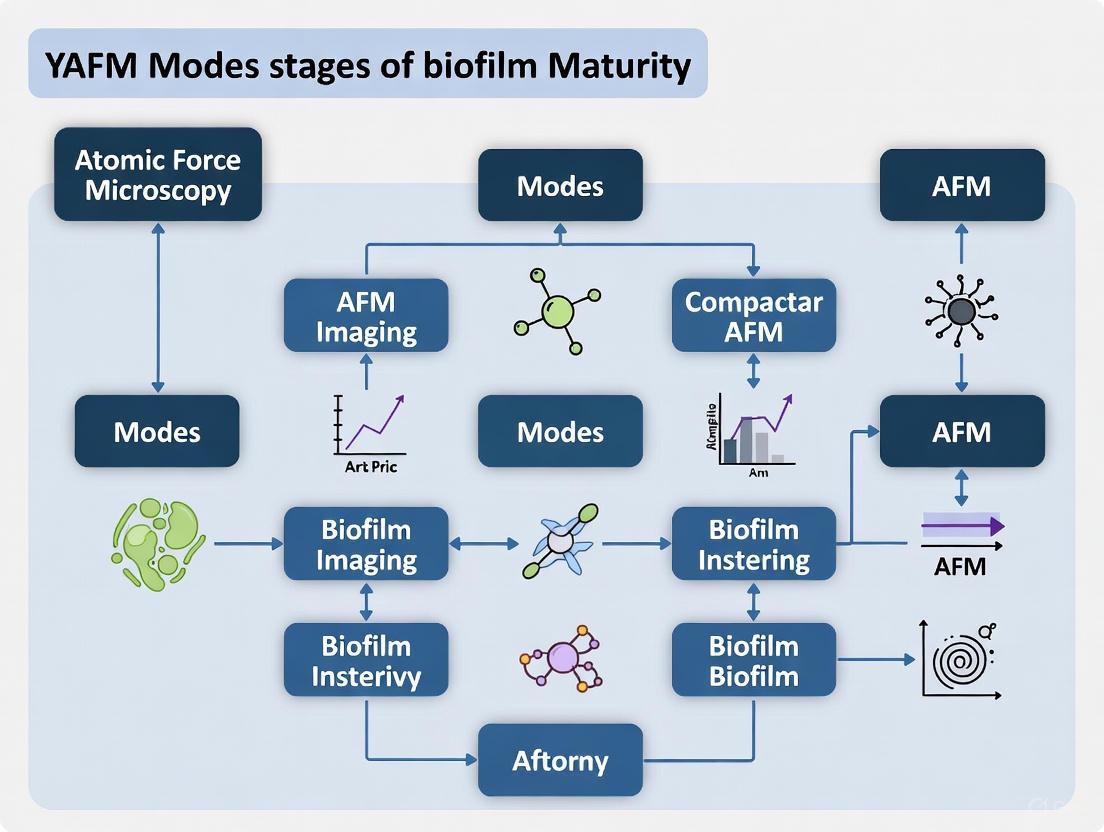
Atomic Force Microscopy for Biofilm Research: Selecting Optimal Modes to Decipher Maturation Stages
This article provides a comprehensive guide for researchers and drug development professionals on applying Atomic Force Microscopy (AFM) to characterize bacterial biofilms across different maturity stages.
Validating Machine Learning AFM Classification: A Framework for Biomedical Researchers Integrating Manual Scoring
This article provides a comprehensive guide for researchers and drug development professionals on validating machine learning (ML) models for Atomic Force Microscopy (AFM) image classification against manual scoring.
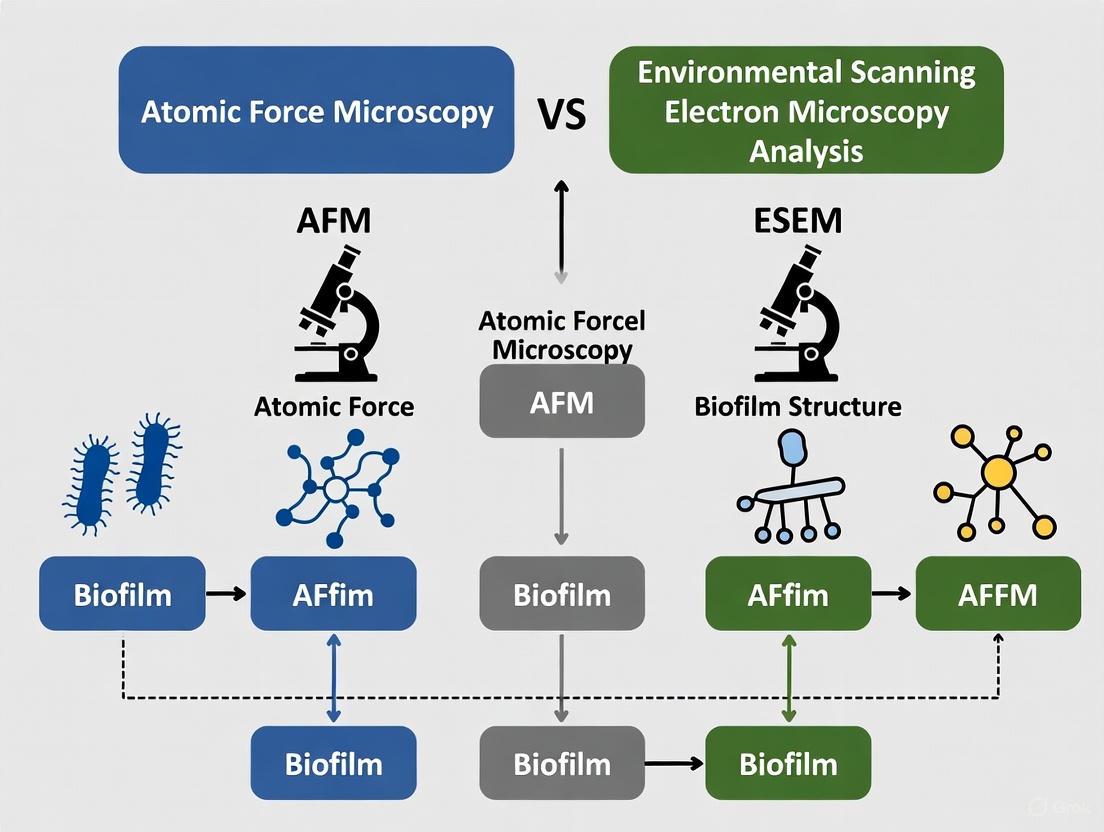
AFM vs. Environmental SEM: A Researcher's Guide to Biofilm Structure Analysis
This article provides a comprehensive comparative analysis of Atomic Force Microscopy (AFM) and Environmental Scanning Electron Microscopy (ESEM) for characterizing biofilm structure, targeting researchers and drug development professionals.
Accounting for EPS in AFM Force Measurements: A Guide for Accurate Biomechanical Data Interpretation
This article addresses the critical challenge of extracellular polymeric substance (EPS) influence on Atomic Force Microscopy (AFM) force measurements, a key concern for researchers and drug development professionals.
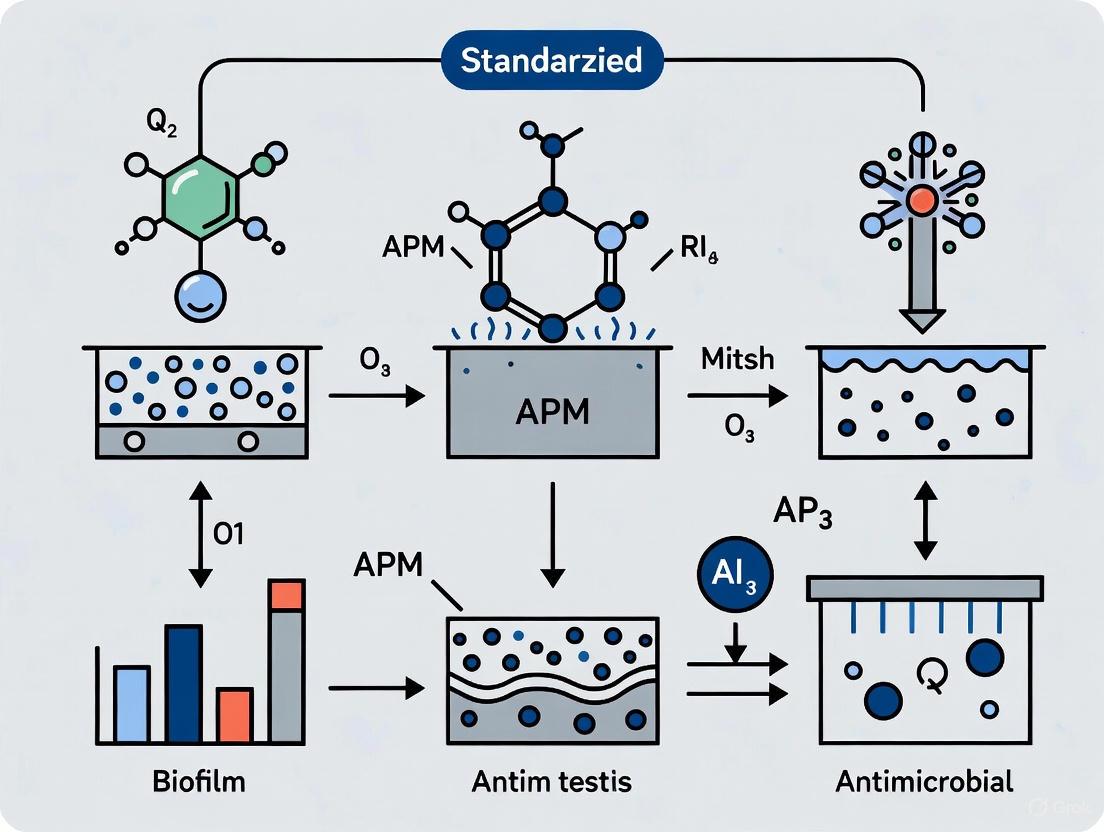
Standardizing AFM for Biofilm Antimicrobial Testing: From Nanoscale Imaging to Clinical Translation
Atomic Force Microscopy (AFM) offers unparalleled nanoscale resolution for characterizing biofilm structure and evaluating antimicrobial efficacy, yet a lack of standardized protocols hinders its broader adoption.
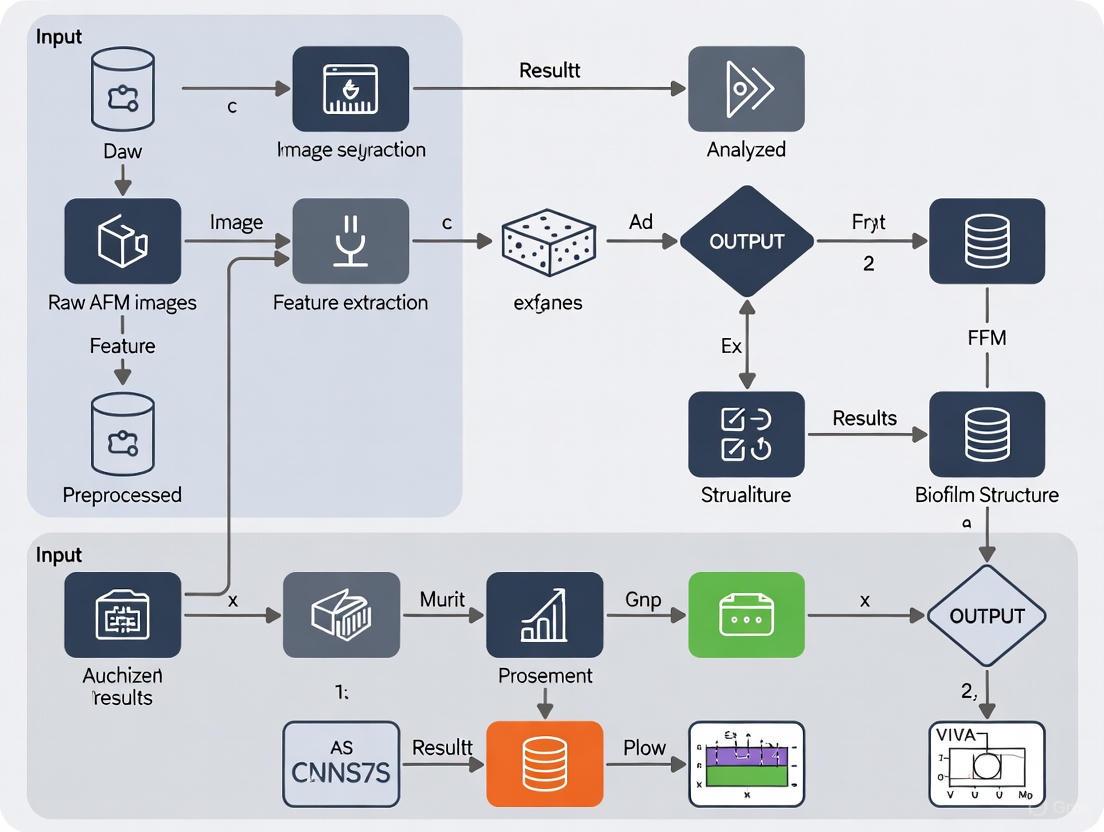
Machine Learning for Automated AFM Biofilm Analysis: From Imaging to Clinical Prediction
This article explores the transformative integration of Machine Learning (ML) with Atomic Force Microscopy (AFM) for automated, quantitative biofilm analysis.